

Running News Daily
Running News Daily is edited by Bob Anderson and team. Send your news items to bob@mybestruns.com Advertising opportunities available.
Index to Daily Posts · Sign Up For Updates · Run The World Feed
Search Results for Kenya
Today's Running News
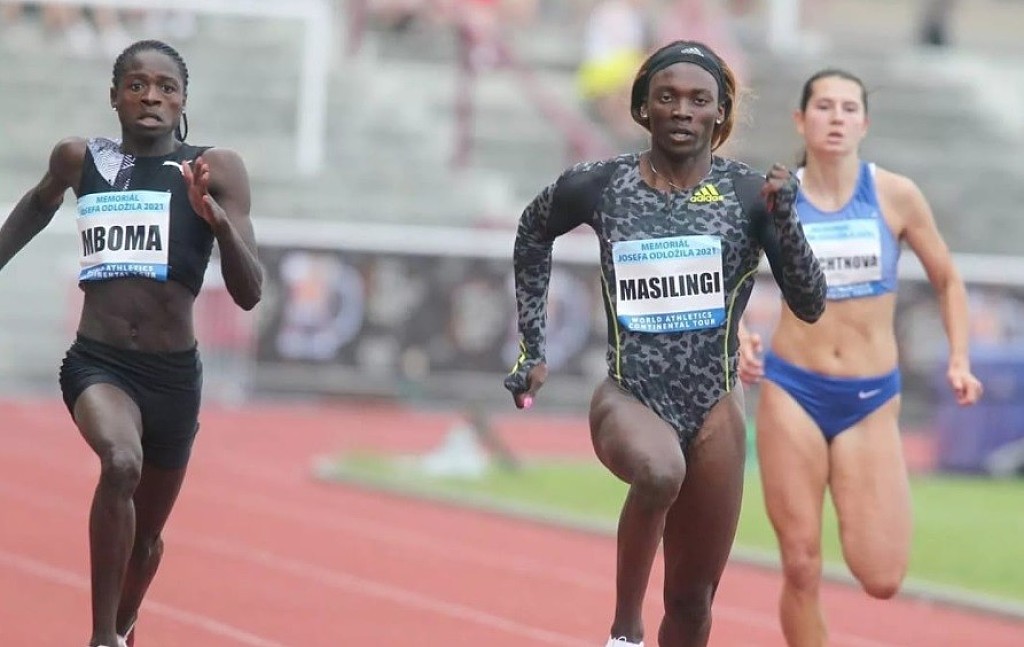


Top athletes Christine Mboma and Beatrice Masilingi left off Namibian Olympic team over high natural testosterone levels
Two of the world’s top female 400m runners have been discretely scratched from their country’s Olympic team after medical tests indicated they have high natural testosterone levels. Namibia’s Christine Mboma and Beatrice Masilingi, both 18 years old, will not be allowed to compete in the 400m in Tokyo this summer.
Mboma is currently ranked number one in the world at the 400m, after she ran won the 400m at the Irena Szewinska Memorial/Byrdgoszcz cup in Poland on June 30 in a world-leading time of 48.54. Masilingi ran 49.53 at a meet in Zambia in April, which still stands as the third-fastest time run this year.
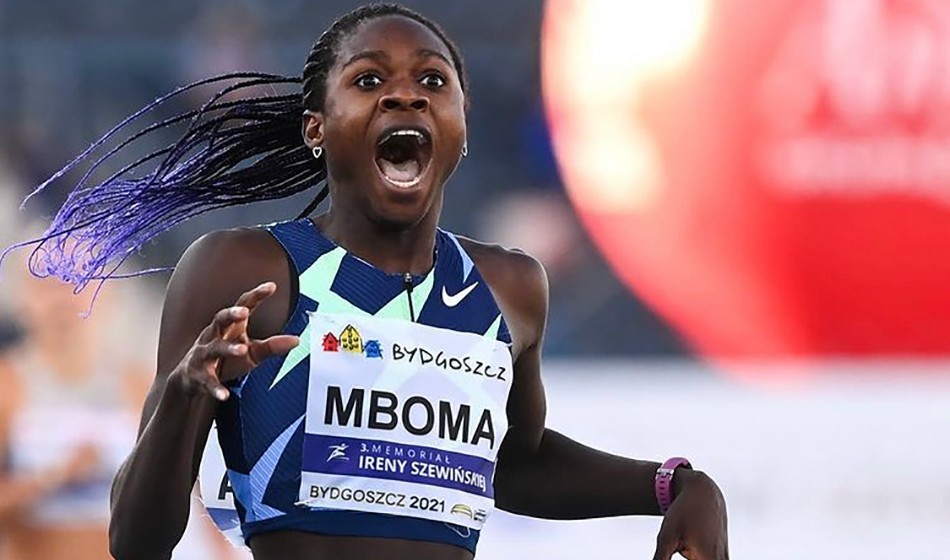
Both women have been found to have naturally high levels of testosterone, but are not DSD athletes and both have XX chromosomes. Still, their hormone levels have rendered them ineligible to compete in any distance ranging from the 400m to the mile. This is the same rule that prevents DSD athletes like South Africa’s Caster Semenya, Burundi’s Francine Niyonsaba and Kenya’s Margaret Wambui from competing in the 800m at the elite level.
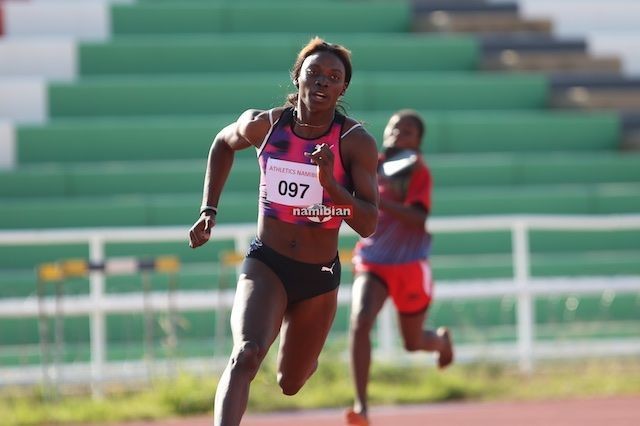
The Namibian Athletic Committee has said in a statement that neither athlete was aware they had this condition, and the country’s athletic federation has said both women will now focus their full attention on the 200m.
Since they were introduced in 2018, the World Athletics testosterone regulations have been hotly debated in the world of elite sports, and Semenya has appealed the decision in several courts. The two-time Olympic 800m champion has lost two appeals, but is currently waiting on a third hearing. For now, however, the rule stands, and all athletes affected by the rule will be forced to compete in different events.
(07/07/2021) ⚡AMPby Brittany Hambleton

Tokyo 2020 Olympic Games
Fifty-six years after having organized the Olympic Games, the Japanese capital will be hosting a Summer edition for the second time, originally scheduled from July 24 to August 9, 2020, the games were postponed due to coronavirus outbreak, the postponed Tokyo Olympics will be held from July 23 to August 8 in 2021, according to the International Olympic Committee decision. ...
more...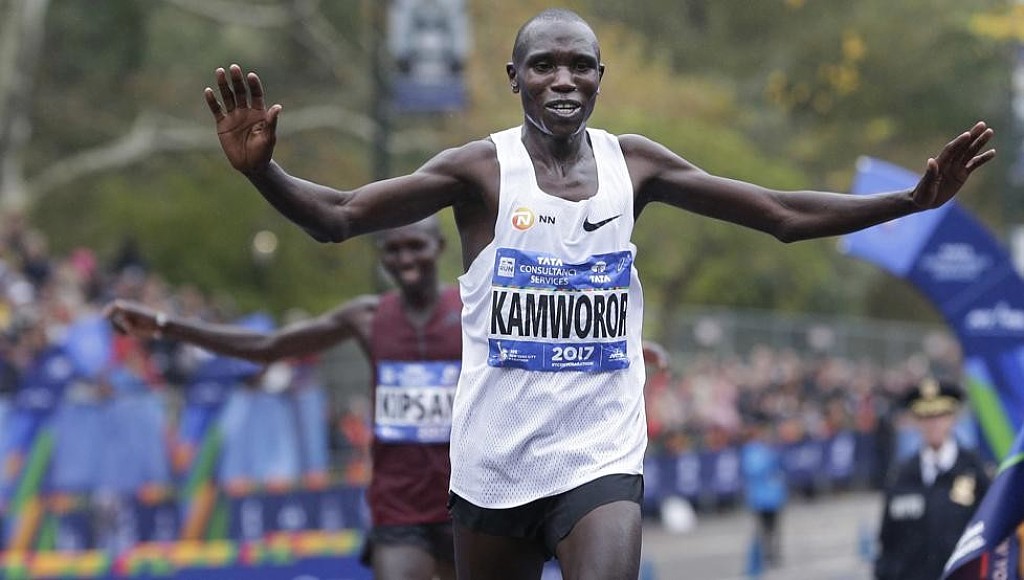
Ex-New York marathon champ Geoffrey Kamworor to compete in Hengelo ahead of Tokyo Olympics
Former New York marathon champion Geoffrey Kamworor will compete and train in Hengelo, Netherlands as part of his preparations for the Tokyo Olympics Games.
Kenya's head athletics coach Julius Kirwa said on Monday in Nairobi that the former World Cross Country champion will head to the Dutch city from Wednesday to compete in selected races over the 3,000m distance.
The coach said it was critical for Kamworor to gauge himself in short distance races to test his speed prowess ahead of the Olympics, which starts on July 23.
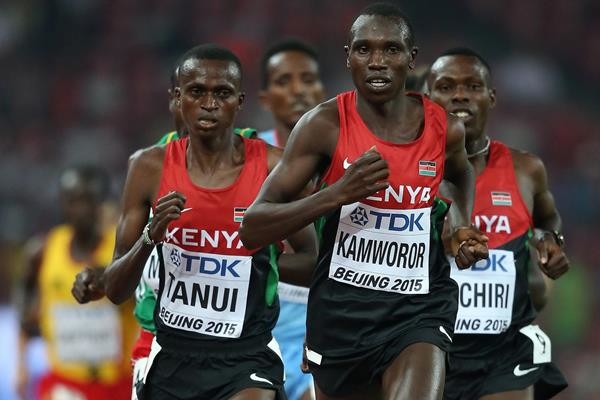
"Kamworor is heading to Hengelo for training and to compete. He will step down from his traditional 10,000m distance to 3,000m so as to gauge his speed. We want him to test himself and see where he is on the scale," Kirwa told Xinhua in Nairobi.
Kenya will line up former World Cross Country champion Kamworor, Rodgers Kwemoi and Weldon Kipkurui Langat in the 10,000m race at the Olympics hopeful to regain the elusive gold medal.
Kenya last won gold in the 10,000m race back in 1968 through Naftali Temu in Mexico City.
But Kirwa is optimistic, the new team, which is a blend of youth and experienced athletes will weather the storm from Ethiopia, Uganda and America challenge.
"We have a blend of young and ambitious prodigies, who will complement Kamworor to learn and exploit his experience in the Tokyo Olympics," Kirwa added.
The coach noted that in a normal cycle, athletes mature and wither, form comes and goes, momentum shifts and stars periodically align.
However, he feels that Kenya has the right blend of stars to alter the matrix and break the jinx to clinch the gold at the Tokyo Olympics.
Reigning champion Mo Farah of England will not defend his title in Tokyo as he failed to make the team.
However, Kirwa has pointed out world 10km record holder Joshua Cheptegei of Uganda as a main hurdle in Kenya quest to win gold.
"Cheptegei is a strong candidate, but we will work on a strategy to fix him. I believe in my team and Kamworor is eager to do well because this might be his last track competition before he turns his focus fully on the marathon," he said.
Kamworor, who skipped the World Championships in Doha in 2019 to focus on reclaiming his title at the New York marathon, said the allure of having an Olympic gold medal dangle down his neck is too strong to ignore.
"I have had several challenges in the past one year. Our mentor Eliud Kipchoge challenged me to make the team so that we can go to Tokyo together," Kamworor told reporters in Nairobi.
At the Rio Games, Kenya won 13 medals - six gold, six silver and one bronze - all in athletics.
(07/06/2021) ⚡AMPby Xinhua News
Tokyo 2020 Olympic Games
Fifty-six years after having organized the Olympic Games, the Japanese capital will be hosting a Summer edition for the second time, originally scheduled from July 24 to August 9, 2020, the games were postponed due to coronavirus outbreak, the postponed Tokyo Olympics will be held from July 23 to August 8 in 2021, according to the International Olympic Committee decision. ...
more...
Kenyan´s Timothy Cheruiyot bounces back in Sweden after missing out on Tokyo Olympics
World 1,500m champion Timothy Cheruiyot put behind the disappointment of missing a ticket to the Tokyo Olympics when he clocked 3:32.30 his speciality at the Stockholm Diamond League on Sunday evening.
Cheruiyot crossed the finish line ahead of Spaniard Ignacio Fontes (3:33.27) and countryman Ronald Kwemoi (3:33.53) in second and third respectively.
The win in the Swedish capital continues the rich vein of form for the Bomet-born runner whose disappointing fourth-place finish at the national trials for the Tokyo Olympics remains the only blot to a sensational season so far.
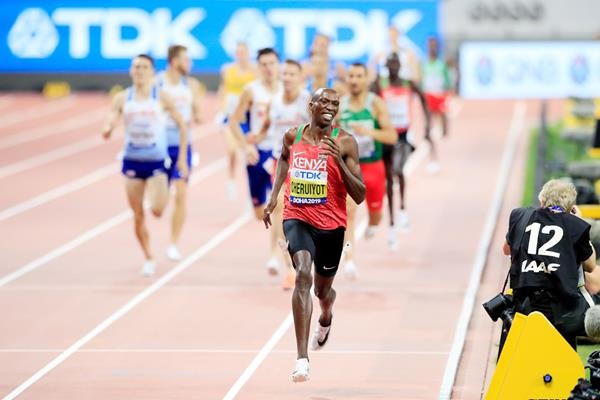
In late-May, he set a world lead of 3:30.48 at the Doha Diamond League during the men's 1500m.
Another Kenyan, Ferguson Rotich, lay down a marker for the Olympics when he set a season lead of 1:43:84 in the men's 800m to finish first ahead of Canadian Marco Arop (1:44:00) and Briton Elliot Gilles (1:44:05) in second and third.
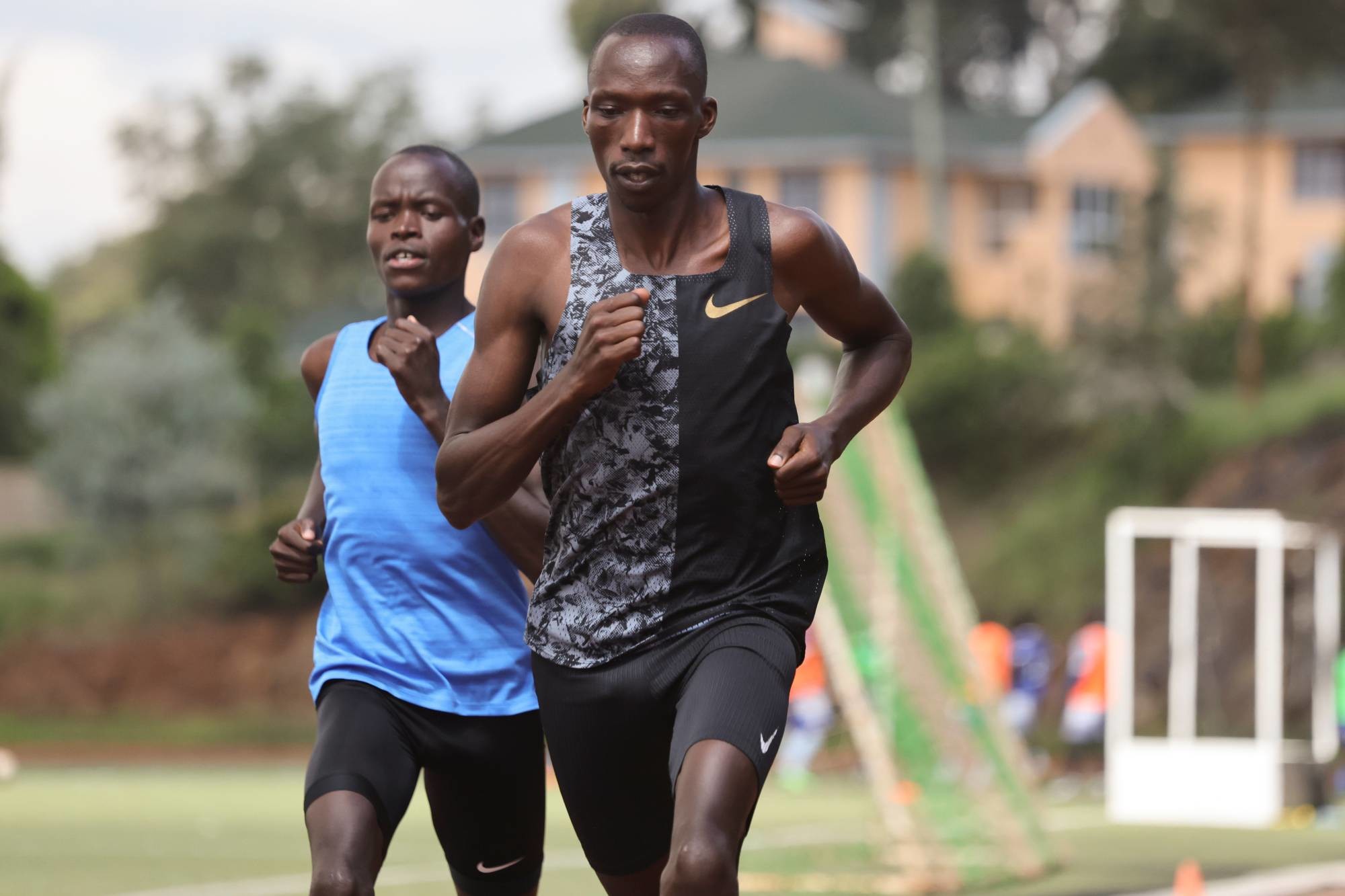
The world 800m bronze medalist recovered from a slow start to stamp his authority on the race and carry on from his impressive performance at the Doha Diamond League where he timed 1:44.45 to finish second behind compatriot, Commonwealth 800m champion Wycliffe Kinyamal.
In the women's 3000m steeplechase, former world champion Hyvin Kiyeng added momentum to her bid for an Olympic gold when she clocked 9:04.34 to finish first ahead of German Gesa Felicitas Krause (9:09.13) and countrywoman — and record holder — Beatrice Chepkoech (9:10.52) in second and third.
Other Kenyans, Purity Kirui (9:16.91) and Rosefline Chepngetich (9:22.30) finished in fourth and sixth respectively.
The exploits on Sunday followed those of Nicholas Kimeli, Jacop Krop and world 5000m champion Hellen Obiri who posted excellent results at the Oslo Diamond League on Friday.
Krop and Kimeli timed 7:30.07 and 7:31.33 respectively to finish second and third behind winner Yomif Kejelcha of Ethiopia who timed 7:26.25.
Another Kenyan — and Olympics debutant — Charles Simotwo finished fourth in the men's 1500m, clocking 3:49.40.
(07/05/2021) ⚡AMPby Omondi Onyatta
Tokyo 2020 Olympic Games
Fifty-six years after having organized the Olympic Games, the Japanese capital will be hosting a Summer edition for the second time, originally scheduled from July 24 to August 9, 2020, the games were postponed due to coronavirus outbreak, the postponed Tokyo Olympics will be held from July 23 to August 8 in 2021, according to the International Olympic Committee decision. ...
more...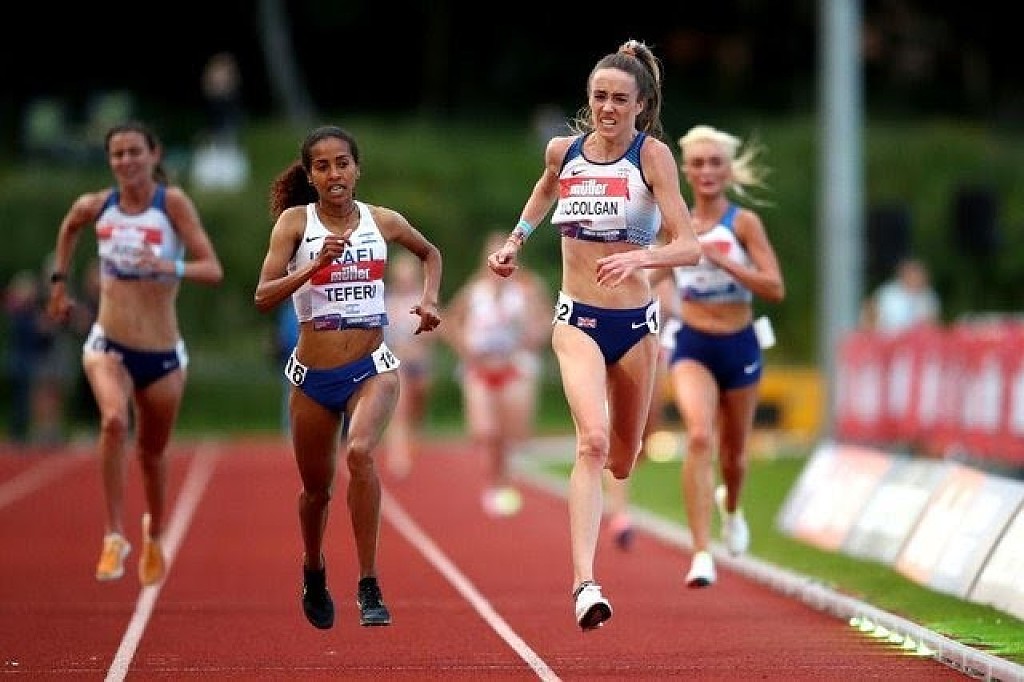
New British record for Tokyo Olympics-bound Eilish McColgan after smashing Paula Radcliffe's 5km time
Eilish McColgan received a pre-Tokyo boost by setting a new British standard in 5km by taking more than half a second off Paula Radcliffe’s 17-year-old record.
Earlier this week McColgan was selected for this year’s Team GB heading to Japanwhich will place her among Scotland’s select band of female athletes to compete in three Olympics.
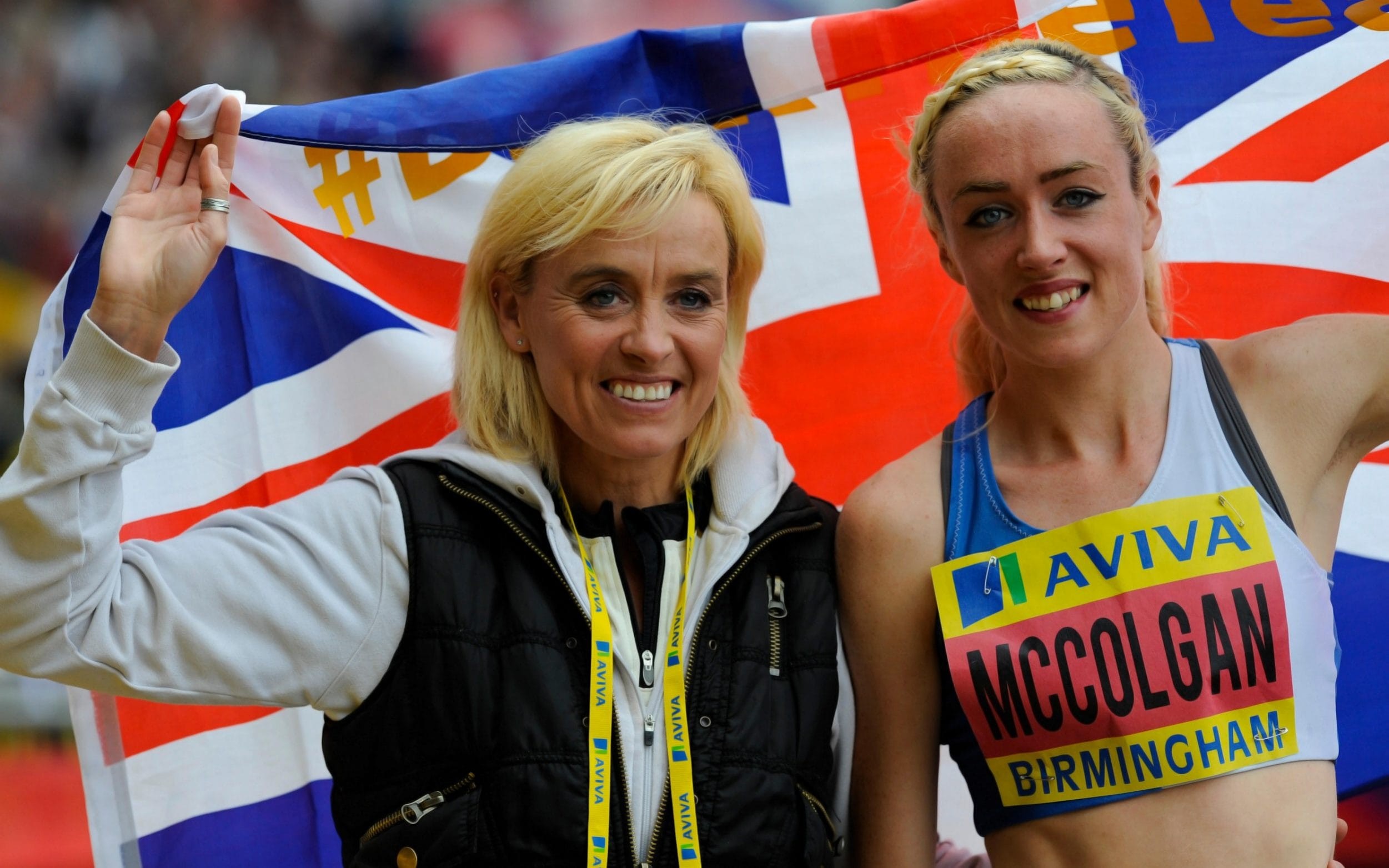
And she capped a memorable few days by making mum Liz, also a three-time Olympian, a ‘proud mama and proud coach’ with her performance in Norway.
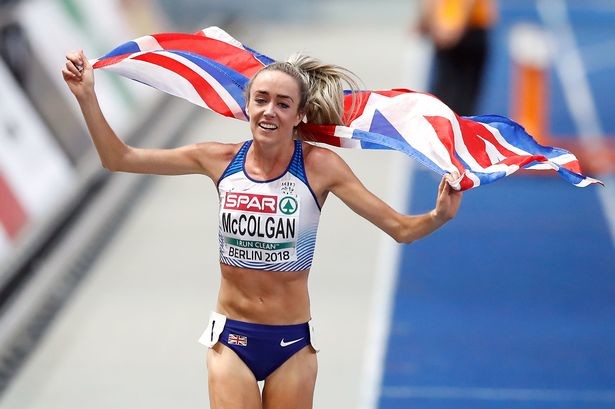
The 30-year-old finished fourth in the Diamond League meeting in Oslo, but stripped 18 seconds off her own best time following Kenya's Hellen Obiri and Ethipoians Fantu Worku and Margaret Chelimo Kipkemboi home.
Her 14:28.55 time bettered Radcliffe’s existing record of 14:29.11 which was set at the Spar European Cup in Bydgoszcz, Poland 17 years ago.
Fellow Scottish runner and British record holder in the 1500m, Laura Muir, tweeted: “@EilishMccolgan!! New 5000m British Record Holder!! Amazing!!”
Mum Liz, who also coaches her eldest daughter, added: “Oh my days we knew it was on
McColgan senior won Olympic silver in Seoul 1988 for the 10km, and was fifth in Barcelona four years later. She ran the marathon in Atlanta for the 1996 Olympics. Eilish, born midway between the Seoul and Barcelona games, will compete in the 5km in Tokyo having raced the 3km steeplechase at London in 2012 and 5km in Rio four years later. She will double up with the 10km later that week.
Her selection this year, sets her alongside Lee McConnell and her mum as female athletes qualifying for participation in three Olympic Games. Steph Twell’s selection in the marathon also adds her name to the illustrious group.
Earlier this week Eilish wrote: “Officially selected for my THIRD Olympic Games! It still sounds a little surreal, but I'm super proud to represent Team GB once more in what will be my third different individual event. From the Steeplechase in 2012 to the 5,000m in 2016 and now the 5/10K double in 2021.”
McColgan set her previous best time of 14:46 – a Scottish record – in Doha in 2019. The run in Norway now places the Dundee Hawkhill Harrier fifth on the European all-time list.
(07/03/2021) ⚡AMPby David Oliver
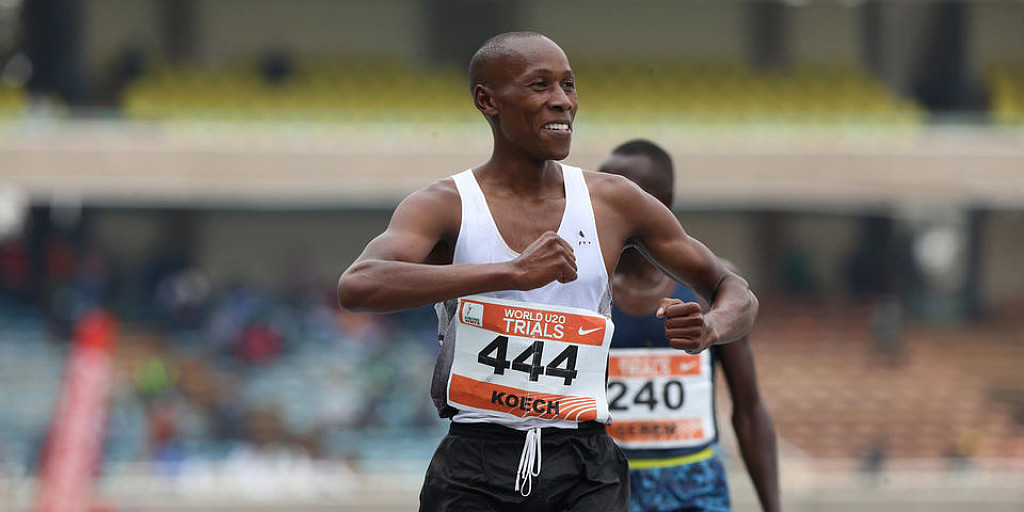
New generation of Kenyan steeplechase stars emerges
Simon Koech from South Rift and Central Rift's Jackline Chepkoech will lead Kenya's assault in men and women's 3,000m steeplechase during the World Athletics Under-20 Championships in August in Nairobi.
Koech clocked eight minutes and 18.43 seconds to win the men's race, beating Amos Serem of Central Rift to second place in 8:20.26.
Koech and Serem now have now been bestowed with the honour of going to try and recapture the steeplechase title Kenya relinquished during the 2018 Tampere Championships.
"I am really impressed and I thank God since I have been waiting for this opportunity since last year," said Koech, who hails from Bureti, Kericho County but trains in Silibwet, Bomet County under veteran coach John Kimetto.
"I am going for nothing but gold so as to emulate my training mate Leonard Bett and the likes of Ezekiel Kemboi and Conseslus Kipruto," said Koech.
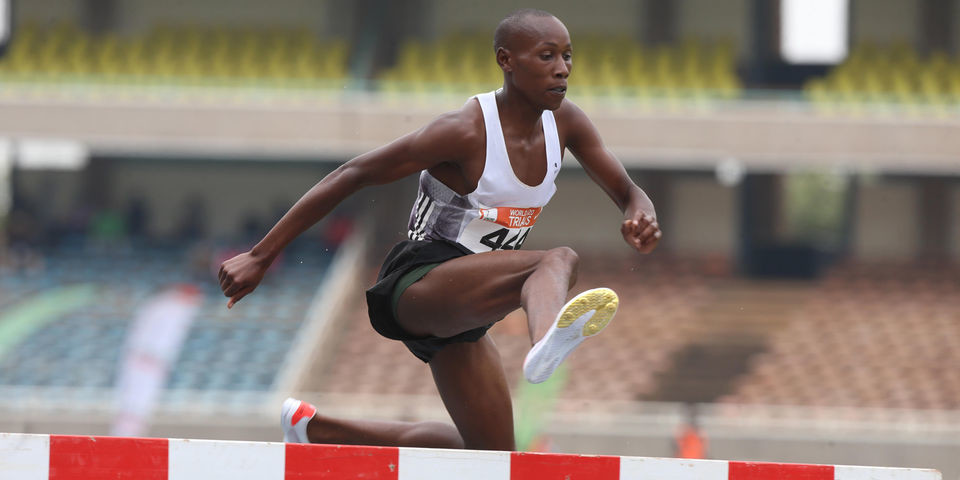
Serem is glad to represent Kenya for the first time.
"I used a lot of energy during the heats but I now known what to do...we all learn from mistakes," said Serem, who trains in Kaptagat, Elgeyo Marakwet.
"Kenyan trials are always tough and challenging hence you must be good to make the team. I thank God," added Serem.
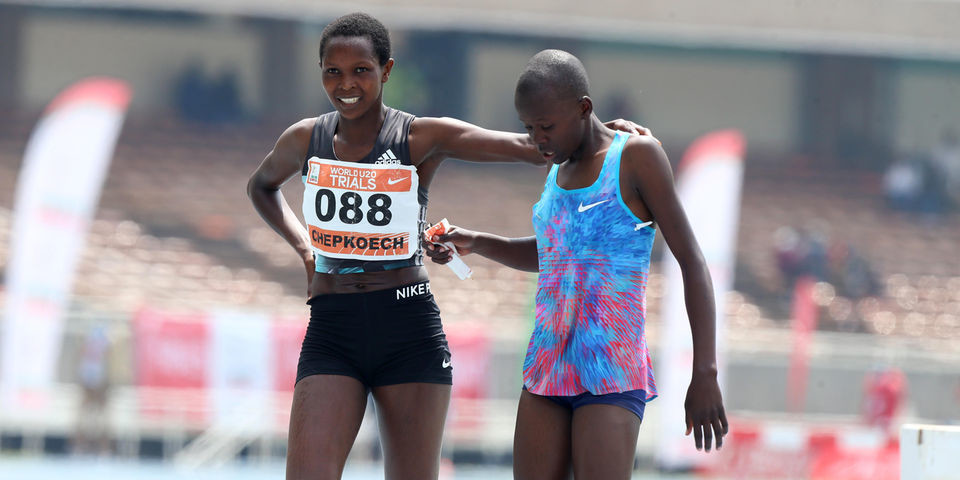
Chepkoech timed 9:32.99 to edge out Faith Cherotich from South Rift to second in 9:33.02 with both earning places in Team Kenya.
They will be eying to succeed fellow countrywoman Celliphine Chespol, who won in 2016 Bydgozszc and 2018 Tampere.
"I still continued with my preparations despite the cancellation of the Africa Cross Championships in March in Togo," said Chepkoech. "It's never enough in terms of preparations."
(07/03/2021) ⚡AMPby Bernard Rotich & Ayumba Ayodi
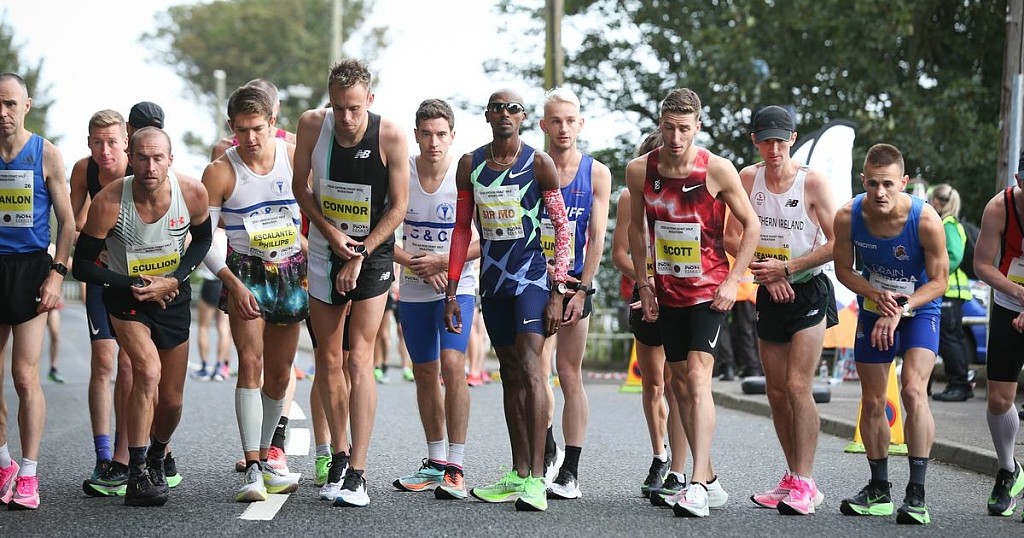
Star-studded field 2021, announced for Antrim Coast Half Marathon
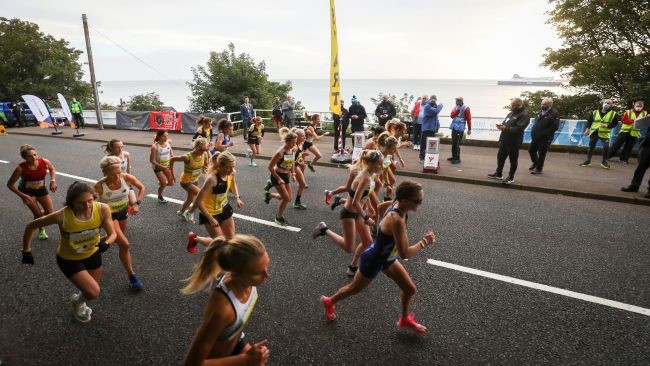
With over 100 runners in the International elite race, over 400 in the sub-elite and with record numbers entering the mass race, this year’s Antrim Coast Half Marathon will be arguably one of the best half marathons in Europe, and one of the greatest ever in the United Kingdom.
The men’s race has seven men confirmed who have run under the 60-minute barrier.
Headlining the African contingent will be Jemal Yimer – winner of the Valencia Half Marathon in 2018. The current 6th fastest man of all time, Ethiopian record holder and ranked second in the world for the last two years, with a PB of 58:32 will be looking to better his own personal best on the super-fast route.
Joining Yimer will be fellow countryman Tesfahun Akalnew, the 21-year-old sensation, with a personal best time of 59:22 from the New Delhi Half Marathon will also look to better his time at this year’s event.
Shadrack Kimining, one of three Kenyans confirmed in this year’s race, twice breaking 60 minutes last year, placing third in Houston and running a PB in New Delhi with a time of 59:27 is also a confirmed starter.
Abrar Osman the Eritrean Olympic finalist and bronze medallist is looking to better his personal best of 59.47 set at the Lisbon International Half Marathon. A former winner of the African Games, he was seventh in the World Half Marathon championships in Cardiff in 2016.
Kenya’s latest star Daniel Mateiko, part of the postponed 2021 Kenyan World Cross Country team will be competing in his first ever half marathon after his world-class 10,00m debut in Hengelo last month, recording a time of 27:03, the fastest ever debut 10,000m.
With hopefully one global superstar still to announce, the British challenge will come from last year’s second place finisher, two-time European record holder and second fastest Briton all-time over 10,000m Marc Scott, looking to break the 60-minute barrier for the first time, returning fresh from the 5000m/10,000m double at the Tokyo Olympics.
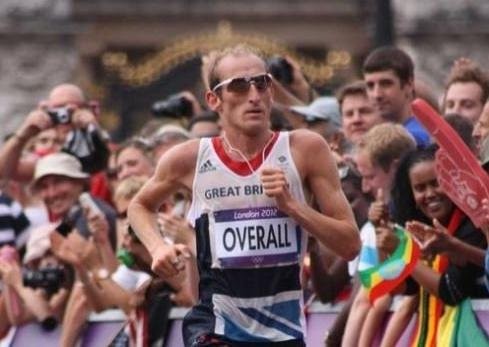
British Olympian and Berlin Marathon fifth placer Scott Overall will also return to this year’s race.
The Irish contingent in the men’s race will be headlined by four Olympian’s young and old.
Belfast native Paul Pollock, post Tokyo Olympics will be looking to better his 62:09 and reclaim his Northern Ireland record broken at last year’s race by Stephen Scullion.
The women’s race will be headlined by Ethiopian sensation and third fastest ever Yalemzerf Yehualaw targeting the World Record on the super-fast course, a feat only ever achieved by Khalid Kannouchi and Paula Radcliffe in the UK, on both occasions set at the London Marathon.
After posting personal bests earlier in the year over the half marathon distance in Istanbul, with a time of 64:40 and running her first ever 5,000m in Paris last month, in a sensational debut of 14:53 her preparation has been perfect for an assault on the women’s world record.
Ethiopian stablemate Tsehay Gemechu will arrive fresh from her assault at the Olympic 10,000m in Tokyo, where she will be looking to better her two fourth place in the World Championships and sixth in the World Cross Country.
Gemechu will attack her own personal best of 66 min 0 sec, which she set winning the New Delhi Half Marathon in 2019.
Two-time World Half Marathon medallist Mary Ngugi is also confirmed and will look to get back to her form of 2016 which saw her take the silver medal at the World Half marathon championships in Cardiff, before targeting one of the major city marathons in October.
The British contingent will be headlined by last year’s fourth placer Becky Briggs, Tracey Barlow, and Ellie Davis with Irish distance stars Ann Marie McGlynn and Marie McCambridge also confirmed to start.
Last year’s winner Lily Partridge has had to pull out of defending her title due to an operation on her ankle, but has confirmed she will still make the journey to the province to support on the day.
(07/02/2021) ⚡AMPby The Newsroom
MEA ANTRIM COAST HALF MARATHON
The MEA Antrim Coast Half Marathon 2022 has been approved by World Athletics as an Elite Event. The World Athletics certified course takes in some of the most stunning scenery in Europe, combined with some famous landmarks along the route. With it's flat and fast course, the race is one of the fastest half marathons in the world. Starting...
more...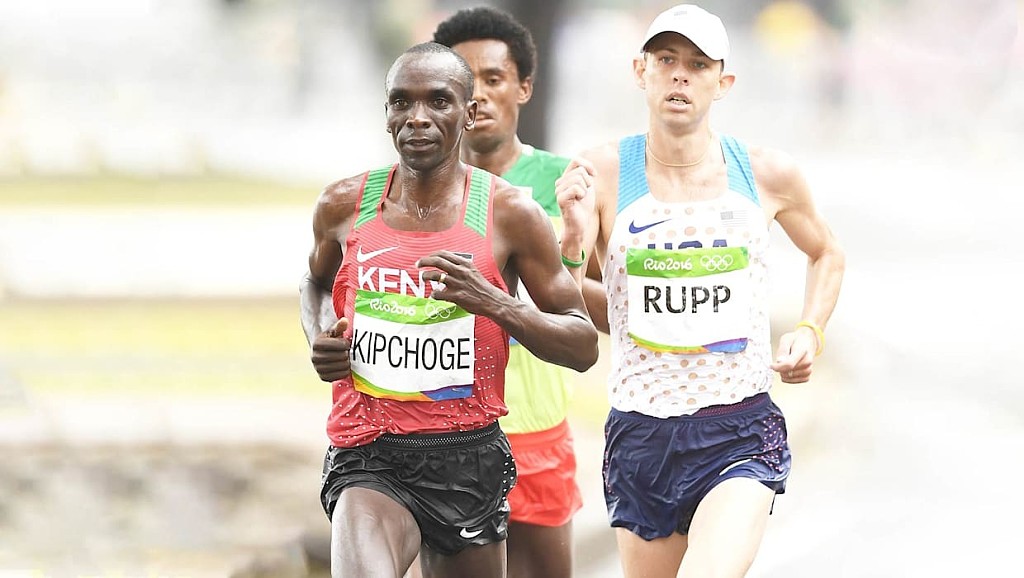
Eliud Kipchoge will be attempting to become only the third man to win back-to-back Olympic marathon gold medals
Eliud Kipchoge will be a man on a mission on August 8, 2021 when the Tokyo 2020 Olympic Games men's marathon takes place in Sapporo.
No defending Olympic champion has won a second straight marathon gold medal since Waldemar Cierpinski did so at Moscow 1980 as the reigning champion from 1976.
Now, more than 40 years later, Kenya's Kipchoge will attempt to become just the third person, after Cierpinski and Ethiopian legend Abebe Bikila (1960, 1964) to win back-to-back Olympic marathon titles.
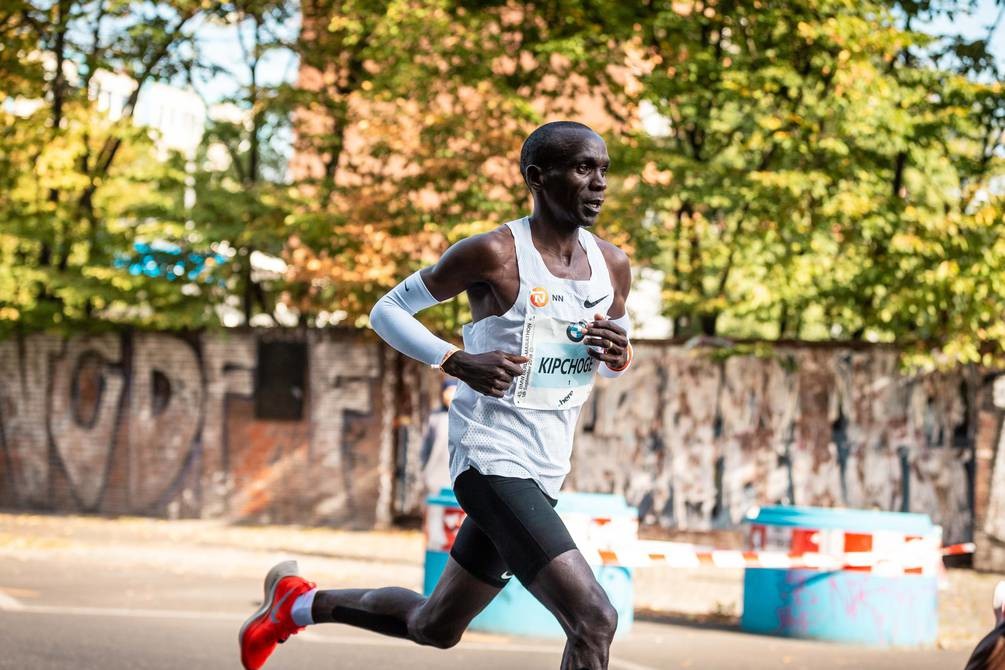
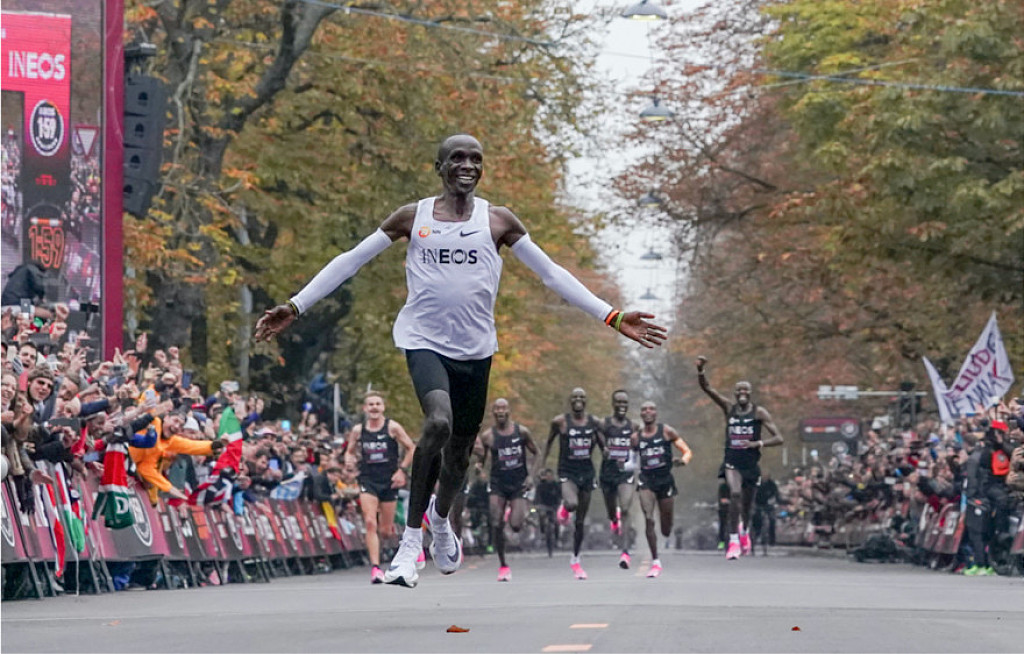
The effort will come nearly two years after becoming the first man to run a marathon distance under two hours, when he completed the INEOS 1:59 Challenge in Vienna in 1:59:40.
That particular achievement will be celebrated in August with the release of a new documentary, titled Kipchoge: The Last Milestone.
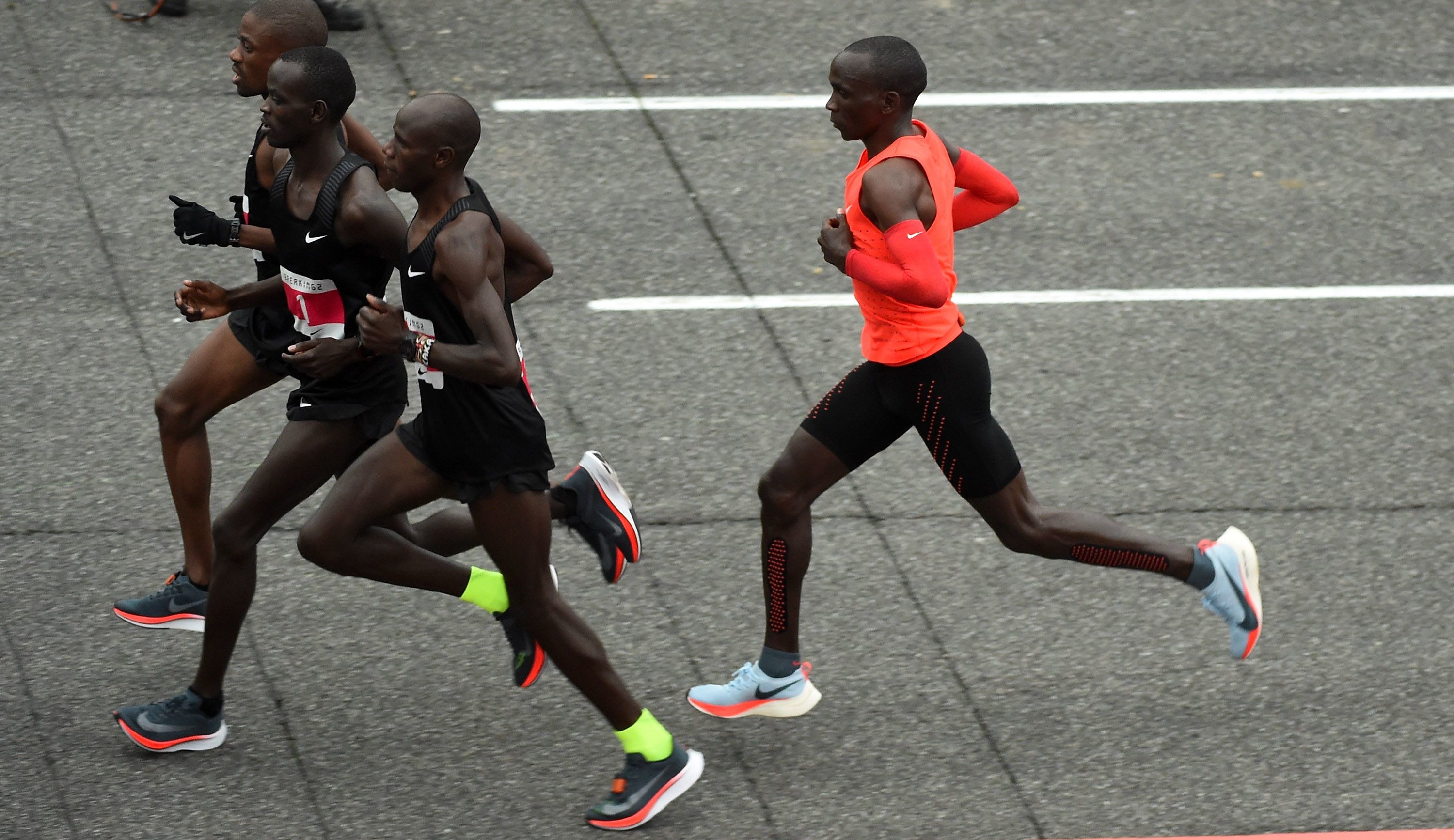
Eliud Kipchoge 1:59 documentary
The trailer for the Kenyan's new film has just been released, with Kipchoge writing on social media: "I hope by watching this film you will also feel inspired to run."
In the trailer, the 38-year-old says: "In the journey of life, there [are] ups and downs. In marathon, there [are] a lot of challenges, ups and downs. There is pain in training, pain in running, and joy at the end of the marathon."
The documentary will tell the story of how Kipchoge prepared for the monumental task.
Ridley Scott Creative Group, the documentary's producers, said in a statement that the film offers "unprecedented access to Eliud […] ahead of his attempt to achieve the seemingly impossible," including "footage from his home in Kenya, interviews with those closest to him, details of the daily rituals of his life and the dynamics within his team and community."
Kipchoge's training routine and how Covid affected it
The Kenyan has always been one who prefers training in a group.
He once said: "You cannot train alone and expect to run a fast time. There is a formula: 100% of me is nothing compared to 1% of the whole team."
However, the Covid-19 pandemic changed that. Suddenly, Kipchoge was forced to run alone on his training sessions due to lockdown restrictions.
"It was really hard to go training and not mix with people to fight the virus," he said in March ahead of the NN Mission Marathon, originally scheduled for Hamburg before being moved to Twente Airport, the Netherlands.
"I am happy to have since resumed training with the team, but we continue to make sure we do so safely within the protocols because the virus is still with us.
"Life has been hard but that is the way of the world – we need to get through it but I think we are on the right track to a brighter future.
"Life cannot stop, it does not stop for a single second. But what everyone should know is, the pandemic is just one of life’s challenges. Marathons are just like life, there are ups and downs every kilometre. Every mile there is a challenge.
"We should all be prepared to accommodate challenges in life but above all enjoy and embrace the challenges."
Kipchoge was vaccinated against Covid-19 at the end of April.
What next for Kipchoge? The star's future plans
The immediate future for Kipchoge consists of the Tokyo 2020 Olympic marathon in Sapporo, but beyond that, the 38-year-old has a "bucket list" of items he wants to check off.
Speaking recently to the Flotrack podcast, Kipchoge revealed that he wants to have competed in every World Marathon Major.
Kipchoge has competed in the Olympic Games, World Championships, London, Berlin, and Chicago Marathons, leaving him with the Boston, New York, and Tokyo Marathons.
He also admitted that he would like to run even longer distances, beyond the marathon's 42.195km.
"I would love to try 80km, 60km. I need to go to California and hike for six hours," he told Flotrack.
(06/28/2021) ⚡AMPby ZK Goh
Tokyo 2020 Olympic Games
Fifty-six years after having organized the Olympic Games, the Japanese capital will be hosting a Summer edition for the second time, originally scheduled from July 24 to August 9, 2020, the games were postponed due to coronavirus outbreak, the postponed Tokyo Olympics will be held from July 23 to August 8 in 2021, according to the International Olympic Committee decision. ...
more...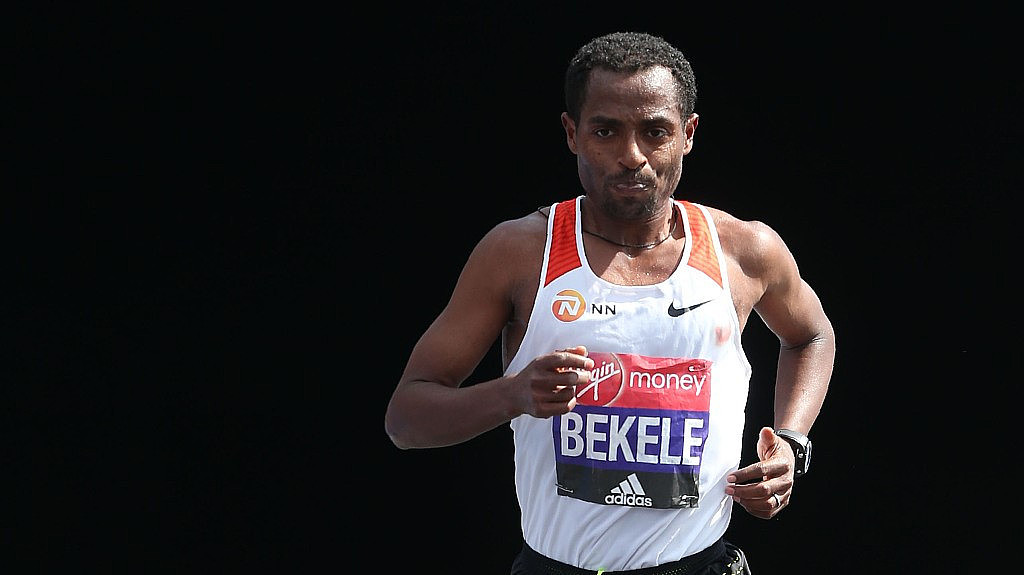
No Olympics for Kenenisa Bekele
Kenenisa Bekele’s manager Jos Hermens has responded to an enquiry by confirming that Bekele will not compete in the Tokyo Olympic Games Marathon to be held in Sapporo on August 8.
The highly-anticipated duel between him and defending champion and world record holder Eliud Kipchoge will not take place. The Kenyan is the hot favorite for the Gold medal.
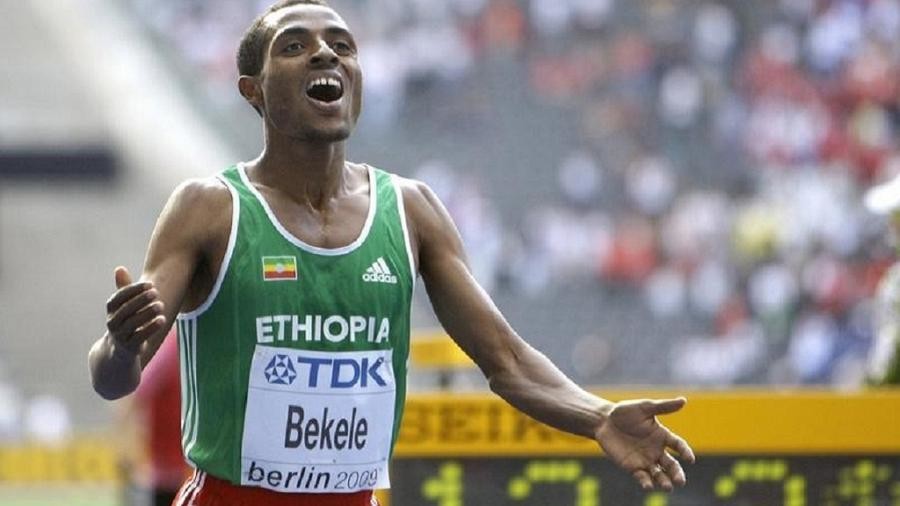
Bekele missed the Ethiopian Olympic elimination race over 35 km on May 1, but there was still a possibility that the Ethiopian Olympic Committee would nominate the 39-year-old for an Olympic place.
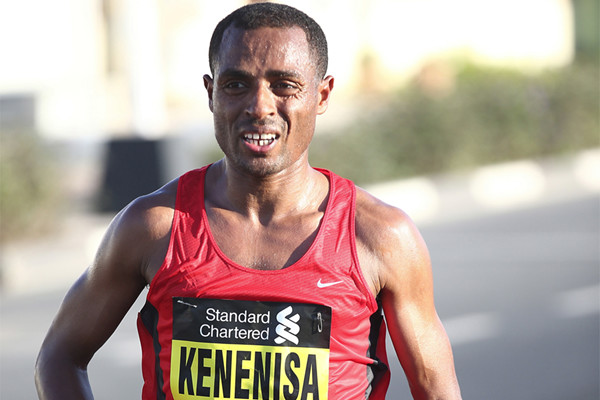
A year after Kipchoge set his world record in the 2018 Berlin Marathon Bekele all but equalled it, running only two seconds slower. Sisay Lemma is likely to be the runner who fills the selection spot.
Bekele will now be able to prepare for an autumn marathon. All six races of the big-money “World Marathon Majors” series are currently planned to be run between September 26 and November 7.
(06/28/2021) ⚡AMPby Race News Service
Tokyo 2020 Olympic Games
Fifty-six years after having organized the Olympic Games, the Japanese capital will be hosting a Summer edition for the second time, originally scheduled from July 24 to August 9, 2020, the games were postponed due to coronavirus outbreak, the postponed Tokyo Olympics will be held from July 23 to August 8 in 2021, according to the International Olympic Committee decision. ...
more...
World Athletics report says runners are positive people
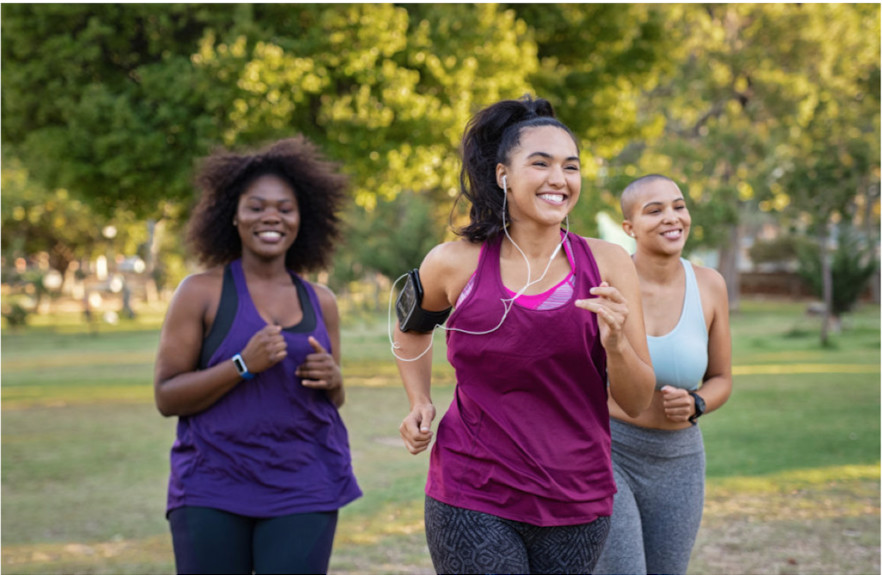
We know running is good for our physical and mental health, but now runners can add one more positive outcome to that list: it makes us more positive people. According to a recent World Athletics consumer research study, runners show greater confidence in associating themselves with positive personality traits, like being warm and friendly.
World Athletics and Neilson Sports collected online interviews from over 8,000 people across 10 countries (Australia, Colombia, France, India, Japan, Kenya, Mexico, South Africa, UK, USA), including approximately 500 non-runners and 500 runners from each country. Across all 10 countries, 40 per cent of respondents considered themselves to be runners, with 30 per cent of those people running at least once a week. When compared with those who used to run but have stopped, and with those who have never run, runners were more likely to consider themselves to be warm and friendly, easy-going, family-oriented and optimistic.
Gender equality in running
Something that sets running apart from many other sports is that it appears recreational running has an equal participation split between men and women. The WA study found that out of all the runners who were interviewed, 53 per cent were men and 47 per cent were women. This was true whether they compared males and females who ran a few times a month or those who ran every day.
COVID upped our numbers
Thanks to the closure of gyms and other recreational facilities, thousands more people have taken to the roads and trails for exercise. According to the study, 13 per cent of all runners started in the last year, and every single one of them plans to continue running, even after the pandemic is over. Many of those who were already running before the pandemic but have since increased their mileage also plan to continue running with more frequency once the pandemic is over.
Other reasons to run
The #1 reason participants choose to lace up their sneakers is for their health, but other important factors are that they can go at their own pace, they don’t need a lot of equipment to get started and it helps them to de-stress. In fact, 73 per cent of participants agreed that running is just as good for their minds as it is for their bodies.
Finally, while we all love running, it appears that runners between the ages of 25 and 34 are the most passionate about the sport, with 50 per cent of them agreeing that running is a part of who they are.
(06/26/2021) ⚡AMPby Running Magazine
The trailer for 'Kipchoge: The Last Milestone' is officially out
Eliud Kipchoge has no doubt been one of the most exciting and inspirational athletes of our time, and he has easily had the most successful marathon career in history. When he broke two hours in the marathon in 2019, running 1:59:40 at the INEOS 1:59 Challenge, he broke down a barrier, accomplishing something that many thought was not possible. Fans now get to relive that experience again through the his upcoming film, Kipchoge: The Last Milestone. The official trailer has finally been released, and it will make you want to jump out of your chair and head out for a run.
he movie follows Kipchoge as he trains to break two hours, from his training grounds in Kenya to the high-tech facilities in Europe, and finally to Vienna, where he attempts to break one of the last true milestones in sport. Of course, while the sub-2 marathon has been one of his greatest accomplishments in the sport so far, his career is far from over. Most recently, he won the NN Mission Marathon in the Netherland in 2:04:30, and he will still be the man to beat at the Tokyo Olympics this summer.
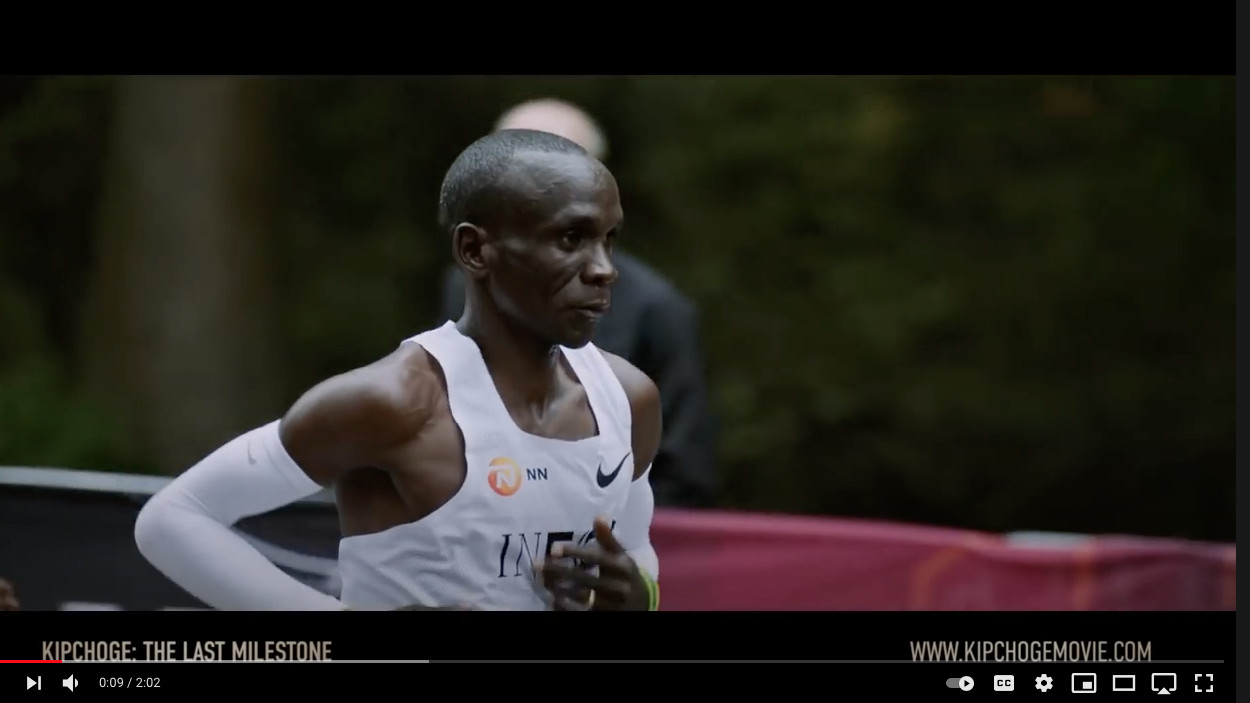
While the movie is set to come out this year, the actual release date has not yet been disclosed. For now, we will just have to watch (and rewatch and rewatch) the trailer in anticipation of one of the most exciting running films to be released in years.
https://www.youtube.com/watch?v=PiI7eUX6o8U
(06/26/2021) ⚡AMPby Running Magazine
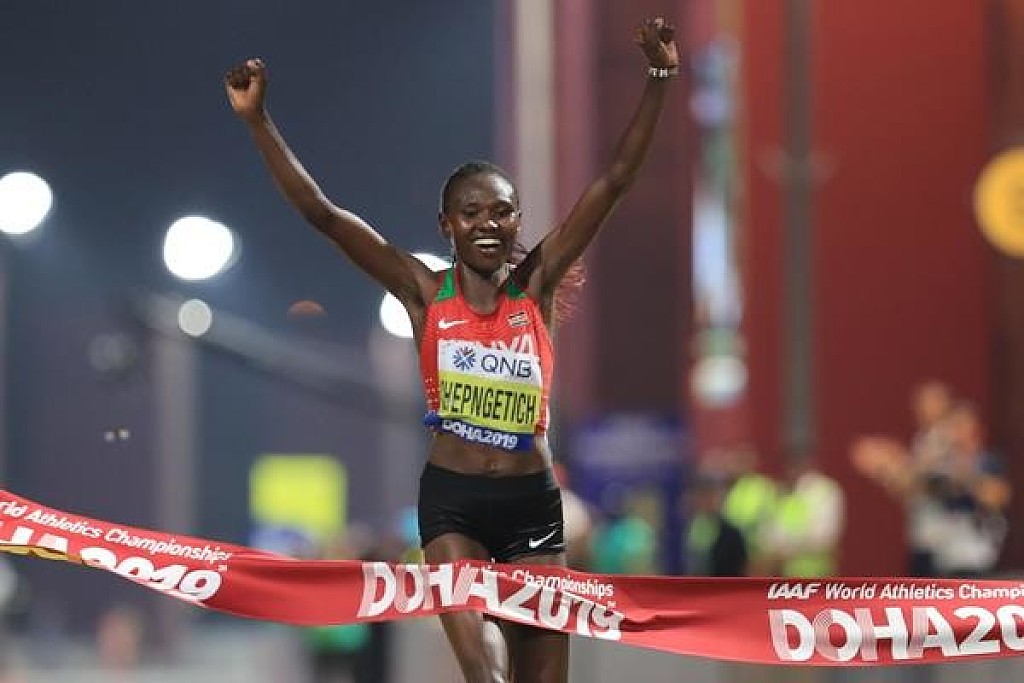
Kenya's Olympic marathon contender Ruth Chepngetich has had a remarkable year
Kenya's Ruth Chepngetich has had to cope with the restrictions on training and racing brought about by the COVID-19 pandemic but managed to smash the half-marathon world record.
When the 26-year-old Chepngetich was getting ready for the Istanbul Half Marathon in April she was just focused on running a good, confident race but she ended up obliterating the world record by 29 seconds and fulfilling a dream.
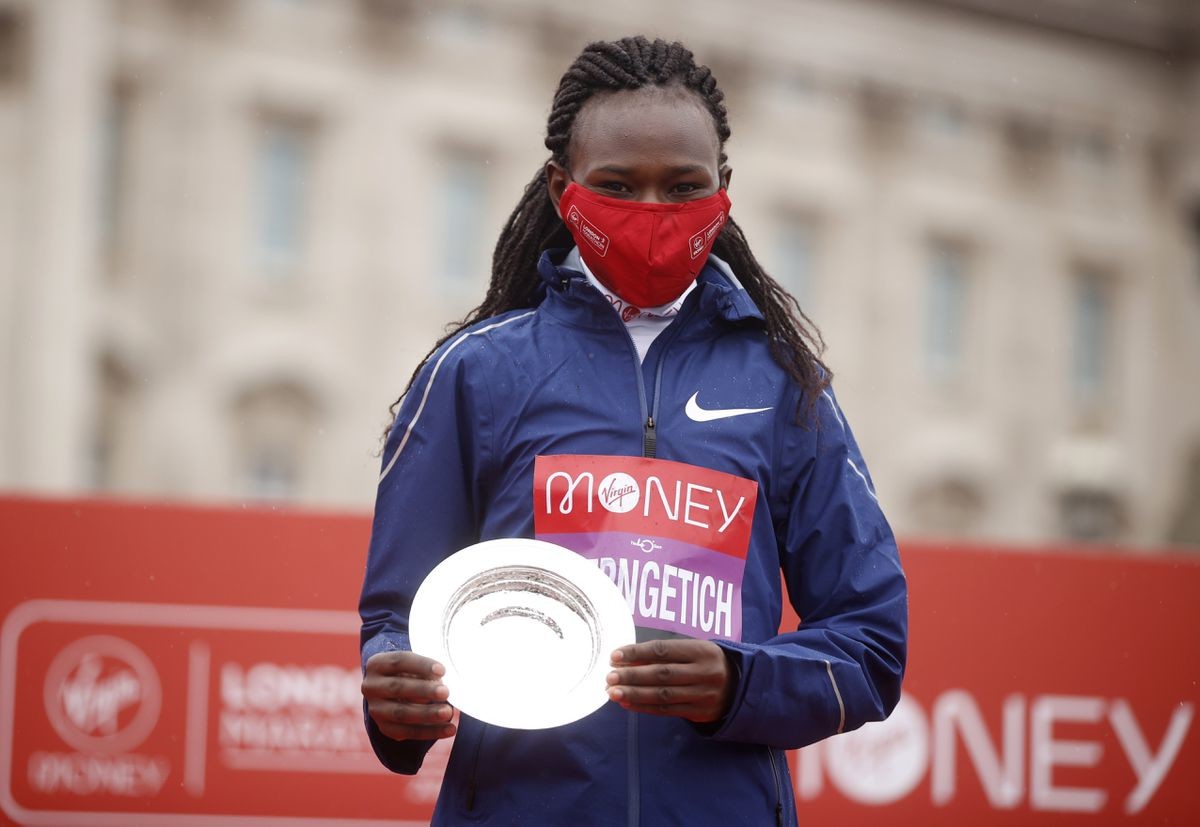
"I was thinking about 'world record, world record,' I can (now) say... in Istanbul, I broke the world record," Chepngetich told Reuters in an interview. read more
Following her impressive victory in Turkey, the 2019 world marathon champion set up camp in Ngong, an hour from Kenya's capital Nairobi to get ready for the Tokyo Olympics.
Among her competitors in the marathon will be compatriot and world record holder Brigid Kosgei.
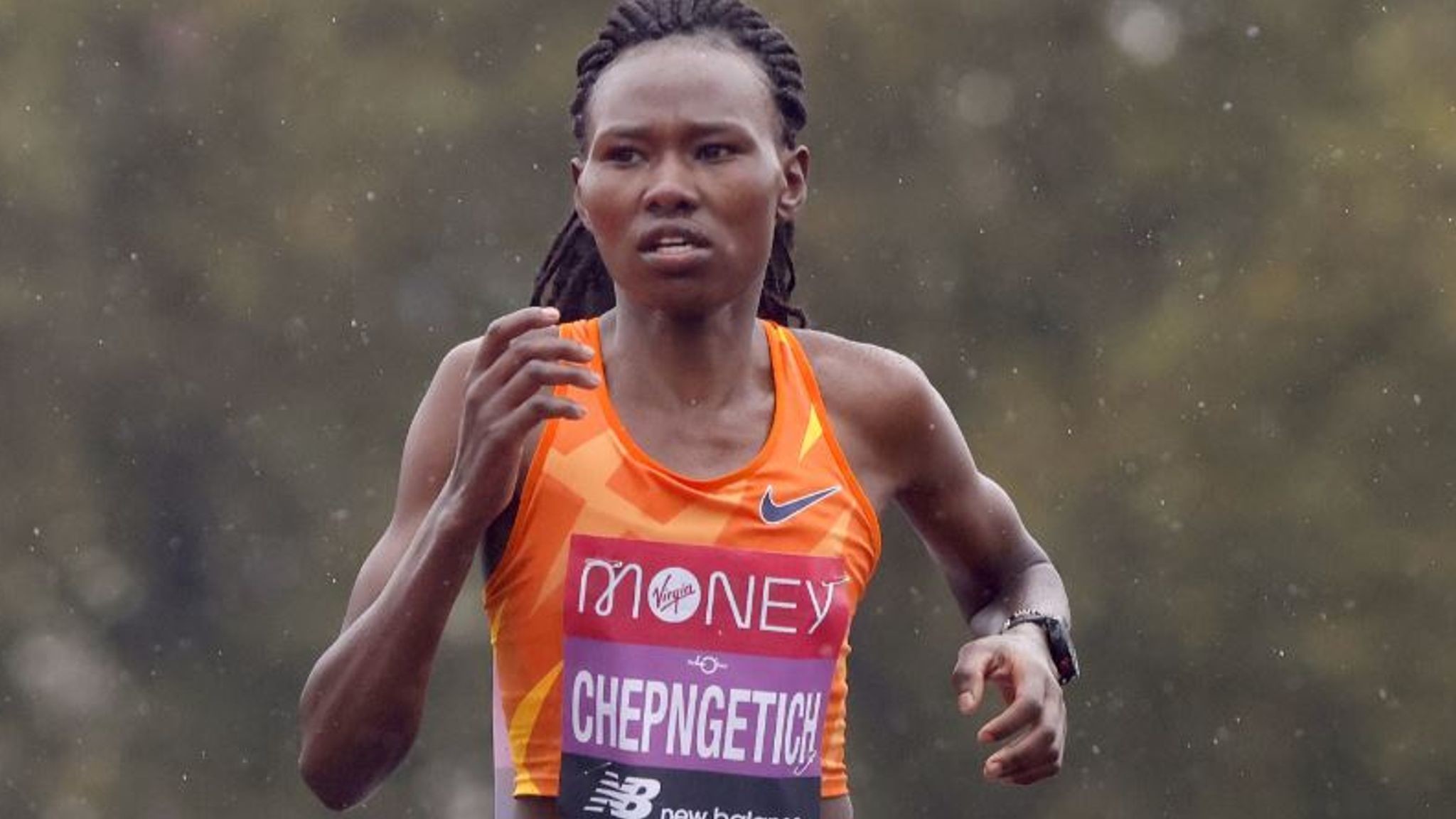
Chepngetich understands that her own strong performances have turned up the pressure.
"I say I should focus at these Games because everybody now has an eye on me," she said. "I think when somebody is on a high level, there is a lot of pressure there."
But Chepngetich said all she can do is focus on herself and what she needs to do to bring a medal back home.
"I am preparing my mind for the Olympics, I am focusing for that Olympics," she said.
DIFFICULT YEAR
The past year has not been easy for Chepngetich.
As COVID-19 ground the world to a halt, with restrictions in place to stop the virus spreading bringing sport to a standtill, Chepngetich had to change her training approach, running with a small group as few races were available to test her progress.
"Athletics for me is my life, I don't have any other jobs," she said.
When races resumed in the autumn of 2020, it took her time to get back to full throttle.
Chepngetich finished third in the London marathon, which was won by Kosgei, where she also picked up an injury that she attributed partly to her long layoff.
"I relaxed and I came back to train with full force, because I was confirmed in London. So I forced my body until I got the hamstring injury," she said.
Chepngetich came second in New Delhi in November and in a 10km race in Madrid a month later.
"I was not 100% because of COVID (restrictions that limited practice and racing)," Chepngetich said.
But those races built up her momentum and when she arrived in Istanbul Chepngetich was able to fly.
"Last year's races made me more active than before, and that's why I ran well in Istanbul."
The soft-spoken Chepngetich grew up in Kericho County in eastern Kenya, born to parents who keep poultry and grow maize. She is the only athlete in the family of five and caught the running bug early at about nine years old, she said.
When she was around 16 running became more than just a hobby. She followed the exploits of compatriots Hellen Obiri, the Rio 2016 Olympic silver medallist and 5,000 metres world champion in 2017 and 2019, and Faith Chepngetich, the 1,500m gold medallist at the Rio Games, and wanted to emulate them.
"I was admiring them (and promised myself) that one day I will be like them," she said.
When Chepngetich completed secondary school in 2015, she turned to athletics full-time and began training with older athletes in Kericho where a local coach gave her training tips.
That same year she competed in one of her first professional races in Nairobi, a 10km run where she came third.
A few months later, in Morocco, in her first competition abroad, she finished third again in a half-marathon.
The performances were encouraging and in 2017 wins in Adana, Paris, Milan and Istanbul and improving times gave her more confidence that she could be a professional athlete. Later that year, she won her first marathon race in Istanbul.
"That marathon gave me more confidence that I could do more," she said.
Since then Chepngetich has elevated her performances to become world marathon champion in 2019 and world record holder in the half-marathon with her scintillating performance in Istanbul and will be among the favourites for gold in Tokyo.
Despite all the challenges brought about by the pandemic, Cheptengish remains upbeat about her prospects and said she will continue to "think positive to race a beautiful race".
Reporting by Omar Mohammed; Editing by Ken Ferris
(06/25/2021) ⚡AMP
Tokyo 2020 Olympic Games
Fifty-six years after having organized the Olympic Games, the Japanese capital will be hosting a Summer edition for the second time, originally scheduled from July 24 to August 9, 2020, the games were postponed due to coronavirus outbreak, the postponed Tokyo Olympics will be held from July 23 to August 8 in 2021, according to the International Olympic Committee decision. ...
more...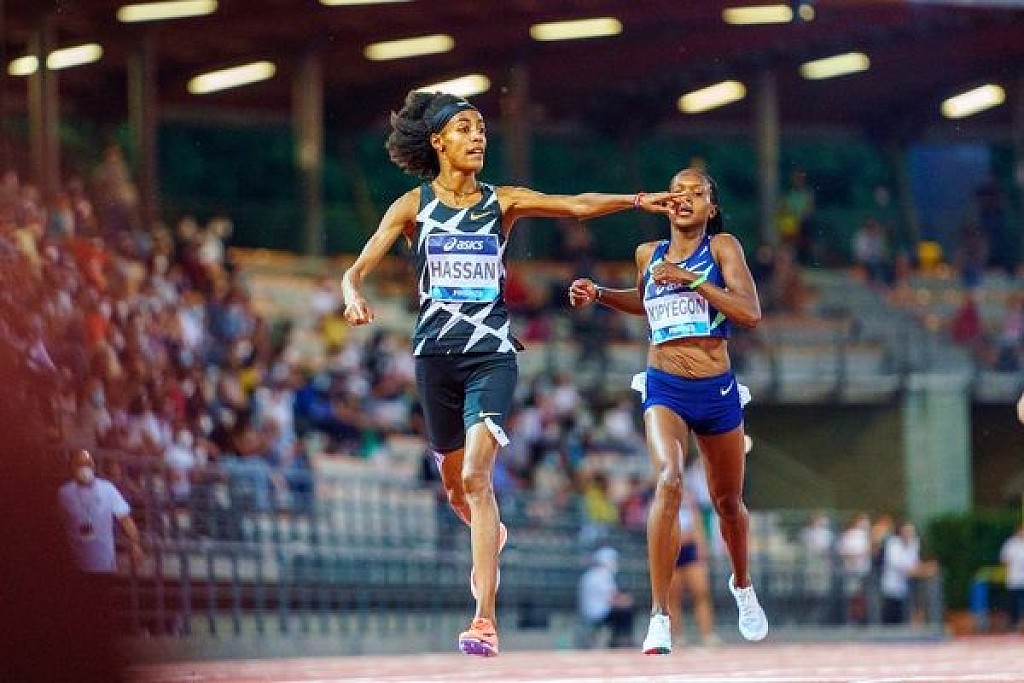
Middle-distance stars added to Monaco line-up
Four more world champions have been added to the fields for Meeting Herculis EBS as the middle-distance events once again look set to provide the highlights at the Wanda Diamond League meeting in Monaco on 9 July.
World champion Sifan Hassan and Olympic champion Faith Kipyegon will renew their rivalry in the 1500m. Their head-to-head record, which Kipyegon currently leads at 7-6, dates back to 2014 and includes three World Championship finals, one Olympic final and nine Diamond League meetings.
This will be the first time they have clashed in Monaco, though, and it follows on from their recent encounter in Florence, where Hassan finished just ahead of her rival, clocking 3:53.63 to Kipyegon’s Kenyan record of 3:53.91.
Timothy Cheruiyot’s winning streak may have recently come to an end at the Kenyan Olympic Trials, but the world champion feels at home in Monaco. The 25-year-old has won there for the past three years, producing the two fastest times of his career.
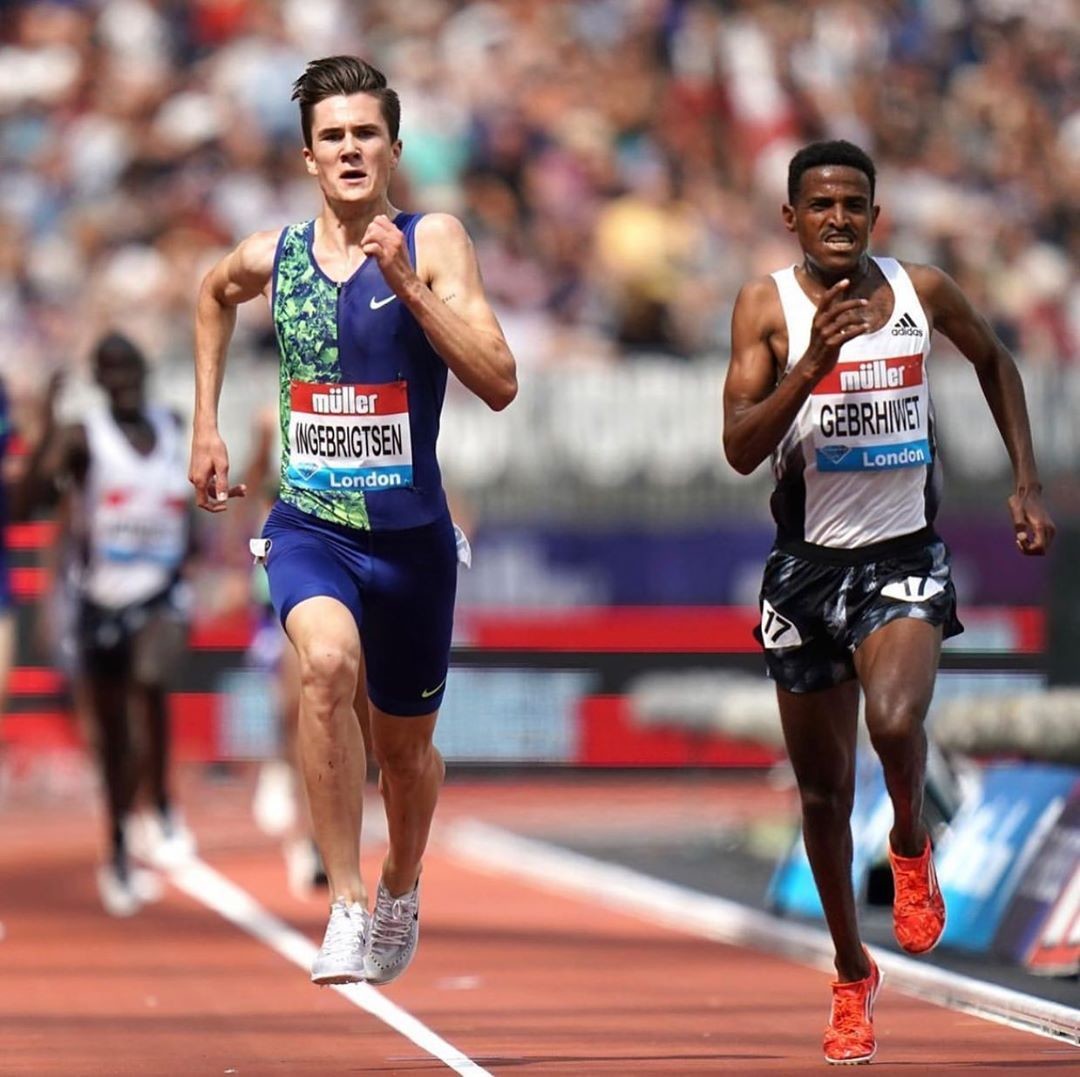
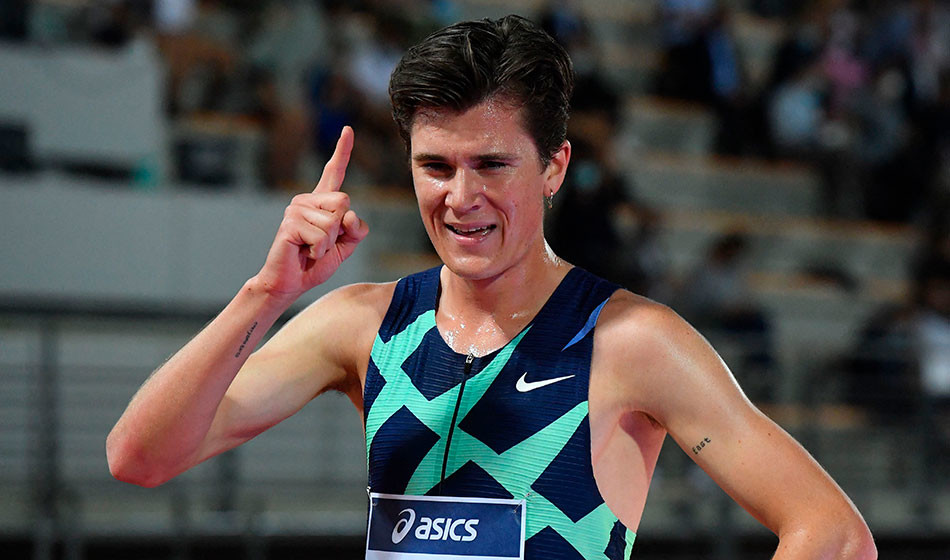
He’ll take on Norway’s Jakob Ingebrigtsen in Monaco. Although Cheruiyot has won all 11 of their clashes to date, Ingebrigtsen has consistently been the Kenyan’s biggest challenger on the circuit in recent years. He will also be buoyed by his recent European 5000m record of 12:48.45, set in Florence.
World champion Beatrice Chepkoech will return to the scene of her world steeplechase record and will take on USA’s 2017 world champion Emma Coburn. World 800m champion Halimah Nakaayi will contest her specialist event and will face France’s two-time European silver medallist Renelle Lamote.
Other additions to the field include European champion Miltiadis Tentoglou in the men’s long jump and world silver medallist Amel Tuka in the men’s 800m.
(06/24/2021) ⚡AMPby World Athletics
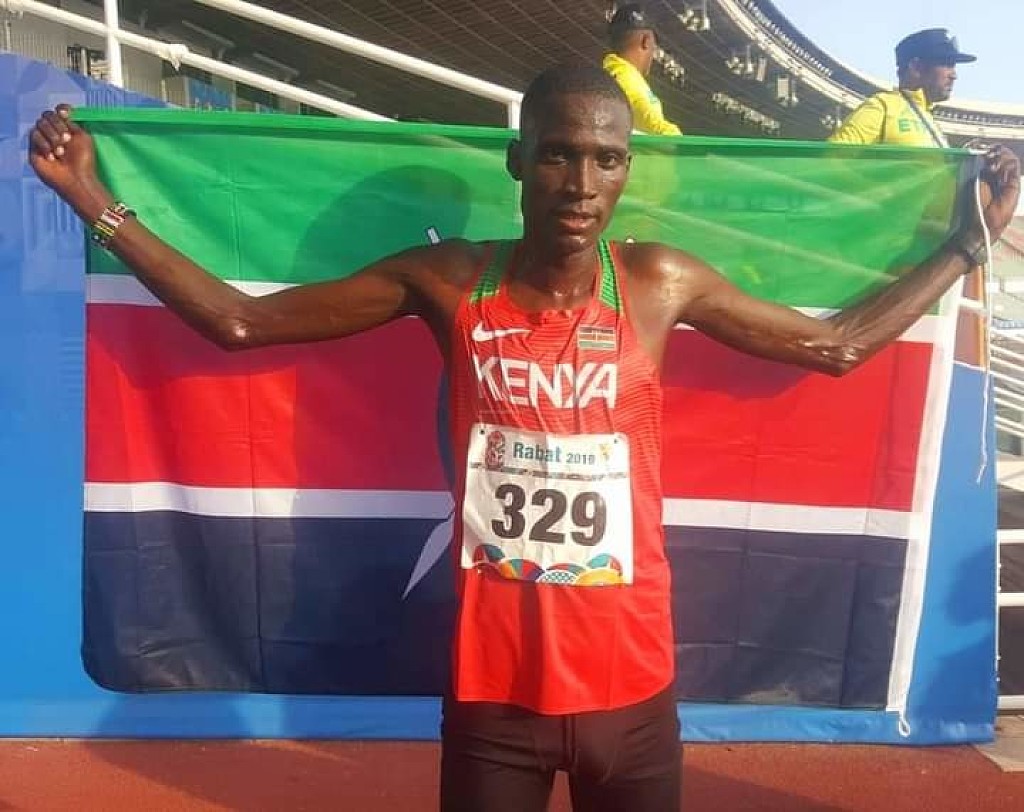
After setting a personal best of 2:02:37 to win the Milano Marathon in May, Titus Ekiru believes he can run under two hours
Titus Ekiru believes he can run under two hours at the upcoming Chicago and London marathons.
The 2019 African Games half marathon champion led a 1-2-3 Kenyan finish as he set a new course record, ahead of Reuben Kipyego (2:03:55) and Barnabas Kiptum (2:04:17) in second and third respectively.
"I've been working hard in training to improve on the weak aspects of my performance. So far, so good; I believe that running under two hours is possible with the way my training has worked out so far. We are discussing with the management to explore the possibility of running at the Chicago and London marathons, among other races in the future," Ekiru said.
If he achieves this target, he would become the second man to ever run a marathon under two hours after marathon world record holder Eliud Kipchoge timed 1:59:40 during the INEOS Challenge in Vienna, Austria.
Ekiru admitted that he had dreamt of representing the country at the upcoming Tokyo Olympics until these hopes were dashed when Athletics Kenya named Eliud Kipchoge, Lawrence Cherono, Vincent Kipchumba and Abel Kirui as Kenya's representatives in the road races.
"It was my desire and hope that I would have been selected to compete in the marathon. Now that the team has been named, there's nothing much to do but to focus on the future. I can't compete in the 10,000m because I have not been specialising in it for a while," he said.
(06/21/2021) ⚡AMPby Running Magazine
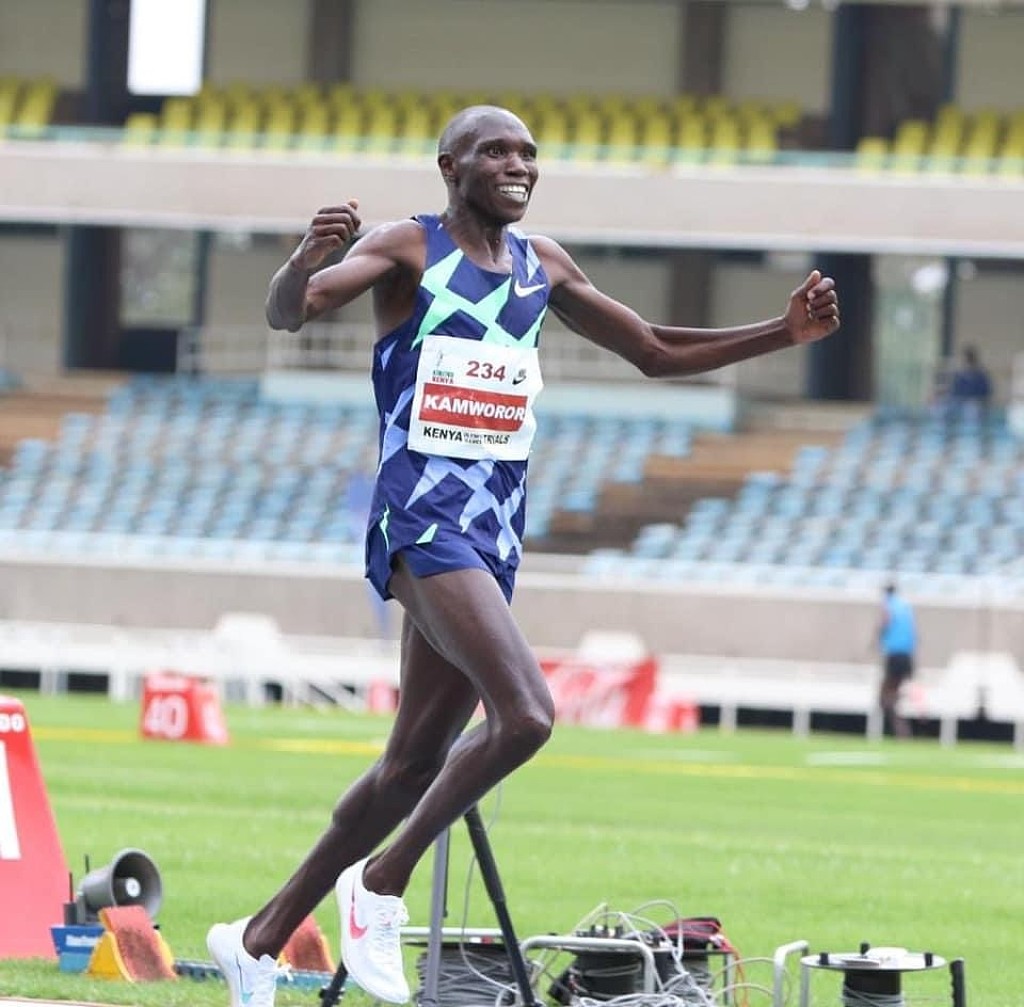
Geoffrey Kamworor ran the fastest time for 10000m in history at altitude
The 10000m race at the Kenyan Olympic Trials was one amazing event. The Kenyan Tokyo Olympic Trials happening June 17 to June 19 were moved from the Kipchoge Keino Stadium in Eldoret, to Moi International Sports Centre (MISC), Kasarani. Kasarani is located approximately 10 kilometres outside of Nairobi.
Athletics Kenya (AK) announced via press release that the changes are needed to test systems and requirements in readiness for the World Athletics Under-20 Championships which are planned for Aug. 17 to Aug. 22.
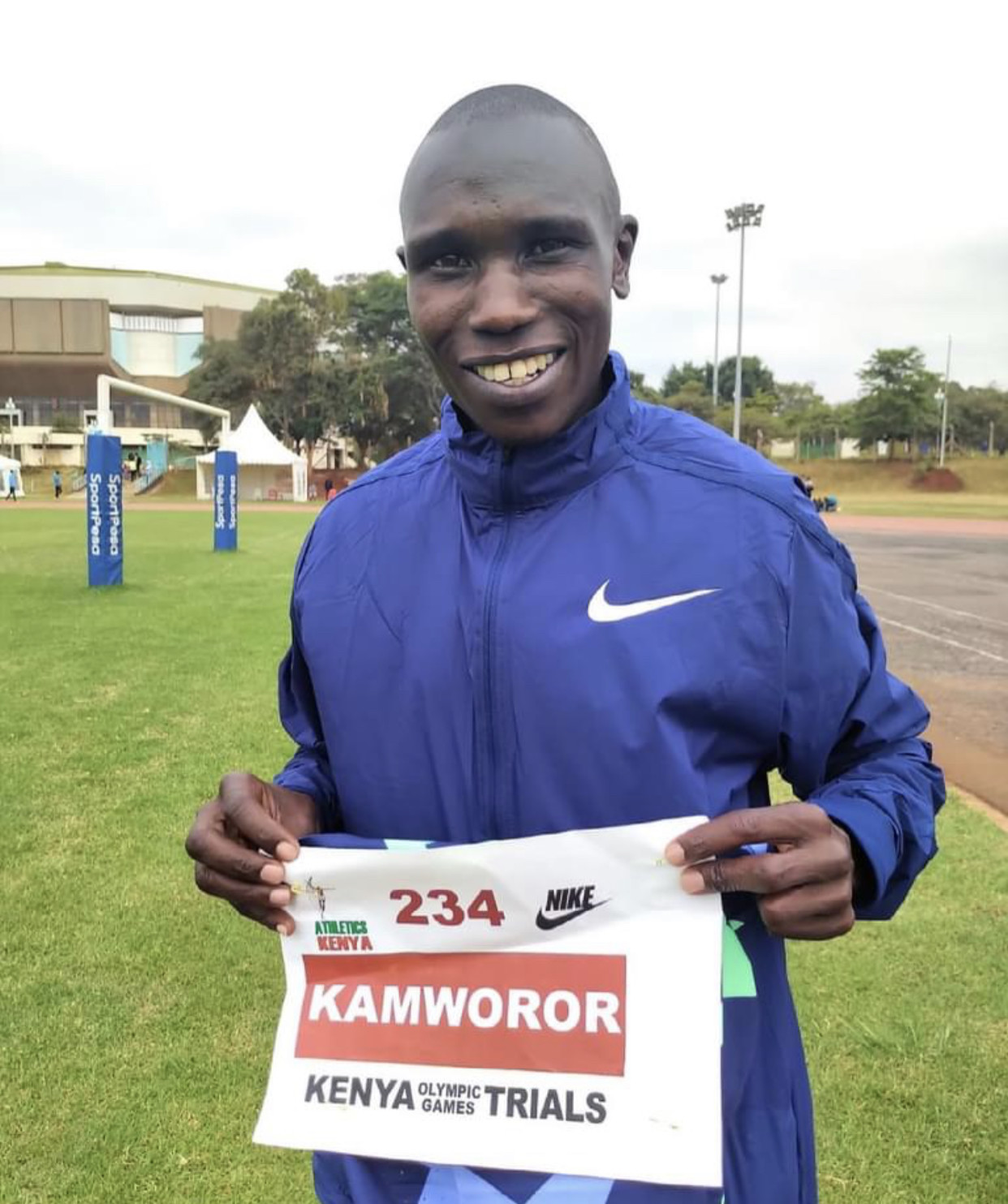
Geoffrey Kamworor clocked 27:01 for 10000m in the Kenyan Olympic Trials today. No one has run faster at altitude.
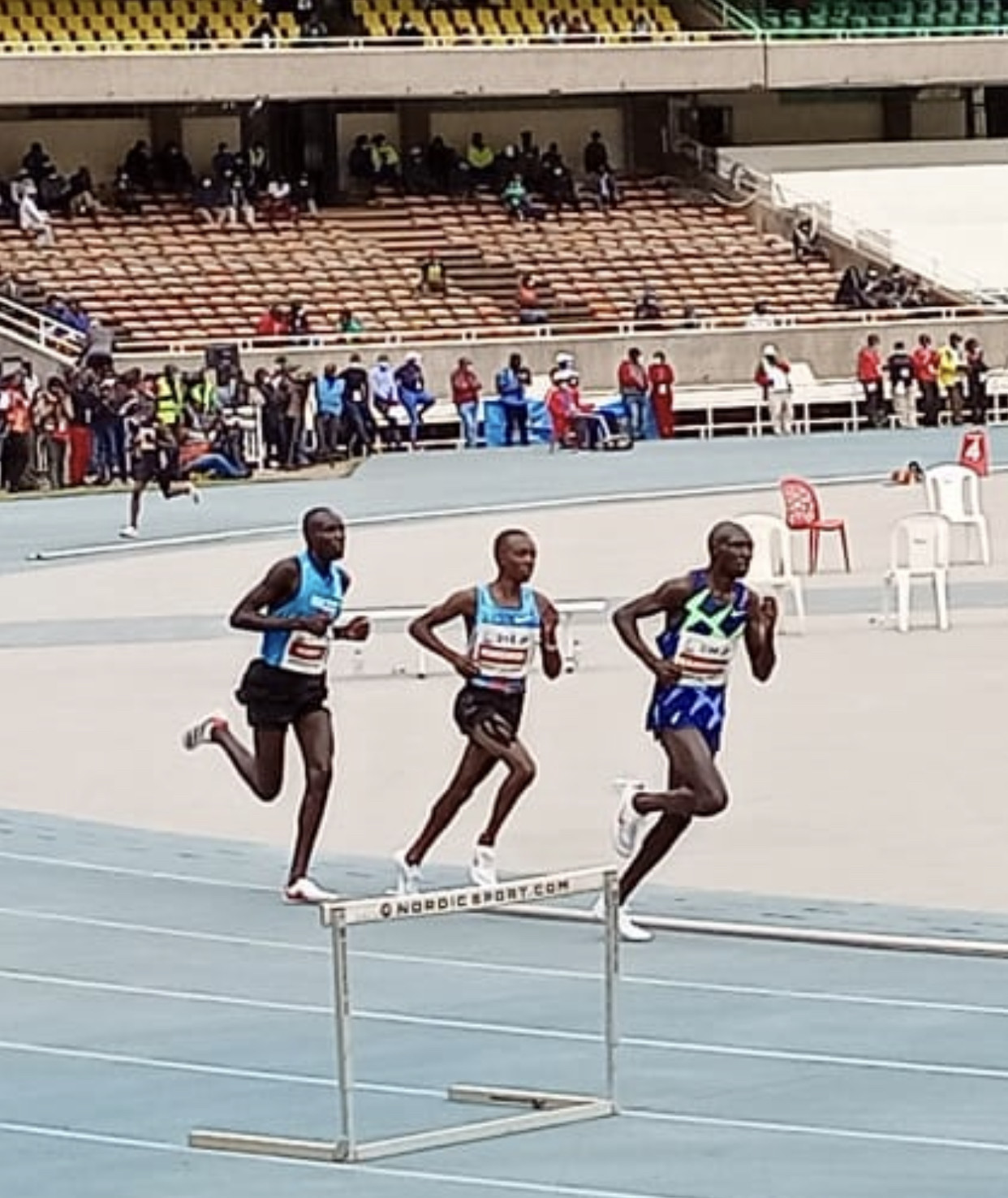
"I'm really happy to have qualified for the Olympics by running the fastest time in history in altitude. Now, we’re building on towards the bigger goal ahead," says Geoffrey Kamworor.
The altitude at the stadium is 1865 meters or 6118 feet.
Rodgers Kwemoi was second in a very fast 27:05.51 and Weldon Kipkirui Langat was third clocking 27:24.73. Ronex lead from the start but dropped out at 7k.
Geoffrey and Kwemoi were behind, when Geoffrey decided to break, Kwemoi resisted but with two laps to go Geoffrey made his big break and widen the gap winning by just over four seconds.
(06/18/2021) ⚡AMP
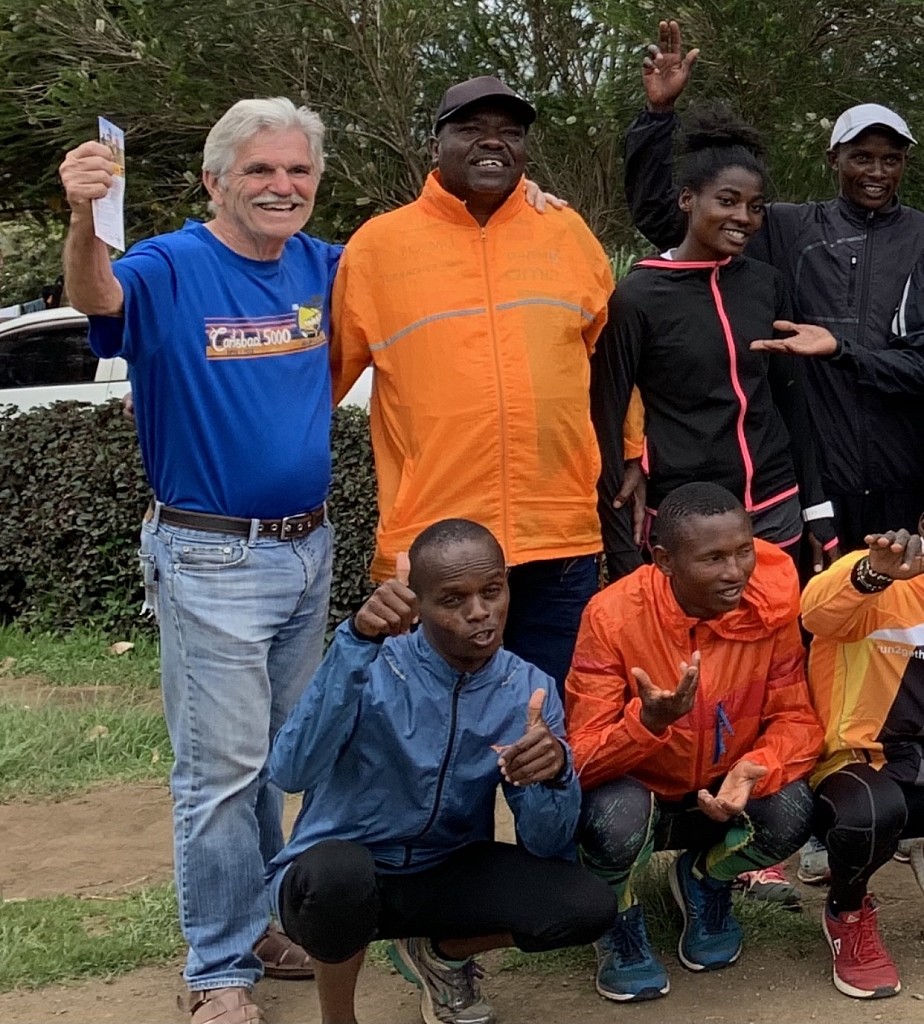
Well known Kenyan coach Joseph K Ngure joins the Kenyan Athletics Training Academy
Joseph K. Ngure has joined the Kenyan Athletics Training Academy staff as Director of Education and Race Director.
"He comes with lots of experience," says Bob Anderson (pictured with Joseph) managing director of the Academy in Thika. "He is a senior coach and AK certified official. He has been a school teacher and most recently was the head coach at Run2gether. He also brought Mountain Running to Kenya."

The Kenyan Athletics Training Academy is a unique facility offering training, education and for those living there an excellent meal plan and a pleasant atmosphere so athletes can focus on their running.
The staff and staff-athletes at the Academy welcome other athletes interested in improving, setting new PR's and hopefully winning races. The top athlete currently training at the Academy is Joel Maina, a 1:00:40 half marathoner.
The cost for a shared room is just 10k KES per week for a Kenyan Citizen. Or just $29US per night for non-citizens. Private rooms are also available.

"I met Joseph during our trip in January 2020 to Kenya," says Bob Anderson. "I found him to be very personable and knowledgeable. He was working as head coach for the Run2gether camp at the time."
Joseph left Run2gether earlier this year and contacted Bob Anderson about wanting to join his staff at the unique new project he had going in Thika.
Joseph took the job and says: “I have been involved in athletics on different levels and have learnt a lot. With the evolution and the dynamism in the sport, new approaches and professionalism need to be injected in order to move to the next level.
“I will work with the staff at our Kenyan Athletics Training Academy and offer expertise in competition organisaton, lias with grassroots and national federations to make sure the objectives of the Academy are achieved.”
Several unique and standard races are being planned along with time trials.
Joseph continued, “With the state-of-the-art facility in Thika new talents in the neighboring regions and elite runners will get wholestic training in preparation for local and international competitions
"I wish to lay strong tradition and culture of discipline, team work and integrity in accordance with World Athletics, Athletics Keny and AIU. More so inject the spirit of sportsmanship and respect to the sport and to the individual.”
The Academy is unofficially open now and the official opening date is September 1. A grand opening along with a race is being planned.
(06/17/2021) ⚡AMP
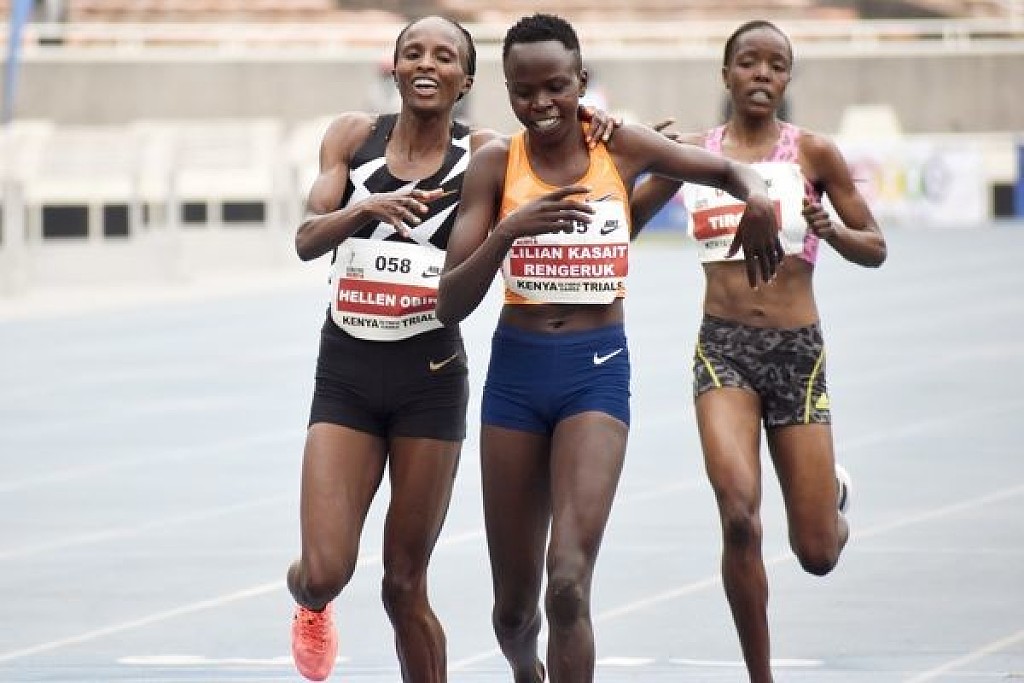
Rengeruk and Obiri claim Tokyo 5000m places at Kenyan Championships
Lilian Kasait Rengeruk and Hellen Obiri secured their Tokyo Olympic Games places by finishing in the top two of a women's 5000m final which saw four women dip under 15 minutes at the Kenyan Championships in Nairobi on Thursday (17).
On the first day of action at the Kasarani Stadium, the session got under way with Rengeruk running 14:52.18 for victory as a total of seven athletes finished under the Olympic qualifying standard of 15:10.00.
A group of eight had remained together until the pack approached the final lap, when five athletes – led by Rengeruk and Obiri – started to move away. Rengeruk picked up the pace with Obiri in pursuit, but the 2017 world cross country bronze medallist managed to hold off two-time world 5000m champion Obiri down the home straight. Obiri finished second in 14:52.51.
Two-time world 10,000m bronze medallist Agnes Tirop was just behind them, clocking 14:53.91, and world 5000m silver medallist Margaret Chelimo Kipkemboi also went sub-15:00 with 14:58.61 to finish fourth. World U20 champion Beatrice Chebet was fifth in 15:01.86.
“I didn’t expect to win. I thank God for victory and good health,” Rengeruk told Athletics Kenya. “The race was tactical. I didn’t have many races (in the lead-up) but my preparation was uninterrupted. My wish is to work as a team in Tokyo to ensure we deliver podium finishes.”
Joining her in Japan will be Obiri, who made her half marathon debut with a 1:04:51 performance in Istanbul in April and in Nairobi explained how she may switch her focus to road races after this year.
“I’m satisfied with my second place finish, what matters most was to finish in the top two,” she said. “I will go back and work hard in training to ensure I do well in Tokyo.”
Kipyegon wins 1500m
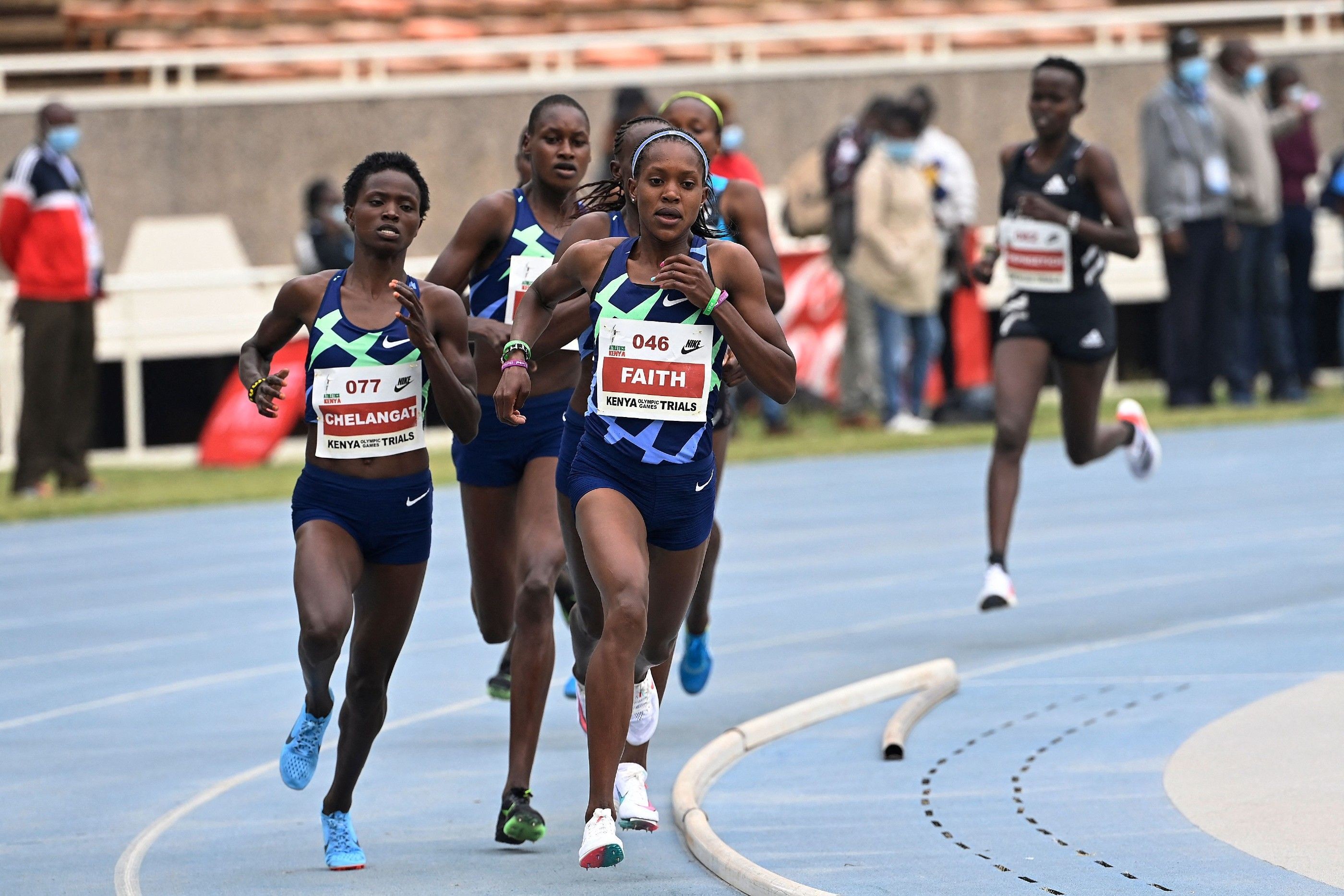
Faith Kipyegon remains on track for an Olympic title defence as she comfortably won the 1500m trials race in 4:02.10, with African champion Winny Chebet also claiming a team place thanks to her runner-up finish and Edinah Jebitok placing third.
Faith Kipyegon on her way to 1500m victory at the Kenyan Championships (© AFP / Getty Images)
“My focus is to defend my Olympic title in Tokyo,” said Kipyegon, also the 2017 world gold medallist. “It was a really good race here, which I really wanted to win. I know I will meet many good athletes in Tokyo but I have prepared really well.”
The men’s 100m saw Ferdinand Omanyala improve on the Kenyan record with a time of 10.02 (1.5m/s), with Mark Otieno second in 10.05 to also achieve the Olympic qualifying time.
(06/17/2021) ⚡AMPby World Athletics
Tokyo 2020 Olympic Games
Fifty-six years after having organized the Olympic Games, the Japanese capital will be hosting a Summer edition for the second time, originally scheduled from July 24 to August 9, 2020, the games were postponed due to coronavirus outbreak, the postponed Tokyo Olympics will be held from July 23 to August 8 in 2021, according to the International Olympic Committee decision. ...
more...
Sifan Hassan will turn her attention to the mile in Gateshead
Sifan Hassan will test her speed once again when she races the mile at the Muller British Grand Prix – a Wanda Diamond League meeting – at Gateshead International Stadium on 13 July.
The world 1500m and 10,000m champion holds the world mile record with 4:12.33 and last weekend set a world record for 10,000m with 29:06.82 at the World Athletics Continental Tour Gold meeting in Hengelo, although it survived only two days before being beaten by Letesenbet Gidey of Ethiopia.
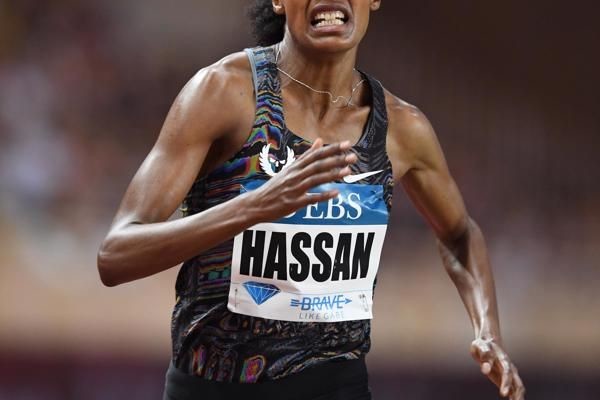
The Dutch athlete is clearly in form to challenge her world mile record if conditions are good in Gateshead. In addition to her 10,000m world record in Hengelo, she beat Olympic 1500m champion Faith Kipyegon of Kenya and European champion Laura Muir of Britain over 1500m at the Diamond League in Florence on Thursday night, clocking 3:53.63.
“I’ve raced several times in the past at events in the UK – at the Anniversary Games in London, meetings in Birmingham and Glasgow and of course the 2017 World Championships and 2018 World Indoor Championships. There is always a warm welcome, a great atmosphere and the fans have good knowledge of the sport,” said Hassan.
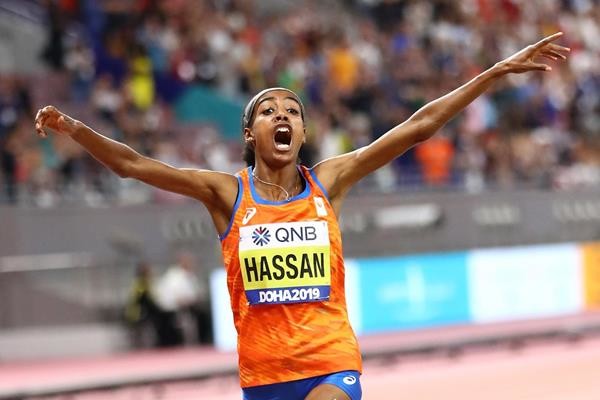
“Running over one mile in Gateshead on 13 July gives me a chance to test my speed ahead of the Olympic Games. Maybe I can run a good time too although much will depend on the weather. Hopefully it will be warmer and drier than it was for the Diamond League in Gateshead last month!”
Gateshead staged the first Wanda Diamond League event of 2021 after it was moved from Rabat in Morocco to the North East of England and now the same venue will host the seventh Diamond League of the season after it was moved from its original home of London.
(06/15/2021) ⚡AMPby World Athletics

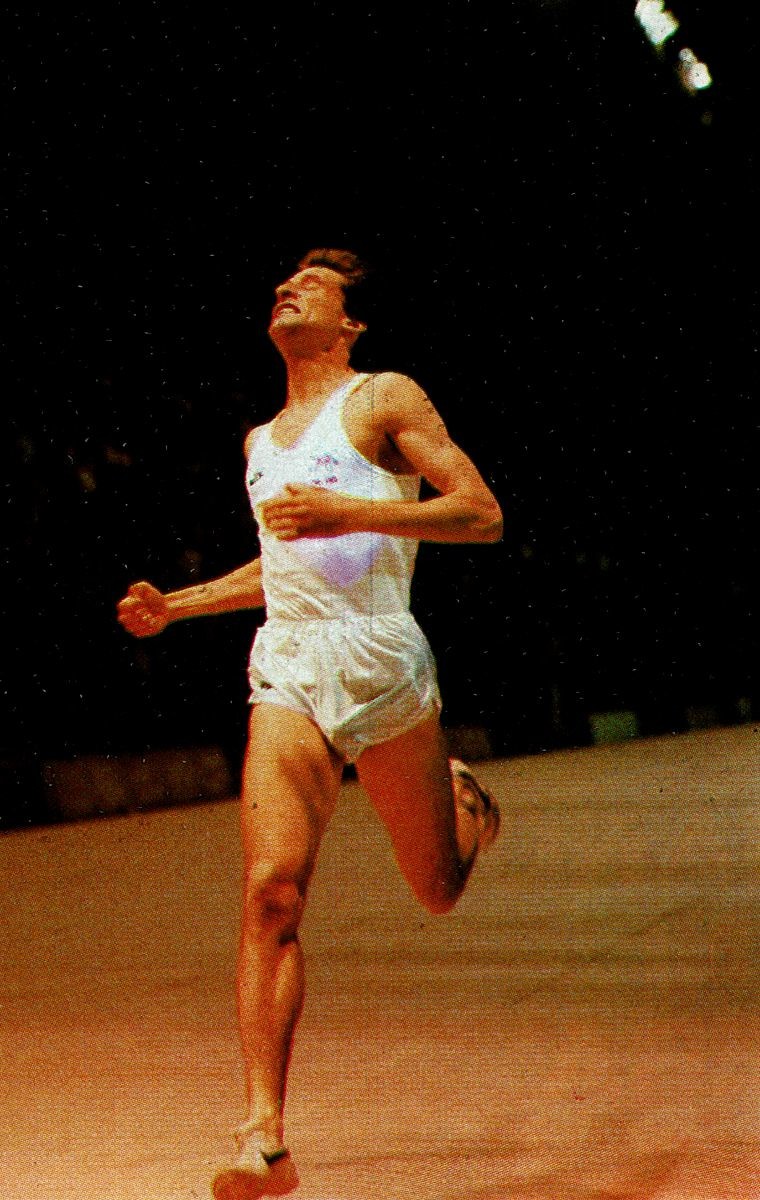
Sebastian Coe's monumental 800 meters
June 10, 1981 remains a red-letter day in the long history of 800m running, for it was in Florence late that night that Sebastian Coe lowered his own world record from 1:42.33 to 1:41.73. Every world record is special, marking as it does an advance on anything previously achieved, but Coe's run was extra-special. That time would not be bettered for 16 long years, itself a record in the annals of the men's 800m event.
When strongly-built Alberto Juantorena won the 1976 Olympic title in a world record 1:43.50 it was widely thought that here was the man to revolutionize two-lap running. And yet, for all his speed (44.26 400m) and power, the Cuban succeeded only in clipping another few hundredths off the record with 1:43.44 at the 1977 Universiade. Instead it was the slight figure of Coe who has gone down in history as the athlete who, like Germany's Rudolf Harbig in 1939 and New Zealand's Peter Snell in 1962, pushed back the frontiers of 800m performance.
It was in 1979 that Britain's Coe established himself as one of the all-time greats of middle distance running when in the space of 41 days he shattered three world records. He started with 1:42.33 in Oslo on July 5, and was as shocked as everyone else by his time. After clocking his fastest 400m of 46.87 at the AAA Championships he returned to Oslo for the star-studded Dubai Golden Mile on July 17. Despite being practically a novice at the distance with a best time of 3:57.67, he moved into the lead shortly before the three-quarter mark (2:53.4) and then proceeded to cover the final quarter in 55.6. He had run 3:48.95, again astonished when told he had broken New Zealander John Walker's world record of 3:49.4. As he related later: "When I looked back twice in the final straight it was fear, it was panic, not pain, that I was feeling. I certainly wasn't in the slightest distress at the finish."
Record number three came about in Zurich on August 15. The target this time was the 3:32.16 1500m by Tanzania's Filbert Bayi. Elated by the knowledge that he had never been faster, having been timed at 45.5 for a 400m relay leg 10 days earlier, Coe shot off at a potentially suicidal pace by clinging to the pacemaker, sweeping through the opening 200m in 25.9 and 400m in 54.3. Before 800m (1:53.19) had been covered, Coe was on his own, nearly 20m ahead of the field. Instead of easing back on the third lap he covered that in 56.3 for 2:49.5 at 1200m and at the finish – almost five seconds clear – his time was a hard earned 3:32.03.
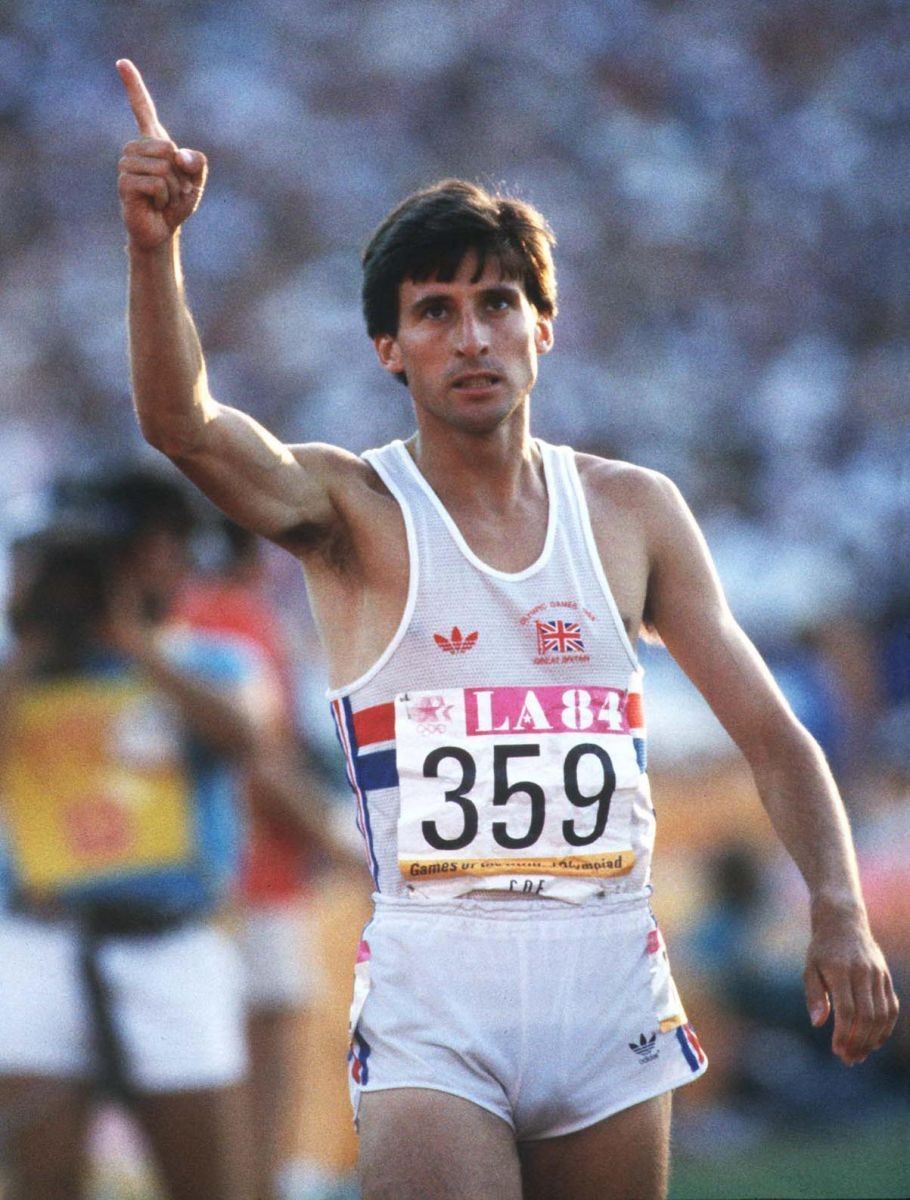
Coe's athletic immortality was sealed in 1980 when he triumphed in the Olympic 1500m in Moscow to make up for his 'disastrous' run in the 800m (a mere silver medal behind Steve Ovett) after adding to his portfolio of world records by covering 1000m in 2:13.40 in his first ever race at the distance.
And so to 1981. With no major title to aim for, the emphasis was on achieving spectacular 'one-off' performances. Asked how he had prepared during the winter, Coe replied: "My training mileage is slightly down but there's been more accent on speedwork. I'm going back to basics, trying to improve my 400m speed." That approach hadn't diminished his endurance, though, for he opened his indoor season by winning the UK 3000m title in a personal best of 7:55.2. Two weeks later he smashed the world indoor 800m record with 1:46.0. "I knew I was fit, but not that fit," he enthused.
A 46.9 400m and 46.3 relay leg on May 4 confirmed his speed was at a high level, and before his fateful appearance in Florence he won the Yorkshire county 800m title on May 17, in 1:46.5, an invitation 800m at Crystal Palace on June 3, in 1:44.06 followed two hours later with a 45.8 relay split from virtually a standing start, and as a final tune-up a 46.6 relay leg at Gateshead on 7 June. He traveled to Florence not expecting anything too special ... around 1:43/1:44.
His 800m race in Florence got under way after 11pm. Kenya's 19-year-old Billy Konchellah, then a 45.38 400m performer who would go on to become world 800m champion in 1987 and 1991, acted as pacemaker. In his slipstream Coe reached 200m in 24.5 and 400m in 49.7 and was perfectly set up for a super-fast time. Sensing Konchellah was about to flag, Coe forged ahead by 450m and after 200m splits of 24.5 and 25.2 he covered the next half-lap in a daring 25.3 for a remarkable 600m time of 1:15.0 – precisely 1:40 pace for the full distance. Inevitably he slowed towards the end but still managed a final 200m of a little under 26.7.
Coe's immediate post-race response: "I'm very happy about the result, but it was terrible waiting the 10 minutes for the official result. It's getting under 1:42 that is the great thing for me. It was as hard a race as I have run for a long time. In the last 30 meters I was beginning to tie up but apart from that there was no problem."
Coe went through that 1981 season undefeated, collecting further world records at 1000m (2:12.18) and mile (3:48.53 and 3:47.33). Other glittering performances would follow, notably a second Olympic 1500m triumph in 1984, but as a testimony to the quality of that 800m exploit in Florence note that even now, 40 years on, only two men have gone faster: David Rudisha of Kenya and Wilson Kipketer of Denmark.
(06/15/2021) ⚡AMPby World Athletics

Marathon great Wakiihuri ecstatic after receiving award from Japan
The Seoul Olympics marathon silver medalist was conferred “the Order of the Rising Sun, Gold and Silver Rays” for cementing international relations between Japan and Kenya through athletics and music.
In Summary
•Wakiihuri was the first Kenyan athlete to participate in Japan and paved the way for mass exodus of talented runners to the Asian country
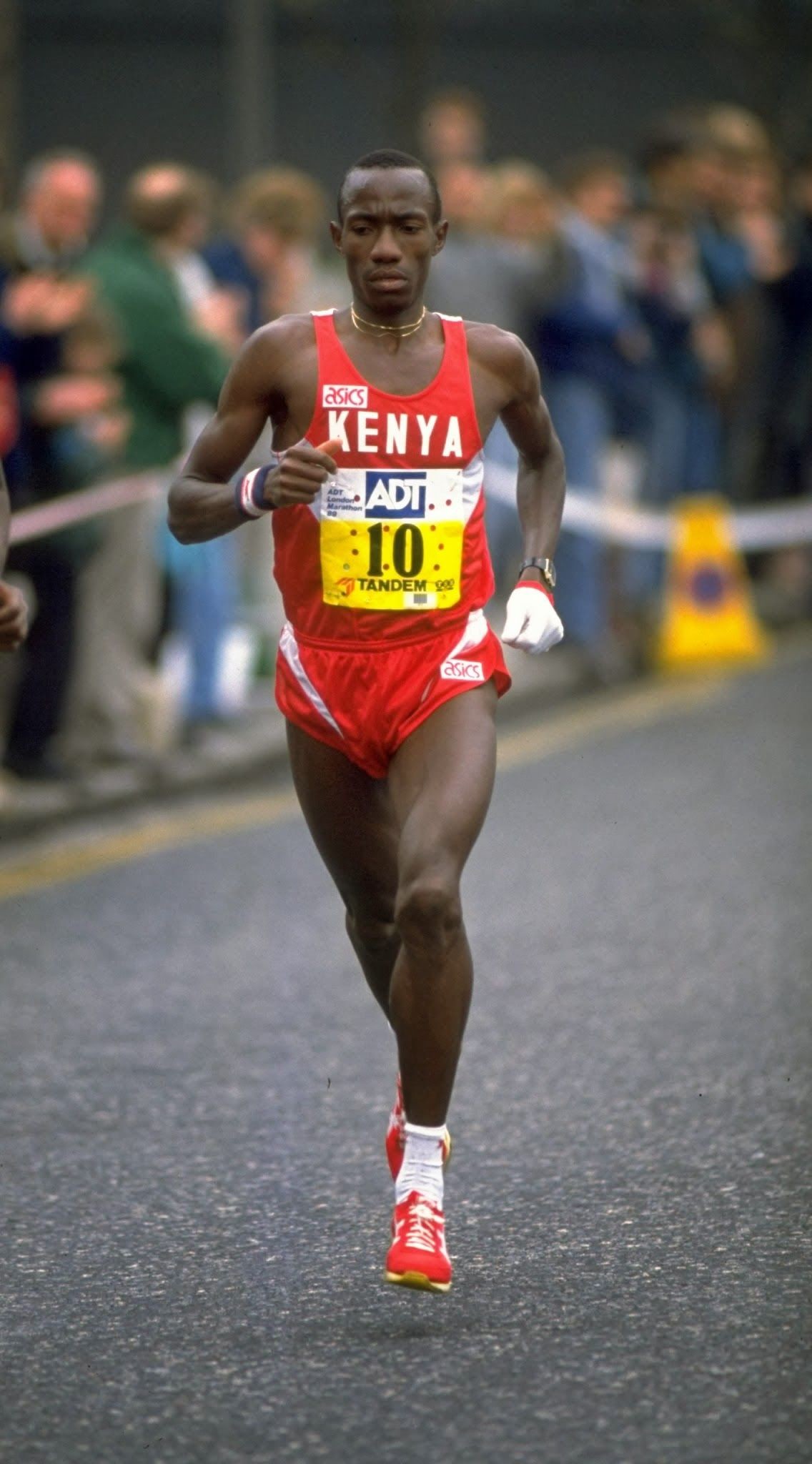
•The order is the highest one conferred to individuals who have helped cement international relations between Japan and other countries
•Japanese ambassador to Kenya says Wakiihuri's arrival in Japan and training with talented Japanese runners has uplifted athletics standards in the country
Seoul Olympics marathon silver medalist Douglas Wakiihuri was all smiles after he was conferred “the Order of the Rising Sun, Gold and Silver Rays” by the Japanese government during a ceremony at the Japanese Embassy on Friday.
The decoration was given in recognition of Wakiihuri's contribution to Japan-Kenya bilateral relations through athletics by paving the way for a steady exodus of talented Kenyan athletes to the Asian country.
“I was passed a tasuki (sash), a sign of responsibility from Japanese people to continue running in the race of life. This decoration is not only for me but for all of you who cheered for me all through the race. As I stand on the podium today, I extend my sincere gratitude for His Majesty the Emperor of Japan, the Government of Japan, Ambassador Horie, those who present here today and all the people who have supported me to date,” Wakiihuri said.
The order is the highest award conferred to individuals by the Japanese government and generally recognises those who have contributed to cementing international relations between Japan and other countries as well as promoting Japanese culture in their respective fields and talents.
While conferring the award — on behalf of the Emperor of Japan — Japanese ambassador to Kenya Horie Ryoichi thanked the 1990 New York Marathon winner for uplifting the standards of Japanese athletics by opening up the country to other talented runners from Kenya.
"Being the first Kenyan to run in Japan, it has now become common practice to see foreign athletes training with young Japanese athletes who go on to become world’s leading marathon runners. This practice, till today, has provided a lot of stimuli and dreams for Japanese youngsters. Moreover, after his retirement, Mr. Wakiihuri has been positively engaging in boosting the bilateral cultural relationship between Japan and Kenya and extending cooperative support on various occasions, such as the organisation of the Nairobi Sotokoto Marathon," Ryoichi said.
He also praised Wakiihuri for his exceptional singing talent and incorporating elements of Japanese culture in his songs.
Also present at the ceremony were Sports Cabinet Secretary Amina Mohamed, Olympics Kenya acting secretary general Francis Mutuku and Athletics Kenya president Jack Tuwei.
Ryoichi said Japan is looking forward to welcoming Team Kenya for the upcoming Tokyo Olympics and wished them success in the quadrennial games — although he asked Kenyan runners to take it easy on their Japanese counterparts.
(06/14/2021) ⚡AMP

Sara Hall wins New York Mini 10k in Central Park
Sara Hall completed the New York Mini 10K with the fastest time by an American in the history of the women-only event.
Sara Hall won her second consecutive title at the Mastercard New York Mini 10K on Saturday, finishing the Central Park race in 31 minutes, 33 seconds. It was the fastest time by an American in the 49-year history of the women-only event.
Hall broke away from her nearest challengers late, holding off the Kenyan duo of Violah Cheptoo by six seconds and Monicah Ngige by 26.
“It feels so good to be back out here racing in New York City and have a real road race,” Hall said. “I’ve been looking forward to this so much. This is the momentum I needed for Olympic trials in two weeks.”
Lindsay Flanagan (32:09), U.S. Olympic marathoner Molly Seidel (32:13), and former New York City Marathon champion Edna Kiplagat (32:20) completed the top six.
Susannah Scaroni won her third straight event title in the wheelchair division, finishing in 22:44. Scaroni sprinted out early and cruised to victory ahead of flying to the U.S. Paralympic trials.
Five-time New York City Marathon champion Tatyana McFadden (25:22) was second for the third consecutive time and Yen Hoang (26:11), a college teammate of Scaroni and McFadden at Illinois, rounded out the podium.
There were about 3,000 runners in the field, the first regularly scheduled New York Road Runners race since the pandemic began.
(06/13/2021) ⚡AMP

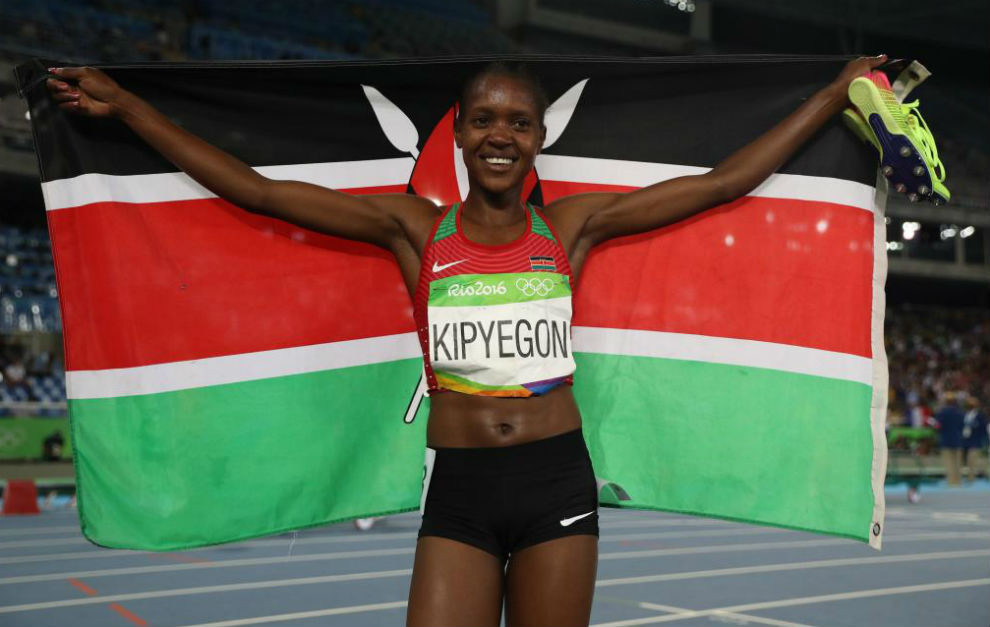
Kenya's Faith Kipyegon thinking about a Tokyo double
Fresh from breaking her own 1,5000m Kenyan record at Florence Diamond League, in Italy, on Thursday, Faith Chepng’etich is spoilt for choice on which races to run at the Tokyo Olympic Games beckon.
Chepng’etich, who is the reigning Olympics 1,500m champion, has the liberty of either defending her title or going for 800m honours at the Tokyo Games due on July 23 to August 8 at the Japanese capital.
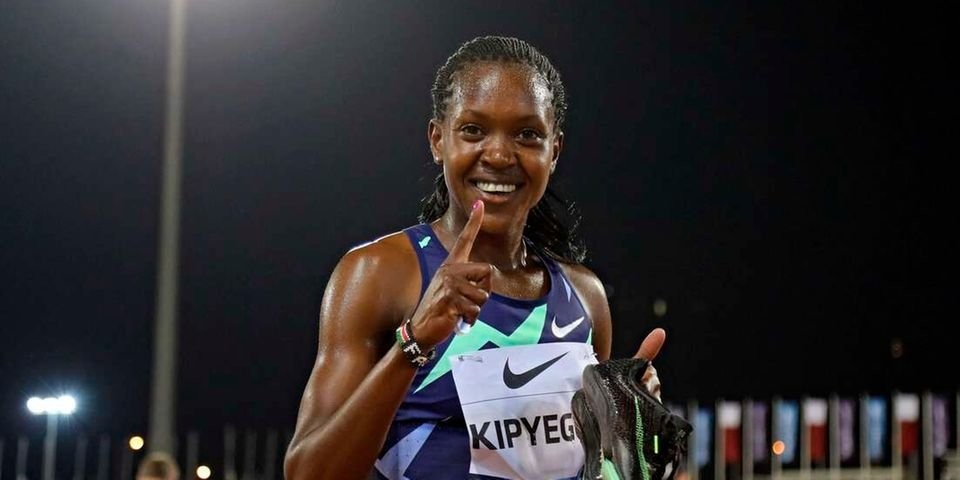
Pundits are also floating another idea of the world 1,500m silver medallist doubling up in 1,500m and 800m in Tokyo.
Incidentally, Kenya won its maiden medal from the Olympics through Wilson Kiprugut at the 1964 Tokyo Games in the 800m.
“It poses something to think about and I am yet to decide,” said Chepng’etich when asked whether she will consider doing a double in Tokyo.
Chepng’etich cruised to a Kenya record time of three minutes and 53.91 seconds to finish second behind Sifan Hassan from the Netherlands in Florence.
“It was a good race and it gives me a hint on where to work on with my coach,” said Chepng’etich, who had attained the Tokyo Olympics qualifying standard with a winning time of 1:58.26 at the Doha Diamond League on May 28.
Hassan, who had freshly set a short-lived new world record in 10,000m at her home country, clocked a world lead and meet record 3:53.63 in what was a replica of the 1,500m final at the 2019 World Championships in Doha.
It was at the world event where Chepng’etich claimed a national record of 3:54.22 in 1,500m after settling for silver as Hassan won in a European and Netherlands record of 3:51.95.
Running both the 1,500 and 800m will be tricky for any athlete.
The 800m heats will be held July 30 followed by the semi-finals the following day and the final on August 3. The 1,500m heats will be staged on August 2 followed by the semis on August 4 and final on August 6.
(06/12/2021) ⚡AMPby Ayumba Ayodi
Tokyo 2020 Olympic Games
Fifty-six years after having organized the Olympic Games, the Japanese capital will be hosting a Summer edition for the second time, originally scheduled from July 24 to August 9, 2020, the games were postponed due to coronavirus outbreak, the postponed Tokyo Olympics will be held from July 23 to August 8 in 2021, according to the International Olympic Committee decision. ...
more...
Olympic champion Conseslus Kipruto eyes perfect debut in Diamond League
Olympic 3,000m Steeplechase champion Conseslus Kipruto will compete for the first time this year in Thursday's Florence Diamond League in Italy.
The third leg of this season's Diamond League will see less Kenyan athletes in action with many preparing for the Olympic Games national trials slated for June 17-19 at Kasarani.
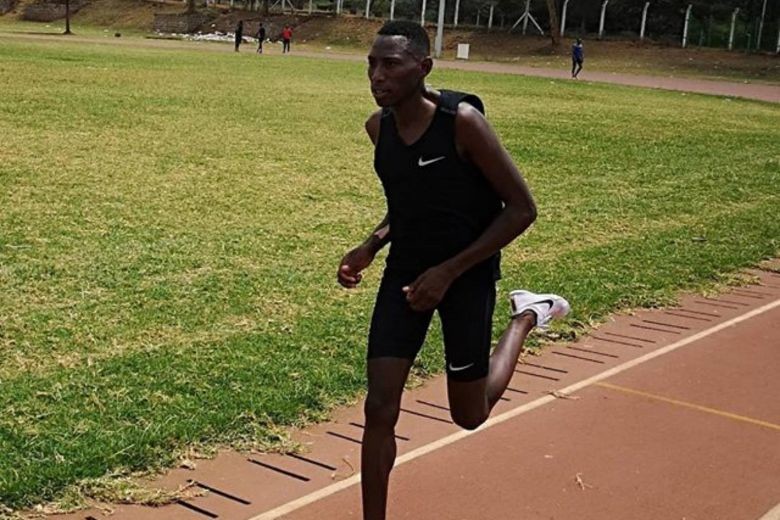
Kipruto will battle world bronze medalist Soufiane El Bakkali from Morocco, Ethiopia’s Takele Tadese, his compatriot Wilberforce Kones, Uganda’s Albert Chemutai among others in the 3,000m Steeplechase race.
The Kenyan started training late after a long break that was caused by the coronavirus pandemic, which saw the suspension of sporting events.
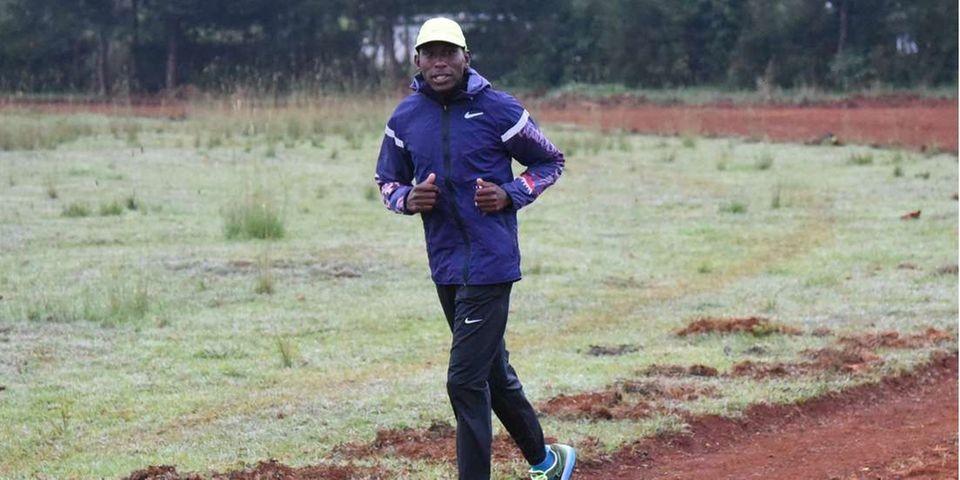
Speaking to Nation Sport via phone, Kipruto revealed that he will run to see if he is fit ahead of next month's Tokyo Olympic Games, which he has already qualified for.
“I started training recently and my preparations are not perfect, but I will be running today (Thursday) just to see where I need to improve ahead of the Olympics Games. I’m using the 3,000m race to improve on my speed,” said Kipruto, who has been training in Mosoriot, Nandi County.
After the Florence meet, Kipruot will head back home to prepare for the Olympic national trials where he hopes to defend his title over the distance.
Another Kenyan in action Thursday night is Olympic 1,500m race Faith Chepng'etich, who line up in her specialty as she seeks to improve her performance ahead of the trials next week.
She will renew hostilties with her rival Dutch’s Sifan Hassan, Great Britain’s Lura Muir, Ethiopia’s Hailu Lemlem, Winnie Nanyondo from Uganda, among others.
Faith is in form this season, having clocked a best of 1:58.26 in the 800m at the Doha Diamond League meet last month.
Robert Kiprop will be the sole Kenyan in the 5,000m race, which has favorite Uganda’s Joshua Cheptegei, Ethiopia’s Edris Muktar, siblings Jakob Ingebrigtsen and Henrik Ingebrigtsen from Norway among others.
(06/09/2021) ⚡AMPby Bernard Rotich
Organizers hope up to 35,000 can run this September 2021, Berlin Marathon
Organizers hope that up to 35,000 runners can take part in the Berlin marathon this September as part of a pilot project as Germany eases Covid-19 restrictions.
In a joint press conference Monday, Berlin's senate and marathon organizers outlined plans to first hold two test events, a 10km race in July and a half marathon in August.
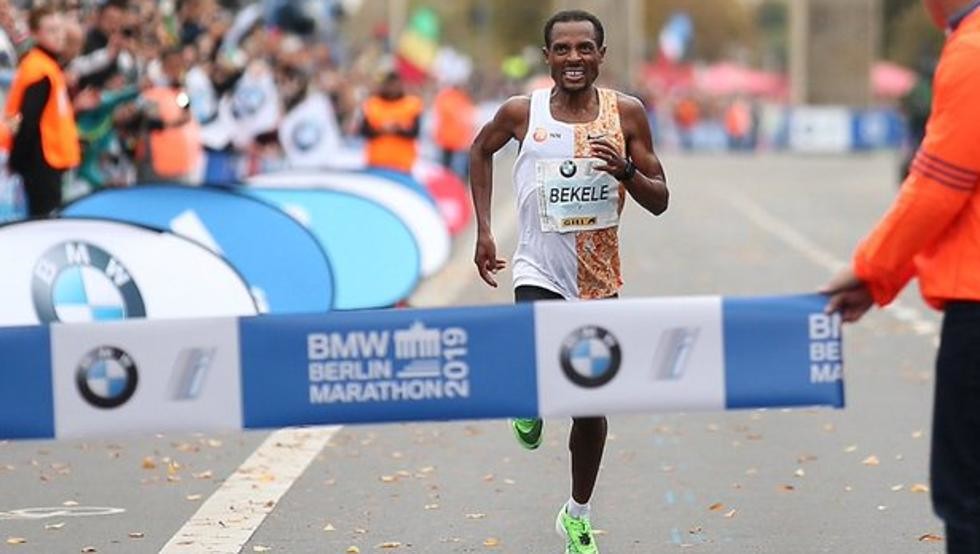
Providing all goes well and the rate of infection remains low, the Berlin marathon would take place on September 26.
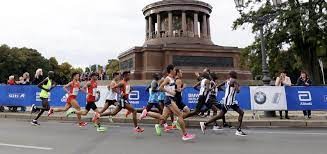
Runners would either have to prove they are fully innoculated or undergo a PCR test as part of a hygiene programme still to be approved by Berlin's health authority.
"There is no certainty that the Berlin Marathon can take place, but the probability is there," said Berlin senator Andreas Geise.
"If the incidence rates continue to fall, approval of the pilot project is conceivable."
A maximum field of 35,000 would be 10,000 down on the 45,000 who took part in the 2019 Berlin marathon, the last one before the 2020 race was cancelled due to the pandemic.
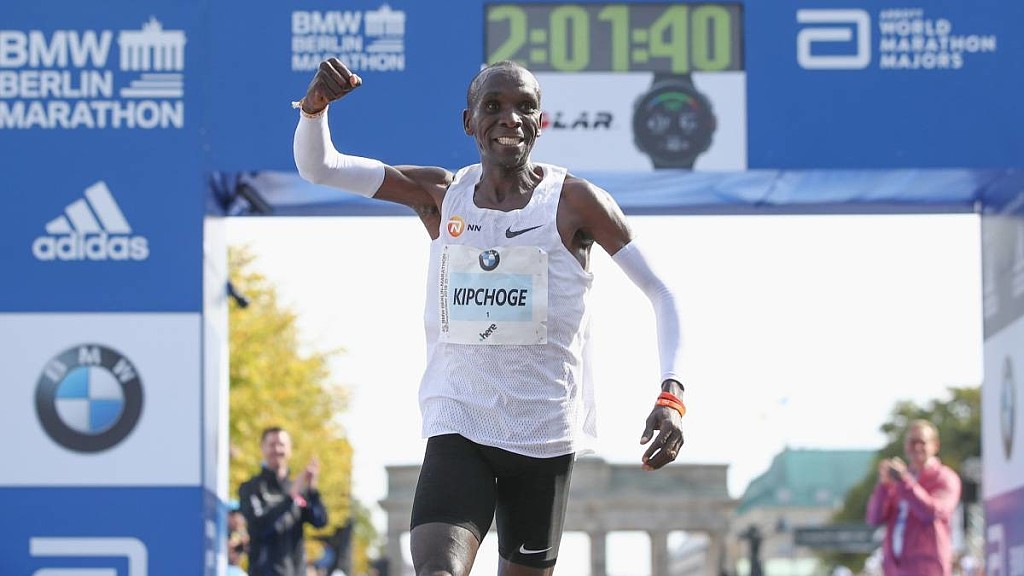
The official world record for the men's marathon was set in Berlin in 2018 when Kenya's Eliud Kipchoge ran the 42.195kms (26.2mi) in two hours, 1:39 minutes.
The top three fastest race times for the men's marathon have all been run in Berlin.
(06/07/2021) ⚡AMPby France 24

BMW Berlin Marathon
The story of the BERLIN-MARATHON is a story of the development of road running. When the first BERLIN-MARATHON was started on 13th October 1974 on a minor road next to the stadium of the organisers‘ club SC Charlottenburg Berlin 286 athletes had entered. The first winners were runners from Berlin: Günter Hallas (2:44:53), who still runs the BERLIN-MARATHON today, and...
more...
Sifan Hassan breaks the world 10,000m record in Hengelo
There was little about Sifan Hassan’s run at the FBK Games in Hengelo on Sunday (6) that gave the impression she was being patient. Eyes firmly fixed on the track ahead, her arms pumping and legs turning with incredible consistency, she looked like a person who had places to be – and fast.
But, at the same time, she seemed calm and in control. Despite traveling at a pace of 2:55 per kilometer for the majority of her 10,000m, there was no fluster or signs of the tiredness that she later revealed had gripped her in the early stages. Hassan was flowing towards the finish line, where – 29 minutes and six seconds after she started – her world record ambition would be realised. Inside, the Dutch 28-year-old was giving herself a stern talking to.
“Having travelled from America, I had jet lag and I felt terrible at the beginning,” Hassan revealed. “Everything felt heavy, but I just tried to hang on to the lights. Sometimes I accidentally passed them, and I thought ‘no, calm down! Be patient.’”
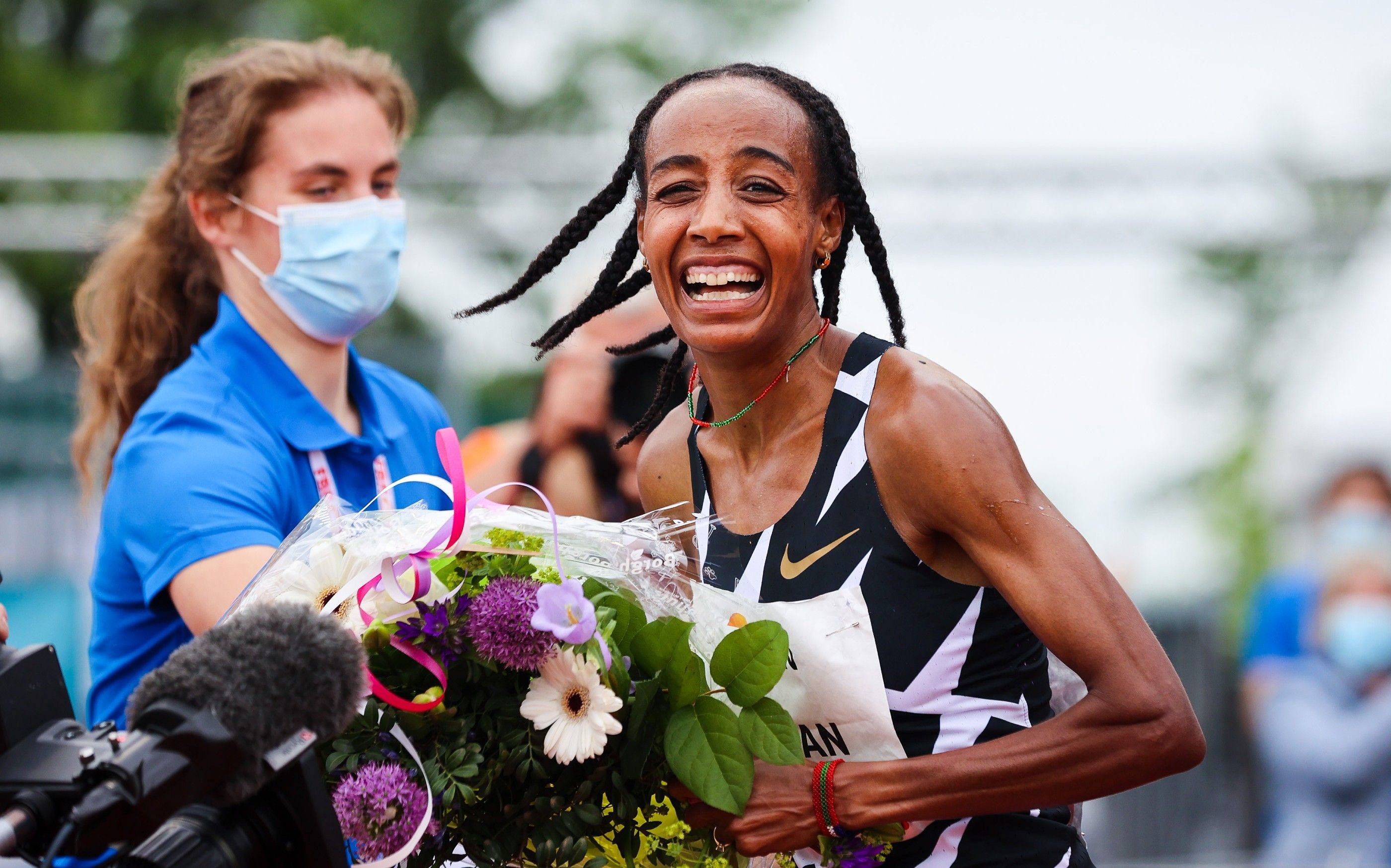
The lights she describes formed part of the Wavelight technology used at the Fanny Blankers-Koen Stadion during the World Athletics Continental Tour Gold meeting in the Dutch city, programmed to highlight the pace needed to improve the world 10,000m record of 29:17.45 which had been set by Ethiopia’s Almaz Ayana at the 2016 Olympic Games in Rio.
The blue lights showed world record tempo, while the green indicated the speed of Hassan’s own European record of 29:36.67 run on the same track eight months earlier. Ultimately, the double world champion’s patience paid off, as she waited until the final kilometre to move away from those bulbs. Then it was Hassan’s turn to light the way.
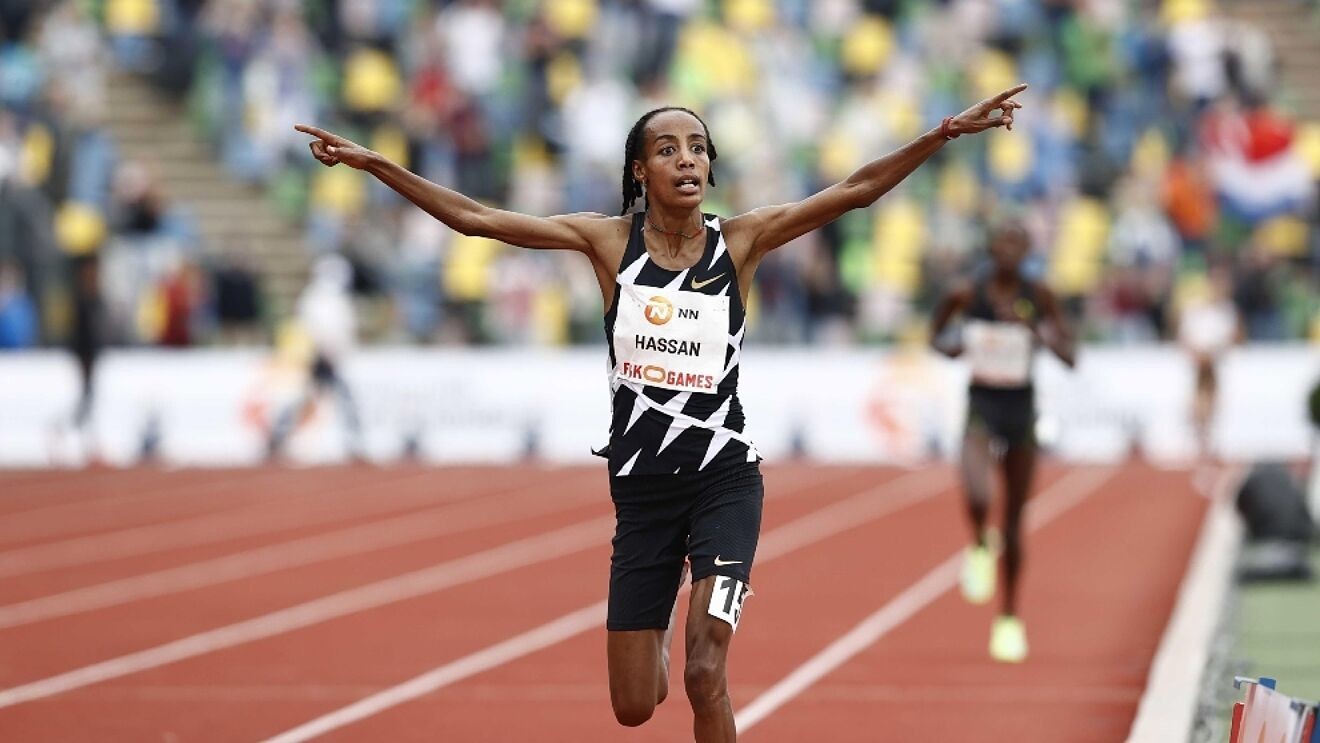
After kilometres of 2:56.12 and 2:56.07 behind pacemakers, Hassan ran splits of 2:55.72, 2:55.42, 2:55.42, 2:55.69, 2:55.93, 2:55.48 and 2:55.20 before upping the tempo and completing the final 1000m in 2:45.77.
As she reached her destination, the clock read 29:06.82 – a time more than 10 seconds faster than Ayana’s world record mark. What makes the performance all the more remarkable is how it forms part of a CV which also boats world records for the mile (4:12.33), women-only road 5km (14:44) and one-hour event (18,930m), plus European records in the 1500m (3:51.95), 3000m (8:18.49), 5000m (14:22.12) and half-marathon (1:05:15).
And then there’s the fact that Hassan feels she can go even quicker still.
“I know I am in shape to go under 29 minutes,” said the Tim Rowberry-coached runner, who has trained in Kenya and Utah, USA, in recent months. “But my coach said ‘no, we train for under 29 so you can run 29:17’. Yesterday I had confidence, I was like ‘I want to go 29:10’ but he said he wanted me to go exactly with the pace.”
Having started her season with a 14:35.34 5000m and then run 2:01.54 for 800m in May, she added: “I am not the sort of person who always runs a fast time in my first race. I know my training has been amazing, but I didn’t know how it would be in my competition. When I got to the last mile or the last 1500m I thought ‘okay you can do this, you can hold it’.”
The path for that performance had been paved in Hengelo last year. “I was scared in October,” she explained. “I was tired in the last couple of laps.
“I learned a lot from that race. That race taught me to hold myself back. I was telling myself that I have time to go under 29 minutes, I am just young – now I should just get the world record.
“Patience,” she added. “I learned patience.”
Her manager Jos Hermens, himself a world record-breaker, also believes that quicker times are to come.
(06/07/2021) ⚡AMPby World Athletics

There will be zero marathon runners from India at the Tokyo Olympics
Marathon races in the Olympic Games have been a permanent fixture in the men's roster since the inaugural Athens Games of 1896, while the women's event was first held 88 years later in Los Angeles. Ethiopian athletes have enjoyed the most successful in Olympic marathons, with men winning four golds; two of which came from Abebe Bikila in 1960 and 1964, who was the first athlete to win back-to-back golds (the only other athlete to win two golds in the marathon was East Germany's Waldemar Cierpinski in 1976 and 1980), and Ethiopian women have won two golds.
The Olympic records are 2:06:32 for men, set by Kenya's Samuel Wanjiru in 2008; and for women, it's 2:23:07 seconds, set by Tiki Gelana of Ethiopia in 2012.
India's history at the marathon dates back to 1928 when Phadeppa (Pavananjey) Dareppa Chaugule became India's first Olympic marathon runner. He represented India in the 1920 Summer Olympics in Antwerp, Belgium, and finished 19th with a timing of 2 hours 50 minutes 45.2 seconds. He hails from the town of Belgaum (Now Belagavi) in Karnataka.
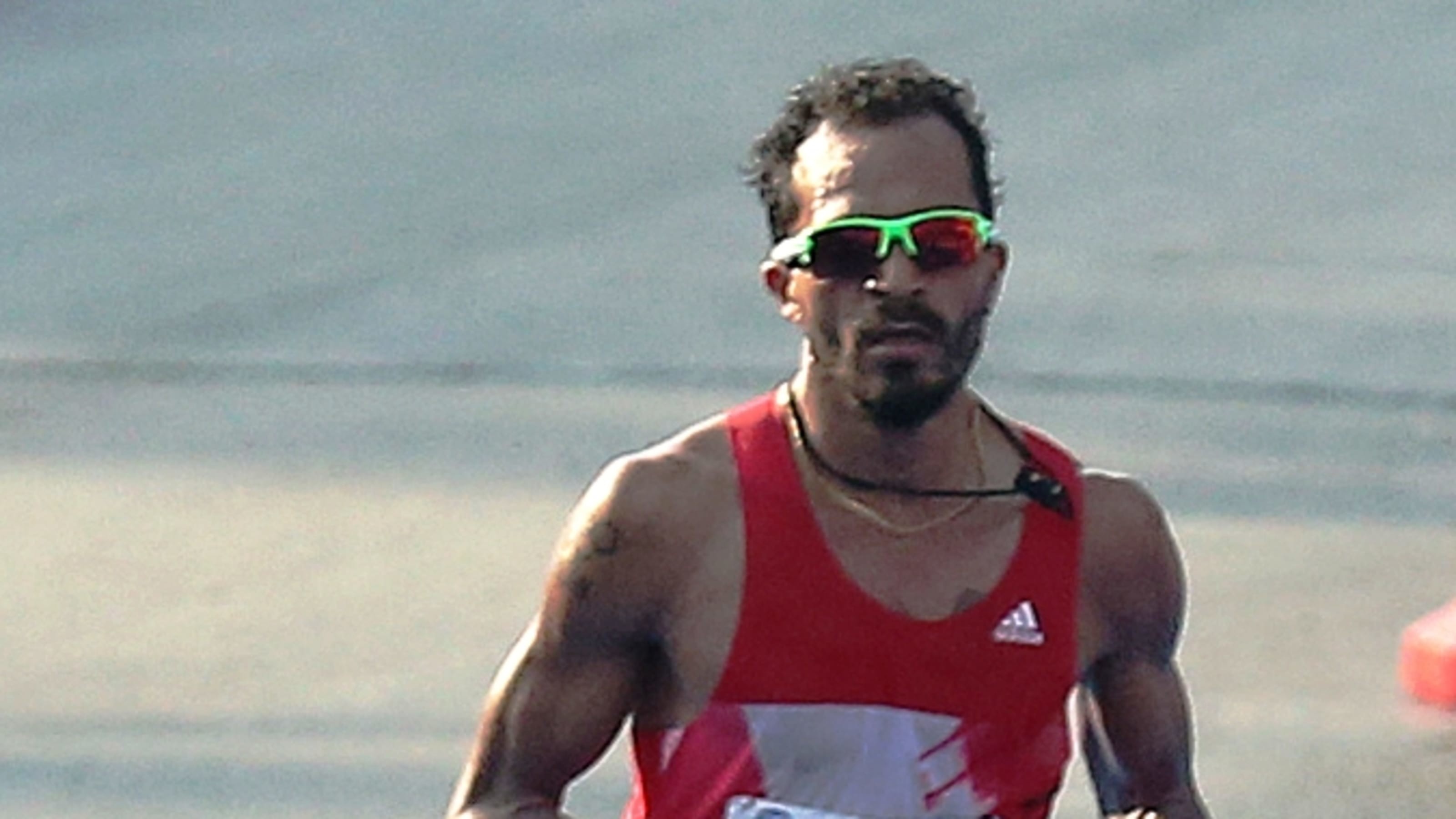
With the passage of time, many Indian marathon runners have taken part in the Olympics, with the 2016 Rio Olympics, having the highest number of five athletes - Thonakal Gopi, Kheta Ram, Nitendra Singh Rawat among the men, O.P. Jaisha and Kavita Raut among women. However, five years down the line nobody from India will be qualifying for Tokyo Olympics in the marathon.
Why did Indian athletes fail to qualify in marathons for Tokyo Olympics? To understand the reason one has to know the qualification process for the marathon at the Tokyo Olympics. The athletes in marathons (both men and women) can qualify by either entry standard or qualify by ranking during the qualifying period. The qualifying standard is 2:11:30 for men and 2:29:30 for women, while the qualifying period was originally from 1 January 2019 to 31 May 2020. Due to the COVID-19 pandemic, the period was suspended from 6 April 2020 to 30 November 2020, with the end date extended to 31 May 2021. The world rankings period start date was also changed from 1 January 2019 to 1 December 2018.
With so many runners qualifying by meeting the entry standard, there was no scope left for an athlete through the world ranking. Indian athletes' hopes were shattered mostly because of the coronavirus wreaking havoc without allowing the Athletics Federation of India (AFI) to conduct marathons at regular intervals since 2020. Though the date was extended to 31 May 2021, India hosted fewer marathons, and also the potential challengers for Tokyo Olympics took part in a few of them hoping to qualify through the marathons hosted in 2021. With the second wave of coronavirus hitting India hard again, many of the marathons got cancelled and as a result, India's best marathon hopefuls could not meet the qualifying standard. Among the men, the hopefuls were Nitender Singh Rawat, Srinu Bugatha and Rashpal Singh.
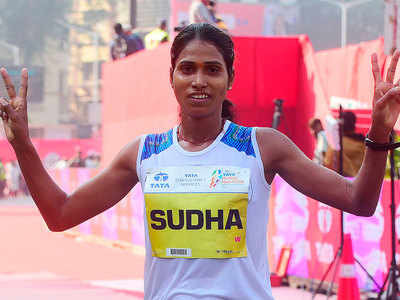
While Rawat attained a personal best of 2:15:52, Bugatha and Rashpal could attain 2:14:59 and 2:18:57 during the qualification period. Among women, Sudha Singh had a PB of 2:34:56, Jyoti Gawate a 2:45:48 and Swati Gadhwe 2:58:10. With nobody being able to meet the mark, India will have to go to the Tokyo Olympics without a marathoner.
(06/05/2021) ⚡AMPby The Bridge
Tokyo 2020 Olympic Games
Fifty-six years after having organized the Olympic Games, the Japanese capital will be hosting a Summer edition for the second time, originally scheduled from July 24 to August 9, 2020, the games were postponed due to coronavirus outbreak, the postponed Tokyo Olympics will be held from July 23 to August 8 in 2021, according to the International Olympic Committee decision. ...
more...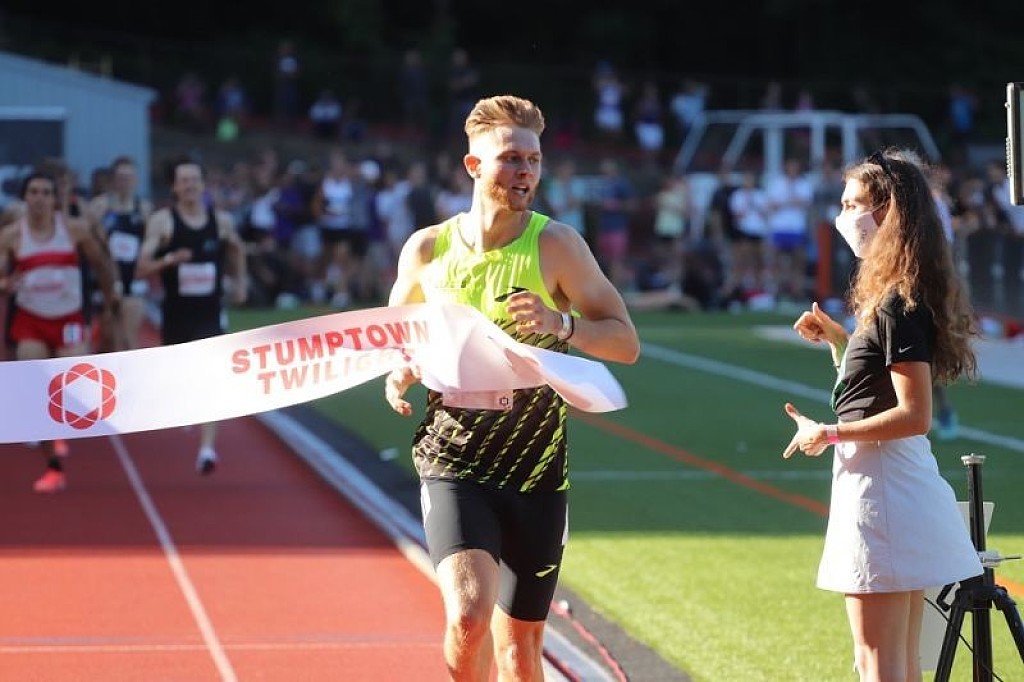
Scottish middle-distance runner Josh Kerr runs fastest-ever 1,500m on U.S. soil at Stumptown Twilight
The Stumptown Twilight meet in Portland, Oregon on Thursday night saw several stellar performances, but it was Scottish middle-distance runner Josh Kerr who stole the show. The 23-year-old won the men’s 1,500m, blowing away the field by more than four seconds and crossing the line in 3:31.55. His time breaks the previous American soil record of 3:32.34, set by Rashid Ramzi of Bahrain in 2006.
His result is also the fastest time in Europe this season, and is the second-fastest 1,500m time this year in the world behind Kenya’s Timothy Cheruiyot, who ran 3:30.48 in Doha on May 28. This is a new personal best for Kerr, who set his previous PB of 3:32.52 at World’s in Doha in 2019, where he placed 6th overall.
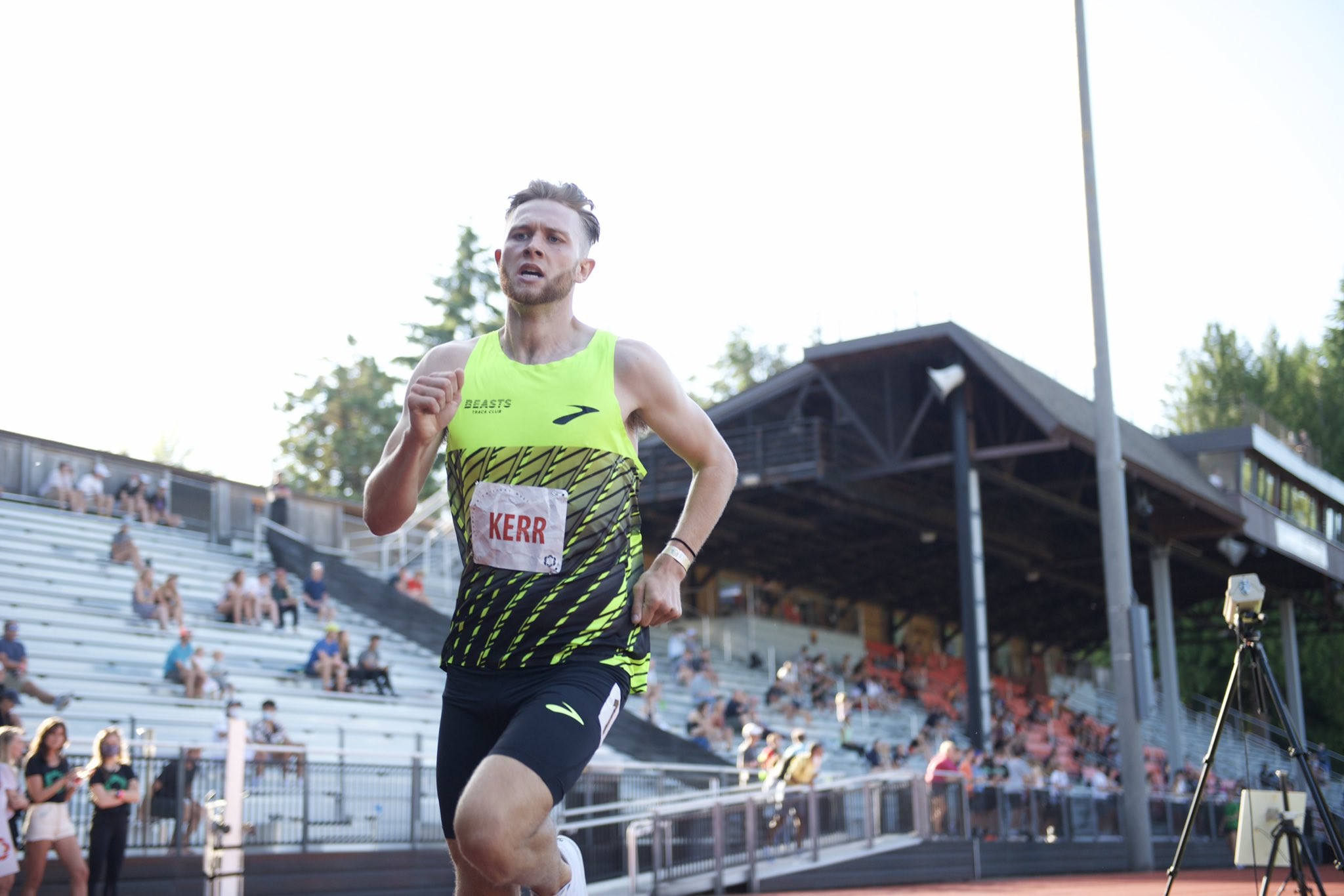
While Kerr originally hails from Edinburgh, Scotland, he competed for the University of New Mexico Lobos, where he set the men’s 1,500m NCAA record of 3:35.01 in 2017 (his record has since been broken by Notre Dame runner Yared Nuguse). The Olympic standard in the men’s 1,500m is 3:35.00, and considering he is currently the fastest athlete in Europe at the distance, Kerr has likely solidified his spot on Great Britain’s team headed to Tokyo this summer.
(06/04/2021) ⚡AMPby Brittany Hambleton
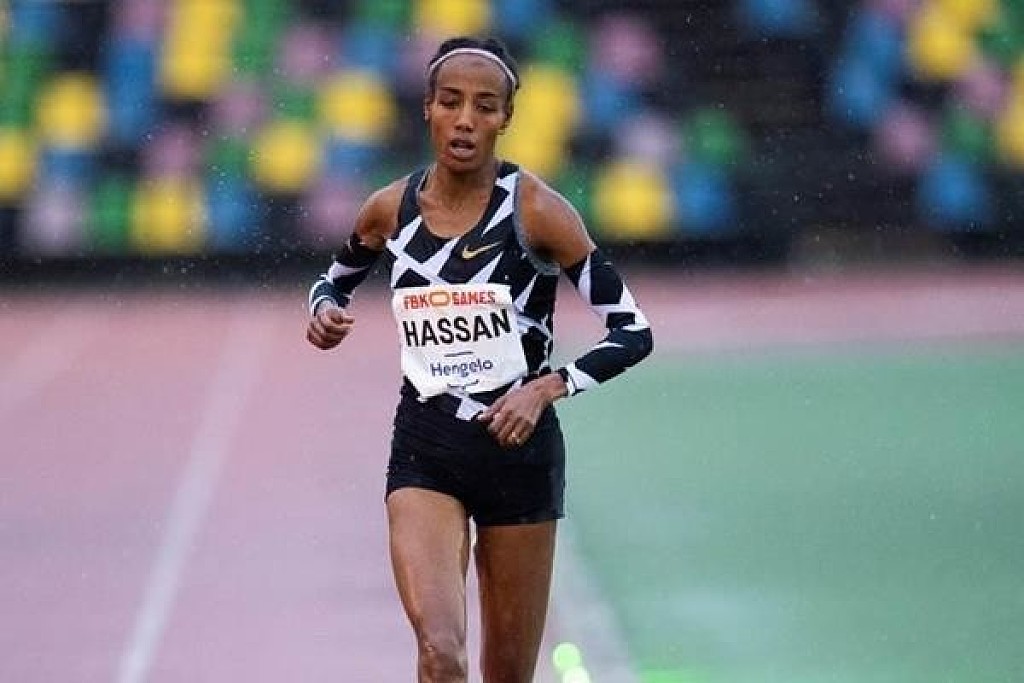
World record-holders ready to clash in Hengelo
Five world champions, four Olympic gold medallists and two world record-holders are set to compete at the FBK Games – a World Athletics Continental Tour Gold meeting – in Hengelo on Sunday (6).
Pole vault world record-holder Mondo Duplantis will be raring to go after his 23-meet winning streak came to an end at the Wanda Diamond League meeting in Gateshead at the end of last month. Battling tough conditions, the 21-year-old from Sweden gave the bar a slight nudge on his final attempt at 5.80m – what would have been a winning height – and it came down, meaning victory went to two-time world champion Sam Kendricks.
Kendricks won’t be in Hengelo, but Duplantis will have one eye on the US vaulter’s meeting record and Dutch all-comers’ record of 5.91m.
Olympic champion Thiago Braz and Dutch vaulter Menno Vloon, who set a national indoor record of 5.96m earlier this year, are also in the line-up.
Double world champion Sifan Hassan will return to the track on which she set a European 10,000m record of 29:36.67 last year and will again contest the 25-lap discpline. The Dutch distance runner has tested her form over a range of distances this year, clocking 8:33.62 for 3000m indoors, followed by 14:35.34 for 5000m and 2:01.54 for 800m outdoors.
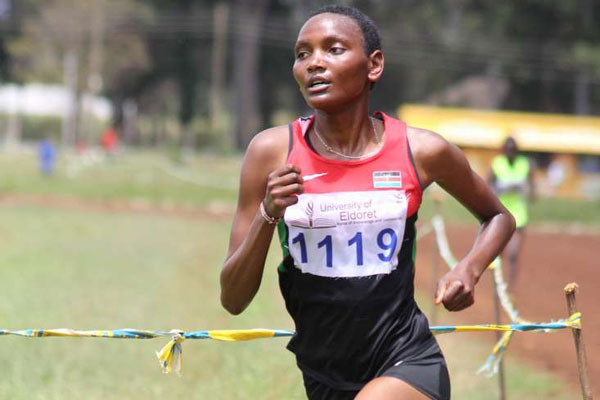
Kenya’s Daisy Cherotich, New Zealand’s world finalist Camille Buscomb and Canada’s Andrea Seccafien will all be hoping to emerge from the race with lifetime bests.
World 800m champion Halimah Nakaayi will open her 2021 campaign over her specialist distance. The Ugandan middle-distance runner takes on a quartet of Britons – Laura Muir, Kelly Hodgkinson, Jemma Reekie and Adelle Tracey – as well as Norway’s Hedda Hynne and France’s Renelle Lamote.
In the men’s event, indoor sensation Elliot Giles lines up for his first outdoor 800m of the year, taking on fellow Brits Max Burgin – who set a European U20 record of 1:44.14 in Ostrava last month – and Daniel Rowden. Tony van Diepen, one of the Netherlands’ top performers at the World Athletics Relays Silesia 21, is also in the field.
Recent Montreuil winner Abel Kipsang goes in the men’s 1500m where he’ll take on Uganda’s Ronald Musagala and Britain’s sub-3:30 performer Jake Wightman.
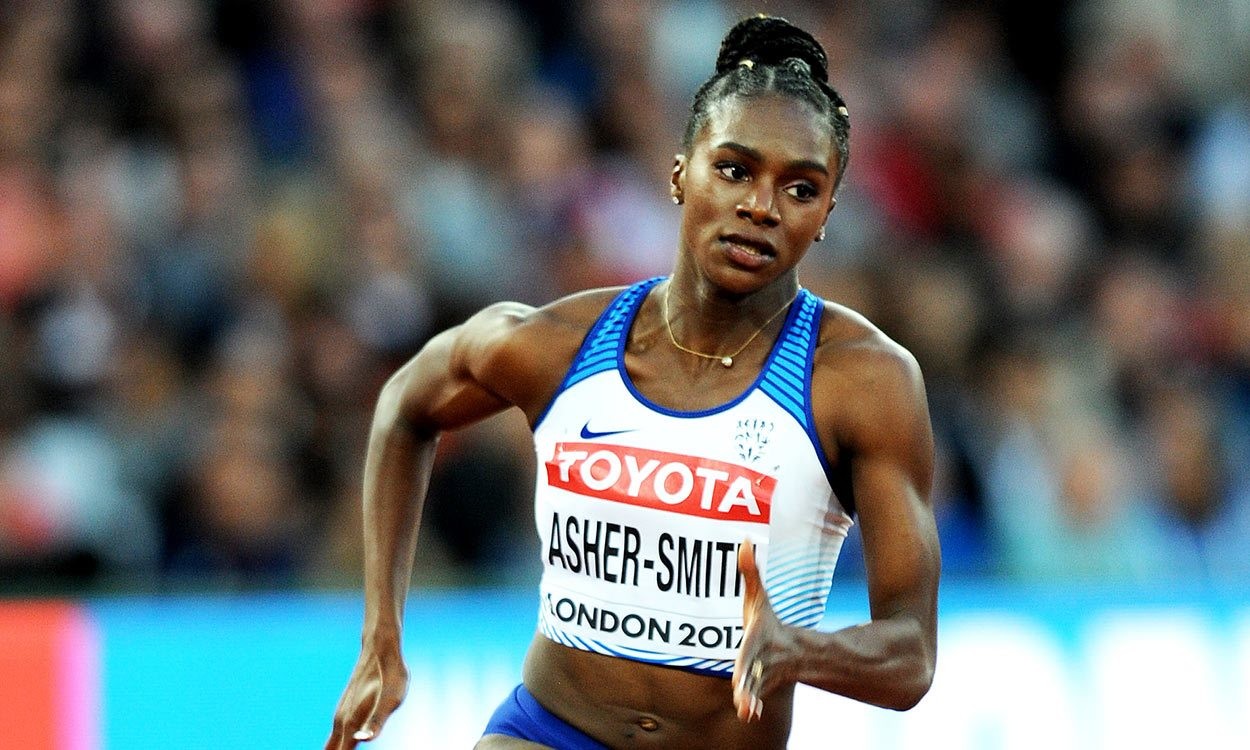
Asher-Smith, Kerley and McLeod set to produce sprint highlights
Although she has raced there only once before, world 200m champion Dina Asher-Smith has fond memories of racing in Hengelo.
It is where, as a teenager back in 2015, she set her first senior national record over 100m, clocking 11.02. Six years on from that performance, and having bagged many more records and medals, the world 200m champion will be hoping for a sub-11-second clocking to improve on the 11.35 season’s best she recorded when winning in Gateshead, running in heavy rain and into a -3.1m/s headwind.
Nigeria’s world and Olympic medallist Blessing Okagbare, who has a season’s best of 10.90, and two-time world 200m champion Dafne Schippers are also in the line-up.
World 4x400m champion Fred Kerley has so far this year produced his most impressive performances at 100m, clocking 9.91 and 9.96 in recent weeks. In Hengelo, however, he’ll step back up to his specialist 400m discipline and will aim to improve on the 44.60 season’s best he recorded in Doha last week.
(06/04/2021) ⚡AMPby World Athletics
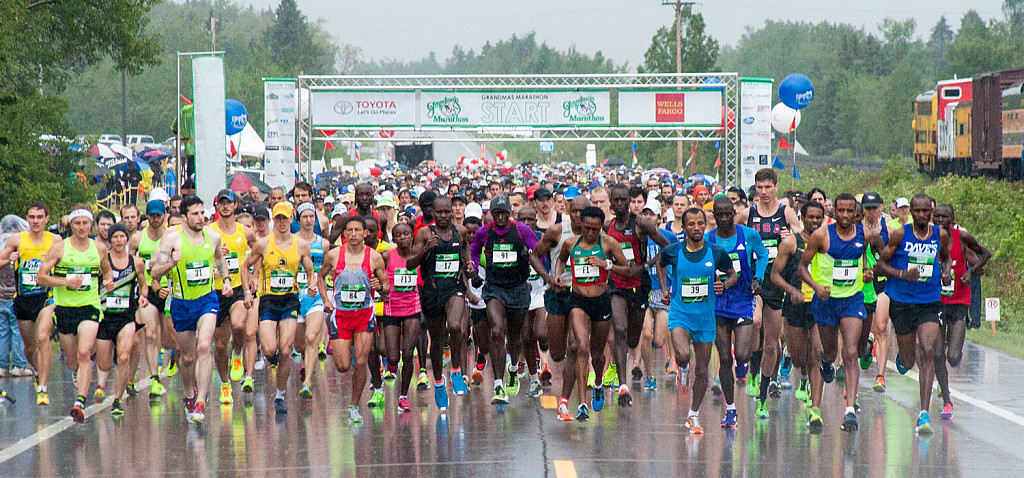
Three former champions return to highlight 2021 Grandma's Marathon field
Kongin, Kiptoo, and Myers Could Join Prestigious Group of Repeat Winners at Duluth Race, former champions are expected to be on the starting line for the 2021 Grandma’s Marathon and will have the chance to join some very rare company if they can add another victory to their running resume.
Defending men’s champion Boniface Kongin is slated to return after outdueling the field in 2019, running a 2:11:56 to beat out four-time champion Elisha Barno and event record holder Dominic Ondoro. Kongin ran much of that 2019 race in record pace, but he was slowed in the final 10K as he dealt with severe cramping.
Not only will the Kenya native try to become the first back-to-back men’s winner at Grandma’s Marathon since Barno won the first two of his four titles in 2015-16, he would be just the seventh man to win multiple Grandma’s Marathons titles.
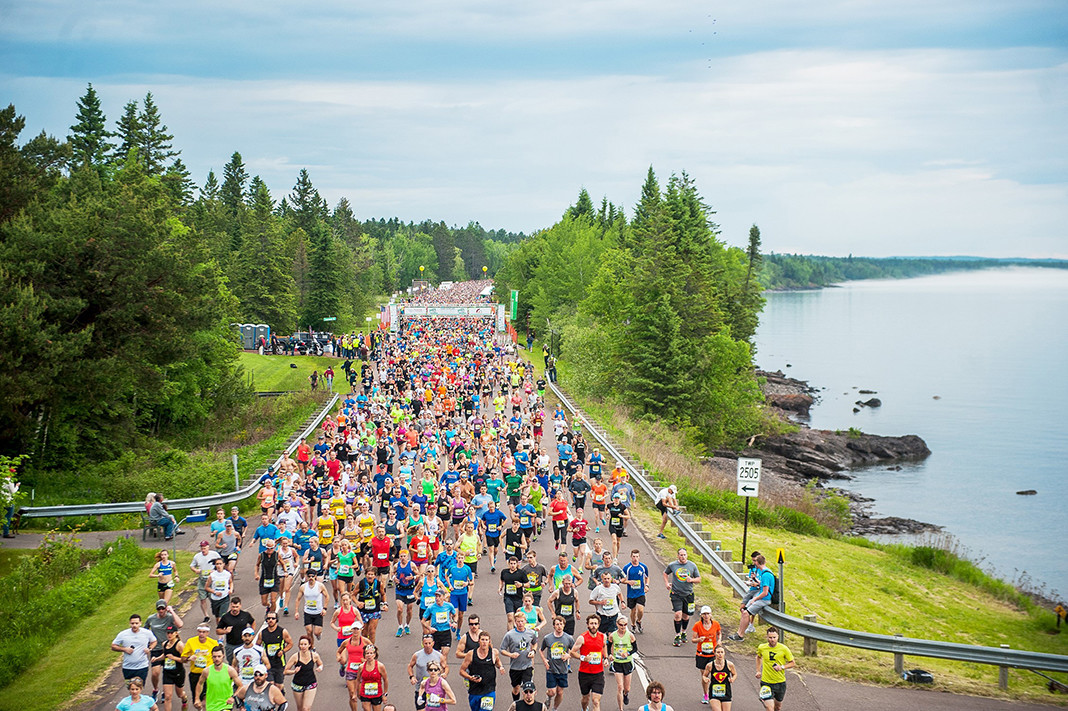
Sarah Kiptoo is also expected to return this year, and she will be trying to join Mary Akor (2007-09) and Lorraine Moller (1979-81) as the only three-time women’s winners of Grandma’s Marathon. The Kenya native won titles in 2013 and 2016 and also finished third in 2014 and 2015. She finished 10th the last time out on this course in 2019, finishing with a time of 2:38:46.
Kiptoo’s 2013 winning time of 2:26:32 was then an event record and only recently broken when Kellyn Taylor ran a 2:24:28 in 2018.
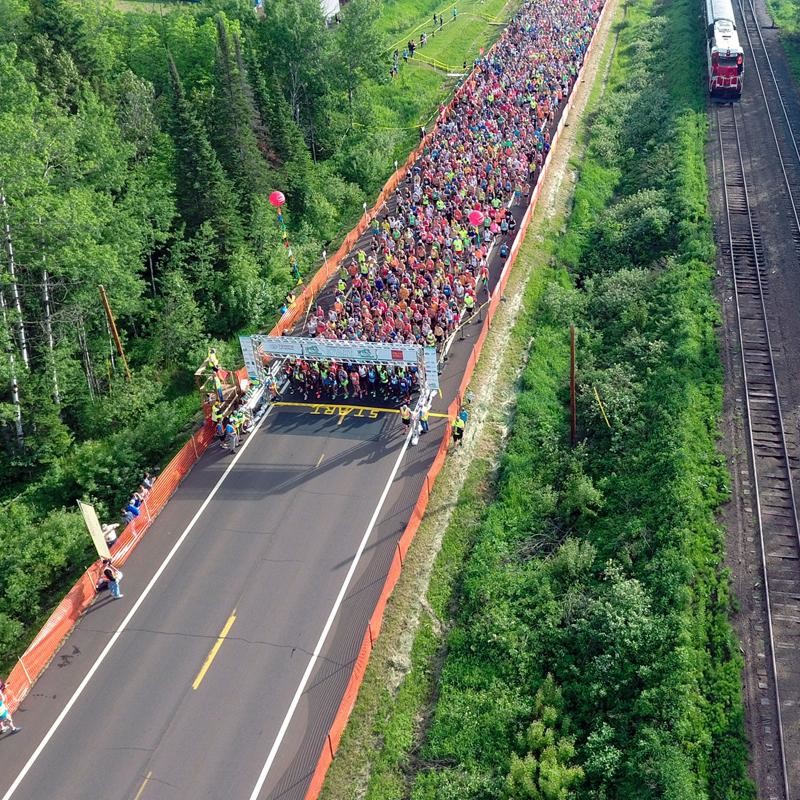
2014 champion Pasca Myers is also expected to compete in the women’s elite field, and she will be trying to become just the eighth woman to win at least two Grandma’s Marathon titles. She also ran here in 2019, finishing in eighth place with a time of 2:36:13.
With a reduced field for the 2021 Grandma’s Marathon, there are 29 men and 29 women expected to be in the elite field on Saturday, June. 19. The 45th annual Grandma’s Marathon is scheduled to start at 7:45 a.m. and can be followed live on our radio and TV partners, The Northland FAN 106.5 FM and WDIO-TV.
For more information, please call our office at (218) 727-0947 or visit grandmasmarathon.com.
(06/03/2021) ⚡AMPby Running USA

Grandmas Marathon
Grandma's Marathon began in 1977 when a group of local runners planned a scenic road race from Two Harbors to Duluth, Minnesota. There were just 150 participants that year, but organizers knew they had discovered something special. The marathon received its name from the Duluth-based group of famous Grandma's restaurants, its first major sponsor. The level of sponsorship with the...
more...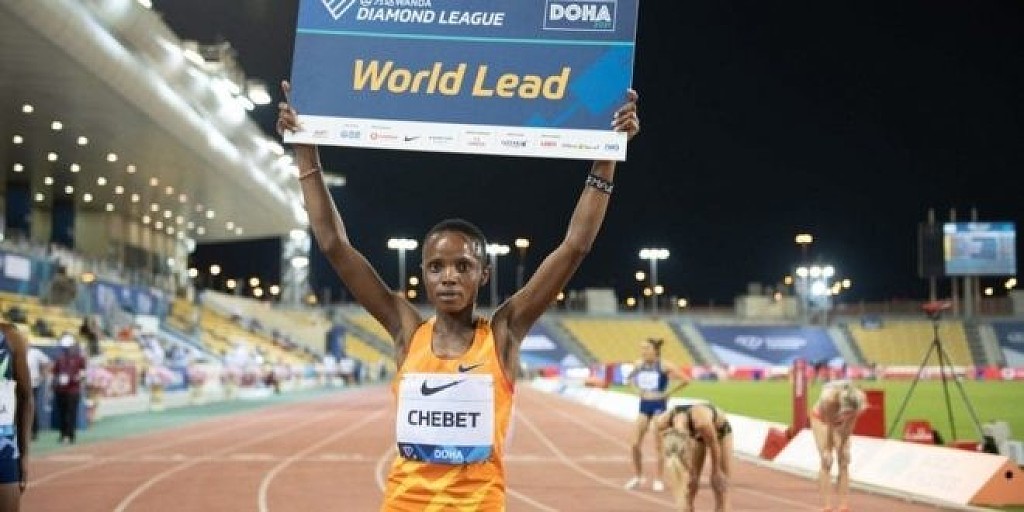
Beatrice Chebet from Kenya sets meet record in France
World Under-20 5,000m champion Beatrice Chebet continued to cement her status at senior level with a meet record victory in the women's 5,000m race at the Montreuil International Track and Field Meeting in France on Tuesday.
Chebet, who days earlier stormed to victory in Doha, won in Montreuil in 14 minutes and 52.06 seconds to edge out Kalimantan Gezahegne from Bahrain in 14:52.92.
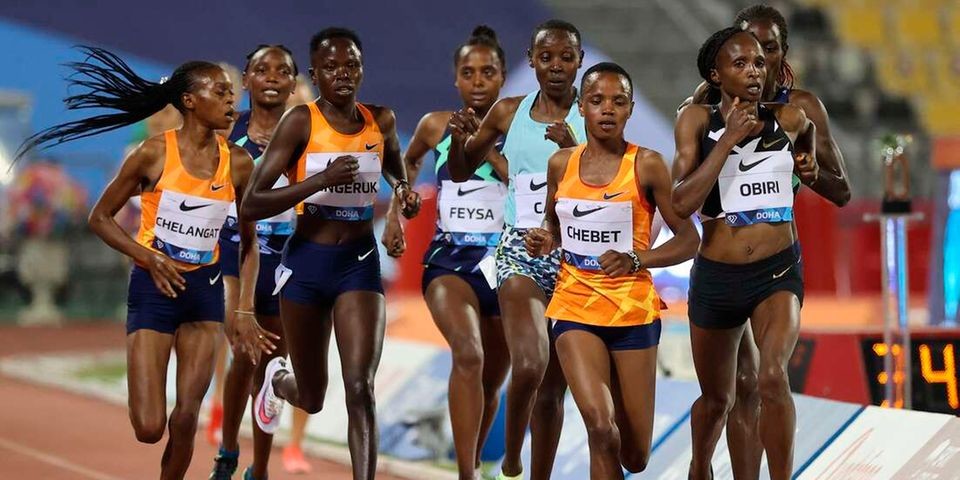
Chebet’s compatriot, former Africa 5,000m champion, Sheila Chepkirui settled for second place in 14:54.06, followed by Burundian Francine Nyonsaba, who ran within the Tokyo Olympics qualifying time and a personal best of 14:54.38.
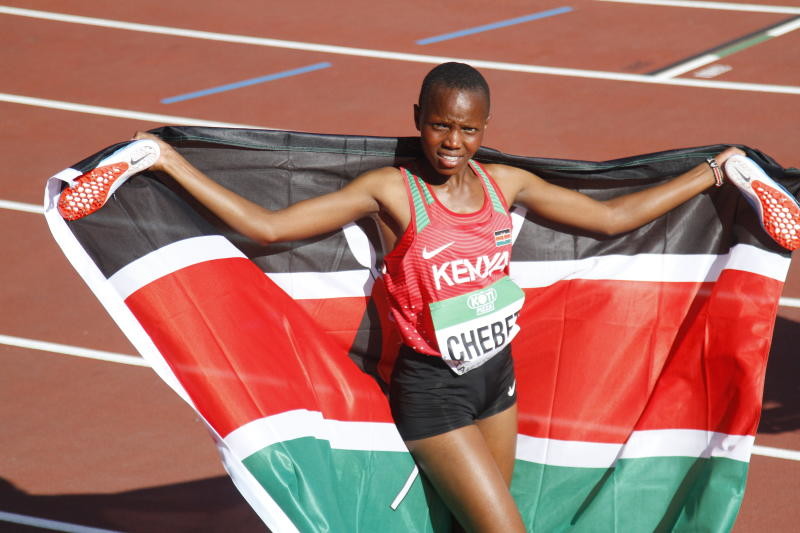
Chebet, who is also the reigning World Cross Country Under-20 champion, had on May 28 shocked a strong field that included defending champion Hellen Obiri, who is also the World 5,000m champion, to win the 3,000m race at the Doha Diamond League.
Chebet clocked a personal best and world lead of 8:27.49 for her maiden Diamond League victory.
Also to glide to a meet record victory at Montreuil was Abel Kipsang of Kenya, winning the men's 1,500m in a personal best of 3:33.99 after.
(06/02/2021) ⚡AMPby Ayumba Ayodi
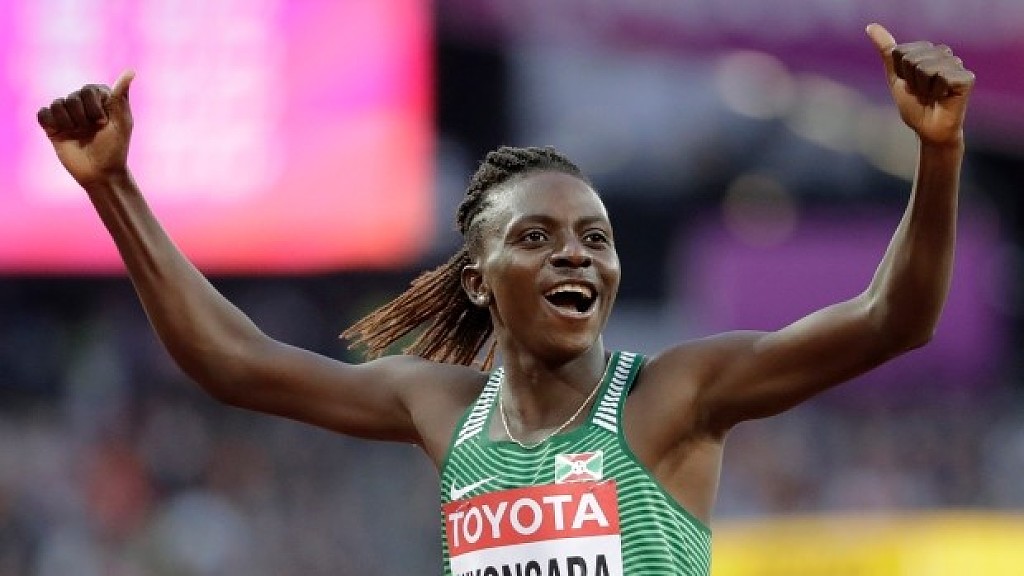
Burundi's Francine Niyonsaba, who changed events due to testosterone rule, runs Olympic qualifier
She ran a time of 14 minutes 54.38, which is also a new national record, as she finished fourth in the race to easily better the Olympic qualifying time of 15:10.00.
It was just her second race over the distance having just missed out on the qualifying standard when she ran 15:12.08 at a meeting in Spain last month.
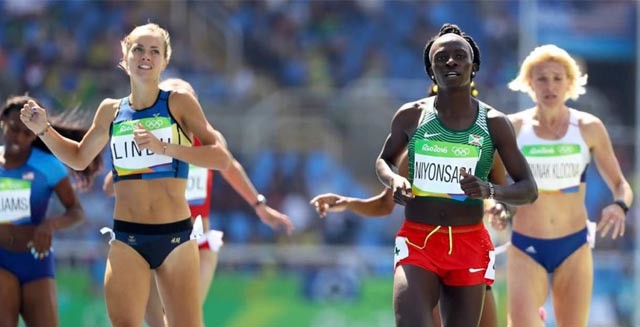
"A challenge is not a barrier. It's an opportunity to do better. Heading to Tokyo with a great qualifying time," she posted on Twitter.
The race was won by Kenya's Beatrice Chebet, who finished just over two seconds ahead of Niyonsaba.
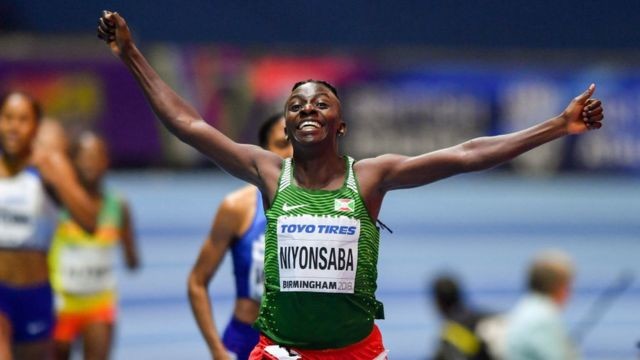
The 28-year-old, who won silver over 800m at the 2016 Games in Rio, has decided to move up to the long distance event rather than taking testosterone-reducing drugs.
Under the latest World Athletics regulations Niyonsaba is classified as having 'Differences of Sexual Development' - or 'DSD' - and so is not allowed to compete in events between 400m and a mile without taking testosterone-reducing drugs.
At the same meeting on the outskirts of Paris Burkina Faso's Hugues Fabrice Zango continued his good form with another win on the triple jump with a leap of 17.67 metres.
Ivory Coast's Marie Josee Ta Lou won the women's 100m in a time of 11.06 seconds just ahead of The Gambia's Gina Bass in 11.30.
Ta Lou's compatriot Arthur Cisse was victorious in the men's event clocking a time of 10.11 seconds.
Kenya's Abel Kipsang was the other African winner on the night in the men's 1500m as he finished ahead of compatriot Charles Simotwo, with Morocco's Brahim Kaazouzi in third place.
On Friday South Africa's Caster Semenya, Niyonsaba's great rival over 800m and another athlete classified as DSD, finished outside the qualifying mark for the 5,000m.
The 30-year-old finished in 15 minutes 32.15 seconds at meeting in Durban - 22.15secs outside the qualifying time.
It was her second bid to qualify for the 2020 Tokyo Olympics.
(06/02/2021) ⚡AMPby Sport Africa
Tokyo 2020 Olympic Games
Fifty-six years after having organized the Olympic Games, the Japanese capital will be hosting a Summer edition for the second time, originally scheduled from July 24 to August 9, 2020, the games were postponed due to coronavirus outbreak, the postponed Tokyo Olympics will be held from July 23 to August 8 in 2021, according to the International Olympic Committee decision. ...
more...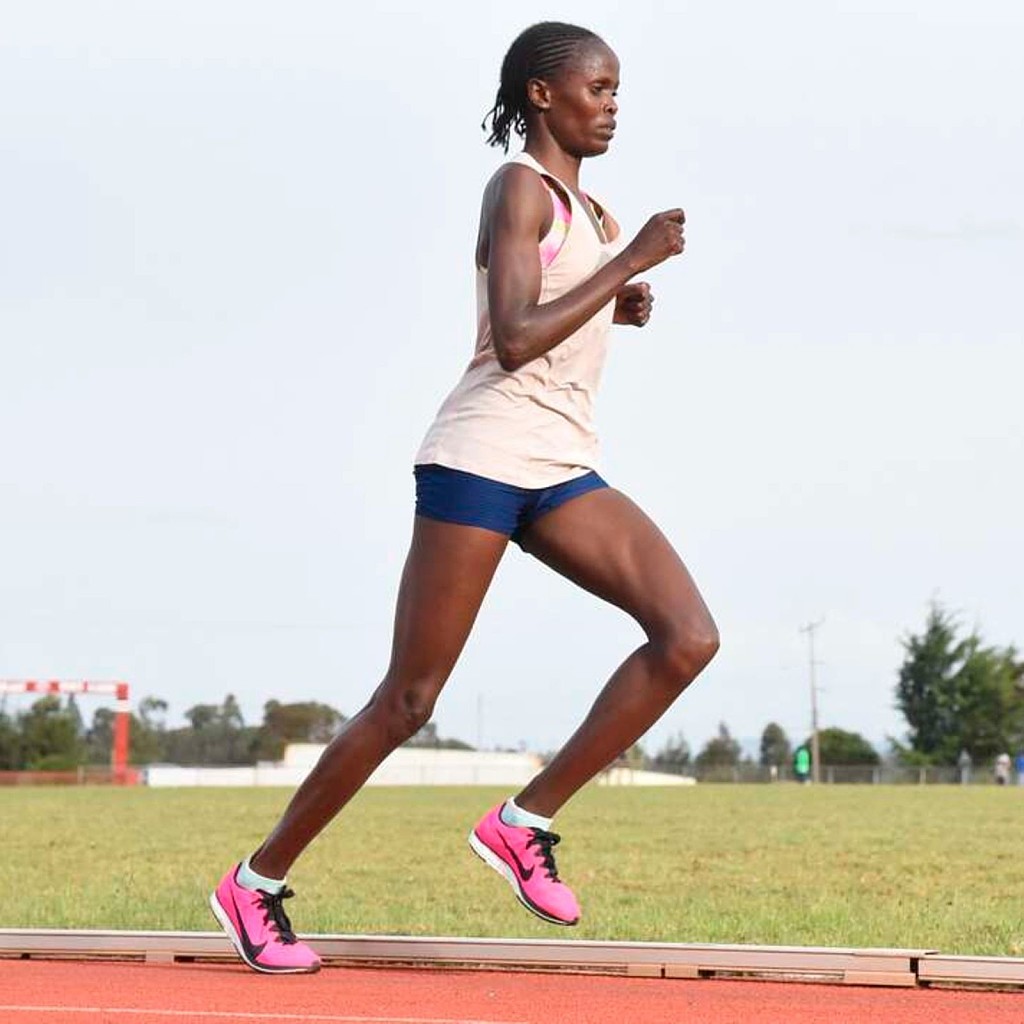
Women’s world marathon record holder Brigid Kosgei says she is fit and healthy again as she eyes Olympics
Brigid Kosgei says she is firmly focused on adding Olympic gold to her medal collection after fully recovering from a slight leg injury.
The 26-year old tested herself at last month’s Istanbul Half Marathon where she clocked 1:16:01 to finish a disappointing fifth, in a race won by compatriot and fellow Olympics-bound, world marathon champion Ruth Chepng’etich in a world record time of 1:04:02.
"I had some minor injury when I competed in Istanbul but now I’m back fully fit and I will concentrate all my training at Kapsait until departure to Olympics,” she said.
The marathoner said an Olympic gold would be a dream-come-true for her having spent most of her childhood and teenage years wishing for an opportunity to represent Kenya at the quadrennial event.
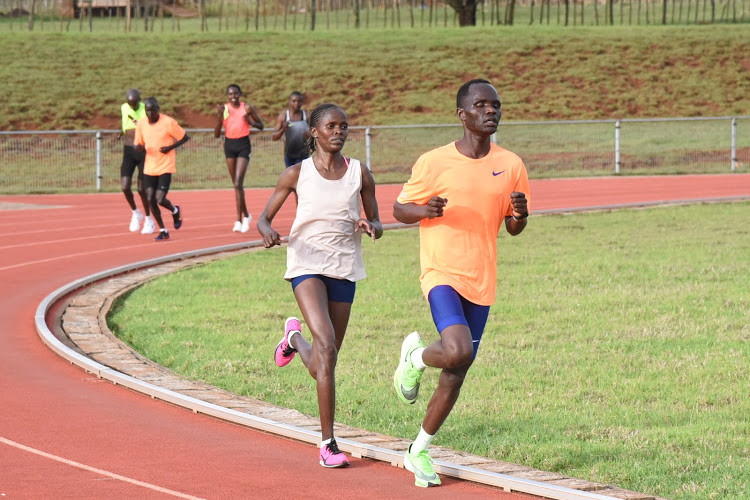
“While I was in Standard Eight, I watched the Olympic Games on television and I told myself ‘one day I’d also like to represent Kenya too. My home (Kapsowar) was quite a distance from school (10 kilometers) and I never wanted to be late that’s why I used to run quite a bit,’” she said in an earlier interview.
Kosgei has been hard at work in training, going through her paces at her Kapsait Training Camp in Elgeyo Marakwet under the watchful eye of her coach, former Honolulu Marathon champion Eric Kimaiyo.
Hers is a holistic training regime, which must take into account Kosgei's diet that hasn't changed much even in the build-up to Tokyo.
“My diet is the same and I haven’t changed anything. My body feels good and I want to push it to the limits and see how it responds on race day. We are mixing endurance and speed work with long runs," she said.
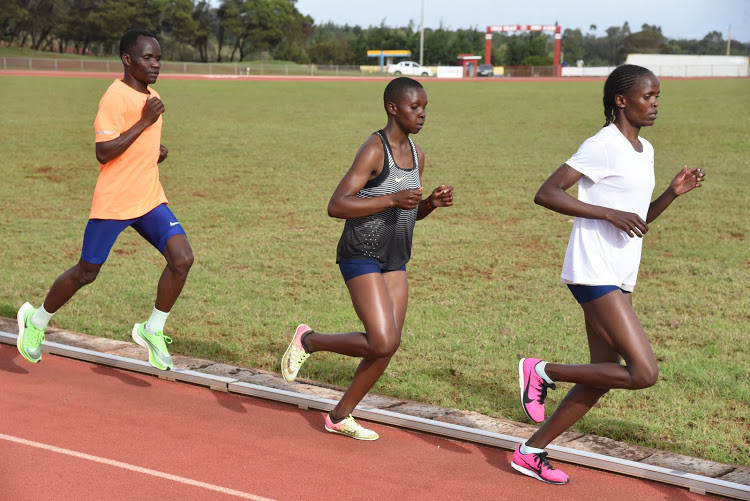
Kosgei, who is managed by the Italy-based Rosa Associati stable, has also been training in sunny conditions to ensure she acclimatises to the hot Japanese weather when she graces the Olympics.
She has responded perfectly to a recovery regimen that included sessions with Italian physiotherapist Sebastiano Erbi who spent some time monitoring her progress.
"The weather in Kapsait is good. Even when it rains, we still train, and even when it's cold, we also train; we are used to any weather condition here. We are also aware of the heat in Japan and that’s why we have some sessions at 4 pm when the sun is still out", Kosgei explains.
At times, the training group — which includes pacemakers — drive for close to two hours to Iten to access quality track sessions at the Lornah Kiplagat Academy and Stadium.
Kosgei has signed up with Stanbic Bank Kenya as ambassador in the bank’s new brand campaign dubbed "It Can Be."
The “It Can Be” campaign seeks to empower young men and women to achieve their big dreams with the world marathon record holder being used as an ambassador to motivate them.
(05/30/2021) ⚡AMPby Omondi Onyatta
Tokyo 2020 Olympic Games
Fifty-six years after having organized the Olympic Games, the Japanese capital will be hosting a Summer edition for the second time, originally scheduled from July 24 to August 9, 2020, the games were postponed due to coronavirus outbreak, the postponed Tokyo Olympics will be held from July 23 to August 8 in 2021, according to the International Olympic Committee decision. ...
more...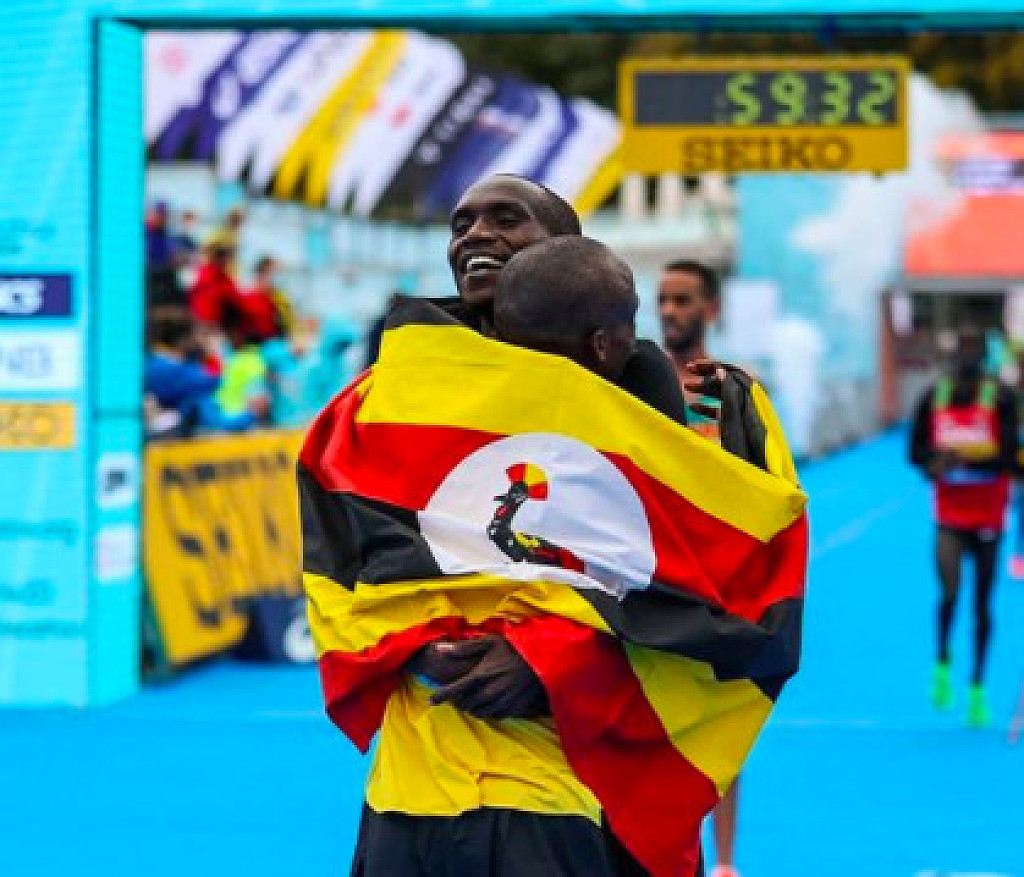
Ugandan Joshua Cheptegei misses 3K WR in Ostrava
All eyes were on Joshua Cheptegei ahead of Wednesday’s Ostrava Golden Spike meet in the Czech Republic, as the 24-year-old Ugandan was looking to break the 3,000m world record. Cheptegei ended up running to a disappointing finish, falling well short of the record, but the meet was far from uneventful, as several other athletes posted remarkable times. Among these impressive performances were runs from teenaged Brits Max Burgin and Keely Hodgkinson in the men’s and women’s 800m races and an amazing showing from Cheptegei’s compatriot Jacob Kiplimo in the 10,000m.
Cheptegei falls short
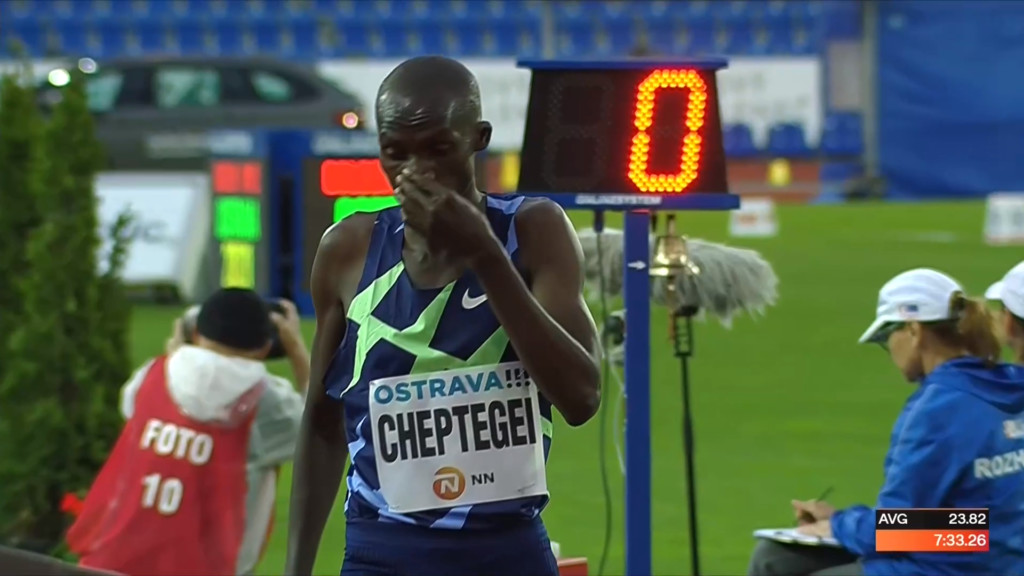
Cheptegei had an incredible 2020 season that saw him run three world records (5K, 5,000m and 10,000m) in four races. He had already raced twice in 2021 ahead of Wednesday’s meet, and he was itching to add another record to his resume, so he targeted Kenyan Daniel Komen‘s 3,000m mark of 7:20.67, which has been the time to beat for 24 years.
Before the run, Cheptegei’s agent, Jurrie van der Velden, told LetsRun.com that this record could be the toughest one Cheptegei has tried to beat, and after he finished 13 seconds behind Komen’s time on Wednesday, that appears to be true. Cheptegei opened the race on world record pace, and he passed through the first 1,600m in 3:55. He proceeded to slow considerably in the following few laps, though, and crossed the line far off the world record.
British domination
Young Brits won both 800m races. Hodgkinson’s win wasn’t too much of a surprise, as she has had a tremendous season so far. The 18-year-old opened her season in Austria in January with a U20 indoor 800m world record of 1:59.03 (which American Athing Mu lowered a month later with a 1:58.40 run in Arkansas), and she followed that up with a win in the women’s 800m at the European Indoor Championships. On Wednesday, she broke two minutes for the first time outdoors, winning the women’s race in Ostrava in 1:58.89, which is a new U20 European record.
The men’s 800m was the first race of the season for Burgin, but he ran extremely well and took the win in 1:44.14. Like Hodgkinson, Burgin (who turns 19 on Thursday) now owns the U20 European 800m record, and his result in the Czech Republic is a new world-leading time for 2021. Both Hodginson’s and Burgin’s times are under the Olympic 800m standards.
Kiplimo crushes the 10,000m
With all of the attention on Cheptegei, Kiplimo managed to fly under the radar until his race. Then, lining up in the men’s 10,000m, the 20-year-old flew away from the rest of the field, and 25 laps later, he stopped the clock in 26:33.93. This is a new world-leading time, it crushed the second-place finisher (who crossed the line in 27:07.49) and it shattered Kiplimo’s previous PB of 27:26.68 by close to a full minute. Before the race, Kiplimo said he was hoping to break 27 minutes, and he accomplished this goal with ease. His result now puts him at seventh-best in history at the distance.
Canadian sprints
Canadian sprinters Andre De Grasse and Aaron Brown were both in action in Ostrava. De Grasse raced the 100m, and he crossed the line in 10.17 seconds. He finished in third place behind American Fred Kerley (9.96) and Justin Gatlin (10.08). Brown also finished in third place, although he raced the 200m. Brown ran 20.40 seconds, and he finished behind Kenny Bednarek of the U.S. (19.93) and Kerley (20.27). Both De Grasse and Brown are set to race at the Gateshead Diamond League on Sunday in the U.K.
(05/19/2021) ⚡AMP
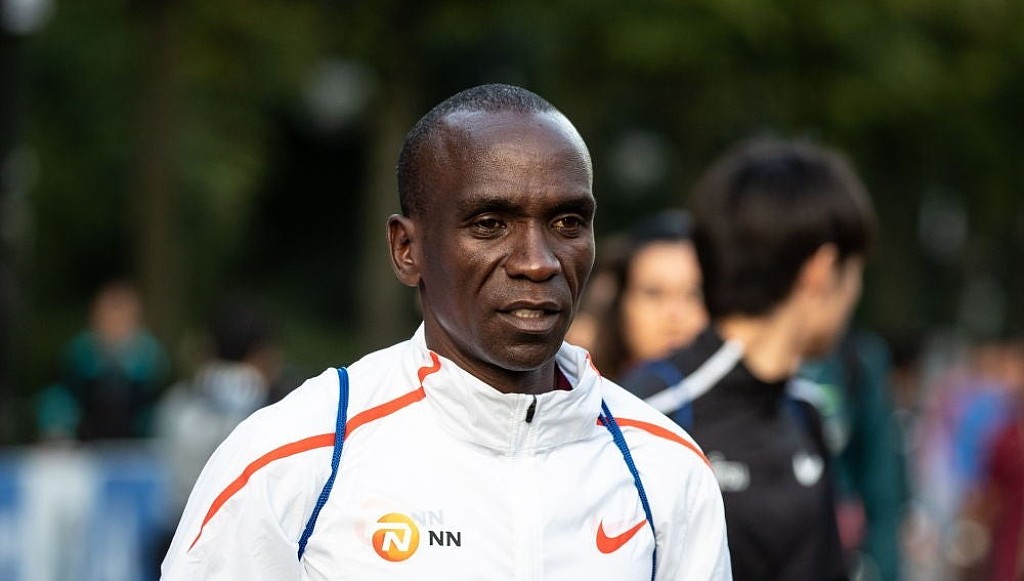
The athletes' NN Running Team is organizing a global online mass run and Kipchoge, Bekele and Cheptegei are set to participate
Olympic marathon champion Eliud Kipchoge is set to take part in an online virtual mass run this weekend (22-23 May) along with some 30,000 members of the public who have signed up.
Organised by the Kenyan's Dutch-based NN Running Team, the event - dubbed MA RA TH ON - is being held for the second time. In 2020, some 106,000 registrations were accepted, with participants clocking a distance far enough to run around the world 28 times.
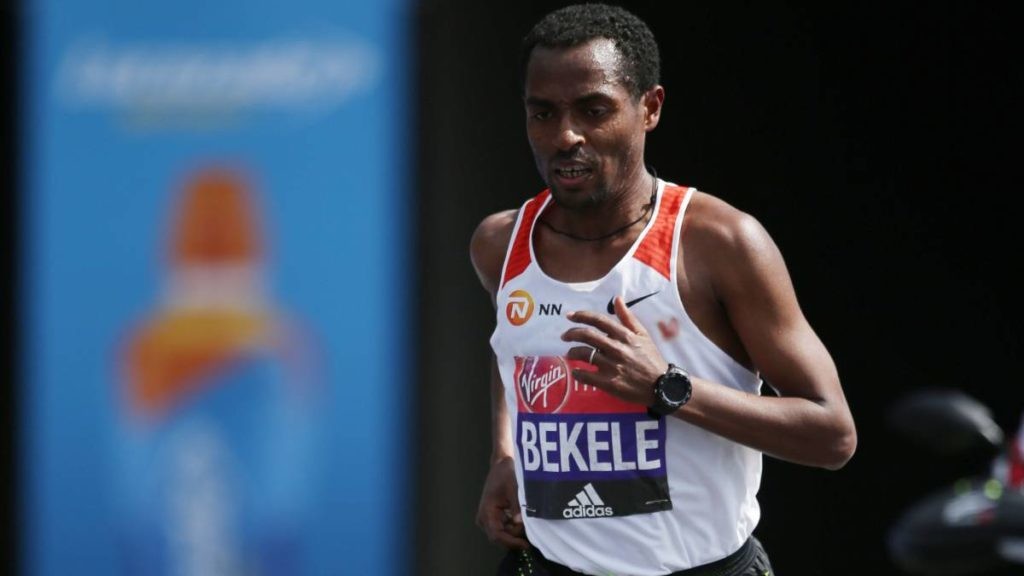
"I am really excited for this coming Saturday and Sunday as the world is running as one," Kipchoge said in quotes reported by the Kenyan Broadcasting Corporation.
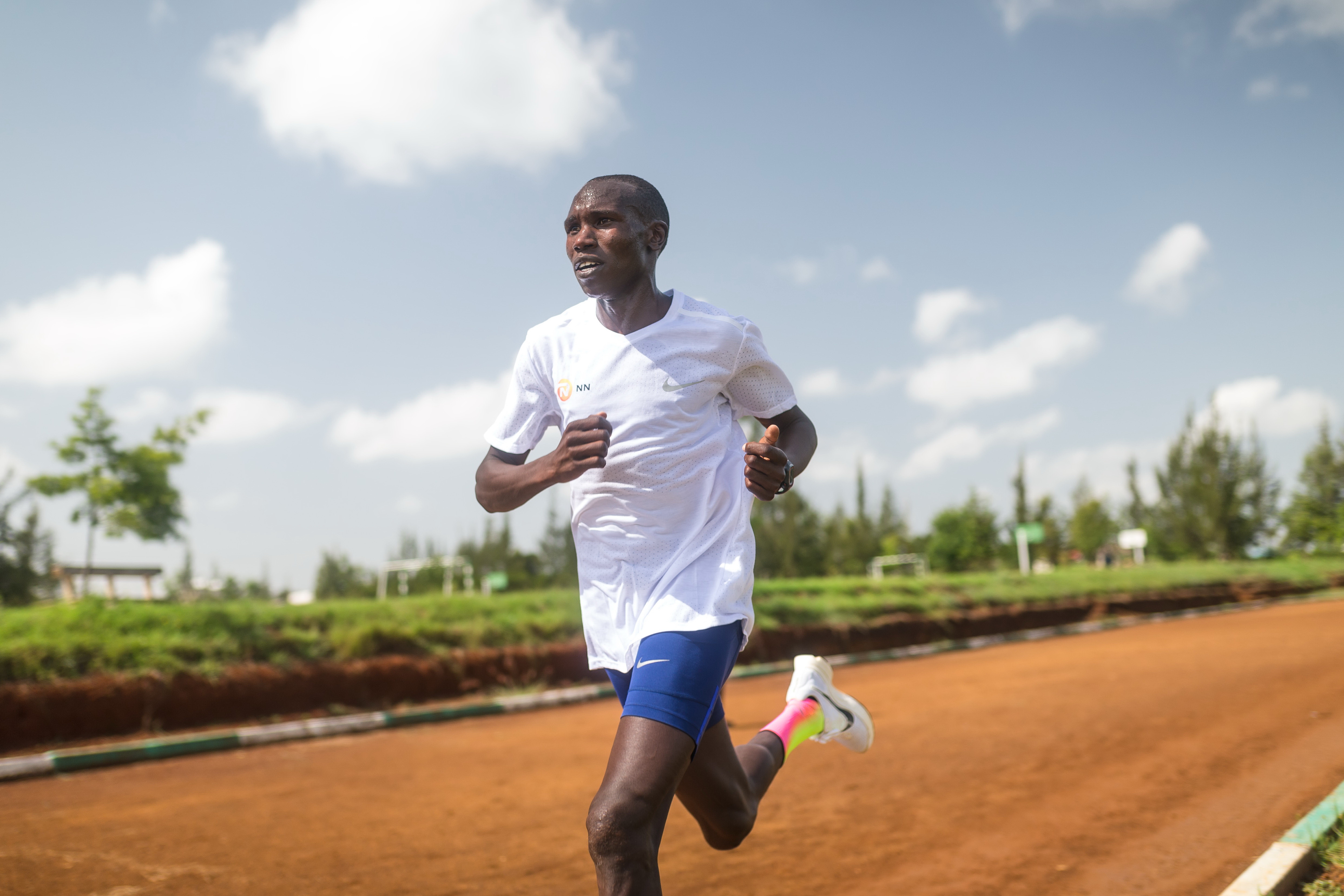
"It’s not about running fast, it’s not about winning, but it’s all about participating."
The event sees teams of four around the world run just over 10.5 kilometers each, for a total of the marathon distance 42.195 km.
Each runner runs alone, and records their activity on the Strava application. Additionally, ten teams will each have an NN Running Team athlete compete alongside them.
Among the elite athletes competing are Kipchoge, his fellow Kenyan Geoffrey Kamworor, Ethiopia's Kenenisa Bekele, and 5 km and 10 km world record holder Joshua Cheptegei of Uganda.
"I am very happy that we organize this event again. It has given all the participating athletes a huge motivation in a difficult year," Kamworor said according to the KBC.
Kipchoge's last event was the NN Marathon in Enschede, Netherlands, in April, which he won in 2:04:30.
Kamworor finished second in the Istanbul Half Marathon in 59:38 in April; Bekele won a half marathon in London (1:00:22) at the start of March; while Cheptegei's last outing was a third place finish in a 1500m race at the Ugandan Athletics Federation Trials in April.
(05/19/2021) ⚡AMP
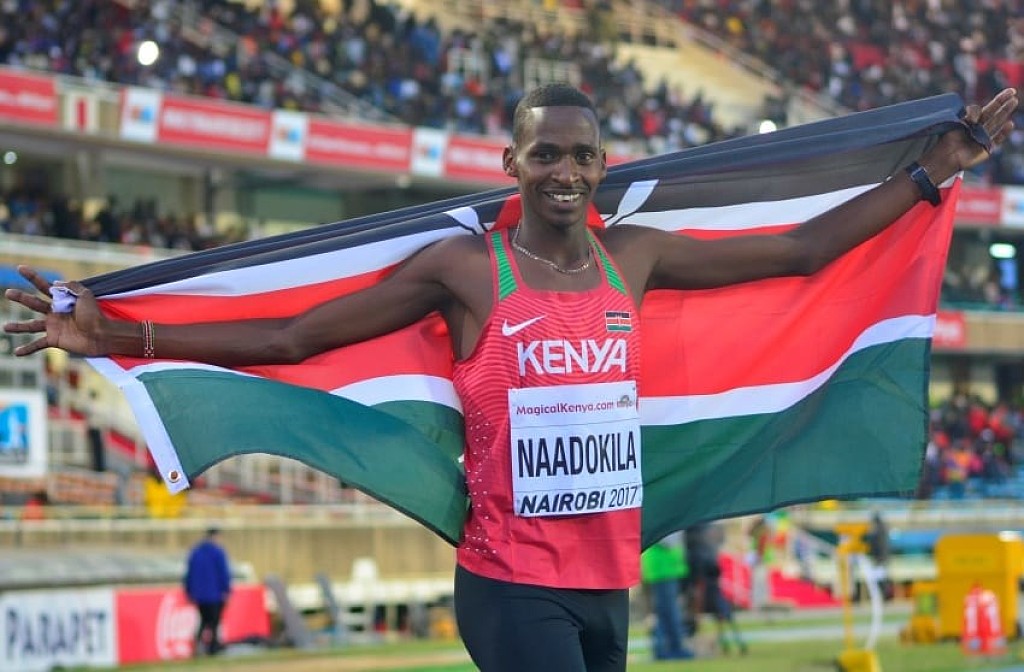
Kenya's 2017 World Under-18 400m hurdles silver medalist Moitalel Mpoke has qualified for the Tokyo Olympic Games.
The 20-year-old Mpoke clocked 48.89 seconds to win his 400m hurdles on Saturday during the South Eastern Conference Outdoor Championships at the E.B Cushing Stadium, Texas, United States.
Mpoke met the Olympic qualifying standard by 0.01 seconds to also improve his personal best within three weeks by 0.72 seconds.
Following his win, Mpoke became the first athlete in the history of Texas University to run a sub 49 seconds in the 400m hurdles breaking a 34-year-old record of 49.05, which was previously held by Craig Calk.
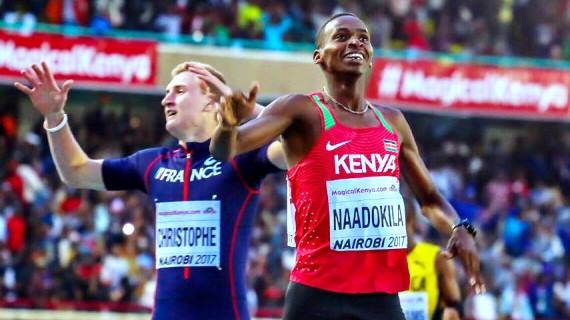
Mpoke becomes third athlete from Kenya to qualify for Tokyo Olympic Games in sprint events after Hellen Syombua and Emmanuel Korir all in 400m.
However, Korir, who is a specialist in 800m qualified for Tokyo Olympics when he doubled up in 400m and 800m at the 2019 Doha World Athletics Championships.
Surprisingly, Korir reached the semi-finals in 800m but stormed the final of the 400m to finish sixth. He run an Olympic qualifying standard time of 44.37 seconds in the semis.
Syombua qualified during the 2019 African Games trials running 51.09 seconds to also set a new 400m national record.
So far 51 Kenyan athletes have attained the Olympic qualifying standards ahead of the national trials set for June 17 to 19 at Kipchoge Keino Stadium, Eldoret.
However, the number includes eight athletes named in the final men and women's marathon team.
(05/18/2021) ⚡AMP
Tokyo 2020 Olympic Games
Fifty-six years after having organized the Olympic Games, the Japanese capital will be hosting a Summer edition for the second time, originally scheduled from July 24 to August 9, 2020, the games were postponed due to coronavirus outbreak, the postponed Tokyo Olympics will be held from July 23 to August 8 in 2021, according to the International Olympic Committee decision. ...
more...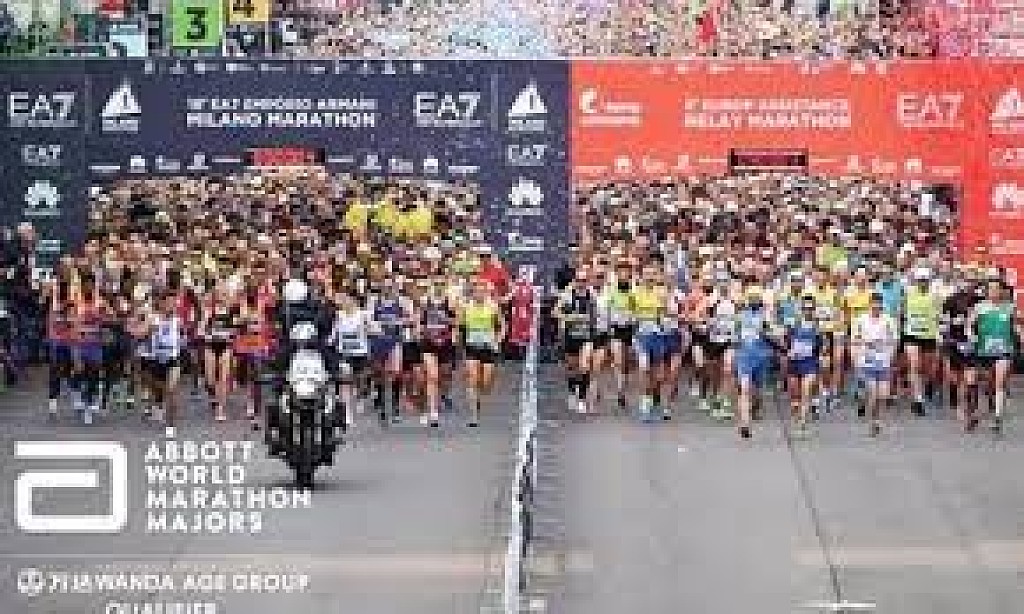
Ekiru and Gebrekidan break Italian all-comers’ records in Milan
Kenya’s Titus Ekiru and Ethiopia’s Hiwot Gebrekidan recorded world-leading times of 2:02:57 and 2:19:35 to break the Italian all-comers’ records at the Generali Milano Marathon, a World Athletics Label road race, on Sunday (16).
It was Ekiru’s second victory in Milan, having won in 2019 in 2:04:46, the previous Italian all-comers’ record. Gebrekidan, meanwhile, was competing in Italy for the first time and was rewarded with a four-minute PB.
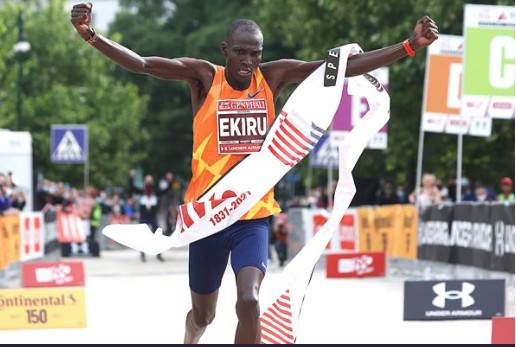
This year’s race, held in ideal 13C temperatures, was staged on a 7.5km circuit in front of the Castello Sforzesco in the heart of Milan.
In the men’s race, the leading pack of 10 athletes set a consistent pace in the first half, passing 5km in 14:47, 10km in 29:28 and 15km in 44:13. Leading South African runner Stephen Mokoka, acting as a pacemaker in Milan, reached the half-way mark in 1:01:48.
Ekiru started to push the pace after 30km, covering the next five-kilometre segment in 14:11 and the following one in 14:34. He maintained that pace to the end and, having covered the second half in 1:01:09, went on to cross the finish line in 2:02:57.
The 29-year-old now moves to fifth on the world all-time list, level with former world record-holder Dennis Kimetto.
The first five men finished inside the previous Italian all-comers’ record. Reuben Kipyego finished second in 2:03:55 ahead of Barnabas Kiptum (2:04:17), 2018 Milan Marathon winner Seifu Tura from Ethiopia (2:04:29), Leul Gebrselassie from Ethiopia (2:04:31), and Gabriel Gerald Geay, who set a Tanzanian record of 2:04:55.
“At 20 km I felt in very good shape and I tried to push the pace,” said Ekiru, the 2019 African Games half marathon champion. “I feel emotional. Maybe I can run 2:01 in the future.”
Unlike the men’s contest, the women’s race was a one-runner affair with Gebrekidan making a break in the early stages.
After covering the first 5km in 16:43 as part of a leading pack, the 26-year-old Ethiopian made a break and went through the half-way point inside 70 minutes with a lead of 20 seconds, hinting at a finishing time inside 2:20.
By the time she reached 30km in 1:38:28, Gebrekidan’s lead over Kenya’s Racheal Mutgaa had grown to 84 seconds. Gebrekidan’s pace dropped only slightly in the second half and she held on to win in 2:19:35, breaking the previous world-leading time and Italian all-comers’ record of2:20:08 set by Kenya’s Angela Tanui in Siena last month.
"I trained very well and I prepared for this race at the Istanbul Half Marathon," said Gebrekidan, whose previous PB of 2:23:50 was set at the 2019 Guangzhou Marathon. "I will celebrate this win with my family."
Mutgaa went on to finish second in 2:22:50 ahead of Bahrain’s Eunice Chumba (2:23:10). With the first seven women finishing inside 2:25, it was the deepest ever women’s marathon held in Italy.
(05/16/2021) ⚡AMP

Milano Marathon
Passion is what allows us to go beyond our limits. It’s what makes us run when our heath is bursting in our chest, it’s whats makes our legs move even if they’re worn out. It’s passion against sacrifice, and the winner will be declared though hard training, hearth and concentration. Milano Marathon has been presented in the futuristic Generali Tower,...
more...
Athlete refugees now eyeing Tokyo berths, after a year of pandemic setbacks and challenges
The postponed Tokyo 2020 Olympic Games looked one step closer to reality in recent days with the staging of the athletics test events, the half marathon in Sapporo on Wednesday (5) and the Ready Steady Tokyo Athletics Meeting at the Olympic Stadium on Sunday (9). Athletes from around the world were tuning in to catch a glimpse of the courses, the facilities and the track they're hoping to compete on when the Games kick off in July, including two clusters of the Athlete Refugee Team from their bases in Tel Aviv and Ngong, Kenya.
One of them was Tachlowini Gabriyesos, a distance runner who trains with the Alley Runners club in Tel Aviv who achieved a major milestone at the Hahula Galilee Marathon on 14 March. Contesting the distance for just the second time, the 23-year-old Eritrean native clocked 2:10:55 to become the first refugee athlete to better an Olympic qualifying standard for the Tokyo Olympic Games.
"This (past) year was different because of the pandemic, but most of my training was as planned," said Gabriyesos, who has steadily moved up in distance over the past two seasons. He competed in the 5000m for the Athlete Refugee Team at the 2019 World Championships in Doha but in 2020 found a better fit with longer distances.
He was slated to compete at the World Athletics Half Marathon Championships in Gdynia, Poland, last October, but was unable to obtain a visa. So instead, two months later he improved his half marathon lifetime best to 1:02:21 in the prelude to his marathon breakthrough.
"I think I'm in better shape than I was last year, but physically and mentally it was hard to train with the pandemic restrictions."
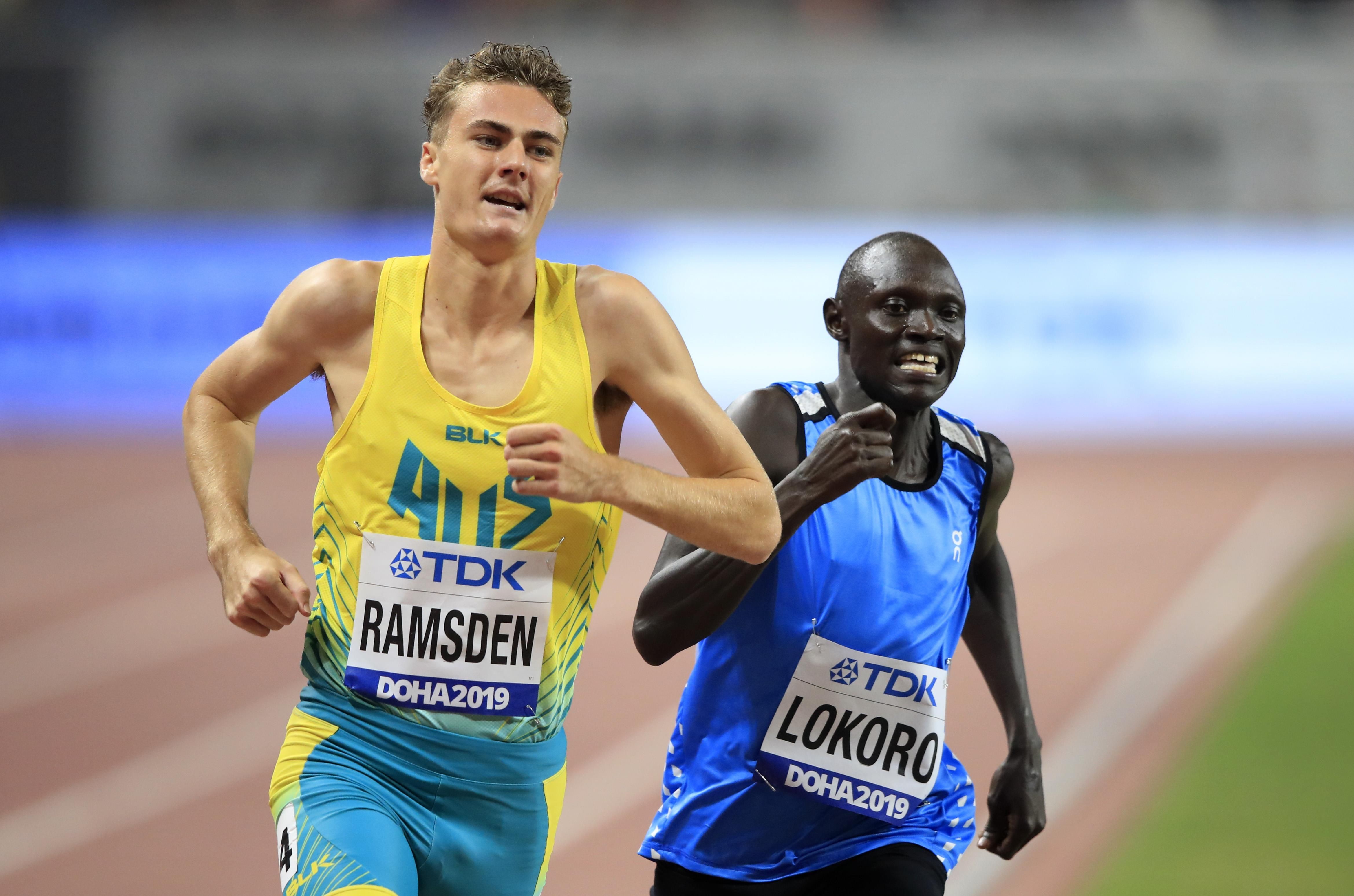
Focusing on Tokyo has helped.
"The Olympics is my dream as a professional athlete and it would be a great honour to be part of the Refugee Olympic Team," he said. "I want to show others that everything is possible and they shouldn't give up."
Lokoro targeting second Olympic appearance
The International Olympic Committee will announce the composition of its second Refugee Olympic Team (this year competing as EOR, its French acronym) in early June. While the selection process is complex, quality of performance will play a key role. Paulo Amotun Lokoro, a refugee from South Sudan and a member of the inaugural team in Rio, is hoping to make the cut again.
But unlike Gabriyesos, who has largely managed to navigate the pandemic restrictions over the past year, Lokoro, who is based at the Tegla Loroupe Peace Foundation training camp in Ngong, wasn't as fortunate. The camp was forced to close during the first lockdown in Kenya in April of last year, forcing Lokoro to return to the Kakuma Refugee Camp where, training-wise, he found himself alone. He returned to Ngong in December and resumed training only to be forced into another lockdown situation in the beginning of March.
"It has been frustrating, we haven't had enough time to train," Lokoro said. "And during this lockdown the government has discouraged us from training in public and as a team, so we were training individually."
Lokoro finished 11th in his 1500m heat in Rio, clocking 4:03.96. He's improved steadily since, currently boasting a 3:44.10 lifetime best set in 2019. He also competed in Doha, but, suffering with a hamstring injury, didn't advance from the heats.
"In 2019 I was well prepared," he said. "My shape is different now, but we still hope to catch up before Tokyo."
World Athletics provides ongoing support
Since the IOC put the refugee athletes on the international stage in Rio five years ago, World Athletics has entered an Athlete Refugee Team (ART) in almost every major championship: the 2017 and 2019 World Athletics Championships, the 2018 World Cross Country Championships, the 2017 and 2019 World Athletics Relays and the 2020 World Athletics Half Marathon Championships. The African and European area federations have opened entry to refugee athletes based on their continents. Those competitive opportunities, coupled with generous scholarships from the IOC and ongoing training and logistical support from World Athletics, has made a difference.
Otmane Nait Hammou, a refugee from Morocco who is based in Sweden, made his Athlete Refugee Team debut at the 2018 World Cross Country Championships, competed in the steeplechase in Doha and more recently at the World Half Marathon Championships in Gdynia where he finished 67th, clocking 1:03:28 in his competitive debut over the distance and beating some of the world’s finest half-marathoners in the process. He's hoping for a spot on the steeplechase start line in Tokyo.
"World Athletics' support to compete at three World Championships did play a big role to keep me feeling hungry and motivated," he said. "With the solidarity support from the International Olympic Committee and my sponsors ON Running and Maurten and my French club ES Sartrouville, it has really made a difference.
"Honestly, it was really hard to keep motivated without having short term goals (during the pandemic), but you can't give up when it comes to the Olympic Games."
"We have been facing a lot of challenges, but at least we have been able to train individually," said Rose Nathike Lokonyen, a refugee from South Sudan who was the team's flag-bearer in Rio.
Before the pandemic hit, 5000m hopeful Ukuk Utho'o Bul said: "We were all training well, it was an Olympic year and we were preparing well. But when the pandemic came the camp closed so we all had to go back to where we came from. When we are training as a team there is a motivation. You always move forward, you motivate yourself. Then I was in a different place. I was alone and training alone. But we are trying our best."
In Lisbon, Dorian Keletela, a refugee from Congo, is aiming to be the first sprinter selected for the Refugee Olympic Team. Keletela, who competed in the 60m at the European Indoor Championships in March, has a 10.46 career best from 2020. He's hoping to compete at the European U23 Championships later this summer as well.
(05/10/2021) ⚡AMPby World Athletics
Tokyo 2020 Olympic Games
Fifty-six years after having organized the Olympic Games, the Japanese capital will be hosting a Summer edition for the second time, originally scheduled from July 24 to August 9, 2020, the games were postponed due to coronavirus outbreak, the postponed Tokyo Olympics will be held from July 23 to August 8 in 2021, according to the International Olympic Committee decision. ...
more...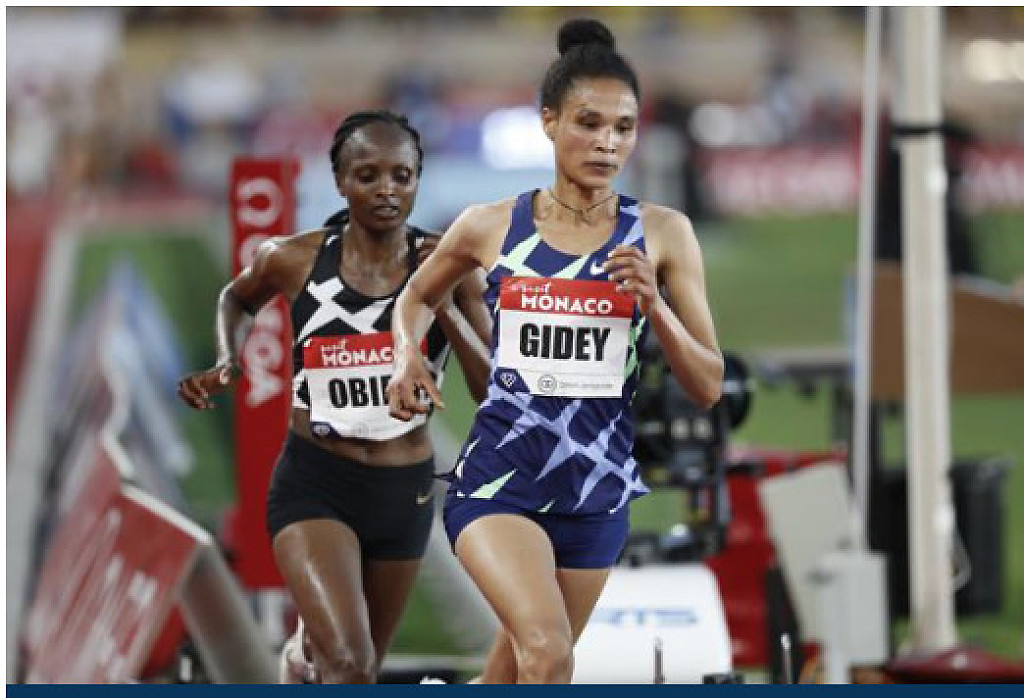
Obiri and Gidey ready for 3000m showdown in Doha
Two-time world 5000m champion Hellen Obiri and world record holder Letesenbet Gidey will resume their rivalry when they line up over 3000m at the Wanda Doha Diamond League on Friday 28 May.
Obiri, the world cross-country champion, set a Kenyan 3000m record of 8:20.68 in Doha in 2014. She also won over the same distance at the Doha Diamond League in 2019 and 2020.

Gidey smashed the world 5000m record in Valencia last year, clocking 14:06.62. Although Obiri leads their career head-to-head record at 9-5, Gidey has finished ahead of Obiri twice in Doha: at the 2018 Diamond League meeting and at the 2019 World Championships over 10,000m.
“I’m happy to start my season in Doha,” said Gidey, who in 2019 broke Obiri’s African 3000m record with 8:20.27. “It will be my first race as a world record-holder and I feel excited to see where I am in terms of condition. It will be a very important stepping stone towards the Olympic Games later in the season.”
Obiri, who defeated Gidey in their most recent clash over 5000m at the 2020 Monaco Diamond League, said: “After my half marathon debut in April (she ran 1:04:51 in Istanbul) I’m looking forward to getting back on the track, especially at the Doha Diamond League meeting where I will be going for my fourth 3000m win. I ran the Kenyan record there in 2014 (8:20) and the second-fastest 3000m in my career there last September (8:22).
“Doha is also the place where I won my last world title in 2019, but this year it is all about the Olympic Games as that is the only major gold medal that I’m missing and I’m working hard to change that this year. The 3000m and 5000m races are very competitive at the moment and I expect we will see some fast times in the next few months and in Tokyo.”
The 2021 Wanda Diamond League comprises 14 meetings – starting with Gateshead (replacing Rabat as the first host city on this year’s circuit) on Sunday 23 May – leading to a single final across two days in Zurich at the end of the season. Each meeting will be broadcast globally in a live two-hour programme.
The 2021 calendar remains subject to change depending on the global health situation in the coming months.
(05/08/2021) ⚡AMPby World Athletics
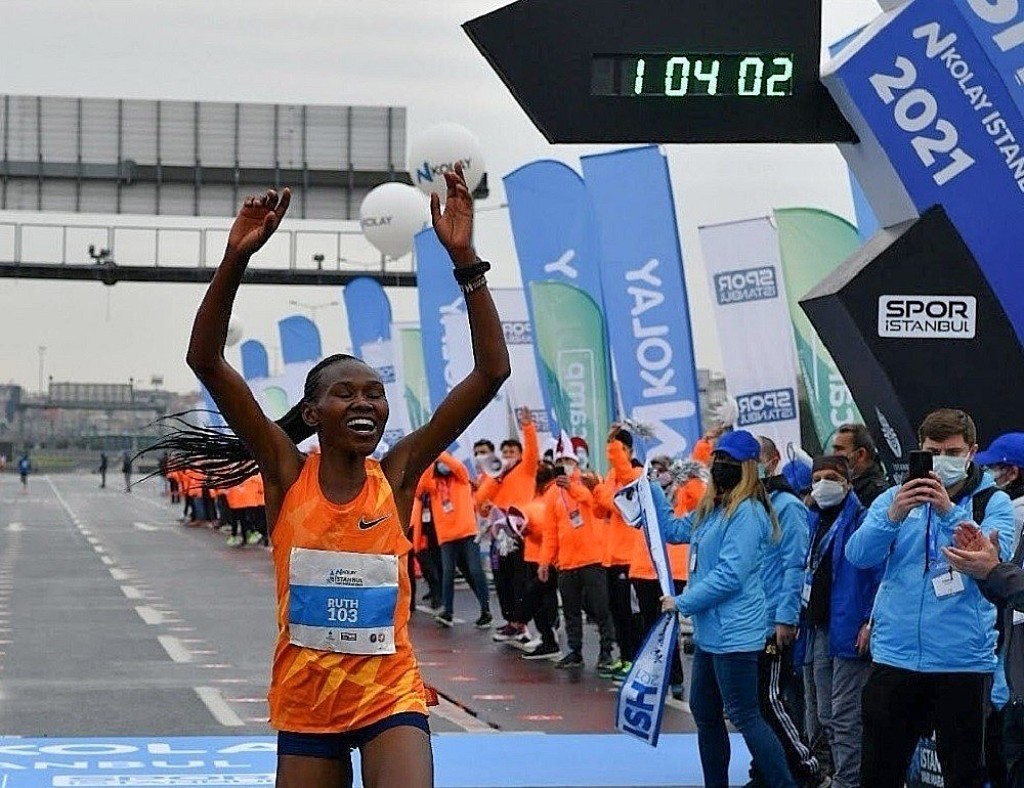
World Marathon champ Ruth Chepng'etich eyes stellar Olympics show
Last month, Chepng'etich tore the field apart to win the Instanbul Half Marathon in one hour, four minutes and one second (1:04:02), smashing the previous world record held by Ethiopian Ababel Yeshaneh by 29 seconds.
Speaking Thursday at the Athletics Kenya offices, Nairobi after receiving the LG/Sports Journalist Association of Kenya (SJAK) Sports Personality of the Month Award for April, Chepng'etich is confident of a good outing at the Summer Games.
"I resumed training last week with focus on Olympics and so far I'm doing great. I really don't want to look at who I will be competing against, but I'm focusing on myself. With hardwork, discipline and dedication, everything is possible.It's always such a great feeling when your efforts are recognised. This award is timely and a great motivation ahead of the Olympics," a visibly jubilant Chepng'etich said.
The 26-year-old received a state-of-the-art LG Artificial Intelligence (AI) DD washing machine worth Sh92,000.
Veteeran coach Julius Kirwa said that he was closely following Chepng'etich's training program and remained optimistic of good results in Tokyo.
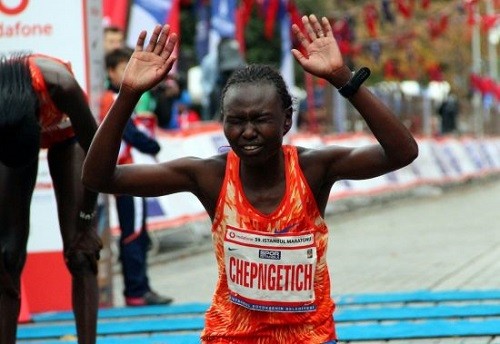
Chepng’etich beat Equator Rally winner Carl "Flash" Tundo, Eliud Kipchoge, who won the NN Mission Marathon in Enschede, Holland in 2:04.30 and Kenya Ports Authority Libero Sam Juma to the award.
Other nominees were Meldine Sande, who led Kenya Prisons women's volleyball team to third position at the African Clubs Championship in Tunisia and rugby star Daniel Taabu, who scored 7 tries for Kenya Sevens at the Emirates Invitational in Dubai.
Chepng’etich joins the growing list of sportsmen and women to have won the coveted title this season.
Other winners are tennis superstar Angela Okutoyi (January), basketballer Tylor Okari Ongwae of Kenya Moran's (February) and boxer Elly Ajowi (March).
LG Electronics Corporate Communications manager Maureen Kemunto noted that the company is proud to be a part of an initiative which rewards excellence.
"Our partnership with SJAK goes a long way in bolstering athletes talent and empowering them to be the backbone of sports in the country. Being an Olympic year, sports personalities are giving their all to uphold higher standards hence the need to motivate their efforts"
SJAK President Chris Mbaisi, on his part, thanked LG Electronics for their unswerving support, saying the partnership continues to make a gigantic difference in the promotion of sporting activities across the country.
(05/06/2021) ⚡AMP
Tokyo 2020 Olympic Games
Fifty-six years after having organized the Olympic Games, the Japanese capital will be hosting a Summer edition for the second time, originally scheduled from July 24 to August 9, 2020, the games were postponed due to coronavirus outbreak, the postponed Tokyo Olympics will be held from July 23 to August 8 in 2021, according to the International Olympic Committee decision. ...
more...
World Athletics president Sebastian Coe expects Tokyo Olympics to go ahead after test event in Japan
The World Athletics president, Sebastian Coe, says he understands the nervousness in Japan over hosting an Olympics during a pandemic – but believes the Games will go ahead safely after attending a half marathon test event in Sapporo on Wednesday.
Japan is battling a resurgence in coronavirus infections and opinion polls consistently find the majority of the public is opposed to the Games, which are due to open on 23 July.
Those concerns have been exacerbated by a slow vaccine rollout, with much of the country also under a state of emergency, and Coe said he recognised that many Japanese people had concerns.
“We take that nervousness very, very seriously,” he said. “We have Covid protocols that have been tried and tested, and I’ve witnessed them here. We take very seriously the health and wellbeing of local communities.”
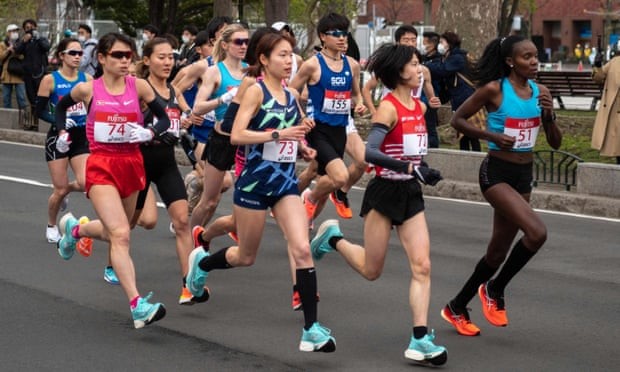
“But the challenges are big. I don’t believe any Olympic Games has been delivered under more difficult circumstances. These Games have an overlay of complexity that is beyond most comprehension.”
There was a muted atmosphere during the test event as security guards stood with signs around their necks asking people to “please refrain from watching the race” to prevent infections.
However, a few onlookers ignored their pleas and clapped as Kenya’s Hillary Kipkoech won the men’s race in 1hr 46sec and Japan’s Mao Ichiyama won the women’s race in 1hr 8min 28sec.
Tokyo 2020’s deputy executive director of games operations, Yasuo Mori, said no one had tested positive for Covid-19, with the 69 athletes made to stay in hotels with no contact with the public.

Organizers will decide next month whether fans can attend events, but supporters from abroad have already been banned. However, Coe said that even if there were no crowds in stadiums “the Games will still take place and the competition will still be extremely good”.
Coe, who was head of the 2012 London Olympics, said it was “really important that when the world looks to coming out of Covid that it can see optimism.
“ The Olympic Games and the Paralympic Games will be totemic of that optimism and hope going forward. So it is important that the Games are delivered successfully and they’re delivered safely.”
Tokyo is officially spending £11.1bn to hold the Olympics, but some estimates say it is twice that much. The IOC is pushing on with the Games, partly because 73% of its income is from selling broadcast rights.
(05/05/2021) ⚡AMPby Sean Ingle
Tokyo 2020 Olympic Games
Fifty-six years after having organized the Olympic Games, the Japanese capital will be hosting a Summer edition for the second time, originally scheduled from July 24 to August 9, 2020, the games were postponed due to coronavirus outbreak, the postponed Tokyo Olympics will be held from July 23 to August 8 in 2021, according to the International Olympic Committee decision. ...
more...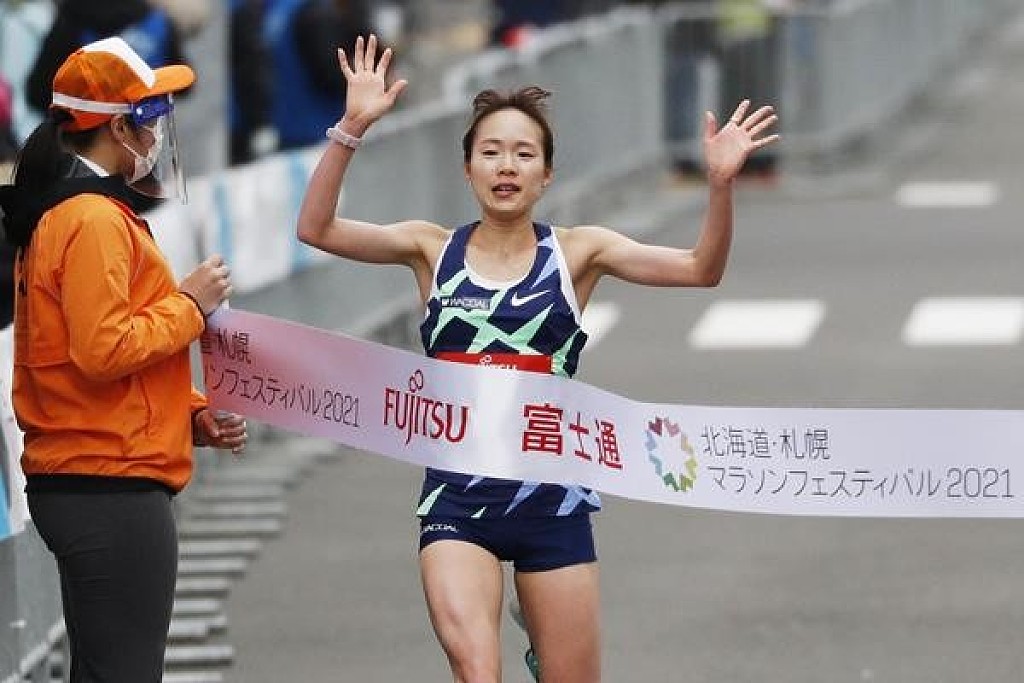
Japan’s Mao Ichiyama and Kenya’s Hillary Kipkoech storm to half marathon PBs at Olympic test event in Sapporo
Japan’s Mao Ichiyama and Kenya’s Hillary Kipkoech cruised to half marathon PBs on the grounds of Hokkaido University in Sapporo on Wednesday, at the official test event for the Tokyo Olympics road races.
The course is similar to the first half of the marathon route that will be used for this year’s Olympic Games, and the race attracted a small elite field comprising some of Japan’s leading marathon contenders along with a handful of international athletes who were keen to get a feel for the streets of Sapporo.
Ichiyama, who booked her spot on Japan’s Olympic marathon team after winning in Nagoya at the end of 2020, fellow Olympic team member Ayuko Suzuki and team reserve Matsuda Mizuki set off at a swift pace alongside three male pace makers, passing through the first 5km in 16:10.
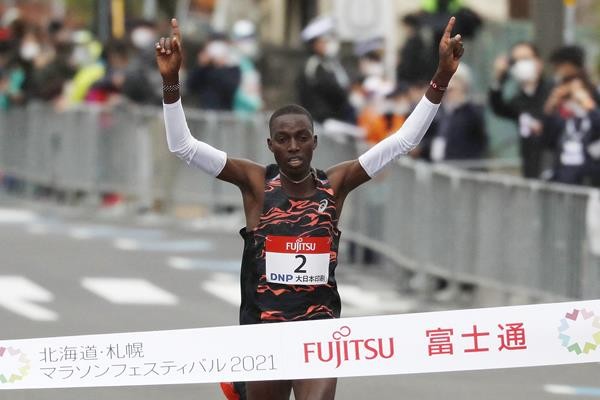
Their pace eased slightly approaching the half-way point, having reached 10km in 32:39, but they picked it up again at the start of the second half and covered the next five-kilometer section in 15:48.
Suzuki stuck with her compatriots until the final few kilometers and, unable to match their pace, started to drift behind. With about two kilometers to go, Ichiyama opened up a gap of about 25 meters on Mizuki and still looked extremely comfortable. The gap didn’t grow significantly in the closing stages, but Ichiyama did just enough to keep her opponent at bay.
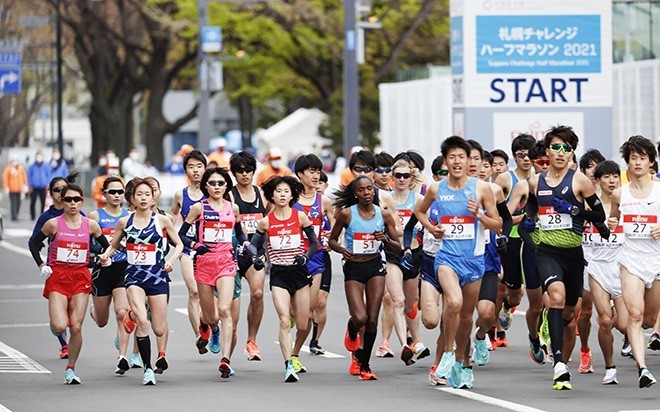
Ichiyama crossed the line in a PB of 1:08:28 with Mizuki following close behind in 1:08:32. Suzuki finished third in 1:08:53.
Honami Maeda, who won Japan’s Marathon Grand Championship race in 2019 to secure her Olympic spot, ran solo for much of the race, in between the lead trio and the main chase pack. She was overtaken by Germany’s Katharina Steinruck in the final kilometer as Steinruck finished fourth in 1:10:43, seven seconds ahead of Maeda.
Kipkoech, who clocked a world-leading 27:35 for 10km just 11 days prior, broke away from the rest of the men’s field just before the half-way point. He passed through 5km in 14:35 as part of the lead pack but then opened up some distance a few kilometres later, reaching 10km in 28:59 with a four-second lead over fellow Kenyan Simon Kariuki.
By the time Kipkoech reached 15km in 42:49, his lead over Kariuki had grown to 12 seconds, while the main chase pack was a further 44 seconds adrift.
Kipkoech went on to win in a personal best of 1:00:46 with Kariuki taking second place in 1:01:11. Shin Kimura was the top Japanese finisher, placing third in 1:01:46. Olympic team member Yuma Hattori, opting not to race flat-out and to use the event as a dress rehearsal, finished 24th in 1:02:59.
(05/05/2021) ⚡AMPby World Athletics
Tokyo 2020 Olympic Games
Fifty-six years after having organized the Olympic Games, the Japanese capital will be hosting a Summer edition for the second time, originally scheduled from July 24 to August 9, 2020, the games were postponed due to coronavirus outbreak, the postponed Tokyo Olympics will be held from July 23 to August 8 in 2021, according to the International Olympic Committee decision. ...
more...
Lincoln Marathon and Half Marathon was a success
Thousands of people, some from across the world, flocked to Lincoln on Sunday for the 44th annual Lincoln Marathon and Half Marathon.
The race went on in-person this year after it went virtual due to COVID in 2019, making this event extra special.
"Today is outstanding," Ryan Regnier, the Marathon Director said. "I just think the community, the runners, the city, we just needed this event."
The Lincoln Marathon and Half Marathon was one of only a handful of other races that are happening this year despite the pandemic. Because of that, this event grabbed international attention.
Dominic Korir, who won 1st place in the Half Marathon, and Iveen Chepkemoi, the female 1st place Half Marathon winner, made the trip to Lincoln all the way from Kenya. Alex Ekesa, the male winner of the Marathon, also traveled all the way from Kenya, while Lincoln native Amy Dulng was the first female to cross the finish line in the Marathon.
"Feels good to win it, I grew up here, so it's exciting to be able to win it today," Dulng said.
But not everyone there was running because it's their passion. For Chris Maxwell of South Dakota, this race meant much more.
"Two years ago I was laying in Madonna Rehab Hospital completely paralyzed, having my wife and mom have to blink for me," Maxwell said. "I had a friend come down and they were going to run this race and they encouraged me and I encouraged them and about three months ago I said, what the heck, lets do a victory lap."
Maxwell was diagnosed with Gullain-Barre Syndrome several years ago, fighting for his life. But now, a miracle, Maxwell ran the Half Marathon Sunday with the biggest smile on his face.
(05/03/2021) ⚡AMP

Lincoln Marathon
The Lincoln National Guard Marathon and Half-Marathon is run on a citywide course that starts and finishes on the campus of the University of Nebraska-Lincoln. Runners in both races share a common start and run a loop route past the Nebraska State Capitol, along Sheridan Boulevard, past Union College, along the Highway 2 bike path, past the Lincoln County-City Building...
more...Thousands of people, some from across the world, flocked to Lincoln on Sunday for the 44th annual Lincoln Marathon and Half Marathon.
The race went on in-person this year after it went virtual due to COVID in 2019, making this event extra special.
“Today is outstanding,†Ryan Regnier, the Marathon Director said. “I just think the community, the runners, the city, we just needed this event.â€
The Lincoln Marathon and Half Marathon was one of only a handful of other races that are happening this year despite the pandemic. Because of that, this event grabbed international attention.
Dominic Korir, who won 1st place in the Half Marathon, and Iveen Chepkemoi, the female 1st place Half Marathon winner, made the trip to Lincoln all the way from Kenya. Alex Ekesa, the male winner of the Marathon, also traveled all the way from Kenya, while Lincoln native Amy Dulng was the first female to cross the finish line in the Marathon.
“Feels good to win it, I grew up here, so it’s exciting to be able to win it today,†Dulng said.
But not everyone there was running because it’s their passion. For Chris Maxwell of South Dakota, this race meant much more.
“Two years ago I was laying in Madonna Rehab Hospital completely paralyzed, having my wife and mom have to blink for me,†Maxwell said. “I had a friend come down and they were going to run this race and they encouraged me and I encouraged them and about three months ago I said, what the heck, lets do a victory lap.â€
Maxwell was diagnosed with Gullain-Barre Syndrome several years ago, fighting for his life. But now, a miracle, Maxwell ran the Half Marathon Sunday with the biggest smile on his face.
(05/03/2021) ⚡AMP
The 44th annual Lincoln marathon and half in-person races were a success
Thousands of people, some from across the world, flocked to Lincoln on Sunday for the 44th annual Lincoln Marathon and Half Marathon.
The race went on in-person this year after it went virtual due to COVID in 2019, making this event extra special.
“Today is outstanding,†Ryan Regnier, the Marathon Director said. “I just think the community, the runners, the city, we just needed this event.â€
The Lincoln Marathon and Half Marathon was one of only a handful of other races that are happening this year despite the pandemic. Because of that, this event grabbed international attention.
Dominic Korir, who won 1st place in the Half Marathon, and Iveen Chepkemoi, the female 1st place Half Marathon winner, made the trip to Lincoln all the way from Kenya. Alex Ekesa, the male winner of the Marathon, also traveled all the way from Kenya, while Lincoln native Amy Dulng was the first female to cross the finish line in the Marathon.
“Feels good to win it, I grew up here, so it’s exciting to be able to win it today,†Dulng said.
But not everyone there was running because it’s their passion. For Chris Maxwell of South Dakota, this race meant much more.
“Two years ago I was laying in Madonna Rehab Hospital completely paralyzed, having my wife and mom have to blink for me,†Maxwell said. “I had a friend come down and they were going to run this race and they encouraged me and I encouraged them and about three months ago I said, what the heck, lets do a victory lap.â€
Maxwell was diagnosed with Gullain-Barre Syndrome several years ago, fighting for his life. But now, a miracle, Maxwell ran the Half Marathon Sunday with the biggest smile on his face.
(05/03/2021) ⚡AMP
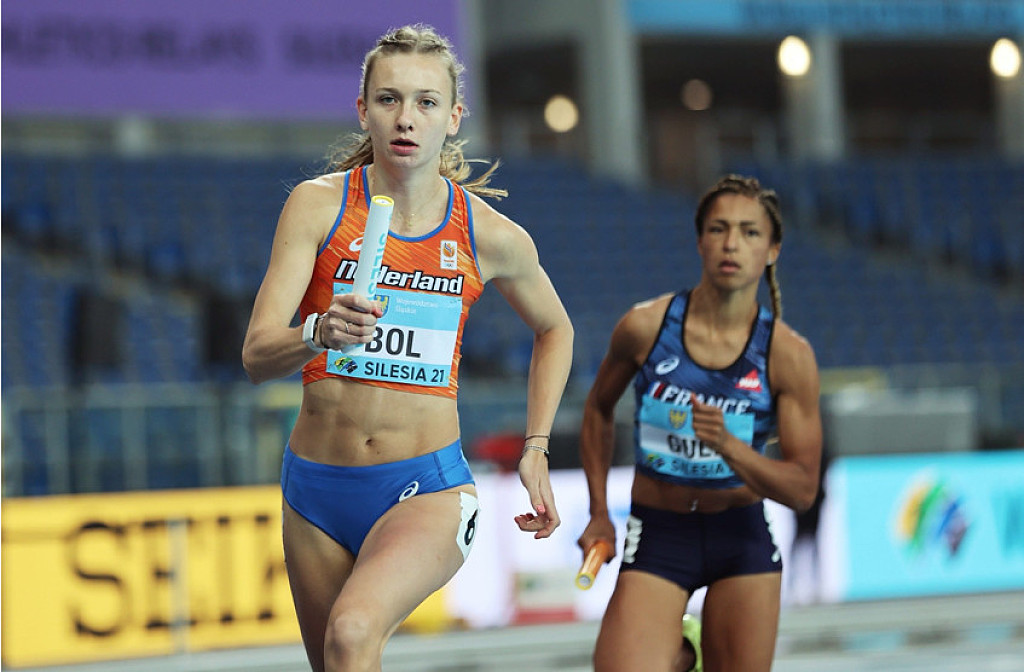
Hosts Poland crowned first winners of World Athletics Relays Silesia 21
There was success for the host nation Poland on an action-packed first evening of competition at the World Athletics Relays Silesia 21, with Joanna Jozwik and Patryk Dobek teaming up to win the 2x2x400m.
It was the first of two finals at the Silesian Stadium in Chorzow on Saturday (1), with Germany winning the shuttle hurdles relay and a whole host of competitive 4x100m and 4x400m heats taking place.
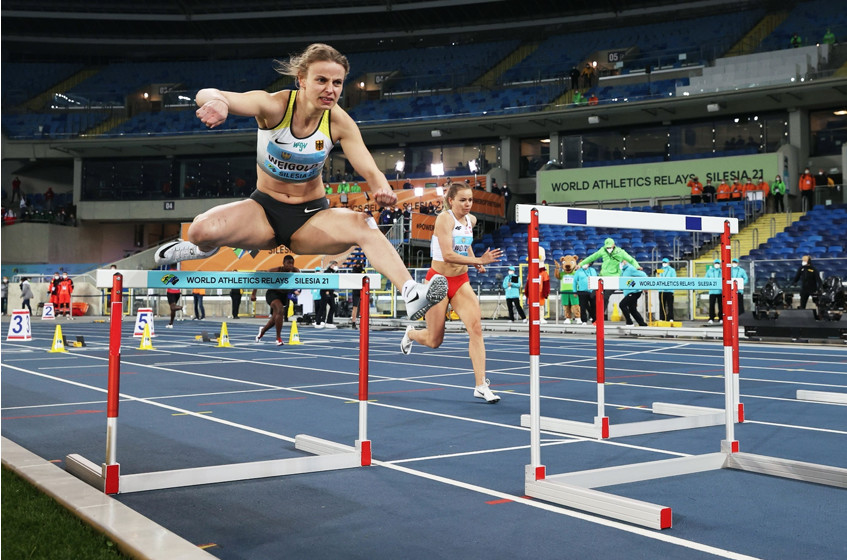
Tactical victory on home soil
With two athletes taking it in turns to run their two 400m legs, the 2x2x400m is an event which favours the middle-distance athletes rather than sprinters but in Dobek the host nation had a bit of both. Previously better known as a 400m hurdler, the 27-year-old has stepped up to the 800m this year in superb style, winning the European indoor title in just his fourth competition at the distance.
In Silesia he was joined by his European Indoors teammate Jozwik, who claimed 800m silver in Torun, and together they powered to victory on home soil, clocking 3:40.92.
After a conservative start, Kenya were narrowly ahead after the first lap, with Naomi Korir handing the baton to Ferguson Cheruiyot Rotich and Jozwik passing on to Dobek, who had helped Poland to a fourth-place finish in this event at the last edition of the World Athletics Relays in Yokohama in 2019.
Slovenia is only fielding one team in Silesia and they made their presence felt in this event, with Anita Horvat and Zan Rudolf challenging Kenya on the third and final legs. Kenya had the stronger finish, however, and it saw them secure second place in 3:41.79 as Slovenia were third in 3:41.95.
Germany holds off strong Polish challenge in shuttle hurdles
All-round stronger starts and composure under pressure helped Germany to victory in the mixed shuttle hurdles relay, the final event of the night.
Monika Zapalska began well to give Germany a slight lead on the first leg. Poland’s Zuzanna Hulisz made up a bit of ground on Zapalska towards the end of her leg, but Germany’s Erik Balnuweit got off to a swift start on the second leg, opening up another metre on Poland.
Krzysztof Kiljan maintained Poland’s second-place position on the second leg as the top two teams continued to pull away from Kenya in third. The positions stayed the same on the third leg with Anne Weigold holding on to the lead for Germany as Poland’s Klaudia Wojtunik tried to give chase.
Poland saved their strongest runner, Damian Czykier, for the final leg. At first it seemed as though Gregor Traber’s lead was unassailable, but Czykier closed well in the final stages. He clattered the final barrier, though, and so was unable to catch the German before the finish.
Germany won in 56.53 with Poland taking second in 56.68. Kenya took third in 59.89.
All to race for in qualifying events
Competition was fierce in the heats for the championship events, with qualification for the Tokyo Olympic Games and World Athletics Championships Oregon22 up for grabs.
The women’s 4x400m heats were up first and hosts Poland secured a strong start as they won the event’s opening race, clocking 3:28.11.
Cuba’s quartet of Zurian Hechavarria, Rose Mary Almanza, Lisneidy Veitia and Roxana Gomez went quickest overall, leading from gun to tape to win the second heat in 3:27.90 ahead of the Netherlands with 3:28.40. It was a busy night for European indoor 400m champion Femke Bol as before lining up for the mixed 4x400m, she opened her campaign with a 49.81 anchor split for the Dutch women’s team – the fastest overall in the first round.
Like the Netherlands and Poland, who won this event in Yokohama in 2019, Belgium and Great Britain had already qualified for Tokyo as 2019 World Athletics Championships finalists. They all also made the final in Silesia where they will be joined by Germany, Italy and France on Sunday.
Belgium qualified third quickest for the final with 3:28.27, ahead of Great Britain’s 3:28.83.
There was joy for the Dutch men’s 4x400m team too as Jochem Dobber, Liemarvin Bonevacia, Ramsey Angela and Tony van Diepen combined to clock 3:03.03 and win the second heat, leading the list of qualifiers. But Poland didn’t share in the success of their female teammates as they missed out on the final by just one place. Their run did, however, gain them a spot at the World Athletics Championships in Oregon.
In that third heat, which was won by Botswana in 3:04.03, Italy’s Vladimir Aceti surged past Karol Zalewski – who was part of Poland's world indoor record-breaking team at the 2018 World Athletics Indoor Championships in Birmingham – with a split of 45.36 to finish second in 3:04.81 and pip the hosts for that place in the final.
The Japanese team ensured that they will also be heading for a home Olympics as Rikuya Ito, Kentaro Sato, Kazuma Higuchi and Kaito Kawabata clocked 3:03.31 to win the first heat.
Colombia’s Anthony Zambrano, the world 400m silver medallist, eased over the finish line in 3:04.64 to comfortably anchor his team to second place and a spot in the final along with South Africa, Belgium and France.
As expected, the mixed 4x400m heats provided some thrilling action, with Italy’s Edoardo Scotti, Giancarla Trevisan, Alice Mangione and Davide Re storming to a second heat win of 3:16.52 to lead the first round ahead of heat three winners Brazil with 3:16.53 and the Dominican Republic with 3:16.67.
Ireland, Belgium, Great Britain, Netherlands and Spain will be joining them in the final but Colombia and Poland will miss out after placing third and fourth in that high-quality second heat.
Colombia’s 3:17.61 was faster than the Netherlands’ winning time of 3:18.04 in the first heat, but they were run out of an all-important top two qualifying spot.
In that Netherlands team, Bol ran 50.72 after her earlier 49.81 in the women’s event.
Narrow margins in 4x100m
Things were tight at the top and bottom of the list of teams to qualify for the men’s 4x100m final, with just 0.001 separating Italy from Brazil to lead the first round and the exact same small margin between Denmark and Ukraine at the bottom, to see Ukraine just miss out.
European indoor 60m champion Marcell Jacobs and Italian record-holder Filippo Tortu both ran storming legs along with Eseosa Fostine Desalu and Davide Manenti to clock 38.45 in winning heat three ahead of South Africa, anchored by African champion Akani Simbine, while 2019 winners Brazil, anchored again by Paulo André Camilo de Oliveira, won heat two in a time just a thousandth slower.
Denmark ran a national record of 39.06 in that race to finish fourth behind Germany and Japan to secure their spot in the final, while the first heat was won by the Netherlands in 38.79 ahead of Ghana.
A strong team of Jamile Samuel, Dafne Schippers, Nadine Visser and Marije Van Hunenstijn led the qualifiers in the women's event to book their place in the final, as well as the major championships in Tokyo and Oregon. Together they clocked 43.28 to win the second heat ahead of Poland.
Just as the Danish team had the race of their lives in the men's event, so too did Ecuador in the women's and the quartet ran a national record of 43.86 in third to advance on time. Brazil was disqualified for a lane violation after originally winning the first heat ahead of Italy with 44.02, while heat three was won by France in 43.51.
They will be joined in the final by Switzerland and Japan.
Competition resumes on Sunday at 19:20 local time with the mixed 4x400m final.
(05/02/2021) ⚡AMPby World Athletics
New Salazar documentary questions reasons for his 2019 suspension
Nike’s Big Bet, the new documentary about former Nike Oregon Project head coach Alberto Salazar by Canadian filmmaker Paul Kemp, seeks to shed light on the practices that resulted in Salazar’s shocking ban from coaching in the middle of the 2019 IAAF World Championships. Many athletes, scientists and journalists appear in the film, including Canadian Running columnist Alex Hutchinson and writer Malcolm Gladwell, distance running’s most famous superfan.
Most of them defend Salazar as someone who used extreme technology like underwater treadmills, altitude houses and cryotherapy to get the best possible results from his athletes, and who may inadvertently have crossed the line occasionally, but who should not be regarded as a cheater. (Neither Salazar nor any Nike spokesperson participated in the film. Salazar’s case is currently under appeal at the Court of Arbitration for Sport.)
Salazar became synonymous with Nike’s reputation for an uncompromising commitment to winning. He won three consecutive New York City Marathons in the early 1980s, as well as the 1982 Boston Marathon, and set several American records on the track during his running career.
He famously pushed his body to extremes, even avoiding drinking water during marathons to avoid gaining any extra weight, and was administered last rites after collapsing at the finish line of the 1987 Falmouth Road Race.
Salazar was hired to head the Nike Oregon Project in 2001, the goal of the NOP being to reinstate American athletes as the best in the world after the influx of Kenyans and Ethiopians who dominated international distance running in the 1990s. It took a few years, but eventually Salazar became the most powerful coach in running, with an athlete list that included some of the world’s most successful runners: Mo Farah, Galen Rupp, Matt Centrowitz, Dathan Ritzenhein, Kara Goucher, Jordan Hasay, Cam Levins, Shannon Rowbury, Mary Cain, Donovan Brazier, Sifan Hassan and Konstanze Klosterhalfen.
Goucher left the NOP in 2011, disillusioned by what she saw as unethical practices involving unnecessary prescriptions and experimentation on athletes, and went to USADA in 2012. An investigation by the U.S. Anti-Doping Agency followed on the heels of a damning BBC Panorama special in 2015, and picked up steam in 2017.
When Salazar’s suspension was announced during the World Championships in 2019, he had been found guilty of multiple illegal doping practices, including injecting athletes with more than the legal limit of L-carnitine (a naturally-occurring amino acid believed to enhance performance) and trafficking in testosterone – but none of his athletes were implicated. (Salazar admitted to experimenting with testosterone cream to find out how much would trigger a positive test, but claimed he was trying to avoid sabotage by competitors.)
That Salazar pushed his athletes as hard in training as he had once pushed himself is not disputed; neither is the fact that no Salazar athlete has ever failed a drug test. Gladwell, in particular, insists that Salazar’s methods are not those of someone who is trying to take shortcuts to victory – that people who use performance-enhancing drugs are looking for ways to avoid extremes in training.
That assertion doesn’t necessarily hold water when you consider that drugs like EPO (which, it should be noted, Salazar was never suspected of using with his athletes) allow for faster recovery, which lets athletes train harder – or that the most famous cheater of all, Lance Armstrong, trained as hard as anyone. (Armstrong, too, avoided testing positive for many years, and also continued to enjoy Nike’s support after his fall from grace.)
Goucher, Ritzenhein, Levins and original NOP member Ben Andrews are the only former Salazar athletes who appear on camera, and Goucher’s is the only female voice in the entire film. It was her testimony, along with that of former Nike athlete and NOP coach Steve Magness, that led to the lengthy USADA investigation and ban.
Among other things, she claims she was pressured to take a thyroid medication she didn’t need, to help her lose weight. (The film reports that these medications were prescribed by team doctor Jeffrey Brown, but barely mentions that Brown, too, was implicated in the investigation and received the same four-year suspension as Salazar.) Ritzenhein initially declines to comment on the L-carnitine infusions, considering Salazar’s appeal is ongoing, but then states he thinks the sanctions are appropriate. Farah, as we know, vehemently denied ever having used it, then reversed himself.
It’s unfortunate that neither Cain, who had once been the U.S.’s most promising young athlete, nor Magness appear on camera. A few weeks after the suspension, Cain, who had left the NOP under mysterious circumstances in 2015, opened up about her experience with Salazar, whom she said had publicly shamed her for being too heavy, and dismissed her concerns when she told him she was depressed and harming herself. Cain’s experience is acknowledged in the film, and there’s some criticism of Salazar’s approach, but Gladwell chalks it up to a poor fit, rather than holding him accountable.
Cain’s story was part of an ongoing reckoning with the kind of borderline-abusive practices that were once common in elite sport, but that are now recognized as harmful, and from which athletes should be protected.
Gladwell asserts that coaches like Salazar have always pushed the boundaries of what’s considered acceptable or legal in the quest to be the best, and that the alternative is, essentially, to abandon elite sport. It’s an unfortunate conclusion, and one that will no doubt be challenged by many advocates of clean sport.
(05/02/2021) ⚡AMPby Running Magazine

Canada wants athletes vaccinated ahead of Olympics
In the wake of the International Olympic Committee’s (IOC) second playbook announcement on Wednesday, top officials from Athletics Canada (AC) are calling for all athletes competing in this summer’s Olympic and Paralympic Games to be vaccinated before heading to Tokyo.
In an interview with CBC Sports, Athletics Canada CEO David Bedford called it a matter of “national interest” to have all athletes and support staff heading to Japan fully vaccinated before leaving the country. He argued that if the government is already expecting most Canadians to be vaccinated by July 1, it only makes sense that we would prioritize these people, who are heading into what he called a “potential petri dish.”

“We’re not asking for something that isn’t happening all over the world. Even Kenya has vaccinated their athletes,” he added. “I would love to see the government come out and say this is in the national interest, these athletes represent all of us, so let’s get this taken care of so everyone is safe and healthy.”
The recent surge in COVID-19 cases in Japan has many people concerned that the Olympics could turn into a public health disaster, despite the protocols officials will be taking to ensure participant safety. Many countries, including Australia, have already announced they will be vaccinating their athletes ahead of the Games, but David Shoemaker, CEO of the Canadian Olympic Committee, maintains the organization’s original stance that athletes will not be given priority vaccinations.
“We maintain that Canada’s front-line workers and most vulnerable populations should be the priority for vaccinations,” he said. “With the growing numbers of vaccines available to Canadians, we are hopeful that athletes will have access to them prior to Tokyo, which would provide an additional layer of protection to the significant countermeasures that have been put in place.”
The biggest takeaway from Wednesday’s playbook announcement was increased testing, which mandates that athletes must provide two negative COVID-19 tests prior to boarding the plane for Tokyo. While this may help curb the spread of infection somewhat, many are concerned that the incubation period of the virus could render these tests useless. Infectious disease specialist Dr. Isaac Bogoch explained to the CBC that if an athlete is exposed to the virus, it could be two to five days before they start shedding it. This means they could have two negative tests before leaving Canada, but still test positive upon arrival in Tokyo. He added that vaccinating athletes isn’t a perfect solution, but it is a key way to ensure all 15,000 athletes competing in the Olympic and Paralympic Games stay safe.
“Vaccinations for all athletes,” he said. “We’re in the vaccine era. It’s not foolproof, but again this is serious. The variants of concern are more transmissible.”
The Olympics are set to begin on July 23, and as of now, the IOC has maintained they will take place no matter what.
(04/30/2021) ⚡AMPby Brittany Hambleton
Tokyo 2020 Olympic Games
Fifty-six years after having organized the Olympic Games, the Japanese capital will be hosting a Summer edition for the second time, originally scheduled from July 24 to August 9, 2020, the games were postponed due to coronavirus outbreak, the postponed Tokyo Olympics will be held from July 23 to August 8 in 2021, according to the International Olympic Committee decision. ...
more...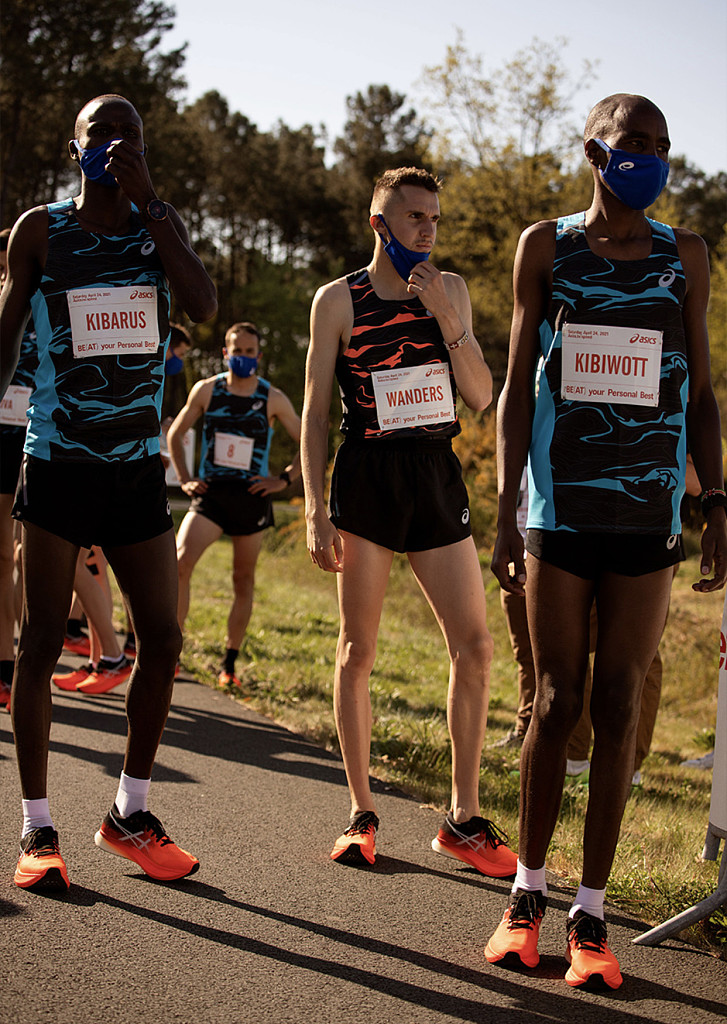
How COVID-19 has changed the Face of Running
Behind the scenes of ASICS’ “BE(AT) Your Personal Best” event.
It’s 8:00 am in the French woodland area of Morton, Domaine du Bois aux Daims, on April 24. Situated almost 300 miles from the country’s capital, a select group of Europe’s top runners, including Julien Wanders and Sondre Nordstad Moen, ponder at the start line of ASICS’ “(BE)AT Your Personal Best”, with some preparing for their first taste of competitive running in almost a year.
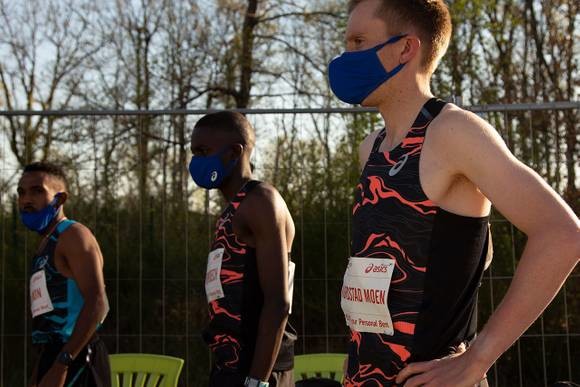
Lanyard-wearing event organizers disguised behind heavy-duty facemasks scurry around frantically with walkie-talkies and clipboards in hand, as a select few press and photographers scout out the best view points along the course.
While, from the outside, it might look like any other pre-race meet, the events past year have made things a lot more complex.
Of course a return to a resemblance of normal doesn’t come without its barriers. Following a number of elite-only events like last year’s London Marathon, a handful of behind-closed-doors championships have taken place across the world, many of which have resulted subsequent positive COVID tests. Such is the worry, more recently with the Tokyo Olympicsjust a few months away, both the Jamaican and U.S. relay teams joined a host of others in withdrawing from the upcoming World Relay Championships.
(Photos by Anne-Sophie Soudoplatoff)
This trial and error approach to the now-successful return of athletics has created many barriers to overcome for an event to go ahead which can be both time-consuming and costly — something of an issue to a sport renowned for its severe underfunding in a vast majority of countries. Such barriers, though, for ASICS(TOKYO:7936.T +0.68%) are seen more as a hurdle — and one they’re keen to clear.
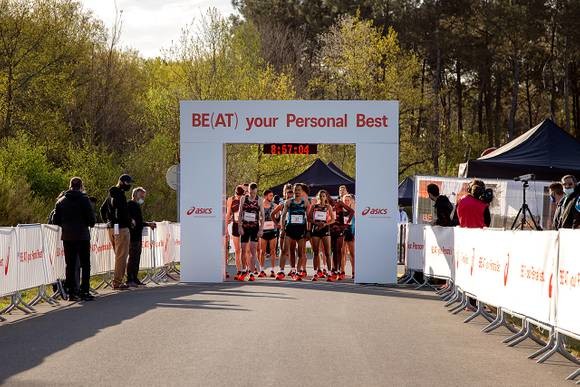
Taking place just West of Paris, in the heart of Nouvelle-Aquitaine, ASICS created a biosecure bubble within a Center Parcs location. Alongside negative COVID tests prior to travelling, upon arrival and before departure, each athlete resided alone in separate accommodation, with food and drink delivered to their doors.
For ASICS itself, the event was more than just another race. Three months in the making (a relatively short lead time in this field), the occasion marked the brand’s return to hosting live events and the follow-up to the launch of its new METASPEED Sky sneaker — ASICS’ answer to the “super shoe”. Equipped with a full-length carbon plate and a design that intends to improve its users overall performance, “(BE)AT Your Personal Best” was not only a test of the runners’ current condition in an Olympic year — but a test run of the sneaker itself too.
The 2.5km course saw runners head out along a wide asphalt path, before looping around a roundabout and back to the start. With near-on idyllic running conditions (a slight breeze, but nothing to be considered a headwind) and months of planning and testing behind them, the scene was finally set.
Pre-event much of the talk was about the current the European 10km and half marathon record-holder Julien Wanders’ planned attempt at attacking the 5km record too, but a bout of pneumonia two weeks prior saw him fall off the pace just over halfway. Instead it was Kenya’s Boniface Kibiwott who grabbed a personal best, winning in 13:24, followed by France’s Felix Bour (13:34) and Etienne Daguinos (13:36) who ran a new French under-23 record.
In the men’s 10km, pacer Hillary Kipkoech cruised to victory to set a new world-lead at 27:35, with Spain’s Jorge Blanco (28:27) and Sondre Nordstad Moen (28:35) almost a minute behind, while Sarah Lahti broke the Swedish women’s 5km record. Rounding things out was Mekdes Woldu who achieved a personal best in the women’s 10km with 31:47, finishing almost 2 minutes in front of Austria’s Julia Mayer (33:35).
In total, 24 of the 34 runners achieved personal best times in Domaine du Bois aux Daims, with one world leading time. And while these numbers and personal accolades are important — as well as the clear quality the METASPEED Sky brings — the real success story of ASICS’ “(BE)AT Your Personal Best” is a glimpse into the world of running’s new normal.
Whether these restrictions stay in place for years to come or they’re simply a temporary measure, its success bodes well for the upcoming Tokyo Olympics and how things might operate on a much larger scale – and suggests that the pandemic won’t keep sport down for long.
(04/27/2021) ⚡AMPby Tayler Willson
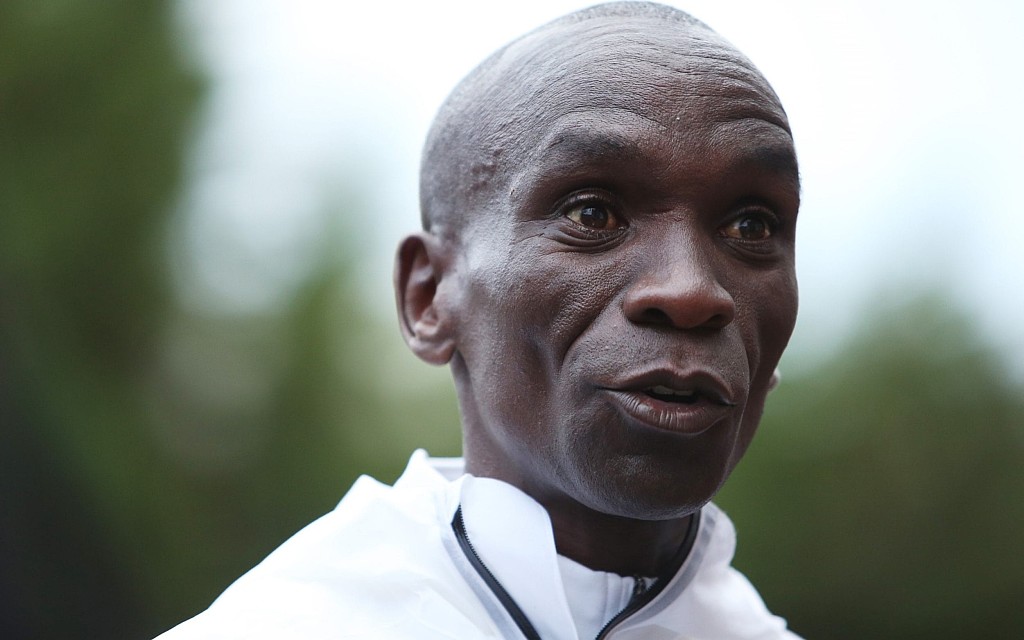
Eliud Kipchoge leads athletes in getting Covid-19 vaccination
Olympic marathon champion Eliud Kipchoge was among Kenyan athletes who received their Covid-19 vaccination at Kenyatta University Referral Hospital on Monday.
Also to receive their AstraZeneca jab were Olympic 1,500m champion Faith Chepngétich, Geoffrey Kamworor, the former World Half marathon champion and record holder and 2019 National Cross Country champion, Amos Kirui.
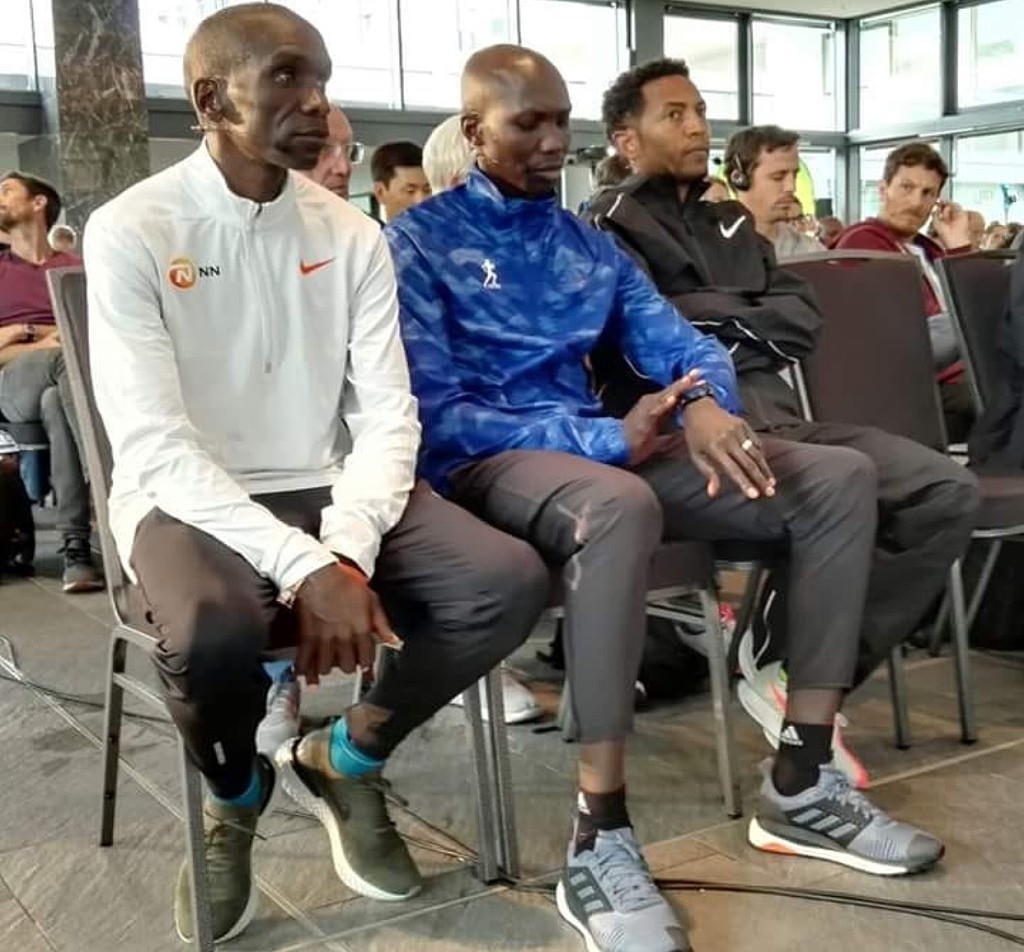
“The only other way we can conquer this pandemic is getting vaccinated, “said Kipchoge, who had just arrived from the Netherlands where he won the NN Mission in 2:04:30 on April 18.
“Taking the vaccination is also one way of helping us prepare for the Tokyo Olympics well since that Covid-19 vaccination certificate could in days to come be the ticket for the Games,” said Kipchoge, the marathon world record holder.
Cabinet Secretary for Sports Amina Mohammed oversaw the launch of the vaccination exercise for Team Kenya for the Olympic Games at Kasarani on April 8.
Amina said her ministry in collaboration with their health counterparts and Nairobi Metropolitan Services had secured 3,500 Covid-19 vaccines for Team Kenya going for the Tokyo Olympic Games and other teams for international assignments.
Amina disclosed that it’s their target to inoculate a total of 3,500 athletes, coaches, officials and athlete handlers across the country not only for Tokyo 2020 Olympic and Paralympic Games but other events.
Those who have benefited from the vaccine are all personnel working on Safari Rally, World Athletics Under-20 Championships in athletics, World Athletics Continental Tour’s Kip Keino Classic and the 2021 Rugby Africa U20 Barthes Trophy.
Others are Sports Kenya, the Kenya Academy of Sports, Anti-Doping Agency of Kenya, Sports, Arts and Social Development Fund and all Ministry of Sports frontline staffers.
(04/27/2021) ⚡AMPby Ayumba Ayodi
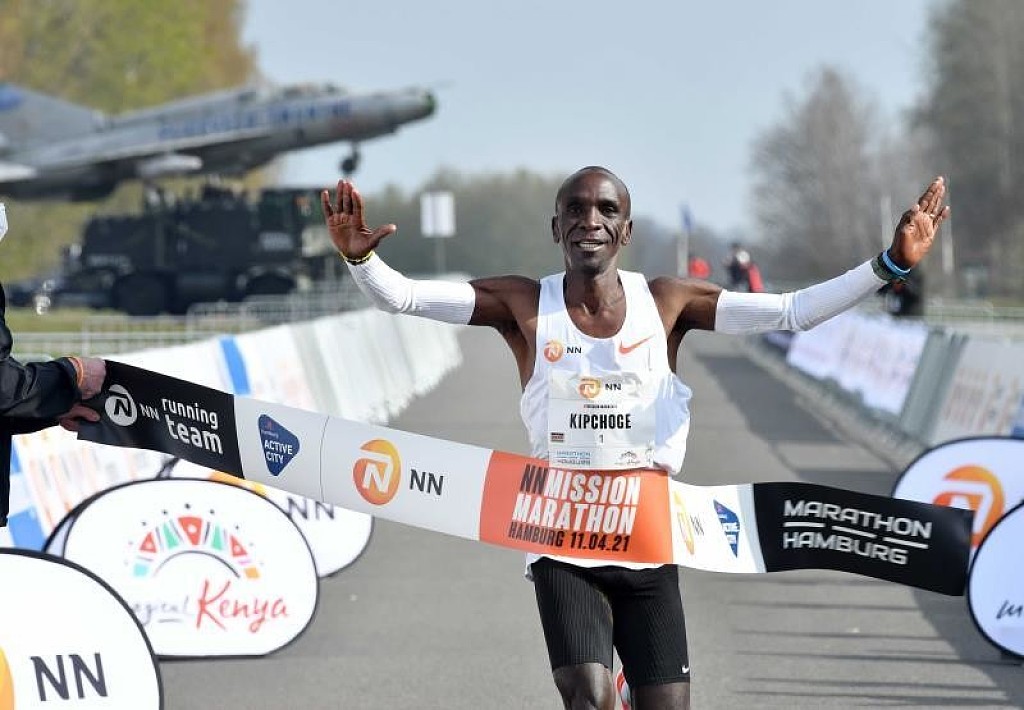
Kipchoge now focuses on Olympics after comeback win in Twente
World men's marathon record holder, Eliud Kipchoge has set his sights on a second Olympic gold medal at the Tokyo Olympics after a win at the NN Mission Marathon in Enschede in the Netherlands.
Kipchoge was competing for the first time after a disappointing eighth-place finish at the London Marathon in October last year.
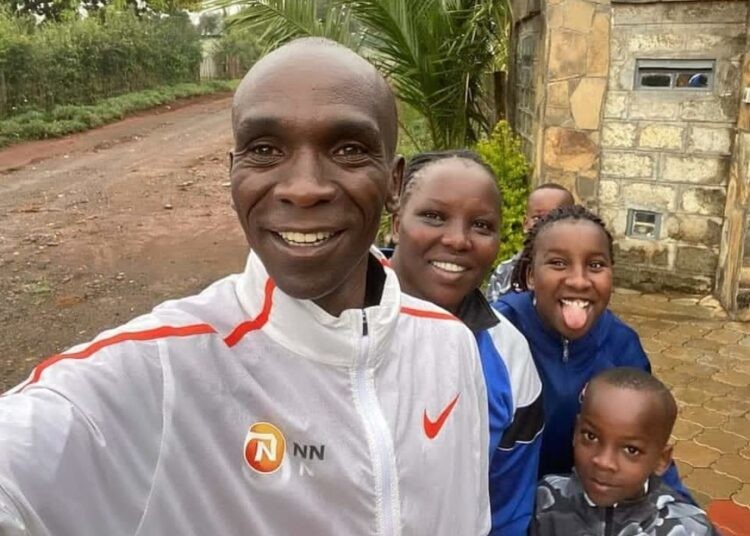
"This was a real test and quite the preparation ahead of Tokyo. The focus is now on the Olympics. I will consult with the coach and technical team to see what next in preparing for Tokyo," Kipchoge said.
The Olympics marathon champion clocked 2:04:30 to finish first ahead of training partner, Jonathan Korir, who timed second in 2:06:40 with Eritrean Goitom Kifle , third in 2:08:00.
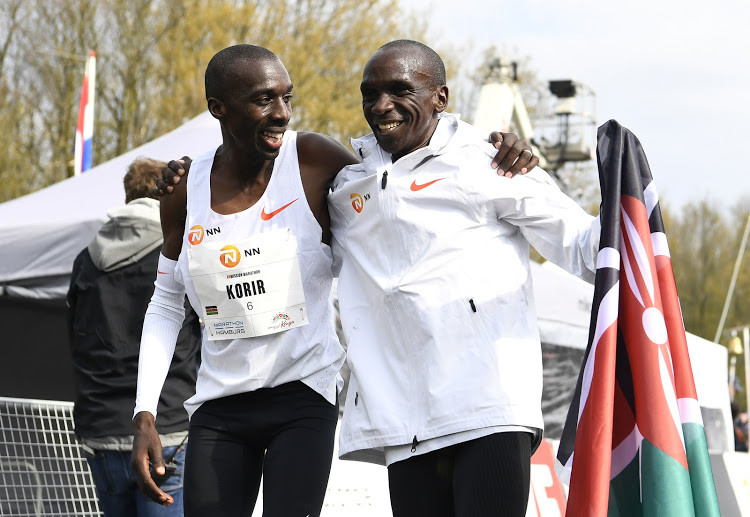
Kipchoge said he is feeling confident and relieved following the win after ear problems and a hamstring complication denied him a third London Marathon at last year's event in which Ethiopia Shura Kitata clinched first place.
"Yes indeed, it is mission accomplished. For the organisers to hold this event successfully under the current circumstances, it is a great achievement and I thank them for that. The conditions were good although it was a bit windy. However, there were other athletes who ran under the same condition and so I can't complain too much about that. I do not always want to complain," he said.
Kipchoge is part of the four-man team named by Athletics Kenya to lead the country's charge for a podium finish at the Olympics.
Other members of the team include Boston Marathon champion Lawrence Cherono, Vincent Kipchumba and world marathon bronze medalist Amos Kipruto.
(04/20/2021) ⚡AMPby Omondi Onyatta
Tokyo 2020 Olympic Games
Fifty-six years after having organized the Olympic Games, the Japanese capital will be hosting a Summer edition for the second time, originally scheduled from July 24 to August 9, 2020, the games were postponed due to coronavirus outbreak, the postponed Tokyo Olympics will be held from July 23 to August 8 in 2021, according to the International Olympic Committee decision. ...
more...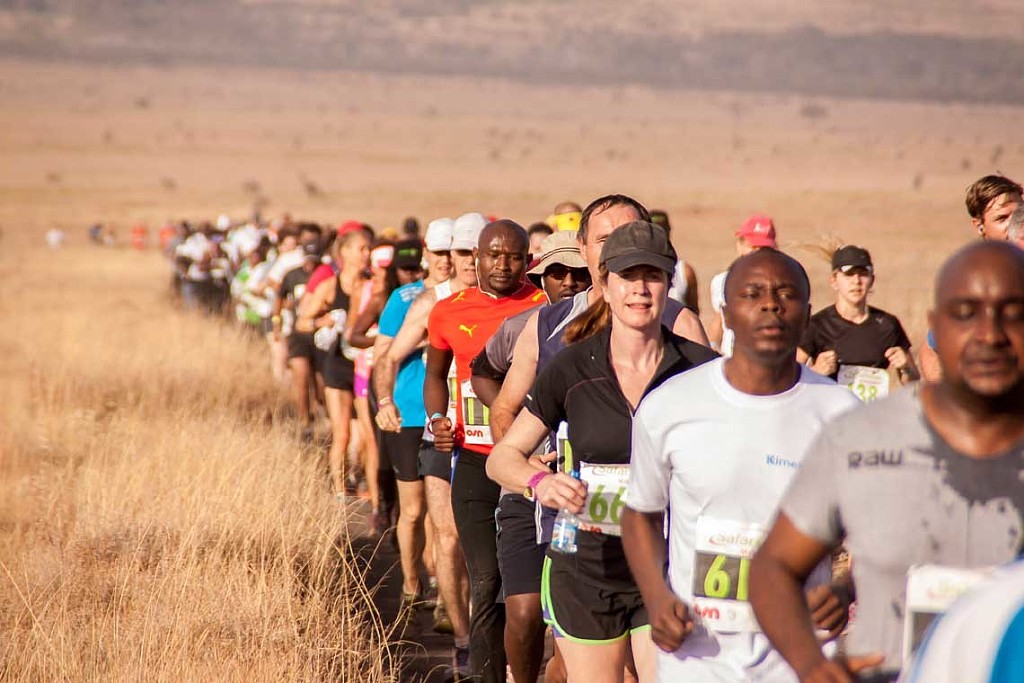
Virtual Lewa Safari Marathon Is Back
Dubbed one of the top 10 marathons on the planet by Runner’s World, and supported by the likes of HRH The Duke of Cambridge, Deborah Meaden and Eliud Kipchoge, the Lewa Safari Marathon is one of Kenya’s major sporting events.
The annual race usually takes place in the Lewa Wildlife Conservancy, which means participants get the opportunity to run through one of Africa’s most spectacular protected areas, sharing the trails with several with some of Kenya’s most iconic and critically endangered wildlife: Grevy’s Zebra, Lions, Elephants and Giraffes. This year, however, it’s going virtual…
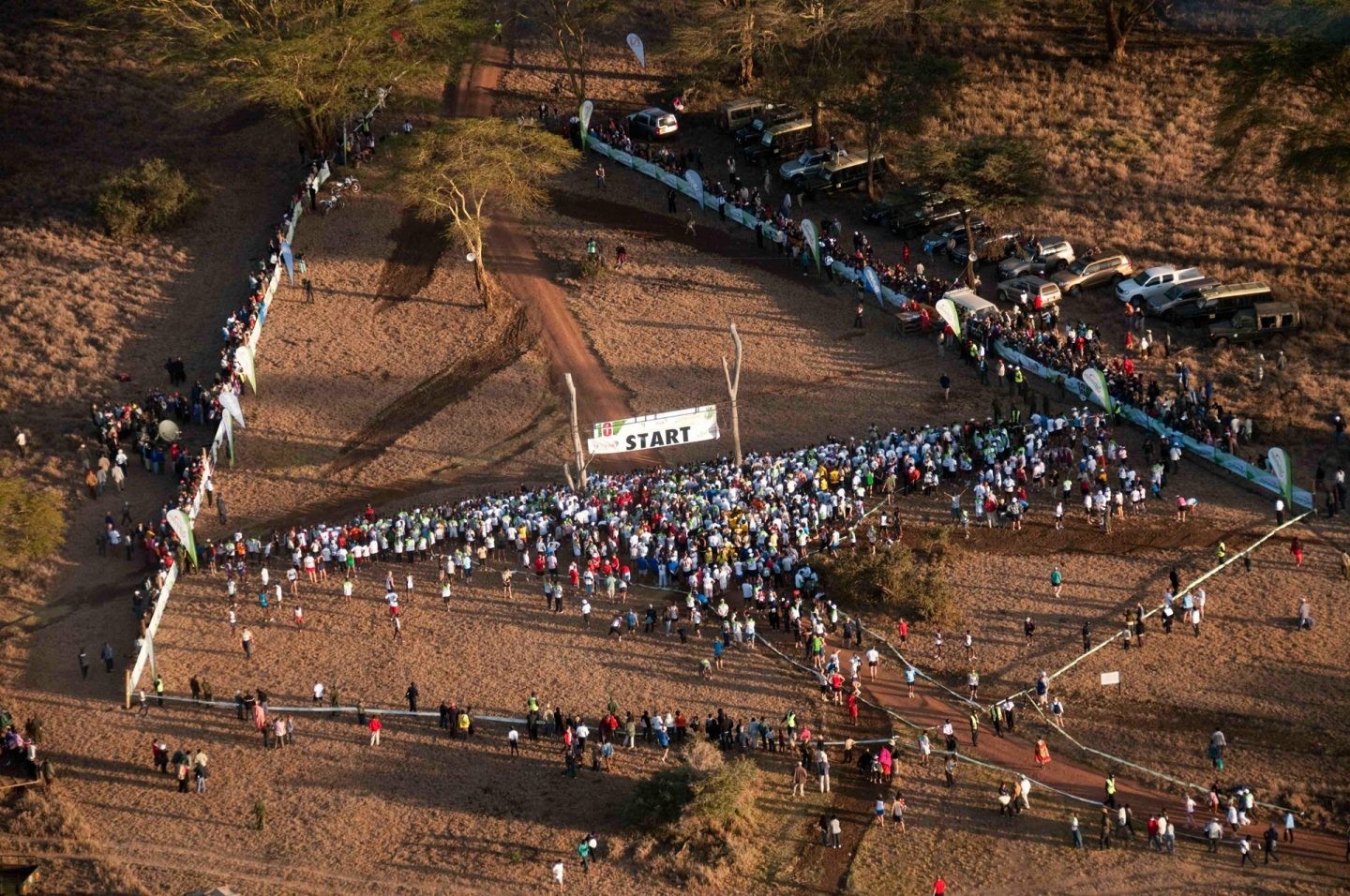
Held in partnership with Lewa Wildlife Conservancy and Wildlife Conservation charity, Tusk, the unique marathon has raised millions of dollars to fund wildlife conservation and community development in Kenya over the last 21 years.
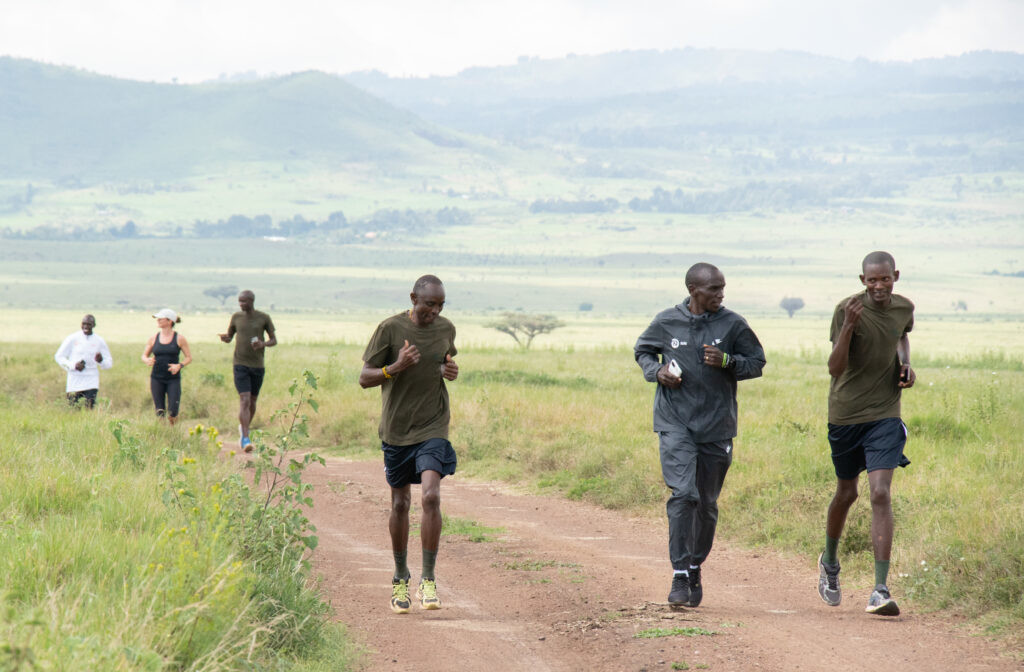
From recovering Kenya’s black rhino population from the brink of extinction, protecting the world’s critically endangered Grevy’s zebra, and providing healthcare, water and improved infrastructure for communities, to supporting Lewa education programmes, the funds this marathon raises are invaluable to thousands across the country.
However, these projects now face perhaps their greatest challenge to date: mounting a recovery plan in the face of a social and economic crises, which could last for many years to come.
So, in an attempt to help rebuild Kenya’s most vulnerable communities and wildlife, this year’s Lewa Safari Marathon is going virtual on the 26th of June. Lewa and their co-organisers are encouraging runners everywhere to lace up their shoes and join the challenge. Whether it’s 5km, 10km, 21km or even 42km, each stride is a step in the right direction. Entry is free, but all runners are encouraged to donate whatever they can.
“The Lewa Safari Marathon is no longer just an event in people’s dairy, it’s an event in their hearts. It has become part of our culture,” says John Kinoti, Lewa Wildlife Conservancy’s Community Development Manager. “Even though this year we are separated physically, we are still connected emotionally. The Virtual Lewa Safari Marathon is about continuing to transmit this culture of togetherness and inclusion, and help to transform lives.”
Last year, HRH Duke of Cambridge – Tusk’s Royal Patron – took on the virtual challenge. He said: “This is not a race. There is no stopwatch. This is our way of showing Africa’s conservation community that we’re all in this together.”
Marathon world record holder, Eliud Kipchoge EGH, is also a great advocate of the Lewa Safari Marathon and will once again be running this year: “To me, a running world is a happy world,” says Eliud. “Last year, you joined me in a global running movement to support the guardians of wildlife and our natural heritage. This year, we have another opportunity to rally around my Kenyan brothers and sisters as they continue to feel the negative effects of the pandemic. Please join me on the 26th of June, wherever you are in the world, to run The Virtual Lewa Safari Marathon.“
(04/20/2021) ⚡AMPby Andy Devaney

Safaricom Lewa Marathon
The first and most distinctive is that it is run on a wildlife conservancy, which is also a UNESCO world heritage site. The Lewa Wildlife Conservancy is home to a number of endangered and threatened species- and also a catalyst for community development for its neighboring communities. For the past 17 years, funds raised from the marathon have gone...
more...