

Running News Daily
Running News Daily is edited by Bob Anderson and team. Send your news items to bob@mybestruns.com Advertising opportunities available.
Index to Daily Posts · Sign Up For Updates · Run The World Feed
Articles tagged #My Run
Today's Running News



Addis Ababa Erupts In Colour As Record 60,000 Runners Take Over The Streets! Yismaw Dilu And Yenewa Nibret Crowned Champions At The 2026 Great Ethiopian Run!
Addis Ababa became the centre of the running world on Sunday, November 22, as a record-breaking 60,000 participants flooded the streets of Ethiopia's capital for the 2026 Great Ethiopian Run, transforming the city into a spectacular celebration of athletics, culture and togetherness.

In an extraordinary display of mass participation, runners of different ages, abilities and nationalities came together for Africa's biggest road race, turning the iconic 10-kilometre event into a sea of colour, excitement and national pride. The 2026 edition also welcomed approximately 200 international participants representing 25 countries, further strengthening the race's reputation as a global celebration of running.

While the streets were filled with thousands of recreational runners and enthusiastic supporters, the elite competitions produced two outstanding champions. Yismaw Dilu claimed victory in the men's 10km race, finishing ahead of Takele Mose, who secured second place, while Roba Merga completed the podium in third.

Dilu's triumph was particularly significant as he successfully defended the title he won last year, securing back-to-back victories at one of Africa's most celebrated road-running events. His consecutive triumphs underlined his consistency and ability to deliver on the big stage, further cementing his place among the leading competitors in the race.
In the women's competition, Yenewa Nibret emerged victorious to claim the 2026 title, with Almaz Yohannes finishing second and Alemenesh Tilaye taking third place. Her victory added another memorable chapter to the women's competition and ensured a successful day for Ethiopia's homegrown distance-running talent.
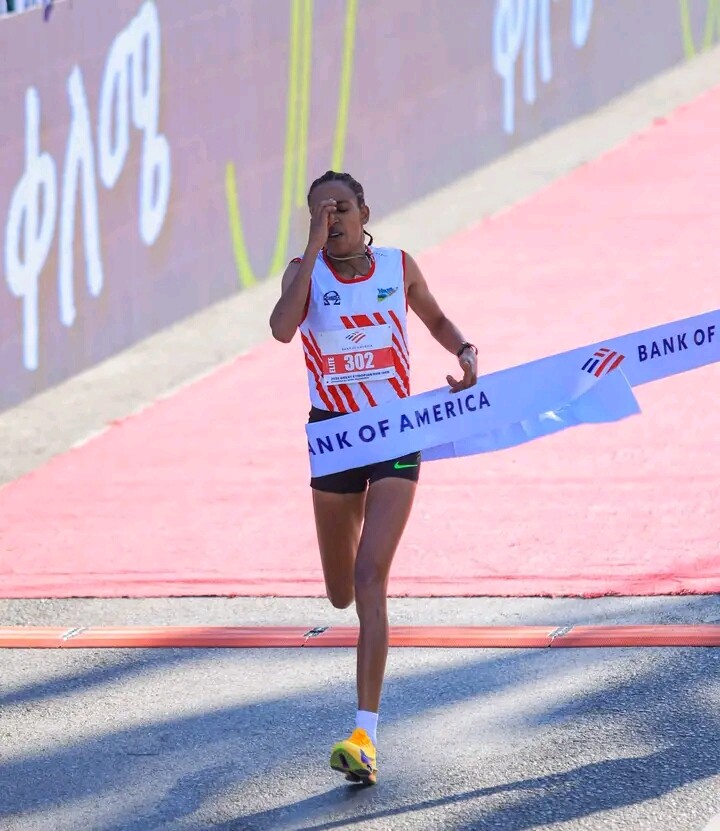
Presented by Bank of America, the 2026 Great Ethiopian Run once again demonstrated the extraordinary power of sport to unite people. From elite athletes chasing victory to recreational runners embracing the experience, participants shared the same streets and celebrated their love for running under the event's vibrant theme, "My Run, My Color."
Beyond the podium celebrations, the significance of the Great Ethiopian Run extends far beyond the finishing line. It is an event that brings together an entire nation, offering professional athletes, emerging talents, recreational runners and international visitors an opportunity to share the same streets and celebrate the universal spirit of sport.
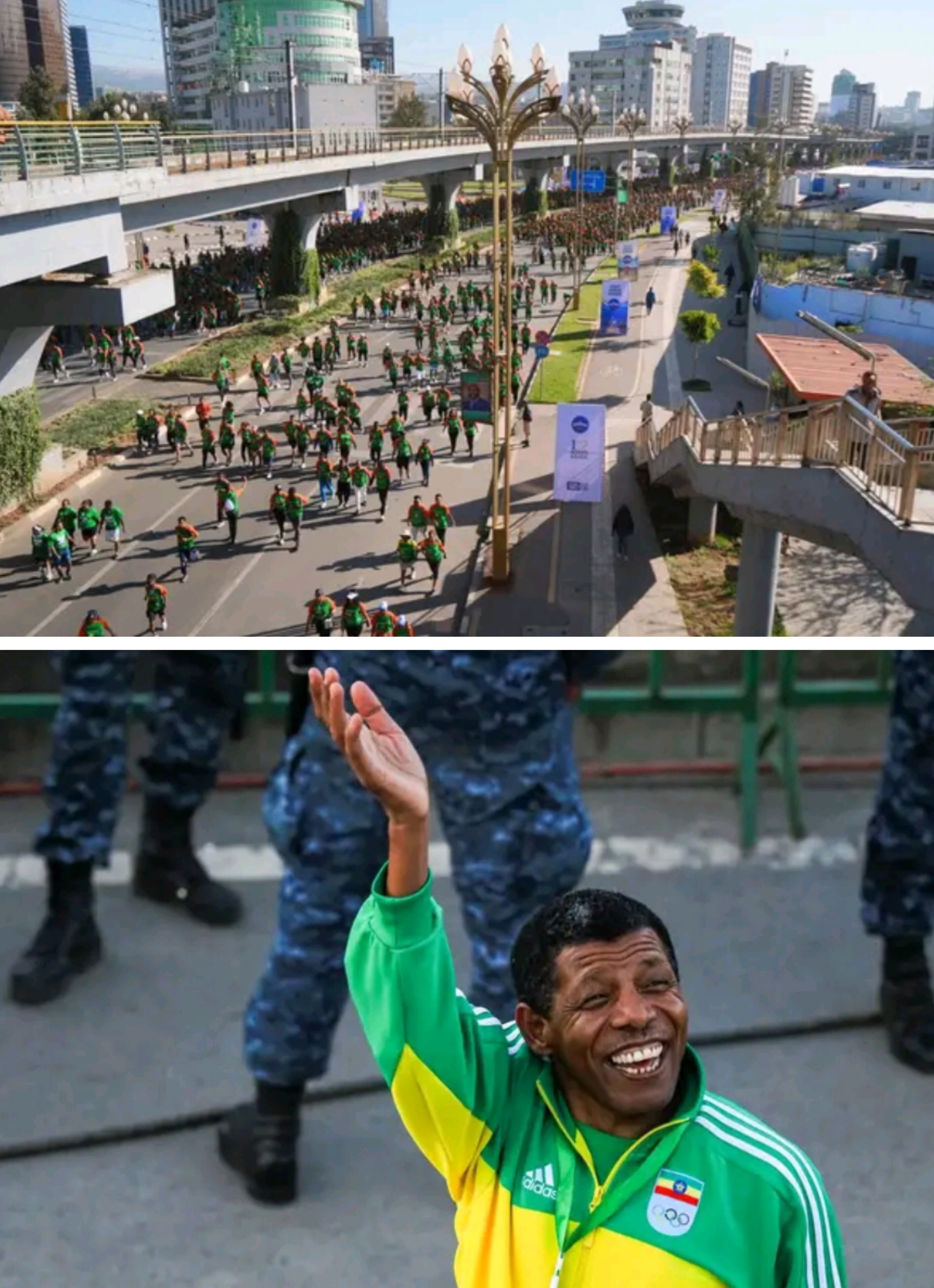
Founded in 2001 by Ethiopian distance-running legend Haile Gebrselassie, the event has grown into one of Africa's most recognisable road-running spectacles. What began as an ambitious initiative to bring people together through running has developed into a major international attraction, showcasing Ethiopia's extraordinary relationship with athletics.
Ethiopia's reputation as a global distance-running powerhouse provides the perfect backdrop for the event. A country that has produced generations of Olympic champions, world-record holders and legendary marathoners continues to use running as a platform for inspiring young athletes and strengthening its sporting identity.
This year's record participation of 60,000 runners represents another remarkable milestone in the event's history, highlighting the growing popularity of mass-participation running and the enduring appeal of the Great Ethiopian Run.
With Yismaw Dilu successfully defending his men's crown, Yenewa Nibret claiming the women's title and tens of thousands of participants creating unforgettable memories across the capital, Addis Ababa once again delivered a spectacular celebration of Ethiopian athletics and African running culture. The 2026 edition was not just about who crossed the finish line first, but also about the unity, colour and shared passion that continue to make the Great Ethiopian Run an extraordinary sporting occasion.
by Erick Cheruiyot for My Best Runs.
Login to leave a comment

the Great ethiopian 10k run
The Great Ethiopian Run is an annual 10-kilometerroad runningevent which takes place inAddis Ababa,Ethiopia. The competition was first envisioned by neighbors Ethiopian runnerHaile Gebrselassie, Peter Middlebrook and Abi Masefield in late October 2000, following Haile's return from the2000 Summer Olympics. The 10,000 entries for the first edition quickly sold out and other people unofficially joined in the race without...
more...
Two Continents, Two Extraordinary Endurance Feats: Hartmuth and Sanchez Rewrite Trail Running History in a Single Day
July 25, 2026, will be remembered as one of the most remarkable days in the history of endurance running. Thousands of kilometers apart, on two vastly different landscapes, two athletes delivered performances that redefined what many believed possible. Germany's Katharina Hartmuth and France's Aurélien Sanchez each erased long-standing benchmarks, proving that the limits of human endurance continue to be pushed further than ever before.
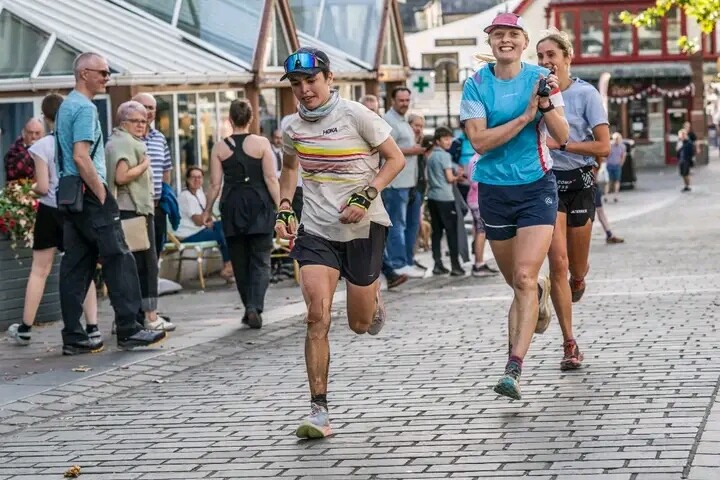
In the rugged mountains of England's Lake District, Hartmuth produced a breathtaking performance on the legendary Bob Graham Round, one of the world's most demanding mountain-running challenges. Covering the iconic circuit of 42 fells with approximately 8,200 metres of relentless climbing, she completed the route in an astonishing 14 hours, 11 minutes and 58 seconds, slicing an incredible 22 minutes from the women's record established by Beth Pascall in 2020.
The Bob Graham Round is far more than a race against the clock. It is a brutal examination of endurance, mountain skills, navigation, and mental resilience. Participants must conquer steep ascents, technical descents, unpredictable terrain, and the notoriously unforgiving weather of the Lake District. The challenge is only officially completed if runners return to the historic George Fisher shop in Keswick within 24 hours, making every second count until the very end.
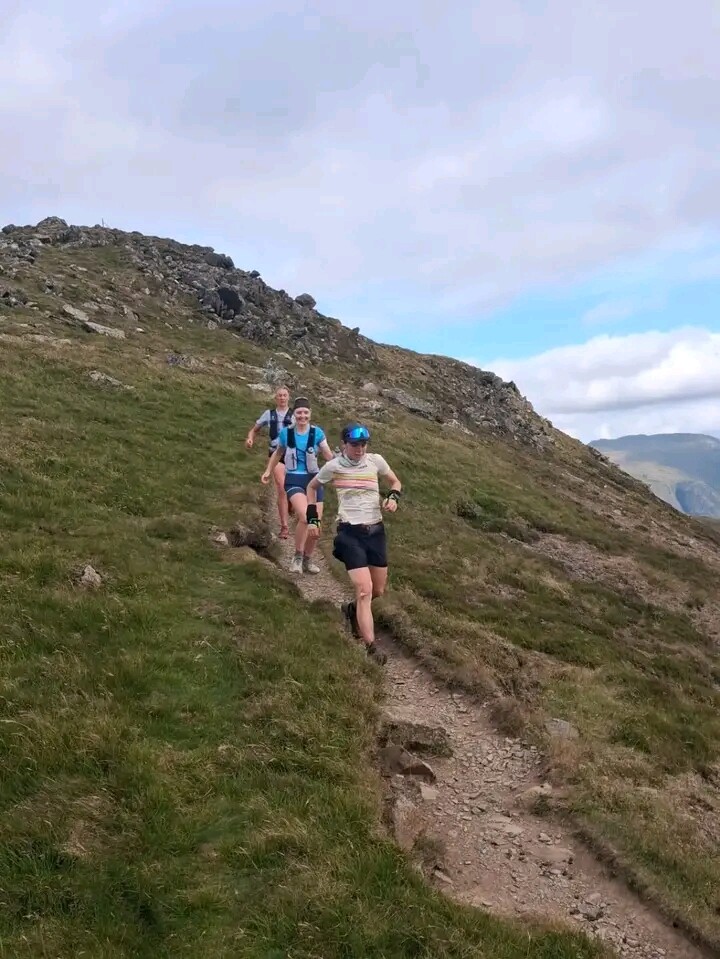
After crossing the finish, Hartmuth described the achievement as "the coolest day of my running life," a fitting reflection on a performance that instantly secured her place among the greatest mountain runners ever to tackle the historic route.
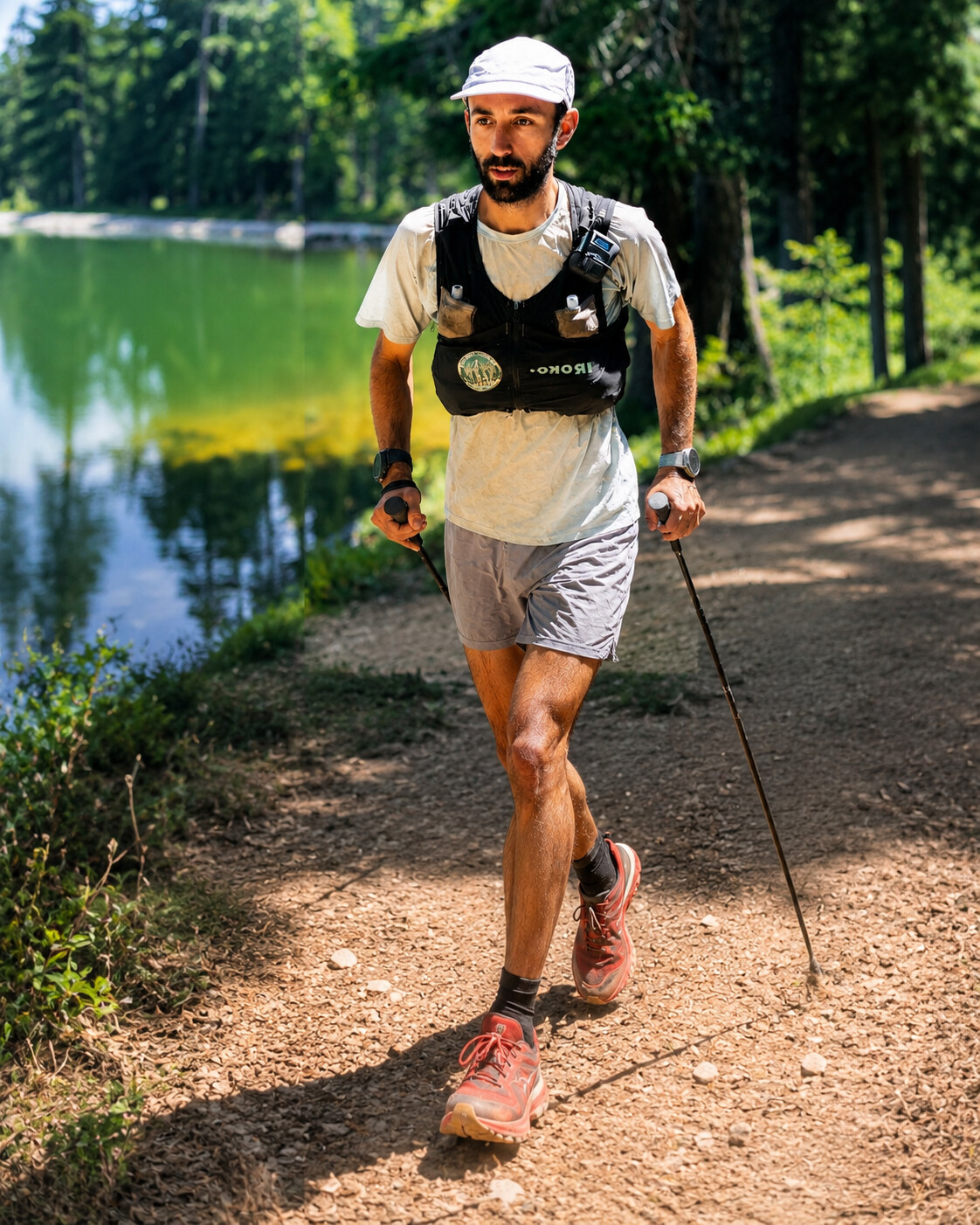
While Hartmuth was celebrating in northern England, another historic effort was unfolding on the opposite side of the globe.
French ultrarunner Aurélien Sanchez completed one of the most demanding point-to-point adventures in trail running by setting a new fastest known time (FKT) on the iconic Pacific Crest Trail. Beginning at the Mexican border on June 8, Sanchez covered the trail's staggering 4,270-kilometre length before reaching the Canadian border in 45 days, 20 hours and 15 minutes.
His remarkable journey eclipsed the previous record, set by Belgium's Karel Sabbe in 2023, by 16 hours. The achievement was anything but straightforward. Sanchez reached the halfway point trailing Sabbe's pace, but an extraordinary surge over the second half saw him average nearly 95 kilometres every day, allowing him to overturn the deficit and finish with a new record.
The Pacific Crest Trail presents one of the toughest endurance challenges on Earth, stretching through scorching deserts, the rugged Sierra Nevada, and the volcanic peaks of the Cascade Range. Covering such diverse and unforgiving terrain demands not only exceptional physical strength but also unwavering determination, meticulous planning, and the ability to endure weeks of relentless fatigue.
Although Sanchez's FKT is still awaiting official verification, Hartmuth's Bob Graham Round record has already been ratified, cementing her place in mountain-running history.
The two achievements could hardly have been more different. One unfolded over a single day across steep British fells, while the other spanned nearly seven weeks across an entire continent. Yet both performances shared the same defining qualities—extraordinary courage, relentless perseverance, and an unwavering belief that records exist to be broken.
On one unforgettable Friday, two athletes, separated by oceans but united by ambition, reminded the running world that endurance has no boundaries and history can be rewritten in more than one place at the same time.
by Erick Cheruiyot for My Best Runs.
Login to leave a comment
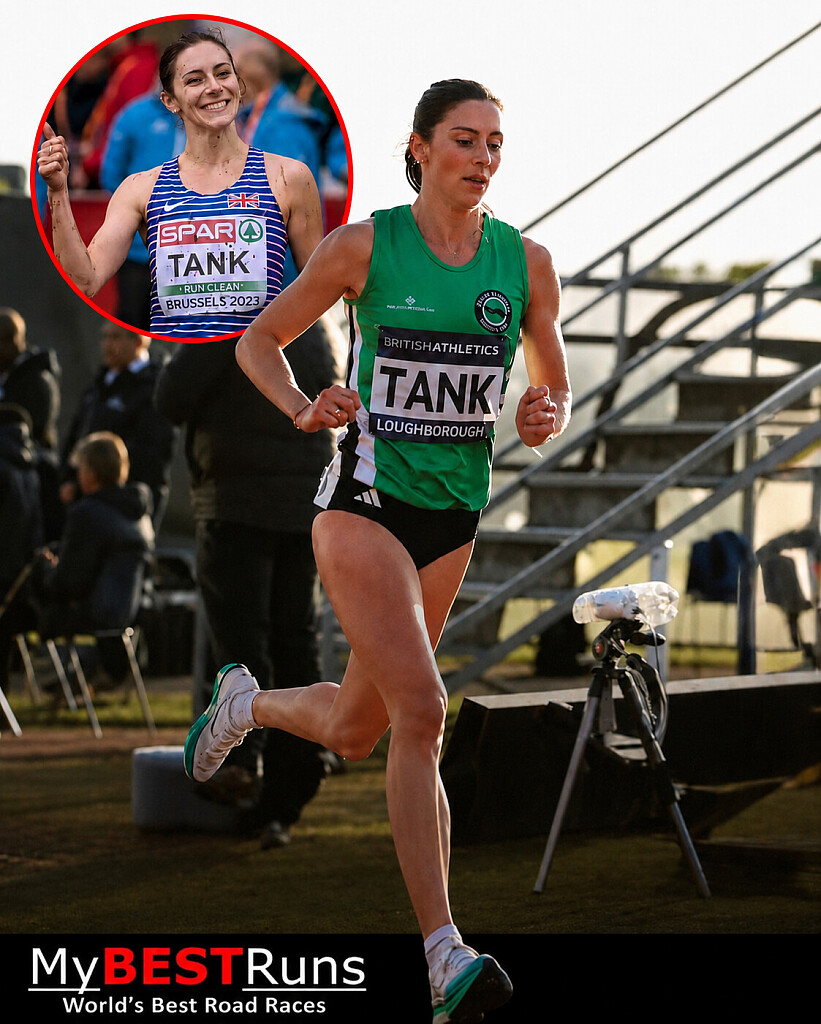
From eBay Shoes to the Commonwealth Games: Self-Coached Poppy Tank's Extraordinary Journey to the England Team
In a sport where many elite athletes benefit from professional coaches, lucrative sponsorships, sports science support, and cutting-edge equipment, Poppy Tank has reached the international stage by relying on little more than determination, discipline, and belief in herself.
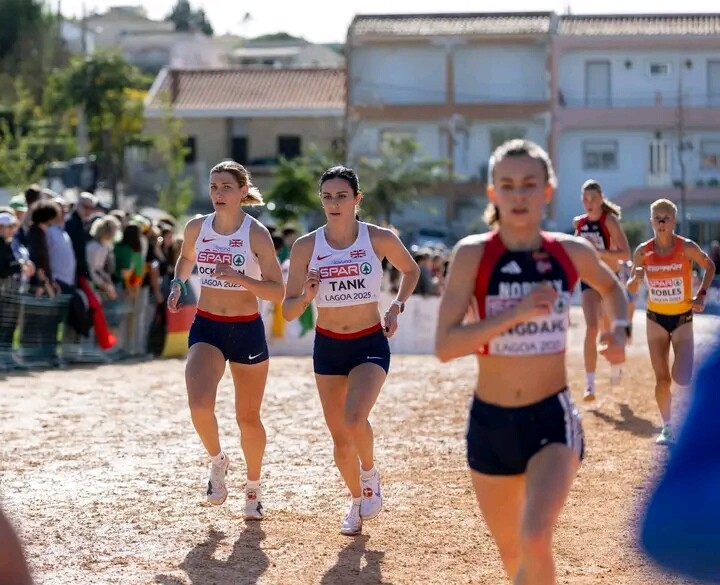
Later this month, the 28-year-old from Plymouth will proudly represent England in the women's 10,000m at the Commonwealth Games in Glasgow. It will be her first appearance at a major track championships, making the achievement even more remarkable considering she has no central funding, no shoe contract, and no dedicated support team.
Tank's journey is one of resilience and self-reliance. Her Instagram biography sums it up in just three words: Self-coached. Unsponsored. Distance runner. Behind those words lies years of sacrifice, careful planning, and relentless hard work.

Unlike many of her international rivals, Tank manages every aspect of her athletic career herself. She designs her own training, plans her race schedules, monitors her recovery, and finances virtually every part of her pursuit of excellence.
"I'm self-funded so every spare bit of cash I have I'm spending it on training camps, buying shoes, buying kit, paying for races and accommodation," Tank told BBC Radio Devon. "I have to be very savvy with my shoes. I buy them often off eBay on discount. So I'm very, very good at finding ways of saving money."
While many Commonwealth-level athletes receive free equipment from major sports brands, Tank has become an expert at stretching every pound, purchasing discounted racing shoes online and carefully managing every expense to keep her dream alive.
Her rise through British athletics has been built steadily over several seasons. Tank first established herself as one of Britain's finest endurance runners in cross country, helping Great Britain win team gold at the 2023 European Cross Country Championships before contributing to a team silver medal the following year. She also claimed the British 3,000m steeplechase title in 2023 and represented Great Britain at the World Cross Country Championships, demonstrating her versatility across different disciplines.
Despite those achievements, a place at a major international track championships remained elusive until this summer, when England selected her for the Commonwealth Games.
Away from the track, Tank balances elite sport with an equally demanding academic career. She is pursuing a PhD at the University of Birmingham, where her research focuses on developing better ways to recycle medical implants. Her daily routine often begins with a demanding 12-mile training session before lunchtime, followed by an hour and a half in the gym, all while spending long hours in the laboratory preparing and analysing research samples.
"My supervisor is incredibly supportive of my running," she explained. "But ultimately I still have to go and do the studying."
Her Commonwealth Games selection is the reward for outstanding form during the 2026 season. Tank produced a lifetime best to finish second behind Izzy Fry at the British 10,000m Championships in Loughborough in May, before lowering that mark again just weeks later with an impressive 32:04.36 performance in the Netherlands.
Those performances secured her place on England's team, where she and Fry will both make their Commonwealth Games debuts in the women's 10,000m.
Although Tank heads to Glasgow ranked in the second half of the field on paper, she has never allowed rankings to define her ambitions. Time and again, she has shown an ability to rise to the occasion when it matters most, and she intends to do exactly that on one of the biggest stages of her career.
"It is so much hard work, I couldn't even begin to detail how many hours has gone into this," Tank said. "But when things like this happen where you get selected for your goals, it really, really makes it so worth it."
Her story serves as a powerful reminder that success is not always built on financial backing or world-class facilities. Sometimes, it is forged through unwavering commitment, countless unseen hours of hard work, and the courage to believe in your own process.
When Poppy Tank steps onto the track in Glasgow wearing the England vest, she will represent far more than her country. She will embody perseverance, independence, and the belief that even without sponsorships, professional coaching, or expensive support systems, extraordinary dreams can still become reality.
by Erick Cheruiyot for My Best Runs.
Login to leave a comment
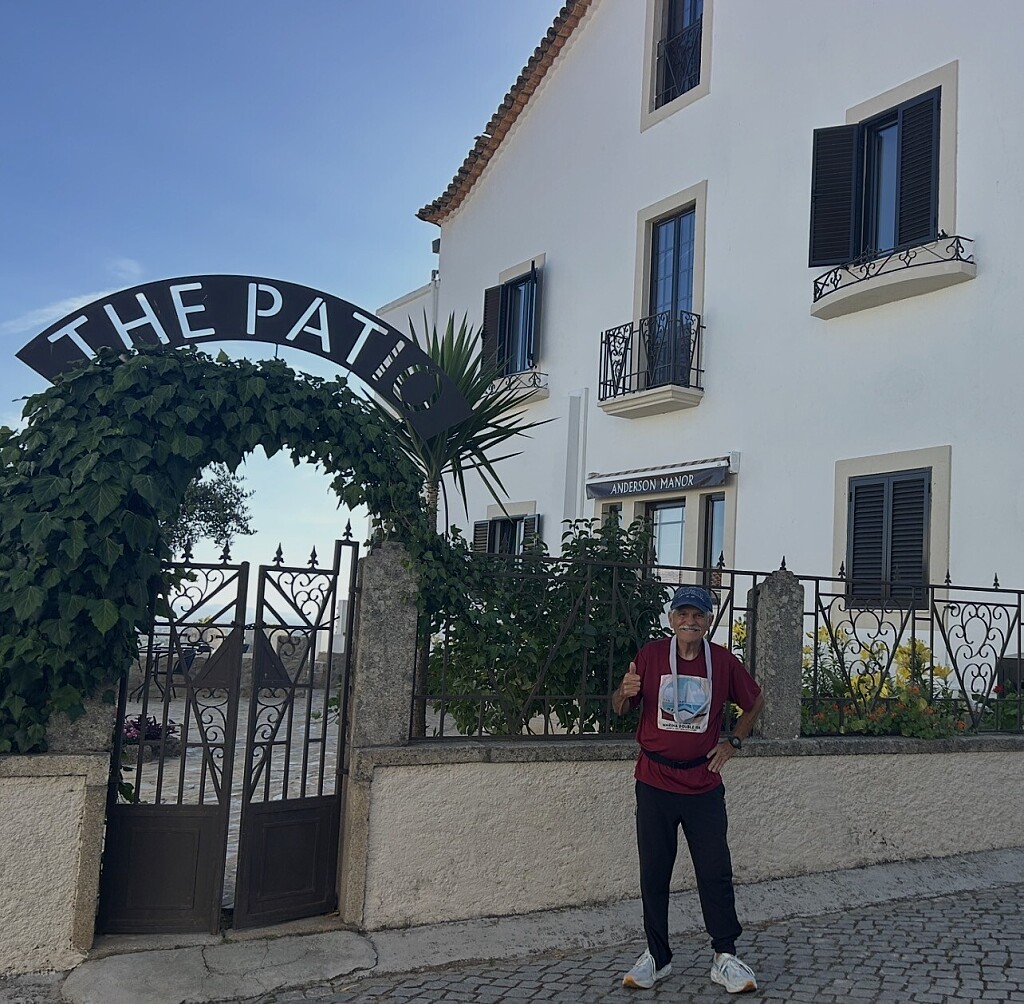
At 78 Recovering From a Dislocated Shoulder I Created My Own 100K Challenge
MONFORTE DA BEIRA, PORTUGAL — Three weeks after dislocating my shoulder in a fall shortly after arriving in Lisbon, I found myself looking for a goal that would keep me moving while allowing my body time to heal.
The fall resulted in a trip to the hospital and weeks of recovery with my arm in a sling. While it limited my running, it did not take away my desire to stay active.
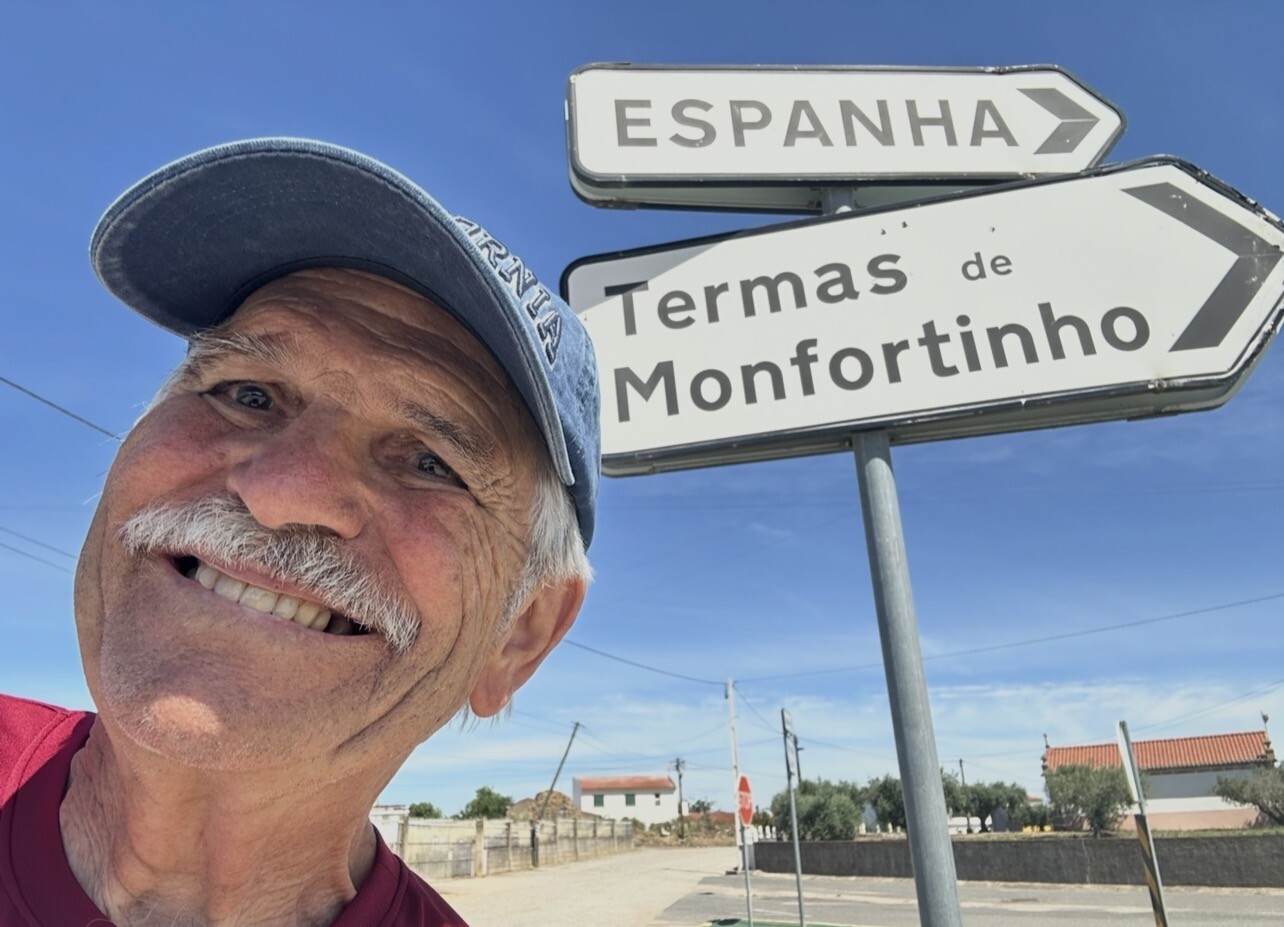
The inspiration for my next goal came from an unexpected source. Anderson Manor recently hosted a group of nine women from Australia whose passion is hiking and trekking. Watching their enthusiasm for exploring the countryside surrounding Monforte da Beira reminded me how much there is to discover on foot. Their visit inspired me to create a challenge of my own.
I called it my Portugal Villages 100K Challenge.
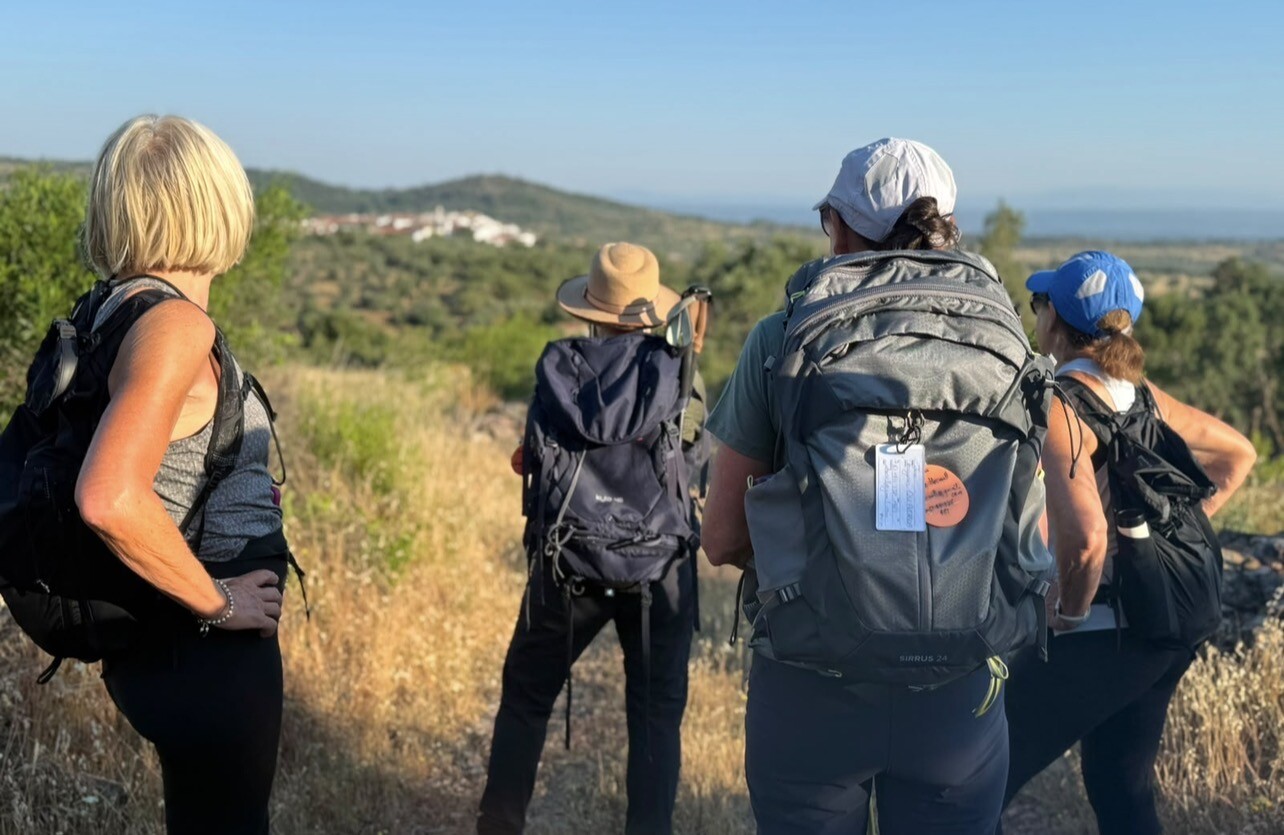
The concept was simple: cover 100 kilometers on foot while connecting the villages surrounding Anderson Manor, including Monforte da Beira, Cegonhas, Malpica do Tejo, and Ladoeiro.
Unlike an organized race, there was no entry fee, no aid stations, and no spectators. But there was a finish line—100 kilometers. My goal was to reach it under my own power while exploring some of the most beautiful countryside in central Portugal.
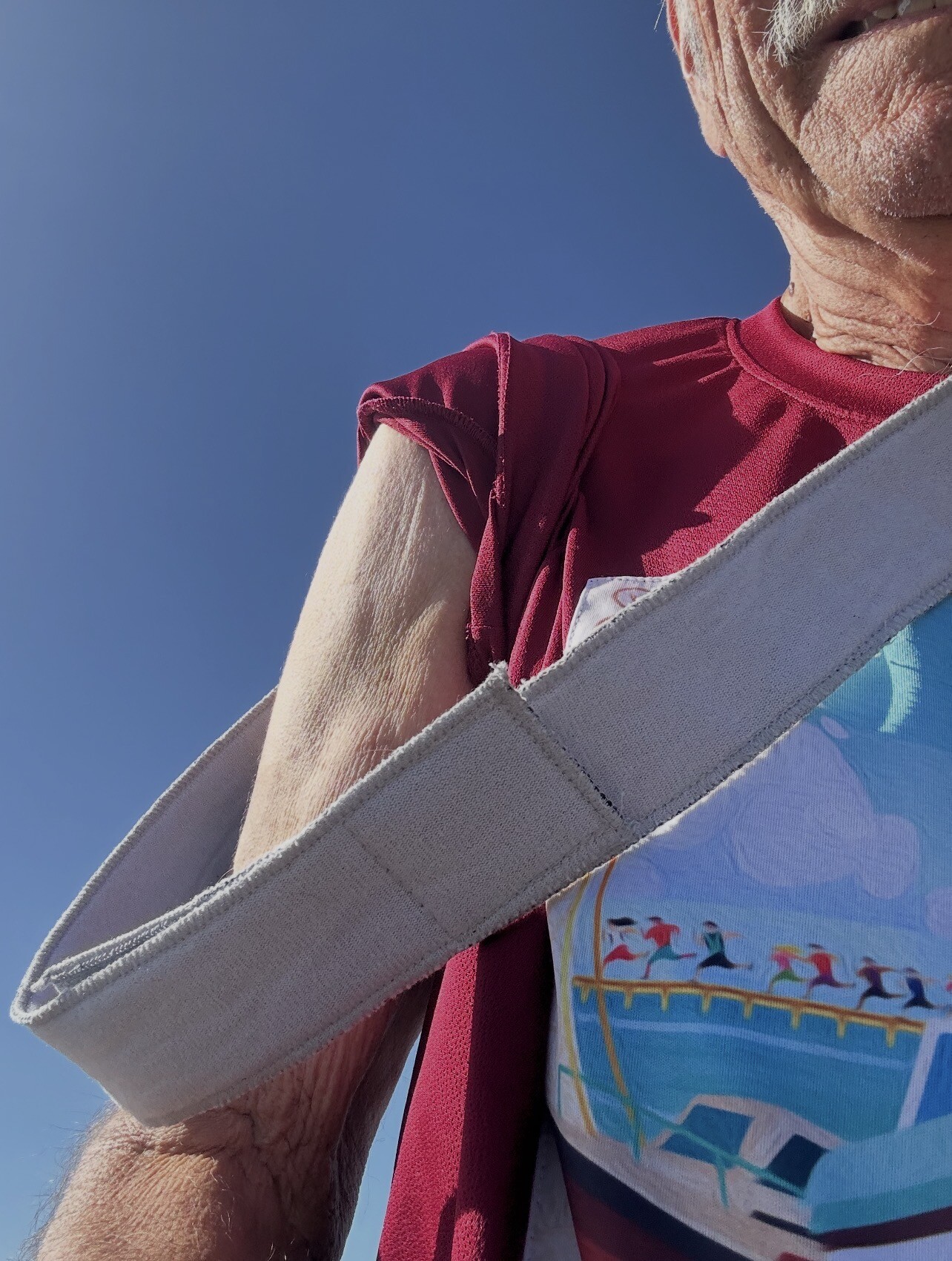
Running was limited because of my shoulder situation. Much of the journey was completed while wearing a sling. Some sections were covered at what I call a shuffle, roughly 16 to 17 minutes per mile, while others were completed at a brisk walking pace. The objective was never speed. The objective was forward progress.
An event is an event.
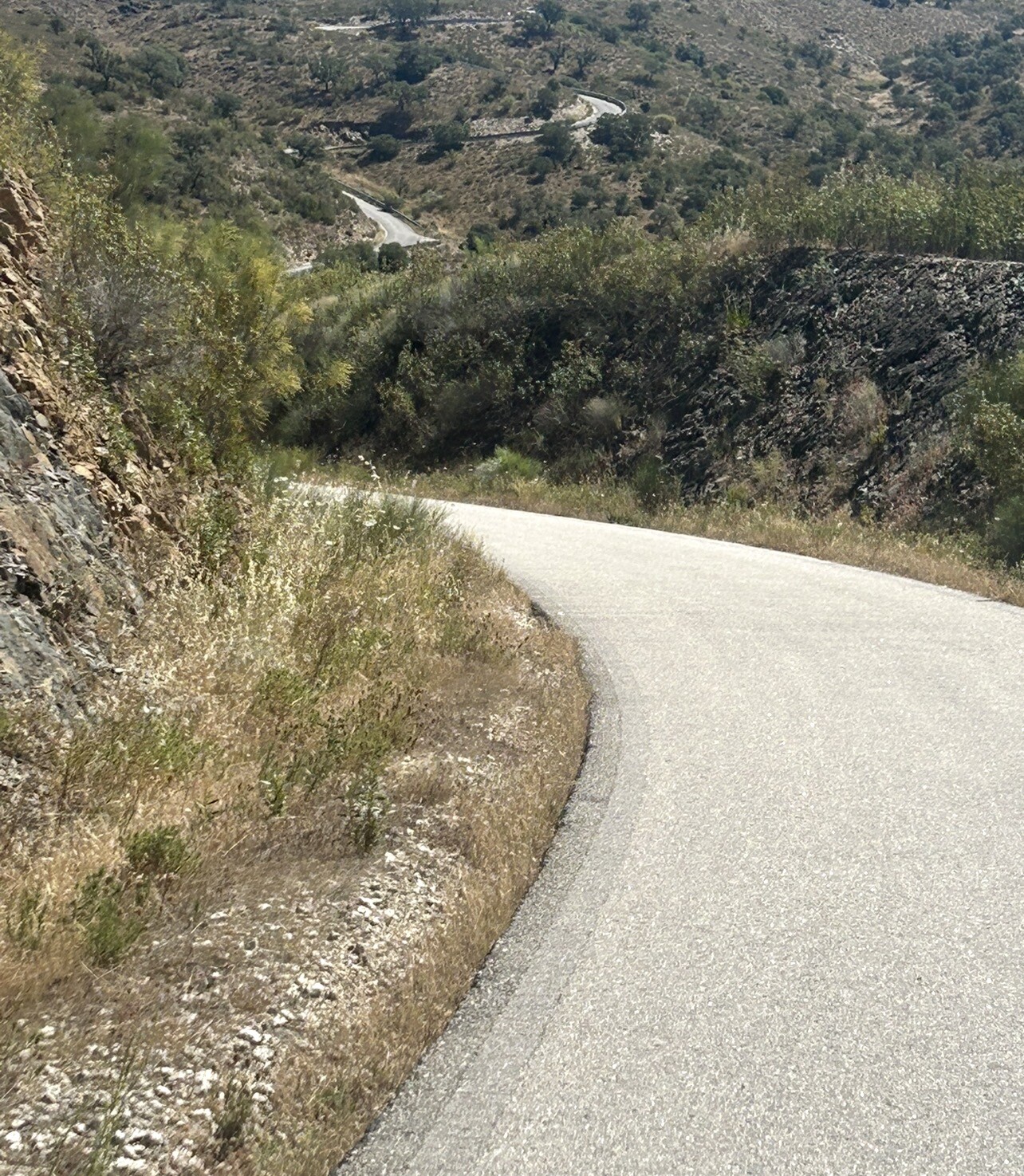
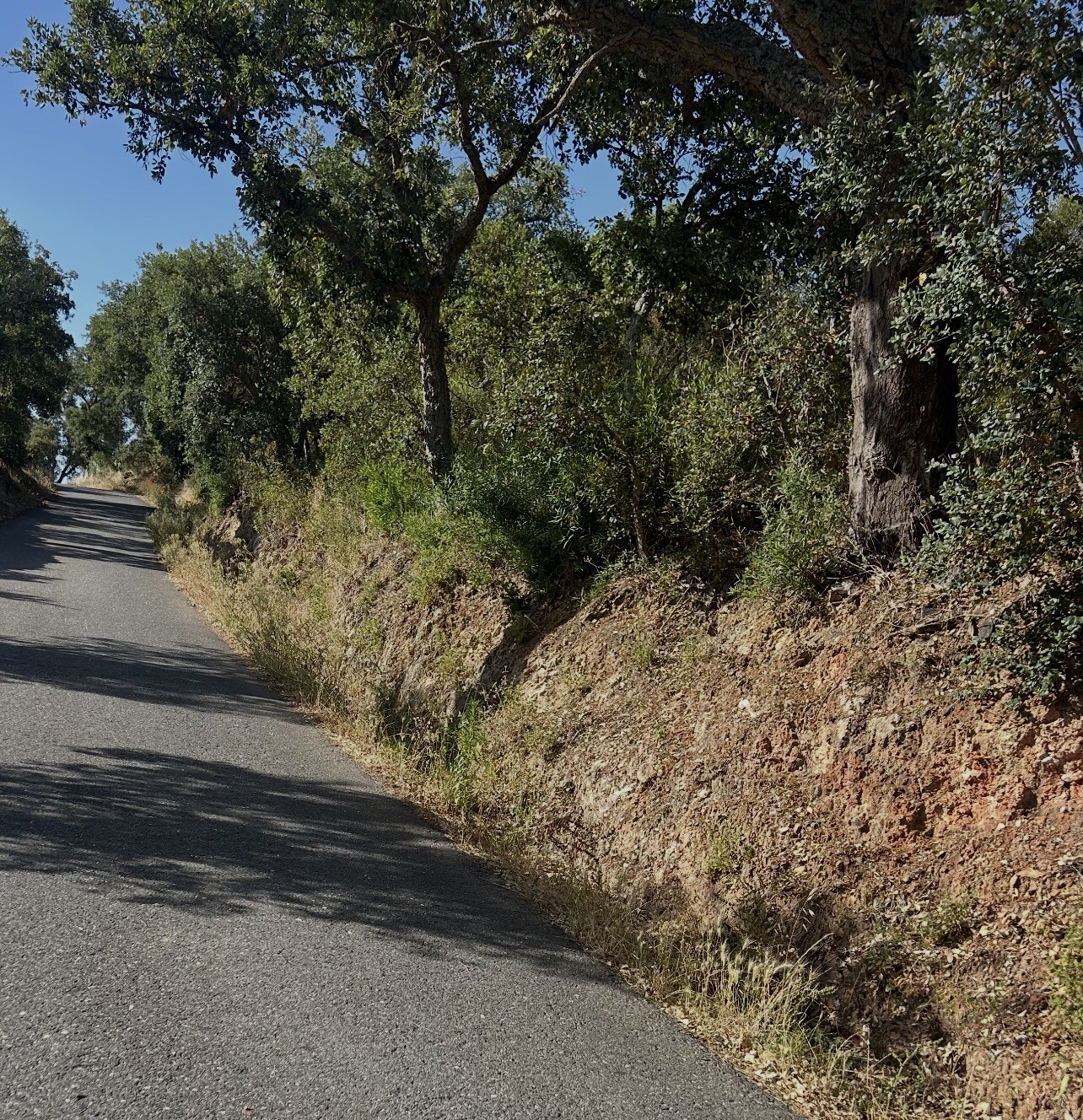
Over six consecutive days, I traveled through olive groves, farmland, quiet village streets, and winding country roads. One day included my familiar Cactus Loop, a 5.25-mile route near Anderson Manor. The remaining days were primarily point-to-point journeys linking neighboring villages.
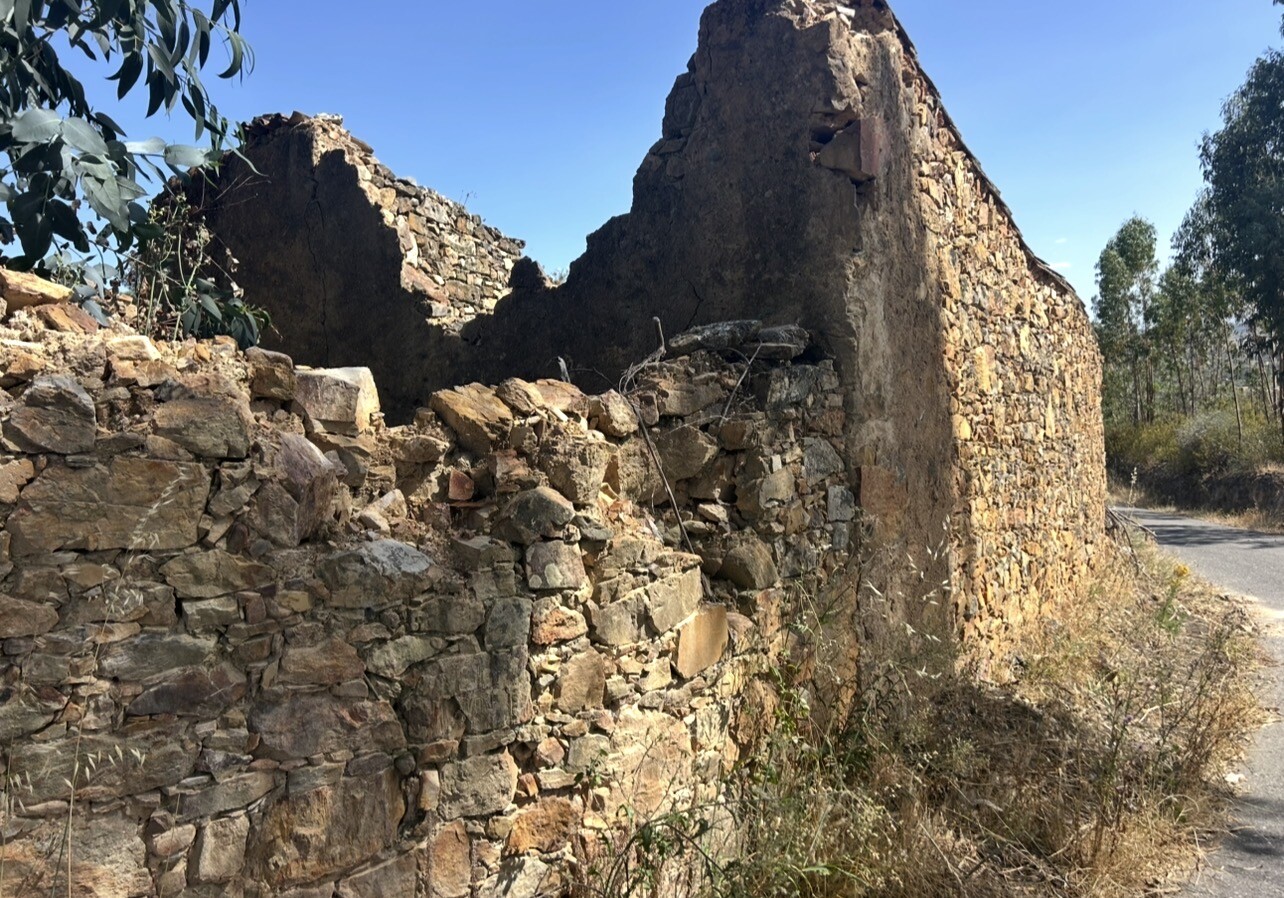
What struck me most was the beauty and simplicity of Portugal’s rural interior. There were long stretches where the only sounds came from birds, sheep, and the occasional tractor. The landscape remains largely unchanged from generations past, offering a glimpse of a slower and more peaceful way of life.

The final kilometers came on the road to Ladoeiro. Reaching 100 kilometers was my finish line. There was no official clock, no banner stretched across the road, and no cheering crowd, but the finish line was real nonetheless. Today, on a quiet road approaching Ladoeiro, my GPS showed that I had reached the 100-kilometer mark. The distance had been covered, the challenge was complete, and the finish line had been reached.
At age 78, I continue to believe that fitness is not defined by speed. Some days we run. Some days we walk. Some days we do a little of both. What matters is maintaining the habit of movement and continuing to challenge ourselves regardless of age or circumstance.
This personal challenge reminded me that setbacks do not have to stop us. They simply require us to adapt. While my shoulder continues to heal, completing this 100K journey proved that meaningful goals can still be achieved even when conditions are less than ideal.
I also came away with an even greater appreciation for the villages that surround Anderson Manor and for the simple joy of exploring them under my own power. Sometimes inspiration comes from elite athletes. Sometimes it comes from a group of travelers from Australia who simply love to walk and discover new places.
The roads connecting Monforte da Beira, Cegonhas, Malpica do Tejo, and Ladoeiro are still there. I suspect I will be traveling them again soon.
by Bob Anderson
Login to leave a comment
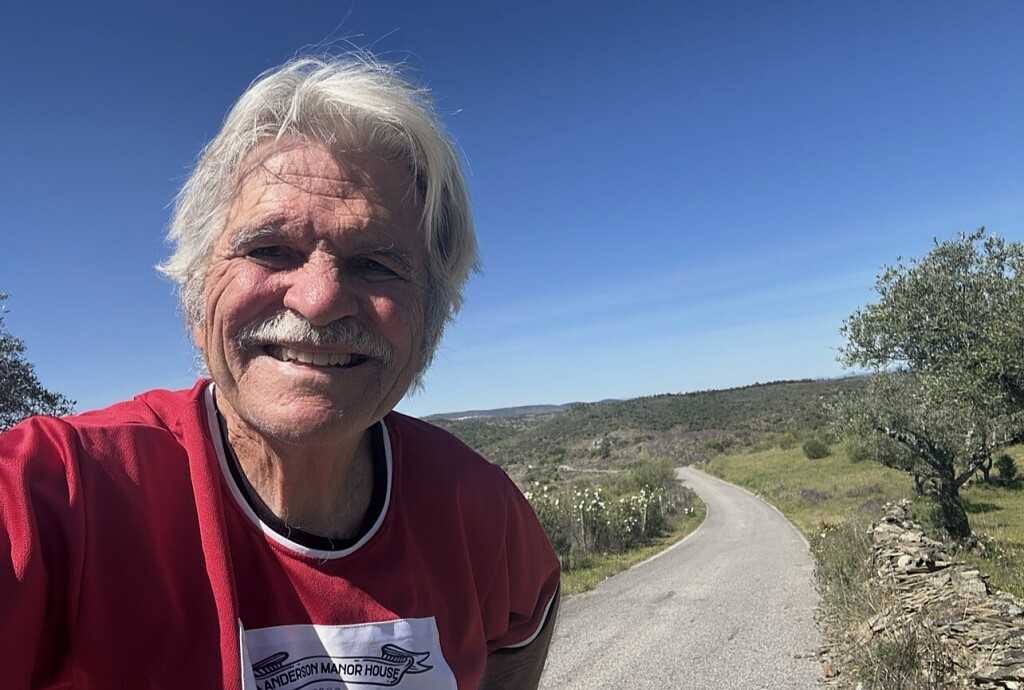
Finding My Way Back One Step at a Time
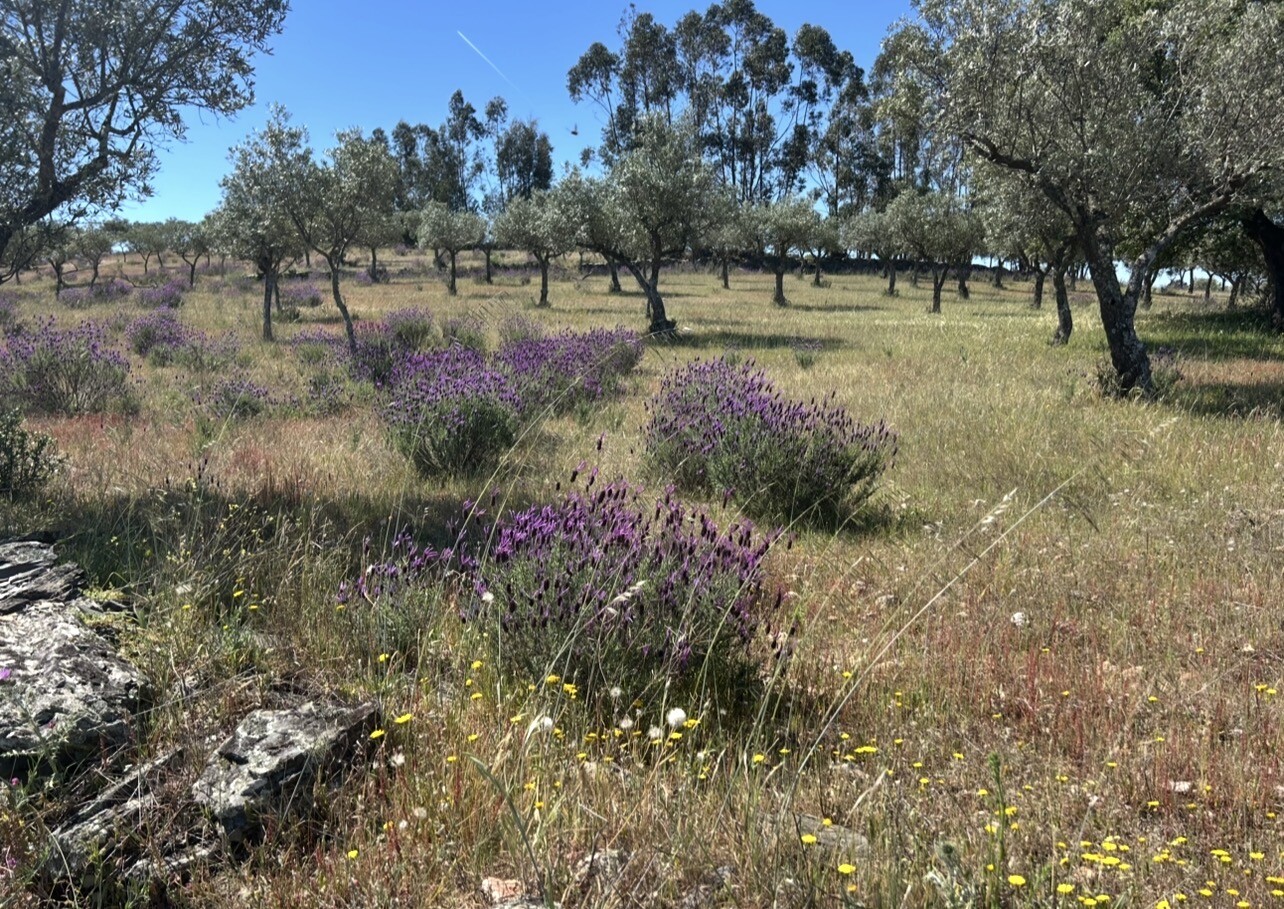
At our Anderson Manor (second photo) in central Portugal, I recently started something I didn’t plan.
I call it the “Four Day Monforte and Beyond Marathon.”
Not a race.

Not a timed effort.
Just a personal journey—one that has come to mean more to me than most runs I’ve done.
The route connects three nearby villages that are part of daily life here:
• Cegonhas — 6.53 miles
• Malpica — 8.12 miles
• Ladoeiro — 7.2 miles
That’s 21.85 miles point to point.
To complete the marathon distance, I will finish on Tuesday with a 4.35-mile loop heading out toward a local cheese farm, turning around after passing hundreds of cactus plants—one of those unexpected sights you only find in this part of Portugal.
Total: 26.2 miles.
But I’m doing it over four days.
Where I Am Now
After two days, I’ve completed 14.65 miles.
Ahead of me:
• Monday — the run to Ladoeiro
• Tuesday — I will be finishing up this special marathon with the final 4.35-mile cactus loop
Two days. About 11 miles to go.
My plan on Tuesday is to wear lighter running shoes, just to test the water. I’ve always liked how running feels smoother and more natural in lighter shoes, so this will be another small step forward—listening to what my body tells me.

More Than Just Miles
This run is about something much deeper.
On June 15, 2025, I had a situation with my knee. For at least 30 days, I could hardly walk. Going up and down stairs was difficult. I was mostly limping, and there were times I could barely cover a mile in less than 40 minutes.
But I kept moving.
At my age—or any age—we must keep moving if possible.
Since then, I’ve averaged about 40 miles a week—mostly walking, some running. It’s been steady, but uncertain.
There were moments when I started to think my running days might be over. I started my running journey Feb 16, 1962 and I have never taken this amount of time off ever.
But I didn’t want to believe that.
So I didn’t.
I kept moving. I kept walking. And walking is good—very good. But it’s not running.
Today, during my second leg, I ran 6.8 miles, and just like that, I felt it again—that feeling only running gives you.
I started my running journey Feb 16, 1962 and I have never taken this amount of time off ever. It is good to be back.
A Step at a Time
I’m not rushing this.
It’s one step at a time.
One day at a time.
Even now, I know things can change quickly. But I’m heading in the direction I want to go.
This will be the first time since my knee situation that I’ve covered the marathon distance—even spread out over days.
And I needed this.
The Moments Along the Way
One of the best parts of this journey has nothing to do with the running itself.
It’s been sharing these moments with my wife, Catherine Anderson.
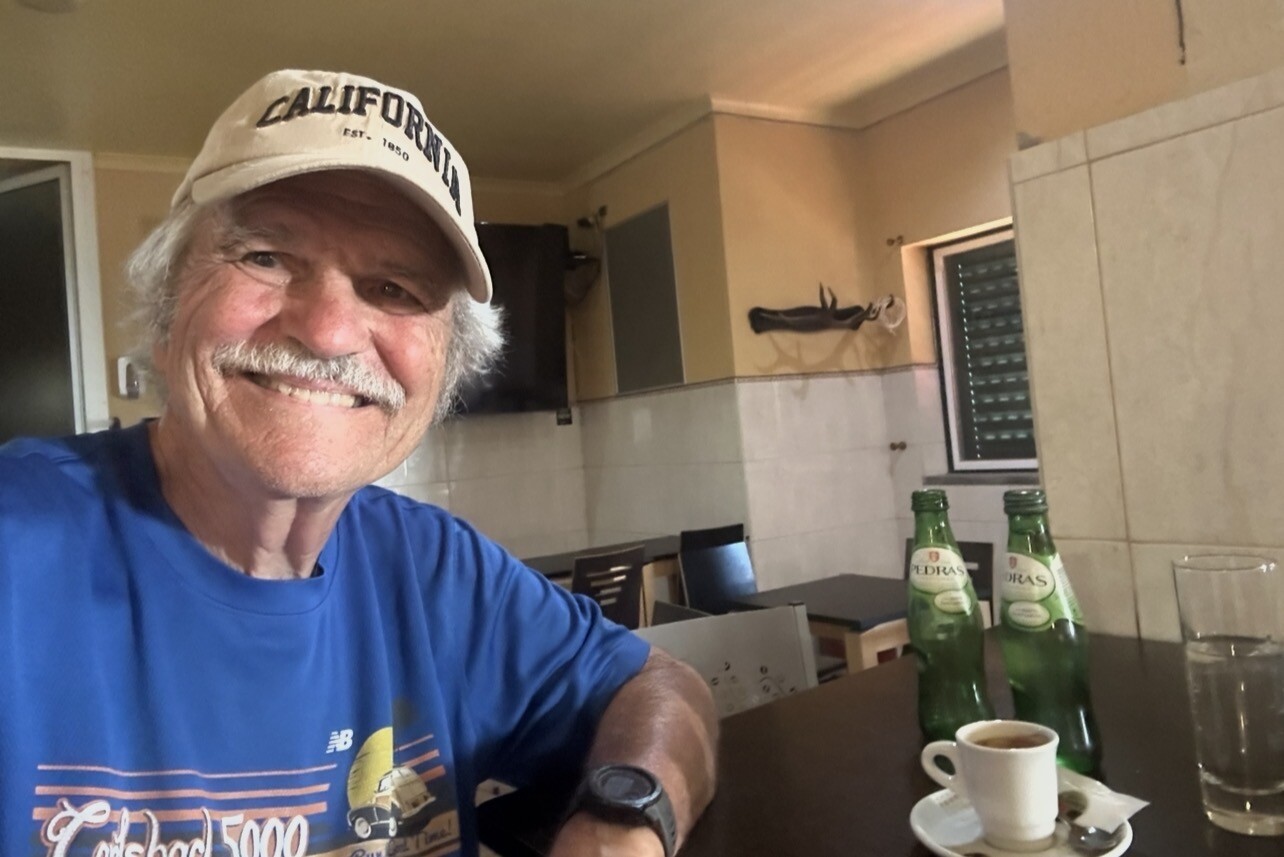
She meets me in these small villages, and we take time to sit down—have a coffee, drink some water, and just enjoy where we are.
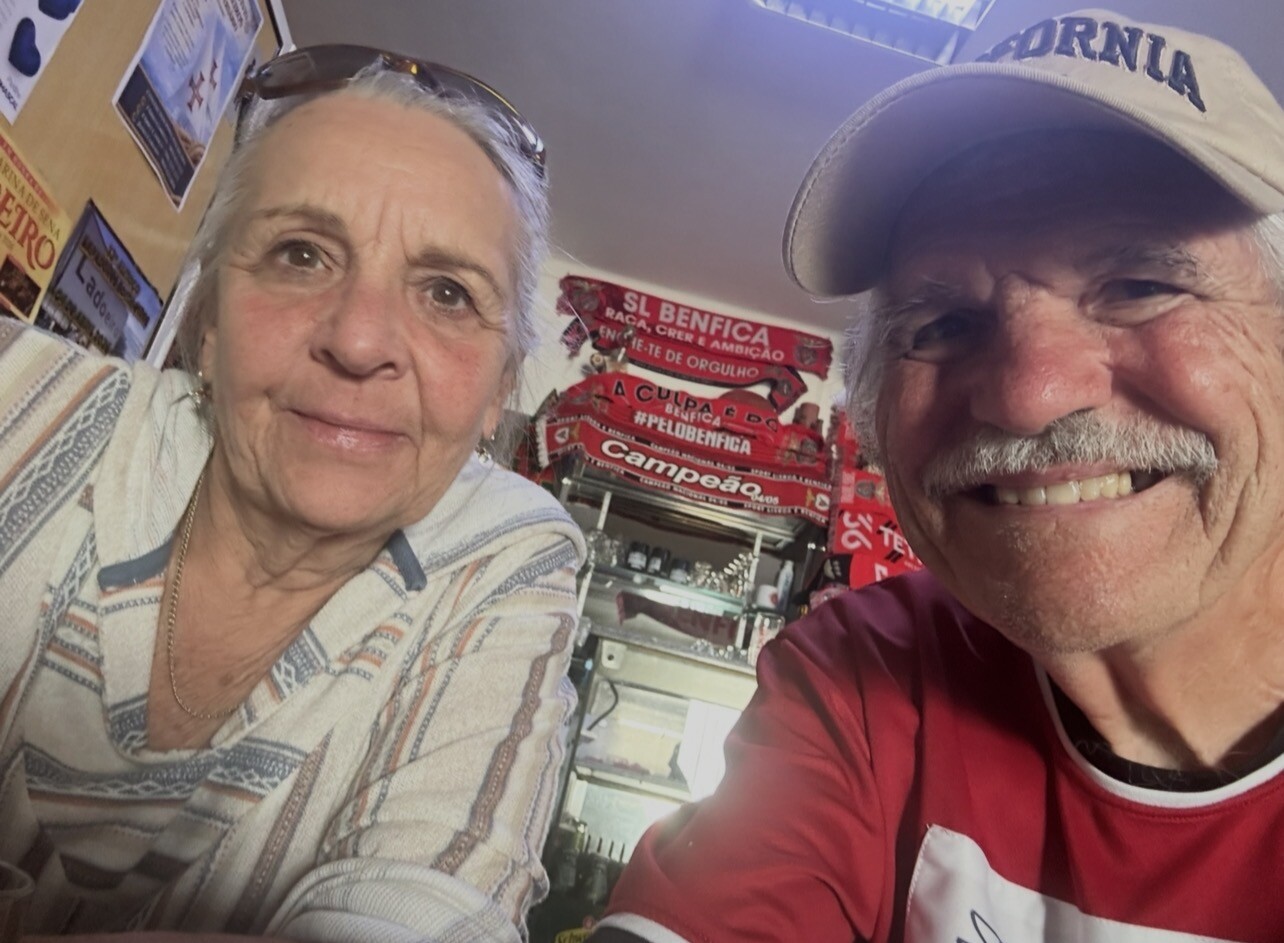
In Cegonhas, they were having a pre-Easter gathering, and we joined them for lunch.
In Malpica, it was simpler—just coffee and sparkling water.
These are the moments that turn this from a run into something I will always remember.
Not a Recommendation—Just My Journey
I’m not recommending this approach.
I didn’t rely on doctors, operations, or medicine. My body has slowly brought me back on its own. It’s been a long journey, and it’s not over.
But I’ve learned something important:
You have to believe in what your body can do.
Redefining the Run
I’ve loved running fast. I still do.
I like running smoother when I’m going faster and wearing lighter shoes.
But right now, at 78 years old, a little out of shape, and about eight pounds heavier than I’d like to be after a long layoff, things are different—and that’s okay.
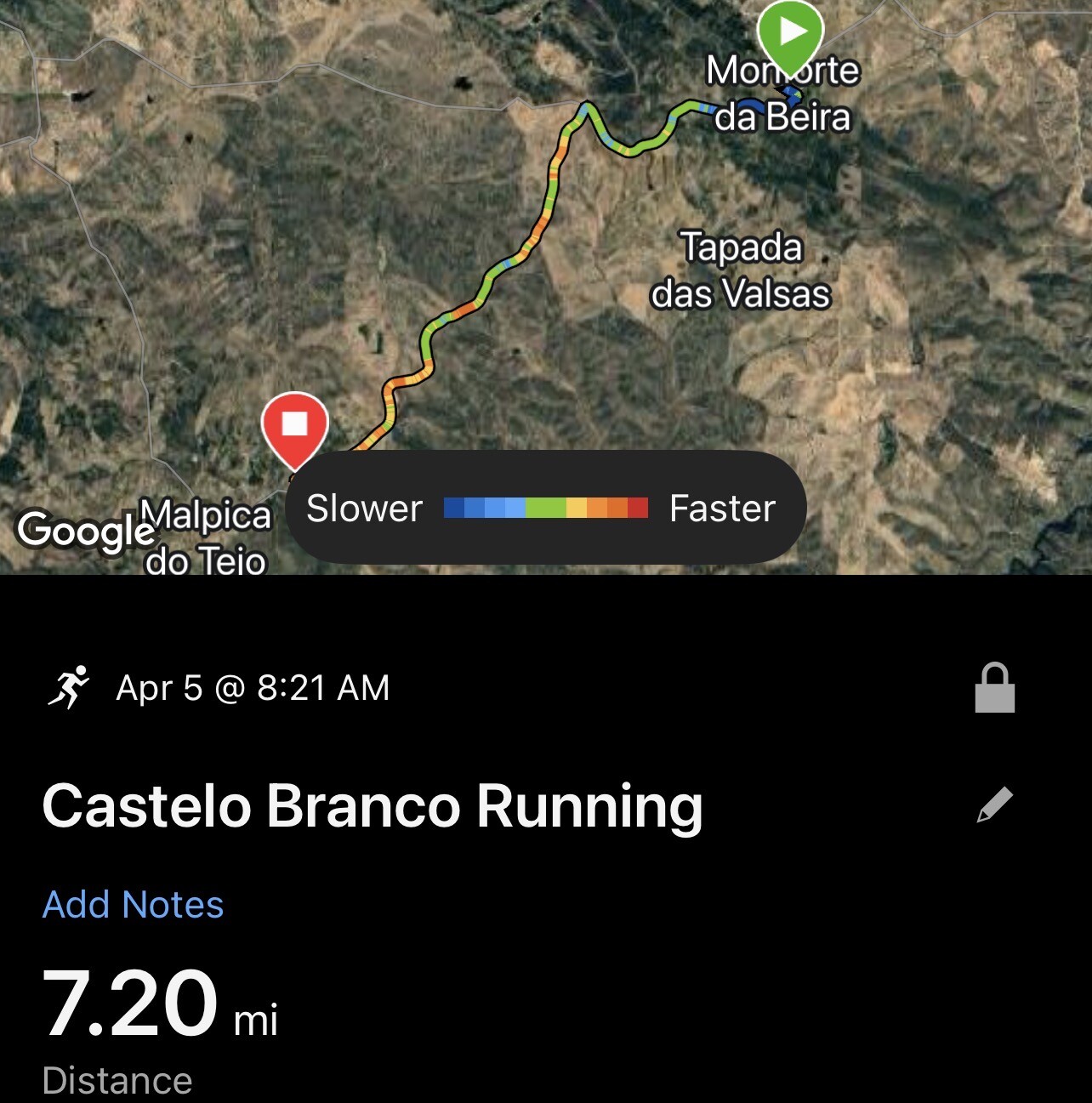
Even running at sub-15-minute pace feels good again.
And I know this is a good start.
In many ways, sub-10-minute miles are actually easier than 15-minute miles—they flow better. But at this stage, any running at any time works for me.
And I will get back in shape.
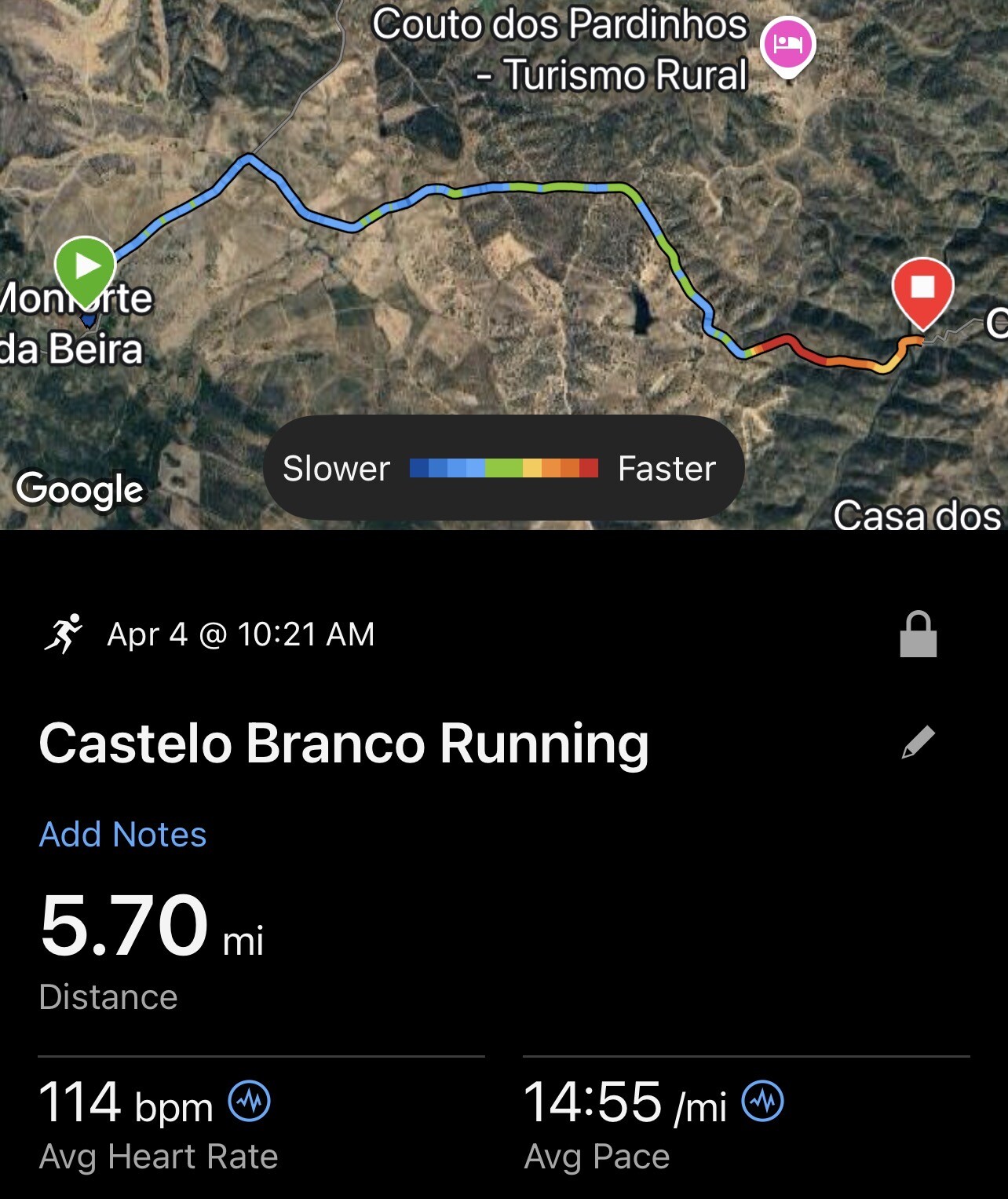
And I will get my weight back down.
Because it’s still running.
And at heart, I am—and always will be—a runner.
Monforte and Beyond
With two days to go, this journey isn’t finished yet.
One more village.
And on Tuesday, I will finish this special marathon with the final miles.
This one isn’t about finishing fast.
It’s about finishing—period.
by Bob Anderson founder My Best Runs
Login to leave a comment
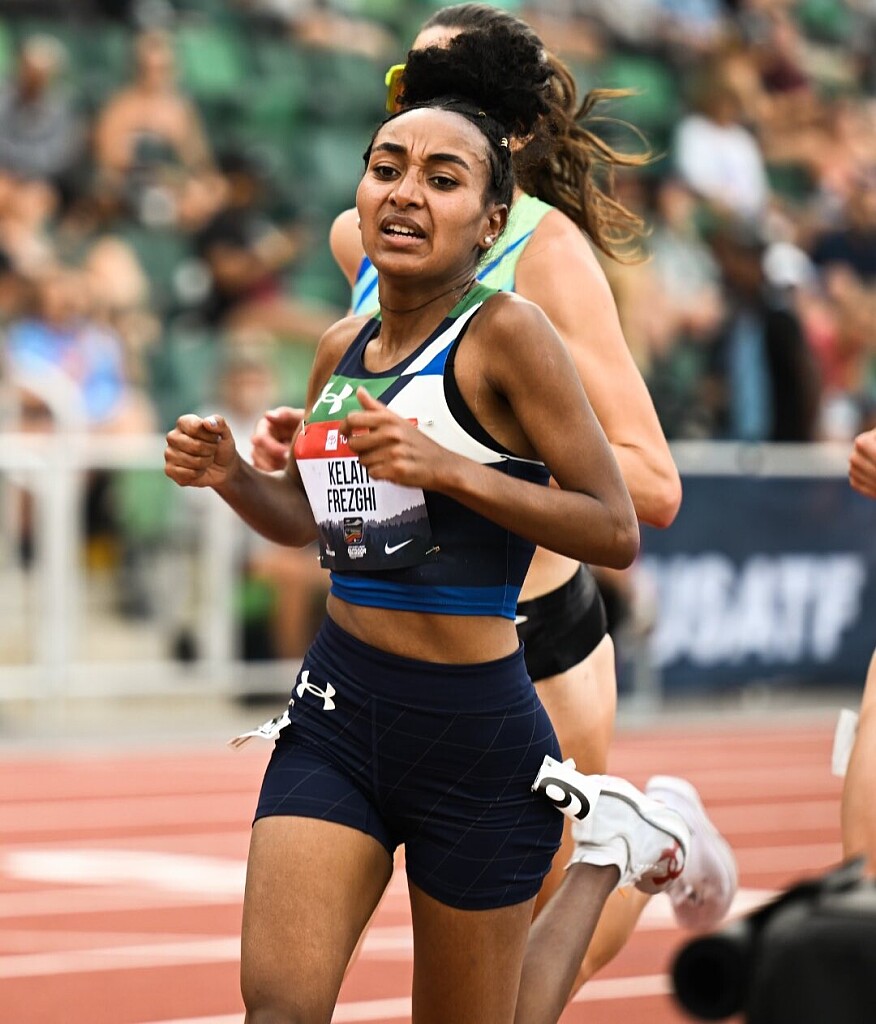
Weini Kelati Takes the Next Step, Signs With Nike Ahead of Barcelona Half Marathon
Weini Kelati’s upward trajectory in global distance running has reached another defining moment. The 2024 Olympian and American half marathon record holder has officially announced that she has signed with Nike, a move that signals both recognition of her rise and confidence in what lies ahead.
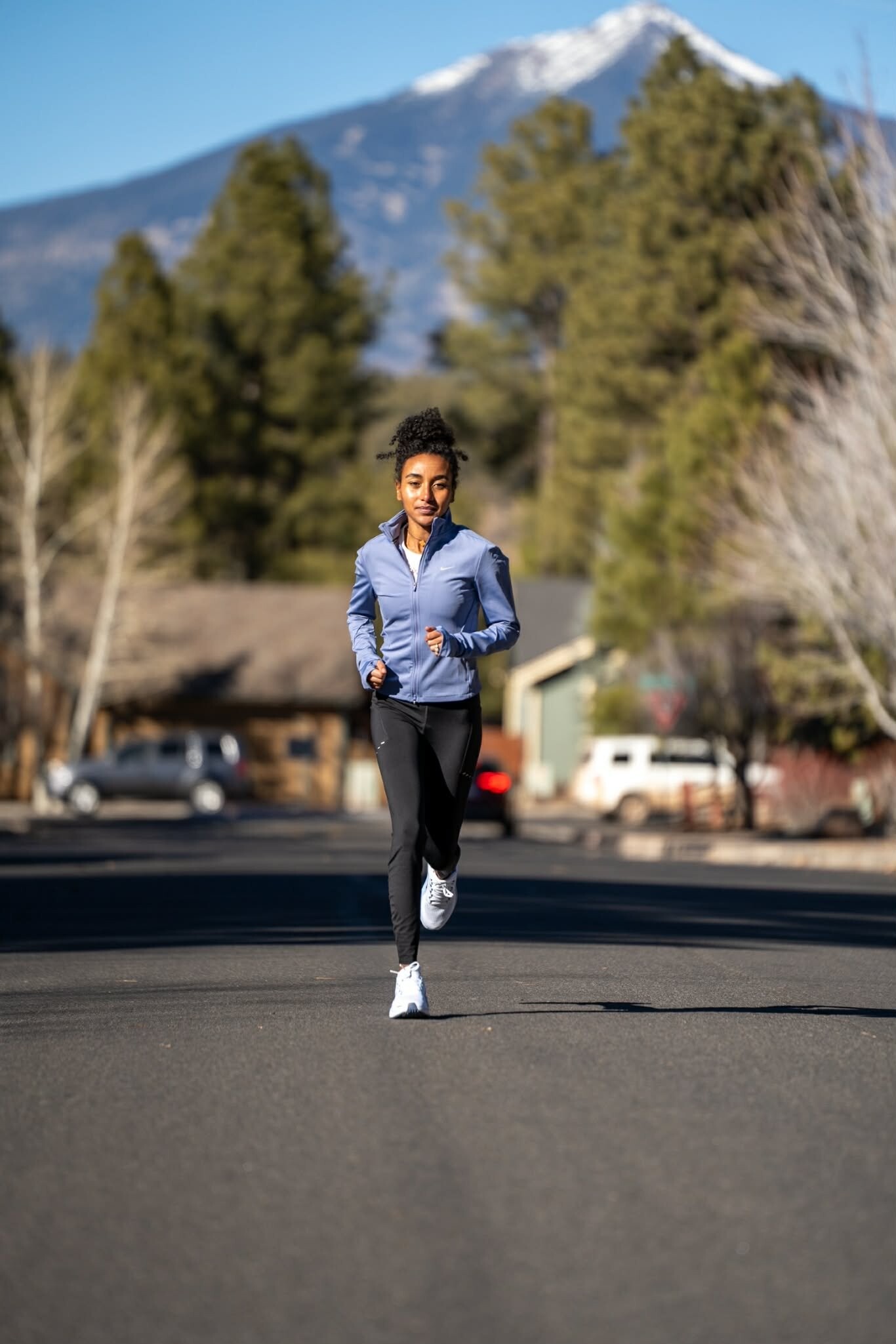
Kelati shared the news on her social media two days ago, writing: "I am excited to announce that I will be continuing my running journey with the support of Nike. I can't wait for this new chapter of my career. Looking forward to incredible years ahead." The statement reflects both her enthusiasm and focus as she steps into this next stage.
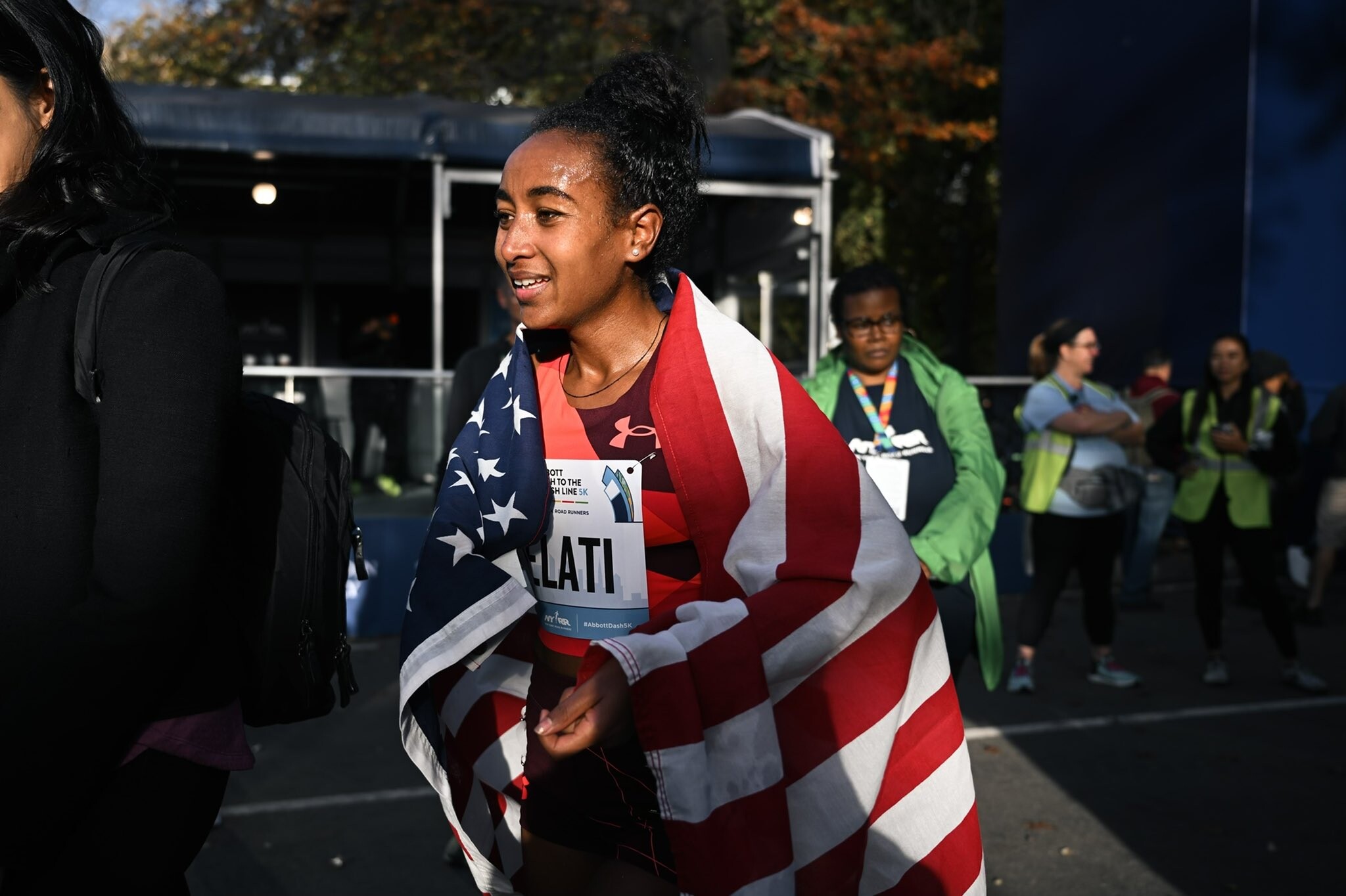
Kelati has steadily built her reputation as one of the most consistent and versatile road racers representing the United States. Most recently, she competed for Team USA at the World Cross Country Championships, adding another major international appearance to a résumé that continues to grow in depth and prestige. Her ability to transition seamlessly between cross country and road racing has become one of her standout strengths.
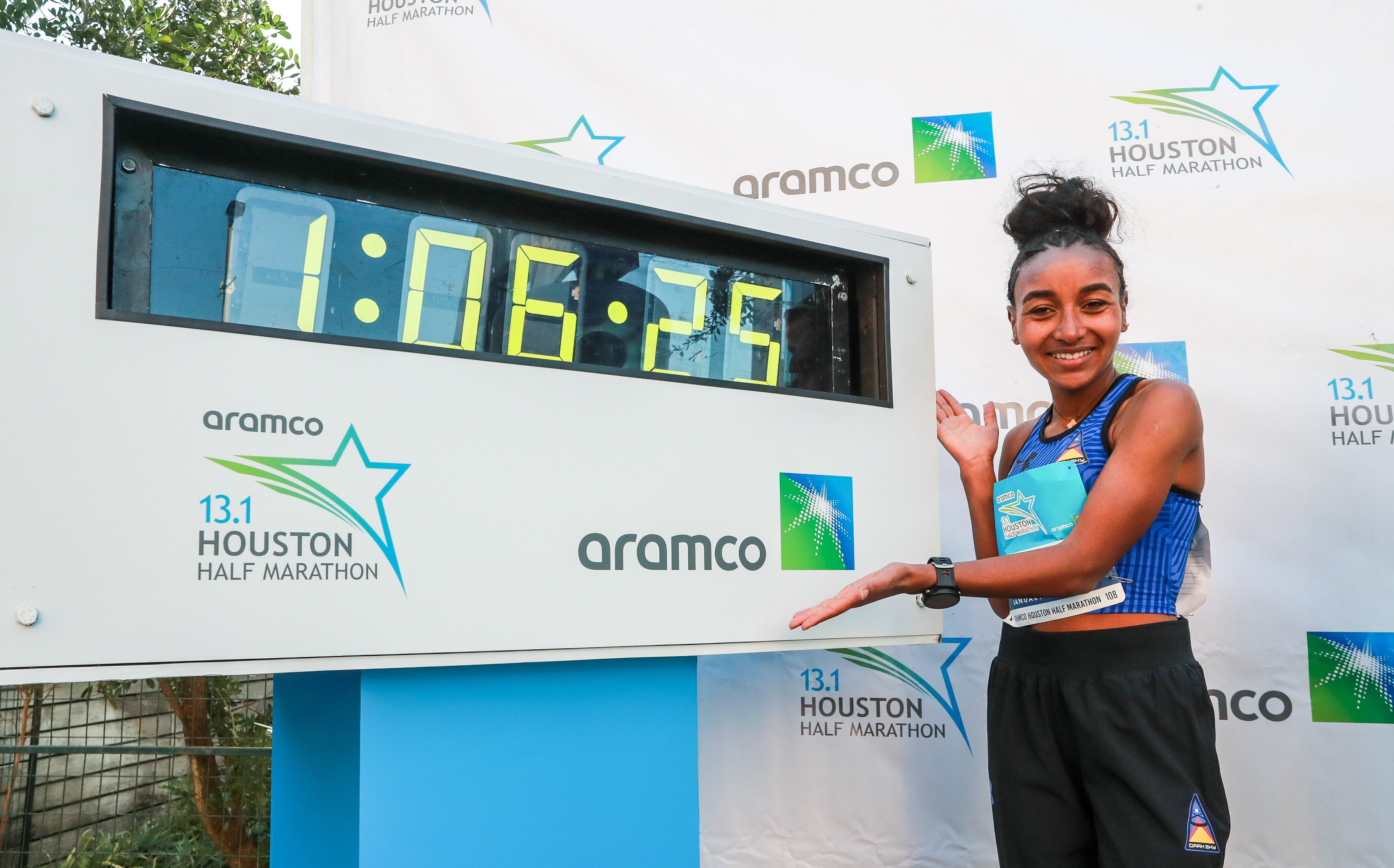
The timing of the announcement aligns perfectly with her competitive calendar. Kelati is set to line up at the Barcelona Half Marathon on February 15, one of Europe’s fastest and most competitive road races. The event offers an ideal stage for an athlete in peak form, and all eyes will be on how she performs against a deep international field.
Kelati enters Barcelona carrying the confidence of history. She holds the American half marathon record with a time of 1:06:09, set at the Houston Half Marathon, a performance that not only rewrote the national record books but also confirmed her status among the world’s elite over the distance. That run showcased her trademark combination of patience, strength, and a devastating late-race surge.
Signing with Nike marks a new chapter, but the story remains familiar: steady progression, big-race composure, and relentless ambition. With her record-breaking form and this new partnership, Kelati’s journey promises to be watched closely by fans worldwide, as she continues to push the limits of American distance running.
by Erick Cheruiyot for My Best Runs.
Login to leave a comment

Aramco Houston Half Marathon
The Chevron Houston Marathon provides runners with a one-of-a-kind experience in the vibrant and dynamic setting of America's fourth-largest city. Renowned for its fast, flat, and scenic single-loop course, the race has earned accolades as the "fastest winter marathon" and the "second fastest marathon overall," according to the Ultimate Guide to Marathons. It’s a perfect opportunity for both elite athletes...
more...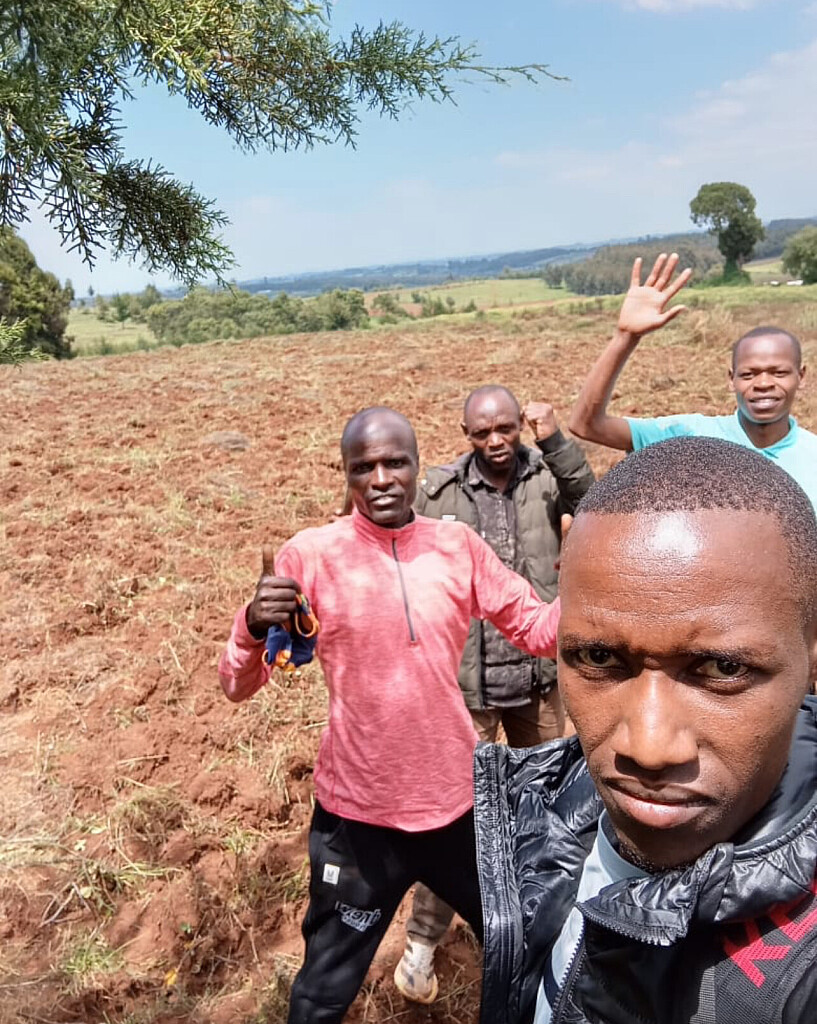
More Than a Medal: How Olympian Edwin Soi is Shaping the Future of Kenyan Running - KATA 05
In the misty highlands of Kuresoi, nestled at a staggering 2,700 meters above sea level, an elite training camp quietly hums with the sounds of determination — rhythmic footfalls, laboured breaths, and the occasional cheer of encouragement.
Along reddish-brown murram trails, sandwiched between dense trees of the Mau Forest, young athletes glide through the early morning fog. This is no ordinary running camp. It is the dream and daily labour of Edwin Cheruiyot Soi, one of Kenya’s most decorated long-distance runners, now turned mentor, marathoner, and coach.
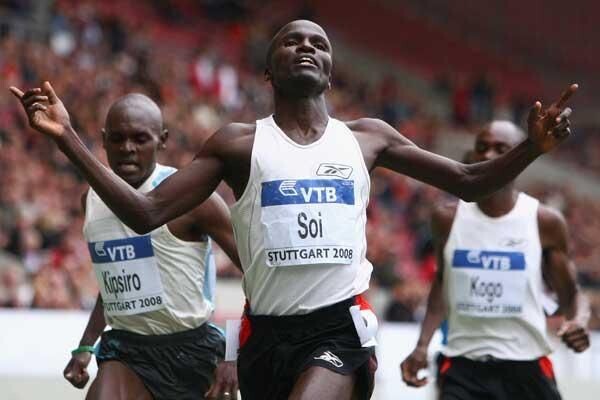
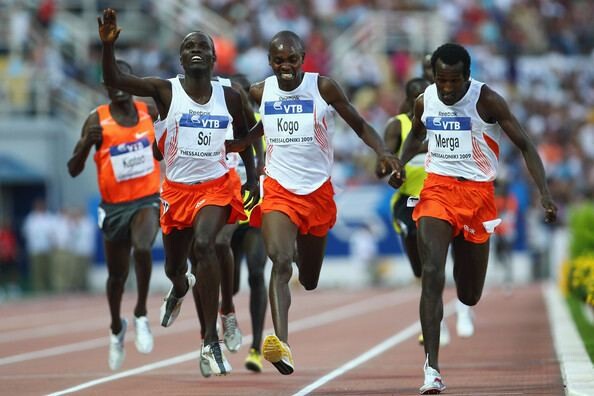
Soi, known for his Olympic bronze medal in the 5000m at the 2008 Beijing Olympics and a glittering career on the track, hasn’t slowed down. While many of his peers have moved on from competition, Soi remains actively racing marathons, coaching, and living side by side with a rising generation of athletes.
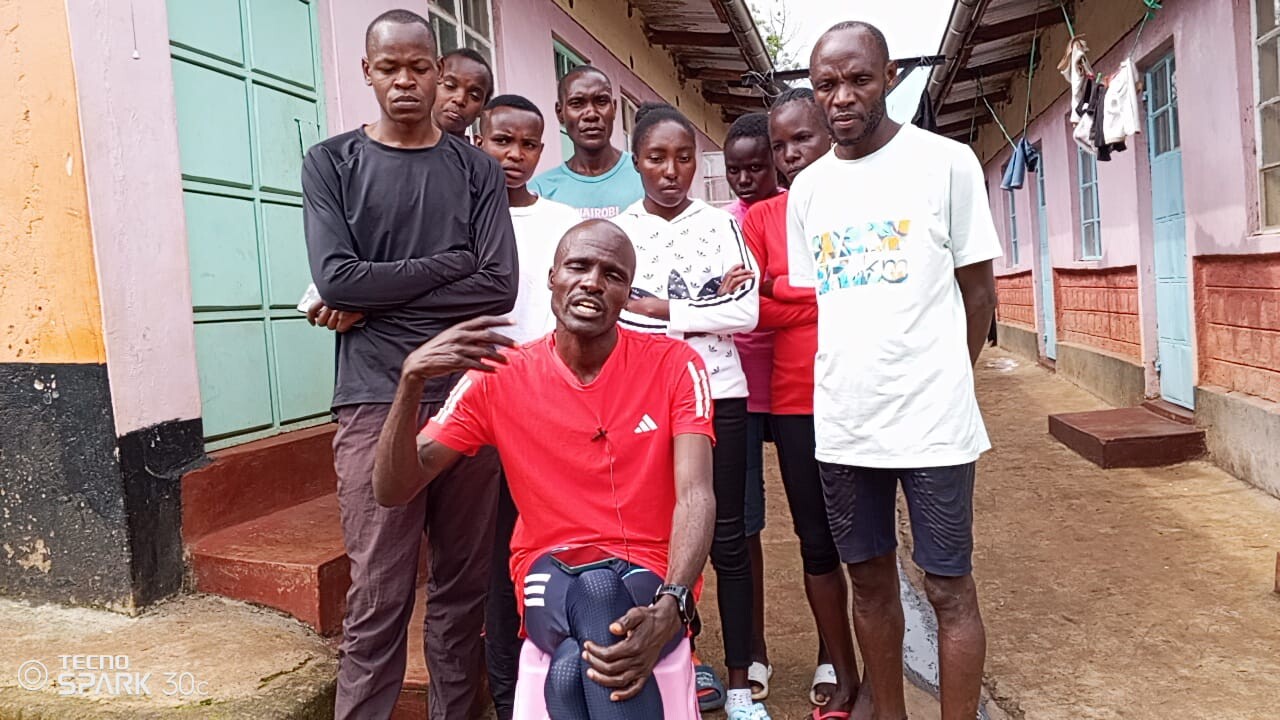
“I have run for long, from World Championships and World Indoors to the Olympics,” Soi says after a long training session. “With all that experience, I saw it wise to share my expertise — not just with young athletes, but with anyone willing to train with discipline.”
Still Racing, Still Leading
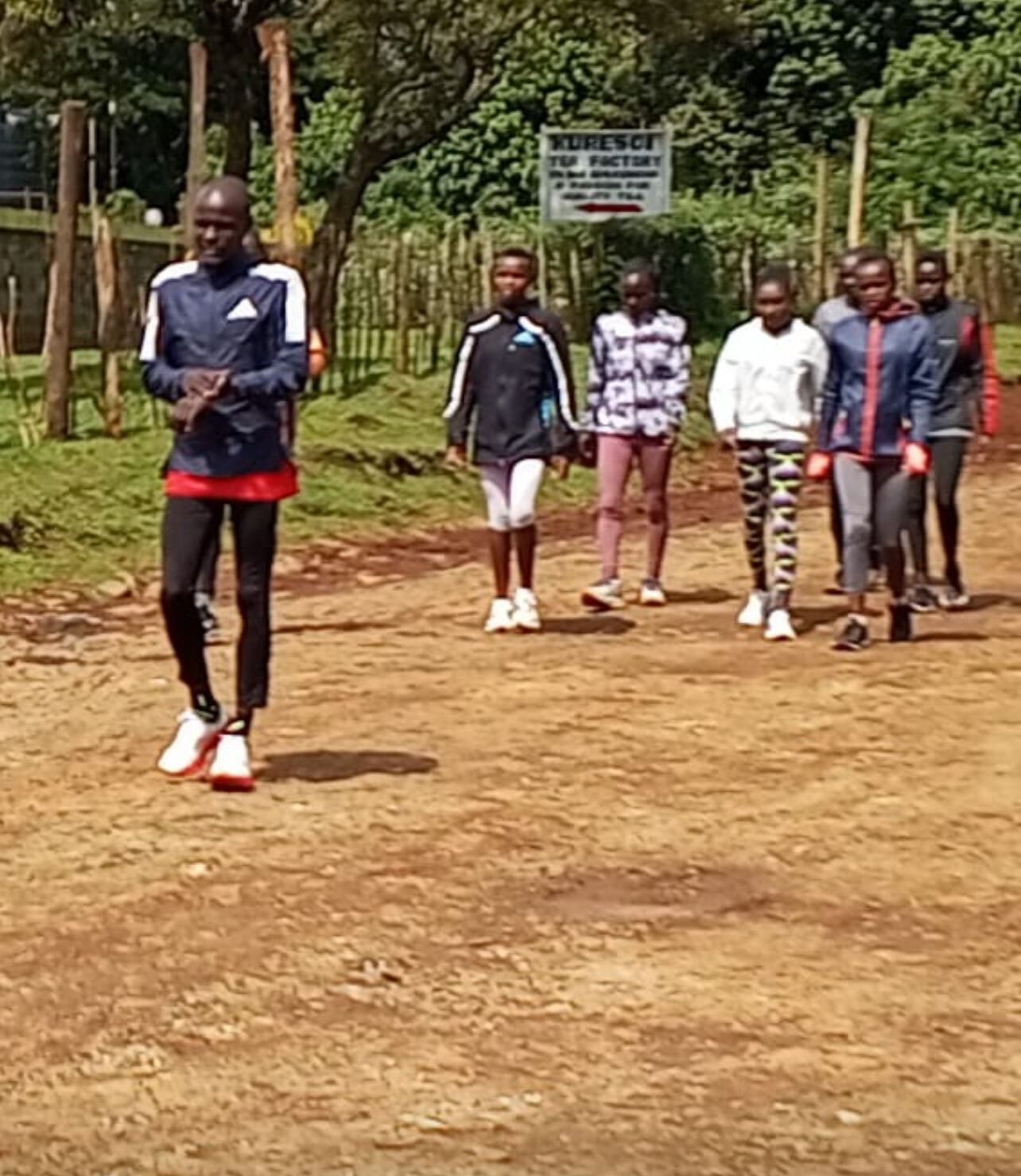
Every morning, Soi joins his athletes in their rigorous routines. From tempo runs along the forested trails to fartlek and speedwork sessions, he leads by example.
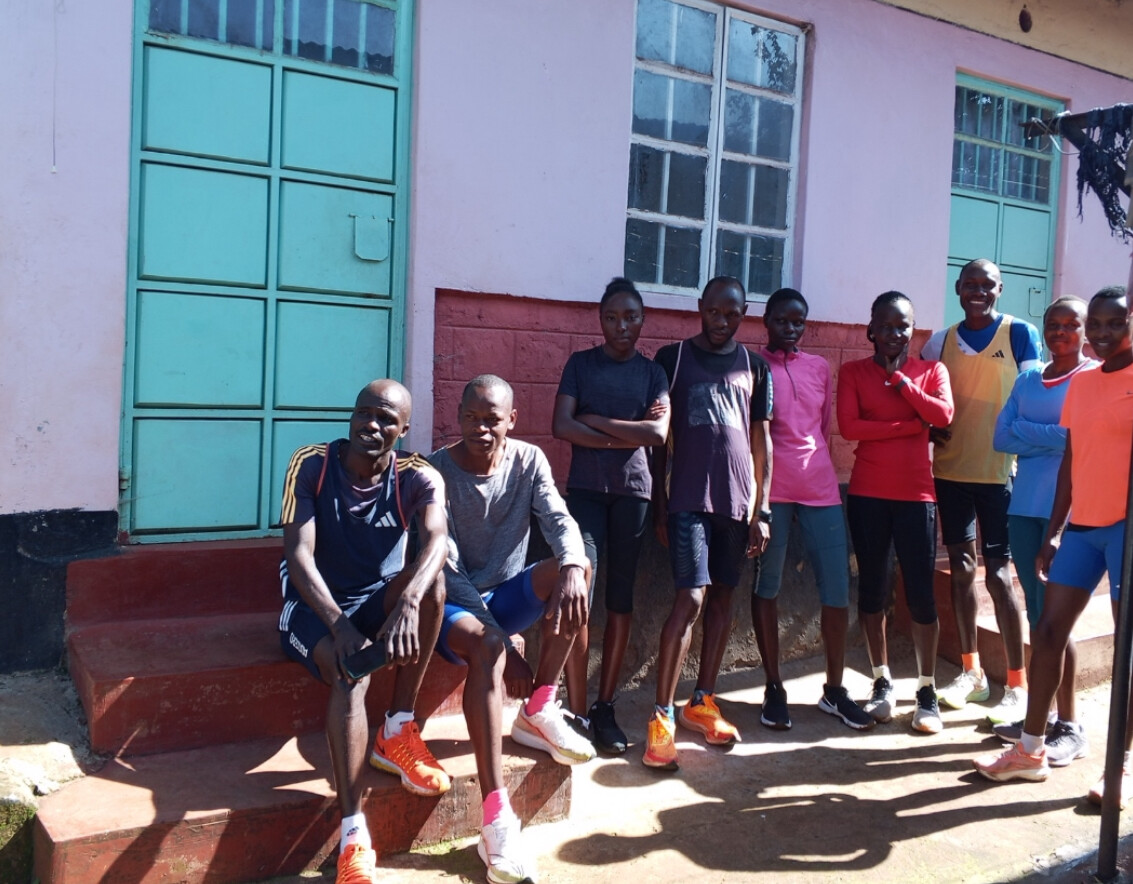
“My athletes don’t just see me as a coach — I run beside them,” he says. “They learn from how I train, rest, and carry myself. That’s leadership by presence.”
For the athletes, it’s not only inspirational — it’s transformational.
Margaret Ndirangu, a promising athlete from Central Kenya, beams with gratitude:
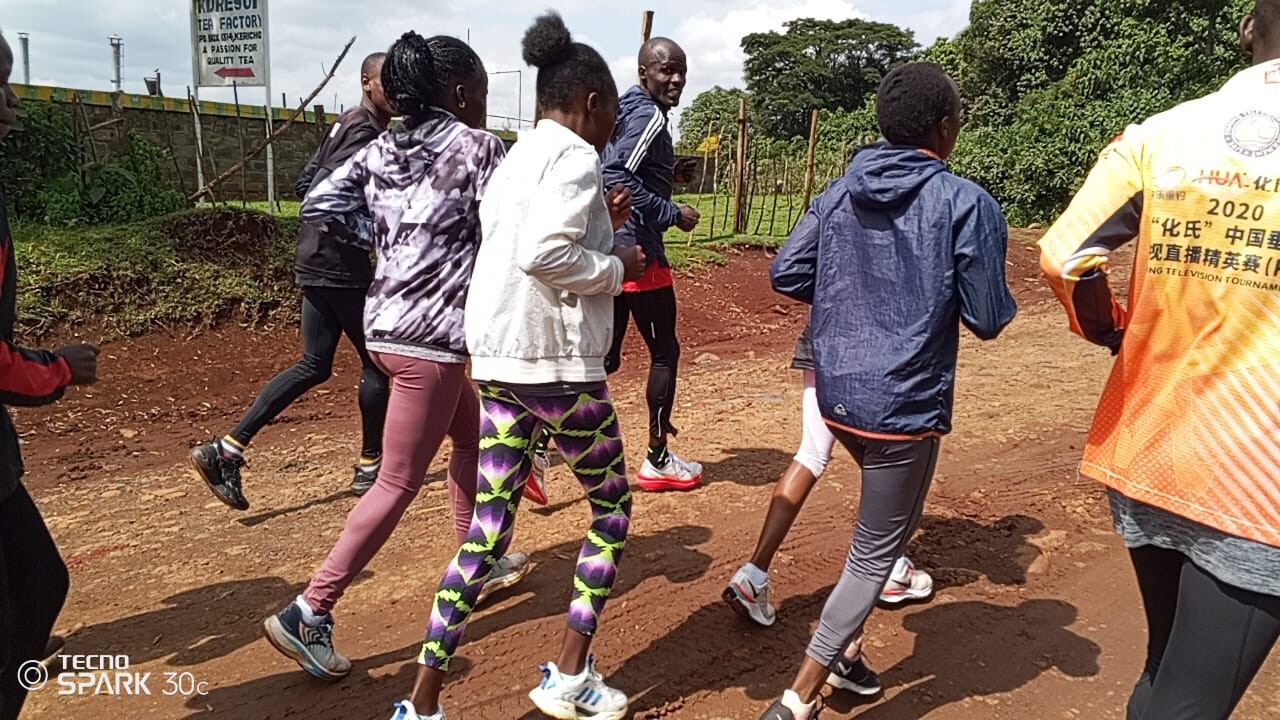
“I have nothing more than joy. Being at Soi’s camp is more than home to me. We eat well, sleep well, and train well. Running alongside an Olympian like Edwin Soi is a huge motivation.”
Gilbert Kenduiywo, a full marathon runner, agrees:
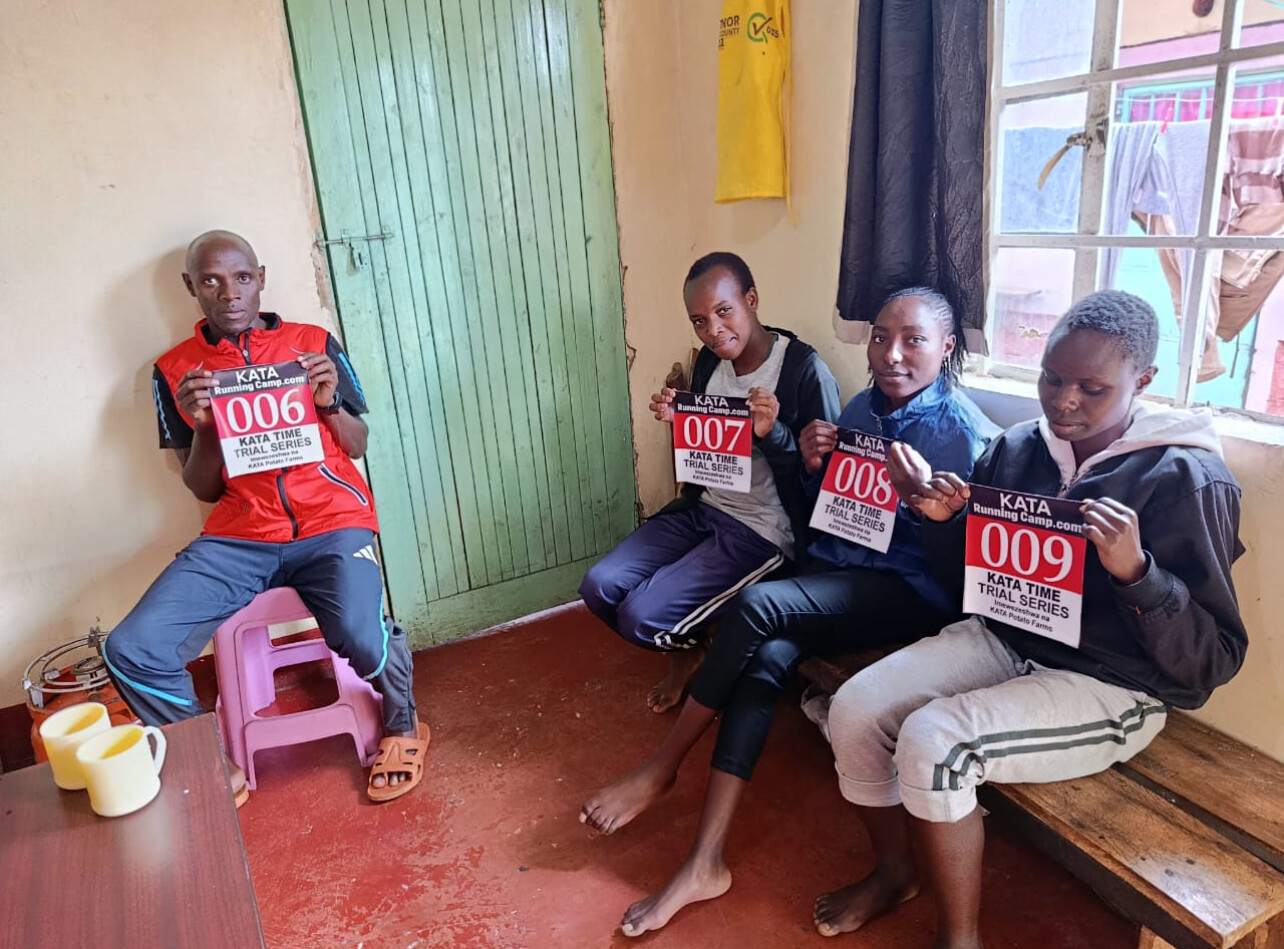
“I thank Soi because he has brought us from where we were, courtesy of Bob Anderson. Running involves dedication, and it is through this that we now have a place to live, eat, and train. I also thank Bob Anderson for the noble idea. Engaging in farming as an income-generating activity after training means a lot to us.”
Kuresoi: Nature’s Perfect Stadium
The rugged beauty of Kuresoi is more than just scenery; it's a natural high-performance lab. The red-earth trails, the crisp mountain air, and the altitude of 2,700 meters form the ideal foundation for endurance athletes.
“Our routes weave through Mau Forest,” Soi says, pointing to a distant hill where runners disappear into the mist. “These aren’t just trails. They’re tests of character.”
The KATA Vision: Running with Purpose
Soi’s training camp is backed by the Kenyan Athletics Training Academy (KATA), founded by Bob Anderson, the visionary behind Runner’s World magazine. But what makes this camp stand out isn’t just the training — it’s the fusion of sport and sustainability.
With support from KATA, Soi and his athletes engage in agricultural projects, most notably the Potato Project. When they’re not clocking miles, runners plant, harvest, and manage farming plots — gaining not only a source of income but vital life skills.
“No one else had thought of supporting athletes this way — giving them both a place to grow athletically and financially,” says Soi. “Bob’s idea came at the perfect time.”
Athletes echo this gratitude.
Edmond Rono, a distance runner from Sotik, shares:
“I used to train in Sotik, but after joining Soi's camp—supported by KATA—I’ve experienced a complete transformation. We stay comfortably and enjoy everything from training, meals, to accommodation. My future now looks bright.”
Isaiah Kipkurui, a road runner, adds:
“The support from KATA through Edwin Soi has meant a lot to us as athletes. Since joining the camp, we’ve seen remarkable improvement in our performance and lifestyle.”
Cheptoo, a 3000m specialist with a personal best of 9:30, also credits the camp for her progress:
“Coming from Sotik and joining Soi’s camp has been a turning point. Accessing proper meals and accommodation as an athlete is a great opportunity. I’m now preparing for the upcoming cross-country races this month.”
And Winny Chebet, a determined 10,000m runner, shares:
“The opportunity given to me through Soi’s camp, supported by KATA, has made me optimistic. I believe my future is bright, and I will be able to hit my running targets.”
Running Clean, Running Proud
While training and farming form the physical and economic backbone of the camp, discipline and integrity shape its soul. Soi is fiercely committed to clean sport — a principle he insists every athlete lives by.
“My athletes know I’m strict,” he says. “There’s no shortcut in this sport. I do not support doping, and I never will. If you want to enjoy the fruits of your labor, you must do it right.”
In a time when Kenyan athletics has been shaken by doping scandals, Soi’s stance is both timely and bold. His camp stands as a model of ethical training, and his leadership provides athletes with more than a place to train — it gives them a moral compass.
Beyond the Finish Line
Soi knows his racing clock is ticking. Though still active in marathons, he estimates he has two or three years left of elite racing. But that doesn’t worry him. His eyes are fixed on the future — one that includes hundreds of young athletes inspired and supported through his camp.
“I’m not just training runners,” he says. “I’m building people. Strong, disciplined people who will take Kenyan running to the next level.”
He acknowledges the crucial role of Athletics Kenya and the Ministry of Sports in establishing youth training camps nationwide. “Their efforts align perfectly with our vision here,” he says. “We’re all working toward the same goal — to empower youth through athletics.”
A Legacy Written in Footsteps
As the sun rises over the Mau Forest and the last runner finishes the morning loop, Soi jogs back toward camp with his group, his figure still strong, still focused. Around him are the dreams of others — a living tribute to his journey.
He’s a man who knows the podium. But today, Soi’s greatest pride isn’t in medals or titles. It’s in the smiles, strength, and discipline of those who now run beside him.
“Running gave me everything,” he says. “Now, I give back — through sweat, through sacrifice, and through the soil we farm together.”
In Kuresoi, the second wind of Edwin Soi is not a comeback — it’s a new beginning, and it’s lifting others with every stride.
by Robert Kibet
Login to leave a comment
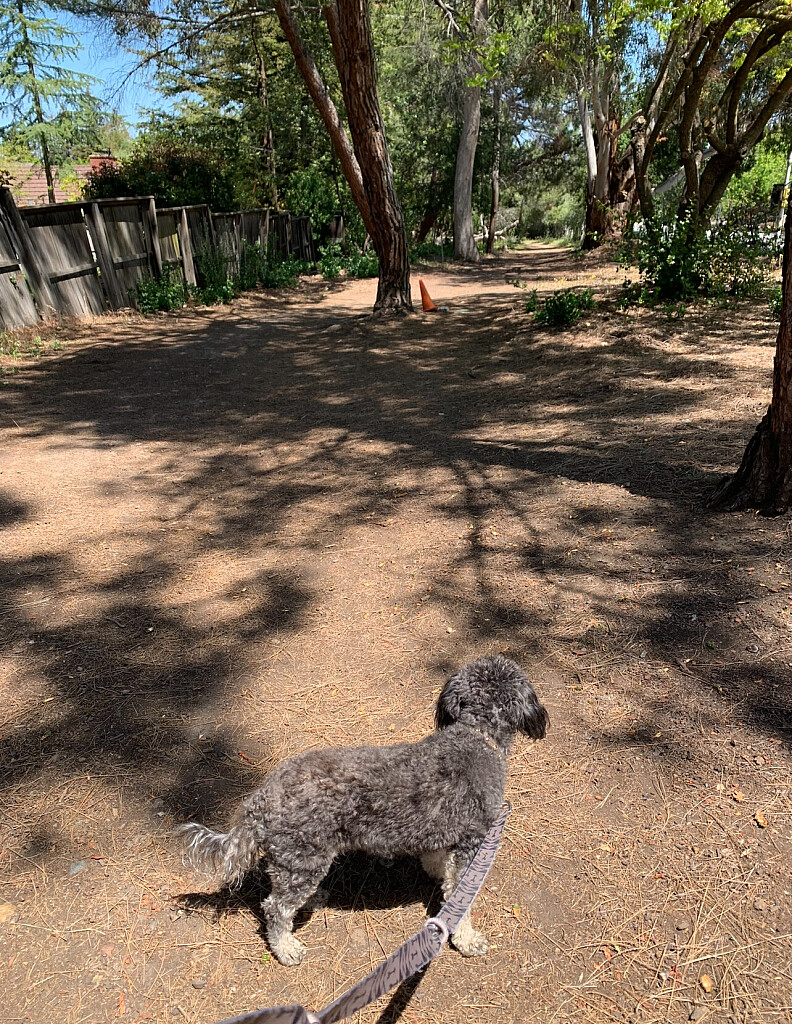
Miles with Daisy: The Joy of Running with My Dog
By Bob Anderson
Running has been a cornerstone of my life for decades. Since July 4, 2018, I’ve averaged 45.5 miles per week, a routine that keeps me grounded and energized. In March 2020, my running journey took on new meaning when I rescued Daisy, a spirited little dog from the streets of Mexico. Since then, Daisy has become my steadfast running partner, averaging over 30 miles per week alongside me.
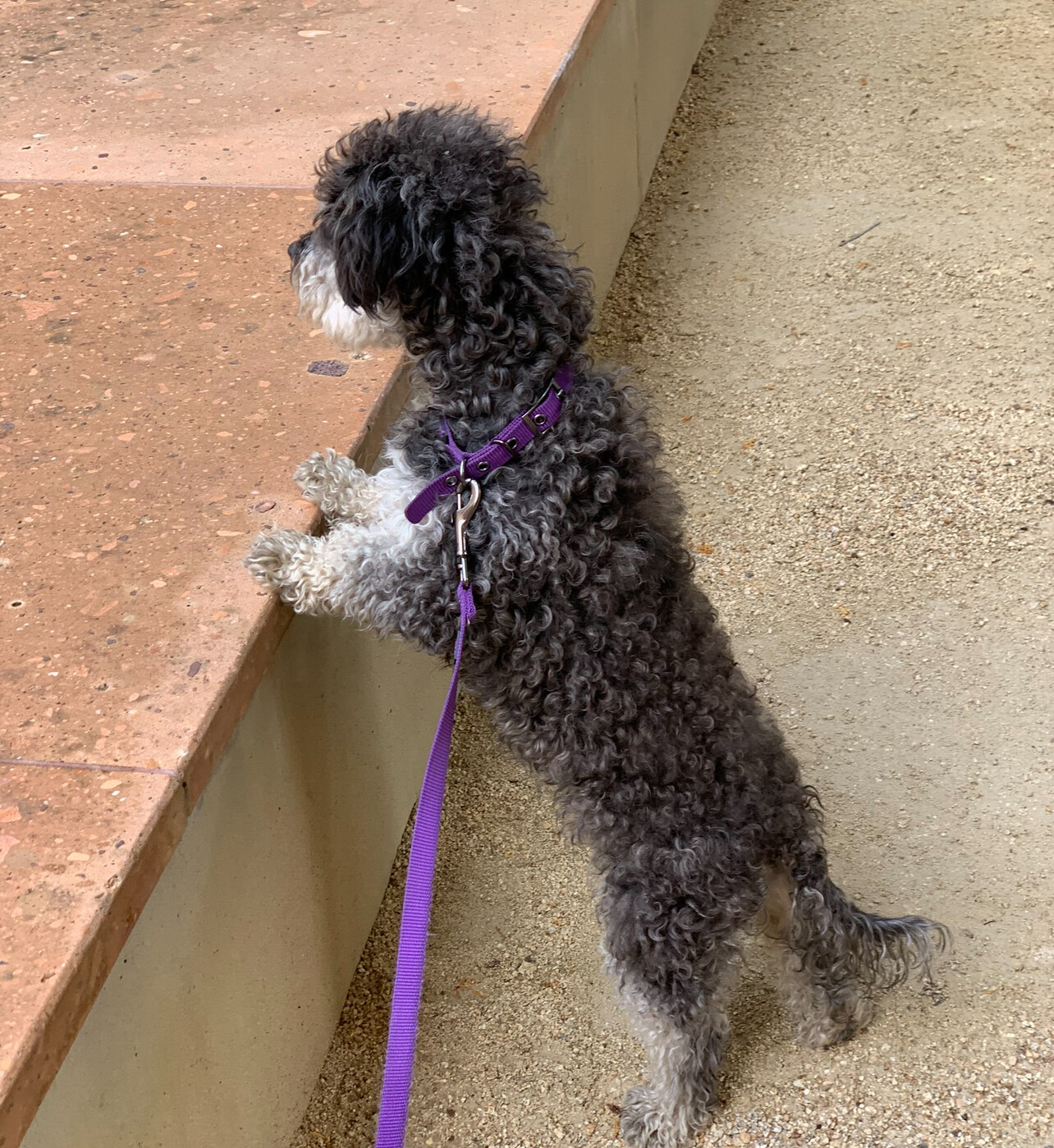
Daisy’s enthusiasm and unwavering spirit have not only enriched my runs but also helped me maintain and even increase my weekly mileage. Her presence adds joy and motivation to each stride, reminding me of the simple pleasures found in shared moments.
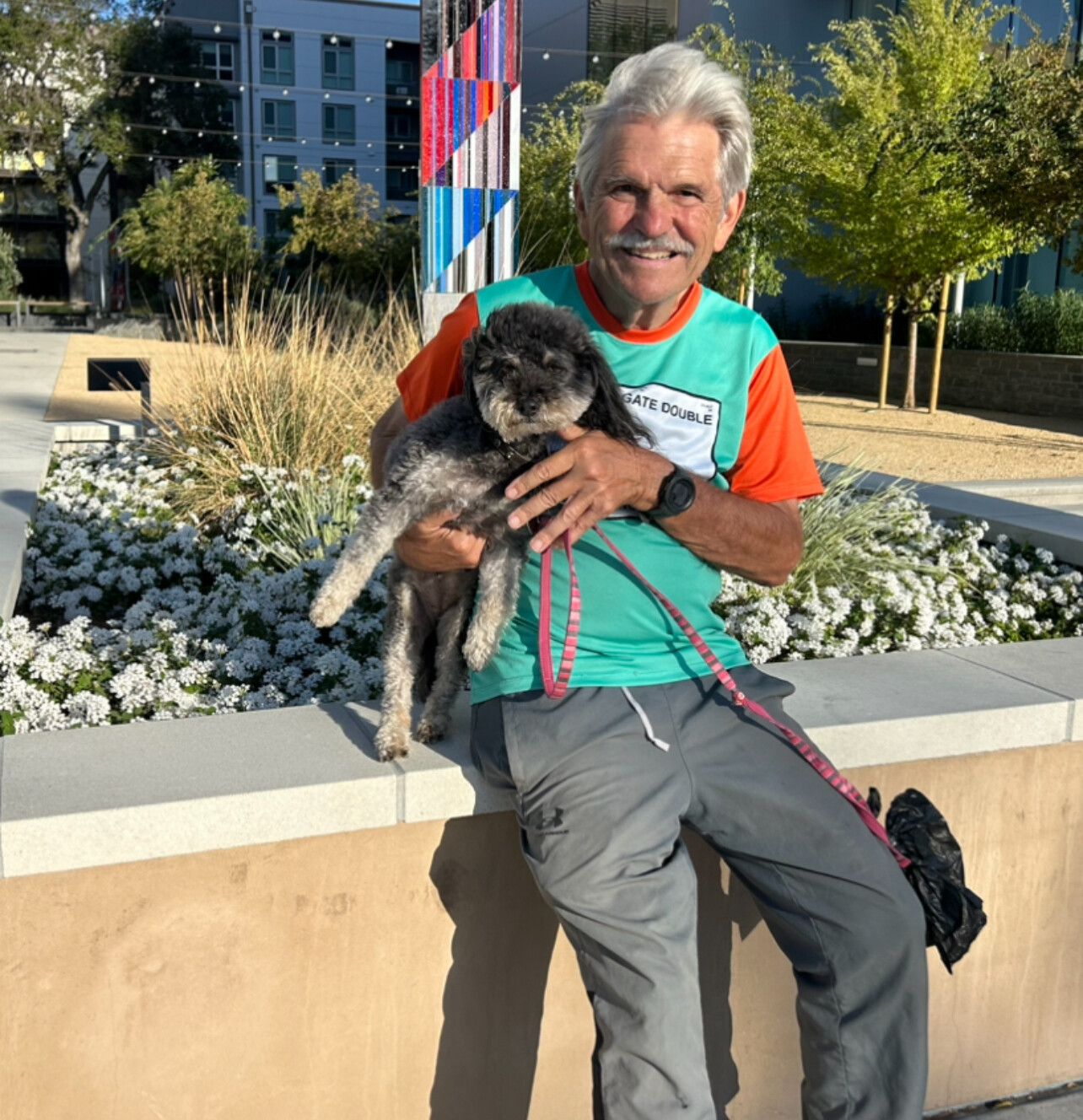
Benefits of Running with Your Dog
Running with a dog offers numerous benefits beyond physical fitness. It strengthens the bond between human and canine, provides mental stimulation, and brings joy to both parties. However, it’s essential to ensure your dog is healthy and suited for running. Consult with a veterinarian before starting, and gradually build up your dog’s endurance. Using appropriate gear, like a well-fitting harness and a sturdy leash, can make the experience safer and more comfortable for both of you.
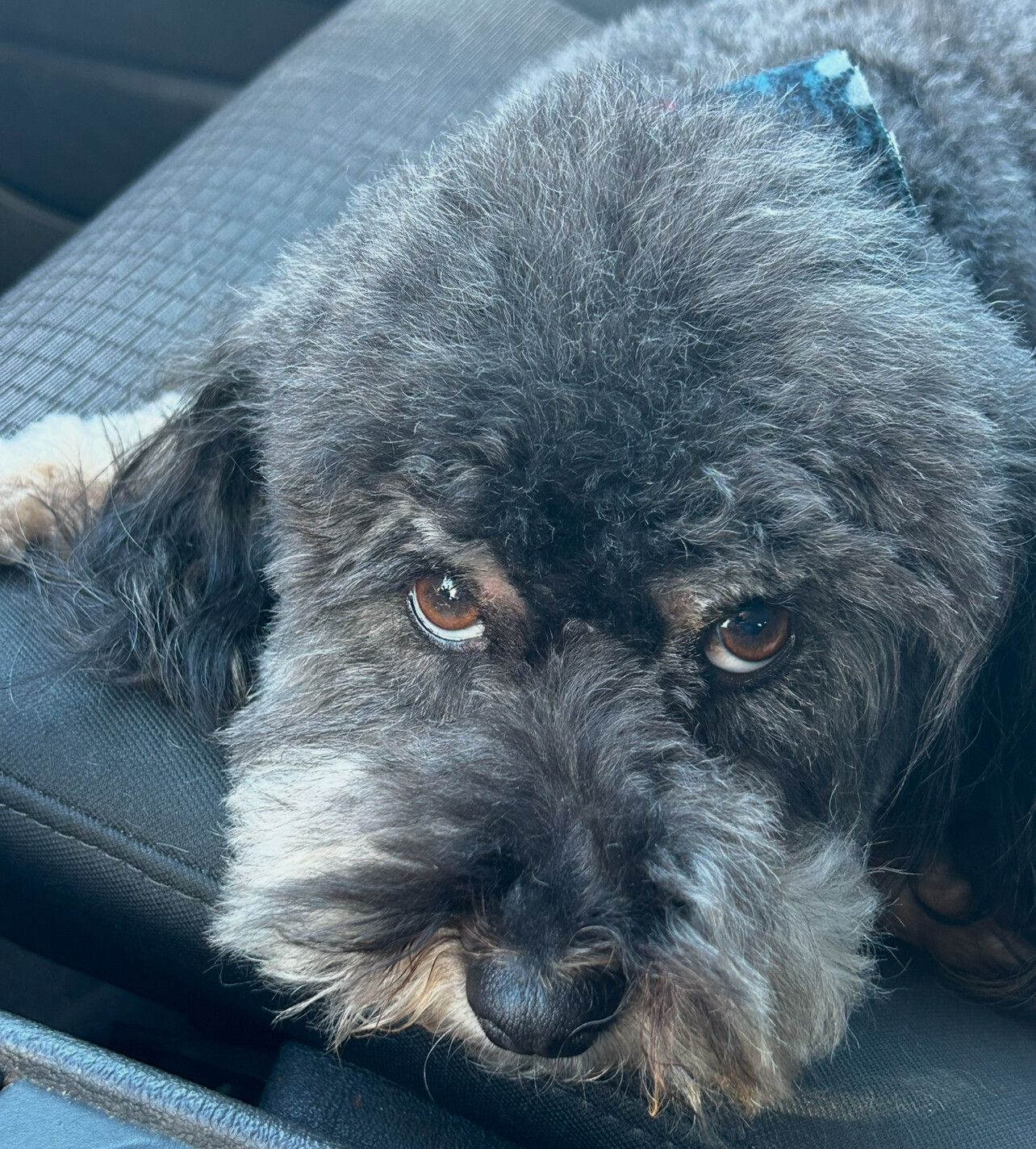
Safety Considerations
Safety is paramount when running with your dog. Be mindful of weather conditions, as extreme temperatures can be harmful. Ensure your dog stays hydrated, and choose running surfaces that are gentle on their paws. Training your dog to run at your side and respond to commands can prevent accidents and make your runs smoother.
Conclusion
Incorporating your dog into your running routine can transform a solitary exercise into a shared adventure, enriching both your lives. With proper preparation and attentiveness to your dog’s needs, running together can become a rewarding and enduring practice.
Note: Always consult with a veterinarian before starting any new exercise regimen with your dog to ensure it’s safe and appropriate for their specific health needs.
by With Boris Baron
Login to leave a comment

Running Along the Seine River in Paris: My Second Favorite Place to Run
Some runs are so memorable that they stay with you long after you’ve finished them. For me, running along the Seine River in Paris is one of those special experiences. It’s my second favorite place to run, just behind Central Park in New York.
Starting at Notre-Dame: A Run Through the Heart of Paris

My favorite way to run along the Seine starts at Notre-Dame Cathedral on Île de la Cité. Being there when they reopened the cathedral after the devastating fire was a moment I’ll never forget. Seeing it restored and standing tall again makes this starting point even more special.
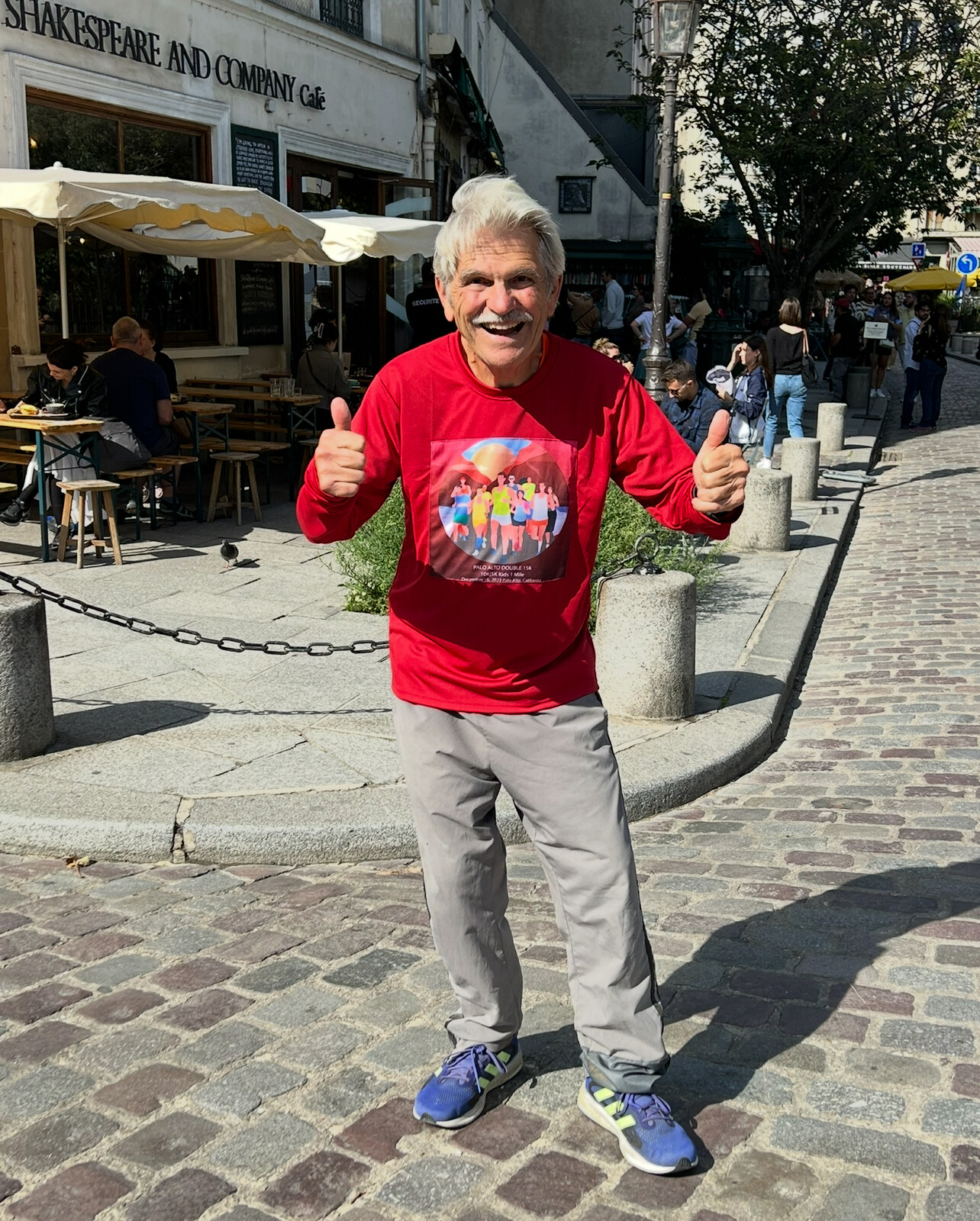
I prefer to run on the right side of the Seine (Rive Droite) first, heading west toward the Eiffel Tower. The early morning is the best time—Paris is still quiet, the air is crisp, and the river reflects the soft glow of the sunrise.
Running West Along the Right Bank (Rive Droite)
Starting at Notre-Dame, I follow the pedestrian paths along the Right Bank. This side of the Seine has a mix of cobblestone walkways and smooth running paths, with plenty of open space.

One of the first landmarks I pass is the Louvre, its grand architecture and glass pyramid still peaceful before the crowds arrive. Continuing west, I run through Port de l’Arsenal and past Pont Neuf, the oldest bridge in Paris, which has stood here since the early 1600s.
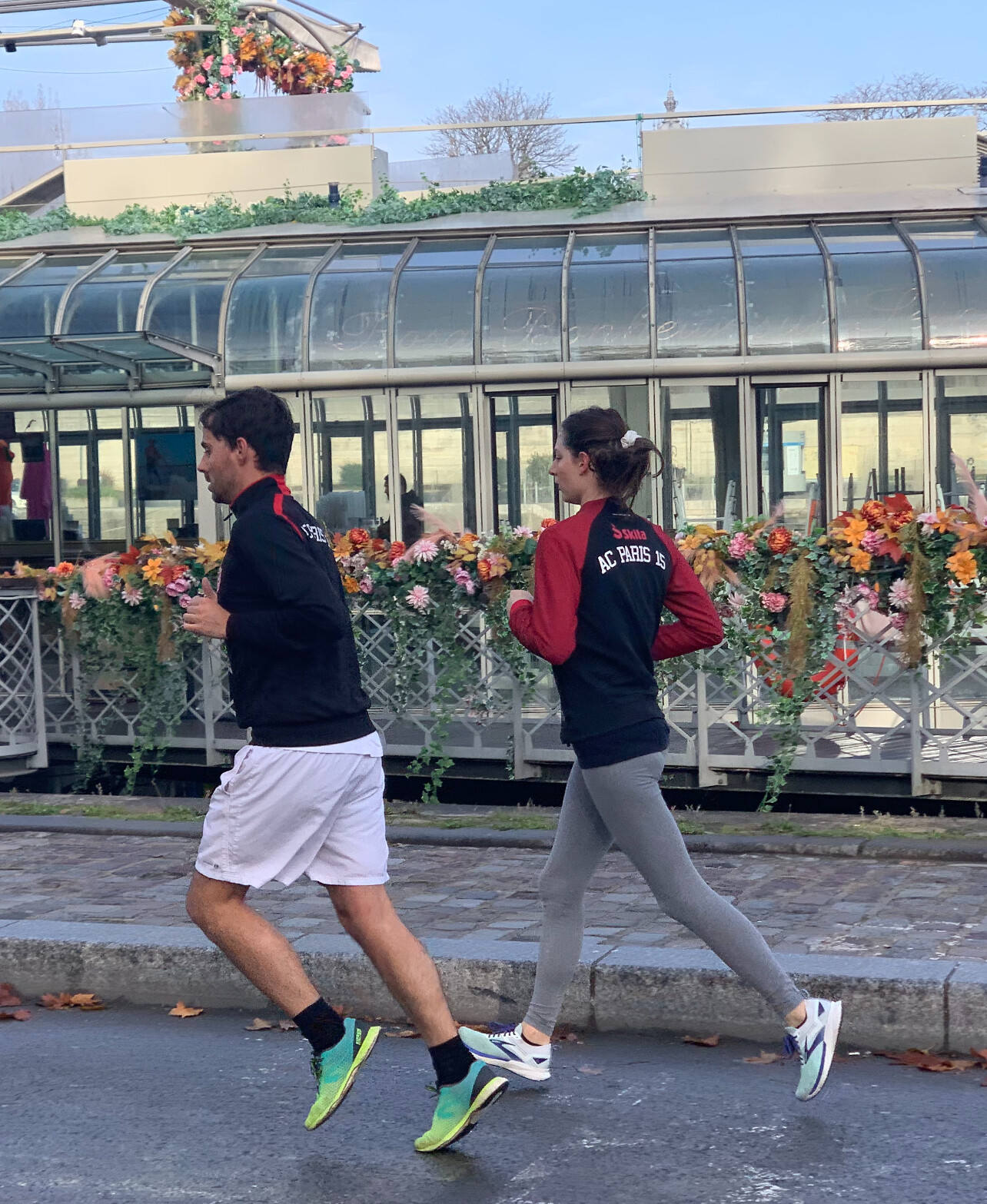
As I approach the Pont Alexandre III, I know I’m getting close to my turnaround point. This is one of the most beautiful bridges in the world, with its golden sculptures and ornate details. Beyond it, the Eiffel Tower rises in the distance, marking the midway point of my run.

Turning Around at the Eiffel Tower
Reaching the Eiffel Tower is always a highlight. No matter how many times I’ve run here, the sight of this iconic landmark never gets old. I take a moment to appreciate the view—sometimes stopping for a quick photo, sometimes just soaking it all in.
This is where I cross over to the Left Bank (Rive Gauche) to begin the second half of the run back toward Notre-Dame.

Returning Along the Left Bank (Rive Gauche)
The Left Bank has a different feel—more relaxed, with wider paths and fewer cobblestones. I pass by the Musée d’Orsay, the beautiful former train station turned art museum, and then continue past Port de Solférino, a scenic section of the river where the city’s energy starts to build.
Running past the Bouquinistes, the historic booksellers who line the riverbanks, is always a treat. Their green wooden stalls, filled with rare books and vintage prints, are a reminder that Paris is a city that treasures history and culture.
As I approach Île de la Cité, the home stretch of the run comes into view. Crossing back over the Seine near Pont Saint-Michel, I finish my run where I started—at Notre-Dame. By now, Paris is fully awake, and the city is alive with movement.
Why This Run is Special
This route is perfect for so many reasons. The mix of smooth paths, breathtaking landmarks, and the feeling of running through history makes every step enjoyable. Splitting the run between the Right Bank on the way out and the Left Bank on the way back also provides a unique perspective of Paris—like seeing the city in two different ways during the same run.
Why It’s My Second Favorite Run
Some runs stand out above all others:
1. Central Park, New York – The perfect balance of nature, varied terrain, and city energy.
2. The Seine River, Paris – A stunning out-and-back run along both banks of the Seine, with world-famous landmarks at every turn.
Final Thoughts

If you’re ever in Paris, I highly recommend running this route. Start at Notre-Dame, head west on the Right Bank, cross at the Eiffel Tower (I had to stop and take a photo of the Tower through the trees) and return along the Left Bank. It’s an unforgettable way to experience the city—and one of the best ways to truly feel the magic of Paris.
And as a special treat, I like to meet my wife Catherine at the little café across (Cafe Paris) from Notre-Dame for a coffee and maybe an avocado toast—and, of course, a nice conversation.
by Bob Anderson
Login to leave a comment
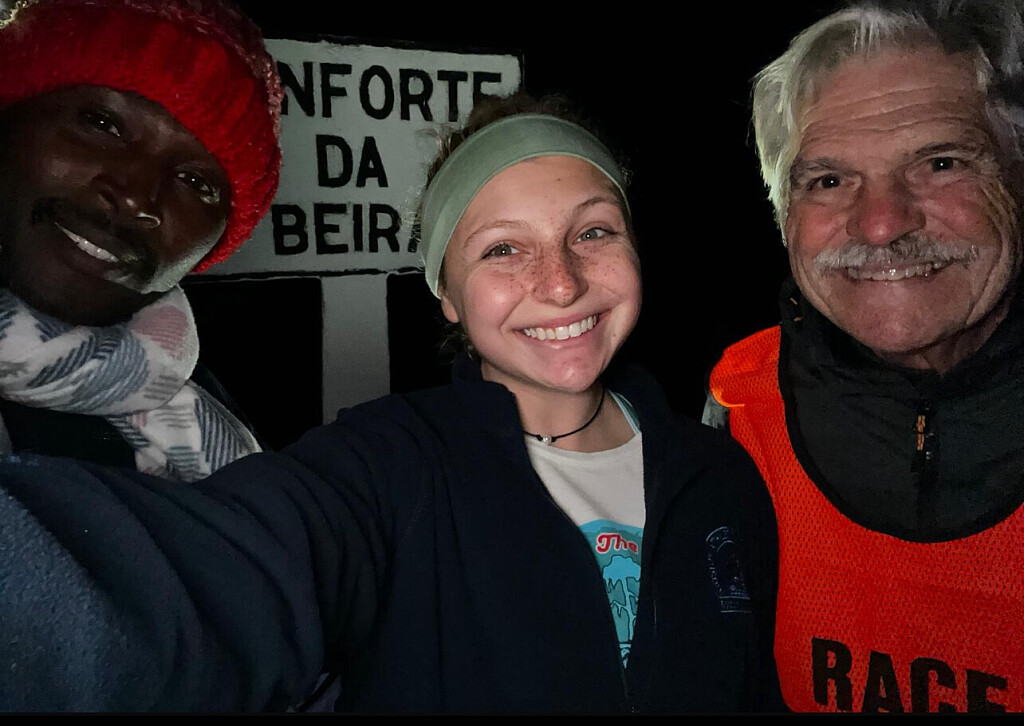
The Power of Miles: Mixing Walking and Running at Any Age
Since turning 70 seven years ago, I have embraced walking as a key part of my routine. Recently, walking has made up 80% of my weekly mileage. I am just coming off a situation with a tendon in my calf, as I mentioned in my first column, and I'll be increasing my running back up to 50%. I like this ratio better, and on Sundays, when I am not in Portugal at our place there, my friend JR and I are focused on getting our 10K pace back down to sub-9 minutes per mile or even sub-8:30.
I also like to get in miles with others. While in Portugal, most Sundays I get together with two to six people, and we walk (sometimes mixing in some running) to the next village 7.4 miles away. If we only walk, it takes over two hours, but it is so rewarding. Not only do we get in the miles, but we also enjoy non-stop conversations about everything. It's a great way to stay active and connect with others at the same time.
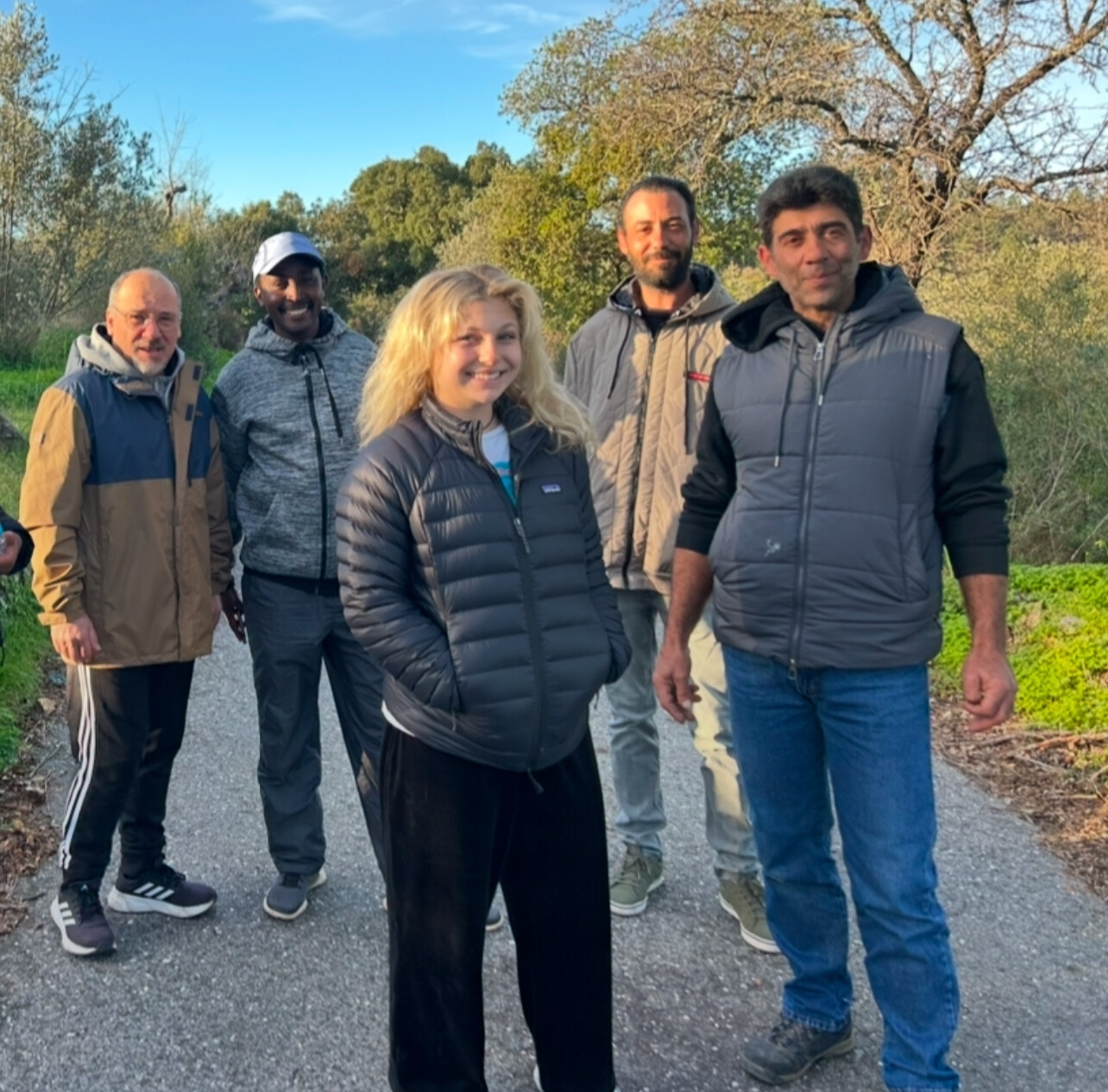
Looking back, I wish I had added walking to my schedule when I was younger. In my 50s, I was running 42 miles weekly, mostly quality miles, and racing well, often at a sub-6-minute pace. But on hindsight, I think incorporating two miles or so of walking daily would have helped. Those miles could have been added during daily activities, much like I do now. I never drive to lunch, I walk, run, or do a mix of both. I add miles whenever I can.
If I am getting tires for the car, I don't sit in the lobby; I get out the door for a walk or a walk/run. I think you get the picture: I make it a habit to fit in miles whenever possible, and I count those miles as part of my regular workouts.
Thinking back to those days, I was also hiking with my wife Catherine. Sometimes we were out for three hours. I did not clock those miles back then, but on hindsight, I believe that walking, especially those hikes, played a role in helping me run some decent times.
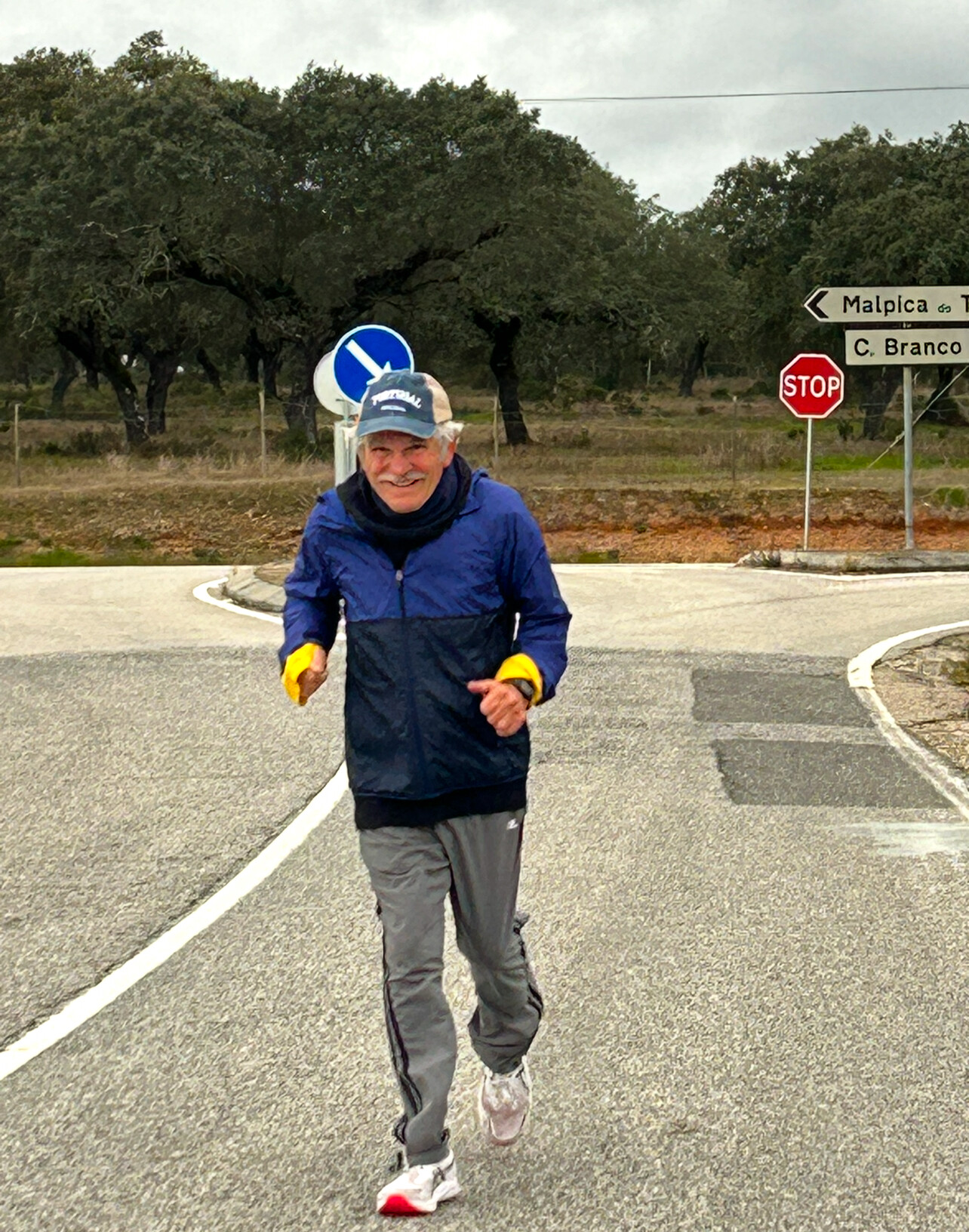
Since July 2018, my weekly average has been 44 miles, totaling over 16,400 miles. While my mileage has dropped a bit in the past year due to 12 trips to Portugal, each trip costing me about four low-mileage days, I remain committed to staying active.
Walking is valuable, but it is not a substitute for running if your goal is to train for running. To run at a good pace, you need to put in the work running. However, walking gets you outside, keeps you moving, and can serve as a recovery tool or a way to maintain consistency when running is not an option. At any age, especially at 77, movement matters.
Walking does take at least twice the time to cover the same distance as running, so I often incorporate strides to add variety and keep things interesting. For example, I will count to 50 or 100 strides, pick up the pace, then return to walking. It is a simple way to stay engaged while adding a little extra effort.
Mixing walking and running has been a game-changer for me. Running challenges my endurance and keeps me sharp, while walking allows me to recover, reflect, and enjoy the journey. Whether you are walking, running, or a mix of both, every mile tells a story of persistence, progress, and the joy of staying active. Movement matters it is that simple.
Photos: walking and running in Monforte da Beira Portugal recently from our Anderson Manor and home for KATA Portugal
by Bob Anderson
Login to leave a comment
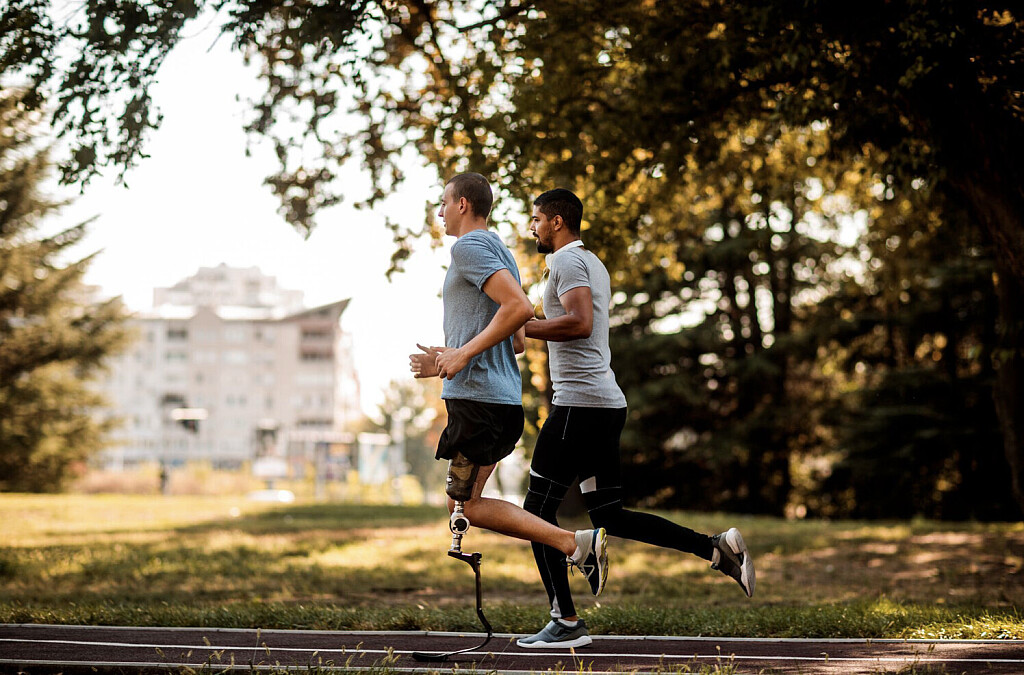
What’s Your Why? Our Readers Share Their Biggest Motivators for Getting Out There to Run
We asked runners what motivates them to get out and hit the road—their answers may inspire you.
Why do you run? If you’ve never thought about it before, ask yourself now.
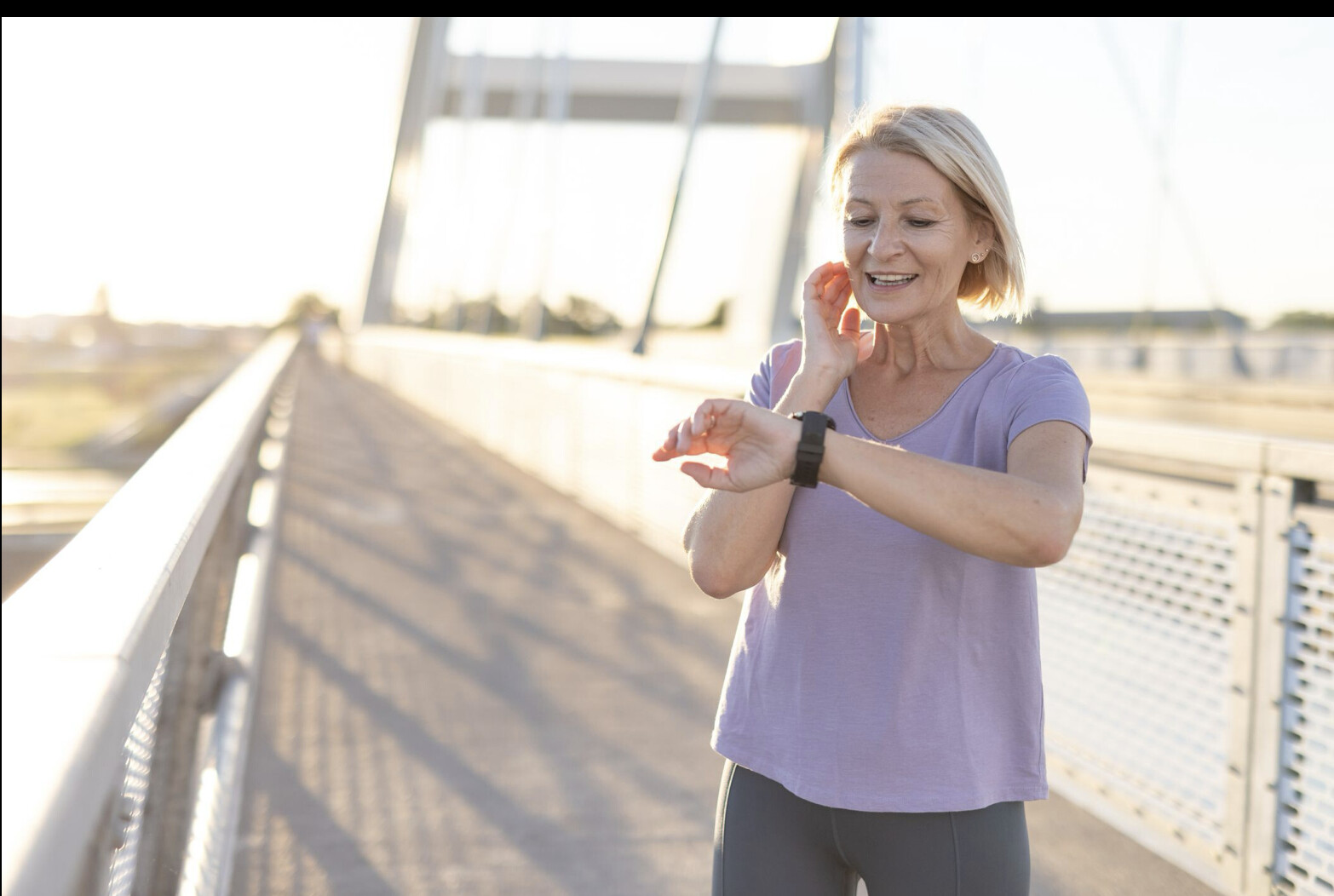

Being intentional about the reason why you run is a crucial part of maintaining motivation, especially if you’re just starting your running journey. Most of us know the research-backed benefits of running, but what is going to be that thing that gets you out the door when you don’t even feel like moving?
While your reason should be unique and personal to you, here’s some inspiration from our dedicated Runner’s World+ members and social audiences on Instagram and Facebook to keep in mind when considering what your why is.
For Myself
“Running is my ‘me time.’ It is time for me to simply run, listen to music, and enjoy the outdoors. It allows me to begin each day with a sense of accomplishment, and along the way I plan my to-do list, calculate finances, and solve problems. I do my best thinking when I am running. It also keeps me focused on my health and I always have at least one half marathon or marathon to train for.”—Jill Pompi (RW+ member)
“Because it’s the only thing in my life that’s just mine.”—April Thomson
“As a mom of three littles, running is my ‘me time.’ Time to fill my own cup; time to work toward a personal goal; time to show my kids that I enjoy movement simply because it helps me be happy, healthy, and strong!”—Marlena Shaw (RW+ member)
“It’s my time—no one asking me for anything. It’s me vs. me. Love the feeling after a long run.”—Spullins JB
“Running is just for me, and I run so I can be my best self. I don’t mean physically. Sure, I love how strong my legs feel when I cross a finish line or that good burn after a long run. But my best self is found when I hit the pavement and process whatever is going on in my life. I have two young kids (ages 3 and 14 months), and I am constantly being poked, pulled, and called. When I lace up my running shoes, the stress melts away and I am a better mother because of it.”—Melissa Hofstrand (RW+ member)
“To escape from reality for a brief moment and enjoy my ME time.”—Yuri Aguilar
“Sometimes to relax, regroup, and shake out anything bothering me… but usually to start my day off just right!”—Erin Carey Ryan
For My Health
“My health, specifically my heart.”—Kati Johnson (RW+ member)
“To maintain my health and challenge myself to reach new running goals.”—Gwen Jacobson (RW+ member)
“To fight bad genetics and hear my grandkids say, ‘Whoa, Grandma!’”—Michele (RW+ member)
“My asthma kept me from doing exercise for so many years. I’m running because I can finally do something I never thought possible.”—Patricia McHugh (RW+ member)
“To save my life. I am type 2 diabetic by way of having PCOS. By the time I was diagnosed with PCOS, I had developed full-blown diabetes. I run now to train for a half marathon I crazily signed up for and to get in shape for my first century ride next year. I will run and bike towards a cure.”—Stephanie Gold (RW+ member)
“I exercise and stay active so that I can be mobile and independent as long as possible as I get older. I choose running because it gives me such a great sense of accomplishment.”—Lisa Bartlett
“I run because last year I got Pulmonary embolisms in my lungs and now I want to improve my health and my lungs and spread awareness!”—Jennifer Cole
“Manage stress and support in quitting smoking.”—Aude Carlson (RW+ member)
“Keeps my AFib under control.”—Todd W. Peterson
“I want to be able to walk well into my old age. I have family members who have significantly lost mobility due to their unwillingness to exercise.”—Amy Watkins (RW+ member)
“To control my type 2 diabetes! It works!”—Mike Shamus
For Someone Else
“I started running after witnessing my mom complete a marathon and was overcome with emotion when she finished. I began running the very next year and completed a half marathon with my mom and have been running ever since. Running does so many things for me. It’s my escape, it keeps me centered, helps me to focus, a confidence builder but more importantly allows me to follow in the footsteps of my mom and continue to honor her. I wear a shirt with a picture of her running our last race together so that she’s running with me. I love to run!”—Chantal (RW+ member)
“My daughter.”—Jesse Sturnfield (RW+ member)
“To keep my sanity. Also, I wanna show my kids if they work hard, don’t give up, and find a love for something, they can accomplish anything in life. When they’re tired, stressed, unhappy, just to channel in and get the work done. They’ve been there when I run my marathons and have shown support and encouragement, and I’ll do the same for them. My daughter joined cross country this year and wants to join again next year. My son is wanting to join as well.”—Angela Yawea
“Because my dad ran. I lost him six years ago and clearing his flat I found his medal from Reading Half Marathon in 1988. Holding it inspired me to change. I have my dad’s and my medal from the same race together.”—Stumpy Taylor
For My Mental Health
“To keep my sanity!”—Libby Meyer (RW+ member)
“It’s my therapy.”—Allie Haight
“Running is my ultimate stressbuster! As a middle-aged tech leader, husband, and father to two preteens, running generates all the right endorphins and energy to ensure I’m on top of my game—all of my games!”—Annu Kristipati (RW+ member)
“Cheaper than therapy.”—Louie J. Frucci
“Running helps me dealing with my anxiety, my mental health, but especially this past year with grief. I lost my dad last year and couldn’t work out for two months. I was able to go back to working out thanks to running. Then I signed up for my first marathon. That was on the one-year anniversary of my dad’s passing. Running is my way to feel my dad close and be able to connect with him.”—Fadela (RW+ member)
“Because it has the power to mute my anxiety and self-doubt.”—Nicholas Kuiper
“Running makes me happy. It reduces my stress and anxiety and improves my mental health. It keeps my cardiovascular system strong.”—Suzanne Reisman (RW+ member)
“To stay calm in the chaos.”—Christine Starkweather
To Feel Powerful & Free
“Because it makes me feel powerful and healthy (sometimes only once it’s over).”—Laura (RW+ member)
“To be a real-life video game character.”—Erin Fan (RW+ member)
“Feels like I’m flying. Powerful and free.”—Tenaya Hergert
“I run because I want to be healthier in my 50s than I was in my 30s! And, also, running makes me feel powerful.”—Laura (RW+ member)
“Running gives me a voice.”—Becky Westcott Capazz
“It makes me feel strong and confident, that I can handle everything else in my day.”—Rebecca Eisenbacher (RW+ member)
“To feel free, manage anxiety, accomplish increasing mileage.”—Barbara Saunders (RW+ member)
“Total freedom. Slap your shoes on and be free.”—coach_shasonta
For Connection
“Running makes me feel strong and is my way of meditating. I also love that I’ve been able to connect with people and make so many new friends through running. I enjoy seeing my fitness progression.”—Gisele Carig (RW+ member)
“For my mental health and human connection with friends.”—lizpowers76
“Refreshes the spirit. BTW: I can no longer run; I train and enter races as a walker. Have made many new friends who accept me for just being there.”—Lewis Silverman
“I have many reasons. I connect with my running partners on some runs. I connect with God on others. I find a sense of accomplishment. I like to test what my body can tolerate.”—Tim Thomas (RW+ member)
“When I’m alone, I run to quiet my mind. It is meditative and rejuvenating. I also run to be social. The running community is the best.”—Andy Romanelli (RW+ member)
“Makes 77 feel young and hanging around with younger runners is a whole lot of fun. Not to mention I’ve been loving going for a run for more than 46 years.”—Barbara Ann Morrissey
Because I Love Racing
“I want to improve my 5K time.”—Courtney Danko-Searcy (RW+ member)
“The feeling I have on race day, within the first mile, that all the training is paying off.”—Mark Hopkins (RW+ member)
“My husband and I started running about six years when my son, who was about 12 at the time, had run over 25 5Ks. It took about a year until we were ready for our first 5K. We love running and training together. Running helps me at the end of a long teaching day, and it just feels so good after! We have since ran many 5Ks, some 10Ks, and two half marathons!”—Suzy Wintjen (RW+ member)
“It’s at the end of Ironman.”—Cheryl Turpin
“First, I began to improve my health, then I got hooked. Fifteen years later I am chasing my Six Star Medal.”—Jorge Mitey (RW+ member)
“It’s something I’ve always done since fifth grade. I got into racing 25 years ago. I love the challenge running gives me to constantly improve and get back out there whenever I’ve been injured or ill; and next month will one year since starting my first running streak! Most of all, I run because I love how it makes me feel. It has gotten me through the worst times in my life. Whenever I’m having a bad day, whether I’ve already gone running or not, I go running. It always calms me and makes feel better.”—Elle Escochea Grunert
So That I Can Indulge
“Because I love carbo loading.” —Bud Bjanuar
“I run so I can eat whatever I want and still be in shape!”—Christi Webb (RW+ member)
“I run to eat poutine.”—Robin Bosse
“So I can drink beer!”—Kathy Davis Ward
“Because I am a chocoholic.”—Chantal Englebert
“Faster than walking and I like tacos.”—Shelly Pedergnana
“I run to eat crispy pata.”—Arrin Villareal
To Get Outside
“Fitness and peace of mind. Also, a great way to explore neighborhoods and the outdoors.”—Sue Padden
“The feel of being outside with my dog. Watching him enjoy the run lets me enjoy the run.”—Stan (RW+ member)
“It’s my time with nature. It’s for me to clear my head and think.”—Assa Burton
“Running is my sanctuary. It’s where I can clear my mind, letting go of stress and finding clarity with each step. The rhythm of my feet hitting the ground is a meditative escape, helping me to focus and recharge. Physically, running keeps me in peak condition, building strength and endurance while boosting my overall health. But what I love most is being outside, feeling the fresh air, and soaking in the beauty of nature. Whether it’s a sunlit trail or a quiet street at dawn, running connects me to the world around me in a way nothing else can.”—Adam Scolatti (RW+ member)
Because I Can
“This is my ‘stock’ answer. I do because I can and I can because I do.”—Chip Kidd
“Because I’m not ready to give up yet.”—Martha Rhine (RW+ member)
“Because I was completely disabled, not able to move, stand, walk, talk, or do anything... stuck in the hospital for 13 weeks. When I was discharged and started to walk a little, I needed something to help me get some kind of life back. Running was it.”—Rob Snavely
“Because I’m 70, and not dead yet.”—Michele Glover
“Because I can. One day I won’t be able to and it’s not today.”—Mike Bravo
“Because one day I’ll be old and everything will hurt, and it’s the one thing in my life that lately makes me happy. When you’re running you forget everything. If you’re still thinking of debt, sadness, breakups, you’re not trying hard enough. Every day you have to push yourself.”—Miryam Hernandez
“Because I still can… at 73.”—Joanne Gile Michaelsen
“Forty-five years, why stop now? Never regret going for a run.”—Leslie Kitching
“Sixty-one years old. Been running since I was 15. Because a day without running is like a day without brushing your teeth.”—Sharon Graeber Hall
To Prove it to Myself or Someone Else
“To prove I can. And prove my mind is more powerful than my body.”—Colton James
“Because I still can, and everyone tells me I can’t!”—Lloyd K Leverett
“To tell people I did.”—Chris S. Charlett
“I’m 55. Basketball days are over. The need to compete is still there, and even if that means competing with myself, running allows me to do that.”—Shawn Davis
Because I Hate How I Feel When I Don’t
“I don’t know, but recently I injured my knee, and I was sad I couldn’t run. Thank god, it healed itself. I think running gives me inner peace.”—Jose Murga
“Because I hate the way my brain itches when I don’t.”—Joe Baron
“Because it’s better than smacking my family upside the head from being over stimulated. [It] helps my mental health.”—heatherbrubaker19
“I don’t like it until it’s over.”—Laurie Stinson Fuller
“So that I am tolerable to my husband!”—Dimitra Zakas
“It’s either that or sending my work computer flying out the window like a frisbee on the regular.”—Ayla Amon
“It feels so good when I stop.”—Sarah Wiley
Login to leave a comment

When It’s Time to Replace Your Running Shoes
When this assignment hit my inbox, my first thought was: I am 100 percent going to find out that I need to buy new running shoes. I jog a few times a week and haven’t replaced my Hoka Clifton 9’s since 2023. The chunky, cushioned sole that Hokas are known for has been flattened by months of trail running, and the bright neon yellow exterior has dimmed to a dull mustard.
But they do the job, and I’m a bit frugal, so I’ve stuck with them. But after speaking with a few sneaker experts, I learned I’m not doing myself any favors by holding onto beat-up gear. The more I use them, the greater my risk of an injury.

Here’s why it’s worth replacing your go-to kicks—and how to figure out when to do it.
What Is the Average Lifespan of Running Shoes?
The average running shoe is thought to last about 300 to 500 miles or five to eight months of regular use, but determining your shoe’s true lifespan is more complicated, says Daniel Shull, Run Research Manager at Brooks Running.
Many factors shorten or extend the longevity of your sneakers, including how often you wear them, the kind of terrain and weather you run in, and your stride and strike habits, says Shull.
“Every runner is different, and every shoe is different,” says Arianna L. Gianakos, a Yale Medicine orthopedic surgeon specializing in sports-related foot and ankle injuries.
Trekking through mud, gravel, and puddles can erode your footwear, as can working out in hot or frigid temperatures, says Susan L. Sokolowski, a professor of sports product design at the University of Oregon. She explains if you’re a heavy runner, meaning you land on your foot hard, the foam in the middle of your shoe will break down faster. And if your foot rolls inward or outward, you can wear out a part of your shoe that isn’t built for regular impact, such as the edges or outsole, speeding up your need for
For example, I don’t merely wear my Hokas when I jog. I also wear them when I recreationally hike, bike, and walk my dog all over town. So, while I’d love to think my running shoes last a year, they probably give out much sooner.
Why It’s Important to Replace Running Shoes
When your foot slams onto the ground, your shoe acts as a buffer and absorbs some of the force hitting your foot and ankle, Gianakos says. According to a 2023 review published in Exercise Science and Sports Reviews, shoes influence how your foot interacts with the ground, impacting your performance, speed, comfort levels, and risk of sustaining an injury.
If your sneaker no longer provides the support and cushioning your feet need, you can hurt the joints, tendons, and ligaments in your feet, ankles, and even upper leg, says Gianakos. You can run (pun intended) into a whole host of injuries like plantar fasciitis, tendonitis, stress fractures, and shin splints, she adds.
You may get pain in the ball of your foot (or metatarsalgia), patellofemoral pain syndrome, which causes pain around the kneecap, or iliotibial (IT) band syndrome, a condition that causes pain near the outside of your
So, do a body scan next time you’re out on the trail. Do you notice any foot or ankle aches and knee pains? What about burning sensations on the sole of your foot? How about blisters or calluses? Any of these symptoms may indicate your shoes are shot, says Gianakos.
How to Extend the Life of Your Favorite Pair of Sneaks
First, be mindful of how you store your shoes. You want to keep them in a clean, dry location to prevent mold from growing, says Sokolowski. And don’t store them in a hot, sunny car—UV exposure and heat can cause them to dry out and crack, she adds.
Gianakos recommends having (at least) two pairs of sneakers. That way, you can occasionally switch them out to slow the wear and tear. Another tip: have different sneakers for running in different environments—like “a trail shoe, a road shoe, and even a race day shoe,” says Sokolowski.
And save your running shoes for running only. “The time and amount of steps put on your shoes by walking, standing, and running errands all count towards how long they’ll last,” says Shull.
For all your other day-to-day activities and
Login to leave a comment
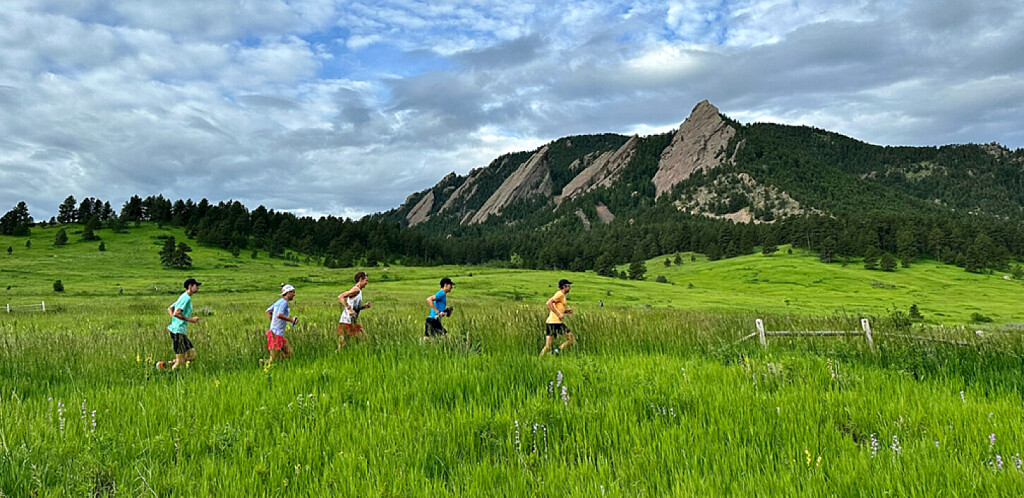
Don’t Wait for January, Start Training for Your 2025 Running Goals Now
What are your biggest running goals for 2025? Have you started training yet? Do you have a plan or a coach to guide you?
OK, I know, that’s a lot of questions as the year winds down, but now is the perfect time to find some answers.
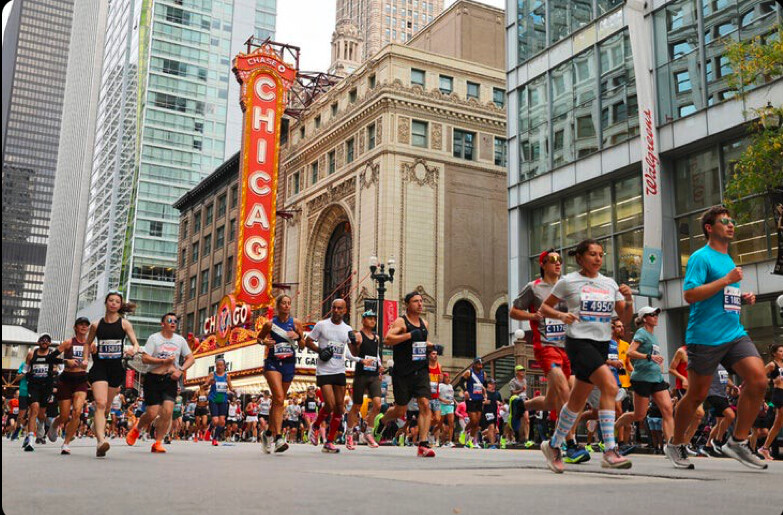
We all get excited about chasing running and fitness objectives in the new year—running your first or next marathon, aiming for a new half-marathon PR, taking on the challenge of a rugged trail race, or simply just getting into the best shape of our lives—but too often we wait until New Year’s Day—or even sometime in the early springtime—to get started.Yep, I’ve been guilty of that, too, a few times! But this year, I started chasing my next-year running goals on November 1. My goals are diverse and personal—getting optimally fit for a 50K trail race in June, running a fast mile on the track in August, and running the Chicago Marathon for the fourth time in October, not to mention spending a summer of doing long adventure runs in the mountains. Starting early and adding structure now will make a big difference in how I’m able to achieve those goals. Yes, if you live in a climate where winter makes running more challenging like I do, it will take some additional effort and sacrifice to get started. But no matter where you live, the juice is worth the squeeze that it will take to get started sooner than later.
After a rough injury-filled year of running in 2024, I decided to put myself through a month-long training camp by focusing on honing core strength and low-key, consistent running during November. Now, with the guidance of a coach, I’ll get into a base-building phase in December with a slightly higher volume of mileage and
2. Don’t Make ResolutionsLook at the new year like a blank canvas or a book of blank pages that you get to fill with whatever you want to accomplish in 2025. Just don’t fall into the trap of making New Year’s resolutions, which typically fail by the third week in January. Instead, build a structured plan based on evolving periodization or have a coach develop a program specifically for you. My only advice is to not set the bar too low. No matter if your goal is to get fit and run your first or next 10K, marathon, or ultra-distance race, make your goals specific so you can adapt along the way. If you’re consistent with your training, there’s a good chance you’ll be able to surpass your initial goals as you develop a solid level of fitness. Believe in yourself, do the work, trust the process, and results will follow.3. Make Plans
To accomplish anything, you need to have a plan. That might start by signing up for a race or two, but that’s the easy part. Getting there and running well takes time and maybe some help. If your goal is to run your fastest marathon sometime next year, how are you going to do it? What training plan are you going to follow? Does it make sense to hire a coach? And does an online or an in-person coach better suit your needs? Who will you run with for your long runs or your hard workouts? Training alone and doing it without guidance can work for some people, but most runners benefit from all the help they can get.4. Be Consistent But Flexible
Mixing training with life is a difficult juggling act and always unpredictable. Even if you’ve meticulously planned your week and have anticipated some of the things that come up, unexpected challenges like work, family, friends, or weather can still disrupt your running routine and throw off your training flow. Being consistent requires a three-part approach in which you’re diligent, flexible, and reasonable. If a work meeting goes long and eliminates your lunchtime run, be prepared to log those miles in the evening. (Or better yet, if you’re able to run before work, you will not regret the early wake-up.)
If inclement weather makes it impossible to do your planned track workout, reconfigure your schedule and do it later in the week or modify your workout to do it on the roads or the treadmill, but don’t just give in and take a day off. Be relentless about your pursuit as much as is reasonably possible. Don’t knock yourself out—if you get sick, rest may be what you need. But prioritize running so you keep heading in the right direction. Here’s where a coach can help ensure you are getting the work in5. Get Stronger
If you want to chase new goals and up-level your running in 2025, you need to make sure your body is strong enough to hold up through the rigors of the miles you’re logging. Working on general and running-specific strength will help you run more efficiently for longer durations and also help reduce the chance of overuse injuries. No matter how fit we are, we gradually lose muscle mass and strength in our late 30s to early 40s. That doesn’t necessarily mean you’ll be getting leaner, but it probably means you’re getting weaker. I made it a point to do 30 minutes of strength work every other day in November. Plus, I added simple strength exercises on the other days and lap swimming two days per week when I could.6. Make Sure You’re Having Fun
No matter if you’re a new runner or a sub-elite speedster, one of your top priorities should be making your running fun. That doesn’t mean you shouldn’t be diligent about training, make necessary sacrifices, and be serious about the goals you’re chasing. It just means that you should enjoy the journey. Because afterall, what’s the point of any of this if it’s not fun? Keeping running fun could look like linking up with friends for early morning runs or hard workouts, joining a local running store or pub run group, planning a post-long run brunch with friends on a weekend morning, listening to your favorite podcasts while clocking easy miles, or going out of your way to discover off-the-beaten-path trails. Not only do those actions add intention to your running, but they also add camaraderie and accountability, too.
For me, the simple notion that I’m doing something for my short-term health (namely moving my body and clearing my mind) and long-term well-being (ideally offsetting long-term health issues from being sedentary) are inherently inspiring and motivating. And the more you get into it, you’ll find that7. Keep Going
Every year of dedication to consistent fitness is like a deposit into your future well-being that not only builds increased aerobic capacity and efficiency but also generates lifelong enthusiasm and long-term health. I was oblivious to that concept in my late 20s and early 30s when my attention span was mostly concerned with the here and now. But I’ve come to realize that my running journey has never been only about training for races on my calendar or what I’m doing in a particular season of a particular year—it’s tied to extending my physical, mental, and emotional longevity.
So, just because there’s a new year on the horizon and you’re all excited to reach specific goals in 2025, remember that you’re on a journey that doesn’t end at the finish line of a goal race or after a certain amount of time. Approach the new year as an investment in your wellness that will (hopefully) extend through the next several decades of your life.
Login to leave a comment
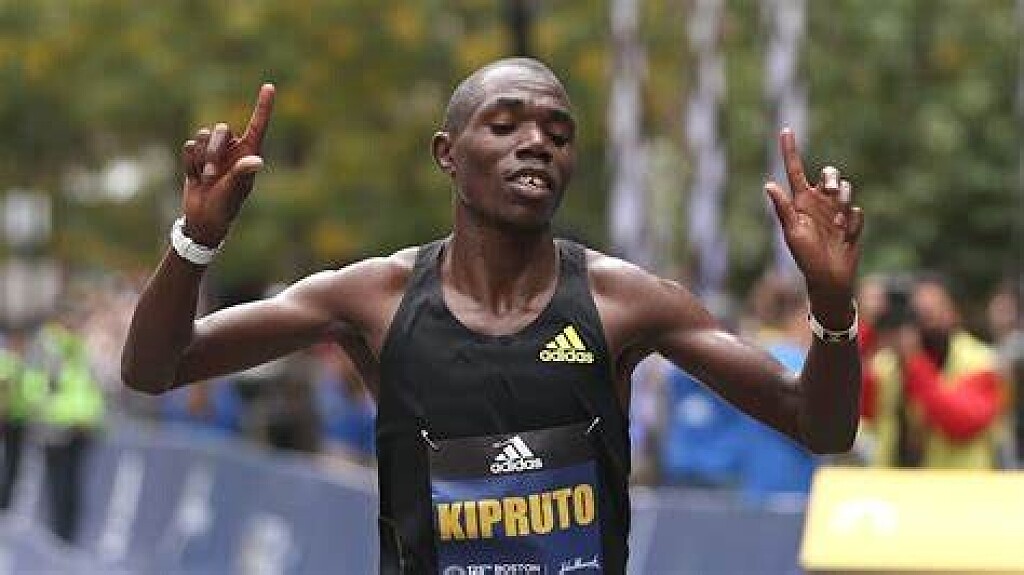
Benson Kipruto eyes comeback at Tata 25K after life-changing Paris Olympic glory
Life has changed for the better for Olympic bronze medal-winning Kenyan marathoner Benson Kipruto.
The 33-year-old, who earned a Paris Olympic medal in his debut competition for his country, took a break to soak in the massive euphoria back home.
During this time, he began constructing his dream house -- "now 90% complete" -- and exactly four months later, he is set for his much-anticipated comeback at the Tata Steel World 25K in Kolkata on Sunday to test how his body has adapted.
"Life has changed since Paris. I'm now getting a lot of invitations to run in marathons," Kipruto told reporters during an interaction ahead of the race day.
"I'm building a house in a small village near my training place -- it's 90% complete now. This is all thanks to my running achievements," he proudly stated.
Kipruto was raised by his mother after his father died. He could not always attend school and worked in a farm before trying his luck in running inspired by the success of his elder brother Dickson Chumba.
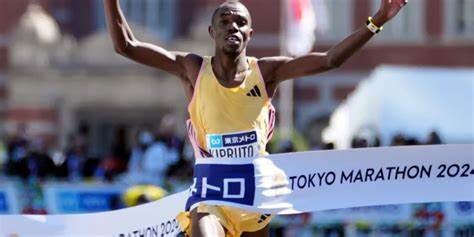
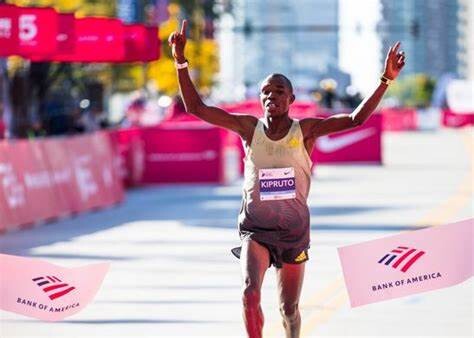
He went on to win the Boston Marathon in 2021, followed by victories at the Chicago Marathon in 2022 and the Tokyo Marathon in 2024 where he clocked his personal best of 2:02:16. He also claimed second place at the Chicago Marathon in 2023.
Paris Olympics was his first event for Kenya and he won the bronze with a timing of 2:07.00. "After Paris, there was a massive celebration. It was my first time representing my country, and winning a bronze medal was a huge achievement for me. "I had never represented my country in any international event before -- nowhere, never. It was my first time representing Kenya on such a stage, and it felt incredible."
After Paris, Benson took a well-deserved break to recover, skipping other races to focus on his physical and mental well-being. Now, with his sights set on returning to competition, he eyes to dethrone his compatriot Daniel Ebenyo who is also the event record holder. "After Paris, I decided to take a break. I didn't participate in any races for a while. Initially, I was supposed to run in Chicago, but I said no because Paris was tough, and I needed time to recover. "I've now started preparing for my next marathon. That's why I came here to participate and see how my body has adapted after the break," he added.
Asked about his consistency and advice to the youngsters, he said: "Consistency in our sport comes with many things, but the most important is discipline. "Discipline is key. Second is training and being patient. Patience pays off, and that comes from the level of training you commit to," said Kipruto, a fan of two-time Olympic champion Eliud Kipchoge.
"I usually run 25–30 kilometers a day. This routine helps me adapt to marathon running and maintain my performance," he concluded.
by The Week
Login to leave a comment

Kolkata 25k
In Kolkata, a city rich in history, culture and custom, the third Sunday in December is a date that is eagerly anticipated. The Tata Steel Kolkata 25K (TSK 25K) has become synonymous with running in eastern India since it began in 2014. India’s first AIMS-certified race in the unique 25 km distance, the TSK 25K went global in its fourth...
more...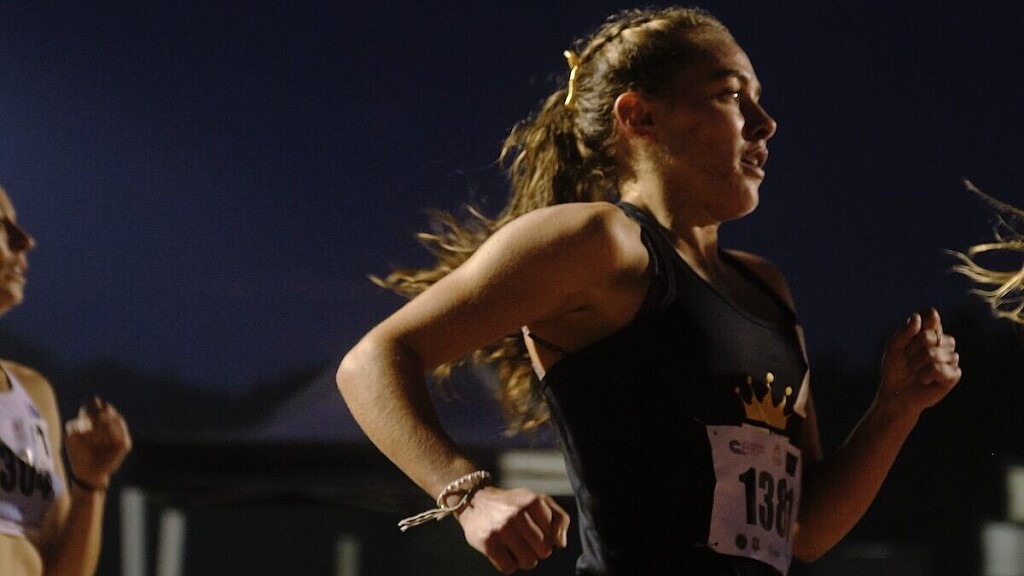
My three biggest inconveniences as a runner
More often than not, I’m convinced my struggles as a runner make me stick out like a sore thumb. I’m always surprised with the number of athletes who share these experiences and make me feel a little less like an oddball. Here are the three recurring inconveniences I encounter on a regular basis, along with adaptations that have helped me thrive.
1. Eating enough food

Running is a demanding sport; you’ll expend a lot of energy and need to fuel to replenish those nutrients. As someone with a naturally fast metabolism, it can be tough to keep up with how quickly I get hungry. I found meal prepping has been essential for making sure I’m eating enough, with high-protein meals keeping me full for longer. During peak training months, I’m sometimes eating four meals a day, which can make grocery shopping seem like a full-time job. I also always have a protein bar on hand (I just keep one in my bag at all times) for a post-workout snack or in case of immediate hunger.
Constantly being hungry also makes it difficult to fuel close enough to a race or a workout–I’m hungry, but I don’t want food sitting heavily in my stomach when the pace picks up. I used to follow the two-hour rule, but I’ve slowly trained myself to eat small amounts of food (a bagel, oatmeal or yogurt) closer to the start of my run to ensure I’m not running on empty. Gels and gummies are also perfect for a light, energy-boosting mid-workout snack, without the weight of solid food.
2. Cold hands
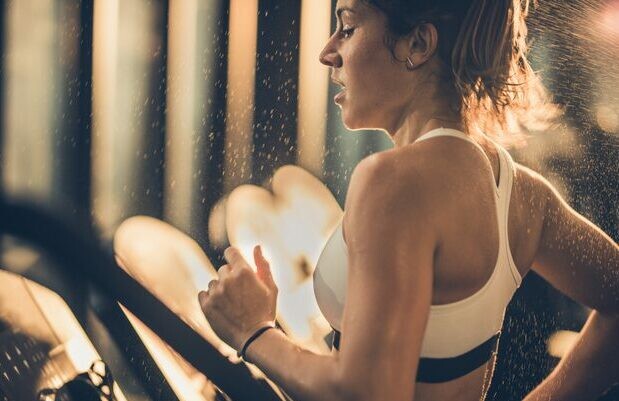
Although I have yet to see someone wear gloves while running as often as I do, I know cold extremities are a very common inconvenience among runners. With Raynaud syndrome (decreased blood flow to extremities), even mildly chilly days can make my fingers painfully cold. As fall comes around, you’ll find me with countless pairs of gloves and mittens in my running bag, plus plenty of throw-away gloves for race day. I know–gloves and a tank top isn’t exactly a fashion statement, but I’ve learned to own it.
3. Sweating… a lot
This is something I know all runners deal with, but it can feel excessive when you’re drenched five minutes into your run. It’s easy to compare how much I sweat to my peers, asking myself why I’m the only one changing into clean, dry clothes between workouts. I’ve even wondered if I have hyperhidrosis. Over time, I’ve started to embrace it–after all, it’s just my body doing its job. My solution? Have an extra set of clothes and a sweat towel in my running bag at all times, always drink electrolytes post-workout and never skip deodorant.
by Cameron Ormond
Login to leave a comment

Three reasons why treadmill running is fantastic
In every running group, there are always a few people who love to grumble endlessly about how much they hate treadmill running. But here’s the thing: running on a treadmill has its perks, and we’re here to give it the credit it deserves.
We get it—the “dreadmill” jokes practically write themselves. There’s also always a die-hard outdoor crew who take pride in braving icy sidewalks and freezing winds to avoid setting foot indoors. If you’re one of those runners who actually enjoys hopping on the treadmill now and then, don’t let the naysayers get to you. Whether you love the predictability, the convenience, or just the chance to run without layering up like you’re racing an Arctic marathon, your preference makes perfect sense. And guess what—you’re not alone.

1.- A treadmill is the perfect training partner
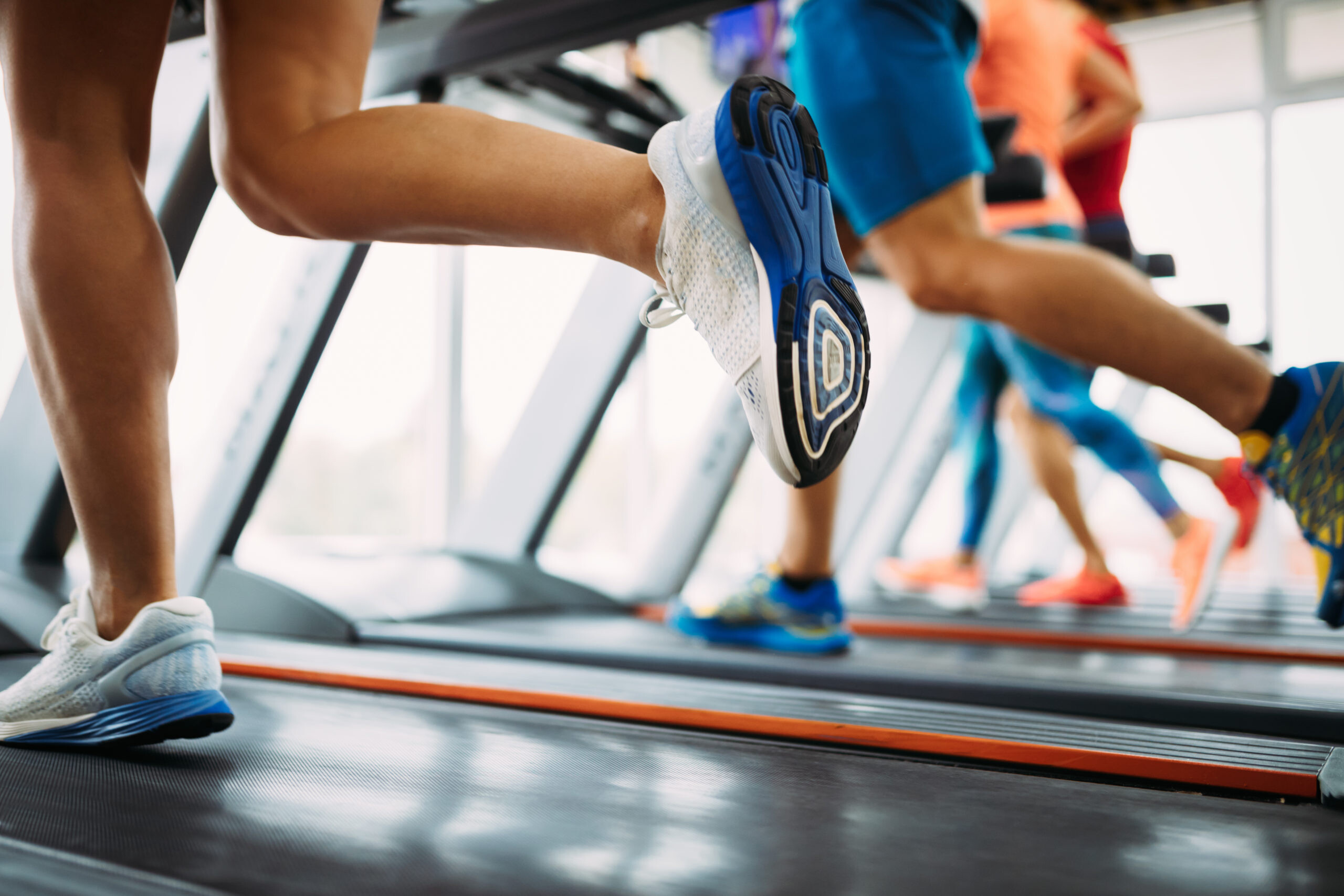
A treadmill offers precision that outdoor running can’t always match. If you’re looking to nail a steady pace or hit a specific incline during your hill-training sessions, the treadmill delivers. Its cushioned surface also feels kinder on your body than pounding pavement—for newer runners or those returning from an injury, this can be a huge help when it comes to staying consistent without overloading your body. The treadmill can be a fantastic, customizable tool that will help you smash your goals, with the complete control it allows over speed, incline and distance.
2.- Enjoy a unique mental challenge (and maybe a Netflix challenge, too)
Hey, you never need an excuse to rest and relax—but if you’re looking to justify that multi-hour Netflix binge, your treadmill long run has you covered. The miles will melt away as you dive into your favourite thrilling series or indulge in a few Hallmark Christmas specials (hey, we don’t judge). Want to channel your inner David Goggins and take on a next-level mental challenge? Skip the screen and stare at the wall in front of you for hours instead. It’s a bold choice, but who are we to question your grit?
3.- You can learn to love it
As someone who has bounced between the treadmill skeptics and fans, I can confirm that hitting that start button can absolutely grow on you. After enduring frostbitten fingers during brutal winter long runs and even breaking a leg on an icy sidewalk, I decided it was time to embrace the treadmill with an open mind. These days, whether I’m catching up on my favourite show, tackling a tough incline workout (a rarity in my pancake-flat prairie town) or squeezing in a run during odd hours when the streets feel less inviting, the treadmill has earned a permanent spot in my running routine.
Don’t get me wrong—I’ll always love the crunch of crisp fall leaves underfoot or the magic of a snowy trail. But there’s something equally liberating about knowing I can keep my training consistent, no matter what the weather or circumstances throw my way.
by Keeley Milne
Login to leave a comment
Greek runner offers $1,500 reward for stolen marathon costume
One man's tradition of racing the Athens Marathon could be up in flames after his costume was stolen just days before Sunday's race.
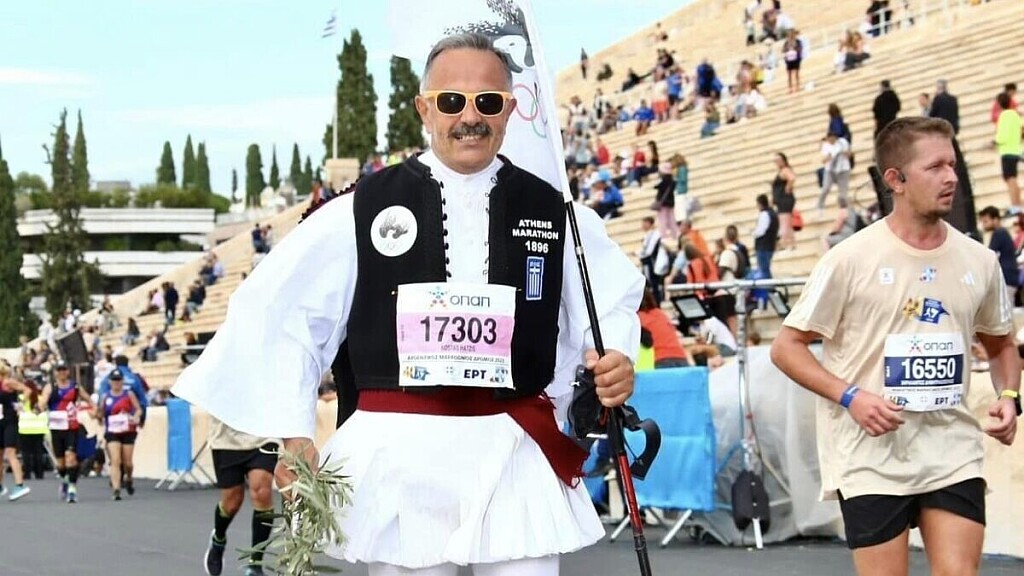
For seven consecutive years, Greek marathoner Kostas Hatzis has travelled to Athens from his home in the Netherlands to take part in the Athens Marathon. On Wednesday, his plans to participate in the 41st edition of the race (set for Sunday) came to a halt when his suitcase, containing his traditional Greek costume, matching shoes and Olympic Truce flag, was stolen from his vehicle. He now offers a reward of €1,000 (CAD $1,491) for anyone who returns his belongings.
“My world collapsed,” Hatzis wrote on Facebook. “My traditional Greek costume and matching shoes were snatched from me. My Olympic Truce flag, my running outfits and all I need for one week. I did not come all the way from my home in NL to eat, drink and sleep in Athens.”Hatzis’s traditional Greek costume is the distinctive uniform of Greek soldiers called Tsoliades–right down to the fustanella (a kilt-like garment) and the tsarouchis (flat shoes with pompoms). The Olympic Truce flag bears a drove with a traditional Olympic flame, symbolizing peace and human spirit.
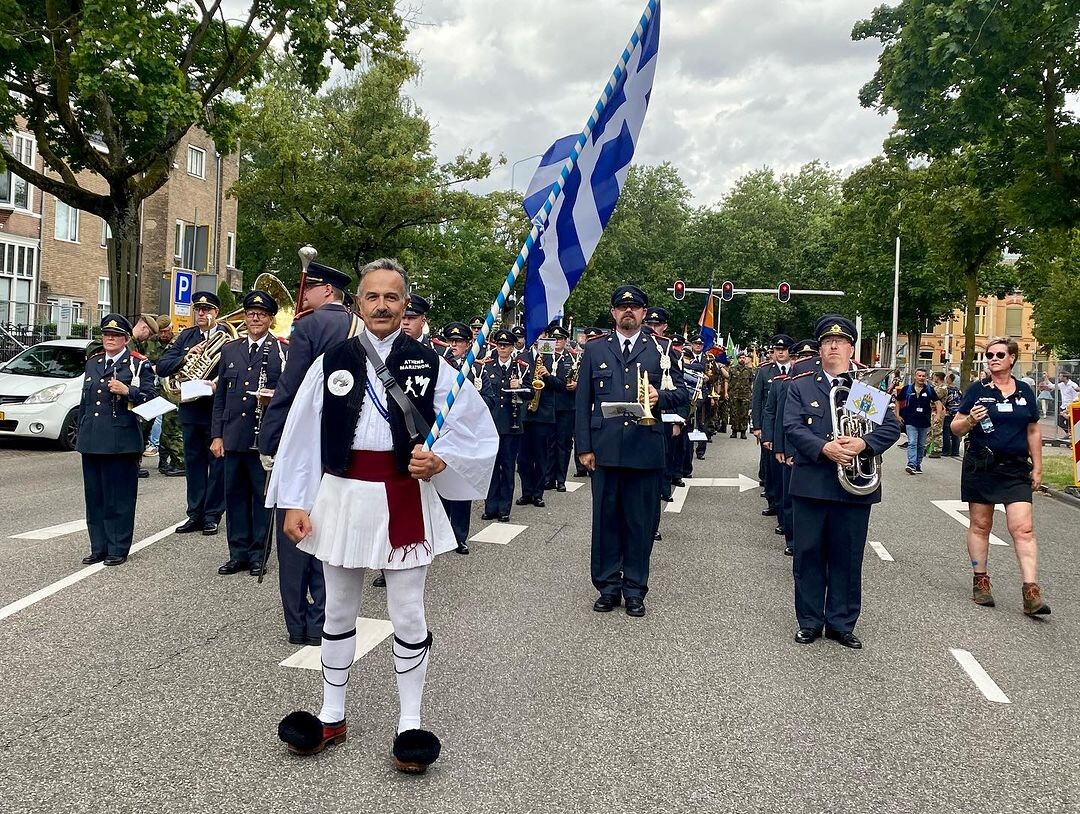
The runner, who calls himself an “International Marathon Messenger“, runs to promote the Ancient Greek tradition of Olympic Truce, or Ekecheiria. The tradition acknowledges the signing of a treaty between three kings to allow safe participation in the Olympic Games for individuals from the Greek city-states–Elis, Pisa and Sparta–despite ongoing conflicts.
In October, Hatzis took part in passing the marathon flame at the Kosice Peace Marathon in Košice, Slovakia, to honour the 100th edition of Europe’s oldest marathon.
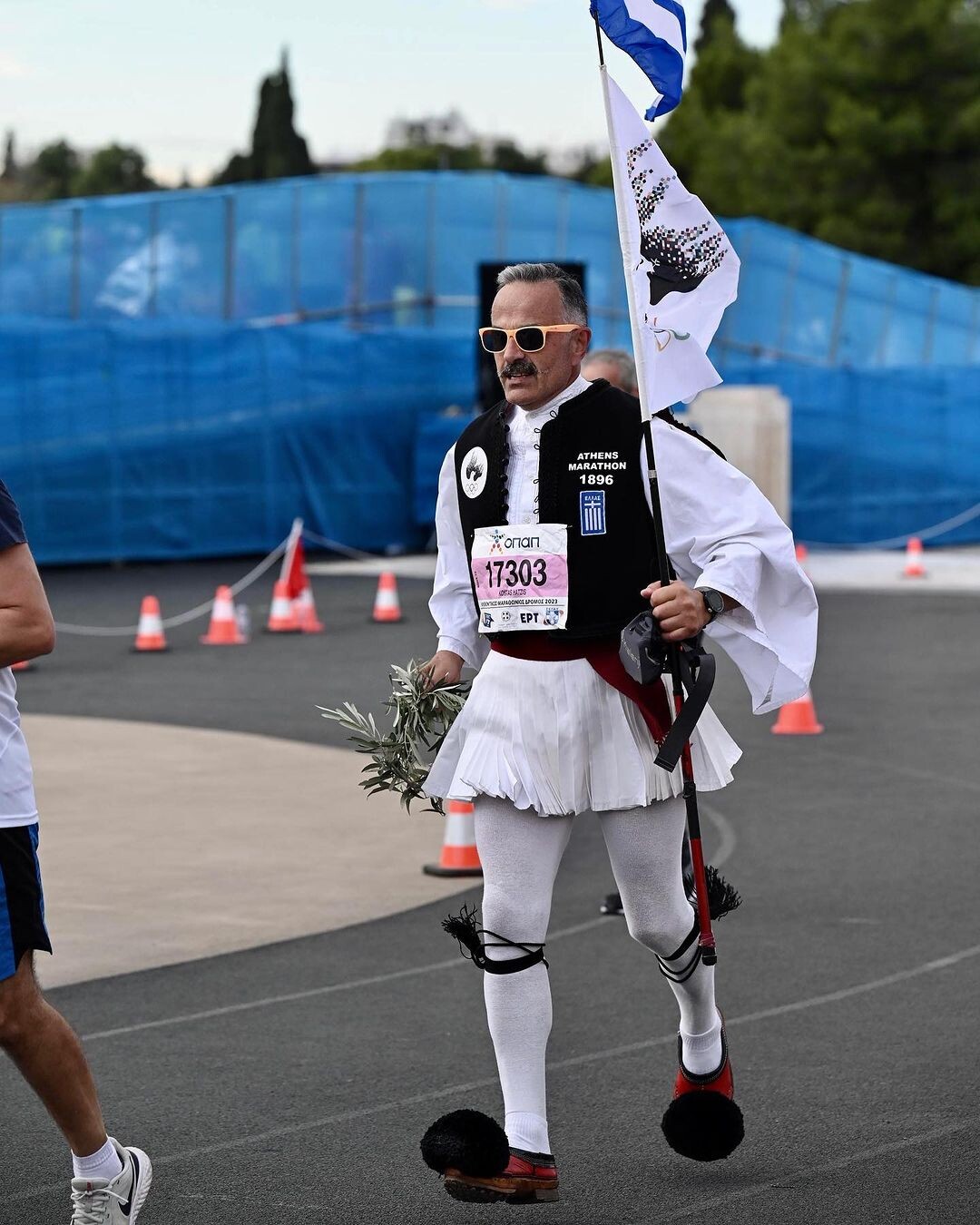
Sunday’s race was set to mark Hatzis’s eighth consecutive time competing in the Athens Marathon; his fastest time for the course is 5:17:26, which he ran in 2016. The runner has participated in countless other marathons since 2012, including the Barcelona Marathon, Paris Marathon, TCS Amsterdam Marathon and the HAJ Hannover Marathon.
by Cameron Ormond
Login to leave a comment

Athens Marathon
The Athens Classic (authentic) Marathon is an annual marathon road race held in Athens, Greece, normally in early November. The race attracted 43.000 competitors in 2015 of which 16.000 were for the 42.195 km course, both numbers being an all-time record for the event. The rest of the runners competed in the concurrent 5 and 10 kilometers road races and...
more...
I Forced Myself to Run Early Every Morning, Now I've Learned to Love It
It turns out that getting up early can have some surprising benefits.Though it goes counter to the preferred doctrine, I tend to thrive on less than eight hours of sleep. I’ve been a night owl most of my existence, and usually only get five to six hours of shuteye. There’s always a good documentary to watch, a game late at night, or a comedy to binge before going to bed.
But I’ve never really worried about it, because being productive in the morning has never been an issue, whether I’m doing chores around the home or (before working from home was the norm) getting in to the office early to get ahead.

Several years back, however, there was one thing I’d never been able to master because of this type of schedule: morning runs.Any time I vowed to wake up for a morning run, telling myself I’d feel great the rest of the day, I would either turn off the alarm, or I’d groggily stumble out of bed and run the equivalent of “junk miles” during a crappy outing.But when work and my personal life started conspiring against me, it made my typical routines crumble. At the time I was training for a marathon, and while I would normally schedule several days a week for lunch runs—a perk that comes with the job here at Runner’s World—my afternoons had been tied up with other tasks.
Sure, I could have tried running at night, but that is sacred late-night TV time—a guy needs to relax. No, if I wanted to get in my training, morning workouts were the only real option.
So I tried an experiment and committed to trying to master the morning run for 15 days. The goal was to have all easy-day runs completed well before 8 a.m. (when I start work) and my weekend long runs to start no later than 7 a.m.
I was able to wake up every day from mid April until the end of the month, but the process wasn’t always easy. Along the way I learned what works for me, what doesn’t, and some little tricks that could be helpful for all runners. Here’s how it all played out a few years back.That Little Problem of Waking Up
Unlike the “Upside Down” from Stranger Things, early mornings are not some unknown world that I have never experienced before. I’d always done my weekend long runs early-ish, and during a few marathon training cycles, the only time I could regularly plan my speedwork was on Thursday mornings starting at 6 a.m.
I’d been doing these 6 a.m. workouts on a local college track for most of the year in either blustery, frigid cold, or snowy conditions. It’s the type of weather where it feels difficult to really open up for a true hard workout. Oh, and the field lights were never on. But it was somehow lovely, and gratifying to finish these hard runs in the dark, in absolute solitude, as undergrads in nearby dorms remained asleep.
So “Thursday morning speed workouts” and “Saturday morning long runs?” No problem. But that’s because I spent time developing that habit. I feared that getting up Monday morning to do 4 miles knowing I had to do the same thing every other day that week would be more problematic.
To make this experiment work, I decided to mimic my Thursday morning routine for weekday runsSo the mission became clear: each night before going to bed, I would plan out my run and route, put out workout clothes, and prep my lunch—and the coffeemaker if I wanted some for after the run. That way I wouldn’t need to make any of these decisions from the depths of a morning fog. Oh, and I needed to find a better way to make the alarm actually jolt me awake.
The last part was the trickiest. The only way I could mentally get past hitting the snooze button was by keeping a hand on my phone when I woke up. If I jumped into an app—my email, calendar, bank account, or morning newsletters—the stimulation and blue light was just enough to jumpstart my mind/body connection, and for me to swing my legs out of bed.Off I went.
Figuring Out My Stomach
Being unfamiliar with constant morning runs meant I was also not so familiar with how my gut worked that early. This was especially true in the first few days of my morning-run venture. On each of those initial runs (besides the very first, where my body was familiar with doing speedRest Days Should Feel Easy
One big stumbling block for the morning run in the first week of this experiment was simply adjusting to how I felt trying to shake off the rust and head out the door immediately. The five minutes it took me to brush my teeth, put in my contacts, and get dressed for a run wasn’t enough to fully adjust to being up. Maybe my brain was starting to fire on all four cylinders, but my body wasn’t.My knees and quads often felt stiff as I went out on what should have been an easy three to five mile jaunt, and my legs felt like rusty pogo sticks jerking up and down over the road. I typically hit a 7:30 mile pace when I do my easy day lunch runs, but getting past the 8:00 minute mark became a real struggle.
After a few days, I came to the realization that this might not be the worst thing. One article spelled out the training qualities that often lead to Boston Marathon qualifying times for runners. One of my biggest takeaways? People who spend too much of their time training near that BQ-pace standard end up NOT qualifying in the end. However, when male runners saved their hard workouts (speed sessions or long tempo runs) at their goal pace or faster—about 15 percent of their total training—they had far more success.
So backing off my speedy pace actually wouldn’t be the worst thing in the world. With the ability to ignore the beeps of my Garmin, I noticed that I could take in my surroundings much better. There were breathtaking skies as theThe Lightbulb Moment
I had forgotten that when I do my Thursday speed workouts on the track, I am awake for at least 30 minutes driving to the stadium. Plus, I had learned to force myself to warmup for at least two miles before trying to hit my intended paces.
As I got through that first week waking up each morning, I settled into a 5 a.m. wake up schedule, getting out of bed by 5:15 and out the door after at least 30 minutes. Nothing was changing when it came to running near my normal training pace for anything but a speed effort.
For the biggest long run of my training cycle, I needed a new plan of action.
After reading about one bizarre way to train for the morning of a race—wake up, give yourself some time to sit around, grab a bite to eat, and get that final bathroom stop in—I decided to plan out one weekend long run just as I would for my race nearly a month out. For my scheduled 7 a.m. race, that meant rousing myself out of bed around 5 a.m., taking a quick shower, and getting a smallAnd I nailed this long outing. Having the extra time to wake up and prep was a hidden X factor that I never thought would be so beneficial, and I kept to the same script two weeks later on another long run.
But there’s also the fact that my body—now more adapted to the routine—was starting to actually like these morning runs. If I wanted to run again at lunch or in the evening, I knew that I could. (And because most days were easy, it was never taxing on my legs.) This made my days less stressful overall, because if something came up that would normally keep me from a workout, I knew that I had already logged my miles.
I’m surprised to write this, but when the two weeks were over and the spring mornings brought a little more light each day, I still wanted to do most of my runs before 7 a.m.
What had I become?
I can proudly say that since 2017, this test turned me into a pretty dedicated morning runner. Whenever I can now, I get up and out the door when the traffic is light around my home and the
by Runner’s World
Login to leave a comment
The Strange Saga of Ultrarunner Camille Herron and Wikipedia
The husband of runner Camille Herron admitted to having altered the Wikipedia biographies of prominent ultrarunners. The revelation came after a Canadian journalist launched an investigation.
On September 24, Conor Holt, the husband and coach of American ultrarunner Camille Herron, admitted to altering the biographies of Herron, Courtney Dauwalter, Kilian Jornet, and other prominent runners on the website Wikipedia. Holt’s edits boosted his wife’s accolades but also downgraded those of the other prominent ultrarunners.
“Camille had nothing to do with this,” Holt wrote in an email sent to Outside and several running media websites. “I’m 100 percent responsible and apologize [to] any athletes affected by this and the wrong I did.”
The confession brought some clarity to an Internet mystery that embroiled the running community for several days and sparked a flurry of chatter on social media and running forums. Herron, 42, is one of the most visible ultrarunners in the sport, and over the years she has won South Africa’s Comrades Marathon and also held world records in several different events, including the 48-hour and six-day durations. But the Wikipedia controversy led to swift consequences for Herron—her major sponsor, Lululemon, parted ways with her on Thursday morning.
The entire ordeal sprung from an investigation led by a Canadian journalist who spent more than a week following digital breadcrumbs on dark corners of
Marley Dickinson, a reporter for the website Canadian Running, began looking into the Wikipedia controversy in mid-September after receiving a tip from someone in the running community. The tipster told Dickinson, 29, that someone was attempting to delete important data from the Wikipedia entry for “Ultramarathon.”
The person had erased the accomplishments of a Danish runner named Stine Rex, who in 2024 broke two long-distance running records—the six-day and 48-hour marks—which were previously held by Herron. At the time, the sport’s governing body, the International Association of Ultrarunners, was deciding whether or not to honor Rex’s six-day record of 567 miles.
“The person making the edits said the IAU had made a decision on the record, even though they hadn’t yet,” Dickinson told me. “Whoever was doing it really wanted to get Rex’s run off of Wikipedia.”
Wikipedia allows anonymous users to edit entries, but it logs these changes in a public forum and shows which user accounts made them. After an edit is made, a team of volunteer moderators, known as Wikipedians, examines the changes and then decides whether or not to publish them. The site requires content to be verifiable through published and reliable sources, and it asks that information be presented in a neutral manner, without opinion or bias. The site can warn or even suspend a user for making edits that do not adhere to these standards.
Dickinson, who worked in database marketing at Thomson Reuters before joining Canadian Running, was intrigued by the bizarre edits. “I’ve always been into looking at the backend of websites,” he told me. “There’s usually a way you can tie an account back to a person.”
The editor in question used the name “Rundbowie,” and Dickinson saw that the account had also made numerous changes to Herron’s biography. Most of these edits were to insert glowing comments into the text. “I thought whoever this person is, they are a big fan of Camille Herron,” Dickinson said.
Rundbowie was prolific on Wikipedia, and made frequent tweaks and updates to other biographies. The account had removed language from the pages of Jornet and Dauwalter—specifically deleting the text “widely regarded as one of the greatest ultramarathon runners of all time.” Rundbowie had then attempted to add this exact language to Herron’s page. Both attempts were eventually denied by Wikipedians.
After examining the edits, Dickinson began to suspect that Rundbowie was operated by either Herron or Holt. Further digital sleuthing bolstered this opinion. He saw that the Rundbowie account, which made almost daily edits between February and April, abruptly went silent between March 6-12. Those dates corresponded with Herron’s world-record run in a six-day race put on by Lululemon in California.
But Dickinson wasn’t done with his detective work. He saw that in March, Wikipedia had warned Rundbowie on its public Incident Report page. The reason
A final Internet deep dive convinced Dickinson that he was on the right track. The IP address—a string of characters associated with a given computer—placed Temporun73 in Oklahoma, which is where Herron and Holt live. Then, on a forum page for Oregon State University, which is where Herron attended graduate school, Dickinson found an old Yahoo email address used by Herron. The email name: Temporun73.
“To me, this was a clear sign that it was either Conor or Camille” Dickinson said.
Dickinson published his story to Canadian Running on Monday, September 23. The piece included screenshots of Wikipedia edits as well as Dickinson’s trail to Herron and Holt. It started off a flurry of online reactions.
A thread on the running forum LetsRun generated 360 comments, and several hundred more appeared on the Reddit communities for trail running and ultrarunning. Film My Run, a British YouTube site, uploaded an immediate reaction video the following day. Within 12 hours, more than a hundred people shared their thoughts in the comments section.
It’s understandable why. Lauded for her accolades in ultra-distance races, Herron is also one of the most visible ultrarunners on the planet. She gives frequent interviews, and has been an outspoken advocate for the anti-doping movement, for smart and responsible training habits, and for the advancement of women runners.
“I think we’re going to continue to see barriers being broken and bars raised. I want to see how close I can get to the men’s world records, or even exceed a men’s world record,” she told Outside Run in 2023.
Herron has also spoken and written about her own mental health. Earlier this year, she began writing and giving interviews about her recent diagnosis with Autism and ADHD.
“Although I knew little about autism before seeking out a diagnosis, my husband, who observed my daily quirks and often reminded me to eat, drink, and go to bed, would jokingly speculate that I might be autistic,” she told writer Sandra Rose Salathe on the website FloSpace in July.
Dickinson told me he had a very positive image of Herron from his short time at Canadian Running. He joined the website in 2021.
“She’s always been super nice and welcoming,” Dickinson said.
Dickinson says he reached out to Herron and Holt via email and social media, but did not receive a reply. On Monday afternoon, a user on the social media platform X asked Herron about the story. “It’s made up,” Herron’s account replied. “Someone has an ax to grind and is bullying and harassing me.”
Herron’s social media accounts were deactivated shortly afterward—Holt later said he took them down.
Some online commenters questioned if the story was legitimate—something I did too, initially. Following Dickinson’s arcane trail through Wikipedia’s backend required a careful read, and a strong knowledge of the encyclopedia’s rules and regulations.
After speaking to Dickinson, I sent my notes to a Wikipedia expert named Rhiannon Ruff, who operates a digital consulting firm called Lumino that helps clients navigate the online encyclopedia. Ruff examined the story as well as the Wikipedia histories of Rundbowie and Temporun 73, and said that the evidence strongly suggested that both accounts were operated by the same person. But, since Wikipedia allows for anonymity, you cannot make the connection with 100 percent certainty.
Ruff pointed out that Wikipedia’s internal editors strongly believed the two accounts had a biased with Herron, because the accounts had attempted to write in the same sentence. “Both tried to add details about her crediting the influence of her father and grandfather, and how she runs with a smile,” Ruff said.
Ruff also pointed me to the prolific editing history of Temporun73. Started in 2016, the account had made approximately 250 edits to
“I never got a chance to say anything to the Canadian Running website before they published it,” Holt wrote.
Holt admitted that he was the operator of the Temporun73 and Rundbowie accounts. But he said his Wikipedia editing was aimed at combating online bullies who had removed biographical details from Herron’s Wikipedia page in the past.
“I kept adding back in the details, and then they blocked my account in early February of this year,” Holt wrote. “Nothing was out of line with what other athletes have on their pages. Wikipedia allows the creation of another account, so I created a new account Rundbowie. I was going off what other athletes had on their pages using the username Rundbowie and copying/pasting this info.”
“I was only trying to protect Camille from the constant bullying, harassment and accusations she has endured in her running career, which has severely impacted her mental health,” he added. “So much to the point that she has sought professional mental health help.”
Outside asked Holt via email to provide further details, but we did not receive a response. In an email to Canadian Running, Holt said he was focused on Herron’s upcoming race, and would not be conducting interviews.
But the fallout from the admission came quickly. On Thursday morning Dickinson broke more news: apparel brand Lululemon, which has backed Herron since 2023, had ended its partnership. In a statement provided to several outlets, the brand said it was dedicated “to equitable competition in sport for all,” and that it sought
by Outside Online
Login to leave a comment

I Tried Training for a Half-Marathon and Failed—These Are the Five Things I'll Do Differently Next Time
Here's how I plan to prepare to run a successful half-marathon after learning the hard way.
As a kid, I always looked up to my older brother as the embodiment of athleticism. He was a great runner, and his achievements in the world of competitive racing were awe-inspiring. With each race he conquered, he fueled my desire to follow in his footsteps. But there was one small problem: I didn’t seem to have inherited the natural running gene that he had, and my short-lived eighth-grade cross-country record was proof of that.
However, as an adult, I wanted to give my running career another shot, so I challenged myself to run a half-marathon. Unfortunately, I lost the motivation to train and gave up around the 8-mile mark, never making it to race day. Looking back on my failed attempt, it's evident there were a few key errors from the start that left me struggling to find my stride. While I’m not actively training, I run regularly and finishing a half-marathon is a goal of mine in the future. Here are the five things I'll do differently the next time I train for a half-marathon.
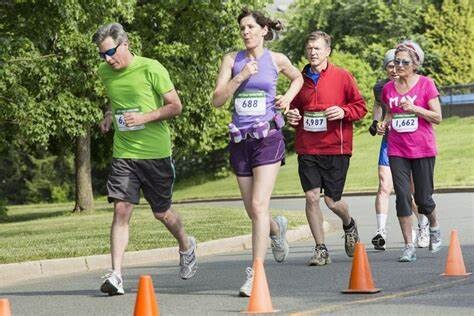
1. Stay Hydrated
One of my biggest missteps while training was underestimating the importance of hydration. I simply didn’t drink enough water before, during or after my runs. I’d often finish my runs feeling drained, dehydrated and unable to recover as quickly as I could have. When you exercise and sweat, your body loses electrolytes and water, so it’s important to replenish those stores by drinking water. By not staying hydrated, I ended up with a weaker workout.

To ensure I stay hydrated when I train again for a half-marathon, I'll be relying on my trusty Stanley water bottle. It holds 40 ounces of water, so I don't have to worry about constantly filling up throughout the day. Currently, I fill my water bottle up before bed and place it on my nightstand so I start hydrating as soon as I wake up. This is a habit that leaves me more hydrated overall, and I plan to continue doing this the next time I train. I’ll also be incorporating electrolyte-rich beverages like Gatorade into my post-run routine. It's packed with sodium and potassium, two essential minerals that are lost while you sweat. With my new approach toward hydration, I already feel better during my runs and know that I’ll see the same results when I start training again.
2. Eat a More Balanced Diet
When I first attempted to take running seriously, I wasn’t fueling my body properly. As much as I love McDonald’s Free Fries Friday, I quickly realized habits like these weren’t helping me accomplish my goals. It became evident that a balanced eating pattern with complex carbs and protein was a missing piece of the puzzle. Complex carbs like whole grains, fruits and vegetables have become my go-to choices. They provide a steady release of energy, which helps support stable energy levels and avoid those dreaded spikes and crashes during longer runs. Mindfully incorporating complex carbs into my diet once I start training again, especially before long workouts, may make a noticeable difference in my energy levels.
Meanwhile, incorporating enough protein into my diet has been crucial for my recovery after runs. Often if my legs were sore, I would use it as an excuse to skip a workout and take a recovery day. But the soreness I was experiencing was from pushing my muscles to grow and work harder than they were used to. Eating enough protein is important to ensure you’re getting the amino acids that may help the maintenance, repair and growth of muscles. Next time around, by mindfully eating a balanced amount of protein, I can improve my endurance during training.
3. Get a Running Buddy
One practice that I started during my weekly runs, and plan to add when I train for a half-marathon again, is running with a buddy. Running can sometimes feel like a solitary endeavor, but having someone by your side can make it so much more motivating. The joy of sharing the experience with someone else, specifically my roommate, has turned each dreaded workout into a fun, social activity. And while having fun is more than enough reason to run with a partner, we also help each other stay motivated and accountable. Plus, it’ll be fun to share the finish line with someone I know!
4. Switch Up Running Locations
During my first attempt at training, I found myself opting for the treadmill located in my apartment's fitness center. It was undoubtedly convenient, and I didn’t have to face the crisp morning air. But running indoors quickly became monotonous and sucked all the joy out of my workout—that’s why I’ll be running outside next time. Whether it’s a scenic trail, through a beautiful park or simply just around my neighborhood, the landscape changes with every step and makes running feel more special. Plus, the different terrain offers a variety of challenges as the elevation rises and falls. Running outdoors also keeps my mind engaged by the evolving environment. When I enjoy my surroundings more, I become less focused on the distance left to go and more entertained by the experience of my run. I think this simple change will make the 13 miles fly by.
5. Change My Mindset
During my treadmill workout phase, I used to be fixated on maintaining a specific pace, and if I fell short, I’d get frustrated. However, my perspective on running and training underwent a significant shift, and I have come to realize that mindset is everything. Next time around, I will go in with the mindset that true pride isn’t found in the digits on the stopwatch, but in the commitment, dedication and mental strength that is poured into training. I understand now that chasing a speed is not an accomplishment. Shifting to this perspective will be a challenge, especially for someone with a competitive nature like mine, but it’ll allow me to savor each run and recognize that the ultimate reward is the personal growth I’ll experience along the way.
by Jessica Ball, M.S., RD
Login to leave a comment

7 Marathons in 7 Days on 7 Continents: Is There Such a Thing as Racing Too Much?
Don’t let your bucket list lead to burnout.
Setting running goals is typically a good thing. Goals keep you engaged and on track. They shape your training with purpose, structure, and accountability. However, sometimes an endless list of goals can backfire. More races. More consecutive events. More miles. It leaves us wondering: How much racing is too much racing?
It’s healthy to test your limits and perceived boundaries, but running half marathons and marathons takes a toll—physically, mentally, emotionally, socially, and financially. Finding the sweet spot between your comfort zone and the danger zone is tricky.
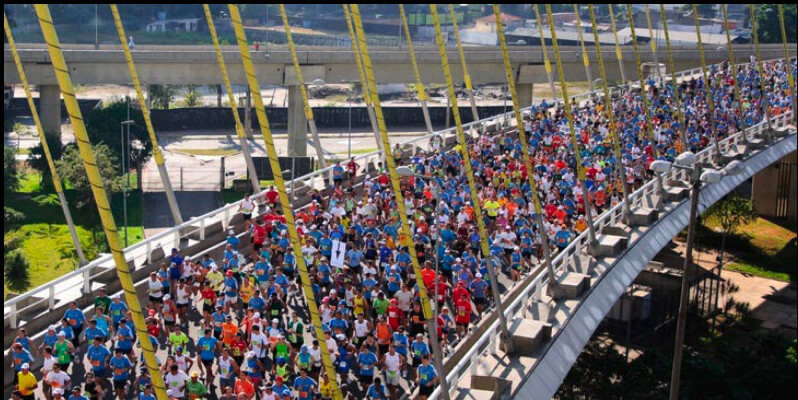
So, we chatted with a few experts on setting values-driven goals, being ambitious but realistic, and using social media for support (beyond that quick hit of dopamine). Before you tackle your racing bucket list, read on.
How much racing is too much racing?
According to the experts, there’s no definitive answer to the “too much racing” question. “It depends on the person and what your short and long-term goals are and your current fitness conditions,” Raj Hathiramani, certified running coach at Mile High Run Club in New York City, tells Runner’s World. Even a series like the World Marathon Challenge, in which participants jet between all seven continents, completing a different marathon every day for one week straight, is doable if you’re prepared.
That said, training for an aggressive racing schedule requires time (for both running and recovery) and resources, like coaching, gym access, and funding to cover travel, race fees, childcare, and other family and household-related support.
“This is where I think a lot of people get it wrong,” Todd Buckingham, Ph.D., exercise physiologist at PTSportsPRO in Grand Rapids, Michigan tells Runner’s World. “They want to do a marathon or an Ironman, but they only have, say, three hours a week to train. That’s not going to be feasible.”
Buckingham points out that your training and race schedule needs to fit into the reality of your life and not the other way around. Otherwise, you risk overextending yourself and heading into events undertrained, which can lead to disappointment and injury.
How do you determine how much to race?
1. Start with your why
Before you start registering for races and scheduling training runs, ask yourself this question: “Why am I doing this?” There’s no right or wrong answer, but if you’re drawing a blank, or the big pay-off is external validation (are you already mentally editing your highlight reel?), you may need to re-evaluate your goals.
That’s because healthy, worthwhile goals should align with your personal values, according to Mike Gross, Psy.D., head of sport psychology services at Princeton University in Princeton, New Jersey. “Let’s get a sense of your ‘why’ and be really clear on that,” he tells Runner’s World. “Why in your heart do you want to do this?” he asks, noting that your why can serve as a compass that guides your actions and keeps you focused and on course in the face of obstacles.
If you don’t understand your reasons for doing something, you’re more likely to give up or follow through just for the sake of getting it done. “That’s when you’re just kind of white-knuckling it through the process. You’re starting to notice there’s no enjoyment in it, and that’s when some of the burnout symptoms start to arise,” Gross says.
For Hathiramani, the motivation to achieve his own “big” goal of running 50 marathons in 50 states was multi-pronged. Before formalizing the goal, he’d organically completed races in 10 states just by registering for events that appealed to him. He realized that participating in a race in each state would allow him to further connect with members of his running community, many of whom shared the same ambition.
Running in different states also gave Hathiramani an opportunity to access and explore parts of the country through the sport that he loves. “I thought it would be a really neat way to see the U.S., run some smaller races, some bigger races, and visit parts of the U.S. I’d never thought I’d be able to, whether it was the Shiprock Indian Reservation in New Mexico or a Christian camp in South Dakota,” he explains.
Keep in mind that not every challenging goal is defined by mileage. One of Hathiramani’s most meaningful goals was committing to strength training for at least 10 minutes twice a week. “That really helped my running, especially as I was getting older and running faster, longer distances. I felt that I needed more muscular endurance,” he says.
Buckingham encourages long-distance-oriented runners seeking a challenge to consider shorter, faster races. “A marathon, from a cardiovascular standpoint, is easy compared to a 5K or 10K,” he says.
2. Don’t race every race
Depending on the number of races you want to do and other personal variables, such as your racing experience and fitness level, you could aim to PR some events and simply finish others, as racing is more demanding and necessitates more recovery.
To that end, Buckingham recommends pursuing no more than two “goal races” a year—one in the fall and one in the spring—particularly if they’re longer, like a half or full marathon. “You want to give yourself several months in between to recover from the last marathon and get ready for the next,” he says, noting that attempting to “carry over” fitness in back-to-back events can backfire with injuries and other symptoms of overtraining.
For runners doing races in quicker succession, it’s key to incorporate recovery strategies in the days (or hours) between.“You can race hard for seven days in a row as long as you are adequately trained for that and adequately recover from it,” Hathiramani says. For example, he has done back-to-back marathons several times, but puts a specific focus on recovery between those finish and starting lines. This includes intentional practices like foam rolling, proper fueling, and quality sleep.
3. Take your time
The experts caution that imposing strict time constraints on your goals can increase your risk of injury, add unnecessary pressure, and take away from your overall enjoyment and satisfaction.
For example, Hathiramani embarked on his 50-marathon goal in 2010 when he was in his mid-20s, knowing that he wanted to finish by the time he was 40 years old. He finished “on time” in early 2024. This realistic timeframe allowed him to relish the experience and navigate unexpected obstacles, like COVID-related race cancellations.
“It was never about trying to achieve that type of goal in a certain amount of time. It was more about enjoying the process of falling in love with running,” Hathiramani says.
4. Be mindful with social media
It’s nearly impossible to escape the influence of the digital platforms that are now integrated into our everyday lives, but thinking about what you might do if you couldn’t share your goals with a wider audience is a useful thought exercise. That’s because it’s not exactly smart to set goals just so you can post about them.
However, social media is part of most runners’ lives, and there are positive aspects to online engagement. “If you put your goals out there by telling your family or friends or working with a coach, you get someone else that can help keep you accountable,” Hathiramini says, noting that the support of his community was instrumental in keeping him motivated to achieve a goal that spanned more than a decade. They not only celebrated his wins but also offered support when he needed it most. “They’re also there to help pick you up from any setbacks, too.”
Finally, with all of this in mind, don’t shy away from a big goal. “I think the mind and the body—the mind, more so—is pretty incredible in that it can expand its limits to what you desire to achieve,” says Hathiramani.
by Runner’s World
Login to leave a comment

The Incredibly Specific, Occasionally Gross Food We Eat to Fuel Our Ultras
The strangest and most distinct snacks we can’t live without when we’re on the trail all day The Ultra-Trail du Mont-Blanc (UTMB) World Series Finals kick off on August 26 and run through September 1. The annual finale is made up of three races: the Ultra Trail du Mont Blanc Orsières-Champex-Chamonix (50K), the Ultra Trail du Mont Blanc Courmayeur-Champex-Chamonix (100K), and the classic UTMB (100M), across France, Italy, and Switzerland.
Sure, crowds come for the world-class athletes and spectacular views of the Alps, but, some might argue, another big draw is the food—and even the race participants get a taste on the course. Much of the fuel at aid stations are sourced from nearby communities, who bring their best. Think: locally made croissants, bread, cheese, and prosciutto.
But for those of us who haven’t had the pleasure of running by tents filled with freshly baked French baguettes on our long runs, here’s the weird, the specific, and the sometimes gross on how we fuel our adventures.
On a 13-hour, nearly 10,000-vertical foot ridge scramble/romp through the high peaks in New Mexico a few years ago, I fueled with the food of the gods: birthday cake in a bag. I had somehow scammed my way into having three cakes at my birthday dinner a few nights prior and figured the calorie-to-weight ratio of buttercream frosting couldn’t be far off from Gu. So I cut a generous piece of birthday cake, put it in a Ziploc, and stashed it in my pack. By the time I went to eat it, it had lost all structure and I could easily squeeze it directly into my mouth from a hole —Abigail Barronian, senior editor, Outside
The last time I ran 100 miles, it was a self-supported multi-day journey through the English countryside. The bad news: no aid stations. The good news: pubs and cafes at far greater frequency. I was able to refill my vest with raisin scones and coffee every ten miles. By itself, a scone is pretty dry. But combined with a mouthful of coffee (or even water), it becomes an easy-to-digest, carby snack that’s just the right amount of sweet. Plus, it’s perfectly sized to fit in a chest pocket.
—Corey Buhay, interim managing editor, Backpacker
I have been blessed with a rock-solid stomach and have never had gastrointestinal issues during any run or race. That gives me the freedom to consume just about anything, but I notably veer away from energy gels and opt for real food—either the breakfast burritos or ramen noodles available at aid stations or peanut butter tortilla wraps (sometimes with Nutella) and Pay Day candy bars (because they don’t melt and have a good blend of calories, carbs, fat and protein). I have also been known to drink pickle juice straight from the jar for the sodium content. I love the taste!
—Brian Metzler, editor-in-chief, RUN
I’m all about having a variety of guilty pleasure snacks on hand during an ultra! My favorite is a specific mix from Trader Joe’s called Many Things Snack Mix, with honey-roasted peanuts, sweet and spicy Chex-like cereal squares, pretzel sticks, and bread chips. It’s basically Chex mix. I put it in a Ziploc bag and relish being able to eat it without guilt during my run (because when I eat it at home, it’s never really fulfilling any kind of nutritional need and I always eat too much of it!).
I’ll also pack a Ziploc bag with gummy bears, and then another one with half of a peanut butter and jelly sandwich. Peanuts and peanut butter go down easy for me while also providing a bit of a “stick to your ribs” satiety, while the gummy bears have a fun texture and come with a sugar rush. A PB&J sandwich kind of combines both sides of that, and then the Chex mix—as long as it has some spicy pieces—wakes up my taste buds.
Login to leave a comment
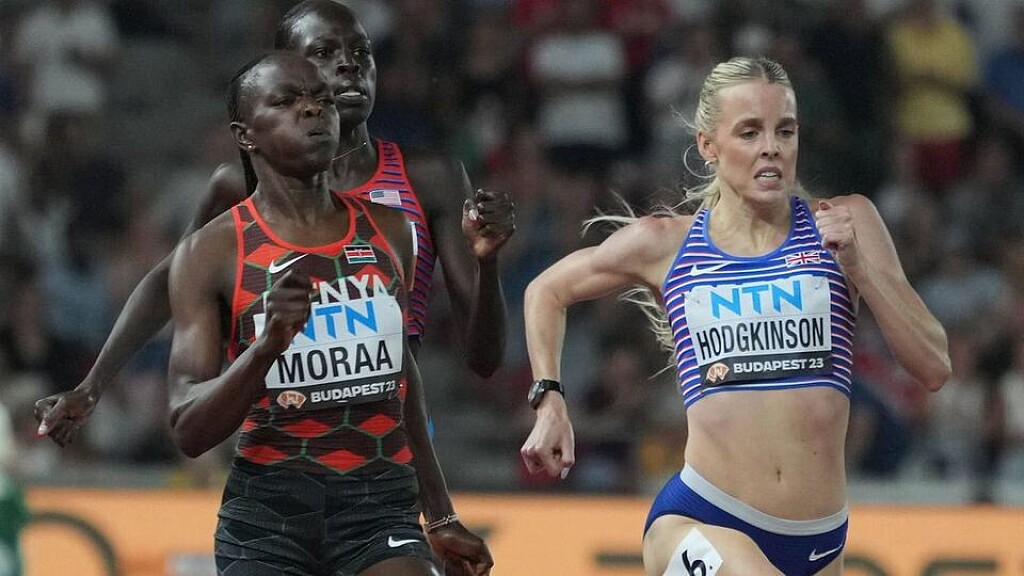
Keely Hodgkinson reveals a serious impact Mary Moraa has made on her road to Paris 2024 Olympics
Keely Hodgkinson discusses lessons from her loss to Mary Moraa as he aims for gold at the Paris Olympics.
Olympic and world 800m silver medallist Keely Hodgkinson is gearing up for the Paris Olympics with a resolute focus on clinching the gold.
At just 22, she has already made significant strides in her athletic career, breaking records and overcoming challenges.

But as she prepares for the upcoming games, Hodgkinson reflects on a particularly tough race that has fueled her drive for victory.
“If you want to watch a bad race, watch Lausanne,” Hodgkinson says in an interview with the Telegraph, recalling the June competition where she found herself boxed in and then out-thought and out-paced by Kenyan Mary Moraa in the 800m.
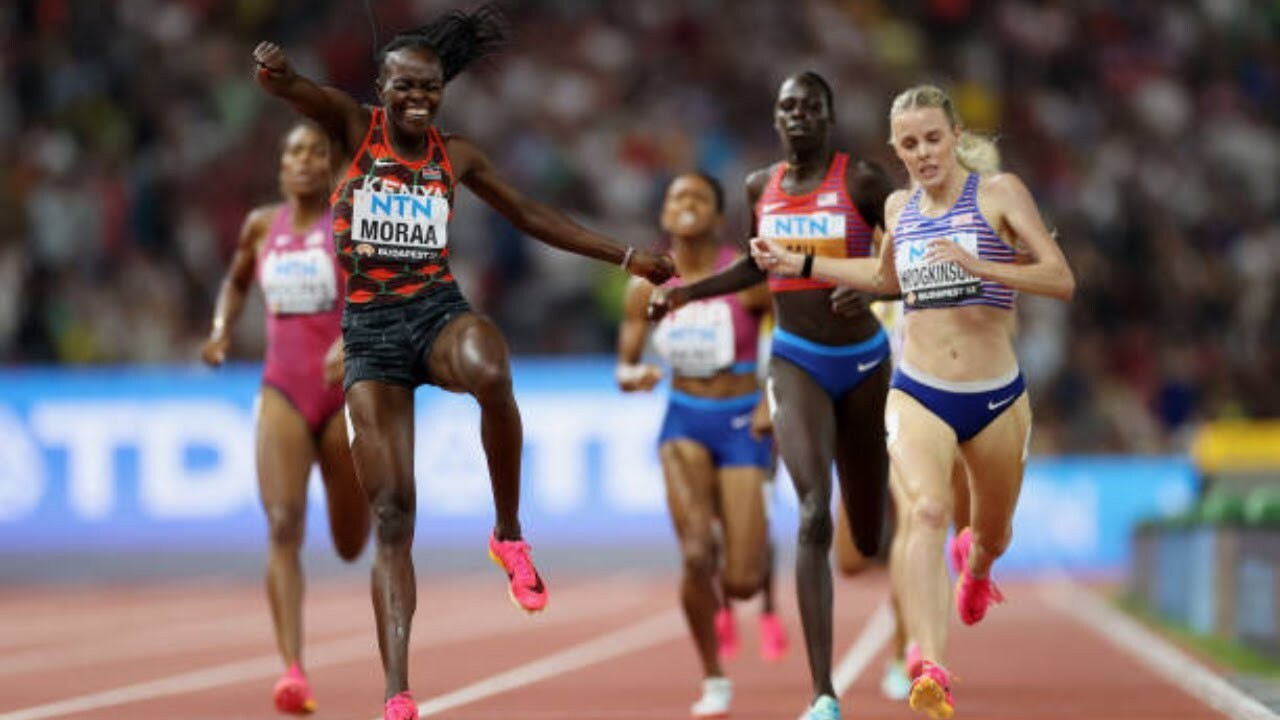
“That was bad.”
Hodgkinson’s journey has been marked by impressive accomplishments, including a silver medal at the Tokyo Olympics at the age of 19 with a personal best of 1:55.88.
More recently, she broke her own 800m record in front of 60,000 fans at the London Stadium leg of the Diamond League, becoming the sixth-fastest woman in history.
Despite these successes, Hodgkinson admits that post-Tokyo, she faced emotional challenges.
Struggling to focus on training after leaving her criminology degree course at Leeds Beckett University, she found it difficult to balance her mental state and athletic ambitions.
“I had nothing to be sad about, yet I felt guilty for feeling down.”
The determination to win gold in Paris is what keeps Hodgkinson motivated.
“Gold is all I have in my head right now. To get the gold in Paris. For me, that was the one I was always aiming for anyway,” she says.
Her rigorous training regime reflects this ambition.
Running approximately 35 miles each week, Hodgkinson focuses on building power and muscle strength, training more like a sprinter. Gym sessions, swimming, and cross-training have been crucial in enhancing her endurance and performance.
“I spend a lot of time on a cross-trainer,” she notes. “If I was to factor that in, my running mileage would go up.”
Preparation for a race, for Hodgkinson, resembles getting ready for a night out.
“The process starts two hours beforehand – I just enjoy it,” she explains.
Her routine includes a shower, fake tan, music, and doing her hair and make-up. “There’s nothing really to do on race day, especially if I’m racing at 10pm.”
Visualizing different race scenarios with her coach Painter is another key aspect of her preparation.
“Let others dictate your race and that’s when silly mistakes happen; panic after getting boxed in and you can bolt too early,” she cautions.
Reflecting on the 2023 World Championships in Budapest, Hodgkinson recalls hitting a lactic wall with 300m to go.
“The pack was so fast through the first lap. It really made us all hurt. We’d never done it that fast before.” On that occasion, it was her main rival, Athing Mu, who set the pace with Hodgkinson finishing as runner-up.
"She wanted to make it hard,” Hodgkinson acknowledges.
Despite the camaraderie with her fellow athletes during training camps, Hodgkinson remains competitive.
“On race day it’s game faces on,” she asserts.
For now, she relishes the challenge of pushing her limits.
“I’d be lying if I said I don’t enjoy being good at it,” she admits.
“When I was younger I used to love seeing how much pain I could put myself in, which sounds a bit crazy, but you do have to be crazy to do this event.”
by Festus Chuma
Login to leave a comment

Paris 2024 Olympic Games
For this historic event, the City of Light is thinking big! Visitors will be able to watch events at top sporting venues in Paris and the Paris region, as well as at emblematic monuments in the capital visited by several millions of tourists each year. The promise of exceptional moments to experience in an exceptional setting! A great way to...
more...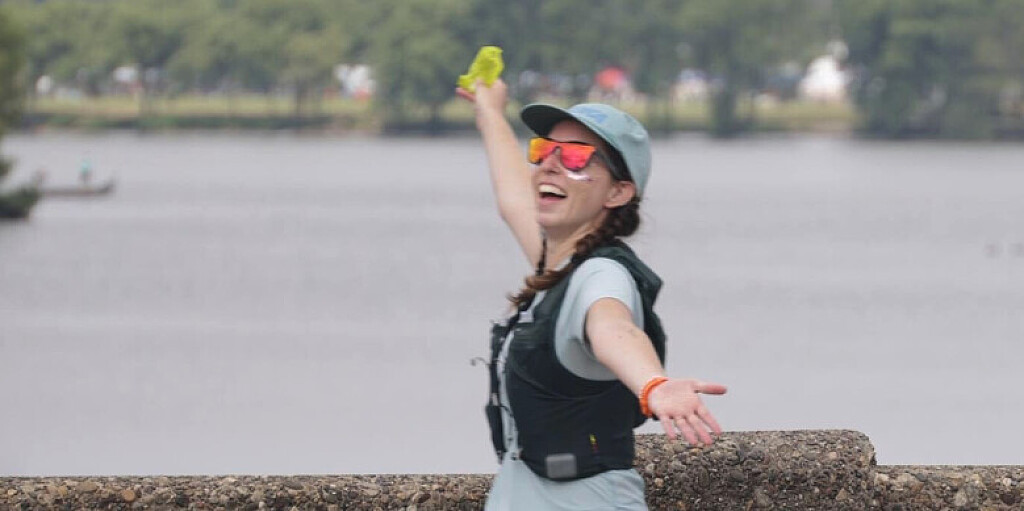
This Ultramarathoner Runs 100s of Miles to Build Inner Strength and Confidence
“Through ultrarunning, I’ve learned how tenacious and resilient I am.”
Name: Rachel Bambrick Age: 31 Hometown: Philadelphia Occupation: Occupational therapist, ultrarunning coach, founder of Women in Ultrarunning Time Running: 9 years Reason for Running: Running, and ultrarunning in particular, teaches me something new about myself every time I’m out on the trail.

When I moved to Philadelphia in 2016, I wanted to find an active community to meet new people and continue to challenge myself. I laced up my shoes, and started running with run clubs in the city.
In 2018, I watched a friend take part in the Run Across Haiti, a 200-mile run in eight days, organized as a fundraiser for WORK, a nonprofit which financially empowers families through employment.
I knew it would be difficult to push myself through the distance. I had never run an ultramarathon before, but I was determined to see how far I could go. I decided to take the leap and give ultrarunning a try through a worthwhile cause in Haiti.
Inspired by my friend, I completed Run Across Haiti in 2019, raising money for WORK. The adventure made me reflect on what drew me to ultra distances. While fighting sore muscles, scorching heat, and self doubt, I surprised myself that I still continued and succeeded. This journey of self-discovery empowered me to explore my limits.
I kept running ultramarathons following Run Across Haiti, and eventually set my sights on something longer: the epic Cocodona 250-mile race, which leads from Black Canyon City to Flagstaff, Arizona through the rugged and exposed trails of the backcountry.
In May 2023, I set off from Black Canyon City. For more than 119 hours, I wondered if I was strong enough to finish, and if I would make the cut-off time. When I could actually sleep, it was just for an hour or two at aid stations, or curled up in the dirt on the side of the trail.
But I kept moving, and telling myself “I am exactly where I need to be” and “It will get better.” I cried and smiled when I saw the finish line in Flagstaff. I was proud of how far I had come and of my inner strength in those many challenging moments.
I’ve been lucky to reach many starting lines these past few years and meet amazing people. But I felt like something was missing. I wanted to create a space for women to share experiences, knowledge, and support in ultrarunning.
So, I founded Women in Ultrarunning in January 2024 as a four-part program providing women in the Philadelphia area with a space to learn about ultrarunning. The group is a mix of seasoned ultramarathon runners and newer ultra runners who are looking to sign up to their first ultra race.
The first events began at local trailheads with an introduction to ultra running, mental strategy, nutrition, and how to navigate technical trails.
After discussions, we set off through the trails for a 90-minute run, maintaining an average 13-minute-per-mile pace to stay together. Our goal is to foster community and connection, not break speed records. We’re out there to enjoy the company, stay together, and learn from one another. A time-based group run allows us to be pace inclusive and welcome those who may be out on their first trail run.
Women in Ultrarunning is now a community across the United States, and an online community on Heylo to celebrate each other’s successes, help find training partners for runners, and chat about all things ultrarunning, like gear, nutrition, and strength and conditioning. It has been surreal to see an idea that lived in my head grow into fruition and take shape.
Through ultrarunning, I’ve learned how tenacious and resilient I am. I’ve also found a supportive community that I’m proud to be a part of. Because of the Women in Ultrarunning community, I’ve experienced a connection to ultrarunning in a way I never thought was possible.
I hope to be here for years to come with glitter on my cheeks and a smile on my face to continue to cheer on women as they achieve their toughest goals.
These three tips have made my running journey a success:
1. Be consistent and patient with nutrition on the run
Just like training your legs for races, you need to train your stomach for races. Don’t be disheartened if you have a string of discouraging runs. The process can be very rocky, and you may need to try a few brands before you find what works for you! It took me years to be comfortable with fueling on long runs.
2. Remember that trail pace is different than road pace
Getting used to running on rocky terrain, sand, or dirt takes time and practice. While it’s easy to get swept up in paces on the roads, try to run on trails based on effort. Some miles will be slow going! What matters is you are still moving forward.
3. Give yourself grace
Remember in running you’ll have low moments, but what is important is how you pull yourself out of the negativity. Feel the struggle and remind yourself it’s okay to feel down, then put yourself back into a mindset that allows you to continue positively. If you fall or fail, give yourself grace to get back up and continue on.
Rachel’s Must Have Gear:
→ WildSense Run Glitter: My approach to running and ultras is all about adding softness and sparkle wherever I can. Wild Sense’s glitter is all natural and biodegradable so I can feel good about the sparkly little trail I may leave behind.
→ HOKA Challengers: Living in the city of Philadelphia, being a trail/ultrarunner can be tough sometimes! Often my runs have one objective: How can I get to the trails? The Challengers are perfect because they’re designed as all-terrain shoes so I can easily take them from city streets to the trails of the Wissahickon.
→ Zensah Seamless Run Bra: As an ultrarunner, chafing can be a huge issue. Especially with sports bras. This bra from Zensah has been my go-to for all my long efforts and races for years. I used these bras for the entirety of the Cocodona 250 in 2023 and walked away without any bra hotspots.
by Runner’s World
Login to leave a comment
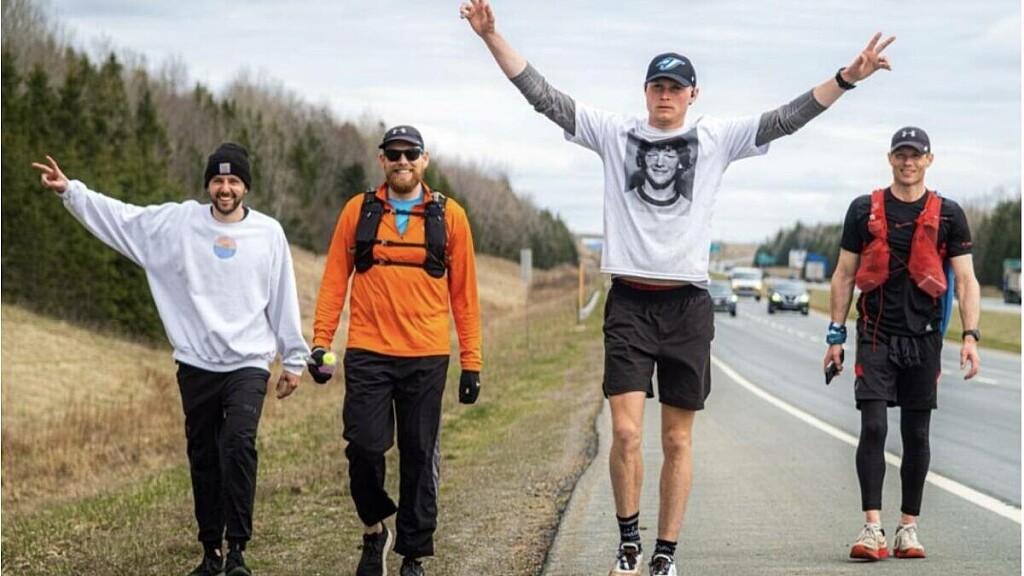
Halifax man completes run across Canada in 99 days
Ryan Keeping ran from St. Johns to Victoria in 99 days to raise money for the Heart and Stroke Foundation.
As a touching tribute to one man’s hero, Terry Fox, and to support the Heart and Stroke Foundation, Ryan Keeping of Halifax has run across Canada in 99 days. On Sunday, July 7, Keeping completed his 7,386-kilometer trans-Canada journey in Victoria, running more than 75 kilometers daily and raising more than $200,000 for the Heart and Stroke Foundation.
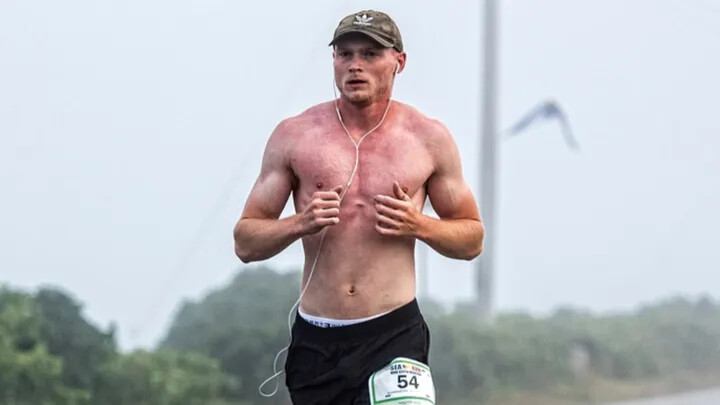
Keeping began his journey on April 1 in St. John’s, intending to end in Victoria within 100 days. He says his goal was not to chase any records, but to meet amazing people, hear the stories of Canadians along the way and raise money for a cause close to his heart.
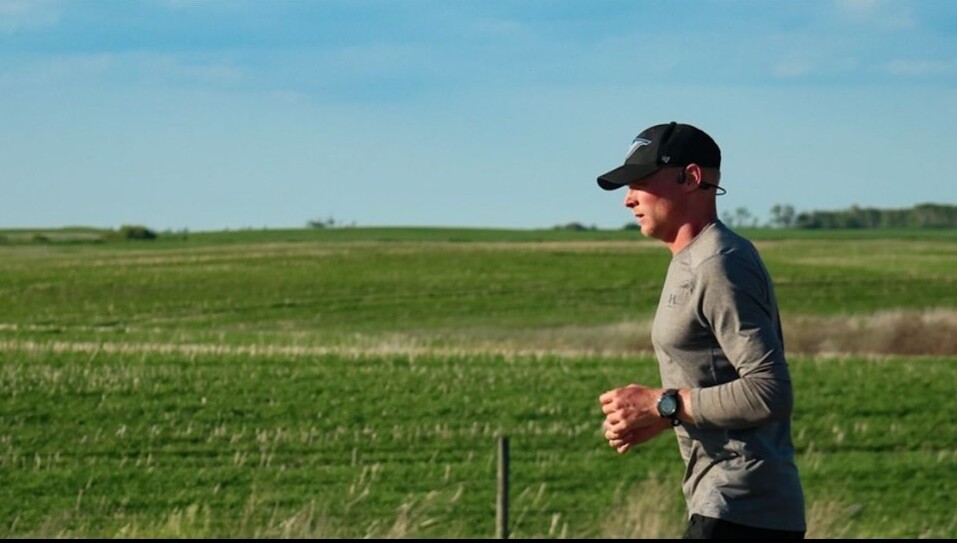
“This wasn’t about a record, a time, or bragging rights,” Keeping wrote about his achievement. “This was about Canada, the children, and the amazing people along the way. The interactions throughout the 99 days changed my life forever, and I thank everyone for that. I am forever grateful for this journey, and I hope we can all take a lesson from this, that anything is possible, whether you’re a couch potato or an athlete.”
Like his hero, Fox, Keeping had a reason for his cross-country run. Several of his family members, including his dad and his grandfather, have been affected by heart disease. Recently, both of his siblings have tested positive for the gene causing heart issues. His decision to run across Canada to raise funds and awareness was to help other families like his, who have been affected by heart disease.
Keeping ran through nine of Canada’s 10 provinces, holding meet-and-greets and running events as he passed major cities: Toronto, Winnipeg, Calgary and Vancouver. He celebrated his finish by pouring a jug of water from the Atlantic into the Pacific Ocean. “It’s what Terry wanted, and I’m happy to say I could honor my run for him,” said Keeping.
by Marley Dickison
Login to leave a comment
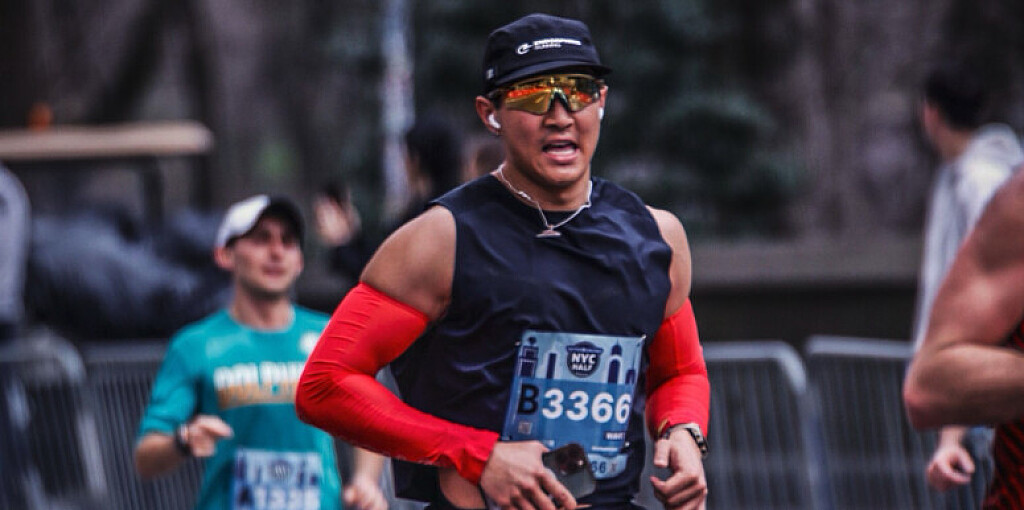
This Runner Learned the Importance of Easy Days After Trying to Train Hard for Too Long
“Running has made me a better thinker—I’m able to solve problems when I’m on a run, and often find new and creative solutions to or perspectives on something that’s bothering me."
I played sports (baseball, basketball, lacrosse) growing up, but running was always used as a form of punishment. I didn’t understand the people who “enjoyed” running or would willingly run. I also didn’t want anything to do with running because I was too scared to lose any of the muscle I worked so hard to put on. (I picked up weightlifting in college.)
That’s when running became the perfect escape for me physically and mentally. Some of my best thoughts came from mid-afternoon runs around the suburbs of Irvine, California. While I realized that I wasn’t cut out for med school, I will say that my personal statement would have been a lot worse had I not gotten some creative inspiration on my runs.
When I first started running, I didn’t really know how to run—so I downloaded the first (good) app I could find—the Nike Run Club app. I really liked it because they had in-app coaches to help guide you through the run, plus tips on how to gauge my intensity proved helpful.
Prior to that, I would just run as fast as I could for three to four miles with zero periodization on a day-to-day or week-to-week basis. I didn’t do any races, but I did a self-imposed “5K every day” challenge in November 2020. The goal was to get faster by the end of November. I went out and ran a 5K every day at max effort, expecting to get faster by day three. Instead, I had a pretty big regression, so it wasn’t the best training method for me.
I think most beginners think that doing more of the same thing will get them to become better, when in reality periodization is what actually compounds progress the most. I thought I needed to be running at a high intensity daily. It took me two years until I realized that I only needed a few max effort sessions per week, and to simply focus on making my hard days hard and easy days easy.
I’ve also noticed that many former high school/college athletes get into running and their biggest Achilles’ heel is making easy days just as hard as hard days, and I totally get that. Running three miles at a 10-minute pace when I know I can be cooking some sub-seven-minute miles is not something my brain nor body were used to when I started.
In 2020, I decided to run an impromptu half marathon, which was my proudest running moment. To the Allen who had never hit double-digit mileage in one run, 13.1 miles was simply a mythological number.
For that run, I hadn’t followed any real training beforehand, nor did I have any gels or water (biggest mistake I made that day). It was just me, my phone, some AirPods, and my new bright orange Nike AlphaFlys. Needless to say, my first half marathon ended with me cramping and locking up outside of the Chipotle that was less than a mile from my house. I wouldn’t run more than 10 miles again until March 2022.
I almost entirely stopped running in April 2021 when I got back to the gym. However, running found me again when I signed up to participate in the Birthday Series’ 131-mile Relay Race from Montauk, New York to Times Square in June 2023. I ran 25 to 30 miles in the race. I went from running ten to 20 miles a week inconsistently (from March to May 2023) to 50-plus miles a week later that summer.
Most recently, this past April, I ran my first marathon—the Big Sur International Marathon. I was doing well and on target for a 3:15 marathon until my entire body started cramping at the end of mile 22 and my split went from a 7:30 pace to a 15-minute pace. I remember getting to a 1.5-mile enclave (from mile 23 to 24) and that was the longest 1.5 miles of my life.
Those miles were never ending, which was such a juxtaposition since the miles before it felt like they were just breezing by. I remember fully stopping and thinking to myself: “I might have to lie down in this bush,” because my legs were writhing in pain from the cramps.
At the peak of training for that marathon, I was running five days a week in Central Park and logging 50-plus miles on the rolling hills, but this still wasn’t enough to get me fully acclimated to the rolling hills of Big Sur!
But, I am definitely ready for more races in the future. I plan to run Big Sur in 2025, as I will be seeking some redemption, but I’d also like to do shorter races in between.
At this point in my life, I enjoy yoga, Pilates, running, powerlifting, and bodybuilding. Overall though, running has made me a better thinker—I’m able to solve problems when I’m on a run, and often find new and creative solutions to or perspectives on something that’s bothering me. For that, I’m grateful!
But then things changed when I didn’t have a chance to go to the gym in 2020, so I finally gave running a chance. I was also caught in the post-grad bubble of despair, and I wasn’t sure where my life was heading, so running seemed like a good way to pass the time.
My entire undergrad experience was defined by pre-med courses and a little more than 2,000 hours of sports medicine internship. Naturally, applying to graduate/medical schools was the obvious choice, but really I was applying because it was the only socially acceptable form of procrastination. (A pretty poor use of time considering some of the med school applications felt more like a job than the jobs I was working.)
During that time, I had lost two part-time jobs: demoing energy drinks at various gyms around Los Angeles and modeling. So, I was back living at home with no job, spending some 10 hours a day (wish I was kidding) on trying to craft the perfect personal statement for my med school application. I really just needed to do something for my body.
These tips have made my running journey a success:
1. Take it easy
I never liked running up until a few years ago, because I always equated “running” to “sprinting” because that was the punishment we had if we missed too many free throws in a game or missed a ground ball during lacrosse practice.
It was when I joined a run club a year ago that I realized running is not just sprinting, and can be an enjoyable, social activity with or without the presence of others.
2. Be okay with failure
You can do everything correctly during training and still not get the desired results. The benefit of running is that you can make mistakes without any major or lasting consequences. You can then try to apply that philosophy to other areas of your life.
3. Develop an athlete mentality
Whether or not you were an athlete growing up, the deal you make with yourself when you start running is that you become an athlete. If you want the opportunity to improve then you must start treating yourself with respect—like with good nutrition, rest, and health check-ups. Whether you want to run faster, further, more frequently, or just be able to start running at the drop of a hat, you need to give your body the respect it deserves, because running can quickly expose the holes in your health.
4. Invest in good shoes
Get a decent pair of shoes that can handle lots of mileage. Don’t get the most expensive shoe you see online thinking it will make you a better runner—because while it might feel that way, those effects are inflated.
5. Enlist support
Follow a program, an app, a coach, or find a running buddy. If none of those suit you, join a run club! Run clubs really help making running enjoyable with the added benefit of having built-in accountability. You likely know when and where the run is and all you have to do is show up. (One run club I like is Endorphins Running.)
6. Keep an open mind
If you are trying to better yourself and your health, keep an open mind when trying new things. If you think of your health more as a philosophy instead of a rigid set of rules, you will learn that you can start to take ideas from the things you enjoy and mold your own version of health that’s sustainable.
Allen’s Must-Have Gear
→ Normatec 3 Legs: I use these after every long run and occasionally before bed. It just feels really good to get your leg squeezed after a hard workout and it usually forces me to relax (which is great before bedtime).
→ Mito Red Light: I try my best to do everything I can to prevent injury. I’ll use my red light device at home on any areas that’ve been nagging me, as well as a few focus areas as a way to warm up. I typically do five minutes on each leg before a long run.
→ Hoka Mach 6: These have been my workhorse shoes the past few months (almost at 200 miles already on a pair). Love them for track workouts and long runs. They just get the job done.
Login to leave a comment

This Girl Scouts CEO Plans to Run a Half Marathon on Every Continent
“Running plays an important role in my professional life as training for a race requires strategy, discipline, and accountability—so does leading an organization.” Reason for Running: I love how much running affects me mentally, physically, and emotionally! I love running by myself and with others.
Most Saturdays I can be found on a long run with my twin sister or my daughter (or both). It is our treasured time to catch up and the miles fly by!Growing up, I never played any sport aside from a short stint with soccer in middle school. I often joked that I would only run if a bear was chasing me and even then, it would depend on the size of the bear! As I was approaching 40, my husband said, “Wouldn’t it be fun to do a half marathon together.” I reluctantly agreed.
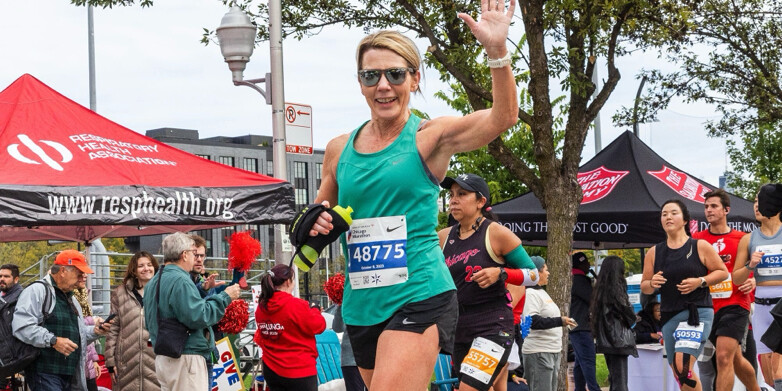
I had zero running gear and only knew how far a run was by tracking the miles when I drove the same route in my car. He loves to tell the story that after a few weeks of my run/walk training, I came home elated that I had run from the school near our home to our neighborhood without walking or stopping. I was so proud of myself. Only much later did I realize that was less than a quarter of a mile!
Soon after, I crossed the finish line of that first race, signed up for my next, and have been running ever since—19 years! I used the Jeff Galloway training schedule for beginners to run that first half marathon.
After that, for many years, I would run two half marathons in the spring and two in the fall and signed up for many 5Ks and 10Ks in between. The first few years, when my kids were young, most of my runs were local. As the years went by, I started combining my love of travel with my love of running. Some of my favorite United States races include the Oregon Wine Country Half Marathon and Nashville Rock n’ Roll.
In 2018, I joined the Seven Continent Club and have run half marathons in Australia, Iceland, Patagonia, Antarctica, and many in the States. I have Africa and Asia planned for 2025 and 2026. If all goes as planned, I’ll complete the seven continents when I turn 60.
After more than 70 half marathons, I decided to train for a full and since fall 2019, I have completed eight full marathons.
A friend once told me that he sets three goals each year—one personal, one professional, and one health. I decided to do the same, and this habit is the reason for so many positive things I’ve done in my life, including earning my MBA, becoming a business owner, and saying yes to my husband when he suggested training for that first half marathon many years ago.
In 2012, I joined Girl Scouts of Eastern Missouri as their chief operating officer and then CEO. I am honored to now serve as the national CEO for Girl Scouts of the USA. Running plays an important role in my professional life as training for a race requires strategy, discipline, and accountability—so does leading an organization. I come up with some of my best ideas on long runs. I think my team rolls their eyes when I have a 20-miler—they probably wonder what ideas I might come back with.
I want our Girl Scouts to find what they enjoy most that best supports their mental, physical, and emotional health. Many of our Girl Scout councils sponsor their own run/walks. I love to see our girls introduced to running through these events.
I now run three to four times a week, cross-train two days a week, and have one day of rest. As soon as I finish one training schedule, I move to the next.
Running has changed my life—the people I’ve met, the goals I’ve achieved, the places I’ve seen—all made possible because of that simple question: “Wouldn’t it be fun to do a half marathon together?” I know I am stronger physically, mentally, and emotionally because of running.These tips have made my running journey a success:
1. Go for just one mile
This habit has served me well so many times when I don’t really feel like going out—especially when it’s too hot, too cold, too windy, too hilly, too late, too early. Just tell yourself “I can run one mile!” It rarely ends up being only one mile!
2. Track your runs
With all the amazing apps out there, I still print my running schedule, I highlight each completed run. The feeling of accomplishment is the motivation for the next day.
3. Support yourself
Positive self-talk is important. Whether it was the best run/race or not so good, own the fact that you showed up. I’m a personal fan of the sign I see at races that says, “Be proud! You’re out here!” And, when you fall off your schedule, don’t throw in the towel until the next week, the next month, or the next race—pick it up the next day.
4. Know it’s never too late
Finally, there’s no time limit on when to begin! Pick your distance and find a training plan. There are fabulous training schedules and wonderful training groups out there. Do your research, choose what works for you, and just start.
by Runner’s World
Login to leave a comment
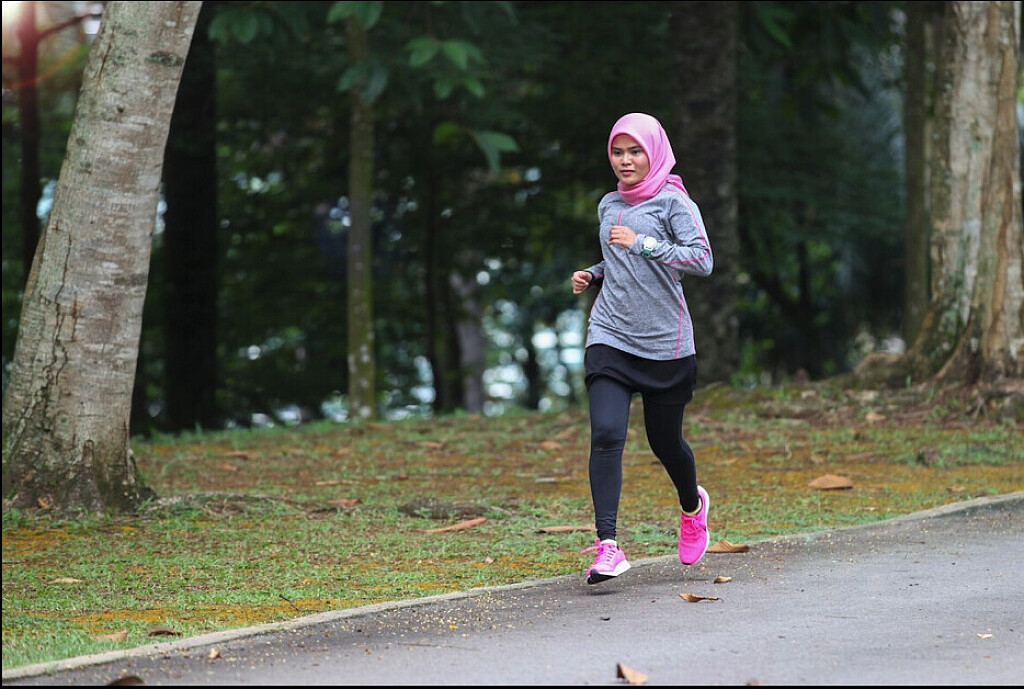
Have an Upcoming Race? You Don’t Need To Run the Full Distance During Your Training (Seriously)
I’d been her go-to person for running advice and positive reinforcement during her training block. She didn’t really need me— she was crushing her long runs and felt good about the progress she had made, so her frantic call was unexpected. I asked what was wrong.
“Well, I felt like I needed to do the full 13.1 miles,” she said. “So I did. Now my butt hurts.”

How long should long runs actually be when training for a race? Well, we'd talked about how most training plans didn’t go up to the full race distance and that it was by design. There was no need to go over 10 miles to have the fitness necessary to complete the half marathon.
Christine Conti, running coach and fitness specialist
Katherine Campbell, CPT, DPT, physical therapist, personal trainer, and running coach
So why did my friend go totally against her plan and all practical advice? Her reason: “Just to make sure I could.”
Christine Conti, a running coach and fitness specialist, is familiar with the need to instill confidence in runners throughout the training process and recognizes the fear first-time racers face.
“They're doing their training and they really believe that if they don't try it first, they'll never make it,” she says. “And we're told in life, ‘practice, practice, practice.’ You don't want the first time you do something to be the big show, right? But you really shouldn’t do it.”
When I think back to my first half marathon, I remember the doubt and fear. How can you know you can reach the finish line if your longest long run is only 10 miles?
Well, good news: There's proof you can finish a race without running the full distance first, so you don’t have to try it—and you can avoid a literal pain in the butt.
Why don’t training plans go the full race distance?
Contrary to popular belief, most training plans are designed to go just short of the full mileage of the race you're running, according to Katherine Campbell, CPT, DPT, a physical therapist, personal trainer, and running coach.
“Typically most general half marathon plans only go to 10 to 11 miles because they're made for beginners,” Campbell says. “As a beginner or even intermediate runner, you want to make sure you're recovering enough from your long runs where you can get the aerobic benefits without actually putting too much load through your musculoskeletal system to cause injury.”
This is the same reason your marathon training plan usually only goes up to a 20-mile long run—not the full 26.2 miles.
A more advanced half marathon training plan can go above 13 miles—sometimes up to 16 miles. But the thing is, many runners using this type of plan are faster than beginners who are sometimes running a double-digit-mile long run for the first time and should be conservative with their pace.
“Running faster paces would equal out to the same time on feet as most beginners running 10 to 11 miles,” Campbell says.
That’s the key: time on your feet. Especially when it comes to marathon training where slower runners could potentially be slogging through long runs for hours.
“Anything after a three-hour long run doesn't have a drastic aerobic benefit, but it does drastically increase your risk of injury,” Campbell says. “As a physical therapist and coach, I will usually cut runners off at about 3.5 hours as a peak long run. A typical ‘average’ pace is usually around a 10-minute mile, and 3.5 hours at that pace is usually 20 miles.”
Half marathoners could go up to 13 miles in under three hours, but every mile out there while you’re tired is a chance for your form to break down. Unless you have excelled in your base training and have already tackled seven miles for your long run, it’s not worth going above 10 or 11 miles for your longest long run.
What's the risk of running the full distance before the race?
The more you’re running on tired legs after a log training block, you might subject yourself to overtraining.
“Running a full distance before the race dramatically increases your risk for injury,” Campbell says.
In addition to sore and tired muscles, there are other systems in your body that go a little haywire following 26.2 miles. Your cardiovascular system is amped, your kidneys are working overtime to filter waste from your blood during and after your marathon, and your immune system weakens in the hours following such a long distance.
“There's so much happening on a physiological and musculoskeletal level that if you ran more than 26 miles before the race, you're risking not giving yourself enough time to recover to actually perform on race day,” she says.
You must tell your brain to stop doubting the structure of the plan, according to Conti.
“Beginners might look at these training plans without understanding the science behind it,” she says.
A well-made plan—meaning one made for you by a coach or designed by an expert—will bring you up to your physiological edge to help prepare your body for the aerobic challenge of a long distance and then back off just before race day.
What is ‘tapering’—and how will this strategy help you run your full race distance?
The point is you don’t want to be out on the road for too long lest you get hurt or sick. You might be wondering w
During the taper phase in half marathon and marathon training, your body recovers from the high demand of the training weeks before. By reducing training volume and intensity in the weeks leading up to the race, tapering alleviates accumulated fatigue, repairs muscle damage, and replenishes energy stores. Because you're racing on healed legs, you’re less likely to face injury.
“A nice taper two to three weeks before the race will make your legs fresh,” Campbell says. “Trust that the training, optimal recovery, and fresh legs will get you there.”
How to embrace the unknown of the last few miles
So you don’t want to get hurt. You don’t want to get sick. You’ve decided to follow your plan and have vowed not to go the full distance. But you’re still nervous. Mentally, how should you deal in the weeks leading up to the race?
It’s about trusting yourself and the training you’ve already done. As many old-school coaches will say, “The hay is in the barn.”
“I remind my clients that you should be looking at the amount of miles you run per week,” Campbell says. “You've trained your body to run the distance if you have been averaging over 26 miles per week for a marathon and 12 miles per week for a half marathon.”
If you can convince yourself that you’re physically prepared, you’re mind should settle down.
“For me, my first marathon was a bucket list item. I thought the people who ran these races were superhuman. I had no idea your body could actually run or perform for that amount of time without dying. But I trusted that if I followed the plan, I would do it.”
For her first half marathon, Conti never ran more than a nine-mile long run.
How to mentally preparing for the final stretch of your race
There are some tricks to help the last miles fly by. First, ask other runners about their experiences in the last couple miles of a race. For me, the last two miles of my first half marathon were exhilarating. I celebrated each step I took after the 11-mile mark because every step represented the farthest distance I had run in my life.
My first marathon was a little different. The last three miles were a total pain cave, but there was no freaking way I was going to give up. You’ll feel the same way.
Aside from sheer determination, here are other tactics to pull you to the finish:
1. Use the crowd
At big races, crowds will line the street leading up to the finish. Their cheering will create an electric atmosphere.
“A fun tip I like to give my runners is to have your friends and family scattered throughout the last few miles to give you that extra energy boost, too,” Campbell says.
2. Break up the distance
You might be doing this throughout the race, but it’s especially useful in the last few miles.
“It’s all mental,” Conti says. “Think about it like, ‘Oh my gosh, all I have is a 5K left. I've done this a million times.’ Or ‘I have six miles. That’s two 5Ks. That’s easy.” You're almost done. And if you have to give yourself some grace and walk a little bit, you're still going to make it. You're going to be fine.”
3. Repeat a mantra
Both Conti and Campbell say mantras are a proven way to keep your mind right as you go into the last miles of a race.
“I am all about mantras,” Campbell says. “Find one, practice it, and keep saying it.”
Campbell also suggests writing down one win each week throughout your entire training cycle.
“Read all of them and come up with three positive reasons before your race that remind you that you're prepared for the race,” she says.
Login to leave a comment
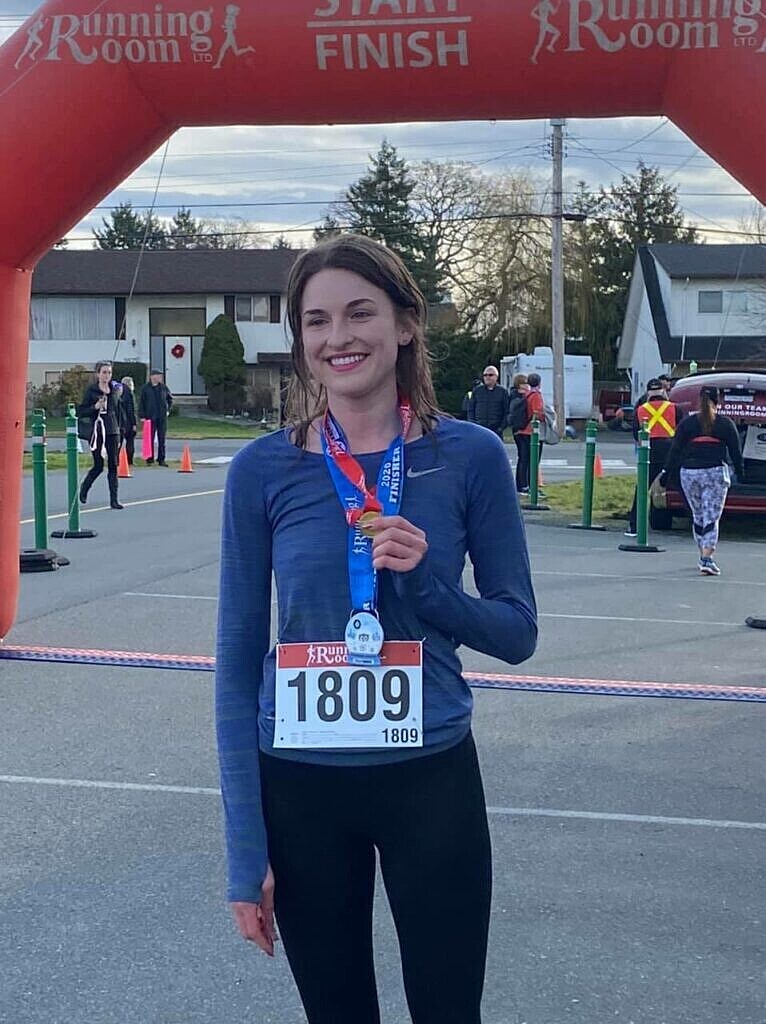
How running cured my anxiety
We know running is good for our physical health and mental health. For a long time, I never knew I had it–I thought it was normal to be in a constant state of panic. But when I started running and my mind stopped racing, everything changed.
When I was seven, I ran my first Terry Fox race. As I walked home, proudly showing off a scrape/battle scar on my knee to my parents, I noticed I wasn’t anxious. What is this foreign yet pleasant feeling, I remember wondering. My parents saw it, too. Before I knew it, I was running cross-country. But what started as a calming activity quickly became life-consuming, and a chore. So, at 16, I decided to take a hiatus. And my anxiety came roaring back.
Where does my anxiety come from? I’ve narrowed it down to a few things: first, bad genes. Second, society (which is more complicated for girls then Greta Gerwig’s Barbie makes it out to be). Third, myself? That’s the one I’m still figuring out.
Venting about being afraid of your own shadow wasn’t the best icebreaker in kindergarten. So, I learned from an early age to tuck my anxiety into bed with me at night and sleep it off. No matter what I did to avoid it, I always got sucked back into the rabbit hole (I was like Alice, but paler).
When I stopped running, at 16, I didn’t realize I was struggling with generalized anxiety disorder; I would be diagnosed at 21. As I grew bigger, so did my anxiety. Entering university, starting new jobs, dating—these real anxieties all seemed trivial, compared to the worries mounting in my mind.

(To be clear, this is not a sad story, but one that I hope will inspire others to embrace running.)
One day, I’d had enough. For the first time in a long time, I stepped into my running shoes and raced out the door toward a nearby park. I didn’t have a plan, but I knew I needed to move my body. With every stride, my worries grew smaller. My breath and the gravel path in front of me fell into focus. Everything I had been stressed about flew away with the wind. I felt myself smiling, and this time, it wasn’t forced. I had regained control of my anxiety. I felt like the strong woman my anxiety had made me believe I could never be.
When we exercise, we release endorphins in the brain, elevating our mood and reducing anxiety. Research has increasingly shown that adults who engage in regular physical activity experience fewer anxiety symptoms.
With every morning jog, loop around a track and half-marathon build, my anxiety grew smaller, until, one day, it was nowhere to be found. Today, I run not just for my mental health, but for the girl who used to fear this big world we live in, where a future felt uncertain and peace of mind hung so far out of reach. Running helped that seven-year-old, that 16-year-old and that 21-year-old feel in control of their anxiety disorder and truly learn how to live.
by Katrianna Desante
Login to leave a comment
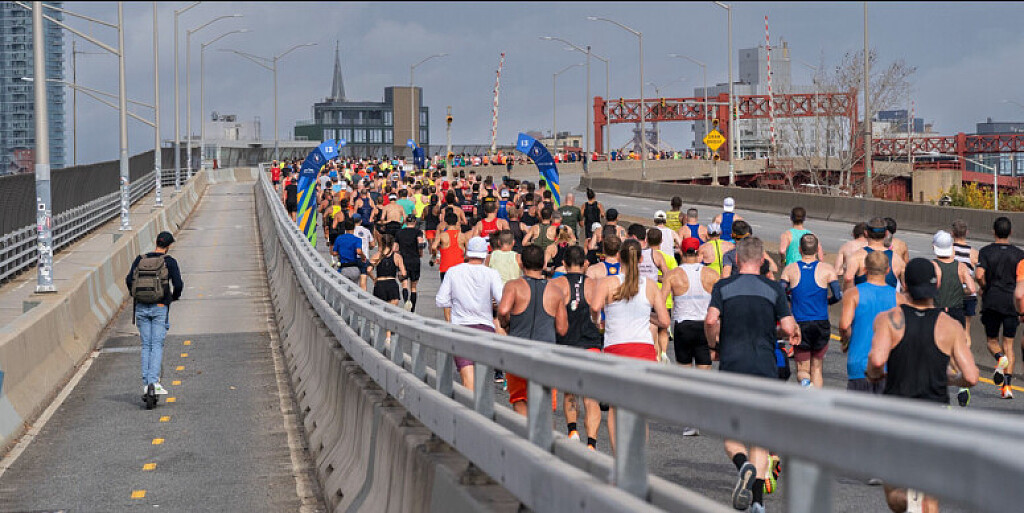
How to Add Hills to Your Marathon Training
Everything to know about adding inclines to training, including how often to tackle them and the best strength moves for prepping your legs.
Running a marathon is a difficult feat in and of itself. Add in a hilly course—like you’ll find in the Big Sur, Boston, New York City, or San Francisco marathons, for example—and that adds a new level of challenging.
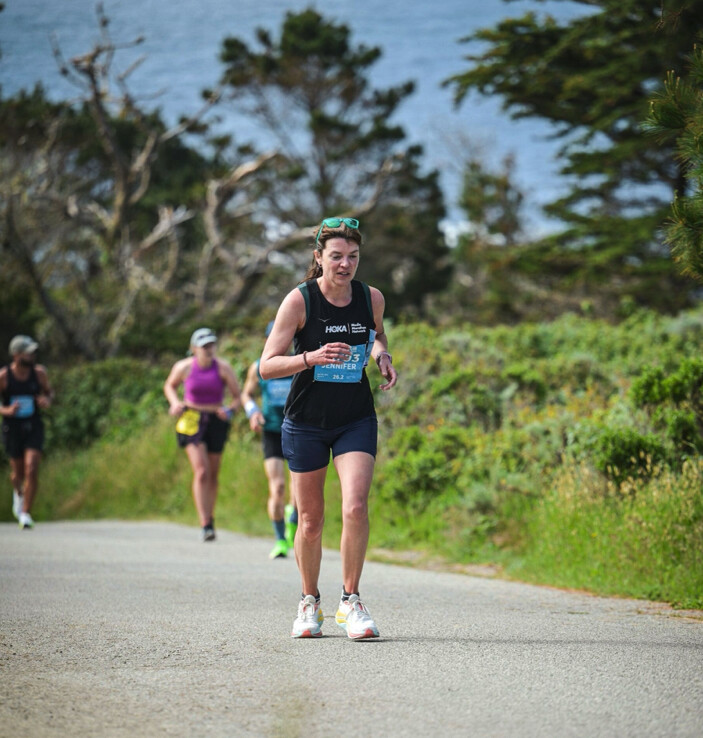
Having just run the Big Sur International Marathon, thanks to an invitation from the Hoka team last month, I learned the importance of incorporating hills into my marathon training cycle from Ben Rosario executive director of the HOKA Northern Arizona Elite in Flagstaff, Arizona, who was also my running coach.
In order to prepare for the demanding elevation changes of the course, I tackled hills every week of my training. Being that I live in Eastern Pennsylvania with many rolling hills, it wasn’t hard to seek out inclines regularly.
“You’re going to have a more enjoyable experience on race day, if you hill train throughout your marathon training,” says Rosario, whose advice rang true for me.
On race day, by mile 20, I had had enough of the hills mentally. Despite the breathtaking views of the Pacific ocean in the distance, six more miles still felt like an eternity in my head. However, I reminded myself that physically I had more to give because of the work I’d put into training, especially having pushed through so many tough climbs. I conquered the last 10K that day, and hit my marathon goal.
So how can you add hills to your own marathon training plan? Can running hills all the time be too much? And what do you do if you don’t have access to hills? To answer these questions, we chatted with expert run coaches to find out their best tips for how to train for hilly marathons.
How Often to Incorporate Hills Into Your Marathon Training Plan
If you live in a hilly area there’s nothing wrong with running hills on your regular runs—it will only help you come race day, Rosario says. “Not the hilliest run you can find necessarily, but there is nothing wrong with having a little bit of up and down in your runs everyday,” he adds.
If you don’t live in a hilly area, but you’re able to get to some place with hills, adding hills to your runs twice a week is smart, especially if you’re a more seasoned runner who has some base fitness. Incorporating hills into your weekly long run and speed session is a good place to start, Rosario suggests.
For novice runners taking on a hilly marathon, who have never consistently run hills before, be careful not to take on too much too fast, as you can get injured if you add hills into your training too aggressively or too quickly, says Richelle Weeks, D.P.T., physical therapist, certified run coach, and marathoner in Ottawa, Canada.
To make sure you don’t overdo it, Weeks advises new runners start with adding hills to one shorter run per week, until you get comfortable with climbing. Then, gradually add distance and more hills over the course of four to six weeks. “This is why I recommend a marathon training session be 20 weeks so there’s plenty of time to introduce hills,” says Weeks.
She also recommends runners have a comfortable base of running fitness first, before tackling inclines. “Most runners who get injured training for a marathon get their injury in the first month or the last month,” Weeks says. That’s because runners often are upping too many variables at once, like frequency, volume, speed, and hills. “Build frequency and volume first to get a good base. Then add in hills or speed, one at a time,” she adds.
I have a five-mile loop from my home with four big hills involved, so I would always incorporate this loop into my weekend long run, sometimes doubling it as my distance increased over the weeks. In previous marathon training, I mainly stuck to flat paths for longer runs, but knew this wouldn’t help me train for Big Sur. While my times were slower on that loop because of the hills, I did notice the more I ran it, the more efficient I was at covering climbs.
My weekend long run consisted of, on average, 1,200 feet of elevation gains for my 10- to 15-mile runs, reaching more than 1,500 feet for my 20-miler, which was helpful considering the Big Sur Marathon course features 2,182 feet of elevation gain.
How to Prep for a Hilly Marathon on a Treadmill if You Don’t Live Near Hills
If you can’t find a hilly route, finding a treadmill with both incline and decline capabilities is the next best thing, says Rosario. For many runners who don’t have access to a treadmill with decline options, Weeks advises strength training to build your quadriceps, which you need strong to tackle tough descents (see moves below).
You can research the elevation changes on the course you’ll run, and simulate that on the treadmill. If you’re doing a 15-mile treadmill run, for example, Rosario suggests plugging in the course inclines based on the elevation changes. For example, if you notice your course has a 6-percent grade at mile nine that stretches for one mile, add that percent and duration into your treadmill workout.
How to Handle Recovery Runs on Hills
It’s a good idea to keep recovery runs flat and easy during marathon training, as you want your easy runs to stay easy! If that means driving to a flat path or track, and you have the time, certainly do so, Rosario says.
If you can’t get to a flatter area, it’s okay to have those hills on your easy runs, with one caveat: Accept that you’ll really slow down your pace. “If you’re doing a recovery run, make sure you keep it easy, and if that means stopping and walking to go up the hills to keep your heart rate low and to make it feel like a relaxed run, then walk up the hills,” says Weeks.
For example, I ran some of the steeper hills on my recovery runs at a 10- to 12-minute mile pace, while my typical recovery pace is about a nine-minute mile. This strategy of adding hills to my recovery runs actually helped throughout the race. When the hills got long and taxing toward the end of the Big Sur course, I reminded myself to find my recovery pace and settle into it, so I could make it through the hills and feel strong for the subsequent miles.
The Garmin Forerunner 265S helped me maintain a lower effort on recovery runs, as I could keep an eye on my pace and heart rate, making sure I wasn’t exerting too much effort.
What to Do About Speed Workouts When Prepping for a Hilly Marathon
A mistake many runners make when it comes to training for a hilly marathon is tackling their hard workouts—like mile repeats or tempo runs—on the track or flat path that they’re comfortable with, Rosario says. The reason that’s an issue is because you’re not training your leg muscles to handle the demands of running hills at a harder effort.
Hill-based workouts ask more of the quads and calves and better prepare you for race day, Rosario adds, which is why speed workouts are precisely where you should incorporate hills. Just remember: “Hilly loops aren’t as cut and dry as training on a track,” he says, meaning your times are going to vary more as you run uphill and downhill, rather than sticking with a specific pace.
If you’re doing a speed session with hills, pay attention to your effort instead of pace, Rosario says, and give the workout the same effort you would on the track. For example, if you’re doing mile repeats with hills at threshold, instead of focusing on trying to hit a specific time, focus on maintaining about a 6 to 7 on the RPE scale (that’s a hard effort, but you can still say a few words).
Repeating the same hilly loop over and over again for those repeats will also help you see how you’re improving.
How to Strength Train for a Hilly Marathon
On average, two strength workouts a week is a good goal for most runners looking to prepare for a hilly marathon, says Weeks. Those workouts can include both uphill and downhill strength movements in each session.
“In the classic hilly marathons like Boston and Big Sur, it’s the quads that are beat to shreds after the race,” says Rosario. That’s why it’s important to incorporate strength moves to build up the quads so they can withstand the impact.
If you’re a lower mileage runner (around 30 or fewer miles per week), you can do strength work on non-running days. High mileage runners who do two or more speed sessions per week and a long run would benefit from keeping their easy days easy and hard days hard. So Weeks suggests pairing strength work with speed days.
Form Tips for Running Hills in a Marathon
Downhills are more dangerous than the uphills, say Rosario, because they cause us to run in a way that is less efficient. “When we run up a hill, there’s no way to get up it except fairly efficiently,” he says. “You’re running in a way that’s as close to perfect [form] as possible [on the uphill].”
That said, you still want to focus on solid running form when going up an incline. Think about running with a tall posture (avoid dropping your head and shoulders), a forward lean from the ankles, and avoid overstriding by keeping your foot strike underneath you. Also, use your glutes to push off and offer power.
When running downhill, runners tend to land hard on their heels, which sends a lot of shock through and up the kinetic chain—from the heel to the legs and hips—which causes eventual soreness postrace because the body is having to violently absorb all that shock, Rosario says.
Allow your feet to land closer to the hips, as opposed to way out in front of you in an overstride, as this creates a more gentle impact on the body, Weeks adds.
What runners need to practice, Rosarios says, is letting gravity do the work on the downhill. “You don’t want to bomb down the hill out of control, but you also don’t want to put on the brakes. You want to run as smoothly as possible down the hill,” he says. “It’s that medium effort that you want to find [running downhills] which takes time to learn and practice.”
As for accomplishing your hilly marathon: Give yourself grace, flexibility, plenty of time to train, and learn the marathon course you’ll run as best you can before race day. Marathons with a lot of inclines aren’t for the faint of heart, but now having raced one, I can say I’m proud I accomplished it. Afterall, American novelist and poet Jack Kerouac, who spent time living in a cabin at Big Sur in the 60s and traveling the United States wrote: “Because in the end, you won’t remember the time you spent working in an office or mowing the lawn. Climb that goddamn mountain.” In this case, just run it, for as long as you can.
by Runner’s World
Login to leave a comment
How to Use Running to Overcome Your Anxiety, According to Experts
If you have running anxiety instead of finding relief in the movement, here’s why and how to change that.
I learned that I suffer from anxiety when, some 10 years ago at the age of 20, I checked myself into a hospital for what I was convinced was an impending heart attack. My chest felt tight, my breathing rapid, my head spinning, arms tingling. I couldn’t think straight. After a series of tests, the ER doctor told me that physically, I was healthy. Then he gently suggested what I’d just experienced may have been a panic attack.
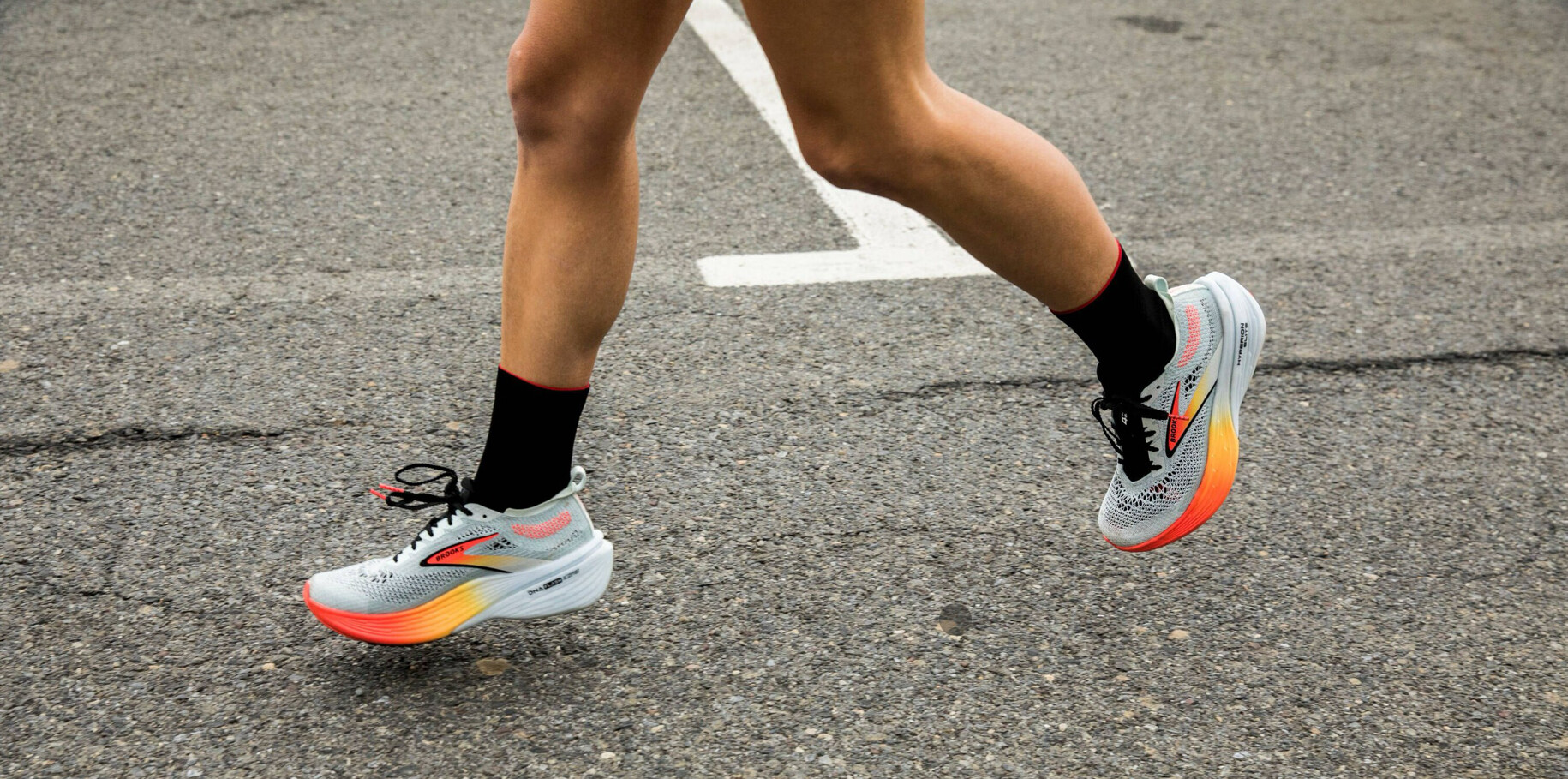
That a mental state could manifest itself as physical symptoms was a complete revelation to me. I’d experienced a variety of them before (usually attributing them to post-illness recovery or environmental reactions) but not at this magnitude. To help treat my anxiety, among other things, he recommended aerobic exercise. Because of its low barrier to entry, I turned to running.
My controlled treadmill runs went fine, but the moment I ran outside, it took a mere few minutes before a wave of tension washed over my body, leading to the symptoms I knew so intimately: shortness of breath, a fast-beating heart, sweating. Running made me more anxious, I figured. I tossed the idea—together with my running shoes—in the corner, and that was where my short-lived running venture ended.
It would take years for me to lace up my running sneakers again. I had to learn about how to get into running gradually and pace myself, along with accepting that I can walk when I need to. Now, running helps me manage my anxiety in ways I’d never expect.
After talking to other runners and psychologists, I learned that my situation isn’t unique. So with the help of experts, we’re sharing tips on how to make running work for your anxiety, alleviating your symptoms instead of exacerbating it.
What is anxiety?
Anxiety is the world’s most common mental health disorder, according to the World Health Organization (WHO).
“We have fear and we have anxiety,” says Arash Javanbakht, M.D., a psychiatrist and director of the Stress, Trauma, and Anxiety Research Clinic at Wayne State University, and the author of AFRAID: Understanding the Purpose of Fear, and Harnessing the Power of Anxiety. “Fear is when I’m perceiving a danger that is clear and identified. Anxiety is a vague state of fear when I’m worried about something happening with no specific thread detected yet.”
Around the world, 301 million people had an anxiety disorder in 2019, WHO reported, and although it’s highly treatable, only one in four people receive treatment.
We think of anxiety in two ways, says Jacob Meyer, Ph.D., an associate professor of exercise psychology and the director of the Wellbeing and Exercise Lab at Iowa State University. There is state anxiety, which is situational and can fluctuate throughout the day. Then there is trait anxiety, which, unlike state anxiety, stays with the individual and is thought of as less modifiable but can potentially improve with the right intervention over time.
Running can be part of this intervention.
What is the link between running and anxiety?
Running is scientifically proven to positively affect not only your physical, but also your mental health.
“People who exercise generally feel less stressed, less depressed, less anxious, less fatigued, more energetic, and tend to have better cognitive function,” Meyer says. “Almost any psychological process you might be worried about, at least in the short term, can be influenced positively by exercise.”
Zooming in on anxiety specifically, running can play an important role in treating the mental condition because it triggers the release of neurotransmitters like serotonin, a chemical that acts as a natural mood stabilizer, and a lack of which is linked to anxiety. It plays a role so important, in fact, that we dedicated a whole section to the science of it in The Runner’s World Guide to Mental Health.
As a plus, exposure to physical symptoms of anxiety can have a therapeutic effect, as you’ll learn to feel safer and more comfortable with these symptoms.
“Your brain automatically feels less worried about, say, increased heart rate or a tightness in the chest because it has happened over and over in a friendly environment where you had fun and nothing bad happened,” Javanbakht says.
By running, you’re creating more resilience against anxiety and exerting a bit of control over the situation.
How can you overcome running anxiety?
Understanding the science behind running’s positive influence on anxiety is a great first step toward utilizing the sport to improve your mental health. Here are some more suggestions on how to overcome running anxiety:
Get the official “clear”: If you have medical concerns, talk to your doctor to ensure you’re physically healthy and have no reason to worry about the sudden increase in heart rate or shortness of breath that aerobic exercise causes.
Start exposing yourself to running: If you previously thought of your running symptoms as anxiety symptoms, you created a link in your head that needs to be rewritten. One tool to help you do that is exposure therapy, especially in a controlled environment, like on a treadmill. “You crank it up, you feel your heart rate and your breathing getting labored, then you turn down the intensity,” says Jennifer Heisz, Ph.D., an associate professor in the department of kinesiology at McMaster University and the author of Move The Body, Heal The Mind: Overcome Anxiety, Depression, and Dementia and Improve Focus, Creativity, and Sleep. “As you watch all those body symptoms return to baseline, you realize you’re okay. In theory, exposing yourself to those symptoms can create a habituation to them so they’re not as fear-provoking.”
Keep your run under control: Slow progress is key. While on the run, reach the level of anxiety you can tolerate, say four or five out of 10 on a scale of perceived exertion, and stay there, Javanbakht says. Don’t let it get up, instead, stay with it until it recedes. “You have now developed a new learning,” he says. “Master this level, don’t rush it because, at the same time, you’re gaining confidence. Then you can move to the next level of exertion. Gradually, you’ll overcome your anxiety.”
Find a running buddy or group: “Social support is a major factor in how people feel in response to activity,” Meyer says. Surround yourself with like-minded runners who match your pace and goals. From helping you keep it slow while chatting to distracting you from your symptoms, experiencing running alongside others, and having a support network right alongside you goes a long way—and so does accountability.
How can you deal with anxiety if it comes up on the run?
The anxious state often arrives unexpectedly. If you feel anxiety creeping up while running, try the following strategies:
Repeat to yourself: You’re safe: If your anxiety doesn’t have any roots in your physical state, reminding yourself that you’re safe can help reduce the feeling of anxiety, Javanbakht says. Remember that most of your anxieties are false alarms.
Reframe your thoughts: When you start experiencing symptoms you perceive as anxiety, such as sweating, instead of negative concerns, try to link it to a positive thing, being caused by the movement you’re doing. “Think, how do I link my behavior to my feelings in an intentional and systematic way? Let’s make it my goal to reorient the way I think about sweating,” Meyer says. The same goes for other symptoms. Reframe them as you go.
Practice mindfulness: Anxiety means that your mind is in the past or the future, instead of the present. Mindfulness exercises can help bring you back to your body. While on the run, pay attention to the sounds you hear, or look around and list the colors you see, with all its shades, Javanbakht says. You can use all five senses, including your bodily feelings, to ground yourself in your body and the present moment.
Try humming: In one of the latest podcast episodes of Brene Brown’s Unlocking Us, Esther Perel, a psychotherapist, explained the soothing benefit of humming, which not only recreates the sounds heard by a baby when still in utero and the sensation of hearing the voice on the inside, but also, while humming, you’re very likely to focus on doing that instead of other worries on your mind. “When you hum, you create a barrier, a space between the thought that is creating the anguish and your nervous system,” Perel says.
What if anxiety perseveres?
On days when you go for a run already feeling anxious, be extra kind to yourself. Your heart rate may be elevated or you may already feel short of breath going into it, so take it slower than you normally would. Taking a break from tracking metrics on apps like Strava and letting go of expectations may be beneficial.
“Uncoupling exercise from performance for mental health may help,” Heisz says. “On days I’m not feeling very good, I take the intensity off and just put in the time. More of a compassionate approach to exercise is absolutely necessary.”
In the end, just remember that you’re not anxious as your default, you just have anxiety. Not every run will feel like a million bucks, but it doesn’t mean that running isn’t your thing. Tomorrow is always another day for another run.
As for me, it’s been a long journey to get here. These days, I run to soothe my anxiety, to silence it while being in control of the symptoms that once stood in my way. Hand-in-hand with therapy, I found it to be the best tool to help me make it through any day, but especially the ones ridden with anxiety. I may have been skeptical once, but I now believe that running is for everyone.
Login to leave a comment
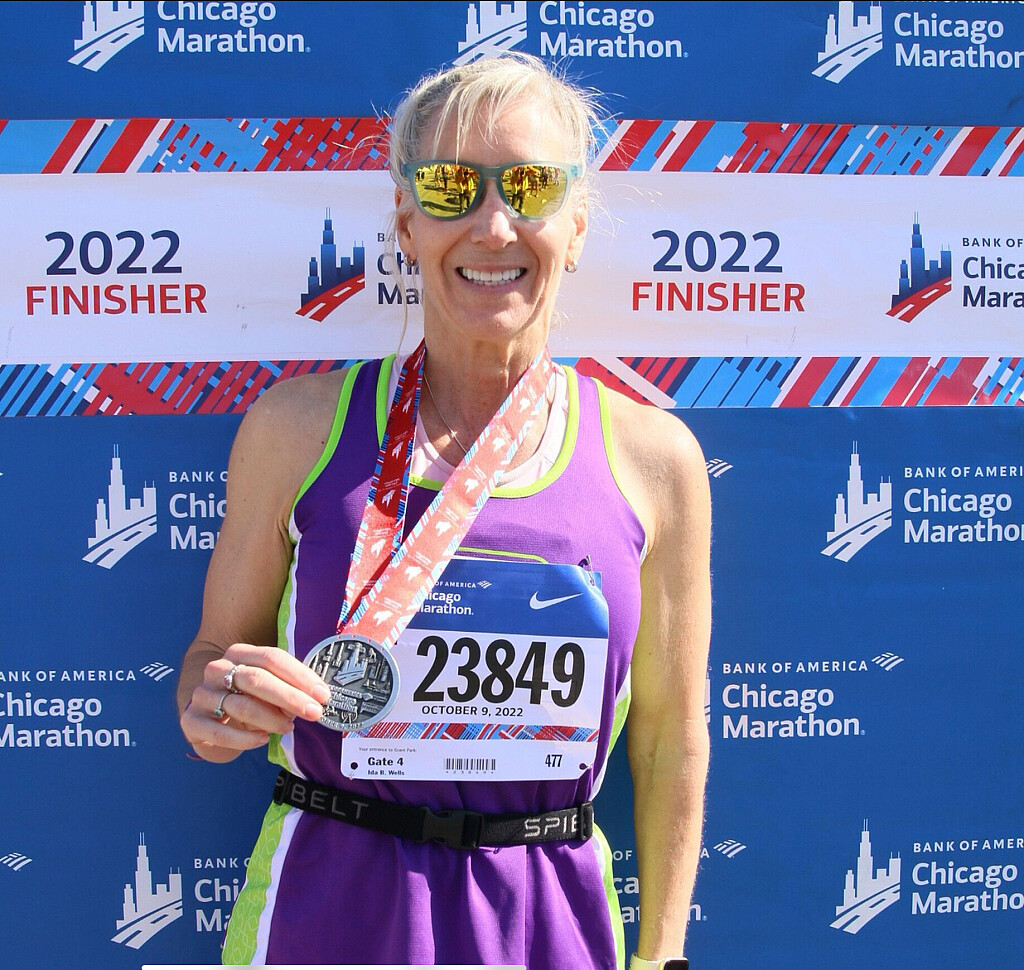
She Qualified for Boston by Doing the Majority of Her Running in Water
Running changed my life trajectory. Before I started running, I had a job as an executive in fast-food marketing. After I started, I changed my career course to focus on health and fitness. I became a certified personal trainer via the American Council on Exercise (ACE) in 2008. In 2011, I became a USA Track & Field run coach, certified Aquatic Exercise Association instructor, and then created Fluid Running as a result for my passion of water running.
I started running 5Ks and 10Ks, but then signed up for a marathon. I ran my first marathon, the Chicago Marathon, in 2001. Then in 2002, I ran the Chicago Marathon again and qualified for Boston. I was hooked. I followed Hal Higdon’s plans exclusively for my first 12 marathons that I ran between 2001 and 2009, and still reference him.
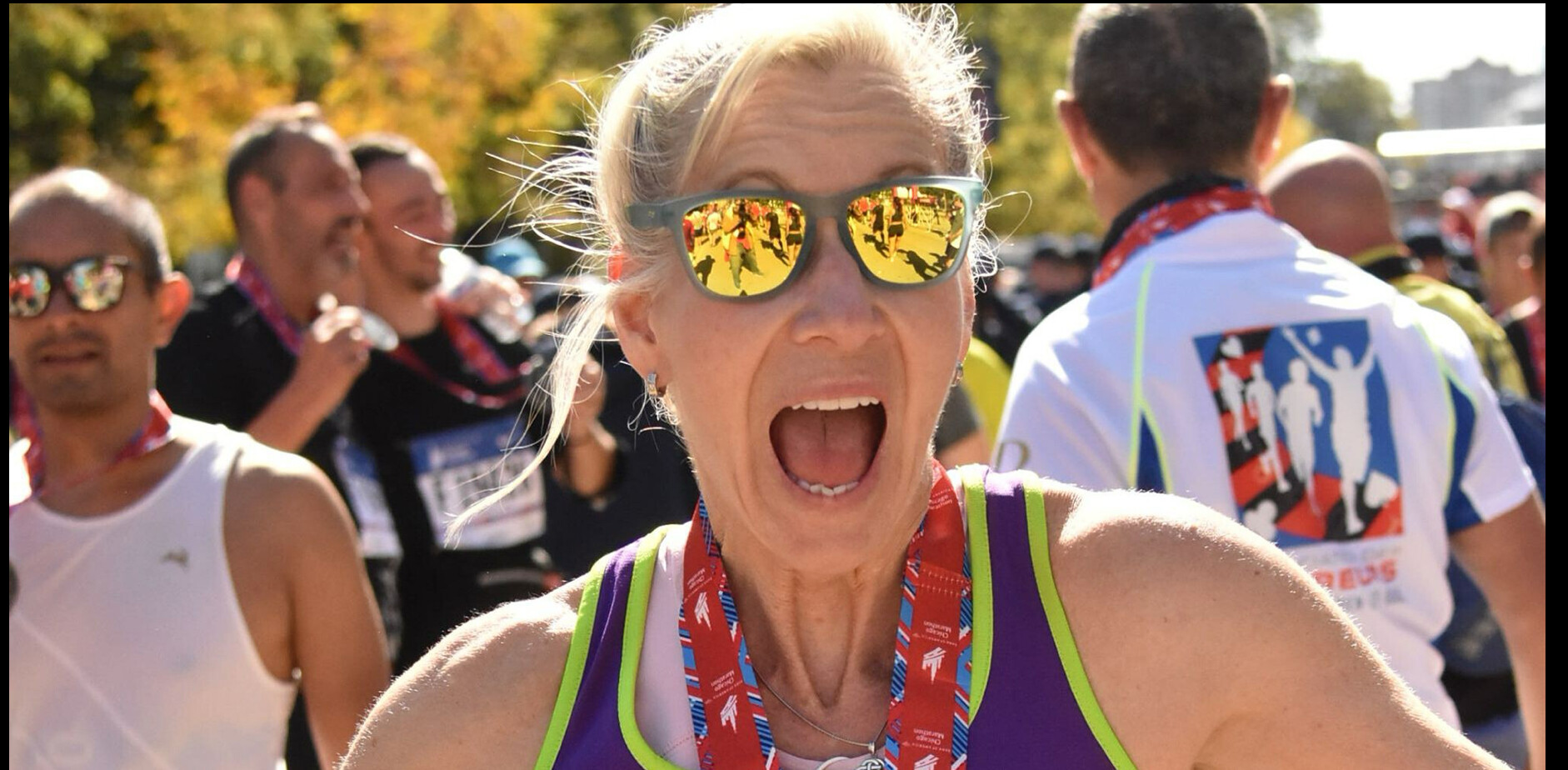
However, in 2010, I was training for the Chicago Marathon with my siblings, and raising money for the Juvenile Diabetes Foundation in honor of my nephew. Six weeks before the race, I tore my calf muscle and my doctor told me I could not run. I was devastated, yet determined.
I searched “how do you stay in running shape when you can not run,” and came across an article on aqua jogging, and contacted the author who is a running coach. His associate gave me a training plan that included five runs a week in the pool, including my 20 miler! I ran solely in the water for the final six weeks of marathon training.
After I discovered pool running in 2010, I would still reference Hagdon’s plans, but I would replace two to three of the land runs on the schedule for water runs.
For pool running, I wear a flotation belt which allows me to run as if I were on land. I am upright in the pool with my legs underneath me. I keep my head held high, shoulders pulled back, and my arms swing by my side. My legs mimic land running form but with a little more “sweepy” back and forth motion.
For the 2022 Chicago Marathon, I decided to try a Track Club Babe training plan because I liked lower mileage, and I focused on speed and slower long runs. I only did the long run and one speed work run on land. The rest I replicated in the pool, and I still qualified for Boston!
Since discovering pool running, my last six marathons have been a combination of about 50 percent pool and 50 percent pavement.
This was my “aha” moment, and I wanted to share my journey, so I created Fluid Running in 2011. A huge benefit is that there is absolutely no impact on the body, so you can do it with many common injuries.
In my recent training for the 2024 Boston Marathon, I did two or three land runs per week (which includes a speed session and the long run), the rest of my running in the water.
I honestly don’t know what I would do without running in my life! It’s my moving meditation. I started dating my husband through running, made many friends, and ultimately created Fluid Running because of it.
These tips have made my running journey a success:
1. Strength train
I’m a huge fan of strength training, especially as we age. I do two sessions a week focusing on my leg muscles and core. I do a lot of single-leg exercises. I know this has played a huge role in keeping me strong, especially toward the end of marathons.
2. Adopt positive self talk
I’m a big believer in positive self-talk. I talk to myself constantly during my runs. One of my mantras that I will say over and over when I run is “strong legs, strong mind, strong body.” “Yes you can” is another one I say often.
3. Learn from your setbacks
I’ve had some setbacks, like all runners. Setbacks, though, are when I ultimately become better and stronger. Setbacks allow me to reflect, and they make me realize just how much I love and need running in my life! Setbacks are temporary, so don’t stress out about them.
Jennifer’s Must-Have Gear
→ SPI Belt: I love it because it’s comfortable and holds so much—my phone, my airpods, gum, and a gel!
→ Power Plate Vibrating Roller: I love it because it gets so deep and feels so good. I try to use it both before and after my runs.
→ Goodr Sunglasses: I love them because they are light, cute, and they make everything look deeper in color. The sky is so blue when I wear them!
Login to leave a comment
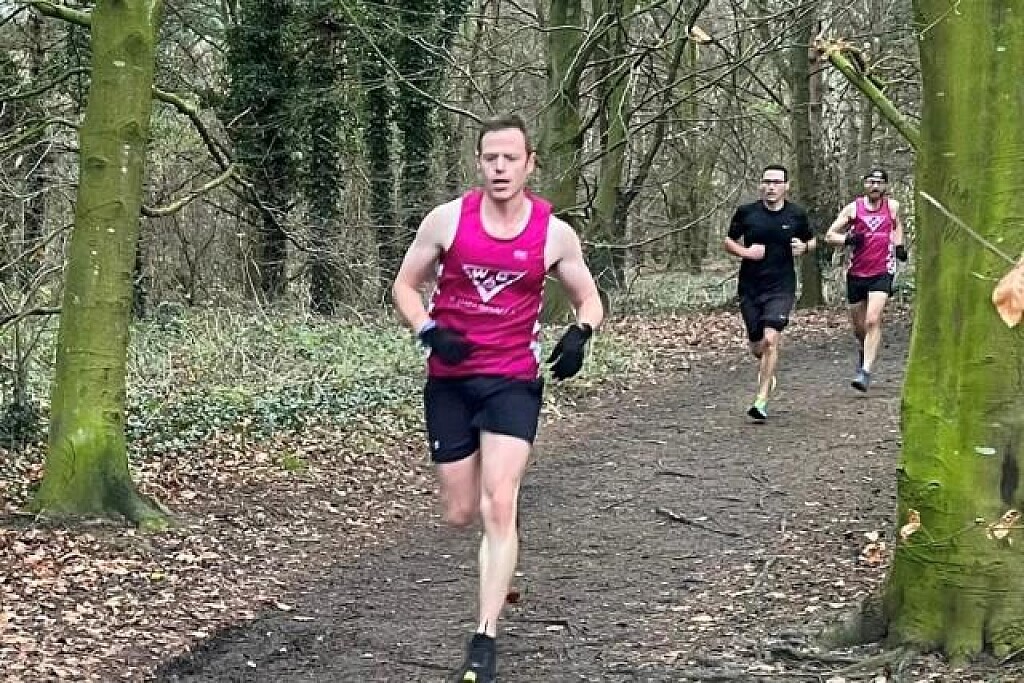
Mark Armstrong: Why I'm pulling out of the Manchester Marathon
It's the column that I really didn't want to write, but unfortunately I won’t be running the Manchester Marathon this year.
I’ve had to take the difficult decision that due to my calf that I won’t be able to toe the start line in little over a week’s time.
Yet another test run ended with the same discomfort by around 4K that I’ve been experiencing and it’s time to accept that I’m just not going to be ready to do myself justice.
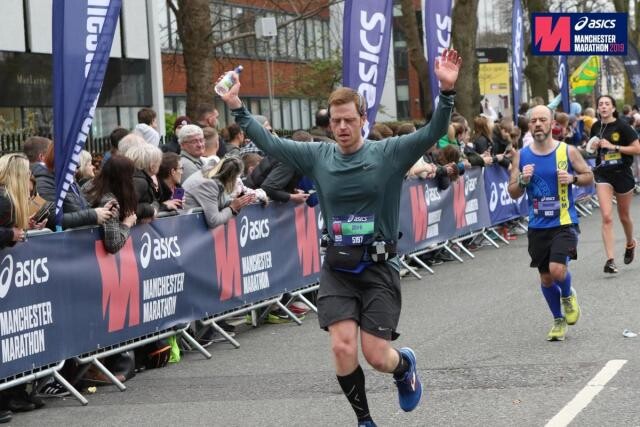
There is of course disappointment and frustration; to some extent I’ve never felt fitter and if my calf was intact then I’d be confident of setting a new PB there.
I needed to stop trying to force this recovery. Hopefully, it’s a relatively minor injury, but it needs time and some concerted work without the impact running has to make it better.

To my mind I’ve got April to really get on top of it before easing back into things in May and kicking on with the rest of the year.
I’ve tried to be proactive and listed all the races I want to run in 2024 with the emphasis obviously on getting to the Berlin Marathon start line in September in the best possible shape.
I’ve learned so much from this training block already and it’s been nice to surprise a few people with the progress I’ve made.
I’ve run times I’ve never thought I was capable of at 10K and half marathon distances but I also have to accept that at this stage my body doesn’t always cope particularly well with a high volume of running.
That’s obviously relative to everyone but I’ve found that once I get to around 40-45 miles per week in my training that my body starts to complain.
But that’s okay - I can work with that - it doesn’t mean I can’t achieve the goals I’ve got, notably a sub three-hour marathon. It just means I have to be a bit more strategic in how I get there.
I’ve grown to really enjoy the strength and conditioning side of things and I’m more than happy to get on the bike to supplement my training. The heart and lungs don’t know what exercise I’m doing so I’m confident I can build fitness there.
Running is just one part of the build towards a marathon goal; strength and conditioning, nutrition, sleep, stress levels are all other factors that can impact what your body is capable of.
Rather than feel envious of my running friends on the way to the marathon start line, I feel inspired in the knowledge that one day in the near future it will be my time to produce a marathon run that I can feel proud of once again. A run that I can look back on with my children to demonstrate that if you put your mind to something then you can achieve goals you never thought possible.
Unfortunately, we live in a world where people want instant gratification and patience is a dirty word. You can’t expect to be good at something straight away; there are always going to be setbacks when chasing something you really want, tests that will make you question how much you really want something.
But building resilience is a key life lesson - tough times don’t last, tough people do.
That’s why I’m focusing on coming back fitter and faster…
With very strong calves…
by Mark Armstrong
Login to leave a comment

Manchester Marathon
We pride ourselves on welcoming all to take on our 26.2 mile challenge, from some of the world's greatest elite runners, to those who thought completing a marathon would never be possible. Many regular runners find this the ideal event to get a personal best time, whilst everybody finds the incredible Mancunian support throughout the course unforgettable. ...
more...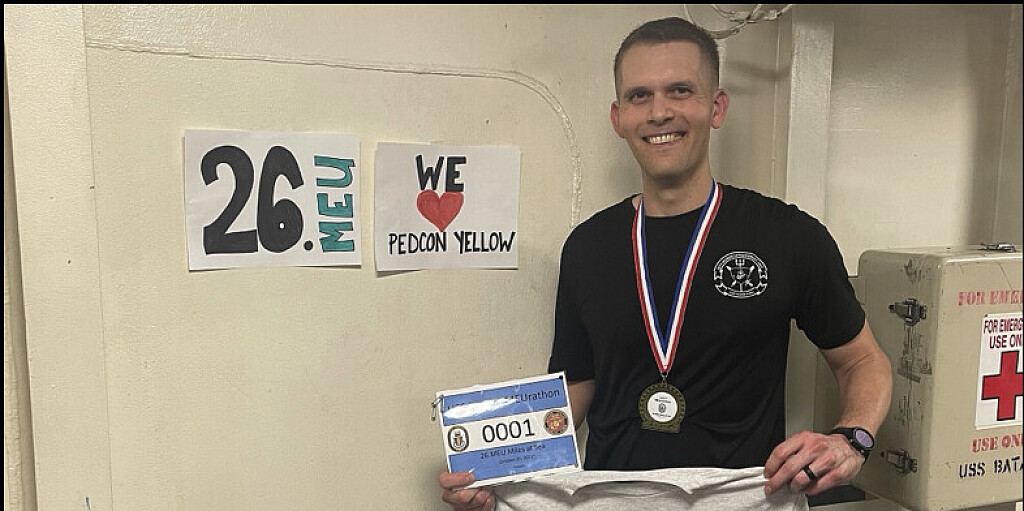
A Navy Dentist Trained for and Ran a Marathon While Out at Sea—All on a Treadmill
For 16 weeks, he followed Runner’s World’s training plan while deployed and ending up breaking four hours.
I always despised the treadmill. I was never able to run on it, partially because I was afraid that if my foot slipped too far off left or right, I would end up face-planted. Plus, what I love about running is being out in the wilderness and not having to run in a perfectly straight line, which is everything the treadmill isn’t: It’s confined and claustrophobic.

But I didn’t always love running the way I do now. As a kid, I played baseball and golf, so when I pivoted to running in high school, it was quite demanding physically and mentally at first. I ran both cross-country and track, and because I was part of a successful team—we won the state championship in track in 2003, and cross country in 2004 and 2005—it was challenging and took a lot of hard work. But even then, I enjoyed the mental challenge of pushing myself hard: No one can make you run, no one can force you, it’s all on you.
And for that reason—because I love to challenge myself—part of me always wanted to conquer my fear of the treadmill. Plus, when my buddy said I could not possibly train for and run a marathon on a treadmill during our back-then-upcoming deployment out at sea, it just made me want to do it all the more. But above all, there was one special person who motivated me to train: My wife, Jessee, and her recent BQ.
Jessee and I were both runners long before we met in college. We take the sport with us wherever we move with the Navy, joining group runs, and even racing together. But while Jessee has been getting faster, in late 2022, I was diagnosed with osteoarthritis, followed by months of rehab and uncertainty about whether I’d ever run another marathon again. However, I was determined to fully recover, following my physical therapist’s recommendations to a T.
While I was healing, Jessee was training for the Wilmington Marathon in February 2023, following the Runner’s World break 3:30 plan, hoping to beat the 3:35:00 cutoff for her age group and make it her Boston qualifier. Her final time was 3:31:33. I was there for the race, spectating, and the whole experience—from training to the race—awakened new determination in me. Could I qualify for Boston as well?
By then, I already knew I would be deployed in July 2023. As I slowly started to feel better, getting back to some easy runs, a plan formed in my head: I would commit to the same training plan Jessee had followed for her BQ—except my training would be solely on a treadmill on the Navy ship.
To qualify for Boston in 3:05:00 for my age group, I knew I’d have to gradually improve my time from my existing PR of 3:58:17. I started training on the first day of our deployment, which set my treadmill marathon date for October 28, 2023.
It was not an easy training block for sure. There had been a handful of days where the ship was rocking and pitching, which brought some surprising, unintentional hill workouts to my treadmill runs. There are no windows, so you just have to be aware and try to anticipate the next move.
In the end, running in a straight line was the least of my worries—the toughest stage was handling the hot days while we were in the Persian Gulf. The heat index was 120 to 130 Fahrenheit outside, and the ship was very hot as well. But one of my favorite quotes is: “Smooth seas don’t make skilled sailors.” I knew that come marathon day, I’d be able to look back on those runs for motivation, knowing that I can do hard things.
In general, I don’t listen to music while running; I like to know what’s going on around me. But the treadmill doesn’t provide much excitement, so I came up with a plan. I read some Runner’s World articles that mentioned the physiological benefits of listening to music while running. I thought if I get through about 16 miles without music and then run the last 10 miles with music on, that should give me a good boost. I practiced it first for a few miles at the end of each long training run, figuring out what songs I wanted on my marathon playlist.
On the day of the marathon, the gym was 76 degrees, about 20 degrees more than all my previous marathons, so I expected the temperature to be a factor going into it. Around mile 18, I started to feel that heat seep in. And then, at mile 22, I felt a sharp pinch in my left groin, so I backed off a little bit. I was hoping for 3:30, but in the end, I finished at 3:43:58 (pure run time, as I had to restart the treadmill every 60 minutes). I ran almost 15 minutes faster than my previous PR though, and was now 15 minutes closer to Boston.
Overall I discovered this marathon training block supported my mental health. Out at sea, it can feel like Groundhog Day—every day is the same. Having a goal helped bring structure to my days. Having a plan gave me a focus and direction. The Runner’s World training plan included a description of what to do each day, running tips, nutrition, and sometimes a little pep talk. I didn’t have to think about it; I was just following what it prescribed.
Since the marathon, I’ve been running three or four times a week, focusing more on strength training, and figuring out what could be next.
Besides Boston, Jessee and I also hope to eventually run a marathon on every continent. We will be moving to Washington D.C. soon, so for now, I hope to run the Marine Corps Marathon this fall and keep shaving time off my PR.
While I’m glad I conquered the treadmill, I doubt I’ll do another treadmill marathon—I’m very much looking forward to running outdoors again, as soon as I return from my deployment.
These tips have made my running journey a success:
1. Work foam rolling into your routine
After my injury following the London Marathon, my physical therapist showed me some foam-rolling techniques for my quads and calves. Before and after every run, I get things loose and warmed up, and it really made a huge difference. By the time I did the treadmill training block, the injury was essentially nonexistent. It’s definitely changed the way I approach running.
2. Make yourself a playlist to boost your mood
Music is quite personal so I’d recommend checking out RW playlists and Spotify playlists, then make your own based on your taste. All genres—rock, rap, pop—can give you a boost in a different way.
3. Find a training plan
Even if you have never run competitively or are brand new to running, Runner’s World can help you figure out the smartest and safest way to start so you don’t do too much too soon and help avoid injury.
4. Find your running people
Googling “local running club” can help you find a community of like-minded people near you. This is a great way to make friends and learn more about running. My wife and I always find a running community every time we move with the Navy. We have made some lifelong friends and look forward to meeting more runners wherever the Navy takes us!
Mike's Must-Have Gear
→ Garmin Forerunner 55: I try to keep my running minimalistic, so I only use the watch for pace, time, and heart rate. There are probably a million other things the watch can do, but that’s enough for me.
→ Brooks Sherpa 2-in-1 running shorts: The boxer brief lining makes these the most comfortable running shorts I’ve ever worn. It’s kinda pricey, so I have only one pair that I wear on my long runs (maybe I'll invest in a second pair one day). The waistband is also very comfortable and the pockets are a perfect storage for my needs.
→ Balega socks: My wife got me a couple of pairs for this deployment, and I absolutely love them. They are a little pricey but so worth it.
Login to leave a comment
Irvette van Zyl to bring tough competition in Two Oceans Marathon
Irvette van Zyl is one of those athletes who wear their heart on their sleeve. With her, what you see is what you get. And what you hear her say, she always means.
This week when she spoke about her excitement at being able to run the Total Sports Two Oceans Marathon, the Hollywood Running Club athlete resembled a kid in a sweet shop. And with good reason too, for Van Zyl endured the pain of watching last year’s race on the sidelines due to injury.
She hated not being part of the race. Understandably so, for the year before she had smashed the 56km Mother City ultra as she dipped below Frith van der Merwe’s record from 1989 that had previously been thought of as unbreakable. Incredibly, despite her fantastic -3:30:31, Van Zyl was not the winner in 2022, that honour belonging to that South African road-running machine called Gerda Steyn -3:29:45.
As she looked ahead to next month’s (April 13) race during the announcement of Hollywood’s team for the World’s Most Beautiful Marathon, Van Zyl revealed just how tough it was for her not being able to race last year.
“Being on the other side seeing them race, it was really hard. When the finish tape was broken my heart broke into so many pieces. It was so hard that day, but I am glad to be back in the race and I am looking forward to doing well. If I win Two Oceans I am gonna start drinking again,” she laughed.
“But it should not be an obsession. Hopefully I can give someone tough competition. And you all know who that someone is.”
She did give Steyn competition back in 2022 when the two of them ran under Van Der Merwe’s record from 1989.
“I knew going into 2022 that I had done a 50k, and I had a plan to run a 3:30. I knew it was possible and it went good on the day, but it was just not good enough. Gerda levelled that record and I was a part of it. It was an interesting race but unfortunately just three kilometres longer for me,” she said before letting out that piercing laugh of hers.
While she will be out for glory, Van Zyl is just glad to be back running, having felt the pain of being out due to injury.
“I value my running now more than I did before after it was taken away from me for so many months. It felt like the injury would not heal and I was never coming back. Hopefully
I still have a few years in me to run. If injury comes, you never know if it will be the end. So I am going to enjoy it race for race, as if it was my last because you never know if it will be the last.”
And she considers herself very blessed to be running for a supportive club.
“I am a happier athlete now, and I am very pleased with the support I got from Hollywood during my long-term injury. They were good and helped me come back because they are interested in the human being. They just want us to be the best that we can be. They know I am not a running machine and now I can enjoy my running game again.”
She will enjoy it even more if she wins Two Oceans next month.
by Matshelane Mamabolo
Login to leave a comment

Two Oceans Marathon
Cape Town’s most prestigious race, the 56km Old Mutual Two Oceans Ultra Marathon, takes athletes on a spectacular course around the Cape Peninsula. It is often voted the most breathtaking course in the world. The event is run under the auspices of the IAAF, Athletics South Africa (ASA) and Western Province Athletics (WPA). ...
more...
This Teen Ultrarunner Wants to Take on the World's Most Prestigious Races
Last November, 17-year-old Sebastian Salsbury received an email reminder. He had 13 days to decide about entering the race lottery for the 2024 Western States 100 Mile Endurance Run, regarded as one of the most prestigious trail events in the world.
Rules stipulate that each lottery applicant must be at least 18 years old on race day. On January 20, Salsbury will finally meet the age requirement, five years after he technically ran a qualifying time to enter the lottery for the first time.
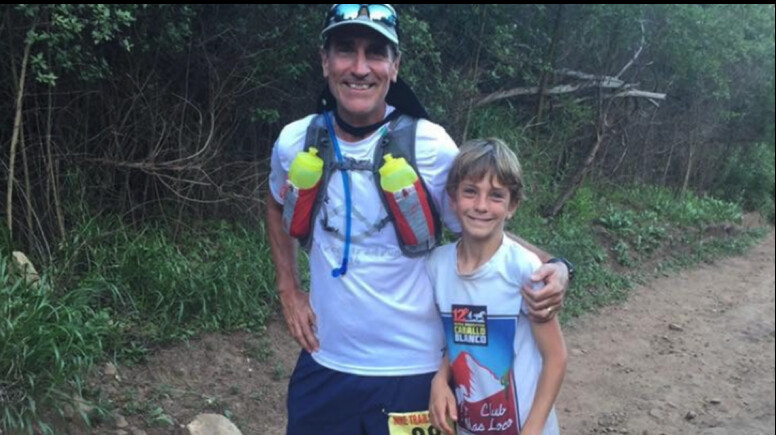
It's been a goal he's been progressing toward for years. In 2020, when Salsbury was 13, he completed the Black Canyon 100K in Arizona in 15 hours 49 minutes and 32 seconds, well within the 17-hour time limit necessary to qualify for the Western States lottery.
"It's hard to put that experience into words," Salsbury says. "It was one of the most beautiful courses I've ever been on. That race made me feel like I was doing the right thing in my life."
Starting Young
Salsbury, who grew up in Santa Barbara, California, was attracted to the trails at a young age. Throughout his childhood, his parents often brought him to nearby trails to hike. The hikes gradually transitioned into jogs, and Salsbury's relationship with the outdoors continued to grow. The mountains, he says, were a playground.
Though Salsbury played basketball, football, and soccer growing up, his love for running took over. He quit the other sports after junior high school to minimize risk for injury, he says, and to dedicate more time to running.
A few years after Salsbury's entry into racing-his first was a local 5K on the road when he was four-he ran the Santa Barbara Red Rock Trail Run. Despite being just nine, he kept up with his father for all 28 miles. The following year, for the Santa Barbara Nine Trails, Salsbury traversed 35 miles with nearly 12,000 feet of vertical gain from the Jesusita trailhead to Romero Canyon trailhead and back, again alongside his father, a road marathoner.
Next, Salsbury entered the Black Canyon 100K in Arizona. He recalled the point-to-point race as one of his most difficult running experiences to date.
"I was basically crying," Salsbury remembers, adding that his hydration vest kept digging into his ribs. "I loved the feeling of working hard and going through really low moments and overcoming them. I crave it."
Supported for the last 20 miles by his coach at the time, Tyler Hansen, Salsbury crossed the finish feeling both defeated and uplifted. The Black Canyon race gave him the confidence to continue challenging himself in ultrarunning.
"My best friends don't understand," Salsbury says about the pursuit of ultras, which he envisions including some of the most technically demanding and prestigious races in the world: the Western States 100 in California, Ultra-Trail du Mont-Blanc through the French Alps, as well as the Hardrock Hundred Mile Endurance Run in Colorado. Salsbury admits that running disrupts his social life, and also that he doesn't mind the solitude the sport necessitates. In fact, he welcomes it.
"I like the feeling of being alone in the mountains," Salsbury says. "It's a great way to free your mind."
Given that he is still a teen-the average age of trail runners is in the mid-30s-Salsbury has not been immune to negative comments over the years. "It's not cool at all to hate, but I can still see where someone would be coming from, seeing a kid doing all that stuff," Salsbury says. "There are going to be people that troll and hate for no reason. That's just life."
A Purposeful Progression
The training required to undertake ultras is out of this world for a typical high school runner. To ensure he's programming himself with sufficient miles without overloading his still-developing body, Salsbury sought the guidance of his longtime role model, pro trail runner Hayden Hawks. The two met when Salsbury was 14, and their camaraderie clicked naturally.
"I had lots of mentors help me at a young age in my running journey, and I felt the responsibility to do the same with Sebastian," says Hawks, 32. "We have taken a patient and gradual approach, developing strength, speed, and a foundation that will help him build into the longer distance races at an older age."
Hawks has coached Salsbury for the past two years, carefully mapping out a plan that tallies 50 miles weekly spread across six days. Salisbury complements the mileage with a combination of hiking, mountain biking, and intervals on an indoor bike as part of his cross training. Three days a week, he does strength exercises at Varient Training Lab in Santa Barbara. To fit it all in so he could have ample opportunity to train and compete, prior to the Covid-19 pandemic, Salsbury enrolled in West River Academy, an online private school program.
"I have zero regrets," Salsbury says. "The opportunity that it's given me to travel with my family and run and be able to guide my days how I want and learn at my own pace, I'm grateful for that."
The online program lasts up to three hours a day, which is "a lot less than standard high school," Salsbury chuckles. In 2022, he researched computer engineering and built a computer from scratch. This year, as part of the online curriculum, he's learning to speak German in addition to researching for a project about coffee and sustainability, which he is especially interested in as a part-time certified barista. Salisbury works at a local coffee shop twice a week.
So far, he's enjoying the unique balance of online learning and ultrarunning. "I like to keep myself busy," he says. "I've always had this next-level energy. Obviously it goes into running, but it's who I am as a person."
His days are hardly routine compared to the average high schooler. On a recent Thursday, Salsbury started the day with a three-minute cold plunge before he spent the remainder of the morning packing running shoes, thermal layers, his COROS watch, and a heart rate monitor ahead of a four-day trip to Boulder, Colorado, to train with a friend at altitude.
Living at sea level in Santa Barbara, Salsbury doesn't often have the opportunity to run at altitude beyond twice a year, mostly "just a vacation with my family where I get to do some running," he says.
As much as he has run over the years, Salsbury says he's been fortunate to never have had any serious injuries. This year, a growth spurt of eight inches led to severe shin splints, and Salsbury, who is now 6-foot-4 and 162 pounds, took four months off from running.
Now, life is back to business as usual. Salsbury is planning ahead. His next race is the La Cuesta Ranch 25K in San Luis Obispo, California, in late January. After he graduates from high school in June 2024, he wants to pursue a running career ideally full-time, though he hasn't stated when he aims to turn professional.
"I've always had the intention to be one of the greatest ultrarunners in the world one day. That will continue to be my goal," Salsbury says. "I want to leave a positive impact on the sport and be an inspiration to other athletes of any age, but obviously the youth because that's how I grew up. People can judge and say whatever they want, but I do want to be the best of all time."
by Trail Runner Magazine
Login to leave a comment

Conquer Your Longest Distance Yet With These 9 Tips
Ultrarunners and coaches share their best advice for building mileage without getting injured.
Whether you want to progress from a 5K to a half marathon or a marathon to an ultra, a few general rules on how to run longer can help you get there.

While building mileage and time on your feet is paramount, the key to doing it successfully involves patience and persistence. “As much as volume matters—volume is king—too much volume too soon can get you on the sidelines,” Bertrand Newson, RRCA-certified run coach and founder and team captain of Too Legit Fitness, based in San Jose, California, tells Runner’s World.
Follow these tips from Newson and other coaches and ultramarathoners to successfully increase your mileage, avoid injuries, and crush your longest distances.
1. Build a Base, Then Keep It Consistent
“I steadily built up to running 250-mile races over many years, but I started by running one mile at a time,” says Sarah Ostaszewski, pro ultrarunner with Tailwind Nutrition who won the 2023 Ouray 100-Mile Endurance Run. “Build a strong base and try to keep a consistent running routine, so then adding a little extra here and there won’t seem so daunting.”
Base training typically requires about four to eight weeks (before following a race training schedule) to strengthen your cardiovascular system and your muscles, but the longer you can regularly run and set a foundation, the better. Your base work should involve mostly easy runs, low mileage, and maybe low-key speedwork (depending on your fitness level), like ending a run with strides. This part of your training is all about consistency, rather than actually building mileage.
Ultrarunner Mirna Valerio stays consistent by focusing on time on her feet, rather than distance. “This has been mentally freeing,” the author of A Beautiful Work in Progress tells Runner’s World.
“I have a standing appointment with my treadmill a couple times a week,” says Valerio, who will aim to run a minimum of 12 hours a day over six days at the Lululemon Further event, an ultramarathon for women in March. “I just get it done, which incidentally is one of my mantras.”
2. Find Your Best Approach to Building Volume
If you’re new to running and want to run longer, add another day of a short, easy run to your schedule, suggests Stefanie Flippin, an ultrarunner, Lululemon ambassador, and doctor of podiatric medicine, who has earned a first-place finish at several 100-milers.
Maxed out on available days of the week? Add to your long-run mileage, which is what Leah Yingling, ultrarunner and biochemical engineer who will see how far she can run in 24 hours at Lululemon Further, does first when aiming to build volume. The general rule is to increase your weekly mileage by about 10 percent each week, adding to that long run. For example, if you currently clock 17 miles per week with three four-mile runs during the week and a long run of five miles on the weekend, you would keep your midweek mileage the same, but kick up your long run to about seven miles next weekend.
Yingling, and many other pros, also do two runs a day. While this won’t work for everyone, if you don’t have a significant single block of time, clocking some miles in the morning and again in the evening and resting between can help you clock more mileage. One must-do to make it work: Tame the intensity on at least one of those runs.
Charlie Lawrence, 50-mile world record holder, views his second run of the day as a sort of active recovery. He often goes for double digits in the mornings, then runs for about four miles (at minimum) in the evening, keeping the effort light.
No matter what, testing out strategies to see what works for your schedule is the best way to run longer. “That might be adding a walk a few days a week in addition to your daily runs, or maybe you’re adding back-to-back long runs,” says Yingling. “Whatever you do, find something that is sustainable.”
3. Follow a Progressive Training Plan
A good training plan will slowly build mileage to decrease your risk of getting sidelined, as research shows taking on too many miles too soon is one of the biggest risk factors for overuse injuries.
When choosing your training plan, you have to be realistic about the time you have to build up to the distance you want to conquer—and where you’re at now, says Newson. For example, if you have your sights set on a half or full marathon, think about what you can comfortably run today. Then, following the loose rule of adding 10 percent more miles each week, how long do you need to train? If you currently run five miles without stopping and feel good after, and can comfortably clock 12 miles per week, you can probably conquer a 10-week half marathon plan.
Another important factor to look for when it comes to mileage on a training plan: recovery weeks. Newson explains you’ll typically see this as three weeks of building, then a week in which you back off mileage a little to give your body time to recover and actually make gains from all the work you put into your plan. This will also keep your body strong and help you sidestep aches and pains, he adds.
4. Keep Easy Runs Easy
You’ve heard it before but it’s especially true when trying to run longer: Don’t overdo your low-effort days.
“It’s important for me to always run my easy runs, short or long, at a conversational, aerobic rate of perceived exertion. This means that I can easily chat with a training partner for the duration of my runs without becoming out of breath,” Flippin says, who also clocks her heart rate to make sure she’s in an easy zone.
Don’t worry about what shows on Strava, either. “I think a lot of runners run their easy runs too hard and that is because of ego and they don’t want people to think they are slow,” says Devon Yanko, ultrarunner who’s placed first in several 100-mile races and will aim to conquer her longest distance over six days at the Lululemon Further event. “I delight in the idea that people may look at my Strava and think I am too slow, because on race day that won’t be the case!”
More generally, applying the 80/20 rule to your training overall can also help you record more low-intensity runs, Newson says, as it means 80 percent of your workouts should happen at a low intensity, and 20 percent at a hard effort.
It’s these easy runs that will help keep you running consistently—the key that unlocks higher mileage. “A B+ average of consistent runs, strength work, and recovery measures stacked over weeks, months, and years will always trump sporadic A+ weeks followed by a total drop-off,” Flippin says.
5. Master the Long Run
For most people, the long run will make up the bulk of your weekly mileage, but it doesn’t just help you clock more time on your feet. It also teaches you mental stamina, how to deal with fatigue, and it can help you get comfortable with being uncomfortable. With years of practice, this is what many pros say pulls them through farther distances.
Even though Lawrence can deal with being uncomfortable for long periods of time, he still turns to mind games to mentally check off miles. For example, he often breaks a race down into small, manageable chunks, often focusing on the next fuel stop (typically about every four miles) as a check point. If he’s struggling to get to the next four-mile marker, he may tell himself he’ll feel better in 10 to 15 minutes and checks in again then.
In addition to breaking your long run up into segments, Newson also suggests dedicating each mile to someone else, which takes it outside of yourself and gives you another reason to keep going, and says to focus on the mile you’re in, simply putting one foot in front of the other.
Finally, the long run is the perfect time to practice your fueling and fluid intake, Newson says, considering you need energy to clock longer miles. Aim to take in carbs when going for 90 minutes or longer, and go for about 30 to 60 grams per hour after the first hour.
6. Schedule a Few Harder Workouts
To build endurance, you want to run long, but you can also add intervals and speed work into your schedule.
Lawrence gets on the track for VO2 max-specific workouts at least once a week. VO2 max is the amount of oxygen you can take in while running and is a major marker of fitness—the better this metric, the easier running will feel, which will help you go longer with less effort. Focusing on VO2 max intensities on runs means going for about 90 to 100 percent of your max heart rate or about 5K pace, and it could involve intervals like 400-meter repeats.
You could also focus on lactate threshold training. Your lactate threshold is the point at which your body produces lactate at a rate you can no longer clear, leading to fatigue. To help you prolong that side effect—helping you go faster for longer—practice running at your threshold pace. (Here’s how to calculate your running speed at lactate threshold).
To do this, Ostaszewski prefers longer interval workouts with work periods ranging from six to 10 minutes near aerobic threshold. But tempo runs at your threshold speed are also smart.
7. Supplement Your Runs With Mobility and Strength
Before you jump into high mileage, you need a solid warmup. Lawrence has been doing the same activation drills before runs for a long time. He starts with foam rolling most of the lower body, then does a series of exercises, like:
Leg swings
Down dog to lunge rotation
Ankle mobility moves
Banded work, like glute bridges
This go-to routine wakes him up and gets him in run mode, even when he’s not feeling it.
Cross-training workouts are also key. Valerio mixes strength training, mobility workouts, Pilates, and rowing into her training schedule, which she says helps her avoid overuse injuries. Meanwhile, Flippin points to strength training in particular as crucial to running longer. She suggests starting with one day a week to build consistency, then adding on days from there.
Lawrence focuses specifically on doing core workouts every day (one of his go-to moves: the ab roll out), along with dedicated gym time for lifting, in which he conquers moves like hex bar deadlifts.
8. Make Recovery a Priority
Many pro runners turn to a solid nutrition practice to jumpstart recovery and fuel future performances. “I ensure I’m always getting in carbohydrates and protein within 30 minutes of finishing a key workout or long run,” Yingling says.
Finding time for other recovery practices, like mobility work, foam rolling, even meditating, can also support your training and get you prepped for the next round of mileage, Newson says. Full rest days are also important, especially if you’re feeling any aches and pains.
And you can’t forget about sleep for recovery—striving for at least the recommended seven to nine hours—especially for those looking to push their mileage.
9. Don’t Rely on Motivation Alone
Running your longest distance takes dedication and determination, but don’t expect to feel motivated every day. “People often wait to do things until they are motivated, when instead, they should have been focused on completing their plan or working toward their goal,” says Yanko. “I don’t jump out of bed every morning peppy and excited to run, but I am committed to doing the work and thus, I simply get the work done.”
Yanko also suggests tapping into curiosity to keep you going longer. “That is, instead of being intimidated by a workout or long run, I allow myself the opportunity to be curious about what might happen if I simply begin the session,” she says. “I do not believe that one workout or one long run ‘proves’ anything about my fitness or ability to race, so having curiosity means I can get into a session and allow it to unfold with confidence that if I just continue to show up and do the work, I will build my fitness brick by brick.”
Newson also suggests a running group to keep you accountable and consistent, and to elevate the fun of your workouts.
“On the mental side, I always try to see the big picture and remember that all the miles I’m running are for fun and for my own personal enjoyment,” Ostaszewski adds. “I’m always aiming to enjoy the process and recognize growth in the journey.”
by Runner’s World
Login to leave a comment
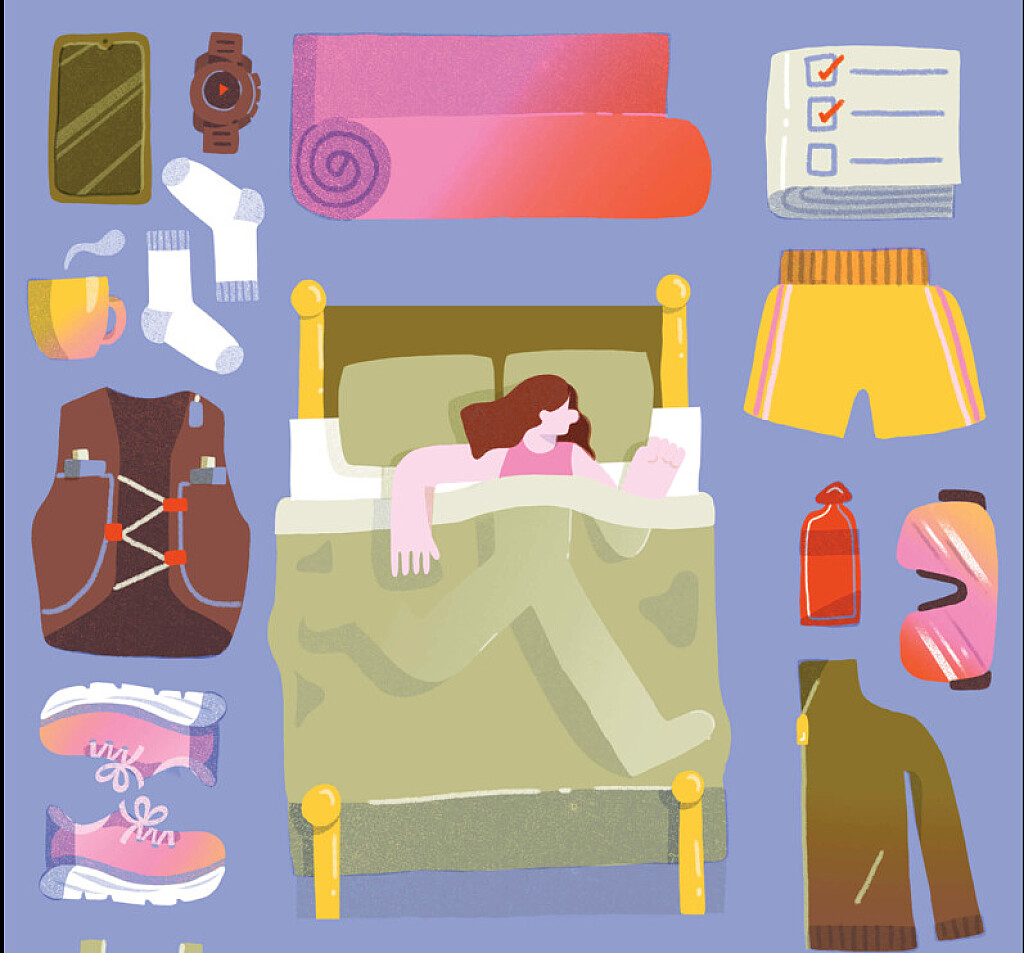
HOW TO START A RUN WHEN YOU DON’T FEEL LIKE IT
I’VE ALWAYS FELT validation when reading a story about writers and their love of procrastination. I thought it was just me who gets more work done around the house with a deadline looming and who finds every excuse not to write until the time feels exactly right—or the time has run out.
Well, a while ago I realized how I do this with running, too, especially long runs on the weekends. I stare at my closet trying to determine the perfect outfit for the weather. I go back and forth on what to eat and how much coffee to drink. Should I have half a cup? Down a full one (or two) then wait until after I go to the bathroom to head out? I stop for a quick foam-rolling session or grab my massage gun for a bit, then do some dynamic stretches. Before I know it, I’m starting my run an hour later than planned.
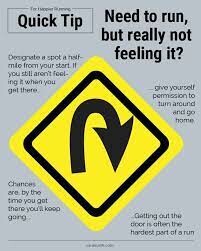
Some prerun rituals are necessary, of course. A warmup helps me feel ready for those initial steps. If I have double-digit miles on deck, I definitely need to eat and drink before I start my stride. But really, I’m just putting off those initial few miles—those steps where the legs feel tight and the upper body cranky, the mind remains in bed, and instead of finding a rhythm, the steps feel like short, broken verses waiting for me to string them together in better harmony. I tend to overthink my runs, especially the start, rather than focusing on how the sport makes me feel powerful and strong, and like I’m gliding over the trail rather than clomping with every footfall. That rumination makes getting out the door super difficult sometimes.
I know I’m not the only one who has trouble simply getting started. Ahead of the Chicago Marathon this fall, Emily Sisson, pro runner and U.S. women’s marathon record holder, said one of her favorite mantras is “motivation follows action.” She’s not always inspired to go run 20 miles or clock a tempo run at a 5-minute pace. But once she starts moving—after a few warmup exercises with her mini band or a light and breezy running warmup—the drive to put in the work picks up.
Similarly, Tristen Rodriguez, a RW+ member who trained with Runner’s World for the 2023 NYC Marathon, mentioned how he is only motivated to run about 20 to 30 percent of the time during a training cycle. It’s the discipline that gets him out there. Checking off training runs and workouts on a plan can give you a shove to get out the door instead of relying on the sheer desire to do so.
Like Rodriguez, I’ve found that setting goals, following a schedule, and tackling workouts on a plan helps remove the need to rely on willpower alone, and adds in the determination to succeed. That’s one reason I sign up for races on a consistent basis throughout the year. And like Sisson, I know once I start moving, I’ll want to pick it up and conquer the run ahead because the resolve to perform well settles into my stride.
Focusing on how good it feels to finish a run—no matter the pace or distance—also gets me out the door. So does removing any barriers to said door. That’s why, despite being more of a night owl, I’ve come to love early morning easy runs: I can basically roll out of bed, slip into the outfit I laid out the night before, and hit the road. No fretting about prerun activities. I just go, without thinking about it.
Even with all my love and deep appreciation for running, I still have to tell myself a little story about the run ahead, about how wonderful it will feel just to get myself moving (even if that’s not entirely the truth, at least not all the time). These helpful mind games give me a little kick in the glutes to start running. And sometimes, when I find I’m still procrastinating, I just thank my deadline-driven mindset, which turns on when time is running out and I need to stop thinking and just start stepping.
Login to leave a comment
This Truck Driver Started Running the Length of One Song—Now He’s Finished 3 Marathons
“My life is totally different today because I have purpose. I also feel 100 times better health-wise.”
I was an amateur boxer as a teenager. I stopped boxing after age 17, and never took care of myself until I was 36 years old. For 19 years, I ate badly and did not exercise, and started to gain weight rapidly after the age of 30 when I became a truck driver.
Being a trucker, I ate a lot of truck stop food and fast food and didn’t move much. My life was simple: work, eat, come home to my family, and do it all over again. My struggle was always my diet. I had a food addiction.
I didn’t have any major health problems other than high blood pressure, but I knew I had to make a change as it was only a matter of time before I’d be on medications, and other health issues would catch up to me because of my unhealthy lifestyle.
It started as a New Year’s resolution on January 1, 2022. I was 36 years old and my clothes no longer fit me. I also realized that I couldn’t keep up with my 8-year-old daughter or do anything outside with the family because I was out of shape and tired all the time.
I thought to myself, ‘What kind of example am I showing my daughter?’ So I made a promise to myself and family that in 2022, I was going to take care of myself and set goals. I set a very challenging goal to lose 50 pounds in three months.
I started out by walking in January 2022, and lost 25 pounds in that month alone. In February, I started to implement running with my walks at the local parks in San Antonio, Texas. By March, I joined a gym.
I began walking and running on the treadmill—it was so hard for me to run at first because my legs and calves cramped up often. I couldn’t even run for 30 seconds in January, so in March, my challenge was to try to run the length of the song the gym had playing on the intercom. In April, I completed my first nonstop mile of running—I was so excited to achieve that.
After April, I ran about two miles a day on the treadmill after lifting weights, and met my goal of losing 50 pounds in three months.
My main focus during this time was weight lifting, but one day in late August, I challenged myself after my workout to see if I could run three miles nonstop on the treadmill. To my surprise, I did it. After that, I started to go back to the parks and run.
A buddy at the gym told me about a local 5K in San Antonio. I ran it and fell in love with the race environment. It was there I heard runners talking about the San Antonio Rock ‘n’ Roll Marathon.
It was 11 weeks away, and I told them I would love to run the full marathon. They all chuckled a bit and looked at me like I was crazy. How would a person like me who barely started running have time to prepare for a full marathon in just 11 weeks? Well, I started training for it by following runners on TikTok and finding out what training schedule they followed.
One month later in October, I was running 15 miles nonstop. In December, I completed the San Antonio Rock ‘n’ Roll Marathon in a time of 5 hours and 9 minutes. The feeling of accomplishment was beyond amazing.
After the marathon, I made up my mind: Running was something I would continue. Six months later, in May 2023, I ran the Shiprock Marathon in New Mexico in 4 hours 57 minutes. It was quite an honor to run with the Navajo people at the Navajo reservation. I then ran the San Antonio Rock ‘n’ Roll Marathon again this past December 2023, and my time was 40 minutes faster than the year prior. The next marathon on my list is the Utah Valley Marathon in June 2024.
Today, I run four to five times a week with Saturdays being my long run. My goal is to keep running marathons and to get faster. My ultimate goal is to qualify for Boston. It sounds far-fetched because I’m currently running 4:30 marathon times, but running this distance seemed impossible two years ago.
I work 50 hours a week for a local construction company. While I have the luxury of coming home every night, the days are long. To maintain my healthy lifestyle I pack a lunch everyday—I’m fortunate that my wife prepares these lunches for me. If I didn’t pack my lunch, I’d be eating truck stop food. After work, I go to the gym for strength training, and or run around the local parks. I usually don’t get home until 8:30 at night.
My life is totally different today because I have purpose. I also feel 100 times better health-wise.
These three tips have made my running journey a success:
1. Stay consistent
Stay consistent with running, your workout routine, and diet. Consistency is key. Just start and never give up. It’s going to be difficult, but stick with it and results and progress will come. It’s you versus you. Don’t compare your journey to anyone else’s. It’s your battle.
2. Eat healthy
Diet plays a huge factor on how you fuel for your runs and the right nutrition helps you perform better. I’ve noticed on days I eat bad it really affects my runs. Before this journey, my diet was horrible. All I drank was soda and ate fast food. I’m Hispanic and I love Mexican food, but it isn’t the healthiest. Now I only drink water and black coffee. I stay away from fried food, processed foods, sugar, and flour. I love pasta and chicken Alfredo the day before my long runs. I eat lean meat, chicken breast, lean ground turkey, salmon, and sweet potatoes, along with a lot of fruit and vegetables.
3. Stay confident
You have to believe in yourself. You have to have faith in yourself and the process. Faith over fear. I learned you can do more than you can imagine. The mentality I have now compared to two years ago is night and day.
Adam’s Must-Have Gear
→ Nike Vaporfly Shoes: Of all the shoes I’ve tried, Nike Vaporfly are my go-to race-day shoes. They feel the best and I’ve had my PR with these shoes.
→ GU Running Gels: These work the best for me for fueling on long runs and don’t upset my stomach and give me a great boost.
→ Night Buddy Headlamp: For my early morning or night runs, this headlamp keeps me safe and well lit. It’s a super light headlamp and very bright.
Login to leave a comment
Four runners share their mental health stories
Many runners find their sport is not only a way to gain physical resilience, but also a powerful ally in the path toward mental well-being. The road to mental health isn’t solitary, and witnessing others share their challenges and successes can be uplifting and inspiring.
From pros to amateurs, athletes are speaking out about their struggles and triumphs with mental health. Here are four runners to follow who are also mental health advocates.
1.- Alexi Pappas
Pappas is known for being a remarkable athlete (she ran the 10,000m for Greece at the 2016 Olympics in Rio de Janeiro), but she also boasts credentials as a renowned author, filmmaker, and mental health advocate. Pappas opened up about mental health in 2020: after working toward and achieving her Olympic dreams, her mental health spiralled, and she was eventually diagnosed with severe clinical depression, which was compounded by injuries, a lack of sleep and her own reluctance to take a break from training.
Pappas authored her first book in 2021: Bravey: Chasing Dreams, Befriending Pain, and Other Big Ideas, highlighting her triumphs and challenges in sports and life, and encouraging readers to be “braveys” in pursuing their passions. She continues to advocate and be a source of hope to others on social media.”What if we athletes approached our mental health the same way we approach our physical health?” Pappas asks.
Former American steeplechaser turned elite trail runner, Ostrander uses her Instagram platform to share mental health and eating disorder awareness and advocacy.
In 2021, Ostrander returned to professional competition after being sidelined with multiple injuries for the previous 18 months. During this time, she was hospitalized for treatment of an eating disorder. Ostrander qualified for the U.S. Olympic Trials, where she ran a personal best of 9:26.96 in the 3,000m steeplechase, before deciding to take a year-long break from professional running to prioritize her own mental health.
Ostrander returned to racing in 2023, and made a shift to the trails, running to ninth place at the Mammoth 26K in California in September.
3.- Evan Birch
Canadian ultrarunner and mental health advocate Evan Birch shares an unflinching look at his mental health journey on social media as he works to destigmatize the conversation around mental wellness. Birch is a former 911 dispatcher from Calgary who has been running on trails for more than a decade, and who most recently conquered Western Canada’s first 200-mile race, The Divide 200, in September 2023.
A busy father to young children, Birch recently collaborated with filmmaker Dylan Leeder to create Running Forward, a documentary illuminating the intersection between running and mental health.”It is more important to me now that I meet the truth within me, than it is to make other people comfortable with how I am,” Birch says on social media. “The gifts I have received from allowing myself to be sad are so plentiful.”
4.- Denoja Uthayakumar
From Scarborough, Ont., Uthayakumar is no stranger to hardship, but she has taken her experiences and built a social platform where she can advocate for individuals from similar backgrounds. Uthayakmar is a cancer survivor, body positivity and mental health advocate and was Canadian Running’s pick for our 2023 Community Builder of the Year award.
Uthayakumar was born into a Tamil family, and was diagnosed with thyroid cancer at age five; she shares her physical and mental health challenges alongside the joy that running and the community around it bring to her. “This year pushed me. It broke me down. It challenged me to no end,” Uthayakumar says on Instagram. “It was hard, but I rose higher with my running journey, and was able to share more of my story during my healing while being a survivor.”
by Keeley Milne
Login to leave a comment

7 Legit Benefits of Running At Night—And How To Do It Safely
It was around mile two of the Joshua Tree Half Marathon that I started to hear animals I couldn’t see. Was that a horse? I wondered (and hoped). The daylight was officially gone.
But I realized that as spooky as night running might be, it also creates an eerie kind of magic. Lights twinkled in the valley below the hilly path I was climbing, but all around me it was pitch black, aside from the few feet of sandy trail that each runner’s headlamp illuminated. With nothing else to see, all I had to focus on were my own footsteps and my breath—and how I could race through the desert as quickly as possible.
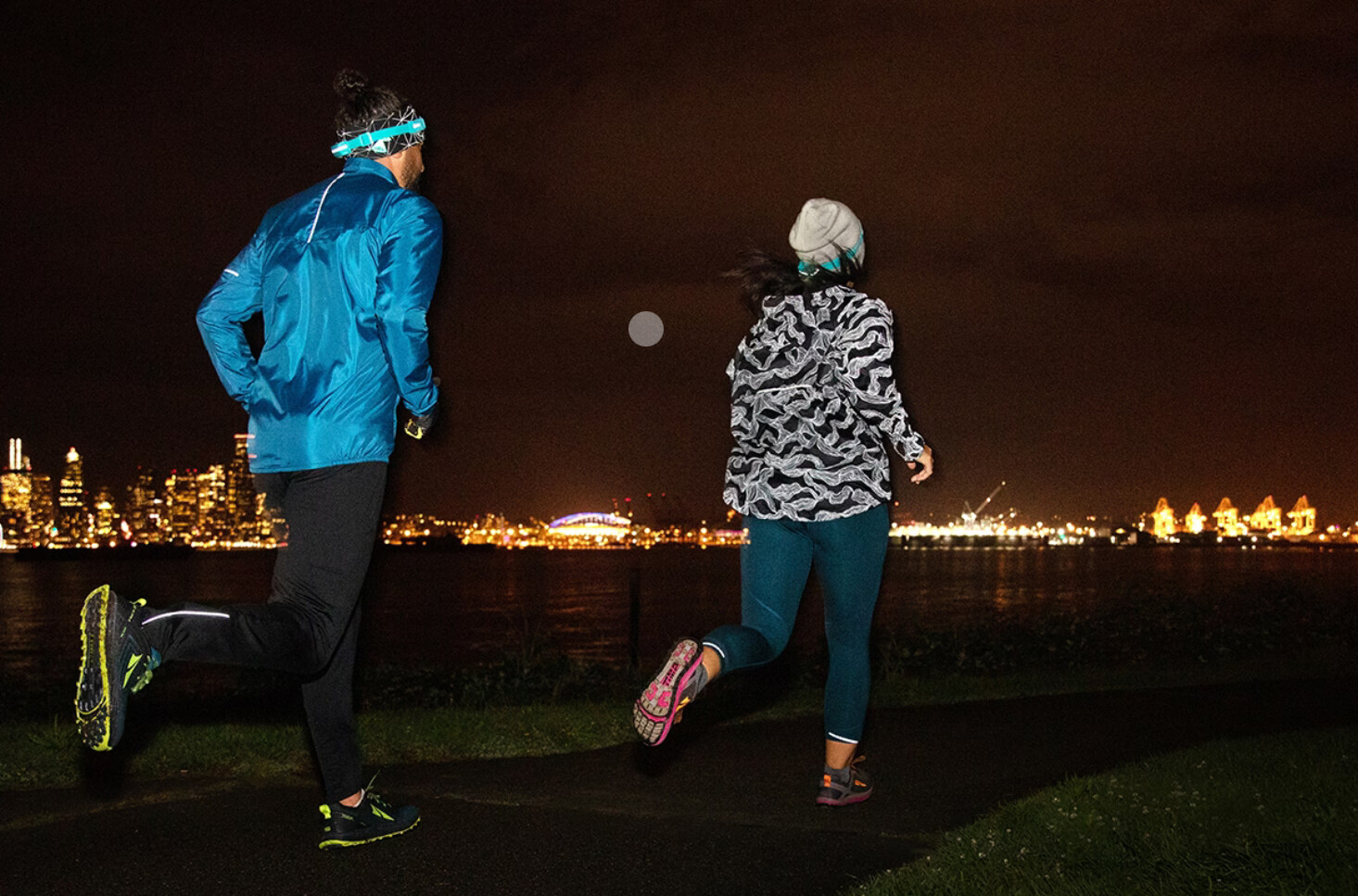
Amie Dworecki, B.S., M.A., MBA, Amie Dworecki, B.S., M.A., MBA, is a running coach and founder of Running With Life.
Brad Whitley, DPT, physical therapist at Bespoke Treatments in Seattle
Marnie Kunz, CPT2, USATF- and RRCA-certified running coach
Most long-distance races take place in the morning, but this half marathon starts right around sunset. Because the scenery of the course is a tad monotonous, the race organizers embrace the adrenaline rush you can get from running under the stars.
I joined as part of a press trip sponsored by Nathan Sports, Skechers, and Swiftwick. The experience reminded me that even when the days are short during the winter and pushing your pace after the sun goes down becomes the norm, night running can be its own unique adventure.
The more I looked into running at night, the more advantages I found—even if you need to take a few extra safety precautions when you’re lacing up.
The perks of running at night
What are the main benefits of night running? Here are a few of the top reasons to get in a nocturnal workout.
1. The temperature is cooler
Earlier in the day before the Joshua Tree race, I’d been cowering from the heat anytime the sun touched my skin. But once it was dark out, the desert air got so cool that my sweat-wicking T-shirt barely had any work to do.
As it turns out, temperatures around 40° Fahrenheit are ideal for long-distance running, largely because our hearts don’t have to work quite as hard to pump our blood to cool us down, according to a May 2012 study in PLOS One.
Even if the mercury doesn’t get quite that low after dark in a hot or humid climate, night running after sunset (or, alternatively, heading out before sunrise) is clearly the way to go to nab those cooler running temperatures.
2. Your body’s more ready to run
Running shortly after rolling out of bed can sometimes feel like wading through molasses. It’s no surprise why: You’ve just been lying stationary for hours, so your body temperature and mobility aren’t exactly ideal.
3. It might feel easier
The dark can be a secret weapon for runners. One August 2012 study in the Journal of Sport & Exercise Psychology on optic flow (our perception of our movement in relation to our surroundings) suggested that because we can’t see as far in the dark, we feel like we’re going faster because close objects seem to pass by more quickly than those in the distance.
Even though your watch might not record any speedier miles, running in the dark can be a helpful confidence boost when you get the sense that you’re zooming along.
4. Night running can help you sleep
How can running at night affect your sleep quality? Despite rumors to the contrary, there’s some evidence to suggest evening runs might actually help you get deeper zzzs.
An October 2018 meta-analysis in Sports Medicine found that as long as you finish running more than an hour before your bedtime, it most likely won’t mess with your sleep quality. Instead, it could actually help you spend slightly longer in those restorative deep sleep stages.
Anecdotally, some people say they also seem to fall asleep faster.
That’s something to experiment with, according to certified running coach Amie Dworecki, CPT. Everybody’s different, so you might need to find out what works best for your own circadian rhythm.
5. You’re likely better fueled
Eating can be tricky for morning runners—you’ll run better with some food in your stomach, but if you don’t give yourself enough time to digest, you might run into GI issues.
At night, though, you should be fairly well-fueled from noshing all day, Dworecki says. Just be sure to have a snack to top off your carbohydrate stores before heading out the door, says certified running coach Marnie Kunz, CPT.
6. It’s more peaceful
Depending on where you run, during the day you might feel like you’re playing Frogger with traffic and pedestrians, dogs, and baby strollers. At night, most of those hurdles typically fade away.
“It's really almost a meditative experience because of the quiet and solitude,” Dworecki says. “It can really add relaxation to your running.”
7. You have more options
Because you’re less likely to have a certain time you need to be back by at night than you would in the morning, it’s easier to choose your own adventure based on how you’re feeling. You can add a couple extra miles if you feel like it, or end early and walk home instead.
Running at night vs. morning: How to choose
Many runners swear by their morning miles. But obviously, the a.m. hours aren’t the only time to run. How do you know whether night or morning runs will serve you best?
For some people, it’s purely logistical: The best time to get in a run is whenever you can run. But if you have a choice, it might help to pay attention to the natural ups and downs in your energy levels.
“If you're a night person, you can actually feel better or more energetic if you're running in the evenings,” Dworecki says. Or, she adds, you might be able to use running to give yourself an energy boost at a time when it would typically dip.
If you’re someone who needs camaraderie to lace up, one of the benefits of night running is you’re more likely to find a group run to join after the work day, or convince a friend to join you for a few social miles.
Even if you’re alone, night running can also give you more of a thrill than the chore-like approach you might take to morning runs.
“It's kind of an adrenaline rush running at night sometimes,” Kunz says.
On the other hand, running in the morning can be safer because there’s typically more people on the street, and more daylight means you’re more visible to cars.
Running first thing in the morning can also make you more consistent—even if you get stuck working late hours or friends convince you to head out for a happy hour, your workout will already be done.
Safety precautions for night running
1. Make sure you have enough light
Unless you know you’ll be running in a well-lit area, you’ll need to bring or wear your own running lights, Dworeck says.
I ran the Joshua Tree Half Marathon with the lightweight Nathan Sports Neutron Fire RX 2.0 Runner’s Headlamp, which securely attached to my forehead, and gave me 250 lumens of light in any direction I turned. Although it took me a little while to find the right spot on my forehead so it didn’t slip or bounce, once I did, I forgot it was even there.
If the thought of wearing a light on your head doesn’t sound appealing, you can also opt for a chest lamp or carry your own small flashlight. There are even have lights you can put on your shoes or your gloves, Dworecki says.
2. Stay visible to cars
Before the race, I was sent Nathan’s Laser Light 3 Liter Hydration Pack, which has a genius double-duty design that gives you a place to stash water as well as lights on the back in case you’re running anywhere there might be cars.
If you don’t have actual lights on your body, at least be sure to wear bright reflective gear so drivers can easily see you. Light-up reflective vests aren’t your only option—these days, many pieces of running gear stylishly incorporate reflective details, and there are even several reflective running shoes.
3. Consider leaving your headphones at home
Night running probably isn’t the right time to zone out to a podcast. Because you won’t be able to see as well, it helps to keep your other senses sharp.
“Watch your use of headphones just to be aware of what's around you,” Dworecki says.
4. Let someone know where you are
Although running when the streets are quiet can feel less stressful than during busier, noisier parts of the day, empty roads or trails can also be dangerous.
“Let someone know where you're going or share your run so they can track you,” Kunz says.
Apps like Strava let you proactively send your location to select contacts in real time. Alternatively, you can choose to stick to sidewalks or a track where you know other people will be out and about.
How to motivate yourself to run at night
After a long day, forcing yourself to get off of your warm couch and out into the dark doesn’t always sound super appealing. Kunz suggests making a promise to yourself to simply run 10 minutes—it’s just a little exercise snack that doesn’t feel like too much pressure.
“You know you can turn back, but once you're out the door, usually you'll feel okay and just keep running,” she says.
Dworecki adds that for some people, it’s easier to run right from their workplace. When I was training for an ultramarathon, for instance, I used to run home four miles from my office every night so that I didn’t waste half an hour commuting on the subway—my commute was my run (and it only took slightly longer). Then, once I stepped in the door, I could just relax without having to convince myself to leave again.
It can also be helpful to make night running more social by joining a group run or turning it into a date with a friend to catch up after work.
“[It] makes your run more fun and it gives you some accountability,” Kunz says. Even running with a dog can help a night run feel less lonely.
FAQ
1. Do I need a light to run at night?
If you’re going on trails or areas without ample street lamps, you’ll want to bring your own light source with you to make sure you can see where you’re going and what you’re about to step on. The most popular option among runners is a headlamp.
2. Can running at night help in managing stress?
Running is always a good stress release—the extra blood flow to our brain triggers a release of dopamine and endorphins, sometimes leading to the famous “runner’s high.” These benefits might be especially welcome at night.
“It's a great way to kind of blow off steam at the end of the day, and help unwind and relax before going to sleep,” Kunz says.
3. Is it bad to run at 10 p.m.?
Sometimes the only chance you have to fit in a workout is after many people go to bed. Dworecki says that sometimes when she’s struggling with insomnia, she might head out for a run around 1 a.m.
Just know that working up a sweat with intense exercise, like running vs. walking, for instance, will raise your heart rate pretty high, so be sure to give yourself enough time (at least an hour) to wind down after you're finished so it doesn’t mess with your sleep.
No matter when you get back home, do a cooldown, take a hot shower, eat some food, and settle in for the night knowing you’ve gotten all those longevity benefits and health perks.
Login to leave a comment
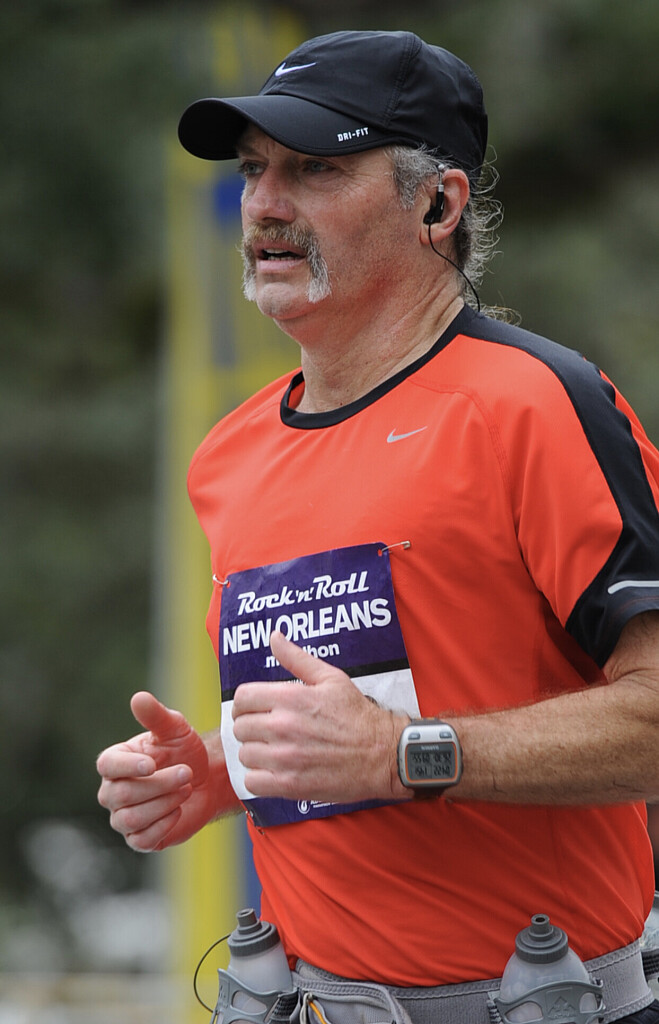
Running May Have Saved My Life
Nearly 50 years ago I fell in love with running. I was far from a natural. When I was 8 years old, I was struck by an illness that left me with pneumonia in both lungs with one lung being collapsed. I survived that but was left with asthma that persists to this day. This was unfortunate as I loved sports. Asthma more or less disqualified me from participating in “running sports, " leaving me only with baseball as something I could do relatively comfortably.
In high school, I wanted to try wrestling. I figured that I could handle three 2-minute periods. However, I would soon learn that a lot of the training involved running and I struggled mightily to keep up with the other kids early in the season. The next season I hit upon the idea to ask our cross-country coach if I could train with that team, though not be part of the team. In this way, I could be conditioned before the start of wrestling season. And during wrestling season, I would show up two hours before the match to check my weight and run 2-4 miles before weigh-in.
I graduated high school, but the running never stopped. I ran every weekend (4-10 miles each day) for decades. Running was so important to me that when setting up one of my company offices in Japan, I purposely chose a location in a place with a suitable place to run, near the Emperor’s Palace near Tokyo Station. The palace is surrounded by a circular (3km) moat that is a popular running destination. My ritual was that after a week of business, I would do four laps around the palace and then fly home to San Francisco.
Though I loved running I was never interested in racing until about age 50. In 2010, my new son-in-law invited me to join him in a 5K fun run in Lafayette. Passing all those 20-year-olds was all I needed to get the “bug.” I went on to run many dozens of races over the next years, mostly marathons, an ultra, and a triathlon. I was in the best shape of my life, rarely got sick, and was at the top of the world. That would change dramatically.
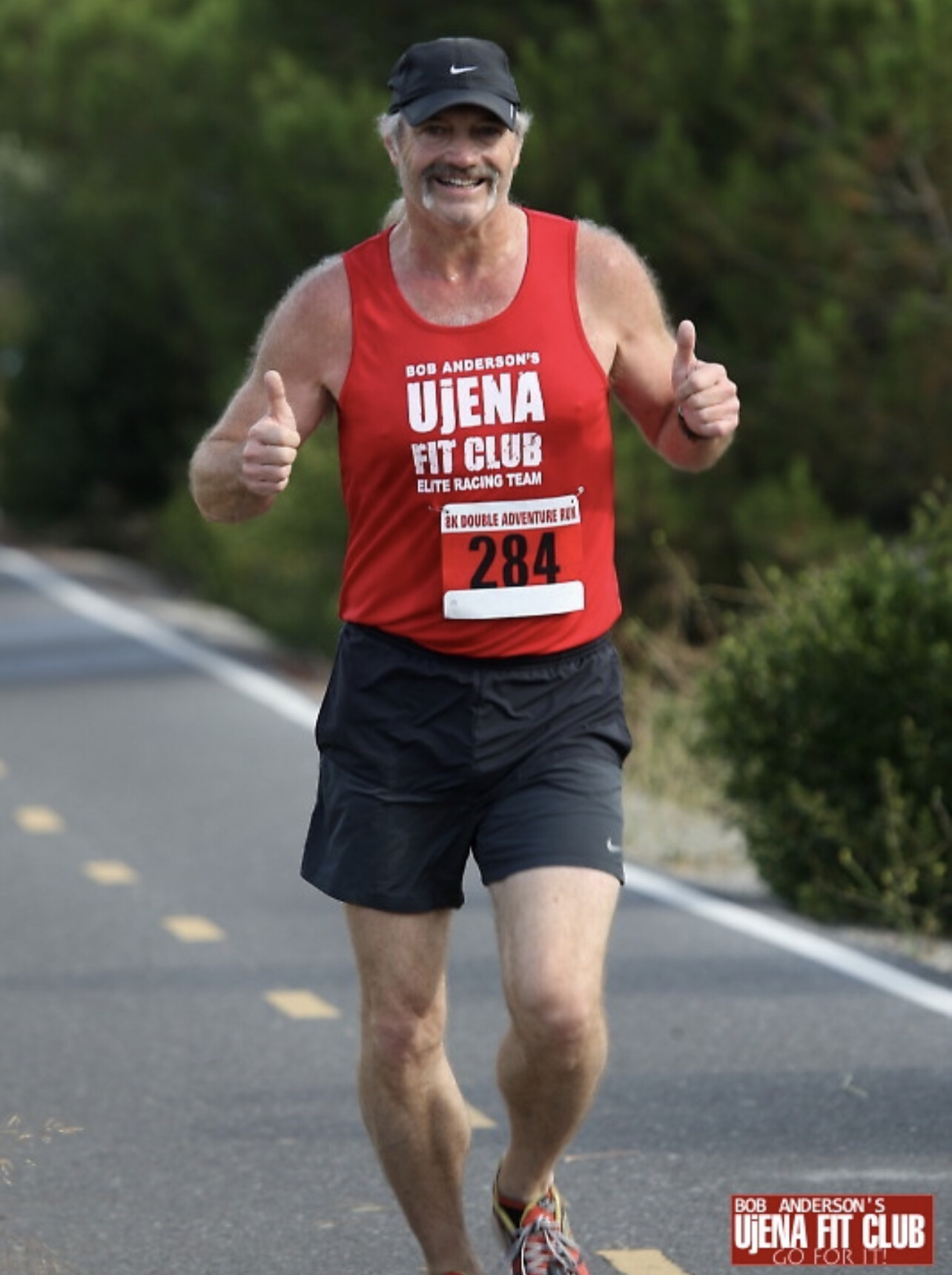
In 2013, I started noticing that on some days I would experience a strange fatigue that required me to take a walking break. I remember one day that I cut one of my runs short because I was disgusted with my performance. I kept my running clothes on and decided that I would try again later that day. That was the time I set a new PR for that training course. Something was not right, and these episodes of fatigue were increasing in frequency.
The last marathon I ran was in April 2016, a miserable affair clocking in a 4:53. By September, I couldn’t run a mile without a break. I complained to every doctor I met that “something was wrong”, but the standard response was that I was just getting older and I needed to lower my expectations. Even a cardiologist I had seen 10 years earlier told me that there was nothing wrong with me and even quipped “Guys like you are bad for business.” I wasn’t amused.
Finally, in 2019, my asthma doctor recommended a private practice cardiologist in Los Altos who might be willing to work with me. She spent two hours examining me, including an EKG and blood work. She found no problems but listened to my story about my newfound exercise intolerance. She said the only way to get to the bottom of it was to put me under a cardiac stress test.
I showed up at the hospital and they were ready for me. My doctor was there along with two technicians: one to operate the treadmill and monitor the EKG, and one with an echocardiogram scanner for a pre- and post-test scan of my heart. About 15 minutes into the test, about the same interval that I would experience fatigue during a run, the EKG technician exclaimed “Doctor!” and ran out of the room. The doctor told me to stop, asked me if I was OK, and asked me to lie down and have the other technician scan me.
The EKG technician quickly reappeared with defibrillating paddles and was stunned that I was calmly talking to the doctor. The cause of my fatigue was now clear– I was having a heart attack. A very deadly one at that, called Ventricular Tachycardia (VT) in which the top and bottom chambers beat at different rates causing your heart to stop pumping.
Now that the mystery was solved (I was not “fine”), we needed to identify the cause of this electrical misfiring. I was then directed to a cardiac electrophysiologist (EP) that specializes in this sort of disorder. He also took several hours to explain that there are nearly a dozen potential causes of this, and nearly all of them treatable. There was one (the least likely) however, that was not so easily treatable.
As it turns out, the least likely one Cardiac Sarcoidosis, was the one. This is a rare auto-immune disease that typically attacks the lungs but in even rarer cases can attack the heart. Lucky me. These “attacks” leave scar tissue on the heart that disrupts the normal electrical activity of the heart. My EP regretted telling me that this was out of his skill area and needed to refer me to Stanford where they have a cardiologist that specializes in this.
My experience at Stanford was great where a team of cardiologists took care of me. The first step was to see if the VT response to exercise was repeatable (it was). The second step was to confirm that sarcoidosis auto-immune cells were present in my body. The result of that test was positive. The cells were present, but the good news was that they were no longer in my heart and were “dormant.” But the damage was done. The final step was to install an implantable cardiac defibrillator (ICD) in my chest that has two wires screwed into the side of my heart. In case of a sustained VT episode, the ICD would automatically shock me back into rhythm.
My ICD was installed on February 12, 2020 shortly before the Covid lockdown. I cleared to begin running after about six weeks which I gleefully did after eight months of no running and four years of poor running. I am happy to report that I have had zero VT episodes, nor any other serious arrhythmias since the ICD was installed.
But my story is not quite over. Despite the lack of arrhythmias, my running performance has not returned to pre-sarcoidosis levels. I’ve worked with the Stanford cardiology team who have reiterated that my heart is working perfectly. With that ruled out, I asked for a referral to their pulmonary team to see whether there might be some lung function issues that are interfering with my return to normalcy. Like with my heart, I undertook a battery of tests looking for anything unusual.
The results of all these tests were that my lungs, despite a lifetime of asthma are working quite well. The penultimate step in this battery was a cardiopulmonary exercise test (CPET) that is most commonly used to test professional athletes. Despite my running complaints, the tests showed that my body was responding fairly well to exercise as I posted a 12.2 MET (Metaboloic Equivalent of Task).
I studied the voluminous data from the CPET and was struck by one thing– max heart rate. No, not the calculated 220-<age> that most runners are familiar with, but rather seeing that my heart rate levels off at 149 bpm and can go no higher no matter the stress. This is Father Time making his presence known. The reason I can no longer run as fast as I used to is because my heart can’t pump fast enough to generate the required oxygen to propel my body at those speeds. It's basic physics, so simple.
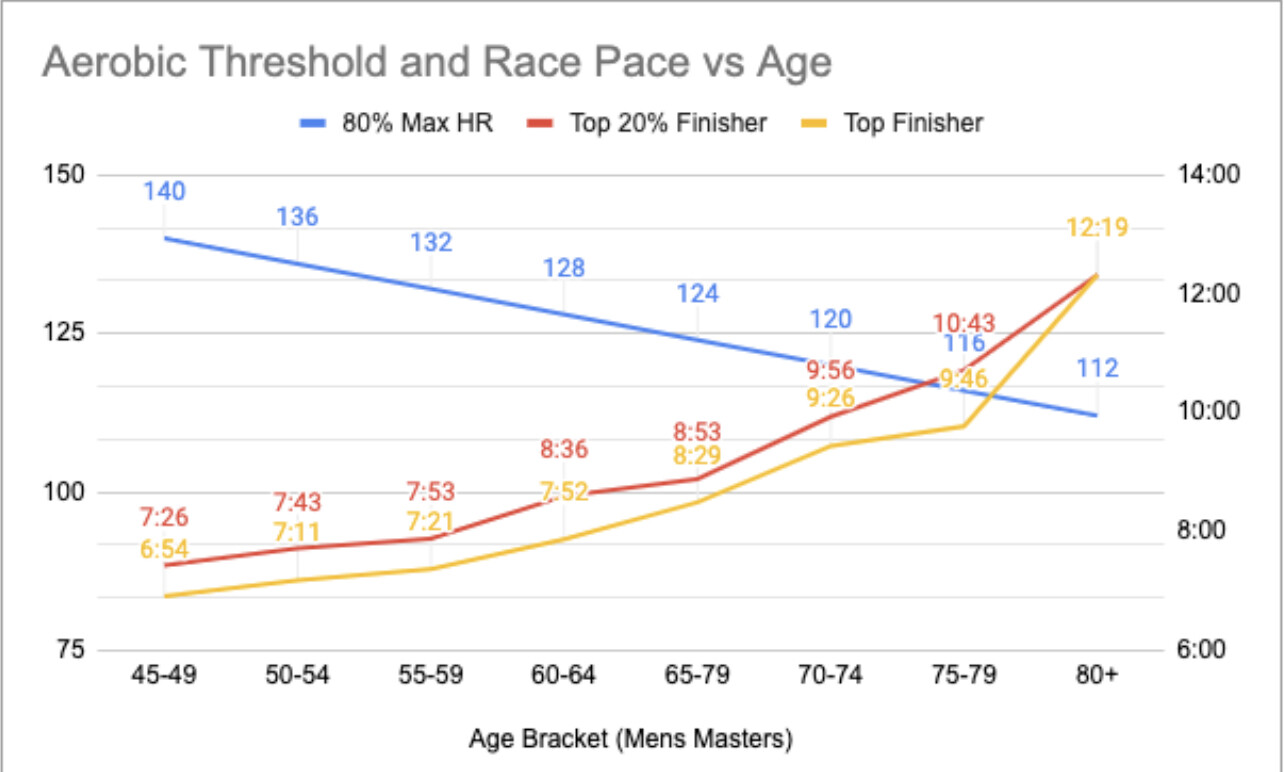
I decided to investigate this briefly and look at some representative races to see if I could see this in actual race data. I looked at the data from the California International Marathonfrom 2022 curious to see an age-related pattern. During my short racing career, I would typically place in the top 20% of my age bracket. I extracted data for Mens Masters into a chart to show Max HR vs. the top finisher and the top 20% finisher. This has given me some consolation that the slowdown is natural and will continue.
One more thing I’d like to share, especially with older runners. Since the ICD, I have found it hard to rebuild my aerobic base. I’ve concluded that the reason for this is that I was still trying to train like when I was a teenager back when my Max HR was 200! Somewhere in my memory banks, I recalled something about low heart rate training and quickly found the MAF methodby Dr. Phil Maffetone. In a nutshell, Maffetone advises training at ultra-low heart rates (180-<age>) to develop a core aerobic base. The process can take 3-6 months and involves running at an agonizingly slow pace (at first.) I am happy to report that this is the one thing that is working for me and for the first time in a long time I am again running with joy.
This has been a very personal story but one that I thought I should share with our running community. I feel that running may have saved my life. If I hadn’t challenged my doctors that I was not “fine” the worst could have happened. We runners know our bodies better than anyone and when something doesn’t feel right, it’s probably not. Don’t be afraid to aggressively advocate for yourself. Your life might depend on it.
by Warren Savage
Login to leave a comment
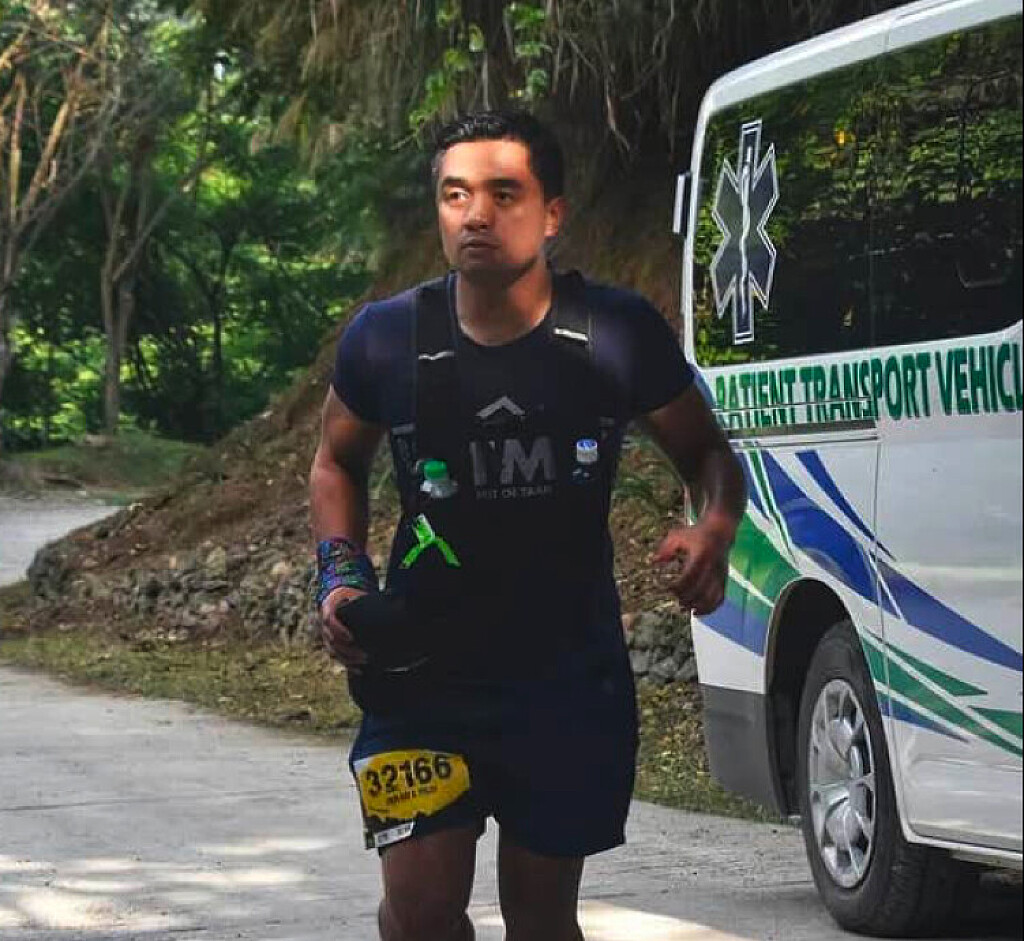
Running For 12 Hours Straight Taught Me Real Confidence
You’re stronger than you think.
When I hear people say, “You can do it!” I’m usually skeptical.
People tend to say that when they have nothing else more encouraging to say. So that kind of positive affirmation — while appreciated — does not exactly provide the substantial and “real” encouragement I’m looking for.
Nowadays, when I find myself lacking in self-confidence, or when I’m feeling like a big failure as a writer because my short stories and essays keep getting rejected by publications, I find myself thinking about that fateful morning in early 2018 — when I first started to get into trail running.
It took me 12 hours to finish my first 25-kilometer mountain race.
For those unfamiliar with trail running, 12 hours is a long, long time to finish 25K. The race’s cut-off time is 8 hours — which is already generous. Yet, I didn’t make it.
Nevertheless, that 12-hour 25K run taught me what real confidence is.
It was the Mount Ugo Marathon, which had qualifying points for UTMB. The UTMB, set in the French Alps, is one of the biggest and most prestigious mountain races in the world. To qualify, a runner has to gather enough points from difficult, qualifying races — like the Mount Ugo Marathon.
The Marathon offered 50K and 25K distances. And since it was my first time, I joined the 25K.
We started at the base of a mountain in Kayapa, Nueva Vizcaya. The first few kilometers were paved roads. Then it turned into dirt roads and eventually trails. Over mountain ranges, it was 10 kilometers of almost vertical uphill.
I’d lift each leg over the other and feel my ankles threaten to rip from the constant battle against gravity. I no longer bothered to look up because the damn mountain just kept going on and on. And I cursed myself for not having more uphill training.
Eventually, we reached a more forgiving part of the trail — flat enough that I could jog it. And I started gaining speed and momentum.
When I hear people say, “You can do it!” I’m usually skeptical. People tend to say that when they have nothing else more encouraging to say.
At the turning point for 25K runners (the 50K runners had a different route), a race official told me I was running 11th. I was excited. I thought if I maintained my pace and outran another runner, I’d be part of the top 10! Not a bad way to finish my first half-marathon.
I reached an intersection that had no marks or ribbons. I was confused. And I kind of assumed trail races would be like roads; you just keep going, and you’ll eventually find the right way because the signs will be so obvious. This is a big mistake because, I would later learn, mountain trails don’t work that way at all!
But I wanted to get that Top 10 so bad that I simply picked a path, hoped it was the right one, and gunned through.
I thought I’d turn back if I didn’t see any markings/ribbons after five minutes of running. But then I saw one! So I kept going.
A few mountains later, the ribbons suddenly stopped appearing. I started getting nervous.
Am I on the right path?
But the ribbon indicated this trail path. There were no intersections so far.
Should I keep going? Maybe there’s another ribbon ahead.
I’d later learn I followed some old markings from the previous year’s race. I guess the race organizers didn’t thoroughly remove all markings in that area since it was supposedly far from the designated route. If only I studied the course map, I’d have known something was wrong. But I didn’t, so I kept running through the previous race’s 50K route.
Back then, I didn’t have a smartphone. I had an old Nokia from my dad; the kind that can only call and text. And the signal was bad. So I had no way of knowing where I was via GPS, and I also couldn’t call someone for help.
I decided to reach the peak of the closest mountain I could find.
Maybe if I can get an overview of the place, I’ll have a better idea of where I am.
I reached the mountain’s summit and stared at a panorama of rice fields and cows. No houses or humans in sight. I knew then that I was very much lost.
At that point, I’d been running for over five hours in the mountains. The sun was high above, painful on the skin. I’d traveled so far from the race route that I’d run out of food and water. I only had one last bottle of Gatorade left. And not a single morsel of food.
The fatigue was growing underneath my muscles. My legs felt like chunks of cement blocks; they felt so heavy I could barely lift them.
I thought of Bear Grylls and whether I had to drink my pee while waiting for rescue.
I took a sip of my dwindling Gatorade and tried to push the panic away; those thoughts attack you when you’re in a vulnerable state. Thoughts that I might end up dying on that mountain of hunger or thirst or wild buffaloes. Or that they’d find me delirious, babbling about cows and rice fields, after days of searching.
I started walking back, slowly. I climbed one hill after another. Midway up the last hill, I sat on the trail. My legs couldn’t walk anymore. Like, literally. People often say, “I can’t walk anymore” — even if, with enough willpower, they still can. But for the first time, regardless of willpower, I felt that my legs couldn’t take another step. So I sat in the middle of that trail.
My calves cramped for the third time and I screamed in pain.
The pain came along with the panic. Am I going to go Bear Grylls from here?
Freaking Bear Grylls. Why did I have to think of the man in the middle of a crisis?
I focused on my breathing to calm myself. I have to survive. So I rested for a bit. And slowly, while conserving my energy, I made my way back up, one super slow step after another.
When I finally returned to the intersection where I first got lost, some race officials were there. They were sweepers — race marshals who were going through the route to support laggards and slowpokes like me. At that point, more than eight hours had passed. The sweepers pointed me in the right direction. And I limped until I reached the final Aid Station, which was 10 kilometers away from the finish line.
My body had never felt so broken, so tired, so truly and utterly exhausted.
At the aid station, I thought I saw a bunch of angels — helpful, smiling volunteers who fed me fruits and nuts and marshmallows and chocolates. They gave me water and electrolyte drinks. They sprayed my legs with something that helped ease the cramps. It was one of the happiest moments in my life.
After I recovered enough to speak, I said to one of the volunteers:
“I don’t think I can walk the next 10 kilometers. When does the sweeper transport arrive?”
The transport was used to ferry people who could no longer finish the race on their own feet.
“The last transport just left,” the volunteer replied. “Another truck would arrive in four hours to sweep the 50K runners who’ll drop out.”
I took a deep breath. Four more hours. What do I do? Wait?
I’ve already lost the race. Even if I reached the finish line now, I’d still be a non-official finisher. But how do I go home and not feel super bad about the failure of my first 25K? Then a small thought came:
Why don’t I try limping my way down? Maybe the transport will arrive earlier and they’ll be able to pick me up along the way. Or if not, another sweeper will pass me by and help me.
Since the volunteers at the aid station couldn’t leave their posts to assist me, I decided to see how far I could go.
I filled my running vest with food and my bottles with electrolyte drinks. I bid farewell to those angels at the aid station, and then, finally, I dragged my feet and started limping.
I limped my way to the finish line after 12 hours.
I avoided the finish line itself. I was embarrassed to have people see my race bib and know that I was actually from the 25K, not the 50K, and that it took me 12 hours to reach the finish line. But apparently, the race director knew about this lost 25K runner after the sweepers reported it. And he kindly welcomed me and congratulated me for finishing — even if it wasn’t an “official” finish.
I made it back on my own two feet.
And that’s when I realized it: I did it even though I thought and fully believed I couldn’t.
I did it, even when I felt like giving up. I did it, even when I didn’t believe in myself.
So whenever I face something that destroys my self-confidence, I often return to that memory.
When I feel like giving up, or I’m spent and exhausted, and my brain and body are telling me I can’t do it anymore — I push myself to take one more tiny step. Just a little step forward, to see how far I can go.
Because I have done it before and succeeded. And I’m confident I can do it again.
Login to leave a comment

How You Can Incorporate Taylor Swift’s Workout Into Your Own Running
Like Taylor, I run when I sing—and you should, too.
I never knew it, but Taylor Swift is my workout doppelgänger. Like Taylor, I’m a singer (mezzo soprano in my chorus), and I run and lift weights.
So I was excited to learn that, like me, Taylor sings when she runs. In fact, music is my fuel, and all of my neighbors have heard me sing on my runs. I have no shame (and a pretty good voice).
When she was named Person of the Year, Taylor told Time magazine that to prepare for her Eras tour she ran on a treadmill while singing her three-plus hour set list. The internet—and runners and their coaches—had thoughts.
“It was a great idea for her to pair running and singing to build her endurance for the Eras tour,” Julie Sapper, a Level 2 RRCA-certified coach and cofounder with Lisa Levin of Run Farther & Faster in Hamilton, New Jersey tells Runner’s World. “I hope she took walks and hydration breaks, though, because without them, three hours on a treadmill could cause injury.”
While we don’t know the exact details of Taylor’s run and strength training workouts, which she did at The Dogpound, a very exclusive gym with NYC and L.A. locations, we do know that all of us can adapt some of Taylor’s habits to our own training. Including—that’s right—singing.
Sing more to help you run better
If you’ve ever run with a friend and tried to hold a conversation for more than a few minutes, but ended up huffing and puffing, then you have used the “talk test” to help determine the intensity of your run. Essentially, if you can talk while you run then you’re running “easy,” but if you can’t talk and need to catch your breath, you’re running “hard.” These metrics, though, don’t tell you anything about pace or time, which makes some runners doubt the validity of the test.
This also relates to running and singing. “If you are running at the right intensity, you should be able to sing without pausing for breath,” Alethia Mongerie, also known as Coach Mekela, a Level 2 RRCA-certified coach in Robbinsville, New Jersey, tells Runner’s World. “You should be able to complete a verse or sentence without halting.”
In fact, singing may even be better than talking to determine your intensity while you run because the lyrics and melody need to come out smoothly and without gulps of air. In order to do this, you need to take deep breaths, then let the air out in a continuous exhale so that when you start the phrase,“And it’s new, the shape of your body…” you can get to “It’s a cruel summer/With you” without losing your breath or rushing the words.
Mongerie suggests pairing your singing with zone 2 running. There are five running “zones,” all of which are based on your heart rate. Zone 2 is essentially 60 to 70 percent of your maximum heart rate and should feel like a light effort. “If you can run and sing in zone 2, you are doing it right,” Mongerie says.
Taylor Swift mentioned she used her set list to determine her treadmill pace, often walking during slow songs and speeding up to running during the fast tunes. Consider this another way to incorporate a Fartlek run into your treadmill workouts, which can boost the fun as you surge and slow down at different points throughout your run. Plus, put Taylor on the playlist and you know all too well the range of emotions that’ll help push you through each of those intervals.
Add strength and conditioning workouts, like Taylor’s, to your schedule
While she gave no specifics, Taylor also did what she called “strength and conditioning work” before her tour. “Strength and conditioning are very different and are both important,” explains Sapper. Strength work is lifting heavy with appropriate rest in between sets, while the purpose of conditioning is to work with no (or very little) rest at lighter loads to maintain a higher heart rate.
Here are two examples:
Strength: 3 to 4 sets of 4 to 6 squats with a heavy weight where the last rep feels super hard, and with 3 to 5 minutes of rest in between sets
Conditioning: 5 sets of jumping rope for 30 to 45 seconds, followed by 10 push-ups with no breaks between exercises or sets
Both sequences strengthen your legs, while the second also offers cardio benefits, and it’s important to add both types of training to your workout schedule.
Of course, anyone can see that it’s not just Taylor Swift’s legs that are strong. She holds an eight-pound guitar during part of the show and while, yes, she uses a strap, it’s still an added weight to her upper body. A strong upper body has been shown to improve running economy, too, according to a systemic review with meta-analysis published in a 2021 issue of Sports Medicine. So it’s smart to get your arms in on the action during strength workouts, too.
Recover right (just maybe don’t stay in bed all day)
There is one significant difference between Taylor’s training and performance and that of most runners, and it doesn’t only come down to our paychecks. Taylor hits one city and performs a few days in a row while the rest of us should leave more time for rest and recovery between our workouts, Sapper says.
In fact, in her Time interview, Taylor said she takes to her (hotel) bed for a full day of rest after a stretch of shows. “My daughter, a Swiftie, and I actually discussed this after she saw the show,” Sapper says, “How does she have the stamina to do one concert, much less a few in a row? Unlike athletes, she’s not periodizing her training. The key has to be her recovery and that’s true for any athlete.”
According to the National Academy of Sports Medicine, periodization comprises training phases and cycles to reach strength and performance goals. Taylor, though, is doing essentially the same show on most nights for months. That’s exhausting both physically and mentally. To recover, she told Time, she lies in bed for a day, resting her entire body, including her voice.
Most of us can’t—and probably shouldn’t—do that because active recovery leads to better results. Active recovery means walking, getting a massage, or doing other light activities to keep your muscles moving without straining them.
Create your own playlist for improved performance
All of us are impressed by the musicians—Taylor (now 34), Bruce (72!), and Beyonce (42)— who put on two- to three-hour shows, but we aren’t surprised. That’s because music can lessen the perceived effort of running.
In fact, according to a 2021 study published in the Journal of Functional Morphology and Kinesiology, listening to music improves performance in endurance, sprints, and resistance exercise, but it’s important to listen to music you like, not just the music piped into a gym. In fact, if you don’t like the playlist, you might even be discouraged from exercise.
So even if you aren’t a Taylor fan, turn up the volume on a playlist you like (or find one from the Runner’s World archives) and start your stride. You might not reach pop star status, but the beats will keep you running toward your goals.
by Runner’s World
Login to leave a comment
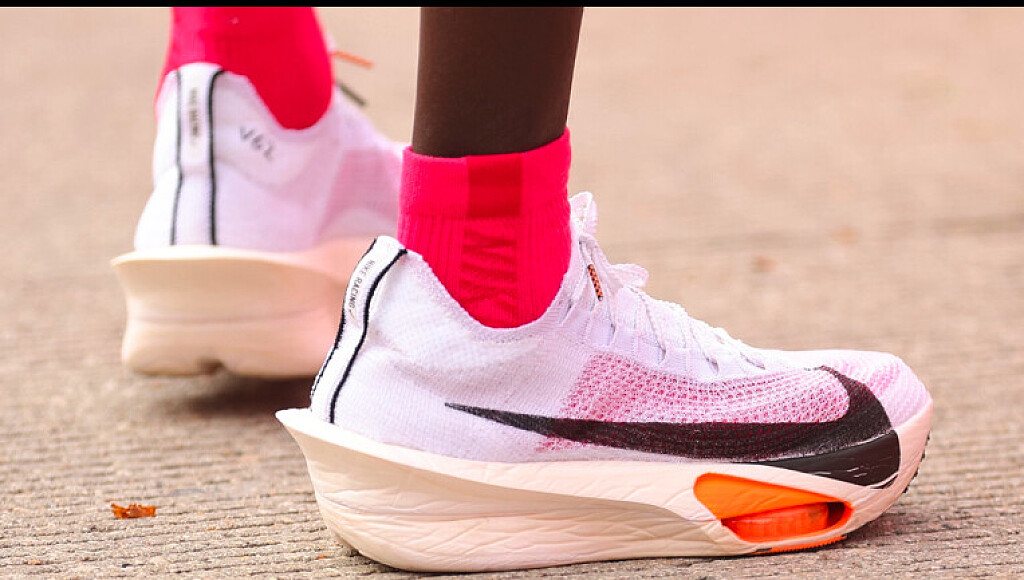
How Long Do Super Shoes Last? Here’s What the Latest Data Says.
Fancy new midsole materials like PEBA make you faster, but at the cost of durability
The eternal question of how long your running shoes should last became suddenly topical a few months ago, when Tigst Assefa set a world marathon record in what Adidas billed as essentially a single-use marathon shoe. This development sparked some important discussions about sustainability, accessibility, and fairness. But it also served as a reminder of how little we actually know about the useful life of running shoes, especially in the new era of thick-foamed super shoes.
Fortunately, there’s some interesting new data in a study from researchers in Spain, led by Victor Rodrigo-Carranza of the University of Castilla-La Mancha. In the Scandinavian Journal of Medicine and Science in Sports, they compare shoes made with a modern super foam to a traditional EVA midsole before and after 280 miles, and find that the new midsole does indeed lose its magic more quickly—so much so, in fact, that the super shoe is no better than the regular shoe at that point.
Before digging into the specifics of the new study, it’s worth sketching in some context. The conventional wisdom that I’ve heard throughout my running life is that shoes typically last somewhere between 300 and 500 miles. This is based on some mix of cumulative experience and imperfect data, some of it published and some presumably locked away in shoe-company filing cabinets.
For example, there’s a 1985 study that measured shock absorption at frequent intervals between 0 and 500 miles, using a machine to simulate the impacts of running as well as two volunteers who racked up 500 real-life miles. Here’s an example of how shock absorption changed with mileage for one particular shoe:
The machine version of running obviously didn’t replicate the demands of in-person running very well, but the two human volunteers show similar patterns. Overall, the human testing found that shoes retained about 80 percent of the shock absorption after 150 miles, and 70 percent after 500 miles. You can see that the curve flattens out between about 300 and 500 miles, which is presumably where the conventional wisdom on shoe lifespan comes from. Conversely, you could argue that once you’re past 300 miles, the shock absorption isn’t going to drop much further, so if you’ve made it that far you might as well keep running in them until they (or you) fall apart. More on that below.
You might wonder whether shock absorption, as measured by a hydraulic machine, is really what matters to runners. More recent research has looked at other metrics: this 2020 study, for instance, used force-sensing insoles to measure the peak pressure on different parts of the foot, testing how it changed as a New Balance 738 shoe went from new, to 215 miles, to 430 miles. As the image below shows, the highest pressures are seen in the midfoot and forefoot:
Those pressures stayed virtually unchanged after 430 miles—but the midfoot peak pressure increased from 388 to 450 to 590 kilopascals, a 50 percent jump. It’s not clear exactly why the midfoot pressure increases. It could be that the relative lack of cushioning in the midfoot makes it less durable; it could be that the higher pressures on the rearfoot and forefoot break down the cushioning in those regions and shift load to the midfoot. Either way, it’s clear that the objective load on the foot has changed after 430 miles. And interestingly, the perceived cushioning reported by the volunteers picked up this change: those who reported feeling less cushioned in the midfoot in the worn shoes did indeed tend to have the highest peak midfoot pressures.
So the overall picture in the pre-super-shoe era was fairly muddy, but basically supported the view that shoes progressively lose their cushioning and reach bottom somewhere in that 300 to 500 mile range. Then came Nike’s Vaporfly in 2017, using a carbon fiber plate and a thick layer of cushioning to promise better running economy in exchange for a few hundred bucks—and, in the footnotes, less durability. The unsourced number that I frequently heard floating around after the Vaporfly’s release was that you should trust them for 100 miles or so.
It’s worth pausing here to say a few words about running shoe foams. Carlos Sánchez at RunRepeat has an impressive and exhaustive primer on the huge range of high-performance foams now on the market, which is worth digging into if you’re interested. A highly simplified history is that most running shoes used to use EVA (ethylene-vinyl acetate), then in 2013 Adidas’s Boost made TPU (thermoplastic polyurethane) popular, and then in 2017 Nike’s Vaporfly made PEBA (polyether block amide) the state-of-the-art. One study found that energy return was 66 percent for EVA, 76 percent for TPU, and 87 percent for PEBA.
While there’s been plenty of chatter about carbon-fiber plates, the weight of evidence is increasingly that most of the magic in super shoes comes from the foams. Unfortunately, the very property that makes them so good—their ethereal lightness—also makes them less durable. Of the more than three-dozen modern foams that Sánchez reviews, the main differences arise from the tweaks manufacturers make to trade off performance and longevity (along with price, of course). That makes it hard to issue general guidance about how long super shoes last: it depends on the shoe and the foam.
Still, one data point is better than zero, which brings us back to Rodrigo-Carranza’s study. The shoes he used were special prototypes manufactured for the study by On, almost identical except that one set had an EVA midsole while the other had a PEBA midsole. Both versions had a curved carbon-fiber plate. Twenty-two volunteers performed a running economy test to measure how much energy they burned at a given pace, once in fresh shoes and once in pre-worn shoes. (The researchers themselves ran exactly 280 miles in each pair of shoes to pre-wear them.)
One key finding: energy consumption in the new PEBA shoe was 1.8 percent lower than in the new EVA shoe. That bolsters the case that the foam itself is a big part of the magic, since both shoes had carbon fiber plates. (Not all PEBA foams are created equal, so we don’t know if On’s foam is as good as Nike’s ZoomX.) The other key finding: after 280 miles, there was no significant difference between the two shoes. The EVA shoe didn’t lose anything at all, whereas the PEBA shoe got 2.2 percent worse.
It’s not worth making any grand extrapolations from a single datapoint about when one type of shoe gets better than the other. Who knows what happens after 280 miles? For that matter, who knows what happened after 26 miles? Moreover, there are lots of other factors that might be relevant. One of the interesting claims in Sánchez’s review is that super foams maintain their properties even in frigid winter conditions, while EVA-based foams get much more rigid. In some shoes, firmness more than doubled after Sánchez’s freezer test. Maybe a worn-out super shoe is still a better bet than a newer EVA shoe for those of us who are latitudinally challenged. He also notes that shoe foams take more than 24 hours to recover from a run, and some recover faster than others, so it makes sense to alternate different pairs in order to maximize both comfort and shoe lifetime.
My own approach to shoe durability is, admittedly, not one that’s easy to generalize. I generally have two or three pairs on the go at any given time, and I run in them until they start to feel flat. It’s a noticeable sensation, especially if one of the other pairs in my rotation is relatively new and bouncy. Then, in the spirit of that graph above showing a plateau after about 300 miles, I keep running in them—but I pay more attention to how I feel during and after runs, and to whether the wear on the outer sole is changing the angle of my footstrike. Once I start to feel a few aches and pains, I retire the flat shoe. That approach works pretty well to keep me healthy, but the new data suggests that it’s probably not maximizing my performance. Anyone want to buy a pair of gently used six-year-old OG Vaporflys?
Login to leave a comment
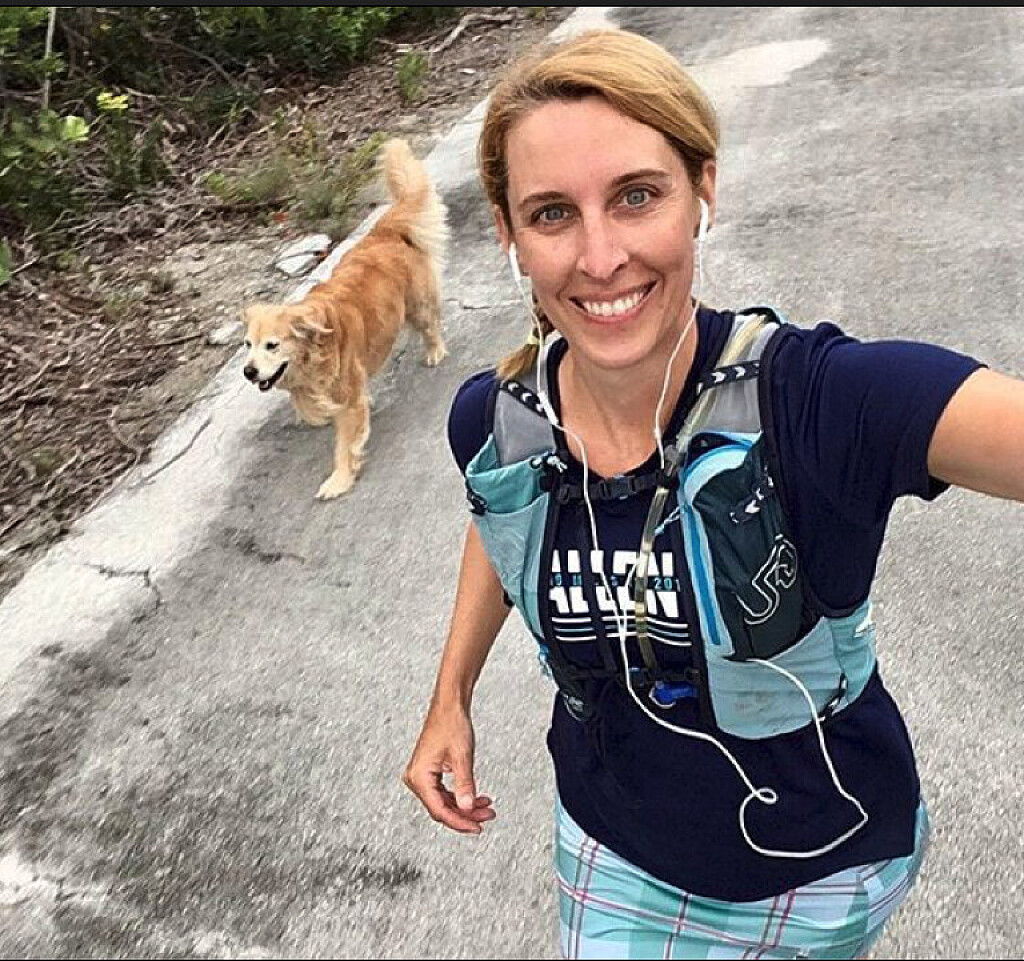
This Ultramarathoner Runs With Her 5 Golden Retrievers and Shares Her Tips for Clocking Miles With Canines
With five golden retrievers of her own, Golbeck is the dog whisperer you didn’t know you needed.
I am not one of those people who has a love/hate relationship with running. I love it purely and wholly. It feels like my body was made to do it. I love being outside and moving, and the rush of endorphins is great. If I could run all day, I would.


I started running ultramarathons to give myself permission to run forever, and found that even after running 100 miles or for 31 hours, I love it.
Like all runners, though, I have days when it’s hard to get out the door. Sometimes I’m tired, and I waste hours procrastinating when it’s cold and rainy out. Fortunately, though, I have five golden retrievers and they always need walks. Even in bad weather, one will run over with enthusiasm and joy, stretching their neck toward the collar. In those cases, to delay my run would be to deny them happiness, so suddenly it’s easy to go outside.
While I can walk five dogs at once—that’s me in the top picture with Swizzle, Venkman, Hopper, Guacamole, and Chief Brody—I never run with them all together nor do I do ultra distances with them!
While I have run with two dogs at once, it’s safest to run with just one, because when I do take two, we stop more often, and they inevitably get tangled. Then my focus becomes more on dog management than running.
In The Purest Bond: Understanding the Human-Canine Connection, Stacey Colino and I explore the science behind how relationships with dogs make human lives better. Certainly, dogs help humans move more and form better relationships in their communities. Science also shows that dogs enjoy running with us, both because of how it makes them feel physically and because they get to spend time with us.
One of my favorite workouts is to take each dog out for one or two miles until everyone who wants a run has had a chance to go out.
I’ve learned a lot about running with dogs over the years, so I’m sharing my tips for how to run safely and successfully with your own four-legged friends.
5 Tips to Better Running With Your Dog
If you want to start running with your dog, start by telling your veterinarian how far and fast you run, so they can give you specific information about your dog’s ability. Once you have the go ahead, follow these five tips to make your runs more enjoyable and safe—for both you and your pup.
1. Learn Leash Skills
When I was a graduate student, I tried to take my two golden retrievers, Pi and K, for a run. Suddenly, K spotted something exciting across the street, bolted, and pulled me off the sidewalk. I hobbled home with a sprained ankle.
To avoid unexpected accidents, work on your leash skills before you start running with your dog. Sure, a dog who pulls makes uphill runs easier, but a dog who bolts for squirrels or in traffic is a risk.
You’ll know your dog has solid leash skills if they run calmly alongside you with a loose leash, and you don’t have to pull to control them. They also should have enough self control to not dart out at animals or jump at sounds.
Your dog should also respond to commands such as “stop” or “wait,” and be able to respond to your speed, rather than you having to keep up or wait for them, especially if you want to run at a consistent pace.
If you have a scent dog, you may need to separate your runs from walks where they are able to follow their nose and go at their own pace. Habits like stopping to sniff can be managed with leash training.
My dog, Guacamole, a notorious stop-and-sniff dog, knows the difference between walks and runs, based on the way I hold the leash and, obviously, my speed. It’s like a form of non-verbal communication between the two of us. Guacamole understands that he is supposed to match my pace, whether I’m running or walking and he is able to adjust himself.
Good leash discipline is also useful when you encounter others on a trail.
2. Start With Short Runs
You won’t be surprised to learn that dogs are wired to run, according to research. Aside from having four legs, research shows that dogs also have an increase in endocannabinoids (eCBs) after a run. This is one of the main neurotransmitters believed to play a role in the runner’s high.
Of course, human runs and dog runs are very different. For example, while small dogs can be good running partners, toy breeds have to take a lot of steps to keep up with humans. Dedicated runners with dogs who may not be right for running can always consider using a jogging stroller to bring their pal along with them!
Some dogs may also be better walking partners. For example, dogs with smooshed faces (“brachycephalic”) or with short limbs, such as bulldogs and corgis, can have difficulty running and be at higher risk for injury. Again, check in with your dog’s vet for advice about how far, how fast, and how frequently your dog should run.
Natural runners, such as hounds, can still vary in the distances they prefer. My golden retrievers are comfortable with around three miles, but they are not built to be long-distance runners. Huskies, herding dogs (Australian shepherd, border collies, and others), and Vizslas are all good at going for distance.
All runners should follow the 10-percent rule for increasing their distance or intensity (an increase of no more than 10 percent each week) and this rule applies to dogs, too.
Remember, though, dogs can get the same overuse injuries as people. Be on the lookout for new limps, tenderness, or hesitation, which may indicate your dog is exceeding their abilities.
3. Learn Your Dog‘s Fuel and Hydration Needs
You need water on a run that’s over a couple of miles, and your dog does, too. Consider hydration for them, too, which means carrying at least a collapsible bowl and adding enough water to your supply to share.
If you have a breed that runs long distances, bring food, such as biscuits or treats, so they can stay fueled, too. If you’re going for a long run and don’t feel like carrying your dog’s supplies, you can find harnesses with pockets so your dog can carry their own food and water (and poop bags!), which will lighten your load.
Just like humans, my dogs are often hungrier on days that they run, so I take cues from them if they need more food. It can be a little tough to tease out when they are actually hungry because of the extra activity versus their normal habit of begging for extra food, but with attention, I have learned to tell the difference. When my dogs go to the kitchen after dinner looking for snacks or extra food or if the beg more aggressively for my food, it suggests to me that I need to feed them more.
If your dog pants hard for a very long time with a bit elongated tongue or they are more lethargic than usual after a run, it may be a sign that you went too far. Watch their recovery just as you should pay attention to your own.
4. Understand the Way Weather Affects Animals
Your dog may not need as much gear as you do, but it’s important to prepare for different weather conditions.
In hot weather, be sure to check the heat of the pavement. If it feels hot to your touch, it can burn your dog’s paws. In the Florida Keys where I live, I only take my dogs for nighttime runs during hot months.
If you live somewhere cold, your dog’s paws could literally freeze to the pavement. Plus, snow may form ice balls inside their paws, and the salt used to prevent icing on sidewalks can irritate their pads. An affordable and effective solution for snow and trail running are sled dog booties, used by mushers and their dog sled teams. For road running, you can also find options with a tougher sole.
Also, pay attention to your dog’s response to the weather. Even in mild weather, dogs can get overheated on a run. Usually, they will show this with excessive panting or by simply lying down and refusing to continue. It is crucial to give them a break in these situations, even if it means gently walking home and cutting your run short.
5. Get Them Safety Gear
In 2022, we fostered a dog named Nacho for six months. He was a very energetic 18-month-old golden retriever who needed a lot of exercise. I earned two visits to the orthopedic surgeon—once for a sprained shoulder and one for a damaged finger tendon—from those runs.
Not only had we not mastered leash skills, but I also had the wrong equipment. After those doctor visits, I switched to a waist leash so I could use my whole bodyweight to control him. You will typically weigh more than your dog, so these leashes may help you control their movement. However, some dogs are stronger than their owners, and it can be hard to balance when they pull you by the waist. So test out a waist leash on a shorter distance before you go long and see how it feels.
The scariest moments I have had with dogs is when they pulled the leash out of my hands and got away from me in the dark. In addition to the waist leash, which you can’t drop, I use LED collars at night.
You can buy plastic loops and collars with embedded rechargeable LEDs, or flashing tags for their normal collars. All of these gadgets give you a visual cue about where your dog is. They also make your dog—and you!—visible to traffic and to other people.
by Runner’s World
Login to leave a comment
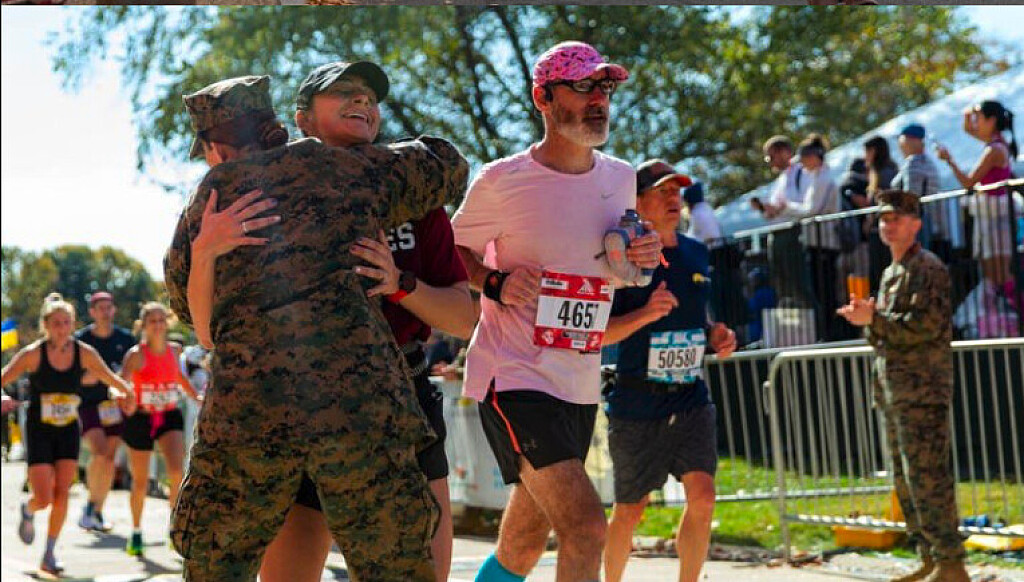
3 Athletes on Why They’re Running the Marine Corps Marathon
One of the largest marathons in the world to draw in 30,000 runners from all 50 states
The 48th Marine Corps Marathon (MCM)—“The People’s Marathon”—is the fourth-largest marathon in the U.S. and largest urban ultramarathon (they offer a 50K and 10K, too).
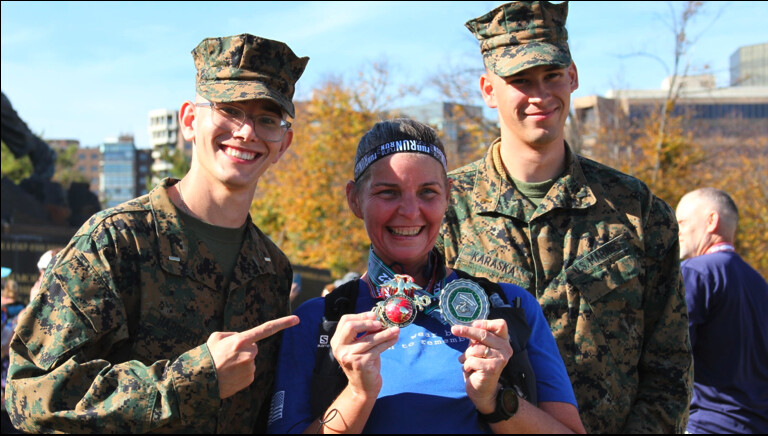
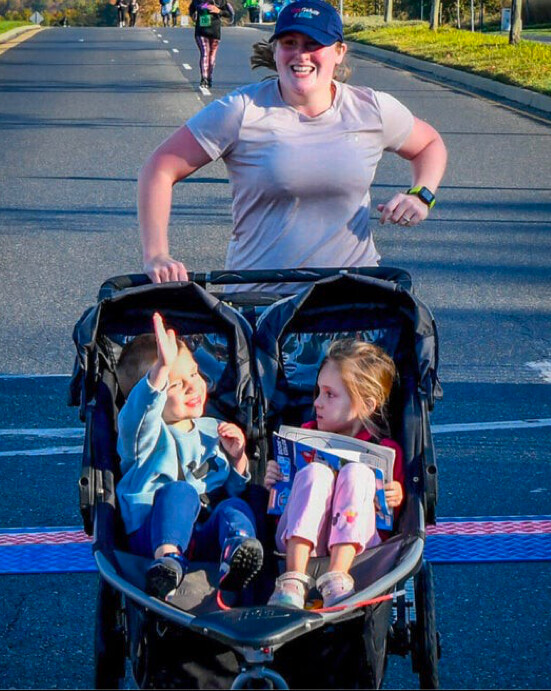
Each year, the U.S. Marine Corps holds the MCM a few weeks before the anniversary of its establishment. On October 29, 30,000 runners will toe the line in Arlington, Virginia, to follow the course as it winds through the nation’s capital. We caught up with three runners aiming for the finish line this year.
Rosie Gagnon, who lives in Berryville, Virginia, will be running the 50K MCM race in honor of her son, Marine Corps veteran, James Morris, who passed away by suicide in Ferurary 2018.
Even struggling through his mental health battles, Morris had endless confidence in his mother. Though Gagnon had been a runner for over two decades, Morris had encouraged her to run her first marathon. And when she completed that, he challenged her to dream even bigger–a 100 miler.
Morris passed away while Gagnon was training for this ultra, but she was determined to keep running in his memory.
“I actually bonked really hard,” Gagnon says, laughing. “I quit 60 miles in. I reached a point where I hit a wall–throwing up and crawling on the ground–and felt it was symbolic of what my son had gone through, because he got to the point where he couldn’t see how he could go on.”
The pain of this first race was disappointing but also a blessing. Morris says the experience taught her that, no matter how dark life gets, you keep putting one foot in front of the other.
Shortly after, Gagnon joined Wear Blue: Run to Remember, a group that honors the service of American military members through running. You may have seen one of them at races across the country wearing their bright blue shirts and the name of a fallen veteran. Gagnon challenged herself to run 100 ultramarathons in memory of Morris, and to raise awareness about military and veteran suicide. This will be her first time running the Marine Corps Marathon, and it will be her 60th ultra.
Running has become not only an outlet for spreading awareness about the importance of military mental health awareness and resources, but it’s been an outlet for grief.
“I used to wake up everyday wondering, ‘How can I live with this pain for another 40 years?’ and the one outlet where I found comfort was through running,” Gagnon says. “I focused on one race at a time, trying to get to that 100. I thought it would take longer, but it’s been moving pretty fast. I’m more than halfway through now!”
“If all I can do is put on shoes and run for somebody,” she says. “I’m going to do that.”
Between working a full-time job, managing clients in her running coach business, and raising three kids under the age of six, Kelly Vigil squeezes in training for the MCM when she can. Originally from northern Virginia, Vigil now lives in Charleston, South Carolina, and has run the MCM four times. This year, she’s running the 50K option.
“It’s my all-time favorite race,” she says. “When you get there, everything is taken care of,and everyone is super excited to be there. The spectators are amazing, which is hard to get in a marathon unless you’re running one of the major ones. At mile 21, you still have people cheering you on.”
Her husband was in the Marine Corps for six years, which makes her particularly connected to the race. Another reason is because Vigil used to work full-time in the charity running field, working with organizations to create their race programs.
“Athletes who are running for a cause aren’t necessarily going to feel more pressure, but there’s more meaning as to why they’re doing it,” Vigil says. “It helps them push forward when their body or mind isn’t in it anymore.”
As a mom of young kids, training isn’t always easy, but Vigil gets it done. Her long runs are timed so that she has an allotted amount of time to be away training on Saturday. Whatever mileage she gets done is what it is, and Vigil is happy with that.
“I’m not very strict with my training plan,” she says. “A lot of my running includes a stroller (with my two-year-old) or I might split up my runs in the morning and evening. I’m just doing what I can.”
Also a certified running coach, Vigil is currently working with other athletes who are running the MCM.
“Coaching keeps me in the community even when I’m not training for something,,” she says. “We’re all going after these different goals and doing what we can to stay consistent and do the work.”
For some, a commute to work includes traffic, to-go coffee, and a few swear words as someone cuts you off on the highway. But Jessica Hood’s commute to the office involves lots of marathon training.
Hood is extremely busy, so she puts in her miles by running to work. The total distance from her house to her office is about 14 miles, but depending on her training schedule, she’ll run seven or so and then hop on the metro bus for the rest of the way. Her office has a gym and showers, so she’s not taking a seat at her desk in sweaty running clothes.
“I do what I have to do and it probably takes a shorter amount of time,” Hood laughs. “You know, because you’d be sitting in DC traffic.”
Hood moved to the DC area about two years ago and works in finance, but her main passion is running. She began posting running content on social media in 2022 and developed a hearty following of 37k on Instagram and 81.5k on TikTok.
“It’s super cool how runners can get connected through social media,” she says. “I have a lot of running friends who don’t live in DC, but we all meet up at certain events and races across the country.”
Because of her influencer status, Hood is part of the MCM Social Media Influencer program, where she’s an advocate for the race. Though it’s sold out now, she spent months encouraging people to sign up through her posts online. This year will be her first time running the MCM marathon, though she’s spectated before and the energy was like nothing else.
“I thrive off of race day energy,” she says. “I love running and take it seriously, but it’s also about the fun of it and doing it with other people. So having a lot of people in my DC community running with me makes me so happy.”
Due to the race’s overwhelming popularity, early bird registrations for next year’s event opens January 1, 2024, with military members being able to register December 31. The Marine Corps Historic Half takes place May 19, 2024, and is part of the MCM series.
by Outside Online
Login to leave a comment

Should I Tune In or Tune Out During My Run?
How to think on challenging runs depends on your intention. Here’s what the research says. Runners often develop a type of tunnel vision. Case in point: In 2006, Scott Douglas went to India to cover a five-day stage race in the Himalayan foothills. The day before the race, he and the eventual winner went for a run from the race headquarters in Mirik. There was a small lake with a perimeter path nearby that was perfect for the occasion—they could easily settle into a rhythm and crank out several 10-minute loops until it was time to call it a day.
When Douglas got back to the lodge, his wife, Stacey, asked, “Wasn’t that amazing!?” It turned out that Stacey had also gone to the lake for a stroll and had come upon a couple dozen women celebrating the Diwali festival. Clad in bright yellow and red wraps and head scarves, they squatted next to the lakeside trail with big bowls of bananas, melons, other fruits, vegetables, and flowers as offerings.

Douglas can relay these details, thanks to a photo Stacey took, but he hadn’t noticed them—not on the first loop around the lake, or the third, or any other one. Without making a conscious decision to do so, he’d been entirely focused on his run.There are far loftier examples of intense concentration in running history. In the 2004 Olympic marathon, Deena Kastor didn’t realize she was in the bronze-medal position until the final 100 meters. During the 2018 Boston Marathon, which was run in an apocalyptic rain-and-wind storm, eventual winners Des Linden and Yuki Kawauchi didn’t know they had taken the lead until well after doing so.
Some of this seeming tunnel vision stems from runners focusing on what are known as “process goals,” such as running the next mile as well as they’re able, rather than thinking about outcomes, such as winning an Olympic medal. Also, during hard efforts, seasoned runners are good at suppressing strong emotions like anxiety that can lead to focusing on distracting and irrelevant information.
Let’s look in more detail at how successful runners hone their ability to concentrate on the task at hand to the point of seeming oblivious to much of what’s going on around them.
Throughout his career as one of the world’s leading exercise psychology researchers, Noel Brick asked athletes ranging from beginners to Olympians a simple question: What were you thinking? The answers provide fascinating insight into what athletes think about during peak performances. Brick has lost count of the number of times he has sat captivated as athletes recounted how they struggled with, and overcame, the challenges they experienced when racing and training.
One of the most common themes that emerges is that running fast is incredibly hard, both physically and mentally. This is true for novices and Olympians alike. But what separates the best from the rest is their ability to extract exceptional performances through a process of deep focus and concentration. These athletes know what they need to focus on and, more importantly, have the mental tools in their kit to do it. Take this example from an elite cross-country runner whom Brick interviewed following one of her toughest races:
I went through two and four [kilometers] on the back of the leading group. And going into the third lap, I started falling off the leading group. And it was everything for me to stay attached [because I was distracted by a spectator] and suddenly I just lost a second’s concentration, and it was like, “Don’t lose concentration, concentrate now,” and I covered the move. I finished second in that race. But if I had fallen off that group, I wouldn’t have gotten back on and that would have been it.
Triumph in a footrace—however that’s defined for you—often requires winning the battle that takes place within your mind. For athletes like the one quoted above, this means resisting a range of different distractions. Some are external, like a spectator who momentarily captures the athlete’s attention. Others are internal thoughts, like worry or the sometimes-irresistible urge to stop or quit.
So how do they do it? What tools do athletes use to remain focused and on task? Just as important, how do they get their concentration back if they lose it?
The first answers to these questions began to emerge in the late 1970s. Across a series of studies, psychologist William Morgan and exercise physiologist Michael Pollock interviewed recreational and elite distance runners to discover what they focused on during training and competition.
Their findings revealed that national- and world-class marathoners adopted what Morgan and Pollock called an “associative strategy.” As described in a classic study, these runners “paid very close attention to bodily input such as feelings and sensations arising in their feet, calves, and thighs, as well as their respiration; . . . [their] pace was largely governed by ‘reading their bodies’; . . . [and] they constantly reminded or told themselves to ‘relax,’ ‘stay loose,’ and so forth.”
The details of what elite runners paid attention to when racing surprised the research team. Up until this point, the consensus was that it was best to tune out from bodily sensations. After all, if running fast was hard, then surely paying less attention to physical feelings would be better than focusing in on them.
But Morgan and Pollock soon realized that these elite marathoners were different from the recreational athletes they usually interviewed. Not only were their physical performances miles apart, literally and figuratively; so, too, were their mental strategies.
What non-elites preferred to do was adopt a range of distraction strategies. In other words, they preferred to tune out from the physical sensations they experienced. They did so by thinking about past memories, imagining listening to music (remember, this was pre-earbuds), singing, or, for one runner, visualizing stepping on the faces of two coworkers she detested.
With these two separate ways of thinking, we’ve now got a dilemma. What is the best way for athletes to think? Which type of strategy helps most: tuning out or tuning in?
These were the questions that grabbed Brick’s attention when he began to plot his PhD research in 2012. By 2014, he had published a review of 112 studies on the attentional strategies of endurance athletes—that is, what they focus their attention on. In it, he sifted through the evidence supporting distraction, on the one hand, and association, on the other.
Before we can answer this question, we first need to consider a much simpler one. What do we mean by best? If better—that is, faster—performance is the goal, then athletes probably want to avoid being distracted at all costs.
But that’s not the full picture. In Brick’s review, he noted that distractions, such as daydreaming, conversing with a training partner, or focusing on scenic views, can help to reduce boredom and make a run more enjoyable. In other words, when the outcomes are less about going faster and more about feeling better, then distraction is best. A recreational runner whom Brick interviewed put it like this:
My mind just wanders whenever I’m out. It’s as if it’s a freedom. It’s my time and it’s me thinking about my things, you know? You’re not sitting in the house or you’re not working or you’re not thinking about things. You’re just thinking about your things.
What these insights tell us is that distraction has its place in our mental tool kit. It can be a useful way to manage our emotions, especially when we need to switch off, chill out, and get away from it all.
One great way to do this is to spend time in natural spaces, such as the countryside or a park. Studies have found increased brain activity relating to calmness and meditative thoughts when people exercise in a park versus crowded urban settings. In the latter, brain activity linked with negative thoughts such as rumination has been found to be much higher than when people exercise in more natural settings.
But this is only half the story. Although positive distractions like nature have benefits, performing to the best of their capabilities is a more immediate priority for athletes during competition. In these instances, tuning in might be a better approach than tuning out.
When Brick dug deeper into the results of more than 35 years of research, he soon discovered that the effects of association strategies on performance were much more nuanced than previously thought. When athletes focused excessively on bodily sensations like breathing or muscle soreness, their performance suffered. Doing so made tasks feel harder. In contrast, strategies like keeping relaxed or optimizing movement technique improved performance, sometimes without increasing how hard a task felt.
An intricate study involving 60 experienced runners helps to explain some of these nuances. These individuals completed three 5-kilometer runs, once on a laboratory treadmill, once on a 200-meter indoor running track, and once on a flat outdoor road route. Half the runners—the association group—were asked to tune in every 30 seconds during each run to the heart rate and pace readings on their watch. The other half were assigned to a distraction strategy of listening to music through headphones. All participants were instructed to run as fast as they would like during each 5-kilometer run. The research team also recorded how good or bad runners felt, how hard each run was perceived to be, and their final 5-kilometer times.
In line with research on other distraction strategies, the findings revealed that those who listened to music felt calmer and more tranquil during their runs. Runners also felt better when running outdoors than they did in the indoor settings.In terms of performance, however, runners in the heart rate and pace-monitoring group ran faster than the music group by an average of 1 minute and 47 seconds. In a sport in which participants obsess over every second of a race time, that’s a significant difference!
Just as interesting were the effects of location on performance. Although 5-kilometer times were slower on the treadmill than both the track (by 3 minutes and 46 seconds) and the road route (by 4 minutes and 2 seconds), running on the treadmill felt hardest. This was most likely because of the treadmill environment, devoid of mental stimulation or distraction. In this setting, athletes probably focused on little else other than how tough their run felt. In contrast, running the outdoor road route, the fastest location of all, felt easiest.
Periodically monitoring bodily sensations and tuning into pace allows for better performance. In contrast, tuning out might result in a slower pace but can help make an activity feel more pleasant. In effect, our focus matters, and when best performance is a priority, then having the mental skill to focus effectively is essential.
Login to leave a comment
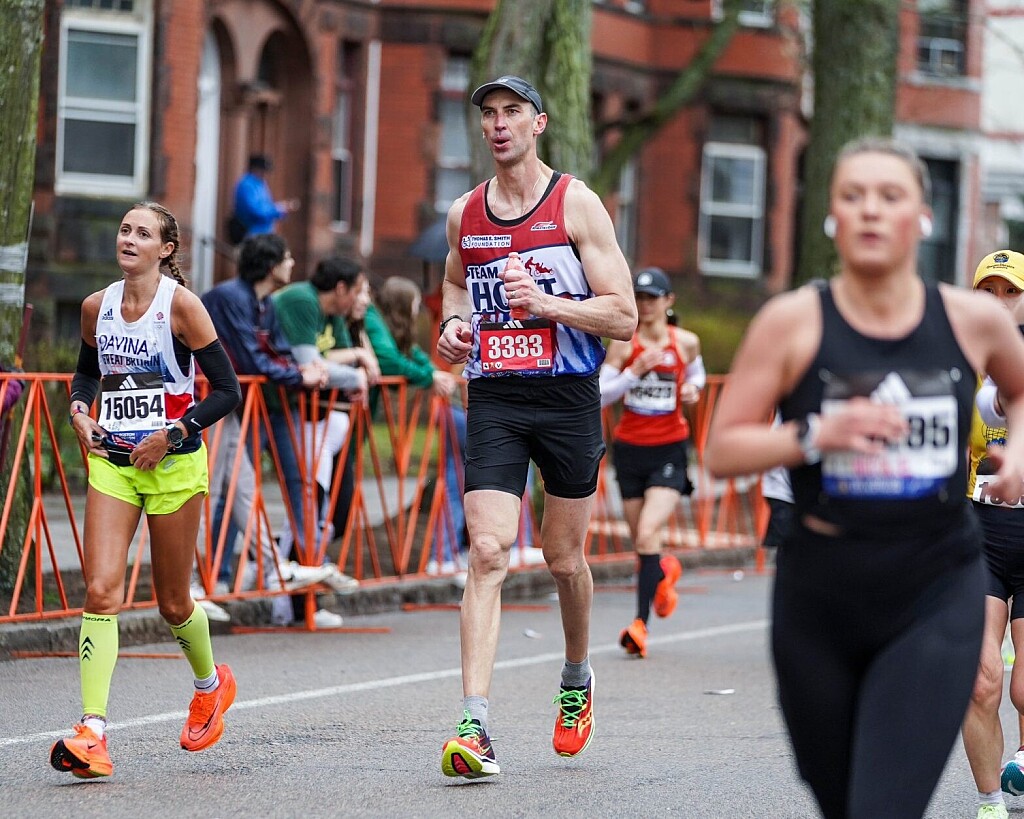
Zdeno Chara Training For The New York City Marathon
With one Boston Marathon already on his resume, former Boston Bruins captain Zdeno Chara is now training to run in the 2023 New York City Marathon on Nov. 5.
Right up until the end of his 24-season NHL career, Chara left his teammates in astonishment at his daily workout regimen, and that discipline and passion to push his body to the limits has not waned.
With one Boston Marathon already on his resume, former Boston Bruins captain Zdeno Chara is now training to run in the 2023 New York City Marathon on Nov. 5.

Right up until the end of his 24-season NHL career, Chara left his teammates in astonishment at his daily workout regimen, and that discipline and passion to push his body to the limits has not waned.
“No,” Chara told The New York Post recently, “I didn’t take any kind of break. I kind of sustained the physical training. I was adding to my running, getting higher mileage, getting higher bike distances. And then at one point, I knew that I would like to talk to somebody who is more experienced and somebody who would be able to put me on maybe more specific programs to reach some of the goals I set for myself. And obviously marathons was one of them. Some triathlons, Ironmans would also be in my vision.”
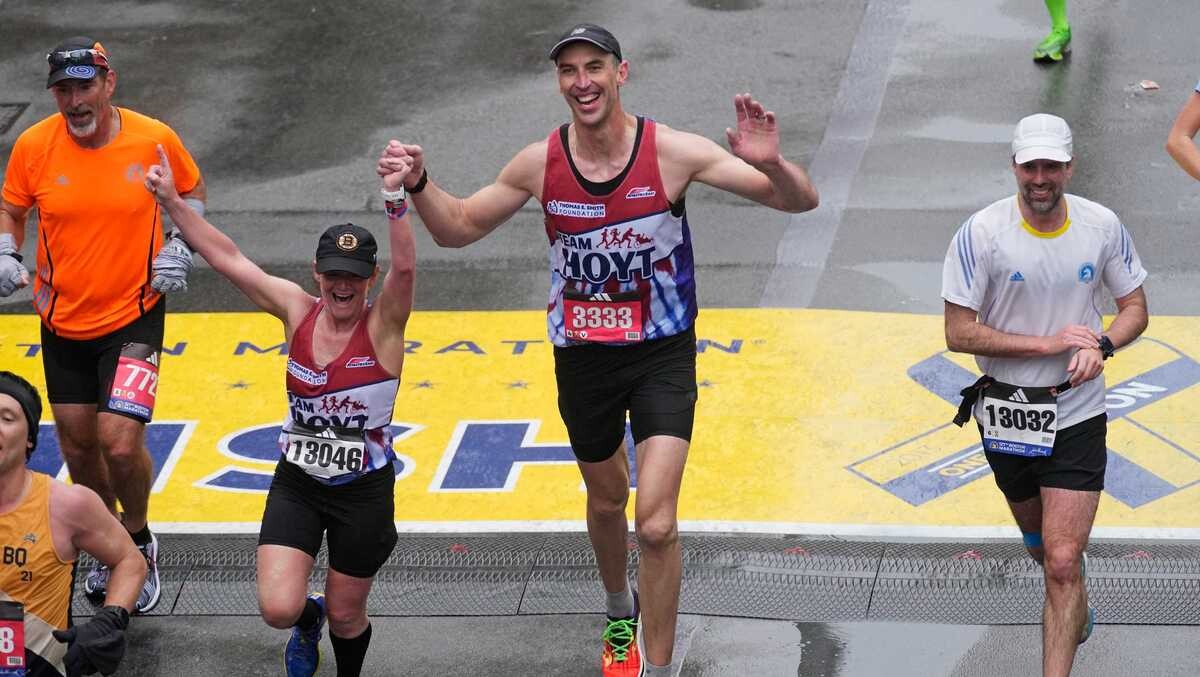
The 6-foot-9, 250-pound future Hockey Hall of Famer finished the Boston Marathon in 3:38.23, and now in November, he’ll run the New York City Marathon in partnership with New Balance. However, the 46-year-old Chara has no plans on stopping there. He told The Post that he also plans on running marathons in Berlin, Tokyo, London, and Chicago.
“Finding the limit,” Chara said. “Sometimes you get into different mindsets and you learn about yourself a lot through these challenges, through these good runs, bad runs. It’s just, I don’t know how to really explain it, but it’s something that it’s teaching you something about yourself. And it’s a very humbling experience.”
Zdeno Chara is also becoming to not just running marathons but to the running community and support surrounding it.
“Being part of racing or being a part of some runs, it’s addictive,” the Boston Bruins legend said. “It’s something that you start and then it becomes something that you’re looking forward to the next one and then you want to be part of the next one. It’s something that draws me in.
You have spread out crowds throughout the races [that] number thousands of people and it’s electrifying. It’s unbelievable energy and it’s exciting. And then once you get to the finish, it’s super, super rewarding.”
by Jimmy Murphy
Login to leave a comment

TCS New York City Marathon
The first New York City Marathon, organized in 1970 by Fred Lebow and Vince Chiappetta, was held entirely in Central Park. Of 127 entrants, only 55 men finished; the sole female entrant dropped out due to illness. Winners were given inexpensive wristwatches and recycled baseball and bowling trophies. The entry fee was $1 and the total event budget...
more...
Caffeine Boosts Performance. But What About Coffee?
Researchers assess the potential benefits—and downsides—of the hundreds of bioactive compounds in your morning brew
A few years ago, researchers in Spain combed through the results of more than 7,000 urine samples tested for doping at competitions in various Olympic sports. Overall, 76 percent of the samples contained caffeine, with the highest concentrations found in cycling, track and field, and rowing. Frankly, I’m surprised that the number wasn’t higher, given how effective caffeine is as a performance booster and how widespread coffee consumption is more generally.

But I’m conflating two different things. Coffee, as a new review paper in the Journal of International Society of Sports Nutrition points out, is not just liquid caffeine. I’ve written many, many articles about research into caffeine’s performance-boosting powers, almost all of which uses pills to provide a carefully controlled dose of caffeine. In contrast, many of my running friends swear by their pre-workout or pre-race coffee. The new review, from a group of researchers led by Lonnie Lowery of Walsh University, asks whether coffee—“a complex matrix of hundreds of compounds”—provides the same athletic benefits as an equivalent dose of caffeine, or whether there are additional pros and cons. The short answer: it’s not clear.
You can make a reasonable argument that coffee is less effective than caffeine as a performance aid. The most obvious problem is that it’s hard to know exactly how much caffeine you’re getting in a cup of coffee. It depends on what kind of beans you’re using, how they’re prepared, how big your cup is, and so on. One study that tested a variety of store-bought espressos found caffeine levels ranging from 51 milligrams per serving at Starbucks to 322 milligrams per serving at Patisserie Francois.
Even if you stick with a consistent source of coffee with a known amount of caffeine, getting in the optimal performance-boosting dose might be a challenge. Sports scientists typically recommend taking between 3 and 6 milligrams per kilogram of bodyweight an hour before competition.
For a typical medium-roast coffee, that works out to two to four cups (16 to 32 ounces), depending on body size. That’s a lot of coffee—and caffeine from coffee appears to be absorbed more quickly than from capsules, which means you might want to finish downing all that liquid less than an hour before competition.
A further problem is that some of the other substances in coffee might interfere with the action of caffeine. The main source of that concern is a 1998 study that compared performance under five different conditions: water with placebo capsule, water with caffeine capsule, decaffeinated coffee, decaffeinated coffee with caffeine capsule, and regular coffee. In a half-hour running test, performance was only increased with water-with-caffeine-capsule trial. Since caffeine levels were identical in the coffee and the decaf-plus-caffeine-pill trials, that suggests that something in the coffee—perhaps chlorogenic acid, one of coffee’s key antioxidant compounds—was interfering with the performance boost of caffeine.
To be fair, subsequent research has mostly suggested that coffee works just as well as caffeine. This 2018 study, for example, found that coffee boosted one-mile run time by 1.9 percent compared to a placebo, and by 1.3 percent compared to decaffeinated coffee. Other studies have also found performance boosts from coffee, at least when taken in quantities that provide a known and sufficient dose of caffeine.
If anything, the results of that 2018 study raise the opposite question. Decaf was 0.6 percent faster than placebo. That wasn’t a statistically significant difference, but is it possible that coffee itself has performance benefits independent of its caffeine content?
The case in favor of coffee is based on all its other bioactive ingredients: most prominently polyphenols like chlorogenic acid that may influence blood flow and glucose levels, but also various minerals, melanoidins produced in the roasting process that have antioxidant and anti-inflammatory properties, and small amounts of carbohydrate, protein, and fat. The review takes an exhaustive dive into what these various substances might do for performance, listing their “neuromuscular, antioxidant, endocrine, cognitive, and metabolic effects,” but actual evidence of a performance boost is very thin on the ground.
To me, the strongest evidence that coffee might have some positive effects independent of caffeine comes from a different line of research. Back in 2018, I wrote about a study linking the effects of caffeine to a gene that affects caffeine metabolism. Roughly half the people in the study were fast caffeine metabolizers, and they got a big performance boost from caffeine in a 10K cycling trial. Most of the rest were medium metabolizers, and they got a negligible performance boost. The final 8 percent of subjects were slow metabolizers, and caffeine actually made them slower, perhaps because the positive effects of caffeine in the brain were outweighed by negative effects on blood circulation that persisted for longer.
This particular study used caffeine pills, but it emerged from an earlier line of research on the health effects of coffee. Big population-level studies have produced conflicting results about whether drinking lots of coffee is good or bad for you. University of Toronto researcher Ahmed El-Sohemy has suggested that this is because the effects depend on how you metabolize caffeine. He has shown, for example, that fast metabolizers have a lower risk of heart attack if they drink one to three cups of coffee a day, perhaps thanks to all those antioxidants and polyphenols and so on. Conversely, slow metabolizers have a 36 percent higher risk of heart attack if they drink two to three cups of coffee a day.
The implication here is that, at least for some aspects of long-term health, coffee is good for you but caffeine is bad for you. Fast caffeine metabolizers get the caffeine out of their system quickly, so the positive effects dominate. Slow metabolizers have the caffeine in their system for longer, so the negative effects take over. A key point: in a talk I saw earlier this year, El-Sohemy said that people’s subjective experience of how caffeine affects them is not a good predictor of whether they’re fast or slow metabolizers. (He does run a company that sells genetic testing of caffeine metabolism, so take that claim for what it’s worth.) My overall take, then, is that decaffeinated coffee probably has some good stuff in it, but there’s no convincing evidence that it will make you faster.
In the real world, the number one reason most of the athletes I know drink coffee before workouts and races is that it reliably makes them poop. That’s a discussion that Lowery’s review doesn’t get into, but it’s not insignificant for endurance athletes. If that’s your rationale, then by all means carry on. Drinking coffee is also a comforting and familiar routine for many people. But if you’re also hoping to harness the performance-boosting power of caffeine, then the main conclusion from the review is that you should take some time to figure out how much caffeine your favorite coffee contains, how much you usually drink, and decide whether you want to raise (or lower!) the dose, perhaps in combination with caffeine pills.
by Outside Online
Login to leave a comment
