

Running News Daily
Running News Daily is edited by Bob Anderson and team. Send your news items to bob@mybestruns.com Advertising opportunities available.
Index to Daily Posts · Sign Up For Updates · Run The World Feed
Articles tagged #Emile Cairess
Today's Running News


London Beckons: A Marathon of Giants Set to Ignite the Capital
The roads of London are once again preparing to host one of the most anticipated races on the global calendar, as the London Marathon 2026 assembles a men’s elite field of rare depth and quality. On Sunday, April 26, the world’s finest distance runners will converge on the British capital, chasing not only victory but a place in marathon history.
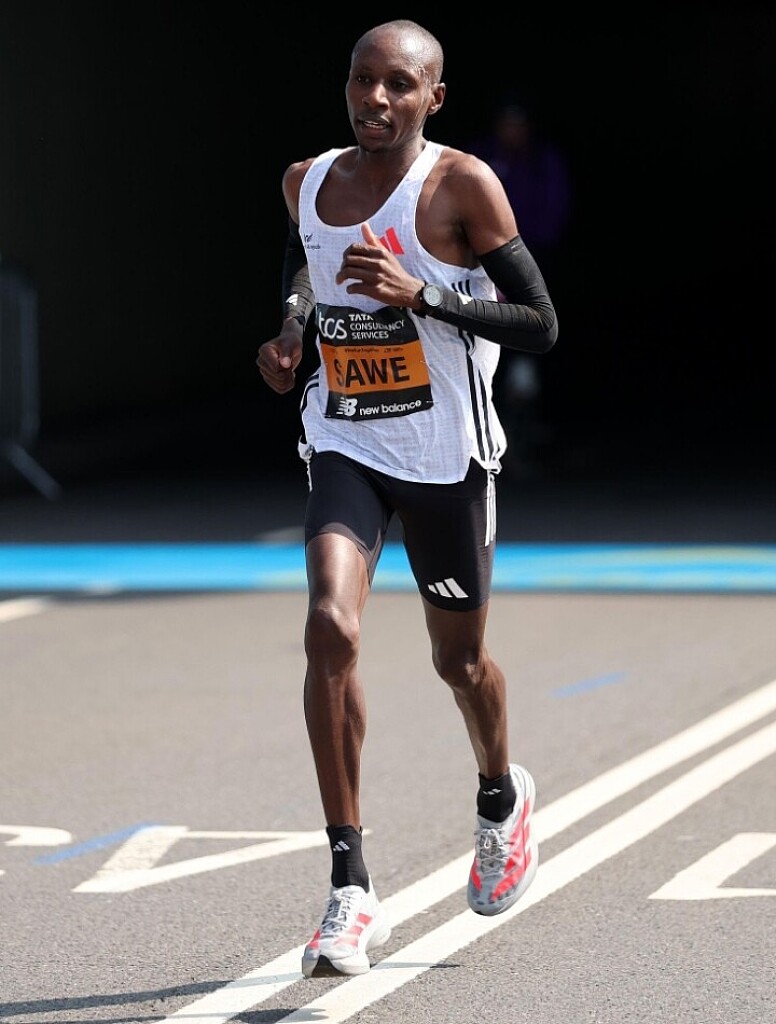
At the center of attention stands Sebastian Sawe, the defending champion whose commanding 2:02:05 personal best marks him as the man to beat. Sawe’s blend of composure and finishing power has already proven decisive on these streets, but this year’s contest promises to push him deeper than ever before.
Lining up against him is a formidable cast. Jacob Kiplimo, better known for his dominance over shorter road distances and cross country, brings a dangerous mix of speed and endurance. His 2:02:23 credentials suggest he is more than ready to challenge for the win if the race turns tactical—or brutally fast.
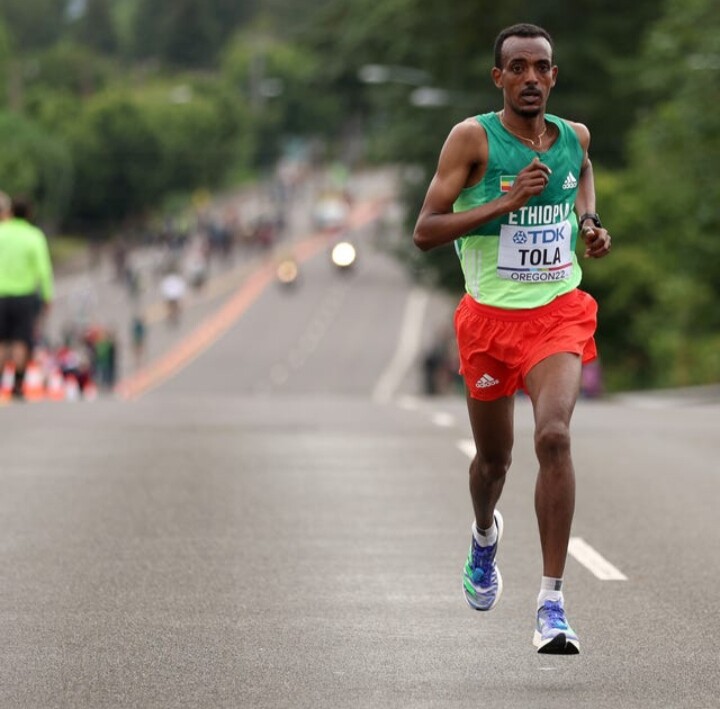
Ethiopia’s charge is equally imposing. Deresa Geleta and Olympic champion Tamirat Tola headline a contingent rich in pedigree, while Yomif Kejelcha adds intrigue with his much-anticipated marathon debut—an unknown factor capable of reshaping the race entirely.
Kenya’s depth remains undeniable. Alongside Sawe are seasoned names like Amos Kipruto and the ever-consistent Geoffrey Kamworor, both of whom possess the experience and resilience required to thrive over 42.195 kilometers. Meanwhile, Uganda’s Joshua Cheptegei continues his transition to the marathon stage, carrying the weight of his track legacy into the ultimate endurance test.
The international flavor extends further, with Japan’s Shunya Kikuchi, France’s Hassan Chahdi, and South Africa’s Adam Lipschitz all aiming to disrupt the established order.
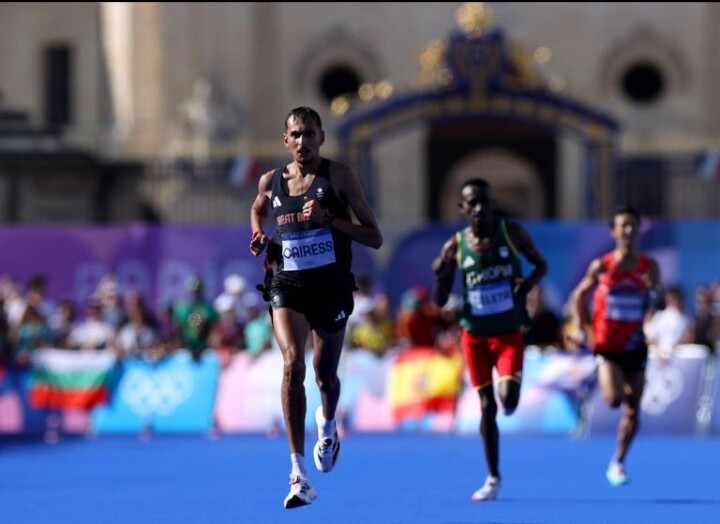
However, the home crowd has been dealt a blow. British hopeful Emile Cairess has been forced to withdraw due to a calf injury, removing a key figure who many believed could spearhead a domestic challenge. His absence shifts the spotlight away from local contention and further intensifies the East African dominance expected at the front.
Yet marathons are rarely predictable. The rhythm of the race, the pacing strategies, and the unforgiving demands of the distance often rewrite expectations. What appears stacked on paper can unravel over the final miles along the Thames.
With the race set to begin in the morning hours, anticipation continues to build. Records may be threatened, debuts could dazzle, and champions will be tested to their limits.
In a field this deep, victory will not simply be earned—it will be wrestled from one of the most competitive line-ups the marathon world has seen in recent years.
by Erick Cheruiyot for My Best Runs.
Login to leave a comment

TCS London Marathon
Since its inaugural edition on March 29, 1981, the TCS London Marathon has grown into one of the world's most prestigious road races, blending elite competition with an extraordinary charitable legacy. Founded by former Olympic champion and journalist Chris Brasher alongside Welsh athlete John Disley, the event has been staged every year and has been held in the spring annually...
more...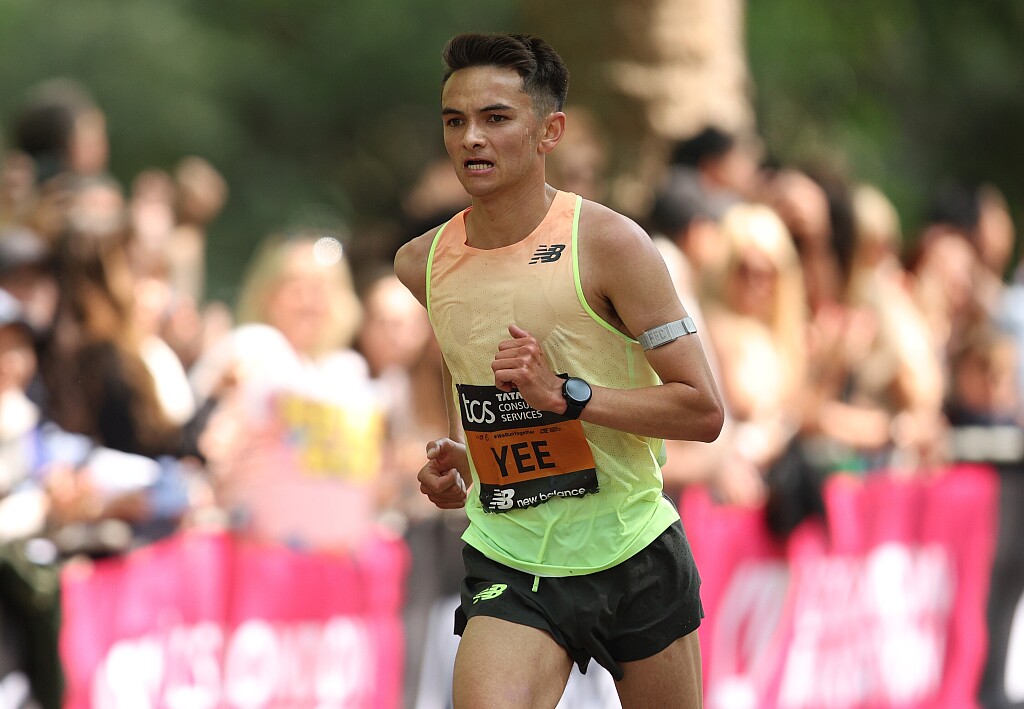
Olympic Champion Steps Into a New Role: Alex Yee to Pace Emile Cairess at London Marathon
In a compelling twist ahead of one of the world’s most prestigious road races, Alex Yee has been confirmed as a pacemaker for the 2026 London Marathon, adding a fascinating layer of intrigue to this year’s contest.
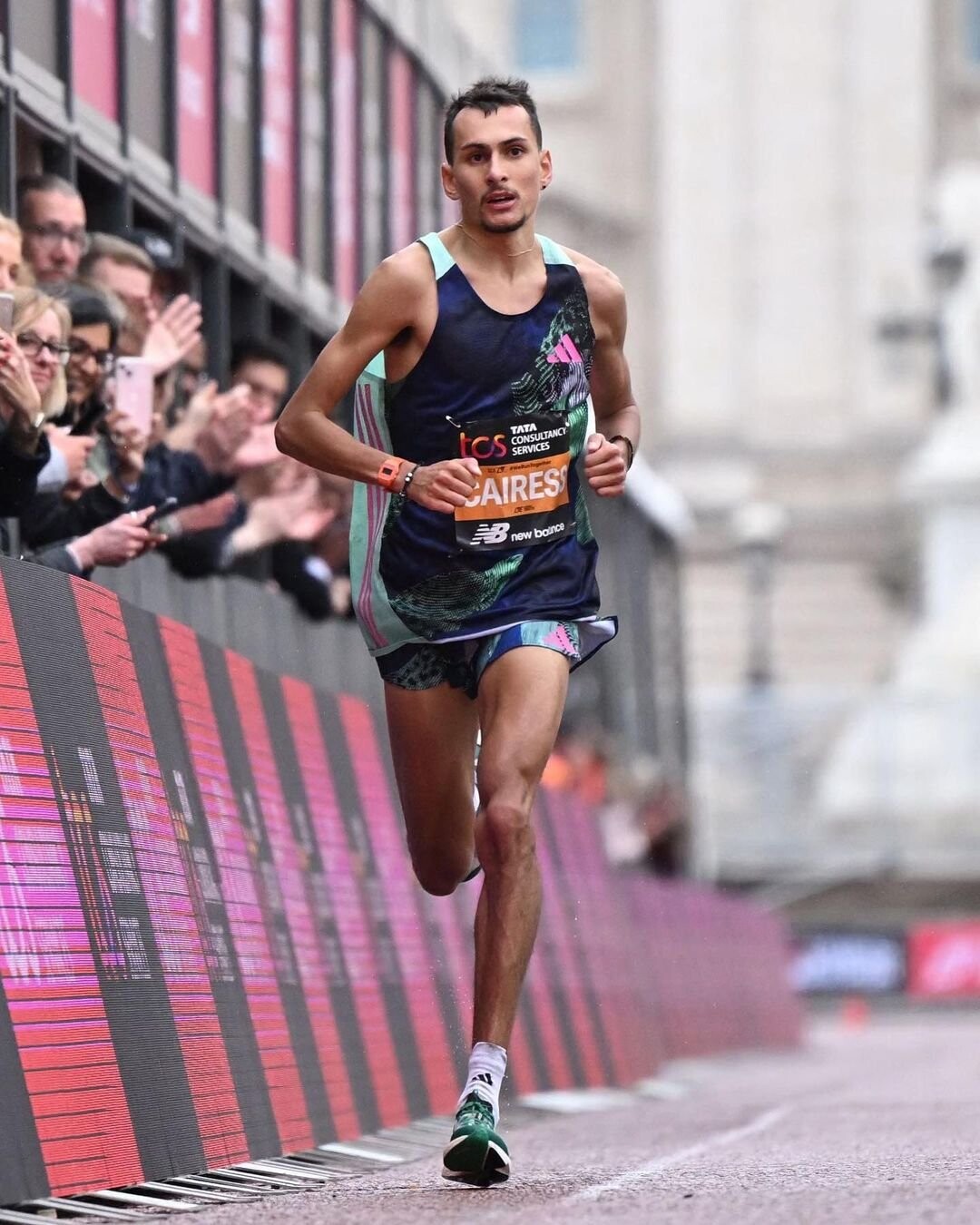
The Olympic triathlon champion, renowned for his blistering speed and tactical intelligence, will take on pacing duties for Emile Cairess—widely regarded as Britain’s leading marathon hope in the elite field. It is a role that demands precision, discipline, and selflessness, qualities Yee has consistently demonstrated across disciplines.
Yet this assignment carries a deeper narrative. Yee’s involvement is more than strategic—it is personal. Just months ago at the Valencia Marathon, Cairess played a crucial supporting role in Yee’s marathon journey, guiding him through 21 miles en route to an outstanding 2:06:38 finish. That performance not only marked a breakthrough for Yee but also cemented his place among the fastest British marathoners in history.
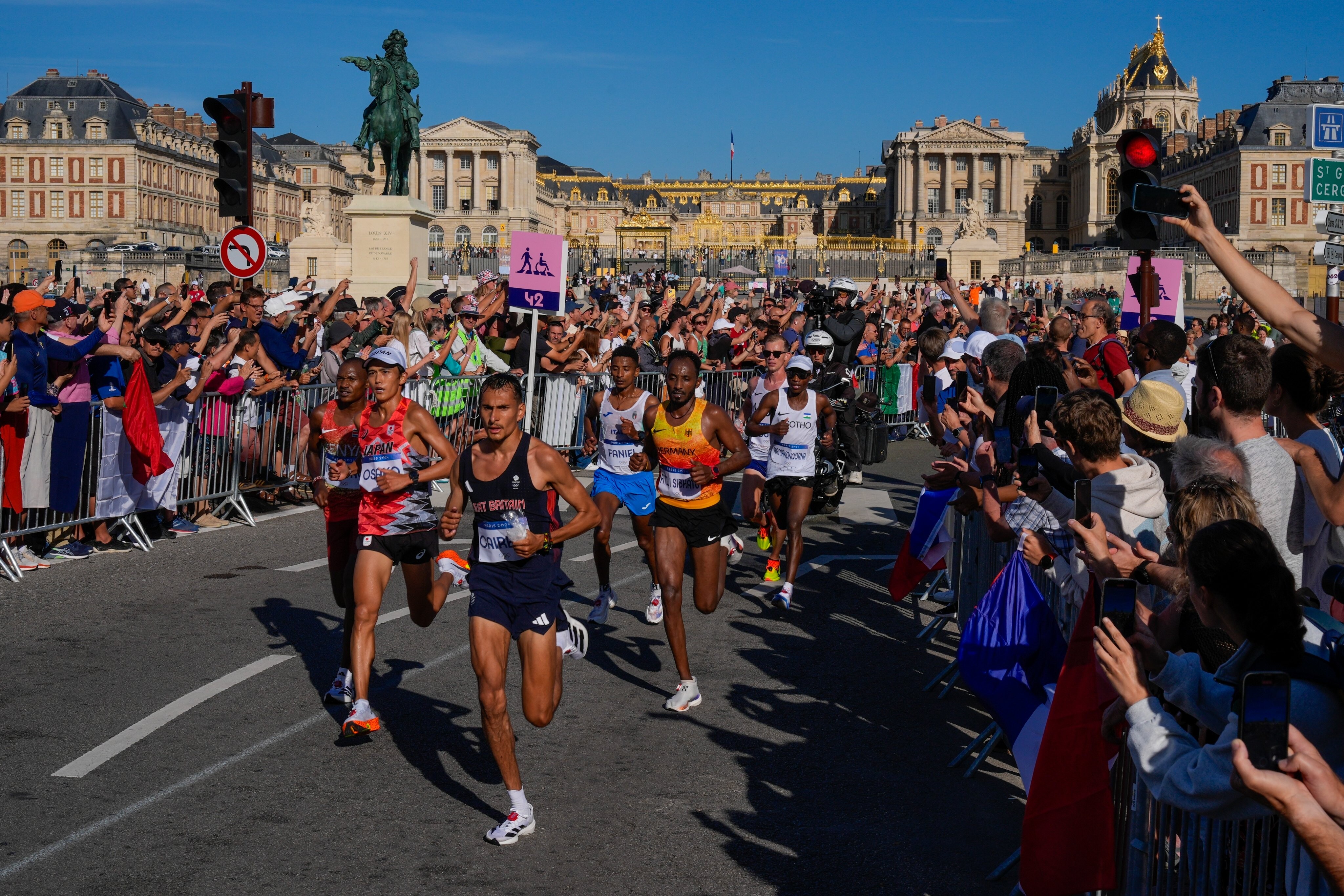
Now, the roles reverse.
Yee returns to London not as a contender chasing the clock, but as a key architect in someone else’s race. His responsibility will be to shepherd Cairess through the critical early and middle stages, setting a rhythm capable of unlocking a world-class performance on home soil.
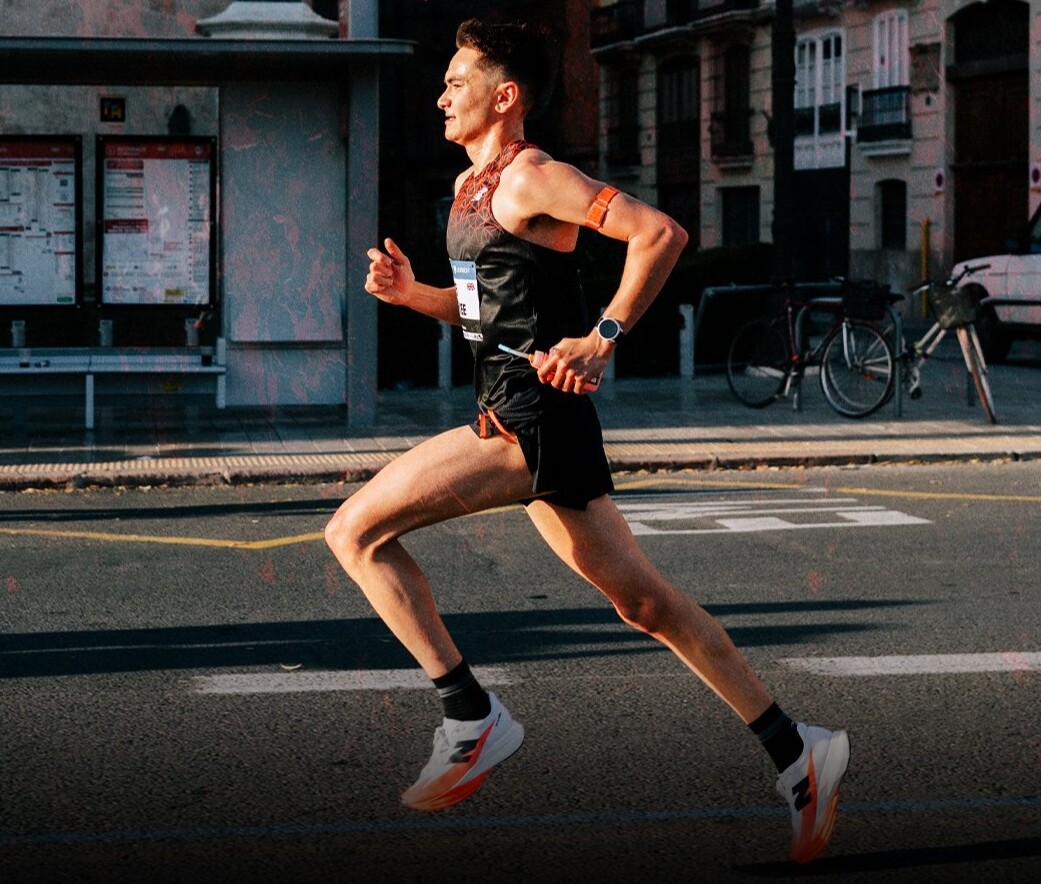
Despite his shift in role, Yee is no stranger to the demands of the London course. On his marathon debut here in 2025, he delivered a solid 2:11:08 finish, placing as the second British athlete and 14th overall—an effort that provided valuable experience over the iconic distance. That outing, while modest by elite standards, laid the foundation for the remarkable leap he would later make in Valencia.
For Cairess, having an athlete of Yee’s caliber as a pacemaker is a significant advantage. Few pacers possess such a unique blend of endurance, racing instinct, and recent marathon experience at the highest level. With the streets of London set to roar once more, the British duo’s collaboration could prove pivotal in shaping the outcome of the race.
As anticipation builds toward April 26, this partnership stands out as one of the most intriguing storylines of the 2026 London Marathon—a testament to camaraderie, mutual respect, and the unspoken bonds that define elite sport.
by Erick Cheruiyot for My Best Runs.
Login to leave a comment
TCS London Marathon
Since its inaugural edition on March 29, 1981, the TCS London Marathon has grown into one of the world's most prestigious road races, blending elite competition with an extraordinary charitable legacy. Founded by former Olympic champion and journalist Chris Brasher alongside Welsh athlete John Disley, the event has been staged every year and has been held in the spring annually...
more...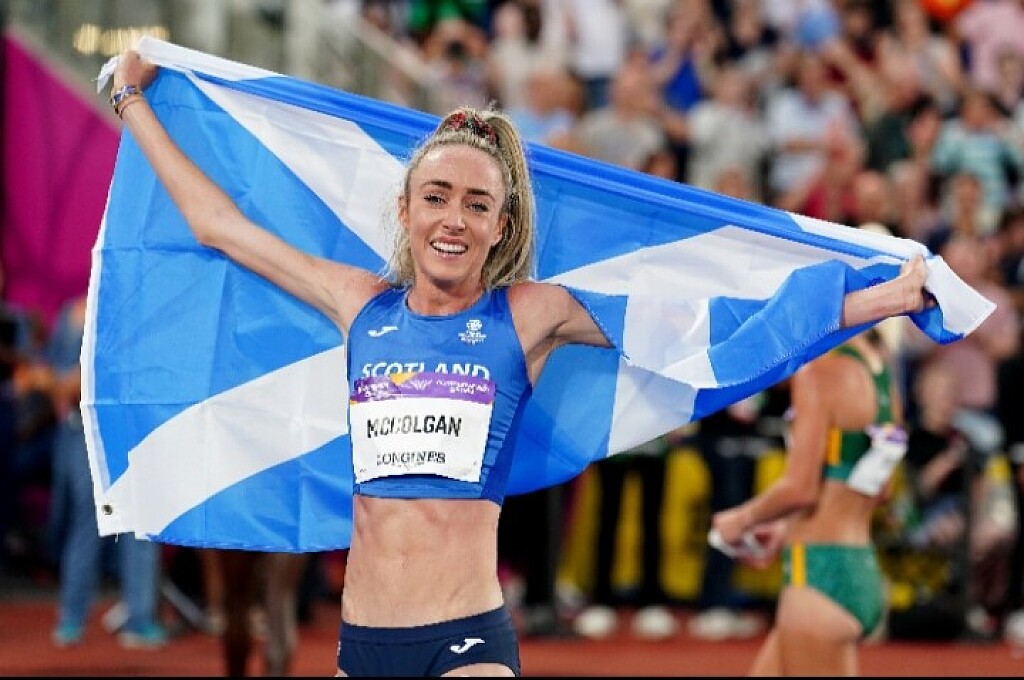
Emile Cairess and the Rise of British Marathon Belief: Chasing History in London
British marathon running is rediscovering its confidence — and Emile Cairess believes that belief may be the most powerful performance enhancer of all.
At 28, Cairess has quietly positioned himself at the forefront of a new generation of British male distance runners who are no longer content with national relevance alone. Their ambitions are global, their standards higher, and their performances increasingly competitive against the East African dominance that has long defined the marathon.
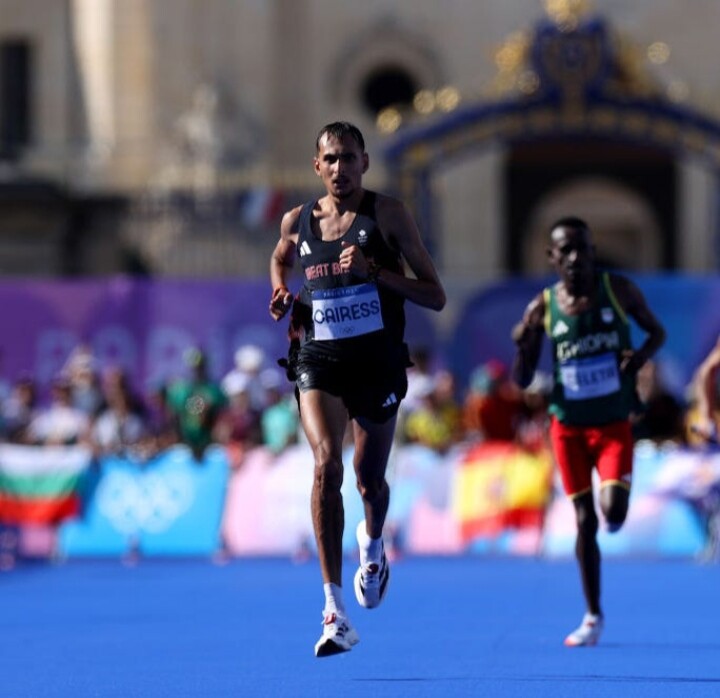
Cairess’ trajectory over the past two seasons explains why expectations are growing. His third-place finish at the 2024 London Marathon announced him as a serious contender, but it was his fourth-place performance at the Paris 2024 Olympics marathon that truly confirmed his class — the joint-best Olympic result by a British man in 40 years.
Now his focus turns toward a historic target: the long-standing British marathon record of 2:05:11 set by four-time Olympic champion Mo Farah in 2018. The mark has endured for years, but Cairess senses the psychological barrier around it beginning to weaken.
According to him, progress in elite sport often begins with proof. Once one or two athletes demonstrate what is possible, perceptions shift — and limits move.
That shift is already visible across Britain’s marathon scene.
Olympic triathlon champion Alex Yee produced a remarkable 2:06:38 in Valencia in December 2024 to become the second-fastest British marathon runner in history, briefly moving ahead of Cairess. In a detail that reflects the supportive spirit within this emerging generation, Cairess himself played a pacing role during that race.
Behind them, Mahamed Mahamed and Philip Sesemann have both recorded performances within two minutes of Farah’s national record in recent seasons, while Patrick Dever added fresh excitement with an outstanding fourth-place finish on his marathon debut in New York.
For Cairess, this collective progress is not coincidence — it is momentum.
When athletes see their peers succeeding, belief grows. Training standards rise. Confidence deepens. What once felt exceptional begins to feel attainable. He describes it as a snowball effect: success multiplying through shared inspiration.
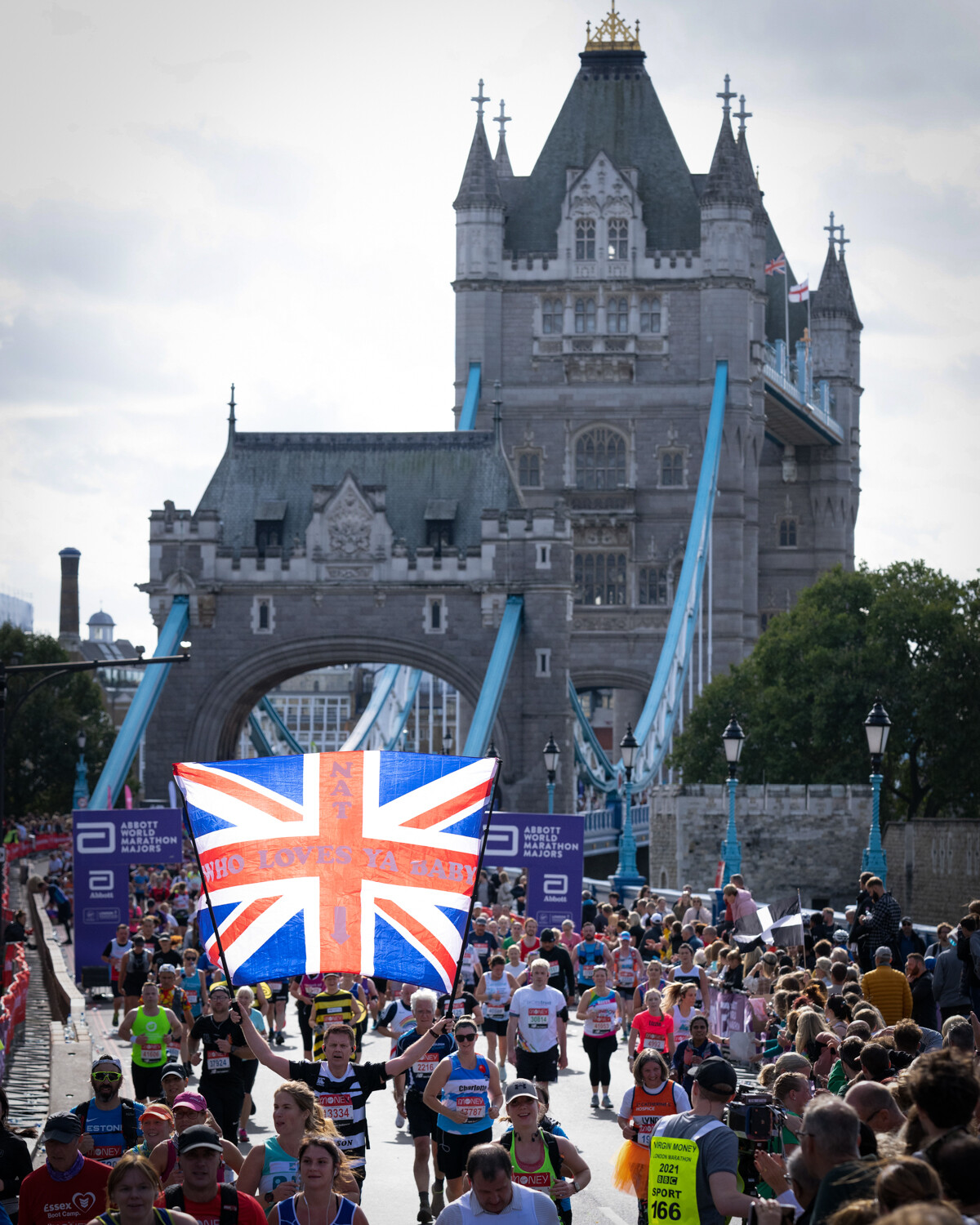
That momentum will converge on Sunday, 27 April 2025, at the TCS London Marathon, where Cairess will line up alongside Mahamed, Sesemann, and Dever. With Yee returning his primary focus to triathlon, Cairess carries the responsibility of leading the British charge — not only against the clock, but against the world’s best Kenyan and Ethiopian athletes.
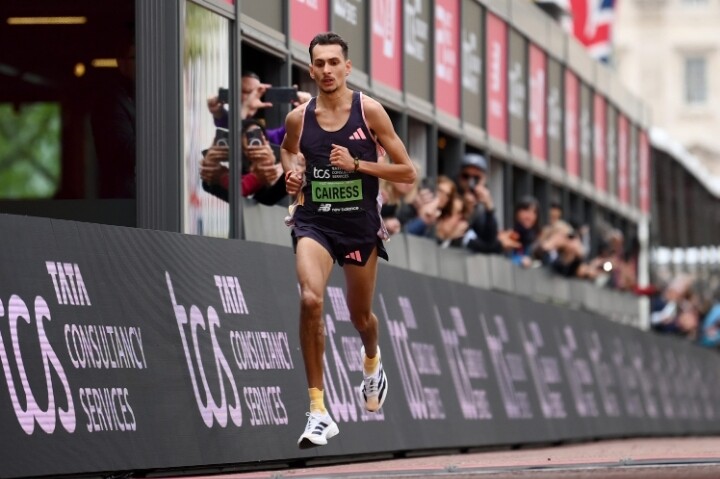
Yet his mindset remains outward-looking. National records matter, but global competitiveness matters more. His ambition is not simply to become Britain’s fastest — it is to compete fearlessly at the very highest level of marathon running.
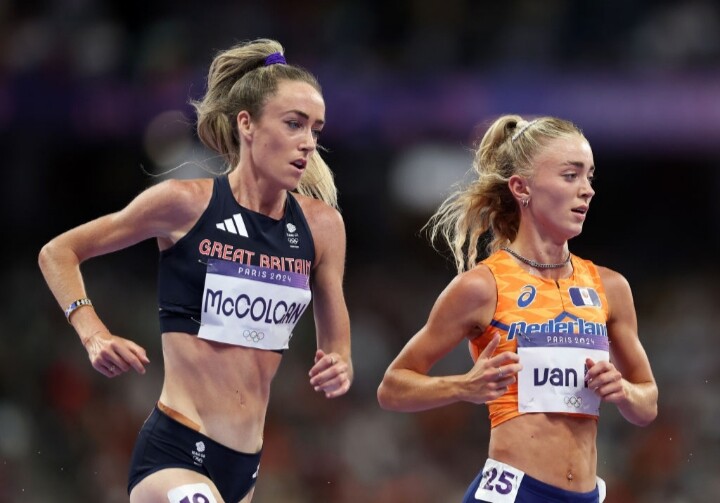
The sense of renewal extends to the women’s field as well. Eilish McColgan returns to London after an impressive marathon debut last year, where she set a Scottish record and demonstrated her potential over the distance. She joins a race featuring five of the ten fastest British women in history, highlighting the depth currently developing across British endurance running.
by Erick Cheruiyot for My Best Runs.
Login to leave a comment
TCS London Marathon
Since its inaugural edition on March 29, 1981, the TCS London Marathon has grown into one of the world's most prestigious road races, blending elite competition with an extraordinary charitable legacy. Founded by former Olympic champion and journalist Chris Brasher alongside Welsh athlete John Disley, the event has been staged every year and has been held in the spring annually...
more...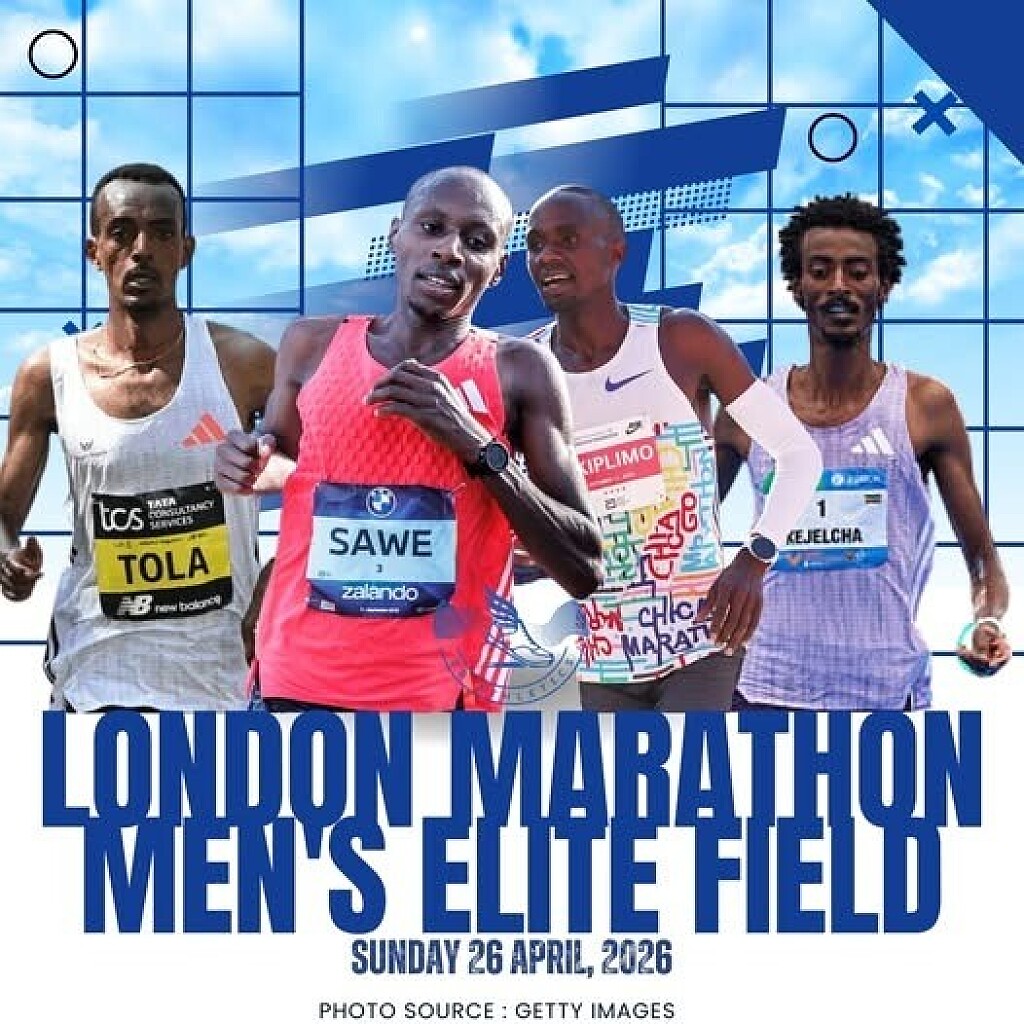
London Awaits a Blockbuster Men’s Marathon as World-Class Stars Line Up on April 26, 2026
The TCS London Marathon, set for Sunday, April 26, 2026, is already shaping up to be one of the most compelling races in the event’s rich history. The men’s elite start list reveals a field defined not just by star power at the top, but by extraordinary depth throughout—bringing together proven champions, fearless challengers, and highly anticipated debutants on one of the world’s fastest and most iconic courses.
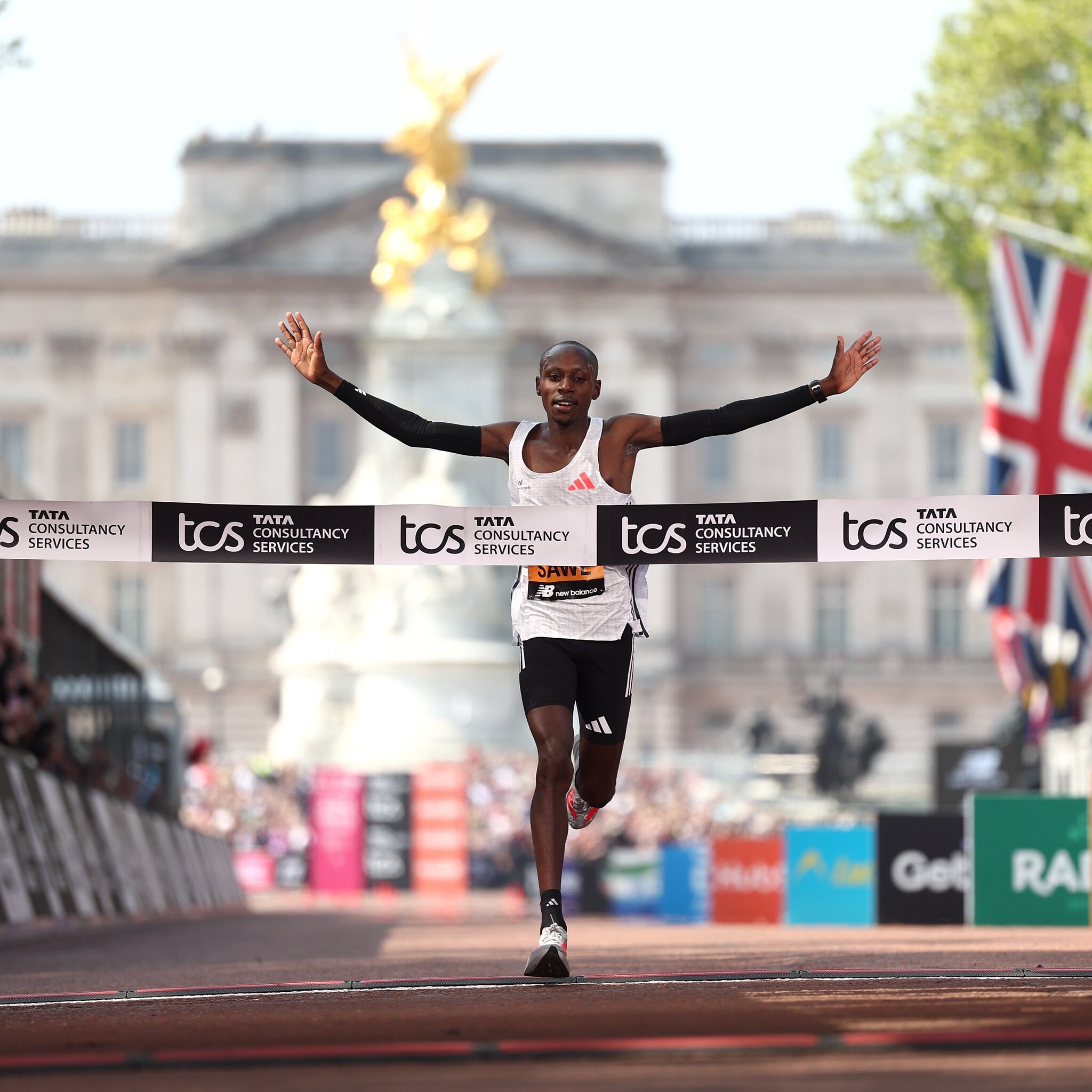
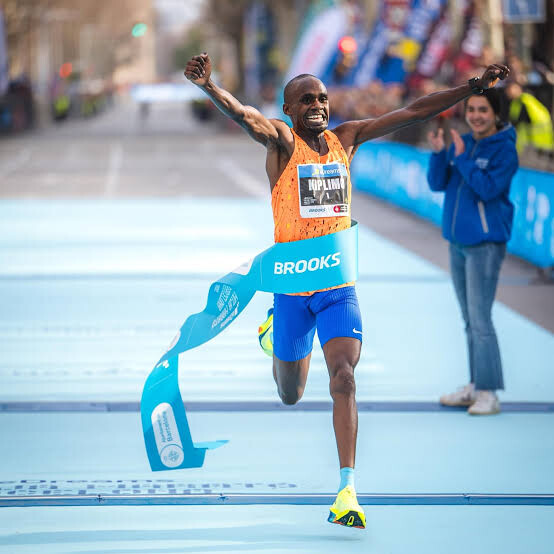
Leading the charge is Sebastian Sawe of Kenya, the fastest man entered with a personal best of 2:02:05. Efficient, composed, and devastatingly consistent, He is the defending champion and will arrive in London as a clear contender, capable of dictating the rhythm of the race from the early miles. Close behind him on the start list is Jacob Kiplimo of Uganda (2:02:23), whose evolution into the marathon continues to fascinate the running world. Known for his strength, speed, and fearless racing style, Kiplimo’s presence adds a layer of unpredictability to an already volatile contest.
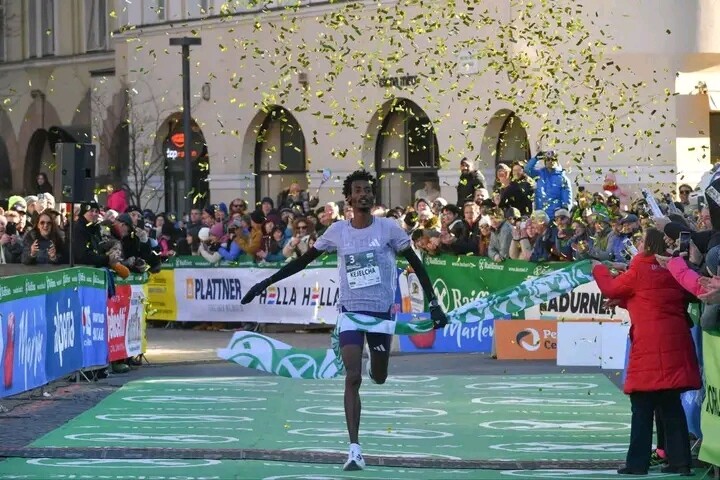
Ethiopia counters strongly through Deresa Geleta, owner of a 2:02:38 best and a runner respected for his smooth efficiency and reliability at the highest level. Adding further intrigue is Yomif Kejelcha, one of the most eagerly awaited marathon debutants in recent years. A global star on the track, Kejelcha now steps into uncharted territory, and how his speed and range translate over 42.195 kilometers will be one of the defining narratives of race day.
As the list unfolds, the depth of the field becomes impossible to ignore. Amos Kipruto of Kenya (2:03:13) brings championship pedigree and tactical intelligence, while Olympic marathon champion Tamirat Tola of Ethiopia (2:03:39) arrives with proven resilience and the ability to rise when the stakes are highest. Germany’s Amanal Petros (2:03:04), a national record holder, continues to push European marathon running forward and enters London in peak form.
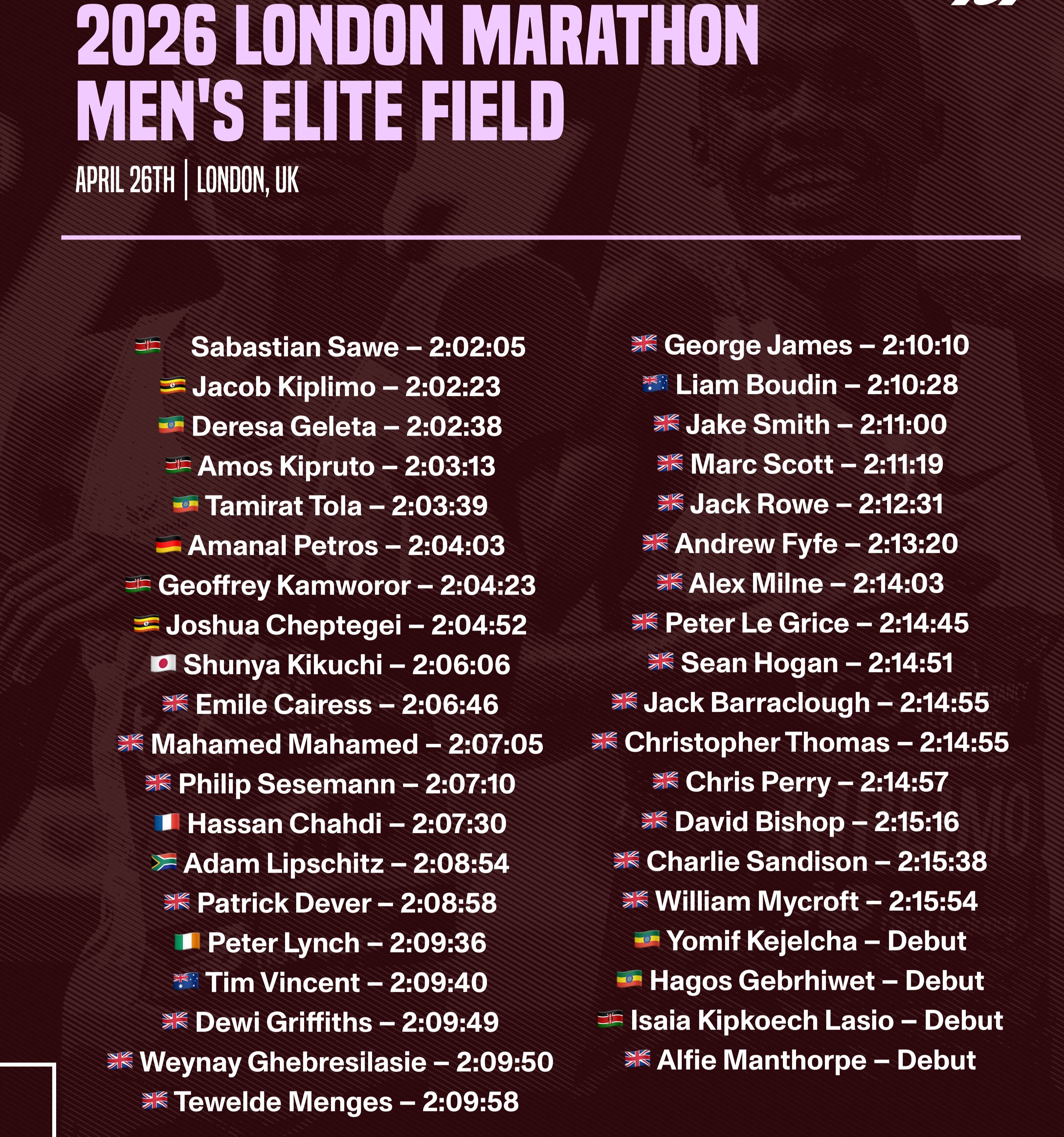
Even further down the start list, the quality remains striking. Geoffrey Kamworor of Kenya (2:04:23), a multiple-time world champion, offers experience, patience, and racing instinct that few can match. Uganda’s Joshua Cheptegei (2:04:52), one of the most decorated track athletes of his generation, continues his marathon journey with determination and growing confidence. Japan’s Shunya Kikuchi (2:06:06) represents a nation synonymous with marathon tradition, while Emile Cairess of Great Britain (2:06:46) carries home hopes, eager to make his mark on London’s global stage.
Beyond these names, the men’s elite start list continues deep, featuring more established performers and additional debutants ready to test themselves against the world’s best. This depth ensures that the 2026 race will not be won on reputation alone; it will demand patience, precision, and courage deep into the final miles.
When the gun sounds on Sunday, April 26, 2026, the TCS London Marathon will once again deliver what it promises best—a true test of endurance and excellence, where the margins are thin, the competition relentless, and the outcome anything but certain.
by Erick Cheruiyot for My Bestruns.
Login to leave a comment
TCS London Marathon
Since its inaugural edition on March 29, 1981, the TCS London Marathon has grown into one of the world's most prestigious road races, blending elite competition with an extraordinary charitable legacy. Founded by former Olympic champion and journalist Chris Brasher alongside Welsh athlete John Disley, the event has been staged every year and has been held in the spring annually...
more...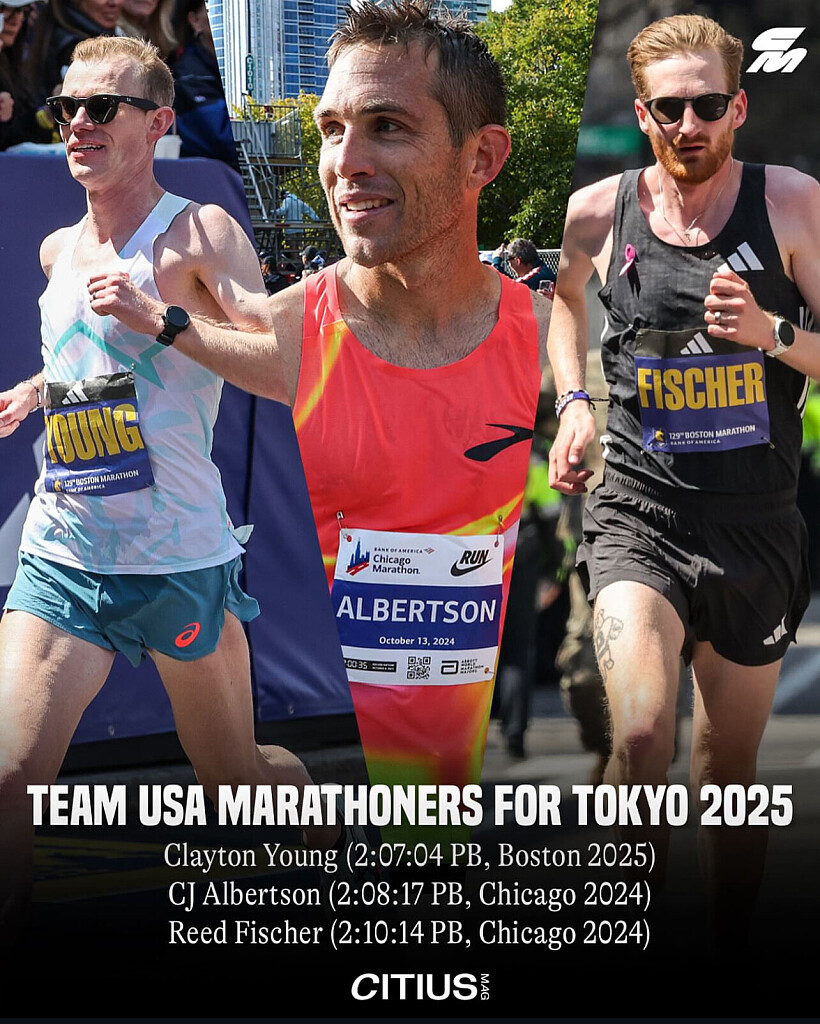
World Championships Men’s Marathon Preview: Familiar Faces Return to Tokyo
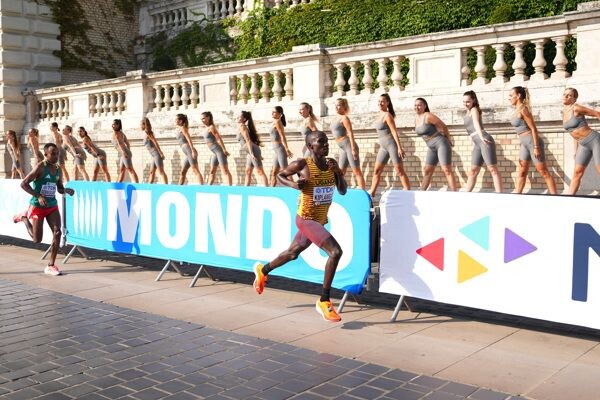
Tokyo, September 13, 2025 – The men’s marathon at the 2025 World Athletics Championships, set for Monday, September 15, has all the makings of a showdown that feels like déjà vu for fans of road racing in the Japanese capital.
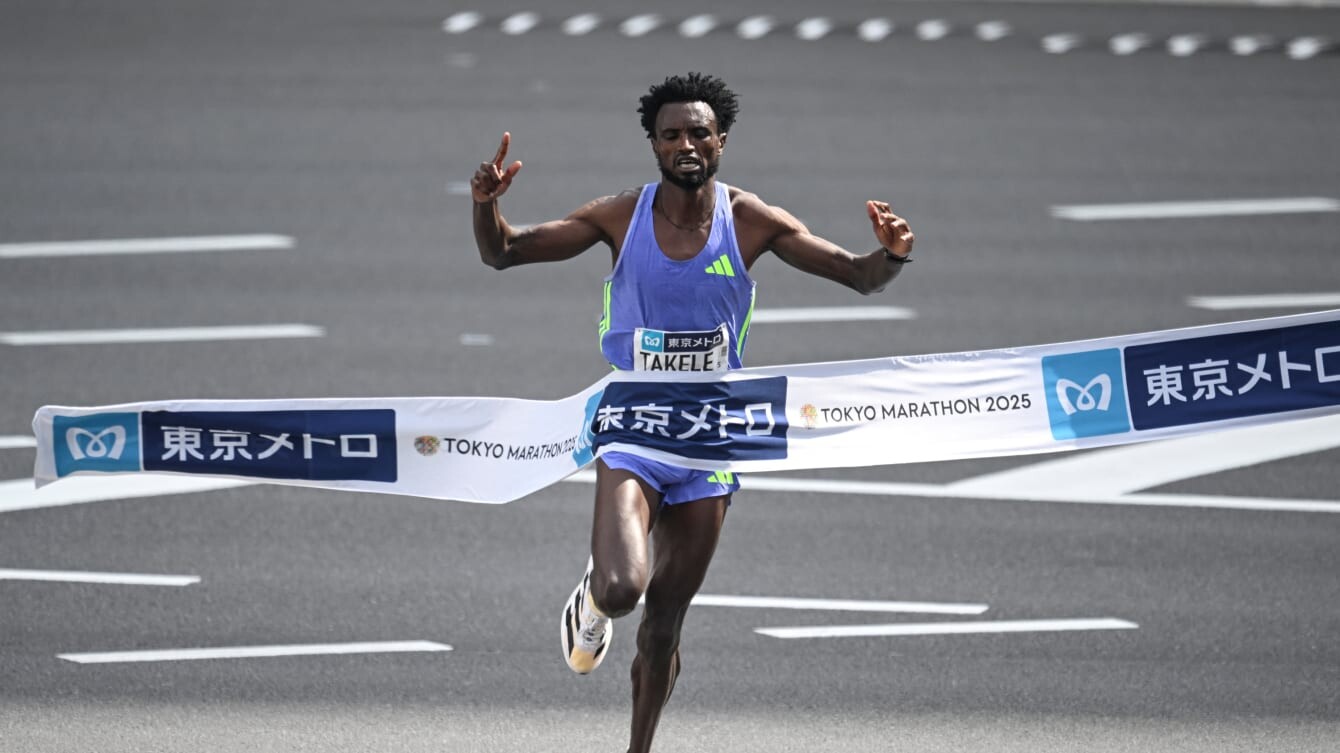
Much of the World Championships route mirrors the Tokyo Marathon course, and so too does the field. The top three finishers from March’s Tokyo Marathon — Tadese Takele and Deresa Geleta of Ethiopia, along with Kenya’s Vincent Kipkemoi Ngetich — headline the lineup. They also hold the three fastest times in the world this year among those entered, giving the race a sharp competitive edge.
Adding to the depth, Emile Cairess of Great Britain, who placed fourth at the Paris 2024 Olympic Games, is set to challenge again in Tokyo. Defending world champion Victor Kiplangat of Uganda and 2023 Budapest silver medallist Maru Teferi of Israel add to a field packed with medal contenders.
The United States will also be represented with a strong trio: Clayton Young, CJ Albertson, and Reed Fischer. While Americans are not among the pre-race medal favorites, each brings international experience and competitive credentials. Young in particular has emerged as one of the fastest U.S. marathoners in recent years, and Albertson is known for aggressive pacing that could shake up the race dynamics. Fischer adds depth and consistency, giving Team USA multiple chances for a top-10 finish.
With multiple men entered who have run under 2:05, the pace promises to be ambitious. Whether it leads to a record will depend heavily on conditions. Tokyo has been under a heatwave alert, and organizers have moved the start time up by 30 minutes to help offset the temperatures. Still, if the weather cooperates, Tamirat Tola’s World Championships record of 2:05:36, set in Oregon in 2022, could be under serious threat.
All signs point to a thrilling clash — a familiar course, a world-class field, the Americans ready to test themselves against the best, and the possibility of history being rewritten in Tokyo.
by Boris Baron
Login to leave a comment
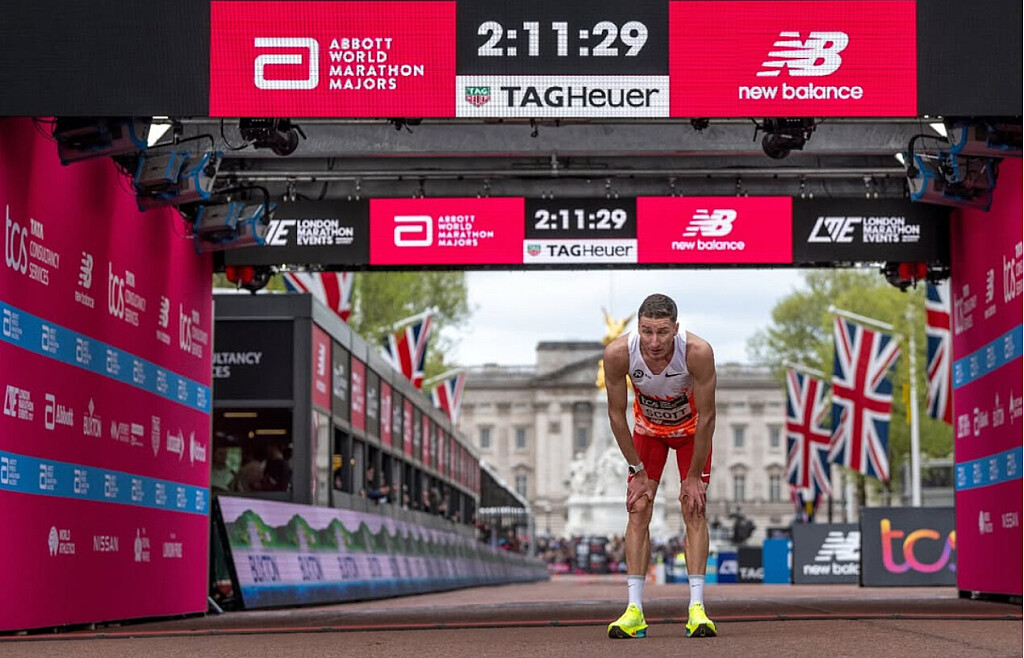
Marc Scott Withdraws from 2025 TCS London Marathon Due to Knee Injury
British long-distance runner Marc Scott has announced his withdrawal from the upcoming 2025 TCS London Marathon, citing a persistent knee injury that has impeded his training. Scott shared the news on Instagram, expressing his disappointment and detailing the challenges he’s faced during preparation.
Scott, who secured a bronze medal in the 3000m at the 2022 World Indoor Championships, made his marathon debut at last year’s London Marathon, finishing eleventh overall with a time of 2:11:19. Despite a promising start to his training for this year’s event, a knee issue emerged following a rigorous long run. Despite various interventions, the injury persisted, leading to his decision to withdraw and focus on recovery.
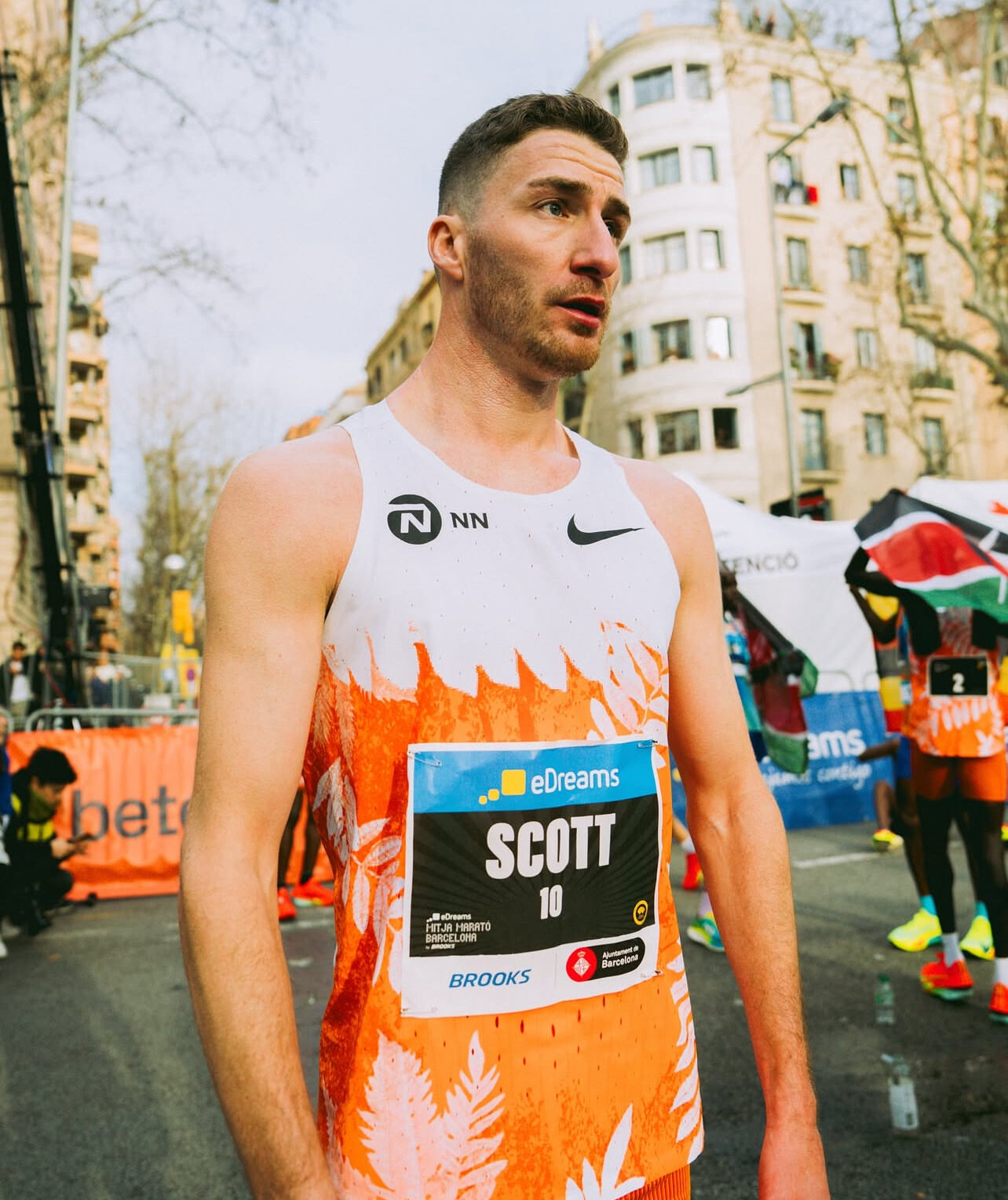
In his Instagram post, Scott reflected on his training and the subsequent injury:
“Training was going exceptionally well – I would argue that I was in the best shape of my life and that was exciting. The following day, coming off the back of a fast long run, I had an issue with my knee. Weeks later, it was still giving me trouble and no matter the intervention, it didn’t settle in time to rescue the training we had missed. I’m not prepared to get on the line at London not being at my best.”
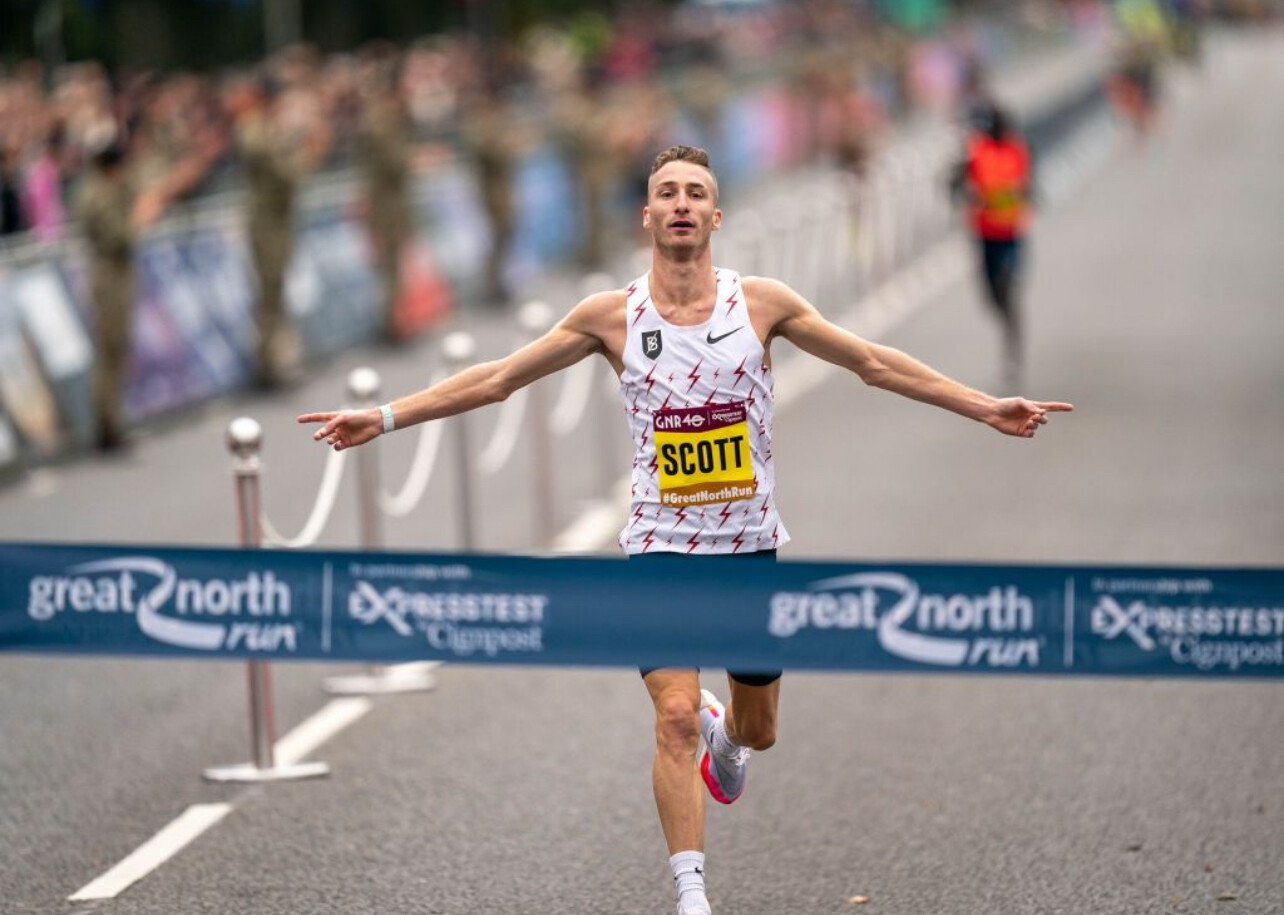
Scott remains optimistic about his future in marathon running and aims to return to competition later this year. He concluded his message with words of encouragement for fellow athletes:
“I know I’m capable of a fast marathon; it’s in there somewhere and hopefully this fall I can prove that to myself. For now, back to it when the body allows and get ready for some shorter racing this summer. Good luck to everyone in London.”
Recent Performances Prior to Injury
Before his injury, Scott demonstrated strong form in early 2025:
• January 12, 2025: Competed in the 10K Valencia Ibercaja in Spain, finishing with a time of 28:12.
• February 16, 2025: Participated in the eDreams Mitja Marató Barcelona half marathon, completing the course in 1:01:00.
These performances highlighted Scott’s readiness for the marathon distance before his training was interrupted by injury.
Scott’s withdrawal follows that of Emile Cairess, who also pulled out of the 2025 London Marathon due to an ankle tendon injury. Cairess had previously finished third overall in the 2024 London Marathon and achieved a commendable fourth-place finish at the Paris Olympics.
As the London Marathon approaches, the field continues to evolve, with athletes adjusting their schedules due to injuries and other factors. Fans and fellow competitors will undoubtedly miss Scott’s presence this year and look forward to his return to the marathon circuit in the near future.
by Boris Baron with Athletics Weekly
Login to leave a comment
TCS London Marathon
Since its inaugural edition on March 29, 1981, the TCS London Marathon has grown into one of the world's most prestigious road races, blending elite competition with an extraordinary charitable legacy. Founded by former Olympic champion and journalist Chris Brasher alongside Welsh athlete John Disley, the event has been staged every year and has been held in the spring annually...
more...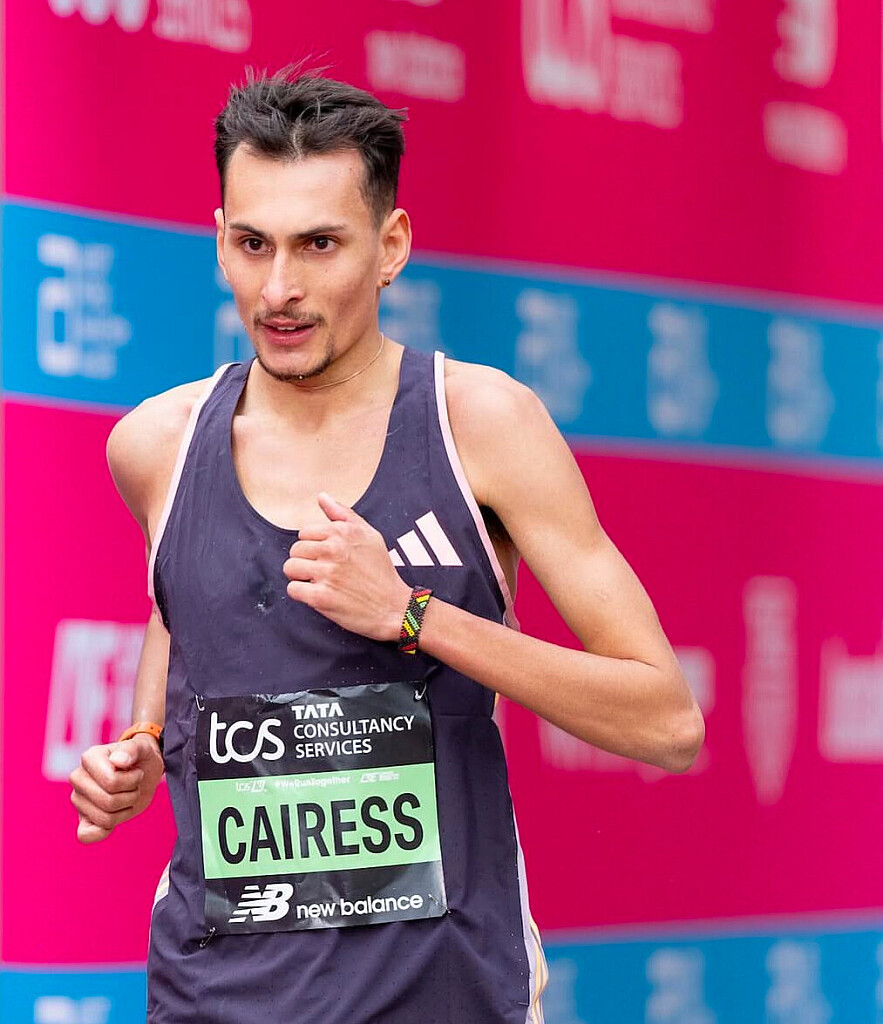
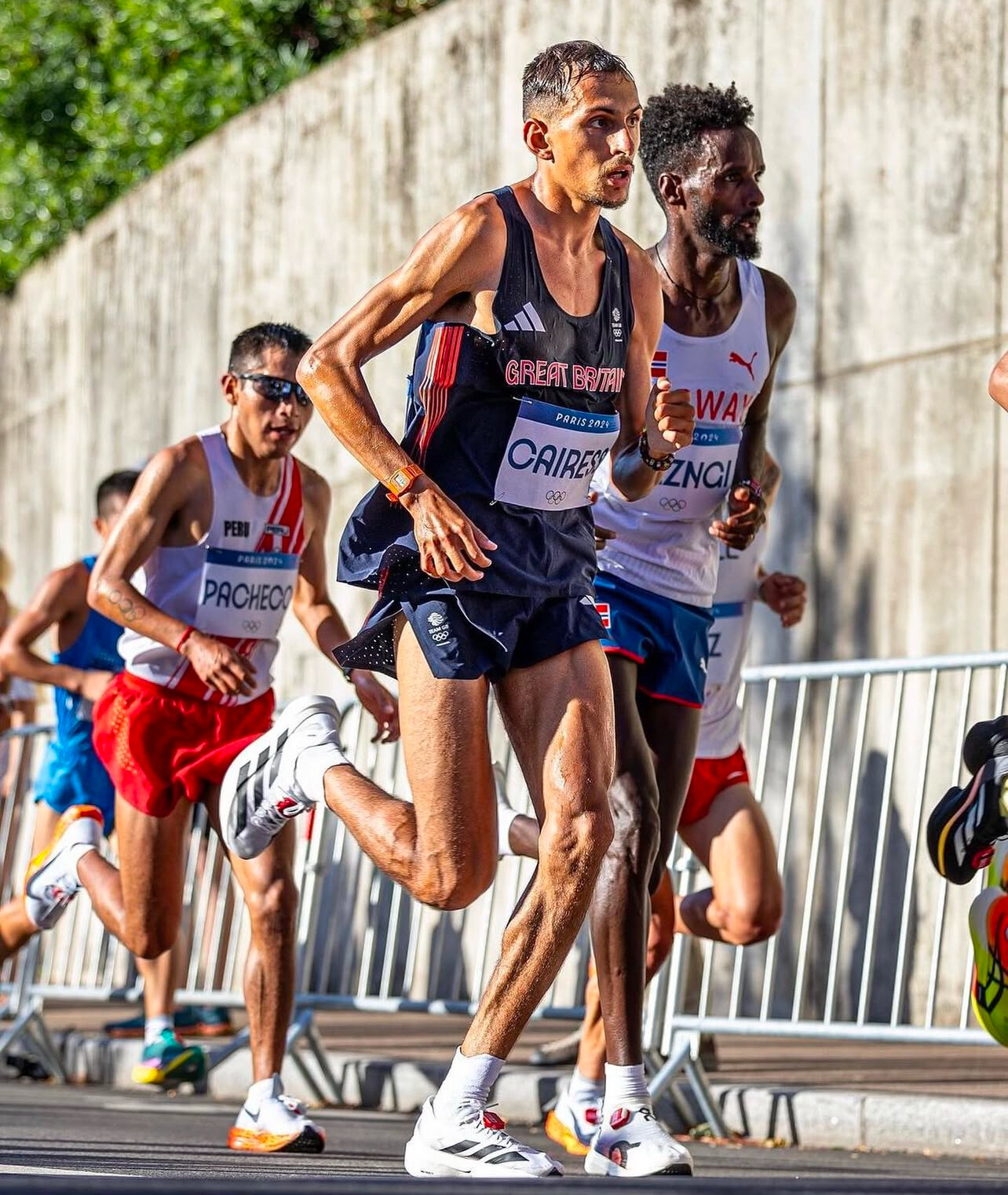
Emile Cairess Withdraws from London Marathon Due to Injury, Halting Record Pursuit
Top British marathoner Emile Cairess has officially withdrawn from the 2025 TCS London Marathon due to a persistent ankle tendon injury that has derailed his training. The setback forces the 27-year-old to put his pursuit of Mo Farah’s British marathon record of 2:05:11 on hold as he focuses on recovery.
Cairess, who burst onto the marathon scene as the fastest British debutant of all time in 2023 with a 2:08:07 finish, had since lowered his personal best to 2:06:46, securing third place in last year’s London Marathon behind Alex Mutiso and Kenenisa Bekele. He followed that success with a fourth-place finish at the Paris Olympics, further solidifying his status as one of Britain’s brightest distance-running stars.

“It’s incredibly disappointing to miss London this year, especially after how well things had been progressing,” Cairess shared. “But the ankle injury has made it impossible to maintain the consistency I need. Right now, my focus is on healing properly so I can come back stronger.”
Star-Studded Field Remains
While Cairess’s absence is a blow to British hopes, the men’s elite field remains stacked with talent. Eliud Kipchoge, Kenenisa Bekele, and Olympic champion Tamirat Tola are set to headline the race, joined by world half-marathon record-holder Jacob Kiplimo and defending champion Alex Mutiso.
On the British front, Olympic triathlon champion Alex Yee will make his highly anticipated marathon debut, while Mahamed Mahamed and Phil Sesemann, both fresh from the Paris Olympics, aim to make their mark on home soil.
Women’s Elite Race Draws Global Talent
In the women’s race, Lucy Reid has also withdrawn due to injury after initially planning her London debut following a breakthrough 2:26:35 in Malaga last December. However, the competition remains fierce, with world record-holder Ruth Chepngetich, reigning Olympic champion Sifan Hassan, and Tigst Assefa—who famously shattered the Berlin Marathon record—leading the charge.
Adding to the excitement, defending champion Peres Jepchirchir will return, while British star Eilish McColgan is set to make her long-awaited marathon debut, bringing further domestic interest to the race.
While Cairess’s withdrawal is undoubtedly disappointing, the marathon season is far from over. With careful rehabilitation, he remains hopeful for a return later this year, possibly targeting the Berlin or Chicago Marathons as alternative stages for his record pursuit.
The London Marathon, meanwhile, continues to promise world-class performances, with a stellar field ready to light up the streets of the British capital come race day.
Login to leave a comment
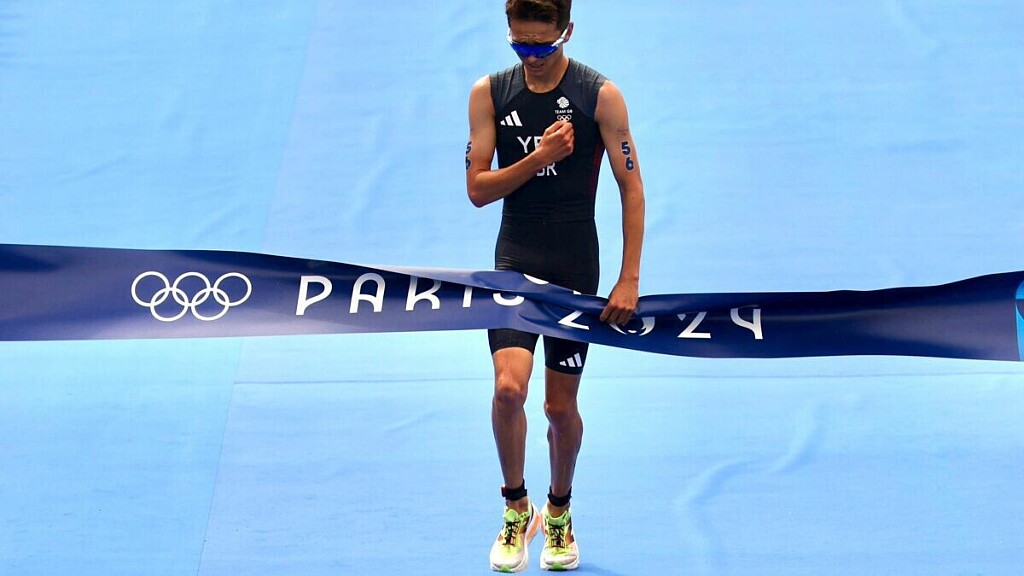
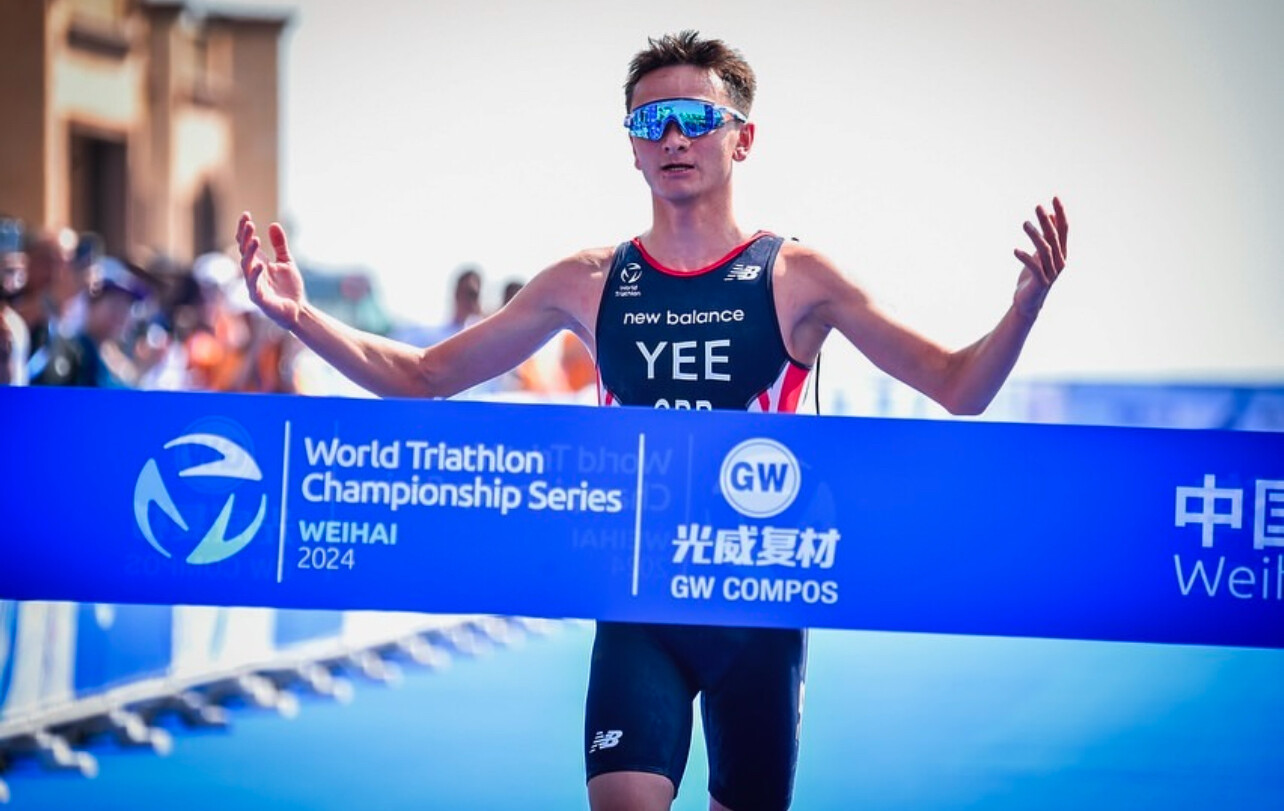
Olympic triathlon champ to make 42.2 debut at 2025 London Marathon
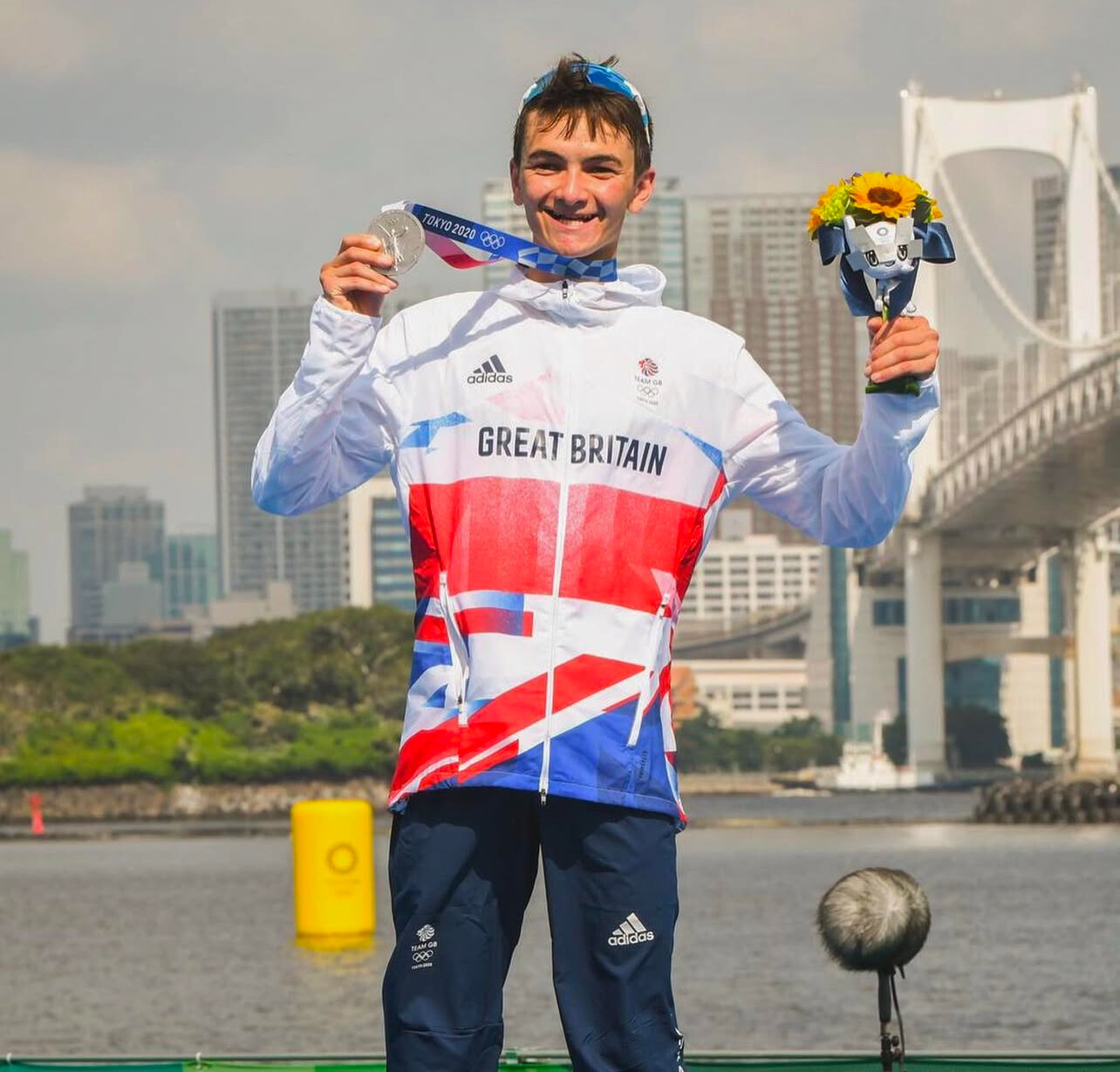
On Monday, the organizers of the TCS London Marathon announced there will be a new face headlining the 2025 race. Great Britain’s Alex Yee, the reigning Olympic triathlon champion from Paris 2024, will make his marathon debut on Sunday, April 27, in his hometown of London.
The 26-year-old, who has won four Olympic medals in triathlon, has a ton of experience in distance running, representing Great Britain in track and cross-country events internationally. He has a 5K personal best of 13 minutes and 26 seconds and has run under 28 minutes for 10,000 meters.
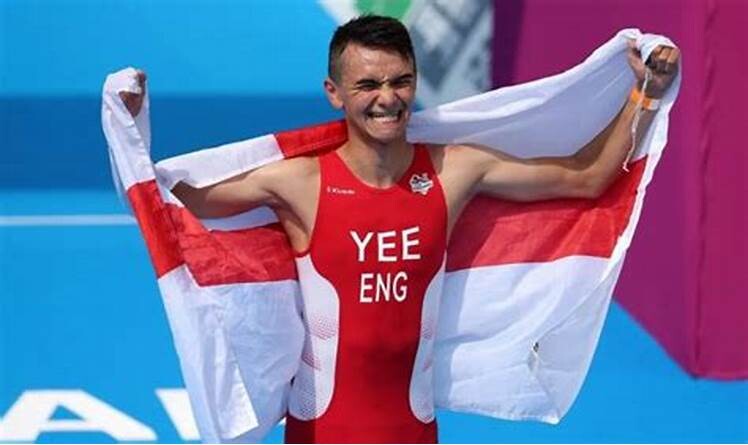
In triathlon, Yee is often regarded as the strongest runner in the sport. The reputation played in his favor earlier this summer in Paris when he caught New Zealand’s Hayden Wilde on the final lap of the Olympic triathlon to win gold. The strong field Yee will face at the 2025 TCS London Marathon will make it one of his biggest challenges to date. However, Yee will look to his home course advantage.
According to the press release, Yee raced the 2.6km Mini London Marathon five times during his junior career and grew up 15 minutes from the start line in Blackheath. “London Marathon day has been such a big part of my life growing up,” recalls Yee. “I remember racing the Mini London Marathon multiple times as a young athlete, and it was one of my biggest and most exciting races of the year. Taking part in a full marathon has always been an itch I’ve wanted to scratch, and there isn’t any other place than London where I would want to start that journey.”
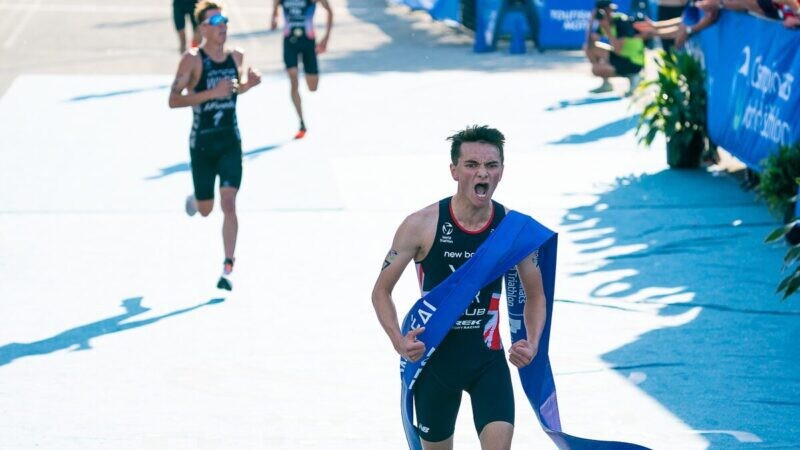
For his London build-up, Yee plans to put his triathlon training on pause to focus solely on marathon training. “I will be focusing my training over the coming months on the marathon and am looking forward to seeing what I can do over the 26.2 miles,” he said.
Last year, Kenya’s Alexander Munyao won his first Abbott World Marathon Major in London, denying Ethiopian distance legend Kenenisa Bekele a hoped-for first London Marathon win with a time of 2:04:01. Bekele did, however, set a new masters marathon record with his time of 2:04:15. The top British finisher was Emile Cairess, who ran 2:06:46 finish third, making him the second-fastest British marathon runner of all time behind Mo Farah.
Yee is the first runner announced for the 2025 London Marathon elite field. The full elite field will be announced in the new year.
by Marley Dickinson
Login to leave a comment
TCS London Marathon
Since its inaugural edition on March 29, 1981, the TCS London Marathon has grown into one of the world's most prestigious road races, blending elite competition with an extraordinary charitable legacy. Founded by former Olympic champion and journalist Chris Brasher alongside Welsh athlete John Disley, the event has been staged every year and has been held in the spring annually...
more...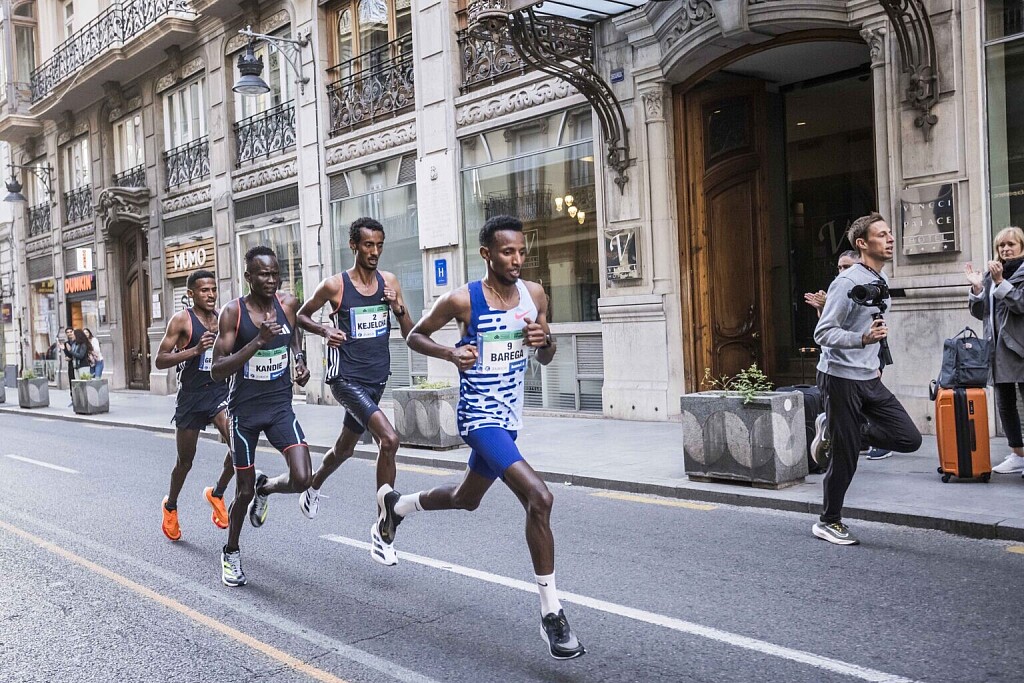
The Valencia Half Marathon, as star-studded as always
Once upon a time there was an athlete who didn’t know what it was like to take over an hour to run a half marathon, his legs were simply faster than that; he has tried five times, but his worst time, if that’s what you can call it, is 59:25. Three of those occasions have been in Valencia, where he won in 2019 and where he took second place in both 2022 and last year, when he clocked a personal best of 57:41, just 10 seconds off the world record and the third fastest time in history. Yomif Kejelcha arrives in Valencia hungry for glory, after an Olympic year in which he has performed at the highest level, with spectacular times and personal bests over 5000m (12:38.95) and 10,000m (26:31.01), but without the cherry on the cake of Olympic glory, having to settle for sixth place in the 25 laps of the track in Paris, an impressive achievement for 99% of athletes, a disappointment for him, who has hardly amassed any major medals.
It is doubtful that the Ethiopian team will be unable to secure victory considering that Selemon Barega, Olympic 10,000m champion in Tokyo, will also be in action, as he has had a similar season to Kejelcha in 2024, coming in just after him in Paris. Less experienced than his compatriot, Barega faces his third adventure over 21,097 m with the confidence of having run 57:50 here just a year ago in last year’s race, a performance that puts him sixth fastest of all time. It will surely depend on the collaboration between these two Ethiopian stars, once the pacers finish their work, as to how close to Kiplimo’s 57:31 they can fly through the crowded Valencian streets. The athletes in charge of pushing the tempo from the start will be the young Ethiopian Kekeba Bejiga, who will have to set a pace of 2:44/km and the Kenyan Mathew Kiplimo Langat, who will try to stay with the pace until the tenth kilometre to reach it ideally between 27:15 and 27:20. From then on, the stars will vie with each other for victory and the big question is whether they will form an alliance to beat the clock or whether each will keep an eye on the other in pursuit of victory.
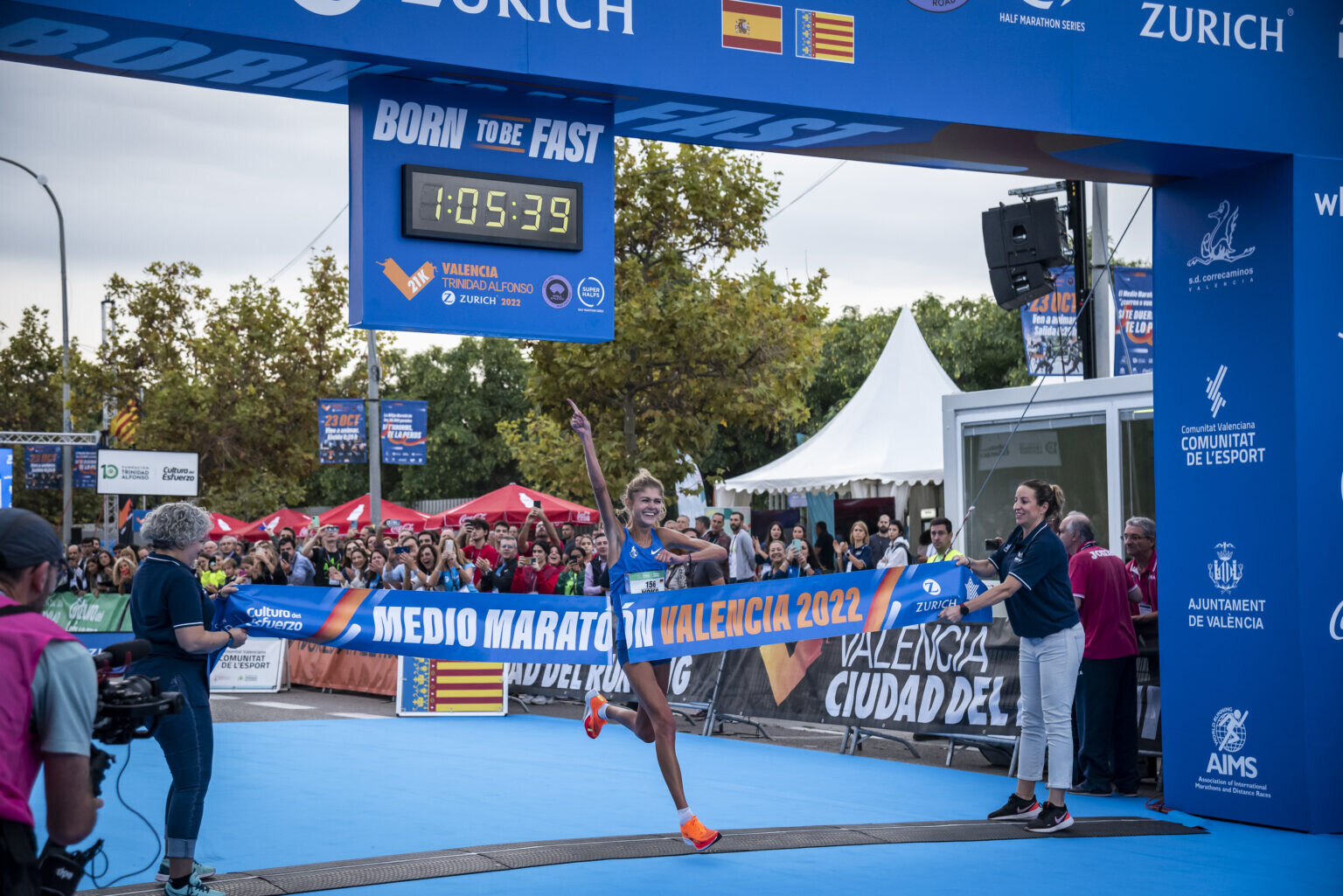
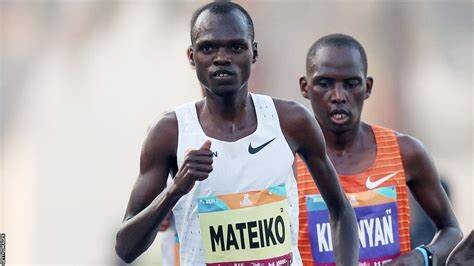
The Kenyan squad will do everything they can to ensure that last year’s victory by Kibiwott Kandie, the man who broke the world record here, running 57.32 in 2020, will continue this year. Their two best assets should be Daniel Mateiko and Isaia Kipkoech Lasoi; the former has already run nine half marathons and knows the Valencian avenues like the back of his hand, coming third in both 2021 and 2022, with 58:26 as his personal best, which he will have to improve on if he wants to stand up to the Ethiopian duo. Mateiko improved his 10,000m time at the Paris Olympics, although his 26:50.81 was only good enough to place him in eleventh position. Lasoi, who is in great form after finishing third in Copenhagen six weeks ago, with a personal best of 58:10 in his fourth (!!) half of 2024, is sure to be in great shape.
Theory tells us that this quartet should be the ones to take the podium places on 27 October, but the magic of the half marathon, which is never as tight as the 42,195m, often brings wonderful surprises. One of them could well be Thierry Ndikumwenayo, who amazed in the Olympic 10,000m by smashing the Spanish record at this distance with a time of 26:49.49. After the rest required following the Games, Thierry may not have had enough time to realise his unlimited potential at this distance, but his performances over shorter distances give him sufficient room for manoeuvre to break the Spanish record, set just a year ago by Carlos Mayo with 59:39 after the previous record had remained unbroken for 22 years. Thierry will have the 59:13 held by Switzerland’s Julien Wanders as the European record in his sights and perhaps the biggest danger for him will be if he remains caught in no man’s land, as joining the leading group, who will be aiming for a sub-58 finish as always, does not seem the most sensible strategy in this his first foray over the distance. This hypothetical record would serve as a well-deserved tribute to Pepe Ortuño, who will retire as his trainer when Thierry crosses the finish line. Tadese Worku, Gemechu Dida, Edward Cheserek and Bravin Kiprop are all well under the one-hour mark and will be looking for their day of glory in Valencia. Among the Europeans, the Portuguese Samuel Barata (national record last year with 59:40), the Italian runner-up at the Europeans Pietro Riva (59:41) and the British runner Emile Cairess (60:01), fourth at the Paris Olympics in the marathon, will be competing with Ndikumwenayo.
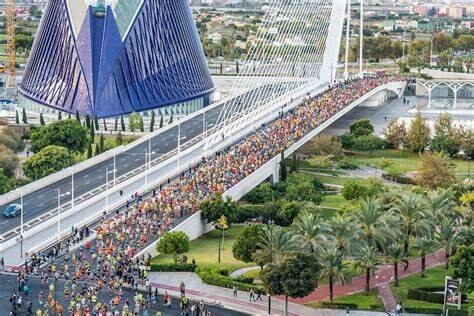
Ngetich wants to make her debut in style
The possibility of a women’s world record will also glimmer over the Valencian asphalt on Sunday, courtesy of Agnes Ngetich, who smashed the 10K world record in Valencia on 13 January with a stratospheric time of 28.46. After that explosion, the Kenyan lost some steam, if we can refer to her 5th place in the World Cross Country Championships in Belgrade as such. During the track season she suffered from physical problems that made her give up the chance to compete in the Kenyan trials in Eugene at the last minute, thus saying goodbye to her Olympic dreams. Since then, her plan has been to make her début in Valencia over 21,097 m and, despite her status as a newcomer, it is not out of the question that she could make a serious attempt at the world record currently held by Ethiopia’s Letesenbet Gidey, who clocked an impressive 1:02:52 in Valencia in 2021. The pacemaking duties will fall to Japhet Kosgei and Vincent Nyageo, who will travel at a tempo of just under 3:00/km, to ensure a challenge to the WR if Ngetich still has some strength in her legs in the final stretch.
Following them will be a large group comprising Tsige Gebreselama, Llilian Rengeruk and Ejgayehu Taye. Gebreselama returns to the scene of her debut two years ago (1:05:46), a time she improved on this February by winning the prestigious Ras Al Khaimah Half in 1:05:14. Although, Ngetich’s biggest threat could be fellow debutant and compatriot Lilian Rengeruk, 5th in the Olympic 10,000m and with a 10K time of 29:32 set in Valencia in January, she is projected to be a strong performer over double the distance. While Taye, also making her debut at this distance, is an accomplished 5K specialist, although she also dipped below 30 minutes (29:50.53) in the 10,000 at the Ethiopian trials in Nerja. The main European hopefuls should be Great Britain’s Samantha Harrison, who improved to 1:07:10 in Valencia last year, and Germany’s Konstanze Klosterhalfen, a brilliant winner on her début two years ago with 1:05:41, although she does not seem to be in her best form at present.
Spain’s record is looking wobbly
If there is a record that has every chance of crumbling on Sunday, it is the Spanish women’s record, not because it is outdated, as Laura Luengo became the record holder just a year ago with her 1:09:41, but because her own form heralds a not inconsiderable improvement on that mark. The On Athletics team athlete will set off at a devilish pace of 3:16/3:17 per kilometre under the guidance of duathlon world champion Javier Martin to seriously threaten the 1:09 barrier. It could well be that she manages to beat that and yet not hold the record as both Irene Sanchez-Escribano and Boulaid Kaoutar are planning to run at the same pace, which could make for an exciting three-way duel. The Toledo athlete shone at the Olympic Games in Paris over her favourite 3,000m steeplechase and is facing a very exciting duel over the distance with confidence; she already ran at a Spanish record pace in the 10K in Laredo (31:35) in March and her good adaptation to asphalt is more than promising. On the other hand, the new Spanish champion Kaoutar (1:10:44 on 6 October in Albacete) already knows what it means to run under the 1:09 mark, as she clocked 1:08:57 in Gijón a year and a half ago when she was still competing under the Moroccan flag. Place your bets.
by Emeterio Valiente
Login to leave a comment

Valencia Half Marathon
The Trinidad Alfonso Valencia Half Marathon has become one of the top running events in the world. Valencia is one of the fastest half marathon in the world. The race, organized by SD Correcaminos Athletics Club, celebrated its silver anniversary in style with record participation, record crowd numbers, Silver label IAAF accreditation and an atmosphere that you will not find...
more...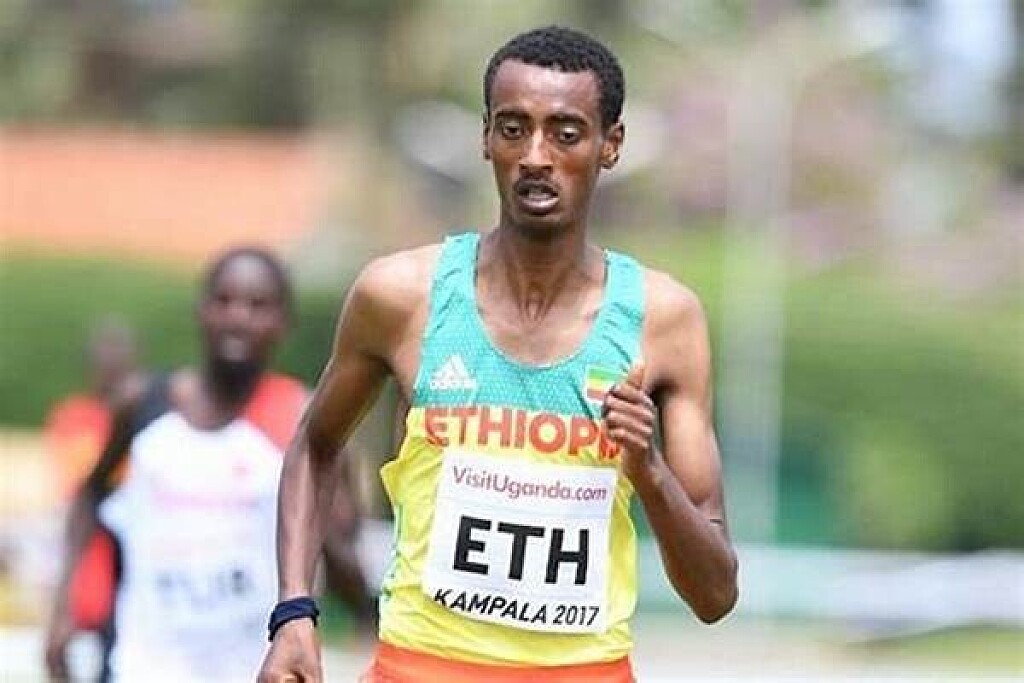
Kejelcha, Barega and Mateiko set to fly the fastest in the Valencia Half Marathon
Elite athletes hope for top performances at race famous for record times.
The Valencia Half Marathon Trinidad Alfonso Zurich has confirmed the names of the international elite athletes who will fly through the streets of the “ciudad del running” on October 27.
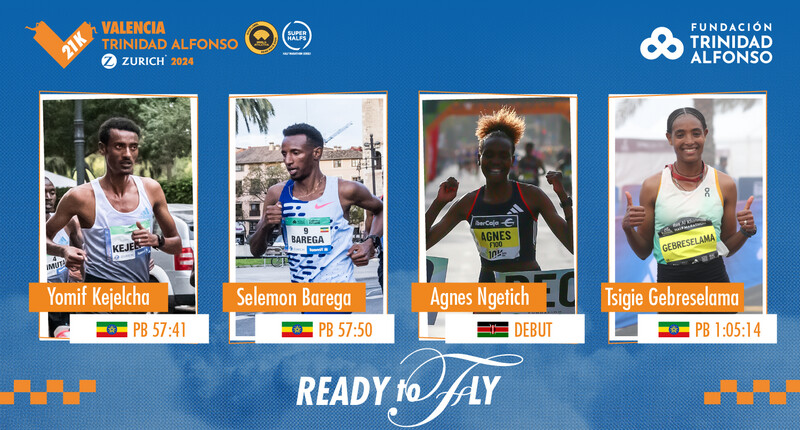
The race, organized by SD Correcaminos and Valencia City Council, still holds the women’s world record (Gidey, 1:02:52 in 2021) and the second fastest time in the world (Kandie, 57:32 in 2020), and will be looking to continue improving on these records this year in a half marathon in which eight of the top ten fastest times over the distance have been achieved.
In the men’s category, Ethiopians Yomif Kejelcha (57:41) and Selemon Barega (57:50) will compete with Kenya’s Daniel Mateiko (58:26) to be the fastest over the distance. The level of European runners is also high, with the presence in Valencia of athletes such as Samuel Barata (Portugal), Pietro Riva (Italy), Amanal Petros (Germany) and Emile Cairess (Great Britain), who will be joined by the Spanish elite soon to be confirmed.
And in the women’s category, the Valencia Half Marathon (which has the two fastest times in history) will focus on Kenyan runner Agnes Jebet Ngetich, who will make her debut over the distance in Valencia, the city where last January she broke the world record in the 10K Valencia Ibercaja by Kiprun (28:46, also setting the world record for 5K with her 14:13). Ethiopia’s Tsigie Gebreselama and Kenya’s Lilian Kasait Rengeruk and Catherine Amanang’ole will be her main rivals vying for victory.
Marc Roig, coach of the event’s international elite athletes, assessed this list as “the best half marathon this year, with high level duels that aim, once again, to achieve 57-minute performances by several athletes. And a clear challenge to the stopwatch in the women’s race. Never before has a debutant taken to the start line who has run a 10K in under 29 minutes. We are really looking forward to seeing how fast the race will be on October 27th”.
by AIMS
Login to leave a comment
Valencia Half Marathon
The Trinidad Alfonso Valencia Half Marathon has become one of the top running events in the world. Valencia is one of the fastest half marathon in the world. The race, organized by SD Correcaminos Athletics Club, celebrated its silver anniversary in style with record participation, record crowd numbers, Silver label IAAF accreditation and an atmosphere that you will not find...
more...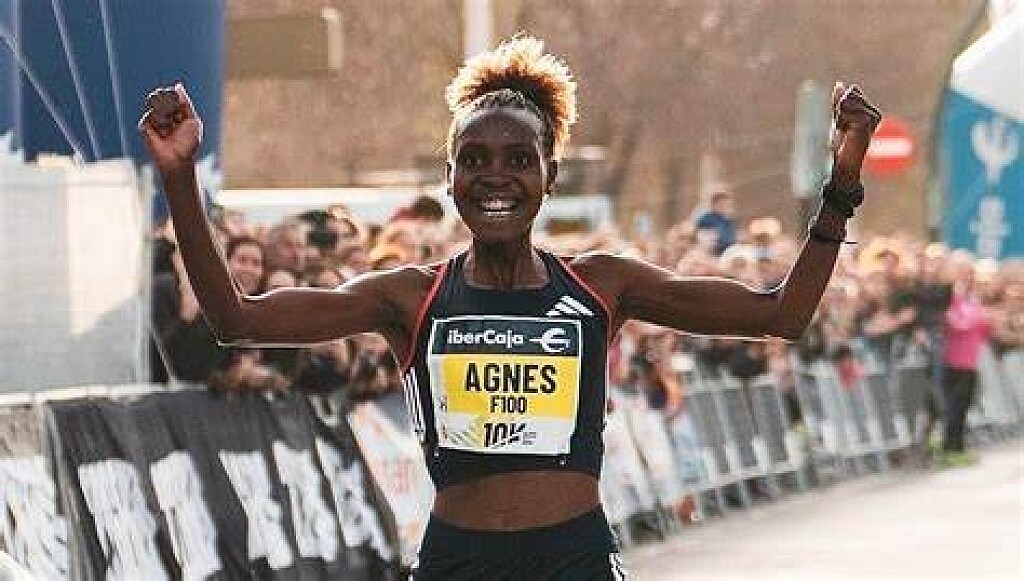
Ngetich to attempt world record on Valencia Half Marathon debut
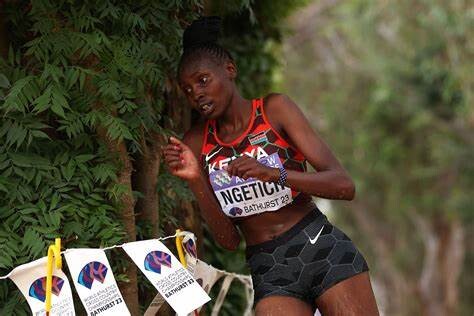
World 10Km record holder Agnes Ngetich will lead an attempt on the 21km world record when she debuts at the Valencia Half Marathon Trinidad Alfonso Zurich on October 27.
Ngetich returns to the city where she achieved her 10km world record of 28:46 (and 5km — 14:13) at the Valencia Ibercaja in January.
It's the city where Ethiopia’s Letesenbet Gidey set the women’s half marathon record of 1:02.52 in 2021 and Kibiwott Kandie set the second fastest time in the world, 57:32, in 2020.
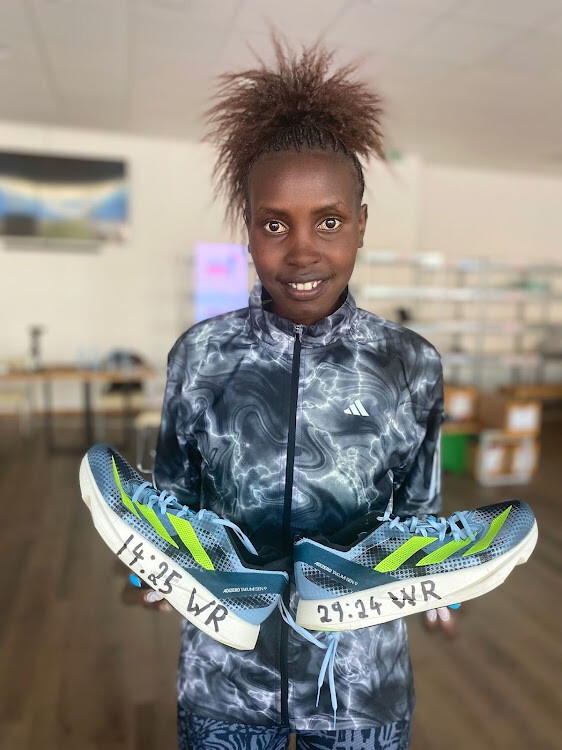
Ngetich will lead the attempt on Gidey's mark in a race which has produced eight of the top 10-fastest times over the distance.
She faces tough competition from compatriots Lilian Kasait Rengeruk and Catherine Amanang'ole and Ethiopia's Tsigie Gebreselama.
In the men's category, Kenya's Daniel Mateiko (58:26) will challenge the Ethiopian duo of Yomif Kejelcha (57:41) and Selemon Barega (57:50).
The European battalion is led by Samuel Barata (Portugal), Pietro Riva (Italy), Amanal Petros (Germany) and Emile Cairess (Great Britain).
Marc Roig, coach of the event's international elite athletes, assessed this start list as: “the best half marathon this year, with high-level duels that aim, once again, to achieve 57-minute performances by several athletes.
"And a clear challenge to the stopwatch in the women's race. Never before has a debutant who has run a 10K in under 29 minutes taken to the start line. We are looking forward to seeing how fast the race will be on October 27.”
by Angwenyi Gichana
Login to leave a comment
Valencia Half Marathon
The Trinidad Alfonso Valencia Half Marathon has become one of the top running events in the world. Valencia is one of the fastest half marathon in the world. The race, organized by SD Correcaminos Athletics Club, celebrated its silver anniversary in style with record participation, record crowd numbers, Silver label IAAF accreditation and an atmosphere that you will not find...
more...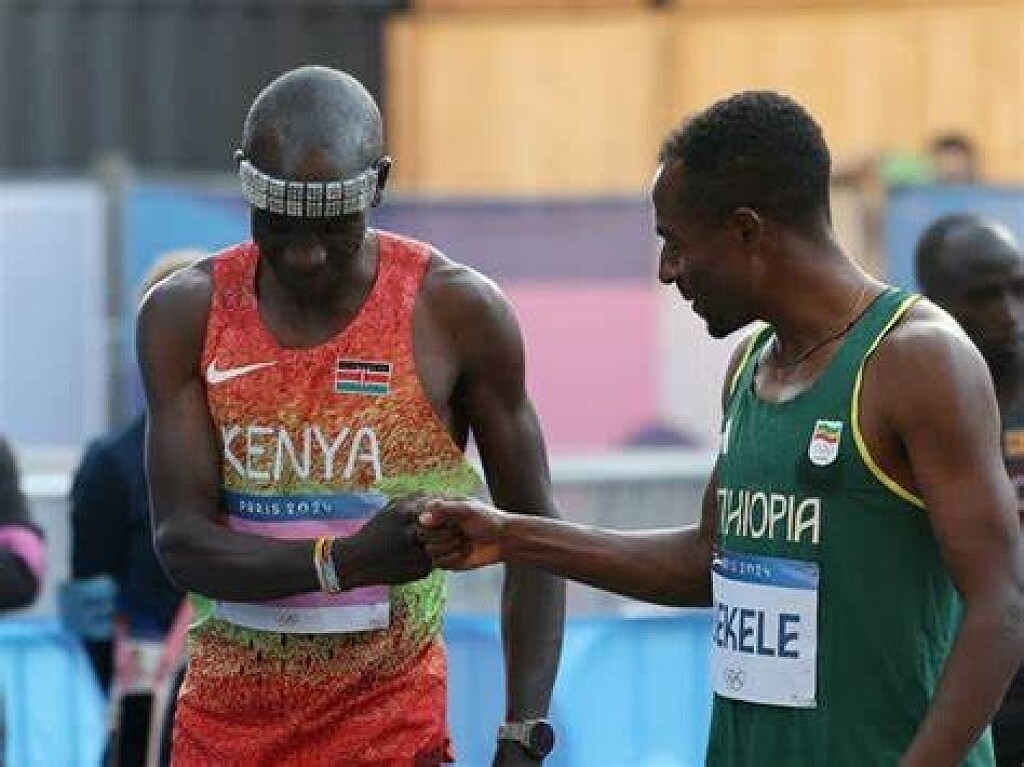
Eliud Kipchoge explains why he did not finish Olympic marathon and reveals future plan
Eliud Kipchoge has explained a back injury forced him to drop out of the Olympic marathon at Paris 2024 in the first ‘DNF’ of his marathon career.
The Kenyan was dropped in the first half of the race, but pushed on to the 31km before stepping off the course with further physical pain in his waist.
Ethiopian runner Tamirat Tola won gold, despite not initially being on the team to participate. He thrived as a late replacement for Sisay Lemma to claim gold and set a new Olympic record on the challenging Paris course in a time of 2:06:26.
Great Britain’s Emile Cairess impressed but narrowly missed out on a medal after finishing just over a minute behind the champion in fourth.
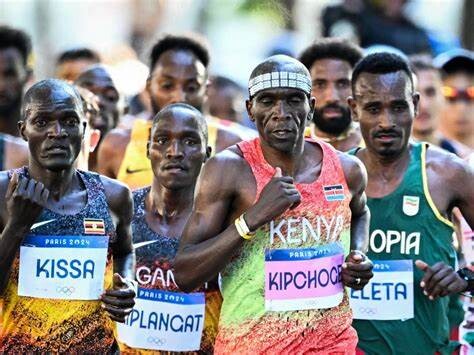
Kipchoge, who was the two-time defending Olympic champion pariticpating in his fifth Olympics, is now 39 years of age.
And his struggles here follows a 10th place in Tokyo, leaving an uncertain future in the sport after failing to complete the distance for the first time in his career.
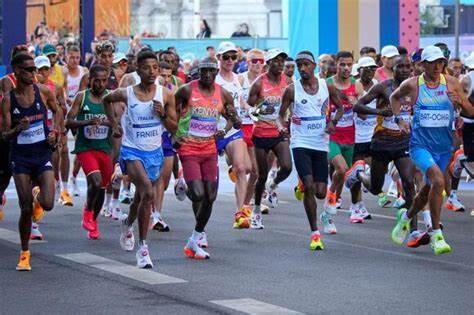
“I had a pain in my back at about 20km and decided not to finish and try to get out,” he said. “The hills didn’t affect me at all. The pain made me stop."
“I walked for 2km and had more than 300 people on either side of me walking with me. That’s why I don’t have my shirt, the socks, the shoes, the race number.”
Kipchoge accepted his ‘DNF’ was part of the event and “that’s life,” before making a comparison with boxing.
“Today was a tough day at the office. You can train for a very long time but one day, it can happen,” he added.
“It’s like boxing. You can go to a training camp for five months and be knocked out in two seconds. But life will continue.
“This is my worst marathon. I have never done a DNF [did not finish]. That’s life. Like a boxer, I have been knocked down, I have won, I have come second, eighth, 10th, fifth – now I did not finish. That’s life.”
Fans started to question whether Kipchoge will race the distance again, but Kipchoge has not rushed to make any decision, with a rest next to decide what he will do 11 years after switching to the 26.2-mile distance.
“I don’t want to comment on what will happen tomorrow. I want to try to evolve - if I don’t evolve, then I do other things,” he said.
“I don’t know what my future will hold. I will think about it over the next three months. I still want to try to run some marathons.”
Kipchoge could be seen gifting fans his shoes and vest after stepping off the course, while he also knocked back pleas from his fellow runners to push through the pain.
“The other runners were telling me to push on,” Kipchoge revealed. “But I was telling them, 'No, I have pain, I can’t'. I could feel the love and respect from them.”
Kipchoge could be seen at the finish line, following a lift from officials, with fans flocking to greet the legendary Kenyan.
Kipchoge then gifted his vest to a young supporter before attending to his media duties.
by Jack Rathborn
Login to leave a comment

Paris 2024 Olympic Games
For this historic event, the City of Light is thinking big! Visitors will be able to watch events at top sporting venues in Paris and the Paris region, as well as at emblematic monuments in the capital visited by several millions of tourists each year. The promise of exceptional moments to experience in an exceptional setting! A great way to...
more...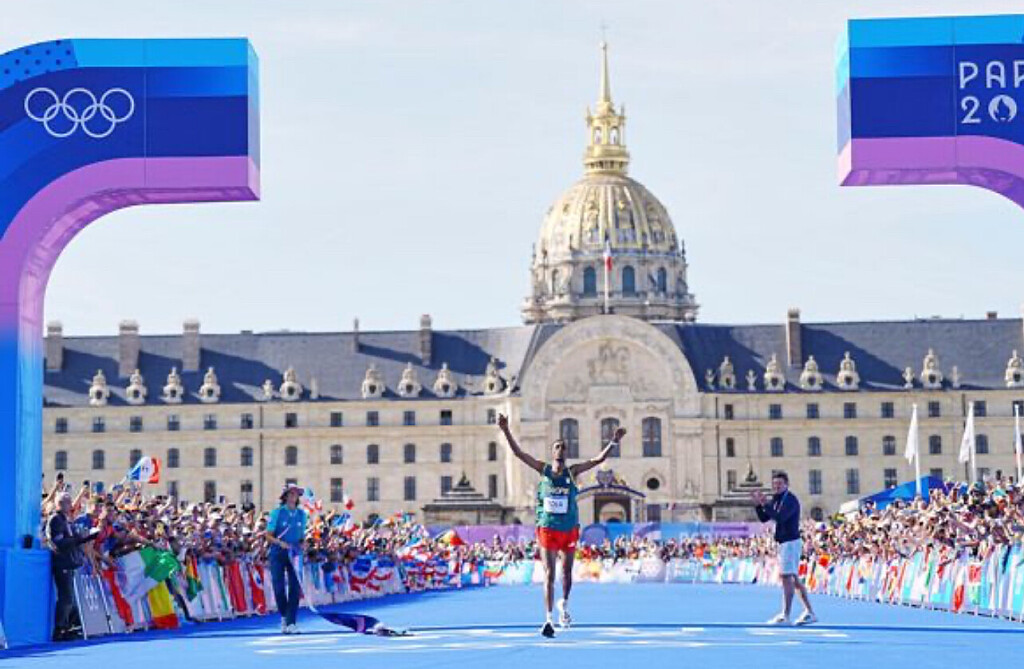
Ethiopia’s late sub Tola wins marathon in Olympic record in brutal conditions over hugely challenging course
Tamirat Tola, called into the Ethiopian team as a late replacement, won the men’s marathon title in an Olympic record of 2:06:26 in brutal heat and humidity over a course of hugely demanding hills, with Belgium’s Bashir Abdi earning silver in 2:06:47.
Kenya’s Benson Kipruto, fastest in the world this year after winning the Tokyo marathon in 2:02:16, marked his Olympic debut with bronze in 2:07:00 on a day when his 39-year-old compatriot Eliud Kipchoge, seeking a third consecutive title, failed to finish.
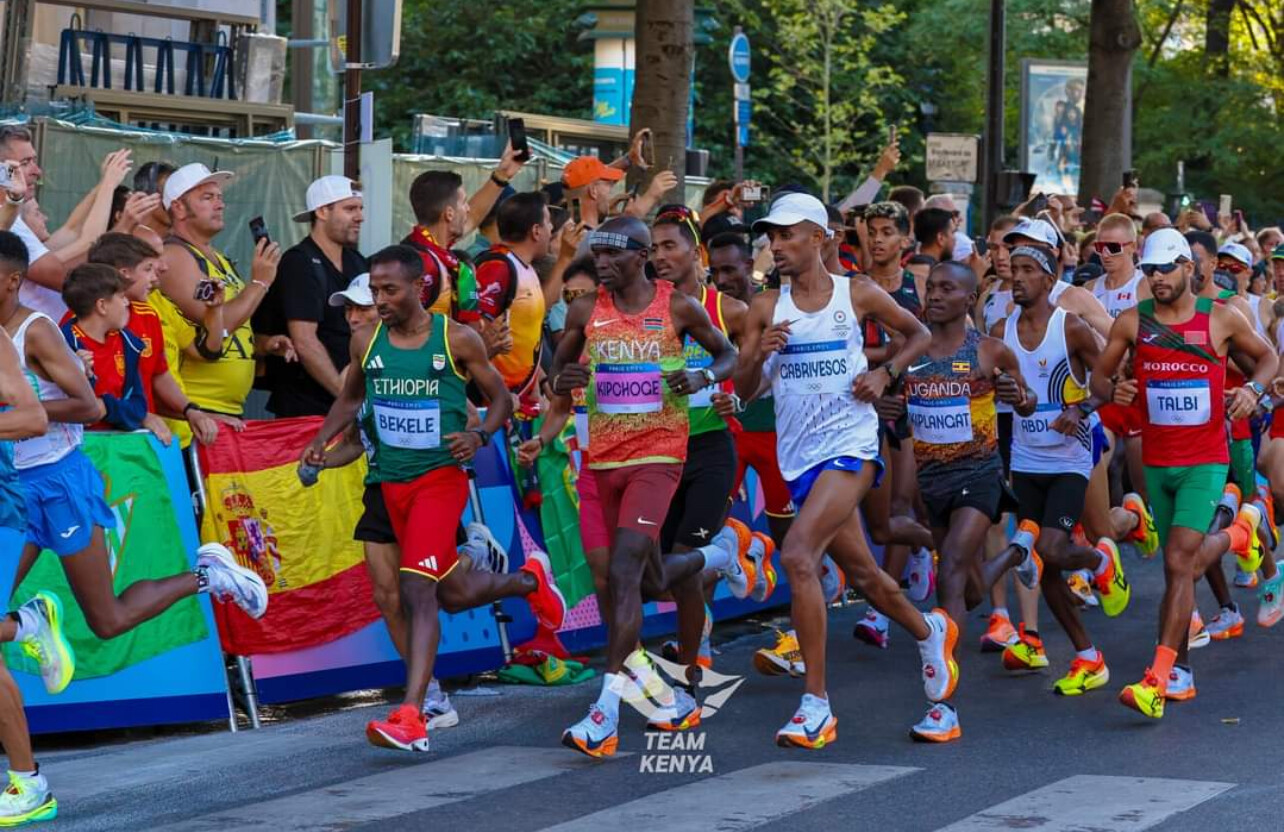
Britain’s Emile Cairess, making his Olympic debut, finished in fourth place, clocking 2:07:29 after moving past Ethiopia’s Deresa Geleta in the finishing stages, with the latter recording 2:07:31 and finishing a second ahead of Japan’s Akira Akasaki, who set a personal best.
In the circumstances it was scarcely creditable that Tola bettered the Olympic mark of 2:06:32 set at the Beijing 2008 Games by the late Kenyan runner Sammy Wanjiru.
Huge crowds lined the route in the closing stages, and the spectacle concluded amid packed grandstands in front of Les Invalides, its gilded dome glinting in the morning sunshine.
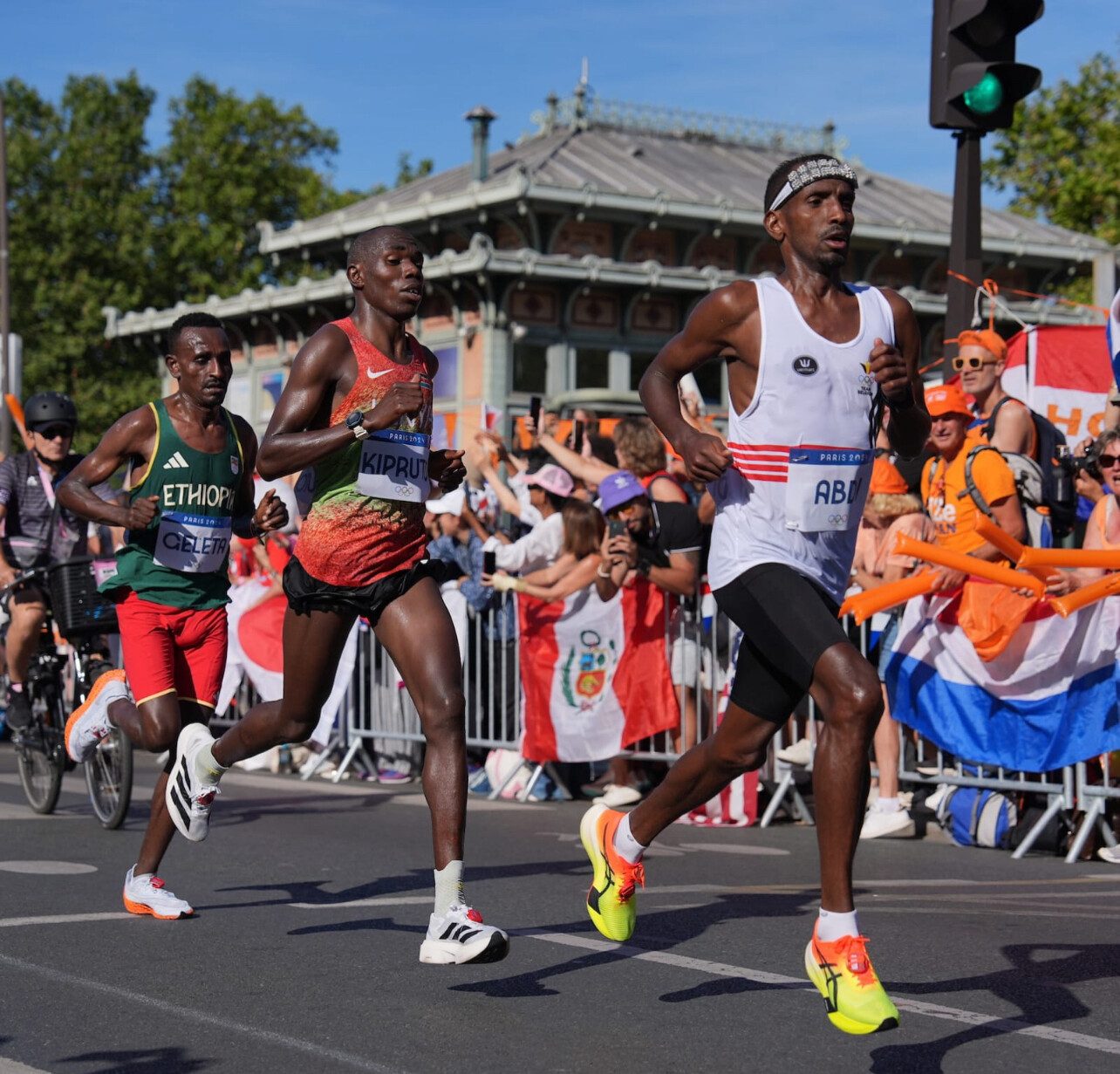
On a day like this, on a course like this, there was something fitting about the race concluding alongside the building constructed in the 17th century as a haven for disabled soldiers. Everyone completing the course today was a warrior.
Tola, the 2022 world champion, thus joins the fabled list of fellow Ethiopians who have won this prized race – Abebe Bikila in 1960 and 1964, Mamo Wolde in 1968 and Gezahegne Abera in 2000 – and added gold to the Olympic 10,000m bronze he won in 2016.
For an Ethiopian team that has not enjoyed its customary success on the track, this was a day of days – and they will have hopes of further success when the athletics programme concludes with the women’s marathon tomorrow.
“I am happy today because I fulfilled my goal,” said Tola, Ethiopia’s first gold medallist of these Games. “I prepared well. I trained hard so I could win. In my life, this is my great achievement.
“I was the reserve in the Ethiopian team, but when Sisay (Lemma) had injuries, then I had a chance to represent him. I was fully prepared and knew I could fulfil my dream. I am happy to do that today.
“This is the Olympics and it is not easy to win the Olympic Games, not at all. I am very proud, very happy.”
Abdi, who has recently recovered from a stress fracture of the hip, commented: "The course was very tough today. I tried not to lose a lot of energy. I tried to run as smartly as possible, so I am very, very happy with this result.
"The weather was hot, (the terrain featured) a lot of ups and downs. Actually, I expected going uphill would be most challenging, but I found going downhill most difficult.
“It was very steep and you don’t have control of your body. That was very scary, especially after 29km, we had almost 2km of running downhill and it was just going more down and down, and I was really afraid of falling.
"This is the hardest marathon course I’ve ever run."
Asked about his return from injury, he added: "It was really a long journey. At the beginning of the year I got a stress fracture, which meant I couldn’t run any races. I came here without any preparation and didn’t know what to expect.
"I told myself before I started, 'OK, you don’t have any race rhythm, but you are fresh, it is your first race of the season, you will be the only guy who is fresh’. That’s what I was repeating to myself during the race."
Kipruto commented: “The course was tough but I’m happy with the result I posted. I trained with the mind first before going to the legs and the heart. Running uphill and downhill was not easy.
“This was the hardest marathon I have run, and a different experience because it was my first Olympic Games."
"I saw Tola pushing but I said, 'no, it’s too early', so I tried to close the gap slowly."
Always in touch with the lead, Tola first took control of the race just after the 20km mark as the field came to the brow of the first long climb, overtaking Italy’s Eyob Faniel, who had pushed ahead by 23 seconds at the 15km mark before the start of the grinding uphill stretch.
The pack, led by Akasaki, Geleta and South Africa’s Elroy Gelant, caught up with him by the 25km mark, which was passed in 1:16:08, but Tola made his decisive move in the hardest part of the course – a brutal, extended climb from 27.5km to 29km involving a 16 per cent incline.
The pack soon became a straggling line as each runner worked out the best way of coping with a challenge so severe that some coaches here had been wondering whether it might be best for their charges to walk this stretch.
Once he got to the brow of the hill, he made the most of it, accelerating away from his labouring rivals and establishing an 11-second lead as he went through 30km in 1:32:12.
Such were the ups and downs of the route that it almost resembled a roller-coaster – but one which guaranteed no one involved had any fun at the fair.
The crucial question at this point was: could Tola, alone, resist the pack that was gradually re-gathering behind him? The answer became gradually and gloriously clear. Tola was never headed thereafter.
At 35km his lead was 18 seconds, at 40km it was 22 seconds. No one was going to stop him.
It was a tribute to Tola’s dedication that he should have been so patently ready to take on this monster of a marathon course at such short notice following the injury to Lemma, who won this year’s Boston Marathon in 2:06:17, having moved to fourth on the world all-time list with his 2:01:48 victory in Valencia last year.
They were huge super-shoes to fill – but Tola did so magnificently.
For Kipchoge it was clear well before the halfway point that he was not going to be challenging for a third consecutive title as he began dropping back, his hand going to his left hip as his face registered discomfort and pain. He dropped out shortly after falling back to 71st position at 30km.
Meanwhile his long-time rival Kenenisa Bekele, returning aged 42 to the Olympic arena where he won three golds and a silver on the track, finished 39th in 2:12:24.
"Around 15km my hamstring felt stretched, so I could not do any more after that,” Bekele said. “Even after 10km I was feeling the strain, so I knew I could not catch up with the leaders."
"It is fantastic that Ethiopia won the race. Tola is very strong, and I am happy for him."
"People have been talking about me and Kipchoge, but you see it was the young generation today. These guys are stronger than us.”
by Mike Rowbottom (World Athletics)
Login to leave a comment
Paris 2024 Olympic Games
For this historic event, the City of Light is thinking big! Visitors will be able to watch events at top sporting venues in Paris and the Paris region, as well as at emblematic monuments in the capital visited by several millions of tourists each year. The promise of exceptional moments to experience in an exceptional setting! A great way to...
more...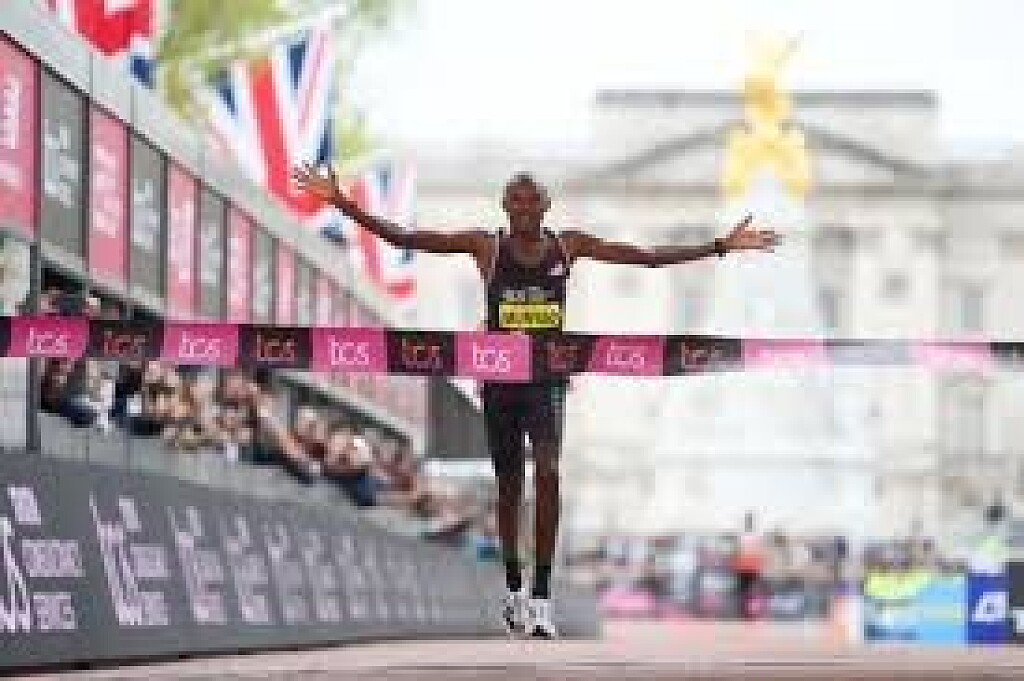
Alexander Munyao Wins Men’s Race at the 2024 London Marathon
The 27-year-old broke away from Kenenisa Bekele, who finished second in a new masters world record.
For the second time in the past week, the men’s winner at a World Marathon Majors crossed the line in survival mode. Six days ago, it was Sisay Lemma holding on to win Boston. This morning, it was Alexander Munyao in London. The Kenyan survived a strong move in the 18th mile to win in 2:04:01.
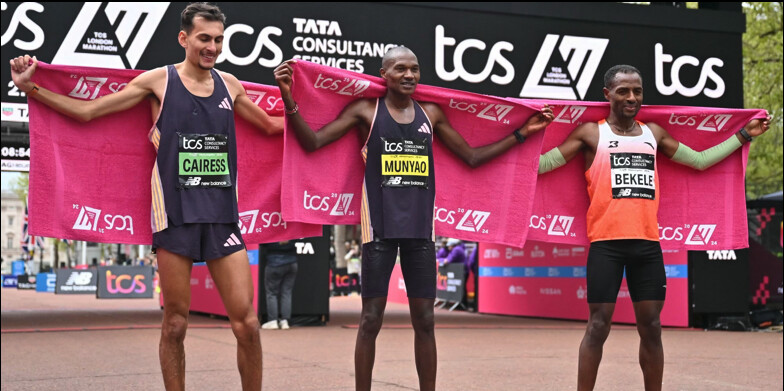
Kenenisa Bekele, arguably the greatest male distance runner in history, placed second in 2:04:15, four seconds faster than the masters world record he set in Valencia last December. The 41-year-old Ethiopian superstar was, surprisingly, largely responsible for the 4:35 18th mile that broke up what had been a nine-man pack.
By 35K (21.7 miles), the race was down to Munyao and Bekele. The two shared the lead more because of doing the best job of recovering after the earlier push than because they were speeding up. Munyao then got half a step on Bekele early in the 22nd mile, and broke him for good over the next mile.
Once they were dropped by Munyao and Bekele, the other earlier members of the lead pack that hit halfway in 61:29 suffered significantly. Tamirat Tola of Ethiopia, the 2022 world champion who broke the New York City course record last November, had looked eager to take over after the final pacer exited the course a little before 30K. Instead, Tola lost more than 20 seconds to the leaders before 35K, and dropped out before 40K.
The severe disintegration of the lead pack led to third and fourth place going to British runners who had been paced more moderately early on. Emile Cairess finished third in a personal best of 2:06:16 after being in 13th place at halfway (62:50). Mahamed Mahamed placed fourth in 2:07:05, also a personal best. Both men are now likely to be named to the British team for the Olympic Marathon, which will be held on August 10.
Munyao and Bekele were also running in part to secure spots on their Olympic teams. Munyao’s win, combined with his 2:03:13 PR and runner-up finish in Valencia in December, makes a good case. Bekele’s bid is even stronger. With Tola’s poor showing and Bekele’s second strong marathon in a row, will Ethiopian selectors recognize that a three-time Olympic and 19-time world champion deserves to toe the line in Paris?
Brian Shrader, the lone U.S. elite entrant, placed tenth in 2:10:50.
Login to leave a comment
TCS London Marathon
Since its inaugural edition on March 29, 1981, the TCS London Marathon has grown into one of the world's most prestigious road races, blending elite competition with an extraordinary charitable legacy. Founded by former Olympic champion and journalist Chris Brasher alongside Welsh athlete John Disley, the event has been staged every year and has been held in the spring annually...
more...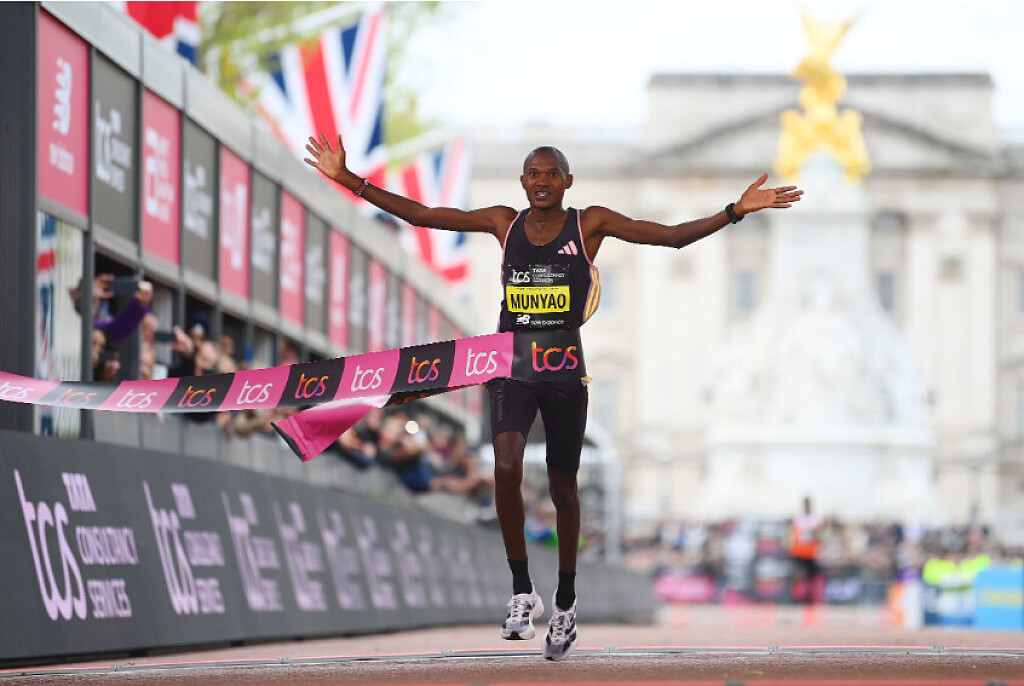
Kepchirchir breaks women-only world marathon record in London
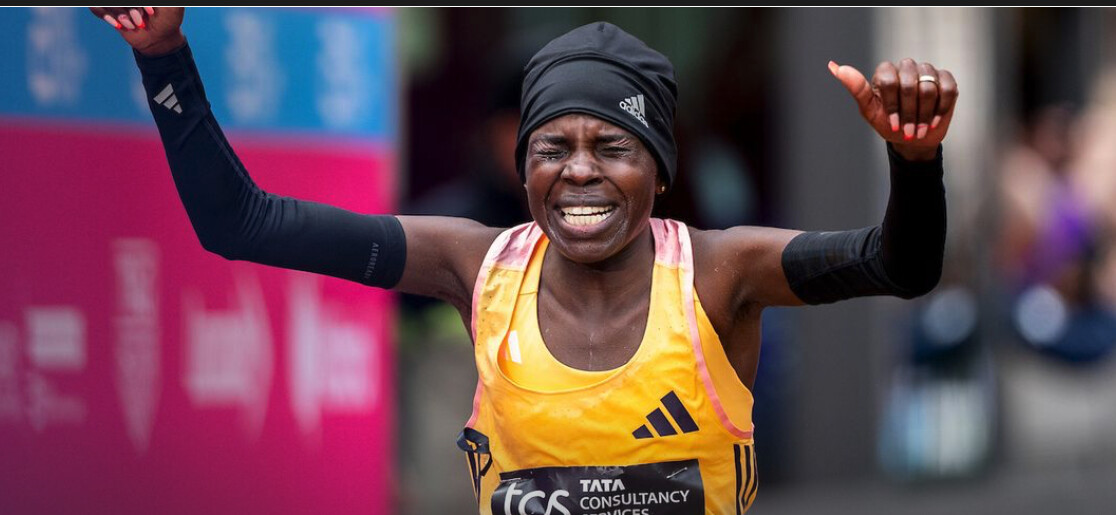
Olympic champion Peres Jepchirchir smashed the women-only world record by 45 seconds at the TCS London Marathon, winning the World Athletics Platinum Label road race in 2:16:16* on Sunday (21).
In what was widely regarded as one of the deepest and highest-quality women’s fields ever assembled, the three-time world half marathon champion sprinted away from world record-holder Tigist Assefa, 2021 London winner Joyciline Jepkosgei and last year’s runner-up Megertu Alemu – all of whom finished inside 2:17 – to notch up her third victory in a World Marathon Majors race.
Jepchirchir’s compatriot Alexander Mutiso Munyao made it a Kenyan double, winning the men’s race in 2:04:01 to defeat Ethiopian distance legend Kenenisa Bekele by 14 seconds.
No secret had been made of the fact that breaking Mary Keitany’s women-only world record of 2:17:01 was the big target for the women’s race. With that at the forefront of their minds, a lead pack comprising all the big contenders soon detached themselves from the rest of the field and blazed through the first 5km in 15:44 – comfortably inside 2:13 pace.
They maintained that tempo through 10km, covered in 31:26, and at this point they were 67 seconds ahead of Ethiopia’s Tsige Haileslase, the closest challenger to the lead pack.
The front group – which included Assefa alongside past London winners Jepkosgei, Yalemzerf Yehualaw and Brigid Kosgei – got to 15km in 47:37. Soon after, Sheila Chepkirui – the runner-up in Berlin last year – started to drift off the pack.
Not long after passing the drinks station at the 20km point, 2019 world champion Ruth Chepngetich lost contact with the leaders. It meant that just seven women remained in the pack as they reached the half-way point in 1:07:04 – the second-fastest half-way split ever recorded in London, and putting them on schedule to smash the women-only world record by almost three minutes.
Kosgei was the next to drift back, and with the pacemakers having done their job, it left six women out in front: Jepchirchir, Assefa, training partner and Dubai marathon champion Tigist Ketema, 2022 London winner Yehualaw, 2021 London champion Jepkosgei, and 2023 London runner-up Megertu Alemu.
The sextet ran together through 25km (1:19:38) and 17 miles, but Ketema and Yehualaw were unable to hold on for much further and started to lose contact, leaving four women – Assefa, Jepchirchir, Jepkosgei and Alemu – to battle it out for the three podium places.
The difference between 25km and 30km, 16:18, was the slowest 5km section of the race. The lead quartet was either starting to feel the effects of their early efforts, or they were starting to bide their team for an anticipated surge in the closing stages.
With 1:44 on the clock, the four leading women managed to navigate their way around the two lead vehicles that had been forced to stop due to a wheelchair racer who was experiencing some technical difficulties.
Assefa and Jepchirchir both took turns testing the waters by making subtle surges to see how their opponents would respond, but their overall pace continued to drop and they reached 35km in 1:52:48, putting them on course for a 2:16 finish.They passed 40km in 2:09:13, still running side by side. It was clear that no one else other than these four would be claiming places on the podium, but predicting a winner – and, indeed, the athlete who’d miss out on the podium – was still impossible with less than two kilometres to go.
As the clock ticked to 2:15, with little more than a minute of running left, Alemu was finally dropped. Seconds later, Jepchirchir unleashed her trademark finish to leave behind Jepkosgei and Assefa.
The diminutive Kenyan charged through the finish line in 2:16:16, finishing seven seconds ahead of Assefa. Jepkosgei (2:16:24) and Alemu (2:16:34) followed soon after, making this the first marathon in which four women have finished inside 2:17.
Jepchirchir will now turn her attention to defending her Olympic title in Paris in less than four months’ time where she’ll aim to become the first ever back-to-back women’s marathon gold medallist in the history of the Games.
The men’s race played out in similar fashion with a surprisingly large group remaining together into the second half before the final few contenders were left to battle it out in the closing stages.The late Kelvin Kiptum’s world (2:00:35) and course (2:01:25) records were not being targeted by the elite men, but a lead pack of 12 nevertheless set off as a respectable pace, going through 5km in 14:35 and 10km in 29:03.
They remained together through 15km (58:20) with the likes of Munyao, Bekele, 2022 world champion Tamirat Tola and 2021 Chicago winner Seifu Tura all in the lead pack.
They reached half way in 1:01:29 with 10 men still running together, more than 80 seconds ahead of Britain’s Emile Cairess, who was running alone in 13th place. France’s Hassan Chahdi soon drifted off the lead pack, and eight men were in the pack at the 30km point (1:27:20).
With 1:30 on the clock, big changes started to happen. The lead pack was down to five men: Munyao, Bekele, Tola, Ethiopia’s Dawit Wolde and compatriot Milkesa Mengesha. Less than 10 minutes later, Tola and Wolde had dropped back, leaving Bekele, Munyao and Mengesha as the lead trio. Mengesha lasted five more minutes before he, too, succumbed to the pace, unable to stick with Munyao and the 41-year-old Bekele.
Just before the clock ticked over to 1:55, Munyao finally dropped multiple world and Olympic gold medallist Bekele, who was visibly struggling to match the Kenyan’s pace.
Munyao maintained his lead to the finish, eventually winning in 2:04:01 to Bekele’s 2:04:15, the fastest time ever by an athlete over the age of 40.
With several of the leading contenders dropping out in the closing stages, Cairess came through to take third place in 2:06:46 ahead of fellow Briton Mahamed Mahamed, who clocked 2:07:05, both setting huge PBs.
by World Athletics
Login to leave a comment
TCS London Marathon
Since its inaugural edition on March 29, 1981, the TCS London Marathon has grown into one of the world's most prestigious road races, blending elite competition with an extraordinary charitable legacy. Founded by former Olympic champion and journalist Chris Brasher alongside Welsh athlete John Disley, the event has been staged every year and has been held in the spring annually...
more...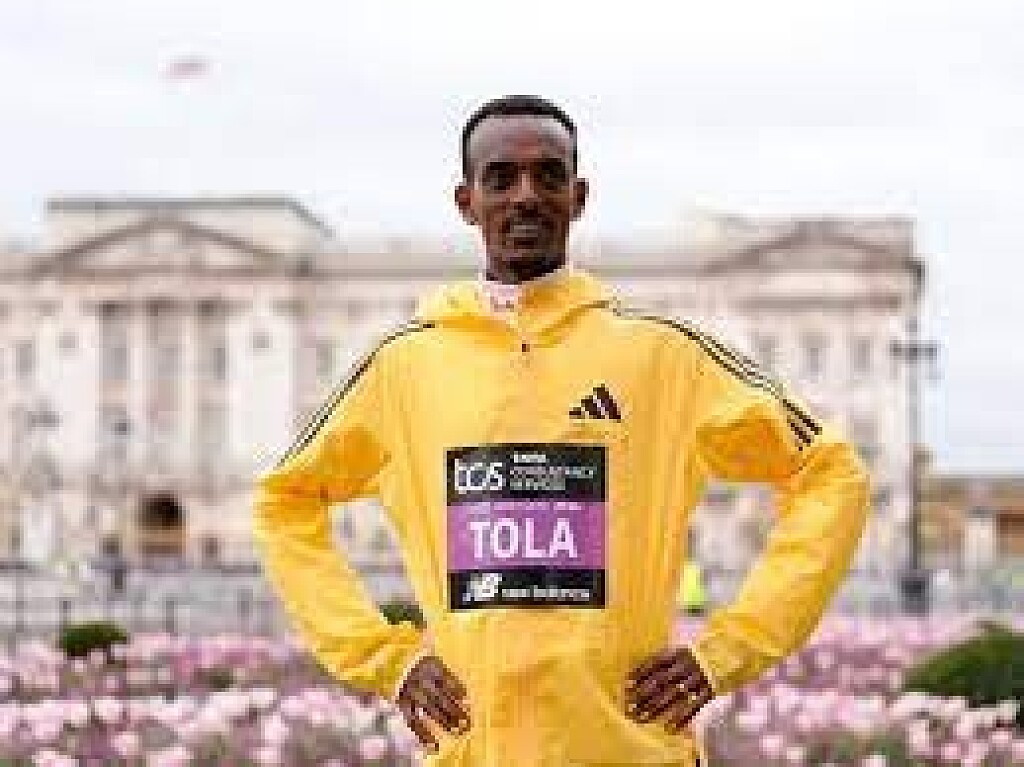
Tamirat Tola aims to follow New York success with victory in London Marathon
Tamirat Tola feels a carefully planned build-up will give him every chance of adding the London Marathon title to his success in New York.
The 32-year-old Ethiopian – world champion from 2022 in Oregon – clocked a new course record of two hours, four minutes and 58 seconds when he won in Manhattan during November last year.
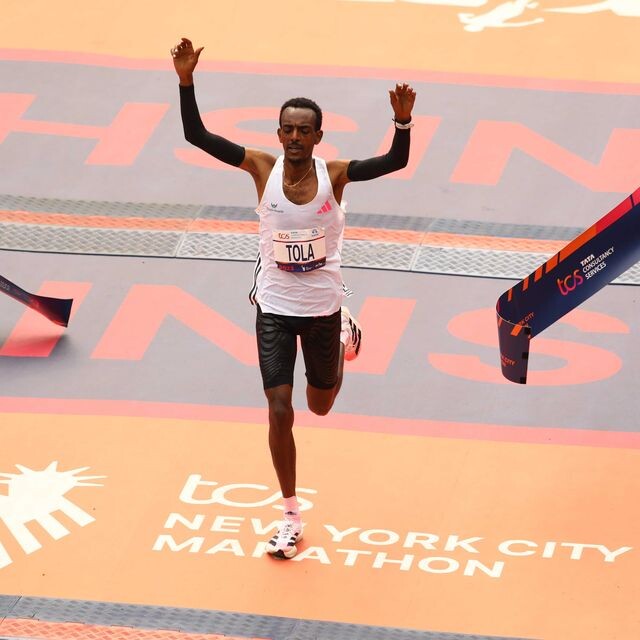
Tola hopes his meticulous preparations will allow him to again hit top form as he aims to be the first over the finish line on the Mall on Sunday afternoon, having come third last year.
Tamirat Tola of Ethiopia is the men's open-division winner, setting a course-record time of 2:04:58. #TCSNYCMarathon pic.twitter.com/VZRtRRrZxa
— TCS New York City Marathon (@nycmarathon) November 5, 2023
“(Winning in) London is not easy, but I worked hard to win New York and my training has all been OK since then, so I am ready,” said Tola, who also took the 2023 Great North Run title.
“Everything is good with what my coaches have prepared for me to win, so we can hope for a good result on Sunday.”
The late Kelvin Kiptum, who was killed in a car accident in February at the age of 24, set a new London Marathon record with victory last year.
While that mark of 2hrs 1min and 25secs is unlikely to be tested on Sunday, Tola is still confident of a swift pace.
“If we go together to help each other, then we will run with a better time,” Tola said.
“It depends on a pacemaker, but it is OK for me to go fast, and if it is a normal (pace) then that is also OK for me.”
Emile Cairess will lead Britain’s hopes in the elite men’s race, having finished sixth on his debut last year.
Cairess is aiming to better the Olympic qualifying mark to join training partner Phil Sesemann in the Team GB squad for Paris.
The 26-year-old, though, also has one eye on a long-term target of breaking Sir Mo Farah’s six-year-old British marathon record, which was set in Chicago.
“I have a time in my head. I will be trying to run maybe about three-minute kilometres,” Cairess said.
“Mo’s British record is something I definitely want to beat in the near future, but I am not looking at that this weekend.”
Scottish marathon record-holder Callum Hawkins will make his return in London following a number of injury setbacks, which included ankle surgery after the Tokyo Olympics.
Marc Scott, winner of the Great North Run in 2021, is set for a marathon debut, along with Mahamed Mahamed.
Login to leave a comment
TCS London Marathon
Since its inaugural edition on March 29, 1981, the TCS London Marathon has grown into one of the world's most prestigious road races, blending elite competition with an extraordinary charitable legacy. Founded by former Olympic champion and journalist Chris Brasher alongside Welsh athlete John Disley, the event has been staged every year and has been held in the spring annually...
more...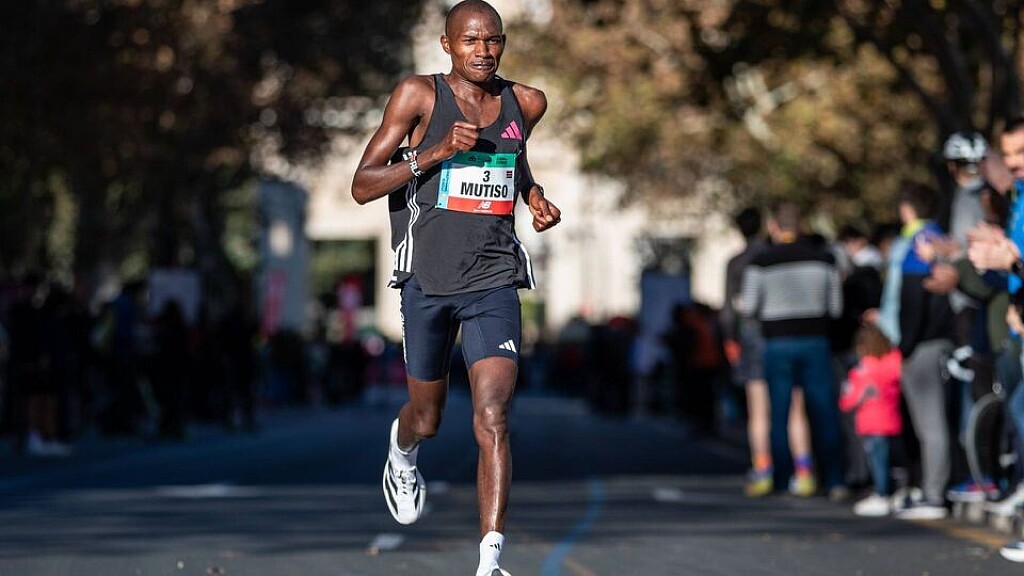
London Marathon: Alexander Mutiso leads Kenyan charge against Ethiopian rivals
Elite runners aim to honor Kelvin Kiptum's legacy in a fiercely competitive 2024 London Marathon with a record-breaking field.
One of the most underrated Kenyan runners is Alexander Mutiso is set to headline an incredibly strong field at the 2024 London Marathon as elite runners converge with hopes of claiming the title previously held by the late Kelvin Kiptum.
This year’s race promises to be a thrilling contest with some of the fastest marathoners in history lining up at the starting line on Sunday, April 21, 2024.
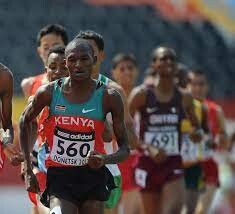
Among the distinguished athletes is the reigning 2024 New York City Marathon champion, Tamirat Tola from Ethiopia, who holds a personal best of 2:03:39.
Joining him is Mosinet Geremew, also from Ethiopia, who boasts a staggering personal best of 2:02:55, making him the seventh-fastest man ever in marathon history.
Mutiso, who was runner-up at the 2023 Valencia Marathon with a time of 2:03:11, also aims to make a significant impact.
The event will also witness the return of multiple world champion and track legend Kenenisa Bekele. Bekele, who is the third-fastest marathoner ever with a personal best of 2:01:41.
The British contingent will be represented by Emile Cairess, the third-fastest Briton who made a remarkable debut last year.
Alongside him, Callum Hawkins, who finished fourth at the World Championships, will compete, as well as Marc Scott and Mahamed Mahamed, both of whom are set to make their marathon debuts.
As the runners prepare, Kamworor looks to improve on his second-place finish from the previous year and aims for the top spot.
Meanwhile, Bekele seeks not only to showcase his legendary status but also to prepare for the upcoming Olympic Games in Paris.
After a change in management, Bekele is especially motivated to demonstrate his prowess following a challenging race at last year’s Valencia Marathon.
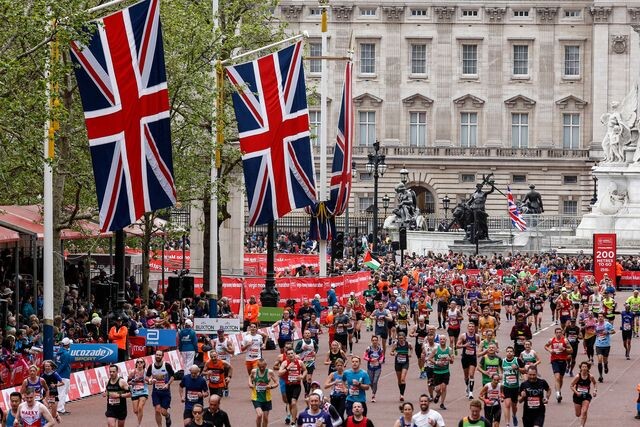
The course, stretching 42km from Greenwich Park to The Mall, will guide runners past iconic London landmarks such as Tower Bridge and Buckingham Palace, setting a picturesque backdrop for what is expected to be a fiercely competitive race.
This marathon is particularly poignant as it comes after the stunning performance by Kelvin Kiptum, who set the current course record of 2:01:25 at last year’s race.
His untimely passing has left a legacy that the participants aspire to honor by pushing the limits of endurance and speed.
With such a loaded field, the 2024 London Marathon is not just about winning; it is about etching names into the annals of marathon history.
The athletes are set to provide a riveting display of endurance, speed, and strategy, each hoping to step into Kiptum’s shoes and carve out their own legacy on the storied streets of London.
by Festus Chuma
Login to leave a comment
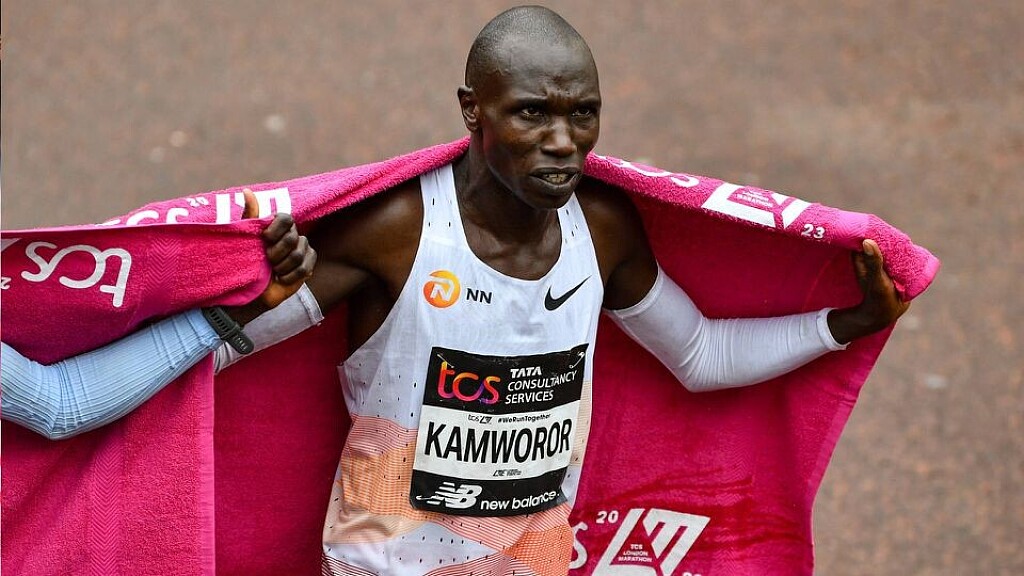
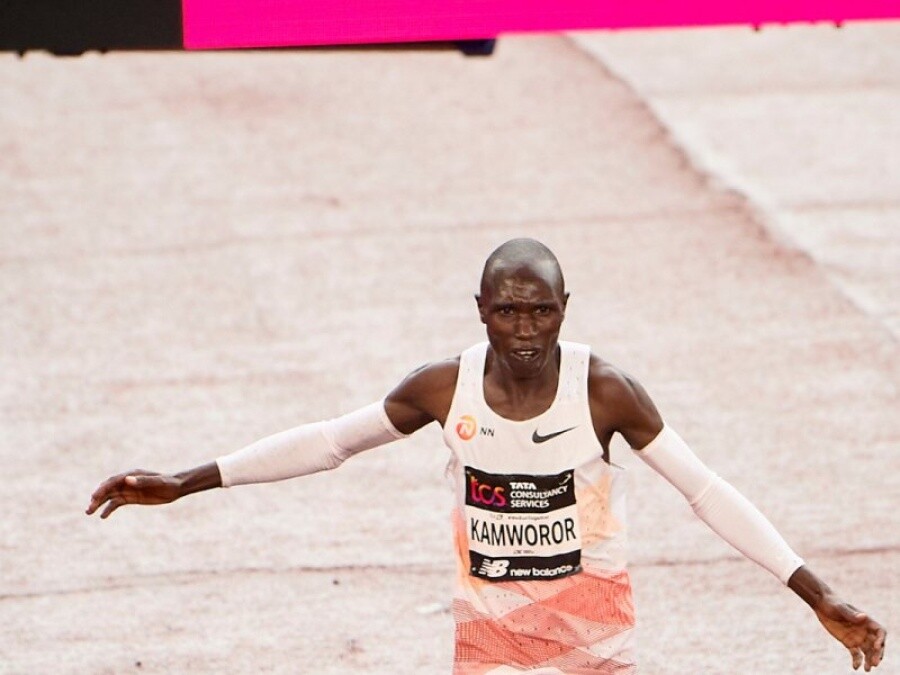
Geoffrey Kamworor out to challenge six Ethiopians for the 2024 London Marathon crown
Multiple World Cross-country champion Geoffrey Kamworor will try his luck one more time at the 2024 London Marathon, going up against some of the greatest marathoners from Ethiopia.
The men’s elite field at the 2024 London Marathon will see Geoffrey Kamworor take on former clubmate Kenenisa Bekele.
Kamworor will be keen to improve on his second-place finish during last year’s edition of the event while Bekele will seek to have a great build-up toward the Olympic Games in Paris, France.
Bekele, widely regarded as one of the greatest marathoners the world has ever known, will be looking to cement his name further in the streets of London.
He recently changed his management and will be keen to impress them after finishing fourth at last year’s Valencia Marathon. He will also be looking to bounce back after failing to finish the race during last year’s edition of the race.
Meanwhile, the elite men’s race is headlined by reigning TCS New York City Marathon champion Tamirat Tola who will also be looking to continue his hot streak in the streets of the English capital.
The seventh-fastest man in history Mosinet Geremew of Ethiopia (2:02:55) and Kenya's Alexander Mutis, who was runner-up at the 2023 Valencia Marathon in a time of 2:03:11, have also confirmed to be on the start line on Sunday, April 21.
From a British perspective, Emile Cairess returns after becoming the third-fastest Brit in history when he ran 2:08:07 on his TCS London Marathon debut last year.
He will be joined by Callum Hawkins, who has twice finished fourth at the World Championships and will be making his first appearance at the London Marathon since setting his PB of 2:08:14 at the 2019 event.
by Abigael Wuafula
Login to leave a comment
TCS London Marathon
Since its inaugural edition on March 29, 1981, the TCS London Marathon has grown into one of the world's most prestigious road races, blending elite competition with an extraordinary charitable legacy. Founded by former Olympic champion and journalist Chris Brasher alongside Welsh athlete John Disley, the event has been staged every year and has been held in the spring annually...
more...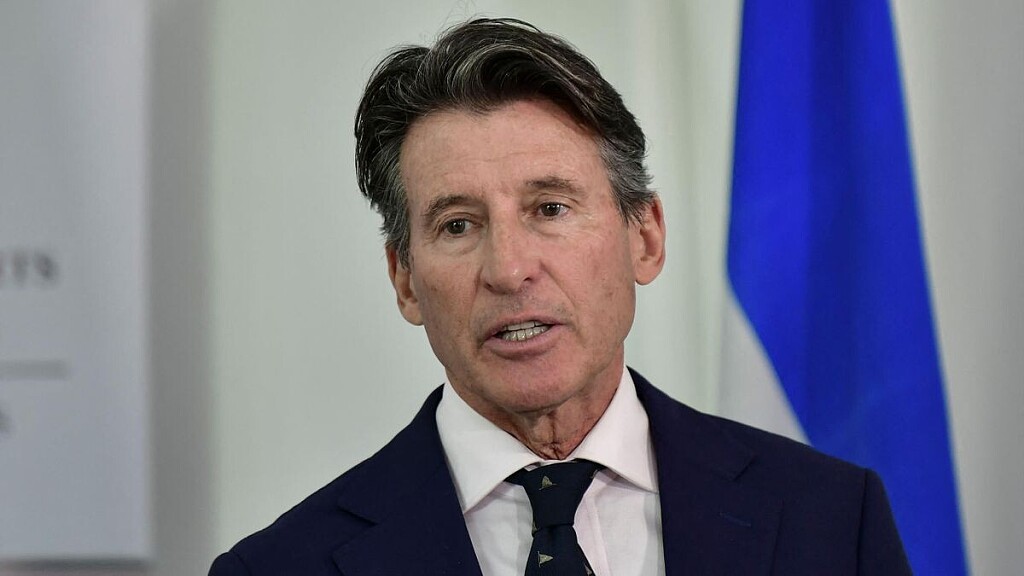
Kelvin Kiptum death: Seb Coe, Eliud Kipchoge and Mo Farah lead tributes to marathon star after horror crash
The world of athletics has come together to pay tribute to Kelvin Kiptum after he died in a horrific car crash in Kenya.
Kiptum died alongside his coach Gervais Hakizimana, 36, on Sunday after the car he was driving came off the road and hit a tree. Police said he had "lost control [of the vehicle] and veered off-road entering into a ditch on his left side" before he “drove in the ditch for about 60 metres before hitting a big tree”. A young woman was rushed to hospital after being injured in the crash.
The 24-year-old Kenyan is the men’s marathon world record holder, having run a staggering time of two hours and 35 seconds in Chicago in October. Kiptum had only run his first marathon in 2022 yet had rapidly emerged as a world-class talent to challenge the great Eliud Kipchoge.
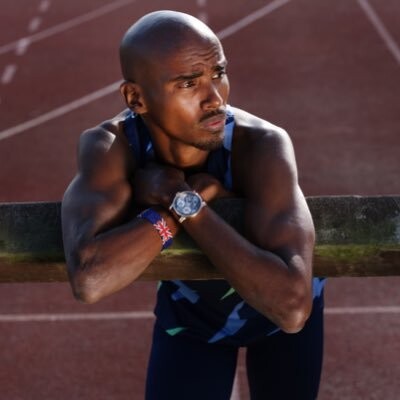
His loss has left the sport reeling and Sir Mo Farah was among those to pay tribute to the immensely gifted runner. "Kelvin was an amazingly talented athlete and had already achieved so much," Farah said.
"He truly had a special talent and I have no doubt he would have gone on to have had an incredible career. I send all my sympathies and condolences to his and Gervais' family and friends at this tragic time."
British running great and World Athletics president Seb Coe wrote on Twitter : “We are shocked and deeply saddened to learn of the devastating loss of Kelvin Kiptum and his coach, Gervais Hakizimana. On behalf of all World Athletics we send our deepest condolences to their families, friends, teammates and the Kenyan nation.
“It was only earlier this week in Chicago, the place where Kelvin set his extraordinary marathon World Record, that I was able to officially ratify his historic time. An incredible athlete leaving an incredible legacy, we will miss him dearly.”
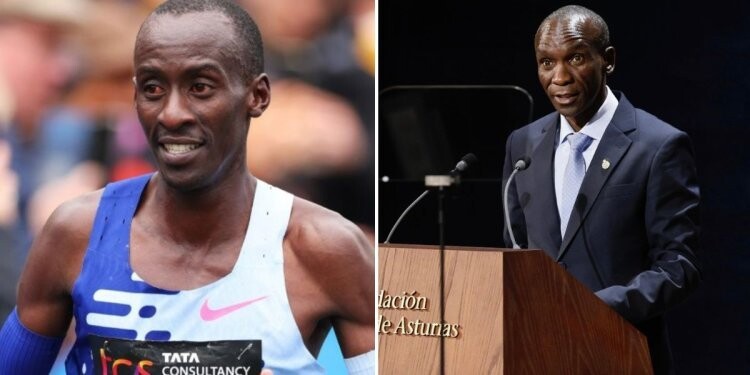
Kipchoge is widely considered the greatest marathon runner of all time, yet Kiptum broke his world record in Chicago last year. The 39-year-old wrote: “I am deeply saddened by the tragic passing of the Marathon World record holder and rising star Kelvin Kiptum.
An athlete who had a whole life ahead of him to achieve incredible greatness. I offer my deepest condolences to his young family. May God comfort you during this trying time.”
Kiptum was a natural marathon runner and showed his talent right from the off when he ran fourth fastest time on record (2:01:53) to win the Valencia Marathon in 2022. He then set a course record of 2:01:25 at the London Marathon in April 2023 before taking a gigantic 34 seconds of Kipchoge’s world record time six months later.
London Marathon event director, Hugh Brasher, said: “Kelvin had the sport of marathon running in his feet and at his feet. He was a 'once in a generation' athlete who was set to redefine the boundaries of our sport.
“Three marathons, three wins. The fastest marathon debutant in Valencia, London's course record holder and the world record holder in Chicago, all within the space of less than 12 months. His was a flame that burned so bright and last night was tragically put out.
“As a sport we mourn for a life so tragically cut short, a talent and a work ethos that was only starting to be appreciated and a man that we had only just started to know. Our thoughts are with his family and friends and those of his coach Gervais. We hope that Sharon Chepkirui Kosgei, who was travelling with them, makes a full and speedy recovery.”
Kiptum had only recently announced his intention to run the marathon in under two hours in Rotterdam in April. Kipchoge has run a marathon in one hour 59 minutes 40 seconds, but that time does not count as an official record as it was in a specifically arranged sponsored event with pacemakers.
British marathon runner Emile Cairess said Kiptum could have become "Usain Bolt-esque" as a "figurehead of athletics". He told the BBC : "It's a massive blow because at his level, someone can really capture the attention of people outside of the sport.
"Many people thought they would never see a sub two-hour marathon in their lifetimes but since he came along, it's like it was just a given that he would do it because of his exceptional performances so far. It was almost certain that he would have done it. It's terribly sad and a real shame that we won't get to see him again or to attack that barrier."
Login to leave a comment
London Marathon Men — Kiptum Blinder With Boggling Splits
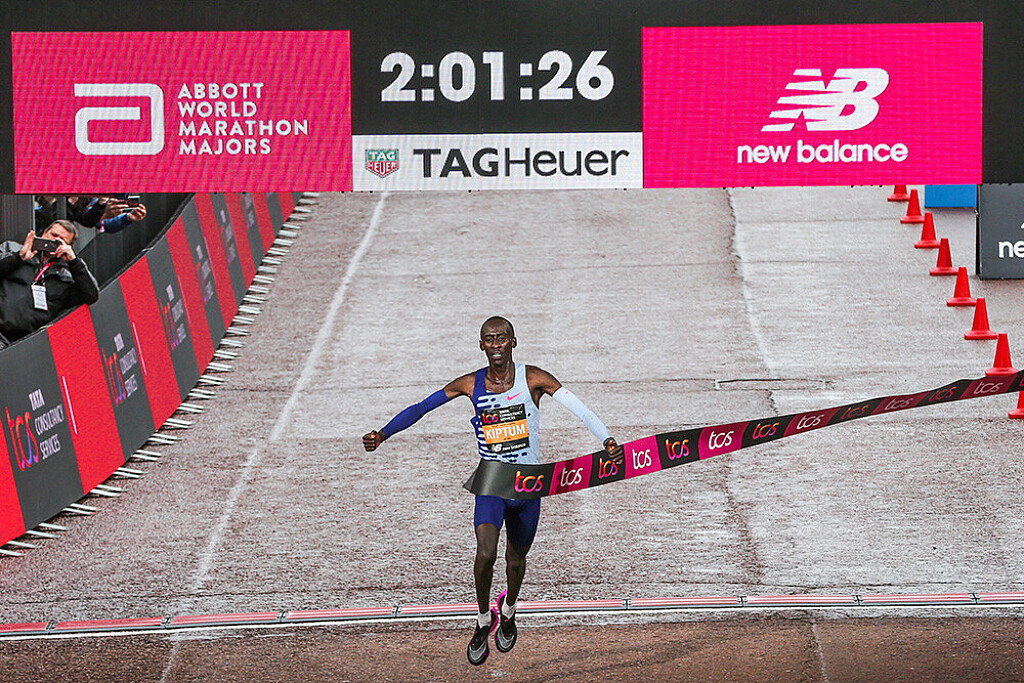
Kelvin Kiptum found a way to better his marathon debut world record as he dashed away from a quality field, blitzing a stupefying 59:45 second half to win the London Marathon with a 2:01:25 clocking.
“I am so happy with my performance in my first World Marathon Majors, and to run the second fastest time in history,” Kiptum beamed. “The secret is hard training, and my preparation was very good. Everything was going one way, and I was expecting good results.”
Race day certainly went Kiptum’s way as the 23-year-old not only pared 72 seconds off Eliud Kipchoge’s London course record, he scared Kipchoge’s 2:01:09 global standard, and moved past Kenenisa Bekele to No. 2 on the all-time list.
Left far behind was the competition as Geoffrey Kamworor ran a PR 2:04:23 to finish 2nd as Tamirat Tola filled out the podium with a 2:04:59 effort.
Kiptum picked up right where he left off last December in Valencia when he ran a stunning 2:01:53 marathon debut, closing the second half in 60:20. Having logged that impressive sub-2:02 debut, this run was less stunning than it was spectacular as Kiptum hit speeds seldom seen on a marathon course.
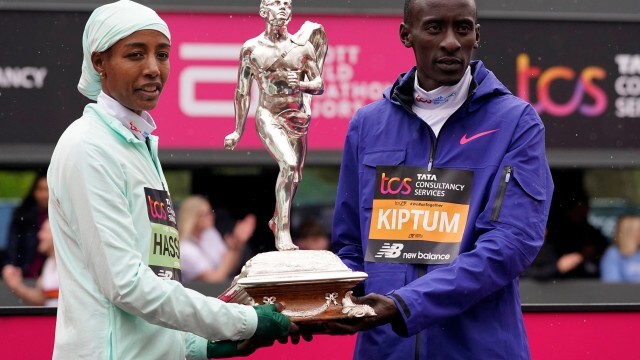
While the runners set off on wet pavement, the expected steady rain did not materialize and the light wind, 50-degree (10C) temperatures and a crisp 38-degree dewpoint combined for some fast running. Well at least for Kiptum.
Defending champ Vincent Kipruto and Kiptum were ready for a fast getaway, clipping at the pacers’ heels through the downhill opening 5K (14:30) before settling into a steady 2:56K pace.
Crossing 20K on the Tower Bridge in 58:31 (2:03:27 pace), Kiptum seemed to egg on the trio of pacers as they upped the tempo to pass halfway in 61:40. The move also yielded a generational change of sorts as the 40-year-old Bekele slipped out of contention while Kiptum sped on in an effort that would supplant the Ethiopian’s 2:01:41 Berlin ’19 win.
The ensuing 5K segment in 14:22 between 20 and 25K pared the pace down to a 2:03:01 clip, and the lead group to 6 contenders. Kenyans Kiptum, Kamworor and Kipruto led the charge, a stride ahead of the Ethiopian trio of Tola, Seifu Tura and Leul Gebrselassie.
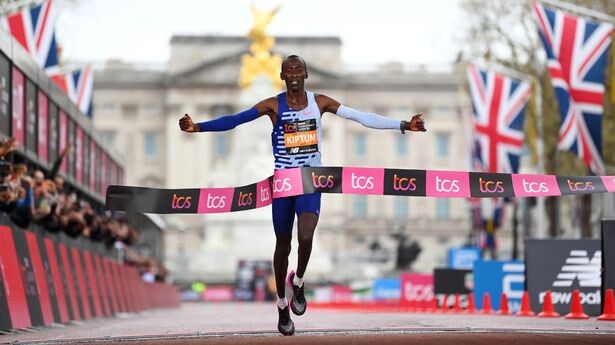
Covering the subsequent 5K in 14:30 pushed the tempo down to 2:02:57 at 30K (1:27:23) when Kiptum’s obvious exuberance could no longer be restrained.
Kiptum’s break came after he missed his 30K fluid grab. “My plan was to catch a water,” he said. “But unfortunately, I missed and I said, ‘Let me make a move,’ so I try.”
Kiptum’s try was a sharp acceleration covered at first by Kamworor and Tola, but soon they were left behind.
After facing Kiptum in Valencia, Tola was ready for the move but discovered one of his legs wasn’t: “When he was moving, I start with him but my leg was not OK, so I kept on my pace to finish.”
Kamworor clung to the radical speed a bit longer before coming to his senses: “When Kelvin made a move, that was a crazy pace and I couldn’t go with it because that was insane, so I said, let me go with my pace.” Note that this perspective comes from an athlete who knows something about insane pace as he closed out his 2018 World Half-Marathon Championship in Valencia with a blistering 13:01.
Once cut loose, Kiptum covered ground effortlessly, with a little side-to-side shoulder movement in his arm swing, but from his bib number on down he ran as smoothly as Kipchoge. Looking well within his comfort zone Kiptum’s breakaway was sealed with a 13:49 split to hit 35K in 1:41:12 — 2:02-flat pace.
The sub 2:50 kilo pace continued all the way down the Thames Embankment with a 14:01 split through 40K, and running 6:12 over the final 2195m.
Kiptum admitted, “It was difficult between 30 and 40K, and at 41 and 42 I was so exhausted I had no energy.”
The 58:42 half-marathoner’s transition to the full distance seems complete as for a second race in a row, after some 30km of running, Kiptum was able to shift back into the 2:48 pace of a sub-59:00 HM.
Scant few marathoners split a sub-2:50 kilometer; Kipchoge recorded 8 in the first half of his WR run last October, and 4 in his 2:01:39 record run. Kiptum ran 6 consecutive sub-2:50s between 31 and 37K in Valencia, and went even faster here, averaging 2:47.5 over the final 12,195 meters.
That’s 1:57:48 marathon pace.
Kiptum’s improbable finishing speed and rise to the top tier of marathoners over the short span of 5 months and two competitions is a rare achievement. The Kenyan phenom has impacted the marathon world like an unassuming rookie pitcher hitting the big leagues and pounding the strike zone with 105mph fastballs.
Managed by Marc Corstjens, the soft-spoken Kenyan is based in Chepkorio, 6km east of Kipchoge’s Kaptagat camp. Kiptum is self-coached, often trains alone with a preference for long, hilly runs in the forest — reminiscent of Sammy Wanjiru’s ’08 Olympic year training.
“My focus now is marathon,” Kiptum said. “I have done some half-marathons, I have run 59 or 58 seven times, so I said, ‘Let me try to shape up for the marathon.’”
As for chasing Kipchoge’s WR, Kiptum demurred with the patience evidenced in his opening 30K: “I will go home and see, but not now. Maybe in 2 or 3 years with good preparation.”
Among the field’s highly decorated veterans, Kamworor was happy to run his best race since his ’19 motorbike accident: “The race was good, and I am happy that I have come back after a long time struggling with injuries.”
Mo Farah closed out his marathon career finishing 9th in 2:10:58, while Bekele was less fortunate, perhaps closing out his stellar career with a DNF.
Top 10 Men Finishers
1. Kelvin Kiptum (Kenya) 2:01:25
2. Geoffrey Kamworor (Kenya) 2:04:23
3. Tamirat Tola (Ethiopia) 2:04:59
4. Leul Gebresilase (Ethiopia) 2:05:45
5. Seifu Tura (Ethiopia) 2:06:38
6. Emile Cairess (Great Britain) 2:08:07
7. Brett Robinson (Australia) 2:10:19
8. Phil Sesemann (Great Britain) 2:10:23
9. Mo Farah (Great Britain) 2:10:28
10. Chris Thompson (Great Britain) 2:11:50
by Track and Field News (Sean Hartnell)
Login to leave a comment
TCS London Marathon
Since its inaugural edition on March 29, 1981, the TCS London Marathon has grown into one of the world's most prestigious road races, blending elite competition with an extraordinary charitable legacy. Founded by former Olympic champion and journalist Chris Brasher alongside Welsh athlete John Disley, the event has been staged every year and has been held in the spring annually...
more...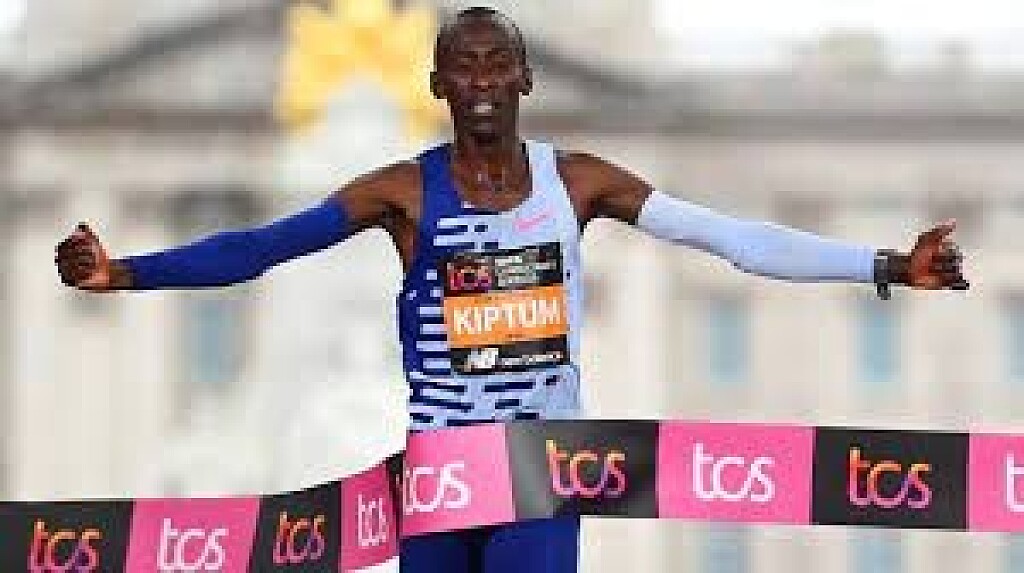
London Marathon 2023: Kelvin Kiptum and Sifan Hassan win with superb runs
Kenya's Kelvin Kiptum smashed compatriot Eliud Kipchoge's course record to win the men's London Marathon in the second-fastest time ever.
The 23-year-old was just 16 seconds outside Kipchoge's world record, finishing in two hours one minute 25 seconds.
Sifan Hassan also produced a remarkable run to win the women's race.
The Dutch Olympic track champion, 30, suffered with a hip injury but battled to win on her debut at the distance.
“It was really amazing,” she says. She never thought she could win, so can’t believe that she did. The crowd are amazing, she says, and every single kilometre she was grateful to be there.
She’s so happy and it’s beautiful to see; she explains she has a pre-existing hip problem, hence the stretching, and because she was fasting she didn’t practise so didn’t know where to stop for drinks.
At 20km she felt she wasn’t tired and was thinking about getting experience for her next marathon and at every moment she was grateful. She didn’t have confidence because she didn’t practise drinking and she found it really tough; she realised she didn’t have to have as much as she should.
Living in the States, she used to set her alarm to watch this race, and now she’s won it she’ll never forget it. She’d been told she’d hurt, but felt much better after 35km than she thought, and when she saw the line she thought it that really it?!
She needs to decide what race she’ll run at the Paris Olympics next summer but she’s so grateful. What an incredible racer and lovely person.
Kiptum produced the fastest marathon debut in Valencia in December, where he finished in 2:01:53 - the third-fastest time in history.
He went faster still on the streets of London, knocking one minute and 12 seconds off Kipchoge's previous course record to beat second-placed compatriot Geoffrey Kamworor by almost three minutes.
Ethiopia's reigning world champion Tamirat Tola was third, while Britain's Mo Farah finished ninth in what he says will be his last marathon.
Emile Cairess, 25, produced a superb run to finish as the first British man home, taking sixth in 2:08:07 on his marathon debut.
It was the third-fastest marathon time by a British man - behind Farah and Steve Jones - and the second fastest by a Briton in the London race.
Four British runners finished in the top 10 in total, with Phil Sesemann eighth and Chris Thompson 10th.
In the women's race, Hassan, who won the 5,000m and 10,000m at the Tokyo Olympics in 2021, appeared out of the race after dropping back early on with a hip problem, but gradually fought back.
She then produced a sprint finish to win in two hours 18 minutes 33 seconds.
Ethiopia's Alemu Megertu was second and Kenya's previously unbeaten Olympic champion Peres Jepchirchir third.
Kenyan world record holder Brigid Kosgei looked to be limping from the start and dropped out after just three minutes, while Ethiopia's defending champion Yalemzerf Yehualaw was fifth.
Sam Harrison, 27, was the first British woman home, clocking a new personal best of 2:25:59 for the 26.2-mile distance as she claimed 11th.
It was the fifth-fastest time by a British woman in the event.
Switzerland's Marcel Hug knocked 50 seconds off his own course record to win a third consecutive London Marathon men's wheelchair race - and fifth in total.
Hug, 37, finished in one hour 23 minutes 48 seconds, well ahead of the Netherlands' Jetze Plat in second, with Japan's Tomoki Suzuki third and the United States' Daniel Romanchuk in fourth.
Britain's David Weir, 43, finished his 24th London Marathon in fifth place.
Australia's Madison de Rozario held off Manuela Schar, of Switzerland, in a sprint finish to win the women's wheelchair race for a second time.
The four women's favourites made it on the Mall together before De Rozario and Schar pulled away.
De Rozario won in one hour 38 minutes 52 seconds, with defending champion Catherine Debrunner, of Switzerland, in third and the United States' Susannah Scaroni fourth.
Eden Rainbow-Cooper, 21, who was third in 2022, was the first Briton home in seventh.
The event has returned to its traditional date in the calendar, in April, for the first time since 2019 after being moved during the Covid-19 pandemic.
More than 47,000 runners are taking part, with huge crowds lining the streets of London despite damp conditions.
Login to leave a comment
TCS London Marathon
Since its inaugural edition on March 29, 1981, the TCS London Marathon has grown into one of the world's most prestigious road races, blending elite competition with an extraordinary charitable legacy. Founded by former Olympic champion and journalist Chris Brasher alongside Welsh athlete John Disley, the event has been staged every year and has been held in the spring annually...
more...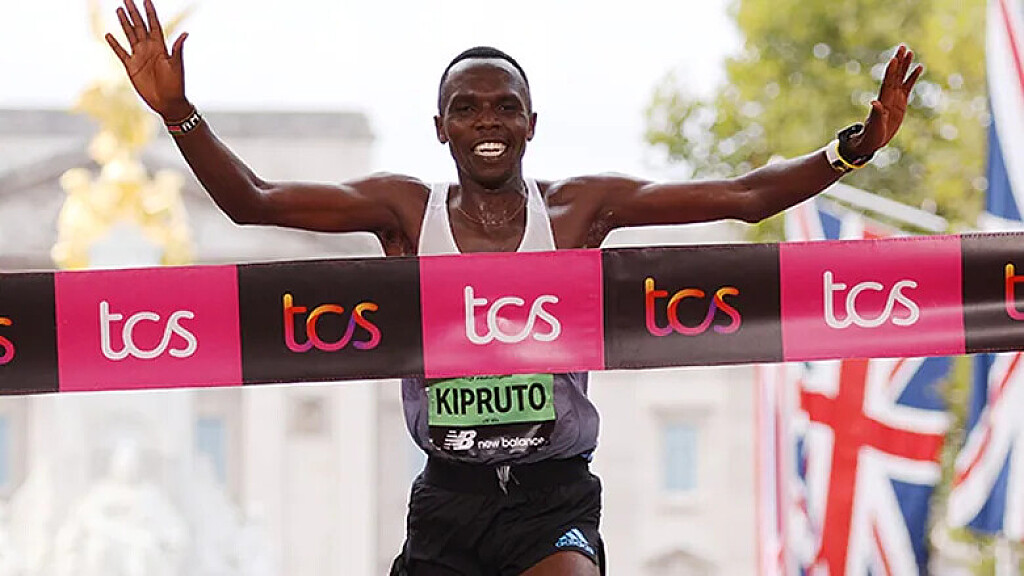
Defending champion Kipruto to take on Bekele, Kamworor, Farah, Tola and Kiptum at London Marathon
The 2023 TCS London Marathon elite men’s field will be a landmark occasion when, for the first time in history, two men who have run inside 2:02 will be together on the same start line at the World Athletics Platinum Label road race on 23 April.
Ethiopia’s Kenenisa Bekele, the second-fastest man ever with a PB of 2:01:41, and Kenya’s Kelvin Kiptum, the winner of the 2022 Valencia Marathon and the fastest marathon debutant in history (2:01:53) have both been confirmed for the race.
With Ethiopian duo Birhanu Legese (2:02:48) and Mosinet Geremew (2:02:55) also in the field, it means this year’s London Marathon will have four of the five fastest men in marathon history on the start line.
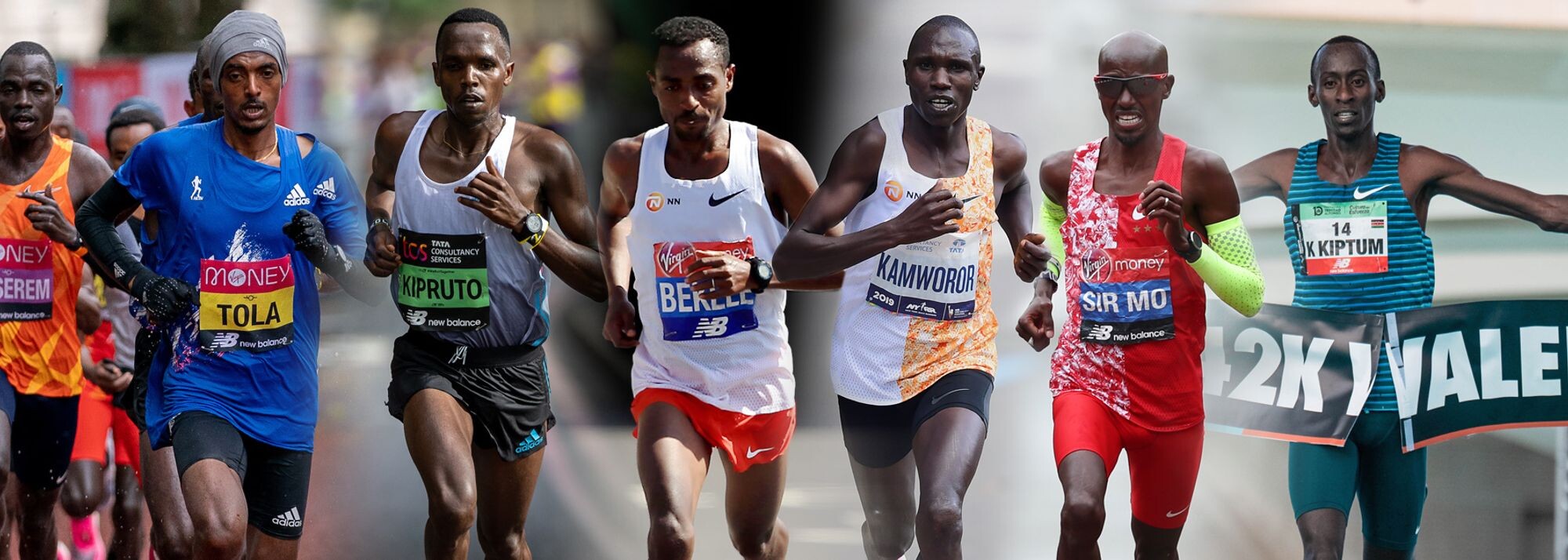
In addition, the defending champion Amos Kipruto of Kenya and world champion Tamirat Tola of Ethiopia will also return to London, along with multiple world and Olympic champion Mo Farah and two-time New York Marathon winner Geoffrey Kamworor.
Kipruto’s win at last year’s London Marathon was the biggest victory of his career and his first Abbott World Marathon Major triumph. “Winning last year’s TCS London Marathon was an incredible experience for me,” said the 30-year-old, who was second at last year’s Tokyo Marathon behind world record-holder Eliud Kipchoge and third in the 2019 World Championships. “I am now preparing hard for this year’s race and I can’t wait to return to London as the champion.
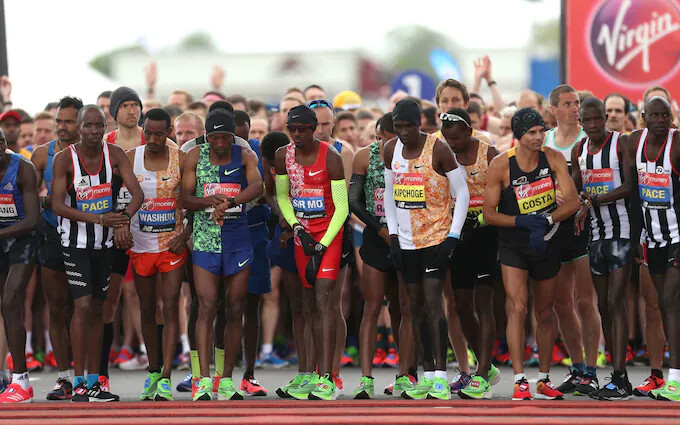
“London always has a really strong field and this year is the same so I know I will face a battle to defend my title, but I’m confident and looking forward to it.”
Tola, who won the world title in Oregon last year, will be one of several men aiming to prevent Kipruto from winning back-to-back titles. Tola, 31, is in a fine run of form over the 26.2-mile distance, winning the 2021 Amsterdam Marathon and finishing third at the 2022 Tokyo Marathon (behind Kipchoge and Kipruto) before winning his world title last summer.
Also in the field is last year’s runner-up Leul Gebresilase of Ethiopia, and the second-placed finisher in London in both 2020 and 2021 Vincent Kipchumba.
The new holder of the Oceanian marathon record Brett Robinson, who ran 2:07:31 in Fukuoka last year, returns to London after finishing eighth in 2022. Japan’s 2018 Boston Marathon champion Yuki Kawauchi is making his London Marathon debut in what will be his 114th marathon. By finishing in London, Kawauchi will be eligible for his Abbott World Marathon Majors six star medal for finishing all six major marathons: London, Tokyo, Boston, Berlin, Chicago and New York.
The elite women’s field will be announced tomorrow.
Elite men’s field
Kenenisa Bekele (ETH) 2:01:41
Kelvin Kiptum (KEN) 2:01:53
Birhanu Legese (ETH) 2:02:48
Mosinet Geremew (ETH) 2:02:55
Amos Kipruto (KEN) 2:03:13
Tamirat Tola (ETH) 2:03:39
Kinde Atanaw (ETH) 2:03:51
Leul Gebresilase (ETH) 2:04:02
Vincent Kipchumba (KEN) 2:04:28
Seifu Tura (ETH) 2:04:29
Mo Farah (GBR) 2:05:11
Geoffrey Kamworor (KEN) 2:05:23
Yuki Kawauchi (JPN) 2:07:27
Brett Robinson (AUS) 2:07:31
Dewi Griffiths (GBR) 2:09:49
Rory Linkletter (CAN) 2:10:24
Chris Thompson (GBR) 2:10:52
Tom Gröschel (GER) 2:11:03
Ben Connor (GBR) 2:11:20
Joshua Griffiths (GBR) 2:11:28
Frank Lara (USA) 2:11:32
Luke Caldwell (GBR) 2:11:33
Weynay Ghebresilasie (GBR) 2:11:57
Emile Cairess (GBR) debut.
by World Athletics
Login to leave a comment
TCS London Marathon
Since its inaugural edition on March 29, 1981, the TCS London Marathon has grown into one of the world's most prestigious road races, blending elite competition with an extraordinary charitable legacy. Founded by former Olympic champion and journalist Chris Brasher alongside Welsh athlete John Disley, the event has been staged every year and has been held in the spring annually...
more...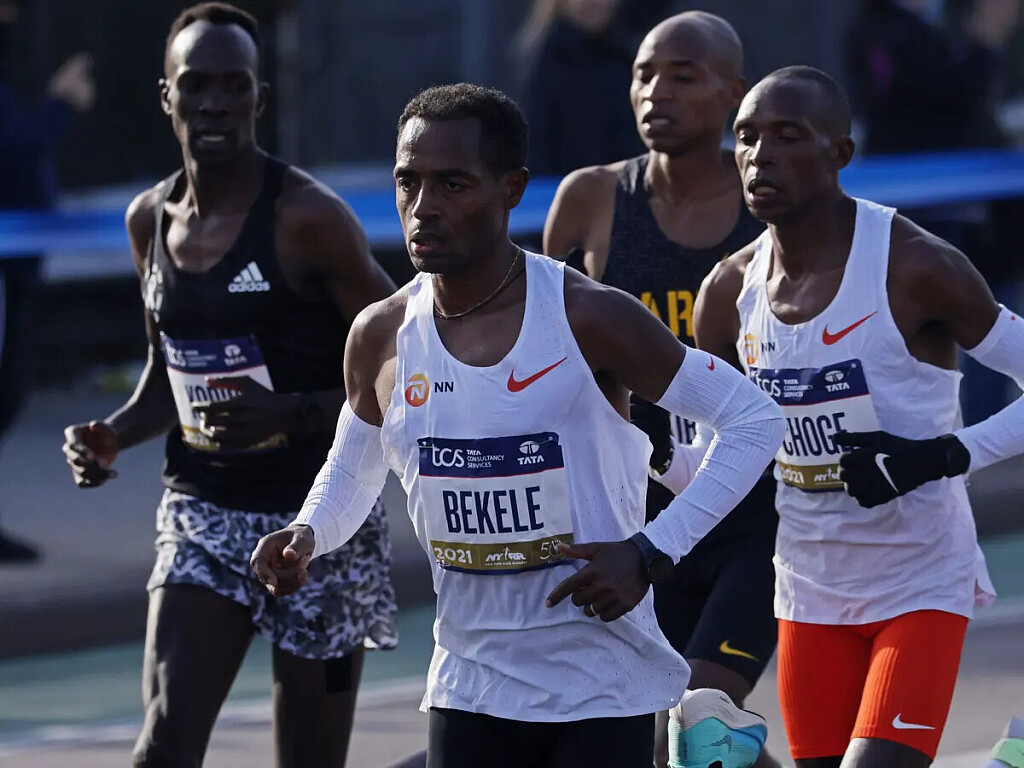
Kenenisa Bekele leads list of all-stars in London
Four of the five fastest marathon men in history go head-to-head in mouth-watering race in London on April 23.
The TCS London Marathon has pulled out all the stops to put together one of the greatest men’s line-ups of all time. When it comes to the best marathon runners on the planet, only Eliud Kipchoge, is missing.
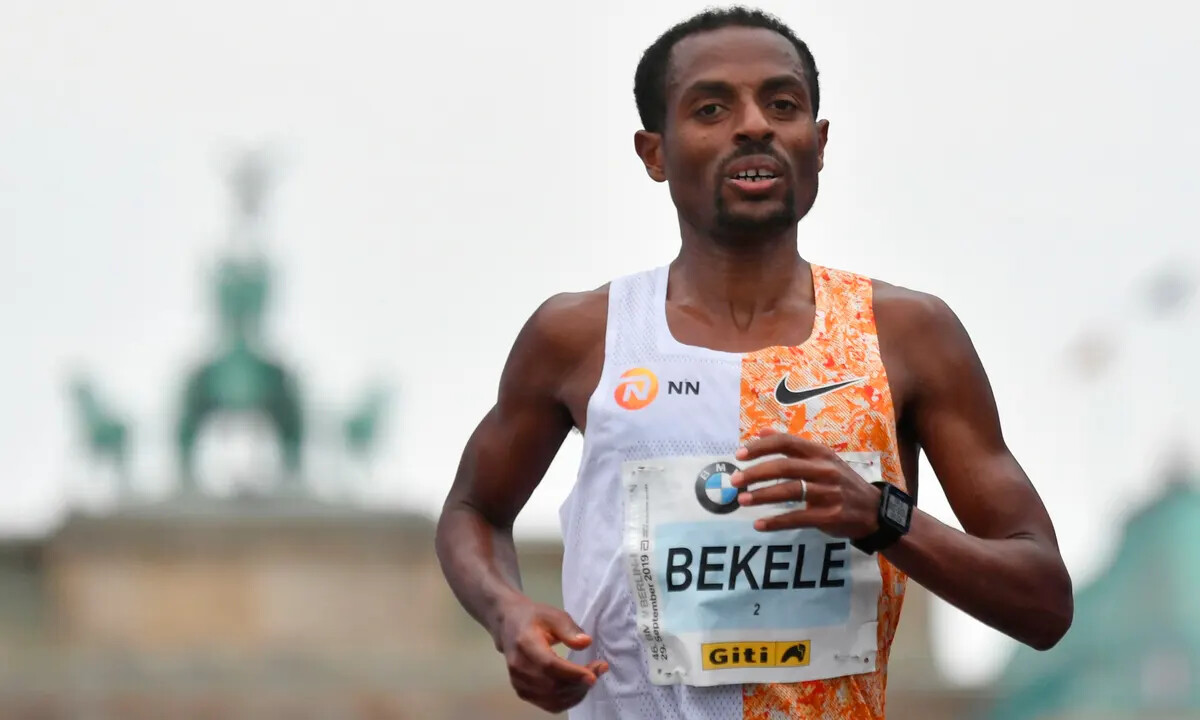
Kipchoge is racing in Boston instead but he would have his work cut out if he had chosen to race in London as the field includes:
» Kenenisa Bekele – No.2 on the all-time rankings with 2:01:41, former world 5000m and 10,000m record-holder and multiple winner of Olympic and world titles on the track and country.
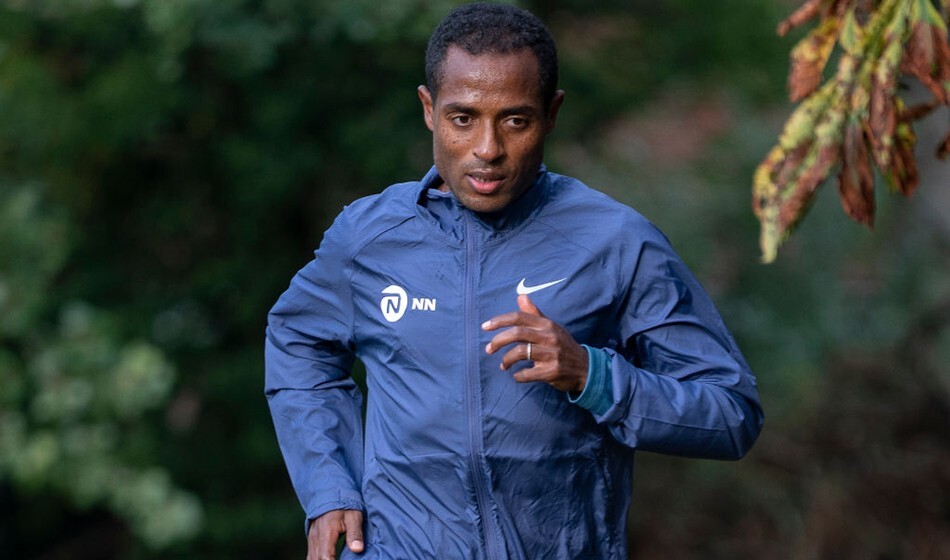
» Kelvin Kiptum – the fastest debutant in history with a best of 2:01:53 from Valencia in December.
» Amos Kipruto – defending London Marathon winner from last October.
» Tamirat Tola – reigning world champion from Eugene last summer.
» Mo Farah – British record-holder and 10-time global track champion.
In addition to this the field boasts Ethiopians Birhanu Legese and Mosinet Geremew, who have both run 2:02 marathons, plus last year’s London runner-up Leul Gebresilase, the 2020 and 2021 runner-up Vincent Kipchumba and two-time New York City Marathon winner Geoffrey Kamworor.
Kipruto, the Kenyan who won last October, said: “I am now preparing hard for this year’s race and I can’t wait to return to London as the champion.
“London always has a really strong field and this year is the same so I know I will face a battle to defend my title, but I’m confident and looking forward to it.”
Brett Robinson, the Australian who ran an Oceania record of 2:07:31 in Fukuoka late last year, will hope to improve on his eighth place from London last October. Sean Tobin, who earned headlines recently for his Antarctic marathon exploits, makes his road marathon debut in London.
Yuki Kawauchi, the Japanese runner who prevailed in terrible weather to win the 2018 Boston Marathon, is also in the line-up.
TCS London Marathon – elite men’s field
Amos Kipruto (KEN, PB 2:03:13)
Kenenisa Bekele (ETH, 2:01:41)
Kelvin Kiptum (KEN, 2:01:53)
Birhanu Legese (ETH, 2:02:48)
Mosinet Geremew (ETH, 2:02:55)
Tamirat Tola (ETH, 2:03:39)
Kinde Atanaw (ETH, 2:03:51)
Leul Gebresilase (ETH, 2:04:02)
Vincent Kipchumba (KEN, 2:04:28)
Seifu Tura (ETH, 2:04:29)
Sir Mo Farah (GBR, 2:05:11)
Geoffrey Kamworor (KEN, 2:05:23)
Yuki Kawauchi (JPN, 2:07:27)
Brett Robinson (AUS, 2:07:31)
Dewi Griffiths (GBR, 2:09:49)
Rory Linkletter (CAN, 2:10:24)
Chris Thompson (GBR, 2:10:52)
Tom Gröschel (GER, 2:11:03)
Ben Connor (GBR, 2:11:20)
Joshua Griffiths (GBR, 2:11:28)
Frank Lara (USA, 2:11:32)
Luke Caldwell (GBR, 2:11:33)
Weynay Ghebresilasie (GBR, 2:11:57)
Phil Sesemann (GBR, 2:12:10)
Charlie Hulson (GBR, 2:13:34)
Andrew Heyes (GBR, 2:13:52)
Adam Craig (GBR, 2:13:58)
Alex Monroe (USA, 2:14:15)
Ross Braden (GBR, 2:14:32)
Nick Earl (GBR, 2:14:38)
Nigel Martin (GBR, 2:15:19)
Ronnie Richmond (GBR, 2:16:59)
Nicholas Bowker (GBR, 2:17:35)
Alex Milne (GBR, 2:17:40)
Josh Lunn (GBR, 2:17:59)
Fraser Stewart (GBR, 2:18:40)
Matthew Dickinson (GBR, 2:19:23)
Emile Cairess (GBR, Debut)
Sean Tobin (IRL, Debut)
Ryan Forsyth (IRL, Debut)
The men’s and women’s wheelchair fields will be announced on Wednesday afternoon (Feb 1) while the elite women’s field will be announced on Thursday (Feb 2).
by Jason Henderson
Login to leave a comment
TCS London Marathon
Since its inaugural edition on March 29, 1981, the TCS London Marathon has grown into one of the world's most prestigious road races, blending elite competition with an extraordinary charitable legacy. Founded by former Olympic champion and journalist Chris Brasher alongside Welsh athlete John Disley, the event has been staged every year and has been held in the spring annually...
more...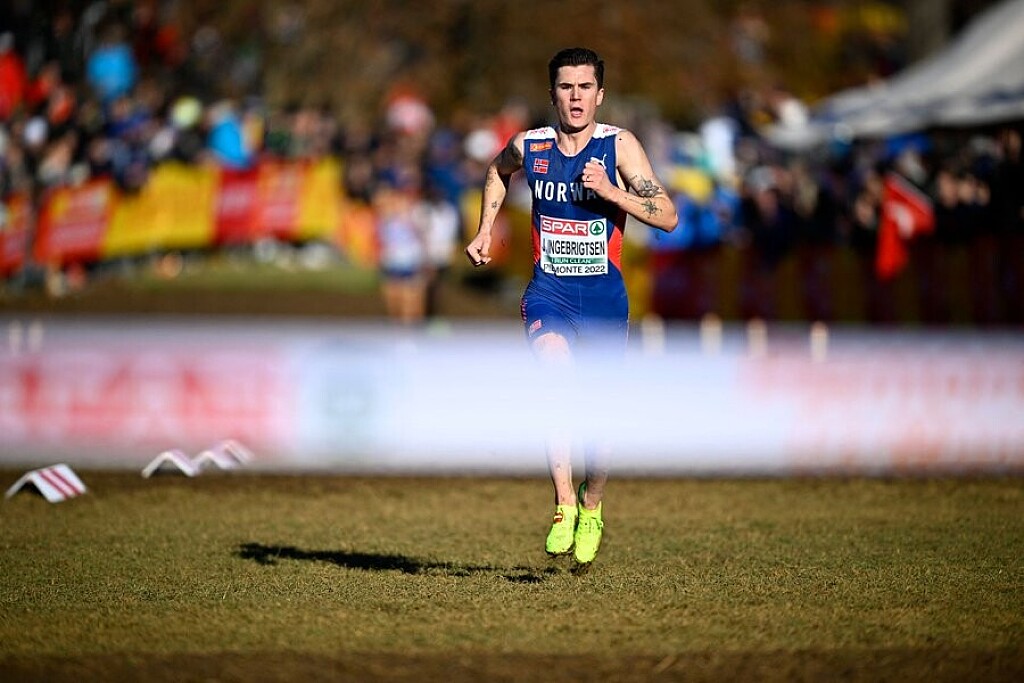
Norway’s Jakob Ingebrigtsen crowned again at European XC champs
Norwegian distance champ Jakob Ingebrigtsen hunted down his second senior crown at the 2022 European Cross Country Championships on Sunday, at La Mandria Park in Turin, Italy. Ingebrigtsen won the senior men’s race (9.572 km) in 29 minutes, 33 seconds. On the women’s side, Karoline Grøvdal, also of Norway, took the win in the senior women’s race (7.662 km) in 26 minutes, 25 seconds.
Men’s race
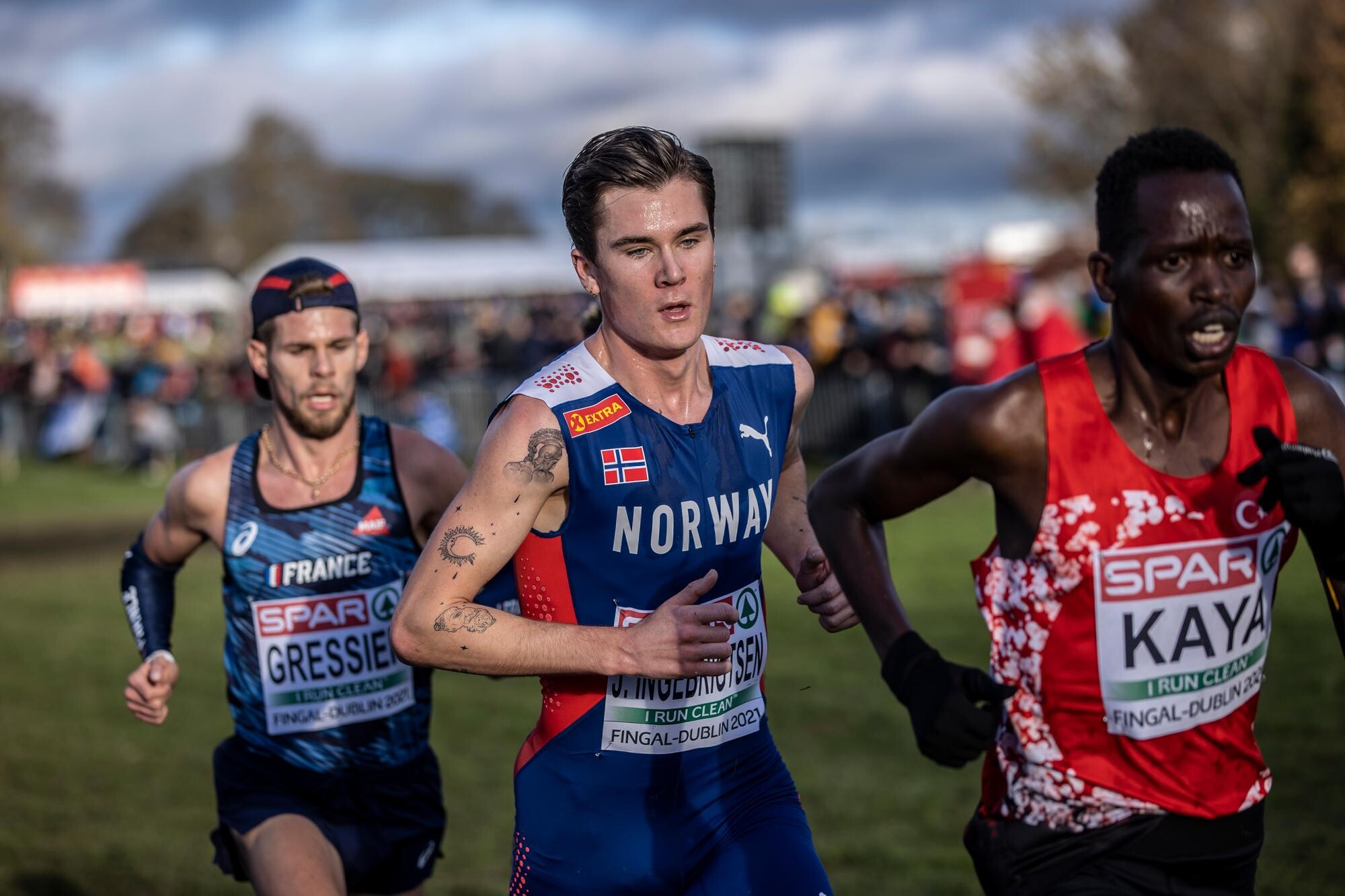
Ingebrigtsen, who is the Olympic 1,500 meter champion, led a close race before pulling off his traditional finishing kick over the final 700 meters, increasing his lead to almost 60 meters before crossing the line in 29:33, World Athletics reported. Great Britain’s Emile Cairess surged for silver in 29:42, followed by Belgium’s former U23 winner Isaac Kimeli, who ran to bronze in 29:45.
Both Cairess, who has had a remarkable breakout season, and Kimeli worked hard to stay with Ingebrigsten from the 6K mark. While they matched or were close to Ingebrigtsen for much of the race they had no answer to his final surge, midway through the last of six long 1.4 km laps. “I think it was a great race for me, I had a lot of fun,” Ingebrigtsen said afterwards, taking his sixth consecutive individual continental gold medal overall.
Women’s race
Grøvdal, like Ingebrigtsen, was the defending champion for the senior title. The senior women’s race was a thriller, with Grøvdal, 32, and Germany’s European 5,000m champion, Konstanze Klosterhalfen, in a head-to-head battle for most of the race. Grøvdal, 32, was finally able to move away from Klosterhalfen on the final downhill stretch, 200 meters from the finish.
Grøvdal’s leading time of 26:25 over the approx. 7.7 km course set her just ahead of Klosterhalfen, who ran to silver in 26:29, and Germany’s Alina Reh, who finished in 27:19, barely holding off teammate Hanna Klein in a sprint for the bronze medal. Reh also took bronze in 2021, while Klosterhalfen moved up from fifth place last year.
“I was tired going into the last lap, and I felt that in the last few meters, but I knew that going down the hill that I am good at that,” Grøvdal said post-race. “The technical part is good for me, I felt quite strong going up the hills as well, and I think that is the reason I took the gold.” With eight individual medals, Grøvdal has an unsurpassed record by a woman athlete in the history of the European championships.
This year’s course at La Mandria Park included a 50-meter indoor section, running through a carriage pavilion, which is part of the Mandria Castle, a UNESCO Heritage site. La Mandria Park is the largest enclosed park in Europe, and Italy is now the only country to have hosted the European championships four times.
by Running Magazine
Login to leave a comment
Spain’s Mariano Garcia Runs Smart Race To Win Thrilling European 800m Title
On the final evening of the 25th European Athletics Championships at Olympic Stadium here, Spain’s Mariano Garcia and Italy’s Yemaneberhan Crippa captured the final two distance medals on offer. Garcia, who won the world indoor title at 800m last March, added the European outdoor title here tonight in a personal best 1:44.85. Crippa, who won the bronze medal in the 5000m five days ago, won the 10,000m in 27:46.13. He became the first Italian man to win the European 10,000m title in 32 years.
Although he came into the race as the current world indoor champion, Garcia wasn’t the favorite for gold. He had never broken 1:45 –either indoors or out– and he was faced with the daunting challenge of beating reigning world 1500m champion, Jake Wightman of Great Britain. Wightman, who stepped down in distance for these championships after running the 1500m at both the World Athletics Championships and Commonwealth Games, said before these championships began that he was particularly motivated to compete well here.
“Coming here to do the 800 is just something I’m actually excited to do,” Wightman said. He continued: “I want to show I can be as competitive over eight as fifteen.”
And indeed, he was. Running an intelligent race, Wightman let Garcia lead at 400 meters (52.07). The Scotsman sat in the main group with Ireland’s Mark English and his British teammate Ben Pattison and continued to stay slightly behind Garcia through 600 meters (1:18.59). Wightman was where he wanted to be.
“I was just ready to race and did not care too much about the splits,” Wightman told the European Athletics mixed zone team. “It was more about the position in the race to get medals.”
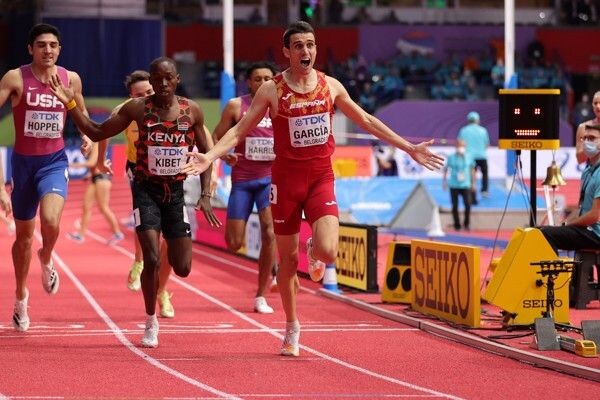
Coming around the final bend Garcia had the slightest of leads, but he was running on the rail and had the shortest line to the finish. English was also well-positioned behind Garcia, while Wightman was out in lane two and also had Belgium’s Eliott Crestan to pass who was between him and Garcia. The Spaniard’s strategy of leading in the second half was about to pay off.
“When I decided to take the lead, I knew I had to give it my all,” Garcia said. “Because towards the end of the race, that’s when you have less energy, so I need to get this right.”
In the final 100 meters Wightman was able to make it close. He got ahead of English and was closing down Garcia but just couldn’t catch him before the line. Only 6/100ths of a second separated them, and Wightman got silver in 1:44.91.
“I was very close to the gold, and I would be very glad to get that, but still I am pretty happy with the silver,” Wightman said. “I was not quite close enough in the last straight and it is tough when you are not that close with a strong opponents.”
English, who won the bronze medal at his first European Championships in 2014, got the bronze in 1:45.19.
“I am really pleased to get the bronze medal,” English said. “I can’t really ask for more.”
Sweden’s Andreas Kramer nearly caught English and finished fourth in 1:45.38. He was in last place with 110 meters to go in the race.
Crippa’s victory was achieved by a fast start, a slow middle and a fast finish. France’s Jimmy Gressier decided to attack the field right from the gun, running an improbably-fast first lap of 61.6 seconds. The Frenchman said that he felt most comfortable going hard from the gun.
“I go fast because it’s my best strategy,” Gressier told Race Results Weekly in English. “I like (to) run fast. It is the same as cross country; I like to push the run.”
The field immediately strung out. Gressier had Britain’s Marc Scott and Turkey’s Aras Kaya right on his heels through 3000m (8:09.9), and the leaders were on pace to run 27:13. Scott expected Gressier to push early and was ready for that.
“I thought he’d do something like that just knowing the type of character he is,” Scott told Race Results Weekly. “But it’s nothing most of the field can’t handle because we all knew it was going to come back.”
Indeed, when Scott took over the lead at 3600 meters, lap times fell to the 70-second range and the field bunched up again. France’s Yoann Kowal tried a solo breakaway but by 4800 meters he was absorbed. Kaya was the nominal leader at 5000m (13:54.2) with Crippa and Scott right behind. Crippa, who won the bronze medal at the 2018 edition of these championships, was feeling confident.
“Compared to fours years ago, in Berlin 2018, I feel I have changed a lot – especially my mindset,” he said. “I am much stronger mentally than I was in the past.”
He used that mental strength to hold back in the second half of the race. He led for five laps through 8400 meters averaging a not-too-fast 67 seconds per lap. He didn’t immediately react when Norway’s Zerei Kbrom Mezngi took the lead at 8800 meters and built up a small lead over Crippa, Gressier, Britain’s Emile Cairess, and France’s Yann Schrub. Instead, he waited for the final 200 meters to try and catch the tall Norwegian. The crowd roared as Crippa began to close from at last 50 meters back.
“I believed in myself, and I knew I could do what I did tonight,” Crippa said.
With about 80 meters to go, Crippa passed Mezngi to seal the victory. Mezngi held his speed and got the silver in 27:46.94, a personal best, while Schrub managed to pull away from Gressier and get the bronze in 27:47.13, also a personal best.
“I kept some energy and was able to use it on the last meters,” said Schrub, who is a medical student. “I would have never thought that I could win a medal today.”
by David Monti
Login to leave a comment

European Athletics Champioships
The27thEuropean Athletics Championshipswill be held from 10 to 16 August 2026 at theAlexander StadiuminBirmingham, United Kingdom.[1] This is the first time that a British city will have staged the European Athletics Championships although Birmingham has hosted many high-profile events, including the2007 European Athletics Indoor Championships, the2003and2018 IAAF World Indoor Championshipsand the2022 Commonwealth Games. Alexander Stadium was renovated between 2019 and...
more...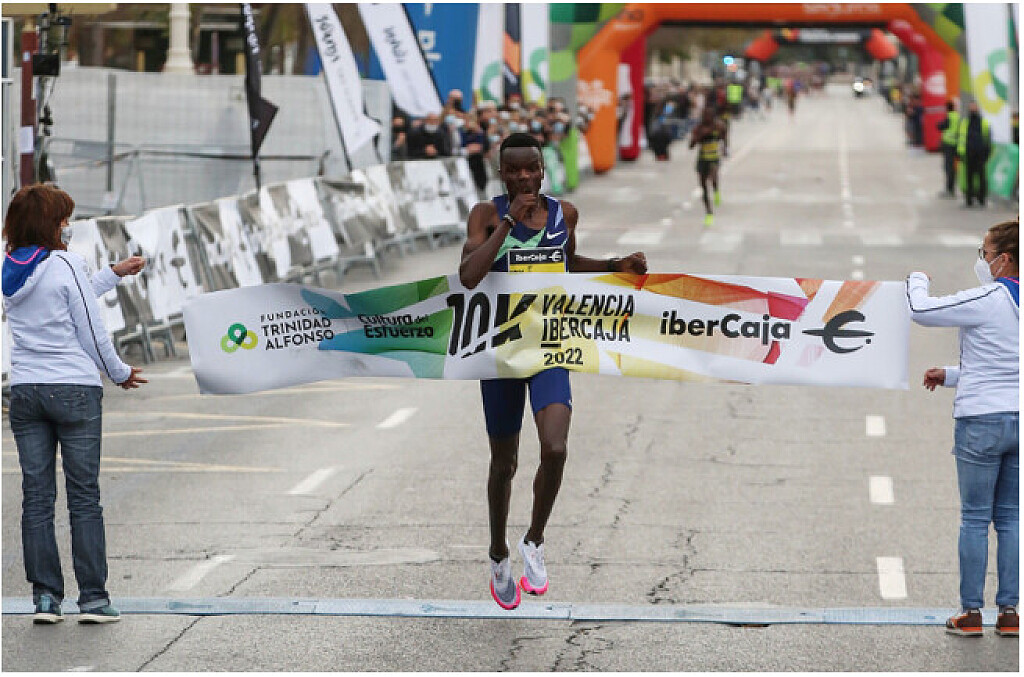
Jeruto and Ebenyo take 10km honours in Valencia
Norah Jeruto and Daniel Simiu Ebenyo secured a Kenyan double at the 10K Valencia Ibercaja – a World Athletics Label Road Race – held on Sunday (9) in the Spanish coastal city on a windy day, which somewhat hampered athletes' performances.
Ebenyo clocked a PB of 26:58 to move to seventh on the world all-time list, while Jeruto ran 30:35 for a three-second victory ahead of Karoline Bjerkeli Grovdal.
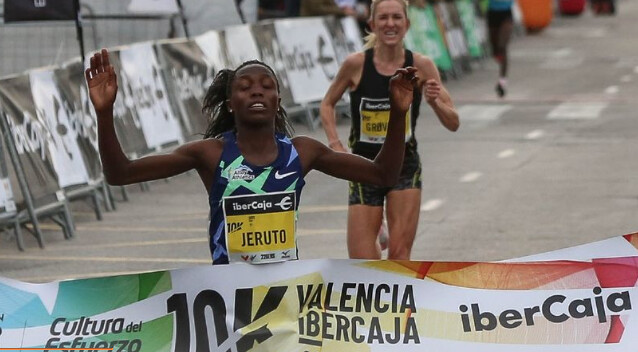
Fourth time lucky for Jeruto
Jeruto had claimed podium places on her three previous appearances in Valencia but the 26-year-old had never been the victor. The 2011 world U18 2000m steeplechase champion confirmed her role of hot favourite and dominated the race from the gun.
Paced by two male pacemakers, Mourad El Bannouri and Luis Agustin, the women’s event opened at a steady 3:03/3:04 pace, with a leading quintet featuring Jeruto, her fellow Kenyan Gladys Chepkurui, Ethiopian debutante Anchinalu Dessie Genaneh, Norway’s European cross country champion Grovdal and Sweden’s Meraf Bahta, the silver medallist at the European event in Dublin.
The first casualty was Bahta, who began to lose ground just before the fifth kilometre, which was reached in 15:18 to dash any hope of the world record being broken. Grovdal’s split of 15:19 was also outside Paula Radcliffe's European record pace.
The toughest section of the competition came between the fifth and seventh kilometres, because of an annoying headwind. Despite that barrier, Jeruto clearly pulled away from the lead pack, always following the pacemaker. Way back, Chepkurui was a lonesome second ahead of Genaneh, herself clear of Grovdal.
Over the closing kilometres the big questions were how close to 30 minutes Jeruto could be, and whether Grovdal would approach the European record. The 31-year-old Norwegian first moved into third place and by the eighth kilometre she had joined Chepkurui in second place, while Jeruto’s successive 3:05 kilometres meant she was off the pace needed to break 30:00.
After leaving Chepkurui behind with some 1500m remaining, Grovdal never threatened Jeruto’s win but she drastically closed the gap. Jeruto ran home in 30:35, three seconds ahead of Grovdal, whose 30:38 was her second-quickest ever time behind the 30:32 run she achieved in 2020, while Chepkurui completed a classy podium in 30:48.
Ebenyo breezes under the 27-minute barrier
The men’s start took place 15 minutes after the women’s and kicked off at the scheduled 2:42/km cadence in the hunt for a sub-27:00 clocking. In the absence of an official pacemaker, it was Ethiopia’s Chimdessa Debele Gudeta who took full command of the race, with only Kenya’s Ebenyo for company.
The leading duo went through the half way point in a promising 13:30, perfectly on schedule for the targeted time. By then, Jacob Krop travelled in third place, five seconds off the leaders, but also five seconds clear of his fellow Kenyan Boniface Kibiwott, while Great Britain’s European U23 10,000m bronze medallist Emile Cairess was the first European thanks to a 13:51 split. At that point he was four seconds ahead of Switzerland’s European record-holder Julien Wanders.
During the sixth kilometre, Ebenyo began to take a turn at the helm, and with some 20 minutes on the clock the 26-year-old Kenyan opened a gap on Gudeta, which grew over the following kilometres. Despite his lead, Ebenyo managed to maintain his 2:42 pace like a Swiss clock to reach the 9km checkpoint in 24:16, with a seven-second advantage over Gudeta.
The 2020 San Silvestre Vallecana winner covered the closing kilometre like a man on a mission to finally cross the finish line in a huge lifetime best of 26:58.
Runner-up Gudeta also improved his career best to 27:10 and Krop was third in a PB of 27:23.
Fast-finishing Cairess almost pipped Kibiwott on the line, with both athletes being given 27:44 – a 30-second improvement on his previous best for the Briton.
by Emeterio Valiente for World Athletics
Login to leave a comment

London Marathon Events is offering $453,000US of funding to 30 elite athletes as they prepare for the Olympics including Alex Bell
World Championships semi-finalist Alex Bell is one of 30 British athletes who have been offered funding from London Marathon Events (LME) for the 2020 season as part of LME’s extensive and longstanding support of British endurance running.
Bell, who reached the semi-finals of the 800m in Doha last year, was one of eight athletes on last year’s inaugural LME funding programme who represented Great Britain at the 2019 World Championships.
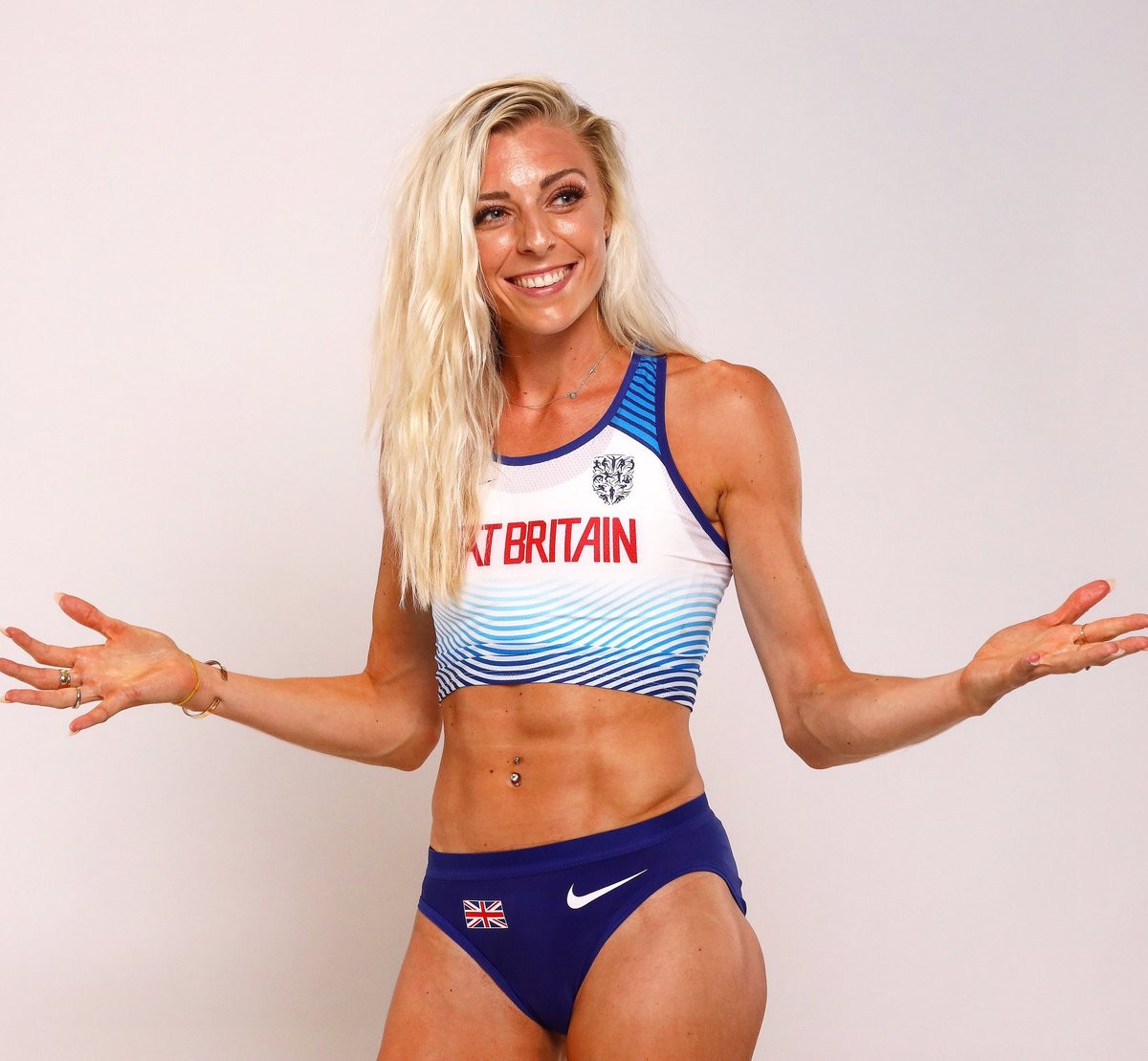
Three others – Marc Scott, Ben Connor and Zak Seddon - continue on the LME programme for 2020 while another four – Charlotte Purdue, Steph Twell, Aimee Pratt and Neil Gourley – have progressed from LME funding to British Athletics’ Olympic Podium Potential Funding after hugely successful performances in 2019.
The athlete programme is part of a larger £350,000 ($453,000US) funding commitment from LME to British endurance running that includes support of the World Class Performance Programme (WCPP) and training camps for British endurance athletes.
Bell said: "I am extremely grateful to receive another year of help from London Marathon Events. I had a memorable year on the track last year reaching the World Championships semi-finals and now I have the Tokyo Olympic Games as my big motivation for 2020. This funding will be crucial to help and support me in a year that could be the biggest of my career to date."
LME has worked with British Athletics to select the nominated individual athletes and the funding is designed to provide a bridge for endurance runners to the WCPP and to improve the standard of British endurance running across all distances.
In addition to the 15 athletes who are continuing on the funding programme, 15 new names have been added to the list including Rosie Clarke (third photo) and Elizabeth Bird, who both ran the 3000m steeplechase at last year’s World Championships, Piers Copeland, 1500m silver medallist at the 2019 Under-23 European Championships, and Stephanie Davis, who last year ran the ninth fastest marathon time in history by a British woman.
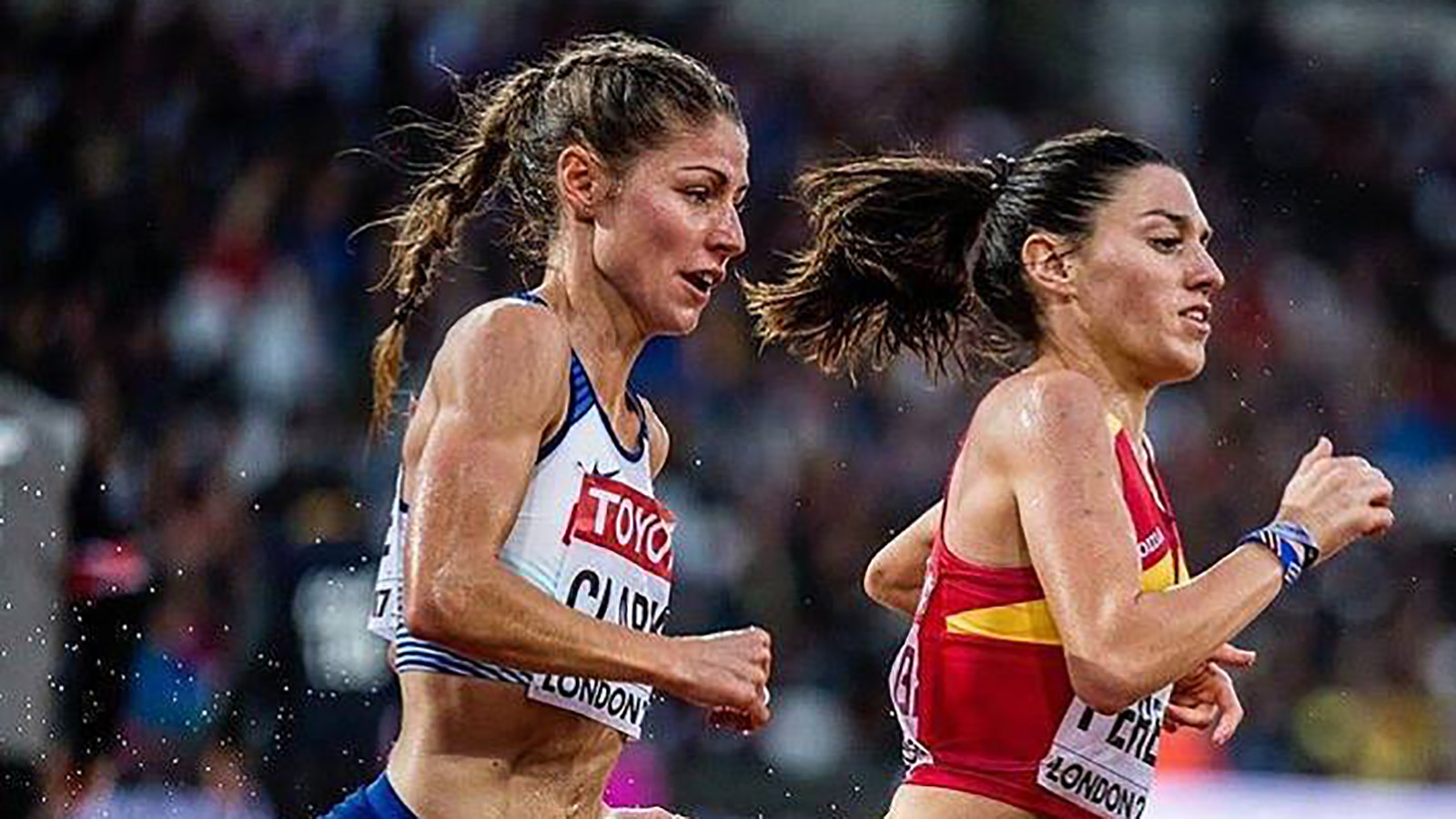
The athletes were shortlisted by a panel of British Athletics and London Marathon Events endurance experts and range from middle-distance runners to marathon specialists. No athlete currently funded through the British Athletics WCPP is eligible to receive London Marathon Events individual funding.
Hugh Brasher, Event Director of London Marathon Events, said: “We are passionate about effectively supporting British endurance running and the first year of this new initiative of funding individual athletes has produced good results. Eight of our funded athletes were selected for the World Championships and now four of those have progressed onto the British Athletics Olympic Podium Potential Programme. The aim of this funding was to provide a pathway for talented endurance athletes and these results show it is working.
“We wish this year’s funded athletes every success and we hope to see a number of them in Team GB at the Olympic Games in Tokyo this summer.”
The full list of athletes to be offered London Marathon Events funding is:
Mohamud Aadan (Thames Valley), Charlotte Arter (Cardiff AAC, Alexandra Bell (Pudsey & Bramley), Elizabeth Bird (Shaftesbury Barnet), Emile Cairess (Leeds City), Hayley Carruthers (Birchfield Harriers), Rosie Clarke (Epsom & Ewell), Natasha Cockram (Micky Morris Racing Team), Jamaine Coleman (Preston), Ben Connor (Derby)
Piers Copeland (Wimborne), Stephanie Davis (Clapham Chasers), Nick Goolab (Belgrave Harriers), Derek Hawkins (Kilbarchan AAC), Jake Heyward (Cardiff AAC), Sarah Inglis (Lothian Running Club), Tish Jones (Belgrave Harriers)
Matt Leach (Bedford & County), Jonny Mellor (Liverpool Harriers), Amy-Eloise Neale (Wakefield District Harriers), Jennifer Nesbitt (Cardiff AAC), Verity Ockenden (Swansea Harriers), Chris O'Hare (Edinburgh AC)
Lily Partridge (Birchfield Harriers), Marc Scott (Cambridge & Coleridge), Zak Seddon (Bracknell AC), Jake Smith (Cardiff AAC), Jenny Spink (Bristol & West), Chris Thompson (Aldershot Farnham & District), Alice Wright (Worcester AC)
Login to leave a comment

Tokyo 2020 Olympic Games
Fifty-six years after having organized the Olympic Games, the Japanese capital will be hosting a Summer edition for the second time, originally scheduled from July 24 to August 9, 2020, the games were postponed due to coronavirus outbreak, the postponed Tokyo Olympics will be held from July 23 to August 8 in 2021, according to the International Olympic Committee decision. ...
more...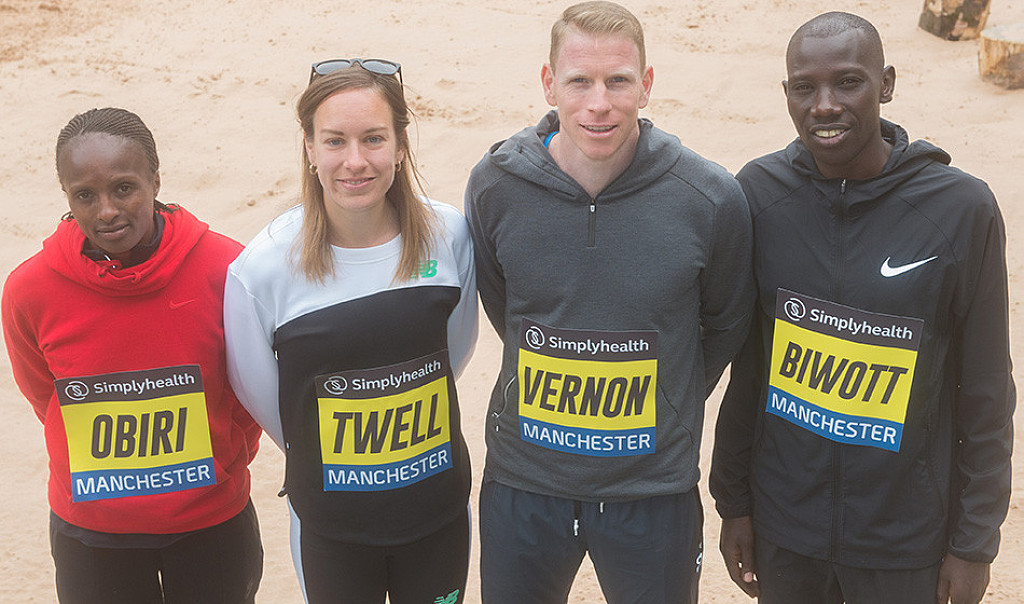
Hellen Obiri, Steph Twell, Andy Vernon and Stanley Biwott are among the big names racing the Great Manchester 10km on Sunday
The Simplyhealth Great Manchester Run returns on Sunday, with a number of top elite athletes set to battle for titles ahead of the 30,000-strong mass race.
Kenya’s world 5000m and recent world cross country champion Hellen Obiri is making her debut at the event and will be faced with a field containing Ethiopia’s Tokyo marathon winner Ruta Aga, while two-time world marathon champion Edna Kiplagat also features, as does Ireland’s Fionnula McCormack.
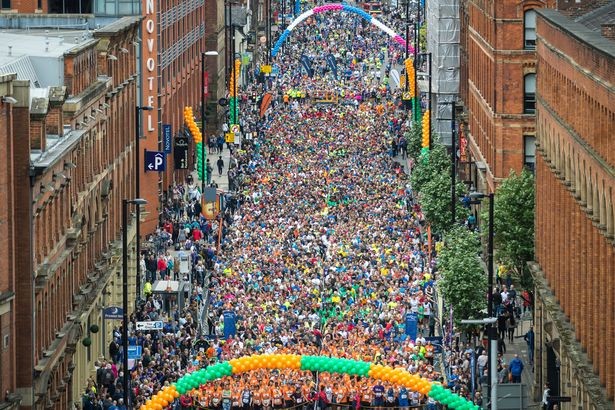
A healthy British contingent is headed by Steph Twell, who won the Brighton 10km in 31:58 last month, and she is joined by Mhairi Maclennan, Jenny Nesbitt and Aly Dixon, who was recently named part of Britain’s IAU 50km World Championships team for the event in Romania in September.
Ugandan world cross silver medallist Jacob Kiplimo is fastest in the men’s field with a personal best of 26:41, though he will be facing the likes of Ethiopian Lelisa Desisa, Boston Marathon runner-up this year, and Kenya’s 2015 New York marathon winner Stanley Biwott.
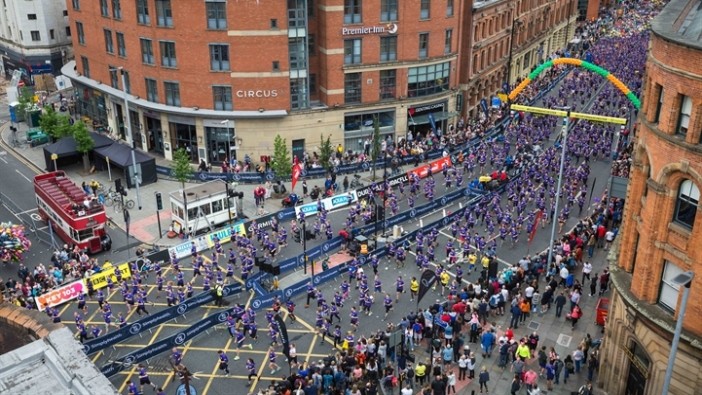
Mo Farah is not defending the title he won last year but the British presence will feature Nick Goolab, a man on form and the fastest Briton over 10km so far this year after breaking the course record with a run of 28:22 when winning in Brighton.
He will be joined by compatriots Emile Cairess, Ieuan Thomas and Dan Studley.
Login to leave a comment

Great Manchester Run
The Great Manchester Run, established in 2003, is an annual 10 kilometer run through Greater Manchester and is the largest 10K in Europe. Usually held in mid-May, it is the third-largest mass participation running event in the United Kingdom behind the Great North Run and the London Marathon. It is part of the Great Runs series of road races in...
more...