

Running News Daily
Running News Daily is edited by Bob Anderson and team. Send your news items to bob@mybestruns.com Advertising opportunities available.
Index to Daily Posts · Sign Up For Updates · Run The World Feed
Articles tagged #1500m.
Today's Running News
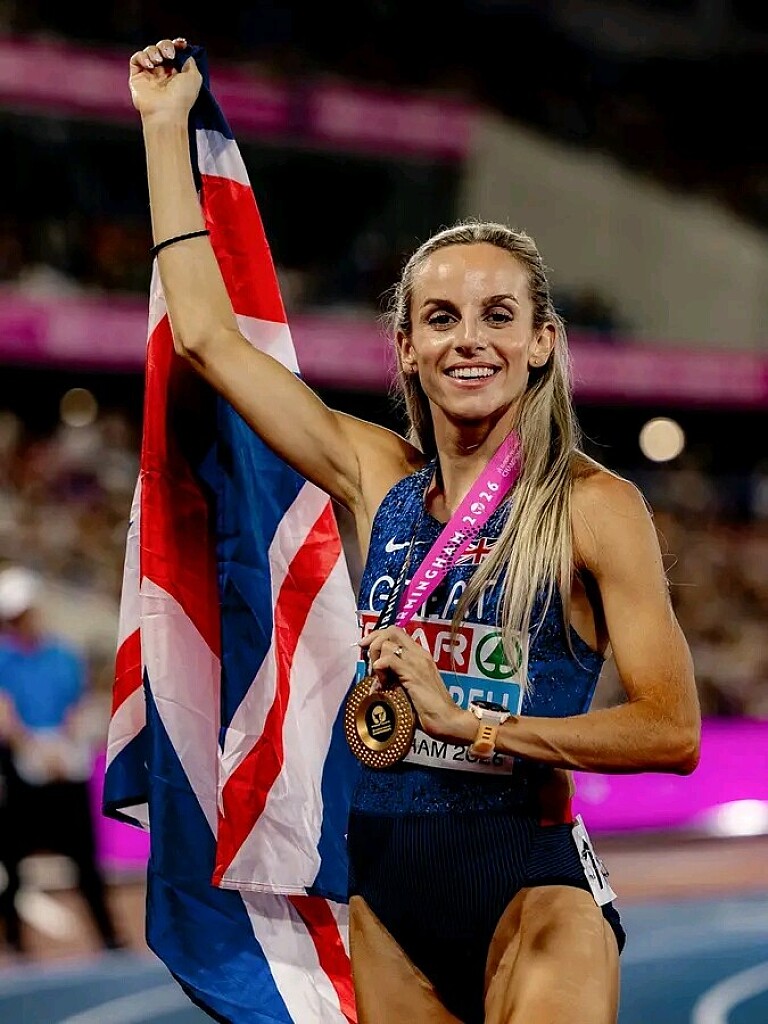


Two Events, One Olympic Dream! Georgia Hunter Bell Sets Her Sights On The 800m And 1500m Double At LA28 As New Qualification Standards Raise The Bar!
British middle-distance star Georgia Hunter Bell is already looking towards the Los Angeles 2028 Olympic Games, where she hopes to take on one of the most demanding challenges in athletics: competing in both the women's 800m and 1500m.
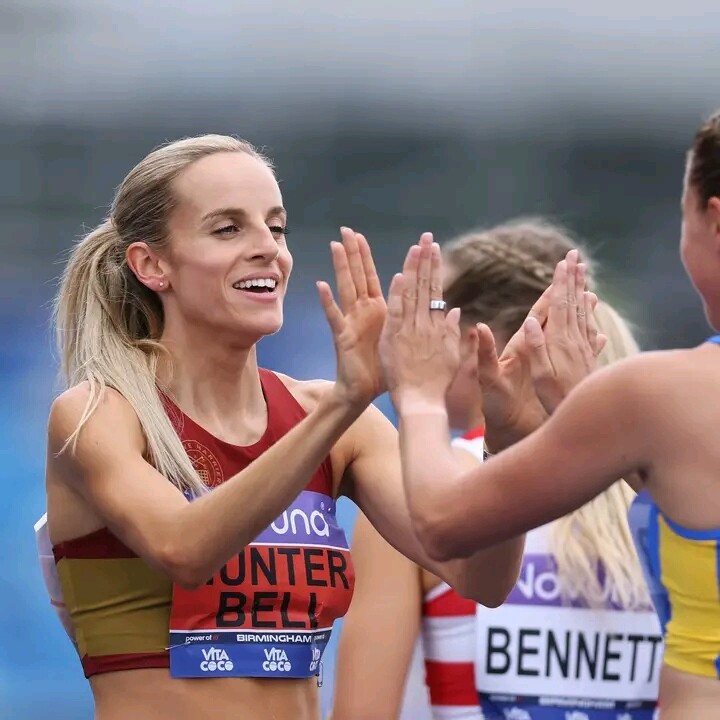
Hunter Bell has openly expressed her ambition to attempt the prestigious double, believing that the revised Olympic athletics schedule could make the combination more achievable. However, with the newly released LA28 qualification standards setting an exceptionally high benchmark, the road to achieving that dream will require careful planning and outstanding performances.
The 32-year-old has already established herself as one of Britain's leading middle-distance athletes, demonstrating remarkable versatility across both distances. Her personal bests of 1:54.90 in the 800m and 3:52.61 in the 1500m underline her ability to compete at the highest level in either event.
And with the new Olympic standards now officially published by World Athletics, the challenge is becoming clearer.
THE LA28 WOMEN'S QUALIFICATION STANDARDS:
800m: 1:57.00
1500m: 3:57.50
On paper, Hunter Bell has already run comfortably inside both qualifying marks. Her 800m personal best is 2.10 seconds faster than the required standard, while her 1500m best is 4.89 seconds quicker.
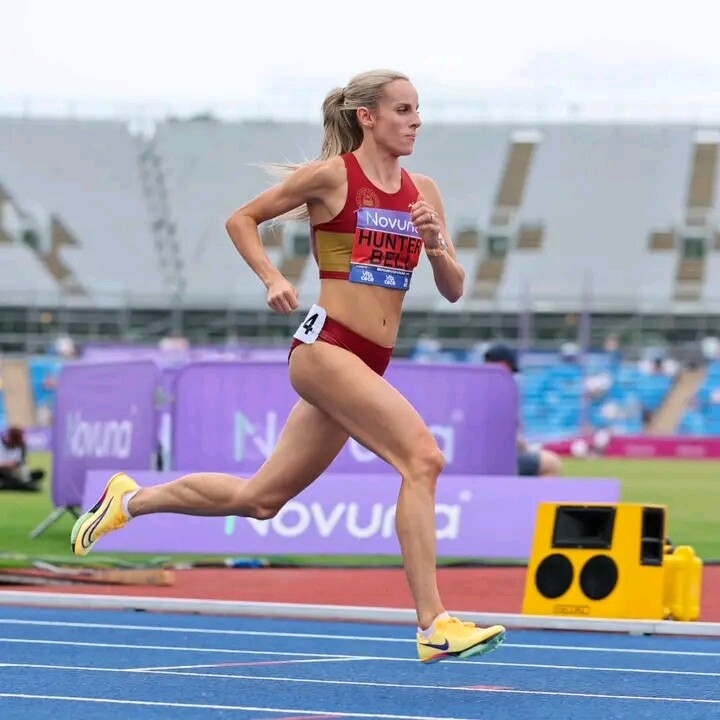
Nevertheless, having the required times on her record is not the same as securing an Olympic place. She will need to produce qualifying performances within the official window, remain competitive against Britain's outstanding middle-distance field and successfully navigate the selection process.
According to World Athletics, approximately 40 per cent of the available places in each event are expected to be allocated through entry standards, with the remaining 60 per cent determined through world rankings. Importantly, achieving the standard does not automatically guarantee qualification if more athletes meet the mark than the available quota allows.
For both the 800m and 1500m, the qualification and ranking period will run from 19 June 2027 to 18 June 2028.
Hunter Bell's ambition comes at an exciting time for British athletics. Having already shown that she possesses the speed and endurance required to excel at both distances, she could become one of the fascinating athletes to watch as preparations for LA28 gather momentum.
Her challenge, however, will be about more than simply running two fast times. Successfully contesting both events at an Olympic Games requires exceptional preparation, tactical intelligence, recovery and the ability to deliver under immense pressure.
If she manages to secure places in both disciplines, the British star could have an opportunity to challenge for two Olympic finals and potentially two medals.
THE BIG QUESTION IS NOW: CAN GEORGIA HUNTER BELL TURN HER AMBITIOUS 800M/1500M DOUBLE DREAM INTO REALITY AT LOS ANGELES 2028?
The clock is ticking, the standards are set, and the road to LA28 is officially taking shape.
by Erick Cheruiyot for My Best Runs.
Login to leave a comment
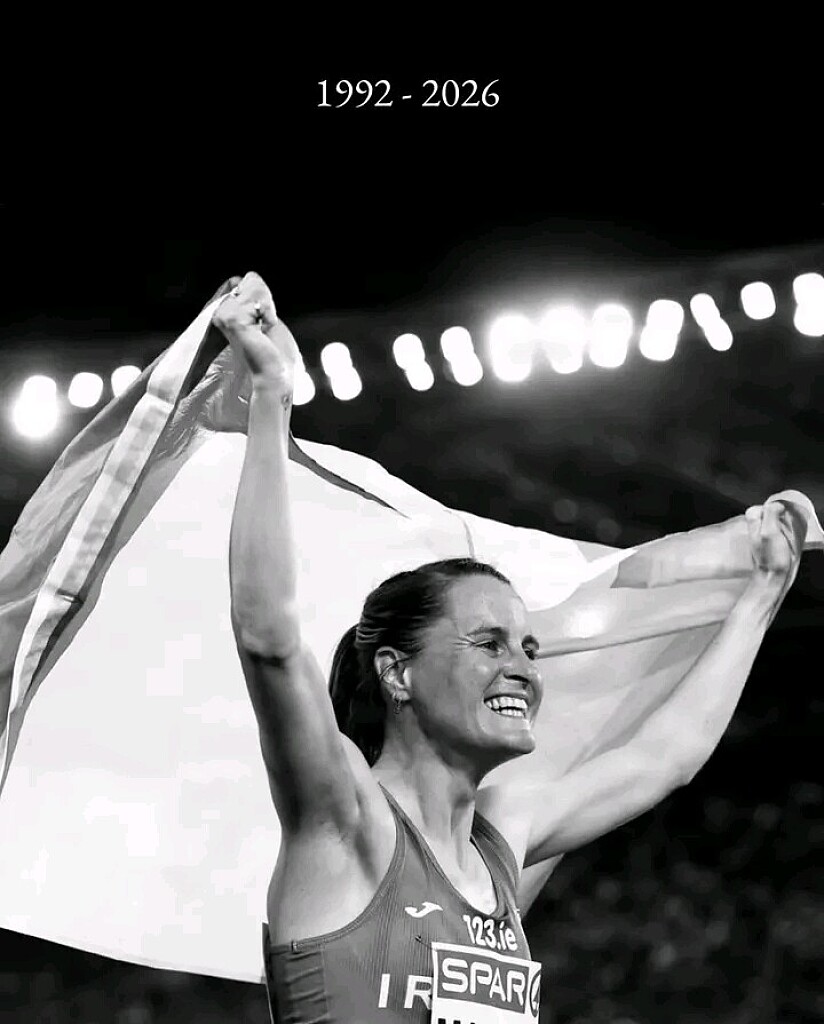
Ciara Mageean, 1992–2026: Ireland Mourns the Loss of a European Champion
Irish athletics is mourning the devastating loss of Ciara Mageean, who has died at the age of 34 following a courageous battle with cancer.
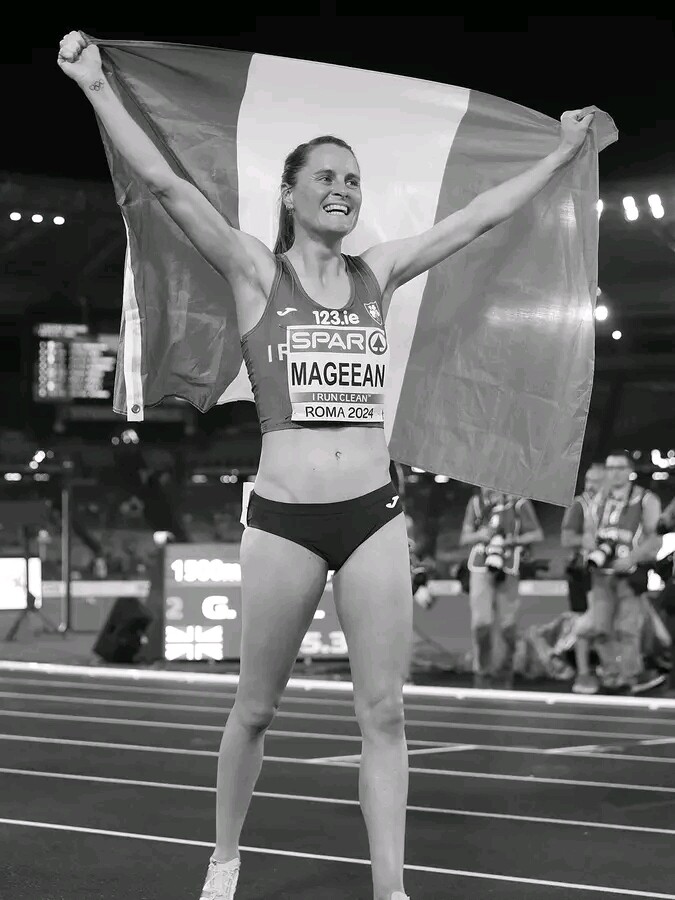
Mageean, one of Ireland’s most accomplished middle-distance runners, passed away at 6:30 a.m. surrounded by her loved ones, according to a statement shared by her family on social media.
“At 6.30am this morning, Ciara lost her battle with cancer surrounded by her loved ones,” the statement read. “A beloved daughter, sister, wife, friend and inspiration to so many, she will be deeply missed.”
The message concluded with the Irish blessing: “Ar dheis Dé go raibh a hanam.”
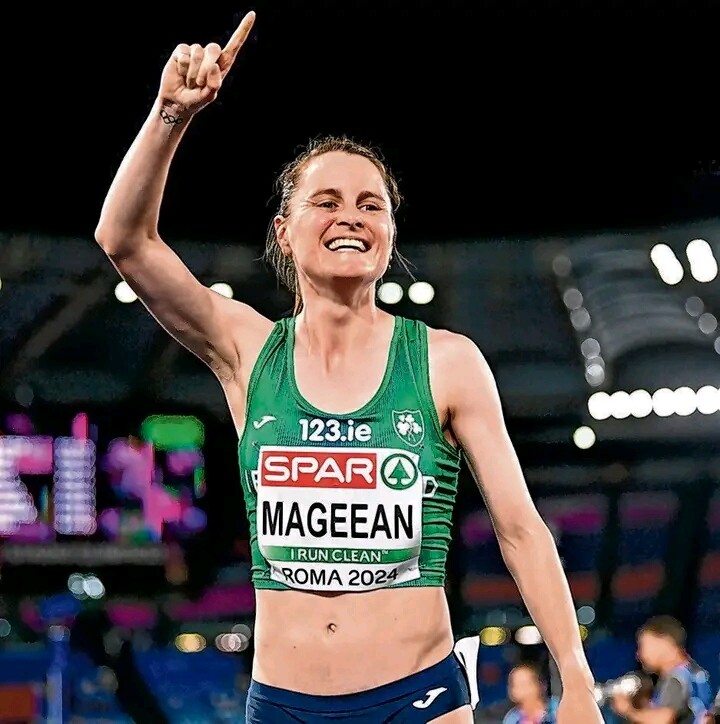
Born in Portaferry, County Down, on 12 March 1992, Mageean built an exceptional career in the 1500m, combining remarkable talent with resilience through years of injuries and setbacks.
Her defining sporting moment came at the 2024 European Athletics Championships in Rome, where she finally claimed the major outdoor title that had eluded her. In a fiercely contested 1500m final, Mageean produced a powerful finish to win gold in 4:04.66, completing a remarkable European medal collection after bronze in 2016 and silver in 2022.
That victory was the culmination of years of perseverance. Mageean had already established herself among Ireland’s leading middle-distance athletes, representing her country at the Rio 2016 and Tokyo 2020 Olympic Games. She was also selected for Paris 2024, but an Achilles injury prevented her from taking part in the 1500m.
Her achievements extended beyond the European Championships. Mageean won silver in the 1500m at the 2022 Commonwealth Games and finished fourth at the 2023 World Athletics Championships in Budapest. She also collected European indoor bronze in 2019 and established herself as a record-holder across several distances.
Her personal best of 3:55.87 in the 1500m, set in 2023, remains an Irish national record, while she also held Irish records for 800m, 1000m and the mile.
But Mageean’s legacy reaches far beyond times, medals and championship results. Her career was defined by determination, openness and an ability to inspire people through the difficult moments as much as the triumphs.
In July 2025, Mageean publicly revealed that she had been diagnosed with stage-four bowel cancer. Even as she confronted an extraordinarily difficult chapter away from the track, she continued to demonstrate the courage and spirit that had defined her athletic career.
Her death brings an extraordinarily accomplished sporting life to a heartbreaking end at just 34.
From Portaferry to the Olympic Games and ultimately the top step of the European podium, Mageean left an indelible mark on Irish athletics. Her European title in Rome will remain one of the defining moments of her career, but so too will the resilience she showed throughout a journey marked by adversity.
Ciara Mageean leaves behind a legacy that extends well beyond the 1500m. She was an Olympian, a European champion, a national record-holder and, above all, an inspiration to countless people who followed her journey.
Ciara Mageean, 1992–2026. Her name will remain part of Irish athletics history.
by Erick Cheruiyot for My Best Runs.
Login to leave a comment
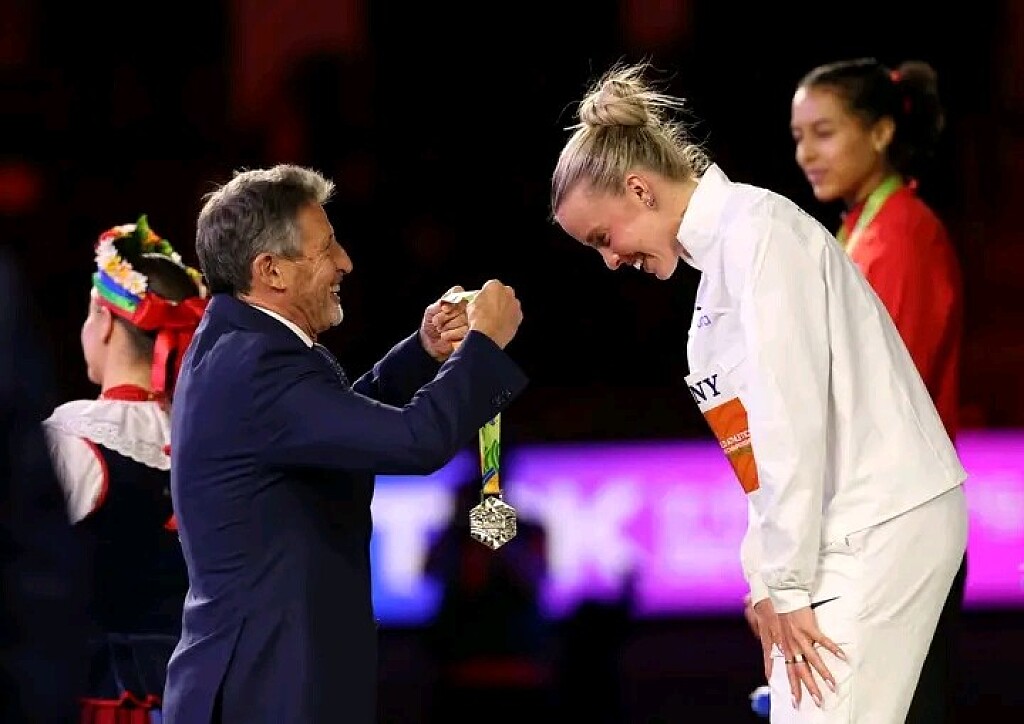
Sebastian Coe At 70: From Yorkshire Prodigy To Olympic Great And World Athletics President
Sebastian Coe turns 70 today, marking seven remarkable decades for a man whose name has become inseparable from some of the greatest moments in middle-distance running.
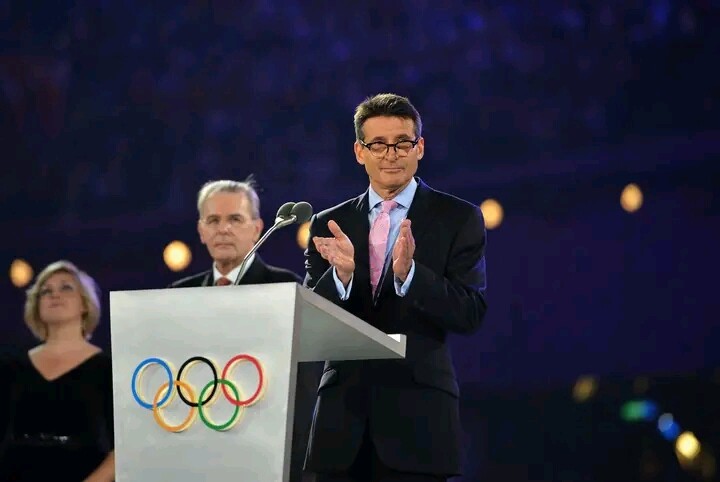
Born on September 29, 1956, Coe grew from a talented youngster in Yorkshire into one of the most influential figures athletics has ever produced — first as an extraordinary competitor on the track and later as a leader at the highest level of the sport.
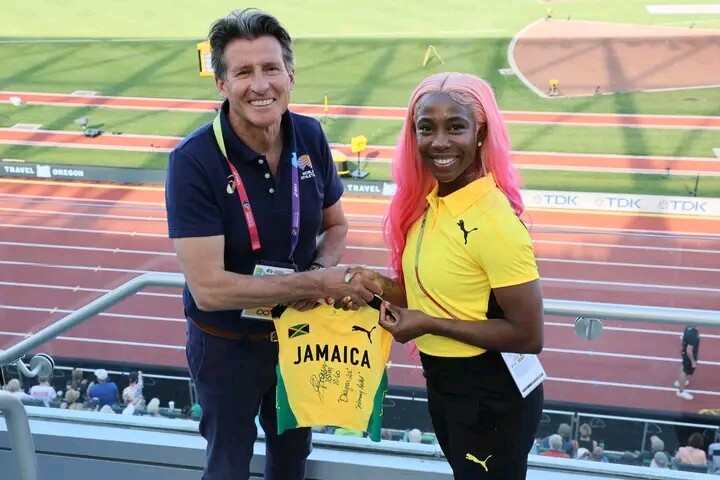
His journey began long before the Olympic medals and world records. As a teenager, Coe was already attracting attention, and his early appearances in Athletics Weekly offered a glimpse of the remarkable career that was beginning to unfold.
By the late 1970s, he had established himself as one of Britain's brightest middle-distance prospects. His rivalry with Steve Ovett became one of the defining storylines of the era, while Coe's extraordinary combination of speed, tactical intelligence and finishing power allowed him to compete successfully across the 800m, 1500m and mile.
In 1979, Coe announced himself to the world in spectacular fashion. In Oslo, he smashed the 800m world record with 1:42.33, becoming the first man to break 1:43. Just weeks later, he added a world record in the mile with 3:48.53 before ending the season as one of the sport's dominant figures.
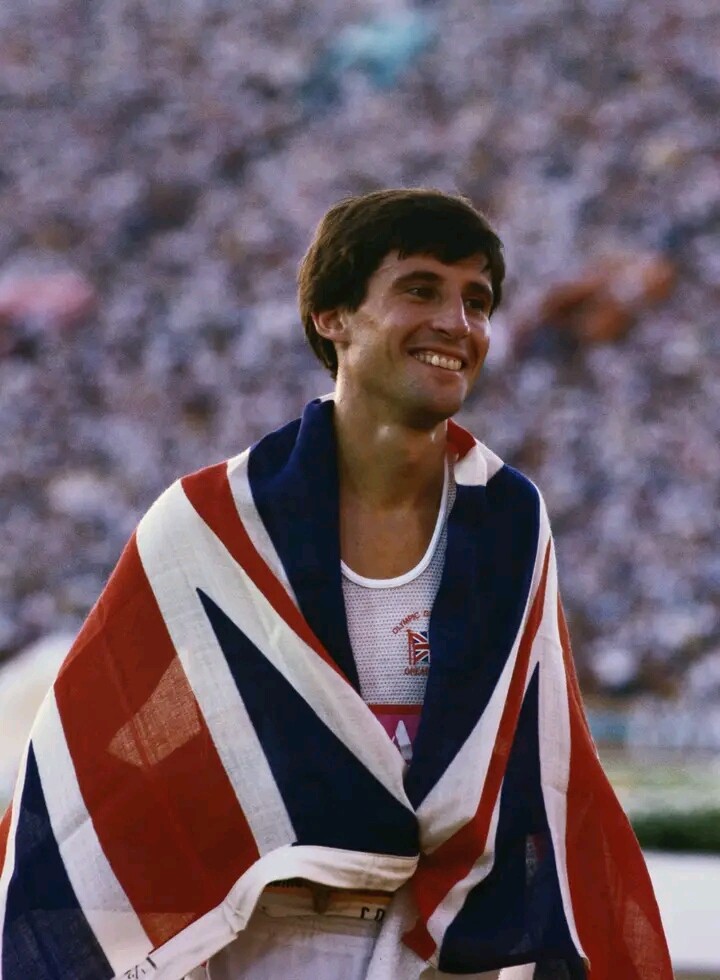
The following years produced even more extraordinary performances.
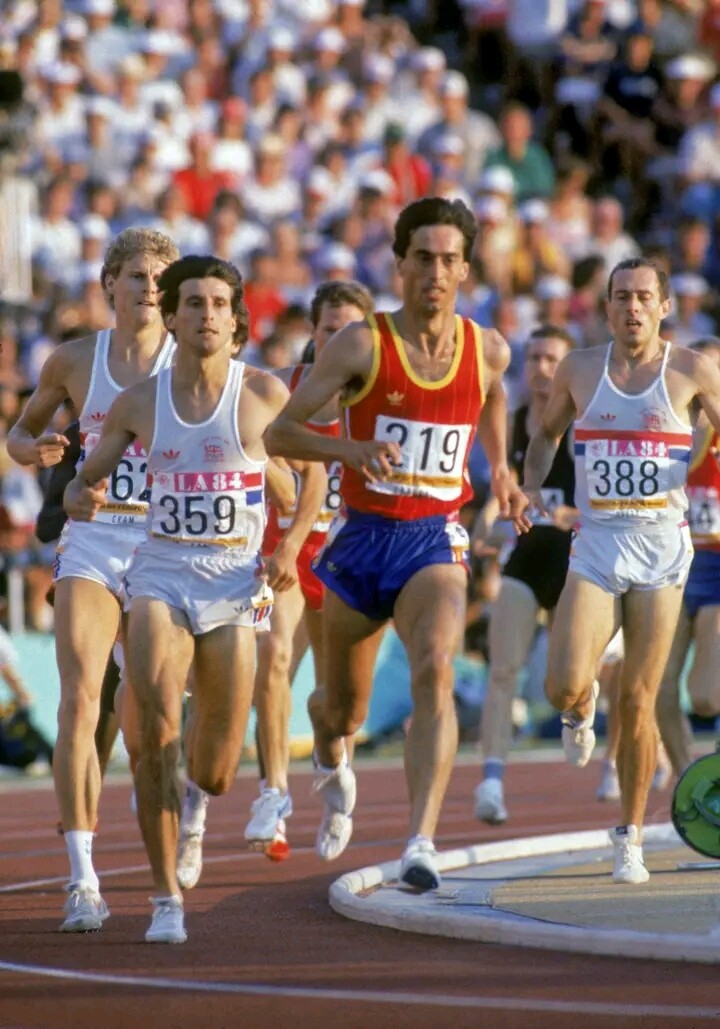
On June 10, 1981, in Florence, Coe lowered his own 800m world record to 1:41.73. The performance was historic. The mark remained untouched for 16 years before Wilson Kipketer equalled it in 1997. It remains one of the most iconic performances in 800m history.
Coe's Olympic career was equally remarkable.
At the 1980 Moscow Olympics, he won gold in the 1500m and silver in the 800m. Four years later in Los Angeles, he repeated that extraordinary combination, again taking 1500m gold and 800m silver.
His second Olympic 1500m victory in 1984 cemented his place among the greats of the event. His personal best of 3:29.77, set in 1986, remains one of the fastest marks of his era. World Athletics lists Coe as a two-time Olympic champion and two-time Olympic silver medallist, with 12 world records accumulated during his career.
His record-breaking career extended beyond the 800m and 1500m. Coe set world records over 800m, 1000m, 1500m and the mile, demonstrating an extraordinary range that was rare even among elite middle-distance specialists.
He also collected major European honours, including the European 800m title in 1986 and the European Indoor 800m crown earlier in his career.
Yet Coe's story did not end when he left competitive athletics.
After retiring from the track in 1990, he moved into public life and sports administration. His leadership role in London's successful bid for the 2012 Olympic and Paralympic Games became one of the most significant chapters of his post-athletics career. He later served as chairman of the London 2012 Organising Committee, helping oversee the preparation and delivery of the Games.
In August 2015, Coe took on perhaps his most influential role yet when he became president of World Athletics. He has since remained at the centre of global athletics, helping guide the sport through changes in competition, governance, commercialisation and athlete-focused initiatives. World Athletics currently lists him as president of the organisation.
Even at 70, Coe's connection with competition remains clear. His comments surrounding the inaugural World Athletics Ultimate Championship in Budapest in 2026 showed the same fascination with head-to-head racing that defined him as an athlete decades earlier.
From a young Yorkshire runner to an Olympic champion, world-record setter, London 2012 leader and now president of World Athletics, Coe's career has crossed almost every level of the sport.
His 1:41.73 may no longer be the world record, but the performance remains a permanent part of 800m history. His Olympic double-double remains extraordinary. And his transition from athlete to administrator has ensured that his influence extends far beyond the races he once dominated.
Seventy years on, Sebastian Coe's legacy is therefore not confined to medals, records or statistics. It is the story of a middle-distance pioneer whose impact has continued long after his final competitive race — and whose name remains firmly woven into the history of athletics.
by Erick Cheruiyot for My Best Runs.
Login to leave a comment
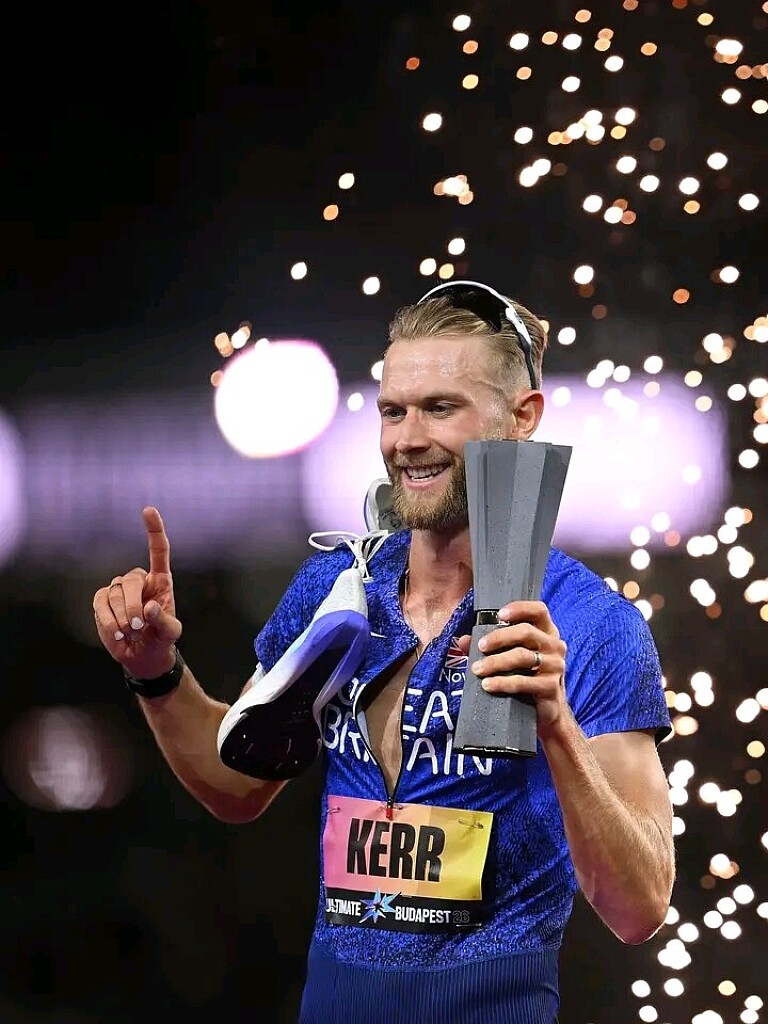
Josh Kerr Does It Again In Budapest As British Star Claims Ultimate 1500m Crown
“I’m not going to lose.” He said it. Then he delivered.
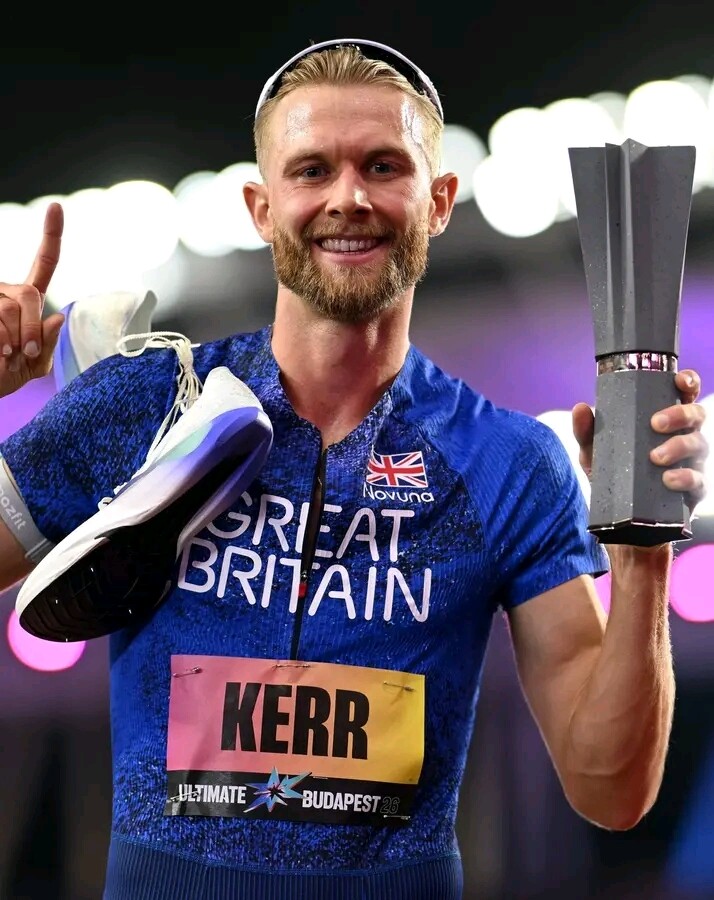
Josh Kerr has conquered Budapest once again, adding another huge title to an extraordinary 2026 season by winning the men’s 1500m at the inaugural World Athletics Ultimate Championship.
The British world mile record-holder produced a superb 3:29.35 to take the Ultimate Championship crown, using a devastating final kick to hold off Australia’s rising star Cameron Myers in the closing stages.
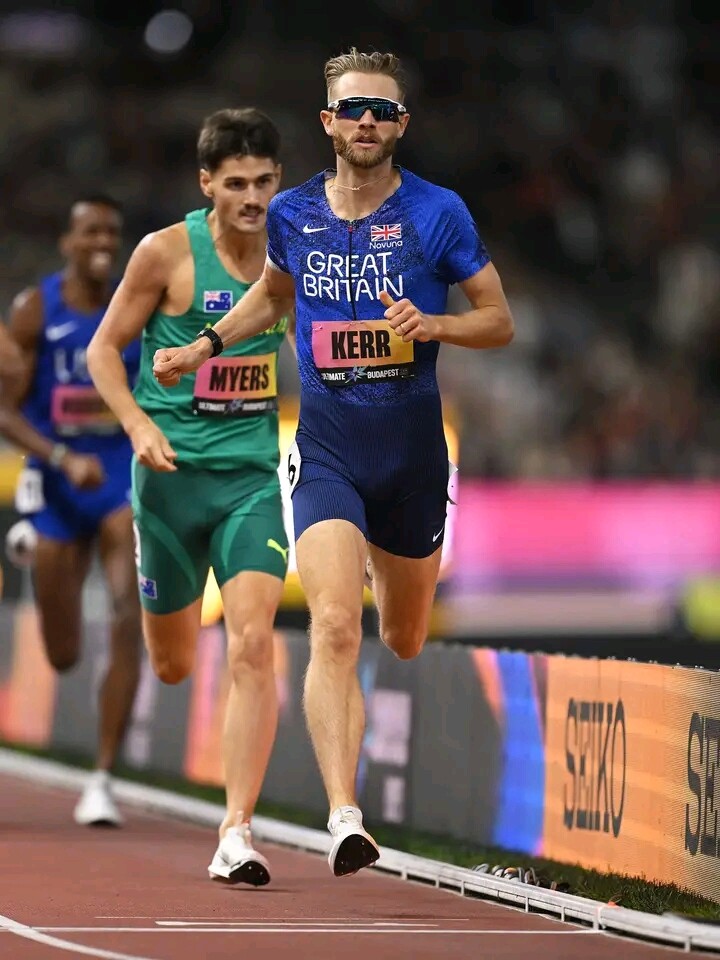
Myers pushed Kerr all the way to the finish, but the British star remained composed under pressure before finding another gear when it mattered most. The Australian crossed the line in 3:29.68 to secure second place, just 0.33 seconds behind the champion.
American Hobbs Kessler completed the podium in 3:30.73, while Olympic champion Cole Hocker finished fourth in 3:30.74, narrowly missing out on a medal by just one hundredth of a second.
For Kerr, the victory carries an added layer of significance because Budapest has already played a defining role in his career.
It was here in 2023 that Kerr produced one of the biggest shocks of that year’s World Championships, stunning Jakob Ingebrigtsen to become the world champion over 1500m. Three years later, he has returned to the same city and conquered it again.
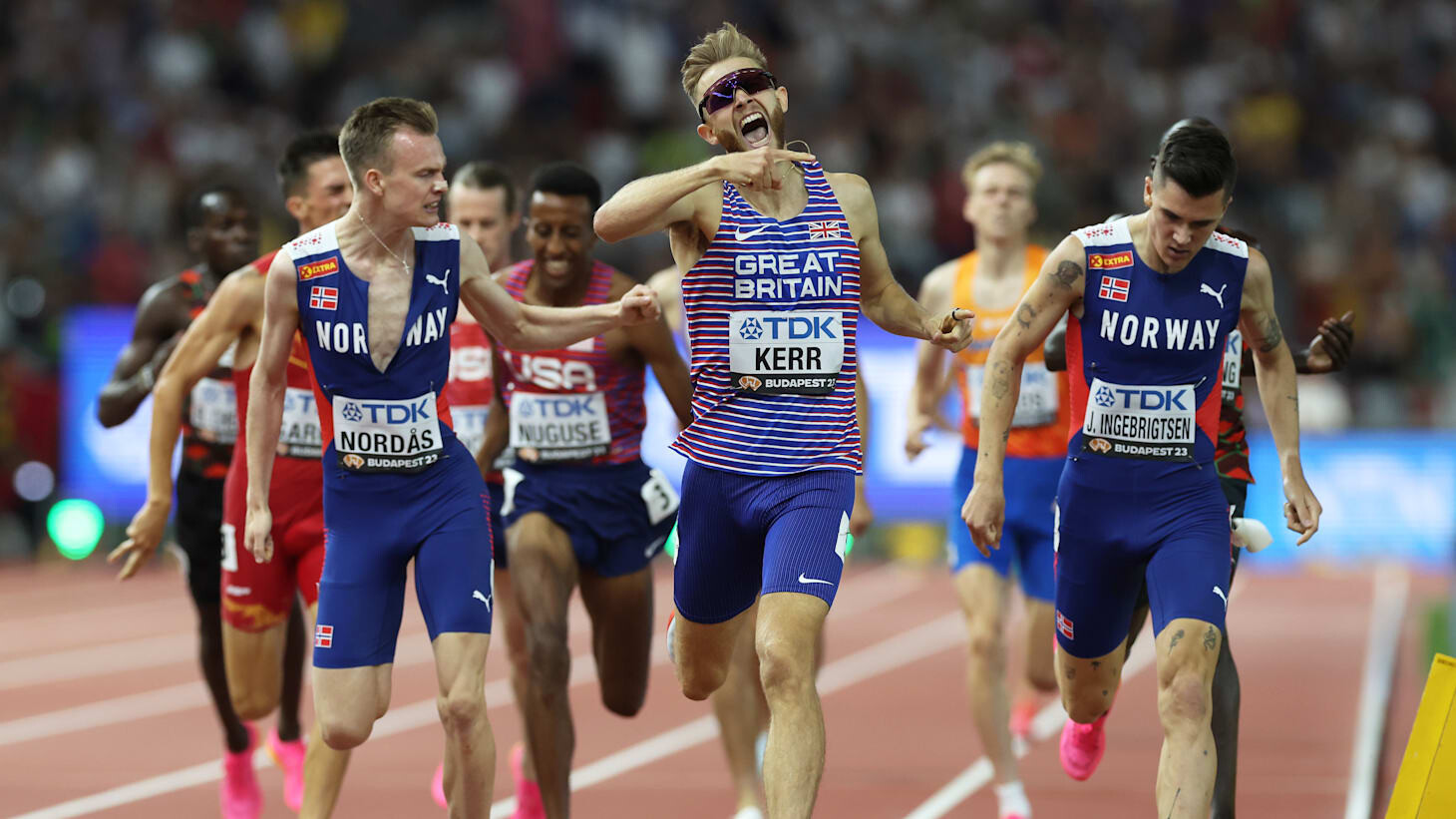
Budapest belongs to Kerr once more.
The British star arrived at the Ultimate Championship after putting together a remarkable 2026 campaign. Among the highlights was his sensational 3:42.66 mile world record in London, where he finally broke a mark that had stood for 27 years.
Kerr also added Commonwealth Games gold to his growing collection of major honours, further establishing himself as one of the dominant middle-distance athletes of his generation.
The Budapest final was expected to provide another chapter in the growing rivalry between Kerr and Ingebrigtsen. However, Ingebrigtsen’s late withdrawal meant the much-anticipated rematch never materialised.
Even without the Norwegian superstar, Kerr had no shortage of formidable opposition. The field featured Olympic champion Cole Hocker, world champion Isaac Nader and Yared Nuguse, while Myers arrived as one of the most exciting young talents in international middle-distance running.
The unique Ultimate Championship format also raised the stakes. With no heats and no second chances, every athlete had only one opportunity to deliver on the biggest stage.
Kerr appeared to embrace that pressure.
Rather than allowing the quality of the field to dictate the race, he stayed patient and waited for the decisive moment. As the final metres approached, the British star unleashed the finishing speed that has become one of his greatest weapons.
Myers fought desperately to stay with him, but Kerr had done enough.
The 3:29.35 winning time was not simply another fast performance. It was another demonstration of Kerr’s championship instincts and his ability to produce when everything is on the line.
For Myers, the silver medal represents another major breakthrough and a strong statement from the young Australian. His 3:29.68 shows that he is increasingly capable of challenging the established stars of the 1500m.
Kessler’s bronze added another impressive result to his career, while Hocker’s fourth-place finish underlined just how competitive the final was, with less than a second separating him from the champion.
Yet the night ultimately belonged to one man.
From the streets of Budapest in 2023 to the Ultimate Championship final three years later, Kerr has once again made the Hungarian capital his stage.
Another big race. Another Josh Kerr victory.
He arrived saying, “I’m not going to lose.”
Then he delivered.
Josh Kerr is the inaugural World Athletics Ultimate Championship 1500m champion — and Budapest belongs to him again.
by Erick Cheruiyot for My Best Runs.
Login to leave a comment
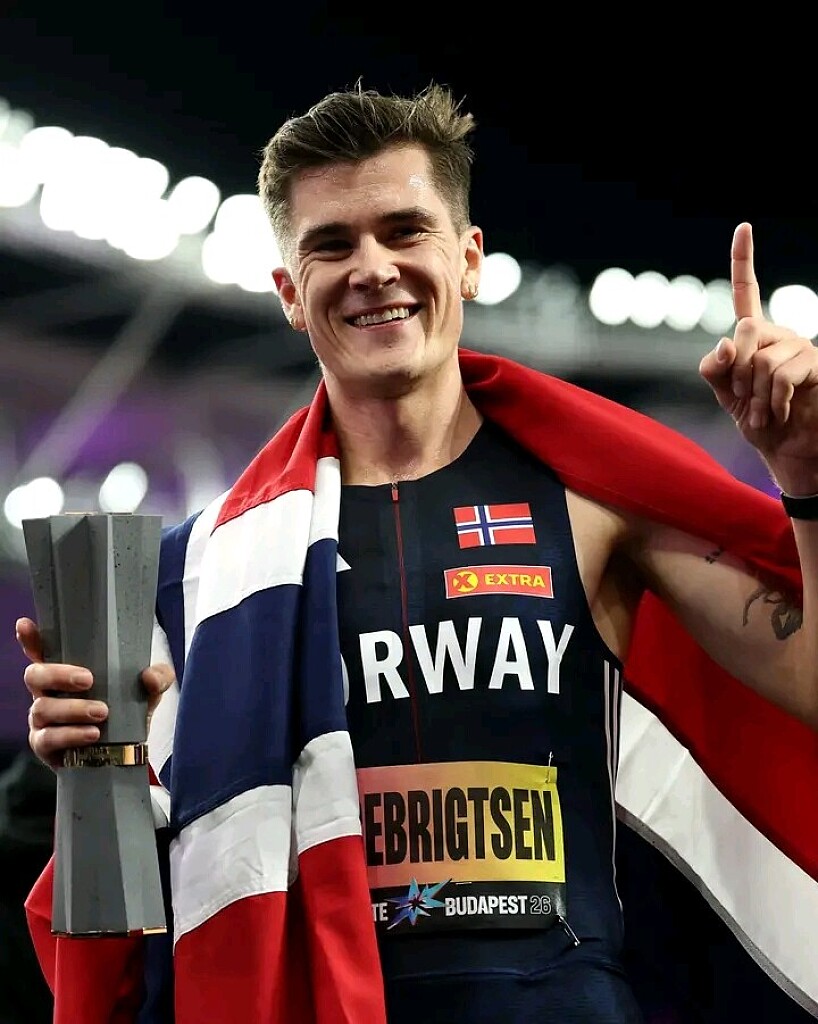
Jakob Ingebrigtsen Withdraws From Budapest 1500m After Stunning 5000m Victory: “Fitness Cannot Be Faked”
Jakob Ingebrigtsen has made a major decision regarding the remainder of his World Athletics Ultimate Championship campaign, confirming that he will withdraw from the men’s 1500m in Budapest despite producing a sensational performance to win the 5,000m title.
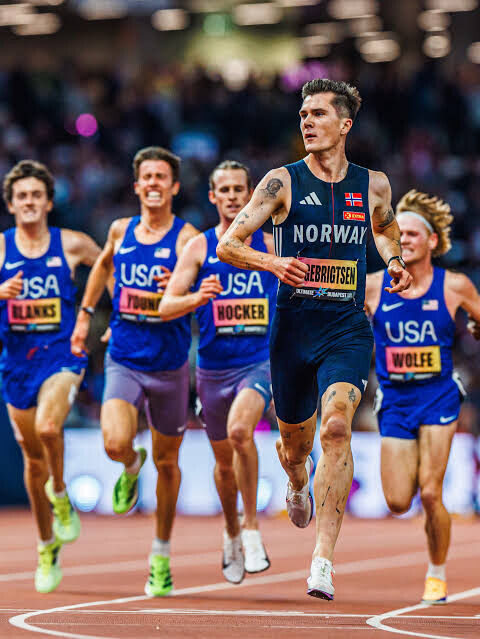
The Norwegian superstar stormed to victory in the inaugural Ultimate Championship 5,000m on Friday night, clocking a season-best 12:59.24 and delivering a devastating finishing kick to defeat Olympic 5,000m champion Cole Hocker and American Parker Wolfe.
Ingebrigtsen’s final 100 metres was arguably the defining moment of the race. The Olympic champion produced a remarkable 12.60-second closing 100m, powering away from the field to secure the $150,000 winner’s prize and underline just how far his fitness has progressed since returning from Achilles surgery.
The victory was particularly significant after what has been an extremely difficult period for the 25-year-old. Earlier in the season, Ingebrigtsen faced serious uncertainty over whether he would even be able to compete at the highest level again. His return has gradually gathered momentum, and his performance in Budapest offered perhaps the clearest indication yet that the Norwegian is rediscovering his formidable racing ability.
But rather than risk pushing his recovering body further, Ingebrigtsen has now opted to step away from the 1500m.
The decision means the highly anticipated showdown with British rival Josh Kerr will not take place in Budapest after all. The two stars had been expected to renew one of the biggest rivalries in modern middle-distance running in the 1500m final.

Instead, Ingebrigtsen is looking beyond the immediate opportunity and towards the bigger picture.
“I’m thinking about 2027… Fitness cannot be faked,” the Norwegian said, signalling that protecting his long-term condition has become more important than chasing another major victory only days after his return to peak-level competition.
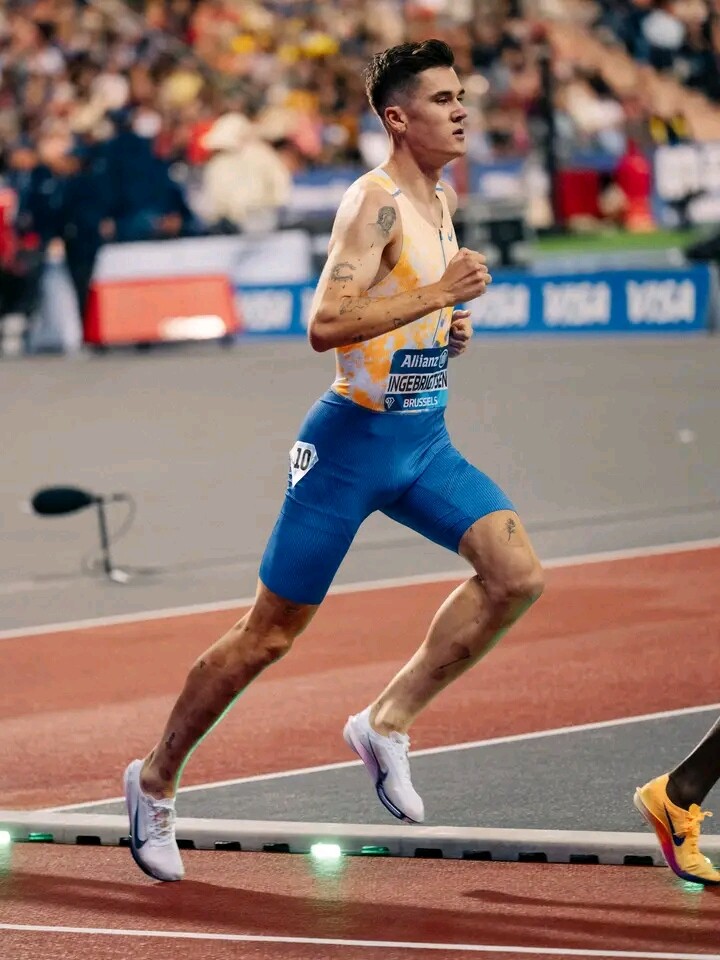
The decision comes just one week after an emotionally charged Diamond League Final in Brussels, where Ingebrigtsen finished fourth in the 1500m behind Australia’s Cameron Myers, Kenya’s Phanuel Kipkosgei Koech and American Ethan Strand.
After that race, Ingebrigtsen delivered a fiery assessment of his rivals and questioned the tactics surrounding the pacemaking, particularly involving Hocker. He later acknowledged that there had been “a little too much adrenaline and emotion” when microphones were placed in front of him immediately after the race.
Yet his latest decision shows that beneath the emotion and competitive intensity lies a longer-term strategy.
Ingebrigtsen has already demonstrated that he can compete at an elite level again. His 12:59.24 in Budapest was not simply a victory — it was a statement that the Norwegian remains capable of producing a world-class finish even after months of injury rehabilitation.
Now, however, he is choosing not to gamble with that progress.
For a runner who has spent much of the year fighting his way back from injury, another 1500m race could have offered enormous rewards but also carried unnecessary risk. By withdrawing, Ingebrigtsen is effectively prioritising longevity over one more opportunity for immediate glory.
His message is clear: the comeback is underway, but it will not be rushed.
The 5,000m victory has given Ingebrigtsen confidence, momentum and perhaps, most importantly, proof that his body can once again handle elite competition.
Now comes the harder part — knowing when to stop.
With 2027 already firmly in his sights, the Norwegian has chosen recovery over risk. And after everything he has endured, that could ultimately prove to be one of the most important decisions of his comeback.
Jakob Ingebrigtsen is not walking away from the sport. He is protecting his future in it.
by Erick Cheruiyot for My Best Runs.
Login to leave a comment
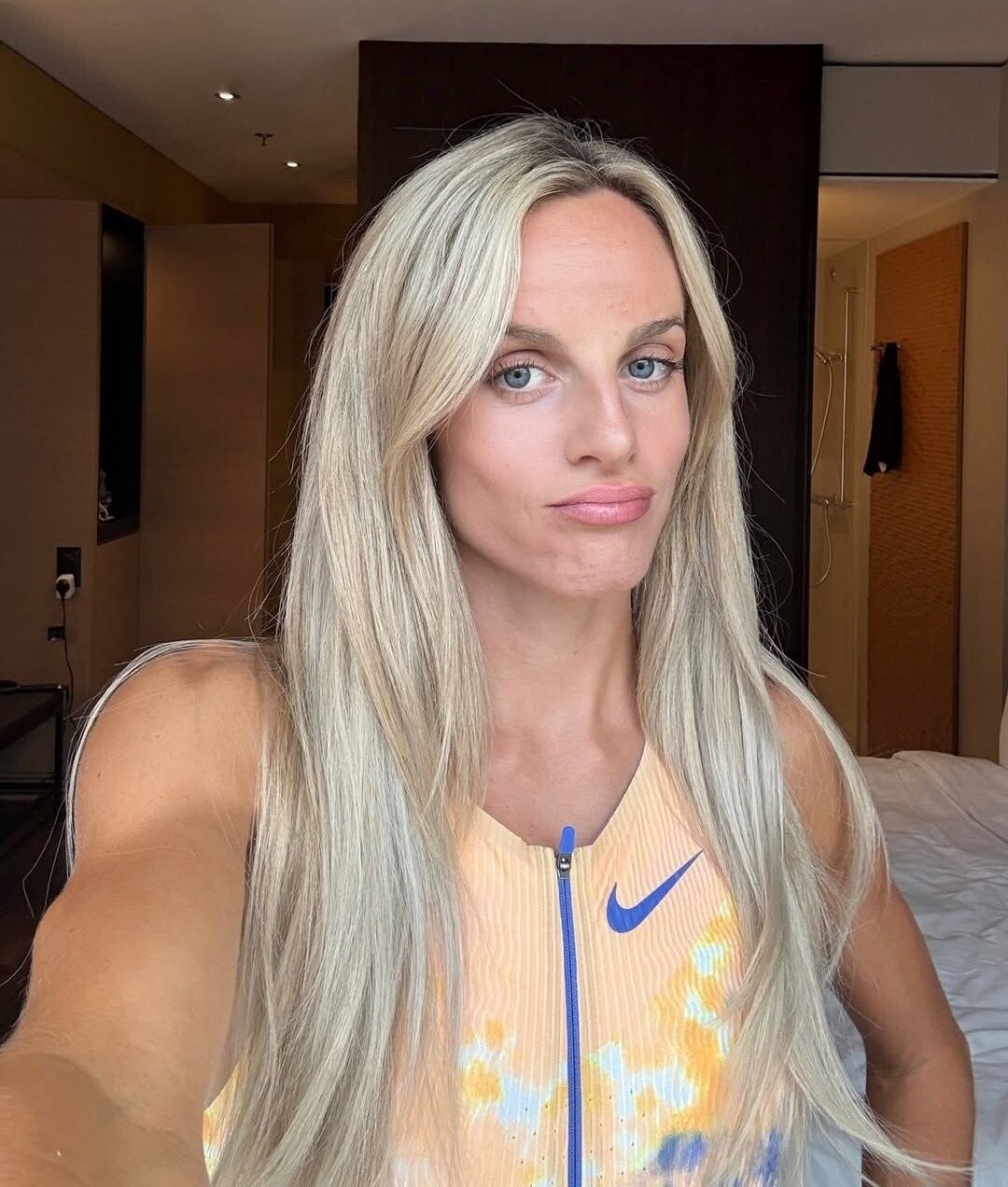
Georgia Hunter Bell Shines In Zürich With 1:55.03 Season’s Best As 800m Era Reaches New Heights
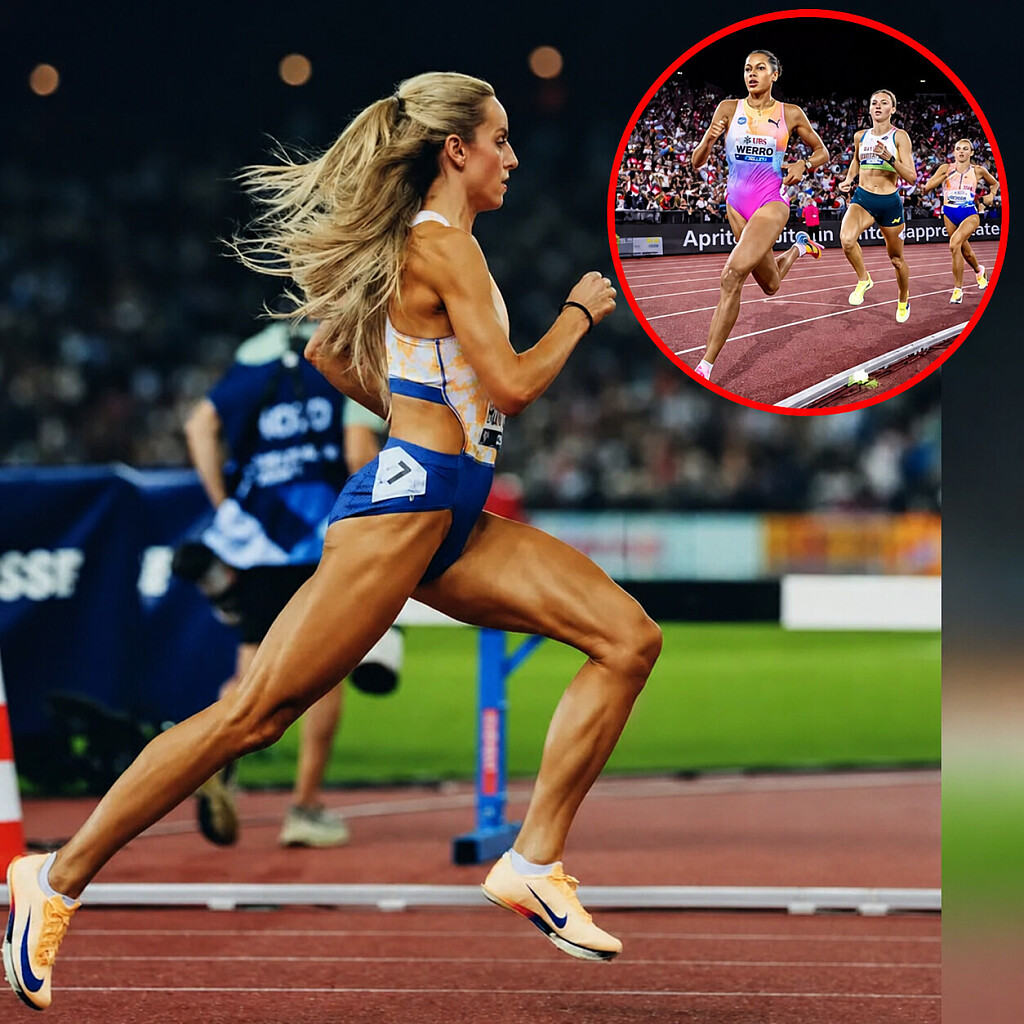
Georgia Hunter Bell produced another statement performance in Zürich, storming to a superb third-place finish in the women’s 800m at the Diamond League meeting while underlining once again her remarkable versatility across the middle-distance events.
The British star stopped the clock at 1:55.03, a season’s best and the second-fastest 800m of her career, finishing behind Audrey Werro and Femke Broeders-Bol in a race that ranks among the fastest women’s 800m contests seen in more than four decades.
For Hunter Bell, however, the result represented more than simply another podium finish. It was a performance that demonstrated just how dangerous she has become over two laps, despite her continued status as one of the world’s leading 1500m specialists.
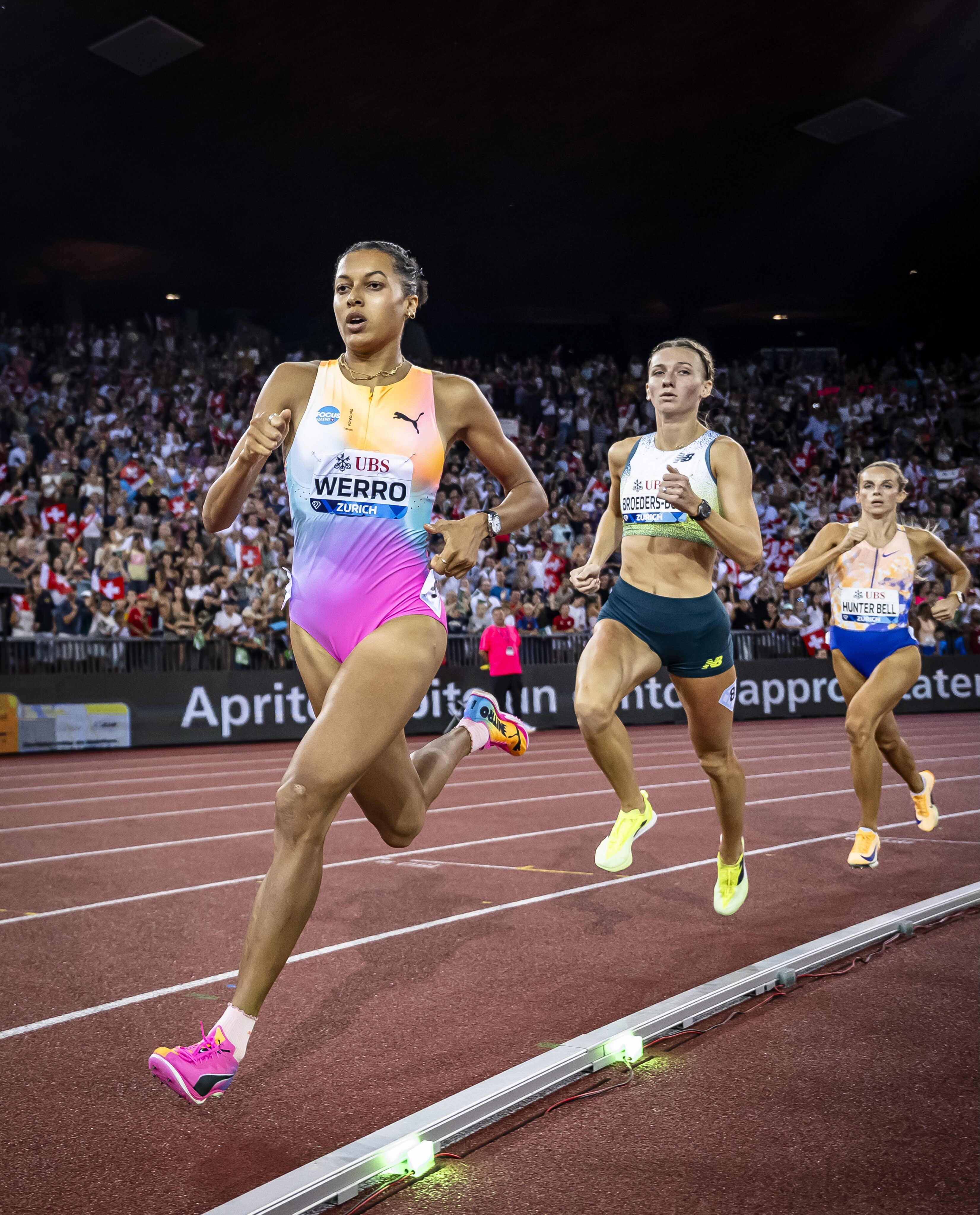
Reflecting on the race, Hunter Bell admitted that her competitive instincts over 800m still demand more, but she was equally proud of the performance and excited by the quality of the race.
Her season’s best of 1:55.03 moved her closer to her personal best of 1:54.90 and confirmed that her 800m speed remains a formidable weapon. She also welcomed the opportunity to compete alongside Werro and Broeders-Bol in a race that showcased the extraordinary depth and quality currently emerging in the women’s 800m.
Yet what makes Hunter Bell particularly fascinating is her ability to excel at both 800m and 1500m — two events requiring very different combinations of speed, endurance and tactical intelligence.
Over 800m, she is a Commonwealth champion and a World Championship silver medallist, with a personal best of 1:54.90. In the 1500m, her credentials are equally impressive. She owns a personal best of 3:52.61, has produced a season’s best of 3:55.63 and has captured both European and World Indoor titles.
That combination places Hunter Bell among the most versatile middle-distance athletes of her generation.
Her Zürich performance was therefore another reminder that she cannot be defined by a single event. She possesses the raw speed required to challenge the best over 800m, while her strength, endurance and championship experience make her equally formidable over 1500m.
With Brussels next on her schedule, Hunter Bell will be looking to carry the confidence from Zürich into the next stage of her season.
Her 800m alter ego may still believe there is more to unlock, but her 1500m instincts can certainly take satisfaction from what she produced in Zürich.
Speed over two laps. Strength over four. And a championship résumé that continues to grow.
Georgia Hunter Bell is proving that versatility is not merely an advantage — it can be a defining weapon at the highest level of middle-distance running.
by Erick Cheruiyot for My Best Runs.
Login to leave a comment
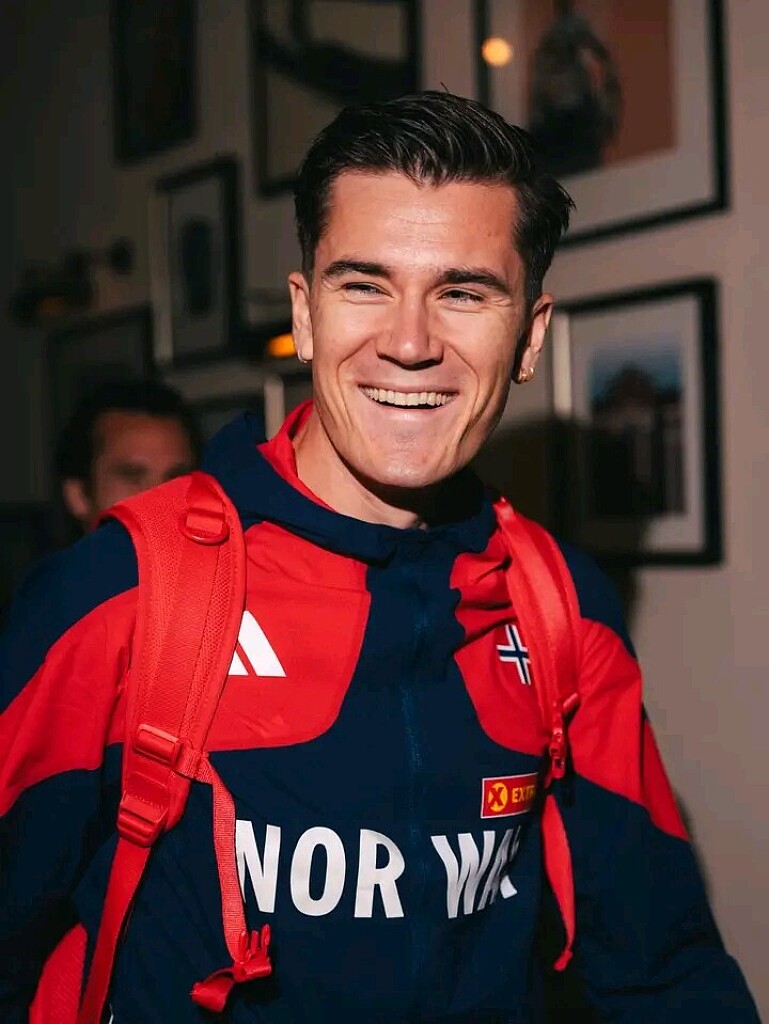
Jakob Ingebrigtsen Returns To Silesia: Can The Norwegian Reclaim The 1500m Throne?
Silesia has become a special chapter in Jakob Ingebrigtsen’s remarkable career, and on August 23, the Norwegian middle-distance superstar will return to the Diamond League with a question hanging over his comeback: can he return to the top of the 1500m?
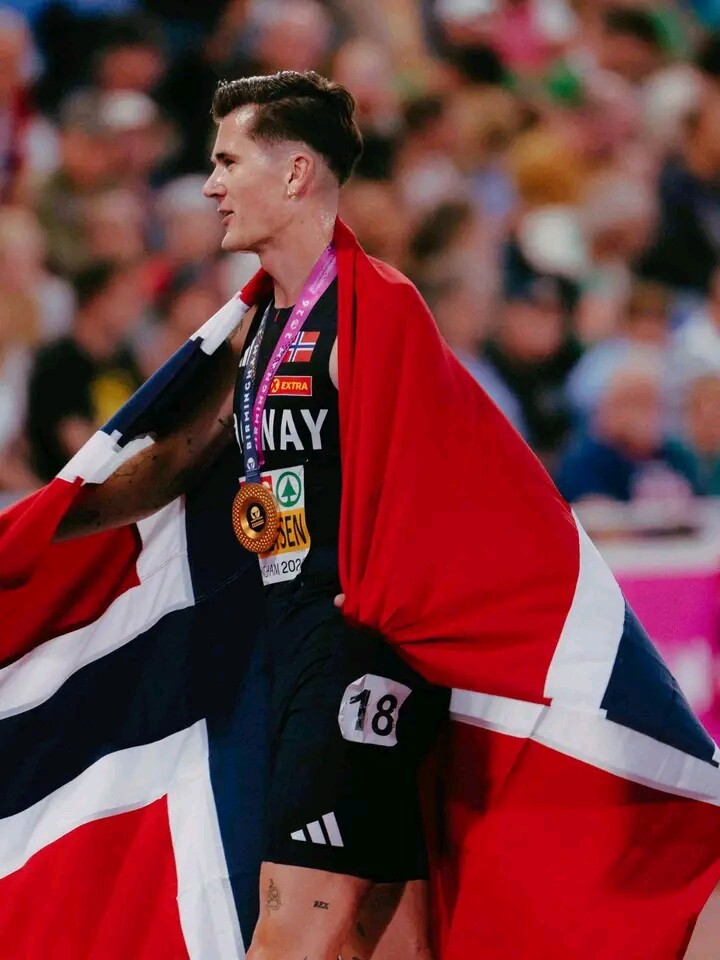
Ingebrigtsen is set to race his first 1500m since the 2025 World Athletics Championships, making his appearance at the Silesia Diamond League one of the most anticipated moments of the meeting.
The Norwegian’s return comes after a fascinating two-year stretch filled with major victories, record-breaking performances and unexpected setbacks.
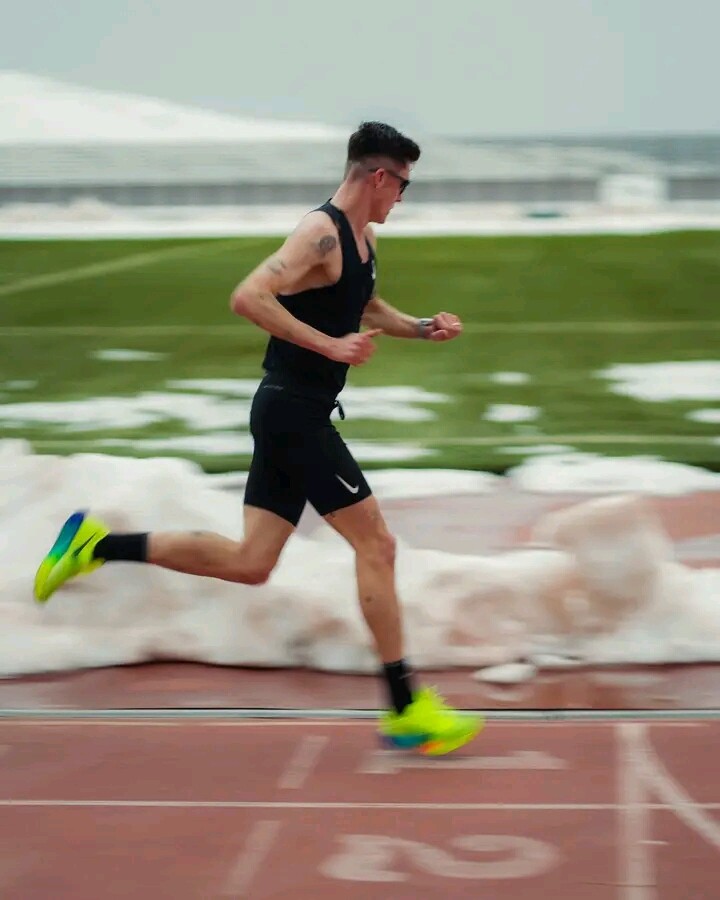
Since the 2024 Paris Olympics, Ingebrigtsen has experienced almost every side of elite middle-distance running. At the Paris Games, he finished fourth in the 1500m, narrowly missing the podium before quickly responding with a victory in the Diamond League Final later that year.
He then began 2025 in spectacular fashion, breaking the indoor mile world record before going on to claim the world indoor title in the 3000m.
However, his outdoor campaign brought a different challenge. At the 2025 World Championships, Ingebrigtsen failed to advance from the 1500m heats, bringing an unexpected early end to his campaign in the event.
Now, nearly a year later, the 25-year-old is ready to return to the distance that has defined so much of his career.
And Silesia could hardly be a more fitting place for his comeback.
The last time Ingebrigtsen raced at the Polish venue, he produced a performance for the history books. He stormed to 7:17.55 in the 3000m, destroying the 28-year-old world record and once again demonstrating his extraordinary ability to combine speed with endurance.
This time, however, the focus shifts back to the 1500m.
The race will offer Ingebrigtsen an opportunity to measure himself against the world’s best after an extended absence from the event. His tactical instincts, finishing speed and ability to handle a fast pace will all come under the spotlight.
For a runner who has spent years setting the standard in the 1500m, this is more than simply another Diamond League appearance. It is a chance to begin writing the next chapter.
Can Jakob Ingebrigtsen return to the top?
Silesia will provide the stage. August 23 will provide the answer.
by Erick Cheruiyot for My Best Runs.
Login to leave a comment

Michael Roeger’s Long Road Back to the Marathon World Record — and Now Sydney Awaits
On August 30, approximately 35,000 runners will line up at Miller Street in North Sydney for the 2026 TCS Sydney Marathon. Among them will be an athlete who already owns a piece of marathon history: Michael Roeger, the Australian T46 marathon world-record holder and one of the most remarkable endurance athletes of his generation.
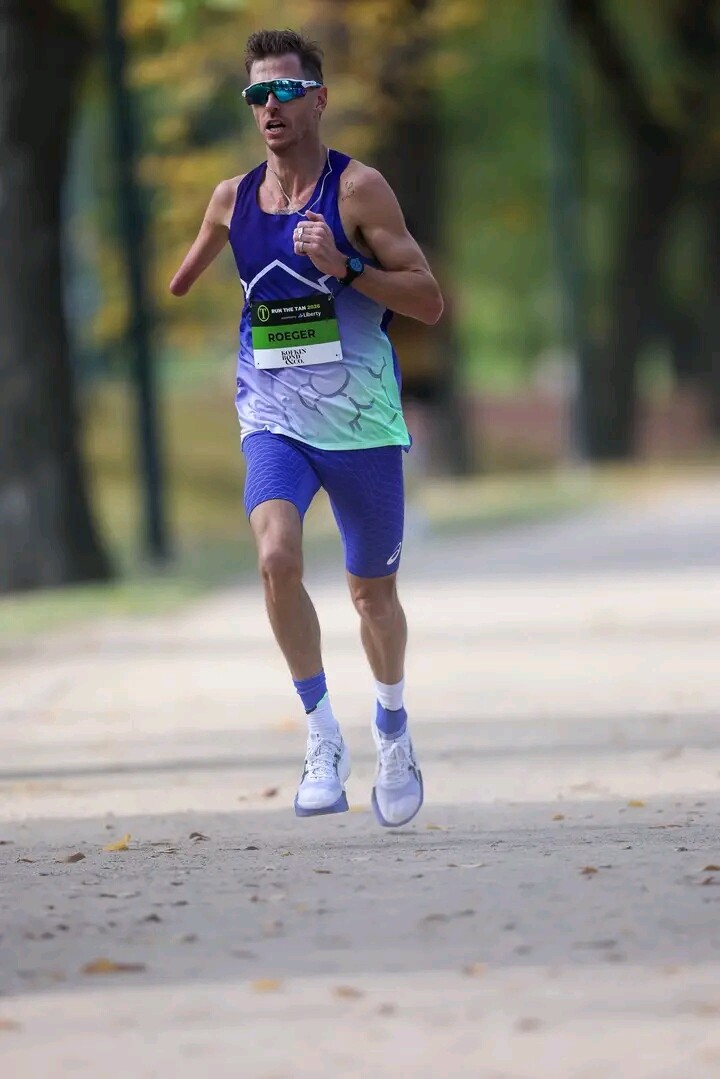
At 38, Roeger returns to the marathon with a career shaped by persistence, reinvention and an extraordinary ability to keep moving forward whenever circumstances have threatened to derail him.
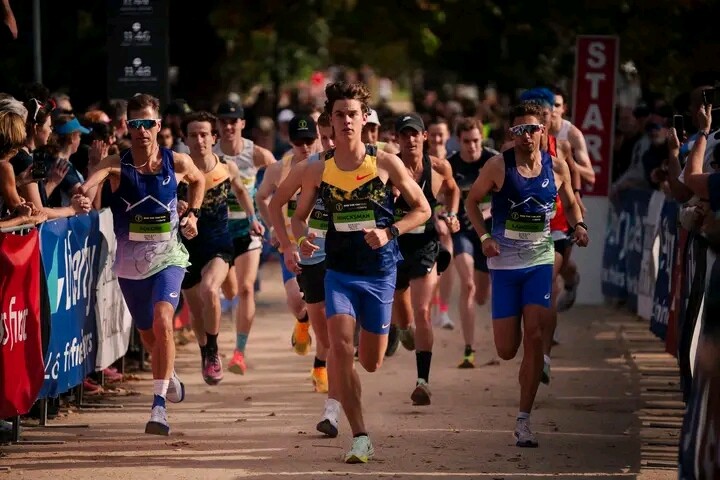
Sydney is a fitting stage for the next chapter. The marathon, now part of the Abbott World Marathon Majors, takes runners through some of the city's most recognisable landmarks, beginning in North Sydney, crossing the Harbour Bridge and eventually finishing near the Opera House. For Roeger, however, this is about far more than another marathon.
He is returning to the distance in the city where he set the fastest T46 marathon ever recorded.
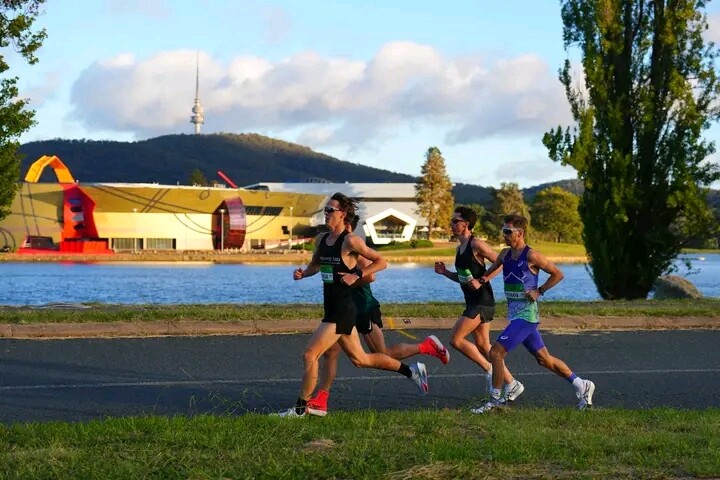
Roeger grew up in Langhorne Creek, a small South Australian community about 55 kilometres south of Adelaide. Born without the lower half of his right arm, he discovered Para athletics after Paralympian Neil Fuller visited his school when Roeger was 12.
What began as an introduction to sport eventually developed into a career spanning five Paralympic Games, world championships, major medals and multiple world records.
His T46 classification covers athletes with an arm amputation or comparable upper-limb difference. Yet describing Roeger's performances simply through his classification fails to capture the complexity of what he has achieved.
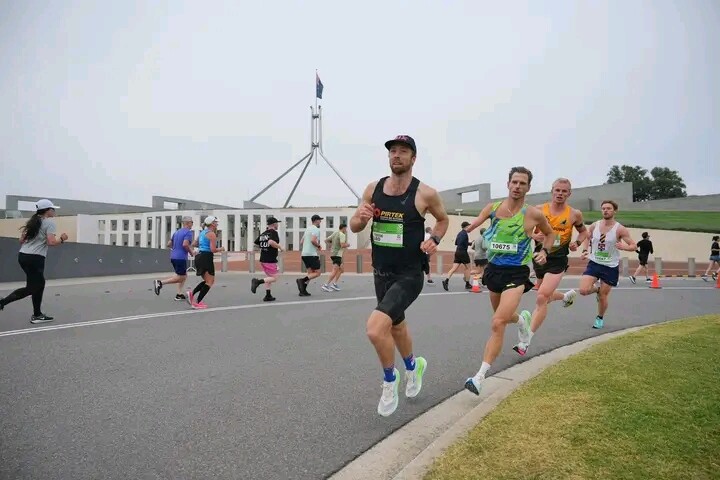
Running is an intricate coordination of the entire body. The arms contribute to balance, rhythm and control, helping the torso manage the rotational forces created by every stride. Over 42.195 kilometres, maintaining efficient movement is an enormous physical and technical challenge.
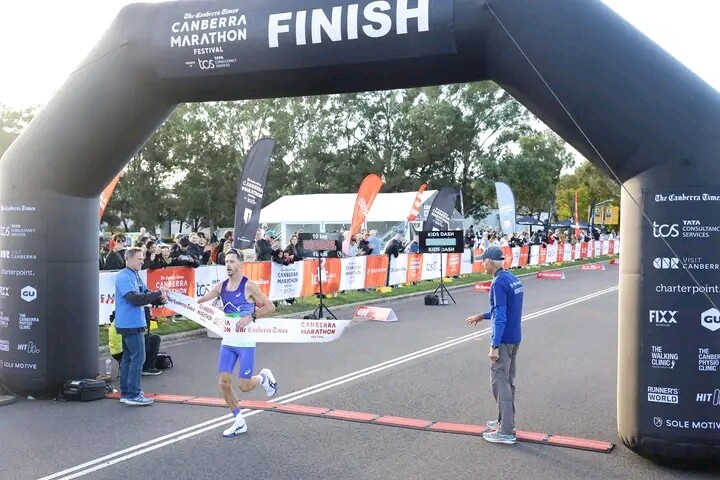
Roeger's marathon performances therefore represent much more than a number attached to a classification. They are elite endurance performances in their own right.
His transition to the marathon was remarkably rapid. Roeger made his marathon debut at the Melbourne Marathon in October 2018, running 2:23:31. The performance was faster than the existing T46 world record at the time, although it was not ratified as a world record because the race did not have the necessary status.
Six months later, he returned to the distance at the 2019 London Marathon, where the World Para Athletics Marathon Championships were staged within the race.
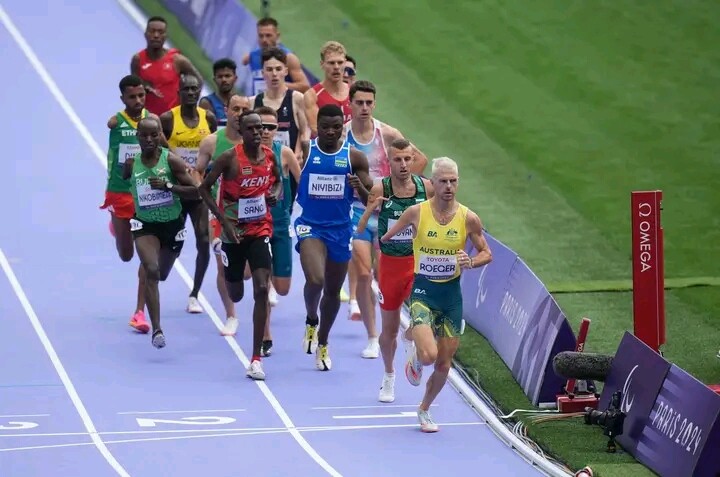
This time, everything came together.
Roeger won the T46 world title in 2:22:51, lowering the ratified world record and establishing himself as the world's leading marathoner in the classification. Even when cramp began to trouble him during the closing stages, he held on to become a world champion.
The progression continued.
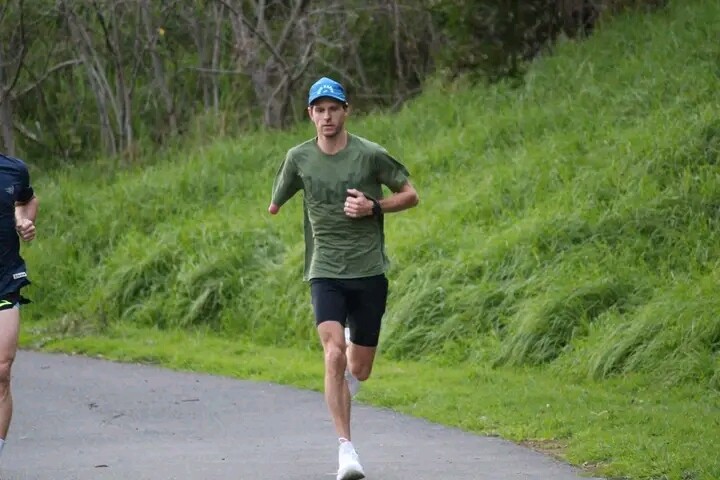
At the 2020 Chevron Houston Marathon, Roeger ran 2:19:33, becoming the first ambulant Para athlete to break the 2:20 barrier and once again lowering his own world record.
But his most significant breakthrough came back in Australia.
On April 25, 2021, Roeger lined up in Sydney for the Athletics Australia Tokyo Qualifying Marathon. He produced the fastest marathon of his career, crossing the finish line in 2:18:53.
That performance remains the T46 marathon world record.
The progression is remarkable. From 2:23:31 in Melbourne to 2:22:51 in London, 2:19:33 in Houston and finally 2:18:53 in Sydney, Roeger repeatedly moved the benchmark forward.
It was almost five minutes of improvement across four marathon performances.
But the record is only one part of the story.
Roeger's career has never followed a smooth upward trajectory. At the 2008 Beijing Paralympic Games, aged only 20, he contested the 800m, 1500m and 5000m T46 events, with seventh place in the 1500m his best finish.
Four years later in London, he arrived with genuine medal ambitions. Instead, gastrointestinal bleeding struck on the eve of the T46 800m. He still started the race but was forced to withdraw after one lap.
Rio 2016 finally delivered a Paralympic medal, with Roeger winning bronze in the 1500m. That success helped convince him to move towards the longer distances and eventually make the marathon his primary focus.
Then came another major setback.
Six weeks before the Tokyo 2020 Paralympic Games, Roeger suffered a stress fracture in his lower leg, destroying much of his preparation for the marathon. Despite the injury, he travelled to Tokyo and made the start line.
He finished sixth in 2:34:45, a time far outside the level he had demonstrated before the Games.
For most athletes, such a setback could have marked the end of the road. For Roeger, it became another chapter in a career defined by adaptation.
Before the Paris 2024 Paralympic Games, another obstacle emerged when the T46 marathon was removed from the programme. The event in which Roeger had become a world-record holder was no longer available at the Games.
His only remaining distance was the 1500m.
So he adapted once again.
Roeger returned to the track and competed in Paris, ultimately adding another Paralympic medal to his collection with silver in the T46 1500m.
Now the marathon is calling again.
The 2026 TCS Sydney Marathon will provide a very different challenge from the flat courses on which many of the world's fastest marathon times are produced. The route begins in North Sydney, crosses the Sydney Harbour Bridge and winds through the city before finishing at the Opera House.
The course features substantial elevation changes, with approximately 313 metres of climbing across the 42.195 kilometres. It is a course that rewards strength, patience and the ability to maintain efficient form when the legs are already carrying the fatigue of a long marathon.
For Roeger, that challenge will be amplified by the quality of the field around him.
The Australian elite field includes a strong collection of domestic marathoners, while the international men's race features considerable depth, with numerous athletes holding personal bests below 2:10.
Roeger will therefore not be lining up in isolation as a Para athlete. He will be part of a major international marathon field, surrounded by runners pursuing national titles, personal bests and elite honours.
That is also central to the way he has approached his career.
Roeger has long resisted the idea that Para athletes should be viewed as fundamentally separate from their able-bodied counterparts. His philosophy has been simple: once the starting gun goes, the competition is about running.
That attitude has helped him move comfortably between Para athletics and open elite competition, and Sydney 2026 offers another opportunity to do exactly that.
His partnership with coach Dr Philo Saunders has been particularly important throughout his career, helping him develop into a world-class athlete across multiple distances.
Yet perhaps the most impressive part of Roeger's story is not any individual medal or record.
It is the number of times he has had to begin again.
From a small South Australian town to five Paralympic Games. From disappointment in Beijing and London to a medal in Rio. From the track to the marathon. From a devastating injury before Tokyo to a world-record performance. From losing his marathon event before Paris to returning to the 1500m and winning another Paralympic medal.
Every time the route has changed, Roeger has found another way forward.
Now, at 38, he is returning to the marathon once more.
And there could hardly be a more fitting destination than Sydney.
It is the city where he produced his 2:18:53 world record in 2021. Five years later, he will return to the same city carrying the experience of a career that has tested his resilience at almost every turn.
The world record is already in his name.
On August 30, Michael Roeger will have another chance to show the world what remains in the legs of the man who refused to let setbacks define the limits of his career.
by Erick Cheruiyot for My Best Runs.
Login to leave a comment

Sydney Marathon
The Sydney Marathon is a marathon held annually in Sydney, Australia. The event was first held in 2001 as a legacy of the 2000 Summer Olympics, which were held in Sydney. In addition to the marathon, a half marathon, 9 kilometres (5.6 mi) "Bridge Run", and a 3.5 kilometres (2.2 mi) "Family Fun Run" are also held under the banner...
more...
Patience of a Champion: Jakob Ingebrigtsen Eyes July Comeback
The wait to see Jakob Ingebrigtsen back on the track will continue a little longer. The Olympic champion is not expected to race before July as he continues recovering from Achilles tendon surgery, with his management team choosing caution over haste ahead of a demanding second half of the season.

According to his manager, Daniel Wessfeldt, the Norwegian star will miss all competitions in May and June, ruling him out of the early-season circuit, including the prestigious Bislett Games. The decision reflects a clear priority: returning only when he is fully prepared to compete at the elite level that has defined his career.
At just 25, Ingebrigtsen has already built one of the most decorated résumés in modern distance running. He captured Olympic gold in the 1500m at Tokyo 2020 before adding the 5000m crown at Paris 2024. Beyond the Olympic stage, he has collected world titles, dominated European championships, and rewritten record books with global marks in the 2000m and 3000m, alongside the European record in the 1500m.
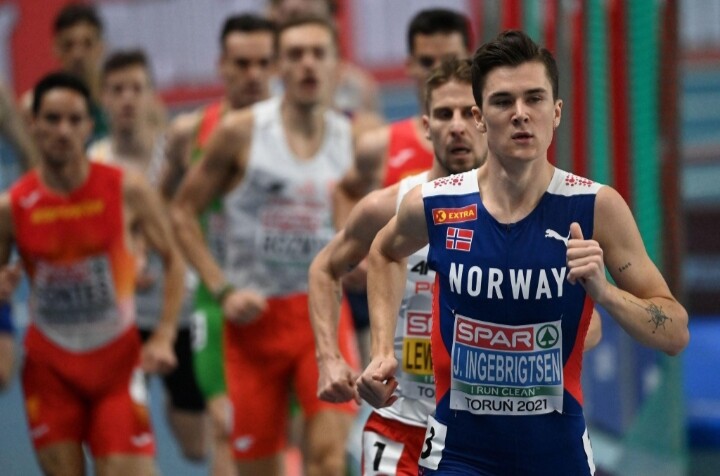
The Achilles issue had lingered in recent seasons, making surgery the necessary long-term solution. Rather than rushing back for early headlines, his camp is investing in a complete rehabilitation process designed to preserve both performance and longevity.
If recovery continues as planned, several high-profile opportunities await later in the year. Possible return stages include the Diamond League Eugene in early July, followed by major targets such as the European Championships, Diamond League stops in Silesia and Brussels, and the Ultimate Championship.
For now, the stopwatch can wait. Ingebrigtsen’s greatest race at this moment is not against rivals, but against time, patience, and recovery. If history is any guide, when he does return, he will come back ready to remind the world why he remains one of the defining athletes of his era.
by Erick Cheruiyot for My Best Runs.
Login to leave a comment
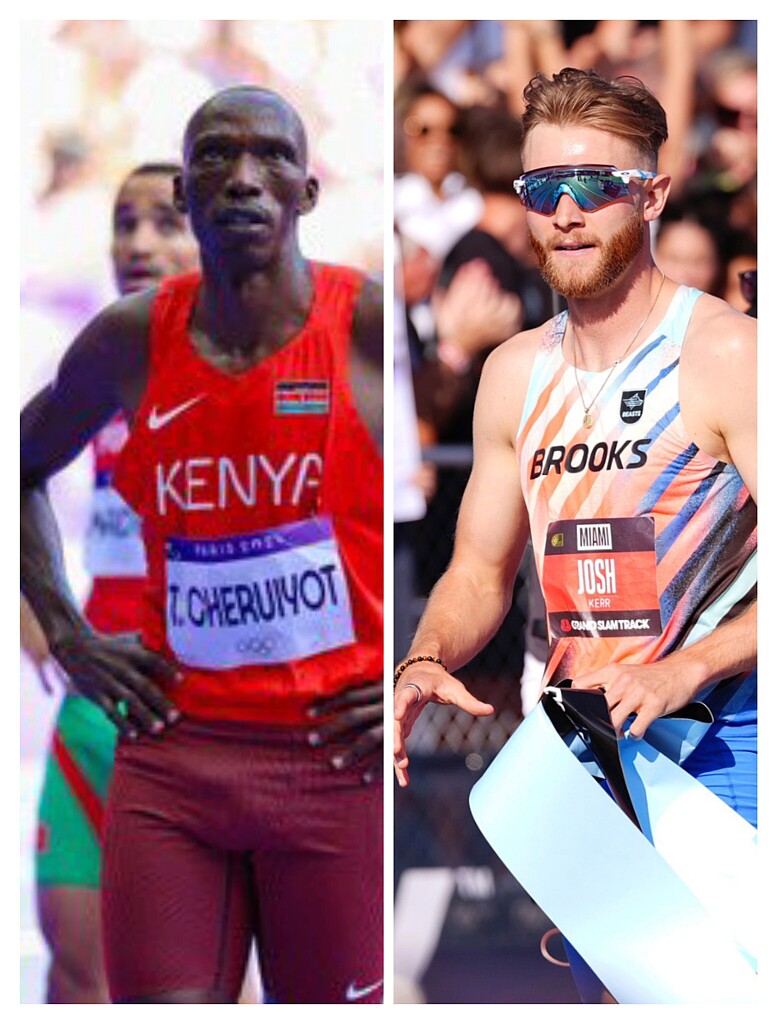
Cheruiyot vs Kerr: Deciding the True King of the 1500m
Few debates in modern athletics are as compelling as the battle for 1500m supremacy between Timothy Cheruiyot and Josh Kerr. They represent two different eras, two different styles, and two different paths to greatness—yet both have built résumés worthy of admiration. The question is simple, but the answer is anything but: who reigns supreme?
When it comes to raw performance, Josh Kerr presents a formidable case. His personal bests underline world-class speed, endurance, and remarkable range. With elite marks over the 1500m and mile, plus proven strength extending to longer distances, Kerr has established himself as one of the most complete middle-distance runners of his generation. Add in multiple global indoor titles, including double World Indoor gold, and his credentials become even stronger.
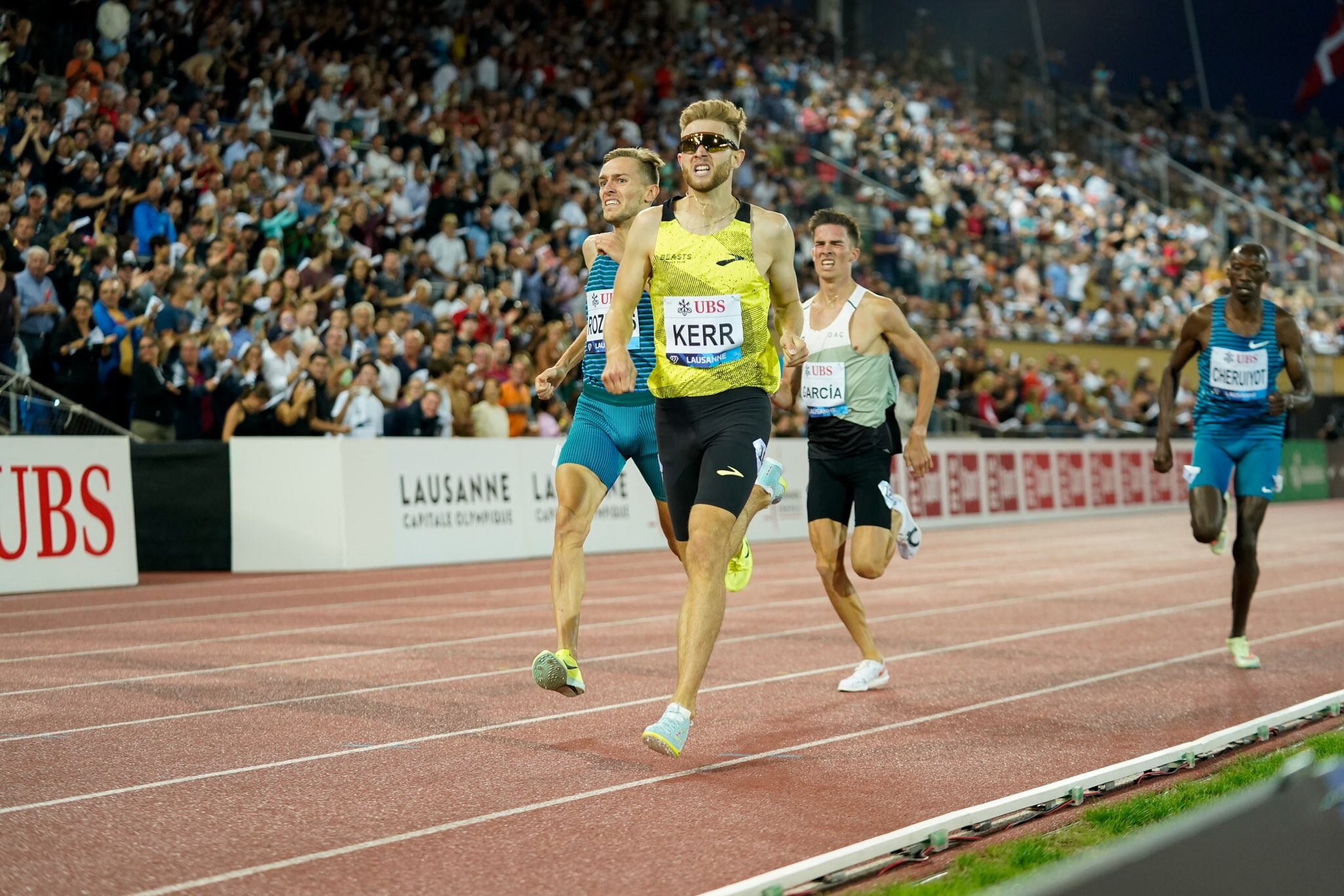
But greatness cannot be measured by stopwatch alone.
Timothy Cheruiyot’s claim rests on something every champion values—dominance. From 2018 through 2020, and arguably beyond, he was the undisputed king of the 1500m. Race after race, championship after championship, he delivered with relentless consistency. During that stretch, few athletes in any event controlled their discipline the way Cheruiyot controlled the metric mile.
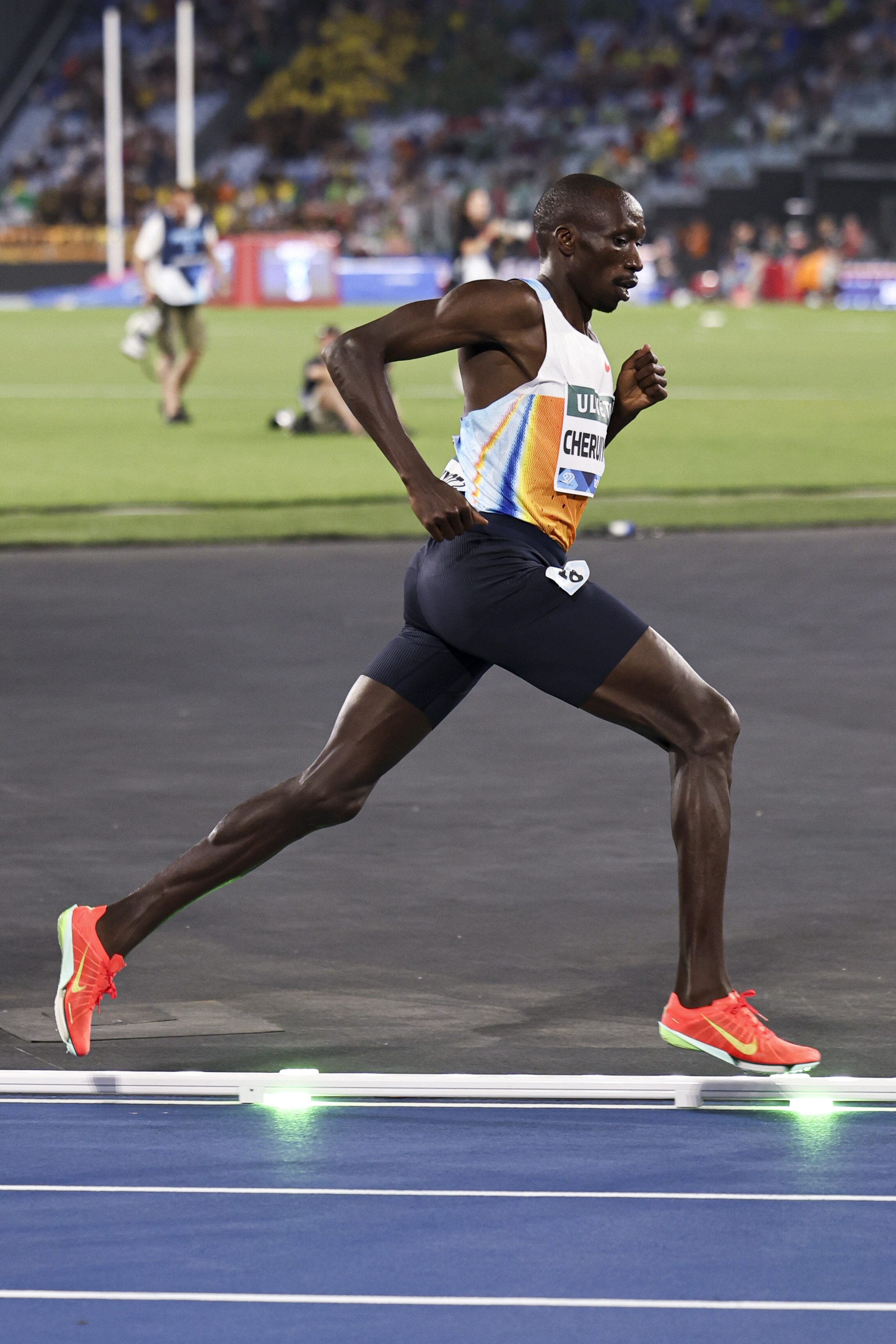
His brilliance was not limited to tactics and championship racing. Cheruiyot also showcased extraordinary range, including a 1:43 performance over 800m—proof that his blend of speed and endurance belongs among the elite. Combined with a glittering run of Diamond League victories, his era at the top remains one of the defining chapters in recent middle-distance history.
Kerr, however, has written a powerful chapter of his own. His outdoor world title in 2023 confirmed his ability to deliver on the biggest stage, while his indoor success added further weight to his growing legacy. He may have raced less frequently than some of his rivals during his prime years, but when he has appeared, he has often produced moments of genuine brilliance.
So how do their careers compare?
Cheruiyot holds the edge in sustained dominance, consistency, and Diamond League success. He was the standard every rival had to chase for several seasons.
Kerr counters with exceptional personal bests, global indoor success, and the sense that his finest pages may still lie ahead.
Both men own world titles. Both have won medals on the sport’s grandest stages. Both have left lasting marks on the 1500m.
If the debate is based on career achievements to date, Timothy Cheruiyot may hold the narrowest of advantages because of his commanding reign at the top. But if the conversation shifts to peak performances and what may still come, Josh Kerr remains a powerful challenger with time on his side.
Perhaps the real answer is this: the 1500m has been richer for having both of them.
by Erick Cheruiyot for My Best Runs.
Login to leave a comment
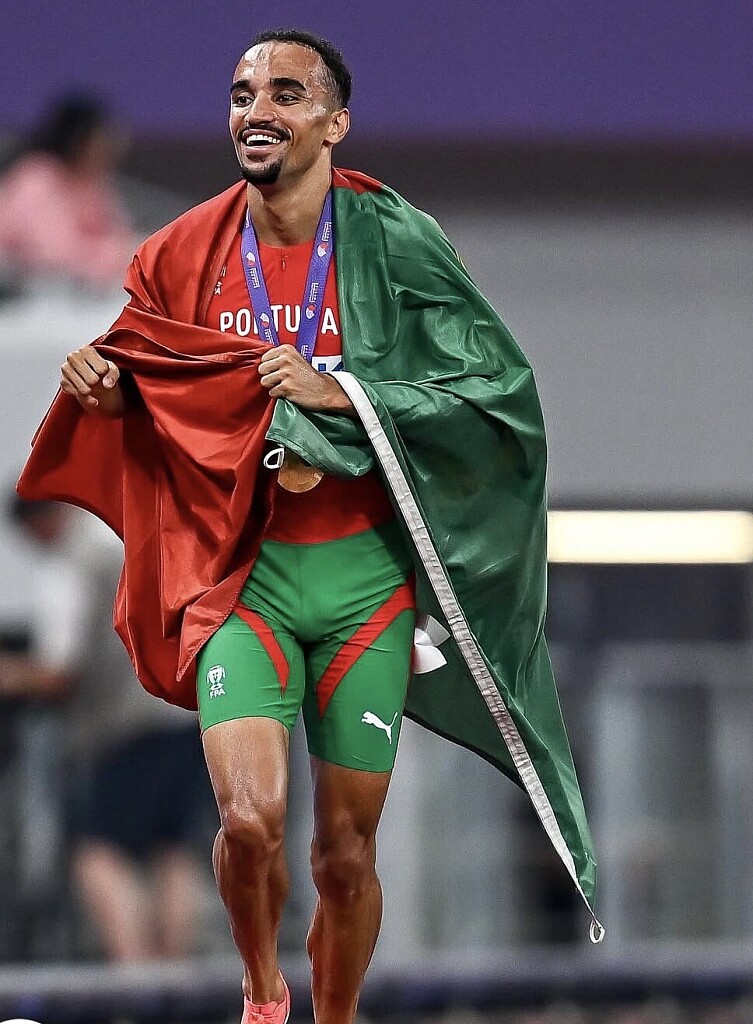
Isaac Nader’s Liévin Precision Sets Up Toruń Showdown
If the men’s 1500 meters at the World Athletics Indoor Championships in Toruń, Poland (March 20–22, 2026) comes down to the final 150 meters — as indoor championship races so often do — Portugal’s Isaac Nader may already hold the tactical edge.
On February 19, 2026, at the Meeting Hauts-de-France Pas-de-Calais in Liévin, France, Nader focused on a single objective: the 1500m. He did not attempt a double. He did not divide his attention across events. He executed with discipline and left with a composed victory in 3:32.44.
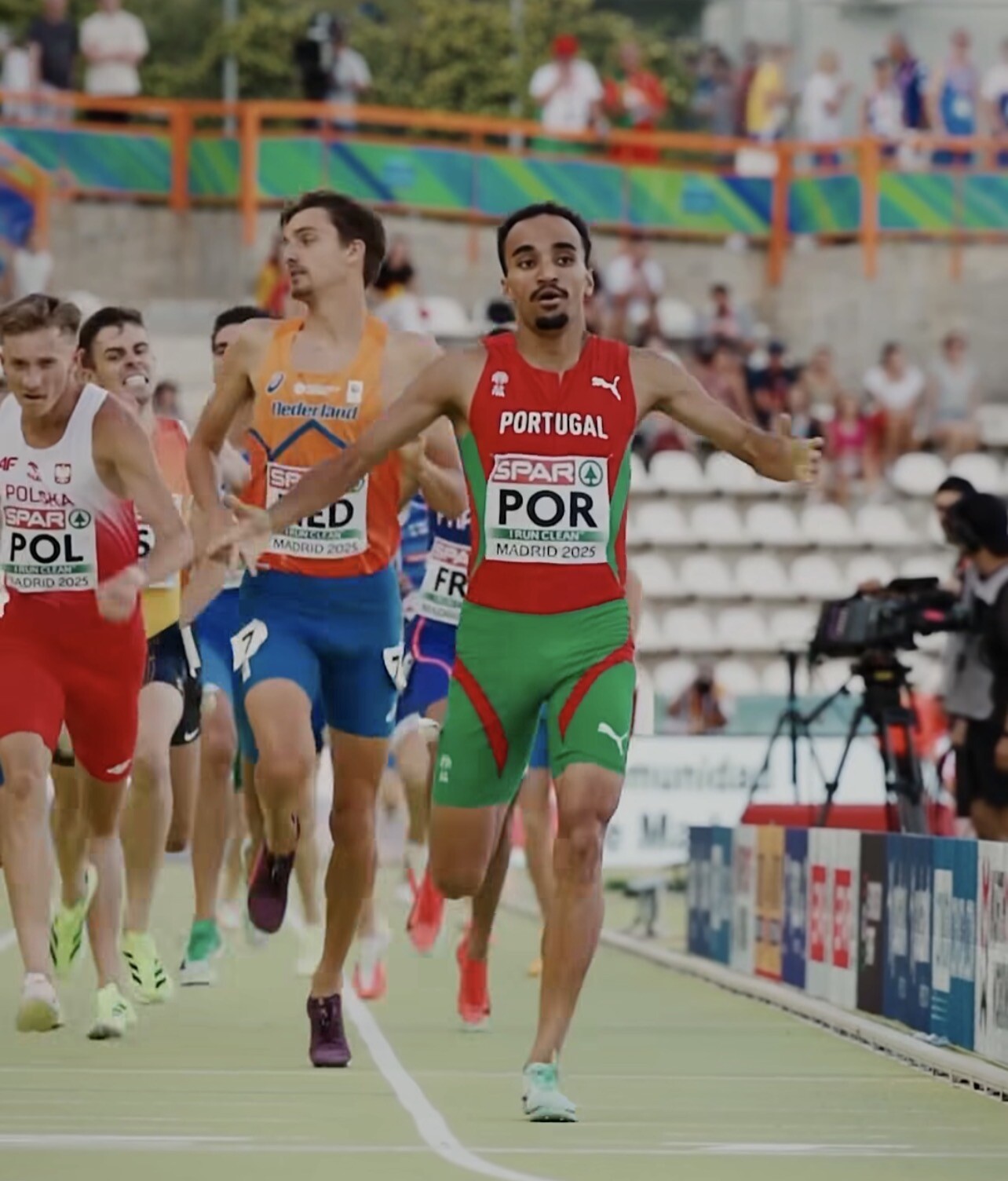
The time was strong. The execution was even stronger.
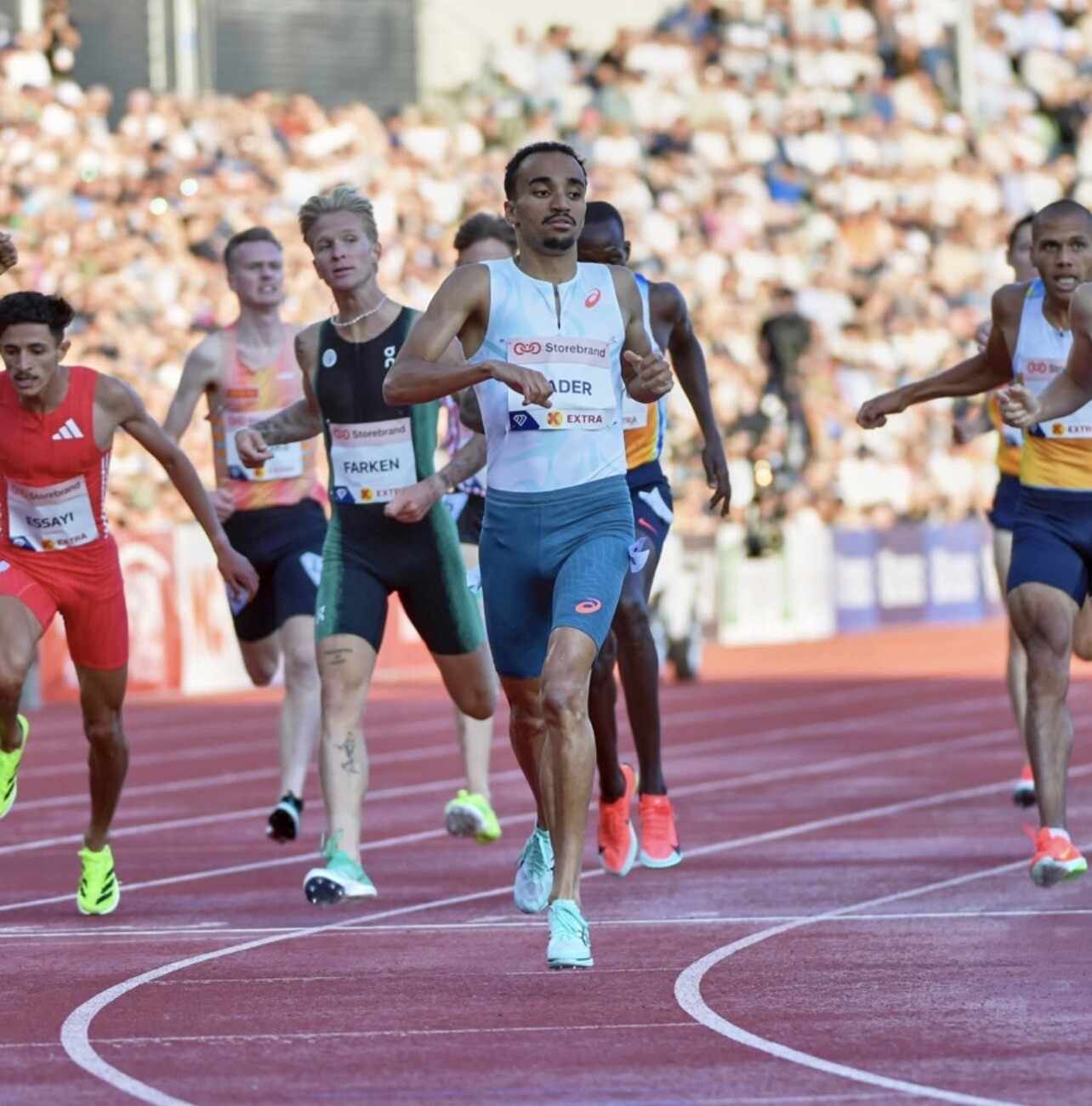
Indoor medals are rarely won through reckless aggression. They are earned through positioning, patience, and precise decision-making under pressure. In Liévin, Nader displayed all three.
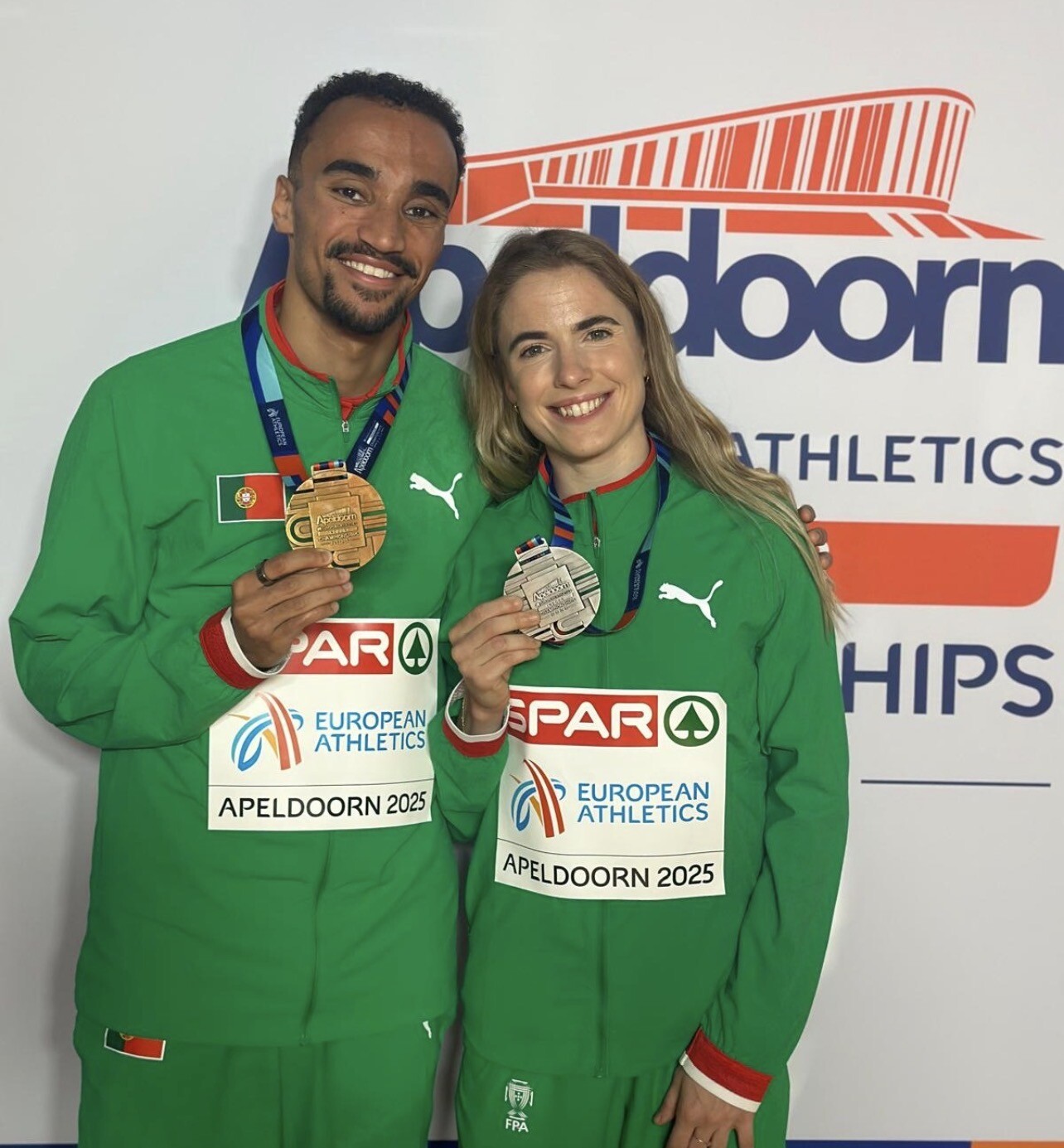
A Race Built on Control
From the opening laps, Nader resisted the temptation to dictate pace. On a 200-meter oval where every bend compresses space and every surge risks being trapped on the rail, spatial awareness is everything. He remained close enough to stay dangerous, yet far enough to avoid unnecessary contact.
As the field tightened entering the decisive stages, the tension that defines elite indoor 1500-meter racing became visible. No one wanted to commit too early. No one wanted to be exposed before the bell.
Nader waited.
With roughly 200 meters remaining, he shifted gears — controlled, decisive, without panic. By the time his rivals reacted, the separation had formed. Indoors, that margin is often enough.
He did not win through chaos. He won through timing.
Why the Focus Matters
The World Indoor Championships will demand a heat and a final in compressed succession. Energy management becomes strategic. Athletes who stretch themselves thin across the indoor season often arrive sharp but fatigued.
By concentrating solely on the 1500m in Liévin, Nader signaled clarity of purpose. He sharpened one blade rather than swinging several.
That focus aligns with championship success.
The Tactical Landscape in Toruń
The field in Poland is expected to include athletes willing to test the pace early. Yet indoor finals frequently stall on the penultimate lap as runners hesitate, calculating risk versus reward.
That hesitation is where races are decided.
Nader’s Liévin performance suggests he thrives in contained tension. He absorbs surges rather than initiating them. He maintains structural positioning — avoiding being boxed, preserving outside options, and striking only when the window fully opens.
In tight indoor racing, composure can outweigh raw speed.
The Question Ahead
The issue is not whether Nader has the closing speed. Liévin confirmed that. The question is whether his rivals in Toruń can neutralize his patience.
Championship 1500-meter racing is rarely won by the athlete who leads longest. It is won by the athlete who controls the decisive movement.
If the race in Poland evolves into a tactical contest rather than an all-out tempo effort, Isaac Nader will not simply be in the final.
He will be the athlete everyone must account for.
by Robert Kibet for My Best Runs
Login to leave a comment
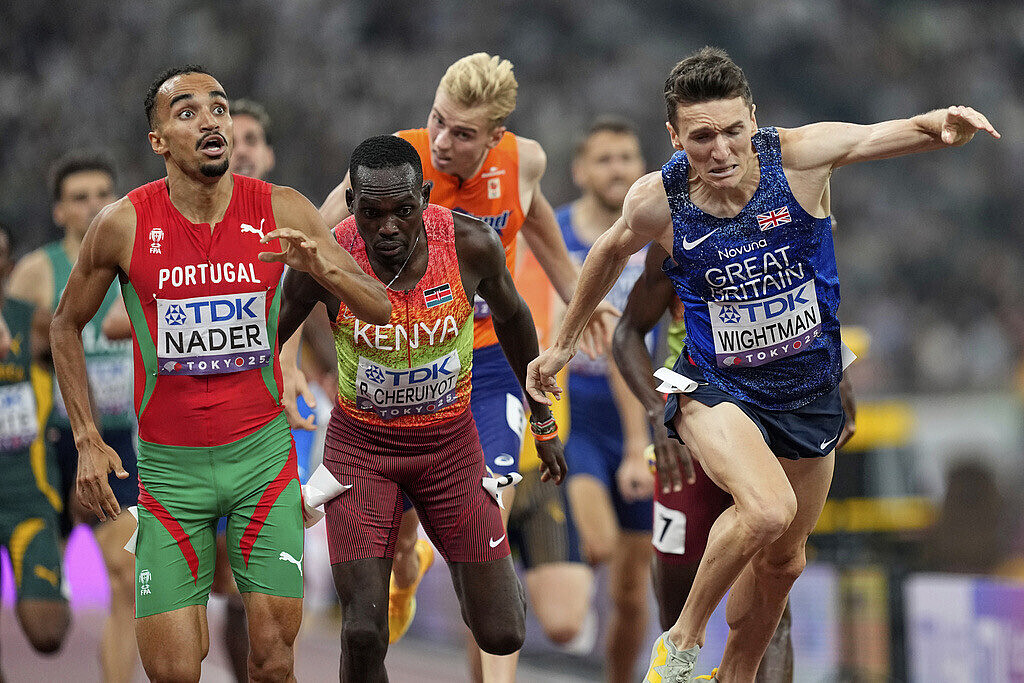
Thrilling Photo Finish and Historic Performances Highlight 1500m Finals in Tokyo
The 1500 meters is often called the “crown jewel” of middle-distance running, a race where tactics, speed, and heart all collide. At the 2025 World Championships in Tokyo, both the men’s and women’s finals lived up to that reputation, delivering drama, comebacks, and world-class performances that will be remembered for years.
Men’s 1500m: A Thrilling Comeback
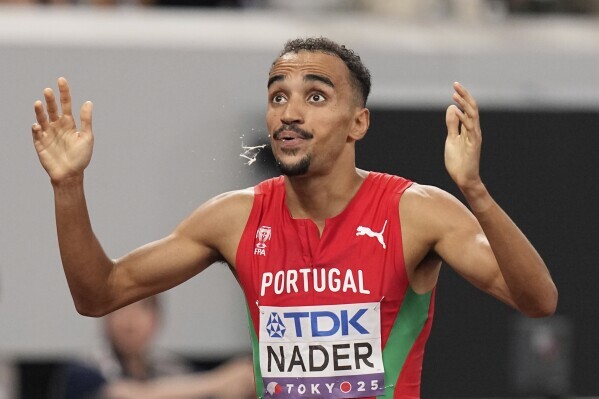
The men’s final produced one of the most electrifying finishes of the championships. For much of the race, the field remained tightly packed, with every move closely marked. As the bell rang for the final lap, the intensity soared, and the last 200 meters became an all-out sprint for glory.
Portugal’s Isaac Nader surged wide in the final stretch, clawing back ground with each stride before lunging at the line. His daring comeback forced a photo finish against Britain’s Jake Wightman, with both men collapsing past the tape in exhaustion. Officials confirmed Nader as the gold medalist in 3:34.10, edging Wightman’s 3:34.12 by just two hundredths of a second.
Kenya’s rising star Reynold Cheruiyot powered home for bronze in 3:34.25, while his compatriot and former world champion Timothy Cheruiyot finished fourth in 3:34.50. The razor-thin margins between the top four underscored the depth and unpredictability of today’s global 1500m racing.
Men’s Top Four – Tokyo 2025
1. Isaac Nader (Portugal) – 3:34.10
2. Jake Wightman (Great Britain) – 3:34.12
3. Reynold Cheruiyot (Kenya) – 3:34.25
4. Timothy Cheruiyot (Kenya) – 3:34.50
Women’s 1500m: Kipyegon Reigns Supreme
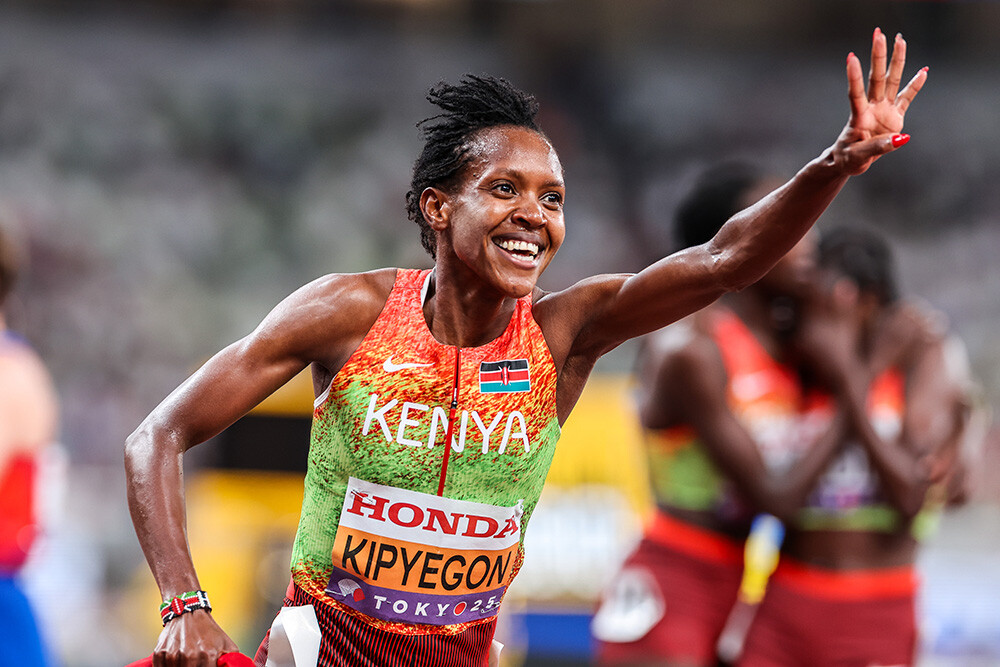
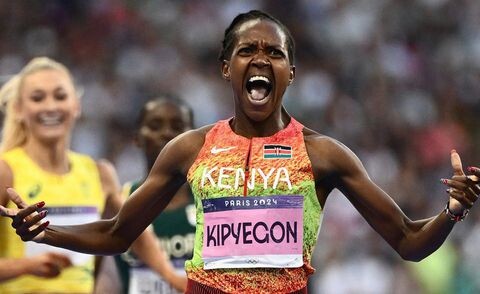
If the men’s race was decided by a hair’s breadth, the women’s final was about one athlete stamping her authority on the distance. Kenya’s Faith Kipyegon, already a legend of the sport, once again proved untouchable. She controlled the pace from the front and then crushed the field over the final 300 meters, crossing in a dominant 3:52.15 to secure another world title.
Behind her, teammate Dorcus Ewoi earned silver with a strong 3:54.92, holding off Australia’s Jessica Hull, who thrilled the Tokyo crowd with a gritty run for bronze in 3:55.16. Another Kenyan, Nelly Chepchirchir, rounded out the top four in 3:55.25, making it three Kenyans in the top four.
Women’s Top Four – Tokyo 2025
1. Faith Kipyegon (Kenya) – 3:52.15
2. Dorcus Ewoi (Kenya) – 3:54.92
3. Jessica Hull (Australia) – 3:55.16
4. Nelly Chepchirchir (Kenya) – 3:55.25
A Showcase of Middle-Distance Greatness
Between the men’s photo finish and Kipyegon’s continued dominance, the Tokyo 1500m finals captured everything fans love about this distance: courage, strategy, and the ability to deliver in the biggest moments.
For Isaac Nader, it was the race of his life, as he became Portugal’s first world champion in the 1500m. For Faith Kipyegon, it was another masterclass, further cementing her status as perhaps the greatest middle-distance runner in history. And for the fans, it was proof that the 1500m remains one of the most thrilling events on the track.
by Boris Baron
Login to leave a comment
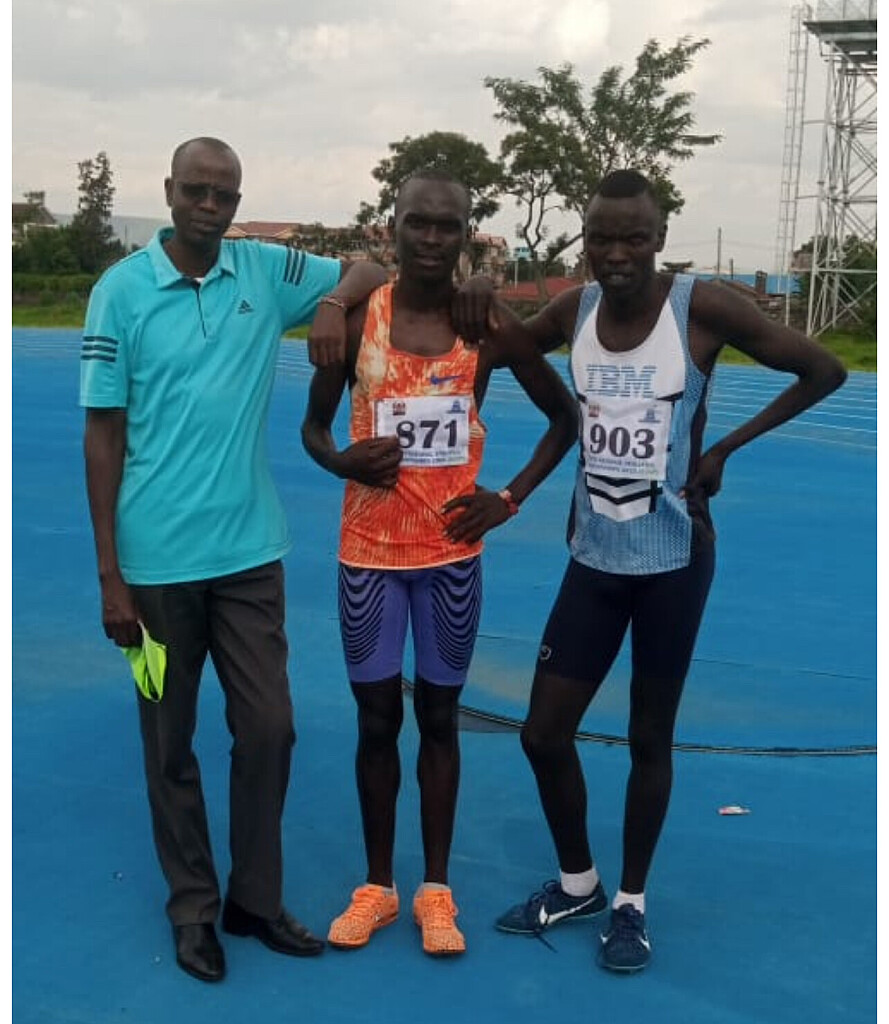
Running Beyond Limits: How KATA Kapkatet Camp Is Shaping the Future of Kenyan Athletics
In the heart of Kericho County, where rolling tea estates stretch endlessly toward the horizon, the rhythmic sound of pounding feet cuts through the crisp morning air. At 5:30 a.m., long before the first rays of sunlight pierce the mist, a group of young athletes from the KATA Kapkatet Camp gathers for prayer before setting off on their daily run.
The roads they follow—sometimes smooth tarmac, other times rugged murram winding through the tea fields—have become their open-air classroom. Step by step, they are learning resilience, nurturing hope, and chasing dreams that stretch beyond the Rift Valley.
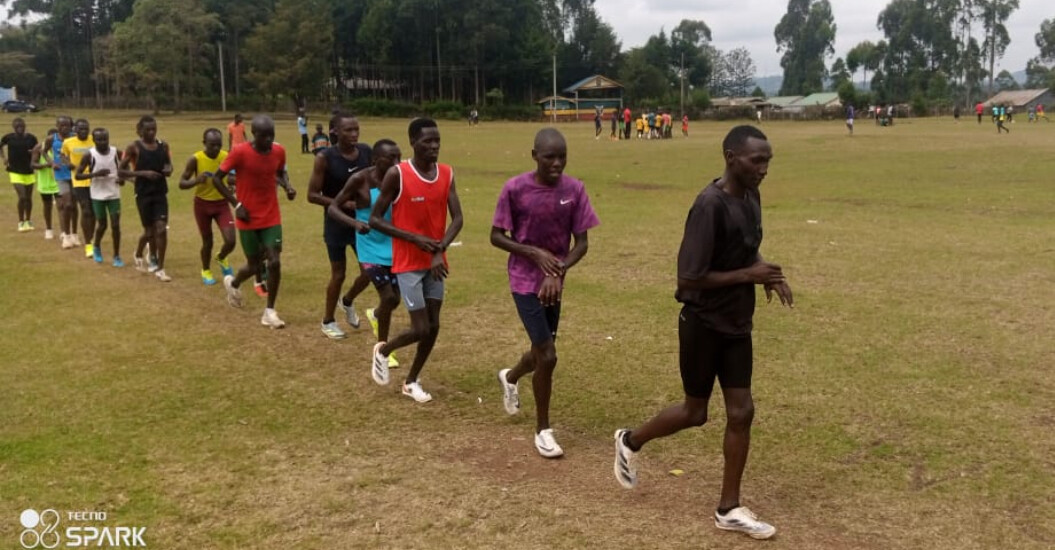
Stories of Rising Talent
Among them is Andrew Oronyi, a 20-year-old sprinter who once dreamed of being a football star. Discovered by a teacher who recognized his speed, Oronyi shifted to athletics, experimenting with the 100m and 200m before finding his stride in the 400m. He now proudly holds a personal best of 47.57 seconds and has set his sights on breaking the 44-second barrier to secure a place on Kenya’s global championship team.
“Training under KATA has given me hope for a brighter future,” Oronyi says. “Here, I can focus on running while also contributing through manual work in the camp. This programme is helping athletes shine beyond the usual struggles.”
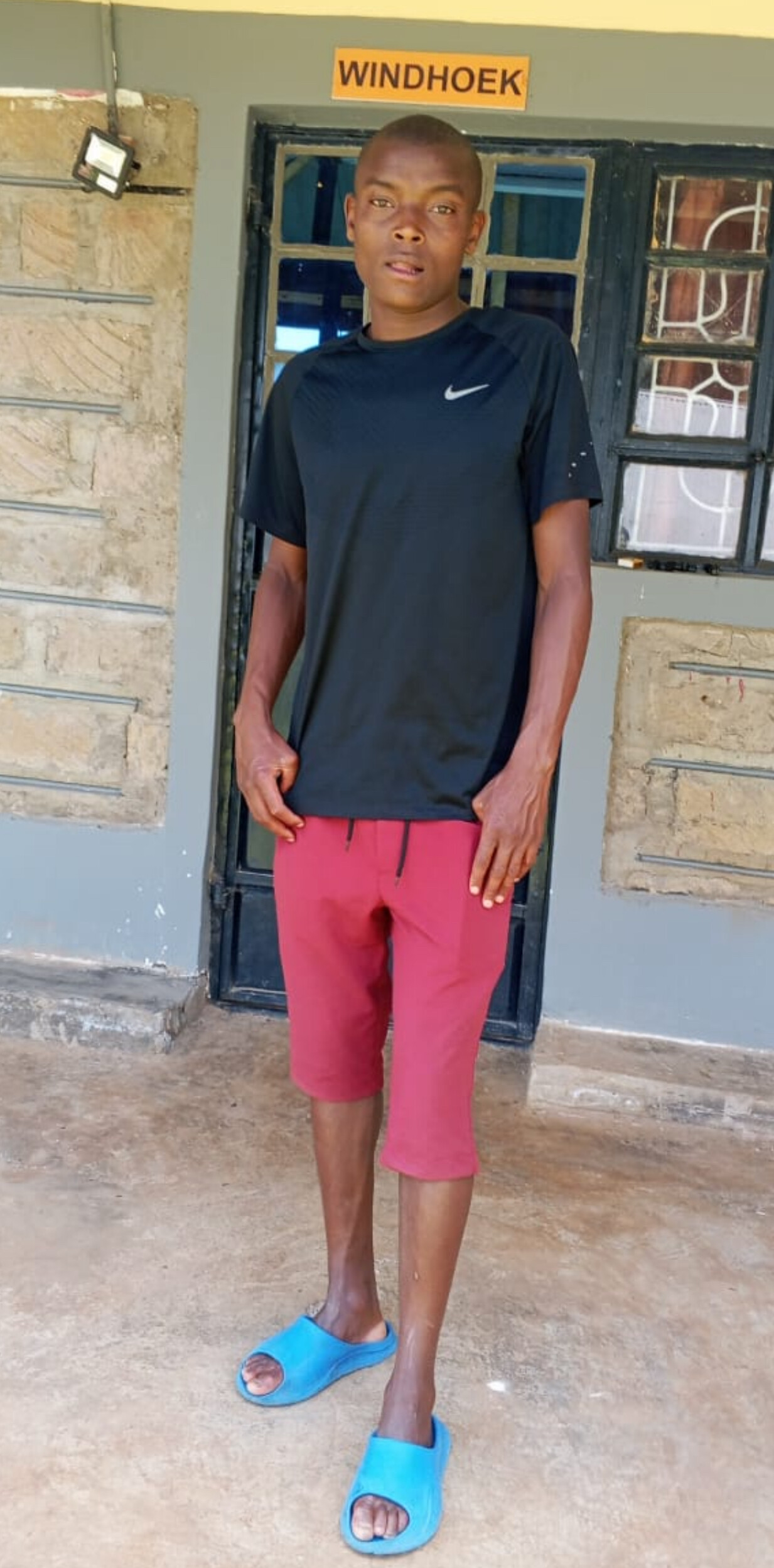
For Victor Kiprotich, just 16 and fresh out of high school in Kuresoi North, the KATA initiative has been transformative. Encouraged by his coach, Christopher Rono, he joined the camp in 2024 after completing Form Four. Specializing in the 1500m, Victor made headlines at the Bomet County Cross Country Championships, finishing second in the junior men’s 8km in 11:26.

“When I ran that race, I realized that with the right support, I can make it in this career,” he reflects. His gratitude is clear: “I thank Bob Anderson for this initiative. It will help camps become stable and sustainable. We usually begin our morning runs at 5:30 a.m. with prayers—it gives us strength and unity.”
Then there is Festus Kemboi, 18, from Chepalal village in Konoin. Introduced to athletics in Class 7, he began with the 5000m and steeplechase before focusing on the 3000m steeplechase and cross country in high school. Recently, he ran his first senior men’s 10km at Bomet, finishing eighth in 31 minutes. “I know I can bring that down to 30 minutes if I stay consistent,” he says. For him, KATA has been more than training: “This programme is a game changer. Many athletes struggle with rent, food, and daily survival. KATA gives us the structure and support to focus purely on running.”
Leadership and Vision
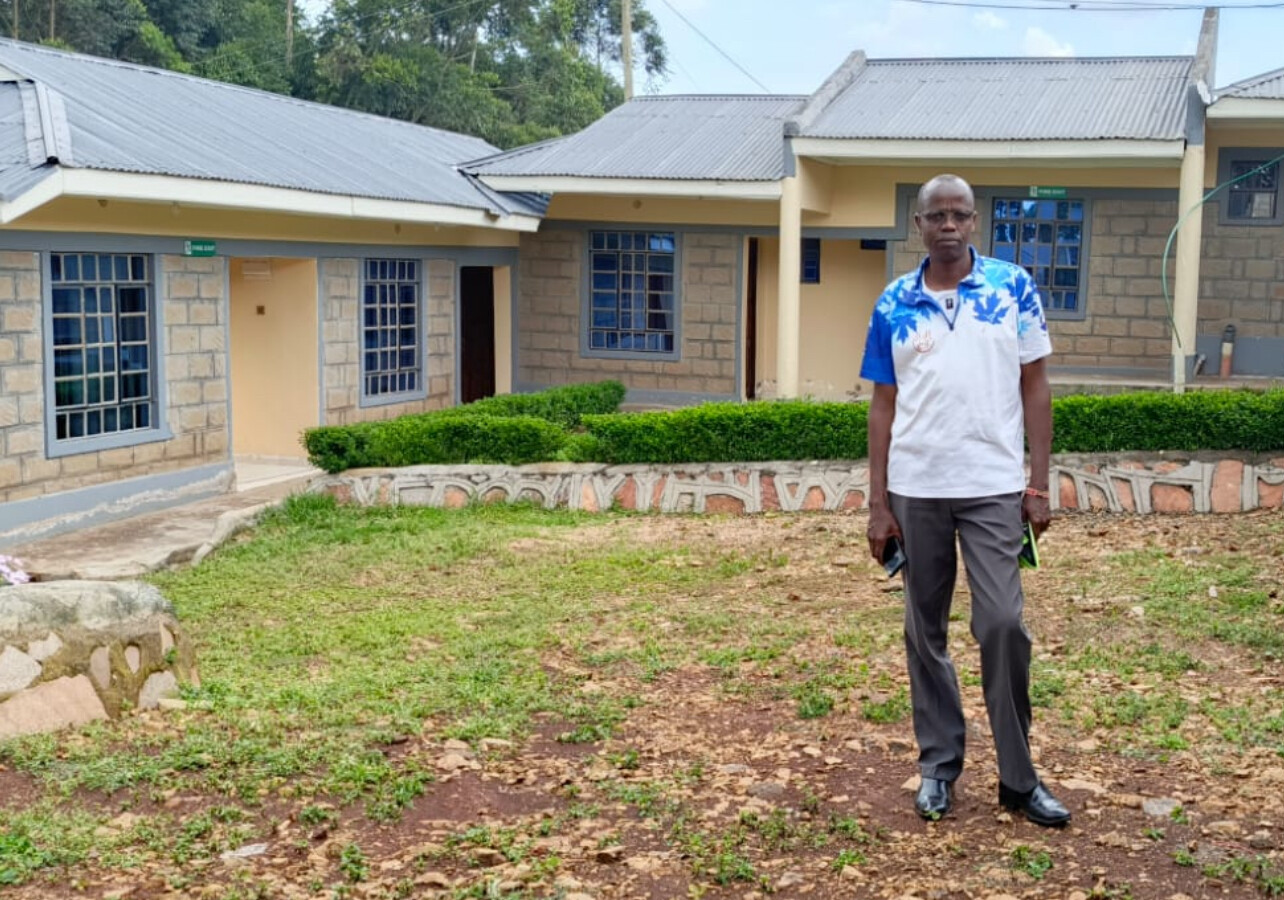
At the center of it all is Coach Christopher Rono, who operates the KATA Kapkatet Camp and sees immense promise in his athletes.
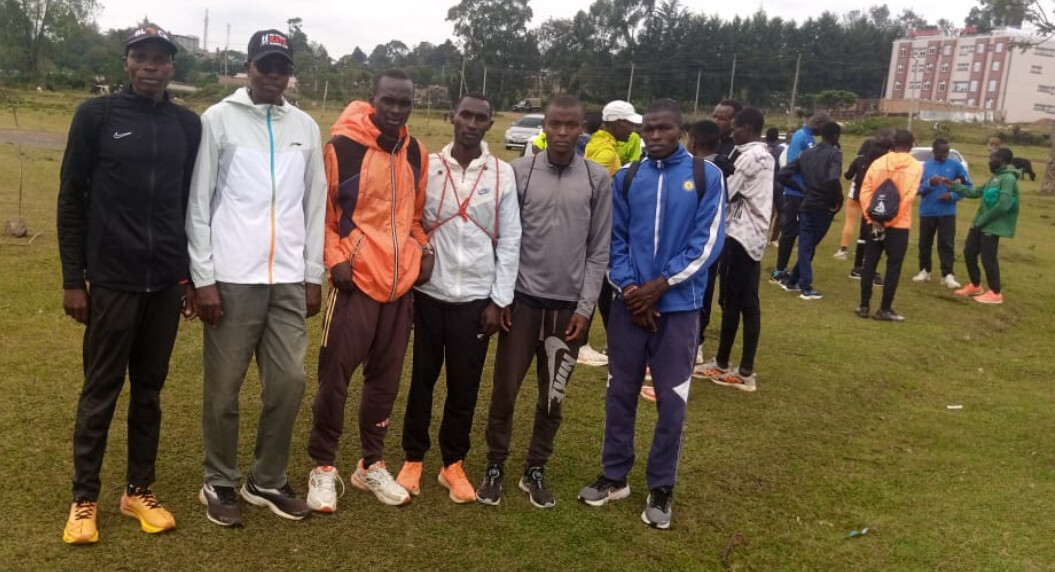
“Kemboi has shown real potential in cross country, while Kiprotich is a young talent with the ability to excel in the 1500m. Oronyi, though a sprinter, could even transition to the 800m in the future. Their determination excites me,” Rono says.
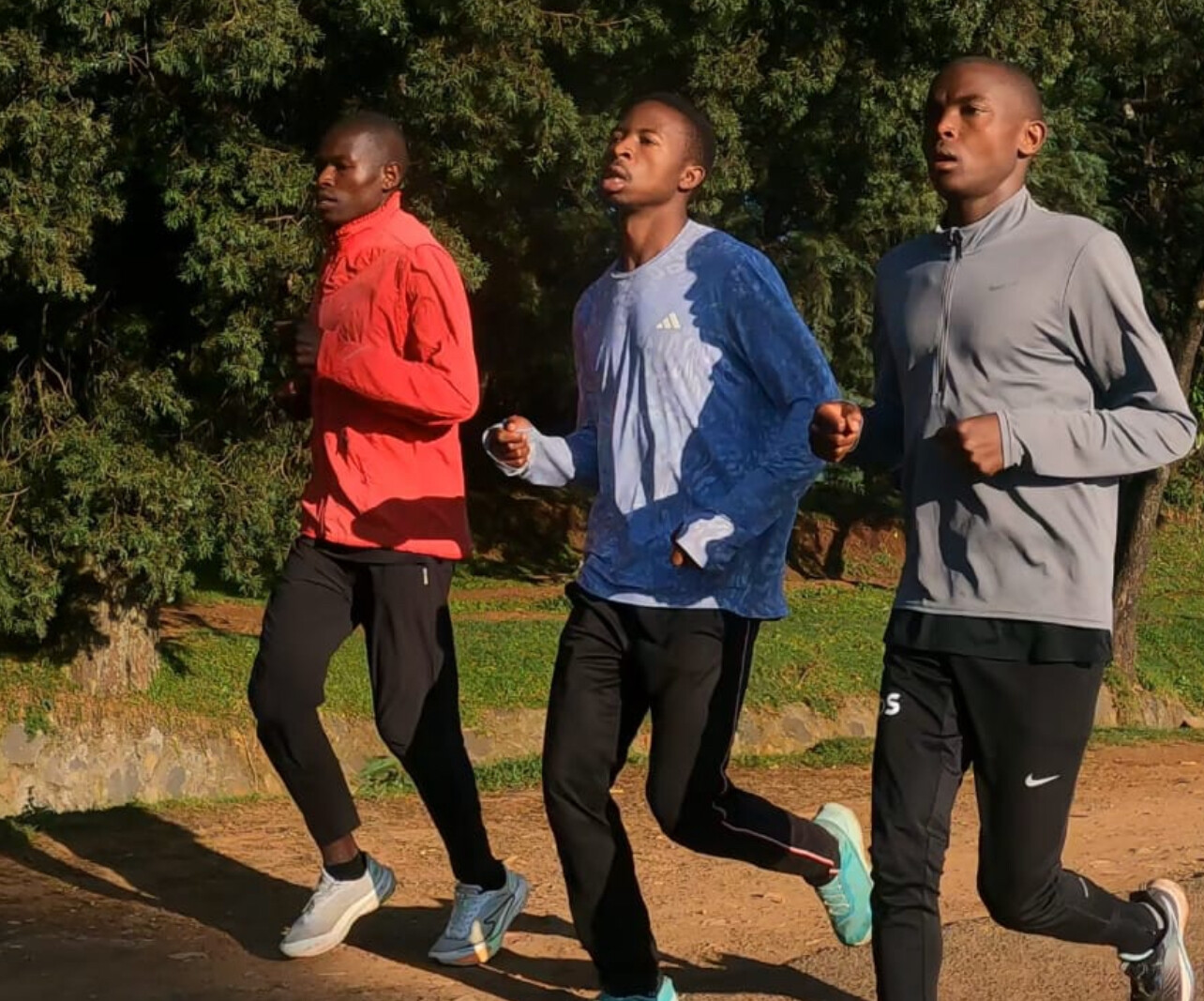
He also highlights Bob Anderson’s vision: “The potato farming project and the Double Road Race are not just creative but sustainable ideas. Athletics Kenya itself has recognized the KATA programme, encouraging camp leaders and support staff to align with it.”
Building More Than Champions
KATA’s message is spreading widely across the Rift Valley. Interest is surging, and several athletes have even begun renting houses near Kapkatet to be part of the training environment. With more than 30 KATA camps now running across Kenya, Bob Anderson’s vision is reshaping athletics management by ensuring athletes are supported both on and off the track.

As Coach Rono looks ahead to this year’s Double Road Race, he is confident: “We are ready to deliver, and this edition will be bigger and better.”
But beyond medals and times, the true story is told in Kapkatet’s misty mornings—young athletes running shoulder to shoulder through tea plantations, beginning each day with whispered prayers. This is where Kenya’s next champions are being molded. Here, sport and sustainability walk hand in hand, and hope runs free.
by Robert Kibet
Login to leave a comment
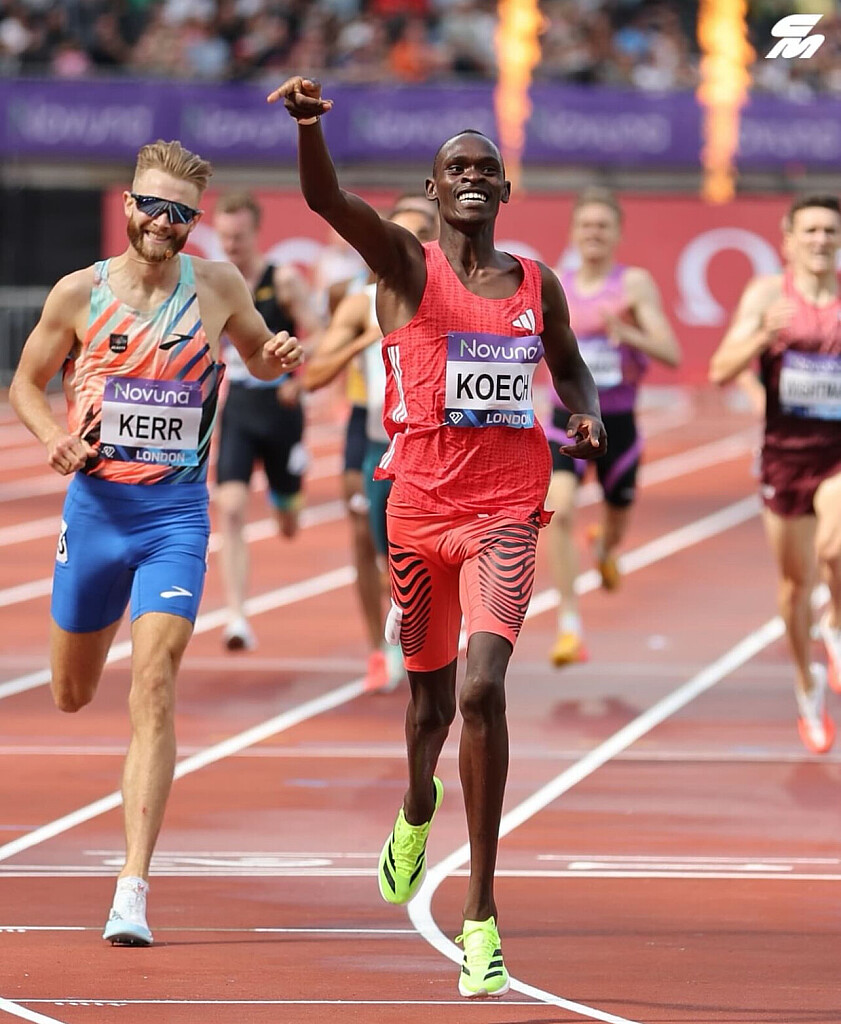
HISTORIC SEASON FOR PHANUEL KOECH
At just 18 years old, Phanuel Koech has made history—becoming the first Kenyan ever to run under 3:29 for the 1500m twice in a single season.
✅ Paris Diamond League: 3:27.72
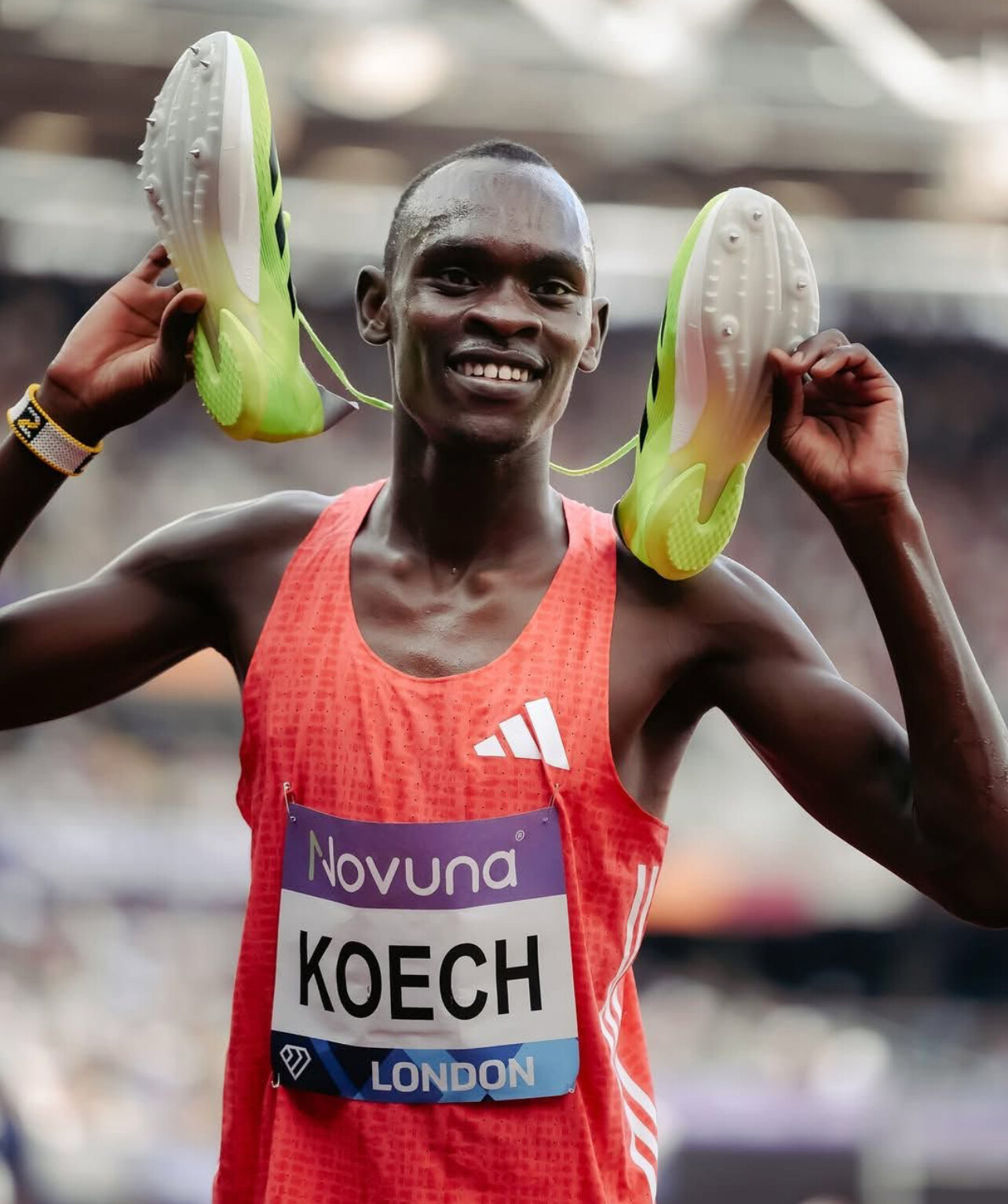
✅ London Diamond League: 3:28.82
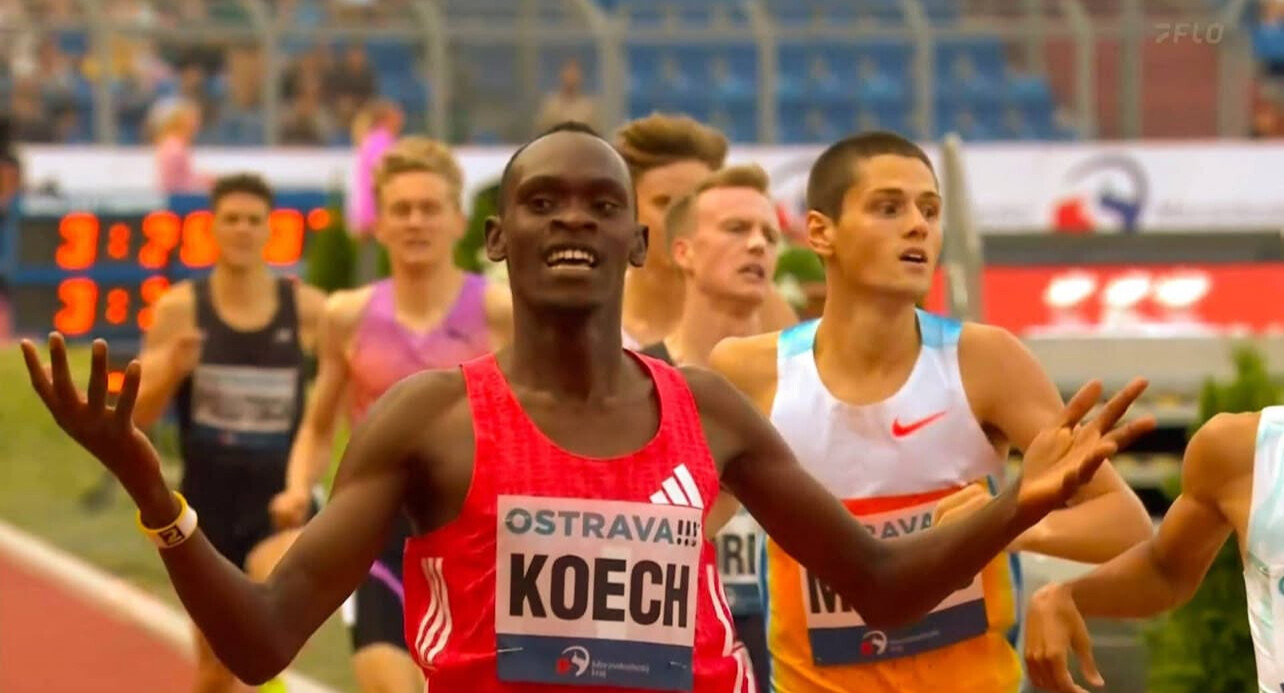
With his 3:27.72 performance in Paris, Koech now ranks as the 4th fastest Kenyan of all time, behind only Bernard Lagat, Asbel Kiprop, and Silas Kiplagat.
He is also the fastest junior (U20) in the history of the 1500m.
Next up:
2025 World Athletics Championships Trials
Sports Complex
July 22, 2025
Kenya’s middle-distance future looks brighter than ever.
by Boris Baron
Login to leave a comment
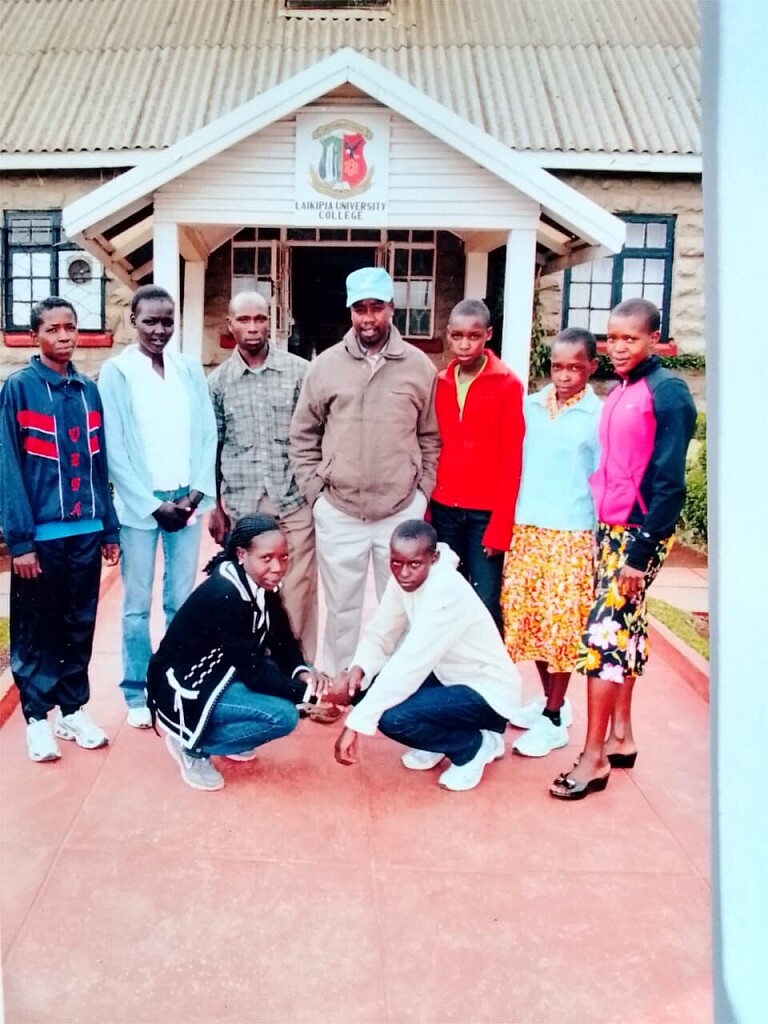
Charles Ngeno Joins KATA to Help Build Kenya’s Next Champions
With more than 15 years of experience coaching distance runners at the highest level, Charles Ngenohas dedicated his life to unlocking the potential of Kenyan athletes. Now, as a KATA Running Camp operator, he brings that expertise to one of the country’s most innovative athletic development programs—combining elite coaching with a sustainable, community-driven model.
“I’m thrilled to join the KATA Running Camp program, where I’ll share my expertise and passion for athletics with talented young runners,” Ngeno says. “With over 15 years of coaching experience and a proven track record of developing world-class athletes, I’m confident in my ability to contribute to the program’s success. I’m excited to work with the KATA team to identify and nurture emerging talent, and to help athletes achieve their full potential. Together, we’ll take Kenyan athletics to new heights and inspire a new generation of runners.”
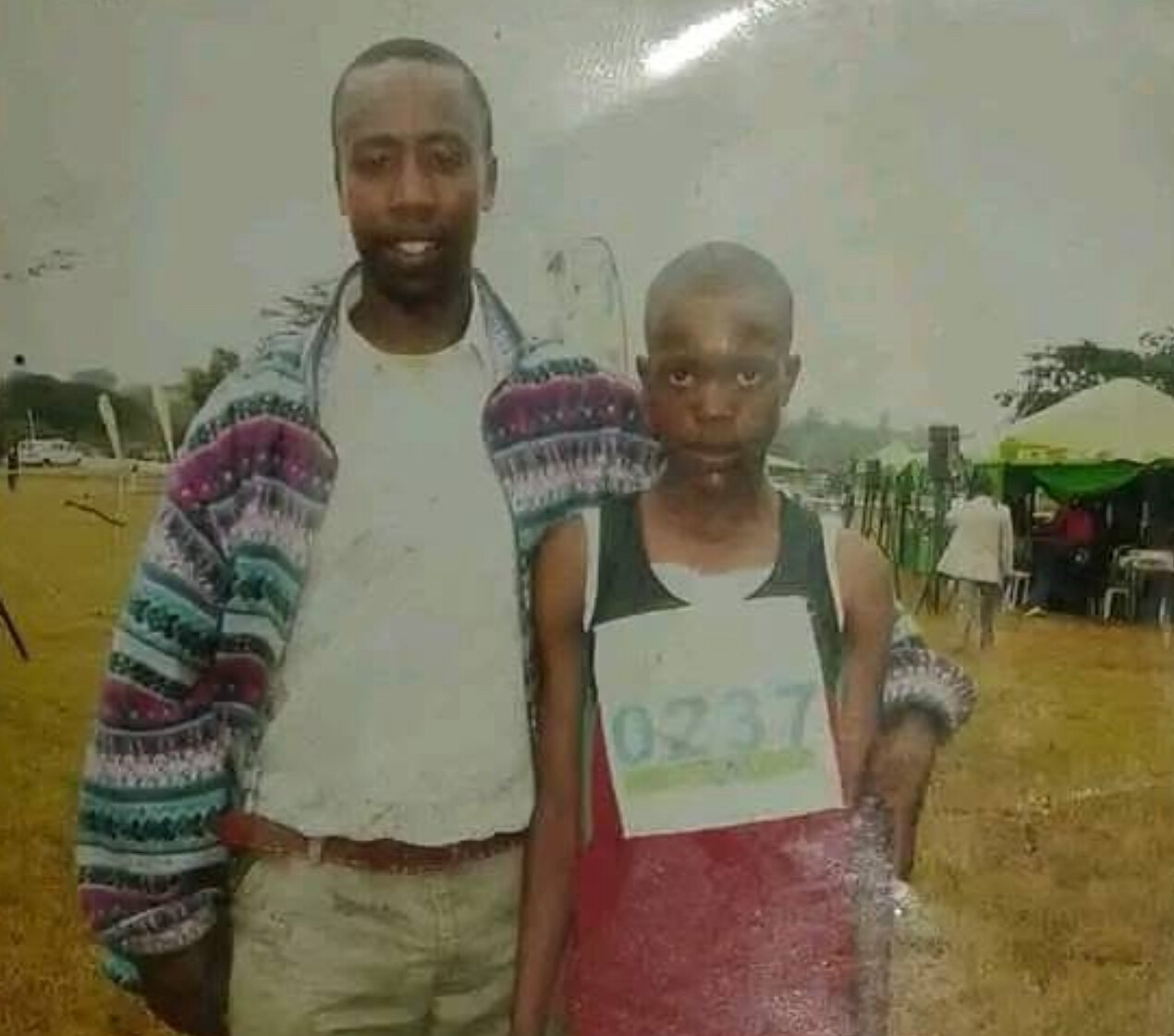
Ngeno’s coaching career has included mentoring both junior and senior athletes—many of whom have risen to national and international prominence. One of the most notable names he worked with early on is Faith Kipyegon, now a two-time Olympic champion and world record holder in the 1500m. Ngeno played a role in her formative development, helping guide her at a key moment in her youth when she was discovered near Keringet Township.
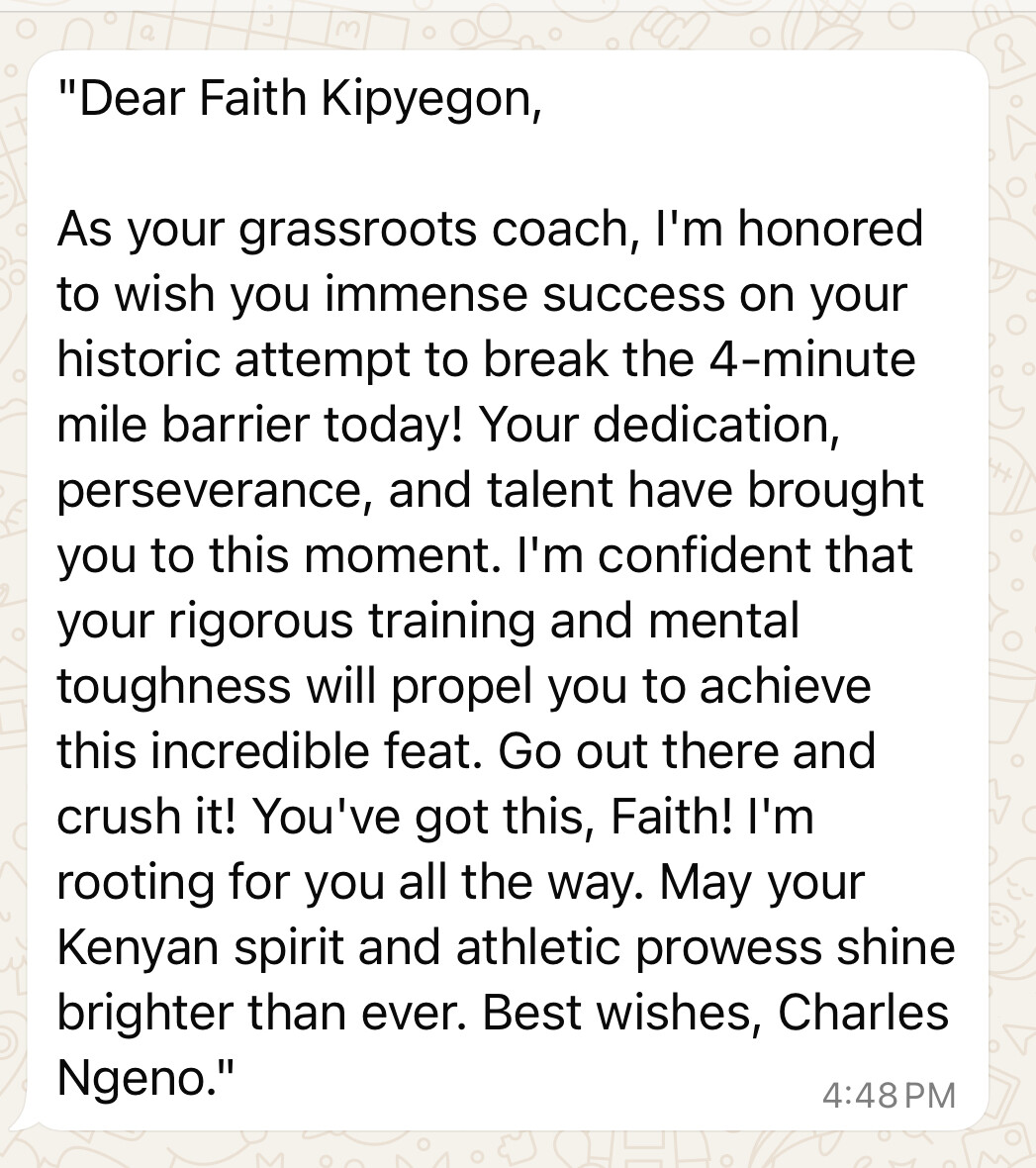
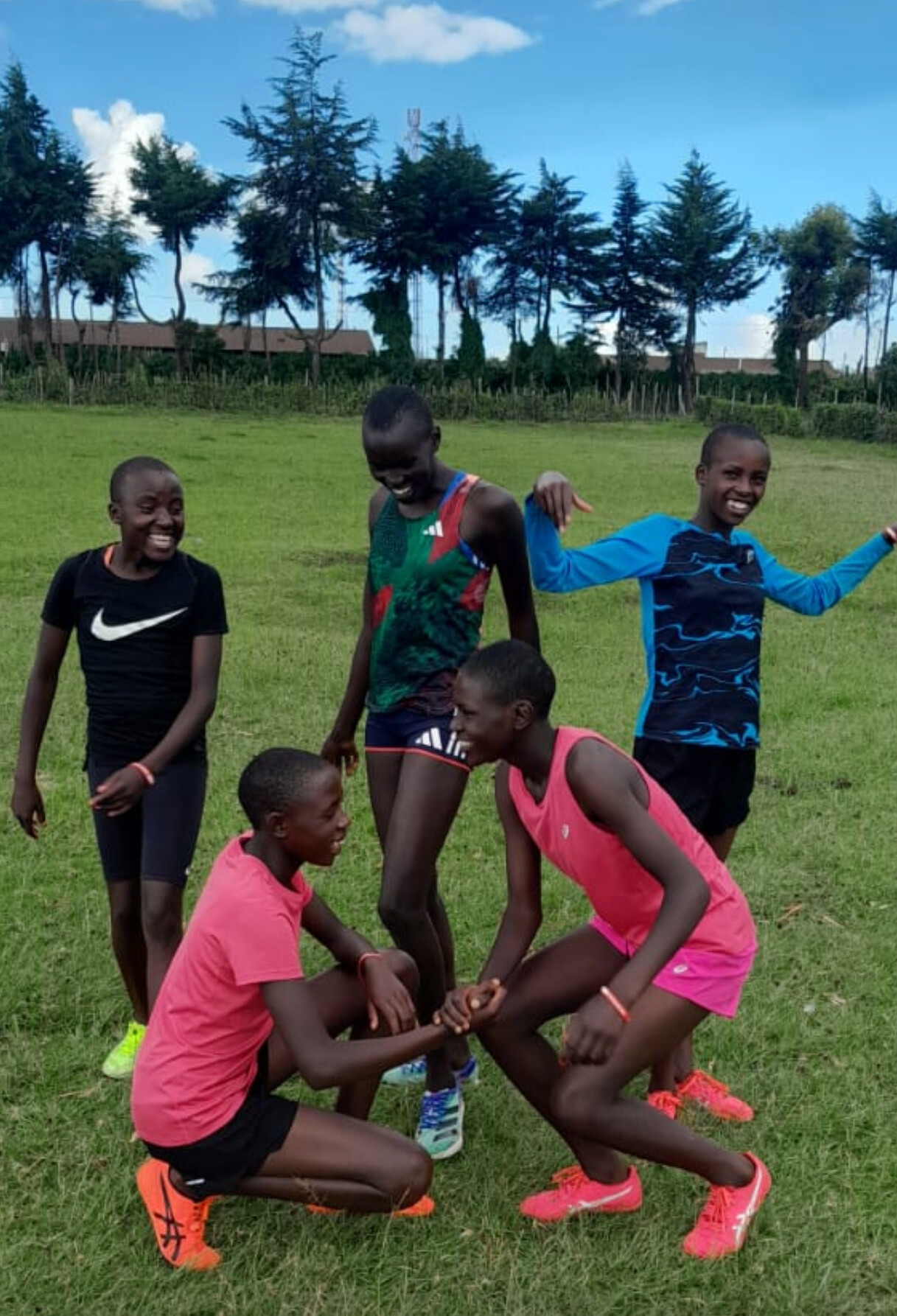
That early influence continues to resonate. Kipyegon is now attempting to do what no woman has ever done—break the four-minute barrier for the mile. The historic run is scheduled for June 26 in Paris as part of Nike’s “Breaking4” project, with the global running world watching closely. Ngeno, meanwhile, is back where his heart has always been: coaching on the ground in Kenya and building future champions.
The KATA model is unlike any other. Each camp is linked with a three-acre potato farm, where athletes work part-time—25 hours a week—in exchange for full room, board, and expert coaching. The combination of structured training and sustainable agriculture allows athletes to focus entirely on their development, while also contributing to the local economy.
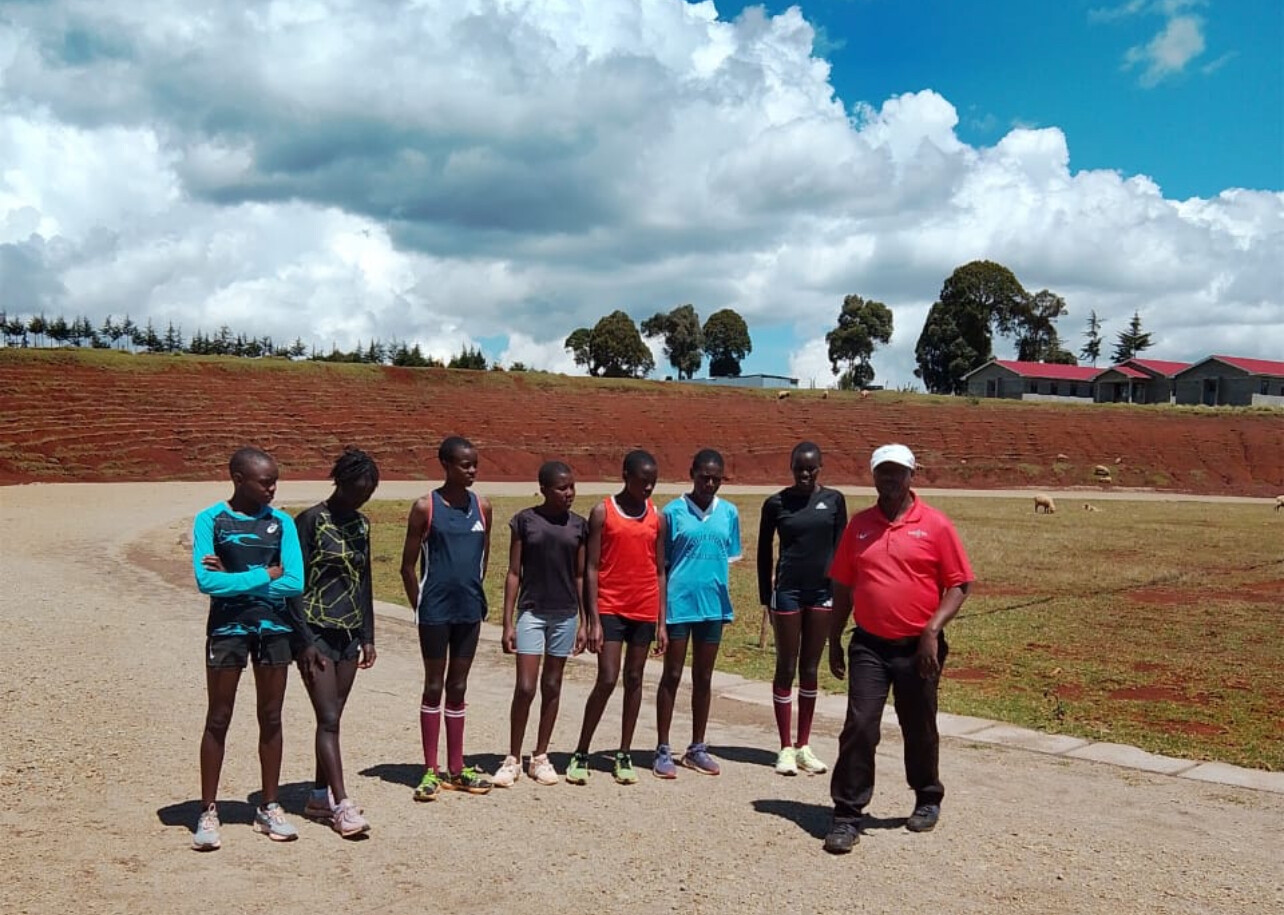
As a camp operator in Olenguruone, Ngeno oversees not only the athletic training but also the day-to-day structure of the farm program. His hands-on approach, deep knowledge, and commitment to discipline and consistency make him the ideal leader for this environment.

“This isn’t just another training camp,” he says. “This is a platform for real opportunity. We’re giving athletes who might otherwise be overlooked the chance to build something—to compete, to grow, and to give back. I’ve seen what’s possible when someone believes in you. I want to be that person for these runners.”

With camps already in operation across Kenya, and more launching every month, KATA is expanding rapidly under the leadership of founder Bob Anderson, who launched the original KATA in Thika in 2019. All camps follow the same guiding philosophy: develop talent locally, create economic opportunity, and prepare runners for the world stage.
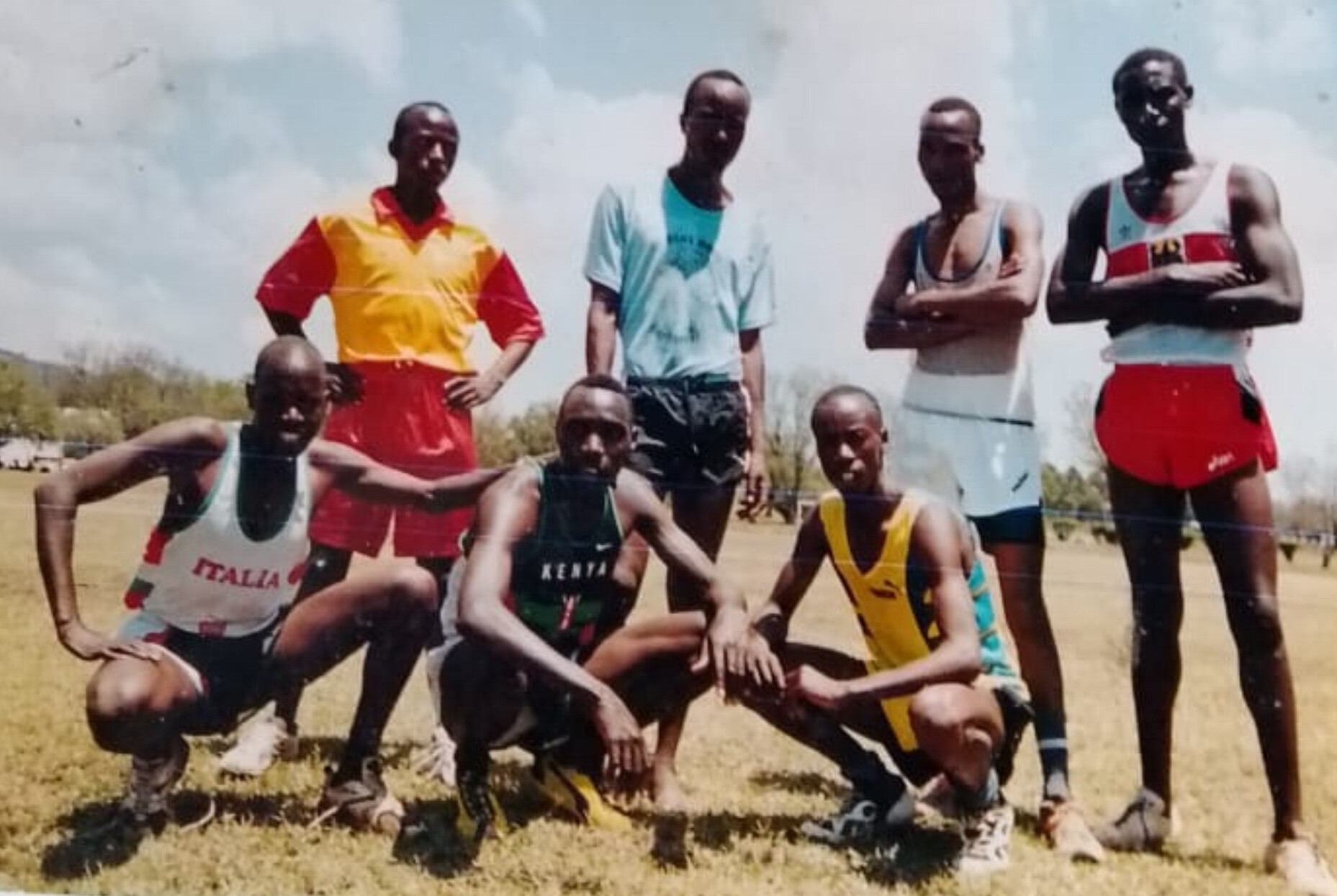
Charles Ngeno’s presence adds serious strength to that mission. His career, his values, and his passion align perfectly with the vision of KATA. And for the athletes training under his guidance today, the path forward has never looked more promising.
by Boris Baron
Login to leave a comment

Faith Kipyegon and Jakob Ingebrigtsen Headline Historic 2025 Pre Classic
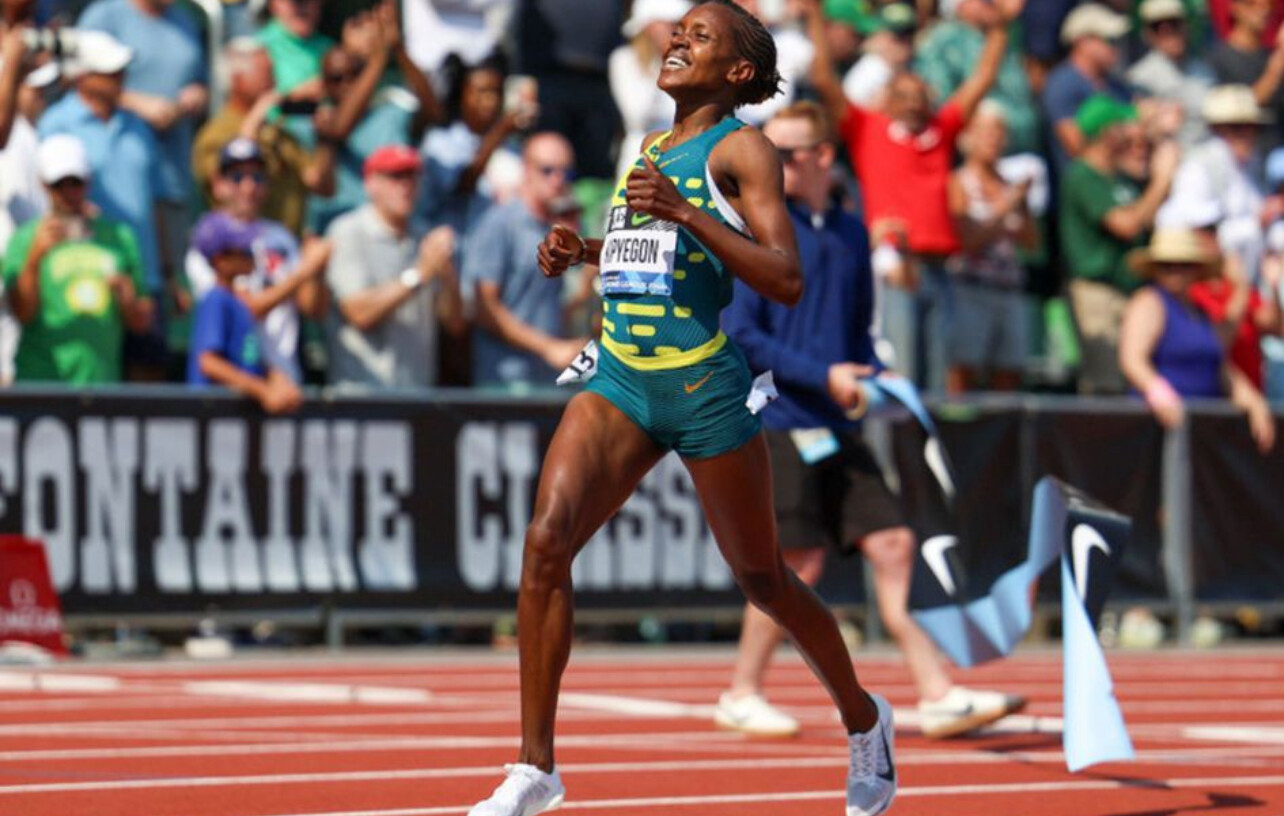
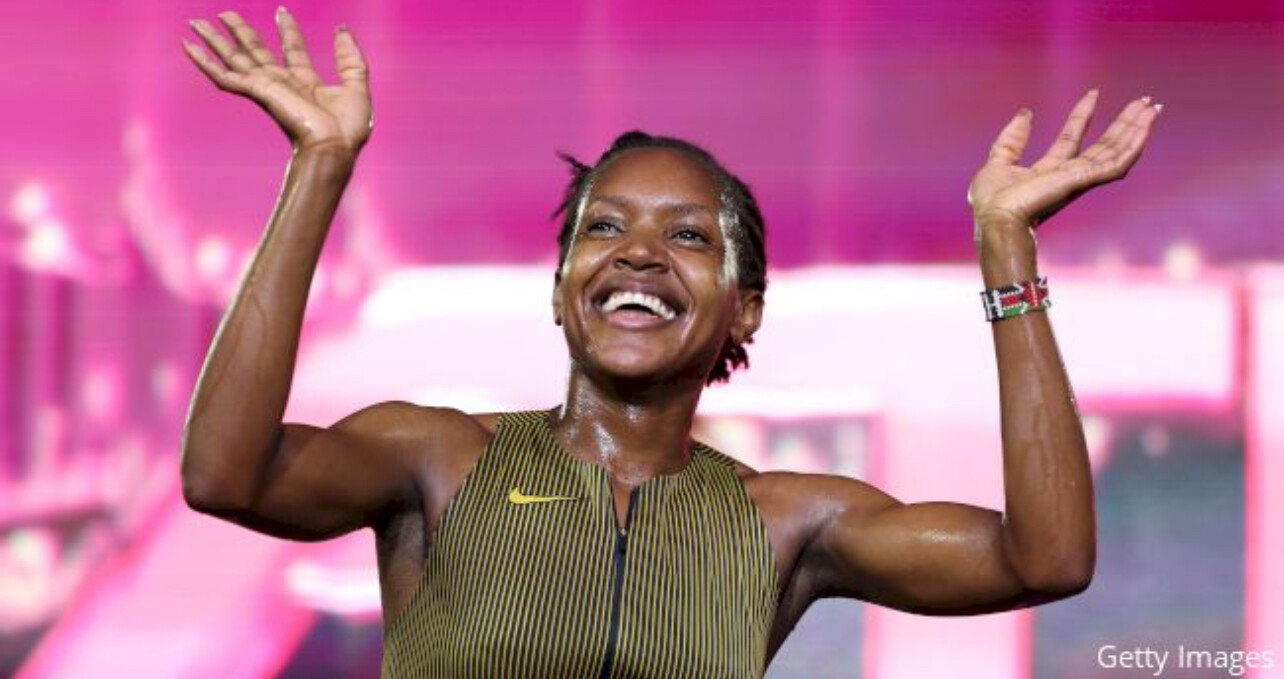
The 50th edition of the Prefontaine Classic, set for July 5 at Hayward Field in Eugene, Oregon, promises to be one of the most exciting track meets of the year. Headlining the event is three-time Olympic gold medalist Faith Kipyegon, who returns to the Pre Classic in search of her seventh career victory in the women’s 1500m.
Kipyegon, the world record holder in both the 1500m (3:49.04) and the mile (4:07.64), shattered the 1500m mark in Paris on July 7, 2024. Now, nearly a year later, she’ll look to reassert her dominance in front of a packed crowd at one of the sport’s most prestigious meets.
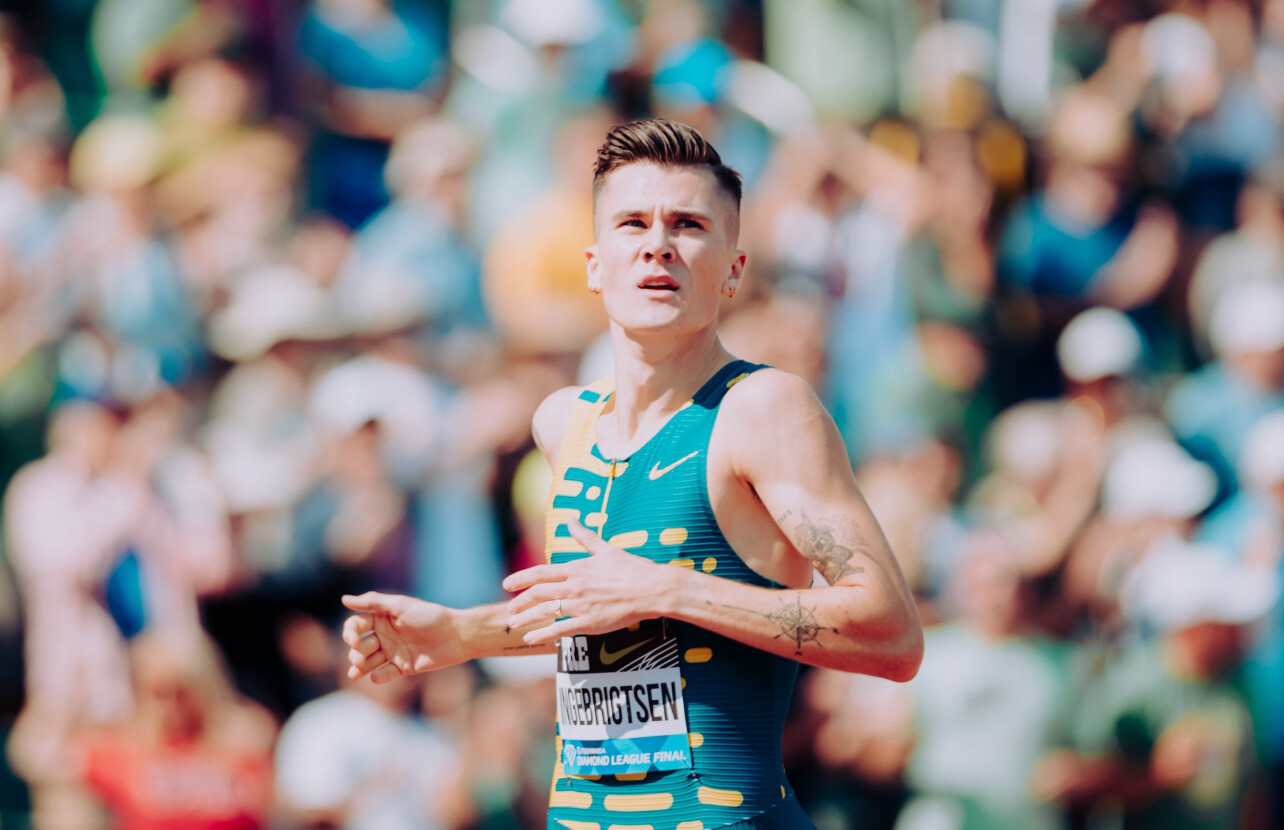
Joining Kipyegon in the 1500m are her fellow 2024 Olympic medalists—silver medalist Jessica Hull of Australia and bronze medalist Georgia Bell of Great Britain. Hull, a former University of Oregon standout, also holds the current world record in the 2000m.
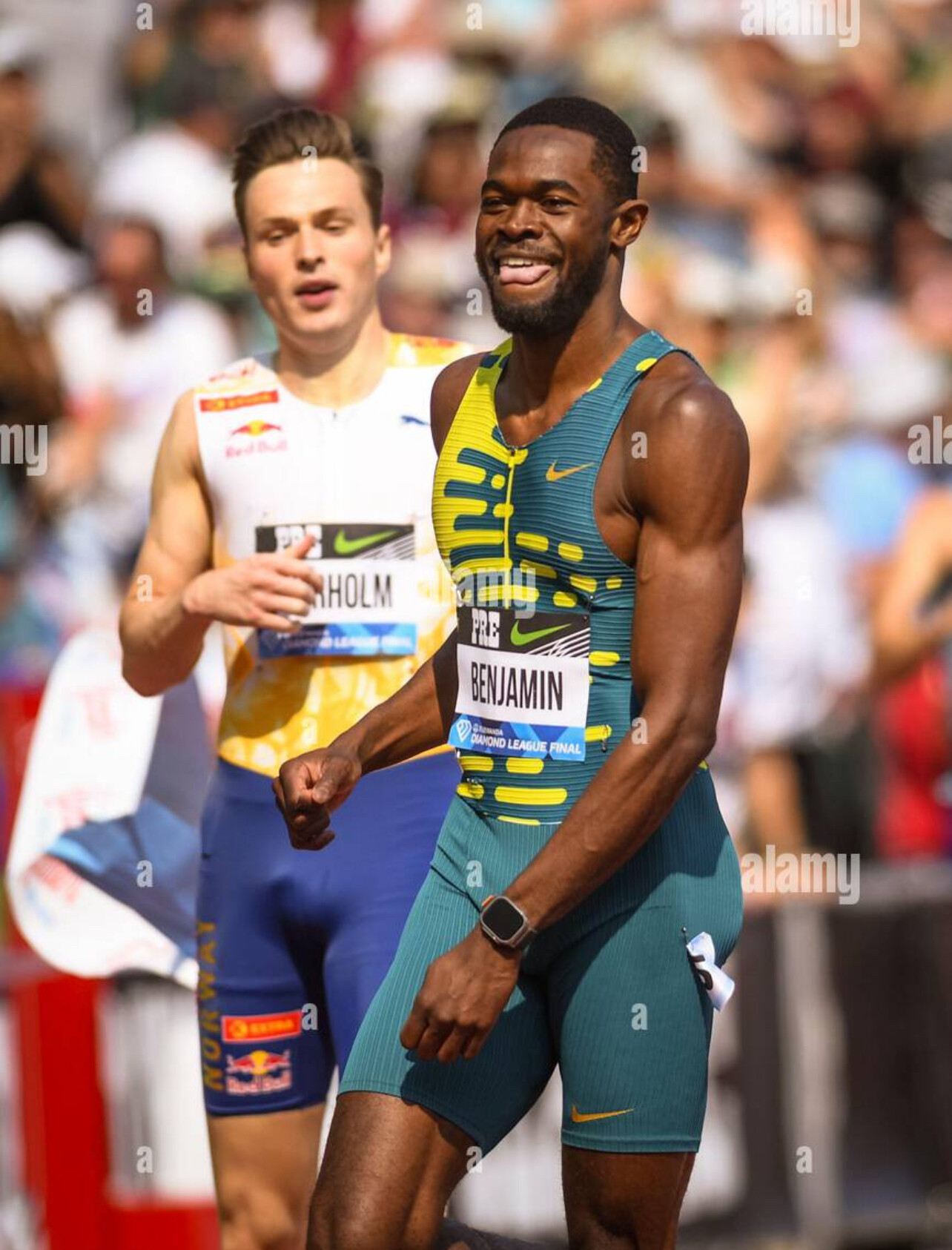
But Kipyegon isn’t the only big name set to thrill fans in Eugene. The men’s Bowerman Mile will feature a stacked lineup that includes:
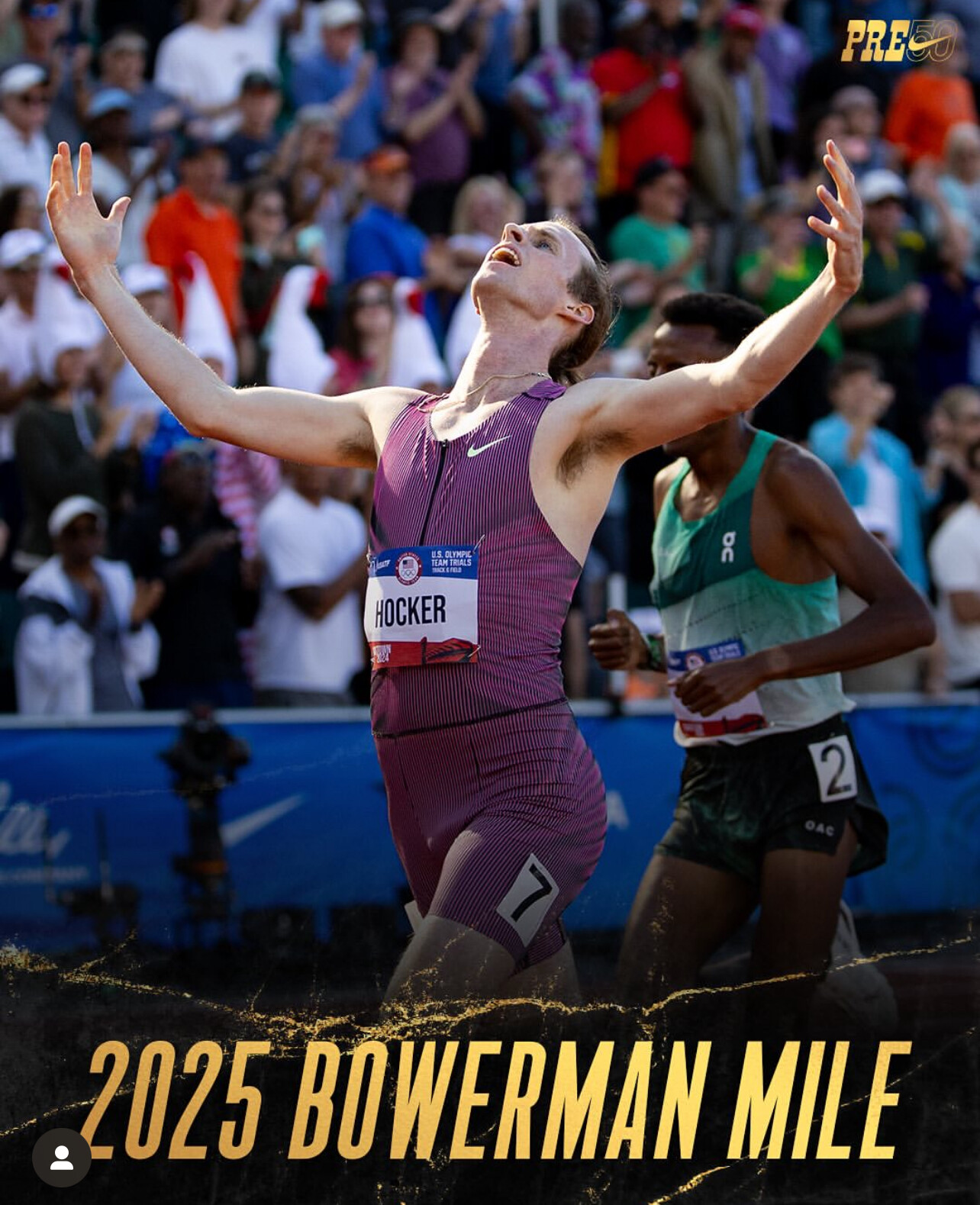
• Jakob Ingebrigtsen (Norway) – Olympic gold medalist and multiple-time Bowerman Mile champion

• Cole Hocker (USA) – 2024 Olympic 1500m champion
• Yared Nuguse (USA) – Olympic bronze medalist and former indoor mile world record holder
• Timothy Cheruiyot (Li Kenya) – Former world champion
• Jake Wightman (Great Britain) – 2022 world champion
• Grant Fisher (USA) – Olympic bronze medalist in both the 5000m and 10,000m
• Plus rising stars including Oliver Hoare, Neil Gourley, Azeddine Habz, Hobbs Kessler, Niels Laros, Cameron Myers, Stefan Nillessen, and Reynold Cheruiyot
In the men’s 400m hurdles, Olympic silver medalist Rai Benjamin will headline a competitive field that also includes CJ Allen, Trevor Bassitt, Clement Ducos, Malik James-King, Abderrahman Samba, and Assinie Wilson.
The 2025 Prefontaine Classic will feature 14 Diamond League disciplines, including the women’s 800m, 5000m, and 3000m steeplechase—each with world-class fields expected to be announced soon.
As the sport celebrates this milestone edition of the Pre Classic, the meet is shaping up to be not just a tune-up for global championships, but a showcase of track and field at its absolute best.
by Boris Baron
Login to leave a comment


Grand Slam Track League Aims to Revolutionize Track and Field
In an ambitious move to elevate professional track and field, sprinting legend Michael Johnson has launched the Grand Slam Track league. This innovative series promises athletes regular, high-stakes competitions against top-tier rivals, coupled with unprecedented financial incentives.
Unprecedented Financial Incentives
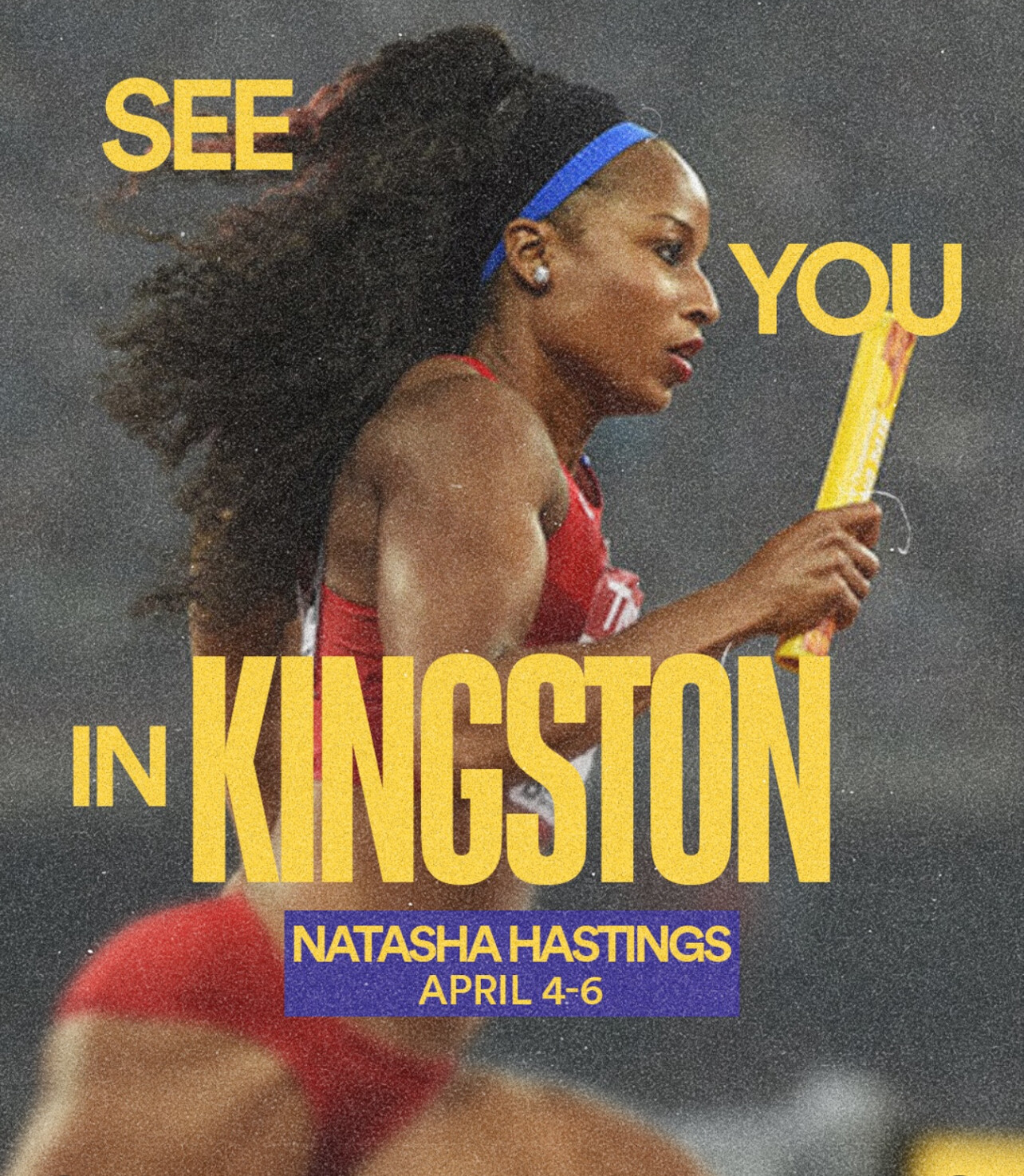
Grand Slam Track offers a substantial $12.6 million in prize money for its inaugural season. Athletes will compete in four major meets, with prize distributions as follows:
• 1st Place: $100,000
• 2nd Place: $50,000
• 3rd Place: $30,000
• 4th Place: $25,000
• 5th Place: $20,000
• 6th Place: $15,000
• 7th Place: $12,500
• 8th Place: $10,000
In contrast, the established Diamond League offers $10,000 for event winners and $1,000 for eighth place, highlighting Grand Slam Track’s commitment to elevating athlete compensation.
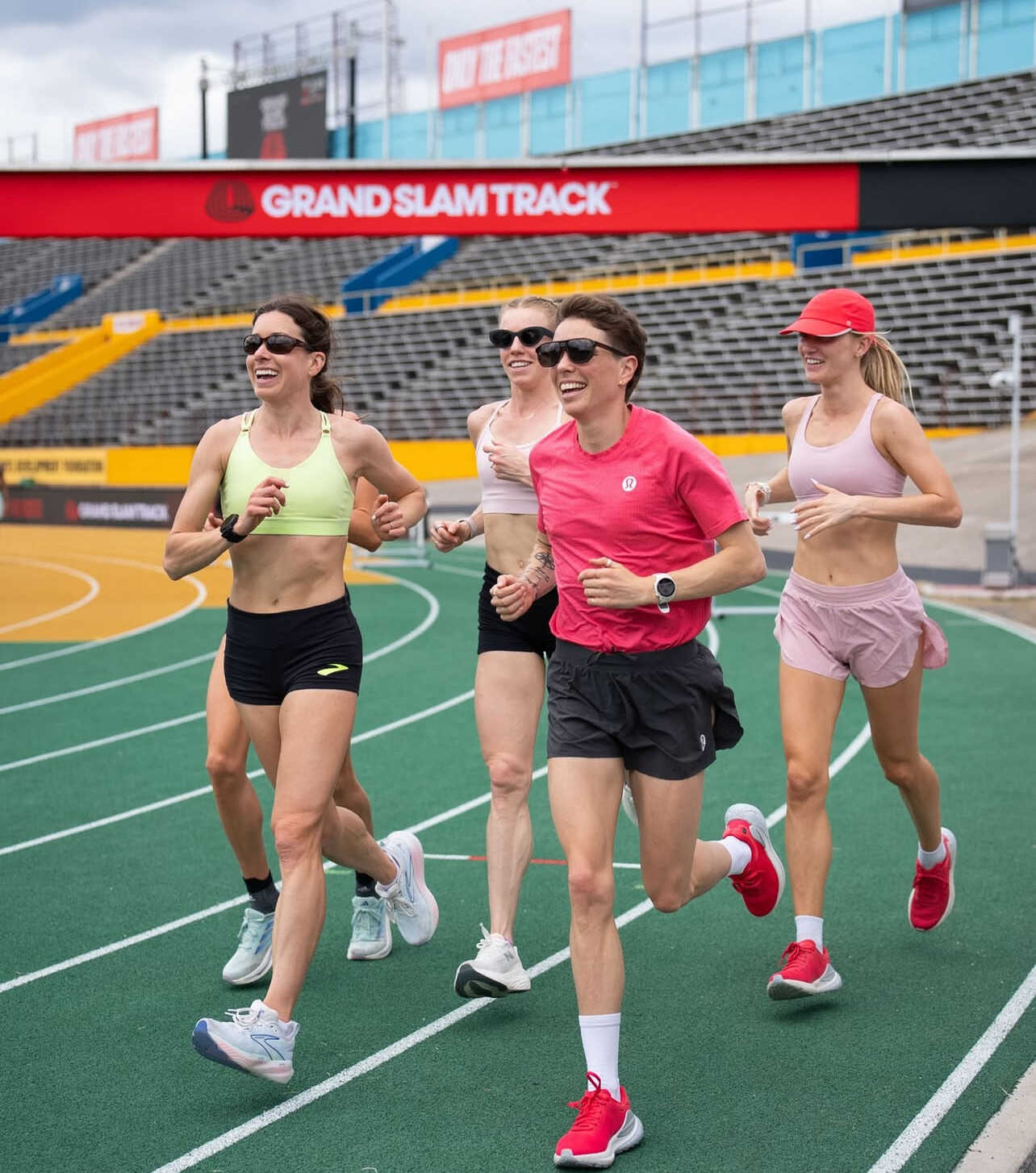
Season Schedule and Venues
The 2025 season features four high-profile meets:
1. Kingston, Jamaica – Independence Park: April 4–6
2. Miami, USA – Ansin Sports Complex: May 2–4
3. Philadelphia, USA – Franklin Field: May 30–June 1
4. Los Angeles, USA – Drake Stadium: June 27–29

These venues have been strategically selected to maximize global engagement and showcase the sport’s premier talents.
Elite Athlete Participation
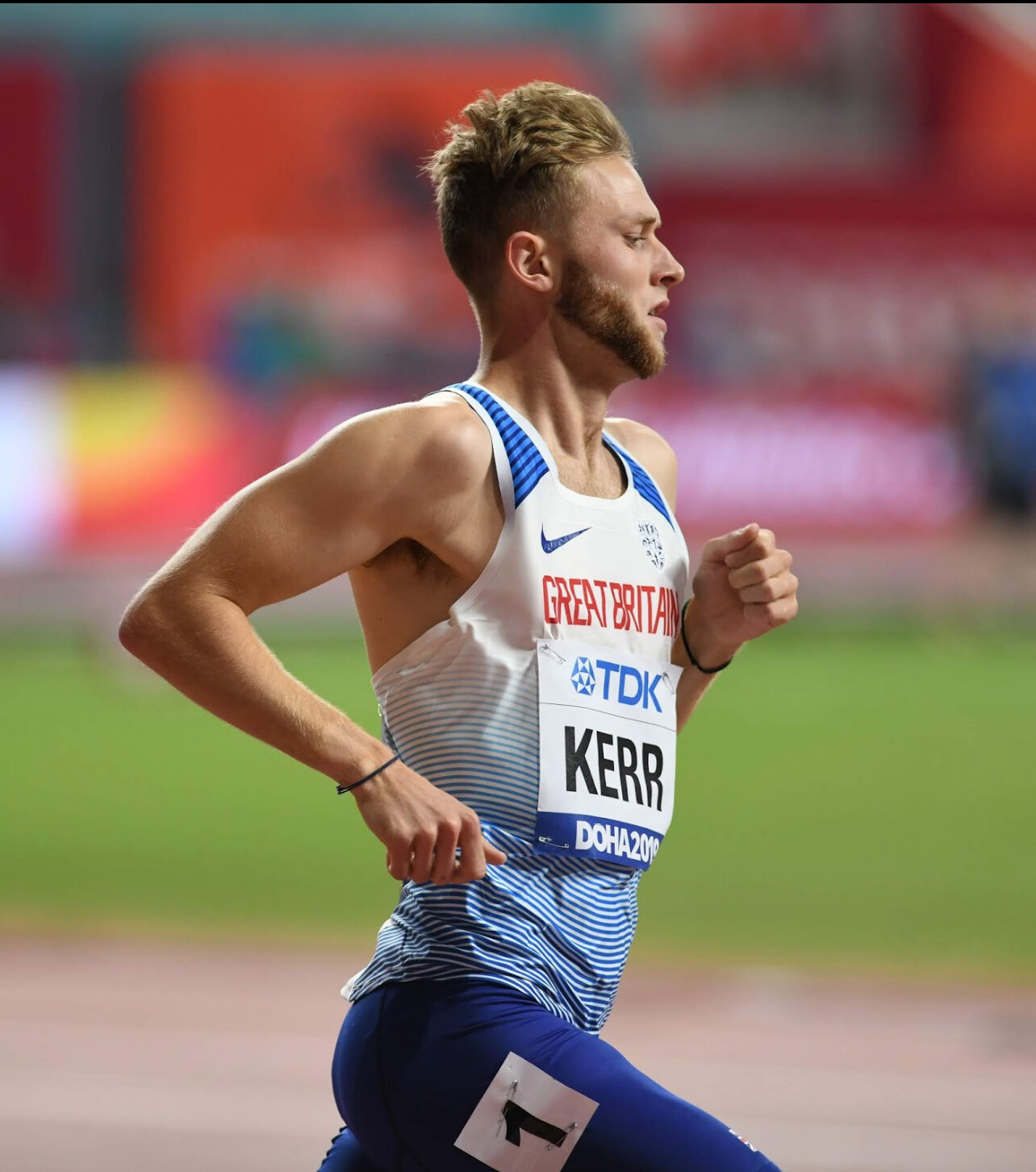
The league has successfully attracted 48 elite athletes, known as “Grand Slam Racers,” who are contracted to compete in all four events. Notable participants include:
• Sydney McLaughlin-Levrone: Double Olympic champion in the 400m hurdles.
• Josh Kerr: 2023 world champion and 2024 Olympic silver medalist in the 1500m.
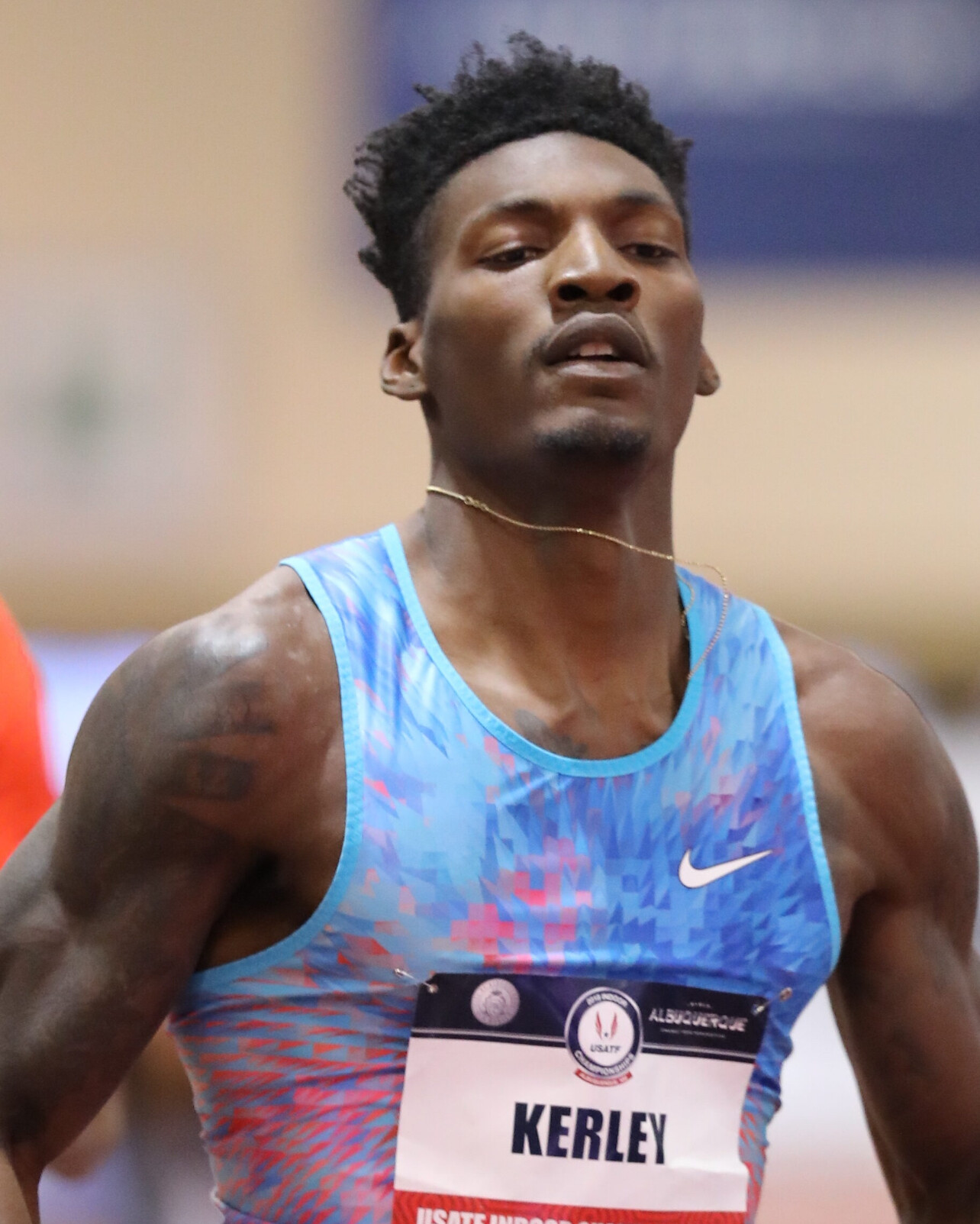
• Fred Kerley: World-renowned sprinter and Olympic medalist.
• Emmanuel Wanyonyi: Prominent middle-distance runner.
These athletes are poised to deliver thrilling head-to-head competitions, enhancing the sport’s appeal.
Visionary Leadership and Funding
Michael Johnson, a four-time Olympic gold medalist, spearheads the Grand Slam Track league. His vision is to create a platform that offers consistent, high-quality competitions and substantial financial rewards, addressing long-standing challenges in track and field.
The league has secured over $30 million in funding from private investments and strategic partnerships, including media rights deals with The CW Network and NBC Sports, ensuring extensive coverage and robust financial backing.
Broadcasting and Global Reach
Grand Slam Track has established broadcasting agreements with The CW Network and Peacock in the United States. Every event of each three-day meet will stream live on Peacock, with exclusive coverage of each Friday’s races, while The CW will air weekend coverage. NBC, whose parent company owns Peacock, will also air highlight specials.
The global broadcast team will be led by Steve Cram, Carrie Tollefson, and Anson Henry, with reporting from Radzi Chinyanganya and Taliyah Brooks. These collaborations aim to bring track and field to a broader audience, revitalizing interest in the sport.
With its innovative approach, substantial financial incentives, and commitment to showcasing elite talent, Grand Slam Track is set to redefine the landscape of professional track and field.
by Boris Baron
Login to leave a comment
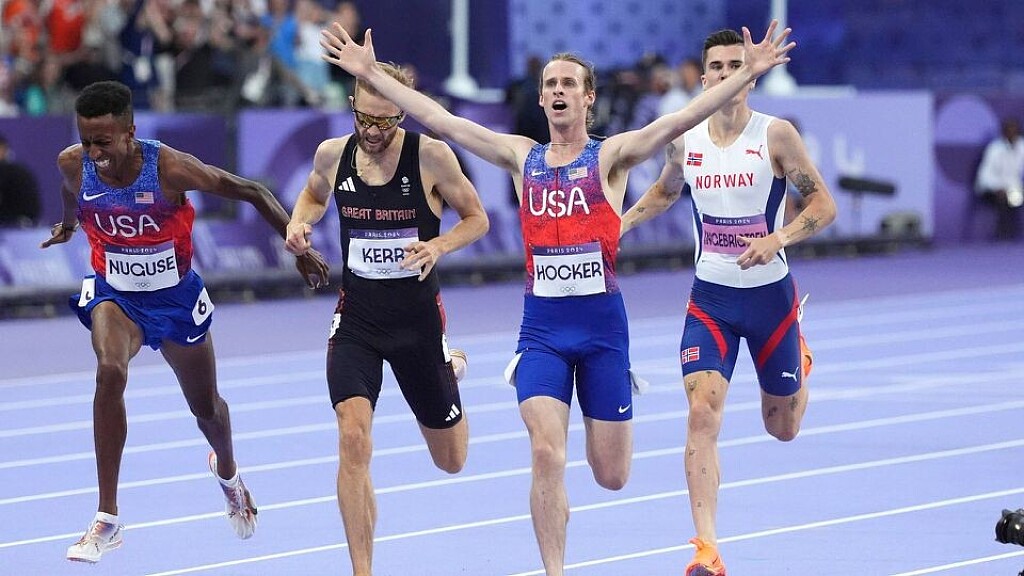
Hicham El Guerrouj’s 26-year reign at risk as 1500m titans eye world record in Brussels
Three top middle-distance runners are set to challenge the long-standing 1500m world record at the Brussels Diamond League.
The men's 1500m world record set back in 1998 by Morocco’s Hicham El Guerrouj will come under serious threat as three of the most promising middle-distance runners—Jakob Ingebrigtsen, Cole Hocker and Yared Nuguse—are set to clash in the Diamond League final in Brussels this Saturday.
El Guerrouj’s incredible time of 3:26.00 has stood the test of time for 26 years with no one able to break the mark that many thought would be surpassed by now.
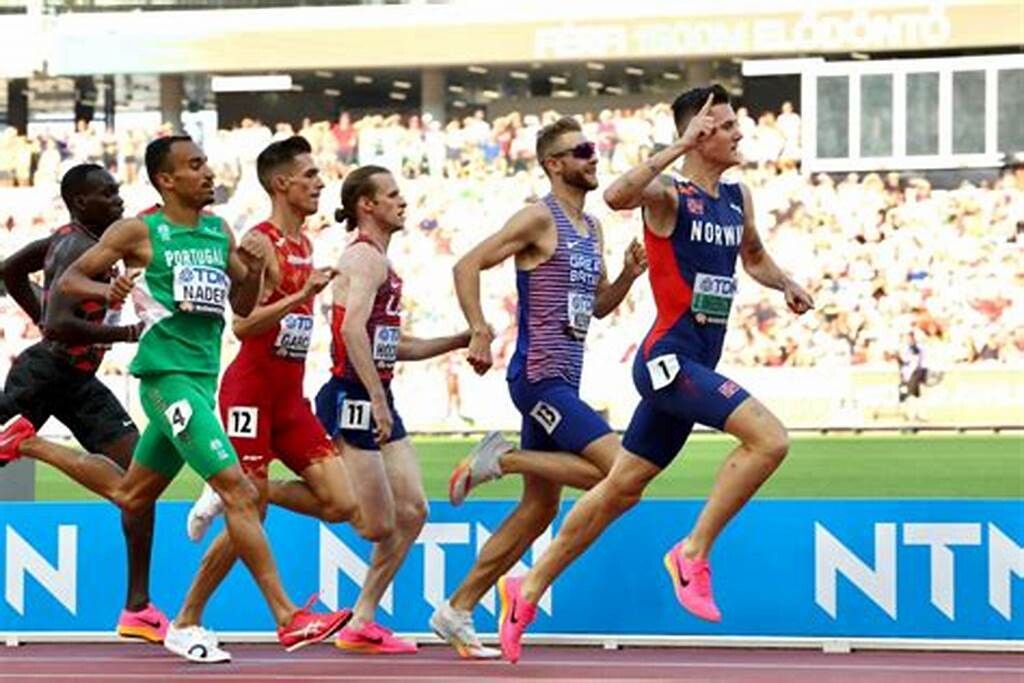
However, the trio of Olympic and World Championship medalists are all in peak form and ready to challenge this long-standing record making this one of the most highly anticipated 1500m races in recent memory.
The Tokyo Olympic champion Jakob Ingebrigtsen, enters the race as the favorite. The Norwegian sensation boasts a personal best of 3:26.73, a mere 0.73 seconds shy of El Guerrouj’s historic mark.
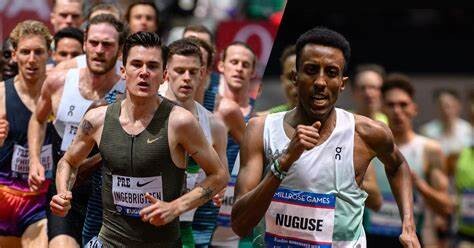
Ingebrigtsen’s dominance over the distance has been unmatched this season, and he has made it clear that breaking the world record is on his radar.
“I feel like I’m in the best shape of my life.The world record is something that has always been in the back of my mind, and I believe this is the best chance I’ve had to go for it," said Ingebrigtsen.
Pushing him to the limit will be the American duo of Cole Hocker and Yared Nuguse. Hocker, fresh off an Olympic season that saw him claim a gold medal in the 1500m is ranked seventh on the all-time list with a personal best of 3:26.73 matching Ingebrigtsen’s time.
Hocker’s confidence has been building all season, and the 23-year-old has openly expressed his desire to break into history.
“I hope to take a stab at the world record, whether it’s this season or next year,” said Hocker.
“But right now, I’m focused on leaving a lasting legacy. The Olympic gold was the first goal, and now it’s time to chase something even bigger.”
Yared Nuguse, ranked ninth on the all-time list, is another strong contender. Nuguse has steadily risen through the ranks with a personal best of 3:27.80 and a season-best of 3:27.80 as well.
The 25-year-old has proven himself capable of competing against the best in the world and could be poised to surprise both Hocker and Ingebrigtsen in Brussels.
The race, however, will be missing one key figure in Josh Kerr, the British 1500m specialist who recently confessed that the mental toll of the season has led him to opt out of the final. Kerr’s absence opens the door for a fascinating showdown between Ingebrigtsen, Hocker, and Nuguse.
In addition to the leading trio, the race will feature strong competition from the likes of Kenya’s Reynold Cheruiyot, a rising star who has posted a season-best of 3:28.28, and Timothy Cheruiyot, the former World Champion.
France’s Azzedine Habz and Great Britain’s Elliot Giles will also be in the mix, having both posted times in the 3:29 range this season.
El Guerrouj’s record-breaking performance in 1998 was the first time a runner had managed to average under 55 seconds per lap for the 1500m.
With athletes now regularly running sub-3:30 times, the level of competition has never been higher. Whether it’s tactical brilliance, pure speed, or a combination of both, this race has all the ingredients to produce fireworks on the track.
by Festus Chuma
Login to leave a comment
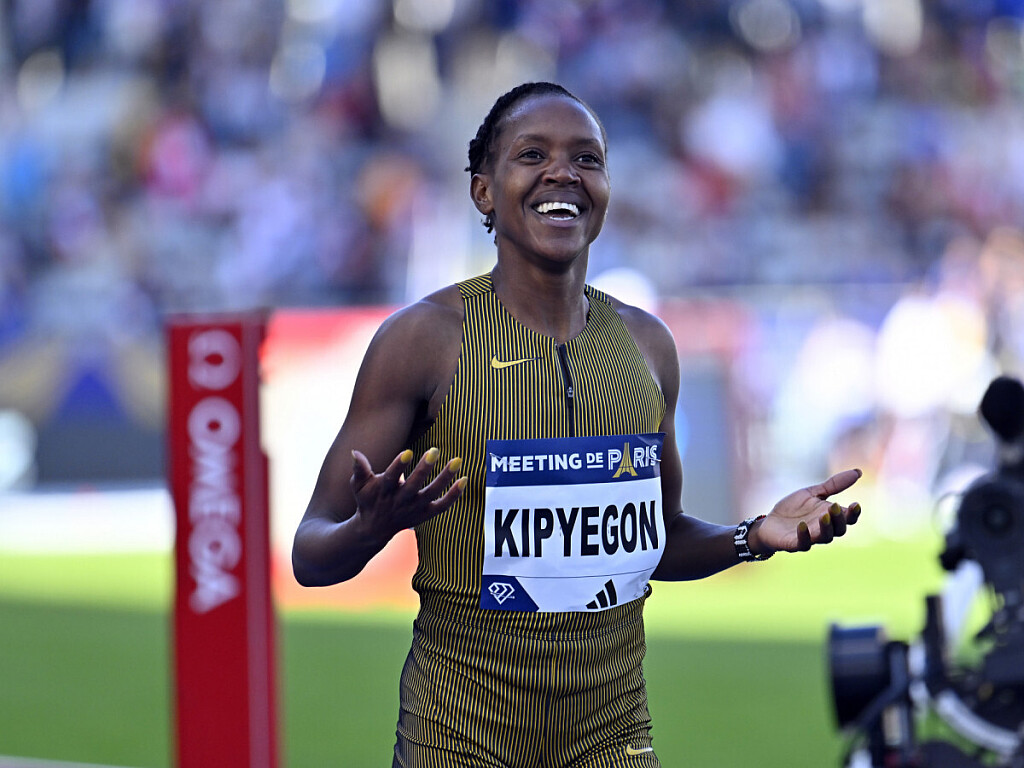
Faith Kipyegon shares two reasons behind her record-breaking 1500m display at Paris Diamond League
Kipyegon reveals two reasons behind her record-breaking display at the Paris Diamond League, despite it only being her second race of the season which has been hindered by injuries.
Faith Kipyegon has offered an insight into the factors that have been fueling her seemingly nonchalant ability to dominate races.
Kipyegon, who launched her Diamond League season in Paris on Sunday, took the world by surprise as she shattered her own record in the 1500m, running 3.49.04, some seven microseconds faster than when she broke the record again in Monaco a year ago.
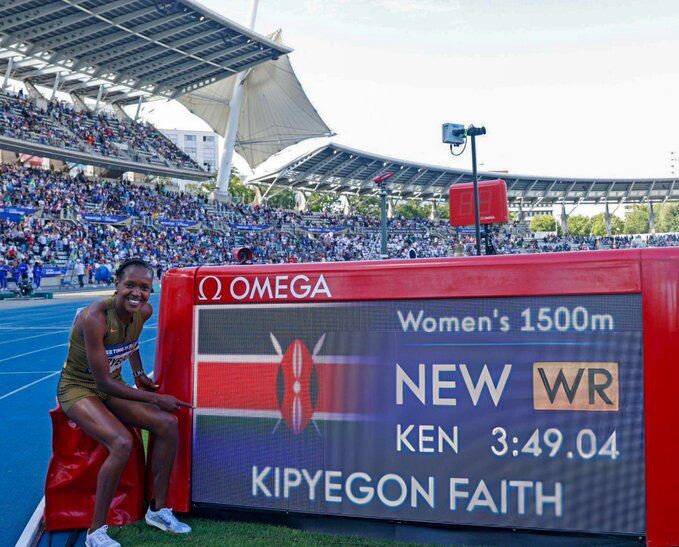
Kipyegon showcased why she is a force to be reckoned with as she eyes a historic third consecutive Olympic gold in the 1500m.
Speaking to Citius Mag, Kipyegon revealed the two crucial factors fueling her dominant display: belief in her training and the competitive push from fellow athletes.
1. Unwavering Belief in Training
Kipyegon attributed her record-breaking performance to her confidence in the rigorous training she underwent. Despite the long absence from the track, her belief in the hard work and preparation was unwavering.
“I think it is all about believing in the training I have done so far. After I asked my coach what was possible in Paris, he told me, ‘Yeah, everything is possible, you never know, the training you have done (could reap reward),” Kipyegon explained.
This confidence propelled her to execute her race strategy flawlessly, leading to her remarkable finish. “I came here and just believed in myself, executed it just to see what was possible. I came here and ran a world record in my first Diamond League classic of the season,” she added.
2. Competitive Push from Jessica Hull
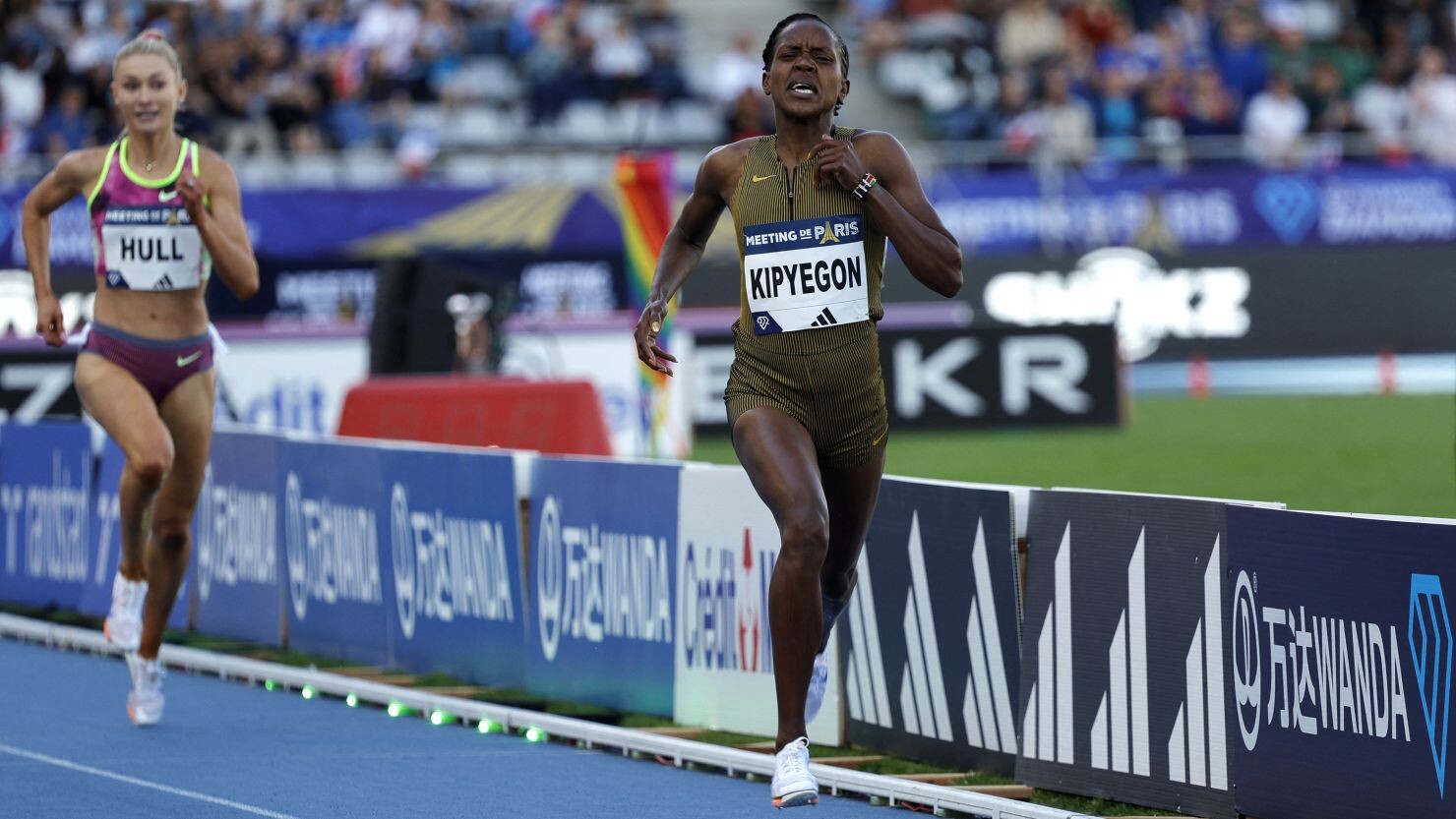
Another significant factor in Kipyegon’s stellar performance was the intense competition from Australian runner Jessica Hull. Hull’s relentless pressure throughout the race kept Kipyegon on her toes, ultimately pushing her to new heights.
Hull's impressive time of 3:50.83 not only set a new Australian record but also became the fifth quickest ever run by a female athlete. Reflecting on the race, Kipyegon expressed her admiration for Hull’s performance.
“I was like, who is following me? But I turned back and saw Jessica Hull behind me. It was really feeling great to push each other towards the finish line. I am really really happy for her,” Kipyegon said.
Hull’s presence and competitiveness provided Kipyegon with the energy and drive needed to break her own world record.
by Mark Kinyanjui
Login to leave a comment
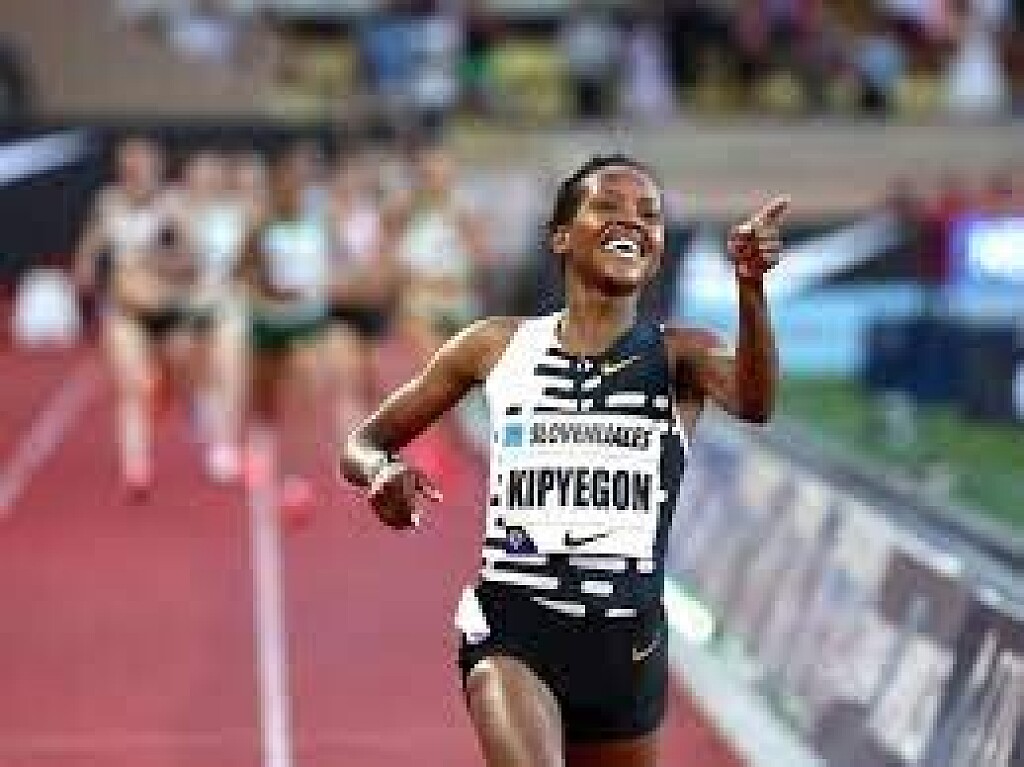
Faith Kipyegon offers success tip to upcoming athletes
Faith Kipyegon has revealed the challenges of being a track athlete and how she manages to keep the focus ahead of the Olympic Games.
Double world record holder Faith Kipyegon has opened up on the struggles of running and disclosed how she manages to keep going through the tough times.
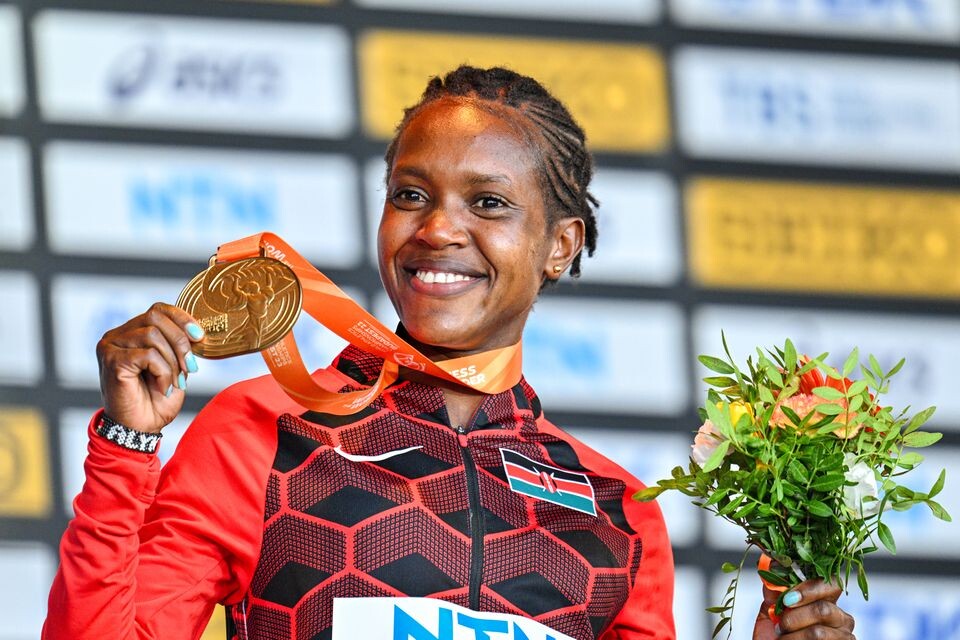
The three-time world 1500m champion explained that it’s not a smooth sailing and just like any other athlete, she faces hurdles in her pursuit for success but she does not allow challenges to pull her back.
She added that her main goal is to work hard and put in the effort as she looks to achieve the goals she has set. She is a testimony that nothing comes easy and from time to time, Kipyegon has also insisted on athletes working hard.
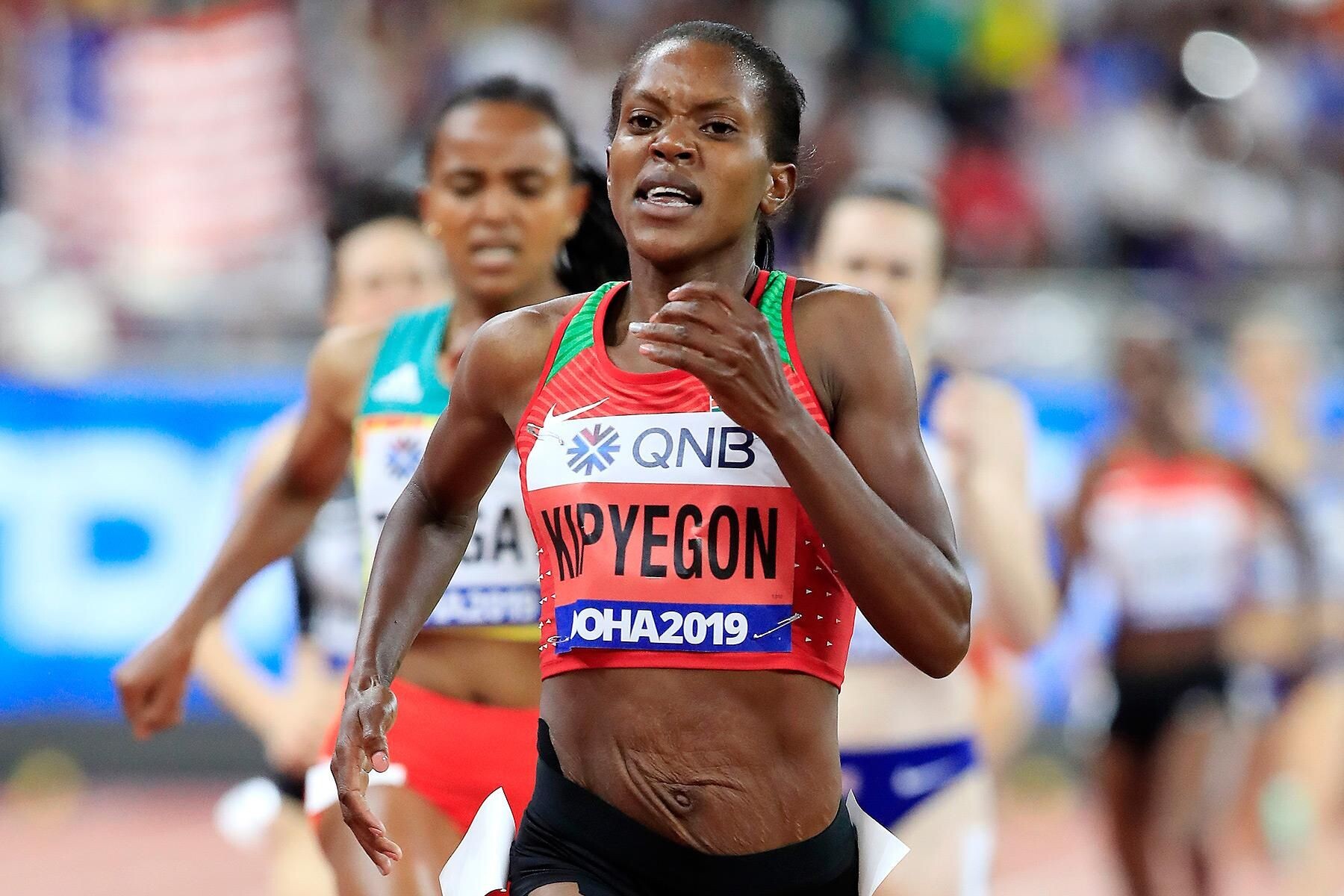
“It’s not a smooth sailing…it’s only that hard work and being patient is the most important thing. I know being patient and training hard will get me where I want to be,” the two-time Olympic champion said.
She opened her season at the Kenyan Olympic trials, where she punched the 1500m and 5000m tickets to the Paris Olympics, dominantly winning both races.
This comes after her final track race that was at the Prefontaine Classic, the Diamond League Meeting in Eugene in 2023. She intended to open her season at the Diamond League Meeting in Xiamen but was forced to withdraw due to an injury setback.
The 30-year-old was then confirmed for the Prefontaine Classic but could not compete there due to the injury. After sealing tickets to the Olympics, she will be chasing history on the global stage, hoping to become the first woman to win three successive Olympic trials in the 1500m.
She will also be keen to win the 5000m gold medal, and etch her name in the annals of history. She made history at last year’s World Championships in Budapest, Hungary to win her third 1500m title and also claim top honours in the 5000m.
“It will be history to win the 1500m for the first time and focus on the 5000m…I know it will not be easy but I’m going to try and see what will be possible,” Kipyegon said.
Her next stop will be at the Diamond League Meeting in Paris, France, where she intends to have a great build up to the Olympics.
by Abigael Wuafula
Login to leave a comment
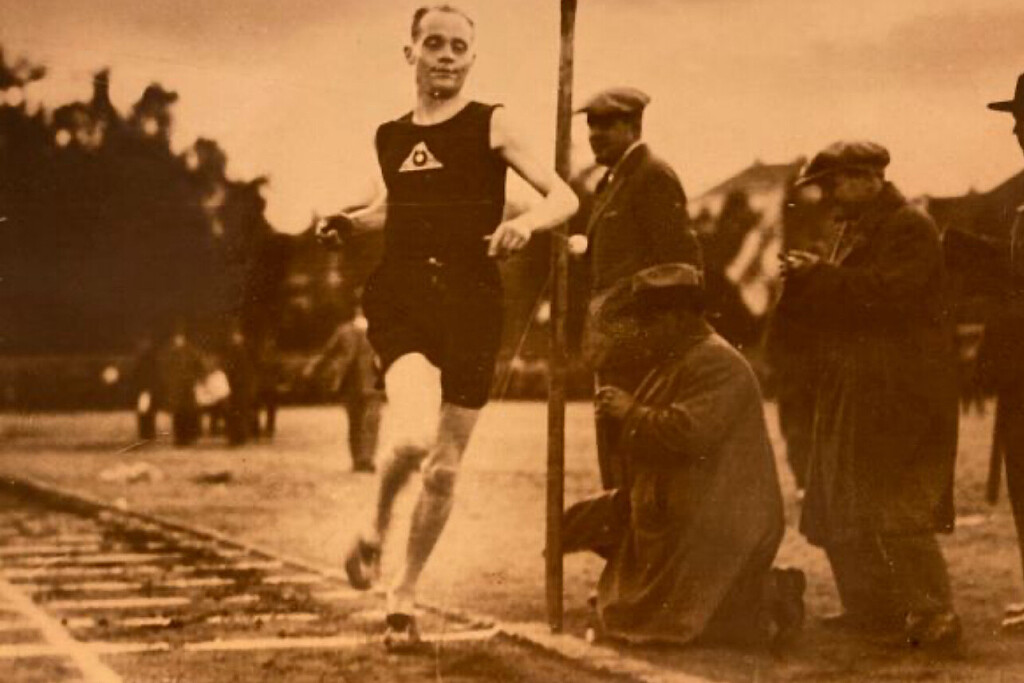
A century since Nurmi set 1500m and 5000m world records in one evening
Paavo Nurmi was the first and Said Aouita is currently the last man to have held the 1500m and 5000m world records at the same time*.
When Aouita achieved the feat, in the European summer of 1985, there were 27 days between the Moroccan’s 13:00.40 clocking for the longer distance in Oslo and his 3:29.46 metric mile in Nice.
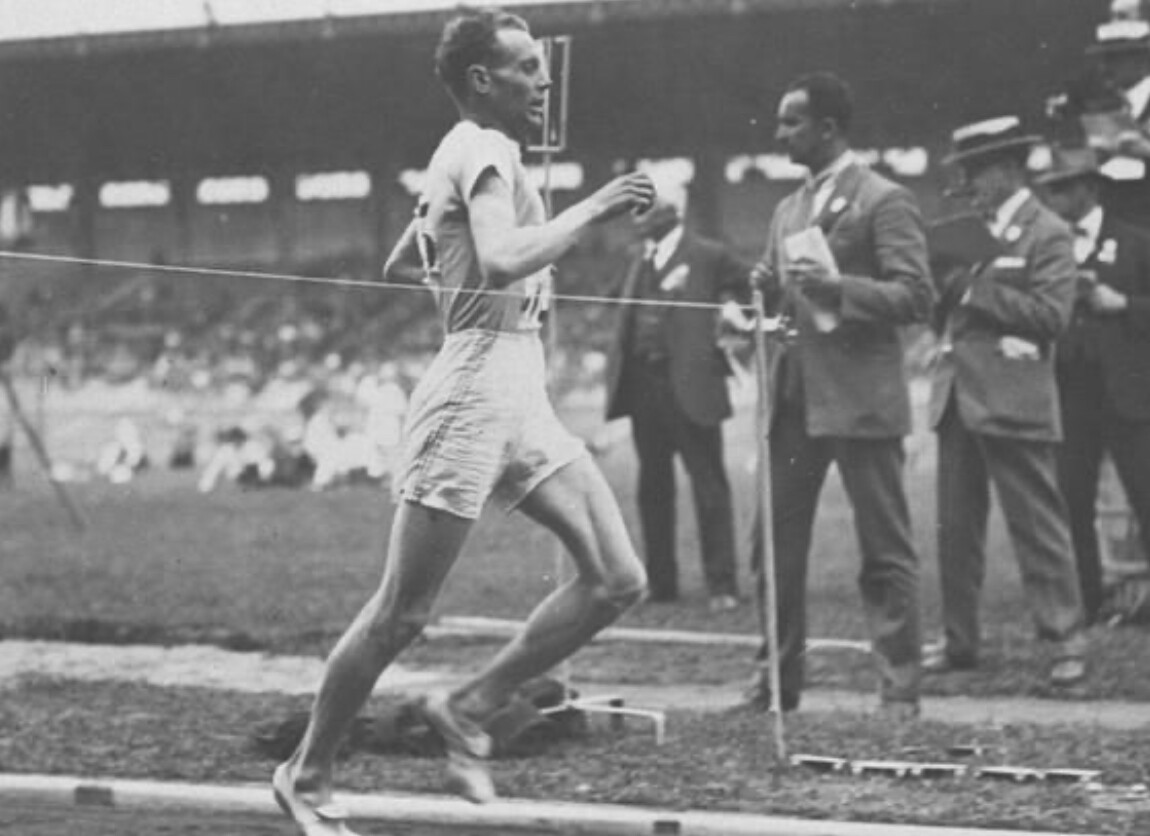
When Nurmi became the first to accomplish this rare world record double, in Helsinki 100 years ago, the interval was a mere 65 minutes and 35.6 seconds.
That was the precise gap between ‘Peerless Paavo’ crossing the finish line in the picturesque sylvan setting of the Elaintarha Zoological Gardens Sports Ground in the 1500m and then the 5000m on the momentous evening of 19 June 1924.
It’s a measure of how huge a phenomenon the enigmatic Nurmi happened to be.
It’s the distance running equivalent of Jesse Owens’ Day of Days, when the great man notched four world records – six, with metric equivalents – in the space of 45 minutes at Ann Arbor, Michigan, in 1935.
Olympic dress rehearsal
The gap between the start times of Nurmi’s two races at Elaintarha in 1924 was actually 55 minutes; the 1500m set off at 7:05pm and the 5000m at 8:00pm. This was to replicate the schedule for the finals of each event at the Olympic Games in Paris the following month.
Nurmi proceeded to emerge victorious from both events in the pressure cooker of Stade Colombes in Olympic record times. He then claimed three more golds, with individual and team cross country victories and success in the 3000m team race.
To coincide with the 2024 Olympics in the French capital and the centenary of the 1924 Games in Paris, with the assistance of World Athletics Heritage, Nurmi’s record Olympic track and field haul of five golds from a single Games is on display in an exhibition entitled D’or, d’argent, de bronze - une histoire de la medaille Olympique at the museum of the Monnaie de Paris on the left bank of the Seine.
The Phantom Finn
Meanwhile, the land of perhaps the most ardent track and field followers can celebrate the anniversary of the first of the supreme Flying Finn’s finest hours: Nurmi’s wondrous world record double amid the birch and pine trees of the Elaintarha Sports Ground.
At that time, six days past his 27th birthday, Nurmi had established himself as the planet’s preeminent distance runner, having assumed the mantle from his boyhood hero, Hannes Kolehmainen, who completed a hattrick of Olympic golds in 1912, at 5000m, 10,000m and cross country.
Whereas the affable Kolehmainen was regarded as the smiling Suomi star of the Stockholm Olympics, the taciturn Nurmi was seen as the unsmiling Finnish crown prince of distance running.
He had endured a tough upbringing in the south-west of the country, leaving school at the age of 12 after his father died to haul goods up the steep slope to Turku railway station as a delivery boy. He used the trams of Turku as his pacemakers, and walked and ran for hours in the surrounding forests.
“Nurmi was enigmatic, sphinx-like, a god in a cloud,” wrote Norman Harris and Ron Clarke in The Lonely Breed. “He was stern and silent, with uncompromising self-discipline and white-hot ambition, bearing the closest possible resemblance in athletics to Napoleon Bonaparte.”
By 1924, the ‘Phantom Finn,’ as the Greta Garbo of the track was dubbed by the press, had claimed three of his nine Olympic gold medals and set six of his 22 world records. At the 1920 Olympics in Antwerp, he succeeded Kolehmainen as 10,000m champion – his ageing idol stepping up in distance to win the marathon – and also won individual and team cross country golds.
“The injury was a bad thing”
When the punishing timetable for Paris was published, the Finnish athletics authorities chose the US-based Ville Ritola as their main man for the 10,000m and omitted Nurmi. The reigning champion requested a place but was asked to run behind Ritola for second place, to save himself for the 1500m and 5000m.
When Nurmi refused, he was offered a slot in the 800m instead. He declined that offer too.
Amid the controversy, Nurmi injured a knee when slipping on ice in a 7km cross country race. He had to rest for two weeks, then walk with his leg straight for several more weeks, pummelling away on a boxing punchbag to maintain some fitness.
Rumours spread that he might not be fit for Paris but, at his insistence, the 1500m and 5000m races were arranged with an hour of each other at Elaintarha. Nurmi wanted to show that he was ready for the mighty challenge in the French capital.
First came the 1500m. The world record stood at 3:54.7, set by Swede John Sander in 1917, though Nurmi had run quicker (3:53.0) en route to his mile record of 4:10.4 in Stockholm in 1923.
It was Nurmi’s want to burn off the opposition with a fast opening lap and he set off with a split of 57.3 on his way to an undisputed world record time of 3:52.6.
There were no signs of fatigue in the 5000m. Nurmi opened with a lap of 65.0 and closed with 62.7. His finishing time was 14:28.2 – a staggering 7.2 seconds inside the global mark he had set in Stockholm two years previously.
“He seemed to be venting anger stored up from the injury,” wrote Harris and Clarke, who knew a thing or two about world record breaking.
It was put to Nurmi that the injury had been a blessing in disguise, that the enforced rest had done him good. “No, not at all,” he angrily replied. “The injury was a bad thing.”
It was a bad thing for Nurmi’s rivals that he arrived in Paris fully recovered and fully firing. Nothing could stop the Phantom Finn from ghosting into the Olympic record books.
by World Athletics
Login to leave a comment
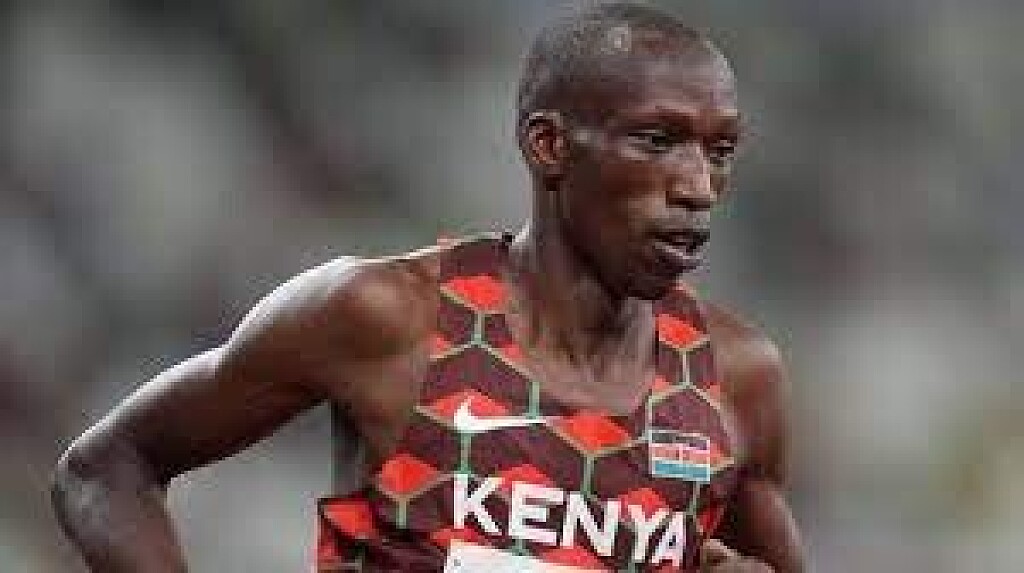
Timothy Cheruiyot reveals struggles with injuries and overcoming challenges as he chases Olympic glory
Former world 1500m champion Timothy Cheruiyot has opened up on his struggles with injuries and his comeback plan to the top of the men's 1500m.
Olympic silver medallist Timothy Cheruiyot has opened up about his injury bout that saw him struggle to produce great results since the 2022 World Championships in Eugene, Oregon.
Cheruiyot, a former world champion, explained that he had been through a tough time with his injury and explained that he had a torn knee which cost him a lot in terms of training and performing well.
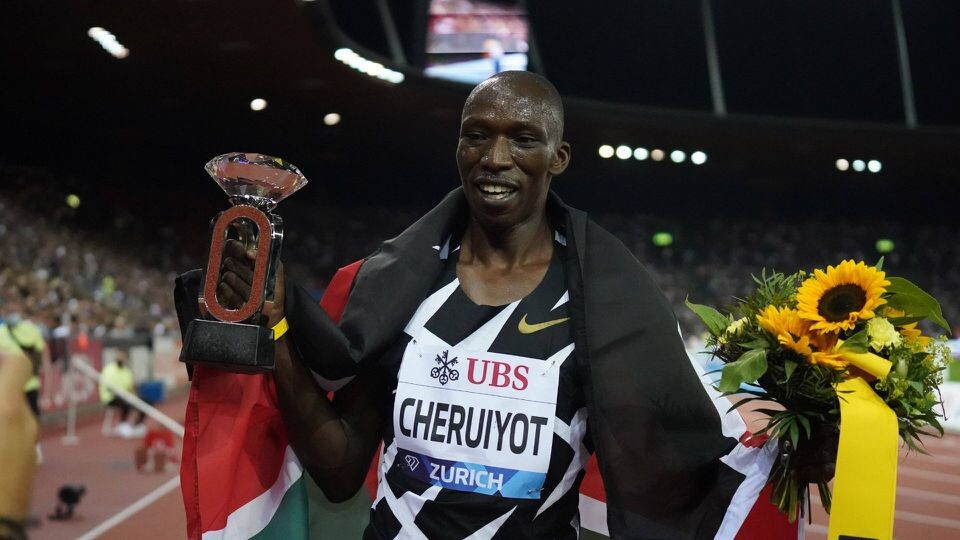
He was a favourite at the 2022 World Championships but failed to live up to the billing, finishing sixth in the final of the 1500m before proceeding to a second-place finish at the Commonwealth Games in Birmingham.
Last season, Cheruiyot had a bitter exit from the World Championships in Budapest, Hungary, where he was eliminated in the semifinal of the race. He explained that the injury has been a nightmare to him but appreciated his management and coach Bernard Ouma for walking with him during the difficult period.
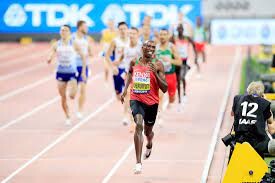
“It was a bit hard because sometimes when an athlete has an injury, it’s a bit of a problem but for me, I thank my management and my coach for coming together and finding a good physiotherapist and a great rehab.
“At the moment I’m very happy to be back…it was hard because I had a torn knee and I’m happy to have come back and I’m training well now,” Cheruiyot said.
This season, the 28-year-old has been in great shape, and has competed in Diamond League Meetings and local races as he eyes the Olympic trials.
He was in action at the Diamond League Meeting in Doha, finishing second behind Brian Komen before almost upsetting Jakob Ingebrigtsen on home soil, at the Diamond League Meeting in Oslo.
Cheruiyot was also in action at the trials for the Africa Senior Athletics Championships, where he doubled in the 800m and 1500m and finished third and fifth respectively.
He has assured his fans of being fully back and will be keen to go back and take his rightful position as one of the greatest 1500m runners the world has ever known.
by Abigael Wuafula
Login to leave a comment

U.S. Olympic Team Trials Track And Field
Eugene, Oregon has been awarded the 2024 U.S. Olympic Team Trials - Track & Field, USA Track & Field and the U.S. Olympic & Paralympic Committee announced today. From June 21 to 30, Hayward Field at the University of Oregon will be home to one of the biggest track and field competitions in the country, as the U.S. Olympic Team...
more...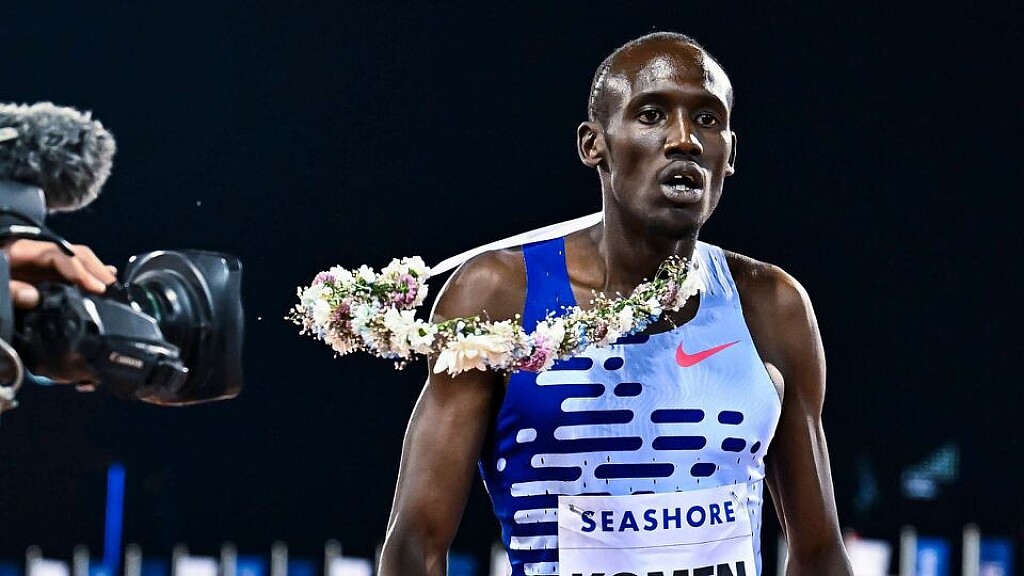
Brian Komen promises to deliver 1500m medal at Paris 2024 Olympics
In his bid to stop Norwegian and British dominance in the 1500m, Brian Komen has promised to deliver a medal for Kenya at the Paris 2024 Olympic Games.
African Games 1500m champion Brian Komen has promised to deliver a medal for Kenya if he makes the cut to the Paris 2024 Olympic Games.
Komen, the latest 1500m runner to emerge from Kenya, has managed to cement his name and track and field fans cannot wait to see what the athlete is capable of as he gears up to take on the creme de la creme of track and field this season.
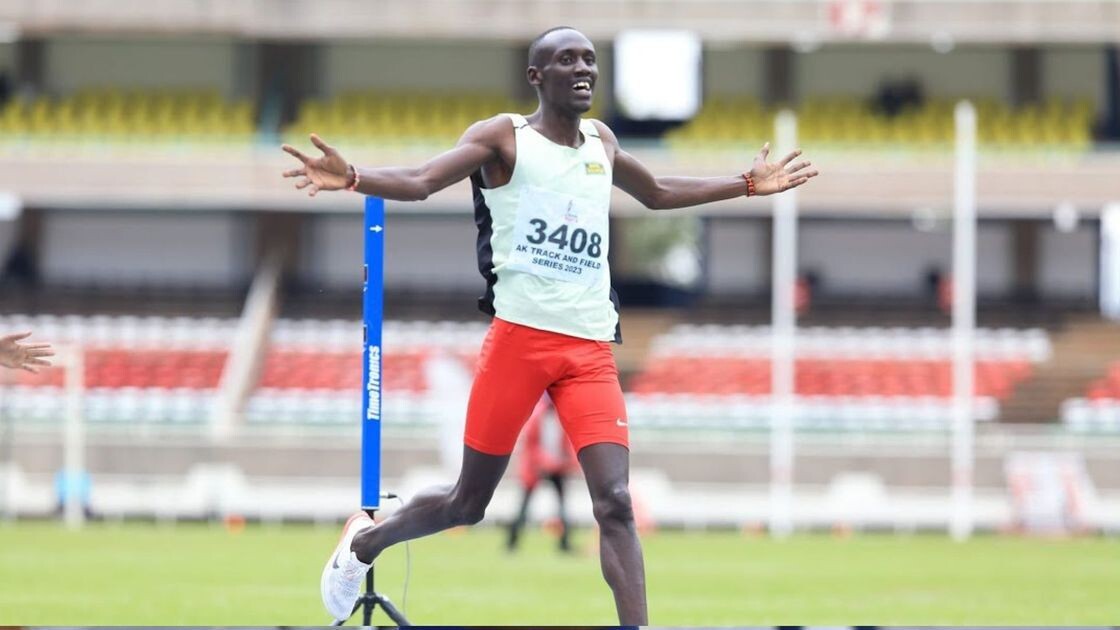
The Kip Keino Classic champion has been in great shape so far, crediting all his wins to training well and working hard. Many might wonder where he has been following the faulty performances from Team Kenya in the 1500m.
“I was in school, now I’m back and I’ve been training very hard and that’s why I’m here. I was studying at Egerton University pursuing a course in Microbiology," Komen said.
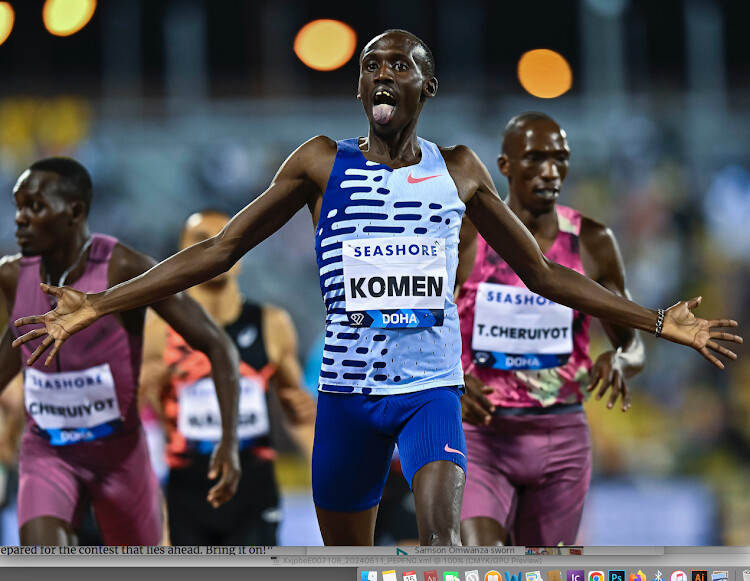
“When I feel like I want to go, I just decide to go all in. I feel like my body is doing okay and I’ve been training very hard. I can’t say I’m going to win a gold but God knows that. I’m going to fight for a medal, that’s my goal.
“I’m focusing on Paris and I want to win a medal and if I manage to win gold, that’s well and good. My coach used to run and he really motivates me."
The 25-year-old has been unbeaten in the 1500m so far this season, starting from the African Games where took gold before dominating the Kip Keino Classic.
He was also in action at the Diamond League Meeting in Doha, making his long-awaited debut, and managed to stun the world once again with his tactical run. Komen later stole the show at the National Championships, owing to the fact that it was his first time competing there.
by Abigael Wuafula
Login to leave a comment

Paris 2024 Olympic Games
For this historic event, the City of Light is thinking big! Visitors will be able to watch events at top sporting venues in Paris and the Paris region, as well as at emblematic monuments in the capital visited by several millions of tourists each year. The promise of exceptional moments to experience in an exceptional setting! A great way to...
more...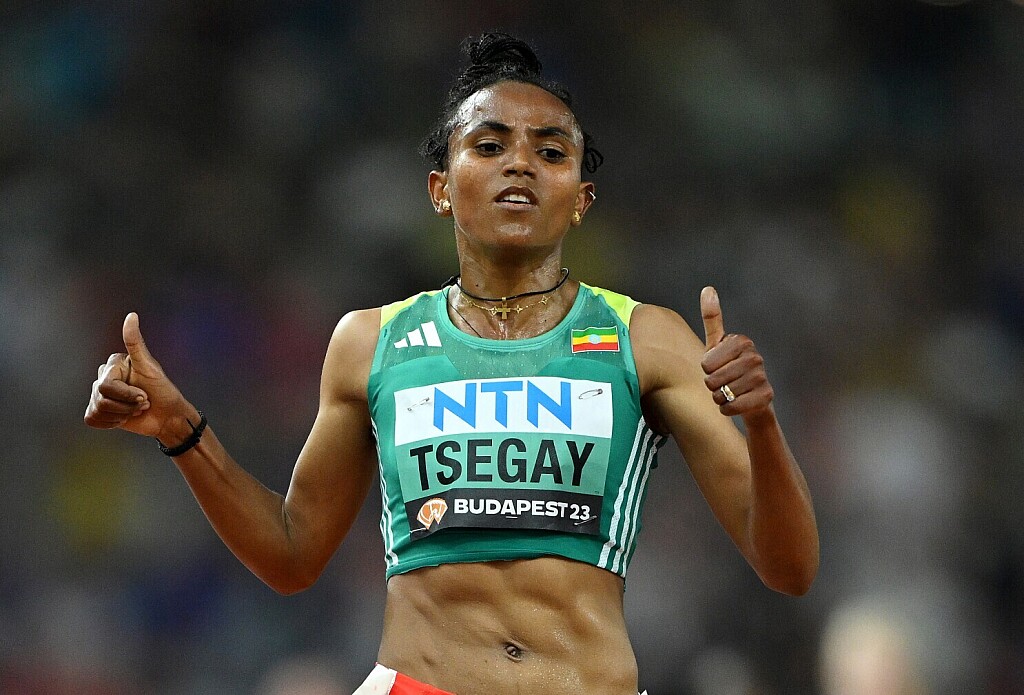
Ethiopian Gudaf Tsegay targets 10,000m world record at Prefontaine Classic
Ethiopian Gudaf Tsegay is aiming to break the 10,000m world record that was set by by Letesenbet Gidey in June 2021.
Ethiopian Gudaf Tsegay has officially thrown her hat into the ring for what promises to be an electrifying showdown at the upcoming Prefontaine Classic in Oregon, United States.
The reigning 10,000m world champion has set her sights on rewriting the record books by aiming to break Letesenbet Gidey's remarkable 10,000m world record of 29:01.03, set back in June 2021.
Tsegay boasts a personal best of 29:29.73 achieved during her triumphant run at last year's Ethiopian national championships.
Her stellar performances have solidified her reputation as a force to be reckoned with in long-distance running, culminating in a gold medal victory at the 2023 World Championships in Budapest.
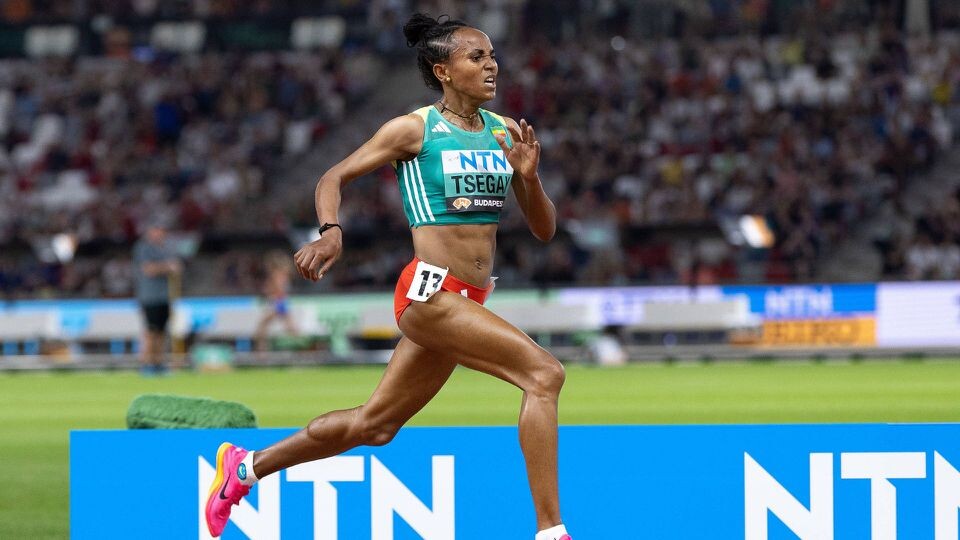
The road to success has not been without its challenges, as evidenced by Tsegay's silver medal finish in the 3000m final at the World Indoor Championships, where she narrowly missed out on the top spot.
However, undeterred by setbacks, Tsegay kicked off her outdoor season with a bang at the Xiamen Diamond League, coming tantalizingly close to breaking Faith Kipyegon's 1500m world record.
In a stunning display of her versatility, Tsegay concluded the 2023 outdoor season by smashing the 5000m world record at the Diamond League final, further cementing her status as one of the sport's brightest stars.
With the Paris Olympics on the horizon, Tsegay finds herself at a crossroads, contemplating which events to focus on for the prestigious competition.
"Which one? I don’t know. I will see with my coach…Maybe three or maybe two," she said as per Citius Mag.
The possibility of emulating Sifan Hassan's remarkable triple at the Tokyo Olympics looms large, with Tsegay considering the 1500m, 5000m, and 10,000m as potential battlegrounds for Olympic glory.
If Tsegay opts to pursue the triple challenge, she will undoubtedly be following in the footsteps of Hassan, who clinched gold in the 5000m and 10,000m events, alongside a bronze in the 1500m.
The prospect of such a feat adds an extra layer of intrigue to Tsegay's Olympic journey, as she seeks to etch her name in the annals of athletics history.
With the Prefontaine Classic looming large on the horizon, all eyes will be on Tsegay as she takes her first steps towards rewriting the record books and etching her name in sporting immortality.
by Festus Chuma
Login to leave a comment

Prefontaine Classic
The Pre Classic, part of the Diamond League series of international meets featuring Olympic-level athletes, is scheduled to be held at the new Hayward Field in Eugene. The Prefontaine Classicis the longest-running outdoor invitational track & field meet in America and is part of the elite Wanda Diamond League of meets held worldwide annually. The Pre Classic’s results score has...
more...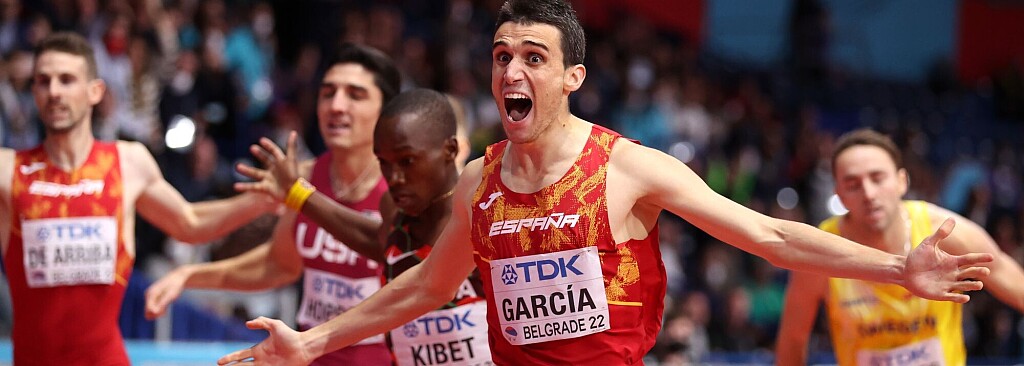
Garcia on Spanish team to defend world indoor title in Glasgow
Mariano Garcia forms part of the Spanish team for the World Athletics Indoor Championships Glasgow 24 and will defend his 800m title at the event that takes place from March 1-3.
The 26-year-old claimed his first global title in Belgrade two years ago and went on to win European 800m gold that year in Munich.
In Glasgow, Garcia will be joined in the men’s 800m by teammate Mohamed Attaoui.
Maria Vicente heads to Glasgow in the form of her life, having scored a world-leading national record of 4728 points in the pentathlon in Aubiere in January.
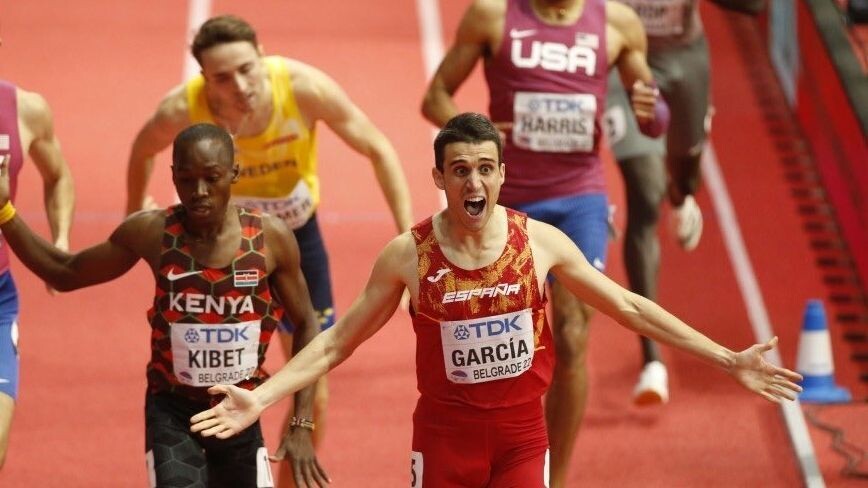
National mile record-holder Marta Perez and national champion Esther Guerrero are both entered for the women’s 1500m.
After winning three medals at the European Indoor Championships between 2017 and 2023 and finishing fifth at the 2018 World Indoor Championships in the 3000m, Adel Mechaal will contest the 1500m in Glasgow. He will be joined in that event by two-time world finalist Mario Garcia.
Asier Martinez will look to build on his fourth-place finish in Belgrade in the 60m hurdles.
The full team will be confirmed once world rankings places have been finalised.
Spanish team for Glasgow
Women
60m: Jael Bestue
1500m: Esther Guerrero, Marta Perez
60m hurdles: Xenia Benach
Pentathlon: Maria Vicente
Men
800m: Mohamed Attaoui, Mariano Garcia
1500m: Mario Garcia, Adel Mechaal
60m hurdles: Enrique Llopis, Asier Martinez
by World Athletics
Login to leave a comment

World Athletics Indoor Championships
World-Class Competition Lands in Poland: 2026 World Athletics Indoor Championships The 21stWorld Athletics Indoor Championshipsare being held from 20 to 22 March 2026 at theKujawsko-Pomorska Arena ToruńinToruń,BiT City,Kuyavian–Pomeranian,Poland. It is the second time the country has held the event after the2014 editioninSopot. The venue previously hosted the2021 European Athletics Indoor Championships. On 22 March 2023, the World Athletics Council...
more...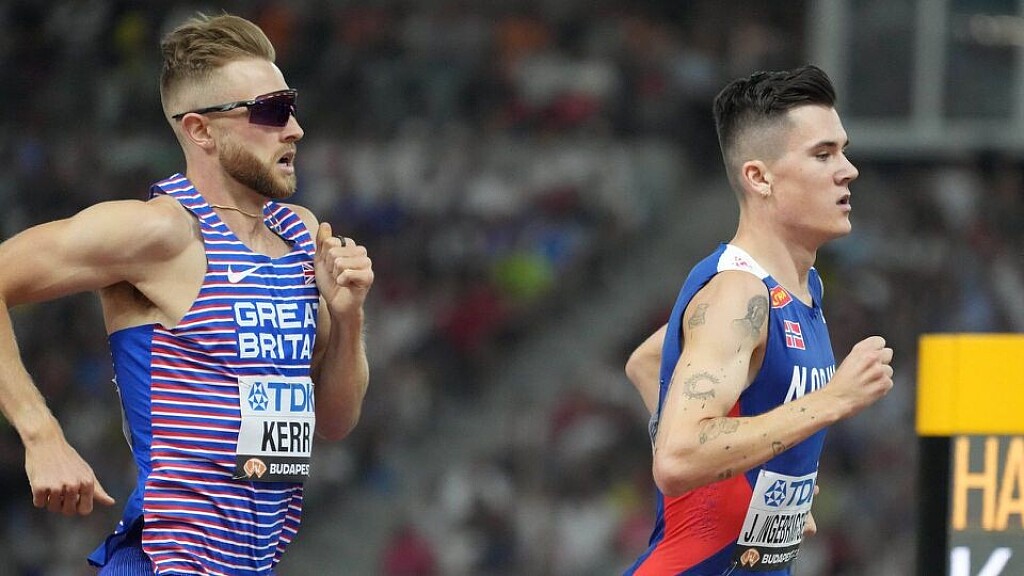
Josh Kerr puts Jakob Ingebrigtsen's beef aside as he focuses on next assignment
Scottish middle-distance runner Josh Kerr is not focusing on Jakob Ingebrigtsen's comments about him as he is eyeing another major assignment where he will attempt to attack the two-mile world record.
Reigning World 1500m champion Josh Kerr is not focusing on track rival Jakob Ingebrigtsen’s sentiments as he gears up for the Millrose Games on Sunday, February 11.
Kerr and Ingebrigtsen started their beef last year after the World Championships in Budapest, Hungary where the Scottish man bet the Norwegian to second place in the 1500m.
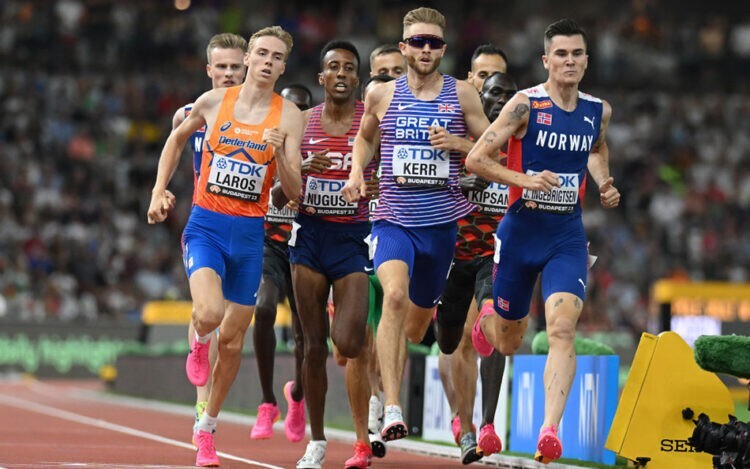
Kerr then rekindled the beef saying that Ingebrigtsen has a lot to work on when it comes to his manners on and off the track.
The Scot emphasised that the Norwegian has a “high ego” and is used to being surrounded by “yes men”, making it difficult for him to understand that there is a difference between respect and antipathy.
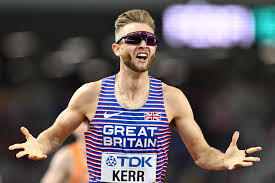
The reigning World 5000m champion, Ingebrigtsen has been out of competition due to an injury and he just made a comeback to the limelight announcing that he is expecting a child with his wife.
As per Letsrun.com, Ingebrigtsen also addressed Kerr, noting that he thinks the latter is just looking for attention ahead of the Olympic Games in Paris, France.
He said: “I realized that there was “something,” but I can’t quite say what it was. Let’s call it a desperate attempt. And I don’t think that was so smart. It might look silly at some point.”
However, Kerr seems unshaken by his sentiments and he is firmly eyeing his next assignment where he intends to make history.
He will tackle the two miles with Mo Farah’s world record of 8:03.40 in his sights. Kerr will be up against US 5000m and 10,000m record-holder Grant Fisher and Olympic 1500m sixth-placer Cole Hocker, New Zealander Geordie Beamish, and former US 1500m champion Cooper Teare.
“In February, I’m still coming off really high base training and I still want to be toward 5000m at that time of year. A two-mile just fits in perfectly where it is a bit speedier, but it’s not the mile,” he said as per Athletics Weekly.
by Abigael Wuafula
Login to leave a comment

NYRR Millrose Games
The Pinnacle of Indoor Track & Field The NYRR Millrose Games, first held in 1908, remains the premier indoor track and field competition in the United States. The 2025 edition will once again bring the world’s top professional, collegiate, and high school athletes to New York City for a day of thrilling competition. Hosted at the New Balance Track &...
more...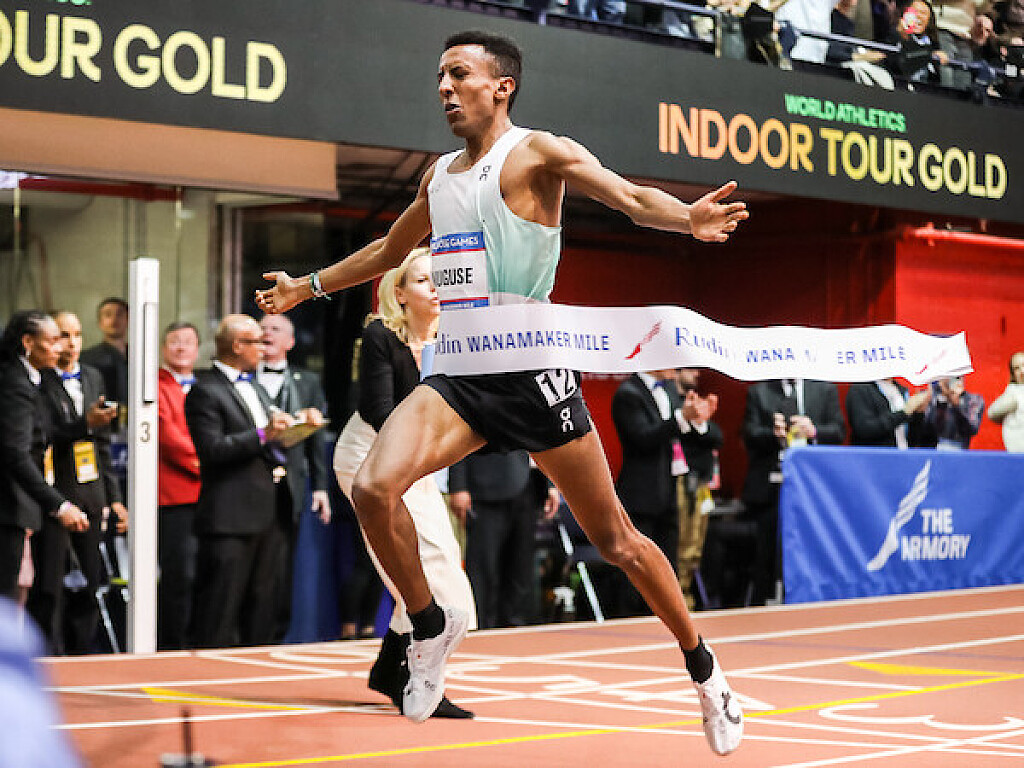
Stellar Field Assembled to Challenge Yared Nuguse in the NYRR Men's Wanamaker Mile
The 116th Millrose Games is now just 19 days away, as the eyes of the global athletics community will once again return to the Nike Track & Field Center at The Armory. As always, the meet will conclude with the NYRR Men’s Wanamaker Mile, a legendary race with over a century of tradition.
The Millrose Games is scheduled to take place on Sunday, February 11th.
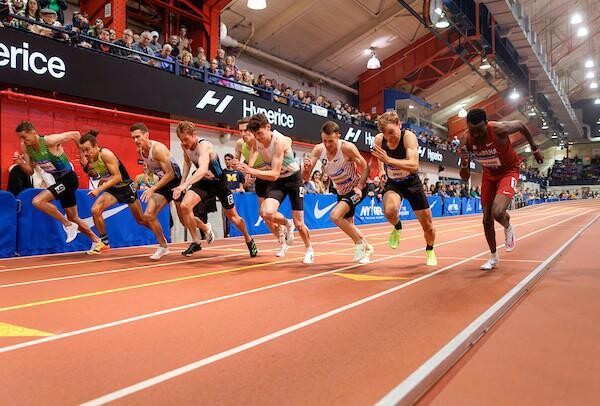
Previously announced as the headliner for this race is defending champion Yared Nuguese, the American record holder in the mile indoors and outdoors. Nuguse has his eyes on the world record of 3:47.01, but he will have to contend with a number of the best athletes in the world if he is to win his second straight Wanamaker title, including two additional 1500m finalists from last summer’s World Championships.
“[The world record] feels like a goal that’s within my grasp of achieving.” said Nuguse. “Not only am I stronger and smarter than I was last year, but I feel like I will be able to attack this race with a lot more confidence to chase the world record. When I went to Millrose for the first time, I was just chasing the American record. So changing that mindset, just seeing how far I’ve come, it feels like a very real possibility at this point.”
The elite athletes lining up to challenge Nuguse are as follows:
-Mario Garcia Romo was last year’s runner-up, and he is the 2022 1500m champion for Spain and a two-time World Championship finalist.
-Neil Gourley is a three-time British 1500m champion, and he holds the European indoor mile record.
-George Mills placed third in the mile at the Diamond League final, moving up to third on the all-time British list, before also placing second at the NYRR 5th Avenue Mile.
-Hobbs Kessler is the reigning World Road Mile champion, and he also holds the national high school indoor mile record.
-Andrew Coscoran is an Olympian and the Irish record holder over 1500m.
-Adam Spencer of the University of Wisconsin and Australia holds the NCAA 1500m record.
-Sam Prakel is the US Road Mile champion, and he placed fourth nationally in the 1500m.
-Charles Philibert-Thiboutot is a Canadian Olympian and the 2023 NACAC 1500m champion.
The winner of the mile at the Dr. Sander Invitational this Saturday, January 27th will be added to the NYRR Wanamaker Mile field as well.
Stay tuned over the coming weeks before the 116th Millrose Games, as the world-class start lists are finalized. Top athletes already confirmed to compete include Laura Muir, Elle Purrier-St. Pierre, Dina Asher-Smith, Julien Alfred, Alicia Monson, Grant Fisher, Danielle Williams, Josh Kerr, Cooper Teare, Yaroslava Mahuchikh, Christian Coleman, Andre De Grasse, Nia Ali, Chris Nilsen, and KC Lightfoot, with even more Olympians and World Championship medalists still to come.
As always, the Millrose Games will feature the absolute best athletes in the sport, including dozens of Olympians and world champions. The Millrose Games is a World Athletics Indoor Tour Gold meet. With highest-level competition at the youth, high school, collegiate, club, and professional levels, there is truly something for everyone at the Millrose Games.
Tickets can be purchased at https://www.millrosegames.org/
Login to leave a comment
NYRR Millrose Games
The Pinnacle of Indoor Track & Field The NYRR Millrose Games, first held in 1908, remains the premier indoor track and field competition in the United States. The 2025 edition will once again bring the world’s top professional, collegiate, and high school athletes to New York City for a day of thrilling competition. Hosted at the New Balance Track &...
more...
Sifan Hassan reveals what she is counting on as she bids to stop Kenya’s Ruth Chepng’etich from Chicago Marathon hat-trick
Ethiopian-born Dutchwoman Sifan Hassan has explained what is giving her motivation as she seeks to stop Kenya’s Ruth Chepng’etich from winning three straight Chicago Marathon titles
Two-time Olympic champion Sifan Hassan is drawing inspiration from her London Marathon win as she looks to stop Kenya’s Ruth Chepng’etich from winning three straight Chicago Marathon titles on Sunday.
Hassan is among a strong field of elite women that Chepng’etich will have to contend with in her bid to retain her title with Joyciline Jepkosgei, the 2021 London Marathon and 2019 New York City Marathon champion, Tadu Teshome, the second-fastest woman in the field, who clocked 2:17:36 to win last year’s Valencia Marathon, and experienced Genzebe Dibaba of Ethiopia the other top rivals.
Hassan made her marathon debut in London in April this year when, despite stopping to stretch twice, she closed a 25-second gap on the leaders to win and set a national record of 2:18:33.
She took a break from her marathon training to race on the track at the World Championships in Budapest, where she contested three distances and came away with silver in the 5000m and bronze in the 1500m.
Now back on the road, the Ethiopian-born Dutchwoman feels her exploits in London puts her in good stead to claim her second marathon victory.
“As most people know, I like to be challenged,” Hassan told World Athletics. “I have the experience from London so I'm looking forward to see what the marathon can teach me this time.”
Chepng’etich won last year’s race in 2:14:18 – which, at the time, was the second-fastest performance in history and just 14 seconds shy of the then world record.
The 2019 world champion returns to Chicago on the hunt for her third consecutive victory in the Windy City.
She won the Nagoya Marathon earlier this year in 2:18:08, and more recently clocked 1:06:18 at the Buenos Aires Half Marathon.
Victory this weekend would make Chepng’etich the first woman to win the Chicago Marathon three times but she will have to overcome Hassan, Jepkosgei, Teshome and Dibaba are among those who will be hoping to spoil her party.
by Joel Omotto
Login to leave a comment

Bank of America Chicago
Running the Bank of America Chicago Marathon is the pinnacle of achievement for elite athletes and everyday runners alike. On race day, runners from all 50 states and more than 100 countries will set out to accomplish a personal dream by reaching the finish line in Grant Park. The Bank of America Chicago Marathon is known for its flat and...
more...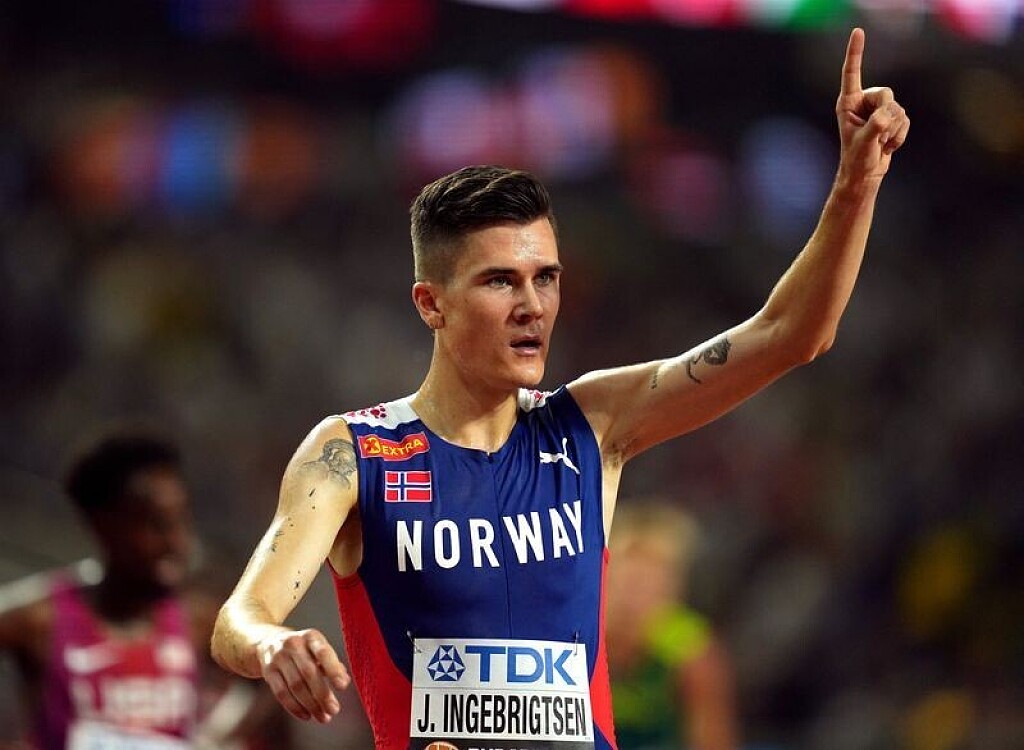
Ingebrigtsen gains gold – and redemption – with 5000m title in Budapest
A gold medal in hand is worth a lot to Jakob Ingebrigtsen who secured a fitting end to his World Athletics Championships Budapest 23 campaign with a successive defense of his 5000m title on the final day of competition.
The 22-year-old was left heartbroken after the 1500m, in which he was beaten by Great Britian’s Josh Kerr. But the Norwegian picked himself up to advance through his 5000m heat – his first race of the year at that distance – and book his place in the final.
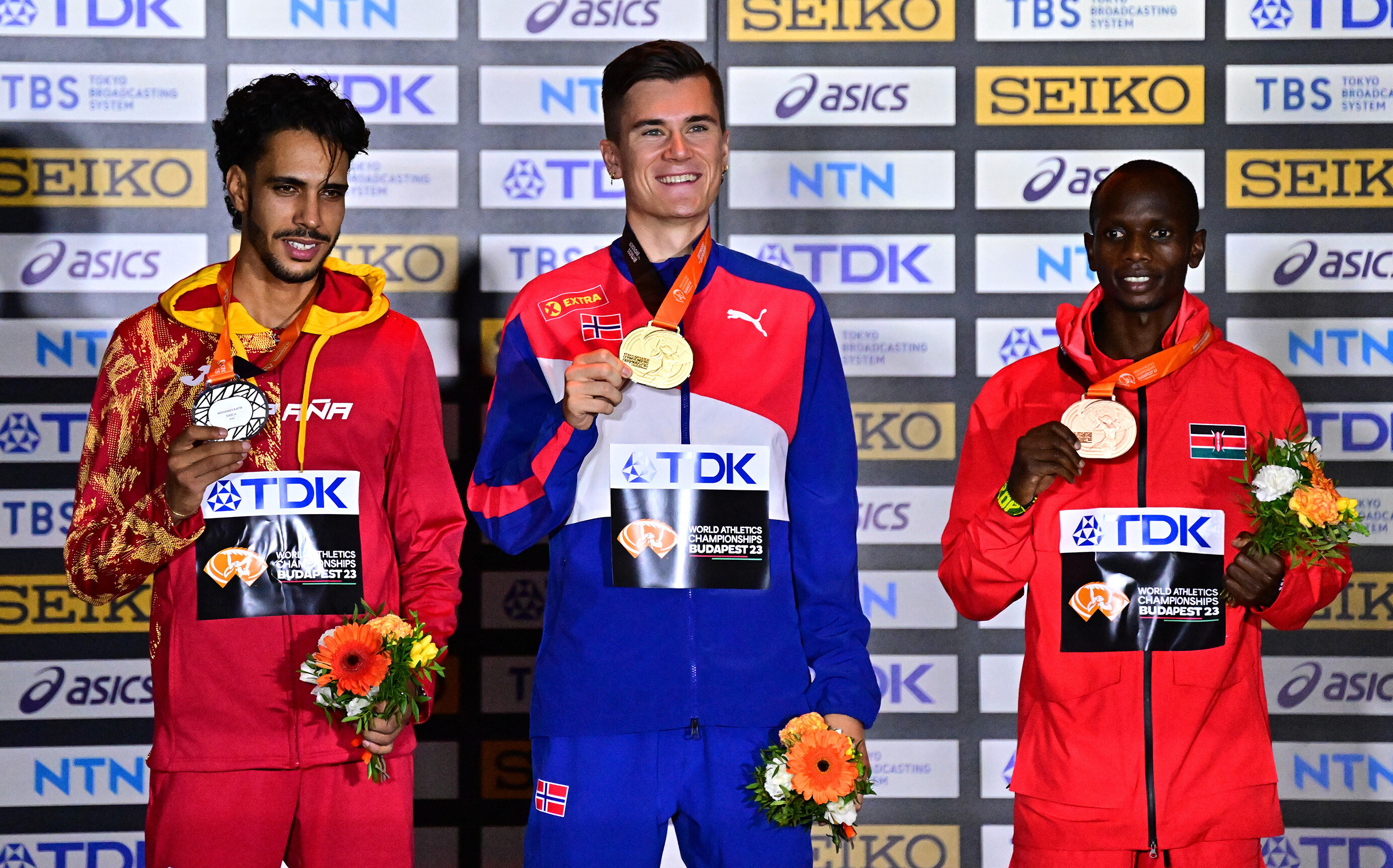
With four of the eight fastest men in history as part of the line-up – six of whom had broken 12:45 this year – it was an open and highly competitive field.
But Ingebrigtsen’s race plan was simple: conserve his energy until the final lap and then make a dash for the finish line.
When the gun went off, Canada’s Olympic silver medalist Mohammed Ahmed took the lead, setting the pace on the first two laps while the defending champion started out in the middle of the pack.
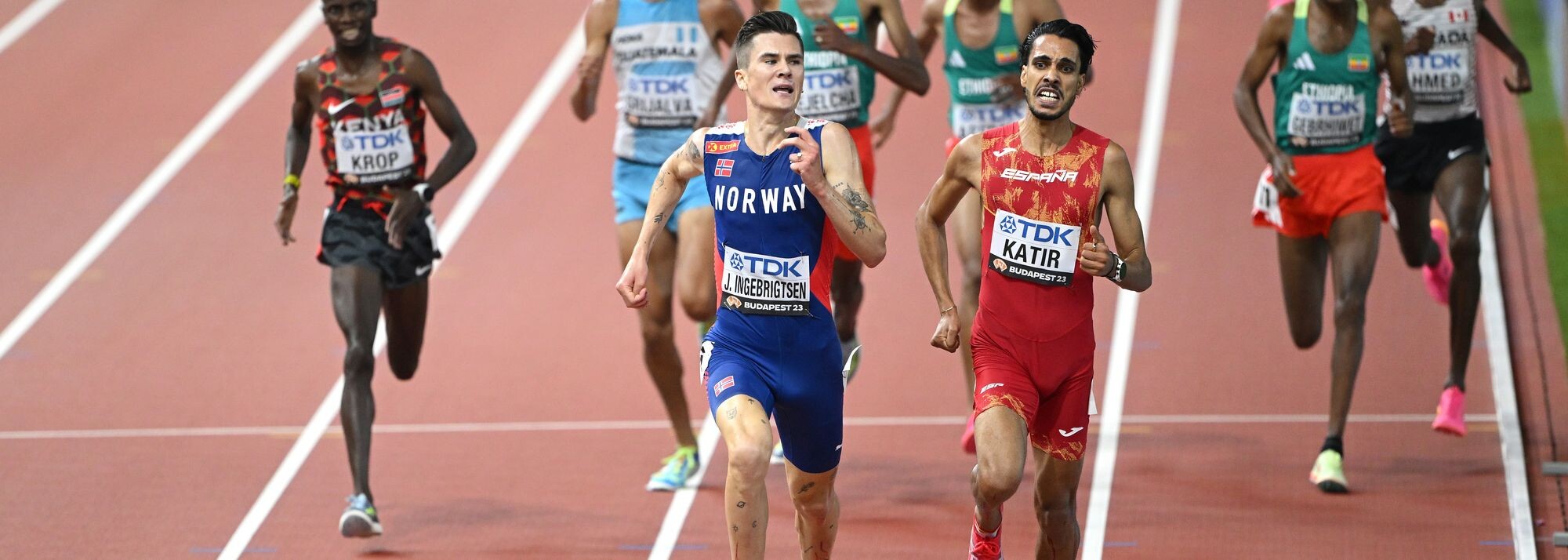
World U20 cross-country champion Ishmael Kipkurui soon grew impatient with the pace and sped past his rivals, quickly opening up 40-meter lead, which he maintained for the next few laps.
Uganda’s Oscar Chelimo, the bronze medalist last year, made his way to the front of the chase pack, trying to bridge the gap to the young Kenyan. Ingebrigtsen, meanwhile, was near the back, showing no interest in making a move.
World leader Berihu Aregawi and his fellow Ethiopian Hagos Gebrhiwet, a two-time world medalist, took over at the lead, while the third Ethiopian in the line-up, two-time world indoor champion Yomif Kejelch, also moved towards the front. Guatemala’s Luis Grijalva also tried to tuck himself into the race, but the Ethiopians were reluctant to let him play much of a part.
With about one lap to go, European record-holder Mohamed Katir overtook the Ethiopians, who were unable to respond to the Spaniard’s speed. Ingebrigtsen also launched out, moving on to Katir’s shoulder as the bell sounded.
The pair tore away from the rest of the field with the Spaniard leading, but the determined Norwegian out-kicked him just before the line to claim back-to-back golds in the event, crossing the line in a season’s best of 13:11.30.
It was also an evening of redemption to for Katir, who failed to qualify for the 1500m final earlier in the championships, having earned bronze at the distance in Oregon. He was glad to make amends in the 5000m, crossing the line in 13:11.44 for silver.
Kenya’s Jacob Krop, the silver medalist in Oregon, came through for bronze in 13:12.28 ahead of Grijalva who settled for fourth (13:12.50) for the second successive championships. Ethiopia’s Kejelcha (13:12.51) and Gebrhiwet (13:12.65) placed fifth and sixth respectively, and Aregawi eighth, his third World Championships final without a medal.
“To win another world title is great of course, but I was very tired,” said Ingebrigtsen. “I tried to save my energy to win at the end because that was the only way tonight. I knew that if my tactics were better than my competitors, I would have a chance to win. And that's what happened. It worked out absolutely perfectly. It was a very hard run, especially in the last 40-50 meters. It was great racing.
“This title means a lot to me after losing again in the 1500m. I haven't been at my best but I had the motivation and I had great support.
“My body is just getting over a virus so it's not been a very good situation to be in. At the same time, I wanted to do my best, I had to try. I had to be very patient but I really did not know what to expect from this race. This week was a bit bittersweet overall, but this is a good way to end.”
Katir was frustrated to miss out on gold but still content with silver, earning Spain’s only in-stadium medal of the championships.
“I gave it all that I had today,” he said. “But Jakob is Jakob – he is the best in the world nowadays. In the 1500m I could not get him, but in the 5000m I was really close to beating him. Every year, I am getting closer and closer.
Krop was delighted to make it on to another global podium.
“I am still only 22 so to get two medals from the World Championships is a big honor,” he said. “I don’t think this bronze after the silver in Eugene is a step down; I am still among the top runners over 5000m.”
by World Athletics
Login to leave a comment
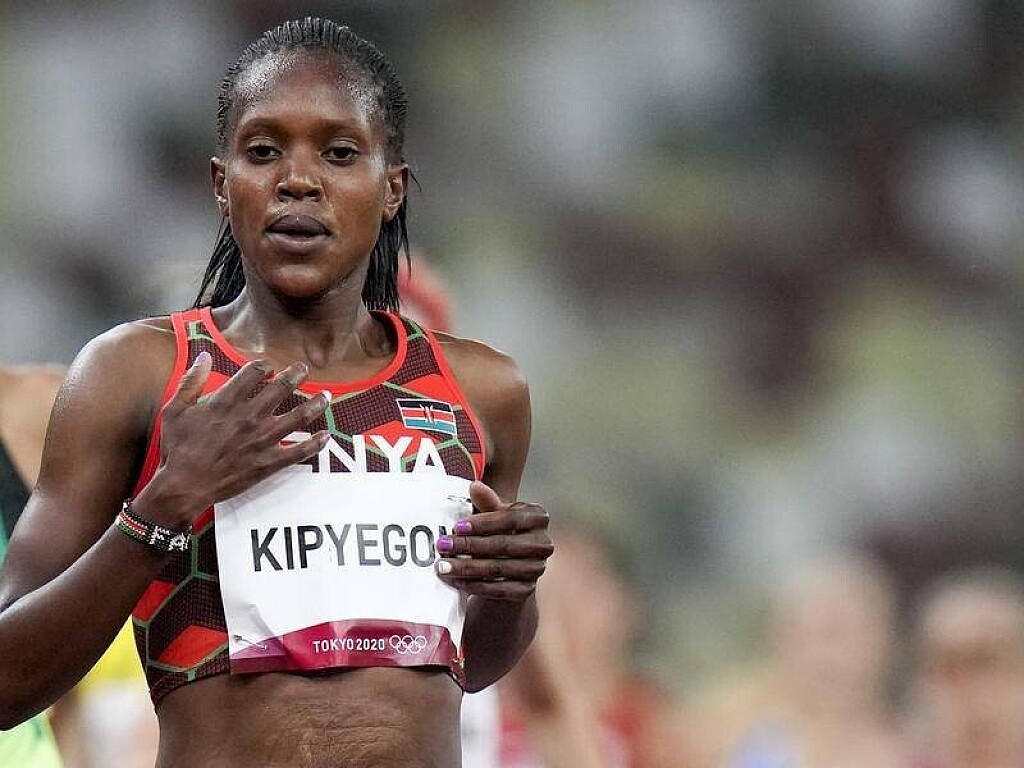
Faith Kipyegon contemplates doubling at World Championships
Double world record holder Faith Kipyegon is contemplating whether to compete in both the 1500m and 5000m at the World Championships in Budapest, Hungary, in August.
Kipyegon who holds the world records for the two distances said she is consulting widely before making a decision.
Speaking when she was named the LG/Sports Journalists Association of Kenya player of the month for June, Kipyegon said: "I will start my journey of defending my world title at the national trials this weekend."
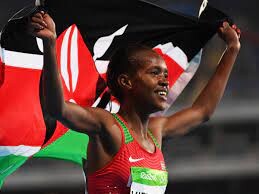
"However, I am still consulting on whether I should double at the World Championships."
Kipyegon, a two-time Olympic champion over 1500m, said since she is qualified for Budapest after winning the world title in Oregon last year, she will compete in the 5000m race at the Athletics Kenya trials set for Friday and Saturday at the Nyayo Stadium.
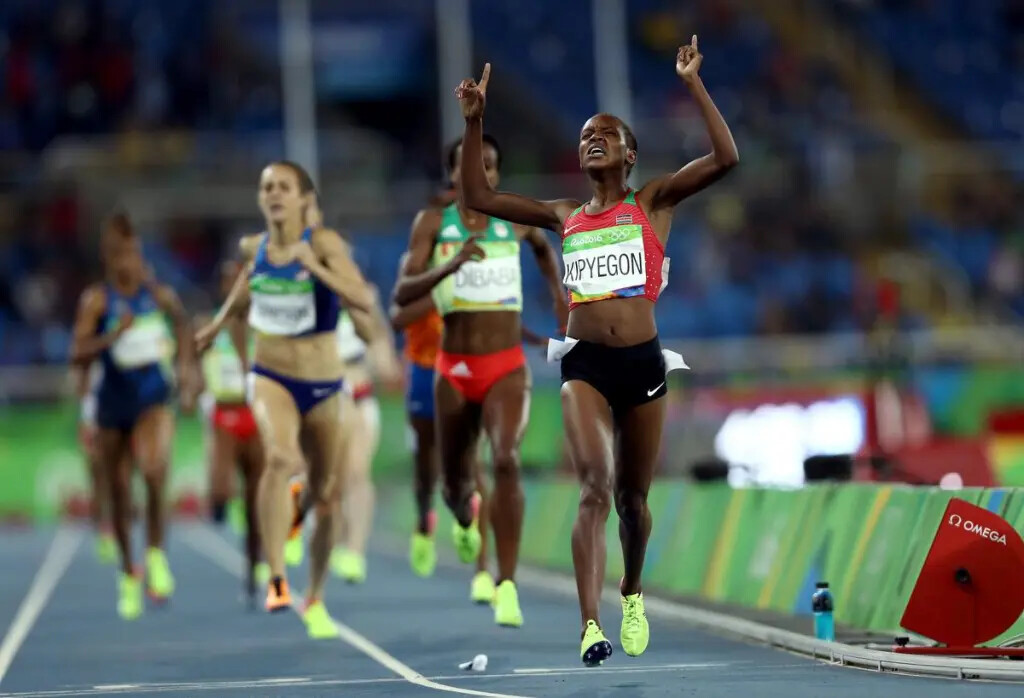
This, she said, will also form part of her preaparations for the July 21 Monaco Diamond League.
At her training base at Global Sports Communication in Kaptagat, Uasin Gishu county, Kipyegon was crowned by the scribes after running two consecutive world records over 1500m and 5000m last month.
In Florence, Italy, on June 2, Kipyegon tore Genzebe Dibaba's record over 1500m with a new world mark of 3:49.11 over 1500m.
She was at it again in Paris a week later as she timed a new world record of 14:05.20 over 5000m.
“I’m so happy to be among the few athletes to win this award more than twice,” Kipyegon said.
“It's always good to see corporate entities acknowledge the good work of athletes. I am thankful to LG for their efforts to whip up the enthusiasm of sportsmen and women in this country. The win in Florence boosted my confidence levels and I feel I have to continue pushing for better track limits.”
She becomes the second athlete, after Angela Okutoyi, to win the SJAK award thrice. Kipyegon beat five other nominees among them Commonwealth Games champion Beatrice Chebet who produced a scintillating run to clinch the 3,000m title at the Oslo Diamond League in eight minutes, 25.01 seconds, which also counted as the latter's new personal best and world leading time.
Others were Carl Tundo and McRae Kimathi for their WRC2 and WRC3 finishes on the Safari Rally, Moses Shumah for scoring Harambee Stars solitary goal at the Four Nations Tournament, Emma Wangila Nekesa for being the only African wrestler and Kenyan to have qualified for the World Beach Games in Indonesia.
Maureen Kemunto, LG East Africa Corporate Marketing and communication manager, said: “LG has been actively supporting the identification and recognition of sporting talent in Kenya through a partnership with SJAK."
"The purpose of this award is to recognise exceptional Kenyan sportsmen and women for their achievements across diverse disciplines each month and also to signify our commitment to contribute to the development of sport in the country."
SJAK President James Waindi congratulated Kipyegon and thanked LG for their continued support over the past eight years.
“With the monthly award, we are seeing a growing number of upcoming and talented sports personalities among them Angela Okutoyi who won the Wimbledon Open Junior category and won this award for a record three times, "said Waindi.
" Rewarding sportsmen and women is an important step towards whipping up the enthusiasm of sports personalities across all disciplines.”
by Emmanuel Sabuni
Login to leave a comment

World Athletics Championships Budapest 23
From August 19-27, 2023, Budapest will host the world's third largest sporting event, the World Athletics Championships. It is the largest sporting event in the history of Hungary, attended by athletes from more than 200 countries, whose news will reach more than one billion people. Athletics is the foundation of all sports. It represents strength, speed, dexterity and endurance, the...
more...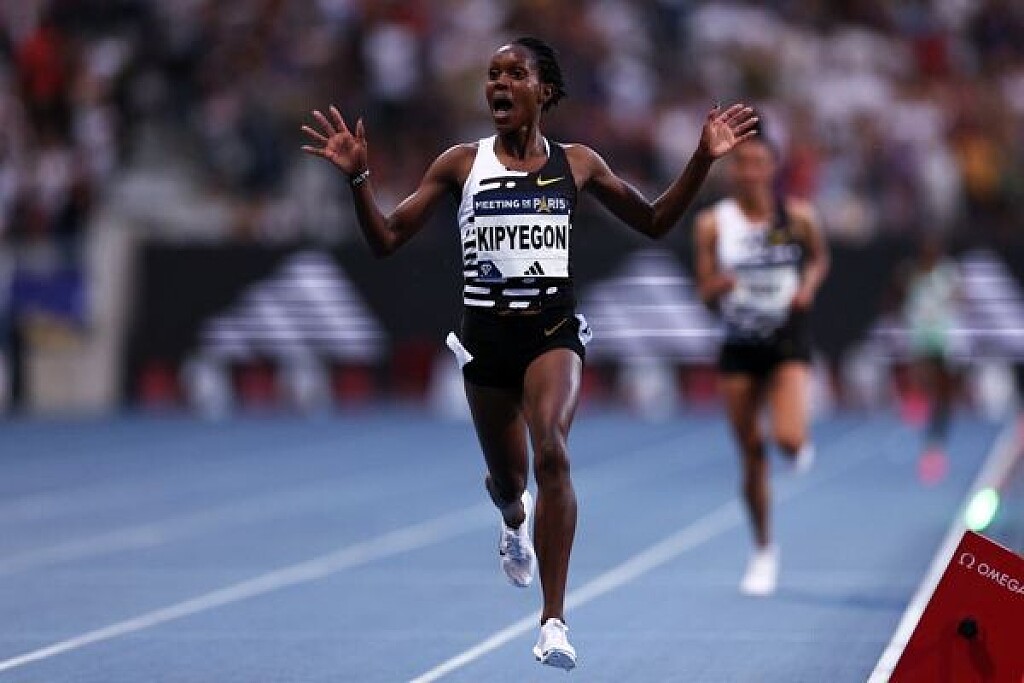
Kipyegon, Girma and Ingebrigtsen make history in Paris
It will go down in history as one of the greatest nights in athletics.
Between them, Faith Kipyegon, Lamecha Girma and Jakob Ingebrigtsen broke two world records* and one world best at the Meeting de Paris on Friday (9), providing the standout moments at a highly memorable Wanda Diamond League meeting in the French capital.
A week after breaking the 1500m world record in Florence, Kipyegon etched her name into the record books for 5000m, winning in 14:05.20.
Ahead of the race, the world and Olympic champion hadn’t made too much noise about a possible world record attempt in tonight’s 5000m. It was, after all, just her third ever race at the distance, and her first 5000m outing in eight years.
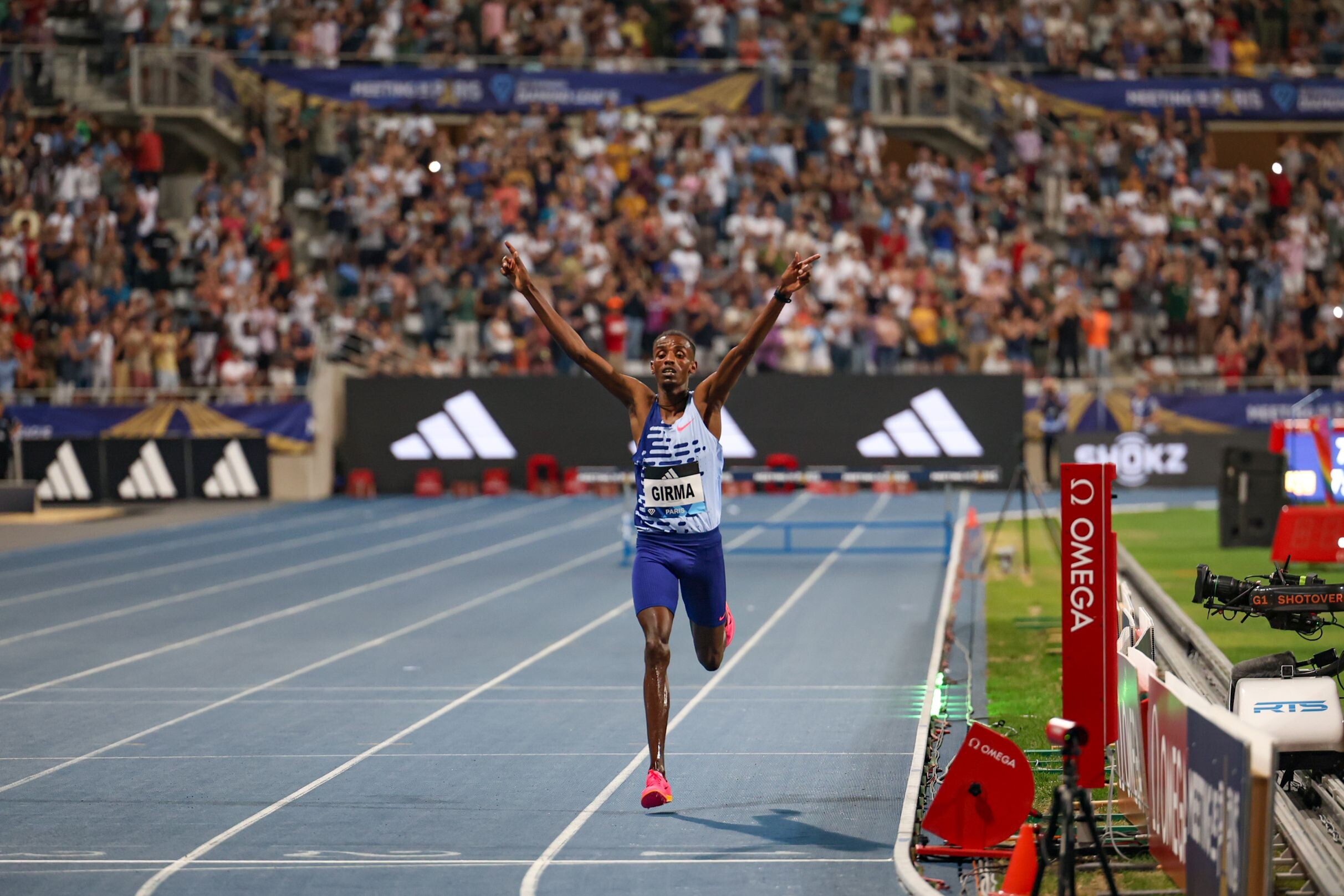
But, as is always the case with Kipyegon, the 29-year-old Kenyan showed no fear as she navigated her way through the race, the early pace – 2:52.31 at 1000m and 5:42.04 at 2000m – seemingly no bother for the two-time world U20 cross-country champion.
Steeplechase world record-holder Beatrice Chepkoech was the third and final pacemaker, leading the field through 3000m in 8:31.91. At this point, world record-holder Letesenbet Gidey led from Kipyegon with Ethiopia’s Ejgayehu Taye, the world 5km record-holder, a few strides behind.
Kipyegon took the lead with about 600 metres to go, but Gidey kept close contact. They were about six seconds outside of world record pace, but Gidey also knew what Kipyegon is capable of. The world 10,000m champion knew that Kipyegon had the finishing speed to break Gidey’s world record.
Kipyegon – now speeding up with each and every stride – hit the bell in 13:04.1, needing a final lap of about 62 seconds to break Gidey’s record. She did exactly that, covering the last 400m in 61.1 seconds to cross the line in 14:05.20 – a 1.42-second improvement on Gidey’s mark.
Gidey, competing for the first time since her unfortunate episode at the World Cross Country Championships in Bathurst, finished second in 14:07.94, the third-fastest time in history. Taye was third in 14:13.31, while the next three women – Lilian Kasait Rengerek, Freweyni Hailu and Margaret Chelimo Kipkemboi – all finished inside 14:24.
“I didn’t think about the world record, I don’t know how I made it,” said a delighted and surprised Kipyegon. “I just focused on the green light and tried to stay relaxed and enjoy the race. When I saw that it was a world record, I was so surprised – I just wanted to improve on my PB, the world record was not my plan. I just ran after Gidey – she is an amazing lady.
“I do not know what will be next – I’ll have to discuss it with my coach and my management,” she added. “If my body is healthy, anything is possible.”
Girma had requested an ambitious pace for the men’s 3000m steeplechase – one that would result in a finishing time of about 7:52. The world and Olympic silver medallist almost got a bit carried away mid-race, though, and ran well ahead of the wavelights through the middle section of the race.
With two laps to go, the lights almost caught up with the Ethiopian – who by now was well ahead of the rest of the field. But the sound of the bell and the reaction of the crowd seemingly gave him added impetus on the final lap as he moved clear of the lights once more.
He sped around the final lap in about 64 seconds, crossing the line in 7:52.11, taking 1.52 seconds off the world record set 19 years ago by Said Saeed Shaheen.
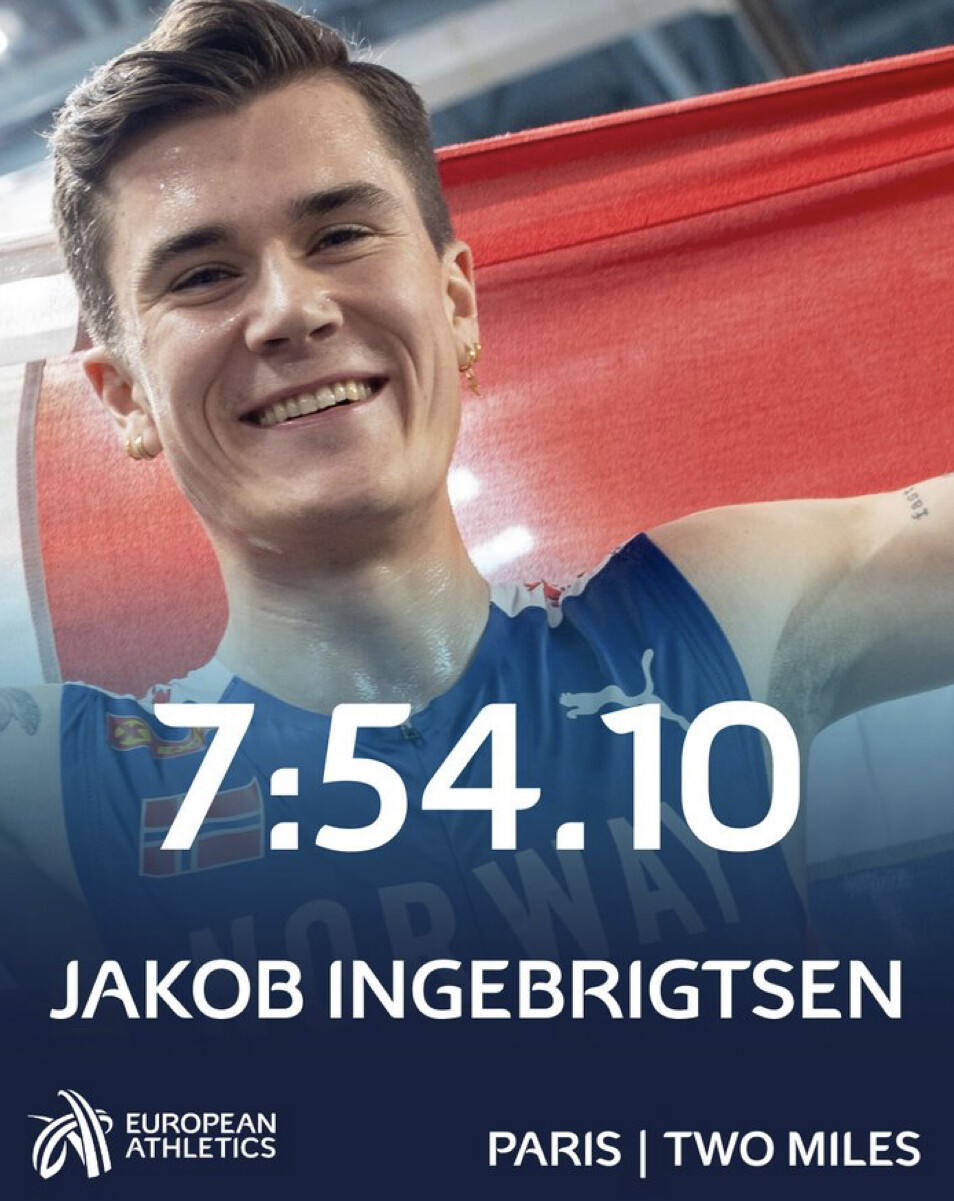
“I feel so happy,” said Girma, who started his year world a world indoor record over 3000m. “I’m happy and very proud. I felt so fast during the race, so confident. The world record is not a surprise; it was my plan to beat it tonight in Paris. It’s the result of my full determination.”
Two miles not be an official world record distance, but that mattered not to Jakob Ingebrigtsen – or indeed the sell-out crowd at the Stade Charlety – as the Norwegian won the event in a world best of 7:54.10.
The race wasn’t a scoring discipline on this occasion, and as such was held outside of the main broadcast window. But that didn’t deter the world and Olympic champion, who stuck to the pacemakers throughout, passing through 1000m in 2:29.07 and then moving closer to the second pacemaker – and, significantly, ahead of the green wavelights.
Once the pacemakers had done their job, Ingebrigtsen maintained his tempo and breezed through 3000m in an official split of 7:24.00 – a European record and the third-fastest performance of all time for that distance. At this point he had a 13.5-second lead over Ethiopia’s Kuma Girma. Victory was Ingebrigtsen’s; his next target was Daniel Komen’s world best.
He charged through the final 218 metres, roared on by the crowd, and crossed the finish line in 7:54.10, winning by 15 seconds.
“Being able to break this mark feels amazing,” he said. “It is my first world best outdoors. The pace felt very smooth for me, coming out of the 1500m. The public was amazing; without their help, it would have been more difficult. I was a bit surprised by the time in the end.”
World leads for Hodgkinson, Wanyonyi and Holloway
World and Olympic silver medallist Keely Hodgkinson opened her outdoor season in stunning fashion in the women’s 800m, winning by more than two seconds in a world-leading national record of 1:55.77.
The European champion stuck to the pacemaker and covered the first lap in 57.7 seconds, already a stride or two ahead of the rest of the field. With 200 metres to go, there was clear daylight between Hodgkinson and Jamaica’s Natoya Goule, who was being pursued by world indoor champion Ajee Wilson.
But none of them could get near Hodgkinson, who eased down the home straight to cross the line in 1:55.77, taking 0.11 off the British record she set two years ago in Tokyo. Wilson finished second in 1:58.16 and Goule was third in 1:58.23.
by World Athletics
Login to leave a comment
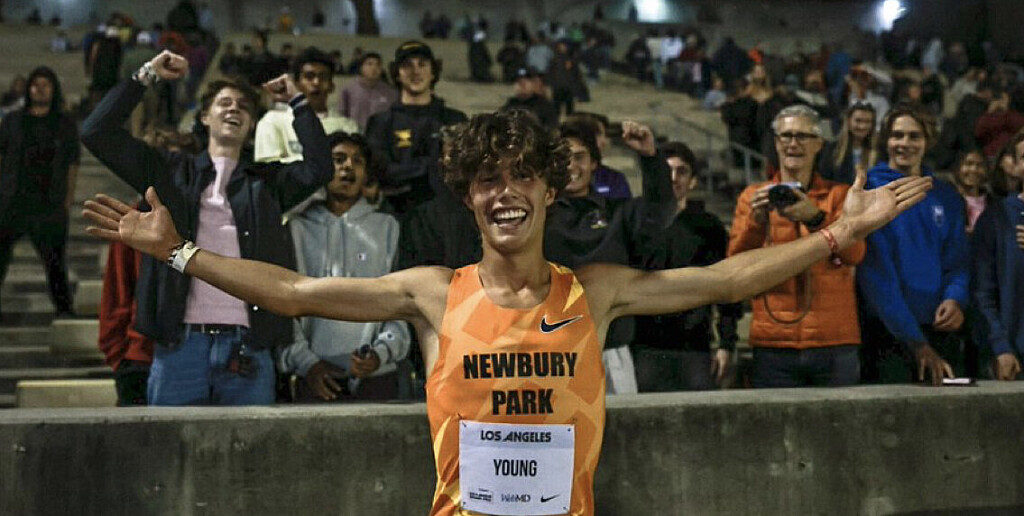
Galen Rupp’s high school 5000m record (13:37.91) stood for 18 years, 9 months, 6 days Connor Burns’ high school 5000m record (13:37.30) stood for 20 days. Lex Young went 13:34.96 last night in Los Angeles
It’s not every day that the 18th place finisher in a race steals the headlines but Newbury Park High School senior (CA) Lex Young highlighted the first night of the LA Grand Prix by breaking the U.S. high school 5000m record in 13:34.96. U.S. road 5K champion Abdihamid Nur won the race in a personal best of 13:05.17 and locked up his World Championship qualifying standard.
What you need to know:
– The previous high school record of 13:37.30 was set just three weeks ago by Connor Burns at Sound Running’s Track Fest. He broke Galen Rupp’s record of 13:37.91, which had stood since 2004.
– This should not come as much of a surprise after Young ran 13:43.95 last year. He didn’t have the best start to the year after finishing the 2022 cross-country season injured and then finishing third in the 5000m at New Balance Nationals Indoor in 14:00.64. Young has raced sparingly this outdoor season but took a big step forward with a 13:44.83 at the Bryan Clay Invitational on April 14. He called his shot and publicly announced he was going after Burns’ record in the leadup to Friday night’s race.
What told him in training that this was possible:
“The times kept on getting faster and the effort kept on feeling easier, where I knew with the training progressing in the same way, I’d be ready by now.”
On racing a majority of the race solo:
“I knew it would be pretty darn fast but I thought there would be more people in that 13:30-13:40 range. So when everyone was still together at a mile and I was dropping off, I had to take a couple of breaths and think, ‘I’m falling off the back but it’s not because I’m dying but if I keep on going with them, I don’t want to dig myself down into a deeper hole.’ They were going really fast. They went like 4:17, which is faster than I need to go for the record. I wanted to be a bit more conservative.”
On what it’s like being a high school star in the social media era, where performances are under a bigger microscope and open to more criticism:
“When I produce the content, it motivates other people to try and do what I’m doing. Ultimately that is so worth it. People come up to me and they tell me how much it’s inspired them and that means so much. No matter how much people will hate or people who comment and doubt, I will always keep producing the content because I know how much it can help people as other people’s content has helped me.”
Other highlights from the LA Grand Prix:
– Emily Lipari won the women’s 5000m in 15:08.87 for her second-best career performance. She closed with a 69.34-second final lap.
– Team New Balance Boston’s Emily Mackay won the women’s 1500m in a personal best of 4:07.03. She spoke about what she’s learned in her first full year as a pro.
– Kieran Lumb notched a personal best of 3:35.99 to outkick NACAC champion Eric Holt in the men’s 1500m. He discussed his decision to turn professional and sign with On.
– Under Armour Mission Run Baltimore’s Ahmed Jaziri won the men’s 3000m steeplechase in 8:17.64 – just barely missing the World Championships qualifying standard.
– Former Colorado Buff Madie Boreman took 10 seconds off her personal best to win the women’s steeplechase in 9:22.99. She is now being coached by Julie Benson and could be a contender for the U.S. team.
– Craig Engels won his first race of the year with a 1:47.32 in the men’s 800m. He took three months off due to a torn calf and Achilles injury.
– Laurie Barton of the Brooks Beasts won the women’s 800m in 2:02.54.
----
Chris Chavez launched CITIUS MAG in 2016 as a passion project while working full-time for Sports Illustrated. He covered the 2016 Olympics in Rio de Janeiro and grew his humble blog into a multi-pronged media company. He completed all six World Marathon Majors and is an aspiring sub-five-minute miler.
by Citius Magazine
Login to leave a comment
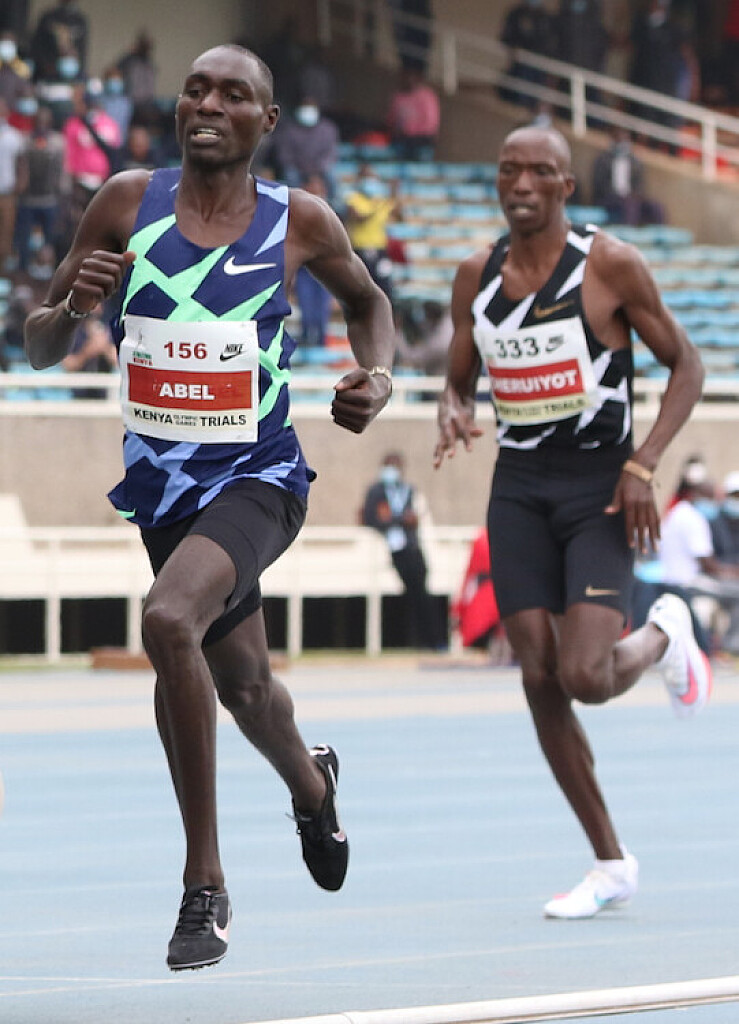
Abel Kipsang eyes gold at World Championships in Budapest
The 2022 World Indoor Championships 1500m bronze medalist, Abel Kipsang will be targeting gold in his specialty at the World Championships in Budapest, Hungary.
"I'm aiming for gold, but if things go wrong, I should be able to finish on the podium in Budapest," said Kipsang in an exclusive interview on Monday.
Kipsang has been honing his skills at the Traffic Police headquarters training ground under the watchful eye of legendary athletics coach Alfred Sang.
The National Police officer will attempt to beat his personal best time of 3:31.65, which he set at the Tokyo Games last year.
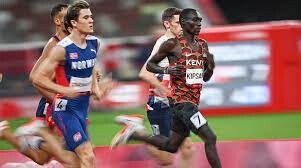
"I also want to beat my previous best time. I've already clocked a 3:29.56 and my new goal is a 3:28.00."
Kipsang expressed his satisfaction with his performance at the weekend's Kip Keino Classic at Moi Stadium in Kasarani. He clocked 3:32.70 minutes to finish second to Reynold Kipkorir, who won in 3:32.01.
"I prepared well for the race, and my body was in top shape. I'm pleased with the time I set at Kasarani. I'm hoping to accomplish a lot more in the coming events," Kipsang remarked.
With his sights set on boarding the Team Kenya jet to Budapest, Kipsang is overjoyed to have already met the qualification standards for the much-anticipated annual global extravaganza, which will be held in August.
"The qualification time set by World Athletics is 3:34.20, and I managed a 3:32.70 at the Kip Keino Classic on Saturday," Kipsang stated.
Despite the stiff competition he is going to face in Budapest from a talented field of rivals, Kipsang says he is not nervous.
"I'm not training with any particular opponent in mind. It's all about getting the greatest time possible to give me an advantage in competition."
He will rely primarily on his extensive knowledge and superior skill to lead him to stardom in Budapest.
Kipsang won the bronze medal at the 2022 World Indoor Championships in Belgrade after finishing fourth in the 1500m at the 2020 Tokyo Olympics.
At the 2019 African Games in Rabat, he competed in his first international competition, finishing fourth in the 800m with a time of 1:45.43 mins.
On June 9, 2021, in Marseille, he ran a personal best of 3:32.6 in the 1500m. He had placed third at the Kenyan Olympic trials 10 days earlier, securing his spot in the postponed 2020 Tokyo Olympics.
His score from Marseille put him in the top ten in the world. Kipsang achieved a new Olympic record in the semifinals of the 1500m on August 5, 2021, in Tokyo, clocking 3:31.65, to improve his personal best.
This record was eventually surpassed by Jakob Ingebrigtsen, who ran 3:28.32 in the final, while Kipsang finished fourth in 3:29.56. Timothy Cheruiyot won silver in 3:29.01, while Josh Kerr finished third in 3:29.05.
In 2022, he won a bronze medal at the World Indoor Championships in Belgrade, clocking a personal best of 3:33.36 and finishing behind Samuel Tefera (3:32.77) and Ingebrigtsen (3:33.02).
by Tony Mballa
Login to leave a comment
World Athletics Championships Budapest 23
From August 19-27, 2023, Budapest will host the world's third largest sporting event, the World Athletics Championships. It is the largest sporting event in the history of Hungary, attended by athletes from more than 200 countries, whose news will reach more than one billion people. Athletics is the foundation of all sports. It represents strength, speed, dexterity and endurance, the...
more...
Former Canadian record holder Malindi Elmore will run her first Tartan Ottawa International Marathon
Malindi Elmore will be making her first appearance in the Tartan Ottawa International Marathon leading a star-studded field as part of the Tamarack Ottawa Race Weekend on 27–28 May.
Elmore, 43, debuted in the Athens Olympics in 2004 and returned to the Olympics Games in 2021 in Tokyo. In between, Elmore has won Canadian Championships, competed in triathlon, and had two children.
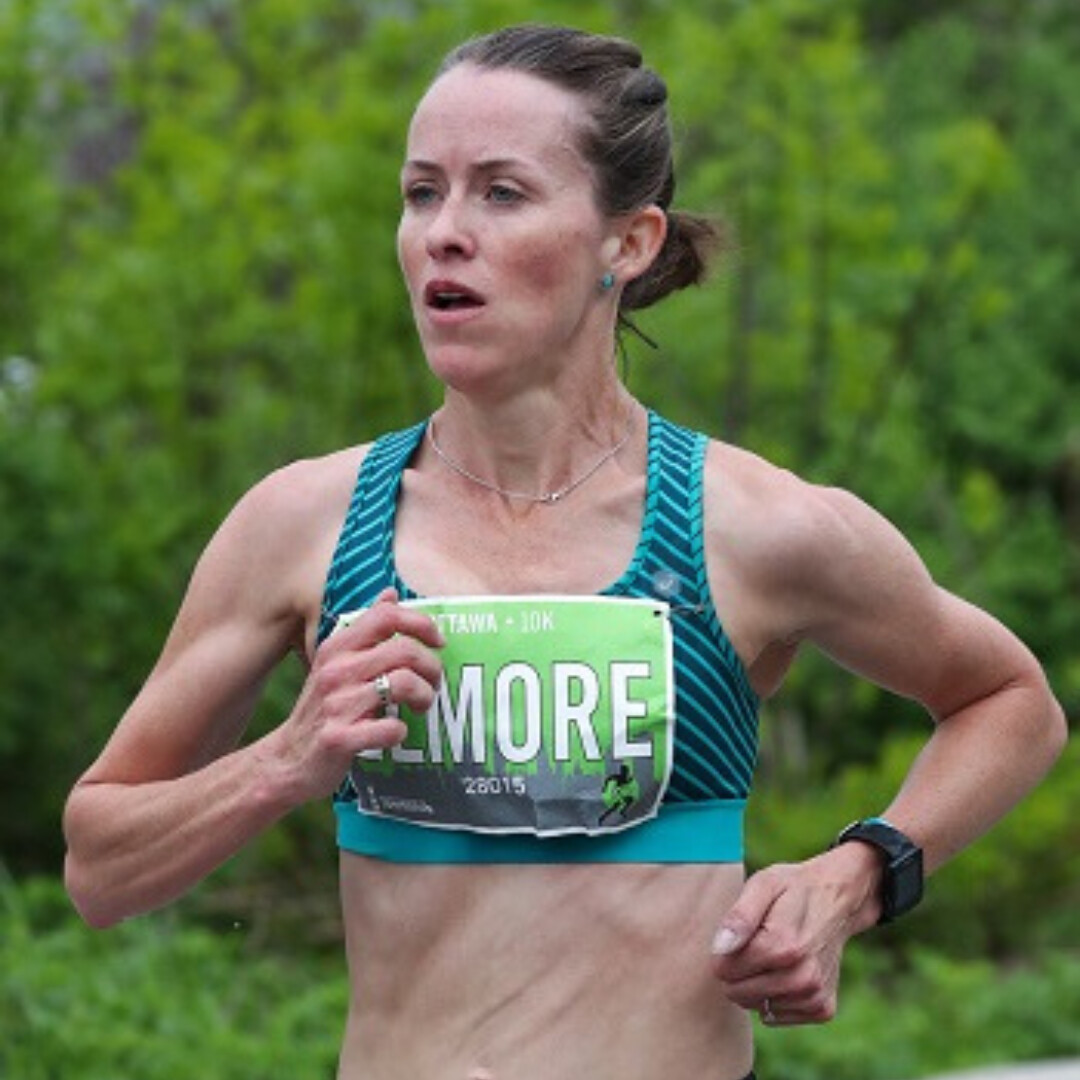
In her 1500m career Elmore won a bronze at the Pan American Games and at the World University Games. She is also 4x Canadian Champion over 1500m.
But Elmore found her stride in the marathon after her debut in Houston in 2019. She proceeded to break the Canadian record in 2020, running her personal best of 2:24:50. In another outstanding run, Elmore was 9th in the 2021 Olympic Games Marathon, the second highest-ever placing for a Canadian woman. She is also the defending Canadian Marathon Champion.
Elmore is running the Tartan Ottawa International Marathon as a stepping stone to a hopeful return to the Olympic Games next year in Paris.
“I can’t wait to see what Canada’s capital has in store for me,” said Elmore. “My goals for the race are to run competitively and finish strong! The marathon is a race that requires a lot of respect so if I can achieve those two goals, I will run fast!”
“We cannot wait to host Malindi in the nation’s capital for Tamarack Ottawa Race Weekend,” said Dylan Wykes, Elite Athlete Coordinator. “Malindi is such a great role model in our sport as a mom, a coach, and world class marathon runner.”
Tamarack Ottawa Race Weekend is Canada’s biggest race weekend and will run on May 27–28, 2023. You can learn more and register by visiting runottawa.ca.
by AIMS
Login to leave a comment

Ottawa Marathon
As one of two IAAF Gold Label marathon events in Canada, the race attracts Canada’s largest marathon field (7,000 participants) as well as a world-class contingent of elite athletes every year. Featuring the beautiful scenery of Canada’s capital, the top-notch organization of an IAAF event, the atmosphere of hundreds of thousands of spectators, and a fast course perfect both...
more...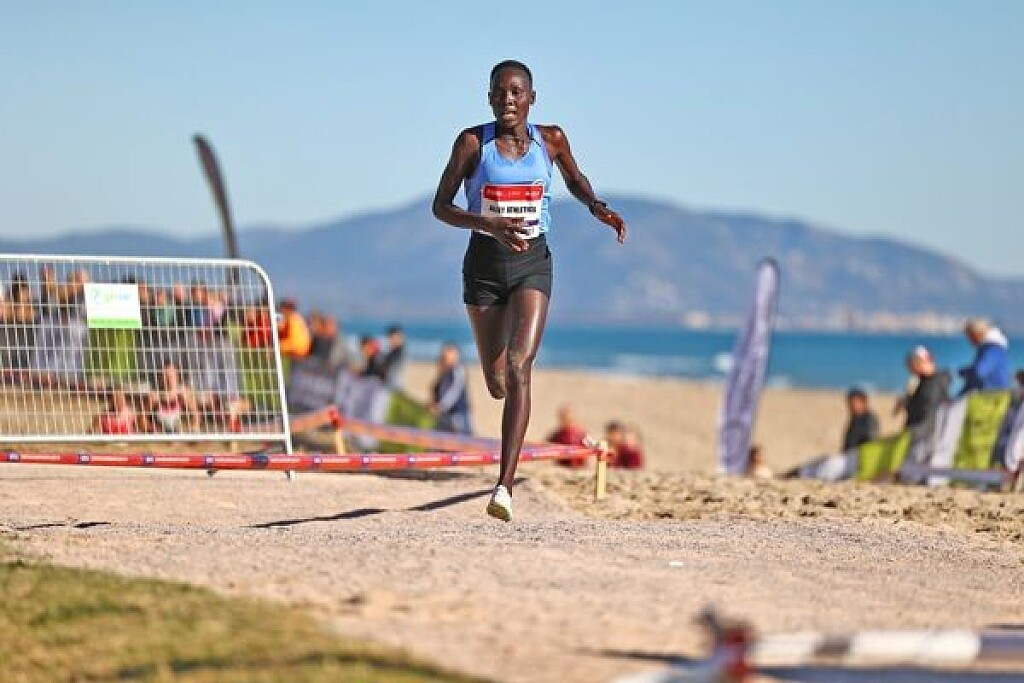
Lohalith takes surprise win in Castellon, marking first international victory for Athlete Refugee Team
Athlete Refugee Team member Angelina Nadai Lohalith claimed a shock win at the European Champion Clubs Cup Cross Country in Castellon, Spain, on Sunday (05), marking the first time that an athlete in the World Athletics refugee team programme notched a victory in an international competition.
Lohalith, a native of South Sudan who is based in Kenya, surged from the field after four laps of the five-lap contest, clocking 27:55 over the 8.7km course to secure a five-second victory. Running confidently at the head of the pack from the gun, Lohalith pulled ahead after three laps and extended her lead to six seconds after the fourth lap before crossing the line unchallenged.
Lohalith, who was a member of the 2016 and 2021 Olympic Refugee Teams, was competing in Castellon as a guest for Tel Aviv’s Alley Runners Club, where several other Athlete Refugee Team members are based.
The 28-year-old is the Athlete Refugee Team’s most experienced runner.
Lohalith made her Athlete Refugee Team (ART) debut at the 2017 World Championships in London and in 2022 represented the Athlete Refugee Team at the World Indoor Championships Belgrade 22, the African Championships and the World Athletics Championships Oregon 22, competing over 1500m.
Lohalith's next international appearance will come at the World Athletics Cross Country Championships Bathurst 23, where she will compete with an ART quartet in the mixed relay.
Her appearance in Castellon was her first over a distance longer than 1500m, boding well for her planned transition to the 5000m and 10,000m events.
"After the World Championships in Oregon I came back to Kenya and I started to work harder towards my goal to succeed as a long distance runner,” Lohalith said.
“I am training hard all week – only training and sleeping. Even during Christmas, when all the athletes in the camp travelled back home, I stayed in the camp for training alone. I don't see my son and parents too often because I have a goal to improve further at the Olympics in Paris next year.”
Lohalith fled from her village in South Sudan at nine, settled in the Kakuma Refugee Camp in Kenya in 2002 and later began taking part in running competitions at her high school in the camp. Coaches for the Tegla Loroupe Foundation spotted her talent and invited her to join a training camp in Ngong, just outside Nairobi. In 2016, she was one of 10 refugee athletes selected to compete at the Rio Olympic Games under the Refugee Team flag, a selection that set the course for her steady rise since.
by World Athletics
Login to leave a comment

World Athletics Championships Budapest23
Budapest is a true capital of sports, which is one of the reasons why the World Athletics Championships Budapest 2023 is in the right place here. Here are some of the most important world athletics events and venues where we have witnessed moments of sporting history. Throughout the 125-year history of Hungarian athletics, the country and Budapest have hosted numerous...
more...
Marathon wisdom - what fires you up?
This year’s stupendous season of outdoor track and field has finally drawn to a close, and goodness me, what a season it has been!
The World Athletics Championships Oregon22 took place only two months ago, but it feels like an eternity has passed since, with the Commonwealth Games, World U20 Championships, European Championships and NACAC Championships giving athletics fans the world over a feast of unforgettable performances.
If you are feeling your athletics fever dwindling somewhat, fear not, because September is always the month when we turn our attention to the roads and (I admit I am biased) the best event of them all – the marathon!
The names of iconic marathon host cities – Berlin, London, Chicago, Valencia – will soon be in the news. Perhaps you are taking on the 26.2-mile challenge at one of these events? Or thinking about dipping your toe in during 2023 as the northern hemisphere spring marathon season beckons? The lure and appeal of the legendary marathon distance seems as popular as ever. If you haven’t tried a marathon yet, naturally I recommend it; and I always advise persevering beyond the first time as it definitely improves with a few attempts.
It is nearly 10 years since I retired from elite competition, so I’m thrilled that my first book, Marathon Wisdom, An Elite Athlete’s Insights on Running and Life, was published earlier this year by Meyer & Meyer Sport. It is a collection of 42.195 (the number of kilometres in a marathon) nuggets of wisdom which I learned from a lifetime of running – as a child, a young adult, a world-class athlete, and now as a retired recreational runner.
From setting goals and overcoming setbacks, to making the best of a bad situation and celebrating success when it comes, these insights are universal and relevant for all levels of runner. The following extract – Insight 1: What Fires You Up? – gives you a flavour of my book. It can be read from cover to cover, or dipped in and out of when time allows. It is available now from online retailers and in bookshops.
What fires you up?
When I was a small child growing up in Nairobi, Kenya, I loved playing outdoors. I ran up and down the steep driveway to our house and dived into all kinds of adventures in the garden. The year-round tropical, warm climate lent itself to spending time outside. I grew up loving sports and being physically active. At weekends and during the holidays, my parents took my sister and me on safari, or to the coast and the Indian Ocean, or any number of exciting adventures under Africa’s sun and big skies.
Fast-forward to 1984 and my family had moved to Oxford, England. During that summer, at age 11, I remember watching the Los Angeles Olympics on television and being utterly mesmerised by the sports extravaganza taking place on the other side of the world. The enormous stadium, the glitz and glamour, the athletes giving it their all … I was transfixed by this spectacle and spent many hours watching it all on television.
Strangely, in hindsight I was not really interested in the women’s marathon, which was making its hard-won debut in the Olympic Games. Instead, I was focused on the best all-rounders there are, the decathletes and my hero, Daley Thompson. To be able to compete brilliantly in all those various events inspired awe in me, and encompassed what I wanted to be: an all-round athlete.
The excitement of watching wore me out and I could not stay awake for the final event, the 1500m. My mother woke me up in the middle of the night to tell me that Daley had won the gold. After the Games were finished, I watched the BBC’s highlights on videotape, set to Spandau Ballet’s Gold, again and again. After watching those Games, I decided I wanted to be a top-class, world-beating athlete. At age 11, I had no idea how I was going to do it, but from that summer on I had discovered something that really fired me up – a dream of becoming a sporting champion.
Becoming beside yourself with excitement is one of the wonders of childhood. Many children want to be like the fabulous and attractive people they encounter. But if I can describe in general terms what that summer gave me, it was an enduring, aspirational desire to do something special and specific with my life. This desire never left me and always gave me a clear goal to aim and strive for. Between that summer and 17 August 2008, when I finally stood on the start line of my first Olympic marathon in Beijing, 24 years had passed. A quarter of a century! You could say it was not a very motivating or compelling dream since it took me so long to make it happen. But it was not a straightforward journey. I had become side-tracked with other activities along the way, such as earning a living. I believe it is testament to how strong that desire was that it sustained me for so many years to keep going and ensured that I never gave up on my dream.
What I learnt from this burning desire born all those years ago was that discovering a love for something is immensely valuable and worth spending time on. That having a dream which really inspires you provides the engine for hard work, a motivating goal to focus on, and the ability to keep going through hard times. That a love for a particular activity might hit you at a time when you can’t do much about it and you might need to return to it later. And that being clear about what you are aiming for is important because it gives you direction and motivation.
Why did it take me so long to realise my childhood dream? Most world-class athletes become professionals straight after or during their full-time education and retire while they are young adults. For me, it was different. When I left university, I wanted to become a full-time athlete but was nowhere near fast enough to earn a living from it. My parents encouraged me to look for a ‘proper job’. Like many students, I had no money. Therefore, on leaving full-time education I had no choice and simply had to find a job. I applied to the British Civil Service’s Fast Stream graduate recruitment programme and became a diplomat with the Foreign Office. This too was a fascinating adventure. I travelled to places I had never been, had the opportunity to learn Japanese and the privilege of working with issues that mattered. I was posted to the British Embassy in Tokyo and enjoyed further adventures there … but during all that time, the dream of becoming a world-class athlete was always there in the back of my mind.
When my Tokyo posting came to an end and I returned to London at the age of 29, I decided that if I was to realise my childhood dream, it was now or never. I spent the next three years working and training hard and finally became a full-time athlete in 2006 at the age of 33. I was 35 when I finished sixth in the 2008 Beijing Olympics women’s marathon, the joint best performance ever by a British woman in the Olympic marathon. I was 35 when I set my personal best of 2:23:12 in the 2009 London Marathon.
It was a long journey of ups and downs, going off on tangents, and spells when realising my dream seemed like a very distant prospect. But throughout that quarter century, I was always clear what my goal was and what I wanted to be.
Sport is not everyone’s cup of tea. Nor is spending a large part of your life pursuing one clear goal. I am not claiming that this is the only way to live a life. But this was my experience. My wish is that by sharing it, you will see how you can pursue and achieve an ambitious goal. We all have talents and gifts of one kind or another, whether it’s in sport, music or something else.
Having a dream or overall goal provides motivation, direction and meaning. It might take time, but pursuing what you love is an enriching, life-changing journey.
by World Athletics
Login to leave a comment
Laura Muir headlines Millrose Games Wanamaker Mile
Laura Muir will race the Rudin Women’s Wanamaker Mile at the Millrose Games when she makes her debut at the World Athletics Indoor Tour Gold meeting in New York on February 11.
Muir won her long-awaited Olympic silver medal in Tokyo, then backed it up with a bronze medal at the World Athletics Championships Oregon22. The 29-year-old is a six-time European gold medallist, two-time Diamond League champion and the 2022 Commonwealth Games champion in the 1500m. In total, she holds six British records indoors and outdoors.
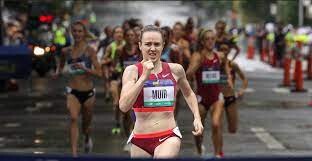
Muir blasted a 4:14.8 road mile last September at her most recent race in New York City, setting the course record for the 5th Avenue Mile. The Wanamaker Mile event record of 4:16.85 was set by Elinor Purrier St. Pierre in 2020, that mark also being the US record and second-fastest indoor mile in history.
“This will be my first time racing at the Millrose Games, so I am really excited as it has been a competition that I have wanted to do for a long time,” said Muir, who will also compete at the World Indoor Tour Gold meetings in Boston and Birmingham. “I have very fond memories of racing in the city, and I cannot wait to return and tackle the same distance indoors.”
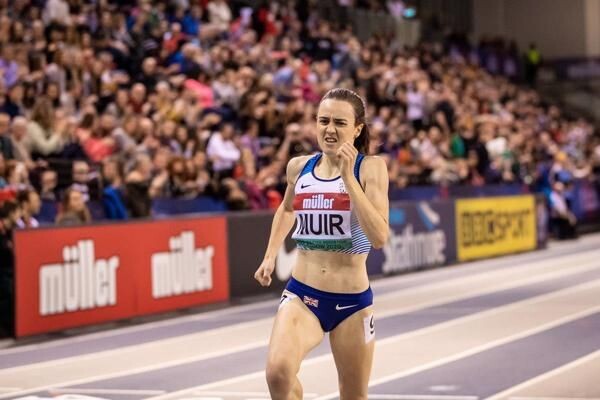
As always, the Wanamaker Mile will feature a deep field of talented runners hungry for an upset victory. Athletes to watch include US 1500m champion Sinclaire Johnson, British indoor mile record-holder Jemma Reekie, Josette Norris, Sage Hurta-Klecker, Nikki Hiltz, Medina Eisa, Allie Wilson, Lucia Stafford, Sintayehu Vissa, Marta Pen Freitas and Helen Schlachtenhaufen.
These are the latest stars announced for the Millrose Games, joining the showdowns in the pole vault between Katie Moon, Sandi Morris and Katerina Stefanidi, and in the shot put, featuring Ryan Crouser and Joe Kovacs. The women's 300m will feature Abby Steiner, Jenna Prandini and Brittany Brown, and the women’s 3000m will star Konstanze Klosterhalfen and Alicia Monson. In the men’s 60m, two-time world 200m champion Noah Lyles will race for more sprint success.
by World Athletics
Login to leave a comment
NYRR Millrose Games
The Pinnacle of Indoor Track & Field The NYRR Millrose Games, first held in 1908, remains the premier indoor track and field competition in the United States. The 2025 edition will once again bring the world’s top professional, collegiate, and high school athletes to New York City for a day of thrilling competition. Hosted at the New Balance Track &...
more...
World Athletics Announces Toughest-Ever Standards for 2024 Olympics
On Tuesday, World Athletics announced the automatic qualifying standards for the 2024 Olympics in Paris. The standards are the toughest ever for a global championship as World Athletics is aiming for just 50% of entrants to come via the standard, with the remaining 50% to be determined by world ranking.
This is similar to the system in place for the 2023 World Championships in Budapest, and in most events, the standards are similar to those for next year’s Worlds. The big difference comes in the marathon.
For the 2020 Olympics, World Athletics had set entry limits of 80 athletes for the men’s and women’s marathons, but a combination of supershoes and a COVID-extended qualifying window saw far more athletes hit the entry standards than expected. In the end, 106 men and 88 women started the last Olympic marathon in Sapporo.
Seeking to avoid a repeat, World Athletics dramatically lowered the marathon entry standards. On the men’s side, the 2024 standard is 2:08:10 (compared to 2:11:30 in 2020). On the women’s side, the 2024 standard is 2:26:50 (compared to 2:29:30 in 2020). Athletes can also earn the standard by finishing top-5 in a Platinum Label Marathon between November 1, 2022, and April 30, 2024. In 2023, the following races are Platinum Label Marathons: Xiamen, Osaka (women), Tokyo, Nagoya (women), Seoul, Boston, London, Sydney, Berlin, Chicago, Amsterdam, New York, Shanghai, Valencia.

The standards are listed below. We’ve also listed the standards for the 2020 Olympics and 2023 Worlds for comparison.
Men’s standards
Event
100m.- 10.05 (2020 Olympics), 10.00 (2023 Worlds), 10.00 (2024 Olympics).
200m.- 20.24 (2020 Olympics), 20.16 (2023 Worlds), 20.16 (2024 Olympics).
400m.- 44.90 (2020 Olympics), 45.00 (2023 Worlds), 45.00 (2024 Olympics).
800m.- 1:45.20 (2020 Olympics), 1:44.70 (2023 Worlds), 1:44.70 (2024 Olympics).
1500m.- 3:35.00 (2020 Olympics), 3:34.20 (3:51.00) (2023 Worlds), 3:33.50 (3:50.40) (2024 Olympics).
5000m.- 13:13.50 (2020 Olympics), 13:07.00 (13:07 road)(2023 Worlds), 13:05.00 (2024 Olympics).
10,000m.- 27:28.00 (2020 Olympics), 27:10.00 (27:10 road) (2023 Worlds), 27:00.00 (2024 Olympics).
Marathon.- 2:11:30 (2020 Olympics), 2:09:40 (2023 Worlds), 2:08:10 (2024 Olympics).
3000m SC.- 8:22.00 (2020 Olympics), 8:15.00 (2023 Worlds), 8:15.00 (2024 Olympics).
110m H.- 13.32 (2020 Olympics), 13.28 (2023 Worlds), 13.27 (2024 Olympics).
400m H.- 48.90 (2020 Olympics), 48.70 (2023 Worlds), 48.70 (2024 Olympics).
High jump.- 2.33m (2020 Olympics), 2.32m (2023 Worlds), 2.33m (2024 Olympics).
Pole vault.- 5.80m (2020 Olympics), 5.81m (2023 Worlds), 5.82m (2024 Olympics).
Long jump.- 8.22m (2020 Olympics), 8.25m (2023 Worlds), 8.27m (2024 Olympics).
Triple jump.- 17.14m (2020 Olympics), 17.20m (2023 Worlds), 17.22m (2024 Olympics).
Shot put.- 21.10m (2020 Olympics), 21.40m (2023 Worlds), 21.50m (2024 Olympics).
Discus.- 66.00m (2020 Olympics), 67.00m (2023 Worlds), 67.20m (2024 Olympics).
Hammer.- 77.50m (2020 Olympics), 78.00m (2023 Worlds), 78.20m (2024 Olympics).
Javelin.- 85.00m (2020 Olympics), 85.20m (2023 Worlds), 85.50m (2024 Olympics).
Decathlon.- 8350 pts (2020 Olympics), 8460 pts (2023 Worlds), 8460 pts (2024 Olympics).
20k RW.- 1:21:00 (2020 Olympics), 1:20:10 (2023 Worlds), 1:20:10 (2024 Olympics).
Women’s standards
Event.- 100.- 11.15 (2020 Olympics), 11.08 (2023 Worlds), 11.07 (2024 Olympics).
200.- 22.80 (2020 Olympics), 22.60 (2023 Worlds), 22.57 (2024 Olympics).
400.- 51.35 (2020 Olympics), 51.00 (2023 Worlds), 50.95 (2024 Olympics).
800.- 1:59.50 (2020 Olympics), 1:59.80 (2023 Worlds), 1:59.30 (2024 Olympics).
1500 (Mile).- 4:04.20 (2020 Olympics), 4:03.50 (4:22.00) (2023 Worlds), 4:02.50 (4:20.90) (2024 Olympics).
5k.- 15:10.00 (2020 Olympics), 14:57.00 (14:57 road) (2023 Worlds), 14:52.00 (2024 Olympics).
10k.- 31:25.00 (2020 Olympics), 30:40.00 (30:40 road) (2023 Worlds), 30:40.00 (2024 Olympics).
Marathon.- 2:29:30 (2020 Olympics), 2:28:00 (2023 Worlds), 2:26:50 (2024 Olympics).
3k steeple.- 9:30.00 (2020 Olympics), 9:23.00 (2023 Worlds), 9:23.00 (2024 Olympics).
100 hurdles.- 12.84 (2020 Olympics), 12.78 (2023 Worlds),
12.77 (2024 Olympics).
400 hurdles.- 55.40 (2020 Olympics), 54.90 (2023 Worlds),
54.85 (2024 Olympics).
HJ.- 1.96m (2020 Olympics), 1.97m (2023 Worlds), 1.97m (2024 Olympics).
PV.- 4.70m (2020 Olympics), 4.71m (2023 Worlds), 4.73m (2024 Olympics).
LJ.- 6.82m (2020 Olympics), 6.85m (2023 Worlds), 6.86m (2024 Olympics).
TJ.- 14.32m (2020 Olympics), 14.52m (2023 Worlds), 14.55m (2024 Olympics).
SP.- 18.50m (2020 Olympics), 18.80m (2023 Worlds), 18.80m (2024 Olympics).
Discus.- 63.50m (2020 Olympics), 64.20m (2023 Worlds), 64.50m (2024 Olympics).
Hammer.- 72.50m (2020 Olympics), 73.60m (2023 Worlds), 74.00m (2024 Olympics).
Javelin.- 64.00m (2020 Olympics), 63.80m (2023 Worlds), 64.00m (2024 Olympics).
Heptathlon.- 6420 pts (2020 Olympics), 6480 pts (2023 Worlds), 6480 pts (2024 Olympics).
20k race walk.- 1:31:00 (2020 Olympics), 1:29:20 (2023 Worlds), 1:29:20 (2024 Olympics).
by Letsrun
Login to leave a comment
Paris 2024 Olympic Games
For this historic event, the City of Light is thinking big! Visitors will be able to watch events at top sporting venues in Paris and the Paris region, as well as at emblematic monuments in the capital visited by several millions of tourists each year. The promise of exceptional moments to experience in an exceptional setting! A great way to...
more...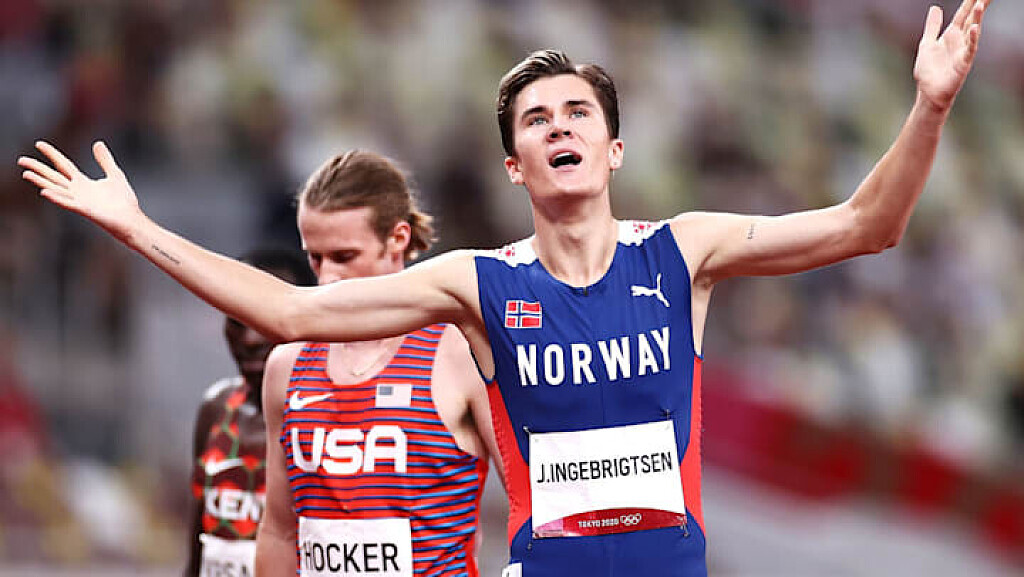
Ingebrigtsen to launch another 1500/5000m double attempt in Munich 2022
Norway’s Jakob Ingebrigtsen will be heavily involved in the Munich 2022 European Athletics Championships, part of the wider multisport European Championships, as he defends the 1500m and 5000m titles he won as a 17-year-old at the Berlin 2018 European Athletics Championships.
The Olympic 1500m champion and world 5000m champion will not, however, face the either of his brothers Filip and Henrik who are both injured nor the Brit who unexpectedly beat him to the world 1500m title in Eugene last month, Jake Wightman.
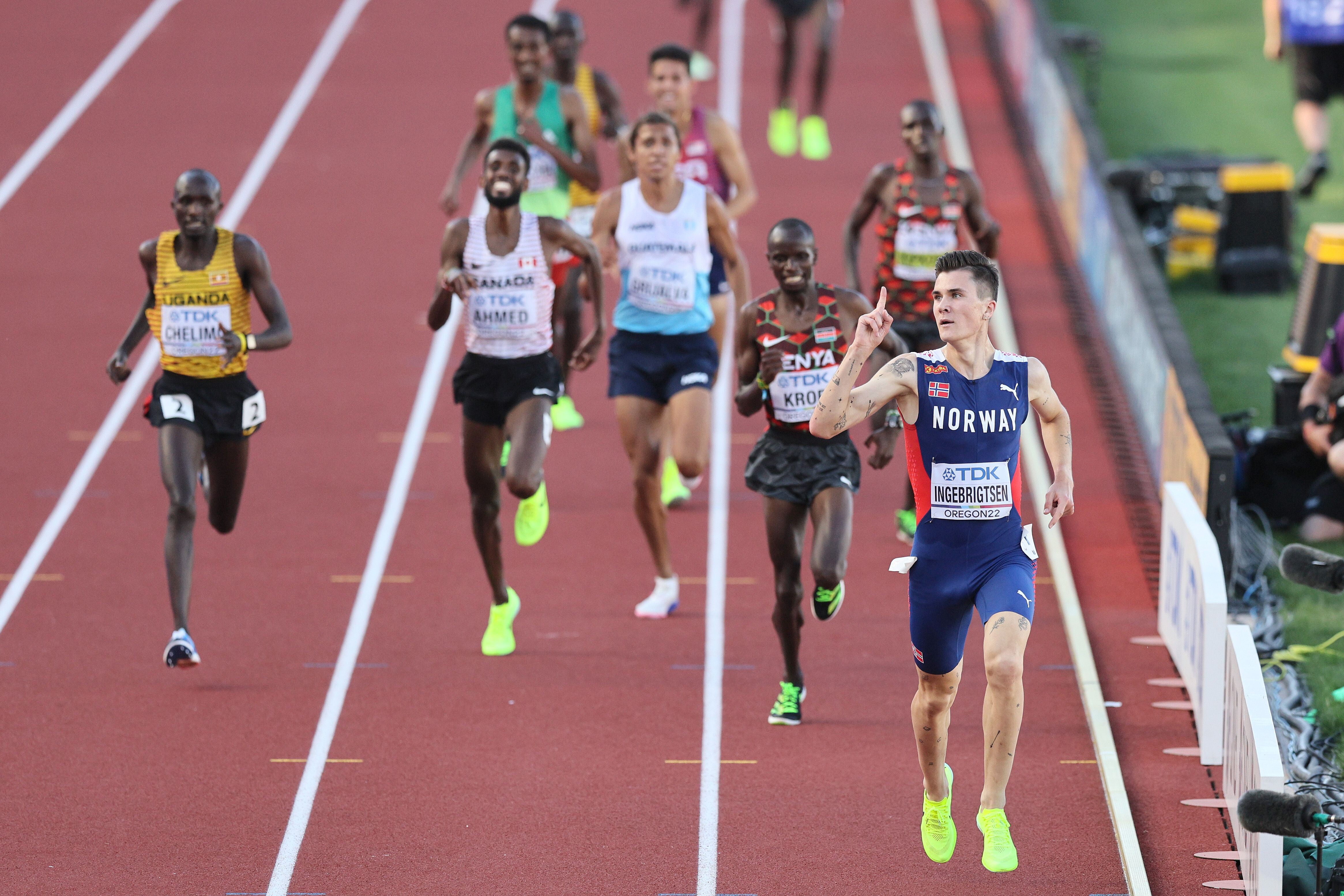
The latter is concentrating on the 800m in Munich – the event he originally planned to do at the Birmingham 2022 Commonwealth Games until he was nudged back to the longer distance because of the number of friends and family who had bought tickets for the final last Saturday when he won bronze in a high quality final in 3:30.53.
With a personal best of 1:44.18 from 2020, Wightman has a realistic chance of adding another European medal to the bronze he won over 1500m in Berlin four years ago – and his victory over 1000m at the Monaco Diamond League meeting on Wednesday night in 2:13.88, ninth fastest of all-time, will have done his confidence no harm at all.
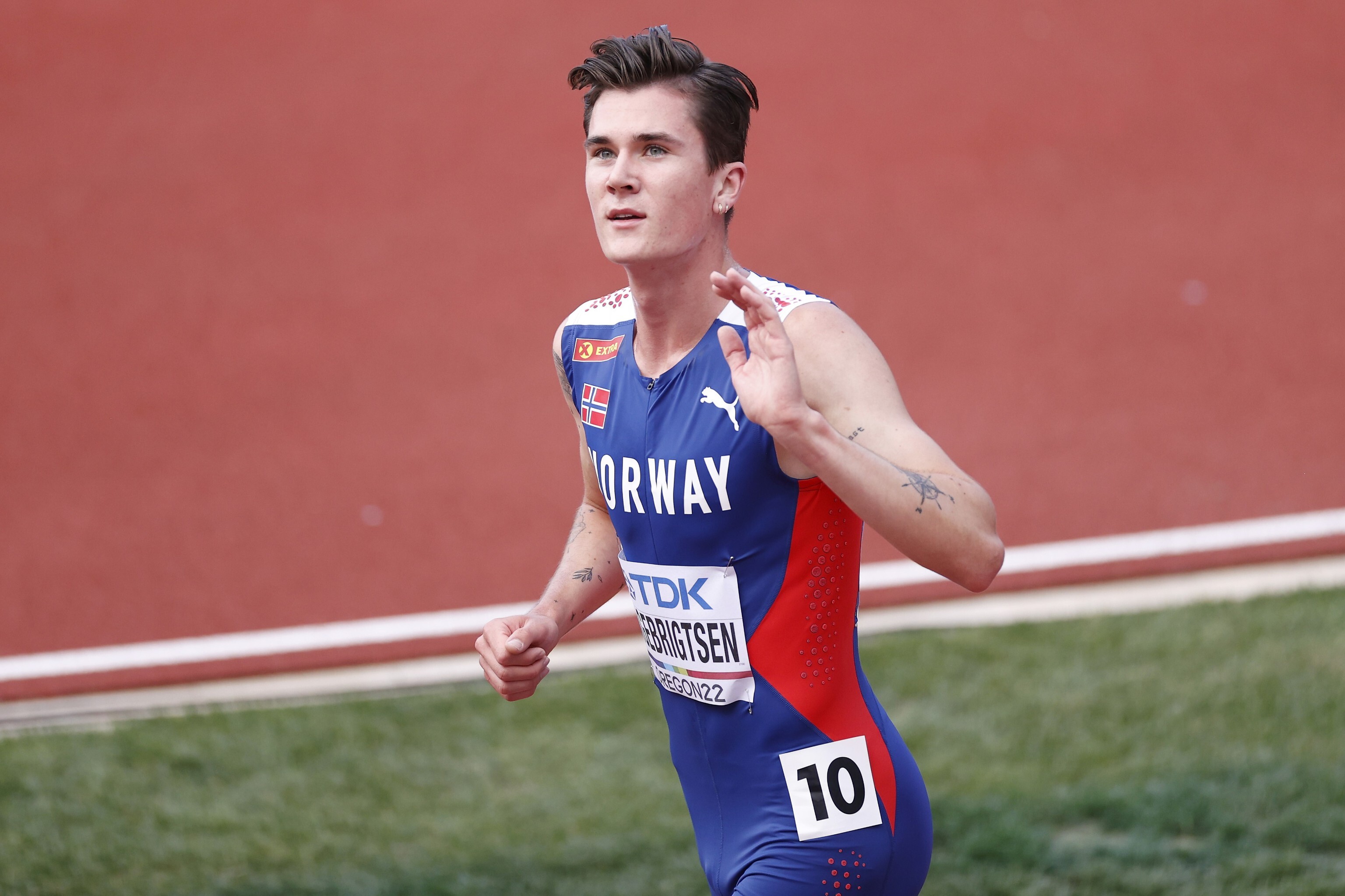
France’s Benjamin Robert has the fastest 2022 time of all entrants – the 1:43.75 he clocked in winning at the Paris Diamond League on 18 June in boisterous fashion, squeezing in between the two leaders with enough physicality to be disqualified before being reinstated on appeal. If things get physical in Munich, Robert is unlikely to come off second best.
Tony van Diepen is also well acquainted with the hurly-burly of the track having been a part of the Dutch teams that won 4x400m silver at the Tokyo 2020 Games and mixed 4x400m silver at the World Championships in Oregon.
Individually, van Diepen has won European indoor silver in 2021 and bronze in 2019 over 400m and has a best 800m time of 1:44.14 set this year in Paris after M. Robert had burst past him at the Stade Charlety.
Robert’s compatriot Gabriel Tual, seventh in last year’s Olympic final, is third fastest on this year’s European list with 1:44.23, set in – you’ve guessed it – Paris. But the French team will be without the popular Pierre-Ambroise Bosse, the 2017 world champion, due to injury.
Poland’s Patryk Dobek has run 1:44.59 this year and even though he exited in the heats at the World Athletics Championships, he can also draw upon the experience of winning bronze at last year’s Olympics in Tokyo.
Other medal prospects include Sweden’s Andreas Kramer (1:44.59), Ireland’s Mark English (1:44.76), fellow Brits Ben Pattison (1:44.60) and Kyle Langford (1:44.61), Spain's reigning world indoor champion Mariano Garcia (1:45.12) and the very experienced former two-time world medallist Amel Tuka from Bosnia and Herzegovina (1:46.15) whose lifetime best of 1:42.57 dates back to 2015.
Aside from Bosse, another notable absentee will be the three-time reigning champion Adam Kszczot from Poland who retired at the start of the year.
Ingebrigtsen's path to double gold is clearer although not without challenges
With Wightman elsewhere, Ingebrigtsen will surely feel happier about the prospect of his 1500m defence, but he will still face a field full of Spanish and British medal threats.
Second on this year’s European list with 3:30.20, Spain’s Mario Garcia will be looking to give the Norwegian wonderboy another run for his money after finishing fourth - two places behind Ingebrigtsen - in Oregon.
The Brits dominate the 2022 European list with six athletes in the top nine and despite the absence of Wightman and Olympic bronze medallist Josh Kerr, Jake Heyward (3:31.08), Neil Gourley (3:32.93) and Matt Stonier (3:32.50) form a trio with clear medal-winning ability.
But Ingebrigtsen, who ran 3:29.47 to take world silver, and ran an Olympic and European record of 3:28.32 at the Tokyo 2020 Games, should have enough to cover any challenge in both events.
In the 5000m, it might be the athlete who appears second from last on the entry-list in terms of season's bests who could provide the biggest challenge to Ingebrigtsen. That athlete is Spain’s Mohammed Katir who won a bronze medal behind Ingebrigtsen in the 1500m at the World Athletics Championships in Oregon and will be focusing solely on the longer event in Munich.
Katir, 24, has a modest season's best of 13:43.61 from the Spanish Championships but he showed what he can do over the longer distance by running a national record of 12:50.79 in Rome last summer in the same race where Ingebrigtsen broke the European record with 12:48.65.
Another strong potential challenger is the experienced Spaniard Adel Mechaal, who was fifth in the Olympic 1500m final last year and set a 5000m personal best of 13:06.02 in Oslo in June. Mechaal didn't make it through to the final of the World Athletics Championships but that wasn't too surprising as he had only just recovered from an untimely bout of coronavirus which forced him to miss the 1500m.
In both the 5000m and 10,000m, watch out for Italy’s Yemaneberhan Crippa, 25, who has been a star performer in numerous European competitions, winning bronze at the 2019 European Cross Country Championships and the European 10,000m Cup in the same year.
Crippa has the fastest time among the entrants based on season’s best performances in the 10,000m with 27:16.18 ahead of another showboating, talented figure in Jimmy Gressier of France – he of the famous faceplant as he won the 2018 European U23 cross country title. This didn’t stop him from walking through the line to win the same title the following year, demonstrating just how much time he had to spare.
There weren’t quite the same histrionics at the SPAR European Cross Country Championships in Dublin last December but Gressier let his running do the talking and he came away with his first senior medal in a race where Ingebrigtsen ruled triumphant once again.
Gressier will be focusing solely on the 10,000m in Munich and the Frenchman is the second fastest performer this year with 27:24.51 which he set at the European 10,000m Cup on home soil in Pacé in May when he ran away from the field for the individual title.
Login to leave a comment

European Athletics Champioships
The27thEuropean Athletics Championshipswill be held from 10 to 16 August 2026 at theAlexander StadiuminBirmingham, United Kingdom.[1] This is the first time that a British city will have staged the European Athletics Championships although Birmingham has hosted many high-profile events, including the2007 European Athletics Indoor Championships, the2003and2018 IAAF World Indoor Championshipsand the2022 Commonwealth Games. Alexander Stadium was renovated between 2019 and...
more...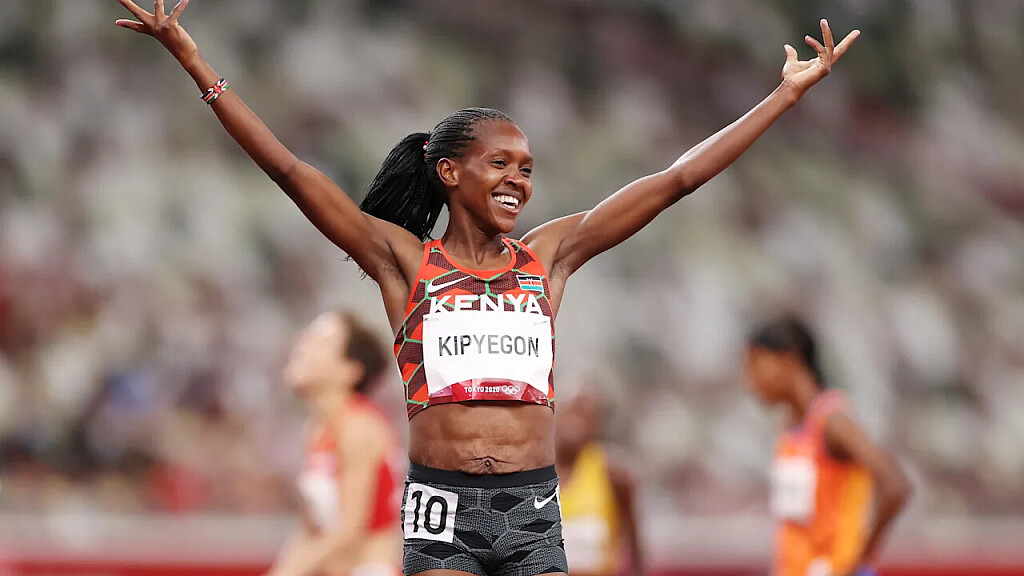
Gold again for Faith Kipyegon as she wins 1500m in Oregon
Faith Kipyegon’s supporters were so confident she would win the women’s 1500m at the World Athletics Championships Oregon22 that they put the Kenyan in an uncomfortable position.
“I was facing a lot of pressure,” said Kipyegon, the two-time Olympic champion in the 1500m. “Everybody was expecting something special from me. Everybody was like, ‘Faith, we believe in Faith,’ so it was a real pressure. But I managed it.”
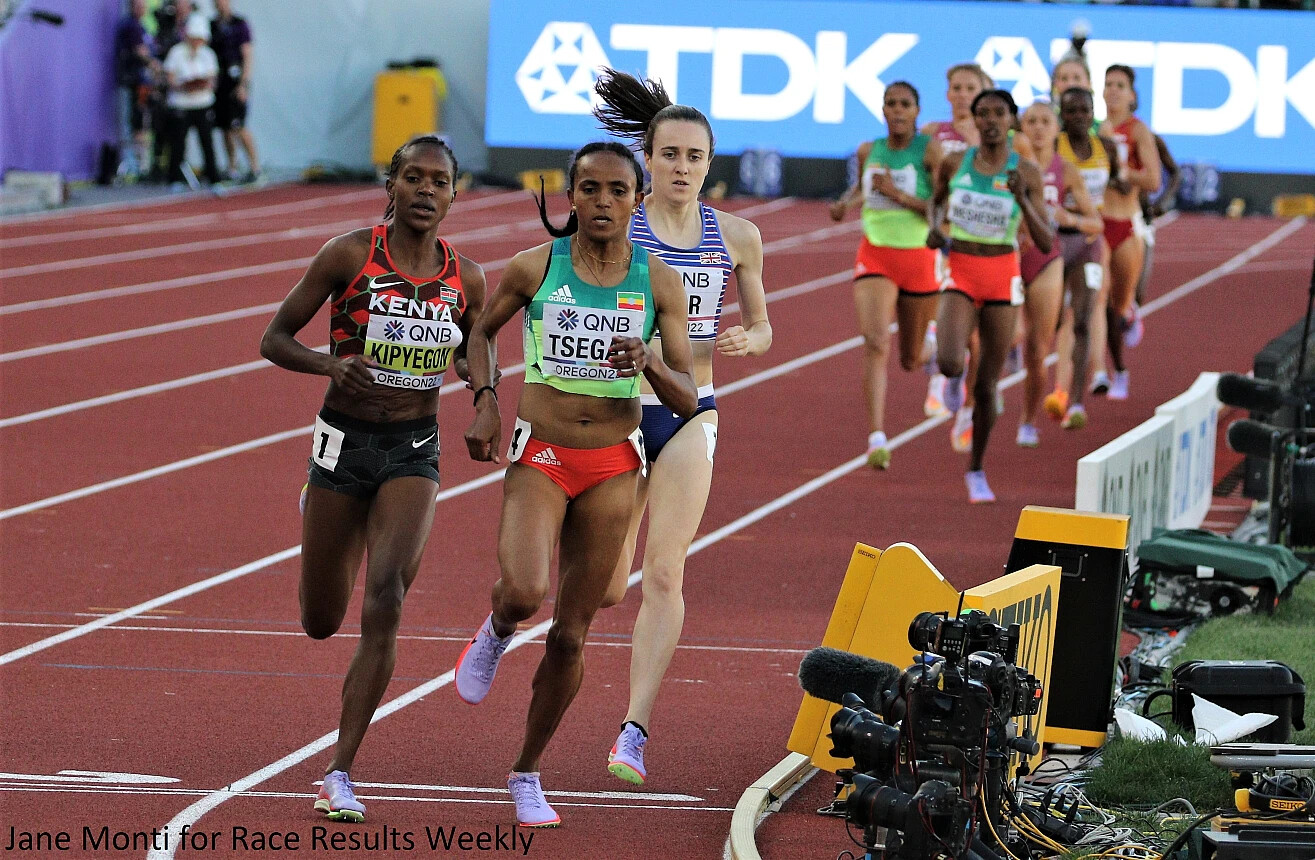
In other words, their Faith was not misplaced.
With her trademark kick, Kipyegon regained the world title on Monday (18) that she first won in 2017. She claimed an unprecedented fourth medal in the event. And Kipyegon indeed did something special, clocking 3:52.96, the second-fastest time on US soil after her own 3:52.59 at the Prefontaine Classic in late May on the same Hayward Field track.
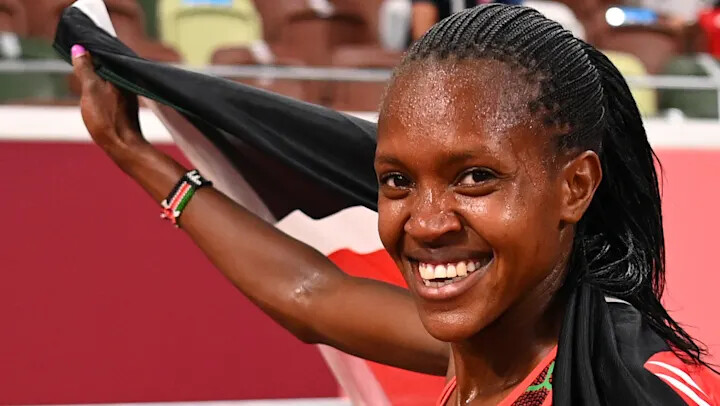
After crossing the finish line, Kipyegon, 28, kissed the track and blew kisses to the crowd on ‘Women in the Spotlight’ day.
The fast-paced race saw Kipyegon and three other runners quickly leave the rest of the field behind with a first lap in just under 59 seconds.
“I’m so grateful to have won the gold medal,” Kipyegon said. “This was my big target. I did do it. I was really looking forward to this championship. I was really, really prepared for this race.”
World indoor champion Gudaf Tsegay of Ethiopia was with her nearly every step until Kipyegon pulled away with about 300 meters to go. Tsegay took the silver in 3:54.52, upgrading from the bronze she won in 2019. She was also just a bit slower than she was at the Pre Classic, where she ran 3:54.21.
“I was expecting more from this race, but my opponents were more experienced and lucky so I have to be grateful for the silver,” said Tsegay, 25, who also will run the 5000m later in the week.
Great Britain’s Laura Muir, in her fifth World Championships final, at last secured a medal, claiming the bronze with a season’s best of 3:55.28. Muir, 29, finished six seconds ahead of Ethiopia’s Freweyni Hailu, the largest gap in World Championships history between third and fourth.
Sofia Ennaoui of Poland ran a season best of 4:01.43 for fifth. The US placed two runners in the top 10: national champion Sinclaire Johnson was sixth, clocking 4:01:63, while Cory McGee was 10th with a time of 4:03.70.
The third Ethiopian runner, Hirut Meshesha was 12th in 4:05.86 after helping Tsegay push the pace for the first half of the race.
“To tell you the truth, I knew the Ethiopian lady was going to be fast,” Kipyegon said. “I knew she was a front-runner, and we ran really quick and I thank God I won.”
While the two Ethiopians controlled the early part of the race, Kipyegon stayed on their heels. Muir also clung to the lead group. “To be honest, I didn’t look at the clock at all the whole race,” she said. “After the first couple of hundred meters, I knew this was very, very fast. I thought it’s not going to help to look at the clock right now; it’s probably better not to look.
"For me, it’s all about racing. It’s not about times. I’m really pleased I stuck with it and went with them and it paid off.”
Kipyegon has placed first or second in every major championship since 2015. Three years ago, she was coming off maternity leave after having her daughter and placed second behind Sifan Hassan, whose 3:51.95 is the championship record. Kipyegon also earned a silver in 2015.
Hassan decided not to contest the 1500m this year.
After Kipyegon won her second straight Olympic gold medal, Muir called her “the greatest of all time.”
“I can say thank you so much,” Kipyegon said at the post-race press conference in Oregon, with Muir at her side. “I’m really grateful; she is really a nice lady. Before the race, I talked with her and I wish her all the best. Laura, let’s continue like this. This is the spirit of sports.”
Kipyegon added that she was happy that Muir, the Olympic 1500m silver medallist, won her first World Championships medal.
“She has been really fighting since 2017 in London and also in 2019 in Doha,” Kipyegon said.
The Kenyan said she will skip the upcoming Commonwealth Games and prepare for the Diamond League meeting in Monaco.
She wouldn’t speculate about possibly breaking the world record. “I can’t talk about it right now,” Kipyegon said. “Let me focus myself and see what is possible. I will be trying my best to lower my personal best and to run a good race.”
In the meantime, she will spend time with her daughter. “She is everything to me,” Kipyegon said.
by World Athletics
Login to leave a comment
World Athletics Championships Budapest23
Budapest is a true capital of sports, which is one of the reasons why the World Athletics Championships Budapest 2023 is in the right place here. Here are some of the most important world athletics events and venues where we have witnessed moments of sporting history. Throughout the 125-year history of Hungarian athletics, the country and Budapest have hosted numerous...
more...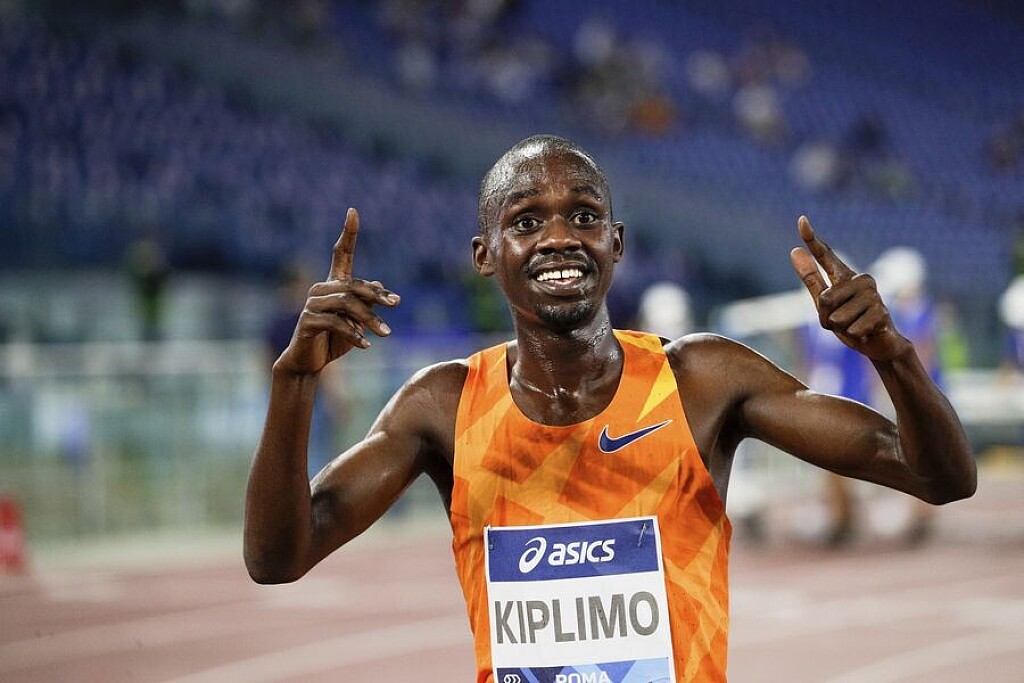
Ugandan Jacob Kiplimo puts speed shift for Oregon Worlds
Jacob Kiplimo has his priorities set. His main goal is a medal over the 10000m at the World Athletics Championships which come in Oregon, US, in under a fortnight.The 21-year-old could have done the long-distance double on the West Coast but just one will do.Kiplimo feels he is in a good place after posting seven minutes and 29.55 seconds for second place over the 3000m at the Stockholm Diamond League (DL) in Sweden on Thursday night.
“Yes, I’m happy about it,” the reigning world half-marathon champion and record holder told this publication before returning home at the weekend. “I came to Stockholm because I needed to test my body. I had to withdraw from the Pre Classic (Eugene DL) and it was important to run one race before the world championships.”
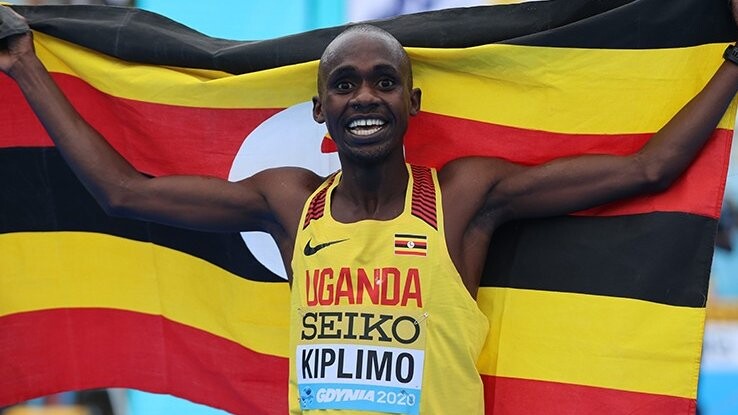
Despite doing one race on track all year, Kiplimo is confident ahead of the 25-lap final set for July 17 at the Hayward Field in Eugene.“I’m 99 percent satisfied, the one percent is because I missed the victory in the last 15 meters but it’s part of the job,” Kiplimo posted on Instagram.
Leading at the bell, Kiplimo could have won his first track race in 11 months but it was Athlete Refugee Team’s Domnic Lobalu who beat him to the tape with about 30 metres left.Lobalu, who hails from South Sudan, posted 7:29.48 not only for the world lead time over the distance but also slashed his personal best by 20 seconds.
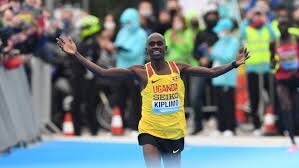
Prior, middle-distance runner Ronald Musagala continued to improve with another season best of 3:36.90 in third place over the 1500m.“According the way I was struggling with my body in Uganda, it’s a good progress,” noted Musagala, currently based at the Global Sports Communication camp in Nijmegen, Netherlands.
Meanwhile, world 800m champion Halimah Nakaayi will need maximum concentration to perfect her craft before flying to Oregon. In the Swedish capital, she lost some seconds and energy trying to get space on the outside before finishing fourth in 1:58.85.The two-lap race was won by in-form Kenyan Mary Moraa in 1:57.68, beating Olympic silver medallist Briton Keely Hodgkinson (1:58.18) and Australian Catriona Bisset in third with 1:58.54.
by Allan Darren Kyeyune
Login to leave a comment
World Athletics Championships Budapest23
Budapest is a true capital of sports, which is one of the reasons why the World Athletics Championships Budapest 2023 is in the right place here. Here are some of the most important world athletics events and venues where we have witnessed moments of sporting history. Throughout the 125-year history of Hungarian athletics, the country and Budapest have hosted numerous...
more...
Tokyo Olympian Tachlowini Gabriyesos will lead a six-member Athlete Refugee Team (ART) to next month's World Athletics Championships Oregon22.
Tachlowini Gabriyesos, 24, made waves one year ago when he finished 16th in the Olympic marathon in Sapporo, beating some of the world's best marathoners.
“It makes me so proud to once again wear the Athlete Refugee Team vest at the World Championships,” said Gabriyesos, a native of Eritrea who made his Athlete Refugee Team debut at the 2019 World Championships in Doha where he competed in the 5000m.
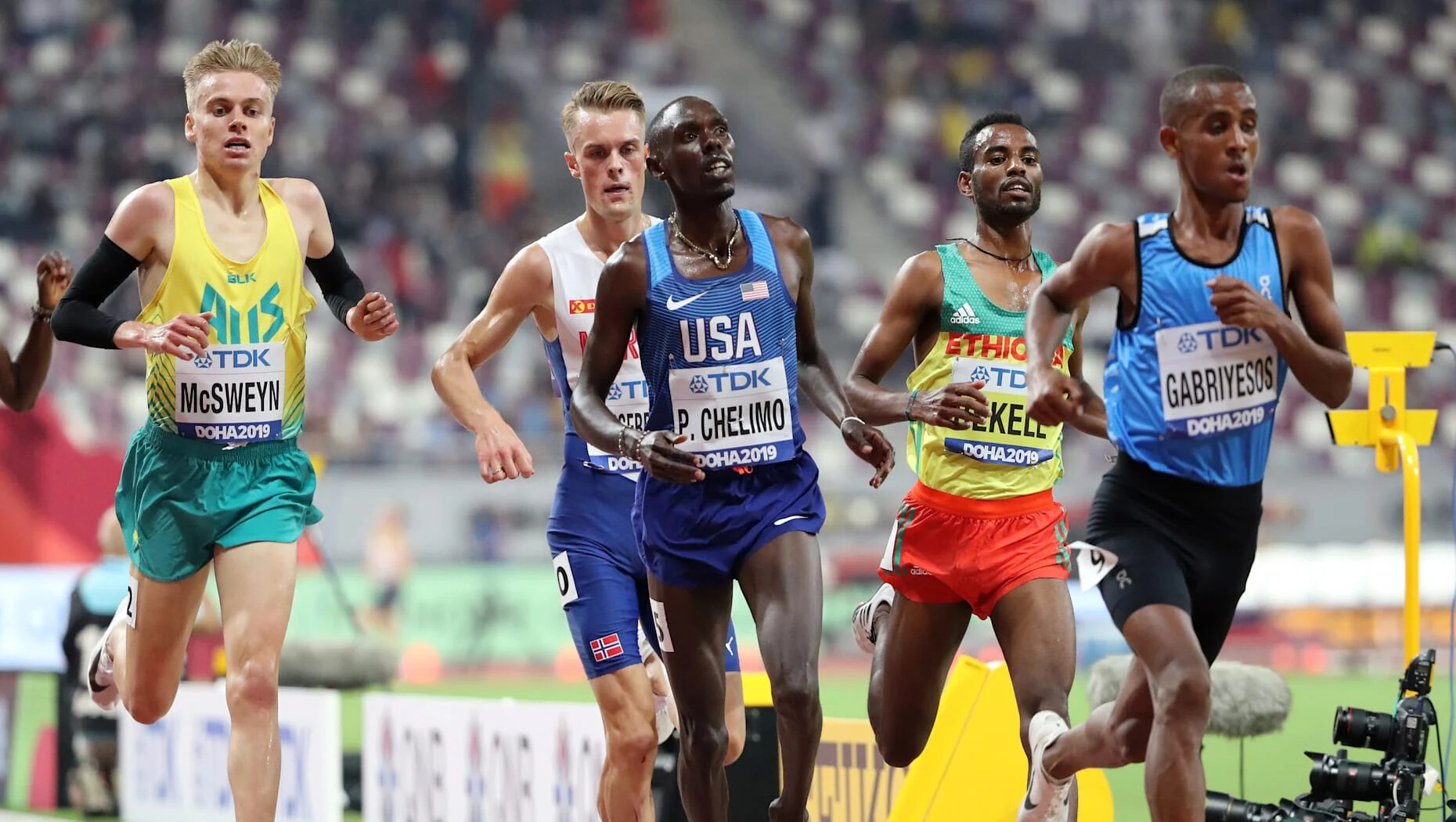
“I don’t represent a country, but millions of people without one. I want to be a role model for refugee youth around the world and wish to show the world once again that refugees can be strong, that we are hungry for success and that we deserve equal opportunities.”
Gabriyesos fled conflict and bloodshed in Eritrea at age 12 and journeyed through Ethiopia, Sudan and Egypt before crossing the Sinai desert on foot to Israel where he's been living since 2010. He began running soon after and eventually found that he was best suited for athletics' longest running event.
At the Hahula Galilee Marathon in Israel in March 2021, Gabriyesos clocked 2:10:55 to become the first refugee athlete to meet an Olympic qualifying standard. He later served as the co-flag bearer for the Olympic Refugee Team at Tokyo’s Opening Ceremonies. After his solid performance in Sapporo's hot and muggy conditions, Gabriyesos improved to 2:10:09 at the Seville Marathon in February.
After its involvement with the inaugural Refugee Olympic Team that competed at the 2016 Olympic Games in Rio, World Athletics established the Athlete Refugee Team in 2017 to provide refugees with high level training and competitive opportunities.
It is the world’s only year-round team composed solely of refugee athletes. The team has been represented at almost every World Championship event since, in addition to a growing number of continental and regional events, most recently the European 10,000m Cup in May and the African Championships earlier this month.
"On this World Refugee Day, our Athlete Refugee Team brings a powerful and inspirational message of hope and solidarity to the world, at a time when it's truly needed," said World Athletics President Sebastian Coe. "They're also showing, through their rapid development and world class performances, that they do belong among the world's best athletes."
Representing a community of 89 million
When the refugee team was introduced at the 2016 Olympic Games in Rio, that squad of 10 – six competing in athletics – represented 65 million people around the world who had been forcibly displaced from their homes.
That figure soared to more than 82 million by 2020 and, propelled by conflict, the climate crisis and skyrocketing inequality, has grown to 89.3 million at the end of 2021. The six athletes who are set to compete in Eugene next month will represent a community that collectively would be the 17th most populous country on the planet.
Similarly, the number of athletes involved in the World Athletics Athlete Refugee Team project continues to grow. More than 40 athletes are now involved in the programme, training at their respective bases in Kenya, Israel, France, the United Kingdom, Sweden, Germany, Canada and Portugal.
Gabriyesos will be joined by Jamal Abdalmajid Eisa-Mohammed, a native of Sudan, who will make his second consecutive World Championships appearance in the 5000m. The 28-year-old improved his lifetime best over the distance to 13:42.98 at the Olympic Games last year.
Dorian Keletela, 23, will be making his third ART appearance after outings at the 2021 European Indoor Championships and last summer's Olympic Games in Tokyo. In the Japanese capital, he clocked 10.33 to win his 100m heat in the preliminary round, smashing his previous career best by 0.13. He improved to 10.27 last year and at the moment has a 10.47 season's best.
Fouad Idbafdil, a refugee from Morocco who is based in France, rounds out the men's squad. The 34-year-old steeplechase specialist improved his lifetime best to 8:37.94 nine days ago. He too competed on the ART squad in Doha in 2019.
The women’s team is led by Anjelina Nadai Lohalith, who will bring plenty of experience to the start line of the 1500m. The 27-year-old native of South Sudan, who is based at the Tegla Loroupe Peace Foundation training camp in Ngong, Kenya, will be making her second World Championships appearance after her debut in 2017.
Nadai is a two-time Olympian and most recently competed at the World Indoor Championships in Belgrade in March and the African Championships in Mauritius 11 days ago. She set her 4:31.65 lifetime best in Tokyo last year.
She'll be joined by Atalena Napule Gaspore, another South Sudanese athlete from the Loroupe camp, who will be making her Athlete Refugee Team debut competing in the 800m.
Athlete refugee team for WCH Oregon22
Women 800m: Atalena Napule Gaspore 1500m: Anjelina Nadai Lohalith
Men 100m: Dorian Keletela 5000m: Jamal Abdalmajid Eisa-Mohammed marathon: Tachlowini Gabriyesos 3000m steeplechase: Fouad Idbafdil
by World Athletics
Login to leave a comment
World Athletics Championships Budapest23
Budapest is a true capital of sports, which is one of the reasons why the World Athletics Championships Budapest 2023 is in the right place here. Here are some of the most important world athletics events and venues where we have witnessed moments of sporting history. Throughout the 125-year history of Hungarian athletics, the country and Budapest have hosted numerous...
more...
Olympic Champion Dame Kelly Holmes has announced she is gay, and says she has hidden it for 34 years.
Speaking during Pride month, the two-time gold medallist said she realised she was gay at the age of 17 after kissing a fellow female soldier, and that her family and friends have known since 1997.
The Olympic champion told the Sunday Mirror: "I needed to do this now, for me. It was my decision. I'm nervous about saying it. I feel like I'm going to explode with excitement.
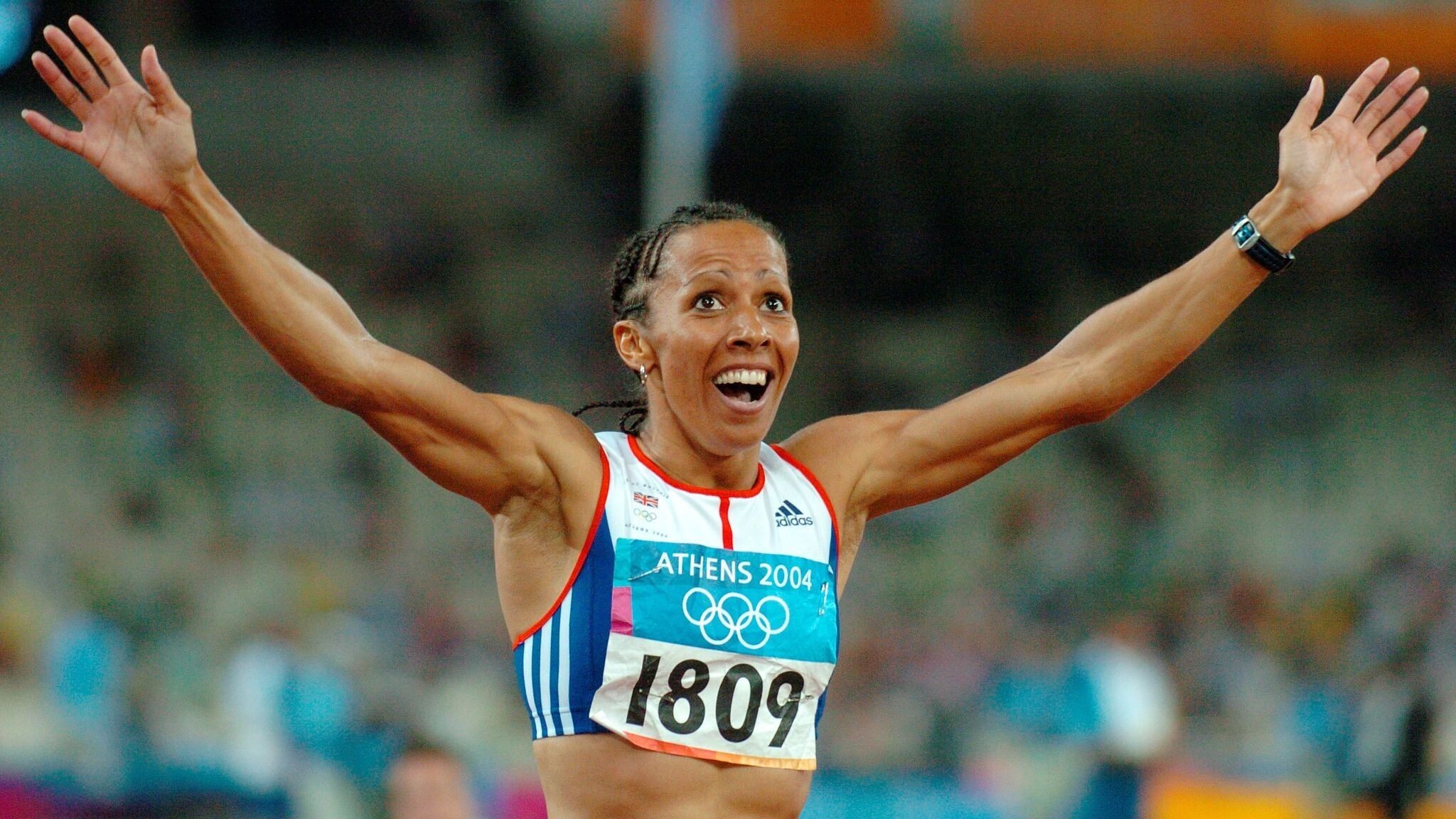
"Sometimes I cry with relief. The moment this comes out, I'm essentially getting rid of that fear."
The 52-year-old also revealed she struggled with her mental health because of having to hide her sexuality, and that she had to keep several same-sex relationships she had during her time in the Women's Royal Army Corps secret, for fear of being courts marshalled.
Until 2000, it was illegal for gay, lesbian and bisexual people to serve in the British Army, Royal Navy and RAF - and Dame Kelly feared she would still face repercussions for breaking that law during her time in the forces.
She contacted a military LGBTQ+ leader in 2020 to find out if she could be sanctioned for breaking army rules and was told she would not be.
She said: "I felt like I could breathe again, one little call could have saved 28 years of heartache."
(Second photo) Crossing the finish line to win the gold medal in the women's 800m at the 2004 Olympic Games in Athens. She also won the 1500m.
Dame Kelly took part in her final major championship in 2004, with a double gold medal-winning performance at the Athens Olympics.
In 2005 - the year she retired from athletics - she was made a Dame by the Queen.
She has since been made an honorary colonel with the Royal Armoured Corps Training Regiment.
Dame Kelly set up a charity in 2008, created to support retired athletes to transition out of their sport, and to create mentoring programmes to inspire young people from disadvantaged backgrounds into sports.
Social media has been flooded with support for the Olympic champion.
She has also started to make a documentary about her experiences called Being Me, where she talks to LGBTQ+ soldiers about their lives in the military now.
Login to leave a comment
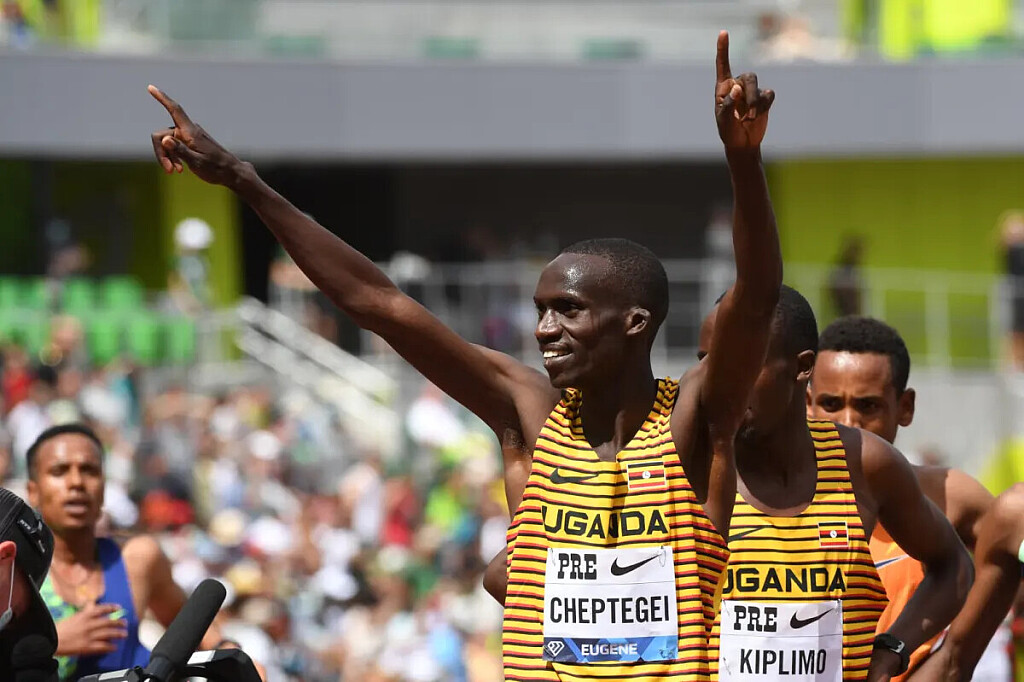
Prefontaine Classic promises world record attempts and rich competition despite late losses
It is a measure of Eugene’s Prefontaine Classic meeting - which tomorrow forms the third stop on the Wanda Diamond League tour - that it can lose four Olympic gold medalists at late notice and still remain packed with compelling competition and world record attempts.
The arrangement of all that athletics action was altered today following forecasts of rain and high winds - likely to be blowing into the faces of the sprinters - on Saturday.
Accordingly the men's pole vault, featuring Olympic gold and silver medalists Mondo Duplantis of Sweden and Chris Nilsen of the United States, the women's discus, featuring the US Olympic champion Valarie Allman, and the women's high jump, involving Ukraine's world indoor champion Yaroslava Mahuchikh, have been moved to Friday night's programme, where world record attempts are being made over two miles and 5,000 meters.
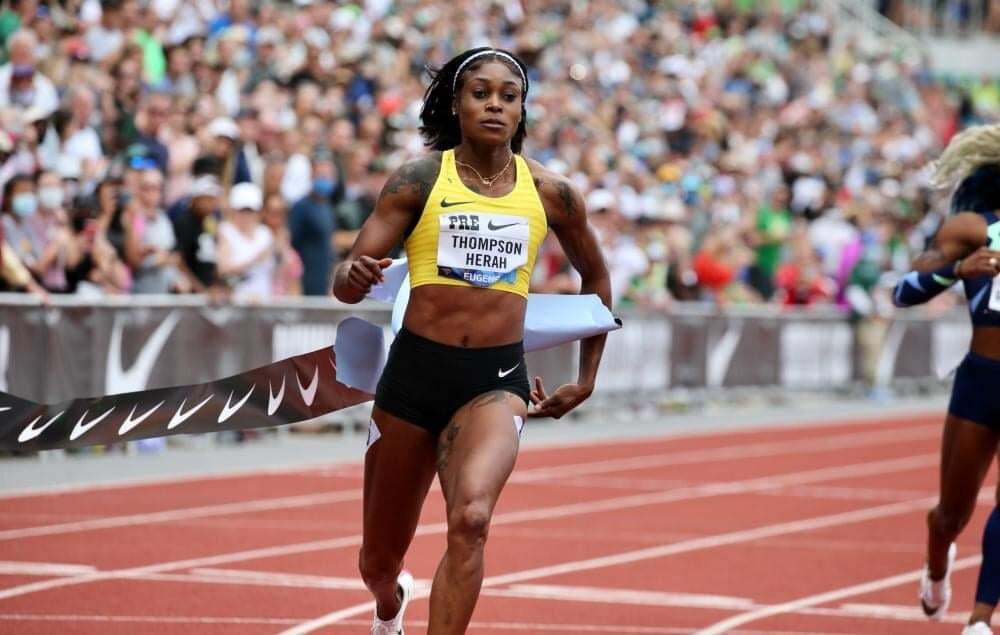
The news that the United States' Olympic women’s 800 meters champion Athing Mu will not now race against Britain’s Tokyo 2020 silver medalist Keely Hodgkinson, and that Italy’s men’s 100m champion Marcell Jacobs will not be in a field including the man he beat to gold in Japan, home sprinter Fred Kerley, was disappointing.
Also missing from the planned line-up at the new-look Hayward Field, which will stage this year’s World Athletics Championships, are home talents Matthew Centrowitz, the Rio 2016 1500m gold medalist, Tokyo 2020 and world 400m hurdles silver medalist Rai Benjamin and double world pole vault champion Sam Kendricks.
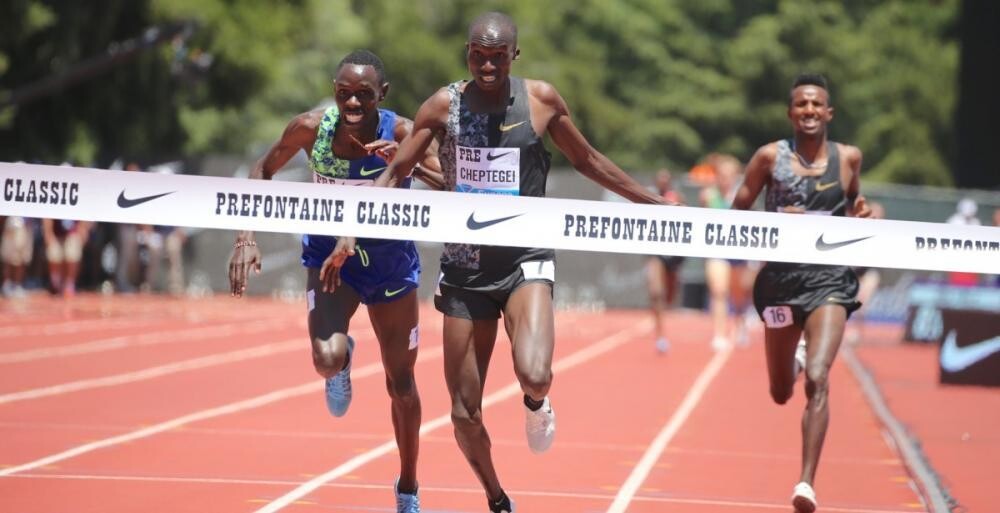
And South Africa’s double Olympic 800m champion Caster Semenya, who had planned a first top-level race since 2019, has also withdrawn.
All this means the limelight will shine all the more intensely on stellar performers such as Jamaica’s double Olympic women’s 100 and 200m champion Elaine Thompson-Herah, who runs over the shorter sprint against a field including the American who missed last year’s Olympics because of a three-month suspension after testing positive for cannabis, Sha’Carri Richardson.
Britain’s world 200m champion Dina Asher-Smith, who last Saturday won the Birmingham Diamond League 100m from which Thompson-Herah had made a late withdrawal, is also in the mix, as is Switzerland’s world indoor 60m champion Mujinga Kambundji and Jamaica’s Tokyo 2020 bronze medalist Shericka Jackson.
Thompson-Herah chose to make a low-key start to her outdoor season, choosing to compete in Kingston, where she clocked 10.94sec despite a strong headwind of -1.8 meters per second.
It was on this track last year that she ran 10.54, putting her second on the all-time list.
The men’s 100m is also loaded given the presence of Kerley and his fellow Americans Trayvon Bromell, who will be keen to restore normal working after his early exit in Birmingham because of a false start, world champion Christian Coleman, world 200m champion Noah Lyles and Canada’s Olympic 200m champion Andre De Grasse.
And 18-year-old Erriyon Knighton, who last year became the youngest male athlete to represent the United States since middle distance runner Jim Ryun in 1964 and missed a 200m medal by one place, will seek to break 10sec for the first time.
Knighton already tops this year’s 200m world list with his startling 19.49sec in Baton Rouge last month, which put him fourth on the all-time list.
The women’s 200m will see double Olympic 400m champion Shaunae Miller-Uibo taking on Jamaica’s 35-year-old Beijing 2008 and London 2012 100m champion Shelly-Ann Fraser-Pryce, who won world gold at this distance in 2013 and took silver at the London 2012 Olympics.
The men’s 400m will see Kirani James of Grenada, the London 2012 champion and Tokyo 2020 bronze medalist, take on home athletes including Michael Cherry, Michael Norman – a major talent currently seeking a performance to do himself justice - Vernon Norwood and Kahmari Montgomery.
The absence of Benjamin from the 400m hurdles will offer Brazil’s Tokyo 2020 bronze medalist Alison Dos Santos - who beat Benjamin in the opening Diamond League meeting of the season in Doha – a perfect chance to shine,
In the women’s 100m hurdles, Puerto Rico’s Olympic champion takes on the American who took silver behind her in Tokyo, world record holder Kendra Harrison.
The traditional Friday evening distance racing in Eugene will include a women’s two miles and a women’s and men’s 5000m race.
At the latter, which will be followed by an official Diamond League 5,000m on Saturday, Uganda’s Joshua Cheptegei is billed to make an attempt at breaking his own world record of 12min 35.36sec, which he ran in Monaco in August 2020.
On Saturday afternoon the majority of the rivals Cheptegei beat to win Olympic 5,000m gold in Tokyo last year will line up for the Diamond League 5.000m, where Olympic 10,000m champion Selemon Barega of Ethiopia, Olympic 10,000m bronze medalist Jacob Kiplimo of Uganda, Olympic 5,000m silver Mohammed Ahmed of Canada and two-time Olympic 5,000m medalist Paul Chelimo of the United States are the main contenders.
Friday night will also see Ethiopia’s 24-year-old Letesenbet Gidey aiming to lower the women’s 5000m world record of 14:06.62 that she set in Valencia in October 2020.
Gidey has since lowered the women’s 10,000m world record to 29min 01.03sec and the world half marathon record to 1hr 2min 52sec.
Elsewhere on Friday, the women’s two miles will see Sifan Hassan of the Netherlands, the Olympic 5,000 and 10,000m champion, facing Diamond League 5,000m champion Francine Niyonsaba of Burundi.
The latter, who was disqualified at the Tokyo 2020 Games, beat Kenya’s double Olympic 1500m champion Faith Kipyegon over 3,000m in Doha earlier this month.
The world best of 8:58.58, set by Ethiopia’s Meseret Defar in 2007, is sure to be under threat.
Saturday’s middle-distance action will be highlighted by the clash of Olympic 1500m champion Jakob Ingebrigtsen and world champion Timothy Cheruiyot, who renew their rivalry in the Bowerman Mile.
Ingebrigtsen beat Cheruiyot for the first time in the Olympic final in Tokyo last year but the Kenyan beat his Norwegian rival a few weeks later to win over 1500m at the Diamond League final in Zurich.
Both men will need to be primed, however, to beat Kenya’s Abel Kipsang, who out-kicked Cheruiyot to win in Doha recently and who backed it up with 1500m victory in Birmingham last Sunday.
Kipyegon meanwhile will take on Britain’s Tokyo 2020 silver medalist Laura Muir and Gudaf Tsegay of Ethiopia in the women’s 1500m.
Hodgkinson faces an 800m field that includes home runner Ajee Wilson, who took the world indoor title earlier this year.
The men’s shot put will involve the respective Tokyo 2020 gold, silver and bronze medalists Ryan Crouser and Joe Kovacs of the United States and New Zealand’s Tom Walsh.
by Mike Rowbottom
Login to leave a comment
Prefontaine Classic
The Pre Classic, part of the Diamond League series of international meets featuring Olympic-level athletes, is scheduled to be held at the new Hayward Field in Eugene. The Prefontaine Classicis the longest-running outdoor invitational track & field meet in America and is part of the elite Wanda Diamond League of meets held worldwide annually. The Pre Classic’s results score has...
more...
Two-time global medallist and four-time continental champion Lewandowski retires
Polish middle-distance runner Marcin Lewandowski has announced his retirement from athletics.
The 34-year-old won 10 medals at world and continental level across a span of 12 years. His collection includes the 2010 European 800m title and the 2019 world 1500m bronze medal.

Lewandowski posted the news on his Instagram account earlier this week, explaining that a disrupted build-up to his outdoor season meant he was not in shape to challenge for medals at this year’s major championships.
“After my daughter's accident during her rhythmic gymnastics class [just before the World Indoors], I decided to stay at home until Midia was fully recovered,” he wrote. “Due to the fact I did not have the opportunity to train abroad, I was not able to prepare properly to defend my bronze medal from the World Championships and my silver from the European Championships and I am not interested in places outside the podium.
“Was it a difficult decision? I didn't even think for a second because family is the priority. It was the same when I pulled out of the World Indoor Championships even though I was in great shape.
“It was a beautiful 16 years of running – an amazing adventure that is now over. Something ends and something begins because in November I will become a dad again.”
Lewandowski first made a name for himself as an 800m runner, placing fourth at the 2006 World U20 Championships and then winning the 2007 European U20 title. He reached the Olympic semifinals in his first year as a senior athlete in 2008, then made it to the World Championships final in 2009.
He landed European gold in 2010, following it with silver at the 2011 European Indoor Championships and fourth-place finishes at the 2011 and 2013 World Championships. After winning the 2015 European indoor 800m title, Lewandowski earned European silver in 2016 and went on to place sixth at the Olympic Games later that year, but then started to switch his focus to the 1500m.
His tactical prowess and strong finishing speed meant he was a formidable opponent at major championships. He won the 2017 European indoor title, then placed sixth in the 1500m at the 2017 World Championships later that year. In 2018 he won his first global medal when taking 1500m silver at the World Indoor Championships. He earned the same colour medal at the 2018 European Championships.
Lewandowski retained his European indoor 1500m title in 2019, then went on to earn his first and only outdoor global medal in 2019, placing third at the World Championships in Doha. His most recent podium finish was his 1500m silver at the 2021 European Indoor Championships.
Although best known as a championship performer, Lewandowski clocked several speedy performances throughout his career. He holds the Polish indoor and outdoor records for 1000m (2:14.30 / 2:17.67), 1500m (3:30.42 / 3:35.71) and the mile (3:49.11 / 3:56.41).
by World Athletics
Login to leave a comment
Klosterhalfen and Purrier St Pierre lead Millrose mile field
The past two winners of the women's Millrose Games Wanamaker Mile – Elle Purrier St Pierre and Konstanze Klosterhalfen – will race for further success when the World Athletics Indoor Tour Gold meeting returns in New York on 29 January.
World 5000m bronze medallist Klosterhalfen is the 2019 Wanamaker Mile champion and the multiple German record-holder went on to chase Purrier St Pierre all the way to the line in the 2020 race, setting her personal best of 4:17.26. Last year she placed eighth in the Olympic 10,000m final, going close to her national record with 31:01.97.
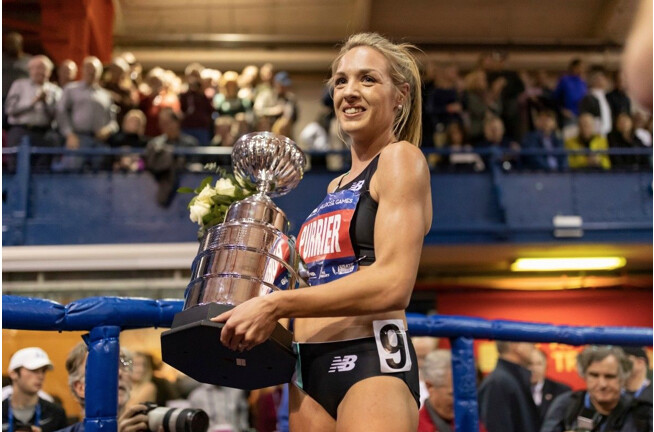
Purrier St Pierre, meanwhile, set her US indoor mile record of 4:16.85 at that 2020 Millrose Games meeting, a time which places her second on the world indoor all-time list. Since that breakout performance, she has set a North American indoor record of 9:10.28 for two miles, taking her to third on the world indoor all-time list, and then won at the US Trials in a meeting record of 3:58.05. She went on to place 10th in a high-quality Olympic final in Tokyo.
"I am really looking forward to racing the Wanamaker Mile this year," Purrier St Pierre said.
"This race has always been a special one for me and I certainly missed it last year. It's one of the most prestigious and historic races, it's always fun and always competitive, just the way I like it."
Joining them in the WHOOP Women’s Wanamaker Mile field are two other athletes who represented the USA in the Tokyo Olympic Games 1500m.
Cory McGee and Heather MacLean placed second and third respectively in last year’s Olympic Trials behind Purrier St Pierre, with McGee going on to finish 12th in the Olympic final and MacLean reaching the semifinals.
Josette Norris also joins the mix after a season in which she broke four minutes in the 1500m and placed third in the Zurich Wanda Diamond League final.
Other major threats will be Jessica Hull, the Australian record-holder and four-time NCAA champion, along with world finalist Nikki Hiltz, British Olympian Katie Snowden and Spanish Olympian Esther Guerrero.
Rounding out the field is Olympic Trials fourth-place finisher Shannon Osika and both the 2021 NCAA mile and 1500m champions in Sage Hurta and Anna Camp Bennett, respectively.
Other athletes so far announced for the Millrose Games include world 100m hurdles record-holder Kendra Harrison, 2016 world indoor 60m champion Trayvon Bromell, Olympic shot put champion Ryan Crouser, world shot put champion Joe Kovacs, Olympic 800m champion Athing Mu, Olympic pole vault champion Katie Nageotte and world indoor pole vault champion Sandi Morris.
by World Athletics
Login to leave a comment
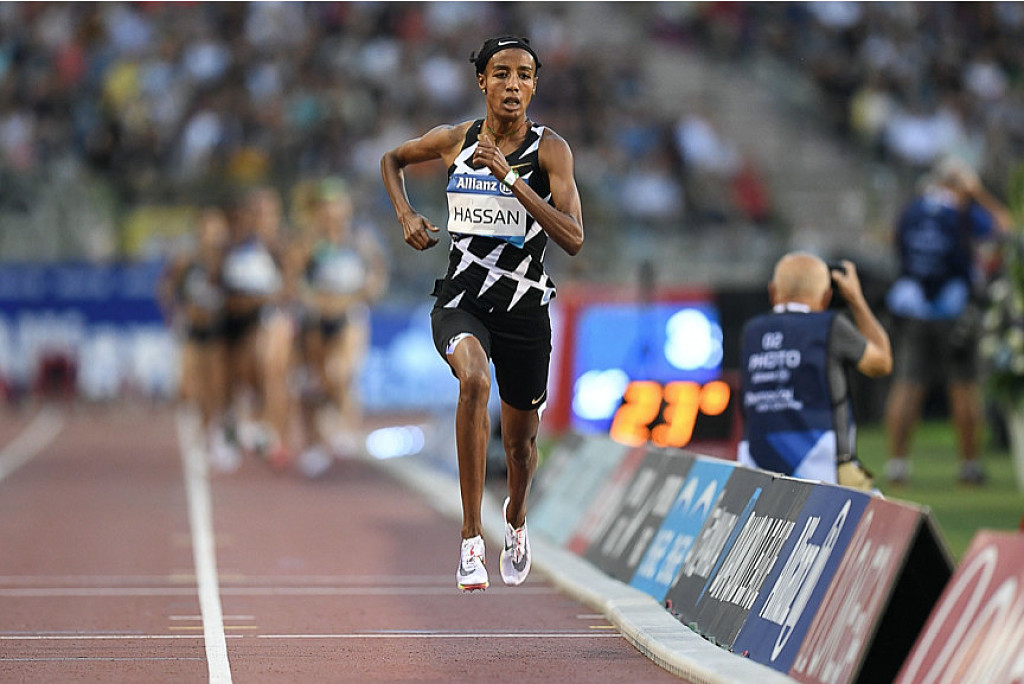
Duplantis, Hassan and Cherry break meeting records in Brussels
Meeting records are hard to come by in the Wanda Diamond League, given it’s the premier one-day meeting circuit in the world, but three such marks fell at the Memorial Van Damme in Brussels on Friday (3), thanks to Mondo Duplantis, Sifan Hassan and Michael Cherry.
When the men’s pole vault got underway, some 40 minutes before the first track event, the King Baudouin Stadium was still filling up. By the time the contest reached its climax three hours later, with all other disciplines having long finished, Duplantis commanded the attention of every single person inside the venue.
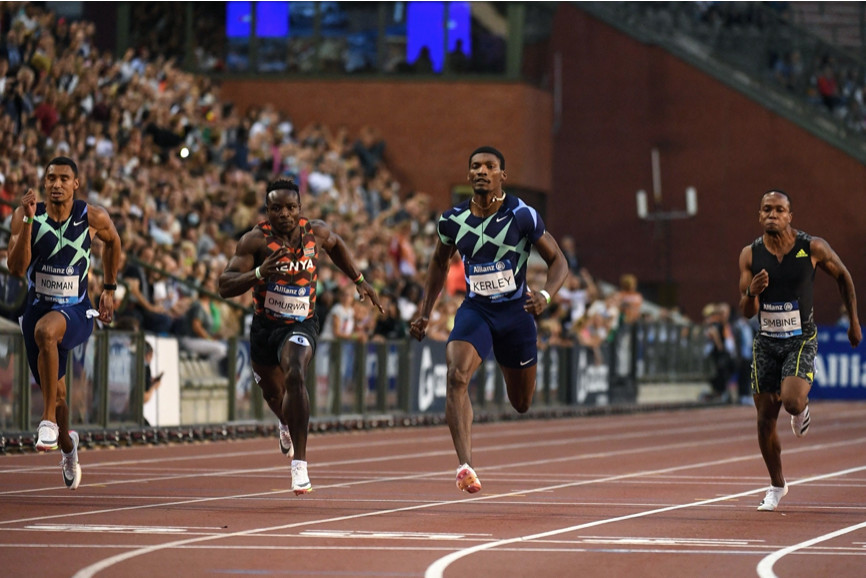
Though the world record once again evaded Duplantis tonight, the 28,000 spectators – the largest gathering for an athletics meeting since the start of the Covid-19 pandemic – were treated to a vaulting masterclass from a legend of the sport.
The Olympic champion opened at 5.50m, skipped 5.65m and then got over 5.75m and 5.85m on his first tries. Four other men were left in the competition at this point, but only two of them got over 5.85m; Olympic silver medallist Christopher Nilsen did it on his first try, while US compatriot KC Lightfoot scraped over on his third attempt.
The US duo couldn’t quite manage 5.91m tonight, though, but Duplantis once again went clear at the first time of asking to confirm his victory. The 21-year-old Swede then raised the bar to 6.05m in a bid to add some height to his own 6.00m meeting record from last year. He brought the bar down with his first two tries, but got over it on his third attempt.
The bar was then raised to the would-be world record height of 6.19m. Following a short wait while the technical officials ensured all was set for a record attempt, Duplantis took to the runway but wasn’t particularly close to clearing the bar on his first attempt. His second try was significantly closer, and his third attempt was also decent, but a world record wasn’t to be tonight.
Nevertheless, Duplantis wasn’t disappointed with his winning height of 6.05m. Only he, Sergey Bubka and two-time world champion Sam Kendricks have ever vaulted higher outdoors.
"I was really close to the world record," said Duplantis. "Everything was perfect, it was just up to me. I haven't had such an amazing atmosphere during a competition in a really long time."
Almost a month has passed since Sifan Hassan’s final race at the Olympic Games, where she won two gold medals and one bronze. Having raced just once during that time, the Dutch distance star arrived in Brussels well rested and ready to take on the mile.
She was the only athlete capable of sticking with the pacemakers as they led through the first 400m in 1:02.03. By the time the second pacemaker reached the 800m point in 2:04.97, with Hassan still in close attendance, the rest of the field was about 30 metres adrift.
With a lap to go, it was clear from the wavelight technology that an improvement on Hassan’s 4:12.33 world record was not on the cards in Brussels, though it never really seemed as though that was her ambition for the race anyway. By this stage, her lead had grown to 50 metres and she kicked for the final lap, going on to win by more than six seconds.
Her winning time of 4:14.74, the fifth-fastest performance in history, smashed Faith Kipyegon’s meeting record by two seconds. Ethiopia’s Axumawit Embaye was second in 4:21.08, closely followed by Australia’s Linden Hall, who broke her own Oceanian record with 4:21.38.
“Since the start of the pandemic, we haven’t had such a big crowd and I’m so happy to see them,” said Hassan. “We haven’t experienced it for nearly two years; it makes you feel special. It’s amazing, I really love it.”
In Tokyo last month, Michael Cherry was beaten to the 400m bronze medal by just 0.02 as Kirani James pipped the US sprinter at the line. Today’s race in Brussels was the first clash between the pair since the Olympic final, and Cherry ran like a man with a point to prove.
He went out hard, as did James, and by half way the duo had started to open up a clear gap on the likes of Isaac Makwala and Liemarvin Bonevacia.
James almost drew level with Cherry on the final bend, but Cherry had another gear left and forged ahead down the home straight, crossing the line in a lifetime best of 44.03 to take 0.03 off Michael Johnson’s meeting record from 1998.
James finished second in 44.51 with Makwala taking third place in 44.83.
The meeting record may have remained intact in the women’s high jump, but it proved to be one of the most enthralling contests of the night.
Olympic champion Mariya Lasitskene breezed through the first few heights and hadn’t recorded any failures up to and including 1.98m. World silver medallist Yaroslava Mahuchikh, who needed three attempts to clear 1.95m, also got over 1.98m on her first try, while Olympic silver medallist Nicola McDermott needed two jumps to clear it.
But McDermott was then the first to go clear at 2.00m, getting over on her first try, then Lasitskene did likewise. Mahuchikh succeeded on her second attempt at 2.00m, but then nailed 2.02m on her first attempt, taking the lead at a critical point of the competition.
Lasitskene missed once and then passed to 2.04m, while McDermott had two misses at 2.02m before registering a third failure at 2.04m. Neither of the trio managed to get over 2.04m, leaving Mahuchikh as the winner. It was just the second time in Diamond League history that three women have cleared 2.00m in the same competition.
With Lasitskene having won in Lausanne and McDermott winning in Paris, Mahuchikh’s triumph in Brussels means all three Olympic medallists have achieved Diamond League wins since the Tokyo Games.
Kerley makes Diamond League history
Olympic 100m silver medallist Fred Kerley won the short sprint, becoming the first man to win over 100m, 200m and 400m in the Wanda Diamond League.
World leader Trayvon Bromell blasted into an early lead and held his form well, but Kerley rallied and held off the additional challenge from Michael Norman in lane seven, dipping well on the line to take the victory in 9.94.
Bromell held on to take second place in 9.97, just 0.01 ahead of Michael Norman (9.98), completing a US sweep of the top three places.
Christine Mboma, also an Olympic silver medallist, won the women’s 200m. The Namibian teenager came through strongly in the closing stages to edge in front of Jamaica’s Shericka Jackson and world champion Dina Asher-Smith.
Mboma stopped the clock at 21.84 while Jackson took second place in 21.95. Asher-Smith recorded a season’s best of 22.04 in third, and US 100m champion Sha’Carri Richardson was a few strides adrift in fourth place (22.45).
Burundi’s Francine Niyonsaba produced a similarly well-timed finish to win the 5000m.
Once the last of the pacemakers dropped out at 2000m, Niyonsaba took up the running at the front of the pack with two-time world champion Hellen Obiri close behind. The Kenyan led for a brief stint too, passing through 3000m in a swift 8:42.57.
Niyonsaba, who finished fifth over 10,000m at the Tokyo Olympics, led again for most of the final kilometre, but Obiri kicked into the lead when the bell sounded for the final lap. She appeared to be on her way to victory, but Ethiopia’s Ejgayehu Taye came back strongly and briefly led with about 90 metres to go, then a rejuvenated Niyonsaba came back to take the lead in the closing stages, crossing the line in a national record of 14:25.34.
Taye took second place in 14:25.63 with Obiri claiming third in 14:26.23. World silver medallist Margaret Chelimo Kipkemboi set a PB of 14:27.12 in fourth as the top seven women finished inside 14:32 – unprecedented depth for a 5000m race.
Goule, Rotich and McSweyn take middle distances
Exactly one month since her eighth-place finish at the Tokyo Olympics, Jamaica’s Natoya Goule rebounded with a satisfying win over 800m, beating several women who finished ahead of her at the Games.
With the pacemaker passing through the first lap in 56.99, the field was still relatively tightly bunched with 300 metres to go. Goule held the lead, but Olympic silver medallist Keely Hodgkinson moved on to the Jamaican’s shoulder on the final bend and looked poised to strike.
Goule had saved something for the finish, though, and she held off the challenge from the British teenager, winning in 1:58.09. Hodgkinson was second in 1:58.16 from compatriot Jemma Reekie (1:58.77).
Stewart McSweyn led an Australian 1-2 in the men’s 1500m. The Oceanian record-holder overtook a fading Mohamed Katir on the home straight to win in 3:33.20 with compatriot Oliver Hoare taking second place (3:33.79). Poland’s Michal Rozmys was third in 3:33.96.
Olympic silver medallist Ferguson Cheruiyot Rotich was a comfortable winner of the non-scoring men’s 800m, crossing the line in 1:43.81 to win by more than a second from Belgium’s Eliott Crestan (1:45.24).
Hurdles victories for Dos Santos and Visser
Racing for the first time since taking Olympic bronze and moving to third on the world all-time list, Brazil’s Alison dos Santos won the men’s 400m hurdles with his trademark strong finish.
Kyron McMaster of the British Virgin Islands led for most of the race, making up the stagger on Dos Santos, drawn one lane outside him, by the half-way point. Dos Santos stuck with McMaster around the final bend and drew level with Jamaica’s Jaheel Hyde. McMaster hit the penultimate hurdle, throwing off his rhythm slightly as he went into the final barrier. Dos Santos, meanwhile, came off the 10th hurdle much better and went on to win in 48.23.
McMaster finished second in 48.31 and Yasmani Copello took third place in 48.45.
The closest finish of the day came in the women’s 100m hurdles, in which Nadine Visser won by just eight thousandths of a second from Tobi Amusan, both timed at 12.69 (0.7m/s). Olympic bronze medallist Megan Tapper was third in 12.77.
Elsewhere, Steffin McCarter saved his best for last to win the men’s long jump. His sixth-round leap of 7.99m was not only the best in the ‘final three’ contest; it was also the top mark of the entire competition. Ruswahl Samaai was second thanks to his last-round leap of 7.89m, having jumped 7.95m earlier in the competition.
Login to leave a comment
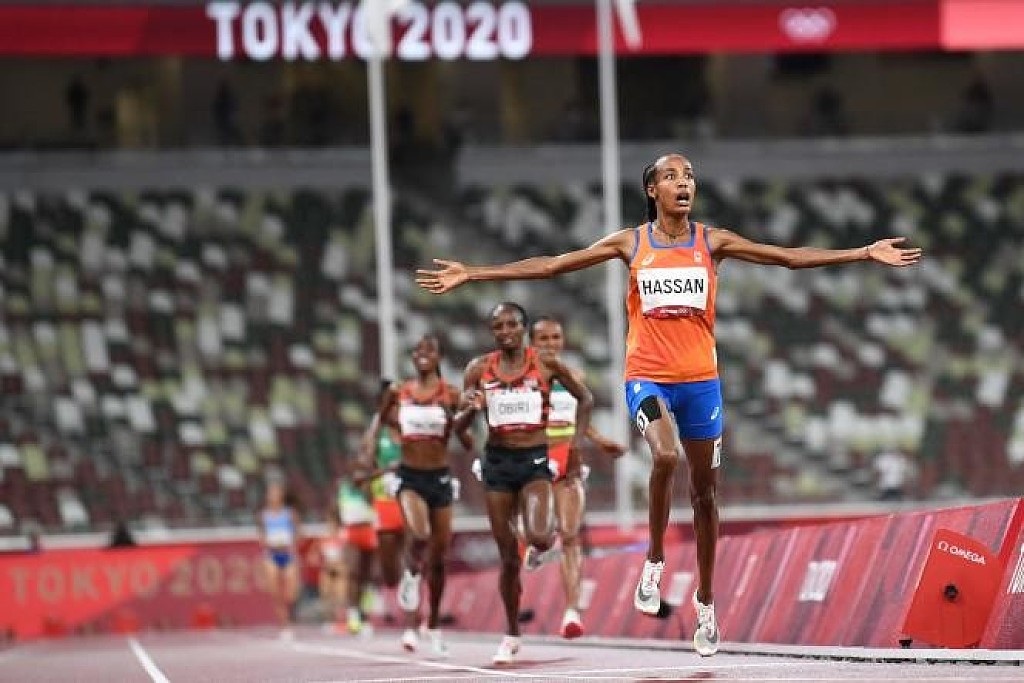
Siffan Hassan has won at the 5,000 meters and now looks to the 1,500 and 10,000
Six races in eight days on the Tokyo track? No problem, says Sifan Hassan, who overcame a Monday morning fall in the 1500m heats to win 5000m gold in the evening.
How about 24,500 meters of Olympic racing in the matter of eight days?
The Netherlands’ Sifan Hassan has said she’ll try it, competing in each of the 1500m, 5000m, and 10,000m races at Tokyo 2020, a line-up rarely seen – especially in the hot conditions athletics runners are facing at these Games.
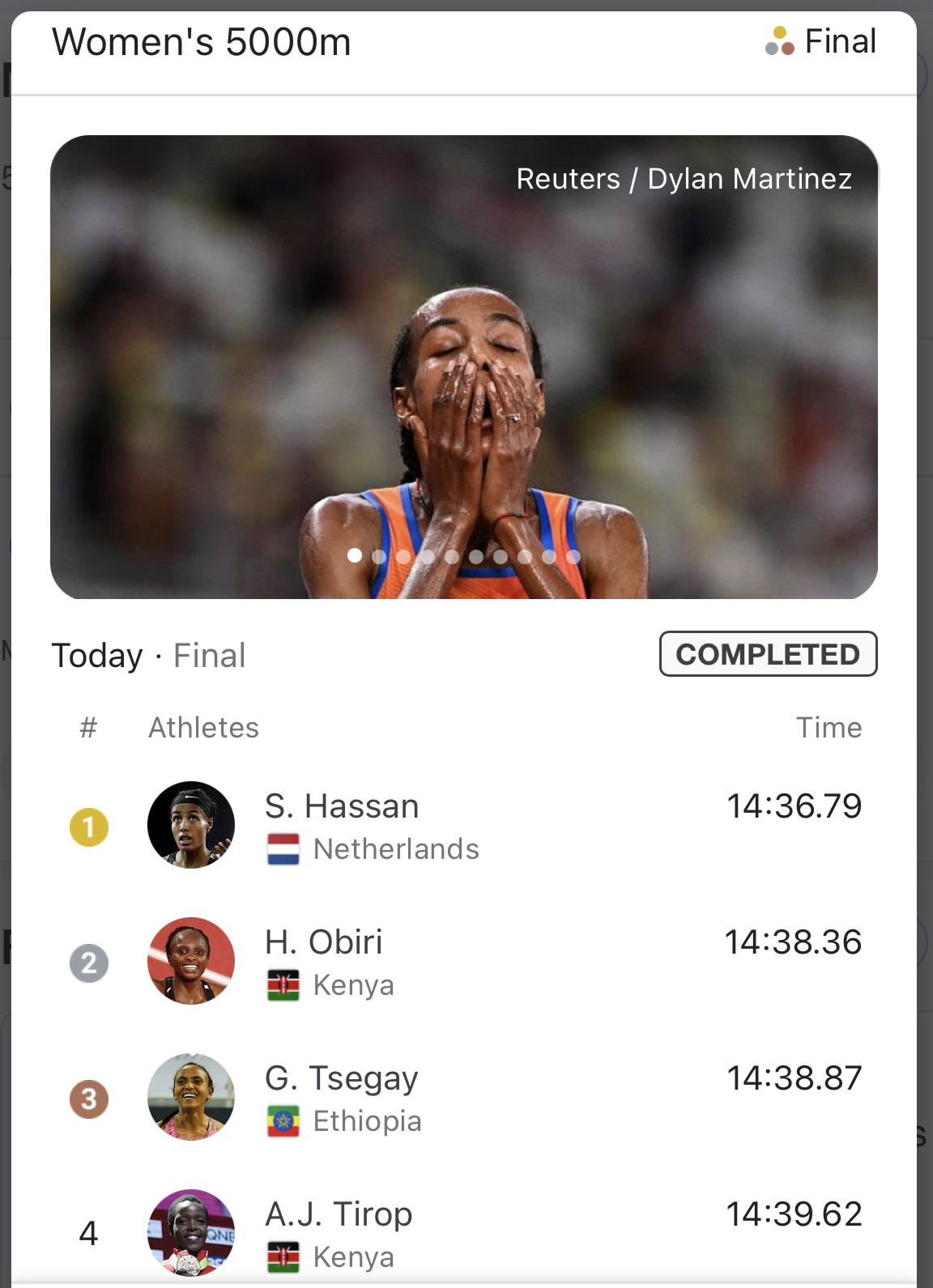
“For me it is crucial to follow my heart,” said Hassan in a press release. “Doing that is far more important than gold medals. That keeps me motivated and it keeps me enjoying this beautiful sport.”
Having already run on Friday (July 30) to qualify for the 5000m final, Hassan fell with a lap to go in Monday morning's 1500m first round, but picked herself up to win the heat!
Just 12 hours later, Hassan produced her famed finishing kick to take her first global title over 5000m and her first Olympic medal.
That may have been the hardest of three with the mile world record holder completing a 1500m-10,000m double at the 2019 World Championships.
See her full schedule below – and find out what other similar feats have been attempted in athletics in Games past, as you get to know the distance running star.
Born in Ethiopia in 1993, Hassan arrived in the Netherlands as a 15-year-old refugee in 2008. She split her time between running and studying to become a nurse.
She became a Dutch citizen in late 2013, which allowed her to represent the Netherlands in competition.
As early as 2011, Hassan began making her mark on the international stage, winning the Eindhoven Half Marathon that year. In 2013, she won the 3000m at the Ostrava Golden Spike meeting in June.
At the 2014 European Championships in Zurich, Hassan took gold in the 1500m and a year later, she won bronze in the 1500m at the World Championships in Beijing, joining Dafne Schippers as the only Dutch athletes to win medals at the Worlds.
She had clearly established herself as one to watch ahead of Rio 2016, though injuries hampered her build-up to those Games, where she went out in the heats in the 800m but reached the final of the 1500m, where she finished fifth behind Kenya’s gold medalist Faith Kipyegon.
Has anyone tried such an Olympic programme before? Let’s compare it with two great long-distance feats at Olympic Games.
According to The Guardian, Paavo Nurmi went for four at Paris 1924: Nurmi won the men's 1500m, 5000m, and 3000m team event – as well as two cross-country events – but “Finnish officials feared for his health and refused to let him race the 10,000m.”
The 1500, 3000 and 5000 happened over a span of just five days.
At Helsinki 1952, Czechoslovakia’s Emil Zatopek won the 5000m, 10,000m, and marathon (42km) – all in Olympic records. Those four races (a semi and a final for the 5000), took place over eight days.
After Rio, Hassan joined Alberto Salazar’s training group in Oregon, keeping her focus largely on the 1500m. She was fifth again (behind Kipyegon) in the 1500m at the 2017 World Championships in London and took bronze in the 5000m with another Kenyan, Hellen Obiri, winning gold.
In 2019, after a quiet season to start, she set a new mile world record at the Monaco Diamond League in 4:12.33.
At the World Championships in Doha, she entered the 10,000m having only ran the race competitively just once before. But Hassan closed down Letesenbet Gidey before sprinting clear on the last lap to take her first global title.
A week later, she showed her versatility by winning the 1500m to complete a unique double at Worlds.
After worlds, it was announced that her coach, Salazar, would be suspended from athletics due to doping allegations. Hassan denied any knowledge of wrongdoing.
She continued to perform at the top level after his suspension: She set the aforementioned mile world record in 2019, then ran the fourth fastest 10,000m ever before setting a new world record at that distance in June of 2021. (That record was broken two days later, by Gidey.)
Hassan will almost certainly fight it out with Gidey for gold in the 10,000, but the Dutch runner’s famed finishing kick gives her a great chance of adding the Olympic title to her world title.
Here’s a breakdown of Hassan’s potential schedule, having already advance through into the final of the 5000m on Monday night (Aug 2).
Fri 30 July 19:00 JST - 5000m semi-finals – Finished 1st, to reach final.
Mon 2 August 09:47 JST - 1500m round 1 - Finished 1st in heat despite falling, to reach semi-finals.
Mon 2 August 21:40 JST - 5000m final
Wed 4 August around 17:00 JST - 1500m semi-finals.
Fri 6 August 21:50 JST - 1500m final (if she qualifies)
Sat 7 August 19:45 JST - 10,000m final.
Login to leave a comment

Tokyo 2020 Olympic Games
Fifty-six years after having organized the Olympic Games, the Japanese capital will be hosting a Summer edition for the second time, originally scheduled from July 24 to August 9, 2020, the games were postponed due to coronavirus outbreak, the postponed Tokyo Olympics will be held from July 23 to August 8 in 2021, according to the International Olympic Committee decision. ...
more...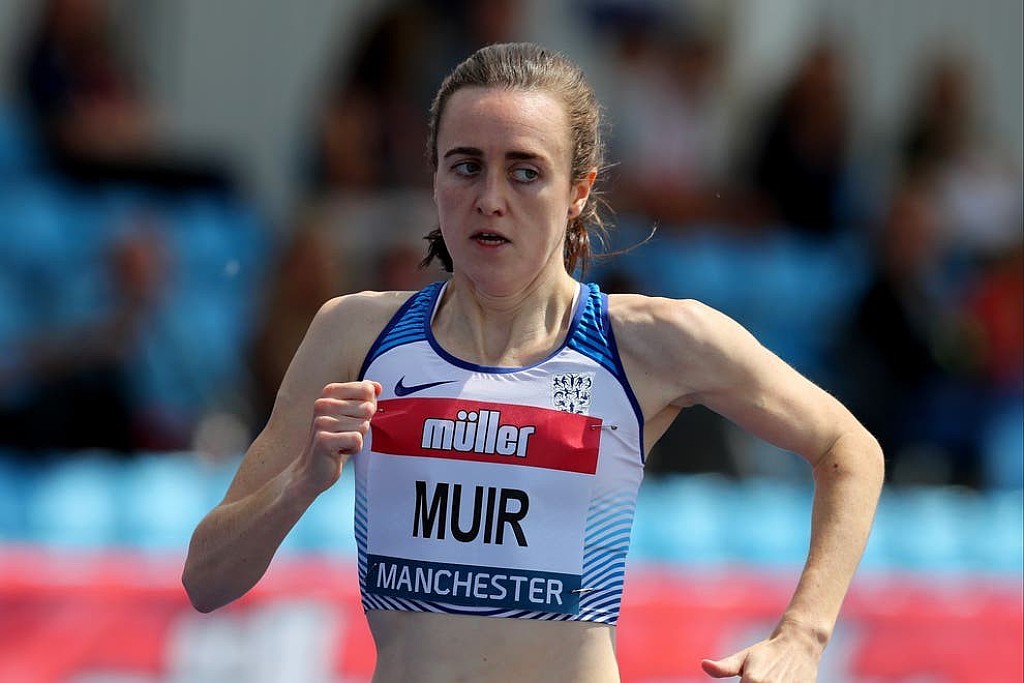
When is Laura Muir in action at Tokyo Olympics
Is this the year that Laura Muir ends her wait for a global medal?
The European 1500m champion is yet to step on the podium at either the World Championships or Olympics but will again be in the mix in Tokyo.
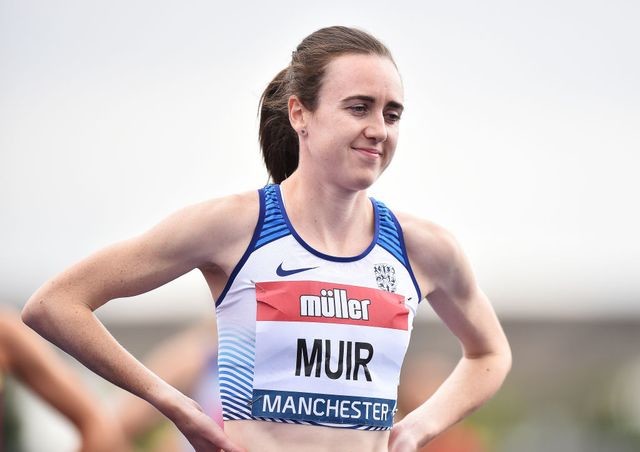
Despite running the second-fastest 800m by a British woman earlier this month she has decided not to double up in Japan.
What events is Laura Muir competing in?
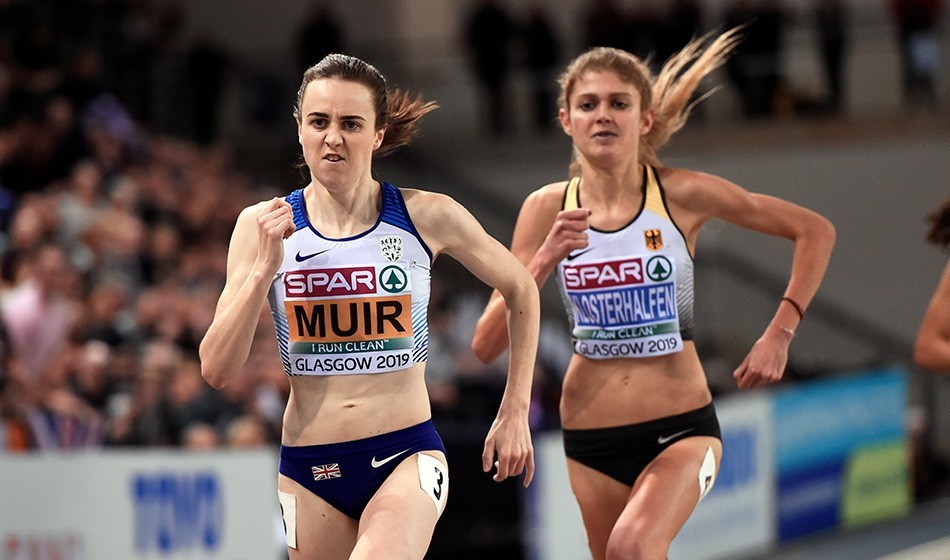
Muir is focusing solely on her favoured event - the 1500m.
When is Laura Muir in action?
All times BST
Monday, August 2
Women’s 1500m heats - 1.35am-1.51am
Wednesday, August 4
Women’s 1500m semi-finals - 11am-11.12am
Friday, August 6
Women’s 1500m final - 1.50pm.
by Evening Standard
Login to leave a comment
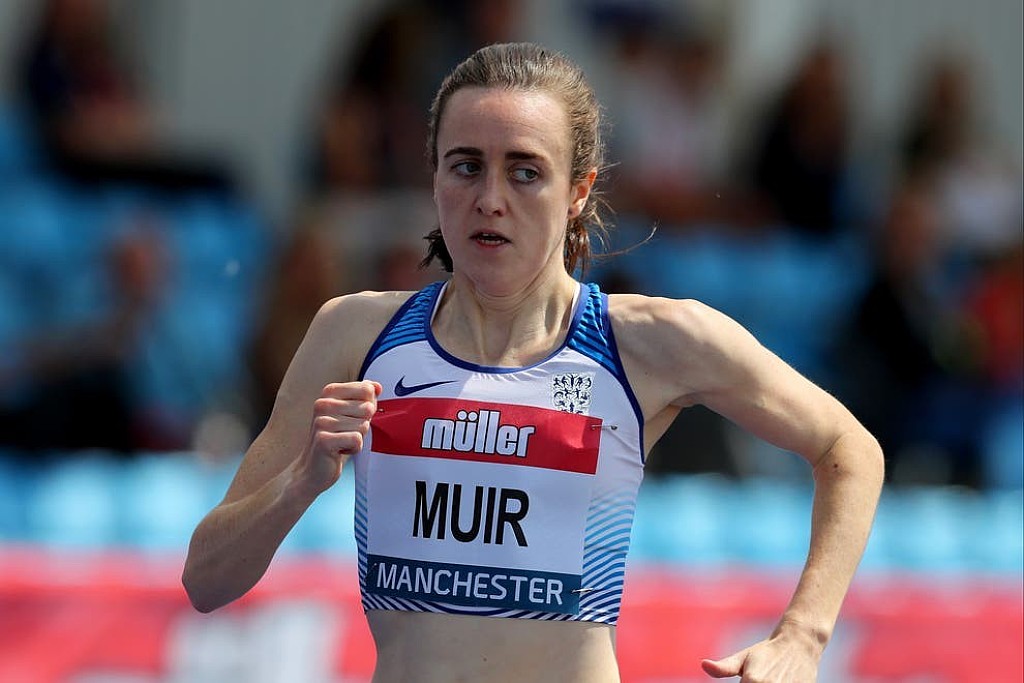
Laura Muir ditches Tokyo Olympics double plan to focus on 1500m
British athletics star Laura Muir has opted against attempting a middle distance double at the Tokyo Olympics, deciding to focus instead on the 1500m.
Muir had been named in the British team for the 800m as well, but has surrendered that spot, meaning Alex Bell gets a late call-up to the team.
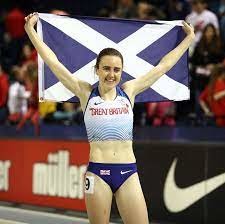
Muir is the British record holder over 1500m and that event has historically been her strongest. The Scot finished seventh at the last Olympic Games in Rio and has reached each of the last three World Championship finals in the discipline, including when finishing fourth in London in 2017.
Her performances over the longer distance had made her all-but certain to be selected and so the 28-year-old opted to run the 800m at the British Championships last month with a view to doubling up in Tokyo, but she could only finish third behind teenager Keely Hodgkinson and training partner Jemma Reekie.
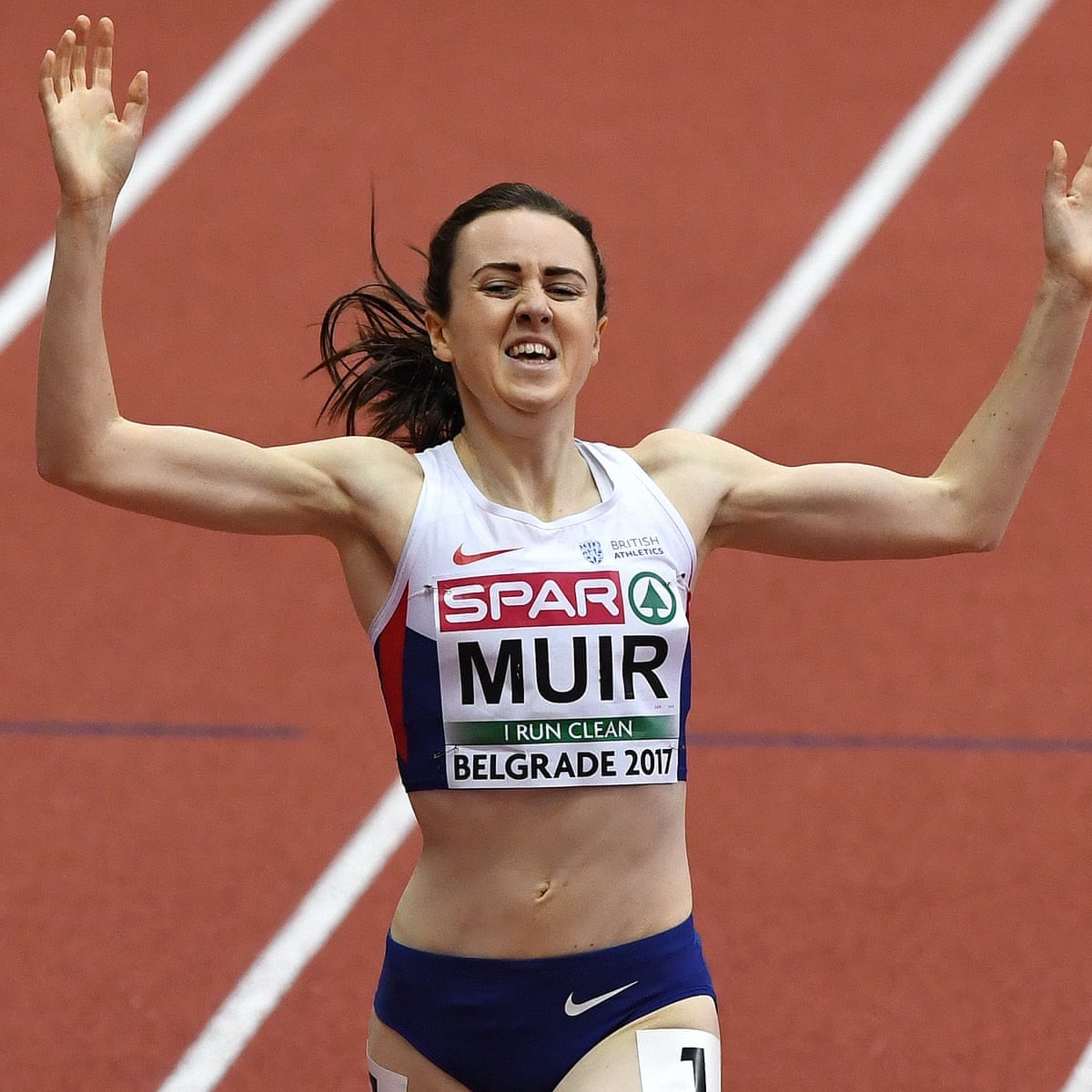
Competing in both events would potentially have meant a gruelling schedule of six races in eight days and Muir will now focus solely on the 1500m, the first round of which takes place the day before the 800m final as the competitions overlap.
Bell finished fifth at the British Championships but is ranked fourth in the UK this year - behind Hodgkinson, Muir and Reekie - after running a PB of 1:58.52 in Belfast in May and gets her first Olympic call-up.
by Malik Ouzia
Login to leave a comment
Tokyo 2020 Olympic Games
Fifty-six years after having organized the Olympic Games, the Japanese capital will be hosting a Summer edition for the second time, originally scheduled from July 24 to August 9, 2020, the games were postponed due to coronavirus outbreak, the postponed Tokyo Olympics will be held from July 23 to August 8 in 2021, according to the International Olympic Committee decision. ...
more...