

Running News Daily
Running News Daily is edited by Bob Anderson and team. Send your news items to bob@mybestruns.com Advertising opportunities available.
Index to Daily Posts · Sign Up For Updates · Run The World Feed
Search Results for Kenya
Today's Running News
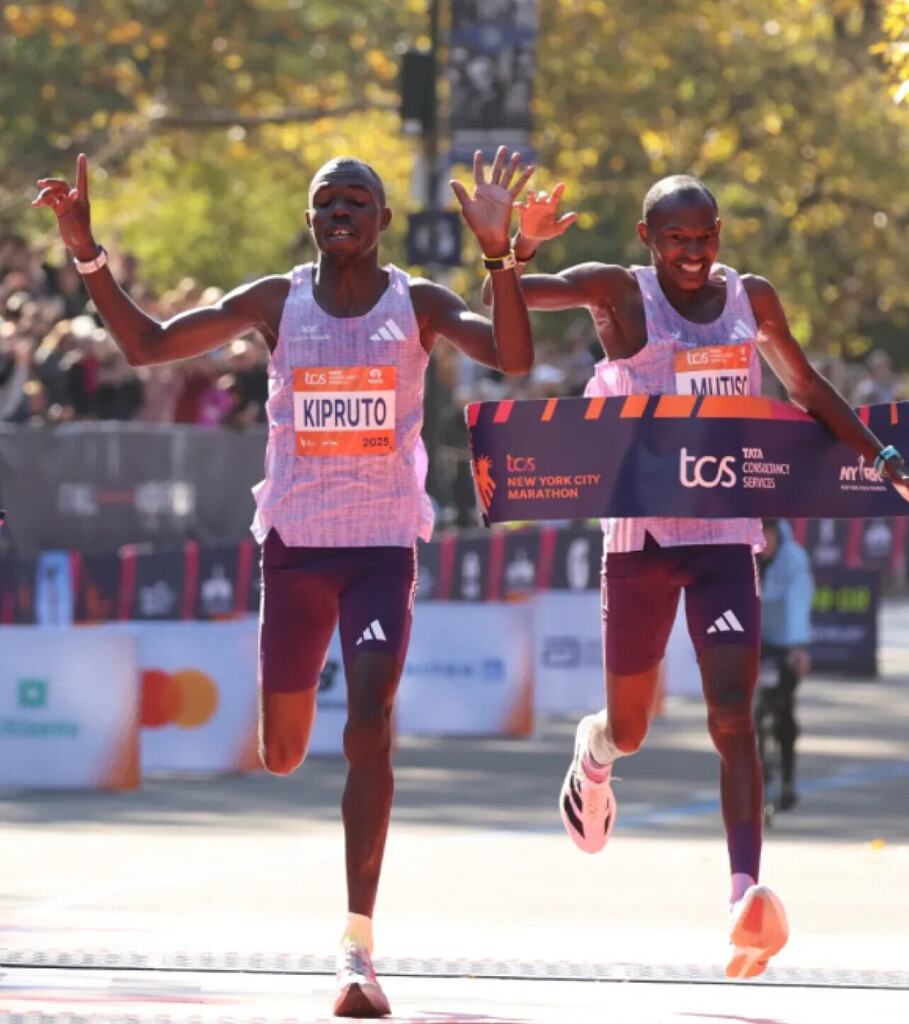


Benson Kipruto Wins a Thrilling 2025 New York City Marathon as Kipchoge and Bekele Fade
The streets of New York witnessed one of the most dramatic finishes in recent marathon history as Benson Kipruto of Kenya edged compatriot Alexander Mutiso by fractions of a second to win the 2025 TCS New York City Marathon. Both men were clocked at 2:08:09, with Kipruto leaning ahead in the final meters of Central Park to claim the title.
The victory marked a triumphant return to the top for Kipruto, who has previously won the Boston and Chicago Marathons. On a day when tactics mattered as much as fitness, he delivered a perfectly timed surge to secure the crown.
Alexander Mutiso finished a close second in 2:08:09, just 0.16 seconds behind, while 2021 New York champion Albert Korir completed the Kenyan sweep in third with a time of 2:08:57. Great Britain’s Patrick Dever ran a superb debut marathon to finish fourth in 2:08:58, and Swiss athlete Matthias Kyburz crossed the line fifth in 2:09:55.
All eyes were on Eliud Kipchoge, the two-time Olympic champion and marathon world record holder, making his long-awaited debut in New York. The legendary Kenyan started conservatively and remained in the lead pack through halfway, but the relentless climbs and bridges of the course eventually took their toll. Kipchoge finished 17th in 2:14:36, smiling as he crossed the line, suggesting this could be his final appearance at a World Marathon Major.
Ethiopian great Kenenisa Bekele also started among the favorites but faded after the 30-kilometer mark and did not finish the race. His withdrawal, along with Kipchoge’s struggles, highlighted the unique difficulty of New York’s course—one that tests strategy and strength more than sheer speed.

Despite the absence of a record-breaking time, the 2025 edition of the TCS New York City Marathon delivered unforgettable drama. The Kenyan trio’s podium sweep reaffirmed the country’s dominance in distance running, while thousands of runners from across the globe once again turned the streets of the five boroughs into a festival of endurance and inspiration.
Top 10 Men’s Results – 2025 TCS New York City Marathon:
1. Benson Kipruto (Kenya) – 2:08:09
2. Alexander Mutiso (Kenya) – 2:08:09
3. Albert Korir (Kenya) – 2:08:57
4. Patrick Dever (Great Britain) – 2:08:58
5. Matthias Kyburz (Switzerland) – 2:09:55
6. Joel Reichow (United States) – 2:09:56
7. Charles Hicks (United States) – 2:09:59
8. Sondre Moen (Norway) – 2:10:15
9. Tsegay Weldlibanos (Eritrea) – 2:10:36
10. Joe Klecker (United States) – 2:10:37
Eliud Kipchoge finished 17th in 2:14:36.
Kenenisa Bekele did not finish (DNF).
(11/02/2025) ⚡AMPby Boris Baron
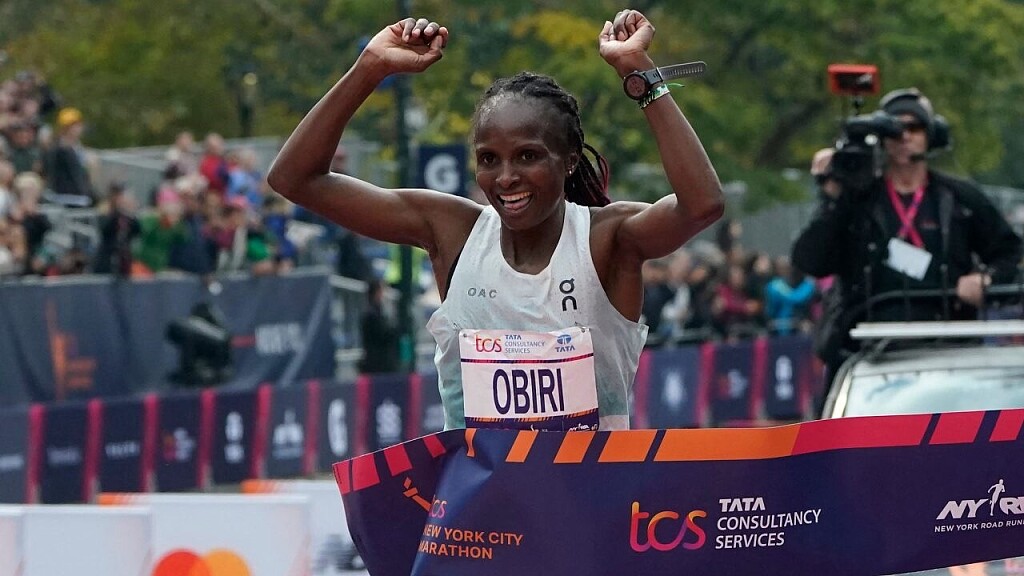
Hellen Obiri Makes History in New York — First Woman to Break 2:20 in the Big Apple
NEW YORK CITY — Kenya’s Hellen Obiri produced a sensational performance at the 2025 TCS New York City Marathon, reclaiming her crown and making history with a course-record run of 2:19:51.
Obiri became the first woman ever to break 2 hours 20 minutes on New York’s notoriously challenging course, smashing Margaret Okayo’s 2003 record of 2:22:31 by more than two and a half minutes.
The two-time Olympic silver medalist and double world 5,000 m champion ran a controlled race through the early boroughs before unleashing a decisive surge over the final miles through Central Park. Her combination of power and precision over the rolling terrain solidified her place among the all-time marathon greats.
“This victory means everything,” Obiri said after crossing the line. “New York is one of the toughest courses in the world, and to break 2:20 here feels unbelievable. I wanted to show that history can be made anywhere.”
The result capped a remarkable day for Kenya, which swept the women’s podium.
Top 3 Women – 2025 TCS New York City Marathon
1. Hellen Obiri (KEN) — 2:19:51 (Course Record)
2. Sharon Lokedi (KEN) — 2:20:07
3. Sheila Chepkirui (KEN) — 2:20:24
(11/02/2025) ⚡AMPby Boris Baron
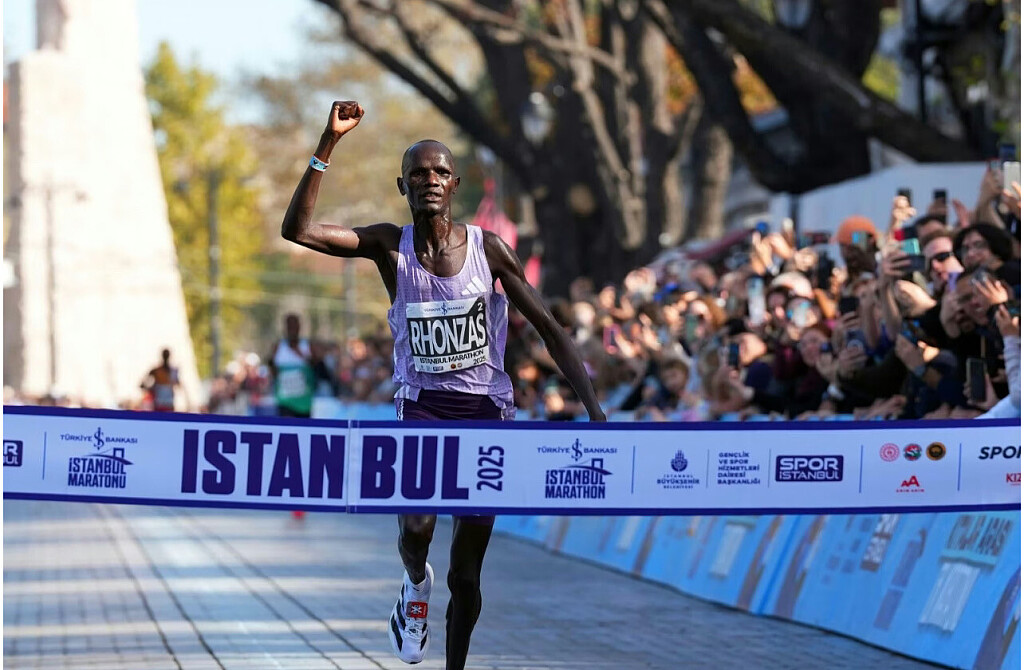
Rhonzas Kilimo and Bizuager Aderra Triumph in Thrilling Istanbul Marathon
ISTANBUL, November 2, 2025 — Kenya’s Rhonzas Kilimo and Ethiopia’s Bizuager Aderra claimed sensational victories at the 47th Türkiye İş Bankası Istanbul Marathon, both securing the biggest wins of their careers and pocketing $50,000 each.
In warm, sunny conditions, 29-year-old Kilimo edged out defending champion Dejene Debela in a fierce uphill battle to the finish, clocking 2:10:12. Debela was just 11 seconds back in 2:10:23, with fellow Ethiopian Sufaro Woliyi third in 2:10:26.
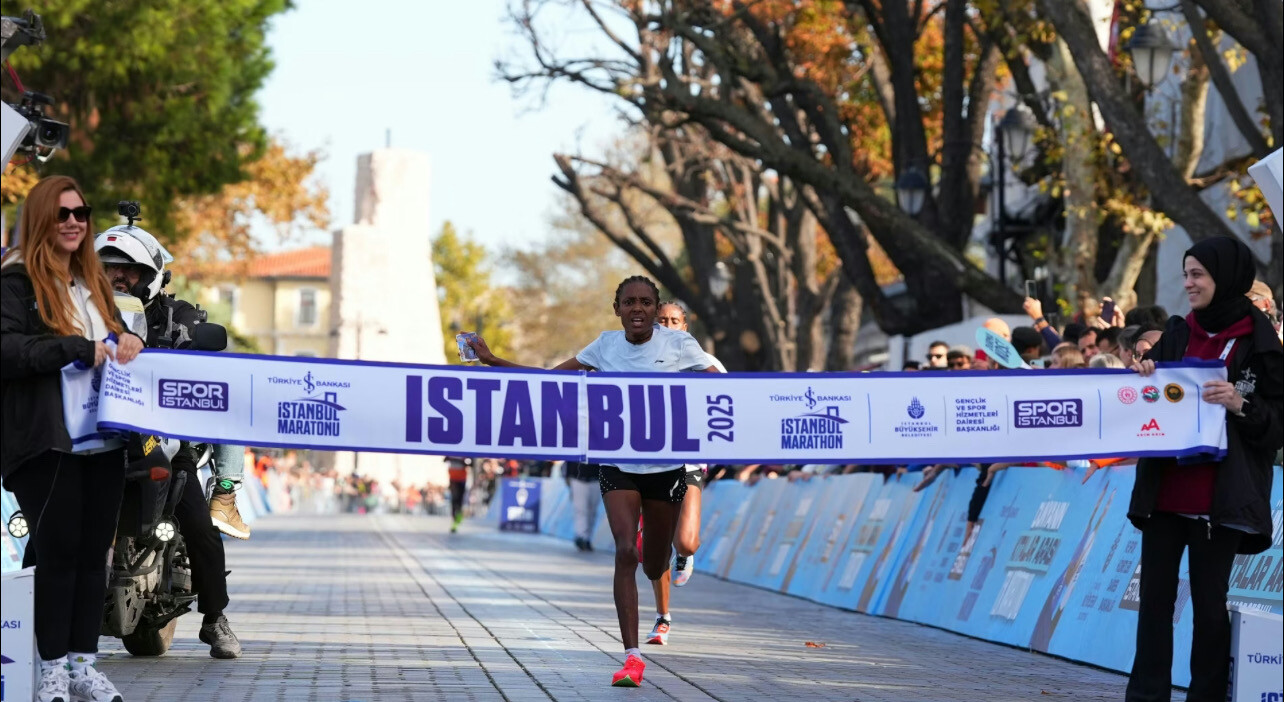
The women’s race delivered the closest finish in the marathon’s history. 22-year-old Bizuager Aderraemerged as a surprise champion, breaking her personal best with 2:26:19 — just two seconds ahead of Olympic steeplechase silver medalist Sofia Assefa. Kenya’s Joan Kilimo, unrelated to the men’s winner, finished third in 2:26:36.
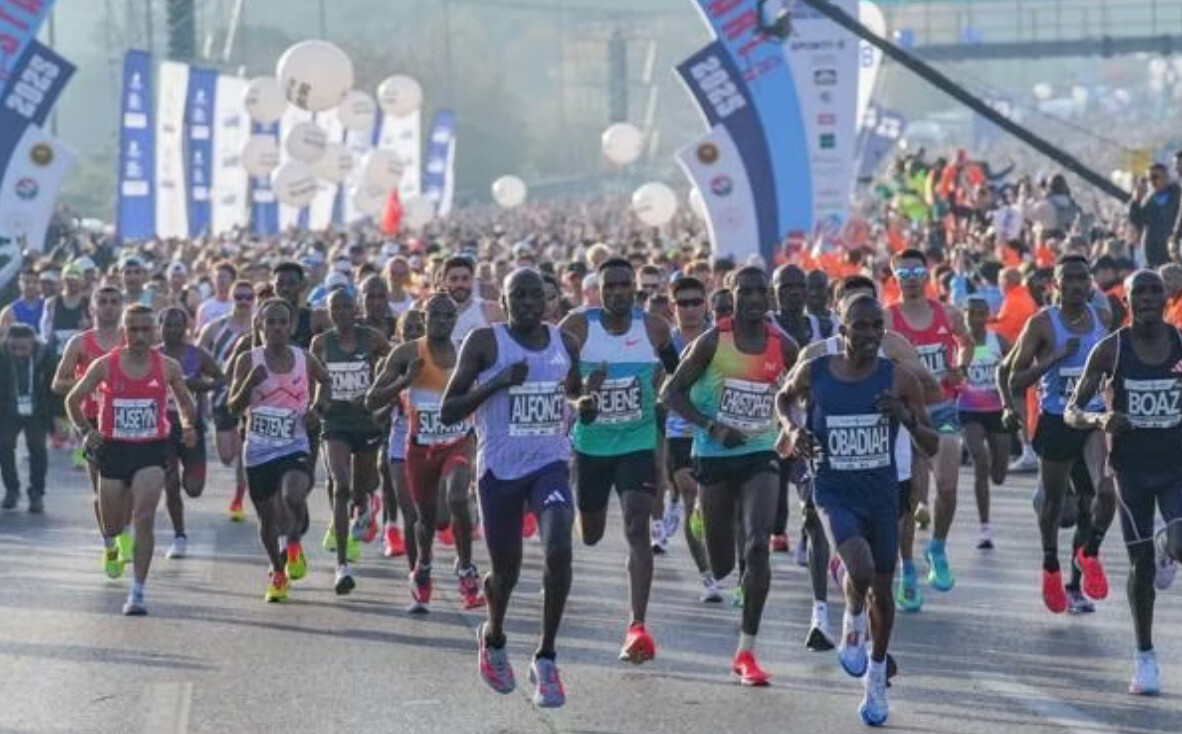
More than 6,000 runners competed in the marathon, with a total of 42,000 participants across all distances. The event holds a World Athletics Gold Label and is Turkey’s premier marathon.
Men’s Race: Kilimo Conquers the Hills
The men’s race began at an even pace, with the lead pack — including 16 athletes and four pacemakers — passing 10K in 30:41 and halfway in 1:04:41. Hopes of breaking the six-year-old course record (2:09:44 by Daniel Kibet) faded as the tempo dropped in the second half under 20°C heat.
As the runners approached the final mile-long climb, five men remained: Kilimo, Debela, Woliyi, Kenya’s Isaac Too, and Turkey’s Hüseyin Can. Too and Woliyi began to fade, leaving Kilimo and Debela to duel for victory.
“I had no clue about the uphill section at the end — it was a surprise to me,” Kilimo said afterward. “But I train in hilly areas around Iten, so I was ready.”
Kilimo, who ran a personal best of 2:06:09 in Seoul in 2024, crossed the line first in 2:10:12. “This was my biggest win so far,” he added. “My next goal is to run 2:03 on a fast course.”
Can delighted the home crowd by finishing fifth in a personal best of 2:10:58.
Women’s Race: Aderra’s Last-Minute Surge
The women’s field set an ambitious early pace — 33:38 at 10K and 1:11:22 at halfway — led by a pack of five: Ethiopians Bizuager Aderra, Sofia Assefa, Tigst Getnet, Gete Dukale, and Kenya’s Joan Kilimo.
As the temperature rose, the pace slowed. Assefa briefly fell behind but fought back, and with one kilometer to go, four women were still in contention. Assefa appeared to edge ahead, but Aderra responded with a decisive surge over the final 400 meters, sprinting into Sultan Ahmet Park to secure the win.
“This is the biggest win of my life — and a personal best,” said Aderra, whose previous mark was 2:28:27 from Rabat earlier this year. “My next goal is to go under 2:20.”
Top Results
Men
1. Rhonzas Kilimo (KEN) – 2:10:12
2. Dejene Debela (ETH) – 2:10:23
3. Sufaro Woliyi (ETH) – 2:10:26
4. Isaac Too (KEN) – 2:10:45
5. Hüseyin Can (TUR) – 2:10:58
6. Dickson Nyakundi (KEN) – 2:12:15
7. Charles Mneria (KEN) – 2:13:04
8. Dominik Bett (KEN) – 2:17:26
Women
1. Bizuager Aderra (ETH) – 2:26:19
2. Sofia Assefa (ETH) – 2:26:21
3. Joan Kilimo (KEN) – 2:26:36
4. Tigst Getnet (ETH) – 2:26:44
5. Gete Dukale (ETH) – 2:29:19
6. Roman Gidey (ETH) – 2:29:53
7. Rael Cherop (KEN) – 2:32:25
8. Yenenesh Tilahun Dinkesa (ETH) – 2:34:03
(11/02/2025) ⚡AMPby Race News Service

N Kolay Istanbul Marathon
At the beginning, the main intention was simply to organise a marathon event. Being a unique city in terms of history and geography, Istanbul deserved a unique marathon. Despite the financial and logistical problems, an initial project was set up for the Eurasia Marathon. In 1978, the officials were informed that a group of German tourists would visit Istanbul the...
more...
Eliud Kipchoge’s Final Quest: Chasing Meaning, Not Medals in New York
When the sun rises over Staten Island this Sunday, the world will witness something special — Eliud Kipchoge, the greatest marathoner of all time, running the TCS New York City Marathon for the first time. At 40, the Kenyan legend isn’t chasing records. He’s chasing completeness — the final chapter of a career that redefined endurance and possibility.
With two Olympic golds, 11 major marathon victories, and the historic sub-two-hour run, Kipchoge already stands alone. Yet New York remains the one missing jewel in his Abbott World Marathon Majors crown. “If I don’t complete all of them,” he says, “I feel like I am halfway. My legacy will be complete when I have a sixth star.”
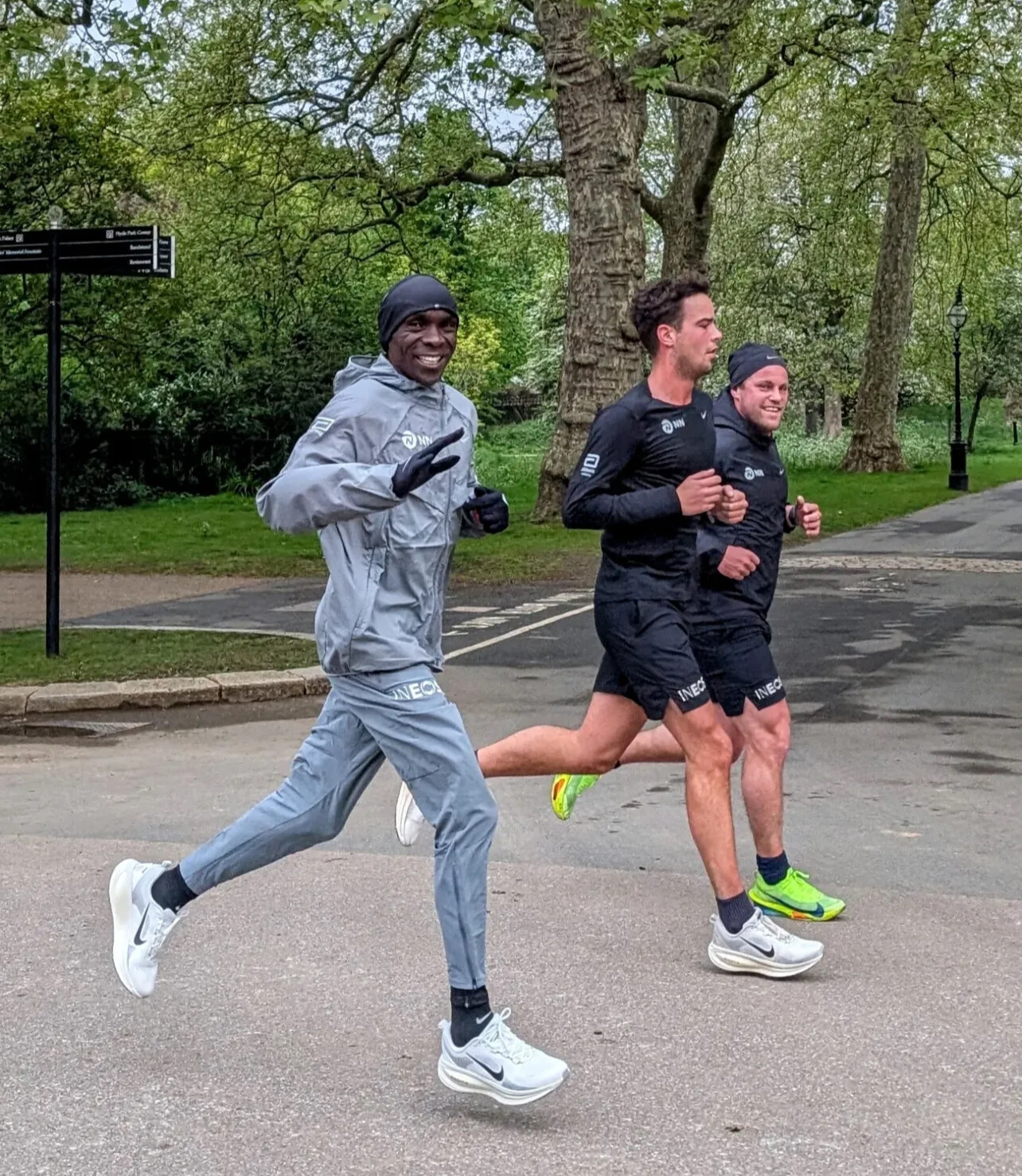
But New York is no Berlin. Its hills and bridges test rhythm and resolve. Kipchoge faces a tough field, led by his former training partner and defending champion Abdi Nageeye, along with Benson Kipruto, Alexander Mutiso, and Ethiopia’s Deresa Geleta. Nageeye, coming off a 2:04:20 in London, aims to defend his title and disrupt the legend’s farewell.
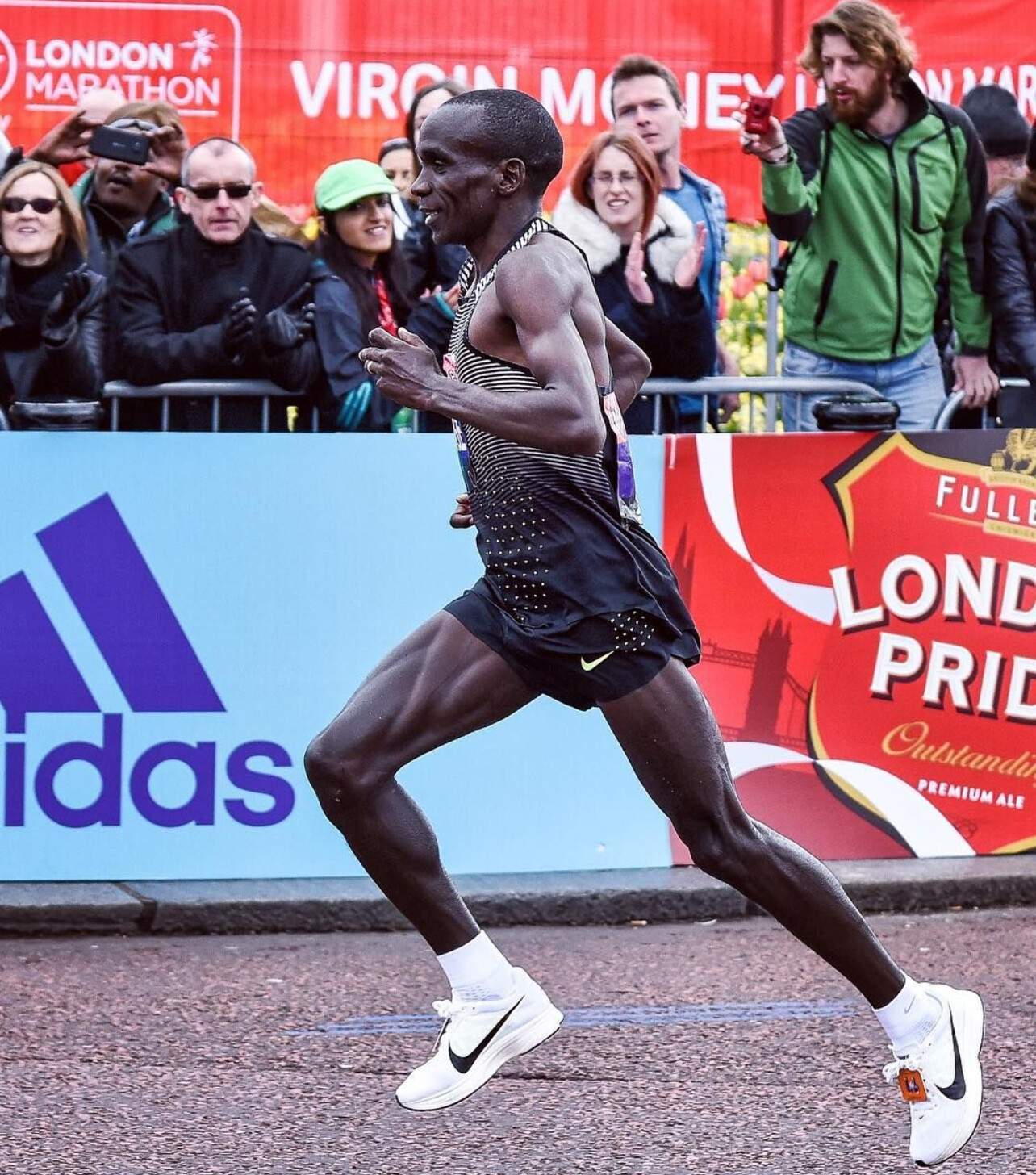
Still, for Kipchoge, this race is about purpose, not podiums. “My happiness is to see people getting interested in what I’m selling,” he says. “I’m selling the sport as a profession.” His mission now is to inspire — through running, mentorship, and his wellness platform Kotcha, which blends training, nutrition, and education. “We’re bringing knowledge to people’s fingertips,” he explains.
To him, running is a universal language. “All human beings are beautiful,” Kipchoge says. “The problem is ourselves — not using our knowledge.”
As 50,000 runners take on the five boroughs, Kipchoge’s presence turns the marathon into something larger — a meditation on effort, purpose, and legacy. His calm smile and relentless discipline remind the world that greatness isn’t about medals, but meaning.
On Sunday, as he strides through Central Park, Kipchoge won’t just be chasing a finish line. He’ll be closing a circle — running not for glory, but for the joy of fulfillment.
(11/01/2025) ⚡AMPby Robert Kibet for My Best Runs
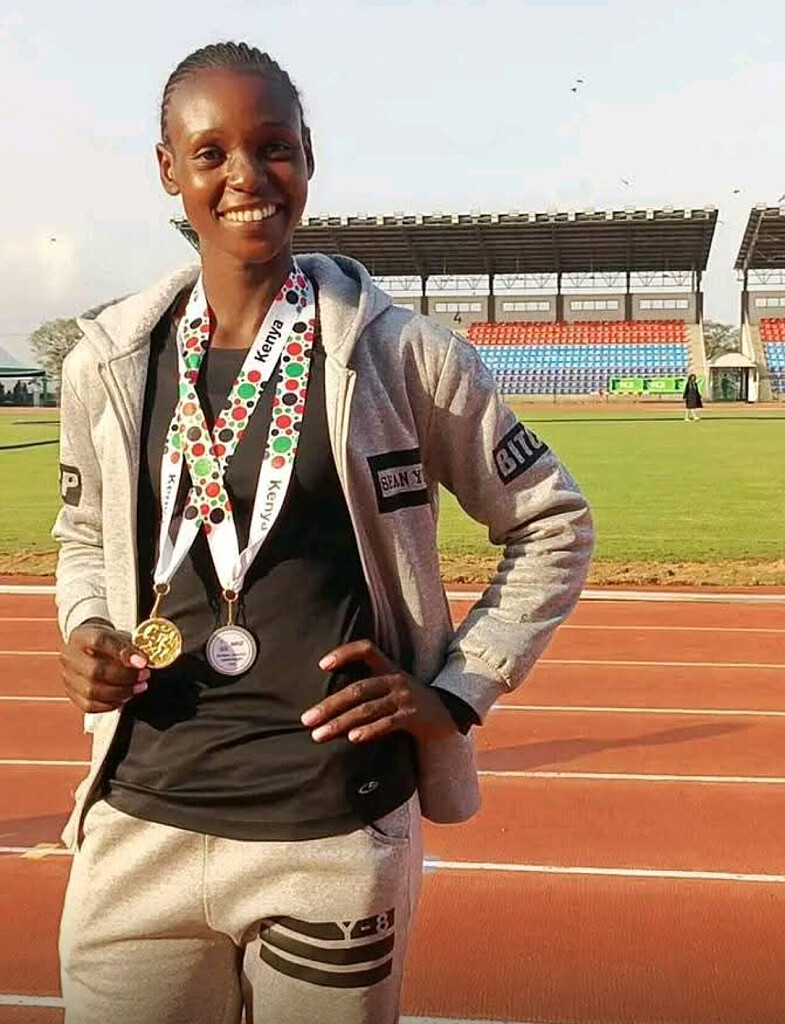
Gladys Muthoni Ngure Named Female Sprinter of the Year
KATA Sprinters Kiambu Camp 16’s own Gladys Muthoni Ngure has been named Female Sprinter of the Year, a well-deserved recognition of her dedication, consistency, and outstanding performances on the track.
Representing KATA Sprinters Camp 16, Gladys has continued to impress throughout the season, capturing multiple medals and setting a strong example for Kenya’s next generation of sprinters. Her drive, discipline, and enthusiasm for improvement have made her a standout athlete within the KATA family.
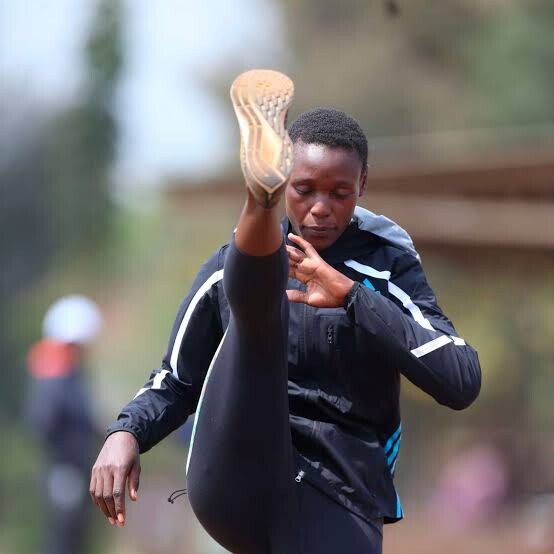
The award was presented during the Kiambu Sports Awards, where Gladys proudly represented her camp and coaches. Her commitment to training and her positive spirit have made her not only a fast runner but also a role model for her teammates.
“Gladys represents the KATA vision perfectly — combining hard work, focus, and a love for the sport,” said KATA Founder Bob Anderson. “We are proud of her progress and can’t wait to see what she accomplishes next season.”
Gladys’s journey in athletics has been built over years of dedication. According to her longtime coach Julius Gacheru, who began training her in 2015, Gladys has represented Kenya in multiple major events. She competed at the University Games in 2017, was part of Kenya’s 4x400m relay team in South Africa in 2024, and recently shone at the 2025 National Championships, where she captured gold in the 100m hurdles (14.5 seconds) and silver in the 400m hurdles (59.8 seconds).
Her achievements reflect both her personal commitment and the effectiveness of KATA’s structured system — blending world-class training, teamwork, and personal development.
With her latest honor, Gladys joins the growing list of KATA athletes making headlines across Kenya and beyond — proof that the KATA model is producing results at every level.
Congratulations, Gladys, on being named Female Sprinter of the Year. Your determination and speed continue to inspire the entire KATA family.
(11/01/2025) ⚡AMPby Boris Baron
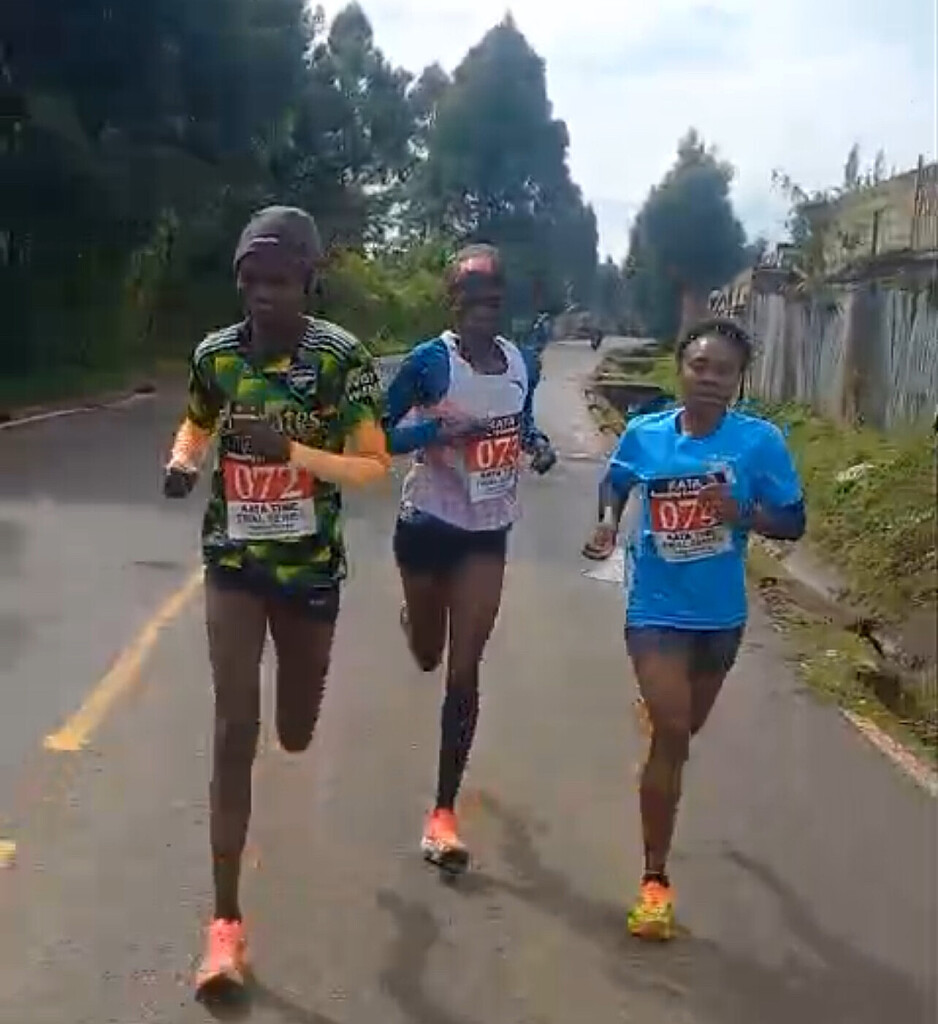
KATA Kerenget Runners Excel in 10K Time Trial Despite Challenging Weather
Athletes at the KATA Kerenget Running Camp (ID K03), operated by Sammy Dismas, showcased their determination and talent during a 10K time trial held today under tough weather conditions. Despite the challenge, the event was a success, demonstrating the resilience and dedication that define the KATA spirit.
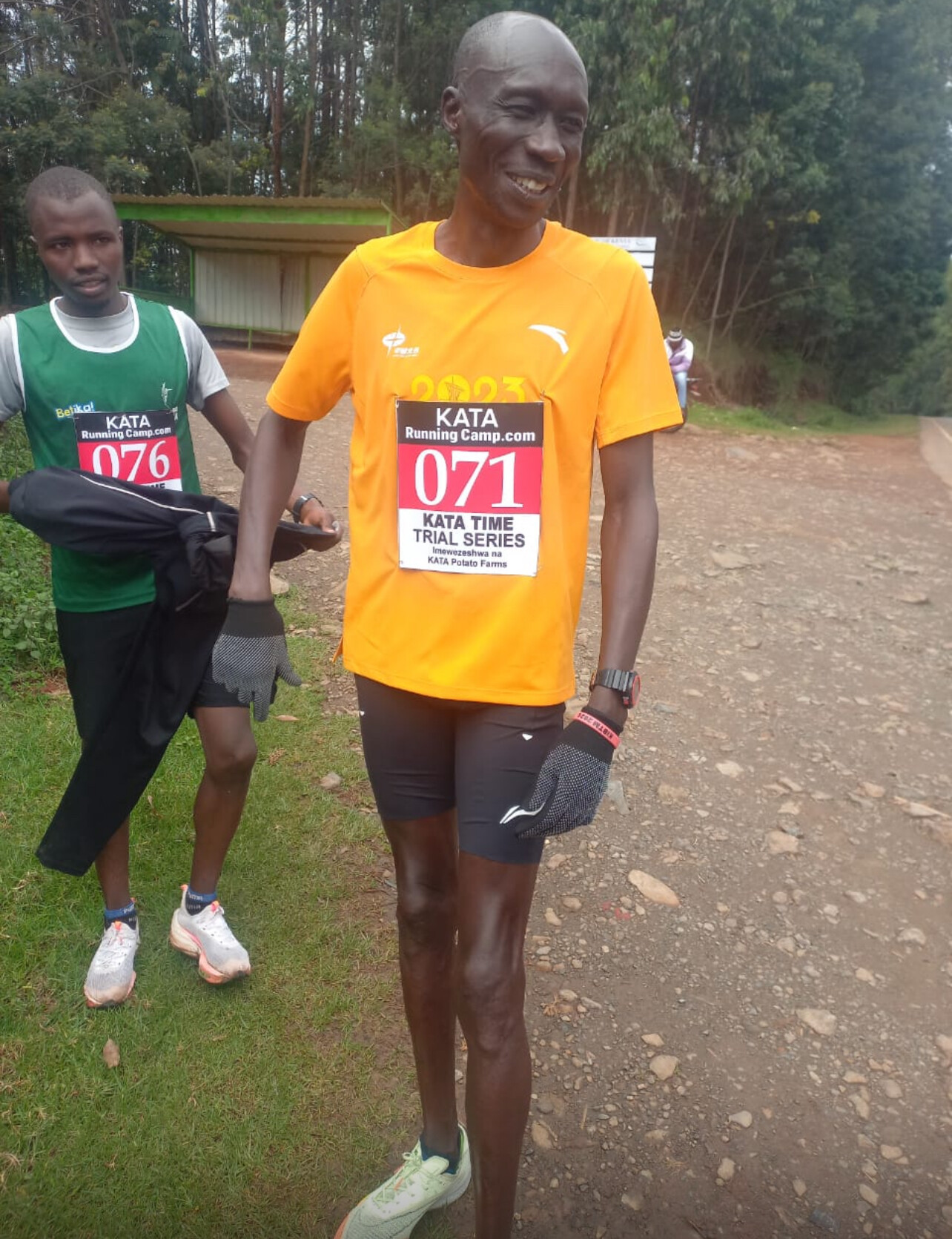
In the men’s 10K, Amos Kirui (Bib 076) claimed victory with an impressive time of 29:56, edging out Jackson Koech (Bib 069), who finished close behind in 30:01. Cosmas Mutai (Bib 070) secured third place in 30:20, while Benard Kibilo (Bib 071) and camp operator Sammy Dismas (Bib 077) followed in 30:32 and 30:51, respectively. Simon Toli (Bib 070) rounded out the top six with a strong 31:00 finish.
In the women’s 10K, Daphine Kiptoo (Bib 072) led from the front to take the win in 35:00, followed by Sharon Ndanu (Bib 074) in 35:40 and Mercy Chepngeno (Bib 073) in 36:15.
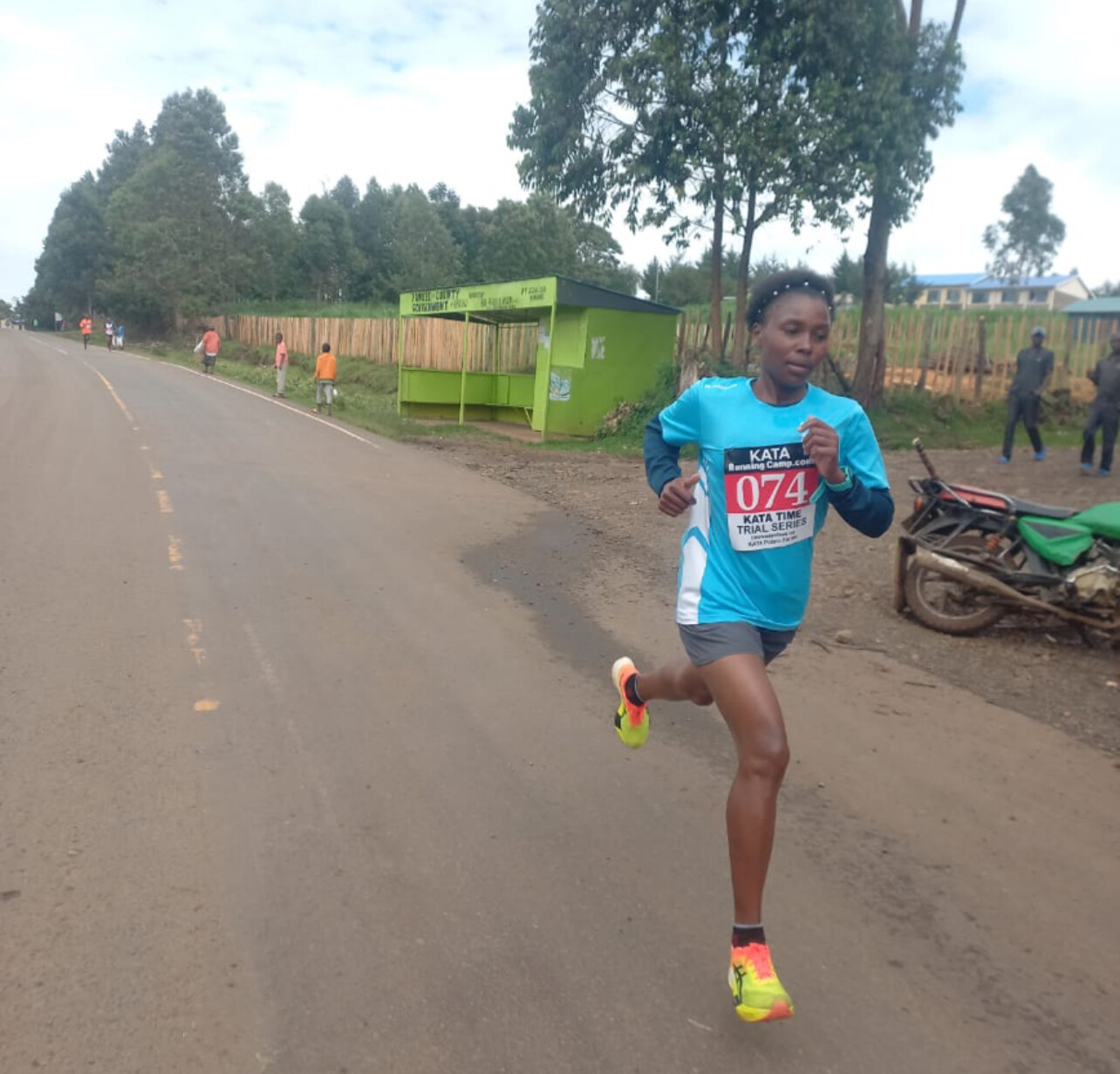
“Even though the weather was not favorable, we did our best to ensure everything went on well,” reported the Kerenget Camp team. Their commitment ensured another smooth and competitive trial for the KATA athletes.
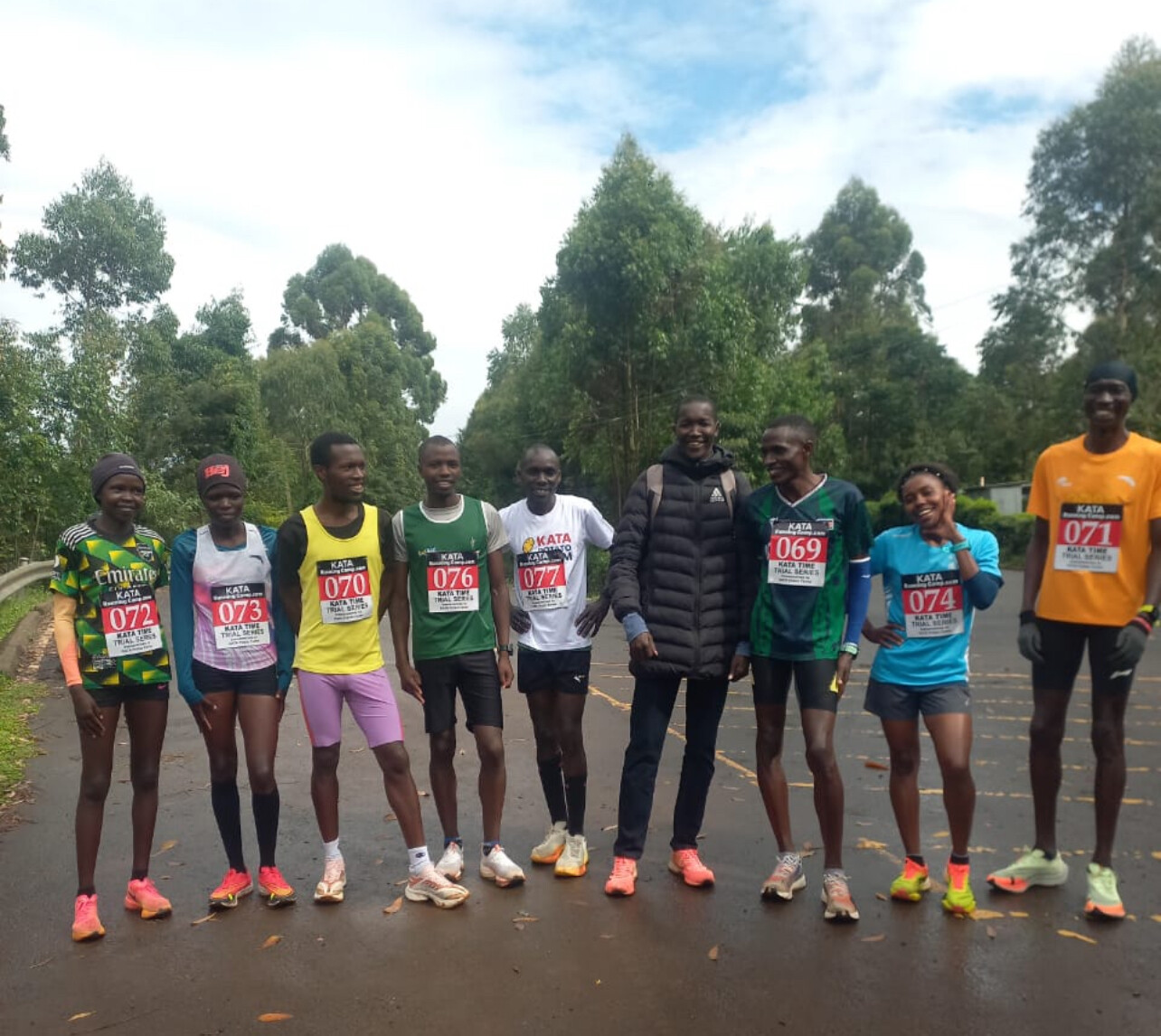
The KATA Kerenget Running Camp is one of 31 KATA Running Camps, mostly located in Kenya’s Rift Valley, that help athletes reach their potential under the Kenyan Athletics Training Academy (KATA)program. With regular time trials like this, runners continue to refine their form and fitness as they prepare for upcoming races both locally and internationally.
(10/31/2025) ⚡AMPby Boris Baron
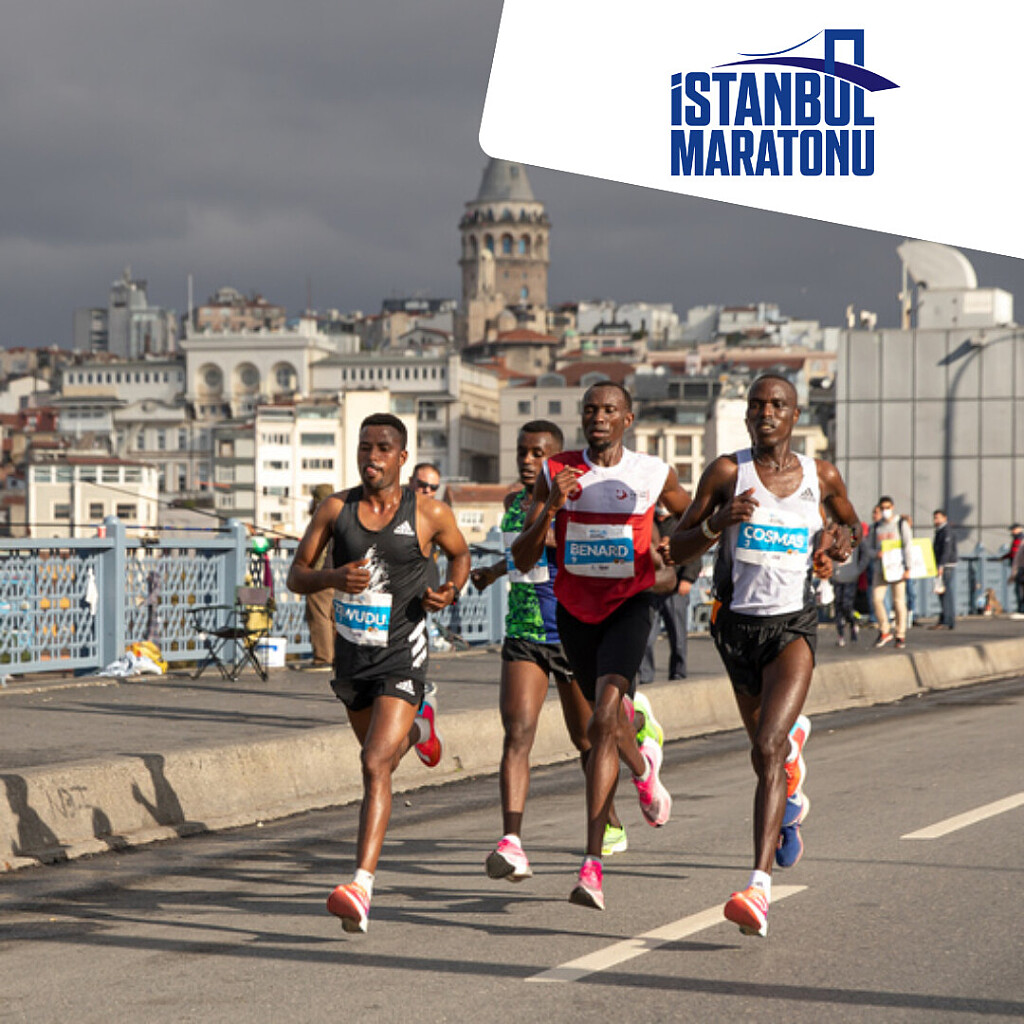
Ethiopians Dejene Debela and Tigst Getnet Lead the Elite Fields at the 2025 Istanbul Marathon
The 47th Türkiye İş Bankası Istanbul Marathon takes place this Sunday, November 2, 2025, drawing top international athletes to one of the world’s most scenic and competitive races. A World Athletics Gold Label event, the marathon is famous for its cross-continental course that starts in Asia, crosses the Bosphorus Bridge, and finishes in Europe.
Elite Headliners

Defending champion Dejene Debela and fellow Ethiopian Tigst Getnet lead this year’s elite fields. Debela’s personal best is 2:05:46, while Getnet’s stands at 2:23:17. Both are eager to add another title to Ethiopia’s long tradition of marathon dominance.
The men’s and women’s races are deep with talent. Half a dozen men have run between 2:05:30 and 2:09:00, and six women enter with times under 2:26:00. Around 6,000 marathoners will race the full distance, joined by tens of thousands more in shorter events — totaling over 42,000 runners.

“Since Istanbul is a candidate for the 2036 Olympic Games, our marathon has an important role to play,” said Race Director Bilge Donuk.
The Men’s Race
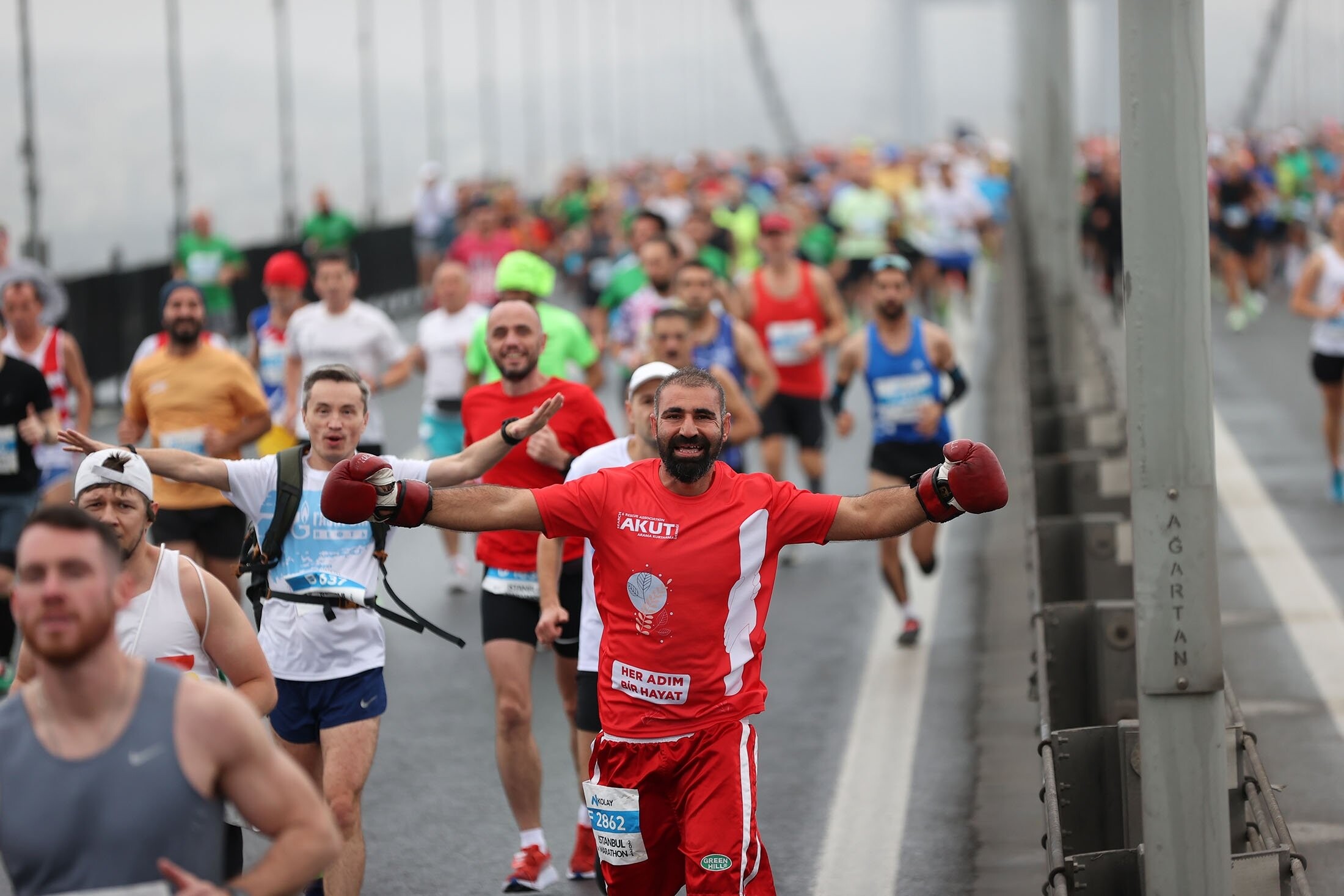
Dejene Debela returns to defend his title after winning in windy conditions last year. “It was very windy last year, so this time I hope for a much faster time,” he said. The 30-year-old Ethiopian, who trains in Addis Ababa, set his PB of 2:05:46 in Chicago (2019) and has since overcome injuries that slowed his progress.
Organizers expect pacemakers to target 63:30–63:45 at halfway — a pace Debela says fits his goal. He has raced sparingly this year, dropping out of the Wuxi Marathon in March as a precaution but now says he feels “ready to defend my title.”
Among his challengers are Rhonzas Kilimo (KEN, 2:06:09) and Ethiopia’s Sufaro Woliyi, just 22, who impressed with a 2:07:19 debut in Xiamen. Kenya’s Benard Kipkorir, fourth here last year, recently clocked 2:08:12 in Chongqing and could also contend.
Kenya’s Denis Chirchir was forced to withdraw with a stress fracture, while New Zealand’s Jake Robertson is sidelined by injury.
The Women’s Race
Two Ethiopian training partners — Tigst Getnet and Sofia Assefa — headline the women’s field. Both train under Kirubel Damtew in Addis Ababa. Getnet’s best is 2:23:17, while Assefa’s stands at 2:23:33.
Sofia Assefa, 37, is a former world-class steeplechaser who won Olympic silver in 2012 and World Championship bronze in 2013. After a promising marathon debut in Amsterdam, she placed second in Copenhagen this May with 2:26:21 and says she’s now in even better form.
Her training partner Tigst Getnet, 15 years younger, has already completed six marathons. Her debut in Dubai (2023) remains her best, and she’ll look to return to that level in Istanbul.
Other notable contenders include Yenenesh Tilahun Dinkesa (2:24:09), Letebrhan Gebreslasea (2:24:47), and Roman Gidey (2:25:22), who ran two strong marathons within two weeks in Guangzhou last year. Kenya’s rising 21-year-old Joan Kilimo (2:25:32 debut in Milan) leads the Kenyan challenge.
Defending champion Ruth Jebet has withdrawn to compete in the Islamic Solidarity Games next week in Riyadh.
Top Elite Runners and Personal Bests
Men
Dejene Debela (ETH) – 2:05:46
Rhonzas Kilimo (KEN) – 2:06:09
Sufaro Woliyi (ETH) – 2:07:19
Benard Kipkorir (KEN) – 2:08:12
Isaac Too (KEN) – 2:08:45
Charles Mneria (KEN) – 2:08:54
Hillary Kipchumba (KEN) – 2:09:53
Women
Tigst Getnet (ETH) – 2:23:17
Sofia Assefa (ETH) – 2:23:33
Yenenesh Tilahun Dinkesa (ETH) – 2:24:09
Letebrhan Gebreslasea (ETH) – 2:24:47
Roman Gidey (ETH) – 2:25:22
Joan Kilimo (KEN) – 2:25:32
(10/31/2025) ⚡AMPby Race News Service

KATA Launches Half-Million Bonus for Top Potato Farmers
Expanding its spirit of competition from the track to the fields, KATA rewards excellence in both running and farming.
KATA is taking its competitive spirit from the track to the fields with the new KATA Potato Farmer Half-Million Bonus Prize Package. This program will reward five KATA farmers with 50,000 Kenyan Shillings each, recognizing those who achieve the best yield per acre.

The first payout will be made on December 31, followed by a second on June 30. Each cycle, five farmers with the top single-acre harvests will receive the bonus, totaling half a million shillings annually.

Yields will be measured in 50 kg bags and must be sold to verified buyers. Results will be confirmed by CTO Dennis, Sales Directors Gideon and John, and Accounts Manager Fridah. The one bag each farmer keeps for home use will not count, and only bags sold and confirmed as paid to KATAwill qualify.

“We offer prize money for races, and with all the hard work it takes to grow KATA potatoes, I thought—why not turn this into a competition as well?” says Bob Anderson, KATA Founder and Director.
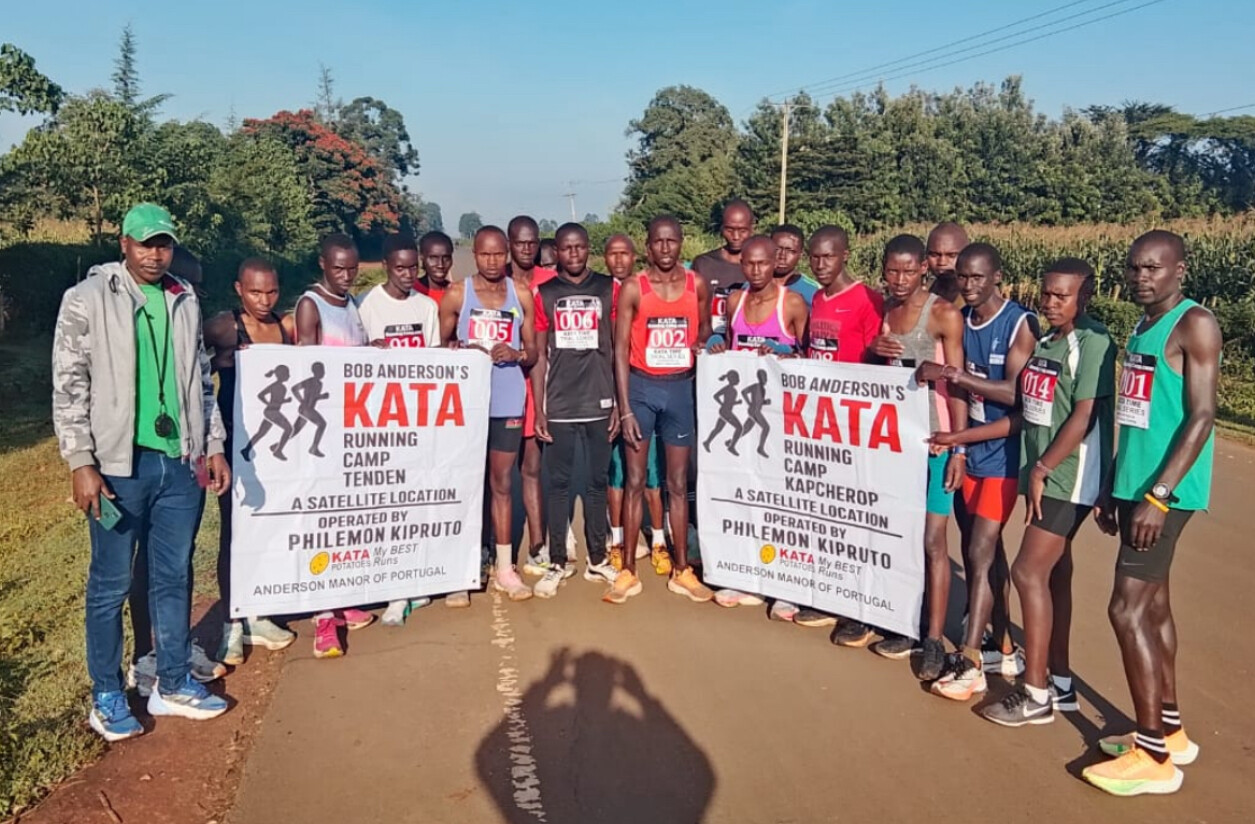
A farmer can win twice a year if they achieve the best results in both seasons. The initiative mirrors KATA’s philosophy—rewarding effort, precision, and perseverance whether it’s on the course or in the soil.

From Running to Farming Excellence

The Kenyan Athletics Training Academy (KATA), founded by Bob Anderson, the creator of Runner’s World and My Best Runs, began as a world-class training center for runners in Thika, Kenya. Today, it has grown into a dynamic network that includes over 30 KATA Running Camps and 60+ KATA Potato Farms across Kenya, and an international headquarters at Anderson Manor in Portugal.
Each KATA farm operates under a system that combines athletics and agriculture, offering farmers interest-free loans and ongoing support to grow certified Shangi potatoes. The harvests are marketed through KATA’s coordinated sales network, ensuring fair prices and dependable returns for each farmer.
Many KATA farmers are also runners—or closely connected to the athletic community—bringing the same discipline, teamwork, and endurance to farming that they apply to training.
Empowering Champions in Every Field
From the start, KATA’s mission has been to help people reach their potential through endurance, consistency, and community. The new Half-Million Bonus Prize Package celebrates that mission—recognizing those who deliver exceptional results through focus and commitment.
As Anderson explains, “Whether it’s crossing a finish line or bringing in a record harvest, both take focus, endurance, and belief in yourself. That’s what KATA is all about.”
The first group of winners for the KATA Potato Farmer Half-Million Bonus Prize will be announced on December 31, 2025.
Additional KATA Running Camps and KATA Potatoe farms are going to be confirmed starting in December. Confirm your interest by contacting Bob Anderson on WhatsApp.
(10/30/2025) ⚡AMPby Boris Baron

Uasin Gishu Half Marathon The Spirit of Eldoret Lives On
The Uasin Gishu Half Marathon, that is held annually in August in the heart of Kenya’s running country, once again showcased the nation’s unrivaled distance-running talent and spirit.
Thousands of athletes took to the scenic, high-altitude roads of Eldoret, cheered on by local fans who lined the streets from start to finish. The race, sponsored by Betika, continues to grow in stature each year, combining elite performances with strong community participation.
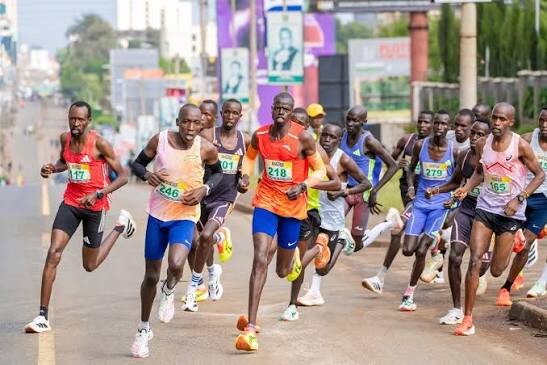
In the men’s race, Robert Kiprop stormed to victory with an impressive time of 1:00:56, pulling away in the final kilometers to secure the crown. On the women’s side, Gladys Chepkurui was dominant, finishing in 68:56, ahead of Vivian Cherotich, who clocked 70:02. Both races reflected the incredible depth of talent that defines Kenyan running—where even regional competitions produce world-class results. The champions each earned KSh. 300,000, with the runners-up taking home KSh. 200,000—a reflection of the event’s growing professional stature.
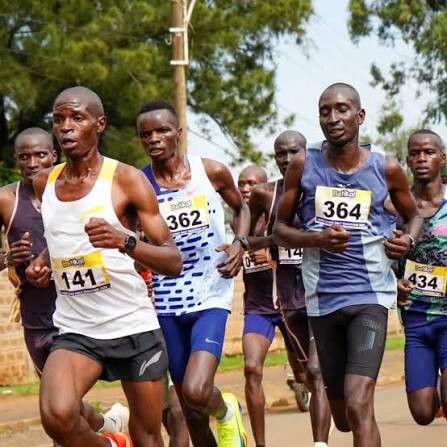
Beyond the competition, the Uasin Gishu Half Marathon offered an unforgettable racing experience. The rolling terrain, high altitude, and enthusiastic crowds create a course that challenges every runner while celebrating Kenya’s proud running heritage.
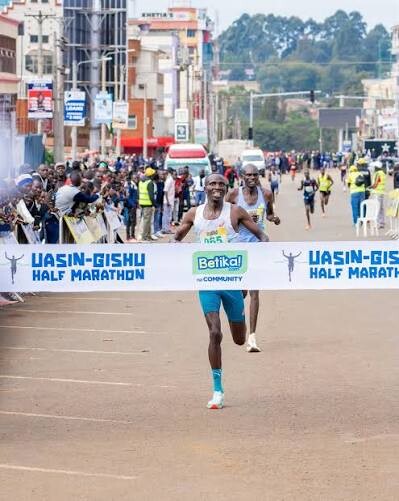
As one of the country’s most exciting half marathons, Uasin Gishu has become a proving ground for rising stars and a celebration for local and visiting runners alike. It’s a reminder that in Kenya, running is more than a sport—it’s a way of life.
(10/29/2025) ⚡AMPby Boris Baron
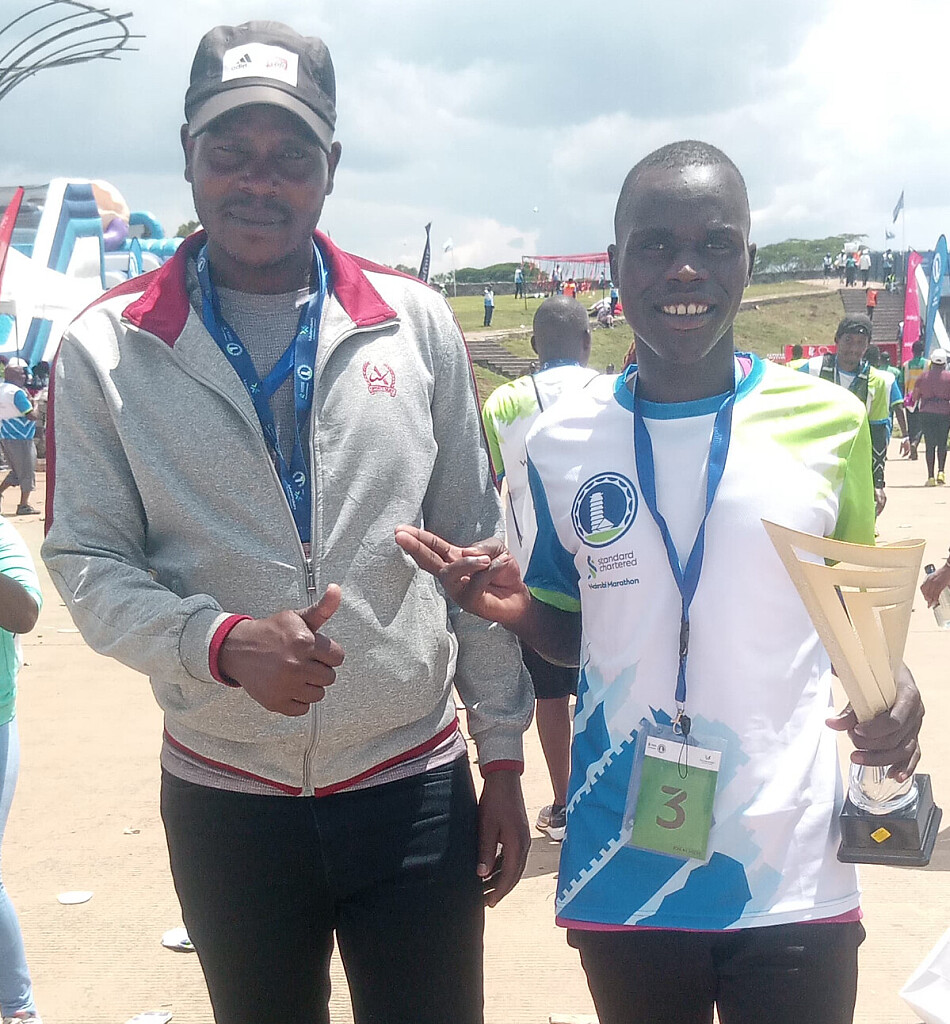
From Charcoal Seller to Champion Coach: The Remarkable Journey of Philemon Kiptoo in Kapcherop
In the cool highlands of Kapcherop, where morning mist drapes over rolling potato farms and runners trace winding red-dirt trails, coach Philemon Kiptoo is living out a dream that once seemed far beyond his reach.
The son of a humble family of nine, Philemon’s rise from selling charcoal barefoot to mentoring Kenya’s next generation of marathon stars is a story of resilience, faith, and the transformative power of community.
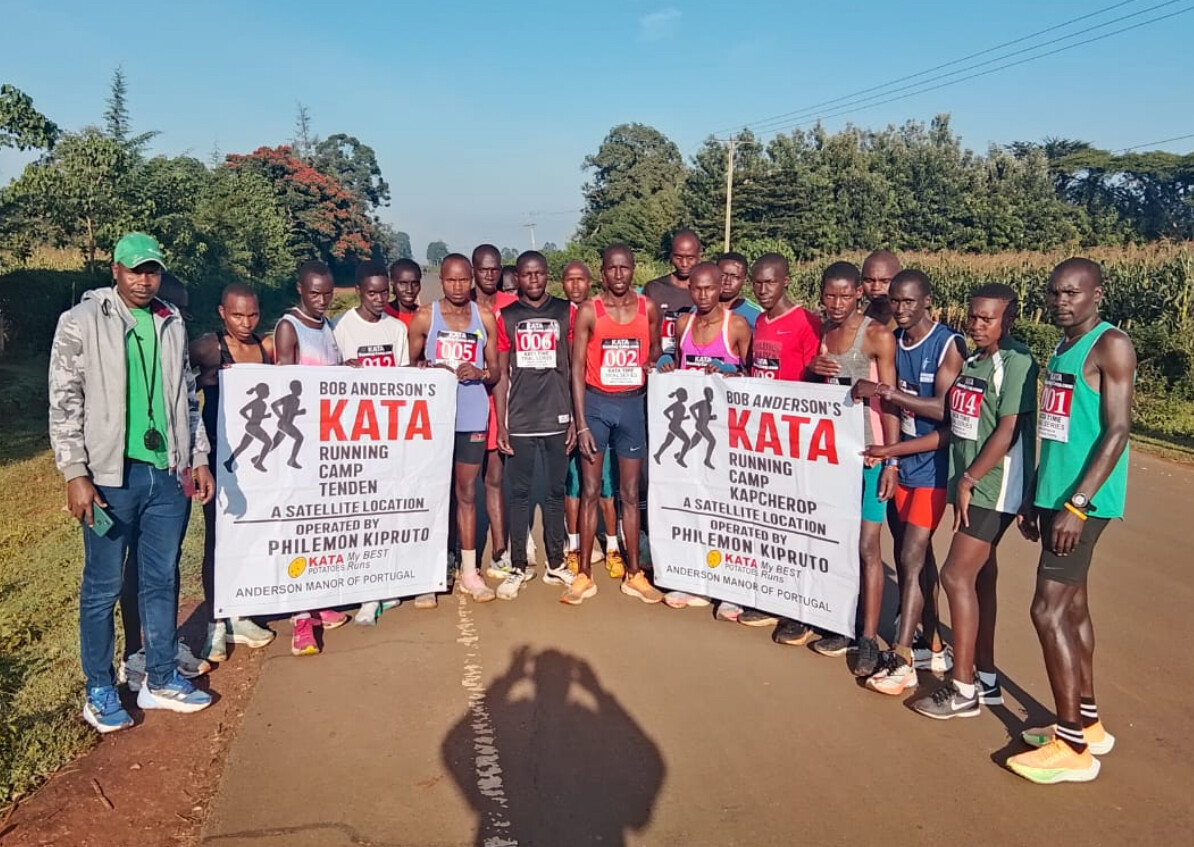
A New Chapter with KATA
Philemon’s turning point came when he joined the KATA network — an initiative founded by U.S.-based running pioneer Bob Anderson to empower grassroots runners and coaches through mentorship, clean sport advocacy, and sustainable income projects.
At his Kapcherop Training Camp, KATA’s support extends beyond athletics. Through the organization’s integrated potato farming program, athletes earn a steady income that helps cover food, accommodation, and basic gear.
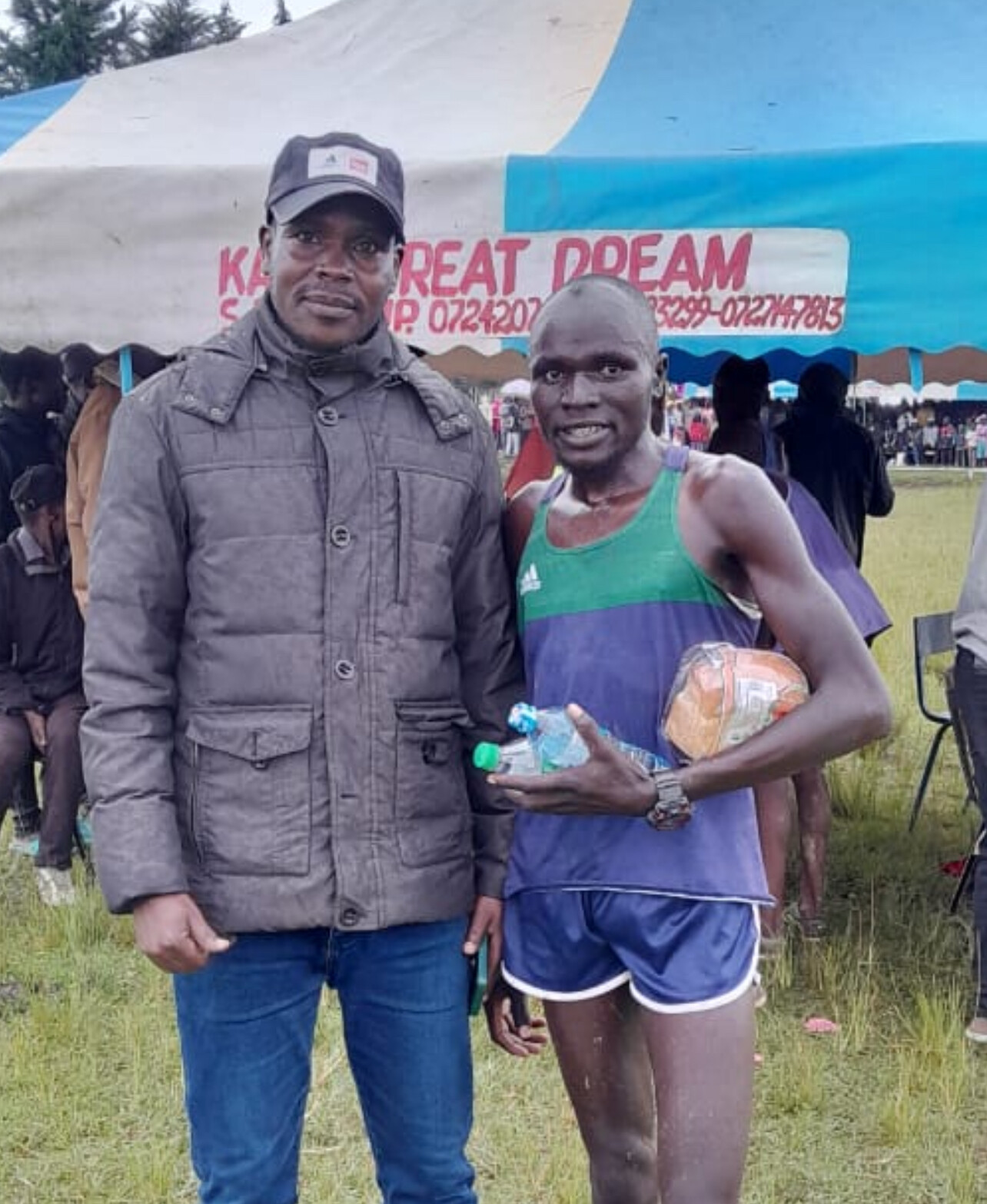
“The support from KATA has made a big difference,” Philemon says with quiet pride. “Most of my athletes come from humble backgrounds like mine. With potato farming and basic support, we can now train without worrying about what to eat or where to stay.”
That stability has begun to pay off. At the Standard Chartered Nairobi Marathon on October 26, his athletes delivered impressive performances: Donald Kimaru finished 4th in the men’s marathon; Dancan Kemei and Dennis Kosgei placed 18th and 21st in the men’s half marathon; Beatrice Rutto finished 11th in the women’s marathon; and in the men’s 10K, Leonard Pkorir and Enoch Tanui placed 3rd and 5th respectively, with Evans Kemboi 16th. Donald also on September 20th placed second at the Double Road Race 15k just 17 seconds behind the winner Edwin Soi in the two leg race. The sixth best time ever.

“Each of these athletes represents hope,” Philemon reflects. “With clean training and support, young people from small villages can stand tall on the national stage.”
Humble Beginnings

Born in Sing’ore, near the slopes of Elgeyo Marakwet, Philemon’s path to athletics was shaped by hardship.
“I was the last born in a family of nine — three brothers and sisters,” he recalls. “I attended Kobil Primary near Sing’ore Girls and later Kimuron Secondary, but I couldn’t finish because of school fees.”

Returning home to Kapkanyar, he refused to give up.
“In 2007, I started training with no shoes,” he says. “I sold charcoal to buy my first pair of Asics for 700 shillings (about $6).”
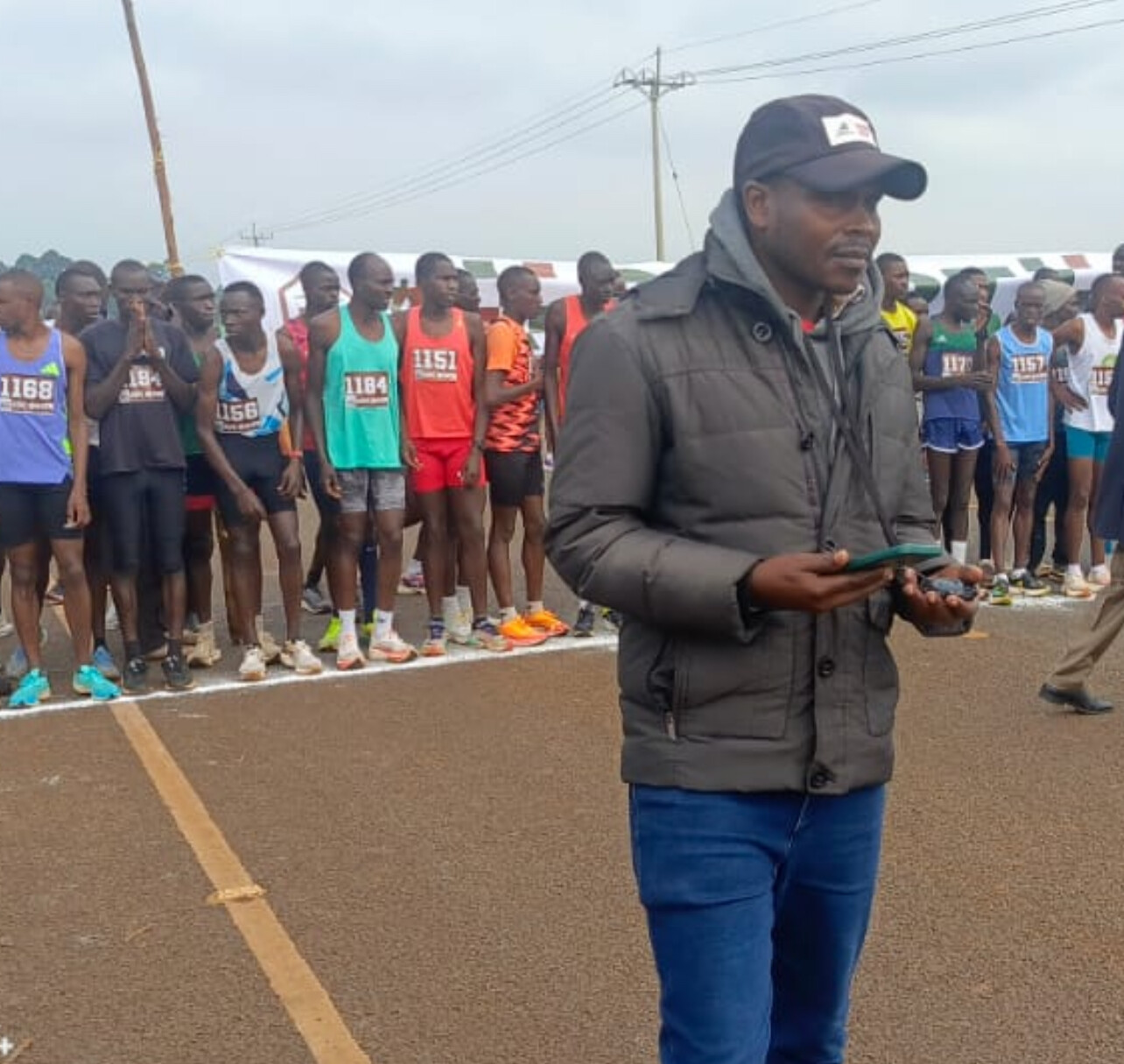
Years of persistence paid off when he began racing in 2012, earning his first major result with a runner-up finish at the Kakamega Forest Half Marathon. That breakthrough fueled his dream — not just to compete, but to guide others.
Building Champions
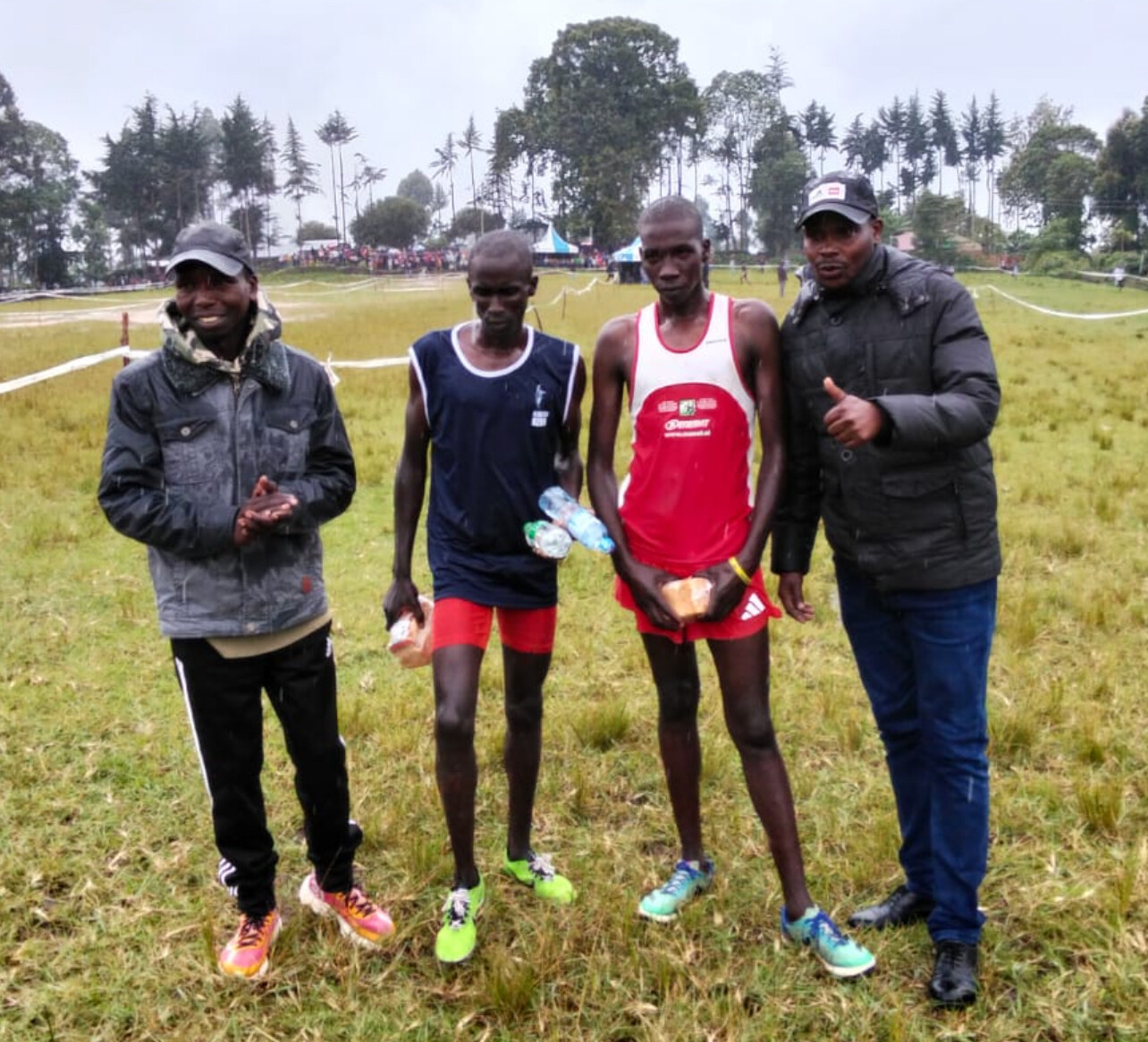
“I started with a few athletes,” Philemon says. “I rented them a small house and bought food — not because I had much, but because I knew what it felt like to need a chance.”
Today, he stands alongside a remarkable family of mentors: four brothers, all coaches.
• Eric Kimaiyo leads the Kapsait Training Camp.
• Andurson Chirchir coaches in Kaptagat.
• Kimutai runs training at Srowback.
• And Philemon oversees the Kapcherop Camp — a thriving hub for emerging distance runners.
Integrity and Clean Sport
What makes Philemon’s story powerful isn’t only perseverance — it’s integrity. A vocal advocate of clean sport, he embodies KATA’s core philosophy.
“We must speak the truth and say no to doping,” he insists. “If you train clean and stay patient, you’ll win with pride. There are no shortcuts to greatness.”
KATA’s influence has reinforced those values, fostering a culture of honesty and teamwork across its growing network.
“Bob Anderson’s support hasn’t just sustained our camp,” Philemon adds. “It has helped shape a generation built on discipline and hard work. We are building athletes who can inspire others.”
A Legacy of Hope
To his athletes, Philemon is more than a coach — he’s a father figure.
“He treats us like family,” says Leonard Pkorir, who won bronze in the Nairobi 10K. “He believes in our dreams even when we doubt ourselves.”
Looking ahead, Philemon’s goal remains simple yet profound: to use running as a bridge to a better life.
“My happiness will be to see my athletes doing great things, helping others, and carrying forward the spirit of running clean,” he says. “That will be my legacy.”
As evening fog rolls across the Kapcherop hills and the rhythmic thud of training shoes fades into the distance, Philemon Kiptoo’s story stands as a reminder that greatness can indeed grow from the humblest soil — when it is nurtured with purpose, honesty, and heart.
(10/27/2025) ⚡AMPby Robert Kibet

Andreas Almgren Breaks European Record as Agnes Ngetich Runs Second Fastest Half Marathon Ever in Valencia
Valencia, Spain — October 26, 2025 - The 2025 Valencia Half Marathon Trinidad Alfonso Zurich once again lived up to its global reputation as the fastest half marathon on Earth. The flat, coastal course produced extraordinary performances from both the men’s and women’s elite fields — highlighted by Sweden’s Andreas Almgren becoming the first European ever to break 59 minutes, and Kenya’s Agnes Jebet Ngetich clocking the second-fastest women’s time in history.
MEN’S RACE: ALMGREN MAKES HISTORY AS KEJELCHA DOMINATES
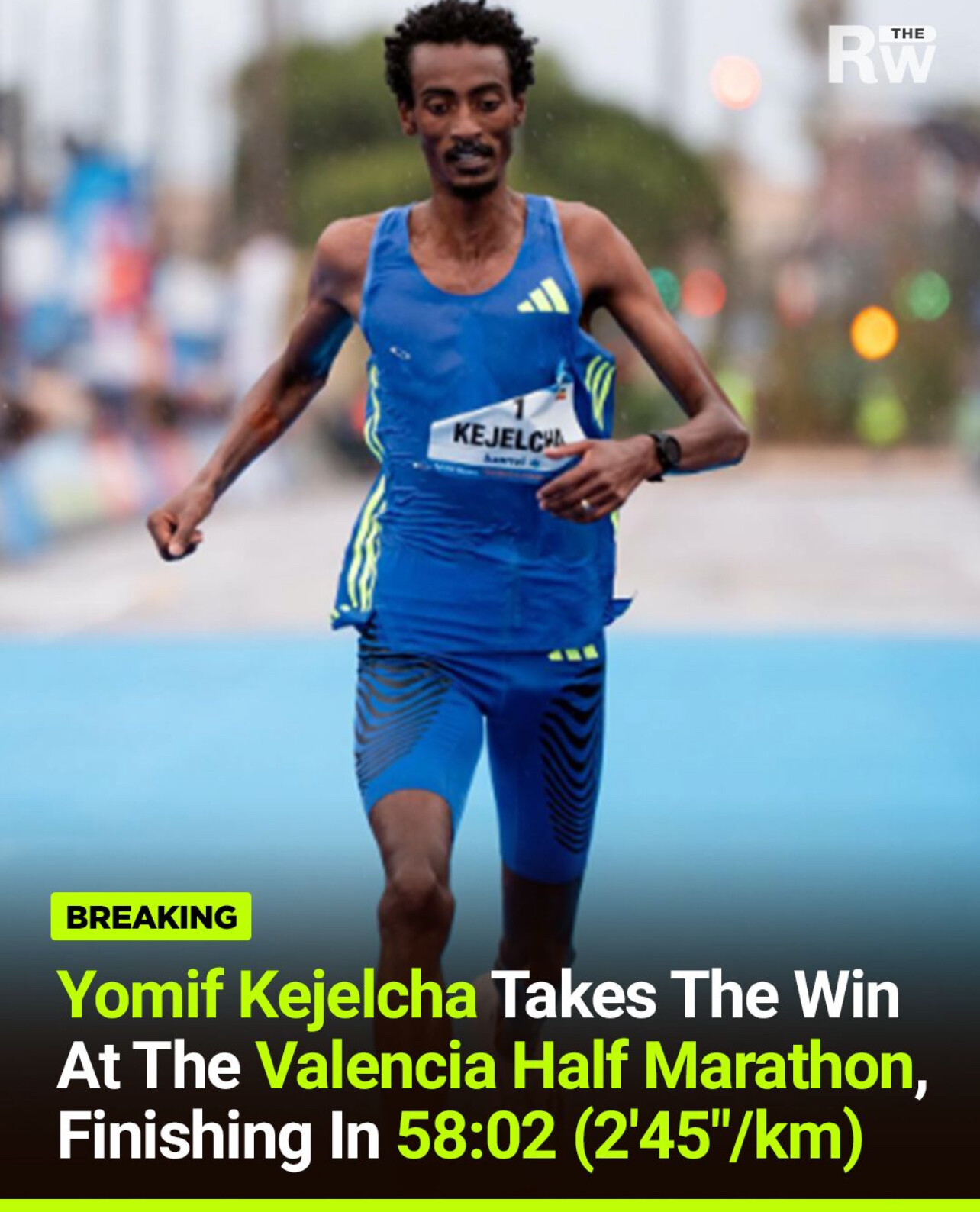
Ethiopia’s Yomif Kejelcha retained his Valencia title with a blistering 58:02, further cementing his place among the all-time greats. Though it was outside the current world record of 56:42, set earlier this year by Uganda’s Jacob Kiplimo at the Barcelona Half Marathon, Kejelcha’s effort was commanding from start to finish.
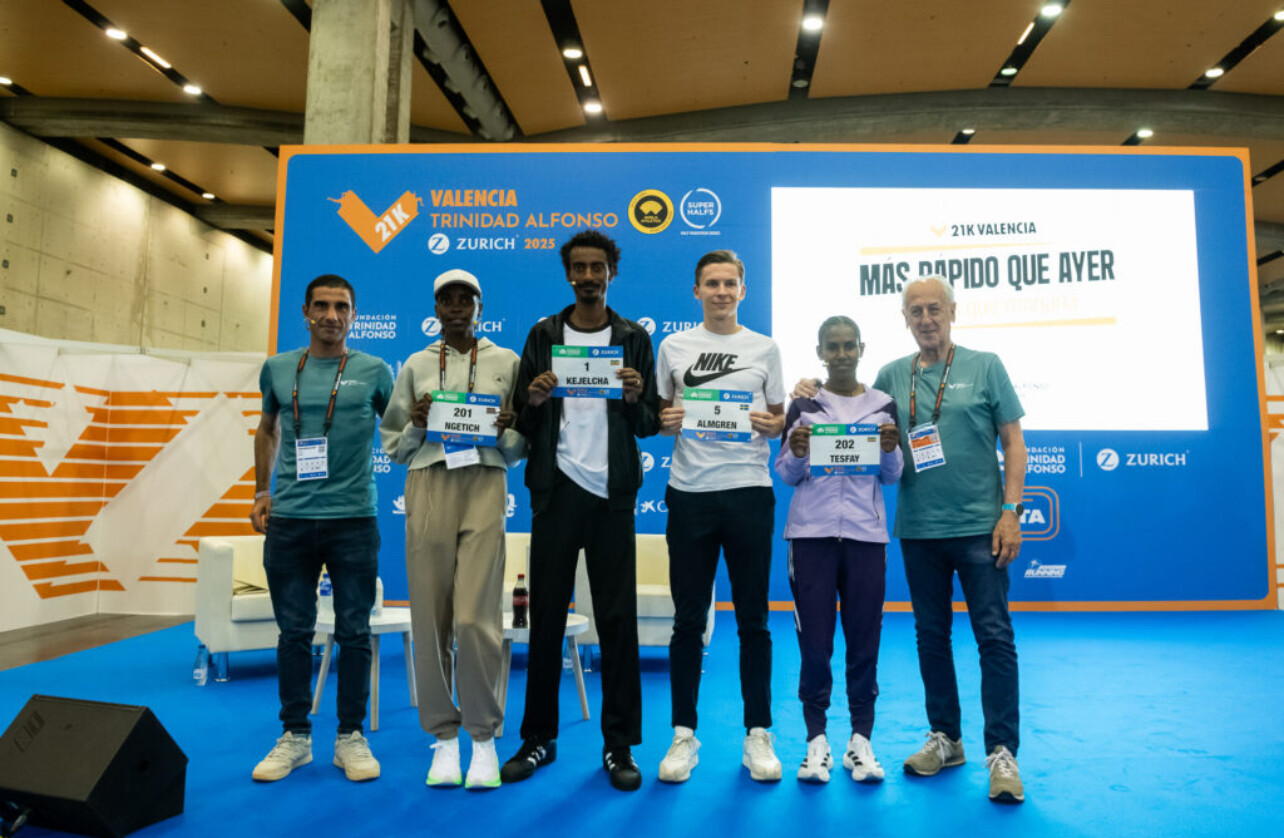
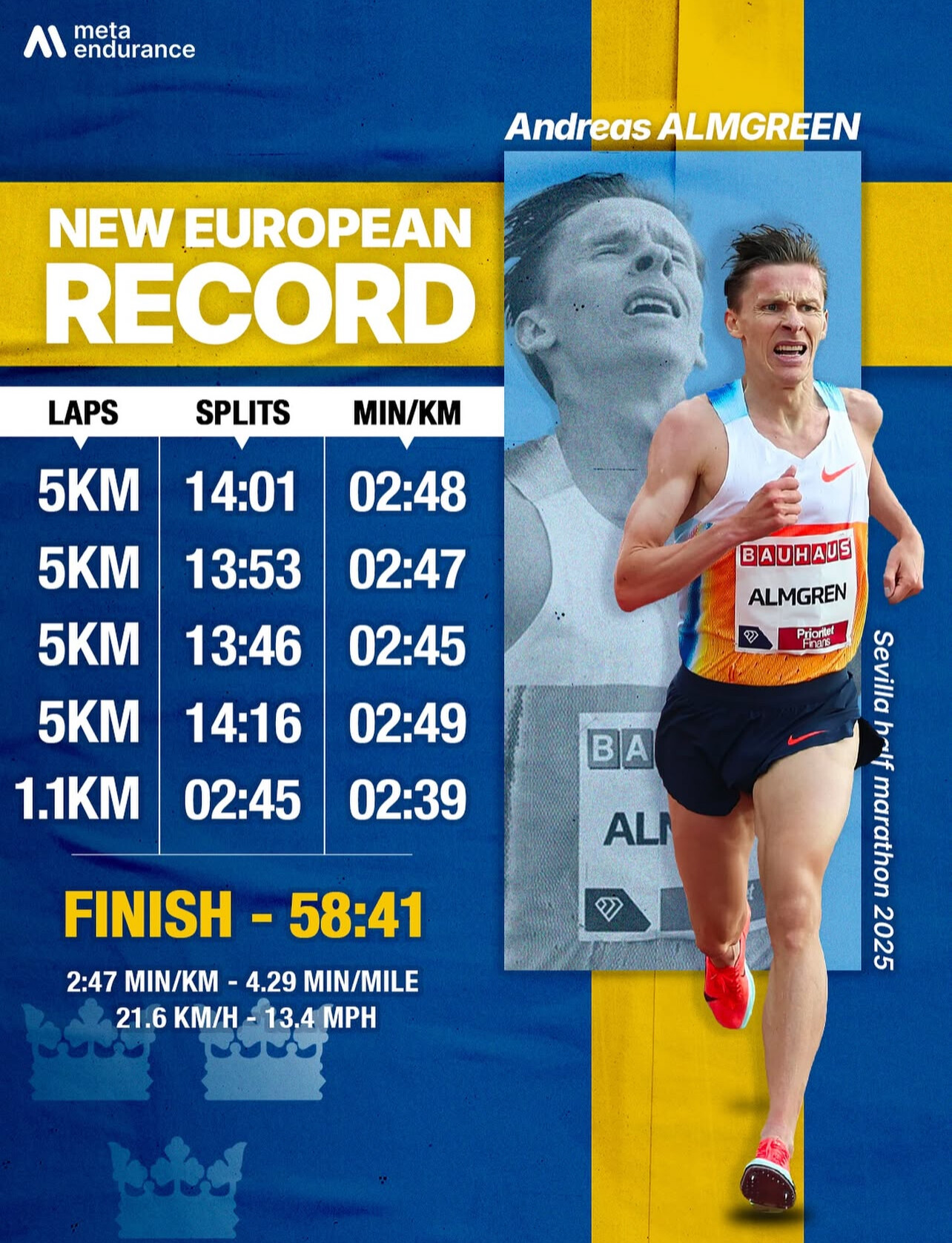
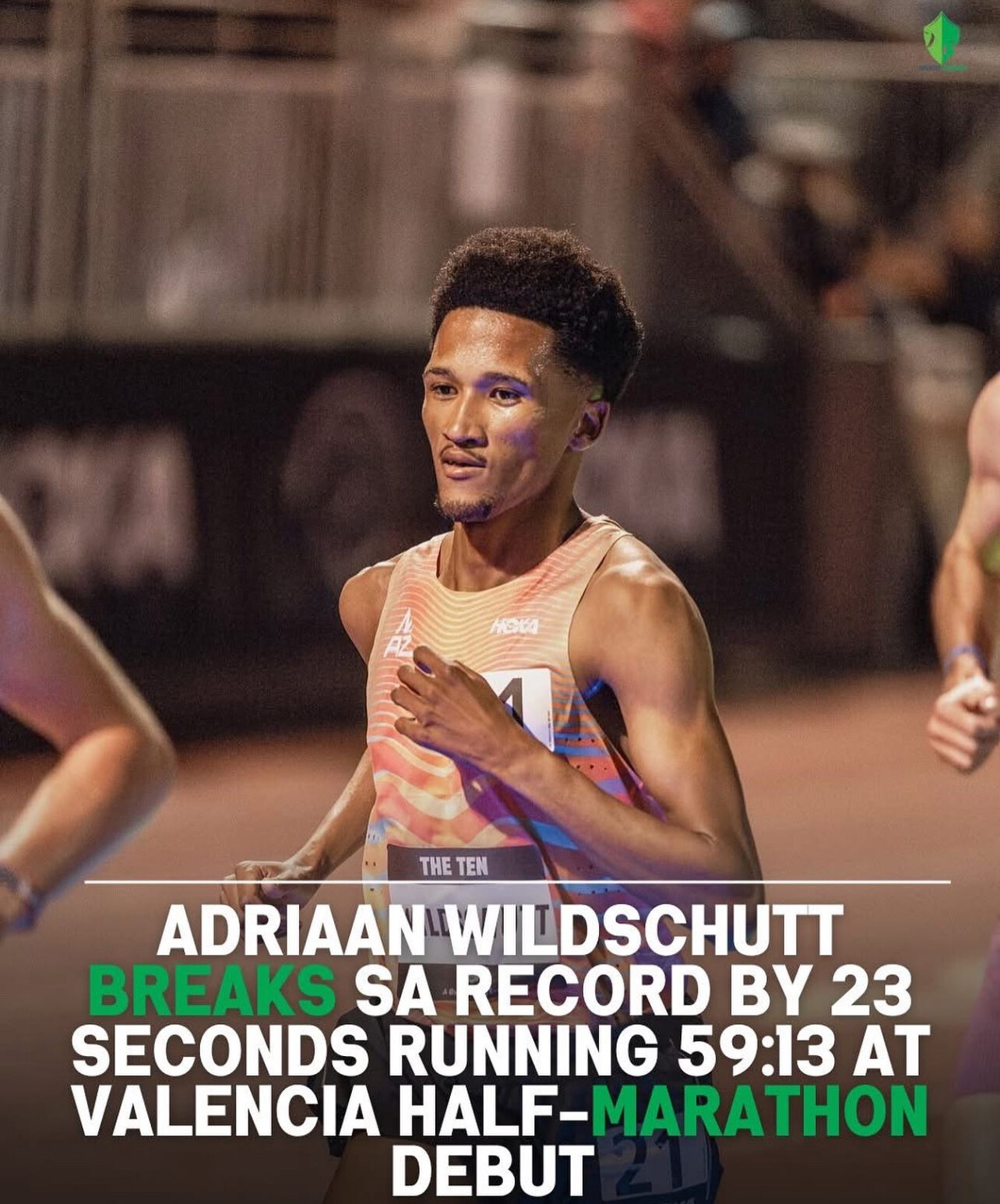
Running in his slipstream, Rodrigue Kwizera of Burundi and Brian Kibor of Kenya both crossed in 58:39, but the day’s biggest breakthrough came from Sweden’s Andreas Almgren, who stormed home in 58:41 — a stunning new European record.
The 29-year-old Almgren shattered the previous continental best of 59:13, set by Julien Wanders in 2019, and became the first European athlete in history to dip under the 59-minute barrier.

“This means everything,” Almgren said after the finish. “I came to Valencia knowing it was the place for fast times, but to run 58:41 — it’s beyond my dreams. Europe is back in the game.”
Kejelcha went out hard with early splits suggesting another sub-58 performance might be possible, hitting 10K in around 27:13. Slight headwinds in the final kilometers kept him just off world-record pace, but his margin of control was never in doubt.
WOMEN’S RACE: NGETICH CLOSES IN ON THE WORLD RECORD
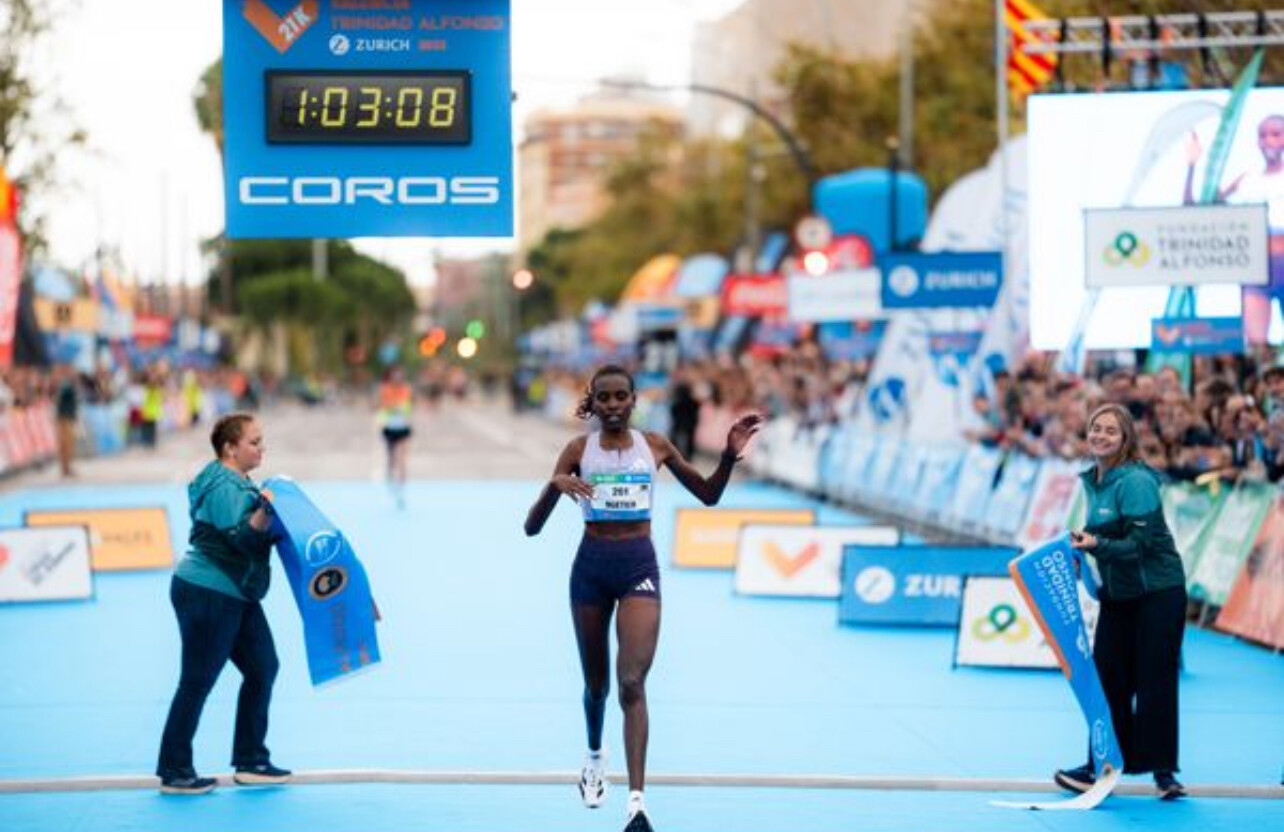
Kenya’s Agnes Jebet Ngetich produced yet another masterpiece on the streets of Valencia, winning the women’s title in 1:03:08, the second-fastest time ever recorded for the half marathon. Only Letesenbet Gidey’s world record of 1:02:52, also set in Valencia in 2021, stands ahead of her on the all-time list.

Ngetich went out aggressively, passing 10K in 29:28, well inside world-record pace. But a headwind over the final five kilometers cost her valuable seconds. Despite missing the record, her performance once again showcased her dominance and her special connection with the streets of Valencia, where she has repeatedly delivered career-defining runs.
“Valencia brings out the best in me,” Ngetich said. “I felt strong, and even though I missed the record, I know it’s within reach. I’ll be back.”
Ethiopia’s Fotyen Tesfay took second in 1:05:11, while Kenya’s Veronica Loleo ran a superb personal best of 1:05:46 to finish third. The top performances underscored the remarkable depth and quality in women’s distance running today.
RACE CONDITIONS AND COURSE
Cool temperatures, light humidity, and minimal wind set the stage for another record-friendly day in Valencia. The famously flat and fast course — celebrated for its long straightaways and sea-level setting — once again proved why it’s the go-to destination for athletes chasing lifetime bests and global marks.
Pacemakers set an aggressive tempo from the start in both races, and despite minor breezes in the final stretch, the results confirmed that Valencia remains the gold standard for road racing worldwide.
TOP RESULTS
Men’s Elite Results
1. Yomif Kejelcha (Ethiopia) – 58:02
2. Rodrigue Kwizera (Burundi) – 58:39
3. Brian Kibor (Kenya) – 58:39
4. Andreas Almgren (Sweden) – 58:41 (European Record)
5. Milkesa Mengesha (Ethiopia) – 59:12
6. Boniface Kibiwott (Kenya) – 59:16
7. Sebastian Sawe (Kenya) – 59:22
8. Mohamed Essa (Morocco) – 59:45
9. Tadese Worku (Ethiopia) – 59:58
10. Gabriel Geay (Tanzania) – 1:00:02
Women’s Elite Results
1. Agnes Jebet Ngetich (Kenya) – 1:03:08 (Second-fastest time ever)
2. Fotyen Tesfay (Ethiopia) – 1:05:11
3. Veronica Loleo (Kenya) – 1:05:46 (Personal Best)
4. Irine Cheptai (Kenya) – 1:06:03
5. Melat Kejeta (Germany) – 1:06:37
6. Viola Chepngeno (Kenya) – 1:06:44
7. Tsige Haileslase (Ethiopia) – 1:06:56
8. Eilish McColgan (Great Britain) – 1:07:09
9. Selly Chepyego (Kenya) – 1:07:16
10. Marta Galimany (Spain) – 1:08:21
WHY VALENCIA CONTINUES TO INSPIRE THE WORLD
For more than a decade, Valencia has been the epicenter of half-marathon excellence. From Gidey’s women’s world record in 2021, to Kandie’s men’s mark in 2020, to Kejelcha’s near-record runs and now Almgren’s European breakthrough — the course has become synonymous with speed and history.
This year’s edition reinforced three powerful truths about modern distance running:
1. Yomif Kejelcha remains one of the greatest half-marathon specialists of all time.
2. Agnes Jebet Ngetich has brought women’s road racing to new heights, now sitting just seconds shy of a world record.
3. Andreas Almgren’s European record symbolizes a resurgent era for European endurance running.
FINAL SUMMARY
Event: 2025 Valencia Half Marathon Trinidad Alfonso Zurich
Date: October 26, 2025
Location: Valencia, Spain
Men’s Champion: Yomif Kejelcha (Ethiopia) – 58:02
Women’s Champion: Agnes Jebet Ngetich (Kenya) – 1:03:08 (Second-fastest ever)
European Record: Andreas Almgren (Sweden) – 58:41
(10/26/2025) ⚡AMPby Boris Baron

Valencia Half Marathon
The Trinidad Alfonso Valencia Half Marathon has become one of the top running events in the world. Valencia is one of the fastest half marathon in the world. The race, organized by SD Correcaminos Athletics Club, celebrated its silver anniversary in style with record participation, record crowd numbers, Silver label IAAF accreditation and an atmosphere that you will not find...
more...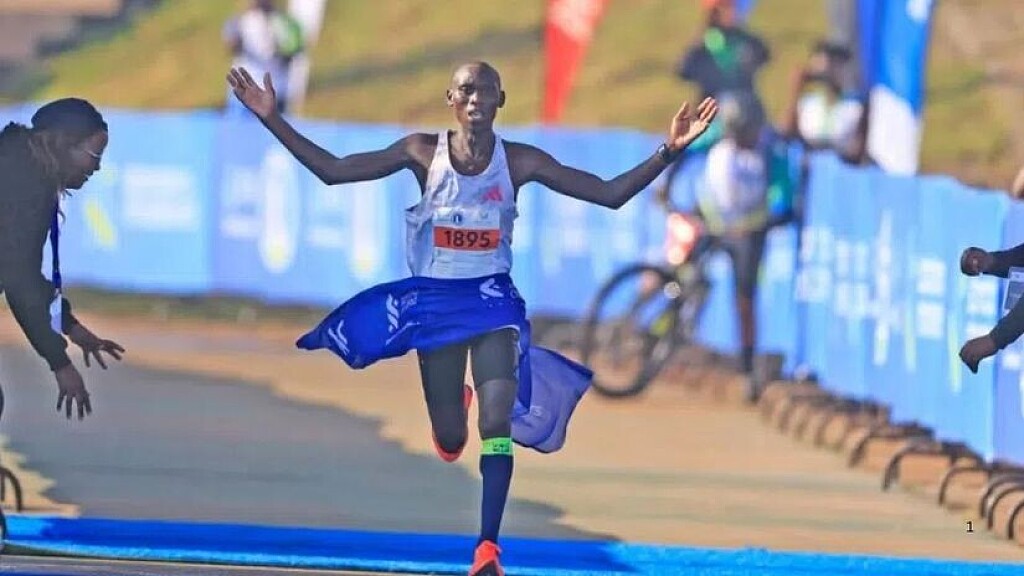
KATA’s Donald Kimaru Finishes 4th at 2025 Standard Chartered Nairobi Marathon
The 2025 Standard Chartered Nairobi Marathon delivered a thrilling showcase of endurance on October 26, as top athletes battled it out on the streets of Nairobi under ideal racing conditions. This year’s event, one of the premier marathons on the African continent, once again attracted a deep field of elite talent.
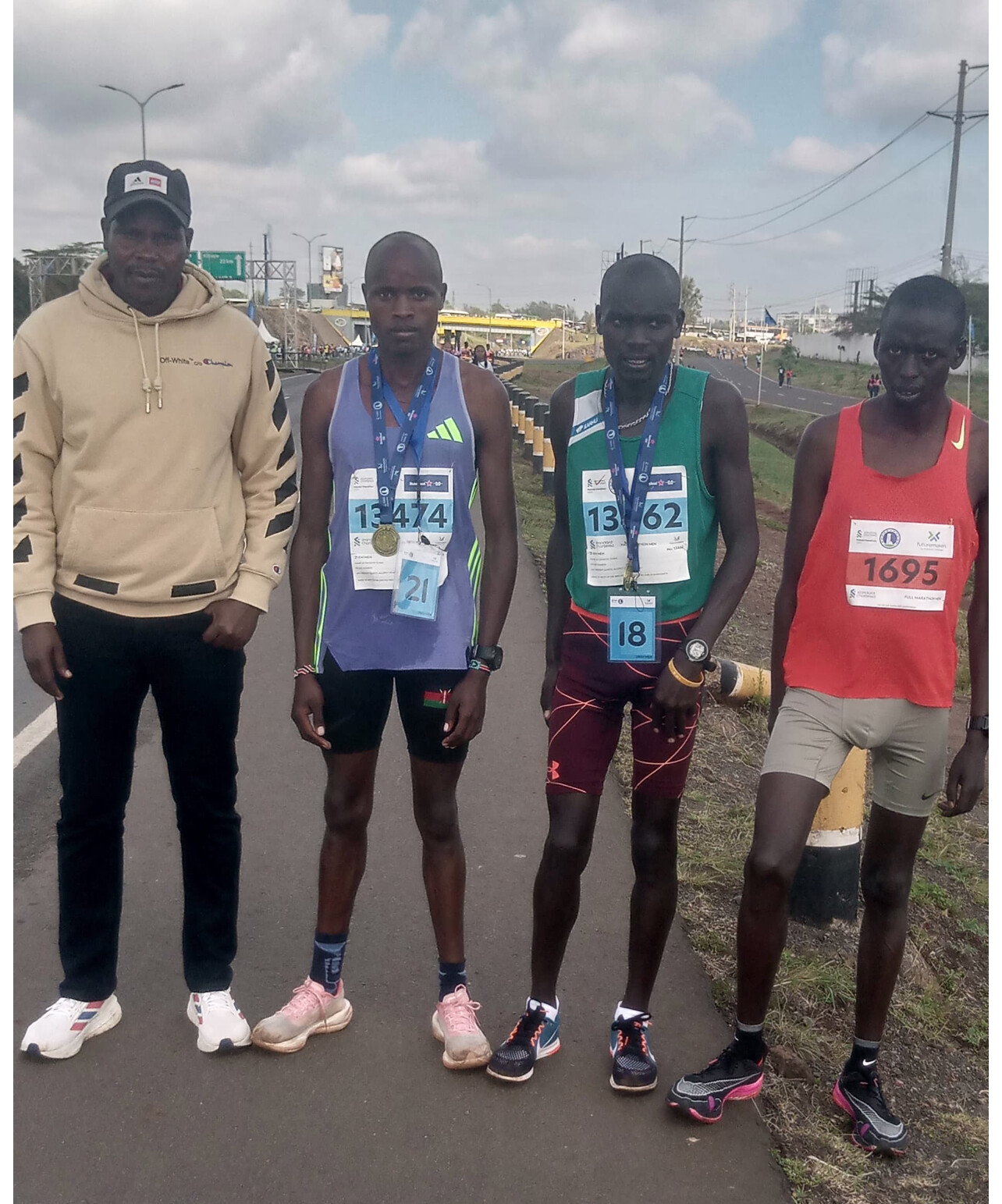
Among the day’s standout performances was Donald Kimaru, a KATA athlete training out of the Kapcherop KATA Running Camp, who finished a remarkable 4th place in a highly competitive men’s race.
Donald Kimaru: Fuelled by KATA, Ready for the Global Stage

Clocking a time of 2:12:02, Kimaru finished just over a minute behind the winner, Benard Chepkowny (2:11:01), and less than 30 seconds from the podium. It was a huge breakthrough for the rising long-distance runner, who trains under the high-altitude guidance of Coach Philemon Kipruto at the KATA facility in Kapcherop.
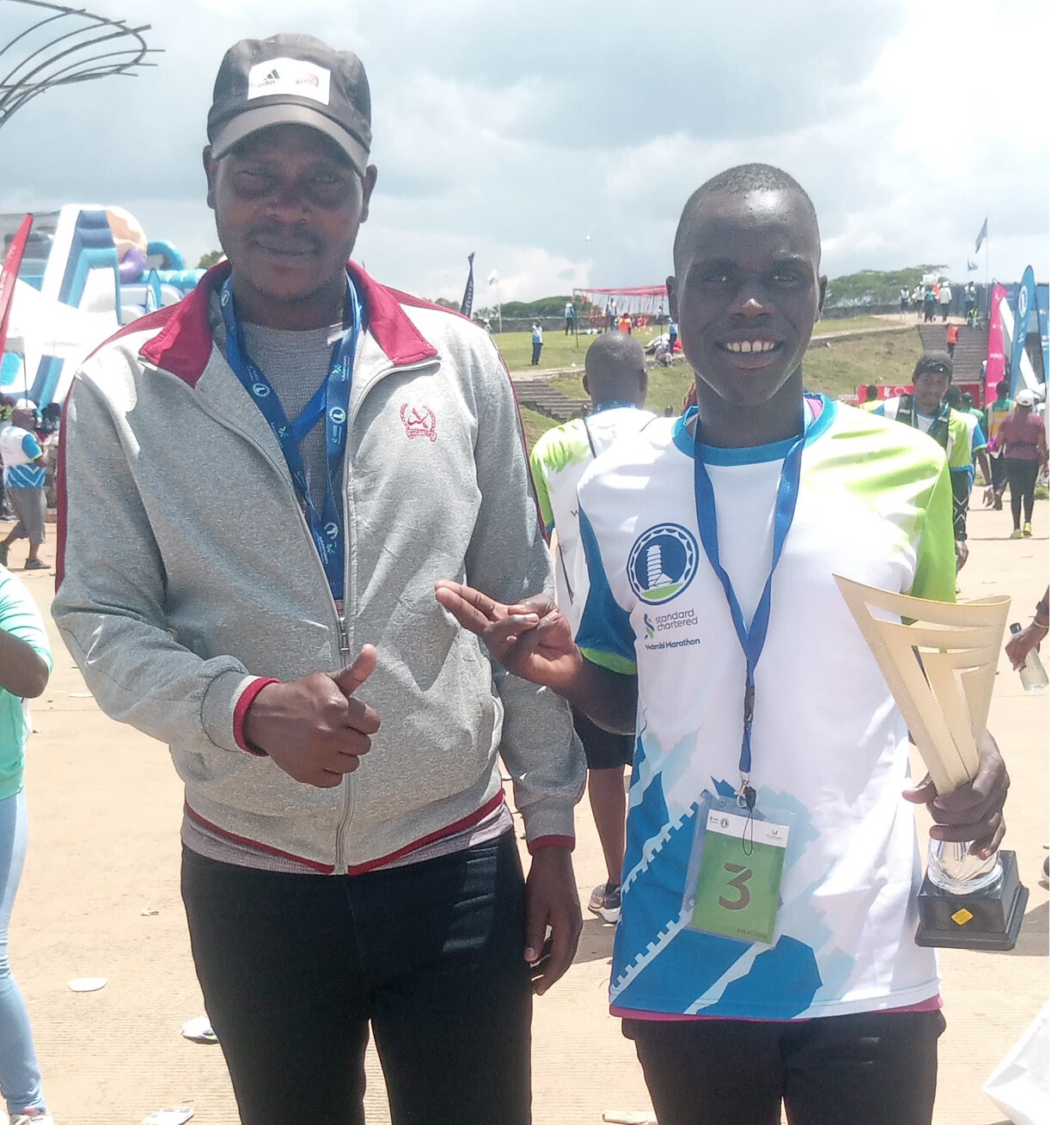
“Donald is showing the power of patience and consistency,” Coach Kipruto noted. “We’ve known he had the potential, and now he’s proving it in one of Kenya’s most important races.”
Chepkwony, returning to major competition, wasted no time asserting his intent. He set a strong pace from the start, joined by Silas Chesang, Donald Kimaru, Ezekiel Kemboi, Bethwel Chemuno, and Wilfred Kiplagat, all determined to stay in contention.
As the race progressed past the 30km mark, Chepkwony maintained the lead despite Chesang mounting a late push after struggling on the uphill sections.
Chepkwony’s endurance and composure carried him through to the finish line, clocking an impressive 2:11:01 to seal his comeback victory.
Kimaru trains in an environment designed to create champions, where runners combine disciplined training with the nutritional strength of KATA Potatoes – The Fuel of Champions. His performance in Nairobi is a testament to this holistic approach. Donald had placed second at the KATA Double Road Race 15k held September 20 in Thika.
Top 10 Elite Men – 2025 Standard Chartered Nairobi Marathon
1. Benard Chepkowny – KEN – 2:11:01 (first photo)
2. Alex Chepkwik Saekwo – KEN – 2:11:26
3. Ezekiel Kemboi Omullo – KEN – 2:11:40
4. Donald Kimaru – KEN – 2:12:02
5. Wilfred Kiplagat – UGA – 2:13:42
6. Charles Kimeli – KEN – 2:14:08
7. Nehemiah Kiprono Sang – KEN – 2:14:38
8. Solomon Yego – KEN – 2:14:50
9. Dennis Kipkemboi Koech – KEN – 2:15:39
10. Silas Chesang Keitany – KEN – 2:15:51
Women’s Race Highlight
In the women’s marathon, Hellen Chepkorir dominated with a powerful performance, finishing in 2:27:17 at an average pace of 3:30/km.
KATA’s Impact Growing
Donald Kimaru’s top finish adds to the growing list of success stories emerging from the KATA Running Camp ecosystem. Founded by Bob Anderson, KATA is reshaping the Kenyan distance running scene with over 30 camps across the country, combining elite training with a sustainable agricultural model. Runners like Donald are not only developing as athletes but also helping uplift their communities.
Next for Donald? A potential international marathon debut in 2026, where he’ll look to break the 2:10 barrier and cement his name among Kenya’s top marathoners.
(10/25/2025) ⚡AMPby Boris Baron

NAIROBI MARATHON
Nairobi Marathon is an annual road running competition over the marathon distance held in October in Nairobi, Kenya. First held in 2003, the competition expanded and now includes a half marathon race along with the main race. It was part of "The Greatest Race on Earth", fully sponsored by Standard Chartered Bank....
more...
Running Through The City Of Dreams New York Marathon 2025
On Sunday, November 2, 2025, the five-borough spectacle of the New York City Marathon will unfold once again, offering more than 50,000 runners the chance to push 26.2 miles through the heart of New York. From the cannon blast on Staten Island to the triumphant finish in Central Park, this is a race that marries endurance, emotion and urban drama.
Kipchoge and Hassan Headline an Extraordinary Field

The biggest storyline heading into this year’s race is the presence of Eliud Kipchoge, the greatest marathoner in history, and Sifan Hassan, the double Olympic champion who stunned the world with marathon victories in both London and Chicago. For Kipchoge, New York completes his journey through all six Abbott World Marathon Majors — a crown that has eluded him until now.
Hassan, meanwhile, returns to the marathon distance after a string of world-class performances on both track and road, her fearless racing style perfectly suited to the unpredictable rhythm of New York’s streets.
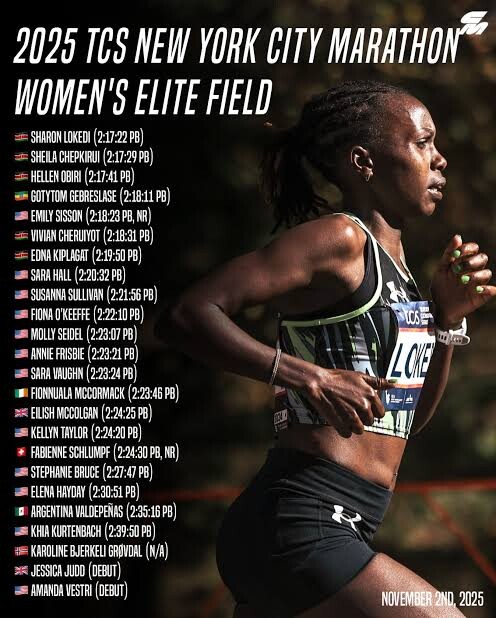
They’ll face an elite field stacked with world-class names, including Benson Kipruto of Kenya (2:02:16 PB), Evans Chebet (two-time Boston champion, 2:03:00 PB), and defending champion Tamirat Tolaof Ethiopia (course record holder at 2:04:58). The women’s field is equally star-studded, featuring 2022 champion Sharon Lokedi, Tokyo winner Rosemary Wanjiru, and a host of East African contenders ready to test Hassan on one of the sport’s toughest stages.
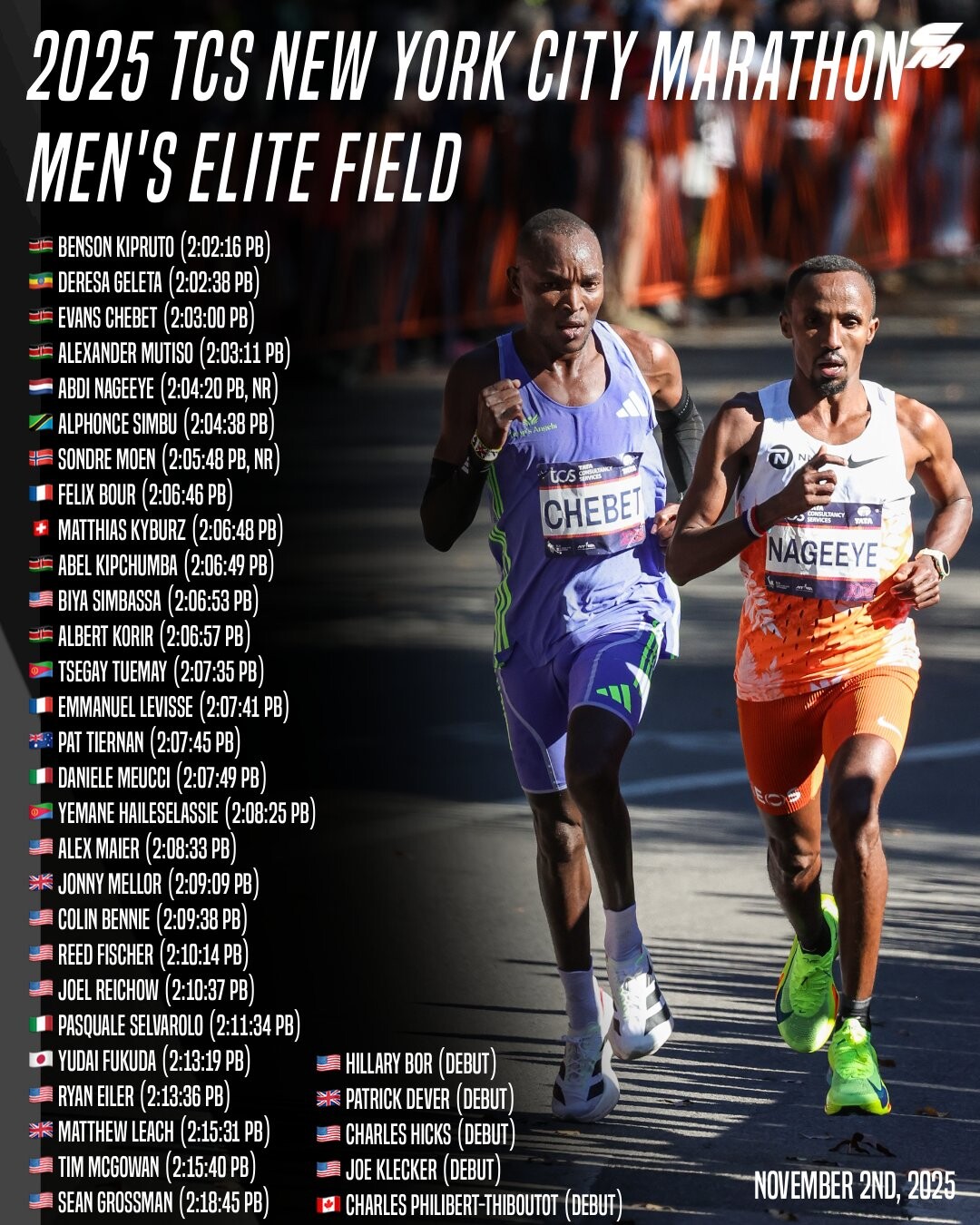
Among the American hopefuls, Emily Sisson, the U.S. record holder in the marathon, headlines the women’s field and will make her New York debut. On the men’s side, Biya Simbassa leads the U.S. charge, joined by a deep domestic field racing for top-American honors and prize bonuses.
Course Records
• Men: 2:04:58 — Tamirat Tola (ETH), 2023
• Women: 2:22:31 — Margaret Okayo (KEN), 2003
These records reflect both top-tier performance and the challenging character of the course — rather than flat, pacer-assisted routes that routinely see world-record times.
Prize Purse
The stakes are high. Open-division winners stand to earn $100,000, with descending prizes through 10th place. The event also offers a $50,000 bonus for a winner who breaks the standing course record, plus separate prize pools for top U.S. finishers and wheelchair divisions. With total payouts approaching nearly a million dollars, the financial motivation is real — even if the course isn’t built for world-record thrills.
Why a World Record Isn’t Realistic
Make no mistake: the New York course is legendary for its toughness rather than its speed. Runners face five major bridge crossings, a long ascent up the Queensboro Bridge around mile 15–16, variable terrain, sharp turns and a final push up Fifth Avenue into Central Park. Unlike flat, pacemaker-led courses such as Berlin or Chicago, NYC emphasises tactical racing, rivalries and finish-line theatre. The organising body eliminated dedicated elite pacemakers years ago in favour of pure head-to-head competition.
While pace groups may support recreational waves, elite winners will race without the type of structured pacemaking that enables constant sub-2:03 splits. In short: this is a championship-style contest, not a time-trial.
What Makes NYC Unique
• Cityscape & crowd noise: From Staten Island’s Verrazzano Narrows Bridge to Brooklyn’s vibrant neighborhoods, the Queensboro Bridge, Manhattan’s First Avenue and the final loop in Central Park, the scenery is unmatched.
• Massive scale but elite depth: The global field, the tens of thousands of recreational runners, the international media — the race’s atmosphere is unmatched in road-racing.
• Legacy of racing over timing: Past editions have celebrated bold attacks and dramatic finishes more than normally smooth pacing. That makes this one of the world’s most storied and unpredictable marathons.
What to Watch on November 2
• How Kipchoge adapts his disciplined, flat-course style to a course that demands rhythm changes, hills and surges.
• Whether Hassan will leverage her track speed and tenacity to counter a course that rewards strength and race-tactics.
• Whether Sisson (and other U.S. entrants) can navigate the final tougher miles to claim top-American status or even an open podium spot.
• The weather and pacing strategy: any wind across the bridges or mis-timed surge could decide the race more than early splits.
• Whether someone dares to go after Tola’s 2:04 : 58 mark — unlikely but possible under perfect conditions.
The 2025 New York City Marathon is more than a race. It is a testament to endurance, to the city that hosts it and to runners who thrive in challenge rather than comfort. Kipchoge and Hassan bring star power. The U.S. challengers bring ambition. And the 50,000+ starters bring stories.
Whether you’re chasing a personal best, seeking a finish-line moment or just watching from the sidelines, November 2 will be unforgettable. The bridges, the boroughs, the final climb into Central Park — the city will judge your resolve. And with no pacemakers to pull you through, this year’s finishers will know they earned every step with heart.
(10/25/2025) ⚡AMPby Boris Baron

TCS New York City Marathon
The first New York City Marathon, organized in 1970 by Fred Lebow and Vince Chiappetta, was held entirely in Central Park. Of 127 entrants, only 55 men finished; the sole female entrant dropped out due to illness. Winners were given inexpensive wristwatches and recycled baseball and bowling trophies. The entry fee was $1 and the total event budget...
more...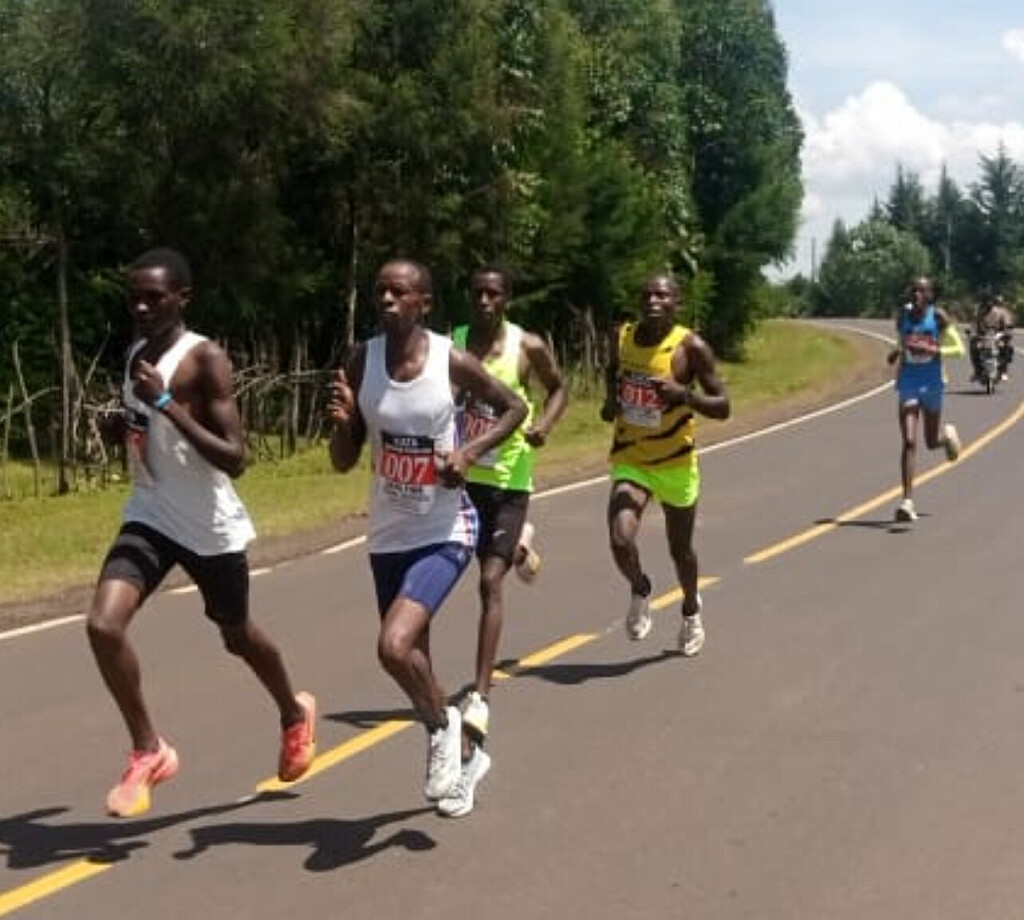
KATA Kapkatet Camp Runners Deliver Powerful Performances
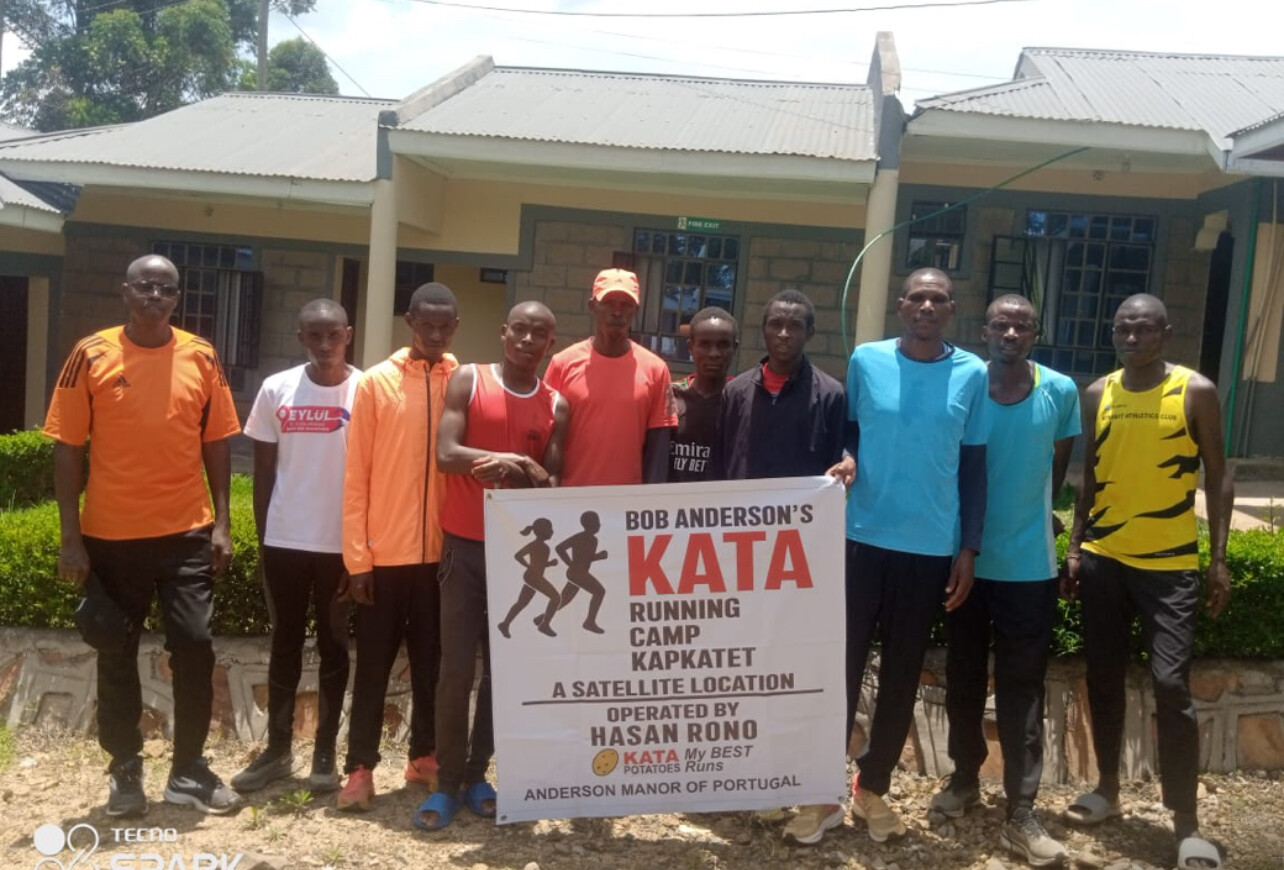
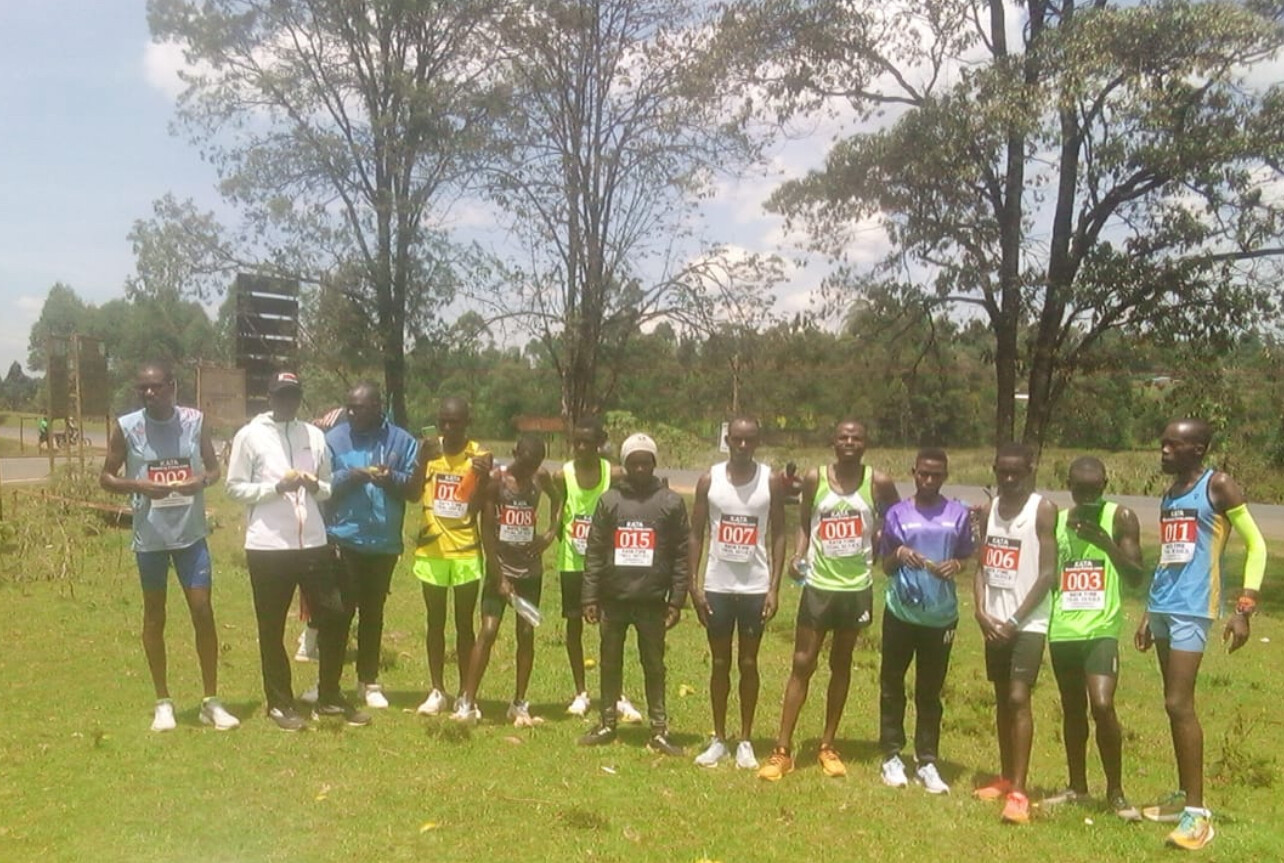
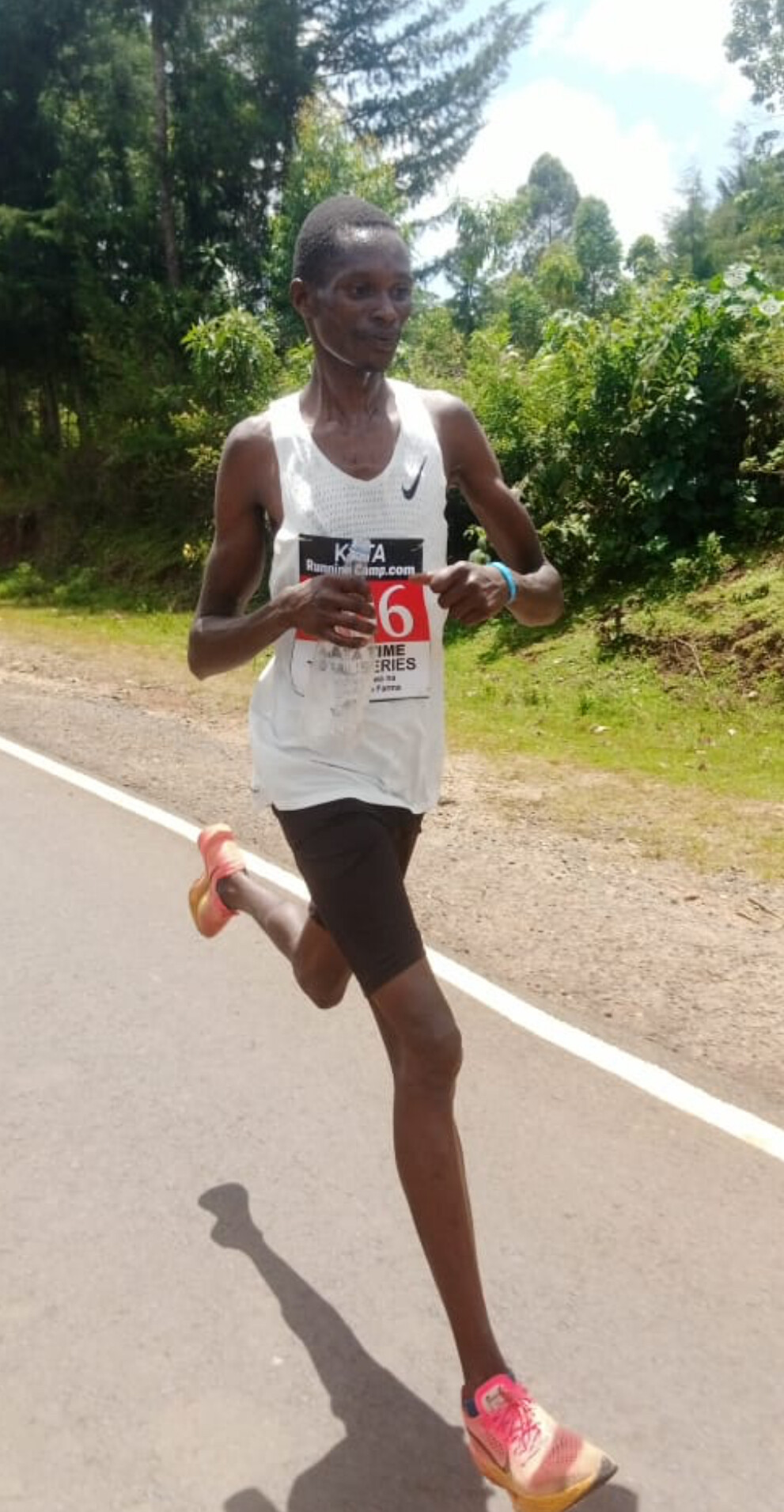
The Kapkatet Athletics KATA Camp hosted an outstanding time trial on October 15, 2025, with excellent conditions and determined athletes delivering strong performances. Under the leadership of Coach and Operator Hasan Rono, the event showcased the rising talent and teamwork that define the KATA Running Camp and Potato Farm program in Kericho County.
“The time trial was successful and wonderful,” Coach Rono said. “Thanks a lot for your support, sir.”
10 km Men
1. Vincent Rotich – 29:13.40 (DOB 13 Sep 2004)
2. Vesitus Kipkorir Kemboi – 29:17.35 (DOB 7 Jan 2000)
3. Kipkurui Koech – 29:50.11 (DOB 11 Feb 1991)
4. Dominic Cheruiyot – 30:01.22 (DOB 25 May 2005)
5. Haron Kiprotich – 30:17.02 (DOB 6 Jul 2002)
6. Jaresa Rono – 30:36.27 (DOB 10 Dec 2009)
7. Aaron Kiplangat Korir – 30:55.04 (DOB 13 Dec 2002)
8. Kaprono Langat – 31:55.11 (DOB 19 Dec 1985)
The men’s 10 km race was tightly contested, with Vincent Rotich edging Vesitus Kipkorir Kemboi by just four seconds. Both broke the 29-minute-20-second barrier, underscoring their sharp form and disciplined training.
5km Men
1. Victor Kiprotich – 14:12.19 (DOB 25 May 2009)
2. Robert Sigey – 14:30.06 (DOB 12 Dec 1984)
3. Rono Enock – DNF (DOB 16 Jan 2000)
Sixteen-year-old Victor Kiprotich impressed once again with a commanding 14:12, demonstrating both speed and maturity beyond his age.
5 km Women
1. Dorcas Chepkorir – 17:21.15 (DOB 30 Dec 2004)
Dorcas Chepkorir dominated the women’s 5 km, finishing with a wide margin and reaffirming her status as one of the camp’s most consistent performers.
The K22 Kapkatet Camp continues to exemplify the KATA vision: nurturing champions through discipline, teamwork, and purpose. As with every KATA camp across Kenya, this success is powered by a shared belief that athletic excellence and sustainable farming can grow side by side.
(10/20/2025) ⚡AMPby Boris Baron
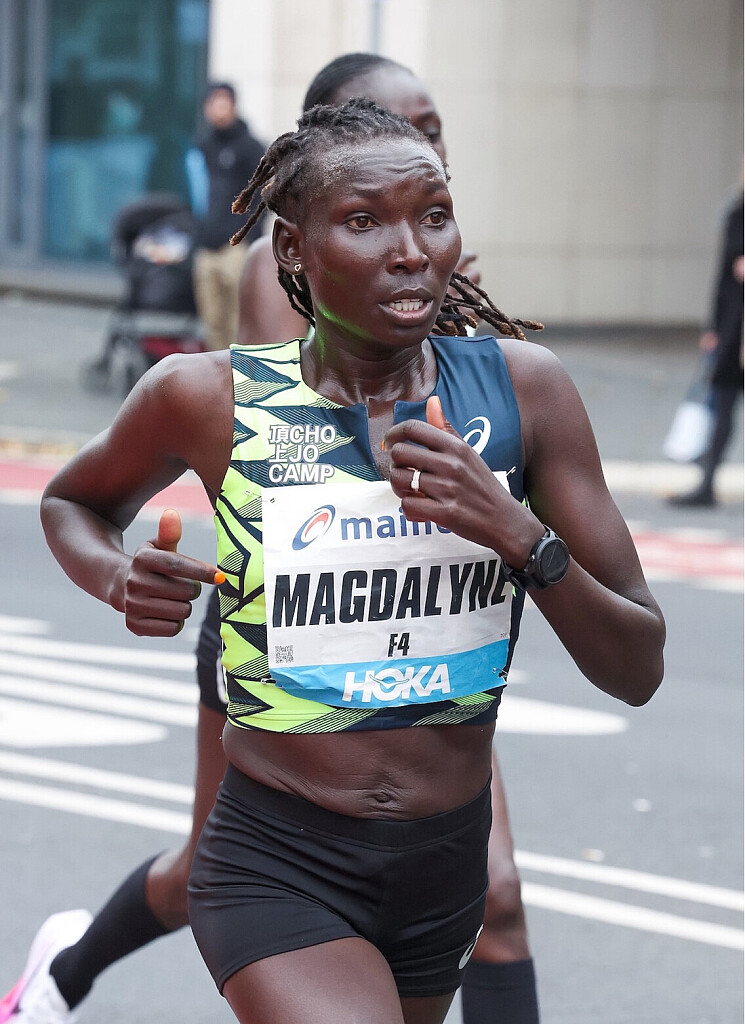
Masai Returns Stronger Than Ever for the Frankfurt Marathon Showdown
Kenya’s Magdalyne Masai is set to return to the Mainova Frankfurt Marathon this Sunday, October 26, determined to make a statement after her dramatic collapse in the brutal heat of last month’s World Championships marathon in Tokyo. Fully recovered and feeling revitalized, Masai says she’s “in the best shape of my life” — and ready to chase another breakthrough performance.
This will mark Masai’s third consecutive appearance in Frankfurt, where she finished runner-up last year with a personal best of 2:18:58, the fastest time ever recorded by a woman entered in the race’s 42-year history. The 31-year-old believes the flat and fast Frankfurt course provides the perfect setting for her comeback.
“After a short break to recover, my first training sessions went so well that I really wanted to run another marathon this autumn,” said Masai. “I’m in great form and didn’t want to waste it. Frankfurt is the perfect race for me — I’m excited to come back.”
The women’s elite field is among the strongest ever assembled in Frankfurt. Six runners on the start list own personal bests under 2:23:00, including two who have dipped below 2:20:00. Alongside Masai, Kenya’s Sharon Chelimo (2:19:33) and Ethiopia’s Buze Diriba (2:20:22) headline a deep international lineup. Ethiopians Etagegne Woldu (2:20:03) and Aminet Ahmed (2:21:24) were also set to compete but have withdrawn due to injury.
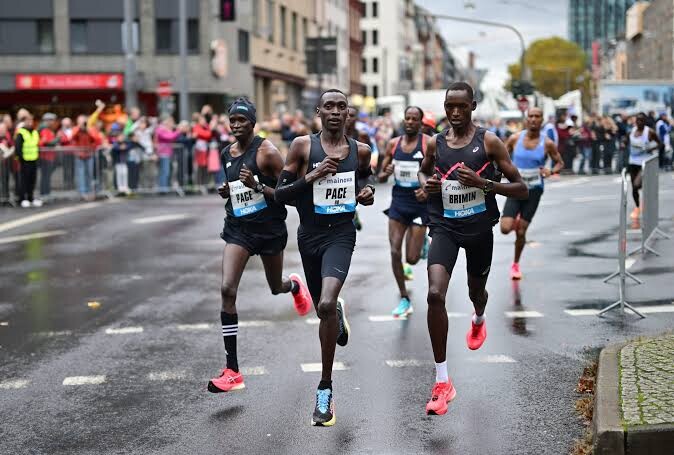
The men’s field is equally loaded. Ethiopia’s Shura Kitata, the 2017 Frankfurt champion, leads the charge with a 2:04:49 personal best. He’ll face compatriot Dejene Megersa (2:05:42), while Germany’s Filimon Abraham will look to improve on his 2:08:11 best on home soil.
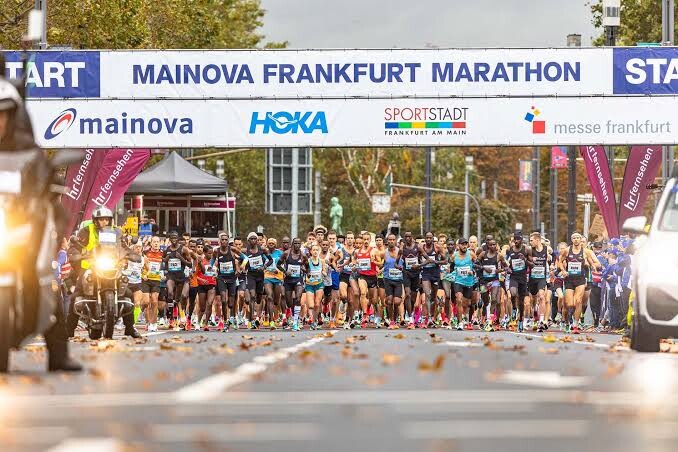
With seven men under 2:08 and six women under 2:23, the 2025 Mainova Frankfurt Marathon promises one of the most competitive editions in race history — and for Magdalyne Masai, it could be the stage for her strongest marathon yet.
(10/20/2025) ⚡AMPby Race News Service
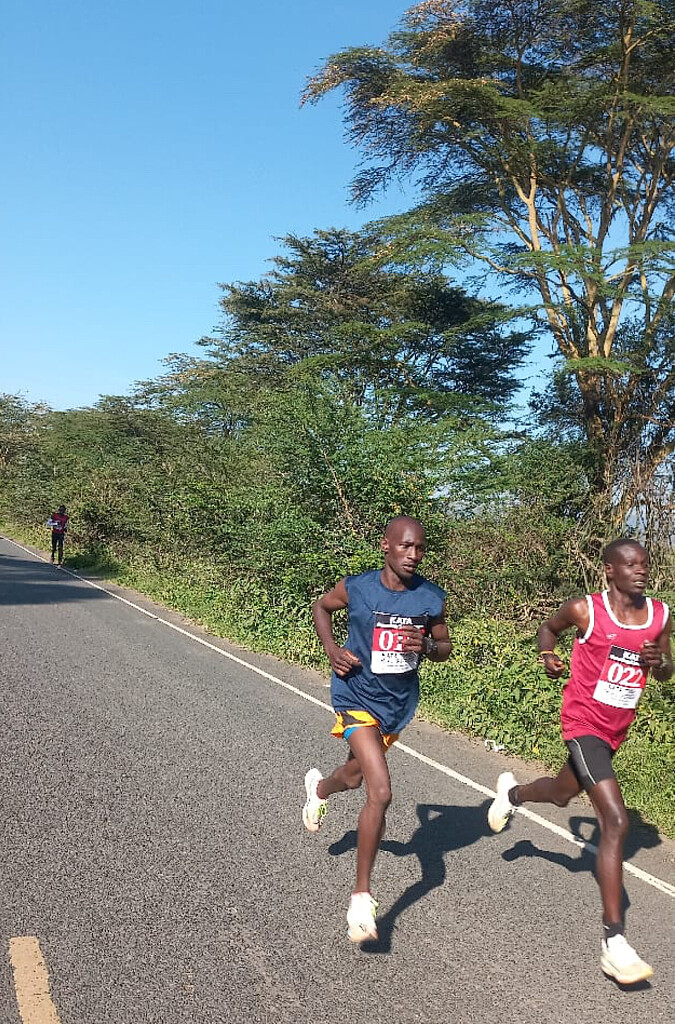
From Potatoes to Personal Bests: How Amos Chirchir Is Growing Athletes and a Future in Sachang’wan
In the highland village of Sachang’wan in Molo, Nakuru County, the land rises boldly toward the sky. The area sits on the edge of the dramatic Rift Valley escarpment, overlooking the vast Menengai Crater — Africa’s second-largest volcanic caldera — its silent ridges brooding in the morning mist.
Behind it, the rolling hills of Molo stretch endlessly, stitched with neat rows of potato farms that define the region’s identity. To the south lies Salgaa, a town better known for its flower farms, where long greenhouse tunnels shimmer like silver ribbons across the plains. Beyond this agricultural heartland, winding dirt roads climb toward Sachang’wan — where another kind of farming is taking root: the farming of athletic talent.
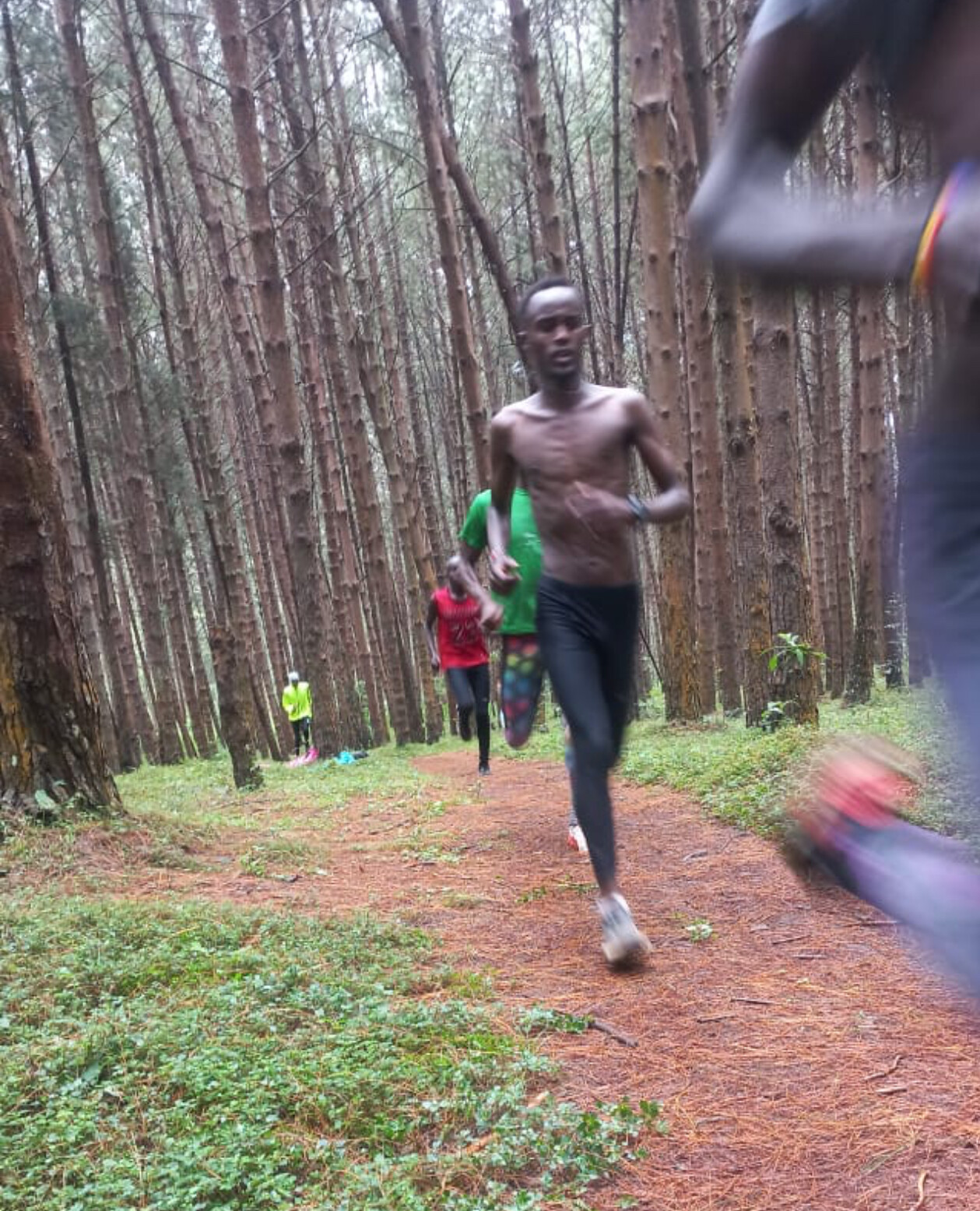
Here, where the air is thin and crisp, mornings begin before sunrise. Frost melts from the grass as a small group of determined athletes powers up a steep incline, their breath visible in the cold air. Leading them is 27-year-old Amos Kibet Chirchir, stopwatch in hand, eyes sharp with focus.
To an outsider, he might look like any other coach on a country road. But to his athletes — and to the growing Kenyan Athletics Training Academy (KATA) movement — Amos represents something much bigger: a new generation of homegrown leaders cultivating both champions and sustainability.

The Making of a Leader
Amos, the fifth-born in a family of eight, grew up in the cold, fertile highlands of Molo, raised by farming parents who taught him the value of hard work. Athletics runs deep in his family — his father was a 400m hurdler in the 1970s, competing when Kenyan track was just finding its rhythm.
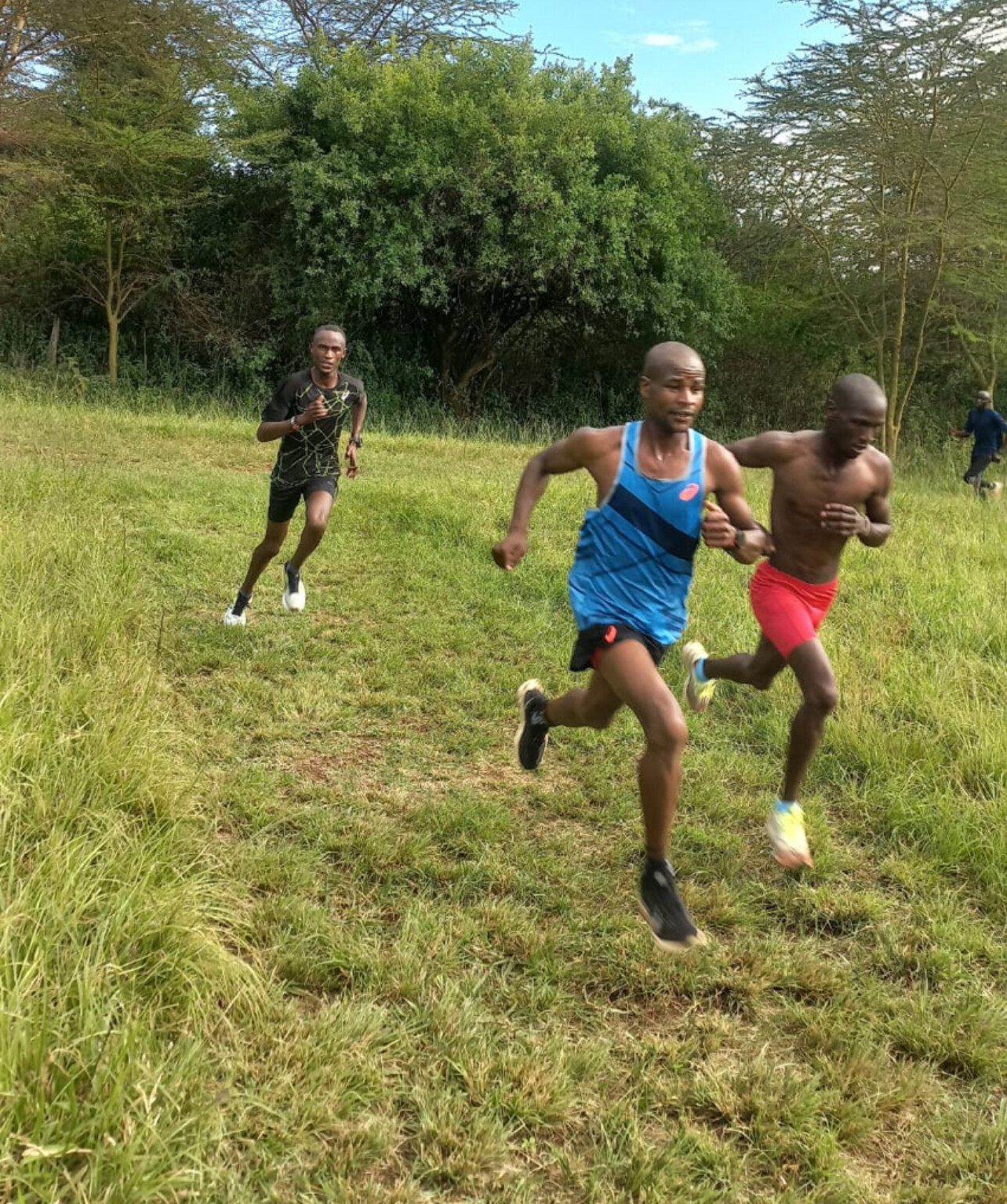
“I didn’t just choose running,” Amos says with a smile. “Running found me.”
After excelling in local school competitions, Amos nearly saw his running dream fade — until June 2022, when he earned a place at KATA Thika, founded by American running innovator Bob Anderson, the visionary behind Runner’s World magazine.
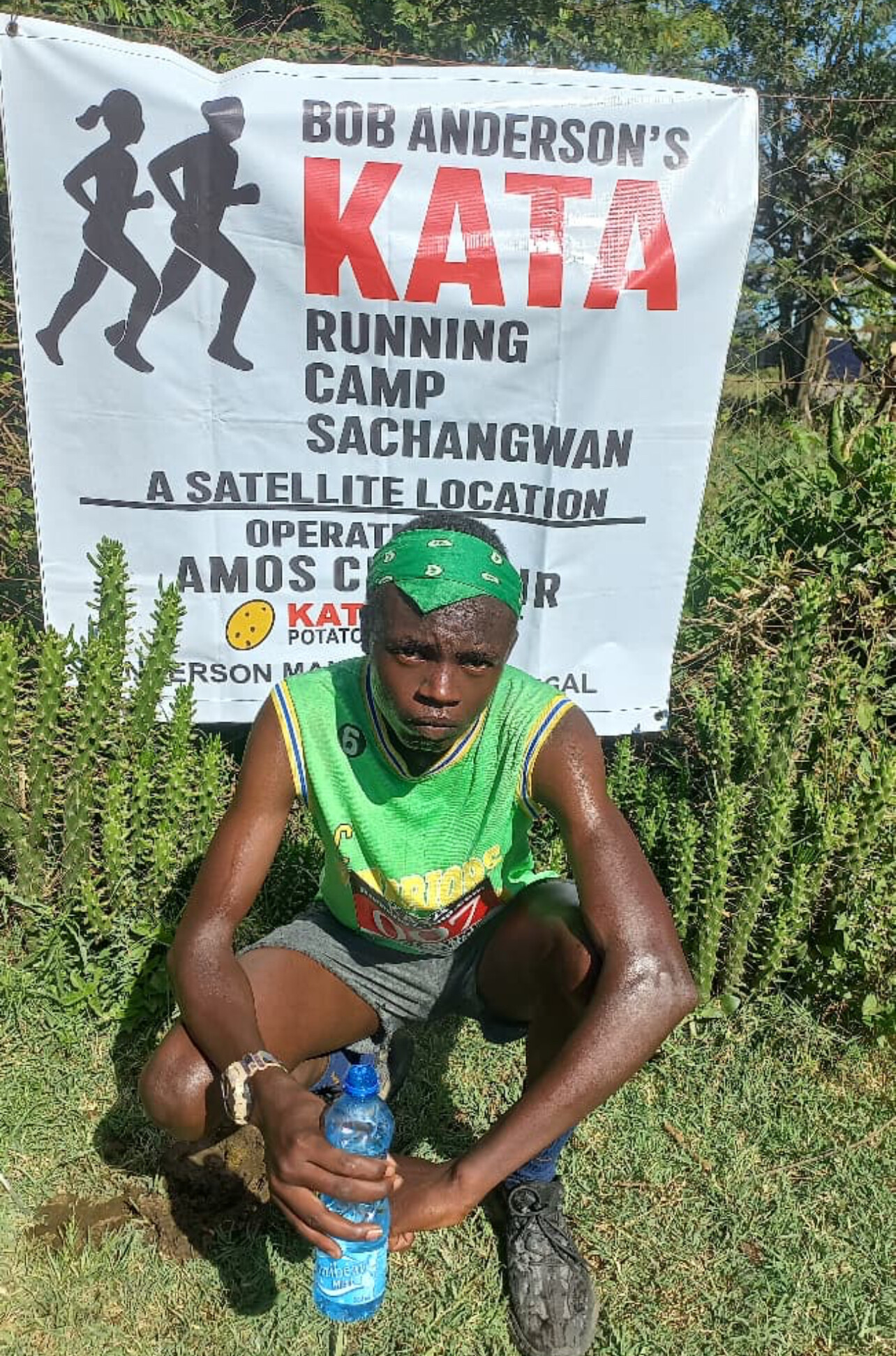
“That changed everything,” he recalls. “For the first time, I could train without worrying about daily survival. KATA didn’t just build me as an athlete — it prepared me to lead.”
Building a High-Altitude Training Hub

When Anderson announced plans to expand KATA through athlete-led satellite camps, Amos seized the opportunity. He returned home and launched KATA Sachang’wan Camp with just five athletes — three men and two women. Today, the camp has grown to eight committed runners, with more young talents eager to join.
The camp sits at an altitude of 2,400 meters, ideal for endurance training. For faster sessions, they descend to 1,800 meters, creating a natural high-low altitude system similar to what world-class runners use in Iten, Kaptagat, and Eldoret.

Already, results are emerging:
• Weldon Kibet Lang’at clocked 30:36 (10K) and 14:55 (5K) at the Double Road Race before improving to 30:16 in the October 15 time trials.
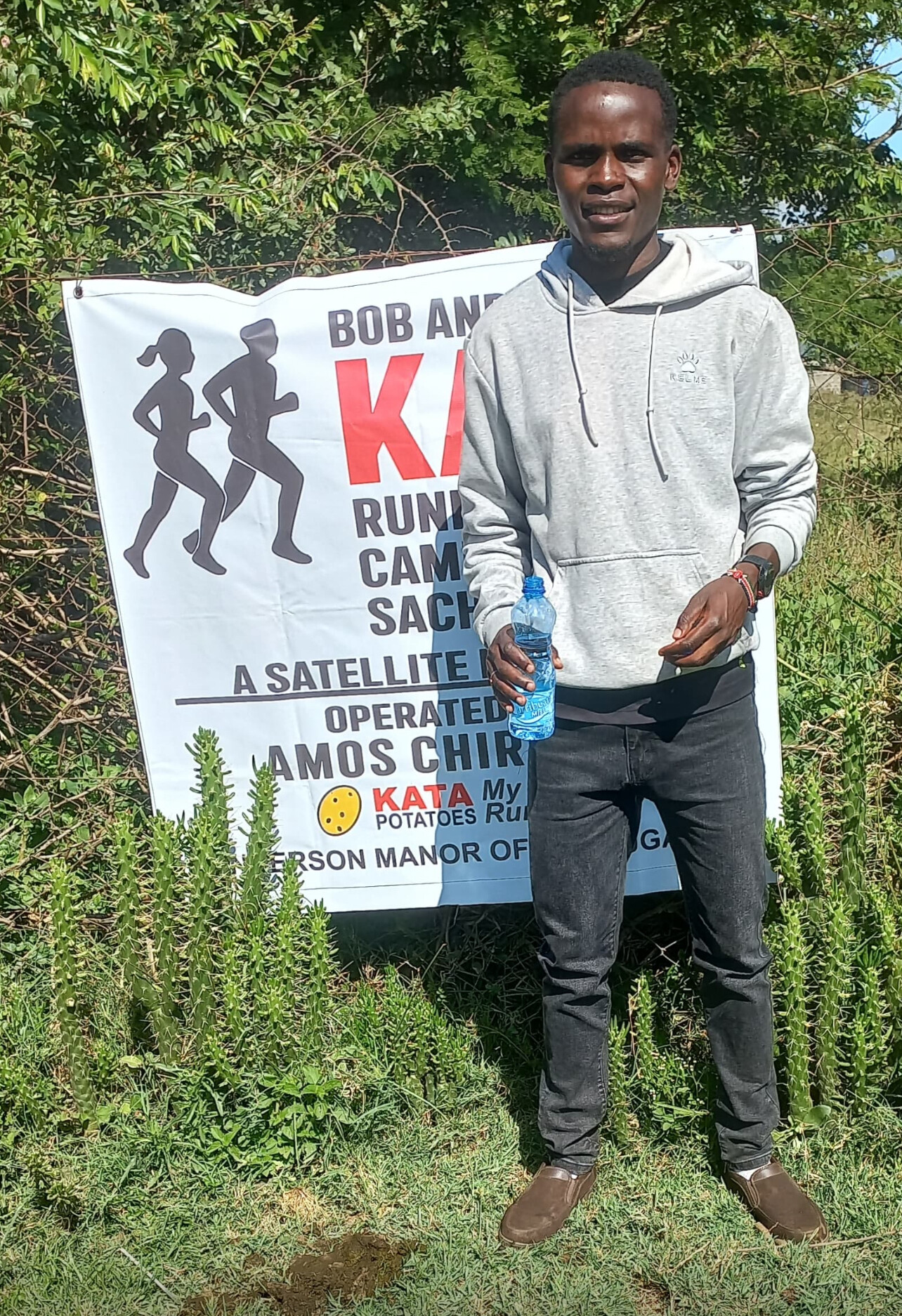
• Elizabeth Wambui, who joined just two months ago, cut her 5K time from 19:00 to 17:35 at the same event.
Amos himself remains in strong competitive shape, with personal bests of 30:51 (10K) and 14:32 (5K).
“I want to build champions — not just athletes who run fast, but athletes who think beyond medals,” he says.
Farming Hope: The KATA Potato Project
Alongside athletics, the Sachang’wan camp thrives on another discipline — agricultural sustainability. Inspired by Bob Anderson’s belief in empowering athletes for life beyond competition, Amos integrated potato farming into his training model.
He began with two acres of KATA potatoes, a move that initially drew laughter from locals.
“At first, people thought I was crazy,” he recalls. “They said farming was a step backward for an athlete. Now they’re copying me.”
Today, the farm helps feed the athletes, generates income for camp operations, and inspires local farmers — many now shifting from maize to potatoes after seeing his success.
“Athletes must think about life after running,” Amos says. “This program lets us build something real, not just chase medals.”
Training Champions, Growing Futures
With schools now closed, Amos plans to recruit junior athletes from nearby villages — guiding them early and keeping them away from idleness and drugs.
“Talent is going to waste in villages like ours because nobody guides young runners. I want to change that,” he says.
His long-term dream is to build dormitories, expand training facilities, and turn KATA Sachang’wan into a full-fledged center of excellence — powered by athletics and farming.
“Bob Anderson’s Vision Is Working”
Amos believes that KATA is redefining the future of Kenyan athletics.
“This is more than running,” he says. “Bob Anderson’s program teaches us responsibility, teamwork, leadership, and self-reliance. We’re not waiting for sponsors — we’re building ourselves.”
From the cold ridges of Sachang’wan overlooking Menengai Crater, a quiet revolution is growing — one built on sweat, soil, and belief. Here, potatoes fuel champions, and running fuels dreams.
And at the heart of it all stands a young leader — stopwatch in one hand, hoe in the other — cultivating both athletes and a future for Kenya.
(10/20/2025) ⚡AMPby Robert Kibet

Shure Demise Claims Third TCS Toronto Waterfront Marathon Title
Ethiopia’s Shure Demise made history Sunday by winning her third TCS Toronto Waterfront Marathon, pulling away just after halfway and never looking back. Despite warm, windy, and humid conditions, she crossed the line in 2:21:03, the second-fastest time of her career—just 19 seconds shy of the course record set last year by compatriot Waganesh Mekasha.
Demise’s performance marks a full-circle moment. Ten years ago, at just 19, she ran her lifetime best of 2:20:59 in Dubai. Since then, she has earned podium finishes at the Tokyo (2019) and Chicago (2018) marathons, placed 5th at the 2017 World Championships, and captured back-to-back Toronto wins in 2015 and 2016. Sunday’s victory signals a strong comeback after giving birth to her daughter two years ago.
“I am very happy—it is more than what I expected,” said Demise. “I trained well and was confident I would do well and win. From 20 km I was running by myself.”
Earlier this year, Demise also won the Milan Marathon in 2:23:31, reinforcing her return to world-class form. Betty Chepkorir of Kenya finished second in 2:23:45, while Almaz Kebebe of Ethiopia took third in 2:26:40.
The women’s race was briefly disrupted when three Ethiopian runners mistakenly followed the half-marathon course, but Demise was far ahead and unaffected.
Kenyan Men Sweep the Podium
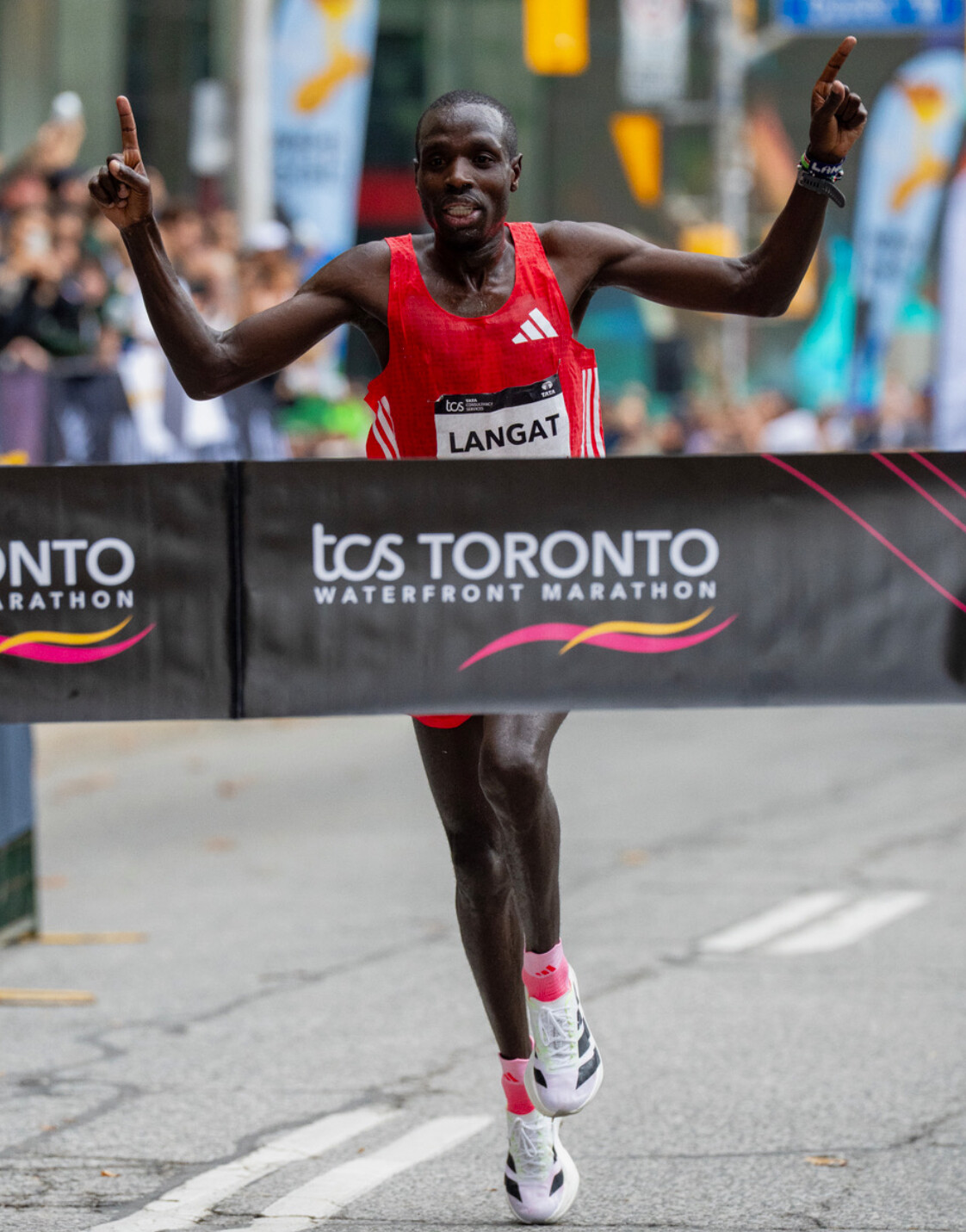
In the men’s race, Kenya scored a clean sweep. Leonard Langat broke away from a lead pack with 4 km remaining to win in 2:08:15. Noah Kipkemboi, third last year, improved to second in 2:08:24, while Sila Kiptoo finished third in 2:08:44.
“At 38 km I was ready to push, and I went,” said Langat. “It was hot, but I felt good and confident.”
Canadian Titles for Hannah and Flanagan
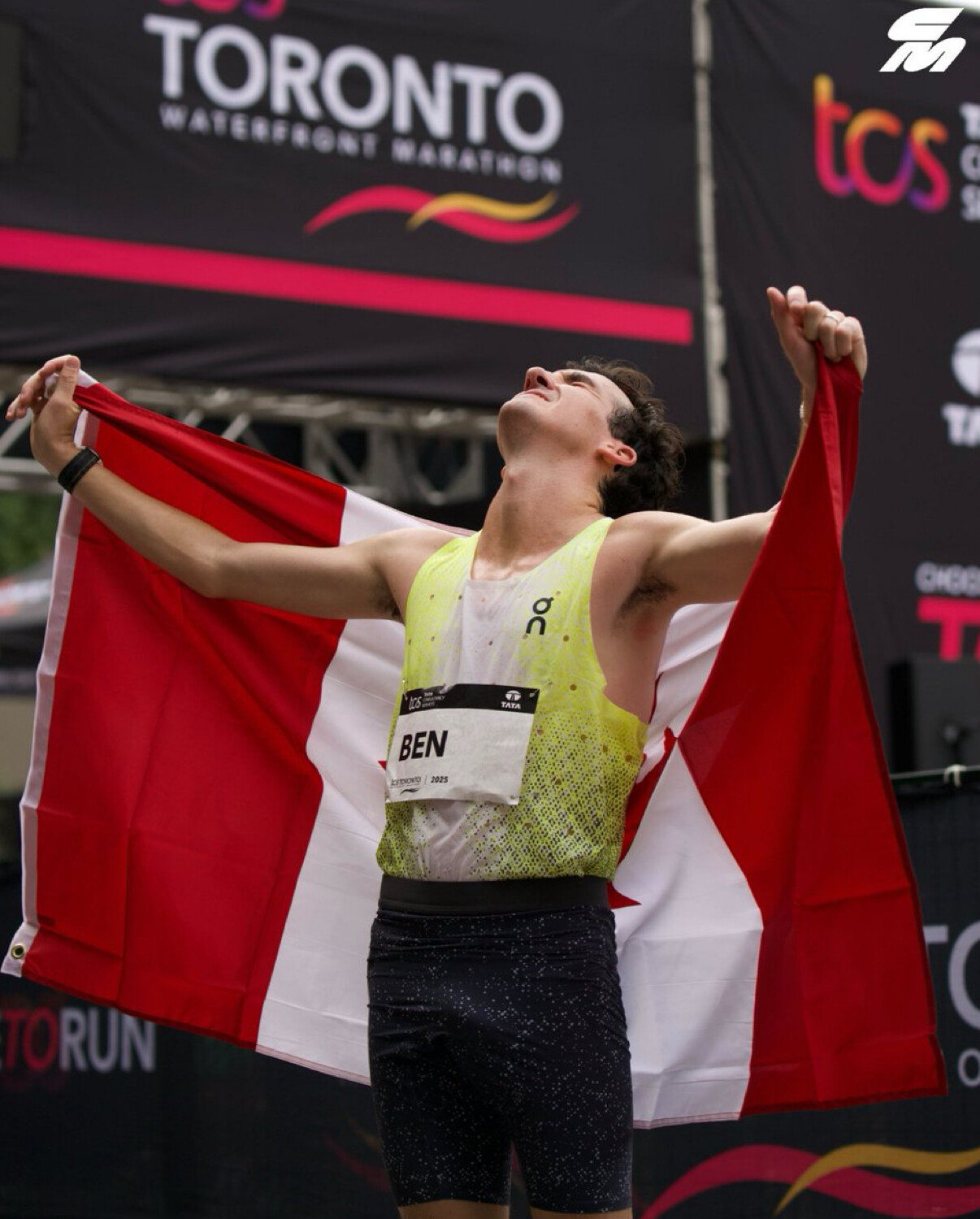
The Canadian Marathon Championships, held concurrently, saw Rachel Hannah, 39, win her first national title in 2:33:47. “It’s been a dream of mine to win these championships,” she said.
Ben Flanagan captured the men’s Canadian crown in his marathon debut, finishing in 2:15:39 ahead of Philippe Parrot-Migas (2:17:15) and Andrew Alexander (2:18:15).
“The last 7 km were brutal, but I finished strong,” said Flanagan, a 2024 Olympian over 5,000 m. “This is a new chapter for me. Now it’s time to catch up with the big dogs.”
(10/19/2025) ⚡AMPby Paul Gains

TCS Toronto Waterfront Marathon
The Scotiabank Toronto Waterfront Marathon, Half-Marathon & 5k Run / Walk is organized by Canada Running Series Inc., organizers of the Canada Running Series, "A selection of Canada's best runs!" Canada Running Series annually organizes eight events in Montreal, Toronto and Vancouver that vary in distance from the 5k to the marathon. The Scotiabank Toronto Waterfront Marathon and Half-Marathon are...
more...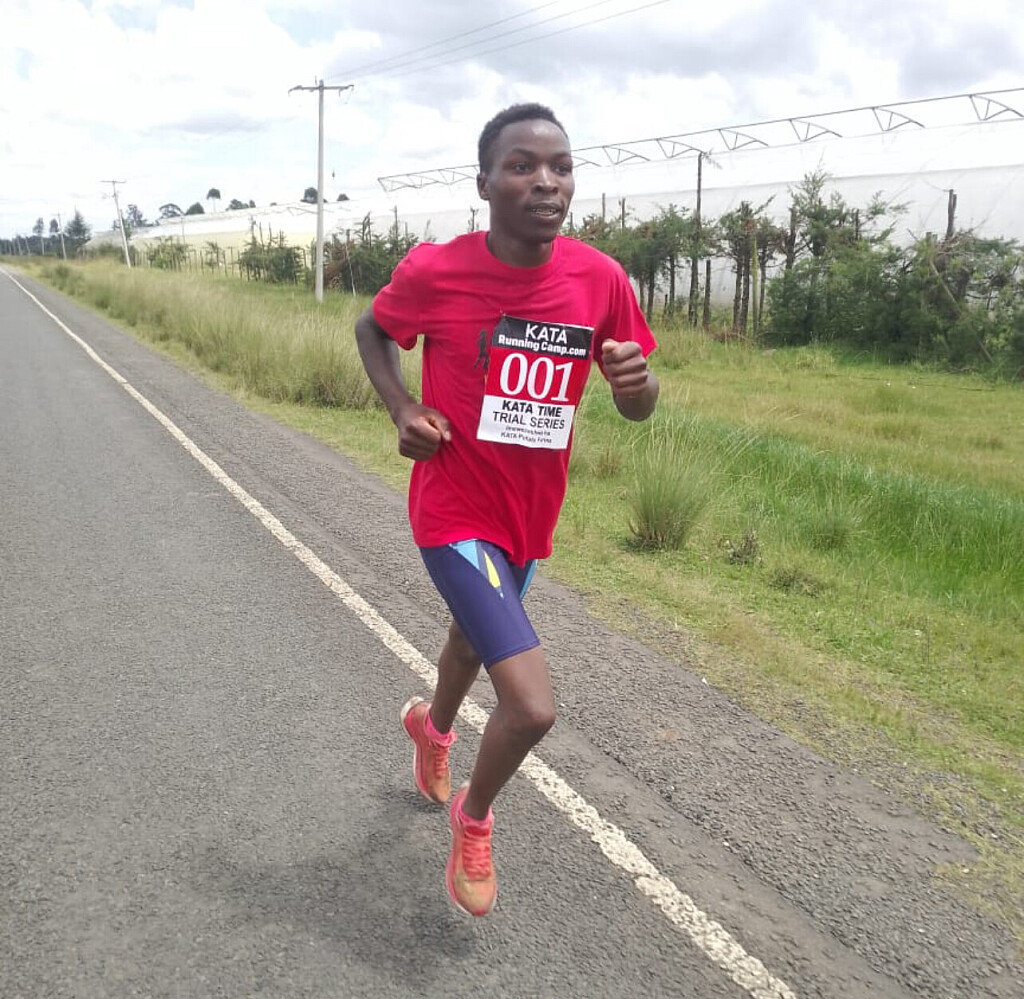
Rising Talent Shines at KATA Nyandarua 10K Time Trial
The cool high-altitude air of Nyandarua — sitting at approximately 2,400 meters (7,874 feet) above sea level — provided a challenging yet inspiring setting on October 15, 2025, as athletes from Bob Anderson’s KATA Running Camp – Nyandarua (K04) tested their endurance in a 10K time trial. Under the direction of Coach and Operator Peter Njoroge, the runners displayed exceptional commitment, focus, and steady improvement — hallmarks of the KATA philosophy.
Leading the charge was Peter Kamau (Bib 020), who crossed the finish line in 31:45, followed closely by James Githengu (Bib 061) in 32:15. Antony Kingori (Bib 009) secured third with 34:20, while Moses Maina (Bib 091) and Hillary Mwangi (Bib 098) rounded out the top five. Despite the thin air and rolling course, several athletes achieved personal bests, proving the benefits of consistent altitude training.
Coach Njoroge commended his team, saying, “Our athletes are learning that consistency and discipline create results. Every trial brings them closer to championship form.”
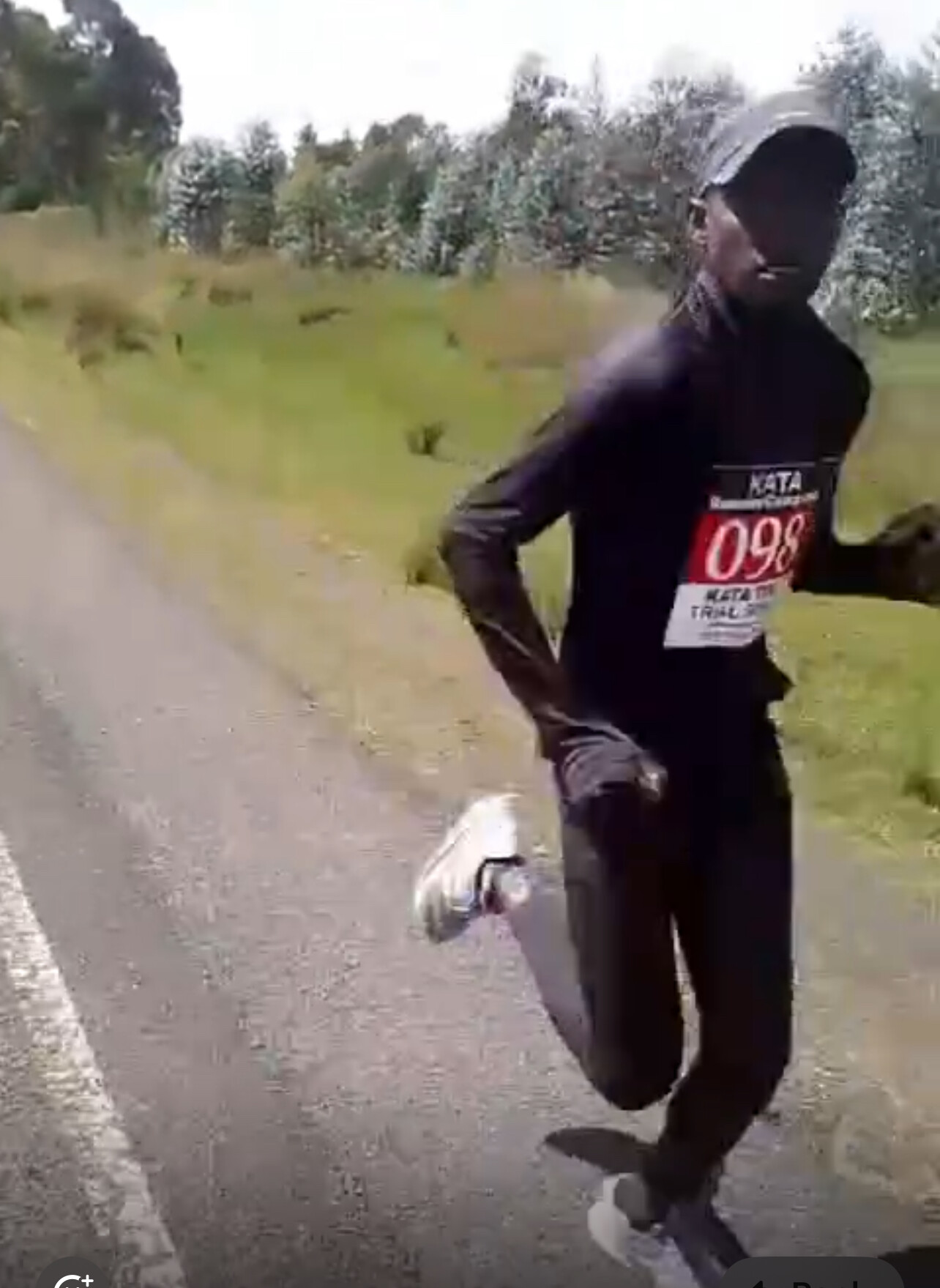
KATA Founder Bob Anderson added, “The Nyandarua KATA family continues to impress. It’s not just about fast times — it’s about building the foundation of champions through effort and teamwork.”
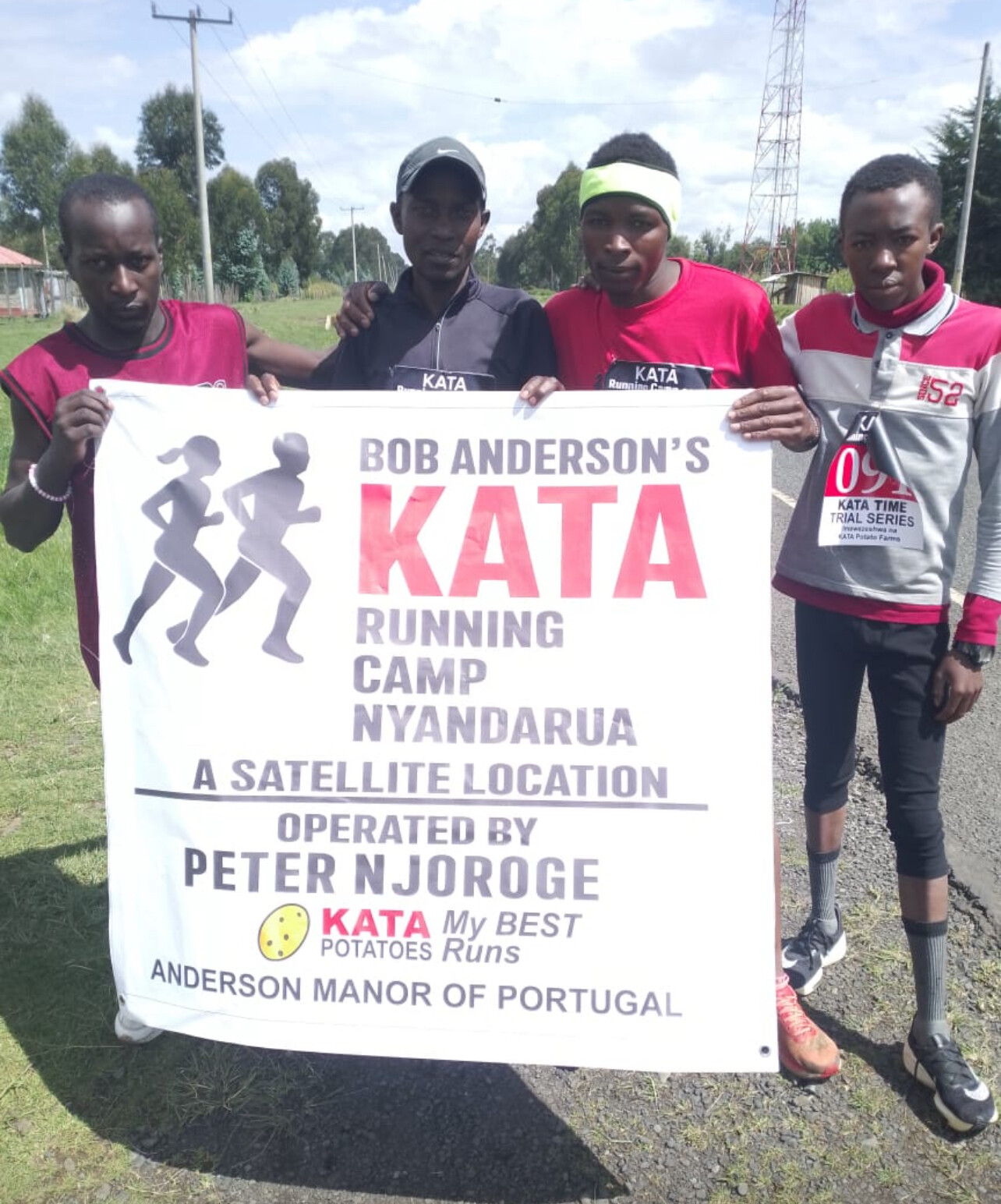
10K Results – October 15, 2025
1. Peter Kamau – Bib 020 – 31:45
2. James Githengu – Bib 001 – 32:15
3. Antony Kingori – Bib 009 – 34:20
4. Moses Maina – Bib 091 – 34:50
5. Hillary Mwangi – Bib 098 – 35:10
6. Evans Habungu – Bib 090 – 35:50
7. James Mwangi – Bib 008 – 37:10
8. Joseph Kamansa – Bib 010 – 37:52
9. Peter Ikimani – Bib 005 – 39:25
10. Samuel Maina – Bib 092 – 40:23
Located in Kenya’s central highlands, the KATA Running Camp – Nyandarua (K04) is part of Bob Anderson’s expanding KATA network, which blends elite running development with sustainable potato farming — a model symbolizing endurance, community, and purpose.
KATA Potatoes — The Fuel of Champions
Operated by Peter Njoroge
(10/18/2025) ⚡AMPby Boris Baron

Chasing New York: What to Watch at the 2025 TCS New York City Marathon
Every November, the streets of New York City transform. Five boroughs become a stage. Dreams meet asphalt.
The 2025 TCS New York City Marathon is fast approaching — and for runners, coaches, and fans alike, it remains one of the most electric events on the global running calendar.
The Big Picture
• Date: Sunday, November 2, 2025

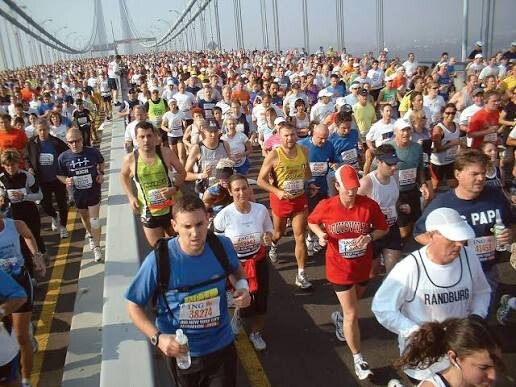
• Field size: More than 55,000 runners representing over 130 nations will take on the 26.2-mile journey from Staten Island to Central Park.
• Defending champions: Abdi Nageeye (Netherlands) and Sheila Chepkirui (Kenya) return to defend their crowns.

• Debut stars: Marathon legend Eliud Kipchoge and Olympic champion Sifan Hassan will make their long-awaited New York debuts — a storyline that has the running world buzzing.
• Classic route: The course again threads through all five boroughs, starting at Fort Wadsworth on Staten Island, crossing the Verrazzano-Narrows Bridge, and finishing in Central Park.
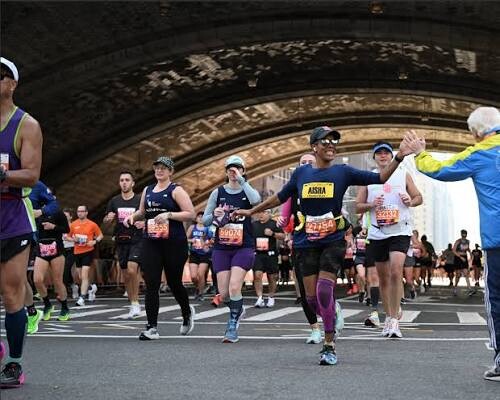
• Sustainability focus: Organizers at New York Road Runners (NYRR) continue to expand environmental initiatives, including recyclable aluminum water bottles and reduced single-use plastics.
Course Records
• Men’s Record: 2:04:58 – Tamirat Tola (2023)
• Women’s Record: 2:22:31 – Margaret Okayo (2003)
Both marks remain tough to challenge on New York’s rolling, bridge-laden course — but with Kipchoge, Chebet, and Nageeye in the men’s field, and Hassan, Obiri, and Lokedi among the women, the potential for history is very real.
Men’s Elite Highlights
• Eliud Kipchoge (Kenya) – two-time Olympic champion, 2:01:09 PB, running NYC for the first time.
• Abdi Nageeye (Netherlands) – defending champion and Olympic silver medalist.
• Evans Chebet (Kenya) – two-time Boston Marathon champion.
• Benson Kipruto (Kenya) – Chicago 2022 winner.
• Albert Korir (Kenya) – former NYC champion.
• Joe Klecker (USA) – U.S. Olympian making his marathon debut.
• Hillary Bor (USA) – U.S. steeplechase champion transitioning to the roads.
• Charles Hicks (USA) – NCAA cross-country champion now turning professional.
Women’s Elite Highlights
• Sifan Hassan (Netherlands) – Olympic champion, winner in London (2023) and Chicago (2024).
• Hellen Obiri (Kenya) – Boston 2023 and NYC 2023 champion.
• Sharon Lokedi (Kenya) – NYC 2022 winner, still a local favorite.
• Sheila Chepkirui (Kenya) – defending NYC champion.
• Emily Sisson (USA) – current American marathon record holder (2:18:29).
• Molly Seidel (USA) – Tokyo Olympic bronze medalist.
• Fiona O’Keeffe (USA) – 2024 U.S. Olympic Trials marathon champion.
• Susanna Sullivan (USA) – Top-10 finisher at Boston 2023, consistent national contender.
This year’s field features 49 Olympians and Paralympians, nine past major marathon winners, and 16 medalists from Olympic or World Championship events — arguably the deepest lineup in New York history.
What Makes New York Unique (and Brutal)
• Rolling terrain and bridges: The Verrazzano, Pulaski, Queensboro, and Willis bridges each sap rhythm and energy.
• Crowd power: Two million spectators line the course, creating unmatched atmosphere — and volume.
• Late-season unpredictability: Weather can swing from cold drizzle to crisp fall perfection.
• Tactical racing: With its uneven pacing demands, NYC rewards strategy over pure speed.
Storylines to Watch
• Kipchoge’s debut: The marathon GOAT takes on the sport’s loudest stage. Can he master New York’s relentless hills and twists?
• Hassan’s bold quest: Coming off London and Chicago wins, can she complete the trifecta in her first NYC appearance?
• Lokedi vs. Obiri: The Kenyan duo continue their fierce rivalry on familiar ground.
• Nageeye’s defense: Last year’s champion faces his toughest test yet with Chebet and Kipruto in pursuit.
• American charge: Sisson, Seidel, O’Keeffe, and Sullivan lead the most complete U.S. women’s team in years — while Klecker and Bor look to ignite the next chapter for American men’s marathoning.
• Record watch: Tola’s 2:04:58 may finally be tested, and Okayo’s 22-year-old mark could fall if conditions align.
For Runners and Coaches
• Train the bridges. Practice long tempo runs that mimic New York’s undulating rhythm.
• Respect the pace. The roar of Brooklyn can trick even the best into going out too fast.
• Fuel flexibly. NYRR’s eco-station setup may differ from other majors — plan accordingly.
• Stay mentally sharp. The final 10 K through Central Park can break anyone unprepared for its hills.
• Layer smartly. Start slightly chilled; the crowds and effort will warm you fast.
The Bottom Line
The 2025 TCS New York City Marathon blends star power, unpredictability, and history like no other race. From Kipchoge’s long-awaited debut to the fiercest women’s field ever assembled in New York, every mile promises drama.
For runners chasing personal bests, and for millions of spectators lining the streets or watching from afar, November 2 will again remind us why this marathon is more than a race — it’s a celebration of endurance, spirit, and the human story that unfolds across 26.2 miles of the world’s greatest city.
(10/16/2025) ⚡AMPby Boris Baron
TCS New York City Marathon
The first New York City Marathon, organized in 1970 by Fred Lebow and Vince Chiappetta, was held entirely in Central Park. Of 127 entrants, only 55 men finished; the sole female entrant dropped out due to illness. Winners were given inexpensive wristwatches and recycled baseball and bowling trophies. The entry fee was $1 and the total event budget...
more...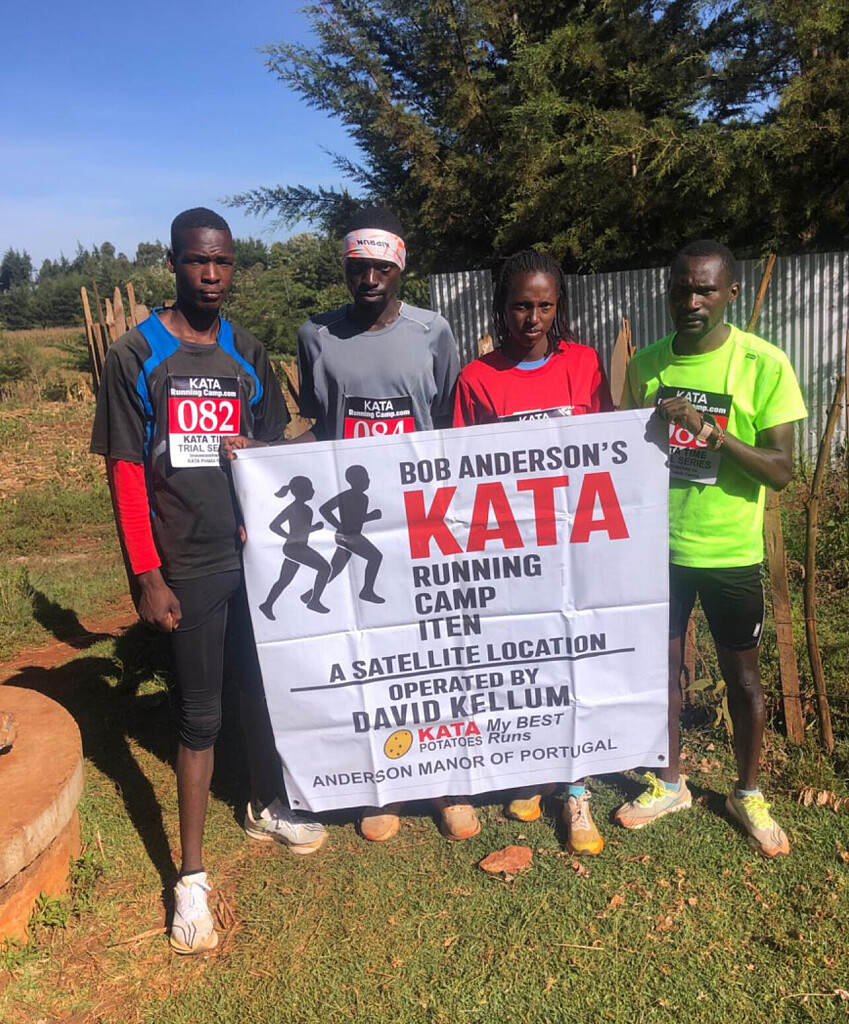
Champions in the Making: KATA Iten Camp Time Trial Highlights
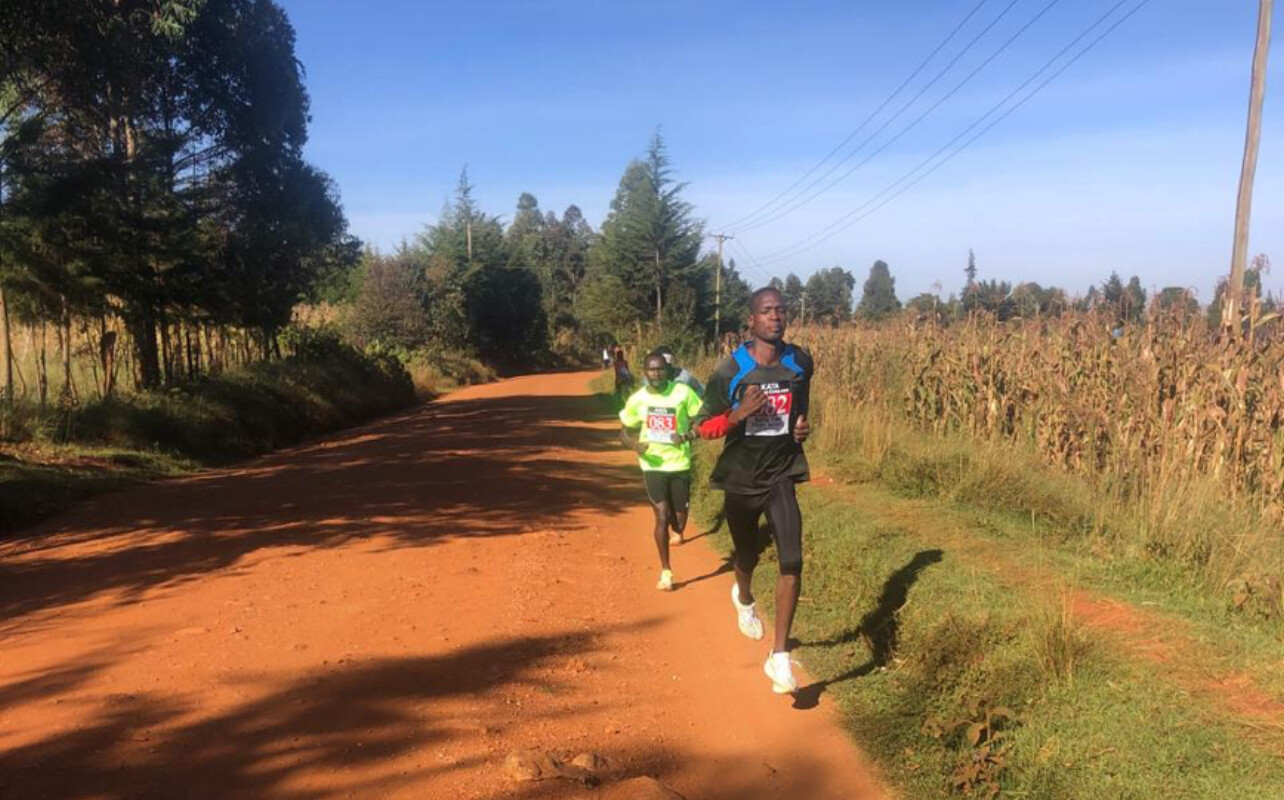
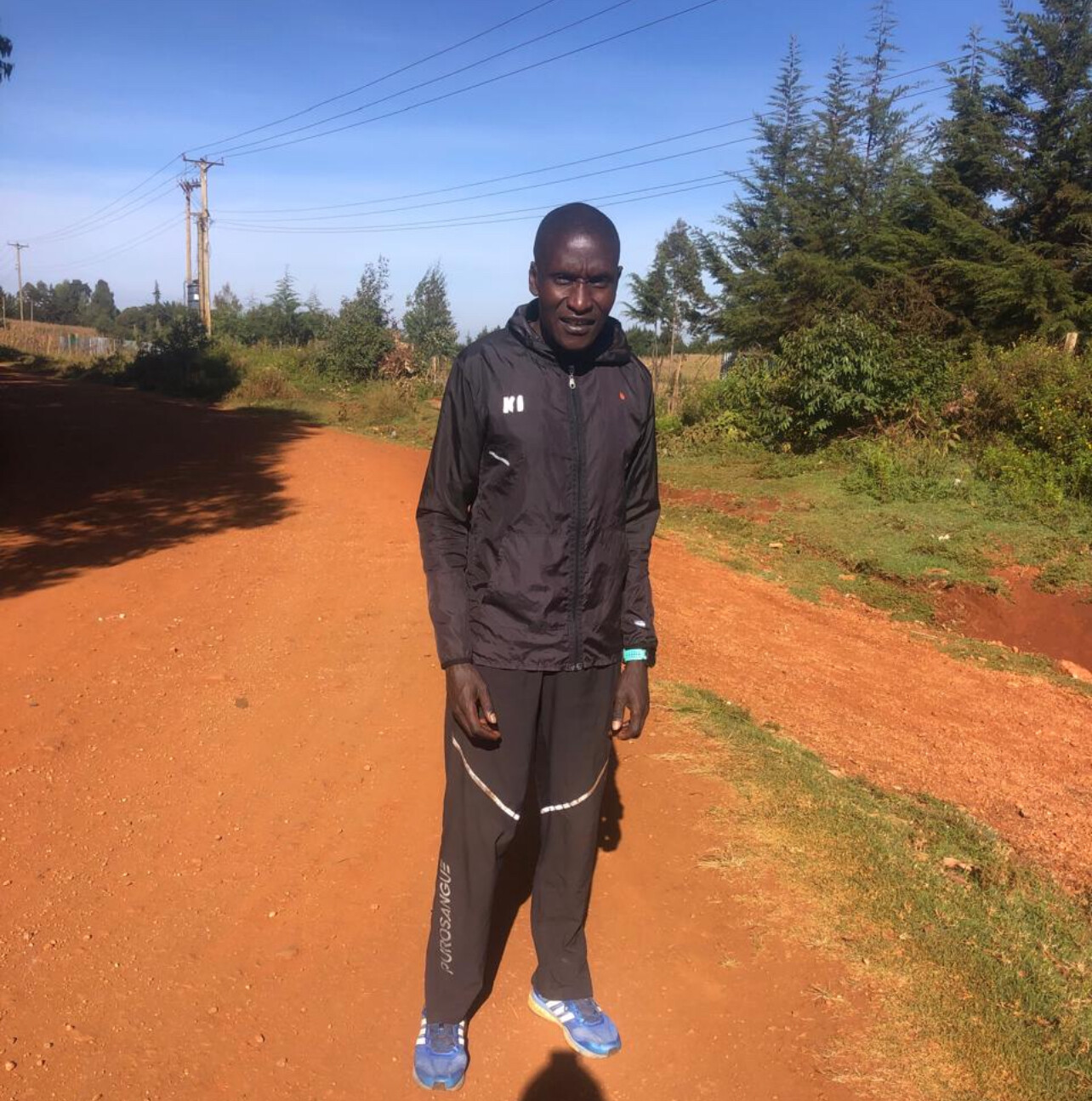
The KATA Iten Camp held its latest time trial under ideal running conditions, with both the 10K and 5K distances producing impressive performances and multiple personal bests. Coach David Kellum’s athletes demonstrated exceptional progress and consistency, reflecting the strong training foundation established at Camp #8.
Men’s 10KM Results
1. Amon Kipchirchir – 29:30.59
2. Linus Kangogo – 29:35.20
3. Elkana Barningo – 29:55.05
4. Moses Leparakwo – 30:20.08
Women’s 10KM Results
1. Betty Chesang – 35:45.01
2. Sharon Chesir – 35:58.32
3. Teresia Lenges – 36:06.33
4. Vivian Ololpapit – 36:40.47
Men’s 5KM Results
1. Amon Kipchirchir – 15:30.11
2. Isack Kipchirchir – 15:24.55
3. Cornelius Oloisa – 15:30.56
4. Linus Kangogo – 15:58.30
Women’s 5KM Results
1. Betty Chesang – 16:55.30
2. Cynthia Rono – 16:57.21
3. Vivian Nengai – 17:45.31
4. Sharon Chesir – 17:46.55
Date: October 16, 2025
Coach and Operator: David Kellum
Location: Iten, Kenya
Summary:
The Iten-based KATA athletes delivered an outstanding showing, highlighted by strong double performances from Amon Kipchirchir and Betty Chesang, who both dominated their respective 10K and 5K events. Coach David Kellum continues to build one of the most promising training groups in the KATA network, with athletes steadily improving through disciplined training and consistent time trial participation.
(10/16/2025) ⚡AMPby Boris Baron
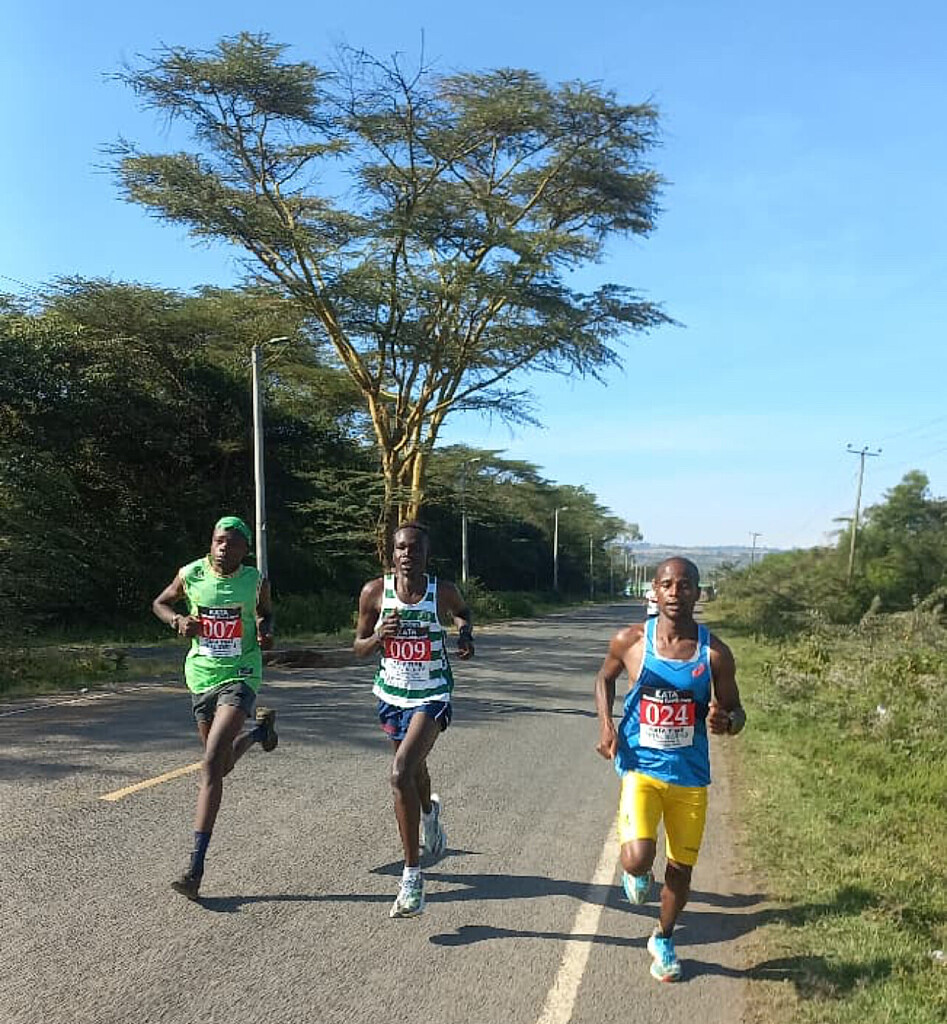
KATA 07 Sachangwan Time Trial Produces Personal Bests in Perfect Conditions
Favorable weather and strong determination made today’s KATA 07 Sachangwan Time Trial October 15 is one to remember. Every athlete recorded a personal best on the challenging 10 km and 5 km routes, showing how much progress the camp has made under the leadership of Coach and Camp Operator Amos Chirchir.
Leading the men’s 10 km field, Weldon Langat delivered a superb run, crossing the line in 30 minutes 16 seconds — a new personal best. The 19-year-old improved by an impressive 32 seconds from his previous time trial on the Salgaa–Rongai route, demonstrating both consistency and growth. Hot on his heels, Vincent Kemboi finished second in 31:00, followed by Emmanuel Bor in 31:54 and Benjamin Kibet in 33:34.
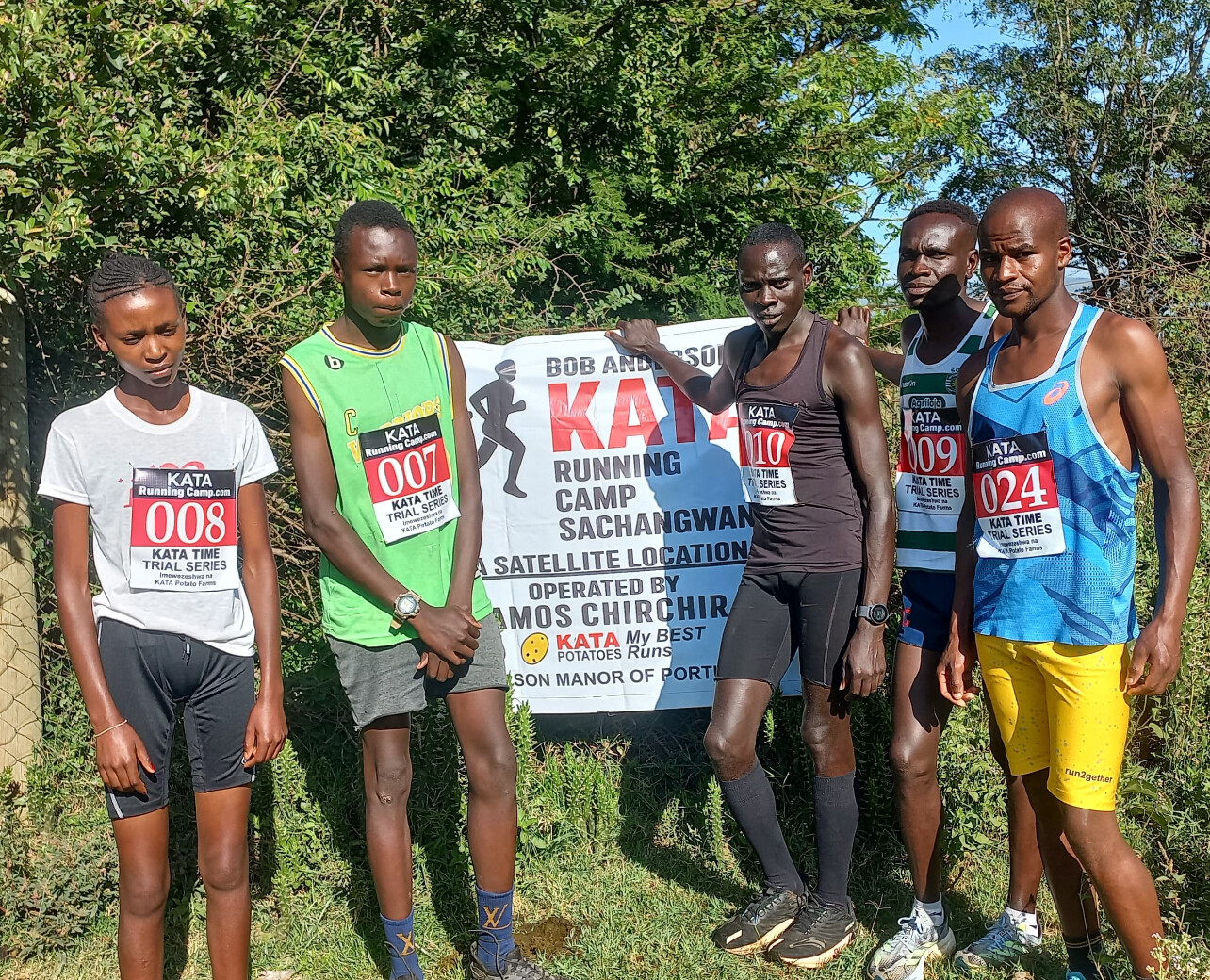
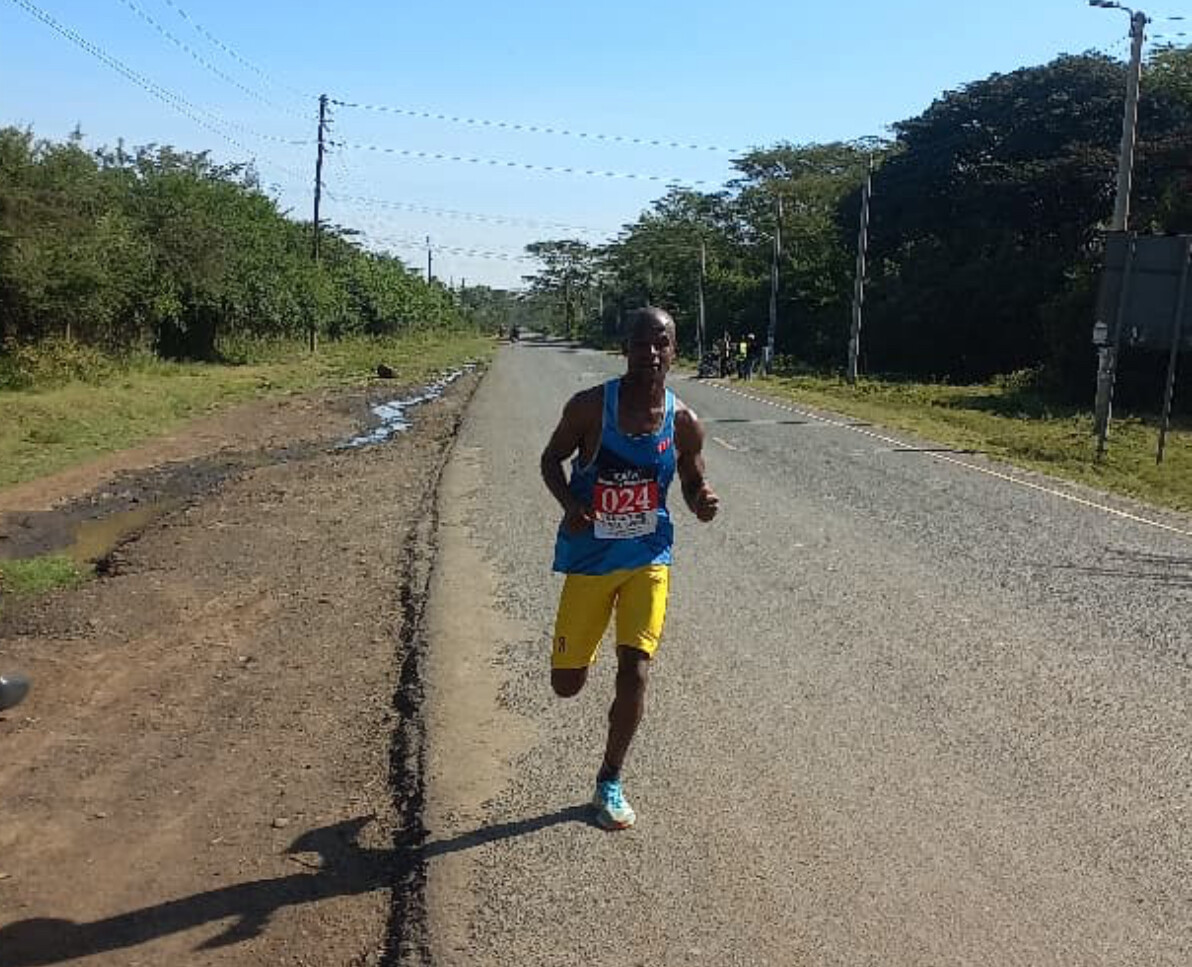
All four men posted lifetime bests, a testament to their disciplined training and steady improvement.
In the women’s 5 km event, Elizabeth Wambui dominated with a powerful performance, clocking 17:35 at age 20 to claim victory in style. Her run capped a day of inspiration and motivation for the entire Sachangwan training group.
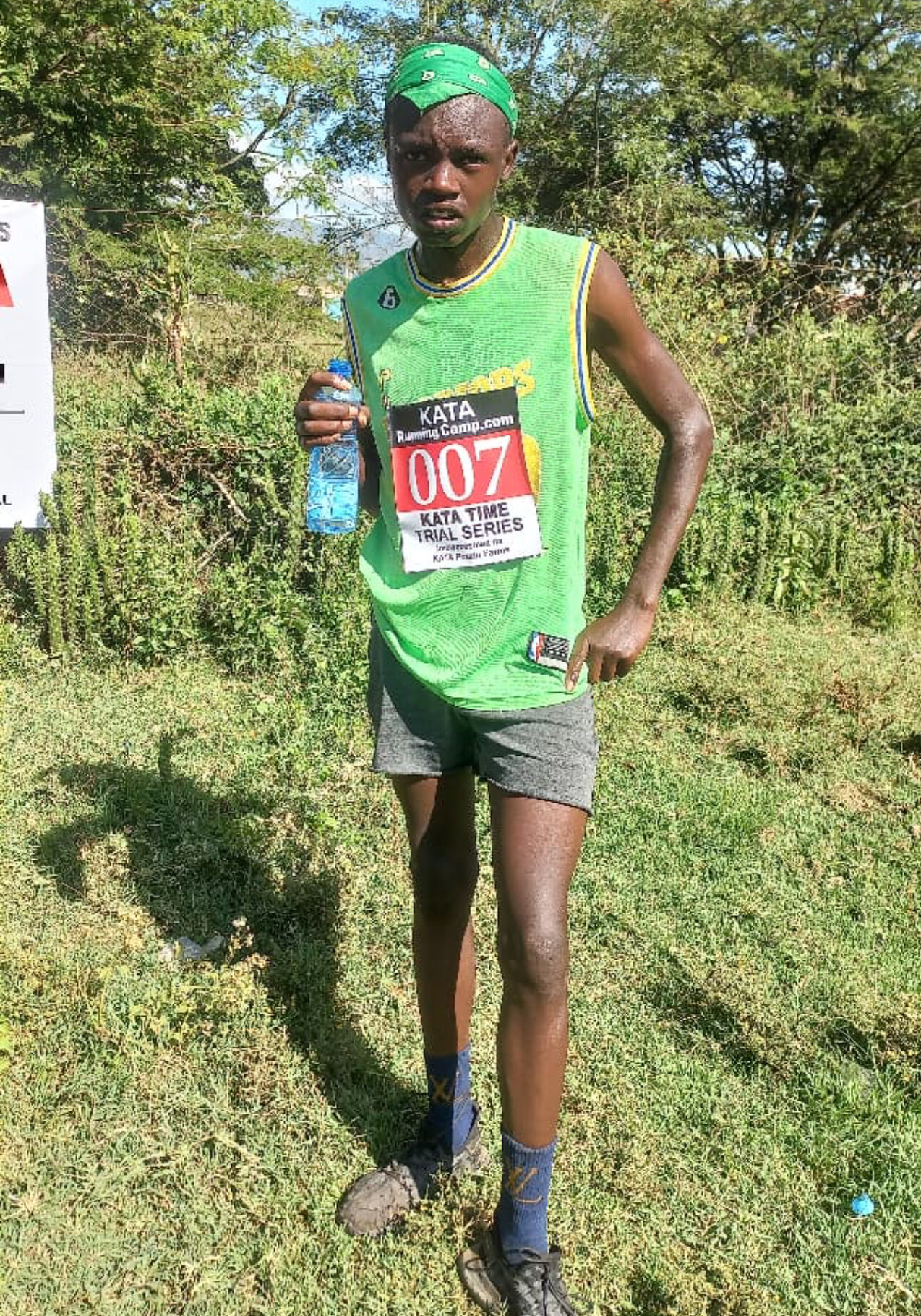
Official Results – KATA 07 Sachangwan Time Trial (October 15, 2025)
MEN – 10 KM
1. Weldon Langat – 30:16 (Age 19, Bib No. 024, 10 km)
2. Vincent Kemboi – 31:00 (Age 32, Bib No. 009, 10 km)
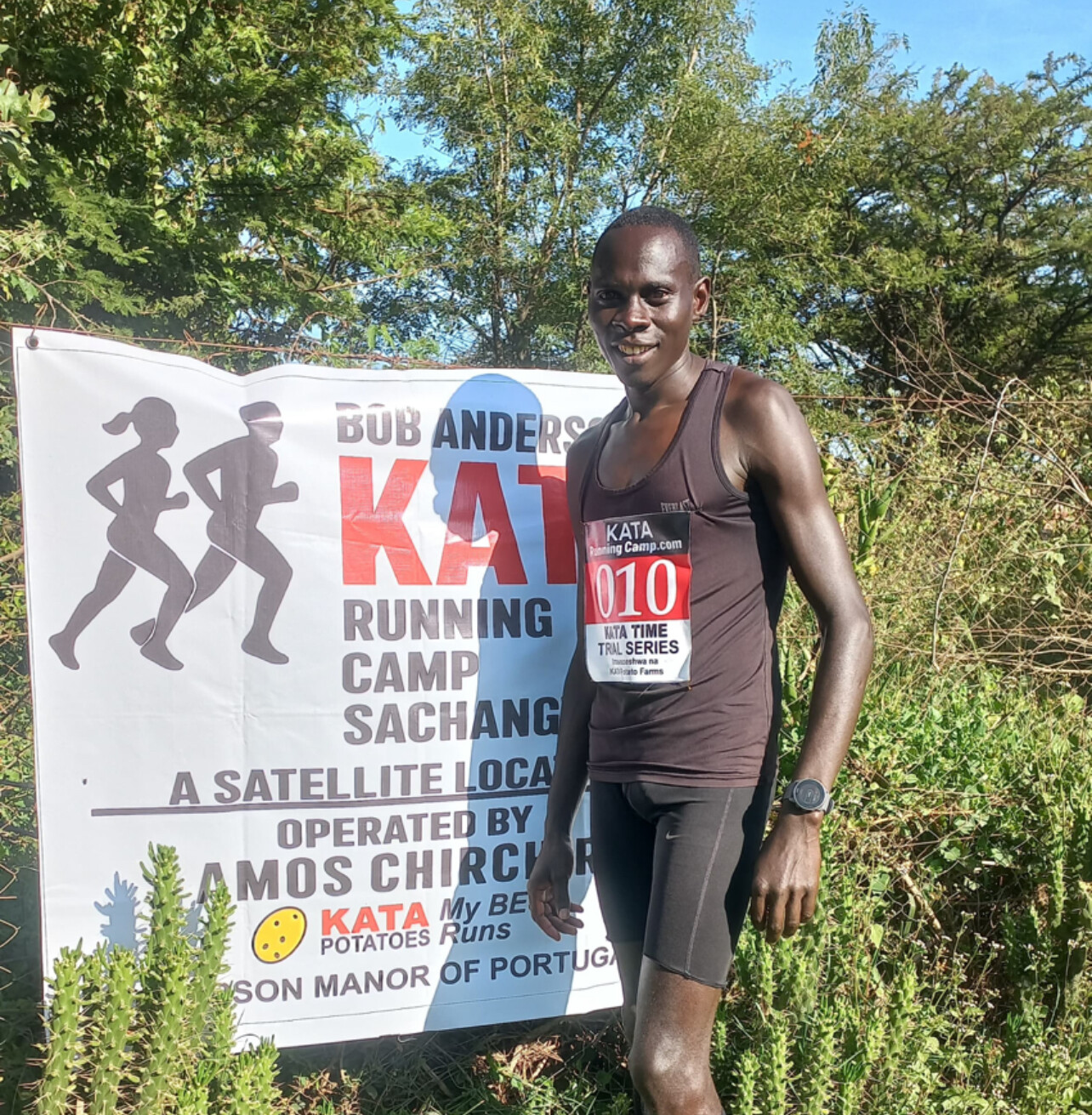
3. Emmanuel Bor – 31:54 (Age 25, Bib No. 010, 10 km)
4. Benjamin Kibet – 33:34 (Age 18, Bib No. 007, 10 km)
WOMEN – 5 KM
1. Elizabeth Wambui – 17:35 (Age 20, Bib No. 008, 5 km)
Coach Amos Chirchir praised his team’s progress, saying, “Every athlete achieved a personal best today. That shows the hard work and commitment behind our program. At KATA, we believe in developing champions through consistency, teamwork, and opportunity.”
He also expressed gratitude to KATA Founder and Director Bob Anderson and Catherine Anderson for their continued support, which has empowered athletes across Kenya through both training and farming initiatives.
The KATA 07 Sachangwan Camp continues to embody the KATA vision — Empowering Athletes. Growing Futures.
(10/15/2025) ⚡AMP
by Boris Baron
KATA Sprinters Kiambu Camp #16 Delivers Strong Performances in October Time Trials
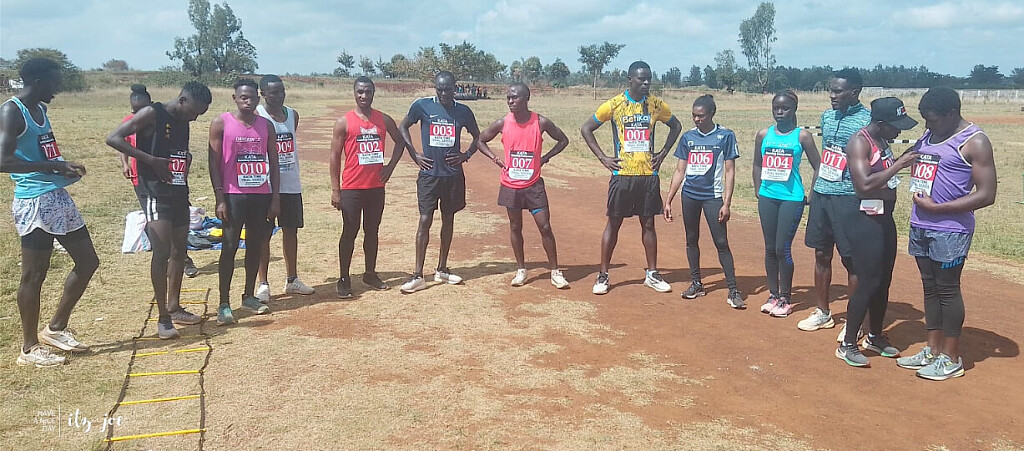
The October 15 time trials at KATA Sprinters Kiambu Camp No.16 delivered another strong performance from the athletes, confirming steady progress under the leadership of Coach Julius Migwi. The camp, supported by KATA Founder and Director Bob Anderson and Catherine Anderson, continues to strengthen Kenya’s growing sprint culture.
Favorable weather and excellent organization helped all participants perform well across the 60-meter and 400-meter events. Among the men, Moses Solonka (age 20) led the 60-meter sprint with a fast 13.0 seconds, followed by Antony Owino in 13.2 seconds. Peterson Matu (age 20) clocked 13.7, while Ezekiel Ngarui finished in 13.8 and Erick Wudi in 13.9.
In the women’s 60-meter event, Sheila Makhungu (age 23) posted a strong 14.3, and Emma Wavinya (age 23) followed closely with 14.8, both showing smooth acceleration and technical improvement.
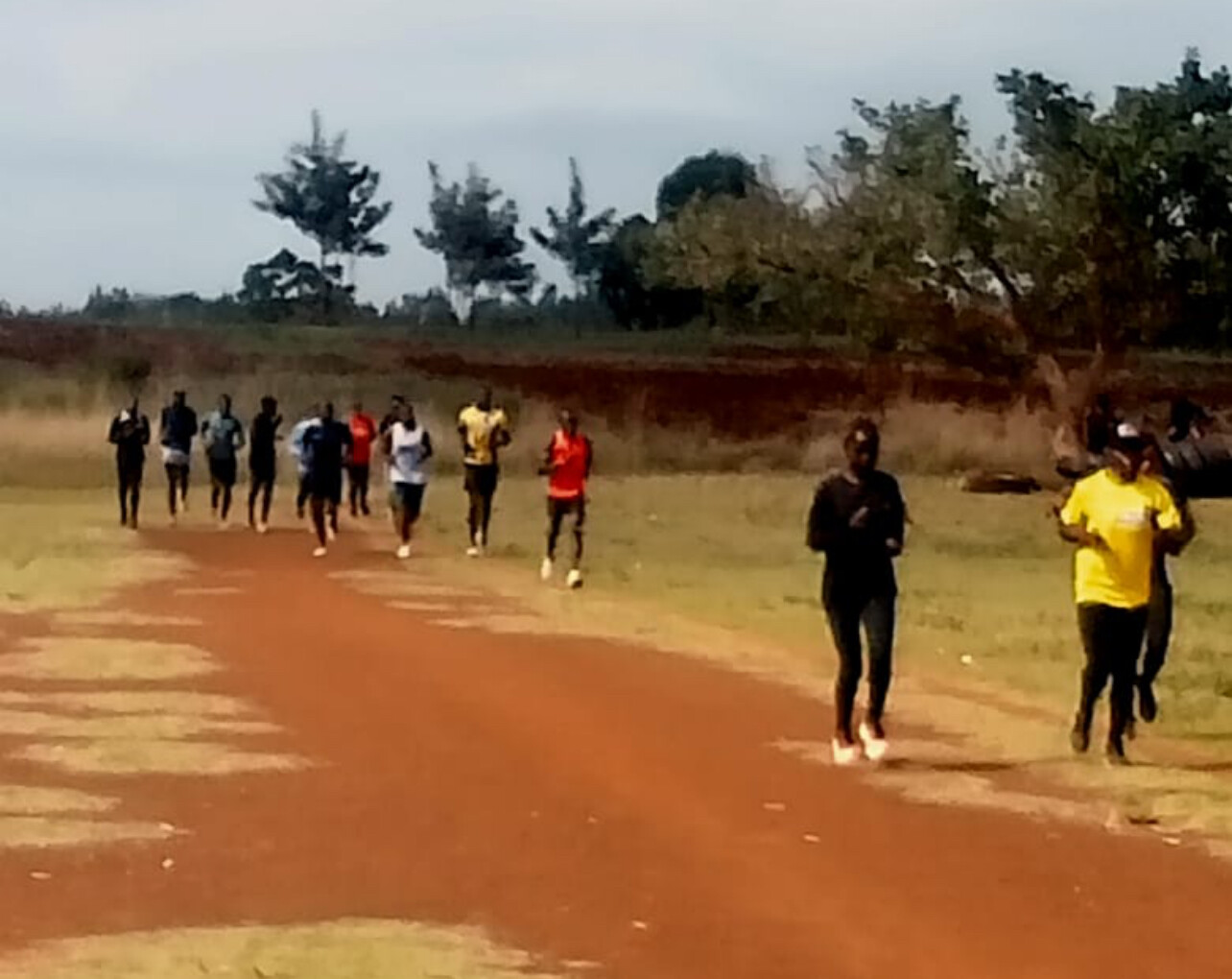
The 400-meter race featured exceptional efforts as Peris Chege (age 36) dominated with 54.2 seconds, setting the mark for others to chase. Edwin Mutuma (age 25) ran 54.8, Joseph Kamau (age 25) finished in 55.9, and Gedion Otieno (age 21) clocked 63.2.
In the women’s 400-meter division, Doreen Waka (age 30) ran 69.0, Ruth Mumbe (age 29) 65.8, and the young Rosemary Mueni (age 18) posted 71.0. Gladys Ngure (age 29) did not start her heat.
Official Results – KATA Sprinters Kiambu Camp No.16 (October 15, 2025)
60m Men
1. Moses Solonka – 13.0 (Age 20, Bib No. 1)
2. Antony Owino – 13.2 (Age 30, Bib No. 2)
3. Peterson Matu – 13.7 (Age 20, Bib No. 4)
4. Ezekiel Ngarui – 13.8 (Age 21, Bib No. 5)
5. Erick Wudi – 13.9 (Age 22, Bib No. 6)
60m Women
1. Sheila Makhungu – 14.3 (Age 23, Bib No. 7)
2. Emma Wavinya – 14.8 (Age 23, Bib No. 8)
400m Mixed
1. Peris Chege – 54.2 (Age 36, Bib No. 9)
2. Edwin Mutuma – 54.8 (Age 25, Bib No. 10)
3. Joseph Kamau – 55.9 (Age 25, Bib No. 11)
4. Gedion Otieno – 63.2 (Age 21, Bib No. 13)
5. Ruth Mumbe – 65.8 (Age 29, Bib No. 15)
6. Doreen Waka – 69.0 (Age 30, Bib No. 14)
7. Rosemary Mueni – 71.0 (Age 18, Bib No. 16)
8. Gladys Ngure – DNS (Age 29, Bib No. 17)
Coach Julius Migwi praised the team’s continued improvement, saying, “Every athlete showed growth and focus today. Our goal remains the same — to become the best sprint camp in Kenya and to inspire the next generation of sprinters.”
He also thanked Bob and Catherine Anderson for their constant encouragement and support in both the training and community programs connected with the KATA movement.
KATA Sprinters Kiambu Camp No.16 continues to prove that with dedication, teamwork, and vision, Kenya’s future in sprinting is bright.
(10/15/2025) ⚡AMPby Boris Baron
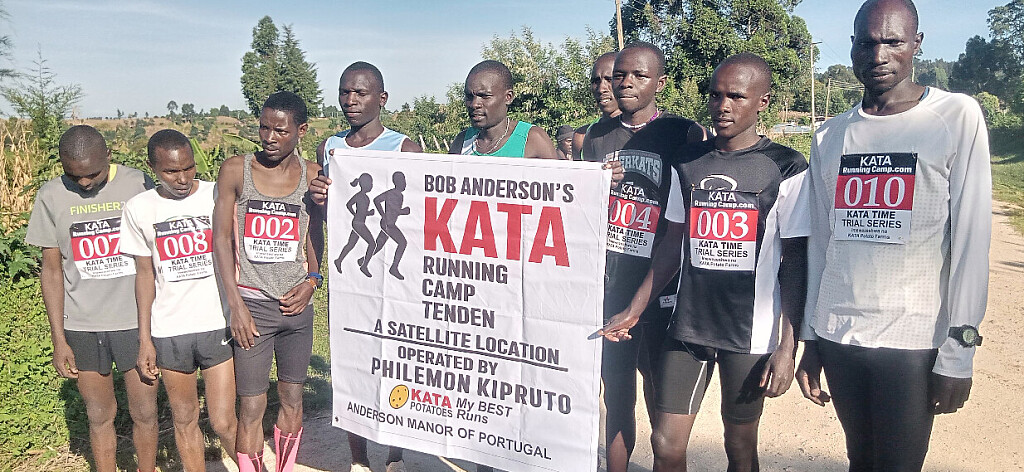
KATA Time Trial #2 — Tenden KATA Running Camp (K09)
The Tenden KATA Running Camp (K09) held its second official KATA Time Trial on October 15, 2025. Despite challenging high-altitude conditions at 2,200 meters, athletes produced a series of solid performances that reflect the steady progress within the KATA system.
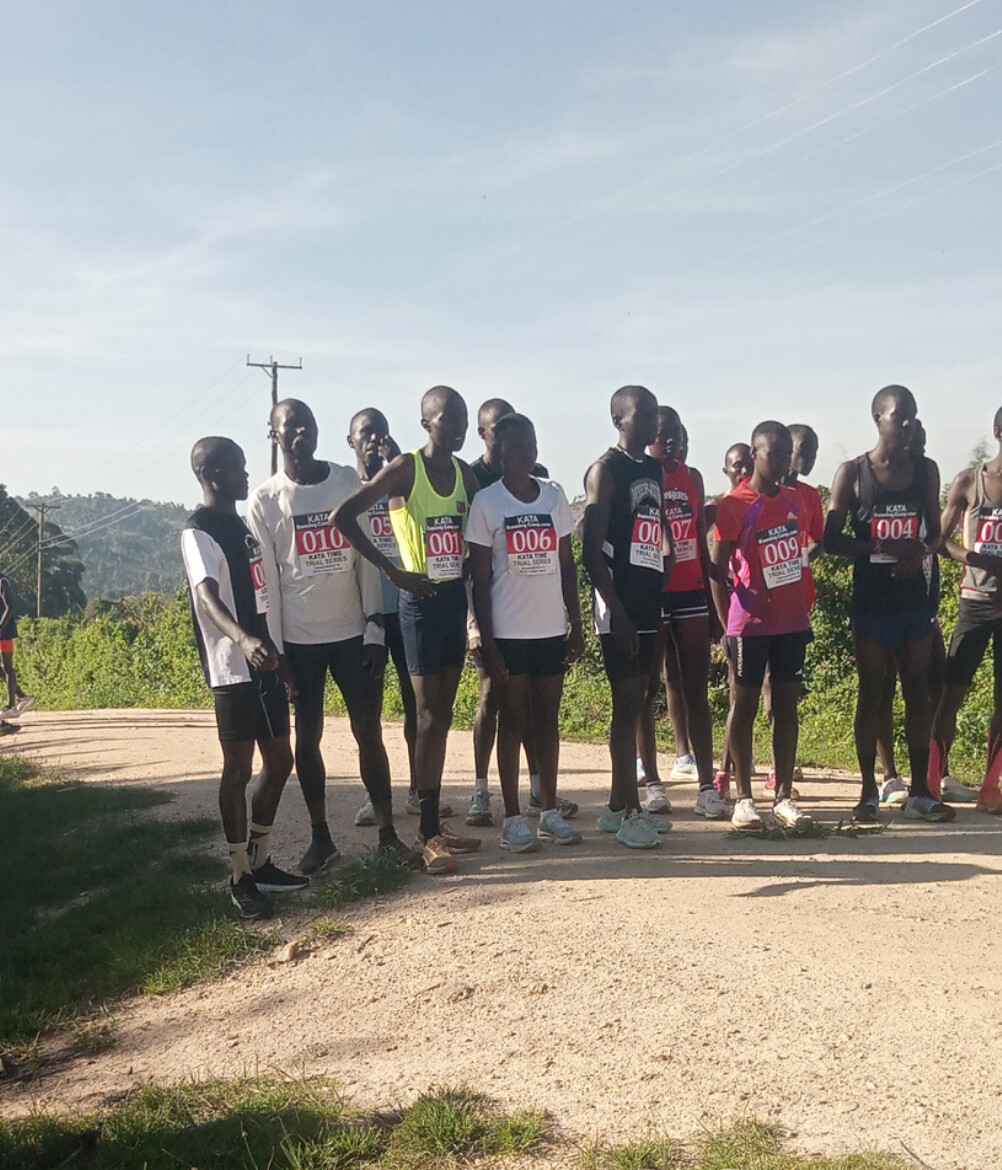
5 KM Men
1. Sammy Kwemoi — 16:20
2. Abraham Kibet — 17:01
3. Nickson Rana — 17:40
4. Emmanuel Kemboi — 18:17
5. Chrispine Korir — 18:33
10 KM Men
1. Duncan Kemei — 31:49
2. Ian Kimutai — 34:05
3. Ezekiel Kipksgei — 34:05
4. Clement Kipkoech — 36:59
Coach Philemon Kipruto, who oversees both the Kapcherop (K01) and Tenden (K09) KATA Camps, commended the group for their dedication and discipline, emphasizing how consistent time trials like this one serve as key benchmarks for future competition readiness.
Date: October 15, 2025
Altitude: 2,200 m
Location: Tenden, Kenya
Coach & Camp Operator: Philemon Kipruto
“Every KATA time trial gives us a clear picture of our athletes’ growth,” said Bob Anderson, Founder and Director of KATA. “Our goal is continuous improvement — pushing for better pacing, endurance, and execution. The Tenden camp is proving that focus and teamwork deliver results.”
The Tenden camp continues to develop a promising roster of young talent, supported by KATA’s integrated training-and-farming model, designed to empower athletes both on the track and in life.
(10/15/2025) ⚡AMPby Boris Baron
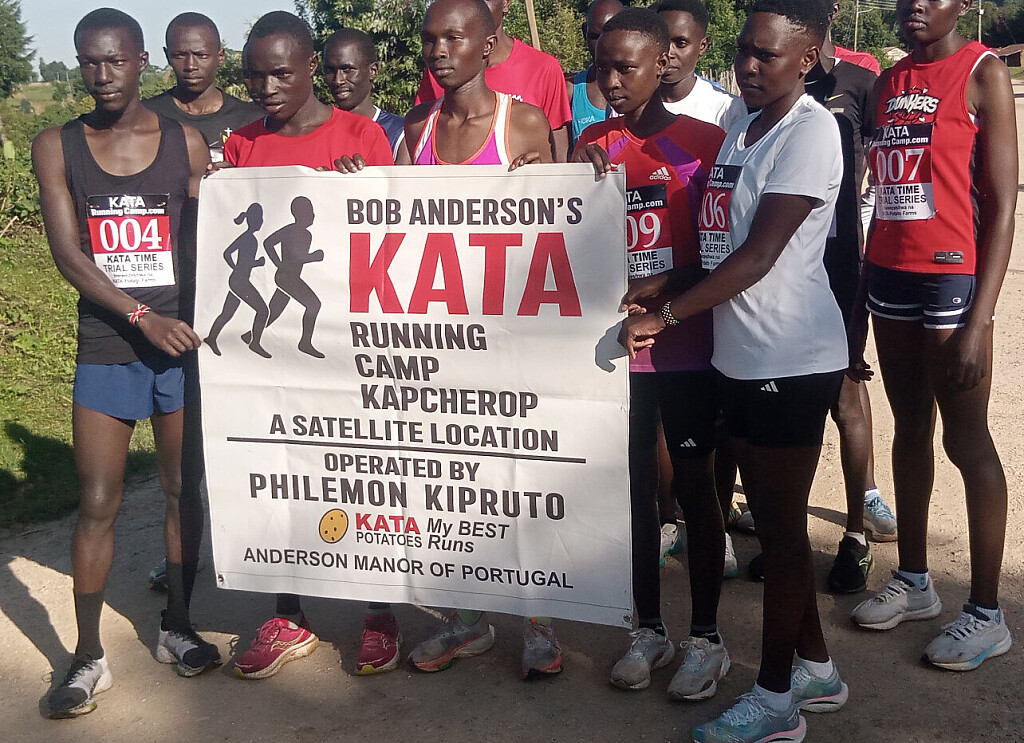
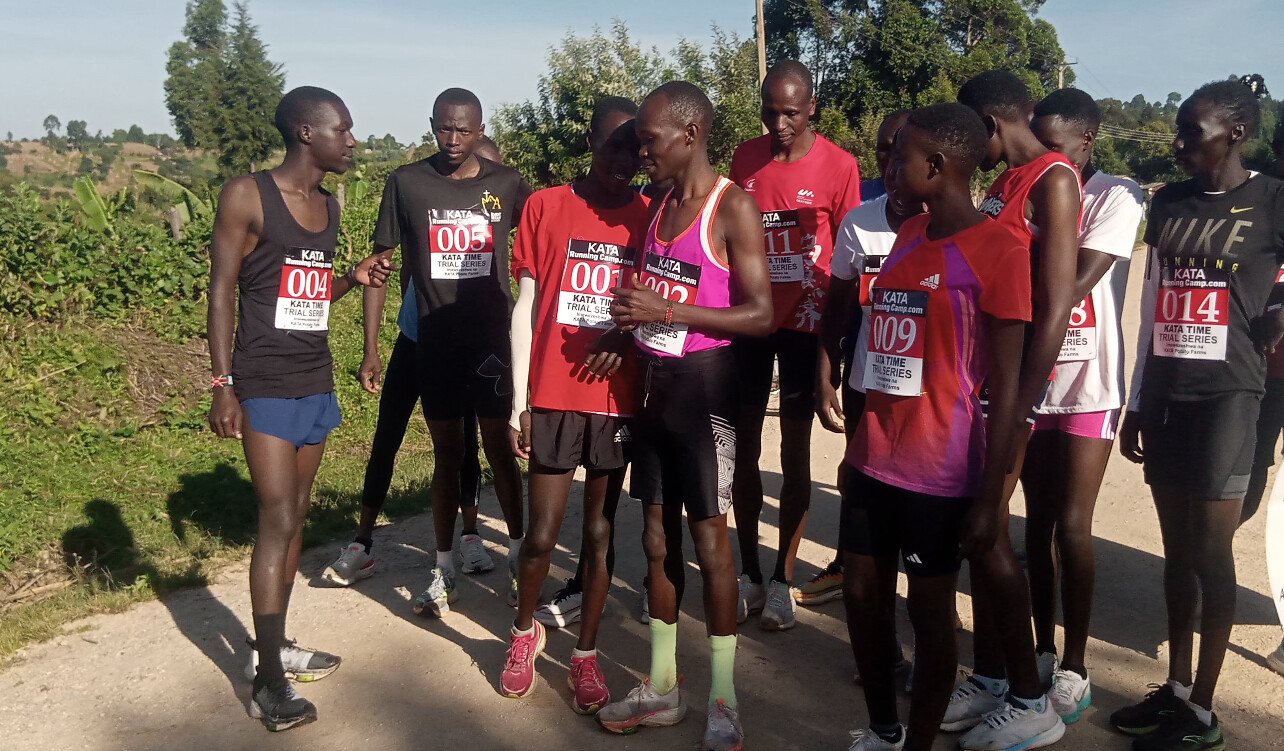
KATA Time Trial #2 — Kapcherop KATA Running Camp (K01)
Date: October 15, 2025 Altitude: 2,200 m
Location: Kapcherop, Kenya Coach & Camp Operator: Philemon Kipruto
The Kapcherop KATA Running Camp (K01) hosted its second official time trial on October 15, 2025, under ideal high-altitude training conditions at 2,200 meters. Athletes turned in determined efforts across both 5 km and 10 km distances, continuing to demonstrate the strength and focus that define the KATA program.
5 KM Men
1. Dennis Kipchirchir — 16:19
2. Evans Kemboi — 16:20
3. Kelvin Kiptoo — 17:20
4. Nahashion Kipkoech — 18:05
5. Alex Kimutai — 18:22
5 KM Women
1. Mercy Jebichi — 19:53
2. Purity Kosgei — 21:10
3. Mercy Jepchumba — 22:51
4. Sarah Jepkemoi — 24:16
10 KM Men
1. Enock Tanui — 32:46
2. Alan Mwetich — 33:53
3. Evans Kipyatich — 35:18
4. Donald Kimaru — 39:09
10 KM Women
1. Beatrice Rutto — 42:14
Coach Philemon Kipruto praised his team’s progress, noting that several athletes recorded personal bests and are showing improved endurance and pacing consistency.
“It’s encouraging to see our athletes push their limits each trial,” said Bob Anderson, Founder and Director of KATA. “Consistency and commitment are the heart of our program. These results show that the Kapcherop camp is on the right path, combining structured training with our KATA Potato Farm support model.”
The Kapcherop camp remains a cornerstone of KATA’s mission — developing world-class runners through disciplined training, nutritional awareness, and sustainable community farming.
(10/15/2025) ⚡AMPby Boris Baron
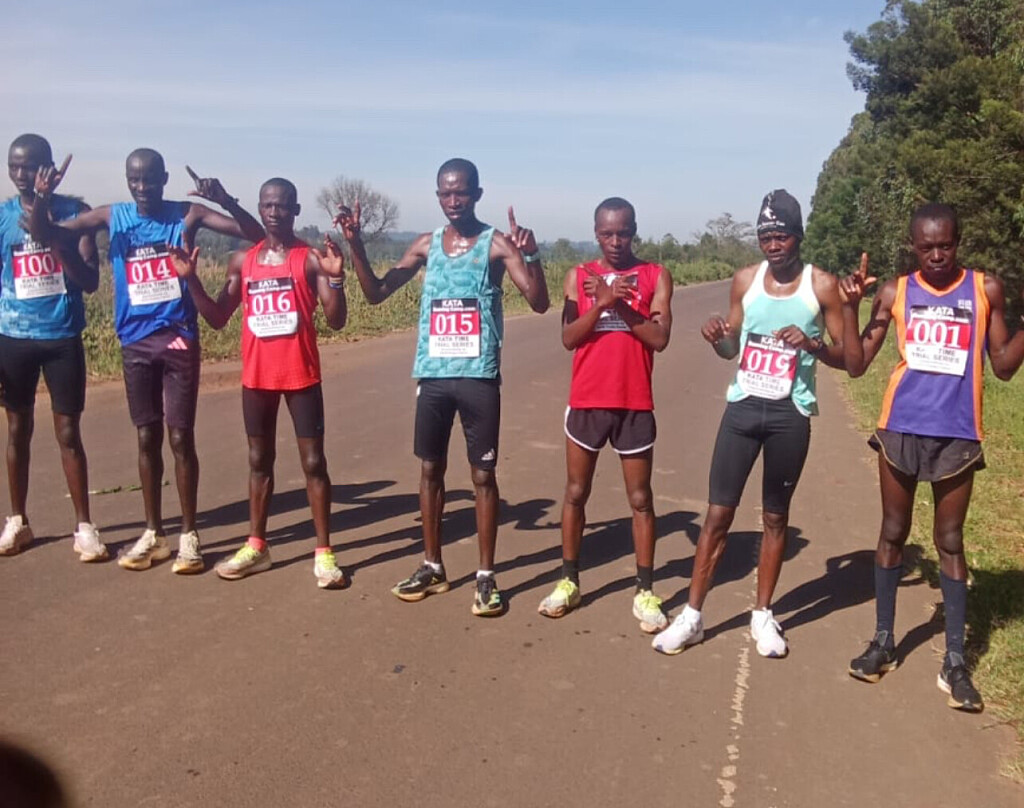
KATA Time Trial #2 — Kapsait KATA Camp (K24)
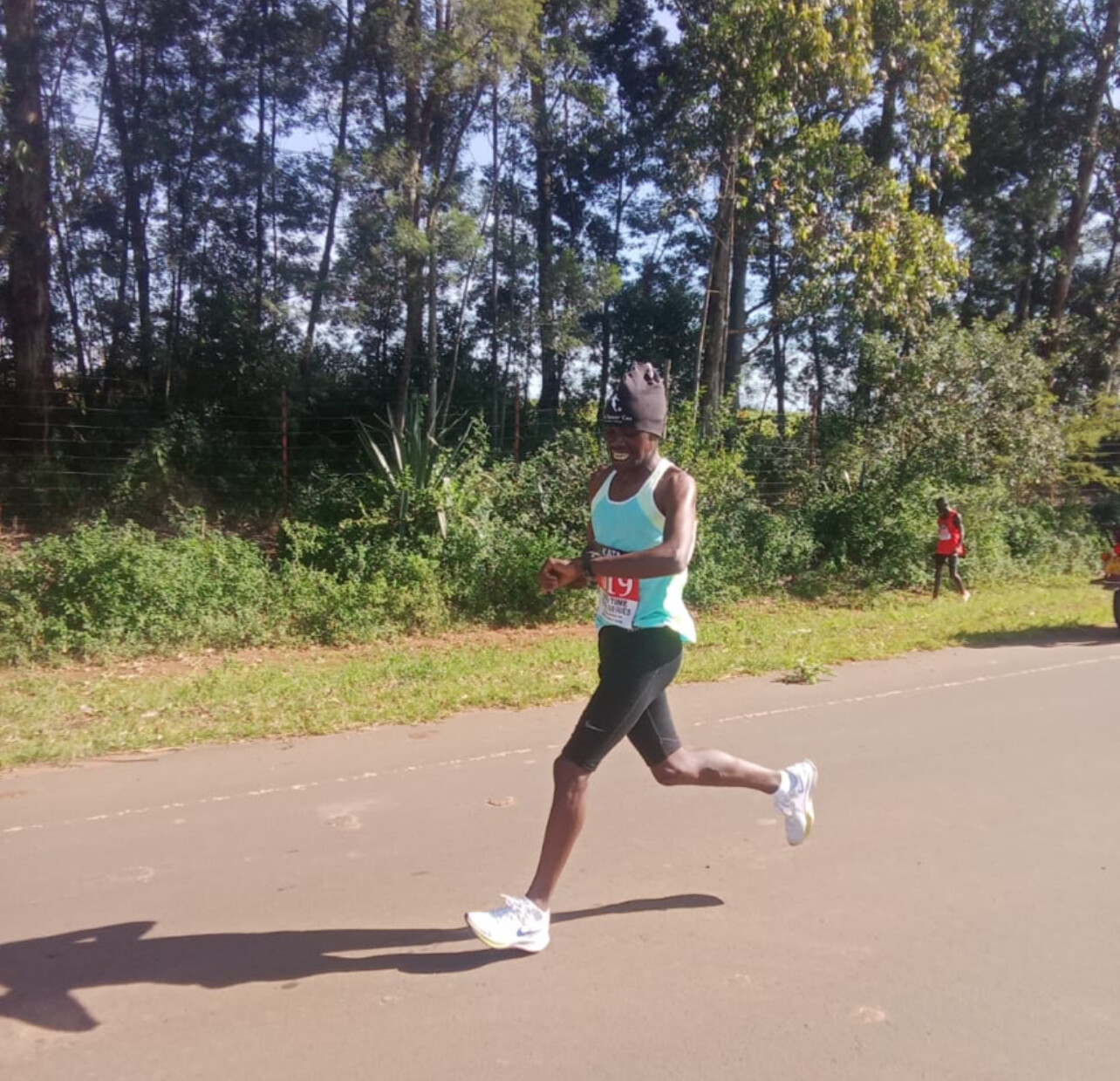
At an elevation of 2,500 meters, athletes from the Kapsait KATA Camp (K24) delivered impressive performances during their second official KATA Time Trial. Despite the challenging altitude, the men’s 10K saw a thrilling finish with Cornelius Chepkok narrowly edging Evans Kipruto by less than a second. Both clocked outstanding times just over 29:30.
In the 5K event, Dennis Kosgei led the way with a strong 14:40 run, followed closely by Timothy Kibetand Titus Kiprop, each posting sub-15-minute results — an impressive feat at this elevation.
“Our KATA program is about more than just competition — it’s about progress,” said Bob Anderson, KATA Founder and Director. “Each time trial is a chance for our athletes to improve, to measure growth, and to build toward world-class performances. The times achieved at Kapsait today show real strength and determination.”

These performances continue to reflect the dedication of Coach Fredrick Kiprotich and his team in developing athletes who are ready to take their training to the next level under the KATA model — combining world-class running with sustainable potato farming.
Date: October 15, 2025
Altitude: 2,500m
Location: Kapsait, Kenya
Coach & Camp Operator: Fredrick Kiprotich
(10/15/2025) ⚡AMP
by Boris Baron
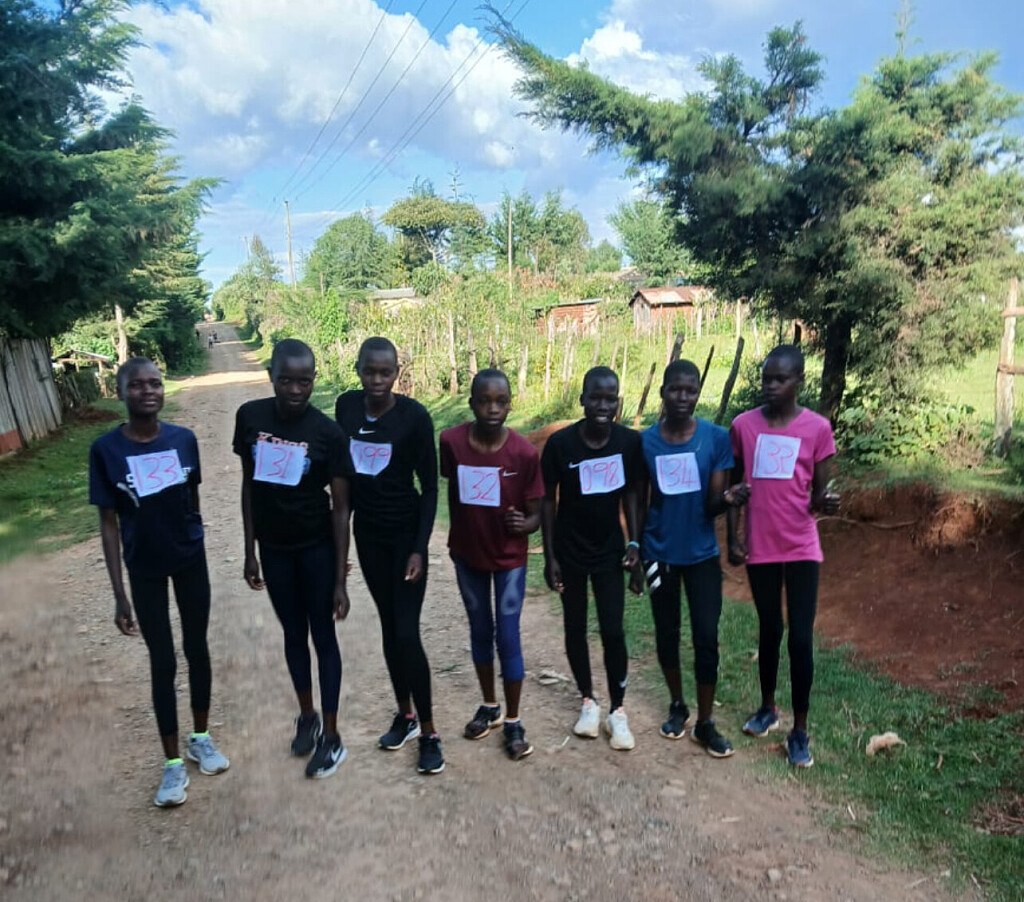
KATA Satellite Time Trial #2 – Tingoro Camp (K26)
KATA’s second Satellite Time Trial brought impressive results from Tingoro Camp (K26) Oct 15 under the leadership of Coach and Camp Operator Benard Rono. Both the women’s 5km and men’s 10km races showcased outstanding individual efforts, steady progress, and several new personal bests.
These results highlight the effectiveness of the KATA system — combining focused athletic training with sustainable farming — as athletes across Kenya continue to grow stronger through dedication and discipline.
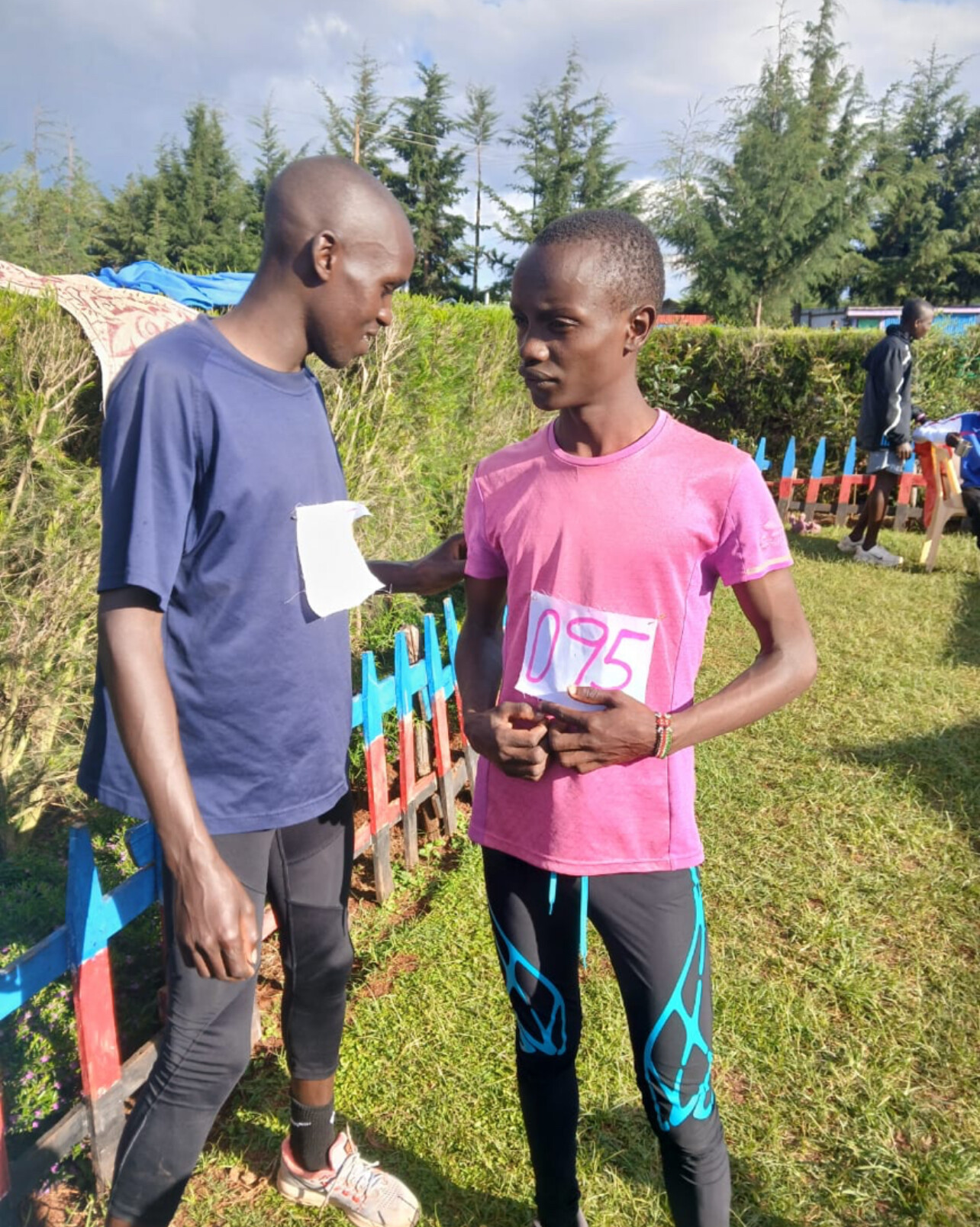
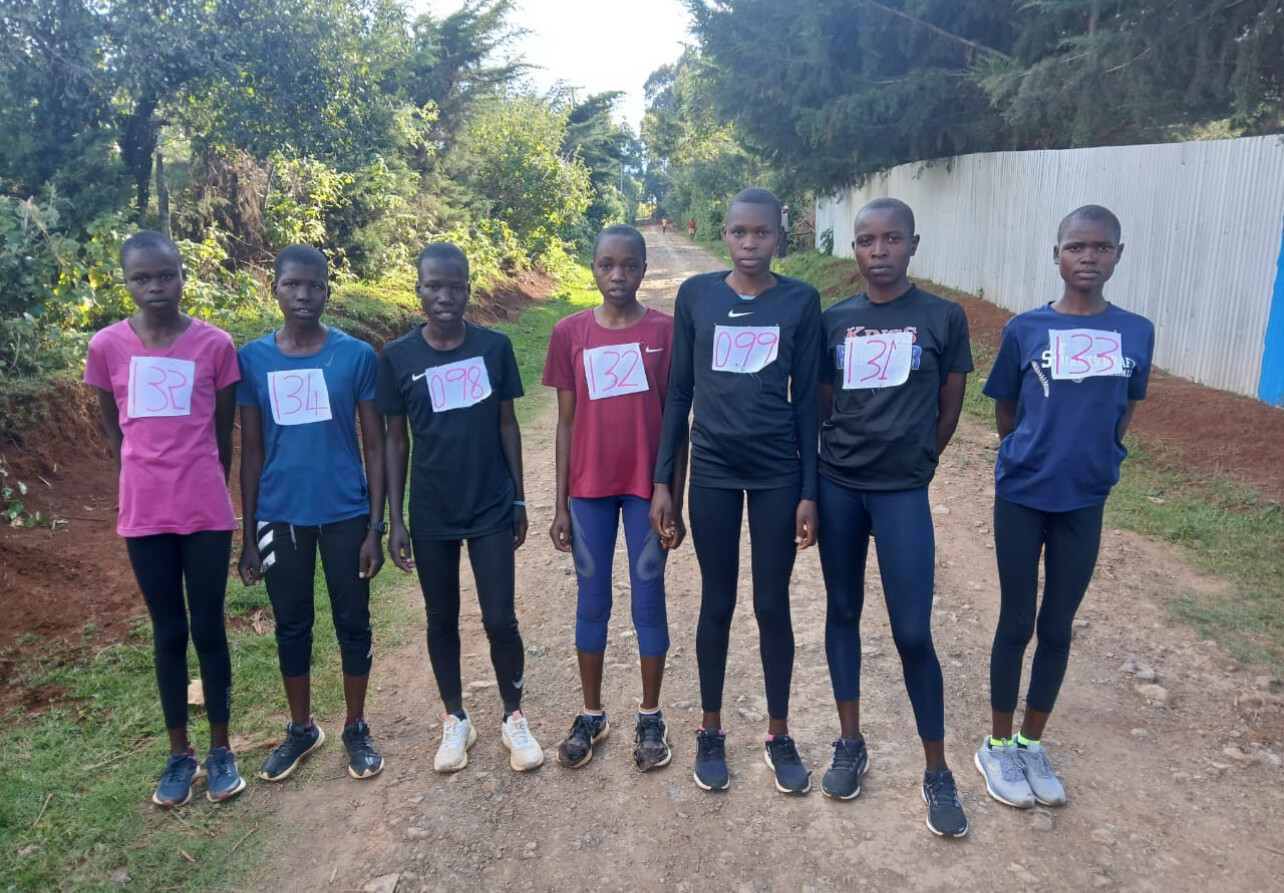
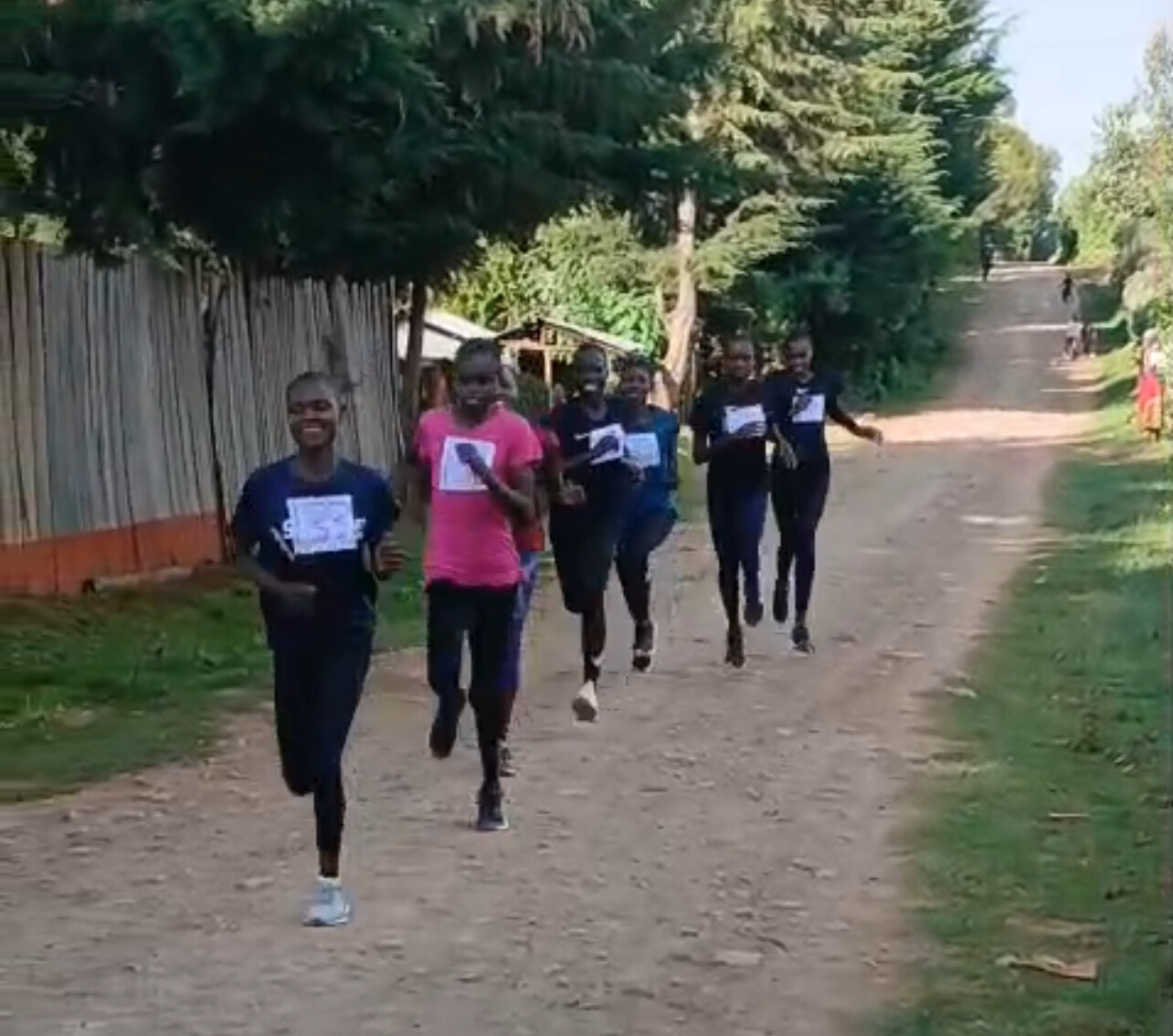
women’s 5k
|
Position |
Name |
Time |
Age |
Camp |
Bib |
|
1 |
Faith Cheplkenei |
16:32.05 |
18 |
Tingoro |
181 |
|
2 |
Linda Chebet |
17:01.55 |
18 |
Tingoro |
099 |
|
3 |
Naomi Wangare |
17:07.77 |
17 |
Tingoro |
098 |
|
4 |
Esther Chepkemoi |
17:17.91 |
19 |
Tingoro |
134 |
|
5 |
Sylvia Cheplelimo |
18:20.34 |
17 |
Tingoro |
132 |
|
6 |
Stella Cheplelimo |
18:24.56 |
17 |
Tingoro |
133 |
|
7 |
Joy Chepkemoi |
— |
— |
Tingoro |
|
Men’s 10k
|
Position |
Name |
Time |
Age |
Camp |
Bib |
|
1 |
Kelvin Kilel |
30:11.12 |
26 |
Tingoro |
036 |
|
2 |
Kelvin Langat |
30:13.49 |
17 |
Tingoro |
095 |
|
3 |
Clinton Kipbet |
30:41.14 |
19 |
Tingoro |
137 |
|
4 |
Shadrack Bett |
31:21.10 |
21 |
Tingoro |
096 |
|
5 |
Silas Longwet |
31:32.71 |
18 |
Tingoro |
093 |
“Each of our KATA camps continues to build a culture of improvement and excellence. The performances at Tingoro today show that our approach is working. Congratulations to all the athletes, and to Coach Benard Rono for guiding the team so well.”
— Bob Anderson, KATA Founder & Director
(10/15/2025) ⚡AMP
by Boris Baron
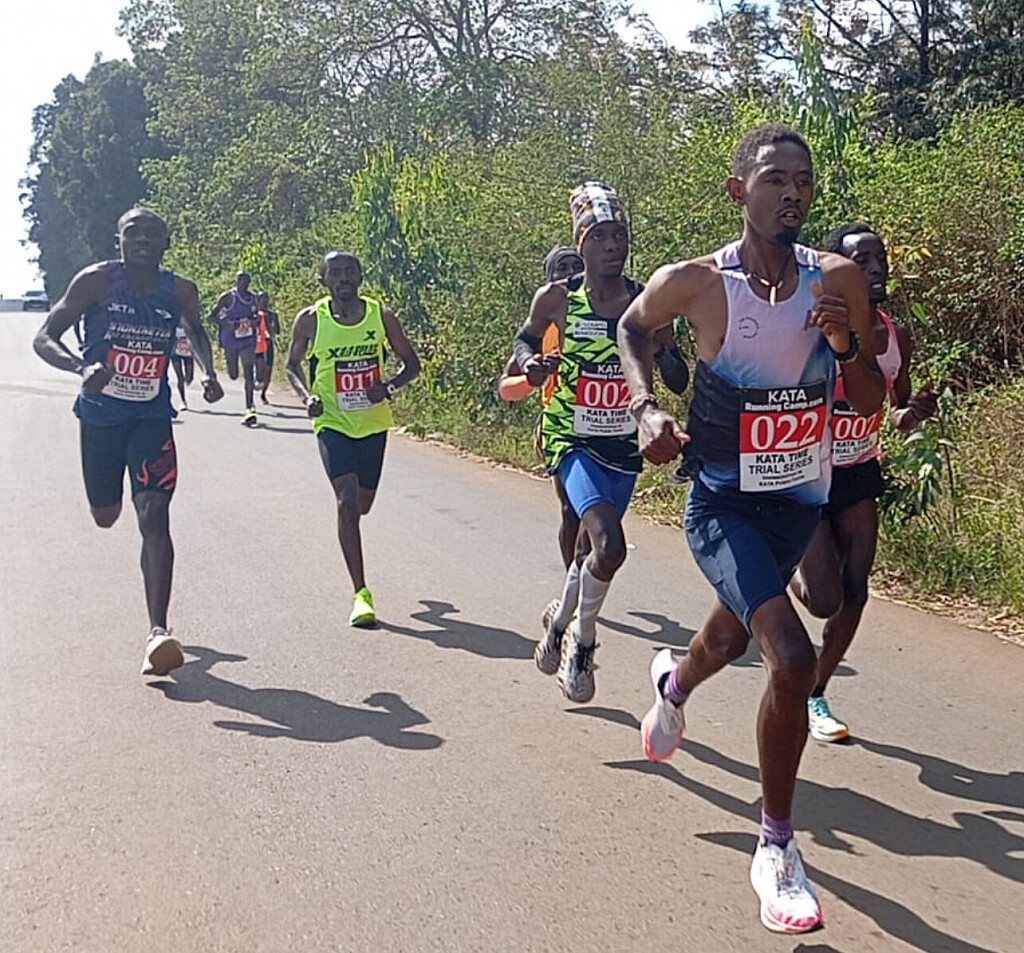
Personal Bests Shine at KATA Time Trial #49 in Thika
October 15, 2025 | KATA Running Retreat, Thika
While turnout was limited due to Kenya Police recruitment activities and the upcoming National Masters Trials, the KATA Time Trial #49 at the Thika Retreat delivered outstanding performances and a string of new personal bests — a true reflection of dedication and progress among the athletes.
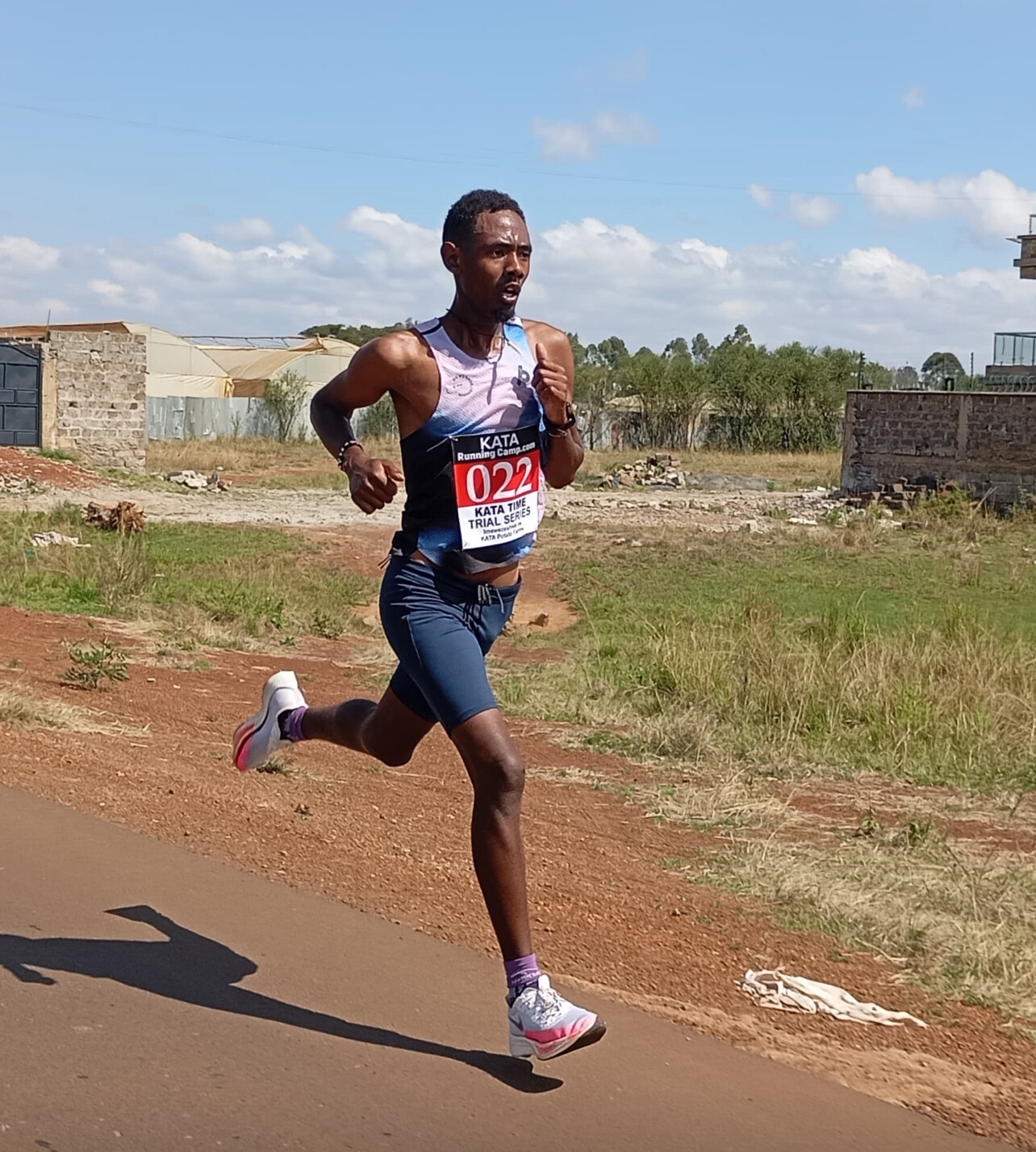
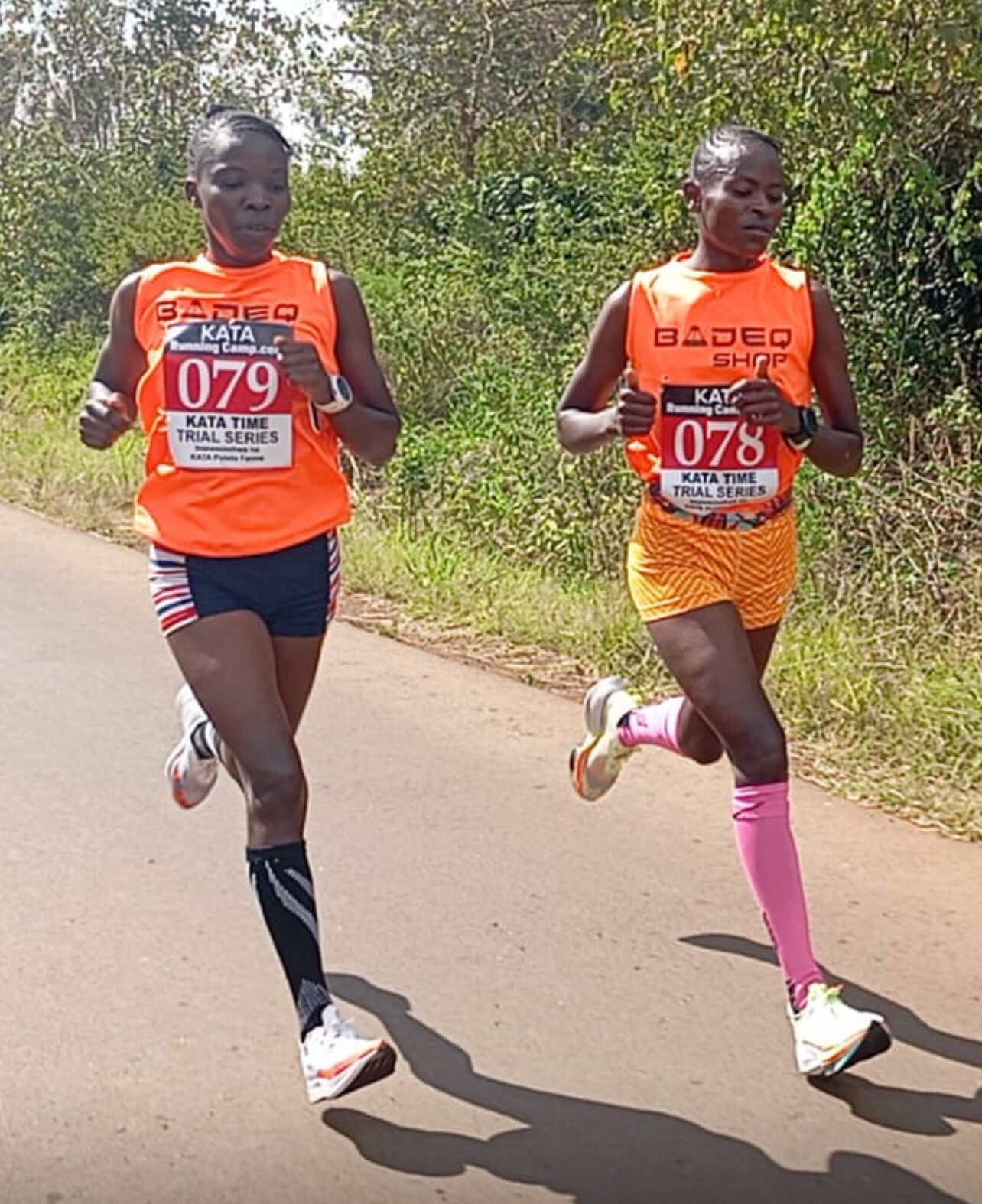
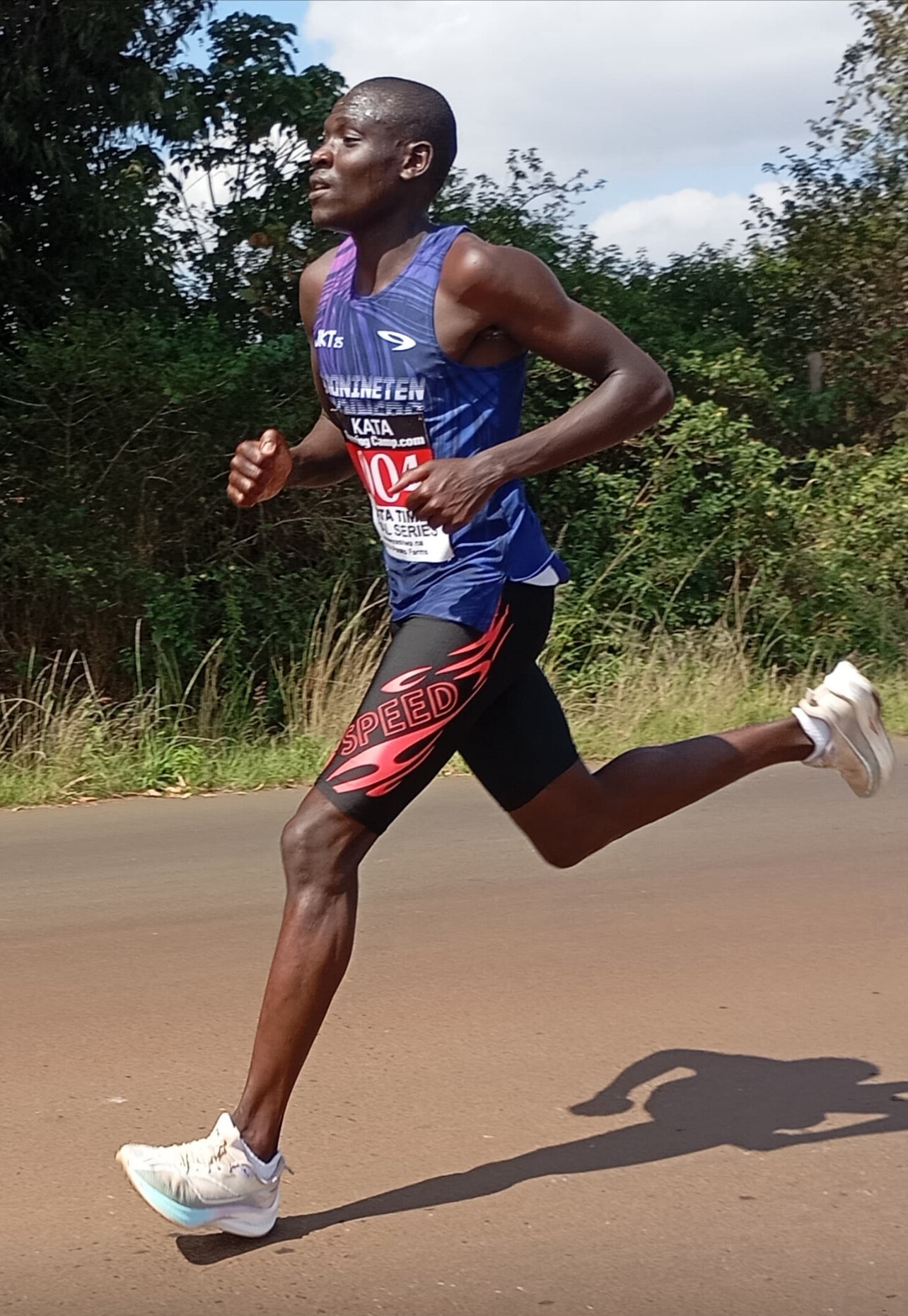
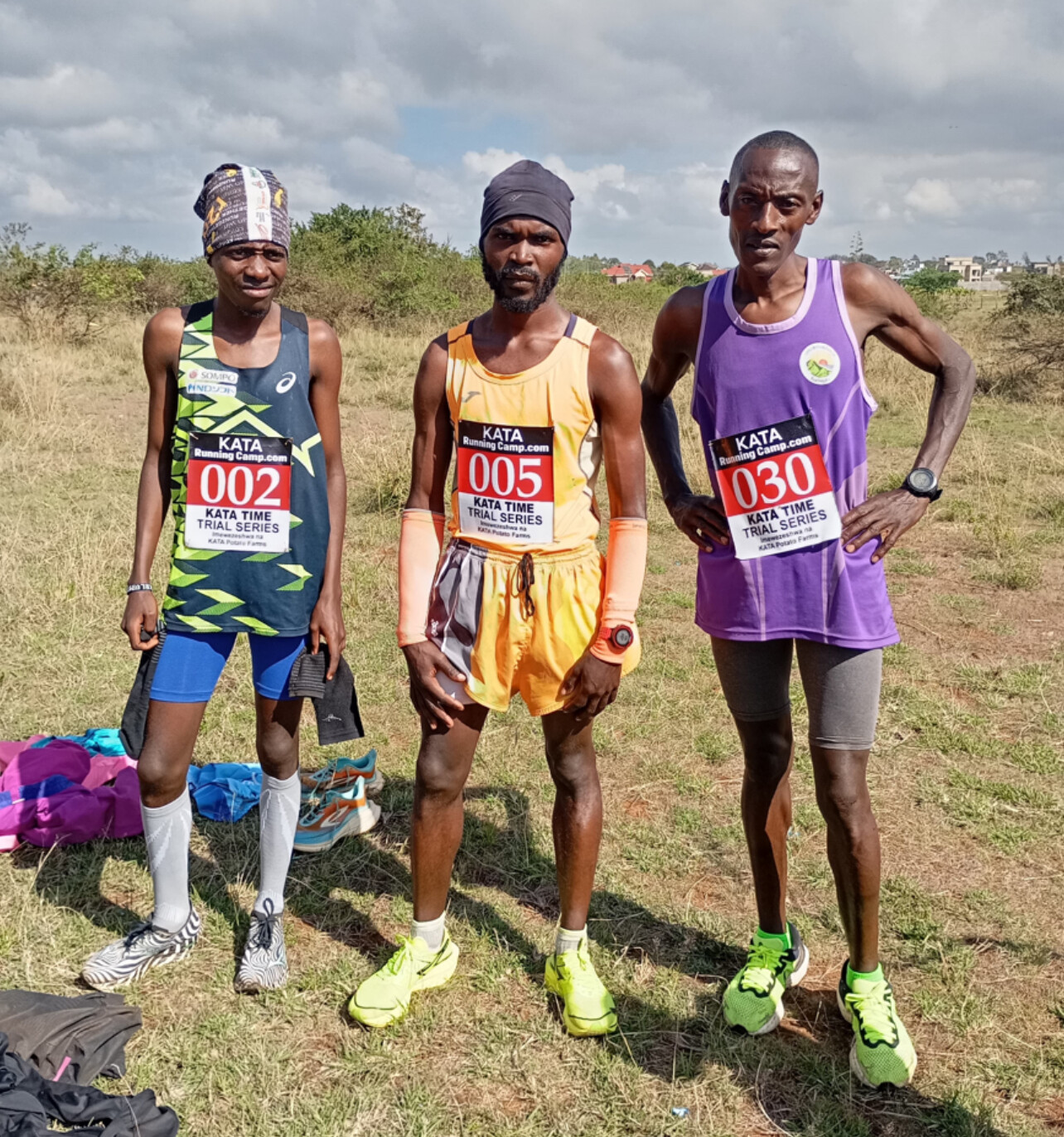
A total of 12 athletes — 8 men and 4 women — lined up for the 10K races, producing inspiring results that showcased the continued strength of the KATA program.
Men’s 10K
John Chege impressed once again, winning in 29:22, a personal best that lowered his previous time by 20 seconds. Chege, the Thika Camp team leader, said he had targeted a sub-29-minute finish but found himself running solo from the 2 km mark. His coach remains confident that milestone will come soon.
Kelvin Ragui followed in 30:21, with Boniface Mungai rounding out the podium in 30:44. Several athletes achieved season or lifetime bests, marking steady improvement across the men’s field.
Results – Men’s 10K
1. John Chege (20 22) – 29:22
2. Kelvin Ragui (24 02) – 30:21
3. Boniface Mungai (30 07) – 30:44
4. Joseph Kariuki (39 11) – 31:01
5. Charles Ndirangu (24 04) – 32:40
6. Ishmael Mburu (25 05) – 33:41
7. Paul Nganga (43 30) – 36:16
8. Charles Ndirangu (65 08) – 39:11
Women’s 10K
In the women’s division, Jacinta Kamau delivered a brilliant run, taking victory in 33:45, a new personal best by over a minute. Loise Kiarie was close behind in 34:22, also a personal best. Ruth Maina (38:04) and Agnes Wanjiru (41:15) rounded out the top four with commendable efforts.
Results – Women’s 10K
1. Jacinta Kamau (24 79) – 33:45
2. Loise Kiarie (24 78) – 34:22
3. Ruth Maina (22 80) – 38:04
4. Agnes Wanjiru (20 83) – 41:15
Director’s Message
“It is not always about a volume of runners. Our KATA Time Trial program is about improving your personal bests and clocking season’s bests. And that is what was done in Thika this morning. Well done team.”
— Bob Anderson, KATA Founder & Director
(10/15/2025) ⚡AMPby Boris Baron

KATA Time Trial Series
Welcome to the KATA Monthly Time Trial Held at the Kenyan Athletics Training Academy in Thika, Kenya, the KATA Monthly Time Trial is a unique and inclusive event designed to support runners of all levels in achieving their goals and showcasing their fitness. This event offers both 10K and 5K distances on an accurate, certified course, providing participants with...
more...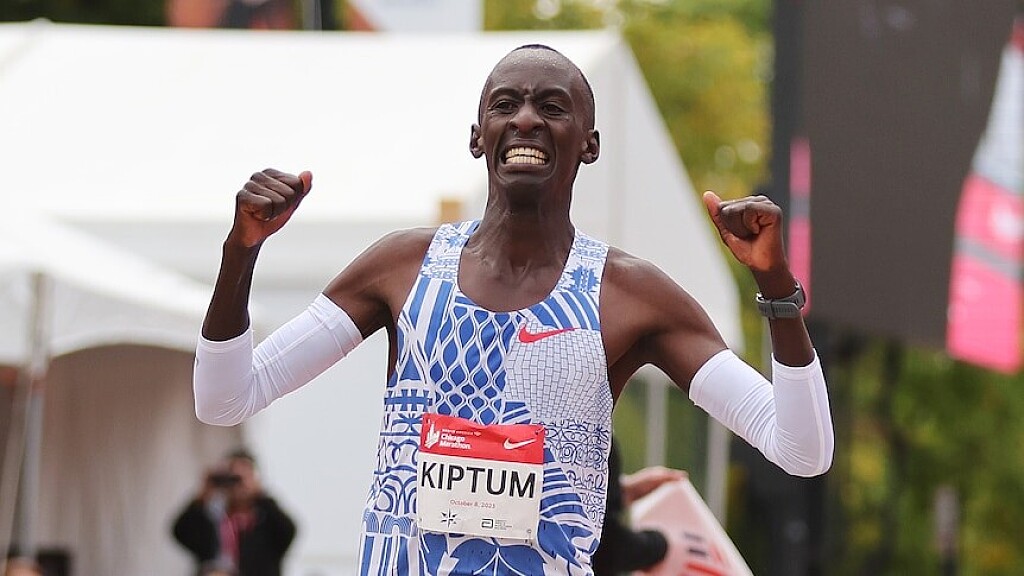
Chicago’s Marathon Legacy — From Kiptum’s Perfection to Kiplimo’s Power
Two years apart, on the same streets of Chicago, two East African greats delivered marathon performances that will be remembered for generations.
In 2023, Kenya’s Kelvin Kiptum stunned the world with his 2:00:35 world record, a run that redefined endurance and perfection.
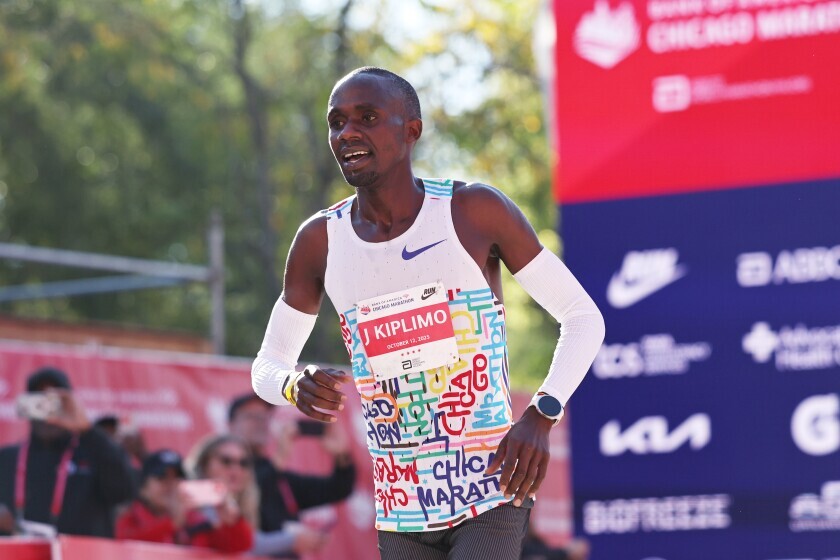
In 2025, Uganda’s Jacob Kiplimo, already the half marathon world record holder, returned to Chicago for his second career marathon and clocked 2:02:23 — his personal best and the seventh-fastest marathon ever run.
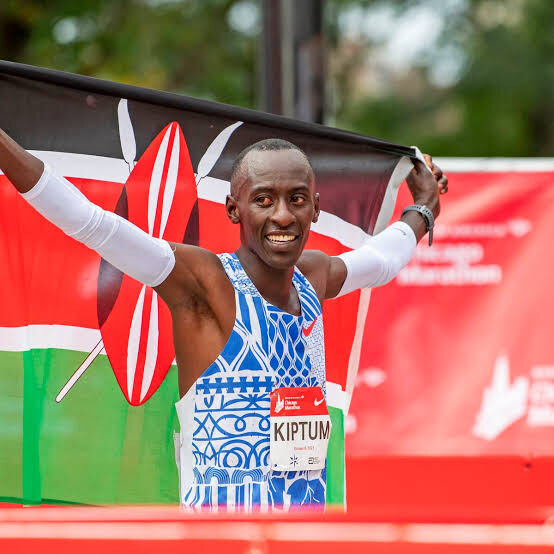
Split by Split — The Chicago Comparison
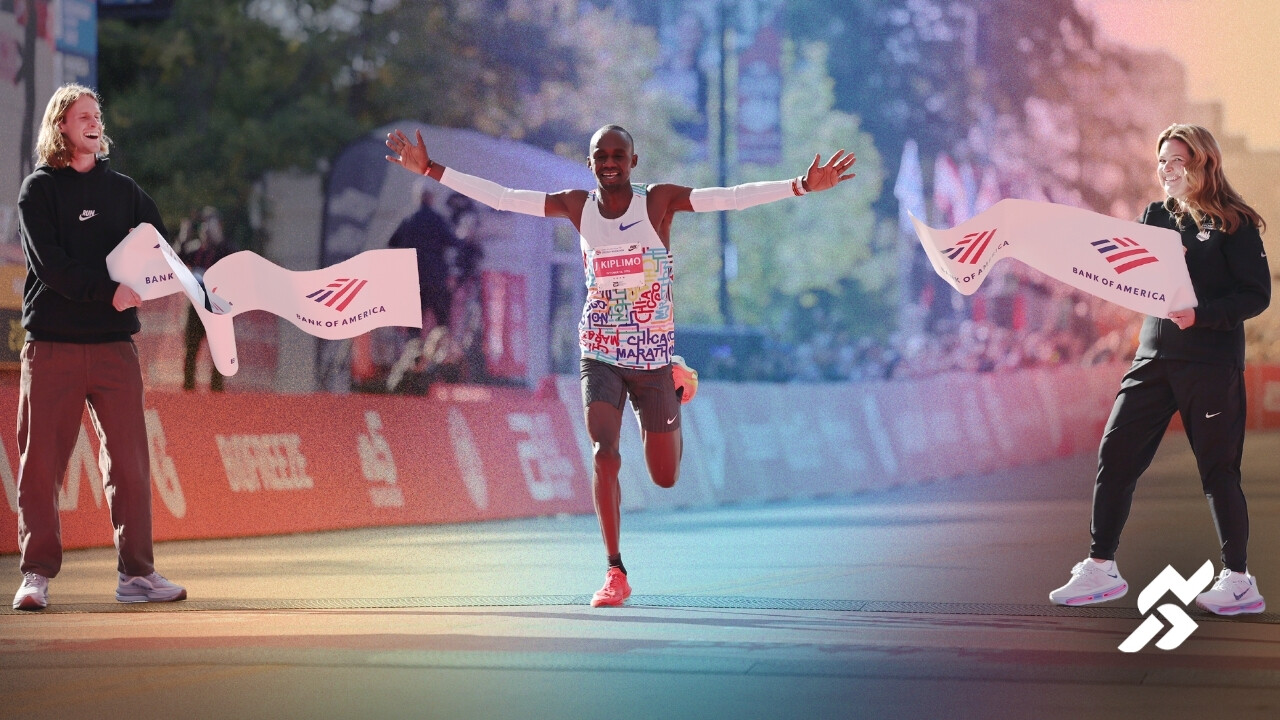
|
Distance |
Kiptum (2023) |
Kiplimo (2025) |
Difference |
|
5 km |
14:26 |
13:58 |
−28 sec |
|
10 km |
28:42 |
28:25 |
−17 sec |
|
15 km |
43:09 |
42:40 |
−29 sec |
|
20 km |
57:39 |
57:05 |
−34 sec |
|
Half |
1:00:48 |
1:00:16 |
−32 sec |
|
25 km |
1:12:04 |
1:11:12 |
−52 sec |
|
30 km |
1:26:31 |
1:25:31 |
−60 sec |
|
35 km |
1:40:22 |
1:39:52 |
−30 sec |
|
40 km |
1:54:23 |
1:55:10 |
+47 sec |
|
Finish |
2:00:35 (World Record) |
2:02:23 |
+1:48 |
How They Ran
Kelvin Kiptum (2023):
Kiptum ran one of the most perfectly executed marathons in history. After a steady opening half in 1:00:48, he unleashed a ferocious negative split of 59:47, the fastest second half ever recorded. His closing 10K in 27:52 sealed a new world record and forever changed how we think about the marathon.
Jacob Kiplimo (2025):
After finishing second in his marathon debut at the 2025 London Marathon, Kiplimo arrived in Chicago more prepared — and fearless. From the start, he attacked the course, opening in 13:58 for 5K, the fastest ever in Chicago. Through 30K, he was over a minute ahead of Kiptum’s world-record pace. Although he slowed slightly in the final 10K, his 2:02:23 finish was the fastest ever by an Ugandan and the 7th-fastest marathon in history.
âš–ï¸ The Contrast
• Strategy: Kiptum’s patience vs. Kiplimo’s aggression.
• Halfway: Kiplimo led by 32 seconds at 21.1K.
• Closing Power: Kiptum’s final 7K (13:51 split) remains unmatched.
• Outcome: Kiplimo’s performance wasn’t a world record, but it confirmed his place among the greatest marathoners of his generation.
Legacy and Continuation
Tragically, Kelvin Kiptum was killed in a car accident in Kenya in February 2024, just months after his world-record run. His passing shocked the running world and ended the career of a man many believed would one day break two hours on a record-eligible course.
When Jacob Kiplimo returned to Chicago in 2025, it felt like a continuation of that story — a symbolic passing of the torch. Running on the same course where Kiptum made history, Kiplimo carried forward the East African legacy of excellence, courage, and speed.
Final Thoughts
Kiptum’s 2:00:35 remains the marathon’s gold standard — calm, controlled, and utterly brilliant.
Kiplimo’s 2:02:23 showed fearless front-running and a promise of what’s still to come.
Two men. Two races. One city.
Chicago — where the modern marathon’s greatest chapters continue to be written.
- - -
The 9 Fastest Men’s Marathons of All Time (as of Oct 13, 2025)
|
Rank |
Name |
Time |
Venue |
|
1 |
Kelvin Kiptum (KEN) |
2:00:35 |
Chicago 2023 |
|
2 |
Eliud Kipchoge (KEN) |
2:01:09 |
Berlin 2022 |
|
3 |
Kenenisa Bekele (ETH) |
2:01:41 |
Berlin 2019 |
|
4 |
Sisay Lemma (ETH) |
2:01:48 |
Valencia 2023 |
|
5 |
Sebastian Sawe (KEN) |
2:02:05 |
Valencia 2024 |
|
6 |
Benson Kipruto (KEN) |
2:02:16 |
Tokyo 2024 |
by Bob Anderson
Kenyans Matata and Rengeruk Capture Titles at Vedanta Delhi Half Marathon
Abhishek Pal and Seema Yadav lead Indian runners
New Delhi, October 12, 2025 — Kenya’s Alex Nzioka Matata and Lilian Kasait Rengeruk delivered commanding performances to sweep the men’s and women’s crowns at the 20th Vedanta Delhi Half Marathon, a World Athletics Gold Label event. It marked only the second Kenyan double in race history, the first coming in 2006.
Matata, runner-up in 2024, dominated from midway, running solo to victory in 59:50, his fifth half-marathon win of the year. The RAK Half Marathon champion, who boasts a 59:20 personal best, led through 10K in 28:43 alongside compatriot Reuben Rono before breaking clear. Ethiopia’s Bayelign Teshager (1:00:22) and Kenyan James Kipkogei (1:00:25) completed the podium.
“Last year I was number two, so my goal was to do better,” Matata said. “The weather was good, I knew the course, and I ran without pressure—just to win.”
In the women’s race, Rengeruk used her experience to outkick Ethiopia’s 19-year-old Melal Biratu in a thrilling sprint, clocking 1:07:20 to win by one second. Fellow Ethiopian Mulat Tekle took third in 1:07:28. The 2023 champion Alemaddis Eyayu finished seventh (1:10:51).
“It was tough, but I felt strong and told myself to stay patient and fight to the finish,” said Rengeruk, who recently returned from injury.
Biratu, pleased with her debut effort, added: “The humidity was higher than expected, but I’m happy with my personal best.”
Both winners earned US$27,000 from a total prize purse of US$260,000.
(10/12/2025) ⚡AMP

Vedanta Delhi Half Marathon
The Airtel Delhi Half Marathon is a haven for runners, creating an experience, that our citizens had never envisaged. The streets of Delhi converted to a world-class running track. Clean, sanitized road for 21.09 kms, exhaustive medical support system on the route, timing chip for runners, qualified personnel to ensure smooth conduct of the event across departments. The race...
more...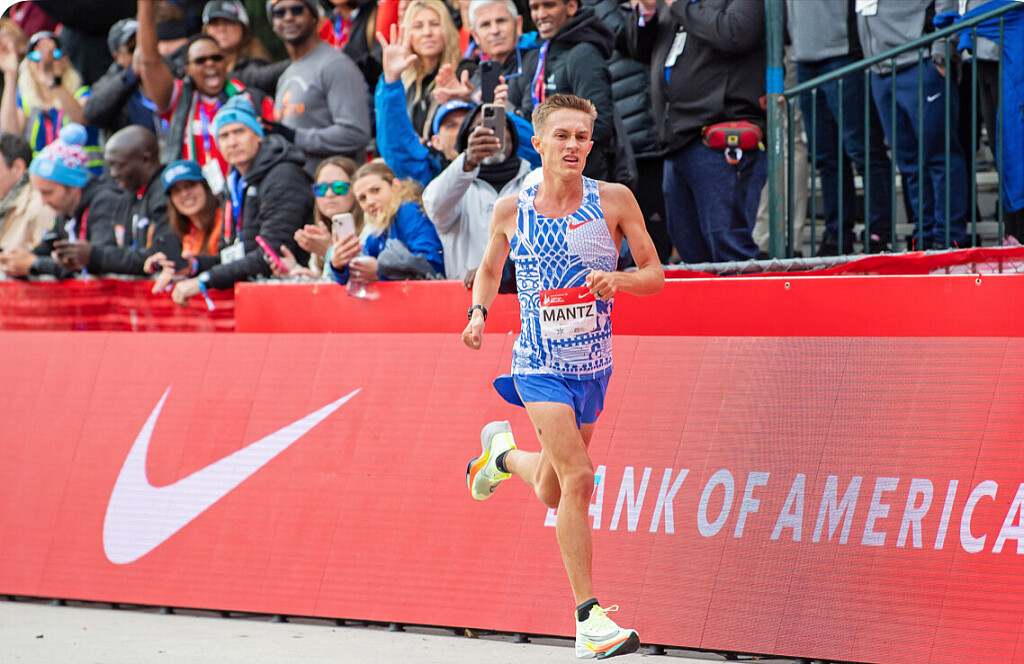
Conner Mantz Breaks American Record as Kiplimo and Feysa Capture Chicago Marathon
The 2025 Bank of America Chicago Marathon delivered one of the most thrilling editions in its storied history on Sunday, October 12. Under cool, calm conditions ideal for fast running, Conner Mantz not only etched his name into American distance running history but did so amid dominant victories by Jacob Kiplimo and Hawi Feysa on the world stage.
Mantz Makes U.S. Marathon History

American marathon fans have waited more than two decades for this moment. Running with remarkable composure and confidence, Conner Mantz clocked an astonishing 2:04:43, smashing the long-standing U.S. men’s record of 2:05:38 set by Khalid Khannouchi in 2002—ironically, also in Chicago.
Mantz placed fourth overall in a deep international field but was the clear headline story for American distance running. The record capped off a remarkable season that already included a U.S. half-marathon record (59:17 in Houston) and a strong 2:05:08 run in Boston earlier this year.

“This has been my goal since I first ran Chicago,” Mantz said after the race. “To come back here and do it—it’s a dream realized.”
His coach, Ed Eyestone, called it “a masterclass in discipline and pacing,” noting that Mantz hit every target split almost to the second.
Kiplimo Commands the Men’s Race
While Mantz captured American hearts, Uganda’s Jacob Kiplimo controlled the overall competition from start to finish. The world half-marathon record holder surged decisively at 30 kilometers and never looked back, winning in 2:02:23—the fastest time ever run on U.S. soil.
Kenya’s Amos Kipruto finished second in 2:03:54, and compatriot Alex Masai placed third in 2:04:37, rounding out a podium that showcased both experience and emerging talent.
Kiplimo’s victory solidifies his status as one of the sport’s brightest stars, adding a major-marathon title to his growing résumé that already includes world titles in the half marathon and cross country.
Feysa Dominates Women’s Field
In the women’s race, Ethiopia’s Hawi Feysa claimed her biggest career win in spectacular fashion. She broke away in the final 10 kilometers to take the title in 2:14:56, a personal best by more than two minutes.
Feysa’s countrywoman Megertu Alemu took second in 2:17:18, while Magdalena Shauri of Tanzania earned third in 2:18:03. Feysa’s victory margin and commanding finish underscored her potential as a future global contender.
“I felt strong all the way,” she said afterward. “Today, Chicago gave me my best race.”
A Day for the Record Books
The 47th edition of the Chicago Marathon reaffirmed the city’s status as one of the fastest marathon courses in the world. With ideal weather, roaring crowds, and a record-breaking performance by Conner Mantz, the event once again proved to be a defining stage for greatness.
For Mantz, the day marked not just a new national standard but a signal to the world that American marathoners are back in the global conversation.
As he crossed the finish line, arms raised in disbelief, it was clear: October 12, 2025, will be remembered as the day an American finally ran with—and among—the very best.
(10/12/2025) ⚡AMPby Boris Baron

Bank of America Chicago
Running the Bank of America Chicago Marathon is the pinnacle of achievement for elite athletes and everyday runners alike. On race day, runners from all 50 states and more than 100 countries will set out to accomplish a personal dream by reaching the finish line in Grant Park. The Bank of America Chicago Marathon is known for its flat and...
more...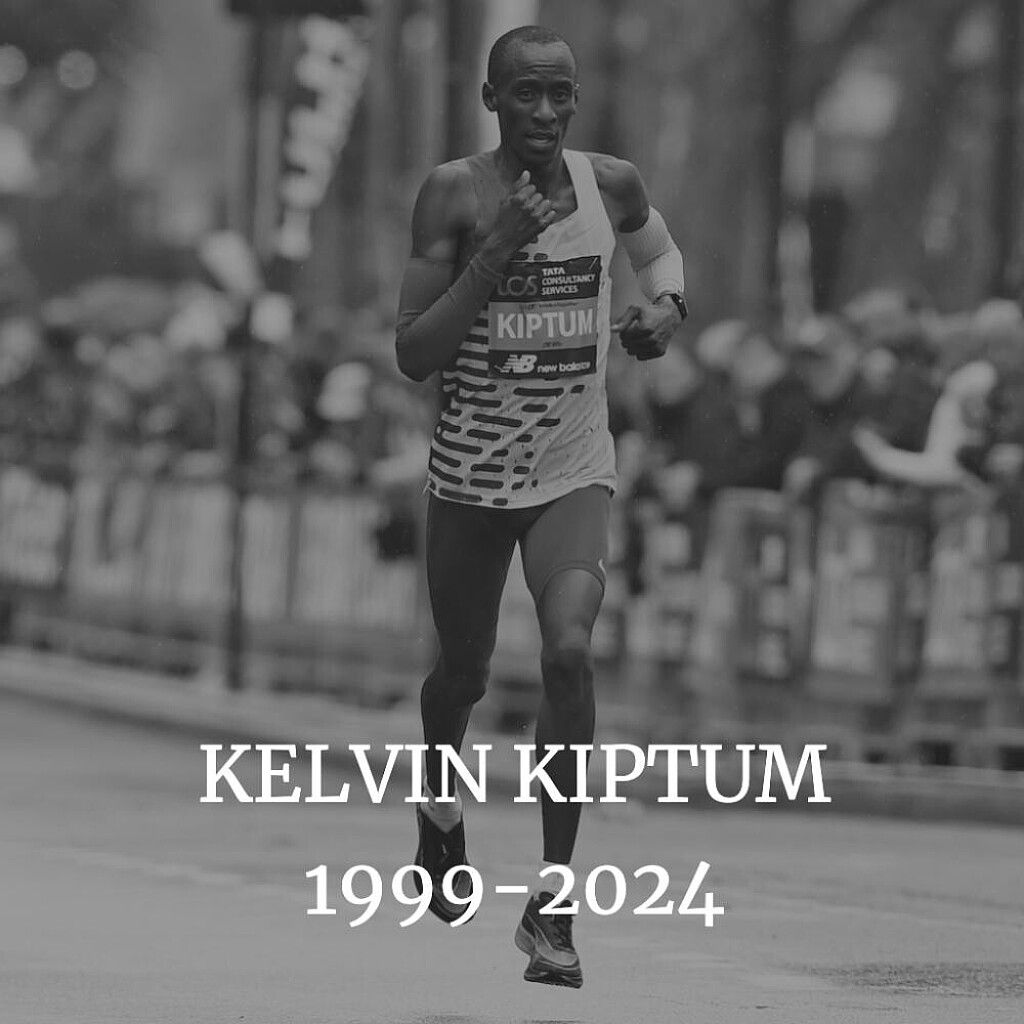
Kelvin Kiptum: The Man Who Ran Into History and Never Returned
It’s been exactly one year since Kelvin Kiptum did what many believed was impossible — he shattered the marathon world record in Chicago, stopping the clock at 2:00:35.
On October 8, 2023, the 23-year-old Kenyan didn’t just win a race — he redefined the limits of human endurance.
As the world prepares for this year’s Chicago Marathon, it’s impossible not to feel the silence he left behind.
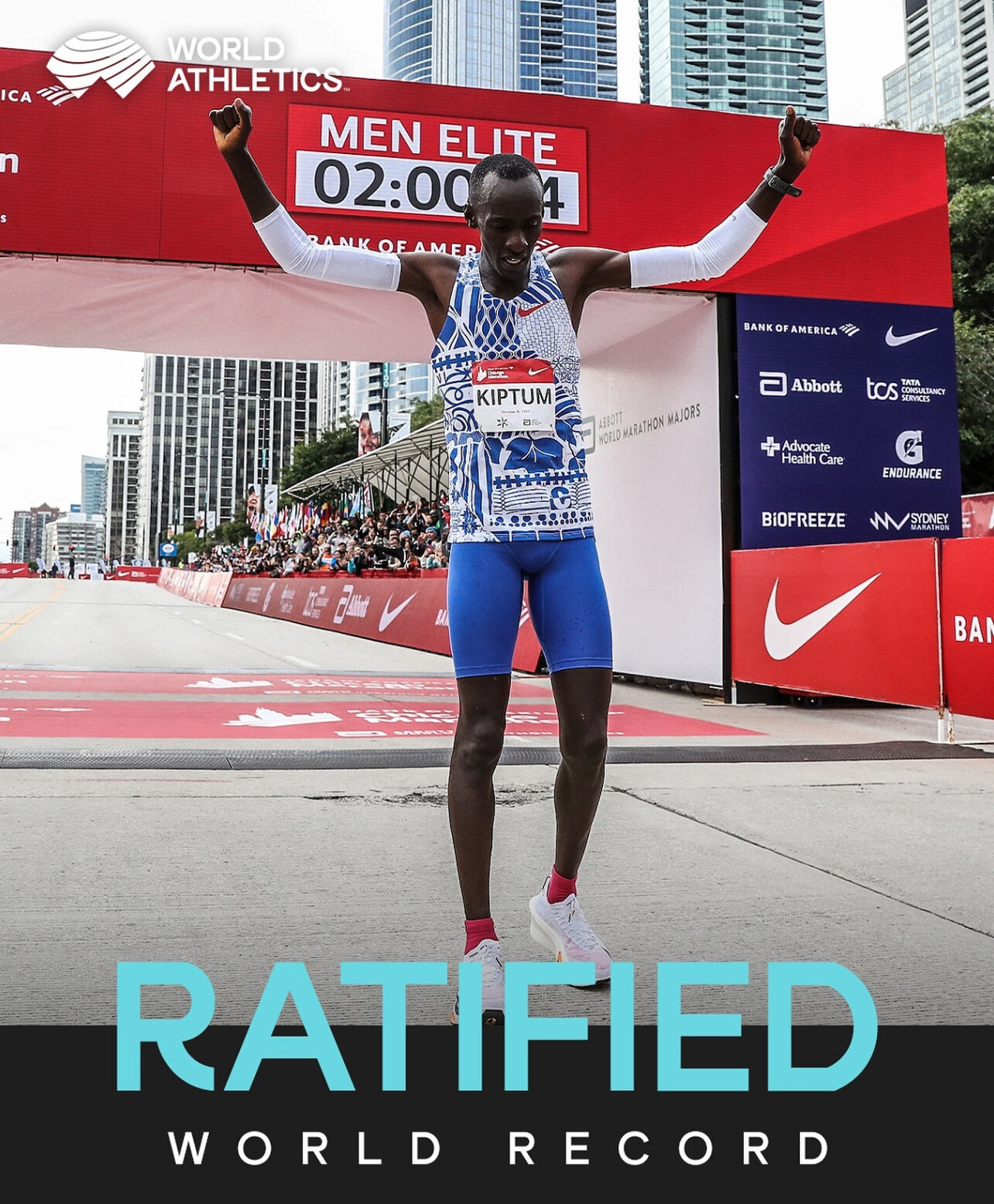
That crisp Sunday morning, Kiptum delivered a performance that stunned the running world. Gliding through Chicago’s streets with unrelenting rhythm, he dropped the field, surged mile after mile, and erased Eliud Kipchoge’s seemingly untouchable world record of 2:01:09 by 34 seconds.
It was only his third marathon. He had never lost one.
Chicago had seen greatness before — but never like this.
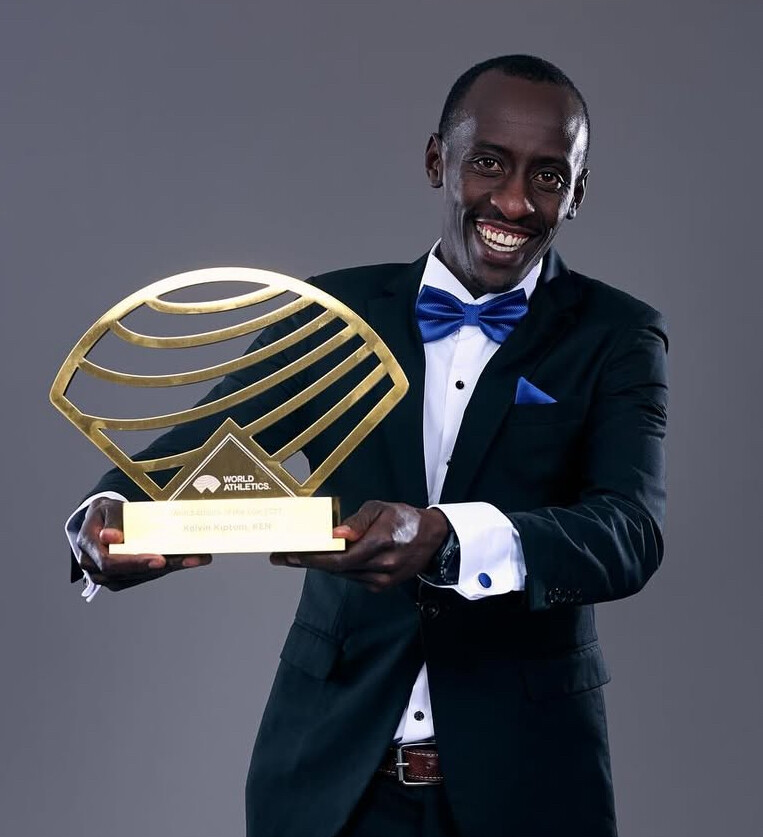
And then, just months later, he was gone.
In February 2024, Kiptum and his coach, Gervais Hakizimana, were killed in a car crash on a quiet road in Kenya. The sport lost more than a record-breaker; it lost a phenomenon — a man who seemed destined to become the first human to run under two hours in an official race.
That dream — carried in Kiptum’s quiet confidence and thunderous stride — vanished that night. His record, ratified only days before his death, stands as both a triumph and a tombstone.
But legends don’t end with tragedy — they echo.
As the 2025 Chicago Marathon approaches, the course remembers. Every stretch of asphalt, every cheer from the crowd, every runner chasing a personal best this weekend — they all run in the shadow of Kiptum’s greatness.
Because Kelvin Kiptum didn’t just run a race.
He ran into history — and never returned.

His Legacy Lives On
Across Kenya and beyond, his story continues to inspire a new generation of runners — from the dirt roads of the Rift Valley to the streets of Chicago, Boston, and Berlin. Athletes like Benson Kipruto, Evans Chebet, and countless others now carry his fire forward, chasing their own dreams with the same fearless rhythm that once shook the marathon world.
Kelvin Kiptum’s stride may have stopped, but his impact will keep moving — every time someone dares to believe that impossible is only a pace away.
(10/09/2025) ⚡AMPby Boris Baron
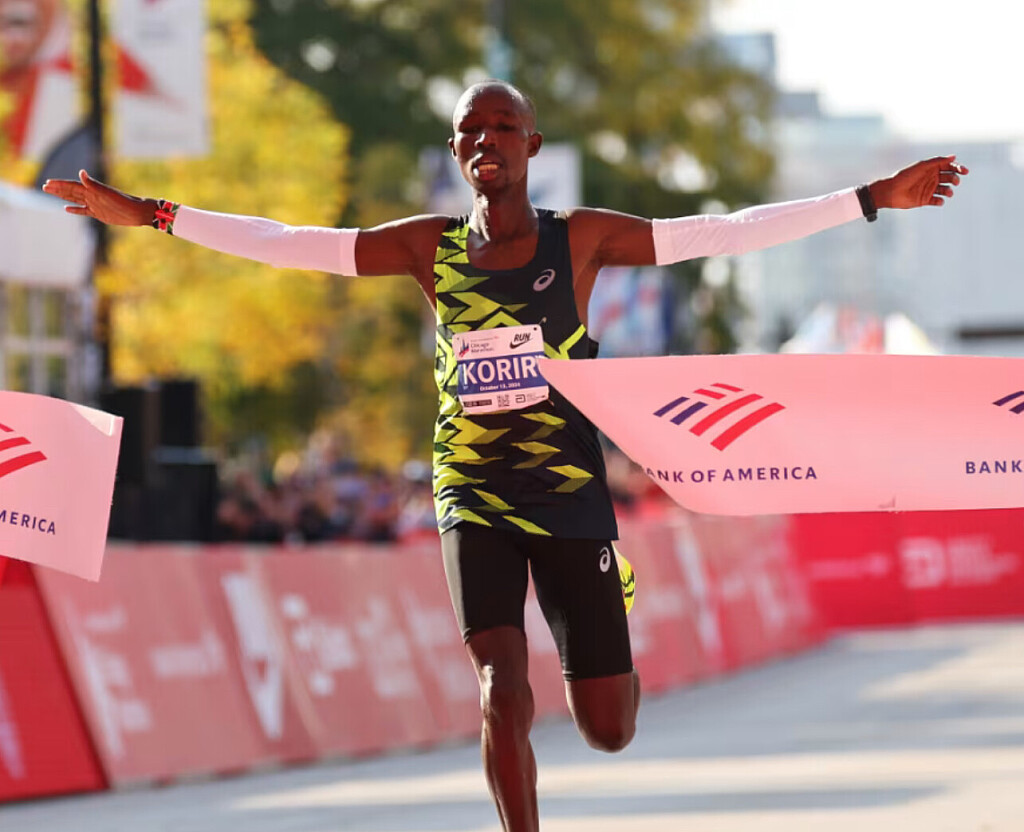
The Windy City Awaits: Who Will Write the Next Chapter of Chicago’s Marathon Magic?
All eyes will be on Grant Park this Sunday, as the 47th Bank of America Chicago Marathon ushers in another chapter in the city’s storied marathon legacy. Known for its flat, fast terrain and unforgiving margins, Chicago has become a proving ground where legends are made—and in 2025, the stage is again set for brilliance.
Course & Records: Anchors of Expectation
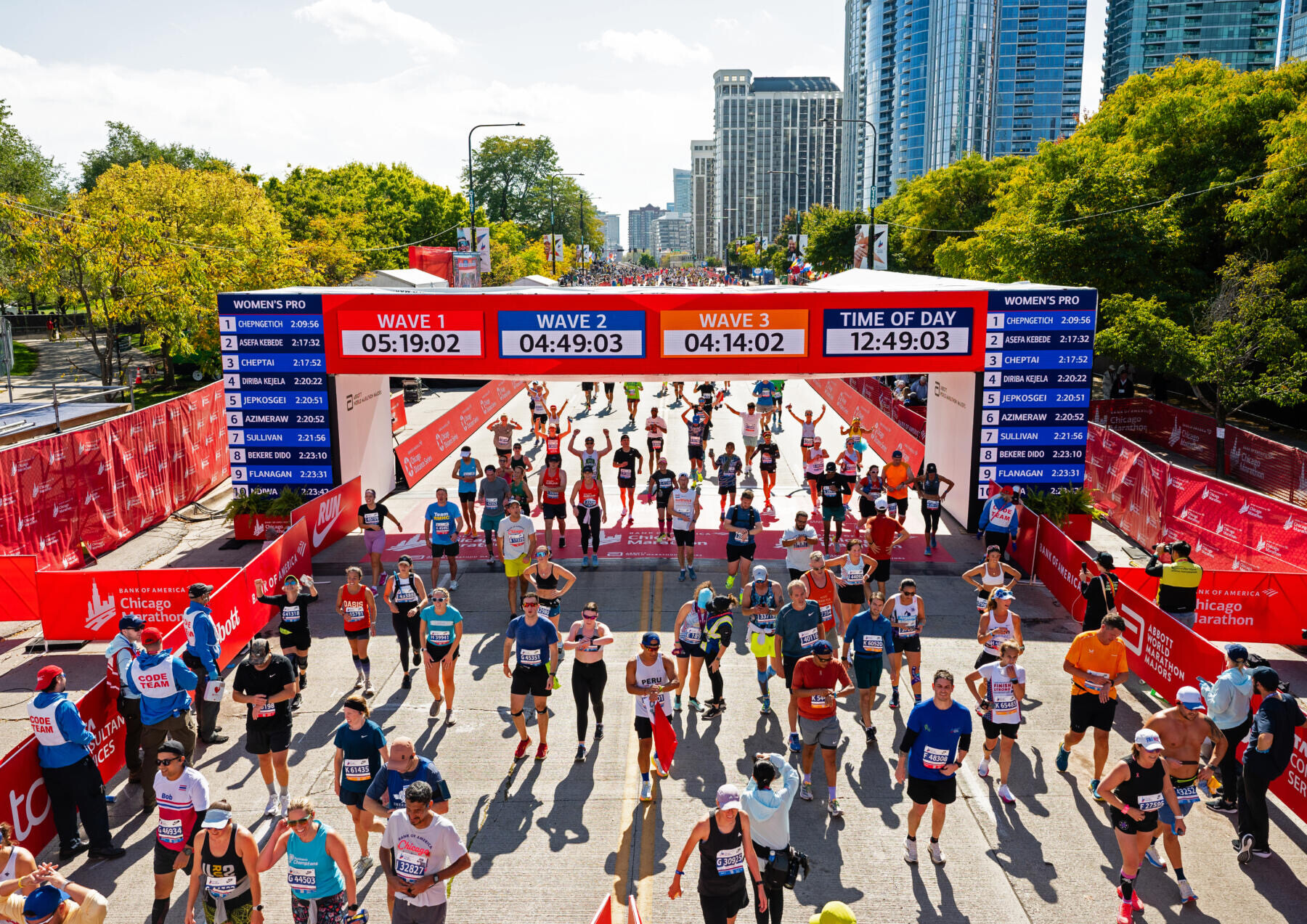
Chicago is no stranger to history. It is here that Kelvin Kiptum set the men’s world record of 2:00:35 in 2023.
On the women’s side, Ruth Chepngetich broke the world record with a stunning 2:09:56 in 2024.
These records are constant reminders of what’s possible on Chicago’s streets.
Africa’s Power Surge
The men’s field overflows with elite contenders. Reigning champion John Korir (PB 2:02:44 in Chicago 2024) returns after a dominant Boston win, aiming to defend in style.
He’s flanked by Timothy Kiplagat (2:02:55), Amos Kipruto (2:03:13), and Cybrian Kotut (2:03:22).
Uganda’s half-marathon world record holder Jacob Kiplimo (PB 2:03:37) makes another full marathon attempt with major expectations.
Ethiopia counters with Huseydin Mohamed Esa (2:04:39) and other seasoned performers, keeping the East African narrative strong.
Women’s Field: Depth, Debuts & Tactics
In the women’s race, Ethiopia’s depth dominates. Megertu Alemu (2:16:34), Hawi Feysa (2:17:00), Bedatu Hirpa (2:18:27), and Haven Hailu Desse (2:19:17) all bring serious credentials to Chicago.

They’ll be challenged by Kenya’s Mary Ngugi-Cooper (2:20:22), while rising stars Loice Chemnung(marathon debut) and Ejgayehu Taye (track standout) add intrigue to the field.
Continental Ambitions & Local Heroes
Bashir Abdi (Belgium, 2:03:36) carries Europe’s hopes. His pacing discipline and championship experience make him a dark horse in the chaotic front pack.
On the North American front:
• Galen Rupp (2:06:07), a former Chicago champion, seeks to recapture relevance.
• Conner Mantz (2:07:47) and CJ Albertson (2:08:17) represent fresh American ambition.
• Rory Linkletter (2:08:01) brings Canadian presence to the mix.
What to Watch & Final Word
Expect fast early splits, bold moves, and surges that test everyone’s guts. The men’s race may hinge on who can ride the early pace without crashing. The women’s battle may be tactical, with late kickers deciding the outcome.
If Chicago’s history teaches us anything, it’s that when speed meets strategy, anything can happen. As the gun fires in Grant Park, we’ll see whether tradition holds or new legends are born.
(10/09/2025) ⚡AMPby Robert Kibet
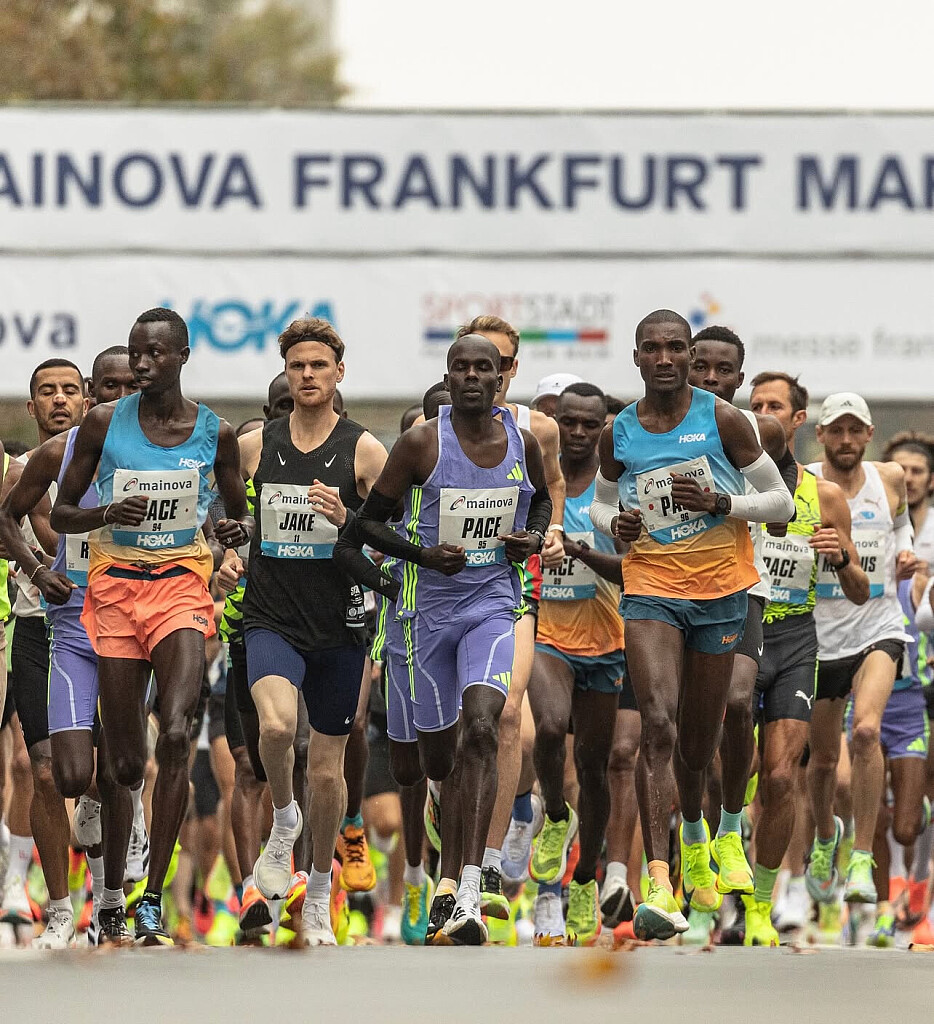
Shura Kitata Headlines Deep International Field at the 2025 Mainova Frankfurt Marathon
Frankfurt, Germany - Former champion Shura Kitata will return to the Mainova Frankfurt Marathonon October 26 looking to reclaim his winning form against one of the strongest men’s fields in the race’s 42-year history.
The Ethiopian star, who made his breakthrough victory here in 2017, owns a lifetime best of 2:04:49and is one of seven athletes in this year’s lineup who have already broken 2:08:00. Despite his impressive résumé — which includes a win at the 2020 London Marathon — Kitata is seen as one of several contenders rather than the clear favorite.
“We have a top-class men’s field this year, very well balanced with no clear favorite,” said Race Director Jo Schindler. “We also hope that Filimon Abraham can produce a fine race.”

Organizers expect the 2025 edition to draw a record number of participants, potentially surpassing the all-time mark of 16,034 entries set in 2012.
Kitata’s Return to His Breakthrough Course
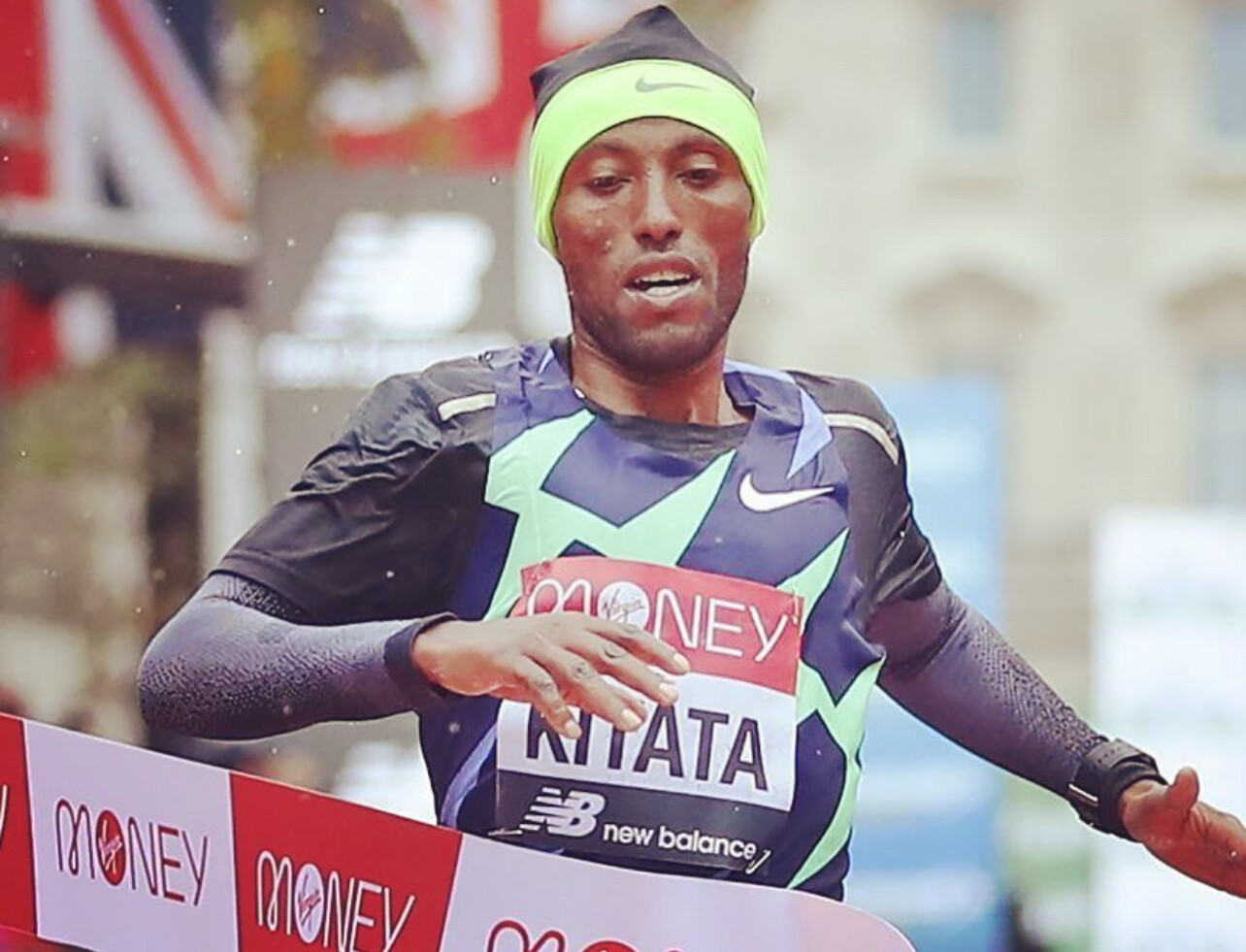
When Kitata won Frankfurt in 2017 at just 21, his 2:05:50 victory shocked the field and marked the beginning of his rise to world-class status. That time remains the fourth-fastest ever run on the Frankfurt course — achieved before the carbon-plated shoe era.
Since then, Kitata has achieved global recognition with podium finishes in multiple World Marathon Majors. Yet recent seasons have seen him searching for consistency, and Frankfurt’s fast, flat course offers a perfect opportunity for revival.
Rising East African Depth
Kitata won’t be alone at the front. Dejene Megersa, just 20 years old, already boasts a 2:05:42personal best, set in Dubai as a teenager. Fellow Ethiopians Belay Asfaw (2:07:00), Getachew Masresha (2:07:04), and Kirbrom Habtu (2:07:05) join him in the lineup, while Kenya counters with Kipkemoi Kiprono (2:06:45) and Stanley Rono (2:07:05).
Together, they form a deep East African field that ensures aggressive pacing and potentially fast times — but no Americans are on the elite list this year, reinforcing Frankfurt’s strong continental focus.
German Runners Eye Personal Bests
Leading the German hopes, Filimon Abraham (PB 2:08:11) — who grew up in Eritrea and trains at high altitude in Asmara — is targeting a sub-2:08 and a place among the top finishers.
Compatriots Tom Thurley (2:12:45) and Jan Lukas Becker (2:15:20) also aim to make significant improvements and narrow the gap to Germany’s all-time greats.
Fast Conditions Await
Known for its flat, sheltered course and cool autumn weather, Frankfurt has produced world-class times for decades, including Wilson Kipsang’s 2:03:42 course record from 2011. With the 2025 field stacked with proven speed, fans can expect another fast, competitive race — and possibly a return to form for Shura Kitata.
(10/09/2025) ⚡AMPby Race News Service

Mainova Frankfurt Marathon
Frankfurt is an unexpectedly traditional and charming city, with half-timbered buildings huddled in its quaint medieval Altstadt (old city), cosy apple wine taverns serving hearty regional food, village-like neighbourhoods filled with outdoor cafes, boutiques and street art, and beautiful parks, gardens and riverside paths. The city's cache of museums is second in Germany only to Berlin’s, and its nightlife...
more...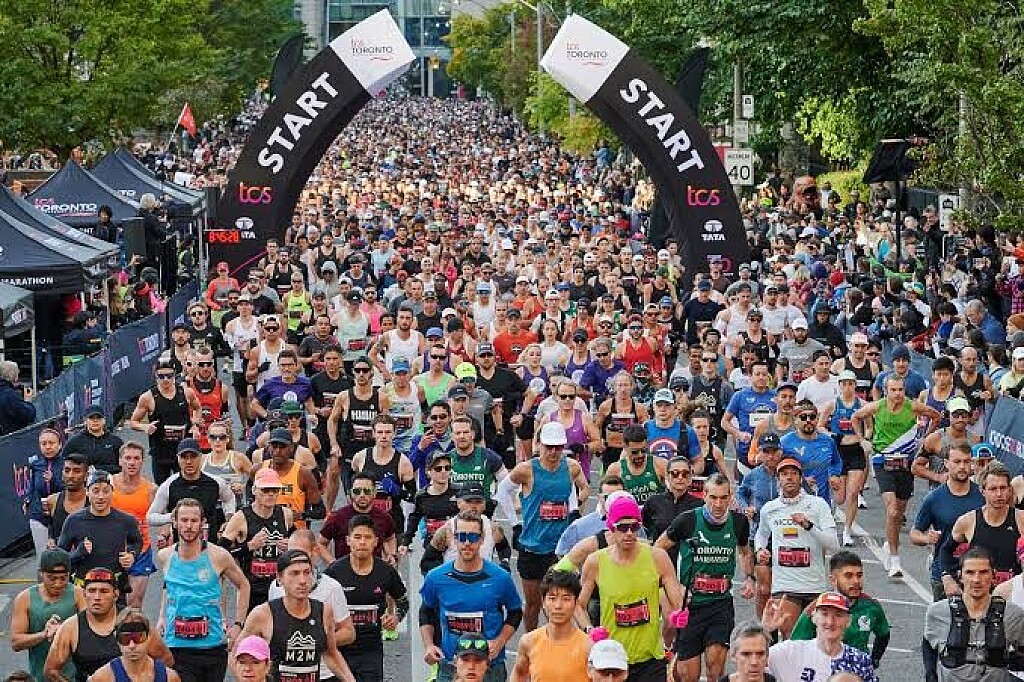
Kenyan Duo to Battle for TCS Toronto Waterfront Marathon Title
Toronto, Canada — October 19, 2025. The stage is set for another East African showdown at the TCS Toronto Waterfront Marathon, a World Athletics Elite Label Race. Two top Kenyan runners, Beatrice Cheserek and Cynthia Chemweno, have been confirmed to take on Ethiopia’s rising stars Almaz Kebebe and Adane Anmaw, in what promises to be one of the most competitive women’s races in the event’s history.
Beatrice Cheserek’s Confident Marathon Debut

At 26, Beatrice Cheserek will make her marathon debut in Toronto, bringing impressive credentials to the start line. She owns a half marathon personal best of 1:06:48, recorded while winning the 2022 Cardiff Half Marathon, and has already experienced the pressure of major marathons.
In 2023, she paced compatriot Rosemary Wanjiru through 30 kilometers of the Tokyo Marathon, a World Marathon Major that Wanjiru went on to win in 2:16:28. Cheserek’s performance that day proved her strength over the distance — and she’s ready to test herself as a full competitor.
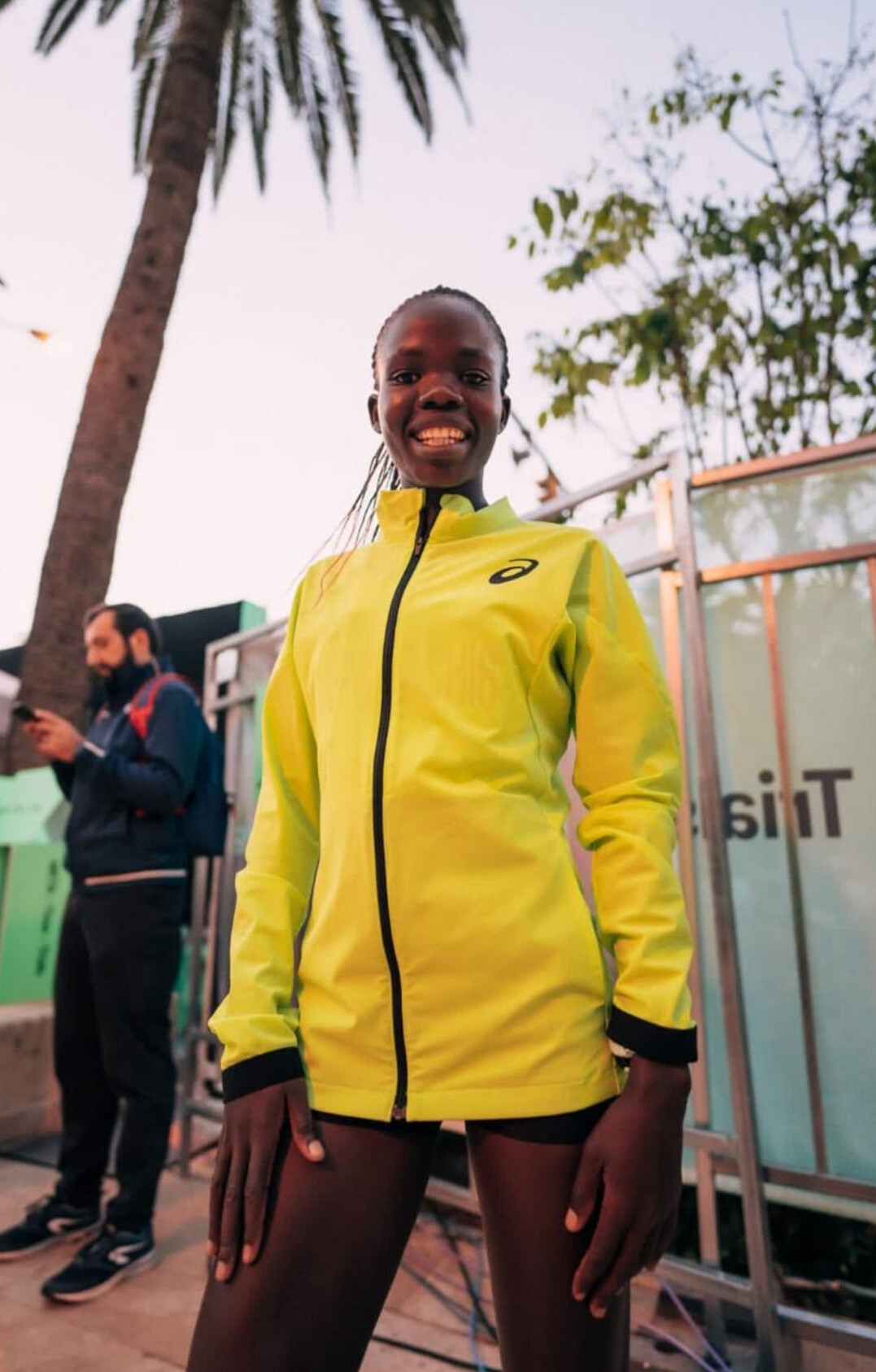
“This is my first marathon, and I hope to do my best,” Cheserek said. “I paced in Tokyo for Rosemary Wanjiru, and she ran 2:16, so I know I am strong. I want to run 2:20 or 2:19 in Toronto. It’s a fast course.”
After taking maternity leave to give birth to her son Fabian Kiprop, now 15 months old, Cheserek has made a steady comeback. Earlier this year, she placed sixth at Spain’s Santa Pola Half Marathon, running 1:10:25. Her confidence has grown with each training cycle.
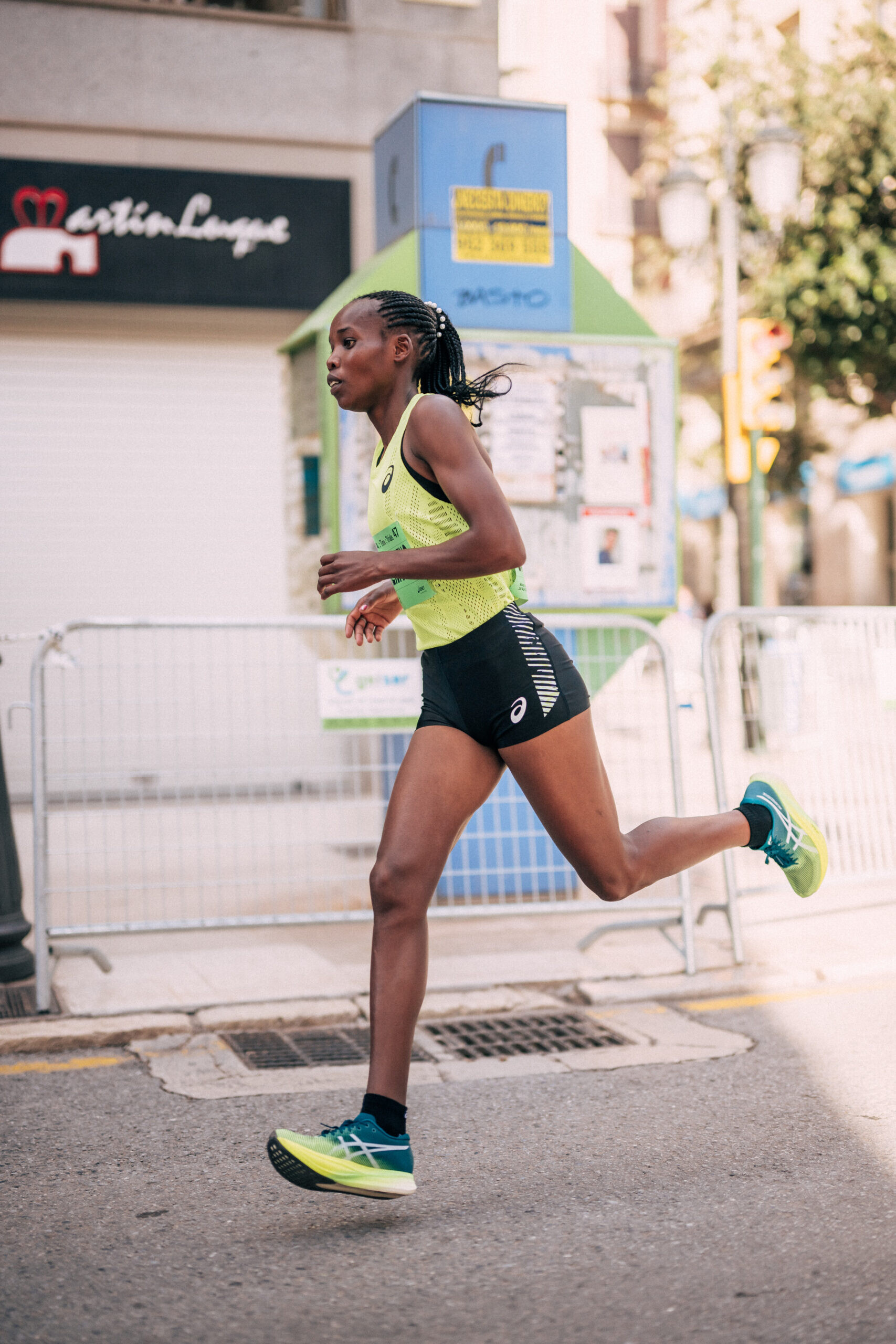
“My training now is going well,” she added. “Last week I did 40 kilometers and finished strong. I know Toronto is not a hard course — a little bit faster — and I’m ready.”
Cynthia Chemweno Targets Another Breakthrough
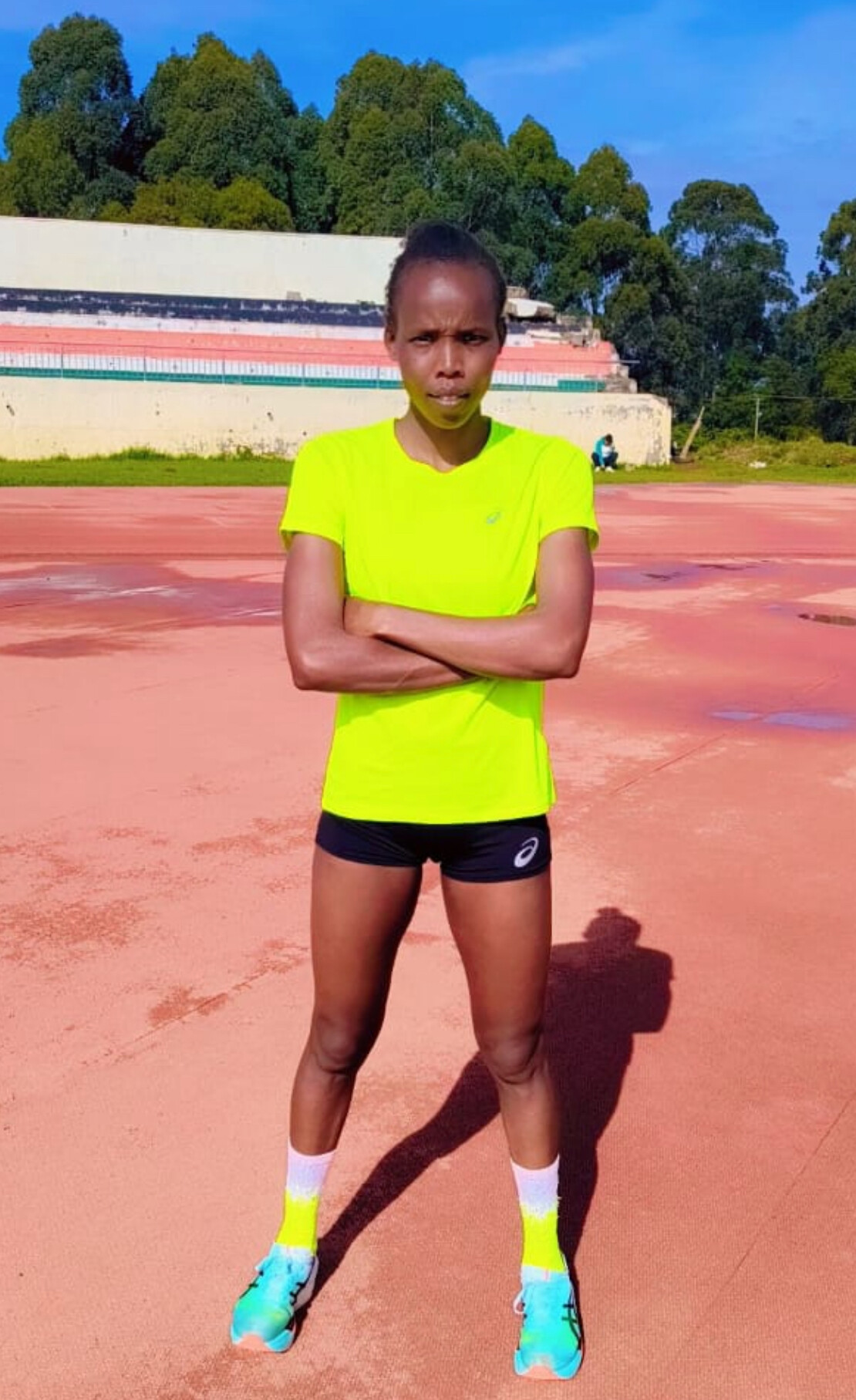
Her teammate Cynthia Chemweno, 28, also arrives in Toronto with growing momentum. In her marathon debut at Hamburg in April, she finished fifth in 2:23:39, a time that gave her valuable confidence heading into the fall season.
“Hamburg was my first marathon, and I managed a good time,” Chemweno said. “The course was great, and I really enjoyed it. I’m excited to improve in Toronto.”
Chemweno and Cheserek are both part of the ASICS Mezzo Sports Management group. The two trained together frequently before Chemweno relocated to Chojo Camp in Kaptagat — a name derived from the Japanese word meaning “striving for the peak.” The camp is home to several top Kenyan male athletes and coaches.
Cheserek continues to train from her hometown of Chepkorio, 40 kilometers from Iten, supported by her husband Cyrus Kiplagat, himself a competitive runner.
“He is the one who helps me with pacing,” she explained. “When I train, my sister-in-law looks after Fabian. It’s not always easy, especially during the rainy season when the dirt roads are impassable, but I keep working hard.”
Course Record in Sight
The Toronto Waterfront Marathon course record of 2:20:44, set by Ethiopia’s Waganesh Mekasha, could be under threat. Mekasha is a training partner of Kebebe and Anmaw — both part of the emerging Ethiopian generation now challenging Kenyan dominance.
With Cheserek targeting a 2:19 and Chemweno already proven in the 2:23 range, organizers and fans alike are anticipating a fast, tactical race through downtown Toronto.
Final Thoughts
The 2025 TCS Toronto Waterfront Marathon is shaping up as a clash of ambition, resilience, and national pride. Both Kenya and Ethiopia will field athletes capable of rewriting the record books on one of North America’s premier marathon stages.
Whether it’s Cheserek’s inspired debut or Chemweno’s drive to improve on her Hamburg performance, Toronto could once again deliver the kind of breakthrough that defines a career — and keeps East Africa at the center of the global marathon conversation.
(10/08/2025) ⚡AMPby Paul Gains
TCS Toronto Waterfront Marathon
The Scotiabank Toronto Waterfront Marathon, Half-Marathon & 5k Run / Walk is organized by Canada Running Series Inc., organizers of the Canada Running Series, "A selection of Canada's best runs!" Canada Running Series annually organizes eight events in Montreal, Toronto and Vancouver that vary in distance from the 5k to the marathon. The Scotiabank Toronto Waterfront Marathon and Half-Marathon are...
more...
World-Class Fields Ready for the 2025 Chicago Marathon on October 12
The 2025 Bank of America Chicago Marathon, set for Sunday, October 12, promises to once again showcase one of the deepest elite fields in marathon history. Known for its fast, flat course and ideal racing conditions, Chicago has become a global stage for record-setting performances — and this year’s edition may be one of the most competitive yet.
Men’s Elite Race: Korir Returns to Defend His Title
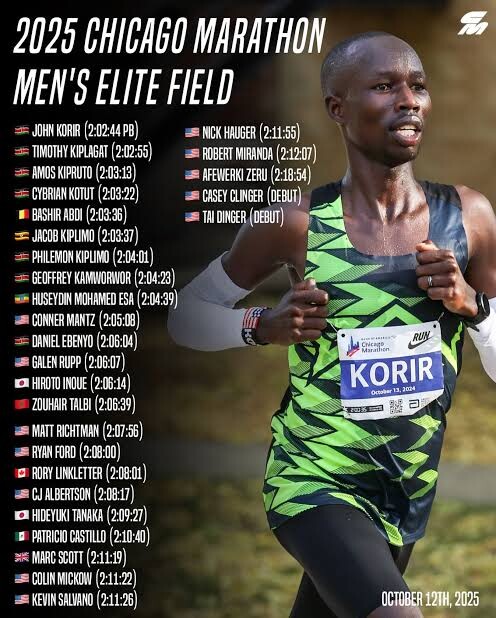
Leading the men’s lineup is John Korir of Kenya, the 2024 champion, who ran an impressive 2:02:44 personal best last year. He’ll face a formidable field featuring Timothy Kiplagat (2:02:55), Amos Kipruto (2:03:13), CyBrian Kotut, and Olympic bronze medalist Bashir Abdi.

The men’s race includes a deep roster of sub-2:05 performers, joined by rising Kenyan and Ethiopian talent and top Americans Conner Mantz and Galen Rupp, who will be aiming to challenge the American record. Mantz, who continues to build momentum on the global stage, has called Chicago “the perfect course for fast running.”
Other top contenders include Jacob Kiplimo, Philemon Kipkemo, and Geoffrey Kamworor, all proven half-marathon specialists stepping into the marathon distance with high expectations.
Women’s Elite Race: Ethiopia’s Depth on Display

The women’s field is equally world-class. Megertu Alemu (2:16:34) leads the entries, followed by Hawi Feysa (2:17:00) and Irine Cheptai (2:17:51). Ethiopia’s strength in depth continues with Bedatu Hirpa (2:18:27) and Haven Hailu Desse (2:19:17).
Kenya’s Mary Ngugi-Cooper, who has been consistently among the top finishers in major marathons, brings experience and resilience to the field with her 2:20:22 personal best.
Among the notable international names are Calli Hauger-Thackery of Great Britain (2:21:24), Lindsay Flanagan (2:23:31), Florencia Borelli (2:24:18), and Dakotah Popehn (2:24:40). The debut of Kenya’s Loice Chemnung and Ethiopia’s Ejgayehu Taye, both stepping up from world-class track careers, adds further intrigue.
Records and Legacy
Chicago’s reputation as one of the fastest courses in the world continues to draw elite fields. The men’s course record of 2:00:35, set by the late Kelvin Kiptum in 2023, remains one of the most remarkable performances in marathon history. On the women’s side, Sifan Hassan’s 2:13:44, also from 2023, stands as the course record.
Both records were set in near-perfect conditions — something runners and fans alike will be hoping for again this October.
An Event with Global Reach
The Chicago Marathon remains a cornerstone of the Abbott World Marathon Majors, drawing more than 50,000 runners from over 100 countries. In 2025, organizers anticipate record participation and strong community engagement across the city’s 29 neighborhoods.
Since its founding in 1977, the race has evolved from a local road event into a global showcase for endurance and diversity. Beyond the elite races, the marathon generates millions for local charities and stands as one of the city’s largest annual sporting celebrations.
Looking Ahead
As the elite men and women prepare for the start line, the question is not whether Chicago will be fast — but how fast.
With Korir defending his title, Alemu chasing sub-2:16 territory, and several debutants looking to make their mark, the 2025 Chicago Marathon could once again deliver performances that shape the global marathon conversation.
The 47th edition of this iconic race will begin at 7:30 a.m. (CT) from Grant Park, with live coverage expected worldwide.
Chicago’s streets are ready. The world will be watching.
(10/08/2025) ⚡AMPby Boris Baron
Bank of America Chicago
Running the Bank of America Chicago Marathon is the pinnacle of achievement for elite athletes and everyday runners alike. On race day, runners from all 50 states and more than 100 countries will set out to accomplish a personal dream by reaching the finish line in Grant Park. The Bank of America Chicago Marathon is known for its flat and...
more...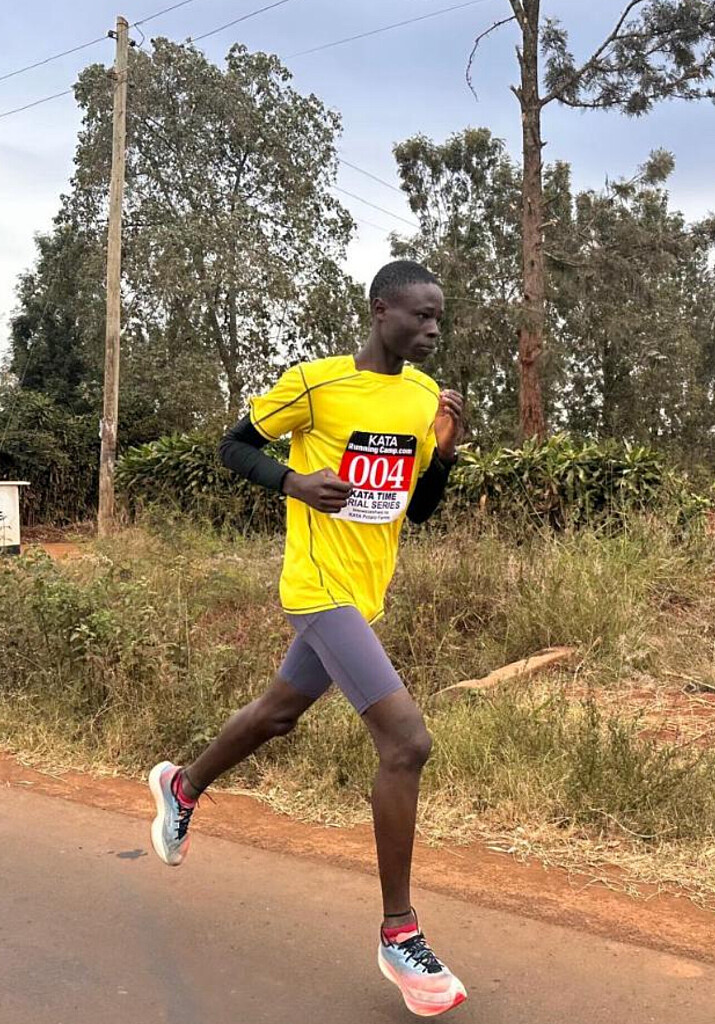
KATA Time Trials Expand Nationwide as 30 Running Camps Prepare for October 15 Event
For years, the Kenya Athletics Training Academy (KATA) in Thika has been the nerve center of monthly time trials — small but highly competitive races that have helped shape Kenya’s next generation of distance-running talent.
This October 15 marks another milestone. For the second consecutive nationwide edition, KATA’s time trials will take place not only at the Thika headquarters but also simultaneously across more than 30 KATA Running Camps throughout Kenya, featuring both 10 km and 5 km races.
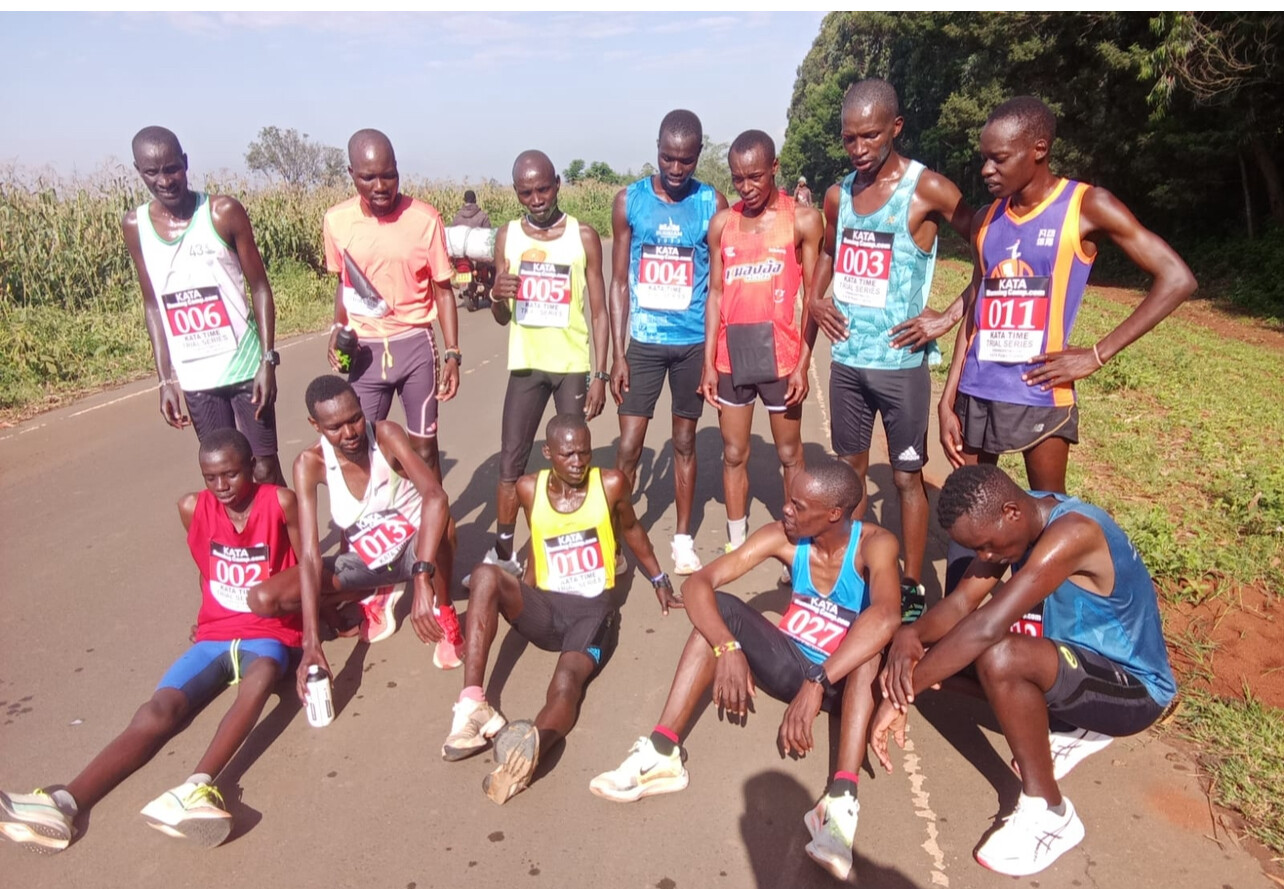
The expansion follows the success of August’s first coordinated nationwide time trial, which confirmed that KATA’s decentralized model can operate effectively across multiple regions. Each camp’s participation is not optional — under the KATA system, all official camps are required to host a time trial every other month as part of athlete development and performance monitoring.
Meanwhile, the Thika headquarters continues to set the standard. It has organized a monthly KATA Time Trial without interruption since September 2021, providing a consistent testing ground for hundreds of emerging athletes.
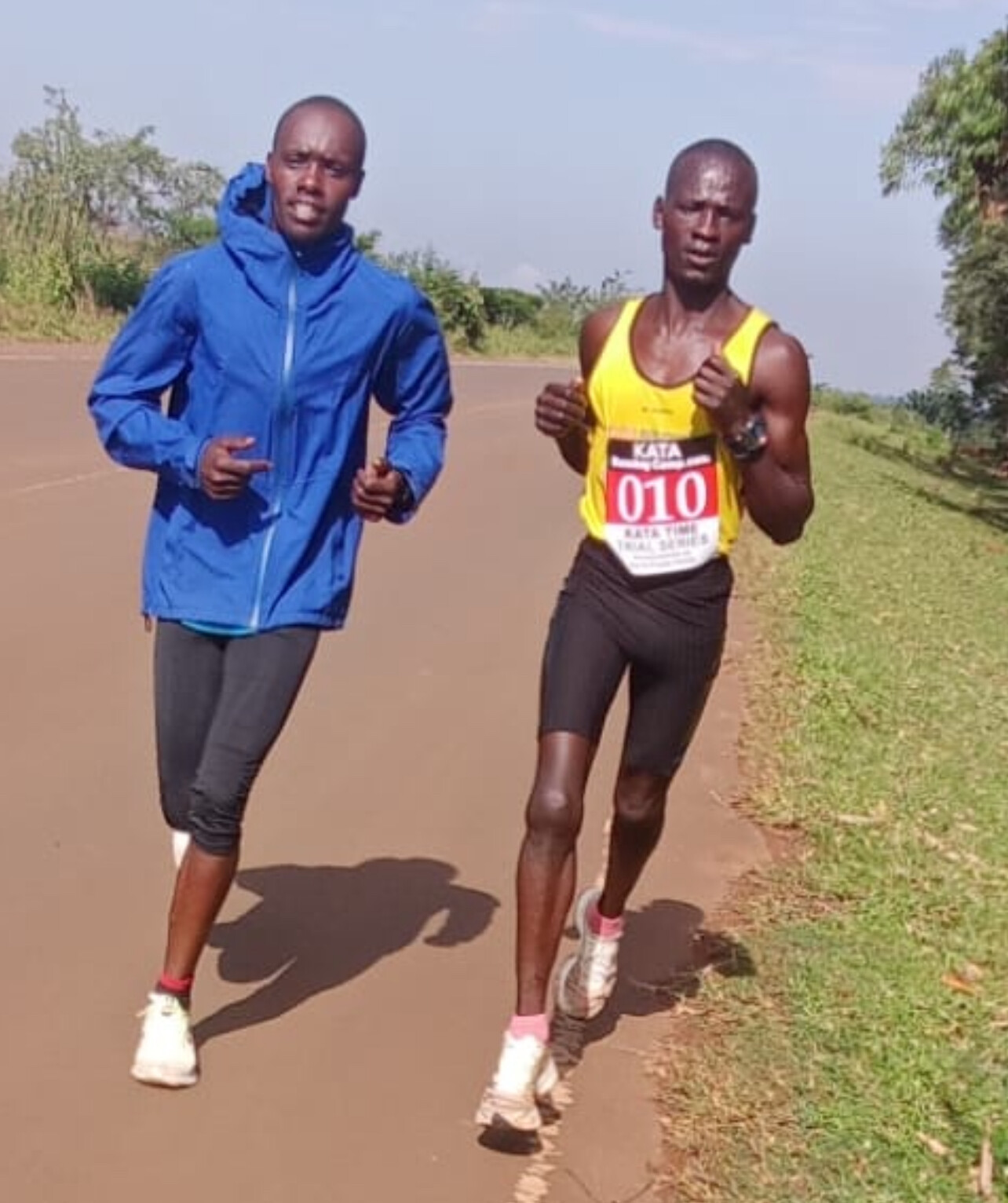
KATA founder Bob Anderson, who also created My Best Runs, said the approach is about expanding access while maintaining structure.
“The idea was to decentralize opportunity,” Anderson explained. “We want every promising runner, whether training in Thika or a rural camp, to have the same chance to be timed, compared, and supported within the KATA framework.”
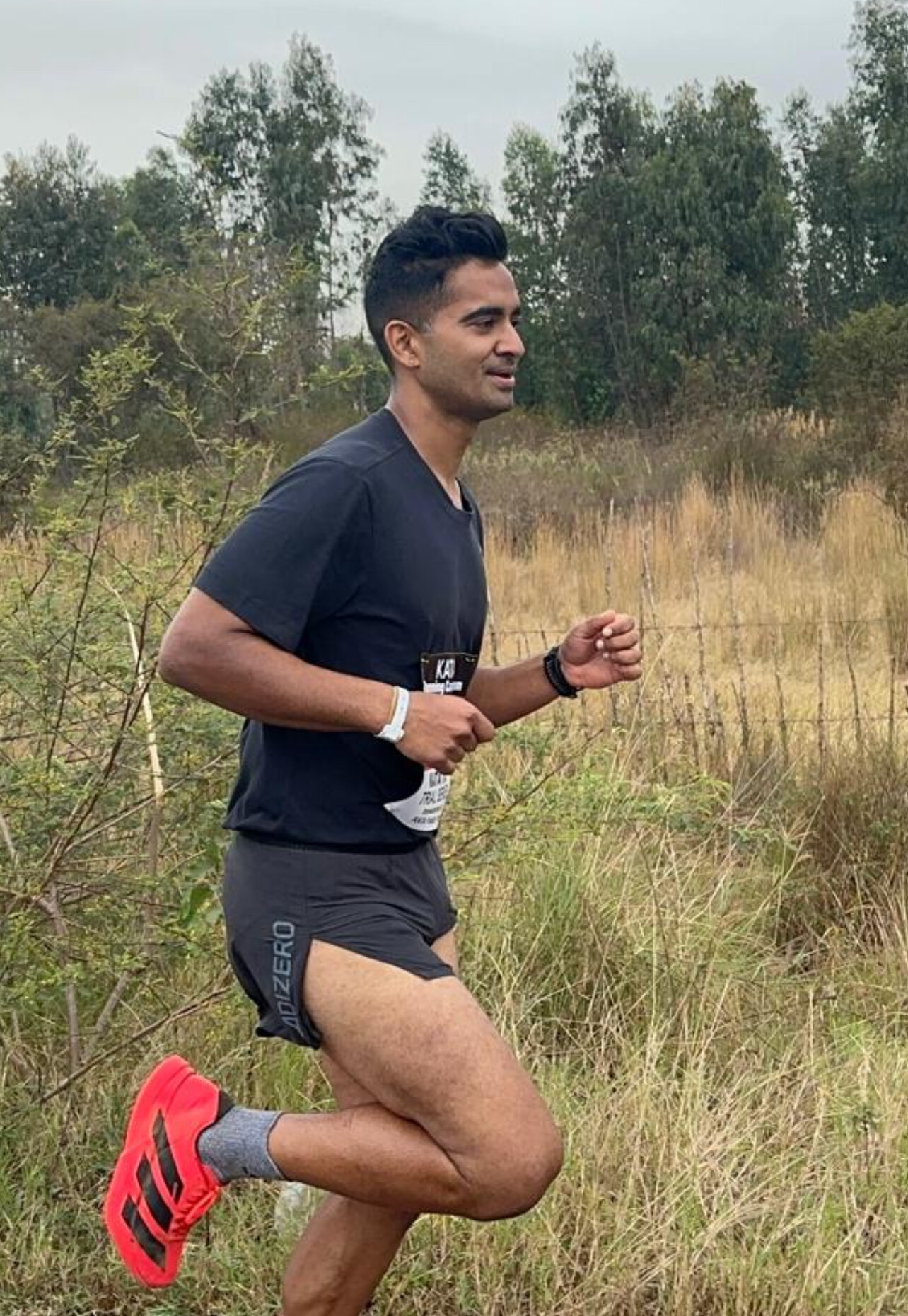
Through its network of 30+ KATA Running Camps, the academy has built a national performance pipeline. Each camp conducts its own race under strict KATA guidelines — ensuring accurate distances, verified timing, and documented results — which are then compiled centrally to produce nationwide rankings.
The program is already showing impact. The August trials unearthed new talents now being tracked for mentorship, nutrition guidance, and future competition opportunities.
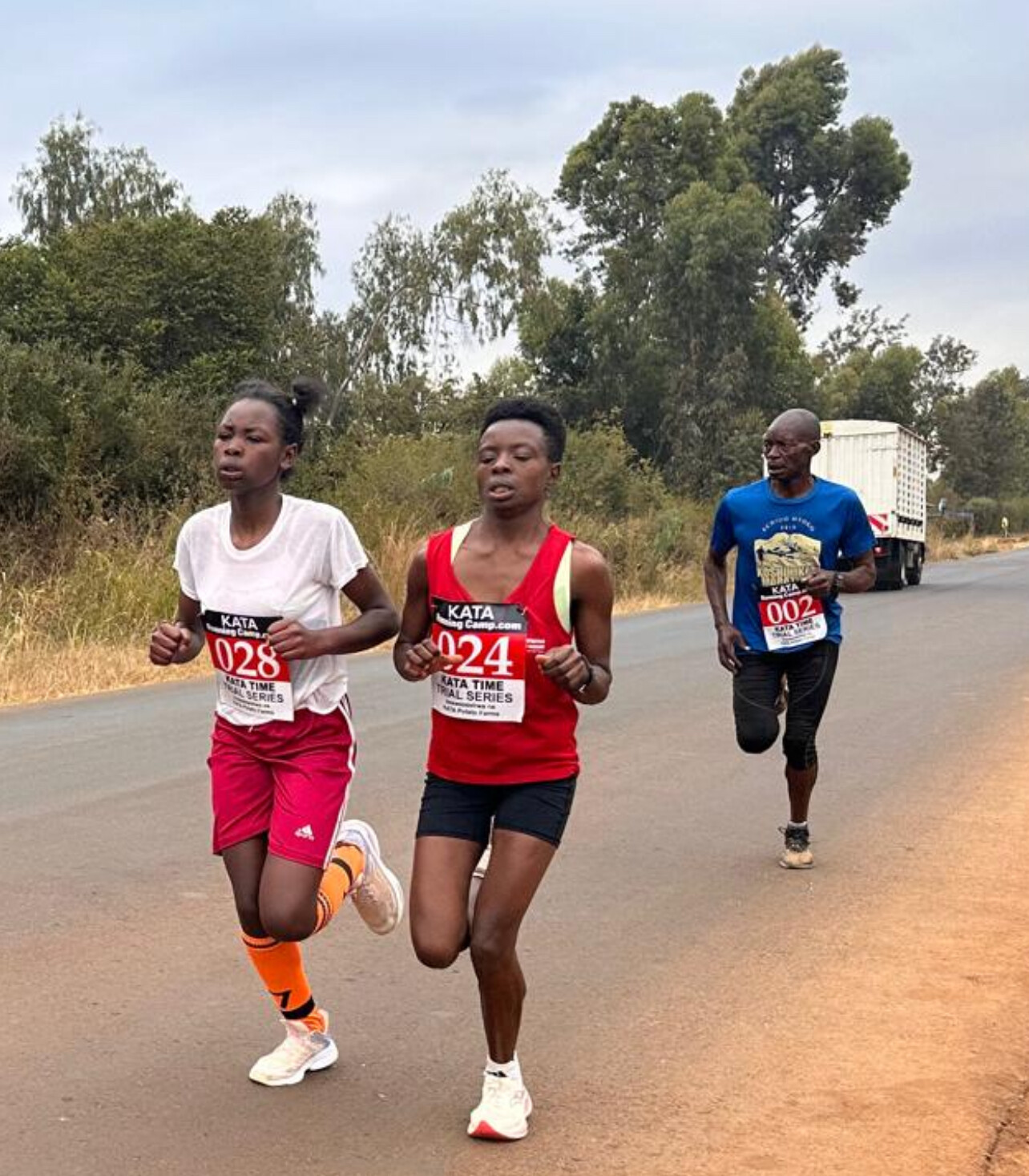
Head coach John Matheri said the system promotes fairness and progress.
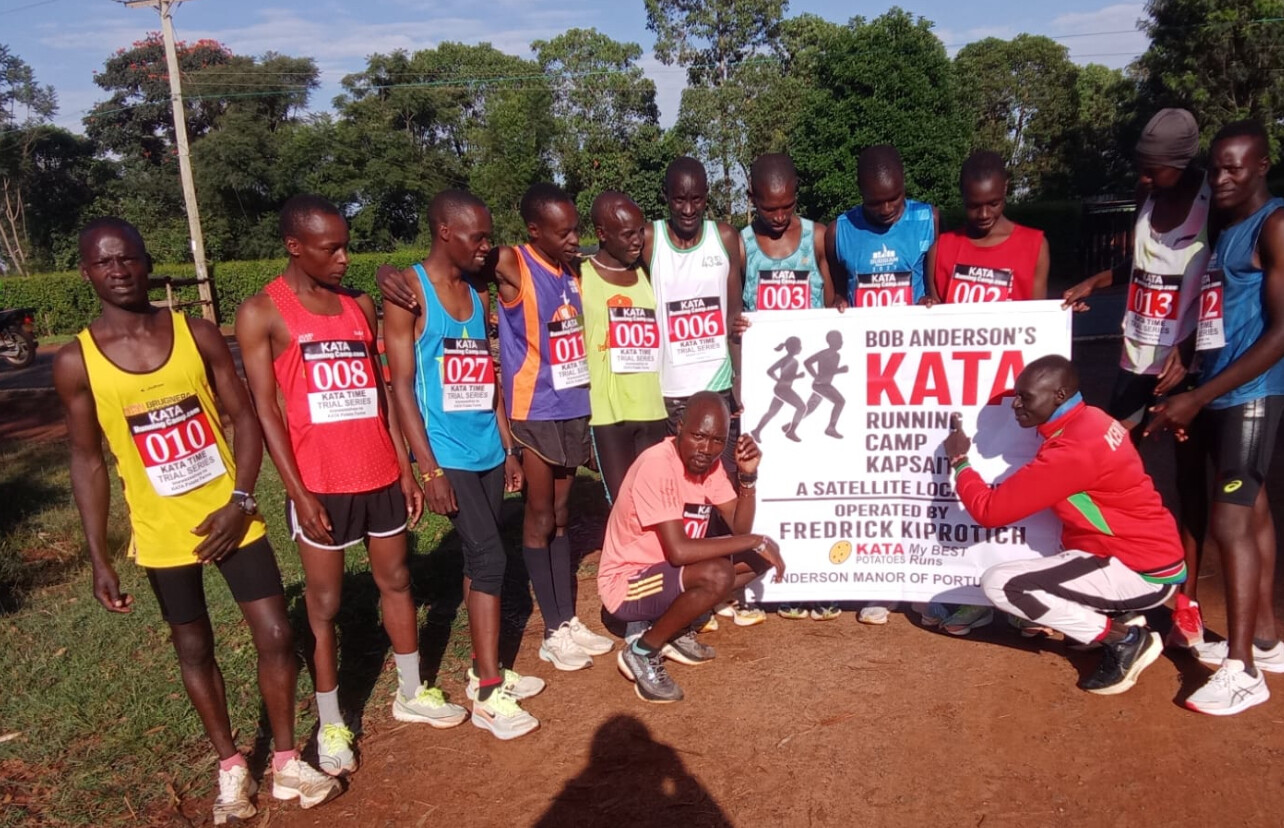
“Before, athletes had to travel to Thika for official trials. Now, the competition comes to them,” he said. “That equal footing is helping identify talent in places we might never have reached before.”
Matheri added that community involvement is strengthening outcomes.
“We expect even faster times this month,” he noted. “Athletes are training with purpose, supported by improved nutrition from our KATA potato projects and the consistent structure that these trials provide.”
Coach Silas Tiren, who leads one of the Rift Valley KATA Camps, said the program has given athletes motivation and accountability.
“These trials are more than races — they’re checkpoints,” said Tiren. “They remind every runner that consistency builds champions.”
From Kapcherop in Elgeiyo Marakwet, coach Philemon Kiptoo emphasized the difference the decentralized system is making.
“Many young runners used to give up because they couldn’t afford to travel for competitions,” he said. “Now KATA has brought the race to their doorstep. That keeps their dreams alive.”
Olympic and World medalist Edwin Soi, a longtime KATA supporter, called the program a bridge between emerging and elite athletes.
“When I look at these young runners, I see myself years ago,” Soi said. “KATA is giving them structure and belief — proof that with discipline and consistency, they can rise to the world stage.”
The October 15 event will again feature 10 km and 5 km distances for men, women, and under-20 juniors. All results from the KATA Running Camps will be uploaded to the My Best Runs database for national comparison and recognition.
As the event approaches, excitement is building across Kenya’s running communities. With standardized guidelines, consistent timing, and grassroots engagement, the KATA Time Trials are evolving into a national benchmark of progress — connecting runners from every region under one synchronized system of excellence.
From Thika’s academy grounds to the mountain trails of the Rift Valley, the whistle will blow on October 15, uniting Kenya’s KATA athletes in a single shared mission: to test, improve, and prove that talent thrives when opportunity is structured.
(10/08/2025) ⚡AMPby Robert Kibet
KATA Time Trial Series
Welcome to the KATA Monthly Time Trial Held at the Kenyan Athletics Training Academy in Thika, Kenya, the KATA Monthly Time Trial is a unique and inclusive event designed to support runners of all levels in achieving their goals and showcasing their fitness. This event offers both 10K and 5K distances on an accurate, certified course, providing participants with...
more...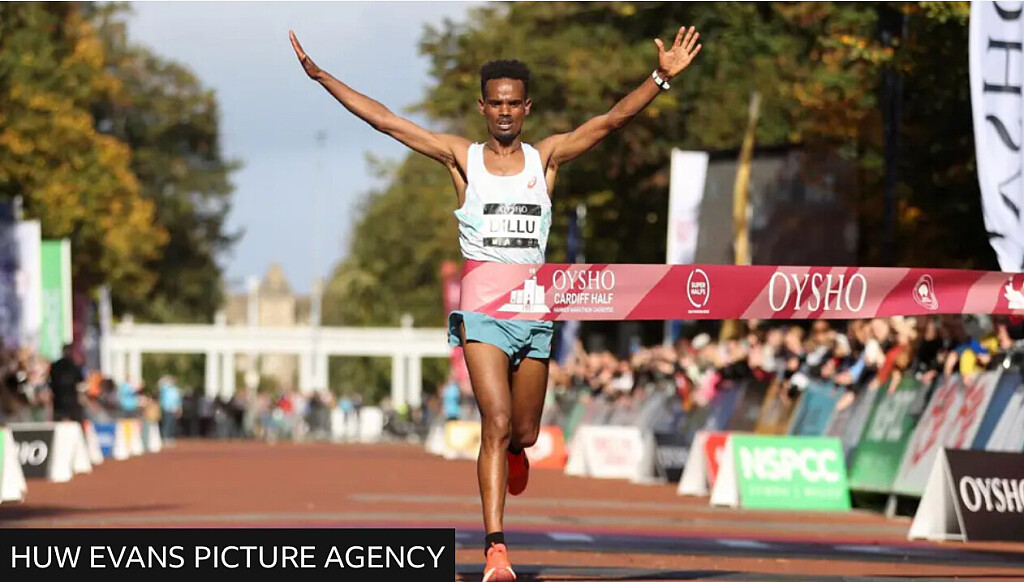
Ethiopia’s Yismaw Dillu Breaks Course Record at 2025 Cardiff Half Marathon
The 2025 Cardiff Half Marathon delivered record-breaking performances and thrilling finishes as Ethiopia’s Yismaw Dillu stormed to victory, setting a new men’s course record in the Welsh capital.
The 20-year-old Ethiopian crossed the line in 59 minutes and 23 seconds, eclipsing the previous record of 59:30 set by Kenya’s Leonard Langat in 2019. Dillu’s dominant run saw him finish more than 40 seconds ahead of his closest rival, Kenya’s Ismael Kiprono (1:00:05), while fellow Ethiopian Fikadu Liche rounded out the podium in 1:00:34.

Dillu’s commanding performance highlighted the 22nd edition of the event, which saw over 29,000 participants take to the streets of Cardiff for the 13.1-mile (21 km) race. His record-breaking time further cements the Cardiff Half Marathon as one of Europe’s fastest and most competitive half marathons.
In the women’s race, Kenya’s Miriam Chebet successfully defended her title, improving on her 2024 winning time by five seconds. Chebet clocked 1:06:36, showcasing impressive consistency at the elite level. Ethiopia’s Alem Nigus finished second in 1:07:33, while debutant Wudinesh Alemu, also from Ethiopia, claimed third in 1:08:08.
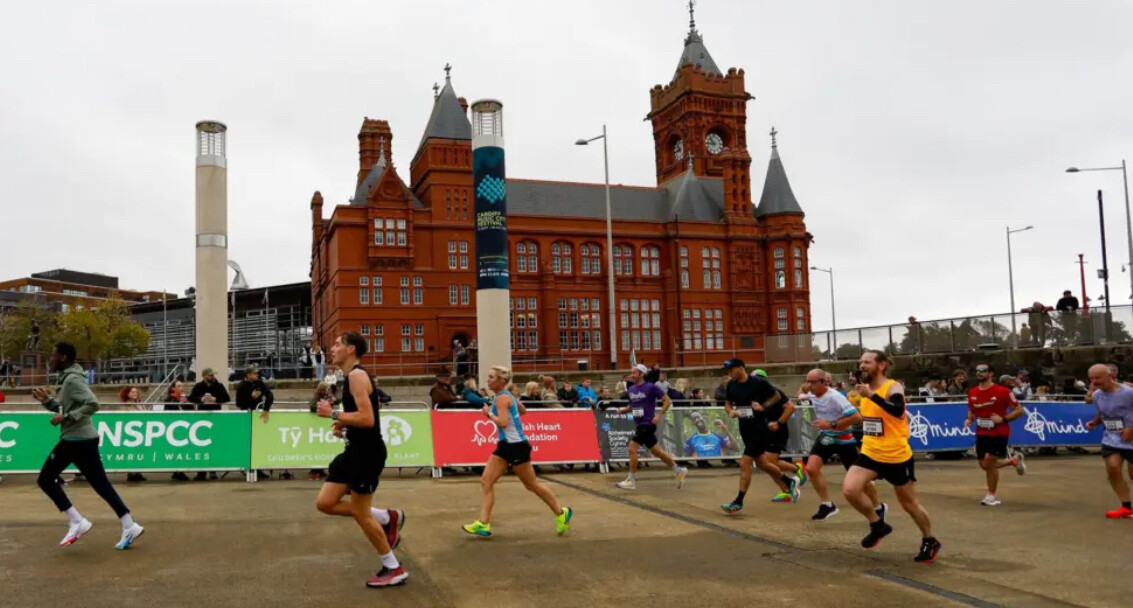
by Boris Baron

Wizz Cardiff Half Marathon
The Cardiff University/Cardiff Half Marathon has grown into one of the largest road races in the United Kingdom. The first event took place back in 2003. The event is not only the UK’s second largest half marathon, it is Wales’ largest road race and Wales’ largest multi-charity fund raising event. The race is sponsored by Cardiff University and supported by...
more...
Building the Future: KATA’s Vision to Become the Powerhouse of Athletics in Kenya
KATA founder Bob Anderson has a bold vision — one that unites athletes, coaches, and farmers under a single purpose: to make KATA the powerhouse of athletics in Kenya and a model for the world.
As of today, KATA operates 31 running camps and 65 potato farms across Kenya. Of these, 31 farms are directly connected to KATA camps, while the remaining farms are independent partners within the broader KATA network. Together, they form a growing agricultural foundation that supports both athletics and community development.
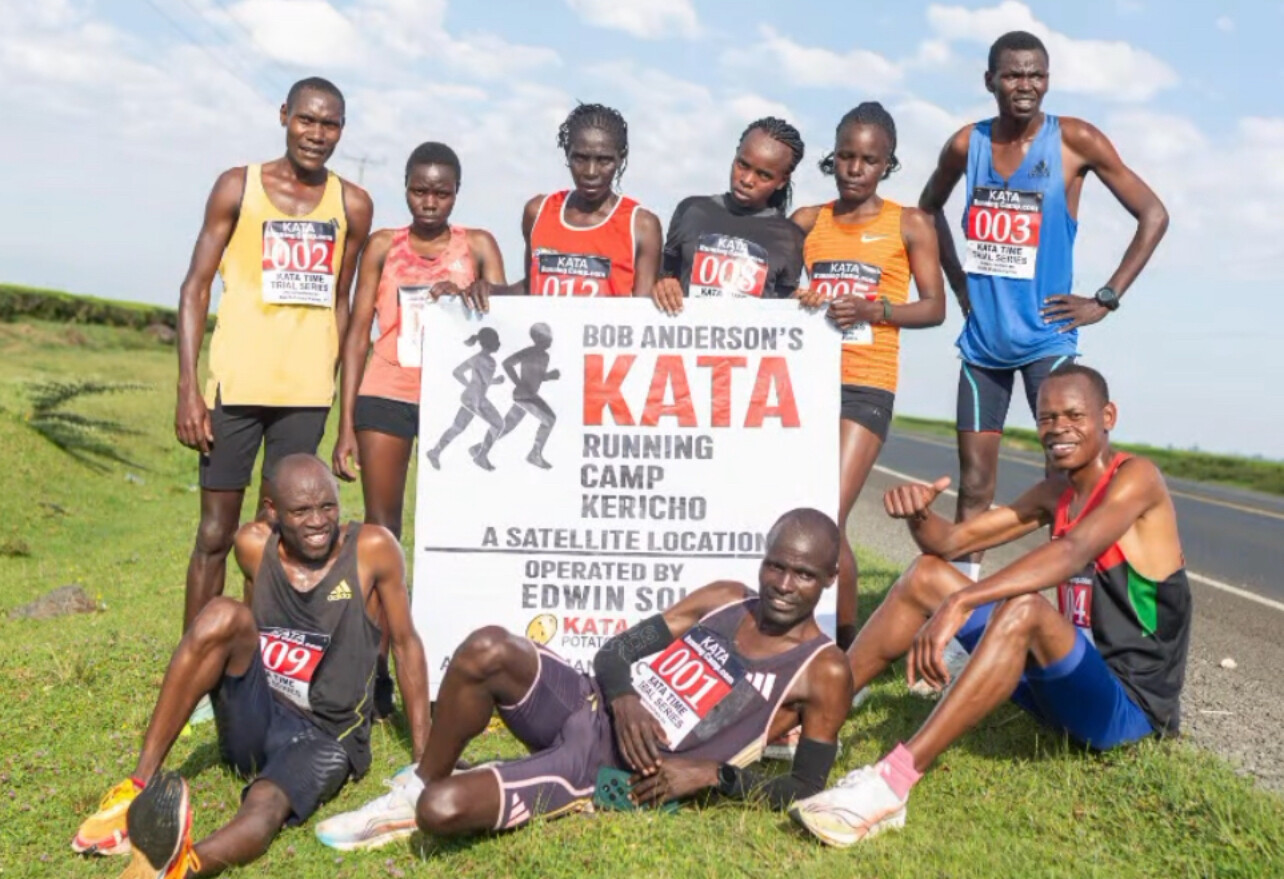
KATA farms currently range in size from one acre to 8.5 acres, combining traditional farming expertise with innovative support for athlete nutrition and sustainability. By the end of 2026, KATA’s goal is to expand to 100 Running Camps and 200 Potato Farms — half directly linked to camps — spanning more than 400 acres of productive farmland.
Another key initiative is the creation of the first KATA Ranch, scheduled for development by early 2026. The ranch will raise 100 or more sheep and goats, providing food, training nutrition, and economic value to the community. A KATA Running Camp will be connected to the ranch, integrating agriculture and athletics into one sustainable ecosystem. The long-term goal is for the ranch to become self-sustaining through the sale of meat and byproducts, ensuring continuous support for KATA programs and local families. Once the first ranch is fully operational, additional ranches are planned for future expansion.

KATA is also preparing to launch a KATA Sports Shop featuring running shoes and gear, and a KATA Market offering healthy, locally sourced food and essentials.
Coming soon and at the heart of KATA’s growth is its flagship product — branded KATA Potatoes, sold at a premium price and marketed as “The Fuel of Champions.” Complementing this is KATA Potato Flakes, an innovative product that reflects KATA’s values of energy, endurance, and excellence.
The KATA Potato Flakes will be sold worldwide as the go-to carbo-loading choice for marathonerspreparing for race day. Just add water from the tap, and in moments, you’re carbo-loading on KATA Potatoes — The Fuel of Champions.
Meanwhile, KATA Thika serves as the local office for Kenya and continues to thrive as the organization’s flagship Running Retreat, offering training stays for athletes from around the world who want to experience the Kenyan way of training — whether for a few days or a few months. The retreat provides access to world-class coaching, structured training, and cultural exchange with Kenya’s elite running community.
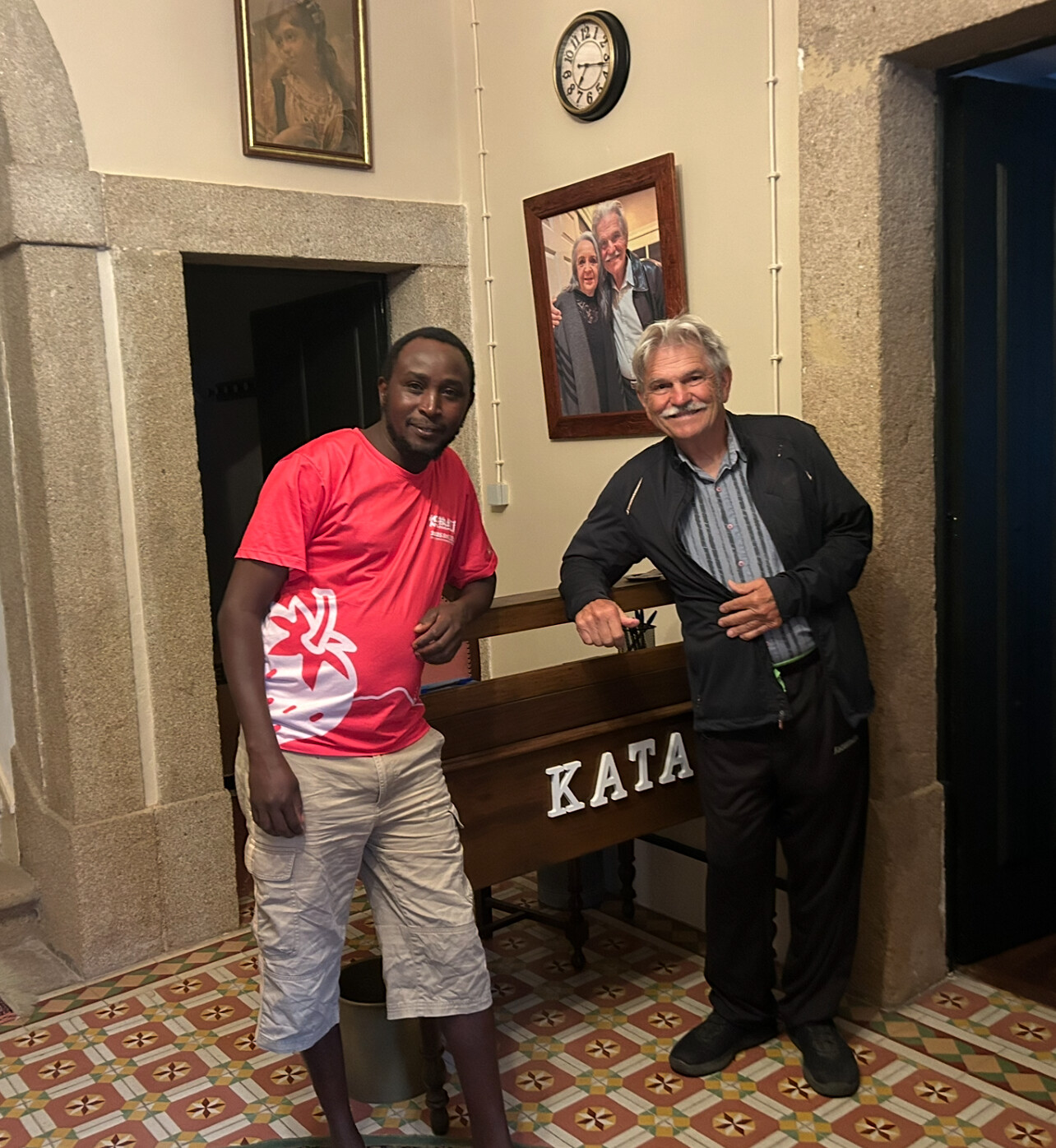
At the global level, KATA International is headquartered at the Anderson Manor in Monforte de Beira, Portugal — a 20,000-square-foot historic estate where the last King of Portugal stayed during his hunting trips in the early 1900s. The manor serves as the base for KATA’s international operations, housing both KATA Portugal and the Anderson Manor Retreat, which welcome athletes, artists, and guests from around the world.
Behind the scenes but very much involved is Bob’s wife, Catherine. (First photo with Bob). Her creative talent adds a great deal to the program. Bob and Catherine have known Coach Dennis since 2021. He has completed two three-month stays at KATA headquarters in Portugal, working alongside Bob. Coach Dennis (4th photo with Bob in Portugsl) was recently promoted to Chief Technical Officer (CTO) and will oversee operations in Kenya.
Development of KATA Portugal began in February 2024, and the project continues to progress strongly. The retreat in Portugal will serve as the European counterpart to KATA Thika, offering athletes a place to train, rest, and connect with KATA’s global mission in a peaceful, historic setting.
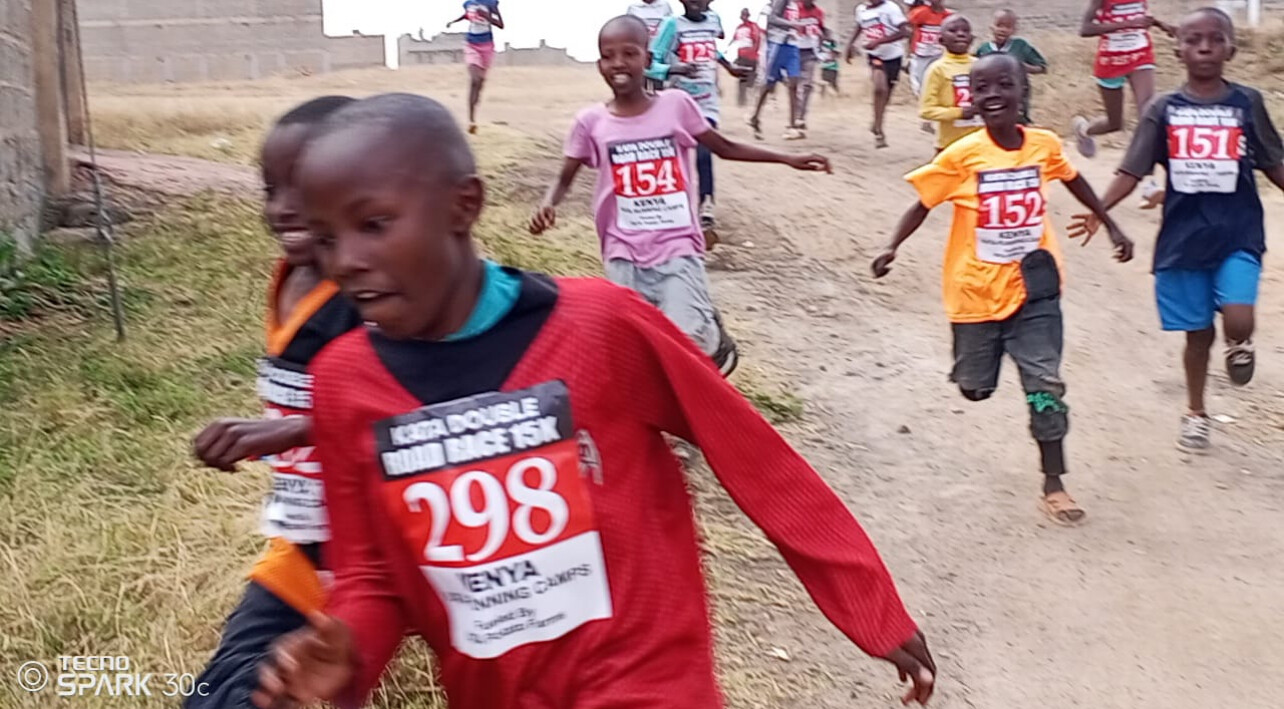
KATA’s vision goes far beyond producing great runners. The mission is to develop world-class athletes, Olympic champions, and future world record holders — combining top-tier coaching, discipline, and holistic training. Already, previous Olympic medalists such as Edwin Soi and Paul Koech are part of the KATA family, operating their own KATA Camps and helping guide the next generation of Kenyan champions.
Anderson also envisions a thriving athletic network of 650 elite runners, 150 youth athletes, and 40+ masters runners, supported by an expanding media presence through My Best Runs and KATA’s social platforms.
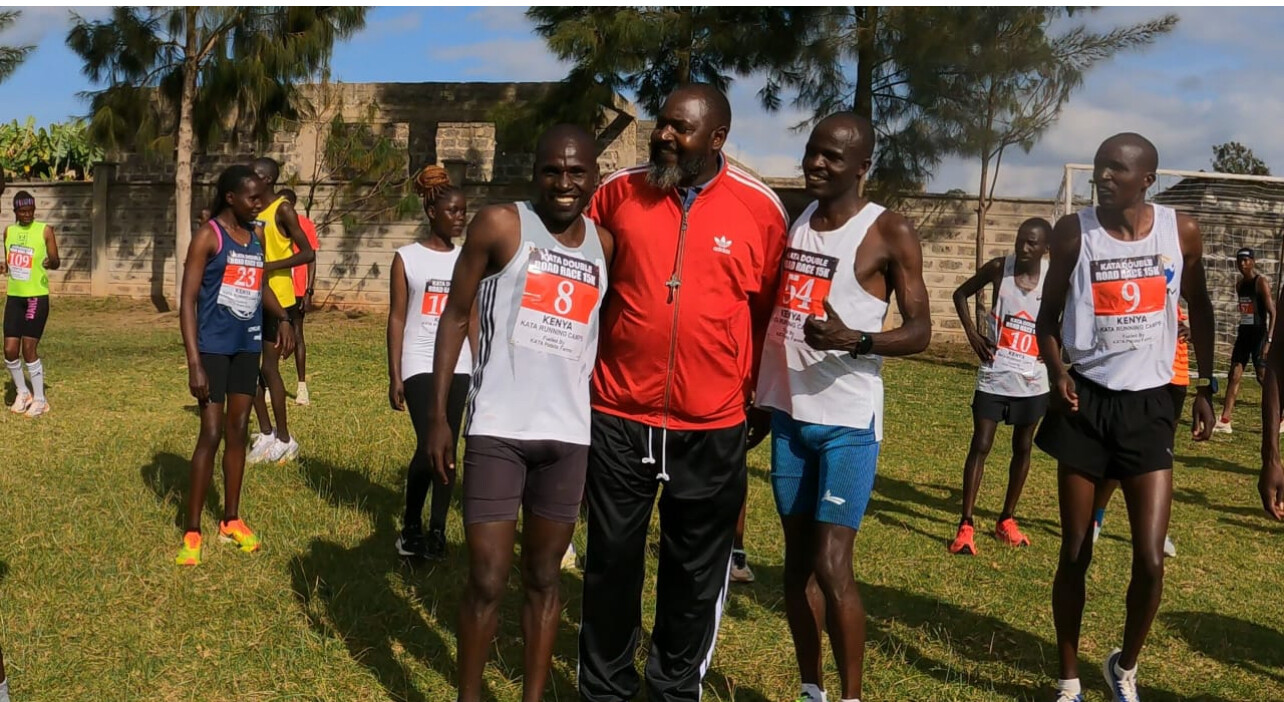
“I want to do something truly special for athletics,” Anderson says. “And it’s the passion and dedication of our athletes, coaches, and farmers that will make this dream a reality.”
“Our KATA family is as strong as its members,” Anderson adds. “As a team, we can make anything happen. In just a short amount of time, we’ve pulled off some amazing things. But our KATA family has only just gotten started. Watch us grow — and join us in helping make a difference.”
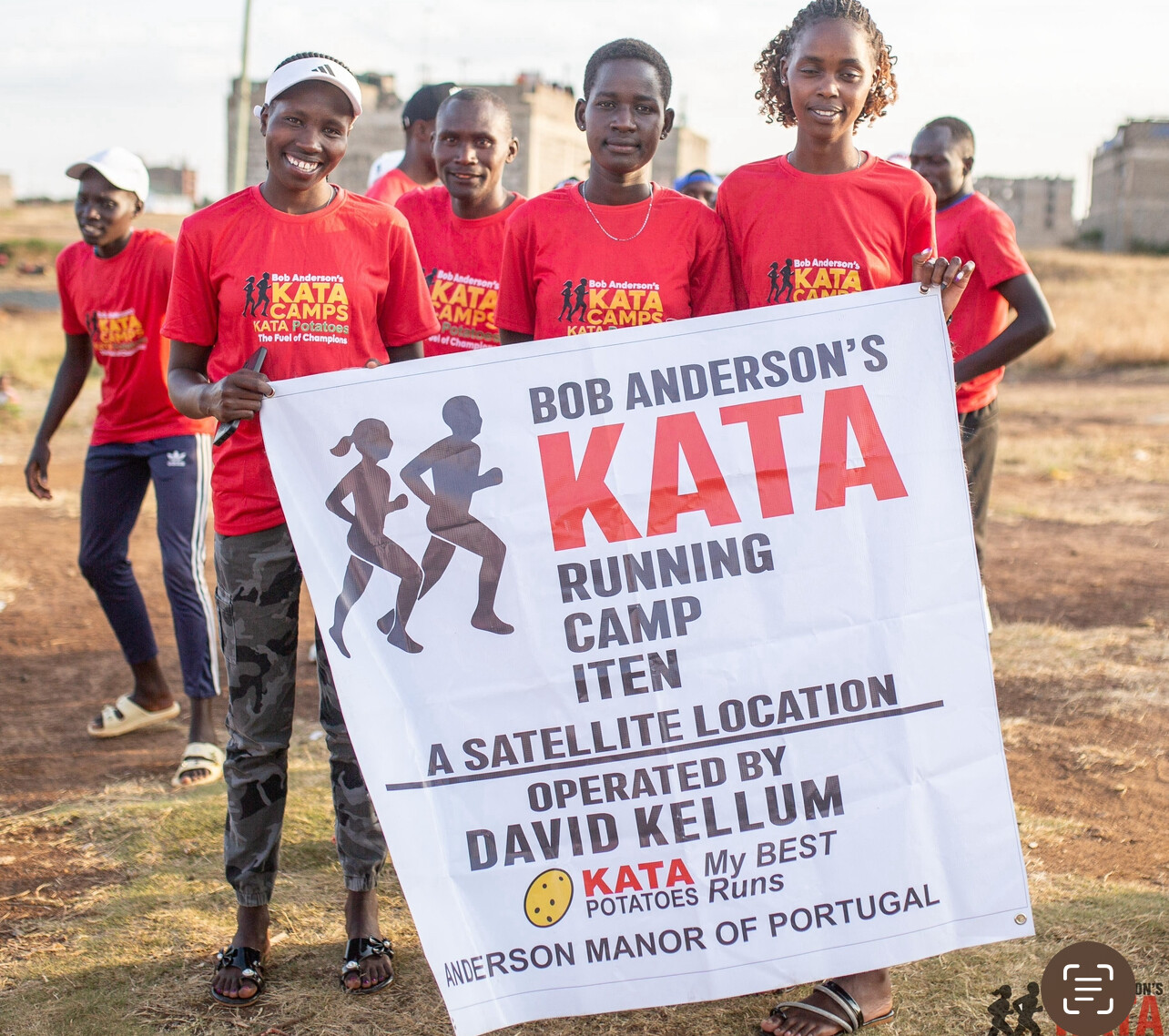
Anderson’s connection to Kenya runs deep. He first visited the country in 1987 and immediately fell in love with its people, culture, and running spirit. Just three years earlier, he had sold the magazine he founded and published for 18 years — Runner’s World, which had grown to a circulation of 2.5 million monthly readers. Runner’s World played a defining role in launching the modern running movement, inspiring millions of runners worldwide.
Although KATA Thika began in 2019, the KATA Running Camps officially launched in May 2025, building upon KATA’s strong foundation in Kenya. Both KATA Thika and KATA Portugal continue to grow as vital pillars in this global vision.

Anderson’s mission is clear: to strengthen the foundation of athletics in Kenya — and after 2026, expand to South Africa, Uganda, Ethiopia, and beyond.
Go KATA — The Fuel of Champions!
(10/04/2025) ⚡AMPby Boris Baron
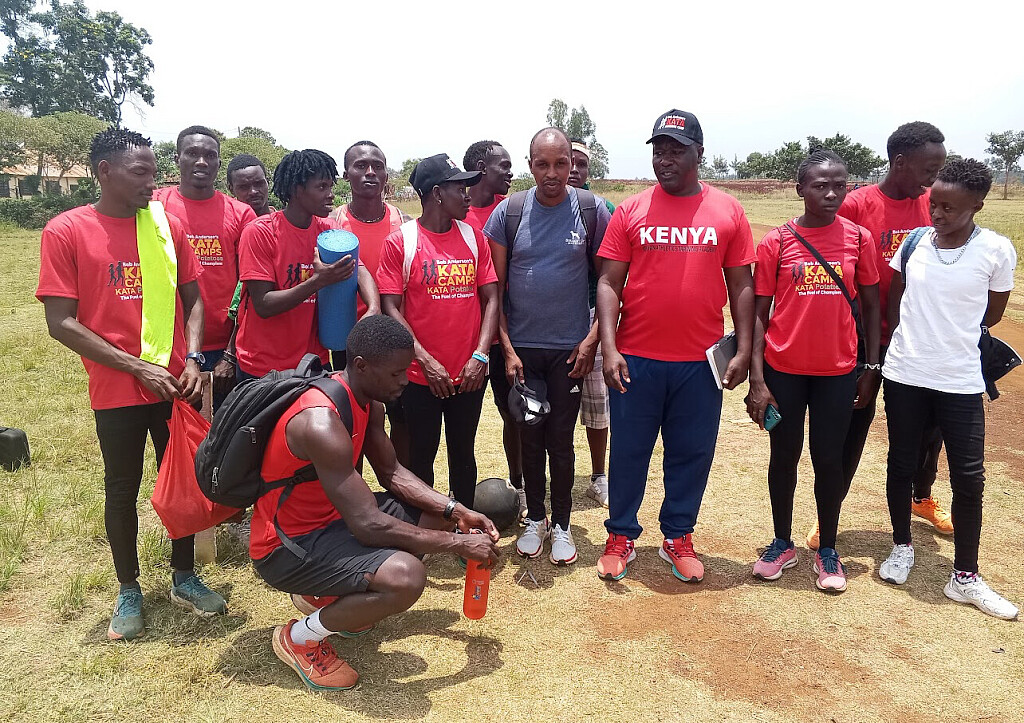
Nurturing Sprinters Against the Odds: Inside Kenya’s KATA Sprint Camp
KIAMBU, Kenya - On a crisp morning in Kamiti, Kiambu County, 16 miles northeast of Nairobi, the dirt track at Kamiti Maximum Prison comes alive with the rhythm of pounding feet, shrill whistles, and sharp instructions. At the center of the action stands Coach Julius Migwi, eyes locked on the group of young sprinters wearing red shirts with the Kenya Athletics Training Academy (KATA) Sprint Camp logo. Stopwatch in hand, Migwi scans every drill and explosive burst over 100 meters.
A Coach’s Mission
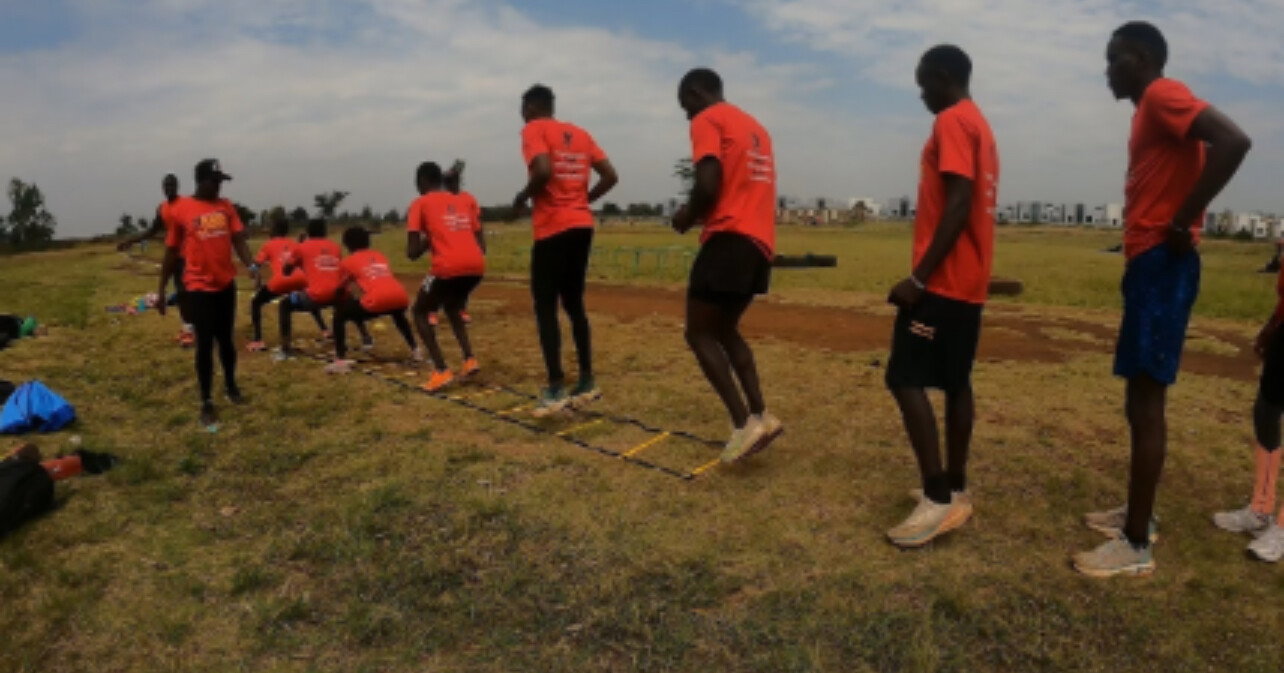
A former sprinter whose career was cut short by a tendon injury in 1998, Migwi recalls the lack of resources in his day. “We had no smart shoes, and sometimes we ran barefoot. There was no science,” he says. His personal best of 11.00 seconds in the 100m left him hungry for more—but instead of walking away, he turned that hunger into a mission: raising sprinters who could go beyond what he achieved.
“This is where we train,” Migwi says, pointing to the uneven murram track. “I focus on athletes between 16 and 20 years old because they have the greatest room to grow. My dream is for them to achieve what I could not.”
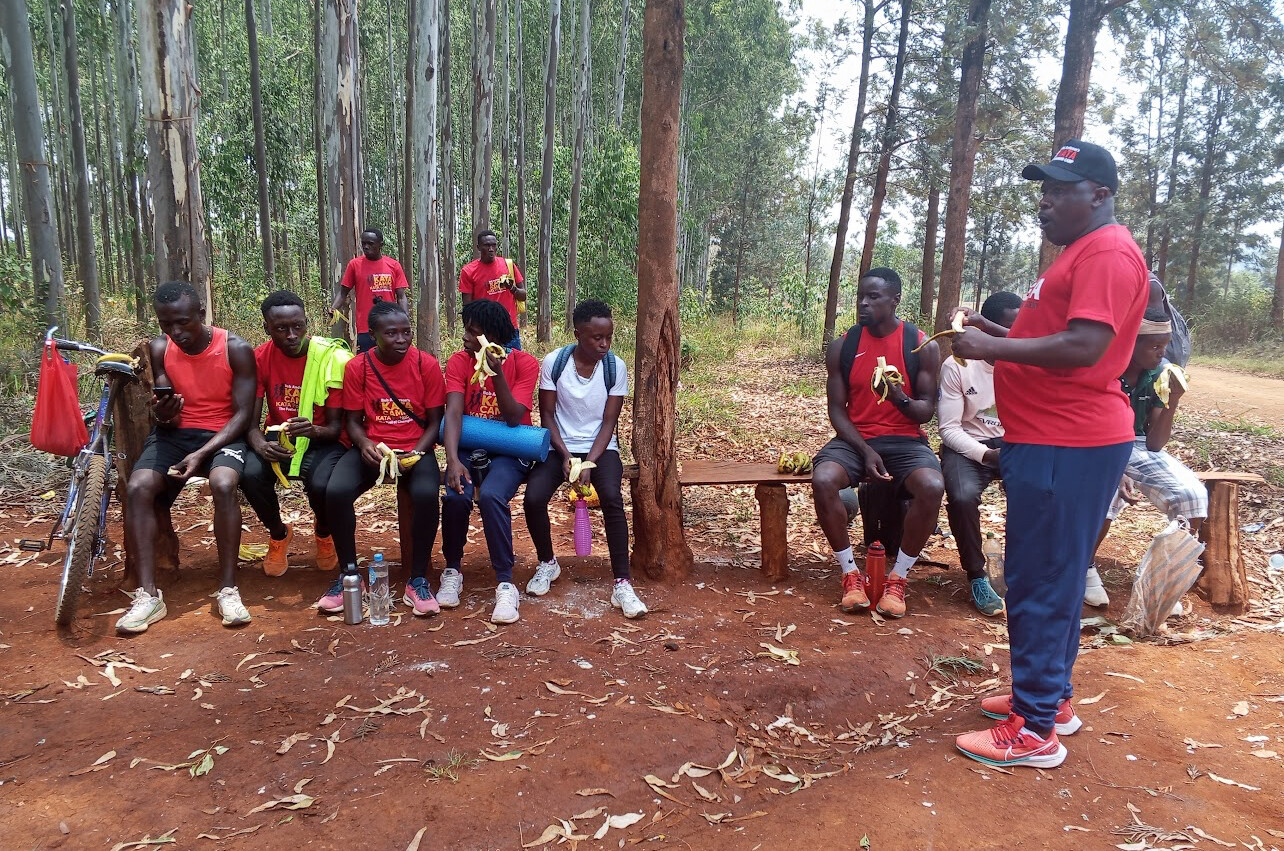
That dream has faced hurdles of its own. Their makeshift equipment includes hurdles fashioned from plastic pipes, an old tractor tire for sled work, and just one shared starting block. Inside the camp’s small kit box lie two massage guns, shared by everyone. When rain turns the dirt track unusable, the group must travel to Nyayo Stadium, Ulinzi, or Kasarani.
Yet, passion outweighs the obstacles. “If Kenya supported sprinters the way it supports distance runners, athletes like Doreen Waka, Clinton Aluvi, Omanyala, and so many youngsters would thrive,” Migwi says. “With proper facilities, Kiambu could become the home of Kenyan sprinting.”
Building Athletes from Scratch
Migwi has already unearthed promising talent. Among those he scouted are Fresha Mwangi, Peris Wairimu Chege, hurdler Gladys Ngure, and his current star pupil, Doreen Waka—Kenya’s fastest female sprinter over 100m in 2025.
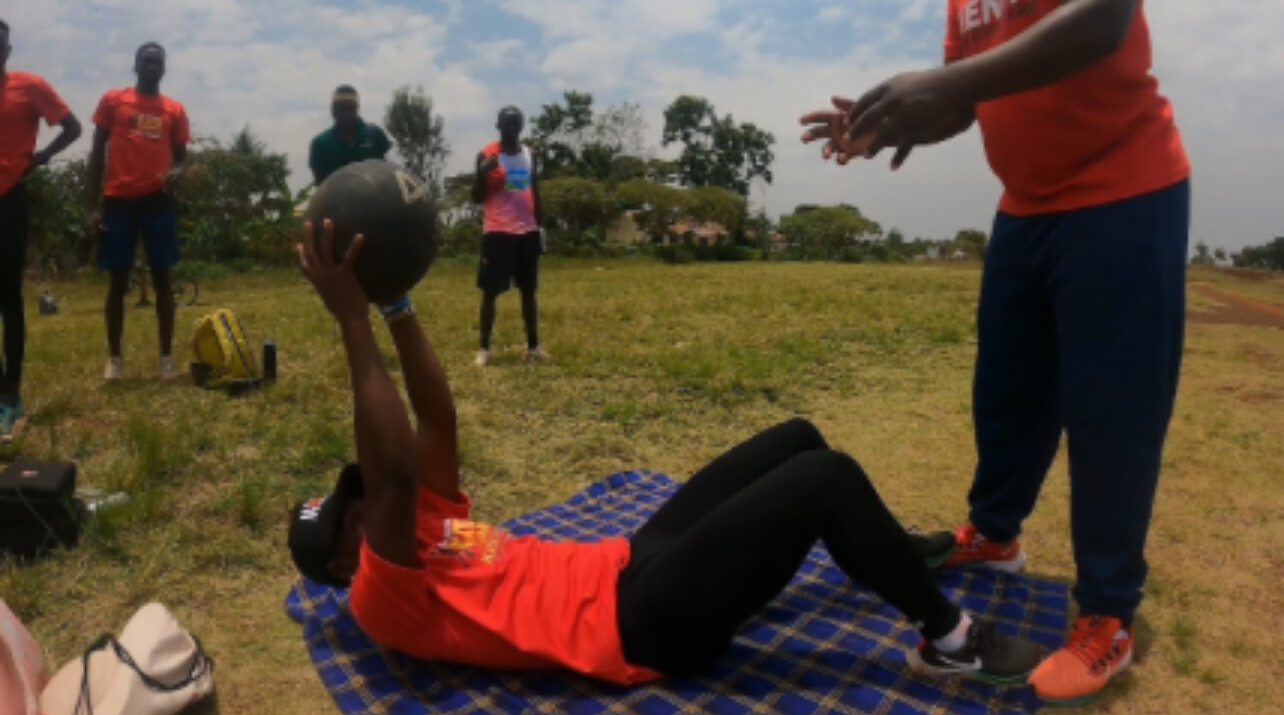
Waka’s determination is unwavering. “Missing the team for the World Championships in Tokyo was disappointing, but I keep my eyes on the Commonwealth Games,” she says. “With the right support, I know I can break 11 seconds.”
Behind the scenes, KATA founder Bob Anderson has played a critical role. Known globally as the American running visionary behind My Best Runs, Anderson covers the camp’s rent, helps provide meals, and funds side projects like potato farming to ensure sustainability. “Rent and daily meals are the biggest setbacks for sprinters,” Migwi explains. “Bob’s support allows the athletes to focus fully on training.”
The impact is clear. Moses Solonka, 20, from the pastoral Maasai community of Kajiado, says: “Without this camp, I’d probably be herding livestock, especially during droughts. Here, we don’t have to worry about food—we can concentrate on training. I see myself representing Kenya soon.”

Voices of the Next Generation
The camp is filled with similar stories of transformation.
• Peterson Matu Miano, 20, once devoted to soccer, now says, “With KATA’s system, I’ve improved so much. The discipline and coordination here are amazing. I now want to dedicate myself fully to sprinting.”
• John Kinoo Munguti, 19, discovered his sprinting talent in high school after playing rugby and soccer. “I look up to Zablon Ekwam. My goal is to hit 10.30 in the 100m and make Team Kenya.”
Migwi beams with pride recalling Waka’s appearance at the Kip Keino Classic: “Seeing her on the line with international stars showed me this stage is possible for our athletes.”
A Community Effort
Among the sprinters is Antony Owino, who also serves as an assistant coach. Having endured similar struggles, Owino knows the value of mentorship. “It’s not just about speed. These youngsters need guidance in discipline and mindset,” he says. “We’re shaping athletes both on and off the track.”
The Bigger Picture
Migwi believes Kenya’s sprinting potential has long been overlooked. “We’re celebrated for distance running, but sprinting has the same promise,” he insists. The unfinished Kirigiti Stadium nearby is a constant reminder of what’s lacking. “If county governments completed facilities like this, we’d not only produce champions but also engage more youth positively.”
For now, the KATA Sprint Camp relies on resourcefulness and shared dreams—plastic hurdles, a dusty track, and two massage guns. But Migwi’s vision stretches beyond medals.
“I want to push these youngsters to achieve what I couldn’t,” he says, watching Peterson, John, Moses, and Doreen laugh between sprints. “This is more than training. It’s giving them a future.”
(10/02/2025) ⚡AMPby Robert Kibet

Debela and Jebet Set to Defend Titles at the World’s Only Intercontinental Marathon
Defending champions Dejene Debela of Ethiopia and Ruth Jebet of Bahrain are set to return for the Türkiye İş Bankası Istanbul Marathon on November 2. Both claimed victory last year in windy conditions and will be hoping for calmer weather to chase faster times this year.
Now in its 47th edition, Türkiye’s premier marathon continues to hold World Athletics Gold Labelstatus—an honor it has maintained without interruption since 2012, making it one of the longest-standing Gold Label races worldwide.
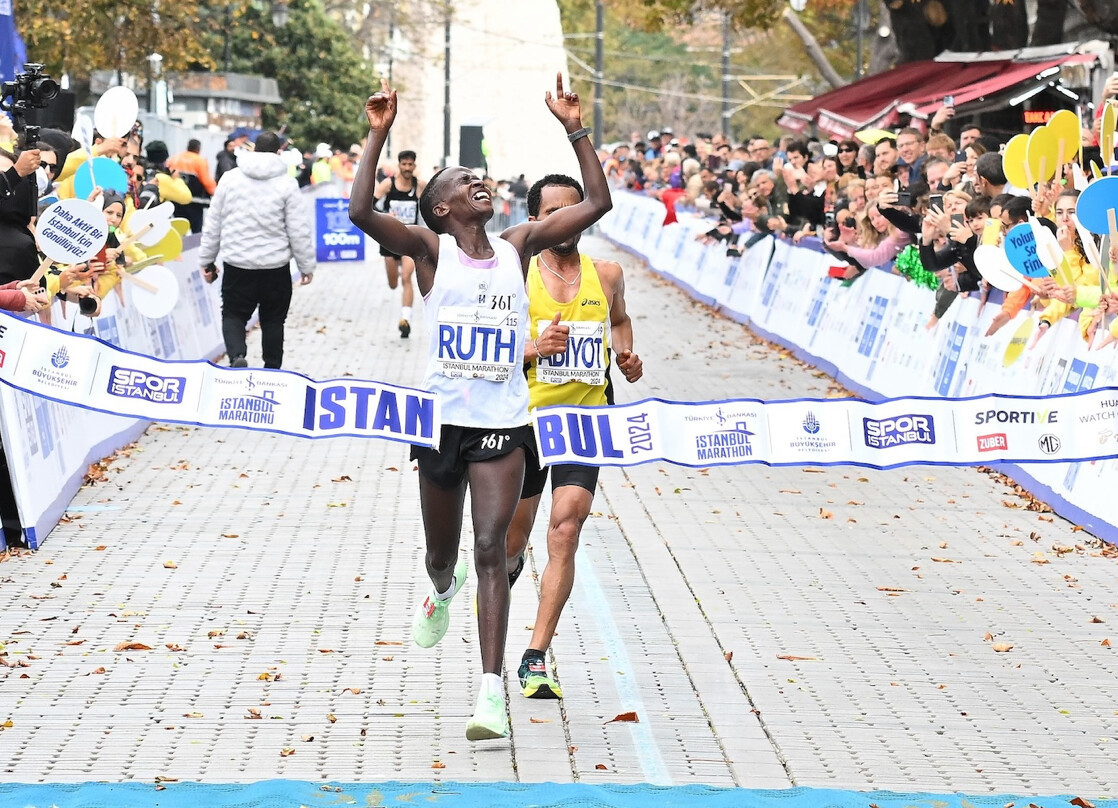
Organizers from Spor Istanbul have already registered 42,000 participants, including shorter-distance races, with around 6,000 runners tackling the full marathon. The unique course begins on the Asian side of Istanbul, crosses the July 15 Martyrs Bridge, and finishes in the historic old city near the Blue Mosque. Registration remains open until October 14 at maraton.istanbul.
“We are delighted to be organizing the Türkiye İş Bankası Istanbul Marathon, the world’s only intercontinental marathon, for the 47th time,” said Race Director Bilge Donuk. “The participation of defending champions clearly demonstrates the prestige and consistency of this race. Istanbul will, as always, offer participants a truly exceptional marathon experience on an international level.”
Men’s Race
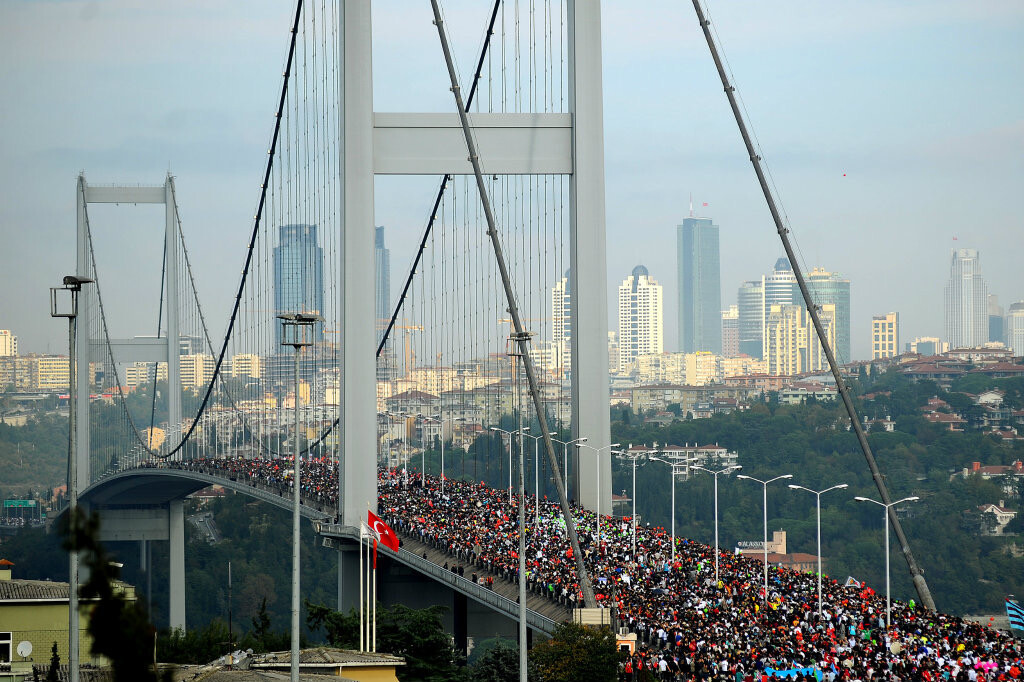
Debela, 30, bounced back from injury last year to win in 2:11:40, the biggest triumph of his career. With a personal best of 2:05:46 from Chicago 2019, he enters as the fastest man on the start list.
His main challengers include:
• Rhonzas Kilimo (Kenya) – PB 2:06:09, runner-up in Seoul 2024.
• Denis Chirchir (Kenya) – PB 2:07:17, winner in Kosice 2024, trained by renowned coach Renato Canova.
• Amanal Petros (Germany) – fresh off a silver medal at the World Championships in Tokyo, and a close training partner of Chirchir.
• Jake Robertson (New Zealand) – PB 2:08:26, returning from injuries but still a dangerous contender.
Women’s Race
Defending champion Ruth Jebet dominated last year with a 2:24:45 win—nearly nine minutes ahead of the field—despite tough winds. The 2016 Olympic steeplechase champion and former world record holder holds a marathon best of 2:23:08 and is targeting sub-2:20 in Istanbul.
Her challengers include:
• Tigst Getnet (Ethiopia) – PB 2:23:17, 5th in Dubai 2023.
• Sofia Assefa (Ethiopia) – PB 2:23:33, Olympic steeplechase silver medalist behind Jebet in 2016, now meeting her rival on the roads for the first time.
With strong returning champions and formidable challengers, Istanbul once again promises a world-class marathon staged in one of the most spectacular settings in global road running.
(10/02/2025) ⚡AMPby Race News Service
N Kolay Istanbul Marathon
At the beginning, the main intention was simply to organise a marathon event. Being a unique city in terms of history and geography, Istanbul deserved a unique marathon. Despite the financial and logistical problems, an initial project was set up for the Eurasia Marathon. In 1978, the officials were informed that a group of German tourists would visit Istanbul the...
more...
Building Champions, One Race and One Harvest at a Time: The KATA Story
With 31 training camps across Kenya’s altitude zones and 65 thriving potato farms, the Kenya Athletics Training Academy (KATA) is shaping not only resilient athletes but also sustainable livelihoods. Each KATA camp is not just a training base but also cultivates several acres of KATA potatoes, linking athletics directly with farming and ensuring that athletes’ futures are rooted in more than competition alone.
A Morning of Anticipation in Thika
The sun had barely risen over Thika when athletes began streaming into the venue for the 5th Annual KATA Double Road Race. The crisp morning air carried both anticipation and nerves as runners stretched, laced up, and tested the course that would soon bear witness to their grit.
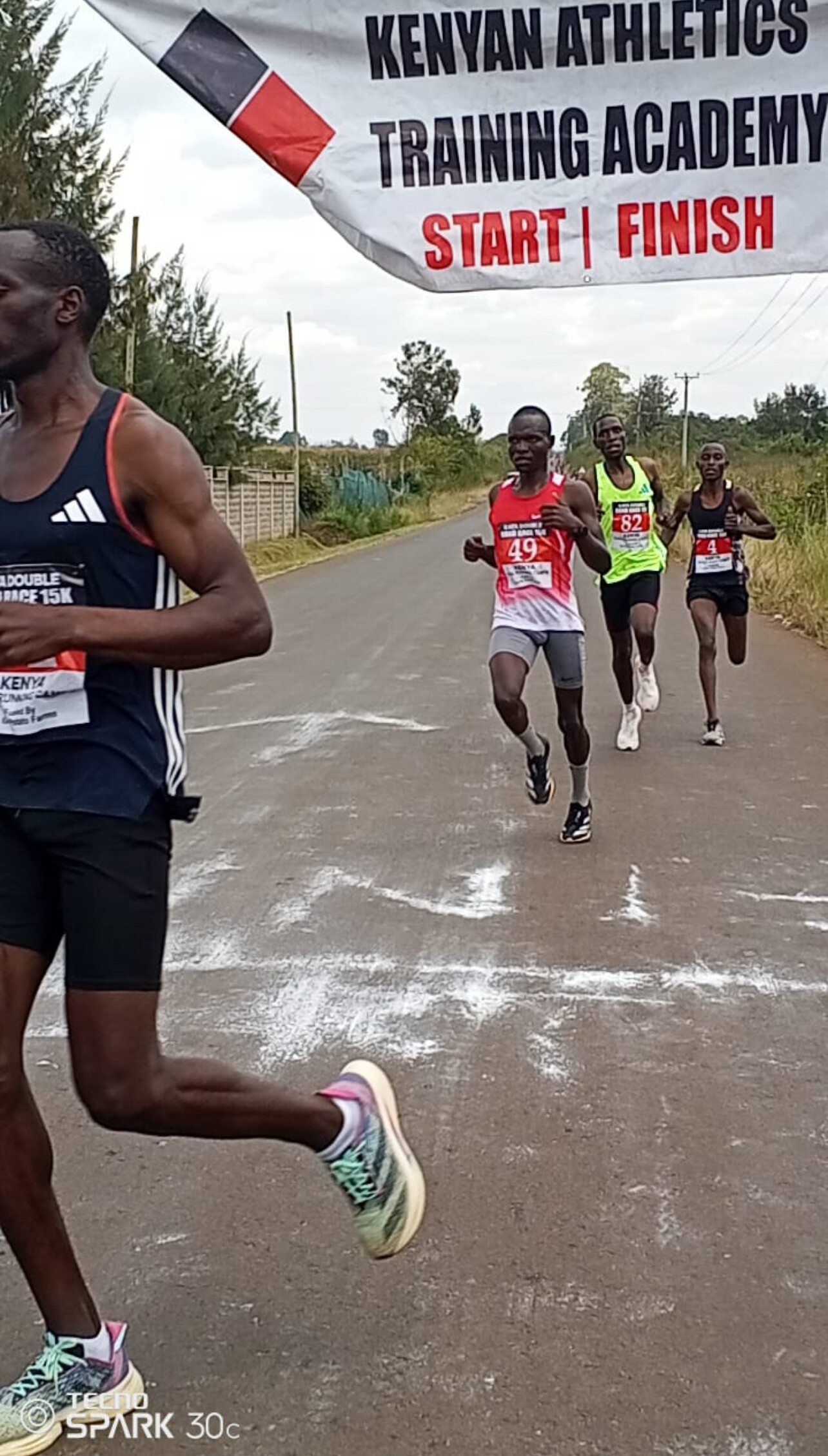
By the time the gun sounded, 97 elite athletes—74 men and 23 women—lined up. For John Matheri, head coach at KATA Thika, the event was more than a competition. It was a lesson in discipline, a test of mental endurance, and a reflection of how far the central region has come in embracing competitive running.
Olympic 5000m medalist and KATA camp operator Edwin Soi emerged as the overall winner, clocking 29:38 for the opening 10K and 14:22 for the final 5K. His combined time of 43:50 was the fifth-fastest ever run for the Double, an event first contested in 2010. On the women’s side, Betty Chesang from the KATA Iten camp was the first across the line in 51:32, marking the sixth-fastest women’s time in Double history.

“We concluded the race well, and it was a good one,” Matheri said proudly, watching the exhausted but smiling athletes cross the line. “The turnout was impressive. I want to extend a special thanks to our sponsor, Bob Anderson, for putting together a team of this magnitude. There is no doubt that within the region, KATA has become an icon.”
A Nationwide Network of Camps and Farms
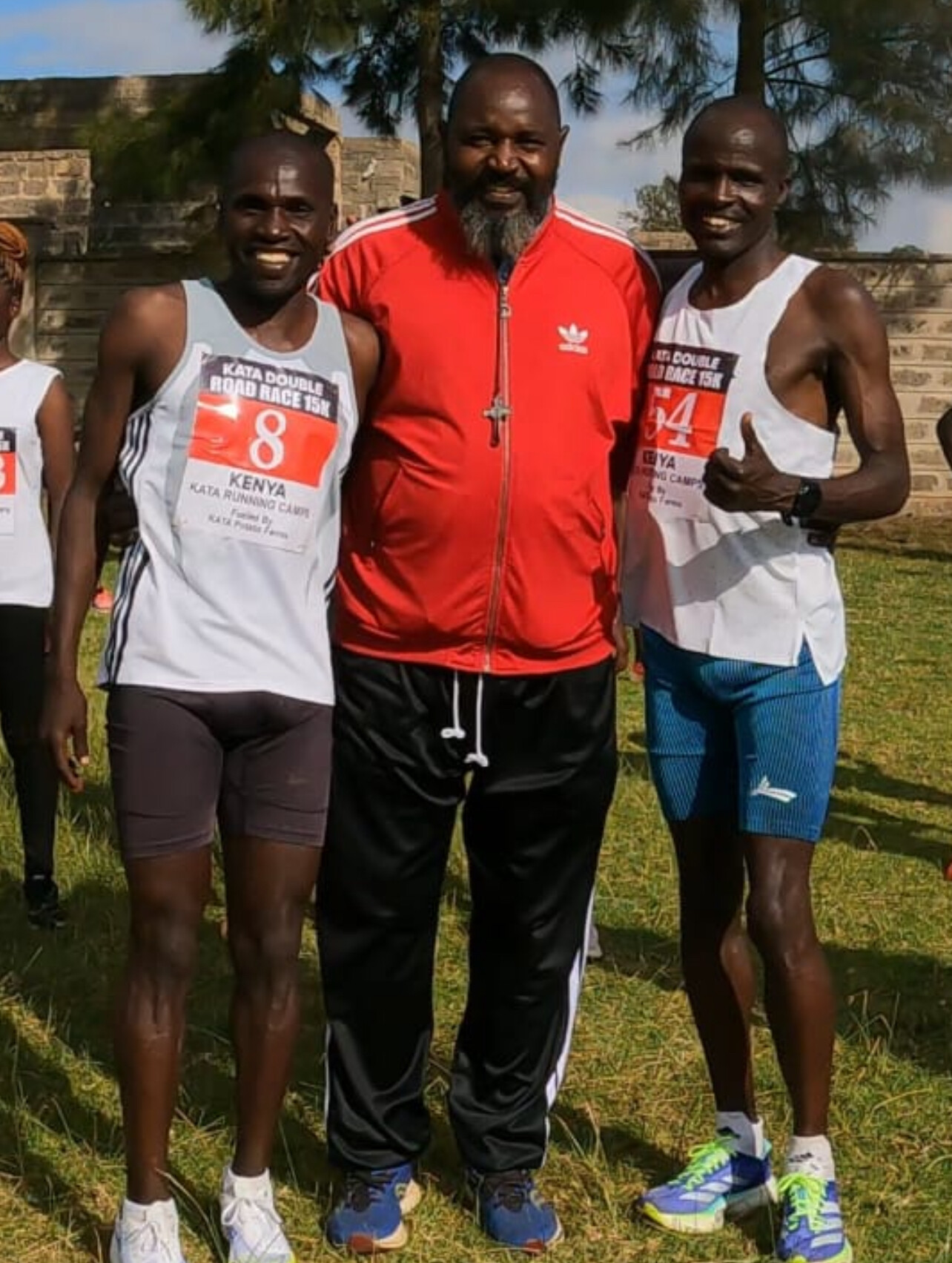
What sets KATA apart is not just its races but the ecosystem it is steadily building for Kenyan athletes. Across the country, 31 KATA-affiliated training camps operate at varying altitudes—from the highlands of the Rift Valley to the mid-altitude base in Thika and lower regions closer to Nairobi. Each camp provides unique conditions that strengthen endurance, adaptability, and competitive edge.
These dual-purpose camps are more than facilities; they are lifelines for athletes dreaming of breaking into the elite ranks. Training at altitude builds strength, while mid-altitude camps prepare runners for race conditions. Together with potato farming, they create a sustainable structure for the future.
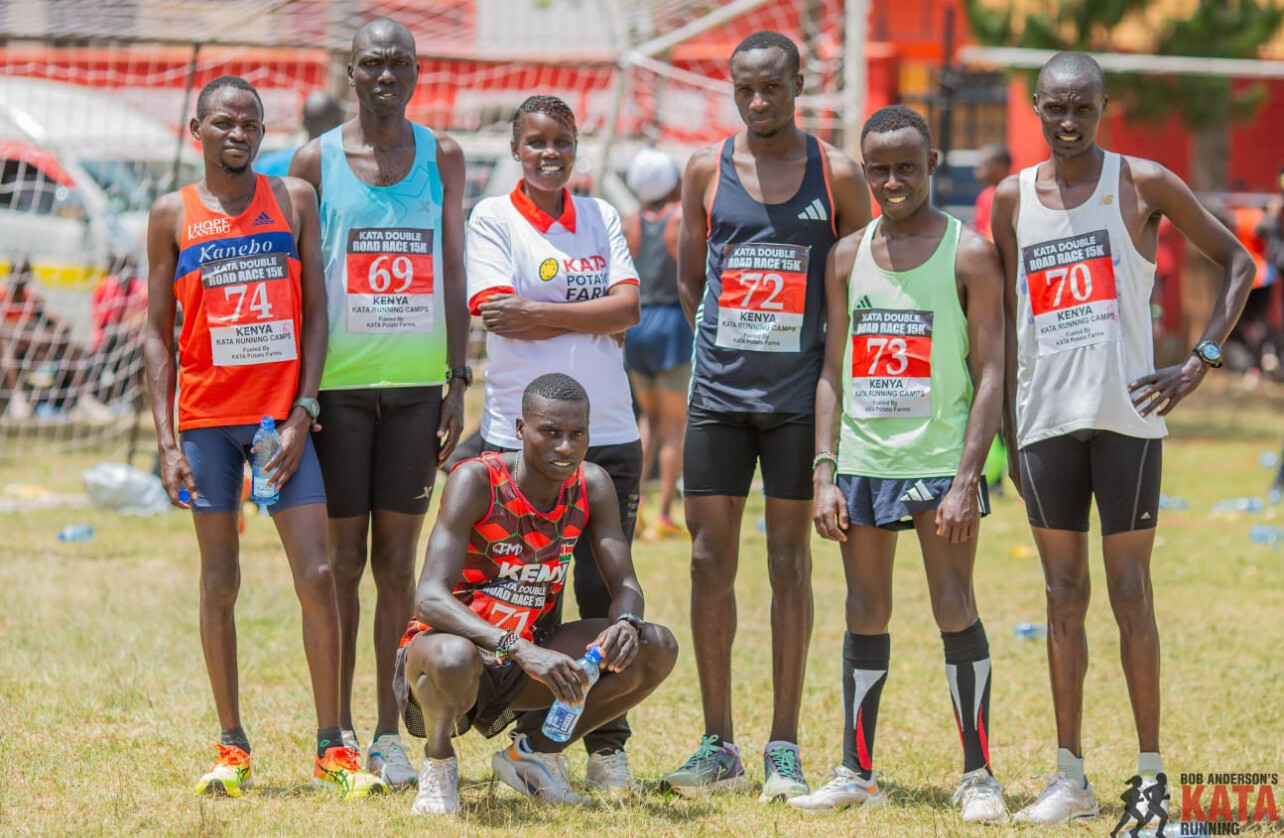
This vision is also embodied in Jimmy Mwangangi Muindi, a five-time Honolulu Marathon champion who famously coached Patrick Makau to the world marathon record in 2011. Having worked at Anderson’s Manor in Portugal, Muindi now leads a KATA satellite camp in Machakos County. For him, KATA is about much more than training.
“KATA is building more than runners,” Muindi reflected. “It is building a family—giving young talents not just training, but exposure, support, and hope. That is how future champions are born.”

Beyond Running: The Potato Farming Project
KATA’s sustainability model is as innovative as its racing format. Each camp is supported by several acres of potato farming, tying athletes’ success to both training and cultivation. The revenue from potato sales funds the future of the running camps.

The model is simple but effective. Bob and Catherine Anderson provide an interest-free loan to establish both the camp and its potato farm. From there, the operator and athletes are responsible for managing their acres and securing their own future. KATA continues to provide exposure and guidance, but the responsibility of growth rests with those on the ground.
“The potato project has given us a chance to think beyond running,” Matheri said. “Athletes train hard, but they also need food security and stability. Farming allows them to eat well, earn a little, and stay grounded.”

KATA Chief Technical Officer Denis Musau, who recently returned from Anderson’s Manor House in Portugal, underscored this vision. “KATA is about creating a legacy. By building projects like potato farming, we empower athletes and their camps to sustain themselves financially. That secures their future both on and off the track. I see a very bright future for the KATA family.”
The Spirit of Participation
What stood out most on race day in Thika was the diversity of the field. Athletes from every discipline showed up, while children and enthusiastic spectators cheered from the sidelines. The energy of the crowd became part of the race’s rhythm, fueling the runners through every stride.
Yet the event also highlighted areas for growth. “Our athletes are very strong athletically, but many are missing mental strength,” Matheri observed. Muindi agreed: “Mental resilience is just as vital as physical training. When athletes panic at the sight of big names, they lose focus. Learning to respect the distance is what unleashes true potential.”
For both coaches, raw talent is not enough. Young athletes are like fabric, Muindi often says—materials that must be carefully tailored to become masterpieces.
Inspiration from the Veterans
One of the most inspiring aspects of the Thika Double was the turnout of established athletes—Olympians and medalists—who lined up alongside the next generation. Their presence was not only symbolic but also a powerful motivator for younger runners.
“It is so encouraging, especially here in the central region, to see our elite and professional athletes turning up in big numbers,” Matheri said. “For the young ones, lining up beside Olympians and medalists gives them a sense of what is possible. It gives them hope.”
Building the Future
For the KATA family, the vision remains crystal clear: to prepare a new generation of Kenyan champions while ensuring they have livelihoods beyond running.
“As a family, we are in good hands. We are looking forward to doing great things,” Matheri said with conviction. His final message was one of determination and gratitude: “We promise to use every ounce of our strength to bring change and positivity to the world of sport. We thank our sponsor, Bob Anderson, for the continued support, and we promise to do everything we can to grow this industry. The journey has just begun, but the future is bright.”
Anderson’s Manor in Portugal serves as KATA’s international headquarters, with Bob and Catherine Anderson based there about 50% of the time. It is from this hub that global strategy and support are coordinated, while Kenya remains the main operational location where athletes train, camps thrive, and races like the Double continue to inspire.
As the last athletes packed up and the crowd dispersed, one thing was clear: KATA is more than an academy. It is a movement—blending sport, sustainability, and community to nurture not just athletes, but Kenya’s enduring legacy of running excellence.
(09/29/2025) ⚡AMPby Robert Kibet
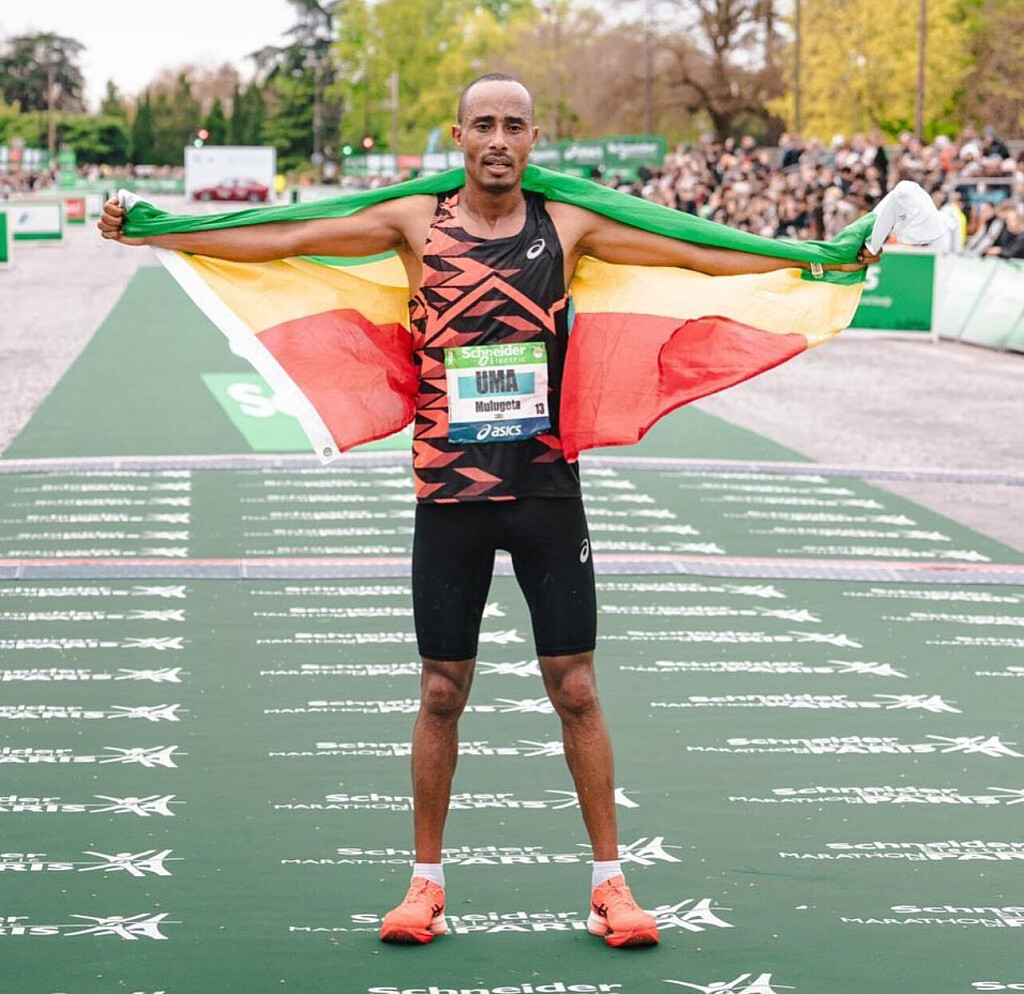
Mulugeta Uma Returns to Defend TCS Toronto Waterfront Marathon Crown
Ethiopia’s Mulugeta Uma, the 2024 TCS Toronto Waterfront Marathon champion, has confirmed he will return to Canada’s premier road race on October 19 to defend his title. The 27-year-old says his focus is clear:
“My aim is to run a fast time but if I am unable to run a fast time I must win the race.”
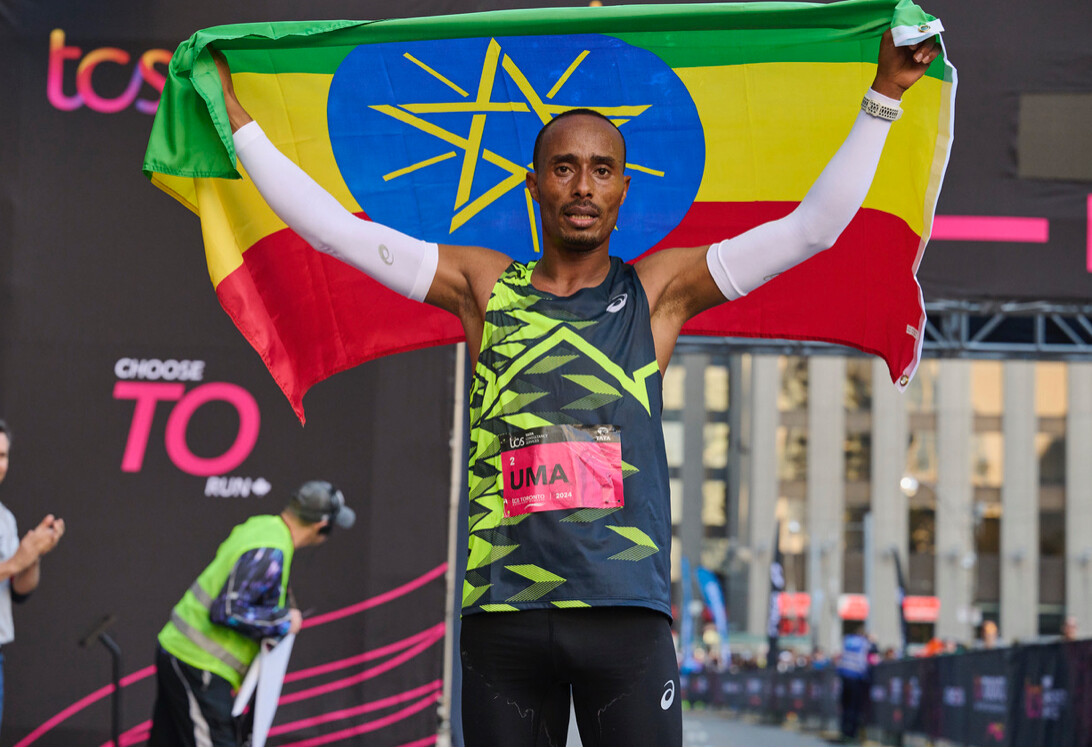
Podium Rematch

Uma’s addition to the field sets up an exciting reunion with the two men who joined him on last year’s podium. Kenya’s Dominic Ngeno, who finished second in 2024, and Noah Kipkemboi, who claimed third, have already been confirmed for this World Athletics Elite Label race.
Though Uma won Toronto last year in 2:07:16, he has proven he can run much faster. His personal best of 2:05:33 came at the 2024 Paris Marathon, and he clocked 2:05:46 for fifth place earlier this year at the prestigious Tokyo Marathon, a World Marathon Major.
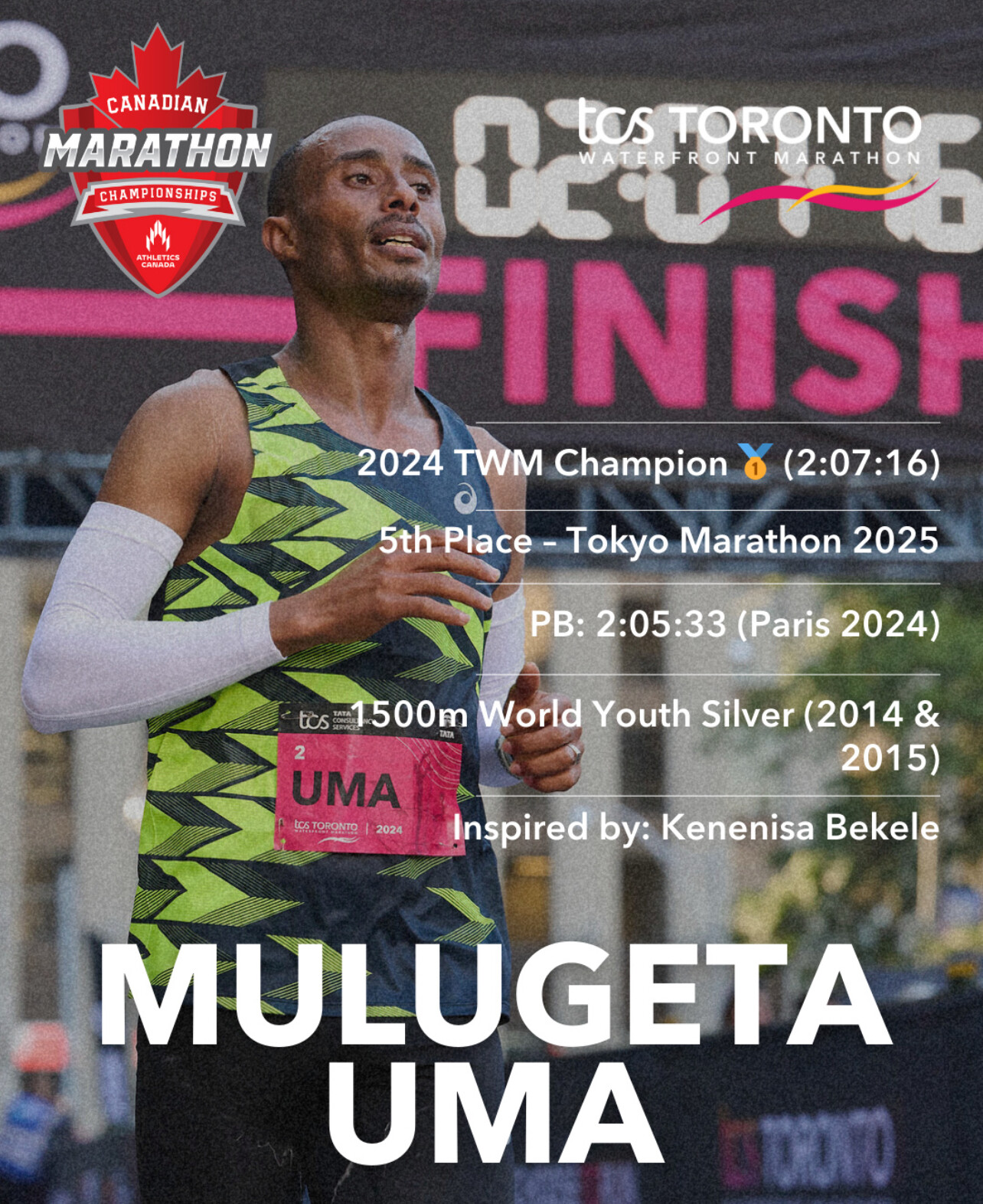
Remembering Toronto 2024
Uma recalls how last year’s Toronto victory unfolded dramatically.
“After halfway, no one was willing to lead but the Kenyan athlete (Ngeno) had a big surge and disappeared from our sight,” he remembers.
“We decided to leave him and thought we were going for second place. After a while I decided to try my best to catch him and, finally, I caught him and managed to win the race.”
His win earned him $20,000 CAD—a payday that has since risen to $25,000 for the 2025 edition. Beyond the prize money, Uma says he enjoyed his first visit to Canada’s largest city.
“I enjoyed the course and had an amazing experience in Toronto. I do have friends there and they are the ones who took me sightseeing.”
From Waliso to the World Stage
Born in Waliso, about 100 kilometers southwest of Addis Ababa, Uma grew up in a farming family. Inspired by Ethiopia’s Olympic heroes, he pursued running as a child and quickly made a name for himself in the 1,500m, winning silver at the 2014 Olympic Youth Games and the 2015 IAAF World Youth Championships.
But his career was derailed when he ruptured his Achilles tendon—an injury he attributes to racing in spikes. It forced him into a seven-year hiatus.
His return to the sport was fueled by watching his hero, Kenenisa Bekele, transition to the roads.
“Kenenisa was the athlete who inspired me. I was eager to achieve what he did on the track. Annoyingly, my injury prevented me from the track racing I loved, but still my role model showed me I could run sub-2:02. I am working hard to run a fast time like him.”
Bekele, a three-time Olympic champion, famously ran 2:01:41 in Berlin in 2019—just two seconds shy of the then world record.
Family and Future Goals
Uma is married to Bone Chuluka, who represented Ethiopia at two World Cross Country Championships, winning medals in the mixed relay event. The couple, who currently have no children, train together as they pursue their athletic goals.
Looking ahead to October, Uma has his eyes not just on defending his crown but also on history. The course record in Toronto remains 2:05:00, set in 2019 by Kenya’s Philemon Rono.
Asked if he might challenge that mark, his response was simple:
“Yes, why not?”
Few would doubt his ability to deliver.
(09/26/2025) ⚡AMPby Paul Gains
TCS Toronto Waterfront Marathon
The Scotiabank Toronto Waterfront Marathon, Half-Marathon & 5k Run / Walk is organized by Canada Running Series Inc., organizers of the Canada Running Series, "A selection of Canada's best runs!" Canada Running Series annually organizes eight events in Montreal, Toronto and Vancouver that vary in distance from the 5k to the marathon. The Scotiabank Toronto Waterfront Marathon and Half-Marathon are...
more...
From Rain to Heat: Sabastian Sawe and the New Chapter of Berlin’s Weather-Tested Records
Fifteen years ago, Patrick Makau braved torrential rain and deep puddles on the streets of Berlin, chasing Haile Gebrselassie’s marathon world record. The conditions ruined his attempt, but Makau still managed 2:05:08—the fastest marathon ever run in such relentless rain. A year later, with fair weather, he returned and broke the world record with 2:03:38.
On Sunday in Berlin, history echoed in a new way. This time, it wasn’t rain but unseasonable heat that stood between a Kenyan and marathon immortality. Sabastian Sawe, the 30-year-old rising star, had his sights set on Eliud Kipchoge’s 2:00:35 mark. Instead, he delivered what can only be called a “warm-weather world record,” blazing through the 26.2 miles in 2:02:16. Despite being 101 seconds off the record, it was the fastest time ever achieved in such high temperatures.
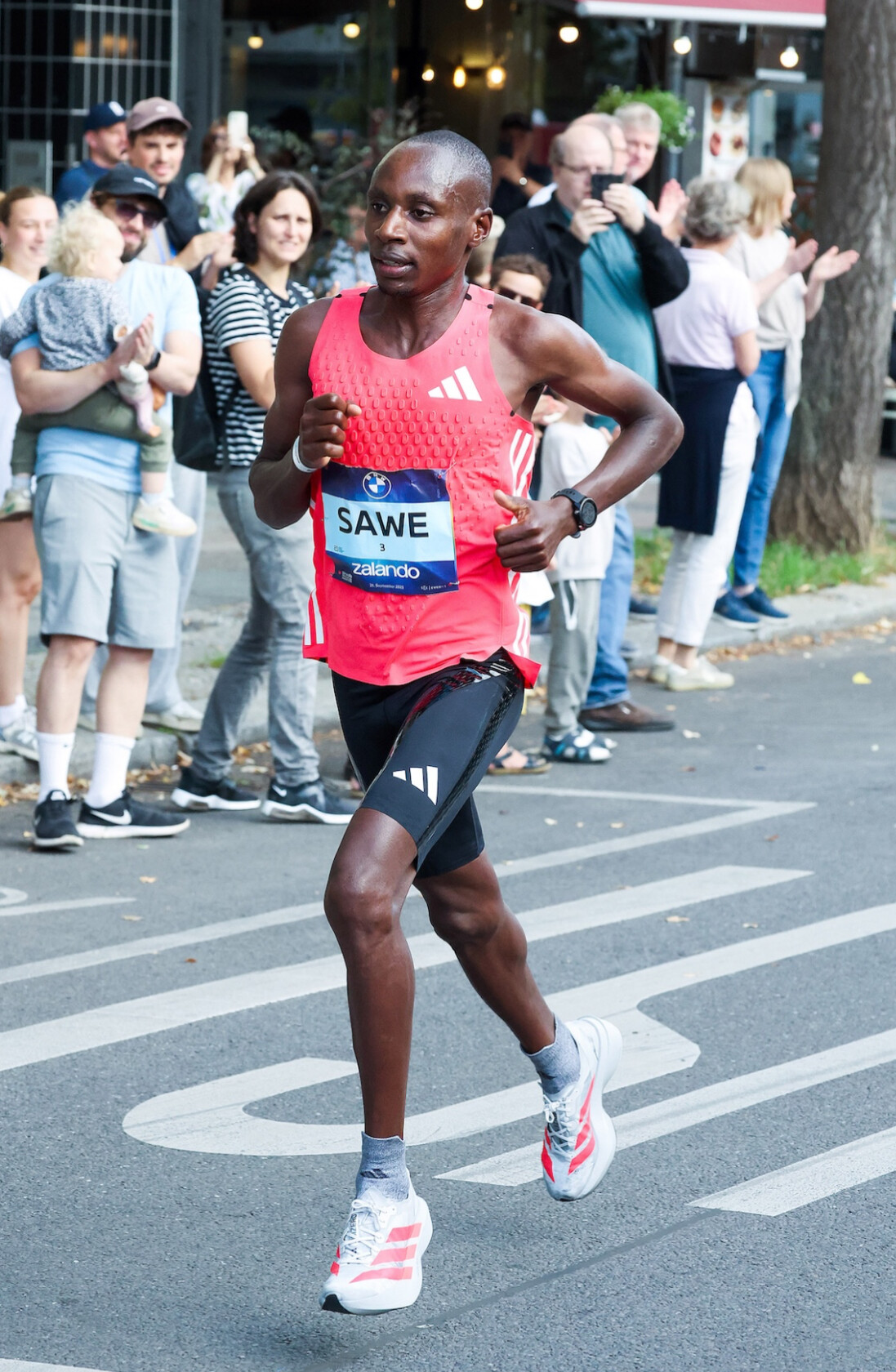
The What-Ifs of Berlin
Sawe, whose personal best stands at 2:02:05, was in career-best form. His coach, Italian veteran Claudio Berardelli, admitted the weather stripped away any chance of the extraordinary.

“I know he was in exceptionally good shape. But I do not know what would have been possible,” Berardelli reflected.
The what-if question will linger: how fast could Sawe have run under cooler skies?
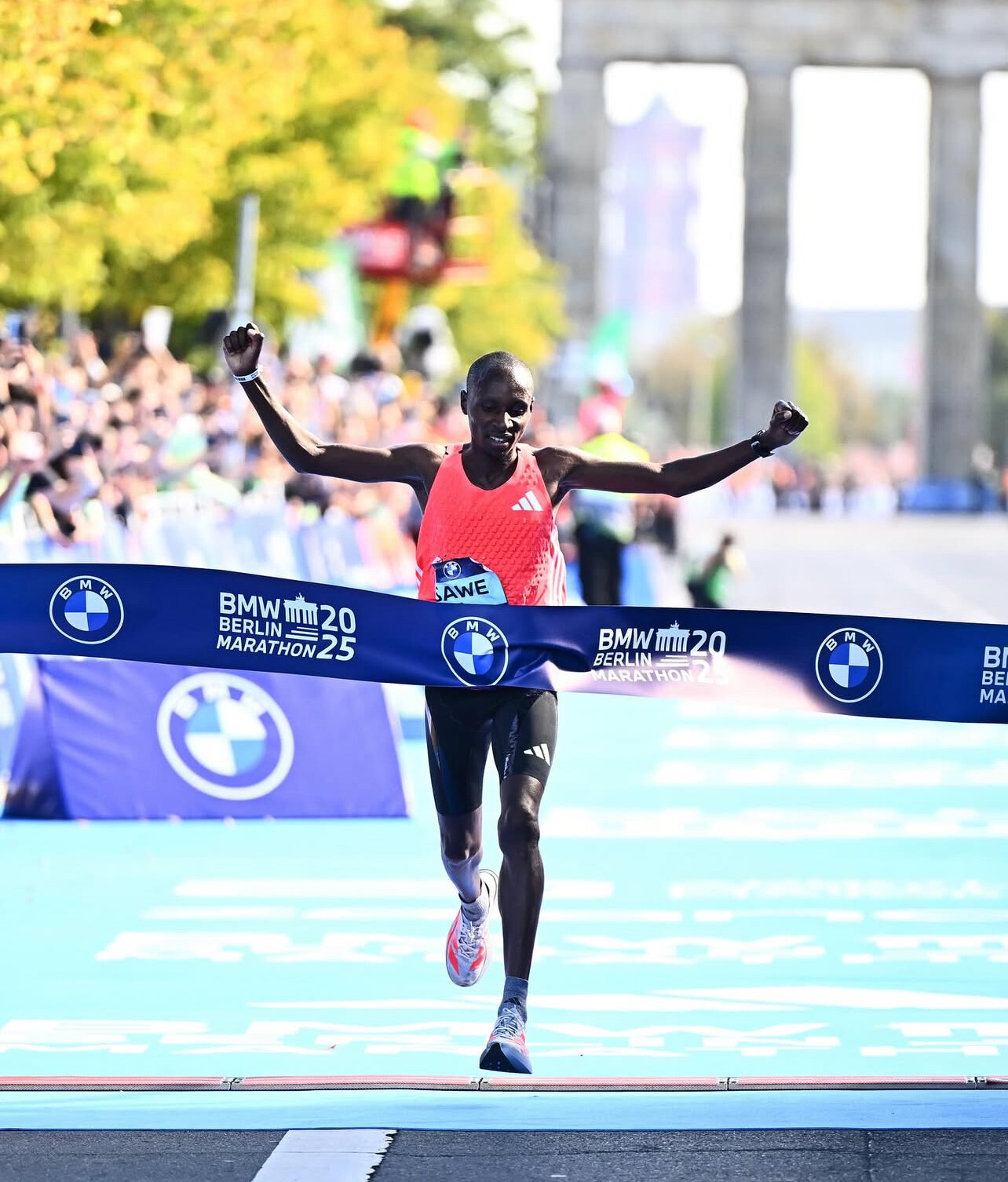
From Humble Beginnings to Global Stardom
Born in the village of Cheukta near Eldoret, Sawe’s story mirrors that of countless young talents in Kenya who struggle for recognition. Despite moving to Iten, the mecca of distance running, he was overlooked by managers and coaches. His breakthrough came only after turning to his uncle, Abraham Chepkirwok—Uganda’s 800m national record holder—and his neighbor Abel Mutai, the London 2012 Olympic steeplechase bronze medalist.
Mutai vouched for him with Berardelli, who placed Sawe in his Kapsabet camp. The rest unfolded quickly. Sawe stunned the field at the 2022 Seville Half Marathon, entering as a pacemaker but leaving with a victory and a world lead of 59:02.
A Gift of Talent and Humility
Berardelli is quick to highlight Sawe’s rare combination of physical and mental qualities:
“He has everything it takes—training ability, mental strength, and humility. I can’t predict what will be possible, but I’m looking forward to finding out.”
Sawe himself remained pragmatic after Berlin:
“I wanted to run really fast and gave it my best, but the weather was too hot. I hope I will have better weather next time. I liked the course, it is very good and fast.”
Berlin: Unfinished Business
Just as Makau returned after the rain to rewrite history, Sawe may yet come back to Berlin with the weather in his favor. With his trajectory and determination, the marathon world could witness a record chase for the ages in 2026.
Until then, Berlin 2025 will be remembered as the day Sabastian Sawe delivered a performance that stood not against the clock, but against the elements—proving once again why the city remains the crucible of marathon greatness.
(09/24/2025) ⚡AMP
by Race News Service
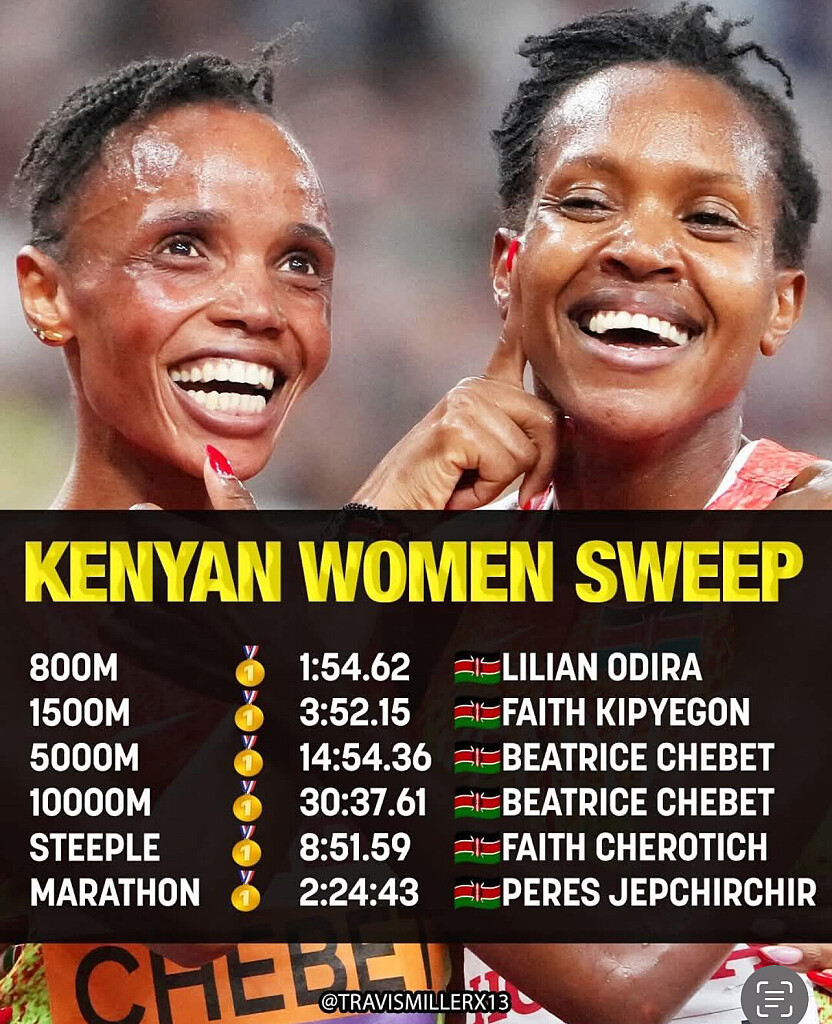
Kenyan Women Make History with Unprecedented Distance Sweep at World Championships
Kenyan Women Make History with Unprecedented Distance Sweep at World Championships
Kenya has written one of the greatest chapters in athletics history. For the first time ever—by men or women—one nation has swept every distance race at the World Championships, from the 800 meters all the way to the marathon. Six races, six gold medals. And they all belong to Kenya’s women.
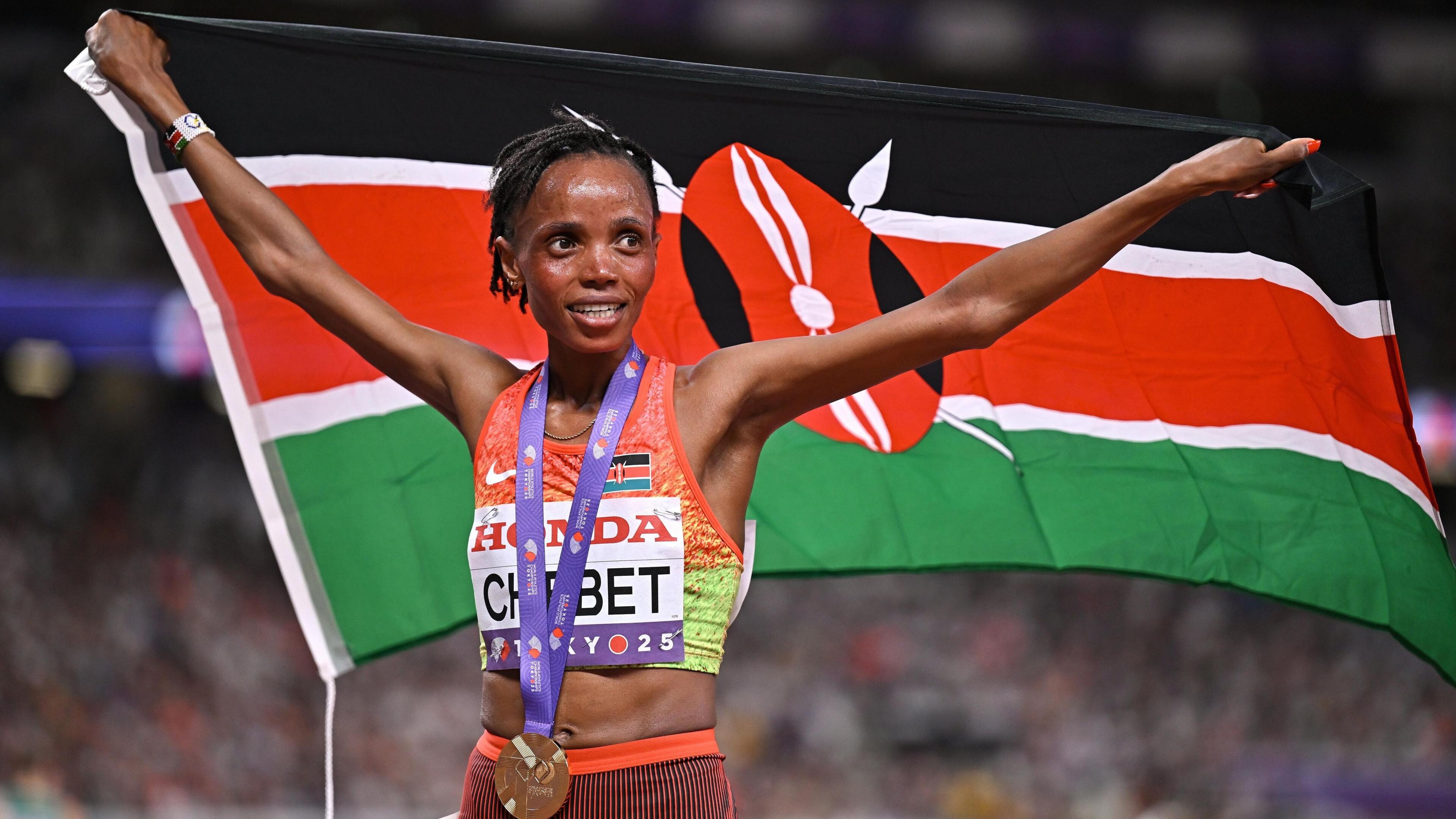
A Golden Run Across Every Distance
It all began with Lilian Odira, who stunned the world in the women’s 800m. Running with patience and power, she stormed to victory in 1:54.62, a championship record that announced her as the new queen of the two-lap race.
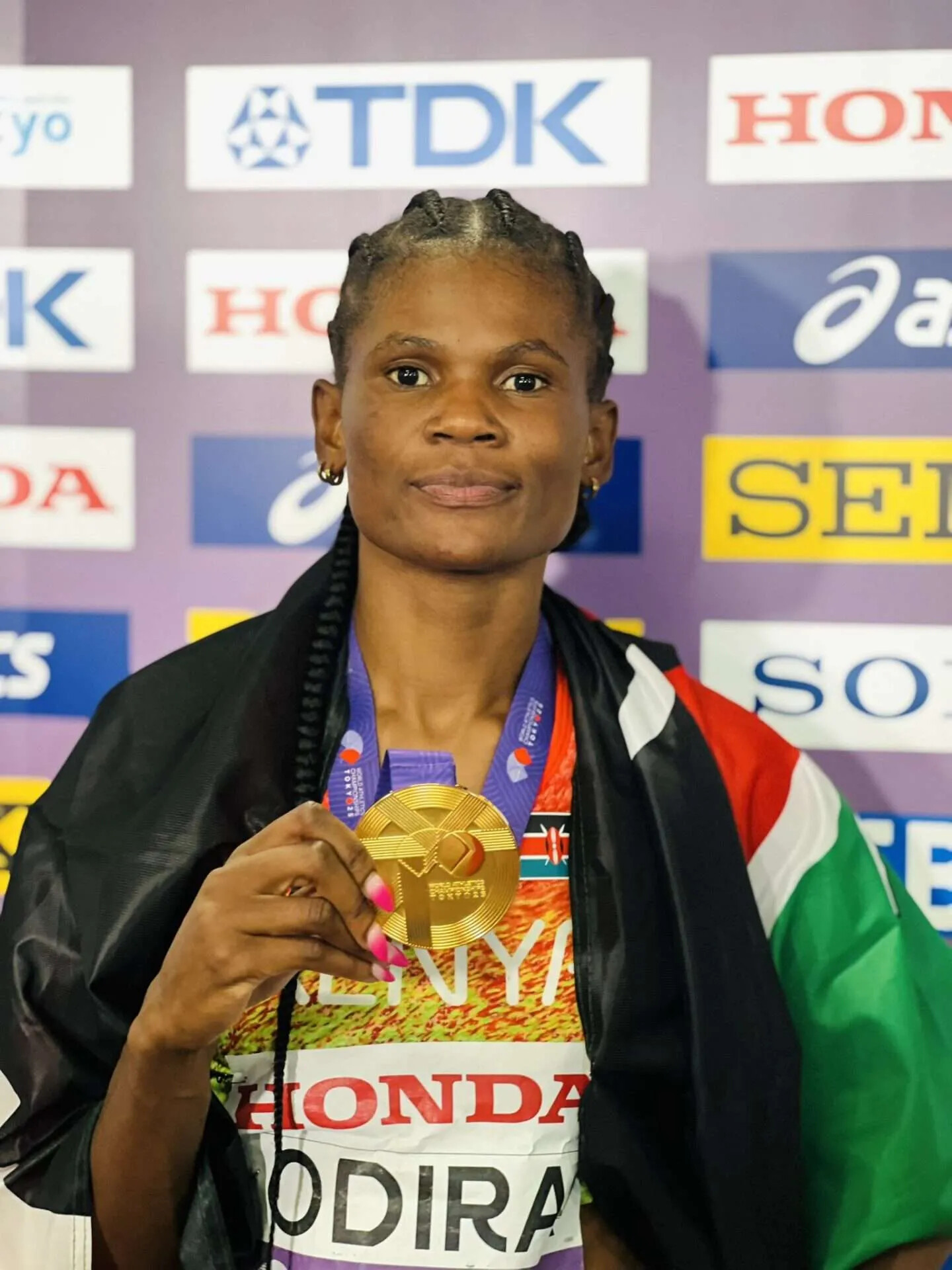
Next came the familiar dominance of Faith Kipyegon. Already a legend of middle-distance running, she defended her crown in the 1500m, producing another masterpiece of speed and tactics with a time of 3:52.15.
From there, Beatrice Chebet took over the spotlight, showing remarkable versatility and endurance. She claimed double gold in both the 5000m (14:54.36) and 10,000m (30:37.61), solidifying her reputation as one of the greatest all-around distance runners of her generation.
In the steeplechase, Faith Cherotich displayed poise and precision, controlling the race from start to finish to secure gold in 8:51.59.
And finally, in the ultimate test of endurance, Olympic champion Peres Jepchirchir closed the sweep with a perfectly executed run in the marathon, clocking 2:24:43. Her victory sealed Kenya’s clean sweep of all women’s distance races—an achievement unmatched in the history of the sport.
A First in World Athletics History
No nation has ever before captured every distance title at a single World Championships. This is more than a collection of gold medals—it is a powerful statement about Kenya’s depth, resilience, and continued dominance in global distance running.
More Than Medals
This sweep is not just about records and times. It is a story of perseverance, discipline, and national pride. Each champion has walked a different journey, yet together they have created a moment that will inspire generations of runners around the world.
Kenya’s women have redefined what dominance looks like in athletics. They have set a standard so high it may never be equaled.
The world came to watch champions—but what they witnessed was history.
(09/23/2025) ⚡AMPby Boris Baron
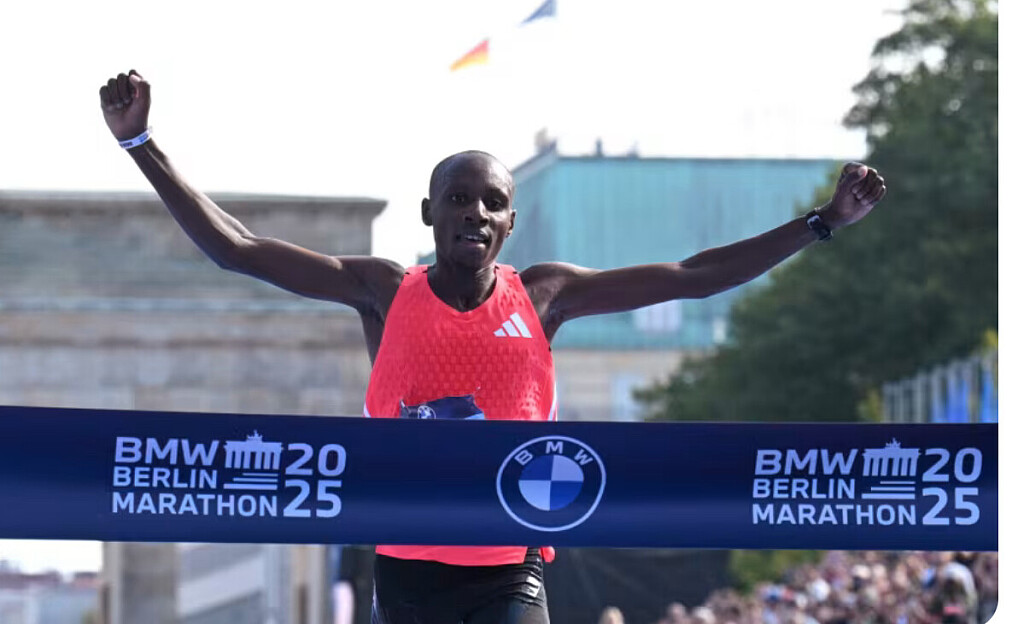
Sabastian Sawe Dominates in Berlin With 2:02:16 Victory
Berlin, September 21, 2025 — The Berlin Marathon once again lived up to its reputation as the world’s fastest stage for marathon running. Kenya’s Sabastian Sawe stormed to victory on Sunday, clocking 2:02:16, the fastest marathon time in the world this year and the fourth-fastest ever run on the streets of Berlin.
Sawe, already the reigning champion from Valencia (2024) and London (2025), extended his unbeaten record over the marathon distance. From the gun, he attacked with confidence, hitting 5km in 14:09and 10km in 28:26, well inside world-record pace. By halfway, his split of 60:16 electrified the Berlin crowds and suggested history might be on the cards.
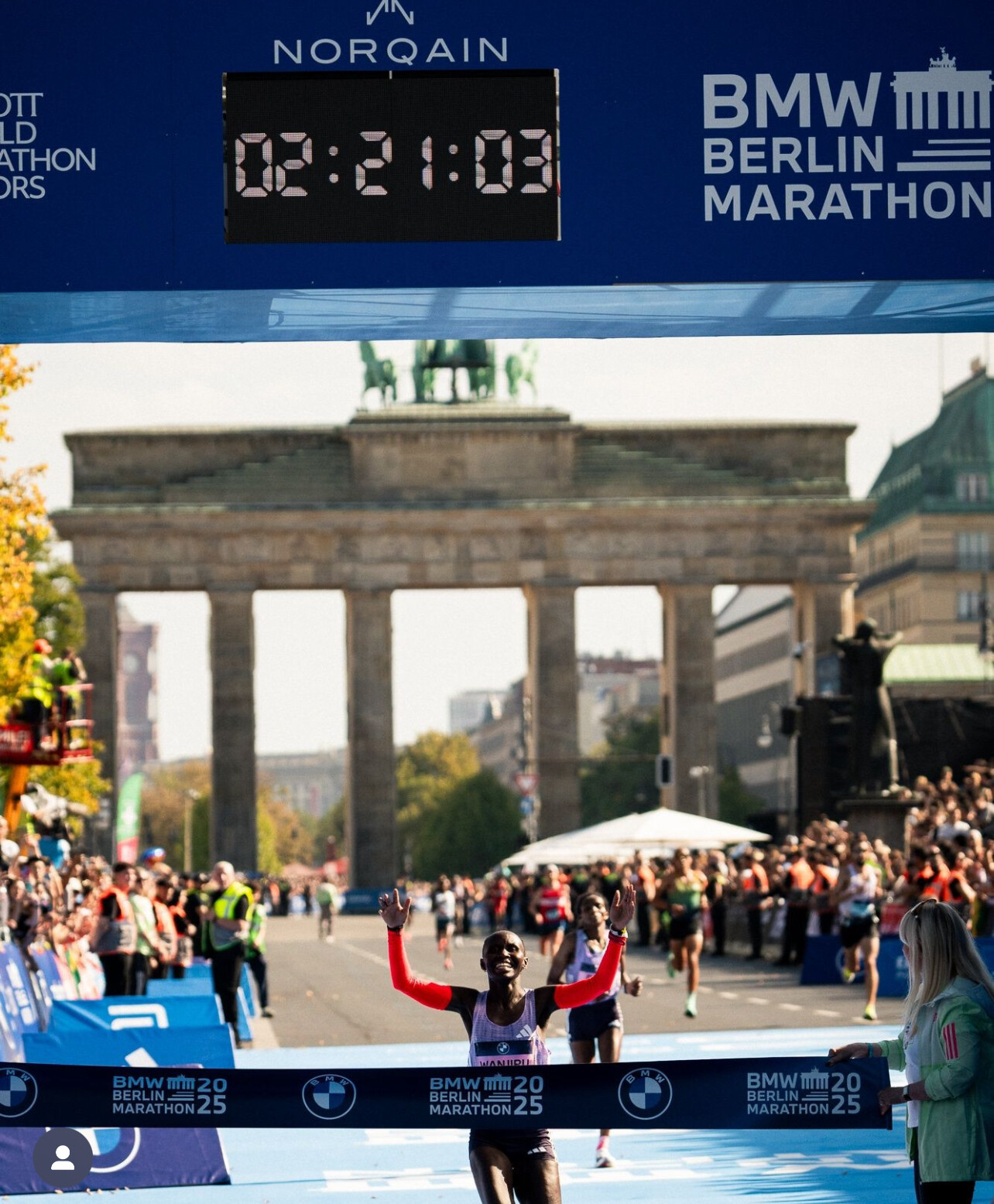
But conditions proved decisive. Unseasonably warm temperatures — climbing to 25°C (mid-70s°F) — and the loss of his pacemakers before the 23km mark forced Sawe to shoulder the workload alone. Though the second half slowed, he maintained control and powered down Unter den Linden to the Brandenburg Gate, finishing with a commanding lead.
Behind him, Akira Akasaki of Japan impressed with a breakthrough run, finishing second in 2:06:15, while Ethiopia’s Chimdessa Debele held on for third in 2:06:57.
Wanjiru Outkicks Dida in Women’s Duel

The women’s race produced its own drama, with Kenya’s Rosemary Wanjiru edging Ethiopia’s Dera Dida by just three seconds. Wanjiru clocked 2:21:05 after a decisive surge past the 25km mark. Dida followed in 2:21:08, while fellow Ethiopian Azmera Gebru completed the podium in 2:21:29.
“I knew it would come down to the final kilometers,” Wanjiru said afterward. “The crowd in Berlin gave me so much energy.”
Berlin’s Enduring Legacy
This year’s edition was the 51st running of the Berlin Marathon, and once again, the German capital showcased why it is considered the “world record course.” Since 2003, the men’s world record has been broken eight times in Berlin, most recently by Eliud Kipchoge’s 2:01:09 in 2022. On the women’s side, Tigst Assefa stunned the world here in 2023 with her record 2:11:53.
While Sawe fell short of rewriting those marks, his performance in the heat confirmed his status as the man to beat in global marathon running. With three straight victories in world-class fields, he has announced himself as the heir apparent to Kipchoge.
Results at a Glance
Men
1. Sabastian Sawe (Kenya) — 2:02:16
2. Akira Akasaki (Japan) — 2:06:15
3. Chimdessa Debele (Ethiopia) — 2:06:57
Women
1. Rosemary Wanjiru (Kenya) — 2:21:05
2. Dera Dida (Ethiopia) — 2:21:08
3. Azmera Gebru (Ethiopia) — 2:21:29
(09/21/2025) ⚡AMPby Boris Baron

BMW Berlin Marathon
The story of the BERLIN-MARATHON is a story of the development of road running. When the first BERLIN-MARATHON was started on 13th October 1974 on a minor road next to the stadium of the organisers‘ club SC Charlottenburg Berlin 286 athletes had entered. The first winners were runners from Berlin: Günter Hallas (2:44:53), who still runs the BERLIN-MARATHON today, and...
more...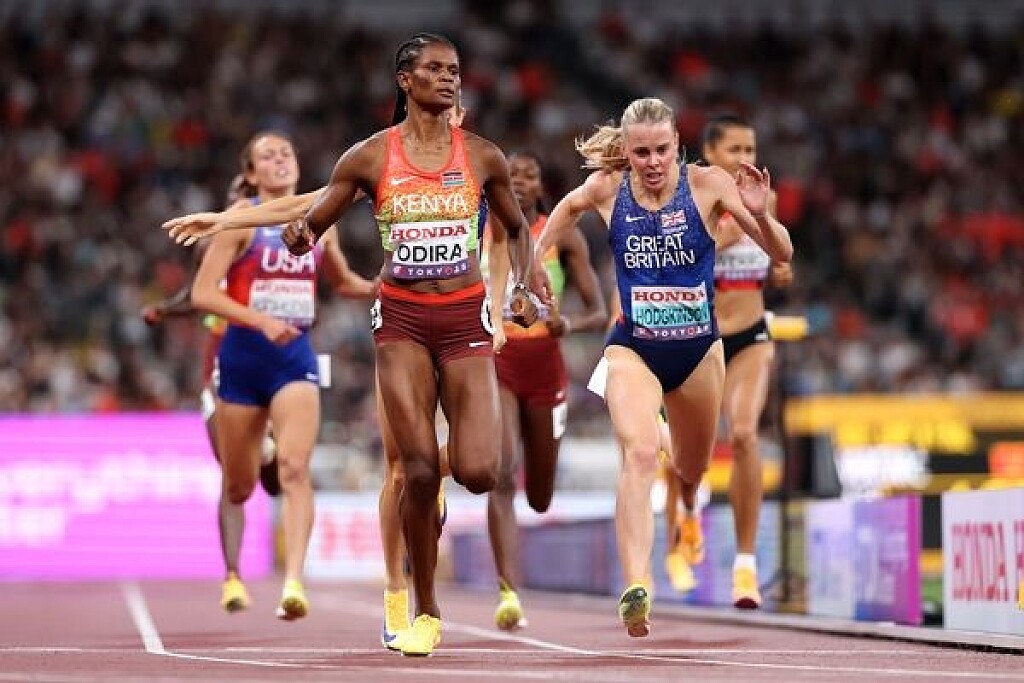
Kenya’s Lilian Odira Stuns the World with 800m Gold in Tokyo as Olympic Champion Mary Moraa Fades
Kenya has a new middle-distance queen. Lilian Odira shocked the athletics world on Saturday, storming down the final straight to win the women’s 800m world title in a championship record of 1:54.62. Her breakthrough run toppled giants and rewrote the script of global middle-distance running.
The 26-year-old, relatively unknown internationally until this season, ran with the poise of a seasoned veteran. She timed her move perfectly, sitting behind Olympic champion Mary Moraa’s blistering first lap of 55.7 seconds. By the bell, Moraa was leading, but the pace proved costly. As the field entered the final bend, Odira powered wide, flying past Moraa and Britain’s Keely Hodgkinson to seize a historic gold.
The victory was as much about composure as it was about speed. Crossing the line in disbelief, arms raised, Odira erased the long-standing championship record of 1:54.68 set in 1983. Kenyan fans erupted inside Tokyo’s Olympic Stadium.
“I waited, I trusted my plan,” Odira said. “I knew the last 200 meters would decide everything. To win against these champions is a dream for me and for Kenya.”
Behind her, Britain’s Georgia Hunter Bell surged to silver in a personal best 1:54.90, edging teammate Hodgkinson by just one-hundredth of a second. Hodgkinson, who has built a career of near-misses, was left with bronze in 1:54.91.
Kenya’s Mary Moraa, the heavy favorite, paid the price for her audacious early pace, fading to seventh in 1:57.10. Her younger namesake Sarah Moraa impressed in fourth with a personal best 1:55.74, while USA’s Sage Hurta-Klecker (1:55.89 PB), Switzerland’s Audrey Werro (1:56.17), and Australia’s Jessica Hull (1:57.30, Area Record) all delivered career-best performances in one of the fastest women’s 800m finals ever. Every athlete broke the 1:58 barrier.
For Odira, this was more than a gold medal—it marked the arrival of a new star. She now joins the lineage of Kenyan 800m greats like Janeth Jepkosgei, Pamela Jelimo, and Mary Moraa. Just a year ago she was best known on the Kenyan domestic circuit. Today, she stands as a world champion, opening a new chapter for Kenyan athletics in the high-octane world of the 800 meters.
The Tokyo final will be remembered for its blistering pace, its drama, and its symbolism: the Olympic champion fading, the perennial silver medalist edged into bronze, and a new champion rising to the top.
As Lilian Odira draped herself in the Kenyan flag, the stadium still buzzing, one thing was undeniable—athletics had witnessed the birth of a new star.
Women’s 800m Final – Tokyo 2025 World Championships (Top 8)
1. Lilian Odira (Kenya) – 1:54.62 (Championship Record)
2. Georgia Hunter Bell (Great Britain) – 1:54.90 (PB)
3. Keely Hodgkinson (Great Britain) – 1:54.91
4. Sarah Moraa (Kenya) – 1:55.74 (PB)
5. Sage Hurta-Klecker (USA) – 1:55.89 (PB)
6. Audrey Werro (Switzerland) – 1:56.17
7. Mary Moraa (Kenya) – 1:57.10 (SB)
8. Jessica Hull (Australia) – 1:57.30 (Area Record)
(09/21/2025) ⚡AMPby Robert Kibet
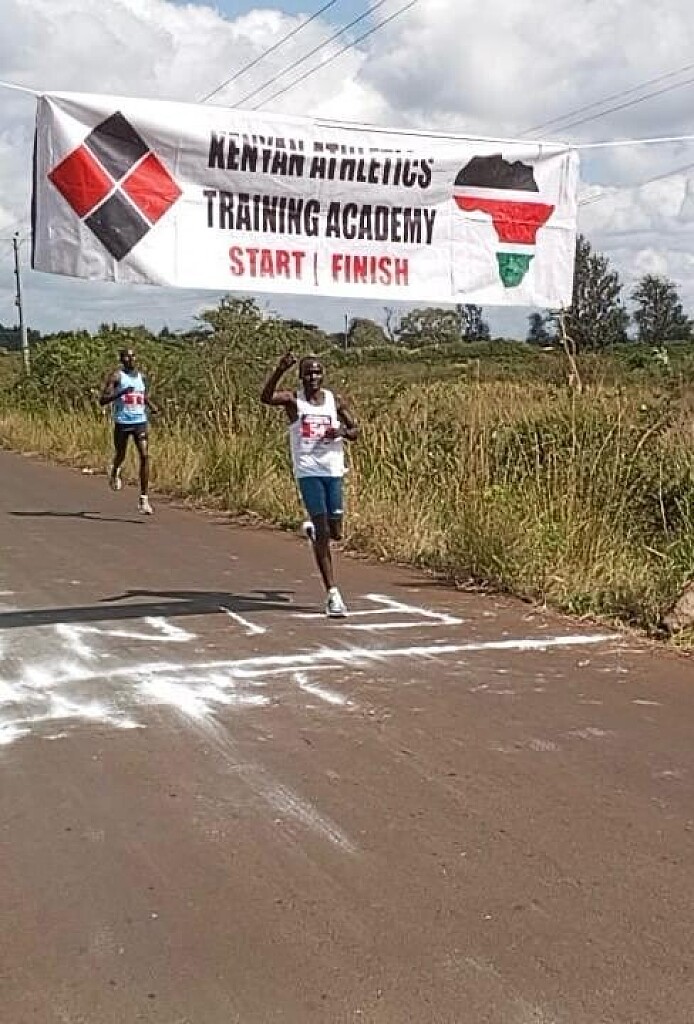
Edwin Soi and Betty Chesang Shine at 5th Annual KATA Double Road Race in Thika
THIKA, Kenya - Running at the Kenya Athletics Training Academy (KATA) has become a magnet for athletes and spectators alike, and today’s 5th Annual KATA Double Road Race proved just that. Energy and motivation filled the air as both athletes and coaches gathered to celebrate one of Kenya’s most innovative race formats.
A total of 97 elite athletes—74 men and 23 women—lined up for the two-stage event (10K + 5K), a turnout that highlighted KATA’s growing influence and its role in setting a new competitive standard.
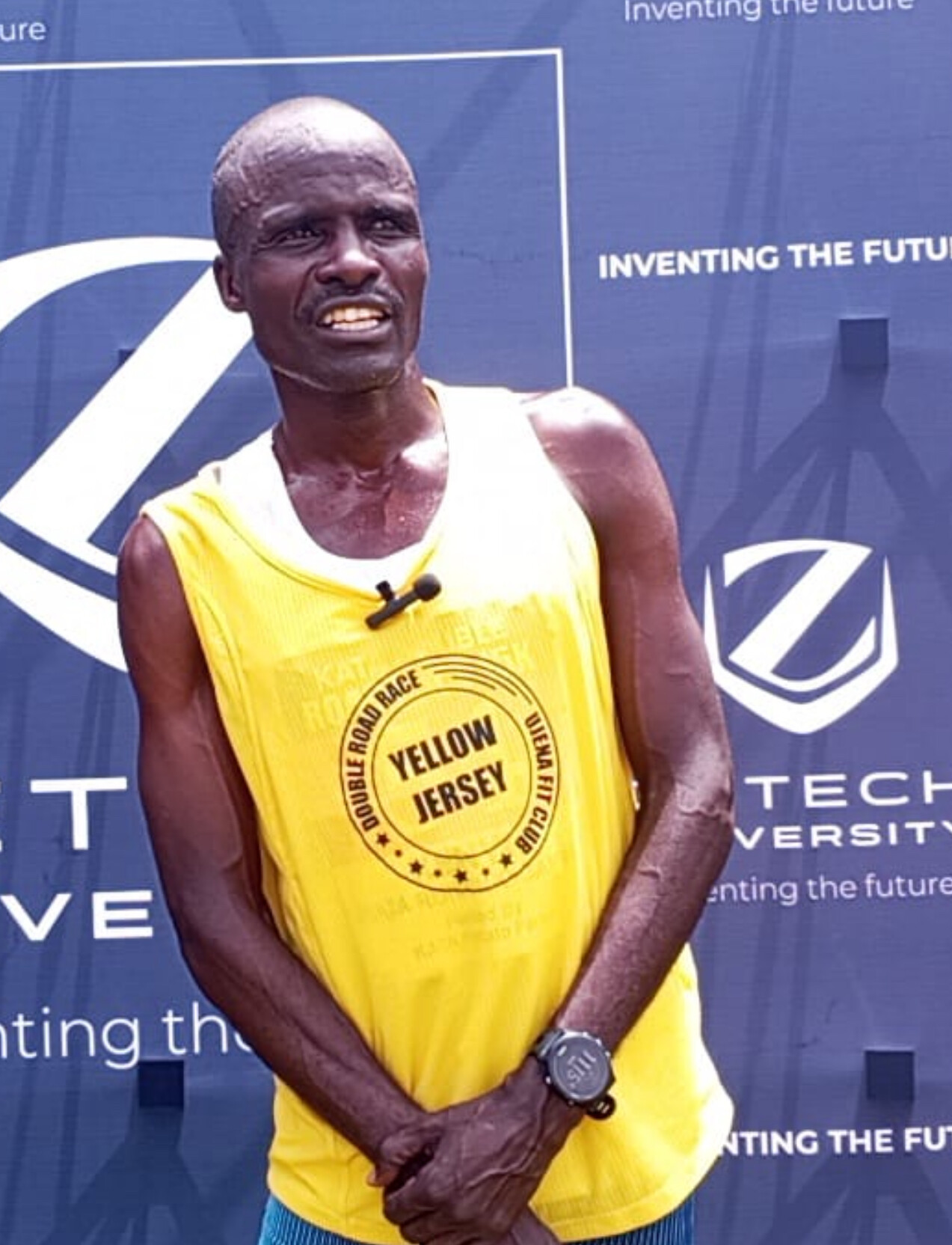
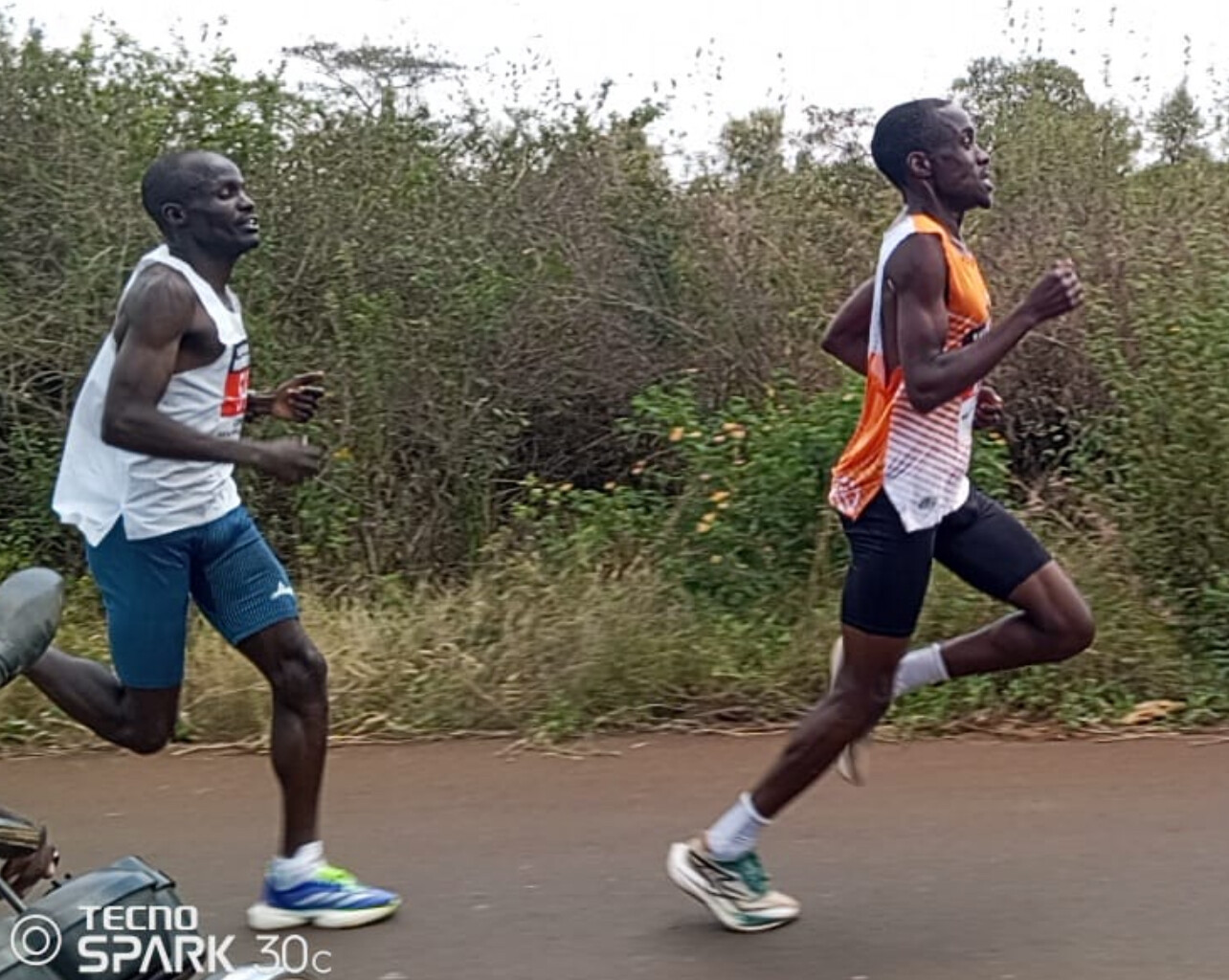
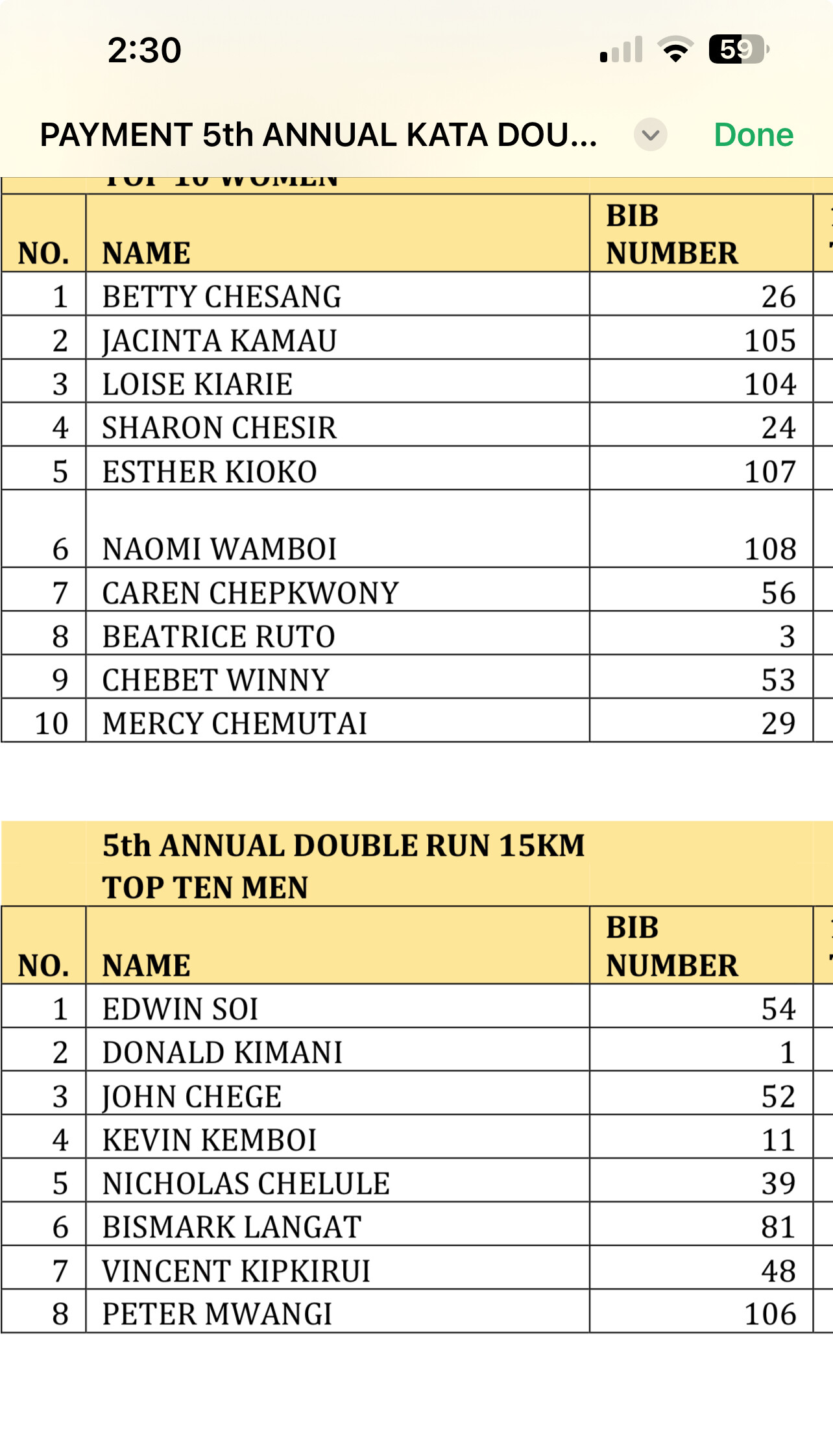
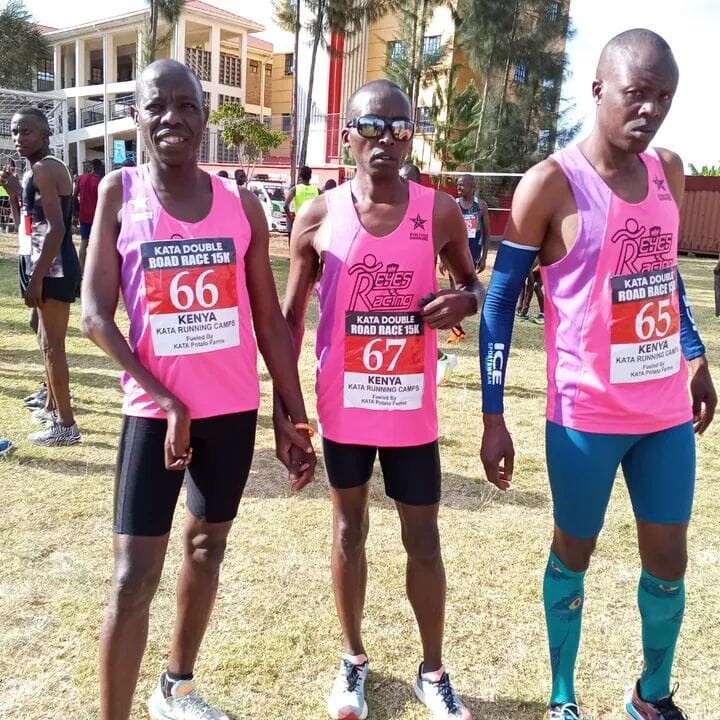
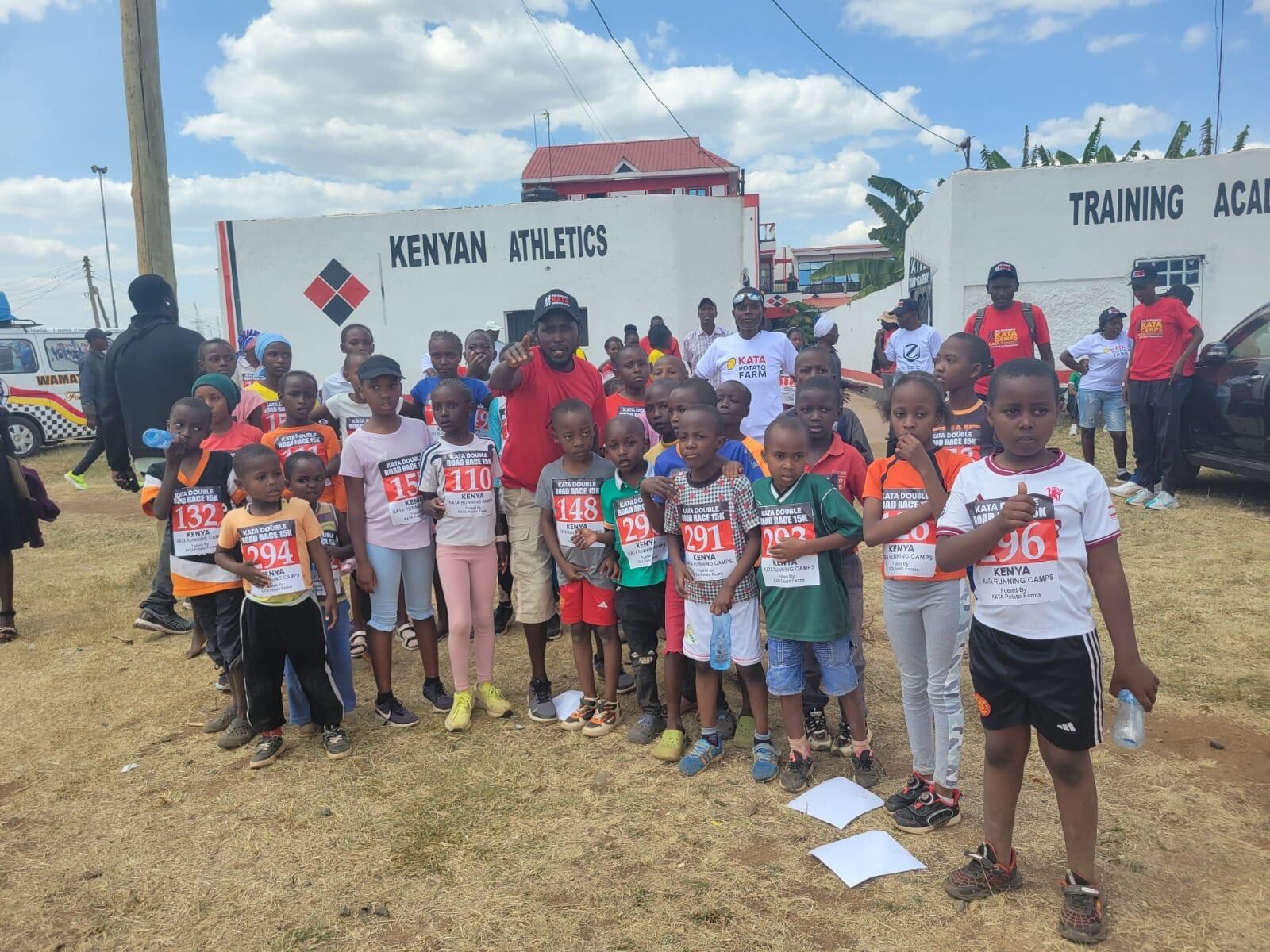

On the men’s side, Beijing 2008 Olympic 5000m bronze medalist Edwin Soi showed his class, taking the overall victory in a combined time of 43:50. He was chased hard by Donald Kimani, who clocked 44:07, while John Chege secured third place in 44:26. Chege, representing KATA Thika, had aimed with his teammates to challenge the world record. However, facing experienced stars like Soi, nerves crept in, and the record attempt slipped away.
The women’s race delivered equal excitement. Betty Chesang claimed the title in 51:32, followed by Jacinta Kamau in 51:50. Loise Kiarie rounded out the podium, finishing in 52:34.
Beyond the results, the day carried an atmosphere of learning and inspiration for KATA’s young and upcoming athletes. With each edition, the Double Road Race continues to grow stronger, reinforcing the KATA spirit: competing hard, learning together, and moving forward.
Also today was the Bob Anderson's Kids Mile and the 5K Run/Walk.
(09/20/2025) ⚡AMP
by Coach John and Boris Barron
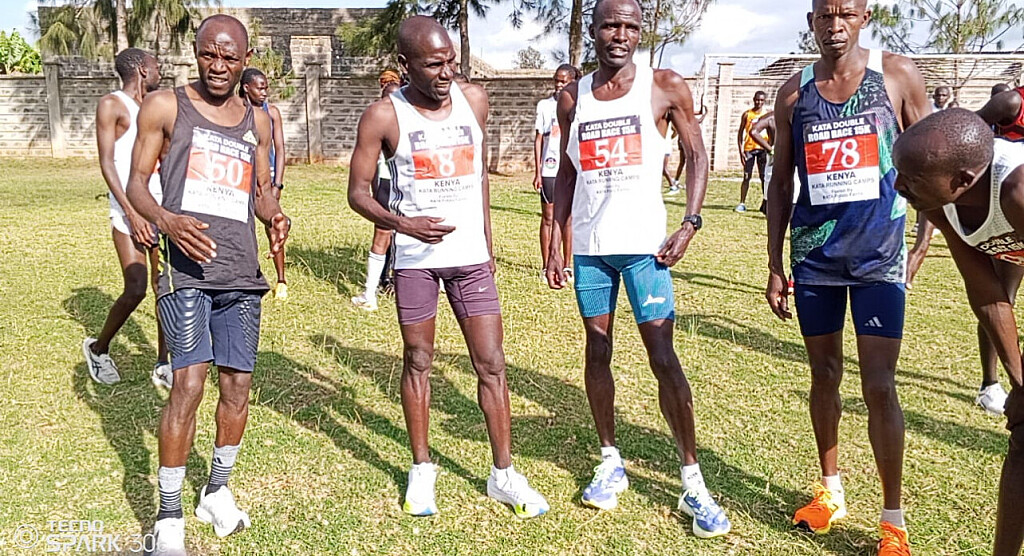
The fifth annual KATA Double Road Race in the making
The small town of Thika is alive with excitement today. Athletes, coaches, families, and even farmers have gathered at the Kenya Athletics Training Academy (KATA) grounds for the 5th edition of the Double Road Race—a unique competition that, in just five years, has become a symbol of innovation in Kenya’s running culture.
Unlike conventional races, the Double Road Race challenges athletes to complete two segments with a rest break in between. Final standings are determined by combined times. It’s a test of speed, endurance, and resilience that forces runners to rethink race strategy and dig deeper than ever before.
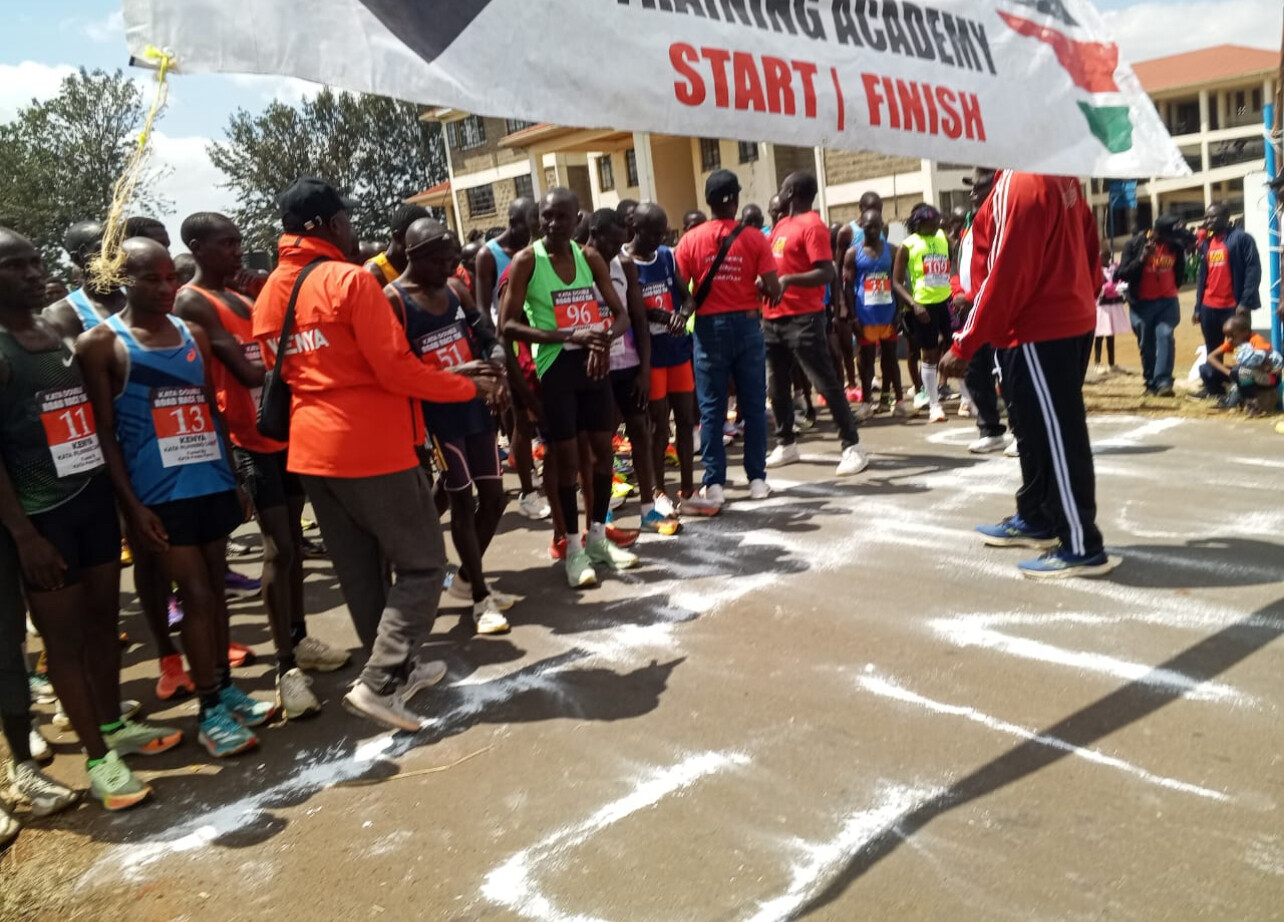
The Birth of a Vision
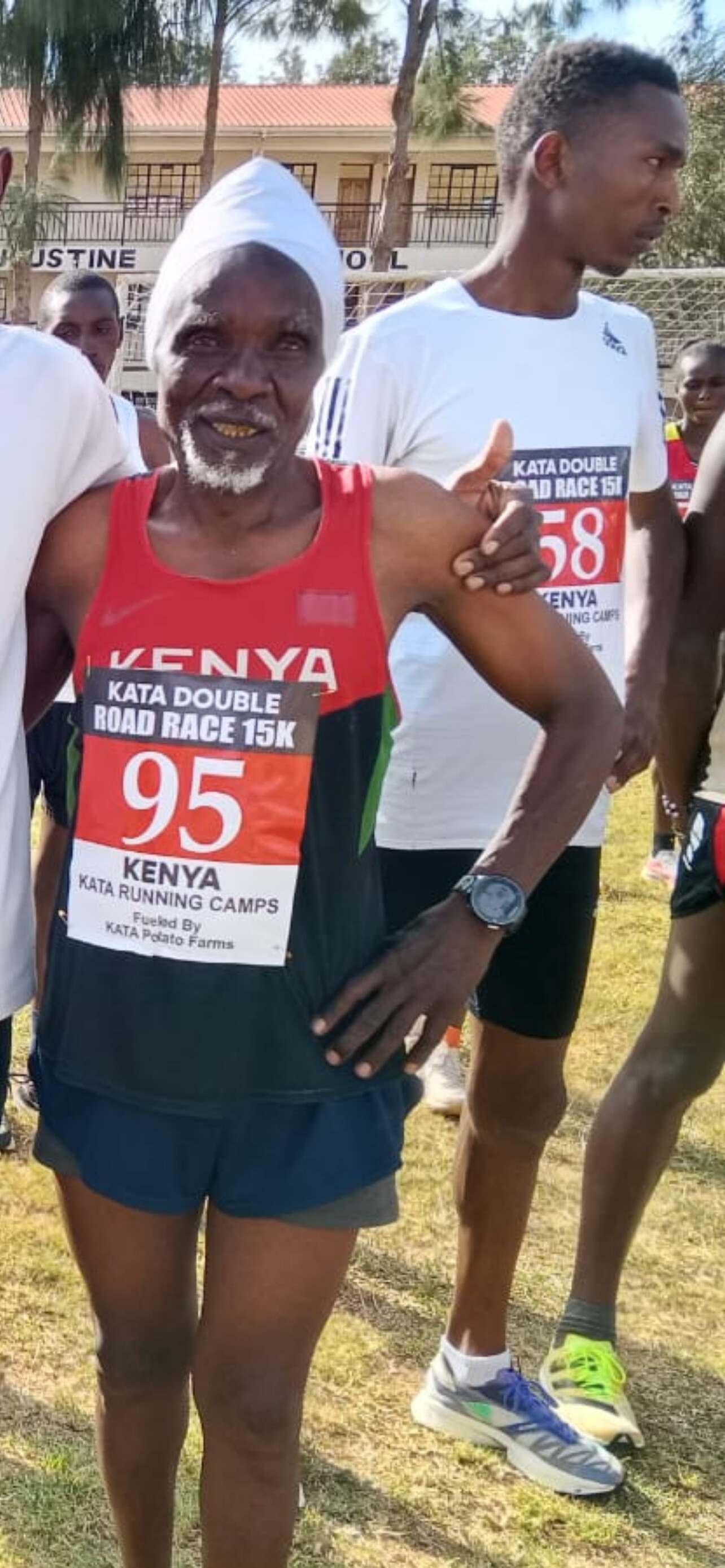
The idea for KATA was born thousands of miles away. Bob Anderson, American publisher and lifelong runner best known as the founder of Runner’s World magazine, was inspired by the immense talent in Kenya but also saw structural gaps that held many athletes back.
Anderson’s vision was radical: create a training academy in Kenya that produced champions while also empowering communities. From this dream, KATA was founded in Thika—and one of its cornerstones was introducing the Double Road Race format to Kenyan soil.
Enter Jimmy Muindi: From Star to Mentor
No story of KATA is complete without Jimmy Muindi. The six-time Houston Marathon champion and former coach of world record holder Patrick Makau embodies the blend of experience and inspiration KATA thrives on.
From steeplechase junior champion at the 1992 World Juniors in Seoul to victories in Rotterdam and Honolulu, Muindi’s career reads like a running epic. As a coach, his highest moment came when Makau broke the marathon world record.
“The double tests body, mind, and spirit,” Muindi says. “It forces athletes to dig deep in ways they are not used to. That is how champions are made.”
Coach John Matheri’s Guiding Hand
While Muindi brought international pedigree, respected Kenyan coach John Matheri rooted the project locally. Known for discovering village talent and molding disciplined athletes, Matheri has helped weave community runners into the Double Road Race fabric.
“Returning for the second run after your body is tired teaches resilience,” Matheri explains. “That is what separates ordinary runners from great champions.”
His philosophy has given countless young runners not only a chance to compete, but also recognition and hope.
The Power of Exposure
One of the Double Road Race’s most innovative features is its commitment to visibility. Every runner’s time—first or last—is posted on the official website. For Kenyan athletes who rarely enjoy digital exposure, this is game-changing.
“Even if you are the last, your time is posted,” Muindi emphasizes. “Managers and sponsors around the world can see it. That exposure is priceless.”
In an age where social media visibility can launch careers, Anderson’s decision to democratize exposure has made the Double Road Race a vital platform.
A Vibrant Turnout in Thika
This year’s participation proves the format’s momentum. Squads from across the region have confirmed attendance, including Kata 1, 3, 4, 7, 9, 10, 13, 14, 15, 16 (with an impressive 16 runners), 17, 18, 20, 23, 24, 25, 29, 30, 31, and 32.
Adding further depth, farmers’ groups F20, F24, and F31 are also present—evidence of KATA’s reach beyond athletics and into the heart of Kenyan communities.
As one organizer shared in a WhatsApp update: “What an amazing turnout we are going to have.”
Beyond Competition: Building a Culture
For runners, today is more than a race. It’s a chance to test themselves, mark progress, and belong to something larger. For KATA, it’s proof of concept: grassroots blending with elite, communities meeting global culture, and tradition reimagined through innovation.
The Double Road Race, once a bold experiment by an American visionary, has now become part of Kenya’s running story.
Looking Ahead
Five editions in, the Double Road Race is no longer a novelty—it’s becoming an institution. Under the Thika sun, young runners, seasoned coaches, and cheering farmers weave together a tapestry of resilience and hope.
Anderson’s ambition, supported by Kenyan mentors like Muindi and Matheri, is for KATA to nurture athletes from primary schools to the world stage. With support from federations, sponsors, and government, the academy could become a model far beyond Kenya.
For now, as the second leg unfolds, Thika celebrates not just a race but the journey of an idea that dared to be different. Kenya’s running legacy isn’t only about medals—it’s about reimagining what running can be, and building a future where every stride counts.
Photo Gallery: https://kata.ke/gallery.php?g=1
(09/20/2025) ⚡AMPby Robert kibet
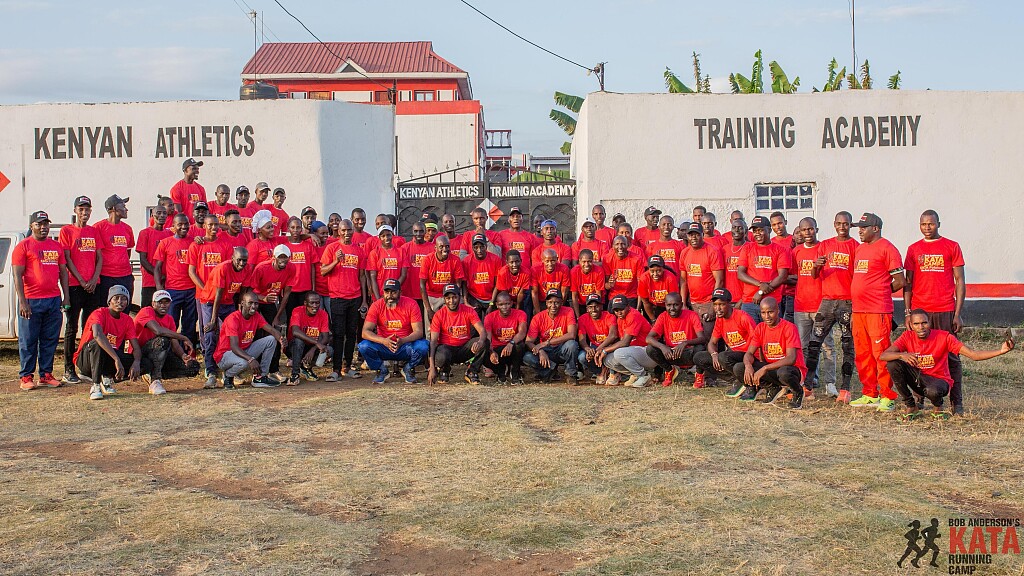
Anticipation Builds for the 5th Annual KATA Double Road Race in Thika
The countdown is over—the 5th Annual KATA Double Road Race takes place tomorrow, September 20, in Thika, Kenya. The unique two-stage event, featuring a 10K run followed by a break and a 5K, promises high drama and fast performances. With the depth of talent assembled, the prospect of a world record is very much on the table.
Since May, the KATA program has experienced tremendous growth. A total of 31 KATA Running Camps have been established across Kenya, alongside 35 stand-alone KATA Potato Farms. Many camps are cultivating three acres of potatoes, providing not only sustenance but also inspiration. The motto rings true: “KATA Potatoes—the fuel of champions.”

On Friday, the energy was already high as athletes, coaches, and supporters gathered at the KATA Running Retreat in Thika, which first opened in 2020. The opening ceremony set the tone for what is expected to be a memorable weekend of racing.
As athletes toe the line tomorrow, anticipation is sky-high. Records may fall, but more importantly, the Double format will once again showcase endurance, strategy, and the unique spirit of the KATA family.
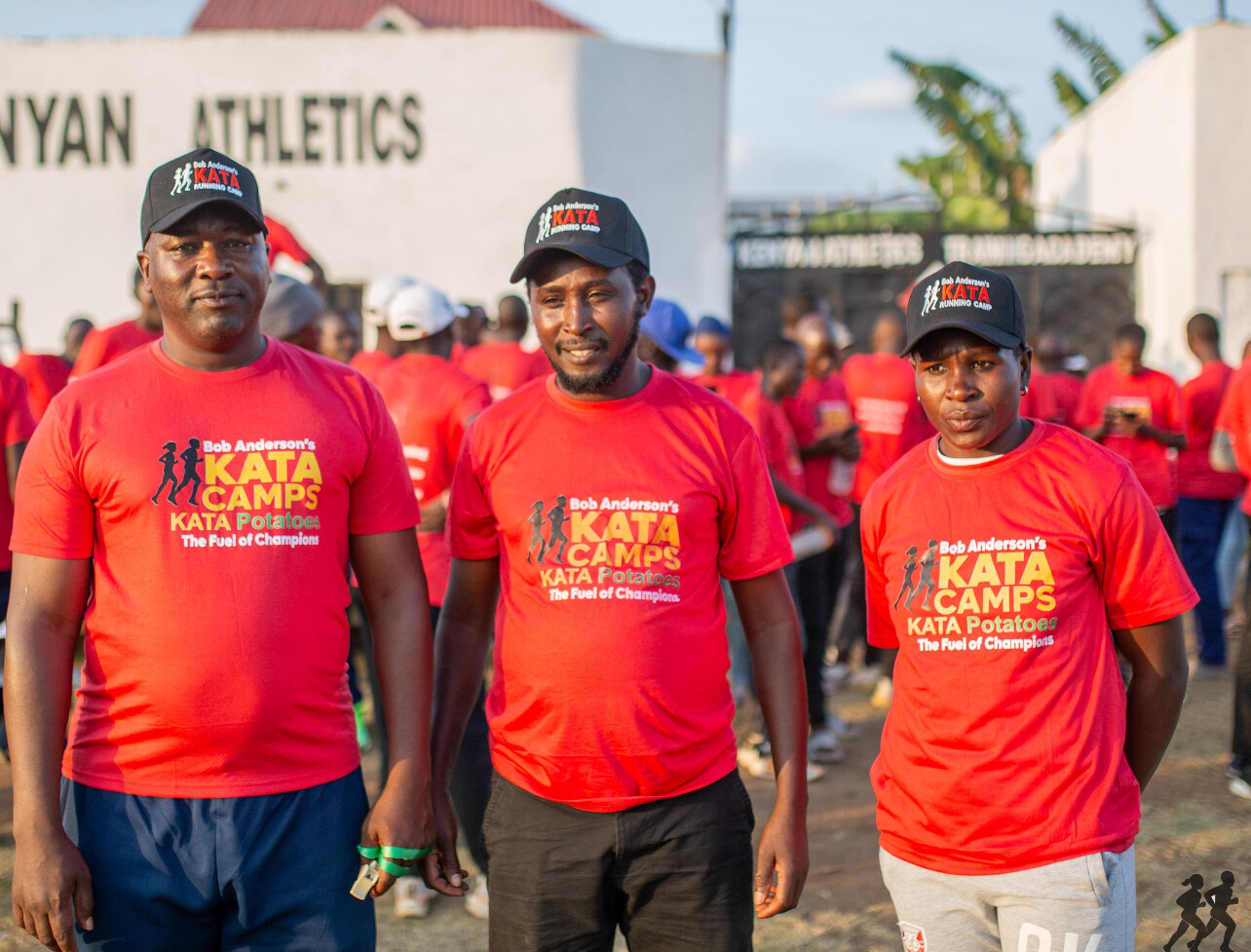
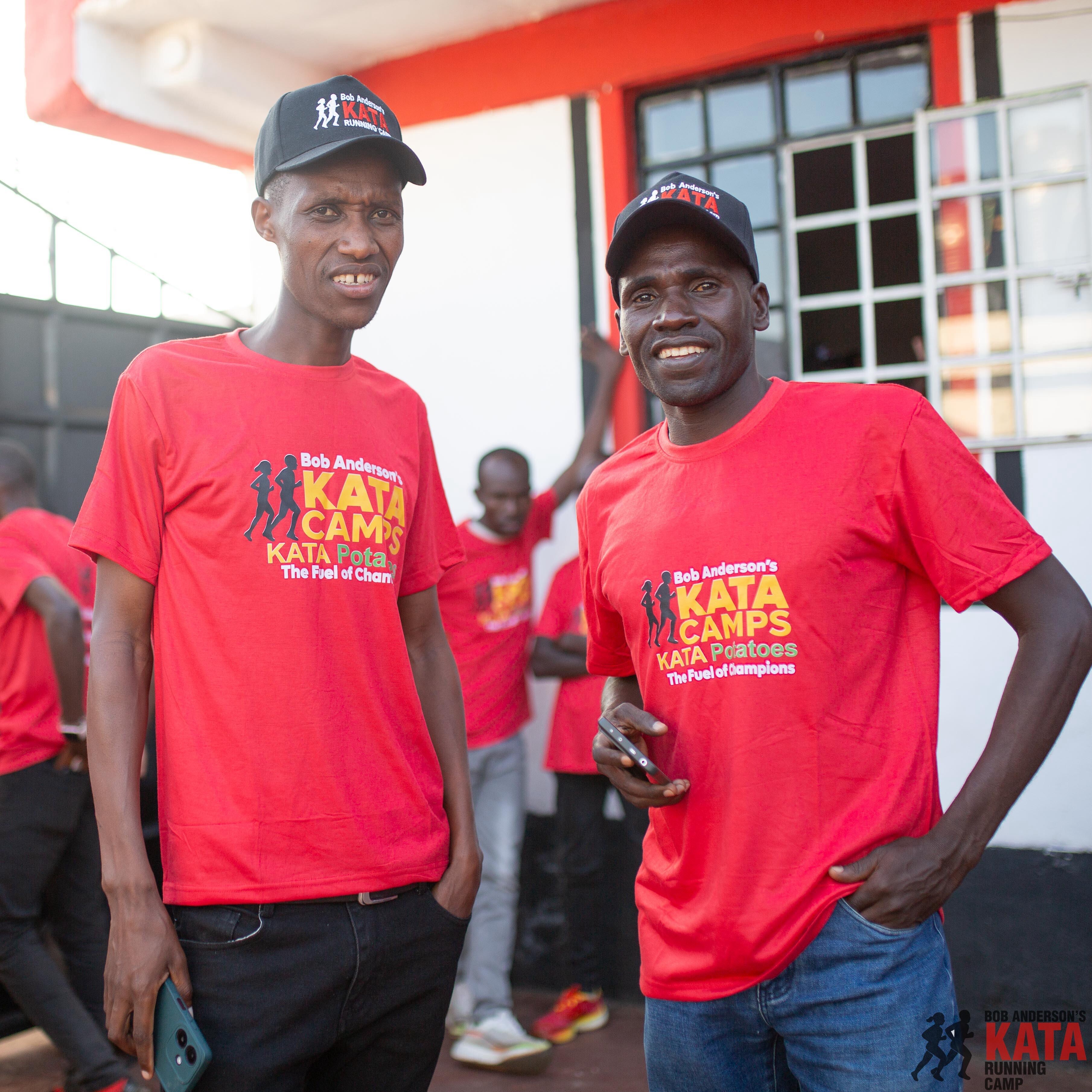
Good luck to all competitors this Saturday in Thika!
(09/19/2025) ⚡AMPby Boris Baron
Thrilling Photo Finish and Historic Performances Highlight 1500m Finals in Tokyo
The 1500 meters is often called the “crown jewel” of middle-distance running, a race where tactics, speed, and heart all collide. At the 2025 World Championships in Tokyo, both the men’s and women’s finals lived up to that reputation, delivering drama, comebacks, and world-class performances that will be remembered for years.
Men’s 1500m: A Thrilling Comeback
The men’s final produced one of the most electrifying finishes of the championships. For much of the race, the field remained tightly packed, with every move closely marked. As the bell rang for the final lap, the intensity soared, and the last 200 meters became an all-out sprint for glory.
Portugal’s Isaac Nader surged wide in the final stretch, clawing back ground with each stride before lunging at the line. His daring comeback forced a photo finish against Britain’s Jake Wightman, with both men collapsing past the tape in exhaustion. Officials confirmed Nader as the gold medalist in 3:34.10, edging Wightman’s 3:34.12 by just two hundredths of a second.
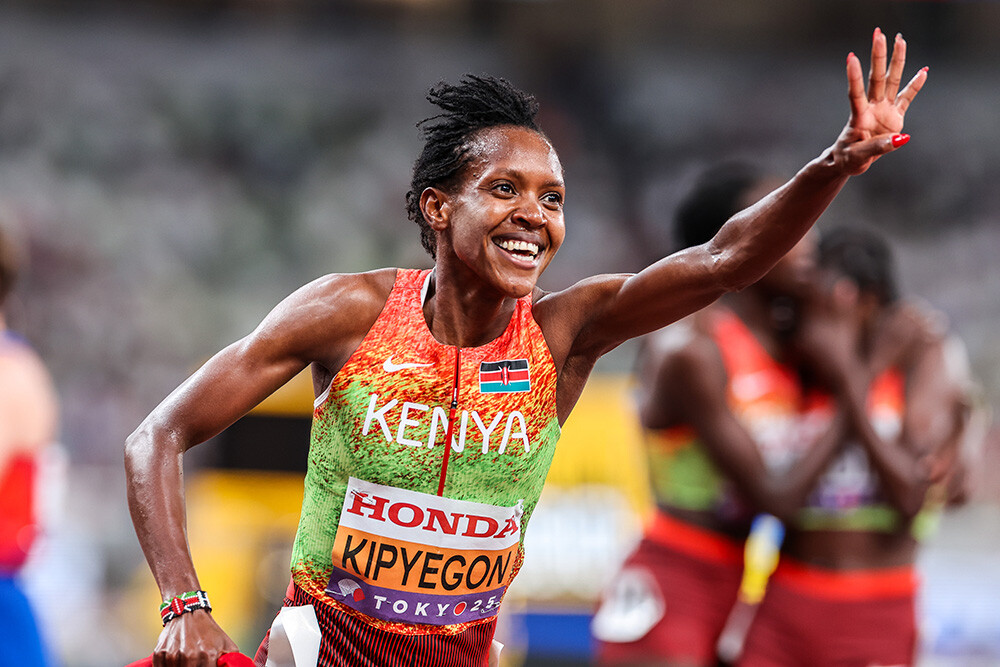
Kenya’s rising star Reynold Cheruiyot powered home for bronze in 3:34.25, while his compatriot and former world champion Timothy Cheruiyot finished fourth in 3:34.50. The razor-thin margins between the top four underscored the depth and unpredictability of today’s global 1500m racing.

Men’s Top Four – Tokyo 2025
1. Isaac Nader (Portugal) – 3:34.10
2. Jake Wightman (Great Britain) – 3:34.12
3. Reynold Cheruiyot (Kenya) – 3:34.25
4. Timothy Cheruiyot (Kenya) – 3:34.50
Women’s 1500m: Kipyegon Reigns Supreme
If the men’s race was decided by a hair’s breadth, the women’s final was about one athlete stamping her authority on the distance. Kenya’s Faith Kipyegon, already a legend of the sport, once again proved untouchable. She controlled the pace from the front and then crushed the field over the final 300 meters, crossing in a dominant 3:52.15 to secure another world title.
Behind her, teammate Dorcus Ewoi earned silver with a strong 3:54.92, holding off Australia’s Jessica Hull, who thrilled the Tokyo crowd with a gritty run for bronze in 3:55.16. Another Kenyan, Nelly Chepchirchir, rounded out the top four in 3:55.25, making it three Kenyans in the top four.
Women’s Top Four – Tokyo 2025
1. Faith Kipyegon (Kenya) – 3:52.15
2. Dorcus Ewoi (Kenya) – 3:54.92
3. Jessica Hull (Australia) – 3:55.16
4. Nelly Chepchirchir (Kenya) – 3:55.25
A Showcase of Middle-Distance Greatness
Between the men’s photo finish and Kipyegon’s continued dominance, the Tokyo 1500m finals captured everything fans love about this distance: courage, strategy, and the ability to deliver in the biggest moments.
For Isaac Nader, it was the race of his life, as he became Portugal’s first world champion in the 1500m. For Faith Kipyegon, it was another masterclass, further cementing her status as perhaps the greatest middle-distance runner in history. And for the fans, it was proof that the 1500m remains one of the most thrilling events on the track.
(09/18/2025) ⚡AMPby Boris Baron
