

Running News Daily
Running News Daily is edited by Bob Anderson and team. Send your news items to bob@mybestruns.com Advertising opportunities available.
Index to Daily Posts · Sign Up For Updates · Run The World Feed
Articles tagged #Sawe
Today's Running News



Nairobi 2029: Could Kenya Finally Bring the World Athletics Championships to Africa?
Tomorrow could be a defining day for Kenyan athletics — and potentially for the entire African continent.

The World Athletics Council is expected to announce the host of the 2029 World Athletics Championships, with Nairobi's bid carrying the hopes of a continent that has produced generations of extraordinary athletes but has never staged the senior global championships.
For Kenya, the moment could represent the culmination of decades of dominance, sacrifice and achievement on the international athletics stage.
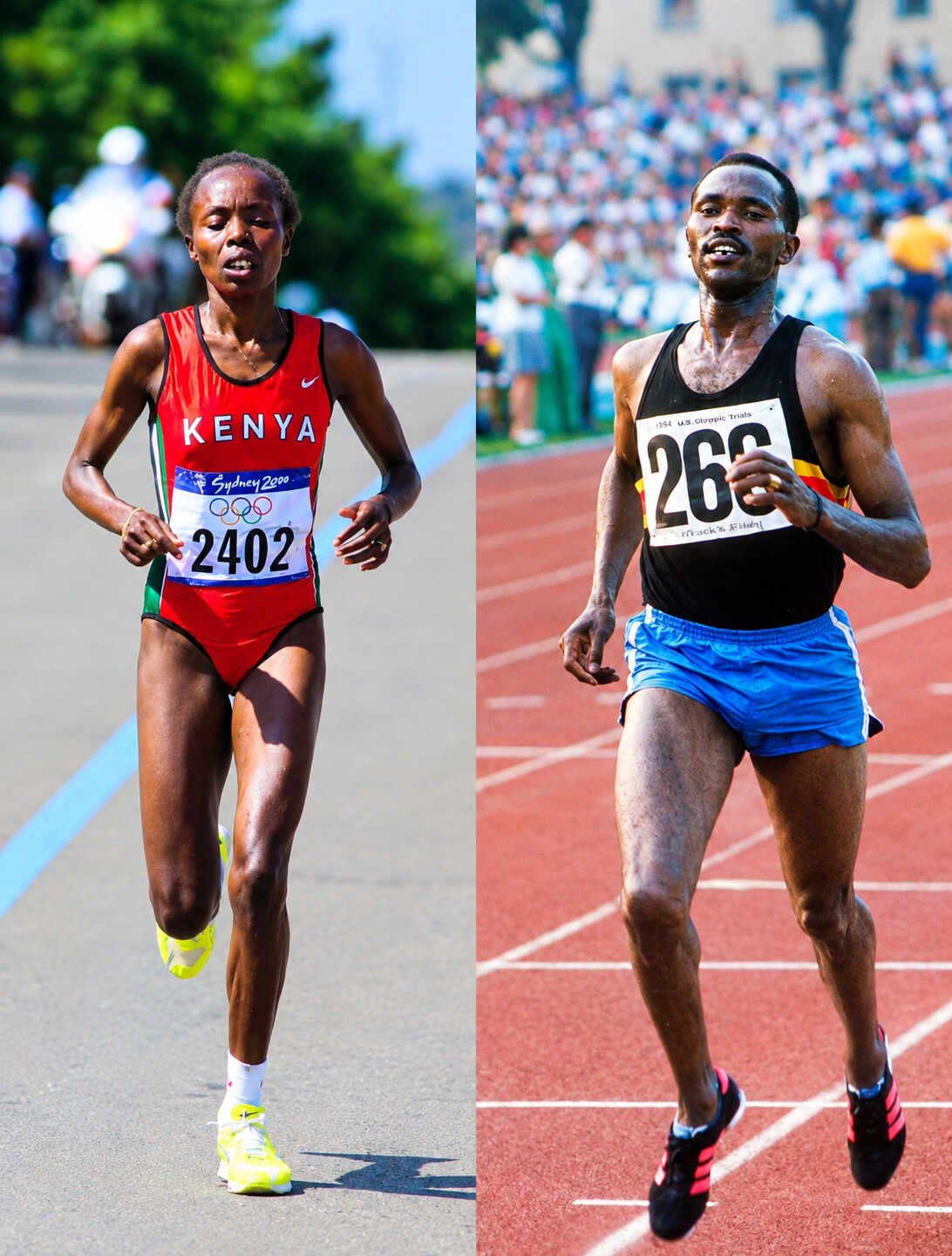
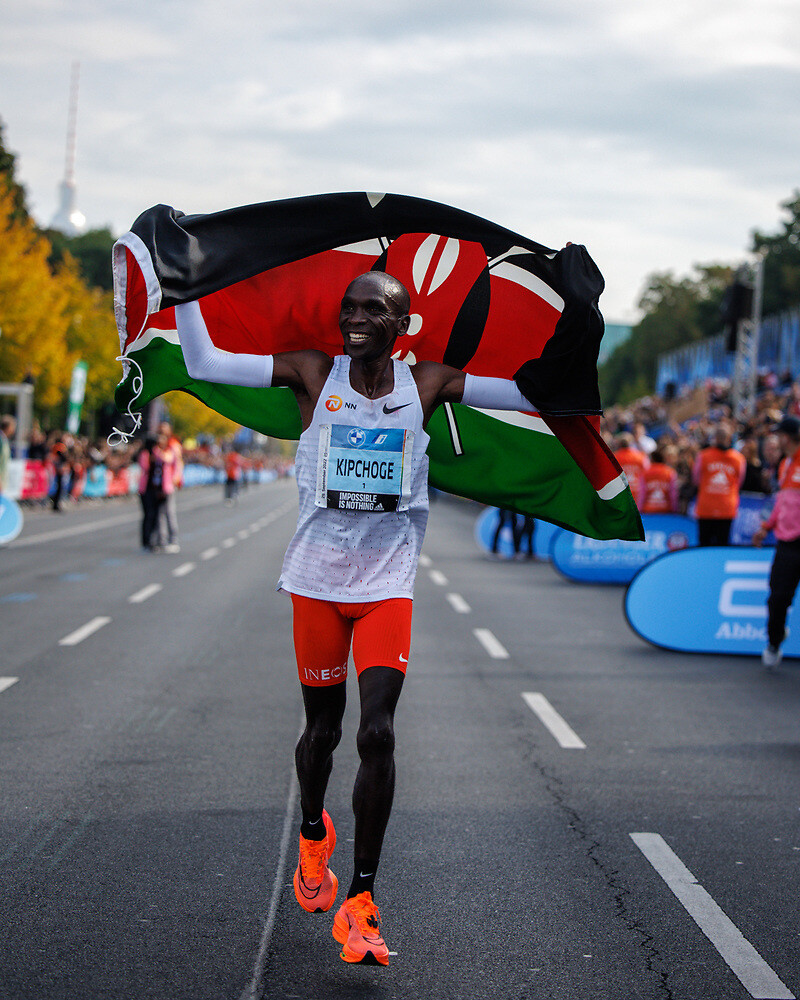
For generations, Kenya has built one of the most remarkable traditions in track and field. From pioneering legends such as Kipchoge Keino and Tegla Loroupe to modern icons including Eliud Kipchoge, Faith Kipyegon, David Rudisha, Sebastian Sawe, Beatrice Chebet and Ezekiel Kemboi among others. Kenyan athletes have repeatedly stood on the biggest stages in world sport.

Their achievements have helped make Kenya one of the most respected names in global athletics. Olympic triumphs, world titles, records and unforgettable performances have carried the country's name across every corner of the sporting world.
But Kenya's relationship with athletics extends far beyond its medal collection.
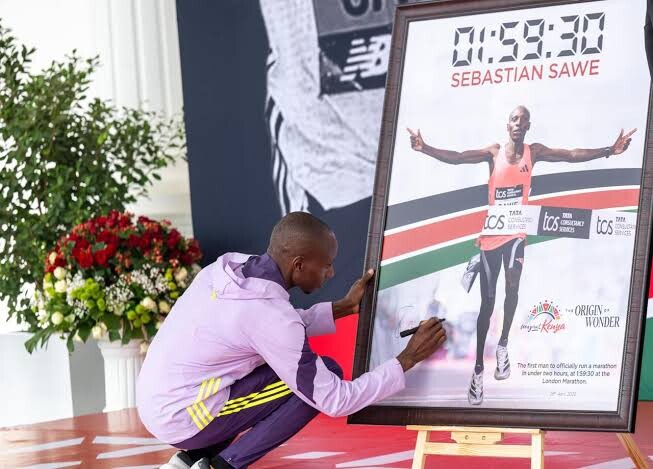
Running is deeply rooted in communities throughout the country, while the high-altitude training environments of the Rift Valley have become famous worldwide for producing elite distance runners. Behind every champion is a network of coaches, families, training partners and communities that have helped sustain Kenya's extraordinary athletics culture.
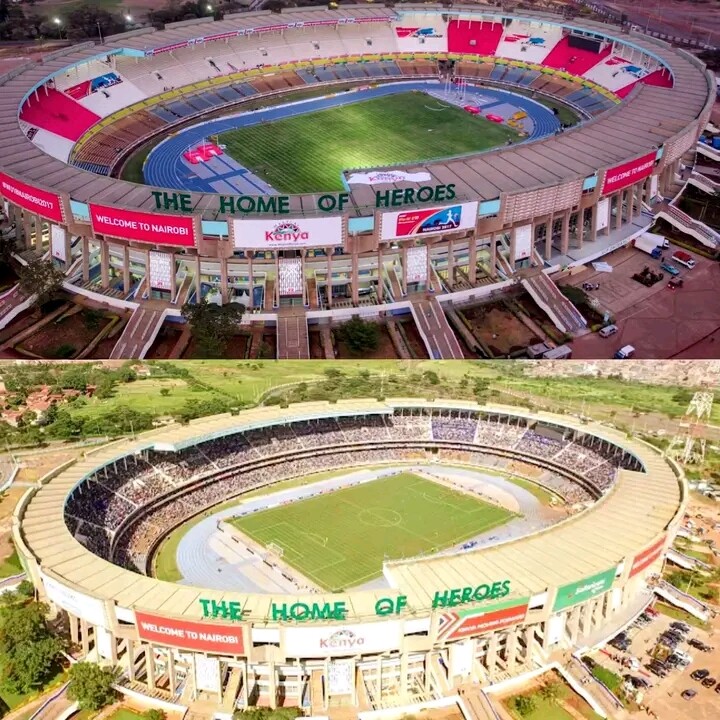
Now Nairobi is seeking to bring the world's biggest track and field championship to the country where so many champions have been produced.
The proposed centerpiece of Kenya's bid is Moi International Sports Centre, Kasarani, a venue already deeply connected to Kenyan athletics. If the bid succeeds, Kasarani could become the stage where the world's finest athletes gather in 2029 to compete for global titles.
And the significance would extend far beyond Kenya.
Africa has produced some of the greatest athletes in athletics history, yet the continent has never hosted the World Athletics Championships. Nairobi's bid could change that.
Kenya's proposal is therefore not simply about staging another major sporting competition. It represents an opportunity to bring the championships to African soil for the first time and introduce millions of international fans to the continent's remarkable athletics culture.
However, Nairobi is facing formidable competition.
Kenya's bid is competing against proposals from London, Rome and Munich, three European cities with established sporting traditions and significant experience hosting major international competitions.
That sets up a fascinating choice for World Athletics.
Will the organization take the championships to a continent that has never hosted the event, creating a historic first for Africa? Or will the competition return to one of Europe's traditional athletics powerhouses?
For Nairobi, the stakes could hardly be higher.
A successful bid would give Kenyan athletes the opportunity to compete at a World Championships in front of their home supporters. It would give young runners across the country the chance to watch the world's best athletes compete in their own backyard. And it would place Kenya's extraordinary athletics heritage at the center of global attention.
It could also provide an opportunity to celebrate the champions who came before — athletes whose achievements helped establish Kenya as an athletics superpower — while inspiring the generation that will carry that legacy forward.
Imagine Kasarani filled with thousands of passionate supporters, the world's best athletes arriving in Nairobi, and Kenyan stars stepping onto the track knowing that the biggest championship in their sport is being staged on home soil.
For a country whose identity is so closely intertwined with running, it would be a remarkable sight.
And for Africa, it could be a moment of enormous symbolic importance.
Tomorrow, Kenya — and Africa — could hear its name called.
One decision. One host. One opportunity to make history.
If Nairobi is chosen, the story would not simply be about Kenya winning a bid. It would be about Africa finally welcoming the World Athletics Championships to its own soil.
It would be a celebration of the pioneers, the champions, the coaches, the communities and the generations of athletes who have helped make African athletics a global force.
And perhaps the headline of 2029 would already be waiting:
Kenya, the home of champions, has finally brought the world to its own backyard.
Nairobi 2029 — could this finally be Africa's moment?
by Erick Cheruiyot for My Best Runs.
Login to leave a comment
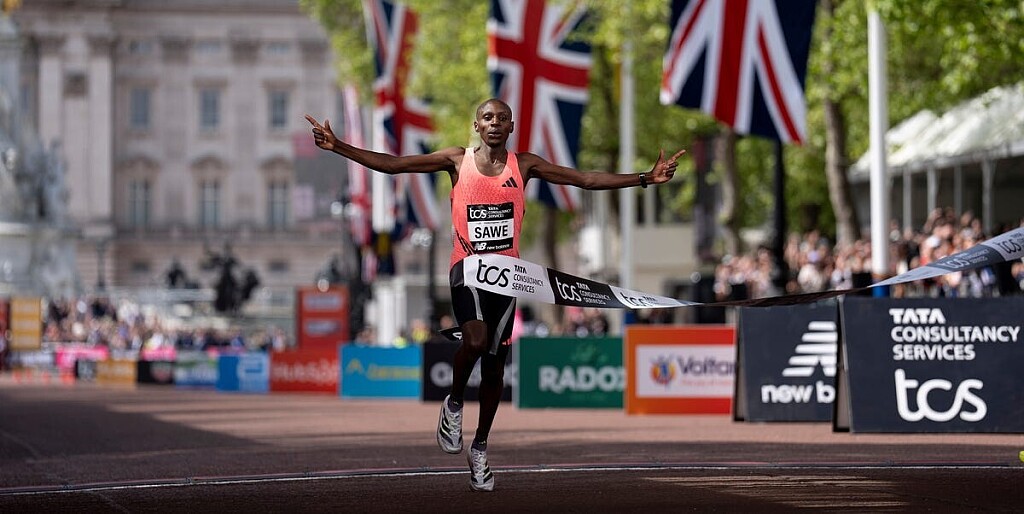
Marathon Majors Course Records: Where Speed, History And The Course Collide
The world’s biggest marathons are united by prestige, elite fields and unforgiving 26.2-mile battles, but their course records tell very different stories. From Tokyo to Sydney, each course has its own character, while London and Chicago have become synonymous with extraordinary speed.
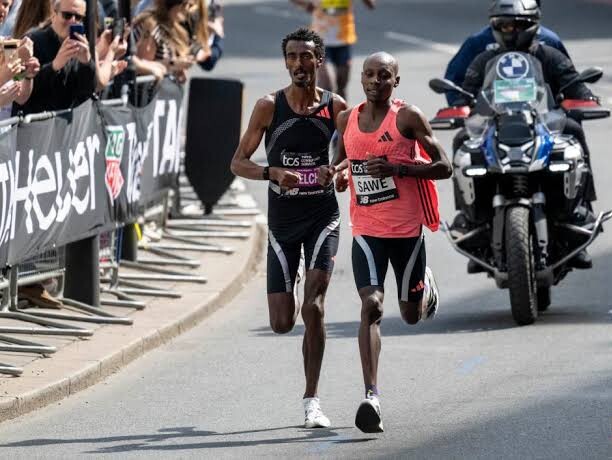
At the top of the men’s list stands the London Marathon, where Kenya’s Sabastian Sawe produced one of the greatest performances in road-running history. Sawe clocked 1:59:30 in April 2026, becoming the first athlete to officially break the two-hour barrier in a marathon. His performance also lowered the world record from Kelvin Kiptum’s previous mark of 2:00:35.
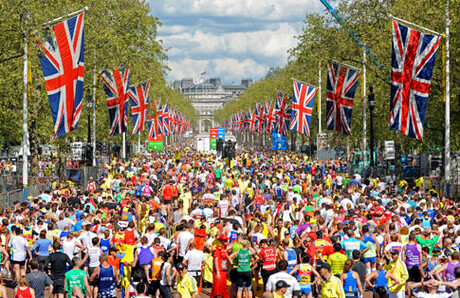
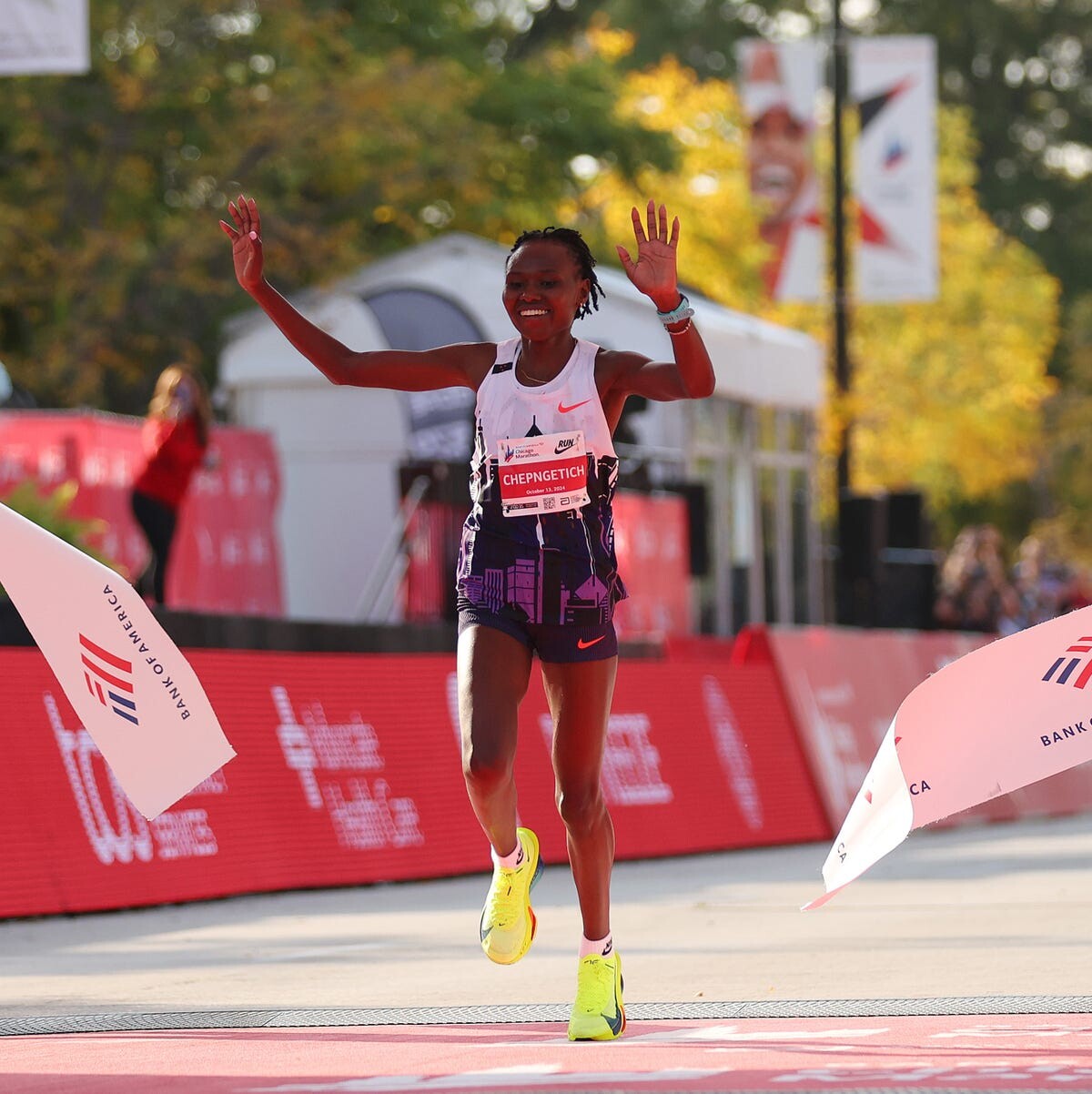
Chicago, meanwhile, owns one of the most remarkable records in women’s marathon history. Kenya’s Ruth Chepngetich ran 2:09:56 in 2024, becoming the first woman to break the 2:10 barrier. The performance remains a landmark in the event’s history and gives Chicago a special place among the fastest marathon courses in the world.
The men’s Chicago record is 2:00:35, set by the late Kelvin Kiptum in 2023. That performance stood as the world record until Sawe’s extraordinary 1:59:30 in London in 2026.

Then there is Berlin, perhaps the most celebrated world-record factory in marathon history. Kenya’s Eliud Kipchoge holds the men’s course record at 2:01:09, while Ethiopia’s Tigist Assefa owns the women’s mark at 2:11:53. Berlin has hosted numerous men’s world records over the years, underlining its reputation as one of the fastest marathon courses on the planet.
The elevation figures help explain why the courses produce such different performances. Berlin has relatively modest elevation changes, creating a fast and rhythm-friendly route. Other Majors present considerably greater challenges.
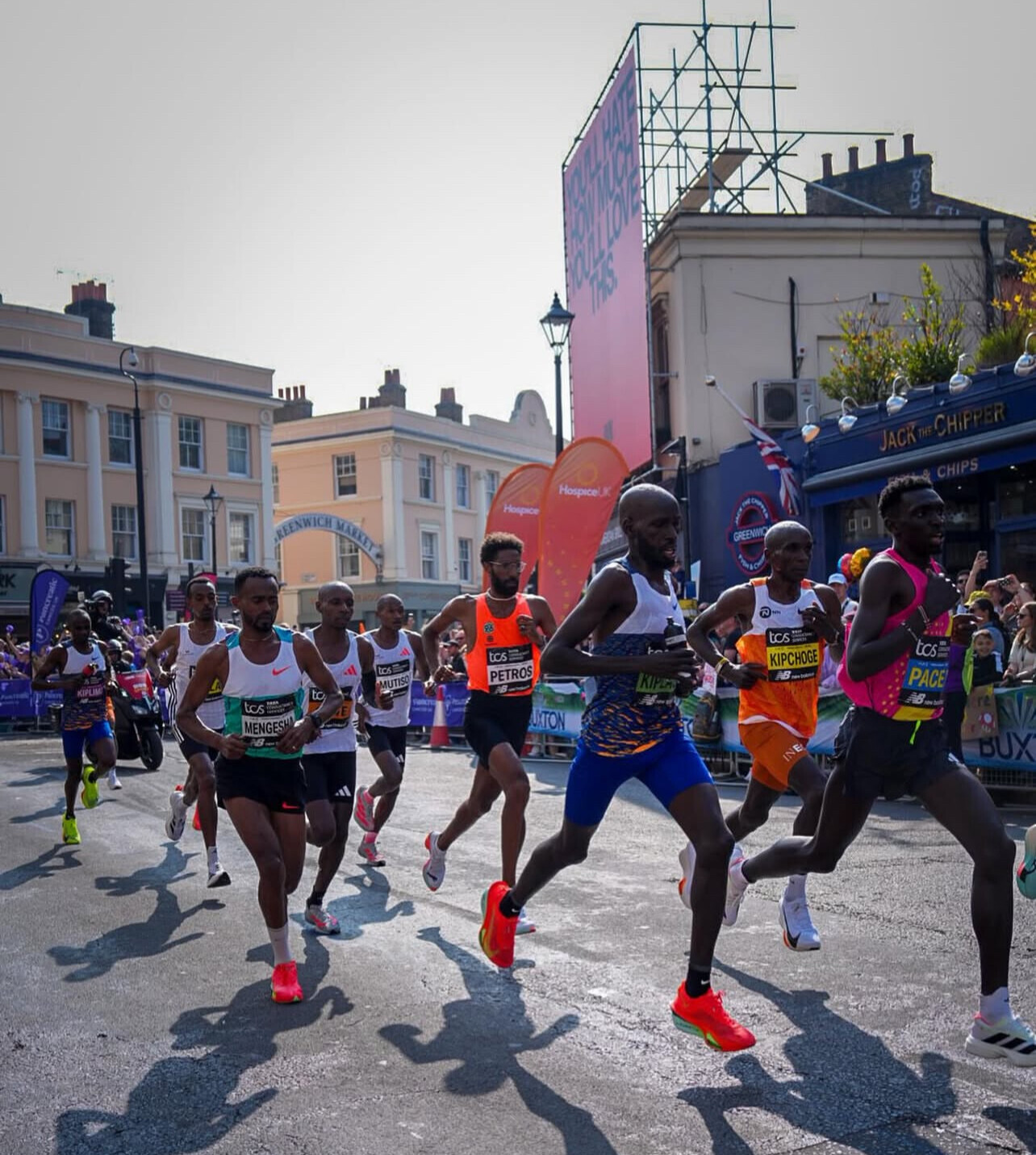
Boston, for example, climbs 248 metres but descends 388 metres. Its famous point-to-point layout and net downhill profile make it exceptionally fast in places, but its course does not qualify for official world-record purposes because the elevation drop exceeds the limit permitted by World Athletics.
New York City is a completely different proposition. With approximately 246 metres of climbing, it is among the toughest Major Marathon courses, demanding strength and tactical patience rather than simply raw speed. Its records therefore carry a different kind of significance, earned on a course that tests athletes through bridges, climbs and a demanding closing stretch into Central Park.
Tokyo offers another fast but distinctive challenge, with Benson Kipruto holding the men’s course record in 2:02:16. Brigid Kosgei’s 2:14:29 remains the women’s course record, illustrating the exceptional standard required to rewrite the record books in the Japanese capital.
And then there is Sydney, the newest addition to the Abbott World Marathon Majors family. Its course has already produced outstanding performances, with Addisu Gobena’s 2:04:42 listed as the men’s course record and Sifan Hassan’s 2:18:22 as the women’s mark in the graphic. With its demanding elevation profile, those performances underline just how quickly the Sydney course has established itself among the world’s major marathon stages.
What makes these records fascinating is that they cannot be judged by the clock alone. A 2:01 on a fast, record-legal course is a completely different achievement from a 2:04 on a demanding route, while Boston’s unique course rules mean that even exceptionally fast performances cannot enter the official world-record conversation.
For decades, marathon greatness was largely measured by who could run fastest. Today, the Majors show that where the time is run can be almost as important as the time itself. From Sawe’s historic sub-two-hour breakthrough in London to Chepngetich’s barrier-breaking run in Chicago and Berlin’s remarkable record history, these performances represent different chapters of marathon history—and the next chapter could be written at any Major.
by Erick Cheruiyot for My Best Runs.
Login to leave a comment
2026: The Year Distance Running’s Impossible Records Began to Fall
Distance running has witnessed extraordinary seasons before, but 2026 is producing something that feels almost unprecedented.
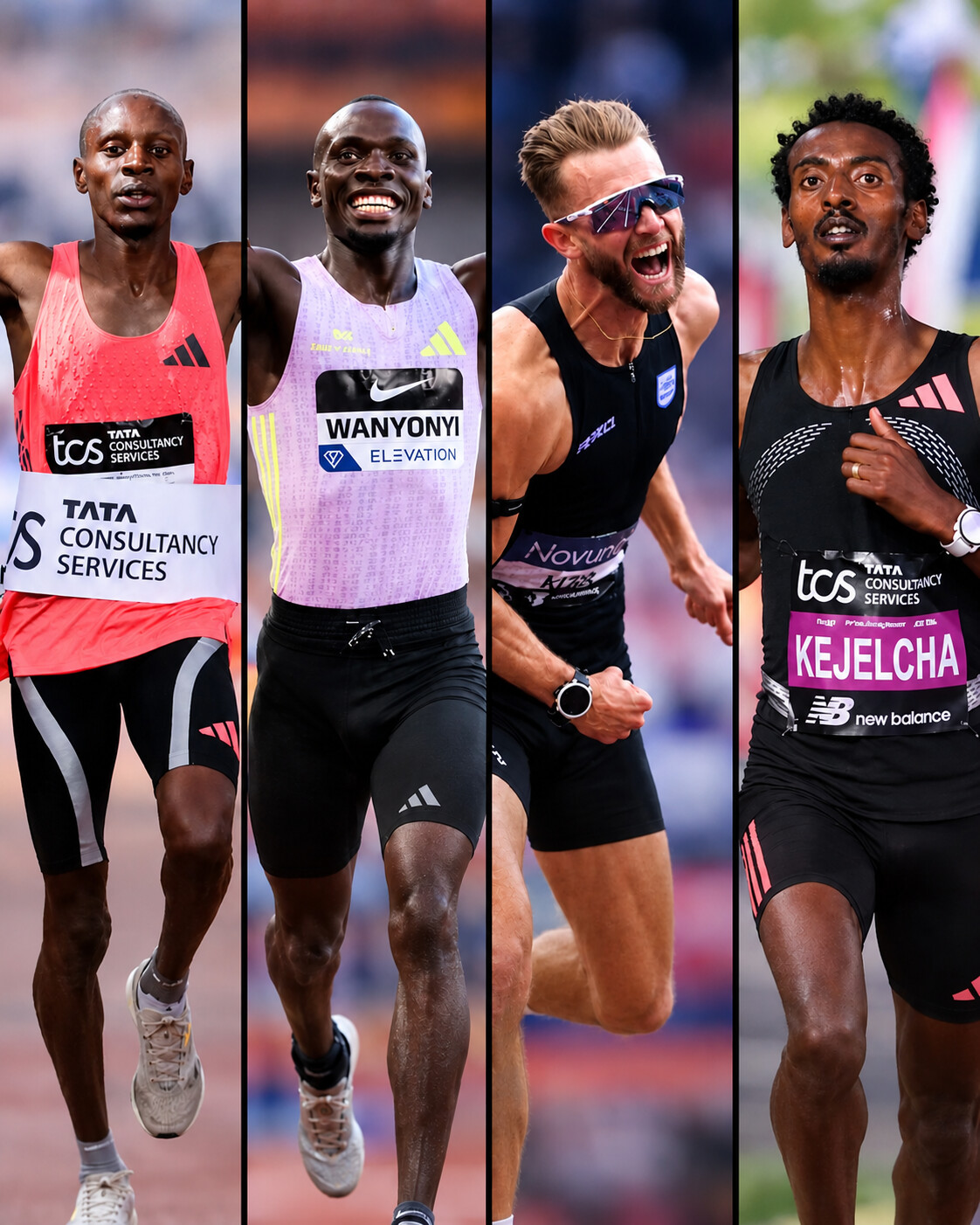
Records that had survived for decades, marks that appeared untouchable and performances that had defined entire generations of athletes are falling at a remarkable rate. In the space of just four months, four historic world records were rewritten, creating one of the most astonishing stretches the sport has ever seen.
And with four months still remaining in 2026, the question is no longer whether this has been an exceptional year.
It is just how much further the boundaries can be pushed.
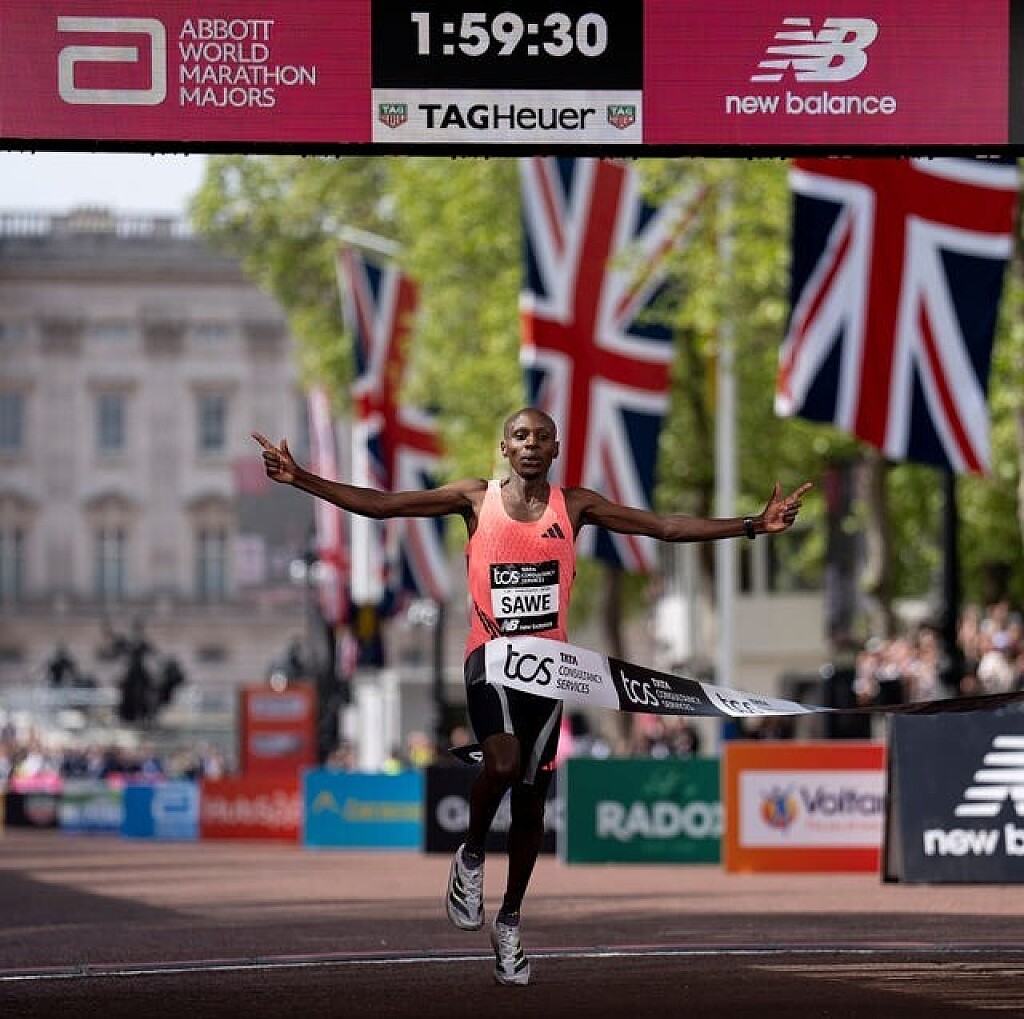
The extraordinary sequence began on April 26 at the London Marathon, where Sabastian Sawe delivered one of the defining performances in the history of the event. The Kenyan crossed the finish line in a breathtaking 1:59:30, becoming the first athlete to run a marathon under two hours in officially recognised, record-eligible conditions.
Eliud Kipchoge had famously broken the two-hour barrier in Vienna in 2019, proving that such a performance was humanly possible, but the specially organised conditions—including rotating pacemakers and a pace car—meant the time could not be recognised as an official world record.
Sawe's performance was different.
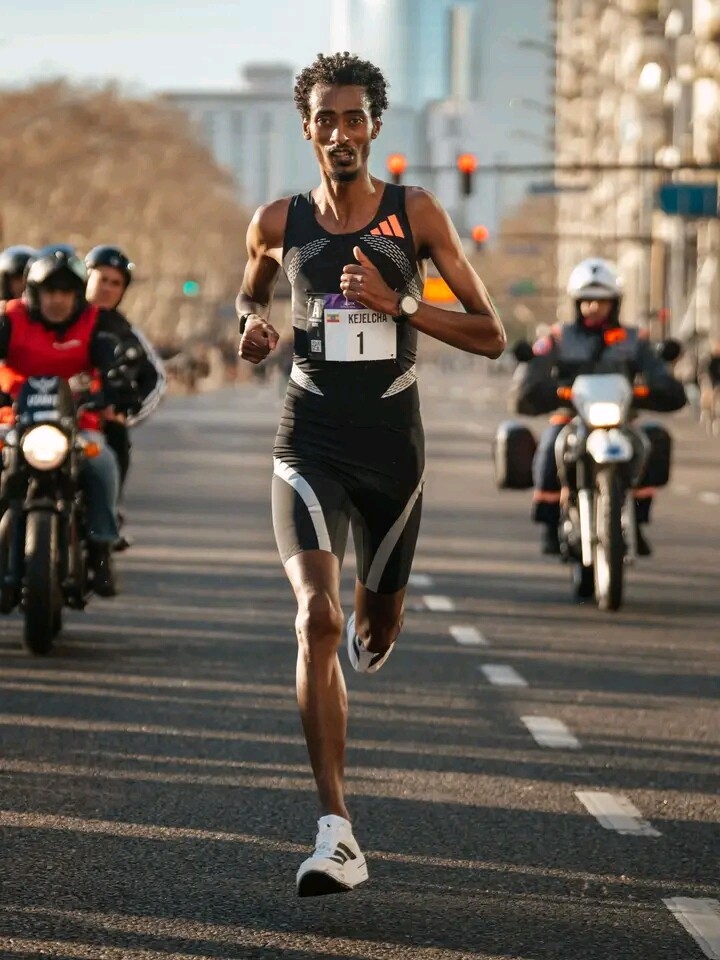
His 1:59:30 came in a conventional elite marathon race, and the historic morning became even more extraordinary as Ethiopia's Yomif Kejelcha finished in 1:59:41, while Uganda's Jacob Kiplimo clocked 2:00:28. In one astonishing race, three athletes went faster than the previous world-record standard.
Then came Monaco.
On July 10, Emmanuel Wanyonyi stepped into completely unfamiliar territory when he lined up for his first-ever 1000m race. What followed was nothing short of spectacular. The Kenyan middle-distance star stormed to 2:11.83, smashing a world record that had belonged to Noah Ngeny since 1999.
The previous mark had stood for 27 years, having been set four years before Wanyonyi was even born. Yet on his debut over the distance, Wanyonyi made history look effortless, while Britain's Jake Wightman also produced a superb performance to move into fifth place on the all-time list.
Just eight days later, London delivered another historic moment.
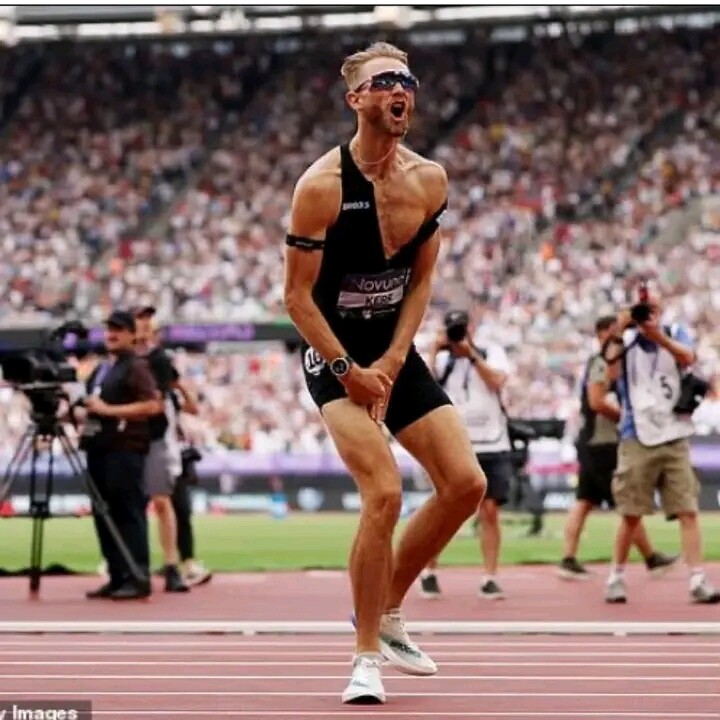
Josh Kerr had spoken openly about his ambitious mission, calling it “Project 222.” On the track, however, ambition turned into reality. The British star produced a stunning 3:42.66 for the mile, finally surpassing Hicham El Guerrouj's legendary 3:43.13 world record.
For decades, El Guerrouj's mark had stood as one of athletics' most iconic standards—a performance that appeared almost immune to the passing of time. Kerr changed that, producing a run that instantly secured its place among the greatest mile performances ever witnessed.
And then, in Buenos Aires on August 23, Yomif Kejelcha returned to the centre of the distance-running world.
Having already played a major role in London's historic marathon, the Ethiopian produced another extraordinary performance, this time over the half marathon. Kejelcha clocked 56:51, becoming the first man in history to break 57 minutes for the distance under valid record conditions.
What made the performance even more remarkable was the manner in which it unfolded. Kejelcha was running alone from around the 7km mark, with no rival beside him and no dramatic sprint finish required. He simply continued driving forward, producing one of the most dominant record-breaking performances ever seen on the roads.
Four historic records.
Four months.
A marathon barrier that had long been considered impossible in official competition. A 1000m record that had survived for 27 years. A mile record that had belonged to one of the greatest middle-distance runners in history. And a half-marathon performance that carried the event into completely new territory.
Distance running is living through a year unlike almost anything the sport has experienced before.
The most remarkable part?
2026 is not over yet.
With four months still remaining, the athletes of this extraordinary era may not be finished rewriting history.
by Erick Cheruiyot for My Best Runs.
Login to leave a comment
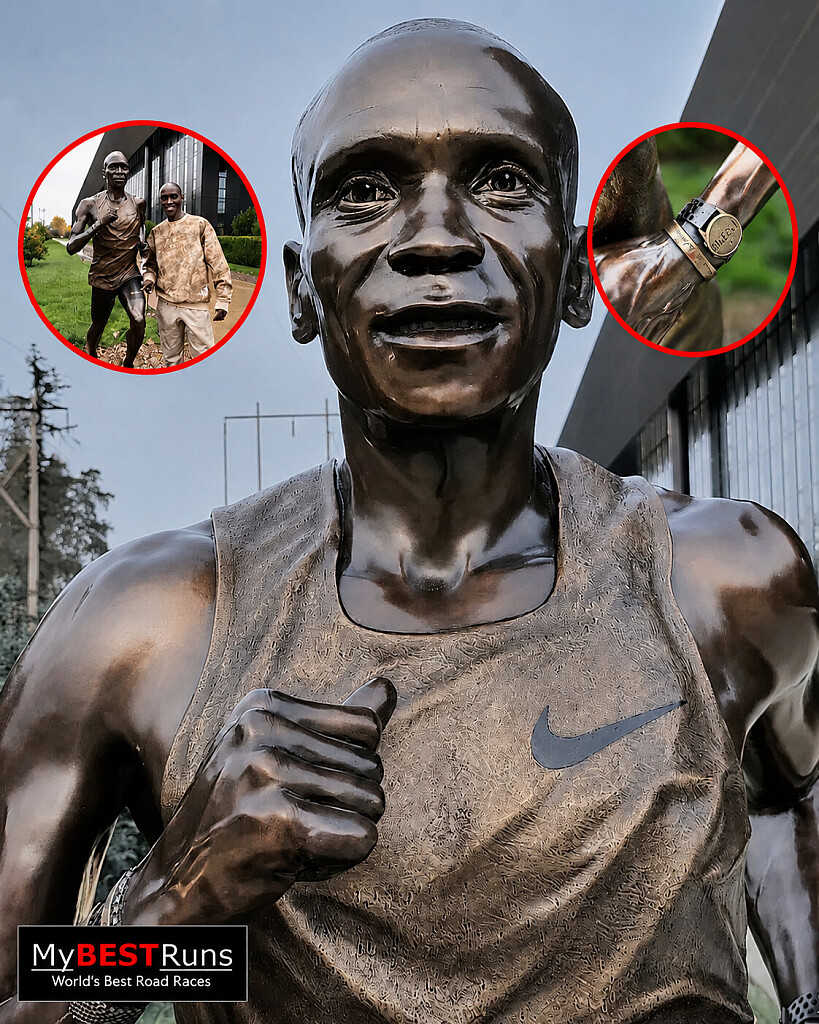
The Statue That Predicted History: How Kipchoge’s ‘No Human Is Limited’ Became Reality
Inside Nike’s World Headquarters in Beaverton, Oregon, a bronze figure stands frozen in motion.
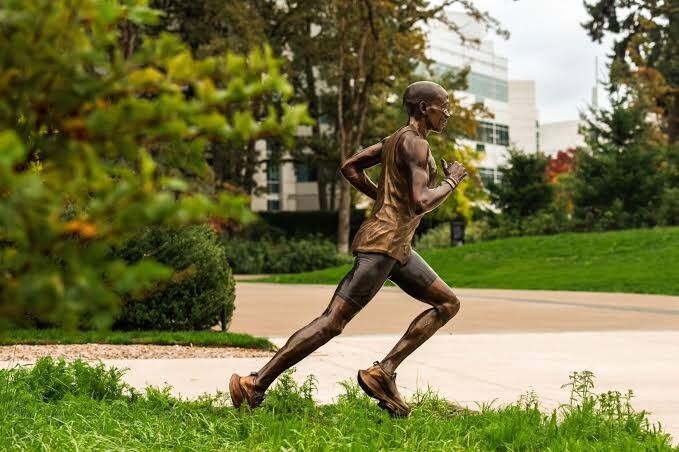
It is Eliud Kipchoge — captured in his unmistakable running posture, every detail carefully sculpted to resemble the Kenyan marathon legend at full stride. But this is more than a statue. It is a permanent reminder of a barrier that once seemed beyond human reach.
Created by Oregon artist Alison Caswell and commissioned by Nike, the life-size bronze sculpture was unveiled in October 2023 as part of the company’s celebration of its 20-year partnership with Kipchoge. Nike described the statue as a tribute to his signature gait and unique running style.
Look closely, however, and the sculpture tells an even deeper story.
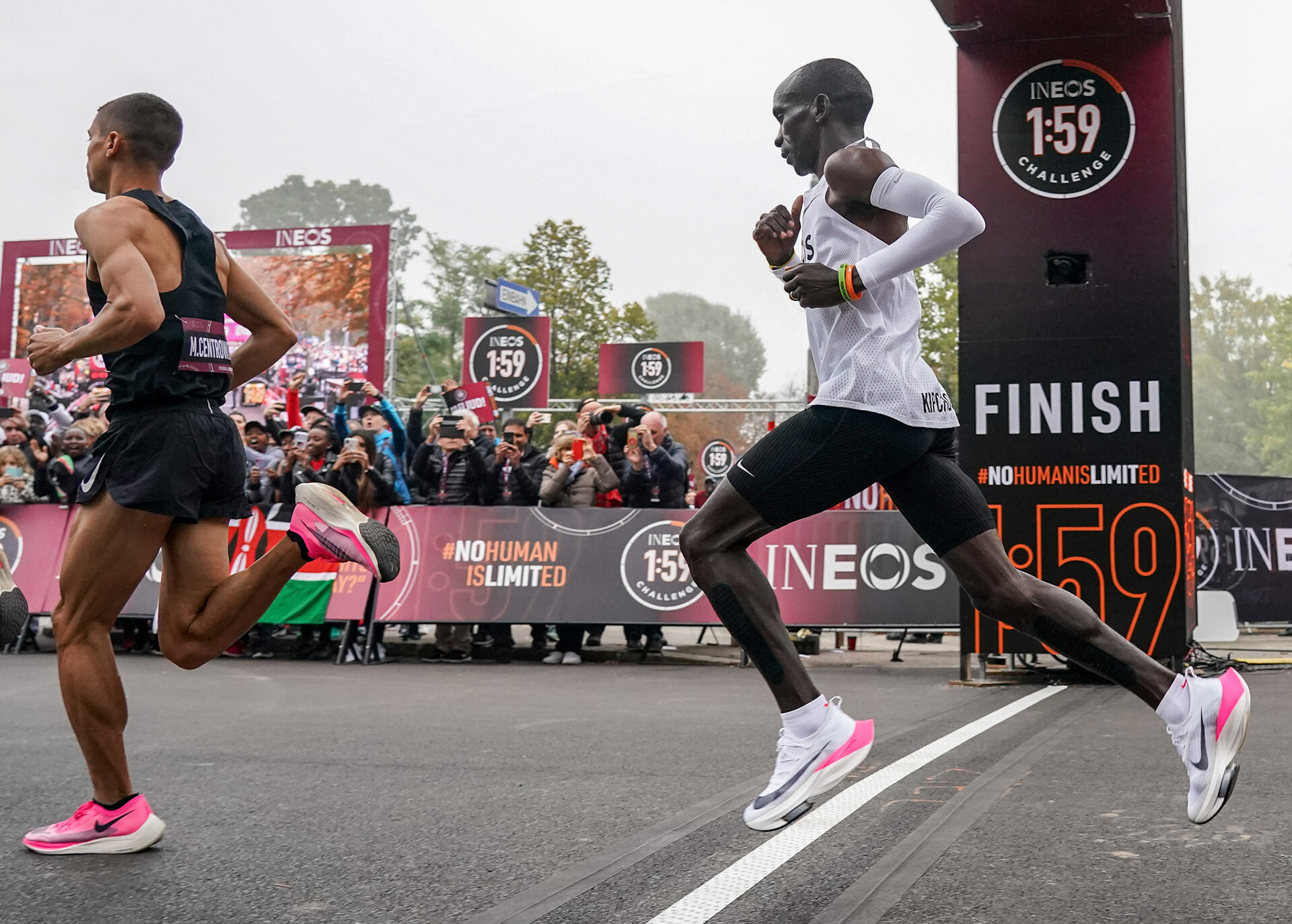
The watch on Kipchoge’s wrist displays 1:59:40, recalling the extraordinary morning of October 12, 2019, when he became the first person to run the marathon distance in under two hours during the INEOS 1:59 Challenge in Vienna.
His official recorded time was 1:59:40.2.
The achievement came under specially controlled conditions, with 41 pacemakers rotating in formations around him and extensive logistical support designed specifically for the attempt. Because it was not a standard record-eligible marathon, the performance was not recognized as an official world record. But its significance went far beyond the record books.
On the statue's left wrist is another detail that carries perhaps even greater meaning.
The wristband bears Kipchoge's famous philosophy:
“No human is limited.”
Those four words became synonymous with his pursuit of the impossible. In Vienna, they were no longer simply a slogan. Kipchoge had demonstrated that a boundary which had appeared almost untouchable could, under the right circumstances, be broken.
Four years later, the bronze figure remained in place at Nike's headquarters — but the marathon world had changed dramatically.
In October 2023, Kelvin Kiptum lowered the official men's marathon world record to 2:00:35 in Chicago, bringing the sport closer than ever to the barrier Kipchoge had already conquered unofficially in Vienna.
Then came April 26, 2026.
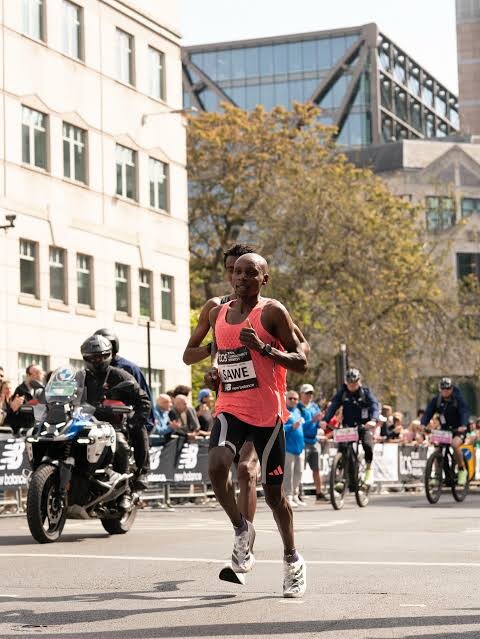
On the streets of London, Kenya's Sabastian Sawe entered territory that had previously belonged only to Kipchoge's extraordinary exhibition achievement.
Sawe won the London Marathon in 1:59:30, becoming the first man to officially complete a record-eligible marathon in under two hours. He also erased Kiptum's world record by 65 seconds. World Athletics subsequently ratified the performance as the official men's marathon world record.
And remarkably, Sawe did it in an ordinary competitive marathon — not on a specially designed course, not with rotating pacemakers, and not under the unique conditions of the 2019 INEOS challenge.
The symbolism is difficult to miss.
When Nike unveiled Kipchoge's statue in 2023, the 1:59:40 engraved on its wrist represented a moment when humanity had first stepped beyond the two-hour marathon barrier.
Today, that number represents something different.
It is no longer the fastest anyone has ever run 42.195 kilometres.
Instead, it has become part of the history that led to something even greater: the first officially recognized sub-two-hour marathon.
Kipchoge opened the door in Vienna.
Kiptum pushed the official world record closer.
And Sawe eventually walked — or rather, ran — through the door.
The bronze statue in Beaverton has not moved. Its watch still points to 1:59:40, and its wristband still carries the words “No human is limited.”
But the meaning of those words has grown.
What once looked like a statement of belief now reads like a prediction.
The statue was built to celebrate what Kipchoge had already achieved.
History has since given it another purpose: to remind the world that yesterday's impossible can become tomorrow's starting point.
by Erick Cheruiyot for My Best Runs.
Login to leave a comment

Sabastian Sawe Withdraws from Berlin Marathon After Injury, Ending Title Defence Hopes
Kenyan marathon sensation Sabastian Sawe has been forced to withdraw from the 2026 BMW Berlin Marathon because of injury, delivering a major blow to one of the most eagerly anticipated races of the year.
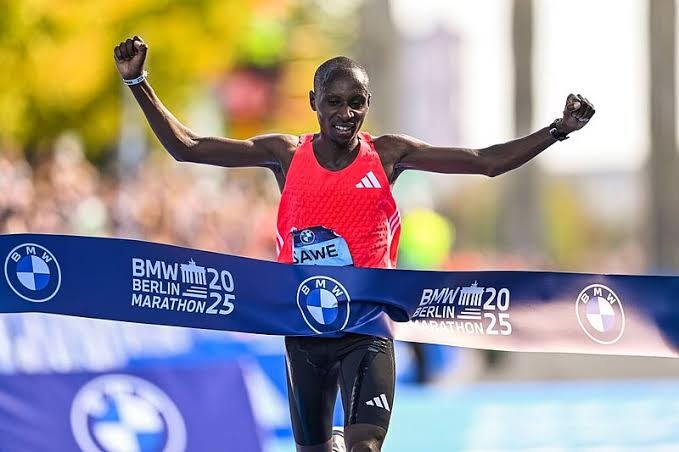
The 31-year-old Sawe, the reigning Berlin Marathon champion and marathon world-record holder, was scheduled to return to the German capital on September 27 with hopes of defending the title he won in 2025. However, injury has now ruled him out, bringing an abrupt end to his highly anticipated appearance.
The Berlin Marathon organisers officially confirmed Sawe’s withdrawal through their social media channels, expressing their disappointment at the Kenyan star’s absence and wishing him a full and speedy recovery.
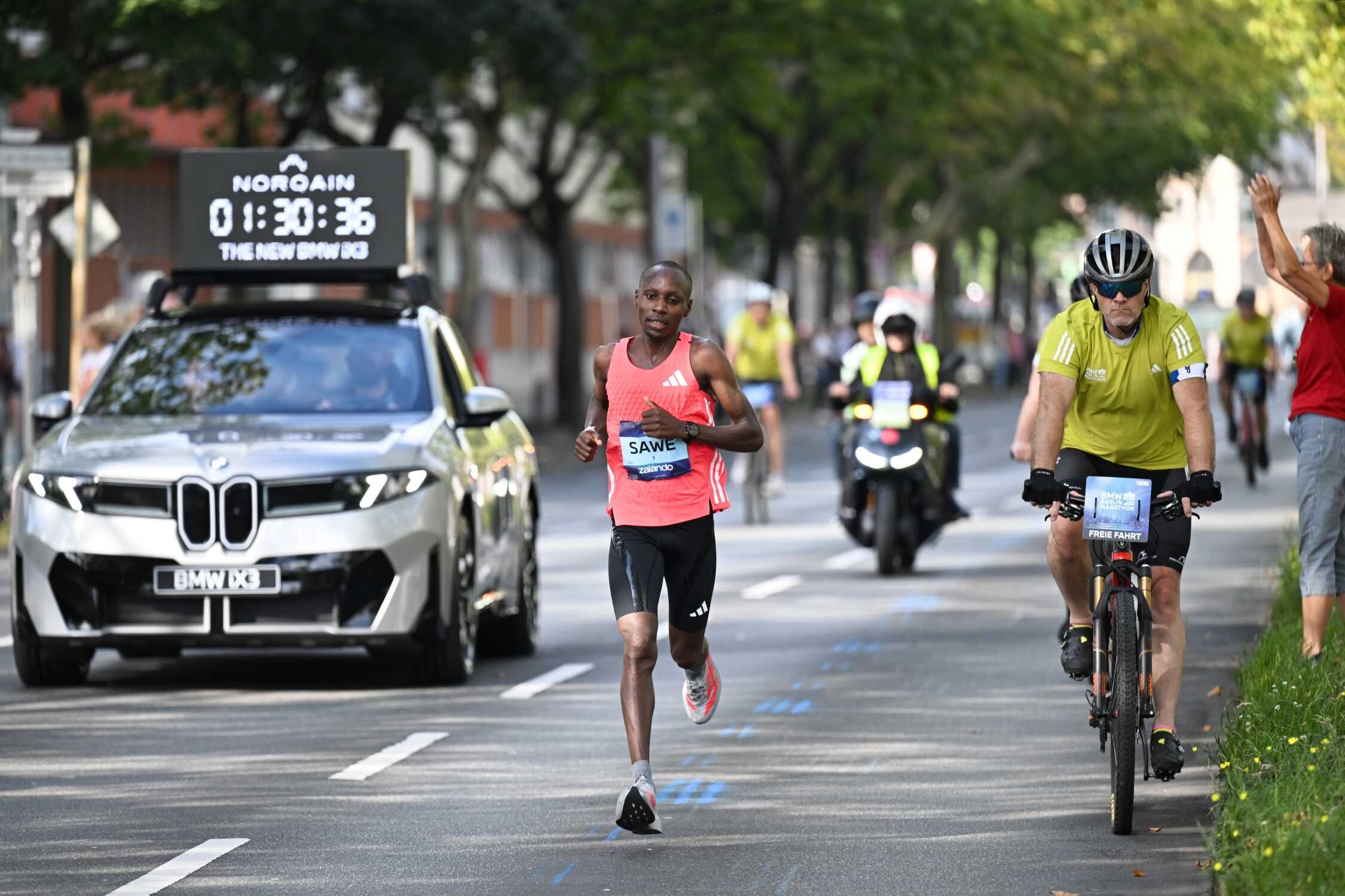
Sawe’s withdrawal is particularly significant because the Berlin Marathon was expected to mark his first official marathon appearance since his historic triumph in London earlier this year. The Kenyan made history at the London Marathon in April by becoming the first man to officially break the two-hour barrier in a marathon, stopping the clock at an astonishing 1:59:30.
That extraordinary performance elevated Sawe to another level in the sport and made his planned return to Berlin even more eagerly anticipated. Having already conquered the German capital in 2025, he was expected to arrive as both the defending champion and the man at the centre of the marathon world’s attention.
Last year, Sawe produced a superb performance to claim the Berlin Marathon title in 2:02:16, establishing himself as one of the dominant figures on one of the fastest marathon courses in the world. He had hoped to build on that victory this year, but his injury has forced him to abandon those plans.
Sawe expressed his deep disappointment at the withdrawal, revealing that he was leaving the race with a “heavy heart” after hoping to achieve something special on the streets of Berlin. His words reflect just how much the opportunity meant to him as he looked forward to returning to the scene of his previous triumph.
His absence will be a significant blow to the 2026 Berlin Marathon, removing one of the biggest stars from an elite field expected to deliver another memorable race. Sawe’s remarkable speed, endurance and record-breaking credentials had made him one of the main attractions of the event.
For now, the marathon king’s priority will be a full recovery. The athletics world will hope to see the Kenyan star back on the starting line soon, healthy, stronger and ready to add another chapter to an already extraordinary career.
Berlin will have to wait for its champion. But when Sawe returns, the marathon world will be watching.
by Erick Cheruiyot for My Best Runs.
Login to leave a comment

BMW Berlin Marathon
The story of the BERLIN-MARATHON is a story of the development of road running. When the first BERLIN-MARATHON was started on 13th October 1974 on a minor road next to the stadium of the organisers‘ club SC Charlottenburg Berlin 286 athletes had entered. The first winners were runners from Berlin: Günter Hallas (2:44:53), who still runs the BERLIN-MARATHON today, and...
more...
Geoffrey Kamworor Eyes New York Hat-Trick as Kenyan Star Chases Another Major Triumph
Two-time New York City Marathon champion Geoffrey Kamworor is set for another assault on the Big Apple, with the Kenyan distance-running star targeting a historic third victory when the Abbott World Marathon Majors race returns on November 1.
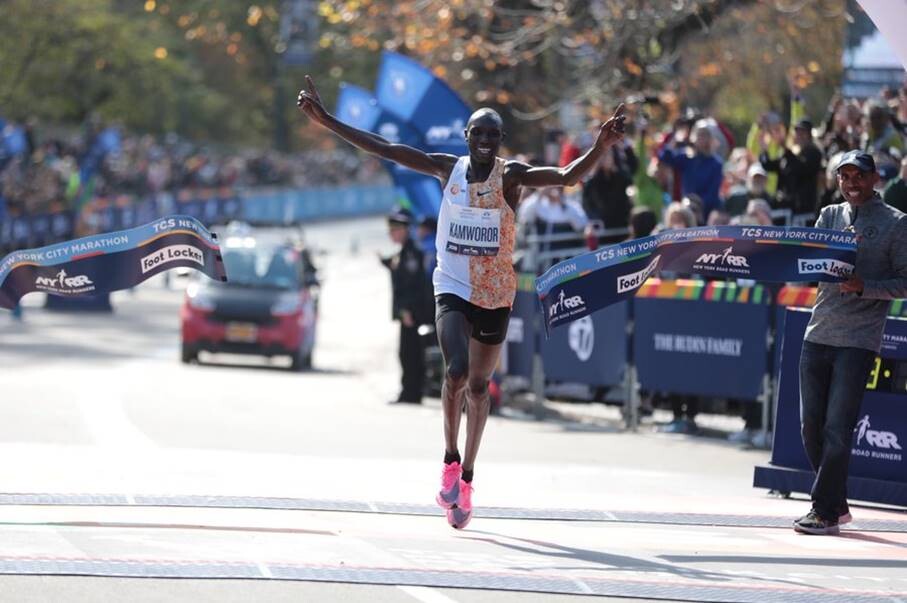
For Kamworor, New York represents much more than another marathon. It is a course where he has already enjoyed some of the defining moments of his illustrious career, and where he will now seek to add another prestigious title to a remarkable collection of achievements.
The 33-year-old has developed a special relationship with the New York course since making his debut there in 2015. On that occasion, he finished runner-up in 2:10:48 behind compatriot Stanley Biwott, who won in 2:10:34.
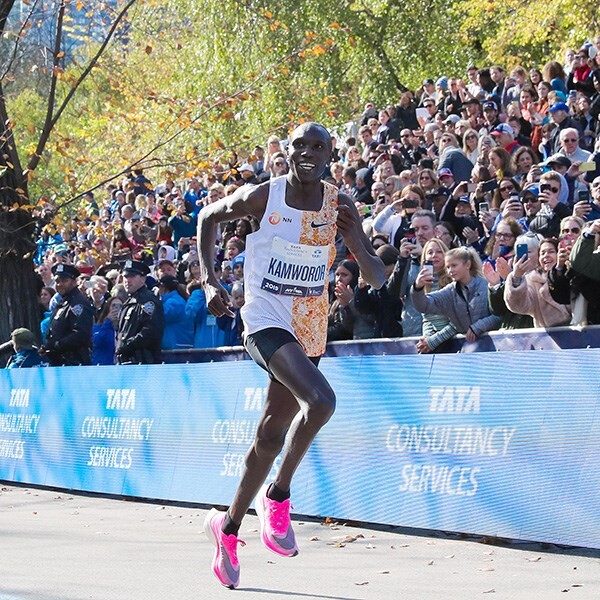
Two years later, Kamworor went one step further.
In 2017, he produced a composed performance to claim his first New York Marathon crown, crossing the finish line in 2:10:53. He held off fellow Kenyan and former world record-holder Wilson Kipsang, who finished just three seconds behind in 2:10:56, while Ethiopia's Lelisa Desisa took third in 2:11:32.

Kamworor returned the following year hoping to defend his title but had to settle for third place. Desisa triumphed in 2:05:59, ahead of Shura Kitata in 2:06:01, while Kamworor clocked 2:06:26.
But the Kenyan refused to stay away from the top for long.
In 2019, he reclaimed the New York crown in emphatic fashion, winning in 2:08:13. Albert Korir followed in second in 2:08:36, with Ethiopia's Girma Bekele completing the podium in 2:08:38.
Those two victories remain Kamworor's only Abbott World Marathon Majors titles, making New York a particularly significant venue in his career.
His latest appearance in the race, however, ended without another podium finish. Returning in 2024, Kamworor placed fifth in 2:08:50 as the Netherlands' Abdi Nageeye won in 2:07:39. Kenya's Evans Chebet was second in 2:07:45, while Albert Korir took third in 2:08:00.
Now, Kamworor is eager to return to the city where he has already tasted victory twice.
“I am very excited to be going back to New York,” Kamworor said, expressing his anticipation ahead of another demanding battle through the streets of the world's most famous city.
For the Kenyan star, the race offers a unique combination of sporting pressure and an atmosphere unlike any other.
“It's always an incredible experience to run the biggest marathon in the world. I'm really looking forward to feeling the energy of the crowd again,” he added.
Kamworor's challenge will be to arrive in New York at his best after a mixed campaign in 2026.
He began the year in spectacular fashion, winning the Ras Al Khaimah Half Marathon on February 14. The Kenyan clocked an impressive 58:14, finishing ahead of Bahrain's Birhanu Balew, who ran 58:23, and compatriot Gideon Rono, who crossed the line in 58:38.
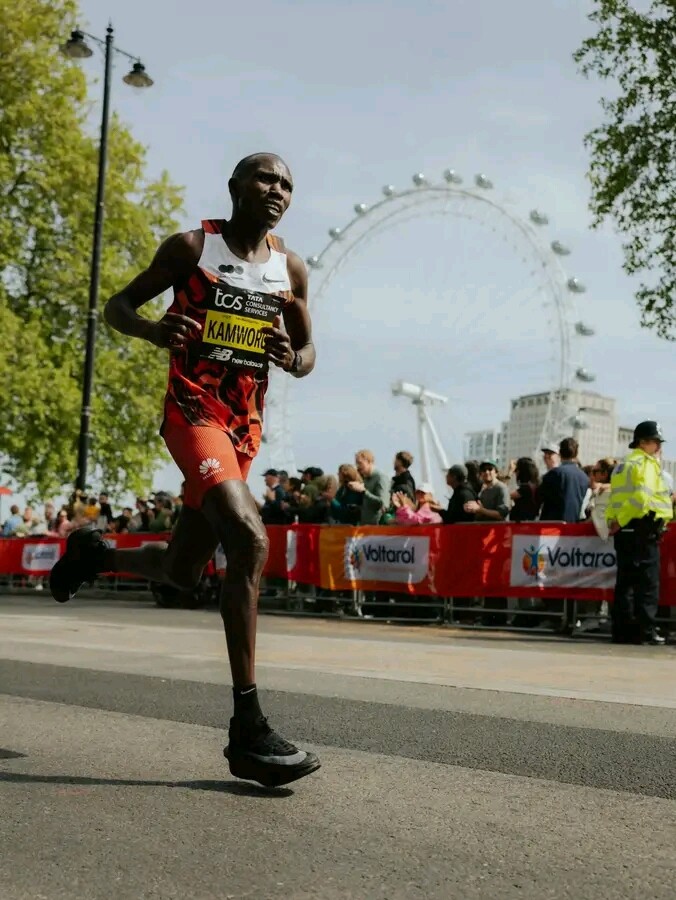
His London Marathon campaign on April 26 proved considerably tougher. Kamworor finished eighth in 2:05:38 in a historic race dominated by Sebastian Sawe, who produced a sensational 1:59:30 to become the first man to break the two-hour barrier in a marathon. Ethiopia's Yomif Kejelcha was second in 1:59:41, while Uganda's Jacob Kiplimo finished third in 2:00:28.
Kamworor will therefore arrive in New York with both experience and motivation on his side. He knows exactly what the course demands, having already navigated its hills, turns and relentless closing stages on multiple occasions.
Beyond the marathon, his career is decorated with major international honours across several disciplines.
Kamworor is a three-time world half marathon champion, winning his first title in Copenhagen in 2014 before successfully defending his crown in Cardiff in 2016 and completing his remarkable hat-trick in Valencia in 2018.
He has also established himself as one of Kenya's finest cross-country runners. He won the world junior cross-country title in Punta Umbria in 2011 before becoming a senior world champion in Guiyang in 2015 and Kampala in 2017. He added a bronze medal at the 2019 World Cross Country Championships in Aarhus.
That versatility has long been one of Kamworor's greatest strengths. From cross country to the half marathon and now the marathon, he has repeatedly demonstrated the endurance, tactical intelligence and competitive resilience required to succeed at the highest level.
Yet New York remains unfinished business.
With two victories already secured and another opportunity waiting on November 1, Kamworor has a chance to strengthen his legacy on one of the sport's most iconic stages.
A third triumph would not only give him a coveted New York hat-trick but would further cement his status as one of Kenya's most accomplished distance runners of his generation.
The Big Apple has already given Kamworor some of the proudest moments of his career. Now, the Kenyan star is returning with one clear ambition — to conquer New York once again.
by Erick Cheruiyot for My Best Runs.
Login to leave a comment

TCS New York City Marathon
The first New York City Marathon, organized in 1970 by Fred Lebow and Vince Chiappetta, was held entirely in Central Park. Of 127 entrants, only 55 men finished; the sole female entrant dropped out due to illness. Winners were given inexpensive wristwatches and recycled baseball and bowling trophies. The entry fee was $1 and the total event budget...
more...
Kejelcha and Sawe: Two Men Driving Road Running Into a New Era
Men's road running is moving into extraordinary territory, and two athletes are increasingly at the heart of its breathtaking evolution: Yomif Kejelcha of Ethiopia and Sabastian Sawe of Kenya.
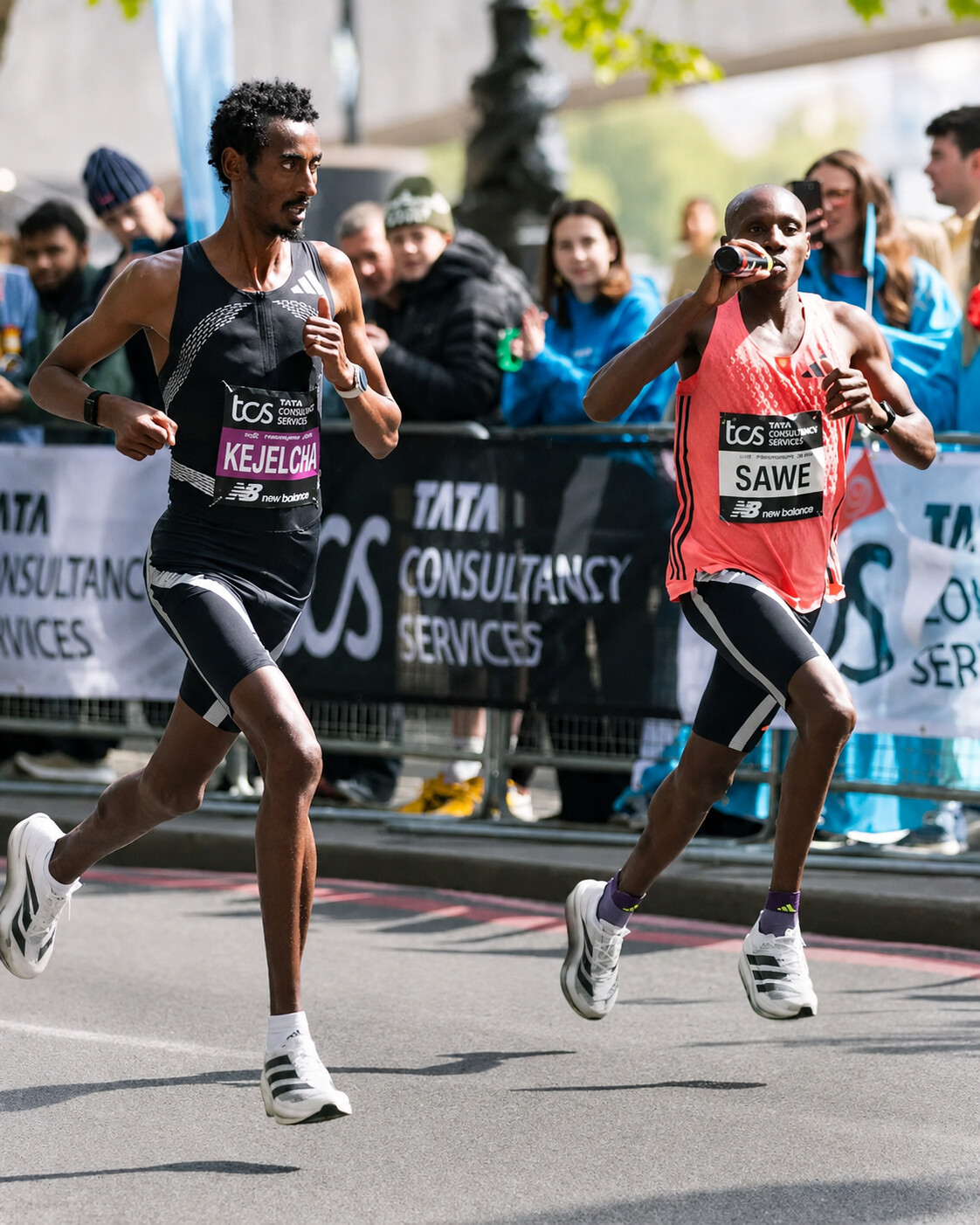
The pair represent the remarkable depth of modern East African distance running, but they are also doing something even more significant: pushing the boundaries of marathon and half-marathon performance to levels that once seemed almost unimaginable. Through their exceptional speed, endurance and ability to perform at the highest level, Kejelcha and Sawe are helping to redefine what is possible on the roads.
Sawe has established himself as one of the most formidable marathon runners in the world. His astonishing 1:59:30 marathon performance at TCS London Marathon on April 26, 2026, marked as a world record, African record and Kenyan record, demonstrated the extraordinary level the marathon has now reached. It also underlined his position at the very top of the men's marathon world rankings.
Kejelcha has been equally sensational, although his journey has highlighted a different kind of versatility. The Ethiopian, whose background includes world-class performances on the track and across shorter road distances, ran 1:59:41 for the marathon debut also at the TCS London Marathon on April 26, 2026, a performance marked as a national record. Just four months later, he delivered another stunning display by clocking 56:51 for the half marathon at the Argentina's capital, Buenos Aires on August 23, 2026, with the performance marked as a pending world record, African record and Ethiopian national record.
That combination of performances illustrates just how exceptional this new generation has become. Kejelcha's ability to threaten the absolute limits over the half marathon while also producing a sub-two-hour marathon performance speaks to his extraordinary range. Sawe, meanwhile, has continued to establish himself as a dominant force over the classic 42.195km distance, combining remarkable efficiency with the strength and speed required to compete at the very highest level.

The two stars are now preparing to take their talents to different stages of the road-running calendar. Kejelcha's next focus is the Valencia Marathon on December 6, where he will once again turn his attention to the marathon distance and look to build on his remarkable breakthrough over 42.195km. Sawe, meanwhile, is set to race the BMW Berlin Marathon on September 27, giving the Kenyan another major opportunity to showcase his extraordinary marathon strength on one of the world's fastest and most prestigious courses.
Those upcoming races add another fascinating dimension to their respective journeys. While Kejelcha heads to Valencia carrying exceptional speed and versatility into another marathon challenge, Sawe will arrive in Berlin with his sights firmly fixed on maintaining his dominance at the highest level of the sport.
What makes their rise particularly exciting is the wider message it sends to athletics. The marathon is no longer progressing only through small margins. The standards at the top are being pushed relentlessly forward, and performances that once appeared impossible are becoming increasingly realistic.
The official sub-two-hour marathon remains one of athletics' ultimate frontiers. Achieving it under standard race conditions would represent one of the greatest endurance breakthroughs in sporting history. Yet with athletes such as Sawe already breaking the two-hour barrier and Kejelcha running only seconds above it while also producing unprecedented half-marathon speed, that frontier appears closer than ever.
Their careers are different, and their strengths are not identical. Sawe has rapidly become a dominant marathon specialist, while Kejelcha brings exceptional versatility from the track to the roads and across multiple distances. But together, they symbolize the relentless progression of men's road running.
Yomif Kejelcha and Sabastian Sawe are not merely among the fastest men of their generation. They are helping to drive the sport toward a future that once seemed unthinkable. With Valencia and Berlin now on their horizons, the next chapter of this remarkable road-running revolution is already waiting to be written.
by Erick Cheruiyot for My Best Runs.
Login to leave a comment
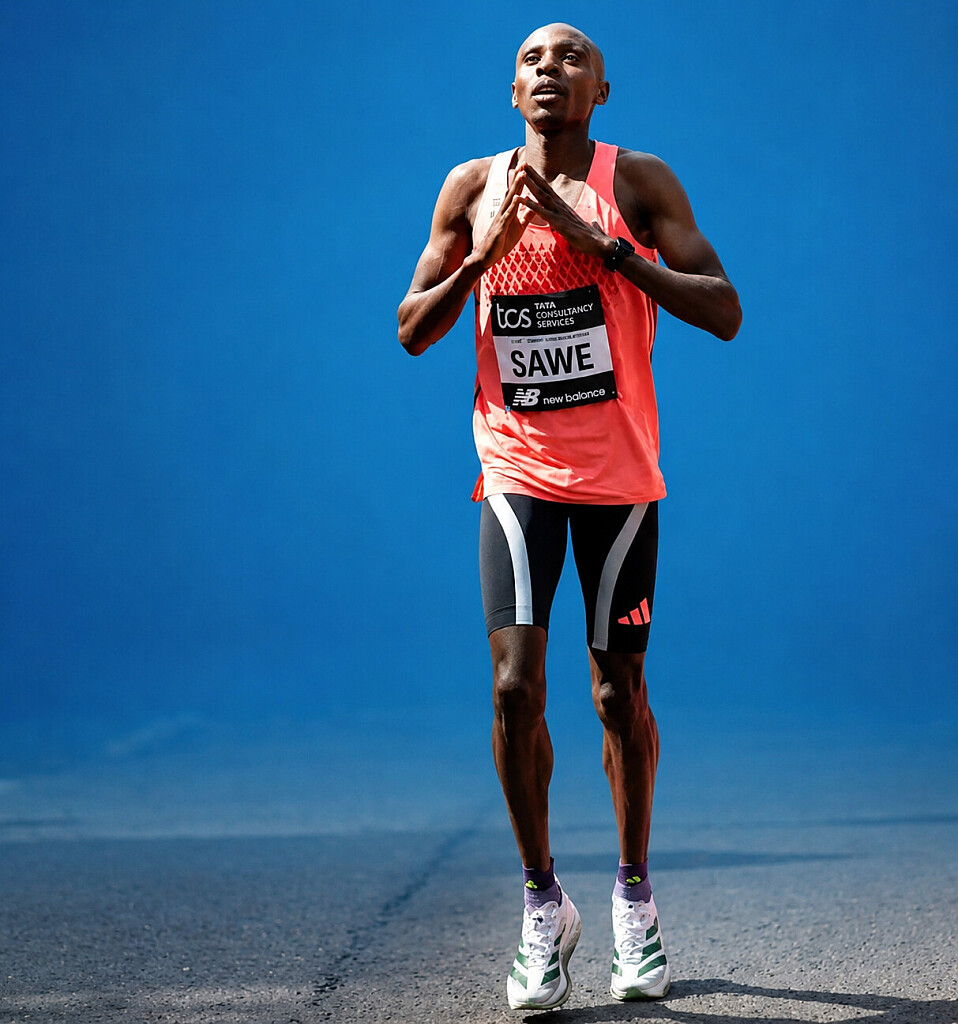
Sabastian Sawe Set for Another Historic Berlin Marathon as Elite Field Takes Shape
World record holder Sabastian Sawe is set to return to the BMW Berlin Marathon on September 27, where the Kenyan superstar will defend his title and attempt to add another remarkable chapter to his already extraordinary marathon career.
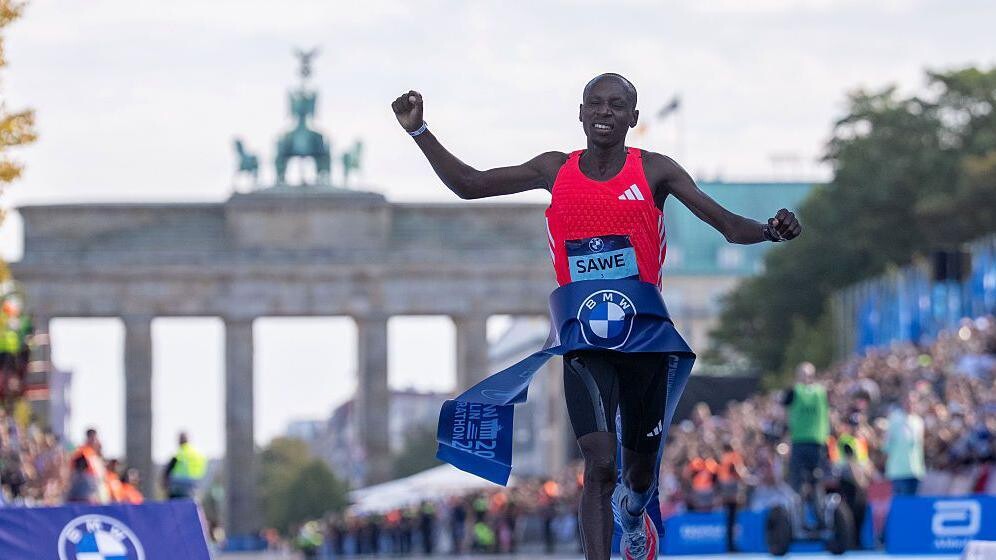
Sawe arrives in Berlin with unprecedented confidence after his sensational 1:59:30 performance in London, which made him the first athlete to officially break the two-hour barrier in the marathon. That landmark achievement has elevated expectations for his return to the German capital, where he will once again line up on one of the fastest marathon courses in the world.
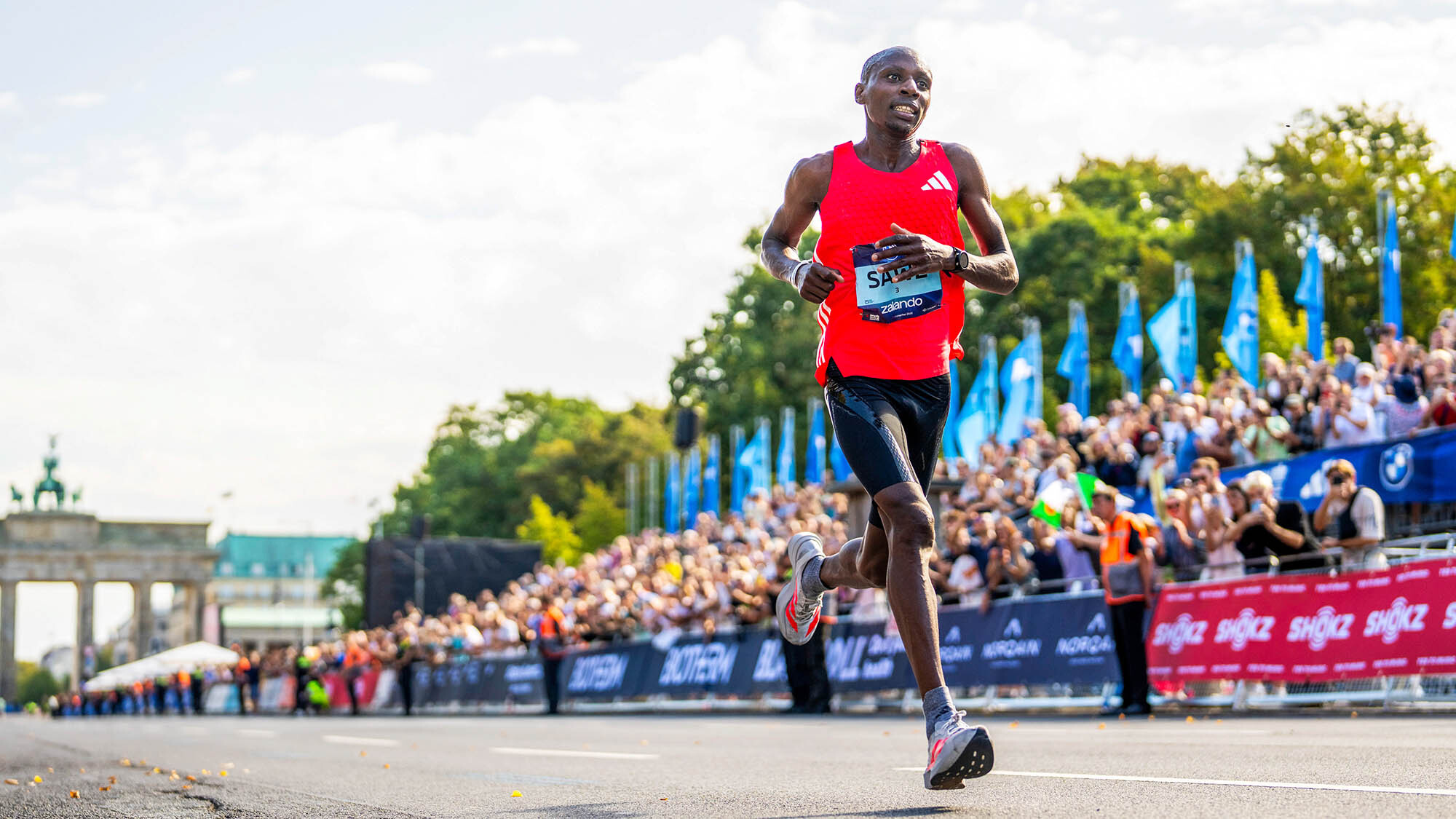
The Kenyan won the 2025 Berlin Marathon in 2:02:16 despite warm conditions, demonstrating his ability to produce a world-class performance even when circumstances are far from ideal. This time, he returns as the defending champion and world-record holder, with the famously flat Berlin course providing another opportunity to test the limits of what is possible over 42.195km.
Berlin has a remarkable history of producing record-breaking performances, and Sawe's presence immediately raises the possibility of another extraordinary race. The question now is whether the 31-year-old can go beyond his own 1:59:30 world record and take the marathon to an even higher level.
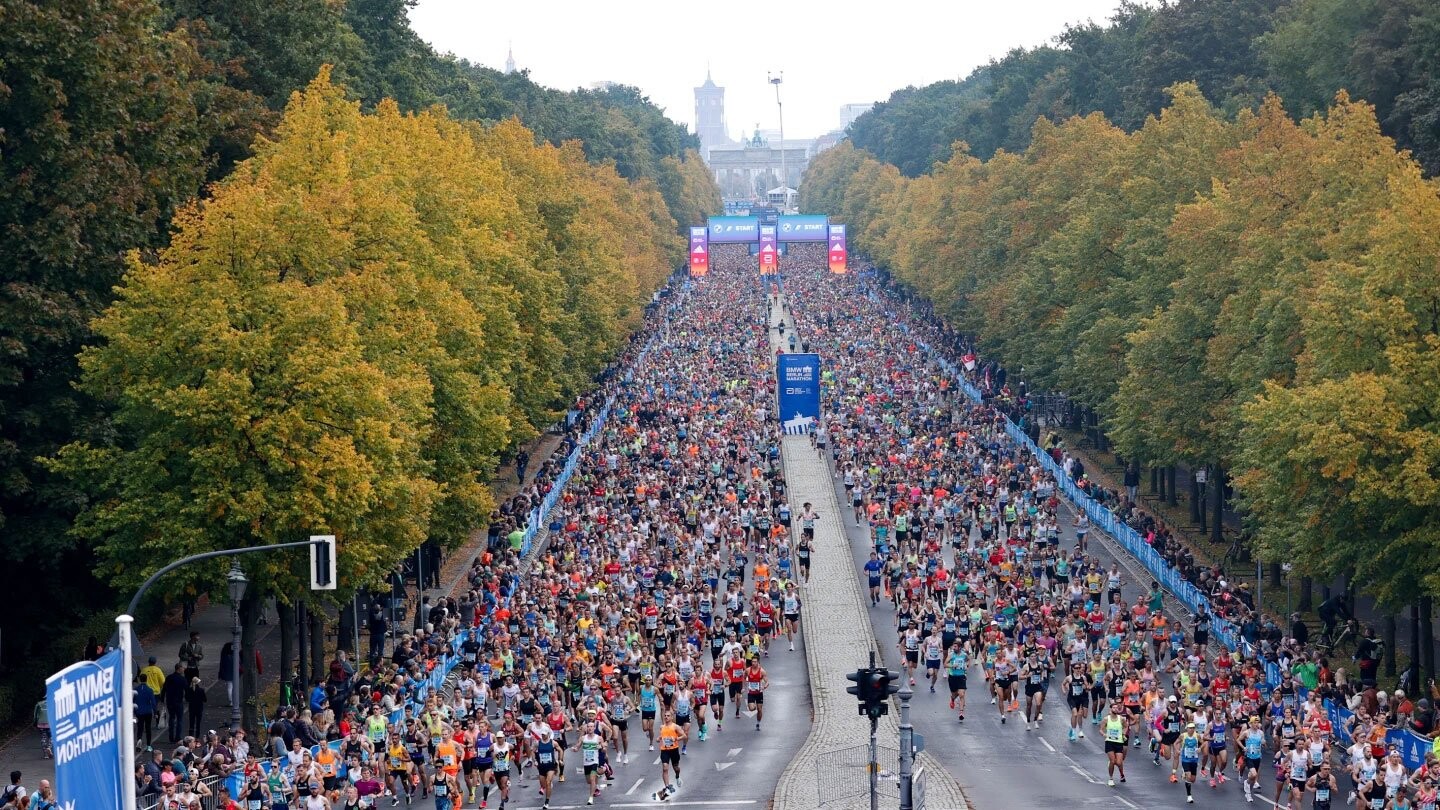
However, Sawe will face formidable opposition.
Tanzania’s Gabriel Geay has joined the elite field, bringing a personal best of 2:03:00 set in Valencia in 2022. The 29-year-old Tanzanian record holder established himself among the world’s leading marathoners with that performance and further underlined his credentials by finishing runner-up at the 2023 Boston Marathon.
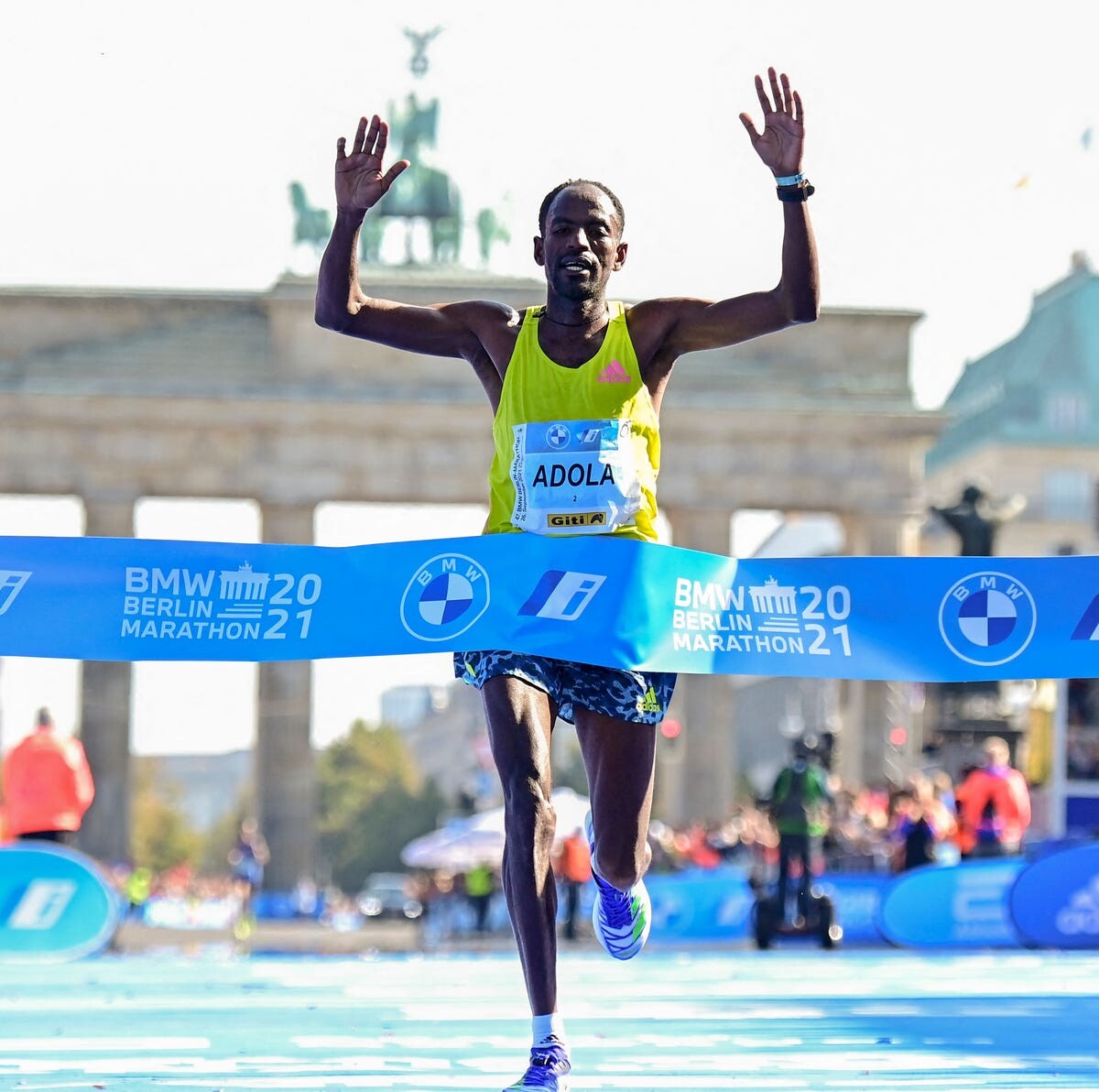
Ethiopia’s Guye Adola will also return to Berlin, the scene of some of the most memorable moments of his marathon career. In 2017, Adola stunned the athletics world on his marathon debut, pushing Eliud Kipchoge deep into the race before finishing second in a remarkable 2:03:46. Four years later, on September 26, 2021, Adola returned to Berlin and claimed victory in 2:05:45, adding another significant chapter to his association with the iconic German marathon. Now, after his recent return to top form, he will once again line up on the streets where he has already made history.
Now 35, Adola has endured injury setbacks in recent years, but his victory at the Rotterdam Marathon in 2:03:54 this spring proved that he remains a major force on the international marathon circuit.
The addition of Geay and Adola adds further quality to a field already packed with athletes capable of running at an extraordinary pace. With Sawe leading the charge, Berlin is shaping up to deliver another thrilling battle among some of the world's finest marathoners.
The depth of the field extends well beyond the leading contenders, with Ethiopia boasting an imposing group of marathoners. Getaneh Molla (2:03:34), Shura Kitata (2:03:59), Dejene Hailu (2:04:15), Selemon Barega (2:05:00), Taresa Tolosa (2:05:17), Tadu Abate (2:05:38), Asefa Boki (2:05:40) and Andamlak Belihu (2:06:40) will all bring proven credentials and the ambition to challenge for fast times in Berlin.
Japan, meanwhile, has assembled a particularly deep contingent, led by Kenya Sonota (2:05:59), Tsubasa Ichiyama (2:06:00), Kyoto Hirabayashi (2:06:14), Yuhei Urano (2:06:23), Hidekazu Hijikata (2:06:26), Yusuke Nishiyama (2:06:31), Naoki Koyama (2:06:33), Kazuya Nishiyama (2:06:45), Daisuke Uekado (2:06:54) and Shin Kimura (2:07:34). China’s Jie He (2:06:57) and Kenya’s Richard Yator (2:07:36) complete a remarkably deep field, setting the stage for a race where the battle for victory could be accompanied by a long list of outstanding personal performances.
For Sawe, though, the challenge goes beyond defending his Berlin crown. Having already broken the two-hour barrier, he now has an opportunity to chase an even more remarkable achievement on a course renowned for producing marathon history.
Can Sabastian Sawe lower his own 1:59:30 world record in Berlin on September 27?
The countdown is on, and if the conditions are right, the defending champion could once again have the marathon world watching every step.
by Erick Cheruiyot for My Best Runs.
Login to leave a comment
BMW Berlin Marathon
The story of the BERLIN-MARATHON is a story of the development of road running. When the first BERLIN-MARATHON was started on 13th October 1974 on a minor road next to the stadium of the organisers‘ club SC Charlottenburg Berlin 286 athletes had entered. The first winners were runners from Berlin: Günter Hallas (2:44:53), who still runs the BERLIN-MARATHON today, and...
more...
Josh Kerr’s Mile Mastery Could One Day Lead Him To The London Marathon
Josh Kerr has conquered one of athletics’ most historic distances. Yet, remarkably, the Scottish star is already dreaming about a challenge that sits more than 25 miles beyond the distance that has made him a global track sensation.
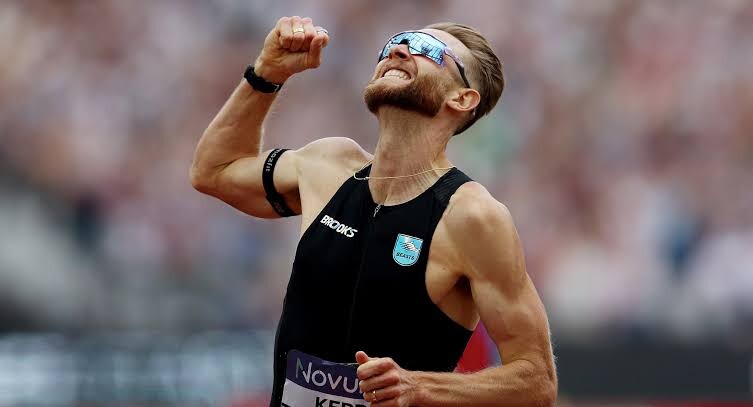
Kerr produced one of the defining performances of his career on July 18, 2026, at the London Stadium, storming to a sensational 3:42.66 in the Emsley Carr Mile to shatter Hicham El Guerrouj’s world record. The Moroccan’s 3:43.13 had stood untouched since 1999, but Kerr finally brought the 27-year-old mark down by 0.47 seconds.
The performance confirmed Kerr’s place among the greatest milers of his generation, but his ambitions extend well beyond the track.
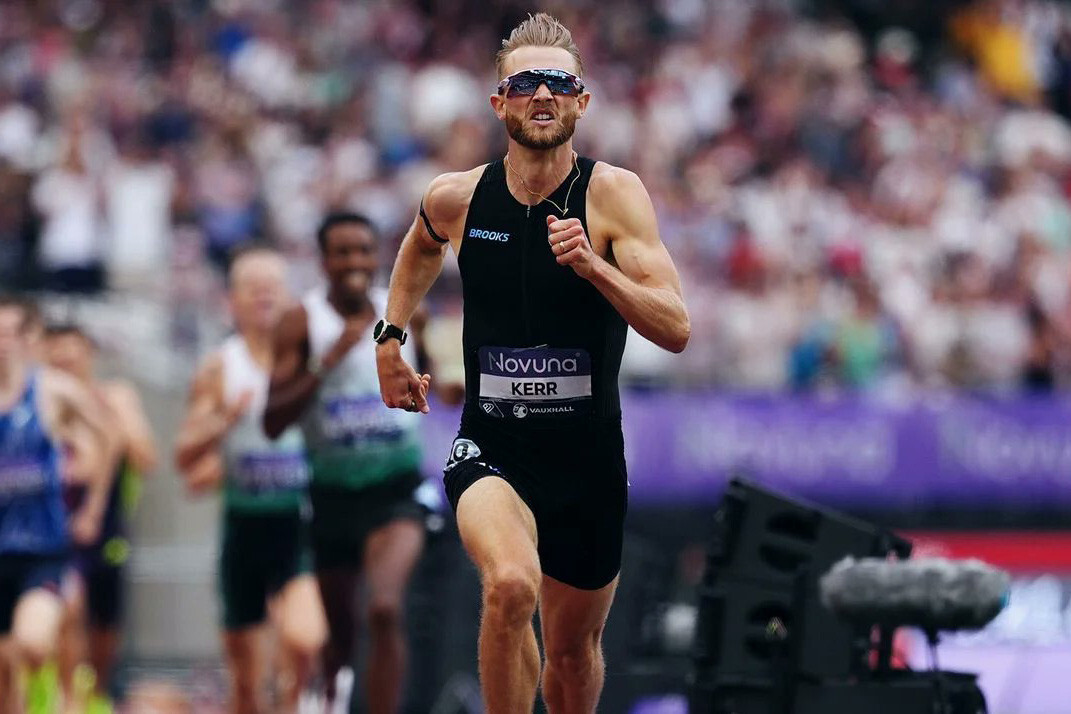
Speaking after his historic achievement, the 28-year-old revealed that the marathon is a distance he has become increasingly fascinated by, with the London Marathon occupying a particularly special place in his long-term imagination. For Kerr, the ultimate attraction would not necessarily be a world-class time, but the possibility of one day winning the race.
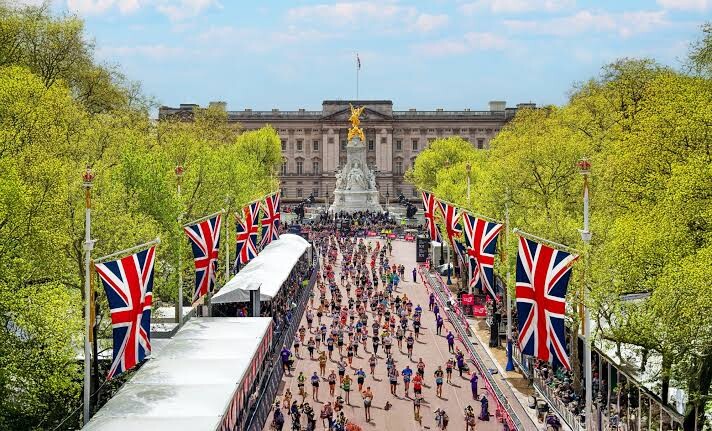
He remains realistic about how distant that ambition is. Kerr has made it clear that there is still important work to be completed on the track, with the Los Angeles 2028 Olympic Games among his major objectives. His marathon dream, therefore, belongs to the future rather than the immediate present.
That patience could prove crucial.
The transition from the mile to the marathon is one of the most demanding changes an elite distance runner can make. It requires far more than simply possessing exceptional aerobic fitness. The marathon places extraordinary demands on endurance, efficiency, energy management and the ability to maintain a high pace for more than two hours.
History, however, has shown that a world-class track runner can successfully make the leap when the timing is right.
Sifan Hassan provides perhaps the most spectacular modern example. After establishing herself as one of the most versatile distance runners in history, competing successfully from 1,500m through 10,000m, the Dutchwoman made her marathon debut at the 2023 London Marathon. She won in 2:18:33 after producing a remarkable finishing sprint, then went on to claim Olympic marathon gold the following year.
Her ability to change gears late in races became one of her greatest weapons. It is also an attribute Kerr knows particularly well.
Kerr has built his reputation around devastating finishing speed. Whether competing over 1,500m or the mile, his ability to accelerate when others are already approaching their physical limits has repeatedly separated him from the field. The question is whether that same weapon could eventually become a decisive advantage over the marathon distance.
Mo Farah's journey offers a more complicated lesson.
The British legend spent years dominating the 5,000m and 10,000m before turning his attention to the marathon. Despite possessing an extraordinary endurance base, Farah discovered that the marathon demanded an entirely different level of preparation. He finished eighth on his London Marathon debut in 2014 in 2:08:21 before eventually improving the British record to 2:06:22 in 2018.
Farah later explained that mastering the marathon took considerable time, underlining just how different the event is from even the longest Olympic track distances.
For Kerr, the physiological challenge would be even greater because his speciality is the mile.
The mile rewards an athlete who can combine enormous aerobic power with exceptional speed. The marathon, by contrast, demands the ability to operate efficiently for a prolonged period below maximum aerobic capacity. Running economy, lactate-threshold ability, endurance and the capacity to preserve energy deep into a race become increasingly important.
That transformation cannot be rushed.
And the marathon landscape Kerr would eventually enter is becoming more extraordinary by the year.
The 2026 London Marathon demonstrated just how far the event has evolved. Kenya’s Sabastian Sawe made history by becoming the first athlete to officially break the two-hour barrier in a competitive marathon, winning in 1:59:30. Ethiopia’s Yomif Kejelcha also finished inside two hours, while three men ultimately finished faster than the previous world record.
That is the standard waiting for Kerr if his distant ambition eventually becomes reality.
For now, however, there is no need to hurry. Kerr has already rewritten the mile record books, becoming the first man to break 3:43 and ending one of the longest-standing world records in modern athletics.
His next chapter is still firmly rooted on the track, where Olympic glory remains a major target. But somewhere beyond those ambitions lies a different challenge: 26.2 miles of London roads, a distance more than 25 miles longer than the event in which he currently reigns supreme.
It may sound improbable today, but Kerr is not dismissing the possibility.
“I promise I will try it.”
And if the day eventually comes when the world mile record-holder lines up on The Mall with the London Marathon title in his sights, it could become one of the most intriguing distance-running transitions the sport has ever witnessed.
by Erick Cheruiyot for My Best Runs.
Login to leave a comment
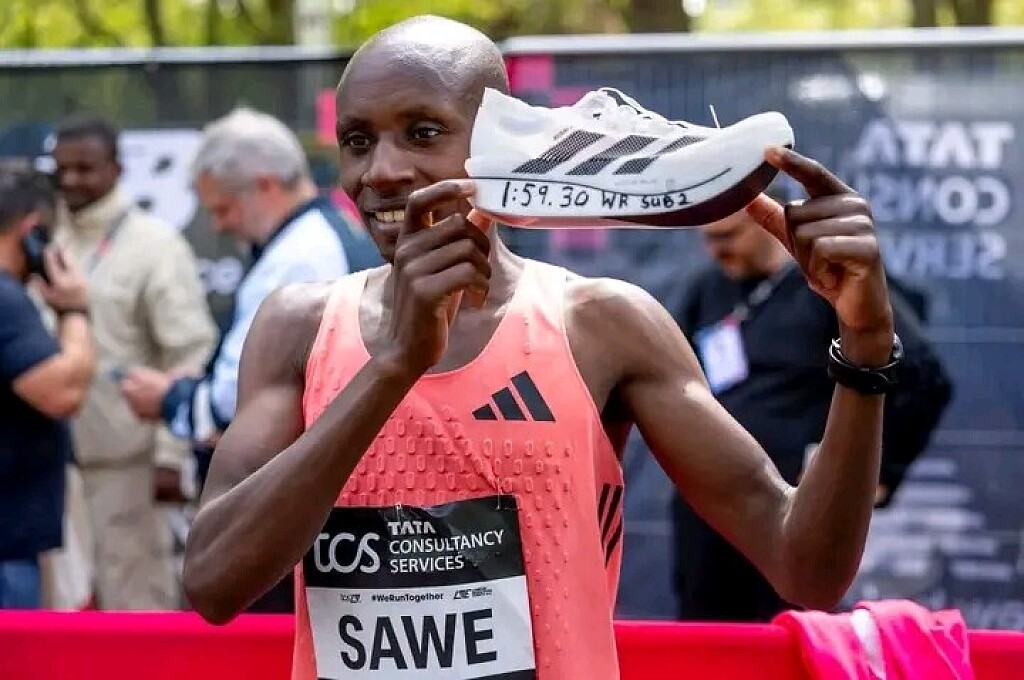
Ratified: Sabastian Sawe's Historic 1:59:30 Officially Enters the Record Books
There is no longer any debate. No asterisks. No waiting. What the world witnessed on the streets of London has now been permanently etched into athletics history.
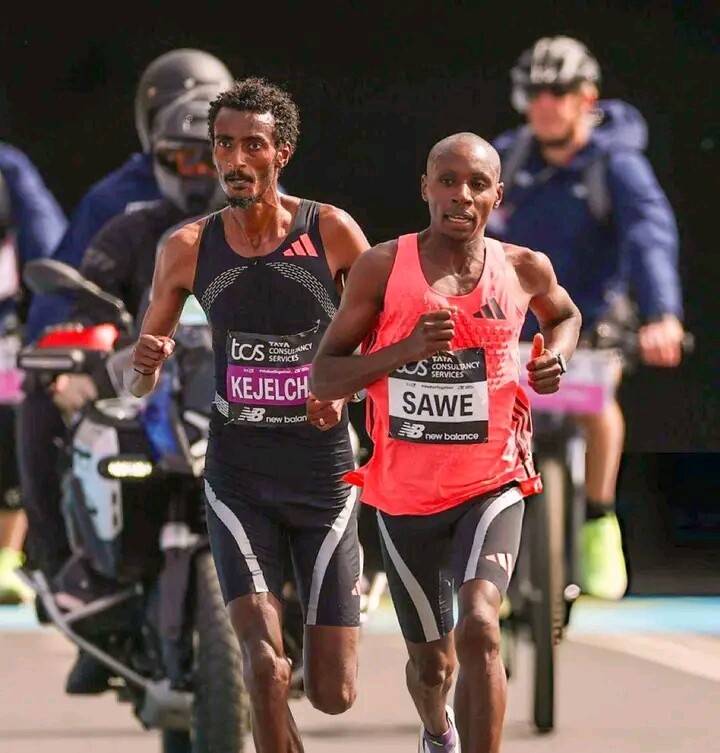
World Athletics has officially ratified Sabastian Sawe's astonishing 1:59:30 marathon, confirming it as the fastest marathon ever legally run and recognizing it as the first officially ratified sub-two-hour marathon in history.
For years, the two-hour barrier stood as the sport's ultimate frontier—a benchmark many believed would take decades to conquer under official race conditions. On that unforgettable day in London, Sawe rewrote those expectations with a performance that combined extraordinary endurance, tactical brilliance, and relentless pace from start to finish.
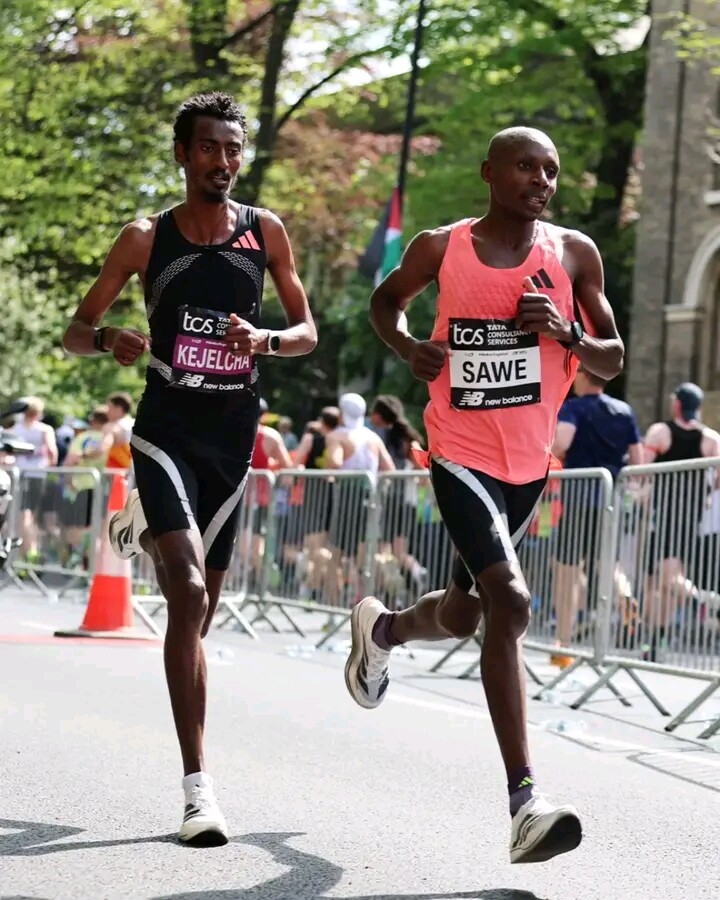
Now, the governing body of global athletics has sealed the achievement, elevating it from an unforgettable race-day spectacle to an official world record that will forever hold a place among the greatest milestones in sporting history.
The ratification is more than a confirmation of a time on the clock. It is recognition of a performance that has redefined what marathon runners can achieve under legal competition rules. Sawe's 1:59:30 not only lowered the world record but also shattered one of the last psychological barriers in distance running, proving that the impossible can become reality.
For Kenya, the moment carries even greater significance. The nation that has produced generations of marathon legends has once again reaffirmed its dominance on the global stage. From world champions to Olympic heroes, Kenya's rich distance-running legacy has gained another defining chapter—one that will be remembered for generations.
History was made on the streets of London. Today, it has been officially written into the record books.
Confirmed. Sealed. Ratified.
Sabastian Sawe's 1:59:30 is now the official marathon world record, and the first legally recognized sub-two-hour marathon in history—a landmark achievement that belongs to Kenya and to the sport forever.
by Erick Cheruiyot for My Best Runs.
Login to leave a comment
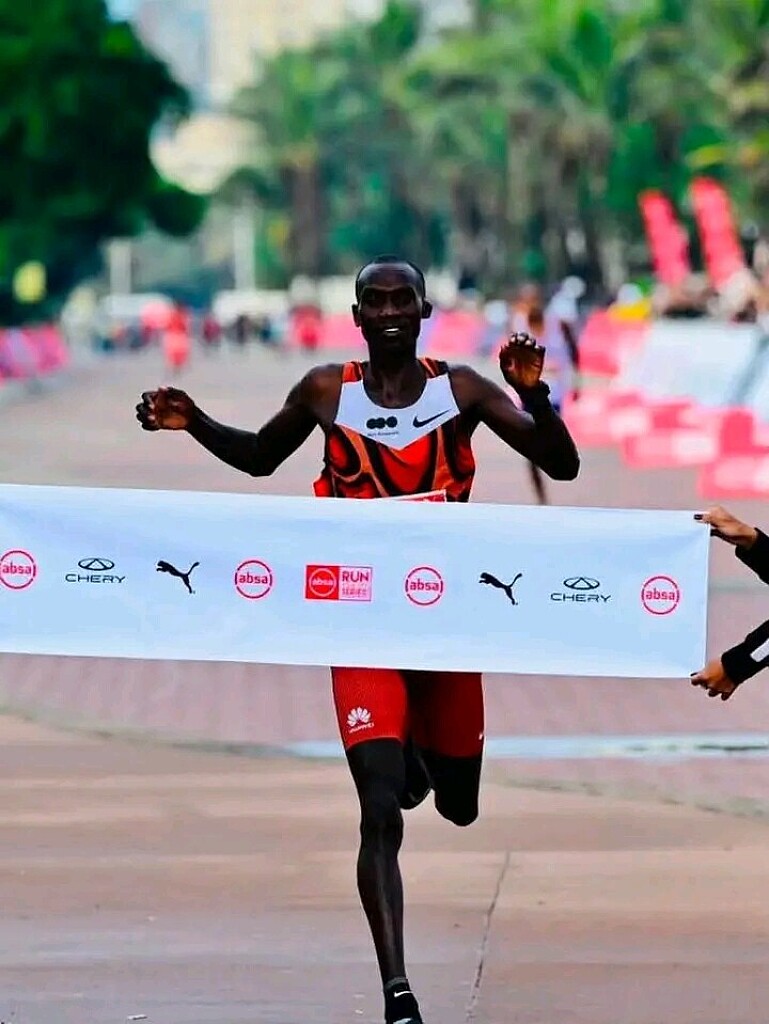
Joshua Cheptegei Rewrites Durban 10K History with Record-Breaking Triumph
Ugandan distance-running icon Joshua Cheptegei once again reminded the athletics world why he ranks among the greatest endurance athletes of his generation, producing a masterclass to win the 2026 Absa RUN YOUR CITY DURBAN 10K in a stunning 27:20.
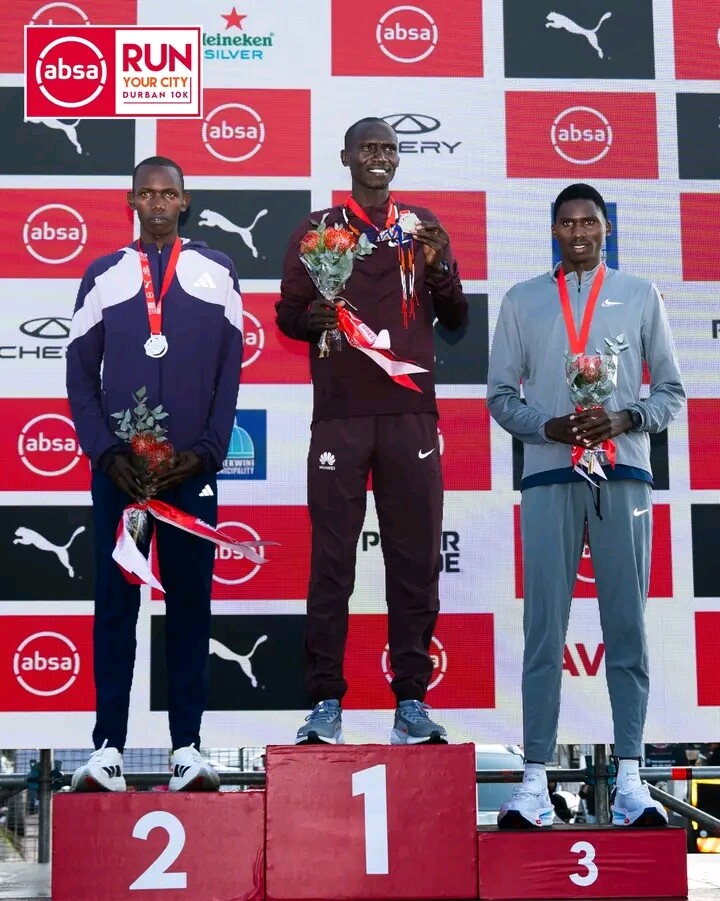
On a day that demanded both speed and precision, Cheptegei controlled the race with the composure of a seasoned champion before powering to the finish line to shatter the previous course record, etching his name even deeper into the event's history.

The Olympic 10,000m champion arrived in Durban with a clear objective—to challenge the fastest time ever recorded on South African soil—and he delivered in spectacular fashion. His commanding victory was another demonstration of the relentless consistency and tactical brilliance that have defined his remarkable career.
Behind the Ugandan star, Salem Kibet of Kenya claimed second place in 27:29, while fellow Ugandan Emmanuel Kibet completed the podium in 27:32, making it a fiercely contested battle among East Africa's finest distance runners.
The race also showcased impressive depth, with Kenya's Victor Okoth finishing fourth in 27:50, while Tanzania's Agustino Daniel rounded out the top five in 28:03. South Africa's leading performers, Kabelo Mulaudzi (28:06) and Musawenkosi Mnisi (28:11), thrilled the home crowd with determined performances against a world-class field.
Cheptegei's latest triumph adds another landmark achievement to an already extraordinary résumé that includes Olympic glory, multiple world titles, and world records. His victory in Durban was far more than another race win—it was a statement that the Ugandan legend continues to set the standard in global distance running.
By breaking the course record in emphatic fashion, Joshua Cheptegei once again proved that when the stakes are highest, few athletes in history can match his ability to rise to the occasion. His unforgettable run in Durban will be remembered as another defining chapter in the legacy of one of athletics' all-time greats.
by Erick Cheruiyot for My Best Runs.
Login to leave a comment
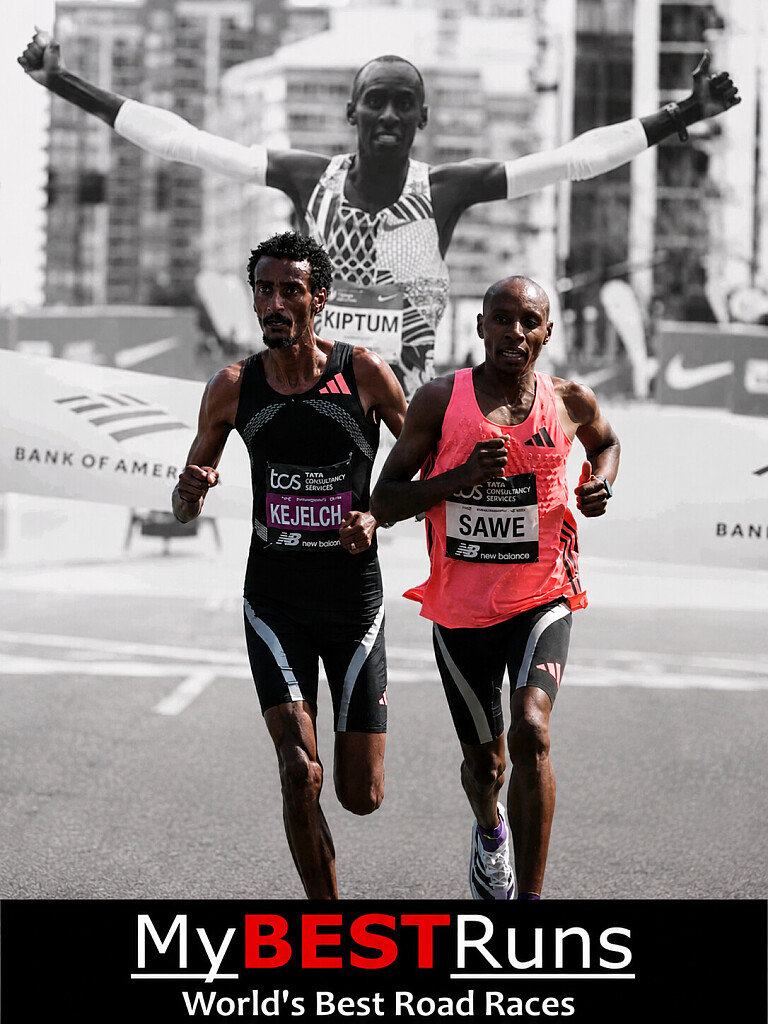
Kelvin Kiptum's World Record Is Gone. His Legacy Never Will Be
Records are made to be broken. Legacies are not.
On October 8, 2023, the streets of Chicago witnessed one of the greatest performances in marathon history. At just 23 years old, Kenya's Kelvin Kiptum stormed to a world record of 2:00:35, redefining what many believed was possible over 42.195 kilometres.
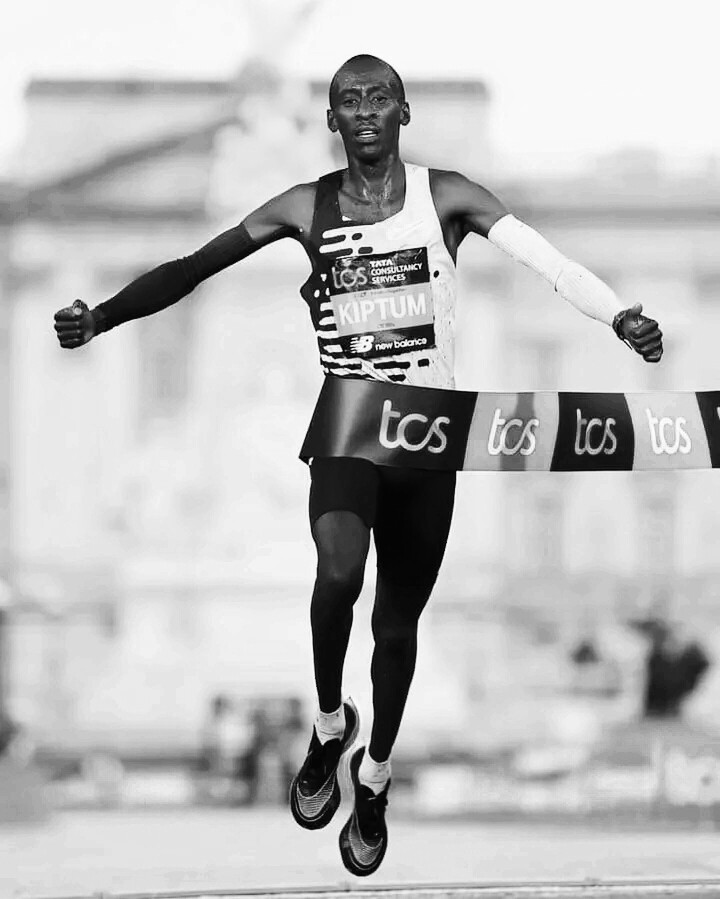
It was a performance that stunned the sporting world. Yet, no one could have imagined it would become his final masterpiece.
Just four months later, tragedy struck. Kiptum lost his life in a road accident at the age of 24, only five days after World Athletics officially ratified his world record. His marathon career lasted just three races, but it was nothing short of extraordinary. He won all three, remained unbeaten over the distance, and left behind a standard that inspired a new generation of marathon runners.
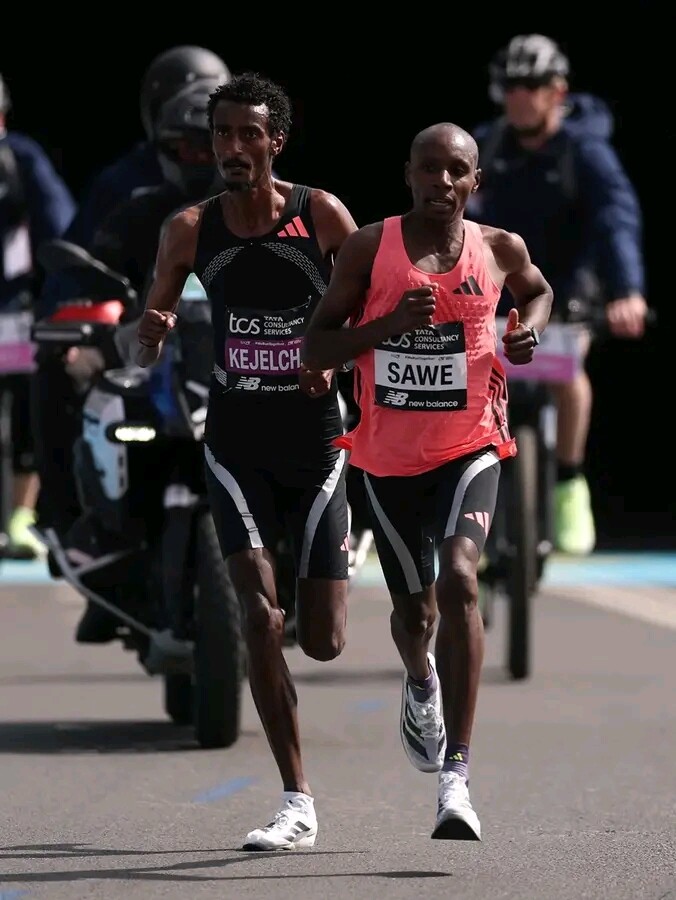
Then came another historic chapter.
At the London Marathon, a new world record was born. Sabastian Sawe delivered a sensational 1:59:30 to become the first man to officially break the two-hour barrier in a record-eligible marathon. Yomif Kejelcha followed with an extraordinary 1:59:41 on his marathon debut, while Jacob Kiplimo completed a remarkable podium in 2:00:28. In one unforgettable afternoon, Kiptum's world record was surpassed, signalling yet another leap forward in the evolution of marathon running.
But while the record books have changed, Kiptum's place in history has not.
His greatness was never defined solely by the time on the clock. It was defined by the belief he inspired. Kiptum proved that a young athlete training on the rugged roads of rurals around the world, competing sparingly and still shaping his own coaching journey, could challenge the very limits of human endurance. His achievements expanded what athletes believed was possible and helped usher the marathon into a new era.
His influence continues to resonate throughout the sport. Ruth Chepngetich dedicated her memorable 2024 Chicago Marathon victory to his memory, while Sawe's historic world-record performance came nearly two and a half years after Kiptum's unforgettable run in Chicago.
Time has moved forward. New records have been set. New champions have emerged.
Yet Kelvin Kiptum's name remains permanently etched in marathon history—not simply because he once held the world record, but because he changed the way the world viewed the marathon.
His world record is gone. His legacy never will be.
by Erick Cheruiyot for My Best Runs.
Login to leave a comment
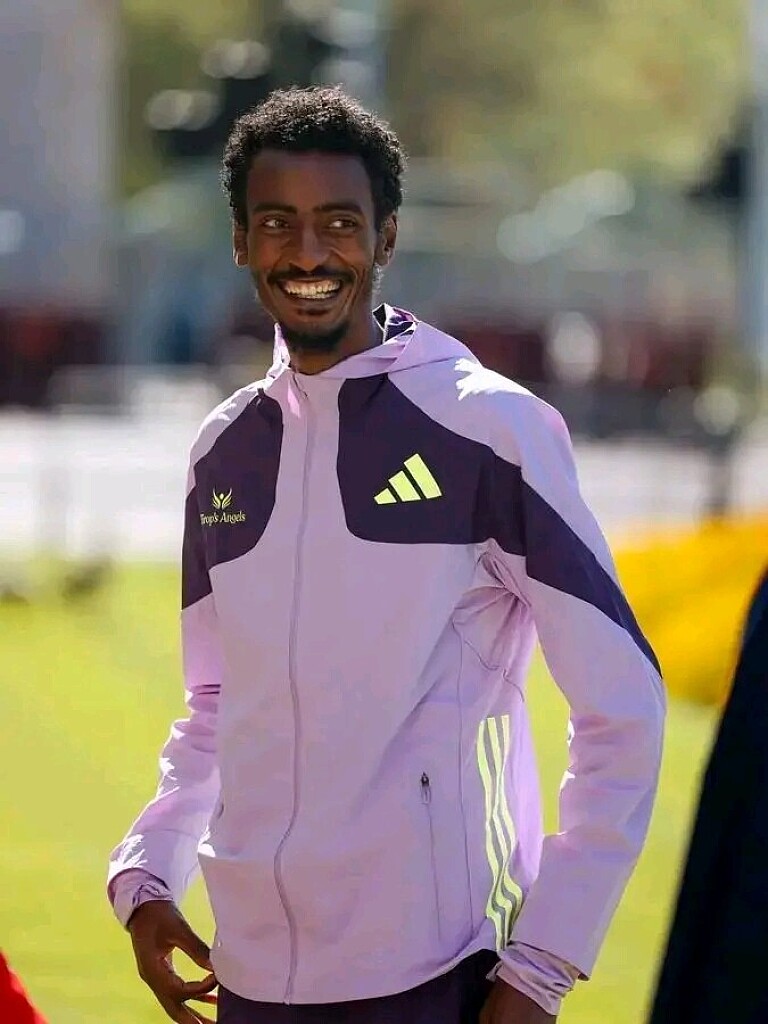
Under Two Hours, Yet Not Enough: Yomif Kejelcha's Remarkable Run in London
In most marathons, a performance like Yomif Kejelcha's would have rewritten history.
At the 2026 London Marathon, the Ethiopian distance star produced one of the finest races ever seen over 42.195 kilometres, stopping the clock at an astonishing 1:59:41. The time placed him among an extremely exclusive group of athletes to complete the marathon distance in under two hours in race conditions and would have shattered the world record on almost any other day.
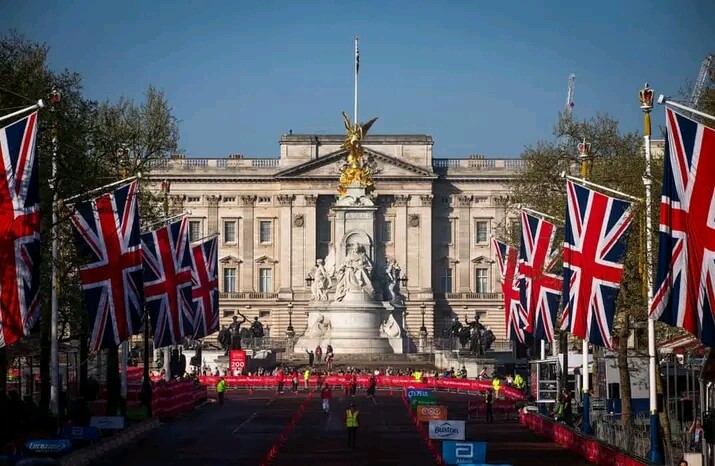
Yet Kejelcha crossed the finish line in second place.
Ahead of him was Kenya's rising marathon sensation, Sebastian Sawe, who delivered a performance for the ages, storming to victory in 1:59:30 and finishing eleven seconds clear of the Ethiopian. It was a race that elevated the standard of marathon running to unprecedented heights and left spectators struggling to comprehend what they had witnessed.
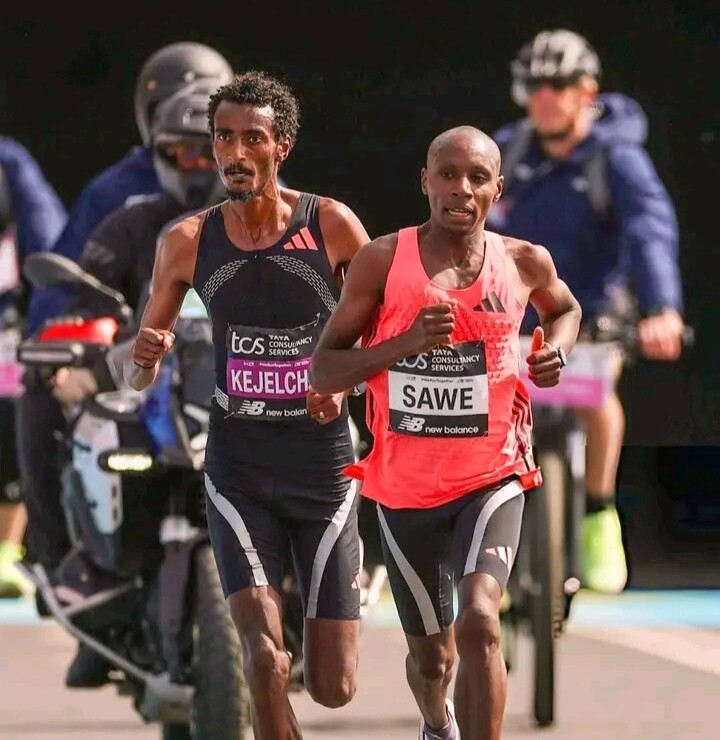
What makes Kejelcha's achievement even more remarkable is that he never expected such a result.
After the race, the Ethiopian admitted that his pre-race expectations were far more modest. He believed a finishing time somewhere between 2:02 and 2:03 was realistic. As the race entered its closing stages, fatigue began to take hold. Around the 25-mile mark, his legs felt increasingly heavy, and he was convinced his opportunity for something special had slipped away.
Then came the final stretch.
A glance at his watch revealed numbers that seemed almost impossible. Despite the pain and exhaustion, he was running at a pace few athletes in history had ever sustained. The finish line confirmed it: a sub-two-hour marathon and one of the fastest performances the sport has ever recorded.
Yet there was no world record celebration. No winner's trophy.
Only second place.
And perhaps that is what makes this story so compelling.
Elite sport often teaches us to measure success through victories, medals and records. But Kejelcha's run serves as a reminder that greatness cannot always be defined by finishing first. Sometimes an athlete produces the performance of a lifetime and still encounters someone capable of something even more extraordinary.
On paper, the result will forever show Kejelcha as the runner-up. History, however, is unlikely to remember it that way. His courageous front-running effort, his refusal to surrender when fatigue struck, and his astonishing finishing time ensured that his race became one of the defining moments of modern marathon running.
There are defeats that fade quickly from memory. Then there are performances so exceptional that they transcend the final standings.
Yomif Kejelcha did not leave London with a title or a world record. He left with something arguably more enduring: a place in one of the greatest marathon battles ever contested.
And when future generations look back on that unforgettable morning in London, they may ask a simple question:
If an athlete runs one of the fastest marathons in history, exceeds every expectation, and inspires millions along the way, can it really be called a defeat?
by Erick Cheruiyot for My Best Runs.
Login to leave a comment
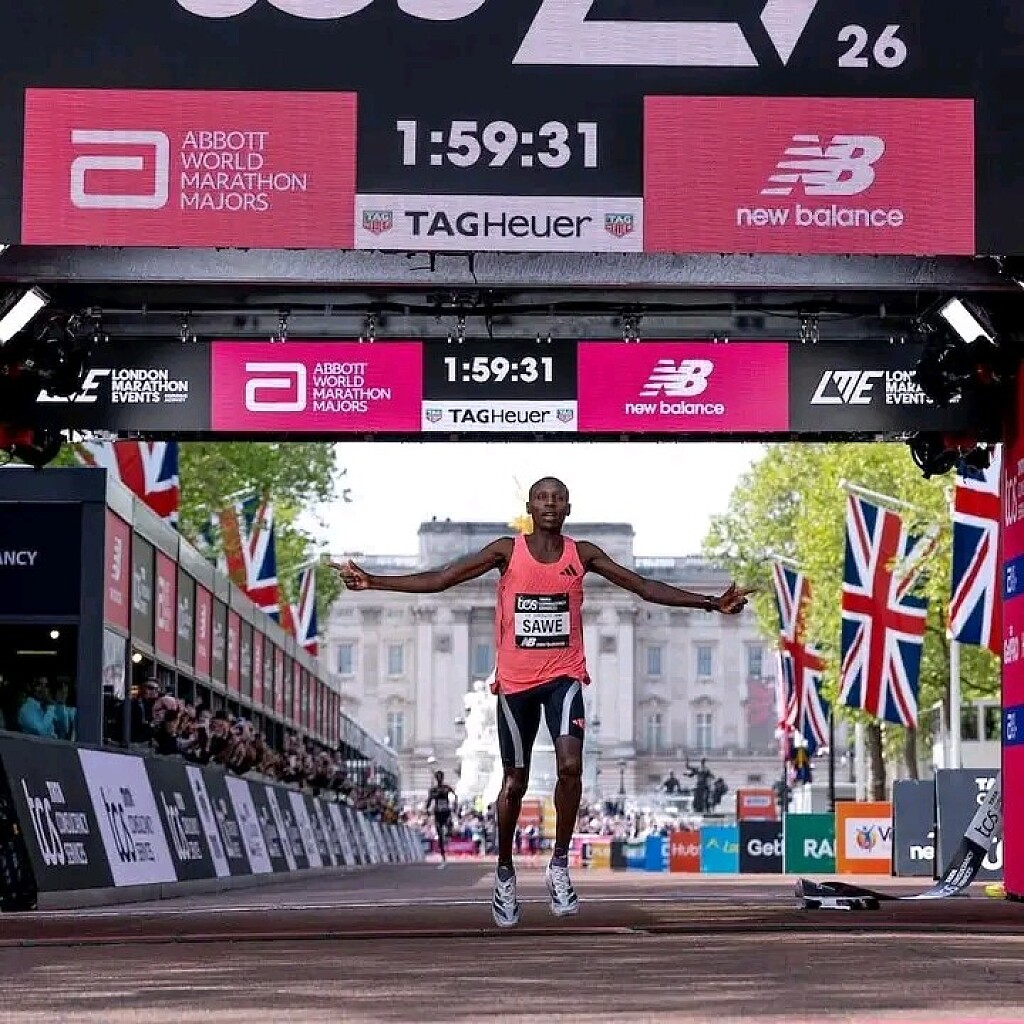
One Month Since Marathon Running Witnessed Its Greatest Day Ever
Exactly one month ago, at the TCS London Marathon the sport of marathon running experienced a moment so extraordinary that it permanently altered the limits of human endurance. What unfolded that historic day was not simply fast racing — it was the complete rewriting of what the athletics world believed was possible over 42.195 kilometers.

The headlines alone sounded almost fictional.
Kenya’s Sabastian Sawe delivered the performance of a lifetime, storming into history as the first athlete ever to break the two-hour barrier in an official marathon race. His astonishing 1:59:30 shattered one of the final frontiers in distance running and instantly became one of the greatest athletic achievements ever witnessed on the roads.
For decades, the sub-two-hour marathon had existed as an almost mythical benchmark — discussed by scientists, coaches and legends of the sport as the ultimate human endurance challenge. Sawe did not just cross that barrier; he obliterated the psychological wall surrounding it with fearless pacing, ruthless consistency and unmatched composure under pressure.
Yet the drama was only beginning.
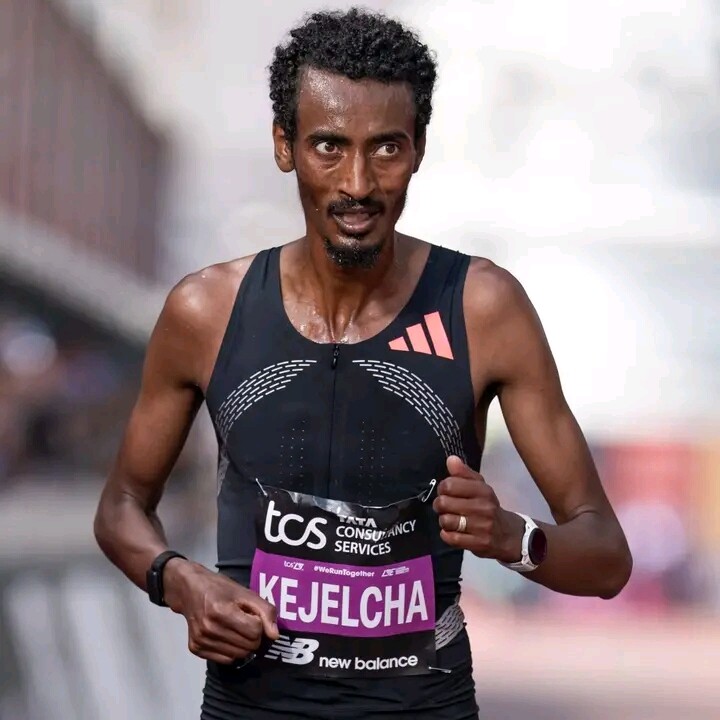
In one of the most remarkable marathon debuts the sport has ever seen, Ethiopia’s Yomif Kejelcha stunned the world by becoming the second man in history to run under two hours — clocking an extraordinary 1:59:41 in his very first marathon appearance. To achieve such a performance without prior marathon experience elevated the race from historic to almost surreal.
Kejelcha’s transition from track and half marathon brilliance to immediate marathon greatness showcased a rare combination of speed, efficiency and tactical intelligence. Most athletes spend years mastering the marathon. He conquered it on his first attempt.
And somehow, the race still had more history to offer.
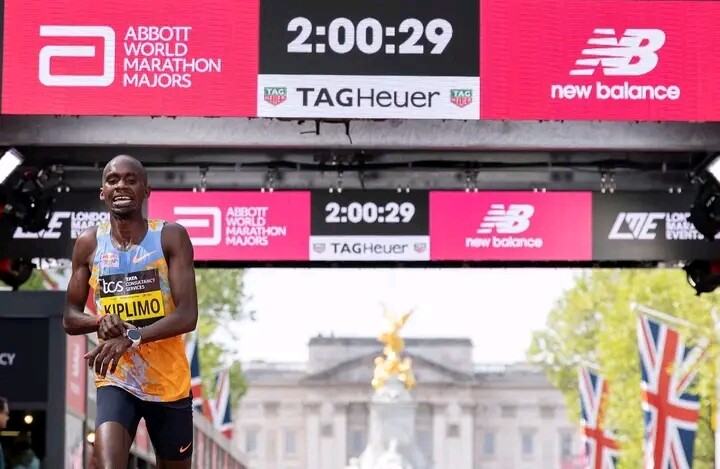
Uganda’s Jacob Kiplimo finished third in an astonishing 2:00:28 — a performance that, incredibly, was faster than the previous marathon world record of 2:00:35. On nearly any other day in athletics history, Kiplimo’s run would have dominated global headlines. Instead, it became part of a once-in-a-generation showcase of endurance greatness.
The depth of quality in the men’s race was unprecedented. Three athletes produced times once considered impossible within the same event, transforming the marathon from a race against rivals into a collective assault on history itself.

The women’s race was equally unforgettable.
Ethiopia’s Tigst Assefa once again proved why she remains one of the defining marathon athletes of this era. Defending her London crown in dominant fashion, Assefa surged to a sensational women’s-only world record of 2:15:41, combining elegance, strength and relentless rhythm from start to finish.
Her performance reinforced the rapid evolution of women’s marathon running, where barriers continue to fall and records are being pushed into territory previously unimaginable.
What made that day truly special was not only the records, but the feeling surrounding the races. Fans across the globe were witnessing history unfold in real time — a sporting spectacle where every split seemed impossible, every kilometer carried anticipation, and every finish line delivered another shock to the athletics world.
One month later, the echoes of that extraordinary day still resonate throughout global sport.
It was the day marathon running entered a new era. The day limits disappeared. The day history was rewritten kilometer after kilometer. And perhaps, the greatest single day the marathon has ever seen.
by Erick Cheruiyot for My Best Runs.
Login to leave a comment

TCS London Marathon
Since its inaugural edition on March 29, 1981, the TCS London Marathon has grown into one of the world's most prestigious road races, blending elite competition with an extraordinary charitable legacy. Founded by former Olympic champion and journalist Chris Brasher alongside Welsh athlete John Disley, the event has been staged every year and has been held in the spring annually...
more...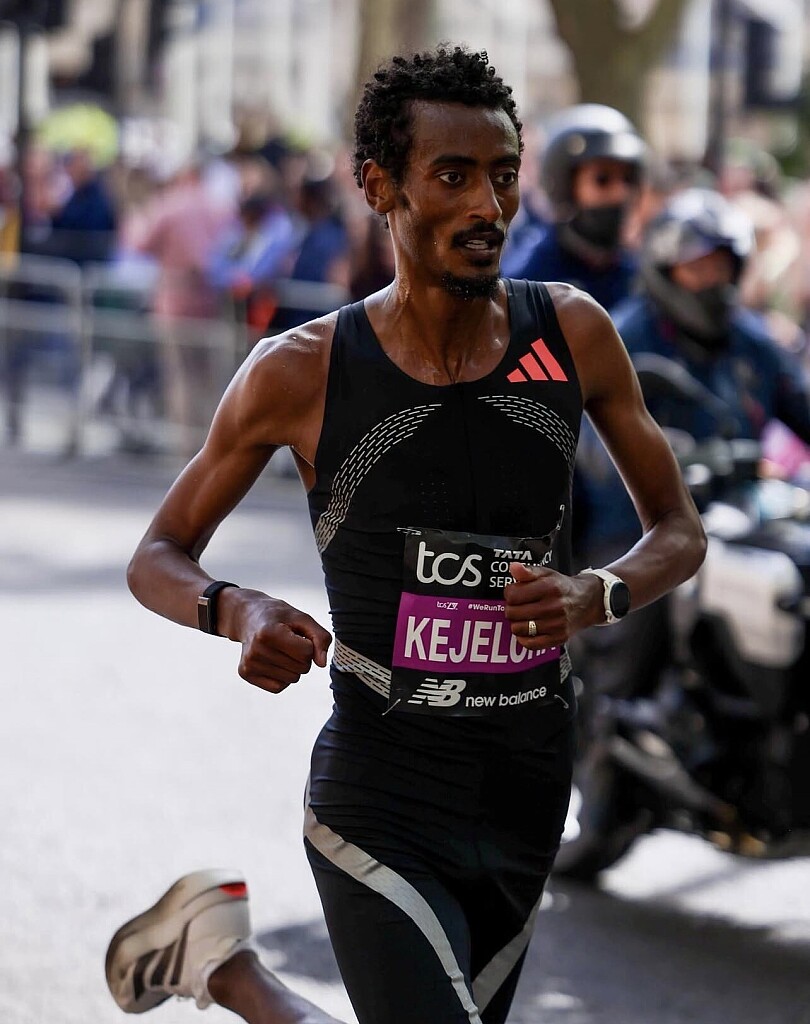
Adidas Thinks the Next Marathon Breakthrough Is the Body — And the Second Fastest Runner Ever Already Proved It
For the past decade, marathon innovation has revolved around shoes. Carbon plates. Super foams. Lighter and faster racing models that transformed what athletes believed was possible over 26.2 miles.
Now Adidas may have opened the next chapter in performance technology — and this time the breakthrough is not on runners’ feet.
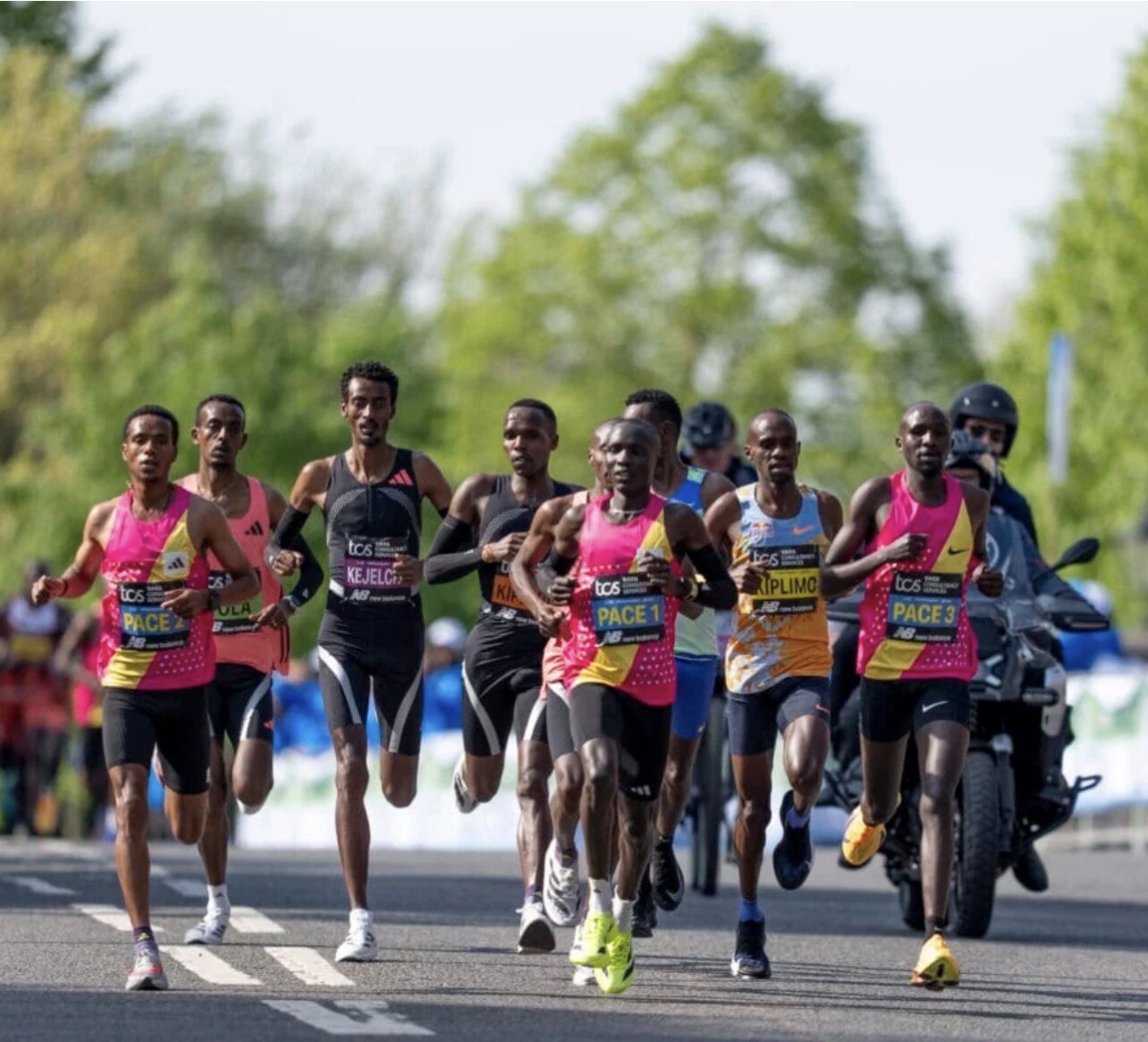
At the 2026 London Marathon, much of the focus centered on the historic performances by Sabastian Sawe and Yomif Kejelcha, who became the first two athletes in history to officially break two hours in the marathon in the same race. But another important development may have quietly emerged alongside those performances: Adidas’s new biomechanical racing suit.
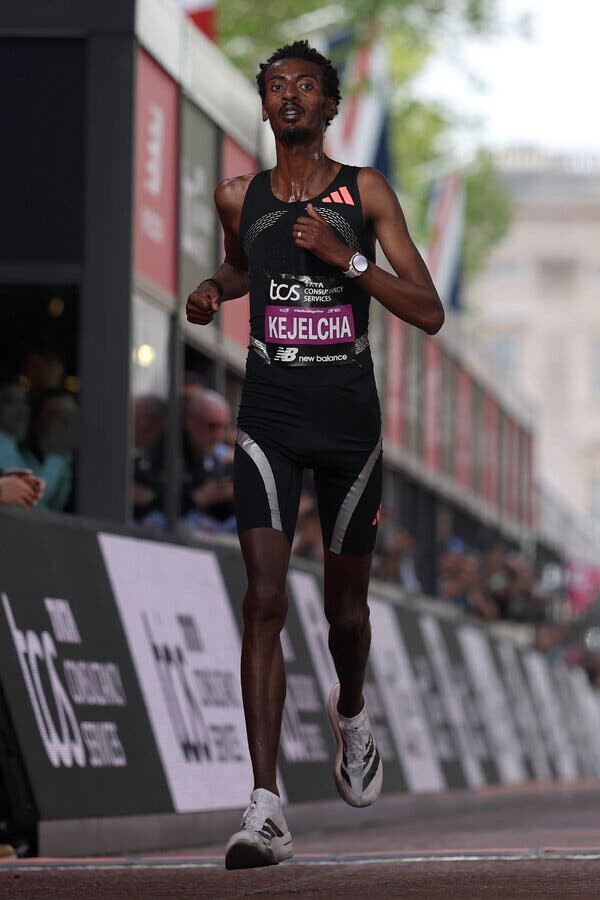
What makes the apparel intriguing is that it is not primarily about aerodynamics. The company’s bigger claim is biomechanical efficiency — helping runners maintain form deeper into the race as fatigue takes over.
Every experienced marathoner understands what happens late in a hard marathon. The hips begin to drop. The pelvis tilts. Posture weakens. Stride efficiency slowly deteriorates. Over the final miles, small mechanical losses become major time losses.
According to Adidas, the suit is designed to slow that breakdown.
Jessica G. Hunter, Adidas’s Manager of Athlete Performance and the leader behind the research project, spent years building the case internally that apparel itself could improve marathon performance. Leadership within the company was skeptical.
“Nobody had ever done it successfully before,” Hunter told The New York Times.
Her research focused on stabilizing the relationship between the core and hips — the key area responsible for keeping runners upright, balanced, and efficient during prolonged fatigue. The conclusion was that traditional apparel systems could not fully achieve that because singlets and shorts function as separate pieces.
“The only way to do that is with a full, connected suit,” Hunter explained.
That detail may prove to be the real innovation.
During the London Marathon broadcast, Kejelcha appeared to be wearing a fairly standard racing setup consisting of half-tights and a singlet. In reality, the upper and lower portions were connected into a single integrated garment. Adidas intentionally designed the suit to avoid looking radical or futuristic.
By comparison, Sawe raced in aerodynamic half-tights paired with a traditional untucked singlet. Every piece of his apparel could be clearly identified separately. Kejelcha’s system operated differently beneath the surface.
The idea of performance-enhancing apparel is hardly new in sports. Swimming saw a revolution — and eventual controversy — when full-body suits contributed to a flood of world records in 2008 and 2009. Cycling has long embraced skinsuits designed for aerodynamics and body stabilization. Running, however, has remained comparatively conservative outside the shoe revolution.
That may now be changing.
The timing is significant because marathon performances continue to improve at an astonishing rate. When races are decided by seconds rather than minutes, even marginal improvements become valuable. If a connected biomechanical suit helps an athlete maintain efficient posture just slightly longer over the final 10K, the competitive impact could be enormous.
The larger question is whether this represents the future of marathon racing or simply another experimental step in the sport’s endless pursuit of speed.
Either way, London may have marked the beginning of a new era — one where what runners wear from shoulders to hips becomes almost as important as what they wear on their feet.
by Bob Anderson for My Best Runs
Login to leave a comment
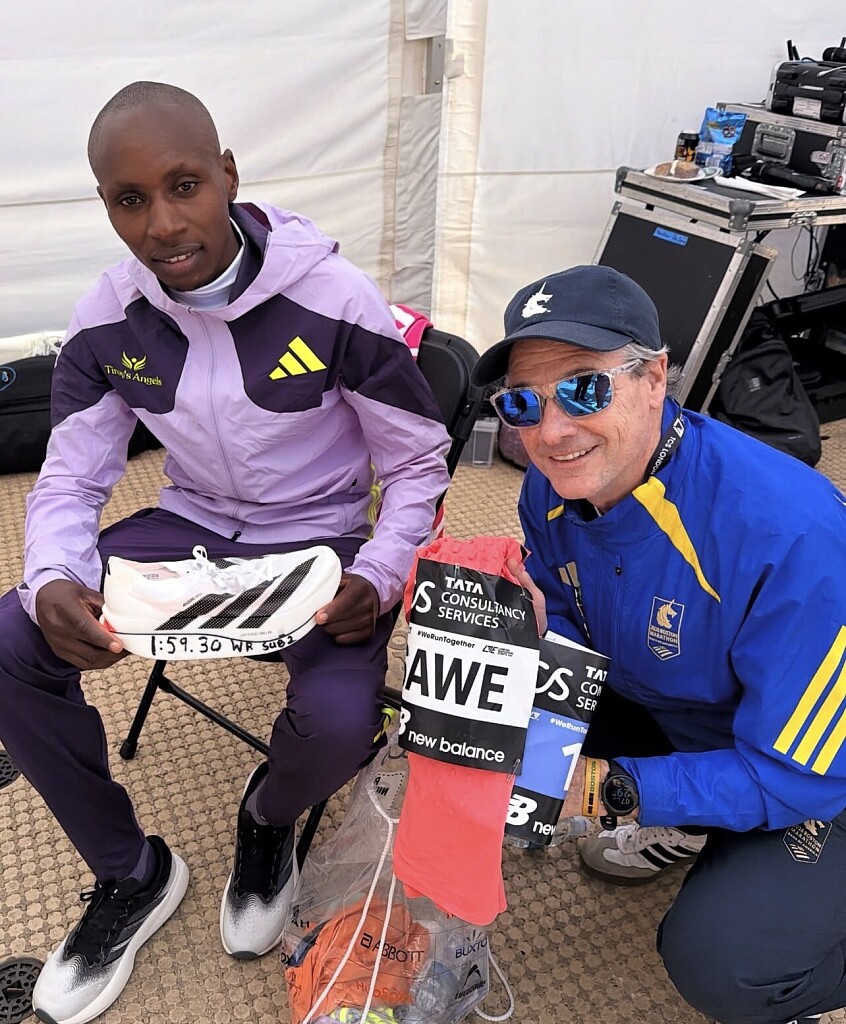
Berlin Marathon Lands the Fastest Marathoner in History as Sabastian Sawe Returns September 27
The 2026 Berlin Marathon already has its biggest headline. World record holder Sabastian Sawe has officially announced he will return to Berlin on September 27, setting the stage for another possible assault on marathon history.
Sawe stunned the running world in April when he won the London Marathon in a breathtaking 1:59:30, becoming the first athlete in history to officially run a marathon under two hours. Ethiopia’s Yomif Kejelcha followed closely behind in 1:59:41, making London the first marathon in history where two men officially broke the two-hour barrier. To date, Sawe and Kejelcha remain the only athletes ever to achieve the feat in official competition.
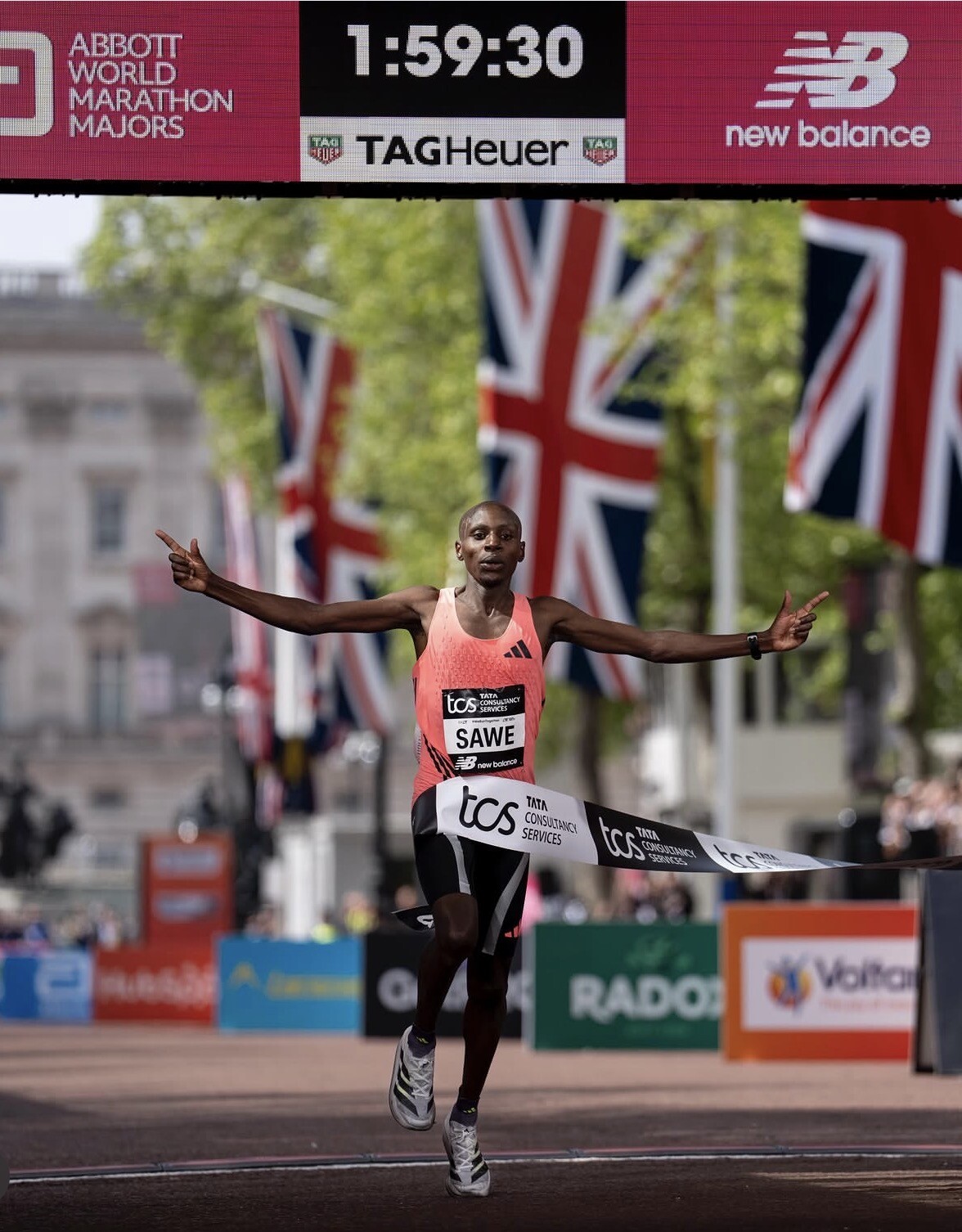
Now Sawe heads back to Berlin, widely regarded as the fastest marathon course in the world. The flat layout, cool September temperatures, and precision pacing have helped produce nine men’s marathon world records over the past quarter century. Legends including Eliud Kipchoge used Berlin as the stage for some of the greatest performances in distance running history.

“Berlin is a fast course with several world records set there. With perfect weather we could again see a sub-two-hour marathon,” says Bob Anderson, lifetime runner and editor of My Best RunsSawe is no stranger to success in Berlin. He captured the 2025 title in 2:02:16 despite unusually warm temperatures approaching 25C, a performance many viewed as one of the finest warm-weather marathons ever run. But after what happened in London, expectations are now on an entirely different level.
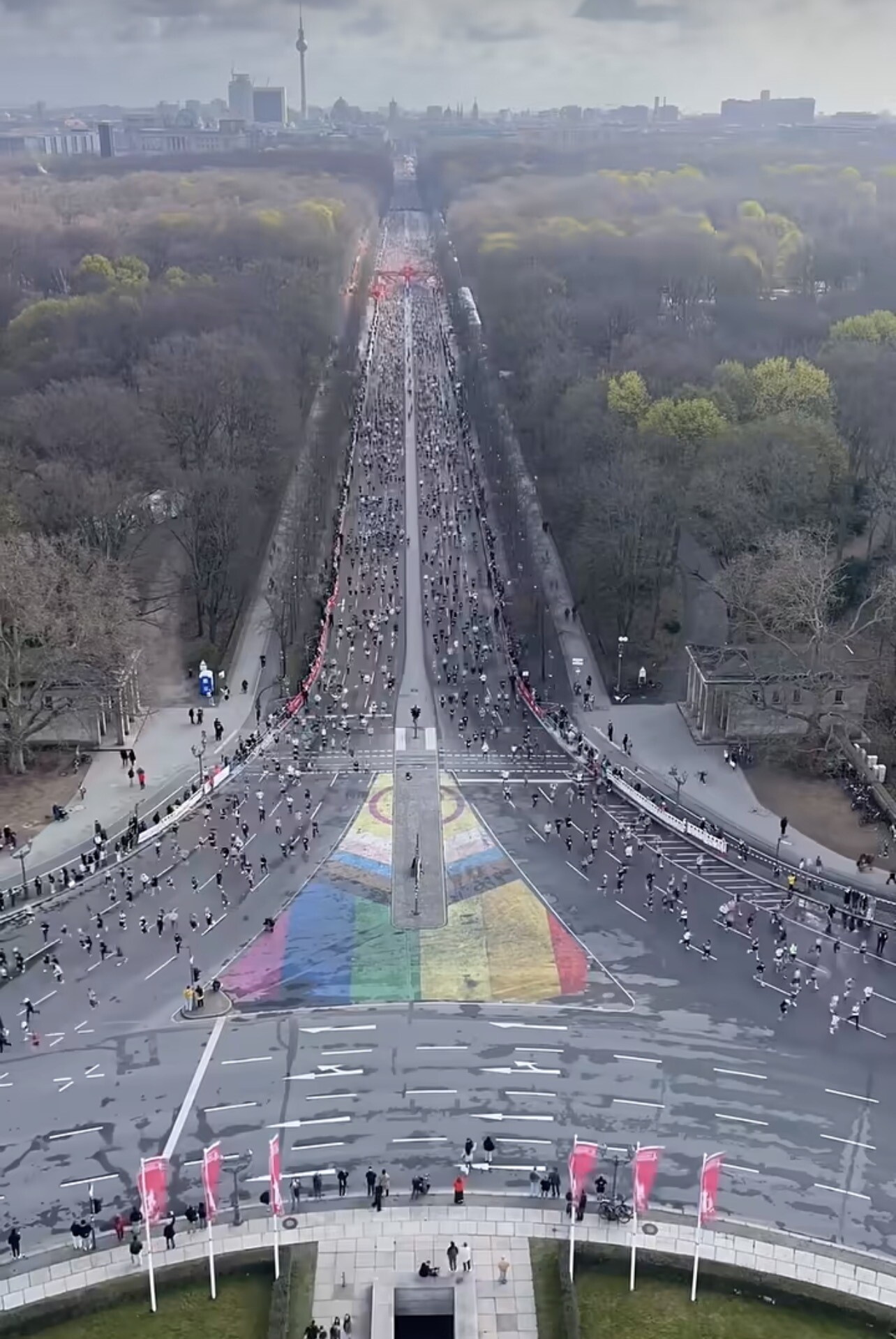
So far, Sawe is the only major elite men’s athlete officially confirmed for Berlin, though organizers are expected to announce additional top contenders in the coming weeks. The possibility of another historic showdown has already created enormous anticipation within the running world.
At the beginning of what could become one of the most remarkable marathon careers ever seen, Sawe has already changed the sport. Berlin may now offer the perfect stage for the next breakthrough.
by Boris Baron for My Best Runs
376
Login to leave a comment
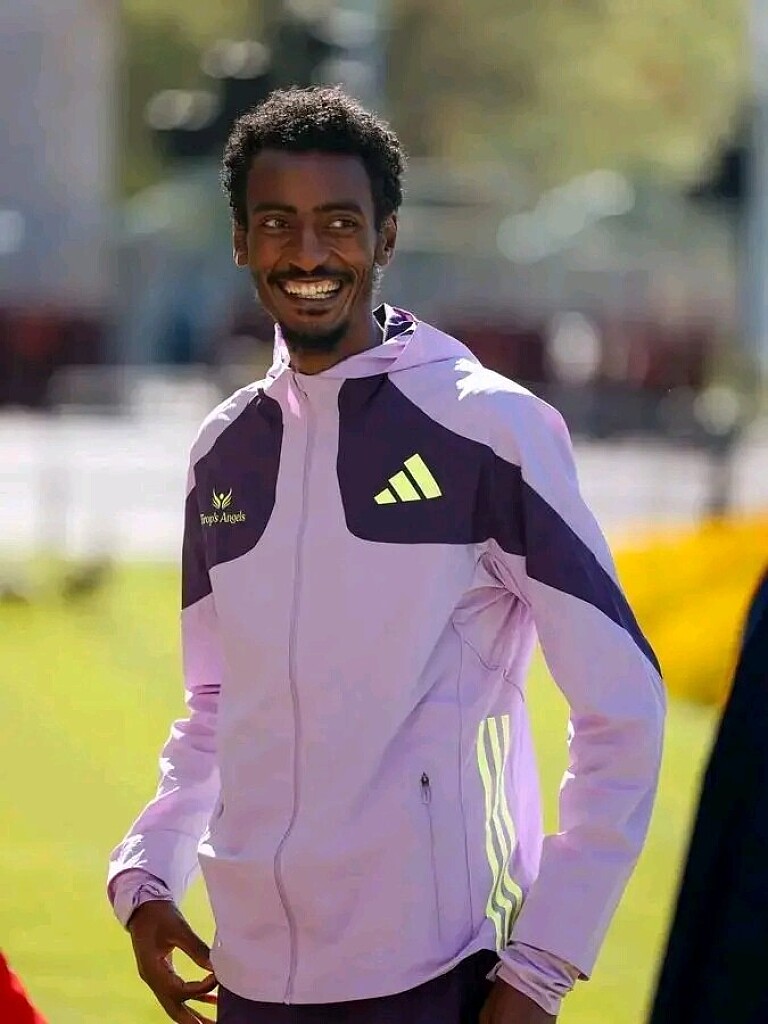
Kejelcha Returns to Valencia as Marathon World Awaits Another Historic Assault
The marathon world is once again bracing itself for something extraordinary after Ethiopian distance sensation Yomif Kejelcha was officially confirmed for the 2026 edition of the Valencia Marathon set for Sunday, December 6 in Spain.
The announcement immediately sent waves across global athletics, with anticipation already building around what could become one of the fastest marathons ever witnessed. Kejelcha returns to familiar territory carrying enormous momentum after his jaw-dropping performance at the 2026 London Marathon, where he stunned the world by clocking an astonishing 1:59:41 in his debut over the classic distance.
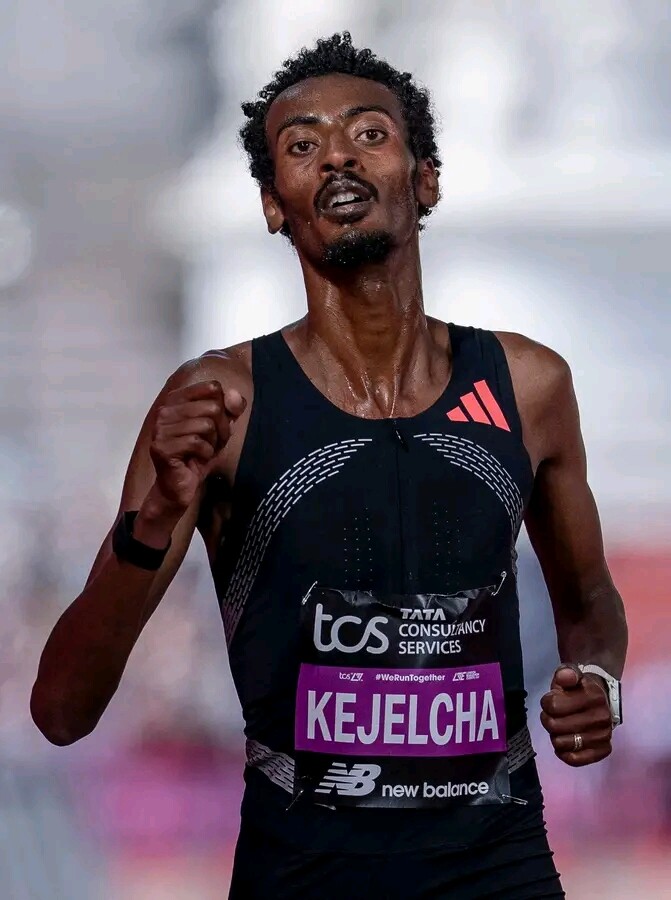
That breathtaking run not only rewrote marathon history, but also elevated Kejelcha into a completely new category of greatness. The Ethiopian star became just the second man ever to officially break the two-hour barrier in a record-eligible marathon, a feat once considered beyond human possibility.
Now, all eyes shift toward Valencia — a course widely regarded as one of the quickest marathon circuits on the planet.
For Kejelcha, the Spanish city already holds special significance. It was on these same lightning-fast streets that he produced one of the greatest half marathon performances in history, smashing the world record with a remarkable 57:30 in October 2024. That unforgettable display transformed Valencia into one of the defining venues of his career, and his return there feels less like coincidence and more like destiny.
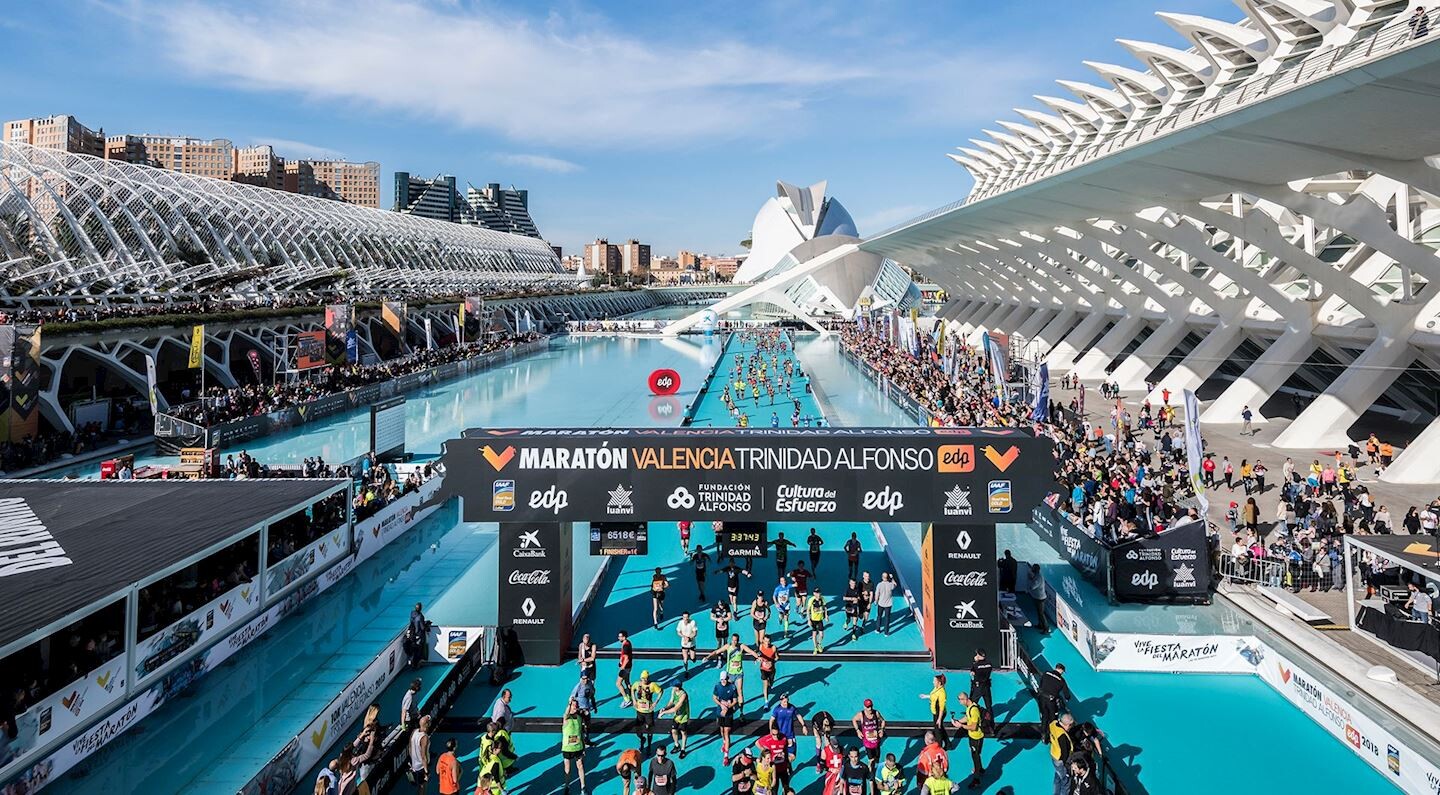
According to his manager, Gianni Demadonna, the decision to target Valencia followed extensive internal evaluations of Kejelcha’s current condition and long-term marathon potential. Those close to the Ethiopian camp reportedly believe the course offers the perfect environment for another historic performance.
And perhaps even more intriguing is the growing possibility of a world record attempt.
Valencia’s famously flat terrain — featuring minimal elevation changes across the entire course — has become a dream hunting ground for elite marathoners searching for fast times. With Kenyan star Sabastian Sawe expected to focus on Berlin later in the season, Kejelcha could arrive in Spain with a clearer path to dominate the race and fully attack the clock.
The prospect alone is enough to electrify the athletics community.
Kejelcha’s evolution from a dominant track athlete into a devastating road racer has unfolded with breathtaking speed. Already known for his explosive strength over 5,000m and 10,000m, the Ethiopian has now positioned himself as the newest giant of marathon running — a man capable of reshaping the limits of endurance sport.
As December approaches, excitement surrounding Valencia will only intensify. Fans, analysts, and fellow athletes understand the magnitude of what could unfold on the Spanish coast.
Because when Yomif Kejelcha steps onto a fast course, history no longer feels impossible — it feels expected.
by Erick Cheruiyot for My Best Runs.
Login to leave a comment
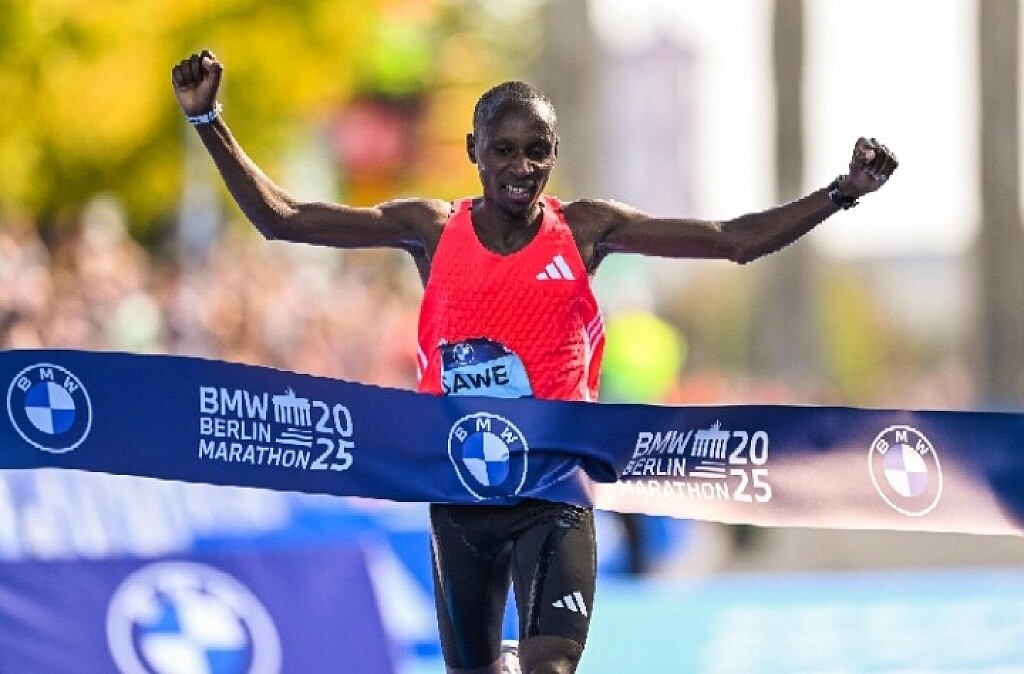
Sebastian Sawe Set for Berlin: The Marathon Revolution Continues
The marathon world is preparing for another historic chapter after Kenya’s sensation, Sebastian Sawe, officially confirmed his participation in the 2026 Berlin Marathon on 27 September.
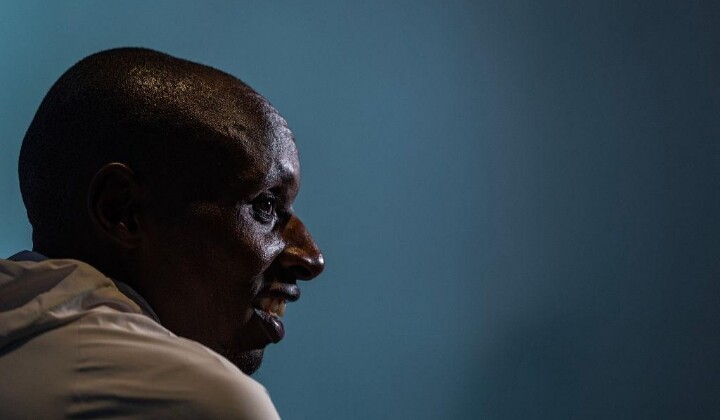
The announcement has instantly elevated anticipation for this year’s race, with Berlin once again becoming the centre of global distance running. Widely regarded as one of the fastest marathon courses ever designed, the German capital has witnessed numerous world records over the years — and now the man who shattered the sport’s final barrier is heading there.
Sawe arrives in Berlin carrying the weight of history and the momentum of a career-defining breakthrough. Last month in London, the Kenyan star stunned the athletics world by clocking an astonishing 1:59:30 marathon world record, becoming the first human being ever to run under two hours in an official competitive marathon. It was a performance that completely redefined what was thought possible over 42.195 kilometres. He is determined to defend his title while launching another attack on the marathon world record on Berlin’s famously fast course. The Kenyan superstar is expected to headline one of the most anticipated marathon races in recent memory, with fans and analysts anticipating yet another historic performance as he continues to push the boundaries of human endurance and strengthen his growing legacy in global distance running.
What made the achievement even more extraordinary was the manner in which he delivered it. Sawe did not merely break the previous world record — he demolished psychological boundaries that had stood untouched for generations. His run in London combined ruthless pace, tactical brilliance, and unmatched endurance, transforming the marathon into a new era of possibility.
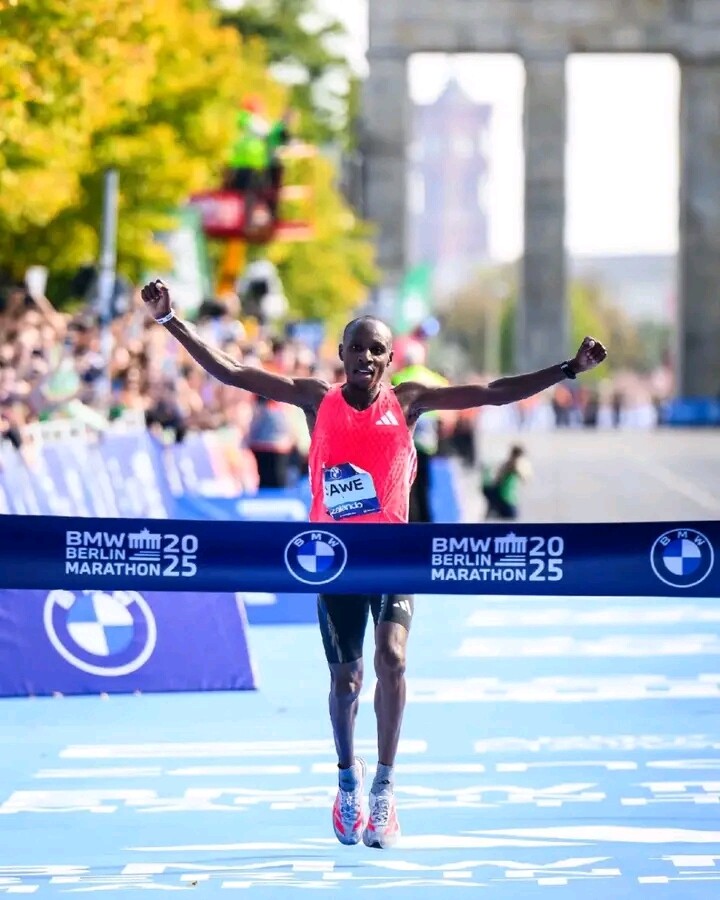
Now, attention shifts to Berlin.
For decades, the Berlin Marathon has been synonymous with speed. Its flat roads, cool weather, and perfectly engineered course have produced some of the greatest performances in distance-running history. Legends have built their reputations there, records have fallen there, and now Sawe has the opportunity to further cement his legacy on the same streets where marathon greatness has repeatedly been rewritten.
The prospect of the world’s fastest marathoner attacking Berlin’s rapid course is already sending excitement throughout the athletics community. Fans, analysts, and former champions are beginning to ask the same question: can Sebastian Sawe push the marathon even deeper into uncharted territory?
At just the right moment in his career, Sawe appears unstoppable. His rise has been built on discipline, fearless racing, and remarkable consistency, qualities that continue to position Kenya at the summit of global long-distance running. Every appearance now carries historic significance because each race feels capable of producing something never seen before.
Berlin 2026 is no longer just another marathon.
It is shaping into a global sporting spectacle — a collision between the fastest marathon course on earth and the fastest marathon runner in history.
by Erick Cheruiyot for My Best Runs.
Login to leave a comment
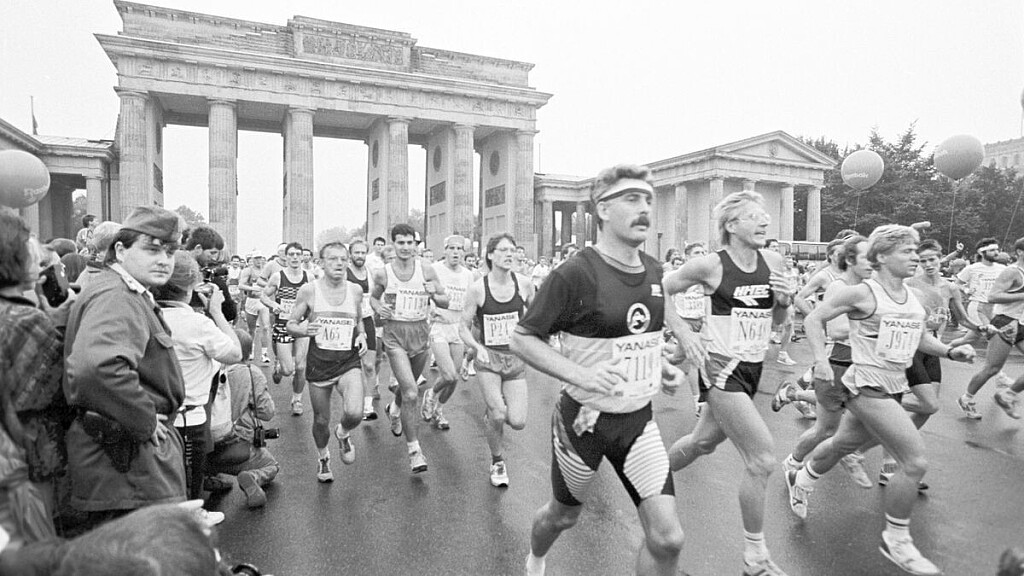
From Moneghetti to the Sub-2 Era: How Marathon Running Entered Another Dimension
The marathon has always been a race against human limits, but the distance between generations has never felt wider than it does today.
In 1990, Australian distance legend Steve Moneghetti produced one of the defining performances of his era when he stormed to victory at the Berlin Marathon in 2:08:16. At the time, the mark stood less than two minutes outside the world record — a remarkable achievement in an age when marathon running still seemed bound by barriers many believed could never be broken.
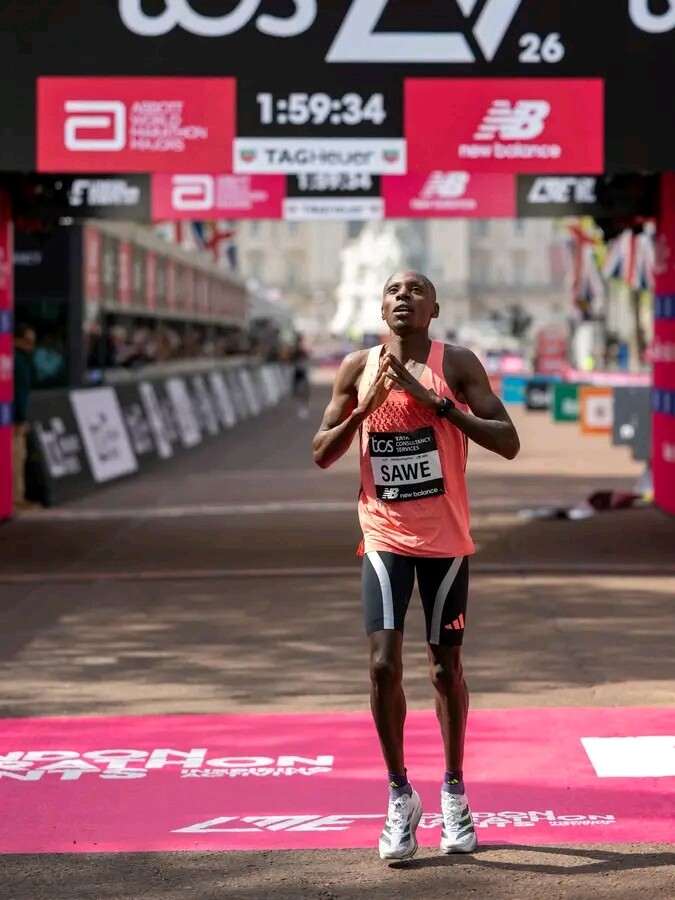
That performance elevated Moneghetti to the status of the 16th fastest marathoner in history, placing him among the sport’s global elite. His name carried weight in an era where every second shaved from the clock represented years of progress in training, nutrition, racing tactics, and endurance science.
Fast forward to today, and the landscape of marathon running has transformed almost beyond recognition.
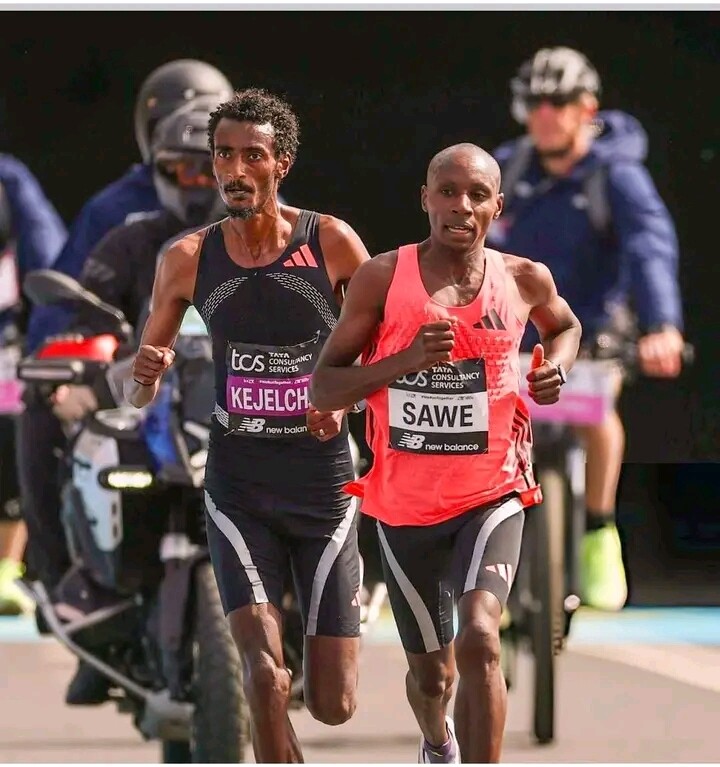
At the recent London Marathon, both Sabastian Sawe and Yomif Kejelcha delivered astonishing sub-2:00 performances, a feat that underlines the breathtaking evolution of the event. Times once considered untouchable are now being attacked with fearless ambition, as a new generation continues to redefine what the human body can endure over 42.195 kilometres.
The contrast perfectly captures the sport’s relentless progression. What once established an athlete among history’s greatest would no longer guarantee a place near the top of the modern rankings. Moneghetti himself reflected on that reality with remarkable honesty, noting that a performance which once made him the 16th fastest man ever would not even place him inside the top 100 today.
Yet that comparison does not diminish the greatness of past champions. Instead, it highlights how pioneers like Moneghetti helped lay the foundation for the marathon revolution unfolding today. Every generation pushes the boundaries further, inspiring the next to dream beyond what once appeared possible.
From Berlin in 1990 to London in the sub-2 era, marathon running has evolved from a test of endurance into a showcase of extraordinary human advancement. And judging by the speed of today’s athletes, the sport may still be far from reaching its final frontier.
by Erick Cheruiyot for My Best Runs.
Login to leave a comment
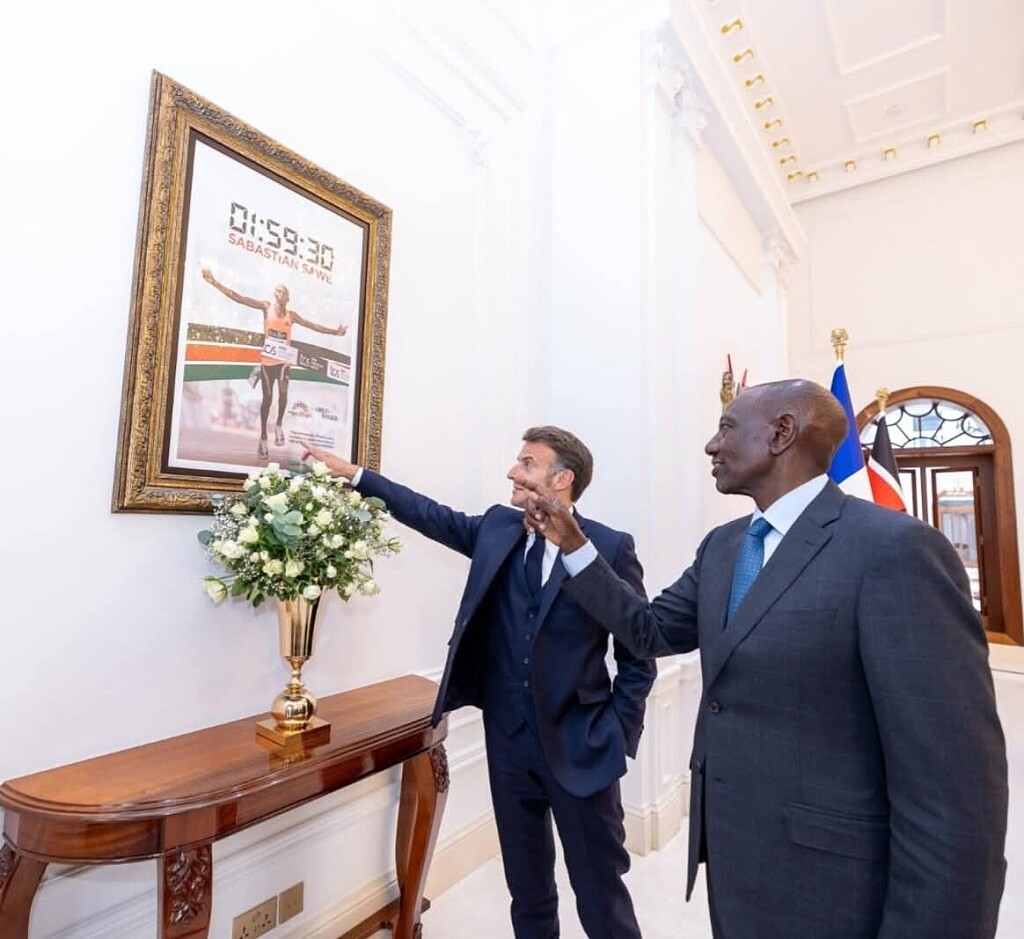
From Kenyan Roads to the Halls of Power: Macron Left in Awe of Sabastian Sawe as Kipchoge Shares Morning Run with French President
Kenya’s growing influence in global athletics was once again placed firmly in the international spotlight after French President Emmanuel Macron openly admired the iconic portrait of Kenyan marathon sensation Sabastian Sawe during an official engagement that blended sport, culture and diplomacy in remarkable fashion.
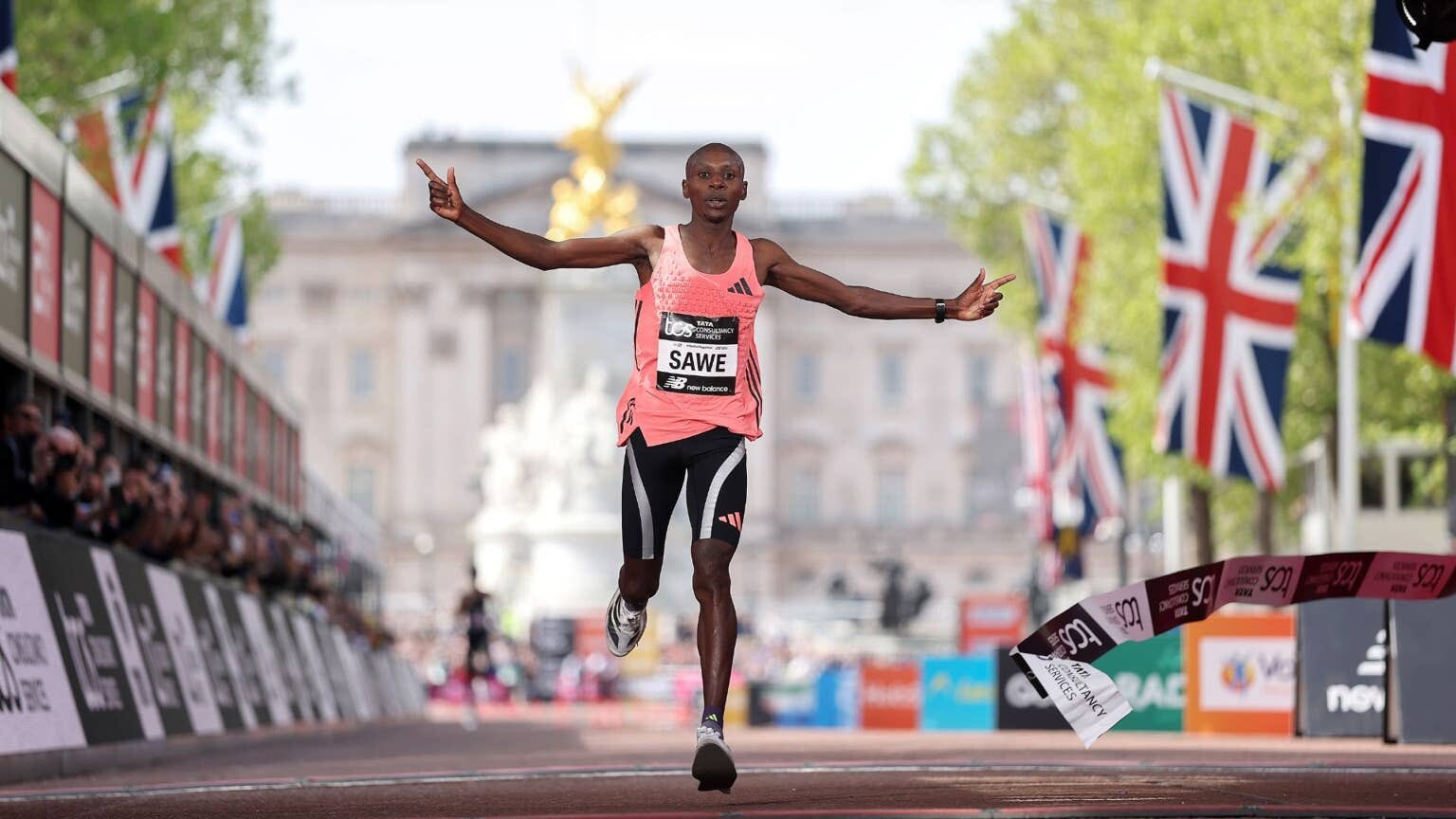
The powerful image of Sawe — a symbol of Kenya’s relentless distance-running excellence — stood proudly among the distinguished displays visited by Macron, offering yet another reminder of how deeply Kenyan athletics continues to resonate far beyond the finish line. From dusty training routes in the Rift Valley to recognition within the walls of high-level international leadership, Sawe’s rise represents more than personal success; it reflects the enduring prestige of Kenyan endurance running on the world stage.

The moment became even more memorable as marathon legend Eliud Kipchoge joined President Macron for an early morning runon the streets of Nairobi, creating a symbolic meeting between political leadership and sporting greatness. Kipchoge, widely celebrated for redefining the limits of human endurance, once again carried the Kenyan flag with grace and humility as he shared the roads with the French Head of State.
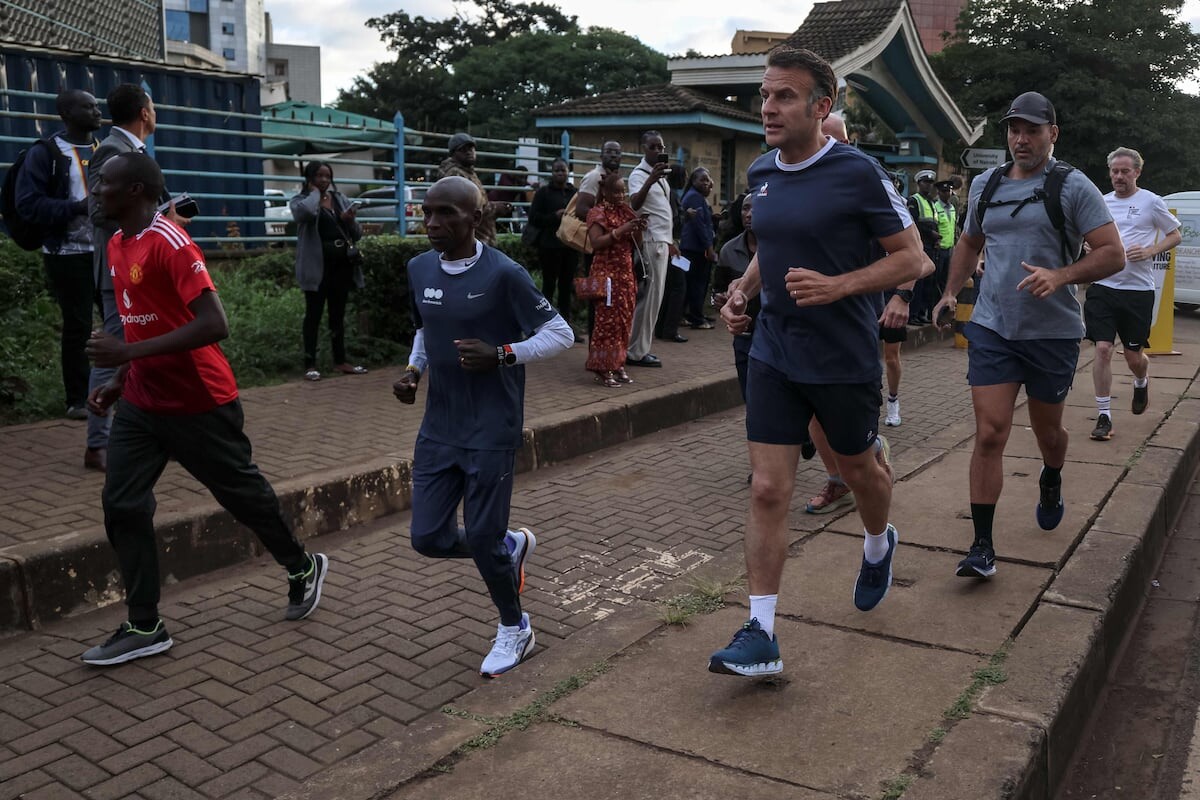
For many athletics fans, the scenes represented far more than a ceremonial appearance. They highlighted the soft power of sport and the respect Kenyan athletes command internationally. Kenya’s runners have long dominated global road racing, but moments such as these demonstrate how their impact now stretches into culture, inspiration and diplomacy.
Sawe’s growing reputation has continued to capture attention across the athletics world following his impressive performances on the roads, where his fearless racing style and consistency have marked him as one of the sport’s rising forces. Seeing his portrait admired by one of Europe’s most influential leaders added another significant chapter to that journey.
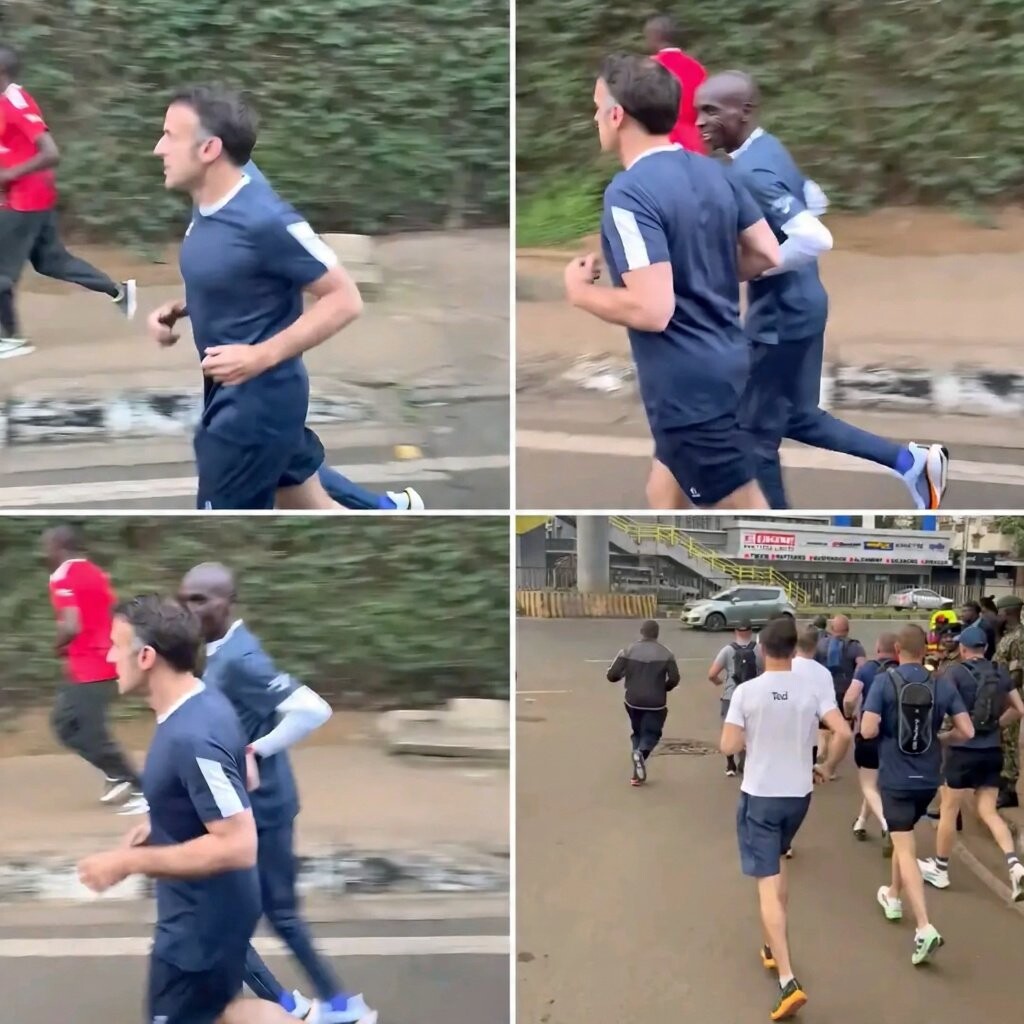
Meanwhile, Kipchoge’s presence brought his trademark aura of discipline and inspiration. The two-time Olympic marathon champion has become more than an athlete; he is now viewed globally as an ambassador of excellence, resilience and human potential. His morning run alongside Macron offered a striking image of unity through sport — a language that transcends borders, politics and culture.
As Kenyan athletics continues to produce stars capable of commanding admiration around the world, moments like these reinforce the nation’s unmatched legacy in distance running. From the rugged training grounds of Kenya to the corridors of international power, the country’s athletes are no longer only winning races — they are shaping global conversations and inspiring generations far beyond the track and the marathon course.
by Erick Cheruiyot for My Best Runs.
Login to leave a comment
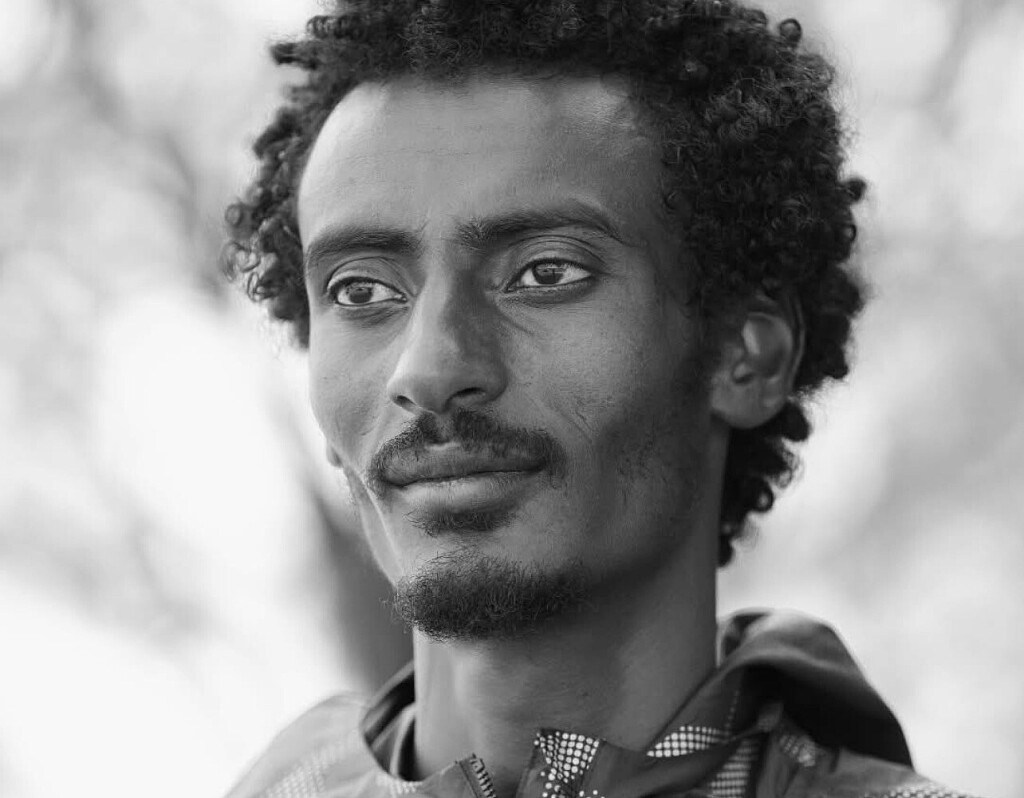
Where Should Yomif Kejelcha Run His Second Marathon — And Can He Break 1:59?
London changed marathon history forever as Sabastian Sawe and Yomif Kejelcha became the first two men ever to officially break the two-hour barrier for the marathon. Sawe won in 1:59:30, while Kejelcha stunned the world by running 1:59:41 in his marathon debut.
Now the focus shifts to the next question:
Where should Kejelcha run his second marathon?
And perhaps even more intriguing:
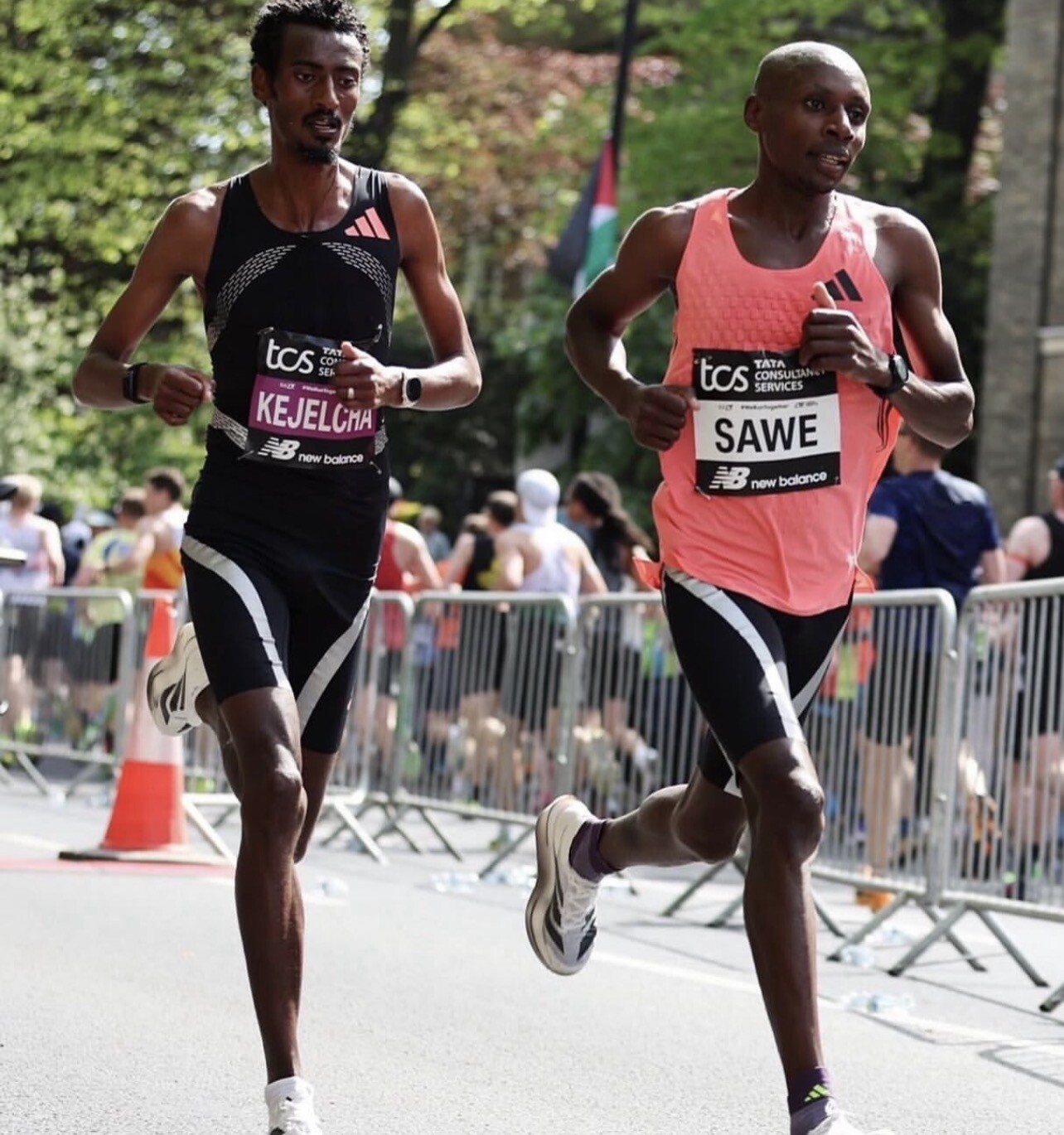
Can he become the first man to officially run under 1:59?
“Not to take away from Sawe’s amazing 1:59:30 marathon in winning London, but Kejelcha in second place clocked 1:59:41 in his first marathon ever. I think Yomif under perfect conditions can run under 1:59,” says Bob Anderson, lifetime runner and My Best Runs editor.
That possibility suddenly feels very real.

Kejelcha has long been considered one of the most naturally gifted distance runners in the sport. Before moving to the marathon, the Ethiopian star built a remarkable résumé that included world-class performances from 1500 meters through the half marathon. His 57:30 half marathon performance in Valencia confirmed that he possessed a rare combination of speed, efficiency, and endurance.
Those qualities are essential for what may become the next great frontier in distance running.
Breaking 1:59 would require sustaining approximately 4:32 per mile for the entire marathon distance. That demands not only endurance, but extraordinary efficiency and the ability to remain relaxed while running at near-impossible speeds.
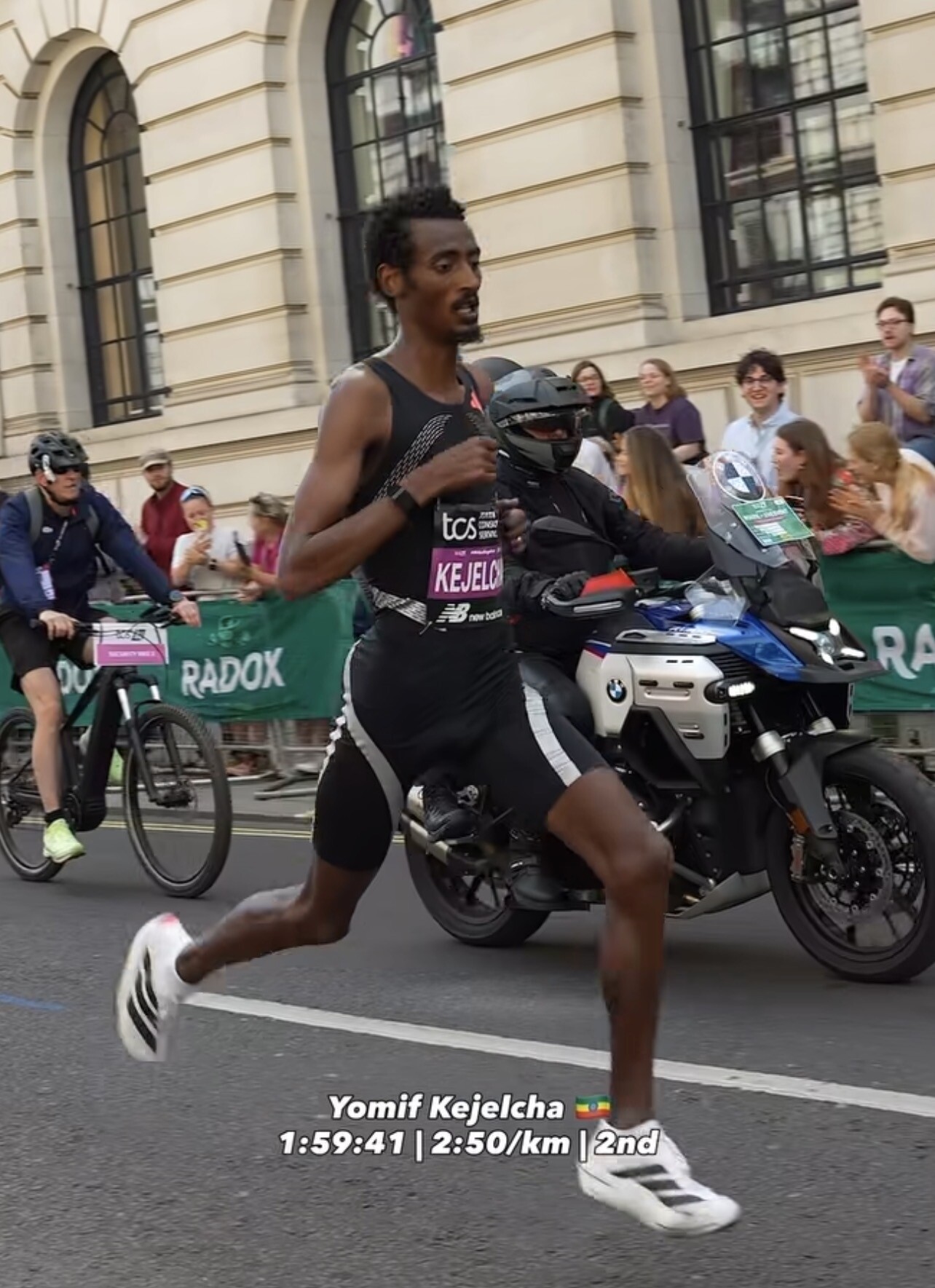
Very few athletes in history have appeared capable of that challenge.
Kejelcha now looks like one of them.
What makes his London performance even more extraordinary is that it came in his first attempt at the distance. Most elite marathoners require several races to learn the rhythm of fueling, pacing, and surviving the final 10 kilometers. Kejelcha immediately looked comfortable at a pace no one had ever officially sustained before.
That suggests there may still be room for improvement.
The question now becomes strategy.
Berlin immediately stands out as a logical option for his second marathon. No course in history has produced more marathon world records. Flat roads, cool temperatures, elite pacing, and ideal racing conditions have made Berlin the gold standard for fast marathoning.
If Kejelcha wants to make an immediate attack on history, Berlin would seem the obvious choice.
But there may be reasons to wait.
The Berlin Marathon comes only five months after London, and Kejelcha’s team may decide that patience is the smarter path. A debut marathon at world-record pace places enormous stress on the body, and carefully managing recovery could be critical to his long-term development.
Valencia may ultimately be the most intriguing possibility.
The Spanish race has rapidly become one of the fastest marathons in the world, producing countless personal bests and breakthrough performances. Kejelcha already has history there after running his half marathon world record, and the course appears perfectly suited to his smooth, efficient running style.
Chicago could also enter the conversation, though weather and wind conditions there can be less predictable.
Another option is Sevilla in early 2027, a race increasingly recognized for its fast course and ideal winter conditions.
Tokyo would provide prestige and global attention, but Berlin and Valencia are still generally viewed as superior venues for historic time attempts.
If Kejelcha’s goal is simply to win major marathons, he already has the ability to compete anywhere in the world.
But if the goal is to break 1:59, every detail matters:
weather,
pacing,
wind,
temperature,
fueling,
race timing,
and course design.
The difference between 1:59:41 and 1:58:59 may ultimately come down to only a few seconds per mile.
Still, London fundamentally changed how the running world views the limits of the marathon.
For years, an official sub-two-hour marathon felt impossible. Now the sport is already looking beyond that barrier.
At just 27 years old, Yomif Kejelcha may only be beginning his marathon career.
And after what happened in London, the possibility of a sub-1:59 marathon no longer feels unrealistic.
It feels possible.
by Boris Baron for My Best Runs
Login to leave a comment
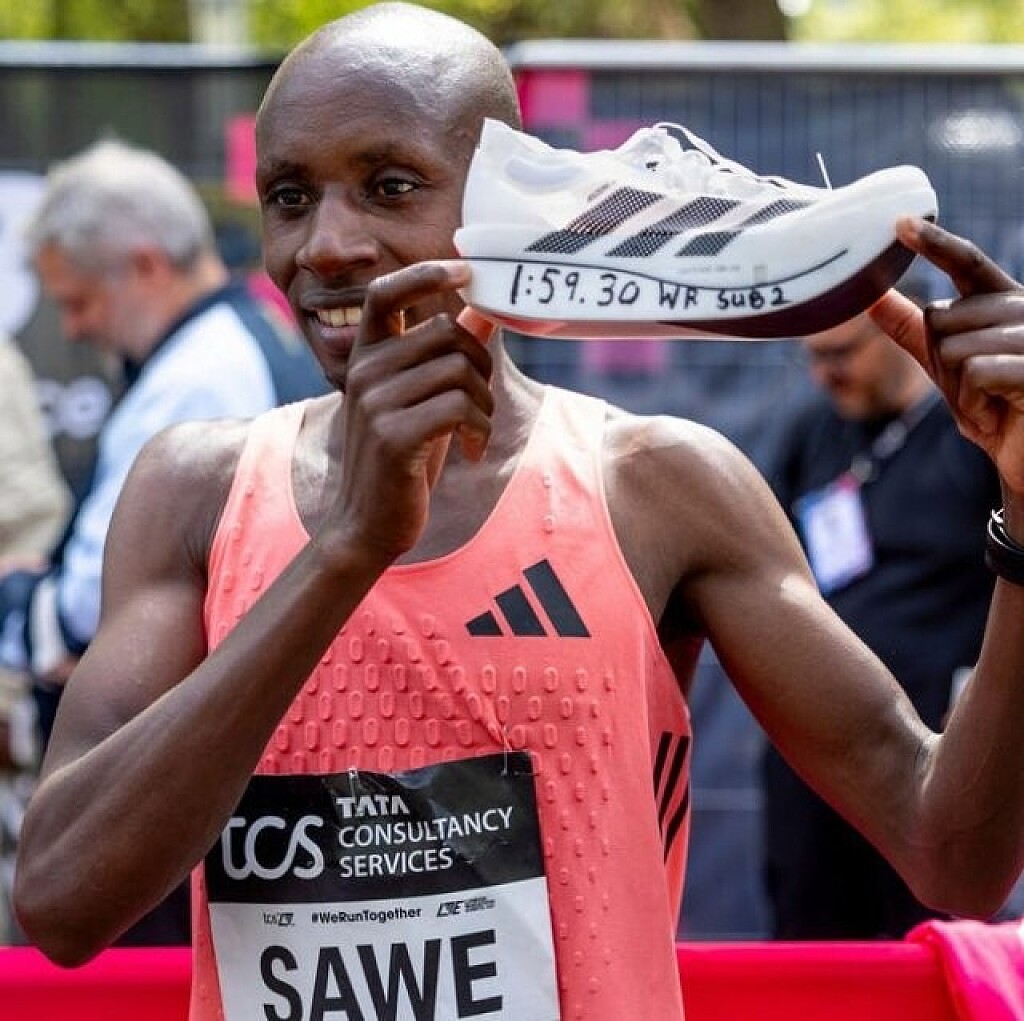
The Day Marathon Running Changed Forever: Sabastian Sawe Crowned April’s Best
Kenya’s Sabastian Sawe has been named the April Athlete of the Month by World Athletics following one of the most extraordinary performances ever witnessed in distance running.
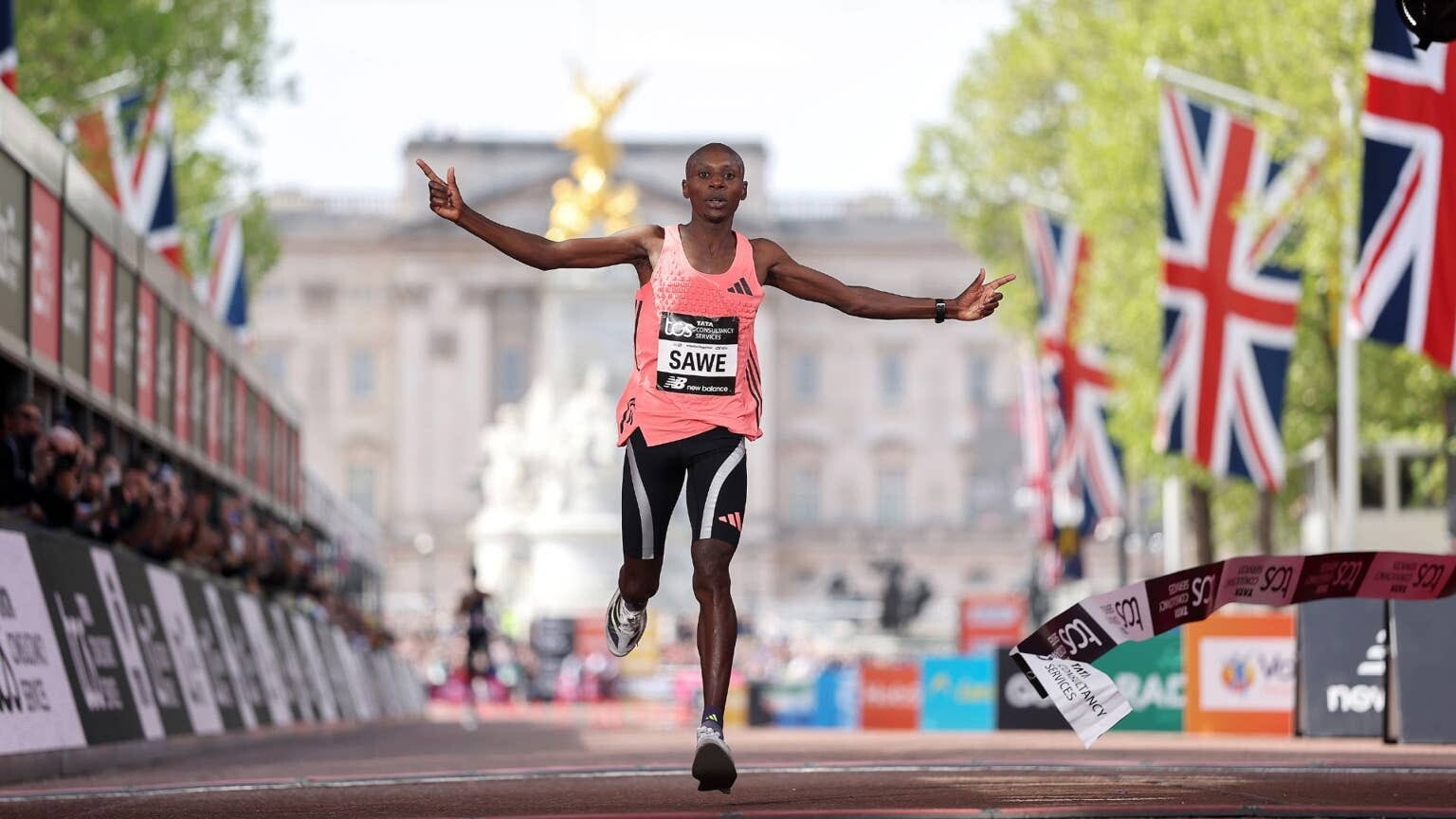
The Kenyan sensation captured global attention after delivering a breathtaking run at the London Marathon, where he shattered the limits of human endurance by clocking an astonishing 1:59:30 to become the first athlete in history to officially break the two-hour barrier in the marathon.
In a race that will forever be remembered as a defining moment in athletics, Sawe combined fearless pacing, remarkable composure and relentless strength across the 42.195km distance to rewrite the record books. The historic performance not only secured him victory on one of the world’s biggest marathon stages, but also elevated him into a new realm of sporting greatness.
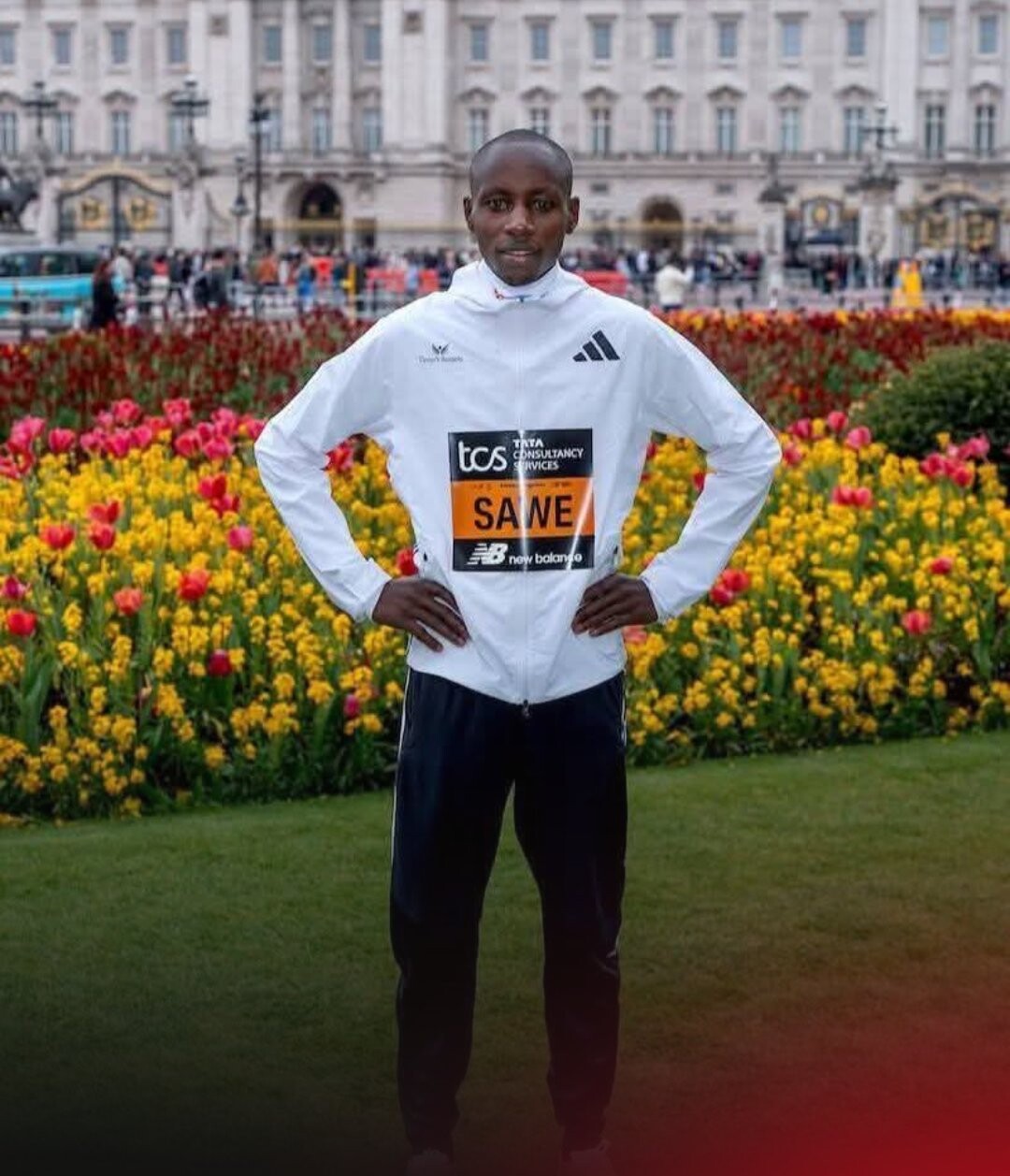
For decades, the sub-two-hour marathon was viewed as one of the final frontiers in athletics — a mark many believed would take years, perhaps generations, to conquer under official race conditions. Yet on the streets of London, Sawe turned what once seemed impossible into reality.
The achievement sparked celebrations across Kenya and throughout the global athletics community, with fans, athletes and analysts hailing the run as one of the greatest endurance performances of all time. His recognition as April Athlete of the Month reflects both the magnitude of the record and the inspiration it delivered to millions around the world.
Sawe’s rise continues to symbolize Kenya’s enduring dominance in long-distance running, adding another remarkable chapter to the nation’s rich marathon legacy. But beyond the medals and records, his performance represented something even greater — the power of ambition, belief and the courage to challenge human limits
At just the right moment, under the eyes of the world, Sabastian Sawe did not simply win a marathon. He changed the history of the sport forever.
by Erick Cheruiyot for My Best Runs.
Login to leave a comment

Jimmy Gressier Targets History as the One-Hour World Record Returns to Centre Stage
The clock is ticking once again on one of athletics’ most unforgiving challenges.
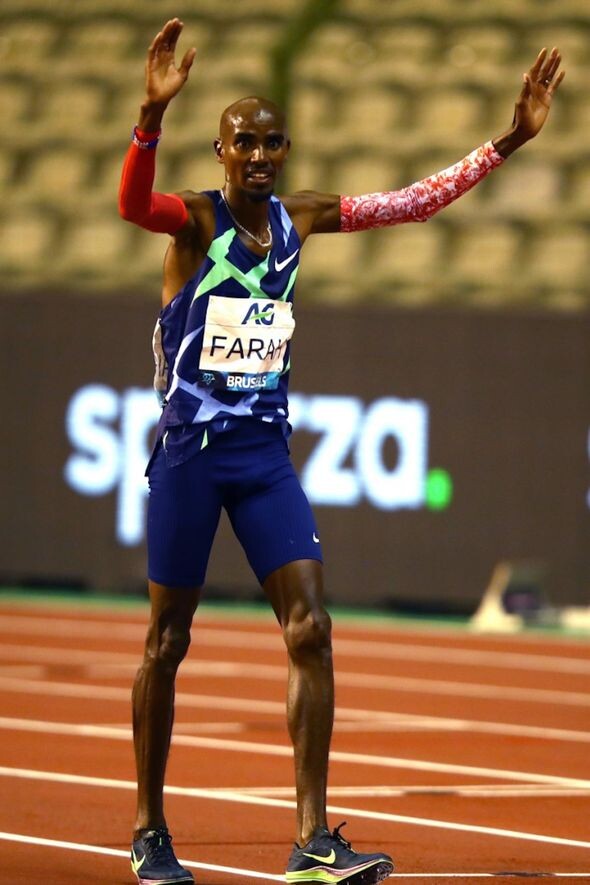
Nearly six years after Sir Mo Farah rewrote the record books in Brussels, France’s Jimmy Gressier is preparing to attack the legendary one-hour world record at the 2026 Brussels Diamond League Final on Friday, 4 September.
The setting could hardly be more symbolic. Same stadium. Same track. Same target.
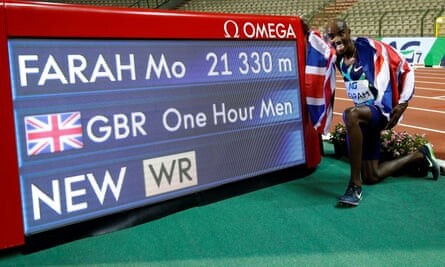
Farah’s mark of 21.330 kilometres, established in Brussels in 2020, has stood untouched ever since — a brutal benchmark of sustained speed, precision pacing and mental endurance. Now, Gressier believes he is ready to challenge it.
Unlike a traditional race, the one-hour record strips distance running down to its rawest form. There is no finish line to chase and no tactical surges to hide behind. The objective is mercilessly simple: cover as much distance as possible in exactly sixty minutes on a 400-metre track. When the clock expires, every metre matters.
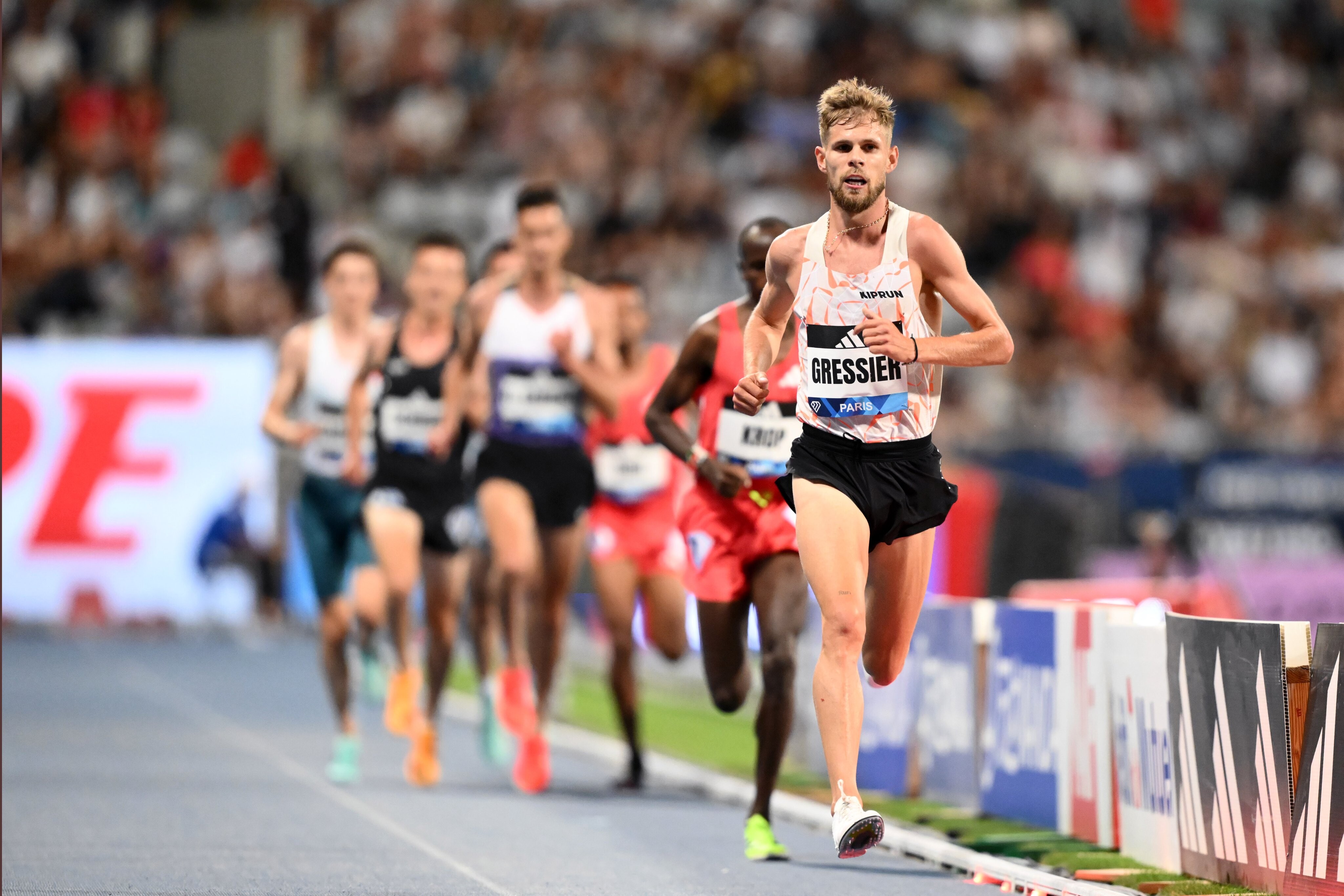
And few athletes arrive with stronger momentum than Gressier.
The Frenchman has elevated himself into the global elite over the past year, producing the finest form of his career. After claiming world 10,000m gold in Tokyo in 28:55.77, he carried that momentum onto the roads with a sensational European half marathon performance run at an astonishing 2:50-per-kilometre rhythm — the same pace that propelled Sabastian Sawe to a sub-two-hour performance in London conditions.
Yet the mathematics of the one-hour record remain cruel.
To surpass Farah’s 21.330 km, Gressier must squeeze out roughly two additional seconds per kilometre from that already ferocious tempo and sustain it relentlessly for a full hour. No recovery laps. No tactical pauses. Just controlled suffering across more than fifty-three laps of the track.
What makes the challenge even more compelling is the uncertainty surrounding the field. As of now, no pacemakers or accompanying athletes have been officially confirmed for the attempt. That raises the possibility of Gressier spending long stretches isolated against the clock — a vastly different scenario from Farah’s successful run, where Belgian marathon star Bashir Abdi provided crucial support deep into the effort.
Running alone in a one-hour record attempt can quickly become psychological warfare. Without company, every lap feels longer, every split heavier and every second more expensive.
But perhaps that is exactly what gives the event its mystique.
No championship medals. No tactical championship racing. Just one athlete confronting the limits of endurance under the glare of a stadium clock.
Sixty minutes. Fifty-three relentless laps. One man chasing a record that has waited almost six years for someone brave enough — and fast enough — to threaten it.
by Erick Cheruiyot for My Best Runs.
Login to leave a comment
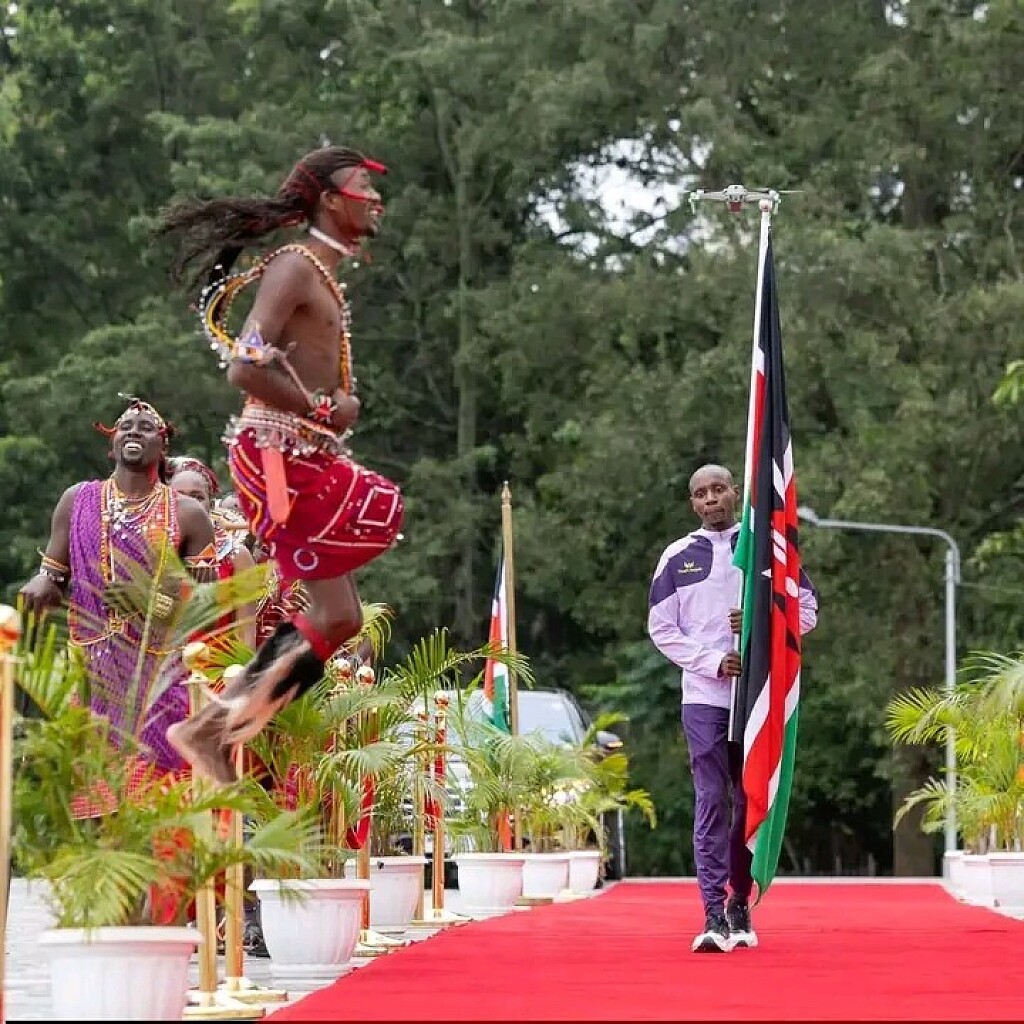
From London Glory to State Honour: Kenya Salutes Its Marathon Trailblazer
Under the proud banner of Magical Kenya — The Origin of Wonder, the country rose in unity to celebrate a moment that has redefined the boundaries of human endurance. This was more than a national celebration—it was history meeting gratitude, as Kenya welcomed home its newest global icon, Sebastian Sawe.
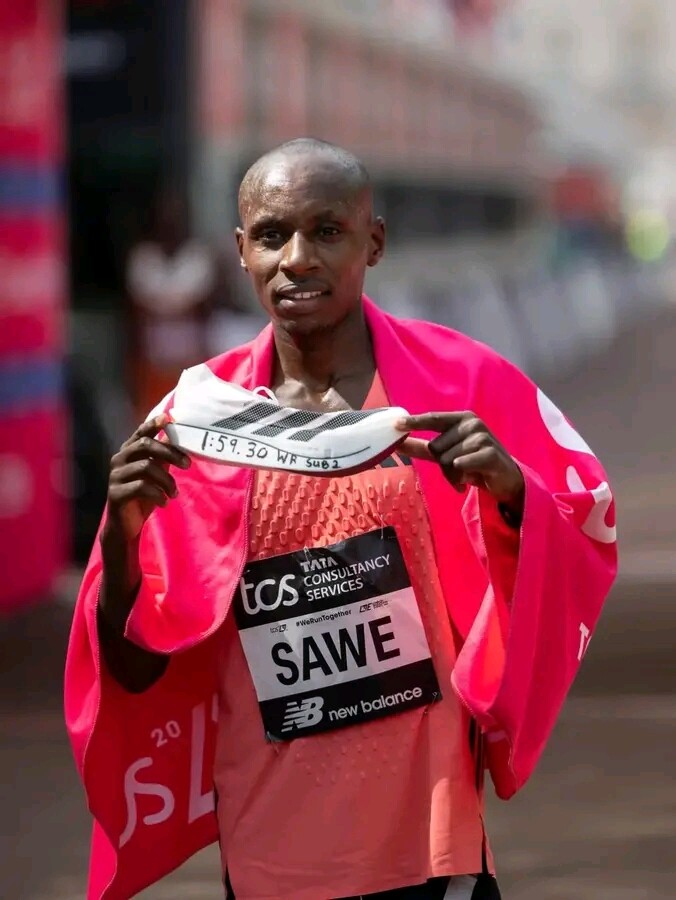
At the London Marathon 2026, Sawe delivered a performance that will echo through generations. On that unforgettable Sunday, he crossed the finish line in a breathtaking 1:59:30, shattering the marathon world record and becoming the first athlete in history to break the two-hour barrier in an official, record-eligible race. It was not merely a victory—it was a moment that altered the very perception of what the human body and mind can achieve.

Behind the brilliance of that run was a fusion of preparation, discipline, and innovation. Sawe’s performance was aided in part by the now-iconic Adidas Adizero Adios, celebrated for its lightweight construction, responsive energy-return technology, and minimalist design—qualities that continue to push elite athletes beyond previously accepted limits.

Upon his return, Kenya responded with unmatched pride and admiration. In the vibrant capital of Nairobi, celebrations erupted as citizens gathered to witness the homecoming of a man who had carried the nation’s dreams onto the global stage and returned with history in his stride.
The pinnacle of this state reception came at State House, where Sawe was formally received by Kenya's President William Ruto. In a gesture befitting the magnitude of the achievement, the President honored him with a reward of $61,000 and a car, describing the feat as “a defining moment in the history of human endurance.” It was a powerful acknowledgment of an accomplishment that transcends sport and enters the realm of national and global legacy.

Yet, even in the glow of such extraordinary success, Sawe remains driven by a hunger for more. Far from satisfied, he has already set his sights on lowering the record further—a mindset that perfectly captures the spirit of champions who refuse to see limits where others do.
Kenya’s legacy in distance running has long been unmatched, but this moment stands apart. It is a reminder that greatness is not static—it evolves, it challenges, and it inspires. And in Sebastian Sawe, the world has witnessed not just a record-breaker, but a pioneer of possibility.
As the celebrations ripple across the nation, one truth stands clear: this was not just a victory for Kenya—it was a victory for humanity.
by Erick Cheruiyot for My Best Runs.
Login to leave a comment

A Hero’s Return: Sabastian Sawe Comes Home to a Nation in Awe
There are moments in sport that transcend the finish line—moments that become part of a country’s identity. This was one of them. When Sabastian Sawe touched down on Kenyan soil after his historic triumph in London, he was not just returning home—he was arriving as a symbol of possibility redefined.

Fresh from rewriting the record books at the London Marathon, Sawe’s name now carries the weight of a new era in distance running. In a performance that will echo through generations, he clocked an astonishing 1:59:30—becoming the first man in history to break the sub-two-hour barrier in a world record-eligible race. With that single, extraordinary feat, he did not just shatter the marathon world record—he dismantled one of sport’s most elusive limits and elevated himself into rarefied air, where legends are not just remembered, but revered.

At the airport, the atmosphere was electric. Flags waved high, chants filled the air, and the pride of a nation was unmistakable. From young aspiring athletes to seasoned supporters, Kenyans turned out in numbers to celebrate one of their own. It was more than a welcome—it was a collective embrace of greatness.
Sawe’s journey to this moment has been built on discipline, resilience, and an unshakable belief in what once seemed impossible. In a country that has long been a powerhouse in long-distance running, his achievement stands out as a defining milestone—one that pushes the boundaries of human endurance and ambition.
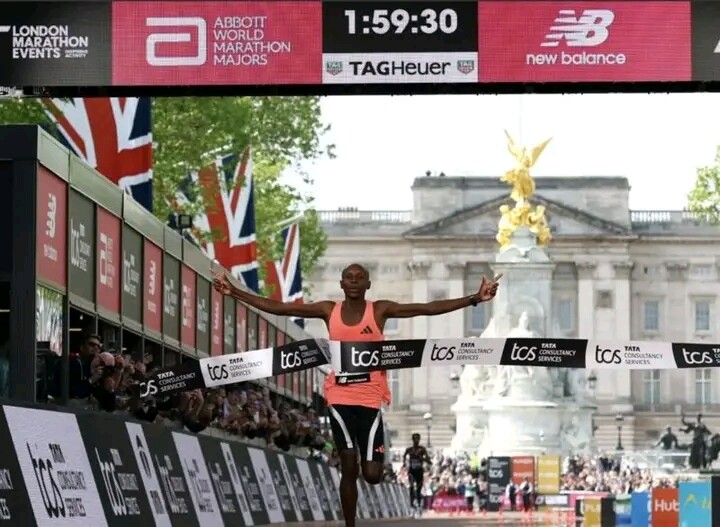
But beyond the record itself, what resonates most is the inspiration it ignites. His victory is not just a personal triumph; it is a reminder to a generation that limits are meant to be challenged. In every stride he took in London, there was a message carried back home: the future belongs to those willing to chase it relentlessly.
Now, as celebrations echo across Kenya, one truth remains clear—this is not just the return of a champion. It is the rise of a new icon, a torchbearer of excellence, and perhaps, the beginning of an even greater legacy.
by Erick Cheruiyot for My Best Runs.
Login to leave a comment

The $630 Shoe That Helped Sabastian Sawe Break Two Hours
At the 2026 London Marathon, Sabastian Sawe delivered one of the most remarkable performances in distance running history—becoming the first athlete to break two hours in an official marathon. But this wasn’t just a victory for the runner. It was a defining moment for Adidas.
On his feet: the Adidas Adios Pro Evo 3, a purpose-built “super shoe” designed with one goal—maximum speed over the marathon distance. Ultra-lightweight and engineered with advanced foam and a carbon-based propulsion system, the Evo 3 represents Adidas’ most aggressive push yet into elite performance footwear.
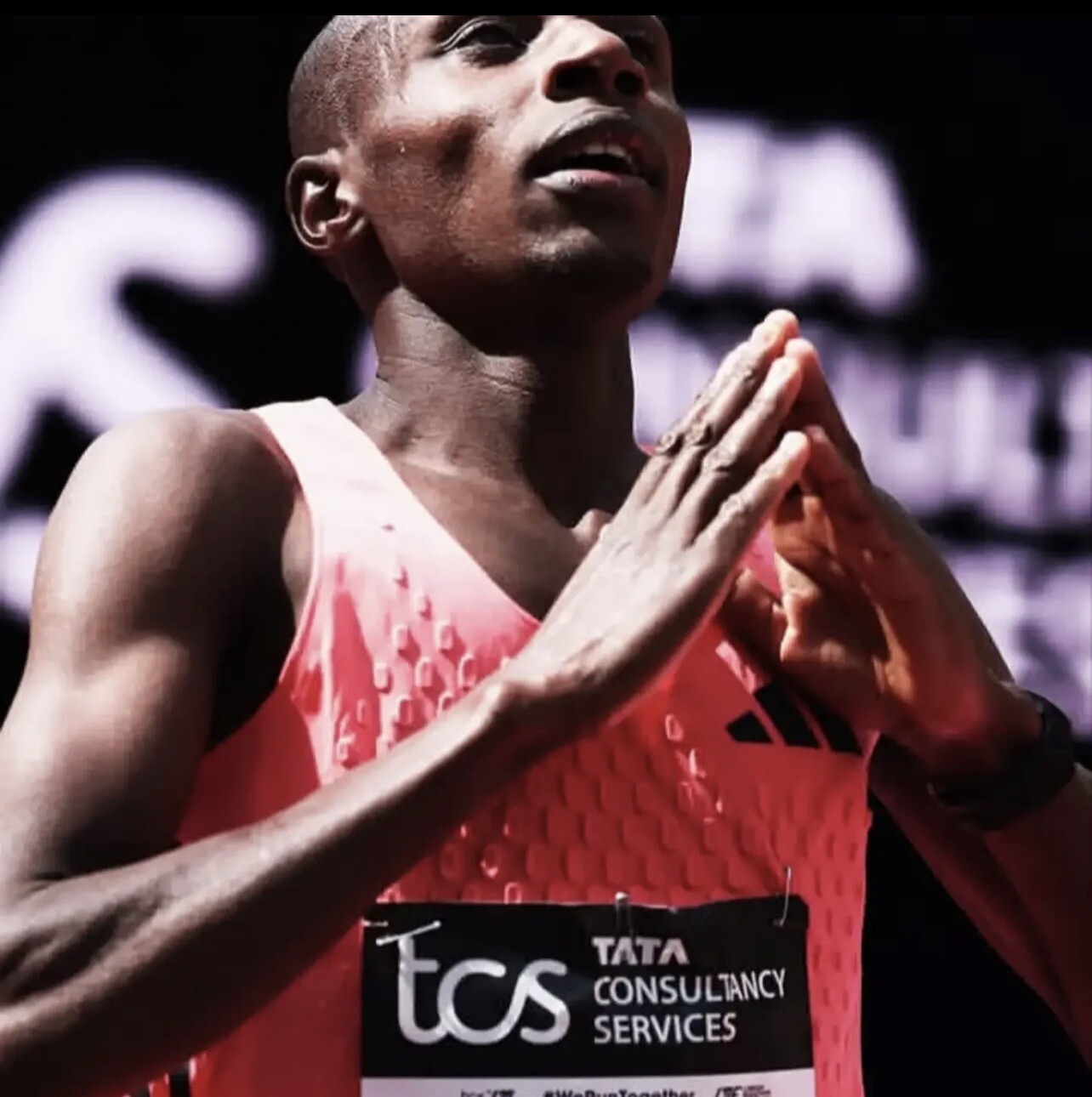
The shoe carries a price tag to match—approximately $630 USD (€580)—making it one of the most expensive running shoes ever produced. Built almost exclusively for race day, it sacrifices durability for performance, delivering every possible advantage to the athlete wearing it.
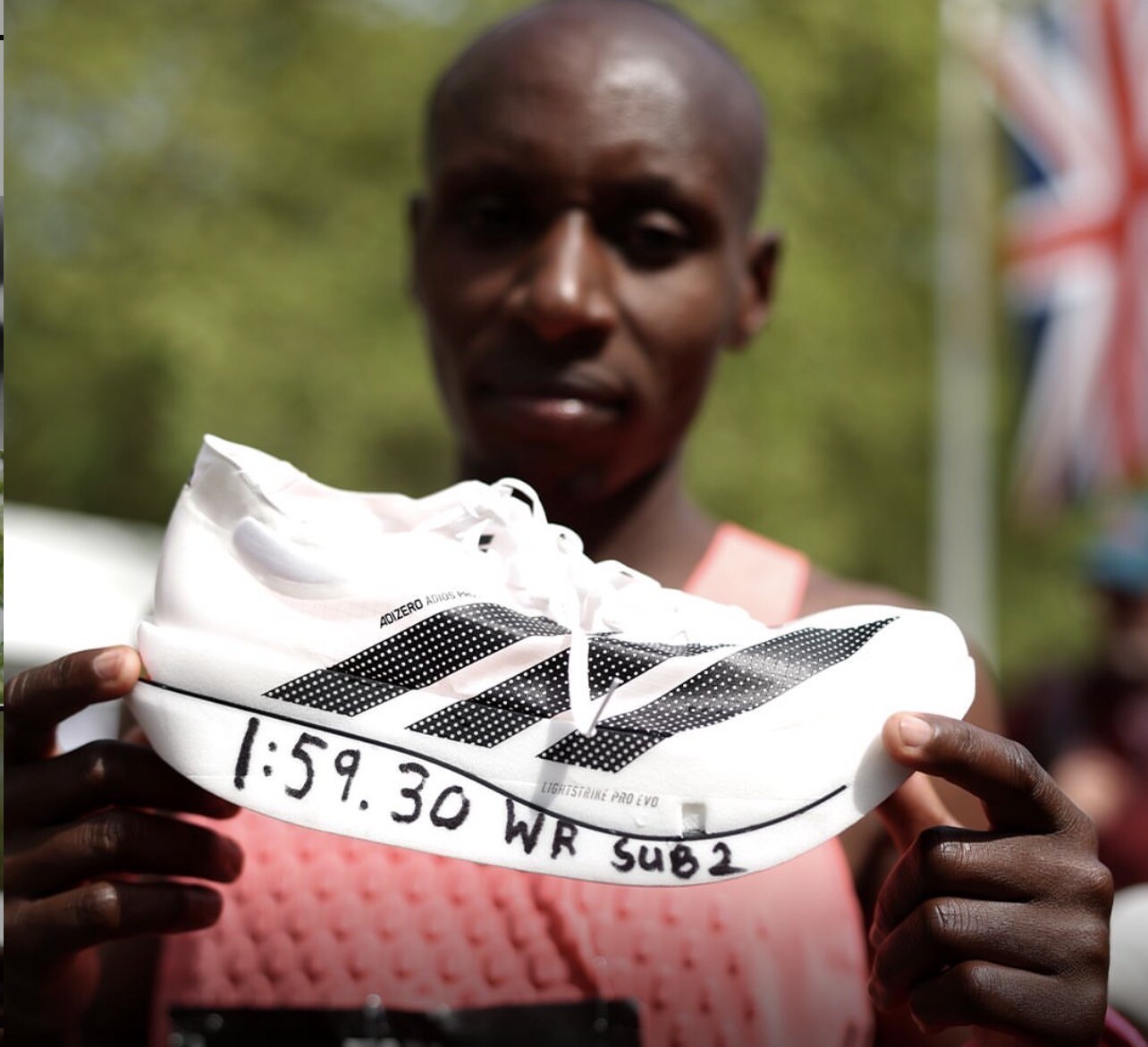
For Adidas, the payoff goes far beyond the finish line. Sawe’s historic run instantly elevated the brand’s position in the global “super shoe” race, delivering exposure that no marketing campaign could replicate. While exact figures have not been disclosed, performances of this magnitude typically trigger significant sponsor bonuses. Industry estimates suggest Sawe could earn between $500,000 and $1 million from Adidas alone, with total earnings from prize money and endorsements likely exceeding $1 million

But for those who have followed the sport for decades, this moment carries even deeper meaning.

“I remember clearly when the marathon world record was 2:08:33, set by Derek Clayton in Antwerp on May 30, 1969, and he held it for 12 years until it was finally broken on December 6, 1981 by Robert de Castella,” says MBR publisher and Runner’s World founder Bob Anderson. “Back then, I never thought I would live to see a sub-two-hour marathon.
Derek set that mark wearing very thin racing flats—nothing like what athletes have today. There were no pacers, no advanced shoe technology, and very little financial reward. He trained up to 200 miles a week and had more guts than anyone I’ve ever known. The biggest financial benefit he ever received from that record was when I later hired him as advertising sales director at Runner’s World—a package worth over $300,000.
Today, that same 2:08 wouldn’t even place in the top ten in many major marathons. The sport has changed dramatically. But what excites me most is seeing just how far it has come—from raw determination and wafer-thin shoes to a combination of talent, science, and technology. Sawe’s run, powered in part by one of the most advanced and expensive racing shoes ever built, is a perfect example of that evolution.”
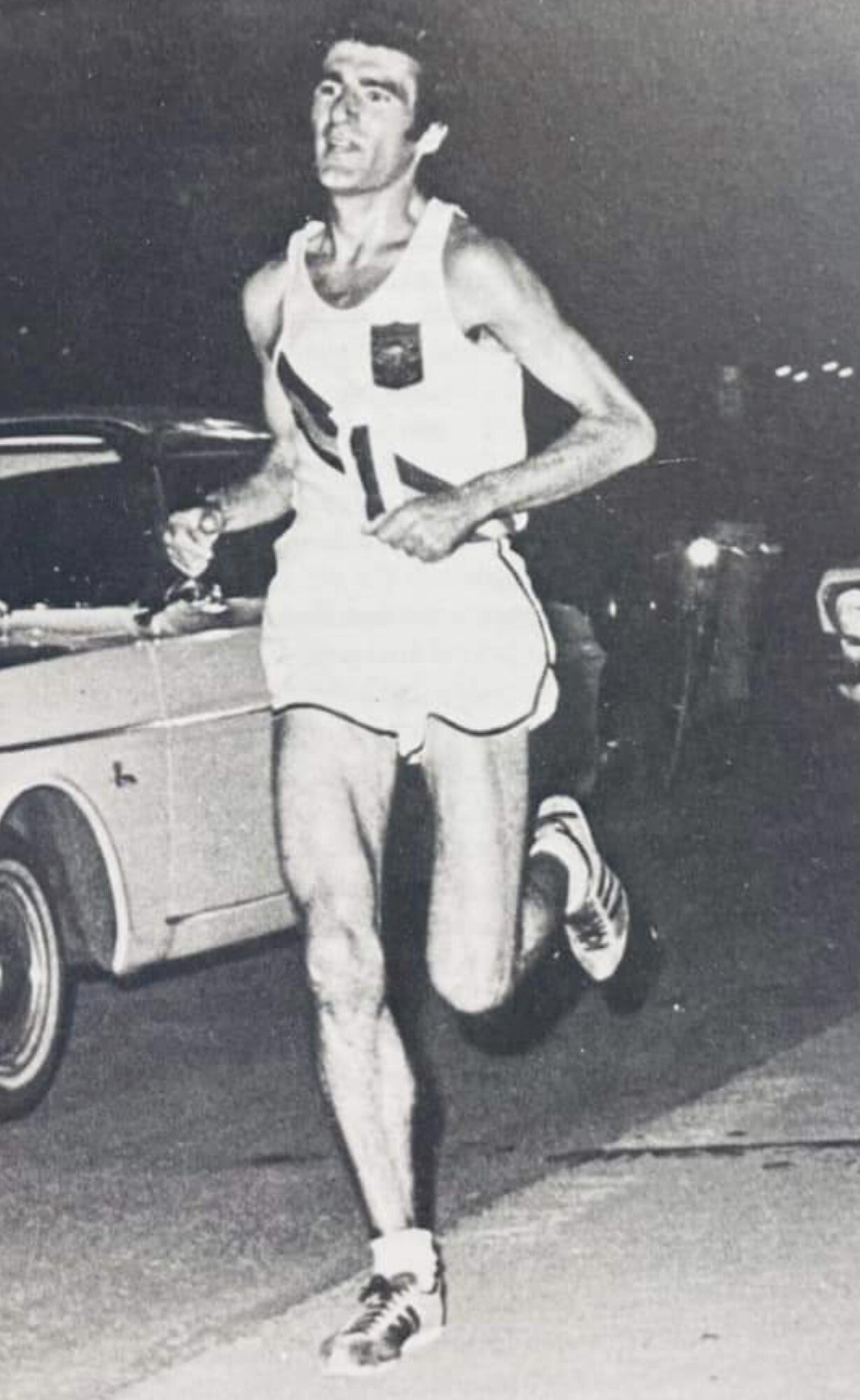
There is one striking connection between then and now. The shoes Derek Clayton wore for his 1969 world record were made by Adidas. More than half a century later, Adidas is once again at the center of a historic breakthrough—this time helping push the marathon beyond what was once thought impossible.
From wafer-thin soles in 1969 to $630 super shoes today, the marathon has entered a new era—and Adidas has been there at both ends of the journey.
by Bob Anderson for My Best Runs
Login to leave a comment
TCS London Marathon
Since its inaugural edition on March 29, 1981, the TCS London Marathon has grown into one of the world's most prestigious road races, blending elite competition with an extraordinary charitable legacy. Founded by former Olympic champion and journalist Chris Brasher alongside Welsh athlete John Disley, the event has been staged every year and has been held in the spring annually...
more...
When History Lights Up the World: Adidas Turns Piccadilly Circus into a Monument for Sabastian Sawe
In a moment that fused sport, culture, and global recognition, Adidas delivered a striking honor to Sabastian Sawe—illuminating Piccadilly Circus with a towering billboard that celebrated his historic sub-two-hour marathon performance. It was more than a marketing display; it was a declaration to the world that an extraordinary feat had taken its rightful place in history.
Sawe’s achievement—breaking one of athletics’ most elusive barriers—has already reshaped the limits of human endurance. But this visual spectacle in the heart of London elevated that accomplishment beyond the finish line. It transformed a race into a global cultural moment, projecting the story of discipline, resilience, and ambition onto one of the most visible stages on earth.
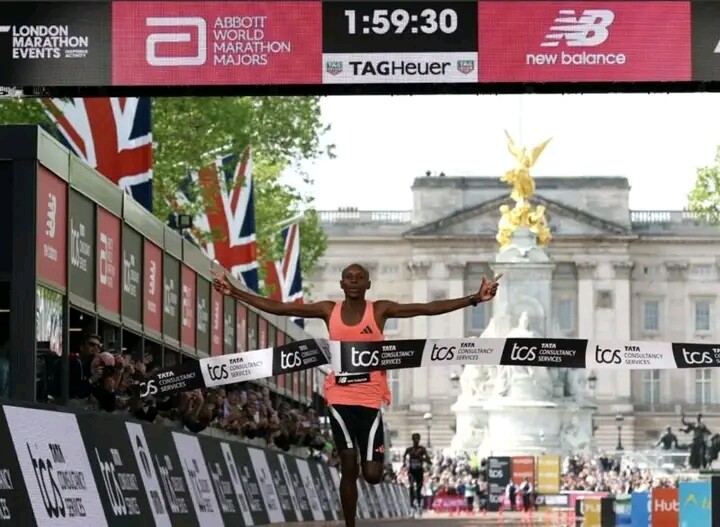
From the quiet grind of long-distance training to the electric glow of an international landmark, Sawe’s journey reflects the purest essence of greatness: unseen sacrifice meeting undeniable execution. His performance was not just fast—it was transformative, forcing the world to reconsider what is possible when preparation and belief align.
The choice of Piccadilly Circus was deliberate and symbolic. Known for its commanding digital screens and global foot traffic, it represents visibility at the highest level. To feature a Kenyan athlete in such a space sends a powerful message far beyond sport—it tells every young dreamer that talent, when nurtured with discipline, can transcend borders and command the world’s attention.
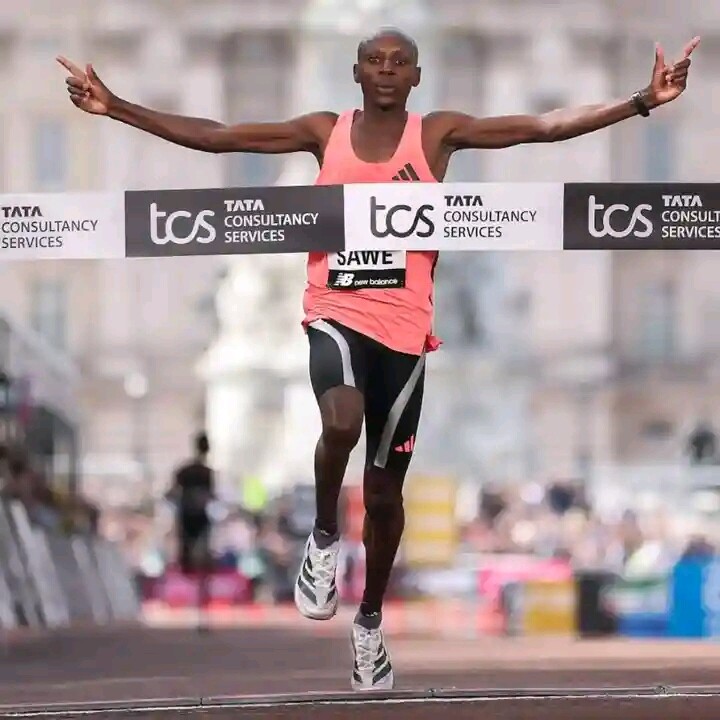
In many ways, this was also a masterstroke in branding. Adidas did not merely congratulate an athlete; it aligned itself with a moment of history. By amplifying Sawe’s triumph, the brand positioned itself alongside excellence, resilience, and the relentless pursuit of greatness—values that resonate far beyond the track.
Sawe’s rise is a reminder that limits are often mental constructs, waiting to be challenged by those courageous enough to defy them. His name is now etched not only in record books but also in the broader narrative of human achievement.
And as the lights of Piccadilly Circus carried his story across the globe, one truth stood clear: when greatness becomes undeniable, the world does more than watch—it celebrates.
Sabastian Sawe did not just run a marathon. He redefined possibility—and in doing so, ran straight into history.
by Erick Cheruiyot for My Best Runs.
Login to leave a comment
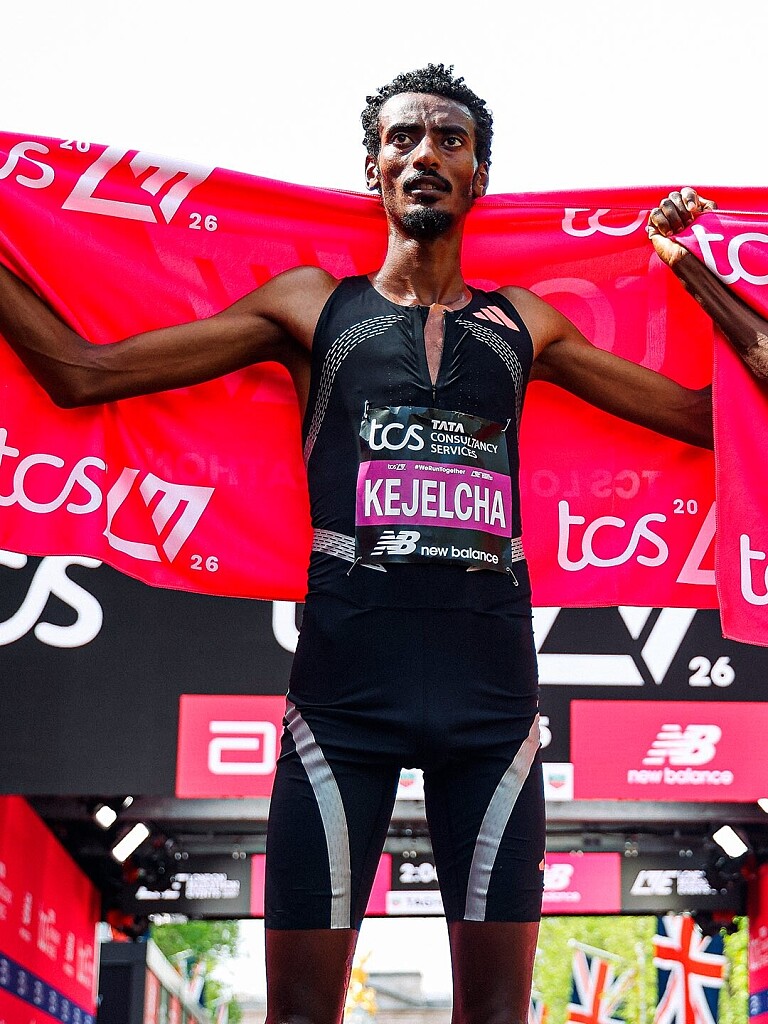
From Track Precision to Marathon Glory: Yomif Kejelcha’s Dream Debut in London
In the ever-evolving theatre of long-distance running, few transitions carry as much intrigue—and risk—as the leap from the track to the marathon. For Yomif Kejelcha, that leap was not just a test of endurance, but a bold reimagining of his athletic destiny.
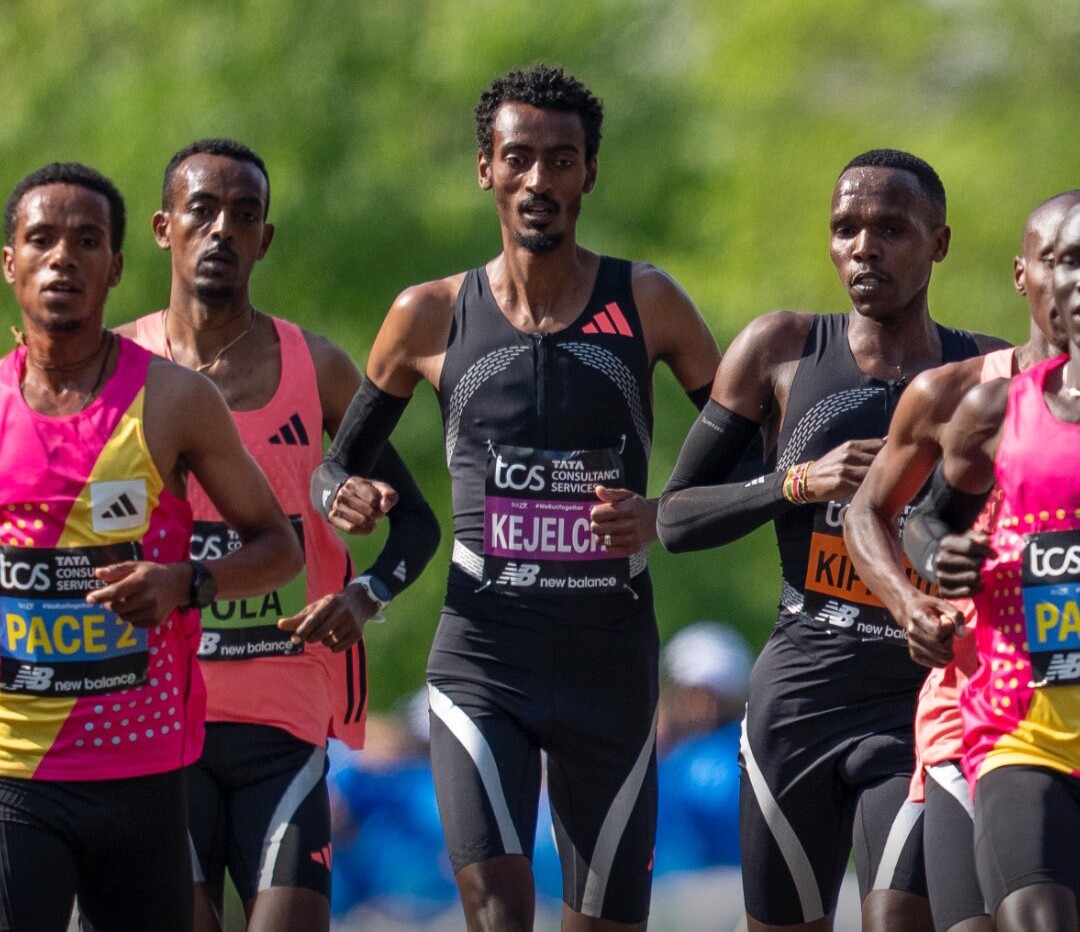
The Ethiopian star, long celebrated for his brilliance on the track, arrived at the London Marathon 2026 with quiet confidence and a daring ambition. He understood the magnitude of the shift: the marathon is not merely a longer race, but a different discipline entirely—one that demands patience, resilience, and a finely tuned sense of pace over punishing miles.
Yet what unfolded on the streets of London transcended even the highest expectations.
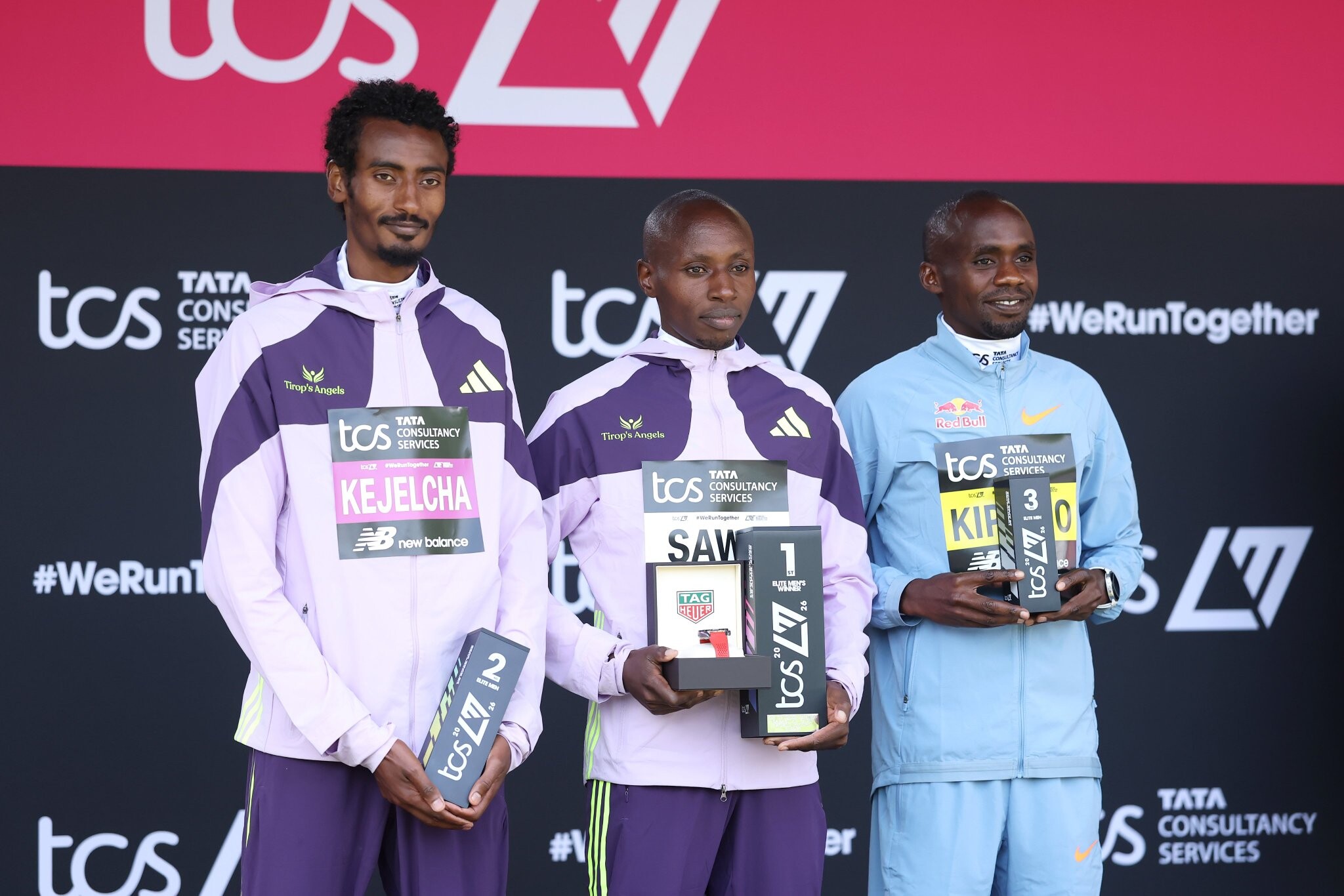
“I knew that shifting from track to the marathon would bring big changes in my career,” Kejelcha reflected afterward. “And I’m thrilled to say that the first debut lived up to the expectations.”
Clocking an astonishing 1:59:41, Kejelcha didn’t just complete his debut—he redefined it. Breaking the elusive two-hour barrier in a competitive race setting, he announced his arrival among the marathon elite in emphatic fashion. It was a performance that blended tactical intelligence with raw endurance, the hallmark of a runner who has mastered both speed and stamina.
Only one man finished ahead of him: Sabastian Sawe, whose world-record 1:59:30 added historic weight to an already unforgettable race. Together, their performances signaled a new era in marathon running—one where the once-mythical limits of human endurance are being rewritten in real time.
For Kejelcha, the moment carried a deeper significance. “Running sub-two hours in London felt unthinkable,” he admitted. “Yet that day arrived, and I fulfilled that dream.”
There is something profoundly poetic about that statement. For years, the sub-two-hour marathon existed as an almost mythical frontier—spoken of in hopeful tones, yet rarely touched in the crucible of open competition. And now, on debut, Kejelcha has etched his name into that rarefied narrative.
His journey from the track—where races are measured in seconds and surges—to the marathon’s vast, unforgiving landscape has begun not with hesitation, but with authority. It is a transition that suggests not just potential, but longevity at the highest level of the sport.
If this performance is any indication, Yomif Kejelcha’s marathon story is not merely starting—it is already accelerating toward greatness.
by Erick Cheruiyot for My Best Runs.
Login to leave a comment

When Legends Rise: Assefa and Sawe Claim Their Place in History
the grand theatre of distance running, where endurance meets audacity, two names have now been carved into the highest tier of human achievement. Tigist Assefa and Sabastian Sawe have transcended victory and stepped into immortality, their performances at the London Marathon 2026 earning them official recognition in the Guinness World Records.
It was not merely a race—it was a rewriting of limits.
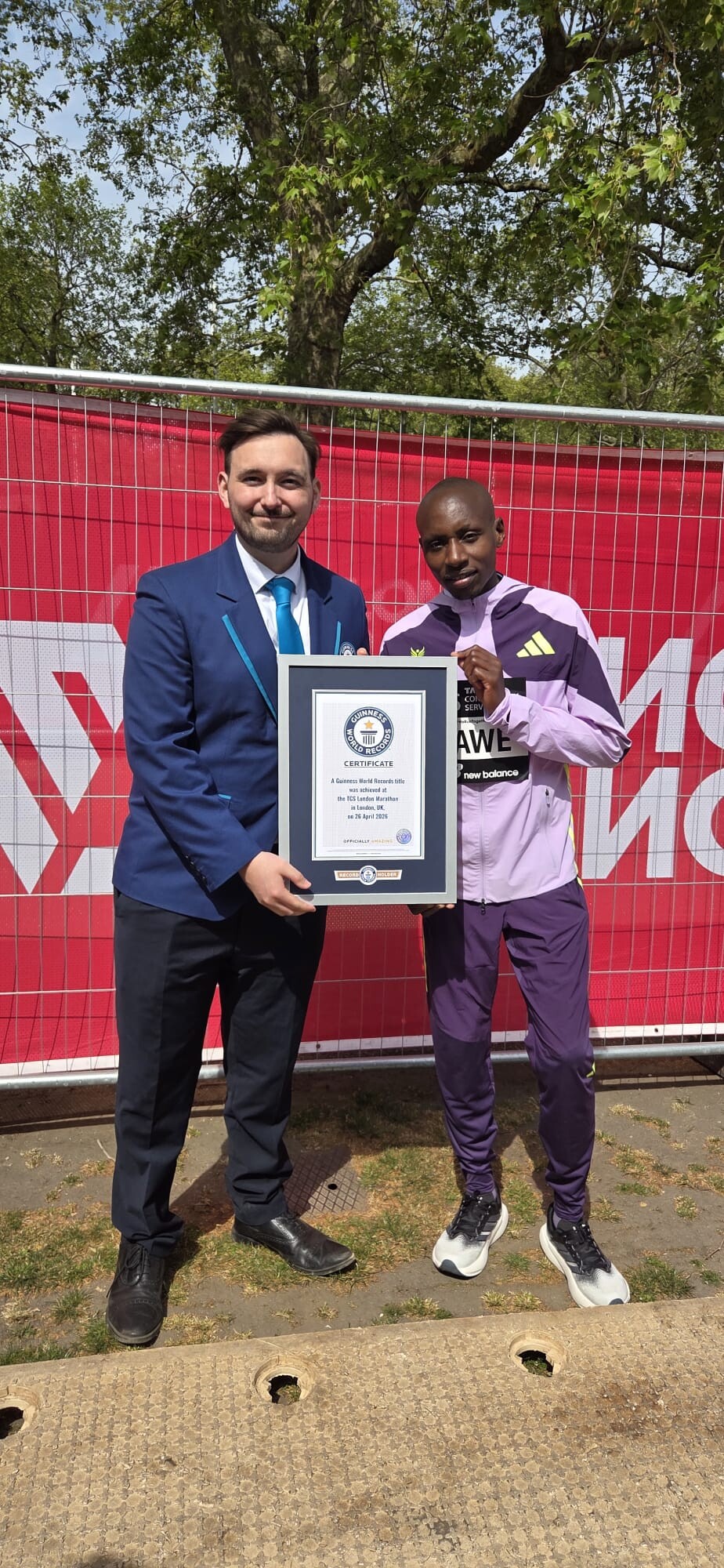
Sawe delivered a performance that defied decades of physiological assumptions. Clocking an astonishing 1:59:30, he shattered the long-standing perception of what the human body can sustain over 42.195 kilometers. The sub-two-hour marathon, once considered an almost mythical frontier, became a reality under race conditions—no pacing formations, no experimental setup—just raw, competitive brilliance. His run was not only fast; it was controlled, precise, and relentlessly efficient, a masterclass in modern marathon execution.
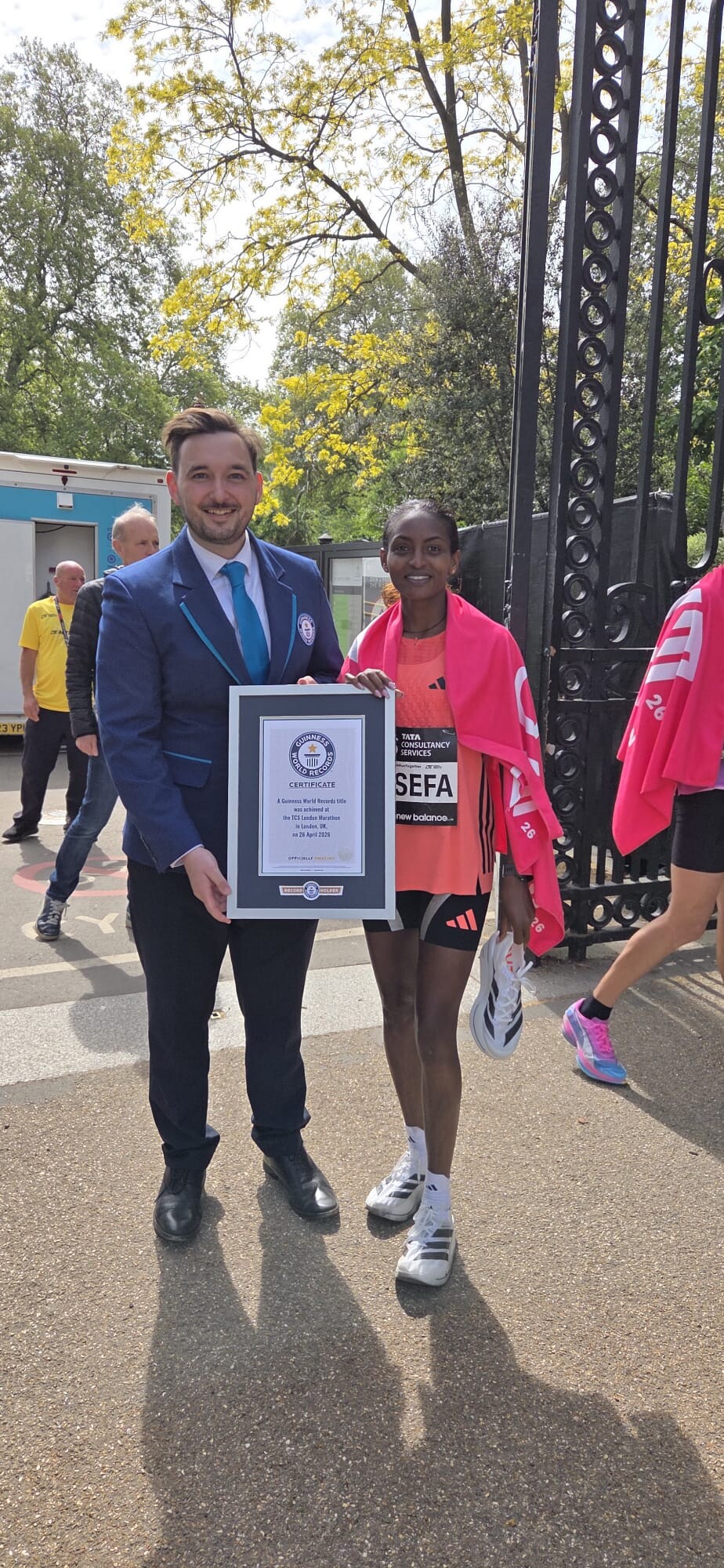
On the women’s side, Assefa produced a run of equal magnitude, though sculpted in a different context. Her 2:15:41 established a new women-only world record, a distinction that strips away the advantage of mixed pacing and places the spotlight squarely on individual strength and strategy. From the opening miles, she ran with authority, balancing aggression with composure, and by the closing stages, her dominance was undeniable. It was a performance defined by clarity of purpose and extraordinary resilience.
Together, these two athletes did more than win races—they expanded the boundaries of possibility. Their entries into the Guinness World Records serve as formal recognition of something deeper: a shift in the narrative of marathon running. Where once there were ceilings, there are now open skies.
What makes this moment particularly compelling is its duality. Kenya and Ethiopia, long-standing rivals and co-authors of distance running greatness, once again stand side by side at the summit. Sawe and Assefa, through different journeys and styles, have arrived at the same destination—global sporting immortality.
In years to come, their times will be chased, analyzed, and perhaps even surpassed. But the significance of this moment will endure. Because records, at their core, are not just numbers. They are declarations—bold statements of how far humanity can go when courage meets preparation.
And on that unforgettable day in London, Assefa and Sawe did not just run fast. They ran beyond history—and into it.
by Erick Cheruiyot for My Best Runs.
Login to leave a comment
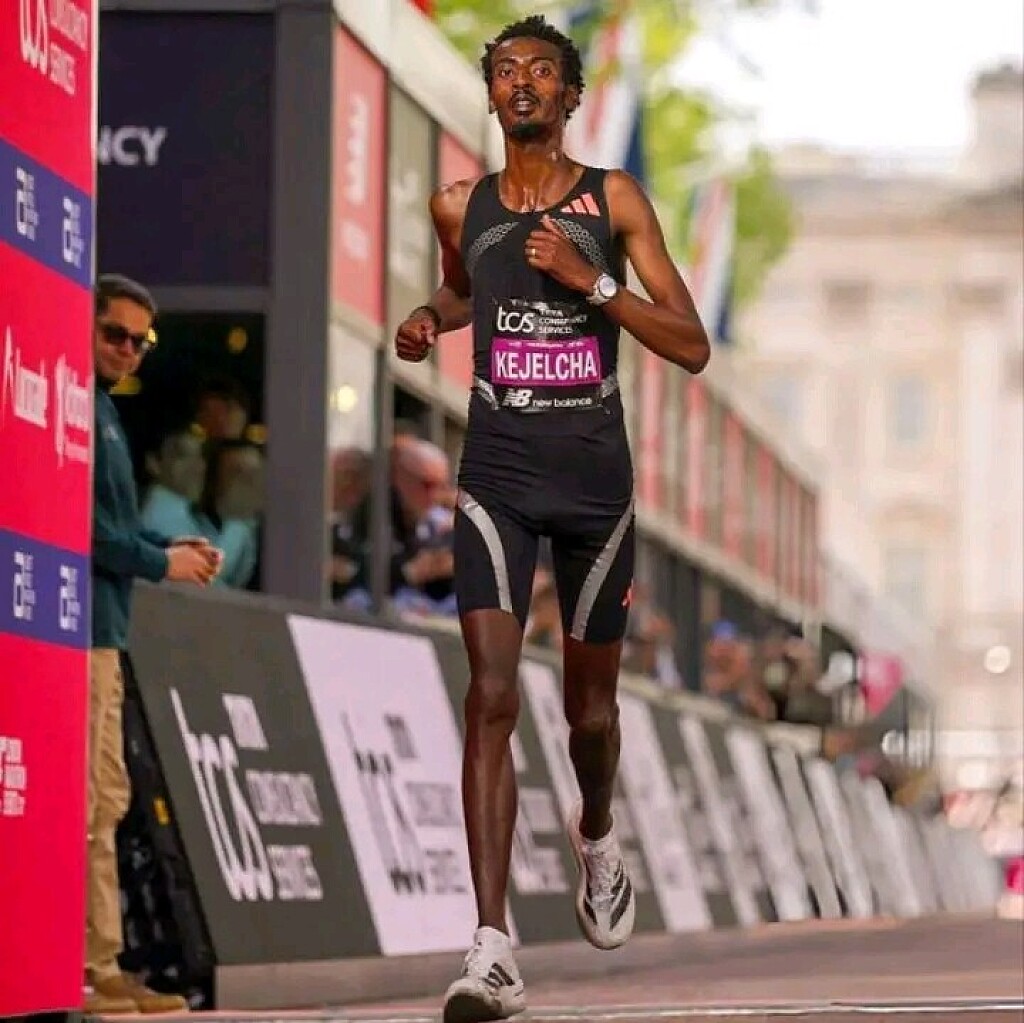
Fearless Debut: Yomif Kejelcha Turns Doubt into History with Stunning Sub-Two Marathon in London
The 2026 London Marathon delivered one of the greatest distance-running spectacles ever witnessed, and few stories were as captivating as the rise of Yomif Kejelcha. Just days before the race, even Kejelcha himself admitted that running 1:59 in his marathon debut sounded almost too good to be true. By Sunday afternoon, doubt had been replaced by destiny.
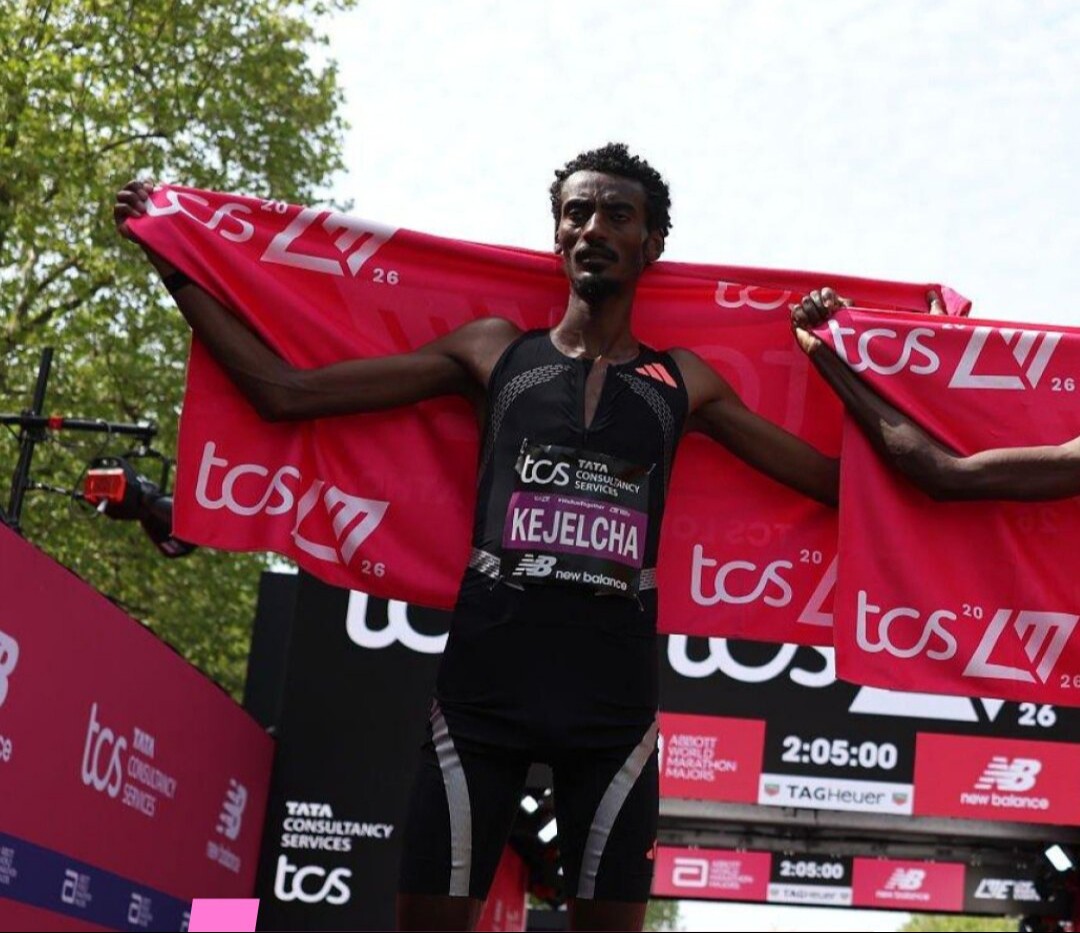
The 28-year-old Ethiopian produced a sensational 1:59:41 in his first-ever full marathon, becoming only the second man in history to officially break the two-hour barrier. It was a performance of courage, precision, and extraordinary natural talent — the kind of run that instantly becomes part of sporting folklore.
To achieve such a mark on debut makes the feat even more remarkable. The marathon is known for humbling even the finest athletes, demanding patience, strength, and experience over 42.195 kilometres. Yet Kejelcha ran with the poise of a seasoned champion, matching the pace of history stride for stride.
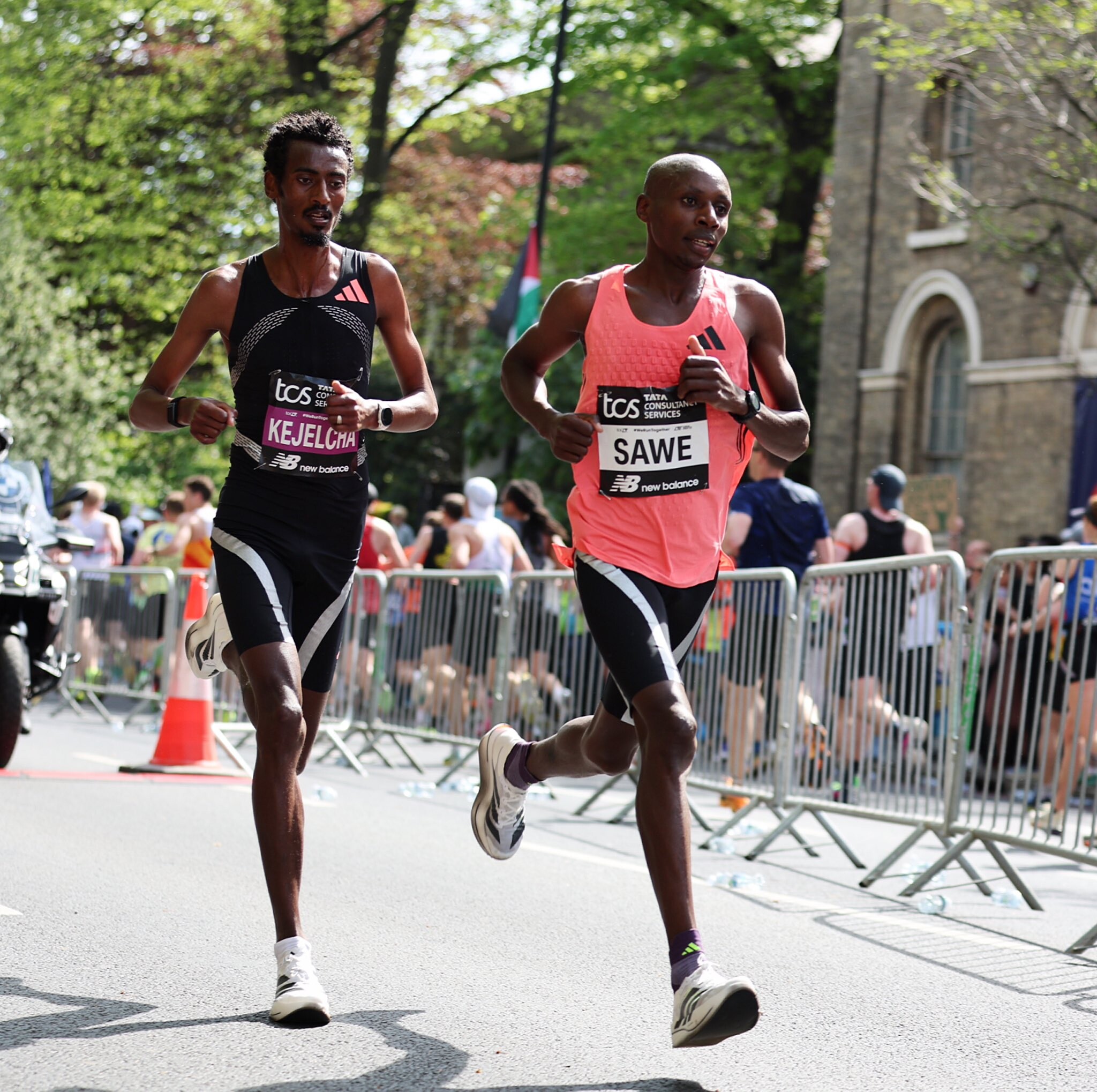
Only one athlete finished ahead of him — Sabastian Sawe, who stormed to victory in a world record 1:59:30. Together, the two men transformed London into the setting of an unforgettable breakthrough, becoming the first pair to go under two hours in the same official race.
For Kejelcha, second place carried the weight of triumph. He arrived with questions surrounding his transition to the marathon, but left with global admiration and a place among the sport’s immortals. What seemed impossible on Friday had become reality by Sunday.
London will celebrate Sawe’s world record, but it will also remember the fearless Ethiopian who trusted his legs, defied expectations, and discovered that the impossible was possible after all.
by Erick Cheruiyot for My Best Runs.
Login to leave a comment
TCS London Marathon
Since its inaugural edition on March 29, 1981, the TCS London Marathon has grown into one of the world's most prestigious road races, blending elite competition with an extraordinary charitable legacy. Founded by former Olympic champion and journalist Chris Brasher alongside Welsh athlete John Disley, the event has been staged every year and has been held in the spring annually...
more...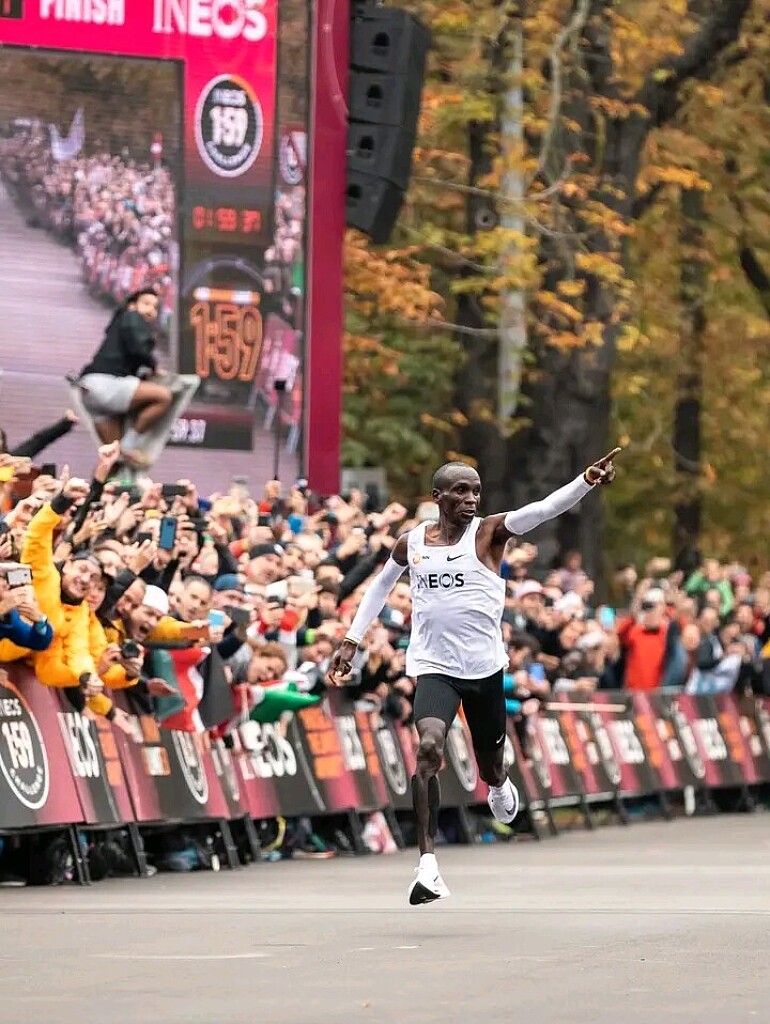
Kipchoge Hails Historic London Marathon as Sawe and Kejelcha Shatter the Two-Hour Barrier
Marathon legend Eliud Kipchoge has led the global athletics community in celebrating a landmark moment in distance running after Sabastian Sawe and Yomif Kejelcha both broke the once-unthinkable two-hour barrier at the London Marathon. Their astonishing performances transformed the streets of London into the stage for one of the greatest days the sport has ever witnessed.
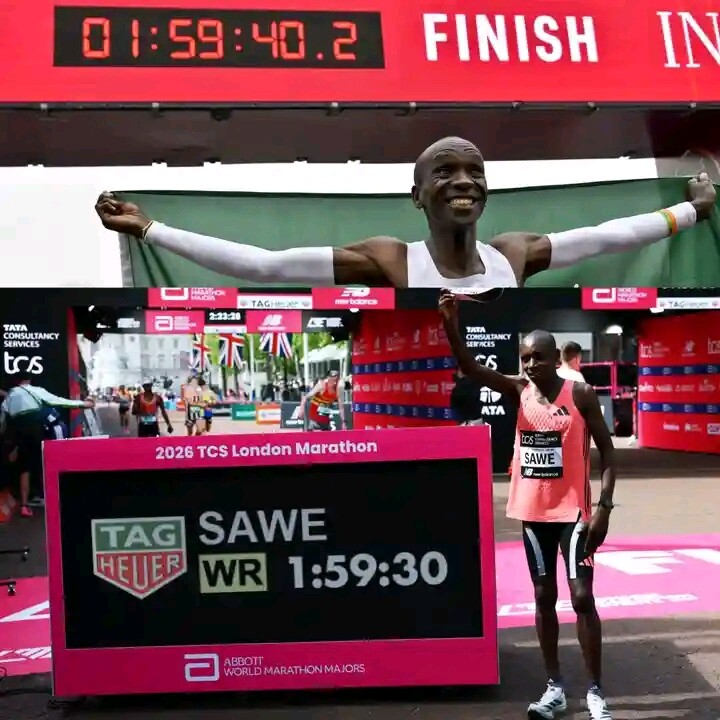
Reacting to the achievement, Kipchoge described the occasion as a defining chapter in marathon history, praising the pair for turning what was once considered impossible into reality. He noted that seeing two athletes dip under two hours in an official city marathon was powerful proof that the limits of human endurance continue to expand when extraordinary talent is matched with progress, preparation, and belief.
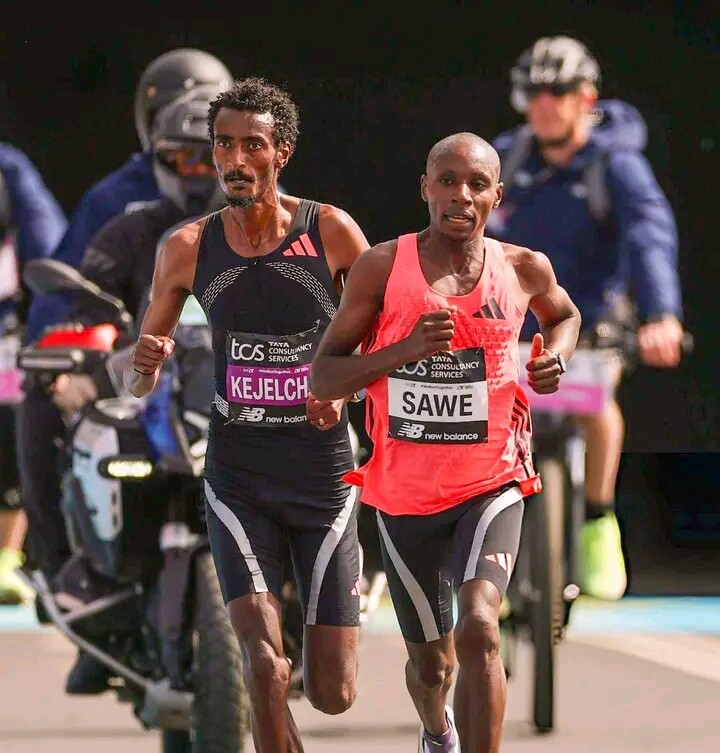
The Kenyan icon, who famously ran 1:59:40 during the INEOS 1:59 Challenge, said it had always been his hope that another athlete would one day carry that dream into a major city marathon and officially conquer the barrier. For Kipchoge, the London breakthrough was not the end of a journey, but the beginning of a new era for the marathon.
Sawe’s triumph and Kejelcha’s fearless run now stand as symbols of a sport entering uncharted territory. Their performances have redefined expectations and raised fresh excitement about how fast the marathon can become in the years ahead.
Kipchoge also used the moment to deliver the message that has inspired millions around the world: No Human Is Limited. With history now rewritten in London, the next generation of runners has been handed a new standard to chase—and a powerful reminder that impossible barriers are meant to fall.
by Erick Cheruiyot for My Best Runs.
Login to leave a comment
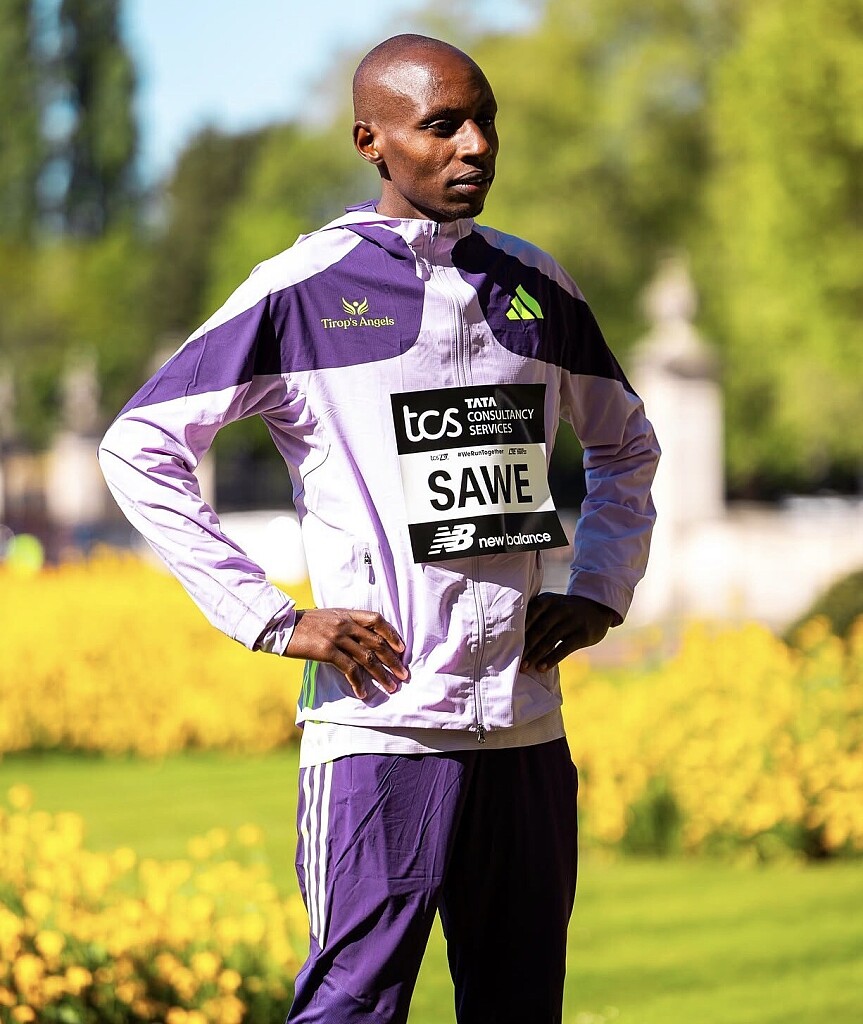
It has been achieved
Today in London, Sabastian Sawe didn’t just win the marathon—he broke the barrier, clocking an incredible 1:59:30.
His splits tell the story of something truly special:
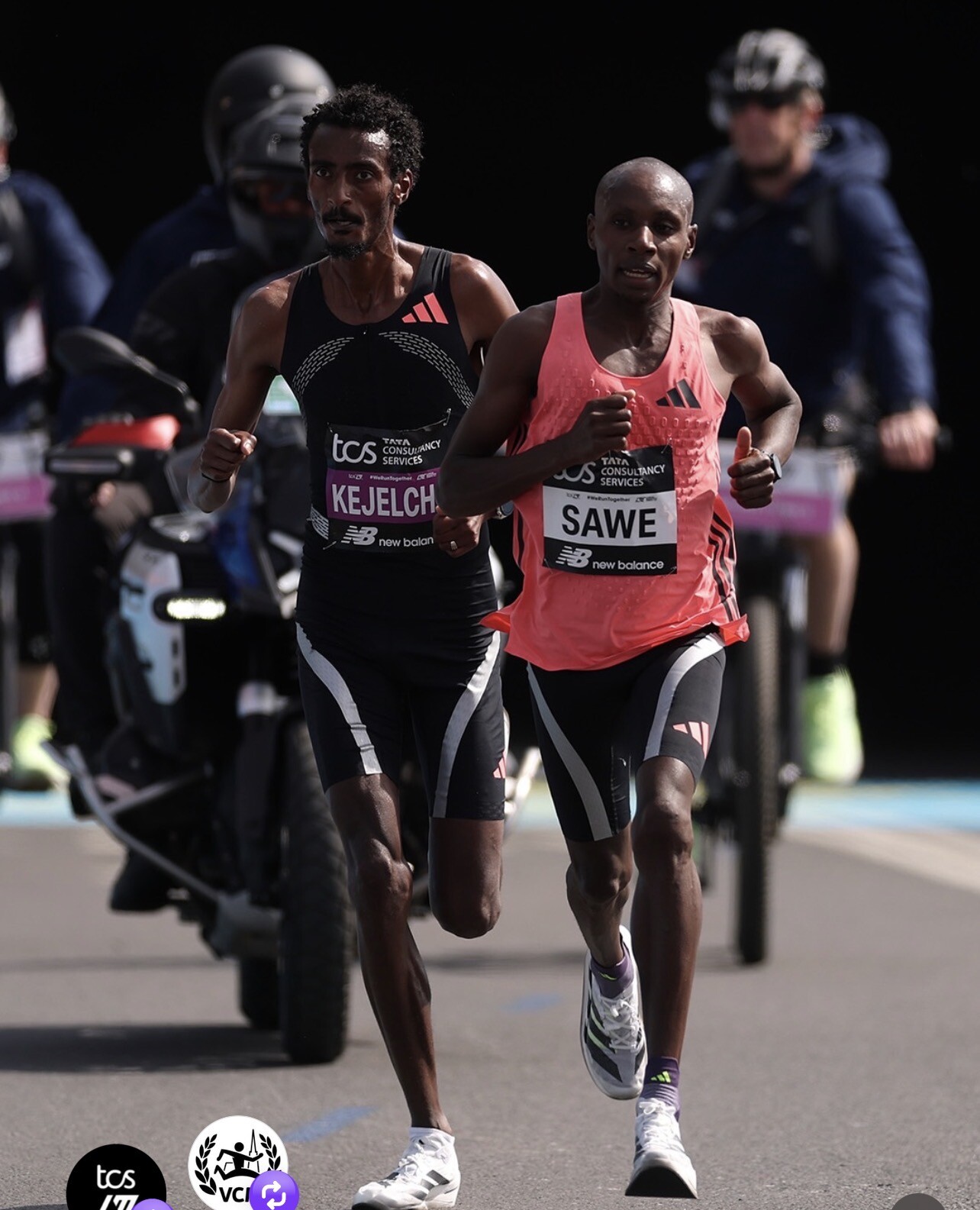
5K – 14:14
10K – 28:35
15K – 43:10
20K – 57:21
Half – 60:29
25K – 1:11:41
30K – 1:26:03
35K – 1:39:57
40K – 1:53:39
Finish – 1:59:30
And it wasn’t just one man today. Yomif Kejelcha finished second in 1:59:41—also under two hours in his marathon debut.
On the women’s side, Tigst Assefa delivered a performance of her own, setting a women-only world record of 2:15:41.
We’ve talked about moments like this for years. Today, it all came together.

— Bob Anderson
by Bob Anderson Publisher My Best Runs
Login to leave a comment
TCS London Marathon
Since its inaugural edition on March 29, 1981, the TCS London Marathon has grown into one of the world's most prestigious road races, blending elite competition with an extraordinary charitable legacy. Founded by former Olympic champion and journalist Chris Brasher alongside Welsh athlete John Disley, the event has been staged every year and has been held in the spring annually...
more...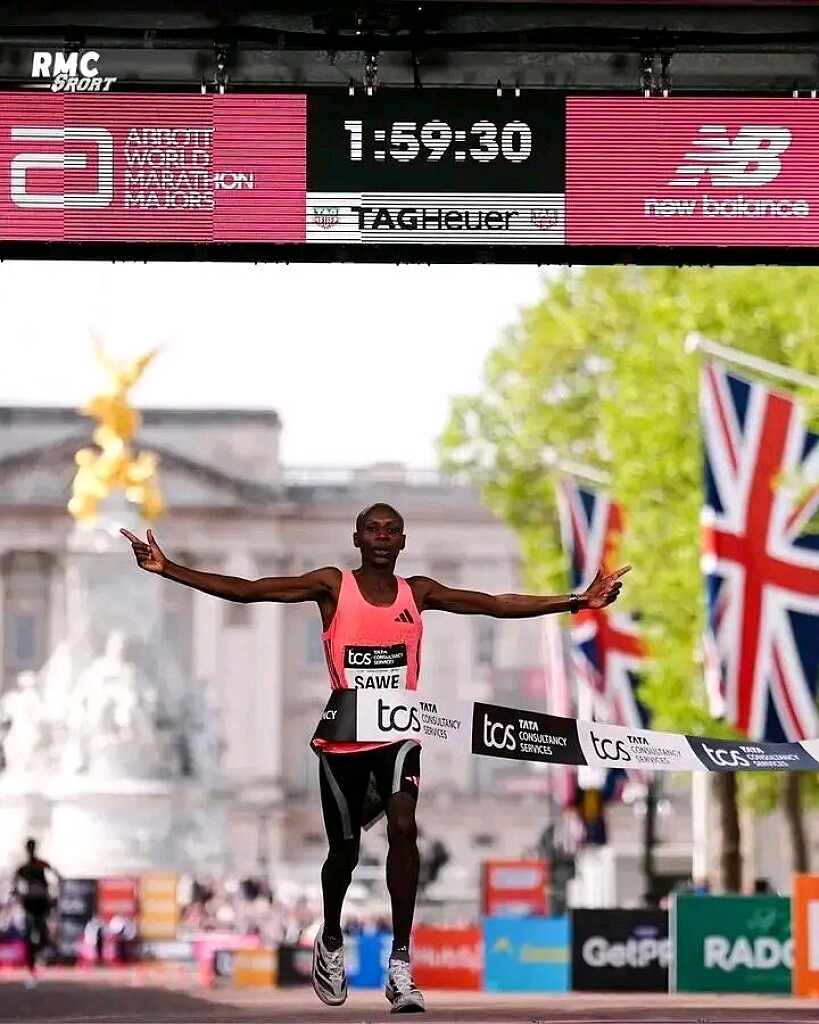
Golden Payday in London: Sebastian Sawe Turns Marathon Glory Into $330,000 Windfall
Sebastian Sawe delivered a performance of immense class and composure at the 2026 London Marathon, storming to victory in the men’s race and securing one of the richest rewards in road racing. With the winner’s purse, bonuses, and world-record incentives combined, the Kenyan star is set to leave the British capital with an astonishing $330,000.
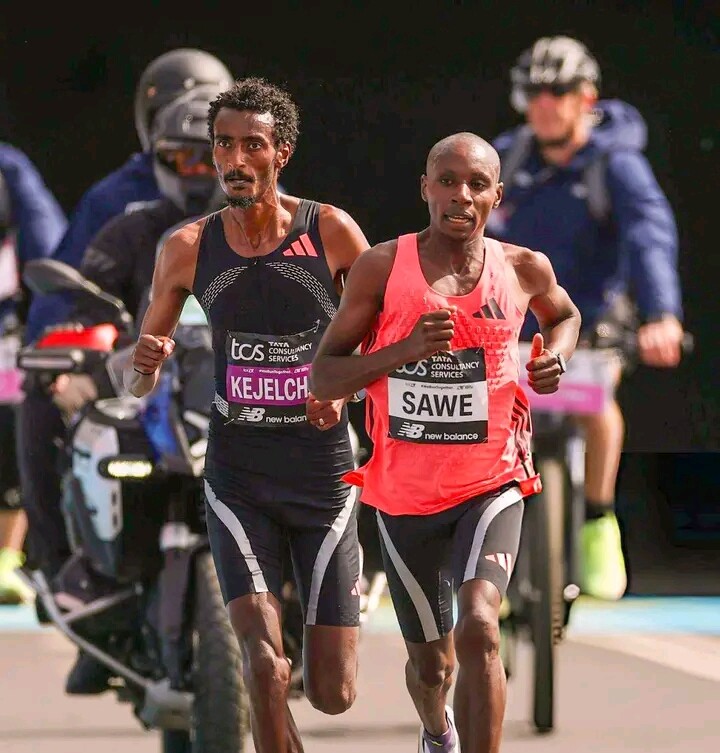
It was not merely a race win—it was a statement. Sawe conquered one of the strongest marathon fields assembled this season, mastering the pace, pressure, and prestige that define London’s famous streets. From the early miles to the decisive closing stages, he ran with the confidence of a man fully aware that greatness was within reach.
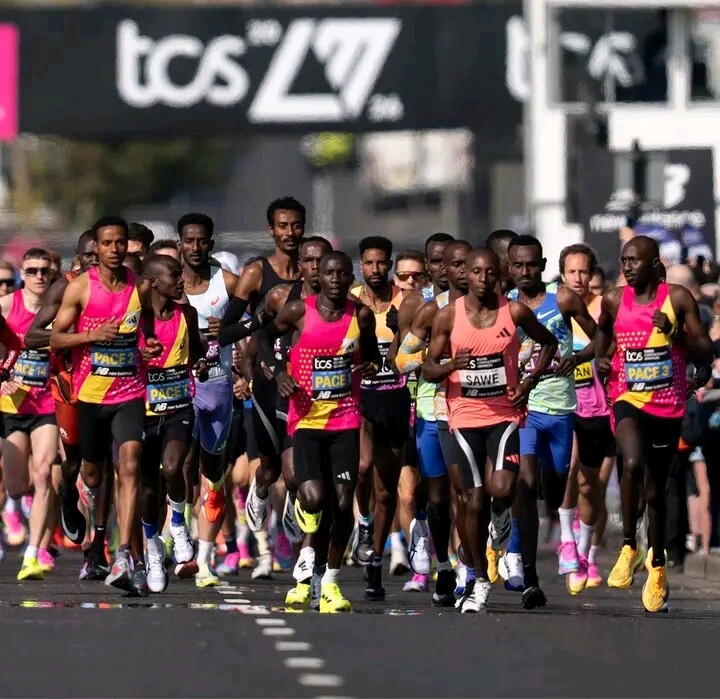
The financial reward only adds another layer to an unforgettable day. Spread across the 26.2-mile journey, Sawe’s earnings equate to roughly $7,857 per mile—a remarkable figure that underlines the scale of elite marathon success at the highest level.
Sebastian Sawe’s magnificent victory could prove just as rewarding financially as it was historically on the road. After delivering a sensational sub-two-hour performance, the Kenyan star is expected to pocket more than Ksh 40 million through a combination of prize money and performance bonuses. The champion’s purse is valued at $55,000, while an additional $150,000 incentive is attached to breaking the 2:02:00 barrier, turning his brilliance into an extraordinary payday.
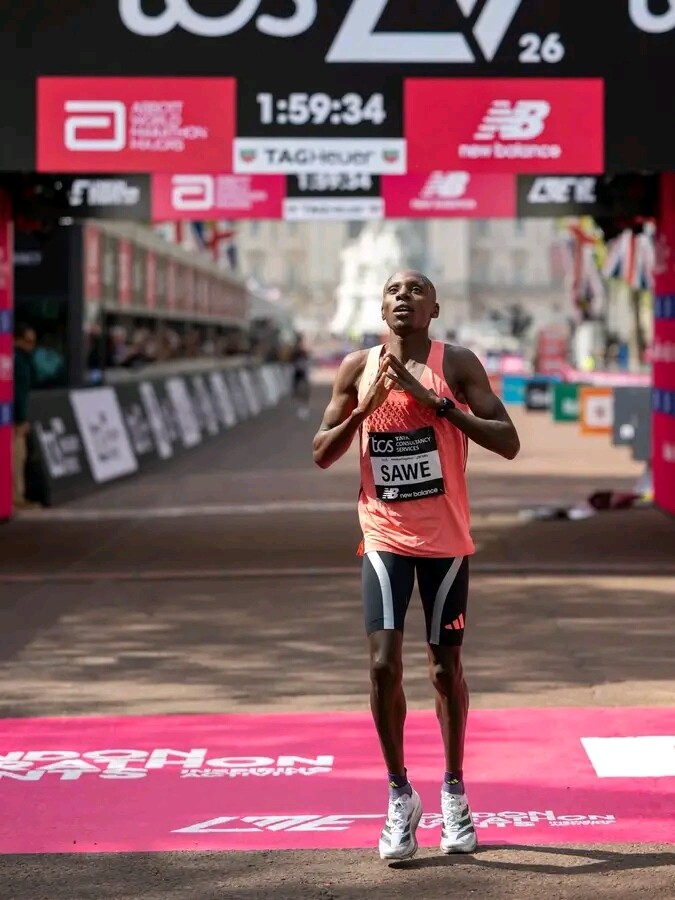
Should his stunning 1:59:30 also qualify for the world-record reward, a further $125,000 would be added to his total earnings. That would lift the combined package to approximately $330,000 — over Ksh 42 million based on 2026 exchange rates. The figure does not yet account for appearance fees or any course-record bonuses, meaning the final sum could be even greater, although taxes and other standard deductions would still apply.
Yet beyond the prize money lies the deeper significance of the moment. London has long been a theatre where legends are made, and Sawe’s triumph places his name firmly among the newest stars of the distance. To win there requires far more than speed; it demands courage, intelligence, and flawless execution.
For Kenyan athletics, it was another proud chapter in a rich distance-running tradition. For Sawe himself, it may prove the race that elevates him from contender to global marathon force.
One race. One unforgettable victory. One life-changing payday. Sebastian Sawe left London with far more than money—he left with history.
by Erick Cheruiyot for My Best Runs.
Login to leave a comment
TCS London Marathon
Since its inaugural edition on March 29, 1981, the TCS London Marathon has grown into one of the world's most prestigious road races, blending elite competition with an extraordinary charitable legacy. Founded by former Olympic champion and journalist Chris Brasher alongside Welsh athlete John Disley, the event has been staged every year and has been held in the spring annually...
more...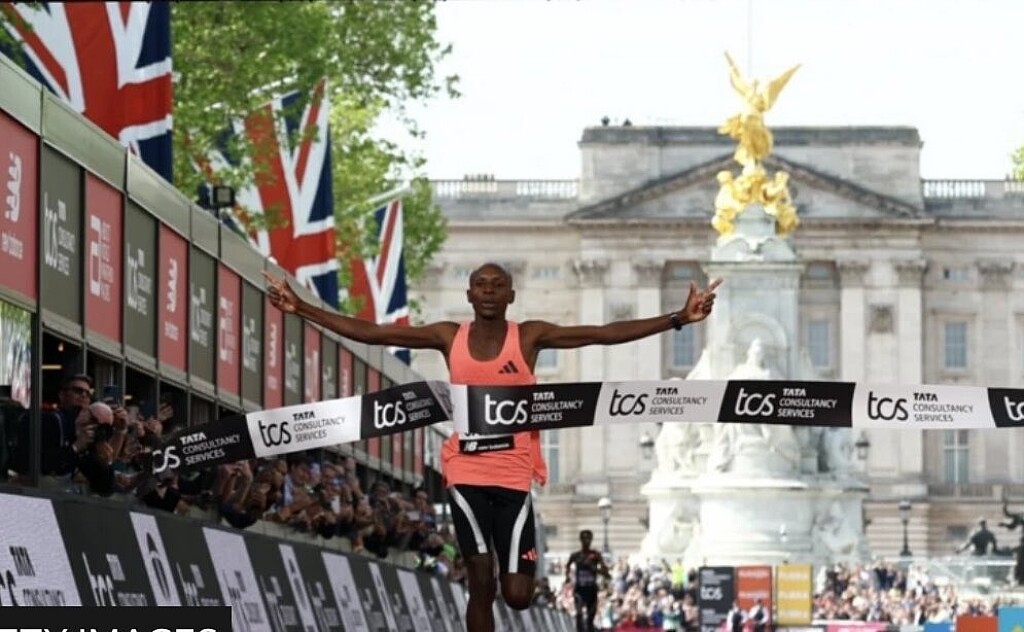
HISTORY REWRITTEN: Sawe Shatters the Two-Hour Barrier in a Marathon Masterpiece
In a moment that will echo through the annals of long-distance running, the defending champion Sebastian Sawe has achieved what generations once believed to be beyond human reach—breaking the two-hour barrier in an official marathon setting at the TCS London Marathon 2026.
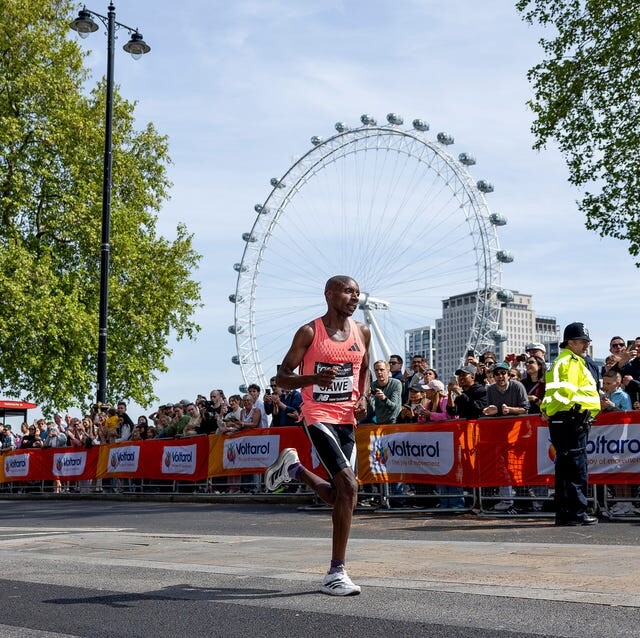
Clocking a breathtaking 1:59:30, the Kenyan star becomes the first man in history to run a sub-two-hour marathon under record-eligible conditions, delivering a performance of extraordinary precision, endurance, and courage. It was not just a race—it was a statement that the limits of human performance continue to be redefined.
The race unfolded at a relentless pace, with Sawe demonstrating remarkable composure and control from the very start. As the kilometers ticked away, it became increasingly evident that something historic was taking shape. Each stride carried the weight of expectation and possibility, and when he finally crossed the line, the stopwatch confirmed the unimaginable had become reality.
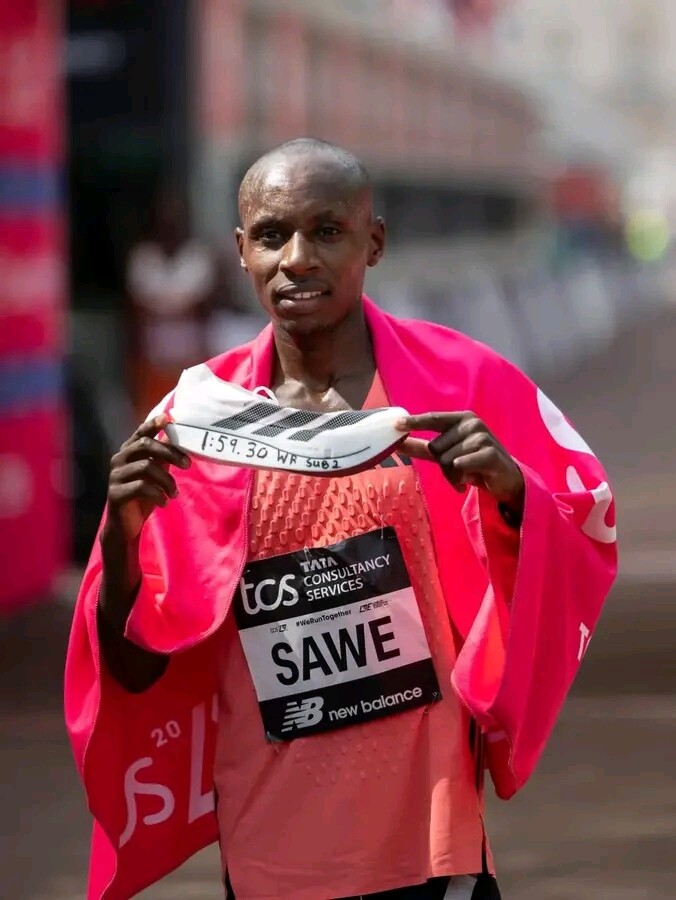
Hot on his heels was Ethiopia’s Yomif Kejelcha, who matched the historic time of 1:59:41, securing a personal best and national record in a performance that would have dominated headlines on any other occasion. Meanwhile, Uganda’s Jacob Kiplimo delivered a sensational 2:00:28, also a personal best and national record, further highlighting the extraordinary depth and quality of this unforgettable race.
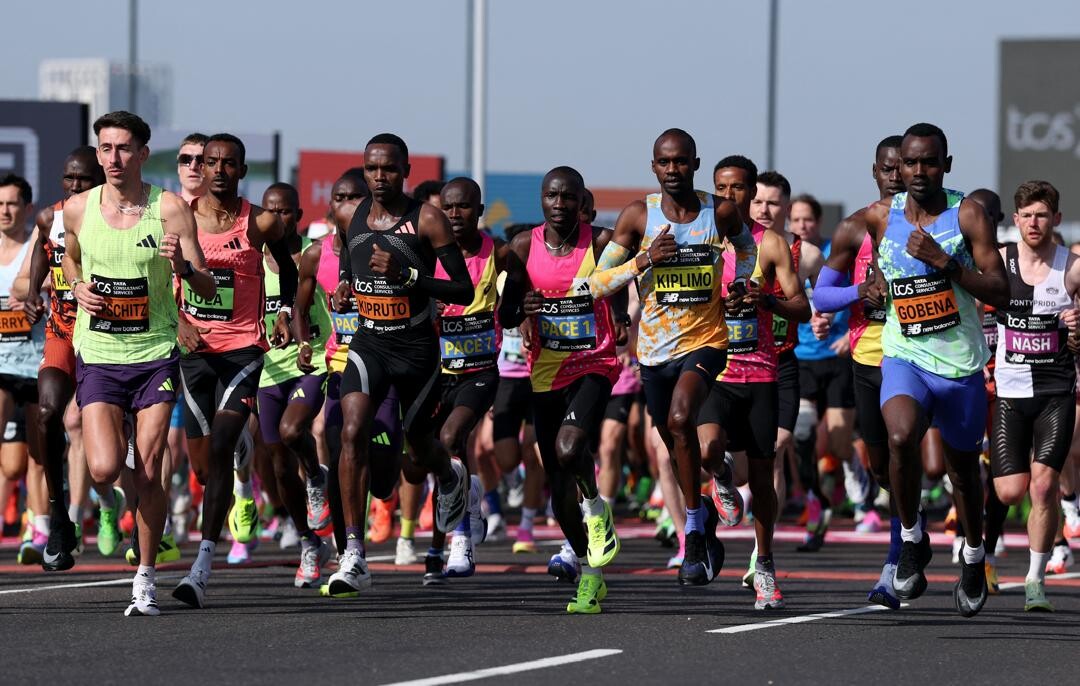
What made this performance even more remarkable was the manner in which it was achieved. The pace never wavered, the rhythm never broke, and the intensity never dropped. Every split reflected surgical precision, as the lead pack worked in perfect harmony before Sawe unleashed his decisive surge in the closing stages. It was a masterclass in controlled aggression—where endurance met absolute mental strength on the grandest stage.
Beyond the numbers and records, this race will be remembered for the statement it sends to the rest of the world: that marathon running has officially entered a new dimension. What was once considered untouchable is now history, rewritten in bold ink. Sawe’s triumph, alongside the extraordinary performances of Kejelcha and Kiplimo, has elevated the sport into a new era where limits are not just challenged—but completely erased.
Top 10 Finishers – 2026 TCS London Marathon (Elite Men)
1. Sebastian Sawe – 1:59:30 (World Record)
2. Yomif Kejelcha – 1:59:41 (PB, NR)
3. Jacob Kiplimo – 2:00:28 (PB, NR)
4. Amos Kipruto (Kenya) – 2:01:39 PB
5. Tamirat Tola (Ethiopia) – 2:02:59
6. Deresa Geleta (Ethiopia) – 2:03:23
7. Addisu Gobena (Ethiopia) – 2:05:23
8. Geoffrey Kamworor (Kenya) – 2:05:38
9. Peter Lynch (Ireland) – 2:06:08 NR
10. Mahamed Mahamed (Great Britain) – 2:06:14 PB
This extraordinary race will be remembered as one of the defining moments in the evolution of marathon running, where human endurance and scientific preparation converged to produce something once thought impossible. It was not only about breaking a barrier, but about completely redefining what the sport can deliver at its highest level, inspiring a new generation of athletes to dream beyond established limits.
As the dust settles on this historic achievement, the legacy of this day will endure far beyond the finishing times. Sebastian Sawe and his closest challengers have etched their names into athletics history, proving that greatness is not a destination but a continuous pursuit. The marathon world now stands transformed, with a new standard set and a new era unmistakably underway.
by Erick Cheruiyot for My Best Runs.
Login to leave a comment
TCS London Marathon
Since its inaugural edition on March 29, 1981, the TCS London Marathon has grown into one of the world's most prestigious road races, blending elite competition with an extraordinary charitable legacy. Founded by former Olympic champion and journalist Chris Brasher alongside Welsh athlete John Disley, the event has been staged every year and has been held in the spring annually...
more...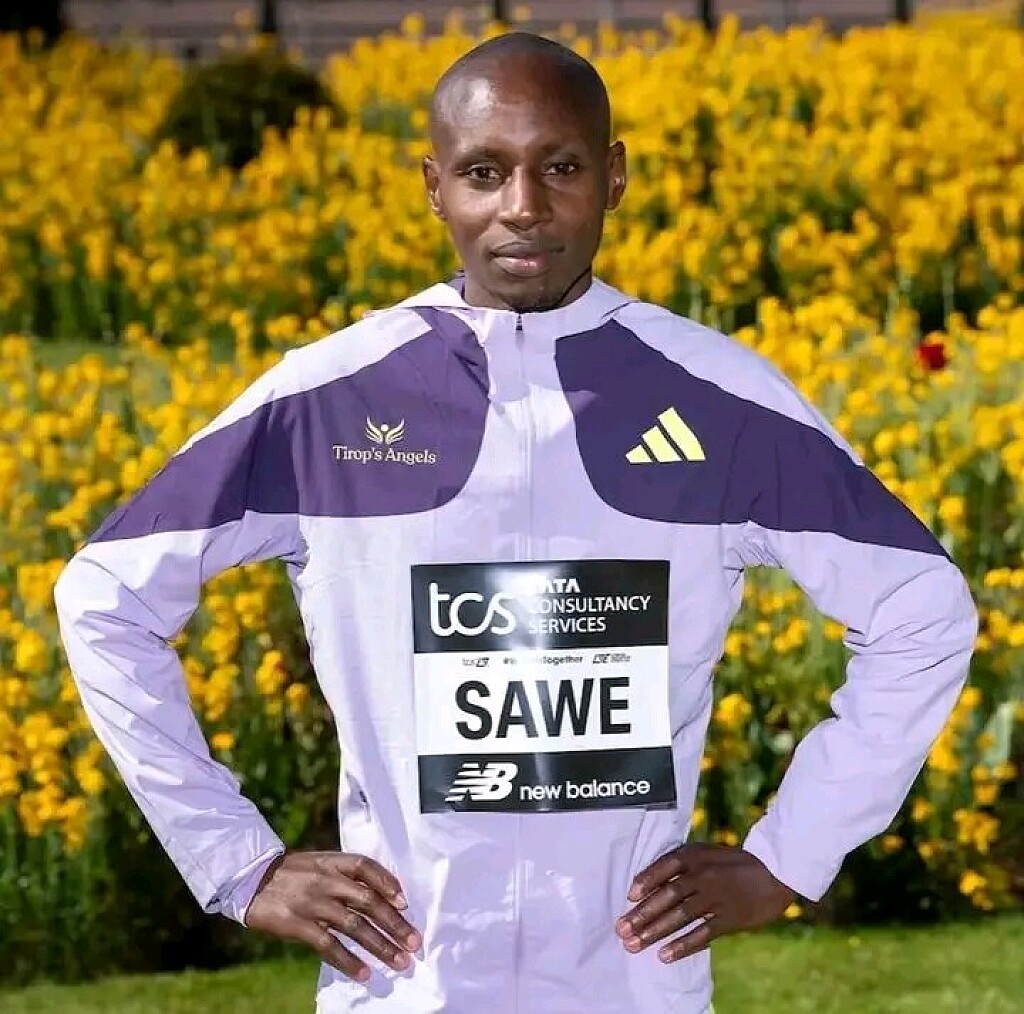
Sawe Braced for Fierce London Test Against World-Class Rivals
Confidence is building around Sabastian Sawe ahead of the 2026 London Marathon, with the Kenyan star making it clear that victory in the British capital will demand something exceptional.
Sawe believes the strength of this year’s field could force the race into historic territory once again.

“I am sure with the quality of athletes coming to London, it will take another fast time to win again,” he said ahead of Sunday’s showdown. “Perhaps the type of effort the great Kelvin Kiptum put in when he set the course record in 2023.”
That benchmark remains one of the defining performances in marathon history. Kiptum’s 2:01:25 course record in London was a masterclass in fearless front-running, and it continues to represent the standard every contender must now measure themselves against.
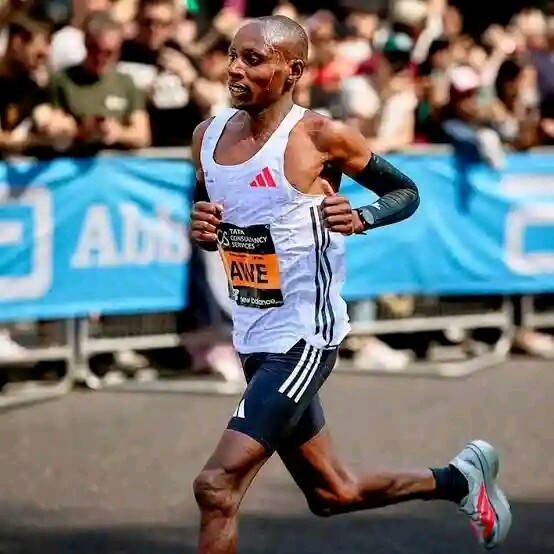
For Sawe, the challenge will be immense—but so will the opportunity.
The Kenyan enters the race as one of the sport’s rising forces, admired for his composure, tactical patience, and devastating finishing strength. Yet London in 2026 offers no room for hesitation, with a world-class field assembled for one of the most anticipated marathons of the season.
Among those standing in his path is Jacob Kiplimo, the Ugandan star whose range and endurance make him a serious threat over the classic distance. Ethiopia’s Yomif Kejelcha also arrives with formidable credentials, while two-time New York City Marathon champion Geoffrey Kamworor brings championship experience and relentless toughness.

With such names on the start list, the early pace is expected to be uncompromising. London’s flat roads and elite pacemaking have often produced memorable times, and another aggressive race could develop from the opening miles.
The London Marathon will be held on Sunday, April 26, with global attention fixed on the men’s contest. It is a race rich in history, but this year’s edition carries the feel of something more—a collision of generations, ambitions, and raw ability.
For Sawe, lifting the title would be a career-defining achievement. But if the pace ignites and the field commits, London may witness not just a winner, but another performance worthy of the city’s legendary marathon legacy.
by Erick Cheruiyot for My Best Runs.
Login to leave a comment
TCS London Marathon
Since its inaugural edition on March 29, 1981, the TCS London Marathon has grown into one of the world's most prestigious road races, blending elite competition with an extraordinary charitable legacy. Founded by former Olympic champion and journalist Chris Brasher alongside Welsh athlete John Disley, the event has been staged every year and has been held in the spring annually...
more...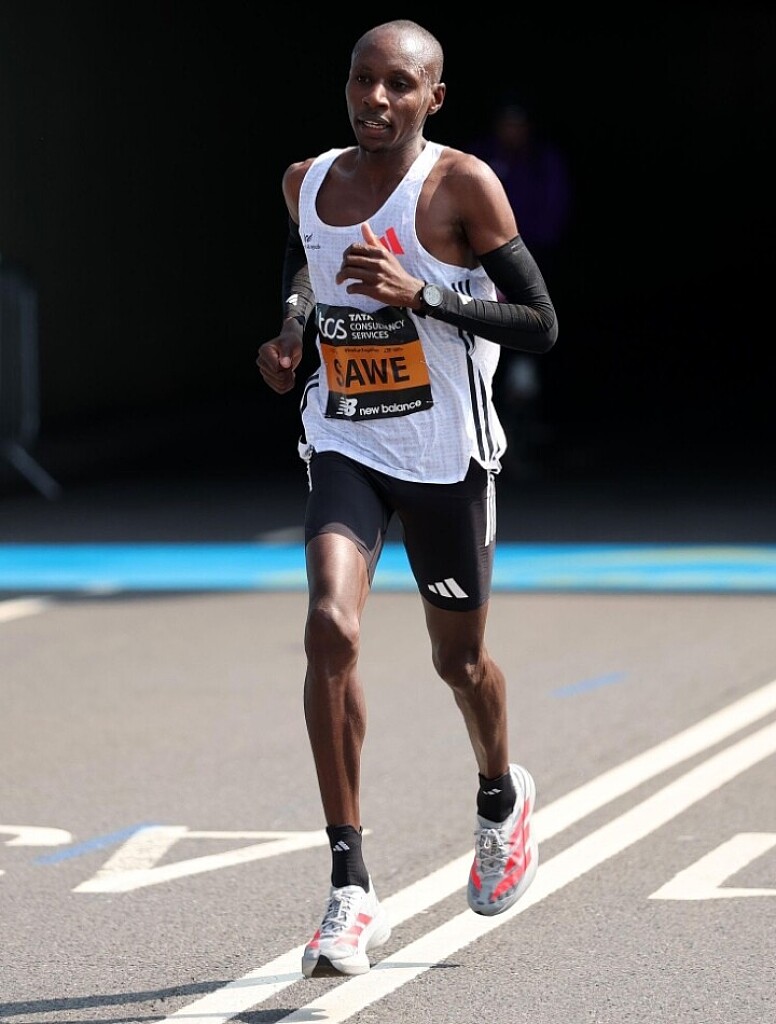
London Beckons: A Marathon of Giants Set to Ignite the Capital
The roads of London are once again preparing to host one of the most anticipated races on the global calendar, as the London Marathon 2026 assembles a men’s elite field of rare depth and quality. On Sunday, April 26, the world’s finest distance runners will converge on the British capital, chasing not only victory but a place in marathon history.
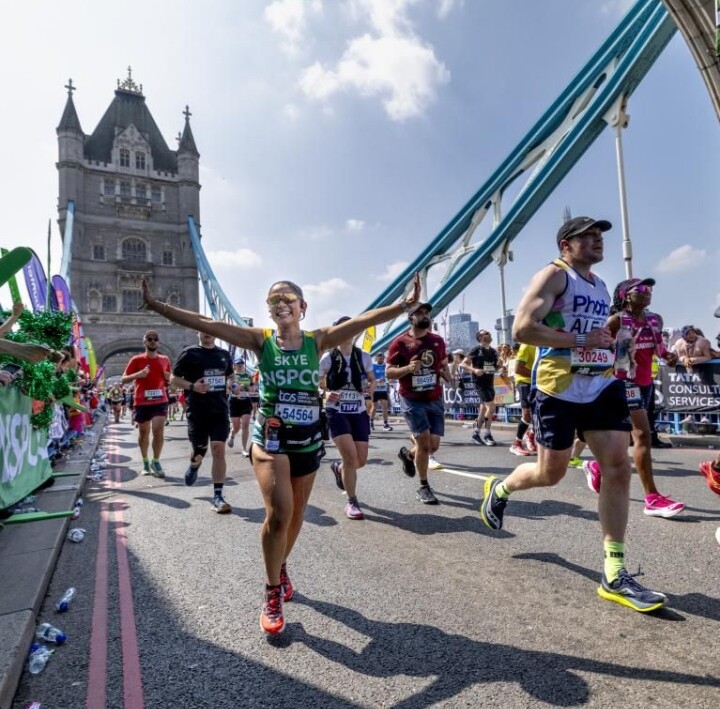
At the center of attention stands Sebastian Sawe, the defending champion whose commanding 2:02:05 personal best marks him as the man to beat. Sawe’s blend of composure and finishing power has already proven decisive on these streets, but this year’s contest promises to push him deeper than ever before.
Lining up against him is a formidable cast. Jacob Kiplimo, better known for his dominance over shorter road distances and cross country, brings a dangerous mix of speed and endurance. His 2:02:23 credentials suggest he is more than ready to challenge for the win if the race turns tactical—or brutally fast.
Ethiopia’s charge is equally imposing. Deresa Geleta and Olympic champion Tamirat Tola headline a contingent rich in pedigree, while Yomif Kejelcha adds intrigue with his much-anticipated marathon debut—an unknown factor capable of reshaping the race entirely.
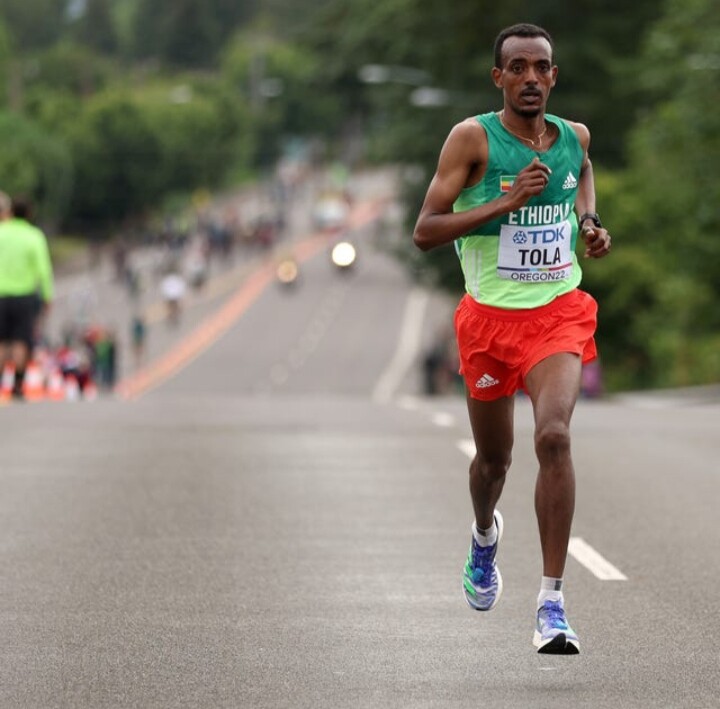
Kenya’s depth remains undeniable. Alongside Sawe are seasoned names like Amos Kipruto and the ever-consistent Geoffrey Kamworor, both of whom possess the experience and resilience required to thrive over 42.195 kilometers. Meanwhile, Uganda’s Joshua Cheptegei continues his transition to the marathon stage, carrying the weight of his track legacy into the ultimate endurance test.
The international flavor extends further, with Japan’s Shunya Kikuchi, France’s Hassan Chahdi, and South Africa’s Adam Lipschitz all aiming to disrupt the established order.
However, the home crowd has been dealt a blow. British hopeful Emile Cairess has been forced to withdraw due to a calf injury, removing a key figure who many believed could spearhead a domestic challenge. His absence shifts the spotlight away from local contention and further intensifies the East African dominance expected at the front.
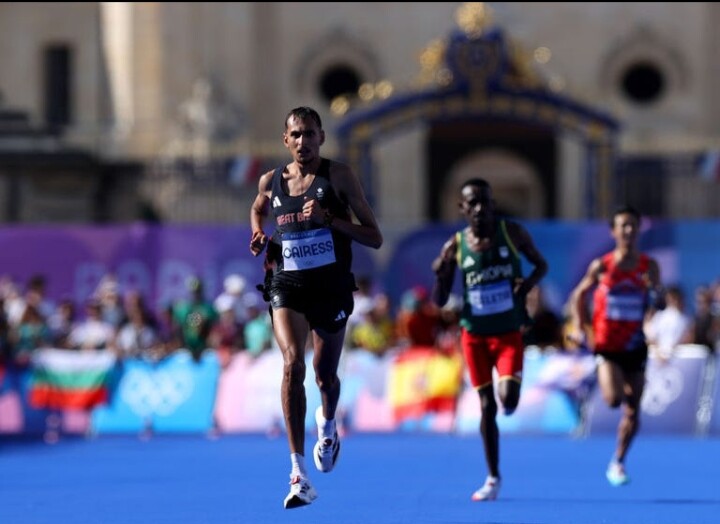
Yet marathons are rarely predictable. The rhythm of the race, the pacing strategies, and the unforgiving demands of the distance often rewrite expectations. What appears stacked on paper can unravel over the final miles along the Thames.
With the race set to begin in the morning hours, anticipation continues to build. Records may be threatened, debuts could dazzle, and champions will be tested to their limits.
In a field this deep, victory will not simply be earned—it will be wrestled from one of the most competitive line-ups the marathon world has seen in recent years.
by Erick Cheruiyot for My Best Runs.
Login to leave a comment
TCS London Marathon
Since its inaugural edition on March 29, 1981, the TCS London Marathon has grown into one of the world's most prestigious road races, blending elite competition with an extraordinary charitable legacy. Founded by former Olympic champion and journalist Chris Brasher alongside Welsh athlete John Disley, the event has been staged every year and has been held in the spring annually...
more...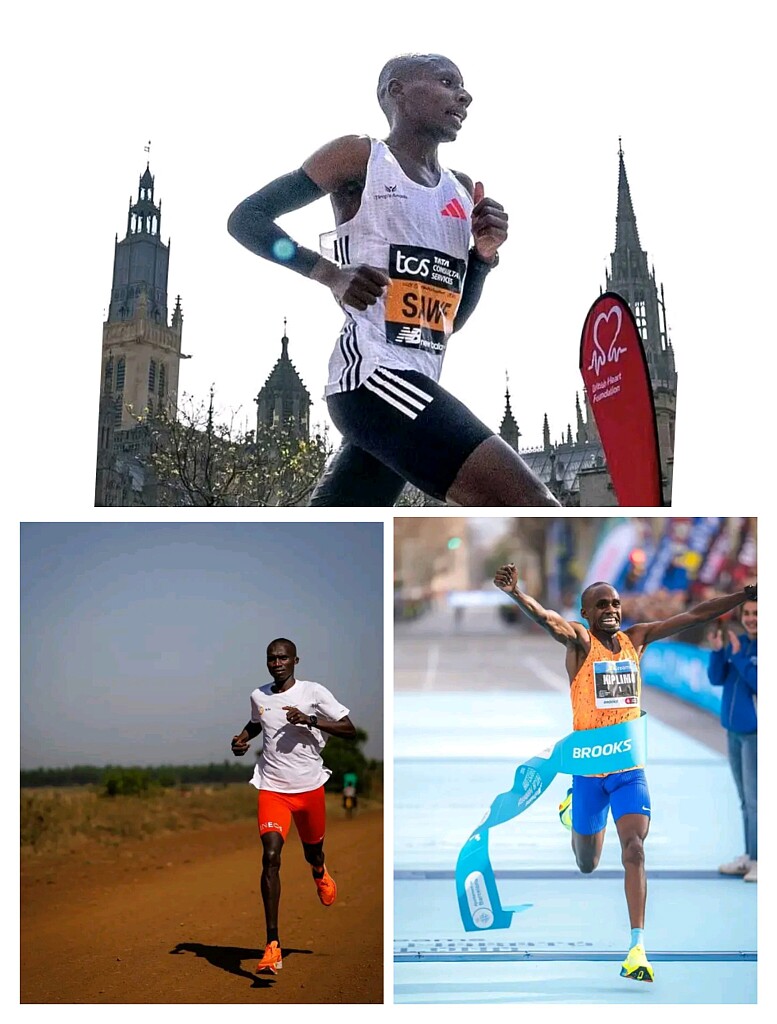
London Marathon 2026: Record Pace, Relentless Rivals, and a Race on the Brink of History
The countdown to the London Marathon on April 26, 2026, carries a rare sense of anticipation—one built not just on elite competition, but on the genuine possibility of history being rewritten. At the heart of it all stands the late Kelvin Kiptum’s extraordinary course record of 2:01:25, a mark that redefined the limits of marathon running and now faces a formidable, collective assault.
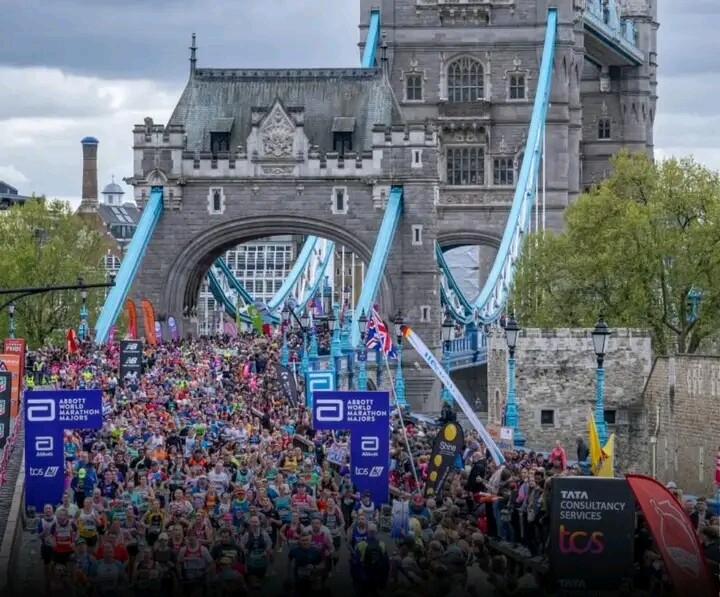
This year’s race brings together a field of exceptional depth and ambition, where three of the sport’s most dynamic figures—Sabastian Sawe, Jacob Kiplimo, and Joshua Cheptegei—headline a cast capable of turning pace into legend.
Sawe returns as the defending champion and the man everyone is chasing. His dominant victory in 2025, delivered in 2:02:27—the second-fastest time in London Marathon history—announced his arrival as a true force over 42.195 kilometres. Yet, even he recognises the scale of the challenge ahead. Against such a stacked field, victory alone may not suffice; it could take something far greater, perhaps even a course record, to secure back-to-back triumphs.
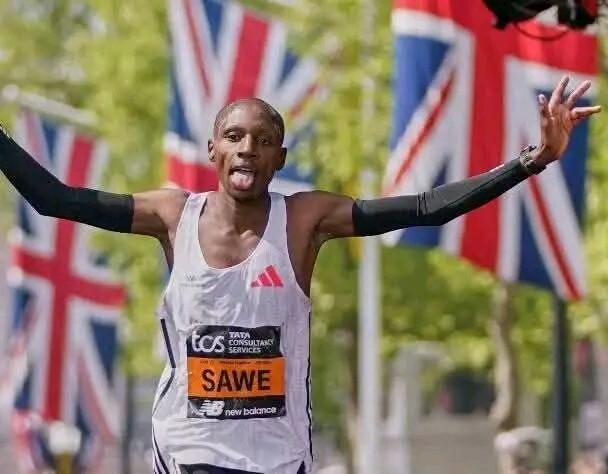
Pushing him every step of the way will be Kiplimo, whose evolution into the marathon continues to gather momentum. After an outstanding runner-up finish on his London debut, he has since refined his endurance and sharpened his edge, lowering his personal best to 2:02:23. Now, he returns not merely as a contender, but as an athlete with unfinished business—one determined to convert promise into dominance.
Then there is Cheptegei, the world record holder over 5,000m and 10,000m, whose transition to the marathon is steadily taking shape. With a personal best of 2:04:52 recorded in Amsterdam, the Ugandan star arrives in London with growing confidence and a clear objective: to translate his track supremacy into marathon greatness on one of the sport’s grandest stages.
Beyond this leading trio, the race is further elevated by the presence of Olympic champion Tamirat Tola and the immensely talented Yomif Kejelcha, ensuring that the pace will be honest, the pressure unrelenting, and the margin for error almost nonexistent.

What makes this edition truly compelling, however, is the delicate alignment of conditions required for greatness. London’s flat and fast course has long been a theatre for remarkable performances, but records are never guaranteed. Weather, pacing, and race dynamics must converge perfectly. Go out too aggressively, and the final miles can unravel even the strongest; hesitate, and the opportunity for history slips away.
Yet, if the rhythm is right and the courage to push the limits prevails, Kiptum’s towering mark may finally come under serious threat. The ingredients are all in place: a world-class field, fearless competitors, and a shared understanding that this is more than a race—it is a moment.
As the streets of London prepare to host another spectacle, one question echoes louder than ever:
Will April 26 deliver a champion—or a performance that redefines what is humanly possible?
by Erick Cheruiyot for My Best Runs.
Login to leave a comment
TCS London Marathon
Since its inaugural edition on March 29, 1981, the TCS London Marathon has grown into one of the world's most prestigious road races, blending elite competition with an extraordinary charitable legacy. Founded by former Olympic champion and journalist Chris Brasher alongside Welsh athlete John Disley, the event has been staged every year and has been held in the spring annually...
more...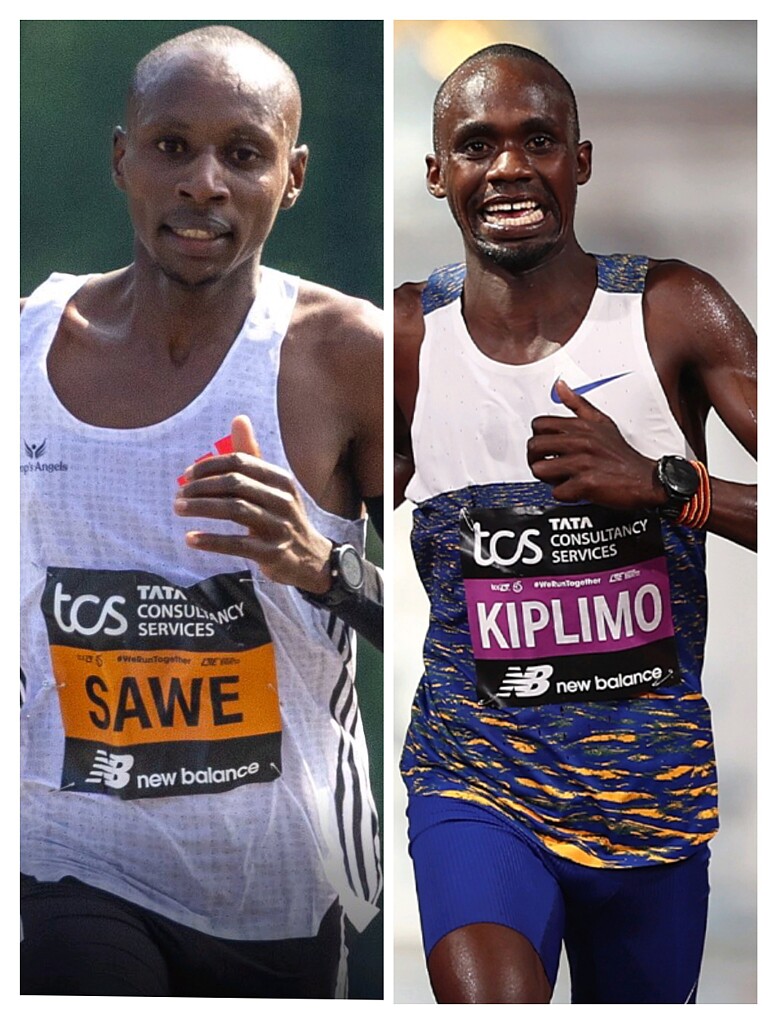
Sawe vs Kiplimo: A Rivalry Heating Up Ahead of London’s Grand Rematch
In the ever-competitive world of distance running, few emerging rivalries carry the intrigue and intensity now building between Sabastian Sawe and Jacob Kiplimo. As things stand, the scoreboard reads 2–0 in favour of the Kenyan—a statistic that adds both pressure and anticipation ahead of their next highly anticipated clash.
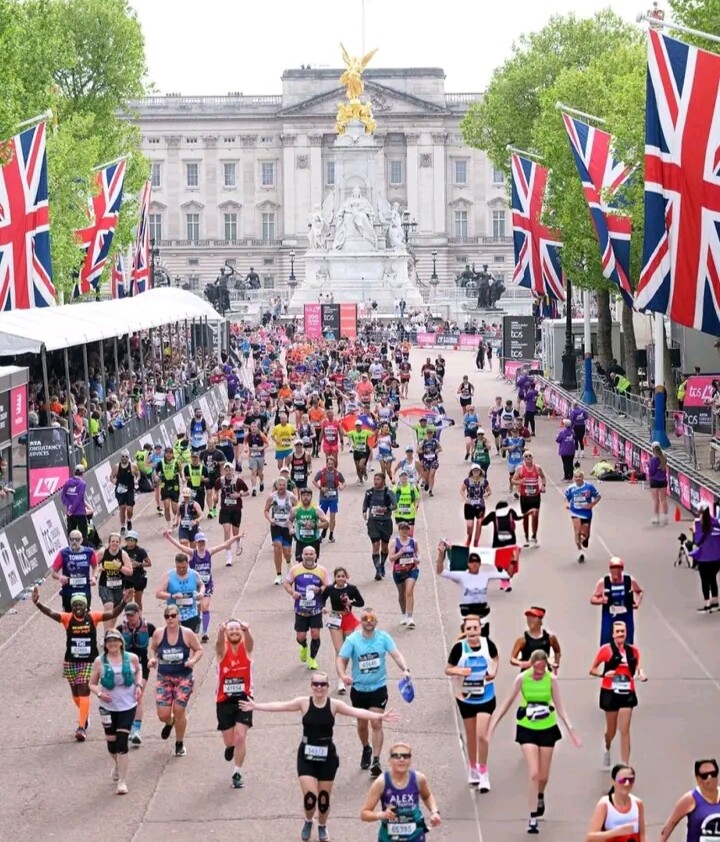
Their head-to-head story began in spectacular fashion at the Copenhagen Half Marathon in 2024. On that day, Sawe edged out Kiplimo in a thrilling finish, clocking a world-class 58:05 to the Ugandan’s 58:09. It was a statement victory—tight, tactical, and psychologically significant.
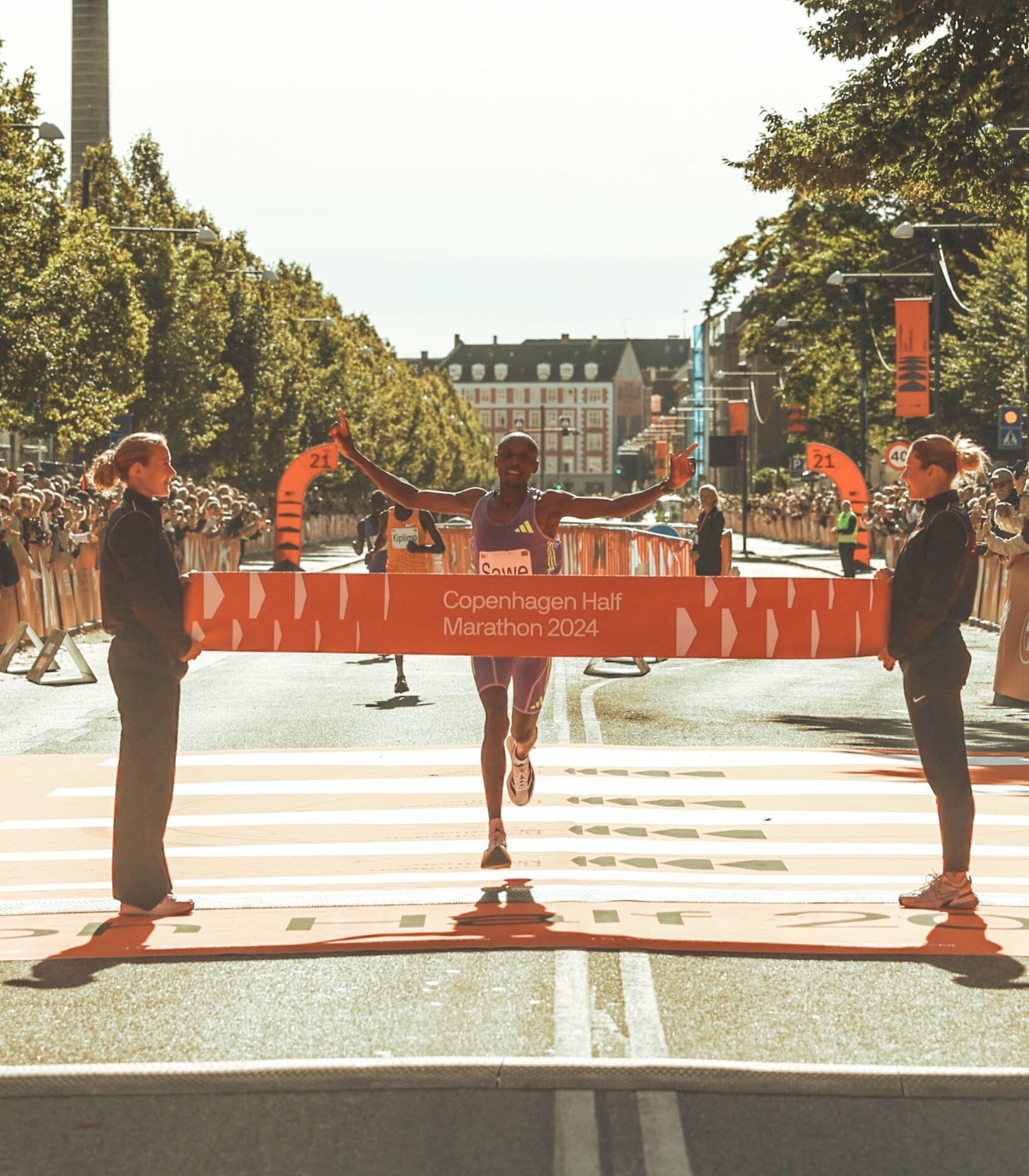
If the first encounter hinted at a rivalry, their second meeting confirmed it. At the iconic London Marathon in 2025, Sawe once again proved superior over the full marathon distance. Producing a commanding performance, he surged to victory in 2:02:27, leaving Kiplimo to settle for second place in 2:03:37. Two races, two wins—Sawe had not only maintained dominance but extended it across distances.
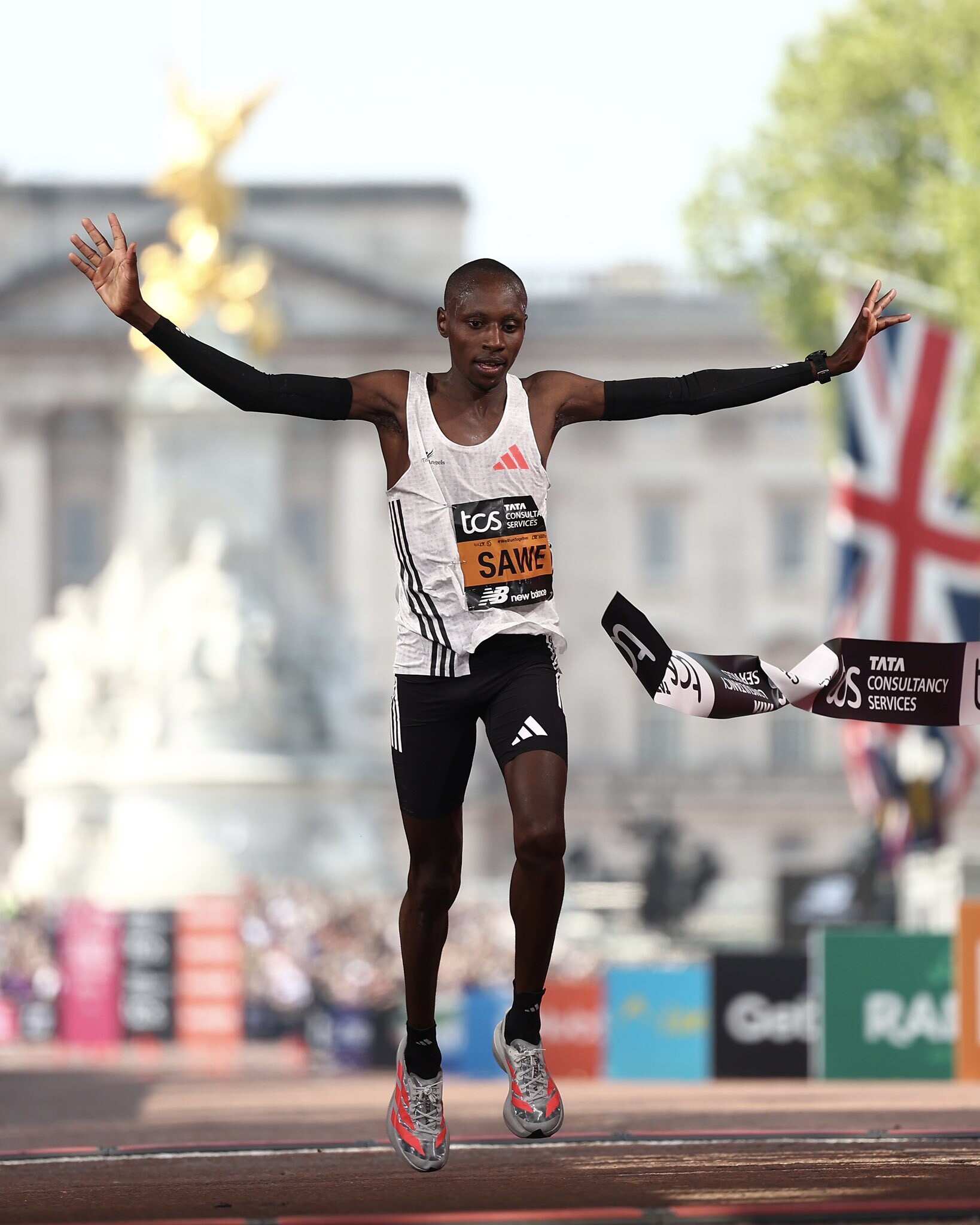
Now, all eyes turn to the 2026 edition of the TCS London Marathon on April 26, where the rivalry enters its most compelling chapter yet. For Kiplimo, this is more than just another race—it is a chance at redemption, an opportunity to overturn a narrative that has so far not favoured him. Known for his explosive finishing speed and resilience, the Ugandan star will be eager to finally break through.
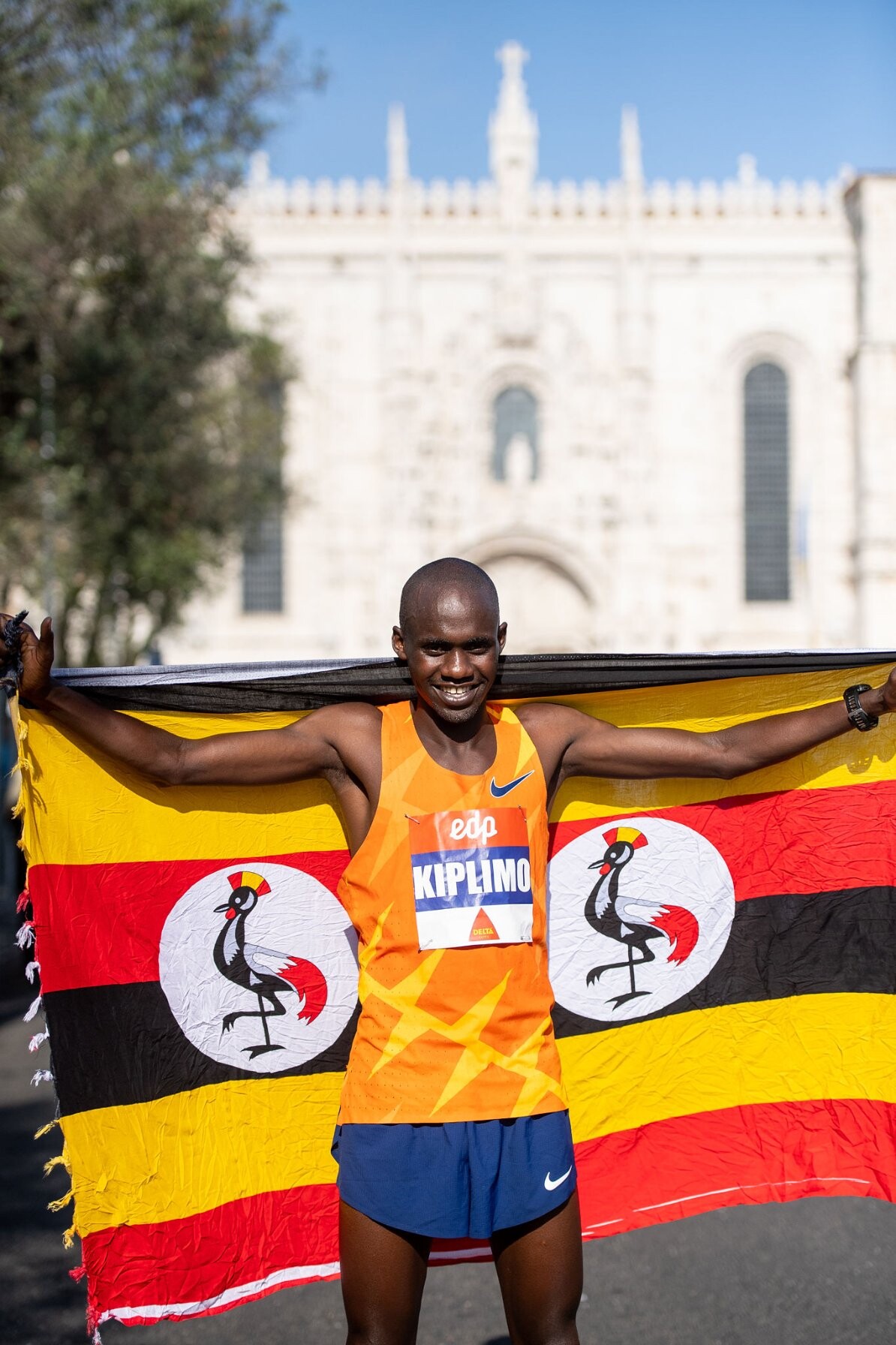
Sawe, on the other hand, arrives with confidence and momentum. Having twice outperformed one of the world’s most consistent distance runners, he carries not just form but a psychological edge into London. A third consecutive victory would not only cement his dominance in this matchup but elevate his status further among the sport’s elite.
What makes this duel particularly fascinating is the contrast in racing styles and the razor-thin margins that have separated them. Both athletes possess extraordinary endurance, tactical awareness, and the ability to deliver under pressure—qualities that promise another electrifying contest on the streets of London.
As the countdown begins, the question lingers: will Kiplimo finally rewrite the script, or will Sawe extend his flawless record to 3–0?
One thing is certain—this is no ordinary race. It’s a rivalry in full flight.
by Erick Cheruiyot for My Best Runs.
Login to leave a comment
TCS London Marathon
Since its inaugural edition on March 29, 1981, the TCS London Marathon has grown into one of the world's most prestigious road races, blending elite competition with an extraordinary charitable legacy. Founded by former Olympic champion and journalist Chris Brasher alongside Welsh athlete John Disley, the event has been staged every year and has been held in the spring annually...
more...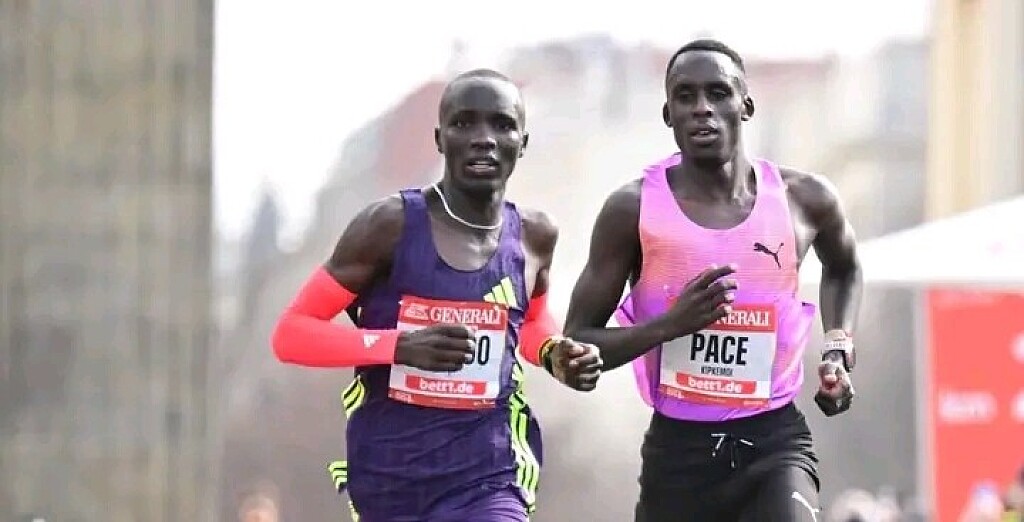
When the Pacemaker Becomes the Contender: Rethinking Roles in Elite Road Racing
In the finely tuned world of elite distance running, pacemakers are often cast as invisible architects—tasked with dictating rhythm, shielding athletes from the wind, and guiding races toward fast times before quietly stepping aside. But every so often, the script is rewritten. At the recent Berlin Half Marathon, Kenyan pacer Dennis Kipkemoi ignited fresh debate after surging beyond his assigned role to finish second, raising a familiar yet fascinating question: are pacers truly allowed to compete?
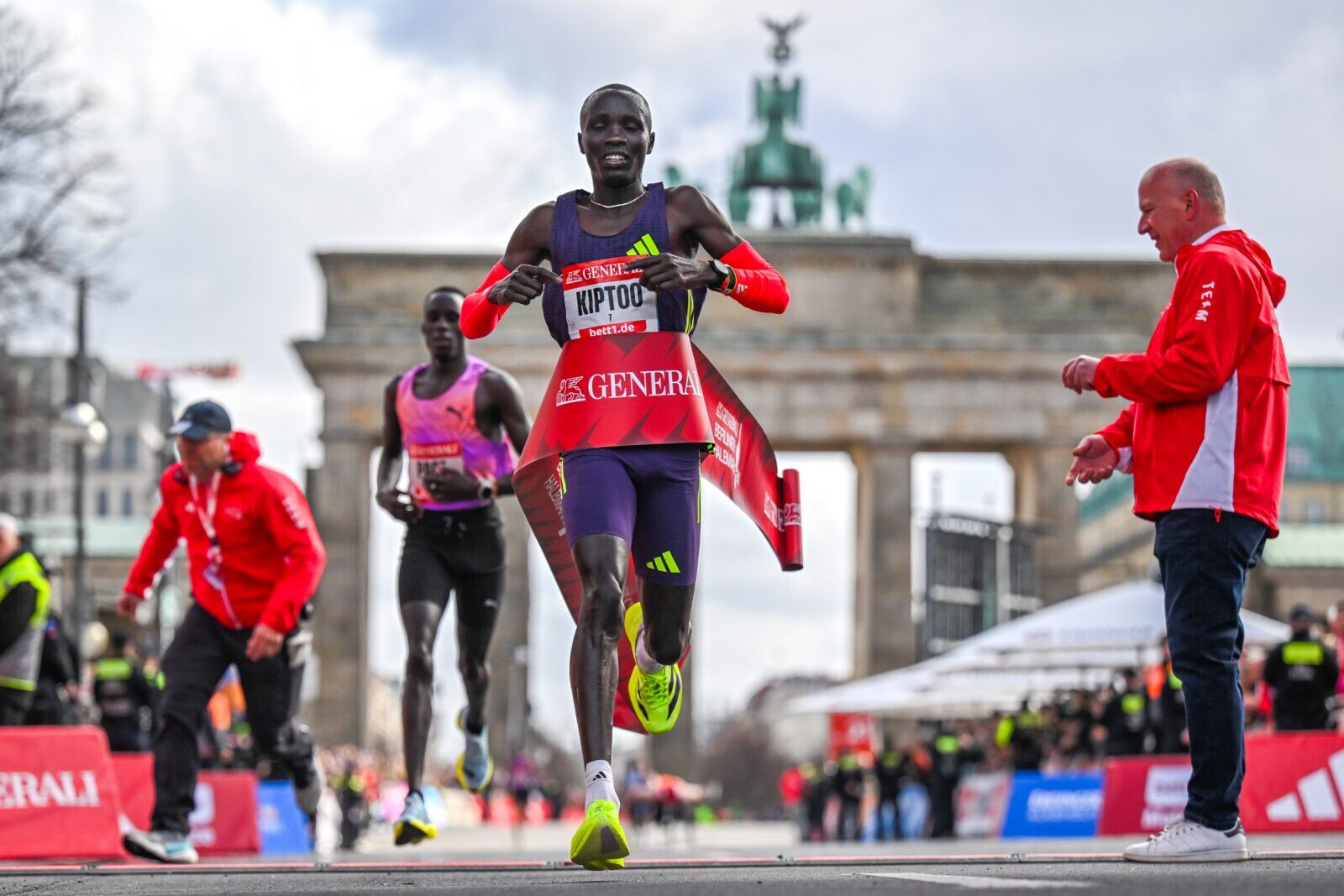
The answer, grounded in the regulations of World Athletics, is unequivocal. Pacemakers are not outsiders; they are registered athletes, official participants in the race with every right to continue beyond their pacing duties. If they possess the strength, strategy, and ambition to push past the finish line ahead of the field, the rulebook does not stand in their way.
Kipkemoi’s performance may have stirred conversation, but it is far from unprecedented. History offers compelling precedents where pacemakers have stepped out of the shadows and into the spotlight. At the 2000 Berlin Marathon, Simon Biwott famously transitioned from hired pacer to race winner, crafting one of the most remarkable narratives in marathon lore. More recently, Sebastian Sawe delivered a similar twist at the 2022 Seville Half Marathon, proving that the line between support act and star performer is often thinner than it appears.
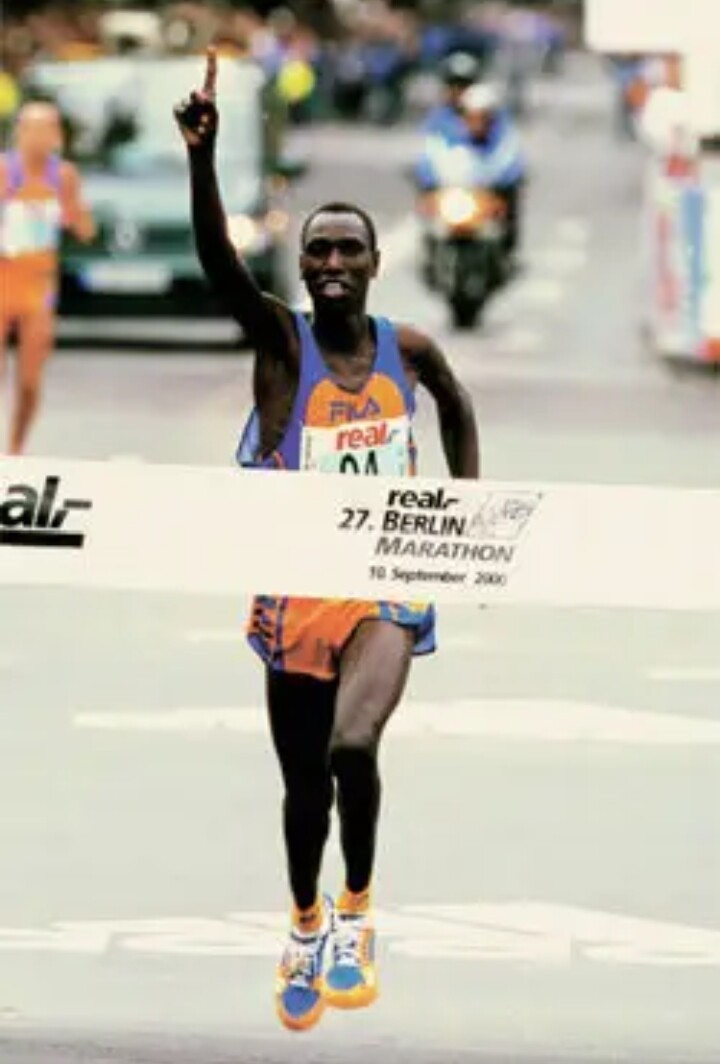
What makes these moments so compelling is the tension they introduce into the race dynamic. Pacemakers are typically expected to sacrifice their own ambitions for the benefit of others, operating with precision and discipline. Yet when one chooses to continue, it challenges traditional expectations and injects an element of unpredictability that enriches the sport. It is not a breach of ethics, but rather a demonstration of competitive instinct—an athlete recognizing opportunity and seizing it.
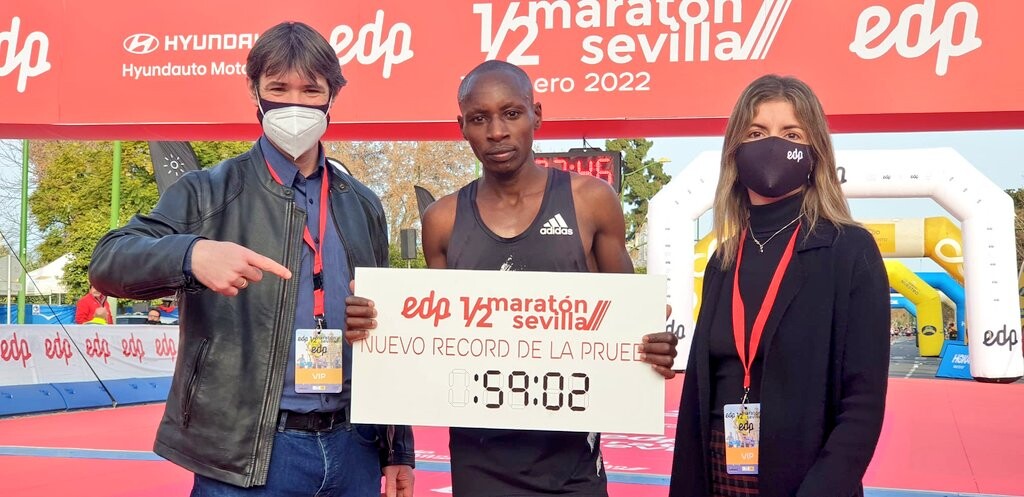
Critics argue that pacers stepping into contention may disrupt the competitive balance, particularly for athletes who rely on them purely as facilitators. But this perspective overlooks a fundamental truth: every athlete on the start line shares the same course, the same conditions, and ultimately, the same right to compete. Once the race unfolds, it belongs to those strong enough to endure it.
Dennis Kipkemoi’s bold finish in Berlin is a reminder that roles in athletics are not always fixed. The pacemaker, often unseen and underappreciated, can become a protagonist in their own right. And as long as the rules remain as they are, such moments will continue to surface—blurring boundaries, sparking debate, and adding yet another layer of intrigue to the ever-evolving theatre of distance running.
by Erick Cheruiyot for My Best Runs.
Login to leave a comment

London Awaits a Blockbuster Men’s Marathon as World-Class Stars Line Up on April 26, 2026
The TCS London Marathon, set for Sunday, April 26, 2026, is already shaping up to be one of the most compelling races in the event’s rich history. The men’s elite start list reveals a field defined not just by star power at the top, but by extraordinary depth throughout—bringing together proven champions, fearless challengers, and highly anticipated debutants on one of the world’s fastest and most iconic courses.
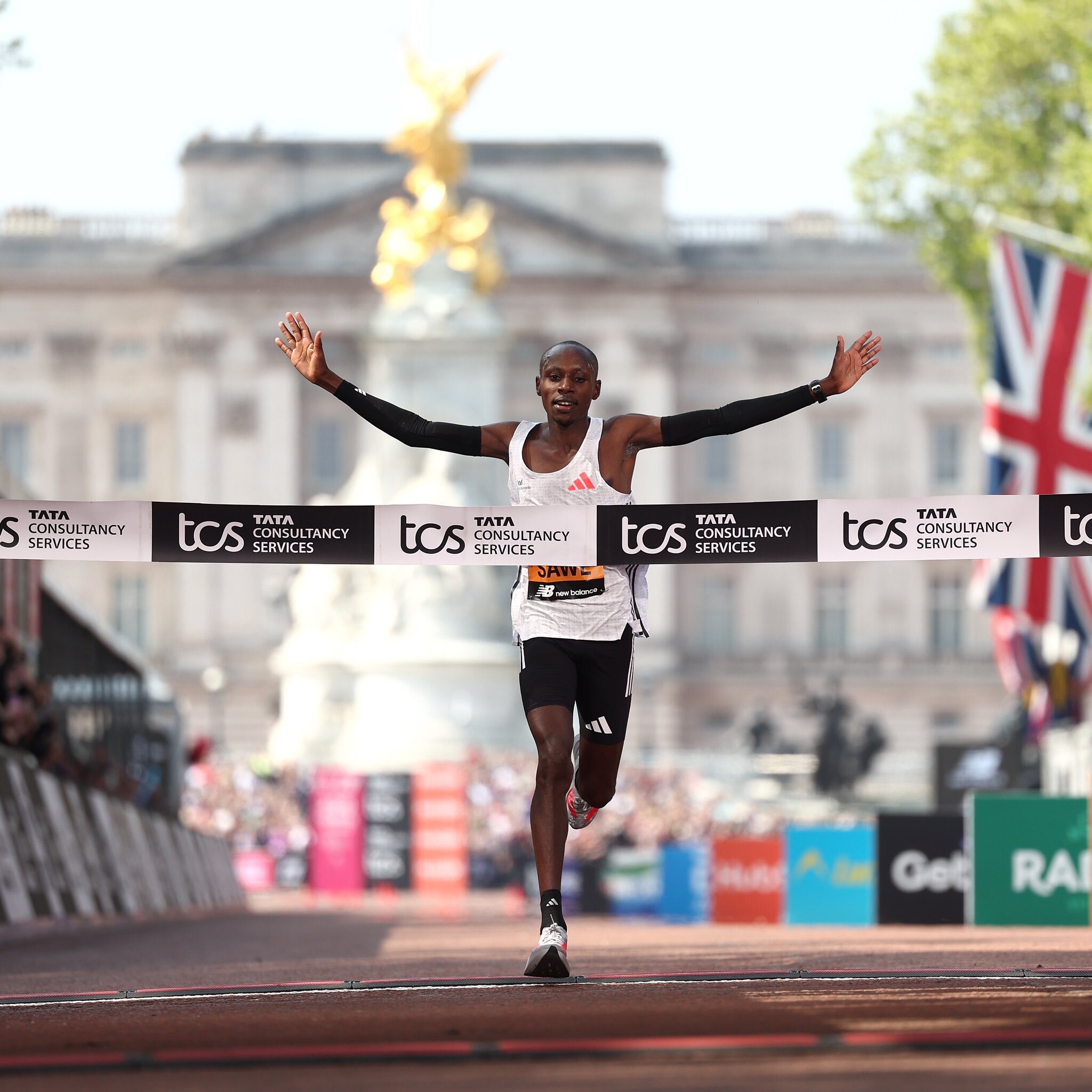
Leading the charge is Sebastian Sawe of Kenya, the fastest man entered with a personal best of 2:02:05. Efficient, composed, and devastatingly consistent, He is the defending champion and will arrive in London as a clear contender, capable of dictating the rhythm of the race from the early miles. Close behind him on the start list is Jacob Kiplimo of Uganda (2:02:23), whose evolution into the marathon continues to fascinate the running world. Known for his strength, speed, and fearless racing style, Kiplimo’s presence adds a layer of unpredictability to an already volatile contest.
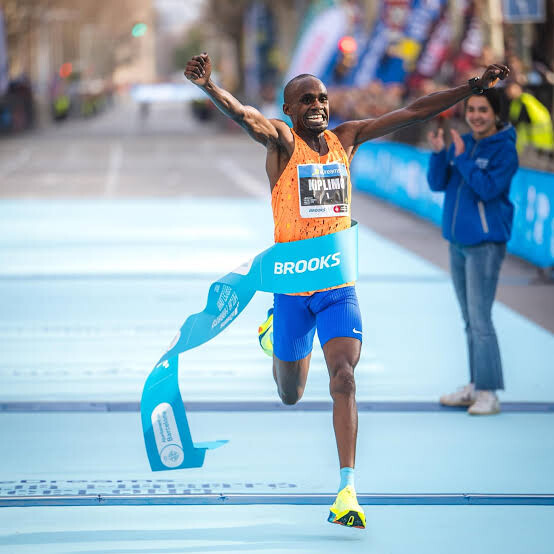
Ethiopia counters strongly through Deresa Geleta, owner of a 2:02:38 best and a runner respected for his smooth efficiency and reliability at the highest level. Adding further intrigue is Yomif Kejelcha, one of the most eagerly awaited marathon debutants in recent years. A global star on the track, Kejelcha now steps into uncharted territory, and how his speed and range translate over 42.195 kilometers will be one of the defining narratives of race day.

As the list unfolds, the depth of the field becomes impossible to ignore. Amos Kipruto of Kenya (2:03:13) brings championship pedigree and tactical intelligence, while Olympic marathon champion Tamirat Tola of Ethiopia (2:03:39) arrives with proven resilience and the ability to rise when the stakes are highest. Germany’s Amanal Petros (2:03:04), a national record holder, continues to push European marathon running forward and enters London in peak form.

Even further down the start list, the quality remains striking. Geoffrey Kamworor of Kenya (2:04:23), a multiple-time world champion, offers experience, patience, and racing instinct that few can match. Uganda’s Joshua Cheptegei (2:04:52), one of the most decorated track athletes of his generation, continues his marathon journey with determination and growing confidence. Japan’s Shunya Kikuchi (2:06:06) represents a nation synonymous with marathon tradition, while Emile Cairess of Great Britain (2:06:46) carries home hopes, eager to make his mark on London’s global stage.
Beyond these names, the men’s elite start list continues deep, featuring more established performers and additional debutants ready to test themselves against the world’s best. This depth ensures that the 2026 race will not be won on reputation alone; it will demand patience, precision, and courage deep into the final miles.
When the gun sounds on Sunday, April 26, 2026, the TCS London Marathon will once again deliver what it promises best—a true test of endurance and excellence, where the margins are thin, the competition relentless, and the outcome anything but certain.
by Erick Cheruiyot for My Bestruns.
Login to leave a comment
TCS London Marathon
Since its inaugural edition on March 29, 1981, the TCS London Marathon has grown into one of the world's most prestigious road races, blending elite competition with an extraordinary charitable legacy. Founded by former Olympic champion and journalist Chris Brasher alongside Welsh athlete John Disley, the event has been staged every year and has been held in the spring annually...
more...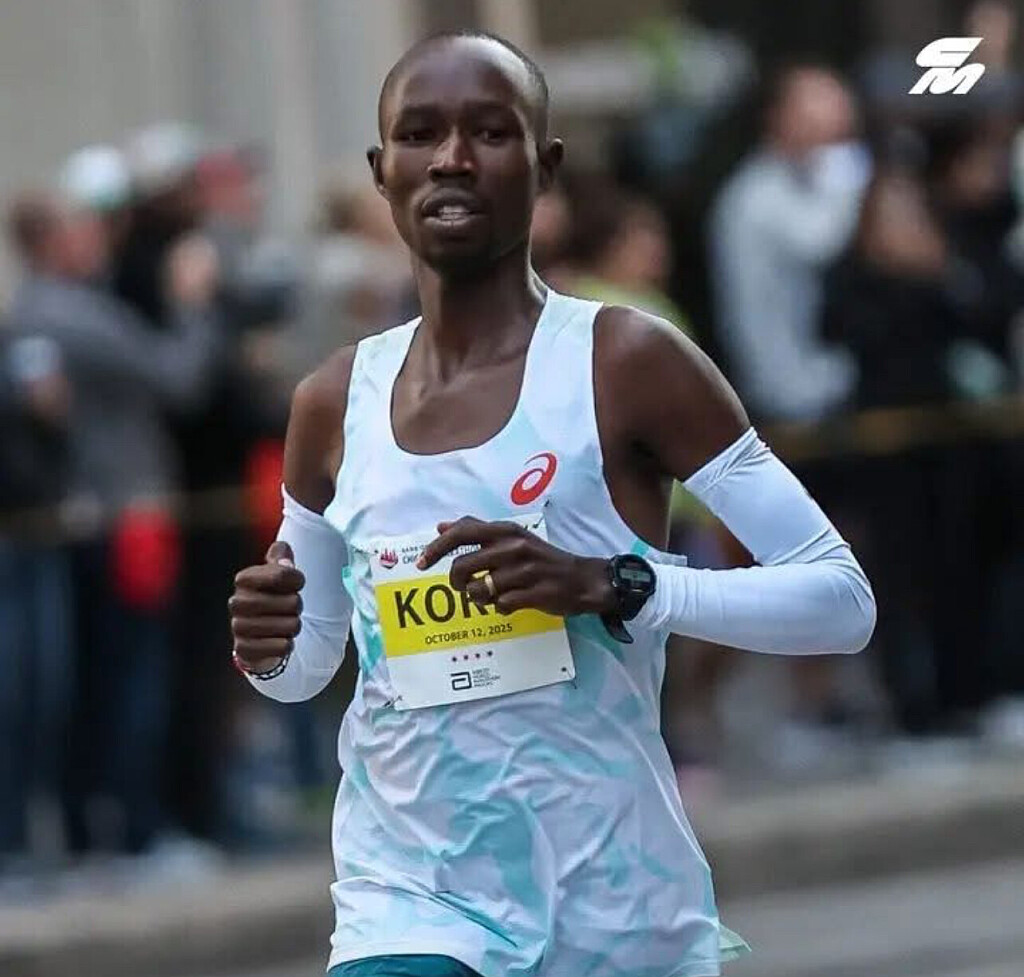
John Korir Set for Valencia Marathon Showdown After Boston Glory and Chicago DNF
The streets of Valencia—long known as a launchpad for marathon breakthroughs—will welcome another major storyline this Sunday as Boston Marathon champion John Korir lines up for one of the fastest races in the world.
Korir, who claimed the 2024 Boston Marathon title, heads to Spain looking to reset his momentum after a disappointing DNF at the Chicago Marathon. Valencia, however, has a reputation for revitalizing careers and producing history-making performances. It was here that Kelvin Kiptumastonished the running world with his 2:01:53 debut, and where Sebastian Sawe delivered his own blazing introduction to the distance.

This year’s edition will test Korir against another powerhouse field.

A Clash With Sisay Lemma and a Deep Kenyan Contingent
Leading the opposition is Sisay Lemma, the Ethiopian star and one of the most consistent marathoners on the international circuit. Lemma, who has repeatedly delivered world-class marks, will be targeting a major statement run in Valencia.
The Kenyan challenge will be formidable as well, with a trio of established athletes joining Korir on the start line:
• Hillary Kipkoech – former track standout making waves on the roads
• Edward Cheserek – the 17-time NCAA champion continuing his marathon evolution
• Justus Kangongo – a proven performer capable of big breakthroughs
Each arrives with something to prove—and Valencia’s flat, rapid course has a way of rewarding ambition.
Why Valencia Matters
The Valencia Marathon has earned its reputation as the fastest marathon outside of the World Marathon Majors, regularly producing:
• Course records
• National records
• Top-10 all-time performances
• Breakout debuts for emerging stars
For Korir, the race presents the perfect environment to reestablish his position among the world’s elite and build momentum heading into the 2025 season.
What’s at Stake
A strong performance would reinforce Korir’s Boston victory as a sign of lasting form—not a one-off moment. With Olympic selections and global rankings in play, every second in Valencia matters.
As fans await Sunday’s race, one question stands out:
Will the City of Running deliver yet another defining chapter in marathon history?
My Best Runs will have full coverage and results as the race unfolds.
by Boris Baron
Login to leave a comment

VALENCIA TRINIDAD ALFONSO
The Trinidad Alfonso EDP Valencia Marathon is held annually in the historic city of Valencia which, with its entirely flat circuit and perfect November temperature, averaging between 12-17 degrees, represents the ideal setting for hosting such a long-distance sporting challenge. This, coupled with the most incomparable of settings, makes the Valencia Marathon, Valencia, one of the most important events in...
more...
Andreas Almgren Breaks European Record as Agnes Ngetich Runs Second Fastest Half Marathon Ever in Valencia
Valencia, Spain — October 26, 2025 - The 2025 Valencia Half Marathon Trinidad Alfonso Zurich once again lived up to its global reputation as the fastest half marathon on Earth. The flat, coastal course produced extraordinary performances from both the men’s and women’s elite fields — highlighted by Sweden’s Andreas Almgren becoming the first European ever to break 59 minutes, and Kenya’s Agnes Jebet Ngetich clocking the second-fastest women’s time in history.
MEN’S RACE: ALMGREN MAKES HISTORY AS KEJELCHA DOMINATES

Ethiopia’s Yomif Kejelcha retained his Valencia title with a blistering 58:02, further cementing his place among the all-time greats. Though it was outside the current world record of 56:42, set earlier this year by Uganda’s Jacob Kiplimo at the Barcelona Half Marathon, Kejelcha’s effort was commanding from start to finish.
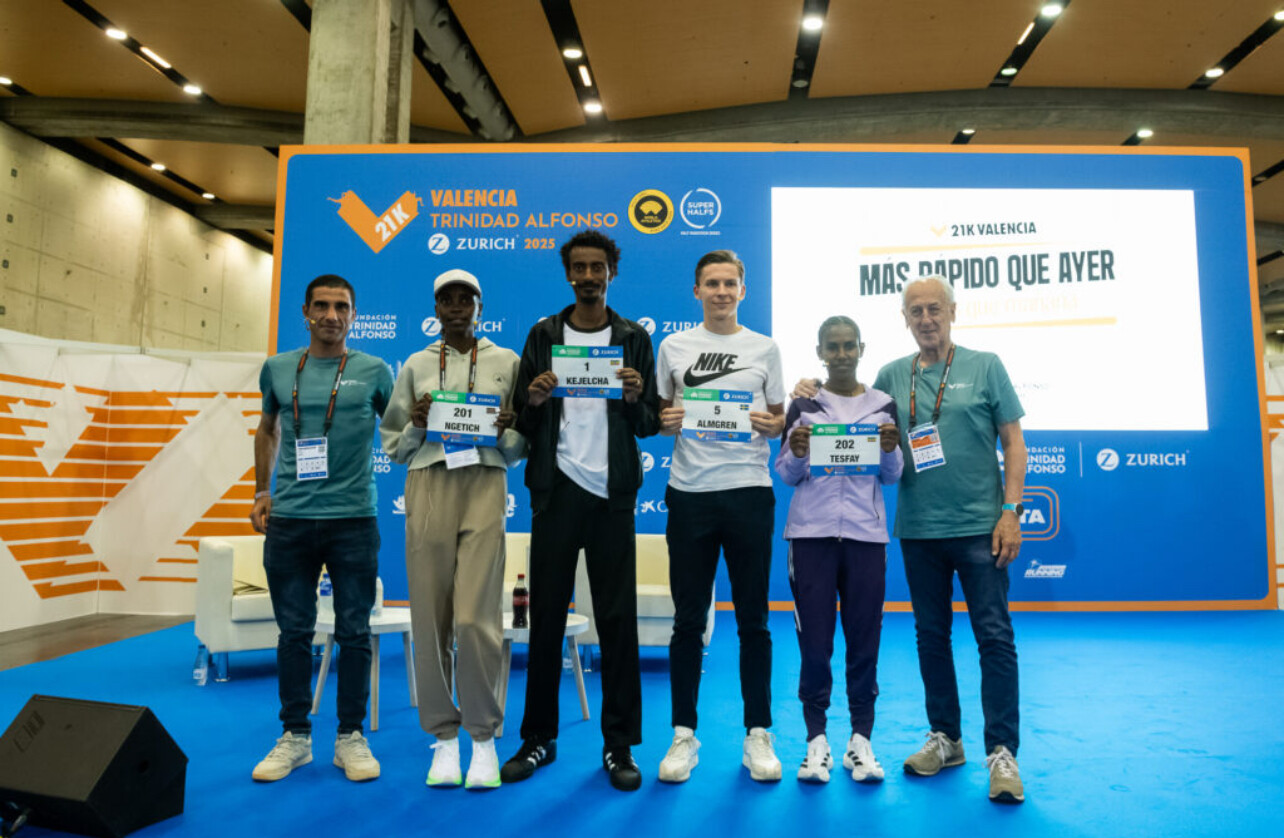
Running in his slipstream, Rodrigue Kwizera of Burundi and Brian Kibor of Kenya both crossed in 58:39, but the day’s biggest breakthrough came from Sweden’s Andreas Almgren, who stormed home in 58:41 — a stunning new European record.
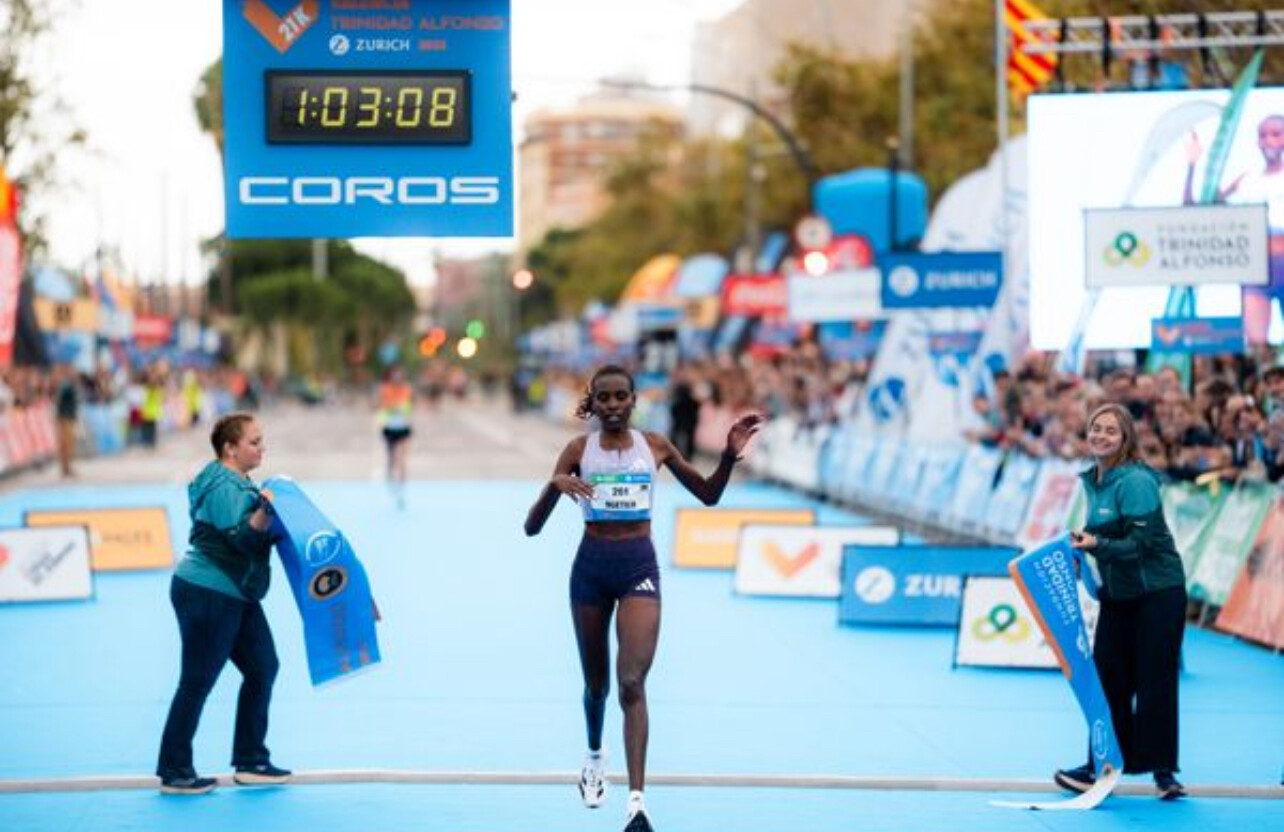
The 29-year-old Almgren shattered the previous continental best of 59:13, set by Julien Wanders in 2019, and became the first European athlete in history to dip under the 59-minute barrier.

“This means everything,” Almgren said after the finish. “I came to Valencia knowing it was the place for fast times, but to run 58:41 — it’s beyond my dreams. Europe is back in the game.”
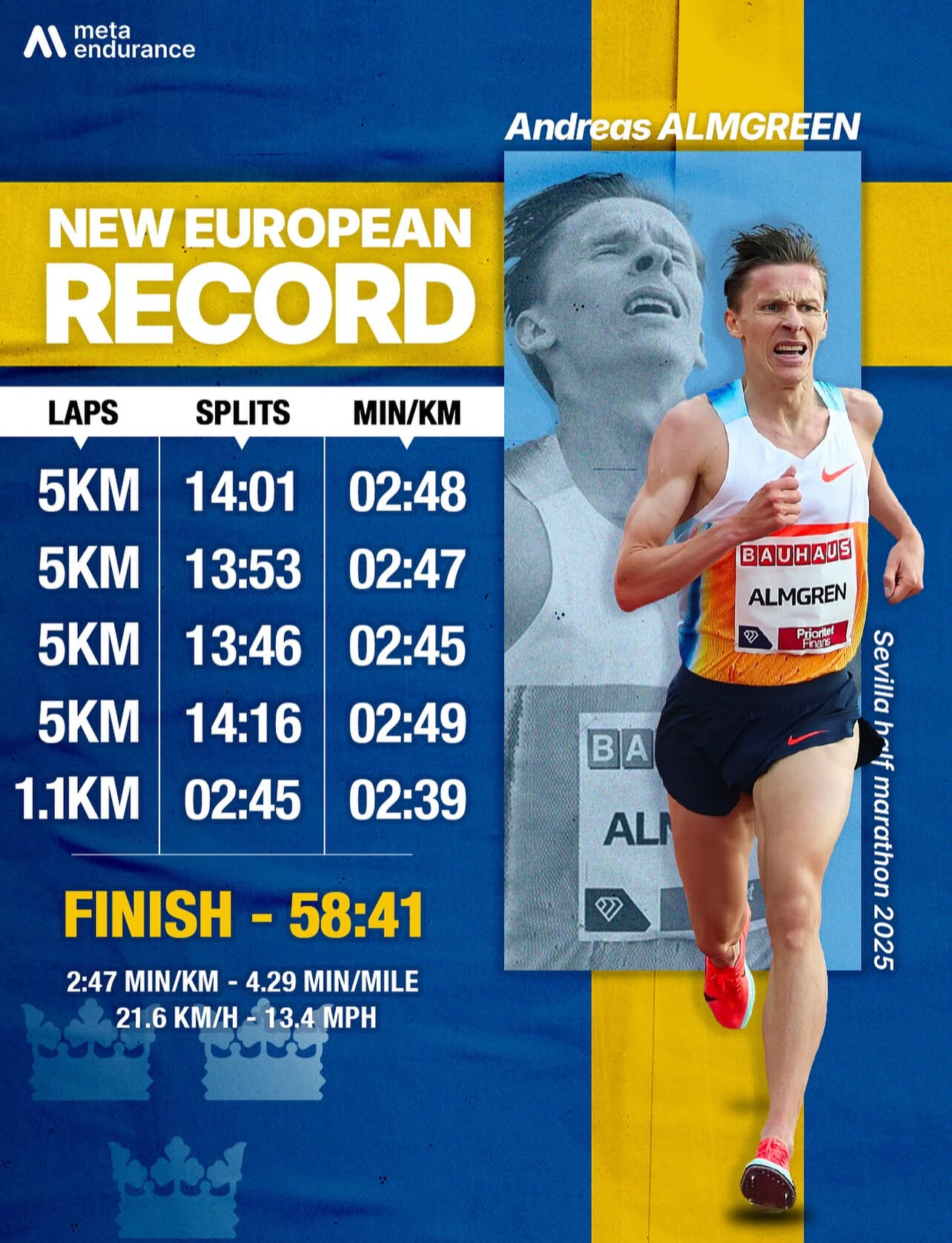
Kejelcha went out hard with early splits suggesting another sub-58 performance might be possible, hitting 10K in around 27:13. Slight headwinds in the final kilometers kept him just off world-record pace, but his margin of control was never in doubt.
WOMEN’S RACE: NGETICH CLOSES IN ON THE WORLD RECORD
Kenya’s Agnes Jebet Ngetich produced yet another masterpiece on the streets of Valencia, winning the women’s title in 1:03:08, the second-fastest time ever recorded for the half marathon. Only Letesenbet Gidey’s world record of 1:02:52, also set in Valencia in 2021, stands ahead of her on the all-time list.

Ngetich went out aggressively, passing 10K in 29:28, well inside world-record pace. But a headwind over the final five kilometers cost her valuable seconds. Despite missing the record, her performance once again showcased her dominance and her special connection with the streets of Valencia, where she has repeatedly delivered career-defining runs.
“Valencia brings out the best in me,” Ngetich said. “I felt strong, and even though I missed the record, I know it’s within reach. I’ll be back.”
Ethiopia’s Fotyen Tesfay took second in 1:05:11, while Kenya’s Veronica Loleo ran a superb personal best of 1:05:46 to finish third. The top performances underscored the remarkable depth and quality in women’s distance running today.
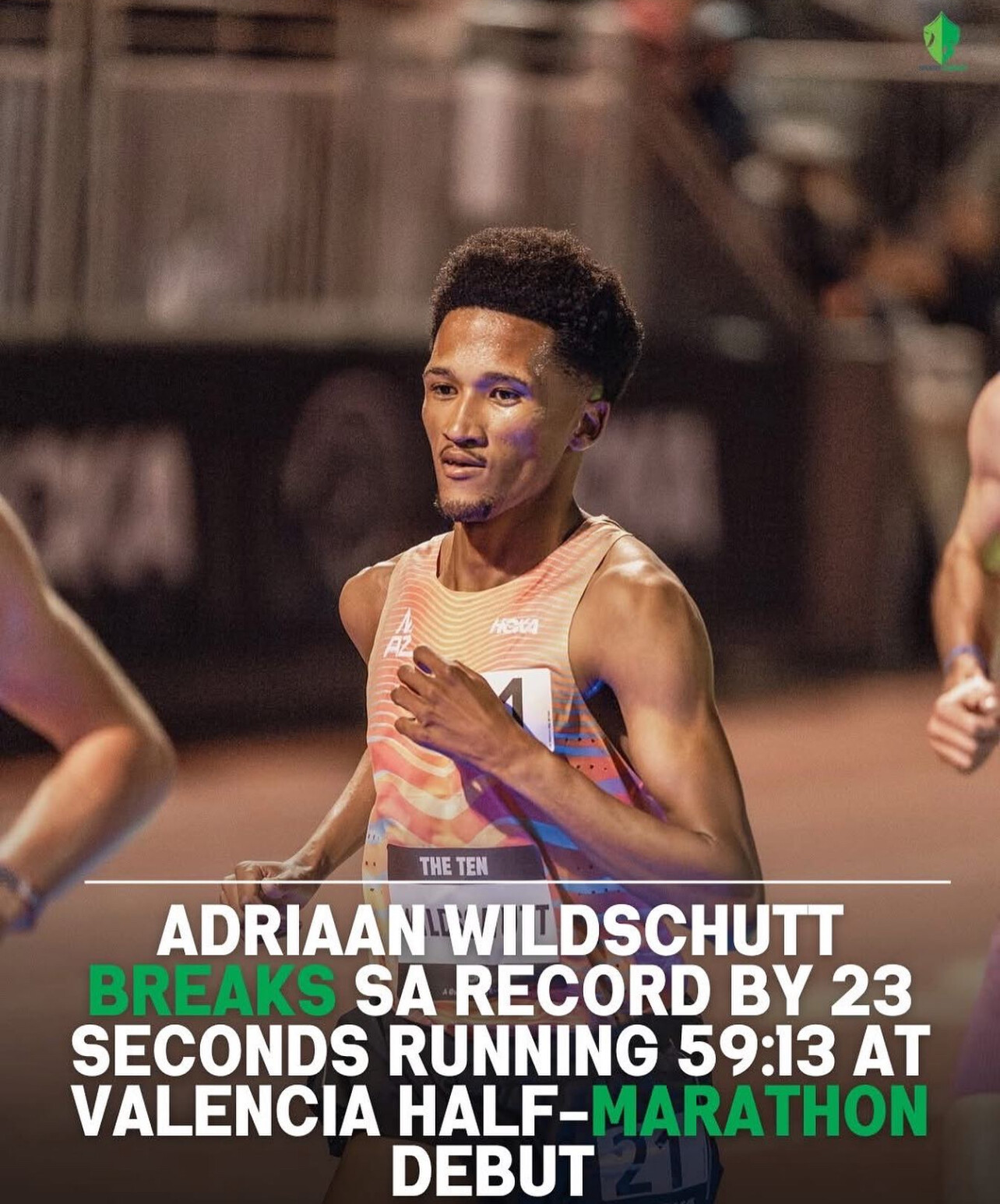
RACE CONDITIONS AND COURSE
Cool temperatures, light humidity, and minimal wind set the stage for another record-friendly day in Valencia. The famously flat and fast course — celebrated for its long straightaways and sea-level setting — once again proved why it’s the go-to destination for athletes chasing lifetime bests and global marks.
Pacemakers set an aggressive tempo from the start in both races, and despite minor breezes in the final stretch, the results confirmed that Valencia remains the gold standard for road racing worldwide.
TOP RESULTS
Men’s Elite Results
1. Yomif Kejelcha (Ethiopia) – 58:02
2. Rodrigue Kwizera (Burundi) – 58:39
3. Brian Kibor (Kenya) – 58:39
4. Andreas Almgren (Sweden) – 58:41 (European Record)
5. Milkesa Mengesha (Ethiopia) – 59:12
6. Boniface Kibiwott (Kenya) – 59:16
7. Sebastian Sawe (Kenya) – 59:22
8. Mohamed Essa (Morocco) – 59:45
9. Tadese Worku (Ethiopia) – 59:58
10. Gabriel Geay (Tanzania) – 1:00:02
Women’s Elite Results
1. Agnes Jebet Ngetich (Kenya) – 1:03:08 (Second-fastest time ever)
2. Fotyen Tesfay (Ethiopia) – 1:05:11
3. Veronica Loleo (Kenya) – 1:05:46 (Personal Best)
4. Irine Cheptai (Kenya) – 1:06:03
5. Melat Kejeta (Germany) – 1:06:37
6. Viola Chepngeno (Kenya) – 1:06:44
7. Tsige Haileslase (Ethiopia) – 1:06:56
8. Eilish McColgan (Great Britain) – 1:07:09
9. Selly Chepyego (Kenya) – 1:07:16
10. Marta Galimany (Spain) – 1:08:21
WHY VALENCIA CONTINUES TO INSPIRE THE WORLD
For more than a decade, Valencia has been the epicenter of half-marathon excellence. From Gidey’s women’s world record in 2021, to Kandie’s men’s mark in 2020, to Kejelcha’s near-record runs and now Almgren’s European breakthrough — the course has become synonymous with speed and history.
This year’s edition reinforced three powerful truths about modern distance running:
1. Yomif Kejelcha remains one of the greatest half-marathon specialists of all time.
2. Agnes Jebet Ngetich has brought women’s road racing to new heights, now sitting just seconds shy of a world record.
3. Andreas Almgren’s European record symbolizes a resurgent era for European endurance running.
FINAL SUMMARY
Event: 2025 Valencia Half Marathon Trinidad Alfonso Zurich
Date: October 26, 2025
Location: Valencia, Spain
Men’s Champion: Yomif Kejelcha (Ethiopia) – 58:02
Women’s Champion: Agnes Jebet Ngetich (Kenya) – 1:03:08 (Second-fastest ever)
European Record: Andreas Almgren (Sweden) – 58:41
by Boris Baron
Login to leave a comment

Valencia Half Marathon
The Trinidad Alfonso Valencia Half Marathon has become one of the top running events in the world. Valencia is one of the fastest half marathon in the world. The race, organized by SD Correcaminos Athletics Club, celebrated its silver anniversary in style with record participation, record crowd numbers, Silver label IAAF accreditation and an atmosphere that you will not find...
more...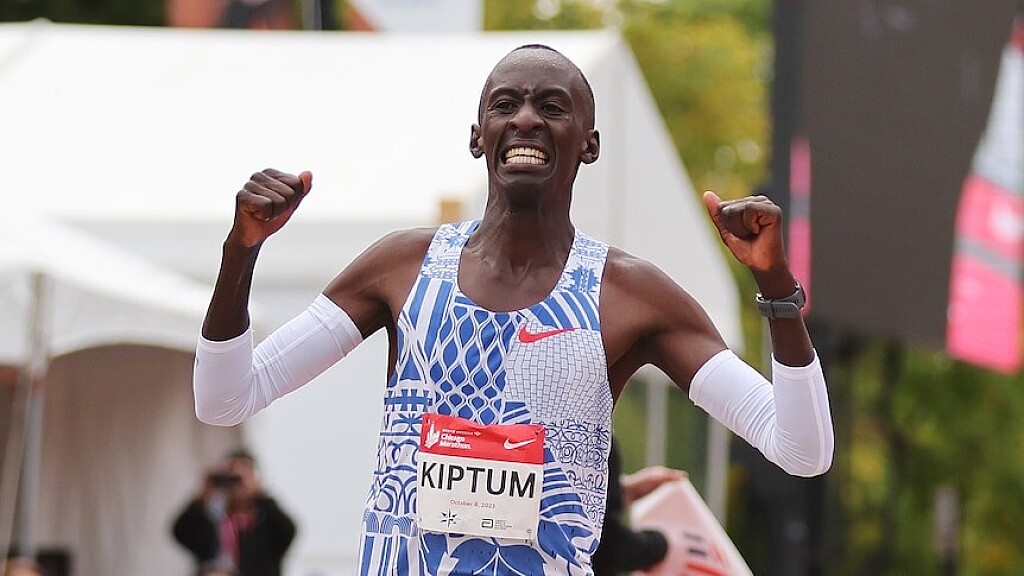
Chicago’s Marathon Legacy — From Kiptum’s Perfection to Kiplimo’s Power
Two years apart, on the same streets of Chicago, two East African greats delivered marathon performances that will be remembered for generations.
In 2023, Kenya’s Kelvin Kiptum stunned the world with his 2:00:35 world record, a run that redefined endurance and perfection.
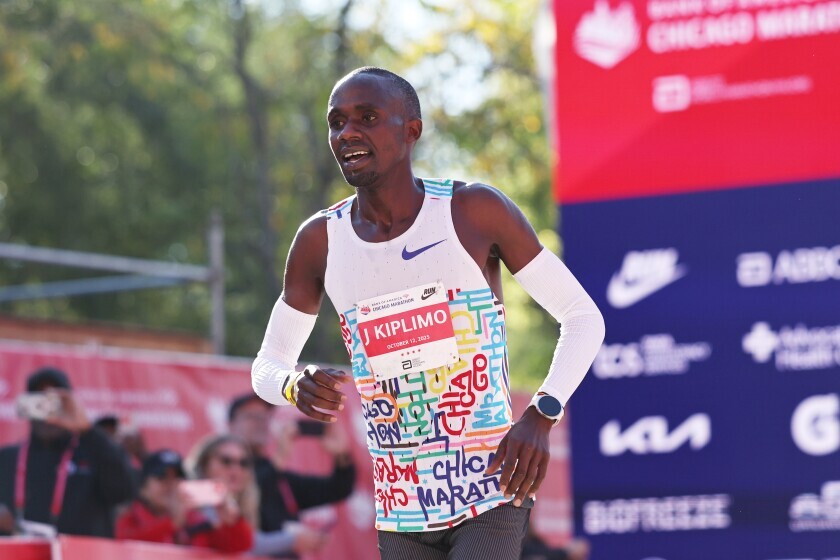
In 2025, Uganda’s Jacob Kiplimo, already the half marathon world record holder, returned to Chicago for his second career marathon and clocked 2:02:23 — his personal best and the seventh-fastest marathon ever run.
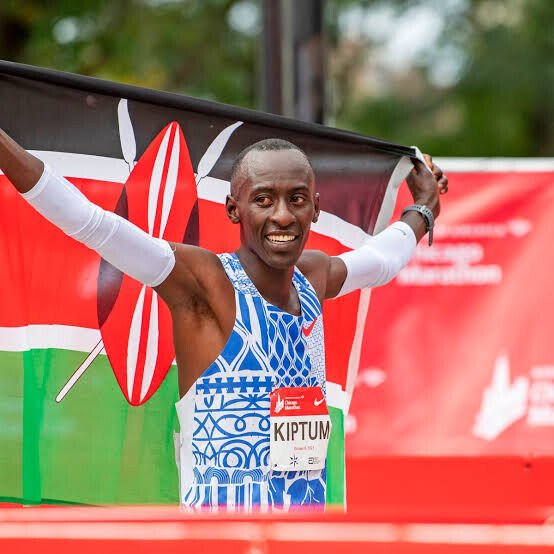
Split by Split — The Chicago Comparison
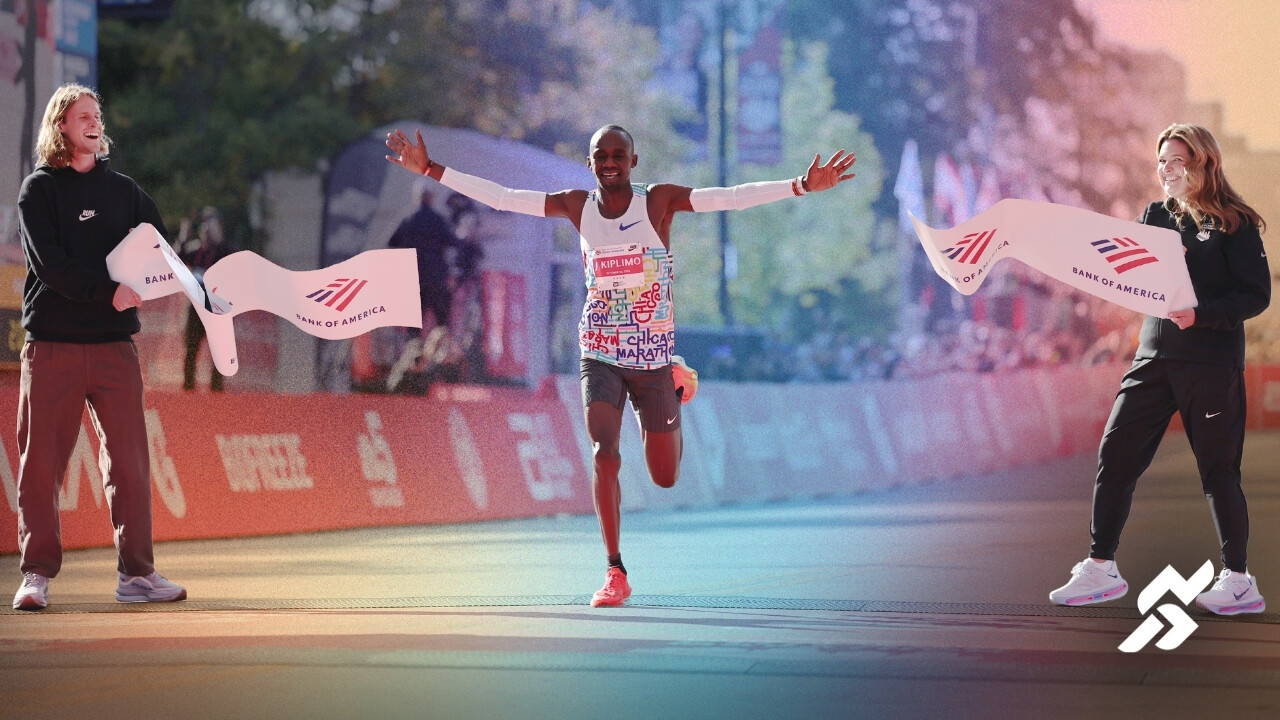
|
Distance |
Kiptum (2023) |
Kiplimo (2025) |
Difference |
|
5 km |
14:26 |
13:58 |
−28 sec |
|
10 km |
28:42 |
28:25 |
−17 sec |
|
15 km |
43:09 |
42:40 |
−29 sec |
|
20 km |
57:39 |
57:05 |
−34 sec |
|
Half |
1:00:48 |
1:00:16 |
−32 sec |
|
25 km |
1:12:04 |
1:11:12 |
−52 sec |
|
30 km |
1:26:31 |
1:25:31 |
−60 sec |
|
35 km |
1:40:22 |
1:39:52 |
−30 sec |
|
40 km |
1:54:23 |
1:55:10 |
+47 sec |
|
Finish |
2:00:35 (World Record) |
2:02:23 |
+1:48 |
How They Ran
Kelvin Kiptum (2023):
Kiptum ran one of the most perfectly executed marathons in history. After a steady opening half in 1:00:48, he unleashed a ferocious negative split of 59:47, the fastest second half ever recorded. His closing 10K in 27:52 sealed a new world record and forever changed how we think about the marathon.
Jacob Kiplimo (2025):
After finishing second in his marathon debut at the 2025 London Marathon, Kiplimo arrived in Chicago more prepared — and fearless. From the start, he attacked the course, opening in 13:58 for 5K, the fastest ever in Chicago. Through 30K, he was over a minute ahead of Kiptum’s world-record pace. Although he slowed slightly in the final 10K, his 2:02:23 finish was the fastest ever by an Ugandan and the 7th-fastest marathon in history.
âš–ï¸ The Contrast
• Strategy: Kiptum’s patience vs. Kiplimo’s aggression.
• Halfway: Kiplimo led by 32 seconds at 21.1K.
• Closing Power: Kiptum’s final 7K (13:51 split) remains unmatched.
• Outcome: Kiplimo’s performance wasn’t a world record, but it confirmed his place among the greatest marathoners of his generation.
Legacy and Continuation
Tragically, Kelvin Kiptum was killed in a car accident in Kenya in February 2024, just months after his world-record run. His passing shocked the running world and ended the career of a man many believed would one day break two hours on a record-eligible course.
When Jacob Kiplimo returned to Chicago in 2025, it felt like a continuation of that story — a symbolic passing of the torch. Running on the same course where Kiptum made history, Kiplimo carried forward the East African legacy of excellence, courage, and speed.
Final Thoughts
Kiptum’s 2:00:35 remains the marathon’s gold standard — calm, controlled, and utterly brilliant.
Kiplimo’s 2:02:23 showed fearless front-running and a promise of what’s still to come.
Two men. Two races. One city.
Chicago — where the modern marathon’s greatest chapters continue to be written.
- - -
The 9 Fastest Men’s Marathons of All Time (as of Oct 13, 2025)
|
Rank |
Name |
Time |
Venue |
|
1 |
Kelvin Kiptum (KEN) |
2:00:35 |
Chicago 2023 |
|
2 |
Eliud Kipchoge (KEN) |
2:01:09 |
Berlin 2022 |
|
3 |
Kenenisa Bekele (ETH) |
2:01:41 |
Berlin 2019 |
|
4 |
Sisay Lemma (ETH) |
2:01:48 |
Valencia 2023 |
|
5 |
Sebastian Sawe (KEN) |
2:02:05 |
Valencia 2024 |
|
6 |
Benson Kipruto (KEN) |
2:02:16 |
Tokyo 2024 |
by Bob Anderson
Login to leave a comment
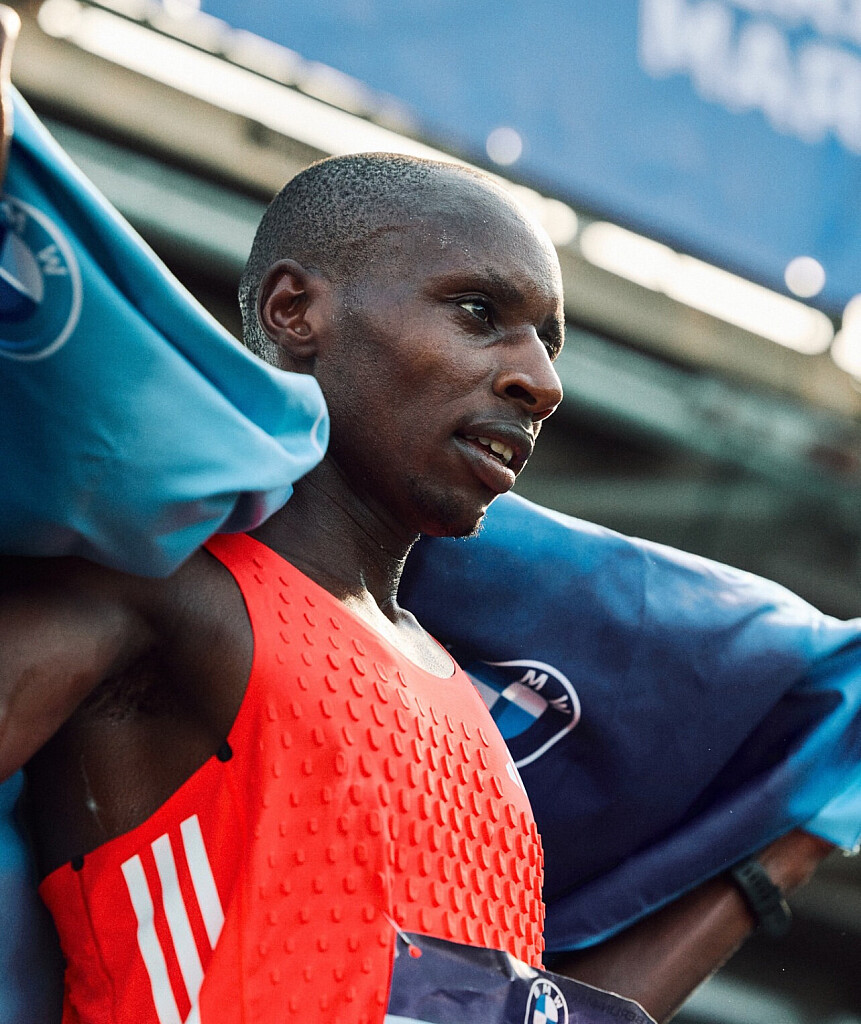
From Rain to Heat: Sabastian Sawe and the New Chapter of Berlin’s Weather-Tested Records
Fifteen years ago, Patrick Makau braved torrential rain and deep puddles on the streets of Berlin, chasing Haile Gebrselassie’s marathon world record. The conditions ruined his attempt, but Makau still managed 2:05:08—the fastest marathon ever run in such relentless rain. A year later, with fair weather, he returned and broke the world record with 2:03:38.
On Sunday in Berlin, history echoed in a new way. This time, it wasn’t rain but unseasonable heat that stood between a Kenyan and marathon immortality. Sabastian Sawe, the 30-year-old rising star, had his sights set on Eliud Kipchoge’s 2:00:35 mark. Instead, he delivered what can only be called a “warm-weather world record,” blazing through the 26.2 miles in 2:02:16. Despite being 101 seconds off the record, it was the fastest time ever achieved in such high temperatures.
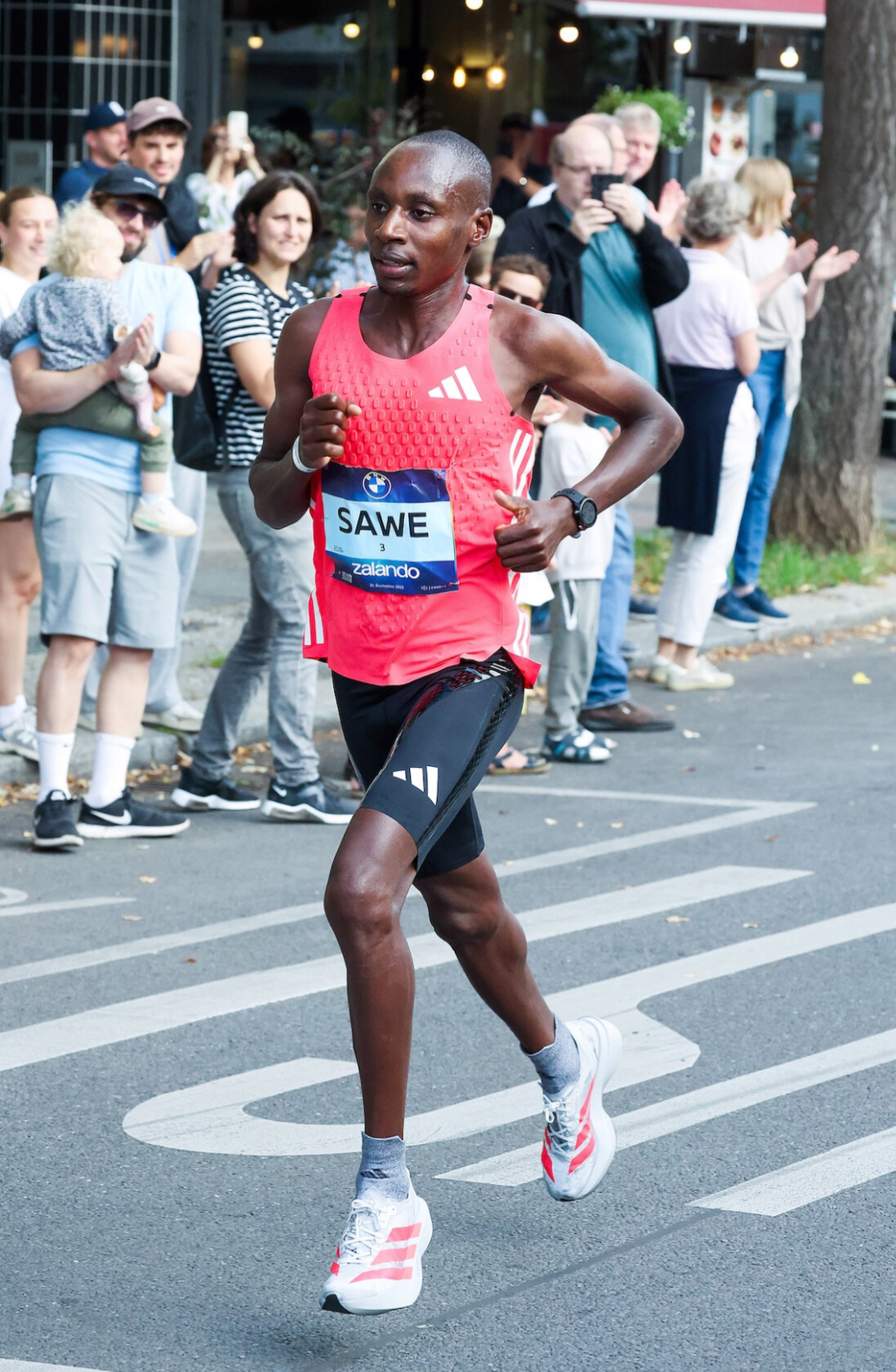
The What-Ifs of Berlin
Sawe, whose personal best stands at 2:02:05, was in career-best form. His coach, Italian veteran Claudio Berardelli, admitted the weather stripped away any chance of the extraordinary.

“I know he was in exceptionally good shape. But I do not know what would have been possible,” Berardelli reflected.
The what-if question will linger: how fast could Sawe have run under cooler skies?
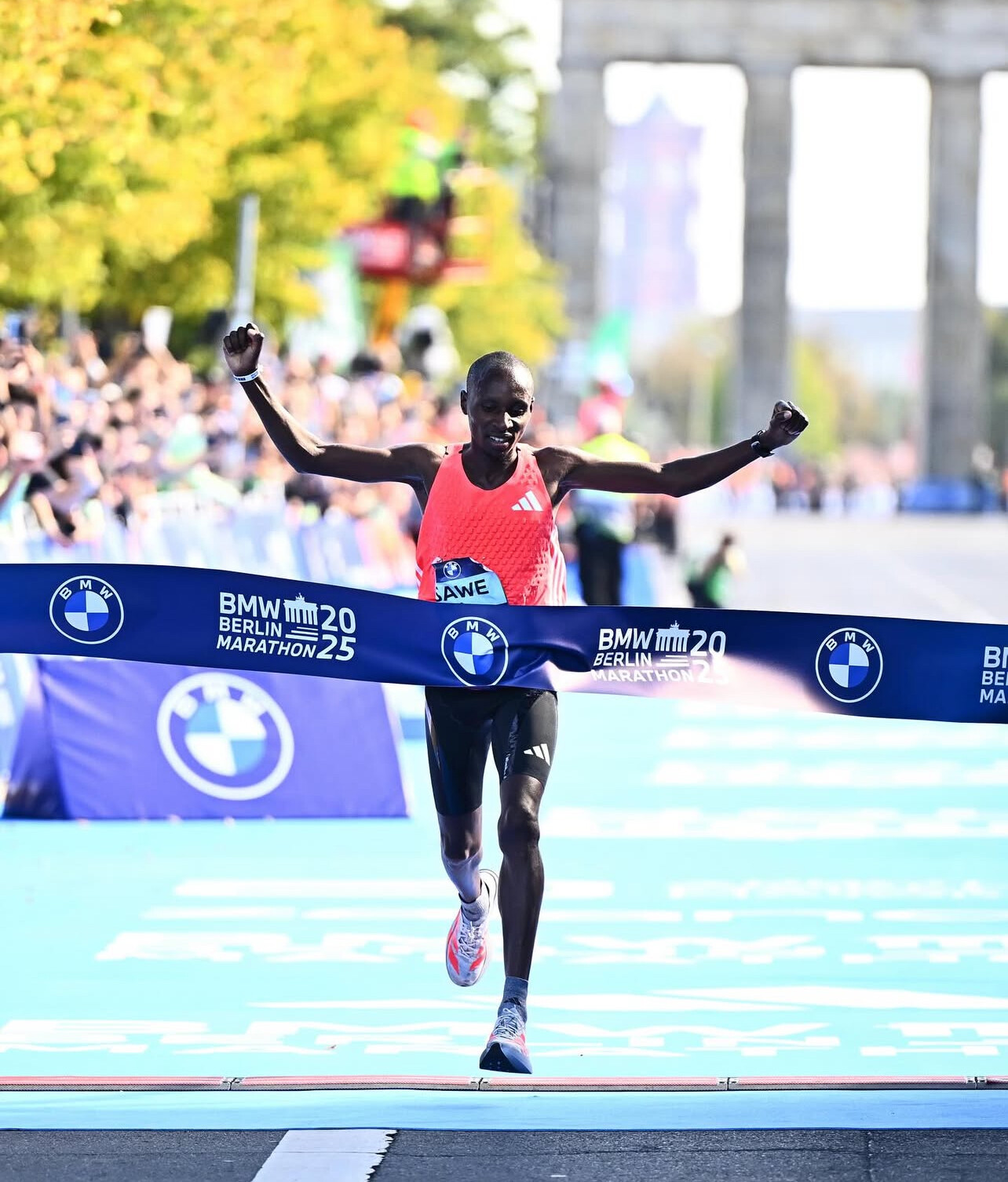
From Humble Beginnings to Global Stardom
Born in the village of Cheukta near Eldoret, Sawe’s story mirrors that of countless young talents in Kenya who struggle for recognition. Despite moving to Iten, the mecca of distance running, he was overlooked by managers and coaches. His breakthrough came only after turning to his uncle, Abraham Chepkirwok—Uganda’s 800m national record holder—and his neighbor Abel Mutai, the London 2012 Olympic steeplechase bronze medalist.
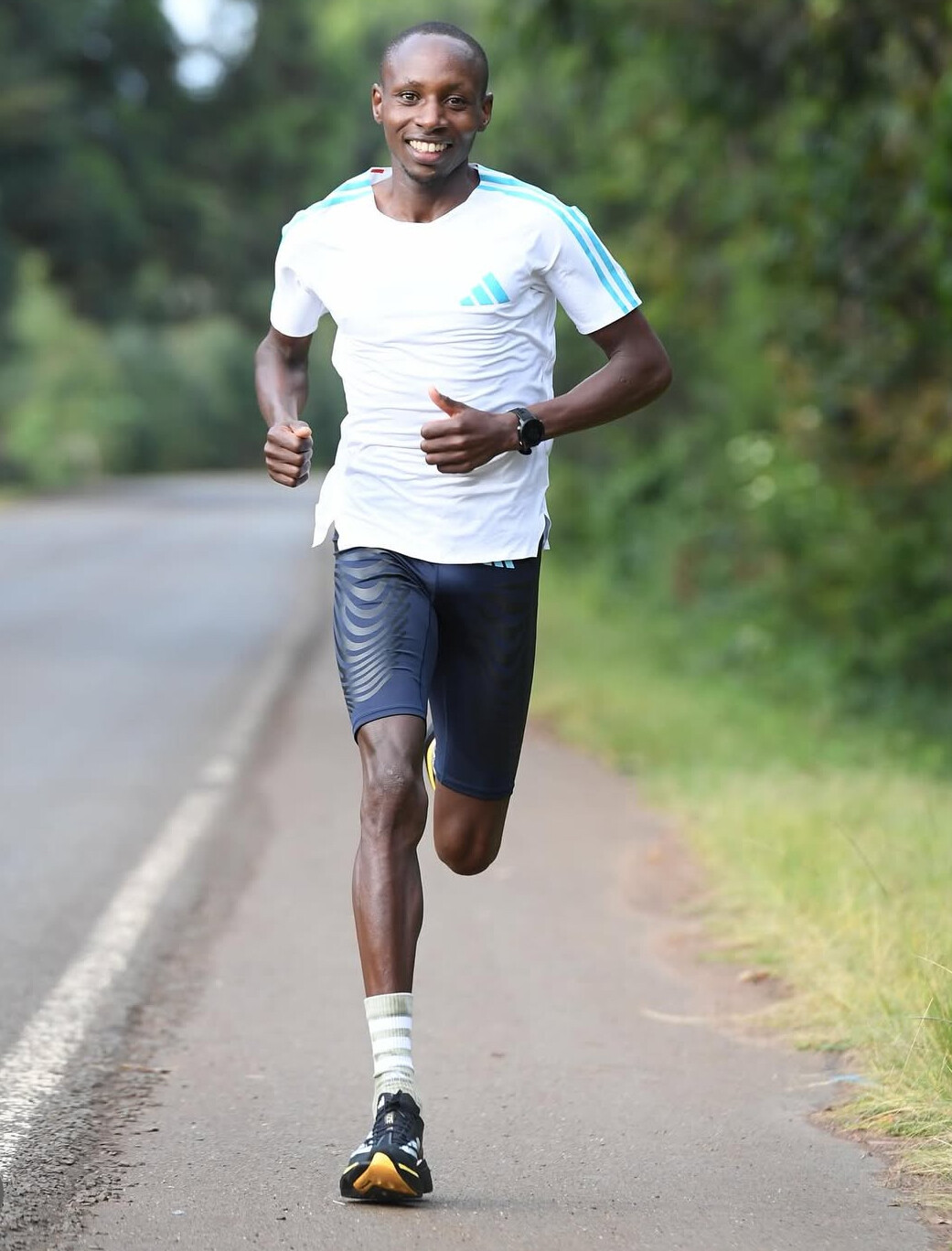
Mutai vouched for him with Berardelli, who placed Sawe in his Kapsabet camp. The rest unfolded quickly. Sawe stunned the field at the 2022 Seville Half Marathon, entering as a pacemaker but leaving with a victory and a world lead of 59:02.
A Gift of Talent and Humility
Berardelli is quick to highlight Sawe’s rare combination of physical and mental qualities:
“He has everything it takes—training ability, mental strength, and humility. I can’t predict what will be possible, but I’m looking forward to finding out.”
Sawe himself remained pragmatic after Berlin:
“I wanted to run really fast and gave it my best, but the weather was too hot. I hope I will have better weather next time. I liked the course, it is very good and fast.”
Berlin: Unfinished Business
Just as Makau returned after the rain to rewrite history, Sawe may yet come back to Berlin with the weather in his favor. With his trajectory and determination, the marathon world could witness a record chase for the ages in 2026.
Until then, Berlin 2025 will be remembered as the day Sabastian Sawe delivered a performance that stood not against the clock, but against the elements—proving once again why the city remains the crucible of marathon greatness.
by Race News Service
Login to leave a comment
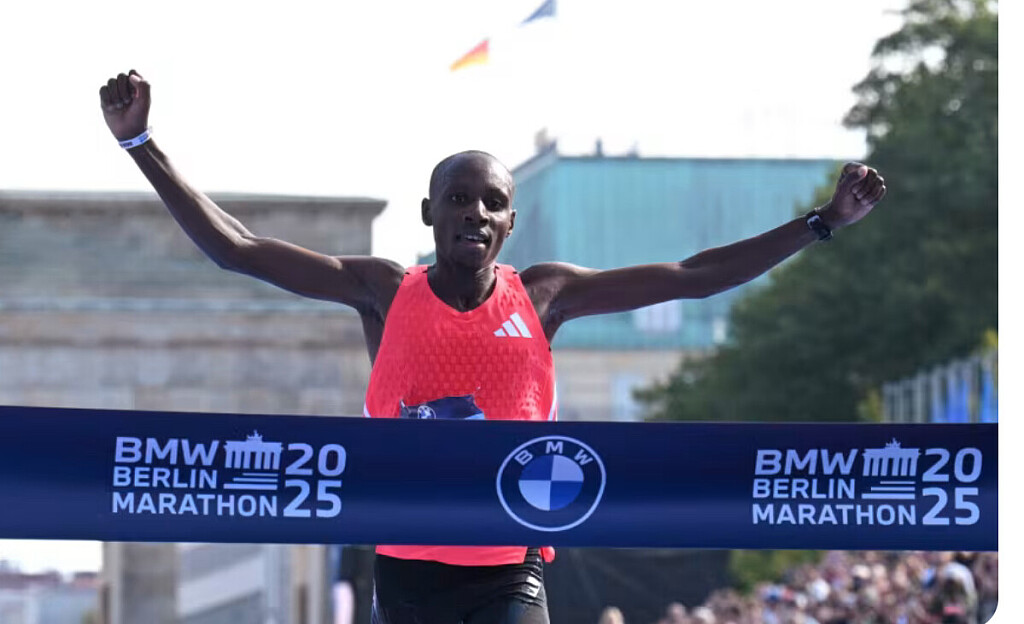
Sabastian Sawe Dominates in Berlin With 2:02:16 Victory
Berlin, September 21, 2025 — The Berlin Marathon once again lived up to its reputation as the world’s fastest stage for marathon running. Kenya’s Sabastian Sawe stormed to victory on Sunday, clocking 2:02:16, the fastest marathon time in the world this year and the fourth-fastest ever run on the streets of Berlin.
Sawe, already the reigning champion from Valencia (2024) and London (2025), extended his unbeaten record over the marathon distance. From the gun, he attacked with confidence, hitting 5km in 14:09and 10km in 28:26, well inside world-record pace. By halfway, his split of 60:16 electrified the Berlin crowds and suggested history might be on the cards.
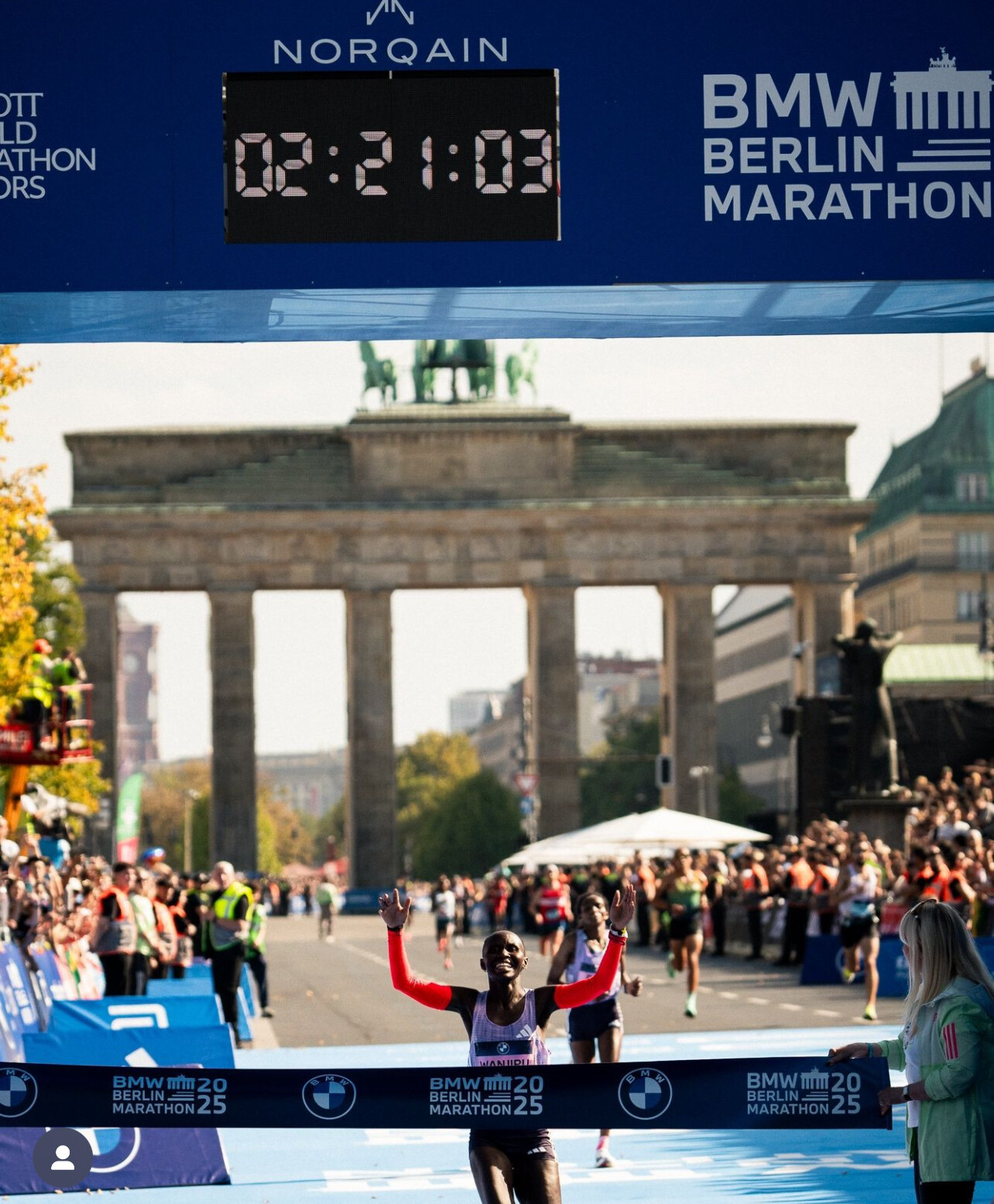
But conditions proved decisive. Unseasonably warm temperatures — climbing to 25°C (mid-70s°F) — and the loss of his pacemakers before the 23km mark forced Sawe to shoulder the workload alone. Though the second half slowed, he maintained control and powered down Unter den Linden to the Brandenburg Gate, finishing with a commanding lead.
Behind him, Akira Akasaki of Japan impressed with a breakthrough run, finishing second in 2:06:15, while Ethiopia’s Chimdessa Debele held on for third in 2:06:57.
Wanjiru Outkicks Dida in Women’s Duel
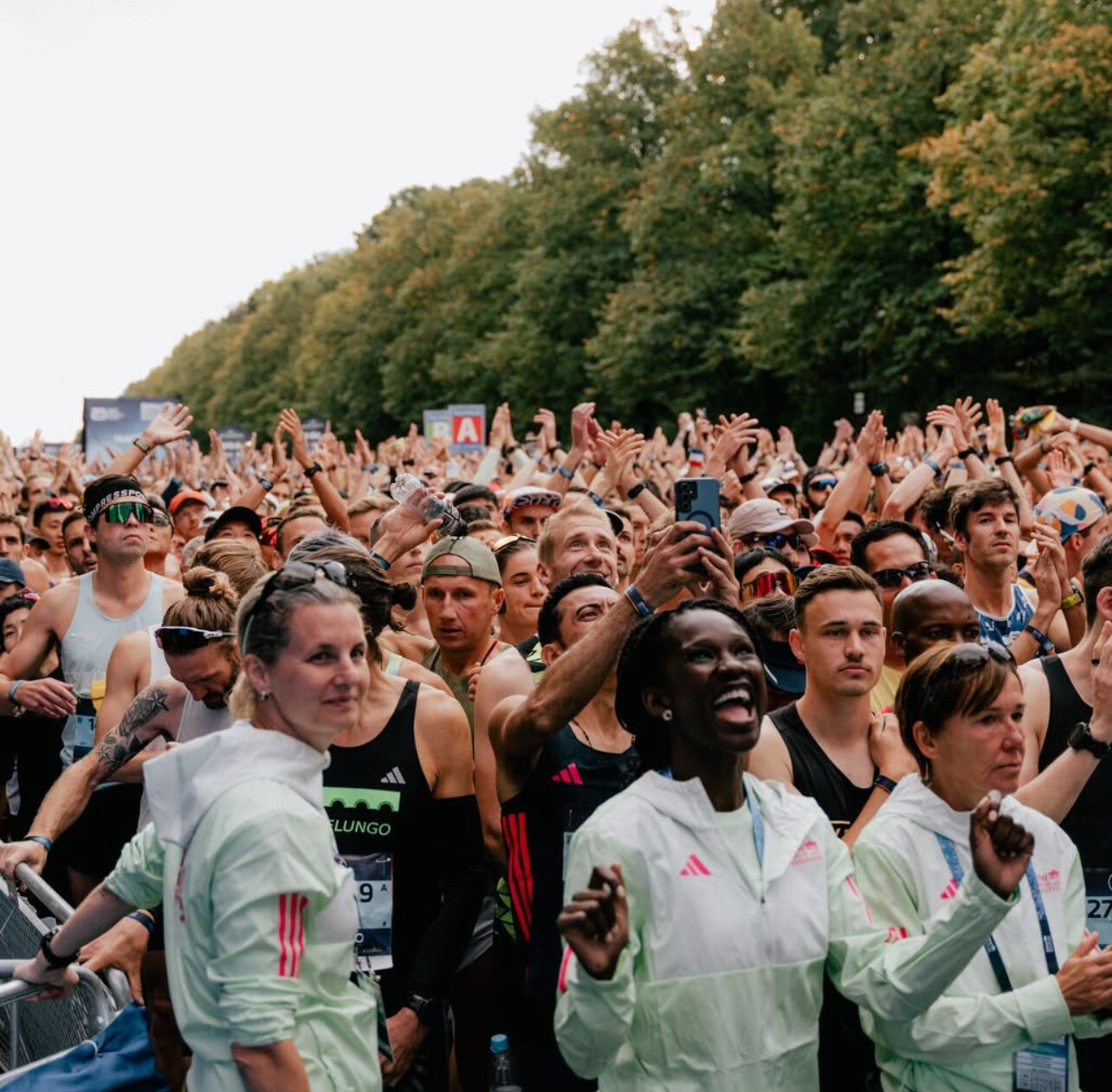
The women’s race produced its own drama, with Kenya’s Rosemary Wanjiru edging Ethiopia’s Dera Dida by just three seconds. Wanjiru clocked 2:21:05 after a decisive surge past the 25km mark. Dida followed in 2:21:08, while fellow Ethiopian Azmera Gebru completed the podium in 2:21:29.
“I knew it would come down to the final kilometers,” Wanjiru said afterward. “The crowd in Berlin gave me so much energy.”
Berlin’s Enduring Legacy
This year’s edition was the 51st running of the Berlin Marathon, and once again, the German capital showcased why it is considered the “world record course.” Since 2003, the men’s world record has been broken eight times in Berlin, most recently by Eliud Kipchoge’s 2:01:09 in 2022. On the women’s side, Tigst Assefa stunned the world here in 2023 with her record 2:11:53.
While Sawe fell short of rewriting those marks, his performance in the heat confirmed his status as the man to beat in global marathon running. With three straight victories in world-class fields, he has announced himself as the heir apparent to Kipchoge.
Results at a Glance
Men
1. Sabastian Sawe (Kenya) — 2:02:16
2. Akira Akasaki (Japan) — 2:06:15
3. Chimdessa Debele (Ethiopia) — 2:06:57
Women
1. Rosemary Wanjiru (Kenya) — 2:21:05
2. Dera Dida (Ethiopia) — 2:21:08
3. Azmera Gebru (Ethiopia) — 2:21:29
by Boris Baron
Login to leave a comment
BMW Berlin Marathon
The story of the BERLIN-MARATHON is a story of the development of road running. When the first BERLIN-MARATHON was started on 13th October 1974 on a minor road next to the stadium of the organisers‘ club SC Charlottenburg Berlin 286 athletes had entered. The first winners were runners from Berlin: Günter Hallas (2:44:53), who still runs the BERLIN-MARATHON today, and...
more...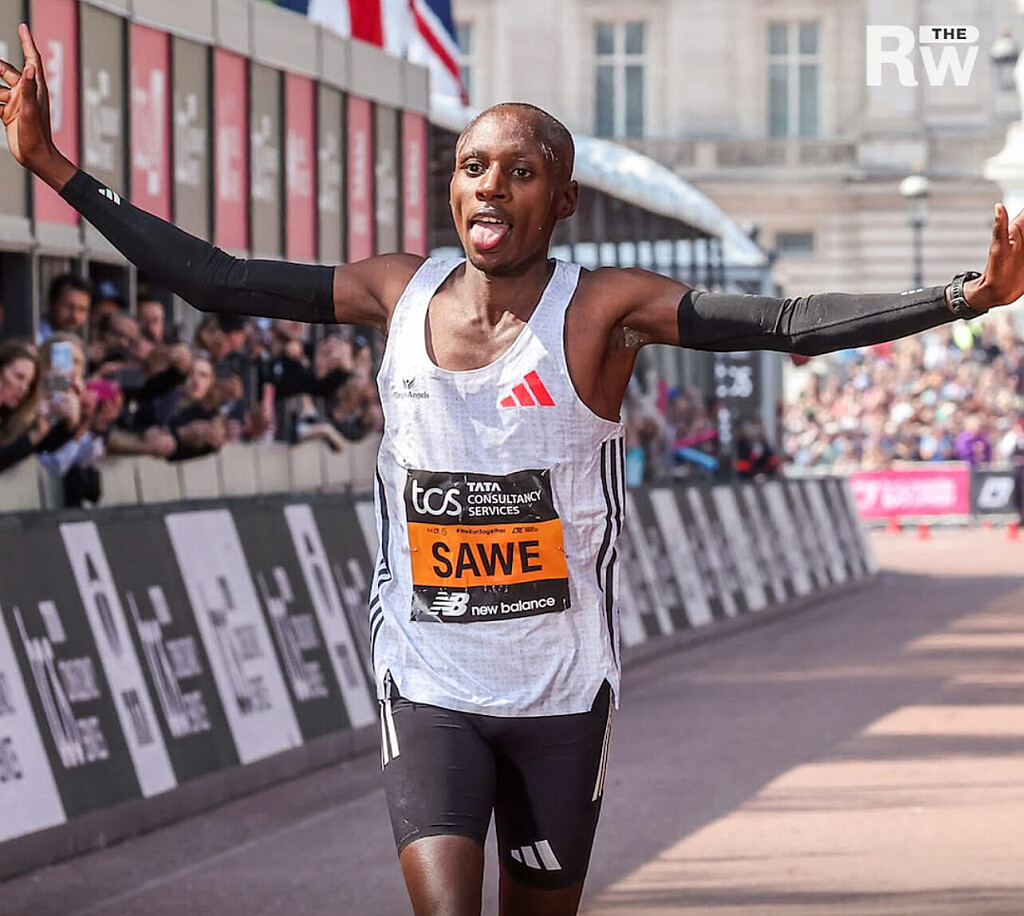
Sebastian Sawe Leads the Way With Bold Anti-Doping Initiative Ahead of Berlin Marathon
Sebastian Sawe, the 2025 London Marathon champion and currently the fastest marathoner in the world, is preparing for his third career marathon on September 21 in Berlin. Determined to ensure his performances are beyond question, Sawe has taken an unprecedented step: partnering with the Athletics Integrity Unit (AIU) to undergo one of the strictest anti-doping programs ever seen in the sport.
In collaboration with his management team and adidas, Sawe’s program includes:
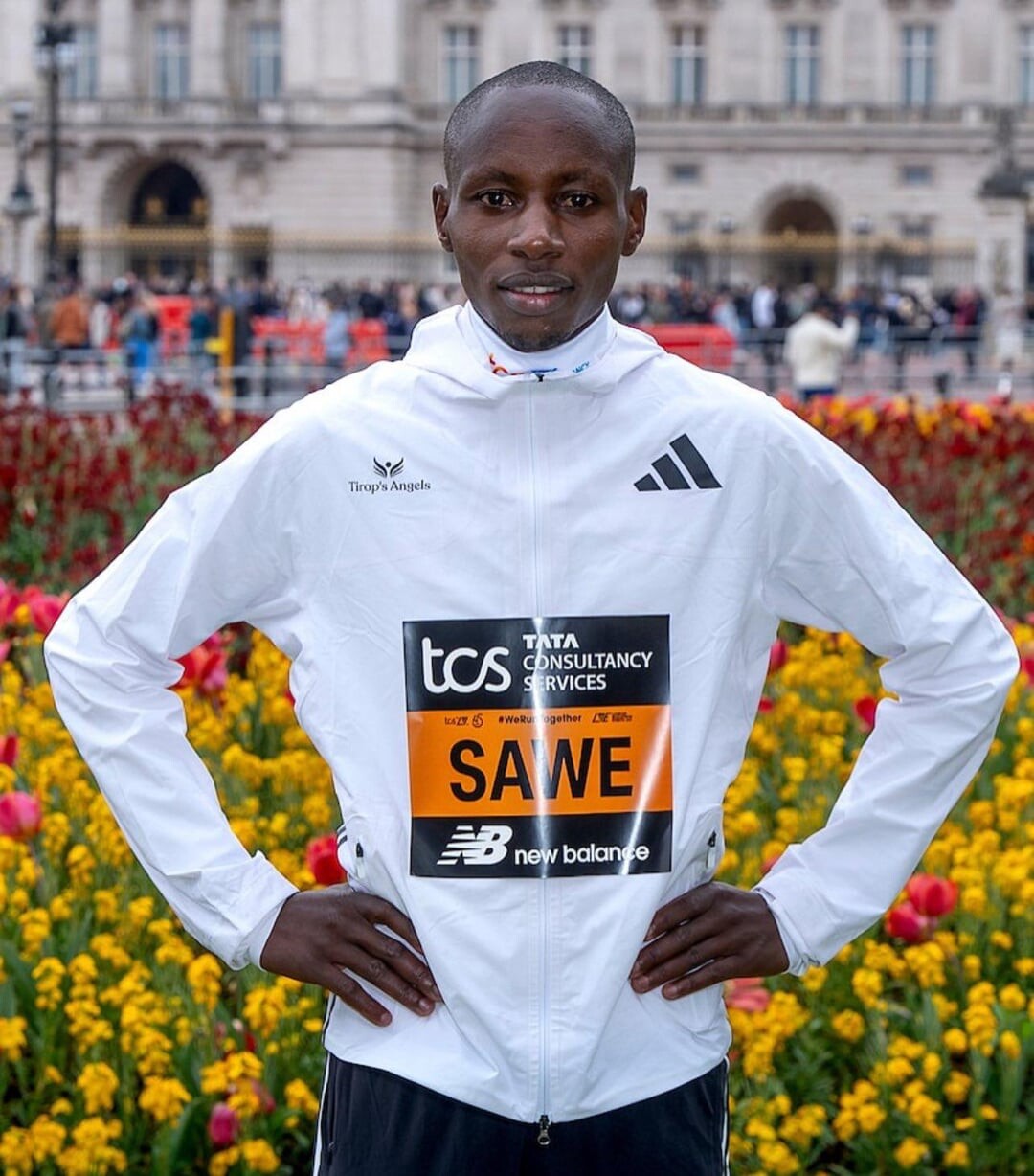
• A minimum of 25 anti-doping tests in the two months leading up to Berlin.
• Surprise, out-of-competition testing under the most advanced laboratory protocols.
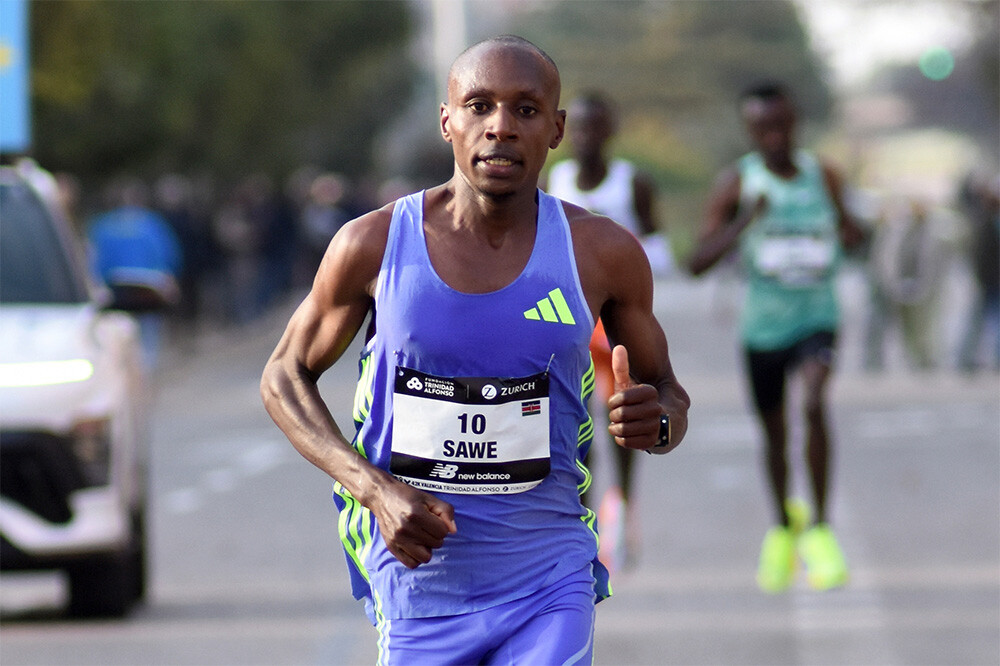
• Complete independence in testing, with no prior notice given to Sawe or his team.
• Full financial support from adidas, his primary sponsor.
Explaining his decision, Sawe said:
“I am tired of reading constant doubts and accusations whenever a Kenyan athlete performs well. I acknowledge that doping is a real issue in our country, and ignoring it would be a mistake. We must face it, work with organizations like AIU and World Athletics, and fight this problem that feels like a cancer for Kenyan athletes. My hope is to set an example, encourage others to act, and show that clean performances are possible. Above all, I want people to know that when I line up in Berlin, I am clean, and my results should not be questioned just because I am Kenyan.”
The testing officially began on July 25.
Sawe’s initiative comes at a crucial moment, as Kenya’s Anti-Doping Agency was recently declared non-compliant with WADA’s code. While the agency has 21 days to contest the ruling and implement corrective measures, Sawe’s leadership highlights a proactive and athlete-driven path forward.
As he builds toward Berlin, Sawe is not only racing for victory but also for the integrity of Kenyan athletics, proving that world-class performances can and must be achieved clean.
by Boris Baron
Login to leave a comment
Sawe and Wanjiru Lead Record-Setting Fields at Berlin Marathon
A world-class lineup is set for the 51st edition of the BMW Berlin Marathon on September 21. Kenyans Sabastian Sawe and Rosemary Wanjiru headline the fields with personal bests of 2:02:05 and 2:16:14, respectively, making them clear favorites. Yet the men’s race also includes defending champion Milkesa Mengesha of Ethiopia, who clocked his 2:03:17 PB on this course last year.
The men’s start list features 10 athletes with personal bests under 2:05, while six women have already broken 2:19. By the numbers, it is the strongest PO Berlin lineup in history. The flat and fast course has been the stage for 13 world records over the past five decades, and another swift contest seems inevitable.
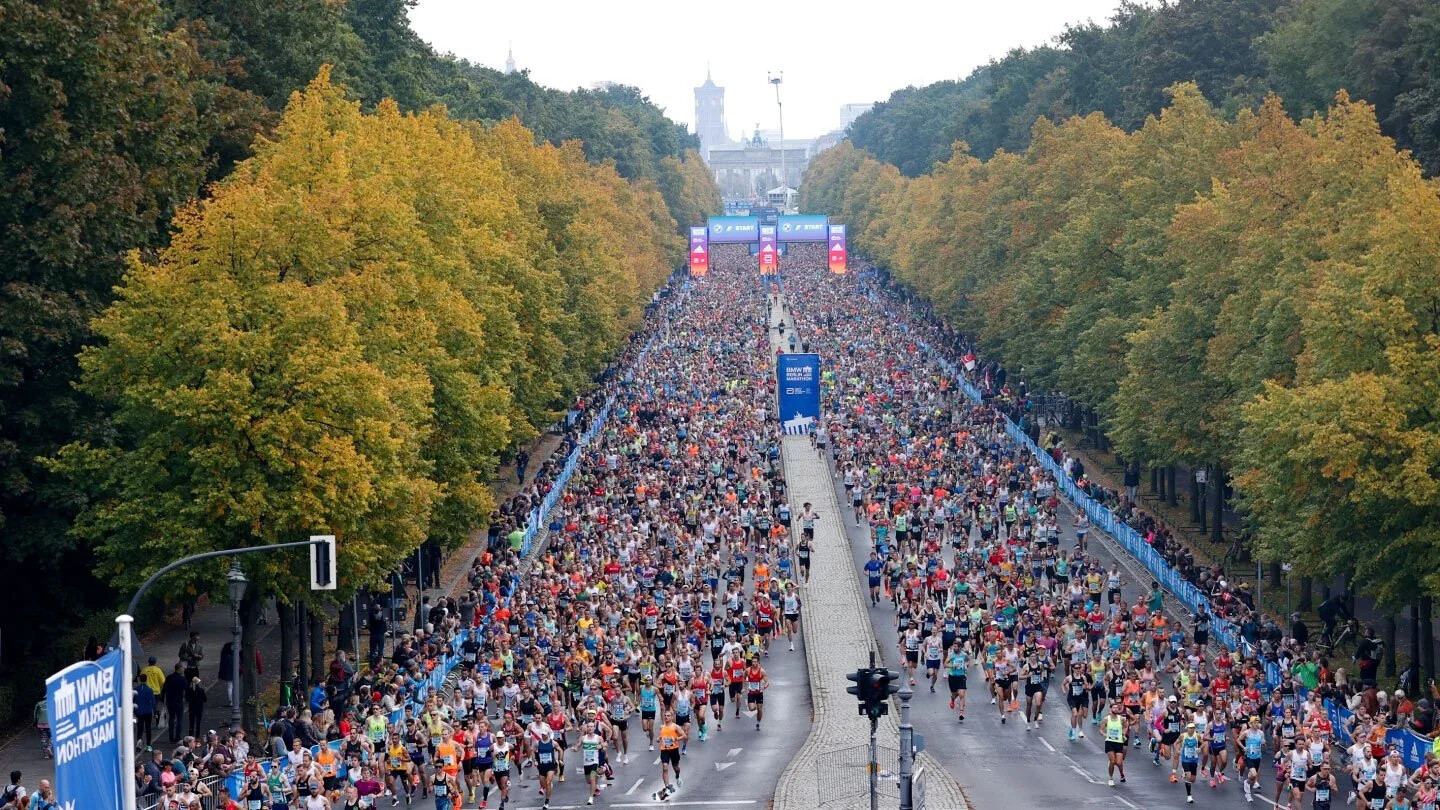
Organizers also achieved something remarkable: both Japanese marathon record holders will compete. Kengo Suzuki holds the men’s national record at 2:04:56, while Honami Maeda is the fastest Japanese woman of all time with her 2:18:59 mark. For the first time in at least 25 years, a city marathon outside Japan has managed to bring together both record holders, underscoring Berlin’s global prestige in long-distance running.
Selected Top Entries
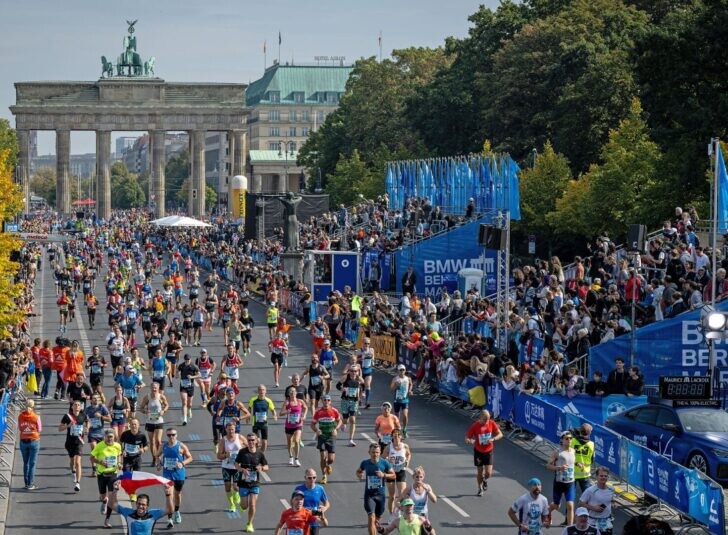
Men
• Sabastian Sawe (KEN) – 2:02:05, Valencia 2024

• Gabriel Geay (TAN) – 2:03:00, Valencia 2022
• Milkesa Mengesha (ETH) – 2:03:17, Berlin 2024
• Haymanot Alew (ETH) – 2:03:31, Berlin 2024
• Guye Adola (ETH) – 2:03:46, Berlin 2017
• Daniel Mateiko (KEN) – 2:04:24, Valencia 2024
• Kengo Suzuki (JPN) – 2:04:56, Otsu 2021
Women
• Rosemary Wanjiru (KEN) – 2:16:14, Tokyo 2024
• Degitu Azimeraw (ETH) – 2:17:58, London 2021
• Dera Dida (ETH) – 2:18:32, Dubai 2025
• Tigist Girma (ETH) – 2:18:52, Valencia 2022
• Honami Maeda (JPN) – 2:18:59, Osaka 2024
• Sharon Chelimo (KEN) – 2:19:33, Barcelona 2025
With such depth across both fields, the 2025 BMW Berlin Marathon is primed for fireworks—and perhaps even another historic performance on the sport’s fastest stage.
by Boris Baron
Login to leave a comment
BMW Berlin Marathon
The story of the BERLIN-MARATHON is a story of the development of road running. When the first BERLIN-MARATHON was started on 13th October 1974 on a minor road next to the stadium of the organisers‘ club SC Charlottenburg Berlin 286 athletes had entered. The first winners were runners from Berlin: Günter Hallas (2:44:53), who still runs the BERLIN-MARATHON today, and...
more...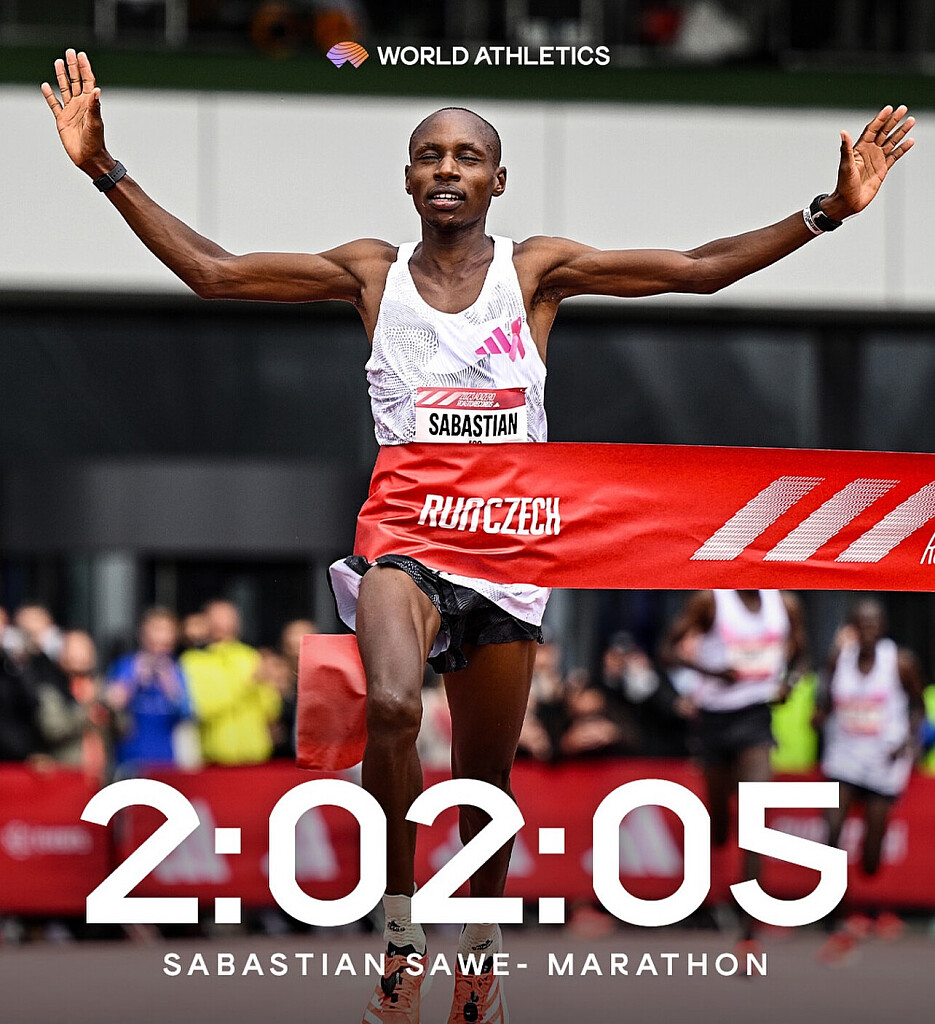
Men’s Elite Field Set for a Sizzling Showdown at the 2025 Berlin Marathon
Berlin, Germany – September 29, 2025 (Race Day)
With its flat, fast course and history of record-breaking performances, the BMW Berlin Marathon has become a magnet for the world’s best distance runners—and this year is no exception.
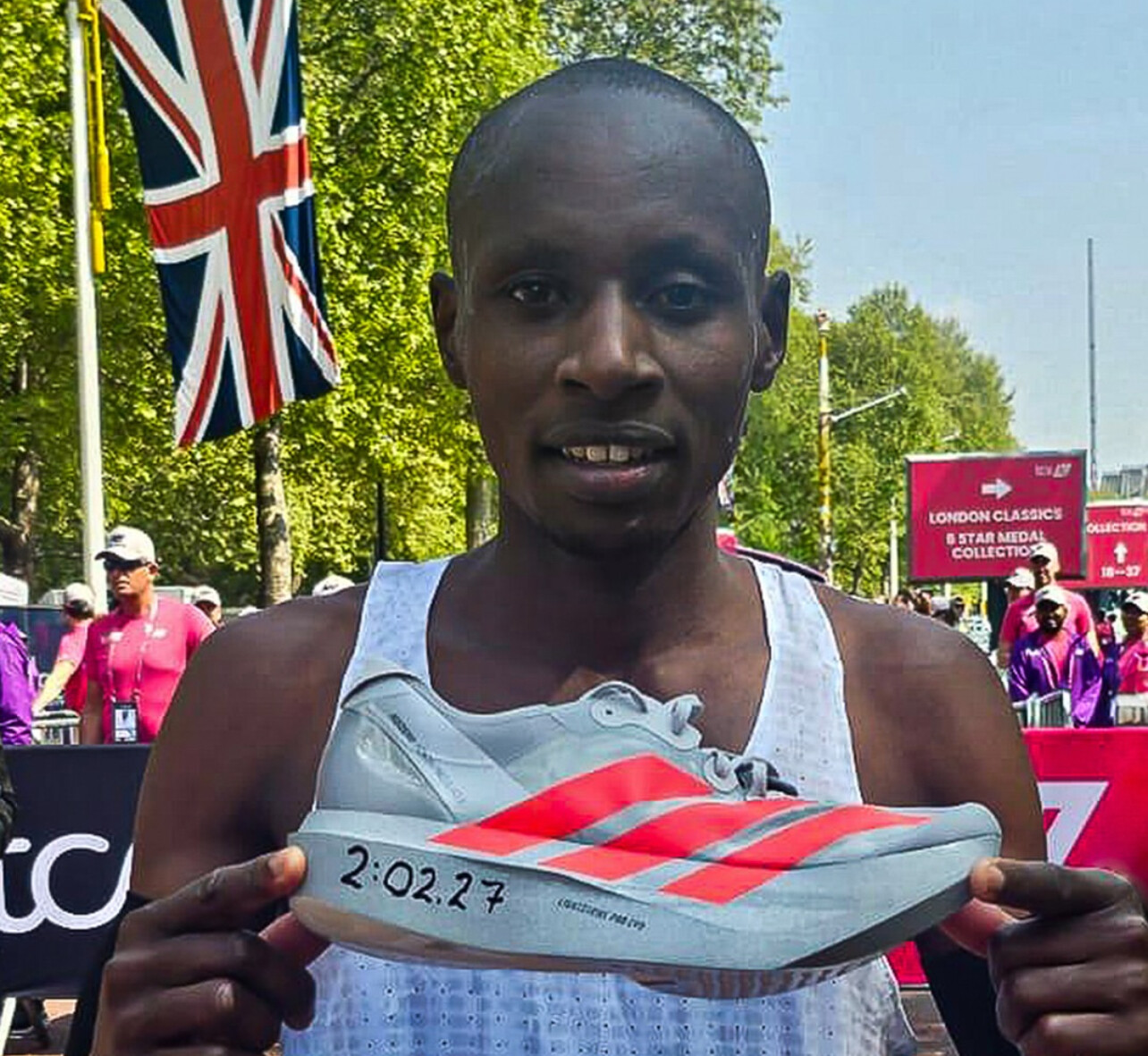
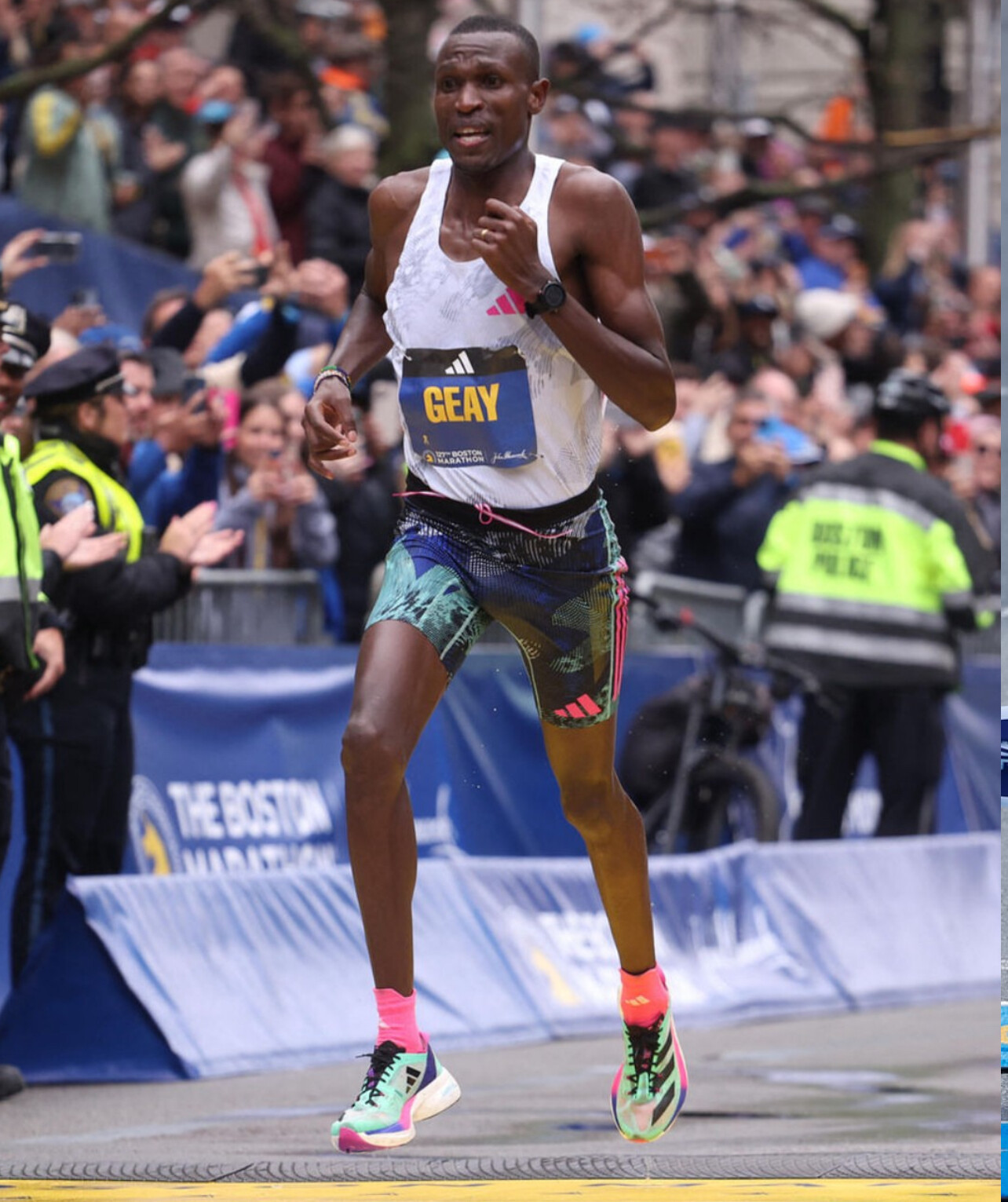
The 2025 men’s elite field is stacked with sub-2:05 talent from Kenya, Ethiopia, Tanzania, and Japan, including several proven champions and emerging stars. On September 29, all eyes will be on Berlin to see if the next marathon milestone can be broken.
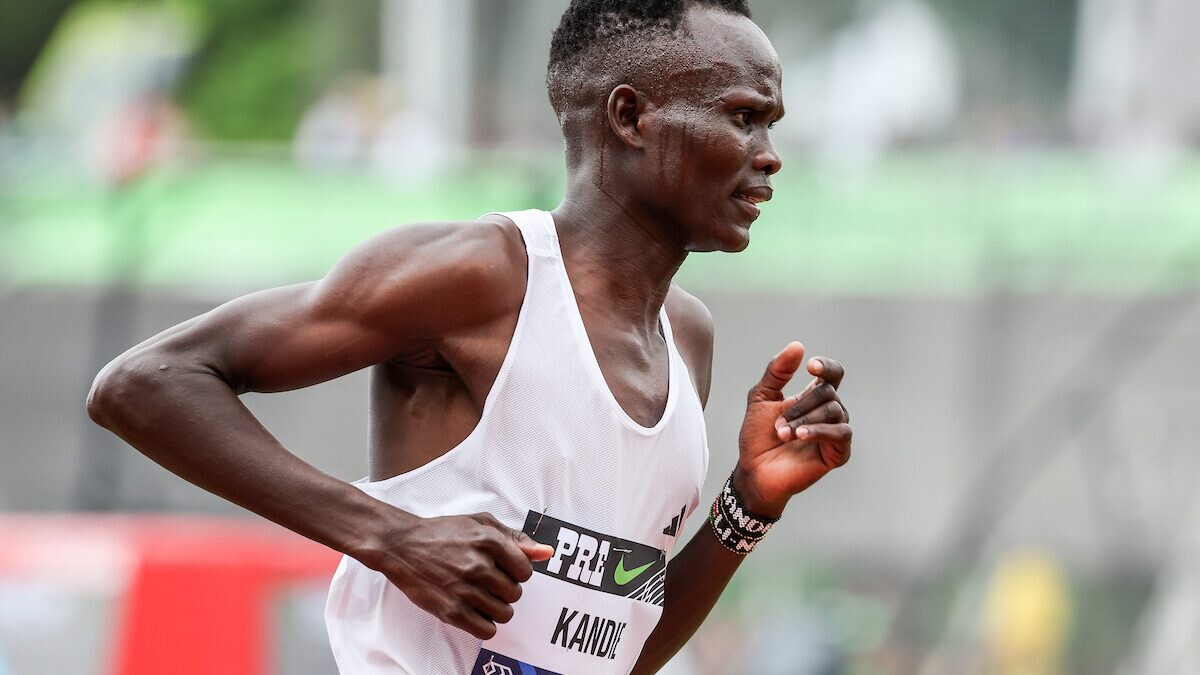
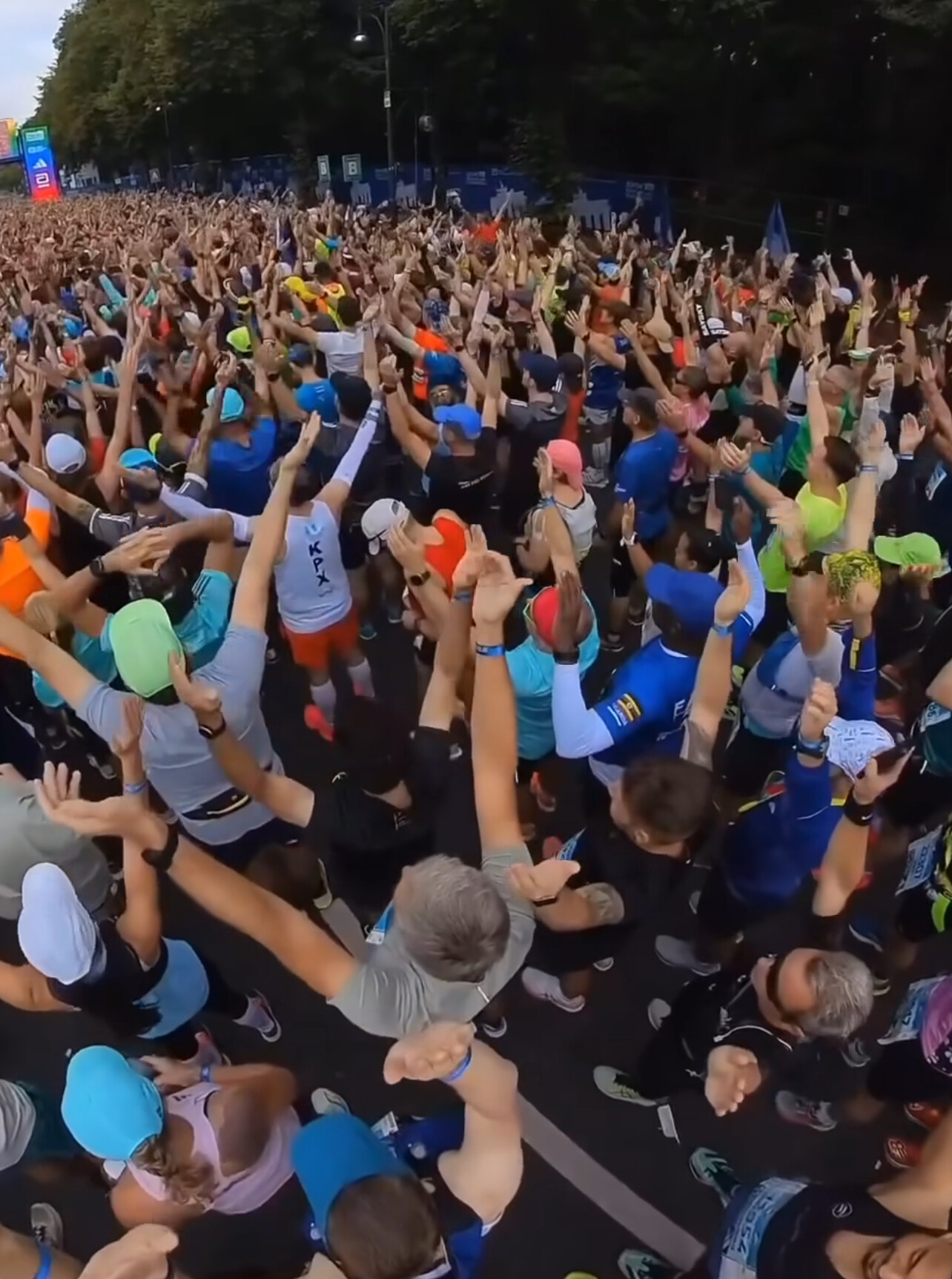
Top Contenders and Their Personal Bests
|
Name |
Country |
Personal Best |
|
Sabastian Sawe |
KEN |
2:02:05 |
|
Gabriel Gerald Geay |
TAN |
2:03:00 |
|
Milkesa Mengesha |
ETH |
2:03:17 |
|
Haymanot Alew |
ETH |
2:03:31 |
|
Guye Adola |
ETH |
2:03:46 |
|
Leul Gebresilase |
ETH |
2:04:02 |
|
Tesfaye Deriba |
ETH |
2:04:13 |
|
Daniel Mateiko |
KEN |
2:04:24 |
|
Haftu Teklu |
ETH |
2:04:42 |
|
Chimdessa Debele |
ETH |
2:04:44 |
|
Kengo Suzuki |
JPN |
2:04:56 |
|
Abel Kirui |
KEN |
2:05:04 |
|
Chala Regasa |
ETH |
2:05:06 |
|
Samwel Mailu |
KEN |
2:05:08 |
|
Yihunilign Adane |
ETH |
2:05:3 |
|
|
|
Kenya and Ethiopia Headline the Race
Kenya’s Sabastian Sawe, with a PB of 2:02:05, enters as the top seed. He’s followed closely by Tanzania’s Gabriel Geay, who made headlines in Boston and New York with aggressive front-running. Ethiopia is sending a deep and dangerous lineup—including Milkesa Mengesha, Haymanot Alew, and veteran Guye Adola (the 2021 Berlin champion).
Daniel Mateiko of Kenya, a former half marathon standout, will look to solidify his position as a full marathon threat, while Abel Kirui, the two-time world champion, continues to defy age with elite performances.
The Global Wildcard: Japan’s Kengo Suzuki
With a 2:04:56 personal best, Kengo Suzuki is the fastest Japanese marathoner ever and could be a serious factor if conditions align. His presence adds global depth to a field heavily dominated by East Africa.
Fast Times Almost Guaranteed
Berlin’s pancake-flat course, combined with cool fall weather and top-tier pacers, means fast times are almost inevitable. With six men holding PBs under 2:04 and over a dozen under 2:05, there’s a strong chance we could see a sub-2:03 winner, or even a new course record.
While the official world record still stands at 2:00:35 (set in 2023 by Eliud Kipchoge), several in this year’s field have the credentials—and ambition—to challenge history.
Race Day Outlook
• Date: Sunday, September 29, 2025
• Course: Flat and record-ready, through the streets of Berlin
• Weather Forecast: Typically cool (expected 11–13°C), ideal for fast times
• Live Coverage: Streaming and TV coverage expected worldwide
Stay tuned to My Best Runs for full coverage, live updates, and post-race analysis from Berlin!
by Boris Baron
Login to leave a comment
BMW Berlin Marathon
The story of the BERLIN-MARATHON is a story of the development of road running. When the first BERLIN-MARATHON was started on 13th October 1974 on a minor road next to the stadium of the organisers‘ club SC Charlottenburg Berlin 286 athletes had entered. The first winners were runners from Berlin: Günter Hallas (2:44:53), who still runs the BERLIN-MARATHON today, and...
more...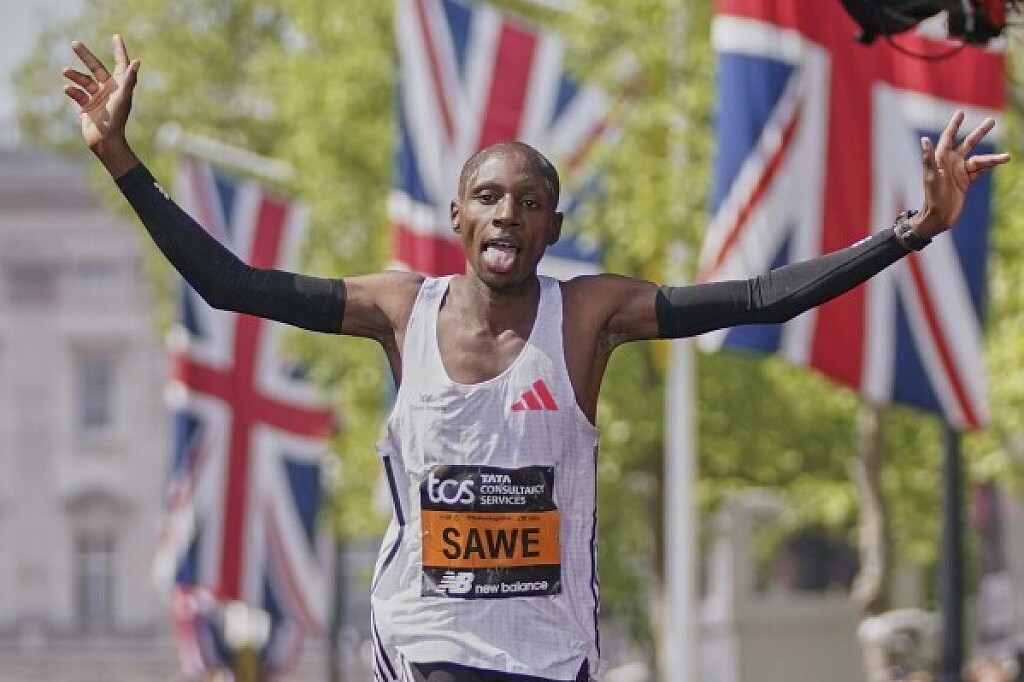
Sebastian Sawe Chooses Berlin Over World Championships, Eyes Fast Time on Record-Breaking Course
Kenya’s marathon sensation Sebastian Sawe has confirmed he will compete in the 2025 Berlin Marathon this September, opting out of the World Athletics Championships in Tokyo.
The decision comes after a remarkable start to Sawe’s marathon career, where he has already posted two of the fastest times in history. He won his debut in Valencia in December 2024 with a world-leading 2:02:05, then followed it up with another dominant victory at the 2025 London Marathon, clocking 2:02:27.
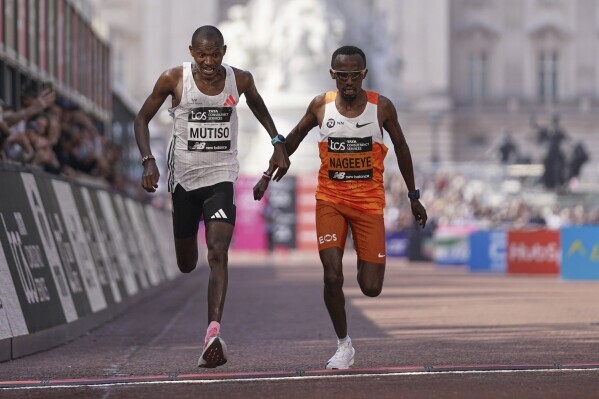
Many had expected Sawe to headline Kenya’s men’s team for the marathon at the World Championships in Tokyo on September 15. However, with the Berlin Marathon scheduled just six days later, the 30-year-old confirmed he is focusing solely on Berlin.
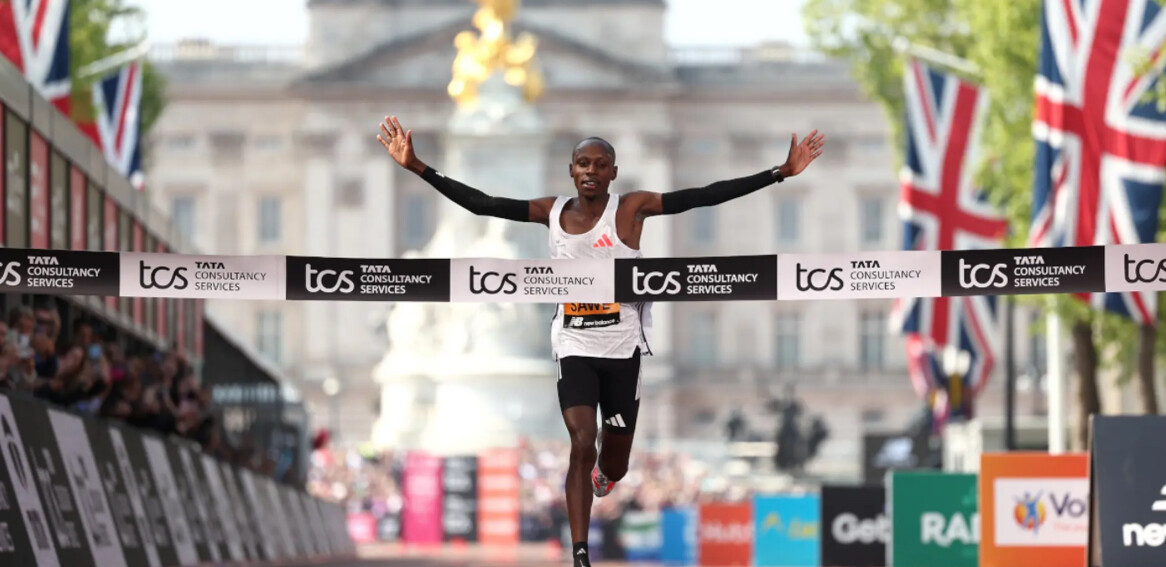
“I am preparing for Berlin,” Sawe stated, noting that while he aims to run a fast time, chasing a world record is not currently the goal. “It’s too early to talk about a world record. It takes time and clear planning to achieve it.”
The Berlin course is renowned as the fastest in the world, with 13 world records set on its streets. The current men’s marathon world record is 2:00:35, set by the late Kelvin Kiptum at the 2023 Chicago Marathon. Kiptum broke the previous record of 2:01:09 set by Eliud Kipchoge—who himself has won Berlin five times.
Like Kiptum, Sawe burst onto the marathon scene with a historic debut. Their similarities have drawn comparisons, especially with Sawe’s smooth transition from half marathon success to world-class marathon victories.
All eyes will now be on Berlin to see just how fast Sawe can go on a course that has repeatedly rewritten the marathon history books.
by Boris Baron
Login to leave a comment
BMW Berlin Marathon
The story of the BERLIN-MARATHON is a story of the development of road running. When the first BERLIN-MARATHON was started on 13th October 1974 on a minor road next to the stadium of the organisers‘ club SC Charlottenburg Berlin 286 athletes had entered. The first winners were runners from Berlin: Günter Hallas (2:44:53), who still runs the BERLIN-MARATHON today, and...
more...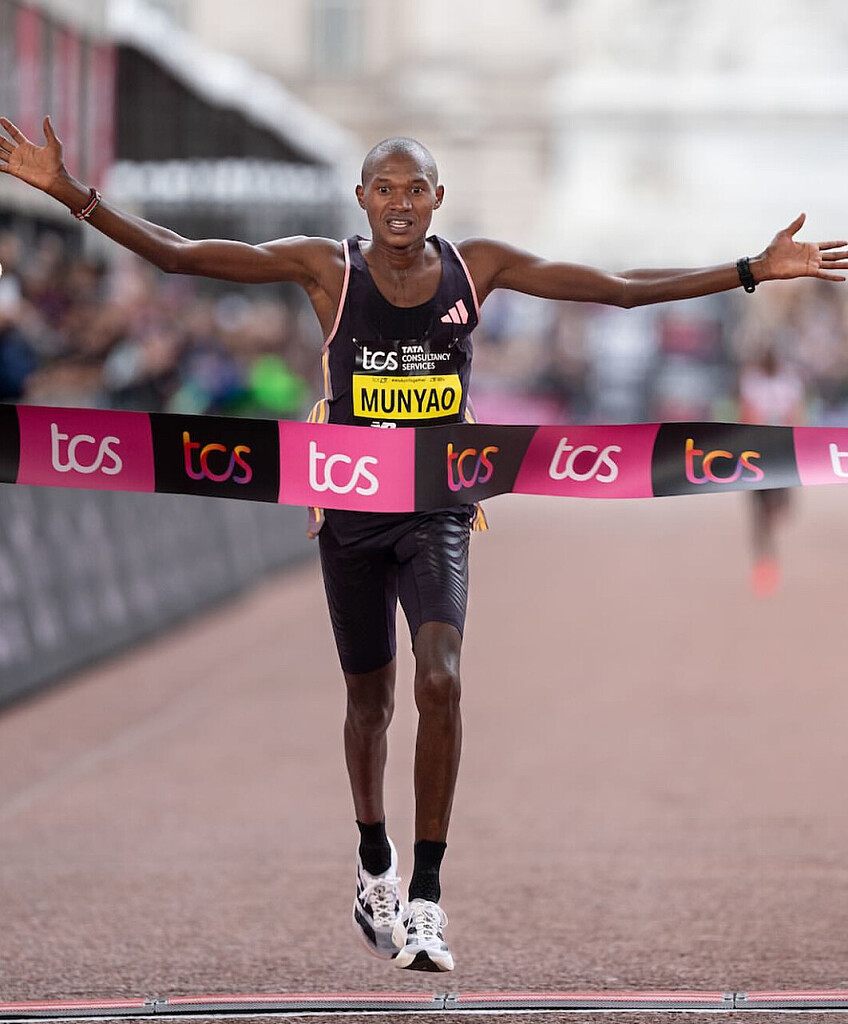
Kenyan Star Plans to Win Another Marathon Major This Year
Alexander Munyao Targets Another Major After London Podium Finish
After winning the 2024 London Marathon in dominant fashion, Alexander Munyao returned in 2025 to defend his title—but this time had to settle for a hard-fought third-place finish in one of the most competitive marathon fields in recent memory.
Now, the 28-year-old Kenyan star has set his sights on redemption—and another Abbott World Marathon Majors title—before the 2025 season comes to a close. Berlin, Chicago, and New York are all in play.
“My target is to win another Major Marathon before the year ends,” Munyao told My Best Runs. “We’ll sit down with my management and coach and figure out which one makes the most sense.”
With Berlin slated for September 21, Chicago on October 12, and New York wrapping up the Majors calendar on November 2, Munyao is weighing his options carefully.
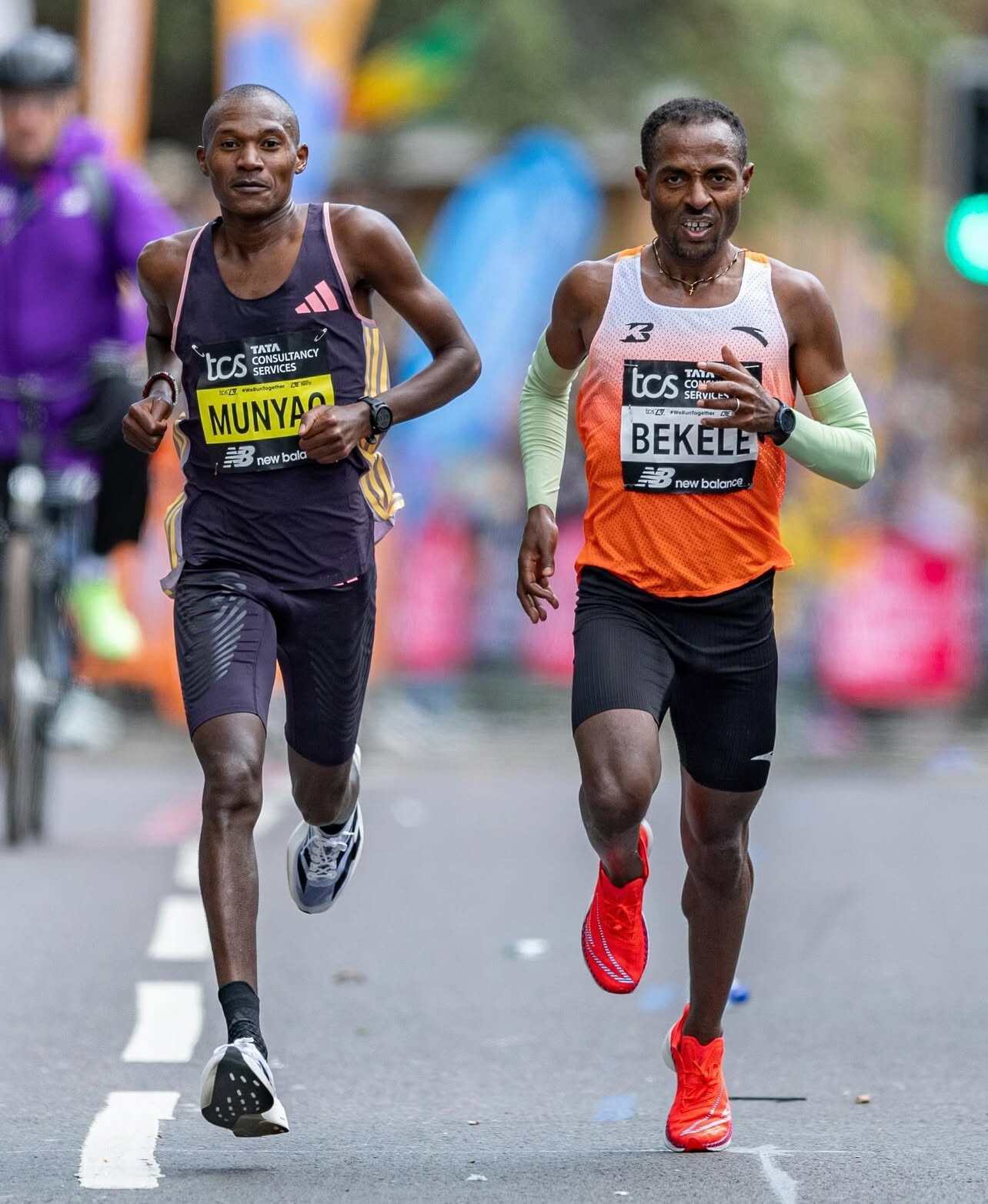
Learning From the Past
Munyao is taking a more calculated approach this season, prioritizing recovery before committing to another race.
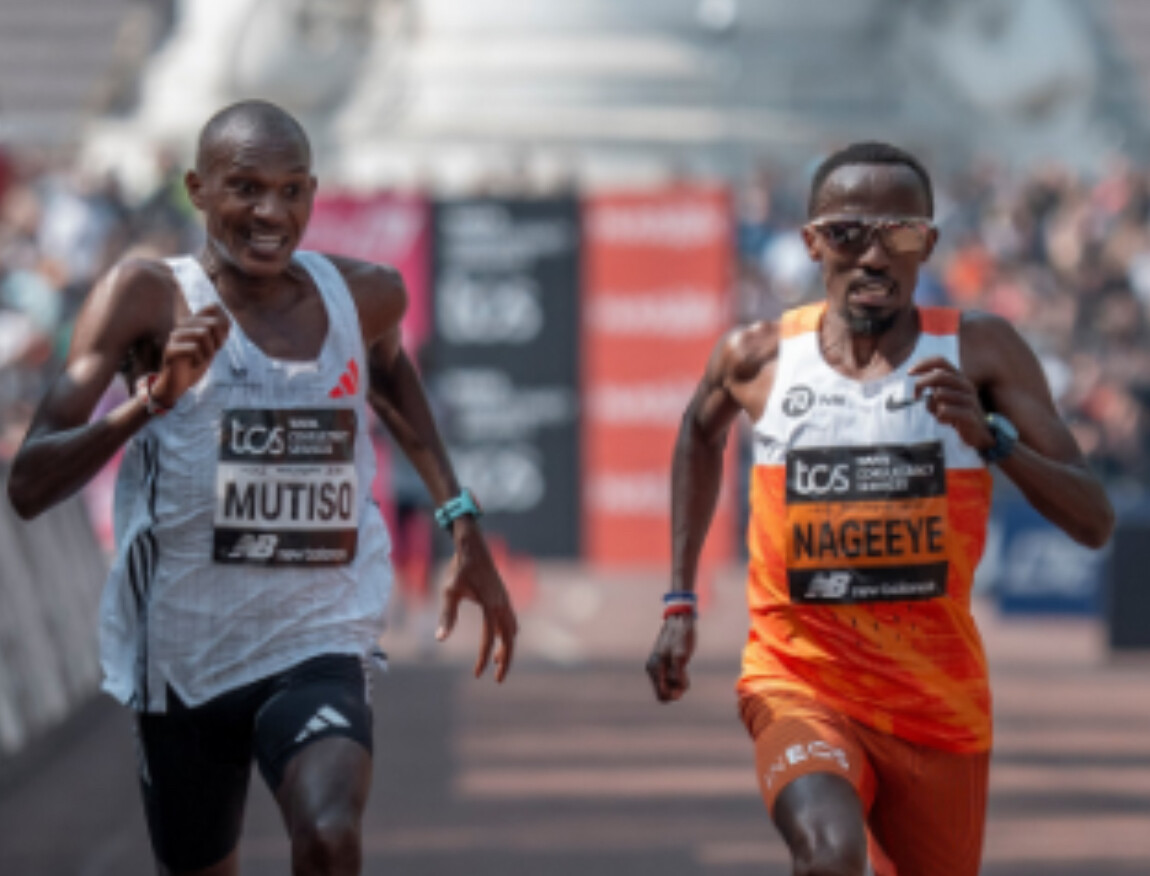
“I need at least three months to fully recover before I can race again,” he said. “Last year, after winning London, I rushed into the Olympics without enough rest, and it cost me.”
At the Paris Olympic marathon, held in August 2024, Munyao finished a disappointing 21st place in 2:10:31. That experience prompted him to decline a potential spot on Kenya’s team for the upcoming World Championships in Tokyo this September.
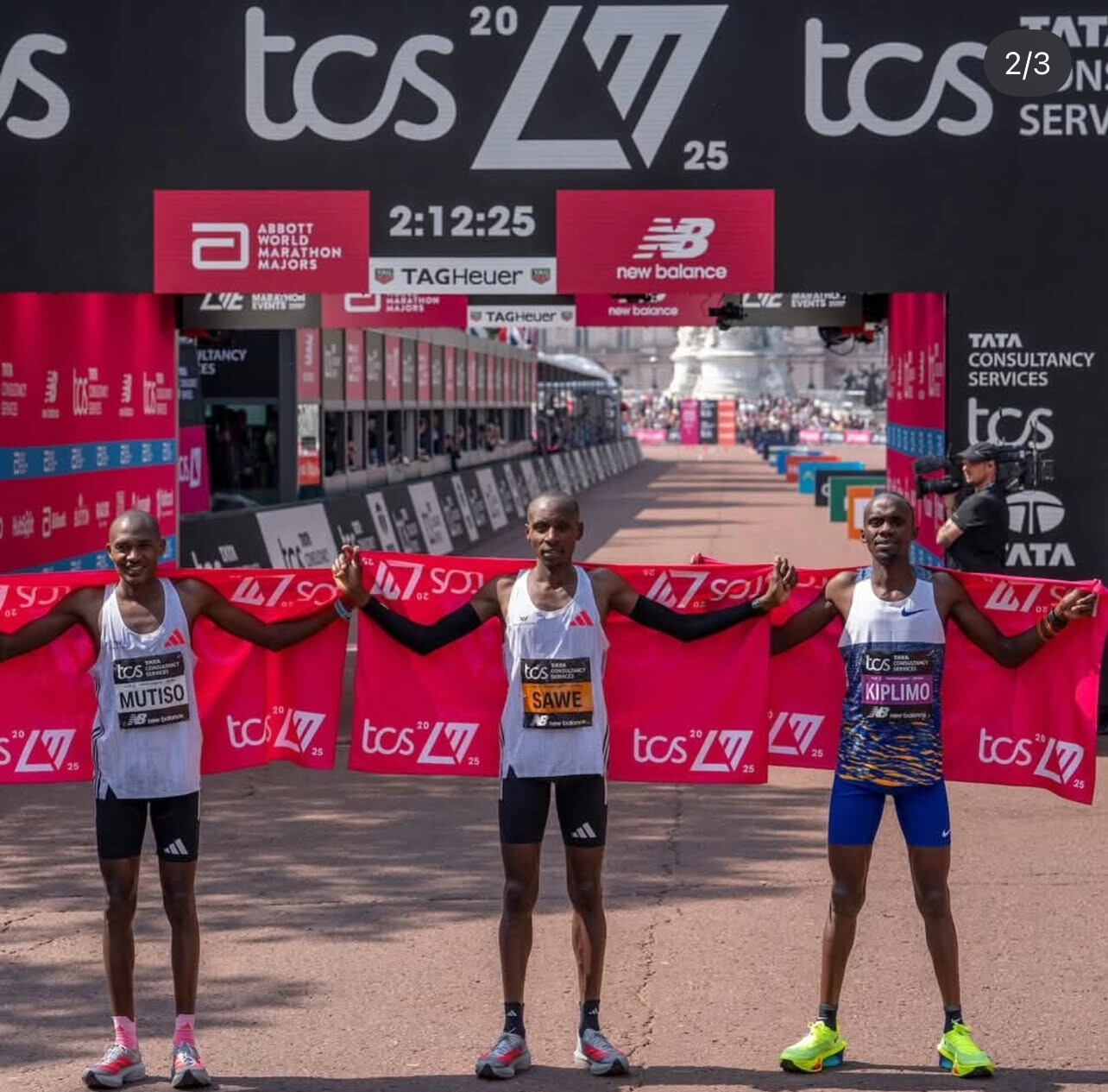
“I was asked about the Worlds, but I declined,” he said. “I don’t want to push my body too far without proper rest.”
A Battle in London
At the 2025 London Marathon on April 27, Munyao ran bravely in a loaded field, clocking 2:04:20—just off his winning mark from the previous year. He found himself in a dramatic sprint duel with Dutch star Abdi Nageeye, narrowly edging him out for third in a photo finish.
“We ran together for almost three kilometers at the end,” Munyao recalled. “He was trying to use me as a pacer and then outkick me, but I was determined not to let that happen.”
The race was won by Kenya’s Sebastian Sawe, the 2023 World Half Marathon champion, who delivered a sensational 2:02:27 to claim his first marathon major. Jacob Kiplimo of Uganda, the world half marathon record holder, made an impressive debut over 42.195 km, finishing second in 2:03:37.
“The field this year was very strong. There were nearly 11 elite athletes who had won major marathons,” Munyao said. “I knew defending my title would be tough, so I aimed to make the podium—and I did.”
Targeting a Weak Spot
Munyao admitted that he’s working to improve a key area in his racing strategy: the 30–35 km stretch, where he often fades.
“That’s the point where I tend to fall behind,” he explained. “By 38 kilometers I usually find my rhythm again, but by then, the lead group can be too far ahead.”
His coaching team is focusing on this phase of the race to ensure he’s better equipped to contend for wins against world-class competition.
What’s Next?
While Munyao hasn’t officially committed to his next start, Berlin may be the frontrunner. With its flat course and history of fast times, it suits his aggressive racing style. Chicago and New York remain on the table as well, depending on how his training and recovery unfold.
No matter which city he chooses, Munyao is determined to return to the top of the podium.
“I’m not done yet,” he said. “I believe I can win again this year.”
by Boris Baron
Login to leave a comment
