

Running News Daily
Running News Daily is edited by Bob Anderson and team. Send your news items to bob@mybestruns.com Advertising opportunities available.
Index to Daily Posts · Sign Up For Updates · Run The World Feed
Articles tagged #Patrick Makau
Today's Running News



Building Champions, One Race and One Harvest at a Time: The KATA Story
With 31 training camps across Kenya’s altitude zones and 65 thriving potato farms, the Kenya Athletics Training Academy (KATA) is shaping not only resilient athletes but also sustainable livelihoods. Each KATA camp is not just a training base but also cultivates several acres of KATA potatoes, linking athletics directly with farming and ensuring that athletes’ futures are rooted in more than competition alone.
A Morning of Anticipation in Thika
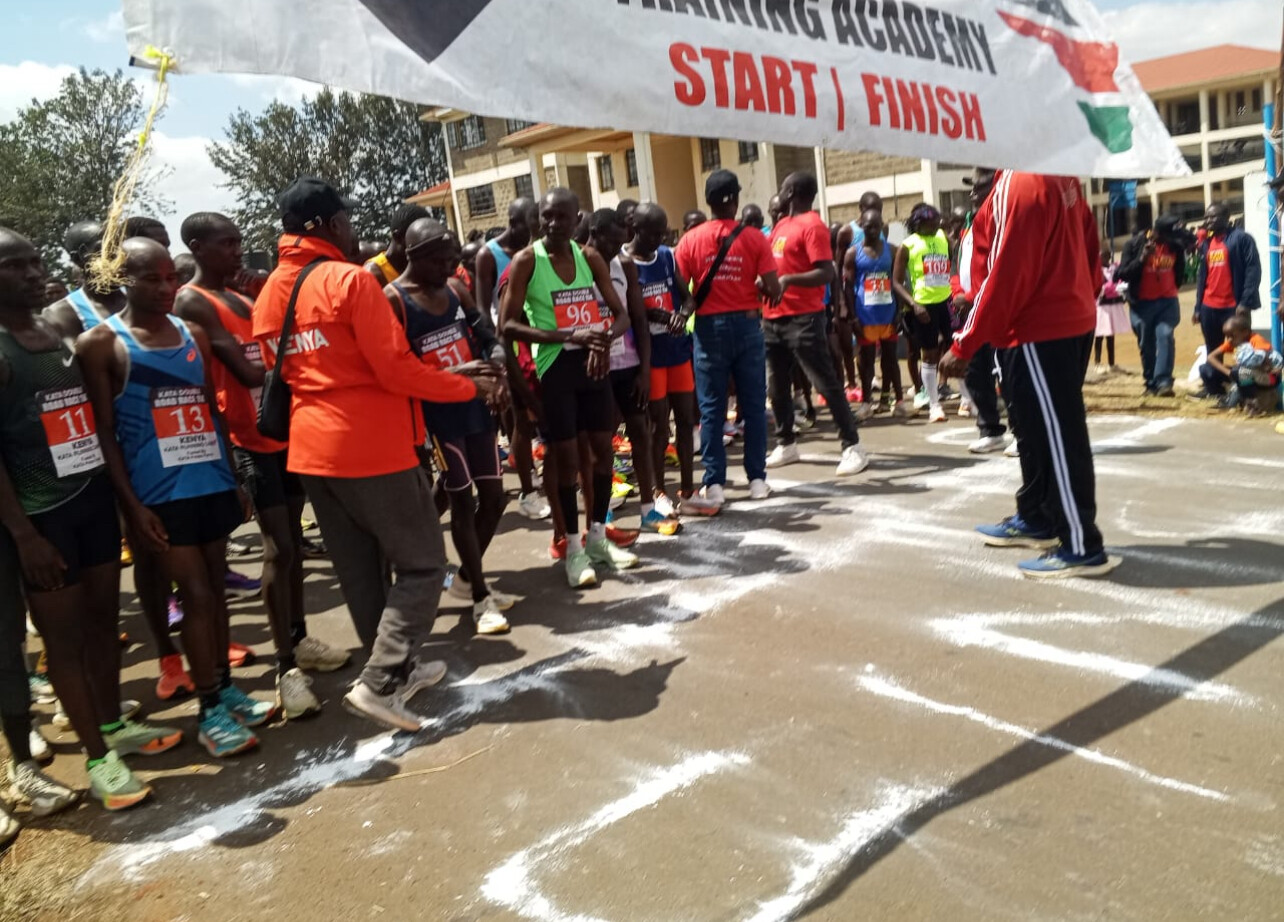
The sun had barely risen over Thika when athletes began streaming into the venue for the 5th Annual KATA Double Road Race. The crisp morning air carried both anticipation and nerves as runners stretched, laced up, and tested the course that would soon bear witness to their grit.
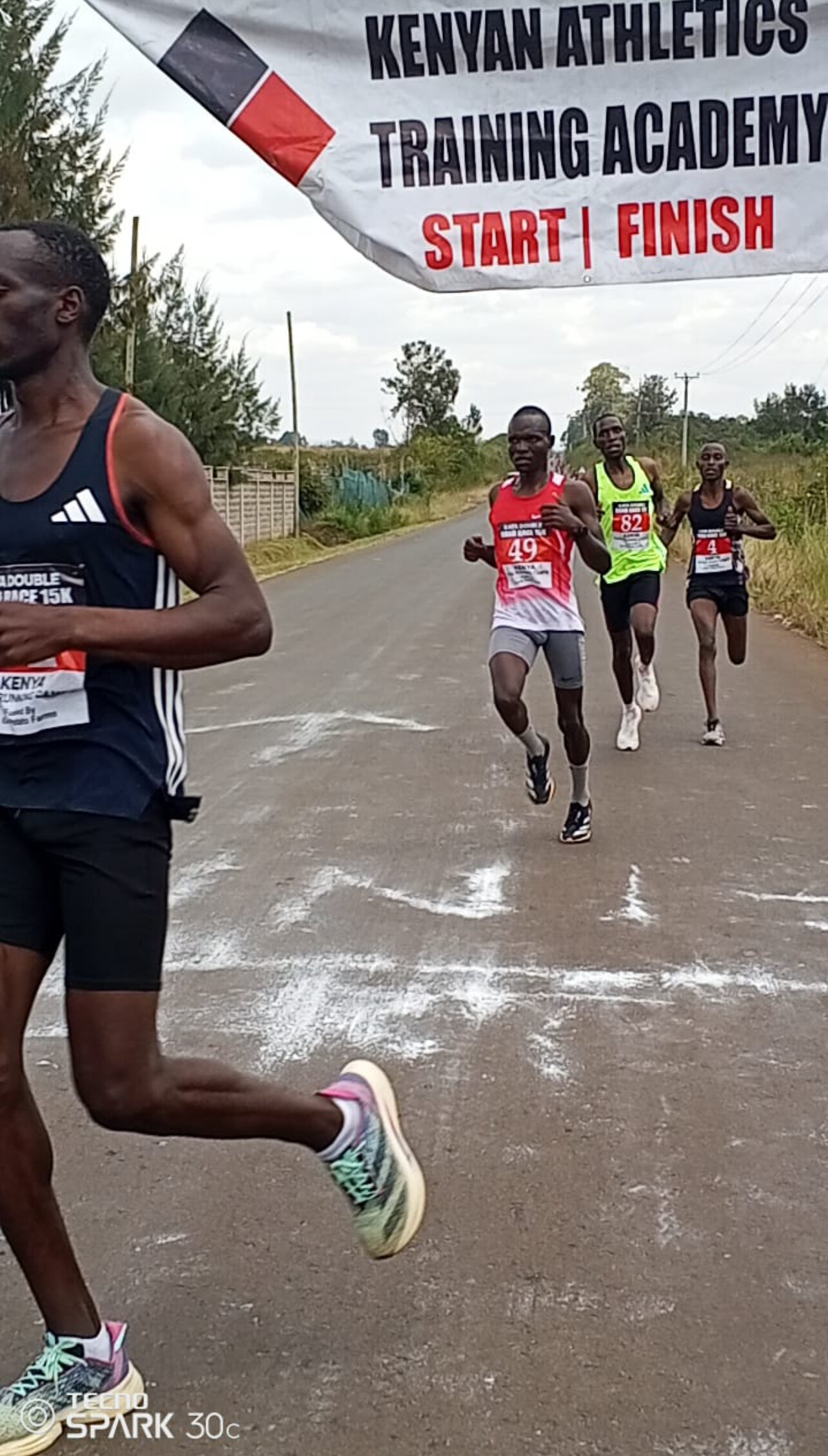
By the time the gun sounded, 97 elite athletes—74 men and 23 women—lined up. For John Matheri, head coach at KATA Thika, the event was more than a competition. It was a lesson in discipline, a test of mental endurance, and a reflection of how far the central region has come in embracing competitive running.
Olympic 5000m medalist and KATA camp operator Edwin Soi emerged as the overall winner, clocking 29:38 for the opening 10K and 14:22 for the final 5K. His combined time of 43:50 was the fifth-fastest ever run for the Double, an event first contested in 2010. On the women’s side, Betty Chesang from the KATA Iten camp was the first across the line in 51:32, marking the sixth-fastest women’s time in Double history.

“We concluded the race well, and it was a good one,” Matheri said proudly, watching the exhausted but smiling athletes cross the line. “The turnout was impressive. I want to extend a special thanks to our sponsor, Bob Anderson, for putting together a team of this magnitude. There is no doubt that within the region, KATA has become an icon.”
A Nationwide Network of Camps and Farms
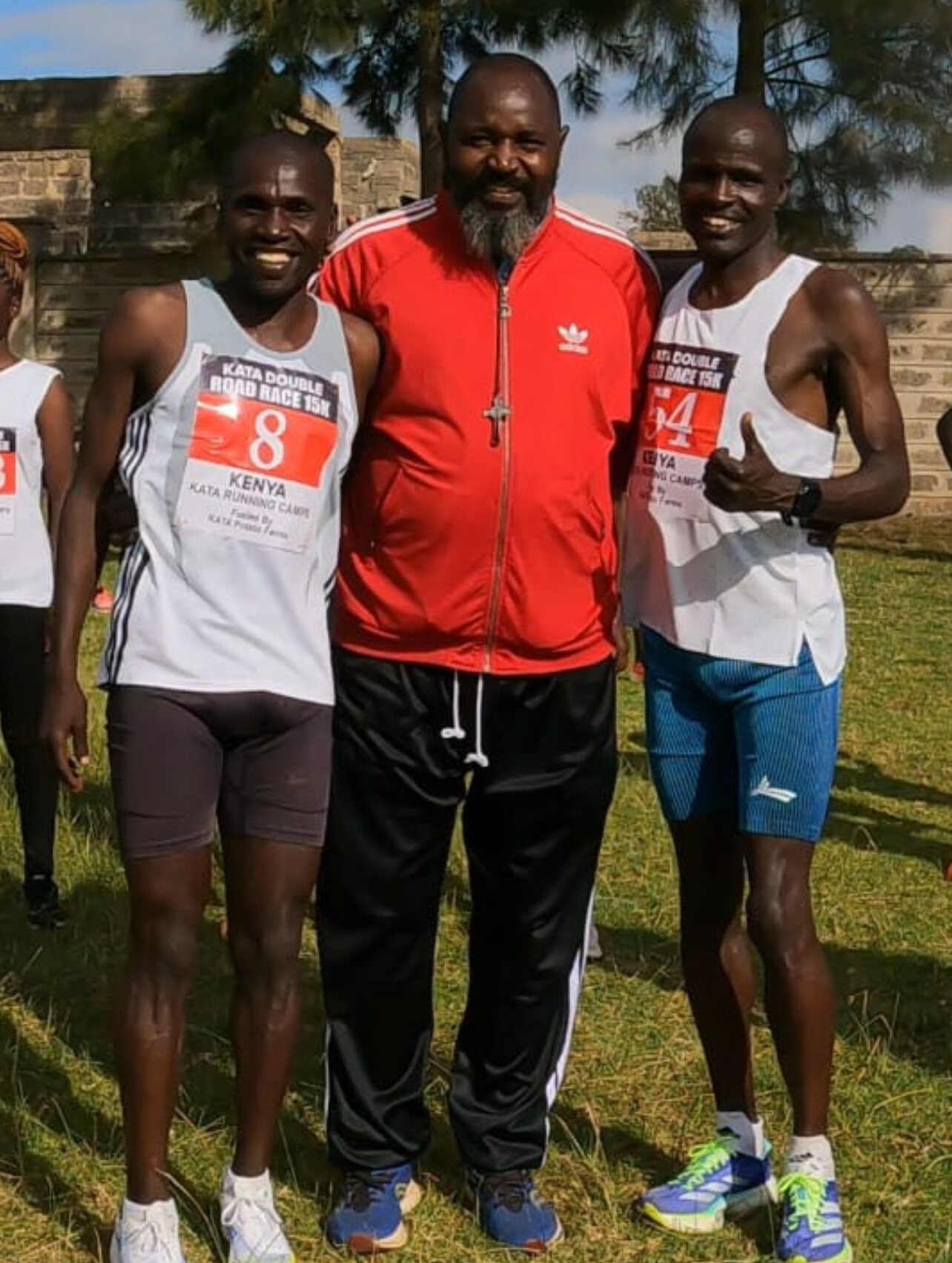
What sets KATA apart is not just its races but the ecosystem it is steadily building for Kenyan athletes. Across the country, 31 KATA-affiliated training camps operate at varying altitudes—from the highlands of the Rift Valley to the mid-altitude base in Thika and lower regions closer to Nairobi. Each camp provides unique conditions that strengthen endurance, adaptability, and competitive edge.
These dual-purpose camps are more than facilities; they are lifelines for athletes dreaming of breaking into the elite ranks. Training at altitude builds strength, while mid-altitude camps prepare runners for race conditions. Together with potato farming, they create a sustainable structure for the future.
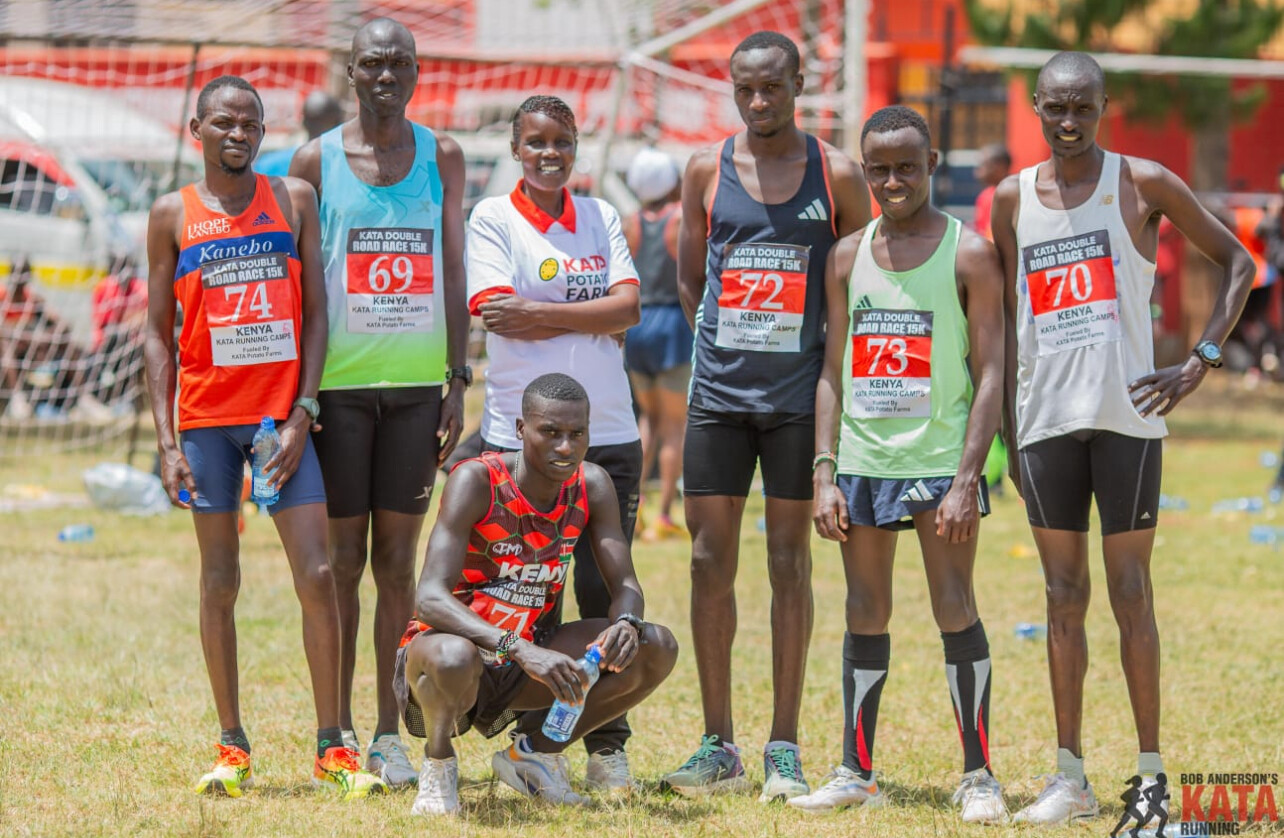
This vision is also embodied in Jimmy Mwangangi Muindi, a five-time Honolulu Marathon champion who famously coached Patrick Makau to the world marathon record in 2011. Having worked at Anderson’s Manor in Portugal, Muindi now leads a KATA satellite camp in Machakos County. For him, KATA is about much more than training.
“KATA is building more than runners,” Muindi reflected. “It is building a family—giving young talents not just training, but exposure, support, and hope. That is how future champions are born.”

Beyond Running: The Potato Farming Project
KATA’s sustainability model is as innovative as its racing format. Each camp is supported by several acres of potato farming, tying athletes’ success to both training and cultivation. The revenue from potato sales funds the future of the running camps.

The model is simple but effective. Bob and Catherine Anderson provide an interest-free loan to establish both the camp and its potato farm. From there, the operator and athletes are responsible for managing their acres and securing their own future. KATA continues to provide exposure and guidance, but the responsibility of growth rests with those on the ground.
“The potato project has given us a chance to think beyond running,” Matheri said. “Athletes train hard, but they also need food security and stability. Farming allows them to eat well, earn a little, and stay grounded.”

KATA Chief Technical Officer Denis Musau, who recently returned from Anderson’s Manor House in Portugal, underscored this vision. “KATA is about creating a legacy. By building projects like potato farming, we empower athletes and their camps to sustain themselves financially. That secures their future both on and off the track. I see a very bright future for the KATA family.”
The Spirit of Participation
What stood out most on race day in Thika was the diversity of the field. Athletes from every discipline showed up, while children and enthusiastic spectators cheered from the sidelines. The energy of the crowd became part of the race’s rhythm, fueling the runners through every stride.
Yet the event also highlighted areas for growth. “Our athletes are very strong athletically, but many are missing mental strength,” Matheri observed. Muindi agreed: “Mental resilience is just as vital as physical training. When athletes panic at the sight of big names, they lose focus. Learning to respect the distance is what unleashes true potential.”
For both coaches, raw talent is not enough. Young athletes are like fabric, Muindi often says—materials that must be carefully tailored to become masterpieces.
Inspiration from the Veterans
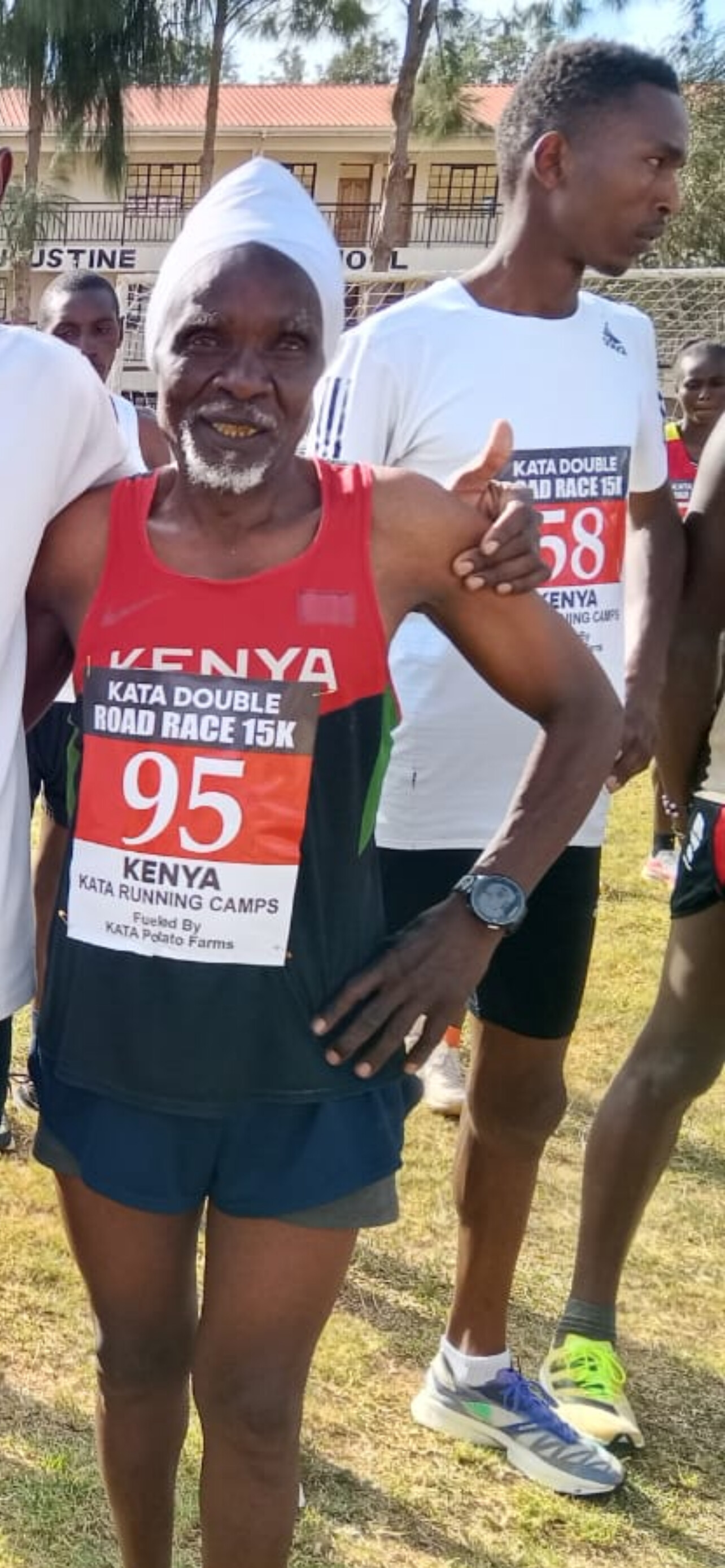
One of the most inspiring aspects of the Thika Double was the turnout of established athletes—Olympians and medalists—who lined up alongside the next generation. Their presence was not only symbolic but also a powerful motivator for younger runners.
“It is so encouraging, especially here in the central region, to see our elite and professional athletes turning up in big numbers,” Matheri said. “For the young ones, lining up beside Olympians and medalists gives them a sense of what is possible. It gives them hope.”
Building the Future
For the KATA family, the vision remains crystal clear: to prepare a new generation of Kenyan champions while ensuring they have livelihoods beyond running.
“As a family, we are in good hands. We are looking forward to doing great things,” Matheri said with conviction. His final message was one of determination and gratitude: “We promise to use every ounce of our strength to bring change and positivity to the world of sport. We thank our sponsor, Bob Anderson, for the continued support, and we promise to do everything we can to grow this industry. The journey has just begun, but the future is bright.”
Anderson’s Manor in Portugal serves as KATA’s international headquarters, with Bob and Catherine Anderson based there about 50% of the time. It is from this hub that global strategy and support are coordinated, while Kenya remains the main operational location where athletes train, camps thrive, and races like the Double continue to inspire.
As the last athletes packed up and the crowd dispersed, one thing was clear: KATA is more than an academy. It is a movement—blending sport, sustainability, and community to nurture not just athletes, but Kenya’s enduring legacy of running excellence.
by Robert Kibet
Login to leave a comment
From Rain to Heat: Sabastian Sawe and the New Chapter of Berlin’s Weather-Tested Records
Fifteen years ago, Patrick Makau braved torrential rain and deep puddles on the streets of Berlin, chasing Haile Gebrselassie’s marathon world record. The conditions ruined his attempt, but Makau still managed 2:05:08—the fastest marathon ever run in such relentless rain. A year later, with fair weather, he returned and broke the world record with 2:03:38.
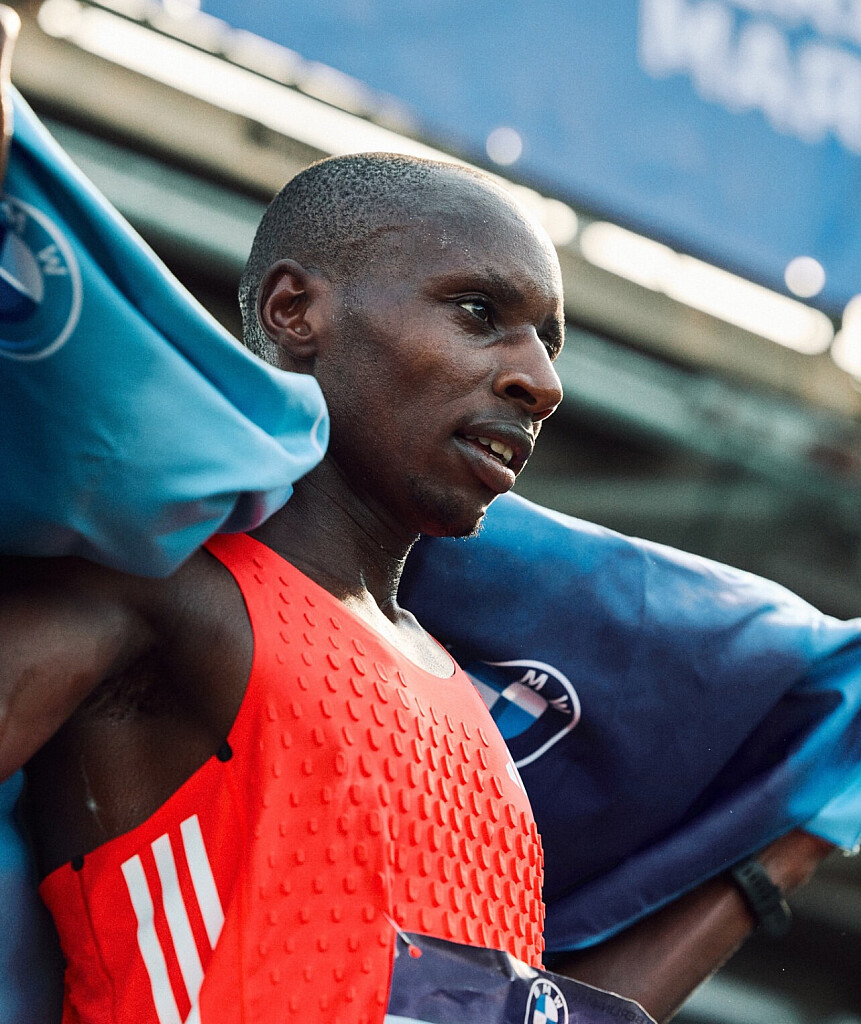
On Sunday in Berlin, history echoed in a new way. This time, it wasn’t rain but unseasonable heat that stood between a Kenyan and marathon immortality. Sabastian Sawe, the 30-year-old rising star, had his sights set on Eliud Kipchoge’s 2:00:35 mark. Instead, he delivered what can only be called a “warm-weather world record,” blazing through the 26.2 miles in 2:02:16. Despite being 101 seconds off the record, it was the fastest time ever achieved in such high temperatures.
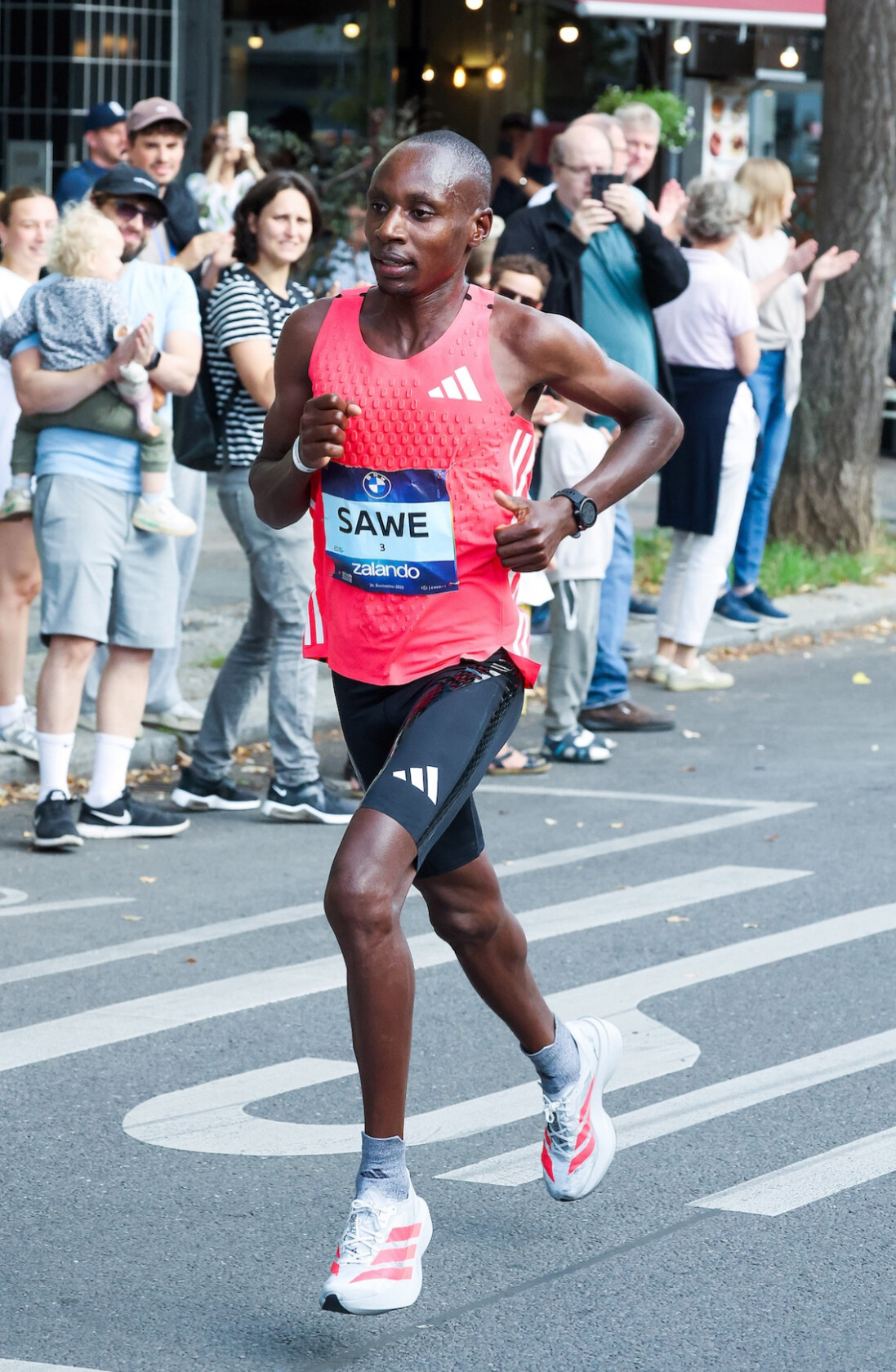
The What-Ifs of Berlin
Sawe, whose personal best stands at 2:02:05, was in career-best form. His coach, Italian veteran Claudio Berardelli, admitted the weather stripped away any chance of the extraordinary.

“I know he was in exceptionally good shape. But I do not know what would have been possible,” Berardelli reflected.
The what-if question will linger: how fast could Sawe have run under cooler skies?
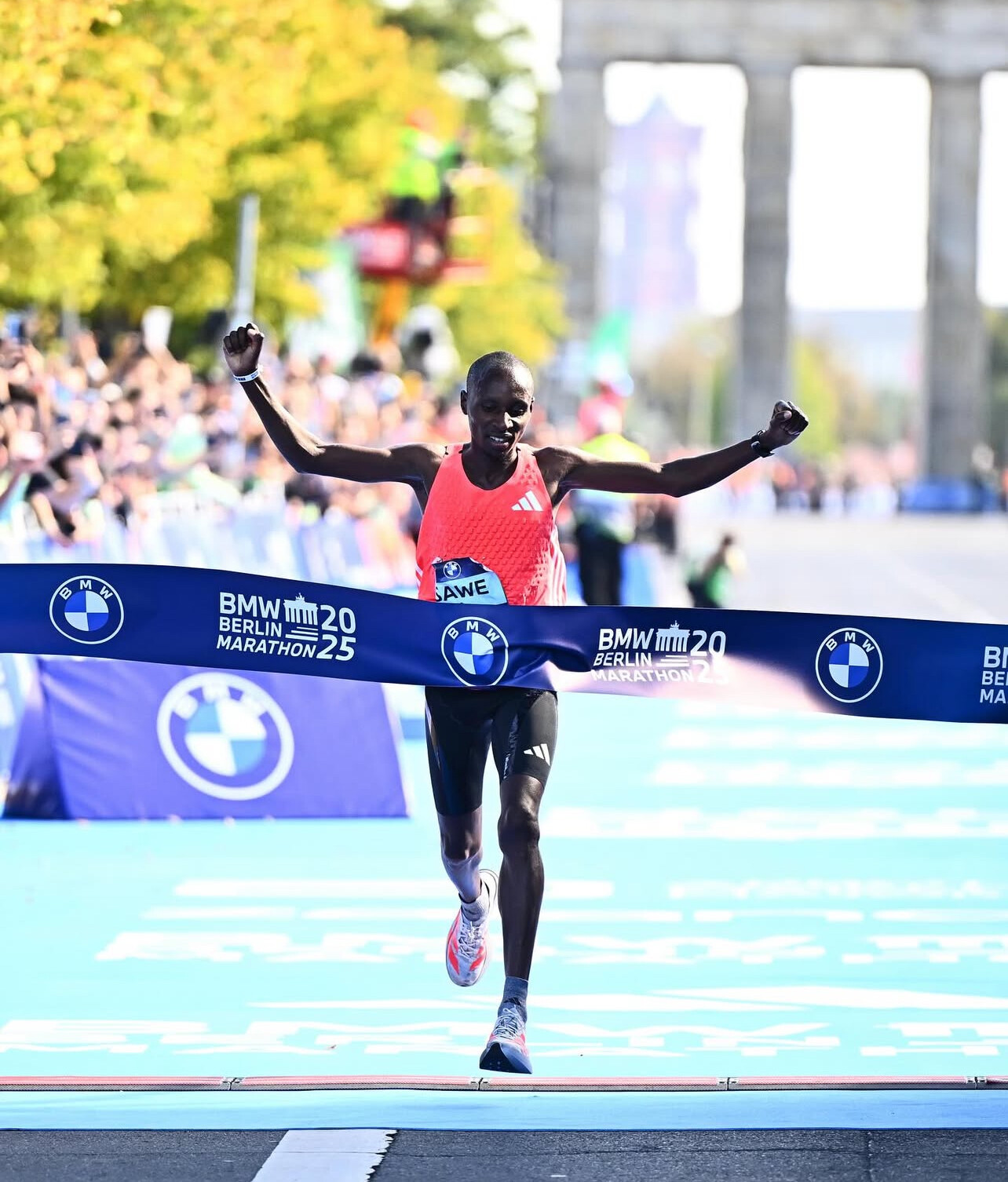
From Humble Beginnings to Global Stardom
Born in the village of Cheukta near Eldoret, Sawe’s story mirrors that of countless young talents in Kenya who struggle for recognition. Despite moving to Iten, the mecca of distance running, he was overlooked by managers and coaches. His breakthrough came only after turning to his uncle, Abraham Chepkirwok—Uganda’s 800m national record holder—and his neighbor Abel Mutai, the London 2012 Olympic steeplechase bronze medalist.
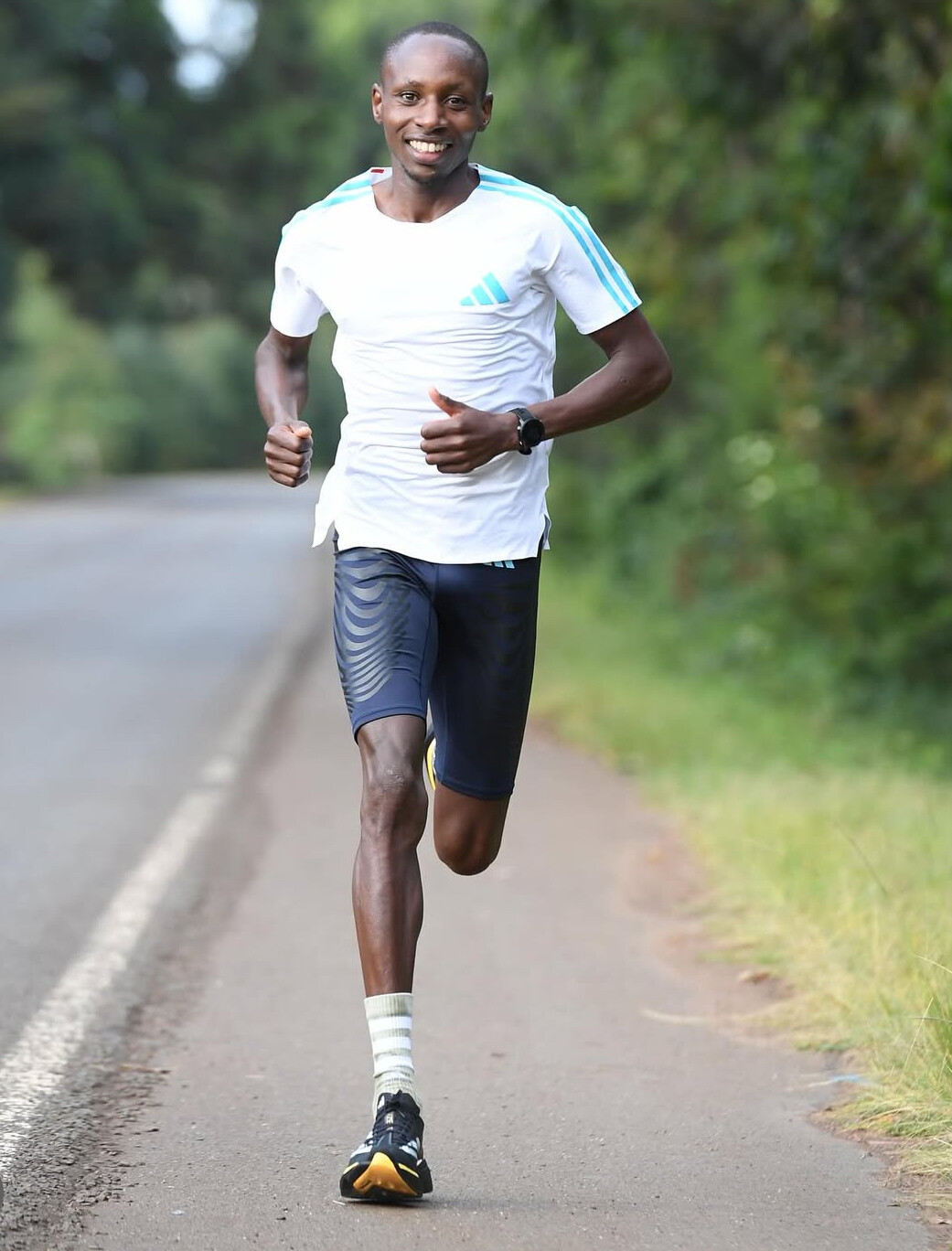
Mutai vouched for him with Berardelli, who placed Sawe in his Kapsabet camp. The rest unfolded quickly. Sawe stunned the field at the 2022 Seville Half Marathon, entering as a pacemaker but leaving with a victory and a world lead of 59:02.
A Gift of Talent and Humility
Berardelli is quick to highlight Sawe’s rare combination of physical and mental qualities:
“He has everything it takes—training ability, mental strength, and humility. I can’t predict what will be possible, but I’m looking forward to finding out.”
Sawe himself remained pragmatic after Berlin:
“I wanted to run really fast and gave it my best, but the weather was too hot. I hope I will have better weather next time. I liked the course, it is very good and fast.”
Berlin: Unfinished Business
Just as Makau returned after the rain to rewrite history, Sawe may yet come back to Berlin with the weather in his favor. With his trajectory and determination, the marathon world could witness a record chase for the ages in 2026.
Until then, Berlin 2025 will be remembered as the day Sabastian Sawe delivered a performance that stood not against the clock, but against the elements—proving once again why the city remains the crucible of marathon greatness.
by Race News Service
Login to leave a comment
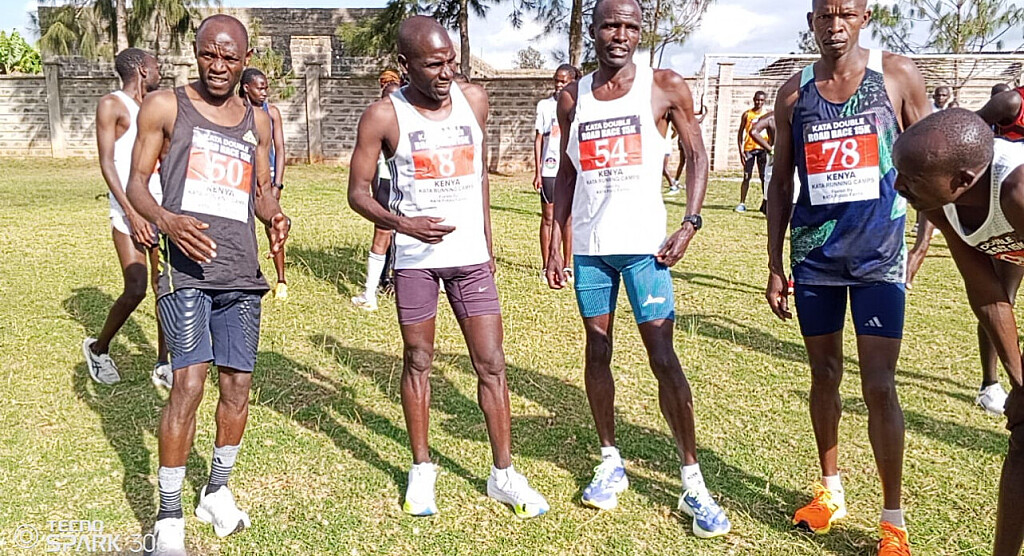
The fifth annual KATA Double Road Race in the making
The small town of Thika is alive with excitement today. Athletes, coaches, families, and even farmers have gathered at the Kenya Athletics Training Academy (KATA) grounds for the 5th edition of the Double Road Race—a unique competition that, in just five years, has become a symbol of innovation in Kenya’s running culture.
Unlike conventional races, the Double Road Race challenges athletes to complete two segments with a rest break in between. Final standings are determined by combined times. It’s a test of speed, endurance, and resilience that forces runners to rethink race strategy and dig deeper than ever before.
The Birth of a Vision
The idea for KATA was born thousands of miles away. Bob Anderson, American publisher and lifelong runner best known as the founder of Runner’s World magazine, was inspired by the immense talent in Kenya but also saw structural gaps that held many athletes back.
Anderson’s vision was radical: create a training academy in Kenya that produced champions while also empowering communities. From this dream, KATA was founded in Thika—and one of its cornerstones was introducing the Double Road Race format to Kenyan soil.
Enter Jimmy Muindi: From Star to Mentor
No story of KATA is complete without Jimmy Muindi. The six-time Houston Marathon champion and former coach of world record holder Patrick Makau embodies the blend of experience and inspiration KATA thrives on.
From steeplechase junior champion at the 1992 World Juniors in Seoul to victories in Rotterdam and Honolulu, Muindi’s career reads like a running epic. As a coach, his highest moment came when Makau broke the marathon world record.
“The double tests body, mind, and spirit,” Muindi says. “It forces athletes to dig deep in ways they are not used to. That is how champions are made.”
Coach John Matheri’s Guiding Hand
While Muindi brought international pedigree, respected Kenyan coach John Matheri rooted the project locally. Known for discovering village talent and molding disciplined athletes, Matheri has helped weave community runners into the Double Road Race fabric.
“Returning for the second run after your body is tired teaches resilience,” Matheri explains. “That is what separates ordinary runners from great champions.”
His philosophy has given countless young runners not only a chance to compete, but also recognition and hope.
The Power of Exposure
One of the Double Road Race’s most innovative features is its commitment to visibility. Every runner’s time—first or last—is posted on the official website. For Kenyan athletes who rarely enjoy digital exposure, this is game-changing.
“Even if you are the last, your time is posted,” Muindi emphasizes. “Managers and sponsors around the world can see it. That exposure is priceless.”
In an age where social media visibility can launch careers, Anderson’s decision to democratize exposure has made the Double Road Race a vital platform.
A Vibrant Turnout in Thika
This year’s participation proves the format’s momentum. Squads from across the region have confirmed attendance, including Kata 1, 3, 4, 7, 9, 10, 13, 14, 15, 16 (with an impressive 16 runners), 17, 18, 20, 23, 24, 25, 29, 30, 31, and 32.
Adding further depth, farmers’ groups F20, F24, and F31 are also present—evidence of KATA’s reach beyond athletics and into the heart of Kenyan communities.
As one organizer shared in a WhatsApp update: “What an amazing turnout we are going to have.”
Beyond Competition: Building a Culture
For runners, today is more than a race. It’s a chance to test themselves, mark progress, and belong to something larger. For KATA, it’s proof of concept: grassroots blending with elite, communities meeting global culture, and tradition reimagined through innovation.
The Double Road Race, once a bold experiment by an American visionary, has now become part of Kenya’s running story.
Looking Ahead
Five editions in, the Double Road Race is no longer a novelty—it’s becoming an institution. Under the Thika sun, young runners, seasoned coaches, and cheering farmers weave together a tapestry of resilience and hope.
Anderson’s ambition, supported by Kenyan mentors like Muindi and Matheri, is for KATA to nurture athletes from primary schools to the world stage. With support from federations, sponsors, and government, the academy could become a model far beyond Kenya.
For now, as the second leg unfolds, Thika celebrates not just a race but the journey of an idea that dared to be different. Kenya’s running legacy isn’t only about medals—it’s about reimagining what running can be, and building a future where every stride counts.
Photo Gallery: https://kata.ke/gallery.php?g=1
by Robert kibet
Login to leave a comment
Part Two: Training the Kenyan Way—Jimmy Muindi’s Coaching Success and Impact at KATA Portugal
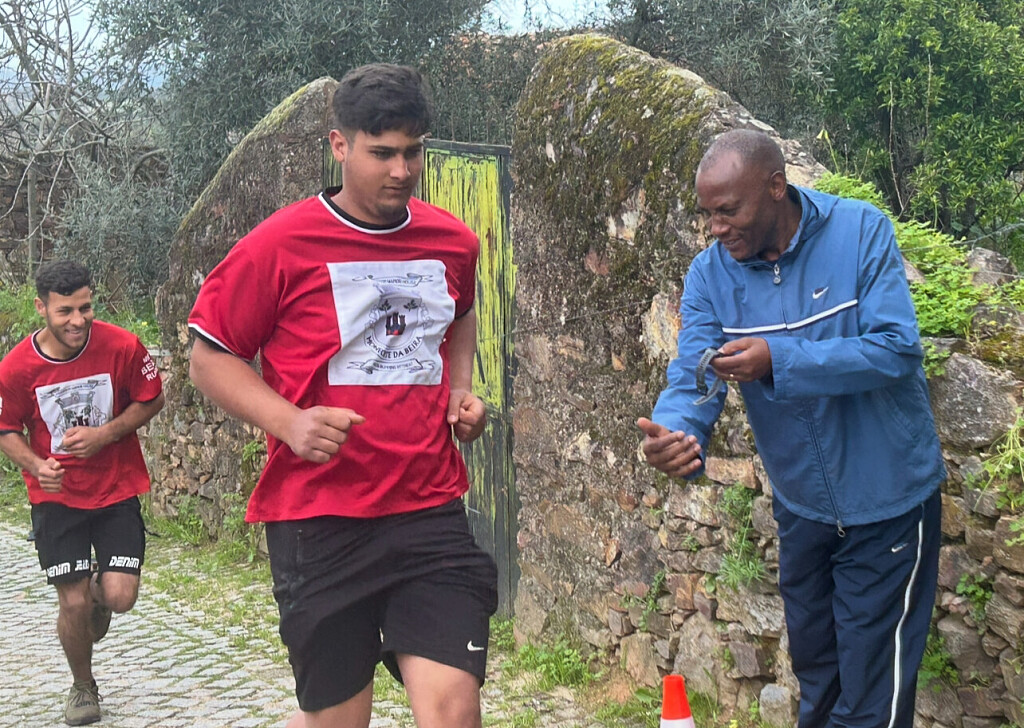
In Part One, we explored Jimmy Muindi’s remarkable journey from a young barefoot runner to an elite marathoner, winning the Honolulu Marathon six times and running a personal best of 2:05:24. Now, in Part Two, we dive into his success as a coach, both in Kenya and now at KATA Portugal.
Muindi has been deeply involved in training athletes back home for many years. After his own marathon wins, he set up a youth training camp in Ngong, on the outskirts of Nairobi, where he began mentoring promising runners. One of his most famous protégés is Patrick Makau.
Around 2005, Muindi—then fresh off his Rotterdam Marathon victory—heard about a talented young runner from his home area. He sought out Makau, offered guidance and encouragement, and after Makau finished high school, Muindi brought him into his camp in Ngong and trained him for two years.
Under Muindi’s tutelage, Makau developed from a schoolboy star into a world-class road racer, even winning a 25K race in Berlin as his first international competition. The pinnacle of their mentor-student relationship came in 2011, when Patrick Makau broke the marathon world record in Berlin, a testament to the solid foundation and focus Muindi helped instill early on. This example highlights Muindi’s overall impact—he has a keen eye for talent and the ability to nurture it to the highest level.
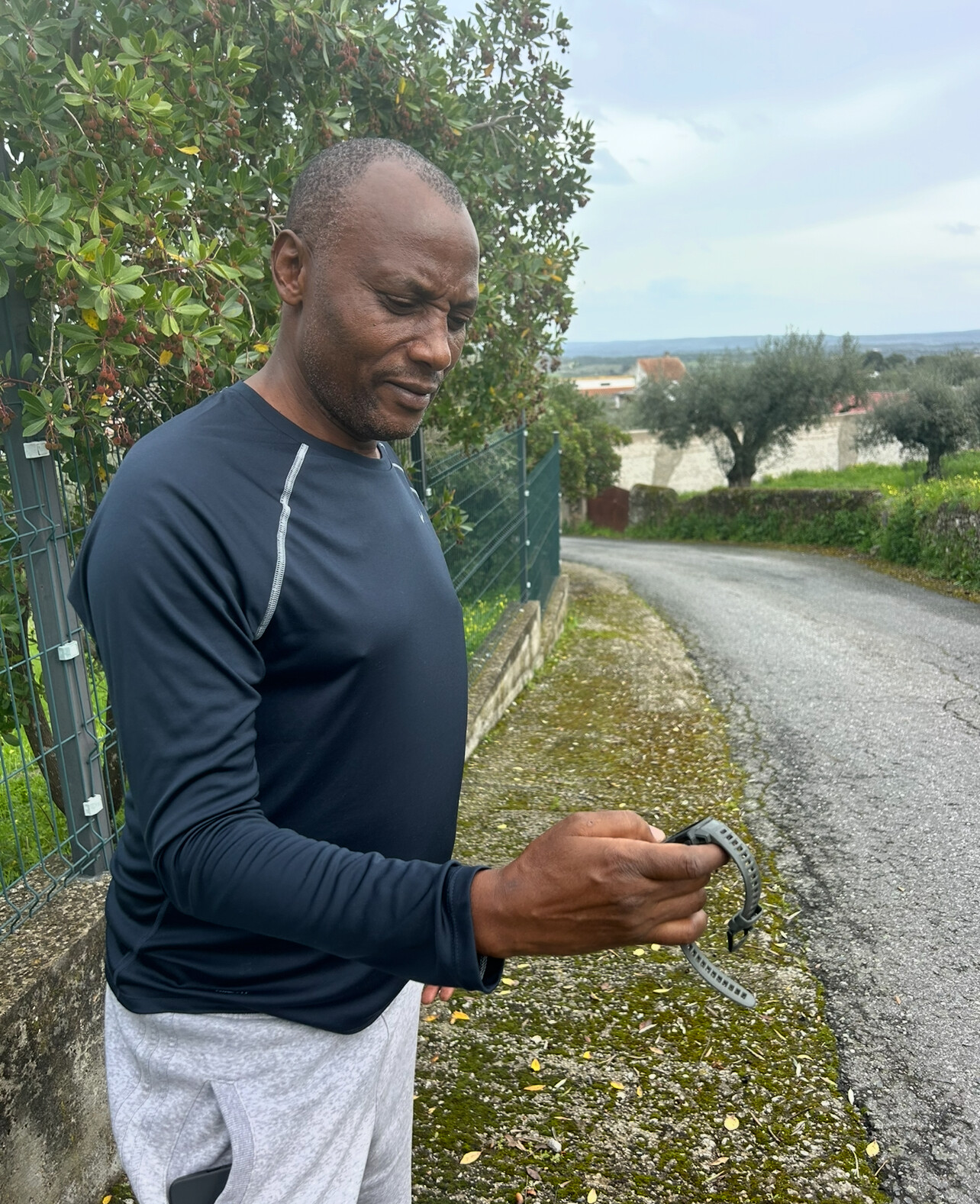
Muindi’s coaching reach doesn’t stop with Makau. Over the years, he has worked with and inspired many Kenyan athletes, as well as athletes from South Africa and Zimbabwe. He even coached and paced his younger brother, Nicholas Muindi, who himself became a 2:15 marathon runner. Training side by side with Jimmy, Nicholas and others like teammate Eric Nzioki benefited from Jimmy’s experience and training methods.
In Kenya’s running culture, group training and mentorship are key, and Muindi has been at the heart of such groups—whether informally bringing up younger runners in his home region or mentoring elite athletes at training camps. Dozens of runners have shown marked improvement under his guidance.
It’s common to hear of a runner joining a group with modest personal bests and, after months of hard training, cutting down their times significantly. This kind of progress speaks to Muindi’s effective coaching style and the training environment he helps cultivate. His approach is very much about training the Kenyan way, a philosophy he exemplifies.
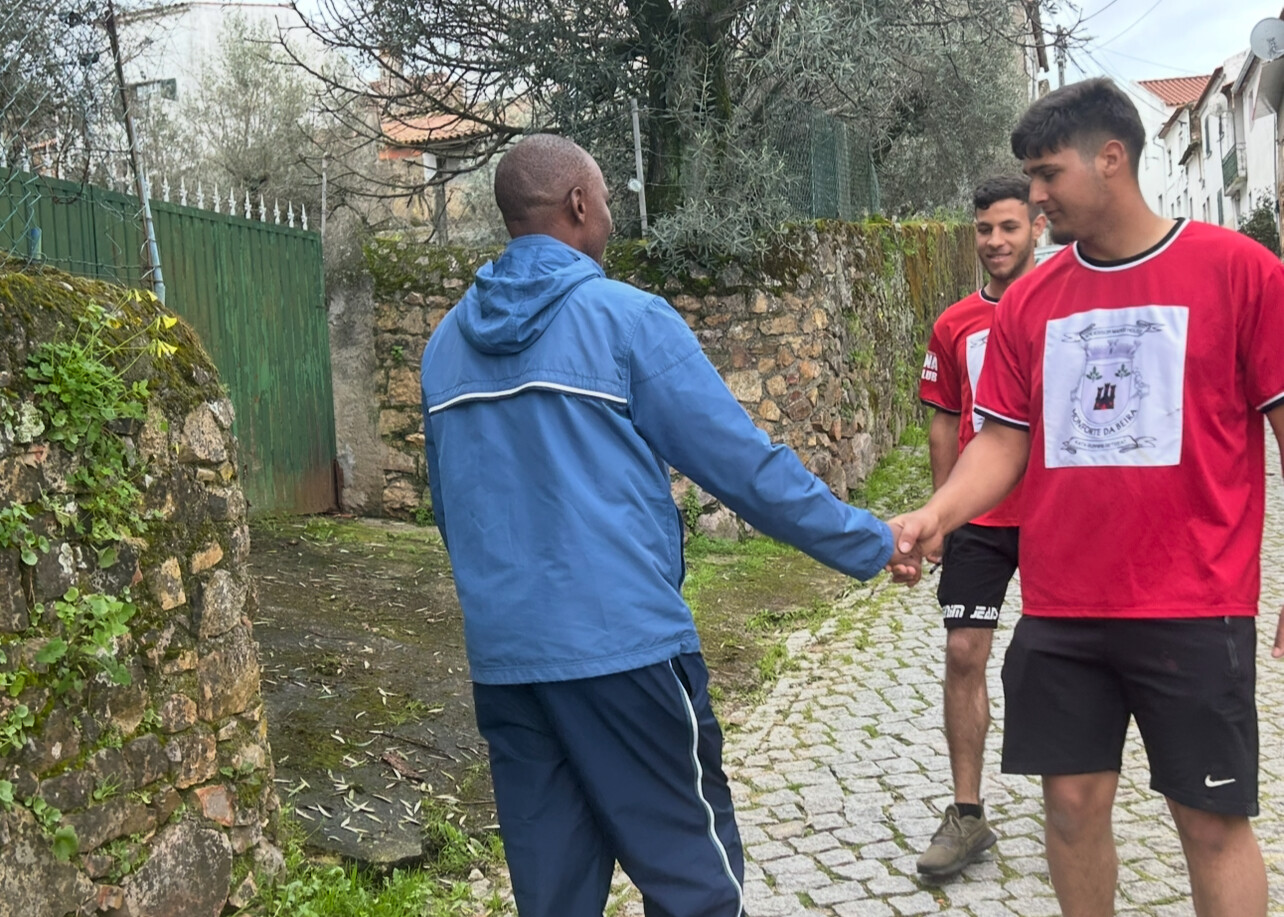
The Muindi Coaching Method: Training the Kenyan Way
What is Muindi’s coaching philosophy and method? In large part, it mirrors the proven Kenyan training principles that brought him success in his own career.
Muindi emphasizes high-mileage, high-quality training weeks. His athletes run twice a day, six days a week—a harder workout in the morning and an easy run in the evening—allowing for both intensity and active recovery.
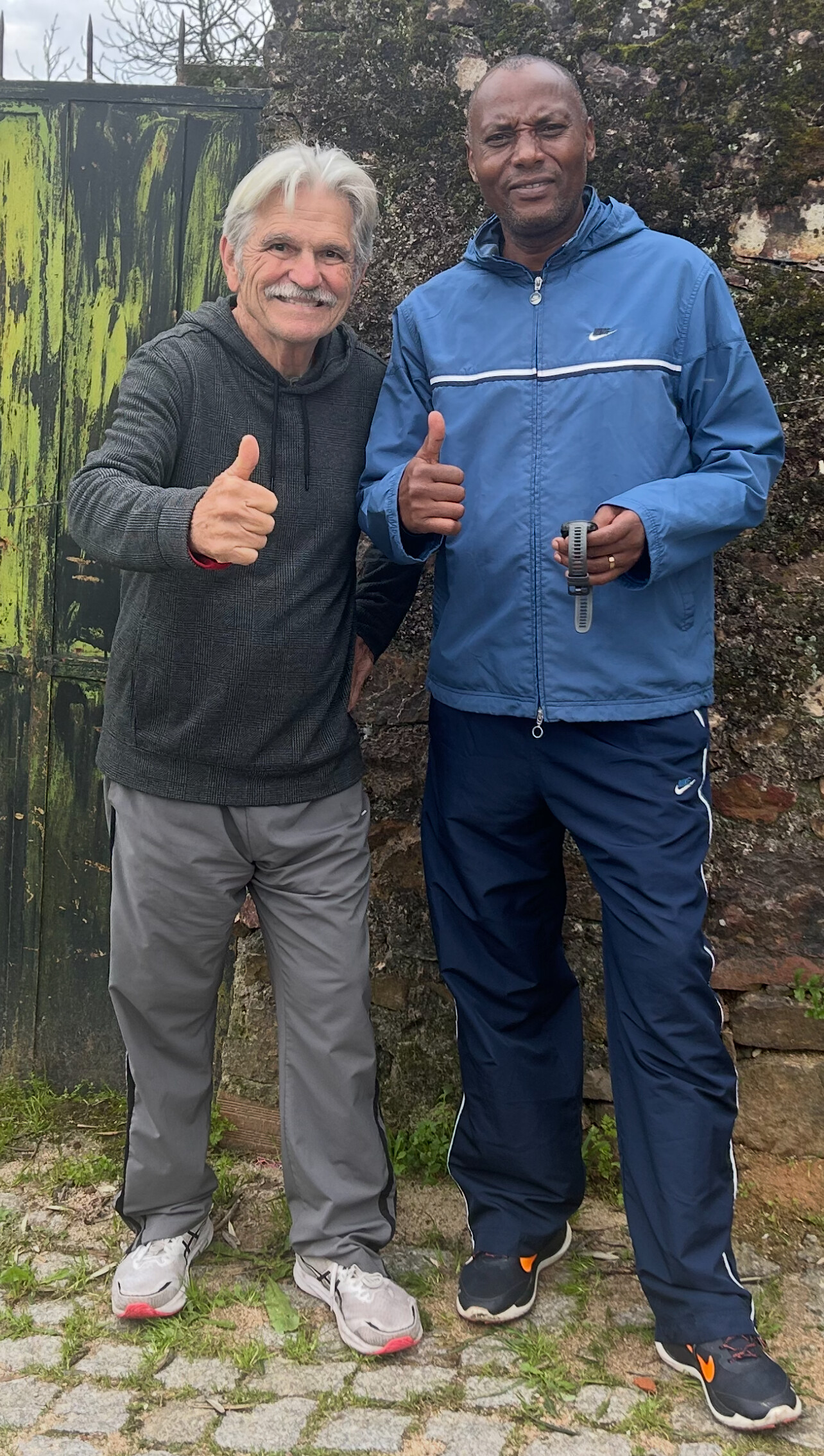
His training follows a simple but effective structure: one hard day followed by an easy day. The hard days vary and can include:
• Fartlek training—alternating between hard efforts and recovery paces over various distances
• Interval training on the track—structured repetitions such as 6 × 1,000m, 10 × 400m, or 4 × 2K at race pace
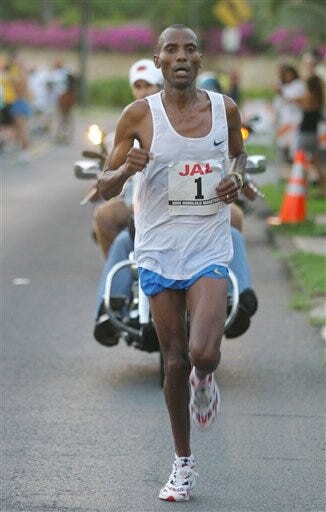
• Hill work—shorter, explosive hill sprints or longer sustained uphill efforts
• Tempo runs—steady-state efforts at or slightly above lactate threshold
On easy days, Muindi ensures that his runners focus on recovery, maintaining a relaxed effort to allow the body to adapt and rebuild.

He also incorporates a mix of workouts that have long been secrets of Kenyan distance running, including:
• Strength and form drills to improve efficiency and prevent injuries
• Diagonal runs—a drill that involves running across a grass field or from one corner of a track to the opposite corner. The effort is 100 to 120 meters, followed by a jog, then repeated ten times or more. This is often done after a long run or a few days before a major race to reinforce good form and maintain leg turnover without overstressing the body.
This structured approach has allowed many of his athletes to break through to the next level.
Bringing Kenyan Training to Portugal
Now, Muindi is bringing this train the Kenyan way experience to international guests at KATA Portugal, the academy’s new European location. Opened in 2024 at the historic Anderson Manor Retreat in central Portugal, KATA Portugal offers runners from around the world a chance to train under Kenyan coaches like Muindi without traveling all the way to East Africa.
As one of the lead coaches for KATA Portugal, Muindi provides the same level of world-class guidance that he has applied in his previous coaching experiences. Visitors can expect an immersive training week that closely models a Kenyan training camp—right down to the daily schedule and philosophy.
Runners joining KATA Portugal can look forward to personalized coaching from Muindi. He begins by evaluating each guest’s fitness and goals, then tailors the training accordingly. A day might start at dawn with an endurance run through the scenic trails around Monforte de Beira, where the retreat is located. Muindi will lead or cycle alongside, monitoring paces and offering tips on form. The morning session could be a long run or a hard workout, depending on the plan—for example, interval repeats on a nearby all-weather track or a fartlek on the rolling country roads.
His approach to guests is hands-on and encouraging. He runs some easy miles with less experienced runners, challenges the faster ones with appropriate paces, and creates an atmosphere where everyone, regardless of level, feels like part of the team.
In the afternoons, he conducts a second, lighter session—this could be an easy shakeout jog, mobility drills, or even a fun group run to explore the area.
Muindi also integrates supplemental training into the program:
• Core strength exercises
• Stretching routines
• Yoga sessions (the Portugal retreat has yoga and massage amenities on site)
All of this mirrors the components of training he used as an elite.
The Kenyan Approach to Recovery and Nutrition
Guests at KATA Portugal will quickly notice Muindi’s attention to recovery. Between runs, he stresses rest, proper hydration, and nutrition. In line with the Kenyan tradition, the meals at KATA Portugal are inspired by the Kenyan runner’s diet—simple, hearty, and rich in carbohydrates. Muindi often dines with the participants, informally sharing stories from his racing days and advice on topics like race strategy or injury prevention.
This personal touch is a huge part of what he brings to the table: you’re not just following a training schedule—you’re learning directly from someone who competed at the highest level.
Why Train with Muindi? A Champion’s Perspective
What truly sets Muindi apart as a coach at KATA Portugal is how his professional background shapes his philosophy in training others.
Having been a world-class marathoner, Muindi understands the dedication required to reach one’s potential. He approaches each runner as an individual, cognizant that everyone has their own journey.
Because he’s been through the highs and lows of competitive running—from winning major races to the grind of daily training—he can relate to the struggles his trainees face. This empathy makes him a patient and motivating coach.
Muindi’s own career was marked by consistency and longevity (he remained competitive for over two decades), and he emphasizes the same long-term approach to his trainees, preaching that improvement comes through gradual progress and consistent effort.
Under his guidance, runners at KATA Portugal gain a rare window into the mindset of a champion. Muindi teaches them to plan their races, listen to their bodies, and cultivate the confidence that comes from thorough preparation.
Coming Next in Part Three
Training is only part of the equation when it comes to running success. Nutrition and strategic race fueling play a major role in performance.
In Part Three, we will explore Muindi’s approach to diet, emphasizing why the most important meal happens two nights before a big race. His personal experience and insights will reveal how proper fueling can make or break a performance.
Stay tuned for the next installment as we dive into the nutrition strategies of elite Kenyan runners and how Muindi applies them to his coaching at KATA Portugal.
by Boris Baron
Login to leave a comment
 Besides being a world class runner and now coach Coach Jimmy is a great guy with lots to say. We are happy to have him as part of our KATA team. - Bob Anderson 3/8 8:20 am |
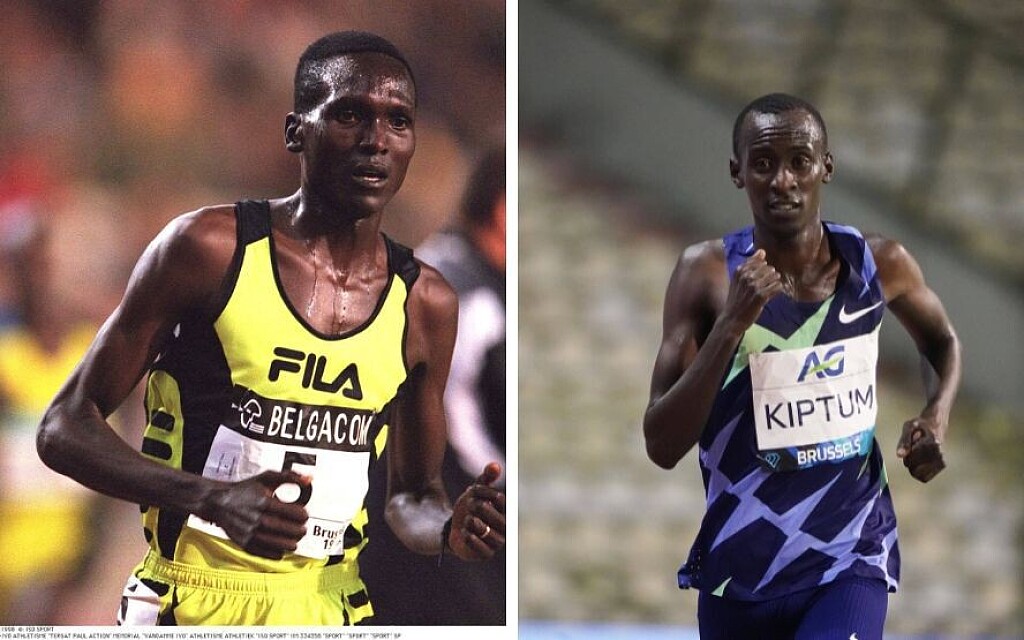
A look into the men's marathon world record progression from legendary Paul Tergat to the late Kelvin Kiptum
Kelvin Kiptum’s untimely passing leaves his sub-two-hour marathon goal unfulfilled, but the evolution of marathon times, Kenyan dominance, and technological advancements signal the likelihood of sub-two-hour marathons becoming common.
The men’s marathon has experienced major shifts and if not for the untimely passing of Kelvin Kiptum, the world could have seen a sub-two-hour marathon this year.
The late Kelvin Kiptum had plans to shatter his own world record at the NN Rotterdam Marathon earlier this year but unfortunately, the world might never know the Kenyan’s full potential.
However, with the emergence of super shoes and strong athletes will definitely see the shift in times and very soon, the world might witness runners posting very fast times and sub-two-hour marathons might just be the order of the day.
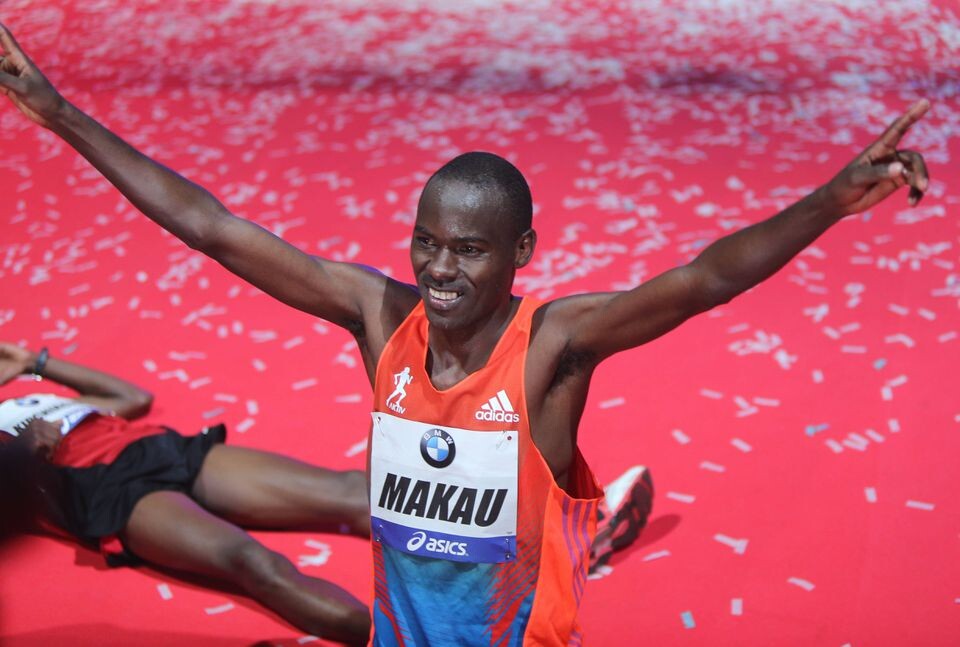
Kenyans have been so dominant in the long-distance races and out of the nine fastest times from 2003, there is only one Ethiopian who has managed to penetrate through Kenyan dominance. Paul Tergat broke the world record in 2003 and since then, times have changed drastically with the late Kelvin Kiptum now having the world record.
1) Paul Tergat (2003)
It is not a surprise that Paul Tergat paved the way for Kenyan dominance as long as the marathon is concerned. Tergat proved to Kenyans and the whole world at large, that anything is possible and from his performance, marathon running became Kenya’s business.
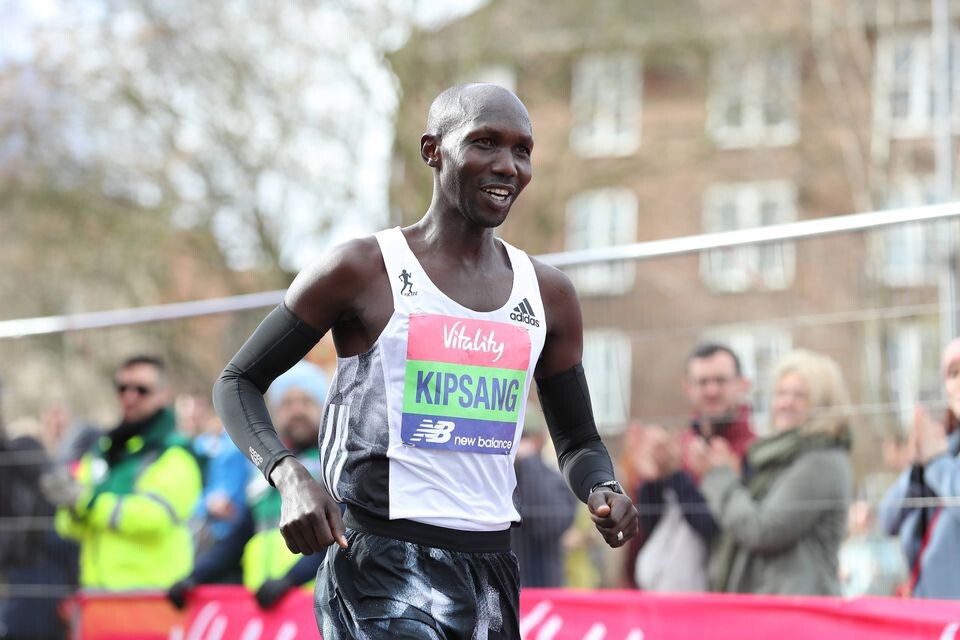
At the 2003 Berlin Marathon, Paul Tergat clocked a stunning 2:04:55 to win the race and his time was the first world record for the men's marathon ratified by World Athletics.
Haile Gebrselassie threatened Kenya’s dominance in the marathon with his two world records over the distance. He first shattered the world record at the 2007 Berlin Marathon, clocking a stunning 2:04:26 to cross the finish line.
The legendary marathon runner then proceeded to shatter his own world record at the 2008 Berlin Marathon, clocking an impressive 2:03:59 to cross the finish line. However, his reign was not for long as another Kenyan rose to prominence.
The Berlin Marathon seemed to be a suitable course for breaking the world record as Patrick Makau shattered Haile Gebrselassie’s record at the 2011 edition of the event. Makau clocked a blistering 2:03:38 to cross the finish line.
Another Kenyan, Wilson Kipsang proceeded to shatter Patrick Makau’s world record at the 2013 Berlin Marathon. Wilson Kipsang clocked a stunning 2:03:23 to cross the finish line in one of the most historic showdowns.
Wilson Kipsang’s world record did not stay for long as a year later, Dennis Kimetto completely destroyed the record, becoming the first man to clock under two hours and three minutes to win a marathon.
Competing at the 2014 Berlin Marathon, Dennis Kimetto clocked 2:02:57 to win the race with his world record being one of the most long-standing records before Eliud Kipchoge’s rise to the top.
6) Eliud Kipchoge
In his prime, Eliud Kipchoge was undoubtedly one of the most consistent marathon runners and it was just a matter of when he would break the world record.
Eliud Kipchoge made his dream a reality at the 2018 edition of the Berlin Marathon where he clocked an astonishing 2:01:39 to cross the finish line and take top honours in the race, becoming the first man to clock under two hours and two minutes.
Eliud Kipchoge was not done with his dominant exploits as he proceeded to claim top honours at the 2022 Berlin Marathon in a new world record time of 2:01:09.
7) Kelvin Kiptum
The late Kelvin Kiptum was a rare talent and he would be the one to define marathon running following his resilience and hard work. In his debut at the 2022 Valencia Marathon, Kelvin Kiptum clocked the fastest time ever by a debutant. He crossed the finish line in a time of 2:01:53.
The world class marathoner then proceeded to claim the win at the London Marathon, clocking a personal best time and the second-fastest time then. He clocked 2:01:25 for a win.
Kelvin Kiptum was not done writing history as he shattered Eliud Kipchoge’s world record at the 2023 Chicago Marathon. He clocked 2:00:35 to win the race and before his demise, Kiptum was actually looking to run under two hours in the 42km distance.
by Abigael Wafula
Login to leave a comment
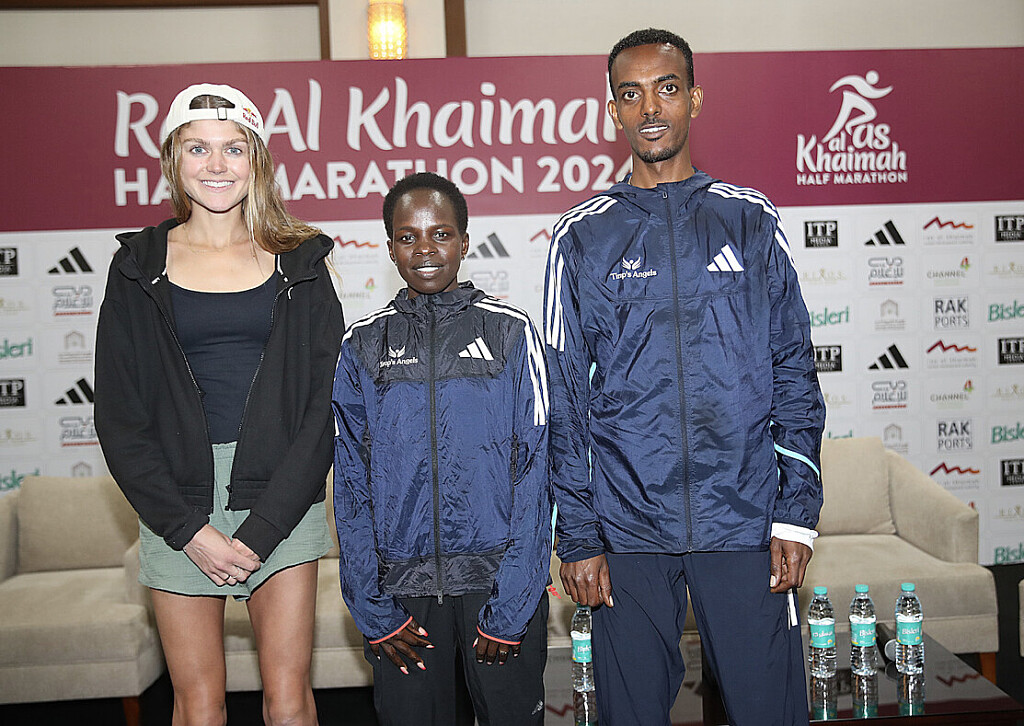
RAS AL KHAIMAH HALF MARATHON IS ON SATURDAY AND IT SHOUlD BE A FAST ONE
New regime, new course, but with Olympic and world champions and the usual array of speedsters, Saturday’s Ras Al Khaimah Half Marathon is virtually assured of the sort of fast times that have been a feature of the event throughout its 17 year history, including three women’s world records.
Pride of place both on the start list and at this morning’s press conference in one of the smaller emirates in the UAE were Olympic marathon and three time world half-marathon champion, Peres Jepchirchir of Kenya, and keeping the balance in the long-term East African distance running rivalry, world marathon champion Tamirat Tola of Ethiopia heads the men’s entry. The wild card, hoping to gatecrash the party is Konstanze Klosterhalfen of Germany, who surprised the East Africans when she beat a dozen of them to win her debut half-marathon in Valencia in 2022.
Jepchirchir may neither be the fastest marathoner or half-marathoner among current women long distance runners, but she knows how to win races, an asset far more valuable than fast times. In the seven months between late August 2021 and mid-April 2022, she won the Olympic, New York and Boston Marathons, a rare collective achievement. In her comeback marathon following an injury, she finished third in last year’s London Marathon. And she has won 12 of her 16 half-marathons. She is loath to admit her plans yet, but this RAK ‘half’ is perfectly scheduled as a springboard, to going back to London in April, to upgrade that third place.
Tola was similarly annoyed that an injury preventing him successfully defending his 2022 world marathon title in Budapest last summer, but a speedy recovery saw him break the long-standing New York Marathon record with 2.04.58 three months later. He is one of the few elites to be making his debut in the RAK ‘half’ and the scale of his task may be judged by the fact that on paper there are 15 men faster than his best of 59.37 set seven years ago in Prague. But he suggested that is due for drastic revision. ‘I’d like to think I can do under 59 minutes if the race turns out to be fast,’ he said at the press conference. Fastest man in the field is Daniel Mateiko of Kenya with 58.26, but his colleague Benard(sic) Kibet has the advantage of having won last year in 58.45.
Klosterhalfen, ‘Koko’ to her pals may prove to be not only the wild card, but the joker in the pack in the women’s race. A world bronze medallist on the track and European 5000 metres champion, the German called a halt to her summer season last year when a foot injury caused her to reassess her career. She had changed her shoe sponsor, left her coach and long-term training venue in the USA already. She then switched again and has teamed up with Gary Lough, latter-day coach to Mo Farah and spouse of former world record holder Paula Radcliffe (here in RAK as a TV commentator). Klosterhalfen has also switched her altitude training venue to Addis Ababa, where she has just spent six weeks, coming directly to here. ‘Road running is still a bit of an adventure for me’, she said this morning. ‘I still want to run on the track, but I want to more road races’.
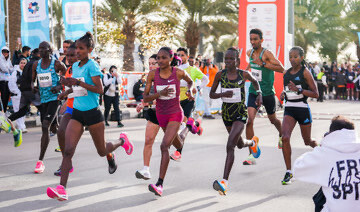
The roll-call of winners since the race began in 2007 is a ‘Who’s Who’ of distance running over the last two decades; beginning with Sammy Wanjiru and Berhane Adere in the inaugural race, via luminaries such as Patrick Makau, Geoffrey Mutai, Elvan Abeylegesse, Mary Keitany, Geoffrey Kamworor, Lelisa Desisa, Samson Kandie and Hellen Obiri. Add to that Jepchirchir herself who won in 2017 in a then world record of 65min 06sec.
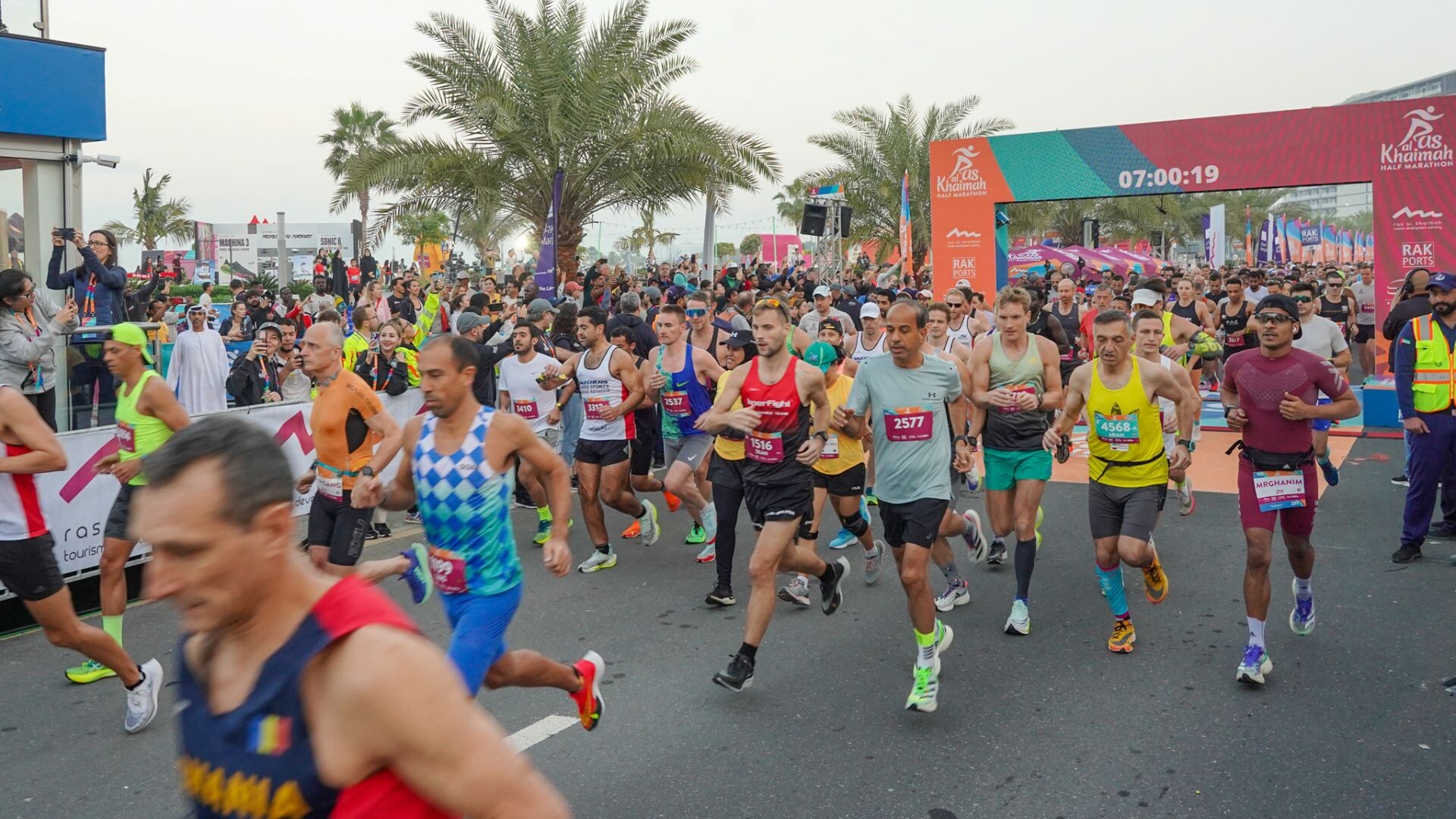
The promoters of the successful marathon down the road in Dubai have been invited this year to give the RAK ‘half’ a makeover, and they began by introducing a 10k race for locals and altering the half-marathon course. ‘It’s faster and better than any route before here in Ras Al Khaimah; we’ve cut out some of the sharp turns,’ said race director Peter Connerton, ‘so we’re hoping for at least similar times and hopefully better. But with a couple of good races into the bargain’.
ELITE CONTENDERS
MEN
Daniel MateikoKEN58:26
Kennedy KimutaiKEN58:28
Seifu TuraETH58:36
Amdework Walelegn ETH 58:40
Benard Kibet KoechKEN58:45
Alex Korio KEN 58:51
Birhanu Legese ETH 58:59
Haftu Teklu ETH 59:06
Tamirat TolaETH59:37
WOMEN
Ababel YeshanehETH64:31
Margaret KipkemboiKEN64:46
Peres JepchirchirKEN65:06
Catherine Amanang’ole KEN 65:39
Konstanze KlosterhalfenGER65:41
Tsigie Gebreselama ETH65:46
Evaline ChirchirKEN66:01
Vivian Kiplagat KEN 66:07
Yalemget YaregalETH66:27
Login to leave a comment

Rak Half Marathon
The Rak Al Khaimah Half Marathon is the 'world's fastest half marathon' because if you take the top 10 fastest times recorded in RAK for men (and the same for women) and find the average (for each) and then do the same with the top ten fastest recorded times across all races (you can reference the IAAF for this), the...
more...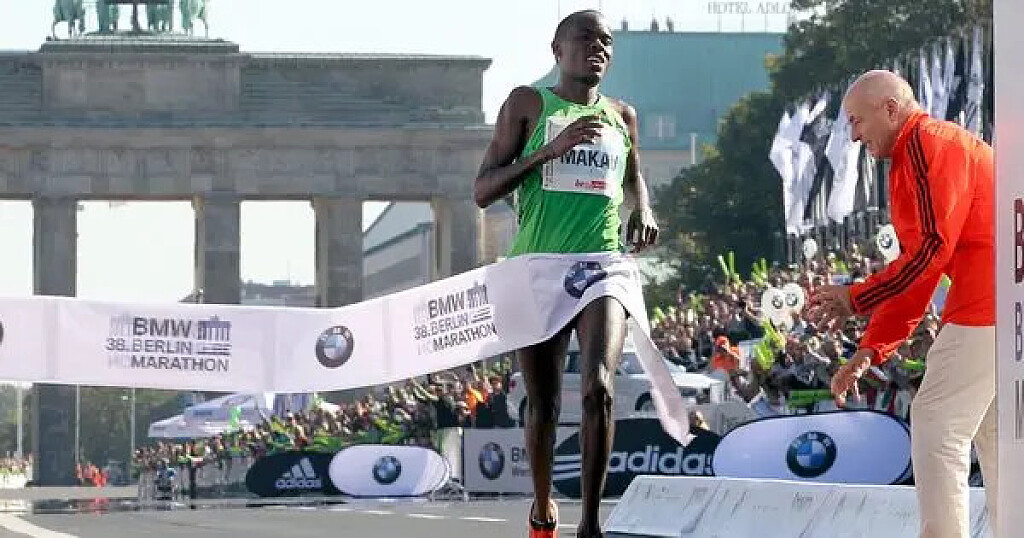
Patrick Makau believes current generation of athletes can run under 2 hours
Former world marathon record holder Patrick Makau believes the current generation of athletes in the country will soon run under two hours in the marathon.
The 38-year-old is also notable for his half marathon performances, having won several prominent competitions in Europe in sub-1-hour performances.
Some of the races include the Berlin Half Marathon in 2007, where he clocked 58:56 hours.
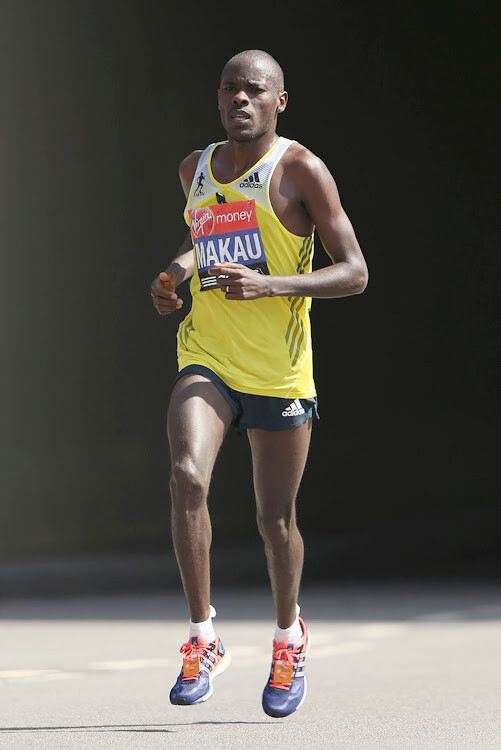
Marathons had changed a lot due to technology and were far better than the marathons they ran during his time.
“As I see it, the marathons have changed a lot because it is not like the olden times. We used to view sub-two hours as something unattainable but now with the current crop of athletes like the current world record holder Kevin Kiptum and two-time Olympic champion Eliud Kipchoge, this looks like a possibility,” he noted.
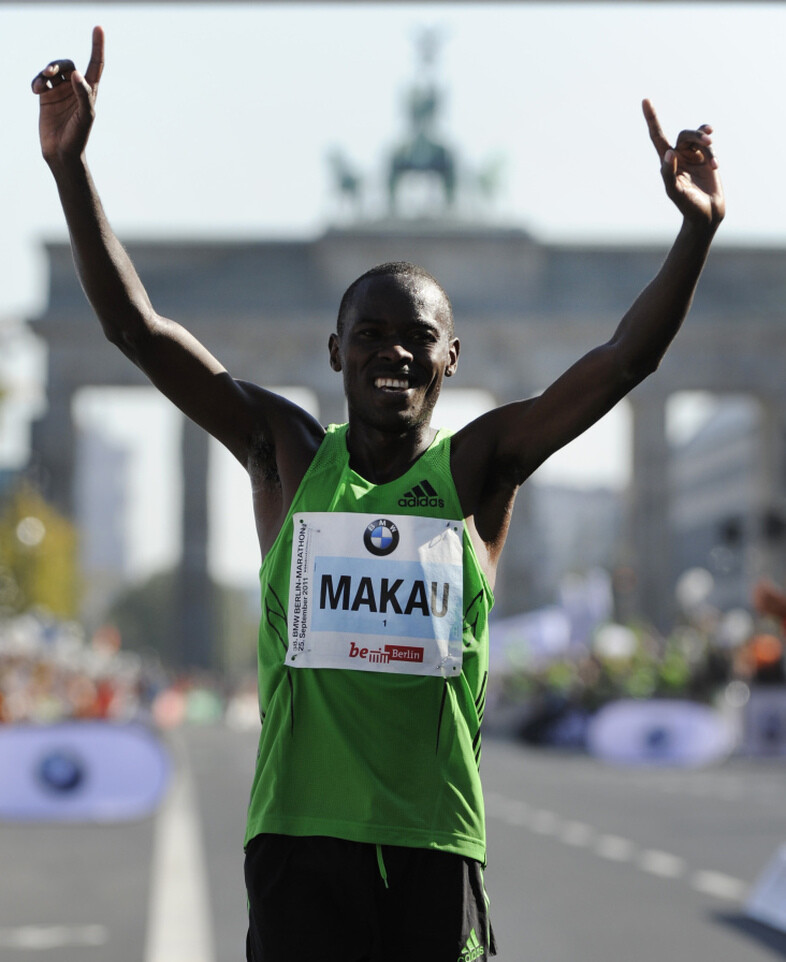
The signs of an athlete running a marathon in under two hours are already evident if Kipchoge and Kiptum's recent performances are anything to go by.
In an unofficial race in Vienna, Austria in 2019, Kipchoge became the first person ever to run a marathon in under two hours, clocking 1:59.40 during the INEOS 1:59 Challenge.
Regarded as one of the greatest marathoners of all time, Kipchoge was the world record holder in the marathon then with a time of 2:01:09 set at the 2022 Berlin. His mark was later broken by Kiptum at the Chicago Marathon on October 8, 2023, when he clocked 2:00:35.
The 24-year-old Kiptum is currently the only person in history to run the marathon in under two hours and one minute in a record-eligible race.
Kiptum has won all three of the major marathons he has entered between December 2022 and October 2023 with three of his times among the six fastest in history. Makau revealed that hard work and endurance were the key for him to break the world record in 2011.
“I used to go to train in Iten and Machakos and to the polishing in Ngong. This is because speed work and build-up are two different programs,” Makau noted.
Makau encouraged athletes to find a training routine that would enable them to run a sub-two-hour marathon shortly.
“What Kiptum, Kipchoge and the other athletes can do now is to find the pace that will be able to help them run a sub-two-hour marathon shortly,” he added.
The duo currently occupy the top two positions in the world marathon ranking. Ethiopians Kenenisa Bekele (2:01.41), Sisay Lemma (2:01.48 hrs), Birhanu Legese (2:02.48 hrs) and Mosinet Geremew (2:02.55 hrs) follow in that order.
The former world record holder, who currently trains the Kenya Police team and other athletes, also cited technology, especially in running shoes as a reason behind the fastest times being witnessed.
“During our time, there was not as much technology as we were accustomed to normal shoes. In today’s era, running shoe technology plays a key role in determining the pace in a particular race,” he said.
Innovations in Running Shoe Technology mean shoes are now lighter, more dynamic, and more resilient, thanks to advancements in foams, rubbers, construction, textiles, and other essential components.
Kipchoge's performances during the INEOS 1:59 challenge opened the world's eyes to the condensed foam, carbon-plated super shoes which Nike claimed could increase running efficiency and in particular the amount of oxygen consumed per minute by by 4 percent.
Makau is optimistic the young athletes under his wings will also go further and make not only him but also the country proud. He said he is looking forward to the national trials in April to see if they get selected.
“We have intensified training in both Machakos and Kitui camps and I am hopeful. I am waiting for the trials in April to see if they will be able to represent Kenya at the Paris 2020 Olympic Games,” he said.
He also tipped Kenya to once again dominate the marathon at the Olympic Games slated for July 26 to August 11.
“I am sure Kipchoge, Kiptum, Peres Jepchirchir and Ruth Chepng'etich will represent the country well in the marathon at the Olympics,” he asserted.
by Teddy Mulei
Login to leave a comment
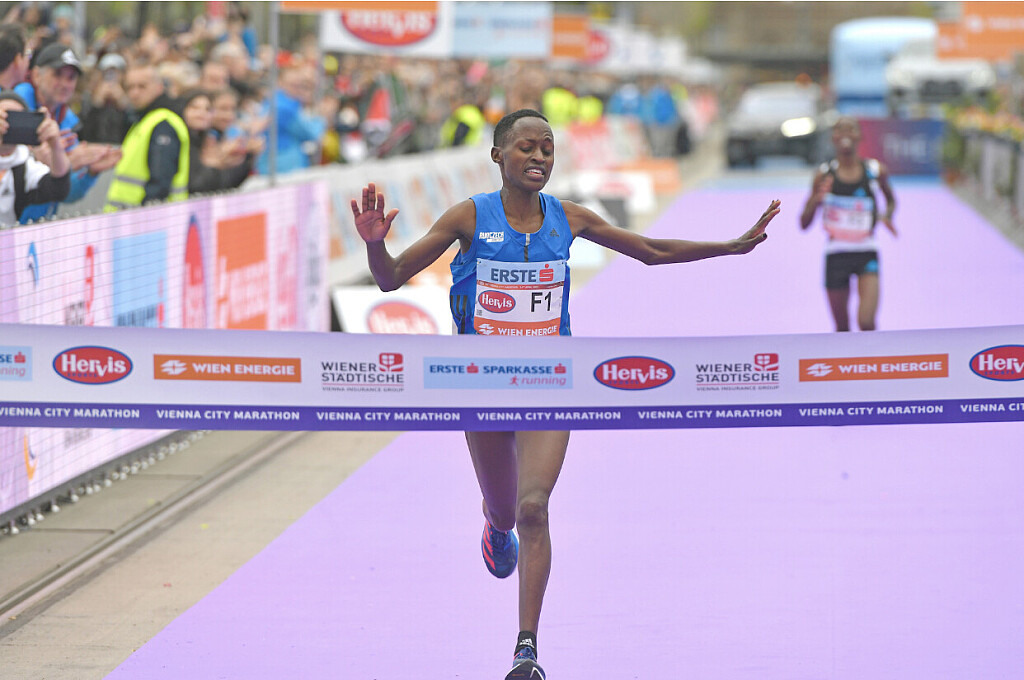
Vibian Chepkirui defended her title and smashed the course record at the Vienna City Marathon.
The Kenyan Vivian Chepkirui won with 2:20:59 after a close battle with fellow-Kenyan Ruth Chebitok who finished second in 2:21:03. Sheila Jerotich made it an all-Kenyan podium, taking third place in 2:23:01.
Cosmas Muteti won the men’s race with 2:06:53, which is the second fastest time in the history of the Vienna City Marathon. Fellow-Kenyan Leonard Langat was second in 2:06:59 and Eritrea’s Oqbe Kibrom followed in third with 2:07:25.
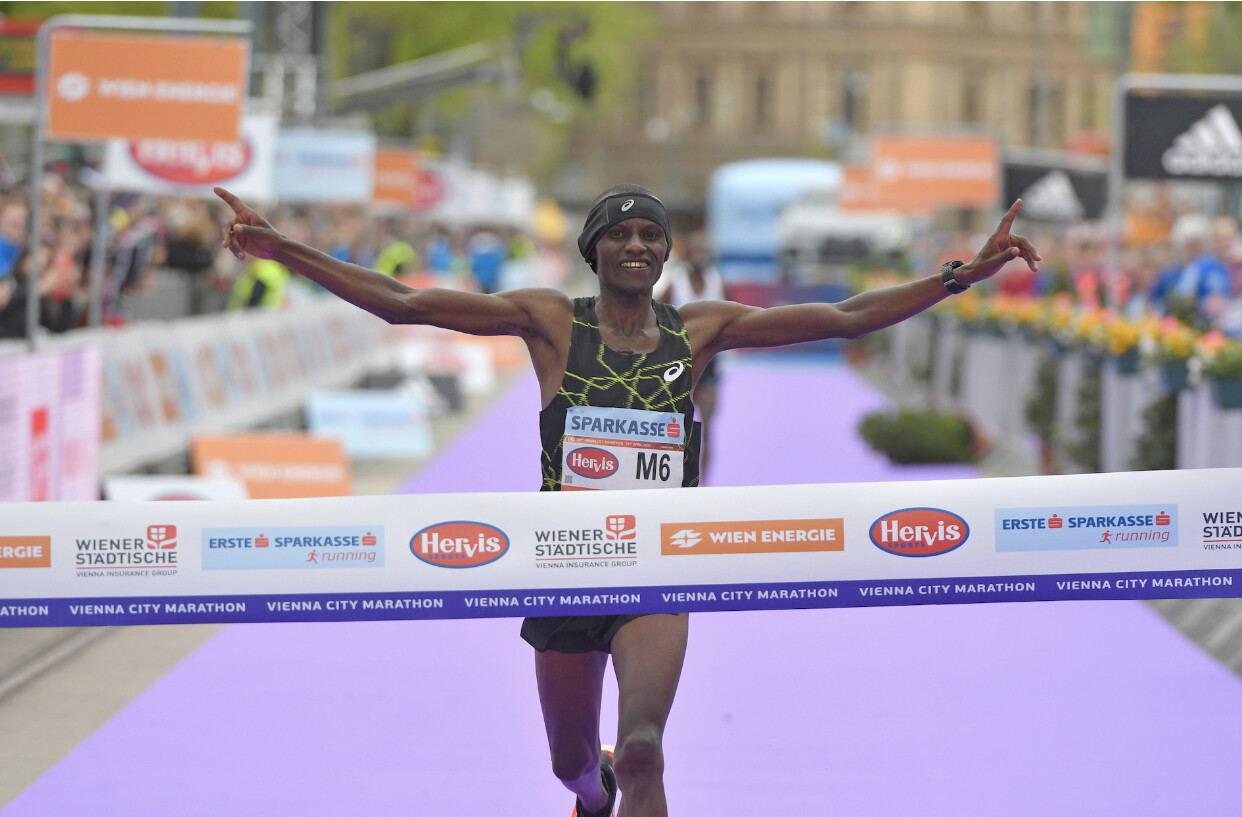
Although there was no course record in the men’s race the wider top results were the best ever in the history of the event. There have never been two results below 2:07before in Vienna. And seven times sub 2:10 is also a record for Austria’s prime road race.
A total of 32,000 runners from about 100 nations had registered for the 39th edition of the Vienna City Marathon, including events at shorter distances. Around 8,000 of them competed in the marathon. The Vienna City Marathon is Austria’s biggest sporting event and a World Athletics Label Road Race.
Men’s Race
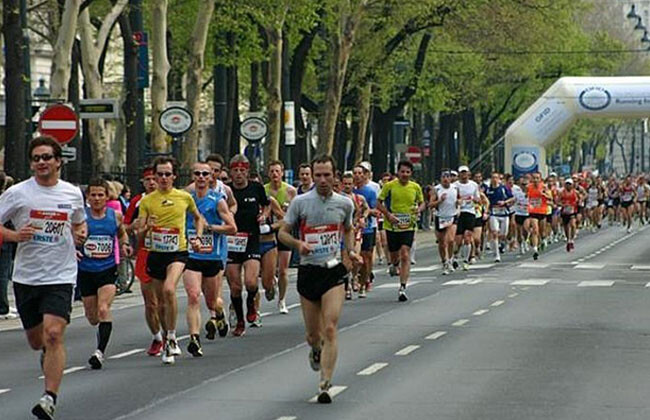
There was good pacemaking with an even pace in the men’s race for a long time although the 2:05:41 course record was never really threatened. A group of 17 runners including the three pacers passed half way in 63:21 and then went on to a 30k split time of 1:30:12. However when the pacers all dropped out at the same time right after the 30k point the race for victory was on immediately.
It was Oqbe Kibrom who surged ahead instantly. The fastest runner on the start list (PB: 2:05:53) seemed on course for a first Eritrean victory in the history of the race. However with kilometer splits of 2:54 and 2:51 for the 31st and 32k Oqbe Kibrom misjudged his potential and the picture changed.
“I knew he was strong. But I decided not go with him at 30k and run my own pace instead. I hoped to close the gap slowly,“ explained Cosmas Muteti, who soon realised that he did gain ground on the leader. With around five kilometres to go the Kenyan, who is partly coached by former world marathon record holder Patrick Makau and was fifth in Berlin last September, caught Oqbe Kibrom and then moved away from him.
In the final stages fellow-Kenyan Leonard Langat took second place and made up some ground to the leader. “I knew that he was coming nearer, but I was sure to win as I would have been able to put in a sprint if needed,“ said Cosmas Muteti, who wrote history by becoming the 50th runner of the Vienna City Marathon to achieve a sub 2:10 finish.
“This is my biggest victory. I hope to be able to defend my title here next year and then may be break the course record,“ said Cosmas Muteti, who improved his former PB of 2:08:45 by almost two minutes.
Austrian’s Lemawork Ketema was the best European runner in Vienna with a 2:15:42 finishing time in 13th place. However he missed the qualifying standard for the European Championships.
Women’s Race
In relatively good weather conditions but some wind the women’s race developed differently. Defending champion Vibian Chepkirui, who ran only her second marathon after her Vienna debut triumph in 2021, broke away after eight kilometres. At the 10k mark she had a split time of 33:11 which pointed to a 2:20 finishing time.
She was six seconds ahead of fellow-Kenyans Ruth Chebitok and Viola Yator. For an unexpected reason the 27 year-old was then not able to maintain this pace. “My husband and pacemaker Wesley Kongogo had a problem with his shoes and got a blister, so he slowed a bit,“ explained Vibian Chepkirui. While she had a lead of nine seconds at half way, which she passed in 70:38, she was unable to significantly increase it.
In contrast Ruth Chebitok, who had left behind Viola Yator after the half way mark, made up the deficit and was running right behind the defending champion at 35k.
Vibian Chepkirui stayed ahead by a step in the final section and it was with around one kilometer to go at Vienna’s Opera House when she increased the pace again and secured her second Vienna marathon victory.
“I am of course very happy to have won again in Vienna. I want to come back next year and then my goal will be to improve to 2:18,“ said Vibian Chepkirui, who ran 2:24:29 in her debut last September in warm conditions.
Slovenia’s Neja Krsinar was the fastest European runner in Vienna. She finished eighth in 2:35:30.
Results, Men:
1. Cosmas Muteti KEN 2:06:53
2. Leonard Langat KEN 2:06:59
3. Oqbe Kibrom ERI 2:07:25
4. Charles Ndiema KEN 2:08:12
5. Raymond Chose KEN 2:08:32
6. Edwin Soi KEN 2:09:10
7. Noah Kipkemboi KEN 2:09:55
8. Abdi Fufa ETH 2:10:32
9. Abraham Kipyatich KEN 2:10:51
10. Mike Chesire KEN 2:11:32
Women:
1. Vibian Chepkirui KEN 2:20:59
2. Ruth Chebitok KEN 2:21:03
3. Sheila Jerotich KEN 2:23:01
4. Urge Soboka ETH 2:27:13
5. Caroline Kilel KEN 2:29:29
6. Viola Yator KEN 2:30:40
7. Teresiah Omosa KEN 2:31:44
8. Neja Krsinar SLO 2:35:30
9. Kellys Arias COL 2:38:28
10. Chaltu Marame ETH 2:38:34
Login to leave a comment

Vienna City Marathon
More than 41,000 runners from over 110 nations take part in the Vienna City Marathon, cheered on by hundreds of thousands of spectators. From the start at UN City to the magnificent finish on the Heldenplatz, the excitement will never miss a beat. In recent years the Vienna City Marathon has succeeded in creating a unique position as a marathon...
more...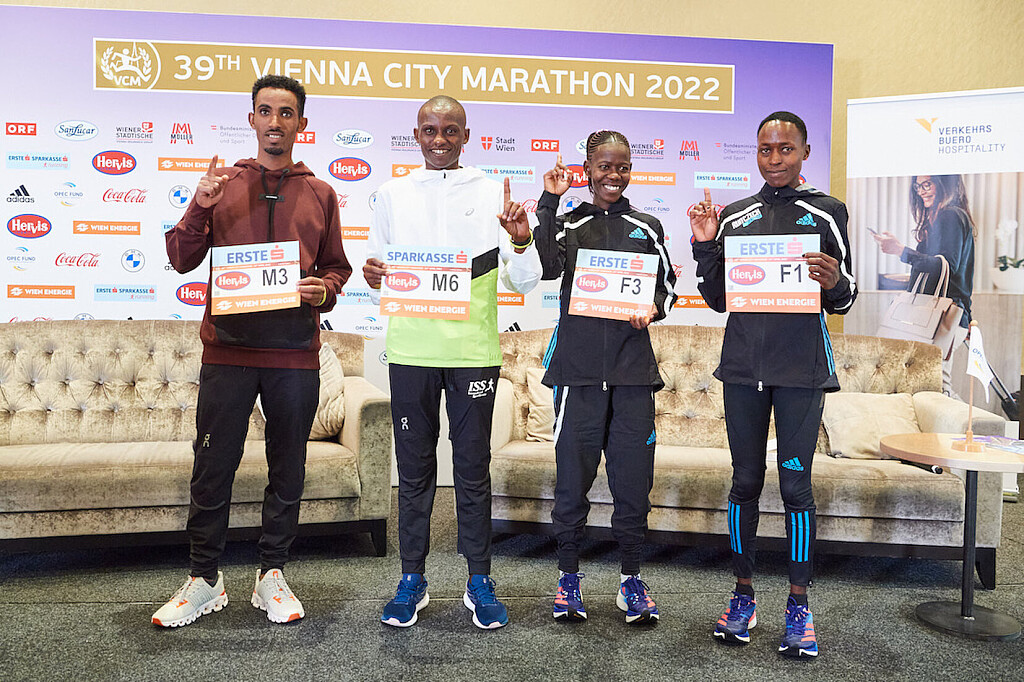
Defending champion Vibian Chepkirui hoping to run 2:20 in Vienna
Defending champion Vibian Chepkirui hopes to make another big step at the Vienna City Marathon, aiming to win her second race at the classic distance as well. The Kenyan believes she is ready to run a time of around 2:20 on Sunday. Such a result would not only smash her PB but the course record of 2:22:12 as well.
It was in September when Vibian Chepkirui won her debut marathon in Vienna with 2:24:19 in very warm weather conditions. While five women feature personal bests of sub 2:25 there are two men on the start list who have run below 2:06. Oqbe Kibrom of Eritrea is the fastest runner in the field with a PB of 2:05:53.
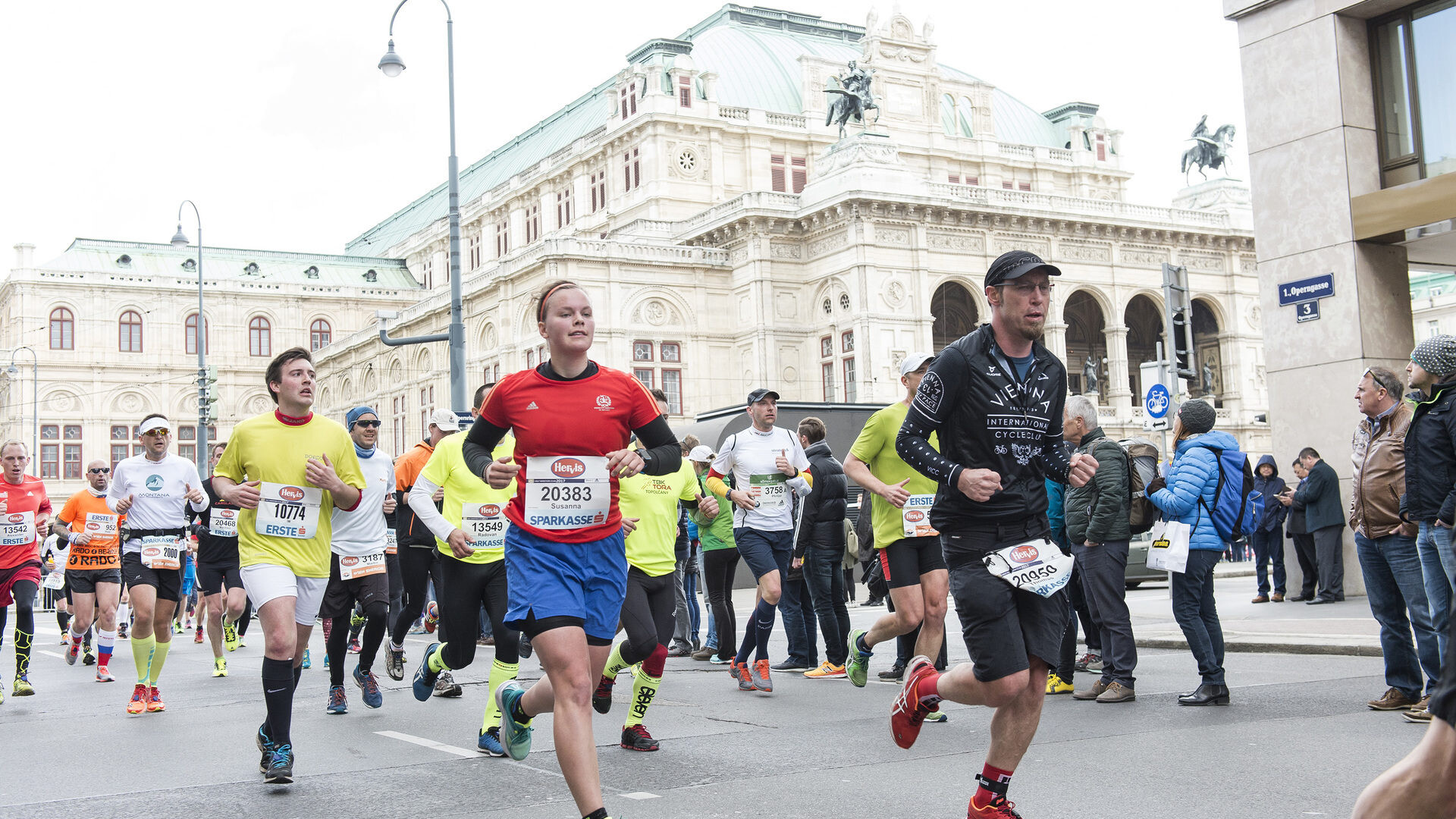
Organisers of the 39th edition of the Vienna City Marathon have registered more than 31,000 entries including events at shorter distances. Around 8,000 of them are marathon runners. The Vienna City Marathon is Austria’s biggest running event and a World Athletics Label Road Race.
The Vienna City Marathon will be streamed live from 8.30 am on Sundayat: www.vienna-marathon.com There will also be English live reporting of the elite races on the event’s Twitter account, which is accessible through the website as well.
"I have very good memories of Vienna and I am happy to be back. It is a good course and the people are fantastic,“ said Vibian Chepkirui, with her manager Julien di Maria of Ikaika helping her to answer the questions during the press conference.
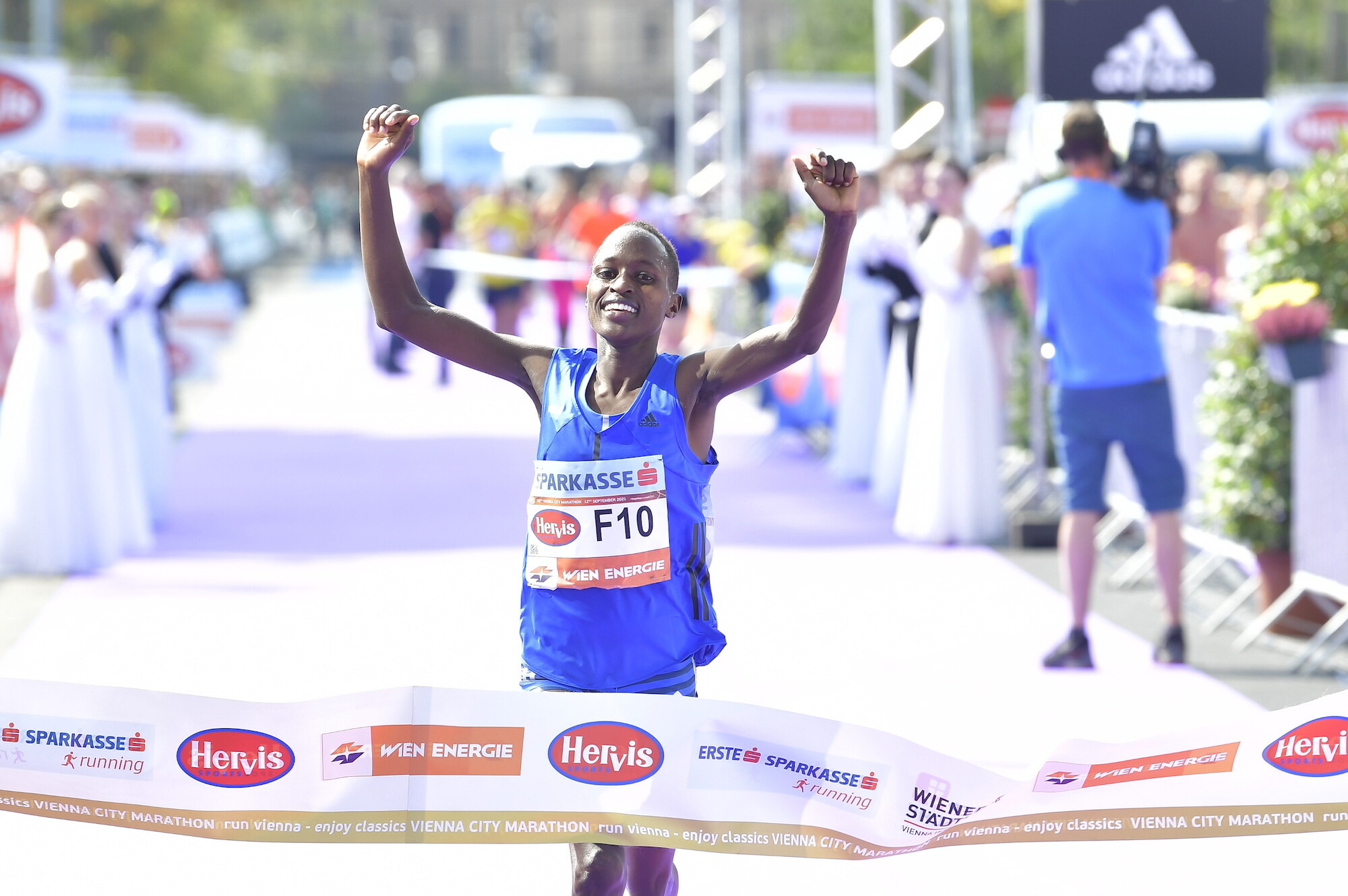
"I have prepared well and because of my training I think that in good weather conditions a time of around 2:20 is possible for me.“ As Julien di Maria explained Vibian Chepkirui became more confident when she saw the result of her training partner Joan Melly last Sunday: She won the Seoul Marathon with a course record of 2:18:04.
“Vibian and Joan always train together in Iten. And they are more or less on the same level. It was only during the final stages of some sessions when Joan was a little stronger than Vibian,“ explained Julien di Maria. Vibian Chepkirui has only run a single international race since her Vienna triumph in September and has fully focussed on defending her title in the Austrian capital.
The 27 year-old was fifth in Spain’s Santa Pola half marathon in January with 69:35. On Sunday she will again be paced by her husband Wesley Kangogo, who also acts as a pacemaker for the group when they are training in Iten.
There are four women with faster personal bests than the defending champion on the start list of the Vienna City Marathon. One of them is Ruth Chebitok, who has run 2:23:29 in Toronto in 2018. “I had injury problems for some time, but then ran quite well in Berlin last year with 2:28:18. Now I am well prepared and confident that I can run a time around my PB again,“ said the Kenyan.
The Vienna City Marathon is among a number of top road races that experienced an unusually high number of late cancellations. Goitom Kifle of Eritrea had to cancel his start because of an injury. He had been the fastest runner on the start list with a PB of 2:05:28. Another one who can not compete in Vienna is the defending champion Leonard Langat of Kenya.
There could still be a winner from Eritrea, which would be a novelty in the history of the race. Oqbe Kibrom is now the fastest runner on the start list with a PB of 2:05:53. The Eritrean, who held the national record for some time with his PB from 2020, looks ahead with confidence.
“I have trained well and hope to run a personal best on Sunday,“ said Oqbe Kibrom. The pace of the leading group will likely be perfect for him as it is planned to pass through half way in around 63:00. An attack on the course record would then still be possible. Ethiopia’s Getu Feleke holds this mark with 2:05:41 from 2014.
Cosmas Muteti might not be a pre-race favourite, but the Kenyan has developed very well recently. Coached by former world record holder Patrick Makau he improved to 2:08:45 in Berlin last year, where he took a fine fifth place in warm conditions. „Patrick is a good coach and I have improved under his guidance,“ said Cosmas Muteti, who targets his personal best on Sunday.
There is also an OPEC Fund Rookie Team competing in Vienna on Sunday. The idea is to give unknown African athletes a chance to compete internationally in Vienna and to support them to hopefully build a successful career. Victor Serem is the most experienced of the group. The Kenyan has a PB of 2:12:00 which he ran in Nairobi in 2019. “This will be my first marathon outside Kenya and I am grateful for the opportunity. I hope to improve to 2:10 on Sunday,“ said Victor Serem. The other three runners of the OPEC Fund Rookie Team are Kenya’s Dickson Kiptoo (PB: 2:23:56 in Eldoret), Fanose Tessema Gonfa and fellow-Ethiopian Chaltu Fikadu Marame.
Elite fields with personal bests
Men:
Oqbe Kibrom ERI 2:05:53
Abdi Fufa ETH 2:05:57
Raymond Choge KEN 2:08:11
Cosmas Muteti KEN 2:08:45
Weldu Gebretsadik NOR 2:09:14
Edwin Soi KEN 2:09:16
Charles Ndiema KEN 2:10:43
Lemawork Ketema AUT 2:10:44
Leonard Langat KEN 2:10:49
Noah Kipkemboi KEN 2:11:09
Victor Serem KEN 2:12:00
Anderson Seroi KEN 2:12:21
Mike Chesire KEN 2:13:28
Tomasz Grycko POL 2:13:30
Solomon Tesfamariam SUI 2:14:51
Abraham Kipyatich KEN Debüt
Timon Theuer AUT Debüt
Women:
Caroline Kilel KEN 2:22:34
Ruth Chebitok KEN 2:23:29
Sifan Melaku ETH 2:23:49
Sheila Jerotich KEN 2:24:15
Vibian Chepkirui KEN 2:24:29
Esther Kakuri KEN 2:26:11
Urge Soboka ETH 2:28:10
Nataliya Lehonkova UKR 2:28:58
Kellys Arias COL 2:29:36
Viola Yator KEN 2:30:03
Teresiah Omosa KEN 2:30:12
Benny Cheruiyot KEN 2:34:18
Neja Krsinar SLO 2:35:44
Login to leave a comment
Vienna City Marathon
More than 41,000 runners from over 110 nations take part in the Vienna City Marathon, cheered on by hundreds of thousands of spectators. From the start at UN City to the magnificent finish on the Heldenplatz, the excitement will never miss a beat. In recent years the Vienna City Marathon has succeeded in creating a unique position as a marathon...
more...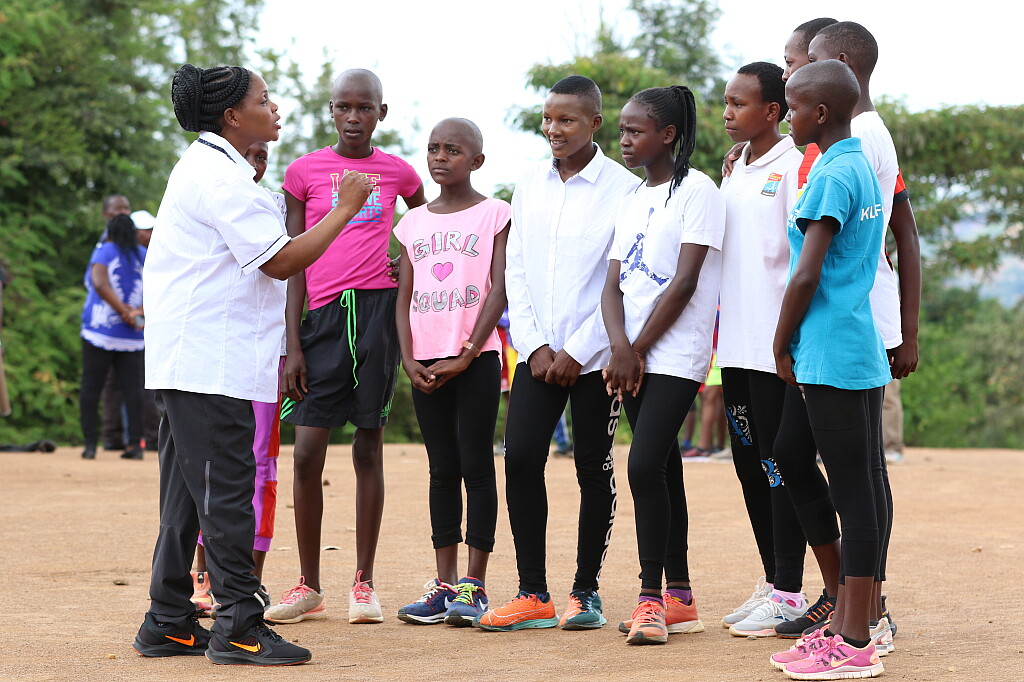
Former athlete Catherine Makau aiming to produce world beaters
When former athlete Catherine Makau visited the hilly area of Kea in Kitui County to distribute food to athletes in September, 2020 during the height of Covid-19, she was met with extraordinary scenes.
Over 300 athletes turned up for the exercise and it left Catherine’s mind brimming with ideas.

“As a former athlete, I saw potential, this being a high altitude area with lovely weather,” said Catherine, who is the wife of former world marathon record holder, Patrick Makau.
Catherine decided to start an athletics camp in the area in January last year, and the camp that is the latest in the country, now has over 60 athletes both junior and seniors.
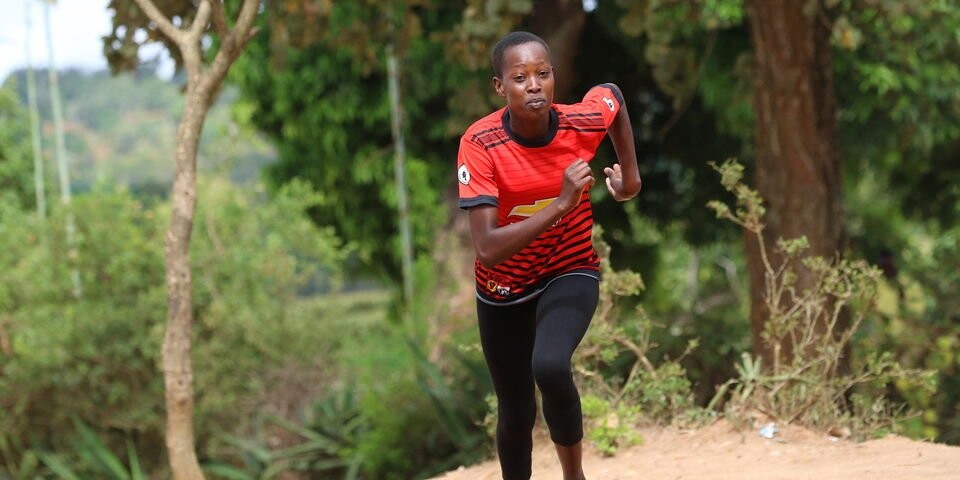
Kea Athletics Club is among three that were picked by Athletics Kenya to host holiday camps in the Southern region to prepare juniors for the World Under-20 Championships trials.
The others are Iuani Athletics Club in Makueni County and Talent Discovery and Development Centre, Machakos County.
Catherine is confident that just like Iuani and Machakos, they will be able to not only compete effectively during the trials, but also qualify some athletes for the world event.
Machakos produced seven athletes for the World Athletics Under-20 Championships held last year in Nairobi.
The World Under-20 Athletics Championships are slated for August 1 to 6 this year in Cali, Colombia.
Among the athletes that Catherine singled out from her pool of 20; 10 boys and 10 girls, are the 1,500m runner Josephine Kalekye, who finished fourth in the girls under-18 5km race during the Memorial Agnes Tirop World Athletics Cross Country Gold Tour in February.
Naomi Kimanzi (3,000m), Joshua Kithoku (5,000m), Alexander Matiti (1,500m) are the others with great potential to make Team Kenya.
“I only pray for an injury free season and hope to represent Kenya,” said Kimanzi, who finished seventh in women’s Under-20 6km race during the National Cross Country Championships in January in Eldoret.
“I want to emulate the World 5,9000m champion Hellen Obiri.”
Nelson Mandela (3,000m/5,000m), who finished fourth in men’s 10,000m during the third Athletics Kenya Track and Field Meeting at the Nyayo National Stadium, is among 50 juniors preparing at Iuani hills.
Others are Justus Muasya (1,500m) and Dennis Mutuku (3,000m).
Other juniors not in camp, but likely to make the Iauni team are Emmanuel Lemama and Faith Salome (800m).
Lemama, who finished second in men’s 1,500m to qualify for last year’s world under-20, but was later dropped due to injury, is currently at the Kenya Defence Forces Recruit Training College, while Salome is attending the Elite Youth Camp by the National Olympic Committee at Kenyatta University.
Machakos once again should provide a huge number from Southern to Team Kenya including Peter Kithome, who claimed bronze in 4x400m at the world under-20 and Jonathan Mutua.
Kithome and Mutua are currently with Kenyan juniors receiving specialised training at Miramas Athletics Club in France.
Javelin thrower Christine Musembi looks promising from Machakos alongside Jackline Mikayo (200m), Damaris Nduleve (400m), Agnes Syometi (400m hurdles), Sebastian Sinoti (400m) and Alex Nzioka (3,000m).
by Ayumba Ayodi
Login to leave a comment
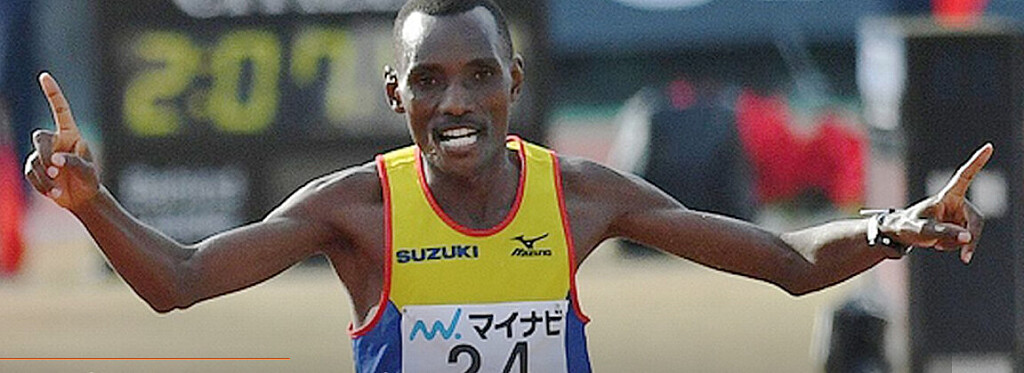
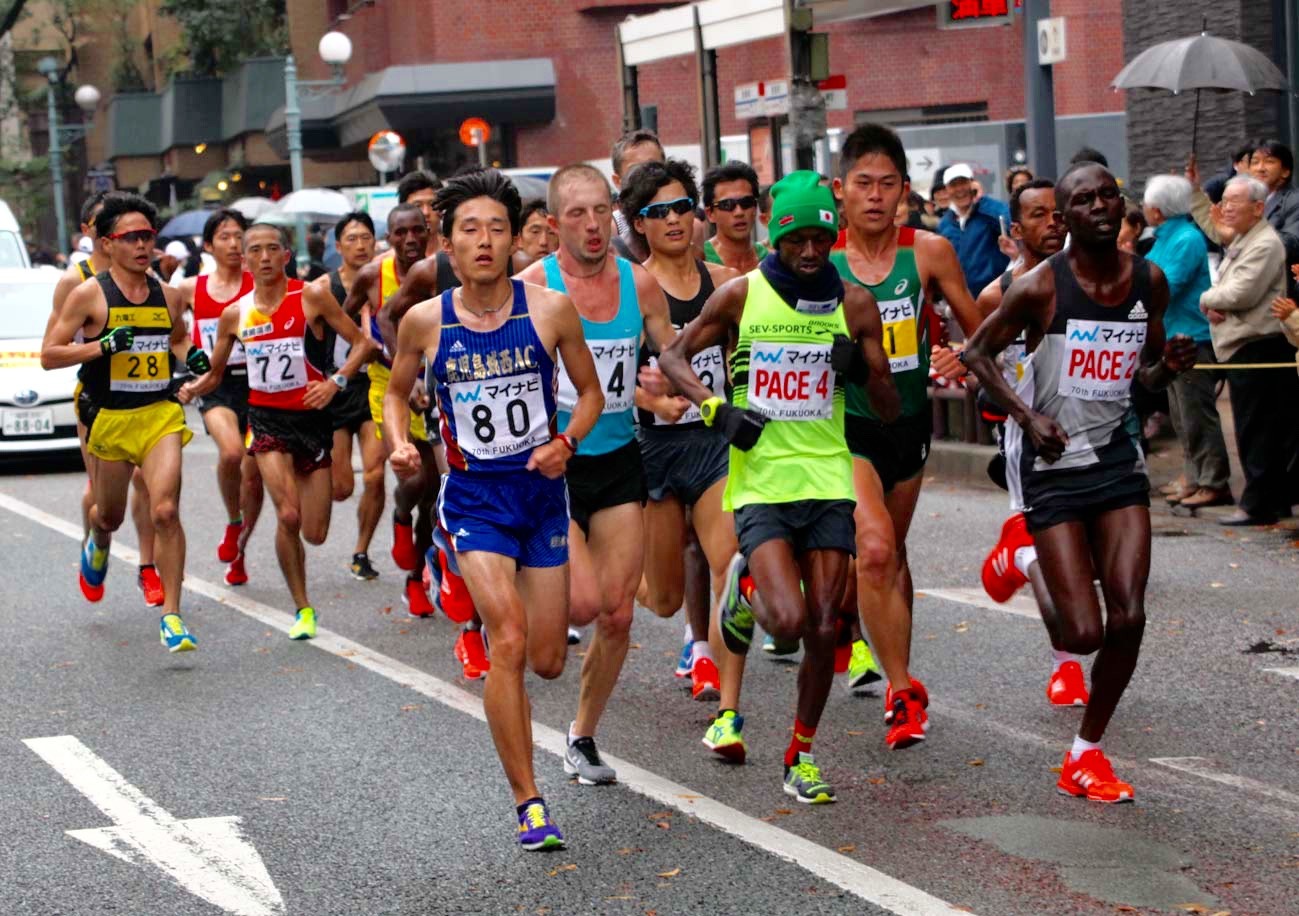
Githae wins final edition of Fukuoka Marathon
Michael Githae was victorious at the 75th and final edition of Fukuoka International Marathon on Sunday (5), winning the World Athletics Elite Label road race in 2:07:51.
Githae, who runs for Suzuki track team, improved his previous best of 2:08:17, which he set when finishing fourth at last year’s Fukuoka Marathon. Japan’s Kyohei Hosoya finished second, 25 seconds adrift of Githae.
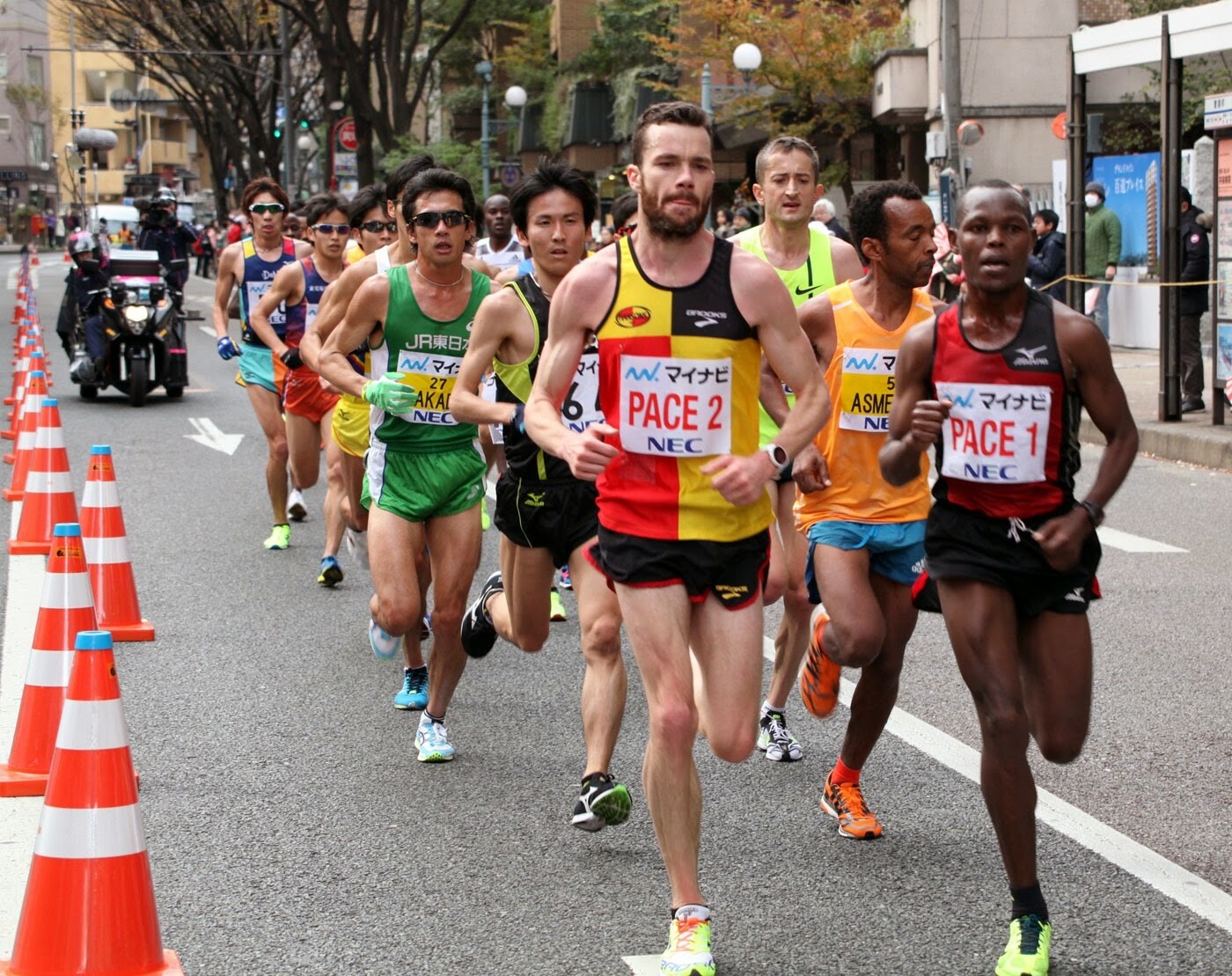
The pacers, led by 2012 Olympian Yuki Sato, directed the huge lead pack through 5km (14:47), 10km (29:39), 15km (44:30) and 20km (59:24) in what turned out to be something of a race of attrition. Yuta Shitara was one of the athletes to fall out of contention before the half-way stage; the former national marathon record-holder dropped out at 20km.
The half-way point was reached in 1:02:41, meaning an attack on the 2:05:18 course record was not out of the question. Simon Kariuki and Charles Wanjiku kept the pace going at the start of the second half, and 30km was reached in 1:29:08. But the pacemakers dropped out soon after, and the pace dramatically slowed down.
Nevertheless, the pack became strung out to almost a single file, and by 34km just Githae, James Rungaru, Hosoya and Ryu Takaku remained in contention. Soon after, Githae surged and Hosoya made a valiant effort to stay close but Githae gradually pulled away to win by 25 seconds in 2:07:51.
In third, Rungaru set a PB of 2:08:25, while fourth-placed Shohei Otsuka and Ryu Takaku and Daisuke Uekado in fifth and sixth respectively were just outside their PBs. Yuki Kawauchi, running his 12th Fukuoka Marathon, fittingly finished 12th in 2:11:33. He is planning on running the Hofu Marathon in two weeks’ time.
Looking back at Fukuoka's history
The Fukuoka International Marathon – which was awarded a World Athletics Heritage Plaque in 2019 – started in 1947 and is the second oldest marathon in Japan behind the now defunct Lake Biwa Marathon.
In its 75-year history, the world record was broken twice there – first in 1967 when Derek Clayton became the first runner to break 2:10 with 2:09:37, and then in 1981 when fellow Australian Rob de Castella ran 2:08:18.
De Castella isn’t the only global marathon champion to have contested the race over the years. Frank Shorter, the 1972 Olympic champion, notched up four consecutive Fukuoka Marathon victories between 1971 and 1974. 2000 Olympic champion Gezahegn Abera won in 1999, 2001 and 2002, while 1996 Olympic champion Josiah Thugwane won in 1997. The late Samuel Wanjiru, winner of the 2008 Olympic title, made a remarkable marathon debut in Fukuoka in 2007, winning in 2:06:39. And two-time world champion Jaoud Gharib won in 2010.
Numerous world record-holders have also competed in Fukuoka, including Haile Gebrselassie (winner in 2006), Belayneh Dinsamo (1990 winner) and Patrick Makau (2014 and 2015 champion).
Japanese runners have also enjoyed moments of victory in Fukuoka. Toshihiko Seko won four times (1978-1980 and 1983), and Takeyuki Nakayama won twice (1984 and 1987). During his 1987 run, Nakayama was on world record pace through 20km (58:37) and 35km until a heavy downpour in the closing stages slowed him down, and he eventually finished in 2:08:18.
When asked about the end of the Fukuoka Marathon, four-time winner Seko said: “It is like part of my history is being erased.”
Japan Running News, a leading authority on the sport in Japan, has produced a docu-film on the Fukuoka Marathon, entitled ‘Inside the Outside – When the World Came to Fukuoka’.
Leading results
1 Michael Githae (KEN) 2:07:512 Kyohei Hosoya (JPN) 2:08:163 James Rungaru (KEN) 2:08:254 Shohei Otsuka (JPN) 2:08:335 Ryu Takaku (JPN) 2:08:386 Daisuke Uekado (JPN) 2:08:567 Kohei Futaoka (JPN) 2:09:148 Masaya Taguchi (JPN) 2:09:359 Toshiki Sadakata (JPN) 2:10:3110 Takuma Kumagai (JPN) 2:10:4111 Ryota Komori (JPN) 2:11:3212 Yuki Kawauchi (JPN) 2:11:33
Login to leave a comment
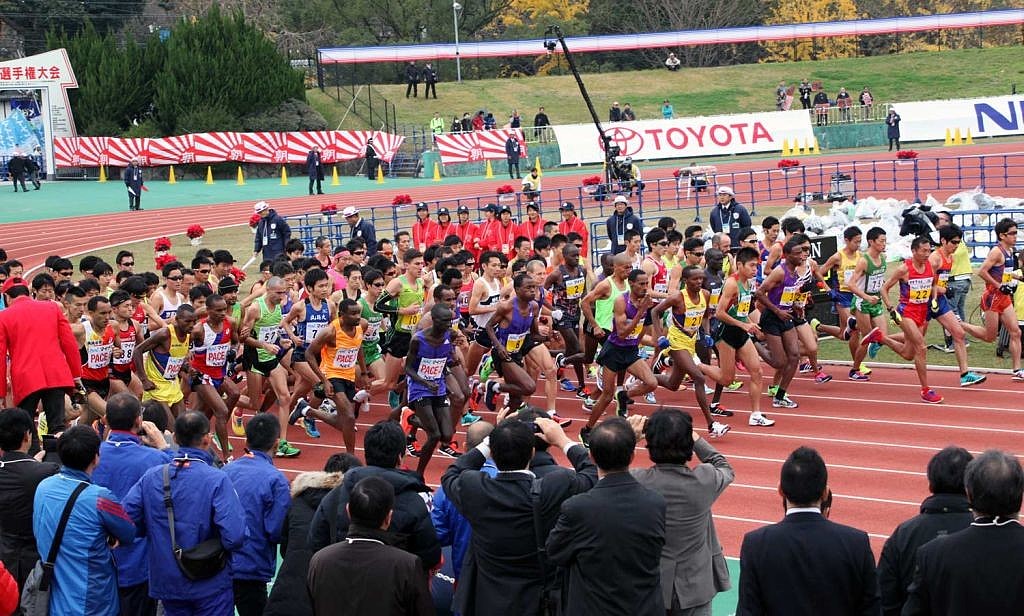
Michael Githae will spearhead Kenya's hopes for victory at the Fukuoka Marathon scheduled for December 6 in Japan
Githae has a personal best of 2:09:21 and will have Paul Kiura (2:11:38) and Silas Kingori, who is making his debut, for company.
Kenya has a superb record in the event with former world marathon record holder, Patrick Makau winning twice and Martin Mathathi, Joseph Ndambiri and Samuel Wanjiru winning once each.
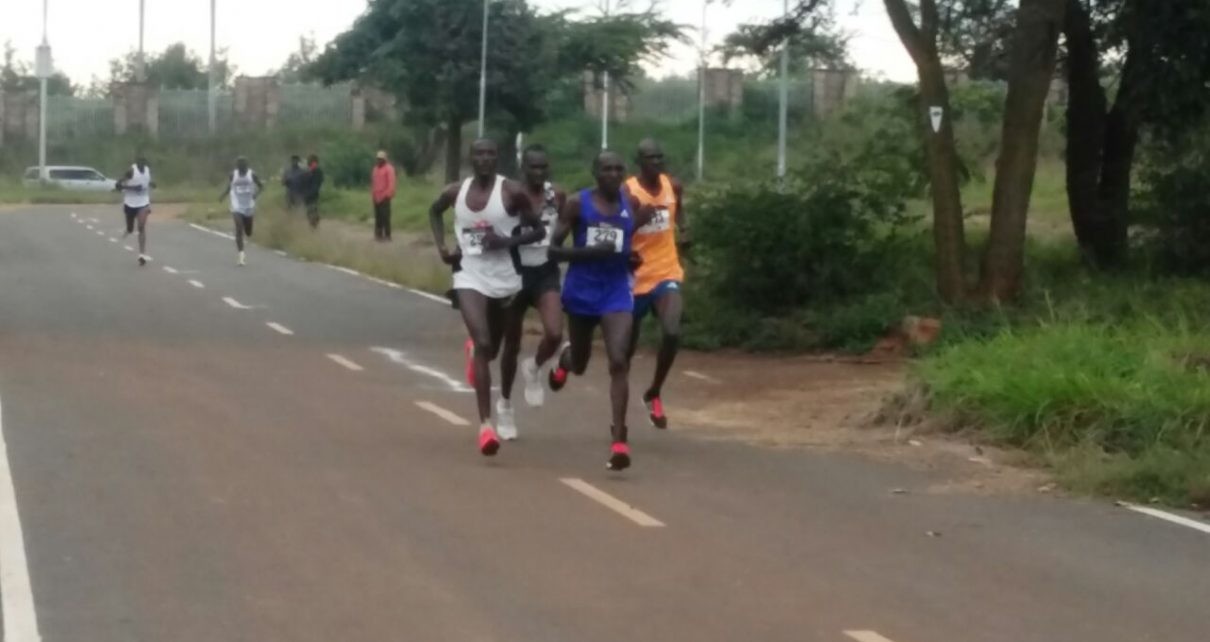
Japan will be well represented by Ryu Takaku, who set a big PB of 2:06:45 in Tokyo earlier this year. He is the fastest in the field. The 27-year-old is the fourth-fastest Japanese runner ever and will be making his second appearance in Fukuoka, having raced there in 2018.
Yuma Hattori, winner of the 2018 Fukuoka Marathon, will be back in the Japanese city looking for his second victory. His last race over the distance was at last year’s Marathon Grand Championships, where he finished second to gain selection in Japan’s Olympic team.
Yuki Kawauchi, the 2018 Boston Marathon champion, will be making his 11th appearance in Fukuoka in what will be his 104th career marathon. A prolific racer, Kawauchi's last race over the distance was nine months ago— his longest break between marathons since 2010.
Taku Fujimoto finished second in Fukuoka last year and will be looking to go one better this time round. He set his PB of 2:07:57 when finishing eighth in Chicago in 2018 while earlier this year, he clocked 1:00:06 at the Marugame Half Marathon, moving to second on the Japanese all-time list. Six other men in the field have PBs faster than 2:09.
by William Njuguna
Login to leave a comment

Fukuoka Marathon
The Fukuoka International Open Marathon Championship is one of the longest running races in Japan, it is alsoan international men’s marathon race established in 1947. The course record is held by Tsegaye Kebede of Ethiopia, running 2:05:18 in 2009. Frank Shorter won first straight years from 1971 to 1974. Derek Clayton set the World Record here in 1967 running 2:09:37. ...
more...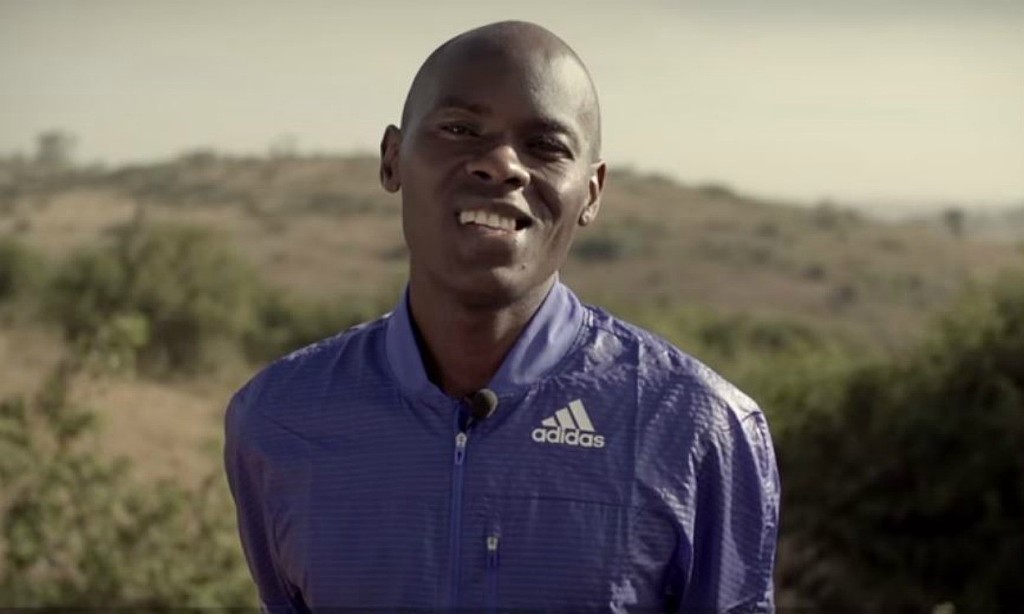
Head coach Patrick Makau is confident that Kenya will dominate World Half Marathon Championships
Head coach Patrick Makau is confident that his team for the World Half Marathon Championships due Saturday in Gdynia, Poland will win both the team and individual titles.
Makau, who won silver medals at the 2007 Udine and 2008 Rio de Janeiro editions, said he is aware of stiff competition and the adverse weather that awaits them in Poland.
Makau said defending champion Geoffrey Kamworor might be missing in action but reckons that the selected team led by Ras Al Khaimah (RAK) and Prague Half Marathon champion Kibiwott Kandie and 2017 World Cross Country Championships silver medallist Leonard Barsoton is equal to the task.
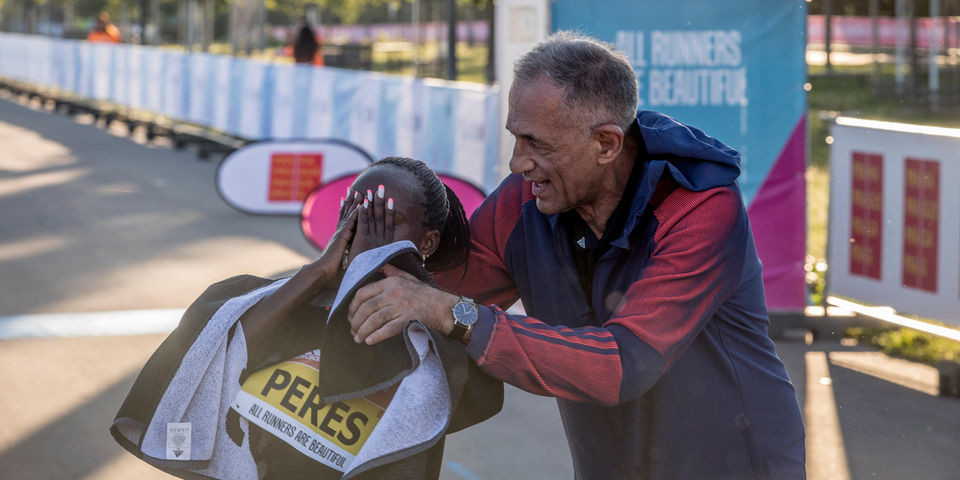
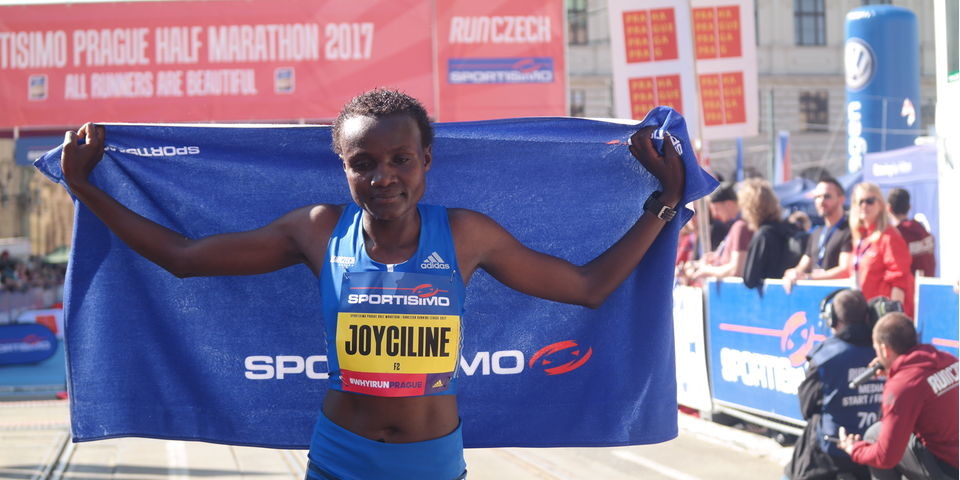
Makau, a former world marathon record holder, indicated that the women’s team is the finest ever with on form 2016 world half champion Peres Jepchirchir back in the team and Joycilline Jepkosgei out to make amends after settling for silver in Valencia 2018.
“This is a strong team and I can tell you the athletes are focused on the task ahead. They are determined to deliver,” said Makau.
Kamworor sealed his third consecutive title when he won in Valencia in 2018 in 1:00:02 as compatriots Barsaton, Barselius Kipyego and Jorum Okombo finished 12th, 15th and 18th. Alex Oloitiptip failed to finish the race.
Jepkosgei and Pauline Kaveke failed the test, settling for silver and bronze in Valencia as Netsanet Gudeta claimed victory not only in championship record but also in women’s only world record time of 1:06:11.
Kenya would also lose the team titles to Ethiopia.
“Kandie posted a world lead in half marathon with victory in 58:38 in Prague, Czech in September. This goes without saying that he will be the man to watch. We shall really bank on Barsaton’s experience,” Makau said adding that Bernard Kipkorir (59:07), Bernard Kimeli (59:07) and Morris Munene (59:22) also look strong by virtue of having good times.
Makau noted that even though the women’s team will be under pressure to deliver with the defending champion coming from Ethiopia, having Jepchirchir, who is fresh from setting a new women’s only world record in Prague with a time of 1:05:34, is a major boost.
“Peres is back and looks stronger after maternity leave and is eager to reclaim her title. One can easily see the hunger in Joyciline that she is ready to upgrade her silver to something better this time around,” said Makau. “They are ready to neutralise the weather and any challenge posed.”
by Ayumba Ayodi
Login to leave a comment

World Half Marathon Championships
The Chinese city of Yangzhou will host the 2022 World Athletics Half Marathon Championships. China, one of the fastest-growing markets in road running, had 24 World Athletics Label road races in 2019, more than any other country. It hosted the World Half Marathon Championships in 2010 in Nanning and will stage the World Athletics Indoor Championships in Nanjing in 2021. ...
more...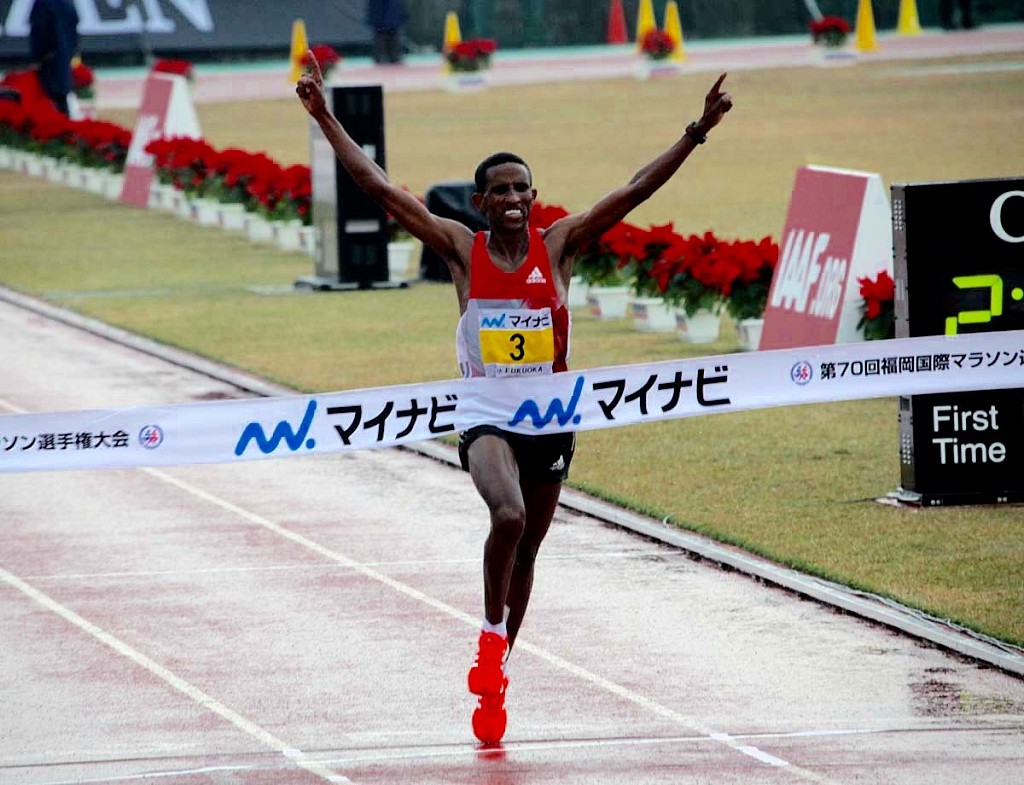
Yemane Tsegay of Ethiopia returns to regain the title he won in 2016 at the 72nd Fukuoka Marathon
Login to leave a comment
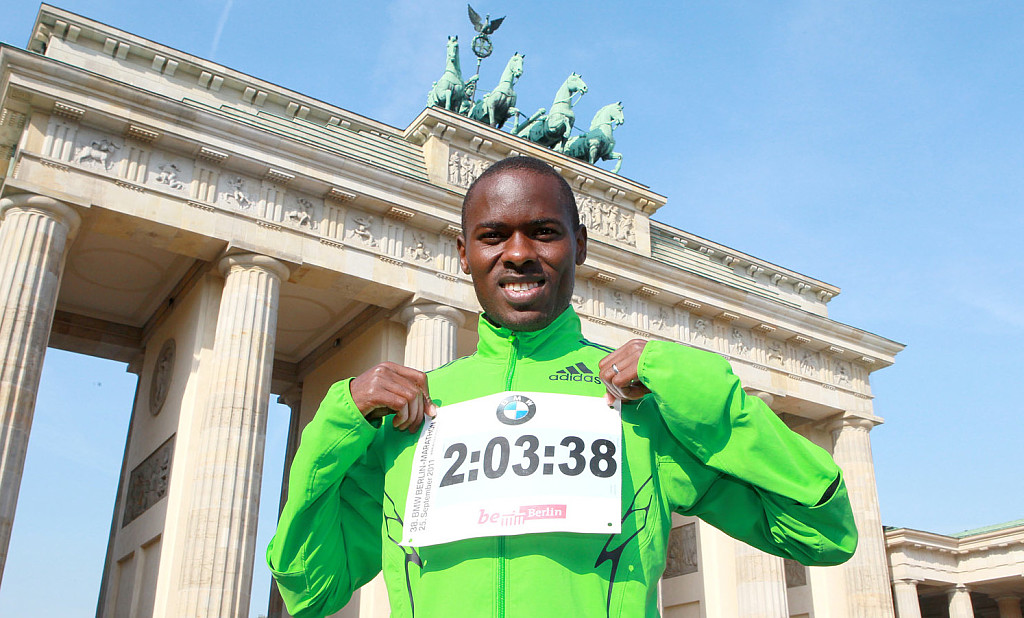
Former marathon world record holder Patrick Makau of Kenya has announced his retirement from professional running
Login to leave a comment
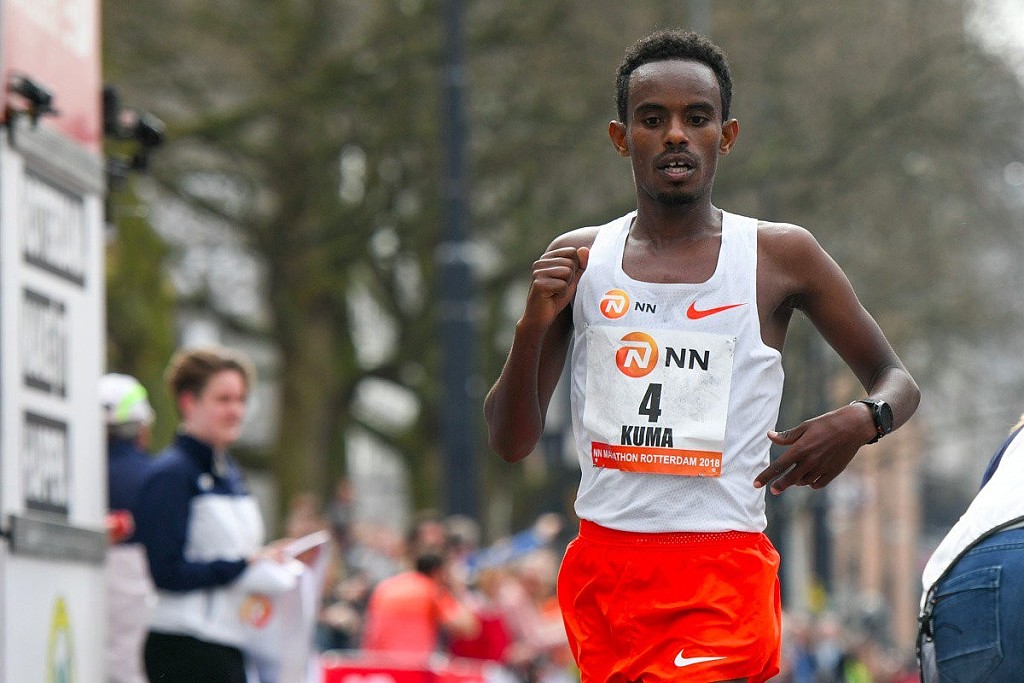
Abera Kuma of Ethiopia wants to break the world record at BMW berlin marathon
Login to leave a comment
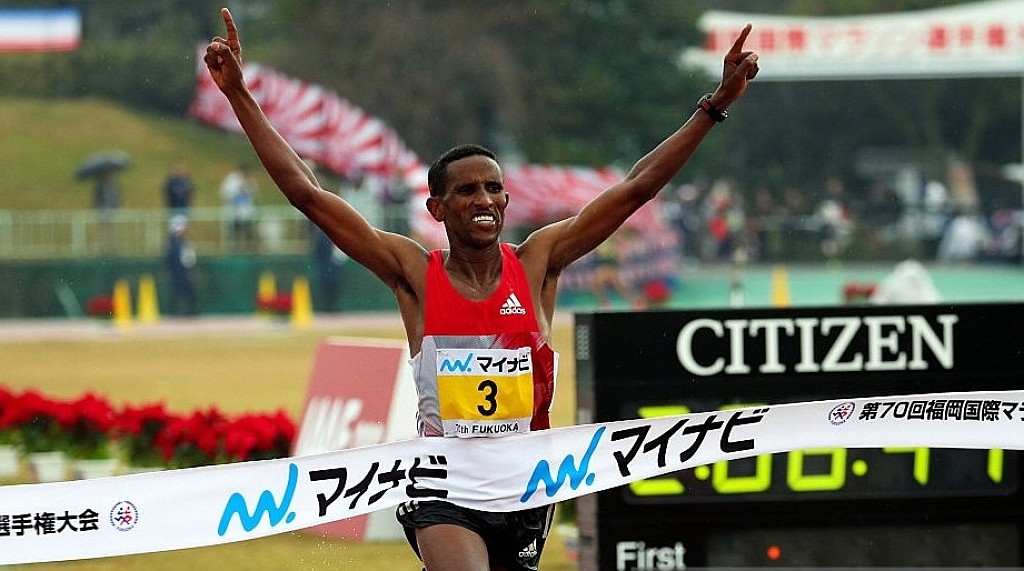
Tsegaye ready to defend his title
Login to leave a comment
