

Running News Daily
Running News Daily is edited by Bob Anderson and team. Send your news items to bob@mybestruns.com Advertising opportunities available.
Index to Daily Posts · Sign Up For Updates · Run The World Feed



Paul Chelimo is set to make marathon debut at Olympic Trials
Paul Chelimo, an Olympic 5000m silver and bronze medalist, will make his marathon debut at the U.S. Olympic Trials on Feb. 3 in Orlando.
“Ever since I was a kid, I dreamed of running a marathon… The day has come- this is it!” was posted on his social media Friday.
Chelimo, 33, qualified for the marathon trials by running a 1:02:22 half marathon last April 2, safely quicker than the 1:03:00 minimum to get into the field.
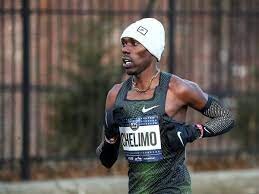
He didn’t publicly commit to racing the marathon trials until now. He could still contest the track trials in June.
“Let’s start by Orlando... then we will see!” Chelimo’s agent wrote in an email when asked about track trials.
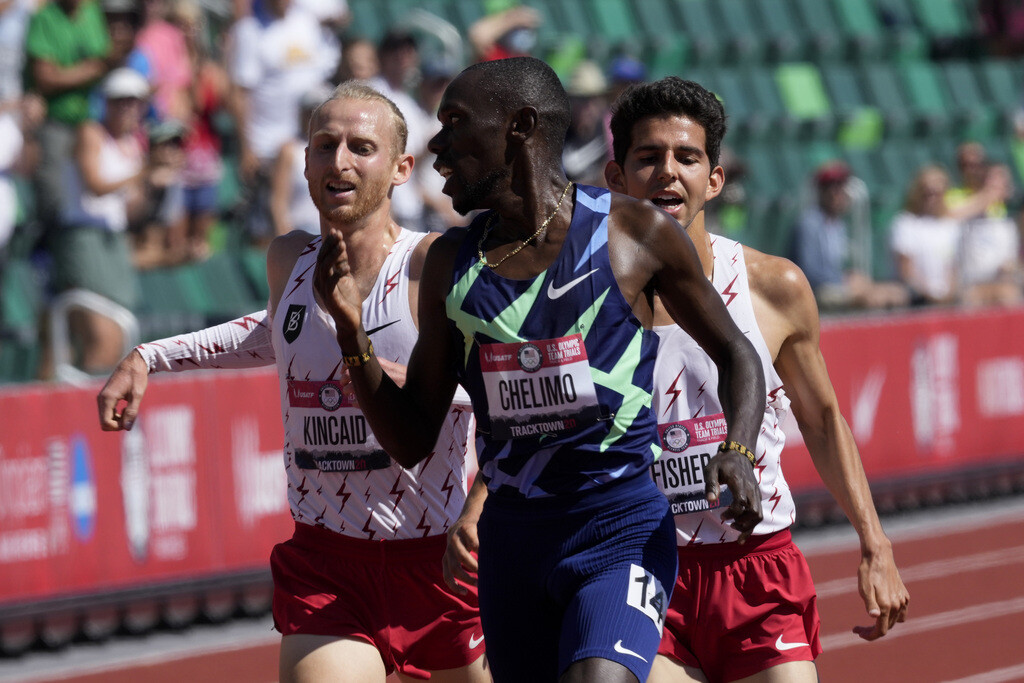
At marathon trials, the top three finishers on Feb. 3 are likely to make up the team for Paris. Since Chelimo has never raced a marathon, he also must run 2:11:30 or faster to hit a minimum qualifying time for Olympic eligibility.
Chelimo made five of the last six Olympic or world outdoor championships teams on the track in the 5000m. He won Olympic silver in 2016 and bronze in 2021, the latter being the lone U.S. men’s distance medal at the Tokyo Games.
Now, he joins a recent list of American global track medalists to move up to the marathon after Kara Goucher (2007 World 10,000m silver), Shalane Flanagan (2008 Olympic 10,000m silver), Galen Rupp (2012 Olympic 10,000m silver) and Bernard Lagat (world 5000m medals in 2007, 2009 and 2011).
Jenny Simpson, a world champion and Olympic bronze medalist at 1500m, also plans to make her marathon debut at the Feb. 3 trials.
Rupp made the 2016 Olympic marathon team in his debut at the distance at those trials. Molly Seidel did the same for the Tokyo Games. Each won a bronze medal in their first Olympic marathon.
Rupp, eyeing a fifth Olympics, headlines the men’s trials field along with Conner Mantz, the fastest American marathoner in 2022 and 2023 going for his first Games.
(01/27/2024) ⚡AMPby Olympic Talk

2028 US Olympic Trials Marathon
Most countries around the world use a selection committee to choose their Olympic Team Members, but not the USA. Prior to 1968, a series of races were used to select the USA Olympic Marathon team, but beginning in 1968 the format was changed to a single race on a single day with the top three finishers selected to be part...
more...
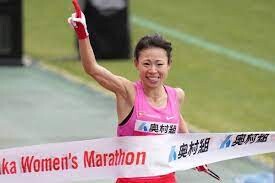
Japan´s Mizuki Matsuda is aiming to become the first four-time winner at the Osaka Women’s Marathon
Course record-holder Mizuki Matsuda is aiming to become the first four-time winner at the Osaka Women’s Marathon, but the Japanese runner will face stiff opposition at the World Athletics Platinum Label road race on Sunday (28).
Matsuda is one of three women to have won in Osaka three times, her latest victory coming just two years ago in a PB and course record of 2:20:52. Her last race was five months ago at the World Championships in Budapest, where she finished 13th.
She didn’t compete at the Marathon Grand Championships in October, Japan’s main selection race for the Olympic Games. But the top-placed Japanese runner in Osaka could potentially bump off the provisional third team member, Ai Hosoda, if they run faster than 2:21:42 – Hosoda’s best clocking within the qualifying window. The Nagoya Marathon in March will be the final opportunity for Japanese runners to claim an Olympic berth.
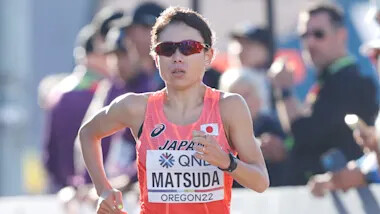
Matsuda’s motivation will be high, but she’ll face three formidable opponents from overseas.
Workenesh Edesa is the fastest in the field, boasting a PB of 2:18:51 from the 2022 Berlin Marathon. She has finished on the podium in 10 of her 15 career marathons, and she has bettered 2:21 in her past four races over the classic distance. Last year she won in Prague, then went on to clock 2:19:40 in Berlin.
Uganda’s Stella Chesang could be something of an underdog. The 2018 Commonwealth 10,000m champion has only contested one marathon to date, but she clocked a national record of 2:20:23 to finish third in Hamburg.
Edesa’s fellow Ethiopian Meseret Gola will also be highly motivated on Sunday, having finished second last year. In fact, she has finished runner-up in six of her 10 most recent marathons – including at the 2022 Seville Marathon, where she set her PB of 2:20:50 – so will be keen to claim the top spot of the podium.
Matsuda won’t be the only Japanese runner vying for a last-minute call-up to the Olympic team. Sayaka Sato represented Japan at last year’s World Championships in Budapest, following a 2:22:13 PB run in Berlin in 2022. Honami Maeda won the Marathon Grand Championships ahead of the Tokyo Olympics but finished seventh at the latest edition in October. Natsumi Matsushita, meanwhile, finished fifth in that race and will be hopeful of showing improved form on Sunday.
Leading elite entries
Workenesh Edesa (ETH) 2:18:51
Stella Chesang (UGA) 2:20:23
Sisay Meseret Gola (ETH) 2:20:50
Mizuki Matsuda (JPN) 2:20:52
Sayaka Sato (JPN) 2:22:13
Honami Maeda (JPN) 2:22:32
Natsumi Matsushita (JPN) 2:23:05
Rie Kawauchi (JPN) 2:25:35
Ayano Ikemitsu (JPN) 2:26:07
Yuna Daito (JPN) 2:26:09
Daeun Jeong (KOR) 2:28:32
Kaena Takeyama (JPN) 2:29:20
Militsa Mircheva (BUL) 2:29:23
(01/27/2024) ⚡AMPby World Athletics

Osaka International Womens Marathon
The Osaka International Ladies Marathon is an annual marathon road race for women over the classic distance of 42.195 kilometres which is held on the 4th or 5th Sunday of January in the city of Osaka, Japan, and hosted by Japan Association of Athletics Federations, Kansai Telecasting Corporation, the Sankei Shimbun, Sankei Sports, Radio Osaka and Osaka City. The first...
more...
Could Sound Therapy Improve Your Athletic Performance?
You might listen to pump-up music while running to help you churn out the miles. But tuning into another form of sound could offer the opposite effect. Sound therapy—also known as sound baths or sound healing sessions—work to bring you into a state of calm and relieve stress. Sound baths aren’t just for savasana in yoga class, either, as the acoustic notes can offer benefits for athletes.
Here’s everything you need to know about sound therapy and how it can help your mindset and your recovery
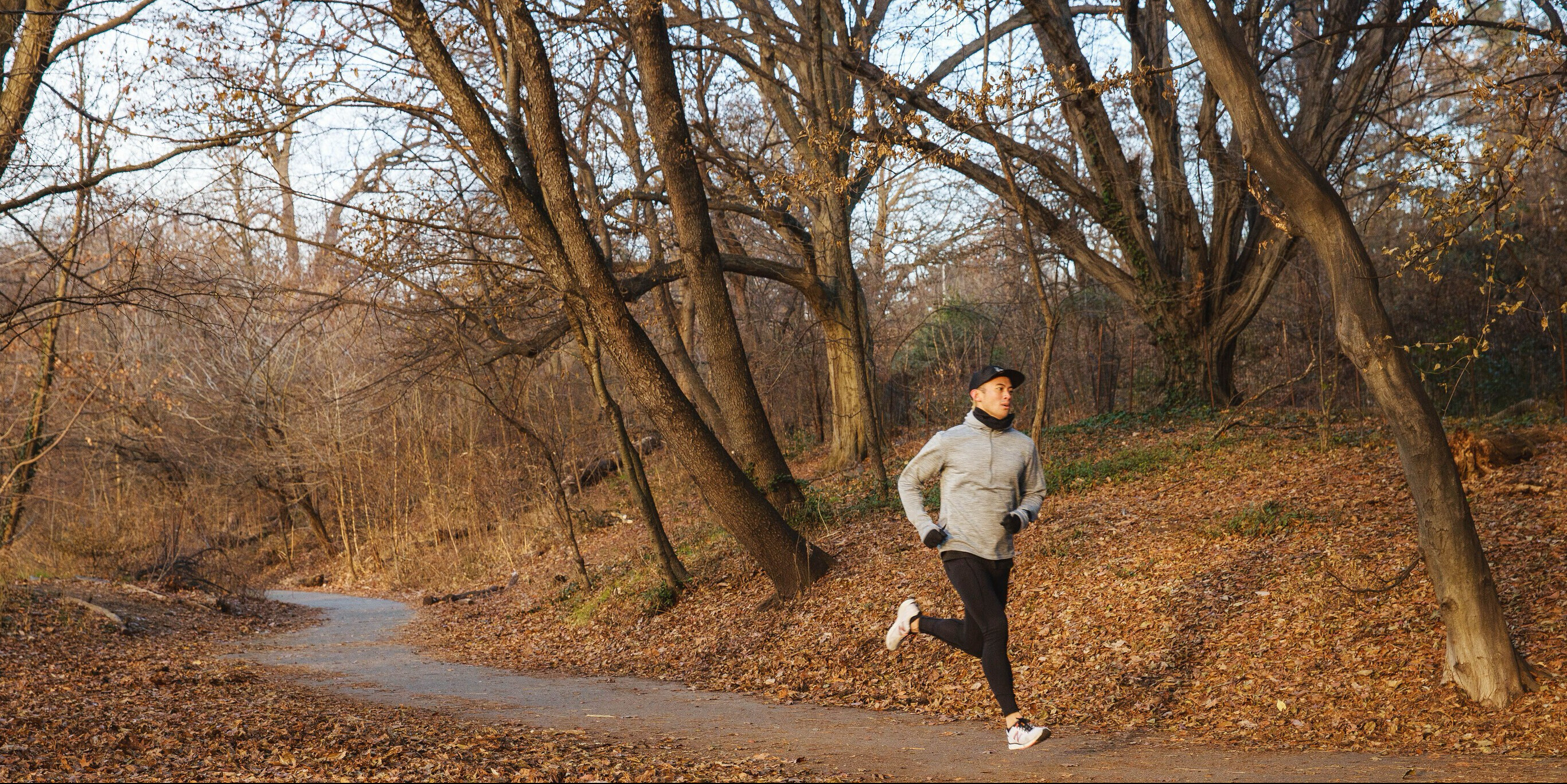
What is sound therapy?
While sound therapy in Western medicine is a newer practice, it’s grounded in a very long tradition. “Sound therapy is the practice of not only auditory, but also vibratory inputs to influence physiology,” says Nathan R. Handley, M.D. medical oncology and integrative medicine doctor at Jefferson Health in Philadelphia. Think of sounds like crystal bowls, chimes, light drumming, or gongs, all emitting different frequencies and working to create a relaxed mind and body experience.
Some Eastern philosophies hold that the universe arose from sound—like the “om” chanting sound. “One of the principles with Eastern medicine is that when someone is sick they can be nourished by the correct sound,” Handley says, because the specific vibrations help to bring the body back into a healthy state. Eastern medicine traditions have a deep appreciation of the mind-body connection, and an awareness that sound can quiet the mind and reduce stress, Handley explains.
Handley uses vibro acoustic therapy in his medical practice, which is the combination of audible sound and vibration to decrease stress and promote relaxation. Transducers—which emit vibrations—can also be embedded in soft furniture so that the healing is felt as well as heard, Handley adds. “Sound therapy is really interesting because in one form or another, it has really been part of traditional healing culture for thousands of years,” he says.
The premise of sound therapy is simple: Certain sounds are naturally meant to bring you into a state of calm, relaxation, and healing. “Sound is energy. Specific vibrations carry different energy. In Eastern medicine, different parts of the body are associated with specific energies, frequencies, and vibrations. Sound, then, is a vibrational force that can influence (and ideally harmonize) these energies,” Handley says.
What are the benefits of sound therapy?
1. Stress Relief and Improved Mood
Listening to relaxing, repetitive sounds can help your body calm down, relax, and relieve tension, and can help you focus on the present moment, says Michelle DiBlasi, D.O., chief of inpatient psychiatry at Tufts Medical Center in Boston.
In fact, research published in the Journal of Evidence-Based and Complementary Alternative Medicine in 2017 backs up the benefits of sound therapy for mood and stress. The study, which involved 62 men and women with an average age of about 50, found that following a Tibetan singing bowl meditation, participants reported reduced feelings of tension, anger, fatigue, and depressed mood.
DiBlasi explains that sound therapy may work to reduce stress and boost mood potentially by stimulating the vagal nerve. The vagal nerve carries signals between the brain, heart, and digestive system, and is responsible for triggering a parasympathetic response, or our “rest and digest” state. When we’re in a parasympathetic state, we experience a lower heart rate and relaxed breathing, which in turn, helps the mind relax, Diblasi explains.
2. Better Sleep Quality
You’re probably aware that a restful night’s sleep is important to feeling your best, and helping you perform better as a runner. It’s easy to fall into patterns that disrupt sleep quality, like scrolling on phones or watching TV before bed. But there’s promising research that sound therapy can help with sleep.
This is especially true for a particular kind of sound therapy known as binaural beats. The Sleep Foundation defines binaural beats as an auditory phenomenon that occurs when listening to two different frequencies at once. “The strategy with binaural beats is to create the perception of a specific frequency by presenting two slightly different frequencies to each ear,” Handley says.
These frequencies then influence your brain waves frequencies, which can lead to different effects, Handley explains. For example, “delta waves are associated with deep sleep; theta waves are associated with light sleep or deep relaxation; alpha waves are associated with a relaxed state, when the brain isn’t focused on anything in particular; beta waves occur during periods of alertness and engagement; and gamma waves are associated with learning, problem solving, and high-level cognition,” he says. Binaural beats tap into the frequencies of these brain waves (often delta waves) to help you find calm and sleep better.
A pilot study published in Digital Health in 2022, examining the sleep of 20 healthy participants, found that the practice of listening to 90 minutes of delta binaural beats had a positive effect on sleep quality, as shown by markers like the number of awakenings and sleep duration. Participants also reported increased sleep satisfaction after one week of listening to the binaural beats, as well as reduced anxiety and anger.
While there are a host of remedies on the market advertised to help you sleep, a good alternative to pill therapy might just be sound therapy. “I think anything like this where you’re doing something that’s relaxing your mind and body certainly gets you ready for sleep,” Diblasi says. “It’s a great exercise to do before bed.”
3. Pain Management and Recovery
“Sound baths and sound therapy are helpful for athletes because they can lead to the relaxation response which can be helpful for not only recovery, but also performance enhancement,” Handley adds.
Sound meditation can also have a positive impact on perceived levels of pain. According to research published in Journal of Evidence-Based and Complementary Alternative Medicine, participants who listened to singing bowls experienced a reduction in pain and tension after the therapy.
While the exact mechanism for this is unclear, researchers found that for many participants, mood improved while listening to the sound therapy, which could account for physiological changes in the body. In other words, when your mind relaxes, your body might follow suit.
4. Increased Heart Rate Variability
“There is increasing evidence that sound therapy can enhance heart rate variability (HRV),” Handley says. HRV is the variation in the intervals between heart beats and can signal your adaptability. A higher HRV can indicate better cardiovascular health, stress resilience, and enhanced athletic performance, he explains.
“Because HRV indicates increased parasympathetic activation, it is indicative of better recovery and preparedness for intense training sessions,” Handley adds.
A study published in Cureus in 2023, which involved 23 participants, found that the practice of humming—considered a form of sound therapy—increased heart rate variability. The study indicates that humming can create a unique pattern of the heart’s signal, which can potentially lower sympathetic activation (our stressful state) and increase the parasympathetic tone (our relaxed state).
What’s more, the study found that after taking part in the humming exercise, the practice increased breathing quality and consistency through increased HRV and lung function. Researchers found that the effects of humming continued to help even when the individual was not consciously doing the activity.
How to Get Started With Sound Therapy
In order to experience the benefits of sound therapy, DiBlasi recommends listening for 30 to 90 minutes, but if you have less time, it’s still worth a listen. “If you only have 10 minutes before you go to work, or before bedtime, that could still be helpful,” she says.
To get started with sound therapy, these five apps provide a relaxing experience. All you need to do is find a quiet, comfortable place to tune in and chill out.
1. Apple Fitness+ ($10/month or $79/year)
Beginning in 2024, Apple Fitness+ introduced a new meditation theme called Sound. While a trainer will start off the meditations, the five-, 10-, and 20-minute sessions allow you to focus in on calming tones and rhythms, with the help of gongs and singing bowls.
2. Binaural Beats App ($3/month)
This app is exclusively designed to offer binaural beats, which you should listen to with headphones to experience the different frequencies in each ear. The app allows you to select your focus, like sleep or stress relief.
3. Calm App (Sound Baths) ($14/month)
Users can select their focus from within the sound bath categories, including sleep, meditation, work, wisdom, and even sounds baths meant for children.
4. The Sound Bath App ($10/month)
Choose from various sound baths based on your mood and your needs. The app includes a library of more 100 options, plus eight-hour evening baths to last you through a good night’s sleep. Plus, you can tune into twice-weekly live-stream sessions, which also feature live chats with facilitators.
5. Third Ear (free for limited use or up to $10/month)
You can choose to listen to different sounds like gongs, bowls, chimes, mantras, or binaural beats. Free sound baths range from three to five minutes, while full use of the app offers 30- to 50-minute sessions.
(01/27/2024) ⚡AMP

What Blood Testing Data Reveals About Runners' Health
I used to think running was a panacea. "If the furnace is hot enough, anything will burn, even Big Macs," as the fictional miler Quenton Cassidy once said. Then, about a decade ago, there was a big surge of doubt about the health effects of running. Most prominent was the suggestion that even modest amounts of running might damage your heart-"One Running Shoe in the Grave," as the Wall Street Journal put it-but running was also accused of broader sins like promoting inflammation, causing muscle loss, and wreaking havoc on blood sugar levels.
As a runner and a journalist, I spent a lot of time trying to understand these claims, and reevaluating my own understanding of running's health effects-a process that continues to this day. Part of that process involved going back to the original research that led us to believe that running is healthy. And to be honest, the evidence wasn't as clear as I'd assumed. Does running (or aerobic exercise more generally) really improve health markers, or is it just that healthy people are more likely to choose to run? Do the benefits max out after a few minutes per day, or do they keep growing? Can you outrun a bad diet?
I have opinions about all these questions, but I no longer assume that the answers are obvious. So I'm always interested in new data, like a recent study in PLoS ONE from the science team at InsideTracker, a company that sells personalized blood testing to track various health biomarkers. The paper offers a peek at the aggregated results of more than 23,000 customers who report various levels of running, divided into three groups: low volume (less than three hours of running per week), medium volume (three to ten hours per week), and high volume (more than ten hours per week). For comparison, they also include results from 4,400 sedentary non-runners, and at the opposite end of the spectrum, 82 professional distance runners.
There are two important caveats to point out before diving into the data. First, this is observational data, not a randomized trial. That makes it hard to determine whether running causes any of the patterns in the data (though, as we'll see below, there are some ways to test our assumptions about causation). Second, this is a self-selected cohort. Even the sedentary group is made up of people who are interested enough in their health that they've decided to spring for a service that starts at $699 for a single battery of blood tests. Since this control group is already fairly healthy, detecting any improvements will be more challenging.
The Raw Data
The journal article (which is free to read online) presents data on 27 different biomarkers that were significantly different between runners and non-runners. I'm just going to pick out a few categories that are particularly interesting.
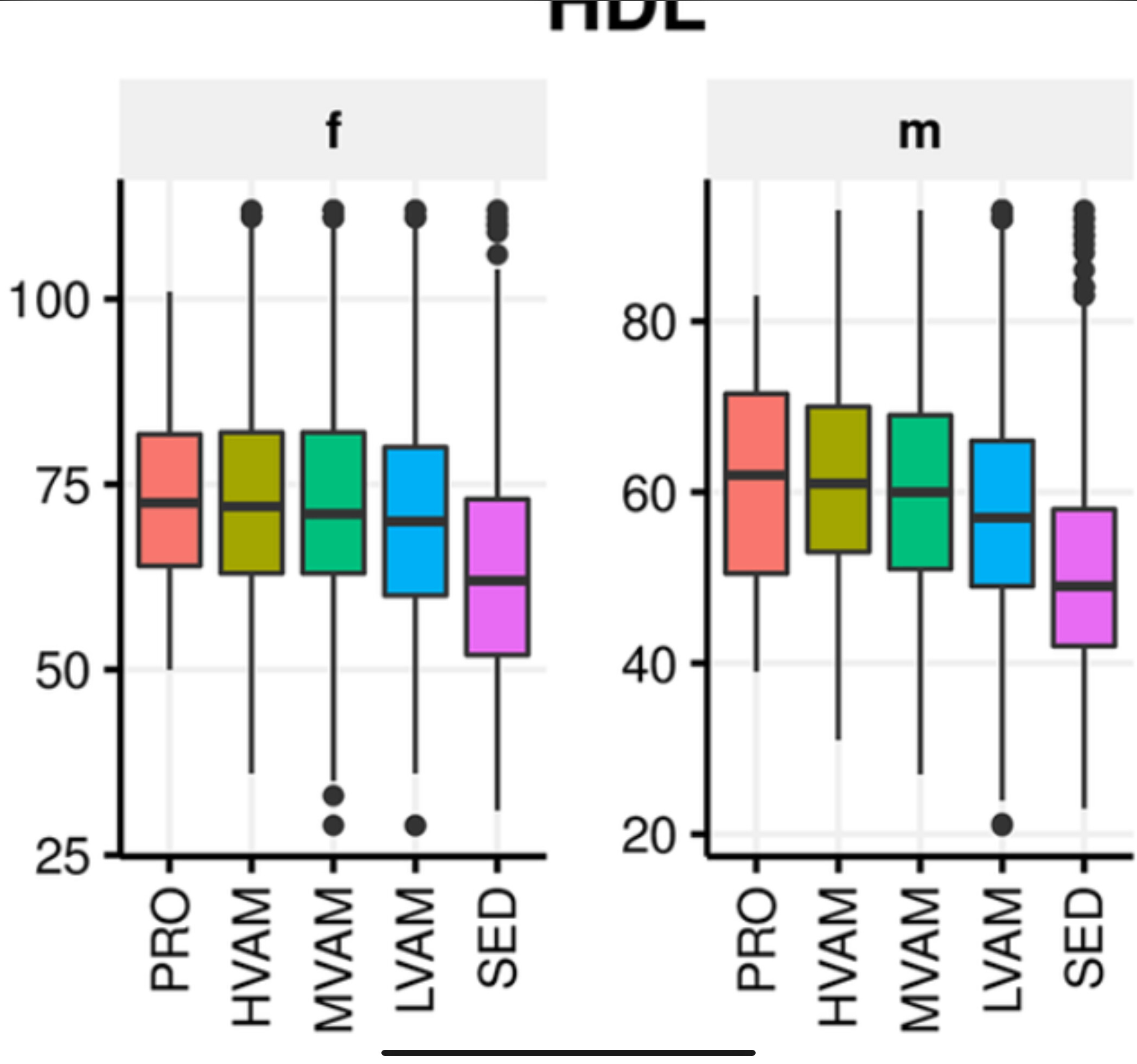
First, here's HDL (i.e. "good") cholesterol levels, for females (f) and males (m) in each of the five groups: pro runners, high-, medium-, and low-volume amateurs (HVAM, MVAM, and LVAM, respectively), and sedentary people.
The biggest difference is between runners and non-runners: runners have clearly higher levels, which is good. And among the runners, the trend is that more running is associated with higher levels. Similar patterns are seen for LDL ("bad") cholesterol and triglycerides: running is good, and more running is better.
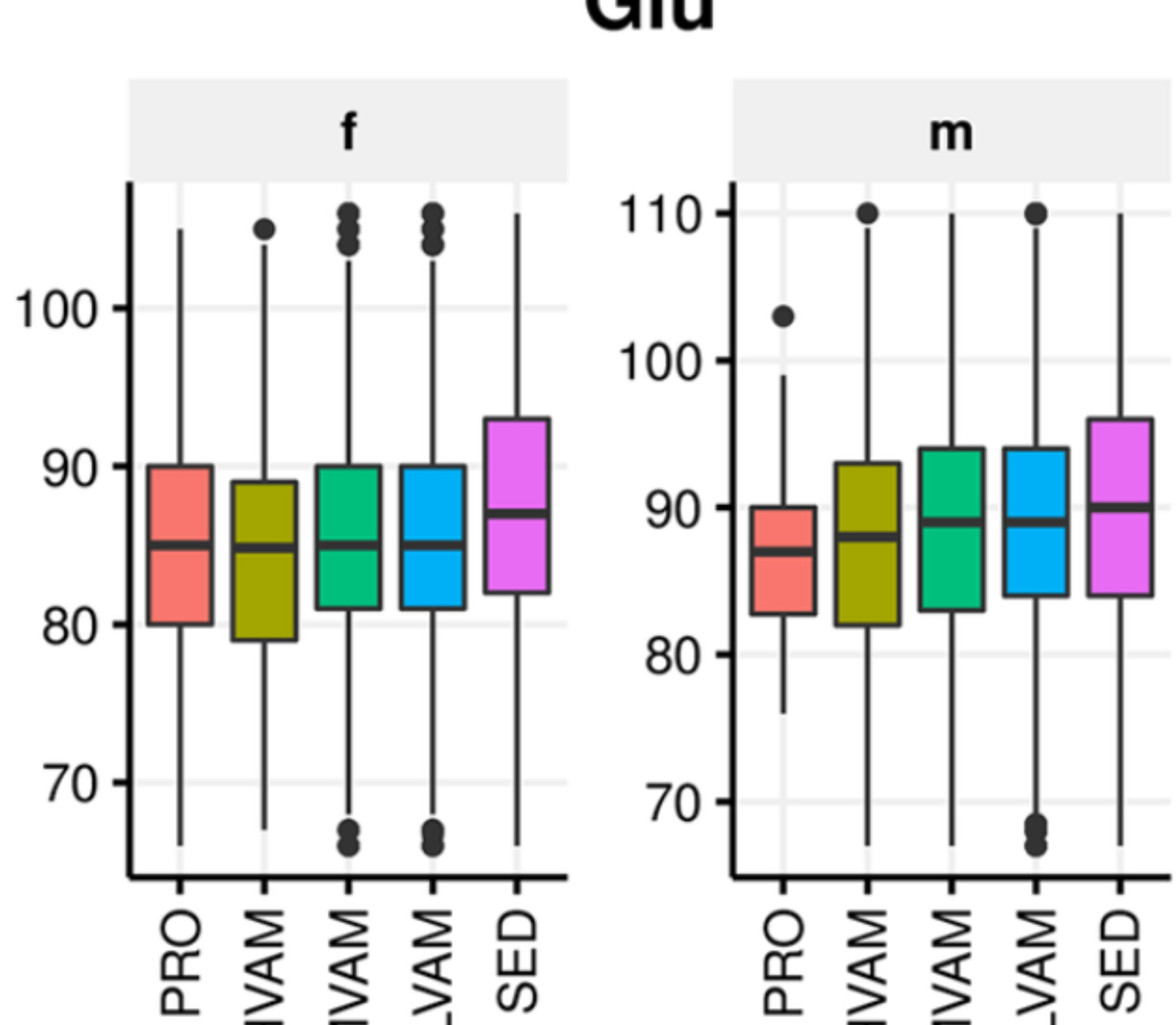
Here are the fasting glucose (i.e. blood sugar) levels:
The pattern here is much less pronounced. There's still a significant difference between runners and non-runners, but the dose-response effect of more mileage is smaller in men and non-existent for women. The same is true when looking at HgbA1c levels, which offer an estimate of long-term average blood sugar levels rather than a single snapshot. In that case, there's a more pronounced difference between runners and non-runners, but no dose-response response effect. For blood sugar, then, running is good but more running isn't necessarily better.
One key point: the sedentary control group has remarkably good blood sugar levels, with an average below the prediabetes cutoff. Given that 98 million Americans have prediabetes, this confirms that the control group is already pretty healthy. If you were to compare runners to the average population, you'd probably see a bigger effect.
Another group of biomarkers is associated with chronic low-grade inflammation. The pattern here is a little more complicated, but data on C-reactive protein, white blood cell count, and ferritin collectively suggest that greater volumes of running are associated with lower levels of inflammation. The fact that ferritin is considered a marker of inflammation was a surprise to me, since I think of it as an indicator of iron levels in endurance athletes. But it turns out ferritin levels can mean different things in different contexts.
For most of the biomarkers, there's a fairly smooth trend from sedentary to pro runners. But there are a few examples where the pro runners are noticeably different from everyone else, even the amateurs who claim they're running more than ten hours a week. Most notably, the pro runners tended to have low magnesium levels-an observation that mirrors earlier data from British Olympic track athletes. The British study also found that athletes with a history of tendon problems were most likely to have low magnesium levels, which suggests that it's something to watch for if you're training hard.
Is It All About BMI?
All the results I mentioned above were statistically adjusted for body-mass index, age, and sex. That's important, because there were significant differences in BMI among the groups. Here's that data:
Now, I look at this graph and think, "Yep, all else being equal, the more you run the less you weigh." This used to strike me as a painfully obvious statement. The current scientific consensus, on the other hand, is that exercise is ineffective for weight loss. And it's true that lots of studies have assigned people to exercise, sometimes quite vigorously, and have seen underwhelming results for weight loss. This is a complex topic whose nuances I'll leave for another day, but suffice to say that the new data agrees with my feeling that, if you're running more than an hour a day, you very likely weigh less than you would if you weren't running.
You can get another level of insight by adding in some of the genetic data that InsideTracker also collects from some of its customers. There are a large number of separate gene variants that are associated with higher BMI; by checking which of these variants a given individual has, the researchers calculated a "polygenic risk score" for obesity. In the sedentary group, those with higher risk scores tended to have higher BMI. Among the high-volume and pro runners, in contrast, that trend was flattened: those with higher risk scores had similar BMI to those with lower scores. Though the sample size was too small to draw definitive conclusions (since relatively few customers opted to get genetic testing), the results suggest that running counteracted the gene variants associated with obesity.
The BMI data raises another important question: are all the other apparent health benefits of running just secondary effects of lower BMI? Here they use a cool technique called Mendelian randomization (which I wrote about in another context earlier this year). It's a way of turning a large observational study into a randomized trial. The randomization occurs at birth: as noted above, some people have gene variants that predispose them to have a higher BMI. These variants are randomly distributed, so if people with the low-BMI versions tend to also have better cholesterol scores (for example) regardless of whether or not they run, it suggests that BMI is what's driving the cholesterol scores.
The results of the Mendelian randomization-again limited by low sample numbers-are somewhere in the middle. It does appear that BMI explains much of the group's difference in cholesterol and inflammation levels, for example-but not all of it. For example, gene variants didn't predict LDL levels, suggesting that it's an independent effect of running.
But the closer you look, the blurrier the line between genes and behavior gets. Some of the genes associated with exercise are also associated with motivation and self-control; people who exercise a lot are also more highly motivated to eat healthily; and so on. We're back to the challenge I mentioned at the top: teasing out the independent health effects of going for a run is really hard. The InsideTracker researchers conclude that "a holistic wellness lifestyle approach is in practice the most likely to be most effective toward preventing cardiometabolic disease." That borders on tautological, but their data adds another small brick to the pile of evidence suggesting that endurance exercise, even or perhaps especially in large quantities, is a useful part of that holistic wellness lifestyle.
(01/27/2024) ⚡AMP

5 things you should know about Steve Prefontaine
Steve “Pre” Prefontaine would have turned 73 on Thursday, and the legendary runner’s enduring legacy and impact on the sport continues. From Coos Bay, Ore., Pre became one of the biggest stars in the sport during his time at the University of Oregon in the 70s, where he held seven American records from the 2,000m to the 10,000m. Here are five facts about the iconic runner, whose achievements and words continue to inspire and resonate.
Trailblazer of distance running
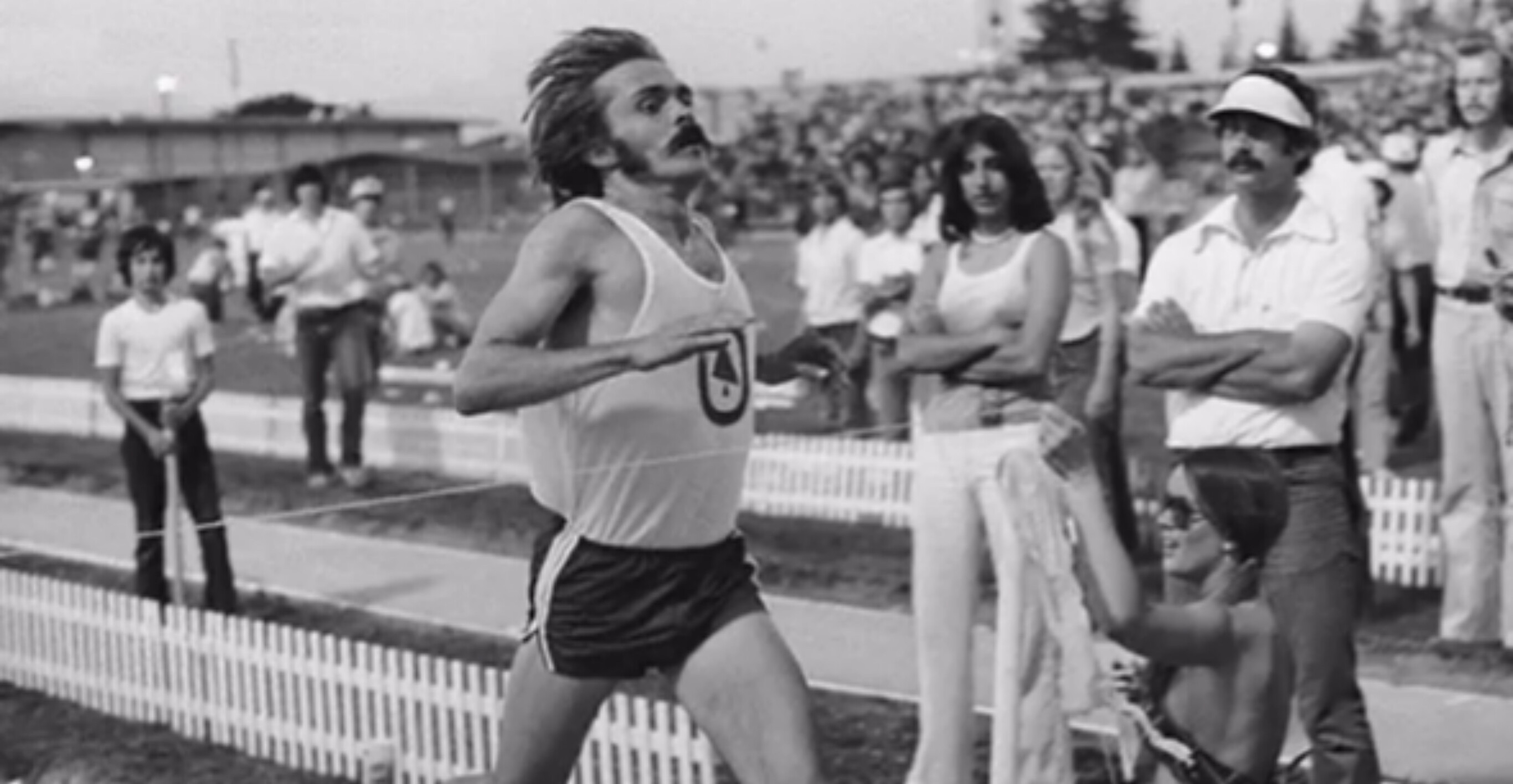
Prefontaine was a pioneer in distance running, known for his fearless approach and unwavering determination. He burst onto the scene in the early 1970s, and his aggressive front-running style and refusal to settle for anything but victory revolutionized distance running in the U.S. and beyond.
Prefontaine’s Olympic journey was tragically cut short when he was 24. He competed in the 1972 Summer Olympics in Munich and was preparing for the 1976 Olympics with the Oregon Track Club when he died in a car accident on May 30, 1975.
Advocate for athletes’ rights
Beyond his achievements on the track, Prefontaine was a vocal advocate for the rights of amateur athletes. He challenged the existing system, governed by the Amateur Athletic Union (AAU) that restricted athletes’ ability to earn money while maintaining their amateur status. Prefontaine defied the AAU by organizing a series of meets with a group of Finnish athletes. One of these meets, held at Marshfield High School in 1975, was where Prefontaine set his last American record.
Legendary duel at the 1972 Munich Olympics
One of Prefontaine’s most memorable moments was the 5,000m race at the 1972 Munich Olympics. In a fierce battle against Finnish runner Lasse Virén, Prefontaine showcased his indomitable spirit, finishing fourth in a race that is often considered one of the greatest duels in Olympic history. The image of Prefontaine pushing himself to the limit serves as a timeless reminder of his competitive fire.
Nike’s first signature athlete
In 1974, Prefontaine signed with Nike for $5,000—as the first runner to sign with the company, he jump-started the brand as a running shoe company. Bill Bowerman, the sports coach at the University of Oregon, also happened to be the co-founder of Nike. In 2022, a pair of Nike Oregon waffle shoes worn by the distance runner were sold for USD $163,800 on the auction site, Sothebys.com.
The Prefontaine Classic
In honor of Pre’s lasting impact on the sport, the annual Prefontaine Classic track and field meet was established in Eugene, Ore. This prestigious event attracts elite athletes from around the world and continues to be a fitting tribute to Pre’s legacy. Hayward Field, where the meet is held, holds a special place in the hearts of runners as the venue where Prefontaine achieved many of his remarkable feats.
Prefontaine is remembered not only for his athletic prowess but also for the passion, courage, and advocacy that defined his life.
(01/27/2024) ⚡AMP

Ugandan middle-distance runner Prisca Chesang given two-year ban for masking agent
On Friday, the Athletics Integrity Unit (AIU) issued a two-year ban for two-time U20 world championship medalist Prisca Chesang of Uganda. Chesang tested positive for the banned diuretic and masking agent furosemide.
Chesang’s positive test came out-of-competition, at a training camp in Kapchorwa, Uganda, on Sept. 14. She was in Kapchorwa preparing for the women’s mile at the 2023 World Road Running Championships in Riga, Latvia, where she placed 18th overall, on Oct. 1.
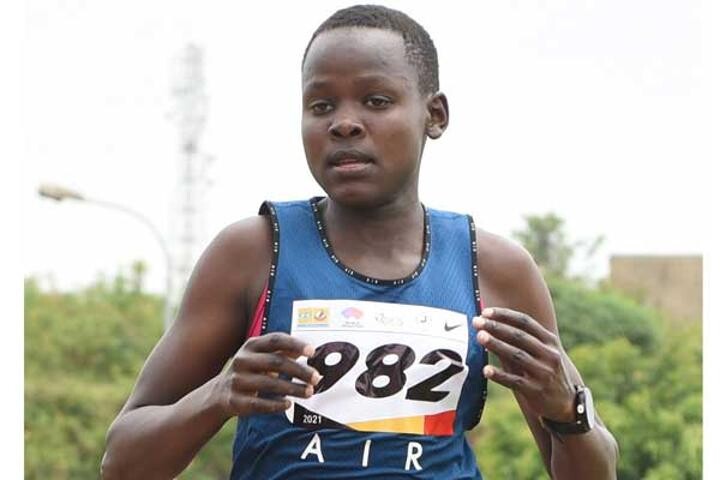
The 20-year-old is a two-time world U20 medalist in the women’s 5,000m, winning bronze at both the 2021 and 2022 U20 championships. According to the AIU, they did not discover any evidence that Chesang’s actions were intentional and therefore she was only given a two-year ban instead of four years. Chesang admitted to the Anti-Doping Rule Violation (ADRV); her result from the 2023 World Road Running Championships will be disqualified, and she will serve a two-year ban, until Dec. 6, 2025.
Furosemide is a diuretic, meaning it increases urine production, eliminating excess water and salt from the body. (It is also used for losing weight.) Furosemide also serves as a masking agent for other performance-enhancing substances that leave the body through urination, and therefore show up in a urine test. The drug has been prohibited by the World Anti-Doping Agency (WADA) for decades.
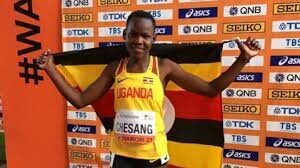
Chesang is one of Uganda’s top up-and-coming distance runners and represented the East African nation at the 2020 Tokyo Olympics in the women’s 5,000m (but failed to advance from the heats). Her top senior championship finish was a seventh-place result at the 2023 World XC Championships in Bathurst, Australia, helping Uganda’s women’s team win bronze.
Chesang is only the second female Ugandan runner to be suspended by the AIU. The country’s first came in Nov. 2023, when Janat Chemusto was given a four-year ban for the use of a prohibited substance.
(01/26/2024) ⚡AMPby Marley Dickinson

Lindsay Flanagan And Her Younger Sister Kaylee Are Both Racing The Marathon Trials
In the past 20 months, veteran marathoner Lindsay Flanagan has cut her personal best by 2 minutes, twice. She won the 2022 Gold Coast Marathon in Australia in a course record of 2:24:43. In August, her 2:27:47 run placed her ninth overall, and first American, at the World Championships marathon in Budapest.
But one of her proudest moments came in the wee hours of December 3. Huddled over her phone in Adelaide, Australia—where she’d traveled for a few months to prepare for the upcoming Olympic Marathon Trials—Flanagan repeatedly refreshed the results of the California International Marathon.
Not long after 4 a.m. Lindsay’s time, her younger sister, Kaylee, crossed the finish line in 2:35:24—a nearly five-minute PR and her first Trials qualifying time. “I did not sleep at all that night,” Lindsay said. As both Kaylee’s sibling and her coach, “I was so invested.”
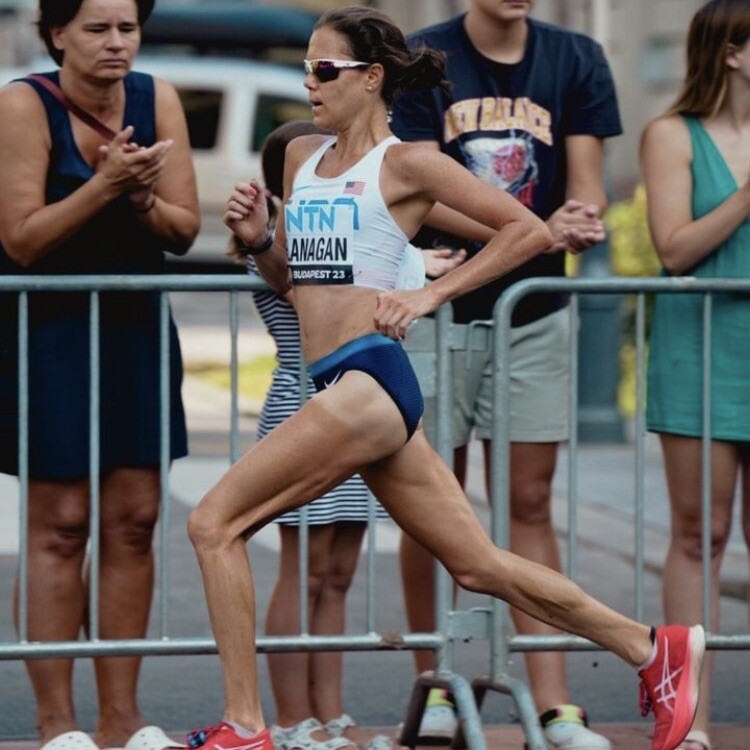
After promising high school running careers in Illinois, both Flanagans (no relation to Shalane) ran at the University of Washington, overlapping for a year. Now, they live across the street from each other in Boulder, Colorado, where they typically share miles at least once if not twice daily. Kaylee cheered Lindsay on in Budapest; afterward, they vacationed in Croatia.
They’ve spent the past few months, uncharacteristically, half a world apart, though Kaylee frequently pops by Lindsay’s house to water plants and make sure the pipes don’t freeze. But they’re reuniting in Florida, lining up together at the Trials.
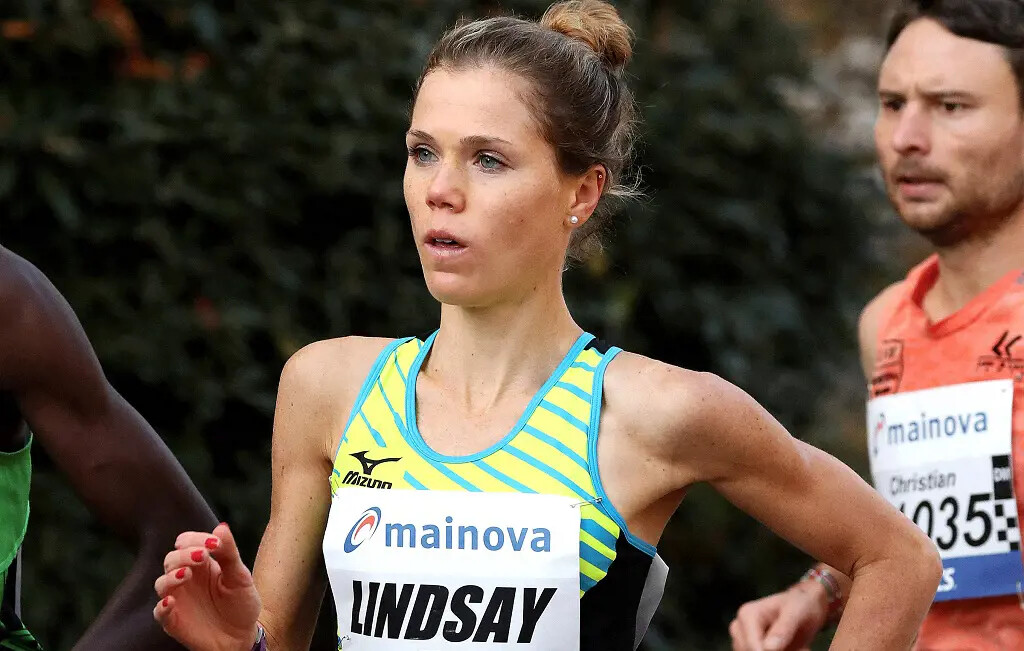
The Flanagans aren’t the only siblings competing in Orlando on February 3; the field also includes brother and sister Kaylee and Austin Bogina and twins Isabel and Monica Hebner. But they’re unique in also being athlete and coach—Lindsay has guided Kaylee’s training for about two years.
And in her third Trials, Lindsay stands out as a top, if under-the-radar, pick to make the U.S. Team.
The Asics-sponsored runner, 33, does most of her workouts alone. Her coach is remote, and she has no training group or partner capturing evidence for Instagram. Yet out of the limelight, Lindsay has spent nearly a decade preparing for a moment just like this one. “Every workout, every season, every race cycle has been meticulously chosen,” Kaylee, 28, said of her sister. “Trust me, she will be one to watch out for in Orlando.”
A steady ascent
As close as they are, the two sisters forged different paths from college to the Trials. Lindsay made her marathon debut the January after graduating. At the 2015 Houston Marathon, she ran 2:33:12, good for ninth place and a slot in the 2016 Trials. On a hot day in Los Angeles the following February, she paused to vomit around the 21-mile mark, then finished 14th in 2:39:42.
Through 20-some marathons since—so many she’s lost count—she’s gradually, if quietly, established herself. Her next breakthrough came at the 2016 Frankfurt Marathon, where she finished fourth in 2:29:28. She notched top-10 finishes in Boston and Chicago in 2019, and headed into the 2020 Trials ranked 12th. That’s exactly where she finished, running 2:32:05.
Post-pandemic, she was coaching herself but seeking mentorship. Her agent connected her with Benita Willis, a four-time Olympian for Australia and gold medalist at the 2004 World Cross Country Championships. After an hour-long conversation, Lindsay realized she wanted Willis to fully take the reins of her training.
The pair became fast friends, and under Willis’s guidance, Lindsay is now even faster. She first lowered her personal best to 2:26:54 in April 2022 at the Paris Marathon. Next, Willis suggested Lindsay make her first Australian trip to run Gold Coast in July.
The race would give the pair the chance to meet in person for the first time, and with her victory, Lindsay had an opportunity that her coach, a 2:22:36 marathoner, had missed. “I ran big races, but I never won a marathon or broke a course record,” Willis said. “I wanted Lindsay to have that sort of experience well before the Olympic Trials.”
(01/26/2024) ⚡AMPby Cindy Kuzma
2028 US Olympic Trials Marathon
Most countries around the world use a selection committee to choose their Olympic Team Members, but not the USA. Prior to 1968, a series of races were used to select the USA Olympic Marathon team, but beginning in 1968 the format was changed to a single race on a single day with the top three finishers selected to be part...
more...
Little-known Emmanuel Kiprop set sights on Paris Olympics
Emmanuel Kiprop is ready to go for everything including the Olympic Games after a great start to his 2024 season.
Emmanuel Kiprop will be keen to make an impression this season as he eyes the crème de la crème of events lined up for 2024.
The 24-year-old donned the Team Kenya jersey for the first time during the 2023 World Cross-country Championships held in Bathurst, Australia, and finished 19th in the senior men’s race.
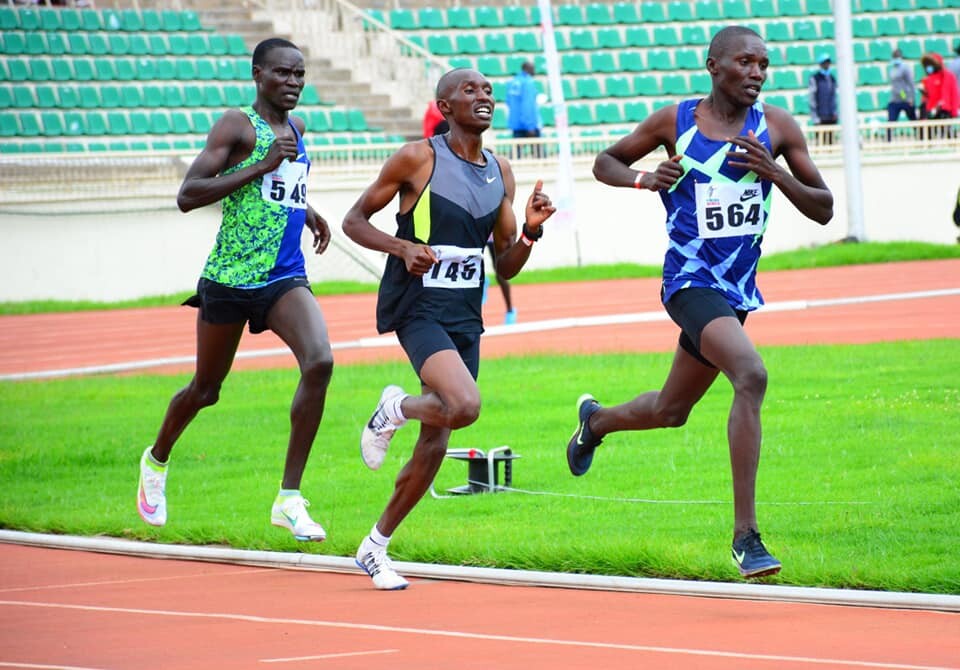
Last season, he also tried making an impact at the World Championships national trials but finished outside of the cut-off point in both the 5000m and 10,000m.
He opened his 2024 season at the second Athletics Kenya meet held at the Ulinzi Sports Complex in Lang'ata where he won the 1500m in style.
“The race was a bit challenging because that was my first time running the 1500m…I was trying to build on my speed.
"My target is to represent the country at the All-African Games and even the Olympic Games. Last year I competed at the World Cross-country Championships and that was like an eye opener for me,” Kiprop told Pulse Sports.
Going forward, the long-distance runner explained that he will work on his speed and endurance as he eyes the breakthrough. He noted that he will mostly focus on the 5000m since that is where he has more strength.
“I want to work on my speed that’s why I want to run more 1500m and 800m races to work on my speed. The 5000m is where I have capabilities and that’s where I will channel my energy to,” he added.
(01/26/2024) ⚡AMPby Abigael Wuafula

Paris 2024 Olympic Games
For this historic event, the City of Light is thinking big! Visitors will be able to watch events at top sporting venues in Paris and the Paris region, as well as at emblematic monuments in the capital visited by several millions of tourists each year. The promise of exceptional moments to experience in an exceptional setting! A great way to...
more...
2017 Valencia Marathon champion to compete in first marathon after doping ban
The 2017 Valencia Marathon champion will be keen to make a comeback to winning ways this year after successfully serving his doping ban.
An estimated 13,000 runners from more than 70 countries have been confirmed for the Marrakech International Marathon (MIM), scheduled for Sunday, January 28.
Sammy Kitwara, a former World Half Marathon Championships bronze medalist will bid to make an impression in his first marathon after concluding his doping ban.
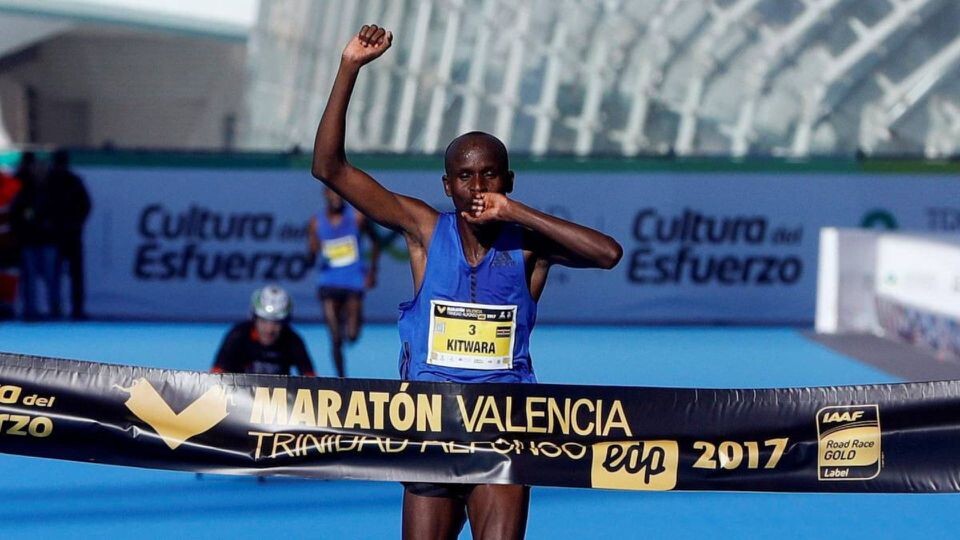
The 2017 Valencia Marathon champion was banned by the Athletics Integrity Unit (AIU) back in 2019 for the presence of Nanning Terbutaline, a drug used as a "reliever" inhaler in the management of asthma symptoms.
His positive test came from the Seul International Marathon in March 2019 where he took seventh place with 2:09:52. Kitwara said he took the drug without knowing it was banned by WADA. He had also failed to consult with a doctor to obtain a therapeutic use exemption (TUE).
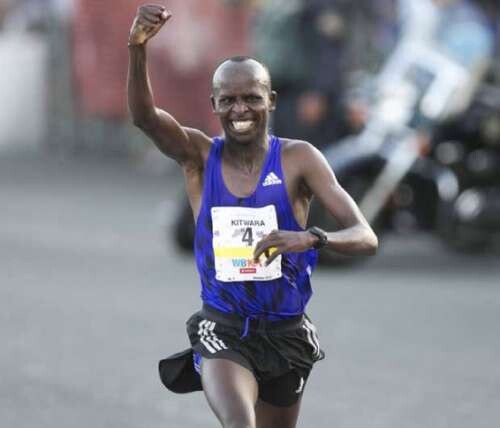
Kitwara will be joined by compatriot Nicholas Kirwa and the Kenyan duo will be up against top runners including Ethiopia’s Hiribo Shano Share and Omar Ait Chitachen.
Speaking at a press conference, Mohamed Knidiri, the Grand Atlas (AGA) and director of this international competition indicated that the marathon is organized under the high patronage of HM King Mohammed VI.
“Over the years, MIM has become a school for promoting and launching great champions of this discipline, who have left their mark on the international scene, particularly among Moroccan athletes.
“Thanks to upstream planning and operational management experienced in major competitions, the MIM aims not only to obtain the 11th place in the world obtained in 2013 but, even better, to become the essential international meeting for all the stars of this sporting discipline, like its glorious position in 2012 when it was the only marathon on the African continent qualified for the London Olympic Games,” he said.
He also hoped that this edition would be marked by the achievement of new records, particularly among the men.
(01/26/2024) ⚡AMPby Abigael Wuafula
Marrakech Marathon
The magical town of Marrakesh offers an exceptional setting, a very mild climate in January and a beautiful circuit considered as one of the fastest in the world. It goes along the alleys of palm trees, orange, and olive trees, but also the ramparts of the city. The International Marathon of Marrakesh is not only expected to reconquer the prime...
more...
Three power-packed workouts to help you nail a marathon PB
If your goal this season is to run your fastest marathon, one of these speedy track sessions will definitely help. Renowned coach and author Greg McMillan explains on his website that runners who are aiming to improve (rather than to simply complete the iconic distance) should be focused on speed sessions tailored specifically to the marathon.
McMillan recommends including at least one workout per week that focuses on building the stamina (lactate threshold) and speed (VO2 max) you’ll need to blast to a marathon PB.
1.- Quarters
McMillan says that one key of fast marathoning is running economy—the amount of oxygen required to run at a given pace. “Improve your economy and your carbohydrate stores are used less quickly, giving you power at the end of the race,” he explains. This session will boost your running economy and build your VO2 max, while also making your marathon pace feel easier.
Cool down with 10 minutes of easy running.
Run each 400m at 5K pace or slightly faster, with a lap of recovery running in between. “Each lap shouldn’t feel super hard, but the accumulation of doing 16 to 20 repetitions will build your fatigue resistance,” McMillan says.
2.- Tempo interval session
Work on running at a strong, steady pace and focus on the volume of running in this workout, not hitting a target speed. McMillan suggests runners aim to complete at least four and up to five repetitions, and making the last two the strongest.
Warm up with 10 minutes of easy running.
4 to 5 x 2 km, with 400m recovery jog
Cool down with 10 minutes of easy running.
“Many runners find that starting this workout at half-marathon pace and progressing down to near 10K race pace is ideal,” writes McMillan.
Warm up with 10 minutes of easy running.
Run 16 to 20 x 400m, with a 400m recovery jog.
3.- Cruise intervals
Legendary Olympic coach Jack Daniels popularized the term “cruise intervals” in his book Daniels’ Running Formula, and McMillan says they’re a perfect introduction to more intense marathon training. The term “cruise interval” describes the effort—it should be fast and smooth without feeling gut-wrenching.
Warm up with 10-15 minutes of easy running.
Run 6-8 x 1 km, with a 200m recovery jog between repeats.
Cool down with 10 minutes of very easy running.
“Run these between 10K and 15K race pace,” says McMillan. “It’s a good idea to start them at 15K pace and progress to 10K pace during your last repeats if possible.” This session should tire you out from the duration of the intervals, rather than the speed.
Follow any fast, challenging sessions like these with a very easy running day or rest day.
(01/25/2024) ⚡AMPby Keeley Milne

Five things you should know about Steve Prefontaine, on his birthday
Steve “Pre” Prefontaine would turn 73 on Thursday (Jan 25), and the legendary runner’s enduring legacy and impact on the sport continues. From Coos Bay, Ore., Pre became one of the biggest stars in the sport during his time at the University of Oregon in the 70s, where he held seven American records from the 2,000m to the 10,000m. Here are five facts about the iconic runner, whose achievements and words continue to inspire and resonate worldwide.
1.- Trailblazer of distance running
Prefontaine was a pioneer in distance running, known for his fearless approach and unwavering determination. He burst onto the scene in the early 1970s, and his aggressive front-running style and refusal to settle for anything but victory revolutionized distance running in the U.S. and beyond.
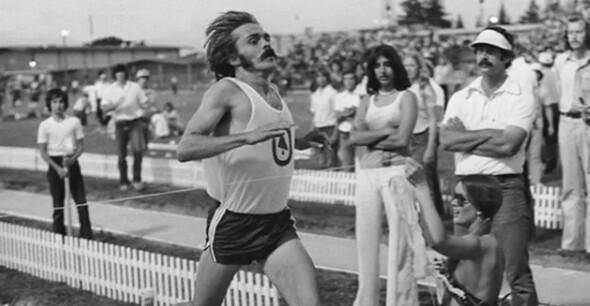
Prefontaine’s Olympic journey was tragically cut short when he was 24. Prefontaine competed in the 1972 Summer Olympics in Munich and was preparing for the 1976 Olympics with the Oregon Track Club when he died in a car accident on May 30, 1975.
2.- Advocate for athlete’s rights

Beyond his achievements on the track, Prefontaine was a vocal advocate for the rights of amateur athletes. He challenged the existing system, governed by the Amateur Athletic Union (AAU) that restricted athletes’ ability to earn money while maintaining their amateur status. Prefontaine defied the AAU by organizing a series of meets with a group of Finnish athletes. One of these meets, held at Marshfield High School in 1975, was where Prefontaine set his last American record.
3.- Legendary duel at the 1972 Munich Olympics
One of Prefontaine’s most memorable moments was the 5,000-meter race at the 1972 Munich Olympics. In a fierce battle against Finnish runner Lasse Virén, Prefontaine showcased his indomitable spirit, finishing fourth in a race that is often considered one of the greatest duels in Olympic history. The image of Prefontaine pushing himself to the limit serves as a timeless reminder of his competitive fire.
4.- Nike’s first signature athlete
In 1974, Prefontaine signed with Nike for $5,000—as the first runner to sign with the company, he jump-started the brand as a running shoe company. Bill Bowerman, the sports coach at the University of Oregon, also happened to be the co-founder of Nike. In 2022, a pair of Nike Oregon Waffle shoes worn by distance runner Prefontaine were sold for USD $163,800 on the auction site, Sothebys.com
5.- The Prefontaine Classic
In honor of Pre’s lasting impact on the sport, the Prefontaine Classic, an annual track and field meet, was established in Eugene, Ore. This prestigious event attracts elite athletes from around the world and continues to be a fitting tribute to Pre’s legacy. Hayward Field, where the meet is held, holds a special place in the hearts of runners as the venue where Prefontaine achieved many of his remarkable feats.
Prefontaine is remembered not only for his athletic prowess but also for the passion, courage, and advocacy that defined his life.
(01/25/2024) ⚡AMPby Keeley Milne

Prefontaine Classic
The Pre Classic, part of the Diamond League series of international meets featuring Olympic-level athletes, is scheduled to be held at the new Hayward Field in Eugene. The Prefontaine Classicis the longest-running outdoor invitational track & field meet in America and is part of the elite Wanda Diamond League of meets held worldwide annually. The Pre Classic’s results score has...
more...
For Betsy Saina, the U.S. Olympic Trials Marathon Presents a Chance to Represent Her Son
For much of last year, Betsy Saina had a plan. She would race the Chicago Marathon in October, eager to run alongside Emma Bates (who placed fifth at last year’s Boston Marathon in a new personal best of 2:22:10) in pursuit of breaking Emily Sisson’s American record of 2:18:29, set the previous year at that same race.
Saina, 35, a naturalized U.S. citizen who represented Kenya in the 2016 Olympics in Rio de Janeiro—she placed fifth in the 10,000 meters 30:07.78—had reason to be confident. Last spring, she set a new personal best of 2:21:40 with her fifth-place finish at the Tokyo Marathon, which wound up being the fastest marathon by an American woman in 2023 and made her the eighth-fastest U.S. female marathoner of all-time, solidifying her position as a top U.S. Olympic marathon team contender.
The Chicago Marathon had assured Saina’s agent, Tom Broadbent, that she was in for the race. But when the elite field was announced in August, Saina learned she had not been accepted, which not only threw a wrench in her fall training plans, but made for a lot of stress as she was planning her U.S. Olympic Marathon Team Trials buildup.
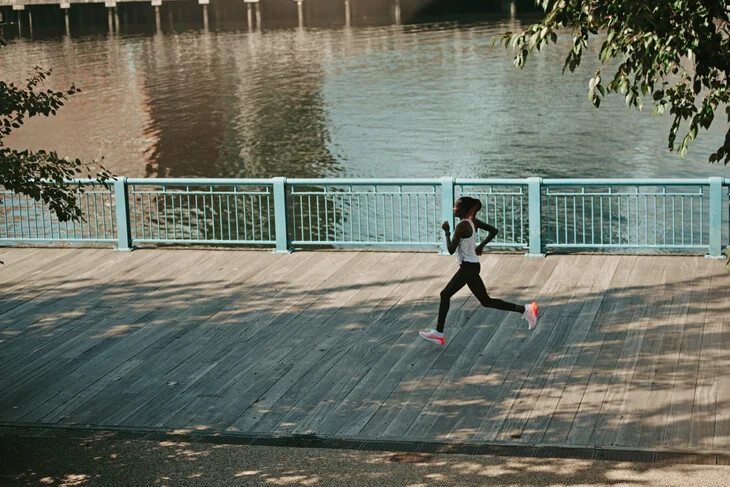
“I was shocked and spent three days looking at myself and trying to find any mistakes I made to not make the field, especially after running 2:21 in Tokyo,” Saina says. “I had never been rejected from a race before, and never got a response or an explanation as to why I didn’t make it. Being denied to run in Chicago honestly was one of the most disappointing things I’ve experienced in my career.”
Saina looked into entering the Berlin Marathon the following month, but had no such luck getting in with it being so late in the game. She was ultimately accepted into the Sydney Marathon (which shares its sponsor, ASICS, with Saina) on September 16. Unlike Chicago—with its fast, flat course that ended up having ideal racing conditions with temperatures in the 40s—Sydney has a hilly course and race-day weather was on the hotter side, with a starting temperature of 68 degrees.
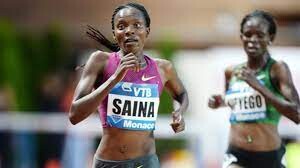
Despite the conditions, Saina proved herself once again, winning the race in 2:26:47. This sealed her confidence as she began to look ahead to the Olympic Trials in Orlando on February 3. If she’s one of the top three finishers in the women’s race in Florida, she’ll earn a spot on the U.S. team that will compete in the marathon at the Paris Olympics on August 11.
“Challenges make people strong, and running a good marathon on a harder course made me come back feeling motivated,” she says. “[Even though it wasn’t the faster time I originally wanted], it didn’t stop me from being a better version of myself.”
Transcendent Transplant
Despite her impressive performances in 2023, Saina has remained largely under the radar in terms of media coverage and fan predictions leading up to the Trials in Orlando, similarly to what fellow Kenyan-born marathoners Aliphine Tuliamuk and Sally Kipyego (both of whom made the last Olympic marathon team) experienced in 2020. The lack of attention relative to her competitors hasn’t fazed Saina, however.
“I know how to deal with pressure, having been in the sport since 2013, so as long as my training is going well, I don’t pay too much attention to what people say,” Saina says. “I’m just more excited to see many of the U.S. women [who are also] my friends, like Emily Sisson, Sara Hall, and Keira D’Amato, and to be racing so many amazing U.S. athletes for the first time.”
Saina’s result in Tokyo was only about a minute faster than her debut at the distance at the 2018 Paris Marathon, which she won in 2:22:56 (after dropping out of the 2017 Tokyo and New York City Marathons). It was also a confidence boost for Saina because it was also her first marathon since giving birth to her son, Kalya, now two, in December 2021, after previously running 2:22:43 and 2:31:51 at the 2019 Toronto Waterfront and Honolulu Marathons, respectively.
Saina—who originally came to the U.S. to attend Iowa State University where she trained alongside Tuliamuk and was a three-time individual NCAA champion and 11-time NCAA All-American—has remained in her hometown of Iten, Kenya, for the majority of the time since having her son, as her husband, Meshack Korir, is a doctor completing his postgraduate education there.
Although Saina became a U.S. citizen in late 2020 and has a home base in Colorado Springs, she made the decision to return to Kenya to have additional family support and childcare as she worked to come back from pregnancy and childbirth to prepare for the Olympic Trials, which she’ll return for just a few days before the race. Saina also keeps busy managing a couple of guesthouses, which she regularly rents out to visiting athletes and tourists. She also works with Cross World Africa, a nonprofit that sponsors underprivileged children in pursuing secondary and higher education.
“Before I came from Kenya, my family was struggling and we had to fundraise for my flight ticket to come to the U.S. Being here has changed my family in a different way—I have two sisters who are now nurses in the U.S., and my parents can now more easily fly to visit us, and while it is not where I began running, the U.S. where I began competing at such a high level,” she says. “My son also gives me so much motivation and is my inspiration. When I see him, I see beauty in myself and see myself getting better when I’m running. So I am excited both to compete and represent my son, and to hopefully wear the U.S. uniform because it has so much meaning for me.”
Back in Iten, Saina has been training in a group with personal pacemakers alongside 2019 New York City Marathon champion Joyciline Jepkosgei, which she describes as game-changing for her progress in the marathon. Both Saina and Jepkosgei, who is also the former world-record holder in the half marathon and Saina’s best friend from high school, are coached by Jepkosgei’s husband, Nicholas Koech.
“Sometimes you will train with people who don’t want to help someone else get better, but [Jepkosgei], who has run 1:04 [in the half marathon] and 2:17 [in the marathon] is unique in that she has sacrificed a lot, which I don’t think a lot of women will ever do for each other, and I don’t think I would either,” Saina says. “But she has been pushing me a lot since the first day I joined her, and I think that’s the reason I came back and I’ve had better races. I have someone to chase and it’s like competition in training, but in a good way.”
American Original
Saina returned to the U.S. twice last year, to race the USATF 25K Championships in Grand Rapids, Michigan, (where she took the win in 1:24:32 for her first U.S. title, narrowly beating D’Amato) and to be inducted into Iowa State’s Athletics Hall of Fame in September. Saina had planned to do some shorter U.S. races, including the Bolder Boulder 10K in May and the NYRR Mini 10K in June, following her national championship title in the 25K. However, she ultimately decided she couldn’t bear to be away from her son any longer.
“As a mom, when you’re away, you are so worried because you’re like, ‘How is he doing right now? How can I handle the pressure, being away from him?’” Saina says. “This year, it’s really different for me because the only race I want to travel to without Kalya is the Olympic Trials. He is growing now and getting better, so I want to travel with him afterward to compete in the USATF circuit. That’s the biggest goal for 2024, to travel with my son.”
Later this year, Saina hopes to also run the April 7 Cherry Blossom 10-Miler in Washington, D.C., the Mini 10K on June 8 in New York City, and a fast spring half marathon to pursue the current American record (which was broken yet again by Weini Kelati on January 14 in Houston), before running another marathon in the fall. In the meantime, she noted that she is especially eager to compete in one of the deepest fields ever assembled for the Trials.
Although Bates withdrew from the Trials, Saina figures to be one of the favorites in Orlando along with Sisson, Hall, Tuliamuk, D’Amato, and Seidel. However, Lindsay Flanagan (ninth in last summer’s world championships), Sara Vaughn, Susanna Sullivan, Gabriella Rooker, Dakotah Lindwurm, and Nell Rojas are all sub-2:25 marathoners, and thus top contenders, too.
“The U.S. is no longer small and non-competitive. Look at Molly Seidel. She got bronze at the Tokyo Olympics, and I remember when Amy [Cragg] was a bronze medalist at the 2017 World Championships. If you put that in perspective, it has changed even more right now compared to that time,” she says. “The competition [to make the U.S. team] is no longer as easy as the way some people [thought], and I’m super excited to be competing with a lot of solid women. There is no difference between the U.S. and other countries right now—it’s not just to go compete at the Olympics; they’re going to compete for the medals, just like other countries.”
(01/25/2024) ⚡AMPby Emilia Benton
2028 US Olympic Trials Marathon
Most countries around the world use a selection committee to choose their Olympic Team Members, but not the USA. Prior to 1968, a series of races were used to select the USA Olympic Marathon team, but beginning in 1968 the format was changed to a single race on a single day with the top three finishers selected to be part...
more...
Canadian Paralympians to receive equal pay at 2024 Games
On Wednesday, the Canadian Paralympic Committee and the Paralympic Foundation of Canada announced a significant shift in the financial landscape for Paralympic athletes. Each Paralympic medalist for Canada, starting at the 2024 Paralympic Games in Paris, will receive an equivalent prize to that of their Olympic counterparts.
The newly unveiled Paralympic Performance Recognition program, introduced at the Canadian Museum of History in Gatineau, Que., promises a significant shift in the financial landscape for Canadian Paralympic athletes.
Gold medalists will earn $20,000, silver medalists $15,000 and bronze medalists $10,000, which will create parity for Paralympic athletes.
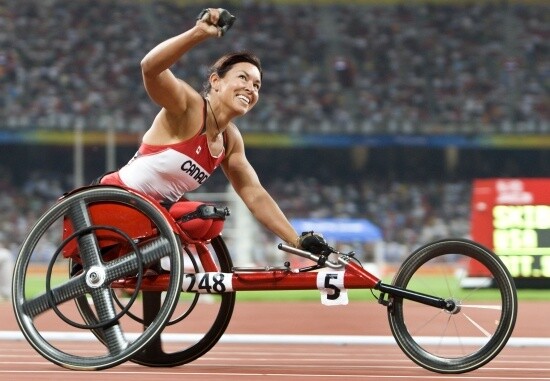
This pioneering program was made possible by an initial $8-million endowment from the Paralympic Foundation of Canada, the Canadian Paralympic Committee’s philanthropic partner. Sanjay Malaviya, CEO of healthcare tech company RL Solutions, contributed $4 million, with $2 million matched by the Canadian government, and an additional $2 million to be raised.
Malaviya, reflecting on the moment, said in a press release that he believed this program was a long time coming. “Canada’s Paralympians are incredible athletes who unite all of us as they proudly represent our country, and I am thrilled to be able to support them and celebrate their accomplishments in this way.”
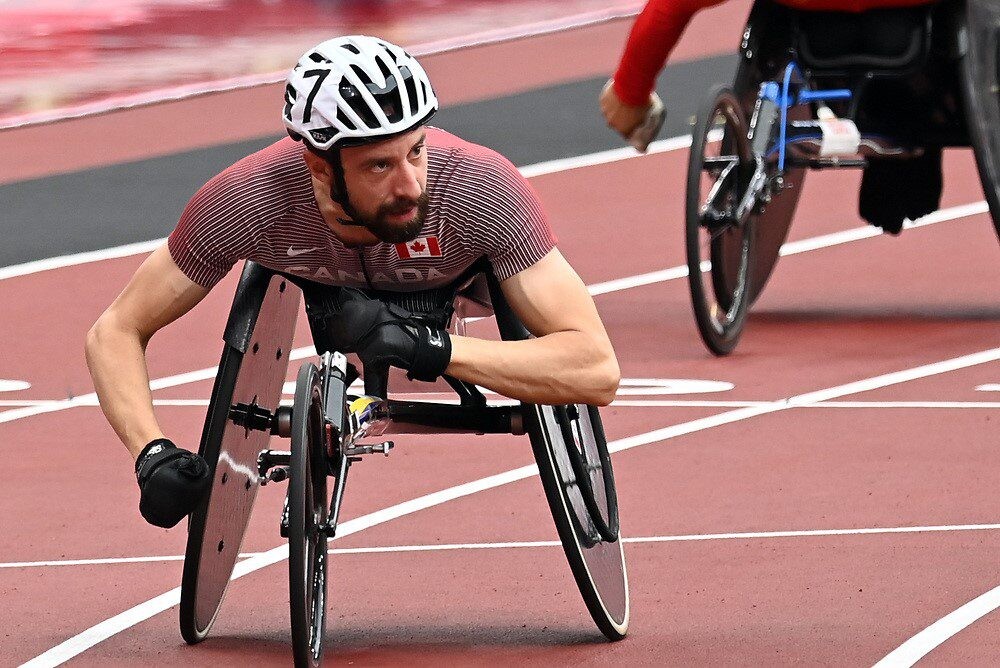
This isn’t the first time Malaviya has made a substantial donation to Canadian athletes. In March 2022, Malaviya gave 130 Olympians and 53 Paralympians $5,000 each for winning a medal at the Tokyo (summer) and Beijing (winter) Games—a donation of $1.2 million.
A total of 128 athletes (57 men and 71 women) represented Team Canada at the 202 Tokyo Paralympic Games, with 21 athletes winning medals for Canada. Two of the five gold medals were won in athletics. Victoria’s Nate Riech won gold in the men’s T38 1,500m, and Greg Stewart won gold in the men’s F46 shot put.
Similar initiatives for Paralympic athletes also exist in other countries—such as France, the U.S., and Australia—and the program for Canadian Olympians has been in place since 2006. The 2024 Paris Paralympic Games will begin Aug. 28 and run until Sept. 8.
(01/25/2024) ⚡AMPby Marley Dickinson
Paris 2024 Olympic Games
For this historic event, the City of Light is thinking big! Visitors will be able to watch events at top sporting venues in Paris and the Paris region, as well as at emblematic monuments in the capital visited by several millions of tourists each year. The promise of exceptional moments to experience in an exceptional setting! A great way to...
more...
North Korea cancels Pyongyang marathon for fifth straight year
North Korea has called off its annual international marathon for the fifth consecutive year, but could reschedule the event for later in 2024 as the isolated country gradually eases longstanding border restrictions.
The Pyongyang Marathon Committee confirmed that the Pyongyang International Marathon will not be held as scheduled in April, North Korea-focused travel company and official event partner Koryo Tours announced in a blog post on Tuesday.
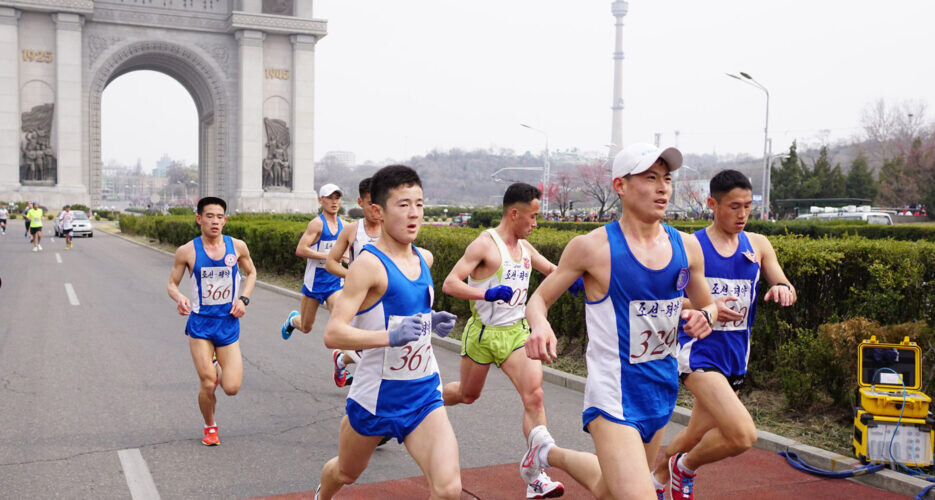
First held in 1981, the event has traditionally taken place around the time of founding leader Kim Il Sung’s birth anniversary on April 15, commemorated in the DPRK as the Day of the Sun, but a lack of time to prepare ahead of the national holiday appears to have prompted this year’s cancellation.
Simon Cockerell, general manager of Koryo Tours, told NK News that the organizers did not give a specific reason for calling off the marathon, but added that they likely faced challenges in including enough elite foreign runners required to stage a World Athletics Bronze Label event.
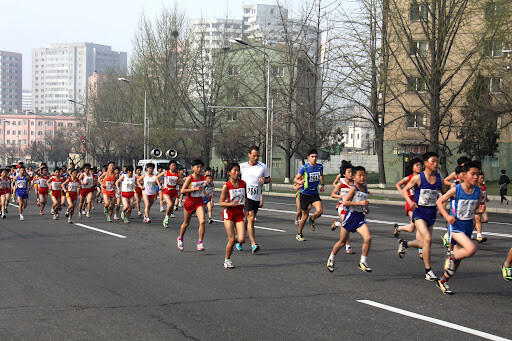
“As this cannot be confirmed, and as time is getting closer, it is likely they just decided that the correct operation of the race couldn’t be guaranteed,” he said.
The Pyongyang International Marathon last took place in 2019, with subsequent editions canceled as the country completely shut its borders in Jan. 2020 due to the outbreak of the COVID-19 pandemic.
However, according to the Koryo Tours blog post, there is still “a glimmer of hope” for those keen to participate in the race as it could be held later this year, likely in September or October.
Cockerell stated that the potential rescheduling remains under discussion and organizers have yet to officially confirm the September-October timeline, which could partly depend on when North Korea eases its stringent border restrictions for foreign visitors.
The DPRK has yet to fully reopen to foreigners despite occasional exceptions since last year for engagement with close partners Russia and China.
However, a Vladivostok travel agency may soon open the door for the return of visitors from overseas with a group tour scheduled for February, which could serve as a trial run ahead of reported plans to resume regular tourism in April.
The Pyongyang International Marathon has been a popular attraction for tourists since the event started allowing foreign amateurs to enter in 2014, but Koryo Tours stressed that the cancellation should not be seen as an indicator of when North Korea will reopen for tourists.
Noting that the marathon took place for decades without tourists, Cockerell views the lack of elite foreign athletes as the bigger barrier.
“If tourism resumes tomorrow, or soon, or before the April planned date for the race, then it still will be canceled,” he said. “I believe it is simply down to not [having] enough time remaining to organize such an event.”
Cockerell added that the marathon’s organizers have no inside knowledge or influence regarding the border reopening, but welcomed their openness to the idea of postponing it until later in the year.
“It is the one marathon in the country, after all, and there is a motive to use it to give competitive practice to possible international-level runners from the DPRK,” he said. “So I’m sure the relevant organs there very much want it to go ahead somehow.”
While Pyongyang has called off its high-profile marathon for now, a scheduled women’s soccer match between the DPRK and Japan in late February could present a valuable opportunity to gauge the country’s readiness to host international sporting events.
State media has not yet confirmed the match will go ahead as scheduled at Pyongyang’s Kim Il Sung Stadium, but if it does, it will mark the first time foreign sportspersons are allowed to enter North Korea since before the pandemic.
(01/24/2024) ⚡AMPby Alannah Hill

Pyongyang Marathon
This race can be run either as a full marathon or as a half marathon. There is also a 10km race and a 5km race. Hundreds of local runners take part as well as some elite foreign runners. Anyone taking part in this tour who wants to watch the marathon instead of take part in it is more than welcome...
more...
Stellar Field Assembled to Challenge Yared Nuguse in the NYRR Men's Wanamaker Mile
The 116th Millrose Games is now just 19 days away, as the eyes of the global athletics community will once again return to the Nike Track & Field Center at The Armory. As always, the meet will conclude with the NYRR Men’s Wanamaker Mile, a legendary race with over a century of tradition.
The Millrose Games is scheduled to take place on Sunday, February 11th.
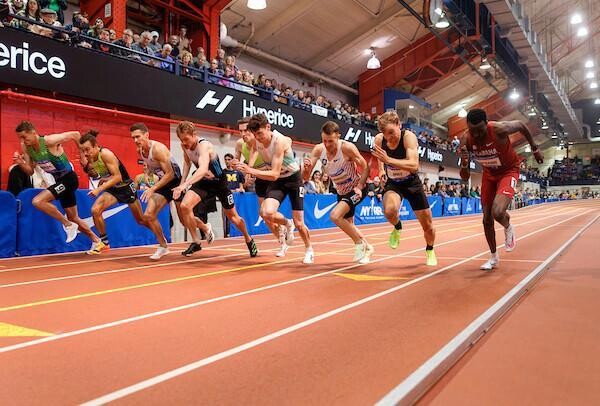
Previously announced as the headliner for this race is defending champion Yared Nuguese, the American record holder in the mile indoors and outdoors. Nuguse has his eyes on the world record of 3:47.01, but he will have to contend with a number of the best athletes in the world if he is to win his second straight Wanamaker title, including two additional 1500m finalists from last summer’s World Championships.
“[The world record] feels like a goal that’s within my grasp of achieving.” said Nuguse. “Not only am I stronger and smarter than I was last year, but I feel like I will be able to attack this race with a lot more confidence to chase the world record. When I went to Millrose for the first time, I was just chasing the American record. So changing that mindset, just seeing how far I’ve come, it feels like a very real possibility at this point.”
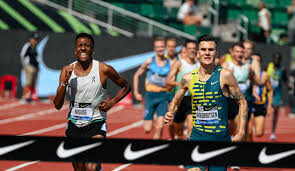
The elite athletes lining up to challenge Nuguse are as follows:
-Mario Garcia Romo was last year’s runner-up, and he is the 2022 1500m champion for Spain and a two-time World Championship finalist.
-Neil Gourley is a three-time British 1500m champion, and he holds the European indoor mile record.
-George Mills placed third in the mile at the Diamond League final, moving up to third on the all-time British list, before also placing second at the NYRR 5th Avenue Mile.
-Hobbs Kessler is the reigning World Road Mile champion, and he also holds the national high school indoor mile record.
-Andrew Coscoran is an Olympian and the Irish record holder over 1500m.
-Adam Spencer of the University of Wisconsin and Australia holds the NCAA 1500m record.
-Sam Prakel is the US Road Mile champion, and he placed fourth nationally in the 1500m.
-Charles Philibert-Thiboutot is a Canadian Olympian and the 2023 NACAC 1500m champion.
The winner of the mile at the Dr. Sander Invitational this Saturday, January 27th will be added to the NYRR Wanamaker Mile field as well.
Stay tuned over the coming weeks before the 116th Millrose Games, as the world-class start lists are finalized. Top athletes already confirmed to compete include Laura Muir, Elle Purrier-St. Pierre, Dina Asher-Smith, Julien Alfred, Alicia Monson, Grant Fisher, Danielle Williams, Josh Kerr, Cooper Teare, Yaroslava Mahuchikh, Christian Coleman, Andre De Grasse, Nia Ali, Chris Nilsen, and KC Lightfoot, with even more Olympians and World Championship medalists still to come.
As always, the Millrose Games will feature the absolute best athletes in the sport, including dozens of Olympians and world champions. The Millrose Games is a World Athletics Indoor Tour Gold meet. With highest-level competition at the youth, high school, collegiate, club, and professional levels, there is truly something for everyone at the Millrose Games.
Tickets can be purchased at https://www.millrosegames.org/
(01/24/2024) ⚡AMP

NYRR Millrose Games
The Pinnacle of Indoor Track & Field The NYRR Millrose Games, first held in 1908, remains the premier indoor track and field competition in the United States. The 2025 edition will once again bring the world’s top professional, collegiate, and high school athletes to New York City for a day of thrilling competition. Hosted at the New Balance Track &...
more...
Ugandan Stella Chesang headlines Osaka Women’s Marathon
The 2018 Commonwealth Games 10,000m champion, Stella Chesang will be the lady to watch at the 43rd edition of the Osaka Women’s Marathon slated for this Sunday (28) in Osaka, Japan.
The 27 year-old who is also the 2015 World U20 5000m bronze medallist, comes to this race with a life time best of 2:20.23 that she got last year at the Haspa Marathon where she took the bronze medal.
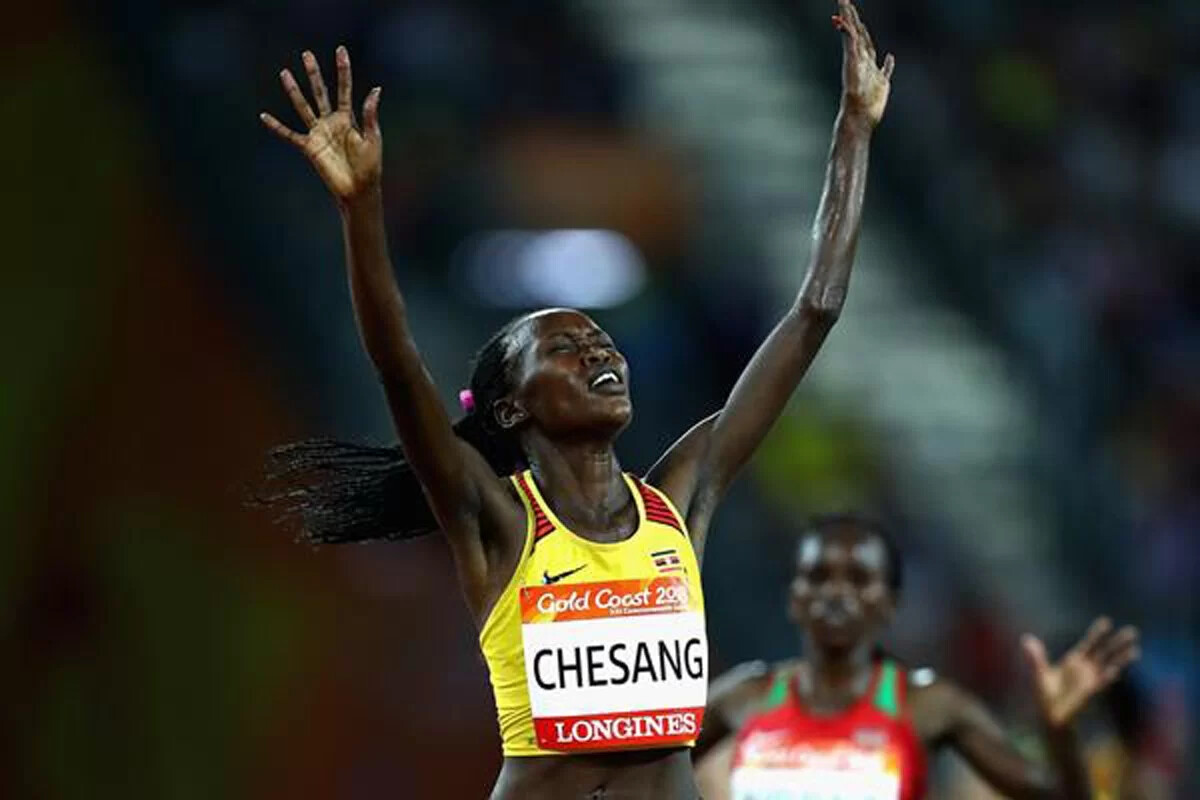
Chesang will not have an easy ride as she will have to get past Workenesh Edesa of Ethiopia, who is the fastest athlete on paper with a time of 2:18.51 that she set two years ago at the Berlin Marathon, where she finished in fourth place. Edesa who is the oldest athlete on the elite list is also the reigning Prague Marathon champion and will steer the ship alongside her compatriot Sisay Meseret Gola, who is the youngest athlete among the elite and holds the third fastest time of 2:20.50 that she got at the 2022 Zurich Marathon where she took the silver medal.
The three athletes will battle with the race defending champion and course record holder, Matsuda Mizuki, who is also the 2017 Asian Games 10,000m bronze medallist and comes to this race with a personal best of 2:20.52 that she got last year at this event. The 28 year-old will partner with her six compatriots as they seek to retain the title.
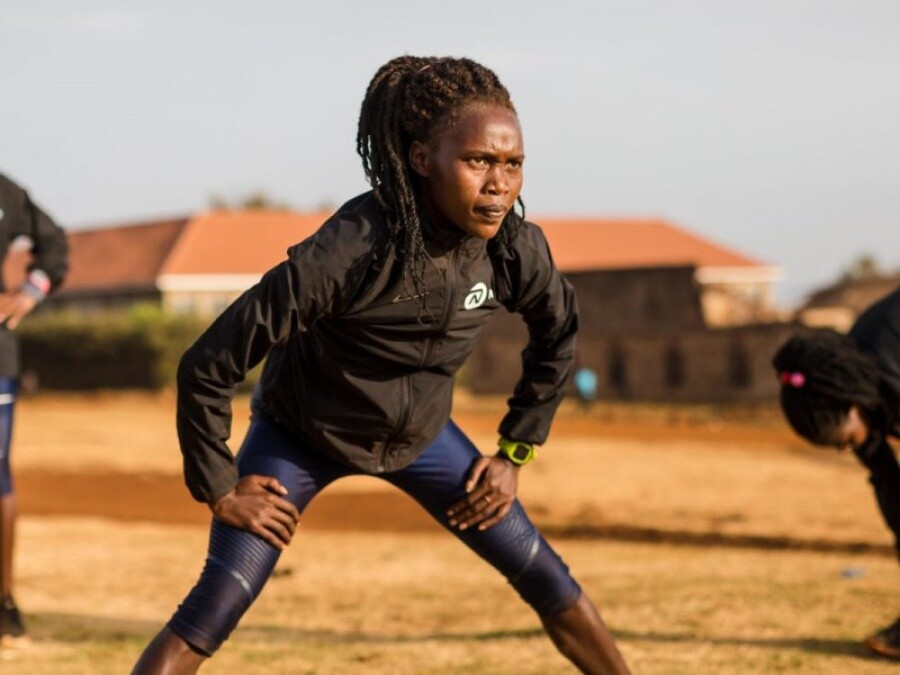
Japan’s Sato Sayaka of 2:22.13 will tag along Maeda Honami of 2:22.32, Matsushita Natsumi 2:23.05, Kawauchi Rie 2:25.35, Daito Yuna 2:26.09, Takeyama Kaena 2:29.20 as they also fight for the top position.
LEADING TIME
42KM WOMEN
Stella Chesang (UGA) 2:20.23
Workenesh Edesa (ETH) 2:18.51
Sisay Meseret Gola (ETH) 2:20.50
Matsuda Mizuki (JPN) 2:2052
Sato Sayaka (JPN) 2:22.13
Maeda Honami (JPN) 2:22.32
(01/24/2024) ⚡AMPby John Vaselyne
Osaka International Womens Marathon
The Osaka International Ladies Marathon is an annual marathon road race for women over the classic distance of 42.195 kilometres which is held on the 4th or 5th Sunday of January in the city of Osaka, Japan, and hosted by Japan Association of Athletics Federations, Kansai Telecasting Corporation, the Sankei Shimbun, Sankei Sports, Radio Osaka and Osaka City. The first...
more...
Inside Usain Bolt's little-known 11-year love story with Jamaican model
Usain Bolt and Kasi Bennett's journey, from a secret romance to proud parents, embodies love, support, and shared privacy.
Double 100m and 200m world record holder Usain Bolt has been in a long-standing relationship with Jamaican model Kasi Bennett since 2013, according to reports.
This couple's journey, filled with love, privacy, and the joy of parenthood, paints a picture of a partnership built on mutual respect and support.
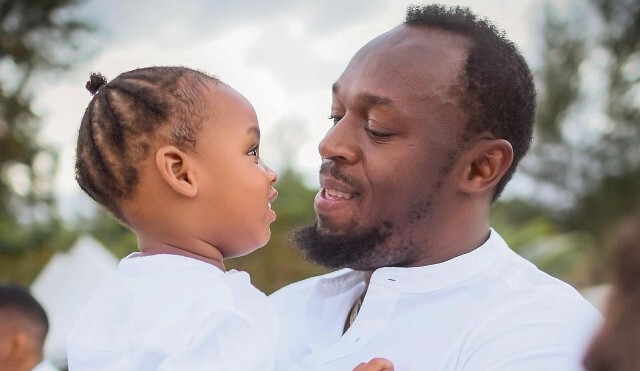
Bennett, who has been the anchor in Bolt's life through his career highs and lows, prefers to maintain a low profile, despite her partner's worldwide fame.
"Usain and I are very private when it comes to our relationship, but it's filled with love and mutual respect," Bennett shared in an interview with Vogue Jamaica.

Their love story began quietly in 2013, but it was not until a 2016 interview with People Magazine that Bolt openly expressed his happiness about the relationship.
“She’s happy, I’m happy!” he exclaimed, shedding light on their private life for the first time.
The birth of their daughter, Olympia Lightning Bolt in 2020, and twins Saint Leo Bolt and Thunder Bolt in 2021, marked new chapters in their lives.
Bennett, embracing motherhood, often shares glimpses of their family life on social media.
“Our babies are our greatest achievements,” she remarked in a heartwarming post on Instagram.
Despite their public figures, Bolt and Bennett have consistently strived to give their children a normal upbringing.
"We want our kids to grow up with the values we hold dear. Fame is fleeting, but family is forever," Bolt reflected in a candid discussion with The Guardian.
Fatherhood has been a new and challenging race for Bolt, as he humorously admitted that handling three children can be more daunting than competing in the Olympics.
Bennett, apart from being a supportive partner and a doting mother, is an advocate for women's empowerment in Jamaica.
Her efforts in various charitable causes have been a source of inspiration.
"It's important for me to use my platform to uplift other women," Bennett stated during a charity event in Kingston.
Their family dynamic is often showcased on Bennett's TikTok account, where she shares candid moments of their life, giving fans a peek into the everyday joys and challenges of being a family of five.
In a touching Father's Day post in 2023, Bennett celebrated Bolt as a father, highlighting his dedication and love for their family. "To the world, he's the fastest man, but to us, he's the world's best dad," she wrote, accompanied by a photo of Bolt with their children.
(01/24/2024) ⚡AMPby Festus Chuma
Usain Bolt

Faith Kipyegon revels after receiving 'beautiful' gift from Nike
Faith Kipyegon expressed her excitement after being gifted by her sponsors, Nike.
Double world record holder Faith Kipyegon has expressed her excitement after being gifted a bomber jacket by Nike, her sponsors.
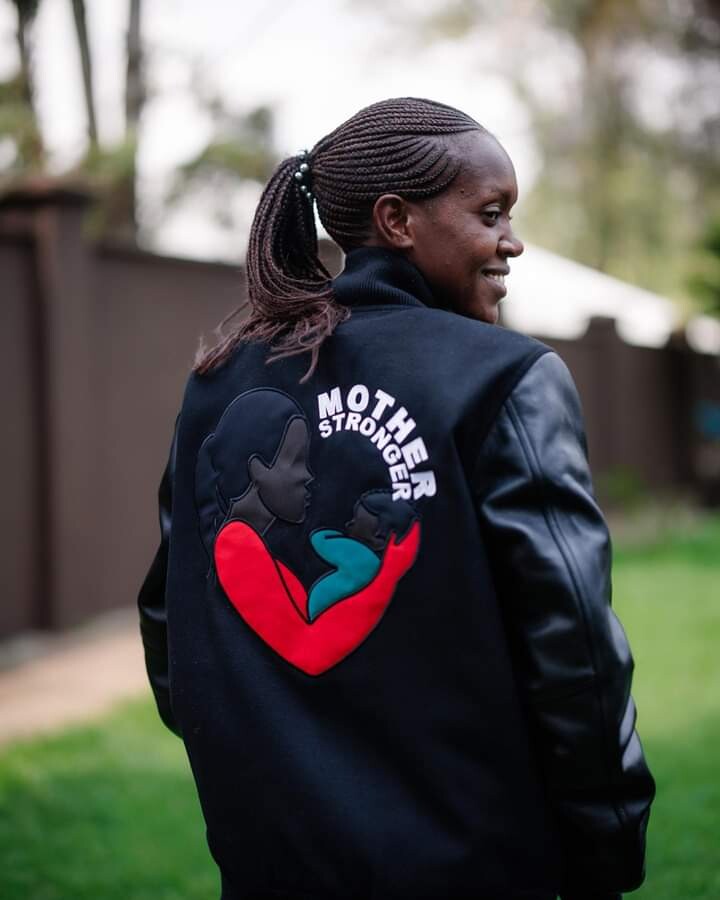
The jacket has a portrait of a mother embracing her child to depict the two-time Olympic champion with her daughter and is quoted with words, ‘MOTHER STRONGER’ at the back.
At the front, one side has the Kenyan flag logo and the other side has the Nike logo. The arms of the jacket are also made of leather to showcase the good quality of the merchandise.
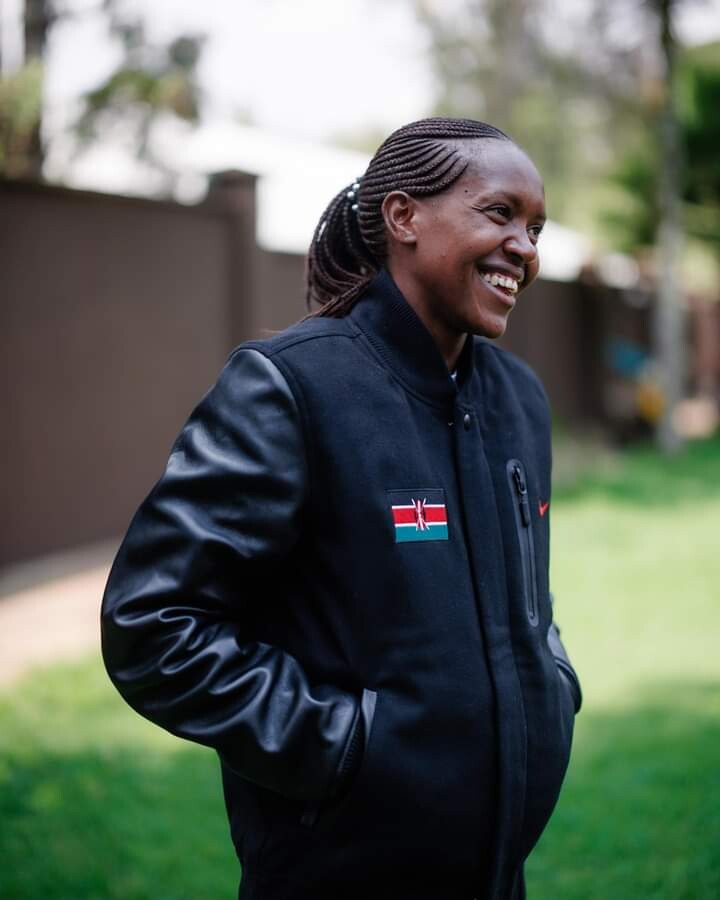
Expressing her gratitude on her X (Twitter) handle, the double World champion shared a snapshot showcasing her radiant smile while donning the sleek Nike bomber jacket. In the caption, she said: “A beautiful present from #NikeRunning.”
Kipyegon's words resonated with the essence of the athlete-sponsor relationship, emphasizing more than just the material aspect of the gift.
The acknowledgment underscored the profound support that sponsors like Nike provide, extending beyond the track to boost an athlete's confidence and style.
The bomber jacket, a symbol of both fashion and functionality, perfectly aligns with Nike's commitment to merging performance and aesthetics. As a global leader in athletic apparel, Nike has consistently demonstrated an understanding of athletes' multifaceted needs.
The brand's dedication to crafting gear that transcends the sporting arena to seamlessly integrate into an athlete's lifestyle is evident in the choice of this trendy yet functional gift for Kipyegon.
Kipyegon's appreciation for the thoughtful gesture serves as a testament to the symbiotic relationship between athletes and their sponsors. Beyond the tracks and competition, it's the unwavering support and thoughtful gestures that foster a sense of camaraderie and gratitude.
As Kipyegon continues to conquer new milestones in her athletic journey, she does so not only as an ambassador for her sport but also as a stylish representative of Nike's commitment to empowering athletes both on and off the field.
(01/23/2024) ⚡AMPby Abigael Wuafula

Over a year after suffering season ending injury, Dina Asher-Smith makes a comeback into uncharted territory at Millrose Games
Every day, we are getting closer to one of the most anticipated events, The Millrose Games 2024. The track and field world is amped up to witness the thrilling performances of top-notch athletes in all the exciting events. Among this one athlete that has grabbed every track and field enthusiast’s attention is Dina Asher-Smith. This British Sprinter is ready to make a spectacular comeback in the 2024 iteration of the Millrose Games after facing trials and tribulations due to her hamstring injury.
After sustaining an injury at the World Championships in Oregon, the athlete had to pull out from several events. However, after a year of grappling, Dina Asher-Smith has announced her participation in the Millrose Games 2024. Let’s have a panoramic view of the same.
Dina Asher-Smith to participate in two events at the Millrose Games.
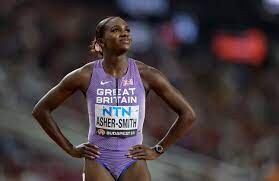
The British Sprinter Dina Asher-Smith faced a tough time after her hamstring Injury in 2022 as she had to pull out from the Commonwealth Games. She sustained this injury while performing at the 4x100m relay. However, more than a year after this incident, the Olympian has added her name to the Millrose Games giving a great start to her 2024 season. A US track and field Insider took to their X account to announce the same.
The post carried, “Dina Asher-Smith will be running the 60m at the Millrose Games on February 11th!” Apart from this, the champion has added her name to the 4x400m as well. She is extremely excited to showcase her skills here at one of the most prestigious track and field competitions.
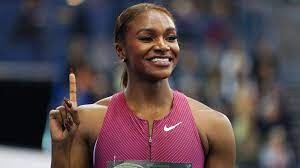
She expressed, “The Millrose Games is one of the most prestigious and historic indoor competitions in the USA, and I am looking forward to racing there for the first time.” Dina Asher-Smith further added, “I am really enjoying my new training setup in Austin, and I’m looking forward to a big year in 2024”. This competition is going to be a great one as some of the most anticipated races will be held among the top-notch athletes.
Athletes to compete with the British Olympian at the Millrose Games 2024
The Millrose Games will be held on the February 11, 2024 at the Armory in NYC. The Armory this year will witness great races yet again with some of the notable athletes participating in the event. The 60m will be one of the anticipated races as along with Dina Asher-Smith, other renowned athletes will also be gracing the event.
The first name on the list of the 60m event is the first woman in NCAA to break the seven-second barrier over the 60m, Julien Alfred. This Saint Lucian Sprinter is the Joint North American holder for the 60 meters. Then is the Olympian American athlete English Gardner. The Jamaican athlete Briana Williams will also be competing.
Other athletes like Shashalee Forbes, Tamari Davis, Marybeth Sant-Price, and Celera Barnes will be a part of the competition. The track and field enthusiasts cannot wait to witness which athlete will sprint towards victory and take the gold home.
(01/23/2024) ⚡AMPby Nancy Singh
NYRR Millrose Games
The Pinnacle of Indoor Track & Field The NYRR Millrose Games, first held in 1908, remains the premier indoor track and field competition in the United States. The 2025 edition will once again bring the world’s top professional, collegiate, and high school athletes to New York City for a day of thrilling competition. Hosted at the New Balance Track &...
more...
Daniel Simiu sights firmly trained on the Paris 2024 Olympics
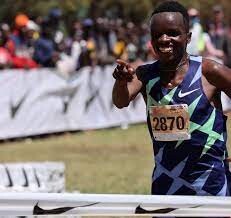
After scooping the gold medal at the 18th edition of the Vedanta Delhi Half Marathon on October 15 last year, Kenya’s middle-distance track prodigy Daniel Simiu has his sights firmly trained on the Paris 2024 Olympics.
The World Half Marathon silver medalist has vowed to torch the track on his way to a podium finish in the French capital in August.
In an exclusive interview on Friday, Simiu said he is ready to make the country proud at the premier global quadrennial games later in the year, where he hopes to fly the country’s flag in the 5000m race. “I have invested a lot of time in preparations and I’m looking forward to a splendid performance,” Simiu stated.
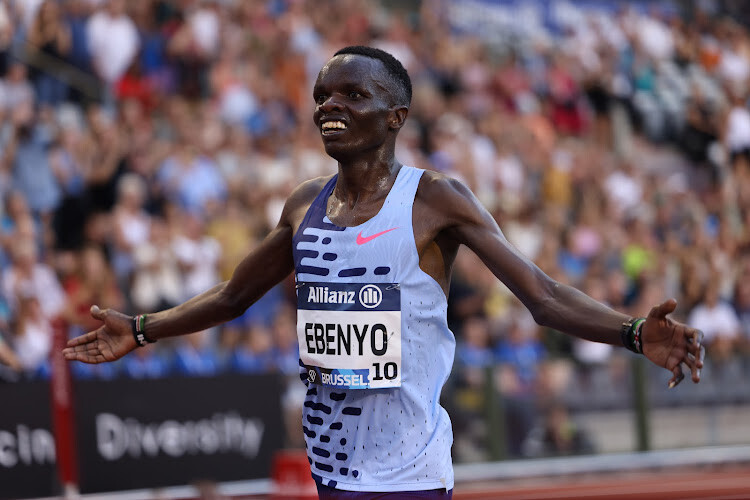
“There is every chance a Kenyan athlete will win gold this time around but,” he added.
The Commonwealth Games 10,000m silver medalist said the country boasts gifted athletes who possess the mojo to storm the gold medal at the premier annual global.
“What’s important is that we bring the title to Kenya. I’ll be happy if any of us gets to win the race,” he added.
The 27-year-old policeman pledged to obliterate the star-studded field in Paris en route to a historic triumph.
He will be seeking sweet revenge over his highly-rated Ugandan nemesis Joshua Cheptegei who edged him to the title at the Birmingham Commonwealth Games. “I’m determined to improve on my performance at the Commonwealth Games, where I slightly fell short of beating Cheptegei,” Simiu said.
He said he was proud to have wrapped up second at the Commonwealth Games. “Kiplimo is the best men’s 10,000m runner at the moment and emerging second behind him brought me some measure of pride,” Simiu remarked.
Born on September 18, 1995, Ebenyo lost his father early in life to cattle rustling and was raised by his mother and later, grandmother.
Simiu said it was while at Aiyam Day Secondary School that he carved his path to a career in athletics.
“I would always complete a stretch of 24-km trek to and from school,” he said.
He experienced a major setback in 2919 when he finished in second place at the National World Championships trials but was unable to compete as he failed to meet some of the Athletes Integrity Unit (AIU) doping requirements.
Simiu did the in-competition test several times but did not meet the required three out-of-competition tests that are mandatory for all athletes and include both urine and blood, at least one Athlete Biological Passport (ABP) test and one Erythropoietin (Epo) test.
He eventually picked up his pieces and ventured into road racing, where he won the Safaricom Kisii 10-km road race in a time of 29:16.71. The following year, he blazed to victory in the San Silvestre Vallecana 10 km in Spain on January 3.
He won the silver medal over 10,000m at the 2022 Commonwealth Games held in Birmingham and placed second again at the 2023 World Athletics Championships in Budapest.
(01/23/2024) ⚡AMPby Tony Mballa
Paris 2024 Olympic Games
For this historic event, the City of Light is thinking big! Visitors will be able to watch events at top sporting venues in Paris and the Paris region, as well as at emblematic monuments in the capital visited by several millions of tourists each year. The promise of exceptional moments to experience in an exceptional setting! A great way to...
more...
World Athletics comes under fire after controversial Xiamen and Tata Mumbai Marathons
Athletics enthusiasts have raised eyebrows concerning the credibility of the rules governing Platinum Label road races after recent happenings at the Xiamen and Tata Mumbai Marathons.
World Athletics has for long been known to champion for viewership boosts in China and India, with the belief being that the presence of renowned athletes and remarkable performances can significantly enhance engagement for those races.
However, the race organizers of some of the elite races in India and China together with World Athletics have come under fire after two recent marathons breached one of the rules of the World Athletics Platinum Label road races.
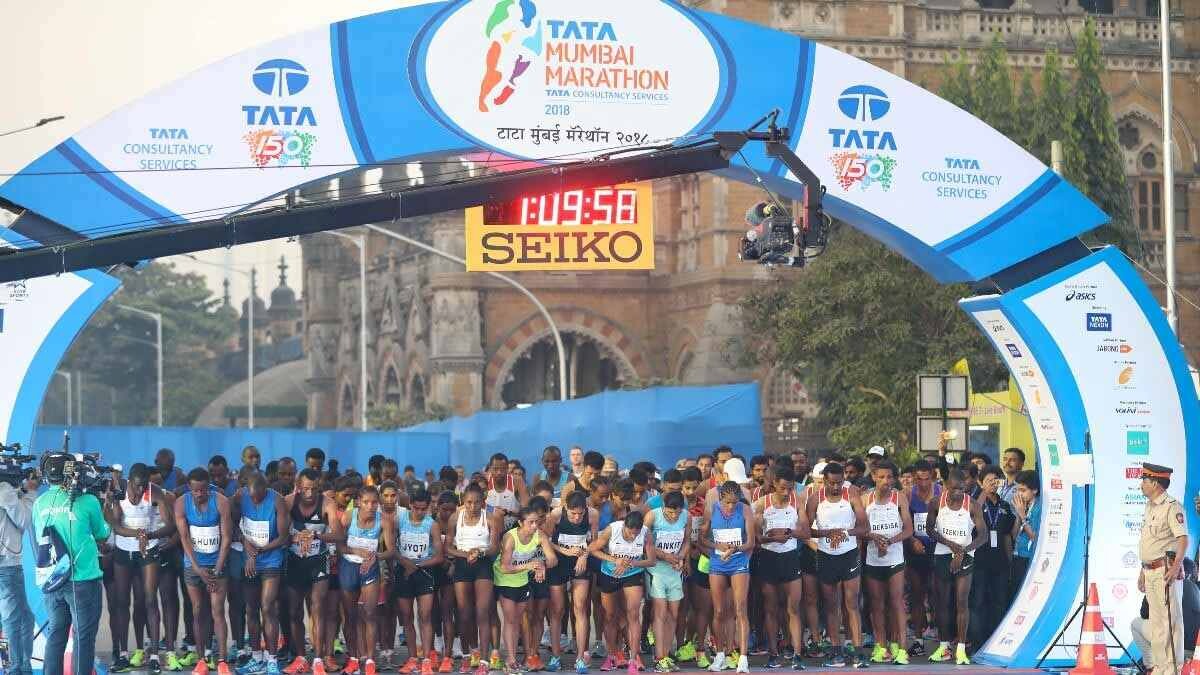
According to World Athletics, an intentional arrangement, act or omission aimed at an improper alteration of a result or the course of an event or competition in order to remove all or part of the unpredictable nature of the event or competition to obtain an undue benefit for oneself or others is a violation.
According to an analysis done by the Canadian Running Magazine, former world half marathon record holder Kibiwott Kandie and defending champion Philimon Kipchumba withdrew from the Xiamen Marathon after covering 20km and this was in order for them to collect their appearance money.
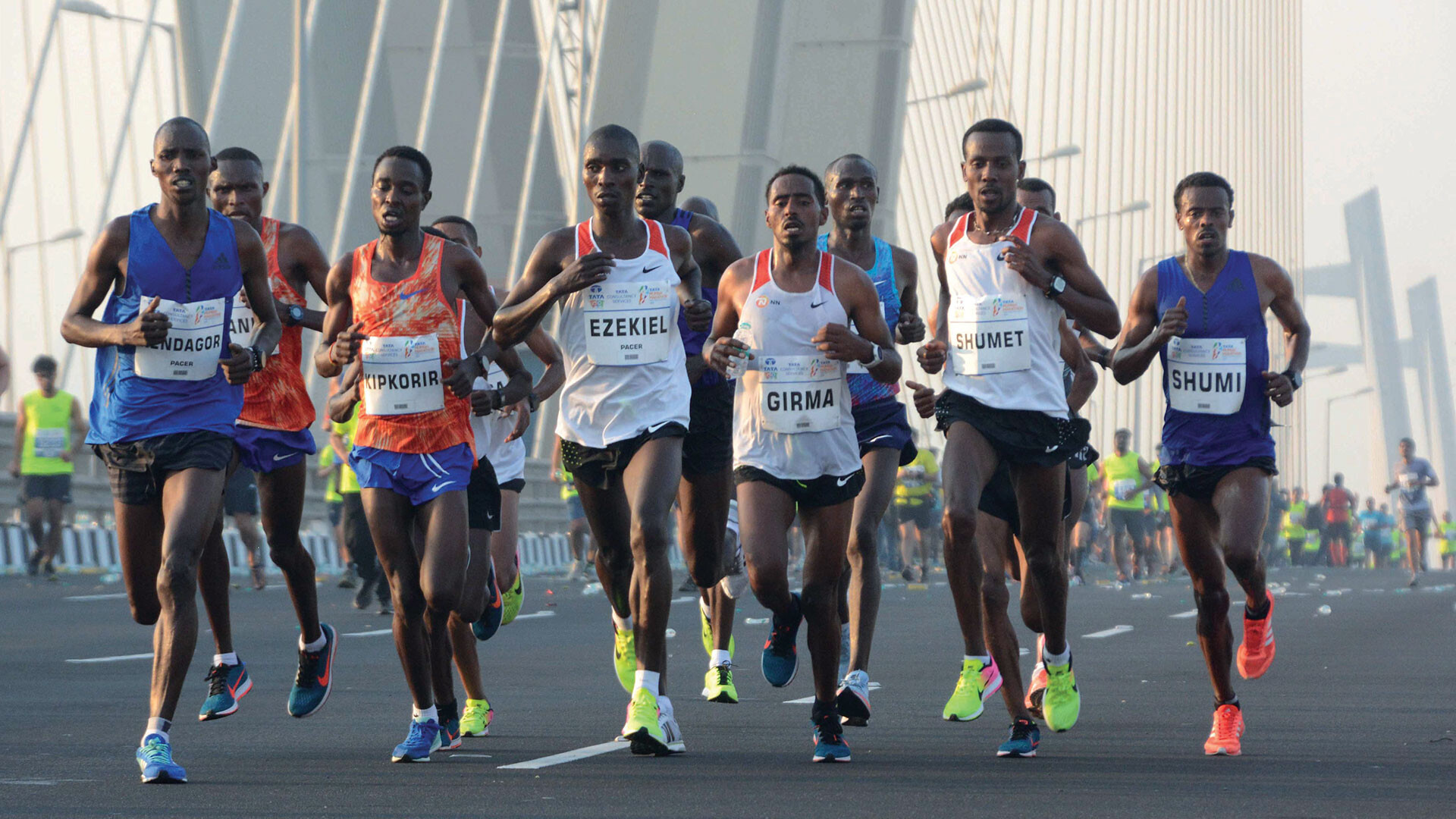
The race organizers were aiming to draw more attention to marathon events in China but their plan seemed not to work out. According to further reports, the organizers are said to have invited 22 elite international athletes, but only seven of them finished.
Kandie and Kipchumba withdrawing from the marathon immediately after crossing the 20K mark, raising eyebrows from locals as they posed for photos, shook hands and smiled for photos.
Before the race, World Athletics did a preview of the race, however, none of the top athletes who were featured in the preview finished the race.
When the Canadian Running Magazine reached to a World Athletics representative, the individual said: “As I am sure you understand, whether due to injury, personal reasons or other, we are never able to predict with certainty who will start or finish a race, come event time. Appearance fees are an important aspect of our sport, and many others–including tennis and golf.”
Although athletics and the pro tennis structure share similarities, they also have one major difference since a tennis player who is paid an appearance fee to play a tournament, or a match, will finish the match, unlike in elite marathoning.
Meanwhile, the 2024 Tata Mumbai Marathon in India on January 21 presented another example of high-performance athletes seeming to collect appearance fees without providing strong performances.
Ethiopian runner Lelisa Desisa headlined the Gold-Label men’s field, and two-time Amsterdam Marathon champion Tadelach Bekele headlined the women’s field. Both athletes started the race, but fell off the lead pack and dropped out.
(01/23/2024) ⚡AMPby Abigael Wuafula

How going for a run may benefit your fine motor skills
Before you tune your guitar or fire up your PlayStation, consider heading out for a short run. Neuroscience News reported a groundbreaking study out of the University of Copenhagen revealing the remarkable benefits of incorporating exercise into the learning process of the type of motor skills used in gaming.
This isn’t just about getting fit; it’s about enhancing your ability to remember and perform tasks automatically, from playing a musical instrument to mastering surgical procedures or leveling up your gaming skills.
The study
The study involved 67 participants and delved into the impact of exercise before and after learning motor skills on memory retention.

The researchers examined the subjects’ behavior and performance while reviewing one of four scenarios. First, participants either rested or exercised moderately on a bicycle. They then were subjected to a fine motor task, in the form of a simple computer game, that challenged their motor dexterity using a small device on their fingertips.
Finally, participants either had to exercise intensely on a fitness bike or rest. Researchers had one group that rested both before and after their motor task, one that trained both times, and two groups that trained once, either before or after. Their skill level and memory were tested again after seven days to assess whether they had retained what they had learned.
Exercise before or after learning
Researchers discovered that exercise not only optimizes memory formation, but results in a substantial 10 per cent improvement in remembering motor skills. The greatest memory improvement occurred when participants exercised both before and after learning a new skill, but exercise before or after the motor skill was beneficial.
“Things can’t go wrong if a bit of physical exercise is incorporated,” said study co-author Jesper Lundbye-Jensen.” A person will experience beneficial effects. This is probably because physical activity increases the brain’s ability to change, which is a prerequisite for remembering.”
Applicability across fields
This research isn’t confined to a specific domain—it has far-reaching implications for various fields, including rehabilitation and professional skill training. From recovering mobility after an accident to refining intricate motor skills, exercise proves to be a valuable ally.
The brain undergoes changes (called brain plasticity) essential for our ability to learn and remember new skills. These changes occur both while the new skill is being learned but also in the hours after when the memory is consolidated—meaning being physically active even after we’ve engaging in something new can be meaningful.
“In the study, we use the terms online and offline to describe these two aspects of learning—memory acquisition and retention. Both are important for us to acquire new motor skills and remember what we’ve learned,” Lundbye-Jensen said.
Beneficial for everyone
The positive effects of exercise on motor learning apply to individuals of all ages, from children developing motor skills to older adults undergoing rehabilitation. Even those with elite-level fine motor skills could potentially benefit from incorporating exercise into their training routines.
Researchers hope to be able to conduct longer-term studies where more lasting effects can be measured, as well as investigate whether the effects observed by the study become even greater as time passes.
The research unlocks a simple yet powerful strategy for improving memory retention in motor skill learning. So, the next time you’re learning something new, consider putting on your running shoes and heading out the door—it might just be the key to remembering your new skill with ease.
(01/22/2024) ⚡AMP

Cooper Teare And Weini Kelati Win 2024 USATF Cross Country Titles
Weini Kelati and Cooper Teare earned convincing victories at the 2024 USATF Cross Country Championships, held on Saturday at Pole Green Park in Mechanicsville, Va. Running just six days after setting an American record in the half marathon in Houston, Kelati took off just after 4k and destroyed the field, running 32:58.6 for the 10k course to win by 37.3 seconds — the largest margin of victory since Aliphine Tuliamuk‘s 48.2 in 2017.
Teare took a different approach, staying patient as former University of Colorado runner turned Olympic triathlete Morgan Pearson pushed the pace during the second half of the race. Teare was the only one to go with Pearson’s move at 8k and made a strong move of his own at 9k that allowed him to cruise to victory in 29:06.5. 2020 champion Anthony Rotich of the US Army was 2nd in 29:11.6 as Pearson hung on for 4th. Teare’s training partner Cole Hocker was 12th in 29:52.3.
The top six finishers in each raced earned the right to represent Team USA at the World Cross Country Championships in Belgrade, Serbia, on March 30. Kelati’s coach/agent Stephen Haas told LetsRun last week that Kelati plans to run there while Teare’s agent Isaya Okwiya said Teare’s plans are still TBD.
High school junior Zariel Macchia of Shirley, N.Y., won the women’s U20 race in 20:31.0 for the 6k course; Macchia previously won the title as a freshman in 2022. Notre Dame freshman Kevin Sanchez won the men’s U20 title in 24:07.1 for the 8k course.
Cooper Teare shows his range with impressive victory
Teare was the 2021 NCAA 5,000m champion at the University of Oregon and has shown that his range extends both up and down the distance spectrum. Teare is the NCAA mile record holder at 3:50.39 and was the 2022 US champion at 1500 and now he is the US cross country champion. That sort of range has become increasingly common on the international level but in the US, it’s rare for a 1500 guy to run USA XC, let alone win it. Teare is the first man to win US titles at both 1500 meters and cross country since John Mason in 1968, and even that comes with a caveat as the US championships were separate from the Olympic Trials back then. Before Mason, the last guy to win both was Abel Kiviat (cross country in 1913, US mile title in 1914). You all remember him.
On the women’s side, Shelby Houlihan, since banned for a doping violation, won USA XC and the US 1500 title back in 2019.
Teare’s coach Ben Thomas told Carrie Tollefson, who was calling the race for USATF.TV, that the aim of this race was just to see where his fitness was at against a top field. Clearly, it’s very good. In his first race since leaving the Bowerman Track Club after the 2023 season, Teare, wearing a bright pink undershirt beneath his Nike singlet, ran with the lead pack until Morgan Pearson began to string things out just before entering the final 2k loop. As opposed to Pearson, who was giving it all he could to drop the field, Teare looked relaxed and in control, and at 9k he eased past Pearson into the lead before dropping the hammer to win comfortably. It was a smart run and an impressive display of fitness.
Teare may also have slayed some demons from his last cross country race in 2021, when he crawled across the finish line in the final meters. Now he’s gone from 247th at NCAA XC to a national champion.
Teare’s plans for the rest of the winter are up in the air. He will run in a stacked 2-mile at Millrose on February 11 against the likes of Grant Fisher and Josh Kerr before competing at USA Indoors a week later. World Indoors could be an option if he makes the team — as could World XC, if he wants it. No matter what he chooses, Saturday’s run was a great way for Teare to kick off the Olympic year.
Weini Kelati demolishes the competition
On paper, Kelati, who runs for Under Armour’s Dark Sky Distance team in Flagstaff, was the class of this field. The only question was whether she would be recovered from racing hard at last weekend’s Houston Half Marathon, where she set the American record of 66:25. The answer was a definitive “yes” as Kelati, after running with the leaders for the first 4k, dropped a 3:05 5th kilometer to break open the field. From there, her lead would only grow to the finish line as she won by a massive 37.3 seconds over runner-up Emma Hurley.
Kelati was not at her best heading into last year’s World XC in Australia as she had missed some time in the buildup due to injury. She still managed to finish a respectable 21st overall. Her aims will be much higher for this year’s edition in Belgrade.
Kelati also made some history with her win today. She’s the first woman to win Foot Locker, NCAA, and USA cross country titles.
(01/22/2024) ⚡AMPby Jonathan Gault

USATF Cross Country Championships
About USATF Based in Indianapolis, USA Track & Field (USATF) is the National Governing Body for track and field, long distance running, and race walking in the United States. USATF encompasses the world's oldest organized sports, the most-watched events of Olympic broadcasts, the number one high school and junior high school participatory sport, and more than 30 million adult runners...
more...
Ethiopian runners Hayle Lemi, Aberash Minsewo win races at the Mumbai Marathon
Ethiopians Hayle Lemi and Aberash Minsewo won the men’s and women’s elite races, respectively, at the Mumbai Marathon 2024 on Sunday.
Hayle Lemi, who set the new course record with a timing of two hours, seven minutes and 32 seconds (2:07:32) last year, clocked 2:07:50 for the top spot this season. Aberash Minsewo, meanwhile, won the women’s race in 2:26:06.
Interestingly, all podiums in the elite race went to the Ethiopian runners. Lemi, who won the 2016 Boston Marathon, was followed by Haymanot Alew, who took the silver in the men’s event in 2:09:03. Mitku Tafa settled for bronze in 2:09:58.
In the women’s race, Muluhabt Tsega took the silver in 2:26:51 while Medhin Bejene clocked a personal best to take the bronze in 2:27:34.
Indian runners at Mumbai Marathon 2024
Among Indian elite runners, Mumbai Marathon 2020 champion Srinu Bugatha pipped 2023 champion Gopi T and won the men’s race in 2:17:29 while Nirmaben Thakor Bharatjee won the women’s race in 2:47:11.
Gopi T followed Bugatha in 2:18:37 while Sher Singh Tanwar completed the Indian men’s podium, clocking 2:19:37.
Nirmaben Thakor Bharatjee, meanwhile, beat second-placed Reshma Kevate by a margin of 16 minutes and 23 seconds. Shyamali Singh came third among the Indian women in 3:04:35.
Sunday’s race was the 19th edition of the Mumbai Marathon, which is a World Athletics Gold Label Road Race event.
Mumbai Marathon 2024 winners
Overall elite men
Hayle Lemi (Ethiopia) - 2:07:50
Haymanot Alew (Ethiopia) - 2:09:03
Mitku Tafa (Ethiopia) - 2:09:58
Overall elite women
Aberash Minsewo (Ethiopia) - 2:26:06
Muluhabt Tsega (Ethiopia) - 2:26:51
Medhin Bejene (Ethiopia) - 2:27:34
(01/22/2024) ⚡AMPby Ali Asgar Nalwala
Tata Mumbai Marathon
Distance running epitomizes the power of one’s dreams and the awareness of one’s abilities to realize those dreams. Unlike other competitive sports, it is an intensely personal experience. The Tata Mumbai Marathon is One of the World's Leading Marathons. The event boasts of fundraising platform which is managed by United Way Mumbai, the official philanthropy partner of the event. Over...
more...
Kenyan Anderson Seroi conquers Hong Kong Marathon
Kenya's Anderson Seroi wins Hong Kong Marathon, vows to return for a faster finish amid strong international competition.
Kenya’s Anderson Saitoti Seroi triumphed in the Hong Kong Marathon completing the grueling course in an impressive time of two hours, 12 minutes, and 50 seconds.
Seroi's victory came amidst challenging conditions, yet his resolve remained unshaken as he immediately set his sights on returning next year for an even swifter conquest.
The race, held on Sunday, saw Seroi narrowly outpace South Africa’s seasoned runner Stephen Mokoka, who secured the second spot with a time of 2:12:58.

Mekuant Ayenew from Ethiopia rounded out the top three, finishing in 2:13:09.
This year's marathon was marked by a moderate temperature of around 15 degrees Celsius (59 degrees Fahrenheit) at the start, providing somewhat ideal conditions for the runners.
In the women’s category, Ethiopia’s Medina Armino emerged victorious, clocking in at 2:28:47.
She was closely followed by Beatrice Cheptoo and Gadise Mulu, who completed the race in 2:29:30 and 2:29:46, respectively.
Despite the physical toll of the race, Seroi's spirit remained high.
Post-race, he expressed his gratitude and affection for the city of Hong Kong.
“First of all, I want to thank God for the win, but also Hong Kong, it’s a beautiful city,” Seroi said.
“I feel really good, the course is tough but I enjoy running it.” His determination was evident, as he pushed himself to the brink of exhaustion, even experiencing sickness after crossing the finish line.
Seroi, 30, is already planning his return, aiming to shatter his current record.
"I ran two hours 12 this year, so next year I’ll aim for two hours 10," he stated, showcasing his relentless ambition.
His 2024 goal is a testament to his unwavering commitment to excellence in the sport.
In a historical context, Seroi's time this year marks a significant achievement, but it also serves as a reminder of the fiercely competitive nature of the marathon.
In 2023, a time of 2:12:00, achieved by Senbeta Geza Tadease, was only good enough for third place, highlighting the continually evolving standards in marathon running.
The event also doubled as the Asian Marathon Championships, where India’s Man Singh claimed gold with a time of 2:14:19.
He was followed by China’s Huang Yongzheng and Kyrgyzstan’s Ilya Tiapkin, who finished in 2:15:24 and 2:18:17, respectively.
(01/22/2024) ⚡AMPby Festus Chuma

HONG KONG MARATHON
The Hong Kong Marathon, sponsored by Standard Chartered Bank, is an annual marathon race held in January or February in Hong Kong. In addition to the full marathon, a 10 km run and a half marathon are also held. Around 70,000 runners take part each year across all events. High levels of humidity and a difficult course make finishing times...
more...
'Fartlek' May Be a Weird Name for a Run, But It'll Make You Faster (While Having Fun)
When kids run, they don’t track their heart rates or pay attention to their paces. They just zoom along however fast as they like, and they often laugh while they do it. That kind of joy in running can be rare to capture as an adult. But there’s one workout that brings a bit of that fun back: the Fartlek.
Sure, the term may sound a little silly. For that, you can blame the Swedes—Fartlek translates as “speed play” or “speed game” in Swedish. “I like to remind my athletes that [Fartleks are] just basically playing with speed in a way that feels good to them on the day,” says USATF-, RRCA-, and UESCA-certified running coach Amie Dworecki, CPT. “It does involve some faster running, but running in a way that's fun.”
If this sounds like something your training plan could use more of, here’s what you need to know about Fartlek training, why it could benefit your running, and how to get the most out of this workout.
What is a Fartlek?
The premise of Fartlek training is fairly simple. “It's basically short bursts of speed when you're running mixed in with your regular running pace,” says USATF- and RRCA-certified running coach Marnie Kunz, CPT. Those bursts can be as random as sprinting to the next stop sign every time you see a red car. Or you can have more structured sets of one minute quicker, then three minutes easier, for example. Either way, it’s continuous running, so you return to your relaxed, conversational base pace after each burst of speed.
The idea behind the workout came from Swedish national cross-country coach Gösta Holmér in the 1930s. He wanted to make his struggling team more competitive by combining speed work with endurance training. It worked: His runners began breaking records in multiple events—and the rest of the world began taking notice. Now, Fartleks are a staple part of many running programs.
The difference between intervals and Fartlek training
Both Fartlek and interval workouts are forms of speed training where you push the pace for a while, then let your body recover somewhat before pushing again. But while intervals are precisely measured, and often done on a track, Fartleks are more informal. You can do them anywhere, and the bursts of speed may vary in distance or intensity based on how you’re feeling.
Also, even when you pick up the pace, you aren’t pushing so hard that you need to stop running after a faster burst, says Dworecki. “You don't want to hit that 10 out of 10 to where you feel like you have to walk afterward.” While after an interval, you may take a break to huff and puff on the side of the track with your hands on your knees, the point of a Fartlek is to keep running the whole time to build your endurance while also working on your speed.
These workouts end up being slightly easier on the body because you aren’t pushing quite as hard as you may during intervals. That’s why Dworecki often recommends Fartleks to runners as a precursor to interval training. “It introduces your body into speed work,” she says. That can be helpful both for beginners who are newer to running, or runners who are in the earlier stages of a training cycle.
How Fartleks can improve your running
Fartleks have several benefits if you work them into your training strategically.
1. They can help protect your body against injury
Because Fartleks can be used as a way to ease into speed work, Dworecki says they can help to keep your body healthy. “It helps you prevent injuries that might come up if you just jumped into interval training,” she says. For the same reason, she often gives her athletes Fartleks during the week after they’ve had an especially difficult long run when she’s afraid they may not be recovered enough to do harder intervals or tempo runs.
2. They can make you faster
Fartleks are a great way to improve your VO2 max (the gold standard for measuring cardio fitness) and increase your lactate threshold (the point at which lactate accumulates faster than your body can handle, leading to fatigue), according to the National Strength and Conditioning Association. One small 2020 study found that regular Fartlek training can also significantly improve muscular endurance1.
What makes Fartleks unique is that they keep your heart rate high, rather than letting it come all the way down between intervals. This trains your body (and mind) to push hard even as you get tired. “Your body adapts to running faster even when you're fatigued because you're running throughout the workout—you don't get a full recovery,” says Kunz. This can be especially helpful practice for races, where you may want to speed up for a bit to pass other runners, and then still keep running to the finish line.
3. They can help you improve your running form
Spending some time running faster can make you run more efficiently. “You’re improving your biomechanics,” says Kunz. For example, to speed up, most of us naturally pick up our knees more, lean forward, and increase our cadence. All of these add up to a better running form.
4. They can help you rediscover the fun of running
Intervals typically feel like hard work. But a Fartlek can make running feel more like play. “This is a workout that really should leave you feeling good and invigorated,” says Dworecki. And for runners who normally only do steady-paced runs, a Fartlek can switch things up in an unintimidating way.
How do I start Fartlek training?
For beginners, both coaches recommend starting with Fartleks by adding three or so faster segments into your regular run. Each burst should be about 100 meters or a minute long. Then give yourself three to five minutes to recover in between. Don’t worry if that feels too easy. “If you feel like you can do more, then the next time do a little bit more. But it's always better to feel good at the end of your workout rather than risking injury,” Dworecki says.
Advanced runners can work about eight or so faster segments into a Fartlek run. Dworecki suggests keeping each between one and two minutes and doing them at whatever pace feels good to you, with one minute of recovery in between.
No matter your level, remember the basics: Make sure to start with a solid warmup of pre-run dynamic stretches then at least 10 minutes or one mile of easy running, says Kunz. After the speedy stuff is done, finish off with another 10-minute cooldown of easy running.
How to make the most out of Fartlek training
Even though Fartleks are a more casual approach to speed training, they still take a toll on your body. Use them conservatively, warns Dworecki. “It's not a workout you want to do every day because you can overdo it,” she says. Any kind of speed work—whether that’s Fartleks, intervals, or tempo runs—should only be done about once a week, or twice at most if you’re a more experienced runner.
And remember: Don’t take your Fartleks too seriously. These workouts should add a sprinkle of playfulness to your running routine. “You don't want to go too strict on it,” says Dworecki. Instead, just have some fun seeing how fast you can go.
(01/21/2024) ⚡AMPby Well and Good

A Guide to Effective Goal Setting
While some folks might navigate life with less of a plan, athletes, particularly runners with competitive ambition, need structure to their goals. Goal setting is as natural to you as accidentally clicking "Sign Up" on Ultrasignup; before you know it, your goals are on paper!
However, even for goal-oriented individuals like yourself, there's always room to refine your goal-setting approach to maximize your potential. And that starts with a proper perspective. A mentor once phrased it as follows: "It's not solely about achieving the goal,l but rather about the person you must become to attain it."

This perspective emphasizes the growth process, with the goal as a guiding target. It liberates us from negative thinking and self-blame if we miss our target. Many successes remain if we do the work and grow in our attempts. The only true failure occurs when we fail to put in the effort or set the wrong initial goal. Effective goal setting can help you avoid both.
As we immerse into the new year, lottery selections, and the process of finalizing race schedules and objectives for 2024, I aim to share my guide on effective goal setting that I apply myself, teach our coaches at CTS, and work with many of my athletes through. As a coach, imparting the skill of effective goal setting to my athletes is among the most invaluable contributions I can make. It is the foundation for a year or a lifelong pursuit, marked by personal growth and self-discovery.
Setting the Stage: Your Trail Running Vision
A good starting place for any goal is to reflect on your long-term vision as a person and athlete. What are your ultimate aspirations in the sport? This could include completing specific races, achieving certain performance milestones, or simply experiencing personal growth through running. Consider what truly motivates you. Is it the joy of running on scenic trails, the desire to push your physical and psychological limits, the thrill of competition, the sense of belonging in a community, the means of coping with life's pressures, or the person you're becoming in the process? Understanding the answers to these questions will help you set meaningful goals.
After gaining clarity, put your vision into writing and make it a habit to revisit it frequently. Keep this vision statement in front of you by putting it in places you will see on a regular basis, such as your bathroom mirror, phone screen saver, or calendar reminders that alert you throughout the day or week. Remember that your vision may evolve as you continue to grow and develop. Having a well-articulated statement of purpose is a powerful tool that can assist you in refocusing when necessary. We've all faced challenging seasons, and reconnecting with the motivations behind our involvement in the demands of trail and ultrarunning can help us maintain a positive outlook and a strong sense of direction. In fact, it's not uncommon for my athletes to revisit these purpose statements even during the midst of a challenging ultra event.
Types of Goals
Before we get to the how-to's, let's define some terms and build a good framework. There are various types of goals that trail and ultrarunners commonly pursue. One prevalent category of goals is outcome goals, which involve specific race-related achievements such as finishing a race within a designated time or securing a particular placement. Outcome goals provide a clear target and can be highly motivating, often presenting a binary pass-or-fail outcome. For instance, an outcome goal might be, "I want to complete a 100-mile race in under 24 hours."
Another common type of goal relevant to all endurance athletes is performance goals. These goals revolve around quantifiable metrics that assess speed, skills, or endurance. Performance goals are frequently integrated into training programs aimed at achieving outcome goals. An example of a performance goal is, "I want to maintain a sub-10-minute mile pace during my endurance runs on my local trail."
Process goals, on the other hand, concentrate on the specific actions and steps required for success. A process goal should accompany every outcome or performance goal. For instance, if the outcome goal is to complete a 100-mile race in under 24 hours, a suitable process goal might be to maintain consistent daily training for a six-month period. While this process goal may lack detailed specifics, it is arguably an athlete's most crucial goal. It demands hard work, discipline, and a smart training approach to sustain consistency. Even if the athlete falls short of their target, the process can be a success if it has made them a better athlete and individual throughout the journey. Ultimately, progress and growth matter more than the final result. The result is typically a celebration of the process.
Intertwining Motivations
In addition to outcome, performance, and process goals, intrinsic and extrinsic motivations are intertwined. Intrinsic motivations are internal and revolve around the sheer joy and satisfaction derived from running. Many trail and ultrarunners find intrinsic motivation in "exploring new trails in the natural surroundings," reflecting their love for trail running.
External motivations are driven by outward factors like race medals, winning, Ultrasignup rankings, and recognition from others. While these external factors can motivate in the short term, they may lack long-term commitment. Balancing extrinsic and intrinsic motivations for a sustainable and fulfilling running experience is crucial.
Understanding the motivations behind our goals plays a critical role in enhancing and complementing our pursuit of these goals.
SMART Goal Framework
The SMART goal framework is a widely recognized and effective approach to goal setting that provides a structured and systematic way to define and achieve objectives. This framework is particularly valuable for trail and ultrarunners looking to set clear and attainable goals in their training and racing endeavors. Let's break down what SMART stands for and how it can be applied to running goals:
S - Specific: The first step in setting a SMART goal is to make it specific. A specific goal is well-defined and leaves no room for ambiguity. For trail and ultrarunners, specificity might involve clarifying the race distance, terrain type (e.g., mountainous trails), and location. Instead of a vague goal like "I want to run a trail race," a specific goal would be "I will complete the Silver Rush 50 Mile race in the Rocky Mountains."
M - Measurable: Goals should be measurable, allowing you to track your progress and determine when you've achieved them. In trail running, measurability can be related to time, distance, pace, or elevation gain. For example, "I plan to finish a 100K trail race in under 12 hours" is a measurable goal because it provides a clear benchmark for success.
A - Achievable: An achievable goal is realistic and attainable within your capabilities and resources. While aiming high is admirable, setting unrealistic goals can lead to frustration and inconsistent efforts in your pursuit. Assess your fitness level, available training time, support network, and other commitments to ensure your goal is achievable. For instance, "I will complete a 100-mile ultramarathon within one year, given my current training routine and available time" is achievable if it aligns with your abilities.
R - Relevant: Your goal should reflect your broader objectives and aspirations. It should align with your values, interests, and long-term plans. In trail running, a relevant goal might involve selecting races that match your passion for rugged terrain or adventure. For instance, "I want to compete in challenging mountain trail races because I'm passionate about conquering steep ascents and descents" is a relevant goal for a mountain-loving trail runner.
T - Time-Bound: Lastly, every goal should have a timeframe for completion. A time-bound goal creates urgency and helps you focus on your training and racing schedule. For example, "I intend to run a marathon-distance trail race within six months" sets a clear timeframe for your goal.
Trail and ultrarunners can transform vague aspirations into well-defined and achievable objectives by applying the SMART goal framework. This structured approach enhances motivation and improves the likelihood of success in training and racing pursuits. Whether you aim to complete a big race, achieve a personal best, or explore new trails, SMART goals can guide your process.
Define Your Goals
Now that you have a framework and clarity around your vision and motivation, you can outline your long-term goals. These should be ambitious and inspiring, representing your ultimate objectives in trail running, ultimately defining your future self. Long-term goals typically span several years. However, life moves fast, and so do your growth and interests! So, even if you take your long-term goals year by year, that's fine. The important thing is that you zoom out and look somewhat into the future, defining who you want to become.
Ensure your long-term goals are specific, measurable, achievable, relevant, and time-bound (SMART). For example, "Complete a 100-mile ultramarathon within the next three years" is a SMART long-term goal. While the goal should be achievable, it should also stretch you. The purpose of a goal is to direct and facilitate growth. Therefore, a long-term goal should be achievable in the future but out of reach today. This goal requires something of you. This goal requires work and growth.
Breaking It Down: Short-Term Goals
To work toward your long-term goals, break them down into short-term goals. This is the how-to process for making progress. Short-term goals should be achievable within weeks or months and contribute to your long-term vision.
Focus on areas that need improvement or skills you want to develop. For instance, if your long-term goal is to complete a 100-mile race, short-term goals might be to hire a coach and start building your support network while simultaneously building your running frequency and volume.
Short-term goals keep you focused and on the correct path toward your long-term goals. Remember the SMART goal approach as you set these short-term goals, being specific and measurable. Avoid vague goals here, such as "run more," as I did in the above paragraph. Instead, specify the skill, duration, or frequency required.
Remember that it's about achieving the goals and the person you become along the way. Your pursuit of goals is a testament to your growth and perseverance. The process of growth itself is the real destination.
Always keep your long-term vision in mind. Understand your intrinsic and extrinsic motivations, and find the perfect balance between the two. The SMART goal framework provides you a structured path to success.
Set your goals with ambition and precision, both in the long term and in the short term. Break them into manageable steps, ensuring each goal is Specific, Measurable, Achievable, Relevant, and Time-Bound. These goals will be the stepping stones to achieving your ultimate aspirations.
Happy trails to a SMART 2024 and beyond!
(01/21/2024) ⚡AMPby Trail Runner magazine

Orlando Unveils 2024 US Olympic Marathon Trials Course, Announces Races Will Start at 12:10 and 12:20 pm ET
Just over six months out from race day, organizers revealed the course for the 2024 U.S. Olympic Team Trials – Marathon on Tuesday morning. The race, which will be held on February 3, 2024, in Orlando, Fla., will consist of one 2.2-mile loop through the downtown business district and three 8-mile loops through the city’s Milk District — so-called because it features the headquarters of T.G. Lee Dairy, which has been based in the area for 98 years. It will start and finish at the Walt Disney Amphitheater at Lake Eola Park. None of the course will run through Disney World, which is located to the southeast of the city of Orlando.
Unlike the Paris Olympic marathon course, which features considerable climbing and descending during the middle of the race, the Orlando course is relatively flat, with few small inclines but a variation of just 38 feet (11.6 meters) between the course’s lowest and highest points.
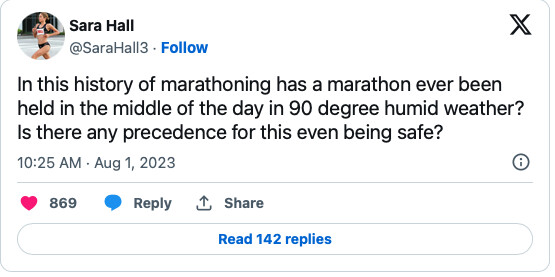
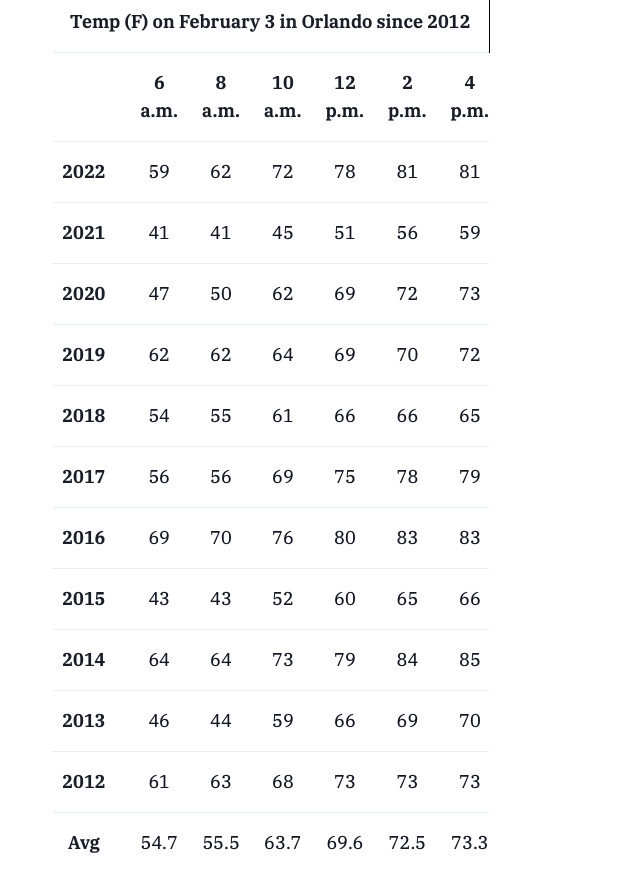
Mid-Day Start Time
Getting the actual course layout is nice but not that significant. We knew the course was going to be mostly flat as Orlando is mostly flat.
Organizers also announced something more significant: the start times for the race. The men will begin at 12:10 p.m. ET with the women to follow at 12:20 p.m. ET. Both races will be shown in their entirety on NBC.
With basically a noon start in Florida, it’s possible the race could be run in quite warm conditions. The debate of the once-rumored but now confirmed 12ish start times has been intense on the LRC forums for over a month now.
A couple of Trials veterans have already shared their thoughts, with Sara Halland Des Linden offering contrasting viewpoints. Hall, who is known to not like racing in hot weather, expressed concern about the heat and the safety of the athletes. She even challenged USATF CEO Max Siegel to run a hot weather marathon this summer.
It must be noted that Orlando has not seen a 90-degree day in February since 1962.
Meanwhile, two-time Olympian Linden had no issue with the start time and thought it could boost her chances of making the team by running smart.
For those interested in what the weather is typically like in Orlando on February 3, here’s a look at the temperature, wind, and dew point at specific times from 2012-22.
If the goal of the Olympic Marathon Trials was for every athlete to run their fastest possible race, obviously it would be better to start the race earlier, but there are other concerns. Television is the reason why the race is being held in the afternoon (there’s not a huge amount of West Coasters watching TV at 5 or 6 a.m. on a Saturday). The 2016 Trials began at 1:06 p.m. ET (10:06 a.m. local in Los Angeles) while the 2020 Trials in Atlanta began at 12:08 p.m. ET. Both races were shown on NBC in their entirety.
The fact is, in professional sports, there are often competing interests — what’s best for the athletes isn’t always what’s best for TV, and someone is going to be unhappy. USATF designed its US championships schedule this year with athletes in mind but the result was that USATF could not get the US outdoor championships shown on NBC. With the Trials, USATF is prioritizing the broadcast on NBC with the athletes a secondary consideration. You can be mad about one of those two things, but not both.
Orlando can be warm in February, no doubt about it — from 2012-22, the average temperature at 2 p.m. on February 3 was 73 degrees. But guess which race also is warm? The Olympic marathon. The Olympic marathons will be held on July 10-11, 2024. On July 10-11 this year, it was 73 degreees at 10 a.m. in Paris, which is when the marathons would be nearing their completion (8 a.m. start times).
In general, we are for athletics to be on live TV so we are fine with the races being scheduled for 12:10 and 12:20. We do believe if the temperatures are truly extreme (say 75 or higher at the start, certainly 80), USATF should move the race up and show it on tape-delay. But if you’re looking for conditions that mirror the Olympic marathon, Orlando in February is not a bad facsimile.
The one big issue we still have is with the new Olympic qualifying system. If you haven’t run under 2:11:30 for the men or 2:29:30 for the women during the qualifying window, you aren’t going to the Olympics even if you are in the top three. We think that’s ridiculous but those are the rules. That’s tough to do in warm weather. While it’s very unlikely someone who hasn’t run at least 2:11:30 or 2:29:30 in the window finishes top three, it could happen in the case of someone just moving up the marathon like Molly Seidel did in 2020 or someone coming back from injury or maternity leave like Kellyn Taylor.
We really wish WA would simply accept the top three from the Trials since the US is sending three per gender most likely no matter what happens, but we’d rather take the small risk that someone without the 2:11:30/2:29:30 times is top three and have the race be on live TV than put it early in the morning. Plus athletes could chase the time up until April 30 and we’d love to see WA have to take the PR hit of someone on the way back from maternity leave having to run a time. Maybe it would finally make them let the spots go to countries as long as the countries hold legitimate trials.
(To cover all our bases, it’s worth noting there’s a small chance on the men’s side that the US has only one or two qualified men’s athletes at the start of the Trials. We’re pretty sure we’ll have at least three but it’s not set in stone and we won’t know for sure until after the fall marathon season is over. If that’s the case, then the start time is more problematic as the US men would either have to hit the 2:08:10 auto standard or run fast enough to raise their world ranking into a qualification spot. If that’s the case and the US men don’t have three spots guaranteed, we think the men’s start time should be moved up and shown on tape delay but keep the women’s race as scheduled).
Talk about the trials on our forum:
(01/21/2024) ⚡AMPby Let’s Run

Eugene Will Host 2024 US Olympic Track & Field Trials, Again
The next US Olympic Track and Field Trials will be held in ….. Eugene, yet again.
Yes that’s right. Hayward Field will host the 2024 US Olympic Team Trials – Track & Field from June 21-30, 2024, USATF announced in a statement on Thursday. The Olympic track & field program will begin four weeks later, on August 1 in Paris.
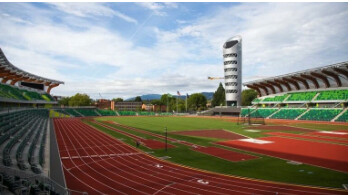
2024 will be the fifth straight Olympic Trials hosted by Eugene (2008, 2012, 2016, 2021, 2024) and Eugene’s fourth straight USATF Outdoor Championship. Since the new Hayward Field opened in 2020, no other stadium has hosted the US championships.
That means that in 2024 — just as in 2015, 2016, 2021, and 2022 — the three biggest meets in American track & field will be held at Hayward Field: the Prefontaine Classic, the NCAA championships, and the USATF championships/Olympic Trials. Here is what the schedule will look like for 2024:
May 25: Prefontaine ClassicJune 5-8: NCAA championshipsJune 21-30: US Olympic Trials
Quick Take: Eugene does a fantastic job hosting big meets, but it’s time to give someone else a chance to host the Olympic Trials
Let’s make a few things clear. The new Hayward Field is the best track & field stadium in the country, and Eugene has a terrific local organizing committee in TrackTown USA that knows how to stage big meets. The 2024 Olympic Trials are going to be terrific — they always are.
When you’ve got a beautiful new stadium like Hayward Field, you don’t want it to go to waste. But from 2021-2024, almost every major track meet in the US will have been staged at Hayward Field. The three most important track meets in the US are the Prefontaine Classic (the US’s only Diamond League), the NCAA championships, and the USATF championships/Olympic Trials. During a four-year period, 11 of those 12 meets will have been hosted in Eugene. And that does not even include the biggest meet Eugene has ever hosted — the 2022 World Championships.
That’s a recipe for major Eugene fatigue.
The Prefontaine Classic obviously isn’t moving out of Eugene, and the NCAAs are locked into Eugene through 2027. But it’s a missed opportunity to hold USAs in Eugene every single year, particularly the Olympic Trials. There are a limited number of diehard track fans in the US, and any diehard who has wanted to visit the new Hayward Field has probably done it at this point. If a husband and wife are huge track fans and they already figured out a way to take their kids to Eugene for Worlds, are they really going to want to go back again to the same location for the Trials?
The Olympic Trials should be in Eugene at most once every eight years. The last two normal* Trials drew more than 20,000 fans per day (21,644 in 2012; 22,1222 in 2016) but it’s foolish to suggest that the Trials can only do those sort of numbers in Eugene.
*Due to the COVID-19 pandemic, there was ticketing uncertainty about the 2021 Trials until the very last minute, which meant attendance numbers were a fraction of previous years
In the United States, when you throw the word Olympic in front of anything, people go crazy. And the last few US championships has shown that the built-in track fanbase in Eugene — the diehards who will go to every meet — has dwindled significantly.
We’re confident that if you staged the Olympic Trials in Austin, Des Moines, Omaha, Sacramento, or Mt. SAC, you’d draw big crowds. The Olympic Trials will do well anywhere they are held.
The question then, is why isn’t this happening?
“We all know that getting [to Eugene], it’s trying,” said Will Leer, chair of the USATF Athlete Advisory Committee, when LetsRun asked him about this at USAs in July. “Small airport, it’s expensive, hotels are minimal. But the process by which championships are awarded is through a bid. That much is well-known throughout all of USATF. And time and time again, TrackTown comes to the table with the best bid.”
Eugene certainly has a lot to offer, but we also don’t how much competition there is to host these events. It’s not as simple as USATF just awarding the Trials to a different city. A potential Trials host needs a world-class track facility and a local organizing committee interested in bidding for the Trials, which requires dollars.
Sarah Lorge Butler reports that Eugene paid at least $3 million to host the 2020 Trials, writing, “TrackTown paid a nonrefundable rights fee of $500,000 and the total prize purse of $1.4 million. They also had obligations to provide $1.1 million for athlete support during the meet, to be used at USATF’s sole discre
It’s an expensive undertaking for any local organizing committee. We know Eugene has the dollars. It’s unclear whether anyone else does (If you know of any other city that bid for the Trials, please email us at letsrun@letsrun.com)
If it’s simply a matter of USATF needing to find $3 million to put on the Trials, we know where they could find it. USATF head Max Siegel was paid a ridiculous $3.8 million in compensation in 2021; reduce that to a more reasonable $800k and you could hold the Trials wherever you wanted without any financial impact on USATF.
(01/21/2024) ⚡AMPby Let’s Run

The Pill That Over Half the Distance Medallists Used at the 2023 Worlds
What's the deal with sodium bicarbonate?What if there was a pill, new to the market this year, that was used by more than half of the distance medalists at the 2023 World Athletics Championships? A supplement so in-demand that there was a reported black market for it in Budapest, runners buying from other runners who did not advance past the preliminary round — even though the main ingredient can be found in any kitchen?
How did this pill become so popular? Well, there are rumors that Jakob Ingebrigtsen has been taking it for years — rumors that Ingebrigtsen’s camp and the manufacturers of the pill will neither confirm nor deny.
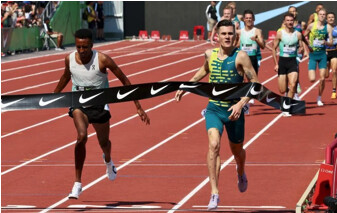
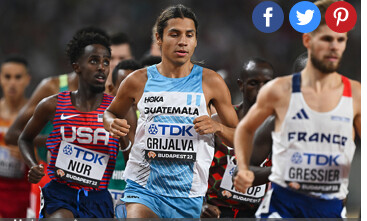
So about this pill…does it work? Does it actually boost athletic performance? Ask a sports scientist, someone who’s studied it for more than a decade, and they’ll tell you yes.
“There’s probably four or five legal, natural supplements, if you will, that seem to have withstood the test of time in terms of the research literature and [this pill] is one of those,” says Jason Siegler, Director of Human Performance in the College of Health Solutions at Arizona State University.
But there’s a drawback to this pill. It could…well, let’s allow Luis Grijalva, who used it before finishing 4th in the World Championship 5,000m final in Budapest, to explain.
“I heard stories if you do it wrong, you chew it, you kind of shit your brains out,” Grijalva says. “And I was a little bit scared.”
The research supports that, too.
“[Gastrointestinal distress] has by far and away been the biggest hurdle for this supplement,” Siegler says.Okay, enough with the faux intrigue. If you’ve read the subtitle of this article, you know the pill we are talking about is sodium bicarbonate. Specifically, the Maurten Bicarb System, which has been available to the public since February and which has been used by some of the top teams in endurance sports: cycling juggernaut Team Jumbo-Visma and, in running, the On Athletics Club and NN Running Team. (Maurten has sponsorship or partnership agreements with all three).Some of the planet’s fastest runners have used the Maurten Bicarb System in 2023, including 10,000m world champion Joshua Cheptegei, 800m silver medalist Keely Hodgkinson, and 800m silver medalist Emmanuel Wanyonyi. Faith Kipyegon used it before winning the gold medal in the 1500m final in Budapest — but did not use it before her win in the 5,000m final or before any of her world records in the 1500m, mile, and 5,000m.
Herman Reuterswärd, Maurten’s head of communications, declined to share a full client list with LetsRun but claims two-thirds of all medalists from the 800 through 10,000 meters (excluding the steeplechase) used the product at the 2023 Worlds.
After years of trial and error, Maurten believes it has solved the GI issue, but those who have used their product have reported other side effects. Neil Gourley used sodium bicarbonate before almost every race in 2023, and while he had a great season — British champion, personal bests in the 1500 and mile — his head ached after races in a way it never had before. When Joe Klecker tried it at The TEN in March, he felt nauseous and light-headed — but still ran a personal best of 27:07.57. In an episode of the Coffee Club podcast, Klecker’s OAC teammate George Beamish, who finished 5th at Worlds in the steeplechase and used the product in a few races this year, said he felt delusional, dehydrated, and spent after using it before a workout this summer.
“It was the worst I’d felt in a workout [all] year, easily,” Beamish said.
Not every athlete who has used the Maurten Bicarb System has felt side effects. But the sport as a whole is still figuring out what to do about sodium bicarbonate.
Many athletes — even those who don’t have sponsorship arrangements with Maurten — have added it to their routines. But Jumbo-Visma’s top cyclist, Jonas Vingegaard — winner of the last two Tours de France — does not use it. Neither does OAC’s top runner, Yared Nuguse, who tried it a few times in practice but did not use it before any of his four American record races in 2023.“I’m very low-maintenance and I think my body’s the same,” Nuguse says. “So when I tried to do that, it was kind of like, Whoa, what is this? My whole body felt weird and I was just like, I either did this wrong or this is not for me.”
How sodium bicarbonate works
The idea that sodium bicarbonate — aka baking soda, the same stuff that goes in muffins and keeps your refrigerator fresh — can boost athletic performance has been around for decades.
“When you’re exercising, when you’re contracting muscle at a really high intensity or a high rate, you end up using your anaerobic energy sources and those non-oxygen pathways,” says Siegler, who has been part of more than 15 studies on sodium bicarbonate use in sport. “And those pathways, some of the byproducts that they produce, one of them is a proton – a little hydrogen ion. And that proton can cause all sorts of problems in the muscle. You can equate that to that sort of burn that you feel going at high rates. That burn, most of that — not directly, but indirectly — is coming from the accumulation of these little hydrogen ions.”
As this is happening, the kidneys produce bicarbonate as a defense mechanism. For a while, bicarbonate acts as a buffer, countering the negative effects of the hydrogen ions. But eventually, the hydrogen ions win.The typical concentration of bicarbonate in most people hovers around 25 millimoles per liter. By taking sodium bicarbonate in the proper dosage before exercise, Siegler says, you can raise that level to around 30-32 millimoles per liter.
“You basically have a more solid first line of defense,” Siegler says. “The theory is you can go a little bit longer and tolerate the hydrogen ions coming out of the cell a little bit longer before they cause any sort of disruption.”
Like creatine and caffeine, Siegler says the scientific literature is clear when it comes to sodium bicarbonate: it boosts performance, specifically during events that involve short bursts of anaerobic activity. But there’s a catch.
***
Bicarb without the cramping
Sodium bicarbonate has never been hard to find. Anyone can swallow a spoonful or two of baking soda with some water, though it’s not the most appetizing pre-workout snack. The problem comes when the stomach tries to absorb a large amount of sodium bicarbonate at once.
“You have a huge charged load in your stomach that the acidity in your stomach has to deal with and you have a big shift in the partial pressure of carbon dioxide across the gut,” Siegler says. “And that’s what gives you the cramping.”
A few years ago, Maurten was trying to solve a similar problem for marathoners trying to ingest large amounts of carbohydrates during races. The result was their carbohydrate drink, which relies on something called a hydrogel to form in the stomach. The hydrogel resists the acidity of the stomach and allows the carbohydrates to be absorbed in the intestine instead, where there is less cramping.
“We thought, okay, we are able to solve that one,” Reuterswärd says. “Could we apply the hydrogel technology to something else that is really risky to consume that could be beneficial?”
For almost four years, Maurten researched the effects of encapsulating sodium bicarbonate in hydrogels in its Swedish lab, conducting tests on middle-distance runners in Gothenburg. Hydrogels seemed to minimize the risk, but the best results came when hydrogels were paired with microtablets of sodium bicarbonate.
The result was the Maurten Bicarb System — “system,” because the process for ingesting it involves a few steps. Each box contains three components: a packet of hydrogel powder, a packet of tiny sodium bicarbonate tablets, and a mixing bowl. Mix the powder with water, let it stand for a few minutes, and sprinkle in the bicarb.The resulting mixture is a bit odd. It’s gooey. It’s gray. It doesn’t really taste like anything. It’s not quite liquid, not quite solid — a yogurt-like substance flooded with tiny tablets that you eat with a spoon but swallow like a drink.
The “swallow” part is important. Chew the tablets and the sodium bicarbonate will be absorbed before the hydrogels can do their job. Which means a trip to the toilet may not be far behind.
When Maurten launched its Bicarb System to the public in February 2023, it did not have high expectations for sales in year one.
“It’s a niche product,” Reuterswärd says. “From what we know right now, it maybe doesn’t make too much sense if you’re an amateur, if you’re just doing 5k parkruns.”
But in March, Maurten’s product began making headlines in cycling when it emerged that it was being used by Team Jumbo-Visma, including by stars Wout van Aert and Primož Roglič. Sales exploded. Because bicarb dosage varies with bodyweight, Maurten’s system come in four “sizes.” And one size was selling particularly well.
“If you’re an endurance athlete, you’re around 60-70 kg (132-154 lbs),” Reuterswärd says. “We had a shortage with the size that corresponded with that weight…The first couple weeks, it was basically only professional cyclists buying all the time, massive amounts. And now we’re seeing a similar development in track & field.”
If there was a “Jumbo-Visma” effect in cycling, then this summer there was a “Jakob Ingebrigtsen” effect in running.To be clear: there is no official confirmation that Ingebrigtsen uses sodium bicarbonate. His agent, Daniel Wessfeldt, did not respond to multiple emails for this story. When I ask Reuterswärd if Ingebrigtsen has used Maurten’s product, he grows uncomfortable.
“I would love to be very clear here but I will have to get back to you,” Reuterswärd says (ultimately, he was not able to provide further clarification).
But when Maurten pitches coaches and athletes on its product, they have used data from the past two years on a “really good” 1500 guy to tout its effectiveness, displaying the lactate levels the athlete was able to achieve in practice with and without the use of the Maurten Bicarb System. That athlete is widely believed to be Ingebrigtsen. Just as Ingebrigtsen’s success with double threshold has spawned imitators across the globe, so too has his rumored use of sodium bicarbonate.
Grijalva says he started experimenting with sodium bicarbonate “because everybody’s doing it.” And everybody’s doing it because of Ingebrigtsen.
“[Ingebrigtsen] was probably ahead of everybody at the time,” Grijalva said. “Same with his training and same with the bicarb.”
OAC coach Dathan Ritzenhein took sodium bicarbonate once before a workout early in his own professional career, and still has bad memories of swallowing enormous capsules that made him feel sick. Still, he was willing to give it a try with his athletes this year after Maurten explained the steps they had taken to reduce GI distress.
“Certainly listening to the potential for less side effects was the reason we considered trying it,” says Ritzenhein. “I don’t know who is a diehard user and thinks that it’s really helpful, but around the circuit I know a lot of people that have said they’ve [tried] it.”
Coach/agent Stephen Haas says a number of his athletes, including Gourley, 3:56 1500 woman Katie Snowden, and Worlds steeple qualifier Isaac Updike, tried bicarb this year. In the men’s 1500, Haas adds, “most of the top guys are already using it.”
Yet 1500-meter world champion Josh Kerr was not among them. Kerr’s nutritionist mentioned the idea of sodium bicarbonate to him this summer but Kerr chose to table any discussions until after the season. He says he did not like the idea of trying it as a “quick fix” in the middle of the year.
“I review everything at the end of the season and see where I could get better,” Kerr writes in a text to LetsRun. “As long as the supplement is above board, got all the stamps of approvals needed from WADA and the research is there, I have nothing against it but I don’t like changing things midseason.”
***
So does it actually work?
Siegler is convinced sodium bicarbonate can benefit athletic performance if the GI issues can be solved. Originally, those benefits seemed confined to shorter events in the 2-to 5-minute range where an athlete is pushing anaerobic capacity. Buffering protons does no good to short sprinters, who use a different energy system during races.
“A 100-meter runner is going to use a system that’s referred to the phosphagen or creatine phosphate system, this immediate energy source,” Siegler says. “…It’s not the same sort of biochemical reaction that eventuates into this big proton or big acidic load. It’s too quick.”
But, Siegler says, sodium bicarbonate could potentially help athletes in longer events — perhaps a hilly marathon.
“When there’s short bursts of high-intensity activity, like a breakaway or a hill climb, what we do know now is when you take sodium bicarbonate…it will sit in your system for a number of hours,” Siegler says. “So it’s there [if] you need it, that’s kind of the premise behind it basically. If you don’t use it, it’s fine, it’s not detrimental. Eventually your kidneys clear it out.”Even Reuterswärd admits that it’s still unclear how much sodium bicarbonate helps in a marathon — “honestly, no one knows” — but it is starting to be used there as well. Kenya’s Kelvin Kiptum used it when he set the world record of 2:00:35at last month’s Chicago Marathon; American Molly Seidel also used it in Chicago, where she ran a personal best of 2:23:07.
Siegler says it is encouraging that Maurten has tried to solve the GI problem and that any success they experience could spur other companies to research an even more effective delivery system (currently the main alternative is Amp Human’s PR Lotion, a sodium bicarbonate cream that is rubbed into the skin). But he is waiting for more data before rendering a final verdict on the Maurten Bicarb System.
“I haven’t seen any peer-reviewed papers yet come out so a bit I’m hesitant to be definitive about it,” Siegler said.
Trent Stellingwerff, an exercise physiologist and running coach at the Canadian Sport Institute – Pacific, worked with Siegler on a 2020 paper studying the effect of sodium bicarbonate on elite rowers. A number of athletes have asked him about the the Maurten Bicarb System, and some of his marathoners have used the product. Like Siegler, he wants to see more data before reaching a conclusion.
“I always follow the evidence and science, and to my knowledge, as of yet, I’m unaware of any publications using the Maurten bicarb in a double-blind, placebo-controlled clinical trial,” Stellingwerff writes in a text to LetsRun. “So without any published data on the bicarb version, I can’t really say it does much.”
The closest thing out there right now is a British study conducted by Lewis Goughof Birmingham City University and Andy Sparks of Edge Hill University. In a test of 10 well-trained cyclists, Gough and Sparks found the Maurten Bicarb System limited GI distress and had the potential to improve exercise performance. Reuterswärd says the study, which was funded by Maurten, is currently in the review process while Gough and Sparks suggested further research to investigate their findings.
What about the runners who used sodium bicarbonate in 2023?
Klecker decided to give bicarb a shot after Maurten made a presentation to the OAC team in Boulder earlier this year. He has run well using bicarb (his 10,000 pb at The TEN) and without it (his 5,000 pb in January) and as Klecker heads into an Olympic year, he is still deciding whether the supposed benefits are worth the drawbacks, which for him include nausea and thirst. He also says that when he has taken the bicarb, his muscles feel a bit more numb than usual, which has made it more challenging for him to gauge his effort in races.
“There’s been no, Oh man I felt just so amazing today because of this bicarb,” Klecker says. “If anything, it’s been like, Oh I didn’t take it and I felt a bit more like myself.”
Klecker also notes that his wife and OAC teammate, Sage Hurta-Klecker, ran her 800m season’s best of 1:58.09 at the Silesia Diamond League on July 16 — the first race of the season in which she did not use bicarb beforehand.
A number of athletes in Mike Smith‘s Flagstaff-based training group also used bicarb this year, including Grijalva and US 5,000 champion Abdihamid Nur. Grijalva did not use bicarb in his outdoor season opener in Florence on June 2, when he ran his personal best of 12:52.97 to finish 3rd. He did use it before the Zurich Diamond League on August 31, when he ran 12:55.88 to finish 4th.“I want to say it helps, but at the same time, I don’t want to rely on it,” Grijalva says.
Almost every OAC athlete tried sodium bicarbonate at some point in 2023. Ritzenhein says the results were mixed. Some of his runners have run well while using it, but the team’s top performer, Nuguse, never used it in a race. Ritzenhein wants to continue testing sodium bicarbonate with his athletes to determine how each of them responds individually and whether it’s worth using moving forward.
That group includes Alicia Monson, who experimented with bicarb in 2023 but did not use it before her American records at 5,000 and 10,000 meters or her 5th-place finish in the 10,000 at Worlds.
“It’s not the thing that’s going to make or break an athlete,” Ritzenhein says. “…It’s a legal supplement that has the potential, at least, to help but it doesn’t seem to be universal. So I think there’s a lot more research that needs to be done into it and who benefits from it.”
The kind of research scientists like Stellingwerff want to see — double-blind, controlled clinical trials — could take a while to trickle in. But now that anyone can order Maurten’s product (it’s not cheap — $65 for four servings), athletes will get to decide for themselves whether sodium bicarbonate is worth pursuing.
“The athlete community, obviously if they feel there’s any sort of risk, they’re weighing up the risk-to-benefit ratio,” Siegler said. “The return has got to be good.”
Grijalva expects sodium bicarbonate will become part of his pre-race routine next year, along with a shower and a cup of coffee. Coffee, and the caffeine contained wherein, may offer a glimpse at the future of bicarb. Caffeine has been widely used by athletes for longer than sodium bicarbonate, and the verdict is in on that one: it works. Yet plenty of the greats choose not to use it.
Nuguse is among them. He does not drink coffee — a fact he is constantly reminded of by Ritzenhein.
“I make jokes almost every day about it,” Ritzenhein says. “His family is Ethiopian – coffee tradition and ceremony is really important to them.”
Ritzenhein says he would love it if Nuguse drank a cup of coffee sometime, but he’s not going to force it on him. Some athletes, Ritzenhein says, have a tendency to become neurotic about these sorts of things. That’s how Ritzenhein was as an athlete. It’s certainly how Ritzenhein’s former coach at the Nike Oregon Project, Alberto Salazar, was — an approach that ultimately earned Salazar a four-year ban from USADA.
Ritzenhein says he has no worries when it comes to any of his athletes using sodium bicarbonate — Maurten’s product is batch-tested and unlike L-carnitine, there is no specific protocol that must be adhered to in order for athletes to use it legally under the WADA Code. Still, there is something to be said for keeping things simple.
“Yared knows how his body feels,” Ritzenhein says. “…He literally rolls out of practice and comes to practice like a high schooler with a Eggo waffle in hand. Probably more athletes could use that kind of [approach].”
Talk about this article on our world-famous fan forum / messageboard.
(01/21/2024) ⚡AMPby Let’s Run

Hosea Kimeli given three year ban as 2023 Zagreb Marathon title stripped off his name
Hosea Kimeli has been slapped with a three-year ban by the AIU and all his results since October 8, 2023, have been disqualified, including the forfeiture of any titles, awards, medals, points, prizes and appearance money
The Athletics Integrity Unit (AIU) has slapped Hosea Kimeli Kisorio with a three-year ban for an anti-doping rule violation.
The 33-year-old found himself on the list of shame after his tests came out positive for the presence of EPO, a Prohibited Substance under the WADA 2023 Prohibited List under the category S2 Peptide Hormones, Growth Factors, Related Substances and Mimetics.
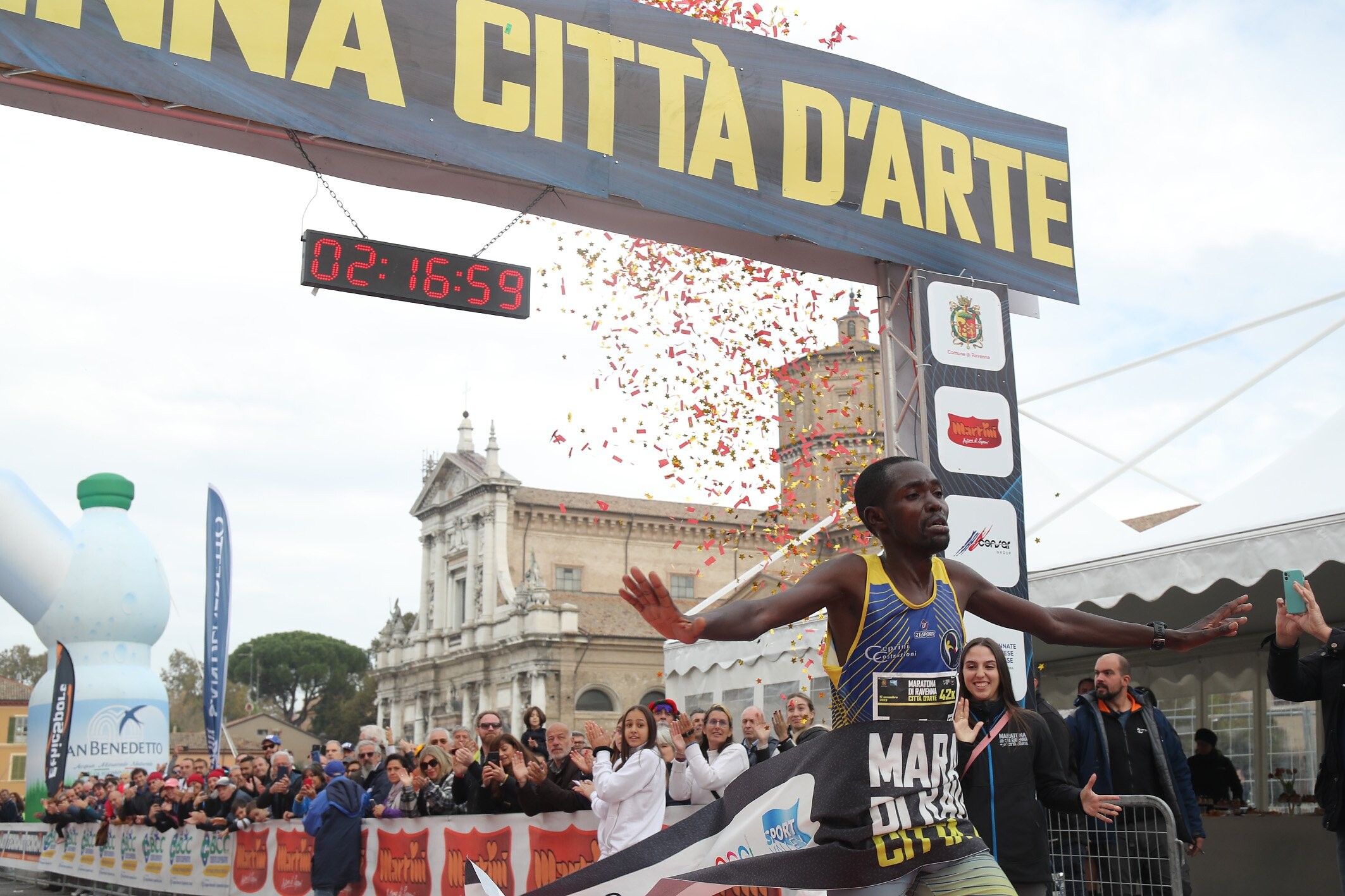
As per AIU, the period ineligibility to be imposed is therefore a period of four years, unless the Athlete demonstrates that the Anti-Doping Rule Violations were not intentional.
“The Athlete has failed to demonstrate that the Anti-Doping Rule Violations were not intentional. Therefore, the mandatory period of Ineligibility is a period of Ineligibility of four years.
"However, Rule 10.8.1 ADR provides that an athlete potentially subject to an asserted period of Ineligibility of four (4) years may benefit from a one (1)-year reduction in the period of Ineligibility based on an early admission and acceptance of sanction,” the AIU further stated, adding that Kimeli admitted having committed the crime earlier this year, thus the reduction of the sanction.
This means that his results since he won the 2023 Zagreb Marathon have been disqualified.
Meanwhile, Kimeli was banned alongside his compatriot Ayub Kiptum who also received three years with his results from October 21, 2023 disqualified. Kiptum was banned for the Presence/Use of a Prohibited Substance (Testosterone).
(01/20/2024) ⚡AMPby Abigael Wuafula

Zagreb Marathon
Zagreb Marathon is a marathon and half marathon in Zagreb, Croatia. The marathon race is organized annually in October and was started in1992. The number of participants has increased over the years. Zagreb Marathon has an international character with participants from all over the world....
more...
91-year-old Italian woman Emma Maria Mazzenga speeds to age-group 200m world record
Emma Maria Mazzenga of Italy is etching her name in track and field history at the age of 91. Competing in the W90+ category at a Masters event in Veneto, Italy last weekend, she clocked an incredible 54.47 seconds for 200m indoors, shattering the world record by five seconds.
Mazzenga maintained an impressive speed of 13 km/hr for the 200m distance. Achieving such a feat is astounding, considering most would be content just to reach the age of 91, let alone set a new age group world record with a pace of 4:30/km. What adds to the awe of Mazzenga’s accomplishment is her incredible comeback. According to Vogue Italy, she started training just a month before her Jan 14 race, following a sternum fracture.
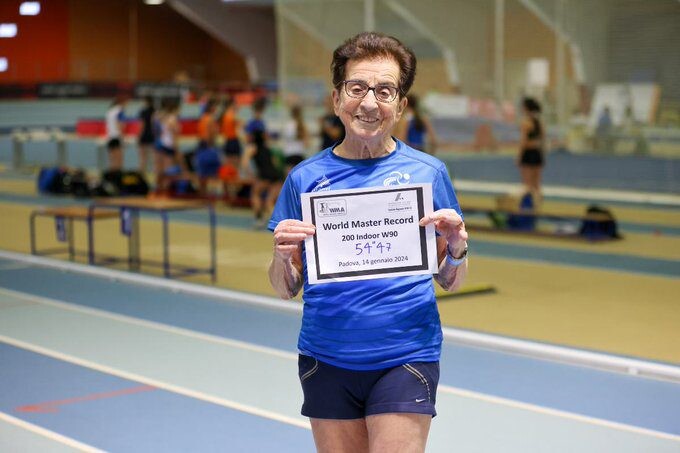
The former 200m indoor record for the W90+ category stood for 13 years and belonged to Canadian masters legend Olga Kotelko. Kotelko, who passed away in 2014 at the age of 95, held over 30 world records and won more than 750 gold medals in the masters competitions.
Mazzenga, a retired chemistry professor from northern Italy, only started competing masters races at the age of 53. Now, at 90, she continues to defy norms and set records. A video of her record-breaking run has gone viral on TikTok and Instagram.
Mazzenga told Vogue Italy that her secret to success is elegantly simple: she never stops. Each morning, Mazzenga takes a walk with her friend, interspersed with biking between her walks and runs. “The emotion that a race gives me, the adrenaline I get every training session, it brings energy to my days,” Mazzenga shared with Vogue Italy.
Despite setting a world record, Mazzenga remains humble and confident that she can achieve even faster times at her upcoming races at the Italian Masters Championships in Ancona, Italy, and the European championships in Torun, Poland, scheduled for March.
(01/20/2024) ⚡AMPby Marley Dickinson

How An Old Drinking Fountain Revived New York’s Marathoning and Pasta Club
The group is all about logging slow miles and consuming carbs—in that order.
In New York’s Central Park, at West Drive and 92nd Street, is a nondescript drinking fountain made of black granite. Blink as you run past, and you’d miss it, but this particular fountain, inscribed in 1991 with an ivy garland and the words “72 Street Marathoning and Pasta Club” around its rim, has recently gained interest from a new generation of runners and inspired them to take up the mantle of distance running and carb loading.

Amanda Smith stumbled upon the fountain in 2020, during the early days of the COVID-19 pandemic, and was inspired by the inscription. “As a foodie who loves to run, nothing more closely aligns with my lifestyle than that!” she wrote on Reddit. Smith snatched up the Marathoning and Pasta Club handle on Instagram posthaste, knowing she wanted to do something with it in the future—three years later, her dream has come to fruition.
A few weeks ago, Smith gauged interest for an all-new run club devoted to sharing easy miles followed by “family style” meals afterwards. People loved the idea. The group got together for their first outing on Thursday night: Five runners showed up for a loop of Central Park, chatting and getting to know each other, before tucking into orders of rigatoni carbone on the Upper West Side.
“It was really nice to just have a conversation, and everyone’s kind of sharing the role that running plays in their lives,” Smith told Runner’s World.
The original Marathoning and Pasta Club traces its history back to the 1970s, when its members, in addition to their love of running and spaghetti, were dedicated stewards of Central Park, often planting trees and cleaning and restoring water fountains. One of the seven original members is Jonathan Mendes, a World War II Marine who in 2016, at 96 years old, was believed to be the oldest unofficial finisher of the New York City Marathon, completing the race in 11 hours and 23 minutes. Carl Landegger, 10 years Mendes’ junior, was another founding member, and was running marathons with his friend as recently as 2010.
Smith laughs that the initial club was comprised of serious runners who competed around the world, clocking impressive times. Her iteration of the Marathoning and Pasta Club is more of a nod to the originals. The new club is truly pace inclusive and spans all five New York City boroughs. Next week they’ll be meeting in Brooklyn’s Prospect Park before heading to Pasta Louise Cafe in Park Slope.
You don’t need to be a marathoner to join the club, and unlike many other groups, there’s no minimum pace required.
“I hope people feel comfortable to come because it isn’t about competitions,” Smith said. “You don't need to be training for anything. We had people last night who just like to run, and they’re not interested in running a marathon and that’s totally fine.”
Some nights, Smith says they may even skip the run and just bond over pasta. She sees a real need for clubs based around recovery-pace runs and community.
Fusilli and farfalle sound fun? You can stay up-to-date on the happenings of the Marathoning and Pasta Club on their Instagram page.
(01/20/2024) ⚡AMPby Runner’s World

47-Year-Old Marathoner to Run Fifth Olympic Trials
Dot McMahan qualified with a 2:35:20 at Grandma’s Marathon, averaging 5:56 per mile pace.
In the closing miles of the 2023 Grandma’s Marathon, last June in Duluth, Minnesota, Dot McMahan struggled to calculate how close she was to the Olympic Marathon Trials standard.
“I was just trying to run under 2:37, but you know, math, when you’re running a marathon, isn’t always so good,” she said.
McMahan was more than fine. In her 20th marathon, she ran 2:35:20, smashing the standard and qualifying for her fifth Olympic Marathon Trials.
Her coach, Kevin Hanson, of Hansons-Brooks Distance Project, was ecstatic. And so was her husband, Tim, and their 14-year-old daughter, El, who is also a runner. El told her mom when they FaceTimed after the race that she had run her fastest time since turning 40. “She knew all my stats,” McMahan said. “She was over the moon.”
McMahan, 47, and Des Linden, 40, are thought to be the only female athletes in the field running a fifth marathon trials. McMahan is the oldest women’s qualifier. On the men’s side, Fernando Cabada, 41, has qualified for five marathon trials and is entered in the race. Abdi Abdirahman, a five-time Olympian, is also 47, the oldest in the men’s field.
It was never a given that McMahan would make a fifth trials, especially after USA Track & Field announced in late 2021 the tougher entry standards for the 2024 race. For the 2020 race, held in Atlanta, women had to run 2:45 to make the Trials. This time around, they had to be 8 minutes faster.
“I was very supportive of the fact that they needed to make it quicker, for the women, at least,” she said. “It kind of loses its luster if we make it too easy. That said, I think it was a little harder than I [predicted], which was maybe 2:40, 2:39. So 2:37 was like, woah, okay, we’ve got a real goal here. I never assumed that was going to be a walk in the park.”
McMahan, who was eighth at the Trials in 2008 and ninth in 2012, knows she’s unlikely to finish that close to the front again, unless something unexpected happens in Orlando. While her teammates have moved to Orlando for the month to prepare for potential heat and humidity, McMahan is still training in Rochester Hills, Michigan, where she works as an assistant track coach at nearby Oakland University and has a pet sitting business. (She’s also an online coach with McKirdy Trained.)
And she wants to be home with her family. McMahan’s only warm weather preparations at the moment are the occasional treadmill run. “It’s in a space that we can enclose a little more and turn the heat up,” she said. But simulating humidity “gets a little tricky. You don’t want to grow a bunch of mold in your house.”
That’s typical of the practicality McMahan brings to her training. Her longevity, she says, is a function of doing most of the same hard work she’s always done. She’ll reach 105–110 miles per week at her peak training for a marathon, and she’ll double three or four days per week. She used to run 120.
“I’ve tapered back a little bit, but I’m still doing the majority of it,” she said of the Hansons-Brooks training. “That’s what it takes.” On January 14, McMahan ran the Houston Half Marathon as a tuneup and finished in 1:16:02, averaging 5:48 pace. She was very happy with the result.
Hanson said he and McMahan frequently joke that she’s old enough to be the mother to some of the athletes on the team who are fresh out of college. But he notes McMahan’s durability. She has avoided serious injuries. “That’s what becomes career-ending in your 40s,” he said. “In your late 40s, any injury that sets you back sometimes ends things, because it’s just to hard to get back into it.”
McMahan is practical about other matters, too.
For one, she refuses to dye her hair. “I do have a considerable amount of gray hair,” she said. “I’m not doing anything about it; I’m just going to let it come in.” Plus, she said, her husband has gray hair. They’d look silly together if she dyed her hair and he didn’t. “We’re aging,” she said. “It’s just life.”
She devotes about an hour to getting ready for her morning runs—warming up, doing mobility exercises, and “making sure things are firing.”
When her pace slows on afternoon recovery runs, she doesn’t dwell on it. On December 26, she did a hard 20-miler. The next day, she was tired, and she had 10 miles in the morning, and 4 miles in the afternoon on the schedule. She did those runs, but she ran them slowly—for her.
“I think in the past, I would have beat myself up mentally looking at my watch and being like, ‘You’re running 8-minute pace; this is so ridiculous,’” she said.
Now, she thinks: Are you happy? Are you healthy? Does anything hurt? This is what recovery pace is for you. “I listen to my body, and I don’t get upset thinking it should be a certain pace,” she said. “That’s my concession to age.”
(01/20/2024) ⚡AMPby Runner’s World

This historic track froze into a skating rink
The West Coast of the U.S. and Canada got hit with sub-zero temperatures over the weekend as a cold front swept through the Midwest. Northern California and Southern Oregon reported unusual seasonal lows around -5 and -10 C, resulting in extreme cold that even froze over Hayward Field at the University of Oregon, transforming one of the most well-known tracks in the world into a skating rink.
Instead of wearing spikes for their Monday morning workout, the Oregon Ducks track and field team was seen skating on the track, turning their usual practice into more of a speed-skating session.

The video was posted to Oregon freshman Simeon Birnbaum’s Instagram story on Monday, where he was also seen sporting a Team Canada kit T-shirt. Although Birnbaum is from South Dakota, he has Canadian roots, having spent his early years in Alberta, where he learned to skate, according to Runnerspace. He transitioned from hockey to track in his early teenage years and is now a sub-four-minute miler with the University of Oregon track and field team under coach Jerry Schumacher.
The sight of people skating on Hayward Field has sparked a few ideas. First, envision an epic NHL Winter Classic game in that stadium. With a capacity of up to 25,000 fans and oval-shaped grandstands reminiscent of an NHL arena, the venue could provide an ideal setting and atmosphere for a game.
I know the recent Winter Classic between the Seattle Kraken and Las Vegas Golden Knights at MLB stadium T-Mobile Park in Seattle on Jan. 1 accommodated way more fans than Hayward, but let’s get NHL commissioner Gary Bettman on the phone to arrange a future Winter Classic matchup between the Seattle Kraken and L.A. Kings at Hayward.
The second idea involves Hayward Field hosting a long-track speed skating World Cup event in January or February. This cross-up between two of the most popular summer and winter Olympic events would be unreal. While I am no expert on speed skating, I would only think that having track-meet-style races could be highly entertaining, especially if wind or snow becomes a factor. Though the University of Oregon might not permit either event, it doesn’t hurt to start the buzz.
(01/20/2024) ⚡AMPby Running Magazine

Michael Bublé claims a near-death running experience in Manitoba
Canadian singing icon and proclaimed King of Christmas, Michael Bublé, claims he had a near-death running experience in Churchill, Man.On Jan. 15, Bublé appeared on The Kelly Clarkson Show, where former American Idol winner Kelly Clarkson asked the singer about a drunken late-night run gone wrong with Canadian actor Barry Pepper while shooting a movie in Canada’s tundra.Bublé said he had just finished filming the 2003 survival drama The Snow Walker and was celebrating with the cast. During the celebration, Pepper and Bublé decided to race down to the beach. But they didn’t realize what was waiting for them there.
“A guy that lived there just started swearing at us and just screaming, I mean, screaming bloody murder,” Bublé said. “We did not realize we were running to our certain death, because there were polar bears all down the beach.”“Sometimes I wonder how close I was to being like a little polar bear lunch,” he joked. “They are the most aggressive—God, but they are so cuddly.” Clarkson went on to reference the cute bears from Coca-Cola commercials.


As this story may not seem “Bublé-vable,” Churchill annually reports more than 300 polar bear incidents or encounters, so much so that they even built a polar bear holding facility (which they call the Polar Bear Jail), which captures and relocates troublesome or dangerous bears. Before it was built in 1983, polar bears that were considered dangerous were shot.Canada is home to two-thirds of the world’s polar bear population, and the Hudson Bay town of Churchill is a common feeding ground. The animals move toward the coast, and sometimes into town, from areas farther inland to hunt seals from the sea ice during the fall when temperatures drop.In 2014, Churchill’s Polar Bear Marathon had to alter the course because the bears got a little too close. Because of the danger from the cold and bears, each runner is assigned a support vehicle that carries food, extra clothing and a bear watcher equipped with a rifle, in case of an emergency.
(01/20/2024) ⚡AMPby Running Magazine

Run Before or After Workout to Maximize Gains
Strength training is an essential component of a well-rounded running training program, but for busy runners, it can be tricky to fit it into your program without jeopardizing your running workouts. Emma Vaillancourt, a registered physiotherapist and running coach in Thunder Bay, Ont., explains how to effectively incorporate strength training into your running routine to maximize gains and minimize burnout.
Should you strength train before or after running?
Vaillancourt explains that the order of strength training and running depends on your goals and where you’re at in your racing season. During the off-season, when running is less of a priority, you may choose to strength train first. In contrast, during the in-season, when your focus is on building running volume or intensity, running should usually come first.
If you plan to do strength training on days when you have intervals or speedwork, it’s generally better to do strength work after your run. This helps avoid fatigue and a possible negative impact on your workout. Vaillancourt also notes that running immediately before lifting can moderately impair lower-body strength gains. “If your goal is to improve strength, lift before the run,” she says. “If you aim to enhance endurance adaptations like aerobic capacity, the order doesn’t matter as much.”
Is it better to leave space sessions or can you do them back-to-back?
“It is recommended to allow at least three hours after high-intensity running before engaging in strength training,” says Vaillancourt. “During this recovery window, it’s important to refuel with a high-carb and protein meal to replenish your energy stores.”
Vaillancourt recommends at least 24 hours’ recovery after strength training before engaging in high-intensity running, but if you’re pairing strength training with easy runs, you can reduce the time between them.
Of course, most of us can’t plan our day around our strength training and running plans, so if scheduling becomes an issue, doing one activity right after the other is still beneficial. “Something is often better than nothing!” says Vaillancourt.
Alternatively, she suggests splitting your strength training into smaller blocks, focusing on shorter, more frequent sessions throughout your week. This approach causes less fatigue and can be more manageable for some runners. “The idea here would be to do 10 to 20 minutes of strength work (maybe two or three exercises) but more frequently in your week, compared to the traditional 30 to 60 minutes done two or three times per week,” she says.
How often should runners strength train?
The frequency of strength training depends on several factors, including your experience level, the point in the season, and the time you can commit to training in a week.
In the off-season and early season, Vaillancourt recommends strength training two to three times a week, focusing on higher volumes of training. “If you’re training for a single race, such as a half-marathon or marathon, you will likely want to drop down to one to two times per week as your mileage peaks,” she says. “As you get closer to your race and are entering your taper, you can drop to once a week for maintenance.”
Running before or after workouts has a drastic effect on training effectiveness. Running before a strength workout can compromise strength training gains or cause injury. On the other hand, doing a strength workout before running could cause running form to deteriorate, which can also lead to injury or compromise strength training gains.
Athletes only have so much time. Sometimes that means doing cardio workouts (like running) and strength workouts (like lifting weights or bodyweight workouts) on the same day. Find out if it’s better to run before or after workouts and how to maximize same-day training benefits.
The Interference Effect
Running Before or After Workouts Depends on Workout Goals
Run Before or After Workout as a Strength-Focused Athlete
Running Before or After Workout as a Runner
Running Before or After a Workout if the goal is to Lose Weight
Running Before or After a Workout if the Goal is to Improve Overall Fitness
THE INTERFERENCE EFFECT
The interference effect is a physiological phenomenon that states that cardio or endurance exercise (like running and cycling) interferes with the cellular adaptions elicited via strength training (namely, muscle size and overall strength). However, it also states that strength training does not appear to necessarily adversely affect endurance adaptations.
The keyword here is: necessarily. More on that later on.
RUNNING BEFORE OR AFTER WORKOUTS DEPENDS ON WORKOUT GOALS
Athletes engaging in concurrent strength training and running need to prioritize goals. This should happen on an individual workout basis as well as overall athletic goals. For example, someone looking to build muscle mass and overall strength must concede that cardio training will–to some extent–inhibit strength gains. On the other hand, a runner is unlikely to be a very successful bodybuilder.
Athletes considering strength training and cardio training need to decide which is more important for their athletic development: muscle mass or endurance. This is not to say that strength-based athletes should stop all cardio. Likewise, endurance athletes like runners should do some strength training.
The careful blending of strength and endurance training is what is known as concurrent training. Strength training–such as with weights or bodyweight–is an important component of endurance performance. Sports like running and cycling do not stress all the necessary muscles in the body. For example, simply running or cycling can leave one with hip, lower back pain and upper body issues due to underdeveloped muscles.
In short, most athletes should do a bit of strength training and a bit of cardio. The ideal blend of each will depend on the athlete’s goals: muscle mass or endurance.
RUN BEFORE OR AFTER WORKOUT AS A STRENGTH-FOCUSED ATHLETE
Athletes whose primary goal is to build muscle and overall strength should try to avoid doing cardio and strength training on the same day. If this cannot be avoided, strength-focused athletes should do their cardio workouts after strength training. This will help minimize the interference effect (i.e., the body will prioritize strength adaptations over endurance adaptations).
How long should cardio workouts take place after strength workouts? The longer the better. At least six to nine hours is ideal. Spacing strength and cardio workouts as far apart as possible will help maximize strength adaptations. Again, if pure strength is the primary goal, strongly consider doing cardio and strength workouts on entirely different days. Don’t do a hard strength workout and a hard (e.g., HIIT) running workout on the same day.
ALTERNATING LOWER-BODY AND UPPER-BODY SAME DAY WORKOUTS
Cardio exercises like running and cycling are lower-body dominant. Performing upper-body workouts on the same day as running will have no meaningful effect on the strength workout. However, performing lower-body strength workouts shortly after a running workout will likely lead to diminished strength gains.
It follows that doing lower-body strength workouts should then only take place on non-running days.
Alternating workouts with upper-body strength days during running days and lower-body strength workouts on non-running days will help minimize or even eliminate the interference effect. The only caveat to this is if the athlete can handle the higher training load. This means having an optimized nutrition plan (here’s the 9 best foods for runners and the 9 best foods to build muscle), resting and being sensitive to their body’s injury or overtraining signals.
RUNNING BEFORE OR AFTER WORKOUT AS A RUNNER
Strength training could be a key component to unlocking running performance. It may be the only way advanced runners can even achieve further progress. Beginner runners benefit from strength training by working muscles that help promote running economy and efficiency, which will ward off injury and promote total body fitness.
If running (or any endurance activity, such as cycling) is a primary goal, do cardio after strength training. However, if the cardio session will be shorter and low intensity (like a simple endurance run of 30-90 minutes), doing high-repetition, low-weight or bodyweight strength training AFTER running can help build muscular endurance and improve running stamina.
Muscular endurance is different than absolute strength. Whereas pure strength is about how much force one can produce quickly (e.g., during a squat), muscular endurance is about training muscles to resist fatigue over long periods of time. One can easily see how muscular endurance is beneficial to runners: running longer distances like half-marathons, marathons and even ultramarathons. Muscular endurance will allow runners to retain their running form longer, which means not only maintaining running economy for longer but also decreasing the risk of running-related injuries.
Sound worth it? Here’s how to do it:
Do an easy run. Try to avoid running hills. Don’t do intervals. Just do a basic endurance-paced run anywhere from 20 to 90 minutes. It should feel almost boring.
After the run and while the body is still warmed up, do a strength training session that focuses on high repetitions and low (if any) weight. Repetition ranges should be 20 to 30 per set. Cool down with light jogging.
Combining running and strength training back to back is a serious session. Make sure to fuel properly before, during and after (like with a hot cocoa recovery drink). Don’t finish the workout starving. The recovery demands from this type of training are huge–but so are the benefits. Don’t do these big sessions every day–twice a week is plenty and should likely be followed by a full recovery day or an easy run (for advanced athletes).
RUNNING BEFORE OR AFTER A WORKOUT IF THE GOAL IS TO LOSE WEIGHT
It is often recommended to do strength training before running to empty carbohydrate stores. The idea is to force the body to get its energy primarily from fat rather than carbs during the run. However, the problem with this strategy is that it is very difficult to finish a long-distance run on empty carbohydrate stores. While it is true that a much higher percentage of fat is burned for energy, the calorie burn, on the other hand, is relatively low because of the low intensity or low duration of the workout.
On top of that, perceived exertion of the workout will be much greater when continuing to workout with depleted glycogen stores. This can cause athletes to prematurely quit the workout; therefore, reducing maximal calorie expenditure. Additionally, athletes who choose to work out this way will finish workouts extremely hungry. This can lead athletes to massively overeat after a very tough workout, which will likely result in weight gain and developing unhealthy nutrition habits.
If weight loss is a goal, a negative energy balance is key: If one burns more calories than they consume, they will lose weight. In the end, what matters is how many calories are burned in total through the workout. Spread your workouts out over several days. That way one can train at a high intensity and burn a lot of calories, and at the same time give the body the time it needs to recover properly before the next workout.
RUNNING BEFORE OR AFTER A WORKOUT IF THE GOAL IS TO IMPROVE OVERALL FITNESS
In this case, basically do cardio and strength training in whichever order. Still define a specific training goal for each session. Just be careful about doing too much and getting injured. Start slow, add a little bit of training each week, take a day off if aches and pains start to creep up. Once the gains stop coming, consider reexamining training structure to focus on more specific goals. Try this workout after a run for a great cardio and strength session.
This workout focuses on neglected leg muscles and glute strength (i.e., a firmer butt). It’ll also help improve posture. Learn and do the following movements: Curtsy lunge, kneel & stand, side lunges, single-leg deadlift and wall sits.
In general, avoid doing two workouts back-to-back. Spacing running and strength workouts far apart will allow the body sufficient time to adapt and recover before the next session. If running before or after a workout is the only option, follow the training schedule recommendations above to elicit maximal adaptations. If all of that is too complicated and the goal is to just get fit, do whatever is most convenient.
(01/19/2024) ⚡AMPby Morgan Cole

Albert Korir bubbling with excitement ahead of the 2024 Boston Marathon
Albert Korir has already began the build-up to the 2024 Boston Marathon as he seeks to improve on his fourth-place finish.
In the world of marathon running, the countdown has began for the 2024 Boston Marathon, and the excitement is palpable.
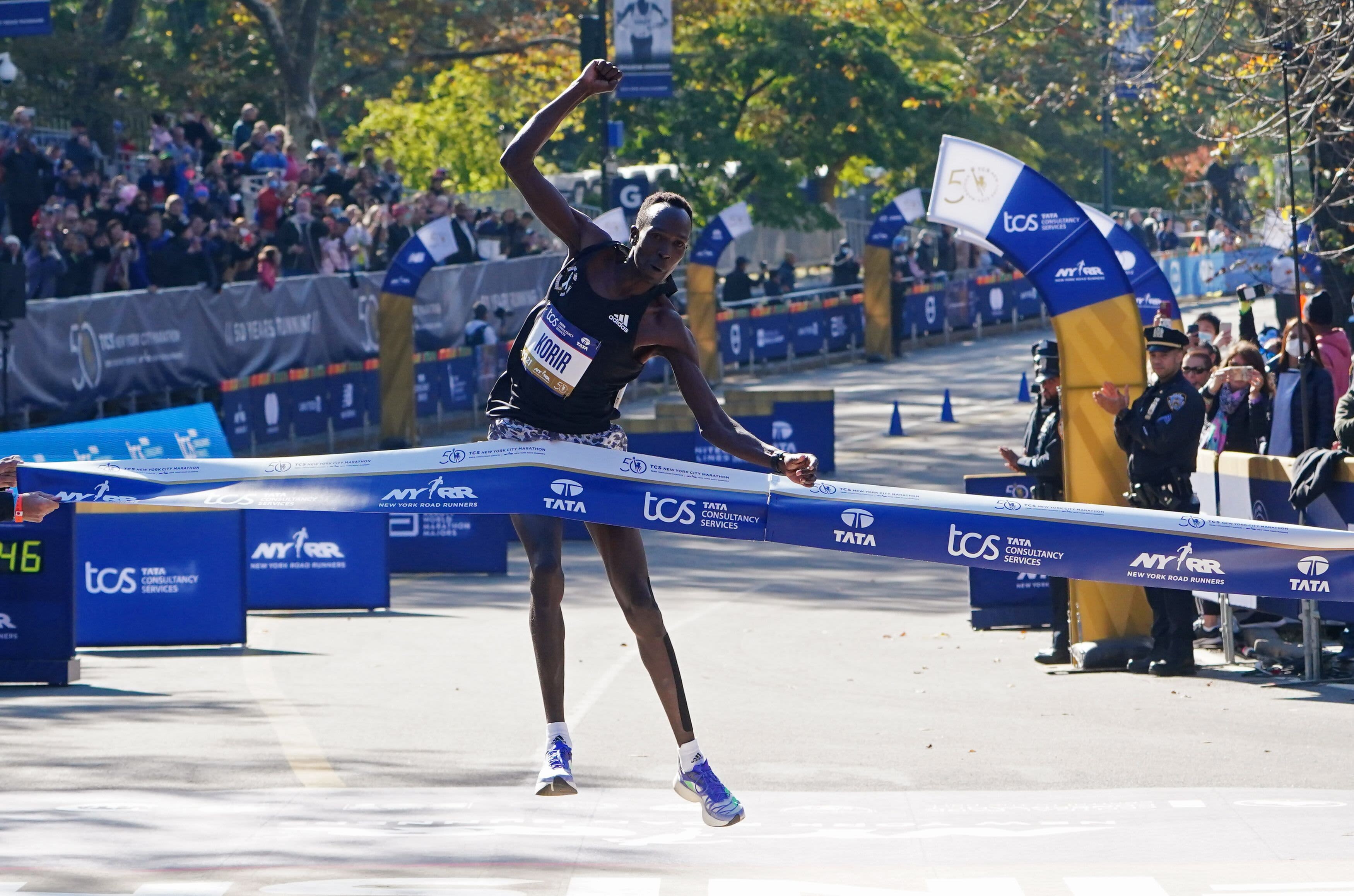
Albert Korir has been confirmed for the event and he is eagerly anticipating the challenge that lies ahead. Korir, a seasoned marathon runner, has set his sights on conquering the historic course once again, and his journey has already began.
For Korir, the Boston Marathon is not just a race; it's a passion, a relentless pursuit of excellence. As he laces up his running shoes and hits the roads for training, the anticipation is building.
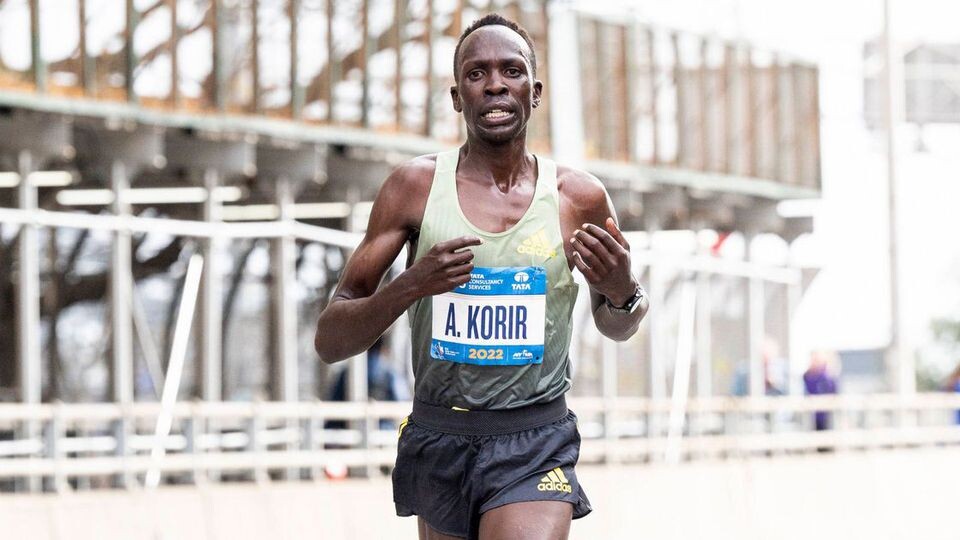
In a post on his Instagram page, Korir said: "The countdown has begun, the work has started. Preparing for another Boston Marathon, and I just can't wait.”
His words reflect the eagerness that echoes through the hearts of all dedicated marathoners. The journey to the starting line is as crucial as the race itself, and for Korir, every step in training is a step closer to realizing his marathon dreams.
Korir, having almost tasted success on this hallowed ground before, understands the significance of the challenge that awaits him.
He finished fourth at last year’s edition of the race and will be keen to go one place better this year. The 2021 New York City Marathon champion immerses himself in a meticulous preparation routine.
Long runs through scenic landscapes, interval training to build speed, and strength workouts to endure the course's demands – each element is a crucial piece of the puzzle. His dedication to the sport and the Boston Marathon, in particular, is evident in every stride he takes.
As the world eagerly awaits the 2024 Boston Marathon, Korir stands at the intersection of anticipation and preparation. The countdown continues, and with each passing day, his commitment to the journey becomes more apparent.
(01/19/2024) ⚡AMPby Abigael Wuafula
Boston Marathon
Among the nation’s oldest athletic clubs, the B.A.A. was established in 1887, and, in 1896, more than half of the U.S. Olympic Team at the first modern games was composed of B.A.A. club members. The Olympic Games provided the inspiration for the first Boston Marathon, which culminated the B.A.A. Games on April 19, 1897. John J. McDermott emerged from a...
more...
Four Olympic Medalists Set to Toe the Line in the Women's 60m at the 116th Millrose Games
With just over three weeks to go until the running of the 116th Millrose Games, the excitement for this spectacular event has never been greater. One of the deepest races of the afternoon will be the Women’s 60 Meter Dash, which features no fewer than four Olympic medalists, in addition to an NCAA champion, last year’s runner-up, and more.
The 116th Millrose Games will take place at the Nike Track & Field Center at The Armory on Sunday, February 11th.
The stellar field is as follows:
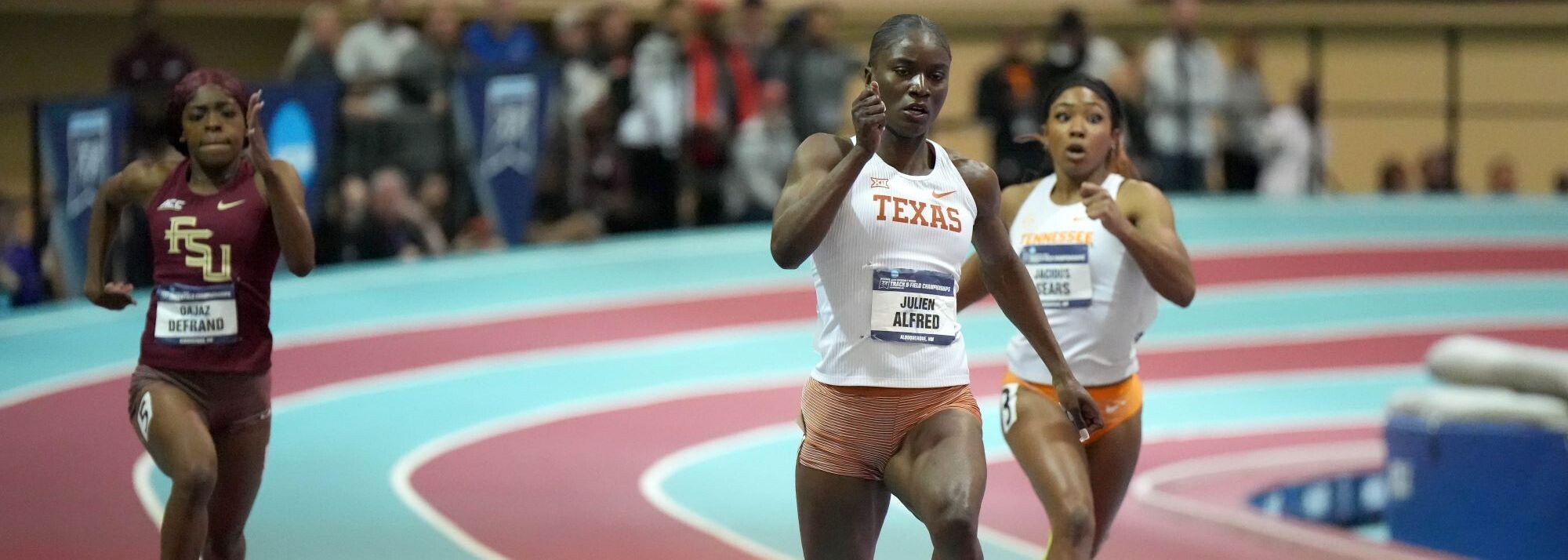
-Dina Asher-Smith is the 2019 World Champion in the 200m. She is a two-time Olympic bronze medalist, and her 2019 gold is one of five World Championship medals that she owns. Asher-Smith holds the British records in the 60m, 100m, and 200m.
“The Millrose Games is one of the most prestigious and historic indoor competitions in the USA, and I am looking forward to racing there for the first time,” said Asher-Smith. “I am really enjoying my new training set up in Austin, and I’m looking forward to a big year in 2024.”
-Julien Alfred was a seven-time NCAA champion at the University of Texas. Her 60m best is not only the NCAA record, it also equals the North American record. In her first season as a professional, Alfred finished fifth in the 100m at the 2023 World Championships, representing St. Lucia.
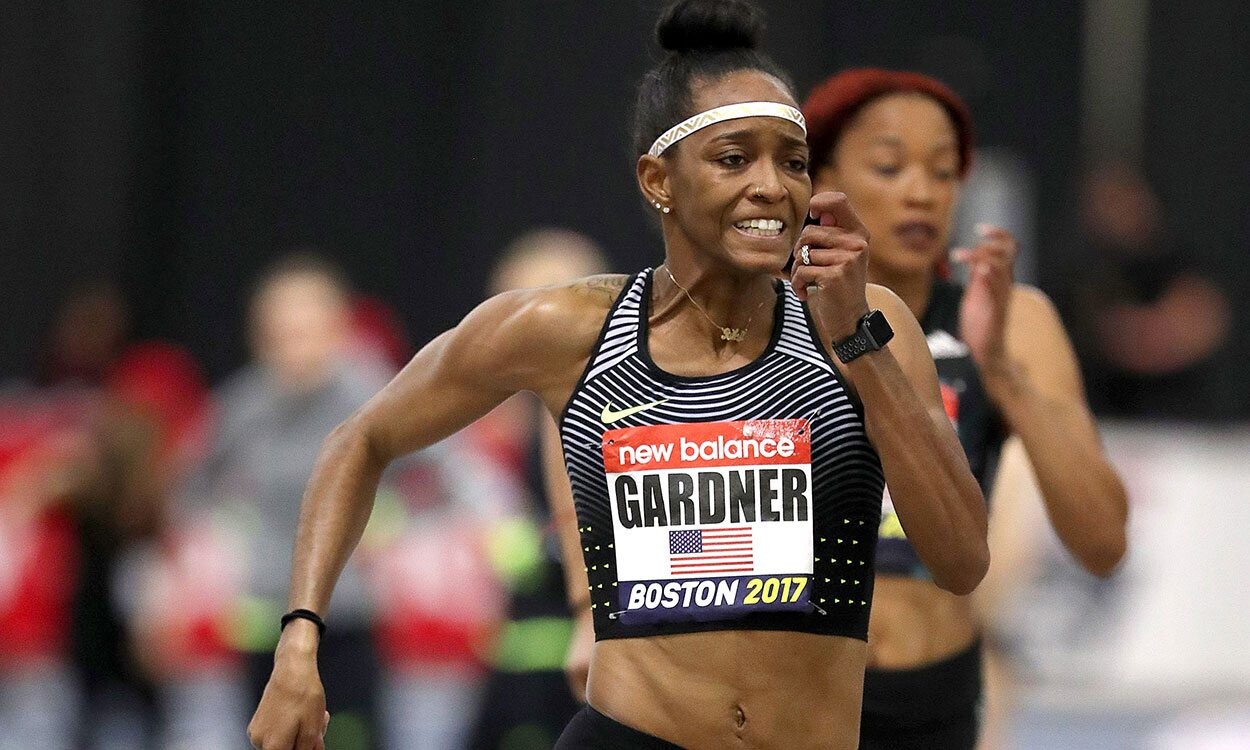
-English Gardner is an Olympic gold medalist on the 4x100m relay in 2016. A local favorite from New Jersey, she is the tenth-fastest woman in history in the 100m, and she won this race at the Millrose Games in 2019.
-Briana Williams won Olympic gold on the 4x100m relay for Jamaica in 2021, and she is a two-time World Junior Champion.
-Shashalee Forbes is an Olympic silver medalist on the 4x100m relay, and she won the 200m Jamaican championship in 2017.
-Tamari Davis placed second in this race at last year’s Millrose Games, before winning a gold medal on the 4x100m relay at the World Championships.
-Marybeth Sant-Price is the 60m bronze medalist at the 2022 World Indoor Championships.
-Celera Barnes is an NACAC champion on the 4x100m relay.
Stay tuned over the coming weeks before the 116th Millrose Games, as the world-class start lists are finalized. Top athletes already confirmed to compete include Laura Muir, Elle Purrier-St. Pierre, Yared Nuguse, Alicia Monson, Grant Fisher, Danielle Williams, Josh Kerr, Yaroslava Mahuchikh, Christian Coleman, Keni Harrison, Andre De Grasse, Nia Ali, Chris Nilsen, and KC Lightfoot, with even more Olympians and World Championship medalists still to come.
As always, the Millrose Games will feature the absolute best athletes in the sport, including dozens of Olympians and world champions. The Millrose Games is a World Athletics Indoor Tour Gold meet. With highest-level competition at the youth, high school, collegiate, club, and professional levels, there is truly something for everyone at the Millrose Games.
(01/19/2024) ⚡AMP
NYRR Millrose Games
The Pinnacle of Indoor Track & Field The NYRR Millrose Games, first held in 1908, remains the premier indoor track and field competition in the United States. The 2025 edition will once again bring the world’s top professional, collegiate, and high school athletes to New York City for a day of thrilling competition. Hosted at the New Balance Track &...
more...
It is possible to run faster, 41-year-old Kenenisa Bekele insists
41-year-old marathoner Kenenisa Bekele believes he still has the mileage in his legs to run faster as he eyes victory at the Olympic Games.
Marathon legend Kenenisa Bekele has insisted that he is the greatest form of his life heading into the Olympic Games in Paris, France where he will lock horns with other great marathoners.
In an interview with Athletics Weekly, the Ethiopian insisted that his progression is going well and he is ready to run faster times. He has gathered a lot of experience so far and will definitely be looking forward to impress.
“When I look at my progression, I feel like I have good energy and power…I feel very strong unlike when I struggled around three or four years ago.
“It is possible to run faster with this age you know…it is quite a good age for a marathon so I think I will do something better in the future,” the 41-year-old said.
He added that marathon running requires an athlete to have the talent first and the capacity to run the distance and also experience.
“Experience by itself can’t change anything if you don’t have the capacity to cover the distance. If you compare that with age also the young generation is struggling to run faster times and follow the pace of the older and experienced runners.
"This could be influenced by their capacity and talents. That’s why in my mind, I know myself and during training, I compete against my teammates to gauge myself,” Bekele said.
The two-time Berlin Marathon also commented on his training, explaining that it has not been a walk in the pack for him.
“Marathon training is really challenging…I was out of the track due to an injury and every time I get an injury, my training changes.
“Training wise, at some point and I could not follow every training session. This is the greatest challenge I face in training for my training,” he said.
(01/19/2024) ⚡AMPby Abigael Wuafula
Kenenisa Bekele

Malindi Elmore set to race 2024 Boston Marathon
Two-time Olympian Malindi Elmore of Kelowna, B.C., is on the women’s elite list for the 128th Boston Marathon on April 15. Elmore is featured in a strong field with reigning champion Hellen Obiri and 2022 New York Marathon champion Sharon Lokedi; she will also be one of three Canadian women running in Boston.
This will be Elmore’s second time running the Boston Marathon. In 2022, she ran to an impressive 11th-place finish, posting a time of 2:27:58, which is the fastest-ever time in Boston by a Canadian woman. She left Boston wanting to return, saying, “It’s a blast to run the crowd-lined streets, where there is always someone cheering you on and shouting your name.”
Elmore, who ran the second-fastest Canadian women’s marathon time at the 2023 Berlin Marathon, achieved the Olympic qualifying mark of 2:26:50. She is currently the only woman who has solidified her spot on Team Canada for the marathon in Paris. The 43-year-old told Canadian Running that she plans to use Boston as a prep race for the Olympic marathon in August.
“Racing Boston is part of the Paris 2024 plan,” says Elmore on her decision to race Boston. “The course in Paris is reported to be twice the elevation gain of Boston, so I want the opportunity to train and race on hills through the winter and hopefully be a hill beast by August!”
The Boston and New York marathons are two of the tougher Abbott World Marathon Major courses. The Boston is a net downhill, but features a lot of hills in the second half of the race, including the famous Heartbreak Hill at 32 kilometres. The Paris Olympic marathon is touted to be the hilliest Olympic marathon to date, featuring more than 400 metres in elevation gain on an out-and-back loop to the Palace of Versailles.
Elmore will be one of three Canadian marathoners on the women’s elite list. Joining Elmore in Boston are two up-and-coming marathoners from Thunder Bay, Ont., Michelle and Kim Krezonoski. The Krezonoski sisters ran their personal bests of 2:36:39 (Michelle) and 2:37:20 (Kim) at the 2022 California International Marathon.
Michelle said it’s been an exciting and emotional journey to get to this point after partially tearing her Achilles tendon in her build-up to the 2023 Toronto Waterfront Marathon (which she did not race). “I am grateful to have this opportunity to run alongside the world’s best with my twin sister,” Michelle told Canadian Running. “Boston is historic, and it’s a course that challenges your strength.”
Obiri returns for glory
The most dominant women’s marathoner in the world right now, Hellen Obiri, returns to Boston to defend her title. Last year, Obiri unleashed a perfectly-timed sprint in the final mile to earn her first Boston Marathon title, in only her second career marathon. Boston marked one of her two marathon wins in 2023. She became only the second women’s marathoner in history to win both Boston and New York in the same year.
“I am excited to return to the 2024 Boston Marathon to try to defend my title,” shared Obiri, who won last year’s race in 2:21:38. “Boston is a historic race, and I would like to add my name further to its history on April 15. Winning such a historic marathon with my family waiting at the finish line was an experience I’ll never forget.”
The 2024 Boston Marathon will also see a trio of Ethiopian runners with personal bests under 2:18:00. Worknesh Degefa, the 2019 Boston Marathon champion, is set to return. Tadu Teshome, with a marathon best of 2:17:36 from the 2022 Valencia Marathon, will make her Boston debut, and Senbere Teferi, a world championship silver medallist over 5,000m, will also compete after winning the B.A.A. 5K in a course record time of 14:49 in 2022.
(01/18/2024) ⚡AMPby Marley Dickinson
Boston Marathon
Among the nation’s oldest athletic clubs, the B.A.A. was established in 1887, and, in 1896, more than half of the U.S. Olympic Team at the first modern games was composed of B.A.A. club members. The Olympic Games provided the inspiration for the first Boston Marathon, which culminated the B.A.A. Games on April 19, 1897. John J. McDermott emerged from a...
more...
How Faith Kipyegon's track rival is planning to dethrone the golden girl
Faith Kipyegon's track rival has revealed her plans to dethrone the queen of the 1500m this season.
Laura Muir, one of Faith Kipyegon’s track rivals has opened up on plans to beat the double world record holder this season.
The Scottish woman noted that she has beaten Kipyegon before and even though it was not during a major championship, she believes anything is possible.
She added that all she will do will be to focus on herself and focus on what she can do best. The former World 1500m silver medalist also admitted that Kipyegon is the best 1500m runner at the moment and she comes off as a phenomenal athlete too.
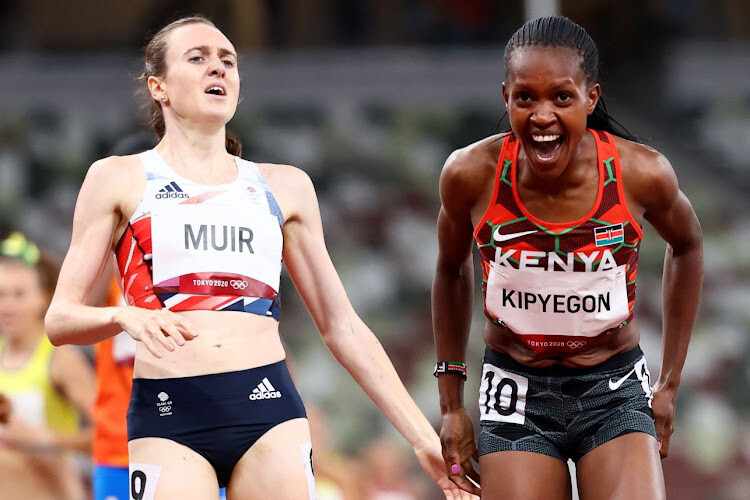
“I think it helps that I’ve beaten her two or three times a few years ago. So I’ve done it, but not for a long time and never in a championship setting. But it's possible.
"There are lots of ways that I can improve this year, so it’s nice to know I can get faster and that we haven’t maxed out everything.
"But it seems to be that when I get faster, she then also gets faster. I was narrowing the gap a little bit when I ran 3:54 in Tokyo, but then she widened it again.
"All I can do is focus on myself and just be the best athlete I can be. And if that gets closer to her, and potentially a tiny chance of beating her, then that's all I can do.
"She's the best we've ever had. She’s a phenomenal athlete and deserves all the recognition she's had. It’s exciting to be a part of, but it's difficult to try and keep up,” she said as per Citius Mag.
The Olympic Games silver medalist also took a trip down memory lane to remember the Diamond League Meeting in Monaco where dozens of athletes set national records following Kipyegon’s world record over the mile.
She added that they were aware she would run a fast race and they knew she meant business. Muir also disclosed that it was great to be part of the team and it was an amazing occurrence to see how she delivered the world record.
“I remember going to Monaco and thinking, “I have to run my own race, I can't go with that.” As much as I like to believe in myself, that was beyond my capability.
"I knew I had to run my own race. I wanted to get the British record and by running my own race, I got that record. So, I was pleased with that,” she said.
Muir will also be going for the top prize at the Olympic Games, however, whatever the outcome, she noted that she would be satisfied.
“I've defended titles, I've broken records and championship records. The only thing that's missing is the global title, which is very hard to get…
"But I'm going to keep trying and that's all I can do. All I can do is focus on myself and work as hard as I can and get myself in the best shape I can. If that's enough to get on the podium, great. If that's enough to win, even better.
"I just love running, I love my training, and I feel very privileged to be in this position to be successful in the sport. I have gotten so much from it. I hope that I can continue for a few more years and get a few more medals as well,” she concluded.
(01/18/2024) ⚡AMPby Abigael Wuafula

Three ways to keep your legs snappy, without feeling beat up
Building speed and strength as a runner while keeping your legs feeling fresh sounds like a challenge—but it can be as simple as incorporating a few drills or quick training sessions into your regular routine. Fast turnover and snappy, quick legs are something you can work on year-round, even when you’re focused on building a base or adding endurance.
To keep those legs moving briskly throughout the year without succumbing to overtraining, consider incorporating these three types of workouts into your routine.

1.- Tweener repeats
Renowned coach Greg McMillan explains that “tweeners” are repeats performed slower than your V02 max effort, but faster than your lactate threshold. The objective is to achieve the benefits of longer speedwork sessions without succumbing to fatigue.
McMillan suggests running these based on effort or heart rate rather than pace, starting at 85 to 87 per cent of your maximum heart rate and gradually progressing to 92 per cent. It’s OK to add recovery time if you start to breathe hard. If that sounds too complicated to calculate, try running these intervals at a pace that’s tough but not full-out, and adjust the repetitions and distance as needed so that you aren’t feeling intensely fatigued between or after intervals.
The workout
Warm up with 10 minutes of easy running.
Run 4-6 x 800m at a cruise interval pace with 200m recovery after between repeats.
Cool down with 10 minutes of easy running.
2.- Short hill sprints
Take your workout to new heights by incorporating super-quick hill sprints on a steep incline (8-12 per cent) or by adjusting your treadmill incline. These intense sprints provide a quick burst without leaving you breathless or struggling to maintain speed. Adjust the sprint duration if needed, ensuring you can run continuously without feeling overly winded.
The workout
Warm up with 20 minutes of easy running.
Run 10 x 10 seconds of uphill sprinting, followed by 2-3 minutes of easy running recovery.
Cool down with 10 minutes of easy running.
3.- Strides
Strides are perfect for everyone, from new runners to experienced athletes, and can easily be tacked on to your already-planned easy runs several times a week. They are a great way to run fast, but avoid building lactic acid or creating a lot of residual fatigue. If you feel out of breath during your strides, reduce repeats until you’ve gained strength.
The workout
5-10 x 15 seconds at a fast but controlled effort, with full recovery (45 to 90 seconds of very easy running).
Remember to follow a high-intensity day with easy running or recovery, and ensure proper hydration. By incorporating these diverse workouts into your routine, you can elevate your running game, maintaining agility, speed and stamina throughout the seasons.
(01/18/2024) ⚡AMPby Keeley Milne

Suguru Osako to skip Tokyo Marathon in order to compete in Boston Marathon
Paris Olympic hopeful Suguru Osako revealed Thursday he will skip the March 3 Tokyo Marathon in favor of competing in the Boston Marathon the following month.
Osako, who was sixth at the Tokyo Olympics in 2021, is currently on track to claim the third and final Japanese men's marathon slot for Paris by virtue of his third-place finish in October's Marathon Grand Championship.
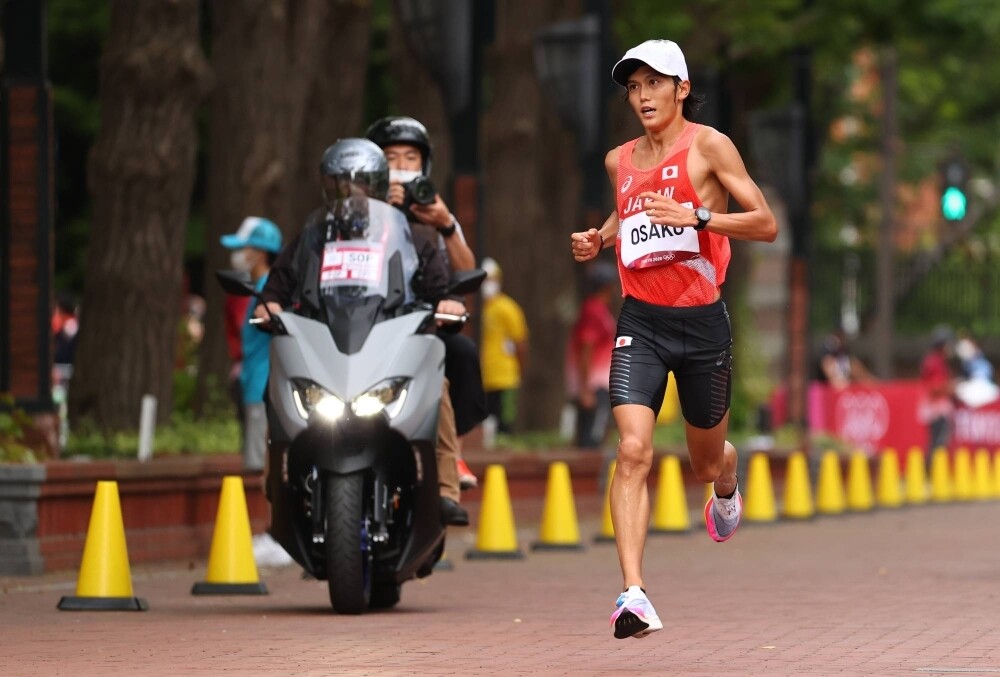
Another Japanese runner must clock 2 hours, 5 minutes, 50 seconds or faster, the time set by the Japan Association of Athletics Federations, at either February's Osaka Marathon or the Tokyo Marathon to move ahead of Osako in the Olympic qualification standings.
In a video message posted to Instagram, Osako indicated he wanted to avoid the intense focus in Japan on qualifying for the games and said his heart was set on running in Boston.
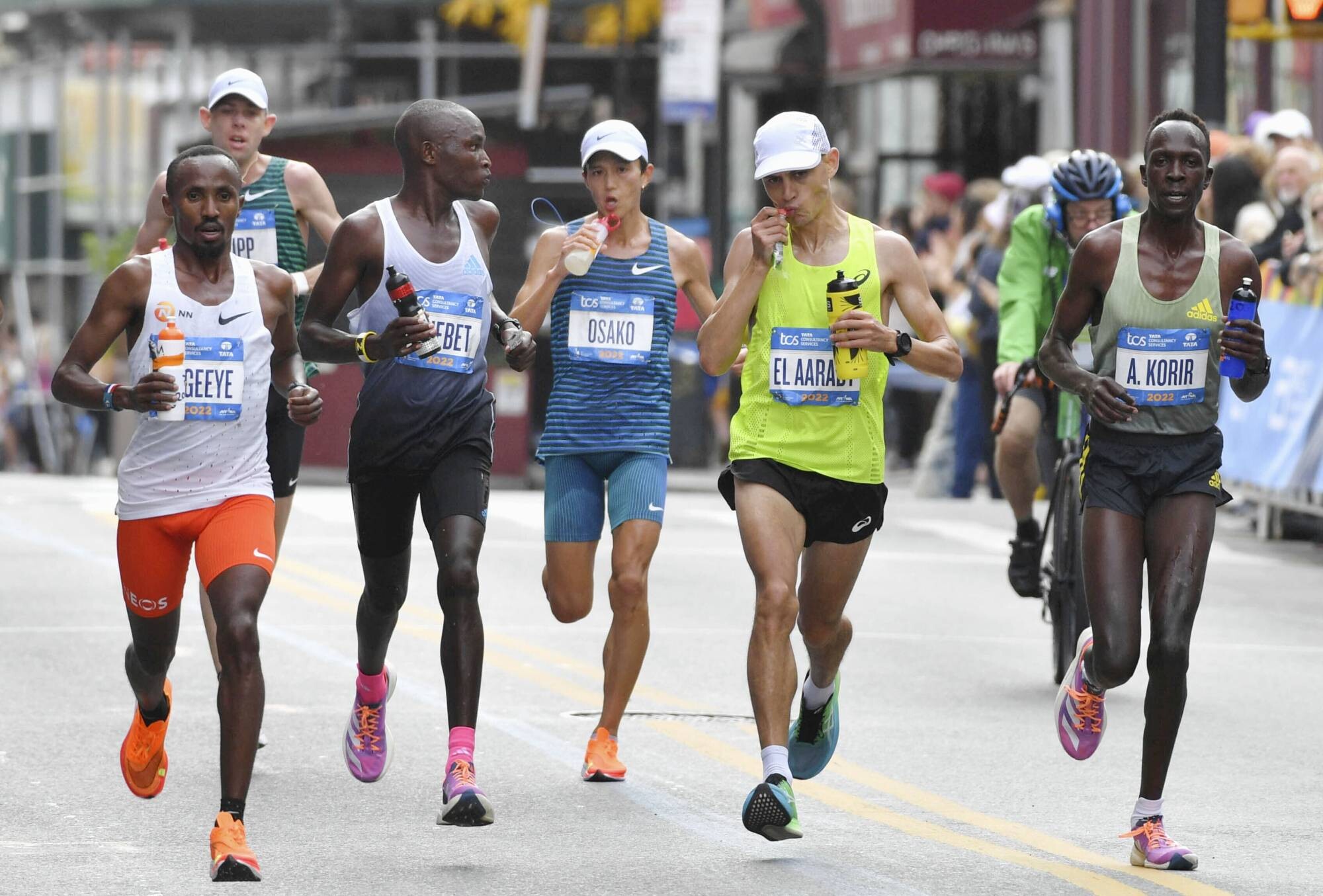
"The bigger the fuss being made around me, the less enthusiasm I tend to feel," the 32-year-old Tokyo native said. "The race that I really felt like I wanted to run was the Boston Marathon."
"Of course, the Olympics are important, but I don't think it's necessary to obsess about them as much as some people do."
Two Japanese runners, Naoki Koyama and Akira Akasaki, have already earned their Olympic berths by finishing first and second, respectively, in the MGC.
(01/18/2024) ⚡AMPby The Japan Times
Boston Marathon
Among the nation’s oldest athletic clubs, the B.A.A. was established in 1887, and, in 1896, more than half of the U.S. Olympic Team at the first modern games was composed of B.A.A. club members. The Olympic Games provided the inspiration for the first Boston Marathon, which culminated the B.A.A. Games on April 19, 1897. John J. McDermott emerged from a...
more...
Agnes Jenet Ngetich recently smashed the world 10k record for women but maybe we need to take another look?
Agnes Jebet Ngetich Kenya ran 28min 46sec for 10km road race at Valencia in Spain, Taking half a minute off the previous record.
Sean Williams posted these thoughts on FB, thoughts shared by many we are sure: "I don’t usually like to be negative about world records. But I have to admit, for a long distance runner, this girl looks remarkably masculine. So either she was born with an incredibly strong female runner’s body, or she’s on some special kind of juice or she was a bloke a few years ago. 
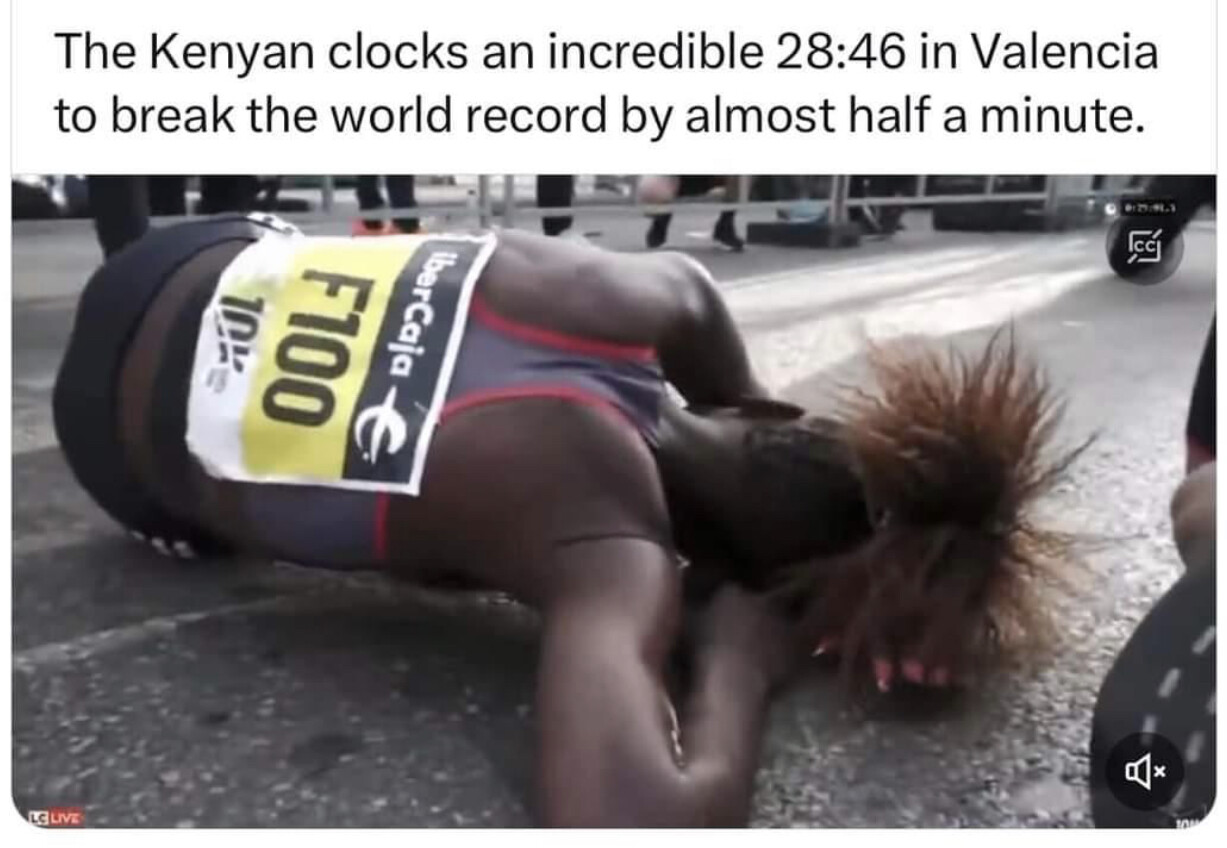
just check that photo on your post. I’m thinking testosterone, growth hormones or some special new juice that most of us have not heard of yet.  sad to say that the women who have completely smashed world records, apart from in the marathon, and half marathon, tend to look very Masculine.
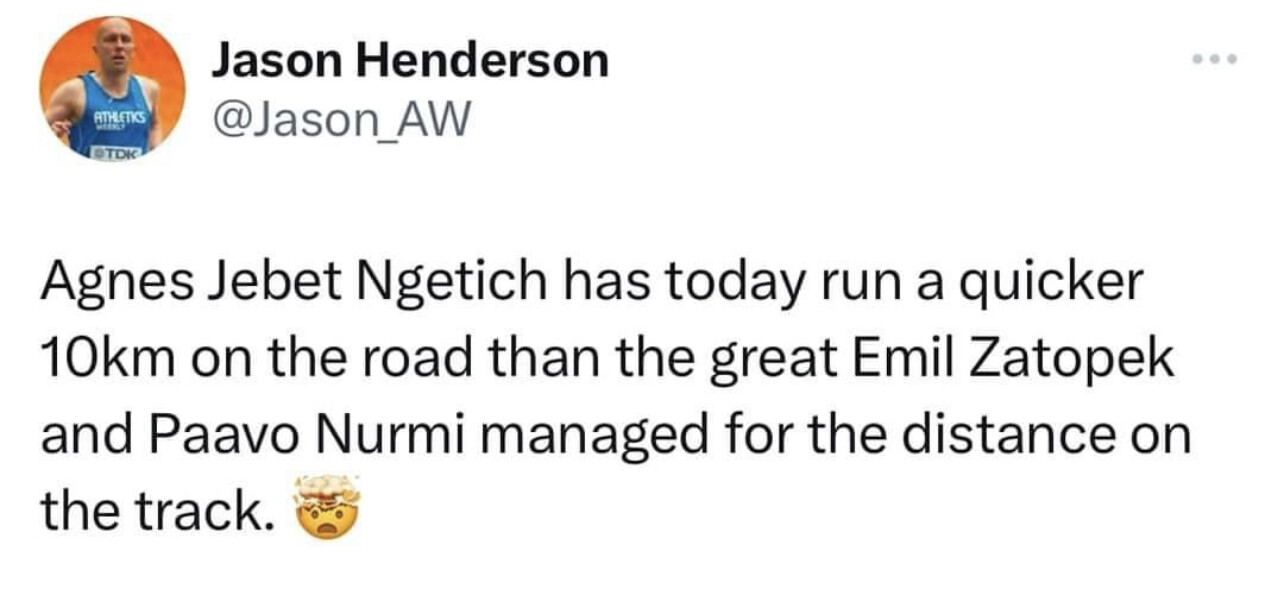
Take away the painted fingernails, make up and often fancy hair, and you could almost say you’ve got a bunch of guys holding all the female world records from the 100 m through to the 10,000 m. * apart from Faith in the 1500. I have a theory that all the Chinese who were smashing world records in the early 90s (Ma’s army) were all the top Chinese male runners and they got the cut and tuck. 8.06 for a chick in 3000m - come on!"
What are your thoughts?
(01/18/2024) ⚡AMPby Sean Williams
Age is not a problem for me, insists 44-year-old marathoner Edna Kiplagat
44-year-old Edna Kiplagat has insisted that age is not an issue as she plans to continue conquering the world of marathon running.
Two-time Boston Marathon champion Edna Kiplagat does not see her age as an obstacle to her achieving her goals in life.
Kiplagat’s age has caught many by surprise, owing to the fact that she is still able to run well and finish races, especially the marathons. Speaking during a press conference before the Houston Half Marathon last weekend, the 44-year-old insisted that she does not view her age as a problem.
She added that the reason why she keeps going is to be a source of encouragement to young runners and her children too. The 2014 London Marathon champion explained that she wants youngsters to understand that anything is possible as long as they put their minds to it.
“I believe that what I have done or accomplished before is going to motivate most of the young athletes. I want them to know that if they work hard and focus on anything they are passionate about, then they will achieve their goals.
"I don’t feel that age is a huge factor for me but I know that as long as I feel healthy and I love what I do, I’ll keep on doing my best,” Kiplagat said.
Meanwhile, Kiplagat has been in the game for more than 25 years since she made her professional debut at the 1996 World Junior Championships where she bagged silver in the 3000m. The American-based athlete then proceeded to bag a bronze medal at the 1998 World Junior Championships.
Since then, Kiplagat just kept and she became the first woman to successfully retain her marathon world title.
She won the marathon title at both the 2011 and 2013 World Championships held in Daegu, South Korea and Moscow, Russia respectively. In 2010, Kiplagat bagged the New York City Marathon and Los Angeles Marathon titles.
(01/17/2024) ⚡AMPby Abigael Wuafula

Chebet, Lemma and Geay to clash at Boston Marathon
Evans Chebet and Gabriel Geay, the top two finishers at last year’s BAA Boston Marathon, will return to the World Athletics Platinum Label road race on April 15, to take on recent Valencia Marathon winner Sisay Lemma.
Chebet successfully defended his Boston title last year in 2:05:54. In fact, the Kenyan has won six of his past seven marathons.
Lemma won in Valencia last month in 2:01:48, making him the fourth-fastest man in history. The Ethiopian, who also won the 2021 London Marathon, is the fastest man in this year’s Boston Marathon field, which features 20 men with sub-2:10 PBs.
Tanzania’s Geay, runner-up in Boston last year, has an identical PB to Chebet – 2:03:00 – and, like Chebet, it was also set in Valencia.
Other men in the field with sub-2:05 PBs are Kenya’s Joshua Belet (2:04:18), Ronald Korir (2:04:22), and Cyprian Kotut (2:04:34), as well as Ethiopians Haftu Teklu (2:04:43) and London and New York City runner-up Shura Kitata (2:04:49).
New York Marathon champion Albert Korir, former Japanese record-holder Suguru Osako, and Norwegian record-holder Sondre Moen are also in the field, as are Morocco’s Zouhair Talbi, winner of last week’s Houston Marathon in a course record 2:06:39, and multiple NCAA champion Edward Cheserek.
Elite field
Sisay Lemma (ETH) 2:01:48
Evans Chebet (KEN) 2:03:00
Gabriel Geay (TAN) 2:03:00
Joshua Belet (KEN) 2:04:18
Ronald Korir (KEN) 2:04:22
Cyprian Kotut (KEN) 2:04:34
Haftu Teklu (ETH) 2:04:43
Shura Kitata (ETH) 2:04:49
John Korir (KEN) 2:05:01
Mohamed Esa (ETH) 2:05:05
Suguru Osako (JPN) 2:05:29
Sondre Moen (NOR) 2:05:48
Filmon Ande (ERI) 2:06:38
Zouhair Talbi (MAR) 2:06:39
Isaac Mpofu (ZIM) 2:06:48
Albert Korir (KEN) 2:06:57
Kento Otsu (JPN) 2:08:15
Ryoma Takeuchi (JPN) 2:08:40
Segundo Jami (ECU) 2:09:05
Tsegay Tuemay (ERI) 2:09:07
Matt McDonald (USA) 2:09:49
David Nilsson (SWE) 2:10:09
Tristan Woodfine (CAN) 2:10:39
CJ Albertson (USA) 2:10:52
Chris Thompson (GBR) 2:10:52
Edward Cheserek (KEN) 2:11:07
Yemane Haileselassie (ERI) debut
(01/17/2024) ⚡AMPby World Athletics
Boston Marathon
Among the nation’s oldest athletic clubs, the B.A.A. was established in 1887, and, in 1896, more than half of the U.S. Olympic Team at the first modern games was composed of B.A.A. club members. The Olympic Games provided the inspiration for the first Boston Marathon, which culminated the B.A.A. Games on April 19, 1897. John J. McDermott emerged from a...
more...
Peres Jepchirchir headlines women field at Ras Al Khaimah Half-Marathon
Olympic marathon champion Peres Jepchirchir will headline the 16th edition of the Ras Al Khaimah Half-Marathon scheduled for February 24, 2024 in Ras Al Khaimah, United Arab Emirates.
The three time World Half Marathon champion is also the only woman to simultaneously hold the Olympic, New York and Boston marathon titles, which she achieved in the seven months between August 2021 and April 2022.
Jepchirchir who also holds two world marathon majors, knows this course so well as she set her first world half marathon record here in 2017 when she broke Florence Kiplagat’s record of 1:05.09 that she had set in Barcelona in 2015 with a new world record of 1:05.06.
The mother of one will be looking to challenge the race course record of 1:04.14 set last year by the 2018 World U20 5000m bronze medallist, Girmawit Gebrzihair of Ethiopia.
Race Director and Pace Events CEO Peter Connerton said today, ‘We were honoured and enormously gratified to be invited by the Ras Al Khaimah tourist authorities to organise an event like the RAK half-marathon. We feel it’s a reflection of the success we’ve had with the Dubai Marathon since 2000.
We’ve added a 10k to the RAK programme since we’ve seen how successful the shorter event has been in Dubai; either as a challenge in its own right, or as a stepping stone for runners on the way to a half or full marathon. Jepchirchir is the first of many leading names we shall be announcing for the RAK ‘half’ in the coming weeks”.
(01/17/2024) ⚡AMPby John Vaselyne
Rak Half Marathon
The Rak Al Khaimah Half Marathon is the 'world's fastest half marathon' because if you take the top 10 fastest times recorded in RAK for men (and the same for women) and find the average (for each) and then do the same with the top ten fastest recorded times across all races (you can reference the IAAF for this), the...
more...
Commonwealth Games sprint medalist Micha Powell to release inspiring memoir
The 2022 Commonwealth Games gold medalist, Micha Powell, is set to release a memoir and workbook for young women, entitled, “Sprinting Through Setbacks: An Olympian’s Guide to Overcoming Self-Doubt and Imposter Syndrome.”
The memoir will chronicle her decade of professional racing experience, sharing vulnerable stories about growing up in the shadow of two Olympian parents, navigating injuries and finding the courage to adopt an Olympic mindset.
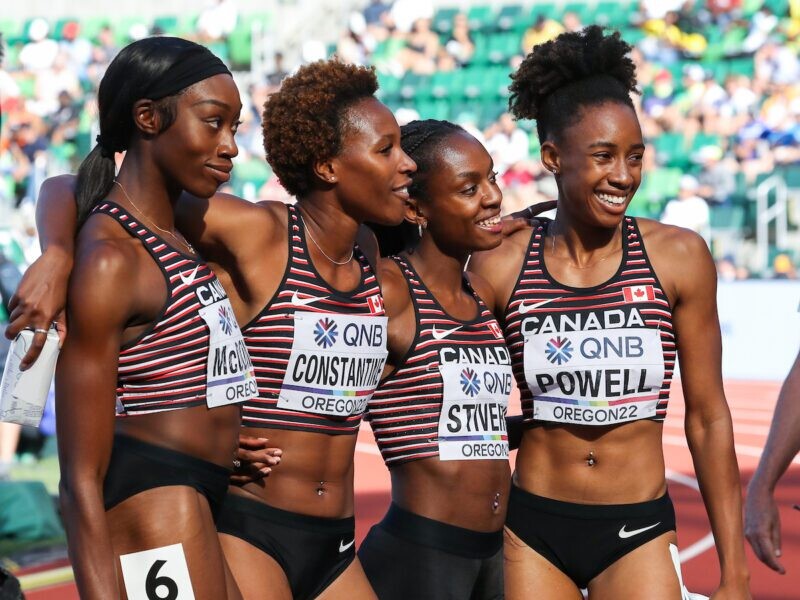
From the day Powell was born, she has had athletics ingrained in her DNA. She is the child of three-time Canadian Olympian Rosey Edeh and current long jump world record holder, American Mike Powell.
“I’m thrilled to share my story about how I accomplished my goals while overcoming setbacks and self-doubt as an Olympic athlete,” said Powell. “I want people to take away from this book that it’s not a linear path to success, and embrace the imperfect journey to triumph and use that resilience to accomplish their big goals in life.”

The book will feature 10 pivotal races from Powell’s career, each accompanied by a lesson she learned. Additionally, workbook-style sections will be included to allow young readers to apply Powell’s experiences to their own lives. The topics covered in the book range from finding balance and style to overcoming imposter syndrome and finding your spotlight.
The 29-year-old has set her sights on qualifying for the 2024 Paris Olympics in the women’s 400m and 4x400m relay for Team Canada. The memoir is geared toward young women early in their schooling or athletic careers, aiming to inspire the reader no matter their goals or future endeavors.
The book, co-authored by Canadian Running writer Molly Hurford, founder of Strong Girl Publishing, is scheduled for release in summer 2024. Fans and readers can follow @MichaJadaPowell and @StrongGirlPublishing on Instagram and TikTok for updates on the writing process, early feedback and sneak peeks from the upcoming book.
(01/17/2024) ⚡AMPby Marley Dickinson

Elle St Pierre will toe the line again at the Millrose Games
World indoor silver medalist Elle St Pierre set a meeting and North American record of 4:16.85 to win the Wanamaker Mile in 2020. The 2024 indoor season marks St Pierre’s return to the track following the birth of her first child.

Two-time world indoor silver medalist Axumawit Embaye is also in the line-up, alongside 2022 US 1500m champion Sinclaire Johnson, British 1500m champion Katie Snowden, 2023 Wanamaker Mile runner-up Josette Andrews, Australian record-holder Jessica Hull, Olympic finalist Marta Perez, and two-time NCAA champion Sage Hurta-Klecker.
Olympic 1500m silver medalist Laura Muir made her Wanamaker Mile debut last year, winning in 4:20.15. The 2022 world bronze medalist holds the British record for the distance outdoors with the 4:15.24 she clocked last year.
Other top athletes already confirmed to compete include Yaroslava Mahuchikh, Danielle Williams, Nia Ali, Andre De Grasse, Josh Kerr, Keni Harrison, Chris Nilsen, KC Lightfoot, Yared Nuguse, Alicia Monson, Grant Fisher and Christian Coleman.
(01/17/2024) ⚡AMPby World Athletics
NYRR Millrose Games
The Pinnacle of Indoor Track & Field The NYRR Millrose Games, first held in 1908, remains the premier indoor track and field competition in the United States. The 2025 edition will once again bring the world’s top professional, collegiate, and high school athletes to New York City for a day of thrilling competition. Hosted at the New Balance Track &...
more...