

Running News Daily
Running News Daily is edited by Bob Anderson and team. Send your news items to bob@mybestruns.com Advertising opportunities available.
Index to Daily Posts · Sign Up For Updates · Run The World Feed
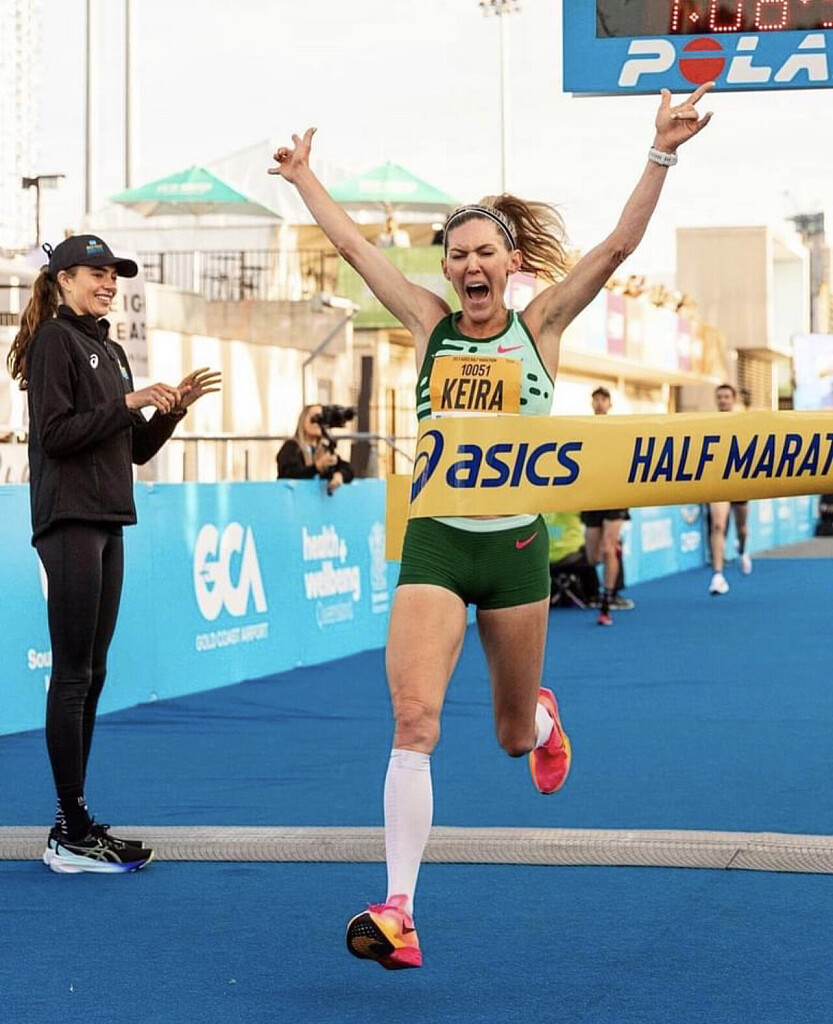


Keira D’Amato tells us more about her new Half Marathon American record

(On July 1 Keira D'Amato clocked 1:06:37 at the Gold Coast Half Marathon setting a new American record. This is her story as it unfolded posted on FB)
I don’t know why this post has been so tough for me to write. There was so much emotion in my reaction to crossing the finish line and I think it boils down to one thing: hope.
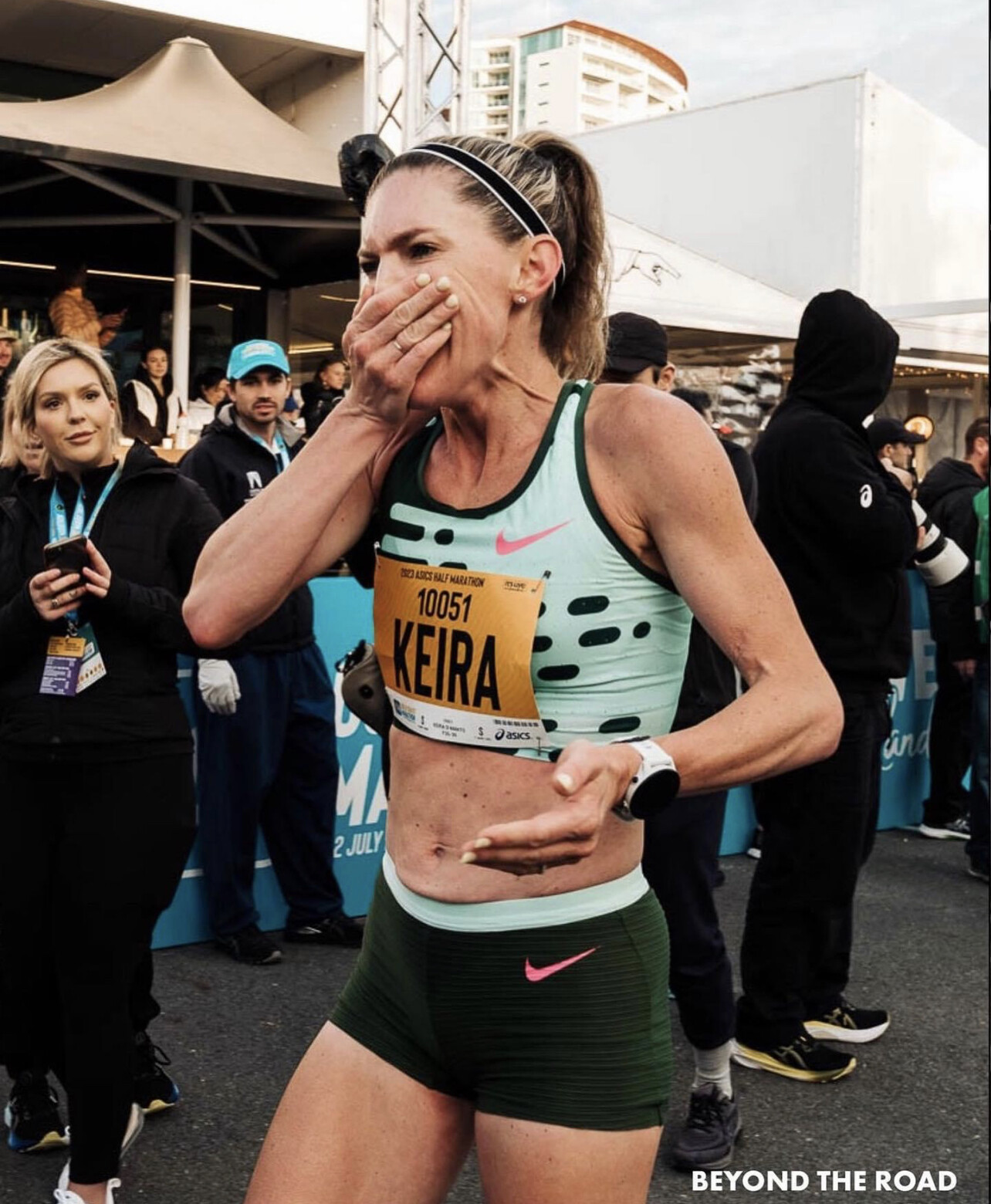
Earlier this year, I was injured, I had to scrap my spring racing plans, but I was in the pool everyday hoping it would heal so I could get back to my goals.
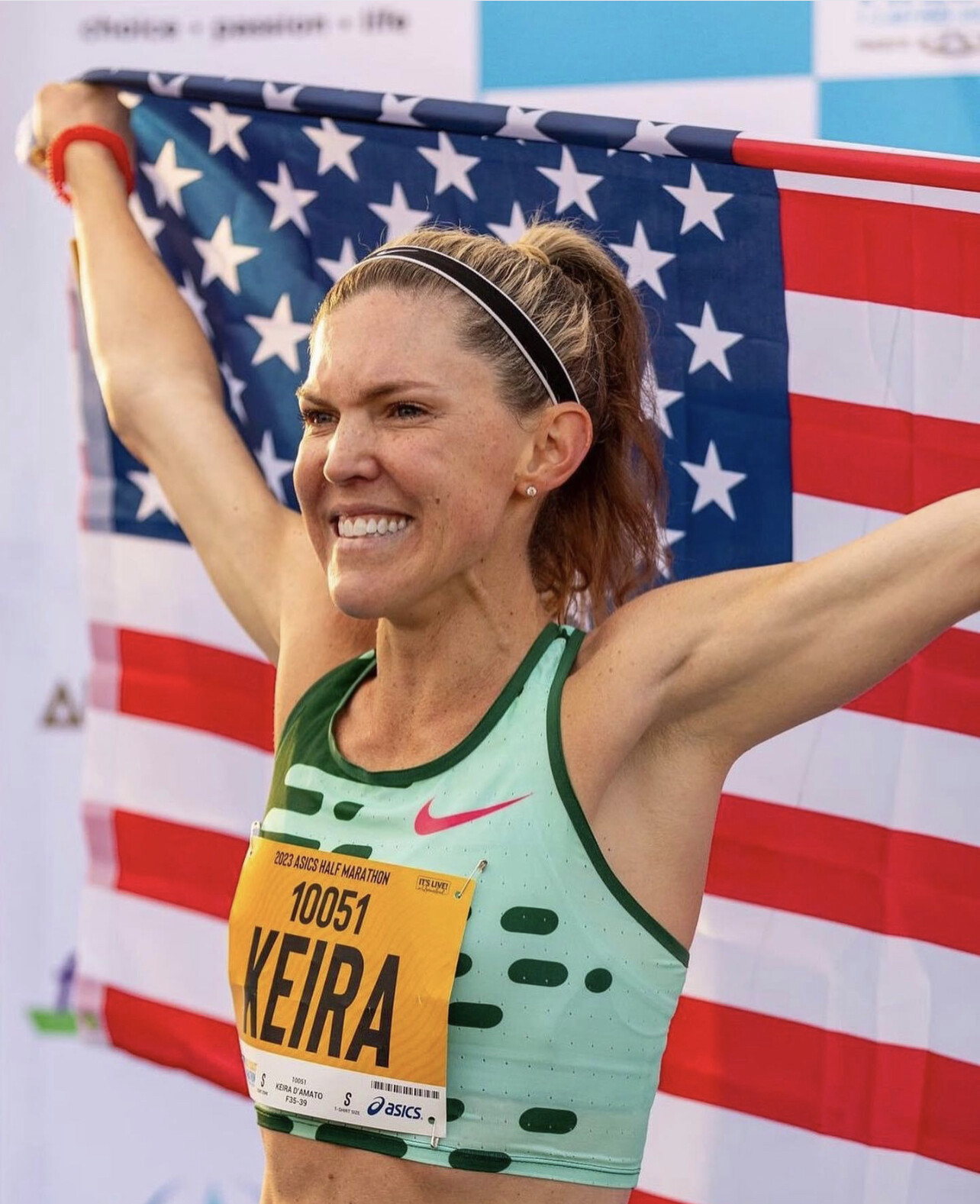
Once I was healthy, the year started off slow. It always does when you are starting something. It takes a few months for me to really start feeling like my buzzsaw self. I had hope that if I stayed patient, I could build back to an even higher level.
My flights got cancelled, and delayed, and cancelled again. But I hoped if I pushed through the travel, I would make it to the starting line.
My daughter wasn’t exactly thrilled I was going to away for a week. That stings the heart. But I hoped, I could show her what it is to chase a dream and why the family has worked to hard to support my running.
I hoped for good enough weather, I hoped my legs would feel good enough despite the travel, and I hope I could find sometime new within myself, that I wasn’t even certain was there.
Then, with about 100 or meters to go, I saw the clock and all that hoping was actually coming true. We all know it doesn’t always workout like that. In fact, most of the time, it feels like it doesn’t. But on Saturday, July 1 in Australia at the @gcmarathon half marathon it did for me.
So that’s why I look crazy crossing the finish line.
I hope everyone has an excuse to make a crazy face like this too. Here’s to hoping. ❤️
Photos by: @caseysims_ and @beyondtheroad
by Keira D’Amato
Login to leave a comment

ASICS Half Marathon
Run before the sun in the ASICS Half Marathon (21.095km) at 6am on Saturday 1 July. Enjoy the good times on our world-standard course while soaking up the beautiful broadwater on your return journey from Southport to Paradise Point. Enjoy scenic sunrise views over the water as you run through Labrador to Runaway Bay before being championed to the finish...
more...Latest Running News
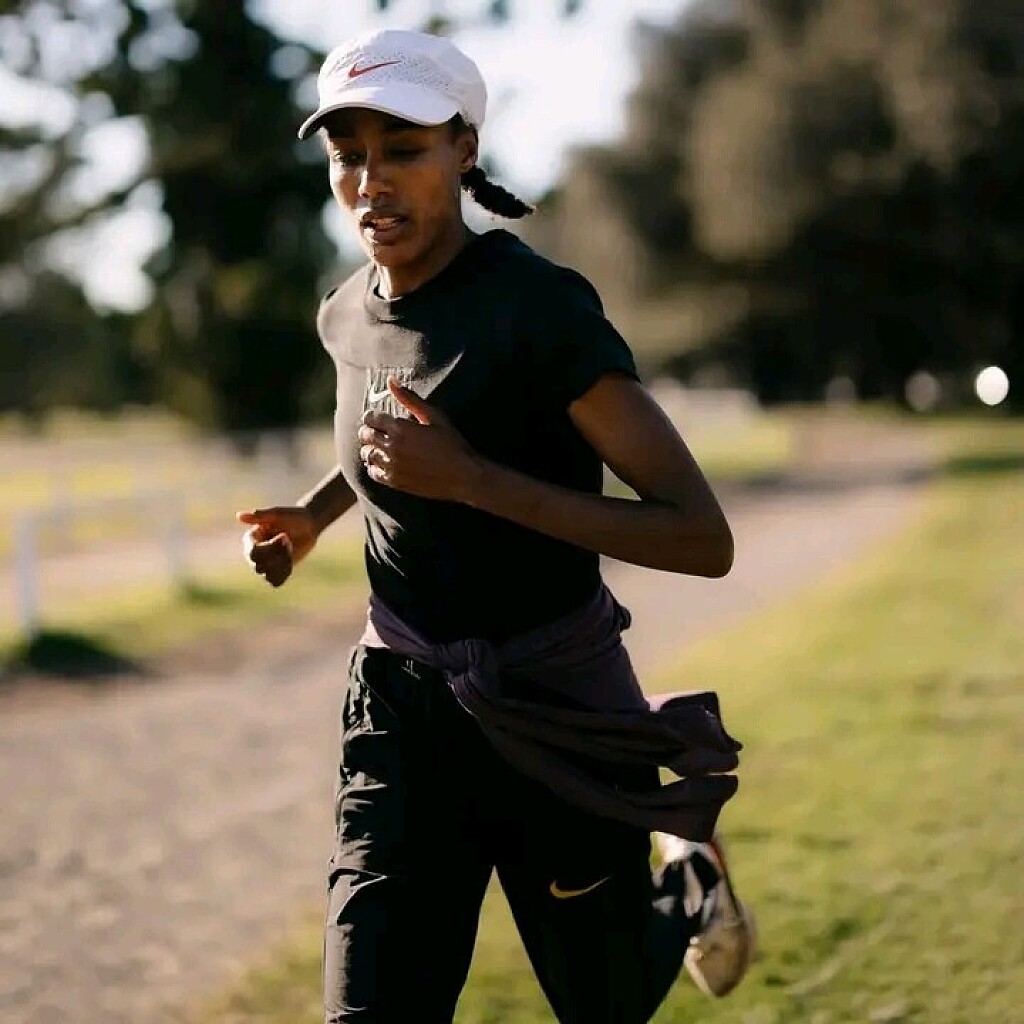
Sifan Hassan Returns To New York With Experience, Recovery And A Point To Prove
Sifan Hassan will return to the streets of New York City on November 1 with something she did not have during her difficult debut last year — experience of one of the most demanding marathon courses in the world.
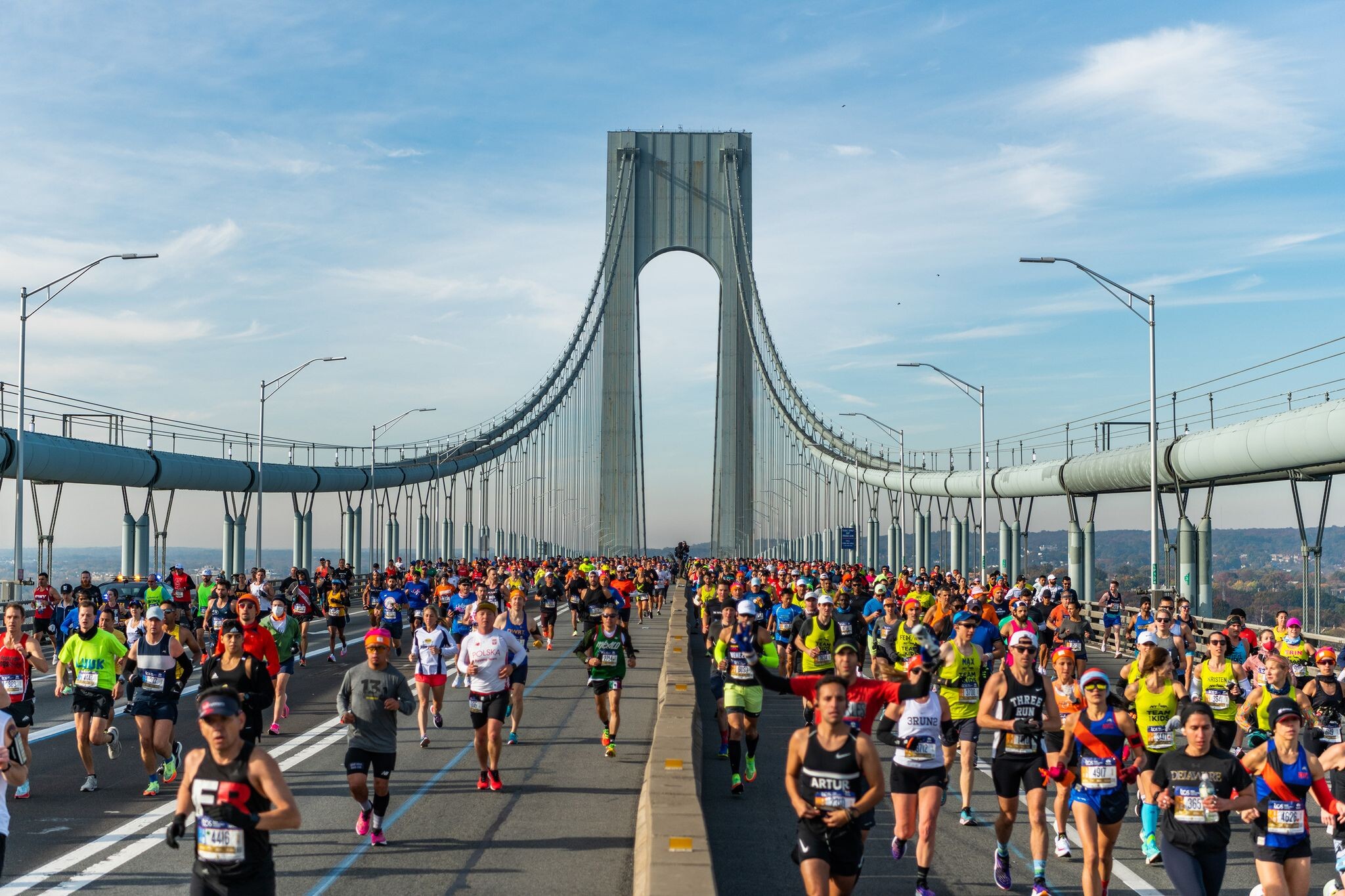
The Dutch Olympic marathon champion is set to make her second appearance at the TCS New York City Marathon, where she will face another formidable international field led by defending champion Hellen Obiri, fellow Kenyan Sheila Chepkirui and former world champion Edna Kiplagat.
Hassan's first encounter with New York in 2025 proved to be a far tougher assignment than the three-time Olympic champion might have hoped. She finished sixth in 2:24:43 after struggling during the second half of the race, with her New York debut coming only weeks after her victory at the Sydney Marathon.
The demanding schedule left Hassan facing a difficult recovery, and New York's succession of bridges, climbs and sharp changes in rhythm exposed the challenge of arriving at the race without enough marathon-specific preparation.
This time, however, the circumstances are different.
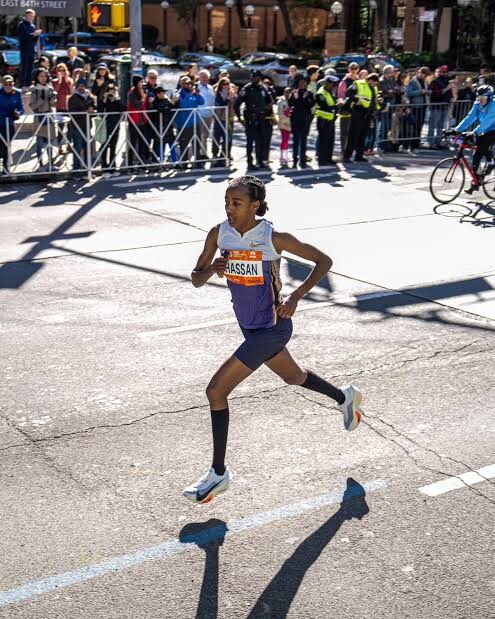
Hassan has had considerably more time to recover and prepare for the marathon, while she has also been managing an Achilles problem that disrupted her 2026 season. Rather than rushing back into competition, she has used the year to recover and build towards her longer-term goals.
Most importantly, Hassan now knows what awaits her when the race moves through New York's five boroughs.
She has already experienced the relentless bridges, the demanding climbs and the atmosphere created by huge crowds lining the streets. That knowledge could prove valuable when the race enters its decisive stages, particularly on a course where pacing and patience are just as important as raw marathon speed.
Hassan will also arrive with one of the fastest personal bests in the field. Her 2:13:44 national record makes her the quickest woman entered for the 2026 race, although New York's challenging layout means personal-best times do not necessarily tell the whole story.
Standing across the starting line will be a powerful Kenyan challenge.
Obiri returns as defending champion after producing one of the most impressive performances in the history of the race last year. She stormed to victory in 2:19:51, breaking the long-standing New York City Marathon course record, and has since lowered her marathon personal best to 2:15:53 in London.
Chepkirui will also return after finishing third in New York last year. The 2024 champion owns a 2:17:29 personal best, while Kiplagat brings enormous experience to the field, having won major marathons in New York, Boston and London as well as world championship gold.
The international field also includes Ethiopia's Gotytom Gebreslase, Kenya's Viola Cheptoo and Mercy Chelangat, Uruguay's Julia Paternain, Germany's Fabienne Königstein and a strong American contingent led by Jess McClain, Fiona O'Keeffe and marathon debutant Weini Kelati.
For Hassan, however, this race is about more than the names on the start list.
New York gave her a difficult introduction to its unique demands in 2025. She now returns with a clearer understanding of the course, more marathon experience and a preparation cycle designed to put her in a different position when the race reaches its closing stages.
She has already conquered the marathon on the biggest Olympic stage. She has also run 2:13:44, one of the fastest times ever recorded by a woman.
Now, New York offers another test.
The streets that humbled Hassan last year will once again be waiting for her. But this time, she will not be discovering them for the first time.
On November 1, Hassan will have another opportunity to find out just how different New York can look when you return knowing exactly what lies ahead.
And with Obiri, Chepkirui, Kiplagat and a deep international field standing in her way, the second chapter promises to be every bit as compelling as the first.
by Erick Cheruiyot for My Best Runs.
Login to leave a comment

TCS New York City Marathon
The first New York City Marathon, organized in 1970 by Fred Lebow and Vince Chiappetta, was held entirely in Central Park. Of 127 entrants, only 55 men finished; the sole female entrant dropped out due to illness. Winners were given inexpensive wristwatches and recycled baseball and bowling trophies. The entry fee was $1 and the total event budget...
more...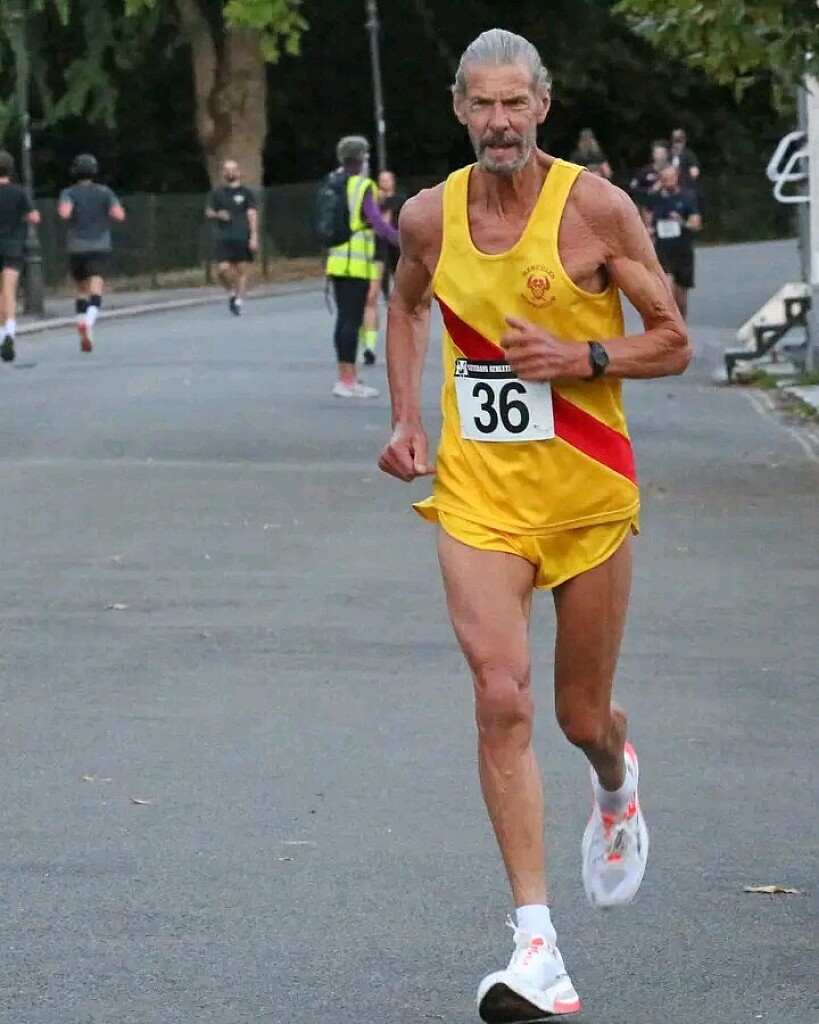
At 82, Former King Crimson Bassist Peter Giles Is Still Rewriting British Running Records
At an age when many people have long since stepped away from competitive sport, Peter Giles is still finding new ways to challenge the clock.
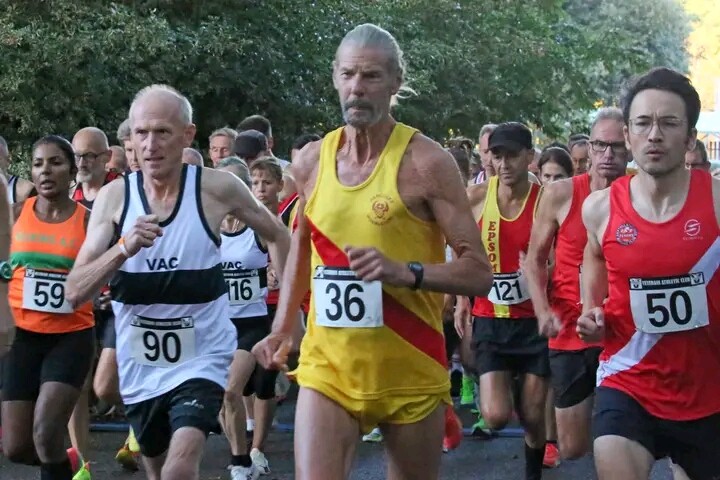
The 82-year-old Briton has continued his remarkable running journey by improving his British M80 5km age-group record to 22:28 at Battersea Park over the weekend, adding another chapter to a sporting story that began relatively late in life.
What makes Giles' achievement even more remarkable is that running was not always part of his world. He did not take up the sport seriously until he was 44, meaning his journey from recreational runner to record holder has unfolded over several decades.
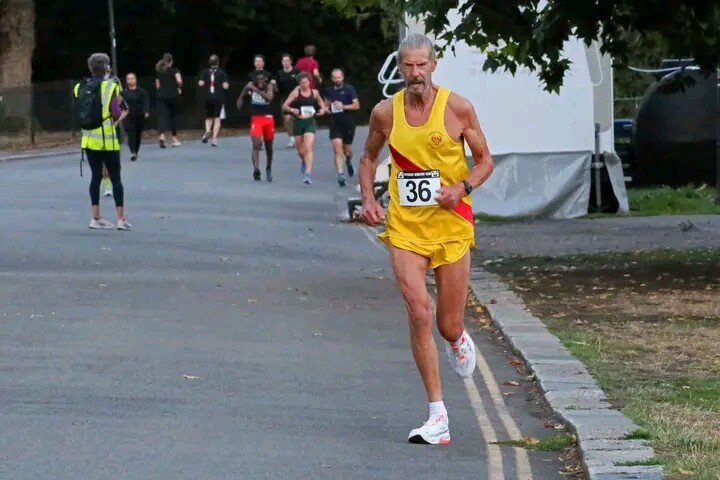
Giles, however, is perhaps better known to some music fans for his time behind the bass guitar. He was a member of the influential progressive rock band King Crimson during its early years, making his life story an unusual blend of music and endurance sport.
Running eventually became a major part of his life, but it was not until he reached 80 that Giles decided to make age-group records a serious target.
Speaking to The Times last year, he explained that he had been anticipating the opportunity for years, knowing that turning 80 would open the door to a new collection of age-group records.
His approach to training is equally unconventional.
Rather than relying on elaborate fitness programmes, supplements or long hours inside a gym, Giles keeps things remarkably simple. He does not use supplements, does not go to the gym and prefers a straightforward diet that includes porridge, eggs and fish.
For Giles, longevity appears to come from knowing when to do less rather than constantly pushing for more.
He believes many runners make the mistake of doing too much, particularly as they get older, while his own philosophy has increasingly centred on simplicity.
“Most runners overtrain,” Giles has said, explaining that his approach has become simpler with age.
That philosophy has clearly served him well. At 82, Giles continues to compete against the clock, demonstrating that athletic ambition does not necessarily disappear with age.
His latest 22:28 at Battersea Park is more than just another number on an age-group results sheet. It is a reminder that there is no single timetable for discovering how far the human body can go.
From the stage with a bass guitar to the roads and paths of Britain, Giles has built an extraordinary second act — one in which the pursuit of faster times has continued well into his 80s.
And judging by his latest record, Peter Giles is not finished rewriting the record books yet.
by Erick Cheruiyot for My Best Runs.
Login to leave a comment
Cameron Myers Takes A Bold Step Into The 1500m Future With Josh Kerr As His Benchmark
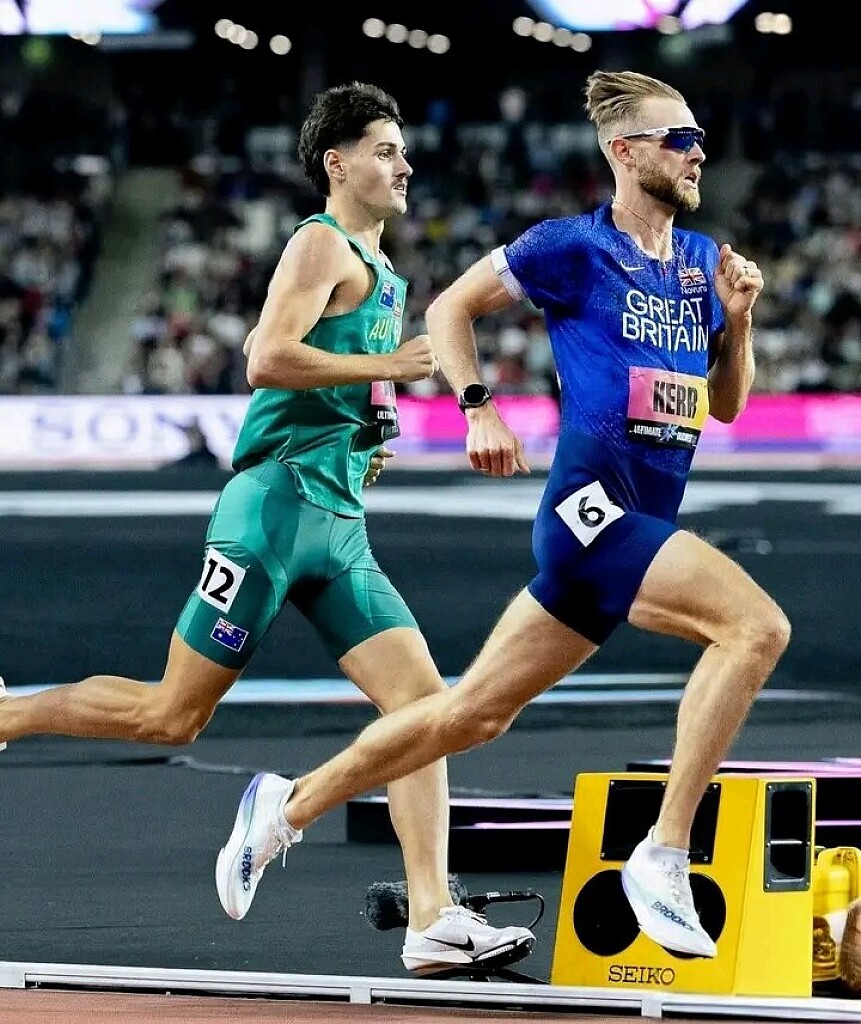
Australian youngster Cameron Myers may have taken an important step toward establishing himself among the next generation of 1500m stars after sharing the track with world-record holder Josh Kerr at the World Athletics Ultimate Championship in Budapest.
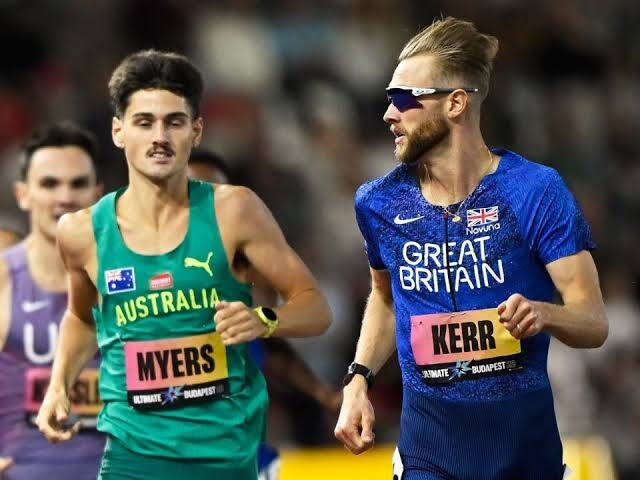
Myers arrived at the high-profile race with plenty of promise already surrounding his name, but competing directly against one of the world's leading middle-distance runners offered him a different kind of test. Rather than being intimidated by the occasion, the young Australian embraced the challenge and showed that he is willing to measure himself against the very best.
As the race entered its decisive stages, Myers remained firmly in contention. With 200 metres remaining, he believed he had a genuine opportunity to challenge Kerr, setting the stage for a dramatic finish between experience and emerging talent.
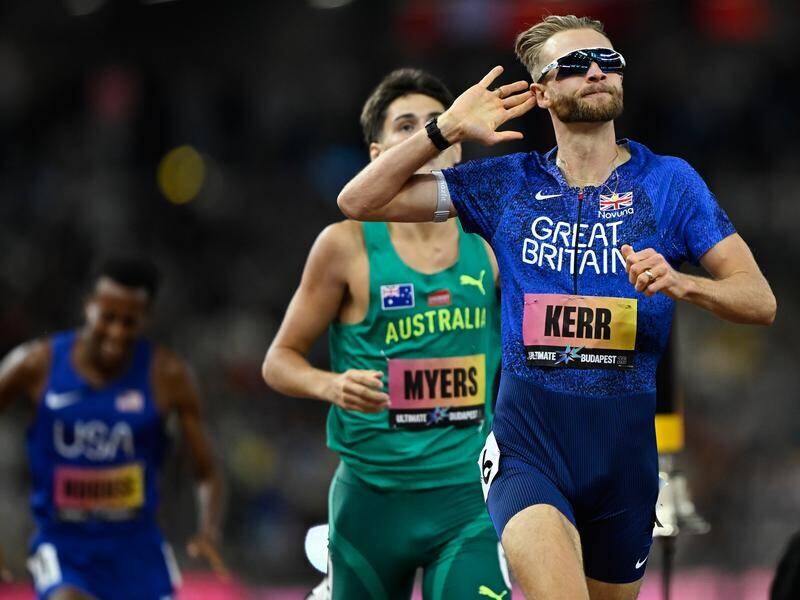
However, Kerr demonstrated exactly why he has established himself at the top of the event. When the race reached its final 60 metres, the British star unleashed his trademark finishing speed and began to pull away, ultimately denying Myers the chance to fight for victory all the way to the line.
For Myers, though, the significance of the race went beyond the final result. The experience gave him a valuable glimpse of the level he hopes to reach in the coming years and, perhaps more importantly, strengthened his belief that he can eventually compete with athletes of Kerr's calibre.
“It was exciting to race him. He was just too strong and that shows why he is a world record holder. I think that's where I want to go in the future,” Myers said.
Those words underline the ambition of an athlete who is still at the beginning of his senior journey. Instead of viewing Kerr's late surge simply as a defeat, Myers appeared to see it as a lesson — a first-hand demonstration of the strength, confidence and finishing ability required to succeed at the highest level.
The Australian now knows exactly what separates him from one of the world's elite 1500m runners. That knowledge could prove invaluable as he continues to develop, gain experience and sharpen his own finishing speed.
Myers' journey is therefore one worth watching closely. He has already shown that he is prepared to line up alongside established champions, and his willingness to learn from those encounters could become one of the defining features of his progression.
For now, Josh Kerr remains the benchmark Myers wants to reach. But if the young Australian continues developing at his current trajectory, today's challenger could eventually become tomorrow's target for the rest of the 1500m field.
Cameron Myers has already seen the level he wants to reach. The next chapter will be about closing the gap.
by Erick Cheruiyot for My Best Runs.
Login to leave a comment
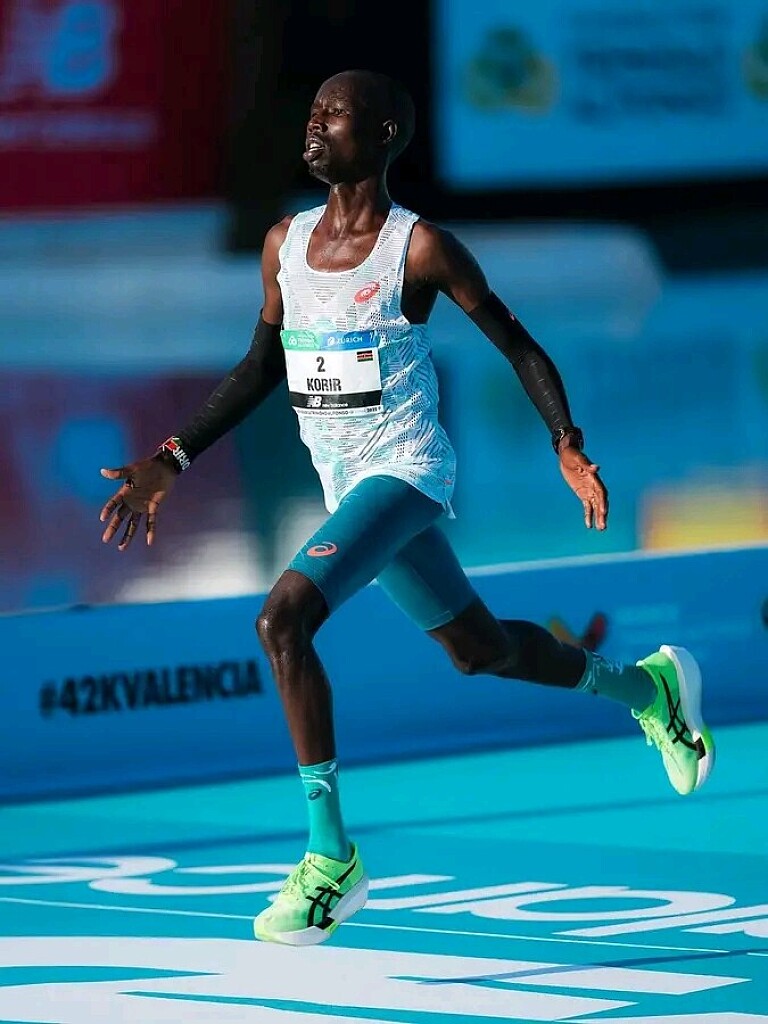
John Korir Reveals Huge Training Mileage Ahead Of Valencia Marathon Showdown
Kenyan marathon star John Korir has offered a glimpse into the demanding preparation behind his pursuit of another major victory, revealing that he is covering an astonishing amount of mileage as he builds towards the 2026 Valencia Marathon.

Korir, who will return to Spain on December 6 for the prestigious Valencia Marathon, says his current training programme involves running between 45 and 48 kilometres a day, with his weekly mileage reaching between 250 and 270 kilometres.
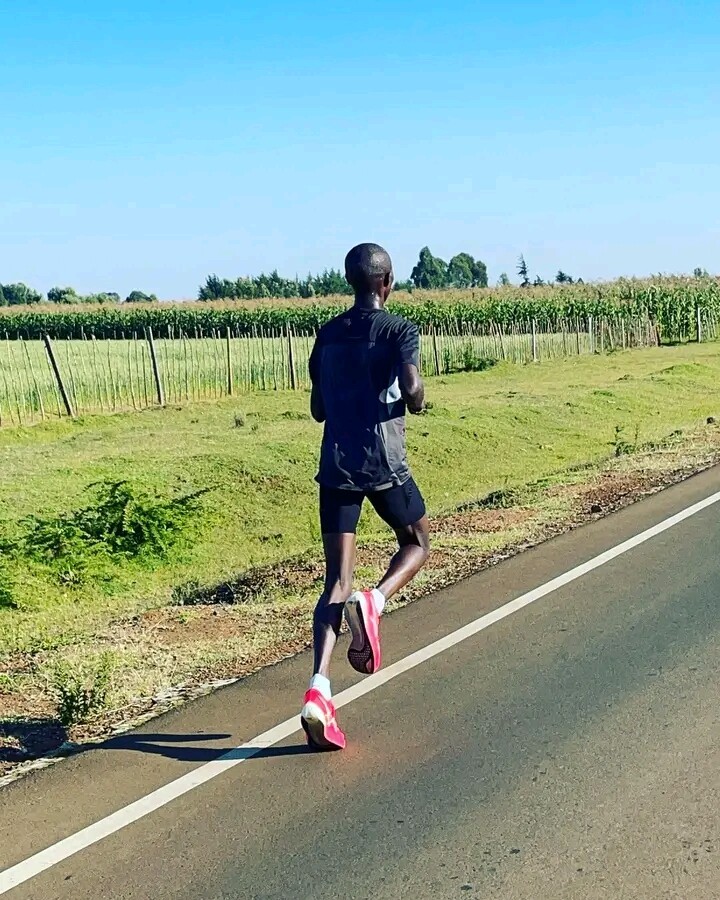
“I do 45 to 48 kilometres a day and 250 to 270 kilometres per week,” Korir revealed in an exclusive interview with Teddy Mulei of The Star.
The remarkable workload highlights the level of endurance required at the very top of marathon running, with Korir combining substantial mileage with dedicated speed work as he prepares for another demanding championship-calibre race.
“I have been focusing on both speed and endurance,” he added.
Korir will head to Valencia with confidence after establishing himself as one of the leading marathoners on the global circuit. He won the 2025 Valencia Marathon in 2:02:24, delivering a controlled and powerful performance to claim the prestigious title.
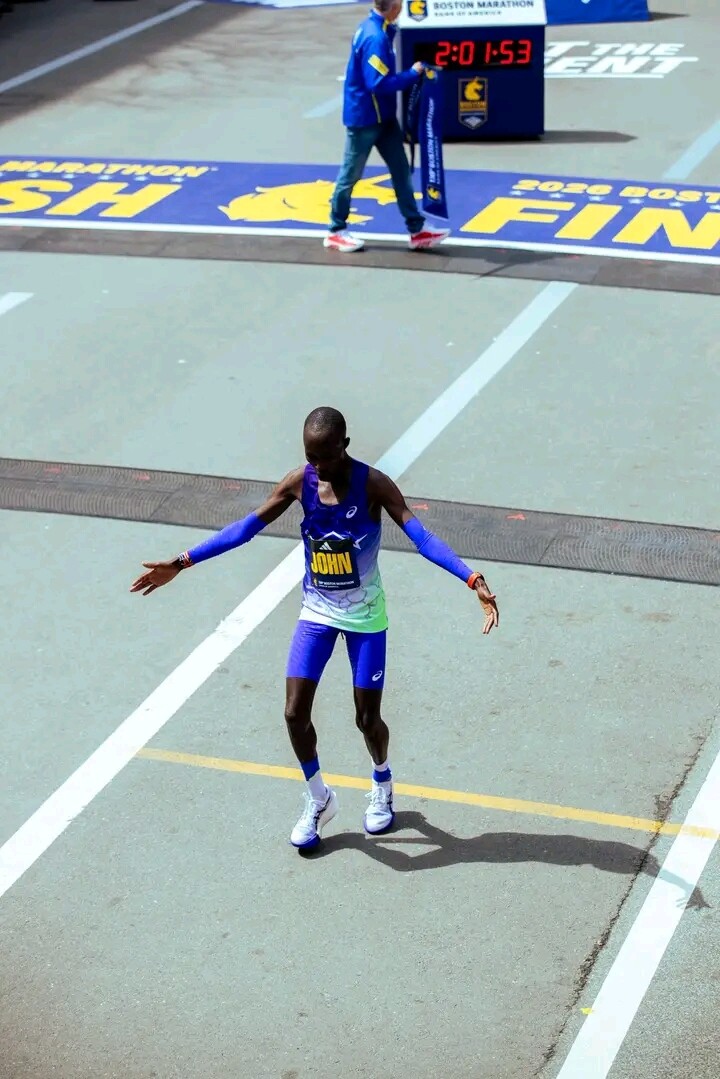
His impressive form continued into 2026 when he produced one of the biggest performances of his career at the Boston Marathon. Korir stormed to victory in a course-record 2:01:52, lowering his personal best and further strengthening his reputation as one of Kenya’s leading marathon specialists.
The challenge in Valencia, however, is expected to be significantly tougher this time around, with a formidable international field taking shape.
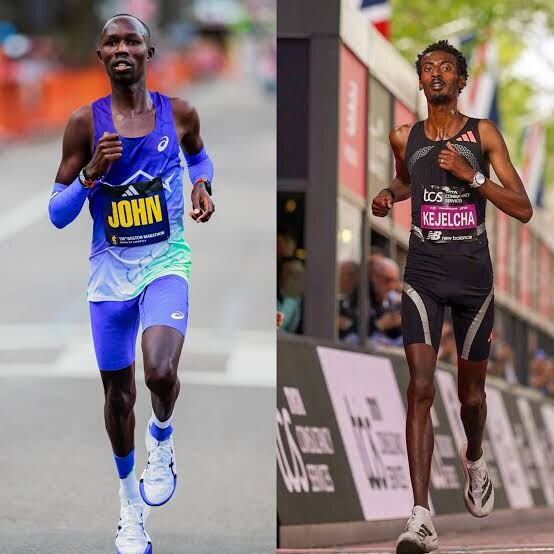
Among the biggest names expected to line up is Ethiopian speedster Yomif Kejelcha, whose transition from the track and shorter road distances to the marathon has already produced remarkable results.
Kejelcha made headlines with a sensational 1:59:41 in London, becoming only the second man to break the two-hour barrier in an official marathon after Kenya’s Sabastian Sawe recorded the world-record 1:59:30 in the same race.
The Ethiopian also has a strong connection with Valencia. He previously set a world record in the half marathon on the Spanish course and has demonstrated repeatedly that he possesses the speed required to produce extraordinary times over longer distances.
For Korir, the upcoming Valencia Marathon will therefore represent more than simply a defence of his title. It will be another opportunity to measure himself against some of the fastest marathoners in the world.
Despite the excitement surrounding the race and the possibility of another exceptionally fast performance, Korir is choosing to remain measured about his specific target.
“For now I cannot talk about what I will be going for in Valencia, but I am praying to God for good health and to be injury-free,” he said.
That cautious approach reflects the unpredictable nature of marathon racing, where months of preparation can ultimately come down to how an athlete responds over the final kilometres.
With his massive training volume, renewed focus on speed and endurance, and growing experience at the highest level, Korir is laying the groundwork for another major performance.
When the elite field takes over the streets of Valencia on December 6, the defending champion will have the added motivation of protecting his crown against a group of rivals carrying ambitions of their own.
For Korir, the road to Valencia has already begun with thousands of kilometres of preparation. The next chapter will be written over 42.195 kilometres.
by Erick Cheruiyot for My Best Runs.
Login to leave a comment

VALENCIA TRINIDAD ALFONSO
The Trinidad Alfonso EDP Valencia Marathon is held annually in the historic city of Valencia which, with its entirely flat circuit and perfect November temperature, averaging between 12-17 degrees, represents the ideal setting for hosting such a long-distance sporting challenge. This, coupled with the most incomparable of settings, makes the Valencia Marathon, Valencia, one of the most important events in...
more...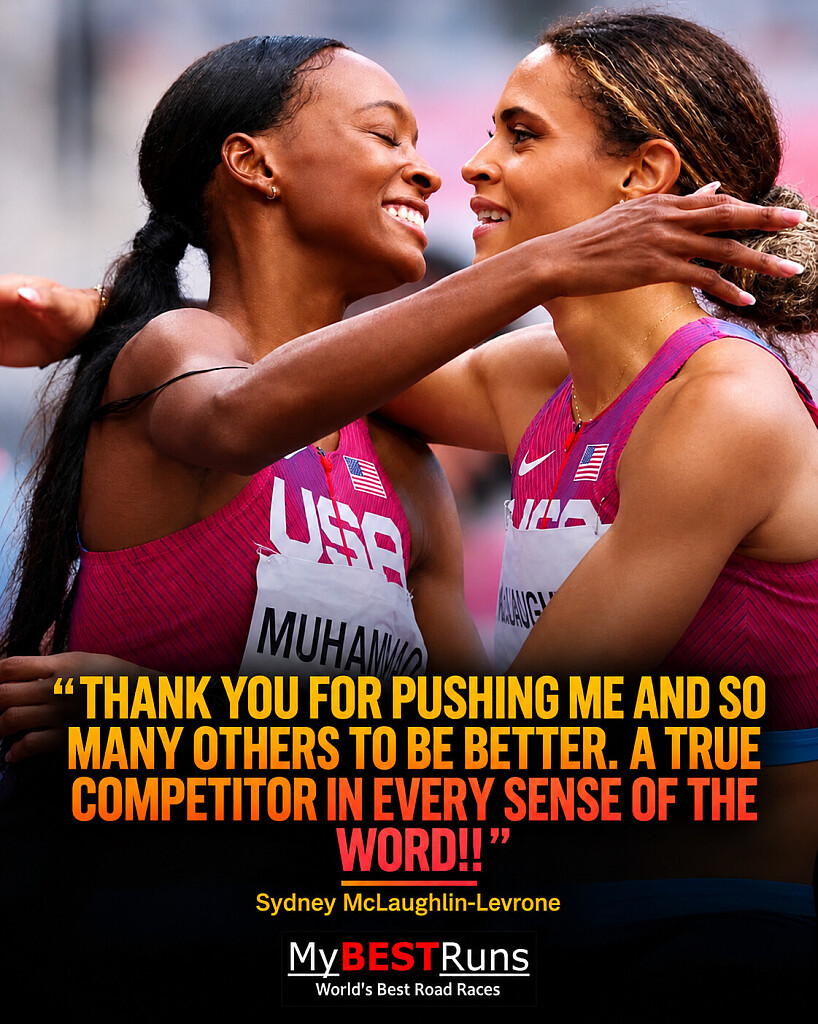
Sydney McLaughlin-Levrone Pays Emotional Tribute As Dalilah Muhammad’s Legendary Career Comes To An End
Some rivalries create champions. Others change an entire sport.
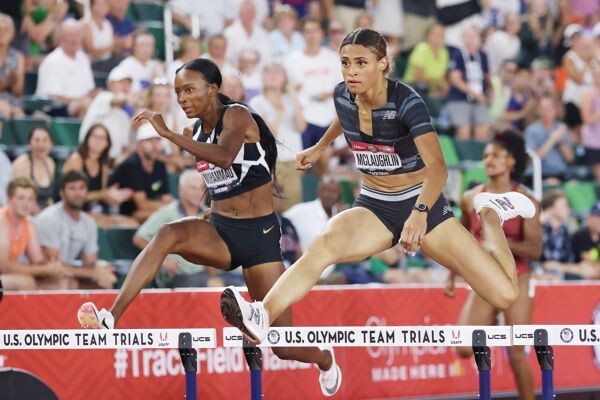
For Sydney McLaughlin-Levrone and Dalilah Muhammad, their extraordinary rivalry did both.
As Muhammad took the final 400m hurdles race of her remarkable career at the World Athletics Ultimate Championship Budapest 26, McLaughlin-Levrone paid tribute to the woman who helped push her to another level — not only as a competitor, but as one of the athletes who helped redefine what was possible in the event.
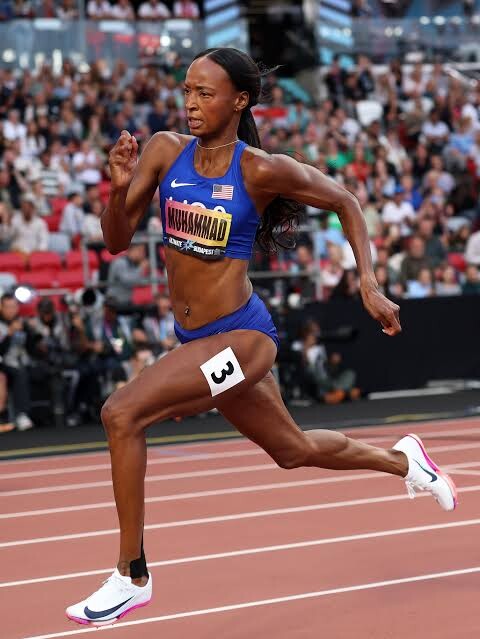
“Dalilah, you truly did just change the game for all of us.”
Those words carry particular weight because few athletes understand Muhammad’s impact better than McLaughlin-Levrone.
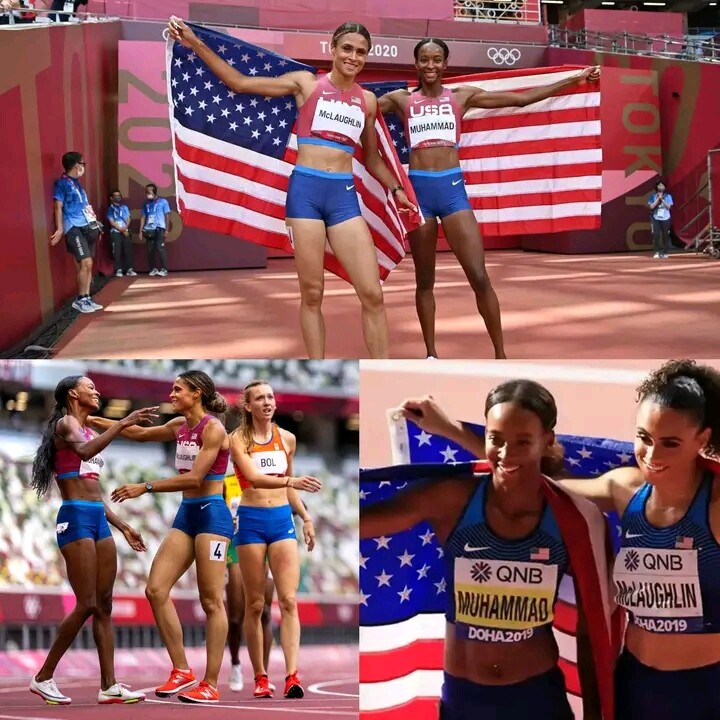
Their rivalry became one of the defining stories of modern women’s athletics. In 2019, Muhammad broke a world record that had stood for almost 16 years, clocking 52.20 seconds at the US Championships. Later that year, she lowered it again to 52.16 while winning the world title in Doha, with McLaughlin-Levrone finishing second in 52.23.
But Sydney was not content to simply chase Muhammad.
She kept coming.
At the Tokyo Olympics, McLaughlin-Levrone broke the world record with 51.46 seconds to win gold, while Muhammad followed closely in 51.58. Their performances demonstrated how dramatically the event had evolved in just a few years.
McLaughlin-Levrone continued to push the limits, eventually taking the world record down to 50.68 seconds in 2022 before producing an astonishing 50.37 at the Paris 2024 Olympics.
Yet behind those numbers was something more meaningful than a succession of records.
There was respect.
Muhammad had established a standard that forced McLaughlin-Levrone to chase something greater, while McLaughlin-Levrone’s rise helped create another level of competition for everyone following them.
That is the essence of “iron sharpens iron.”
One athlete pushes.
The other responds.
And the sport moves forward.
Their relationship also extended beyond individual competition. They represented the United States together and shared Olympic success as teammates, including the American women’s 4x400m relay gold medal at Tokyo 2020.
Now, years after their most memorable battles, Muhammad has taken her final bow.
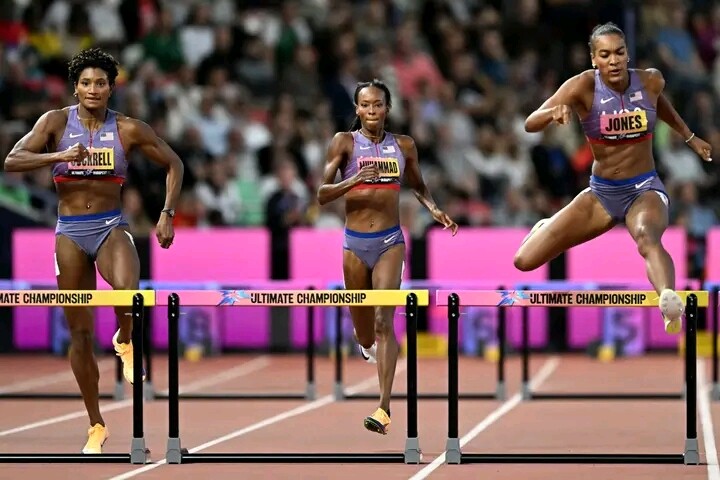
At the inaugural World Athletics Ultimate Championship in Budapest, the former Olympic champion and world record-holder finished fourth in 53.11 seconds, just 0.02 behind fellow American Anna Cockrell.
Jasmine Jones won the title in a season-best 52.45 seconds, with Emma Zapletalová taking second in 52.68 and Cockrell finishing third in 53.09.
For Jones, the victory represented the biggest breakthrough of her career. After finishing fourth at the Paris 2024 Olympics and claiming silver at the 2025 World Championships, she finally reached the top of a major international podium.
And there was something particularly fitting about Muhammad sharing her final race with an athlete from a younger generation.
The baton was not literally being passed, but the symbolism was impossible to miss.
Muhammad helped establish a new standard.
McLaughlin-Levrone took that standard even higher.
And now athletes such as Jones are beginning to write their own stories in an event transformed by those who came before them.
For Muhammad, the legacy goes far beyond medals and world records. She became one of the defining figures in the history of the women’s 400m hurdles, helping elevate the event through years of extraordinary competition.
That is why McLaughlin-Levrone’s tribute feels so much bigger than a farewell.
“Thank you for pushing me and so many others to be better. A true competitor in every sense of the word!!”
There was a time when Sydney was chasing Dalilah.
Then Sydney became the athlete everyone else had to chase.
But their story was never simply about one athlete replacing another. It was about competition creating excellence — about two extraordinary athletes raising the standard until the impossible began to look achievable.
Muhammad pushed the door open.
McLaughlin-Levrone ran through it.
And now a new generation is stepping forward.
As Muhammad leaves the track for the final time, the records will remain in the history books and the medals will become part of her remarkable legacy. But perhaps her greatest contribution will be found in the athletes she inspired, challenged and helped make better.
One pushed.
One answered.
Both changed the game.
That is what iron sharpens iron truly means.
And for one unforgettable era, Dalilah Muhammad and Sydney McLaughlin-Levrone showed the world exactly what happens when two great competitors refuse to let each other settle for ordinary.
by Erick Cheruiyot for My Best Runs.
Login to leave a comment
