

Running News Daily
Running News Daily is edited by Bob Anderson and team. Send your news items to bob@mybestruns.com Advertising opportunities available.
Index to Daily Posts · Sign Up For Updates · Run The World Feed
Search Results for Kenya
Today's Running News
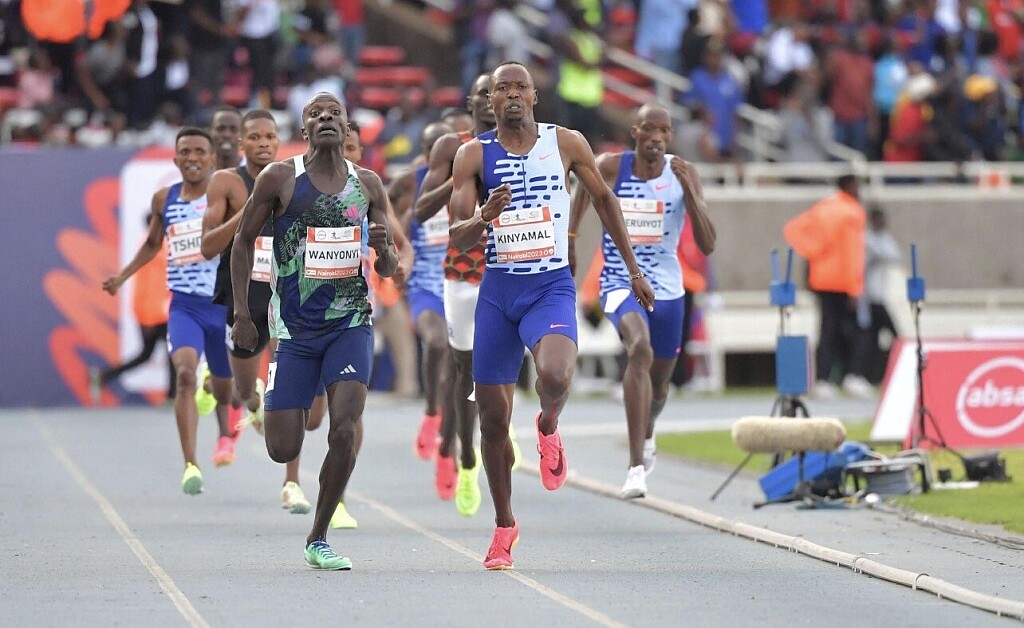


Kip Keino Classic Set for April 24 as Olympic Champion Katzberg Returns to Nairobi
Nairobi is ready to take center stage once again. On April 24, 2026, the Kip Keino Classic returns to Nyayo National Stadium, bringing together some of the world’s top athletes for one of Africa’s premier track and field events. With a growing international profile and deep local talent, this year’s meet is shaping up to be one of the strongest editions yet.
Among the headline names is Olympic and World Champion Ethan Katzberg, who returns to Nairobi after dominating last year’s competition. His winning throw of 82.73 meters not only led the world in 2025 but electrified the Nairobi crowd and elevated the event’s global standing.
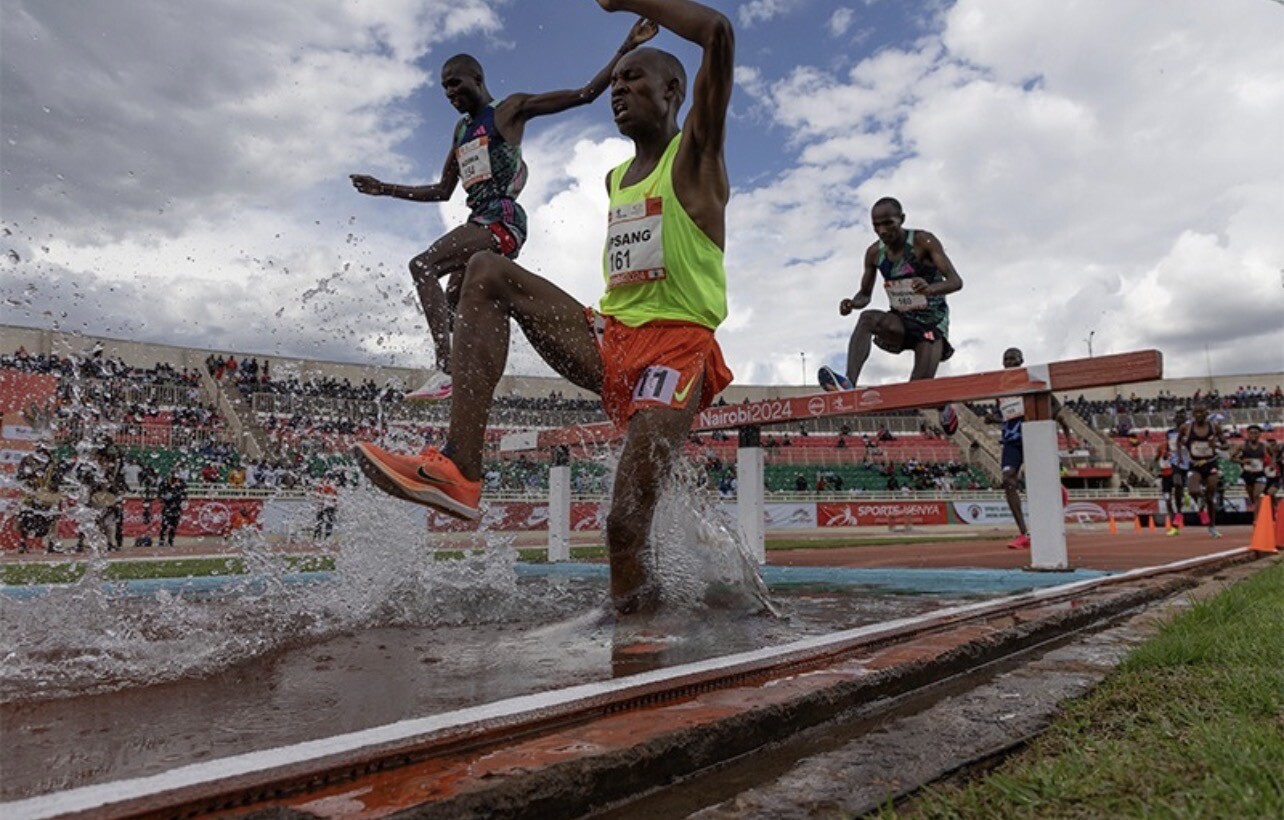
“As a federation, we are ready to welcome the world’s best back to Nairobi,” said Meet Director Barnaba Korir. “Ethan Katzberg’s return brings energy and prestige. This year’s competition will be even stronger, with top international athletes and our own Kenyan stars ready to perform.”
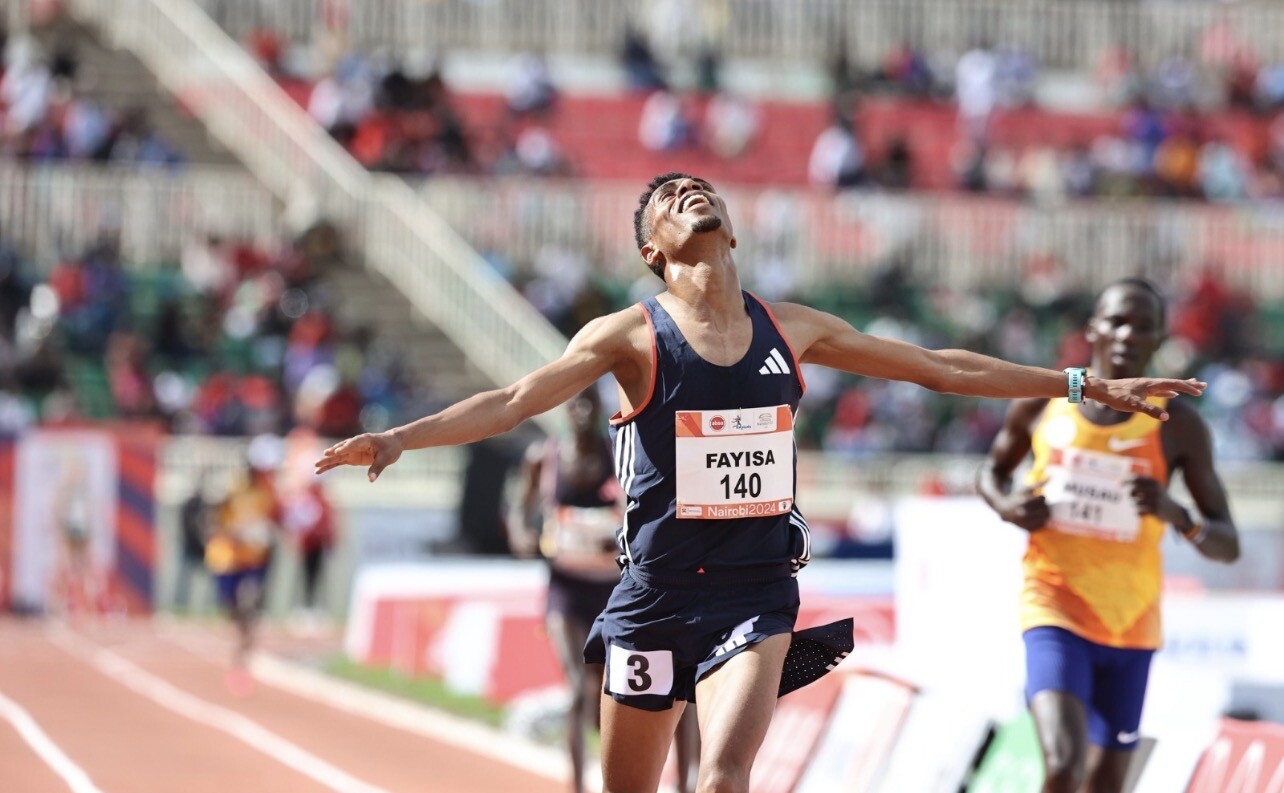
A Growing Global Stage
Katzberg’s return highlights how far the Kip Keino Classic has come. Now firmly established on the international calendar, the meet provides a key opportunity for athletes to compete at a high level while earning valuable World Ranking points.
For Kenyan athletes, competing at home against elite fields offers a major advantage—especially with global events ahead. The meet will serve as an important stepping stone toward competitions like the World Relays and other major championships.
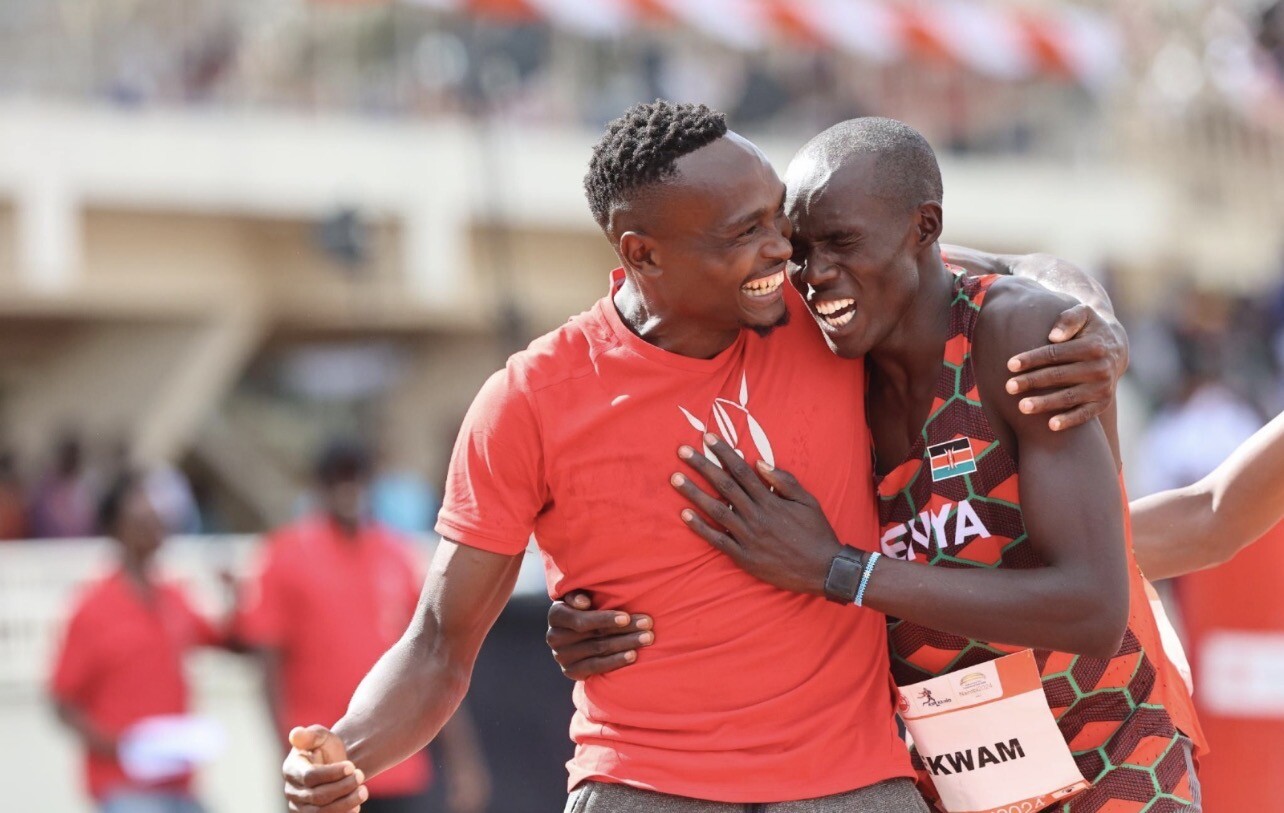
More Than Distance Running
While Kenya’s legacy has long been built on distance running, the Kip Keino Classic continues to broaden that identity.
Sprinters like Ferdinand Omanyala have helped ignite national interest in sprint events, while field disciplines—such as the hammer throw—are drawing top international competitors. The result is a more complete and globally competitive athletics program.
Korir emphasized that balance: “We are creating opportunities for our athletes to compete across all disciplines. This is key to Kenya’s future in athletics.”
World-Class Preparation
Behind the scenes, preparations are being handled with precision.
International technical teams are already in place to ensure the event meets World Athletics Gold-level standards. Specialists from Belgium’s TimeTronics will verify timing systems, while survey teams will certify all track and field measurements.
Every detail is being checked to ensure athletes compete under optimal conditions.
Showcasing Kenya to the World
The Kip Keino Classic is more than a competition—it’s a global showcase.
From the energy inside Nyayo Stadium to the broader appeal of Kenya’s landscape, the event highlights the country’s unique place in world athletics. Visiting athletes and officials often extend their stay to experience destinations like Nairobi National Park and the Maasai Mara, adding a tourism dimension to the meet’s impact.
“This event is not just about results,” Korir said. “It’s about showcasing Kenya, supporting our athletes, and creating lasting global connections.”
Ready for a Big Stage
With Katzberg returning, a deeper international field assembling, and world-class preparations underway, the 2026 Kip Keino Classic is positioned to deliver.
Korir summed it up simply: “We are ready. The world is about to witness it.”
(03/25/2026) ⚡AMPby Robert Kibet for My Best Runs
Kip Keino
Kipchoge Headlines a Star-Studded Field as Cape Town Marathon Sets Stage for Historic 2026 Edition
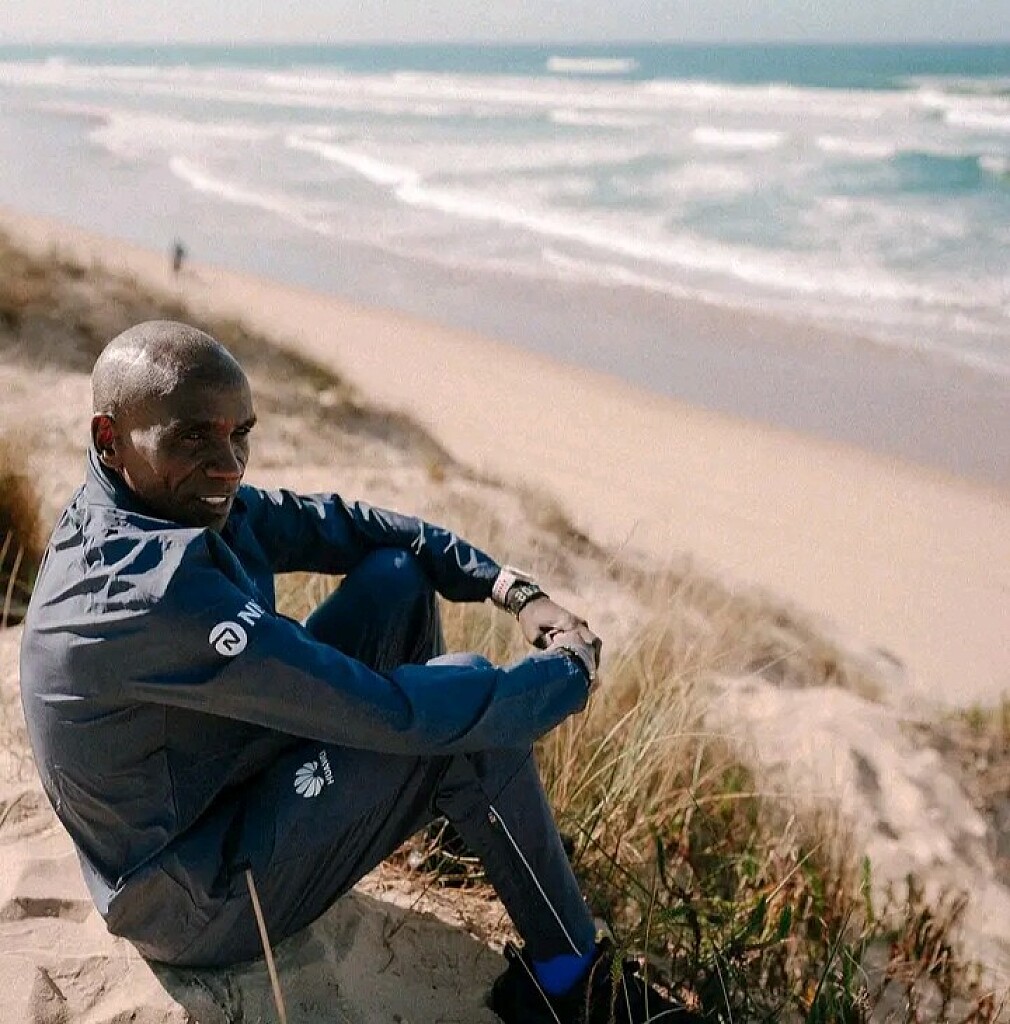
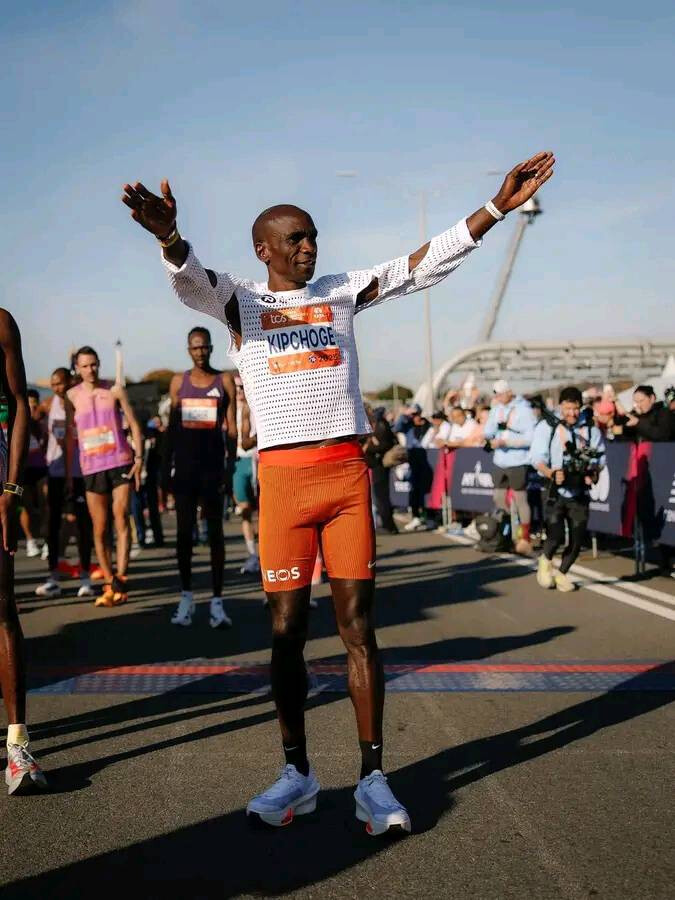
The 2026 Cape Town Sanlam Marathon is already shaping up to be one of the most compelling road races of the year, after organizers officially unveiled a formidable elite field for the May 24 showdown in South Africa’s iconic coastal city. With global attention fixed firmly on the event, the presence of marathon legend Eliud Kipchoge elevates this year’s race into a spectacle of rare magnitude.
Widely regarded as the greatest marathoner in history, Kipchoge returns to African soil with a résumé that continues to redefine the boundaries of human endurance. The two-time Olympic champion and the first man to break the two-hour barrier for the marathon distance brings not only unmatched pedigree but also a magnetic presence that instantly transforms the race into a global attraction.
Yet, this will be no ceremonial run. The Kenyan icon will face a deep and dangerous field hungry for victory and, potentially, a course record. Among the leading contenders is Stephen Kiprop, a proven sub-2:08 performer whose consistency makes him a genuine threat over the classic distance. Israel’s Maru Teferi, a seasoned Olympian, arrives with tactical sharpness and championship experience, while Ethiopia’s Boki Kebede brings serious credentials, including a blistering 2:05:55 personal best that signals his intent to challenge for top honors.
The Ethiopian contingent runs even deeper. Jemal Yimer Mekonen is renowned for his devastating finishing speed, capable of turning races in the closing kilometers, while Yihunilign Adane offers remarkable consistency, having built a reputation through sheer durability and experience across numerous marathon appearances. Adding further intrigue is Adane Gebre Kebede, the 2023 champion and 2024 runner-up, whose familiarity with the course could prove decisive. Meanwhile, Mulugeta Astra Uma enters as a dark horse with the raw speed to disrupt even the most carefully calculated race plans.
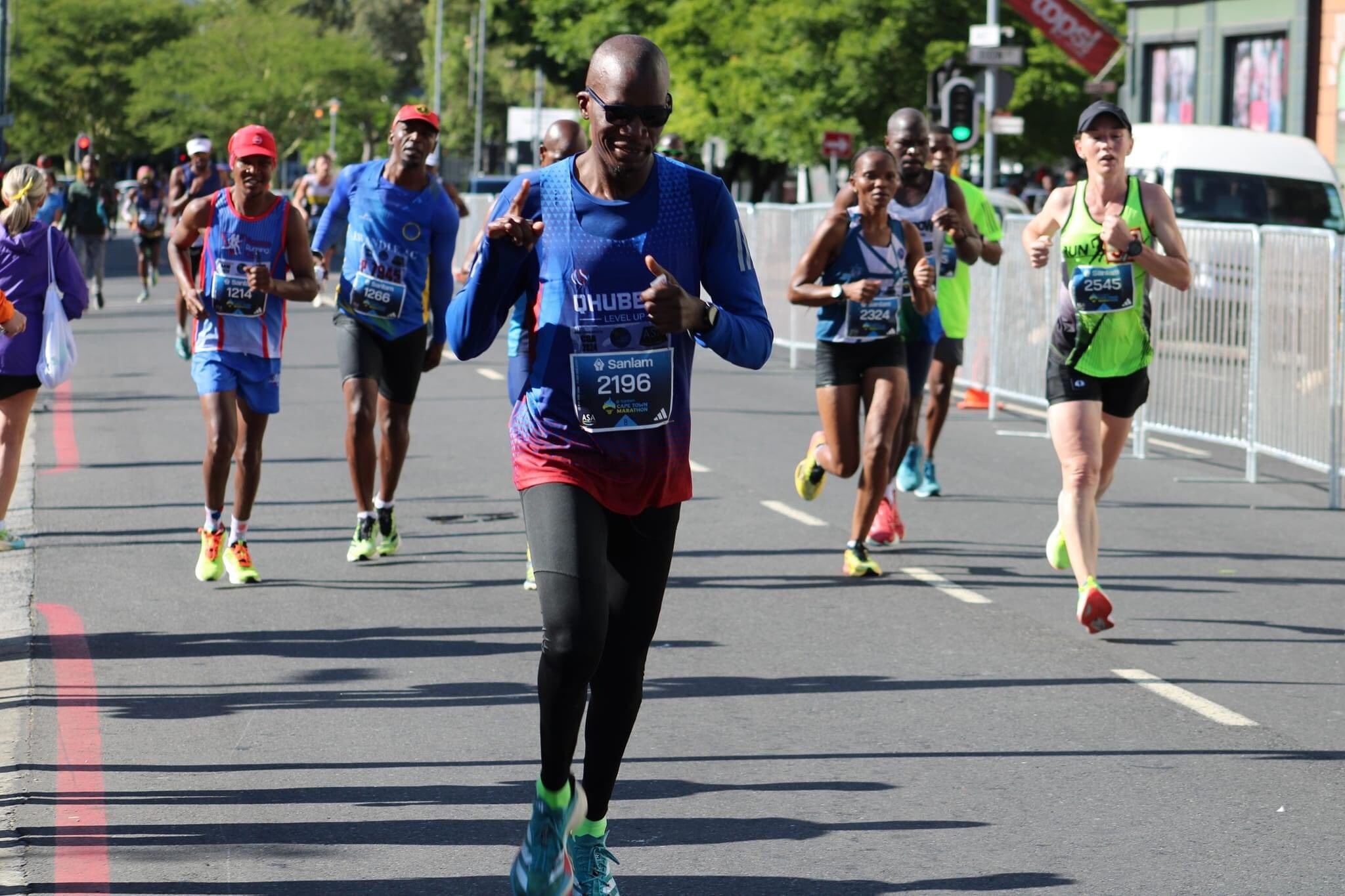
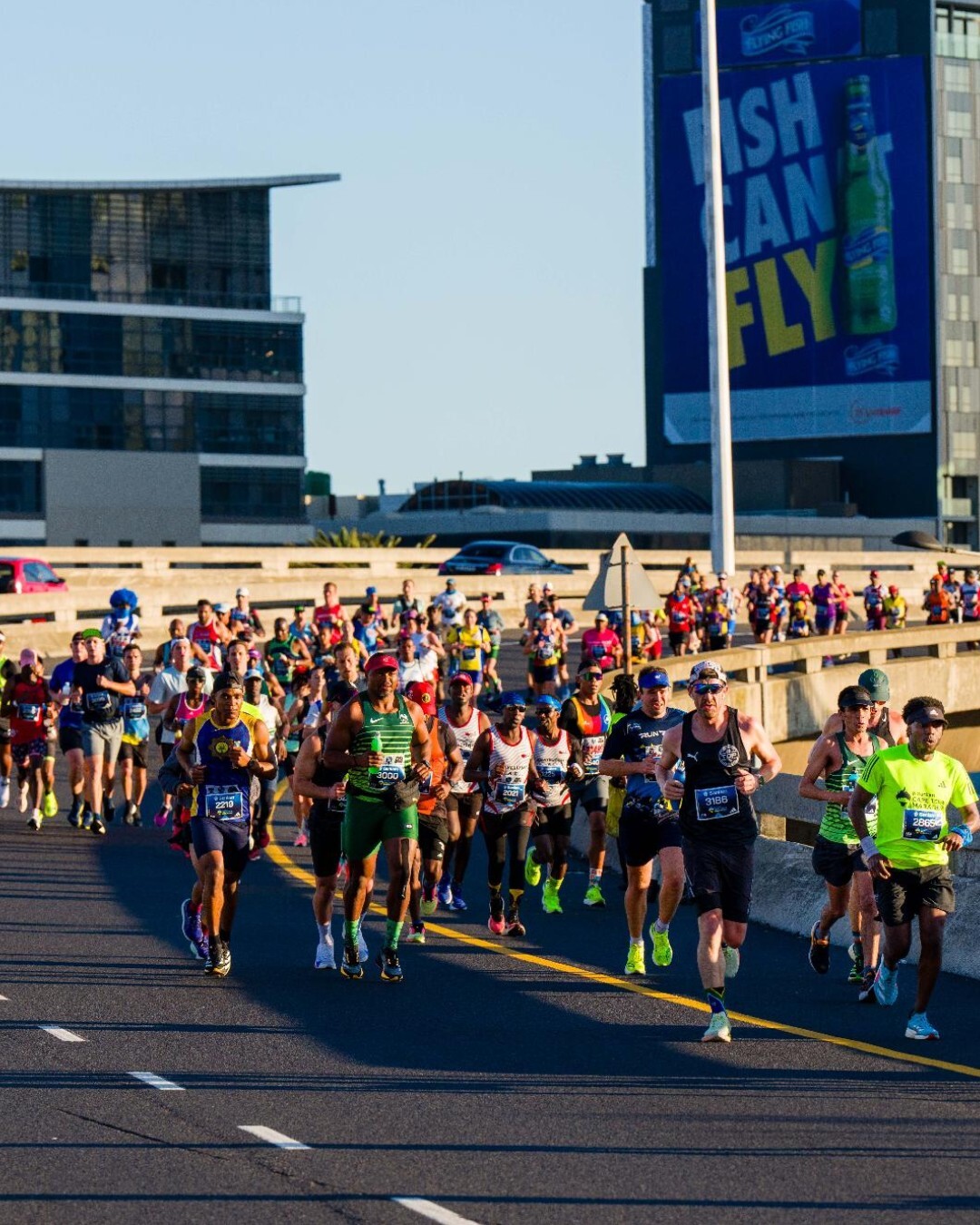
Beyond the individual names, the 2026 edition introduces a refined race structure, with a multi-wave start designed to ease congestion and enhance performance conditions for elite and mass participants alike. The elite men’s race is scheduled to begin at 08:00 local time in Cape Town, ensuring strong viewership across the world.
The Cape Town Marathon continues to push toward its ambition of becoming Africa’s first Abbott World Marathon Major, and this year’s elite line-up reinforces that vision. With a blend of legendary status, emerging firepower, and tactical brilliance, the race promises not just competition, but a narrative rich with possibility.
If the depth of the field is any indication, Cape Town may well witness something extraordinary—a race where history is not just chased, but potentially rewritten.
(03/25/2026) ⚡AMPby Erick Cheruiyot for My Best Runs.

Cape Town Marathon
The Sanlam Cape Town Marathon is a City Marathon held in Cape Town, South Africa, which is sponsored by Sanlam, the City of Cape Town and Vital Health Foods. The marathon is held on a fast and flat course, starting and finishing in Green Point, near the Cape Town Stadium. Prior to existing in its current format, the Cape Town...
more...
Prague Half Marathon Set for a Thrilling Showdown as Global Stars Assemble
The streets of Prague are once again poised to host a spectacular display of endurance and speed as the highly anticipated Prague Half Marathon returns on March 29. With an elite field featuring some of the world’s most exciting distance runners, this year’s edition promises a fierce battle against both the clock and one another.
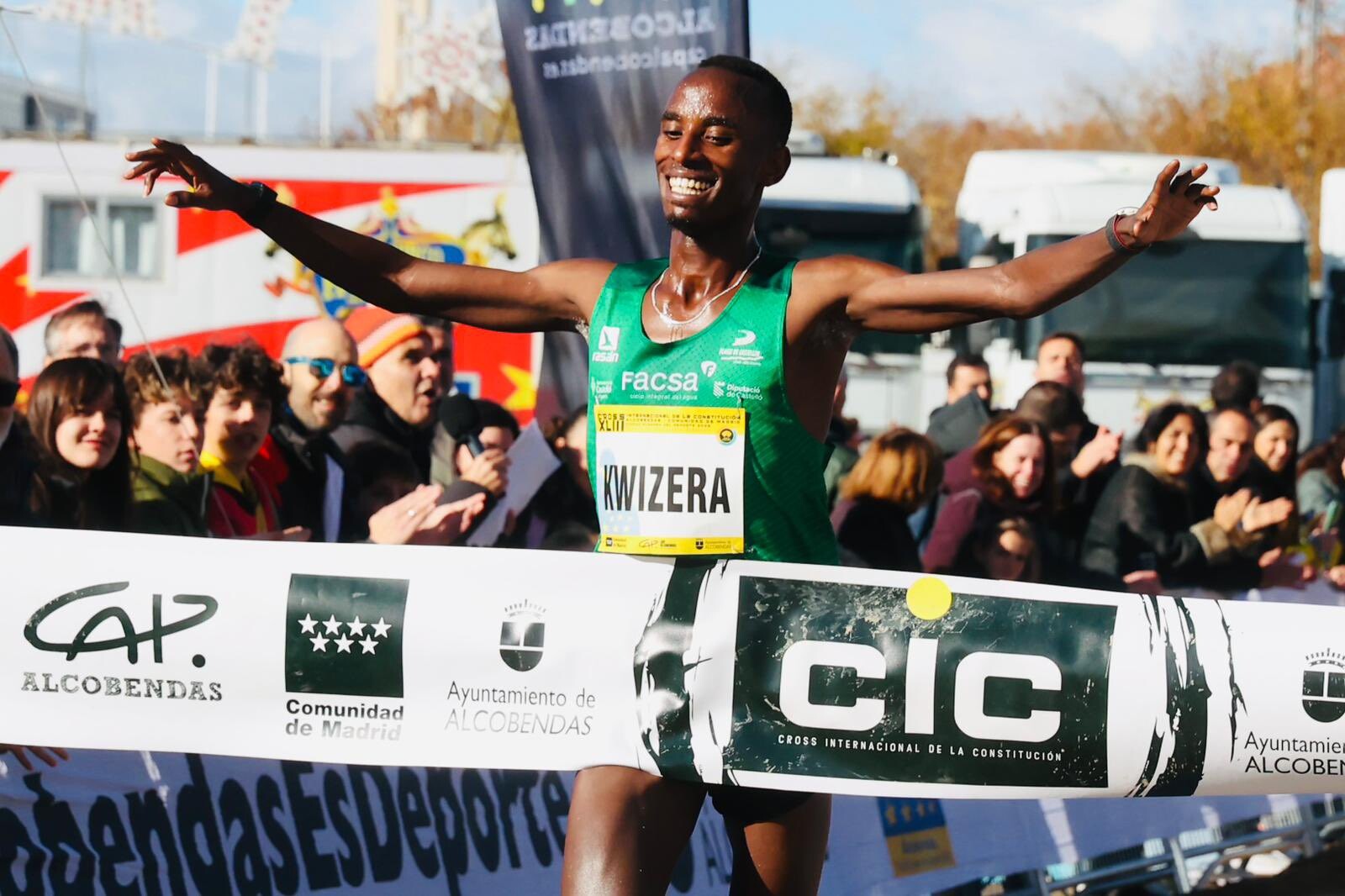
Leading the men’s lineup is Burundi’s Rodrigue Kwizera, a rising force in road racing who arrives with an impressive personal best of 58:38. Known for his relentless pace and tactical sharpness, Kwizera will be aiming to stamp his authority on the race against a competitive field. Close on his heels is Ethiopia’s Tadese Worku, whose 58:47 personal best underlines his pedigree. Worku’s strength over the half marathon distance sets up a compelling duel at the front, with both athletes capable of pushing the pace into record territory.
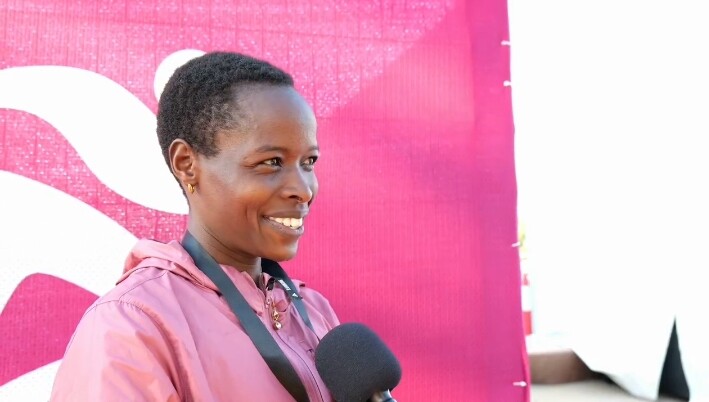
In the women’s race, Kenya’s depth and dominance will be on full display. Jesca Chelangat enters with a strong personal best of 1:06:13, bringing consistency and experience to the fore. She will be joined by compatriot Caroline Makandi Gitonga, whose closely matched best of 1:06:26 signals a tightly contested race. With both athletes known for their finishing strength, the women’s contest could unfold into a dramatic late surge through Prague’s historic avenues.
Beyond these headline names, the race will also feature a deep lineup of other world-class athletes from across the globe, ensuring a high-quality field packed with experience, emerging talent, and potential surprise contenders. This depth adds another layer of unpredictability, where breakaways, tactical surges, and late-race drama could redefine the outcome.
Renowned for its flat and fast course, the Prague Half Marathon has built a reputation as a stage for record-breaking performances and breakthrough moments. The combination of elite competition, scenic surroundings, and passionate crowds creates an electric atmosphere that often inspires athletes to exceed expectations.
As race day approaches, anticipation continues to build for what could be one of the most memorable editions in recent years. With emerging talents eager to make their mark, established names seeking victory, and a strong supporting cast of global elites, Prague is set to deliver another captivating chapter in the world of road racing.
(03/25/2026) ⚡AMPby Erick Cheruiyot for My Best Runs.

Prague Half Marathon
Start the RunCzech season with one of the biggest running events in the Central Europe! Every year the Sportisimo Prague Half Marathon excites spectators with performances of elite athletes breaking records. Enjoy a course with incomparable scenery in the heart of historic Prague that follows along the Vltava river and crisscrosses five beautiful bridges. Take in majestic views of the...
more...
On This Day in Mombasa: The Fall of a King and the Rise of a Warrior
On this day, March 24, 2007, the coastal city of Mombasa bore witness to one of the most dramatic and unforgettable chapters in the history of cross country running at the IAAF World Cross Country Championships. Under the unforgiving tropical heat and humidity, legends clashed, expectations shattered, and a new champion carved his name into greatness.
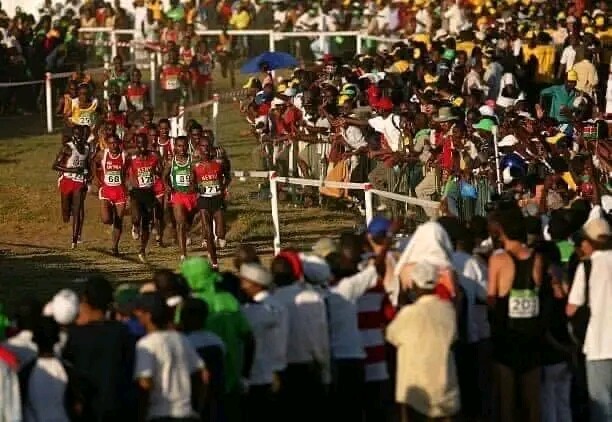
All eyes were firmly fixed on Kenenisa Bekele, the Ethiopian icon who arrived as a five-time consecutive world champion, a man who had turned dominance into routine. For years, Bekele had ruled the muddy fields and grassy plains of cross country with unmatched authority. But on this sweltering Kenyan afternoon, the script took an unexpected and dramatic turn.
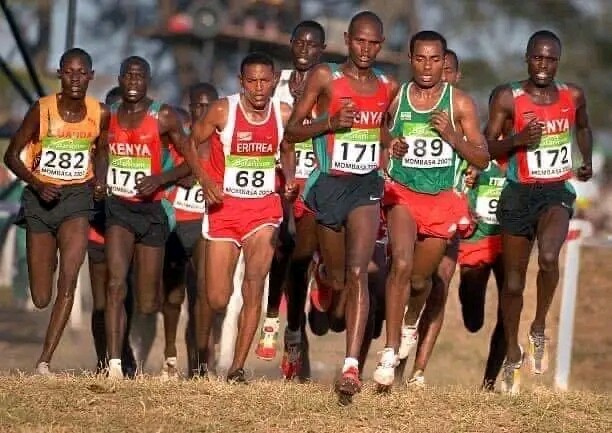
From the early stages of the race, it was clear that conditions were brutal. The heat drained even the strongest athletes, turning the course into a true test of endurance and resilience. Among those undeterred was Zersenay Tadese of Eritrea, a determined and fearless competitor who sensed a rare opportunity.
As the race unfolded, Tadese surged with intent, applying relentless pressure. Bekele, usually composed and untouchable, began to show signs of distress. In a moment that stunned spectators around the world, the Ethiopian legend struggled to respond. A few strides later, after narrowly avoiding a fall, Bekele made the unthinkable decision—he stepped off the course and abandoned the race.
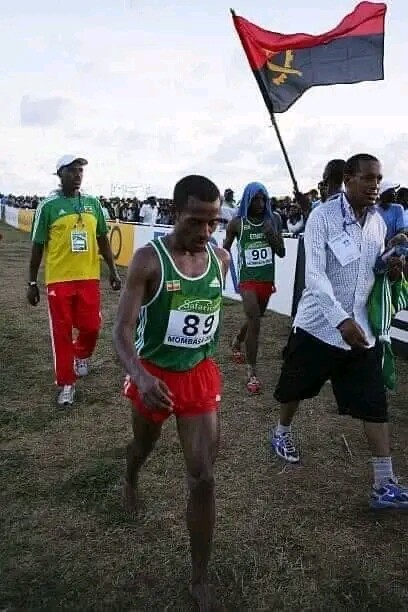
It was a moment that sent shockwaves through the athletics world. The reign of a king had abruptly ended, not with defeat at the finish line, but with surrender to the elements and the intensity of competition.
Seizing the moment with courage and conviction, Tadese powered ahead, unchallenged in the final stages. With strength etched on every stride, he crossed the line in 35:50, claiming a historic and emotional victory for Eritrea. Behind him, Kenya’s own Moses Mosop and Bernard Kiprop Kipyego rose to the occasion, securing silver and bronze medals respectively in front of a passionate home crowd.
What unfolded in Mombasa that day was more than just a race—it was a powerful reminder of the unpredictable beauty of sport. Even the greatest can falter, and in that very moment, new heroes emerge.
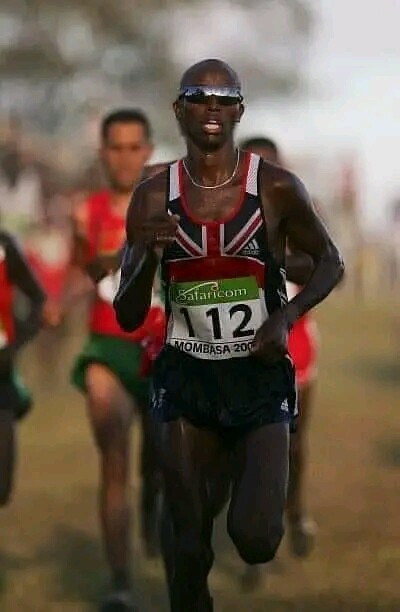
Top 10 Finishers – Senior Men (12 km):
1. Zersenay Tadese (Eritrea) – 35:50
2. Moses Mosop (Kenya) – 36:13
3. Bernard Kiprop Kipyego (Kenya) – 36:37
4. Gideon Ngatuny (Kenya) – 36:43
5. Hosea Macharinyang (Kenya) – 36:46
6. Michael Kipyego (Kenya) – 37:04
7. Tadese Tola (Ethiopia) – 37:04
8. Mubarak Hassan Shami (Qatar) – 37:09
9. Edwin Cheruiyot Soi (Kenya) – 37:27
10. Martin Toroitich (Uganda) – 37:31
Years later, the echoes of that race still linger. It remains a defining moment—where greatness was tested, vulnerability revealed, and history rewritten on the sun-scorched fields of Mombasa.
(03/24/2026) ⚡AMPby Erick Cheruiyot for My Best Runs.
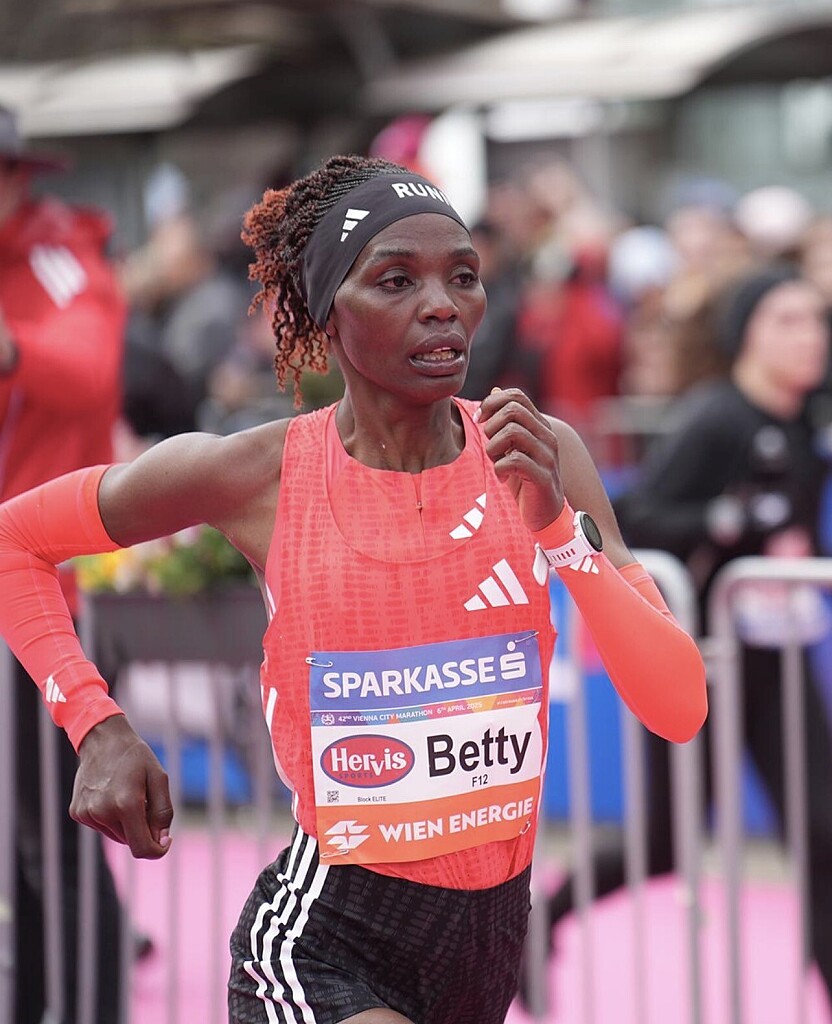
Vienna City Marathon Women Ready to Chase History
The spotlight may shine brightest on the women’s race at the Vienna City Marathon on April 19, where a deep Ethiopian lineup is ready to push the pace. Haftamnesh Tesfaye and Tigist Gezahagn lead the elite field, with organizers targeting not only the course record of 2:20:59 but potentially the first sub-2:20 performance in race history.
They will be challenged by Kenya’s defending champion Betty Chepkemoi, who returns with confidence after a breakthrough victory last year.
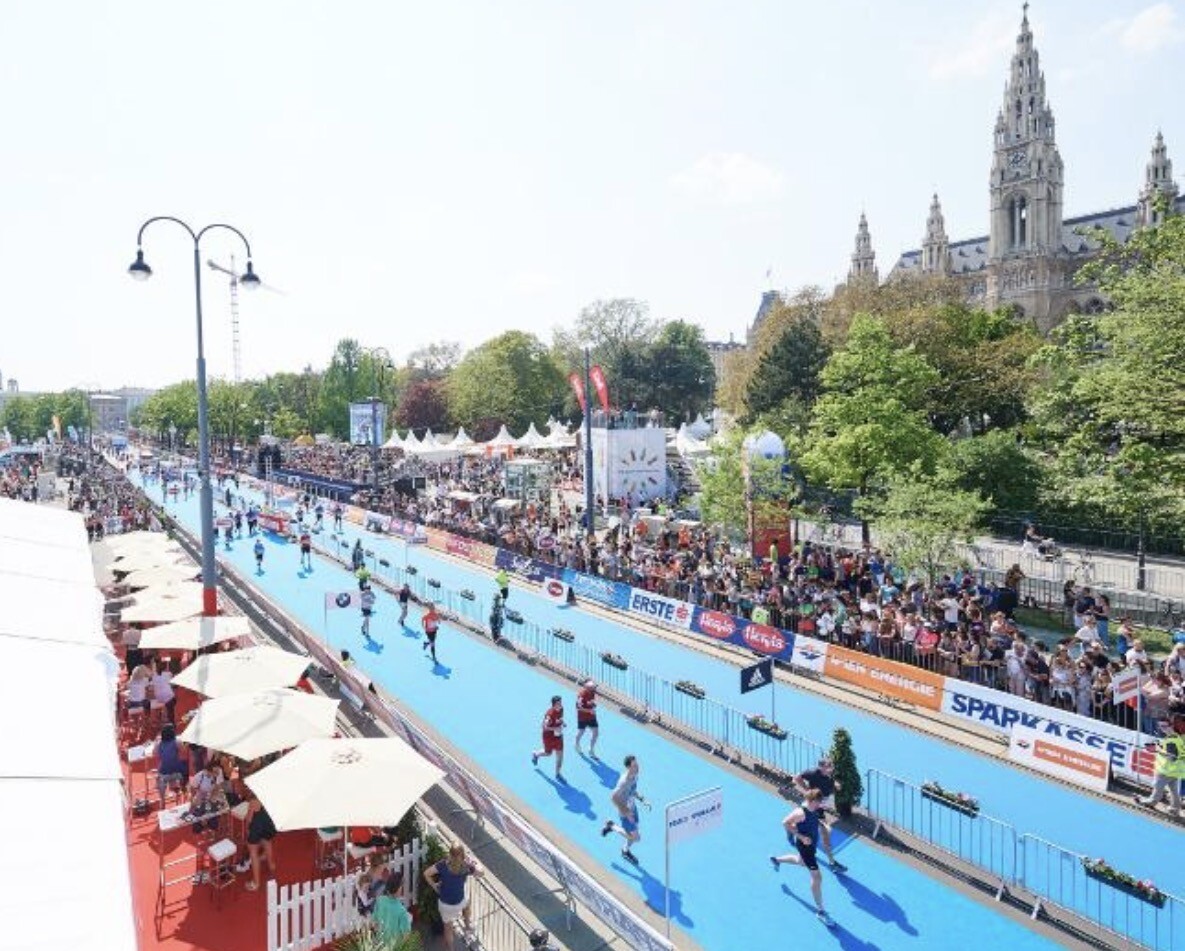
A record 46,000 athletes are entered across the two-day event, including 13,000 marathon runners, reinforcing Vienna’s position as one of Europe’s premier spring marathons and a World Athletics Elite Label Road Race.
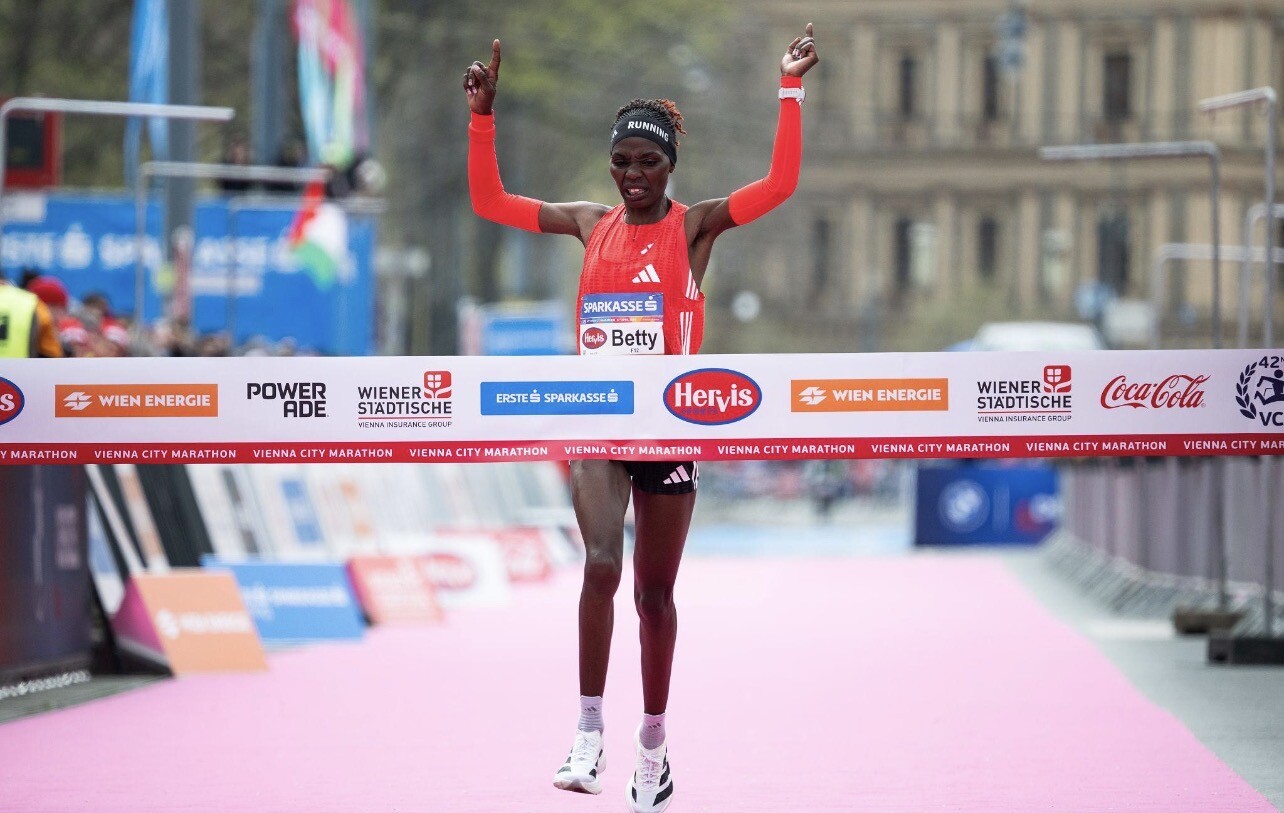
Could Vienna see a Tesfaye breakthrough moment
Earlier this month, Foyten Tesfaye shocked the marathon world with a stunning 2:10:51 debut in Barcelona, becoming one of the fastest women ever. While that level may be out of reach here, her older sister Haftamnesh Tesfaye arrives as a serious contender.

Now 31, Tesfaye ran 2:20:13 in her 2018 Dubai debut, which remains her personal best. After stepping away from the sport in 2020 and becoming a mother of two, she returns to the marathon stage in strong form and well prepared.
She has been training in Addis Ababa under Gemedu Dedefo alongside a world-class group that includes Olympic silver medalist and former world record holder Tigst Assefa, Chicago Marathon champion Hawi Feysa, and Dubai and Berlin winner Tigist Ketema.
Tigist Gezahagn, 26, has already won a marathon this year, taking victory in Doha in January with a personal best of 2:21:14. She now sets her sights on Vienna’s course record.
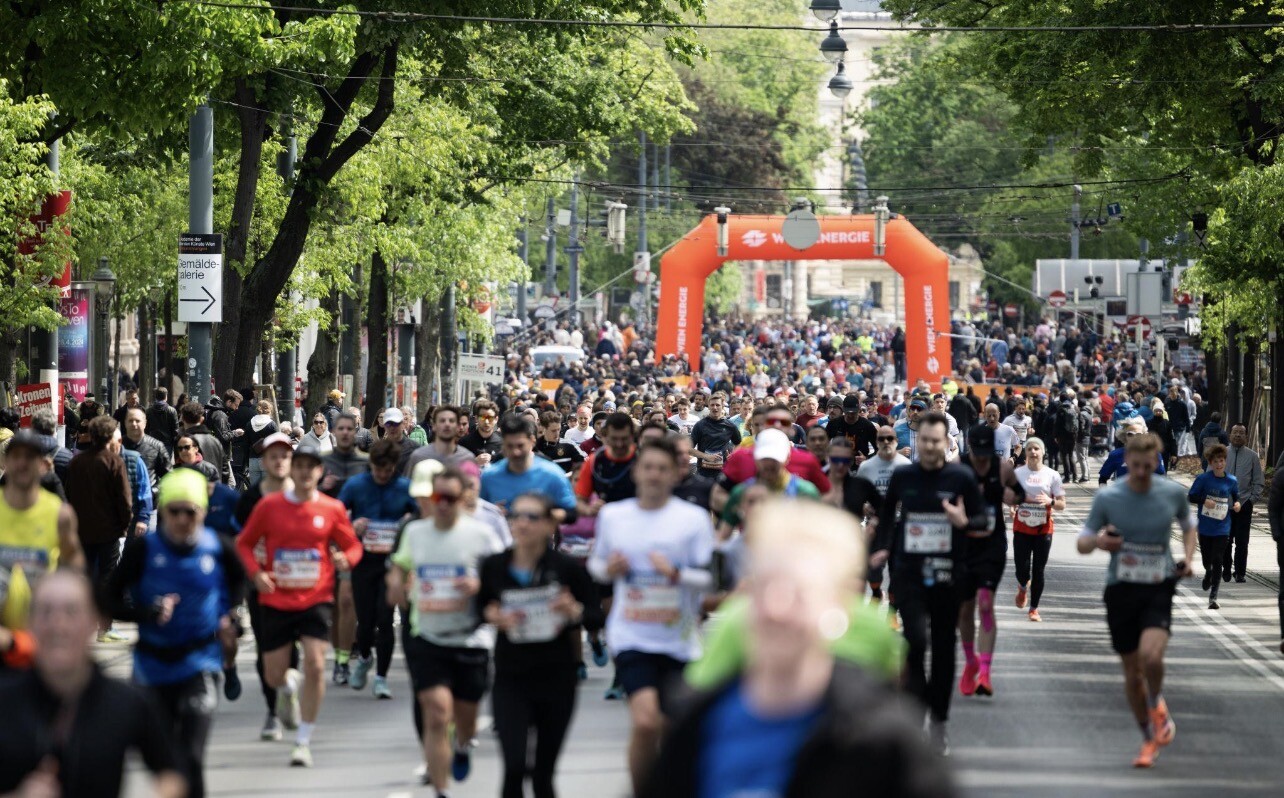
Her manager Tadesse Abraham said her recovery from Doha has gone well and that she is capable of a very strong performance if conditions are favorable. Gezahagn trains in Addis Ababa under coach Getamesay Molla.
Defending champion Betty Chepkemoi may not top the start list, but she brings momentum. Last year, in freezing conditions, she surged to victory in 2:24:14, improving dramatically in just her second marathon.
She said her training has gone well and that she hopes to improve her personal best and defend her title. Chepkemoi trains in Kapsabet under Claudio Berardelli.
American Lindsay Flanagan is the fastest non African woman in the field with a personal best of 2:23:31 from Chicago. After a long injury break, Vienna will mark her return to the marathon distance.
Another athlete to watch is Kenya’s Faith Chepkoech, who made a strong impression here two years ago when she finished second in her marathon debut with 2:26:22. She returns aiming to go even faster.
With a fast course, deep international field, and favorable expectations, Vienna is set up for a high level race. If conditions cooperate, the women’s field could deliver one of the most exciting performances of the spring season.
(03/24/2026) ⚡AMPby Race News Service

Vienna City Marathon
More than 41,000 runners from over 110 nations take part in the Vienna City Marathon, cheered on by hundreds of thousands of spectators. From the start at UN City to the magnificent finish on the Heldenplatz, the excitement will never miss a beat. In recent years the Vienna City Marathon has succeeded in creating a unique position as a marathon...
more...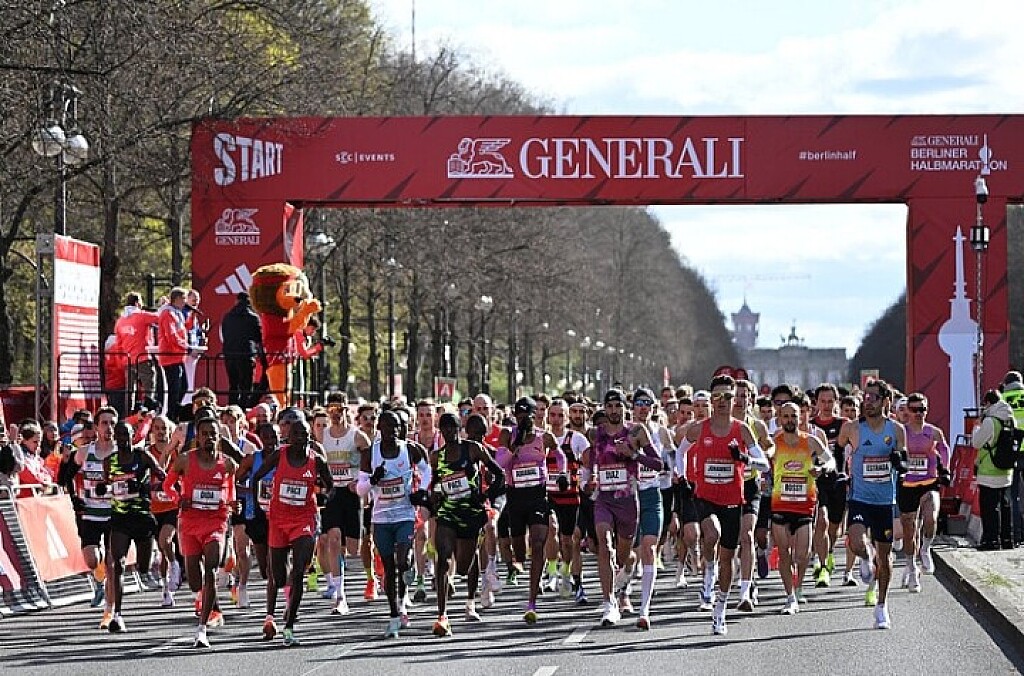
Berlin Half Marathon Set for Elite Showdown as World-Class Fields Assemble
The stage is set in Berlin for what promises to be a thrilling edition of the Berlin Half Marathon on March 29, as a formidable lineup of international talent prepares to clash over the fast and flat streets of the German capital.
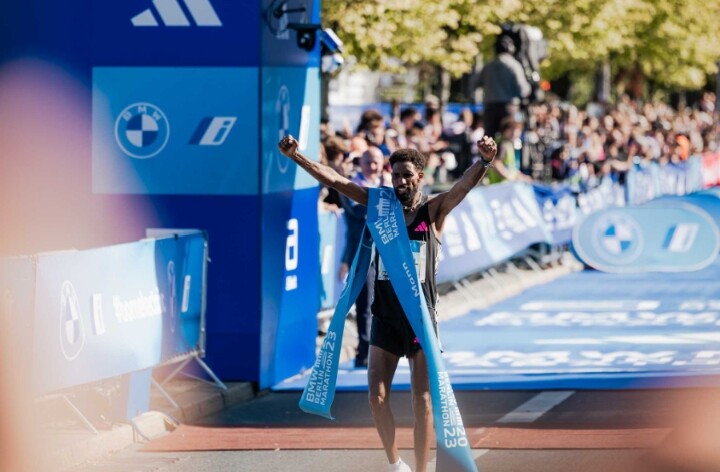
Leading the men’s field is Kenya’s Gideon Kiprotich, who arrives with an impressive personal best of 58:49, marking him as one of the standout contenders. He will face stiff competition from Switzerland’s Dominic Lobalu (59:12), whose rapid rise on the global stage has turned heads, and Germany’s Amanal Petros (59:31), a home favorite eager to deliver on familiar roads.
Adding further depth to the race is Ethiopia’s Bereket Nega (60:03), alongside Great Britain’s Jake Smith (60:31), both capable of disrupting the expected order if the pace intensifies early.
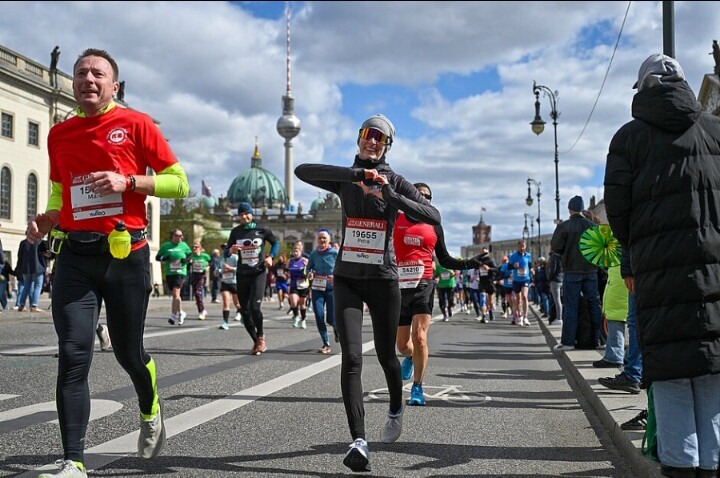
In the women’s race, Ethiopia’s Likina Amebaw leads the entries with a personal best of 64:44, setting the tone for a highly competitive contest. Kenya’s Veronica Loleo (65:46) will be among those aiming to challenge for top honors, bringing both strength and tactical awareness to the field.
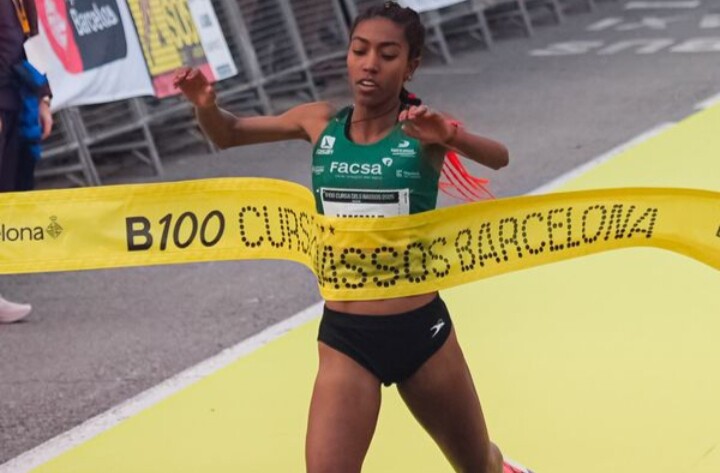
Great Britain’s Samantha Harrison (67:10) and Ethiopia’s Melal Siyoum (67:21) add further intrigue, while Kenya’s Daisilah Jerono (67:27) rounds out a diverse and competitive lineup that promises an unpredictable race dynamic.
Renowned for its quick course and ideal racing conditions, Berlin has long been a proving ground for elite distance runners seeking fast times and breakthrough performances. With such a balanced and high-caliber field assembled, this year’s edition is poised to deliver both tactical battles and potentially record-threatening runs.
As the countdown begins, anticipation continues to build—because in Berlin, speed is not just expected, it is demanded.
(03/24/2026) ⚡AMPby Erick Cheruiyot for My Best Runs.

Berlin Half Marathon
The story of the Berlin Half Marathon reflects a major part of the history of the German capital. It all began during cold war times and continued during reunification. The events leading up to today's event could really only have happened in this city. Its predecessors came from East- and West Berlin. On 29th November 1981 the Lichtenberg Marathon was...
more...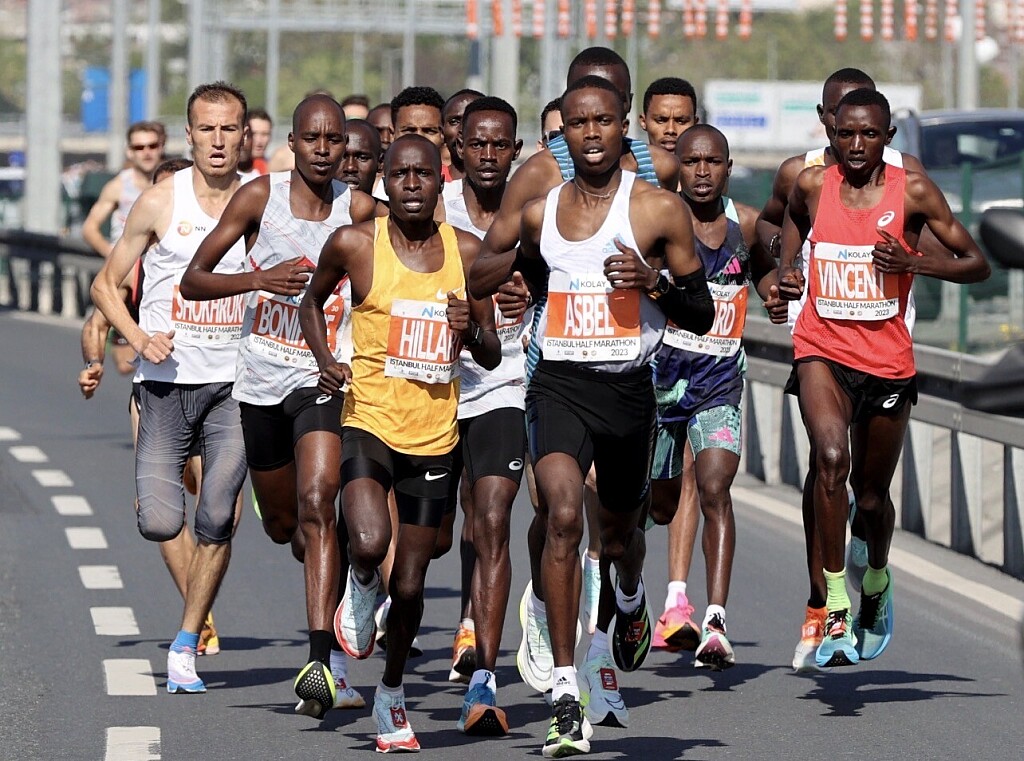
Defending Champions Return as Istanbul Half Marathon Draws World-Class Field
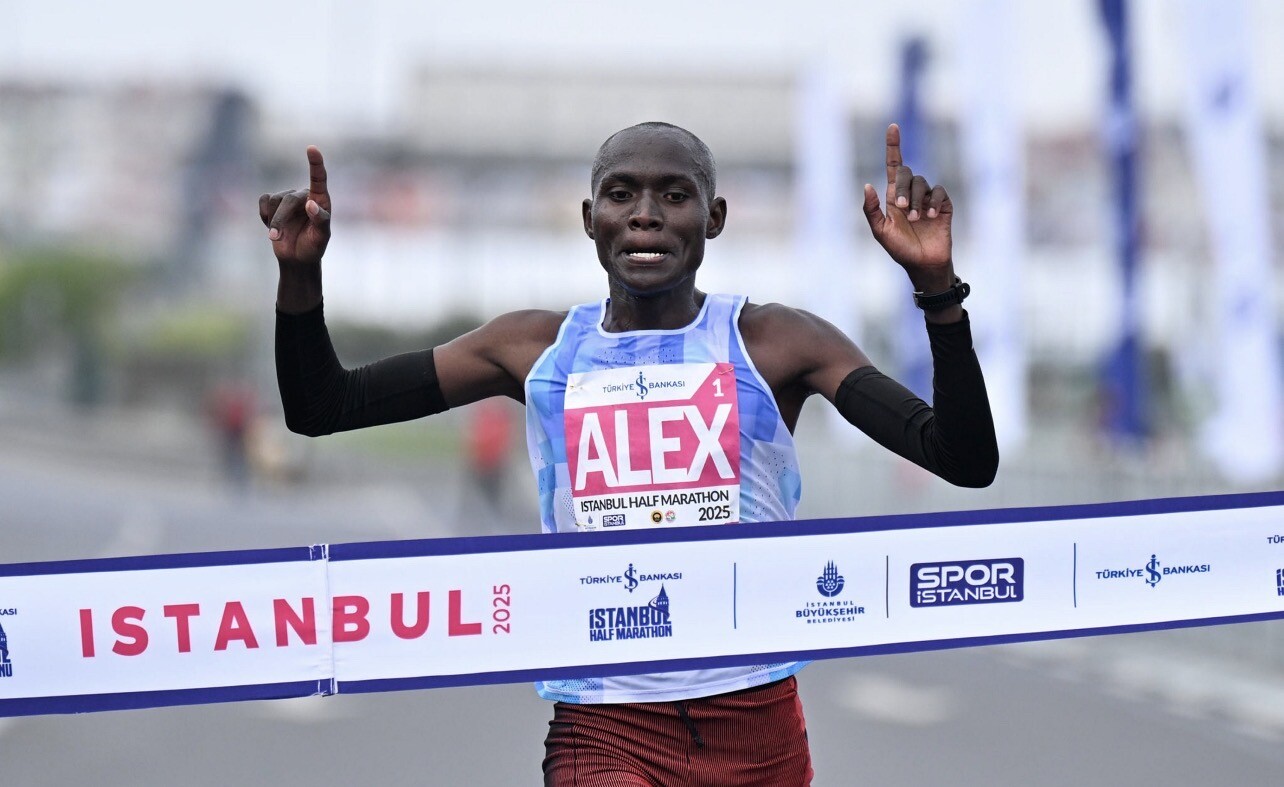
The 21st Türkiye İş Bankası Istanbul Half Marathon is shaping up to be one of the strongest editions yet, with defending champions Alex Matata and Miriam Chebet set to return on April 19.
Matata, who leads the men’s field with a personal best of 59:20, has emerged as one of the most consistent half marathoners in the world. Over the past two years, the 28-year-old Kenyan has raced 12 half marathons—and won 10 of them. His victories in Ras Al Khaimah, Istanbul, and New Delhi in 2025 all came under 60 minutes, confirming his status as a major force at the distance. Adding an interesting twist, his twin brother Charles Matata—who owns a 60:05 best—is entered as a pacemaker but could also choose to finish.
The men’s race also features experienced Kenyan Solomon Yego, who ran 59:29 in Barcelona and famously clocked 58:44 in Rome-Ostia in 2016 (on a non-record-eligible course). Ethiopia’s Shura Kitata, the 2020 London Marathon champion, brings strong credentials as well, having recently run 2:03:59 to win the Seville Marathon. His half marathon best stands at 59:47, though he has run faster on non-certified courses.
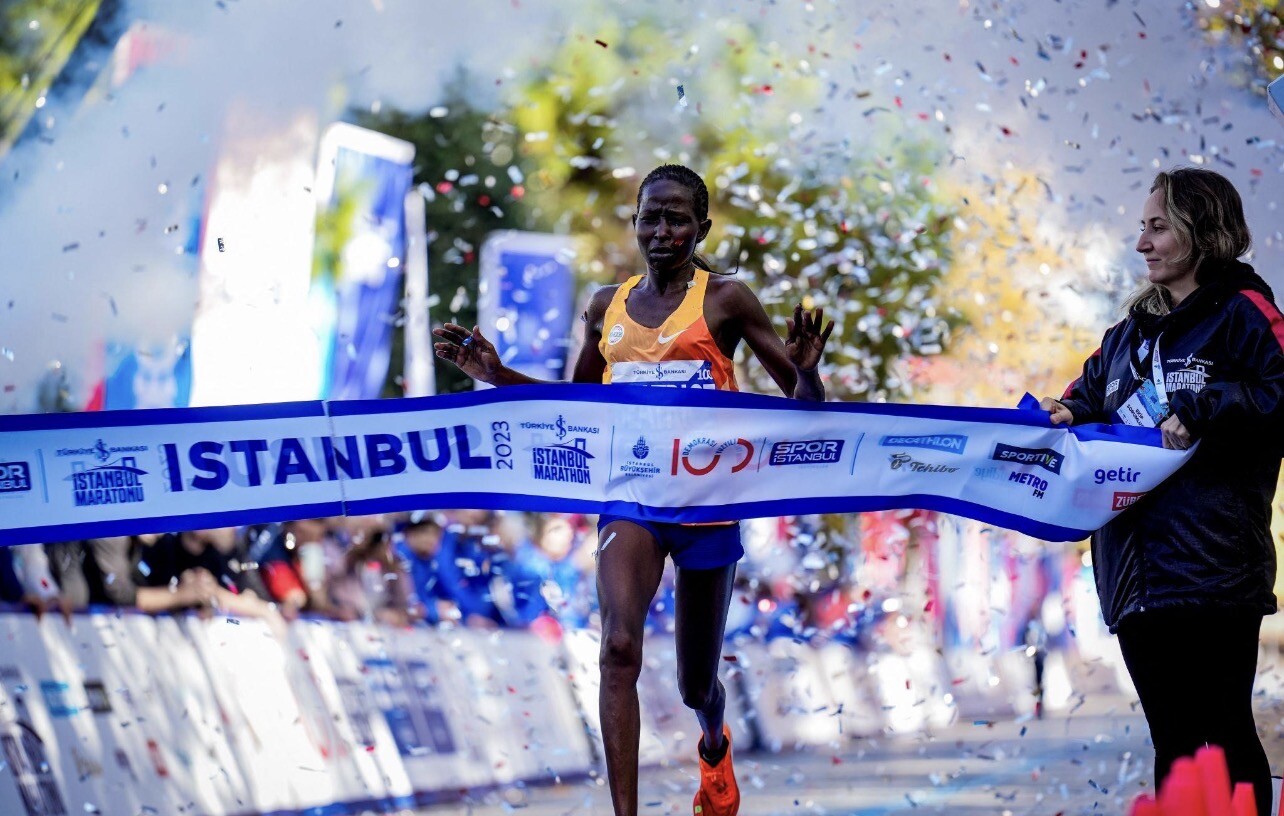
On the women’s side, defending champion Miriam Chebet returns after breaking through in Istanbul last year with a 66:07 personal best. The 23-year-old Kenyan followed that up with a win in Cardiff and has already shown strong early-season form in 2026, including a 30:08 10K in Valencia.
She will face a deep and dangerous field led by Ethiopia’s Ftaw Zeray, currently the fastest entrant with a 65:12 personal best set while winning the Paris Half Marathon. Zeray has been remarkably consistent, running under 68 minutes nine times in the past two years. Fellow Ethiopian Asmarech Anley also enters as a major contender after winning her debut half marathon in Ras Al Khaimah in 67:22 without pacemakers.
Kenya’s Evaline Chirchir (66:01 PB) adds further depth, while twin sisters Caroline and Purity Gitonga bring a unique storyline to the race. With personal bests of 66:26 and 67:31 respectively, they are among the fastest siblings in the sport and could challenge near the front.
Race organizers expect around 20,000 participants across all events, including a parallel 10K, making it Turkey’s largest and most prestigious road race. The Istanbul Half Marathon continues to hold World Athletics Gold Label status and remains one of the fastest and most scenic courses in Europe.
With elite depth on both sides and intriguing storylines—from defending champions to twin rivalries—Istanbul is once again set to deliver a high-level showdown on April 19.
(03/22/2026) ⚡AMPby Race News Service
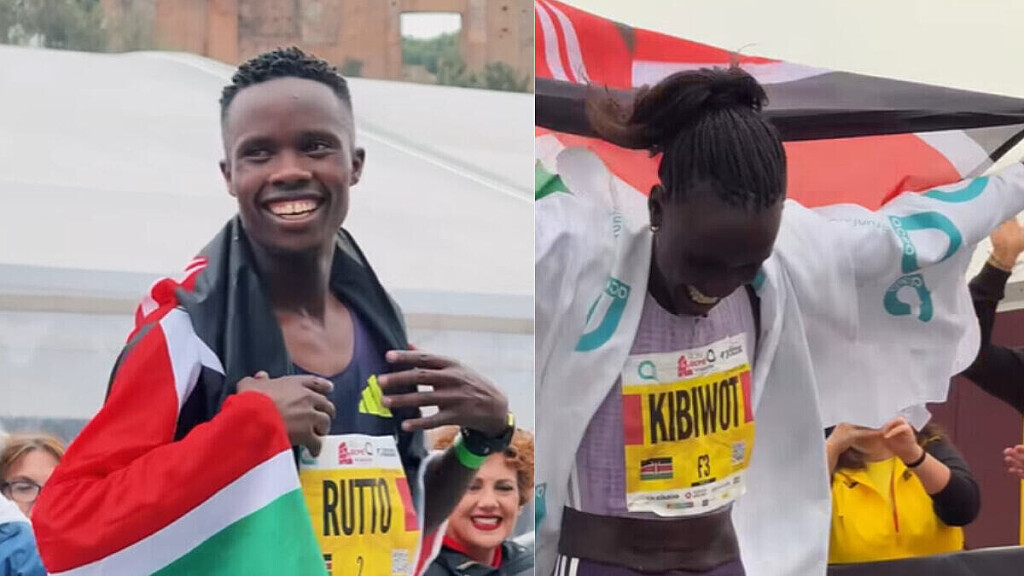
Rutto’s Narrow Triumph and Kibiwot’s Record Reign Light Up Rome Marathon 2026
The timeless streets of Rome came alive in spectacular fashion on Sunday, March 22, as the Acea Run Rome The Marathon 2026 delivered a day of elite competition defined by razor-thin margins and record-breaking brilliance. From a dramatic men’s duel to a commanding women’s performance, the Italian capital witnessed a marathon showcase of the highest order.
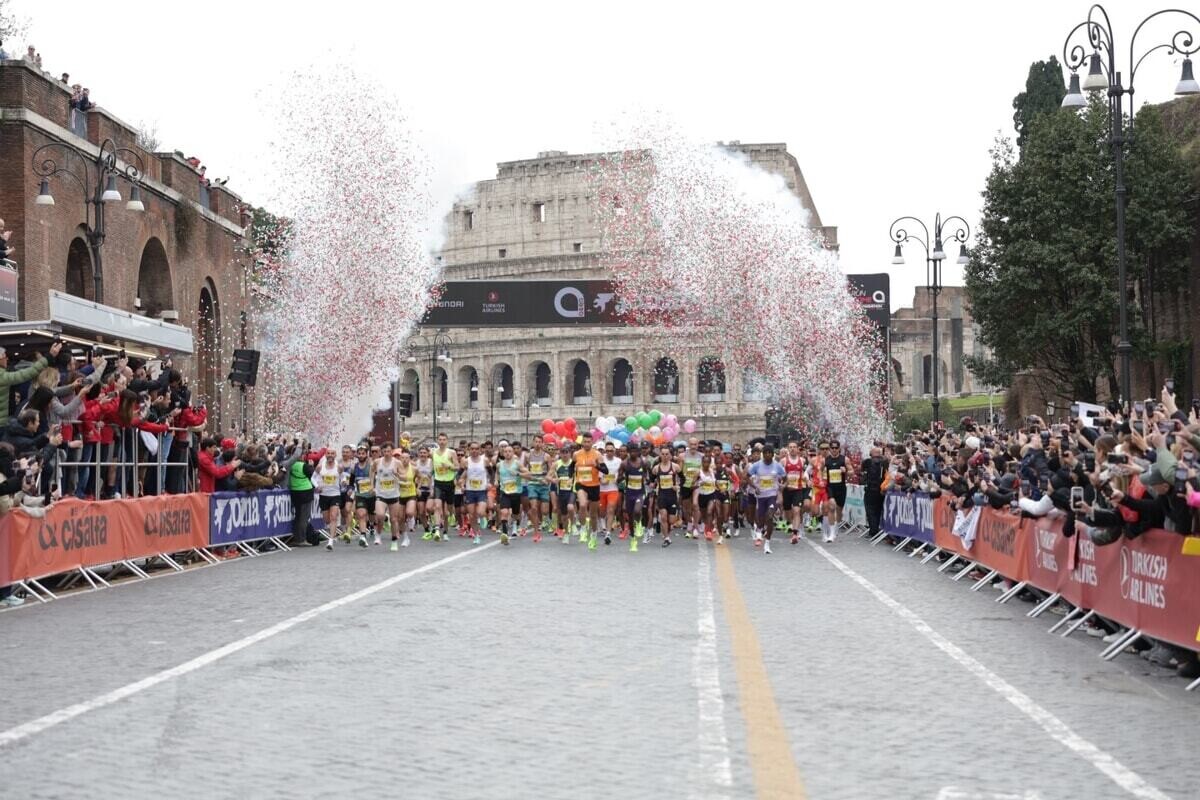
In the men’s race, Kenya’s Asbel Rutto emerged victorious after an electrifying battle, clocking 2:06:32 in one of the closest finishes of the season. Pushed all the way to the line by compatriot Henry Tukor Kichana, who followed just four seconds behind in 2:06:36, the race was a masterclass in endurance and tactical execution. Ethiopia’s Lencho Tesfaye Anbesa secured third in 2:07:44, completing a fiercely contested podium.
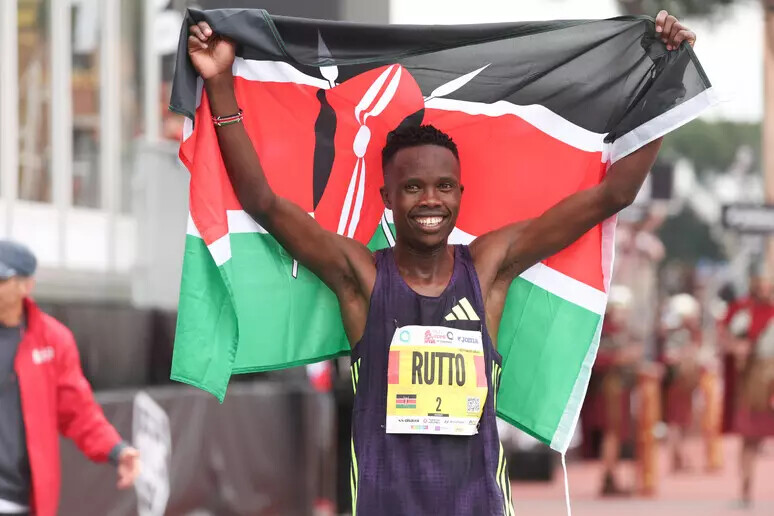
Defending champion Robert Ngeno fought valiantly to finish fourth in 2:09:01, while the lead pack steadily thinned over the closing kilometers, leaving Rutto to deliver the decisive finishing surge that sealed his triumph.
Top 10 Finishers – Men’s Elite Race
1. Asbel Rutto — 2:06:32
2. Henry Tukor Kichana — 2:06:36
3. Lencho Tesfaye Anbesa — 2:07:44
4. Robert Ngeno — 2:09:01
5. Abebaw Desalew Zewda — 2:09:32
6. Elkana Langat — 2:10:23
7. Solomon Weldeslassie Berihu — 2:11:15
8. Demisu Anegagreng Gemeda — 2:13:14
9 Fredrick Kibii — 2:13:57
10. Abraham Kapsis Kipyatich — 2:14:33
If the men’s race was defined by tension, the women’s contest belonged to one woman alone. Kenya’s Pascaline Kibiwot delivered a performance of rare authority, surging to victory in a stunning 2:22:44—shattering the event record and etching her name into the history of the race.
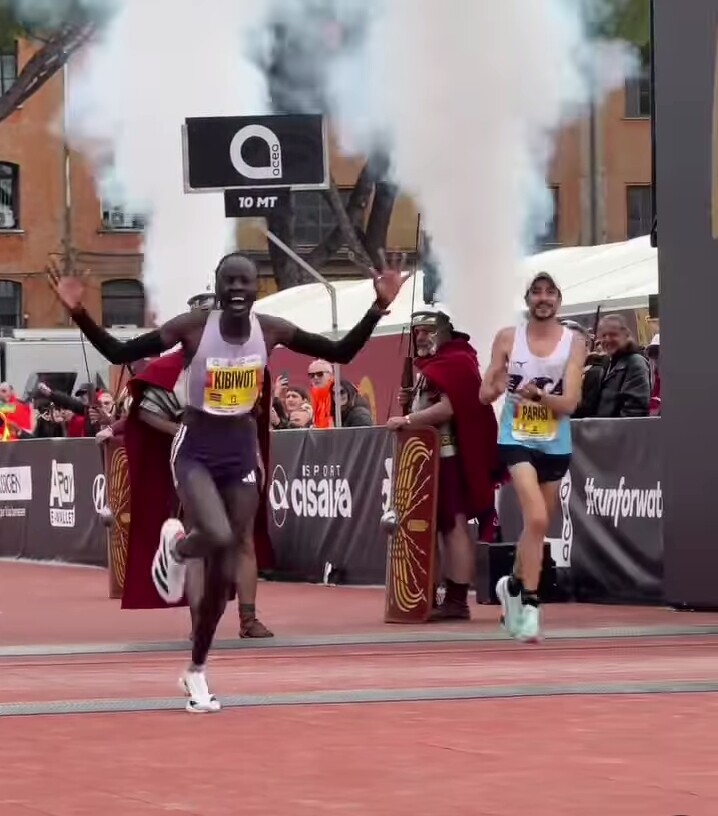
Composed in the early stages and devastatingly strong in the closing miles, Kibiwot broke away with precision and never looked back, her stride carrying both power and poise as she conquered the historic course. Behind her, Ethiopia’s Genet Tadesse Robi secured second place in 2:24:55 after a determined run, while Aberash Fayesa Robi completed the podium in 2:25:43, underlining Ethiopia’s depth in the women’s field.
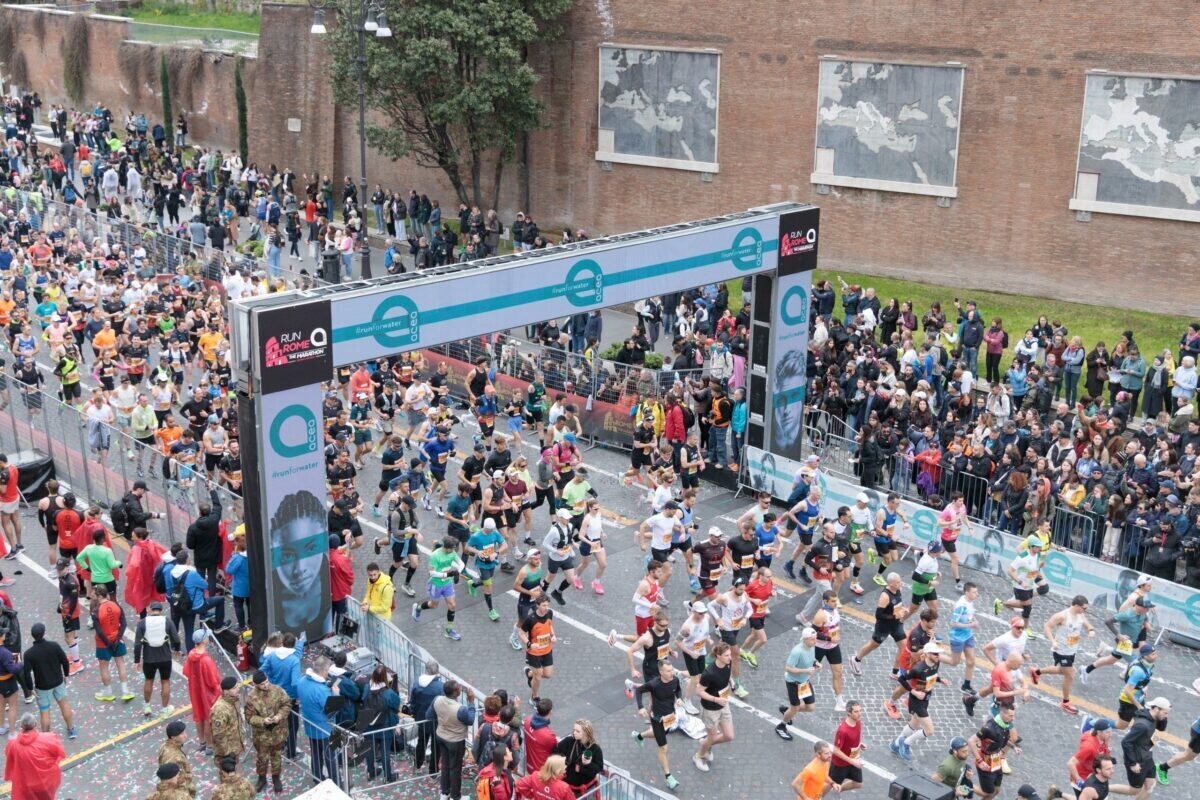
As the race unfolded, the leading pack gradually fractured under the pressure of an unforgiving pace. By the final kilometers, Kibiwot had shifted into another gear entirely—one no rival could match—turning a competitive race into a statement victory.
Top 10 Finishers – Women’s Marathon
1. Pascaline Kibiwot — 2:22:44
2. Genet Tadesse Robi — 2:24:55
3. Aberash Fayesa Robi — 2:25:43
4. Addisalem Belay Tegegn — 2:28:16
5. Netsanet Gudeta Kebede — 2:28:50
6. Betelhem Nega Ferede — 2:29:30
7. Roselidah Jepketer — 2:30:07
8. Azalech Masresha Woldeselasse — 2:30:19
9. Addisew Mislenew — 2:30:29
10. Tsega Desta Mehari — 2:31:15
Beyond the podiums, the 2026 Rome Marathon stood as a powerful celebration of global distance running, where athletes from multiple continents pushed their limits on one of the sport’s most iconic stages. Yet at its heart, this edition will be remembered for two defining images: Rutto straining to the line in a breathtaking sprint for victory, and Kibiwot gliding to a record-breaking triumph that crowned her the undisputed queen of Rome.
(03/22/2026) ⚡AMPby Erick Cheruiyot for My Best Runs.

Run Rome The Marathon
When you run our race you will have the feeling of going back to the past for two thousand years. Back in the history of Rome Caput Mundi, its empire and greatness. Run Rome The Marathon is a journey in the eternal city that will make you fall in love with running and the marathon, forever. The rhythm of your...
more...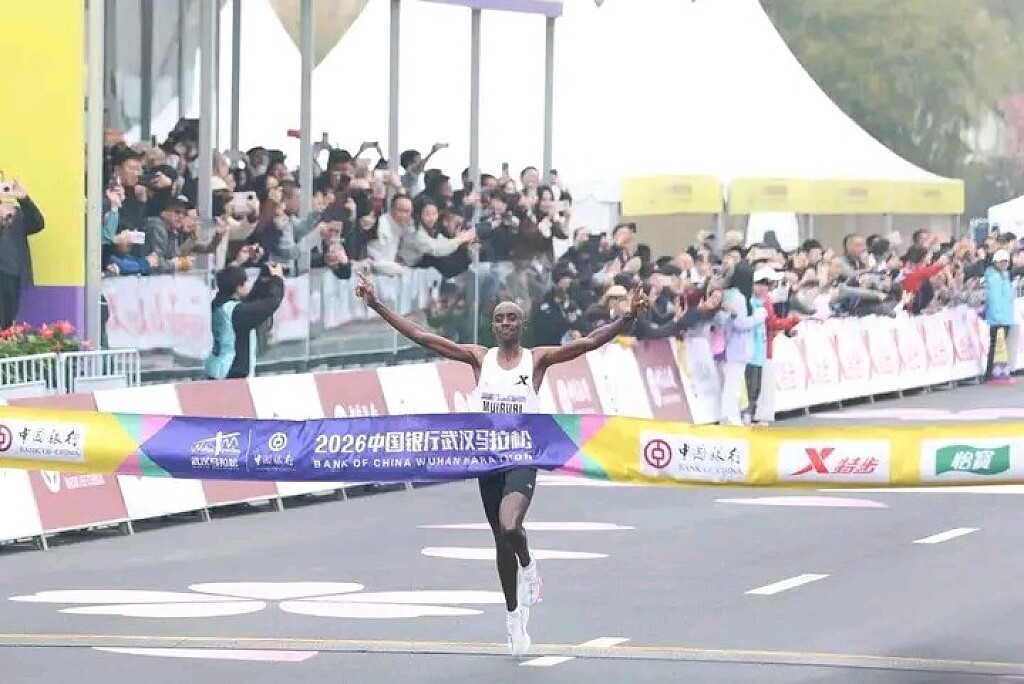
Double Kenyan Triumph in Wuhan: Muiruri and Maina Crowned in a Marathon of Grit and Glory
The vibrant streets of Wuhan bore witness to a day of extraordinary endurance and elite competition as the Wuhan Marathon unfolded into a gripping dual narrative—one defined by tactical brilliance in the men’s race and commanding authority in the women’s contest. Battling a demanding course wrapped in thick humidity and shifting conditions, the world’s finest distance runners delivered a spectacle that resonated with intensity from start to finish.

In the men’s race, patience and precision shaped the early kilometers before the contest erupted into life in the closing stages. A tightly packed lead group, dominated by East African powerhouses, held formation deep into the race, each athlete measuring effort against the punishing conditions. But as the decisive moments approached, it was John Mburu Muiruri who seized control with authority. With a perfectly timed surge, he broke away in the final stretch to claim a memorable victory in 2:10:16, stamping his class on a race that demanded both courage and composure.
Ethiopia’s Dekeba Gadisa Tafa fought valiantly to secure second place in 2:10:23, while Kenya’s Musa Kipsoyan Mitei completed the podium in 2:10:30, underscoring the depth of talent within the region. The home crowd found its hero in He Jie, whose determined run to fourth place in 2:10:56 drew roaring support as he carried national pride into the heart of the final kilometers.
Yet if the men’s race delivered a tactical battle, the women’s contest rose as a masterclass in control and execution.
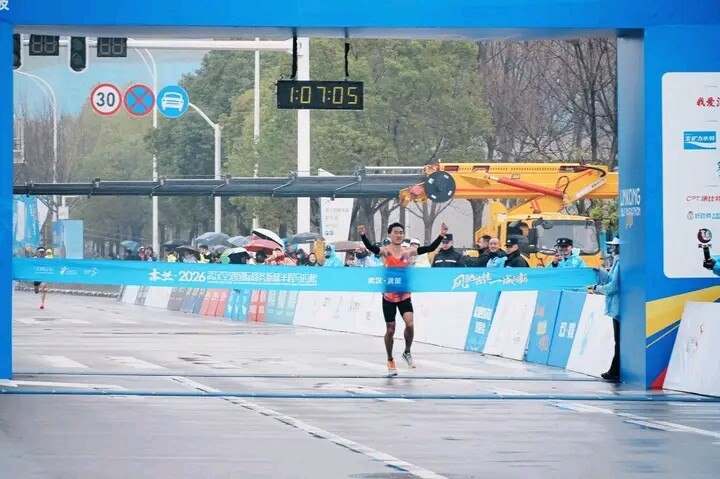
Kenya’s Veronica Njeri Maina stood at the center of a captivating performance, navigating the same unforgiving conditions with remarkable poise. In a race shaped by endurance and split-second decisions, Maina remained composed throughout before asserting her dominance when it mattered most. Her winning time of 2:24:14 reflected not only strength, but a deep understanding of race rhythm and timing.

Ethiopia’s Tamir Agere Adera followed with a determined effort to take second in 2:25:47, maintaining steady pressure but unable to reel in the Kenyan leader. Fellow Ethiopian Jeleta Lensa Debele secured third place in 2:28:44, holding firm as the race intensified in its closing stages.
One of the most electrifying moments came just behind the podium, where China’s Zhu Qing produced a dramatic late surge to finish fourth in 2:28:45—a mere second off third place. Her thrilling push ignited the home crowd, embodying the fighting spirit that defined the day. Ethiopia’s Askale Alemayehu He claimed fifth in 2:29:37, while China’s contingent, including Li Chunxia, Liu Jingya, and Liu Junhui, rounded out the top eight—highlighting the nation’s growing strength in distance running.

From the opening strides to the final sprints, spectators lining the course fueled every surge, transforming the marathon into a celebration of global athletics. The 2026 Wuhan Marathon will be remembered not only for its results, but for its narrative—a compelling blend of dominance and defiance, where Africa’s enduring excellence met China’s rising ambition on home soil.
In the end, it was a story of double Kenyan triumph. John Mburu Muiruri’s late-race brilliance and Veronica Njeri Maina’s commanding control defined a day where champions were not merely crowned, but forged—through discipline, resilience, and the relentless pursuit of greatness.
(03/21/2026) ⚡AMPby Erick Cheruiyot for My Best Runs.

Wuhan Marathon
Join Wuhan Marathon Wuhan Marathon by the Chinese track and field association, Hubei Province Sports Bureau, Wuhan Municipal People’s Government co-sponsored by the Wuhan Municipal Sports Bureau, Wuhan Sports Development Investment Co., Ltd. co-hosted by the Wuhan Hanma Sports Management Co., Ltd. operation. Will be held in April, in Wuhan. Race with full marathon, half marathon, healthy run and many...
more...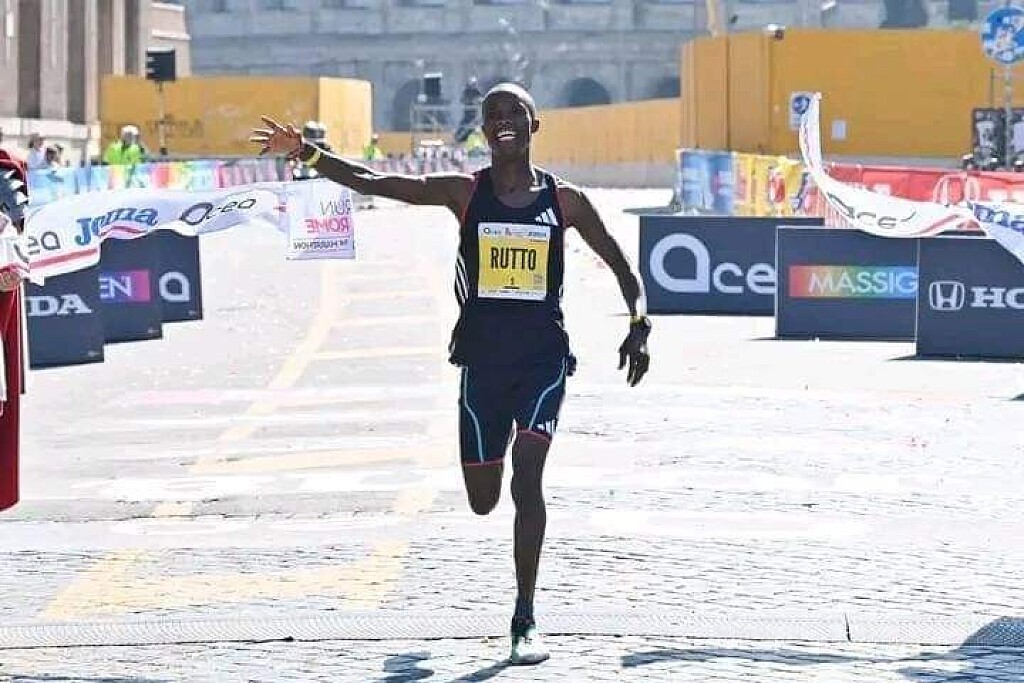
Rome Awaits a Classic: Rutto and Tesfaye Set for a Marathon Duel in the Eternal City
The historic streets of Rome are poised for a captivating spectacle this Sunday, March 22, as the Rome Marathon 2026 assembles a world-class field headlined by a thrilling head-to-head between Kenya’s Asbel Rutto and Ethiopia’s Lencho Tesfaye. With both men separated by mere seconds on paper, anticipation is building for what promises to be a fiercely contested race through one of the most iconic courses in global distance running.
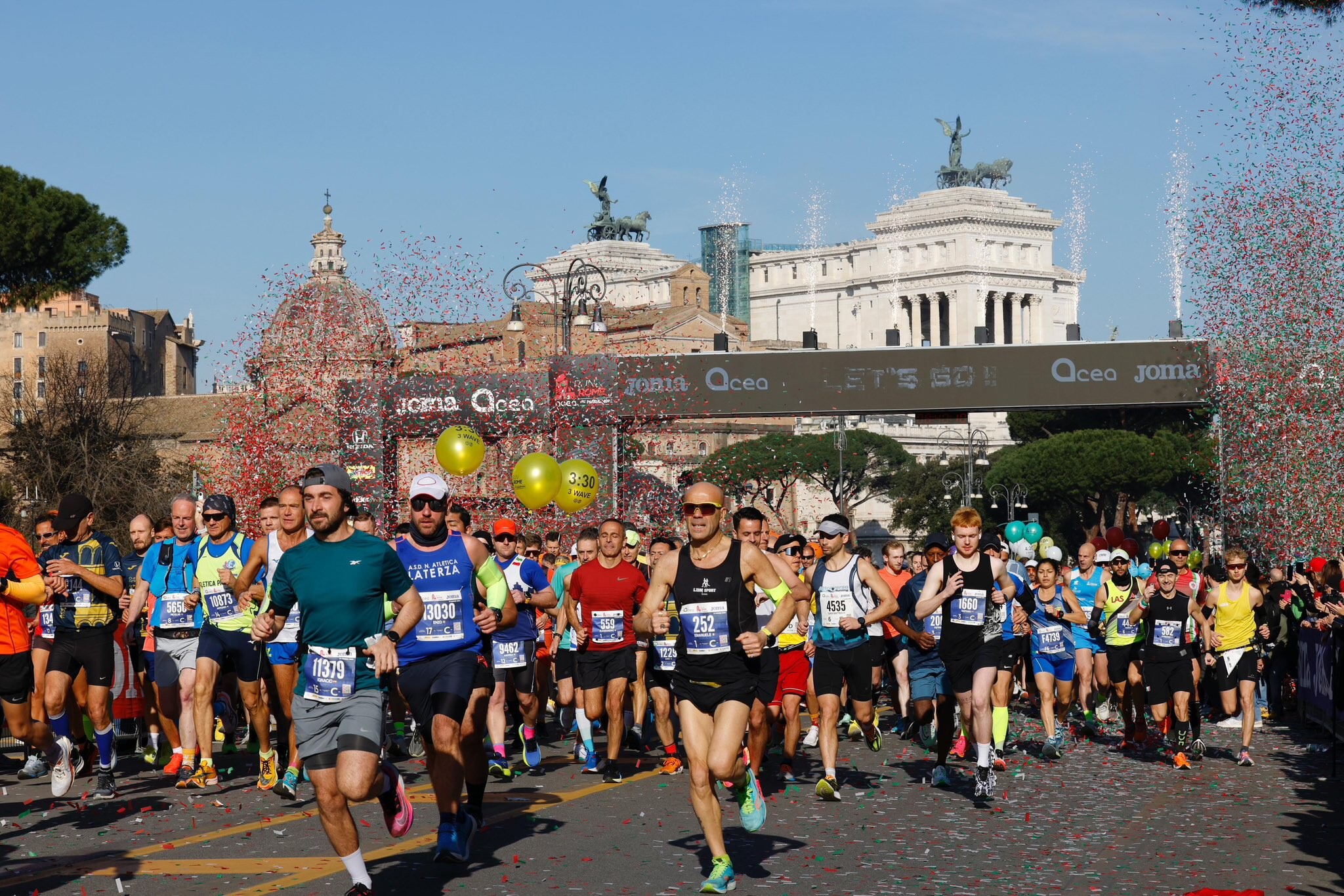
Tesfaye arrives with a marginal edge, boasting a personal best of 2:06:18, a mark that underscores his pedigree and consistency on the international stage. Yet Rutto, just six seconds behind with a lifetime best of 2:06:24, carries equal firepower and the hunger to assert Kenyan dominance on Italian soil. Their duel is expected to unfold stride for stride, a tactical battle where patience, rhythm, and late-race strength could ultimately define the champion.

Lurking just behind the two frontrunners is fellow Kenyan Edwin Kosgei, whose 2:07:31 personal best places him firmly within striking distance. Should the pace falter or the favorites hesitate, Kosgei possesses the experience and resilience to disrupt the script and turn the race into a three-man war deep into the closing kilometers.
In the women’s race, Kenya’s Betty Chepkwony leads a tightly matched field, bringing a strong personal best of 2:23:02 into the contest. She will face stern opposition from Ethiopia’s duo of Netsanet Gudeta (2:23:43) and Aberash Fayesa (2:24:59), both of whom have demonstrated the capacity to rise on the big stage. The women’s contest shapes up as a test of endurance and composure, where small margins could separate victory from heartbreak.

Beyond times and statistics, the Rome Marathon offers something deeper—a fusion of history, atmosphere, and elite competition. As runners surge past ancient landmarks and roaring crowds, the race will demand not only physical excellence but mental fortitude under pressure.
With national pride, personal legacy, and victory on the line, Sunday’s showdown in Rome is more than just a race—it is a collision of ambition and endurance at the highest level. And when the dust settles in the Eternal City, only one name will rise above the rest, etched into the story of the 2026 marathon season.
(03/20/2026) ⚡AMPby Erick Cheruiyot for My Best Runs.
Run Rome The Marathon
When you run our race you will have the feeling of going back to the past for two thousand years. Back in the history of Rome Caput Mundi, its empire and greatness. Run Rome The Marathon is a journey in the eternal city that will make you fall in love with running and the marathon, forever. The rhythm of your...
more...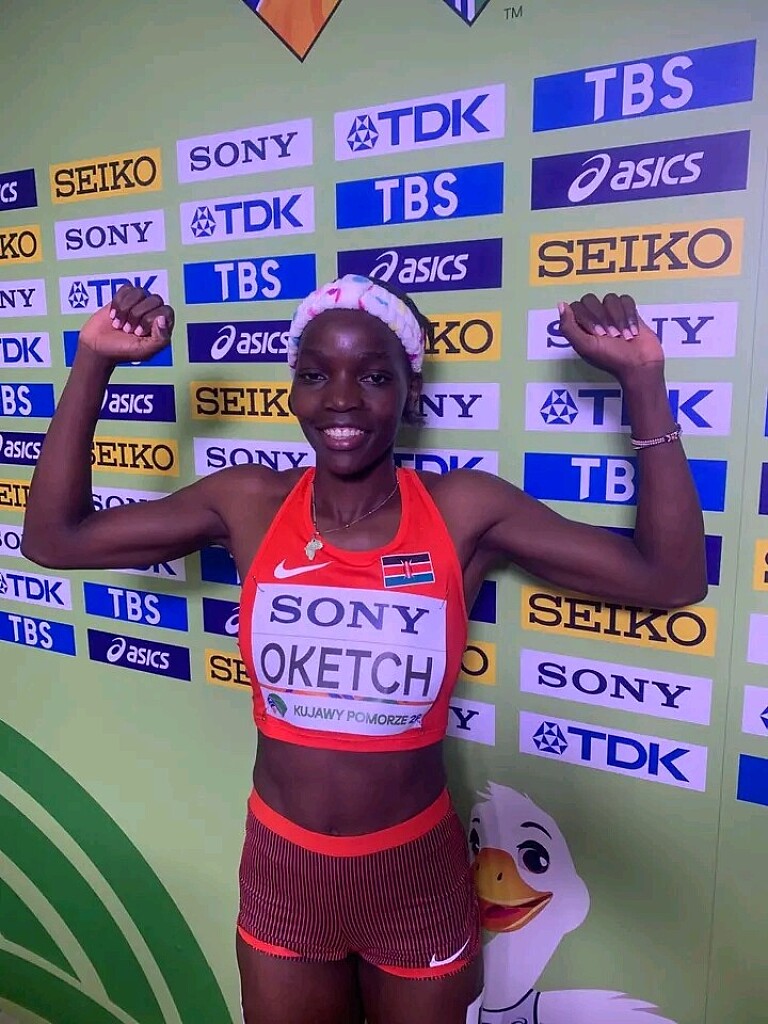
Grace Under Pressure: Mercy Oketch Storms Into World Indoor Semi-Finals in Style
On a charged afternoon of elite competition at the World Athletics Indoor Championships in Poland, Kenya’s sprint sensation Mercy Oketch delivered a composed and commanding performance to secure her place in the semi-finals of the women’s 400 metres. With the world watching and the stakes soaring, Oketch rose to the moment, clocking an impressive 51.57 seconds to finish second in Heat 6—an effort defined by both control and quiet confidence.
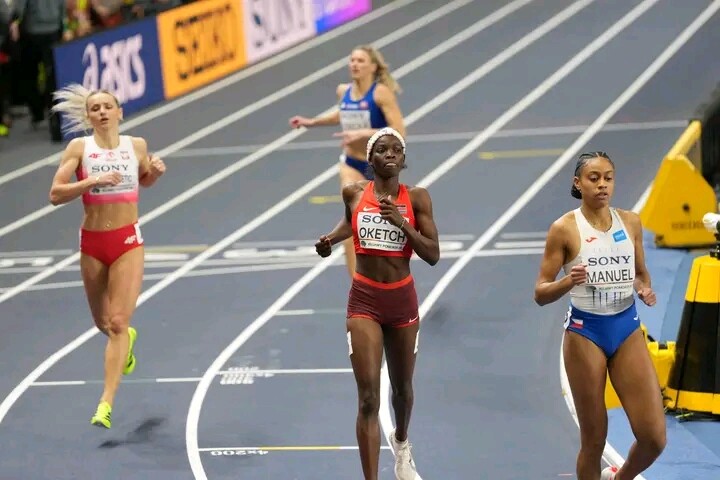
From the crack of the starter’s gun, Oketch ran with purpose, gliding through the opening lap with measured precision before unleashing a strong finishing drive down the final stretch. Against a field packed with global talent, her ability to maintain form under pressure underscored not only her growing maturity on the international stage but also her readiness to challenge the very best.
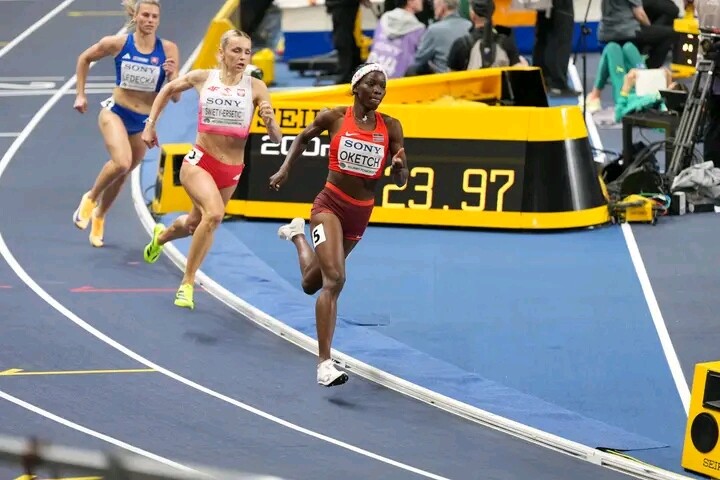
This performance adds another compelling chapter to what is fast becoming a remarkable season for the Kenyan national record holder. Earlier this year, she set her indoor personal best of 51.53 seconds in Metz, signaling her intent long before arriving on this grand stage. Her outdoor pedigree is equally formidable—highlighted by a blistering 50.14 seconds run at the prestigious Kip Keino Classic in 2025, a mark that firmly established her among the world’s elite quarter-milers.
What makes Oketch’s progression particularly captivating is the seamless transition she continues to make between outdoor dominance and indoor excellence—a rare blend that speaks volumes about her versatility, discipline, and competitive spirit. Each stride she takes now carries the weight of expectation, yet she meets it with remarkable composure.
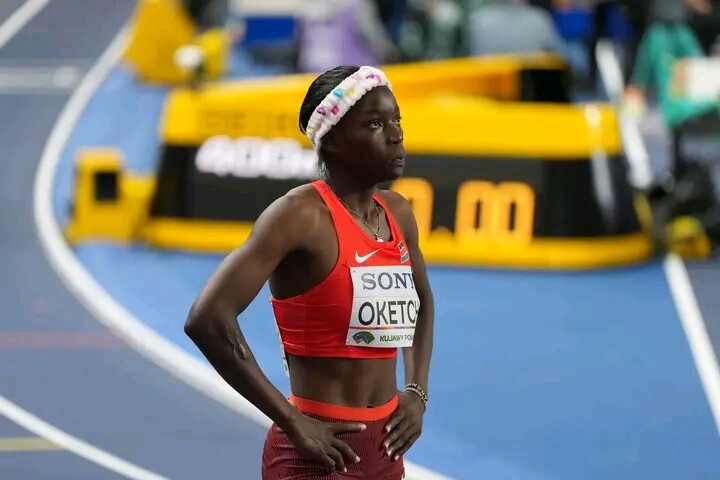
As the semi-finals beckon, anticipation continues to build. With momentum on her side and confidence surging through her veins, Mercy Oketch is no longer just participating—she is contending, asserting, and inspiring. And if her performance in the heats is anything to go by, the best may still be yet to come.
(03/20/2026) ⚡AMPby Erick Cheruiyot for My Best Runs.
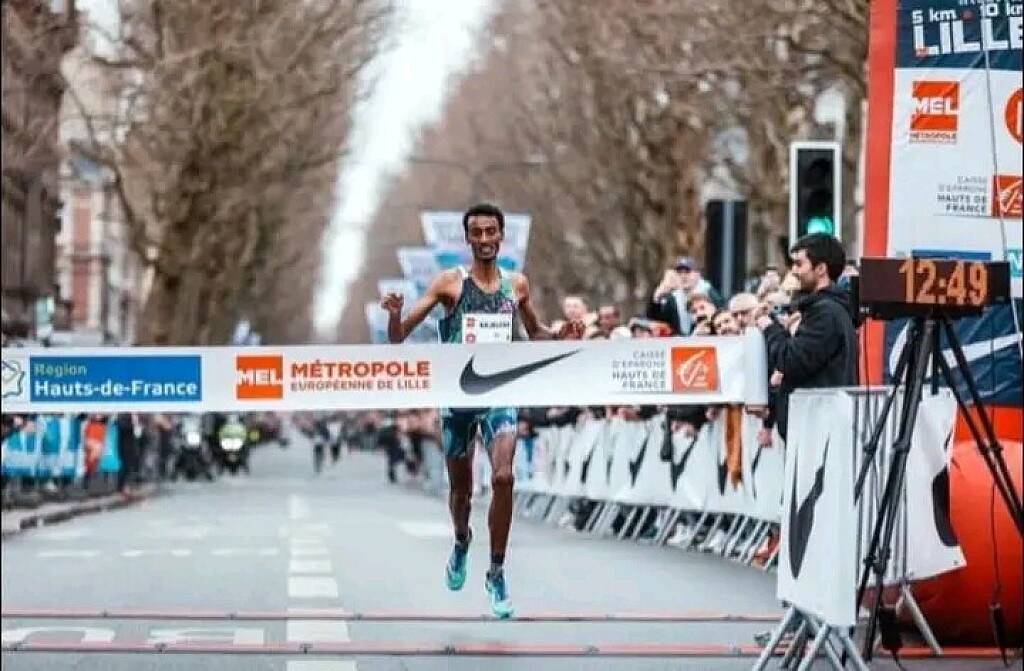
One Second from Immortality: The Day Yomif Kejelcha Lit Up Lille
On March 19, 2023, the streets of Lille witnessed a performance that came within a heartbeat of rewriting history. Ethiopia’s distance sensation, Yomif Kejelcha, delivered a breathtaking run over 5 kilometers—stopping the clock at an astonishing 12:50. Just one second separated him from the world record, a margin so slim it felt almost cruel.
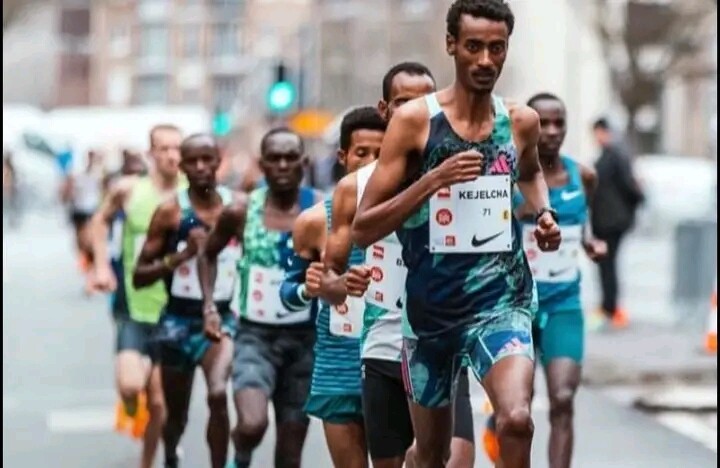
From the very first strides, Kejelcha ran with fierce intent. His rhythm was relentless, his stride smooth yet powerful, carving through the course with surgical precision. Averaging an incredible 2:34 per kilometer, he turned the race into a masterclass of speed endurance. Spectators could sense something extraordinary unfolding—every split time whispering the possibility of history.
As he surged toward the finish line, anticipation reached a fever pitch. But when the clock froze at 12:50, it confirmed both brilliance and heartbreak. The record would stand—for now. Still, what Kejelcha achieved that day was nothing short of remarkable: the second-fastest 5km performance ever recorded, a run that cemented his place among the sport’s elite.
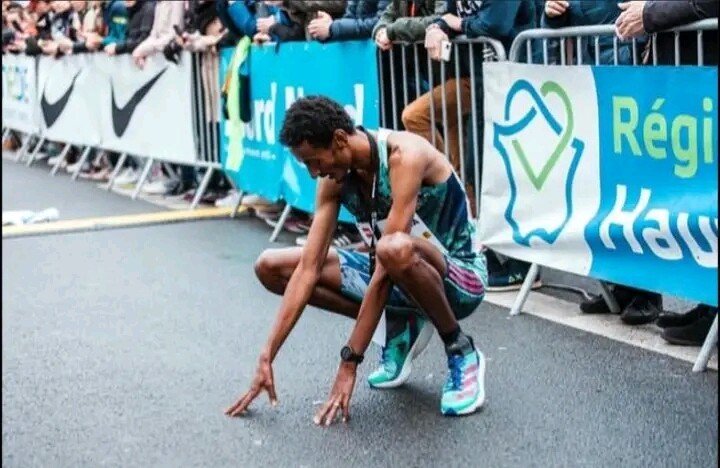
Beyond the individual feat lies a deeper story of dominance in distance running. Of the 100 fastest 5km times in history, an astonishing 42 belong to Kenya, while Ethiopia claims 19, and the United States holds 6. These numbers paint a vivid picture of East Africa’s enduring supremacy—a legacy built on generations of resilience, discipline, and extraordinary talent.
Kejelcha’s near-record run in Lille was more than just a race—it was a reminder of how thin the line is between greatness and eternity. One second may have denied him the record, but it could not diminish the magnitude of his performance. In the world of distance running, moments like these don’t fade—they echo, inspiring the next chase, the next breakthrough, and perhaps, the next record to fall.
(03/19/2026) ⚡AMPby Erick Cheruiyot for My Best Runs.
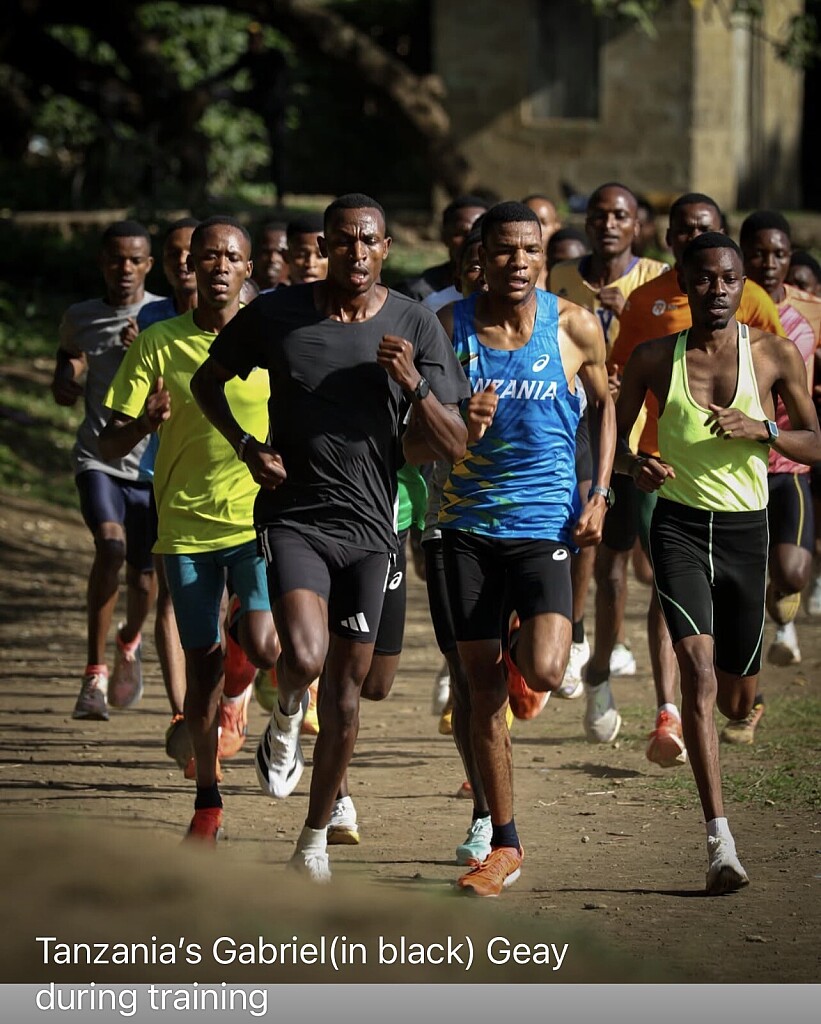
Loaded Field Sets Up Tactical Battle at Bengaluru 10K
A deep and evenly matched elite field is set to turn the TCS World 10K Bengaluru into a high-stakes tactical battle on April 26, 2026, in Bengaluru. With more than a dozen athletes boasting personal bests under 27 minutes, this year’s race in India is shaping up as much a test of racing instinct as it is of speed.
Adding to the intensity is what’s on the line: the race features a total prize purse of approximately $210,000, making it one of the richest 10K events in the world, with winners typically earning around $26,000 each, plus additional bonuses for course records and top performances.

Depth Over Dominance
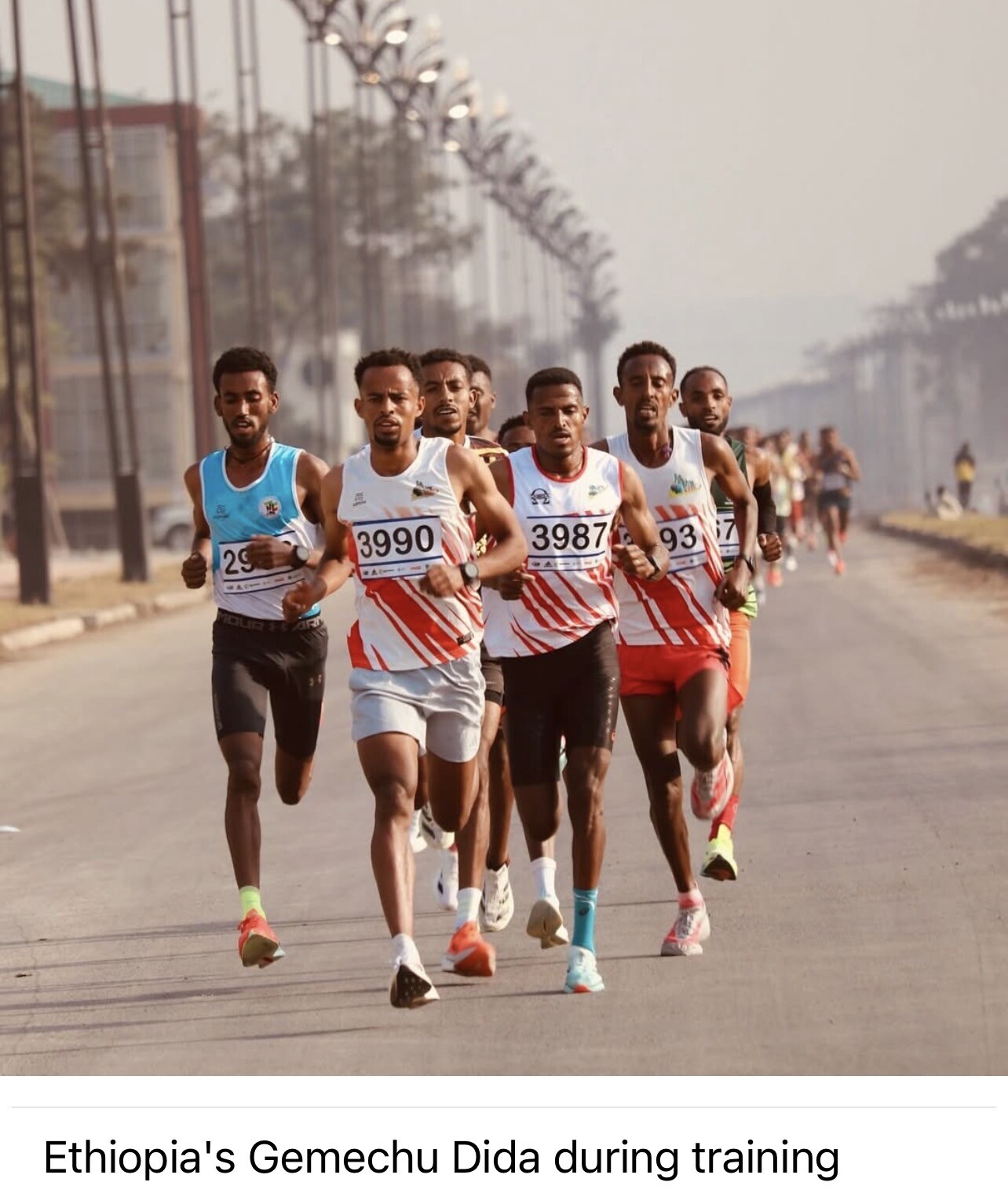
Leading the field on paper is Uganda’s Harbert Kibet, whose 26:39 personal best makes him the fastest entrant. But Bengaluru has rarely followed form. The race has built a reputation for unpredictability, where tightly packed elites, mid-race surges, and hesitation over pace often neutralize even the strongest frontrunners.
Ethiopia arrives with formidable depth. A powerful lineup featuring Gemechu Dida, Tadese Worku, and the experienced Muktar Edris gives them both strength and tactical flexibility. If the race develops into a controlled pack effort, Ethiopia is well positioned to dictate tempo and positioning.
Rodrigue Kwizera, with a 26:54 best, adds another serious contender. He has the finishing speed to capitalize on any hesitation in the closing stages—often the decisive factor in Bengaluru.
Kenya Lurking in the Pack
Kenya enters with a quieter but still dangerous presence.
Runners like Vincent Kipkorir and Victor Kipruto may not headline the field on paper, but they are well suited for a tactical race. If the early pace slows, Kenyan runners have historically thrived by timing decisive late moves rather than forcing the pace from the front.
Dark Horses and Disruptors
Beyond the top names, the race is layered with potential challengers.
Gabriel Geay brings strength developed over longer distances, while Eritrea’s Saymon Amanuiel adds further depth to an already stacked East African lineup. Spain’s Abdessamad Oukhelfen offers a contrasting racing style that could disrupt the rhythm of the lead pack if the race begins to fragment.
The presence of debutants adds another layer of intrigue. Kenya’s Gilbert Kiprotich steps onto this stage for the first time, reflecting Bengaluru’s long-standing tradition of surprise outcomes.
Where Races Are Decided Late
Bengaluru is not a course built for predictable pacing—it rewards instinct.
With so many athletes separated by only seconds on personal bests, the race is likely to unfold conservatively early before building toward a decisive surge in the final kilometers. Positioning, patience, and race awareness will be as important as fitness.
The question is no longer simply who is the fastest—but who will judge the race best.
Will Kibet assert early control?
Will Ethiopia’s pack dictate the rhythm?
Or will a lesser-known contender emerge when it matters most?
In Bengaluru, the real race often begins in the final kilometer.
Elite Men – Key Contenders
Top Seeds (Sub-27)
• Harbert Kibet (UGA) – 26:39
• Khairi Bejiga (ETH) – 26:51
• Gemechu Dida (ETH) – 26:54
• Rodrigue Kwizera (BDI) – 26:54
• Tadese Worku (ETH) – 26:56
Kenyan Watch
• Vincent Kipkorir – 27:08
• Victor Kipruto – 27:10
• Vincent Kimaiyo – 27:20
Experienced Names
• Muktar Edris – 27:38
• Telahun Haile Bekele – 27:13
Dark Horses
• Gabriel Geay – 27:49
• Dan Kibet (UGA) – 27:52
• Abdessamad Oukhelfen (ESP) – 27:44
Debut
• Gilbert Kiprotich – Debut
(03/18/2026) ⚡AMPby Robert Kibet for My Best Runs

TCS WORLD 10K BENGALURU
The TCS World 10k Bengaluru has always excelled in ways beyond running. It has opened new doors for people to reach out to the less privileged of the society and encourages them to do their bit. The TCS World 10K event is the world’s richest 10 Km run and has seen participation from top elite athletes in the world. ...
more...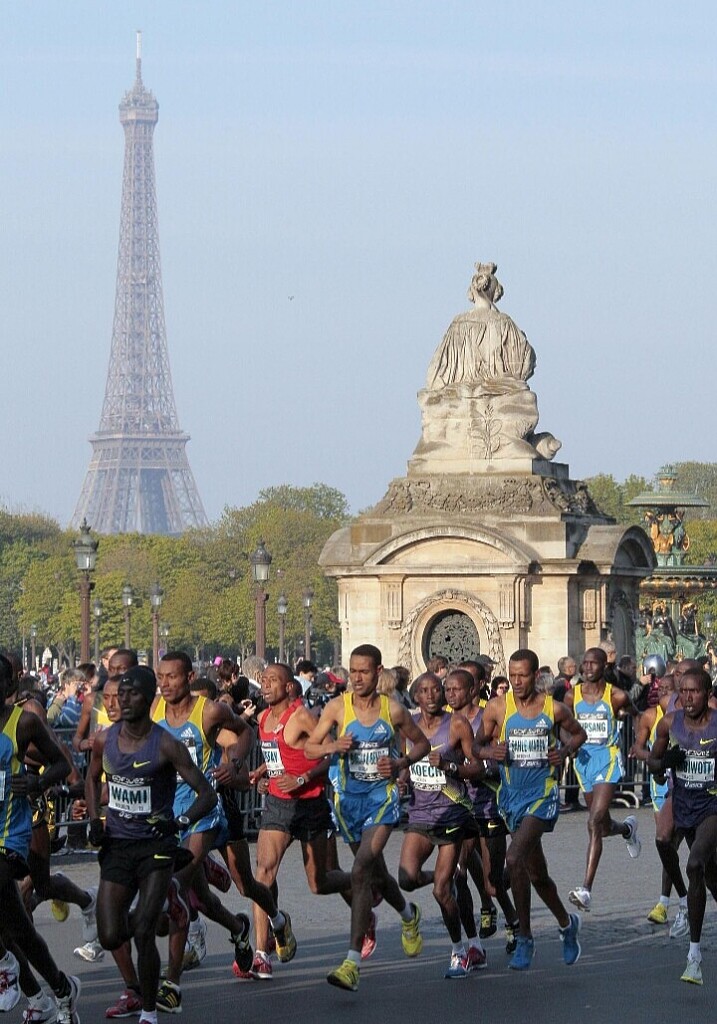
Paris Marathon 2026: A Clash of Titans Set to Ignite the Streets of the French Capital
As anticipation builds toward April 12, the world’s attention shifts to the historic boulevards of Paris, where an exceptional assembly of global distance-running stars is set to deliver a marathon spectacle of the highest order. The 2026 Paris Marathon promises not just a race, but a compelling narrative of speed, strategy, and resilience—where every stride could redefine reputations and reshape the season.

At the forefront of the men’s field stands Ethiopia’s Kinde Atanaw Alayew, a formidable presence boasting a scintillating personal best of 2:03:51. Known for his fluid efficiency and calm racing temperament, Alayew arrives as a leading contender, poised to dictate the tempo if conditions allow. Yet, the path to victory is anything but straightforward.
Norway’s Awet Kibrab, clocking an impressive 2:04:24, brings a contrasting racing style—aggressive, fearless, and capable of stretching the field early. Close behind is Kenya’s Hillary Kipkoech (2:04:45), whose consistency and tactical awareness make him a dangerous figure deep into the latter stages. Uganda’s Victor Kiplangat (2:05:09), a proven championship performer, adds another intriguing layer, with his strength and endurance likely to come into play if the race turns attritional.
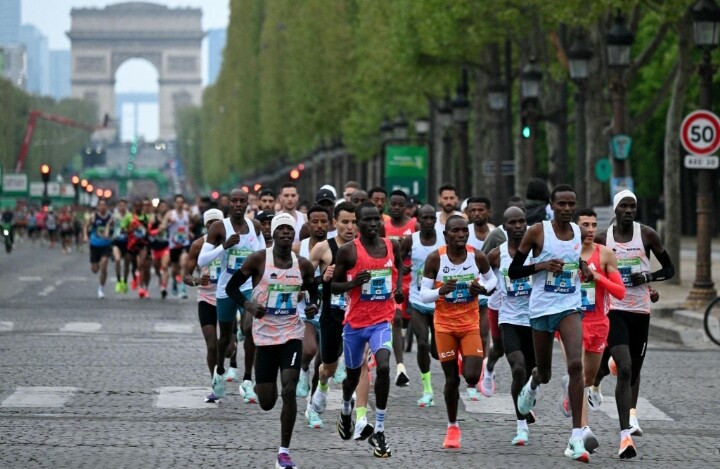
Together, this quartet forms a men’s contest rich in diversity and depth—where patience may collide with bold ambition, and where the winning move could emerge at any unpredictable moment along the Seine.

The women’s race, equally captivating, presents a powerful East African core blended with European precision. Kenya’s Magdalyn Masai leads the charge with a personal best of 2:18:58, carrying both experience and composure into a field that demands nothing short of excellence. Fellow Kenyan Sharon Chelimo (2:19:33) follows closely, bringing proven pedigree and the ability to surge when it matters most.
Finland’s Alisa Vainio (2:20:39) introduces a compelling European challenge, her steady progression marking her as an athlete ready to test the established order. Meanwhile, Ethiopia’s Enatnesh Alamrew Tirusew (2:20:48) completes the elite lineup, offering both tactical intelligence and finishing strength in what promises to be a tightly contested battle.
Beyond the times and names lies the essence of marathon racing—the unpredictable theatre of human endurance. Paris, with its iconic landmarks and passionate crowds, provides the perfect stage for breakthroughs, heartbreaks, and unforgettable triumphs.
As the athletes take their marks, one truth remains certain: records may be chased, but legacy is earned. And in the heart of Paris, under the watchful gaze of history, a new chapter in marathon greatness is ready to be written.
(03/18/2026) ⚡AMPby Erick Cheruiyot for My Best Runs.

Schneider Electric Paris Marathon
The Schneider Electric Marathon de Paris offers a unique opportunity to make the city yours by participating in one of the most prestigious races over the legendary 42.195 km distance. The Schneider Electric Marathon de Paris is now one of the biggest marathons in the world, as much for the size of its field as the performances of its runners....
more...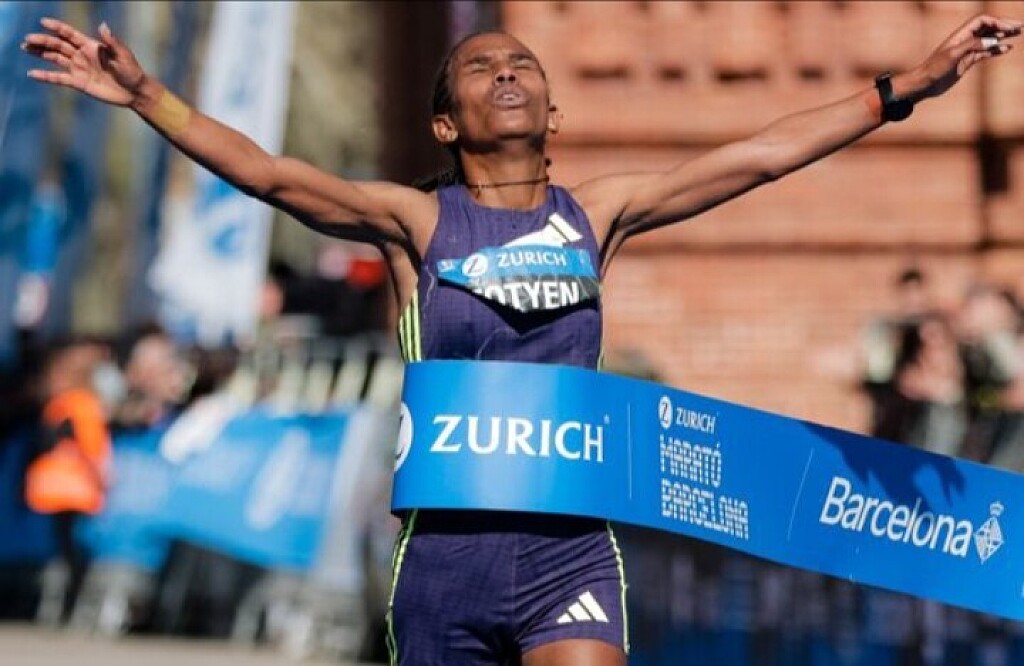
Chasing History: Fotyen Tesfay Sets Her Sights on the Marathon World Record
The marathon world may be on the brink of another historic breakthrough—and Fotyen Tesfay is determined to be the one who delivers it.
Fresh off an emphatic victory in Barcelona, the Ethiopian star made her ambitions unmistakably clear: she is not just racing to win—she is racing for history. Despite less-than-ideal conditions, Tesfay produced a performance that immediately placed her among the most dangerous contenders the marathon has seen in recent years.
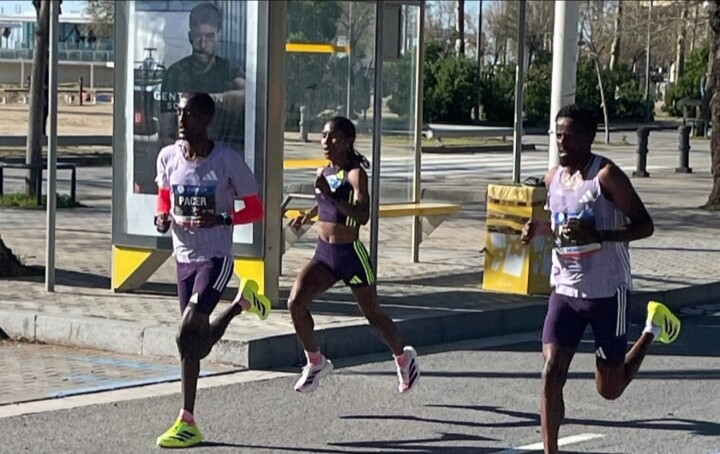
Clocking a stunning 2:10:51 on her debut, she came within touching distance of one of the most iconic marks in athletics. Yet, what makes her run even more compelling is her own honest reflection after the race.
“My plan was to go after the world record, but today there was a lot of wind and I couldn’t push hard in the final part of the race,” Tesfay admitted. “I didn’t achieve it today, but in the next marathon I would like to try to break the world record.”
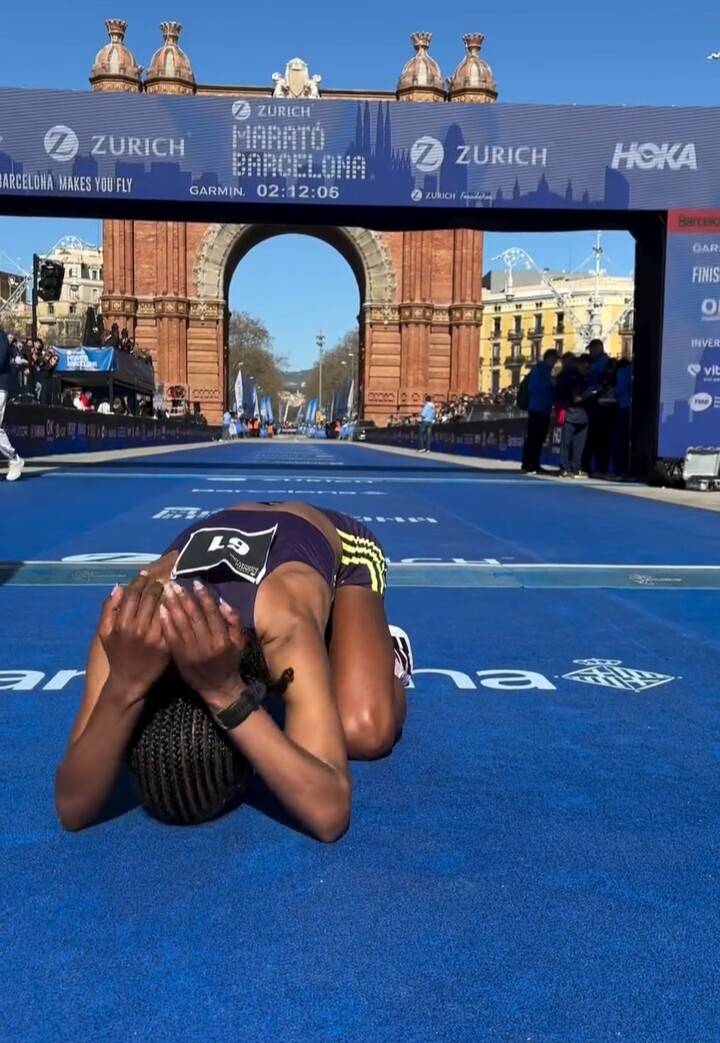
Those words carry weight—not just as ambition, but as a warning to the rest of the field.
The current world record of 2:09:56 belongs to Kenya’s Ruth Chepngetich, a historic performance that made her the first woman ever to break the 2:10 barrier. It stands as one of the defining achievements in modern distance running—but Tesfay is already knocking on that door.
What Barcelona revealed was not just raw talent, but untapped potential. Without perfect pacing, favorable weather, or optimal race dynamics, Tesfay still delivered one of the fastest marathon debuts in history. Under better conditions, the possibility of something extraordinary becomes very real.
Now, the narrative has shifted. This is no longer about promise—it is about timing.
With confidence, form, and intent all aligned, the question is not whether Fotyen Tesfay can challenge the record—but when.
And if her words are anything to go by, the wait may not be long.
(03/17/2026) ⚡AMPby Erick Cheruiyot for My Best Runs.
A Historic Debut in Barcelona Sparks a Global Debate
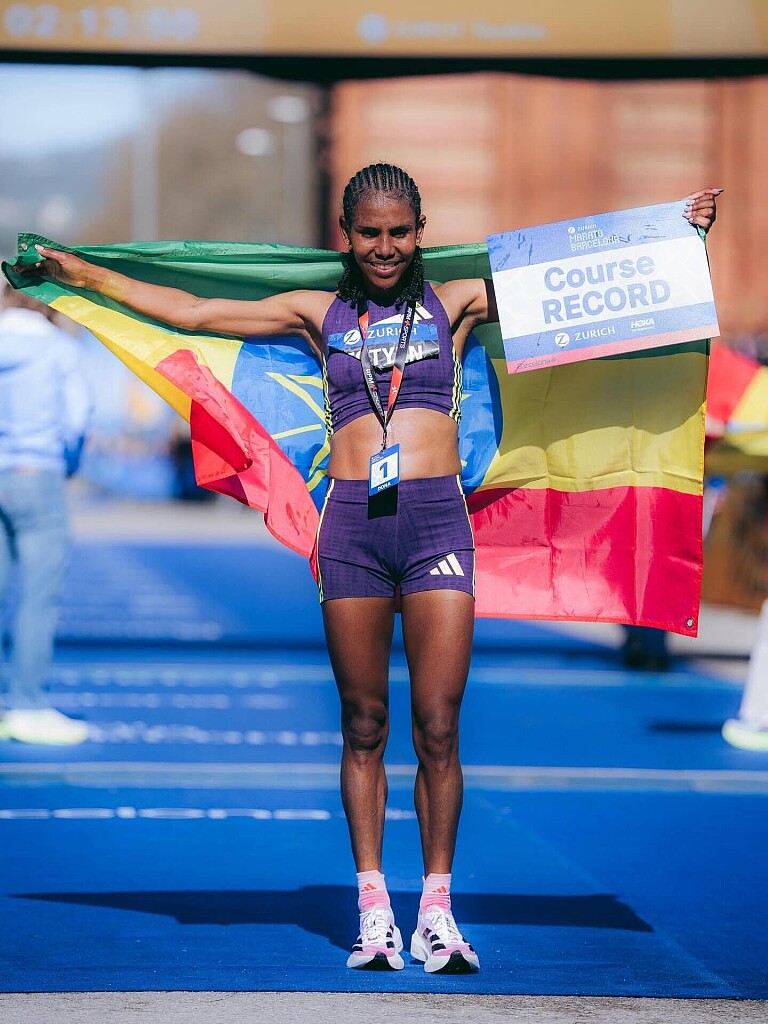
Distance running witnessed a remarkable moment at the Barcelona Marathon 2026, where Ethiopian star Fotyen Tesfay delivered one of the most extraordinary marathon debuts ever recorded. In her first attempt at the classic 42.195-kilometer distance, Tesfay stormed through the streets of Barcelona in 2:10:53, producing the second-fastest women’s marathon time in history.
The performance instantly reverberated across the athletics world. Not only was it a commanding victory, but it also placed Tesfay within striking distance of the current world record of 2:09:56, held by Kenya’s Ruth Chepngetich.
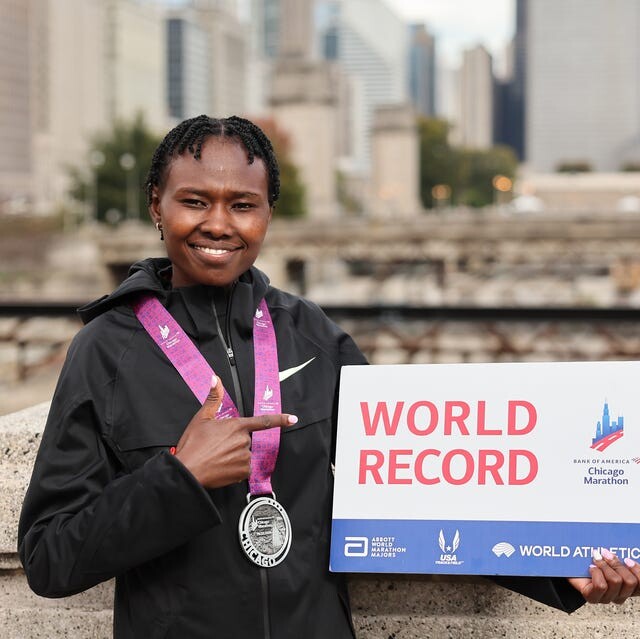
That historic record was set on 13 October 2024 during the Chicago Marathon 2024, when Chepngetich delivered a groundbreaking run of 2:09:56, shattering the previous world record of 2:11:53 established by Ethiopia’s Tigst Assefa by nearly two minutes — one of the largest improvements ever seen in the women’s marathon.
Tesfay’s run in Barcelona was a masterclass in pacing, strength, and composure. Transitioning from shorter road races and track events to the marathon often presents a steep learning curve, yet the Ethiopian appeared completely at ease over the demanding distance. From the early kilometers to the decisive closing stretch, she maintained a relentless rhythm that carried her to a historic debut.
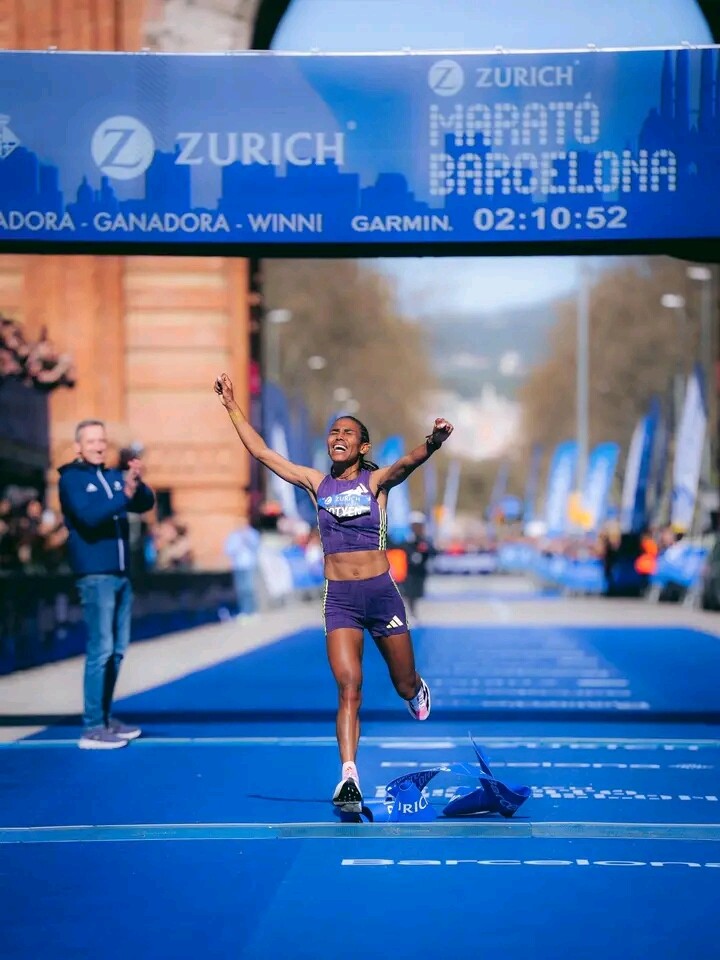
However, as admiration for Tesfay’s performance spread across the global running community, another conversation inevitably resurfaced. Chepngetich, despite holding the official world record, is currently serving a three-year doping ban, a situation that has complicated how many fans and analysts view the record.
While the mark still stands in the official record books, the circumstances have sparked renewed debate within the sport. Many observers are now asking a difficult question: should Tesfay’s 2:10:53 be regarded as the true benchmark in women’s marathon running?
The discussion underscores one of athletics’ enduring challenges — safeguarding credibility while honoring exceptional performances. Records are meant to represent the very peak of human achievement, yet controversies surrounding banned athletes can leave lasting doubts.
For Tesfay, however, the significance of her achievement remains undeniable. Few runners in history have debuted in the marathon with such authority. Her time now ranks among the greatest ever recorded and signals the arrival of a formidable new contender in women’s distance running.
Whether or not the official record books are ever reconsidered, one thing is clear: Fotyen Tesfay has ignited a powerful new chapter in the women’s marathon — and her breathtaking debut in Barcelona will be remembered for years to come.
(03/16/2026) ⚡AMPby Erick Cheruiyot for My Best Runs.
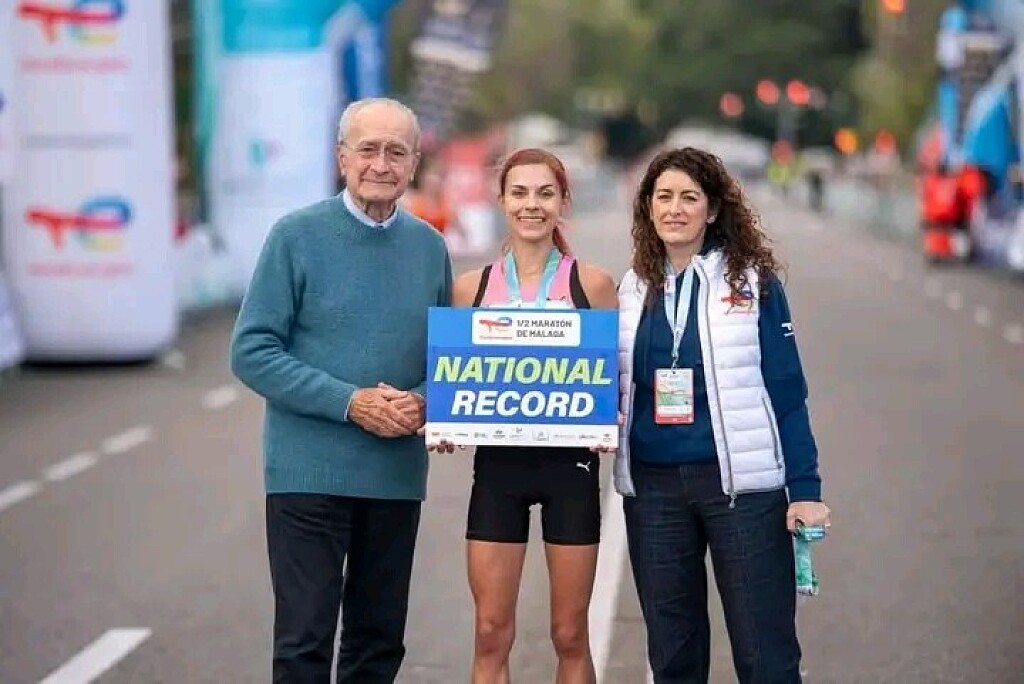
Kipkorir Blazes to Victory as Lukan Makes History in Málaga Half Marathon
The streets of southern Spain witnessed a thrilling morning of elite road racing as the TotalEnergies Media Maratón Ciudad de Málaga delivered another spectacular edition, reaffirming its reputation as one of Europe’s fastest and most competitive half marathons.
Under near-perfect racing conditions in the vibrant coastal city of Málaga, top international athletes produced remarkable performances, highlighted by a commanding victory in the men’s race and a historic national record in the women’s competition.
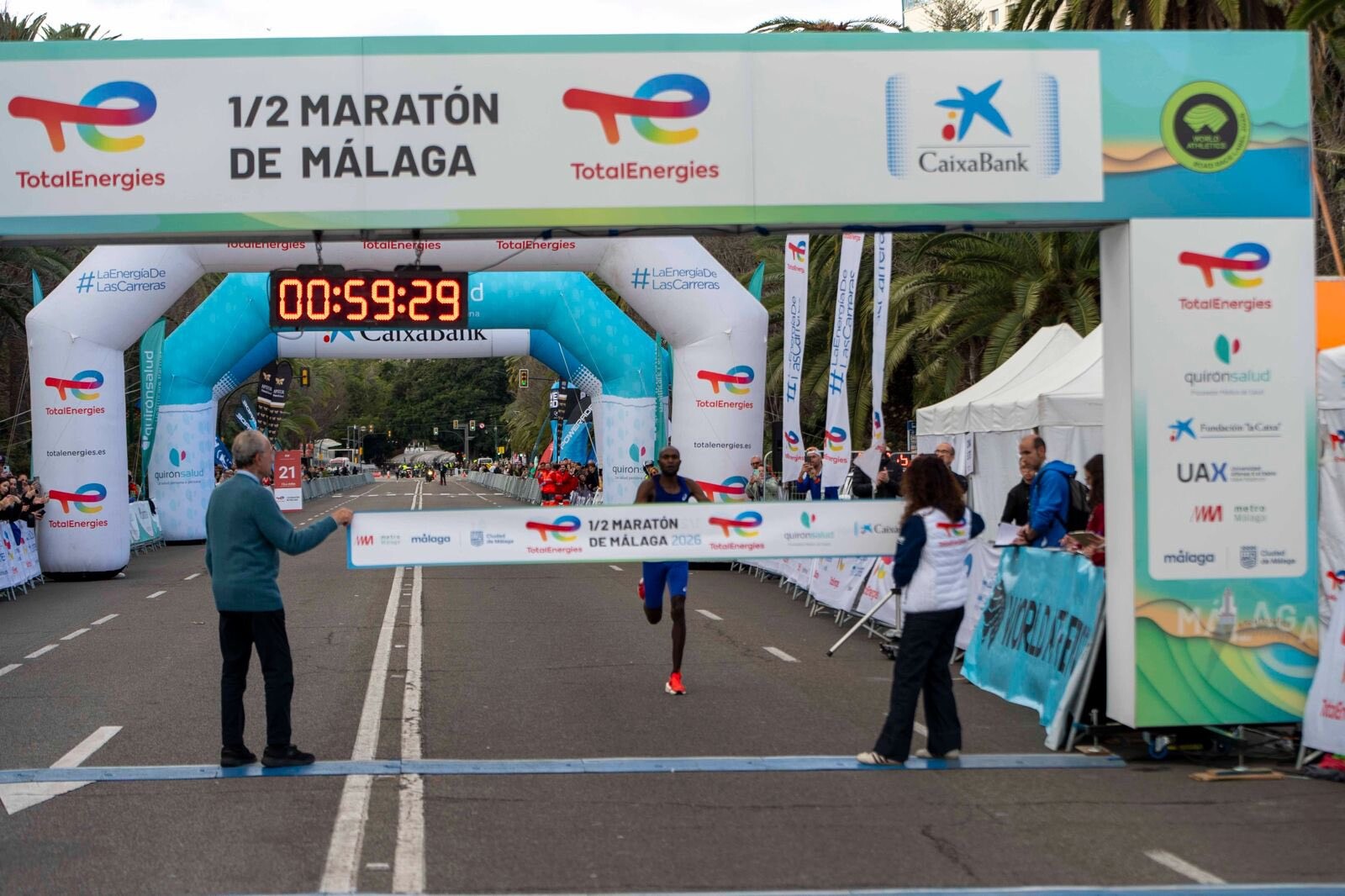
Kenya’s Vincent Kipkorir emerged as the dominant force in the men’s race, surging away from the field to secure victory in an impressive 59:30. Demonstrating both patience and strength, Kipkorir controlled the latter stages of the race, crossing the finish line comfortably ahead of his challengers.
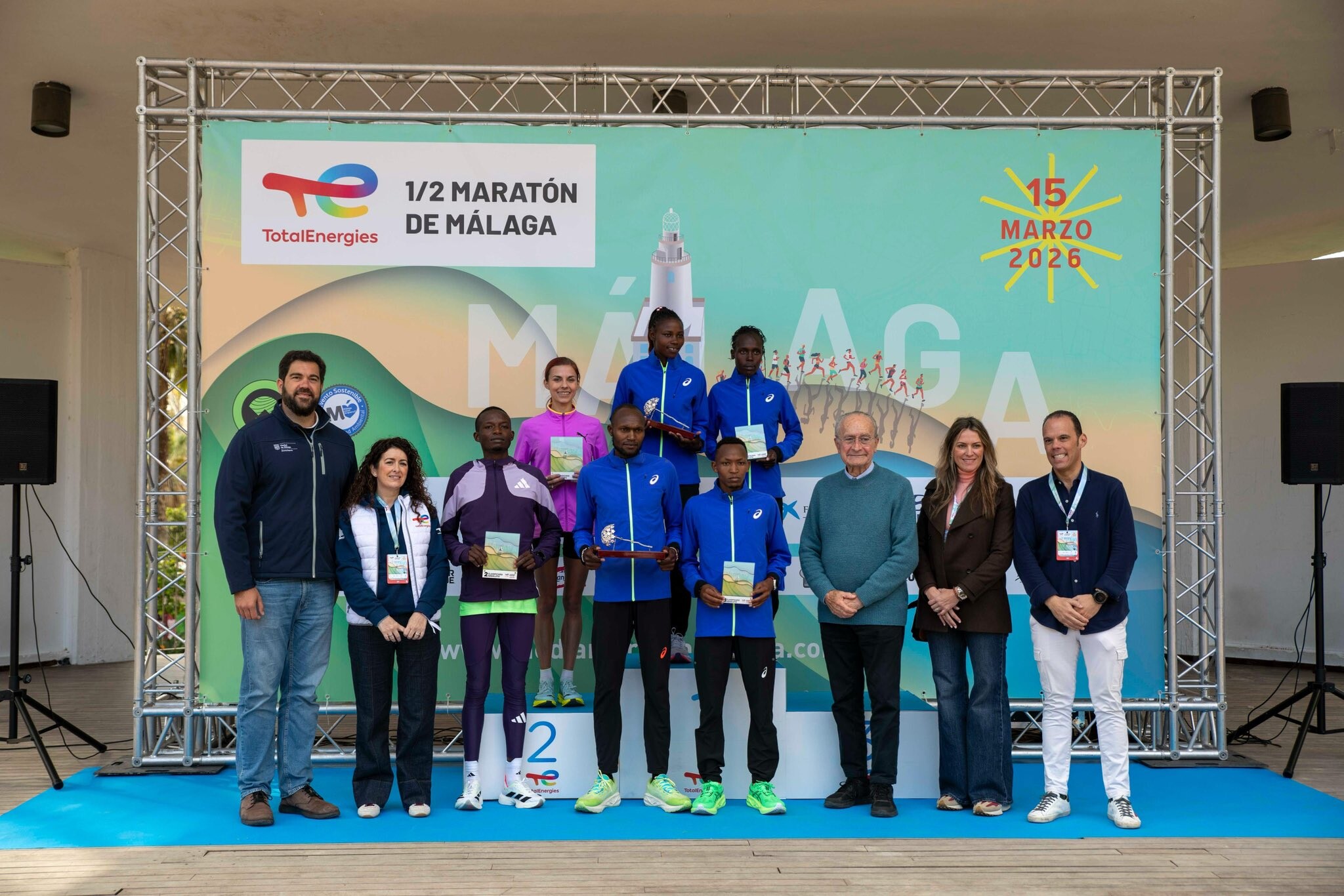
Compatriot Shadrack Musyoka claimed second place after a solid run that saw him stop the clock at 1:00:16, while fellow Kenyan Mathew Kipruto completed the podium in 1:01:29, underlining Kenya’s continued dominance in global road racing.
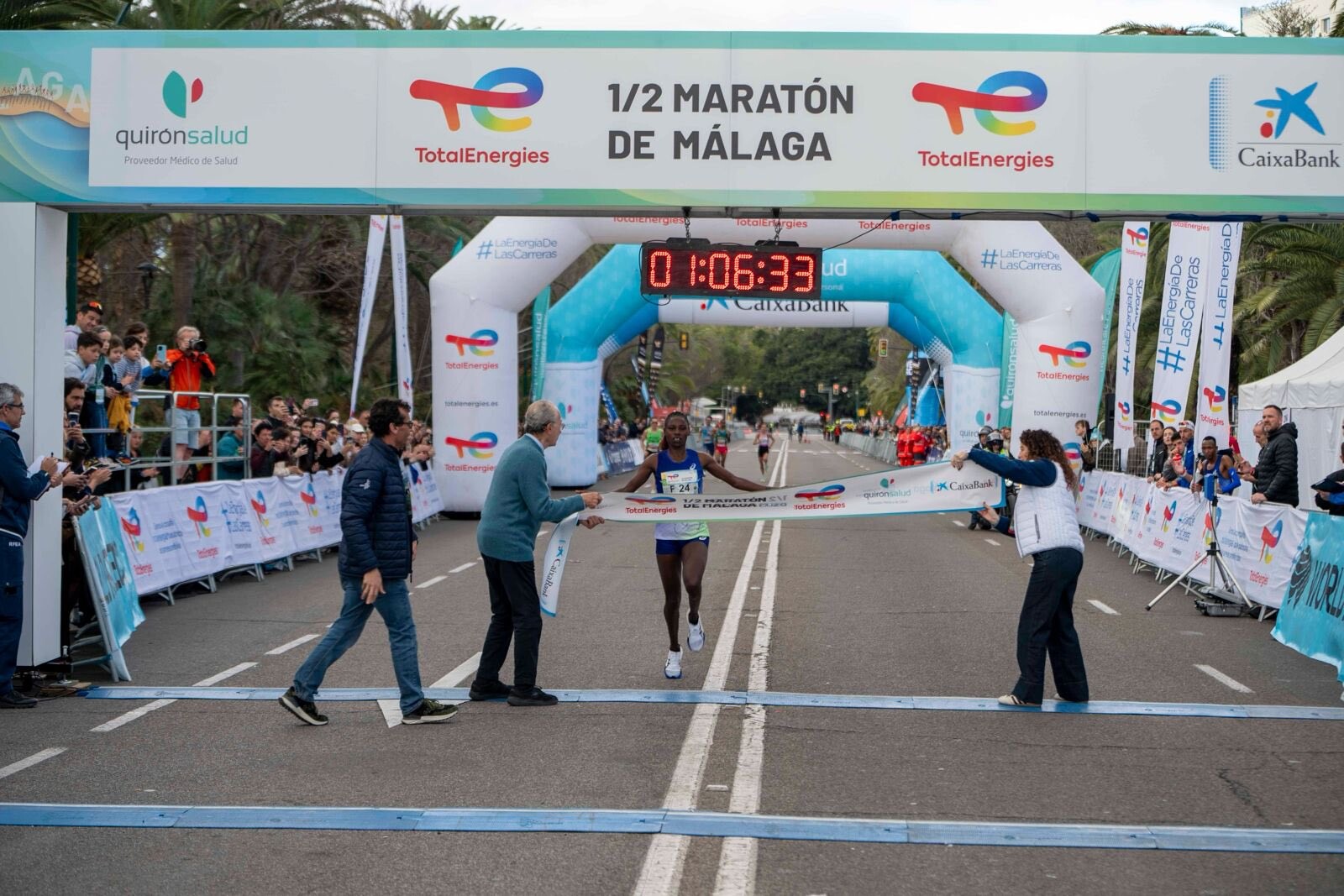
The women’s race was equally captivating, featuring a fierce contest that produced one of the most memorable performances of the event. Uganda’s Esther Chebet delivered a superb run to claim victory in 1:06:33, holding off strong international competition to take the top spot.
Just seconds behind her was Slovenia’s rising star Klara Lukan, who finished second in 1:06:43. Despite narrowly missing the win, Lukan achieved a remarkable milestone by setting a new Slovenian national record, while also recording a personal best—an achievement that marks a significant moment in her career and in Slovenian distance running.
Kenya’s Winnie Jepkosgei rounded out the women’s podium with a strong performance, finishing third in 1:08:02.
Known for its fast, flat course and ideal racing atmosphere, the Málaga Half Marathon continues to attract elite athletes eager to chase quick times. This year’s edition once again delivered high-level competition and unforgettable performances, proving why the race has earned its place among Europe’s premier road running events.
With commanding victories, a national record, and impressive depth across both fields, the 2026 TotalEnergies Media Maratón Ciudad de Málaga added another brilliant chapter to its growing legacy on the international road racing calendar.
(03/15/2026) ⚡AMPby Erick Cheruiyot for My Best Runs.

Malaga Half Marathon
TheTotalEnergies Málaga Half Marathonis one of Europe’s premier road racing events, held annually in the sun-drenched coastal city ofMálaga, Spain. Known for its lightning-fast course and ideal racing conditions, this half marathon attracts elite athletes and recreational runners from around the world. Set along the scenicCosta del Sol, the route is celebrated for itsultra-flat profile, featuring just a7-meter elevation...
more...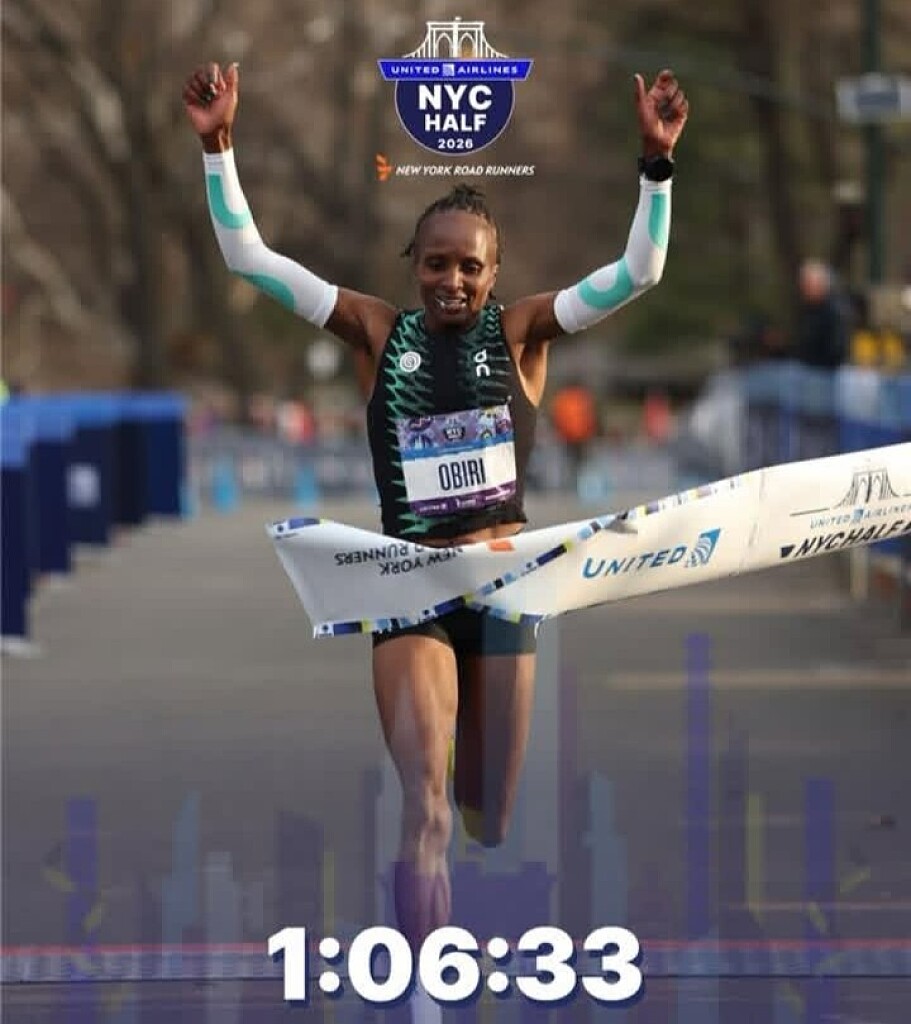
Hellen Obiri Shatters Course Record to Win the 2026 United Airlines NYC Half
Kenyan distance star Hellen Obiri delivered a commanding performance at the United Airlines NYC Half, storming to victory and rewriting the record books with a brilliant run through the streets of New York City.
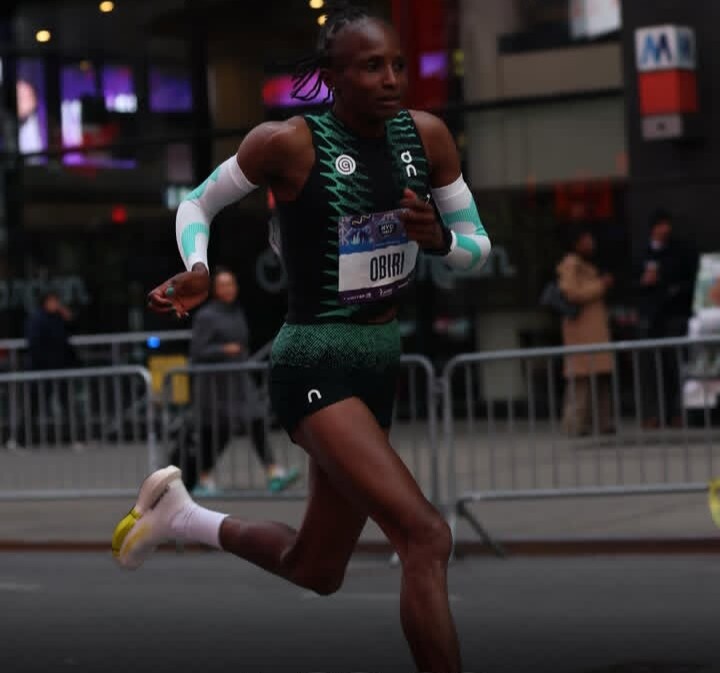
Obiri crossed the finish line in an impressive 1:06:33, setting a new course record and producing one of the most memorable performances in the race’s history. Her time erased the previous mark of 1:07:04, which had been set just a year earlier by fellow Kenyan star Sharon Lokedi in 2025.
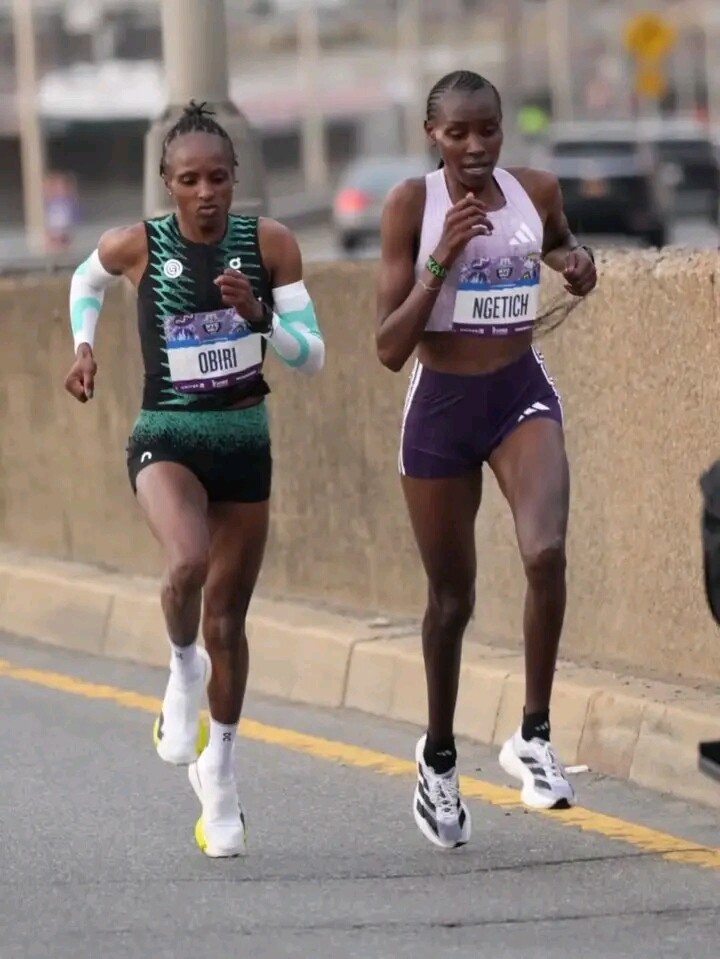
From the early stages, Obiri looked composed and confident as she navigated the challenging course. With her trademark strength and smooth rhythm, she gradually separated herself from the leading pack, showing the experience and endurance that have defined her transition from the track to road racing.
Lokedi fought bravely to remain in contention and ultimately secured second place in 1:07:10, while American runner Megan Keith completed the podium in 1:07:13, rounding out a fiercely competitive women’s race.
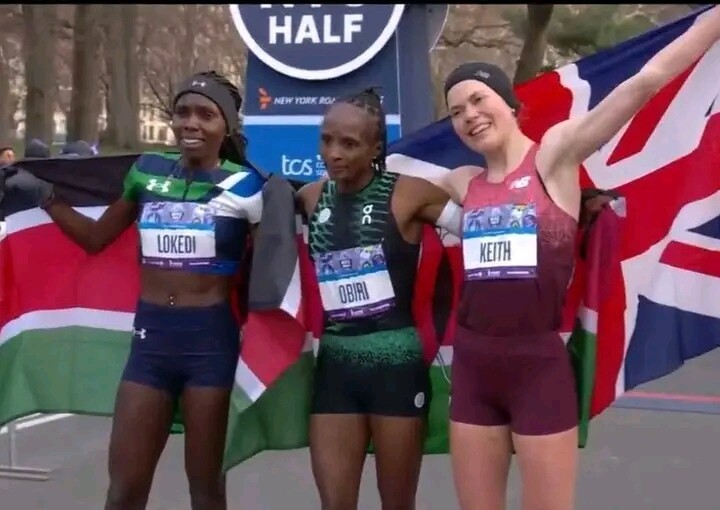
Obiri’s victory once again highlights her remarkable versatility and dominance across distances. A former world champion on the track and now a formidable force on the roads, the Kenyan continues to prove that she belongs among the greatest distance runners of her generation.
The performance in New York adds another significant milestone to her growing list of achievements and signals that Obiri remains a major contender on the global road racing stage. On a day filled with energy, roaring crowds, and elite competition, her record-breaking run stood out as a moment of brilliance — a reminder that when Obiri is at her best, history often follows.
(03/15/2026) ⚡AMPby Erick Cheruiyot for My Best Runs.

United Airlines NYC Half-Marathon
The United Airlines NYC Half takes runners from around the city and the globe on a 13.1-mile tour of NYC. Led by a talent-packed roster of American and international elites, runners will stop traffic in the Big Apple this March! Runners will begin their journey on Prospect Park’s Center Drive before taking the race onto Brooklyn’s streets. For the third...
more...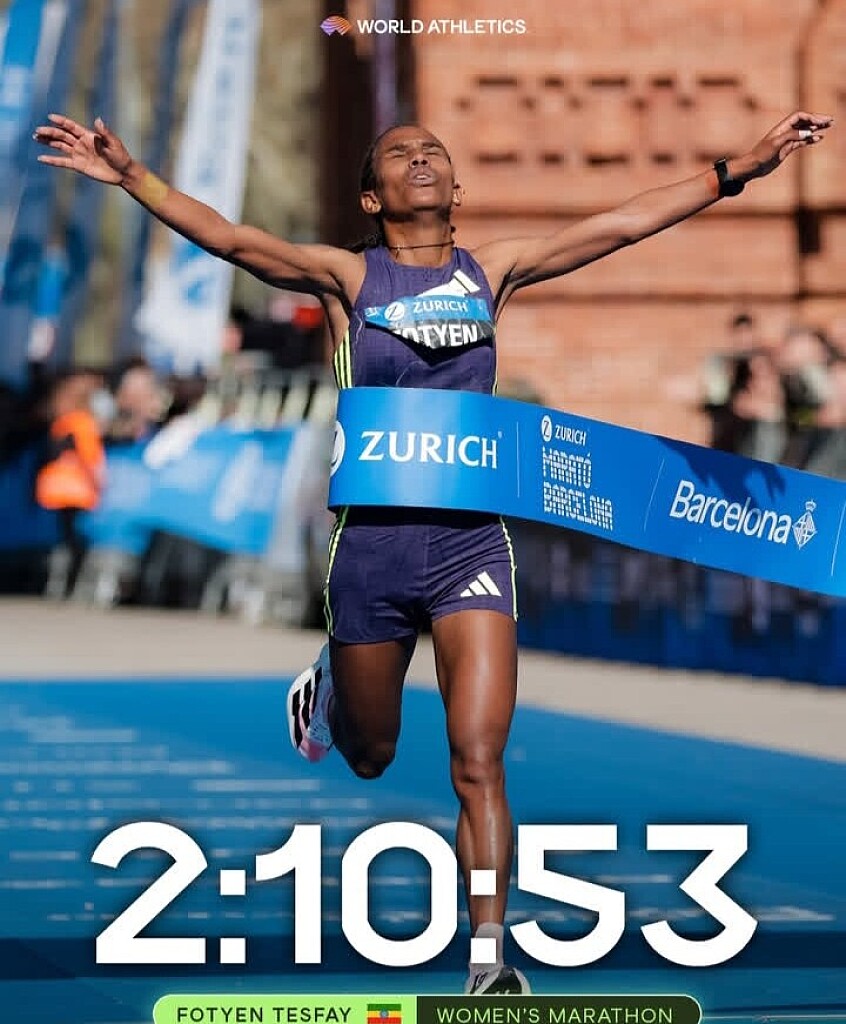
Tesfay’s Dream Debut: Ethiopian Star Blazes to Second-Fastest Marathon in History in Barcelona
The streets of Barcelona witnessed an extraordinary moment in distance running as Ethiopia’s rising star Fotyen Tesfay delivered a marathon debut for the ages. Competing at the renowned Zurich Marató Barcelona, Tesfay stormed to victory in a stunning 2:10:53, recording the second-fastest women’s marathon time ever run and announcing herself as a formidable new force over the classic 42.195-kilometre distance.
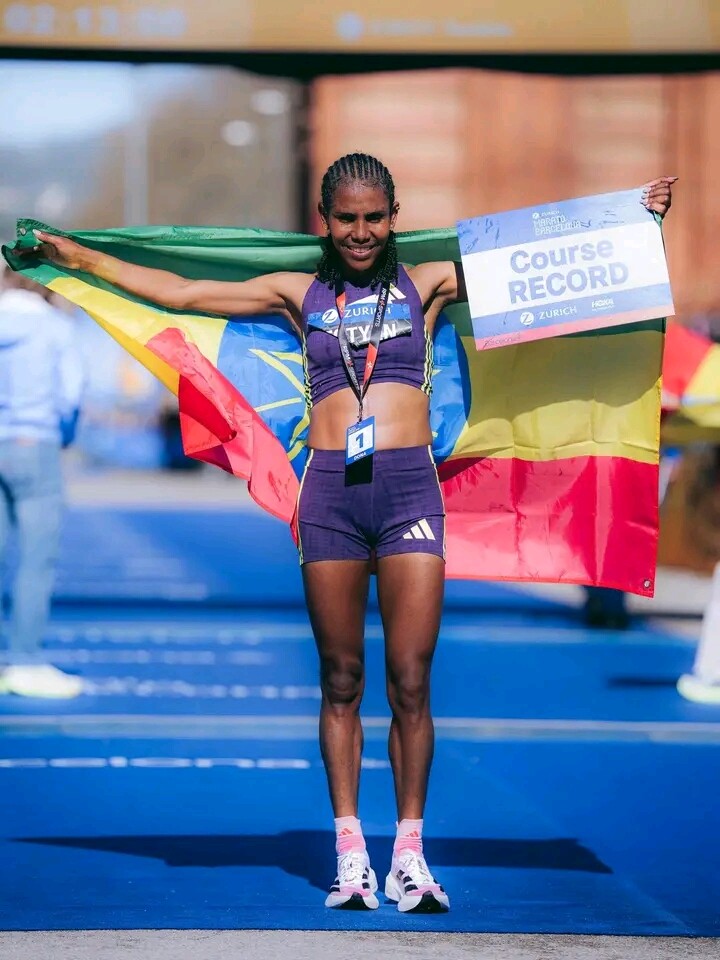
From the moment the race settled into rhythm, Tesfay ran with remarkable composure and quiet authority. The Ethiopian appeared unfazed by the magnitude of the occasion—her first attempt at the marathon distance—gliding through the early kilometres with a smooth, economical stride that hinted at something extraordinary unfolding.
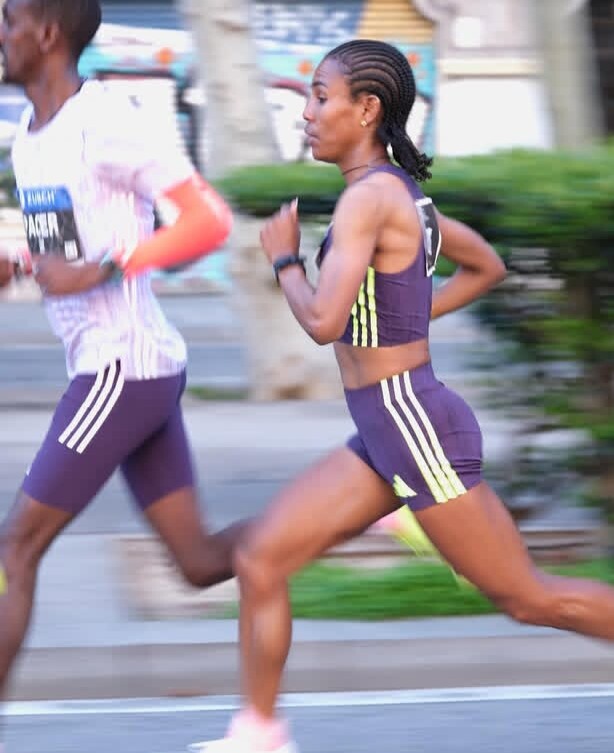
As the race progressed along Barcelona’s scenic coastal avenues and historic boulevards, the pace remained relentlessly quick. Yet Tesfay looked increasingly comfortable while others struggled to maintain contact. By the latter stages, she had seized clear command of the race, transforming what began as a tactical contest into a commanding solo performance.
Crossing the finish line in 2:10:53, Tesfay not only secured victory but also etched her name into the sport’s record books. Her performance stands as the second-fastest women’s marathon ever recorded, while also delivering a national record for Ethiopia and a course record in Barcelona—an astonishing achievement for a marathon debut.
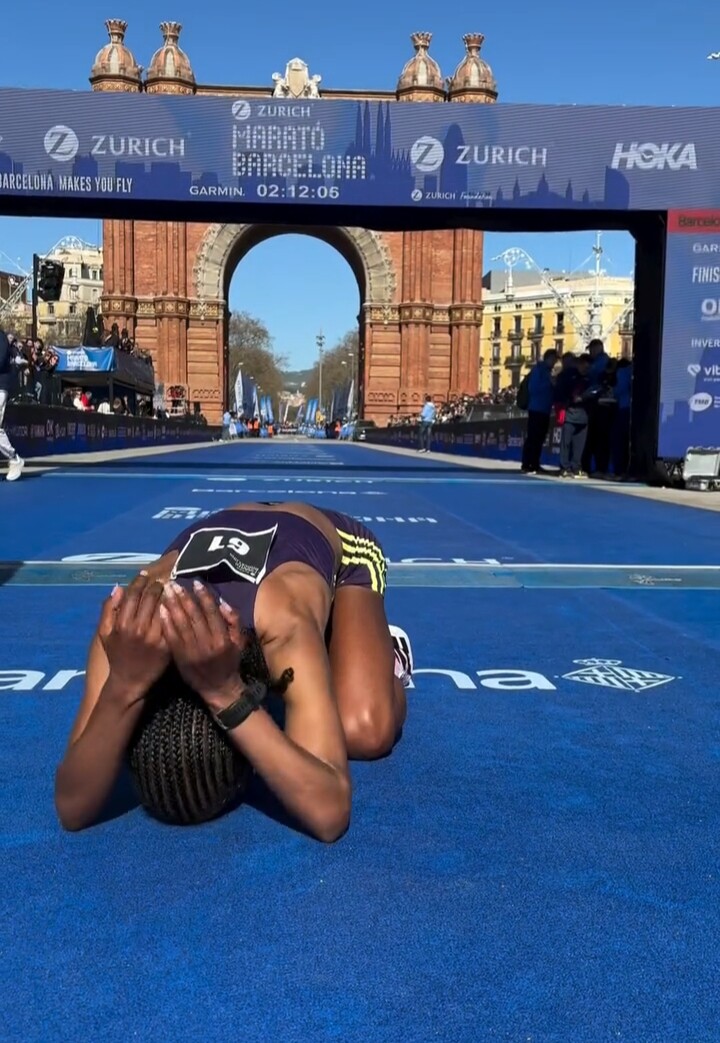
Behind her, Kenya’s Joan Jepkosgei Kiplimo produced a strong run to claim second place in 2:18:42, recording a new personal best. Ethiopia’s Zeineba Yimer Worku followed closely in third place in 2:18:49, also setting a personal best as the podium showcased the continued dominance of East African athletes on the global marathon stage.
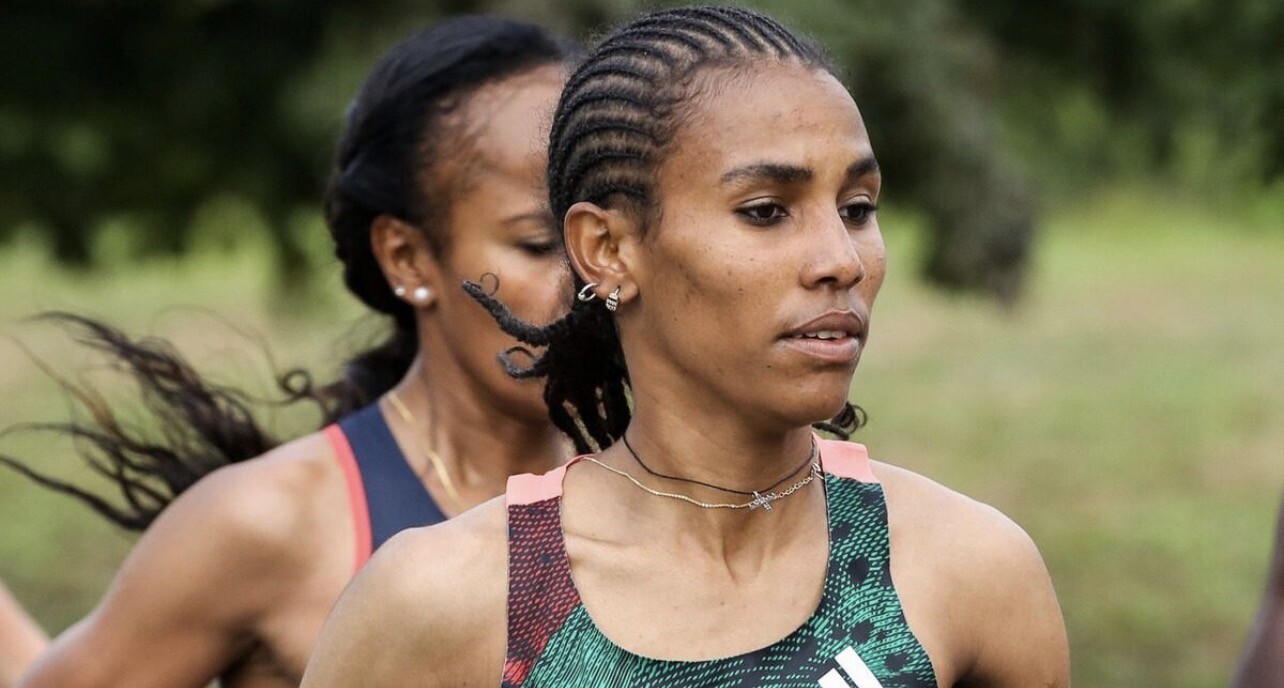
The women’s race unfolded as a thrilling celebration of speed, courage, and global talent, leaving the Catalan capital glowing with admiration for one of the most extraordinary marathon debuts the sport has ever seen.
Top 10 – Women’s Results
1. Foyten Tesfay Hailu (Ethiopia) — 2:10:53
2. Joan Jepkosgei Kiplimo (Kenya) — 2:18:42
3. Zeineba Yimer Worku (Ethiopia) — 2:18:49
4. Chaltu Chimdesa Kumsa (Ethiopia) — 2:23:32
5. Yalganesh Eskamech Gedefa (Ethiopia) — 2:24:05
6. Carolina Robles Campos (Spain) — 2:24:58
7. Lucy Nthenya Ndambuki (Kenya) — 2:28:02
8. Gladys Tejeda (Peru) — 2:29:51
9. Sofia Assefa Abebe (Ethiopia) — 2:31:29
10. Loréna Meningand (France) — 2:31:52
For the fans lining the vibrant streets of Barcelona, the race delivered a moment they will long remember. They came expecting a competitive marathon; instead, they witnessed the breathtaking arrival of a new star in the sport.
If this extraordinary debut is any indication, Fotyen Tesfay has not merely entered the marathon world—she may well be on the verge of reshaping it.
(03/15/2026) ⚡AMPby Erick Cheruiyot for My Best Runs.

Zurich Marato Barcelona
The race is a favorite among both professional athletes and amateur runners, offering a unique running experience in and around Zurich. The scenic course follows the shores of Lake Zurich for much of the route, making it not only a thrilling sports event but also a visually stunning one. The start and finish lines are located at the upper lake...
more...
Kenyan Stars Triumph in Grueling Heat at the 2026 Wan Jin Shi Marathon
The 2026 New Taipei City Wan Jin Shi Marathon once again lived up to its reputation as one of Asia’s most physically demanding road races. Staged in New Taipei City, Taiwan, the event forced elite athletes to contend with punishing heat and heavy humidity—conditions that turned the marathon into a true test of endurance, patience, and tactical intelligence.
Despite the challenging environment, the race produced thrilling contests in both the men’s and women’s competitions, highlighted by standout performances from Kenyan athletes who once again demonstrated their strength on the global marathon stage.
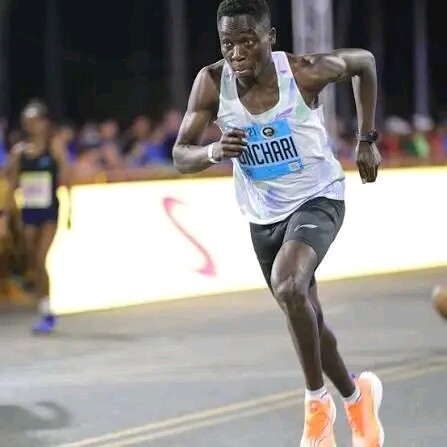
Onchari’s Late Surge Seals Men’s Victory
In the men’s race, Kenya’s Enock Onchari delivered a perfectly timed finishing kick to capture victory in dramatic fashion. For much of the race, the leading pack remained tightly grouped as runners cautiously navigated the oppressive conditions.
With the finish line approaching, Onchari launched a decisive surge in the final kilometer, pulling away just enough to claim the win in 2:12:46.
Close behind was Haimro Alame of Israel, who fought hard to the line but ultimately finished second in 2:12:57, only seconds adrift after a thrilling sprint to the finish.
Kenya’s Nicholas Kirwa completed the podium with a strong and consistent run, securing third place in 2:14:25 and reinforcing Kenya’s continued dominance in international marathon racing.
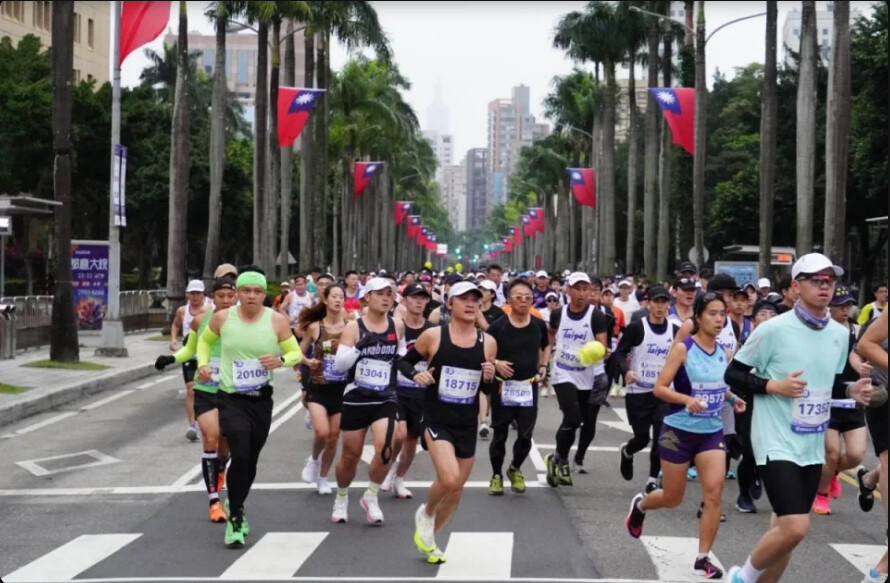
Cherotich Masters the Women’s Race
The women’s race produced an equally compelling story of resilience and smart race execution. Kenya’s Catherine Cherotich emerged victorious after delivering a composed and tactically disciplined performance.
Rather than forcing the pace early in the race, Cherotich carefully managed her energy through the most punishing segments of the course. Her patience paid off in the latter stages when she gradually separated from the field to secure victory in 2:32:32.

Kenyan Depth on Display
Kenya’s dominance continued with Ivyne Jeruto, who produced an impressive run to finish second in 2:33:12. Jeruto remained within striking distance throughout the race and demonstrated remarkable consistency despite the oppressive humidity.
Her performance highlighted the depth and strength of Kenyan women’s distance running, particularly in difficult marathon environments where tactical discipline is essential.
Completing the women’s podium was Roman Gidey of Ethiopia, who battled the harsh conditions to secure third place in 2:33:47, ensuring Ethiopia’s presence among the race leaders.
Racing Against the Elements
The tropical climate in Taiwan played a major role in shaping the outcome of the 2026 race. High temperatures combined with relentless humidity meant that pacing, hydration, and mental toughness became critical components of success.
Under such circumstances, finishing times tell only part of the story. What truly defined this year’s race was the athletes’ ability to adapt to the environment while maintaining competitive intensity over the marathon distance.
East African Excellence on the Global Stage
With Kenyan athletes winning both the men’s and women’s races—and securing multiple podium finishes—the Wan Jin Shi Marathon once again showcased the continued influence of East African runners in world marathon competition.
Beyond the results, the 2026 edition highlighted the resilience and competitive spirit of elite marathoners who pushed through extreme conditions to deliver a memorable day of racing.
(03/14/2026) ⚡AMPby Erick Cheruiyot for My Best Runs.

New Taipei City WJS Marathon
The best thing about Wan Jin Shi Marathon Race, is the chance to take in the enchanting view along the North Shore. The breathtaking view of the mountains and the seaside is the centerpiece of the race. The Queen's Head Rock is set against the backdrop of the North Shore, complemented by the area's many scenic landmarks. This is the...
more...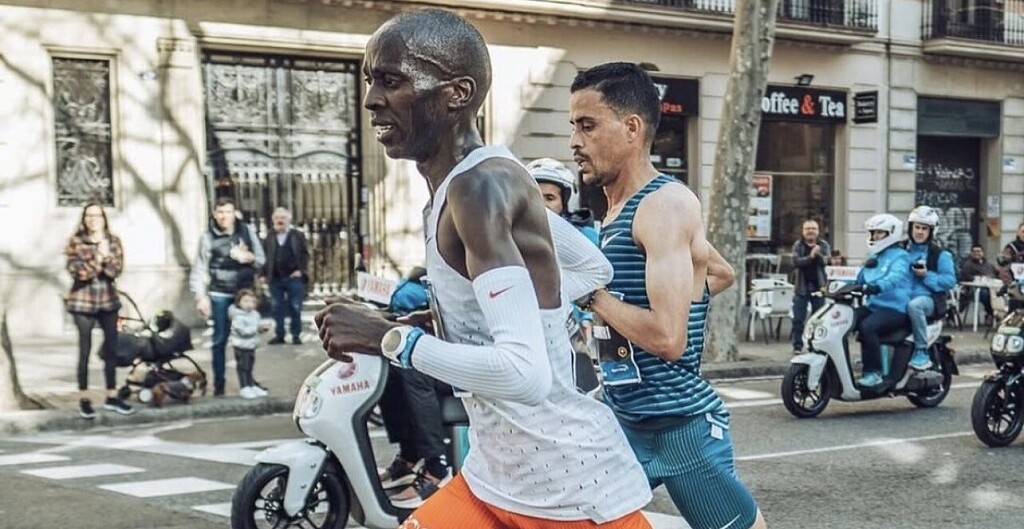
Kenyan Depth Set to Challenge Özbilen at the Barcelona Marathon
Europe’s fastest entrant, Kaan Kigen Özbilen, will face a formidable Kenyan challenge when the men’s elite field lines up for the Zurich Marató Barcelona on Sunday.
Özbilen arrives with the quickest personal best in the field at 2:04:16, a mark that places the Turkish record holder among the fastest marathon runners competing on the European circuit. But despite that advantage on paper, the race is far from a foregone conclusion.
The depth of the Kenyan lineup and the presence of strong Ethiopian challengers suggest the outcome may depend less on individual credentials and more on how the race unfolds tactically over the 42.195-kilometre distance.
Kenyan Depth Could Shape the Race
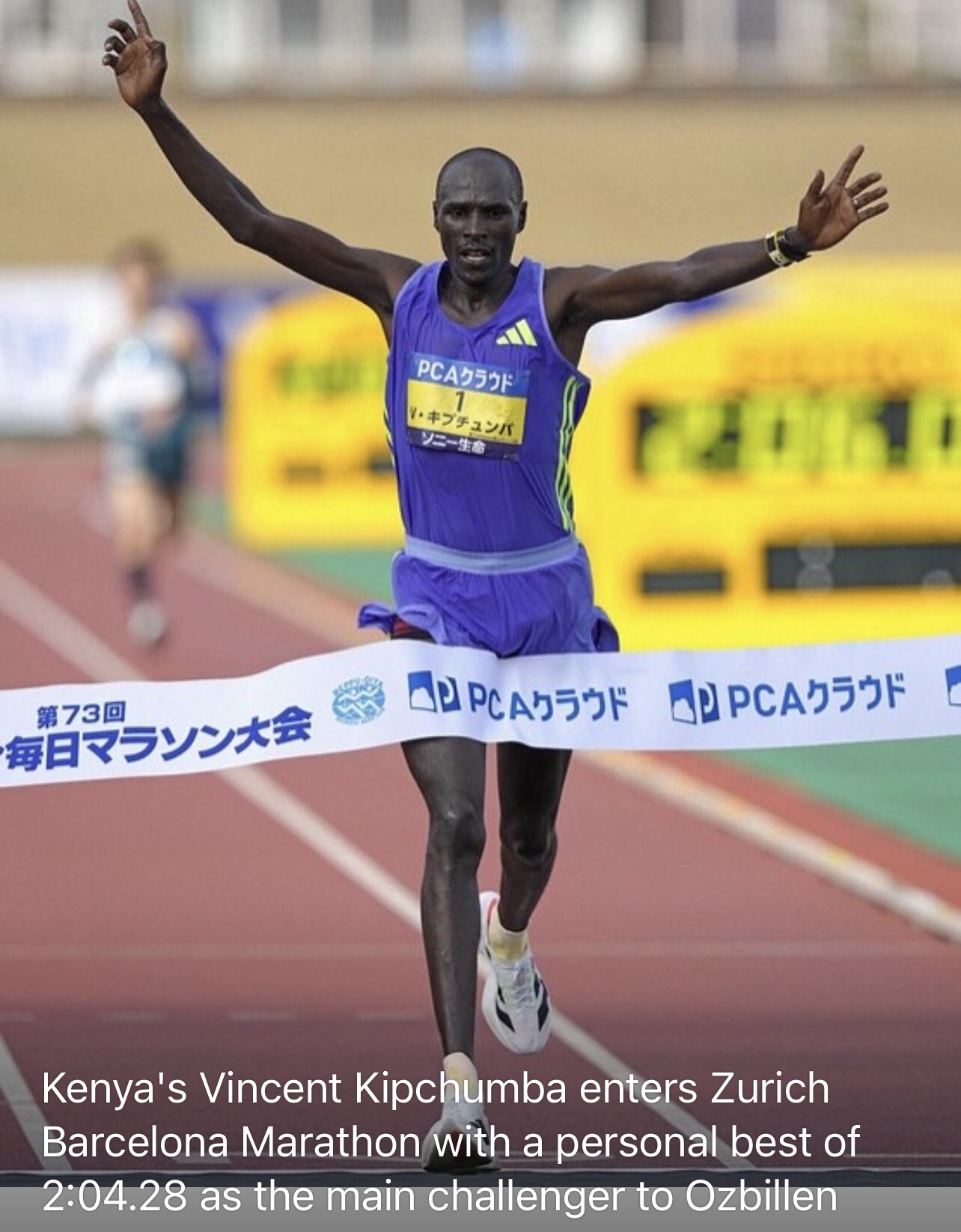
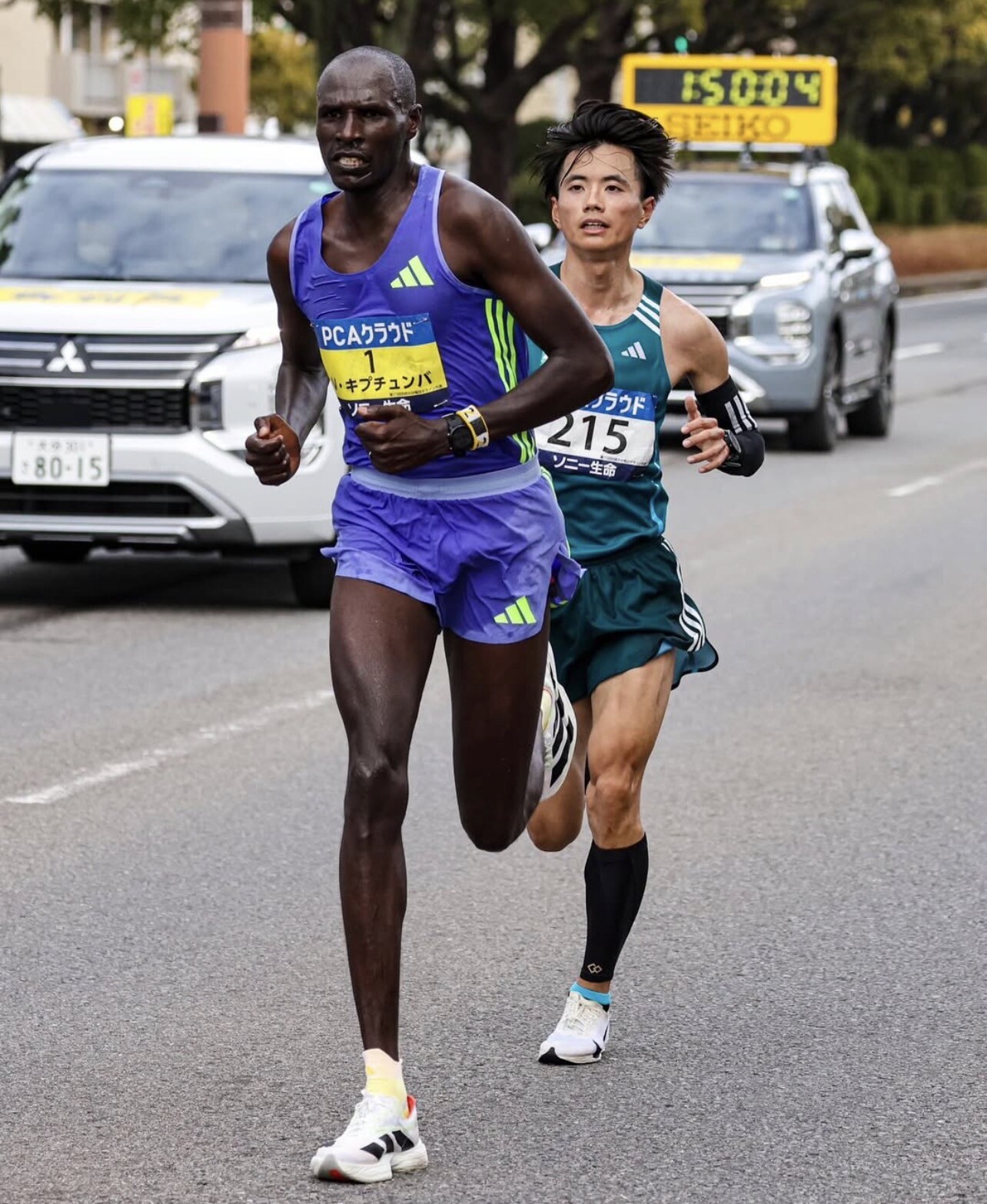
Leading the Kenyan challenge is Vincent Kipchumba, whose personal best of 2:04:28 places him just seconds behind Özbilen. Kipchumba is a seasoned competitor on the global marathon circuit and has repeatedly shown the ability to remain competitive deep into races, particularly when the pace accelerates in the latter stages.
He is joined by compatriots Philimon Kiptoo Kinchumba and Kenneth Keter, both proven marathoners capable of running well inside the 2:06 barrier. Their presence gives Kenya numerical strength at the front of the race and could influence how the tempo develops during the opening half.
Depth like this often proves decisive in elite marathons. When several contenders from the same country occupy the lead pack, the pace can fluctuate as runners test one another’s strength before decisive moves begin. If the Kenyan group pushes the pace early or stretches the field before the 30-kilometre mark, it could place significant pressure on rivals trying to stay in contact.
Additional Kenyan experience comes from runners such as Zablon Chumba and Timothy Kipkorir, both capable of remaining within striking distance if the race becomes tactical rather than purely fast.
Ethiopian Contenders Add Further Depth
Ethiopia also brings strong credentials into the race, ensuring the contest extends beyond a simple duel between Özbilen and the Kenyan lineup.
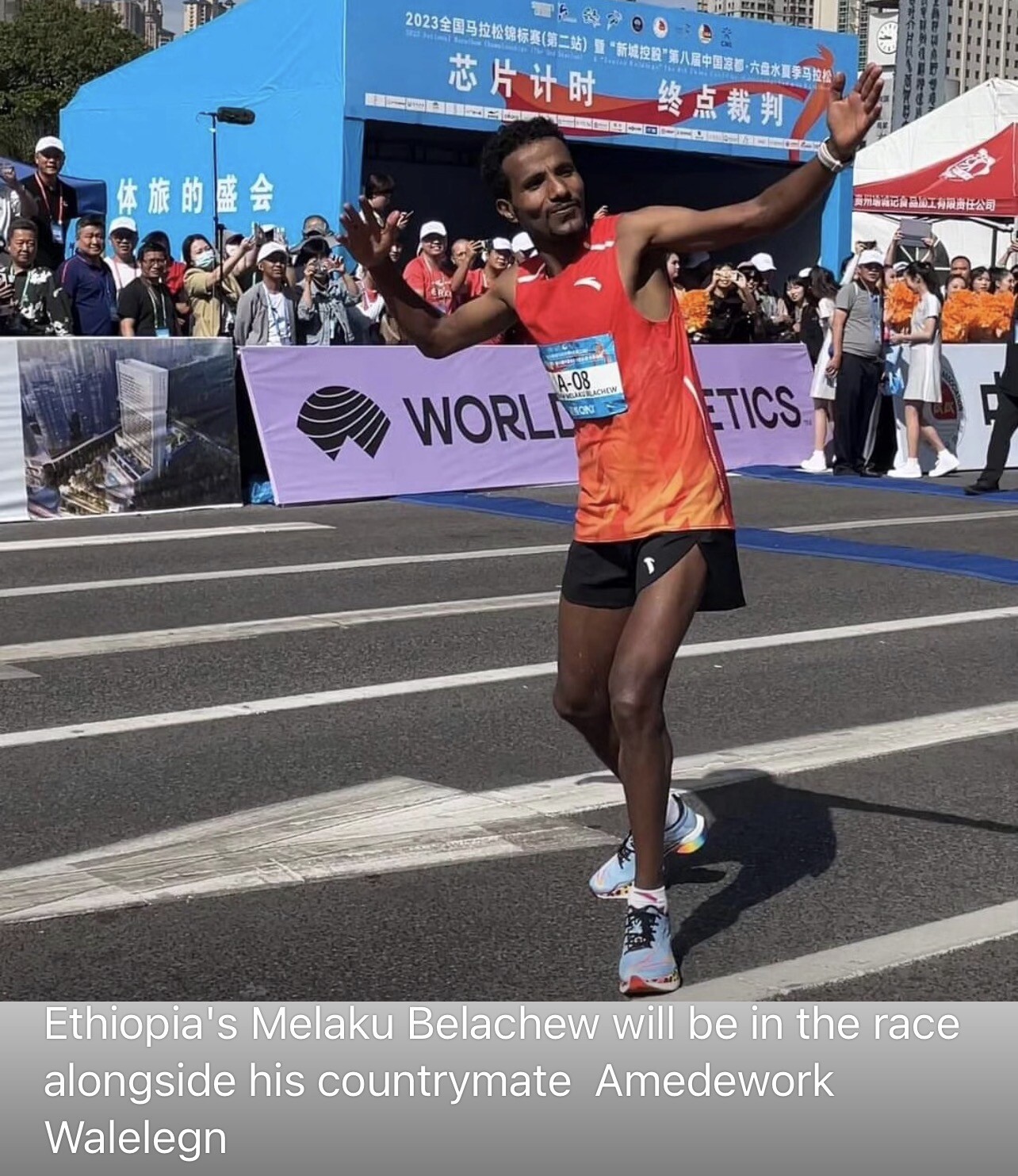
Among the leading challengers is Amedework Walelegn, whose personal best of 2:04:50places him firmly among the elite performers in the field. Known for his ability to maintain a steady rhythm over the marathon distance, Walelegn could become a key figure if the leaders maintain a fast pace through the midway point.
Compatriot Melaku Belachew adds further experience to the Ethiopian squad. A consistent performer in international marathons, Belachew has repeatedly shown the ability to remain competitive when races develop into tightly contested battles over the final kilometres.
With several athletes possessing personal bests within a narrow time range, the Ethiopian presence adds another layer of uncertainty and ensures that no single group is likely to control proceedings outright.
Fast Times Possible on Barcelona Course
The course in Barcelona has developed a reputation for producing fast marathon performances, particularly when weather conditions cooperate and the lead group stays intact through the early stages.
Given the depth of this year’s field, a finishing time in the low 2:05 range is well within reach if the pace remains consistent from the start. Several athletes lining up on Sunday have demonstrated the ability to sustain that rhythm, and the number of runners with personal bests under 2:06 suggests the lead pack could remain large well beyond halfway.
Much will depend on how aggressively the contenders approach the race. If the tempo rises early, the contest could become a test of endurance well before the closing kilometres. Conversely, a more controlled pace could set up a tactical showdown over the final 10 kilometres, where positioning and timing often prove decisive.
For Özbilen, the challenge will be converting the fastest personal best in the field into race-day authority against a group of rivals accustomed to racing together at the front of major marathons.
For the Kenyan and Ethiopian athletes, the opportunity lies in using their depth and experience to apply pressure as the race unfolds.
As the elite runners prepare to take the start line, the men’s race promises a compelling battle between speed, strategy, and endurance—three elements that have long defined success in the marathon and will likely determine the outcome on the streets of Barcelona this weekend.
(03/14/2026) ⚡AMPby Robert Kibet for My Best Runs
Zurich Marato Barcelona
The race is a favorite among both professional athletes and amateur runners, offering a unique running experience in and around Zurich. The scenic course follows the shores of Lake Zurich for much of the route, making it not only a thrilling sports event but also a visually stunning one. The start and finish lines are located at the upper lake...
more...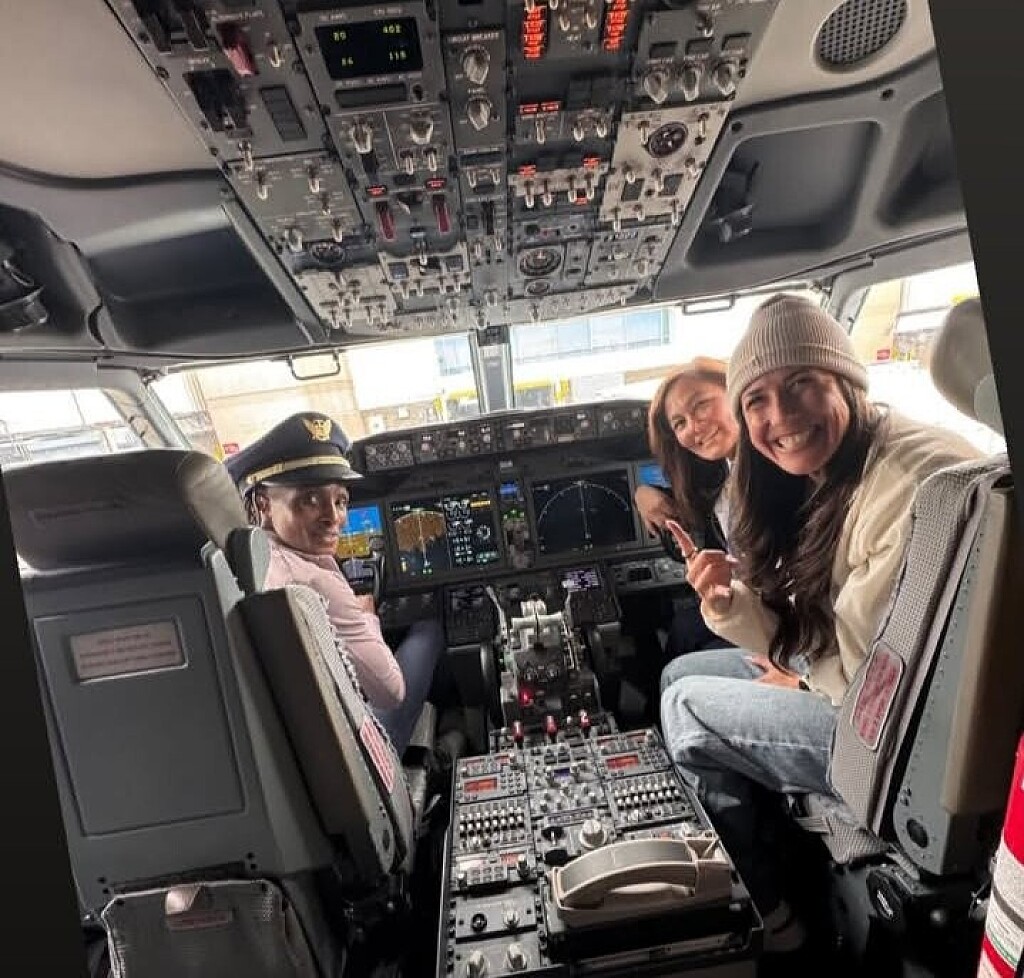
From the Skies to the Streets: Hellen Obiri’s Journey Back to New York
As anticipation builds for the 2026 edition of the New York City Half Marathon, Kenyan distance running star Hellen Obiri is already on her way to the city where she has created some unforgettable racing memories.
Before the battle on the roads begins, Obiri shared a joyful travel moment while heading to the New York City. Sitting in the cockpit and enjoying the breathtaking view from the front of the aircraft, the Kenyan champion looked relaxed and full of excitement as she journeyed toward the race. It was a simple but special moment—one that showed the lighter side of a world-class athlete preparing for another big challenge.
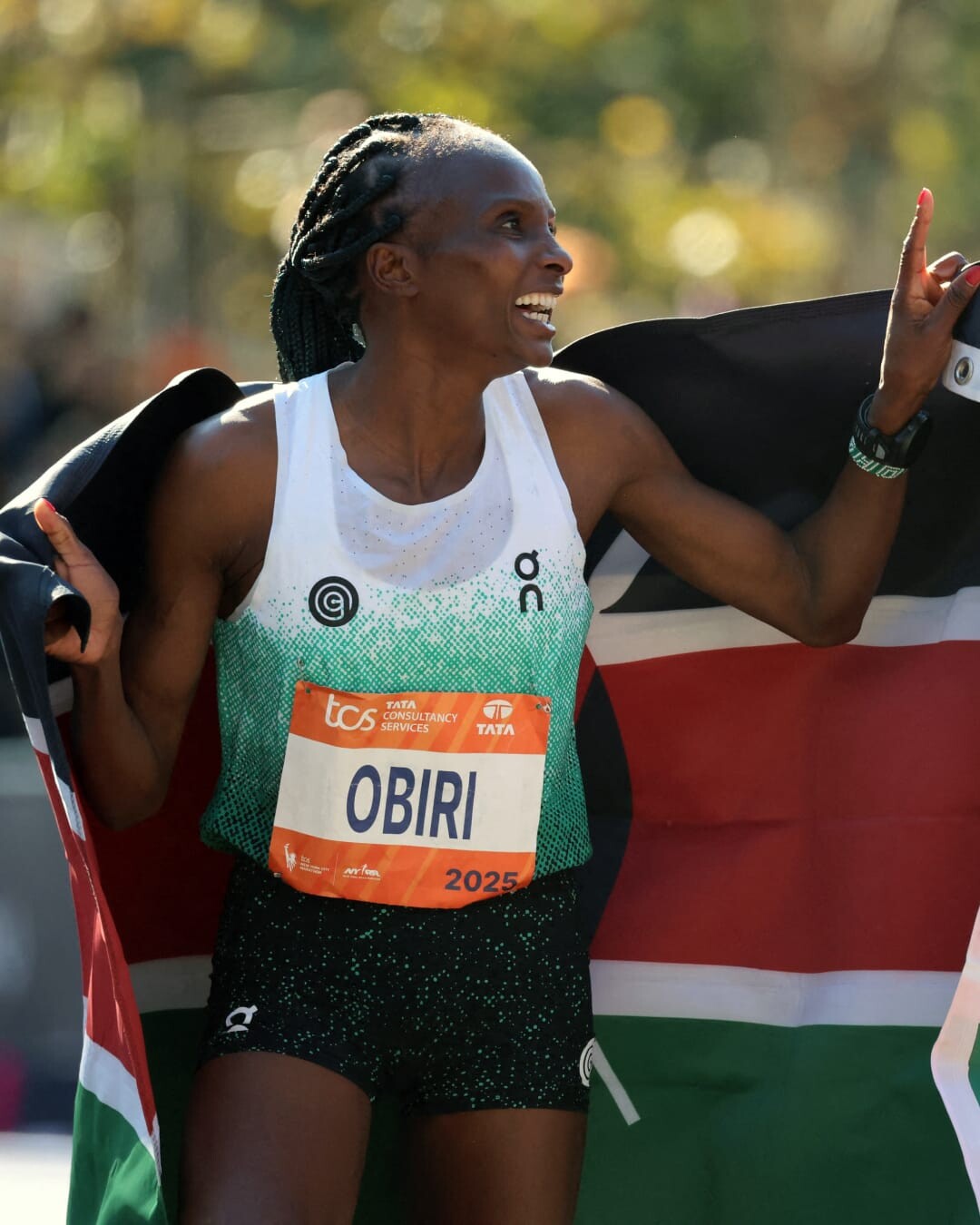
For Obiri, the streets of New York City hold a special place in her remarkable career. The two-time New York City Marathon champion has already proven her dominance in the Big Apple, thrilling fans with her strength, tactical brilliance, and powerful finishing kick.
She is also no stranger to success in the half marathon distance in New York. Back in 2023, Obiri produced a brilliant performance to win the New York City Half Marathon in 1:07:21, surging away in the closing stages to defeat Ethiopia’s Senbere Teferi and claim the title in commanding fashion.
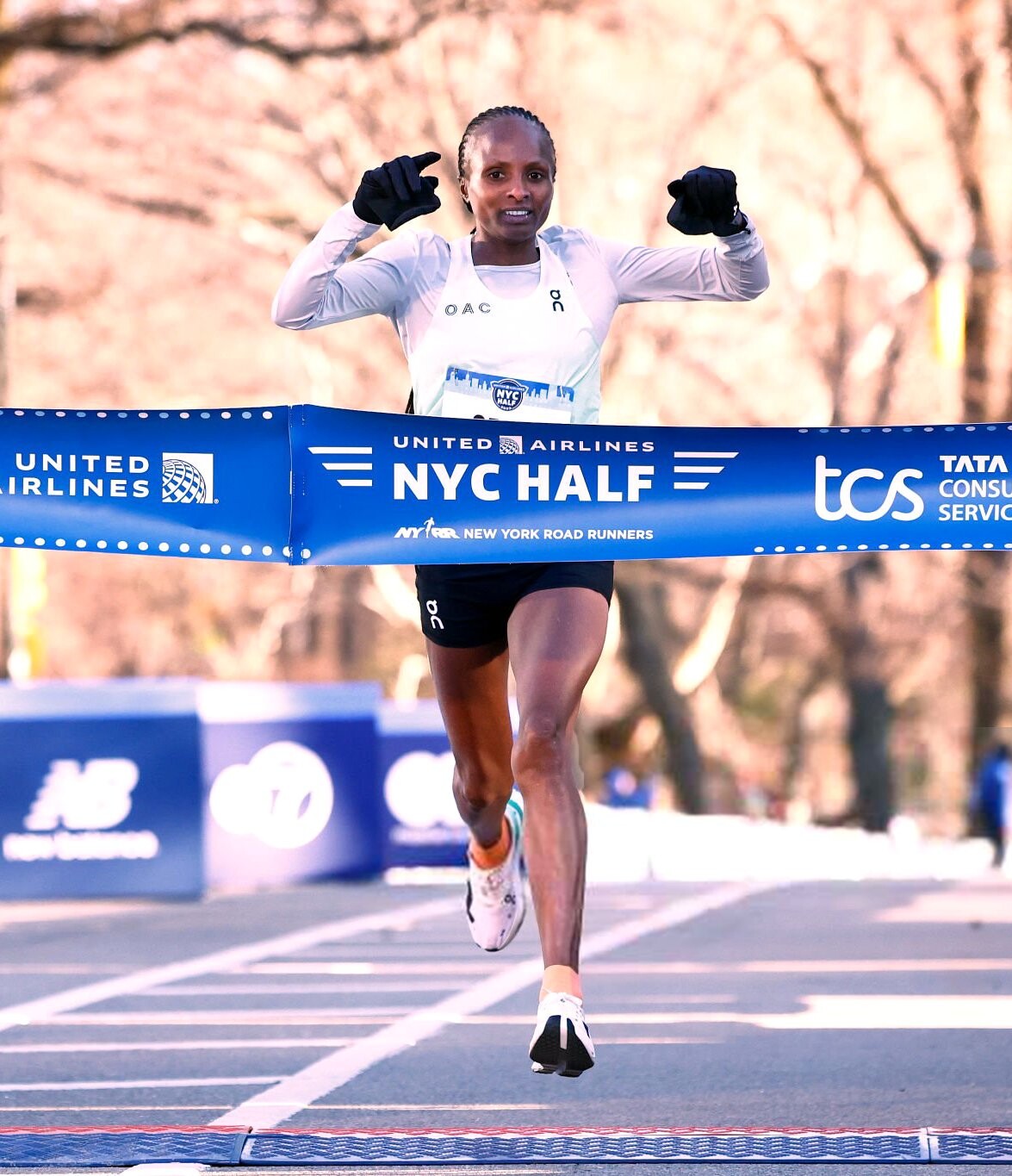
That victory remains one of the memorable moments of the race, as Obiri’s late acceleration left the field behind and reminded the world why she is one of the most dangerous competitors when the finish line approaches.
Now, as race day on March 15, 2026 approaches, excitement continues to build. Fans from Kenya and around the world will be watching closely to see if the smiling traveler in the cockpit will soon transform into the unstoppable racer on the streets.
If history is anything to go by, when Hellen Obiri arrives in New York, she doesn’t just participate—she makes the city her stage.
(03/14/2026) ⚡AMPby Erick Cheruiyot for My Best Runs.

All Eyes on Agnes Ngetich as World-Class Field Gathers for New York City Half Marathon
Before dawn breaks over the towering skyline of Manhattan, the city begins to stir with a familiar rhythm. The streets that rarely sleep slowly fill with anticipation — runners stretching under the glow of streetlights, spectators gathering along the sidewalks, and the distant echo of footsteps preparing to turn New York into a theater of endurance. On Sunday, March 15, 2026, the New York City Half Marathon promises more than just another race; it will be a global showcase of speed, courage, and relentless ambition.
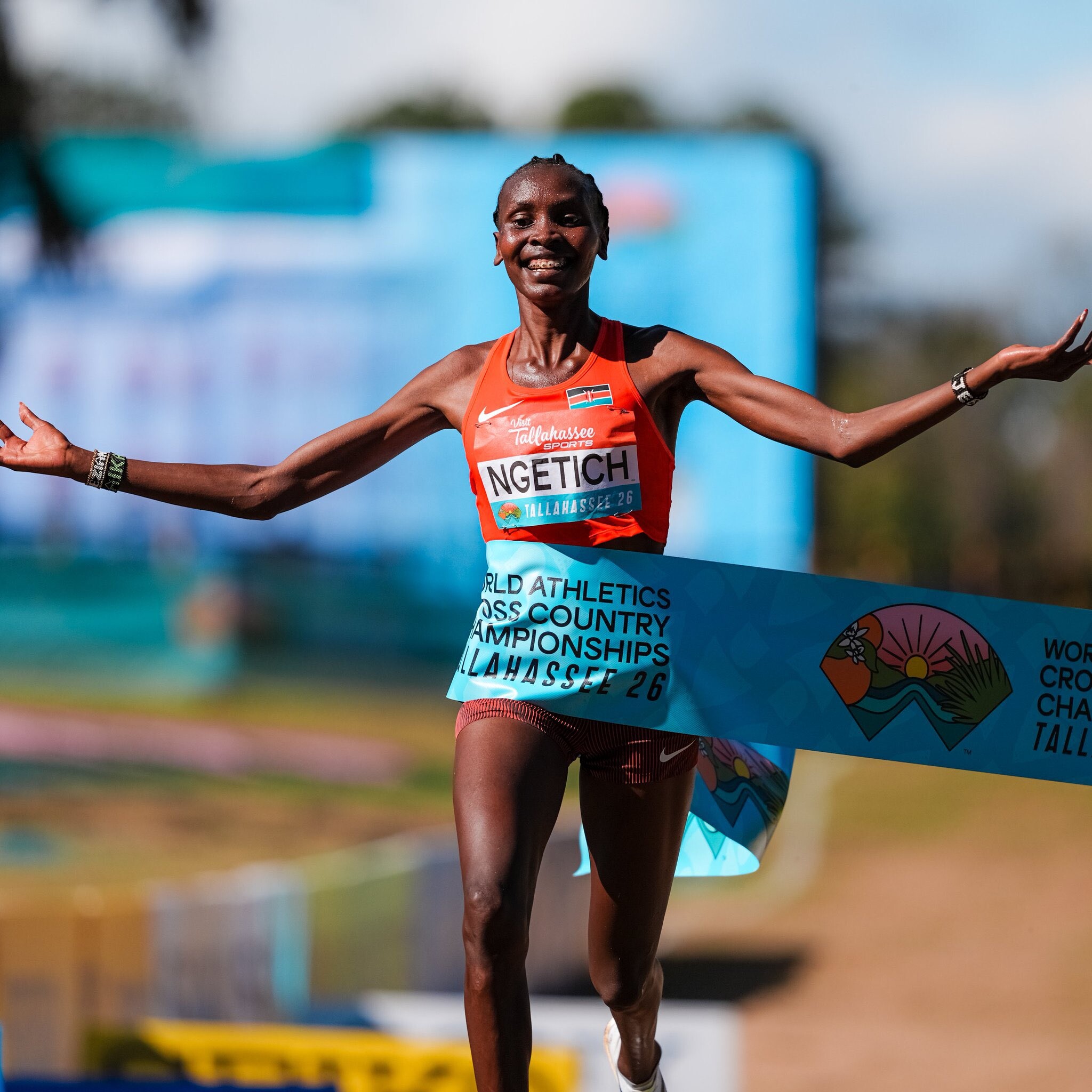
At the center of this unfolding spectacle stands Agnes Jebet Ngetich, the Kenyan long-distance phenomenon whose rise through the ranks of world athletics has been both swift and remarkable.
“Of course Lokedi is there. Of course Obiri is there,” she said with calm confidence while acknowledging the elite competition assembled for the race. “But then I’m there to run my race.”
Those few words reveal the quiet self-belief that has defined Ngetich’s journey.
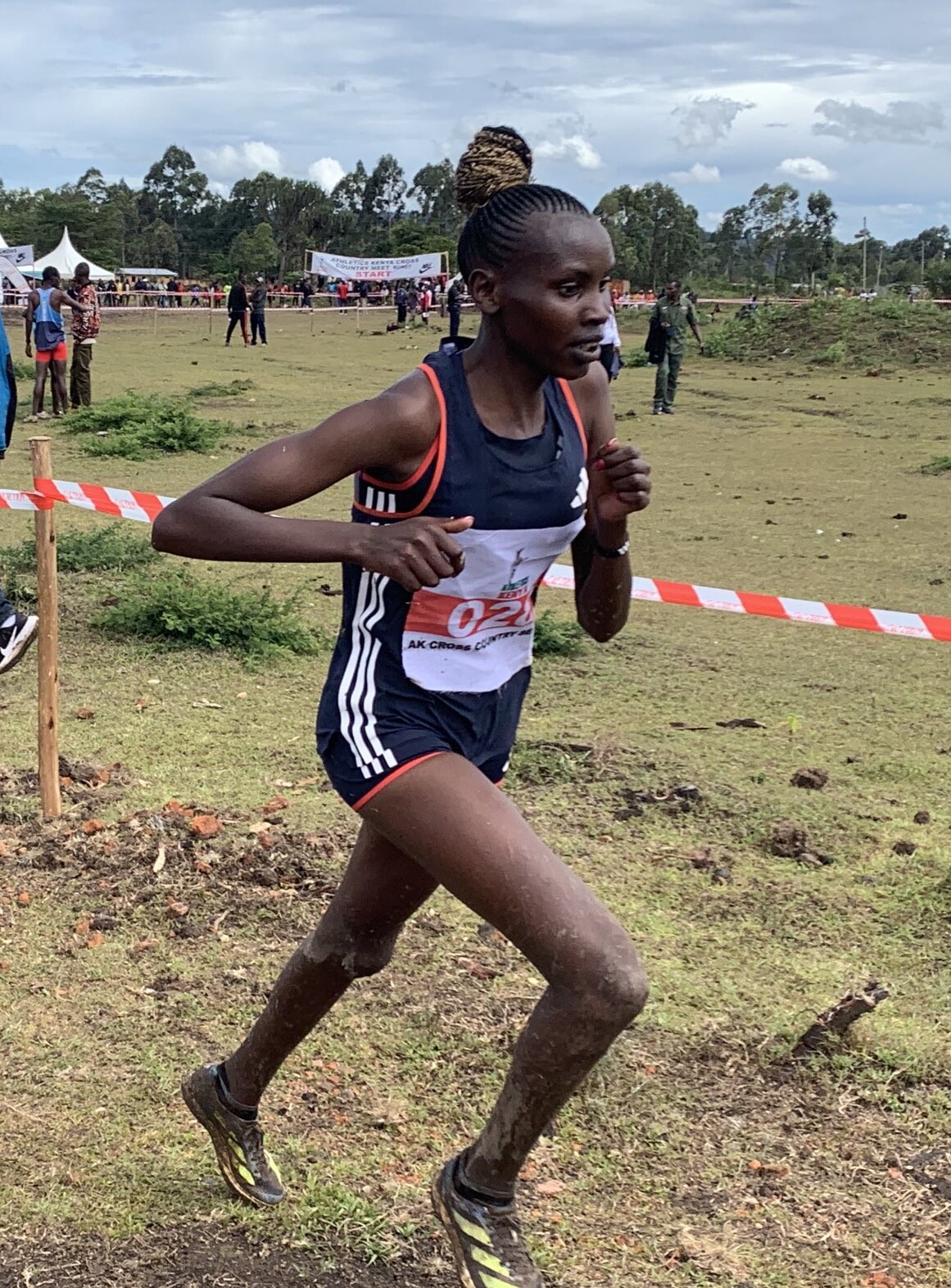
Born on January 23, 2001, in Kenya’s Keiyo District, a region renowned for producing some of the world’s greatest distance runners, Ngetich has steadily transformed from a promising young athlete into one of the most exciting talents in global athletics. Her career has flourished across multiple terrains — from the rugged intensity of cross-country courses to the fast, unforgiving asphalt of the world’s biggest road races.
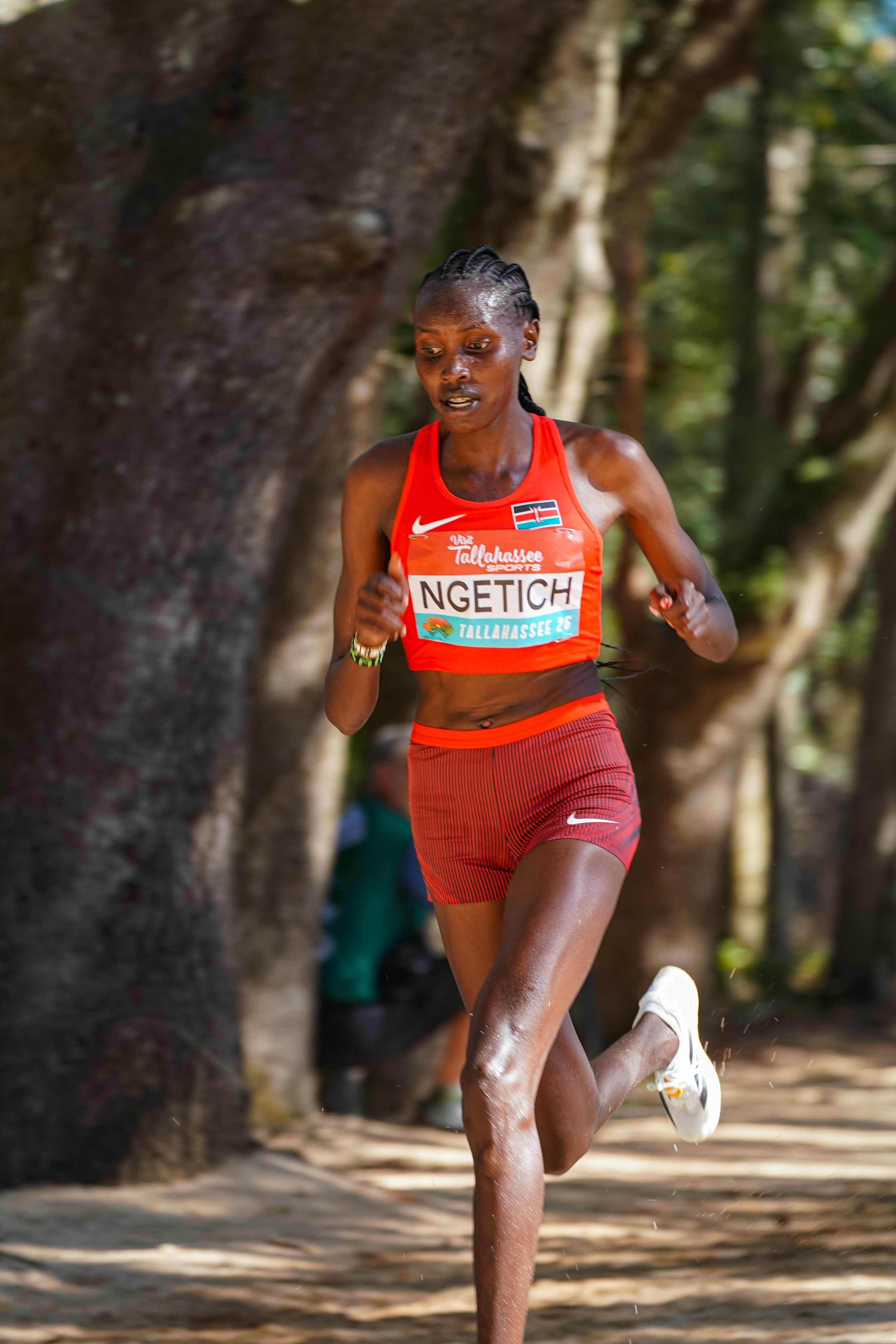
Her breakthrough on the global stage came through cross-country running, where her resilience and strength quickly caught international attention. After earning individual bronze and helping Kenya secure team gold at the World Cross Country Championships in 2023, she continued her upward trajectory with a defining triumph in 2026, capturing the senior women’s world title in Tallahassee, Florida. That victory cemented her reputation as one of the sport’s most formidable competitors.
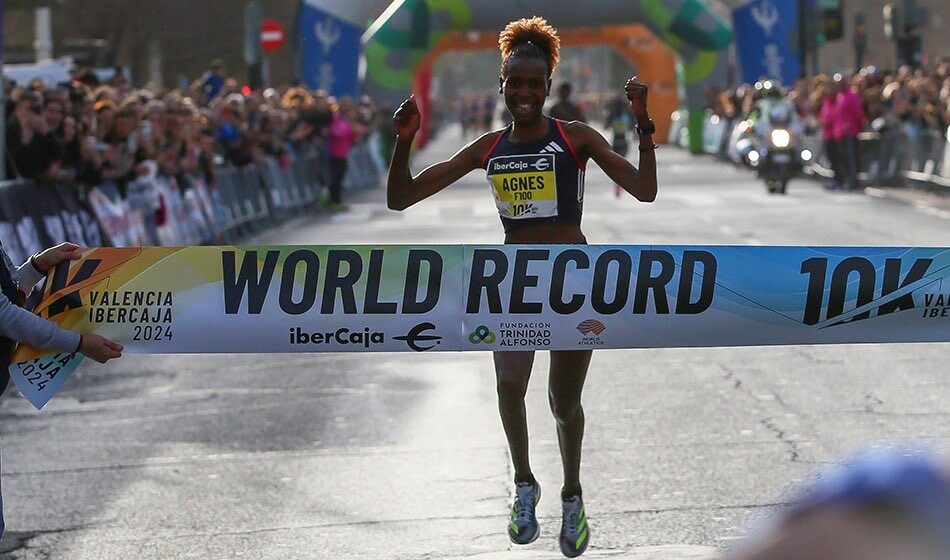
On the roads, Ngetich has been equally spectacular. In January 2024, racing through the streets of Valencia, Spain, she delivered one of the most historic performances in distance running history, becoming the first woman ever to complete a 10-kilometre road race in under 29 minutes, clocking a breathtaking 28:46. She has also recorded one of the fastest half-marathon times ever run by a woman, with a personal best of 1:03:04, further solidifying her place among the sport’s elite.
Yet beyond the records and accolades lies the essence of what makes Agnes Ngetich so compelling. She combines fierce competitiveness with remarkable tactical intelligence, capable of adapting to the unpredictable rhythm of championship racing. Her preparation reflects that balance — long, punishing threshold runs at sunrise, grueling hill sessions that test endurance and character, and carefully structured recovery days designed to sharpen both body and mind.
This disciplined approach has shaped a runner who is not only physically formidable but mentally resilient — a competitor who thrives under pressure and understands that greatness is built one stride at a time.
The challenge awaiting her in New York will be formidable. The women’s elite field assembled for the race is among the deepest of the season, bringing together Olympic medalists, global champions, and emerging stars from around the world.
Women’s Elite Field – New York City Half Marathon (March 15, 2026)
1. Agnes Ngetich – 1:03:04
2. Hellen Obiri – 1:04:22
3. Fantaye Belayneh – 1:04:49
4. Sharon Lokedi – 1:05:00
5. Konstanze Klosterhalfen – 1:05:41
6. Emily Sisson – 1:06:52
7. Calli Hauger-Thackery – 1:06:58
8. Natosha Rogers – 1:07:30
9. Annie Frisbie – 1:07:34
10. Amanda Vestri – 1:07:35
11. Dakotah Popehn – 1:07:42
12. Emily Durgin – 1:07:54
13. Diane Van Es – 1:08:03
14. Sarah Lahti – 1:08:19
15. Susanna Sullivan – 1:08:44
16. Emily Venters – 1:08:48
17. Mercy Chelangat – 1:08:57
18. Lauren Gregory – 1:09:12
19. Lindsay Flanagan – 1:09:17
20. Natasha Wodak – 1:09:41
21. Stephanie Bruce – 1:09:55
22. Julia Paternain – 1:10:16
23. Elena Hayday – 1:10:56
24. Felicia Pasadyn – 1:11:29
25. Erika Priego – 1:15:55
26. Gabrielle Yatauro – 1:15:59
27. Alosha Southern – 1:16:40
28. Megan Keith – Debut
With such a powerful lineup, the race promises to unfold as a thrilling tactical battle through the streets of New York. Yet for Agnes Ngetich, the objective remains simple and unwavering: to run her own race.
As the race unfolds across the vibrant streets of Manhattan, the athletes will surge forward through some of the city’s most iconic landmarks — racing past roaring crowds, through Times Square, and into Central Park, where the final decisive strides will be taken. It is along this unforgettable stretch that champions are often revealed, and where the drama of the New York City Half Marathon reaches its crescendo.
As the morning sun rises over Manhattan and the pack surges forward, Ngetich will carry with her the hopes of a proud running nation and the confidence of an athlete who knows she belongs among the very best. And when the final miles begin to bite and the finish line draws near, she will not simply be chasing victory — she will be writing another chapter in a remarkable journey defined by courage, resilience, and the fearless pursuit of greatness.
(03/14/2026) ⚡AMPby Erick Cheruiyot for My Best Runs.
United Airlines NYC Half-Marathon
The United Airlines NYC Half takes runners from around the city and the globe on a 13.1-mile tour of NYC. Led by a talent-packed roster of American and international elites, runners will stop traffic in the Big Apple this March! Runners will begin their journey on Prospect Park’s Center Drive before taking the race onto Brooklyn’s streets. For the third...
more...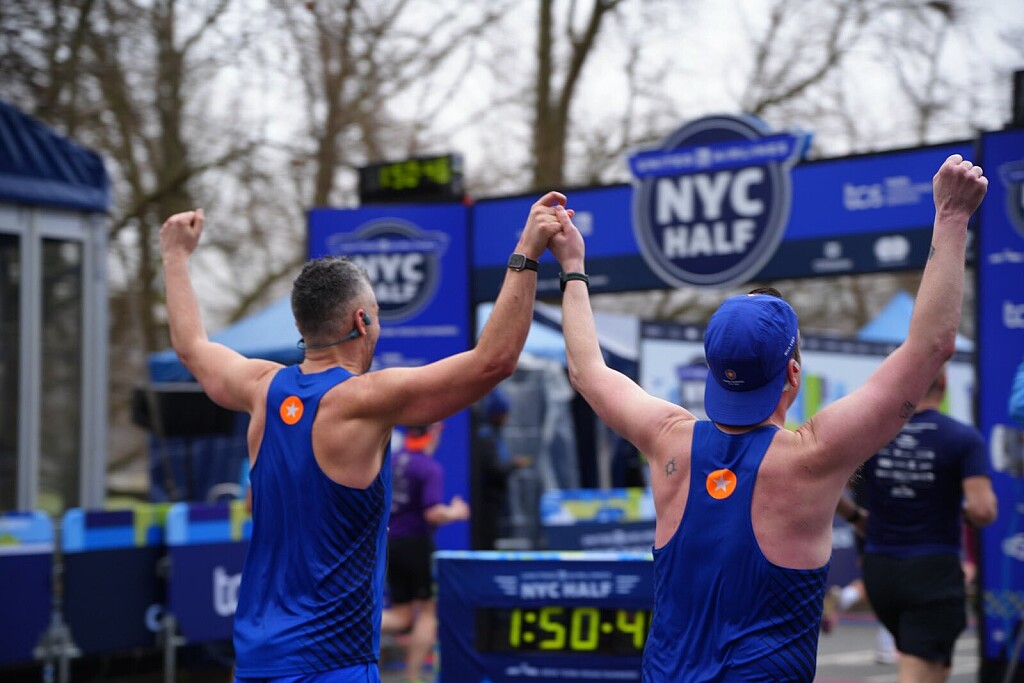
NYC HALF MARATHON 2026 – ELITE MEN READY TO LIGHT UP CENTRAL PARK
The first rays of dawn slice through the towering skyline of New York City, and the streets surrounding Central Park, the iconic venue of the NYC Half Marathon 2026, hum with anticipation. On Sunday, March 15, 2026, fans and runners alike converge on the city’s most famous park, flags waving and cameras clicking, hearts racing in sync with the city’s heartbeat. Volunteers adjust barricades, photographers focus their lenses, and the world’s fastest men stretch with a mix of calm and tension—the calm before the storm. From the leafy loops of Central Park to the bridges spanning the East River, the city seems to hold its breath, ready to witness history.

The air is thick with excitement. Coaches give last-minute instructions; elite athletes exchange polite nods and steely glances, each calculating pace, strategy, and the perfect moment to strike. Sirens echo faintly in the distance, signaling the approaching race vehicles, while the smell of morning coffee mixes with the cool March air. Somewhere high above, the first light glints off glass towers, reflecting the golden promise of competition. In this city of dreams, ambitions, and grit, every step matters—and the men’s elite field of the NYC Half Marathon 2026 is about to prove it.
Race Schedule – Men’s Elite
Date & Venue: Sunday, March 15, 2026 – Central Park, New York City, USA
New York (EDT): 7:00 AM
Kenya (EAT): 2:00 PM (+7 hours from NYC)
Japan (JST): 8:00 PM (+13 hours from NYC)
Thailand (ICT): 6:00 PM (+11 hours from NYC)
Australia Sydney/Melbourne (AEDT): 10:00 PM (+15 hours from NYC)
USA Pacific (PDT): 4:00 AM (−3 hours from NYC)
Champions, Contenders, and Rising Stars
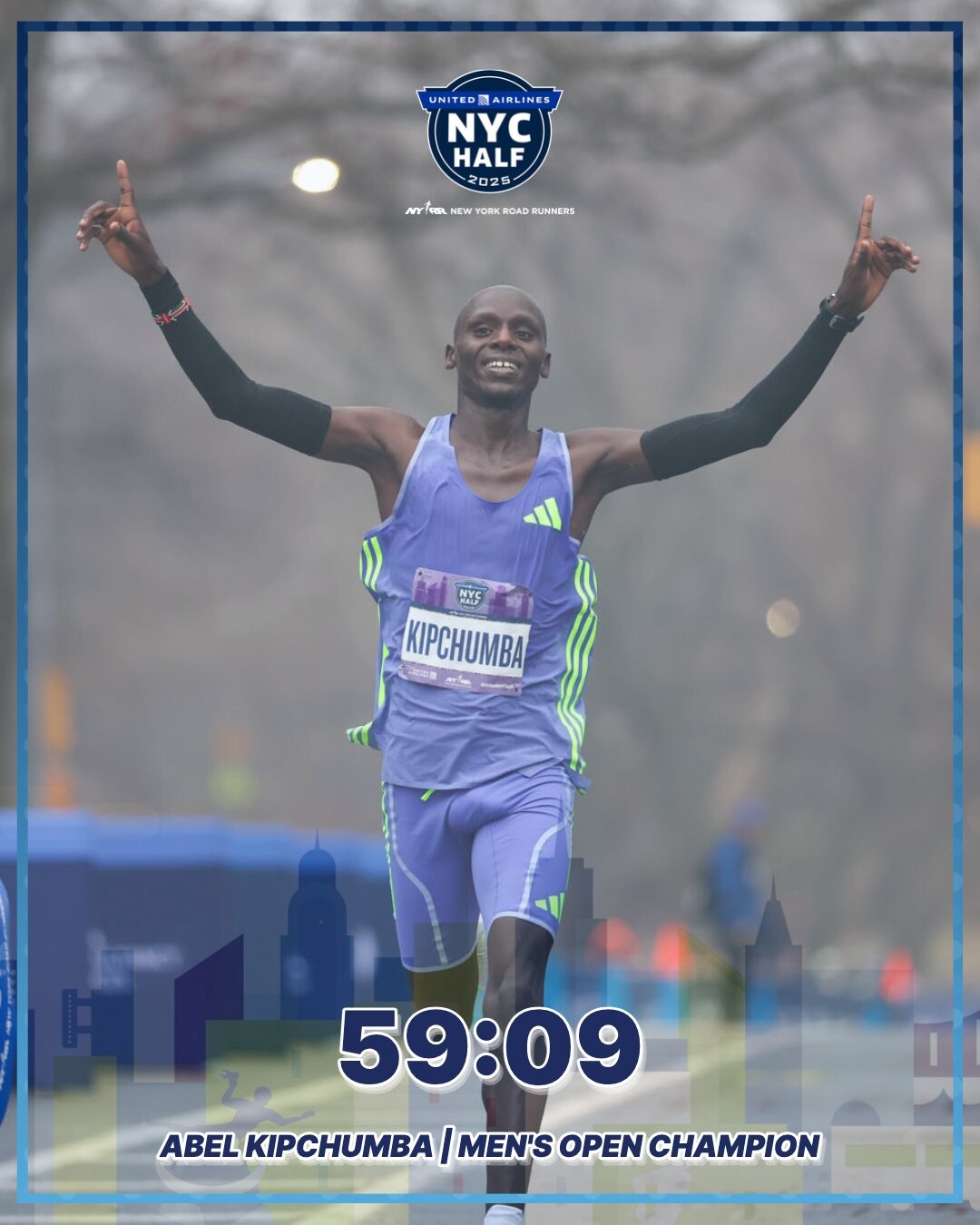
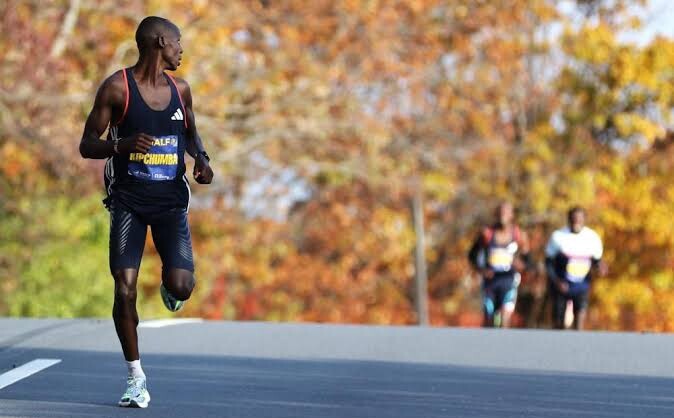
At the heart of this high-stakes drama is Abel Kipchumba of Kenya, last year’s champion, whose lightning-fast 58:07 PB from Valencia 2021 has runners and fans alike holding their breath. Kipchumba returns to defend his crown, but the field has grown stronger, faster, and hungrier than ever.
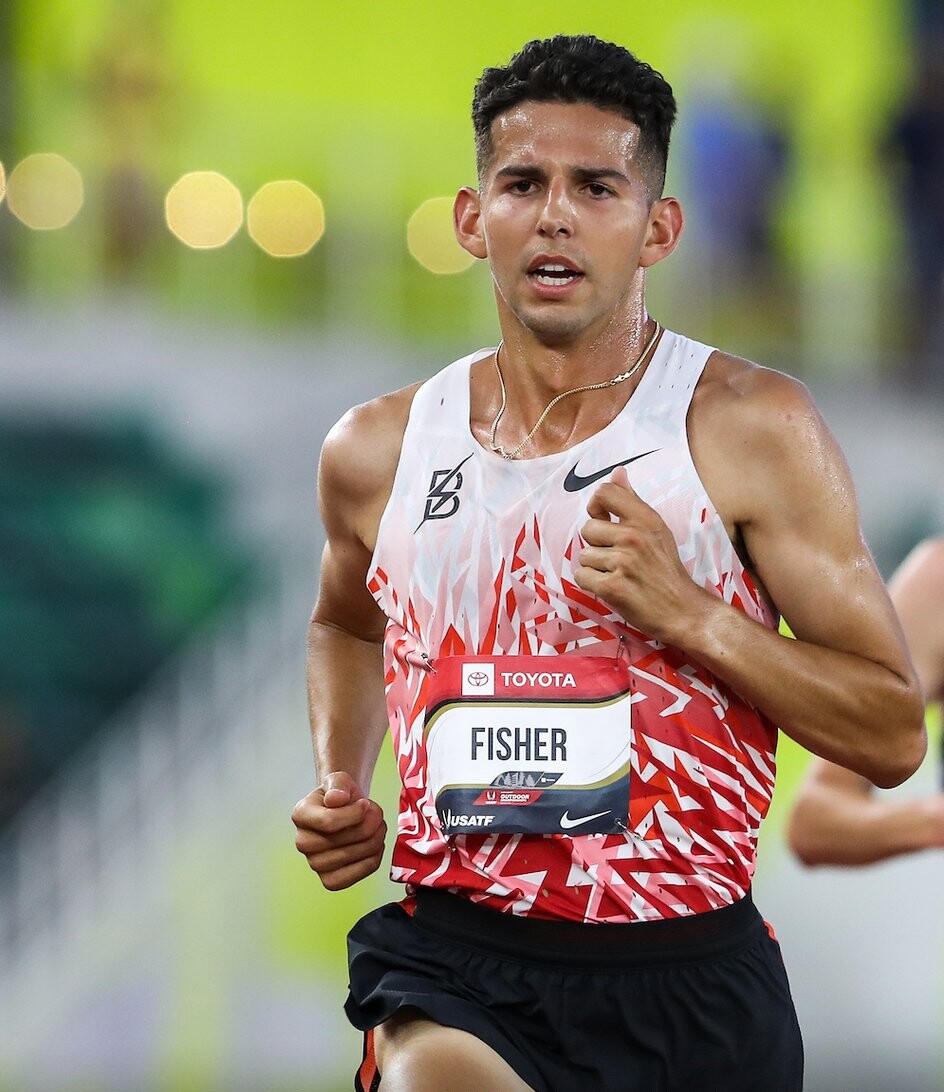
Challenging him will be Daniel Ebenyo of Kenya, bronze medalist at the 2026 World Cross Country Championships, Grant Fisher of the United States, two-time Olympic bronze medalist making his half marathon debut, and Rory Linkletter of Canada, Canada’s national record holder. Each brings a unique blend of speed, endurance, and tactical cunning that could turn any mile into a decisive moment.
Team USA brings an extraordinary depth of talent, including Galen Rupp, Ryan Ford, Alex Maier, Zouhair Talbi, and Joe Klecker, promising a race filled with high stakes, strategic surges, and perhaps a new record etched into the streets of Manhattan.
Men’s Elite Field – NYC Half Marathon 2026
Athlete
Country
PB / Notable Performance
1. Abel Kipchumba
Kenya
58:07 (Valencia 2021)
2. Daniel Ebenyo
Kenya
59:04 (Manama 2022)
3. Adriaan Wildschutt
South Africa
59:13 (Valencia 2025)
4. Patrick Kiprop
Kenya
59:14 (Houston 2026)
5. Mohammed El Youssfi
Morocco
59:21 (Houston 2026)
6. Alex Maier
United States
59:23 (Houston 2026)
7. Galen Rupp
United States
59:47 (Ostia 2018)
8. Ryan Ford
United States
59:48 (Houston 2026)
9. Sondre Nordstad Moen
Norway
59:48 (Valencia 2017)
10. Rory Linkletter
Canada
59:49 (Houston 2026)
11. Patrick Dever
United Kingdom
1:00:11 (Houston 2025)
12. Zouhair Talbi
United States
1:00:41 (NYC Half 2024)
13. Rui Aoki
Japan
1:00:45 (Ageo 2025)
14. Shunsuke Kuwata
Japan
1:00:48 (Ageo 2025)
15. Tsegay Tuemay Weldlibanos
Eritrea
1:00:50 (Houston 2018)
16. Alex Masai
Kenya
1:00:51 (Houston 2026)
17. Jack Rowe
United Kingdom
1:00:53 (Copenhagen 2025)
18. Joe Klecker
United States
1:01:06 (Houston 2025)
19. Peter Lynch
Ireland
1:01:15 (Houston 2025)
20. Camren Todd
United States
1:01:23 (Houston 2026)
21. Hendrik Pfeiffer
Germany
1:01:28 (Larne 2025)
22. Benjamin Preisner
Canada
1:02:25 (Houston 2025)
23. Jacob Thomson
United States
1:02:26 (Riga 2023)
24. Joel Reichow
United States
1:02:30 (Duluth 2023)
25. Max Turek
Canada
1:02:45 (Boston 2024)
26. Haftu Knight
United States
1:02:47 (Chicago 2025)
27. Matthew Leach
United Kingdom
1:02:57 (Houston 2020)
28. Nick Hauger
United States
1:03:06 (NYC Half 2025)
29. Kieran Tuntivate
Thailand
1:03:19 (South Shields 2025)
30. Turner Wiley
United States
1:04:04 (Hardeeville 2021)
31. Owen Ritz
United States
1:04:34 (RBC Brooklyn Half 2024)
32. Evan Sherman
United States
1:04:51 (Indianapolis 2025)
33. Charlie Lawrence
United States
1:05:07 (Houston 2022)
34. Grant Fisher
United States
Debut
35. Gulveer Singh
India
Debut
The starting gun cracks through the morning calm. The elite men surge forward, every stride a blend of power, precision, and daring. The NYC Half Marathon 2026 at Central Park unfolds like a living story—each mile a chapter, each sprint a dramatic twist. Legends may rise, records may fall, but one thing is certain: Manhattan will witness an unforgettable morning of speed, endurance, and sheer determination.
(03/13/2026) ⚡AMPby Erick Cheruiyot for My Best Runs.
United Airlines NYC Half-Marathon
The United Airlines NYC Half takes runners from around the city and the globe on a 13.1-mile tour of NYC. Led by a talent-packed roster of American and international elites, runners will stop traffic in the Big Apple this March! Runners will begin their journey on Prospect Park’s Center Drive before taking the race onto Brooklyn’s streets. For the third...
more...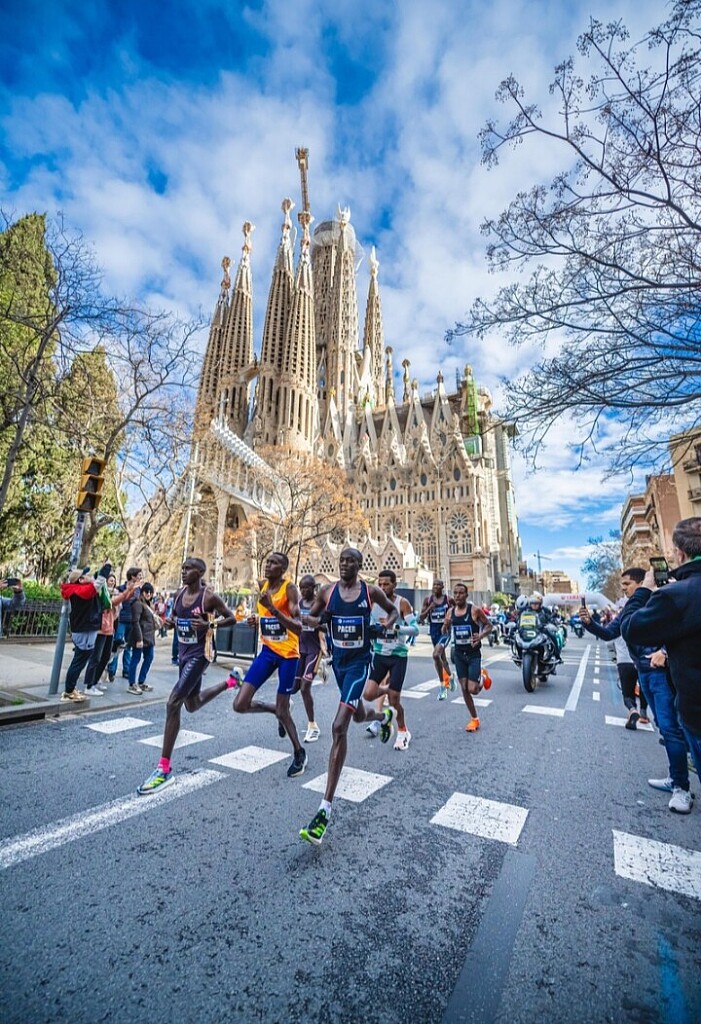
Kenyan and Ethiopian Stars Set for Showdown at the Zurich Barcelona Marathon
The stage is set for a thrilling contest at the Barcelona Marathon, where a deep and competitive men’s elite field will line up on Sunday, March 15 in the heart of Barcelona, Spain. With several athletes boasting personal bests well under 2:06, the race promises a high-quality battle between some of the finest marathoners from Kenya, Ethiopia, Türkiye, and Uganda.
The race is scheduled to start at 8:30 a.m. local time in Barcelona, Spain (Central European Time), ensuring fans across the globe can follow the action at different moments of the day. In East Africa, viewers in Kenya, Ethiopia, and Uganda will tune in at 10:30 a.m. East Africa Time, while audiences in London can watch from 7:30 a.m.. Across the Americas, the race begins at 3:30 a.m. in New York, 2:30 a.m. in Chicago, 1:30 a.m. in Denver, and 12:30 a.m. in Los Angeles, while fans in São Paulo will follow the event at 4:30 a.m.. In Asia, the start corresponds to 11:30 a.m. in Dubai, 1:00 p.m. in New Delhi, 2:30 p.m. in Bangkok, and 3:30 p.m. in both Beijing and Singapore, before reaching 4:30 p.m. in Tokyo. In Oceania, viewers will follow later in the day, with the race starting at 3:30 p.m. in Perth, 6:30 p.m. in Sydney, and 8:30 p.m. in Auckland, underscoring the truly global reach of one of Europe’s most celebrated road races.
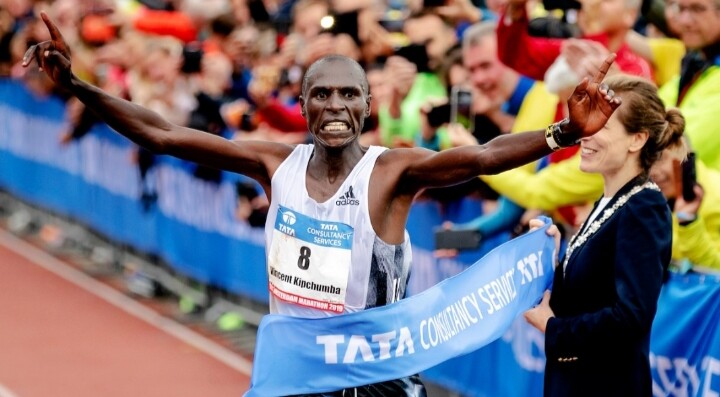
Leading the field is Vincent Kipchumba, the Kenyan star who owns a personal best of 2:04:28. Known for his consistency on the global marathon circuit, Kipchumba arrives in Barcelona as one of the major contenders for victory. Close behind on paper is Turkish international Kaan Kigen Özbilen, whose impressive 2:04:16 lifetime best makes him the fastest man in the lineup. His experience and tactical awareness could make him a serious threat if the pace turns aggressive.
Ethiopia will also bring formidable firepower through Amedework Walelegn, the talented marathoner with a personal best of 2:04:50. Walelegn has shown the ability to perform strongly in major races and will be eager to challenge the Kenyan dominance that often defines major road races.
Kenya’s depth in marathon running is once again on display with several athletes capable of producing breakthrough performances. Among them are Philemon Kiptoo Kipchumba (2:05:35) and Kenneth Keter (2:05:33), both of whom possess the experience and endurance required to thrive in a fast European marathon. Meanwhile, Ethiopia’s Antanayehu Dagnachew (2:06:55) will be looking to deliver a strong run against a competitive field.
The race also features a solid group of athletes with personal bests hovering around the 2:06–2:07 range, including Mosee Kipngetich Kemet (2:06:47), Melaku Belachew (2:06:30), and Zablon Chumba (2:07:11). Their presence ensures the pace could remain honest deep into the race, potentially setting the stage for a dramatic finish through Barcelona’s iconic streets.
Further down the start list, runners such as Timothy Kiphorir (2:07:52), Perrick Mdoshi (2:07:17), Abel Chelangat (2:08:49), Jonathan Korir (2:09:51), and Haile Desta (2:10:41) will also be aiming to seize the opportunity for personal bests or podium surprises in what is expected to be a fast and competitive race.
With elite athletes from East Africa once again forming the backbone of the field, the Zurich Barcelona Marathon promises a compelling clash of endurance, strategy, and speed. If the pace unfolds as expected, fans could witness a thrilling contest that highlights the continuing global appeal and competitive depth of marathon running.
(03/13/2026) ⚡AMPby Erick Cheruiyot for My Best Runs.
Zurich Marato Barcelona
The race is a favorite among both professional athletes and amateur runners, offering a unique running experience in and around Zurich. The scenic course follows the shores of Lake Zurich for much of the route, making it not only a thrilling sports event but also a visually stunning one. The start and finish lines are located at the upper lake...
more...
Sisay Lemma Headlines Powerful Elite Field as Seoul Marathon 2026 Promises High-Speed Showdown
The stage is set for a thrilling contest at the Seoul Marathon as a world-class men’s field prepares to race through the streets of the South Korean capital on Sunday, March 15, 2026. With a deep lineup featuring some of the fastest marathoners on the planet, the race is expected to deliver a captivating battle between seasoned champions and emerging contenders.

The marathon will begin at 7:30 a.m. local time in Seoul (KST). Fans around the world will tune in at different hours to follow the action: 1:30 a.m. in Kenya and Ethiopia (EAT), 11:30 p.m. on Saturday in Central Europe (CET), 3:30 p.m. Saturday on the U.S. West Coast (PST), and 9:30 a.m. Sunday in Australia’s east coast (AEDT) across Oceania.
Leading the field is Ethiopian marathon star Sisay Lemma, who enters the race as one of the clear favorites. With an impressive personal best of 2:01:48, Lemma has established himself among the world’s elite marathoners and arrives in Seoul with the kind of form capable of producing a very fast race.
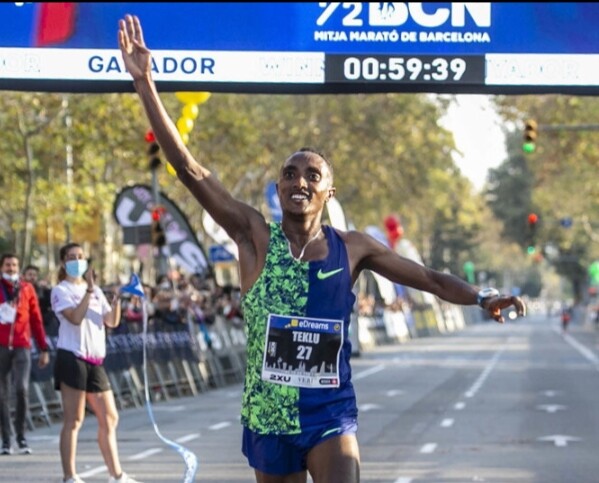
Standing in his path is defending champion Haftu Teklu, who returns determined to defend the title he captured last year. Teklu, whose personal best stands at 2:04:42, proved his strength on these roads before and will be eager to repeat that success.
Another major threat is Getaneh Molla, the winner of the prestigious Dubai Marathon in 2019. Molla’s outstanding 2:03:34 personal best highlights his ability to sustain an aggressive pace, making him one of the most dangerous competitors in the field.
Also in Ethiopia’s strong contingent is Tsegaye Getachew, known for consistent results across Europe, including strong performances at the Amsterdam Marathon and the Lisbon Marathon. With a personal best of 2:04:18, he remains firmly within striking distance of the leading contenders.

Kenya’s challenge will be spearheaded by experienced runners such as Sammy Kirop and Nick Kitundu, both capable of competing for podium positions. Their presence is reinforced by a strong Kenyan lineup that includes Enock Kinyamal, Gilbert Kibet, Collins Kipkurui, Edmond Kipngetich, and Felix Kipkoech, forming a deep and competitive squad.
Another intriguing entrant is Ethiopian athlete Haftamu Abadi, who enjoyed an impressive season last year with victories at the Vienna City Marathon and the Ljubljana Marathon. His appearance in Seoul marks his first marathon race in Asia, adding another layer of excitement to the elite contest.
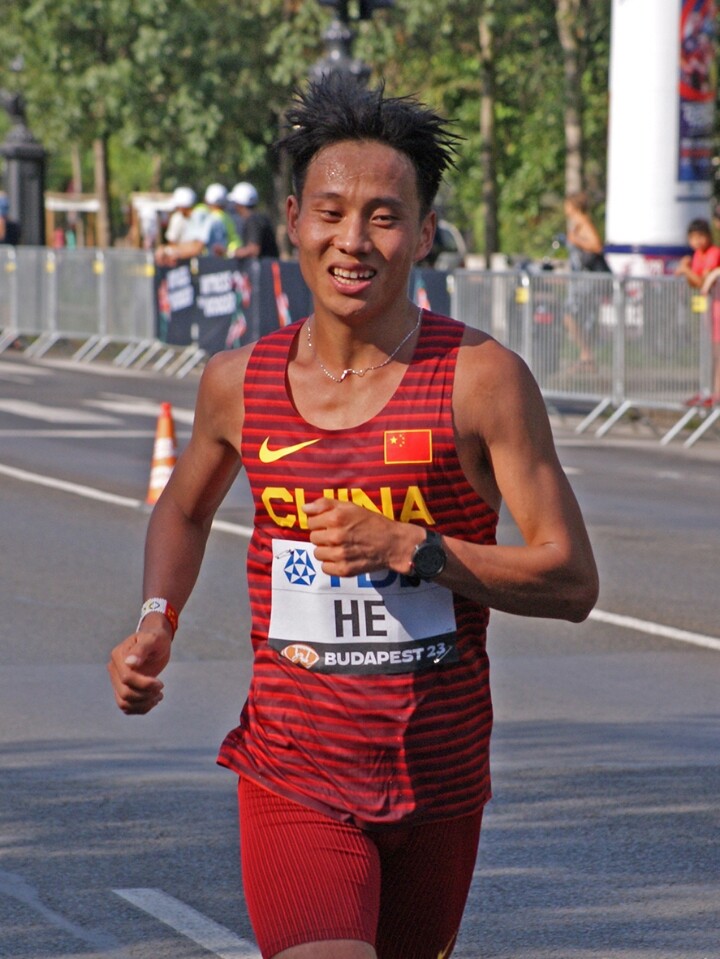
The race also highlights the growing global reach of marathon running, with athletes such as Japan’s Daisuke Uekado and China’s Jie He representing the host region.
With proven champions, hungry challengers, and a course historically known for fast times, the 2026 Seoul Marathon promises a gripping contest from start to finish. As the world’s elite converge on Seoul, the question remains: who will seize the moment and conquer one of Asia’s most prestigious marathons?
(03/13/2026) ⚡AMPby Erick Cheruiyot for My Best Runs.

Seoul International Marathon
The only marathon hosted in the heart of the Korean capital. Seoul marathon is the oldest marathon race hosted in Asia andis one of the fastestmarathon in the world. First held in 1931, Seoul marathon is the oldest marathon eventcontinuously held in Asia, and the second oldest in the world followingthe Boston Marathon. It embodies modern history of Korea, also...
more...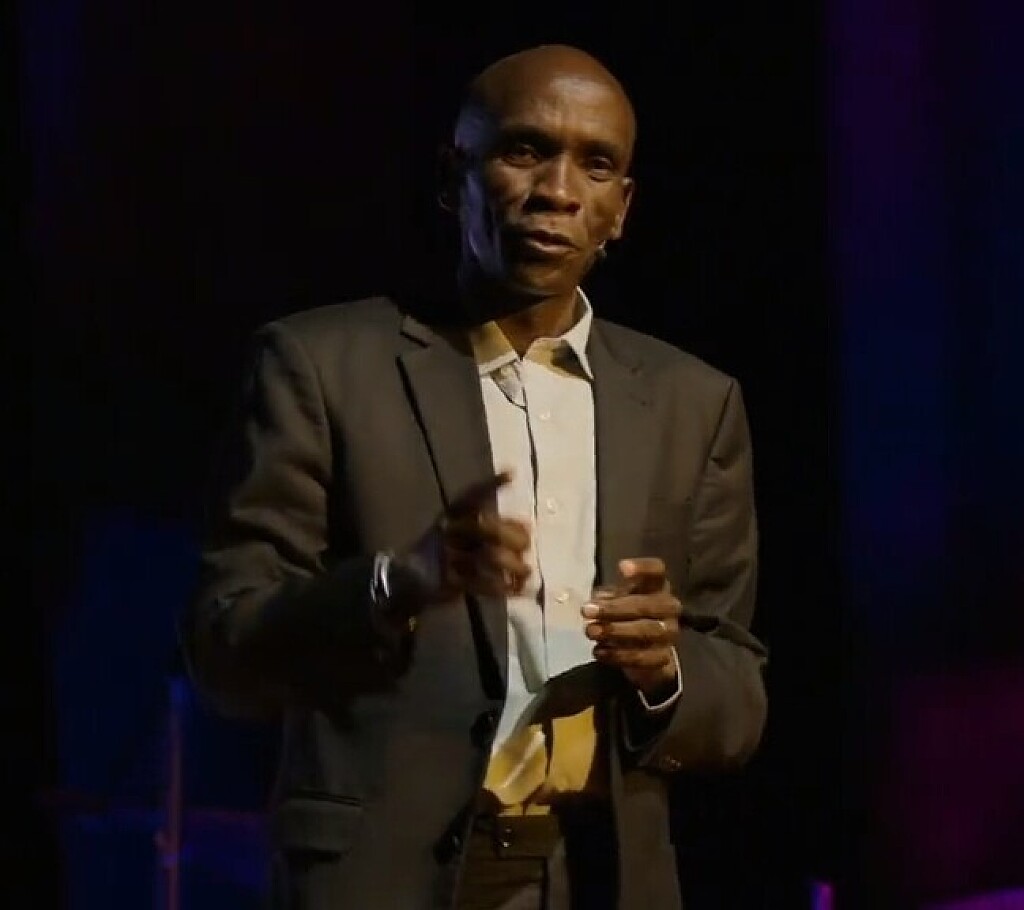
“I Was Down to My Knees” — Kipchoge Opens Up on Cruel Rumours After Kiptum’s Fatal Crash
The death of marathon world record holder Kelvin Kiptum sent shockwaves through the global athletics community in February 2024. Tributes poured in from across the world as athletes, officials and fans mourned the loss of one of distance running’s brightest talents.
But for fellow Kenyan legend Eliud Kipchoge, the tragedy was followed by an intensely painful personal ordeal — a wave of online rumours that falsely attempted to link him to the accident that claimed Kiptum’s life.
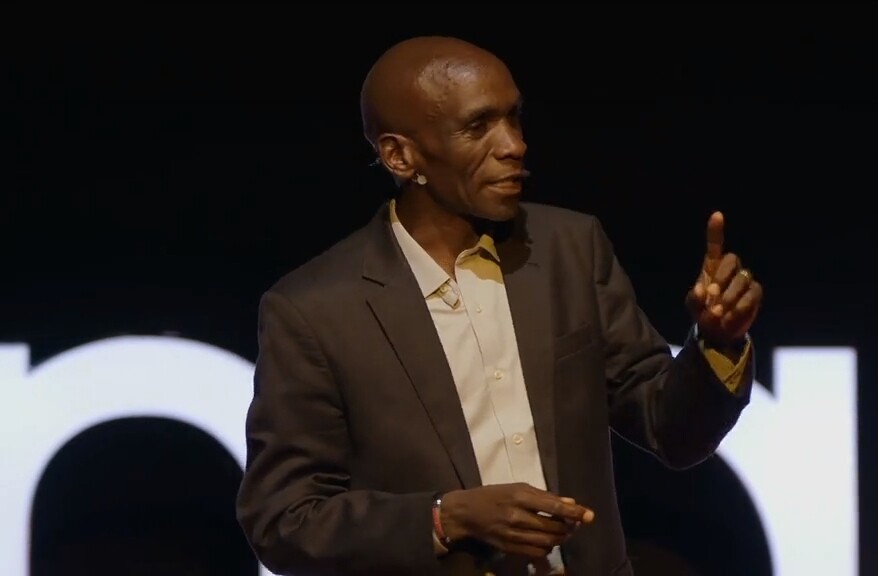
A tragic night in Elgeyo-Marakwet
Kiptum, who held the marathon world record at the time, died on February 11, 2024, following a road accident in the Kaptagat area of Elgeyo‑Marakwet County in western Kenya.
He was travelling with his Rwandan coach Gervais Hakizimana, who also lost his life in the crash. The devastating incident brought an abrupt end to a career that had risen at breathtaking speed.
Only months earlier, Kiptum had stunned the athletics world at the Chicago Marathon, clocking a remarkable 2:00:35 to set a new marathon world record — a performance that cemented his status as one of the most extraordinary long-distance talents of his generation.
The moment Kipchoge heard the news
In a deeply emotional interview shared on the Engage Talk YouTube platform, Kipchoge recalled the moment he first learned of the tragedy.
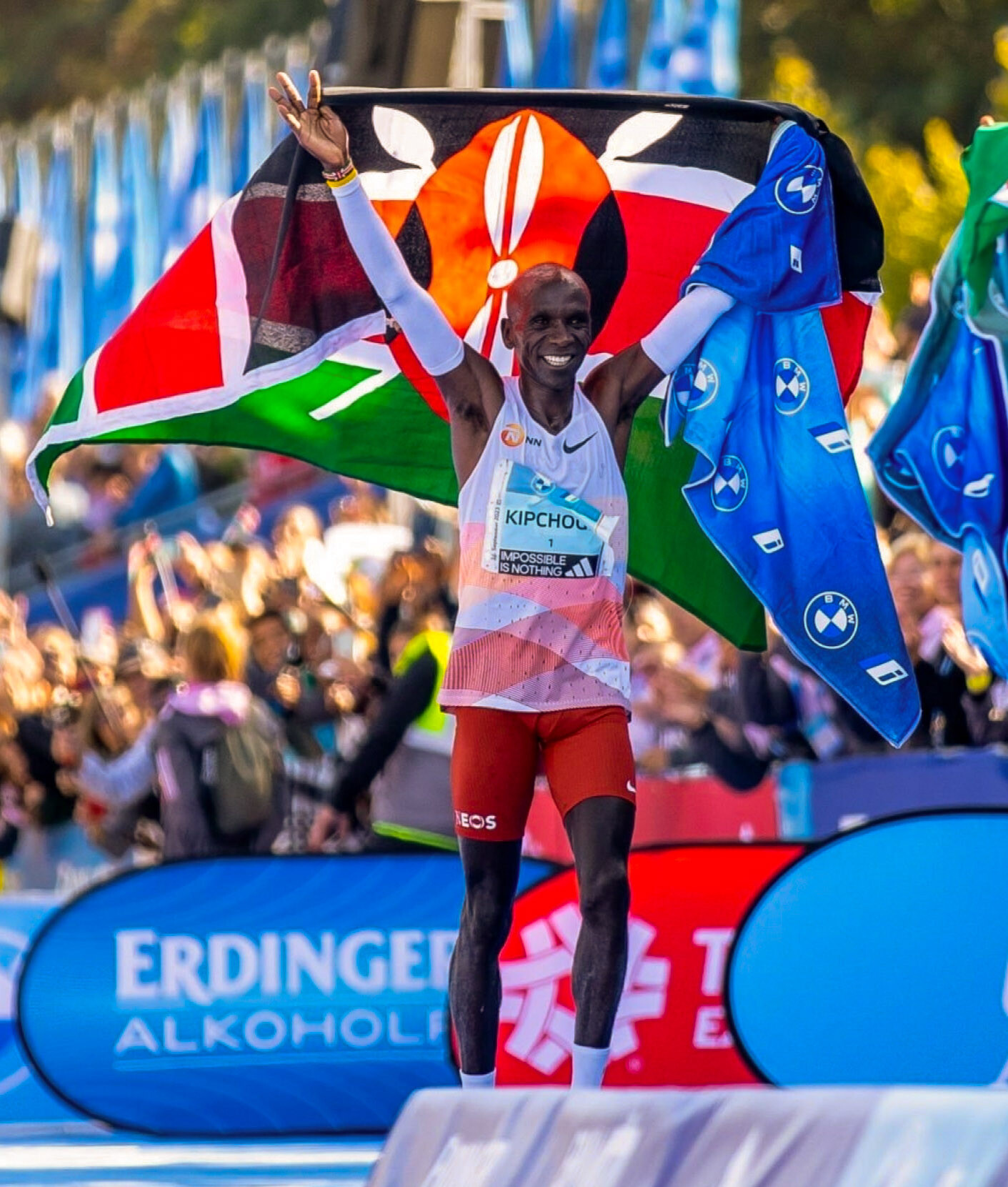
The two-time Olympic marathon champion explained that he had just returned home from a training session when someone at the gate informed him that Kiptum had died in a road accident. Shocked by the news, he immediately checked his phone — only to discover a different kind of storm unfolding online.
Within hours of the crash, social media had become flooded with baseless rumours accusing Kipchoge of being somehow connected to the incident.
The accusations, he said, left him devastated.
“Social media was everywhere saying Eliud killed Kiptum in a road accident. I was really down… down to my knees,” Kipchoge said during the interview.
Threats and fear for his family
The false claims quickly escalated into a wave of online hostility, with Kipchoge revealing that threats were directed not only at him but also at members of his family.
For safety reasons, the family was forced to change parts of their daily routine. Kipchoge explained that his sons had previously cycled to school, a normal routine in their community, but the arrangement had to be altered after the threats emerged.
He also expressed disappointment that some of the accusations circulating online took on an ethnic tone — something that deeply troubled the athlete, who has long spoken publicly about unity and national harmony in Kenya.
Silence from many, support from a few
The episode also revealed an unexpected reality for one of the most celebrated athletes in the world.
Despite having millions of followers across social media platforms, Kipchoge said only a small number of people reached out to check on him during the difficult period.
It was a stark reminder, he noted, that genuine support often comes from close relationships rather than public admiration.
A career defined by greatness
Kipchoge’s legacy in distance running remains unmatched. He won Olympic marathon gold medals at the 2016 Rio Olympics and the 2020 Tokyo Olympics, cementing his place among the greatest marathon runners in history.
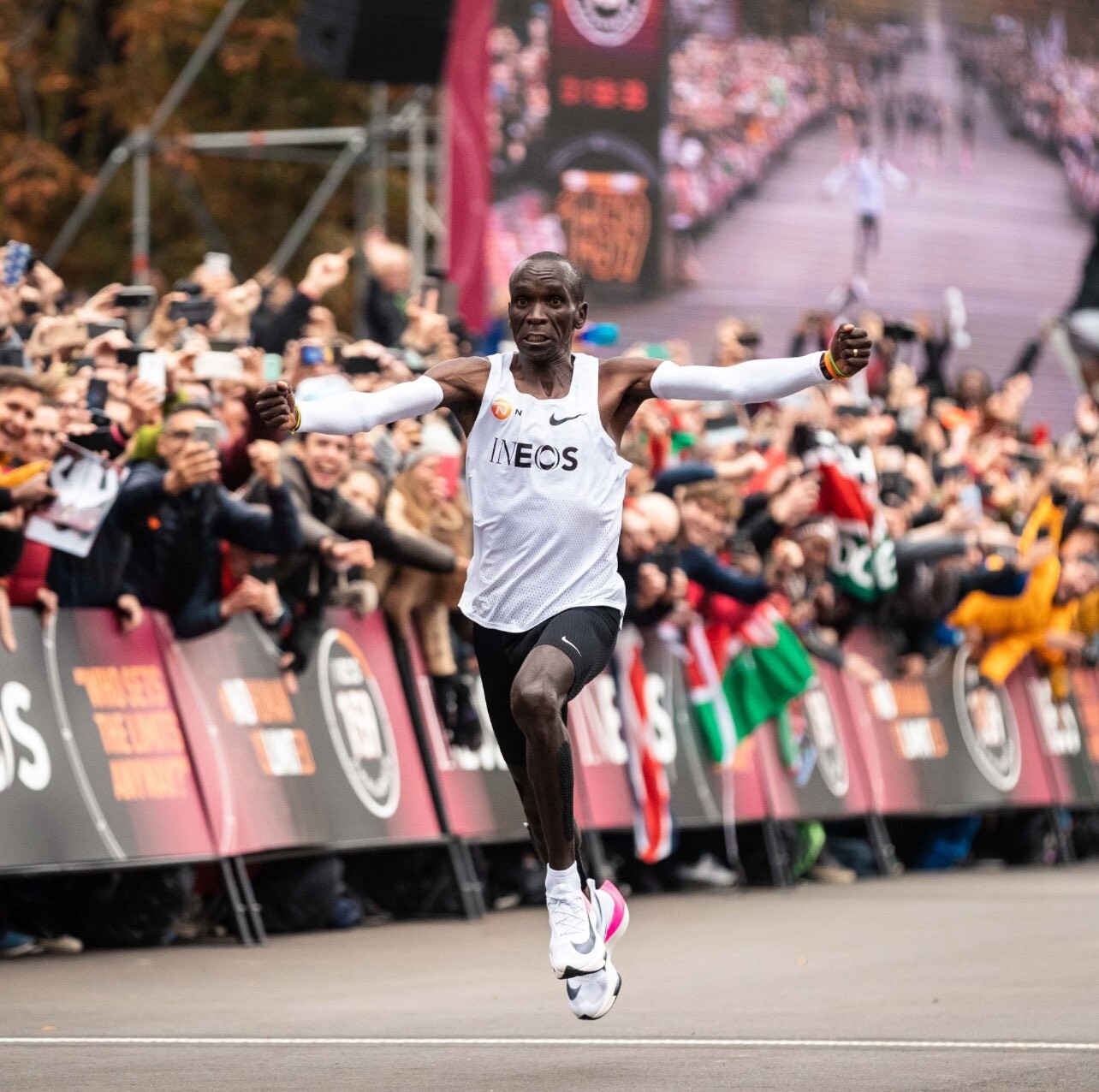
In 2019, he also achieved one of the most iconic moments in sport by becoming the first person to run a marathon distance in under two hours during the INEOS 1:59 Challenge in Vienna, completing the run in 1:59:40 during the special exhibition event.
A painful lesson in resilience
Looking back, Kipchoge described the aftermath of Kiptum’s death as one of the most emotionally testing moments of his life.
The experience, he said, reinforced the importance of resilience and the value of strong personal relationships when navigating moments of crisis.
While the loss of Kelvin Kiptum remains a deep wound for the athletics world, Kipchoge’s reflections reveal another side of the tragedy — the unseen emotional toll that misinformation and online hostility can inflict, even on the strongest of champions.
(03/12/2026) ⚡AMPby Erick Cheruiyot for My Best Runs.
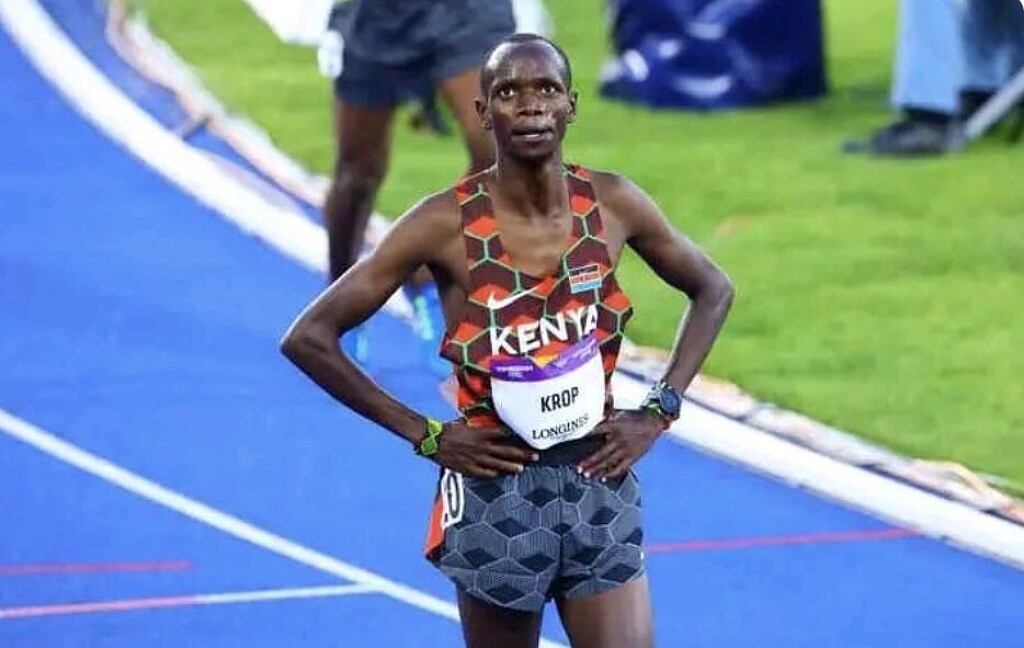
Kenya Sends Fearless Indoor Squad to World Championships Despite Having No Indoor Tracks
Kenya, a country synonymous with world-beating runners, is sending a small but formidable squad to the 2026 World Athletics Indoor Championships in Kujawy Pomorze, Poland, from March 20–22, despite having no indoor track facilities at home. For these athletes, the absence of dedicated indoor arenas makes their achievements—and ambitions—all the more remarkable.
Trailblazers and Record Holder
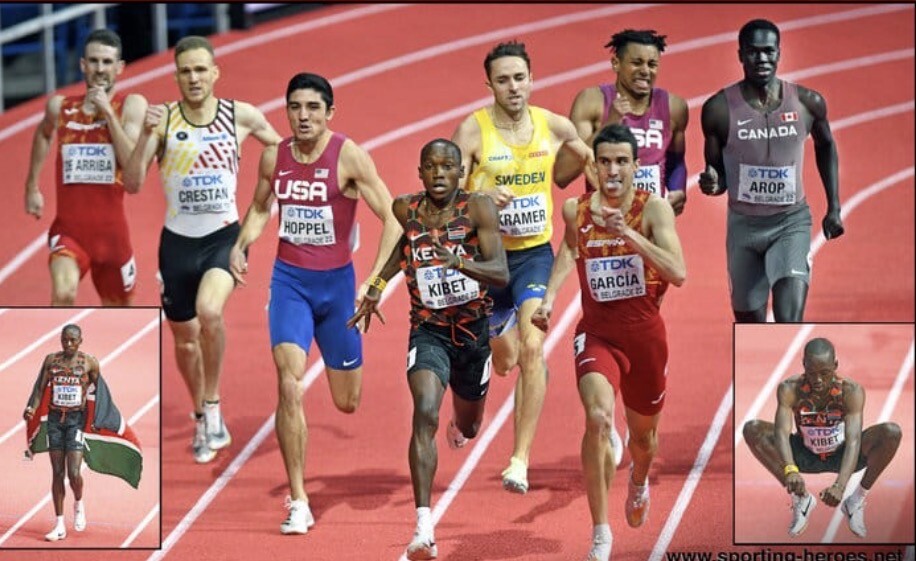
Leading the charge is Brian Omari Tinega, Kenya’s national indoor record holder in the 400 meters with a blistering 45.68. Tinega, who trains within the U.S. collegiate system, has had to adapt much of his preparation to outdoor tracks in Kenya—braving wind, rain, and uneven surfaces while preparing for the tight curves and fast rhythm of indoor competition.
His goal in Poland’s Arena Toruń is clear: improve both his personal best and the Kenyan national record while competing against the world’s top quarter-milers.
In the middle-distance events, Noah Kibet, the 2022 World Indoor 800m silver medalist, returns hoping to climb one step higher on the podium. Training entirely outdoors presents challenges when preparing for the tactical, high-speed racing typical of indoor championships, but Kibet’s experience makes him a serious contender.
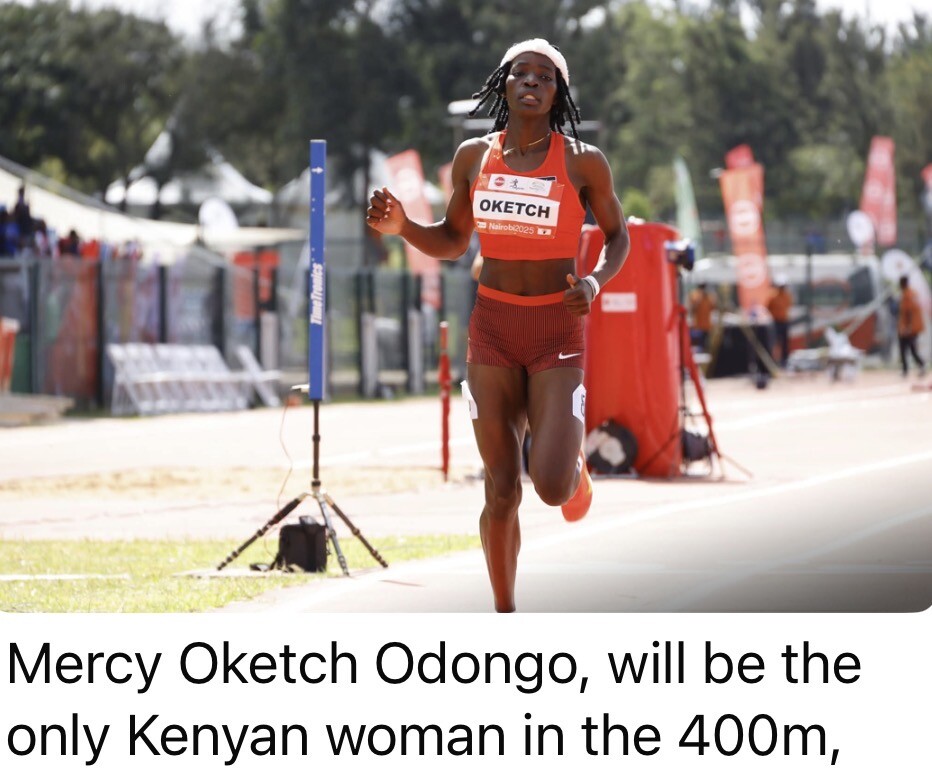
Joining him is Jacob Krop, a 3000-meter specialist who won silver in the 5000 meters at the World Championships. Krop will be aiming to translate his outdoor success to the indoor arena while improving on his fifth-place finish at the 2022 World Indoor Championships.
Women Breaking New Ground
On the women’s side, Mercy Adongo Oketch is making history as only the second Kenyan woman ever to compete in the indoor 400 meters, following Esther Kavaya’s appearance in 1987. Oketch, the Kenyan indoor record holder, carries both national expectations and the symbolic role of blazing a trail for future Kenyan women in an event historically dominated by athletes from Europe and North America.
In the 800 meters, Rosemary Longisa continues her rapid rise. A freshman at Washington State University, she has adapted quickly to the U.S. collegiate system and recorded an impressive 1:59.71 indoors this season.
Meanwhile, experienced 1500-meter runner Susan Lokayo Ejore adds depth and stability to the squad with her international racing experience.
Training Against the Odds
Kenya’s athletes face a stark contrast compared with competitors from countries such as Poland, the United States, and Germany, where dedicated indoor arenas, climate-controlled facilities, and banked tracks allow year-round preparation.
These nations often employ advanced training technology—from motion sensors to video analytics—to refine stride mechanics, pacing, and recovery specifically for indoor racing.
In Kenya, preparation requires creativity and resilience. Athletes train on outdoor tracks at varying altitudes, simulate indoor curves where possible, and adjust sprinting and pacing strategies to prepare for the tighter indoor lanes.
The result is a team shaped not by cutting-edge infrastructure but by adaptability, determination, and natural talent.
Kenya’s Growing Indoor Legacy
Few African countries regularly produce elite indoor competitors, making Kenya’s presence at the World Athletics Indoor Championships particularly notable.
The squad includes record holders in both the men’s and women’s 400 meters, a World Indoor silver medalist, and emerging middle-distance talent. For Oketch especially, this championship represents more than a personal milestone—it symbolizes growing opportunities for Kenyan women in indoor track events.
Chasing Medals in Poland
Beyond personal bests, Kenya’s athletes are targeting podium finishes.
Tinega and Oketch aim to push their national records even further, while Kibet and Krop will look to build on their previous championship performances. Longisa and Ejore represent the next generation of Kenyan middle-distance talent ready to challenge the global elite.
As Arena Toruń welcomes athletes from across the world from March 20–22, Kenya’s runners will once again remind the global track community that elite performance is not defined by facilities alone.
For this small but determined team, the mission is clear: compete with the best, chase medals, and prove that the Kenyan running tradition can thrive indoors just as it has outdoors for decades.
(03/12/2026) ⚡AMPby Robert Kibet for My Best Runs
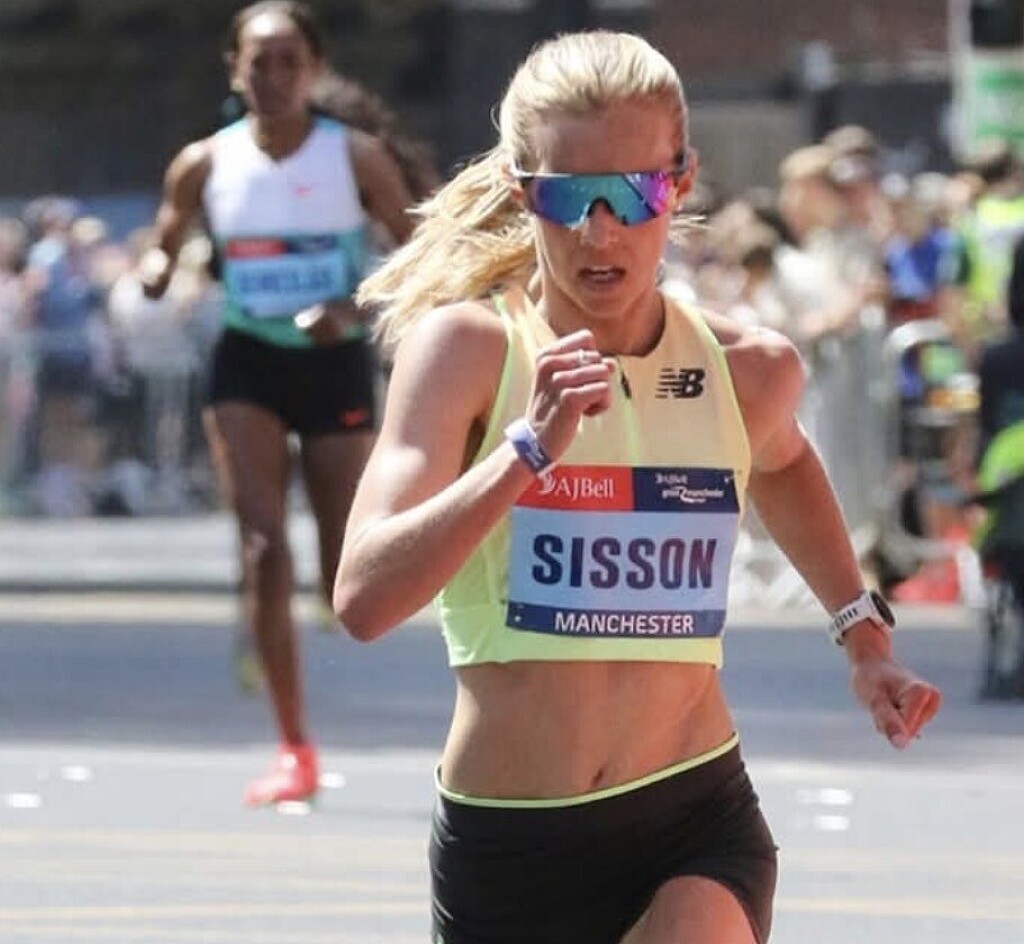
Obiri, Lokedi, Ngetich and Sisson Headline Elite Women’s Race at NYC Half Marathon
A stacked international women’s field will headline the 2026 United Airlines NYC Half Marathon on Sunday, March 15, 2026, in New York City, where world-class road specialists from Kenya, the United States, and Europe will battle for supremacy on one of the world’s most competitive half marathon stages.
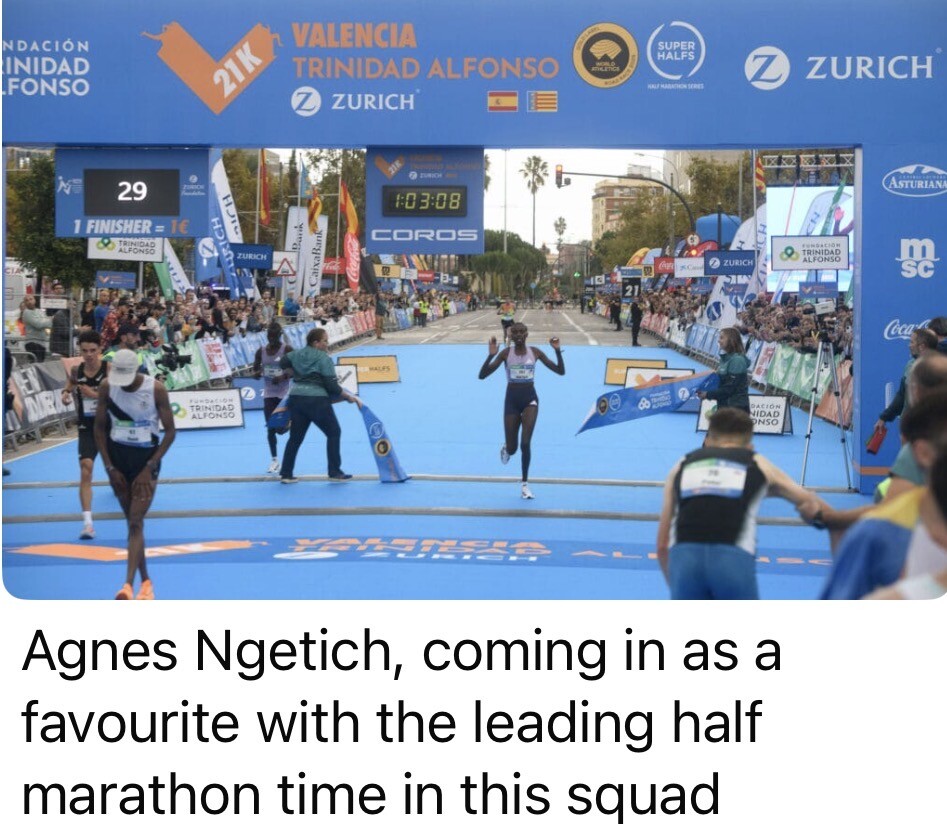
Leading the lineup is Kenyan road sensation Agnes Ngetich, who enters the race with the fastest personal best in the field at 1:03:04. The rising star has quickly established herself as one of the most formidable talents on the roads, and her aggressive racing style could make her the athlete to watch as the race unfolds through the streets of Brooklyn, across the Manhattan Bridge, and into Central Park.
Kenyan Powerhouses Set the Pace
Ngetich will face formidable opposition from a powerful Kenyan contingent that includes Hellen Obiri and Sharon Lokedi.

Obiri, a multiple Olympic and World Championship medalist on the track before transitioning successfully to the roads, boasts a half marathon best of 1:04:22. Known for her tactical brilliance and finishing speed, Obiri remains one of the most dangerous competitors in any elite field.
Lokedi, the Boston Marathon champion, arrives with a personal best of 1:05:00 and the experience of winning on the world’s biggest marathon stages. Her strength and racing intelligence make her a serious podium contender.
Completing the Kenyan lineup is Mercy Chelangat, who has steadily built her reputation on the roads and will be hoping to challenge the frontrunners.
International Contenders Ready to Challenge
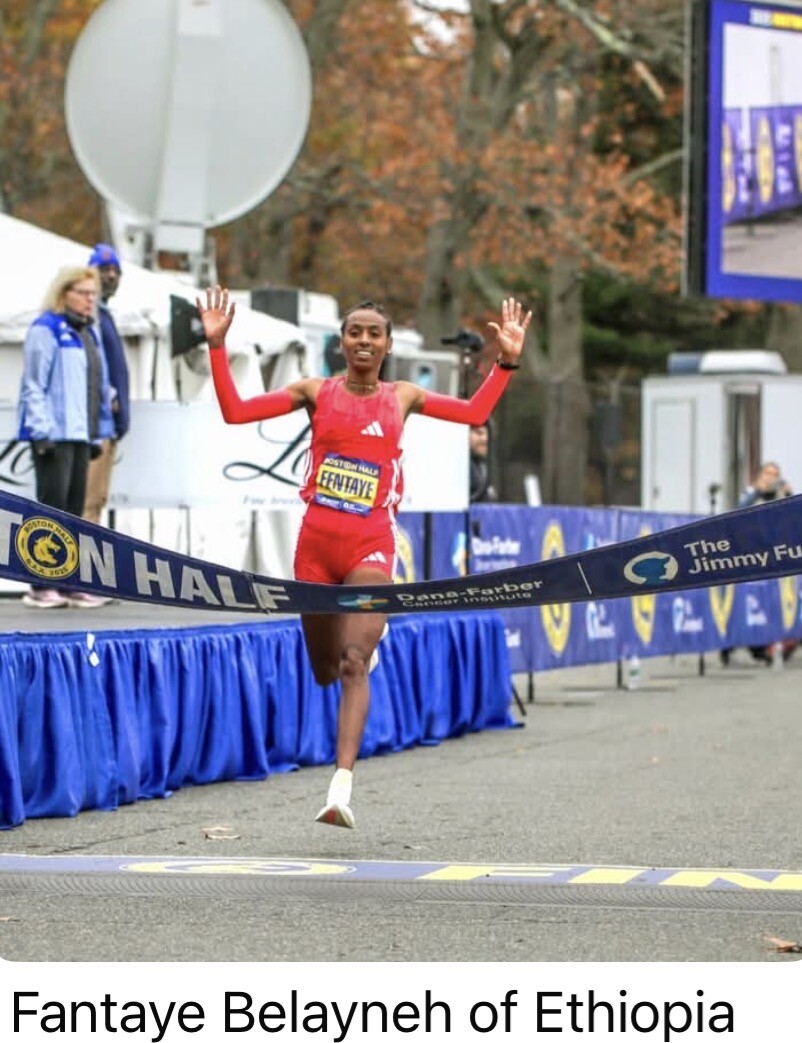
Ethiopia will be represented by Fantaye Belayneh, whose personal best of 1:04:49 places her among the fastest entrants. Belayneh has demonstrated impressive consistency on the international road circuit and could prove dangerous if the race develops into a fast early pace.
Germany’s Konstanze Klosterhalfen adds further depth to the field. The former European champion owns a half marathon best of 1:05:41 and has the pedigree to challenge the East African stars.
Strong American Home Challenge
The host nation will also field a strong challenge led by American distance standout Emily Sisson. The U.S. record holder in the half marathon brings a personal best of 1:06:52 and will be eager to deliver a strong performance in front of the home crowd.
Sisson will be joined by a deep American lineup that includes Natosha Rogers, Annie Frisbie, Amanda Vestri, and Dakotah Popehn, all of whom have recorded competitive performances on the roads in recent seasons.
Their presence ensures the United States will have multiple athletes capable of mixing it up with the international elite.
Debuts and Rising Stars Add Intrigue
Britain’s Calli Hauger-Thackery enters the race with a personal best of 1:06:58, while her compatriot Megan Keith will make her half marathon debut, adding an intriguing storyline to the competition.
Elsewhere, Diane Van Es of the Netherlands and Sweden’s Sarah Lahti will also be aiming to make an impact, while Canada’s experienced marathoner Natasha Wodak brings valuable championship experience to the elite field.
The international lineup is further strengthened by athletes from Latin America, including Uruguay’s Julia Paternain and Mexico’s Erika Priego.
A Race That Could Turn Fast
With several athletes in the field boasting personal bests under 1:06, the women’s race could develop into a fast and tactical contest. Much will depend on whether the frontrunners choose an aggressive early pace or adopt a more cautious strategy before the decisive moves in the final miles.
For Ngetich, the race presents another opportunity to underline her growing reputation as one of the leading figures in global road running. But with seasoned competitors such as Obiri, Lokedi, and Sisson in the lineup, the women’s elite race promises to be one of the highlights of the 2026 United Airlines NYC Half Marathon on March 15.
Elite Women to Watch
Agnes Ngetich (Kenya)
Personal Best: 1:03:04
The fastest entrant on paper, Ngetich arrives as the athlete to beat. Known for her aggressive front-running style, she has the credentials to dictate the pace and could turn the race into a fast contest if she pushes early.
Hellen Obiri (Kenya)
Personal Best: 1:04:22
A proven championship racer, Obiri brings tactical brilliance and finishing strength. The former world champion on the track has successfully transitioned to the roads and remains a major threat.
Sharon Lokedi (Kenya)
Personal Best: 1:05:00
The Boston Marathon champion has established herself as a consistent performer on the global road circuit and is always dangerous in tactical races.
Emily Sisson (USA)
Personal Best: 1:06:52
The American record holder will lead the home challenge and will look to use local support to test the East African dominance.
Fantaye Belayneh (Ethiopia)
Personal Best: 1:04:49
Belayneh has consistently delivered strong performances internationally and possesses the speed to stay with the leaders deep into the race.
(03/12/2026) ⚡AMPby Robert Kibet for My Best Runs
United Airlines NYC Half-Marathon
The United Airlines NYC Half takes runners from around the city and the globe on a 13.1-mile tour of NYC. Led by a talent-packed roster of American and international elites, runners will stop traffic in the Big Apple this March! Runners will begin their journey on Prospect Park’s Center Drive before taking the race onto Brooklyn’s streets. For the third...
more...
Tele Braces for Fierce Duel with Ethiopian Trio at Seoul Marathon
Kenyan marathoner Joyce Chepkemoi Tele is set to line up at the prestigious Seoul Marathon on March 15, 2026, in Seoul, South Korea, where she will face a formidable international field in one of Asia’s most respected road races.

Tele, who holds a personal best of 2:20:17, heads into the race aiming to challenge some of the strongest marathon specialists on the circuit. The Kenyan has steadily built a reputation as a resilient and consistent performer over the classic distance, and the Seoul streets could provide the perfect stage for another major breakthrough.
Awaiting her is a highly competitive lineup led by Ethiopia’s Tiruye Mesfin, the fastest entrant on paper with a personal best of 2:18:35. Mesfin’s experience and speed make her one of the clear favorites heading into the race.
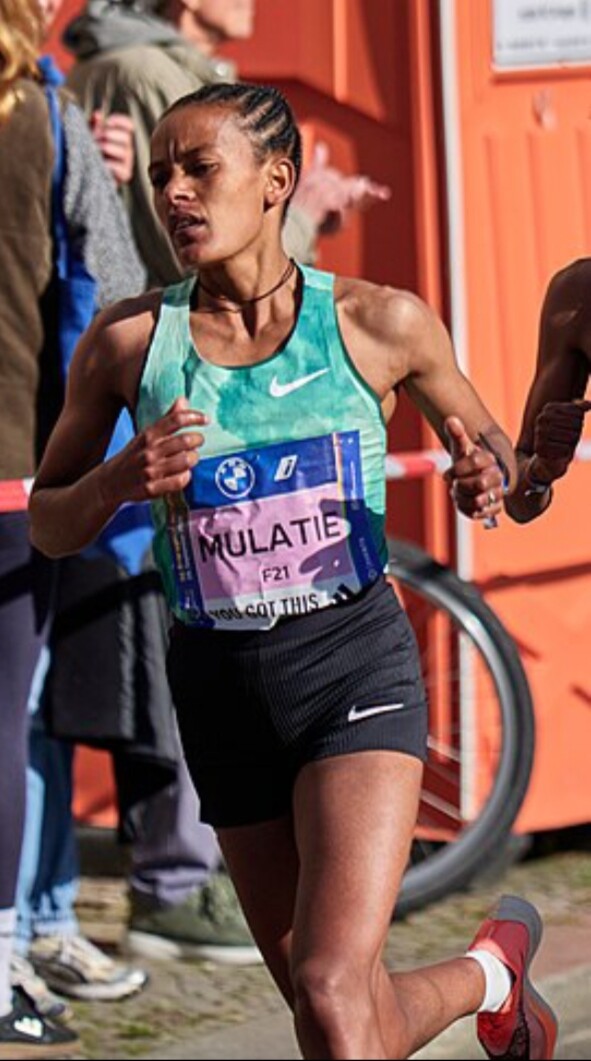
Another strong Ethiopian contender is Bosena Mulatie, who owns a 2:19:06 lifetime best and has demonstrated impressive strength in major city marathons. She will be joined by compatriot Bekelech Gudeta, whose personal best of 2:20:59 places her firmly among the athletes capable of shaping the outcome of the race.
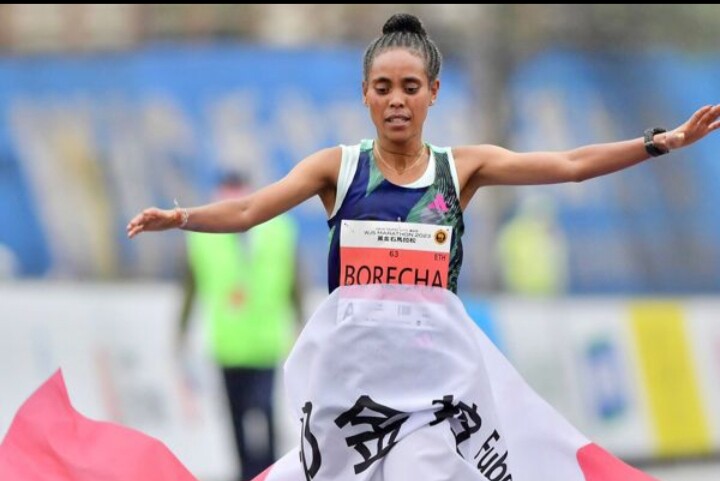
With several athletes clustered around the 2:18–2:26 range, the women’s race is expected to be fiercely contested from the early stages. The traditionally fast course in Seoul has often produced high-quality performances, especially when the pace is aggressive and weather conditions cooperate.
Elite Women’s Start List (PBs)
1. Bekelech Gudeta (Ethiopia) — 2:20:59
2. Tiruye Mesfin (Ethiopia) — 2:18:35
3. Bosena Mulatie (Ethiopia) — 2:19:06
4. Haven Hailu (Ethiopia) — 2:19:17
5. Joyce Chepkemoi Tele (Kenya) — 2:20:17
6. Zinash Gerado (Ethiopia) — 2:21:05
7. Anchelem Haymanote (Ethiopia) — 2:23:23
8. Meseret Gebre (Ethiopia) — 2:23:11
9. Betelihem Yemer (Ethiopia) — 2:23:20
10. Ayinadis Teshome (Ethiopia) — 2:25:50
11. Kebebush Yisma (Ethiopia) — 2:24:04
12. Medina Deme (Ethiopia) — 2:25:09
13. Wu Bing (China) — 2:25:01
14. Monica Chebet (Kenya) — 2:26:30
For Tele, the race represents an opportunity to measure herself against some of the finest marathon runners in the world while continuing to elevate Kenya’s strong presence on the global marathon stage. If the pace unfolds favorably, the Kenyan star could find herself in the thick of the battle as the race heads into its decisive closing kilometers.
As anticipation builds ahead of the March showdown, the women’s contest at the Seoul Marathon promises to deliver a thrilling clash between East Africa’s elite distance runners, with pride, prestige, and potentially fast times on the line.
(03/12/2026) ⚡AMPby Erick Cheruiyot for My Best Runs.
Seoul International Marathon
The only marathon hosted in the heart of the Korean capital. Seoul marathon is the oldest marathon race hosted in Asia andis one of the fastestmarathon in the world. First held in 1931, Seoul marathon is the oldest marathon eventcontinuously held in Asia, and the second oldest in the world followingthe Boston Marathon. It embodies modern history of Korea, also...
more...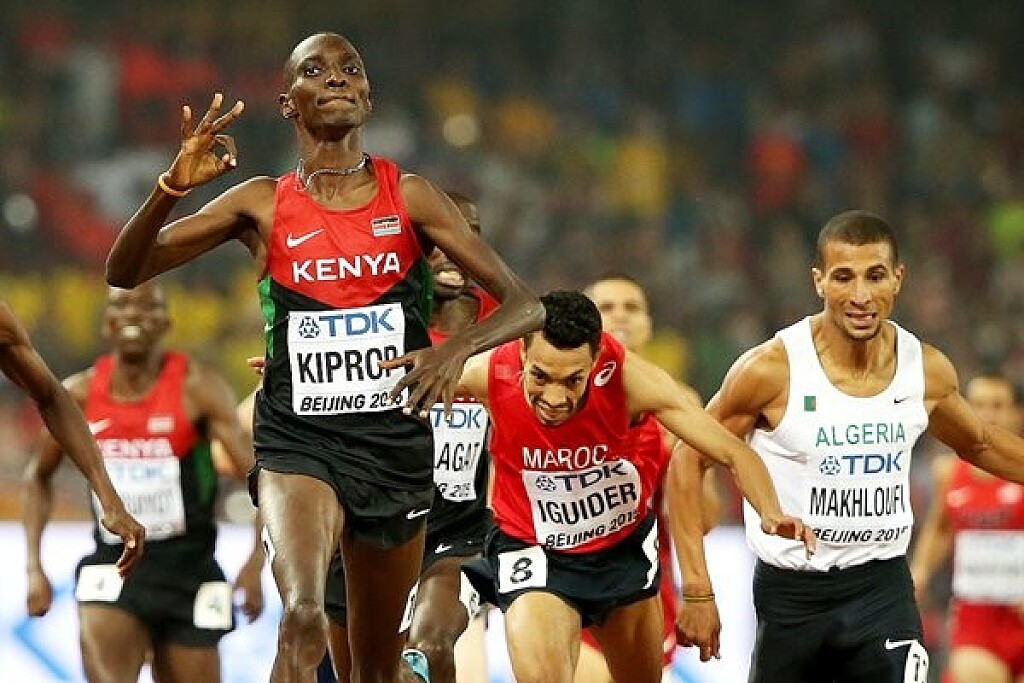
Front-Running Brilliance: The Night Asbel Kiprop Lit Up Monaco with 3:26.69
On a warm summer evening along the Mediterranean coast, the 1500 meters witnessed one of its most breathtaking performances. At the 2015 edition of the prestigious Herculis Monaco, part of the Diamond League circuit, Kenya’s middle-distance maestro Asbel Kiprop delivered a run that still resonates in athletics history.
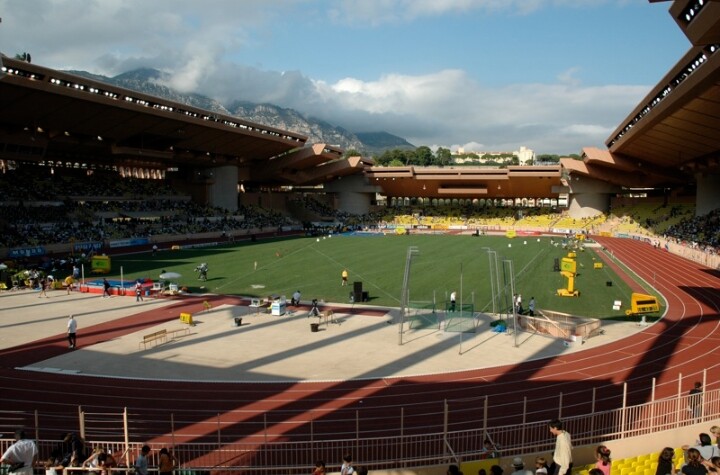
On July 17, 2015, inside the famous Stade Louis II in Monaco, Kiprop stormed to a stunning 3:26.69 in the 1500 meters—at the time one of the fastest performances ever recorded over the distance. The run combined fearless front-running, precise pacing, and remarkable endurance, creating a race that left both spectators and competitors in awe.
From the opening gun, Kiprop made his intentions clear. Rather than relying on his renowned finishing kick, the Olympic champion chose to dictate the pace from the front, relentlessly pursuing the long-standing world record of Hicham El Guerrouj, whose iconic 3:26.00 still stands as the benchmark for the event.
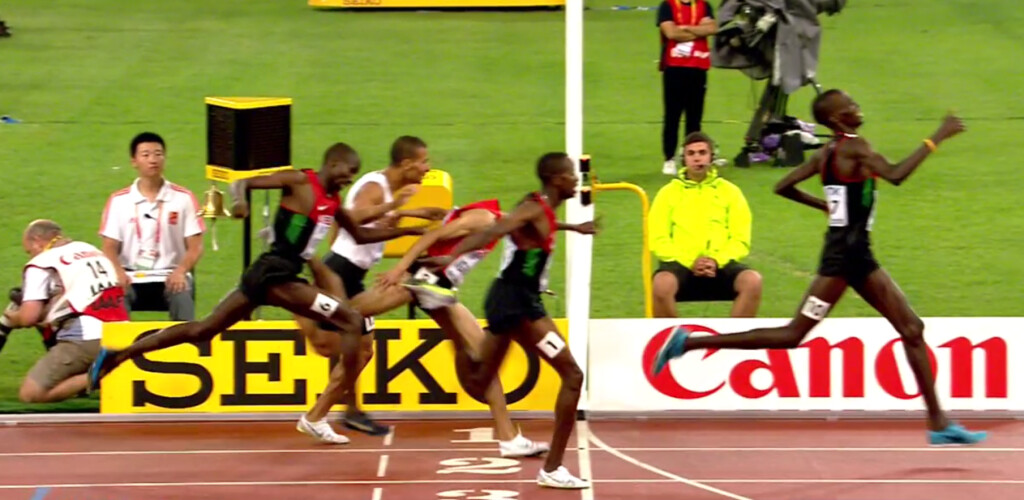
The early pace was sharp and deliberate. Behind the pacemaking assistance of Kenya’s Andrew Kiptoo Rotich, the first lap was covered in approximately 54 seconds, immediately signaling that the race would be something special. By the halfway mark, Kiprop passed 800 meters in about 1:50, maintaining a relentless rhythm that stretched the field.
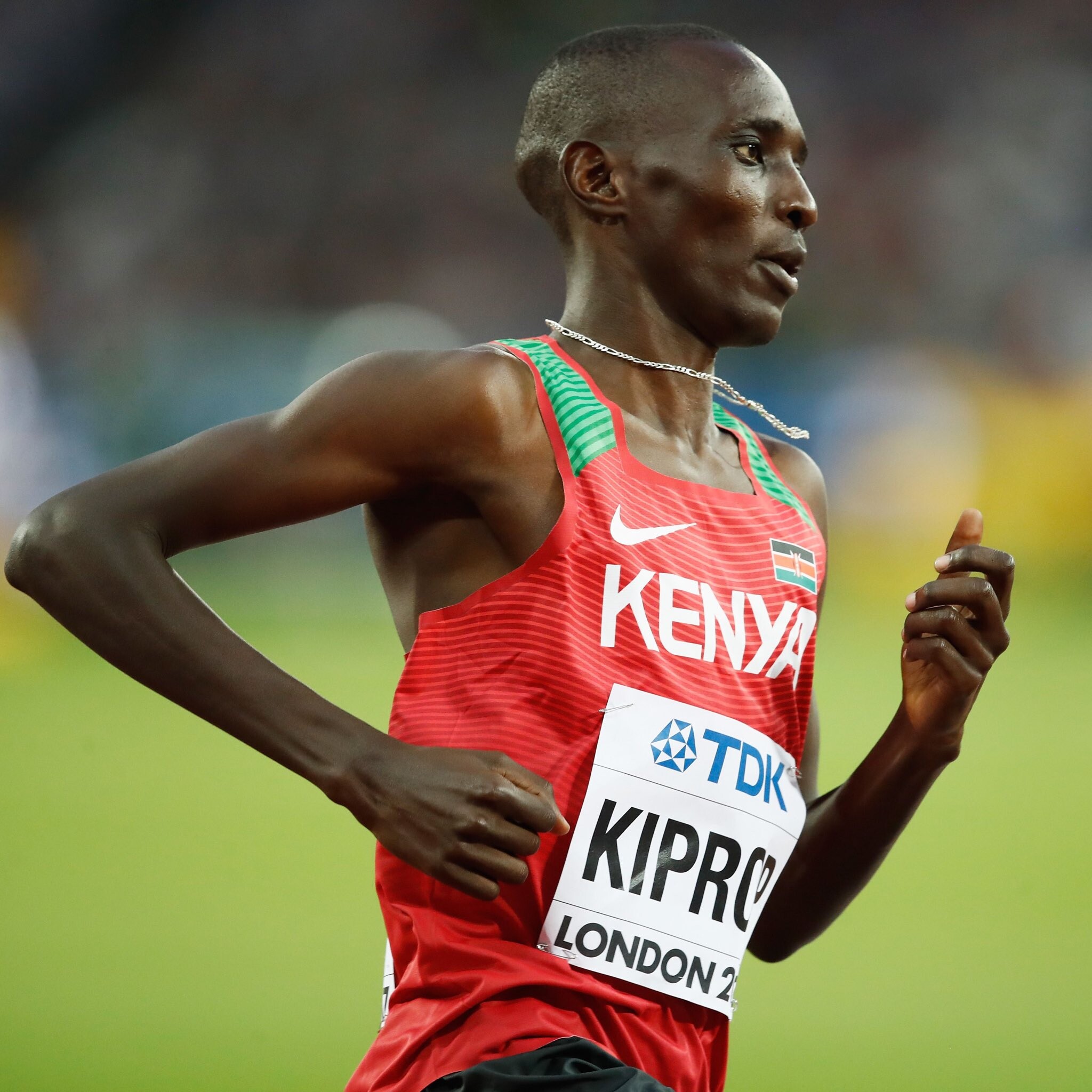
As the race progressed, the tall Kenyan floated around the track with the fluid stride that became his trademark. Passing 1200 meters in roughly 2:45, he remained firmly in control, gliding through the final lap in about 55 seconds to stop the clock at 3:26.69—a performance that etched his name even deeper into middle-distance history.
What made the run particularly remarkable was the margin of victory. Kiprop crossed the finish line more than two seconds ahead of a world-class field. Algeria’s Taoufik Makhloufi finished second in 3:28.75, just ahead of Morocco’s Abdelaati Iguider, who clocked 3:28.79.
The time also stood as a meeting record for the Monaco Diamond League at the time, further cementing the race’s place among the sport’s unforgettable moments.
For Kiprop, the performance was another shining chapter in a glittering career. The Kenyan star had already secured Olympic gold at the 2008 Beijing Olympics and would go on to collect three world titles at the World Athletics Championships in 2011, 2013, and 2015. Known for his elegant stride and exceptional race intelligence, he became one of the defining figures of modern middle-distance running.
Beyond Monaco, Kiprop built an impressive résumé across multiple distances. His personal bests included 1:43.15 for 800 meters, 3:48.50 for the mile, 2:14.23 for 1000 meters, and 7:42.32 for 3000 meters—a testament to both his speed and versatility.
Yet among all his achievements, the Monaco masterpiece remains one of the most memorable. On that night in July 2015, Asbel Kiprop didn’t just win a race—he delivered a performance that showcased the artistry and courage of championship middle-distance running, reminding the athletics world how extraordinary the 1500 meters can be when a great athlete dares to chase history.
(03/12/2026) ⚡AMPby Erick Cheruiyot for My Best Runs.
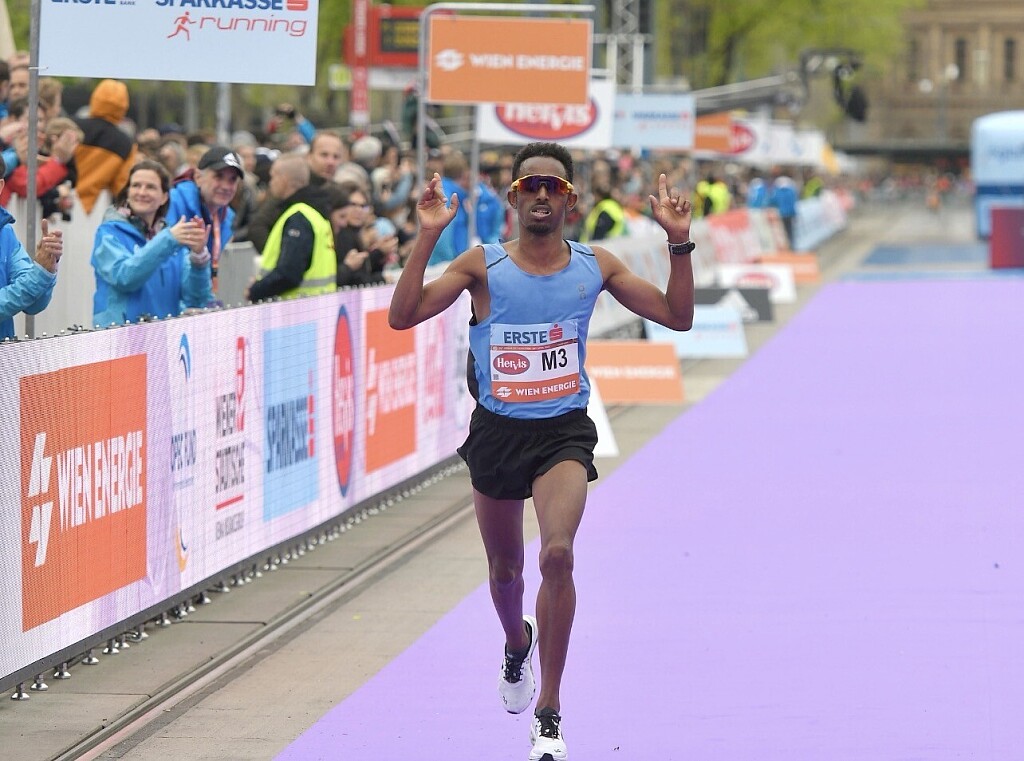
Oqbe Kibrom Returns to Vienna Chasing Historic First Eritrean Victory
The 43rd Vienna City Marathon will take place on April 19, and one runner arriving with unfinished business is Oqbe Kibrom of Eritrea. Kibrom will return to the Austrian capital hoping to become the first Eritrean athlete to win the men’s race at this prestigious event.
Kibrom finished third in Vienna in 2022, and he enters this year’s race as the fastest man on the current start list with a personal best of 2:05:37.

Organizers report strong participation for this year’s race. More than 13,000 runners are registered for the marathon distance alone, and when shorter races over the two-day weekend are included, the total number of participants climbs to over 46,000, a record for the event.
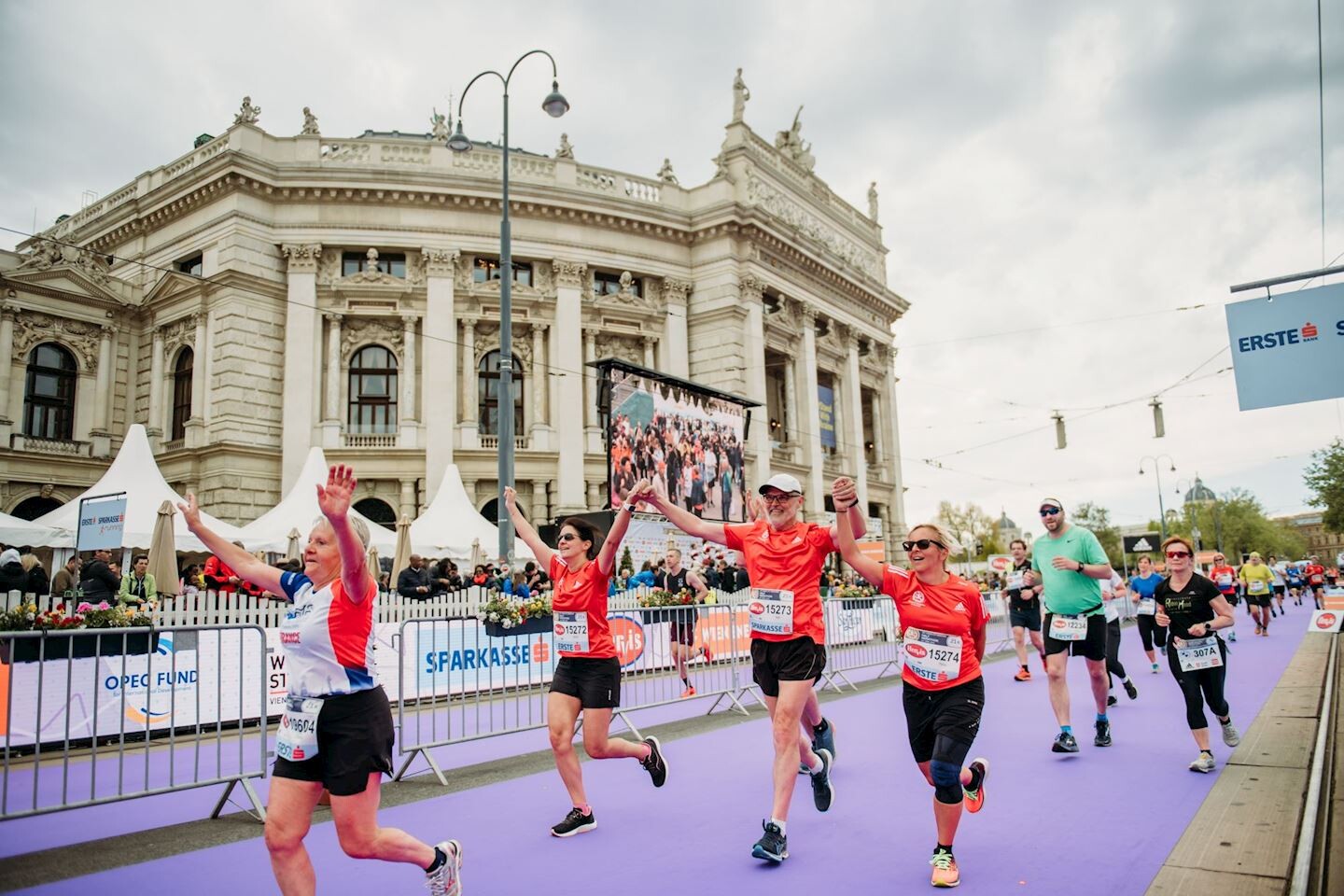
A Second Chance at Victory
When Kibrom raced in Vienna four years ago, it briefly appeared he might make history.
After the final pacemaker stepped aside just past 30 kilometers, Kibrom surged into the lead and looked poised to become the first Eritrean man to win the race. However, the effort proved costly.
Kenya’s Cosmas Muteti closed the gap late in the race and passed Kibrom with five kilometers remaining, eventually taking the win. Kibrom finished third in 2:07:25.
While Eritrea has celebrated a women’s champion in Vienna, the men’s race has yet to be won by an Eritrean athlete.
Kibrom, whose manager is Swiss marathon record holder Tadesse Abraham, has remained consistently competitive on the global marathon stage. The 28-year-old set his personal best of 2:05:37 when finishing eighth at the Berlin Marathon two years ago.
More recently, he finished fourth at the Daegu Marathon in South Korea in 2025, running 2:06:04. With three sub-2:06 performances to his name, Kibrom may now be poised for his first major marathon victory.
Strong African Contenders
Kibrom will face strong competition from fellow African runners.
Ethiopia’s Tafese Delegen owns a personal best of 2:06:11, set at the Seville Marathon two years ago.
Kenya’s Stanley Kurgat ran 2:07:05 at the Berlin Marathon, finishing seven places behind Kibrom in that race.
Another Kenyan to watch is Albert Kangogo, who ran 2:07:26 while finishing second at the Mersin Marathon in Turkey last December. Kangogo has already proven he can perform well in Vienna—he placed third in the 2023 race in 2:10:44.
Austrian Hope: Aaron Gruen
Local fans will also be watching Aaron Gruen, who made headlines last spring by becoming the first Austrian runner to break 2:10 in the marathon.
The 27-year-old ran 2:09:53 in Congers, New York, improving his personal best by nearly five minutes.
Gruen has continued his strong form in 2026, setting a half marathon personal best of 61:14 in Houston earlier this year. Balancing elite training with his studies, he is currently attending Harvard Medical School in Boston, making his preparation even more impressive.
European Marathon Classics Series Launched
The Vienna City Marathon is also playing a central role in a newly created marathon series called European Marathon Classics (EMC).
Alongside Vienna, the series includes major European marathons in:
• London Marathon
• Rome Marathon
• Madrid Marathon
• Lisbon Marathon
• Warsaw Marathon
• Copenhagen Marathon
• Frankfurt Marathon
Runners who complete at least five of these marathons in different cities will receive a specially designed medal recognizing the achievement.
“European Marathon Classics embodies our ambition to explore Europe together while pushing boundaries—both geographically and philosophically,” said Hugh Brasher, Event Director of the London Marathon. “I hope it will inspire runners from around the world to experience Europe’s great marathons, cities, and communities.”
Kathrin Widu, joint managing director of the Vienna City Marathon along with Dominik Konrad, added:
“The European Marathon Classics are an inspiring challenge. By bringing together leading European marathons, we aim to inspire even more people to embrace marathon running. We are united by shared values such as a passion for the sport, community, health, and sustainability.”
(03/11/2026) ⚡AMPby Race News Service
Vienna City Marathon
More than 41,000 runners from over 110 nations take part in the Vienna City Marathon, cheered on by hundreds of thousands of spectators. From the start at UN City to the magnificent finish on the Heldenplatz, the excitement will never miss a beat. In recent years the Vienna City Marathon has succeeded in creating a unique position as a marathon...
more...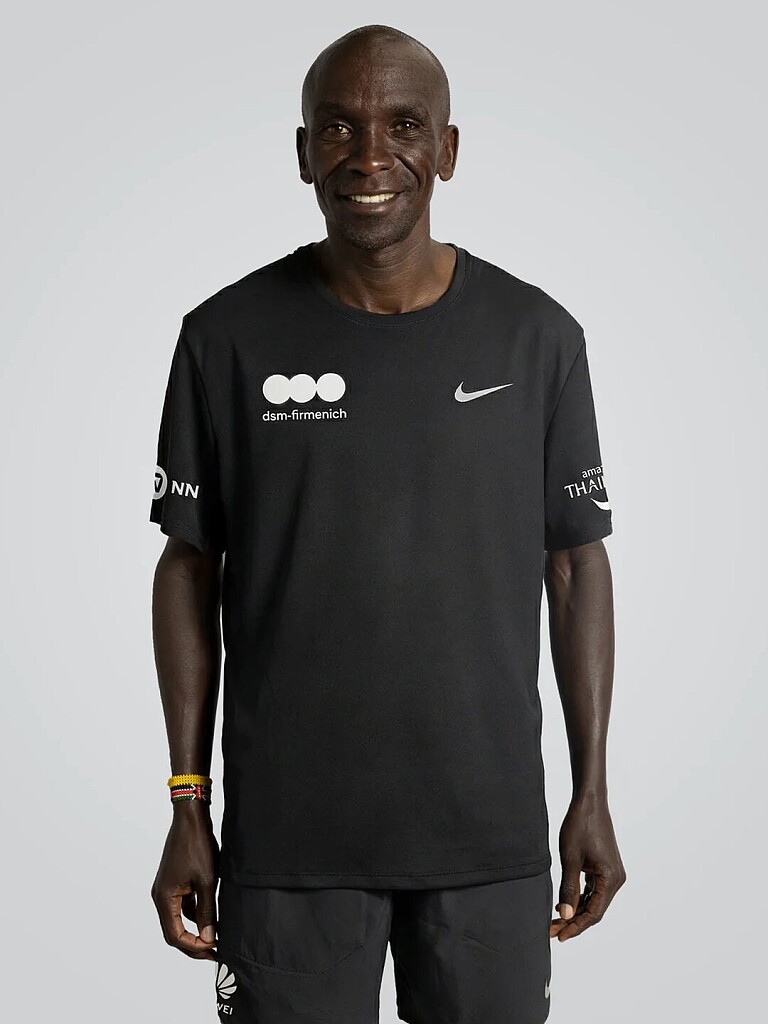
Kipchoge’s World Tour Heads to Brazil with NB42K Porto Alegre Appearance
Marathon legend Eliud Kipchoge is set to continue his ambitious global running mission with a highly anticipated appearance at the NB42K Porto Alegre on July 12, 2026, in Porto Alegre, Brazil.

The South American race will form part of Kipchoge’s unique World Tour project — a challenge that will see the Kenyan great run seven marathons across all seven continents over the next two years. The initiative reflects his vision of using running as a universal platform to connect people and inspire communities around the world.
The visit to Brazil also carries deep personal significance for the two-time Olympic champion. It comes exactly ten years after his unforgettable victory in the 2016 Rio Olympic Marathon in Rio de Janeiro, where he captured the first of his Olympic gold medals and cemented his place among the sport’s all-time greats.
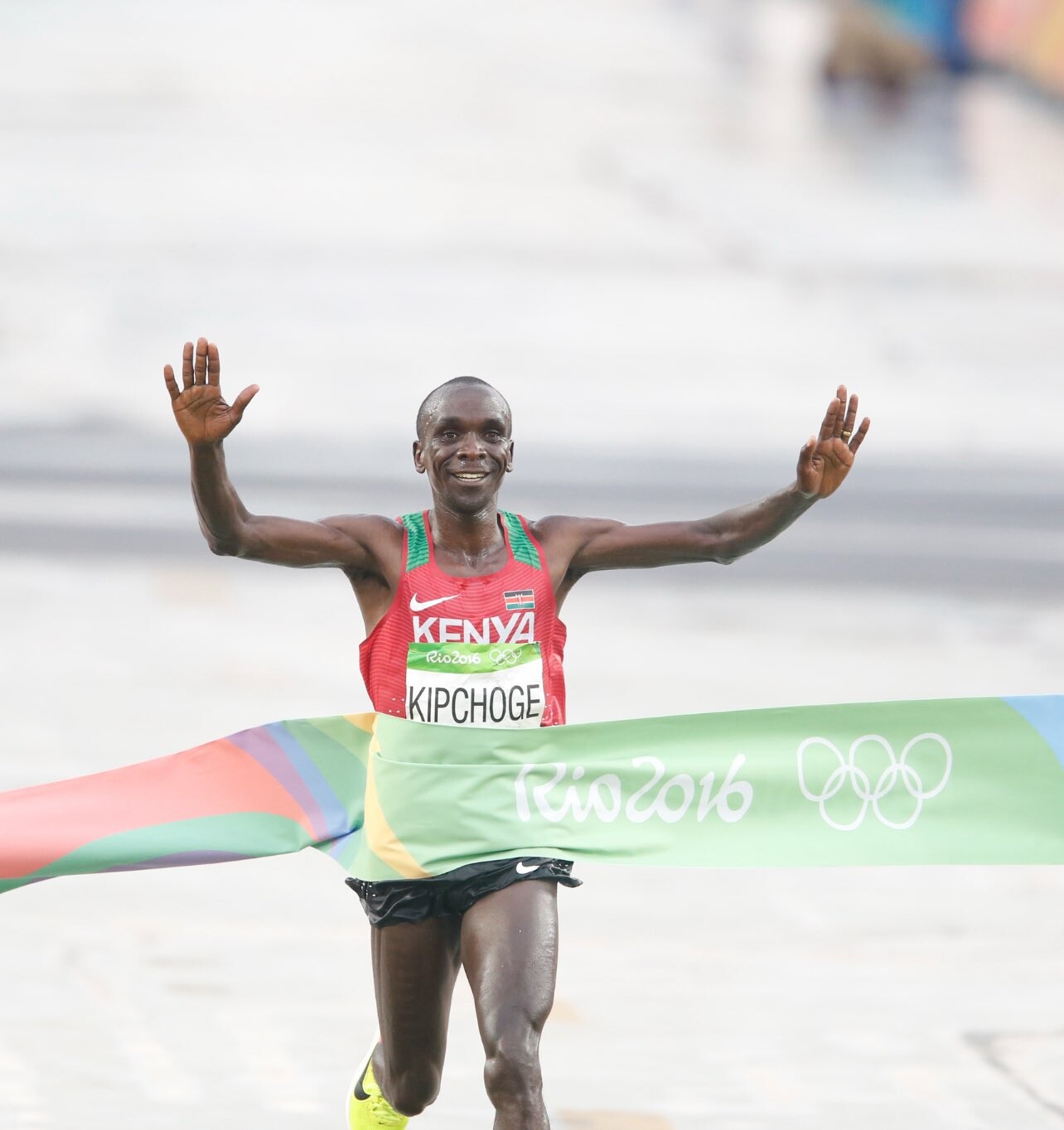
In a message shared on his social media platforms, Kipchoge expressed both excitement and nostalgia about returning to Brazil.
“Running is a universal language that speaks to hope, discipline, and unity. I am very excited to return to Brazil where I won my first Olympic Gold medal. Each continent has its own spirit, and I look forward to sharing this journey with South America while inspiring people to believe that No Human Is Limited. See you on the streets of Porto Alegre on 12 July at the NB42k!”
Kipchoge’s global journey will begin on African soil at the Cape Town Marathon in Cape Town, South Africa on May 24, before the legendary Kenyan heads to South America for the Brazilian stop.
As the world’s most celebrated marathoner continues to write new chapters in his remarkable career, his message remains clear — that running has the power to unite people across continents while reminding the world that no human is limited.
(03/11/2026) ⚡AMPby Erick Cheruiyot for My Best Runs.
Under Warm and Humid Skies, Athletes Deliver Strong Performances at the 54th KATA Time Trial
The familiar stretch of tarmac in Thika, running alongside the Kenyan Athletics Training Academy (KATA), once again came alive as athletes gathered for the 54th edition of the KATA Time Trial, a session defined by quiet determination, controlled pacing, and purposeful competition. Under mostly sunny skies, the morning carried a noticeable layer of warmth and humidity, conditions that subtly tested the discipline and race management of every runner who lined up across the 5km and 10km distances.
From the outset, the atmosphere demanded patience. The combination of heat and humidity meant that athletes had to measure their effort carefully, balancing ambition with composure as they navigated the now-familiar loop. Yet such conditions have always been part of the character of the KATA time trials — a training ground where athletes refine not only their speed but also their judgment, learning to listen to their bodies while maintaining rhythm through every stride.
In the women’s 5km race, Naomi Wambui produced a confident and well-controlled performance to claim victory in 18:21. Running with composure from the early stages, Wambui settled into a steady rhythm and maintained her form despite the rising warmth. Her stride remained relaxed through the middle stages before she closed strongly, delivering a performance that reflected both experience and control. Felister Mbatha followed in 22:21, showing determination and steady effort throughout the course as she secured second place.
The men’s 5km brought an energetic display from Francis Maina, who ran decisively to take the win in 16:46. His race was defined by an assertive tempo and efficient cadence that allowed him to maintain momentum from start to finish.
Just behind him, the enduring Dennis Musau reminded everyone that experience is sometimes the most valuable training partner. Clocking 19:46, the veteran moved through the course with the calm rhythm of someone who has seen many race mornings come and go. While the younger runners pushed hard up front, Musau seemed to glide along with a knowing smile, almost as if he was quietly reminding them that endurance running is not only about speed — it’s also about patience, wisdom, and the occasional ability to make it look easier than it really is. His performance added a light and enjoyable touch to the race, proving that the sport always has room for both youthful fire and seasoned composure.
As attention shifted to the longer distance, the 10km races demanded greater endurance and discipline. In the women’s contest, Kellen Waithera delivered one of the most composed performances of the morning, crossing the finish line in 34:58. Her run was marked by consistency and intelligent pacing, holding a steady tempo across each kilometer despite the humidity that hung in the air. Regina Sandiki followed with a determined 36:57, maintaining her rhythm and finishing strongly to secure second place.
The men’s 10km proved to be the deepest and most competitive event of the day. Bernard Musau set the benchmark with a commanding 29:24, establishing control early before sustaining a strong and balanced pace through the final kilometers. His performance stood as the fastest of the morning and highlighted impressive endurance on the demanding course. Close behind, Kelvin Nganga finished in 29:41, while John Kuria completed the top three in 29:46, underlining the competitiveness at the front of the field.
Further down the standings, strong performances continued to emerge as athletes maintained disciplined pacing despite the warm and slightly humid conditions. Bernard Waweru crossed in 30:38, followed by Erick Cheruiyot in 31:07 and Charles Wanjora in 31:29. A deep field continued through the results, with determined efforts from Joel Maina, Joseph Makeri, Joseph Nyota, Justus Wambua, Vincent Kiprotich, Paul Nganga, and veteran runner Charles Ndirangu, whose resilience over the distance added another layer of inspiration to the morning’s competition.
Results
Women 5km
1. Naomi Wambui — Age 41 — Bib 15 — 18:21
2. Felister Mbatha — Age 19 — Bib 26 — 22:21
Men 5km
1. Francis Maina — Age 19 — Bib 19 — 16:46
2. Dennis Musau — Age 43 — Bib 06 — 19:46
Women 10km
1. Kellen Waithera — Age 39 — Bib 21 — 34:58
2. Regina Sandiki — Age 19 — Bib 25 — 36:57
Men 10km
1. Bernard Musau — Age 30 — Bib 12 — 29:24
2. Kelvin Nganga — Age 24 — Bib 02 — 29:41
3. John Kuria — Age 30 — Bib 27 — 29:46
4. Bernard Waweru — Age 40 — Bib 01 — 30:38
5. Erick Cheruiyot — Age 30 — Bib 28 — 31:07
6. Charles Wanjora — Age 24 — Bib 03 — 31:29
7. Joel Maina — Age 43 — Bib 20 — 31:36
8. Joseph Makeri — Age 41 — Bib 14 — 32:51
9. Joseph Nyota — Age 20 — Bib 11 — 33:11
10. Justus Wambua — Age 18 — Bib 09 — 33:22
11. Vincent Kiprotich — Age 24 — Bib 13 — 34:56
12. Paul Nganga — Age 43 — Bib 29 — 34:57
13. Charles Ndirangu — Age 64 — Bib 23 — 38:02
As the final runners crossed the line and the morning warmth lingered over the Thika tarmac, the 54th KATA Time Trial once again revealed what makes these sessions special. Beyond the stopwatch and finishing order lies a culture built on discipline, growth, and shared purpose. Here, young athletes chase new limits while experienced runners quietly remind them that progress is a long road. With every stride, every split, and every edition, the KATA time trials continue to shape not just stronger runners, but a community bound together by the simple, enduring rhythm of the run.
(03/11/2026) ⚡AMPby Erick Cheruiyot for My Best Runs.

KATA Time Trial Series
Welcome to the KATA Monthly Time Trial Held at the Kenyan Athletics Training Academy in Thika, Kenya, the KATA Monthly Time Trial is a unique and inclusive event designed to support runners of all levels in achieving their goals and showcasing their fitness. This event offers both 10K and 5K distances on an accurate, certified course, providing participants with...
more...
Inspired by Greatness: Irish Teen Sensation Freya Renton Lights Up the London Cross Challenge
At just 15 years old, rising Irish talent Freya Renton delivered a performance far beyond her years, stunning the fields at the London Cross Challenge with a commanding run that left both the under-17 and under-20 competitors trailing in her wake.
The teenager from Westport produced one of the most eye-catching performances of the event, racing to victory in the under-17 category with remarkable authority. Renton finished nearly a full minute ahead of the rest of the under-17 field — a margin that underlined just how dominant her display was on the demanding cross-country course. Even more impressively, her time would also have comfortably secured victory in the under-20 race, where she was still 25 seconds faster than the winner of that older category.
For a runner so young, the composure and strength she showed across the muddy terrain signaled the arrival of a talent with extraordinary potential. Renton’s run was not just a win — it was a statement performance that hinted at a bright future for Irish distance running.
Behind that performance lies inspiration drawn from some of the sport’s most celebrated figures. Renton has openly spoken about the athletes who ignited her passion for running, pointing to two of the sport’s standout middle-distance stars: Kenya’s legendary Olympic champion Faith Kipyegon and Ireland’s European champion Ciara Mageean.
“Both Faith Kipyegon and Ciara Mageean inspired me into running,” the young athlete revealed, highlighting how watching elite runners compete at the highest level fueled her own ambition to follow the same path.
Despite her youth, Renton already carries clear ambitions for the season ahead. The Westport prodigy has set her sights firmly on representing Ireland on the international stage in 2026, with the European Athletics U18 Championships and the European Cross Country Championships standing as her major targets.
If her performance in London is any indication, those dreams may not be far from reality. With natural talent, inspiration from world-class athletes, and a fearless racing spirit, Freya Renton appears to be carving out the early chapters of what could become a remarkable running journey.
For now, the Irish teenager continues to run with the joy and determination of someone chasing a dream — one stride at a time — while the athletics world begins to take notice.
(03/10/2026) ⚡AMPby Erick Cheruiyot for My Best Runs.
Precision on the Tarmac: KATA Time Trial Returns for Its 54th Chapter in Thika
The steady rhythm of footsteps will once again echo along the familiar tarmac roads of Thika on Wednesday morning, March 11, 2026, as the 54th edition of the KATA Time Trial takes center stage. Held just outside not far from the grounds of Kenyan Athletics Training Academy – Thika, the session may unfold without the noise and spectacle of major races, but within the running community it carries a quiet importance. For the athletes who gather there, the time trial is less about applause and more about discipline, precision, and honest evaluation.
Over the years, the KATA Time Trial has grown into a respected training tradition, providing athletes with a structured environment to measure progress and sharpen their racing instincts. Rather than encouraging head-to-head competition, the philosophy behind the trial is rooted in controlled execution—following a training plan, maintaining rhythm, and understanding one’s physical limits. Each edition becomes an opportunity for runners to listen to their bodies and translate months of training into measurable performance.
The upcoming 54th edition will once again focus on two classic testing grounds: the 5-kilometer and 10-kilometer distances. Both races serve as powerful indicators of an athlete’s development. The shorter 5km demands efficiency, sharp pacing, and speed endurance, while the 10km places greater emphasis on patience, tactical awareness, and sustained effort. In both cases, even the smallest miscalculation in pace can quickly reveal itself along the unforgiving stretch of tarmac.
What makes the KATA Time Trial unique is the absence of typical race dynamics. There are no large packs to hide within and no tactical surges to follow. Each athlete runs against the clock—and against their own expectations. The responsibility for pacing rests entirely on individual judgment, turning every kilometer into a test of both physical strength and mental clarity.
Conditions in Thika are expected to favor steady, well-managed efforts. Runners who resist the temptation to push too hard in the opening kilometers often find themselves finishing with strength, while those who misjudge the early pace quickly learn the lessons that only the road can teach. In this environment, progress becomes unmistakably clear.
Though the event may pass quietly, the significance of the KATA Time Trial extends far beyond a single morning of running. On this modest stretch of road in Thika, athletes refine their craft, build resilience, and measure the subtle gains that define long-term development. When the stopwatches click to a halt at the end of the 54th edition, the numbers recorded will tell more than just finishing times—they will reveal the ongoing story of growth, discipline, and pursuit of excellence.
(03/09/2026) ⚡AMPby Erick Cheruiyot for My Best Runs.
KATA Time Trial Series
Welcome to the KATA Monthly Time Trial Held at the Kenyan Athletics Training Academy in Thika, Kenya, the KATA Monthly Time Trial is a unique and inclusive event designed to support runners of all levels in achieving their goals and showcasing their fitness. This event offers both 10K and 5K distances on an accurate, certified course, providing participants with...
more...
Fan Interference Sparks Debate After Dramatic Finish at the 2026 Los Angeles Marathon
The closing moments of the Los Angeles Marathon 2026 delivered one of the most dramatic and controversial finishes the race has seen in recent years, leaving the global running community debating whether outside interference may have altered the outcome of the race.
With only a few hundred meters remaining, Kenya’s Michael Kimani Kamau appeared firmly in control of the race. After leading through the final stretch, victory seemed all but secured as he pushed toward the finishing straight in downtown Los Angeles.
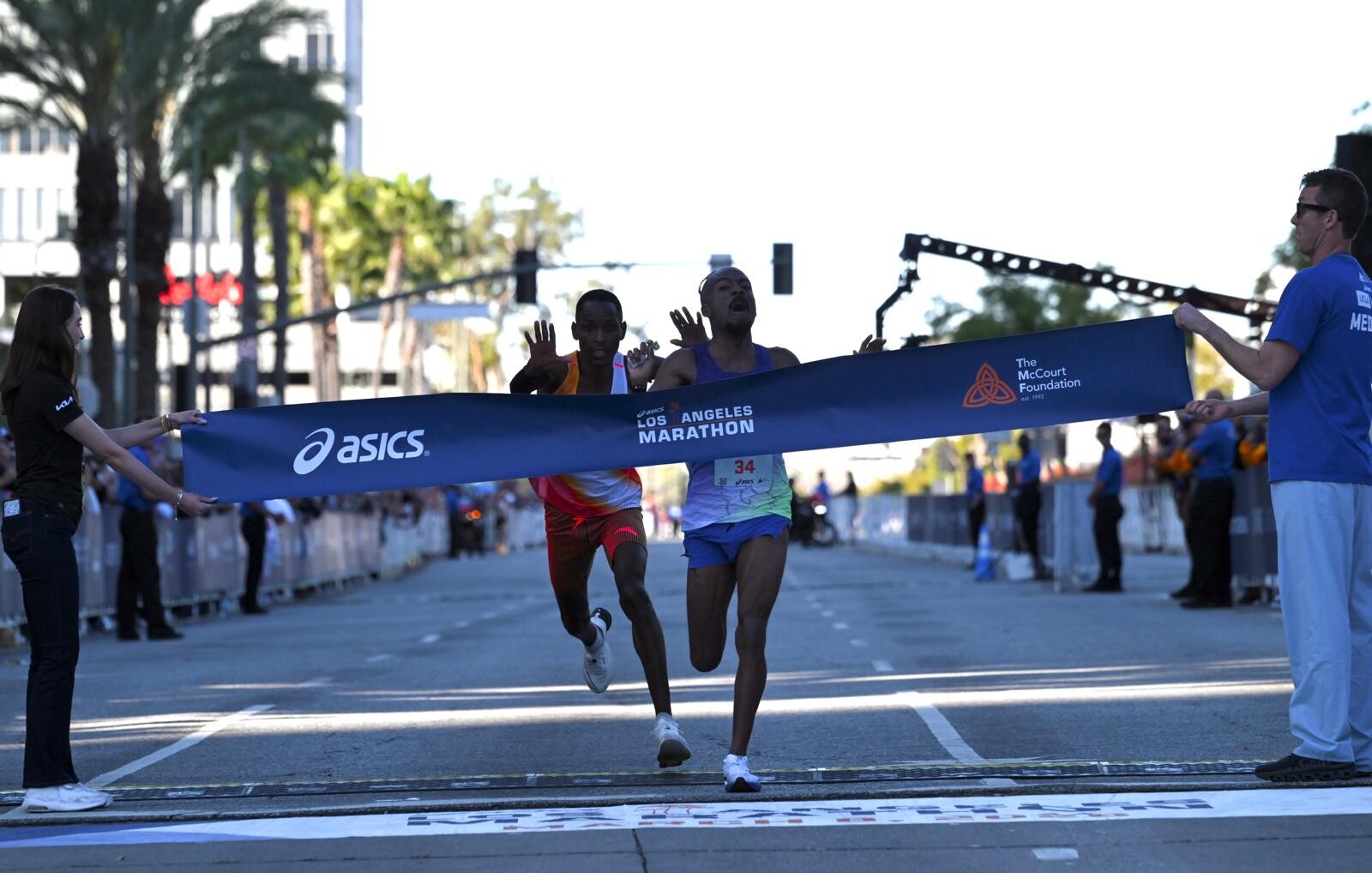
Then, in a split second, the race took an unexpected turn.
A spectator waving a Kenyan flag suddenly ran onto the course and moved directly in front of Kamau near a split in the road. For several crucial seconds, the fan ran ahead of the leader, creating confusion about the correct racing line at a decisive point of the course.
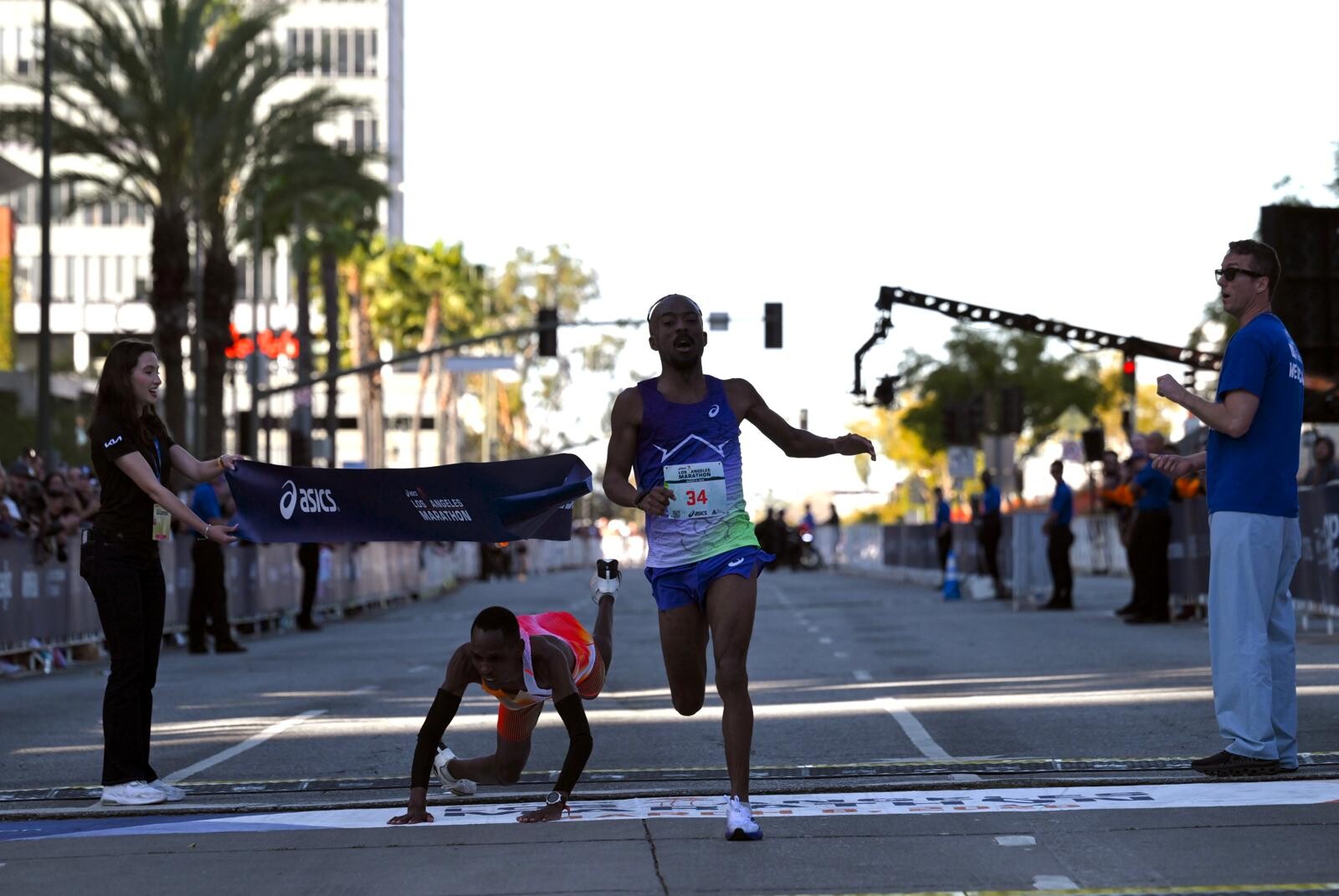
In the momentary uncertainty, Kamau drifted toward the wrong lane and briefly followed the lead vehicle and police escort off the correct route. Realizing the mistake, he quickly corrected his direction and returned to the proper course—but the costly hesitation had already reshaped the race.
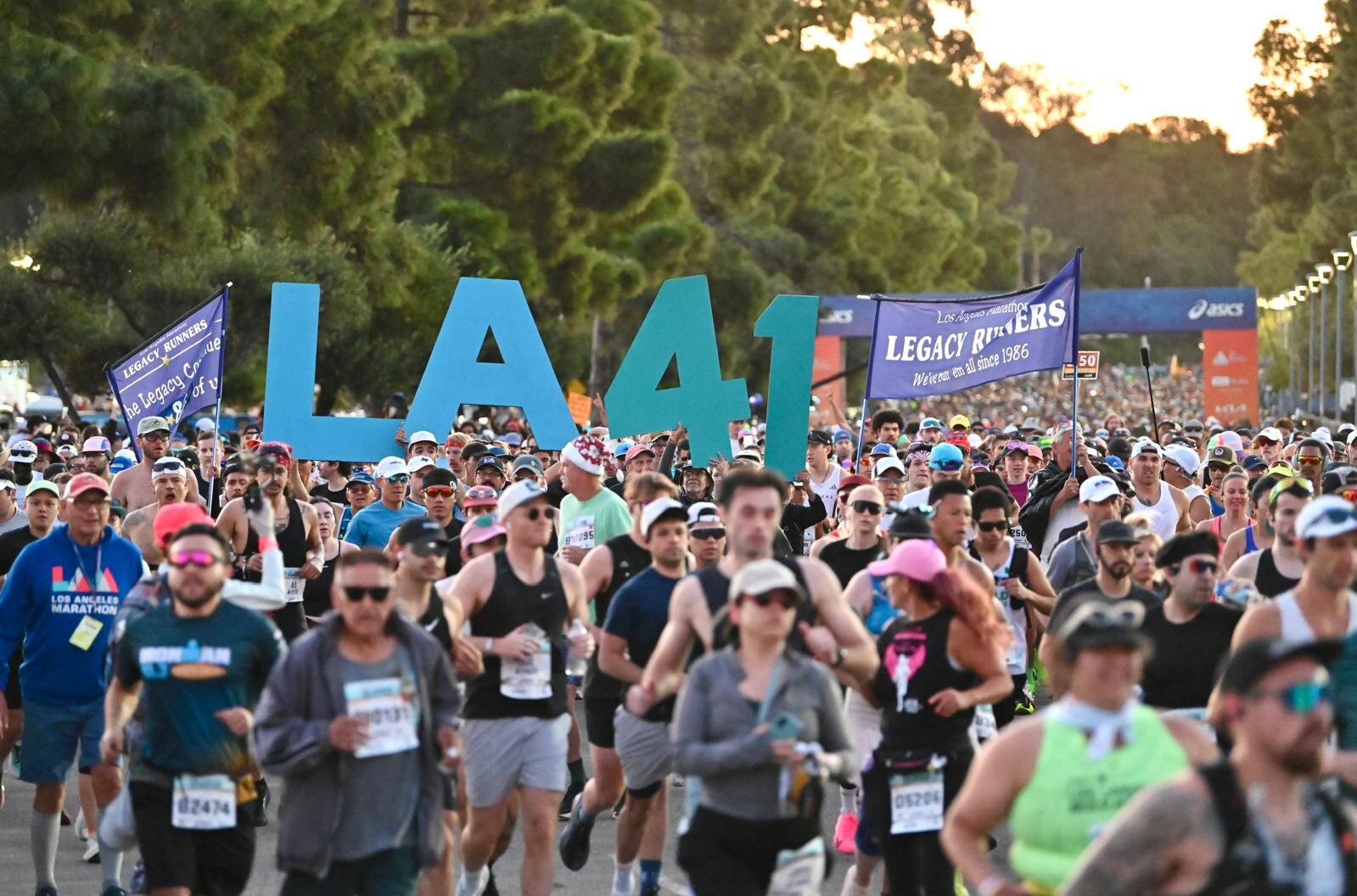
Behind him, American marathoner Nathan Martin had been steadily closing the gap. The unexpected disruption gave Martin the opportunity he needed, setting up a frantic sprint over the final meters.

What followed was a breathtaking dash to the finish line.
Martin surged alongside Kamau in the final steps and edged ahead in one of the closest finishes in the history of the race. The official timing showed Martin crossing the line just 0.01 seconds ahead, both athletes recording times around 2:11:16.
While the result stands, the finish has quickly become a major topic of discussion across the running world. Many observers are questioning whether the fan’s presence on the course played a decisive role in determining the outcome of the race.
The controversy is heightened by the timing of the incident. Just days earlier, another race-direction issue occurred at the U.S. Half Marathon Championships in New York City, where leading runners including Jess McClain, Ednah Kurgat, and Emma Hurley were misdirected off course after police officers left their assigned positions along the route.
Incidents like these highlight how vulnerable road races can be to unexpected disruptions, even in the final moments when every second—and every step—matters.
For elite athletes, these competitions represent far more than a race. They carry significant consequences tied to sponsorship agreements, world rankings, appearance fees, and prize money that can change careers and lives.
As discussions continue, one difficult question lingers over the dramatic finish in Los Angeles: when outside interference disrupts a race, should the results simply stand—or should the sport reconsider how such moments are judged?
At the 2026 Los Angeles Marathon, the margin between triumph and heartbreak was just one hundredth of a second, a reminder of how fragile victory can be when chaos enters the course at the worst possible moment.
(03/09/2026) ⚡AMPby Erick Cheruiyot for My Best Runs.
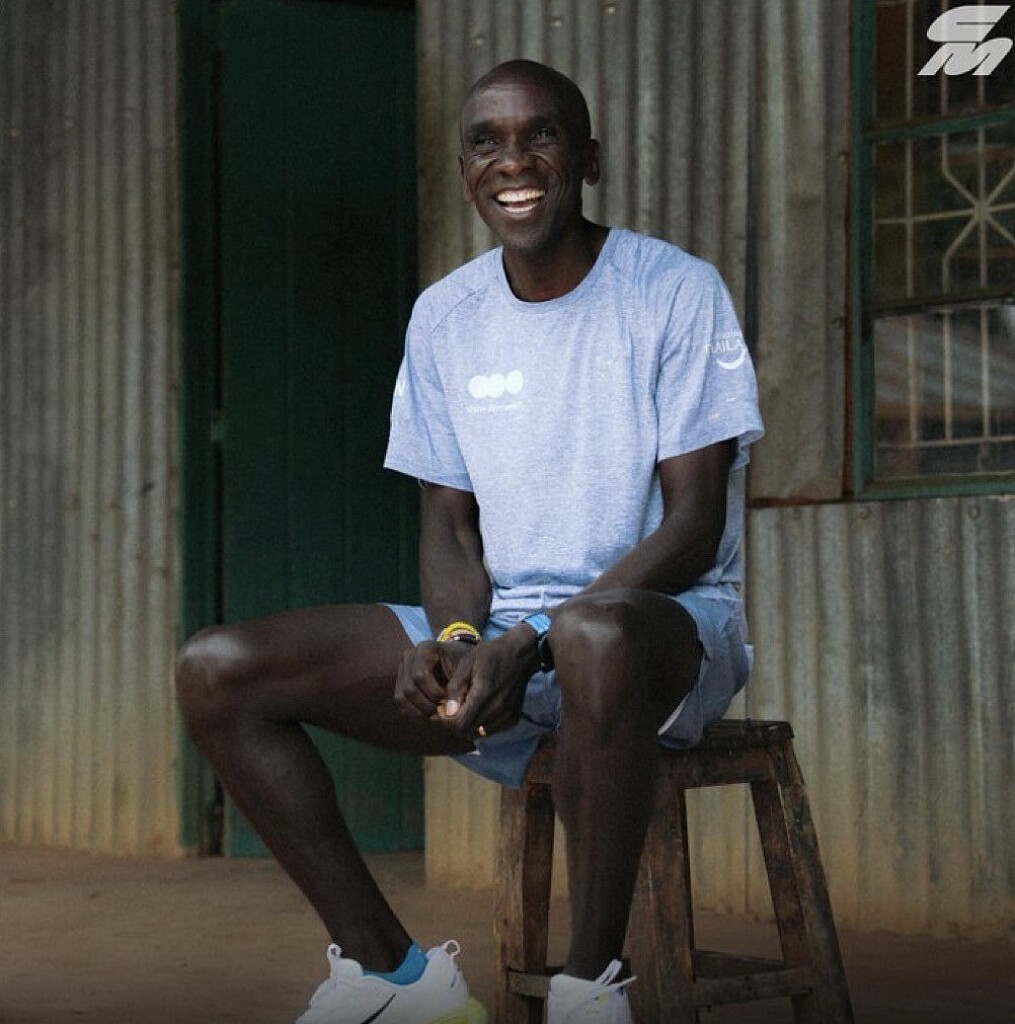
Eliud Kipchoge Sets Sights on Cape Town as He Begins Ambitious Seven-Continent Marathon Quest
Marathon legend Eliud Kipchoge has confirmed that he will line up at the start of the Sanlam Cape Town Marathon on May 24, in Cape Town, South Africa marking the beginning of a remarkable new chapter in his storied career.
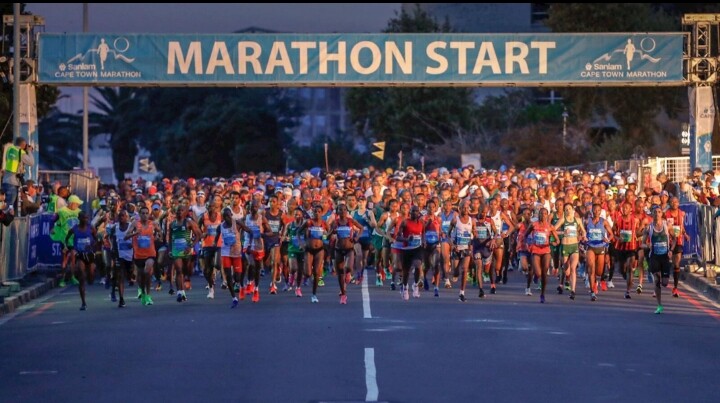
The Kenyan icon, widely regarded as one of the greatest marathon runners in history, revealed that the South African race will serve as the first step in an ambitious challenge: completing marathons on all seven continents within the next two years. The plan adds yet another dimension to the legacy of the 11-time champion across the Abbott World Marathon Majors, a circuit where Kipchoge has built an extraordinary reputation through consistency, discipline, and historic victories.
Cape Town’s rapidly rising marathon has been pushing for global recognition and possible inclusion among the World Marathon Majors, and Kipchoge’s participation immediately elevates the race’s international profile. His presence is expected to draw worldwide attention, deepen elite competition, and inspire thousands of runners who will gather along the scenic streets beneath Table Mountain.
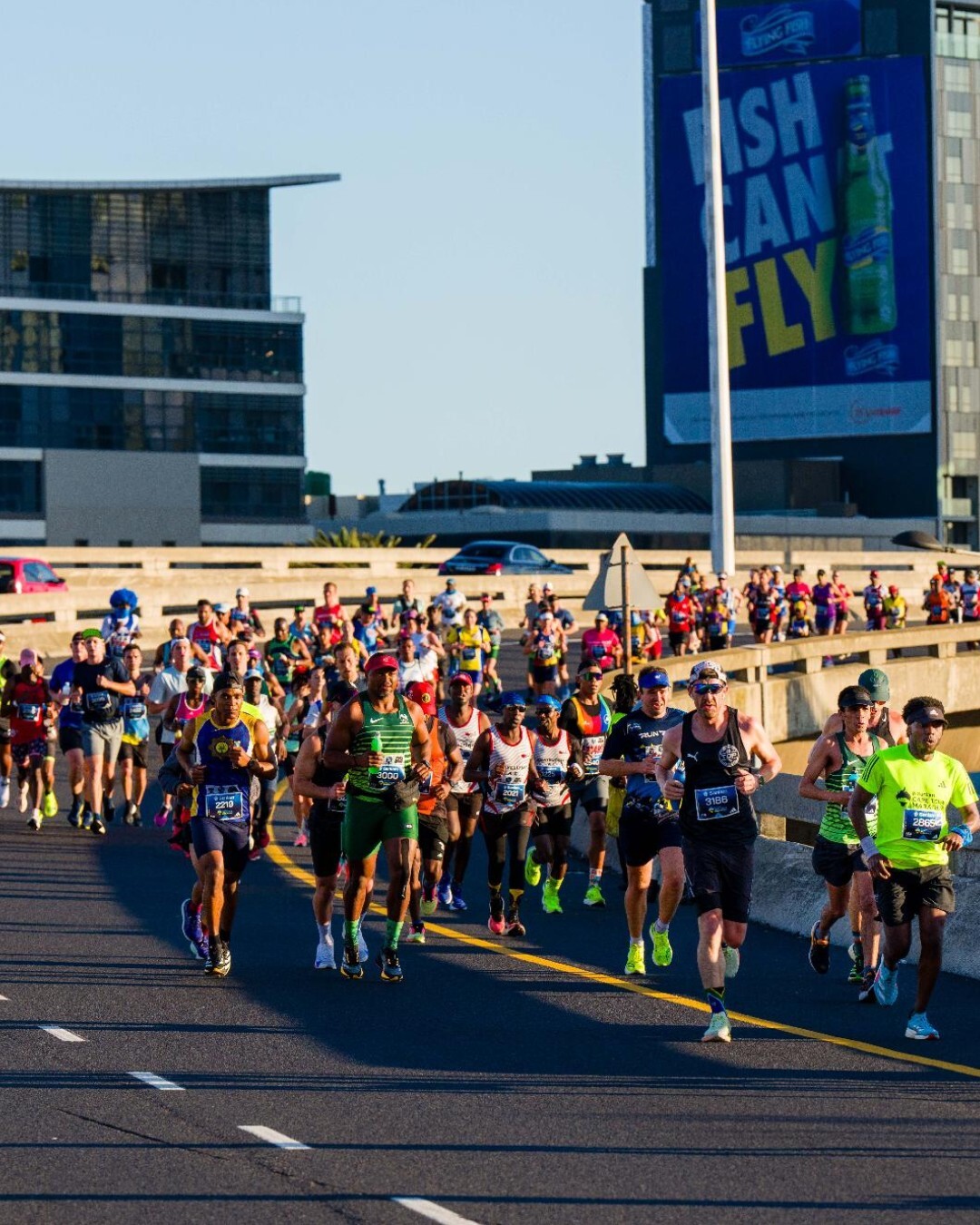
Sharing the news with his followers, Kipchoge also reflected on the emotional significance of beginning the journey on African soil. In a message posted on his social media page, he wrote:
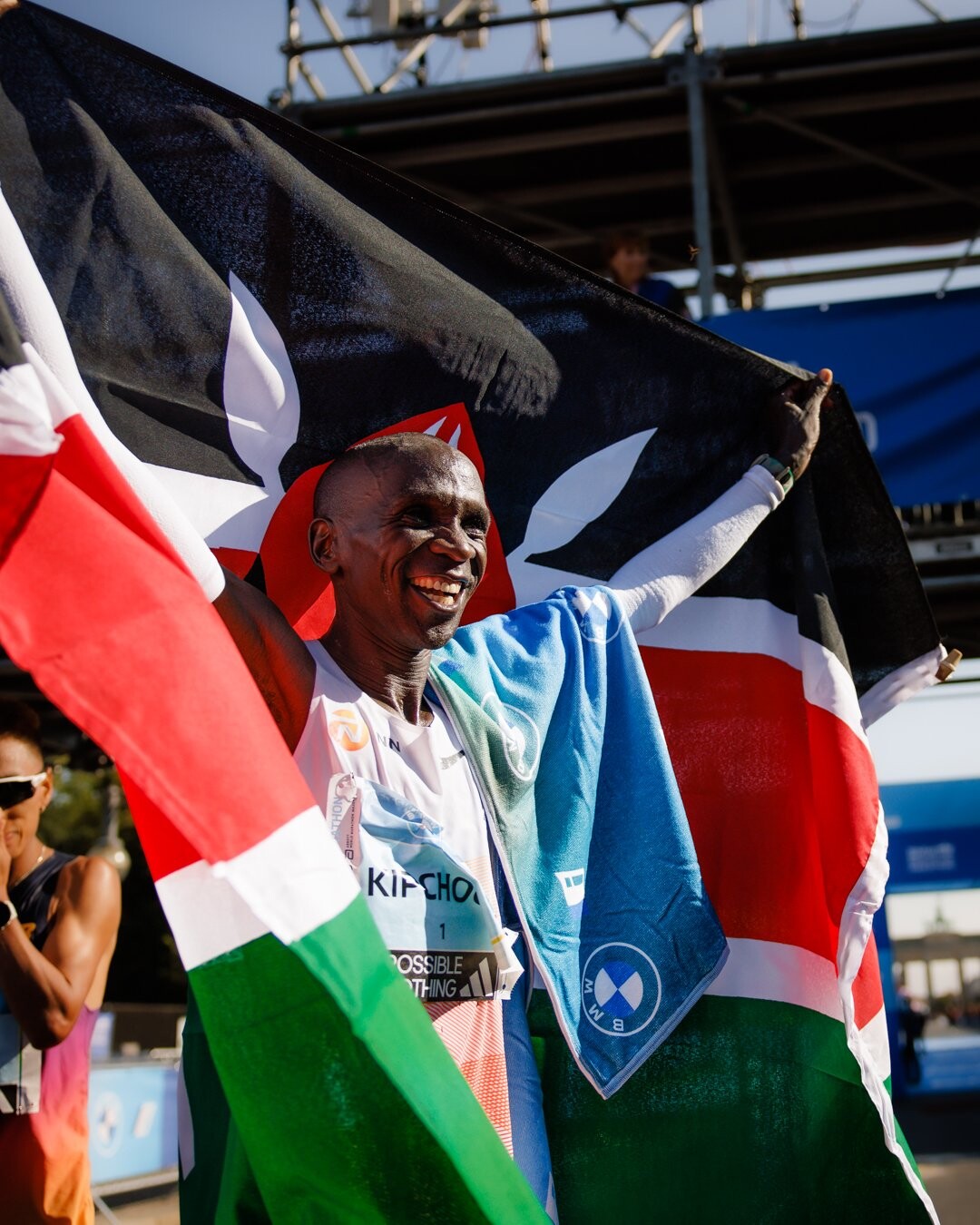
“Africa is where my journey as a runner began and where the foundation of my success is deeply rooted. To start this World Tour on my own continent is very special. It is about celebrating the strength of African running and inspiring the next generation. To run my first ever marathon in Africa is something that holds a lot of meaning for me. @capetownmarathon, I can’t wait.”
For Kipchoge, the moment carries more than competitive ambition—it represents a full-circle return to the continent that shaped his career and philosophy. After years of conquering the world’s biggest marathons, the Kenyan champion now begins a new global mission that blends competition with inspiration.
When the starting gun sounds in Cape Town on May 24, it will not simply mark another race for one of the sport’s greatest figures. Instead, it will signal the first stride of a bold seven-continent quest—one that continues to prove that even for Eliud Kipchoge, the journey of running is always moving forward.
(03/09/2026) ⚡AMPby Erick Cheruiyot for My Best Runs.
Cape Town Marathon
The Sanlam Cape Town Marathon is a City Marathon held in Cape Town, South Africa, which is sponsored by Sanlam, the City of Cape Town and Vital Health Foods. The marathon is held on a fast and flat course, starting and finishing in Green Point, near the Cape Town Stadium. Prior to existing in its current format, the Cape Town...
more...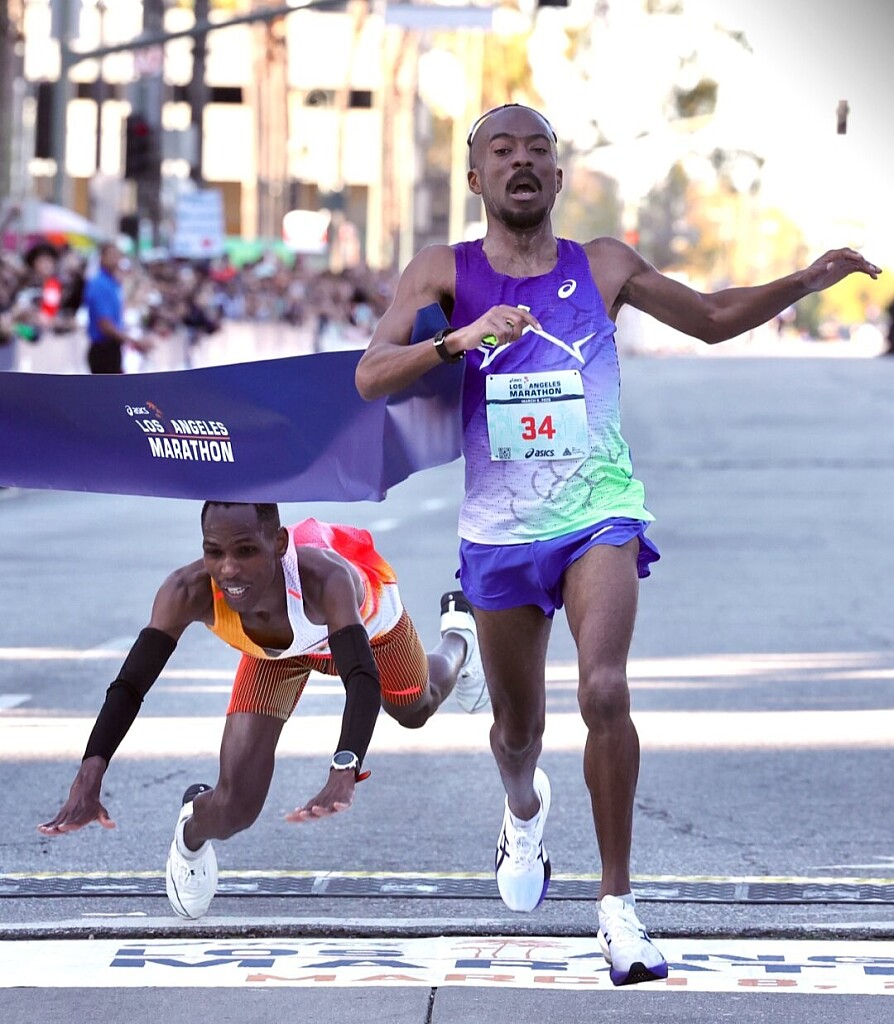
Miller’s Last-Stride Triumph and Cherono’s Inspiring Run Highlight Dramatic Los Angeles Marathon
The 41st edition of the Los Angeles Marathon produced a day filled with drama, resilience, and unforgettable performances, as American runner Nathan Miller captured the men’s title in the closest finish in race history while Kenya’s Priscah Cherono delivered a remarkable victory in the women’s race.
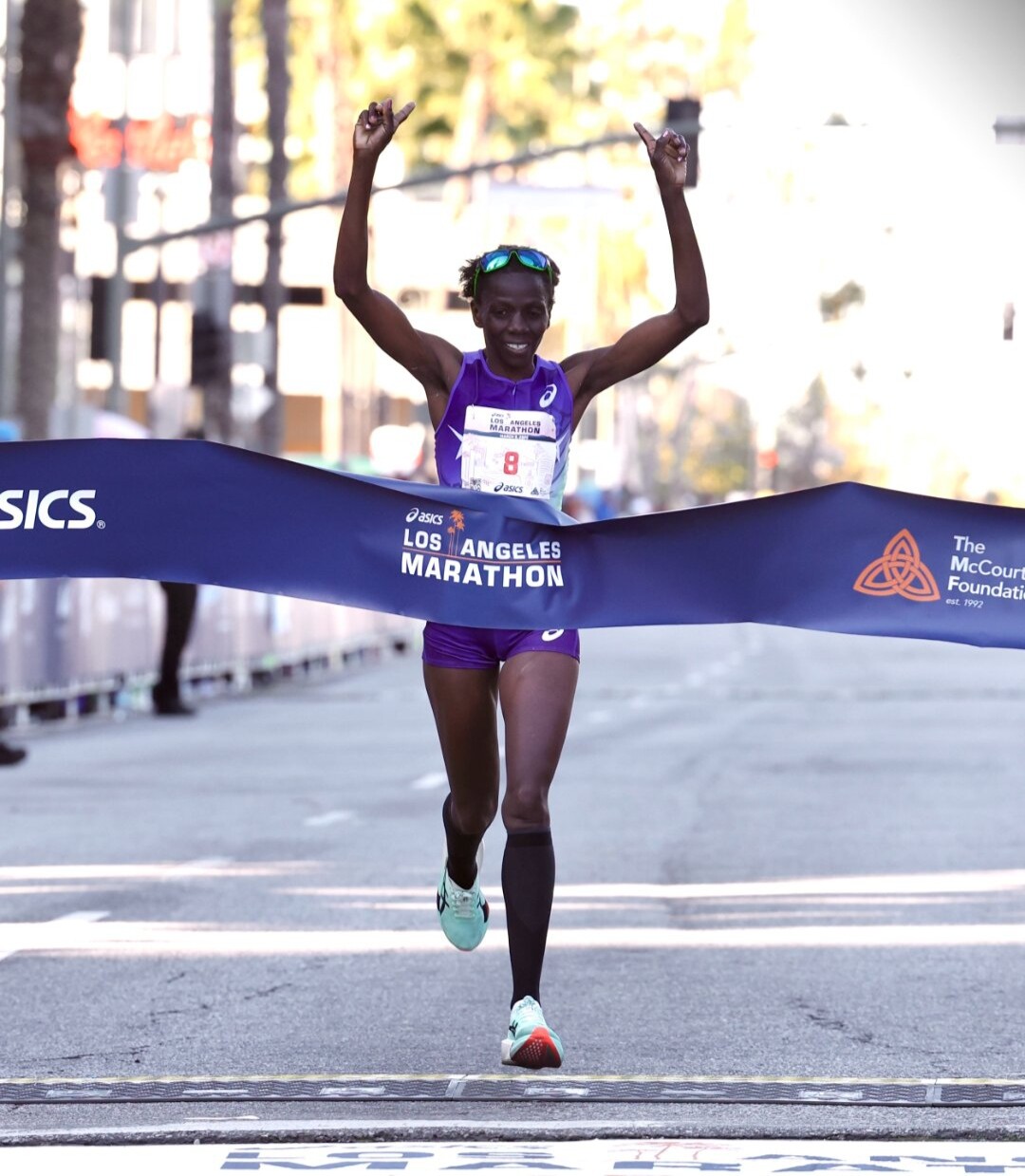
The men’s contest came down to a breathtaking final sprint. Miller surged at the last possible moment to edge Kenya’s Michael Kamau at the finish line, with both runners officially credited with the same time of 2:11:18 after covering the demanding 26.2-mile course. Their shoulder-to-shoulder battle through the closing stretch created a thrilling finale, with Miller’s perfectly timed surge proving decisive in the final stride.
Moments after the finish, concern rose for Kamau, who reportedly did not take fluids during the race and collapsed after crossing the line. Medical personnel quickly attended to the Kenyan athlete, who was taken away on a stretcher following his courageous effort. Fellow Kenyan Enyew Nigat completed the podium, finishing third in 2:14:23 after a steady performance throughout the race.
For Miller, the victory marks a significant moment in a career defined by dedication both on and off the road. The 36-year-old from Jackson, Michigan balances elite competition with his work as a substitute teacher and a high school track and cross-country coach at Jackson High School. His personal best of 2:10:45, achieved at the Grandma's Marathon in 2023, also stands as the fastest marathon ever run by a U.S.-born Black athlete. His triumph continues a growing American presence atop the race, following the victory of Matt Richtman last year, who became the first American men’s champion since 1994 when he won in 2:07:56.
While the men’s race delivered a dramatic sprint finish, the women’s race showcased experience and determination as Cherono powered to victory in 2:25:20. At 45 years old, the mother of three produced an inspiring run across the streets of Los Angeles. Cherono, who now lives in Colorado Springs, Colorado, once competed at the Olympic level, finishing 10th in the 5,000 meters at the 2008 Summer Olympics in Beijing.
American runner Kellyn Taylor of Flagstaff, Arizona finished second in 2:27:37, while Kenya’s Antonina Kwambai secured third place in 2:28:50, rounding out a competitive women’s podium.
Weather conditions added another layer of challenge to the race. With temperatures forecast to climb into the 80s by midday, organizers announced that runners who managed to complete 18 miles of the course would still receive medals due to the expected heat. The race began at Dodger Stadium and stretched across the city before finishing in the Century City district of Los Angeles, where thousands of runners pushed through the warm conditions and the relentless distance.
From Miller’s electrifying last-stride surge to Cherono’s inspiring victory at 45, the 2026 Los Angeles Marathon unfolded as a powerful reminder of the spirit of endurance that defines the sport. On a warm California morning filled with tension and triumph, the race once again proved that in the marathon, greatness often reveals itself in the very final stride.
(03/08/2026) ⚡AMPby Erick Cheruiyot for My Best Runs.

Los Angeles Marathon
The LA Marathon is an annual running event held each spring in Los Angeles, Calif. The 26.219 mile (42.195 km) footrace, inspired by the success of the 1984 Summer Olympic Games, has been contested every year since 1986. While there are no qualifying standards to participate in the Skechers Performnce LA Marathon, runners wishing to receive an official time must...
more...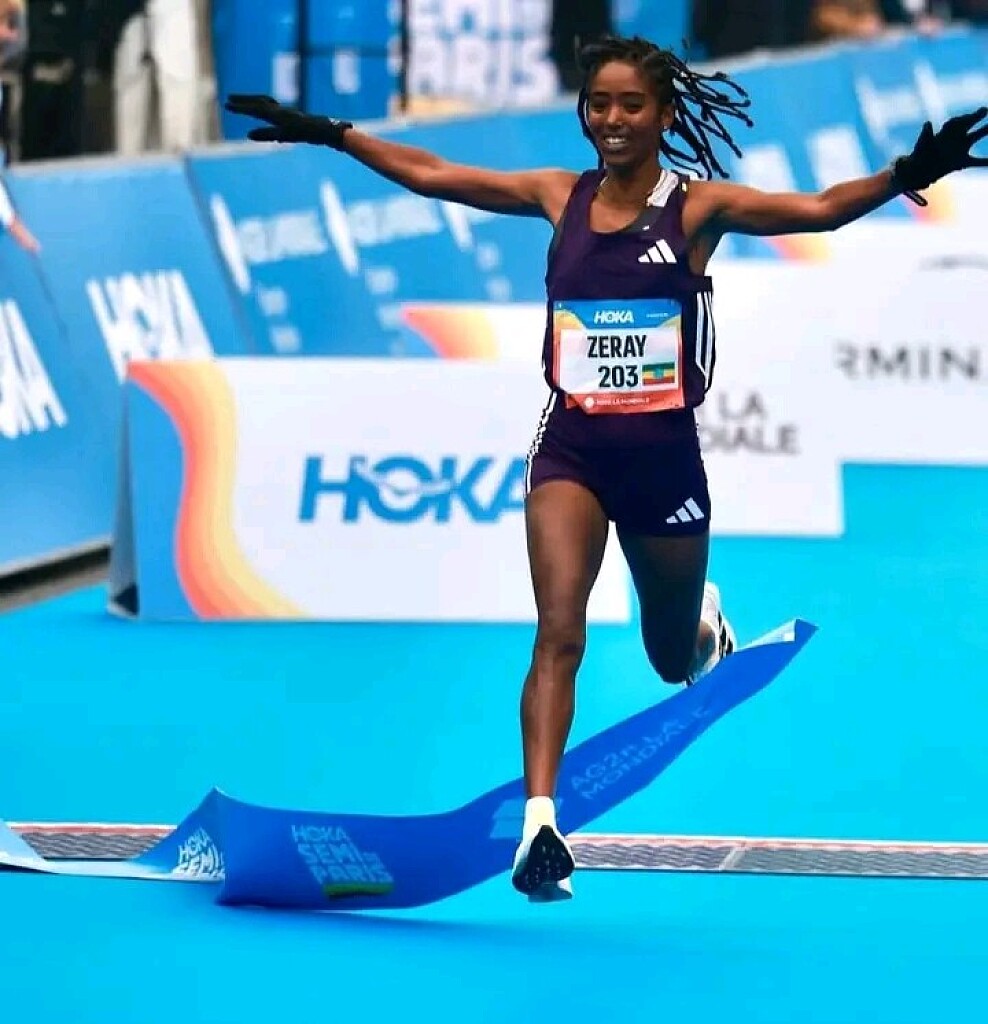
Zeray Breaks Course Record as Kimutai Leads Strong Men’s Field at the 2026 HOKA Semi de Paris
The 2026 edition of the HOKA Semi de Paris delivered thrilling action on the streets of Paris, where elite distance runners produced fast times and dramatic finishes in both the women’s and men’s races.
In the women’s contest, Ethiopia’s Ftaw Zeray produced a stunning performance to claim victory in 1:05:12, breaking the race course record with an authoritative run from start to finish. Zeray controlled the pace with confidence before pulling clear in the decisive stages, cementing her place in the history of the Paris half marathon.

Uganda’s Sarah Chelangat followed with a strong effort to secure second place in 1:06:31, maintaining her rhythm through the final kilometers. Just one second behind, Kenya’s Mercy Chepwogen completed the podium in 1:06:32, closing hard to finish third after a tightly fought battle to the line.
Women’s Top 3
1️⃣ Ftaw Zeray (ETH) — 1:05:12 CR
2️⃣ Sarah Chelangat (UGA) — 1:06:31
3️⃣ Mercy Chepwogen (KEN) — 1:06:32
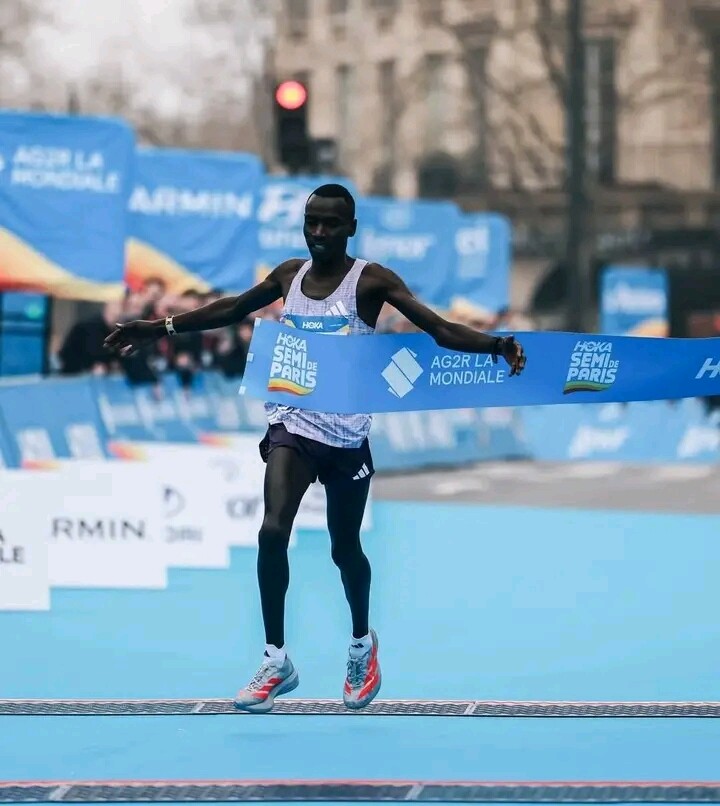
The men’s race was equally competitive, with Kenya’s Kennedy Kimutai demonstrating strength and tactical composure to take the win in 1:00:11. Running smoothly along the fast Parisian course, Kimutai held off late pressure to secure a convincing victory.

Fellow Kenyan Timothy Misoi followed in 1:00:41, ensuring a Kenyan one–two finish after a determined chase in the closing stages. South Africa’s Thabang Mosiako completed the podium in 1:00:44, finishing only seconds behind Misoi in a tightly contested fight for second place.
Men’s Top 3
1️⃣ Kennedy Kimutai (KEN) — 1:00:11
2️⃣ Timothy Misoi (KEN) — 1:00:41
3️⃣ Thabang Mosiako (RSA) — 1:00:44
With a course record, close finishes, and outstanding performances from athletes across Africa, the 2026 HOKA Semi de Paris once again proved why it remains one of Europe’s most exciting and competitive half marathons, drawing world-class runners to the iconic avenues of Paris.
(03/08/2026) ⚡AMPby Erick Cheruiyot for My Best Runs.

Semi de Paris
Paris Half Marathon (French: Semi de Paris) is an annual half marathon held normally every March in Paris, France since 1993. It currently holds IAAF Bronze Label status. Kenya's Stanley Biwott is the men's course record holder, with his winning time of 59:44 from the 2012 race. The women's course record is held by Nigsti Haftu (ETH), who ran a...
more...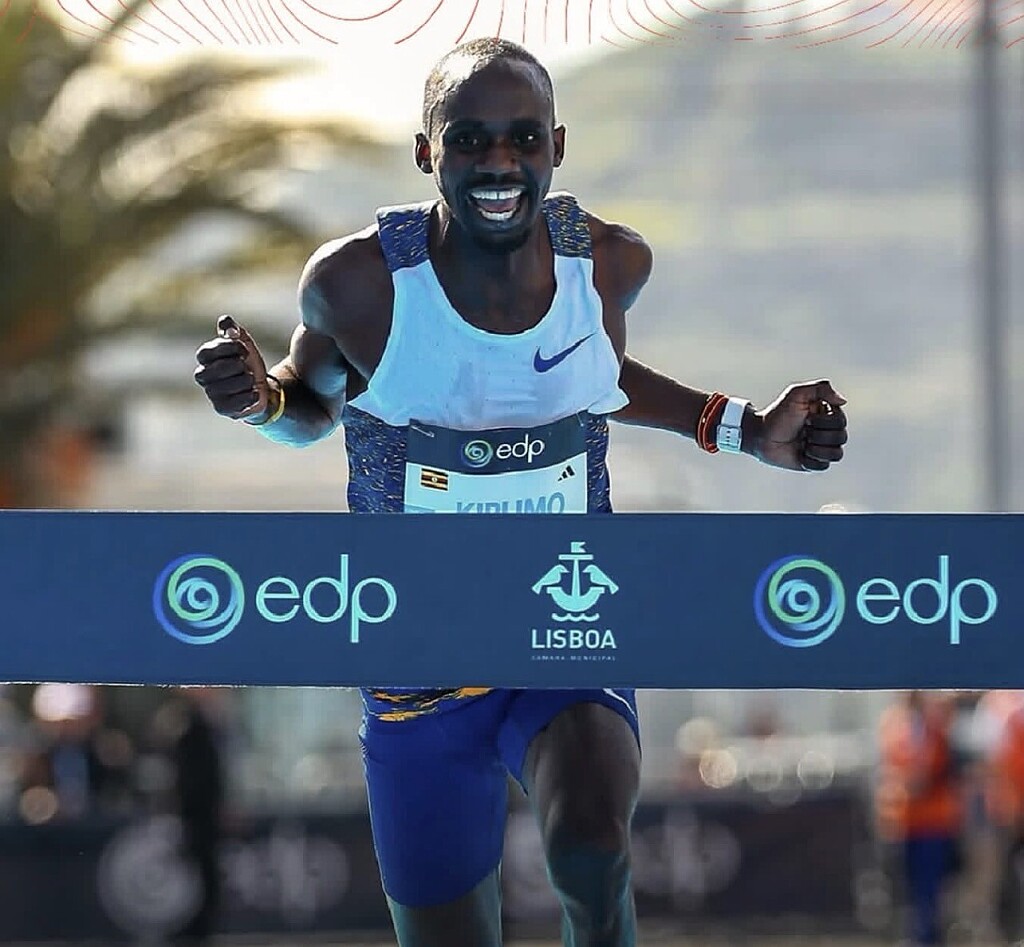
Jacob Kiplimo Rewrites History Again with Stunning Half Marathon World Record in Lisbon
The streets of Lisbon witnessed another unforgettable chapter in distance running as Uganda’s phenomenal star Jacob Kiplimo produced a breathtaking performance to set a new half marathon world record of 57:20 at the Lisbon Half Marathon in Portugal.
Running with remarkable control and relentless pace, Kiplimo turned the race into a historic moment for global road running. From the early kilometres he looked comfortable at record speed, gradually pulling away from the field and leaving little doubt that something extraordinary was unfolding on the fast Portuguese course.
As he surged down the finishing stretch, the clock confirmed what spectators had begun to realize—Kiplimo had rewritten history once again. His 57:20 not only secured victory but also smashed the official world record recognized by World Athletics, further cementing his place among the greatest half-marathon runners the sport has ever seen.
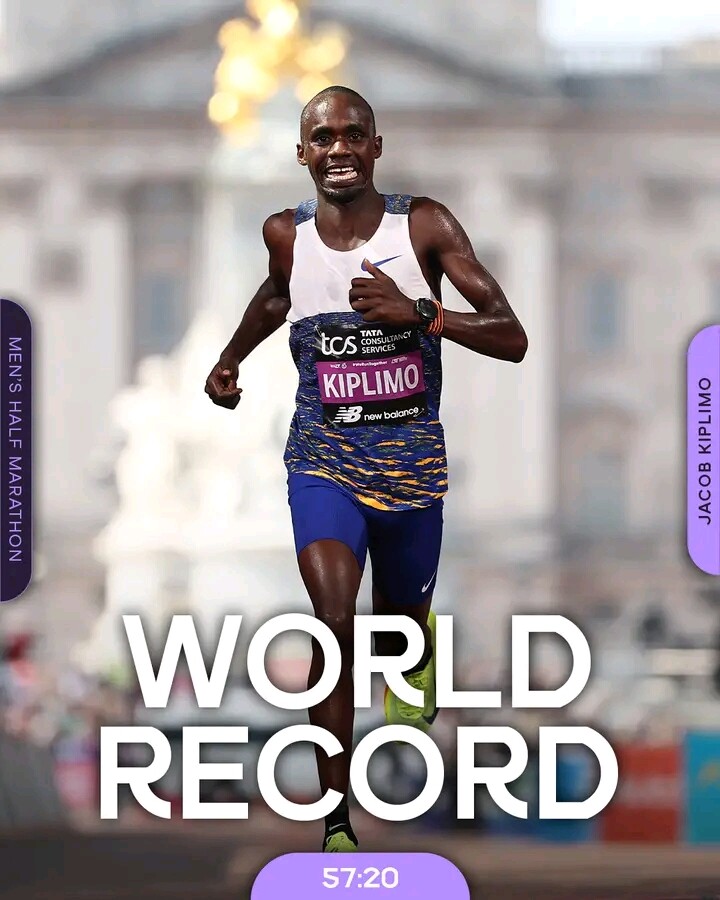
The achievement carried extra significance for the Ugandan star. Just a year earlier, he had run a stunning 56:42 in Barcelona—the fastest half marathon ever recorded—but the mark was never ratified, leaving a lingering debate in the sport. In Lisbon, however, Kiplimo removed any doubt with a definitive, record-breaking run.
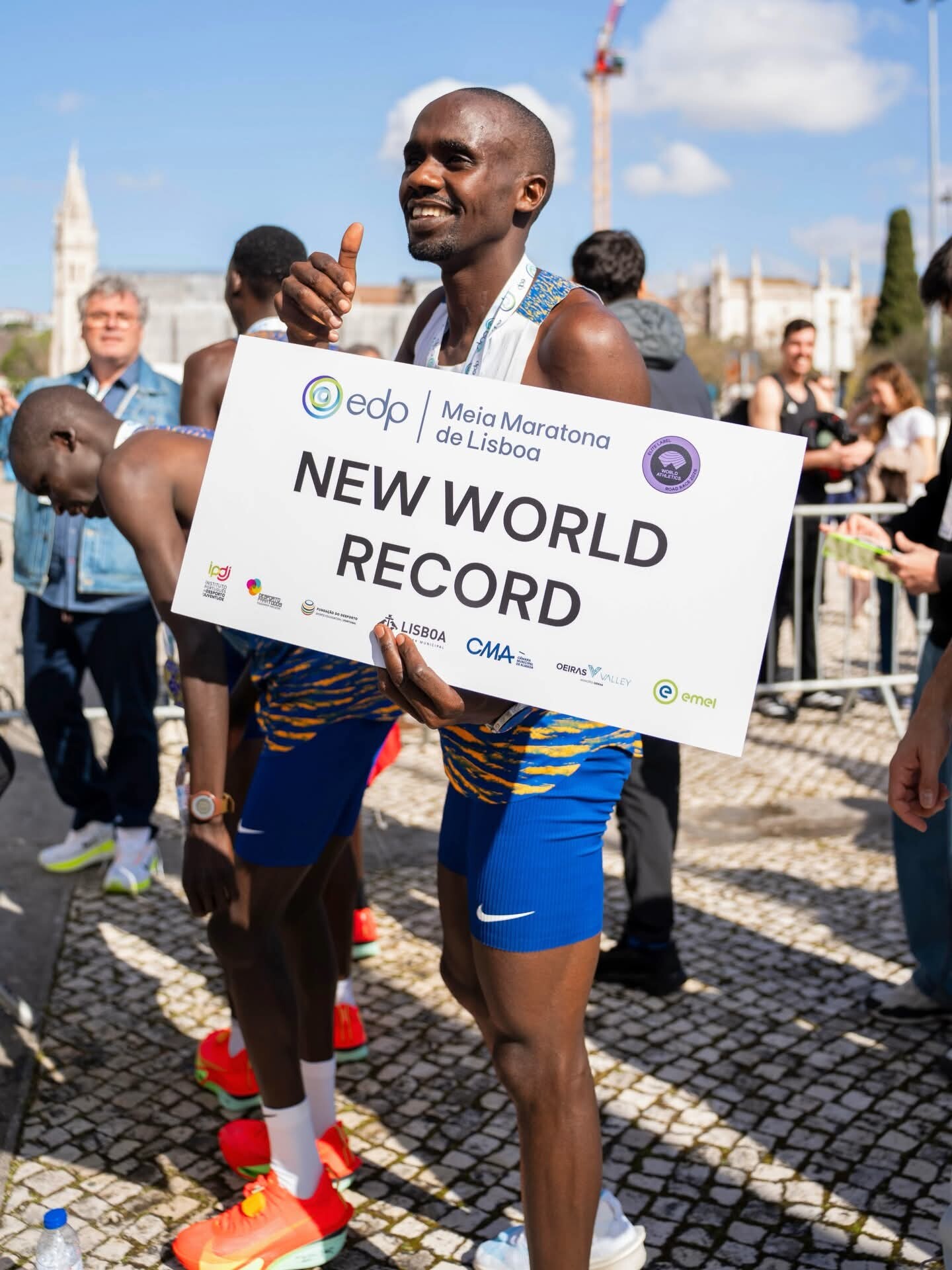
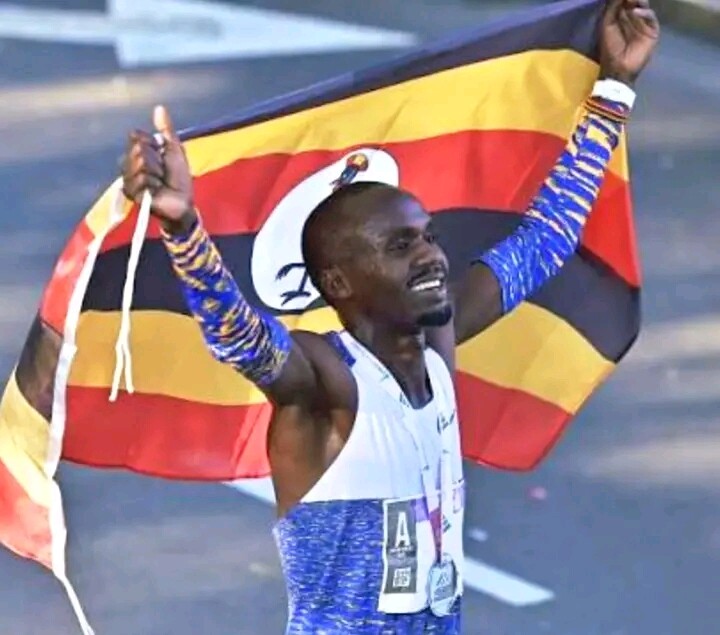
Fittingly, the Portuguese course has become part of his remarkable legacy. It was here in 2021 that he first stunned the athletics world with a 57:31 world record, and now he has returned to push the limits even further. Three extraordinary races across the years now define Kiplimo’s half-marathon dominance—each performance reinforcing his reputation as one of the sport’s most relentless competitors.
Behind the record-breaking champion, the race produced a series of impressive performances from some of the world’s best road runners, highlighting the depth and intensity of the elite field.
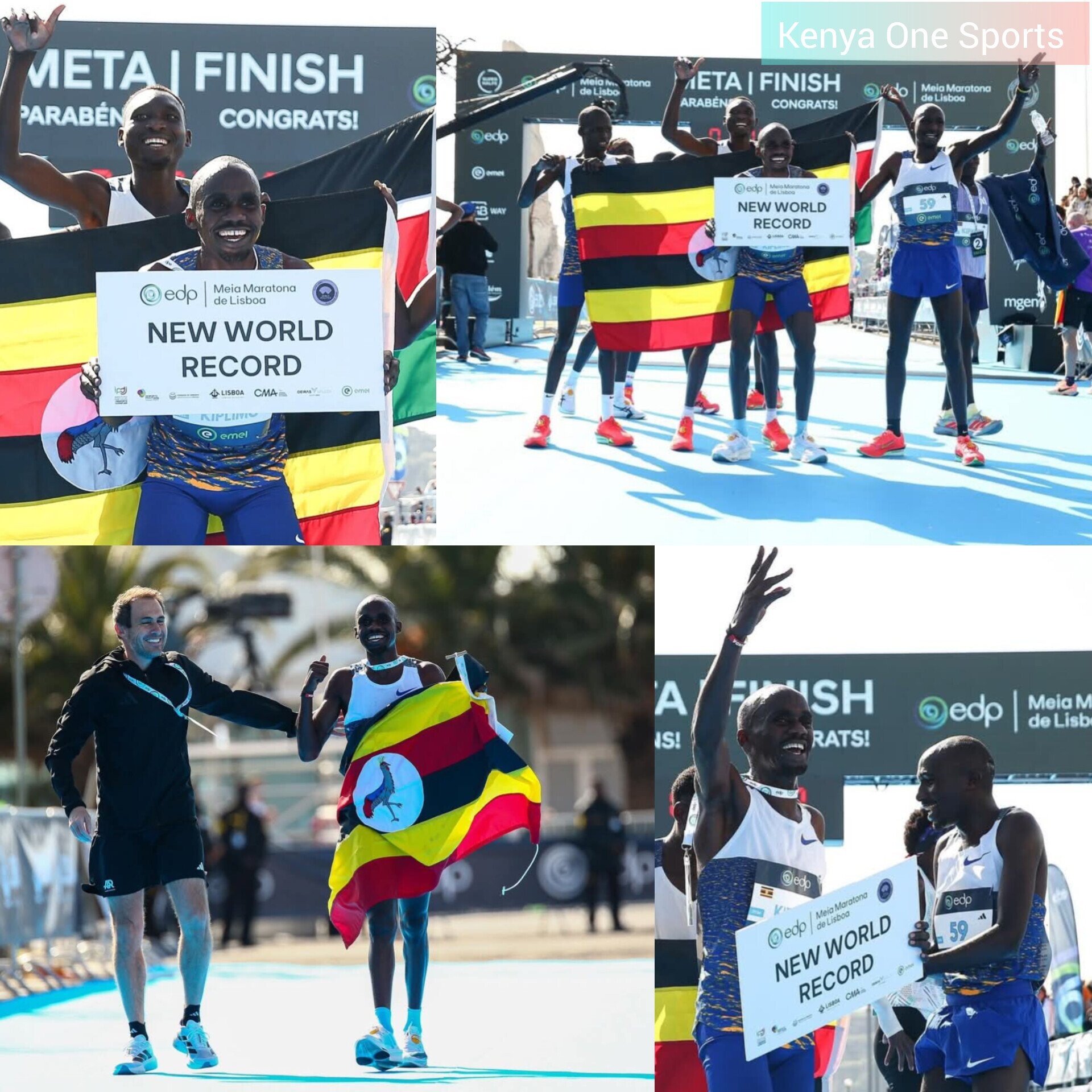
Top 10 Finishers – 2026 Lisbon Half Marathon
1. Jacob Kiplimo (Uganda) — 57:20 WR
2. Nicholas Kipkorir (Kenya) — 58:08
3. Gilbert Kipkosgei Kiprotich (Kenya) — 58:59
4. Benard Langat (Kenya) — 59:31
5. Mohamed Ismail (Djibouti) — 59:45
6. Oscar Chelimo (Uganda) — 1:00:12
7. Stanley Waithaka Mburu (Kenya) — 1:00:17
8. Esau Kipkorir Kemboi (Kenya) — 1:00:19
9. Egide Ntakarutimana (Burundi) — 1:00:34
10. Célestin Ndikumana (Burundi) — 1:00:34
As the celebrations fade and the records settle into the history books, one thing remains clear—Jacob Kiplimo is redefining what is possible in distance running. With courage, rhythm, and a relentless will to chase greatness, he continues to stretch the limits of human endurance. And with the legendary London Marathon looming on the horizon, the world now watches with anticipation, wondering just how much further this extraordinary runner can carry the sport into a new era of speed and brilliance.
(03/08/2026) ⚡AMPby Erick Cheruiyot for My Best Runs.

EDP HALF MARATHON OF LISBON
EDP Lisbon Half Marathonis an annual internationalhalf marathoncompetition which is contested every March inLisbon,Portugal. It carries World Athletics Gold Label Road Racestatus. The men's course record of 57:31 was set byJacob Kiplimoin 2021, which was the world record at the time. Kenyanrunners have been very successful in the competition, accounting for over half of the total winners, withTegla Loroupetaking the...
more...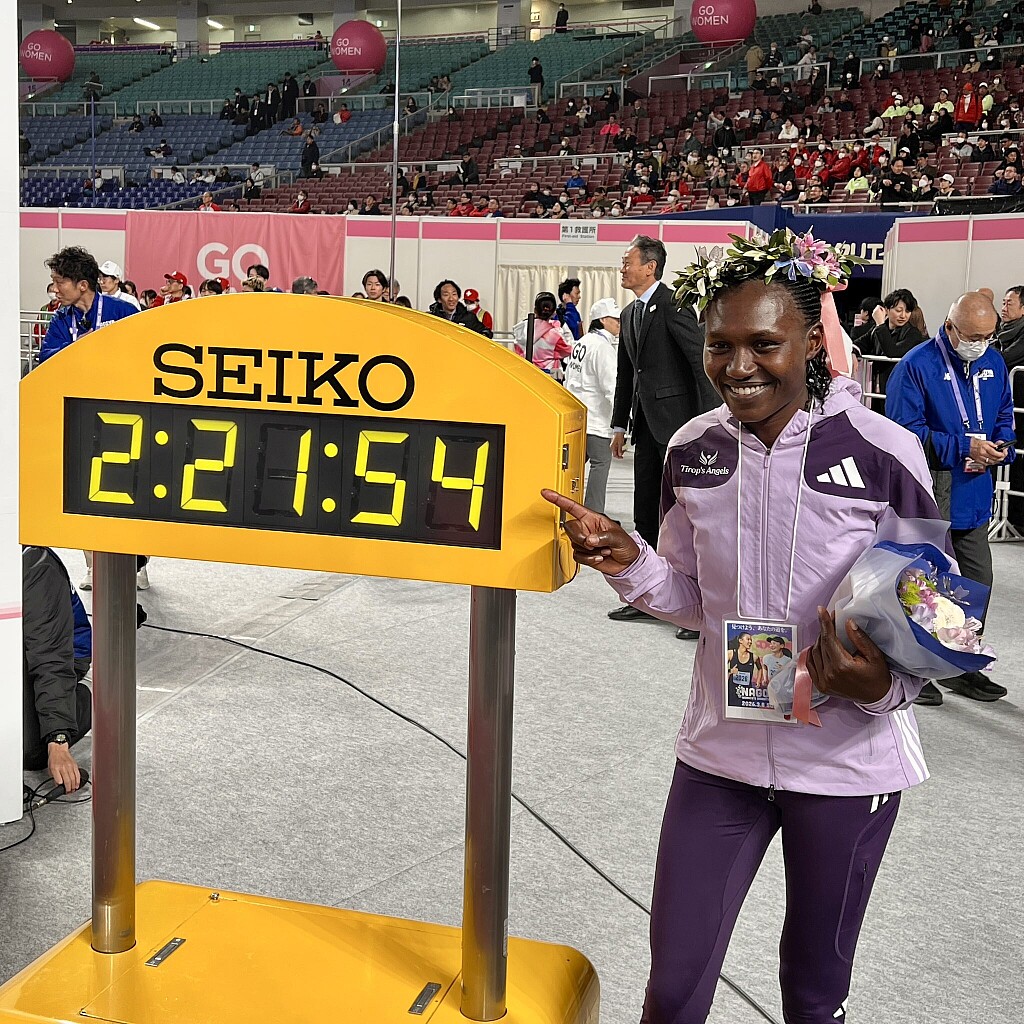
Chepkirui’s Brilliant Late Surge Seals Dramatic Victory at the Nagoya Women’s Marathon
A breathtaking duel lit up the streets of Nagoya as Kenya’s Sheila Chepkirui and Japan’s Saya Sato produced a thrilling battle for supremacy at the prestigious Nagoya Women's Marathon.
What began as a controlled tactical contest gradually transformed into one of the most gripping finishes of the marathon season, with the race ultimately decided in the final moments before the runners entered the iconic Vantelin Dome Nagoya.
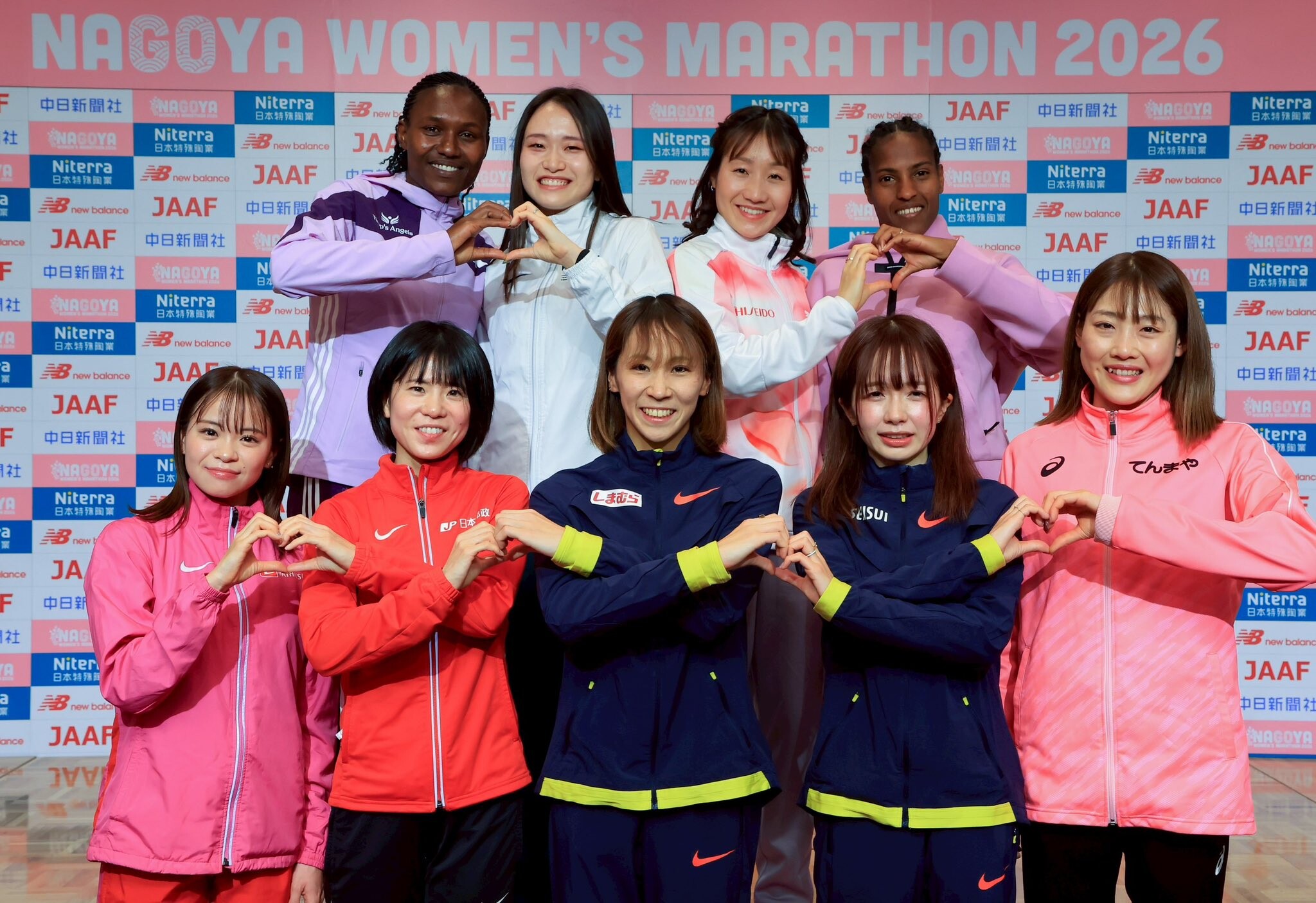
As the leaders approached the final stretch, Sato appeared poised to claim victory in front of the home crowd. But with roughly 600 meters remaining, Chepkirui unleashed a perfectly timed surge, drawing level with the Japanese star before powering ahead in a dramatic sprint to the line.
The Kenyan crossed the finish tape in 2:21:54, securing victory by the slimmest of margins in a race that demanded courage, patience, and a final burst of brilliance. Sato followed just moments later in 2:21:56, delivering a magnificent performance that electrified the spectators. Ethiopia’s Aynalem Desta ran a composed and consistent race to claim third place in 2:22:37, completing a strong international podium.
Beyond the podium battle, the race also highlighted remarkable endurance from athletes across the globe. Mexico’s Argentina Valdepeñas Serna finished 31st in 2:45:30, an impressive feat considering she had run the Tokyo Marathon just a week earlier, clocking 2:41:47. Meanwhile, Tarahumara runner Maria Juana Ramirez Hernandez produced a determined effort to finish in 2:48:25, adding another inspiring chapter to the race’s international story.
Top 10 – Nagoya Women’s Marathon 2026
1. Sheila Chepkirui (Kenya) – 2:21:54
2. Saya Sato (Japan) – 2:21:56
3. Aynalem Desta (Ethiopia) – 2:22:37
4. Rika Kaseda (Japan) – 2:22:53
5. Natsuki Omori (Japan) – 2:23:45
6. Shinzakura Sora (Japan) – 2:24:34
7. Rihango (International) – 2:24:44
8. Jenew Gregson (Australia) – 2:25:06
9. Aika Murakami (Japan) – 2:25:07
10. Yuna Takahashi (Japan) – 2:25:58
A Race That Celebrated the Spirit of Women’s Marathon Running
The 2026 edition of the Nagoya Women’s Marathon delivered far more than fast times—it delivered a story of courage, heart, and relentless determination. Chepkirui’s stunning late surge reminded the world that victory in the marathon often belongs to those who dare to believe in their final reserve of strength.
Yet the beauty of the race extended beyond the champion’s triumph. From Sato’s fearless fight on home soil to the inspiring performances of athletes from every corner of the globe, the event became a celebration of resilience and unity through sport. In Nagoya, every stride told a story, every finish carried meaning, and together these remarkable women turned 42.195 kilometers into a powerful reminder that the spirit of marathon running is as boundless as the athletes who chase their dreams along its roads.
(03/07/2026) ⚡AMPby Erick Cheruiyot for My Best Runs.

Nagoya Women's Marathon
The Nagoya Women's Marathon named Nagoya International Women's Marathon until the 2010 race, is an annual marathon race for female runners over the classic distance of 42 km and 195 metres, held in Nagoya, Japan in early March every year. It holds IAAF Gold Label road race status. It began in 1980 as an annual 20-kilometre road race held in...
more...
Fast Men Set to Light Up the Streets at the 2026 Paris Half Marathon
The stage is set for a thrilling battle on the roads of the French capital as elite distance runners prepare to line up for the 2026 Paris Half Marathon, scheduled for Sunday, March 8. With a strong international field assembled, expectations are high for a fast and fiercely competitive race through the iconic streets of Paris.
Leading the charge is Kenya’s Kennedy Kimutai, who enters the race with an impressive personal best of 58:28 over the half marathon distance. Known for his relentless pace and strength in the latter stages of races, Kimutai will be one of the athletes to watch as he aims to dominate one of Europe’s most prestigious road races.
He will face stiff competition from fellow Kenyan Edward Cheserek, a former NCAA standout who has successfully transitioned to the roads. Cheserek brings a personal best of 59:11, and his tactical racing ability could make him a serious contender for victory if the race turns tactical.
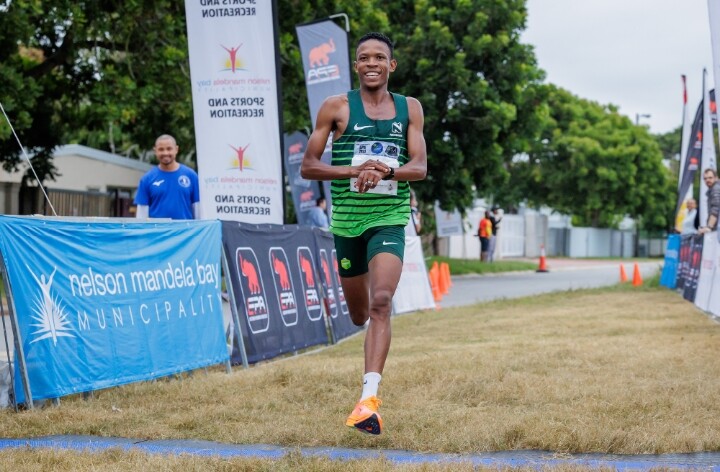
South Africa’s Thabang Mosiako, with a best of 59:52, adds further depth to the field and represents one of the strongest challengers outside the Kenyan contingent. His sub-60-minute credentials suggest he has the speed and endurance required to stay with the lead pack deep into the race.
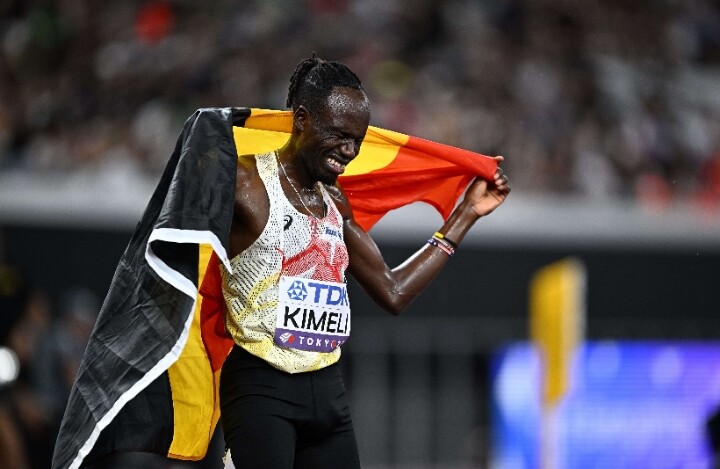
Another Kenyan athlete, Timothy Misoi, will also be looking to make his mark. With a personal best of 1:00:44, Misoi has shown steady improvement and could surprise if he finds the right rhythm on race day.
From Europe, Great Britain’s Tom Anderson arrives with a personal best of 1:01:21, hoping to challenge the African dominance and deliver a strong performance in front of the large international crowd expected in Paris.
Adding intrigue to the race are several notable half marathon debutants. Isaac Kimeli, who represents Belgium, will test himself over the 21.1 km distance for the first time after establishing himself on the track and shorter road races. Burundi’s Emile Hafashimana and France’s Gatien Airiau are also set to make their debuts, bringing fresh excitement and unpredictability to the competition.
With such a deep lineup featuring proven sub-hour runners and promising newcomers, the 2026 Paris Half Marathon promises high drama and potentially very fast times. As runners surge past some of Paris’ most famous landmarks, the race could produce one of the standout road performances of the early 2026 season.
All signs point to an electrifying contest in the City of Light, where speed, strategy, and endurance will determine who ultimately claims victory.
(03/07/2026) ⚡AMPby Erick Cheruiyot for My Best Runs.
Semi de Paris
Paris Half Marathon (French: Semi de Paris) is an annual half marathon held normally every March in Paris, France since 1993. It currently holds IAAF Bronze Label status. Kenya's Stanley Biwott is the men's course record holder, with his winning time of 59:44 from the 2012 race. The women's course record is held by Nigsti Haftu (ETH), who ran a...
more...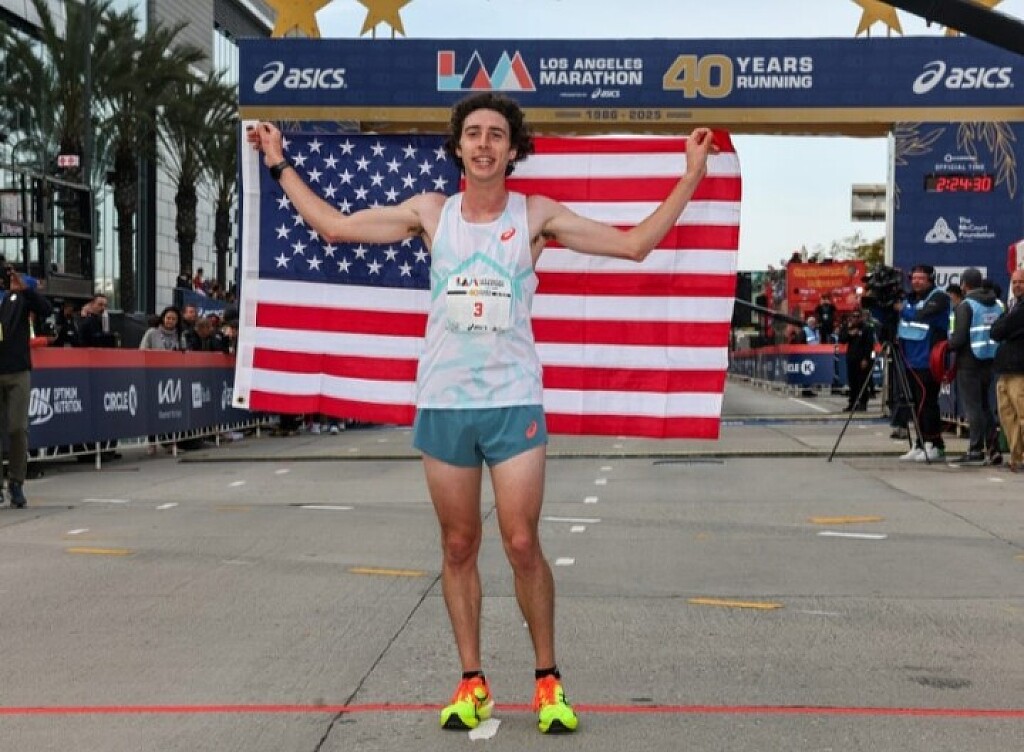
Rising Heat and Elite Rivalries Set the Stage for a Thrilling 2026 Los Angeles Marathon
The streets of Los Angeles will once again come alive with the rhythm of pounding footsteps as the 2026 edition of the Los Angeles Marathon takes place on Sunday, March 8 in California, United States. One of the most celebrated road races in America returns with thousands of runners and a competitive international elite field ready to battle across the iconic 42.195-kilometer distance.
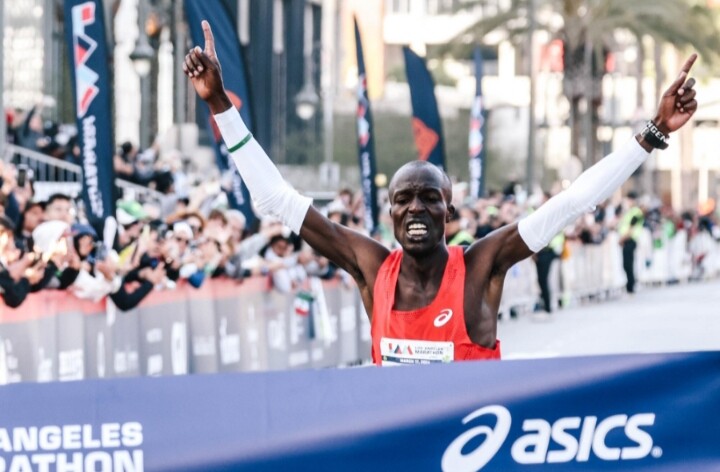
Race morning will begin early under Pacific Standard Time, with the professional wheelchair and handcycle athletes launching the action at 6:30 AM, followed by the elite men and women at 6:40 AM, before the main field of thousands of runners begins at 7:00 AM. For fans across Africa, the marathon unfolds later in the day, starting at 4:00 PM in West Africa, 5:00 PM in South and Central Africa, and 6:00 PM in East Africa.
Across Europe, Asia, and Oceania, fans will also be able to follow the race live as the 7:00 AM PST main start of the Los Angeles Marathon translates to 5:00 PM in Western Europe (including the United Kingdom and Portugal), 6:00 PM in Central Europe (such as France, Germany, Spain, and Italy), and 7:00 PM in Eastern Europe (including Greece, Finland, and Romania). In Asia, the race will begin at 9:30 PM in India, 11:00 PM in China, Singapore, and the Philippines, and midnight on March 9 in Japan and South Korea. For viewers in Oceania, the marathon will start at 2:00 AM on March 9 in Eastern Australia and 4:00 AM in New Zealand, meaning dedicated fans there will be watching the action unfold deep into the night.
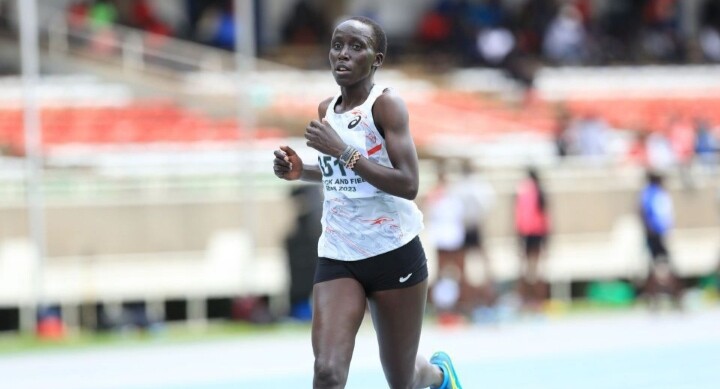
Defending champions return determined to protect their crowns. Ethiopia’s Tejinesh Tulu arrives aiming to repeat her triumph from last year, while American marathoner Matthew Richtman will attempt to defend the men’s title on home soil. Both champions face deeper and stronger fields this time, setting the stage for an unpredictable and highly competitive contest.

The women’s race features a strong East African presence led by Kenya’s Vicoty Chepngeno, who holds the fastest personal best in the field at 2:19:55. Ethiopia’s experienced campaigner Atsede Bayisa, with a best of 2:22:03, also arrives as a major contender, while Kenya’s Antonina Kwambai and Ethiopia’s Almaz Kemsi add further depth to a field capable of producing a fierce battle for the podium. The race also includes American hopes such as Kellyn Taylor and Makenna Myler, both looking to challenge the traditionally dominant East African runners. Meanwhile, defending champion Tejinesh Tulu remains a serious threat despite not owning the fastest personal best, as championship races often reward patience, tactical awareness, and strength in the closing kilometers.
The men’s contest promises equal intensity. Kenya’s Dominic Ngeno leads the field on paper with a personal best of 2:06:35, positioning him as one of the main favorites if the race develops at a fast pace. Defending champion Matthew Richtman will look to repeat his success, but he faces stiff competition from Ethiopia’s Abdela Godana and Kenya’s Michael Kimani Kamau, both capable of pushing the pace deep into the race. Eritrea’s Tesfu Tewelde, Sweden’s David Nilsson, and Kenya’s Athanas Kioko also enter the race with the potential to disrupt the favorites and deliver breakthrough performances.
Weather conditions could play a decisive role in how the race unfolds. Forecasts suggest that warm temperatures may already be present from the start, meaning the marathon could evolve into a tactical contest rather than a purely fast one. In such situations, pacing discipline, hydration, and the ability to surge late in the race often become the decisive factors.
With elite runners from Kenya, Ethiopia, the United States, Eritrea, and Europe lining up alongside thousands of passionate participants, the 2026 edition of the Los Angeles Marathon promises an exciting blend of global rivalry and personal ambition. As the sun rises over Los Angeles, champions will defend their titles, challengers will chase career-defining victories, and thousands of runners will set out on a journey toward one unforgettable finish line.
(03/07/2026) ⚡AMPby Erick Cheruiyot for My Best Runs.
Los Angeles Marathon
The LA Marathon is an annual running event held each spring in Los Angeles, Calif. The 26.219 mile (42.195 km) footrace, inspired by the success of the 1984 Summer Olympic Games, has been contested every year since 1986. While there are no qualifying standards to participate in the Skechers Performnce LA Marathon, runners wishing to receive an official time must...
more...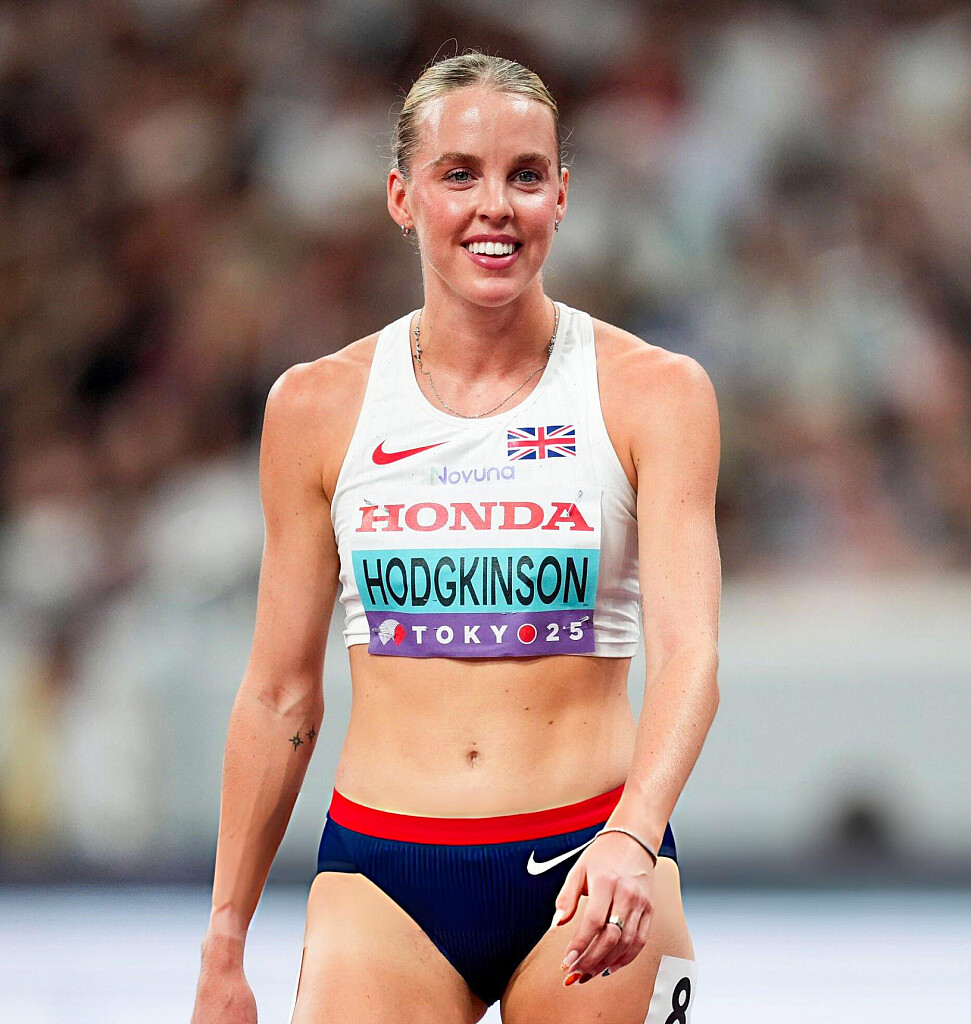
Women’s 800m Set to Ignite the 2026 Indoor Season
The women’s 800 metres is already shaping up to be one of the most thrilling events of the indoor season, with early performances pointing to a fierce and highly competitive showdown at the upcoming 2026 World Athletics Indoor Championships — the global indoor spectacle scheduled for March 20–22 in Kujawy-Pomorze, Poland.
At the top of the 2026 world list stands Britain’s Olympic champion Keely Hodgkinson, who has delivered an early-season statement with a world-leading 1:54.87. The performance places her firmly ahead of the field and confirms that the British middle-distance star is once again operating at an exceptional level as the championship season approaches.
Yet Hodgkinson’s commanding mark does not mean the race is settled. The women’s 800m is quickly becoming one of the deepest and most competitive events of the indoor circuit this year. Switzerland’s rising talent Audrey Werro sits second on the global list with 1:57.27, underlining her growing status as one of Europe’s most promising young middle-distance runners.
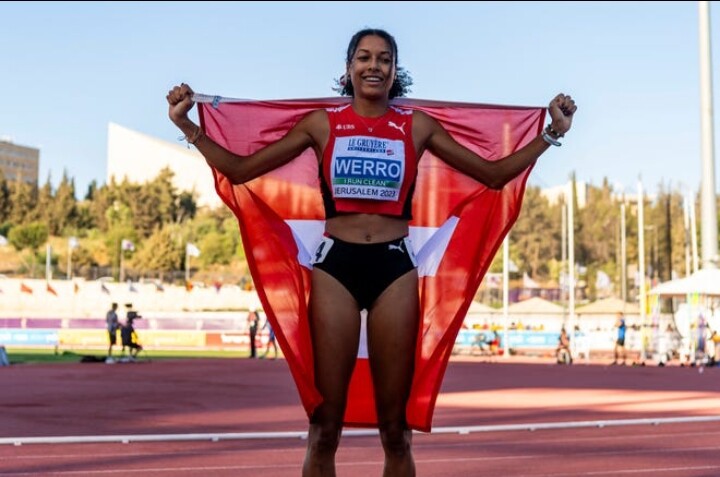
Great Britain’s strength in the event is further highlighted by the presence of Isabelle Boffey and Georgia Hunter Bell, who currently hold the third and fourth fastest times of the season with 1:57.43 and 1:57.80 respectively.
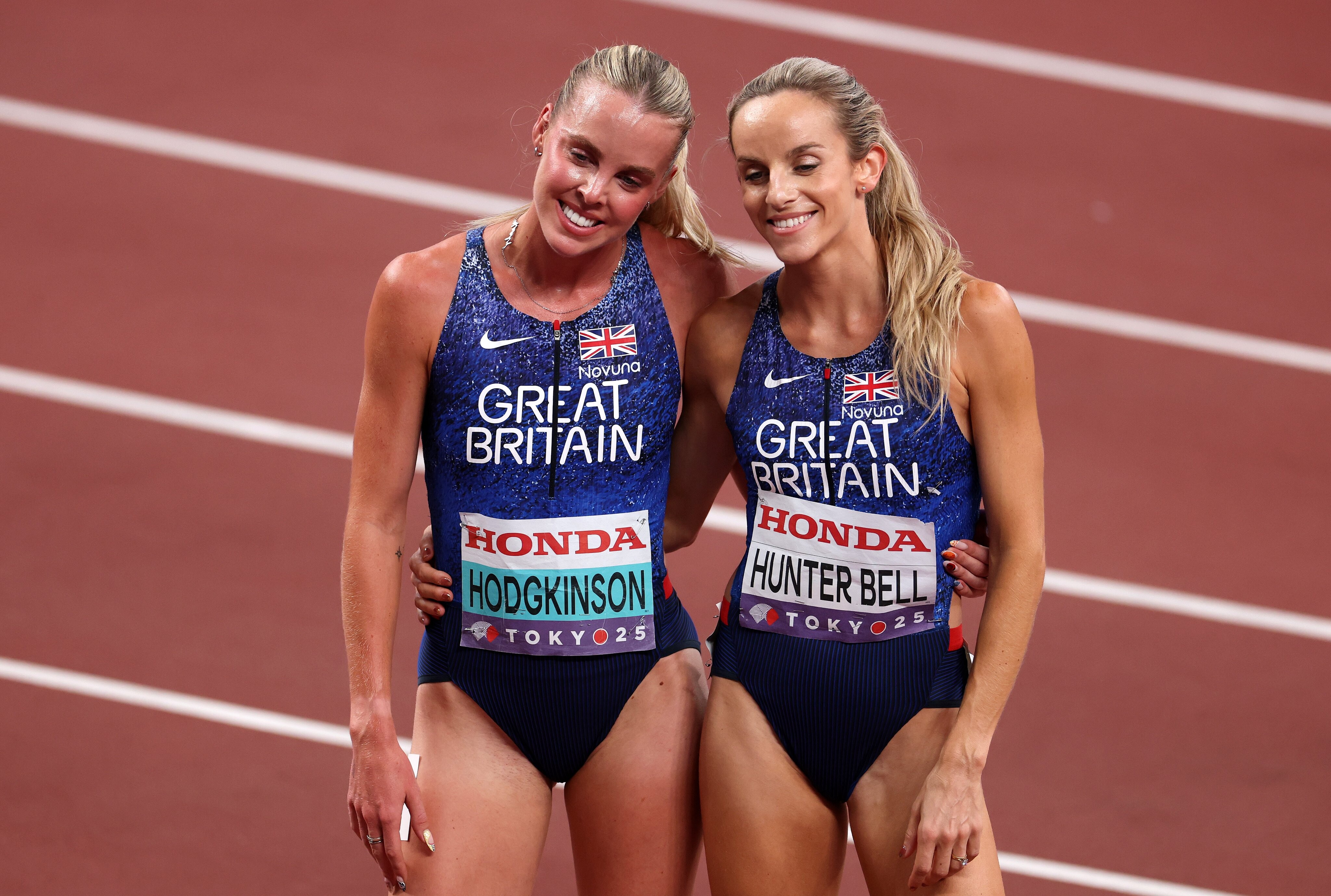
Across the Atlantic, the United States is also well represented among the early leaders. Roisin Willis has clocked 1:57.97, while compatriot Sage Hurta-Klecker follows with 1:58.78, ensuring that the American challenge remains a significant factor heading into the championship season.
Africa also features on the list through Kenya’s Gladys Chepngetich and Ethiopia’s Tsige Duguma, who are tied at 1:58.81, both demonstrating the capability to challenge the front runners when it matters most.
Adding further intrigue is Dutch star Femke Bol. Known globally for her dominance in the 400 metres and the hurdles, Bol has also entered the 800m rankings with 1:59.07, showcasing her remarkable range on the track. American athlete Olivia Baker completes the current top ten with 1:59.18.
With multiple athletes already breaking the 1:58 barrier and the season still unfolding, the women’s 800m is rapidly emerging as one of the most compelling events to watch. Tactical awareness, finishing strength, and championship composure will all play decisive roles once the world’s best line up indoors.
As the countdown continues toward the March 20–22 showdown in Kujawy-Pomorze, one question looms large: can anyone challenge Keely Hodgkinson when the world’s best gather for the ultimate indoor battle?
(03/06/2026) ⚡AMPby Erick Cheruiyot for My Best Runs.
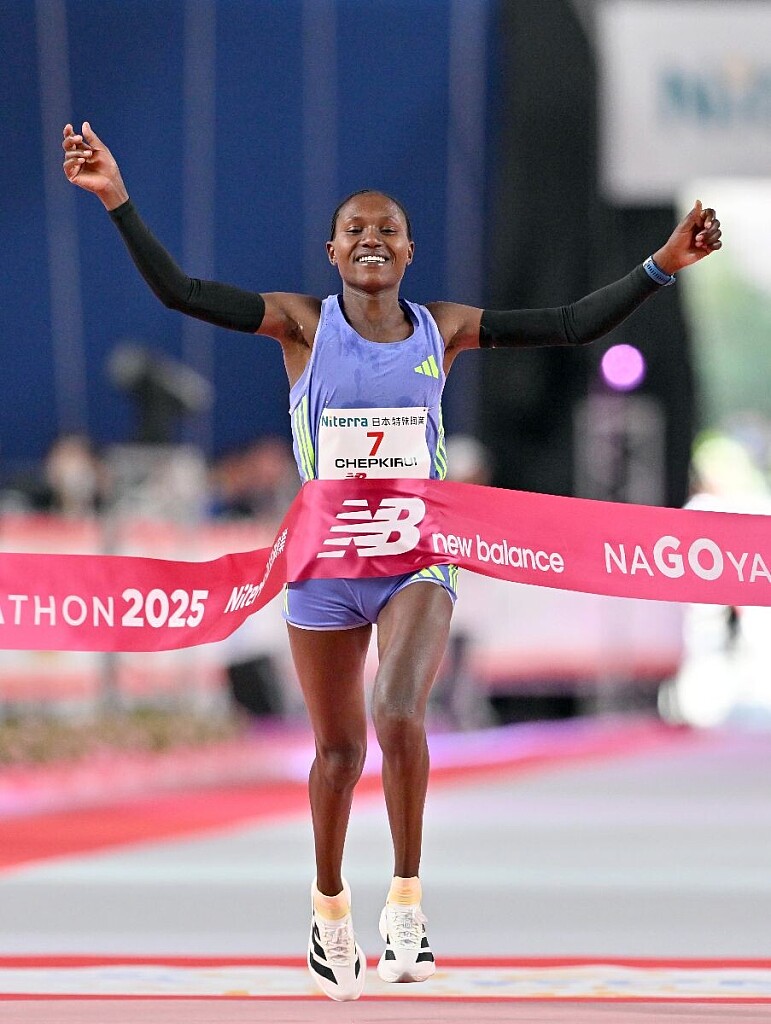
Nagoya Awaits a Marathon Showdown as Sheila Chepkirui Returns to Defend Her Crown
The world’s finest women marathoners are preparing for another thrilling chapter of the Nagoya Women’s Marathon as the 2026 edition unfolds in Nagoya, Japan on Sunday, March 8. Widely regarded as one of the most prestigious women-only marathons on the global calendar, the race once again brings together an impressive international field ready to battle over the classic 42.195-kilometer distance.
For fans across the world, the race will begin at 9:10 AM Japan Standard Time, which corresponds to 3:10 AM in East Africa (Nairobi time), 1:10 AM in West Africa, and 4:10 PM on Saturday evening on the U.S. Pacific Coast. Despite the early hours in many parts of the world, the event is expected to capture global attention as elite athletes chase victory on the streets of Nagoya.
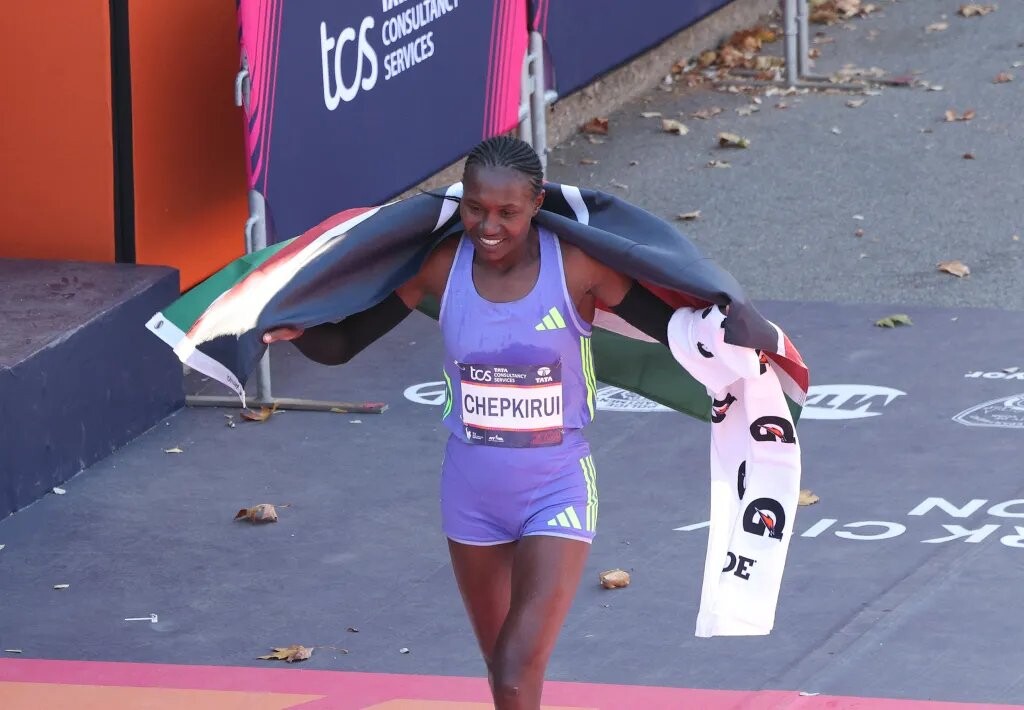
At the center of the spotlight is Kenya’s Sheila Chepkirui, who returns as the defending champion after a brilliant victory in 2025. Chepkirui arrives in Japan carrying a formidable personal best of 2:17:29, a time that places her among the fastest women in the field. Known for her strength in the latter stages of the marathon, the Kenyan star will be determined to prove that last year’s triumph was no accident.
However, the road to a successful title defense will be anything but easy.
Ethiopia’s Aynalem Desta enters the race as one of the strongest challengers. With a personal best of 2:17:37, Desta possesses both the speed and endurance needed to threaten Chepkirui’s reign. Ethiopian athletes have long been dominant forces in global distance running, and Desta will be eager to add another major marathon title to her nation’s proud legacy.
The home crowd, meanwhile, will place their hopes on Japan’s marathon star Honami Maeda. The national record holder with 2:18:59, Maeda remains one of the most respected long-distance runners in the country. Her recent journey has been one of determination and resilience. After an injury disrupted her plans during the Paris 2024 Olympic Games season, she has gradually rebuilt her fitness and confidence.
Maeda showed encouraging signs earlier this year when she ran 1:10:07 at the Houston Half Marathon, a performance that signaled her return to competitive form. She also competed at the Berlin Marathon last year, finishing in 2:24:36, and will now look to deliver a stronger performance in front of her home supporters.
Beyond the leading trio, the race features remarkable depth. Athletes such as Eunice Chebichii Chumba of Bahrain, Selly Chepyego Kaptich of Kenya, Spain’s Majida Maayouf, and Australia’s Genevieve Gregson add further strength to a field packed with international experience.
Japan will also be strongly represented by elite contenders including Sayaka Sato, Yuka Ando, Ayuko Suzuki, and Rika Kaseda, each capable of producing a breakthrough performance in front of passionate local fans.
With such a powerful lineup, the 2026 Nagoya Women’s Marathon promises a captivating clash of endurance, strategy, and national pride. Whether it is Chepkirui defending her crown, Ethiopia launching a successful challenge, or Japan celebrating a home victory, the streets of Nagoya are set to witness another unforgettable day in women’s marathon history.
All eyes now turn to the starting line — where champions will rise and a new chapter of the Nagoya marathon legacy will be written.
(03/06/2026) ⚡AMPby Erick Cheruiyot for My Best Runs.
Nagoya Women's Marathon
The Nagoya Women's Marathon named Nagoya International Women's Marathon until the 2010 race, is an annual marathon race for female runners over the classic distance of 42 km and 195 metres, held in Nagoya, Japan in early March every year. It holds IAAF Gold Label road race status. It began in 1980 as an annual 20-kilometre road race held in...
more...
Kiplimo Returns to Lisbon Chasing History at the 2026 EDP Lisbon Half Marathon
The Portuguese capital is once again preparing for a morning of extraordinary speed as the EDP Lisbon Half Marathon takes center stage on Sunday, March 8th. Known as one of the fastest road races in the world, the event promises a thrilling contest, with the spotlight firmly on Uganda’s distance-running phenomenon Jacob Kiplimo, who arrives with one goal — to challenge the half-marathon world record once again.
The race will begin on Lisbon’s iconic 25 de Abril Bridge, where elite runners will surge across the Tagus River before charging toward the city’s historic streets. Athletes will start at either 9:20 a.m. or 10:05 a.m. local time depending on their bib assignments, but regardless of the exact wave, all attention will be fixed on the Ugandan star expected to dictate the pace from the opening kilometers.
Kiplimo has built a special relationship with Lisbon. It was on these very roads that he once stunned the athletics world with a breathtaking performance that shattered the half-marathon world record, cementing his reputation as one of the most fearless and explosive distance runners of his generation. Now he returns to the same course with unfinished business.
The current official world record stands at 57:30, a mark that continues to inspire the world’s fastest road racers. Kiplimo has already shown he is capable of running far quicker. In 2025 he delivered an astonishing 56:42 performance in Barcelona — a time that would have rewritten the record books but ultimately went unrecognized due to technical ratification requirements. Even so, the run confirmed what many already believed: when Kiplimo is at his best, he can push the limits of what is possible over 21.1 kilometers.
Lisbon now offers him another opportunity to prove it on a course that has already witnessed his greatness. With his trademark aggressive racing style and unmatched endurance, Kiplimo rarely waits for tactical battles. Instead, he often turns races into pure tests of speed and strength, stretching the field until only the toughest can survive the pace.
While the Ugandan superstar stands as the clear favorite, the race will not lack competition. Kenya’s Nicholas Kipkorir (58:23) and Gilbert Kiprotich (58:27) headline the group of challengers hoping to stay close if the tempo becomes relentless. Portugal’s national hope Samuel Barata arrives with a personal best of 59:40, while France’s Etienne Daguinos (59:46) and Djibouti’s Mohamed Ismail (59:54) add further depth to a highly competitive field.
Kenyan runners Benard Langat (59:58) and Kiprono Sitonik (1:00:13) also possess the credentials to challenge, while France’s Valentin Gondouin (1:00:17), Ghana’s Inyasi Sulley (1:00:31), and Tanzania’s Daniel Sinda (1:00:36) could play key roles if the race develops into a fast lead pack.
Uganda will also be represented by rising star Oscar Chelimo, who is set to make his debut over the half-marathon distance, adding another layer of intrigue to an already fascinating contest.
Yet despite the strength of the field, the narrative of the 2026 race circles back to one man. Kiplimo has repeatedly demonstrated that he thrives in Lisbon’s unique atmosphere — a race known for its fast, flat course and the dramatic start across the towering 25 de Abril Bridge. The setting seems perfectly designed for the kind of relentless rhythm that has become his signature.
If conditions align and the pace is uncompromising, Lisbon could once again witness a performance that pushes the limits of human endurance. For Kiplimo, the mission is clear: return to the city that helped define his career and leave it once again as the fastest man ever over the half marathon.
On March 8th, the road through Lisbon may not just crown a champion — it may rewrite history.
(03/05/2026) ⚡AMPby Erick Cheruiyot for My Best Runs.
EDP HALF MARATHON OF LISBON
EDP Lisbon Half Marathonis an annual internationalhalf marathoncompetition which is contested every March inLisbon,Portugal. It carries World Athletics Gold Label Road Racestatus. The men's course record of 57:31 was set byJacob Kiplimoin 2021, which was the world record at the time. Kenyanrunners have been very successful in the competition, accounting for over half of the total winners, withTegla Loroupetaking the...
more...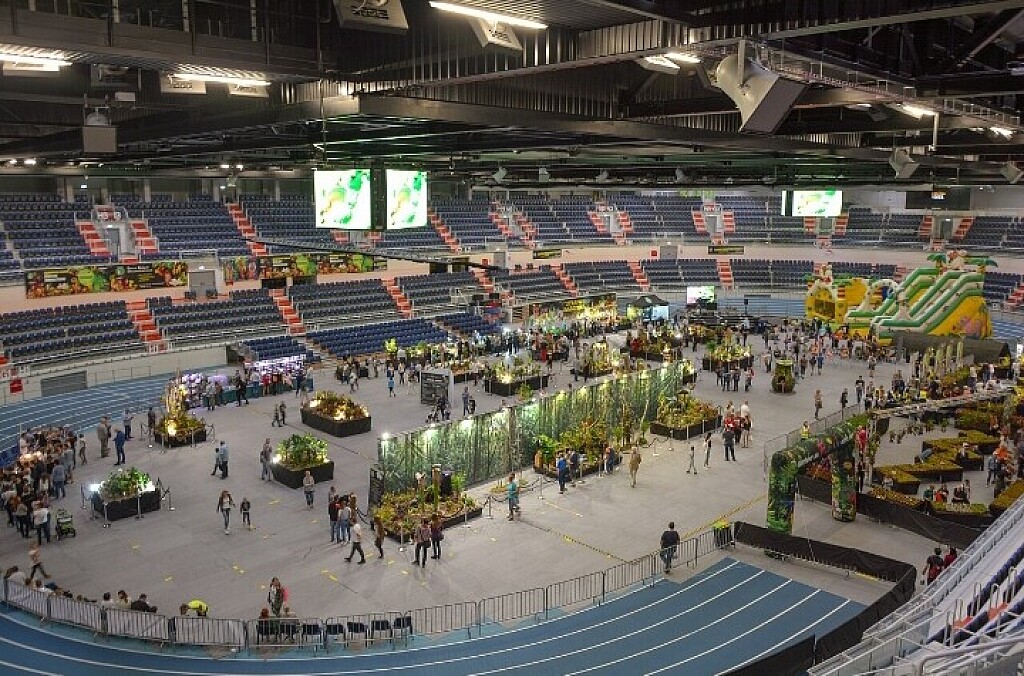
Kenya Unveils Six-Athlete Squad for Global Indoor Showdown in Poland
Kenya has officially named a compact but promising team for the upcoming World Athletics Indoor Championships 2026, with Athletics Kenya selecting six athletes to carry the nation’s hopes at the global indoor spectacle scheduled for March 20–22 in Kujawy-Pomorze, Poland.
The carefully chosen squad blends experience with emerging talent, reflecting Kenya’s growing ambitions on the indoor stage. Traditionally renowned for its dominance in middle- and long-distance events outdoors, the country continues to expand its presence indoors, where speed, tactics, and adaptability on the tight 200-metre track often define success.
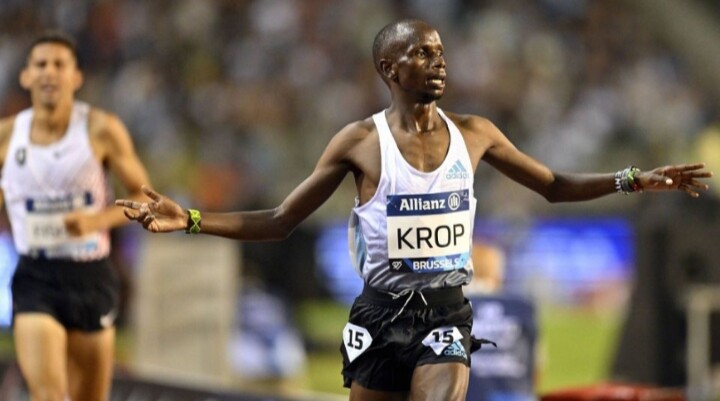
Leading the men’s lineup is Brian Omari Tinega, who will represent Kenya in the 400 metres, an event that demands both explosive speed and disciplined pacing. In the men’s 800 metres, the responsibility falls on Noah Kibet, one of the country’s rising middle-distance prospects known for his aggressive racing style. Completing the men’s side is Jacob Krop, who has been entrusted with the 3000 metres, bringing his proven endurance and championship experience to the indoor arena.
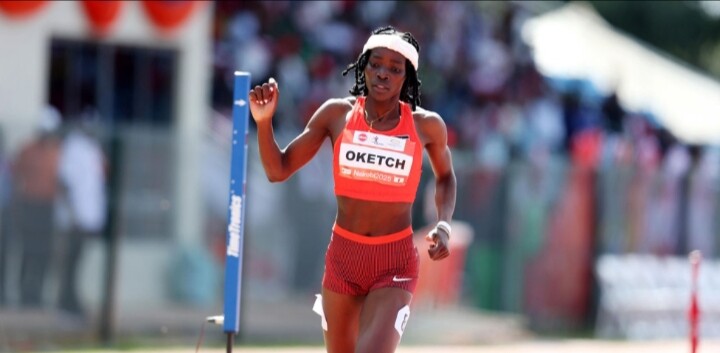
The women’s team mirrors that balance of speed and middle-distance strength. Mercy Adongo Oketch will compete in the women’s 400 metres, aiming to deliver a strong performance in an event where fractions of a second often separate medalists from the rest of the field. In the 800 metres, Rosemary Longisa will look to showcase Kenya’s depth in middle-distance running, while Susan Lokayo Ejore takes on the women’s 1500 metres, an event where tactical awareness and finishing speed are critical.
According to the federation, the selected athletes represent a strategic mix designed to maximize Kenya’s competitiveness across both sprint and middle-distance events. While indoor championships present unique challenges — from tighter tracks to faster tactical races — they also offer a valuable platform for athletes to test themselves against the world’s elite early in the season.
The three-day championship is expected to attract top indoor specialists from across the globe, creating an intensely competitive atmosphere. For Kenya’s six representatives, it will be an opportunity not only to chase podium finishes but also to strengthen the country’s growing reputation in indoor athletics.
As preparations intensify ahead of the trip to Poland, hopes remain high that the small but determined Kenyan delegation will rise to the occasion and leave a strong mark on one of the sport’s most prestigious indoor stages.
(03/05/2026) ⚡AMPby Erick Cheruiyot for My Best Runs.
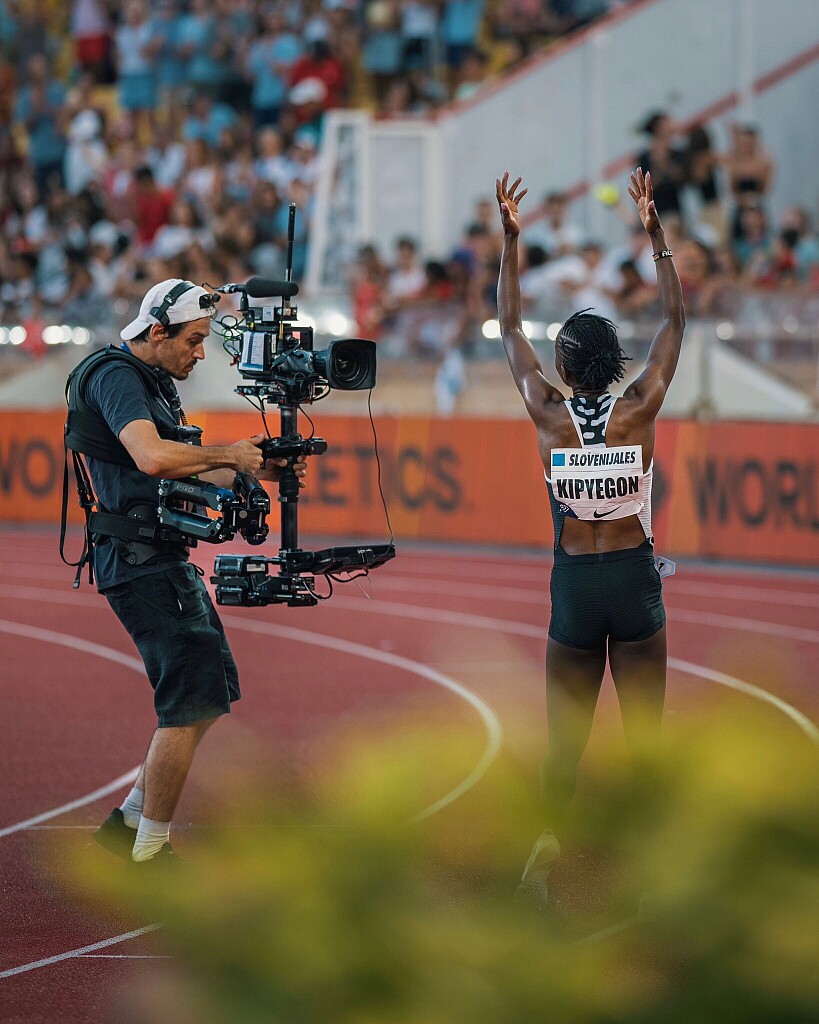
Faith Kipyegon Nominated for Laureus Sportswoman of the Year for the Third Consecutive Time
Kenya’s middle-distance queen, Faith Kipyegon, has once again earned global recognition after being nominated for the prestigious Laureus Sportswoman of the Year Award, with the winner set to be unveiled on April 20 in Madrid, Spain.
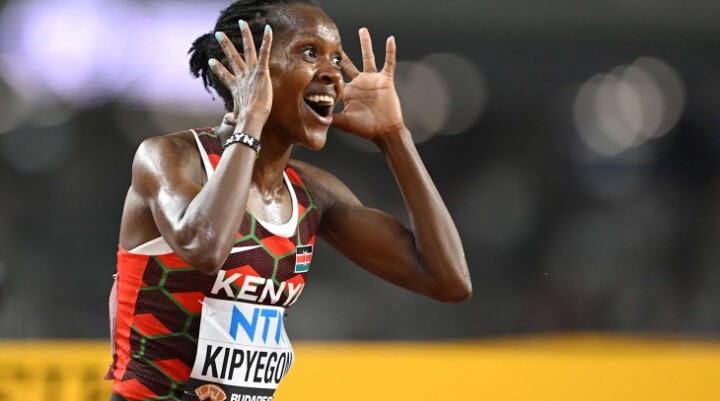
This marks the third consecutive year that Kipyegon has been shortlisted for the coveted honor since 2024 — a remarkable testament to her sustained brilliance at the very highest level of athletics.
Widely regarded as one of the greatest middle-distance runners of all time, Kipyegon’s consistency, dominance, and ability to deliver on the biggest stages have elevated her beyond the track into global sporting stardom. A triple Olympic champion, she has redefined excellence in the 1500 meters, combining tactical intelligence with devastating finishing speed.
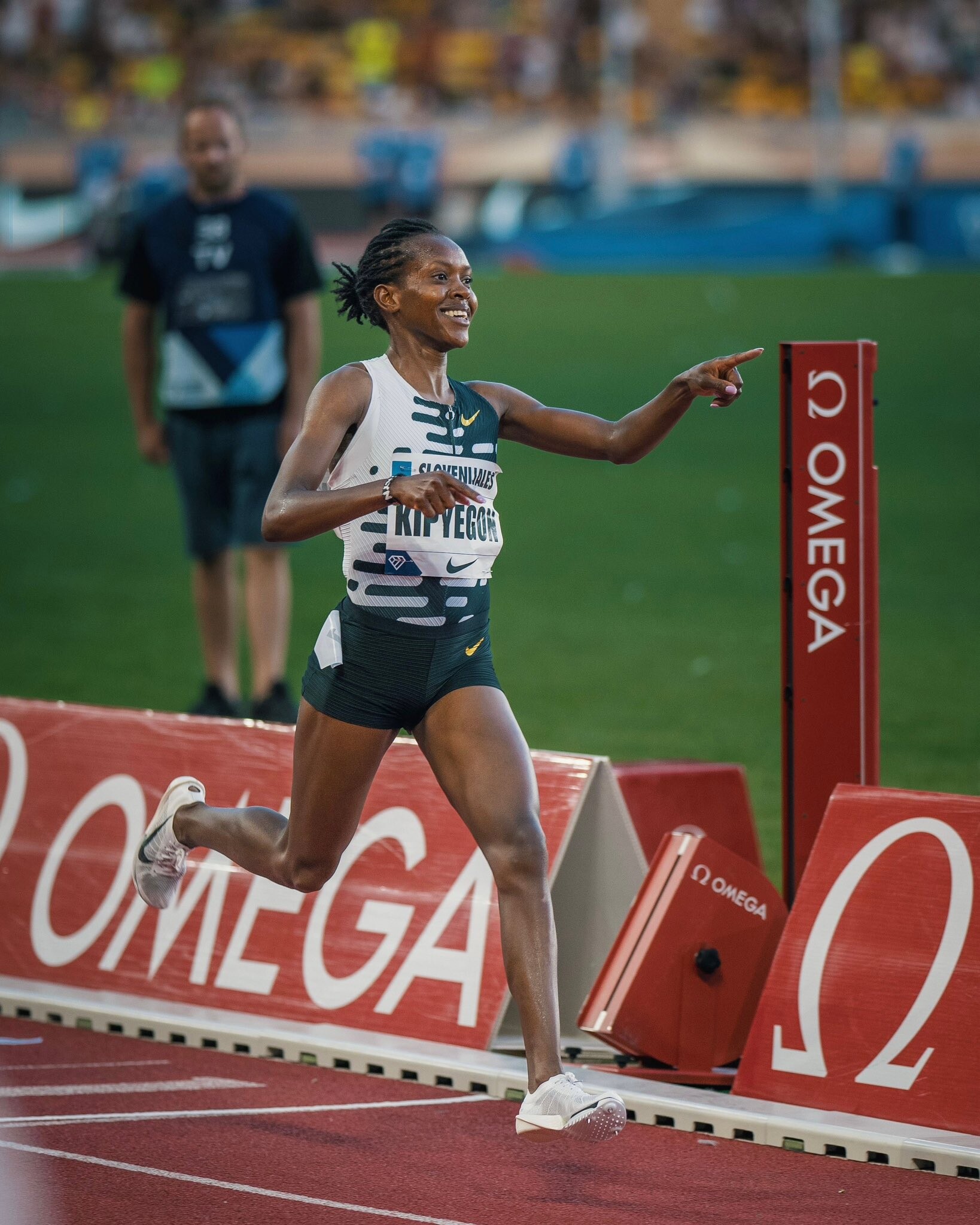
Her recent seasons have been nothing short of historic. From Olympic triumphs to world titles and record-breaking performances, Kipyegon has continued to raise the bar in women’s middle-distance running. Each year, she has proven that her success is not fleeting — it is sustained greatness built on discipline, resilience, and relentless ambition.
The Laureus World Sports Awards celebrate the finest athletes across all sports worldwide, making a nomination alone a significant achievement. To be shortlisted three years in a row places Kipyegon in rare company among the sport’s elite.
As the global sporting community turns its attention to Madrid on April 20, Kenya will once again rally behind its champion, hopeful that her extraordinary achievements will be rewarded on one of sport’s grandest stages.
Regardless of the final outcome, Faith Kipyegon’s legacy continues to expand — not only as an Olympic icon, but as a symbol of excellence and inspiration for generations to come.
(03/03/2026) ⚡AMPby Erick Cheruiyot for My Best Runs.
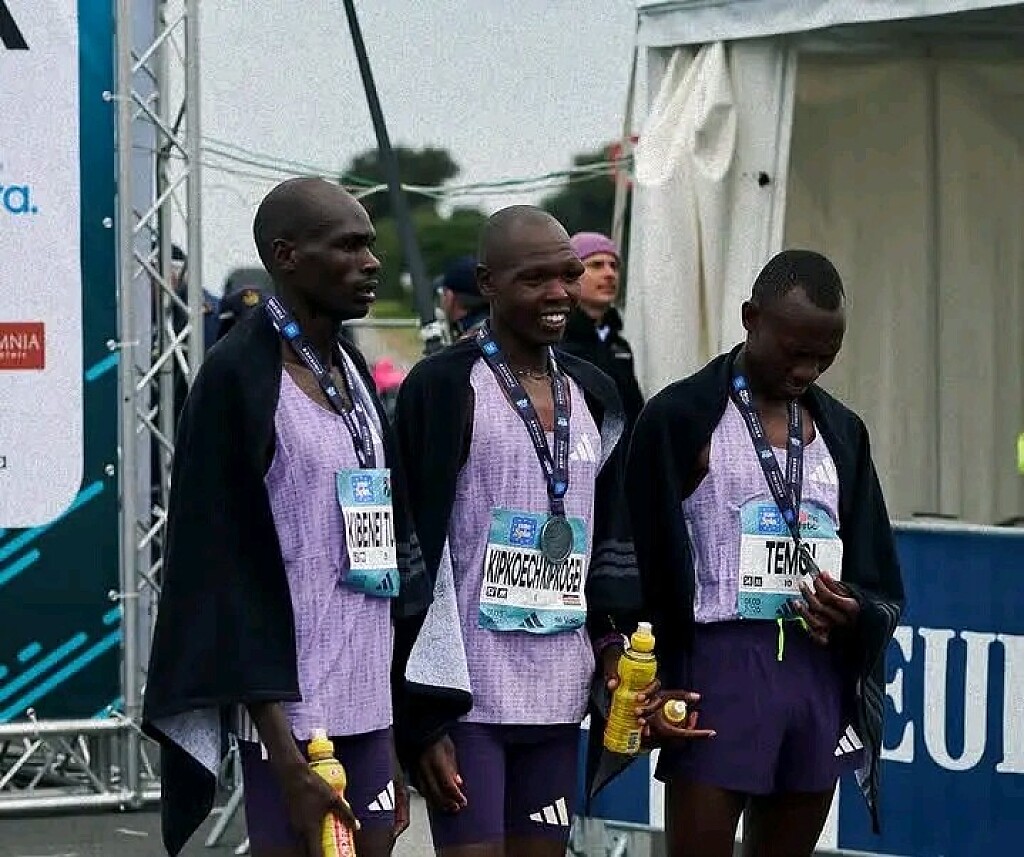
Kenyan Masterclass in Rome: Temoi’s Record-Breaking Debut Headlines RomaOstia Sweep
The 2026 RomaOstia Half Marathon will be remembered as a day when Kenyan excellence painted the streets between Rome and Ostia in bold, unmistakable colors. From the first surge off the start line to the final strides along the coast, it was a commanding display that left little room for doubt — this was a Kenyan affair in every sense.
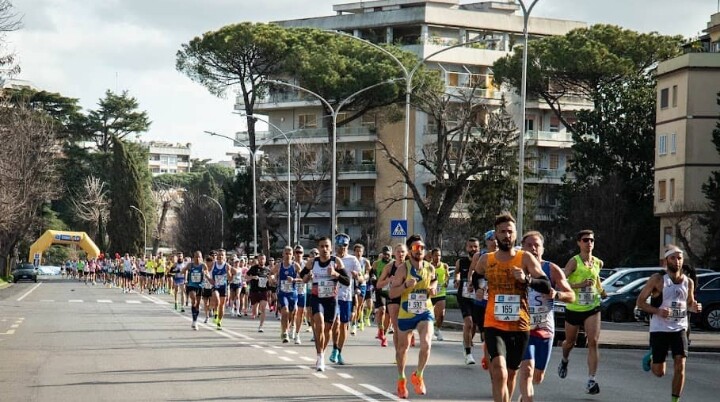
In the men’s race, Michael Temoi delivered a performance of rare authority. Making his debut over the distance, Temoi stormed to victory in a stunning 58:00, slicing through the course with composure and confidence to set a new course record. It was not merely a win; it was an announcement. The young Kenyan showed maturity beyond expectation, controlling the pace and unleashing a decisive push that broke the race open. To debut with a course record on such a historic stage speaks volumes about his talent and his readiness to challenge the world’s finest.
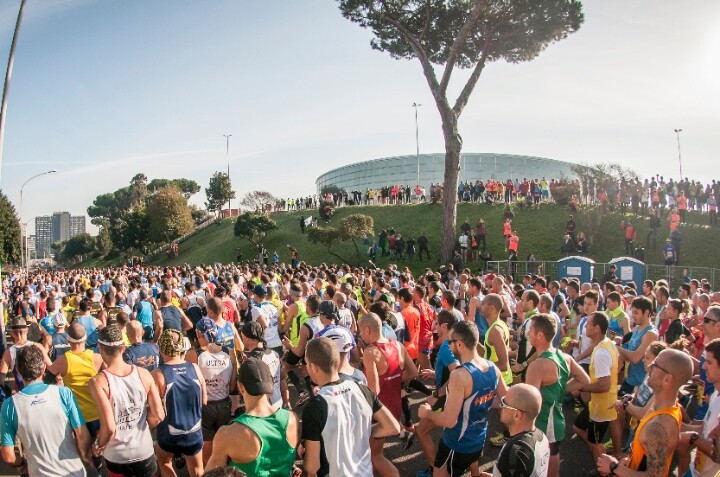
Behind him, James Kipkogei ensured the podium remained firmly in Kenyan hands. Crossing the line in 58:39, Kipkogei ran a tactically intelligent race, staying within striking distance before securing second place with strength and poise. Completing the men’s sweep was Peter Kibenei, whose 59:05 finish marked a personal best. Kibenei’s performance underlined the depth of Kenyan distance running — disciplined, resilient, and relentlessly competitive.
If the men set the tone, the women elevated the statement.
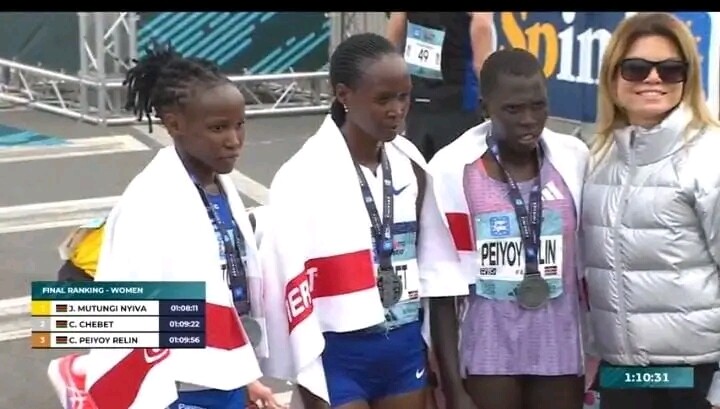
Janeth Mutungi led the charge in the women’s race, clocking 1:08:11 in a performance defined by rhythm and control. She dictated the tempo with confidence, gradually stretching the field and sealing victory with measured authority. Her triumph reflected not only individual brilliance but also the structured strength that continues to define Kenyan road running.
Close behind, Caren Chebet impressed on her debut, finishing second in 1:09:22. Stepping onto a major international stage for the first time, Chebet displayed courage and composure, signaling that she, too, belongs among the elite. Third place went to Catherine Peiyoy, who clocked a personal best of 1:09:56, adding yet another milestone to an already memorable Kenyan sweep.
The RomaOstia course, known for its speed and history, has witnessed many remarkable performances over the years. Yet the 2026 edition will stand out for the unity of purpose shown by the Kenyan contingent. It was not just about medals or times; it was about dominance built on preparation, discipline, and belief.
From record-breaking debuts to personal bests and commanding victories, Kenya’s athletes transformed the race into a showcase of national pride and athletic mastery. On Italian soil, they reminded the world why the half marathon remains one of their strongest stages — and why, when the pace quickens and the pressure rises, Kenya so often rises with it.
(03/02/2026) ⚡AMPby Erick Cheruiyot for My Best Runs.

Roma Ostia Half Marathon
Italy's most popular half marathon, this road race is a popular event for runners of all abilities. The Roma-Ostia Half Marathon is an annual half marathon road running event which takes place in the spring in Rome, Italy. The course begins in the EUR district of the city and follows a direct south-easterly route to the finish point near the...
more...