

Running News Daily
Running News Daily is edited by Bob Anderson and team. Send your news items to bob@mybestruns.com Advertising opportunities available.
Index to Daily Posts · Sign Up For Updates · Run The World Feed
Articles tagged #Wind
Today's Running News
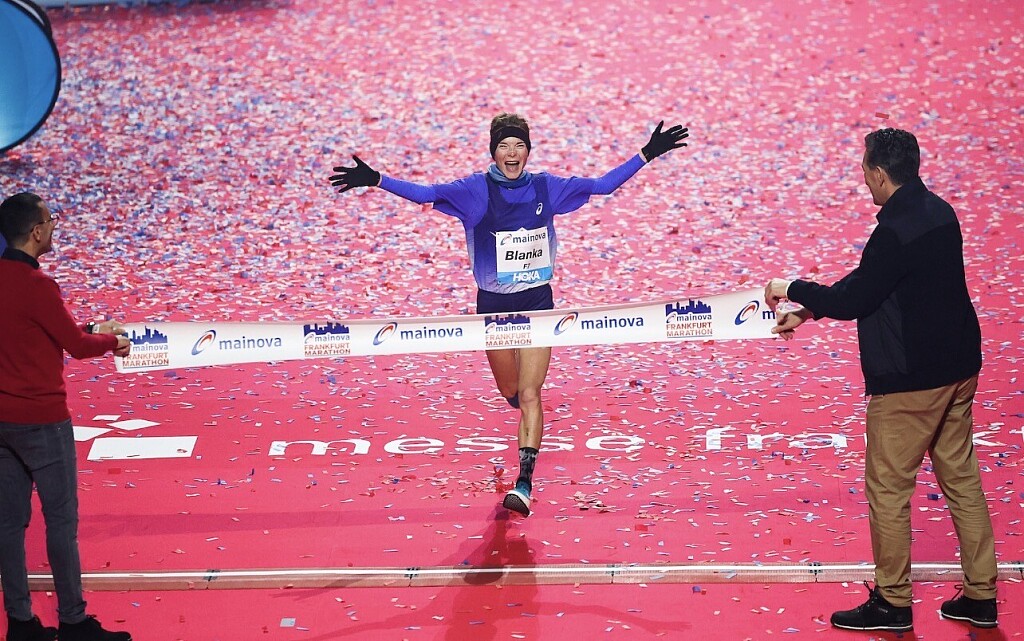


Dinki and Yimer Win Frankfurt as Germany’s Dörfel Runs Stunning 2:20:46 Debut
Ethiopia’s Jirata Dinki and Zeineba Yimer claimed victory at the 43rd Mainova Frankfurt Marathon, but Germany’s Blanka Dörfel delivered perhaps the day’s biggest breakthrough, finishing second in her marathon debut in 2:20:46.
Despite wet and windy conditions, the 24-year-old became the second-fastest German woman and eighth-fastest European woman in marathon history. Only German record holder Irina Mikitenko has run faster among her compatriots.
Yimer won the women’s race in 2:19:45, while Ethiopia’s Beriha Gebreslasie finished third in 2:22:46.
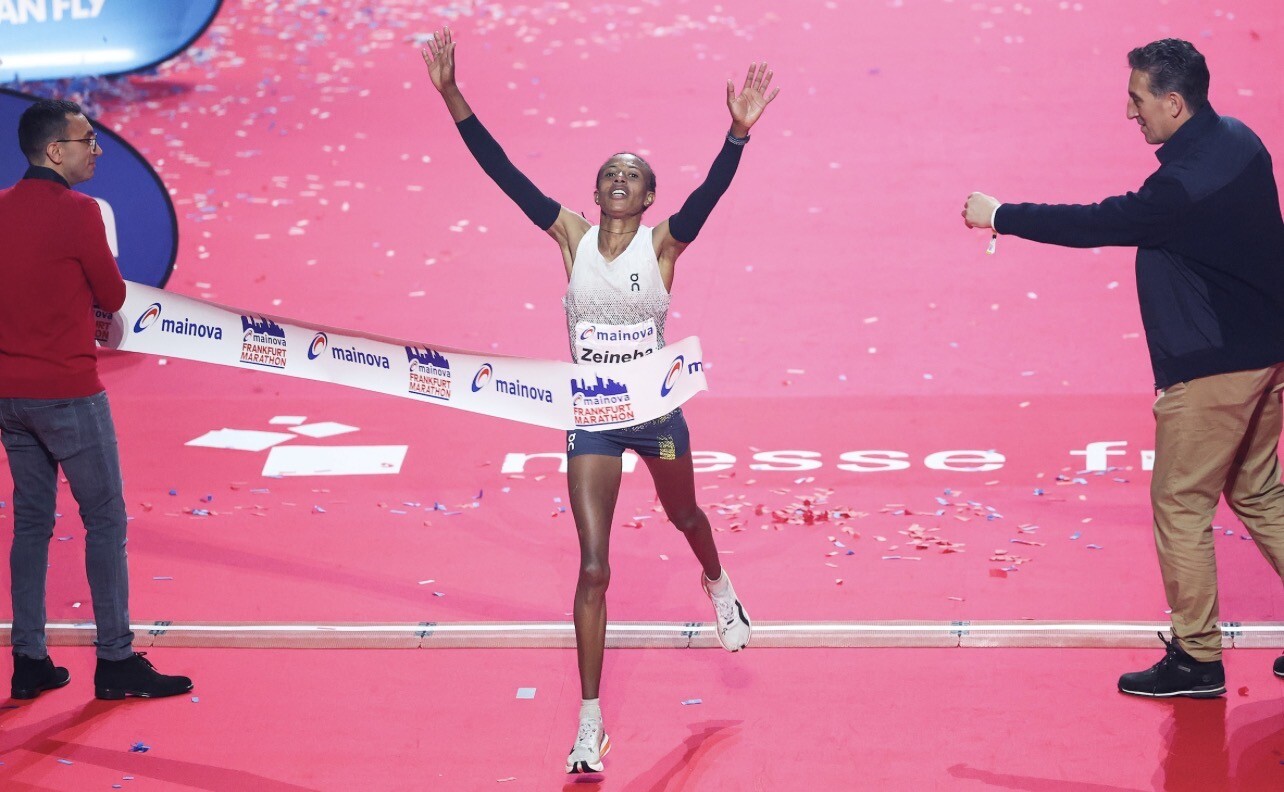
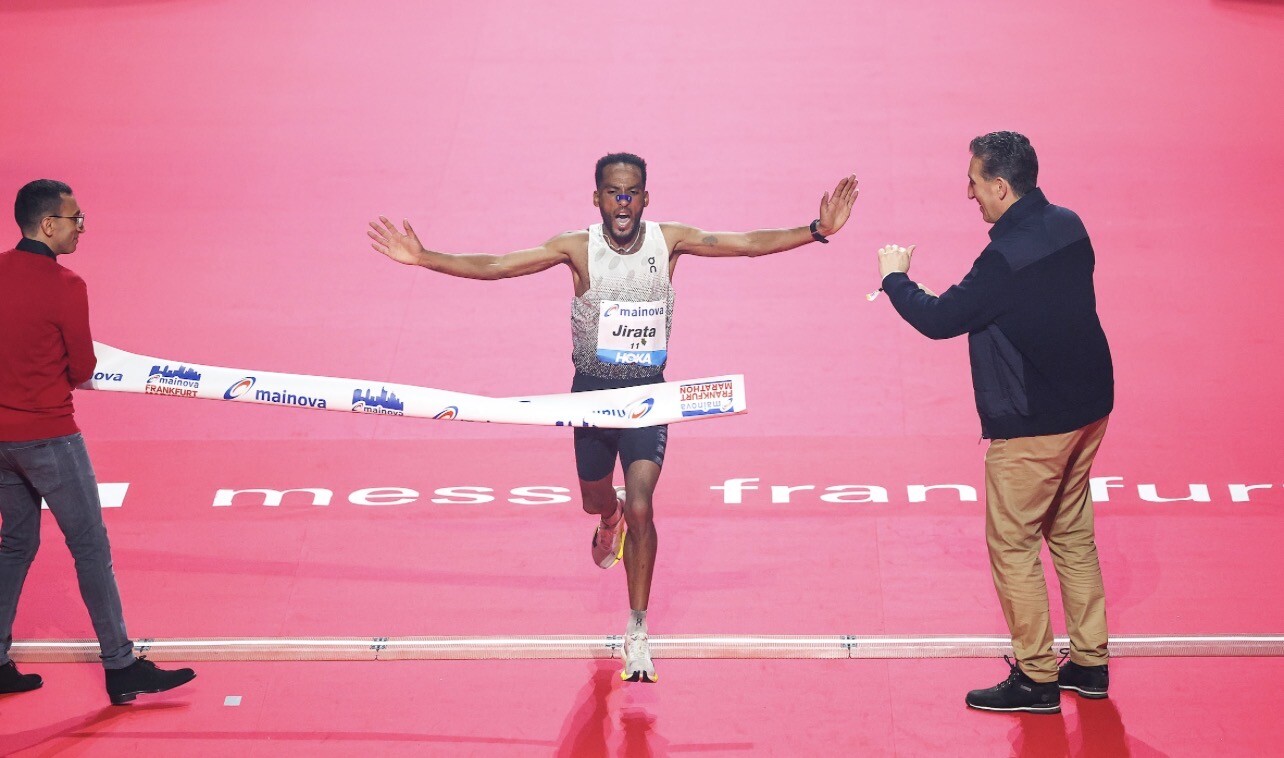
In the men’s race, Dinki surged away in the closing kilometers to win in 2:05:26, improving his personal best by nearly three minutes. Germany’s Amanal Petros finished second in 2:05:46, becoming the first German man to reach the Frankfurt podium in more than 25 years. Kenya’s Benard Biwott, the 2024 champion, took third in 2:06:23.
A record 19,720 runners from 128 nations entered this year’s event.
Dörfel Delivers a Remarkable Debut
Yimer, the women’s favorite, led from the start alongside fellow Ethiopian Siranesh Yirga. After 30 kilometers, Yirga could no longer maintain the pace, leaving Yimer alone at the front.
Although she struggled in the closing kilometers, the 28-year-old held on to secure victory with the sixth-fastest women’s performance in Frankfurt history.
“I was hoping I would win. The weather was not on our side. The rain slowed me down, but I am very happy with my performance,” Yimer said.
Behind her, Dörfel was producing an extraordinary first marathon.
After passing halfway in 1:10:29, the German moved clear of a group that included American Betsy Saina and Kenya’s Marion Kibor. Running with a smooth, controlled stride, she steadily reduced the gap to the leaders and moved into second place at 33 kilometers.
For a time, a sub-2:20 finish appeared possible. Even as the effort caught up with her over the final five kilometers, Dörfel held her position and entered Frankfurt’s Festhalle to an enthusiastic reception.
“I ran without a watch as I do in training, going purely by how I feel, not by the time,” she said. “It was always a bit of a mystery to me what time I could achieve. It wasn’t until I was in the Festhalle that I saw the 2:20 and realised just how fast I was.”
Standing water added to the challenge, but the crowd helped carry her through.
“So many people were shouting ‘Blanka, run!’ It was a brilliant day,” she said.
Dinki Wins a Tactical Battle
The men’s race began with hopes of challenging Petros’ German record of 2:04:03. Petros, Samuel Fitwi and Richard Ringer joined a large lead group, but the weather soon pushed record ambitions aside.
The leaders passed 10 kilometers in 29:55 and halfway in 1:03:01, setting up a competitive second half,
With roughly 10 kilometers remaining, Petros and Biwott increased the pace and opened a small gap. Fitwi dropped back with muscle problems, while Ringer tried to bridge the gap before also losing ground.
Dinki, however, was moving forward.
The 24-year-old Ethiopian arrived in Frankfurt with a personal best of 2:08:18 and caught the leaders around 37 kilometers. Petros attacked again, shaking off Biwott, but Dinki responded before making the decisive move of his own with about two kilometers remaining.
“I had not reckoned with him,” Petros said.
Dinki crossed the line in 2:05:26, cutting 2:52 from his previous best and earning the biggest victory of his career in just his third marathon.
“The weather was not ideal, so I started off more cautiously. But I was sure I would run a good race. This is a huge victory for me,” Dinki said.
Petros finished 20 seconds behind, recording the fastest time ever run by a German man at the Frankfurt Marathon.
“I gave it a go, but in that weather it was clear that a record was not going to happen. Then I suppose I attacked a bit too early – I will learn from that,” Petros said. “Of course I would have liked to win, but that is how it goes in the marathon.”
Ringer finished fifth in 2:07:07, with Fitwi seventh in 2:08:57.
by Race News Services
Login to leave a comment

Mainova Frankfurt Marathon
Frankfurt is an unexpectedly traditional and charming city, with half-timbered buildings huddled in its quaint medieval Altstadt (old city), cosy apple wine taverns serving hearty regional food, village-like neighbourhoods filled with outdoor cafes, boutiques and street art, and beautiful parks, gardens and riverside paths. The city's cache of museums is second in Germany only to Berlin’s, and its nightlife...
more...
Jennifer MacDonell Runs 3:23:59 At 70 To Set Pending World Marathon Record In Toronto
At 70 years old, Canadian distance runner Jennifer MacDonell is challenging conventional expectations of ageing after producing a remarkable marathon performance that could rewrite the record books in masters athletics.
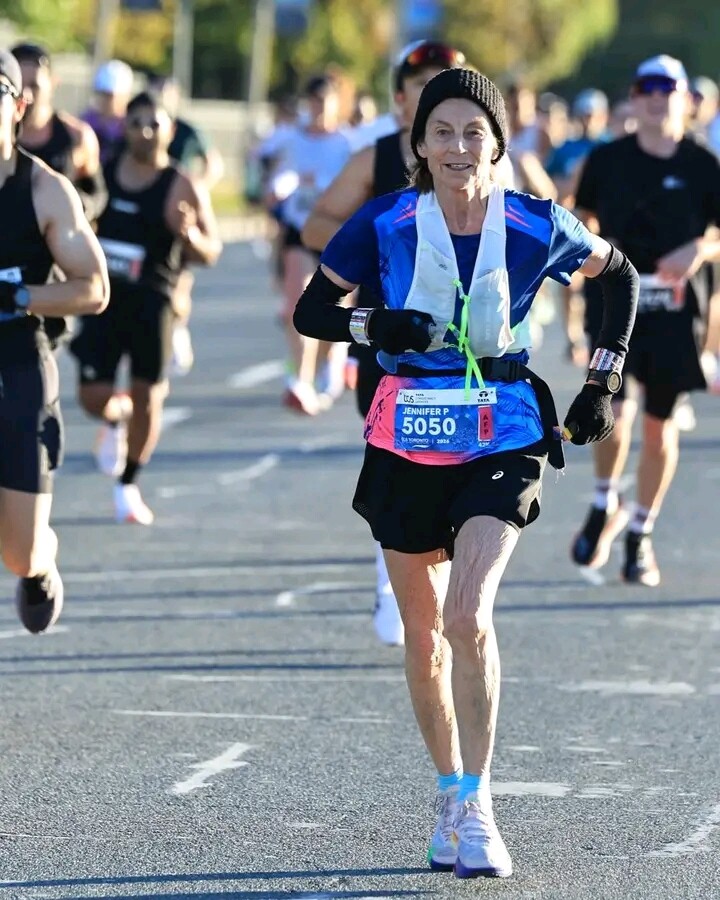
MacDonell, who hails from Ottawa, Canada, clocked an outstanding 3:23:59 at the TCS Toronto Waterfront Marathon, setting a pending world record in the women's 70–74 age category. Her performance eclipsed the previous mark of 3:27:00, set by France's Laurence Dupont Alnet in 2024, by more than three minutes.
Her extraordinary achievement stands as a powerful testament to the rewards of disciplined training, intelligent race preparation and a determination to continue competing at the highest possible level, regardless of age.
Completing the 42.195-kilometre distance in 3:23:59 required MacDonell to maintain an average pace of approximately 4:50 per kilometre, or 7:47 per mile, throughout the race. It was a phenomenal display of endurance from an athlete who continues to demonstrate that age alone does not define the boundaries of athletic performance.
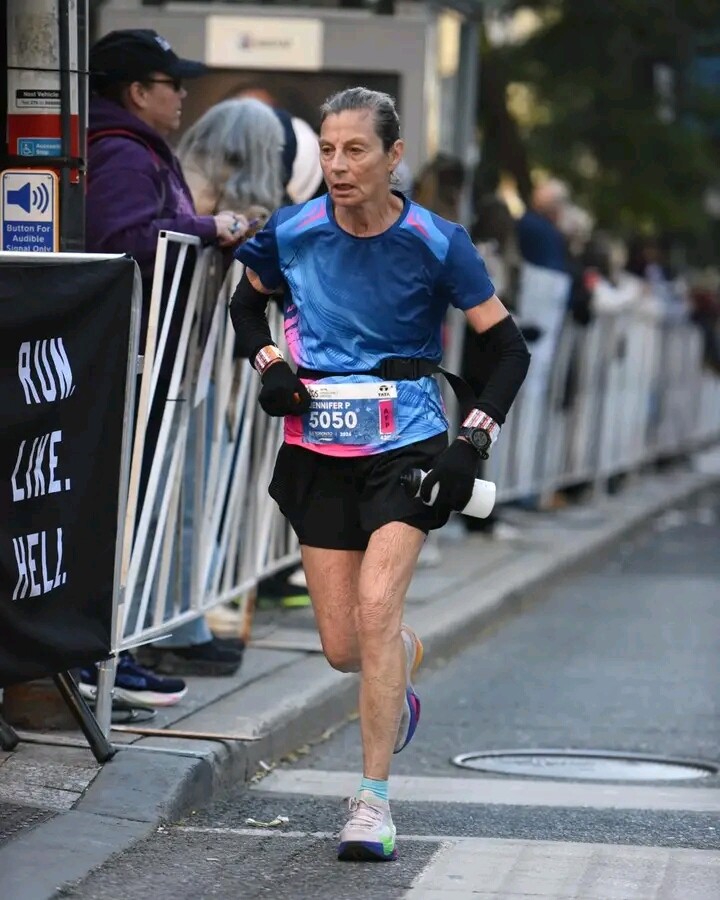
However, her marathon breakthrough was only the highlight of an extraordinary period of racing.
Just nine days before her performance in Toronto, MacDonell travelled to Montreal, where she set a Canadian age-group mile record with a time of 6:51. The following morning, she returned to the track and roads to record another national age-group mark, clocking 21:40 over 5km.
Producing two Canadian records on consecutive days before delivering a potentially world-record marathon performance little more than a week later highlights the remarkable consistency and preparation behind her achievements.
According to reports by Canadian Running Magazine, MacDonell devoted an entire year to studying the Toronto marathon course, carefully analysing its hills, anticipating potential headwinds and tailoring her training to meet the demands of race day.
That preparation proved crucial as she navigated the challenging course in pursuit of her ambitious goal. Even when a calf cramp emerged during the final two kilometres, threatening to disrupt her rhythm, she continued towards the finish line and completed one of the most impressive performances of her running career.
MacDonell's achievement also offers a compelling reminder of the importance of masters athletics, a competitive arena in which experienced runners continue to challenge records and redefine what is possible later in life.
While marathon running demands tremendous physical endurance at every age, maintaining the ability to compete at such a high level at 70 requires years of commitment, careful preparation and an enduring passion for the sport.
Her approach was driven by a fundamental question: how fast can the human body go?
In Toronto, MacDonell delivered an extraordinary answer, demonstrating that the pursuit of excellence does not have to end when an athlete reaches a milestone birthday.
Although her 3:23:59 performance remains subject to official ratification as a world record, the time has already established an impressive benchmark for women competing in the 70–74 age category.
For runners around the world, her story is about much more than a time on the clock. It is about setting ambitious goals, embracing the discipline required to achieve them and refusing to let age alone dictate the limits of one's ambitions.
At 70, Jennifer MacDonell is still chasing faster times, breaking records and inspiring others through her performances. Her remarkable run in Toronto sends a powerful message to the running community: the finish line of one achievement can always become the starting point for another.
by Erick Cheruiyot for My Best Runs.
Login to leave a comment
TCS Toronto Waterfront Marathon
The Scotiabank Toronto Waterfront Marathon, Half-Marathon & 5k Run / Walk is organized by Canada Running Series Inc., organizers of the Canada Running Series, "A selection of Canada's best runs!" Canada Running Series annually organizes eight events in Montreal, Toronto and Vancouver that vary in distance from the 5k to the marathon. The Scotiabank Toronto Waterfront Marathon and Half-Marathon are...
more...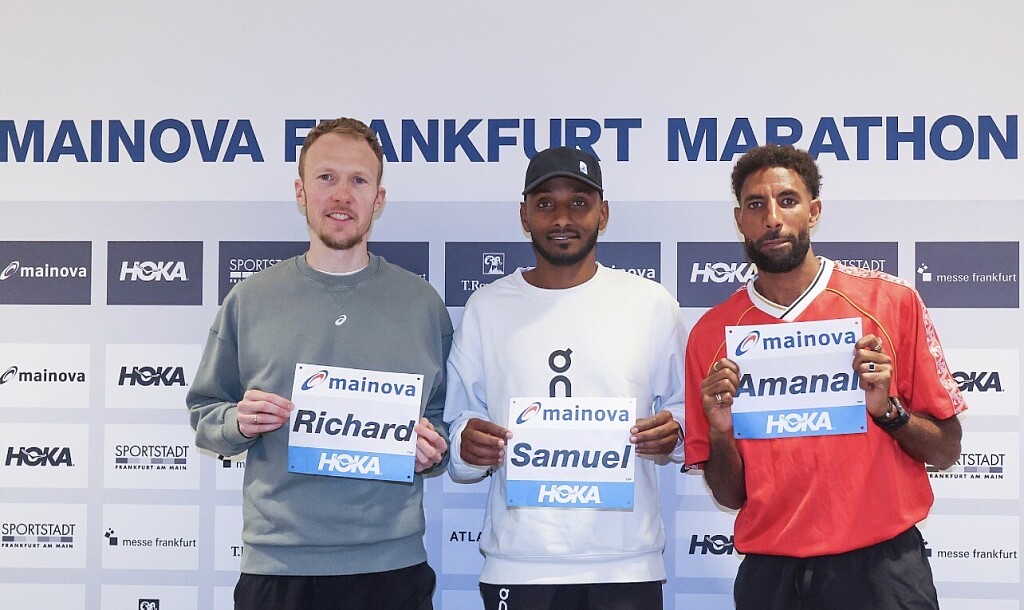
Records in Sight as Frankfurt Assembles Its Fastest Men’s Field
Petros leads Germany’s top marathoners, Zeineba Yimer targets the women’s course record, and Kenya’s Mark Kiptoo chases an age-group milestone at Sunday’s Mainova Frankfurt Marathon.
The Mainova Frankfurt Marathon could deliver a series of record performances on Sunday, October 25—if the weather cooperates.
The 43rd edition brings together the fastest men’s field in the event’s history, with German and European records potentially within reach. Both course records—2:03:42 for men and 2:17:25 for women—could come under pressure, while a promising German debut and an M50 world-best attempt add further interest.
Conditions will play a decisive role. Rain, cold and strong winds could derail ambitious pacing plans. If the weather settles, Frankfurt’s flat course could provide the setting for an exceptional day.
Organizers have reported a record 19,720 entries from 128 nations. The occasion also marks the final race for Jo Schindler as race director.
“We are absolutely delighted with this record number of entries. Over the past 25 years, we have taken the Mainova Frankfurt Marathon to a whole new level in every aspect,” Schindler said.
Germany’s Best Take Center Stage
Leading the men’s field is Amanal Petros, the German record-holder at 2:04:03, who won the European marathon title in Birmingham in August. He arrives with ambitions that could extend beyond his own national mark to the European record of 2:03:36.
“My training in Kenya went very well. If the weather is on my side, it could happen,” Petros said. “I have been dreaming of breaking the European record for several years now.”
A European record would also take him under Wilson Kipsang’s Frankfurt course record of 2:03:42, set in 2011.
Petros will face a strong domestic challenge from Samuel Fitwi, whose 2:04:45 runner-up finish in Hamburg in April is the fastest German performance this year.
“If the weather is good, the German record is within reach on the flat course in Frankfurt. I am well prepared and definitely want to beat my personal best,” Fitwi said.
Richard Ringer, the 2022 European marathon champion, completes the leading German trio. His record-eligible personal best is 2:05:46, although he ran 2:04:47 at Boston this spring on its non-record-eligible course.
Ringer plans a more measured approach after overcoming a muscle problem following the European Championships.
“I do not expect to be running right at the front on Sunday and will probably go with a second group,” he said.
Biwott Returns With Winning Ambition
The German contenders will have plenty of international competition.
Ethiopia’s Andualem Belay brings a personal best of 2:04:44, while Kenya’s Benard Biwottreturns to the scene of his breakthrough. Biwott won his marathon debut in Frankfurt in 2024 in 2:05:54, then improved to 2:05:25 while winning the 2025 Paris Marathon.
“My aim is to win on Sunday. I think I can achieve a time of around 2:04:00,” Biwott said.
Another Kenyan, Mark Kiptoo, could deliver one of the day’s most compelling performances. Now 50, the 2014 Frankfurt champion is targeting the M50 world best of 2:19:29, set by South Africa’s Titus Mamabolo in Durban in 1991.
Kiptoo has already made masters history in Frankfurt, running 2:07:50 here in 2018.
Yimer Targets the Women’s Course Record
Ethiopia’s Zeineba Yimer leads the women’s field with a personal best of 2:18:47, set while finishing third in Barcelona this spring
The 28-year-old is seeking a turnaround after stomach problems forced her out of the Berlin Marathon four weeks ago. Her ambitions include challenging the Frankfurt course record of 2:17:25, set by Hawi Feysa in 2024.
“Now I want to make the most of the flat course in Frankfurt and set a personal best. I have also got my sights set on the course record and want to break that mark as well,” Yimer said.
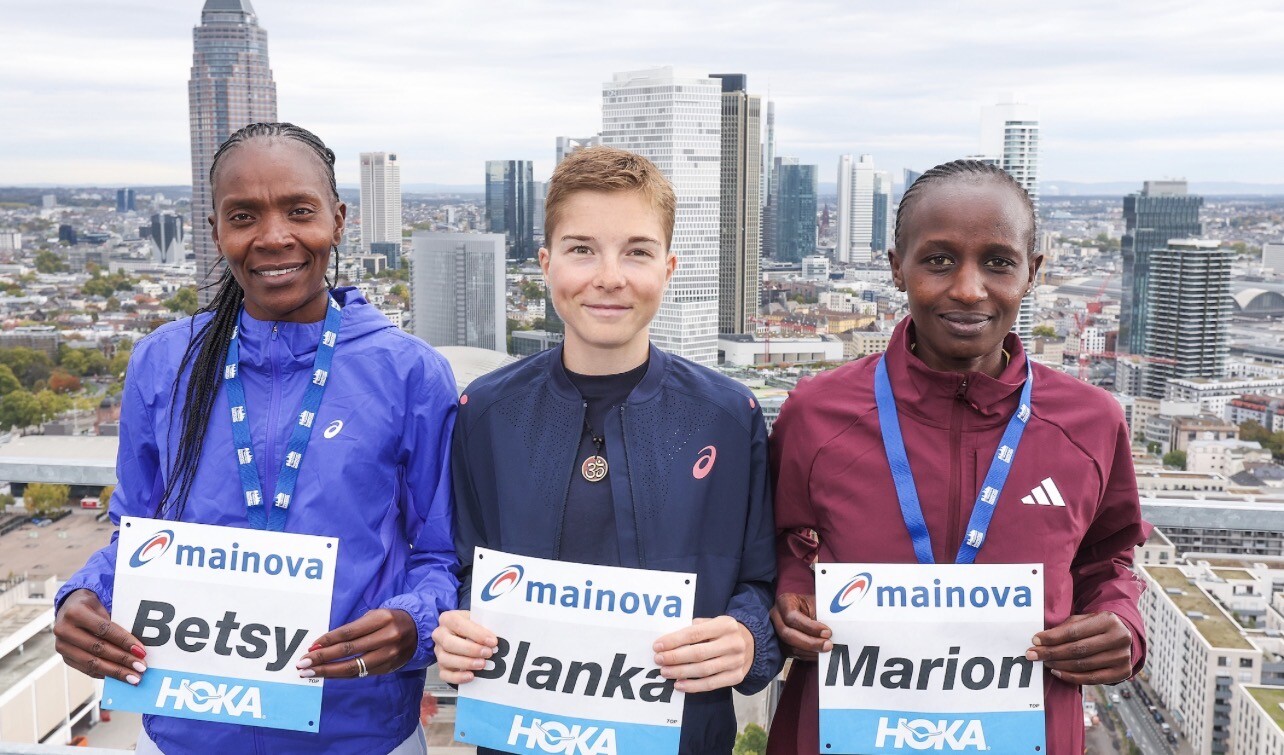
American Betsy Saina, who has run 2:19:17, returns from a maternity break and is targeting a halfway split of 70:00.
Kenya’s Marion Kibor, who improved to 2:21:12 in Hamburg this spring, also hopes to break 2:20. Ethiopia’s Meskerem Assefa, the 2018 Frankfurt champion, returns with the 2:20:36 personal best she set during that victory.
Dörfel Runs on Instinct in Marathon Debut
Germany’s Blanka Dörfel adds an intriguing debut to the women’s race.
The 24-year-old ran a half-marathon personal best of 68:08 in Mainz this spring and intends to trust her feel for the pace as she moves up to the marathon.
“I will be running without a watch and will trust my instincts,” Dörfel said.
Her half-marathon performance suggests the potential for a strong debut. The German women’s debut benchmark is 2:23:57, set by Melat Kejeta in Berlin in 2019.
Elite Runners with Personal Bests
MEN
Amanal Petros GER 2:04:03
Andualem Belay ETH 2:04:44
Samuel Fitwi GER 2:04:45
Richard Ringer GER 2:04:47
Benard Biwott KEN 2:05:25
Haimro Alame ISR 2:06:04
Antenayehu Dagnachew ETH 2:06:55
Jiregna Geleta ETH 2:06:57
Derara Hurisa ETH 2:08:09
Jirata Dinki ETH 2:08:18
Abe Gashahun ETH 2:08:35
Lemawork Ketema AUT 2:10:44
WOMEN
Zeineba Yimer ETH 2:18:47
Betsy Saina USA 2:19:17
Meskerem Assefa ETH 2:20:36
Siranesh Yirga ETH 2:21:08
Marion Kibor KEN 2:21:12
Janet Ruguru KEN 2:23:00
Mehret Gemeda ETH 2:23:29
Milicent Jelimo KEN 2:24:19
Obse Abdeta ETH 2:27:14
Martina Strähl SUI 2:28:07
Selam Fente ETH 2:28:22
Aselef Amare ETH 2:28:47
Blanka Dörfel GER Debut
by Race News Service
Login to leave a comment
Mainova Frankfurt Marathon
Frankfurt is an unexpectedly traditional and charming city, with half-timbered buildings huddled in its quaint medieval Altstadt (old city), cosy apple wine taverns serving hearty regional food, village-like neighbourhoods filled with outdoor cafes, boutiques and street art, and beautiful parks, gardens and riverside paths. The city's cache of museums is second in Germany only to Berlin’s, and its nightlife...
more...
LA28 Olympic Marathon Qualification: Only 70 Runners Per Gender As World Athletics Tightens The Race To Los Angeles
The road to the Los Angeles 2028 Olympic marathon is set to become even more competitive after World Athletics introduced a tighter qualification framework that reduces the number of available places in both the men's and women's races.
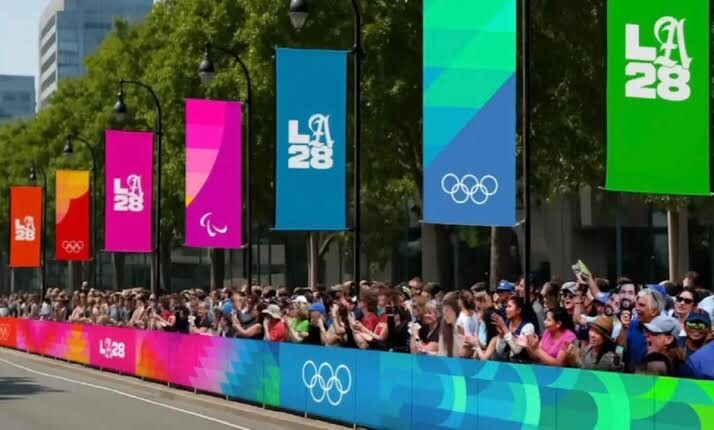
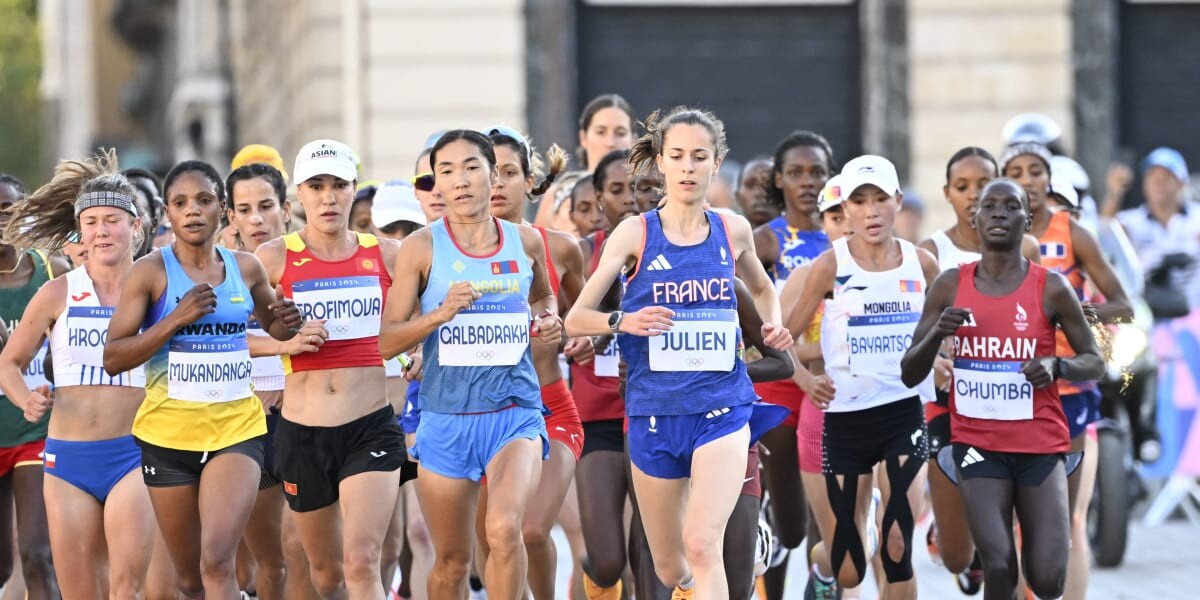
Each Olympic marathon field will be limited to 70 athletes, down from 80 at Paris 2024. The reduction means 20 fewer runners across the two races, raising the stakes for elite marathoners hoping to represent their countries on the world's biggest sporting stage.
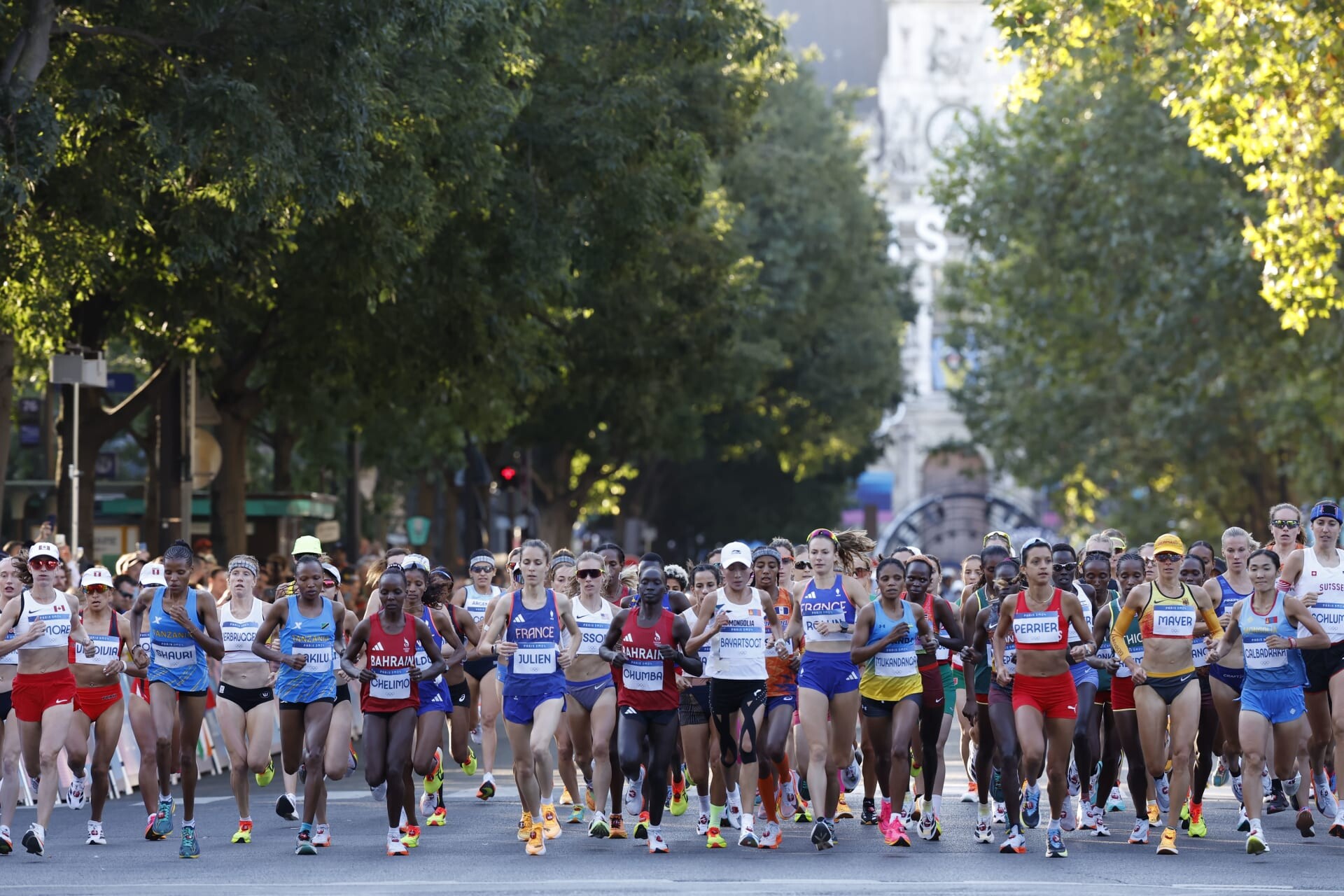
With fewer places available, athletes will need to combine outstanding performances, strategic race selection and strong world rankings to secure their Olympic dreams.
The qualification window opens on November 1, 2026, and closes on April 30, 2028. World Athletics is expected to announce the official Olympic marathon entry standards in December 2026, giving athletes a clearer picture of the performances required to qualify directly.
Approximately 40 percent of the 70 places in each race will be allocated through the entry-standard pathway, while the remaining 60 percent will be determined through the World Athletics rankings system. However, achieving the qualifying time will not automatically guarantee an Olympic place. If more athletes meet the entry standard than there are available places through that pathway, selection will depend on the applicable qualification rules and the number of quota places available.
Athletes will also have an alternative route through designated Platinum Label marathons. Finishing among the top five at eligible races can count towards meeting the entry standard under the qualification regulations. These prestigious events include the Boston, London, Berlin, Chicago, New York City and Tokyo marathons, providing elite runners with opportunities to strengthen their Olympic qualification prospects against world-class competition.
The qualification campaign will reach a decisive milestone on March 19, 2028, when athletes occupying the top 55 positions on the filtered quota list are set to secure their places under the published rules. That would leave the remaining 15 places in each race to be determined by the end of the qualification window on April 30, 2028.
For athletes outside the leading positions, the final weeks could prove decisive. Strong performances at major marathons, improvements in ranking points and carefully planned racing schedules may determine who makes the Olympic starting line. The smaller fields leave less room for error, particularly for runners whose qualification hopes depend on the rankings rather than a direct entry standard.
The competitiveness of the qualification process is underscored by the extraordinary depth of international marathon running. For comparison, the entry standards for the 2027 World Athletics Championships are 2:06:00 for men and 2:23:20 for women. During 2026 alone, 89 men and 82 women ran faster than those respective marks.
Although the World Championships standards differ from the Olympic entry standards yet to be announced, these performances illustrate how many athletes are already competing at an exceptionally high level. With only 70 places available in each Olympic race, runners from countries with several elite marathoners could face particularly intense domestic competition before even considering the international qualification battle.
The framework also provides a potential opportunity for eligible athletes who have not secured a place through the usual qualification routes. National Olympic Committees may be able to allocate a quota place to an otherwise unqualified athlete who records a marathon performance of 2:11:00 for men or 2:29:00 for women during the qualification period, subject to the applicable eligibility requirements and allocation rules.
This provision offers an additional pathway for countries seeking representation in the Olympic marathon. However, meeting the performance threshold does not automatically guarantee selection, as the relevant committee must follow the official qualification regulations.
Reducing the Olympic marathon fields from 80 to 70 athletes per gender represents a significant change for the world's leading distance runners. The combination of entry standards, Platinum Label marathon performances, world rankings and potential quota places creates several pathways to Los Angeles, but the reduced number of available positions will make every qualifying opportunity more valuable.
With the qualification window opening on November 1, 2026, and the official entry standards expected in December, marathoners will have nearly 18 months to build their cases for selection before the deadline on April 30, 2028.
For athletes dreaming of Olympic glory in Los Angeles, running fast will remain essential. However, choosing the right races, accumulating ranking points and delivering performances at the right time could prove equally important in a qualification campaign where every place counts.
Does the new LA28 qualification system reward the world's best marathoners, or could it disadvantage athletes from countries where opportunities to compete in major international races are limited?
by Erick Cheruiyot for My Best Runs.
Login to leave a comment
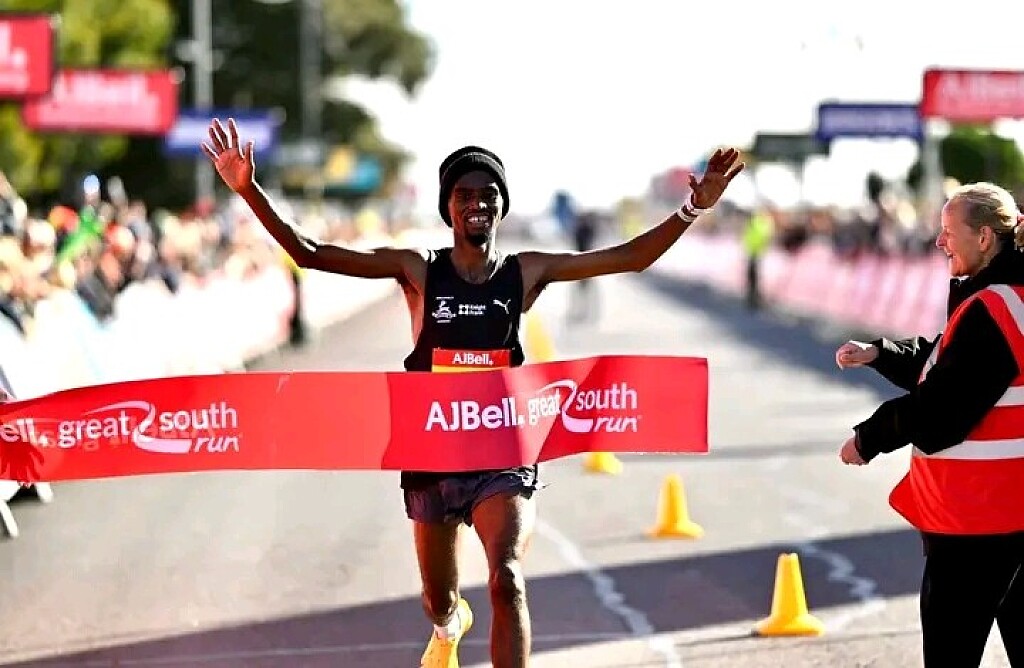
Kadar Omar And Hannah Irwin Triumph In Thrilling Great South Run Finishes
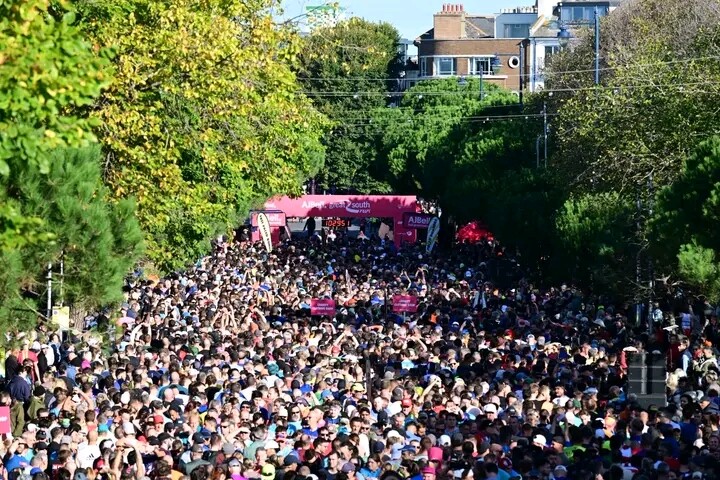
The AJ Bell Great South Run delivered a thrilling day of road racing, with Kadar Omar and Hannah Irwin claiming impressive victories after two contrasting battles at the front of the field.
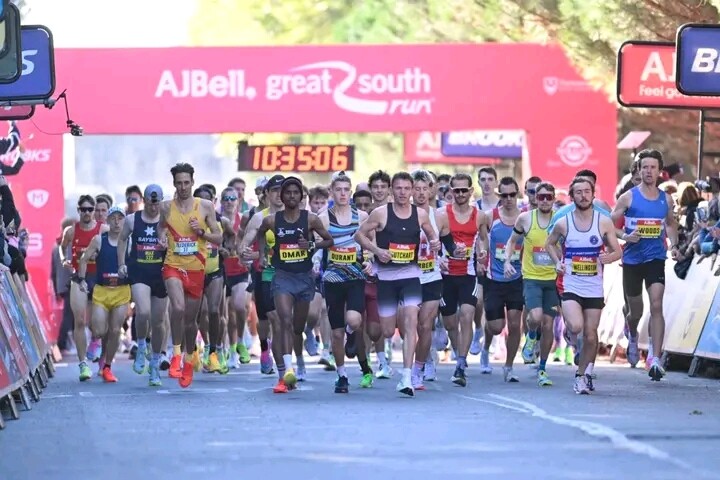
Omar produced a powerful display in the men’s race, breaking away early alongside twice Olympian Andy Butchart. The pair quickly established themselves at the head of the field and went through the 10-kilometre mark together in 29:34, setting the stage for a fascinating battle over the closing stages.
But while Butchart remained firmly in contention through the first part of the race, Omar began to turn the screw as the finish approached. The Birchfield Harriers athlete shifted through the gears and opened a 27-second advantage by 15 kilometres, putting himself firmly in control.
The 30-year-old continued to extend his advantage over the final kilometre before crossing the finish line in 47:27 to secure a convincing victory. His ability to maintain his pace and push clear in the closing stages ultimately proved decisive.
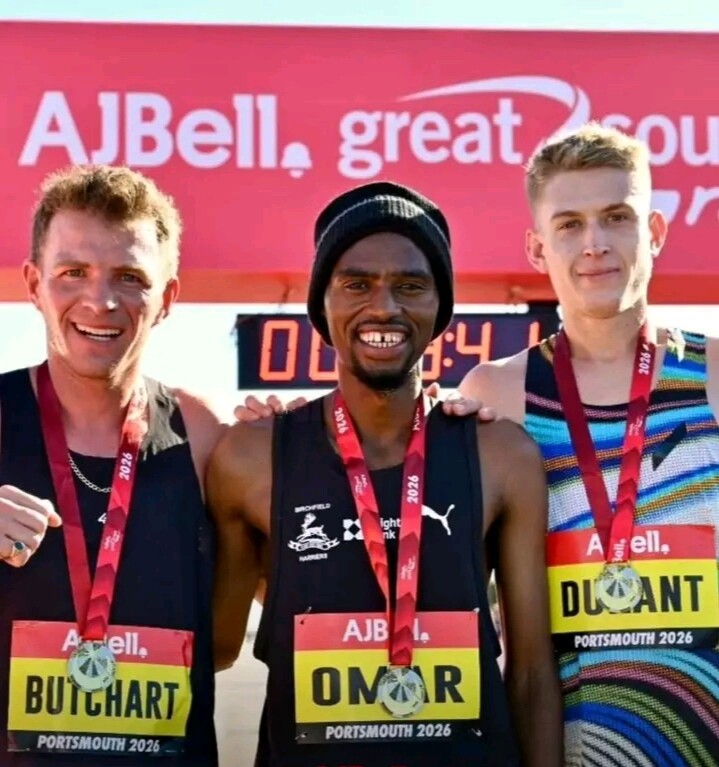
Butchart, making his Great South Run debut, finished strongly to take second in 47:49, while Alex Durant of Sheffield AC & Dearn secured third place. City of Portsmouth athlete Lachlan Wellington was sixth, completing the race in 50:27.
Omar’s victory was a testament to his ability to judge a race perfectly. After running conservatively alongside Butchart during the early stages, he found another level when it mattered most and produced the decisive move that separated him from his closest rival.
Speaking after his victory, Omar reflected on the demanding conditions and the effort required to secure the title.
“I pushed myself through the wind. And I gave it all I had,” Omar said. “I’m happy. It’s a great event, you know. Hopefully next year I can come back and race again.”
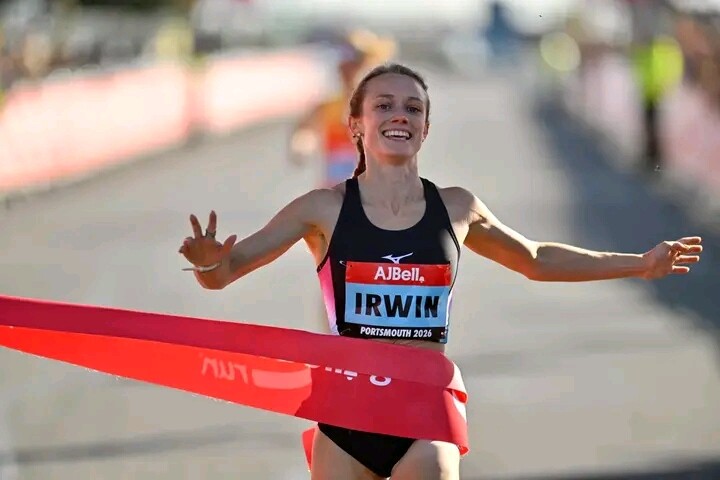
The women’s race was an entirely different story, with Hannah Irwin and defending champion Verity Ockenden locked in a remarkably close contest for almost the entire distance.
Irwin eventually prevailed in 53:34, with Ockenden finishing just three seconds behind in 53:37. Daisy Glover completed the women’s podium in 54:53 after another strong performance.
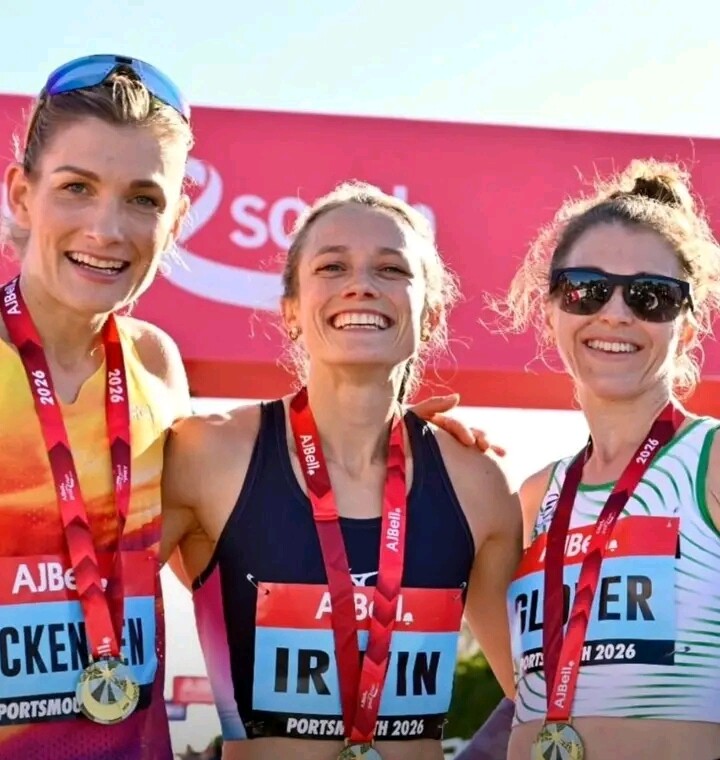
The closeness of the battle was reflected in Irwin’s comments after the finish. Rather than being a race dominated by one athlete, the two leaders remained virtually inseparable until the decisive moments.
“It was a really good fun race today. I really enjoyed having a battle with Verity,” Irwin said. “We were literally neck and neck the entire way, I think until like 200 to go.”
The weather added another challenge to the contest, with the athletes having to contend with strong winds for much of the race. Irwin explained that although the wind became a tailwind approaching the finish, that offered little relief after facing a headwind for much of the course.
“The wind was coming from the other direction, so it was a back wind coming into the finish. But that was no easier because it meant the majority of the rest of the race was a headwind,” she explained.
Irwin also revealed how she approached the tactical battle with Ockenden, recognising that the defending champion was having an exceptionally strong day and deciding that working together could benefit both athletes.
“I kind of thought, I think she (Ockenden) is having a really good day today, so we’re just going to have to work together,” Irwin said.
The decisive moment finally arrived in the closing stages, when Irwin found enough strength to hold off Ockenden and secure the victory by the narrowest of margins.
“I was pleased that my legs held on and I managed to come away with the win,” Irwin added.
The contrasting nature of the two elite races made for a memorable edition of the AJ Bell Great South Run. Omar gradually transformed an early breakaway into a commanding victory, while Irwin had to fight until the final moments to deny the defending champion.
With strong performances throughout both races, the event once again provided a compelling showcase of elite road racing, combining tactical battles, challenging conditions and dramatic finishes. For Omar and Irwin, however, the day belonged to them as they emerged victorious on a memorable day in Portsmouth.
by Erick Cheruiyot for My Best Runs.
Login to leave a comment

Great South Run
The Great South Run is an annual 10 miles (16.09 km) road running race which takes place in Portsmouth, United Kingdom providing an intermediate distance between the ten kilometre and the half marathon runs. Launched in 1990, it is part of the Great Run series created by former British athlete Brendan Foster. It was originally held in Southampton, but the...
more...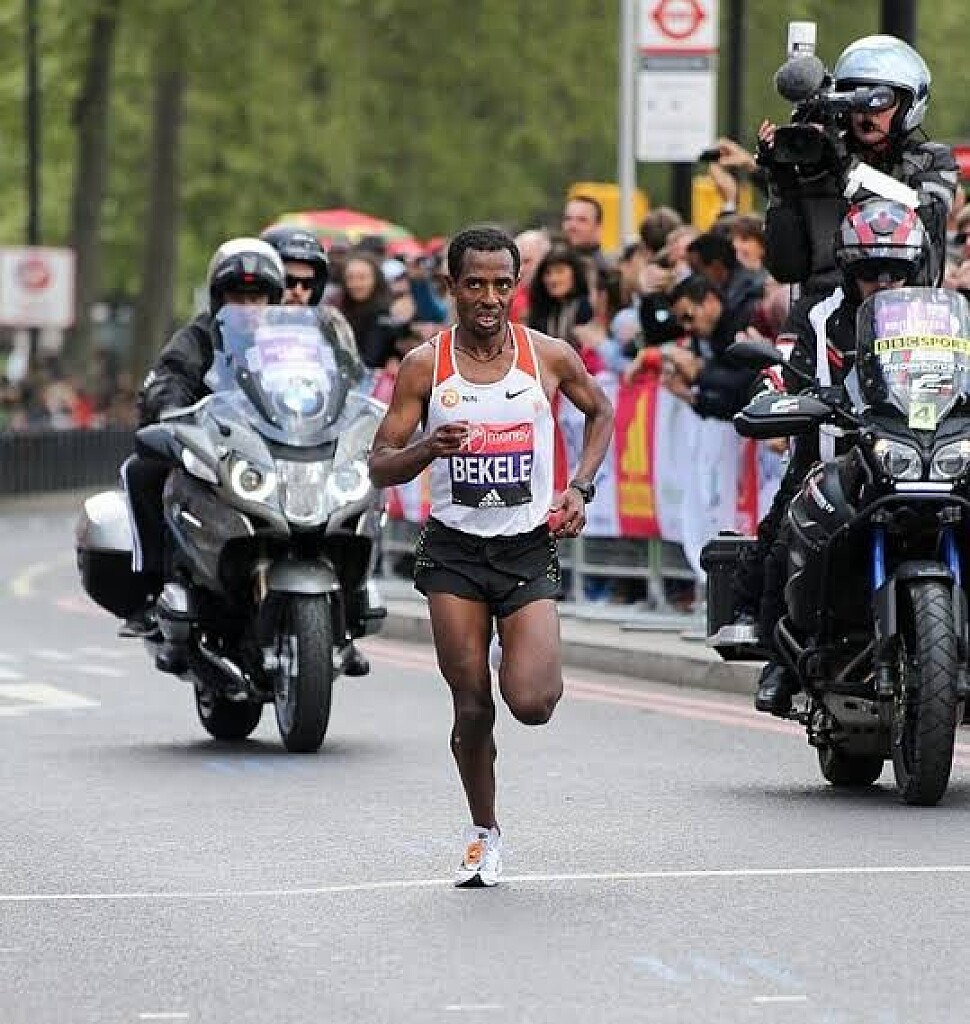
Kenenisa Bekele Targets Masters History In Valencia After Achilles Injury
Can The Legend Defy The Years? Kenenisa Bekele Is Chasing Another Piece Of History.
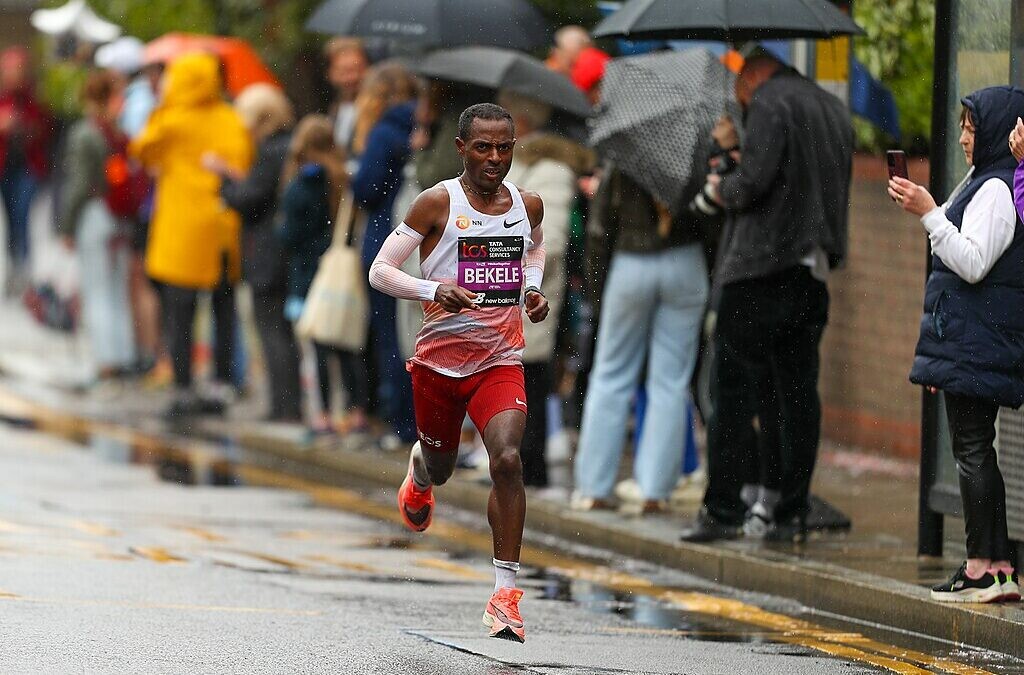
At 44, Ethiopian distance-running legend Kenenisa Bekele is preparing for another remarkable challenge as he returns to competition at the Valencia Half Marathon on October 25, 2026, only weeks after withdrawing from the Berlin Marathon because of a left Achilles tendon injury.
Rather than simply making a comeback, Bekele is targeting another piece of history. The three-time Olympic champion will have his sights set on the M40 world record of 59:53, held by Switzerland’s Tadesse Abraham.
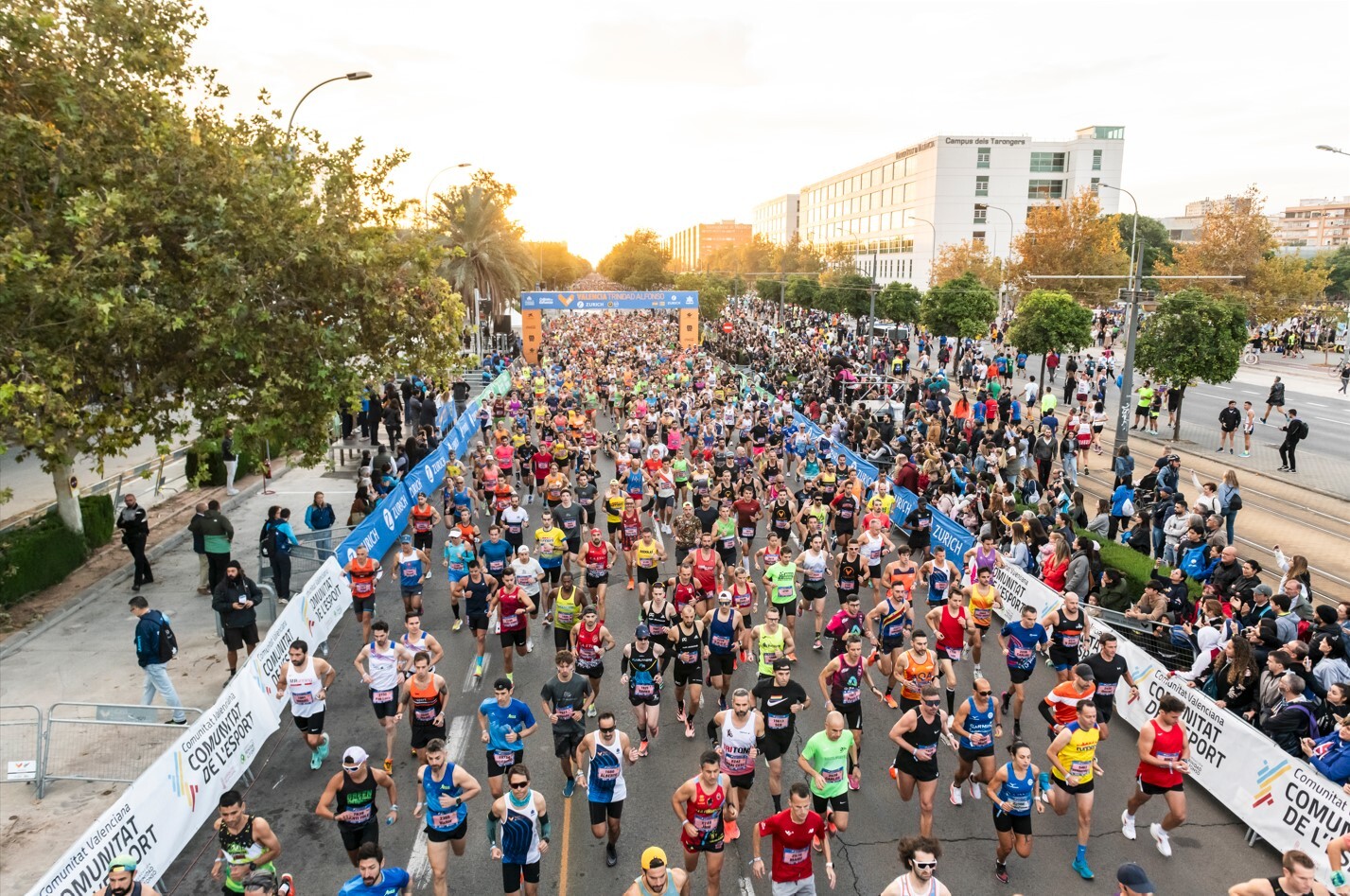
Bekele’s personal best stands at 1:00:22, set at the Big Half in London in 2020. To break Abraham’s mark, the Ethiopian will need to take almost 30 seconds off his best — a formidable challenge, particularly after an injury and a disrupted season.
But Bekele has never been a stranger to defying expectations. His return to Valencia comes at an age when most elite distance runners have long since retired, yet he continues to test himself against the best of a younger generation.
And the challenge awaiting him will be formidable. The men’s field includes Rodrigue Kwizera (58:16), Jemal Yimer (58:33), Tadese Worku (58:47) and Daniel Ebenyo (59:04), giving Bekele a formidable group of sub-one-hour performers to race alongside.
Bekele will wear bib number 18, adding another intriguing detail to a comeback that has already generated huge interest across the running world. Valencia’s famously fast course could provide the perfect setting for the Ethiopian to attack the clock if his body responds well on race day.
For Bekele, however, this is about more than a number on the clock. From his extraordinary track dominance to his longevity on the marathon and road-racing scene, he has repeatedly shown an ability to compete long after many expected his career to wind down.
Now, another chapter awaits in Valencia. Can the 44-year-old Ethiopian legend turn back the clock, overcome the effects of his Achilles injury and rewrite the masters record books? The answer will come on October 25.
by Erick Cheruiyot for My Best Runs.
Login to leave a comment

Valencia Half Marathon
The Trinidad Alfonso Valencia Half Marathon has become one of the top running events in the world. Valencia is one of the fastest half marathon in the world. The race, organized by SD Correcaminos Athletics Club, celebrated its silver anniversary in style with record participation, record crowd numbers, Silver label IAAF accreditation and an atmosphere that you will not find...
more...
2027 Could Bring Unprecedented Heat, Raising New Concerns for Marathon Runners Worldwide
The global running community could face a formidable challenge in 2027, as forecasts of a potentially powerful El Niño raise concerns about rising temperatures and the impact of extreme heat on marathon performances.
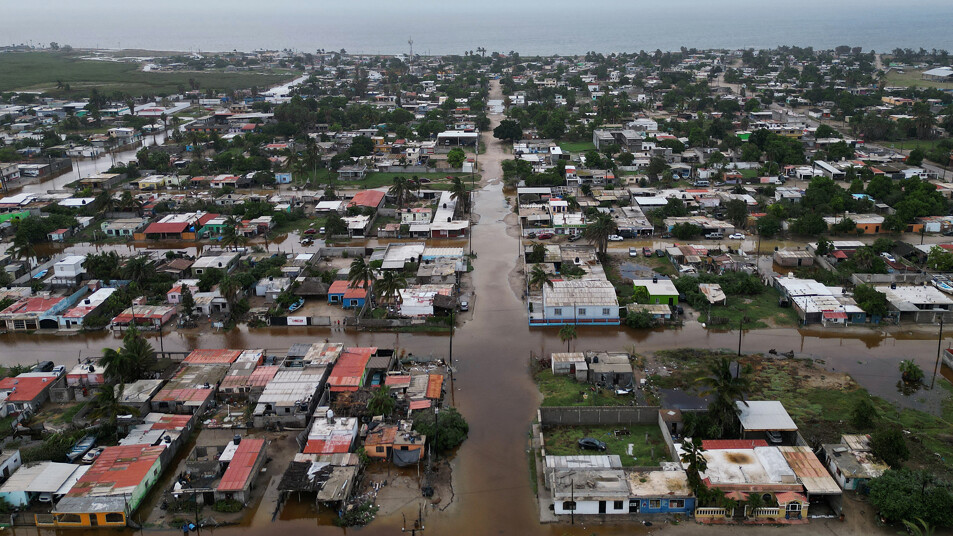
With long-distance runners increasingly chasing personal bests on the world's biggest stages, the prospect of another exceptionally warm year has placed race-day weather firmly in the spotlight. For marathoners, even a modest rise in temperature can make the difference between a record-breaking performance and a difficult battle to reach the finish line.
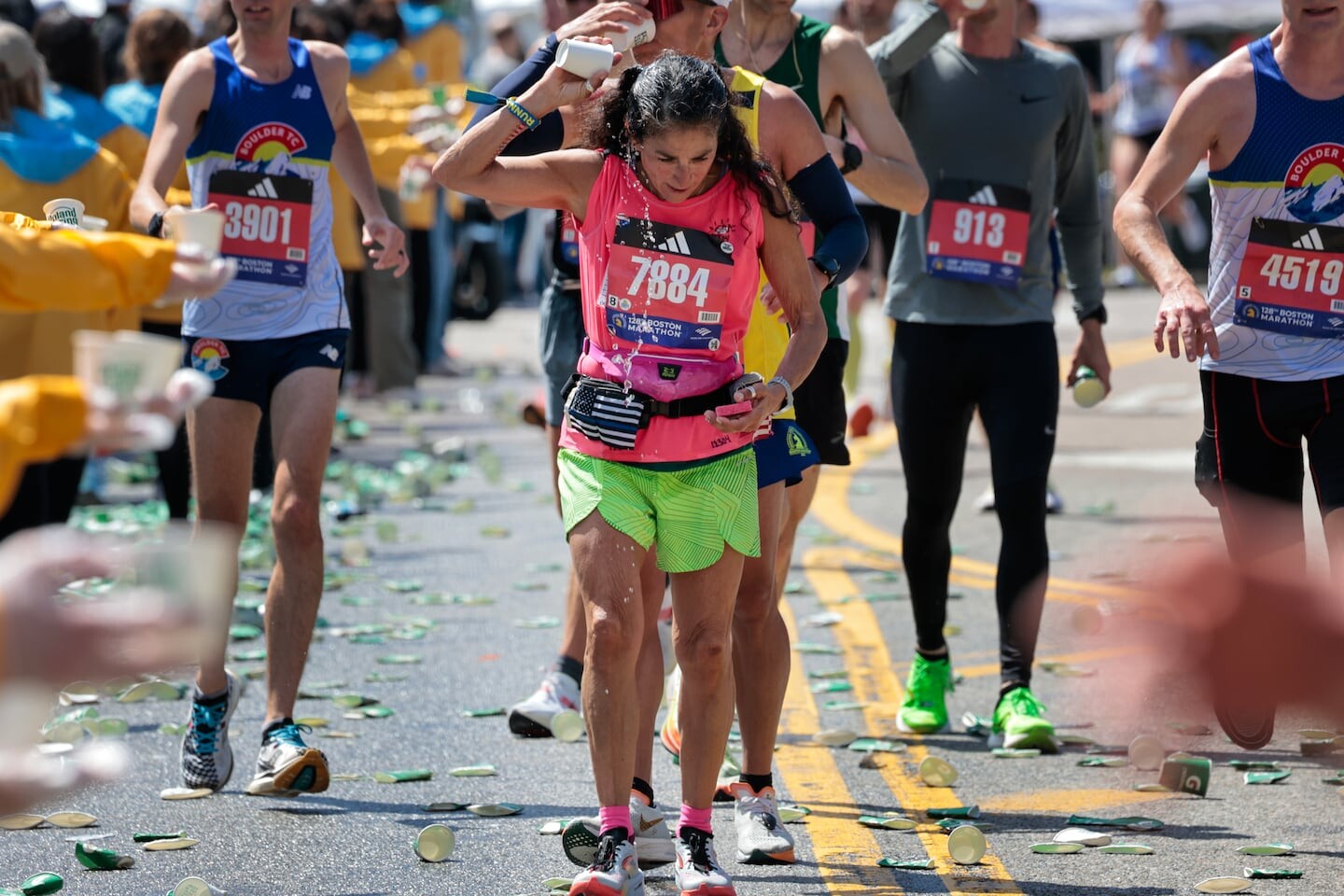
At the centre of the concern is the Pacific Ocean, where developing El Niño conditions could influence global temperatures. Forecasts have raised the possibility of an unusually strong event, although its eventual intensity and the precise effects on temperatures around the world remain uncertain.
El Niño is a natural climate phenomenon characterised by warmer-than-average sea surface temperatures across parts of the central and eastern equatorial Pacific. It can alter weather patterns across different regions, while its warming influence can contribute to higher global temperatures. The full impact depends on the strength of the event and how it interacts with other climate factors.
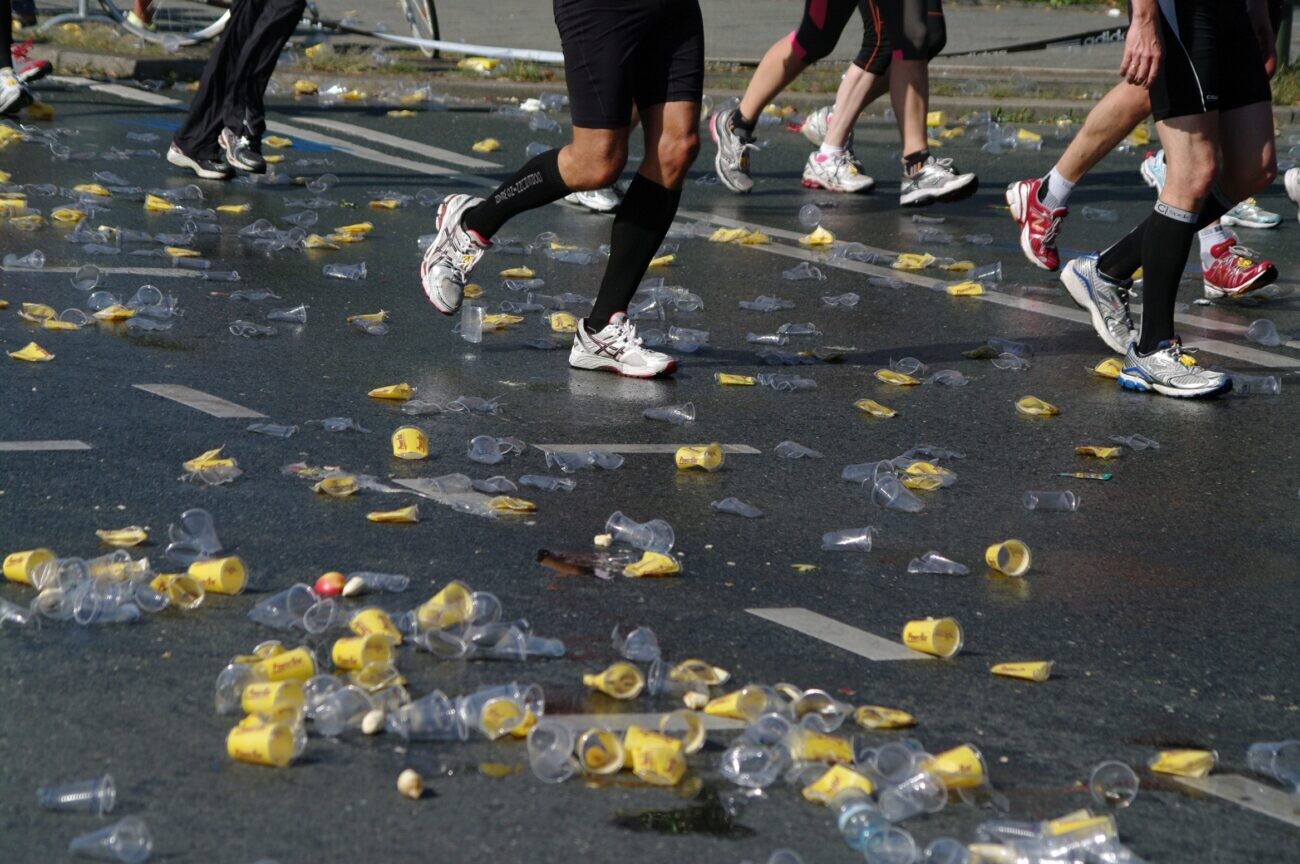
The timing is particularly important. Global temperatures have often responded strongly in the year following a major El Niño, meaning 2027 could face an increased risk of challenging heat. However, whether it ultimately surpasses the existing global temperature record will depend on evolving ocean conditions, atmospheric patterns and human-caused climate change.
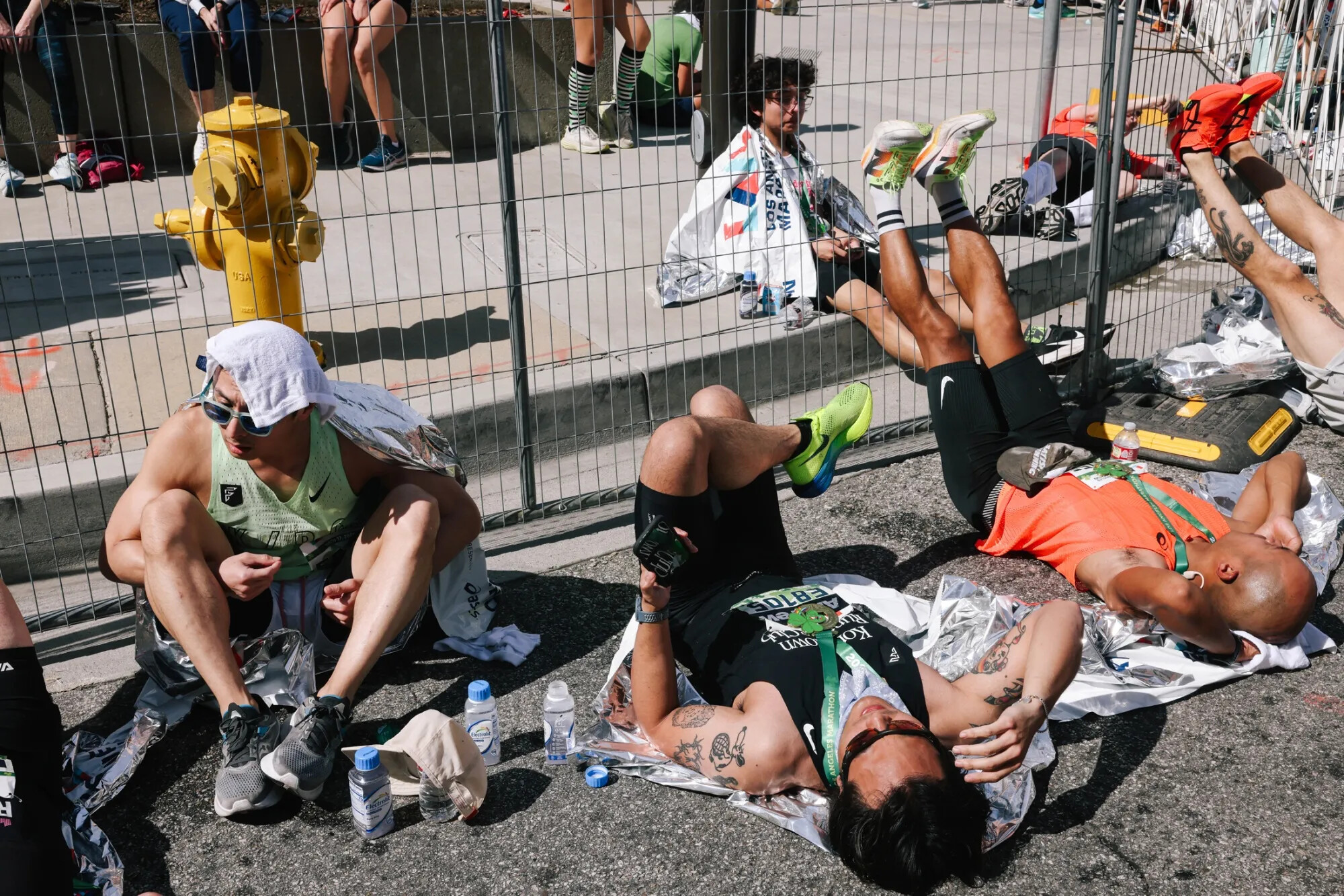
For marathon runners, the implications are significant. Scientific research has repeatedly shown that warmer conditions can reduce endurance performance, increase physiological strain and make it more difficult to maintain a planned race pace over 42.195 kilometres.
An analysis of seven North American marathons illustrates how substantially conditions can influence elite performances. Researchers found that leading male runners finished approximately 1.7 per cent slower relative to course records under the coolest conditions examined. In the warmest category, that difference increased to around 4.5 per cent.
For an athlete capable of running a marathon in 2:05:00, a slowdown of that magnitude could translate into several additional minutes on the clock. At the elite level, where races are frequently decided by seconds, such a difference can determine whether a runner achieves a personal best, secures a podium finish or misses a major performance target.
The consequences can be even more noticeable among recreational athletes, who often spend considerably longer exposed to the conditions.
A separate analysis by researchers at the University of Chicago, examining approximately 4.7 million marathon finishing times, highlighted the substantial effect of temperature on runners across different ability levels. The findings suggested that the typical participant could lose roughly 19 minutes when racing in temperatures in the 70s Fahrenheit, compared with conditions in the 40s. In the 80s Fahrenheit, the estimated time penalty rose to approximately 33 minutes.
These figures underline why marathon preparation involves much more than mileage, speed sessions and strength training. Temperature, humidity, direct sunlight and the body's ability to regulate heat can all influence how effectively a runner sustains an effort over the full distance.
Many marathon performances are achieved in cool conditions, with temperatures of approximately 4°C to 10°C often considered favourable for endurance running. As temperatures climb beyond that range, the body must devote more resources to cooling itself, potentially increasing cardiovascular strain and making a previously comfortable pace harder to maintain.
However, there is no universal temperature at which every marathon runner begins to slow down. Individual fitness, acclimatisation, humidity, wind, course exposure and race strategy all influence performance. A cool, overcast morning can produce very different outcomes from a sunny, humid day, even when the thermometer shows similar readings.
by Erick Cheruiyot for My Best Runs.
Login to leave a comment
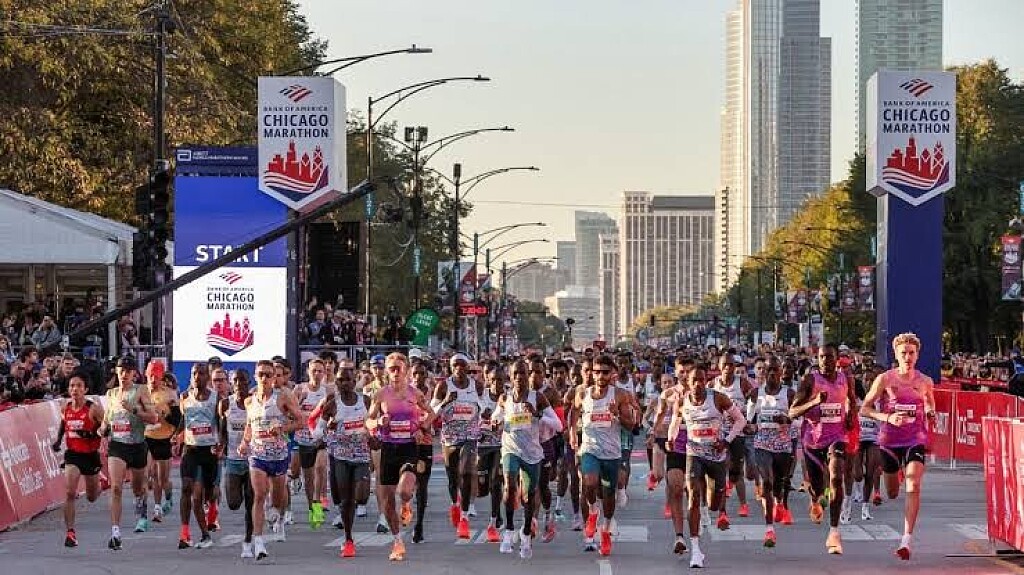
Chicago Marathon 2027 Applications Open As Lottery Window Closes On October 29
Applications for the 2027 Bank of America Chicago Marathon are officially open, giving runners from around the world an opportunity to secure a place in one of the most prestigious races on the global road-running calendar. However, aspiring participants will have less than three weeks to enter the general lottery before applications close on October 29.

The 49th edition of the celebrated marathon is scheduled for Sunday, October 10, 2027, when thousands of athletes will take to the streets of Chicago for one of the sport’s biggest annual running events.
For the majority of runners, the non-guaranteed entry lottery remains the primary route to securing a coveted race bib. Applicants will have to wait until December 8, when the results are scheduled to be communicated by email. Those fortunate enough to be selected will then need to complete their payments within the designated mid-December deadline to confirm their participation.
The entry fee is set at $250 for United States residents and $260 for international applicants, with an additional processing fee. Importantly, runners who enter through the lottery will only be charged if they are successful in securing a place.
Beyond the general lottery, Chicago offers alternative pathways for runners who meet specific eligibility requirements. Athletes who achieve the designated age-group qualifying standards may apply for guaranteed entry, provided their qualifying performances were recorded on certified courses between January 1, 2025, and October 29, 2026.
Another opportunity is available through the Chicago Distance Series. Runners who successfully complete all three designated races in the 2027 series will earn guaranteed entry into the 2028 Bank of America Chicago Marathon, offering an alternative for those planning their marathon journey beyond next year’s event.
As one of the seven Abbott World Marathon Majors, Chicago continues to attract elite competitors, recreational runners and marathon enthusiasts seeking the experience of racing on one of the world’s most recognised marathon stages. Its reputation, fast course and electric atmosphere make securing entry a priority for thousands of hopeful participants each year.
With the application deadline approaching, runners hoping to be part of the 2027 edition should ensure they submit their lottery applications before October 29. Those pursuing guaranteed entry should also carefully review the official eligibility requirements and qualifying standards before applying.
For many, the journey to Chicago begins long before race day. With the lottery window now open, the first step towards the starting line is making sure the application is submitted on time.
by Erick Cheruiyot for My Best Runs.
Login to leave a comment

Bank of America Chicago
Running the Bank of America Chicago Marathon is the pinnacle of achievement for elite athletes and everyday runners alike. On race day, runners from all 50 states and more than 100 countries will set out to accomplish a personal dream by reaching the finish line in Grant Park. The Bank of America Chicago Marathon is known for its flat and...
more...
Twin Cities Marathon Turns the Page as Iconic Race Moves to Mid-October in 2027
The Twin Cities Marathon has closed the chapter on one of the longest-running traditions in American marathon racing, with the event set to leave its familiar early-October slot and move to mid-October beginning in 2027.

The 2026 edition marked the final time the race would be held in its traditional early-October window, bringing an end to a calendar tradition that has defined the event for more than four decades.
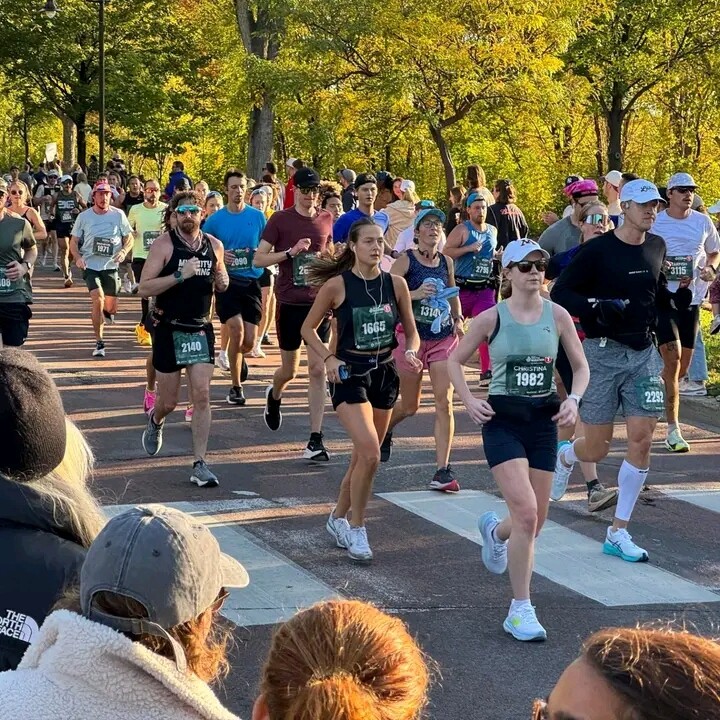
Beginning in 2027, Twin Cities Marathon Weekend will move to a mid-October date. The decision follows growing concerns over warmer and increasingly unpredictable conditions during the race's traditional weekend, with organisers seeking a better environment for runners, spectators and volunteers.
The change is more than a simple adjustment to the racing calendar. Early October, once synonymous with crisp autumn temperatures in Minnesota, has increasingly brought challenging heat. In recent years, organisers have had to contend with conditions that can place additional stress on marathon runners and increase demands on medical and public-safety teams.
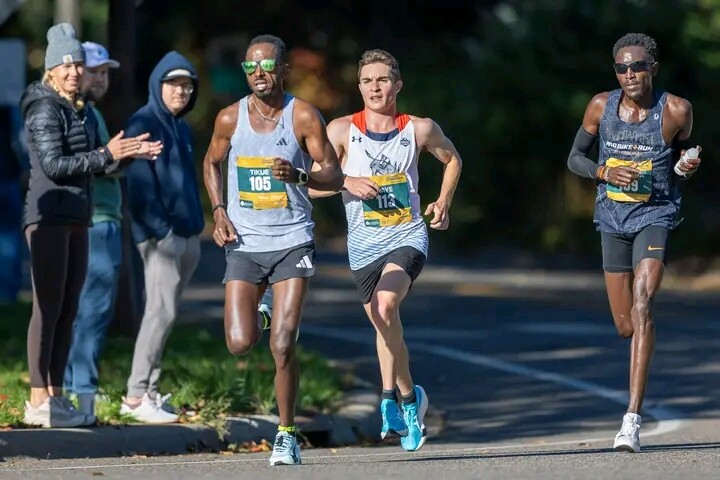
The inaugural Twin Cities Marathon was held on October 3, 1982, attracting 4,563 entrants. What began as a relatively young marathon has since developed into one of the most recognisable road races in the United States, growing alongside the running communities of Minneapolis and St. Paul.
The course itself has long been one of the event's defining features. Runners travel through Minneapolis, pass the city's famous chain of lakes and follow a scenic route toward St. Paul before finishing near the Minnesota State Capitol. The combination of major urban landmarks, parkways, waterways and autumn scenery has helped give the race its distinctive identity.
The 2026 edition continued that long tradition, with roughly 30,000 runners taking part across the various events of Marathon Weekend. The marathon also featured defending champions Will Norris and Jane Bareikis, while favourable temperatures provided runners with much more comfortable conditions than some of the warmer editions in recent years.
Yet even with favourable weather this year, the decision to move the race reflects a longer-term concern. Organisers are looking beyond a single race morning and considering how changing weather patterns could affect the event in the years ahead.
For runners, the move could eventually become one of the most important changes in the marathon's modern history. A later October date offers the possibility of cooler racing conditions while preserving the course, the atmosphere and the traditions that have made Twin Cities Marathon a fixture on the American running calendar.
For more than four decades, the first Sunday of October provided a familiar date for thousands of runners preparing to take on the Twin Cities course.
That tradition has now reached its final chapter.
From 2027, the Twin Cities Marathon will arrive later in the fall — opening a new era for a race whose history remains firmly connected to the streets of Minneapolis and St. Paul.
by Erick Cheruiyot for My Best Runs.
Login to leave a comment
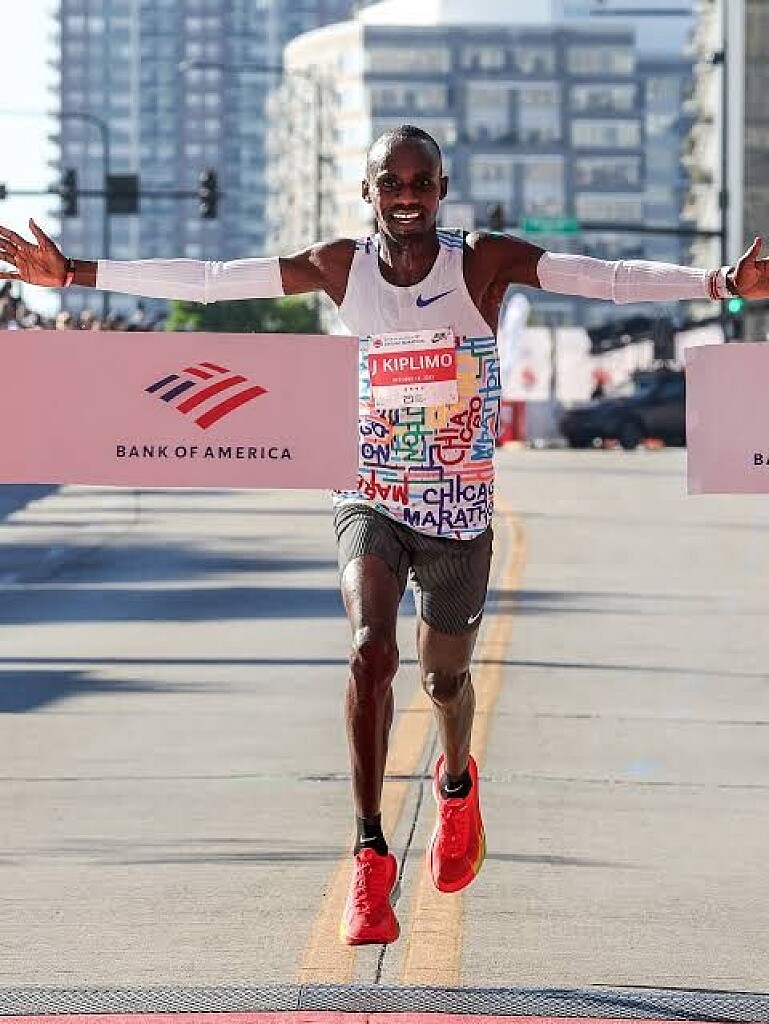
Chicago Marathon Braced For Record-Breaking Drama As Kiplimo Leads Elite Field
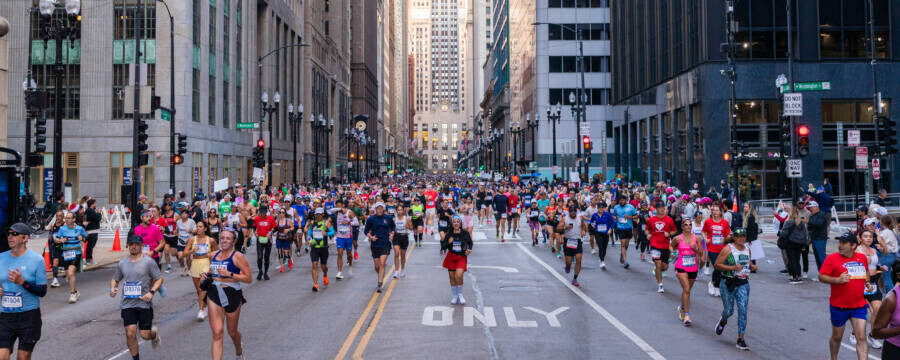
The streets of Chicago are set for another spectacular marathon showdown, with Uganda’s Jacob Kiplimo leading a world-class men’s field at the 2026 Bank of America Chicago Marathon on Sunday, October 11.
Kiplimo returns to the Windy City as the defending champion and arrives with one of the most impressive marathon resumes in the world. He has a 2:00:28 personal best, making him one of the fastest marathoners in history and a major name to watch whenever the pace turns exceptionally quick.
The current world record stands at an astonishing 1:59:30, set by Kenya’s Sabastian Sawe in London in April 2026. Ethiopia’s Yomif Kejelcha also broke the two-hour barrier in the same race with 1:59:41, while Kiplimo finished third in 2:00:28.
That means Kiplimo would need another significant improvement in Chicago to challenge the world record, but his performances this year have shown that he belongs among the select group capable of pushing marathon running towards unprecedented territory.
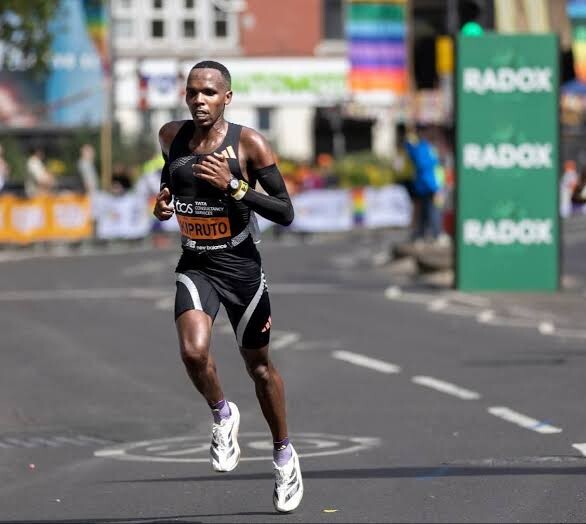
The Ugandan will face a formidable challenge from Kenya’s Amos Kipruto, who has a 2:01:39 personal best. Ethiopia’s Milkesa Mengesha follows with 2:03:17, while Kenya’s Daniel Mateiko has run 2:03:44. Ethiopia’s Asrar Hiyrden and Kenya’s Alex Masai are also among the leading contenders, with personal bests of 2:03:59 and 2:04:37 respectively.
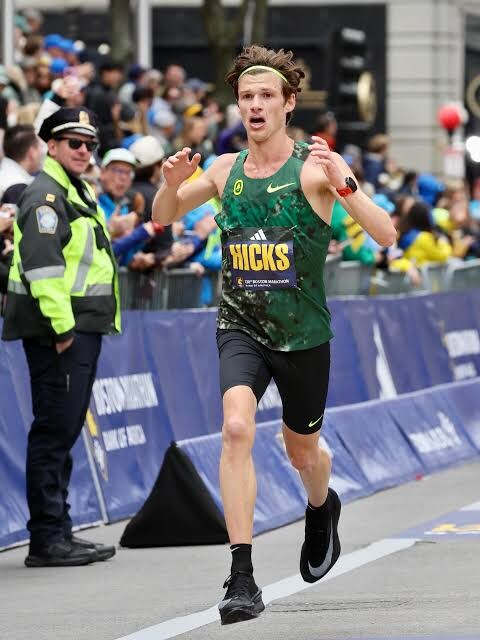
There is also a major American-record storyline in Chicago. Charles Hicks, who owns a 2:04:35 personal best, headlines the American contingent alongside Clayton Young, Vincent Mauri, Galen Rupp and Abbabiya Simbassa.
The American record currently stands at 2:04:43, set by Conner Mantz at the 2025 Chicago Marathon. Hicks therefore arrives with a personal best already faster than that mark, adding another intriguing subplot to an exceptionally deep field.
The depth of the field means Kiplimo is unlikely to have a quiet day once the pace begins to build. Kipruto brings considerable marathon experience, while Mengesha, Mateiko, Hiyrden and the other leading contenders have the credentials to remain in contention deep into the race. With Chicago known for producing fast times, the battle could become a fascinating test of pace, positioning and finishing strength.
For Kiplimo, the race represents another opportunity to strengthen his credentials over the marathon. The Ugandan has already demonstrated remarkable speed and endurance across different distances, and Chicago could provide another stage for him to test just how close he can get to the sport’s ultimate barrier.
With several elite athletes capable of running at extraordinary speeds, fans can expect the 2026 edition to deliver plenty of drama from the opening kilometres to the famous finish on Columbus Drive.
World record? American record? Or another unforgettable Chicago finish? The answers will come on October 11.
by Erick Cheruiyot for My Best Runs.
Login to leave a comment
Bank of America Chicago
Running the Bank of America Chicago Marathon is the pinnacle of achievement for elite athletes and everyday runners alike. On race day, runners from all 50 states and more than 100 countries will set out to accomplish a personal dream by reaching the finish line in Grant Park. The Bank of America Chicago Marathon is known for its flat and...
more...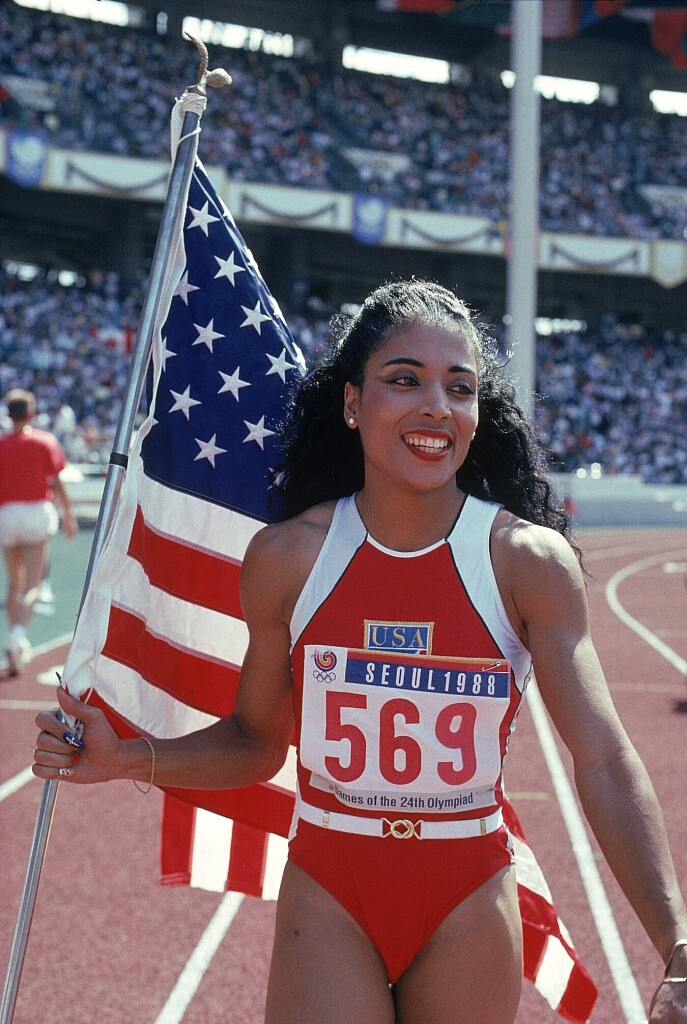
Florence Griffith-Joyner’s 21.34 Still Stands 38 Years Later
Thirty-eight years ago, Florence Griffith-Joyner produced a performance in Seoul that would go on to become one of the most enduring records in athletics history.
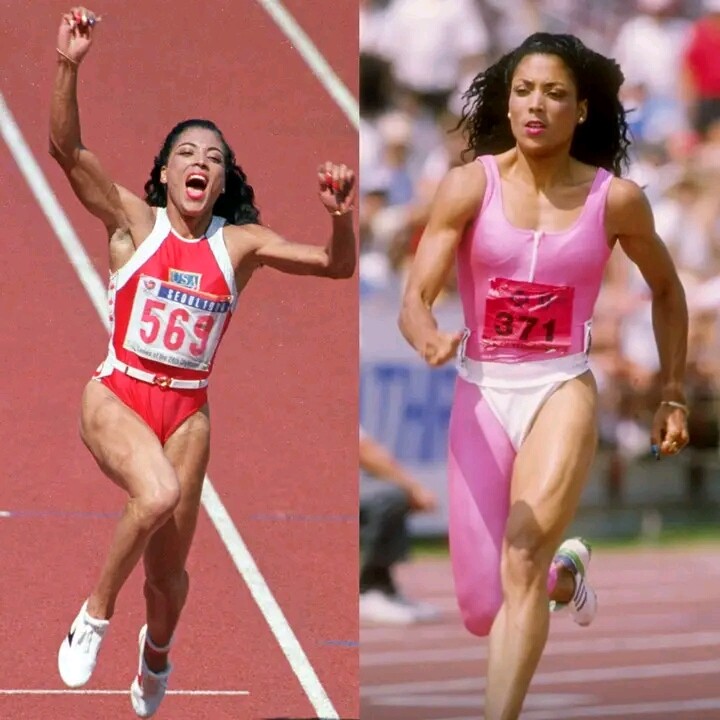
On September 29, 1988, the American sprint sensation lined up for the women’s 200m final at the Olympic Stadium in Seoul, South Korea, carrying the confidence of an athlete who had already announced herself as one of the stars of the Games.
What followed was extraordinary.
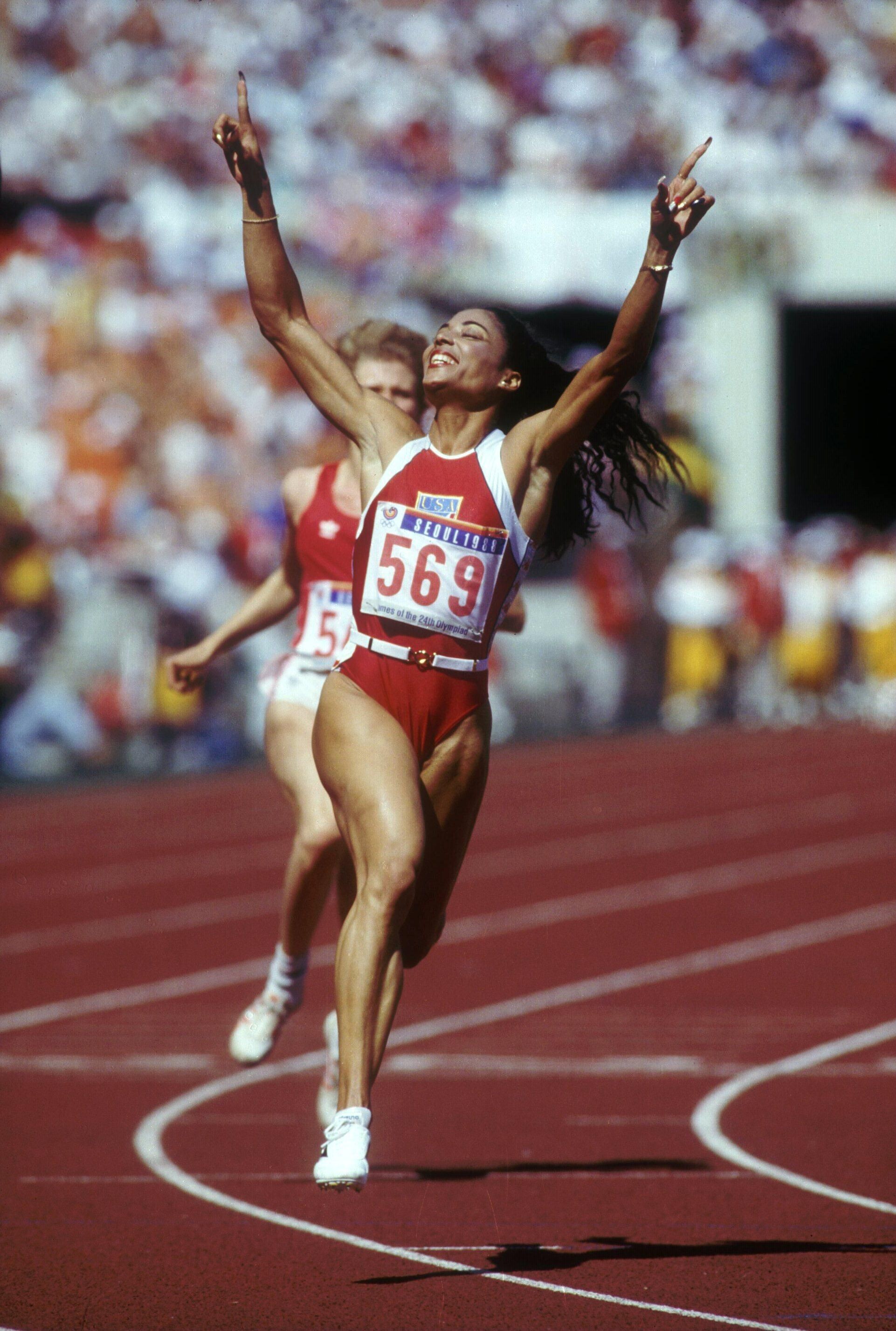
Griffith-Joyner stormed around the bend before unleashing an astonishing finish, stopping the clock in 21.34 seconds with a legal following wind of +1.3 m/s. The performance secured Olympic gold and shattered the world record she had set earlier that same day in the semifinal, when she ran 21.56.
It was not simply another Olympic victory. It was a performance that immediately entered sprinting folklore.
The 21.34 remains the women’s 200m world record, 38 years after it was established. World Athletics continues to list Griffith-Joyner at the top of the all-time rankings, with her mark standing ahead of every performance that has followed.
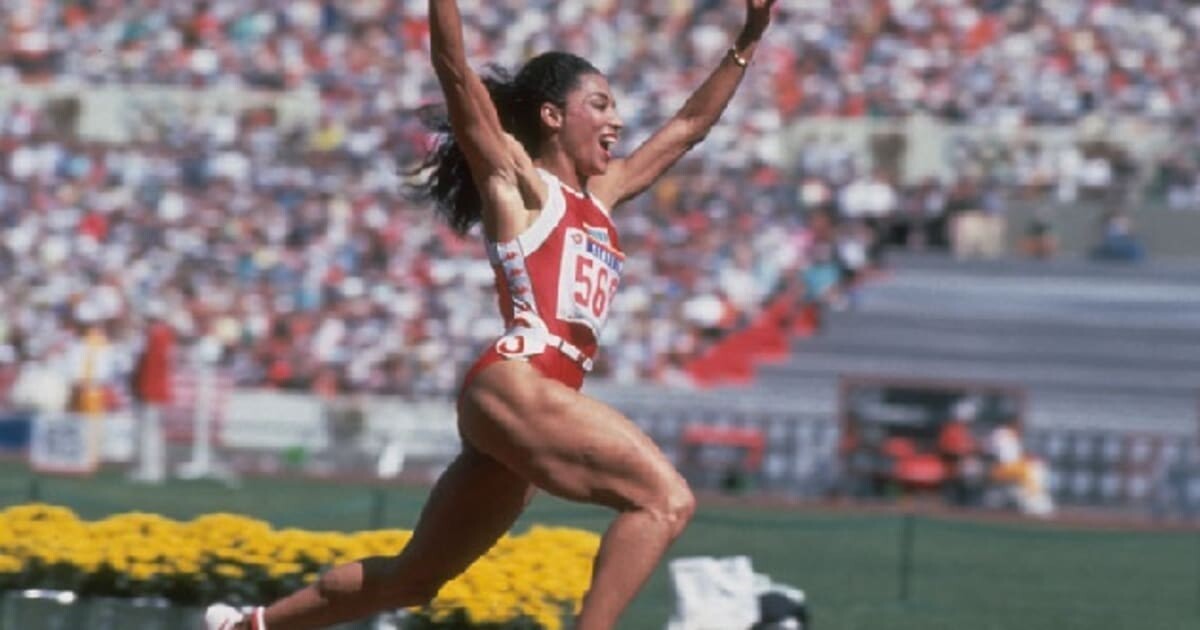
And there have been some remarkable attempts to take it down.
Jamaica’s Shericka Jackson came closer than anyone in recent years, running 21.41 to win the world title in Budapest in 2023 — just seven hundredths of a second away from Griffith-Joyner’s legendary mark. Elaine Thompson-Herah ran 21.53 in Tokyo in 2021, while Gabrielle Thomas has gone 21.61.
Yet 21.34 has continued to stand.
Griffith-Joyner’s Seoul campaign was remarkable beyond the 200m record. She won three Olympic sprint gold medals at the Games and established herself as one of the defining athletes of the 1988 Olympics. World Athletics records her as a three-time Olympic champion and the current world-record holder in both the 100m and 200m.
Her career also left behind an unmistakable visual legacy. The long, flowing nails, striking racing outfits and explosive sprinting made Flo-Jo one of the most recognisable figures the sport has ever produced.
But decades later, it is the number 21.34 that continues to command attention.
Generations of Olympic champions and world-class sprinters have come and gone. The event has evolved, training methods have advanced and the level of women’s sprinting has continued to rise. Still, Griffith-Joyner’s Seoul masterpiece remains untouched.
38 years. One legendary record. Still standing.
And with a new generation of elite 200m sprinters continuing to push the boundaries, the question remains fascinating: how much longer can Florence Griffith-Joyner’s 21.34 survive?
by Erick Cheruiyot for My Best Runs.
Login to leave a comment
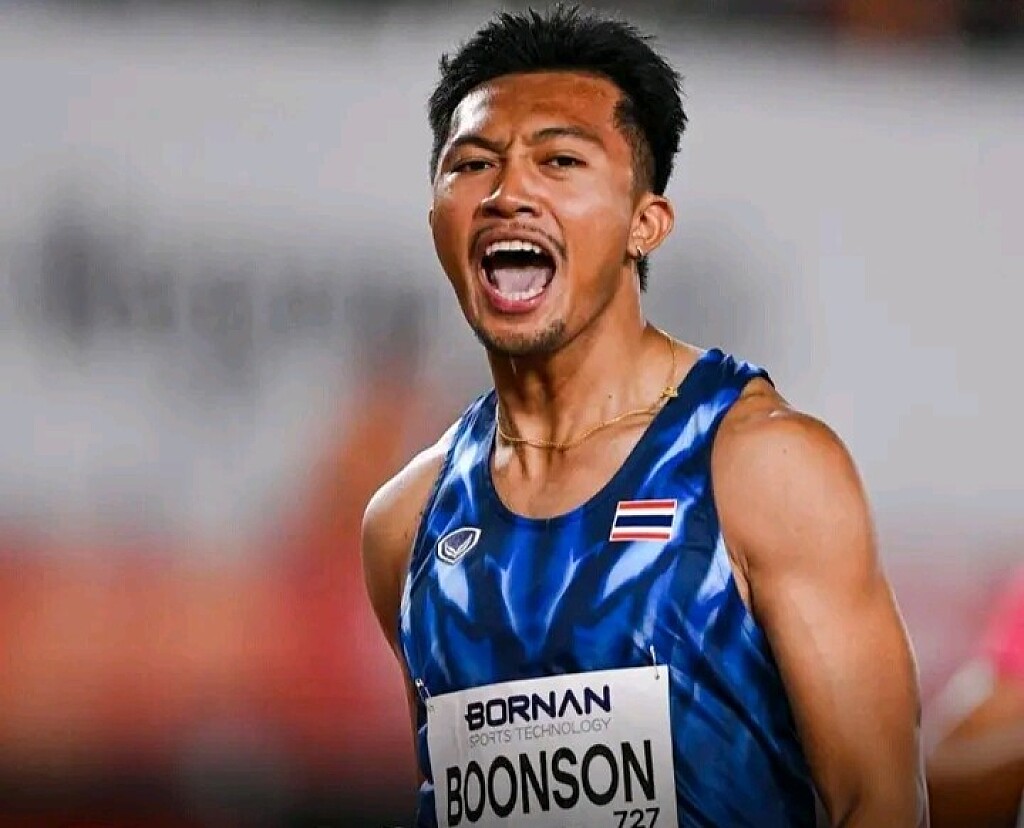
Puripol Boonson Completes Asian Games Sprint Double With Historic 19.88 Asian Record
Thailand’s Puripol Boonson has delivered a spectacular performance at the 2026 Asian Games in Nagoya, completing the men’s 100m and 200m sprint double while etching his name into Asian athletics history.
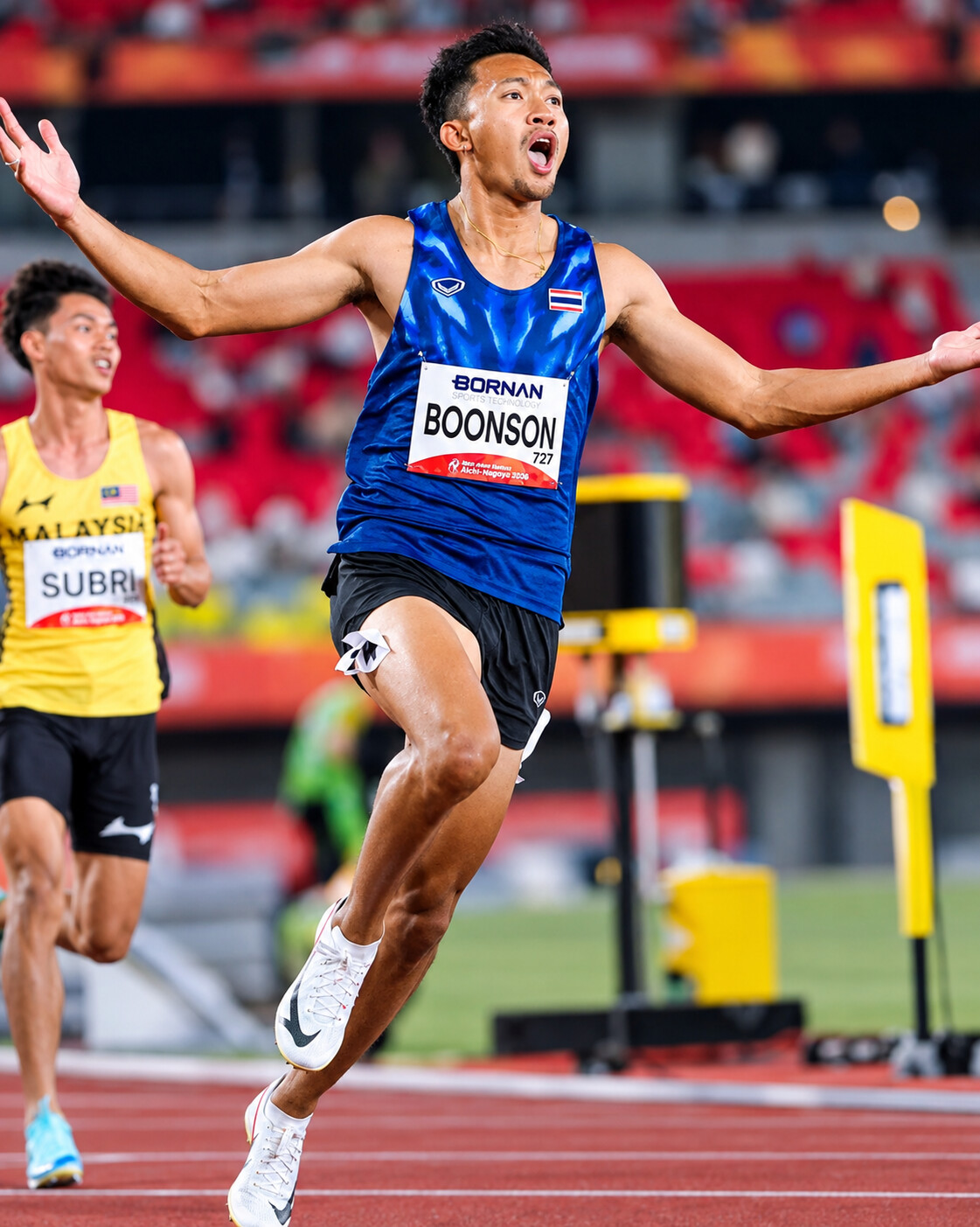
The 20-year-old produced the performance of his young career in the 200m final, powering to 19.88 seconds in drizzling rain to claim gold, set a new Thai national record and match the Asian record.
Boonson’s remarkable run came with a slight headwind of -0.3 m/s, making the performance even more impressive under the wet conditions.
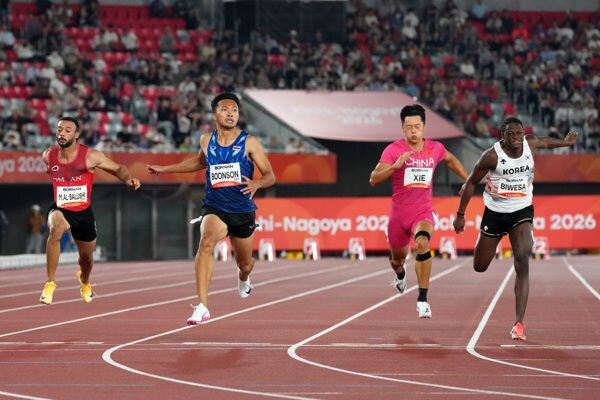
The Thai sprinter had already captured the 100m title earlier in the Games, and he returned to the track with the opportunity to complete the prestigious sprint double. He delivered in emphatic fashion, combining championship composure with world-class speed.
His winning time equalled the Asian record established by China’s Xie Zhenye in 2019, when Xie clocked 19.88 seconds at the London Diamond League. The mark had stood alone for seven years, with no other Asian athlete able to match it.
Until Boonson.
With his 19.88, Boonson also became only the third Asian man in history to break the 20-second barrier in the 200m, joining an exclusive group at the very top of the continent’s sprinting hierarchy.
China’s Youwen Huang produced a strong run for silver in 20.45 seconds, while Japan’s Soshi Mizukubo completed the podium with 20.56 seconds.
Boonson’s achievement carries enormous significance for Thailand as well. His victory makes him the country’s latest sprint sensation and adds another major milestone to a career that has developed rapidly over the past few seasons.
The 200m triumph also completed a remarkable double: 100m gold, 200m gold and a share of the Asian record.
What makes the performance particularly striking is that Boonson achieved the 19.88 in a championship final, where the primary objective is winning rather than chasing the clock. Yet he managed to combine both objectives, securing the gold medal while producing the fastest performance of his career.
At just 20 years old, Boonson now owns a 9.90-second personal best in the 100m and a 19.88-second personal best in the 200m. His latest performance suggests that Asia’s sprinting landscape is entering an exciting new chapter.
For seven years, Xie Zhenye’s 19.88 stood untouched at the top of the Asian rankings.
Now, Boonson stands beside him.
And with the Thai star still so young, the question is no longer whether he can match the Asian record — he already has.
The next challenge is to go one step further and make the record his alone.
Two finals. Two gold medals. A national record. An Asian record. Puripol Boonson has turned the Asian Games into a defining chapter of his young career.
by Erick Cheruiyot for My Best Runs.
Login to leave a comment

Yujie Chen Storms To Asian Games 100m Gold With Asian U20 Record
China’s teenage sprint sensation Yujie Chen has produced another landmark performance, powering to women’s 100m gold at the Asian Games in Nagoya while lowering her own Asian U20 record.

The 17-year-old stopped the clock at 11.06 seconds into a -0.4 m/s headwind, delivering a composed performance on the biggest stage of her young career. Despite the unfavourable wind, Chen maintained her speed through the closing metres and crossed the finish line clear of her closest challengers.
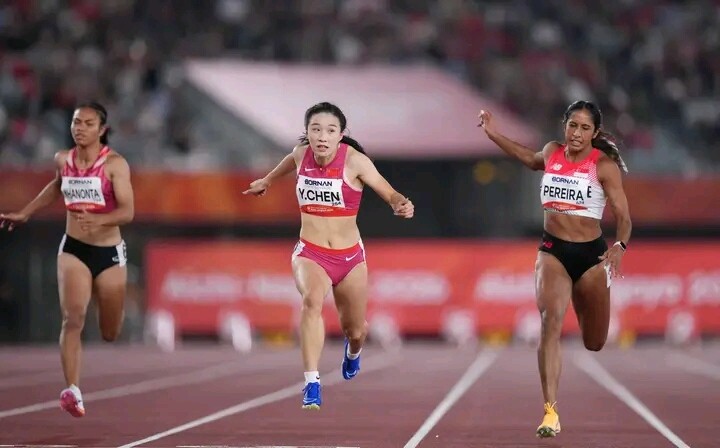
Singapore’s Shanti Pereira secured the silver medal in 11.21 seconds, while Bahrain’s Edidiong Odiong completed the podium with 11.33 seconds to take bronze.
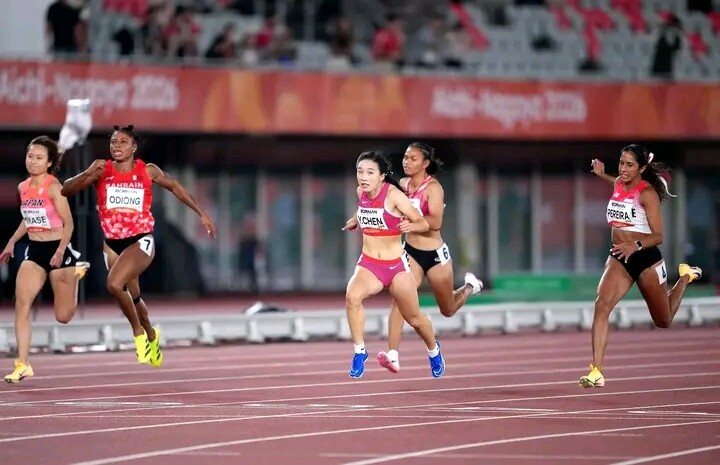
Chen’s victory is another major milestone in what has quickly become one of the most exciting sprinting journeys in Asian athletics. Still only 17, she has continued to lower her times and demonstrate the kind of speed and consistency that has placed her among the continent’s emerging sprint talents.
The Chinese youngster entered the final carrying considerable expectations, but she responded with confidence when it mattered most. Rather than being overwhelmed by the occasion, Chen produced a controlled and powerful run, translating her recent progress into a major championship victory.
Her 11.06-second performance also adds further significance to the gold medal, as she once again rewrote the Asian U20 record books. The mark underlines the rapid development of the young sprinter and gives China another promising name to watch in the next generation of women’s sprinting.
For Pereira, the 11.21 silver adds another major championship podium to her decorated career, while Odiong’s 11.33 earned her a hard-fought bronze in a competitive final.
But the night belonged to Chen.
At just 17, she has now combined Asian Games gold with a new Asian U20 record, signalling that her rise is gathering momentum at remarkable speed.
11.06 seconds. Asian U20 record. Asian Games gold.
Yujie Chen has announced herself on one of Asia’s biggest stages.
by Erick Cheruiyot for My Best Runs.
Login to leave a comment
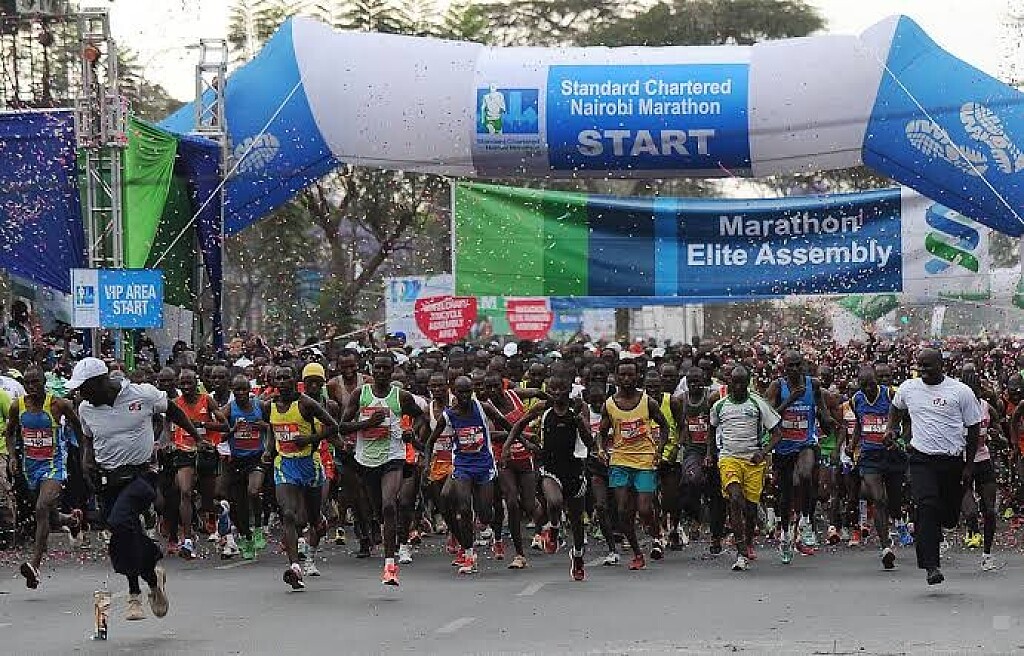
Nairobi Marathon Set for Record-Breaking Edition as 30,700 Runners and KES 273 Million in Support Fuel 2026 Race
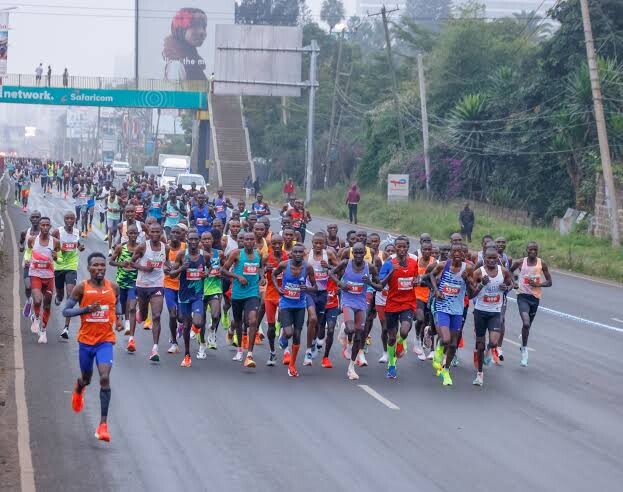
The 2026 Standard Chartered Nairobi Marathon is heading towards its biggest edition yet, with a record 30,700 runners registered and more than 200 elite athletes from 102 nationalities expected to take part in the October 25 race at Uhuru Gardens in Nairobi.
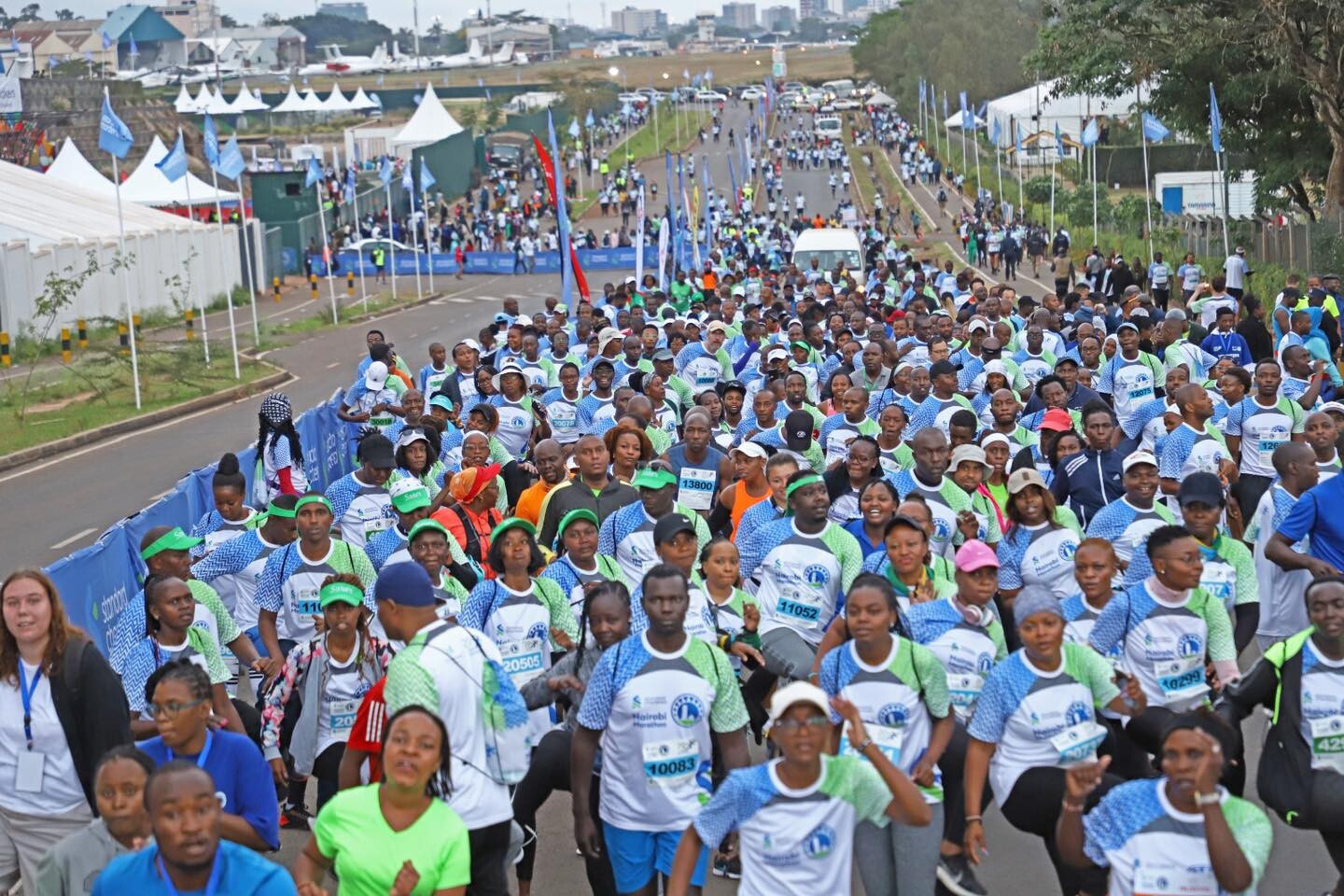
The growing scale of the event has been matched by unprecedented backing from sponsors and partners, with a record KES 273 million committed towards this year’s marathon.
Standard Chartered has contributed KES 130 million, while sponsors have provided a further KES 143 million through cash and in-kind support. The investment is expected to play a key role in delivering a safe, memorable and world-class experience for the more than 30,000 runners expected on the starting line.
The increased support was highlighted during a breakfast appreciation event held for the marathon’s sponsors and partners, recognising their contribution to an event whose influence continues to extend beyond race day.
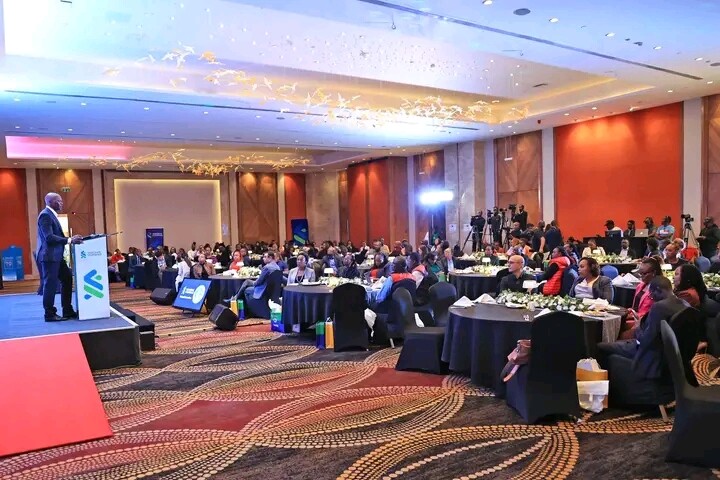
The 2026 edition has attracted 56 sponsors, up from 43 in 2025, representing a 30 per cent increase in the number of supporting partners. The combined sponsorship value is also 17 per cent higher than the KES 233 million secured last year and 58 per cent above the KES 173 million raised in 2024.
Local Organising Committee chairman David Mwindi said the record investment demonstrates the collective commitment behind the marathon and its wider impact.
“This record KES 273 million investment reflects the shared commitment of Standard Chartered and our sponsors to delivering a world-class marathon with lasting impact,” Mwindi said.
On the course, participants will start and finish at Uhuru Gardens, with the route taking runners through the Southern Bypass. The programme will feature the 42-kilometre full marathon, 21-kilometre half marathon and 10-kilometre road race, alongside a 21-kilometre wheelchair race.
The event will also cater for recreational runners and families through the 5-kilometre family fun run, while the CEO Challenge and Corporate Challenge will add another dimension to the day, bringing businesses and their teams into the celebrations.
The presence of more than 200 elite athletes from 102 nationalities is expected to add further international depth to an event already attracting unprecedented mass participation.
With record entries, a larger group of sponsors and KES 273 million in financial and in-kind support, the 2026 Standard Chartered Nairobi Marathon is set to offer more than a day of racing. It is increasingly becoming a platform that brings together elite sport, mass participation, business, community engagement and broader social impact.
As October 25 draws closer, attention will turn to the Kenya's capital for the elite line-ups, the athletes seeking honours across the various distances and the stories that will unfold while thousands of recreational runners prepare to make their own mark on what promises to be a landmark edition of the Standard Chartered Nairobi Marathon.
by Erick Cheruiyot for My Best Runs.
Login to leave a comment

NAIROBI MARATHON
Nairobi Marathon is an annual road running competition over the marathon distance held in October in Nairobi, Kenya. First held in 2003, the competition expanded and now includes a half marathon race along with the main race. It was part of "The Greatest Race on Earth", fully sponsored by Standard Chartered Bank....
more...
Sha’Carri Richardson: From Teenage Sensation to a Champion Who Rewrote Her Own Story
At just 19, Sha’Carri Richardson looked like a star destined to take over the sprinting world.
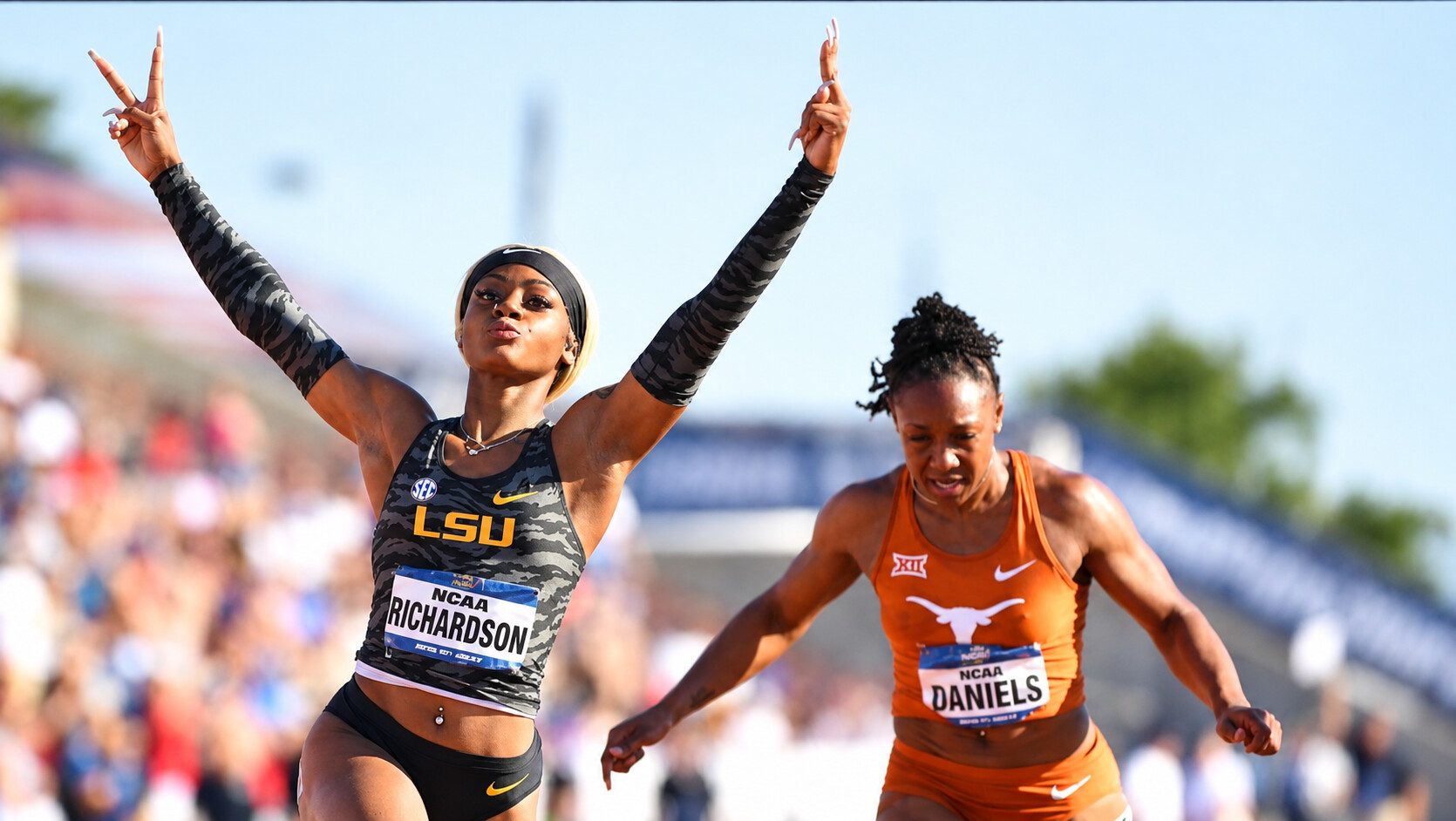
The speed was undeniable. In 2019, she announced herself on the collegiate stage with a 10.75-second NCAA record in the 100 metres, combining explosive acceleration with a fearless personality and a distinctive style that made her impossible to ignore.
She was young, confident and unapologetically herself.
But the road to becoming a champion was about to become far more complicated than anyone could have imagined.
In 2021, Richardson won the women’s 100m at the U.S. Olympic Trials in 10.86 seconds and appeared set for her Olympic debut.
Then everything changed.
A positive test for THC resulted in a one-month suspension, which ultimately ruled her out of the Tokyo Olympic 100m. USADA confirmed that Richardson accepted the sanction, which began on June 28, 2021.
The episode came at an especially difficult moment in her life. Richardson had publicly spoken about grieving the death of her biological mother and the emotional circumstances surrounding that period.
For an athlete who had seemed destined for Olympic glory, Tokyo became a painful chapter instead.
But it did not become the final chapter.
Richardson returned to the track with something to prove — not simply to the critics, but to herself.
The comeback became a championship story
In 2023, Richardson transformed her comeback into one of the defining performances of her career.
At the World Championships in Budapest, she won the 100m world title in 10.65 seconds, setting a championship record and defeating a field that included some of the greatest sprinters of her generation. World Athletics lists 10.65 as Richardson’s legal personal best, recorded on August 21, 2023.
She did not stop there.
Richardson also helped the United States win the women’s 4x100m relay gold in Budapest, adding another world title to a season that had completely changed the narrative surrounding her career.
The teenager who had once been celebrated for her raw talent was now a world champion.
Paris brought Olympic medals
A year later, Richardson arrived at the Paris 2024 Olympics carrying expectations of another major championship performance.
She delivered.
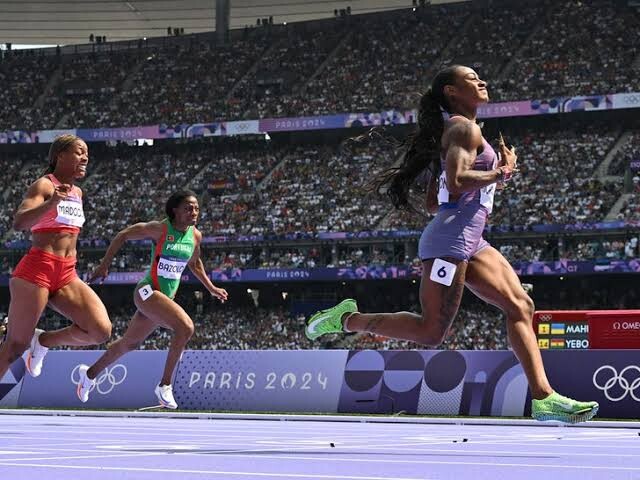
Richardson won silver in the individual 100m and then anchored the United States to gold in the women’s 4x100m relay. World Athletics records her as an Olympic champion and Olympic silver medallist.
The Olympic gold was particularly significant.
After missing Tokyo, Richardson had returned to the biggest stage in the sport and left Paris as an Olympic champion.
Her journey had gone from disappointment to the highest step of the podium.
2026: Still winning, still evolving
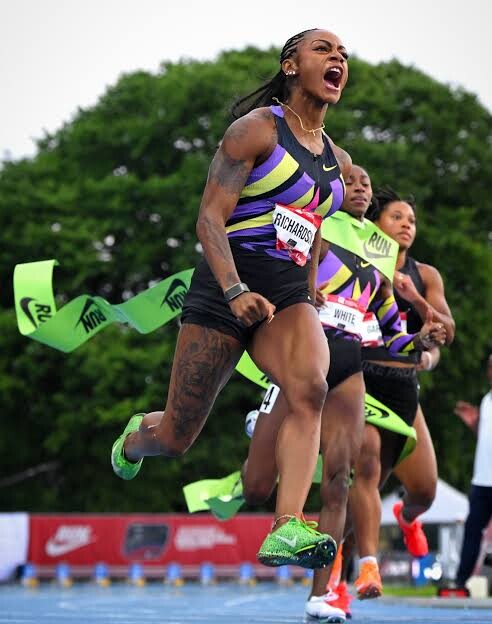
Richardson's story continued into 2026, and she closed the season in emphatic fashion at ATHLOS London.
On September 18 at StoneX Stadium, she won the 100m in 10.80 seconds with no wind assistance, finishing well clear of New Zealand's Zoe Hobbs, who ran 11.19. The performance was also an ATHLOS meeting record.
It was another reminder that Richardson remains one of the defining personalities of modern sprinting.
But the most compelling part of her journey cannot be measured entirely in seconds.
It is the evolution behind the performances.
The young sprinter who entered the global spotlight with enormous confidence has experienced public criticism, disappointment, grief, triumph and the enormous pressure that comes with being one of the world's most recognizable athletes.
Through it all, she has continued to shape her identity on her own terms.
Her story is no longer simply about speed.
It is about resilience, reinvention and the ability to return after a moment that could have permanently changed the direction of a career.
From a teenage sensation running 10.75 to a world champion running 10.65.
From missing the Tokyo Olympics to winning Olympic gold in Paris.
From one of the most difficult periods of her young career to becoming an established global sprint star.
Sha’Carri Richardson did not simply return to the track.
She returned with a different perspective, a bigger résumé and a story that belongs to her.
And perhaps that is the most powerful transformation of all: not becoming someone different, but growing into a stronger version of the person she always wanted to be.
by Erick Cheruiyot for My Best Runs.
Login to leave a comment
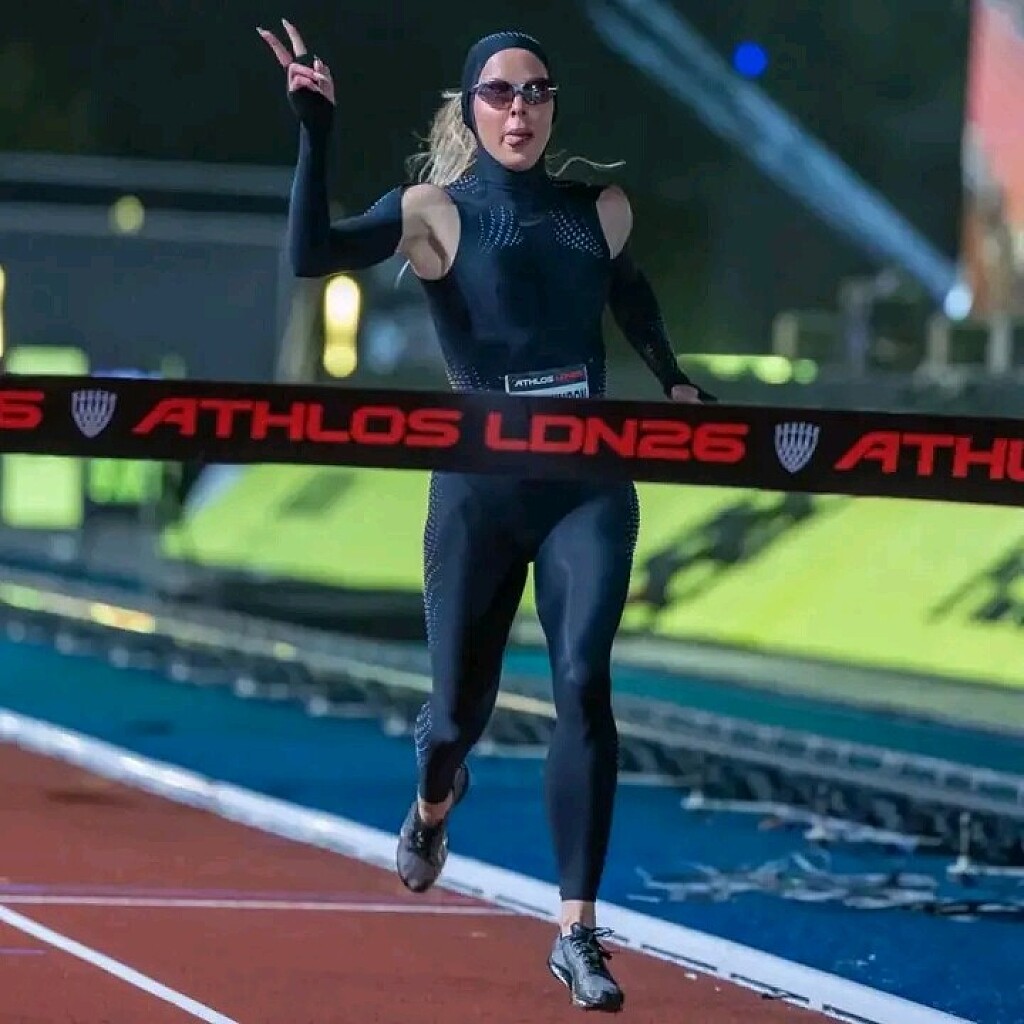
Richardson, Thomas, Hodgkinson And Kazimierska Shine At ATHLOS London
ATHLOS London brought the 2026 athletics season to a spectacular conclusion at StoneX Stadium, with a collection of global stars delivering standout performances across the sprints and middle-distance events.
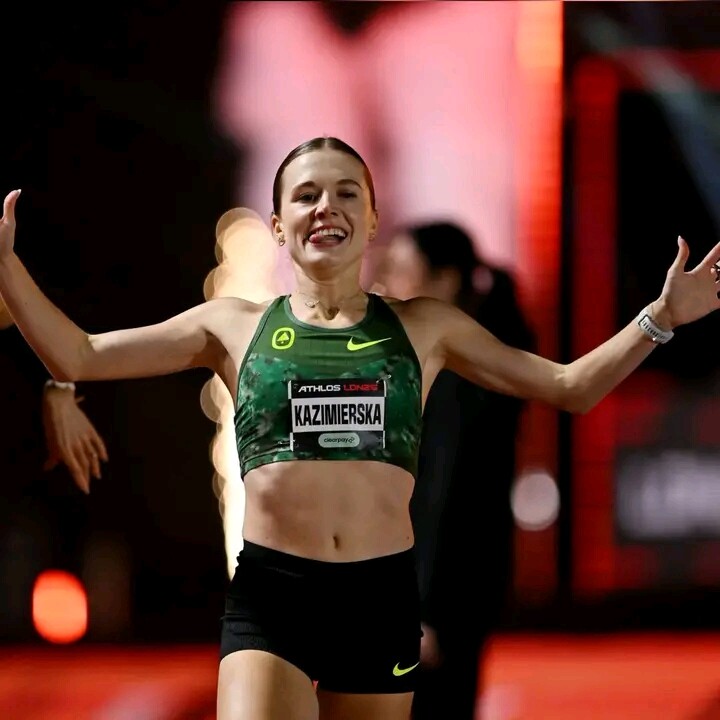
Among the biggest winners was Klaudia Kazimierska, who continued her extraordinary late-season run by claiming the women’s mile title in 4:19.43.
The Polish middle-distance star produced a powerful finishing kick to edge Britain’s Georgia Hunter Bell, who finished second in 4:19.54, while Kenya’s Dorcus Ewoi secured third in 4:19.84.
The victory completed a remarkable sequence for Kazimierska, who has now captured three major titles in succession. Her ATHLOS London triumph followed victories at the Diamond League Final and the inaugural World Athletics Ultimate Championship, giving her a remarkable finish to the 2026 season.
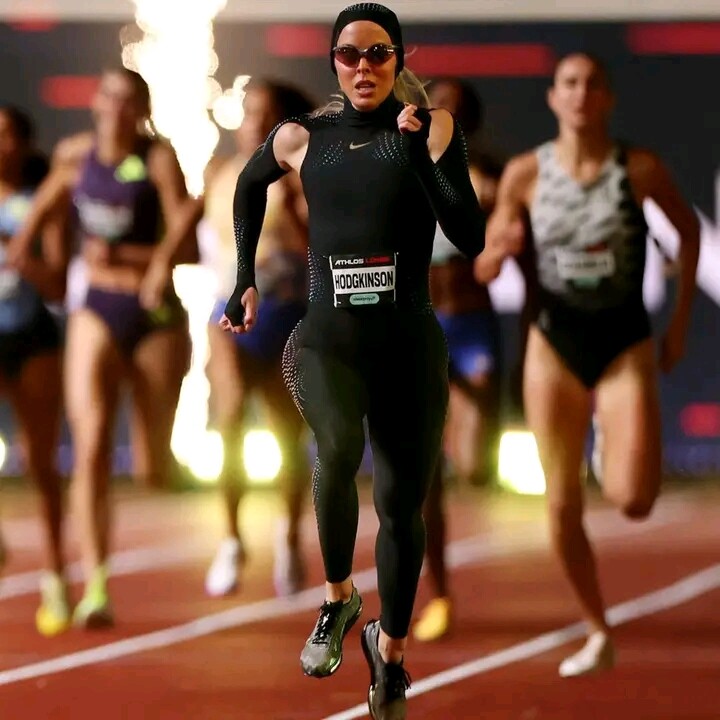
Kazimierska was not the only athlete to leave London with a major title, however, as Keely Hodgkinson produced a dominant performance to successfully defend her ATHLOS London 800m crown.
The British star took command from the opening stages and controlled the race from the front, building a substantial advantage before powering across the line in 1:56.40.
Her performance established a new ATHLOS London meeting record, with Hodgkinson finishing more than two seconds ahead of Switzerland’s Valentina Rosamilia, who ran 1:58.75. France’s Rénelle Lamote was third in 2:00.15.
American Juliette Whittaker finished fourth in 2:00.46, Ireland’s Sophie O’Sullivan was fifth in 2:00.53, and American Raevyn Rogers completed the field in 2:01.12.
The victory provided Hodgkinson with a powerful ending to a turbulent outdoor campaign that had included a canal accident and a hamstring injury, alongside silver-medal finishes at the European Championships and the World Athletics Ultimate Championship.
She also attracted attention with her specially designed Nike racing suit, a futuristic full-length black hooded design with an open back, created with mobility and aerodynamics in mind, complemented by Nike sunglasses.
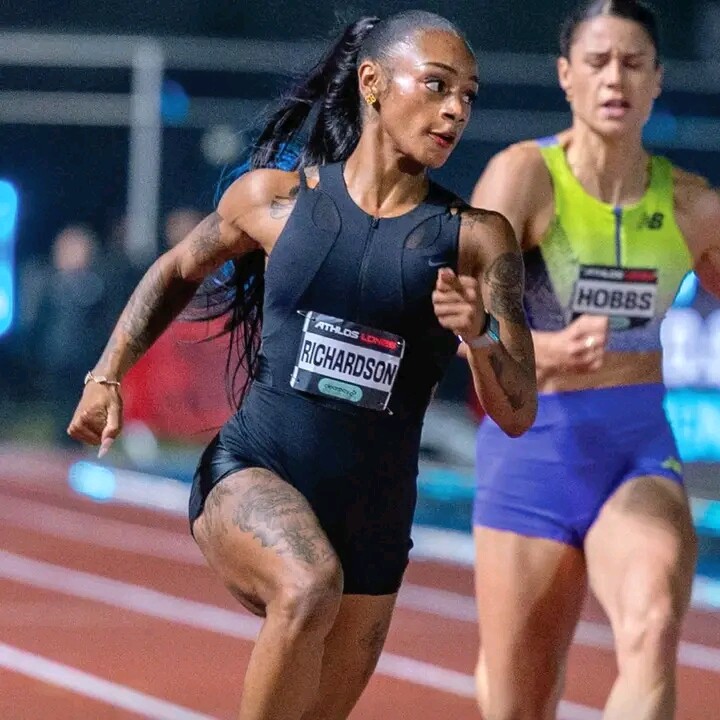
The sprint programme added even more star power to the night with Sha’Carri Richardson producing a meeting-record performance of her own in the women’s 100m.
Richardson stormed to victory in 10.80 seconds, with no wind assistance, to take the ATHLOS London title. New Zealand’s Zoe Hobbs finished second in 11.19, while American Anavia Battle claimed third in 11.25.
Britain’s Imani Lansiquot crossed fourth in 11.35, narrowly ahead of compatriot Daryll Neita, who clocked 11.36, while Canada’s Sade McCreath finished sixth in 11.47.
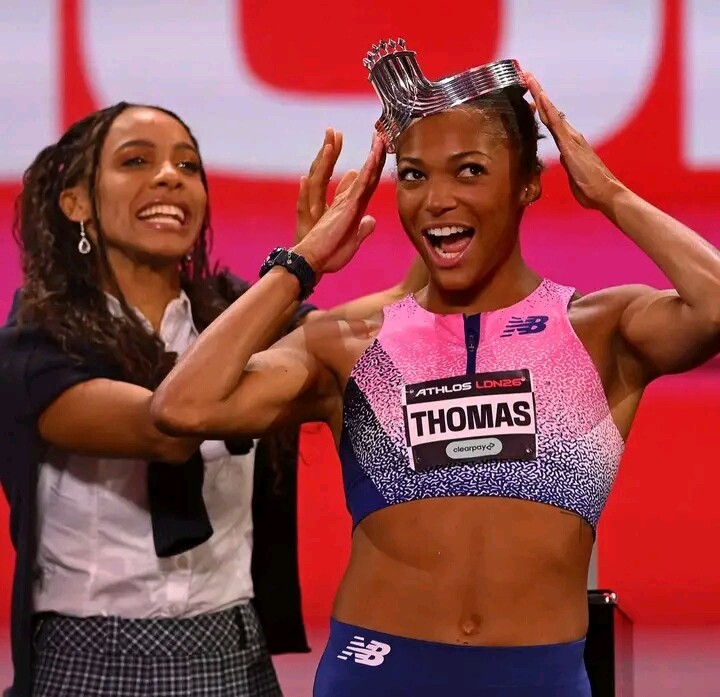
The American sprint success continued in the women’s 200m, where Gabby Thomas added another major title to her collection with a composed victory in 22.13 seconds.
Thomas held off fellow Americans Kayla White and Anavia Battle in a tightly contested final. White finished second in 22.40, while Battle, who had already secured third in the 100m, completed another podium appearance by taking bronze in 22.43.
Thomas’s victory further highlighted the depth of American sprinting at ATHLOS London, as the Olympic and world-level star produced another big-stage performance to close out her season with the 200m crown.
With Richardson and Thomas dominating the sprint headlines, Hodgkinson controlling the 800m and Kazimierska producing another decisive victory over the mile, ATHLOS London delivered an evening packed with major champions and fast performances.
For Kazimierska, the night completed an extraordinary run of three consecutive major titles. For Hodgkinson, it was a statement finish in front of her home crowd. Richardson and Thomas, meanwhile, ensured the American sprint contingent also left London with major victories.
ATHLOS London therefore closed the 2026 season in emphatic fashion, with several of the sport’s biggest names providing performances that will stand among the memorable moments of the year.
Login to leave a comment
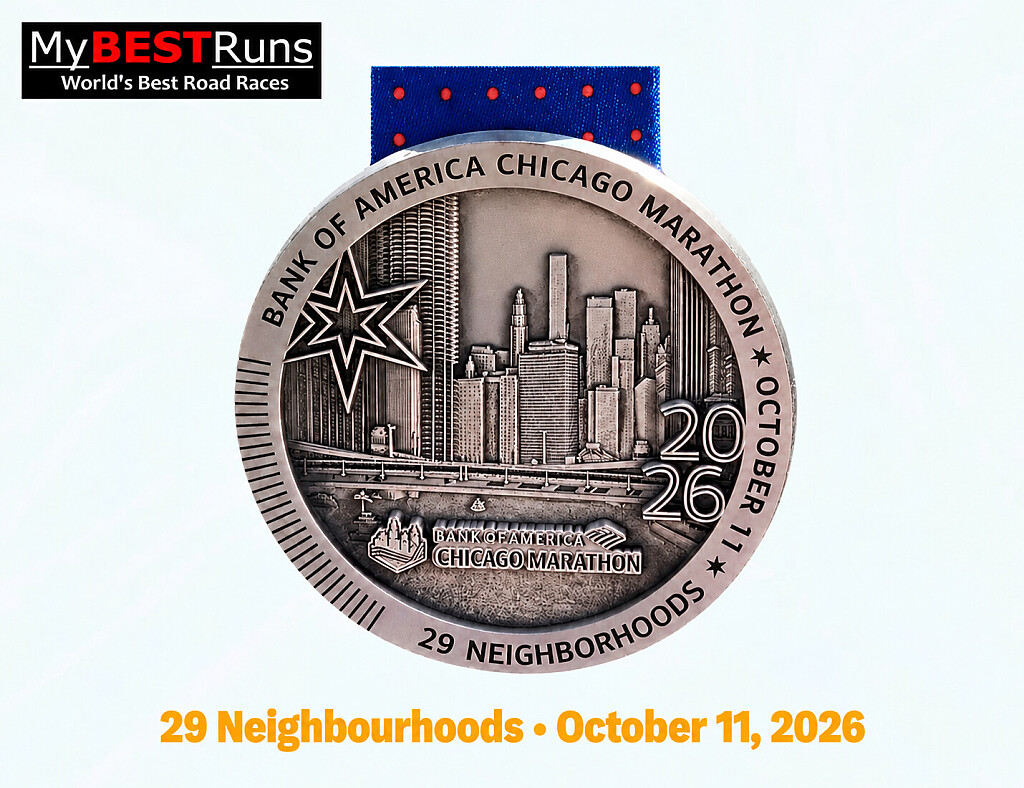
2026 Chicago Marathon Unveils A Stunning Medal Celebrating The City’s Iconic Route
The 2026 Bank of America Chicago Marathon has unveiled its official finisher medal, giving thousands of runners another exciting reason to look forward to one of the world’s most celebrated marathons.
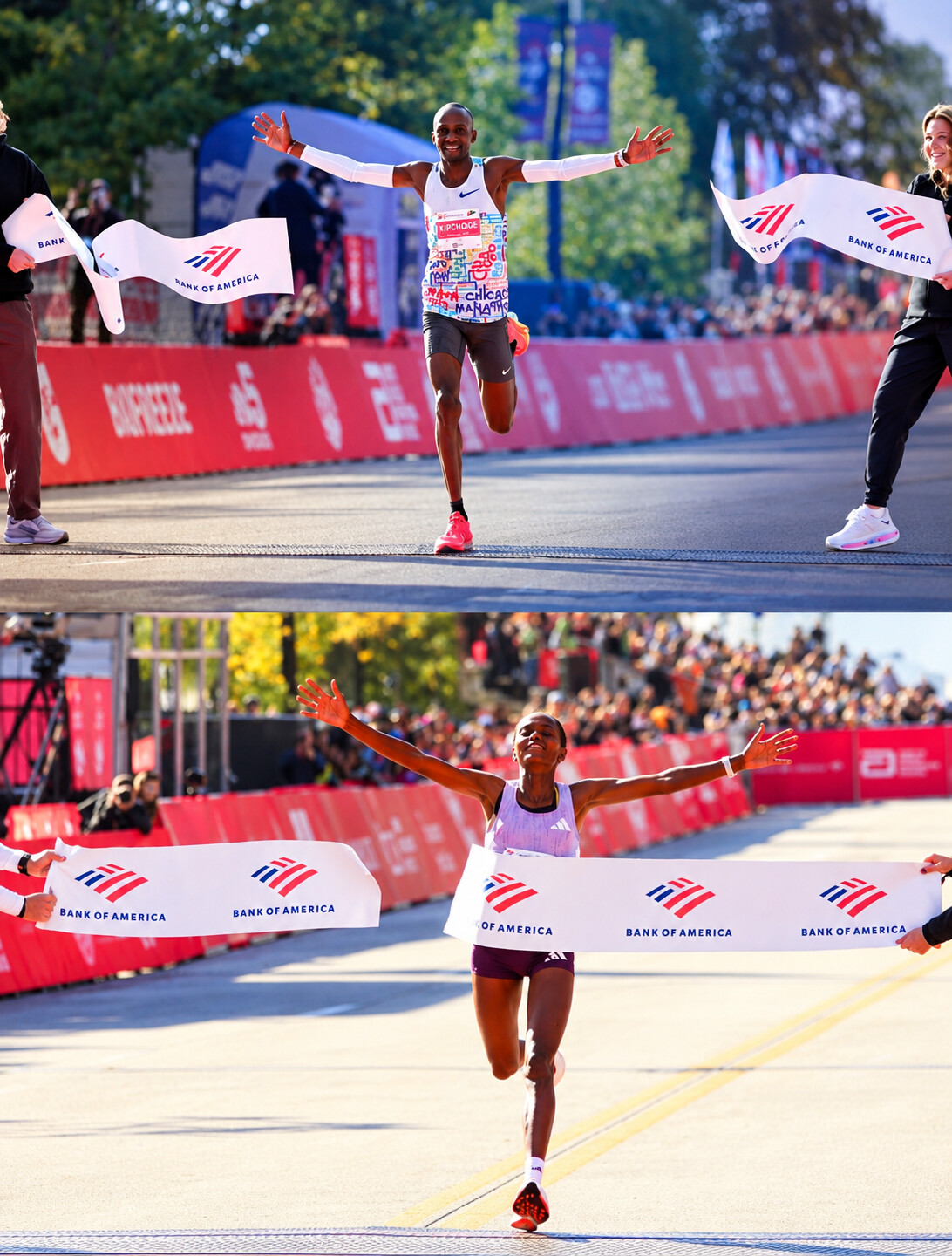
Designed as a tribute to the city and its legendary 26.2-mile course, the medal beautifully captures the character of Chicago while reflecting the experience runners will have as they race through the streets of the Windy City.
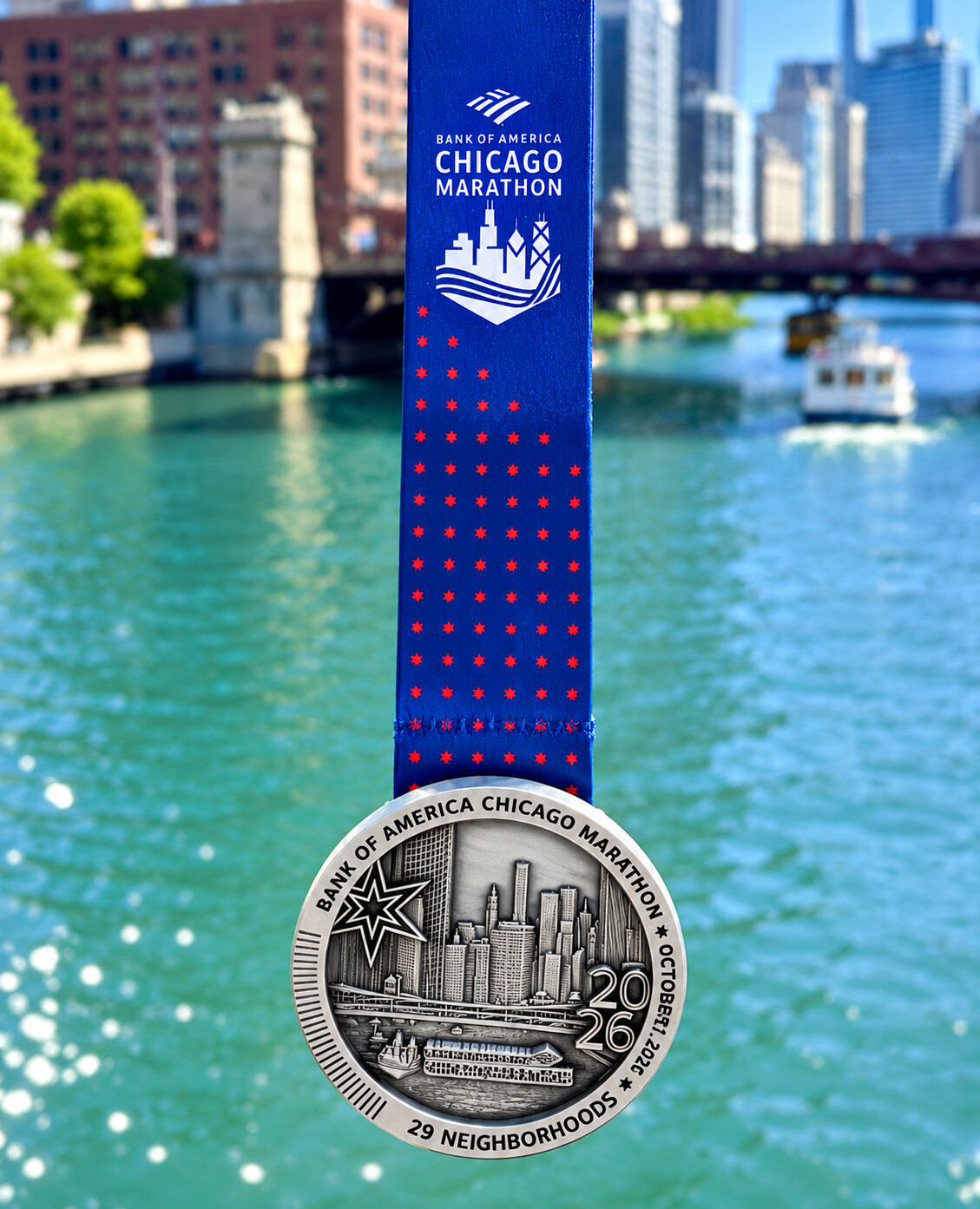
The front of the medal features the spectacular Chicago skyline rising behind the LaSalle Street Bridge, recreating an iconic view that participants will encounter during the race. While running along Wells Street, runners will be able to look to their left and see the very scene that has been immortalised on the medal.
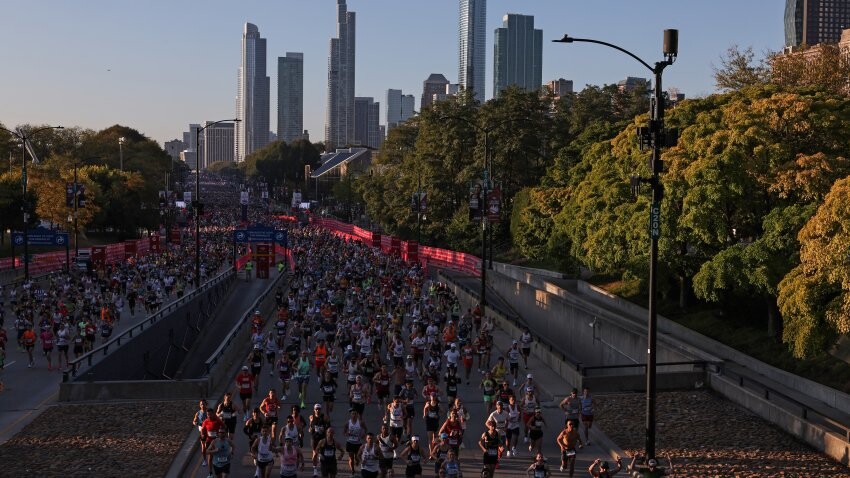
The location is particularly meaningful because the LaSalle Street Bridge comes into view during the fourth of the six crossings of the Chicago River that runners make along the marathon course. It creates a special connection between the physical experience of race day and the keepsake runners will proudly carry home after completing the 26.2 miles.
Turning the medal over reveals another remarkable detail, with all 29 neighbourhoods featured along the iconic marathon route. In this way, the medal becomes more than a finishing award—it serves as a lasting celebration of the communities, landmarks and streets that define the Chicago Marathon experience.
For those who earn it, the medal will represent far more than simply completing 26.2 miles. It will carry memories of months of preparation, demanding training sessions, personal sacrifices and the emotional journey of finally reaching the finish line.
The design also gives runners a unique opportunity to carry a piece of Chicago with them long after race day. Every glance at the medal will serve as a reminder of the streets they conquered, the river crossings they navigated and the atmosphere of a city that comes alive for marathon weekend.
With anticipation building among elite athletes and thousands of runners from around the world, the unveiling of the medal marks another exciting milestone on the road to race day. Chicago is preparing once again for a spectacular celebration of distance running—and this year’s medal promises to make the achievement even more memorable.
by Erick Cheruiyot for My Best Runs.
Login to leave a comment
Bank of America Chicago
Running the Bank of America Chicago Marathon is the pinnacle of achievement for elite athletes and everyday runners alike. On race day, runners from all 50 states and more than 100 countries will set out to accomplish a personal dream by reaching the finish line in Grant Park. The Bank of America Chicago Marathon is known for its flat and...
more...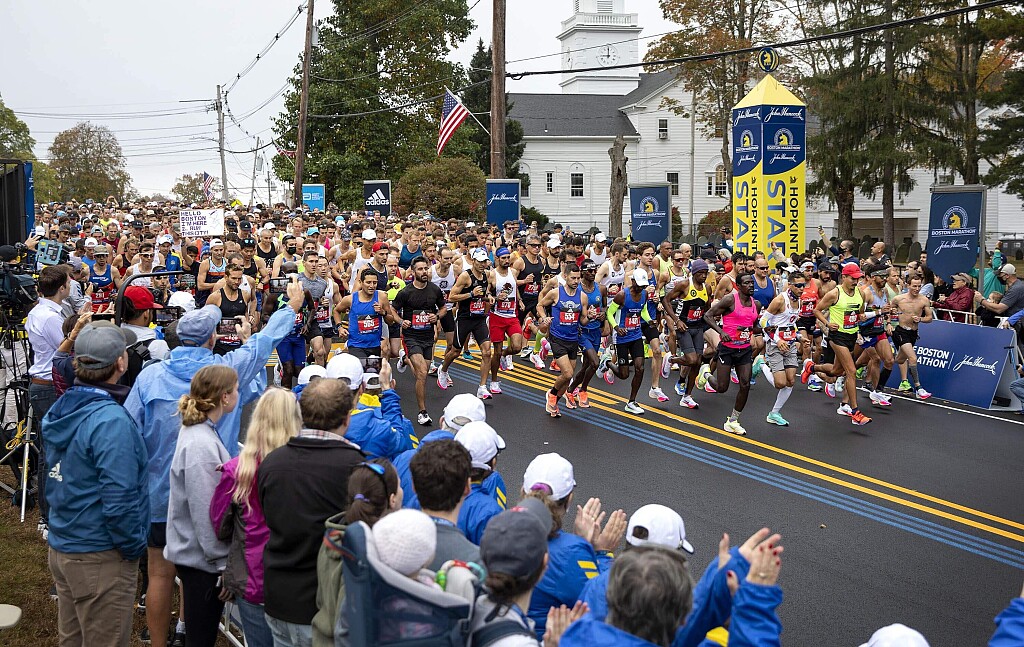
Boston Marathon Opens 2027 Registration With New Lifeline For Runners Who Miss The Cut-Off
Registration for the 2027 Boston Marathon opened today, September 14, giving thousands of runners who have achieved the official qualifying standards their chance to apply for one of the most coveted places in road racing. The registration window will remain open through Friday, September 18, at 5:00 p.m. Eastern Time.
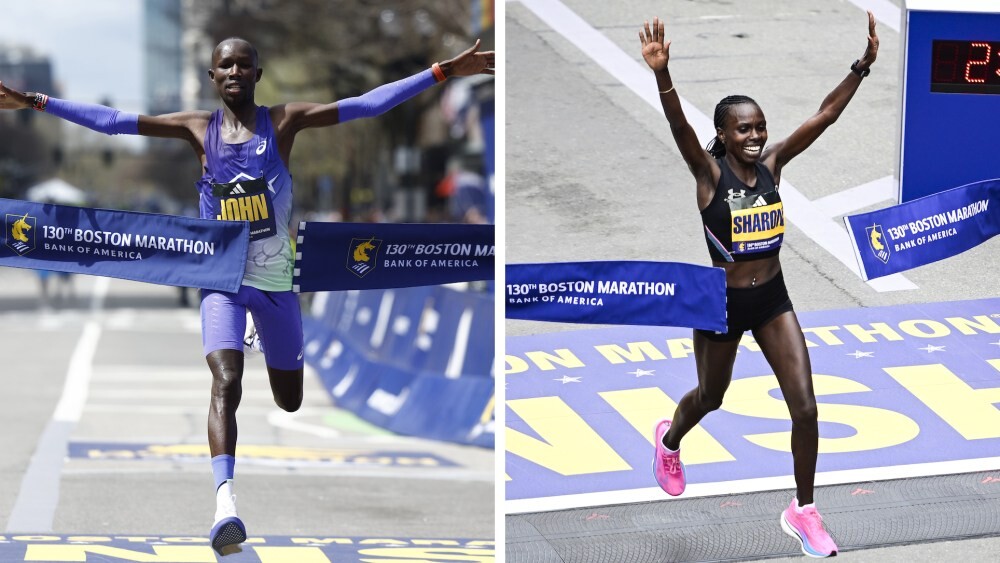
The 2027 edition of the Boston Marathon will bring a major change to the qualification process. For the first time, runners who meet their age-group qualifying standard but finish outside the eventual cut-off will have an additional opportunity to gain entry through a new Boston Qualifier Selection.
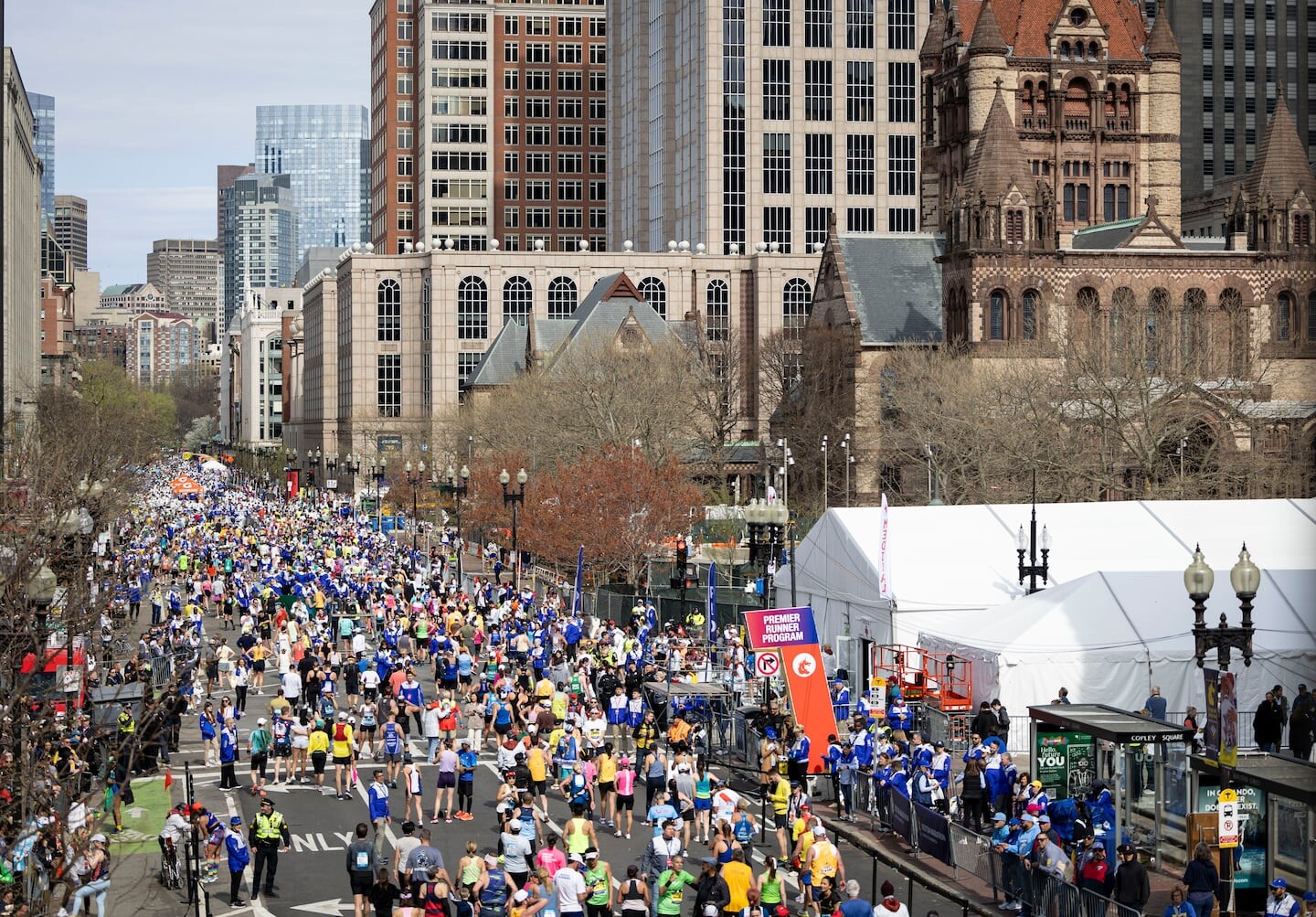
After registration closes, the Boston Athletic Association (B.A.A.) will verify performances and rank applicants according to how far they finished under their respective qualifying standards. The fastest qualifiers will be accepted first, with their performances determining the cut-off for each age and gender group.
But this time, missing that cut-off will not necessarily mean the end of the dream. Approximately 1,000 runners whose qualifying performances are not fast enough to secure automatic entry will be randomly selected through the Boston Qualifier Selection. Those athletes will automatically be included in the pool for the additional draw.
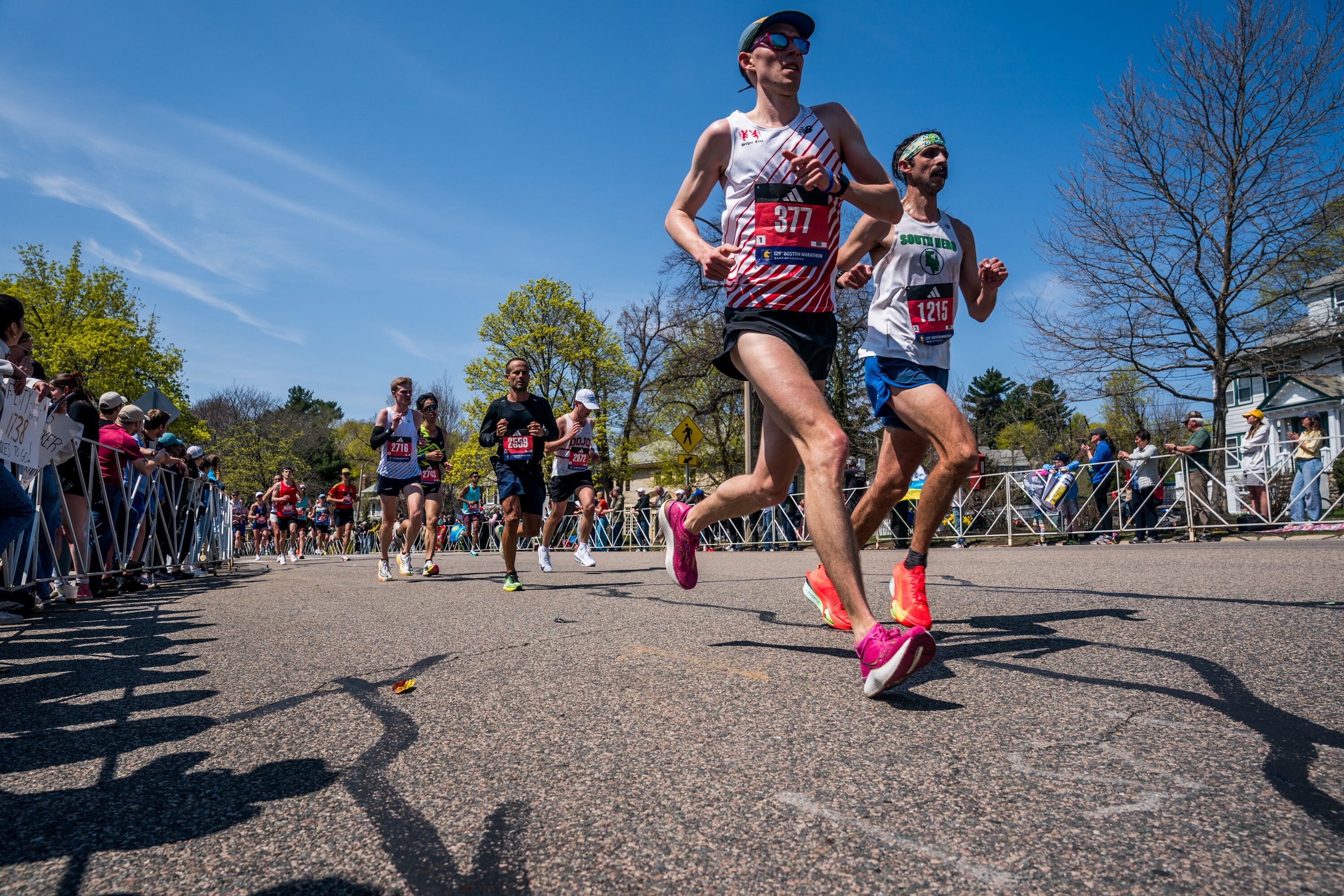
The new system comes as demand for Boston continues to outpace the number of available qualifying places. In recent years, simply achieving the published standard has increasingly failed to guarantee entry. For the 2025 Boston Marathon, 12,324 qualified applicants were not accepted, while another 8,887 missed out for the 2026 race after the qualifying field produced a cut-off of 4 minutes and 34 seconds faster than the applicable standard.
That reality has transformed Boston qualification into a race within the race. A runner may finish under the official standard and still need to be several minutes faster to secure a place, depending on the strength and size of the applicant pool.
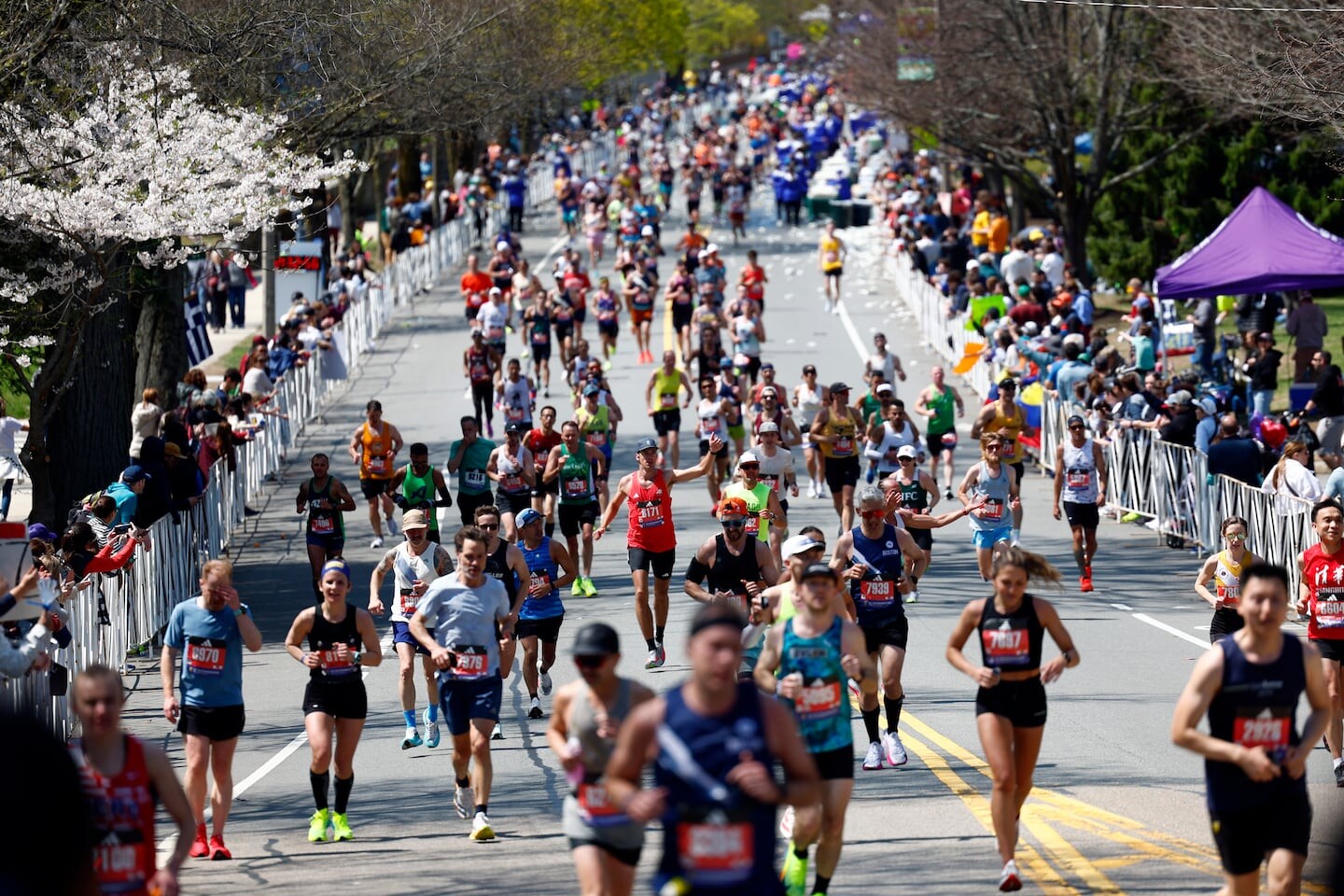
The new random-selection component therefore offers a small but significant second chance to runners who have already done what Boston asks of them: beat the qualifying standard for their age and gender. The B.A.A. says the change reflects the increasingly fast pace of marathon running and the growing global demand for places in the historic race.
There is another important change for the 2027 registration cycle, and it could have a major impact on runners choosing where to chase their qualifying times.
The B.A.A. has introduced a net-downhill adjustment for qualifying performances. Any verified qualifying time recorded on a course with a net elevation drop of at least 1,500 feet will receive an adjustment when submitted for Boston consideration. Courses with a net drop of 1,500 to 2,999 feet will receive a five-minute addition, while courses dropping 3,000 to 5,999 feet will receive a 10-minute addition. A course with a net downhill of 6,000 feet or more will not be accepted as a Boston qualifying course.
The rule means a runner's official finishing time may not necessarily be the time ultimately used by Boston for qualification purposes. For example, a 2:45:30 performance on a course with a 2,000-foot net descent would be assessed as 2:50:30 after the five-minute adjustment.
The B.A.A. says the policy is intended to account for the significant advantage provided by courses with substantial net elevation loss and to create a more consistent standard for athletes qualifying around the world.
Despite the changes, the published 2027 qualifying standards remain unchanged. Men aged 18–34 must run 2:55:00, while women and non-binary runners in the same age group must run 3:25:00. The standards gradually increase across the older age groups, with runners aged 80 and above required to run 4:50:00 for men and 5:20:00 for women and non-binary athletes.
Importantly, qualifying standards are based on a runner's age on race day, April 19, 2027, and qualifying times must be official net times from eligible certified marathon courses. Meeting the standard still does not guarantee entry because the size of the qualifying field remains limited.
For runners chasing Boston, the message is clear: running under the standard remains the first hurdle, but running significantly faster can still make the difference between receiving a bib and watching from home. The new Boston Qualifier Selection, however, gives approximately 1,000 additional qualifiers a chance that did not previously exist.
The 131st Boston Marathon, will be held on Monday, April 19, 2027. Qualifier applicants are expected to receive their acceptance or non-acceptance notifications by early October.
Boston, long regarded as one of the hardest major marathons to enter through qualification, is changing with the times. As runners get faster and the global appetite for the race continues to grow, the road to Boylston Street is becoming more competitive—but for around 1,000 runners who fall just short of the cut-off, the dream will now remain alive a little longer.
by Erick Cheruiyot for My Best Runs.
Login to leave a comment

Boston Marathon
Among the nation’s oldest athletic clubs, the B.A.A. was established in 1887, and, in 1896, more than half of the U.S. Olympic Team at the first modern games was composed of B.A.A. club members. The Olympic Games provided the inspiration for the first Boston Marathon, which culminated the B.A.A. Games on April 19, 1897. John J. McDermott emerged from a...
more...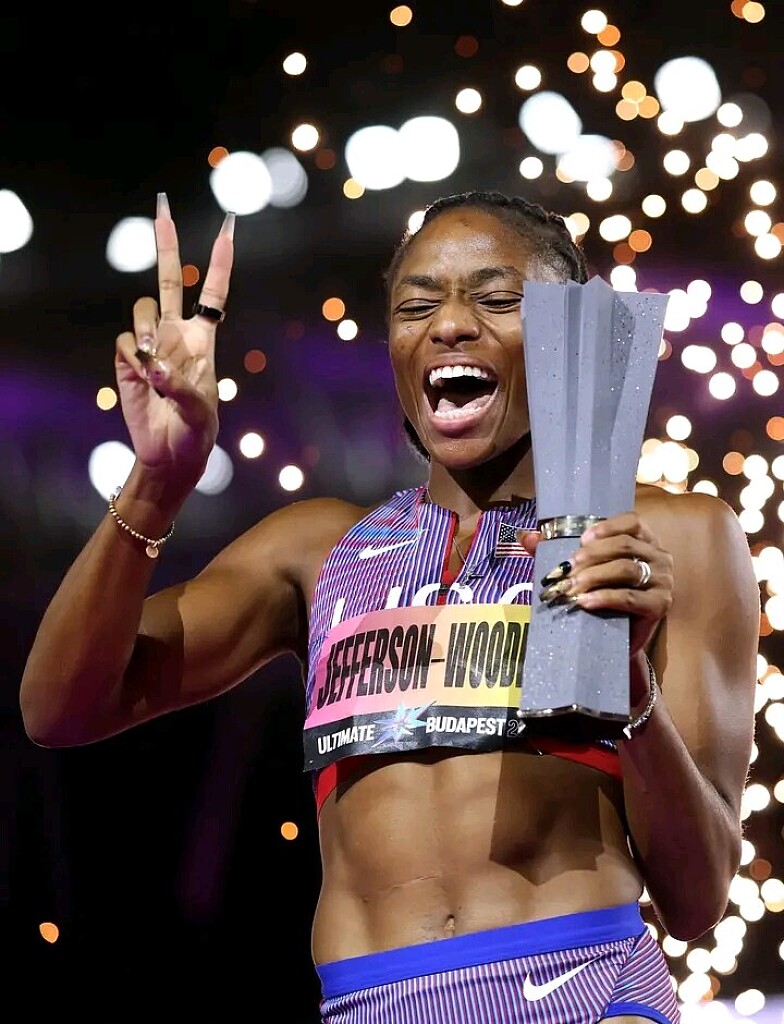
Melissa Jefferson-Wooden Storms Into History With Stunning 200m Victory In Budapest
Melissa Jefferson-Wooden has once again demonstrated why she is becoming one of the defining forces in women’s sprinting, delivering a breathtaking performance to win the 200m at the inaugural World Athletics Ultimate Championship in Budapest.
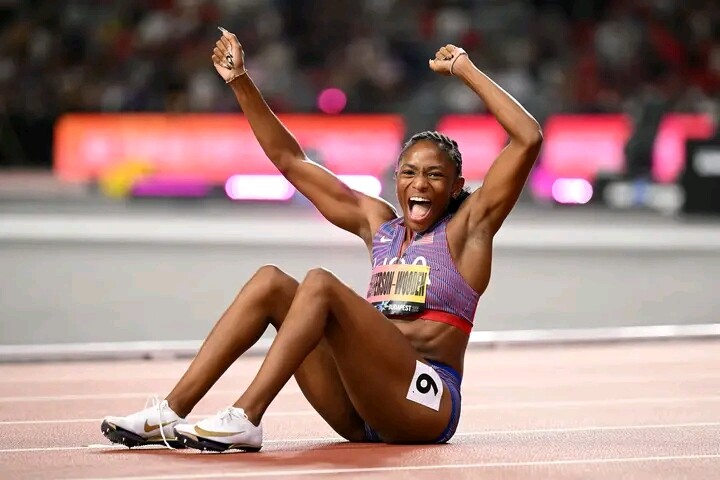
The American powered to victory in 21.47 seconds, producing one of the fastest performances in history despite facing a 0.6m/s headwind. She finished well clear of Olympic champion Gabby Thomas, who clocked 21.77, while Kayla White secured third place in 21.93.
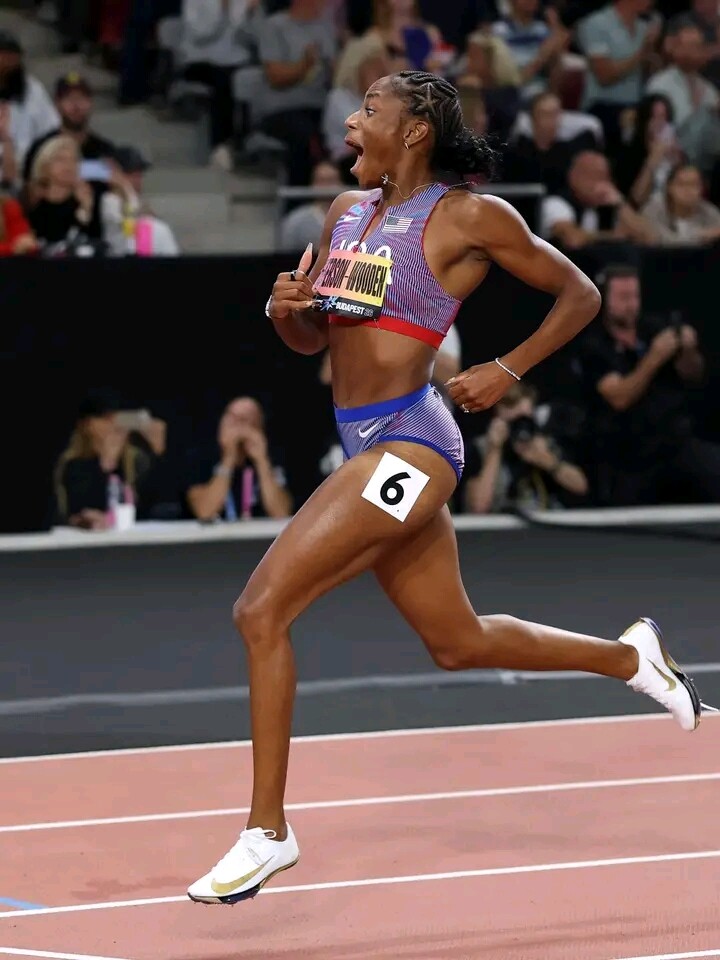
But Jefferson-Wooden’s latest triumph was about far more than another championship title. It was a performance that placed her among the fastest women ever to compete over the distance.
Her 21.47 seconds moved her to No. 3 on the all-time women’s 200m list, behind only legendary American sprinter Florence Griffith-Joyner, whose world record of 21.34 has stood since 1988, and Jamaica’s Shericka Jackson, who ran 21.41 in 2023.
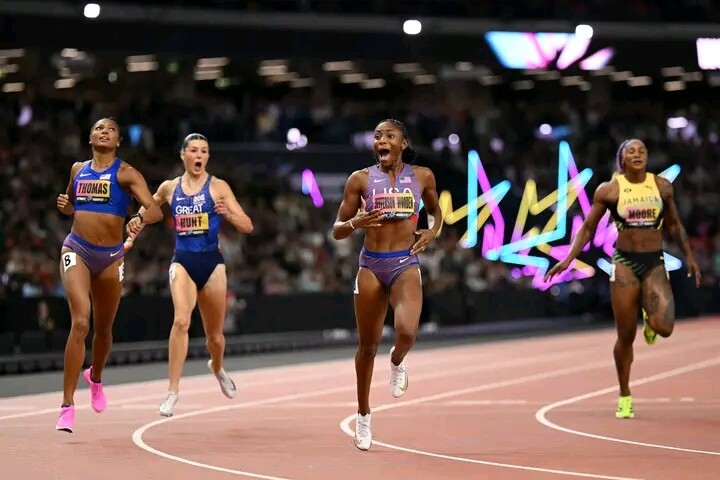
The result also pushed several celebrated names further down the rankings. Julien Alfred’s 21.51 from 2026 now sits fourth, while Elaine Thompson-Herah’s 21.53 from 2021 ranks fifth.
The significance of Jefferson-Wooden’s achievement becomes even greater when the conditions are considered. Running into a headwind makes a sprint performance more difficult, yet she still produced the third-fastest 200m ever recorded, underlining the extraordinary speed and execution behind her victory.
A Sensational Sprint Double
The Budapest triumph also completed a remarkable 100m and 200m double.
Just one night earlier, Jefferson-Wooden stormed to the 100m title in 10.62 seconds. She returned to the track with the same confidence and determination, once again delivering when the pressure was greatest.
The double adds another major achievement to a championship career that has rapidly gathered momentum. Jefferson-Wooden arrived in Budapest as the reigning world champion in both the 100m and 200m after completing the sprint double at the 2025 World Championships in Tokyo.
Now, she has added the inaugural Ultimate Championship double to her growing collection of major victories.
$300,000 Reward For Budapest Dominance
Jefferson-Wooden’s extraordinary weekend also comes with a substantial financial reward. With $150,000 awarded to each individual event winner, her victories in the 100m and 200m earn her a total of $300,000 from the championship.
Yet the money is almost secondary to what she has achieved on the track.
In an era filled with Olympic champions, world champions and record-setting talents, Jefferson-Wooden is separating herself through consistency, championship composure and an extraordinary ability to deliver on the biggest stages.
Her latest 21.47 seconds does more than add another title to her résumé. It places her directly among the fastest women the sport has ever seen over 200m.
Florence Griffith-Joyner remains at the summit. Shericka Jackson sits second. But Melissa Jefferson-Wooden is now firmly at No. 3—and judging by the extraordinary trajectory of her career, the American may not be finished climbing.
From Tokyo to Budapest, Jefferson-Wooden is no longer simply chasing sprinting history.
She is becoming part of it.
by Erick Cheruiyot for My Best Runs.
Login to leave a comment
Melissa Jefferson-Wooden Blazes To 10.62 World Lead And Ultimate Championship Glory
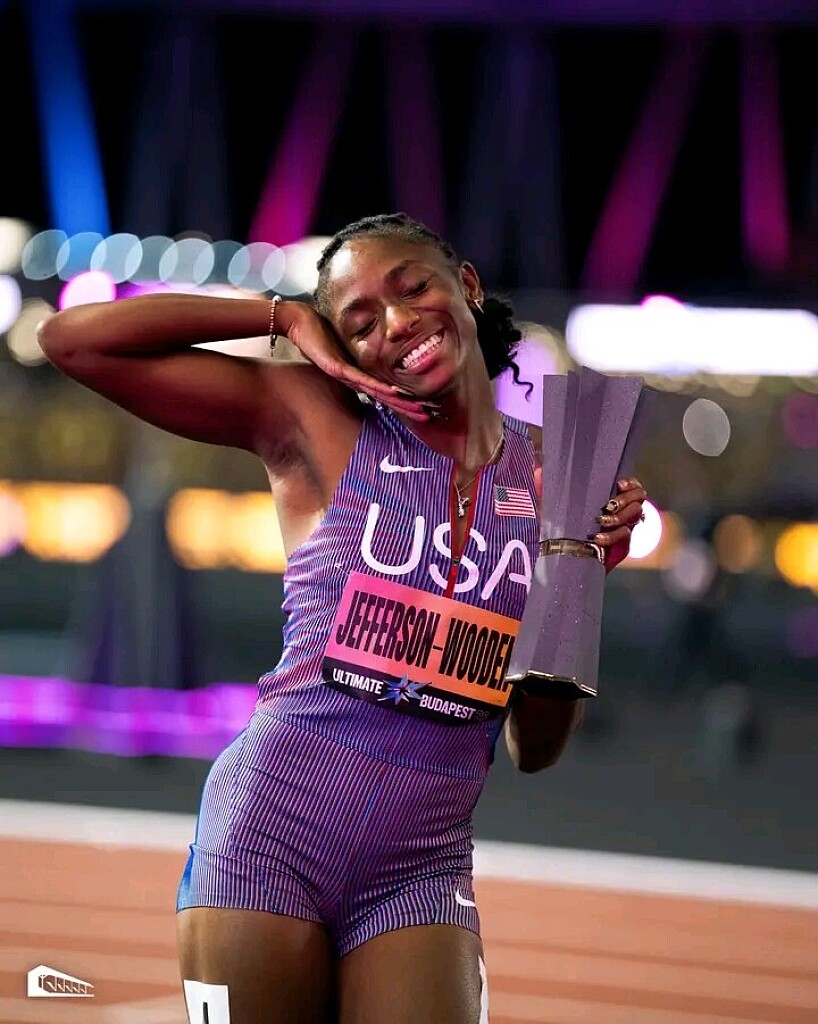
Melissa Jefferson-Wooden delivered a sensational performance in Budapest, storming to victory in the women’s 100m at the inaugural World Athletics Ultimate Championship in a breathtaking 10.62 seconds.
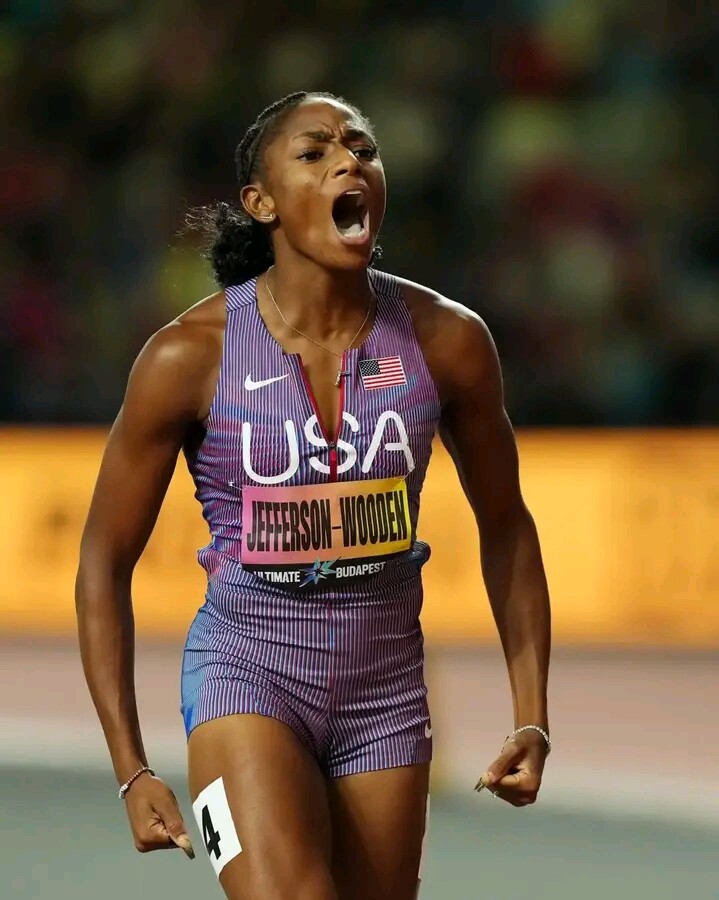
The American produced a superb display of acceleration and composure to claim the World Ultimate Championship title while recording the fastest women’s 100m time in the world this year. Her 10.62 mark underlined her exceptional form and placed her firmly at the top of the global sprinting hierarchy.
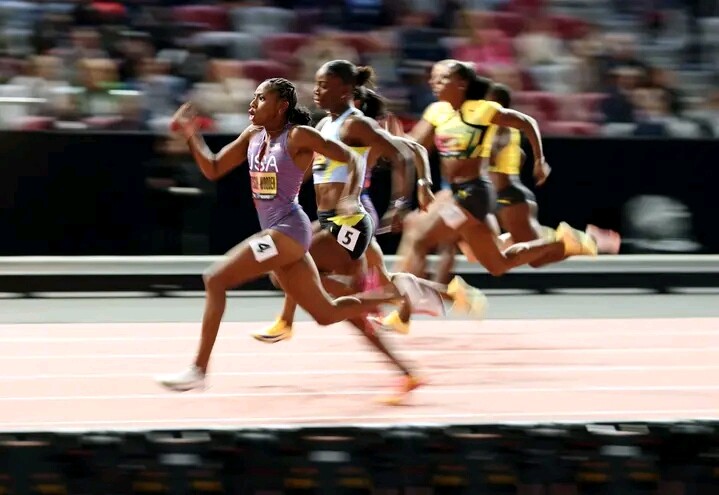
Jefferson-Wooden controlled the race through the decisive stages and maintained her form all the way to the finish to secure a statement victory against a field packed with championship pedigree. She crossed the line ahead of Olympic champion Julien Alfred, who clocked 10.74 seconds with a -0.2 m/s wind, while Sha’Carri Richardson took third in 10.76.
Women’s 100m Final
1. Melissa Jefferson-Wooden — 10.62
2. Julien Alfred — 10.74 (-0.2 m/s)
3. Sha’Carri Richardson — 10.76
The victory was especially significant given the quality of the opposition. Jefferson-Wooden held her nerve against Alfred and Richardson, two of the most accomplished sprinters of the current generation, to produce the fastest performance in the world this year when it mattered most.
Alfred once again demonstrated her consistency at the highest level by taking silver, while Richardson completed an all-star podium in a race that brought together three of the biggest names in women’s sprinting.
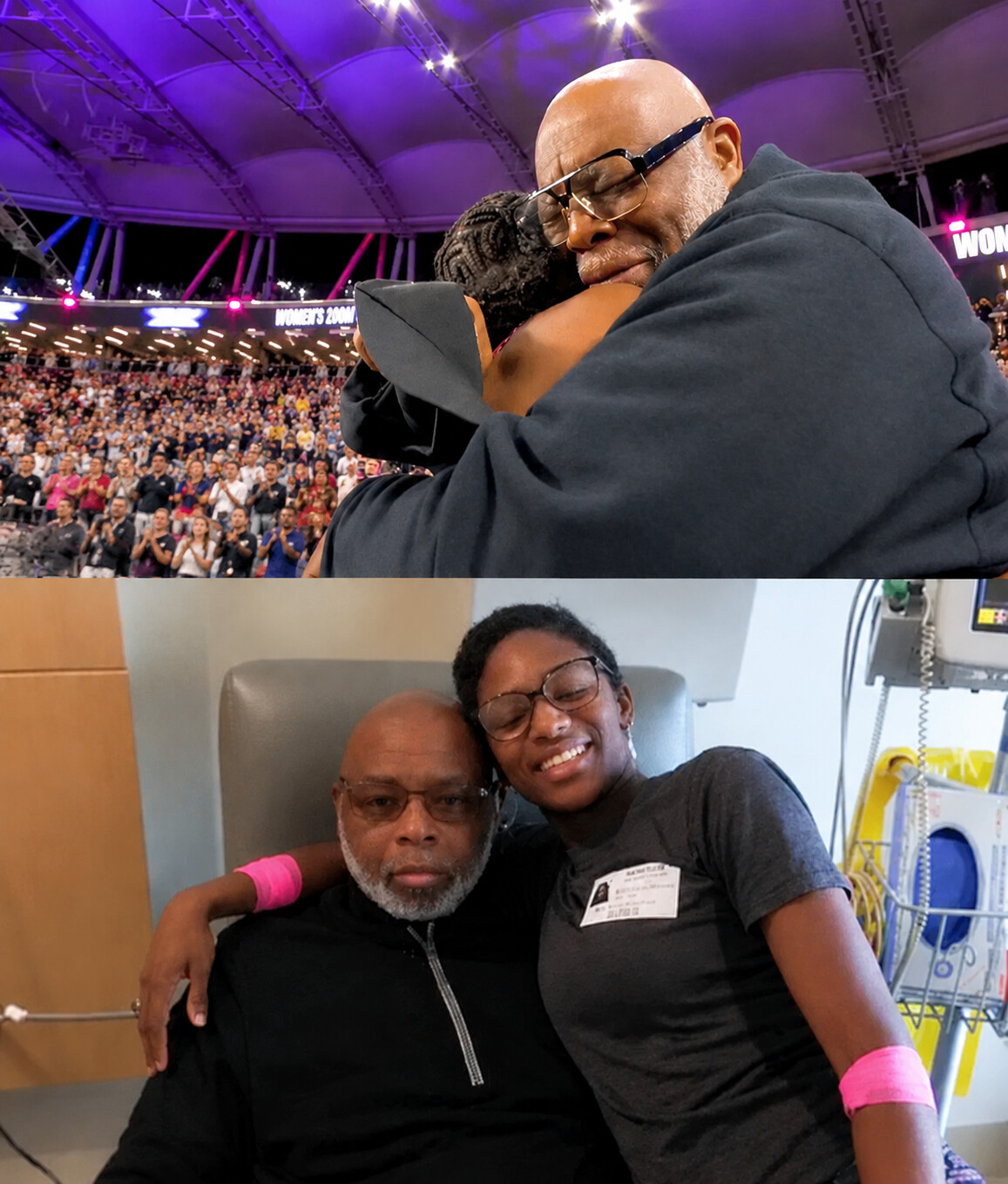
But beyond the time, the title and the celebration, one of the most touching moments came after the race when Jefferson-Wooden embraced her father, Melvin, in an emotional celebration.
Their moment carried a deeply personal meaning. When Melissa was just 17 years old, she donated her stem cells to help her father undergo a bone marrow transplant after he was diagnosed with myelodysplastic syndrome. Years later, the two shared an unforgettable embrace in Budapest after she had become the World Ultimate Champion.
For Jefferson-Wooden, however, the evening was about far more than a medal. It was the culmination of an extraordinary journey, now highlighted by a world-leading 10.62 seconds on one of the biggest stages in athletics.
With the Ultimate Championship title secured and her father by her side, Jefferson-Wooden leaves Budapest with more than being an ultimate champion. She leaves with momentum, confidence and a powerful statement of intent — turning a high-profile showdown into one of the defining sprint performances of her season.
by Erick Cheruiyot for My Best Runs.
Login to leave a comment
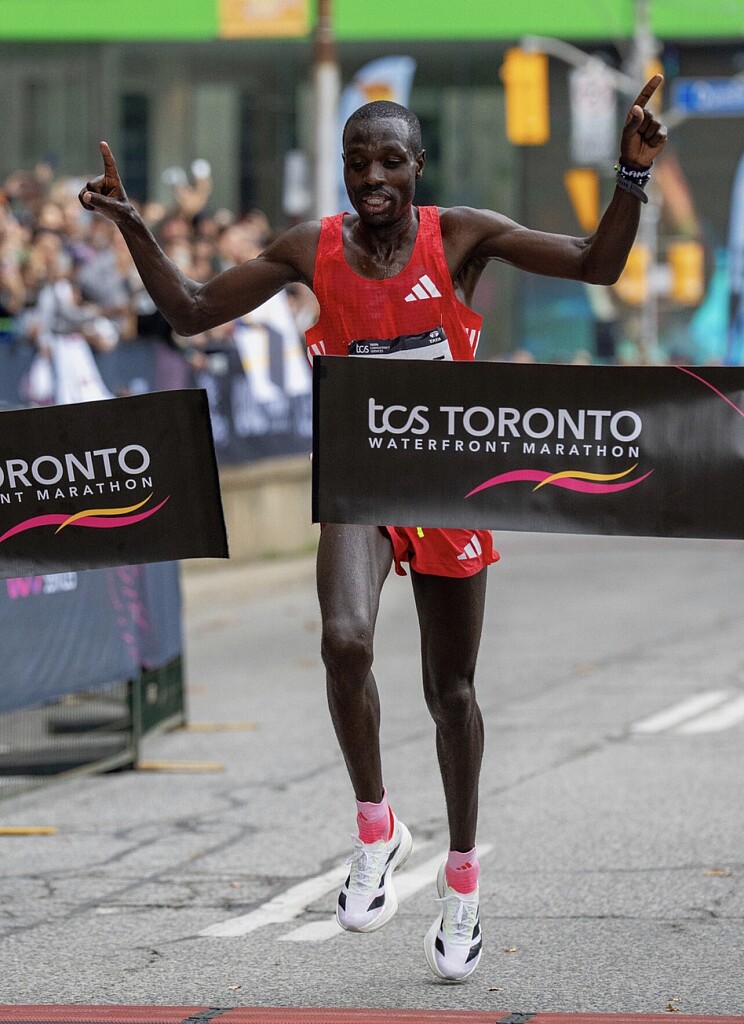
Leonard Langat to Defend his TCS Toronto Waterfront Marathon Title
Leonard Langat arrived in Toronto for last year’s TCS Toronto Waterfront Marathon largely unheralded. But after winning this World Athletics Elite Label race he left with both the respect of his competitors and the $25,000 CDN first place prize money to his credit.
The 30-year-old Kenyan will defend his title on October 18.
A year ago his winning time of 2:08:04 had been hampered by uncharacteristically strong winds coming off Lake Ontario but the fact he beat athletes with much faster personal best times was an indication of his potential. Indeed, at the 2026 Cape Town Marathon this May he finished 4th in a new personal best of 2:05:26.
“About last year, I was happy because I ran well. I am happy to come back to Toronto,” he says while sitting alongside his coach, Josphat Bett, following a training session. “I loved the city of Toronto. I loved the beauty and the people I met there.
“I want to improve my time and try to win the race again. I will try to defend my title because the training (this year), we have improved, and increased the mileage.”
The Toronto Waterfront Marathon course record of 2:05:00 was set in 2019 by his countryman Philemon Rono. It seems natural to draw a line between his personal best and that record. Could he beat Rono’s time on the streets of Canada’s biggest city?
“If the weather is good that day I will try to improve my personal best,” is all he will allow - apparently not wanting get ahead of himself.
Langat is represented by Volare Sports Management, a Dutch based firm specializing in distance running. He trains with a group of about twenty athletes under coach Josphat Bett’s program in the town of Keringet. Another large Volare group which includes athletes such as Fanny Kiprotich (who will also run this year’s Toronto Waterfront), the 2026 Vienna Marathon winner, is based in Iten the ‘Home of Champions’ three and a half hours away.
Bett was himself a world class runner with a personal best of 26:48.99 for the 10,000m and also took home the 2014 Commonwealth Games silver medal in that event. He remembers being approached by Langat when the latter keenly observed Bett and his training partners running past his village.
“I am a runner and he was interested in running,” Bett remembers with a smile. “He loved the way we were training and he asked ‘How can I start to run?’. So I gave him a training program to start. Now it has been about ten years.”
With money earned from running Langat has begun preparing for life after his running career comes to an end. He and his wife, Sharon Chesang, have two children, 4-year-old Emmanuel Kipkoech and a 2-year-old daughter Dorcas Chebet. Although Volare has a camp where many of the athletes live during the week he prefers to go home after training sessions.
“I want to be a farmer for cattle, a dairy farmer,” he explains. “I bought five acres of land and I have five cows.”
A successful title defence would mean increased financial stability for his family’s future. There is also a bonus of $10,000 CDN for breaking the course record. Although he seems hesitant to talk about the record he’d be a good bet to dip below 2:05:00 under the right conditions.
"In Cape Town after 40km, after taking water, I lost the steps of the leading group,” he admits.
Clearly the race video supports his contention as he slowed to grab a bottle while the other three contenders opened up a gap. Ethiopia’s Mohamed Esa won that race in 2:04:55 with the 2022 TCS Toronto Waterfront champion, Yihunilign Adane, second in 2:04:59. What might have been is not something he dwells upon.
Defending a title is never easy. Langat can no longer slip under the radar as his performances have been watched around the world. His TCS Toronto Waterfront Marathon victory, alone, had 140,000+ views last year in 75 countries. And he will face a strong field including his compatriot Noah Kipkemboi who finished in second place just 24 seconds behind him last year.
But Langat’s confidence will be high making for compelling battle along the streets of Toronto.
by Paul Gains
Login to leave a comment
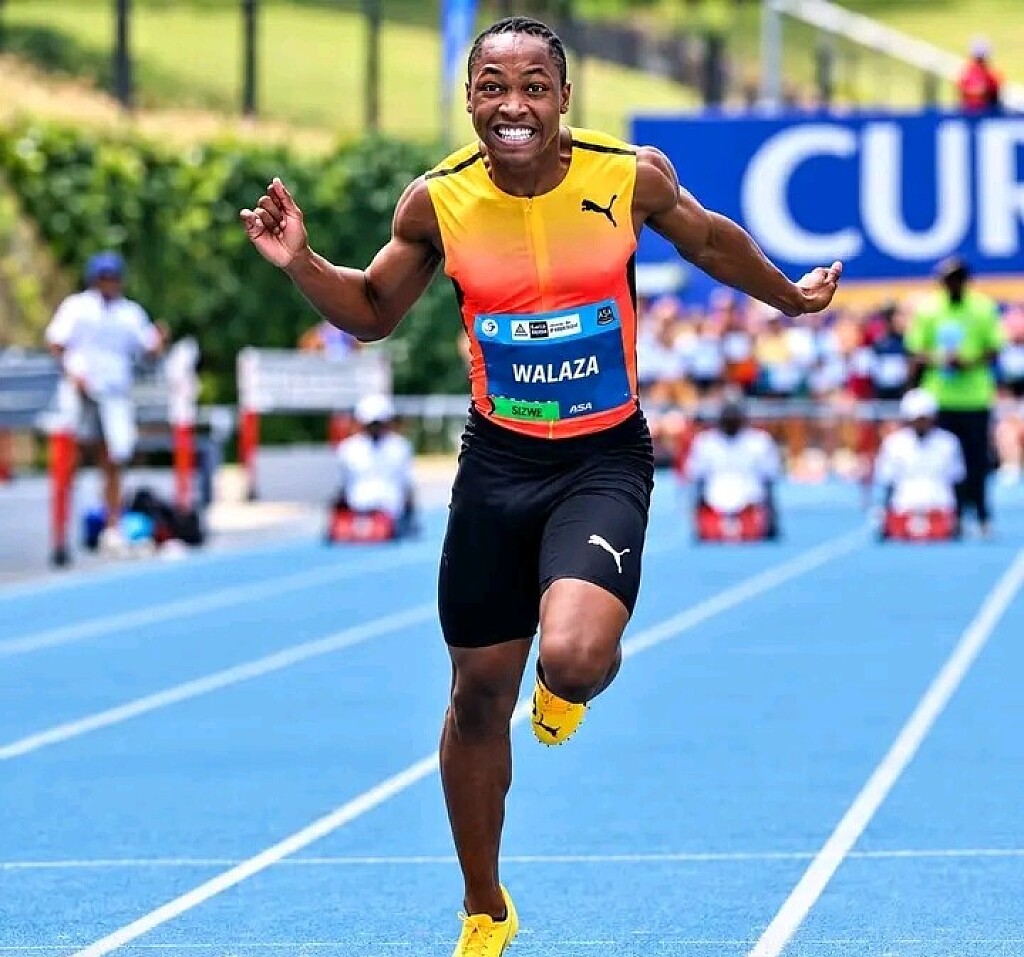
Bayanda Walaza Blazes to 9.91 in Rovereto, Smashing Meeting Record
South Africa’s Bayanda Walaza delivered another electrifying performance on the European circuit, storming to victory in the men’s 100m at the 62nd Palio Città della Quercia in Rovereto, Italy.
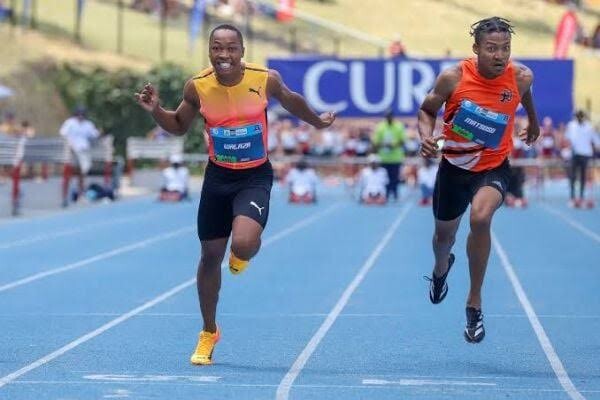
Walaza stopped the clock at a blistering 9.91 seconds, with a legal +0.5 m/s tailwind, to not only secure the win but also shatter the meeting record. His performance erased the previous mark of 9.98 seconds.
The 20-year-old South African produced a commanding run against a strong international field, holding off Ghana’s Abdul-Rasheed Saminu, who finished second in 10.01, while Canada’s Eliezer Adjibi completed the podium in 10.09.
For Walaza, the 9.91 adds another sub-10-second performance to an increasingly impressive season. His personal best remains 9.89 seconds, a mark that underlines just how close he is to another major breakthrough.
Walaza has already established himself as one of South Africa’s most exciting young sprinters. He was a double gold medallist in the 100m and 200m at the 2024 World Athletics U20 Championships in Lima before helping South Africa win Olympic silver in the 4x100m relay at Paris 2024.
Now making his mark against senior competition, Walaza is showing increasing consistency at the highest level.
A 9.91 meeting record in Rovereto is another powerful statement from the young South African — and with his speed continuing to develop, Walaza’s ceiling looks remarkably high.
by Erick Cheruiyot for My Best Runs.
Login to leave a comment

Jimmy Gressier’s Bold Copenhagen Double: From Sub-13 Speed To Half-Marathon Glory?
Jimmy Gressier is preparing to take on one of the most intriguing challenges of the 2026 World Athletics Road Running Championships in Copenhagen — competing in both the men’s 5km and half-marathon, with less than a day separating the two races.
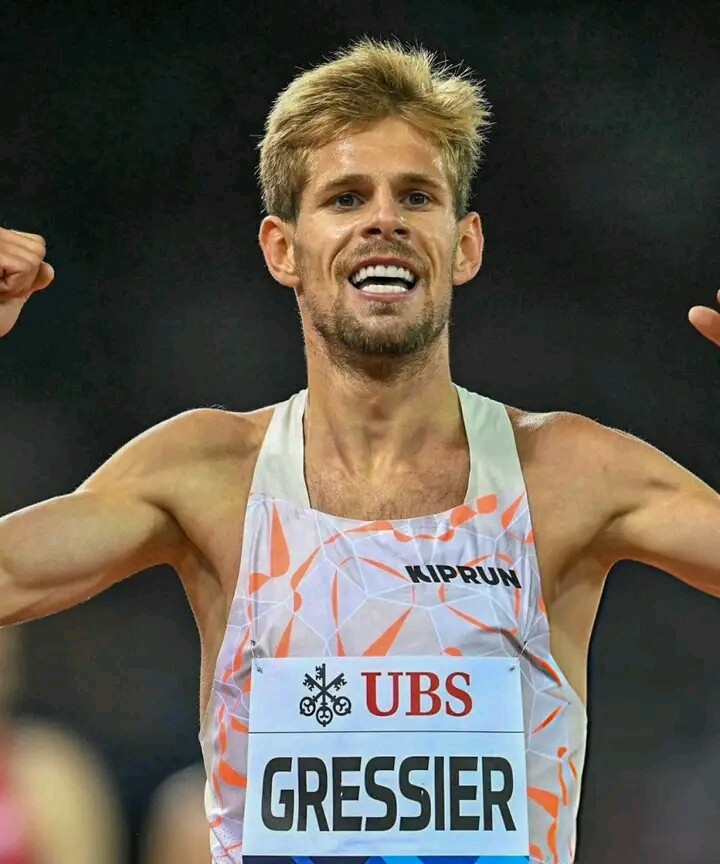
The French star is listed for the 5km on September 19 at 2:40 p.m., before returning to action for the half-marathon at 9:45 a.m. the following morning. That gives him just 19 hours and five minutes between races.
It is a remarkable contrast. One race is expected to last less than 13 minutes for Gressier; the other could keep him racing for around an hour. His personal bests tell the same story: 12:51 for 5km, equivalent to roughly 4:08 per mile, and 59:45 for the half-marathon, or about 4:33 per mile.
And the difference in his standing on the two start lists is striking.
In the 5km, Gressier enters as the fastest man in the field of 63 athletes. His sensational 12:51 in Lille in April made him the European record-holder and moved him to within just two seconds of the world record. Ethiopia’s Addisu Yihune is the only other athlete entered with a faster mark than 13 minutes, having run 12:54, while no other competitor has broken 13:06 this year.
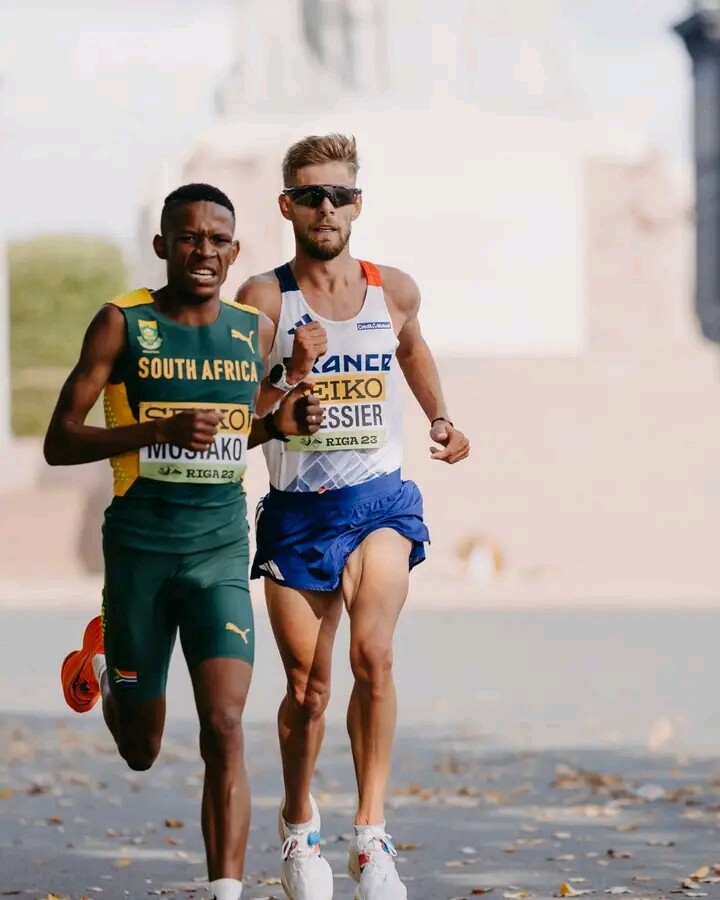
The half-marathon presents a completely different challenge.
Gressier’s 59:45 personal best places him 13th on the entry list, with 12 athletes boasting faster lifetime performances. Kenya’s Nicholas Kipkorir leads that group with 58:08, while Sweden’s Andreas Almgren arrives with the European record of 58:41. Gideon Kipkertich Rono has run 58:38, Tadese Worku 58:47, while the field also includes major names such as Joshua Cheptegei, Daniel Simiu Ebenyo, Yemaneberhan Crippa and Conner Mantz.
Adding another layer of intrigue, Gressier has not raced a half-marathon in 2026.
Yet this is far from unfamiliar territory for the Frenchman.
Gressier has already demonstrated that he can excel over 21.1 kilometres. His 59:45 came when he won the European half-marathon title in Brussels-Leuven in April 2025, defeating Norway’s Awet Nftalem Kibrab by 1:23. He also finished fifth at the 2023 World Half Marathon Championships in Riga, clocking 59:46.
That makes Copenhagen’s unusual schedule particularly important.
When the inaugural World Road Running Championships were held in Riga three years ago, the elite races were compressed into a single afternoon, making a 5km-and-half-marathon double far more difficult to contemplate. Copenhagen has instead spread the competitions across the weekend, creating a window that allows athletes such as Gressier to attempt something far more ambitious.
He will not be alone. Ten athletes on the final entry lists have entered two races, but Gressier’s combination is arguably among the most demanding because of the intensity with which he attacks both distances.
There is also a powerful reminder of what Gressier can produce when the stakes are highest.
At last year’s World Championships in Tokyo, he produced a breathtaking finish to claim the 10,000m world title, edging Yomif Kejelcha by just 0.06 seconds. His own description of that dramatic finish captured his competitive instinct perfectly: he had targeted a medal, moved into third on the home straight, then surged through second before taking gold.
Now, Gressier is preparing for another test of versatility.
First comes the explosive 5km, where he arrives as the fastest man on paper and one of the biggest threats to the world’s best. Then, barely 19 hours later, comes the half-marathon — a race filled with established road-running specialists and several athletes with considerably faster credentials.
Two races. Two very different challenges. One extraordinary weekend.
In Copenhagen, Jimmy Gressier will find out just how far his remarkable range can take him.
by Erick Cheruiyot for My Best Runs.
Login to leave a comment
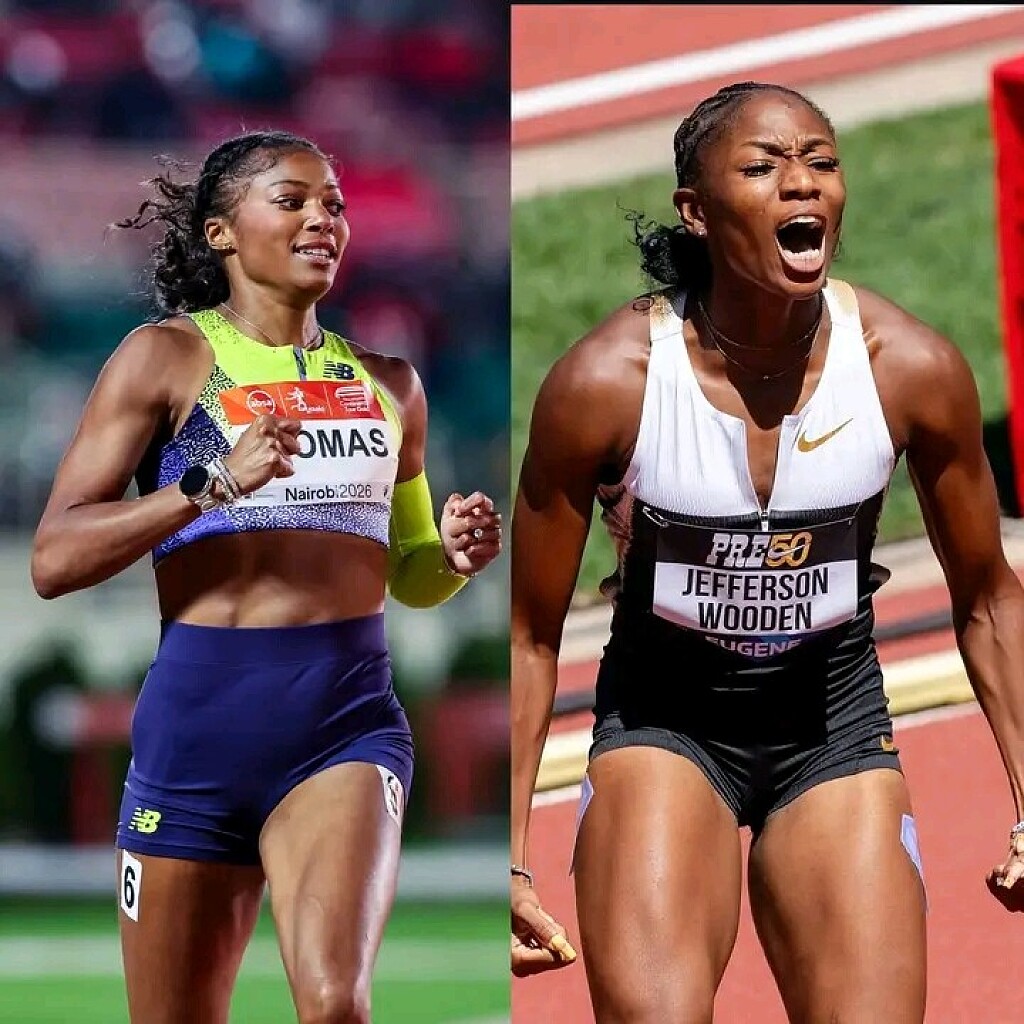
Thomas vs Jefferson-Wooden: Budapest Braces for a 200m Blockbuster
BUDAPEST — Two American sprint giants, two extraordinary résumés and barely a hundredth of a second separating them on the 2026 world list. The stage is set for a mouthwatering women’s 200m showdown at the inaugural World Athletics Ultimate Championship in Budapest.
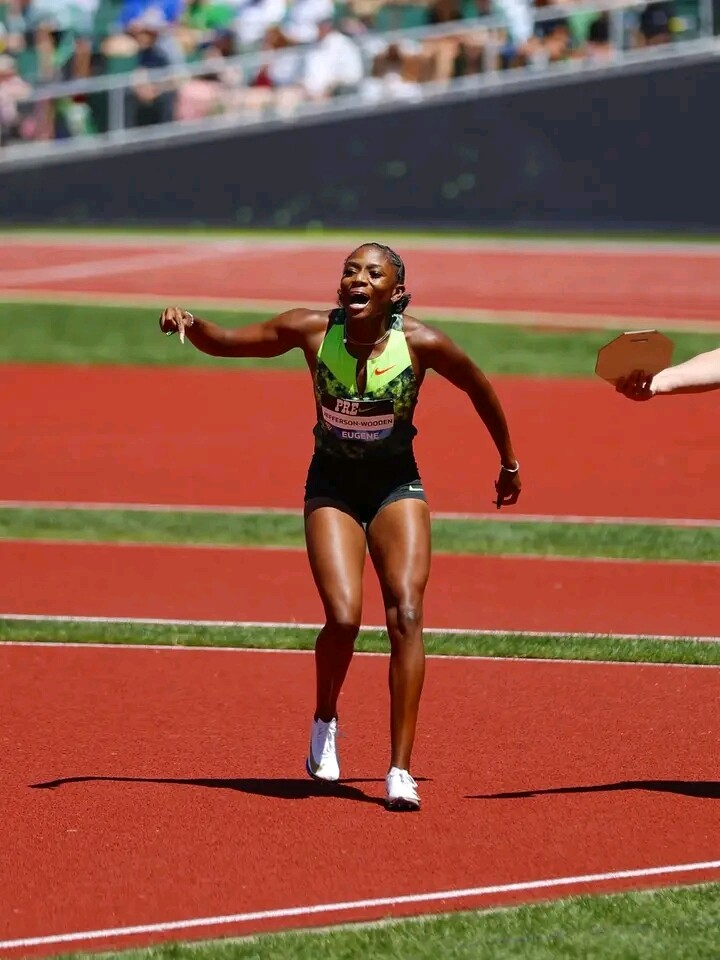
When the world’s best athletes gather in Hungary from 11–13 September for athletics’ newest global showcase, the women’s 200m promises to be one of the meeting’s headline attractions. And at the centre of the drama will be Melissa Jefferson-Wooden and Gabby Thomas — two champions arriving with formidable credentials and something to prove.
Jefferson-Wooden enters Budapest with perhaps the greater momentum.
The reigning world champion produced another statement performance at the U.S. Championships in July, powering to the national 200m title in 21.69 seconds with a legal +1.0m/s wind. The performance was only 0.01 seconds outside the 21.68 she ran to win the world title in Tokyo last year, confirming once again that she remains one of the most formidable 200m sprinters on the planet.
Thomas, however, is no stranger to the biggest stages.
The reigning Olympic 200m champion has built her reputation on championship racing, delivering when the pressure is greatest. Earlier this season, she clocked 21.70 seconds in College Station — just one hundredth behind Jefferson-Wooden’s season-leading mark at the U.S. Championships. The two Americans currently sit third and fourth on the 2026 world list, separated by the smallest possible margin.
And that tiny gap makes this matchup all the more intriguing.
21.69 versus 21.70.
On paper, there is almost nothing between them. But the 200m is rarely decided by the season’s fastest time alone. The bend, the transition into the straight, the ability to maintain speed over the final 50 metres and, above all, the capacity to execute under championship pressure could determine who walks away with the Ultimate Championship trophy.
There is another twist that could add an entirely new layer of strategy before either athlete even takes a starting position.
THE LANE DRAFT CHANGES EVERYTHING
World Athletics has introduced a new lane-draft concept specifically for the 200m at the Ultimate Championship.
On 10 September, the day before competition begins, the athletes will select their preferred semifinal heat and lane in live world-ranking seed order. Rather than leaving lane allocation entirely to a traditional draw, the new format puts the decision directly into the athletes’ hands.
That means the tactical battle begins before the starting gun.
Which athlete wants the inside lane? Who prefers a wider lane to attack the bend? Will a leading contender choose to position herself alongside a dangerous rival — or deliberately keep her distance?
Those decisions could become part of the story long before the final.
And with the women’s 200m semifinals and final scheduled for 13 September, Budapest could be heading towards a spectacular finale to the inaugural Ultimate Championship.
Jefferson-Wooden arrives as the reigning world champion, armed with blistering speed and the confidence of another 21-second performance. Thomas arrives as the Olympic champion, a proven championship performer with years of experience competing at the highest level.
Neither needs an introduction.
Neither is likely to give an inch.
The difference between them this season is just 0.01 seconds.
But in Budapest, history will not be decided by the rankings.
It will be decided over one explosive half-lap.
Melissa Jefferson-Wooden vs Gabby Thomas.
World champion vs Olympic champion.
21.69 vs 21.70.
And when the fastest women in the world line up under the Budapest lights, one question will remain:
Who will become the first-ever Ultimate Champion of the women’s 200m?
by Erick Cheruiyot for My Best Runs.
Login to leave a comment
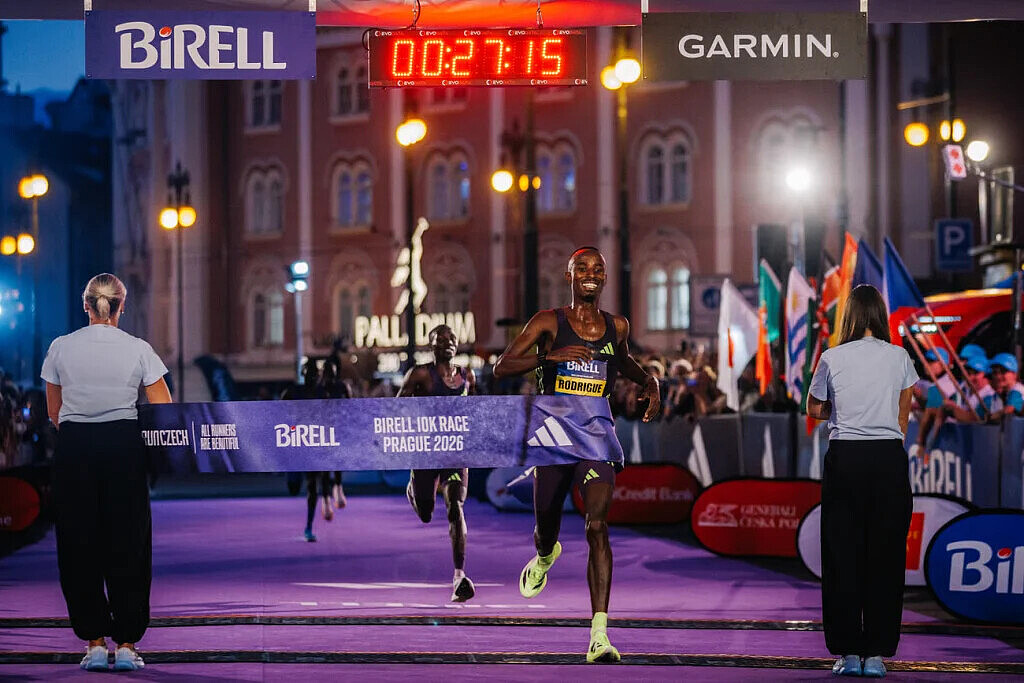
Kwizera Seals Historic Prague Victory as a Costly Wrong Turn Steals the Spotlight
PRAGUE, Czech Republic — The streets of Prague were illuminated by speed, tension and one of the most dramatic finishes of the 2026 road-racing season as Rodrigue Kwizera produced a stunning victory at the Birell 10K Night Race.
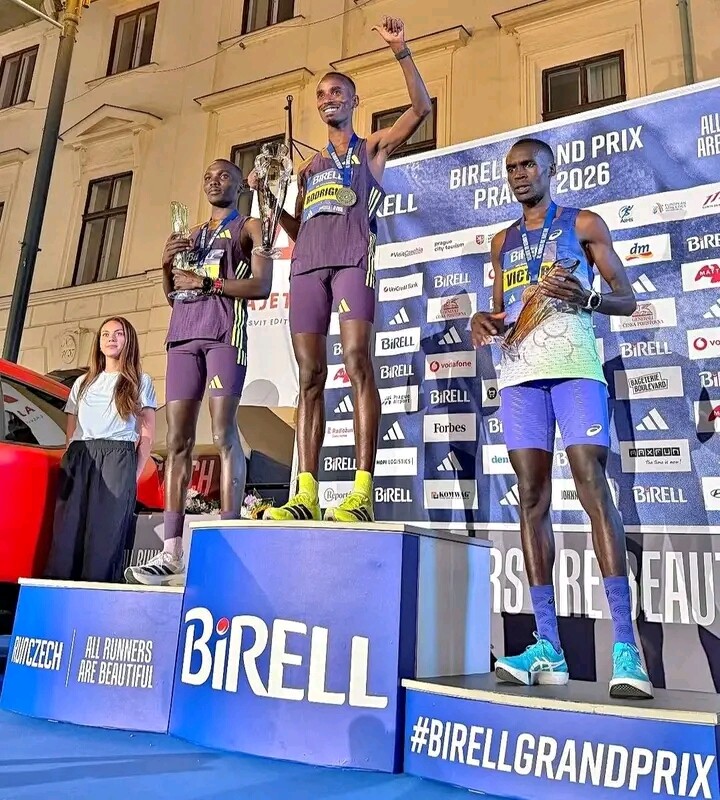
Running his first official international race under the Spanish flag, the Burundi-born distance star stopped the clock at 27:15, smashing the Spanish national record by 10 seconds and adding another major victory to his remarkable 2026 campaign.
But the result tells only part of the story.
For much of the decisive phase of the race, it was Kenya’s Victor Kipruto Kiprono who appeared to be marching towards victory. After the leading group began to fracture around the seventh kilometre, Kiprono moved aggressively to the front alongside fellow Kenyan Elisha Kiprop Chemiron before gradually opening a significant gap on his pursuers.
By the eighth kilometre, the 26-year-old Kenyan had established himself as the clear leader and seemed to be heading towards a commanding triumph.

Then came the moment that changed everything.
As the race entered its final stretch, Kiprono followed the lead vehicle instead of taking the correct route towards the finish. The costly detour allowed Kwizera to close the gap and sweep past, with Kenya’s Owen Korir Kapkama also moving ahead.
In the space of a few seconds, a race that had appeared to be Kiprono’s to lose was transformed into a frantic battle for the podium.
Kwizera seized the opportunity with ruthless efficiency.
The Spanish representative crossed the line in 27:15, securing the victory and rewriting the Spanish record books. Kapkama followed just one second later in 27:16, while Kiprono recovered from his costly mistake to claim third in 27:18.
Despite the disappointment, Kiprono still produced one of the fastest performances of the night — and one of the most memorable.
Behind the leading trio, Kenya’s Filex Kibet Masai ran 27:19 for fourth, while Uruguay’s Santiago Catrofe completed the top five in 27:24.
The quality of the field was reflected throughout the results. Kenyan runners occupied seven of the top 20 positions, while Spain, Japan, Uruguay, the Netherlands, Belgium and hosts Czech Republic were also represented.
Japan’s Shunya Kikuchi added another national-record performance to the evening, running 28:07 to improve the Japanese record by eight seconds.
Birell 10K Night Race Prague 2026 — Men’s Elite Top 10
1. Rodrigue Kwizera (Spain) — 27:15
2. Owen Korir Kapkama (Kenya) — 27:16
3. Victor Kipruto Kiprono (Kenya) — 27:18
4. Filex Kibet Masai (Kenya) — 27:19
5. Santiago Catrofe (Uruguay) — 27:24
6. Elisha Kiprop Chemiron (Kenya) — 27:33
7. Elia Kiprop (Kenya) — 27:46
8. Isaac Kibet Ndiema (Kenya) — 27:47
9. Said Mechaal (Spain) — 27:59
10. Shunya Kikuchi (Japan) — 28:07
The men’s race was only half of an extraordinary evening in Prague. Ethiopia’s Chaltu Dida Diriba, just 19, dominated the women’s race to win in 30:04, finishing eight seconds ahead of her sister Robe Dida Diriba. Kenya’s Cynthia Chelangat Chepkwony completed the podium in 30:23.
The 2026 Birell 10K Night Race attracted almost 9,500 runners from 98 countries, with the elite field competing in ideal evening conditions of around 20 degrees Celsius and little wind.
Yet it was the men's finish that will linger longest.
Kwizera will leave Prague with a victory and a new national record. Kapkama will celebrate a superb second place. And Kiprono will be left wondering what might have been after a single wrong turn dramatically altered the final chapter of a race he had controlled for much of its decisive stage.
In distance running, victory can sometimes be decided not only by fitness, strength and tactics, but by the smallest of moments.
On this Prague night, one wrong turn changed everything.
by Erick Cheruiyot for My Best Runs.
Login to leave a comment

Birell 10K Race
The Birell Prague Grand Prix is a captivating evening race that takes runners through the heart of historic Prague. Held during the first weekend of September, this event transforms the city’s streets into a vibrant festival of running, with thousands of participants and enthusiastic spectators lining the course. The event begins with the adidas Women’s Race 5K, an empowering race...
more...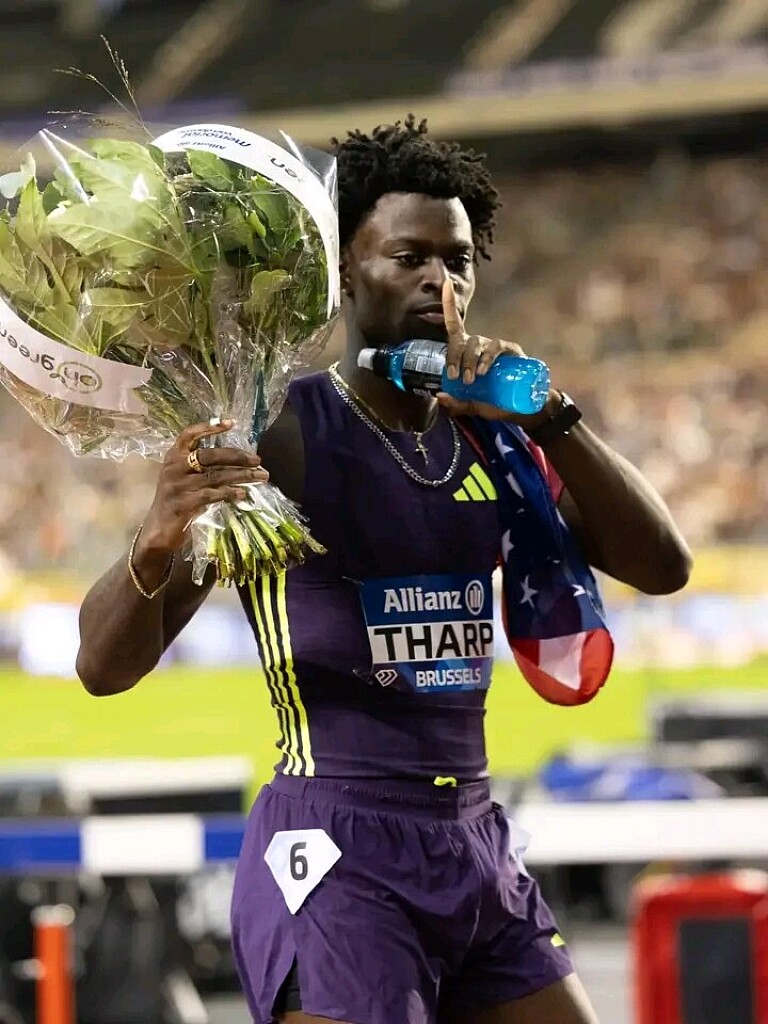
Ja’Kobe Tharp Delivers A Gritty Masterclass To Claim Diamond League Final Glory
Ja’Kobe Tharp has added another major milestone to his rapidly rising athletics career, emerging as the Diamond League Final champion in the men’s 110m hurdles after producing a composed and fiercely contested performance in Brussels.
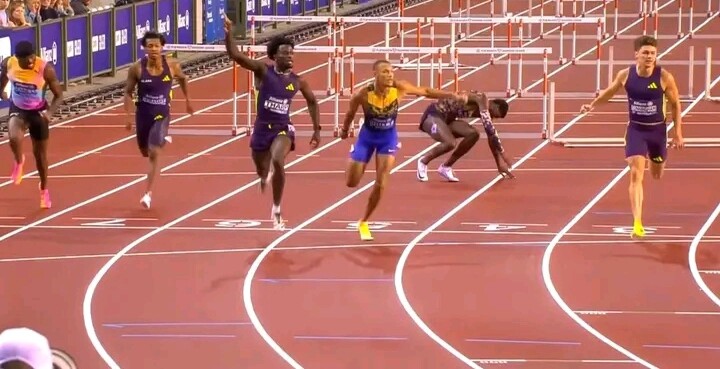
The American hurdler battled through a tight race in which the field remained closely packed for much of the contest. With little separating the leading contenders, Tharp kept his composure when it mattered most, finding another gear over the closing stages to pull away from his rivals.
The decisive moment came over the final two hurdles. While the competition remained intense, Tharp attacked the final barriers with greater conviction and surged clear of the field before powering through the finish line in 13.03 seconds, with a slight legal headwind of -0.2 m/s.
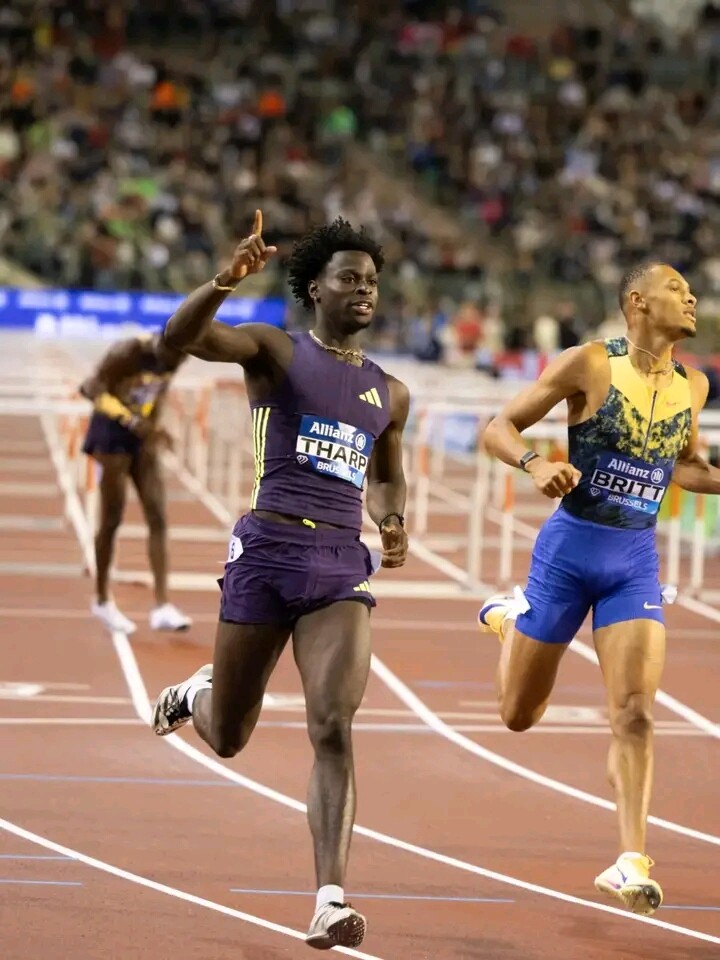
It was not a race won by overwhelming dominance from the opening gun. Instead, Tharp displayed the qualities required to triumph on the biggest stages — patience, precision, resilience and the ability to deliver under pressure when victory was still within reach.
Jamal Britt produced an impressive performance of his own to secure the silver medal in 13.09 seconds, finishing just six hundredths of a second behind the champion. Trey Cunningham completed the podium, crossing the line in 13.22 seconds to claim bronze.
For Tharp, the Diamond Trophy represents a significant achievement and another statement of his credentials among the world's elite hurdlers. His victory also underlines the depth of American talent in the 110m hurdles, with three athletes featuring prominently on a major championship-style stage.
The 110m hurdles final ultimately belonged to Tharp, however. When the pressure intensified and the race entered its decisive phase, he remained technically sharp and unleashed the finishing speed that separated him from the rest.
A 13.03-second victory may look modest on the results sheet, but the manner in which Tharp secured it made the performance particularly impressive. He waited, fought and then struck at precisely the right moment — a champion's finish when the Diamond Trophy was on the line.
With another prestigious title now added to his résumé, Tharp continues to establish himself as one of the most exciting names in the next generation of American sprint hurdlers.
by Erick Cheruiyot for My Best Runs.
Login to leave a comment

Three Historic World Records Ratified As Kiplimo, Tharp And Wanyonyi Enter The Record Books
Three extraordinary performances that captivated the athletics world have now been officially ratified by World Athletics, with Jacob Kiplimo, Ja’Kobe Tharp and Emmanuel Wanyonyi securing their places in the history books with remarkable world-record performances.
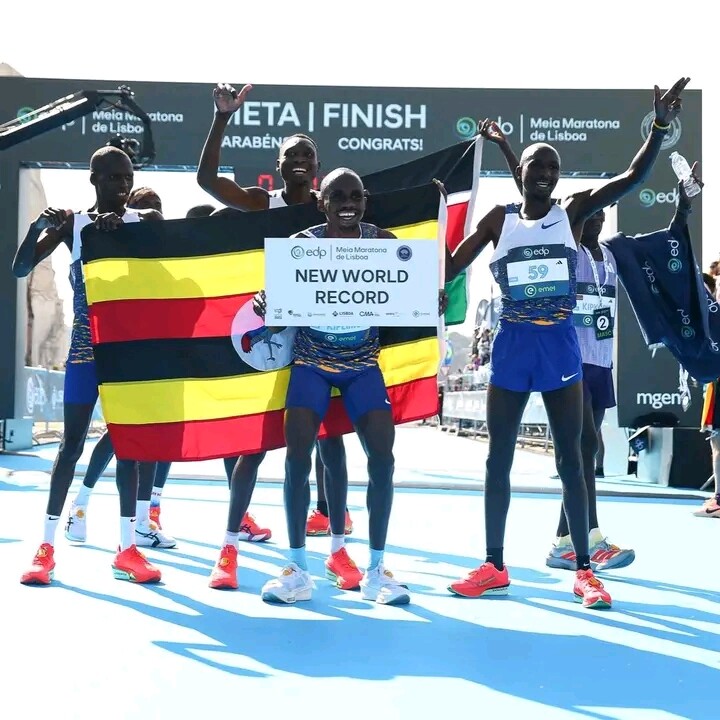
Uganda’s Jacob Kiplimo delivered a breathtaking 57:20 at the EDP Lisbon Half Marathon on 8 March 2026, producing what was then a spectacular world record. His performance underlined his exceptional ability over the half-marathon distance and further strengthened his status as one of the finest road runners of his generation.
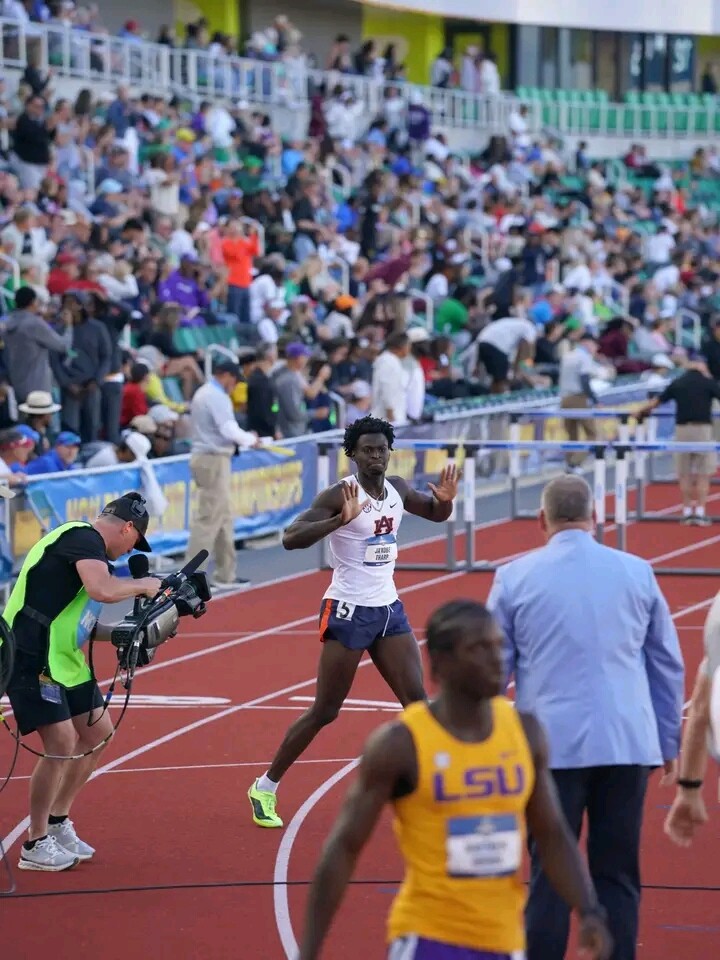
American hurdler Ja’Kobe Tharp created his own piece of history in Eugene on 10 June 2026, storming to 12.75 seconds in the 110m hurdles. The sensational performance came with a legal +1.0m/s following wind and established Tharp as the new world record-holder, marking a remarkable breakthrough on the global stage.
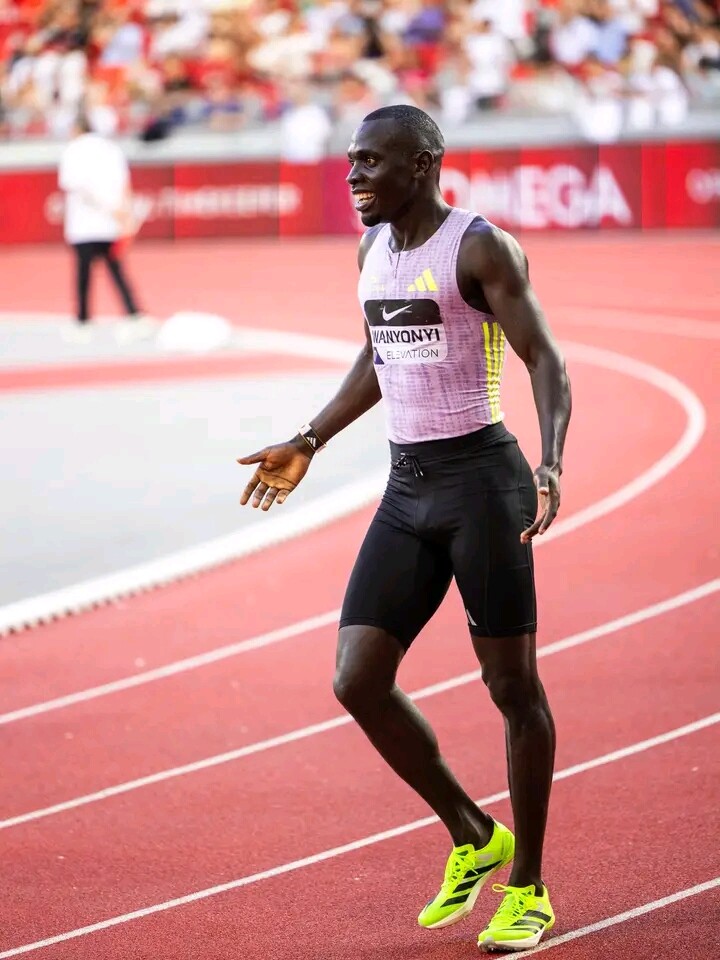
Kenya’s Emmanuel Wanyonyi completed the trio with a sensational 2:11.83 world record in the 1000m. The Olympic champion produced the performance in Monaco, lowering Noah Ngeny’s long-standing 2:11.96 world record from 1999. It was another extraordinary demonstration of Wanyonyi’s speed, strength and versatility beyond his specialist 800m distance.
What makes the three records particularly special is the variety of disciplines involved. Kiplimo conquered the demanding half marathon, Tharp mastered the technical challenge of sprint hurdling, while Wanyonyi extended his middle-distance brilliance over 1000m. Each performance showcased a different form of athletic excellence, yet all three athletes reached the same extraordinary destination: the world-record books.
Accuracy Note: Kiplimo’s 57:20 has since been surpassed by Ethiopia’s Yomif Kejelcha, who ran 56:51 at the Media Maratón Ciudad de Buenos Aires on 23 August 2026, taking 29 seconds off Kiplimo’s mark. The newer performance was still listed as pending ratification, meaning Kiplimo’s mark had been overtaken on the clock even as his record was among those formally ratified.
The ratification of the Kiplimo, Tharp and Wanyonyi performances nevertheless gives official recognition to three spectacular moments that will remain significant chapters in the 2026 athletics season.
Three athletes. Three extraordinary performances. Three officially ratified world records. From Lisbon to Eugene and Monaco, Kiplimo, Tharp and Wanyonyi have added another unforgettable chapter to the story of athletics
by Erick Cheruiyot for My Best Runs.
Login to leave a comment
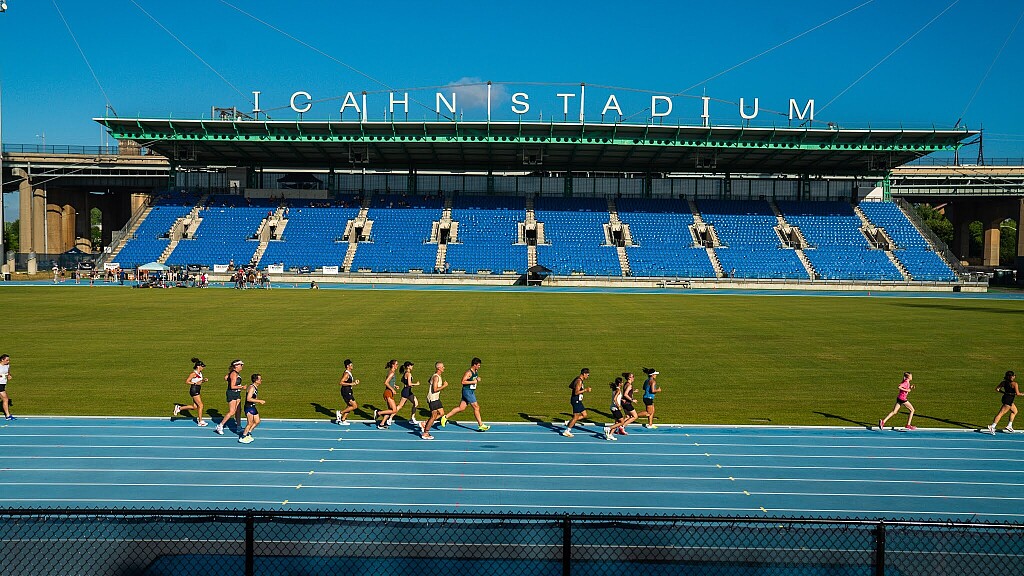
Athlos Nyc 2026 Cancelled As Series Sets Its Sights On A New Global Calendar
ATHLOS has announced a major change to its 2026 plans, confirming that the third edition of ATHLOS NYC will not take place as originally scheduled on October 2 at Icahn Stadium in New York City.
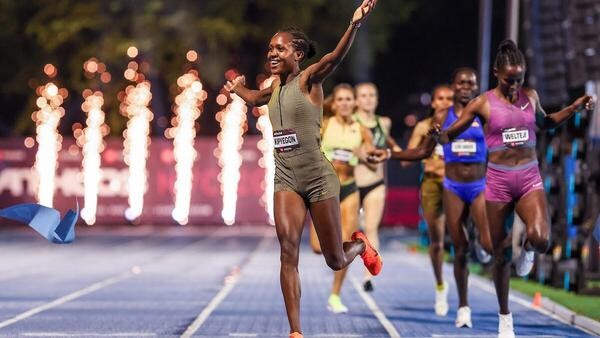
The decision marks a significant change for the rapidly growing women’s track and field series, which had been preparing to return to New York for another high-profile edition. ATHLOS said the move is part of a broader strategy to align its future events more closely with the global athletics calendar.
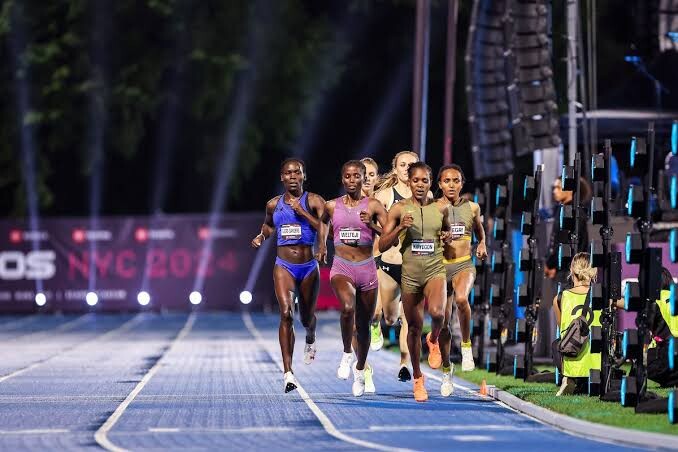
The organisation explained that it will not stage ATHLOS NYC in October 2026, with the goal of restructuring its schedule from the 2027 season onward. The new approach is intended to give the world’s best female athletes greater opportunities to compete in a healthier and more sustainable schedule while allowing them to perform at their peak.
When ATHLOS was launched, the series deliberately created a new competition window at the end of the traditional athletics season. However, as the event has grown, ATHLOS says it has become increasingly clear that its long-term home should be within the main international athletics calendar.
The cancellation of ATHLOS NYC, however, does not signal a retreat from the organisation’s global ambitions.
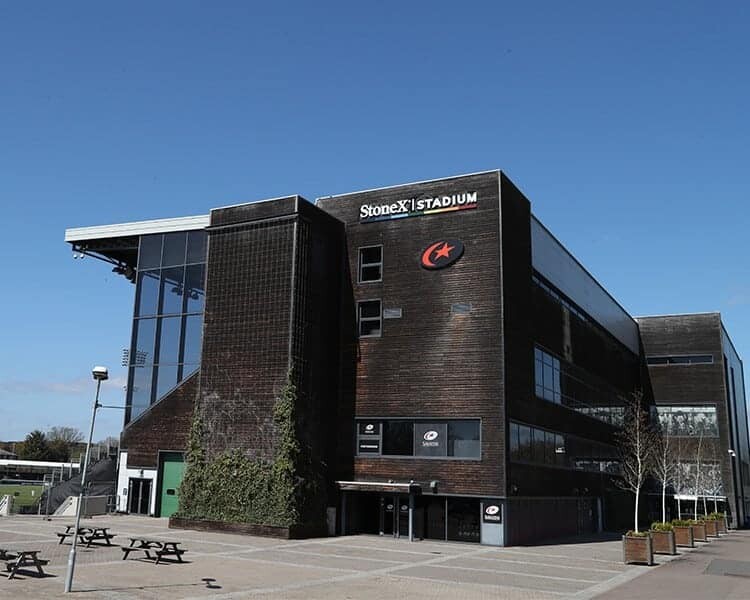
ATHLOS London remains firmly on the calendar for September 18, 2026, at StoneX Stadium in London, marking the series’ highly anticipated first event outside the United States. The London meeting is expected to bring together some of the biggest names in women’s athletics for what promises to be a spectacular night of elite competition.
ATHLOS has built its reputation around putting female athletes at the centre of the experience, combining world-class competition with significant prize money and an energetic event atmosphere. Its programme features several of the sport’s most exciting disciplines, including the 100m hurdles, 100m, 200m, 400m, 800m, mile and long jump.
While the decision to cancel the New York edition will come as a disappointment to fans who were expecting another major night at Icahn Stadium, ATHLOS insists that its commitment to women’s track and field remains stronger than ever.
The organisation is now turning its attention to London and to building a more sustainable international calendar from 2027. The latest decision could therefore prove to be less an ending than a strategic reset as ATHLOS looks to strengthen its position on the global athletics stage.
ATHLOS NYC may be absent from the 2026 calendar, but the series’ international ambitions are only getting bigger.
by Erick Cheruiyot for My Best Runs.
Login to leave a comment
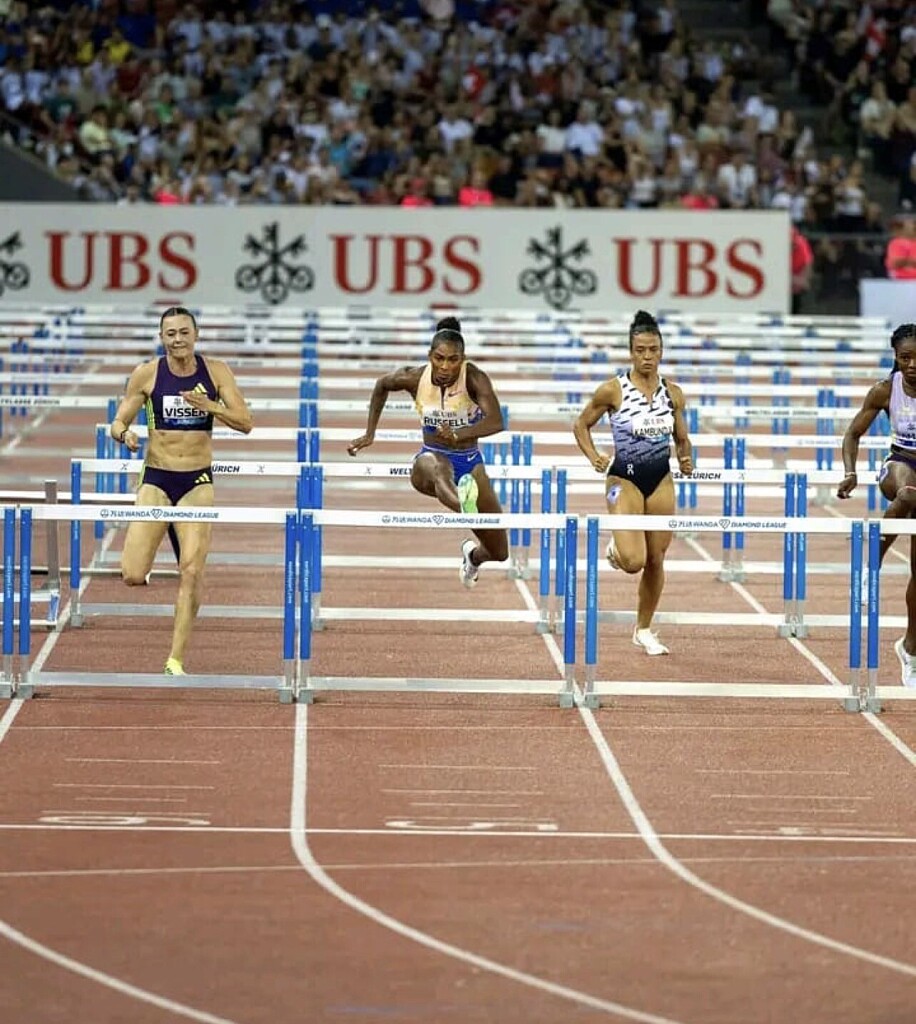
Masai Russell Makes History with Stunning 12.09 World Record in Zurich
Masai Russell delivered a performance for the ages at the Zurich Diamond League, storming to a stunning 12.09 seconds in the women’s 100m hurdles to break Tobi Amusan’s world record.
Running in completely still conditions with a legal 0.0 m/s wind, the American Olympic champion became the first woman in history to break the 12.10-second barrier.

Russell improved upon Amusan’s previous world record of 12.12, set at the 2022 World Championships in Eugene. The mark is subject to the usual ratification process.
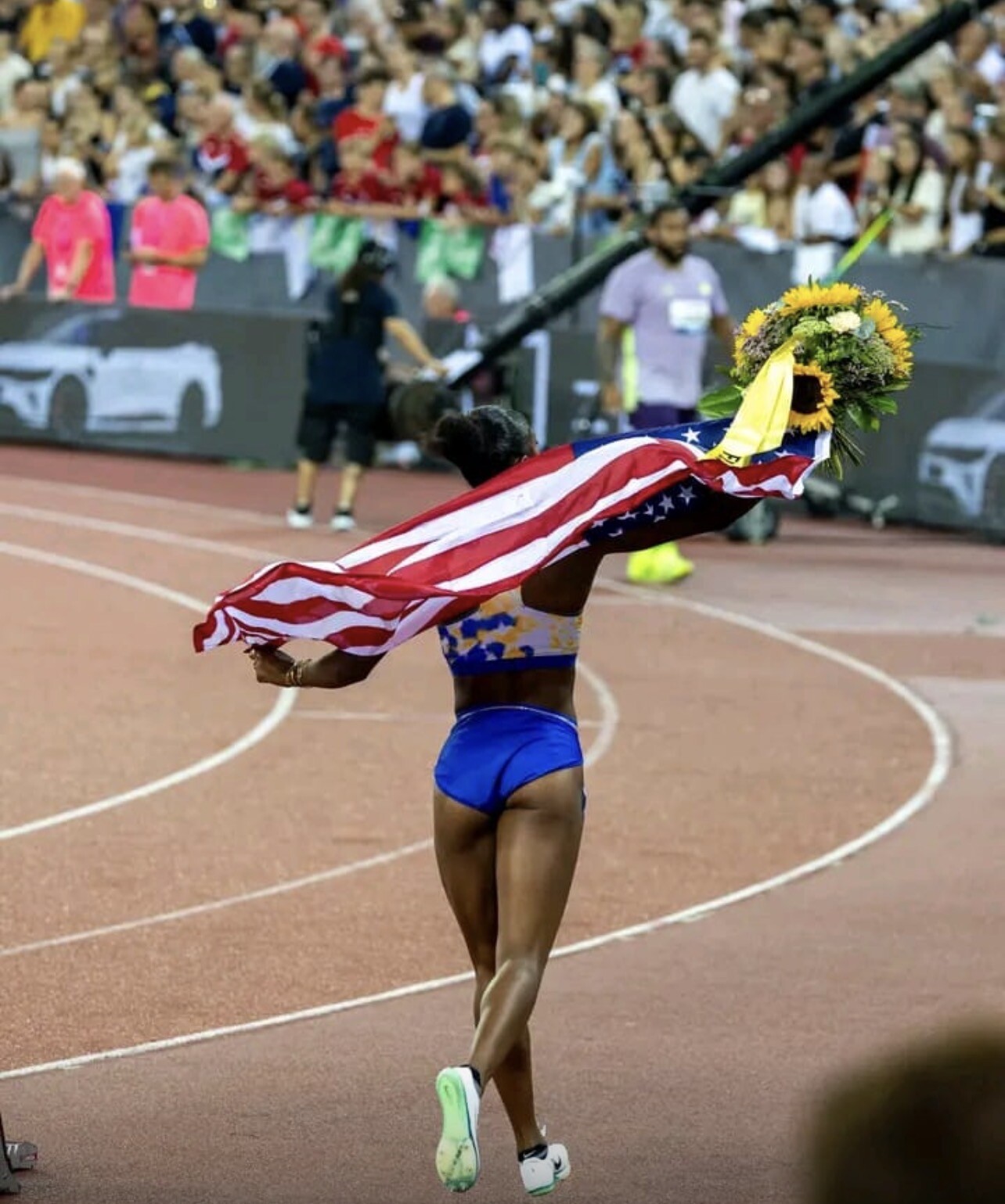
After repeatedly demonstrating her dominance throughout the season, Russell arrived in Zurich as the woman to beat. She attacked the race with extraordinary speed and precision, maintaining her rhythm over the hurdles before pulling away in the closing stages.
When the clock flashed 12.09, the significance of the performance was immediately clear. A barrier that had never been broken was gone.
Even more remarkably, the woman whose record she broke was racing beside her. Amusan, the Nigerian star who had held the world record for four years, finished second in 12.23.
The Netherlands’ Nadine Visser completed the podium in 12.34.
The performance adds another extraordinary chapter to Russell’s career. After establishing herself among the world’s elite and producing a season of remarkable consistency, she has reached the summit of the event as its fastest athlete in history.
Russell’s 12.09 was more than a victory. It rewrote the record books and provided the ultimate confirmation of her dominance.
Zurich had already witnessed a world record from Alison dos Santos in the men’s 400m hurdles. Less than 40 minutes later, Russell ensured the evening would become one of the most memorable in Diamond League history.
Masai Russell is now the world-record holder—and the first woman to run under 12.10 seconds for the 100m hurdles.
by Erick Cheruiyot for My Best Runs
Login to leave a comment
Entries Set to Open for Historic 100th Comrades Marathon as Centenary Celebration Begins
One of the most iconic milestones in the history of ultramarathon running is drawing closer, with entries for the historic 100th edition of the Comrades Marathon set to open on Tuesday, 25 August 2026.
The Comrades Marathon Association has officially announced a detailed entry process for the 2027 race, which will unfold in three stages and give runners around the world the opportunity to secure their place in what promises to be one of the most significant editions ever held of The Ultimate Human Race.
The announcement followed the official launch of the 2027 Comrades Marathon on Wednesday, 19 August, when the centenary campaign, “The Greatest Story Ever Run,” was unveiled alongside a special logo created exclusively for the landmark 100th edition.
The launch also revealed several major highlights for the Centenary Race. The historic event will take place on Sunday, 13 June 2027, and will be a Down Run, with 28,000 places available. The entry process will include a ballot, while the race will offer a record R8.919 million in prize money. Organisers have also set an ambitious goal of raising R10 million for the Amabeadibeadi charities, adding an important charitable dimension to the centenary celebrations. One of the defining moments of the launch was the unveiling of the special Centenary mark, created to commemorate this extraordinary milestone in the history of the race.
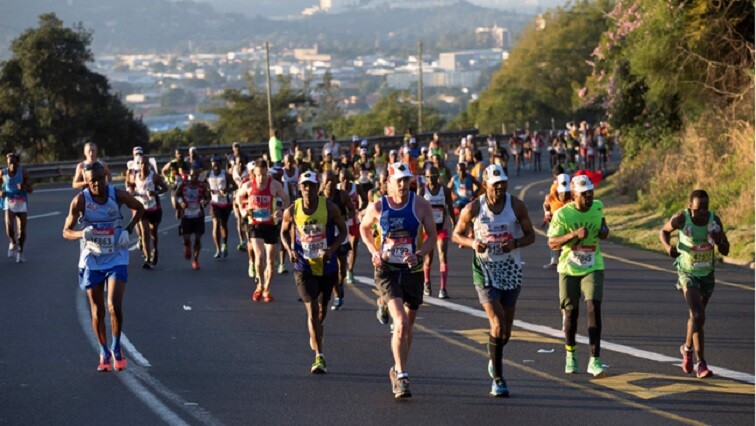
The entry process begins on 25 August at 10:00 a.m. SAST, when entries open for Green Number runners, Yellow Number runners and Amabeadibeadi charity entrants.
The next phase follows on 2 September at 10:00 a.m. SAST, when entries open for Comrades Marathon Association members. This window will remain open for 72 hours or until the available entry allocation is filled, with places offered on a strictly first-come, first-served basis.
For general entrants, the process will move to a ballot system. General entries open on 9 September at 10:00 a.m. SAST, with runners able to enter the ballot until it closes on 22 September at 4:30 p.m. SAST. The ballot draw is then scheduled to take place on 23 September.
Several other crucial dates will shape the road to the historic race. The substitution period will run from 15 to 31 March 2027, while 3 May 2027 is the final deadline for runners to submit their qualifying performances, seeding information and other required entry details.
To qualify for the 2027 Comrades Marathon, runners must complete a 42.2km marathon in under five hours between 15 June 2026 and 3 May 2027.
The journey will finally culminate on Sunday, 13 June 2027, when thousands of runners are expected to line up for the historic 100th edition of the Comrades Marathon.
The 2027 race will represent a remarkable moment for the legendary South African ultramarathon. For more than a century, the Comrades Marathon has captured the imagination of runners and spectators with its extraordinary test of endurance, determination and human spirit. Its centenary edition will celebrate the generations of athletes who have faced its demanding roads, conquered its challenges and helped build one of the world's most respected endurance events.
For runners dreaming of becoming part of this historic occasion, the road to Comrades 2027 is now clearly marked. From the opening of entries in August 2026 to race day in June 2027, every deadline will matter.
The Greatest Story Ever Run is preparing for its most historic chapter yet.
by Erick Cheruiyot for My Best Runs.
Login to leave a comment

Comrades Marathon
Arguably the greatest ultra marathon in the world where athletes come from all over the world to combine muscle and mental strength to conquer the approx 90kilometers between the cities of Pietermaritzburg and Durban, the event owes its beginnings to the vision of one man, World War I veteran Vic Clapham. A soldier, a dreamer, who had campaigned in East...
more...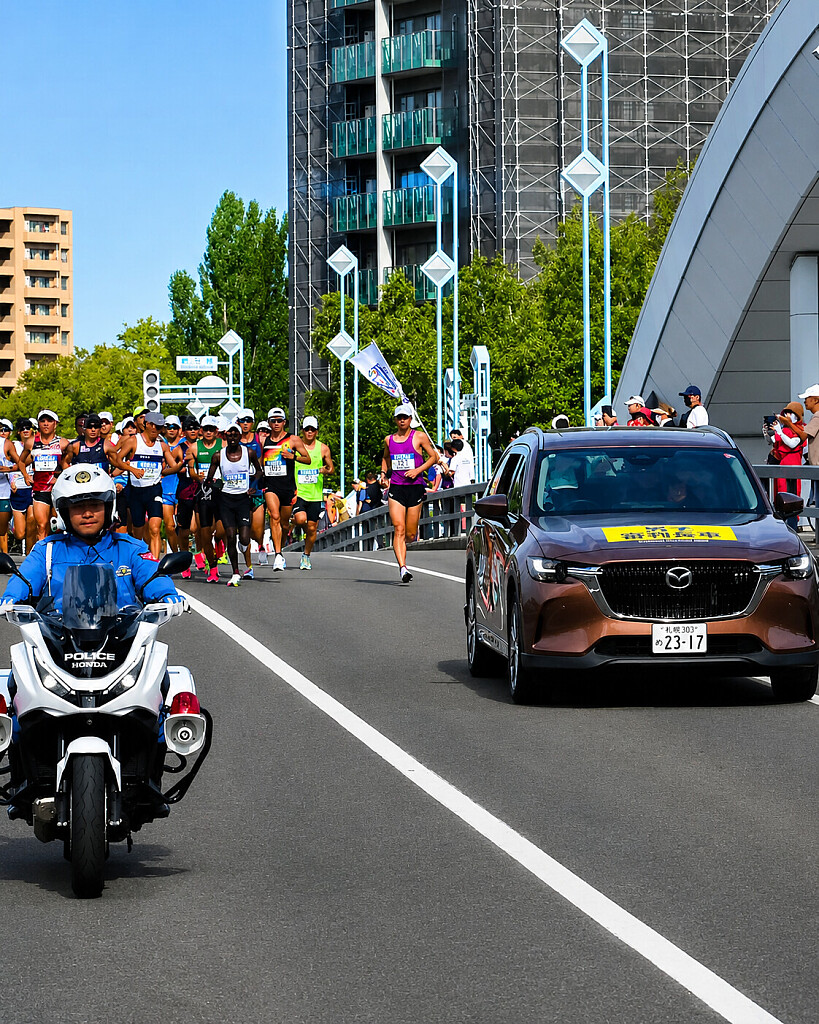
Hokkaido Marathon 2026: A Historic Summer Race Puts Heat Safety First
When thousands of runners line up in the heart of Sapporo on Sunday, August 30, 2026, they will be taking part in one of Japan’s most distinctive marathon traditions — a race where the battle is not only against the clock and the 42.195-kilometre distance, but also against the summer heat.
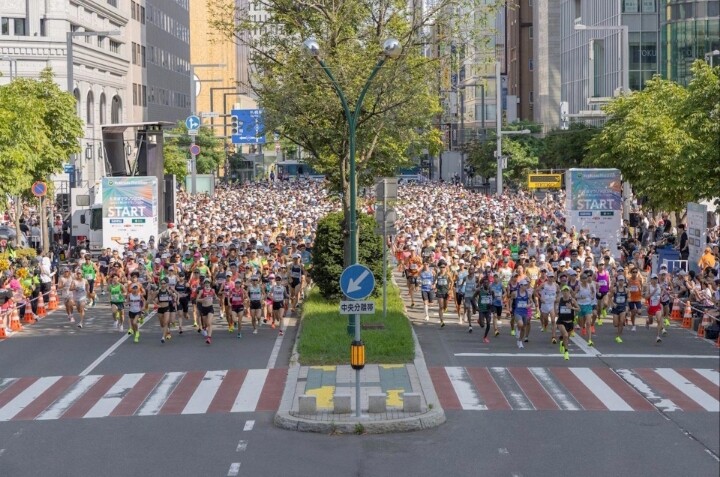
The Hokkaido Marathon traces its roots to 1987, when the inaugural race attracted just 439 entrants. Over nearly four decades, it has grown into a major international marathon, welcoming runners from Japan and around the world while maintaining its unique identity as one of the country’s few major summer marathons.
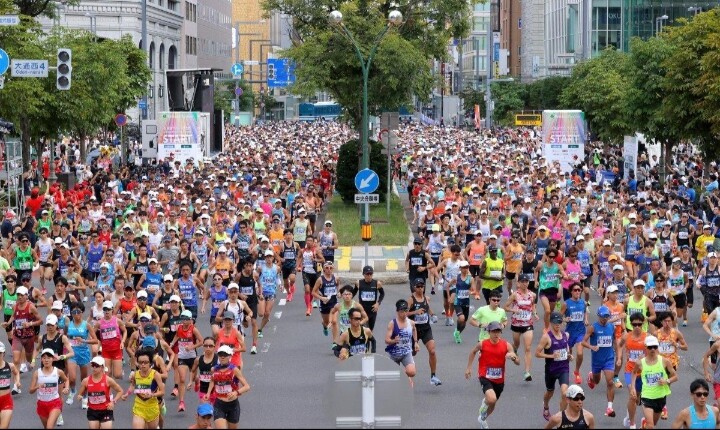
That summer setting is precisely what makes heat management such an important part of the Hokkaido Marathon experience.
The 2026 edition will begin at 8:30 a.m. from Odori Nishi 4-chome, with the course winding through some of Sapporo’s most recognisable landmarks, including Susukino and Hokkaido University. But while the atmosphere will be festive and competitive, organisers are urging athletes to treat heat-related illness with the utmost seriousness.
As one of Japan’s few marathons held during the summer, Hokkaido Marathon carries a heightened risk of heatstroke. Mild heat illness may improve with rest, cooling and appropriate hydration, but severe heatstroke can become life-threatening and demands rapid action to lower body temperature.
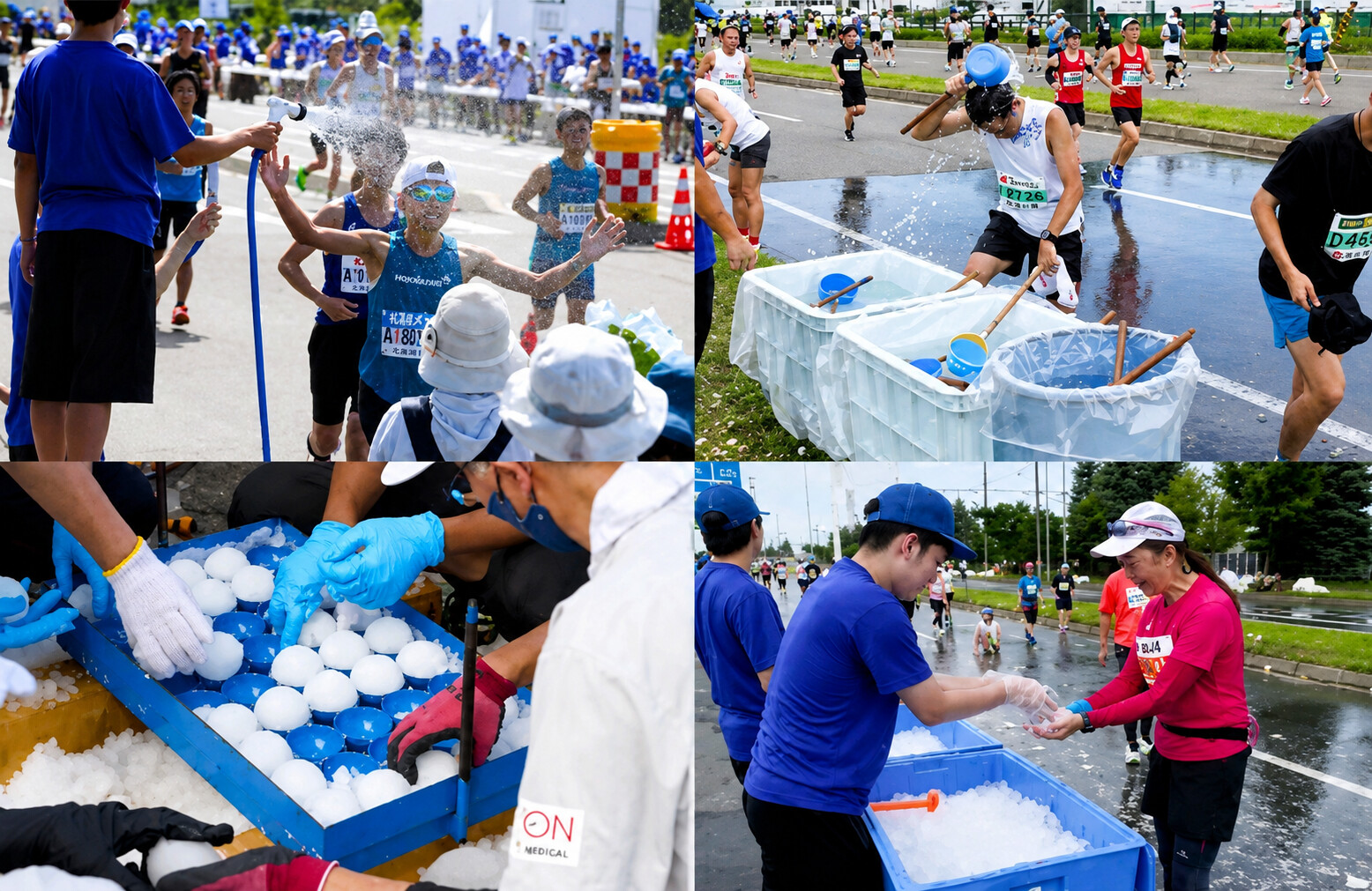
The organisers have therefore placed medical preparedness at the centre of the 2026 event. Since the 2022 Hokkaido Marathon, an ice-bath system has been available for emergency cooling — an approach also used during the marathon and race-walking competitions at the Tokyo 2020 Olympic Games.
If medical staff suspect severe heatstroke accompanied by impaired consciousness, a doctor may assess the athlete, including measuring rectal temperature when necessary. Where appropriate, the runner can be rapidly cooled using an ice bath before being transported to a medical facility.
For competitors, recognising the warning signs early could make all the difference.
Feeling dazed, unusually confused, mentally foggy or unable to remain fully alert during the race should never be dismissed as ordinary fatigue. Runners experiencing such symptoms are being urged not to force themselves forward. They should stop, rest and seek medical assistance.
The same responsibility applies to fellow runners and spectators. Anyone who notices a competitor appearing confused, disoriented or seriously unwell should immediately alert the nearest medical or first-aid team.
Hydration is another critical part of the organisers’ message — but the advice is not simply to drink as much water as possible.
Both insufficient sodium intake and excessive fluid consumption can contribute to hyponatremia, a potentially dangerous drop in blood sodium levels. Runners should therefore pay attention to both fluid and sodium replacement during the marathon rather than relying solely on water.
The race is also expanding its cooling measures in 2026. An ice distribution point will be available at approximately 13.2 kilometres, while new water-dousing points will be introduced at the end of selected aid stations. These facilities are designed to give runners additional opportunities to cool their bodies as the race progresses.
A cooling spray may also be carried and used as another practical measure against the heat.
Such precautions are particularly significant given the Hokkaido Marathon’s history. From its modest beginning in 1987, the event gradually established itself as an important testing ground for athletes preparing to compete in hot-weather conditions. Japanese and international elites have repeatedly used the race to test their endurance and heat tolerance, while the event has also welcomed some of the world's leading distance runners.
Today, the marathon combines that elite tradition with a huge mass-participation atmosphere. What started with fewer than 500 entrants has evolved into an event capable of attracting around 20,000 runners, turning Sapporo into a celebration of distance running each summer.
But the message for 2026 is clear: finishing the marathon is never more important than protecting your health.
For runners chasing personal bests, international athletes seeking victory and recreational participants simply hoping to complete the distance, knowing when to slow down, stop or seek help is part of racing intelligently.
On August 30, the streets of Sapporo will once again provide a spectacular stage for 42.195 kilometres of running. Yet beneath the excitement, the Hokkaido Marathon is sending an equally important message: run hard when your body allows it, cool down when necessary, stay alert to the heat and never ignore the warning signs.
After nearly four decades of history, the Hokkaido Marathon continues to evolve — and in 2026, protecting the runners who make that history possible is firmly at the heart of the race.
by Erick Cheruiyot for My Best Runs.
Login to leave a comment

Hokkaido Marathon
The Hokkaido Marathon, inaugurated in 1987 with just 439 participants, has evolved into one of Japan's premier marathons, attracting nearly 20,000 runners annually. Held every August in Sapporo, Hokkaido, it stands as the nation's only full-scale summer marathon. The race commences and concludes in Sapporo's Odori Park, offering a scenic course that weaves through the city's landmarks, including the vibrant...
more...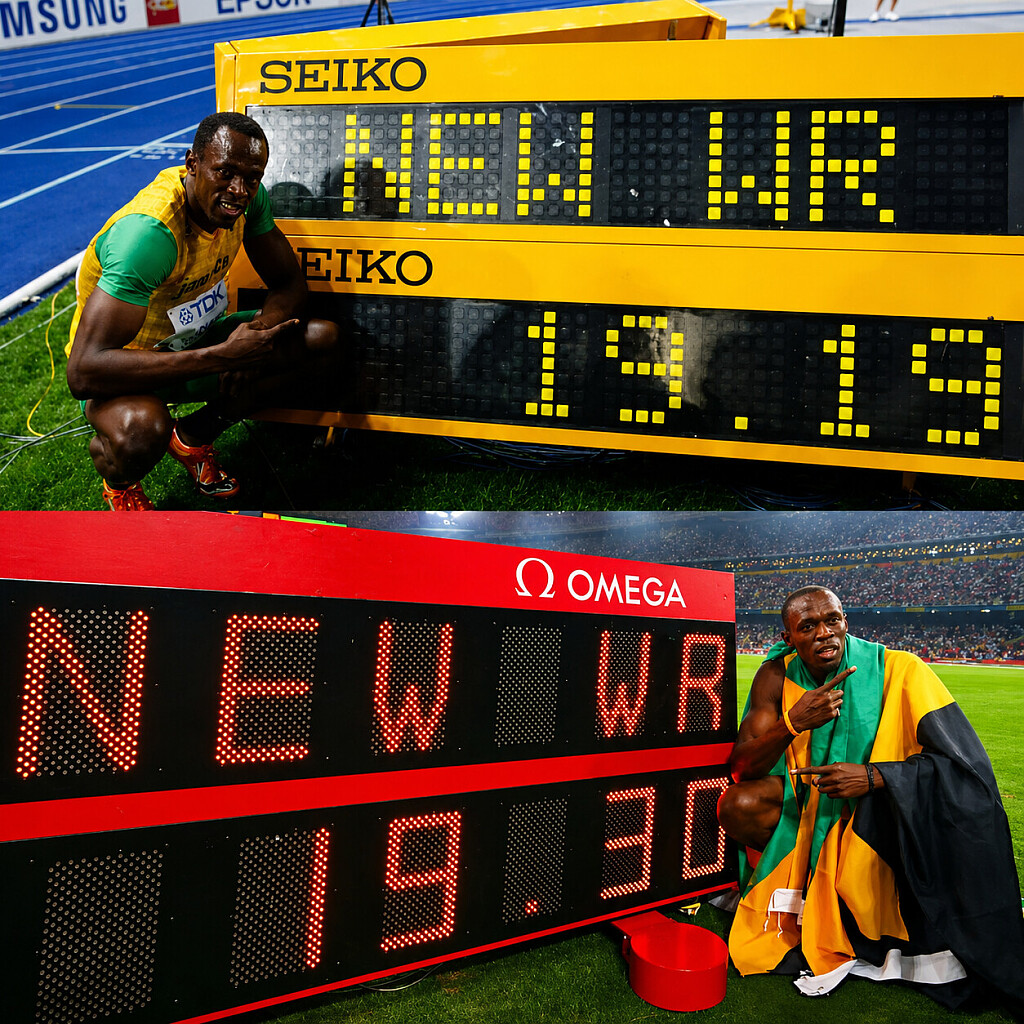
August 20: The Day Usain Bolt Rewrote the 200m Record Book—Twice
Some dates become part of sporting history. August 20 belongs to Usain Bolt.
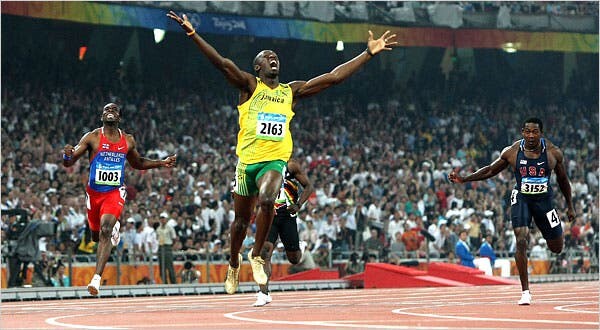
On two consecutive years, the Jamaican sprinting phenomenon transformed the men’s 200 metres, producing performances that seemed almost impossible even by his extraordinary standards.
On August 20, 2008, inside Beijing’s Bird’s Nest, Bolt lined up for the Olympic 200m final carrying enormous expectations. Four days earlier, he had stunned the world by winning the 100m in a then-world-record 9.69 seconds. Yet the 200m was about to become another chapter in his growing legend.
Bolt exploded around the bend before powering down the home straight, crossing the finish line in 19.30 seconds to win Olympic gold and shatter Michael Johnson’s long-standing world record of 19.32, set in Atlanta in 1996. The improvement was only two hundredths of a second, but the significance was enormous: Johnson’s seemingly formidable record had survived for 12 years before Bolt finally brought it down.
And there was another remarkable detail. Bolt’s Beijing record came with a 0.9 m/s headwind, making the performance even more extraordinary.
But Bolt was not finished.
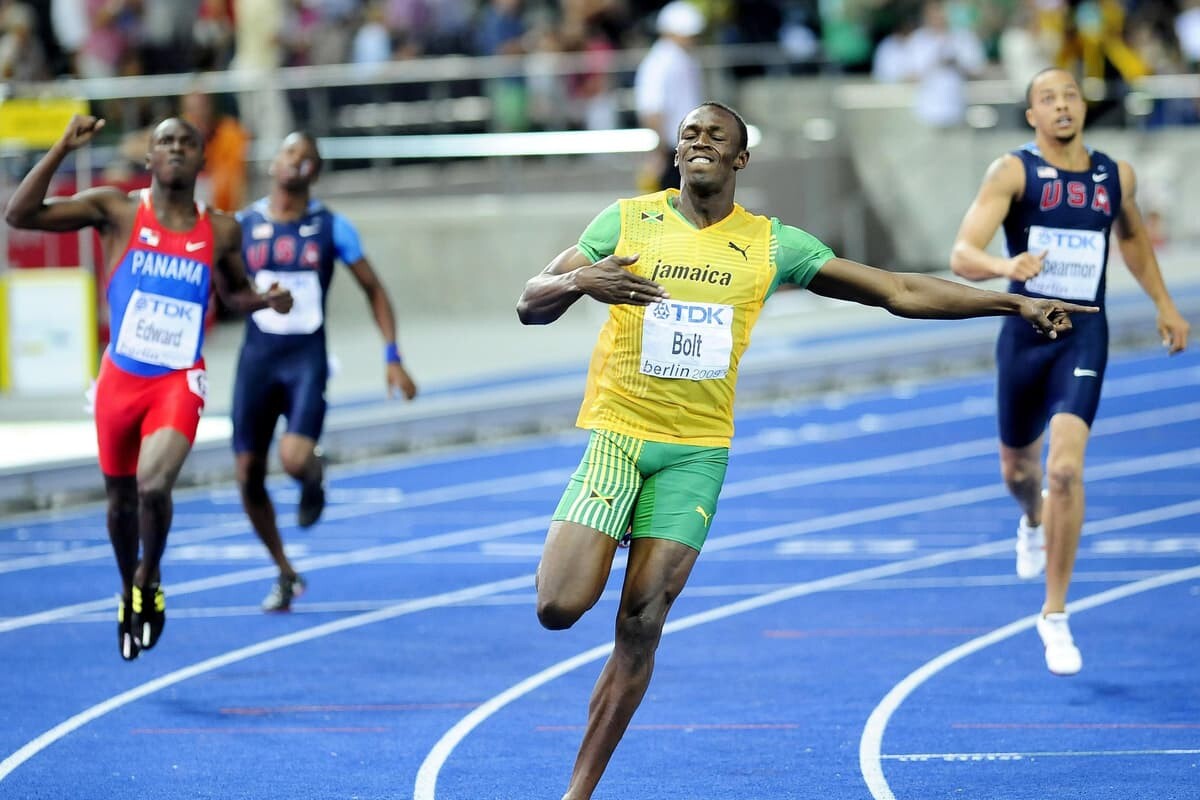
Exactly one year later, on August 20, 2009, he returned to the same event at the World Athletics Championships in Berlin with another opportunity to redefine the limits of speed.
Four days earlier, he had already demolished his own 100m world record, running 9.58 seconds. Now the 200m world record was in his sights.
What followed was extraordinary.
Bolt stormed to 19.19 seconds, taking 11 hundredths off the world record he had established in Beijing. The performance came with a 0.3 m/s headwind, yet he still produced a time that would immediately become one of the most iconic performances in athletics history.
The progression was staggering:
19.30 in Beijing.
19.19 in Berlin.
Michael Johnson’s record had become Bolt’s record—and then, just 12 months later, Bolt destroyed his own mark.
His Berlin victory was also emphatic. Bolt finished more than half a second ahead of Panama’s Alonso Edward, who ran 19.81, while Wallace Spearmon took bronze in 19.85.
What made the achievement even more remarkable was the consistency of Bolt’s record-breaking brilliance. Across the Beijing Olympics and Berlin World Championships, he produced a succession of world records in the 100m and 200m, repeatedly turning major championship finals into historic moments. World Athletics noted after Berlin that Bolt had become the first man to break both the 100m and 200m world records more than once.
And now, 17 years after that unforgettable Berlin night, the 19.19-second world record still stands.
The mark has survived generations of exceptional sprinters, including athletes who have come remarkably close to the 19-second barrier. Yet Bolt’s time remains untouched at the summit of the all-time list.
That is why August 20 is more than a date on the athletics calendar.
It is the anniversary of the day Usain Bolt first broke Michael Johnson’s seemingly untouchable standard—and then returned exactly one year later to make his own record look vulnerable.
Beijing gave the world 19.30.
Berlin gave it 19.19.
Two August 20s. Two world records. One extraordinary sprinter.
Usain Bolt was not simply winning races. He was changing the definition of human speed.
And the question that remains for the next generation is perhaps the most intriguing of all:
Will we ever see another sprinter capable of breaking the 19-second barrier and finally taking down the 19.19 mark that Bolt left behind?
by Erick Cheruiyot for My Best Runs.
Login to leave a comment

Yomif Kejelcha and Fotyen Tesfay Arrive in Buenos Aires as the Fastest 21K Beckons
Buenos Aires is ready for a spectacular day of road racing, with Ethiopian stars Yomif Kejelcha and Fotyen Tesfay already in the Argentine capital ahead of Sunday’s Buenos Aires Half Marathon, also known as the 21K Buenos Aires.
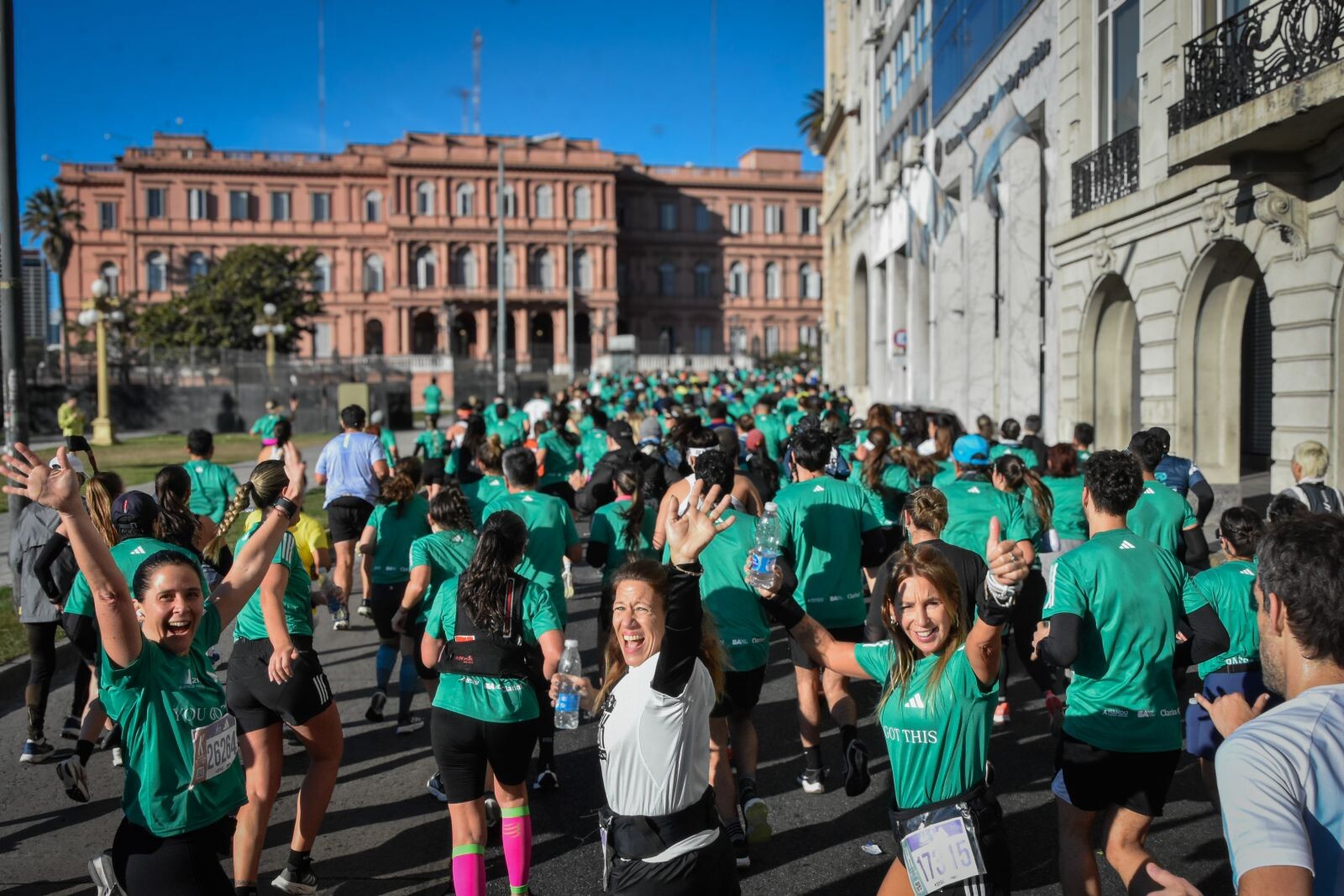
The race takes place on Sunday, August 23, 2026, bringing together a record field of 31,500 runners after entries sold out. Alongside the mass field, some of the world’s leading distance athletes will take centre stage, with the spotlight firmly on the elite races as they chase victory and potentially exceptional times over 21.097 kilometres.
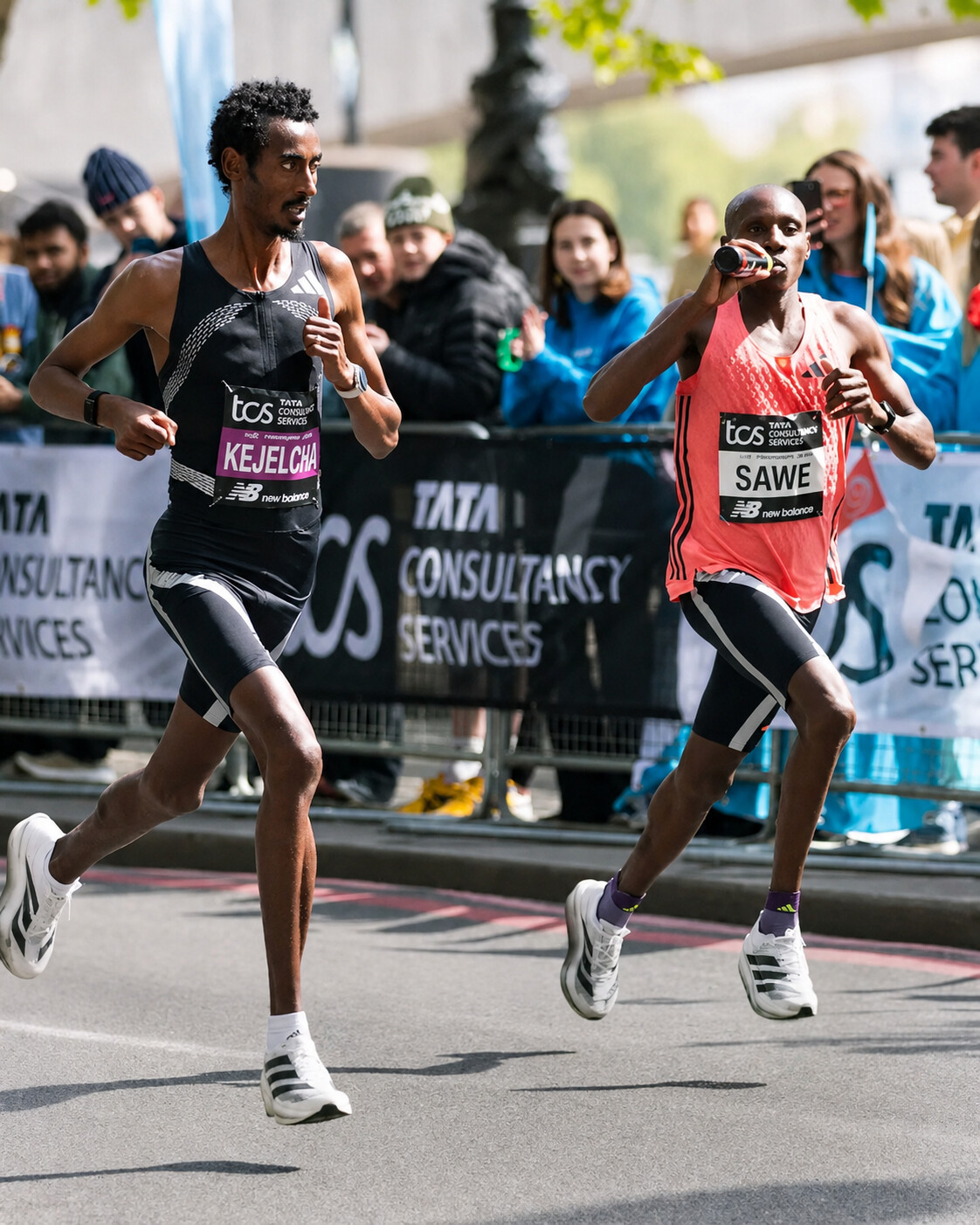
The race starts and finishes in Palermo, at Av. Figueroa Alcorta and Av. Dorrego, before taking runners onto a fast, flat 21.097-kilometre course through the Argentine capital. The route winds past some of Buenos Aires’ most iconic landmarks, including the Obelisco, Teatro Colón and Casa Rosada, providing a spectacular setting for one of the region’s premier road races.
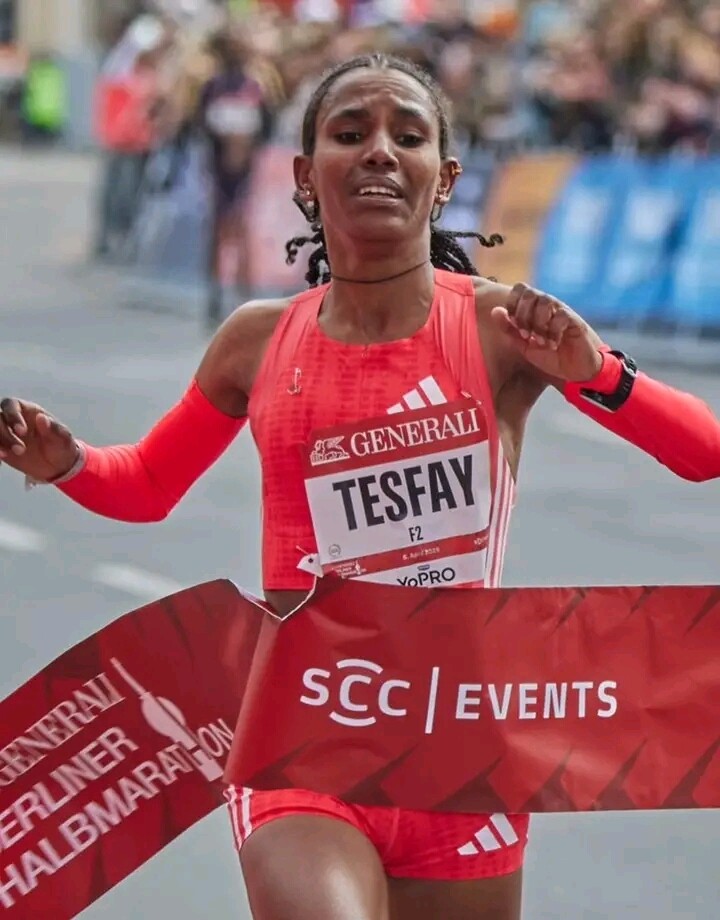
Kejelcha arrives as one of the most formidable names in modern distance running. The 29-year-old Ethiopian is the reigning world-record holder for the half marathon, having clocked 57:30 in Valencia in October 2024. He has also established himself as an exceptional marathoner, running 1:59:41 on his debut at the 2026 London Marathon — the fastest marathon debut ever recorded and the second-fastest official marathon performance in history.
His presence adds enormous prestige to a Buenos Aires race that has become synonymous with fast running. In 2025, Uganda’s Jacob Kiplimo ran 58:29 in Buenos Aires, producing one of the fastest half-marathon performances ever recorded in the Americas and further cementing the event’s reputation as a venue capable of delivering extraordinary times.
Tesfay brings equally impressive credentials to the women’s race. The 28-year-old Ethiopian owns a half-marathon personal best of 1:03:21, achieved in Valencia in 2024. Her progression over the marathon distance has been equally striking, highlighted by her 2:10:51 national record set in March 2026.
The conditions could further enhance the prospects of fast racing. Buenos Aires typically experiences cool temperatures around race time, with conditions commonly ranging between 9°C and 14°C — favourable weather for elite distance running when combined with the course’s flat profile.
For Kejelcha and Tesfay, the mission is clear: compete for the titles, test themselves against a strong international field and take advantage of one of the fastest half-marathon stages in the Americas.
With thousands of runners preparing to flood the streets and two Ethiopian stars already in position, anticipation is reaching its peak.
The stars have arrived. The course is ready. On Sunday, Buenos Aires waits for the fireworks.
by Erick Cheruiyot for My Best Runs.
Login to leave a comment

Buenos Aires Half Marathon
The Buenos Aires Half Marathon is one of the most important in Latin America and attracted more than 25,000 runners from all over the world. Dare to run the fastest half marathon in Latin America....
more...
Hayward Field Gets Another Olympic Trials: Eugene To Host 2028 Team USA Selection
The road to Los Angeles 2028 will once again run through Eugene, Oregon.
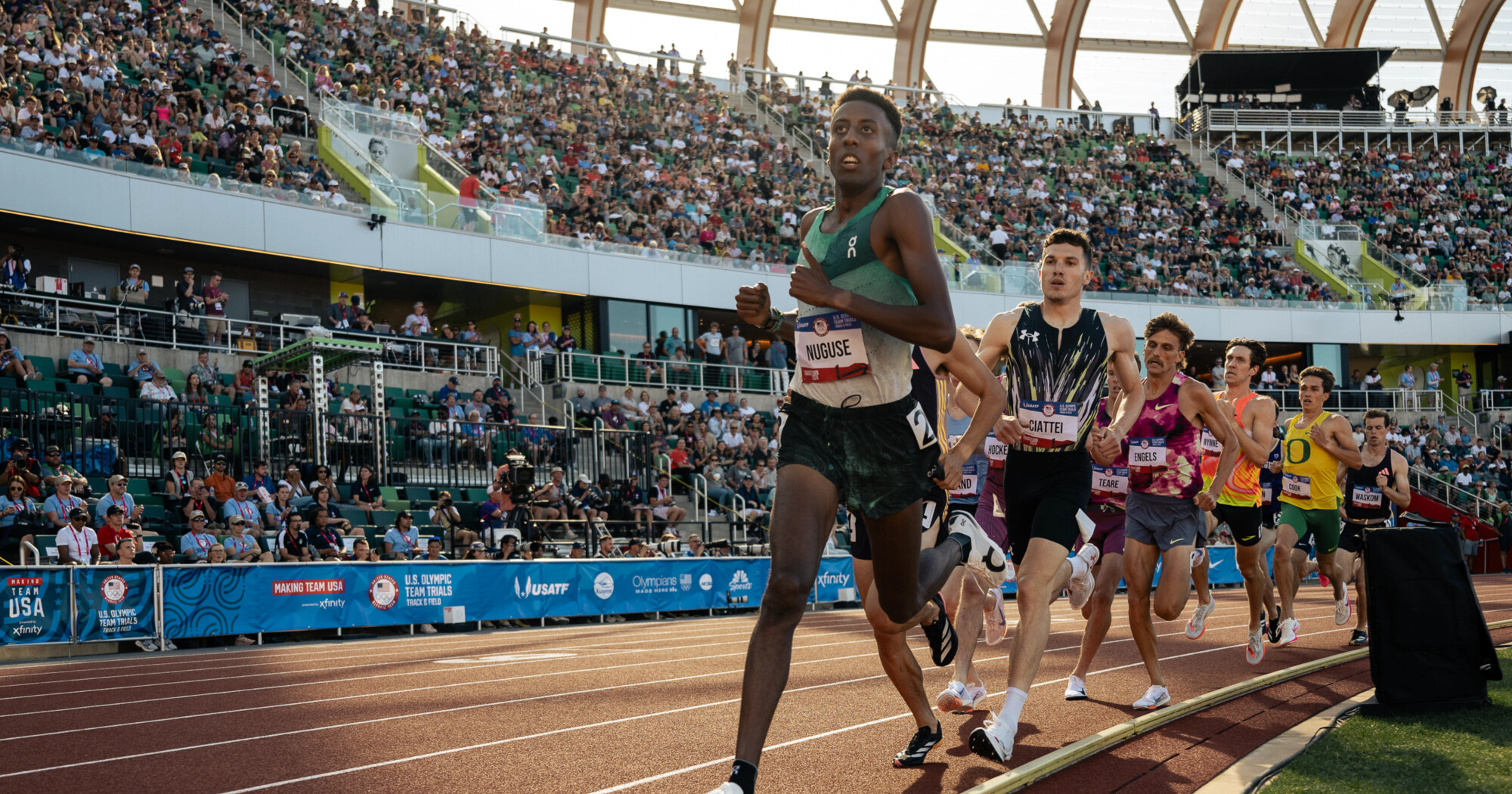
USA Track & Field and the U.S. Olympic and Paralympic Committee have announced that the 2028 U.S. Olympic Team Trials – Track & Field will return to Hayward Field from June 17–22, 2028, giving Eugene the distinction of hosting the prestigious selection meet for a sixth consecutive Olympic cycle.
For a venue that has become synonymous with American track and field, the announcement represents another chapter in Hayward Field’s remarkable Olympic Trials legacy. Eugene previously hosted the Trials in 2008, 2012, 2016, 2021 and 2024, and will now stage the event once again as America’s finest athletes battle for places on the U.S. team headed to the 2028 Los Angeles Olympic Games.
The 2028 edition will also introduce a significant change to the traditional format. Instead of the eight-day competition used at recent Trials, the main track and field meet will be compressed into six consecutive days, reflecting athlete feedback and the need for a more efficient selection process with the Olympic Games beginning less than a month later.
The men’s and women’s 10,000 meters, along with the decathlon and heptathlon, will not be contested as part of the main six-day Trials. Their Olympic team selection will take place earlier in the spring, with the dates and locations to be announced separately.
That scheduling adjustment is particularly important because athletes selected in Eugene will have only a short window to recover, prepare and travel before track and field competition begins at the Los Angeles Olympics. The LA28 track and field programme is scheduled for July 15–24 at the Los Angeles Memorial Coliseum.
Eugene’s return also reinforces its extraordinary status within American athletics. Few venues in the world carry the same history, atmosphere and emotional connection to track and field as Hayward Field, where Olympic dreams have been decided repeatedly over the past two decades.
And while the spotlight will ultimately be on the athletes who make Team USA, the road to Los Angeles will begin with another unforgettable week in TrackTown USA — where careers can be transformed, dreams can be fulfilled and the smallest margins can decide who wears the American colors on the Olympic stage.
The countdown to Los Angeles 2028 has officially gained another major milestone. Hayward Field is ready to welcome America’s best once again.
by Erick Cheruiyot for My Best Runs.
Login to leave a comment
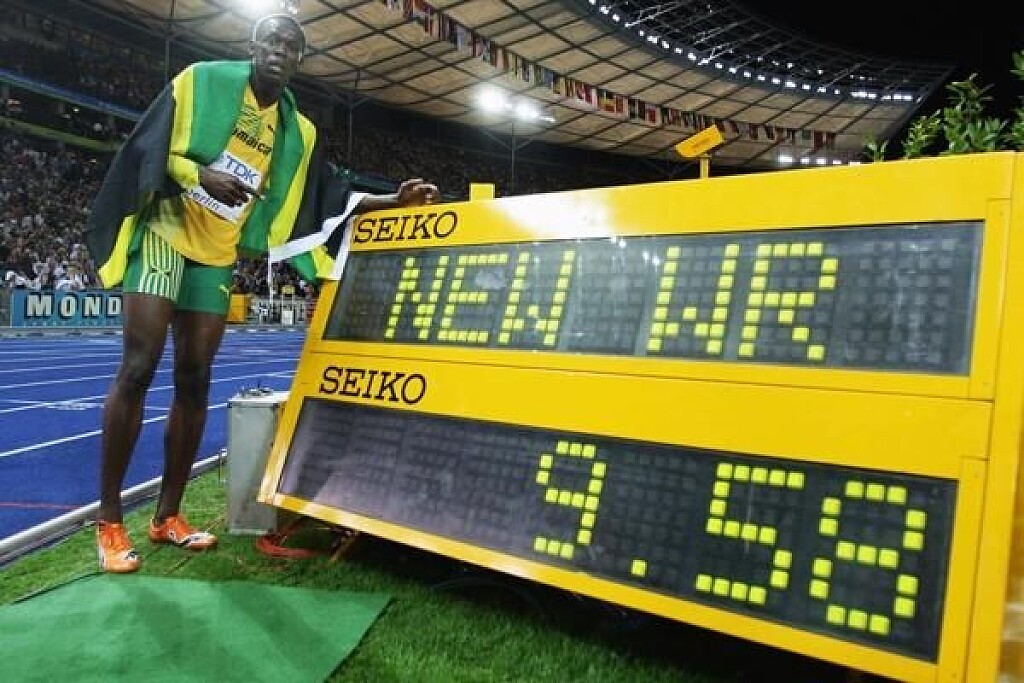
Seventeen Years On, Usain Bolt’s 9.58 Still Stands Alone
Seventeen years ago today, Jamaica’s Usain Bolt produced one of the most extraordinary performances in the history of athletics, sprinting into sporting immortality with a breathtaking 9.58 seconds in the men’s 100m final at the 2009 World Championships in Berlin.
Under the lights of Berlin’s Olympic Stadium, the Jamaican superstar dismantled his own world record, slicing an astonishing 0.11 seconds from the 9.69 he had set at the Beijing Olympics exactly one year earlier. With a legal tailwind of +0.9 m/s, Bolt crossed the finish line in 9.58 — a mark that remains the fastest 100m ever recorded by a man.
The race was billed as a heavyweight showdown between Bolt and American Tyson Gay, but once the Jamaican found his rhythm, the contest was effectively decided. Bolt surged away from the field with his trademark long, powerful strides, stopping the clock in a time that seemed almost beyond the limits of human speed.
Behind him, Gay produced a remarkable 9.71 for silver, setting a United States record, while Jamaica’s Asafa Powell claimed bronze in 9.84. Yet the night belonged entirely to Bolt, whose performance became the defining image of the Berlin championships.
What made the achievement even more remarkable was the scale of the improvement. Bolt had already rewritten the world record in Beijing with 9.69, but in Berlin he went to another level, becoming the first man to break the 9.6-second barrier. His 9.58 also represented the largest improvement to the men’s 100m world record since electronic timing was introduced.
Seventeen years later, the number still carries an almost mythical quality: 9.58 seconds. Generations of sprinters have chased faster times, but Bolt’s Berlin masterpiece remains untouched. The record has survived Olympic cycles, world championships and a new generation of elite sprinters, continuing to stand as one of the most enduring monuments to human speed.
On August 16, 2009, Usain Bolt did more than win a world title. He created a moment that transcended the race itself — a performance that continues to remind the world just how extraordinary the limits of speed can be.
Seventeen years on, 9.58 still belongs to Bolt. And the world is still waiting for someone to catch him.
by Erick Cheruiyot for My Best Runs.
Login to leave a comment

Michael Roeger’s Long Road Back to the Marathon World Record — and Now Sydney Awaits
On August 30, approximately 35,000 runners will line up at Miller Street in North Sydney for the 2026 TCS Sydney Marathon. Among them will be an athlete who already owns a piece of marathon history: Michael Roeger, the Australian T46 marathon world-record holder and one of the most remarkable endurance athletes of his generation.
At 38, Roeger returns to the marathon with a career shaped by persistence, reinvention and an extraordinary ability to keep moving forward whenever circumstances have threatened to derail him.
Sydney is a fitting stage for the next chapter. The marathon, now part of the Abbott World Marathon Majors, takes runners through some of the city's most recognisable landmarks, beginning in North Sydney, crossing the Harbour Bridge and eventually finishing near the Opera House. For Roeger, however, this is about far more than another marathon.
He is returning to the distance in the city where he set the fastest T46 marathon ever recorded.
Roeger grew up in Langhorne Creek, a small South Australian community about 55 kilometres south of Adelaide. Born without the lower half of his right arm, he discovered Para athletics after Paralympian Neil Fuller visited his school when Roeger was 12.
What began as an introduction to sport eventually developed into a career spanning five Paralympic Games, world championships, major medals and multiple world records.
His T46 classification covers athletes with an arm amputation or comparable upper-limb difference. Yet describing Roeger's performances simply through his classification fails to capture the complexity of what he has achieved.
Running is an intricate coordination of the entire body. The arms contribute to balance, rhythm and control, helping the torso manage the rotational forces created by every stride. Over 42.195 kilometres, maintaining efficient movement is an enormous physical and technical challenge.
Roeger's marathon performances therefore represent much more than a number attached to a classification. They are elite endurance performances in their own right.
His transition to the marathon was remarkably rapid. Roeger made his marathon debut at the Melbourne Marathon in October 2018, running 2:23:31. The performance was faster than the existing T46 world record at the time, although it was not ratified as a world record because the race did not have the necessary status.
Six months later, he returned to the distance at the 2019 London Marathon, where the World Para Athletics Marathon Championships were staged within the race.
This time, everything came together.
Roeger won the T46 world title in 2:22:51, lowering the ratified world record and establishing himself as the world's leading marathoner in the classification. Even when cramp began to trouble him during the closing stages, he held on to become a world champion.
The progression continued.
At the 2020 Chevron Houston Marathon, Roeger ran 2:19:33, becoming the first ambulant Para athlete to break the 2:20 barrier and once again lowering his own world record.
But his most significant breakthrough came back in Australia.
On April 25, 2021, Roeger lined up in Sydney for the Athletics Australia Tokyo Qualifying Marathon. He produced the fastest marathon of his career, crossing the finish line in 2:18:53.
That performance remains the T46 marathon world record.
The progression is remarkable. From 2:23:31 in Melbourne to 2:22:51 in London, 2:19:33 in Houston and finally 2:18:53 in Sydney, Roeger repeatedly moved the benchmark forward.
It was almost five minutes of improvement across four marathon performances.
But the record is only one part of the story.
Roeger's career has never followed a smooth upward trajectory. At the 2008 Beijing Paralympic Games, aged only 20, he contested the 800m, 1500m and 5000m T46 events, with seventh place in the 1500m his best finish.
Four years later in London, he arrived with genuine medal ambitions. Instead, gastrointestinal bleeding struck on the eve of the T46 800m. He still started the race but was forced to withdraw after one lap.
Rio 2016 finally delivered a Paralympic medal, with Roeger winning bronze in the 1500m. That success helped convince him to move towards the longer distances and eventually make the marathon his primary focus.
Then came another major setback.
Six weeks before the Tokyo 2020 Paralympic Games, Roeger suffered a stress fracture in his lower leg, destroying much of his preparation for the marathon. Despite the injury, he travelled to Tokyo and made the start line.
He finished sixth in 2:34:45, a time far outside the level he had demonstrated before the Games.
For most athletes, such a setback could have marked the end of the road. For Roeger, it became another chapter in a career defined by adaptation.
Before the Paris 2024 Paralympic Games, another obstacle emerged when the T46 marathon was removed from the programme. The event in which Roeger had become a world-record holder was no longer available at the Games.
His only remaining distance was the 1500m.
So he adapted once again.
Roeger returned to the track and competed in Paris, ultimately adding another Paralympic medal to his collection with silver in the T46 1500m.
Now the marathon is calling again.
The 2026 TCS Sydney Marathon will provide a very different challenge from the flat courses on which many of the world's fastest marathon times are produced. The route begins in North Sydney, crosses the Sydney Harbour Bridge and winds through the city before finishing at the Opera House.
The course features substantial elevation changes, with approximately 313 metres of climbing across the 42.195 kilometres. It is a course that rewards strength, patience and the ability to maintain efficient form when the legs are already carrying the fatigue of a long marathon.
For Roeger, that challenge will be amplified by the quality of the field around him.
The Australian elite field includes a strong collection of domestic marathoners, while the international men's race features considerable depth, with numerous athletes holding personal bests below 2:10.
Roeger will therefore not be lining up in isolation as a Para athlete. He will be part of a major international marathon field, surrounded by runners pursuing national titles, personal bests and elite honours.
That is also central to the way he has approached his career.
Roeger has long resisted the idea that Para athletes should be viewed as fundamentally separate from their able-bodied counterparts. His philosophy has been simple: once the starting gun goes, the competition is about running.
That attitude has helped him move comfortably between Para athletics and open elite competition, and Sydney 2026 offers another opportunity to do exactly that.
His partnership with coach Dr Philo Saunders has been particularly important throughout his career, helping him develop into a world-class athlete across multiple distances.
Yet perhaps the most impressive part of Roeger's story is not any individual medal or record.
It is the number of times he has had to begin again.
From a small South Australian town to five Paralympic Games. From disappointment in Beijing and London to a medal in Rio. From the track to the marathon. From a devastating injury before Tokyo to a world-record performance. From losing his marathon event before Paris to returning to the 1500m and winning another Paralympic medal.
Every time the route has changed, Roeger has found another way forward.
Now, at 38, he is returning to the marathon once more.
And there could hardly be a more fitting destination than Sydney.
It is the city where he produced his 2:18:53 world record in 2021. Five years later, he will return to the same city carrying the experience of a career that has tested his resilience at almost every turn.
The world record is already in his name.
On August 30, Michael Roeger will have another chance to show the world what remains in the legs of the man who refused to let setbacks define the limits of his career.
by Erick Cheruiyot for My Best Runs.
Login to leave a comment

Sydney Marathon
The Sydney Marathon is a marathon held annually in Sydney, Australia. The event was first held in 2001 as a legacy of the 2000 Summer Olympics, which were held in Sydney. In addition to the marathon, a half marathon, 9 kilometres (5.6 mi) "Bridge Run", and a 3.5 kilometres (2.2 mi) "Family Fun Run" are also held under the banner...
more...
Tokyo Marathon 2027 Entry Is Open: Why Getting A Place Is The Real Race
For thousands of marathoners around the world, the Tokyo Marathon is a dream race. But while entering the lottery costs nothing, actually securing a place is another story altogether.
The general-entry window for the Tokyo Marathon 2027 opens today, Friday, August 14, and will remain open until 5 p.m. Japan Standard Time on August 28. The 20th-anniversary edition of the race will take place on Sunday, March 7, 2027, with a record 40,000 marathon places available.
Applicants will learn their fate on September 18, with successful runners required to complete payment between September 18 and 5 p.m. on September 30. Those who fail to pay by the deadline will lose their places. The entry fee is ¥19,800 for runners living in Japan and US$230 for international entrants.
At first glance, Tokyo's famous lottery can look like a straightforward numbers game: hundreds of thousands of runners competing for roughly tens of thousands of places. But the reality is considerably more complicated.
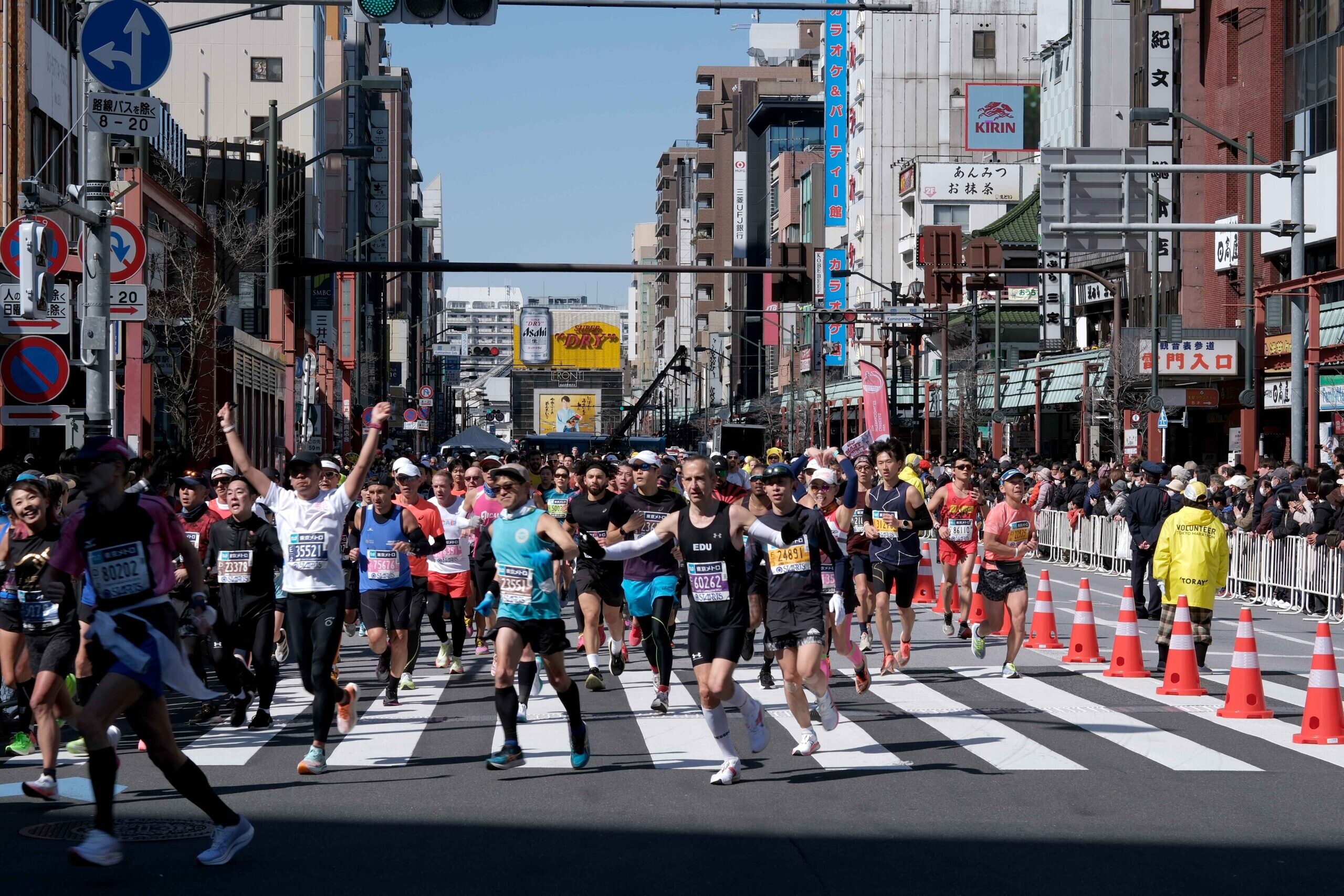
The headline figure of a roughly 10 percent acceptance rate should not be interpreted as meaning every applicant is competing equally for every one of the 40,000 places. The Tokyo Marathon divides its field among several entry routes before the remaining places reach the general lottery.
For 2027, 4,000 places are allocated to the ONE TOKYO three-consecutive-lottery-loss challenge, reserved for eligible ONE TOKYO members who entered the 2024, 2025 and 2026 editions and missed out in all three. Another 1,000 places are reserved for the Tokyo Resident Entry. The general draw also includes dedicated allocations of 500 places for people with disabilities, 15 wheelchair places and up to five Duo Teams.
That makes the phrase "one in 10" a useful shorthand, but not the whole story. For a first-time applicant, particularly one applying from overseas, the effective odds can be much tougher because several places have already been allocated through other categories.
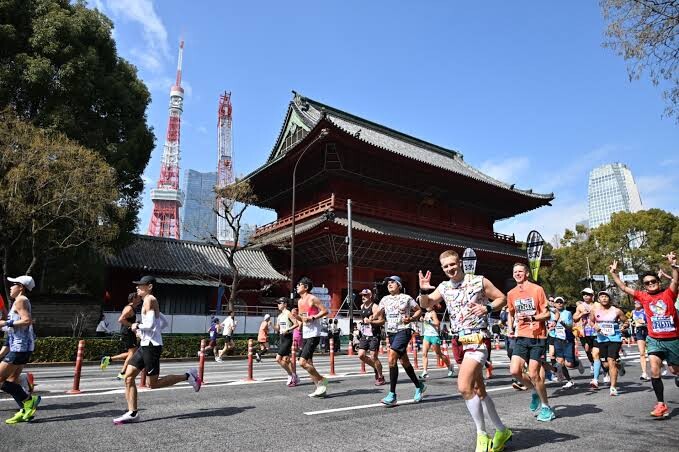
There is also an important requirement for faster runners.
Anyone declaring an expected finishing time of 3:00:00 or faster must provide official evidence of having achieved either a marathon in 3:00:00 or faster or a half marathon in 1:25:00 or faster at an event held between July 1, 2024 and June 30, 2026. Results recorded only by a GPS watch or running application do not qualify. Official certificates or records are required.
Tokyo's remarkable rise makes today's lottery particularly striking.
When the inaugural Tokyo Marathon was held in 2007, the race attracted 95,044 total applicants, including 77,521 for the marathon, with 25,000 marathon places available. The race has since evolved into one of the world's most sought-after major marathons and became an Abbott World Marathon Majors event in 2013.
The demand has grown dramatically over the years. By the 2010 and 2011 editions, total applications had already climbed beyond 300,000, demonstrating how quickly Tokyo became one of the hardest city marathons in the world to enter.
Now, two decades after that first race, Tokyo is preparing for its 20th anniversary edition with the biggest marathon field in the event's history. The capacity has been increased from 39,000 to 40,000 runners, giving more athletes a chance to experience one of the most iconic courses in global road running.
But increased capacity does not necessarily mean an easy ticket.
For many runners, Tokyo is more than another marathon. It is the Asian representative in the Abbott World Marathon Majors and one of the six races required to complete the coveted Six Star journey. That status, combined with Tokyo's reputation for exceptional organisation, a fast course and an unforgettable passage through the heart of the Japanese capital, keeps demand extraordinarily high.
And for those who miss the general lottery, the dream does not necessarily end there. Tokyo offers alternative pathways, including charity entries and official entry programmes, although these routes come with their own requirements and, in some cases, additional financial commitments.
For everyone entering the general lottery this month, however, the immediate challenge is simple: submit the application, wait for the draw and hope your name appears when the results are released on September 18.
The Tokyo Marathon may offer 40,000 runners the opportunity to line up in 2027.
Getting one of those places remains the real race.
Entry window: August 14–28, 2026
Lottery results: September 18, 2026
Payment deadline: September 30, 2026
Race day: March 7, 2027
Field size: 40,000
Domestic entry fee: ¥19,800
International entry fee: US$230
by Erick Cheruiyot for My Best Runs.
Login to leave a comment

Tokyo Marathon
The Tokyo Marathon is a world-renowned annual marathon held in Tokyo, Japan. As one of the prestigious Abbott World Marathon Majors, it attracts elite and amateur runners from around the globe. The race holds World Athletics Platinum Label status, recognizing its high competitive standards, top-tier organization, and international appeal. Sponsored by Tokyo Metro, the Tokyo Marathon has grown into one...
more...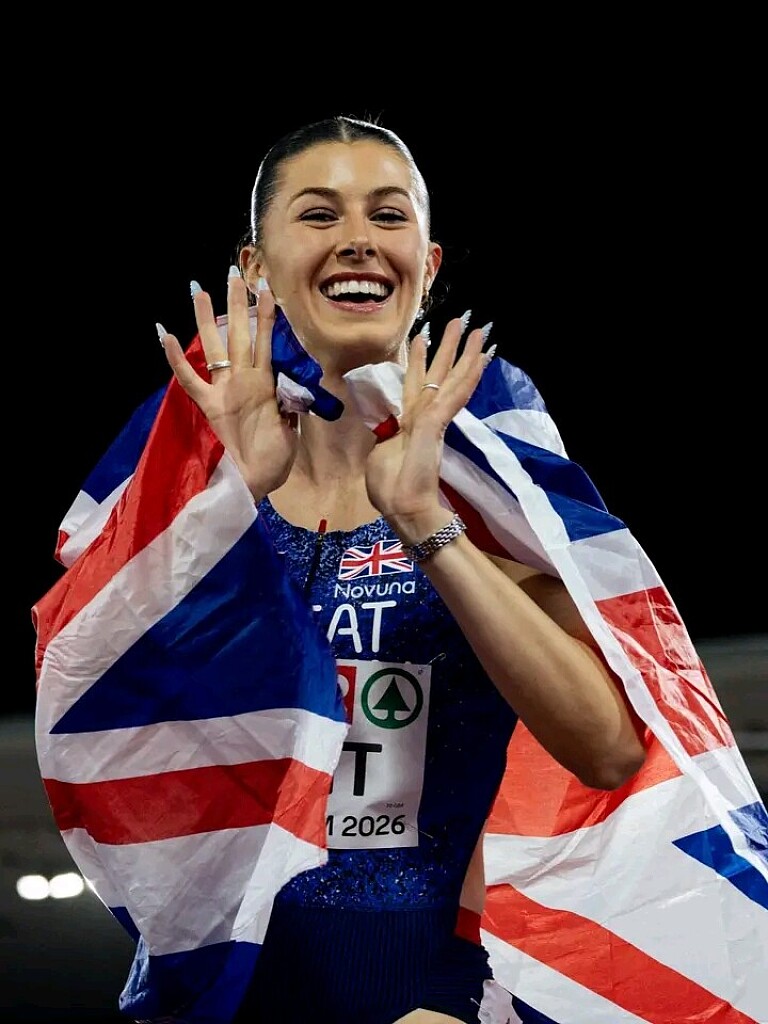
Amy Hunt Completes a Remarkable Full-Circle Journey with European 100m Gold in Birmingham
Amy Hunt has become the queen of the 100m in Birmingham, producing a magnificent home victory at the European Athletics Championships to complete one of the most satisfying full-circle stories of her career.
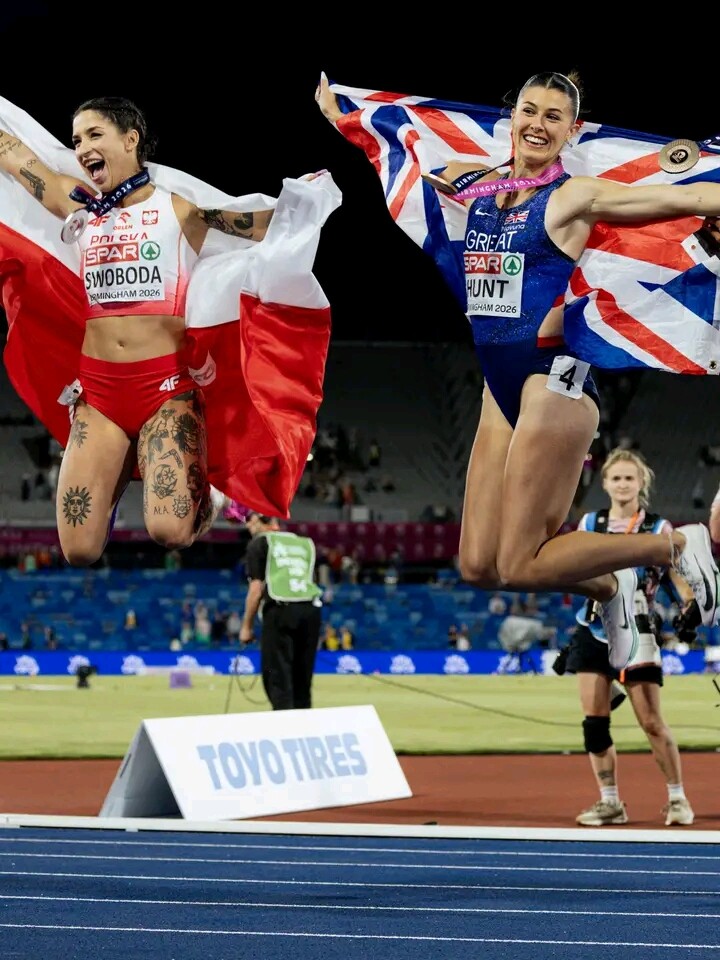
The British sprinter delivered when it mattered most at Alexander Stadium, powering to the European title in 11.00 seconds with a legal following wind of 1.0m/s. Hunt held her nerve in a fiercely contested final to finish ahead of Poland’s Ewa Swoboda, who clocked 11.02, while Belgium’s Delphine Nkansa took bronze in 11.06.
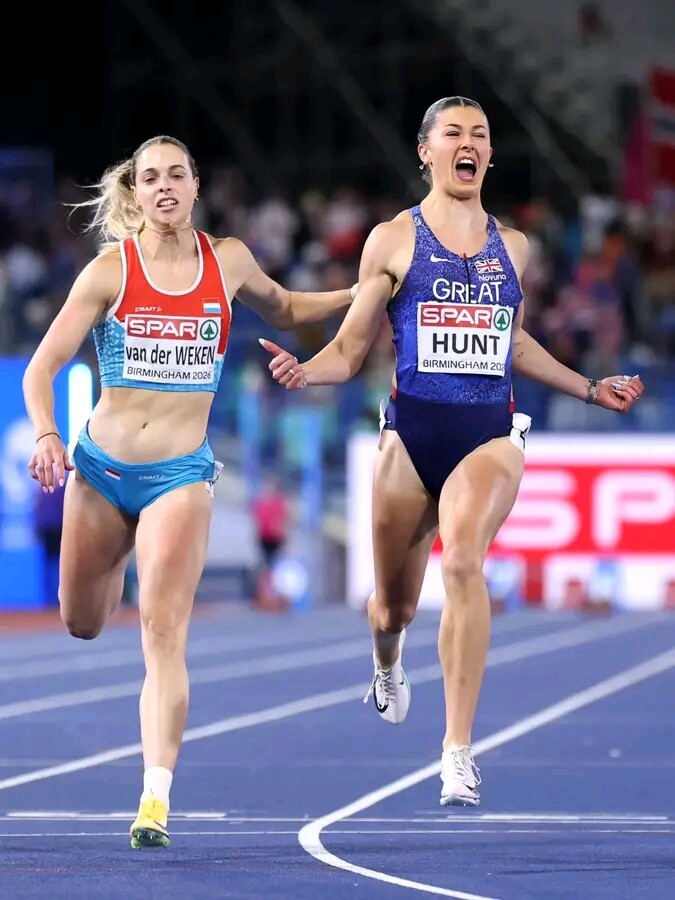
For Hunt, however, the significance of the victory went far beyond the medals and the times.
Only recently, she stood on the same podium at the Commonwealth Games after winning silver in the 100m. In Birmingham, she has gone one step further, upgrading silver to gold and claiming continental glory in front of a home crowd.
And the venue could hardly have been more appropriate.
In 2017, a teenage Hunt won the English Schools 100m title at Alexander Stadium, taking her first major steps towards the international stage. Almost a decade later, she returned to the same track with a European championship final ahead of her — and left it as European champion.
The connection to her past was not lost on Hunt. Speaking after her victory, she reflected on the extraordinary number of familiar faces around the stadium.
“There are people here who literally worked at those championships [English Schools],” she said.
Those words captured the remarkable nature of the moment. The same stadium that witnessed Hunt’s emergence as a promising young sprinter has now hosted one of the defining victories of her senior career.
Her 11.00-second performance was a display of composure and belief under immense pressure. With Swoboda only two hundredths behind and Nkansa another four hundredths adrift, there was little room for error, but Hunt produced a perfectly timed performance to claim gold.
The victory also represents another significant chapter in her progression. From English Schools champion in Birmingham to Commonwealth Games silver medallist and now European champion on the same home track, Hunt’s journey has been marked by steady progression and an ability to deliver on major championship occasions.
For British athletics, it was an especially memorable moment: a home-grown sprinter returning to the stadium where her international ambitions first began and turning those early dreams into European gold.
Amy Hunt did not simply win the 100m in Birmingham. She completed the circle.
by Erick Cheruiyot for My Best Runs.
Login to leave a comment

Taylor and Maxwell Deliver Golden U.S. Sprint Sweep at World U20 Championships
The United States produced a memorable night of sprinting at the World Athletics U20 Championships in Eugene, Oregon, as Tate Taylor and Mia Maxwell captured the men's and women's 100 metres titles to complete a remarkable American clean sweep in one of track and field's most prestigious junior competitions.
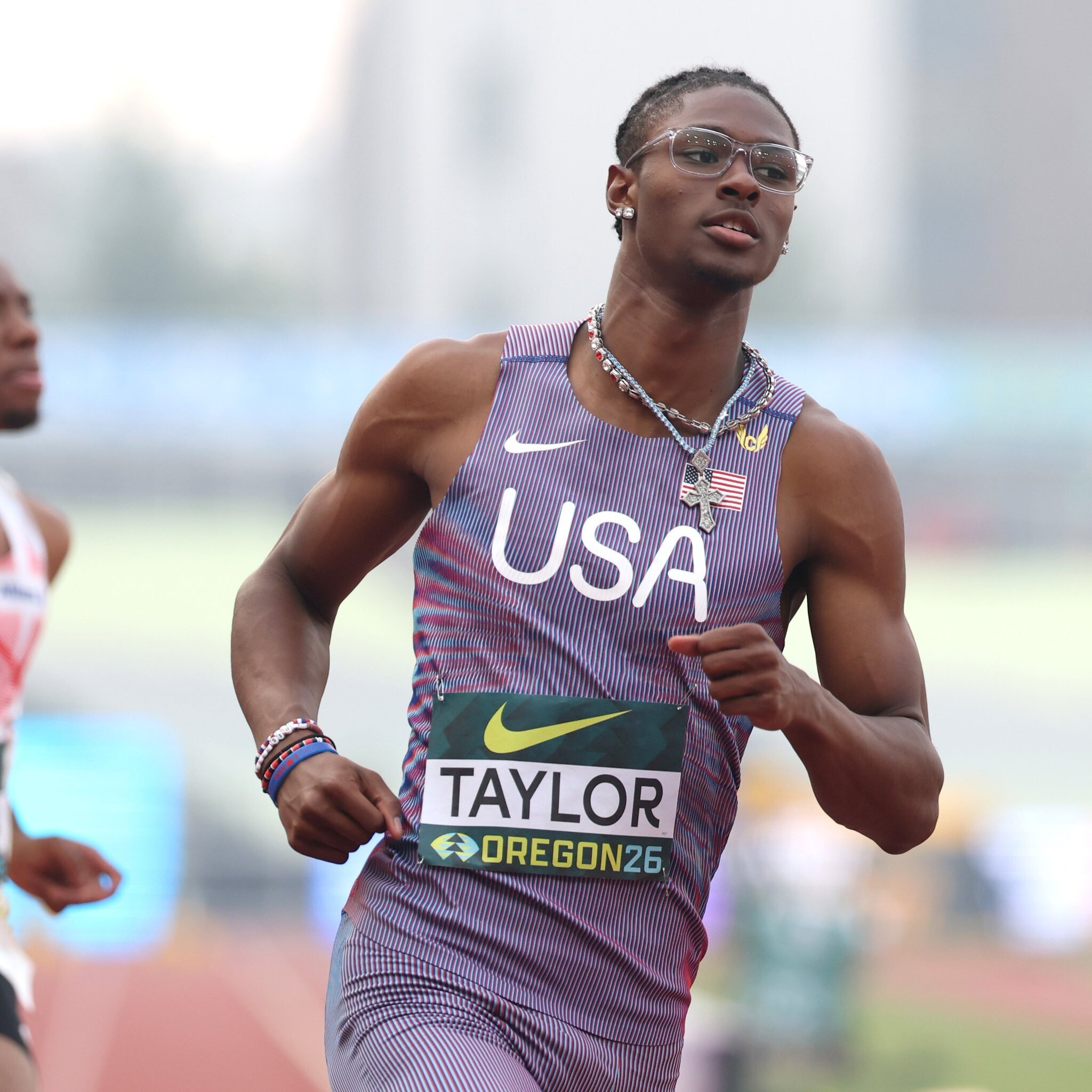
Taylor announced himself among the world's brightest young sprinters with a breathtaking performance in the men's final, powering away over the closing metres to clock a wind-legal personal best of 9.94 seconds. The outstanding run made him the only athlete in the field to break the 10-second barrier and confirmed his status as one of the fastest teenagers in history.
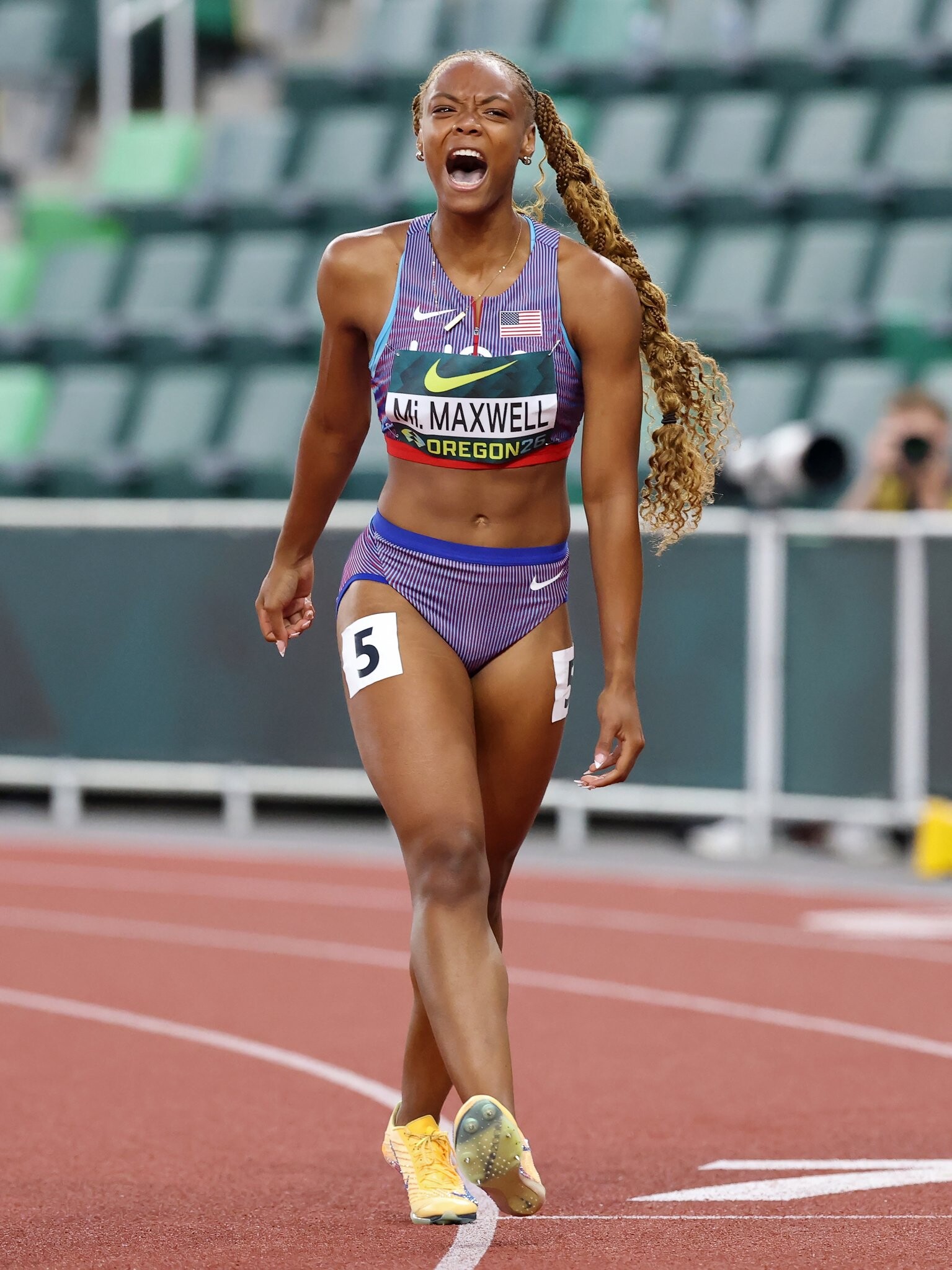
Jamaica's Gary Card claimed the silver medal in 10.05 seconds after a strong race, while South Africa's Marko Ferreira secured bronze in 10.16, completing a highly competitive podium. Despite a closely contested opening half of the race, Taylor's explosive finishing speed proved decisive as he surged clear to take the world junior crown in emphatic fashion.
The women's final delivered another thrilling contest, with Mia Maxwell holding her composure under immense pressure to secure the title in 11.14 seconds. Jamaica's Shanoya Douglas mounted a determined late challenge but settled for silver in 11.17, while Italy's Kelly Ann Doualla Edimo earned bronze after crossing the line in 11.27.
The victory capped an unforgettable championship for the Maxwell family. After progressing impressively through the rounds, Mia delivered when it mattered most, while her twin sister, Mariah Maxwell, also reached the final and finished fifth, underlining the family's exceptional sprinting talent on the global stage.
The double triumph marked a dominant evening for Team USA, which swept both 100m gold medals before a home crowd in Eugene. With Taylor producing a historic sub-10-second breakthrough and Maxwell demonstrating remarkable composure in a world-class women's final, the pair provided another glimpse of the exciting future of American sprinting.
by Erick Cheruiyot for My Best Runs.
Login to leave a comment
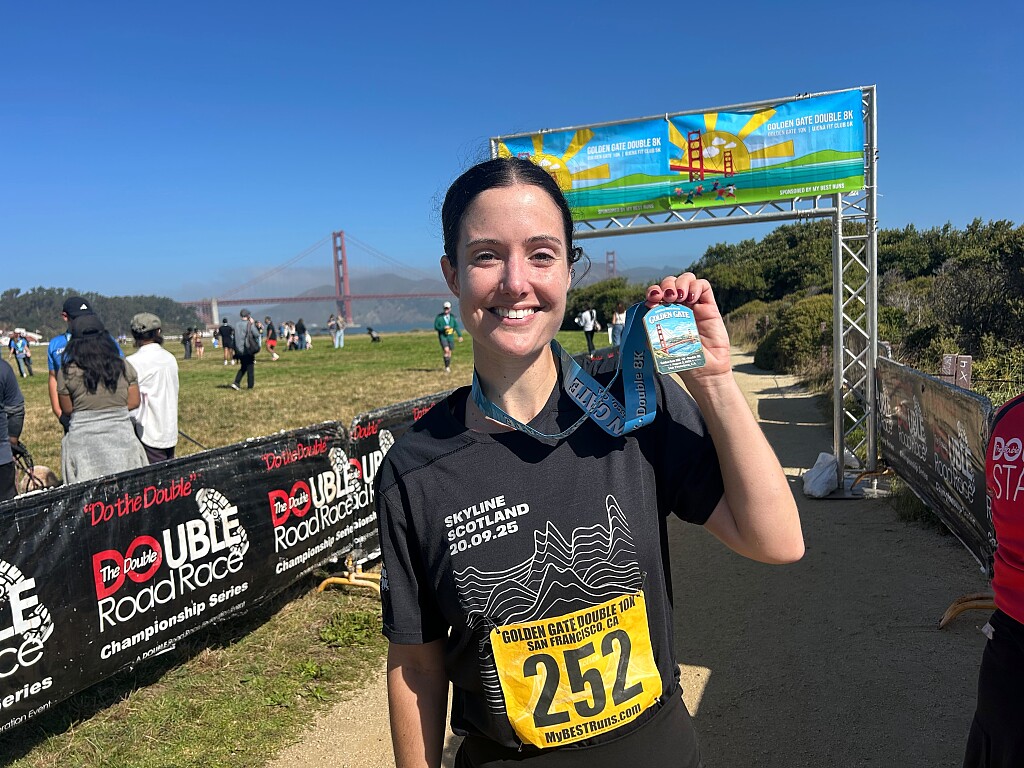
Golden Gate 10K/5K Double 8K Delivers Thrilling Competition and Spectacular Scenery in San Francisco
The iconic Golden Gate Bridge once again provided a breathtaking backdrop as runners gathered in San Francisco on August 2 for the 2026 Golden Gate 10K/5K Double 8K. Blessed with cool conditions and panoramic views from start to finish, the event attracted nearly 500 participants, producing a memorable day of competition across the Double 8K, Open 10K and Open 5K races.

According to race founder and director Bob Anderson, the event continued to grow in popularity, with nearly 500 athletes signing up for this year's edition. Anderson reported, "We had nearly 500 sign ups. People did really like it."

The featured Golden Gate Double 8K, a distinctive challenge that combines a 5K, a recovery break and a concluding 3K, once again delivered exciting racing. Anthony Cortes, 32, produced the standout performance of the day, storming to victory in a combined time of 26:31. Andy Vo, 25, secured second place in 28:37, while Tyler Jeppson, 47, completed the overall podium in 31:25. Ali Abdin, 44, crossed the line fourth in 35:20.
Caitlin Huang, 25, captured the women's title in 32:31, ahead of Stacy Chen, 27, who finished in 34:07. Veteran runner Betty G, 59, continued to demonstrate remarkable consistency by claiming third in 37:04, while 17-year-old Piper Sovik rounded out the top four in 40:53.

The age-group competition showcased impressive performances across every generation. Tyler Jeppson led the men's 40-49 division with 31:25, Heath Rickling, 52, won the men's 50-59 category in 1:02:46, David Boss, 63, topped the men's 60-69 division in 36:54, while Cheryl Charleson, 70, claimed the men's 70+ title in 1:16:50.

Among the women, Huyen Kreutzer, 45, won the 40-49 division in 47:32, Betty G added the women's 50-59 crown to her overall podium finish with 37:04, Diane Gifford, 62, captured the 60-69 title in 43:43, while Cheryl Charleson also secured the women's 70+ division in 1:16:50.
The Open 10K produced one of the closest finishes of the morning. Michel Arlinghaus, 24, edged the field in 42:20, narrowly defeating Mateusz Dembski, 35, who crossed the line just nine seconds later in 42:29. Sixty-three-year-old Keith Hedlund impressed with an outstanding 42:31 to finish third overall, while Ben Kubany, 43, placed fourth in 42:59.

Ashleigh Fehrenbach, 37, led the women's race with a winning time of 41:12, followed by Lan Clayton, 58, in 46:10, Nivy Kani, 25, in 48:30, and Alicia Robert, 32, in 50:21.
The age-group titles added further depth to the competition. Ben Kubany claimed the men's 40-49 category in 42:59, Carlos Arredondo, 51, won the men's 50-59 division in 48:05, Keith Hedlund completed a memorable double by taking the men's 60-69 title with 42:31, while Dennis Boyle, 72, won the men's 70+ category in 1:18:41.
On the women's side, Angeles Morales, 42, topped the 40-49 division in 53:37, Lan Clayton added the women's 50-59 title with 46:10, Sheila Lyzwa, 63, won the women's 60-69 category in 1:05:03, while Suzanne Koonce, 74, claimed the women's 70+ title in 54:02.
The Open 5K also delivered exciting racing. Barrett Wade, 49, claimed the men's title in 18:31, holding off Kris Croome, 45, who finished second in 18:46. Mark Eger, 54, completed the podium in 23:04, while Blake Jackson, 40, finished fourth in 25:28.
One of the day's most impressive performances came from 15-year-old Taylor Synnott, who surged to the women's title in 18:34, finishing just three seconds behind the overall men's winner. Seventeen-year-old Sofia Kiyama placed second in 21:48, fellow teenager Kiki Boukas, 15, finished third in 21:57, while 16-year-old Amina Zegar took fourth in 22:44, highlighting the strength of the next generation of distance runners.
The 5K age-group champions included Barrett Wade in the men's 40-49 division (18:31), Mark Eger in the men's 50-59 category (23:04), Shreekanth Karwande, 73, in the men's 70+ division (30:45), Kellie Ward, 49, in the women's 40-49 category (29:58), Katherine Swanson, 56, in the women's 50-59 division (25:06), and Marilee Diaz, 61, in the women's 60-69 category (28:43). There were no finishers recorded in the women's 70+ division.
Following another highly successful edition, the Golden Gate 10K/5K Double 8K will return on Sunday, August 1, 2027, in San Francisco. The event will once again feature the signature Double 8K, alongside the traditional 10K and 5K races. Starting from historic Crissy Field near the Presidio, the scenic course offers runners uninterrupted views of the Golden Gate Bridge for more than 80 percent of the route as it winds through the spectacular Golden Gate National Recreation Area.
The unique Double 8K format—5K, a recovery break, followed by a 3K—will once again headline the event. Every finisher will receive a commemorative medal, while participants will also take home an official event shirt and logo tote bag. The men's and women's Double 8K champions will each receive $100 in prize money, with trophies also awarded to the race winners.
Blending elite competition, inspiring masters performances, rising young talent and one of the most spectacular race settings in the United States, the Golden Gate 10K/5K Double 8K continues to strengthen its reputation as one of California's premier road running events, with another memorable edition already awaiting runners in 2027.
by Erick Cheruiyot for My Best Runs.
Login to leave a comment

Golden Gate 10k/5k DOUBLE 8K
The Golden Gate courses offers unparalleled views of the Golden Gate Bridge for more than 80% of the way! The course will begin at historic Crissy Field near the Presidio of San Francisco. Runners will enjoy the gorgeous vistas of the Golden Gate National Recreation Area. We are offering three races: Golden Gate 10K and 5K (run/walk) and Golden Gate...
more...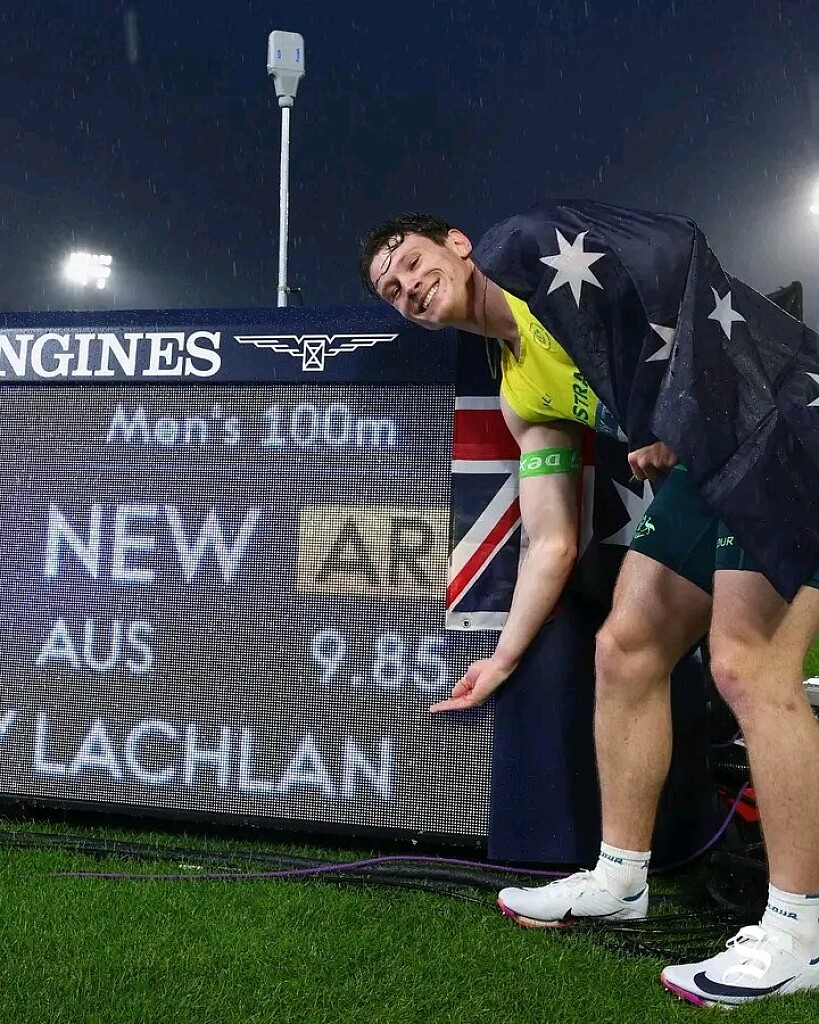
Lachlan Kennedy Smashes 23-Year Oceanian Record With Stunning 9.85 Sprint to Commonwealth Silver
Australian sprint sensation Lachlan Kennedy produced one of the standout performances of the season, rewriting Oceanian athletics history with a breathtaking run in the men's 100m final at the Commonwealth Games in Glasgow.
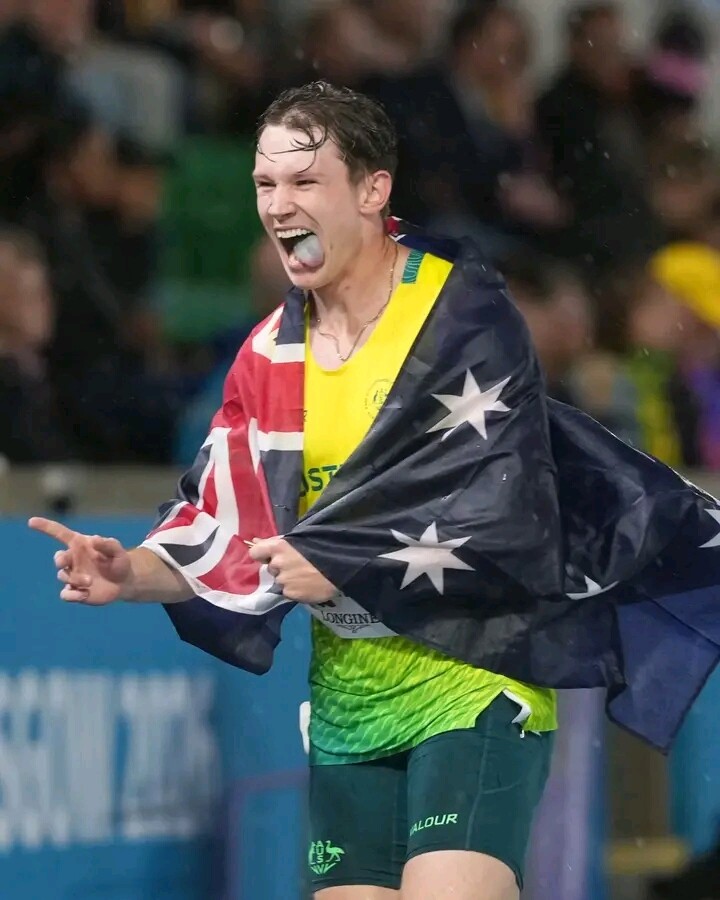
Kennedy stormed to the silver medal in an astonishing 9.85 seconds with a legal +1.3 m/s tailwind, delivering one of the fastest times recorded anywhere in the world this year. His electrifying performance not only earned him a place on the podium but also erased one of the region's longest-standing records.
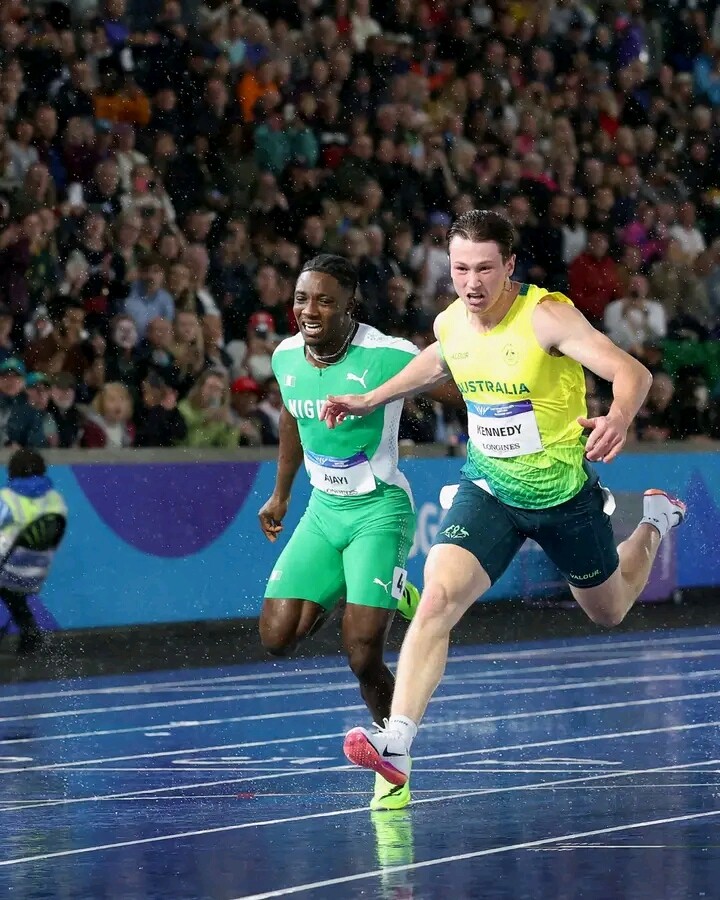
The 9.85 clocking shattered the previous Oceanian record of 9.93, set by fellow Australian Patrick Johnson in 2003. Johnson's mark had stood untouched for 23 years, surviving generations of talented sprinters before Kennedy finally broke through with a run for the history books.
Kennedy's achievement marks a defining moment for Australian sprinting. Breaking below the 9.90 barrier places him among the world's elite and signals the arrival of a genuine global medal contender ahead of the sport's biggest championships. His acceleration, composure under pressure, and powerful finish combined to produce a race that will be remembered as one of the finest 100m performances ever by an Oceanian athlete.
Beyond the record itself, the race showcased the growing strength of men's sprinting on the international stage. With world-class competition pushing athletes to extraordinary performances, Kennedy seized the moment and delivered when it mattered most, announcing himself as one of the fastest men on the planet.
For Australian athletics, Kennedy's record-breaking sprint represents far more than a silver medal. It is the beginning of a new era—one in which a 23-year-old benchmark has fallen, and a new standard has been established for future generations to chase.
by Erick Cheruiyot for My Best Runs.
Login to leave a comment
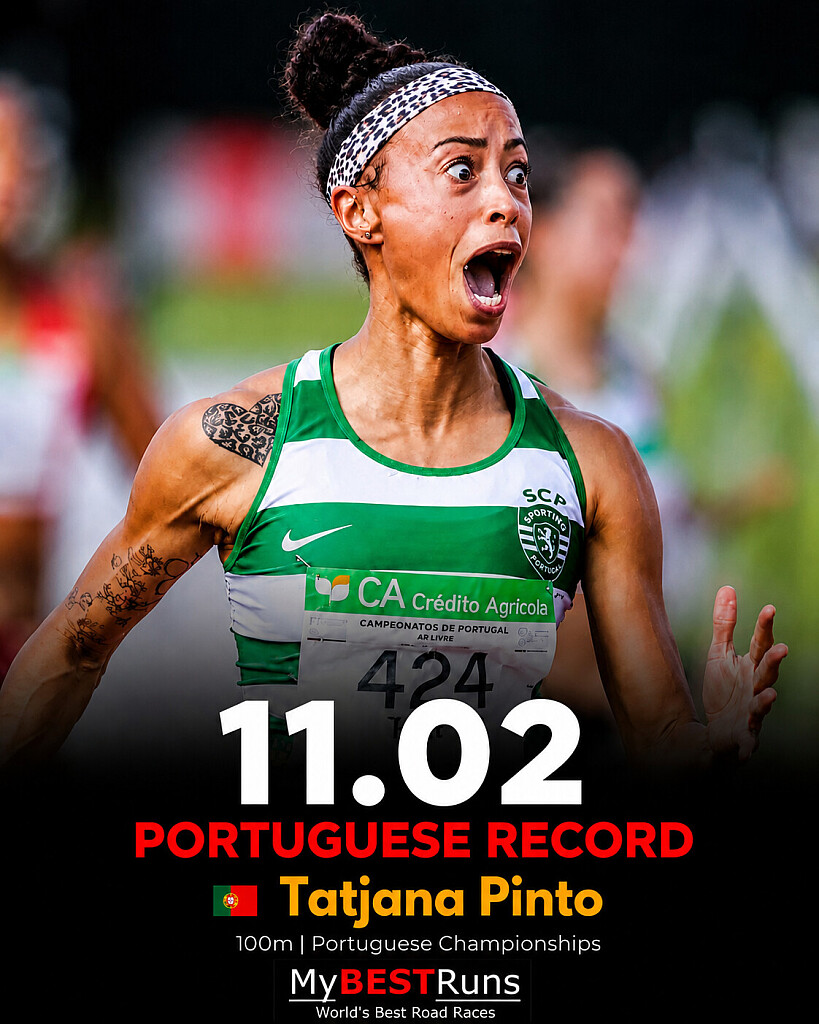
Tatiana Pinto Smashes Her Own Portuguese 100m Record with Electrifying Sprint in Lisbon
Portuguese sprint star Tatjana Pinto has once again rewritten the national record books, producing a sensational performance to claim victory in the women's 100 meters at the Portuguese Athletics Championships in Lisbon.
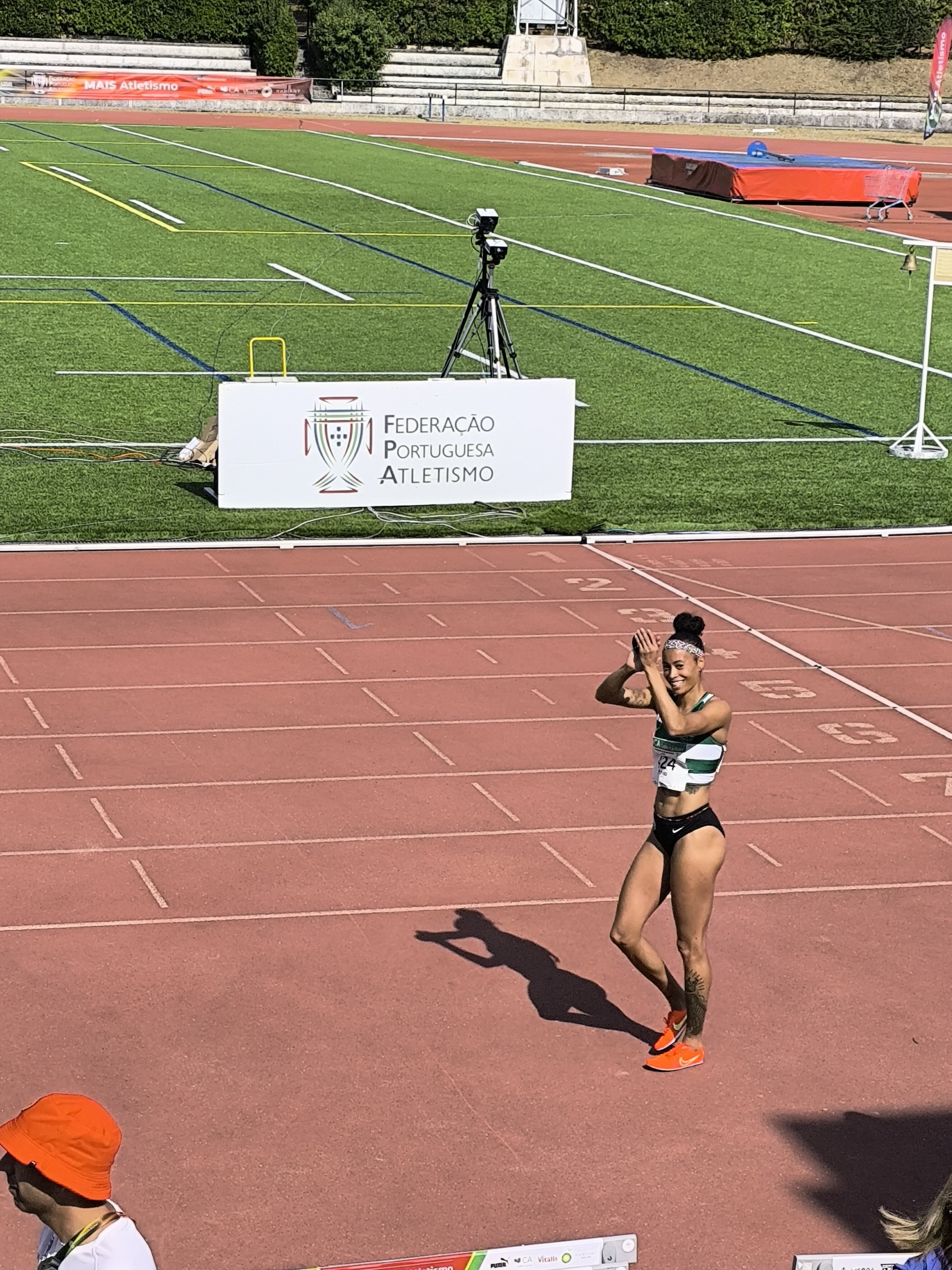
Pinto stormed across the finish line in a blistering 11.02 seconds, aided by a legal +1.8 m/s tailwind, lowering the Portuguese national record she had established just a month earlier. The remarkable run confirms her outstanding form and cements her status as the fastest woman in Portuguese history.
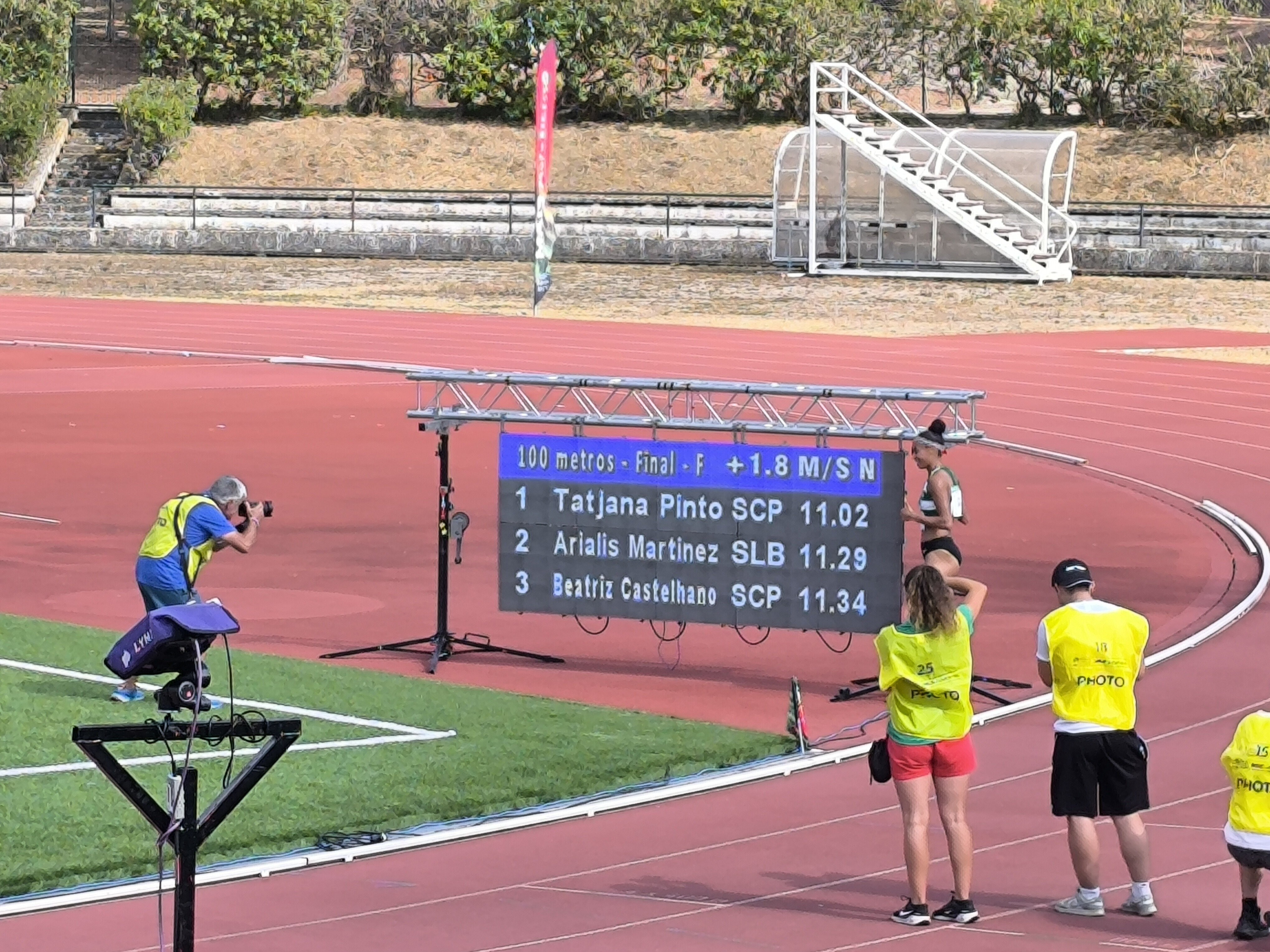
The race was never in doubt as Pinto powered away from the field with an explosive start and flawless execution, leaving her rivals chasing from the opening strides. Arialis Martinez finished second in 11.29, while Beatriz Castelhano secured third place in 11.34, but neither could match Pinto's exceptional pace.
Breaking a national record is a rare achievement; improving one only weeks after setting it is even more extraordinary. Pinto's latest milestone highlights her rapid progression and growing consistency at the highest level of Portuguese sprinting.
The performance also reinforces Portugal's growing presence in European sprinting, with Pinto emerging as one of the continent's most exciting athletes. Running so close to the coveted 11-second barrier is a testament to her dedication, technical refinement, and the confidence she has built throughout the season. If her current trajectory continues, even faster times could be within reach.
Beyond the stopwatch, Pinto's latest record serves as an inspiration for the next generation of Portuguese athletes. Her relentless pursuit of excellence demonstrates that national milestones are only stepping stones toward greater international success. With major championships on the horizon, she has positioned herself as an athlete capable of challenging the very best, and the athletics world will be watching closely to see what she accomplishes next.
With every race, the Portuguese speedster continues to raise the standard of women's sprinting in her country. Her record-breaking display in Lisbon not only delivered another national title but also sent a powerful message ahead of the international championships, where she will be aiming to carry this outstanding form onto an even bigger stage.
by Erick Cheruiyot for My Best Runs.
Login to leave a comment
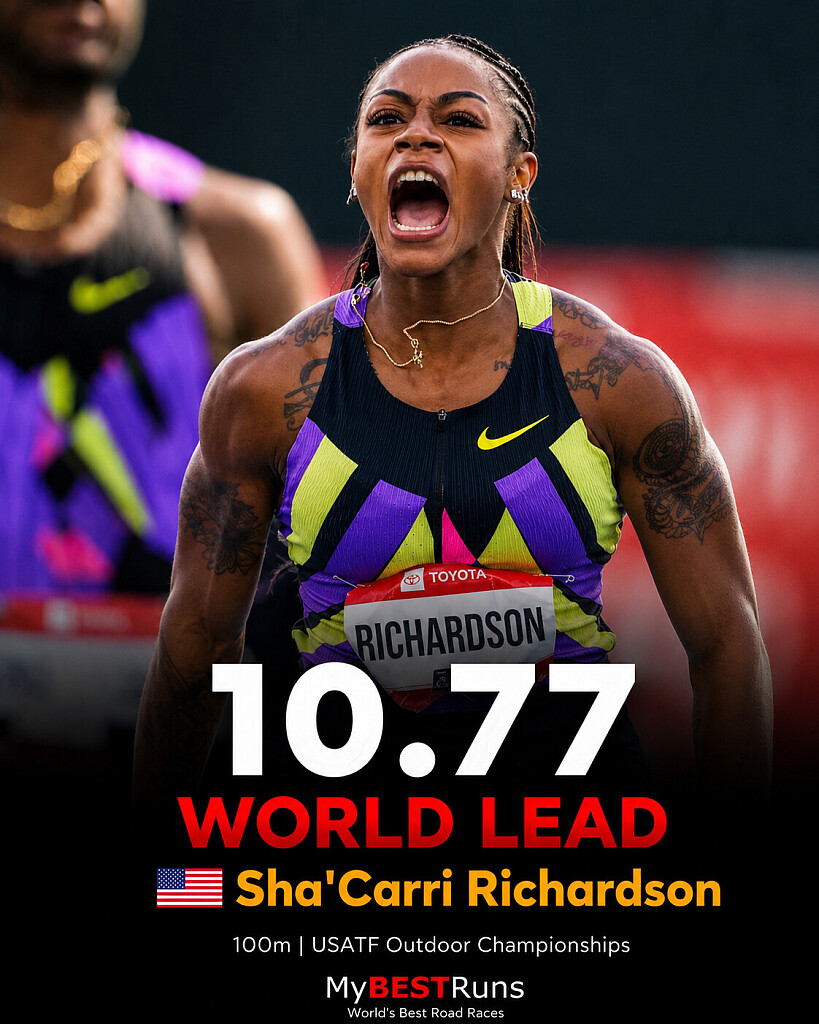
Sha'Carri Richardson Reclaims Her Crown with Blazing US 100m Triumph and Facility Record
Sha'Carri Richardson reminded the athletics world exactly why she remains one of the sport's biggest stars, producing a commanding performance to capture the women's 100-meter title at the 2026 USATF Outdoor Championships.
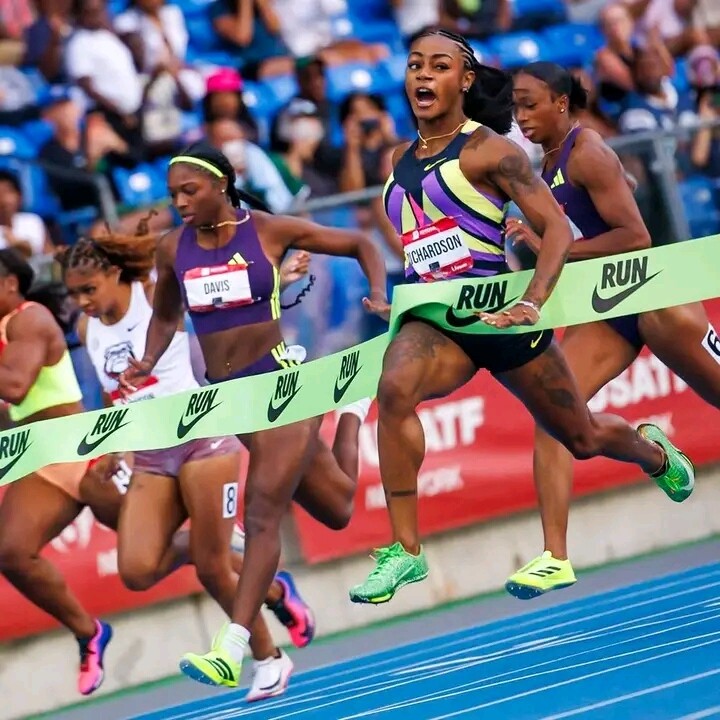
Exploding out of the blocks with trademark confidence and unmatched speed, Richardson surged clear of the field to cross the finish line in a sensational 10.77 seconds with a legal +0.9 m/s tailwind. The performance not only secured her third U.S. 100-meter crown in four years but also established a new facility record while standing as the second-fastest women's 100m time in the world this season.
The victory reinforces Richardson's remarkable dominance on the national stage. After claiming consecutive U.S. titles in 2023 and 2024, she has now completed an impressive championship hat-trick with another authoritative display in 2026.
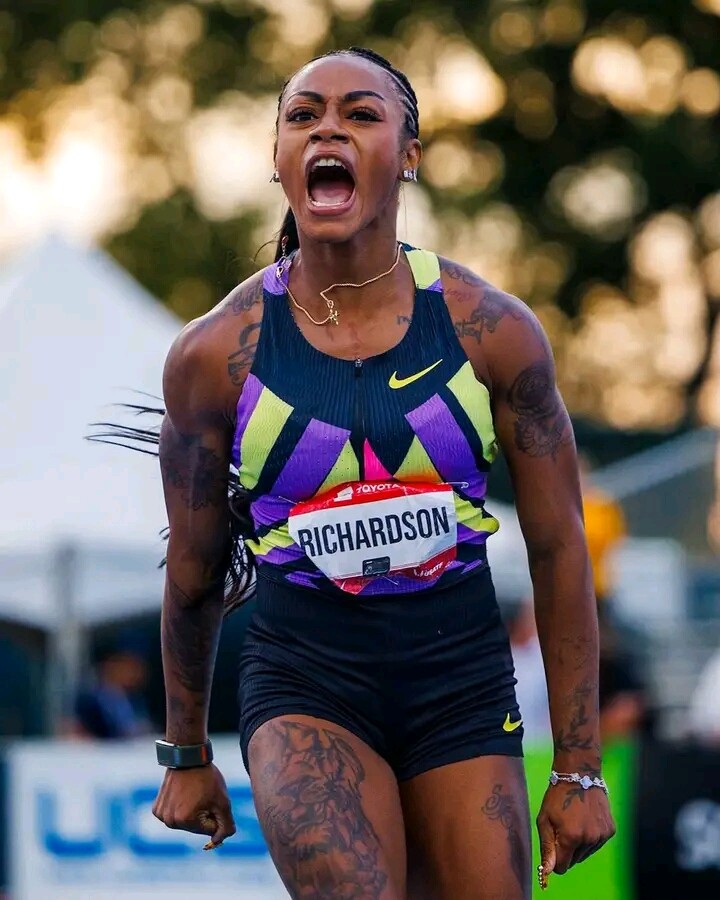
Despite lining up against one of the strongest sprint fields in the country, Richardson left no doubt about who was in control. Her explosive acceleration and powerful finish created daylight between herself and the chasing pack, delivering a performance worthy of a reigning global sprint icon.
Kayla White produced an outstanding race to secure second place in 10.90, while Tamari Davis rounded out the podium after clocking 11.00. Anavia Battle finished fourth in 11.02, narrowly ahead of Jaslyn Gardner, who crossed in 11.03. Nayla Harris (11.06), Kaila Jackson (11.11), Jassani Carter (11.15), and Melicia Mouzzon (11.18) completed a highly competitive final.
Women's 100m Final Results
1. Sha'Carri Richardson – 10.77 (Facility Record)
2. Kayla White – 10.90
3. Tamari Davis – 11.00
4. Anavia Battle – 11.02
5. Jaslyn Gardner – 11.03
6. Nayla Harris – 11.06
7. Kaila Jackson – 11.11
8. Jassani Carter – 11.15
9. Melicia Mouzzon – 11.18
Richardson's emphatic victory sends a powerful statement ahead of the remainder of the international season. With championship form returning at exactly the right moment, the American sprint queen has once again placed herself firmly at the center of the global women's 100-meter conversation, proving that when the stakes are highest, she remains the athlete everyone else must chase.
by Erick Cheruiyot for My Best Runs.
Login to leave a comment

USATF Outdoor Championships
The 2026 Toyota USATF Outdoor and Para National Championships will be held at Icahn Stadium in New York City fromJuly 23-26, 2026, marking the first time the event is hosted in New York. The event will serve as a premier track and field competition, featuring top U.S. athletes at the Randall's Island Park venue. USATF+3 Key Details for 2026...
more...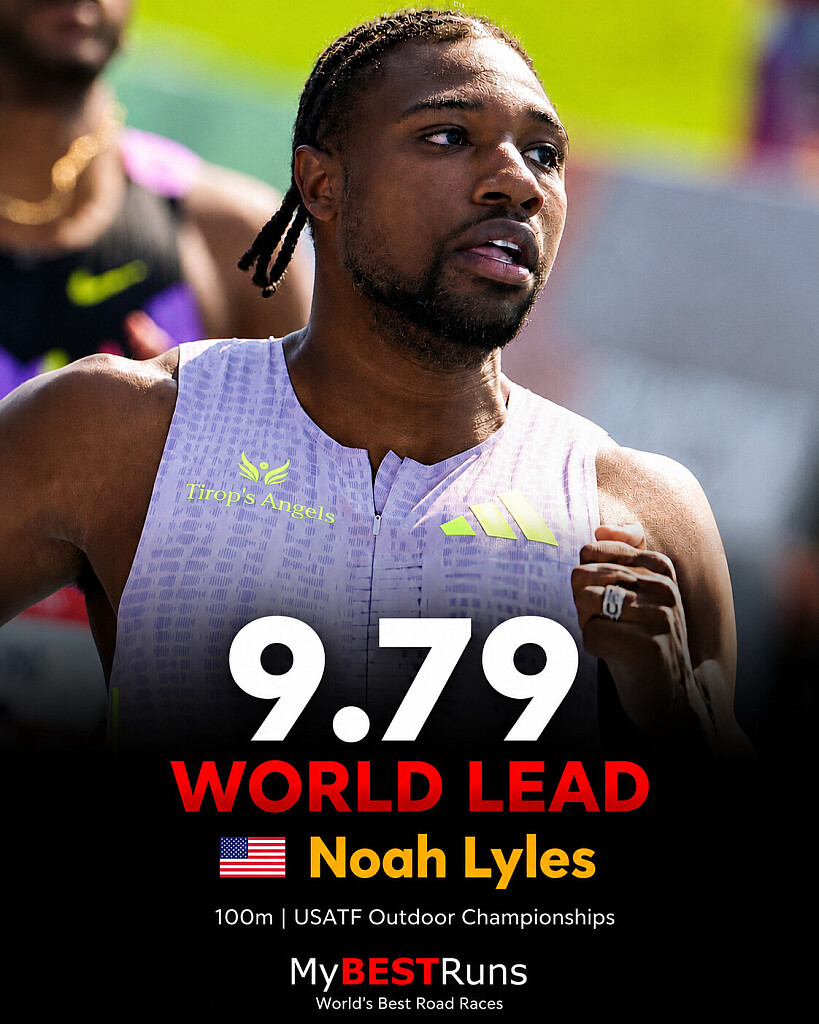
Lyles Equals Olympic Best with World-Leading 9.79 to Secure Eighth U.S. Outdoor Title
Noah Lyles once again proved why he remains the man to beat in global sprinting, delivering a breathtaking world-leading 9.79 seconds (+0.8 m/s) to win the men's 100m title at the USATF Outdoor Championships in New York.
The reigning Olympic champion produced a commanding performance from start to finish, matching the personal best he set to capture Olympic gold in Paris and underlining his exceptional form ahead of the World Championships.
The victory marked another historic milestone for the American superstar, earning him his eighth U.S. outdoor national title and third national crown over the 100 metres. It was yet another reminder that when the stakes are highest, Lyles consistently rises to the occasion.
His winning performance also backed up an astonishing 9.76 seconds he clocked in the semifinals. Although that time came with an illegal +2.1 m/s tailwind and could not stand as an official mark, it offered an early warning of the speed he would unleash in the final.
Behind Lyles, Ronnie Baker produced one of his strongest races in recent years, finishing second in an impressive 9.88 seconds. Olympic medalist Kenny Bednarek crossed the line in the same time to claim third after a close finish, while former world champion Christian Coleman placed fourth in 9.93 seconds, completing a spectacular showcase of American sprinting depth.
Lyles' ability to reproduce his Olympic-winning personal best on the national stage speaks volumes about his consistency. Rather than simply defending his domestic crown, he sent a powerful message to the rest of the world that his speed is peaking at exactly the right time.
The world-leading performance further cements his status as the favourite heading into the global championships, where he will once again chase international glory.
When Noah Lyles steps onto the track, he rarely disappoints. He always means business—and with another 9.79 masterpiece, the Olympic champion has reminded the athletics world that he remains the benchmark in the men's 100m.
by Erick Cheruiyot for My Best Runs.
Login to leave a comment
USATF Outdoor Championships
The 2026 Toyota USATF Outdoor and Para National Championships will be held at Icahn Stadium in New York City fromJuly 23-26, 2026, marking the first time the event is hosted in New York. The event will serve as a premier track and field competition, featuring top U.S. athletes at the Randall's Island Park venue. USATF+3 Key Details for 2026...
more...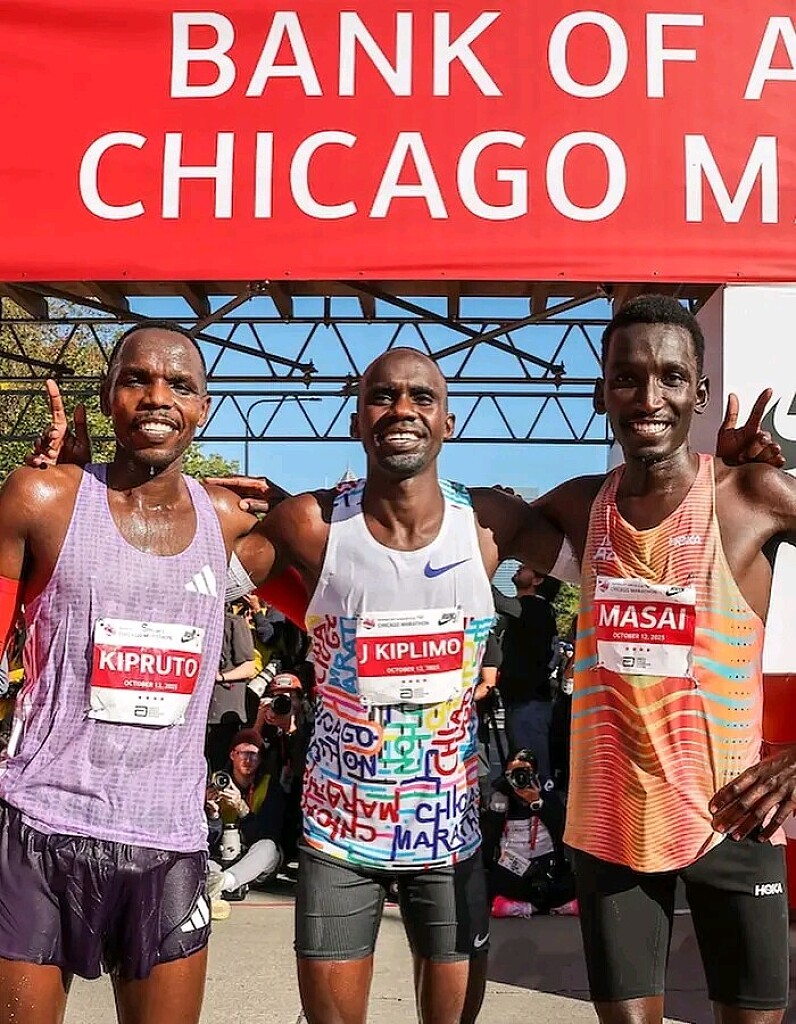
The Rematch Is On: Kiplimo, Kipruto and Masai Lead Star-Studded Chicago Marathon Field
The Bank of America Chicago Marathon is preparing for one of the most anticipated men's races in its history after unveiling an extraordinary elite field for the 48th edition of the event, scheduled for Sunday, October 11, 2026.
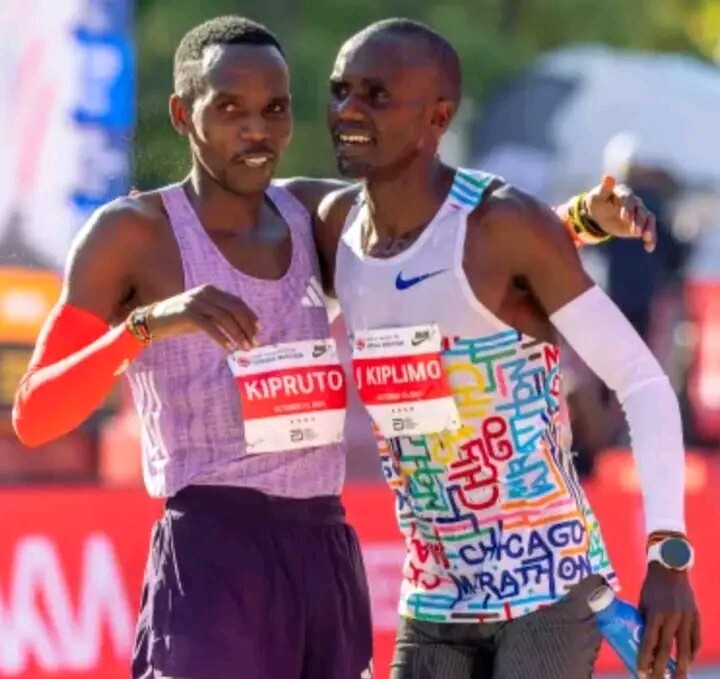
At the heart of the excitement is a compelling rematch featuring the entire podium from the 2025 Chicago Marathon, with defending champion Jacob Kiplimo, runner-up Amos Kipruto, and third-place finisher Alex Masai all returning to battle once again on the fast streets of the Windy City.
The reunion of last year's top three finishers already guarantees an intense contest, but the depth of the field suggests this could develop into one of the greatest marathon races Chicago has ever witnessed.
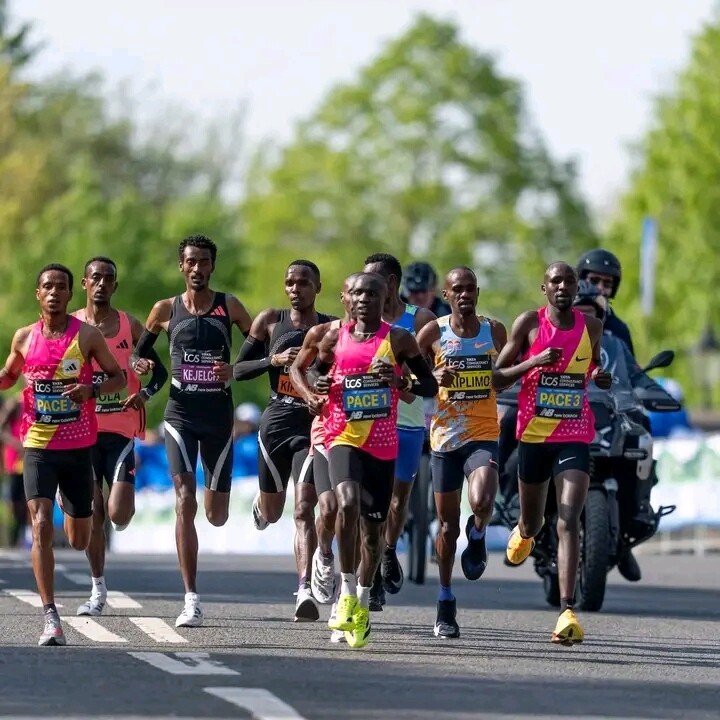
Uganda's Jacob Kiplimo returns wearing the champion's crown after producing a brilliant 2:02:23 performance to capture the 2025 Chicago Marathon title. Since that victory, the distance-running sensation has strengthened his reputation as one of the world's premier marathoners, delivering an astonishing 2:00:28 at the 2026 London Marathon—a performance that firmly established him among the fastest marathon runners in history.
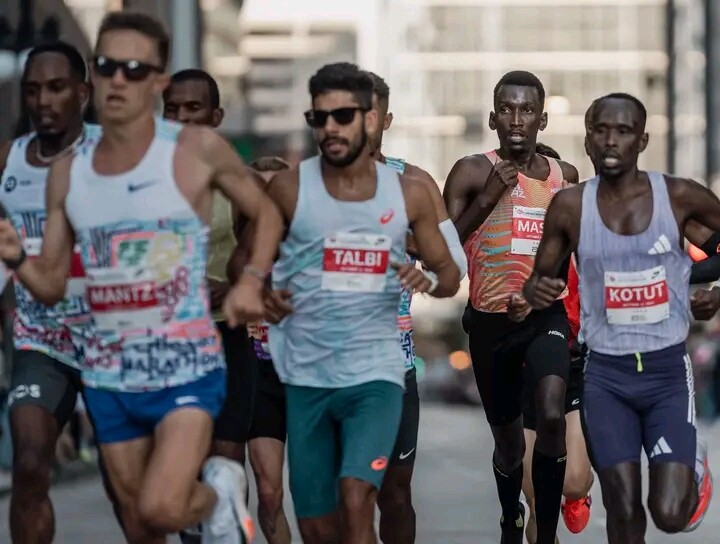
Standing in his way once again will be Kenya's Amos Kipruto, who finished second in Chicago last year in 2:03:54. Kipruto arrives in exceptional form after rewriting his personal best with a stunning 2:01:39 at the 2026 London Marathon, proving he possesses both the speed and experience to challenge for the Chicago crown.
Completing the returning podium is fellow Kenyan Alex Masai, whose impressive 2:04:37 earned him third place in 2025. Now returning with valuable experience and growing confidence, Masai will be aiming to transform last year's podium finish into his first-ever World Marathon Major victory.
Yet the battle for victory extends far beyond the returning podium.
The 2026 Chicago Marathon has assembled one of the deepest elite men's fields ever seen, featuring six athletes with personal bests under 2:04. Among them are Milkesa Mengesha of Ethiopia, the reigning 2024 Berlin Marathon champion, and compatriot Tadese Takele Bikila, who arrives as the Tokyo Marathon champion. Their presence adds even greater quality to a field already packed with proven championship performers and world-class speed.
With Olympic-caliber talent, major marathon champions, and some of the fastest men ever to cover the 42.195-kilometre distance lining up together, all the ingredients are in place for a memorable contest. Whether the race develops into a tactical championship battle or a relentless pursuit of another sub-2:02 performance, fans can expect fireworks from the opening miles to the finish on Columbus Drive.
As Chicago prepares to welcome the world's finest marathoners, one question now dominates the conversation:
Can Jacob Kiplimo successfully defend his title, or will Amos Kipruto, Alex Masai, or another world-class challenger rise to claim one of the sport's most prestigious crowns? The answer will unfold on October 11, when another chapter in Chicago Marathon history is written.
by Erick Cheruiyot for My Best Runs.
Login to leave a comment
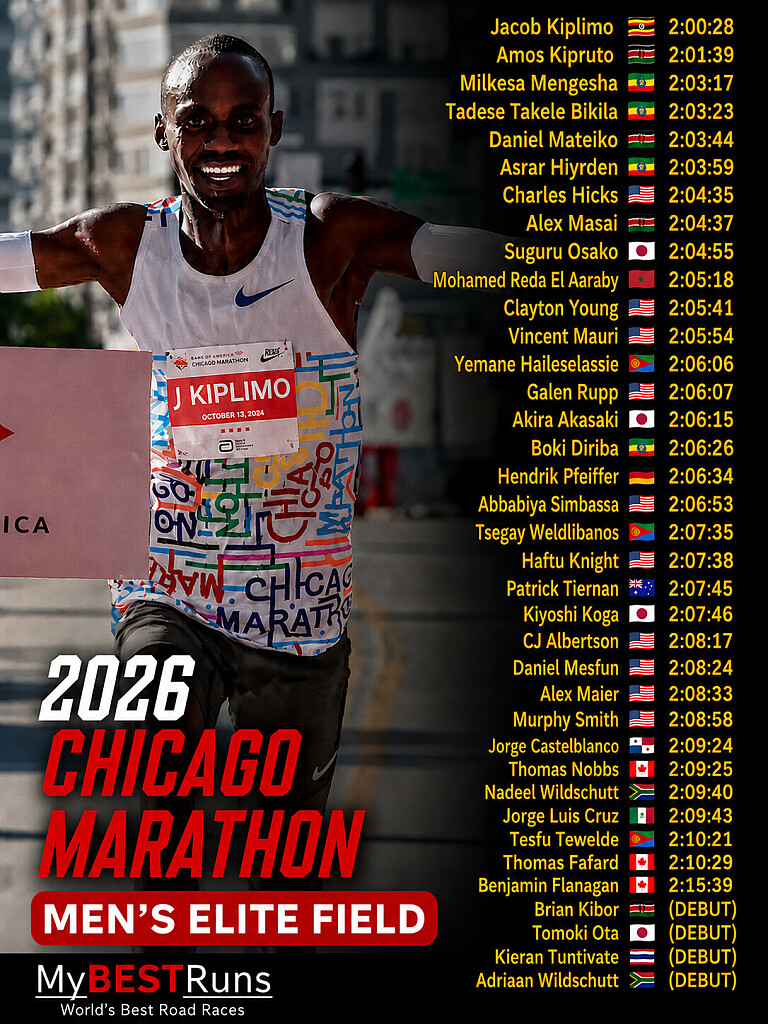
Jacob Kiplimo Leads Historic Men's Lineup as 2026 Chicago Marathon Unveils a World-Class Elite Field
The 2026 Bank of America Chicago Marathon has assembled one of the deepest and most competitive men's elite fields in the event's history, with Ugandan superstar Jacob Kiplimo returning to the Windy City to headline a remarkable international lineup capable of producing another unforgettable day of marathon racing.
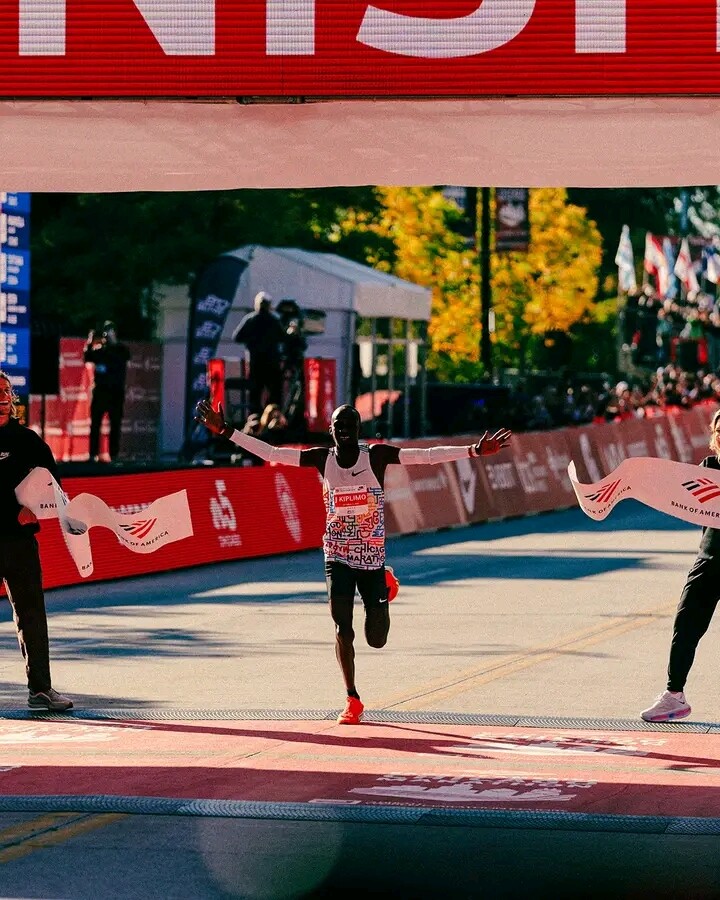
Kiplimo, who owns a sensational personal best of 2:00:28, enters as the fastest man in the field and one of the world's most exciting distance runners. After a spectacular marathon breakthrough, the Ugandan star returns to Chicago carrying the hopes of delivering another historic performance on one of the fastest marathon courses on the planet.
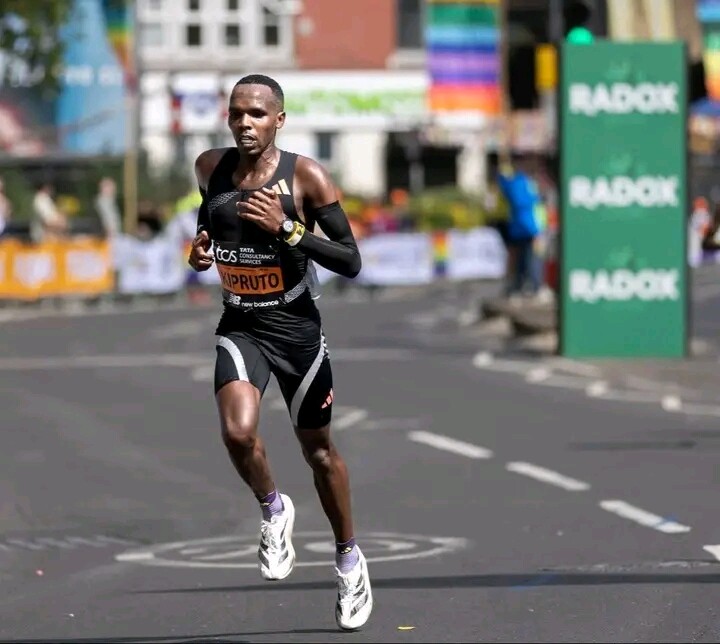
Standing between Kiplimo and victory is an exceptional collection of proven champions and rising stars. Kenya's Amos Kipruto (2:01:39) brings Olympic pedigree and world-class experience, while Ethiopia's Milkesa Mengesha (2:03:17), Tadese Takele Bikila (2:03:23), and Asrar Hiyrden (2:03:59) strengthen Ethiopia's challenge. Kenya will also be represented by the rapidly improving Daniel Mateiko (2:03:44) and Alex Masai (2:04:37), adding even more firepower to an already stacked front pack.
Japan fields an impressive trio of Suguru Osako (2:04:55), Akira Akasaki (2:06:15), and Kiyoshi Koga (2:07:46), while Morocco's Mohamed Reda El Aaraby, Eritrea's Yemane Haileselassie and Tsegay Weldlibanos, Germany's Hendrik Pfeiffer, Australia's Patrick Tiernan, Panama's Jorge Castelblanco, Canada's Thomas Nobbs, Thomas Fafard, and Benjamin Flanagan, South Africa's Nadeel Wildschutt, Mexico's Jorge Luis Cruz, and Ethiopia's Boki Diriba further underline the race's global quality.
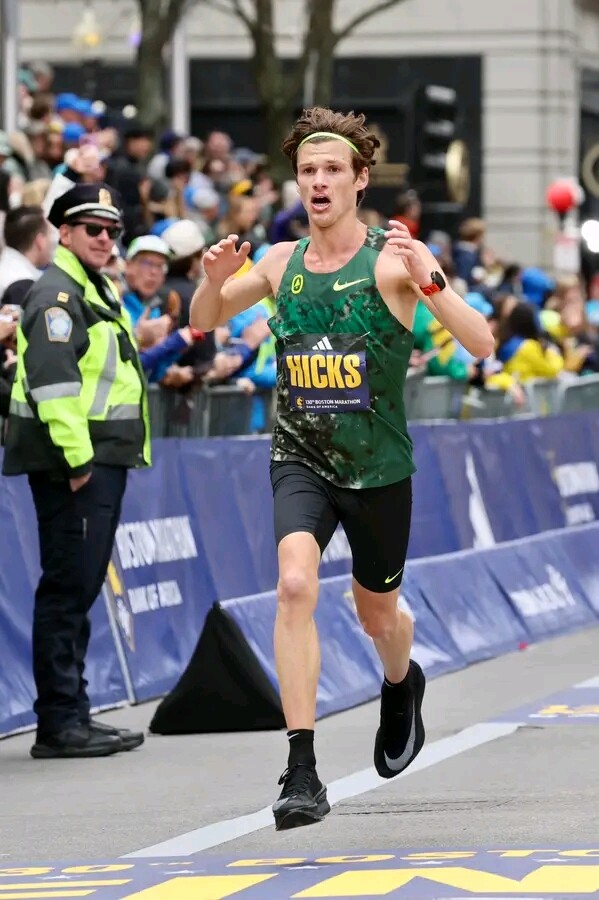
Several highly anticipated marathon debuts will also add intrigue to this year's race. Kenya's Brian Kibor, Japan's Tomoki Ota, Thailand's Kieran Tuntivate, and South Africa's Adriaan Wildschutt are all set to tackle the classic 42.195-kilometre distance for the first time, bringing fresh excitement and unpredictability to an already loaded field.
The United States will also have a strong presence, led by Charles Hicks, Clayton Young, Vincent Mauri, Abbabiya Simbassa, Haftu Knight, CJ Albertson, Daniel Mesfun, Alex Maier, Murphy Smith, and marathon legend Galen Rupp, giving home fans plenty of athletes to cheer throughout the race.
With multiple athletes boasting personal bests under 2:04, an outstanding mix of established marathon champions and fearless debutants, and Chicago's reputation for producing exceptionally fast times, the ingredients are in place for one of the greatest marathon contests of 2026.
All eyes may be on Jacob Kiplimo, but with such extraordinary depth from across the globe, the battle for the Chicago Marathon crown promises to be one of the highlights of the international road racing season.
by Erick Cheruiyot for My Best Runs.
Login to leave a comment
Bank of America Chicago
Running the Bank of America Chicago Marathon is the pinnacle of achievement for elite athletes and everyday runners alike. On race day, runners from all 50 states and more than 100 countries will set out to accomplish a personal dream by reaching the finish line in Grant Park. The Bank of America Chicago Marathon is known for its flat and...
more...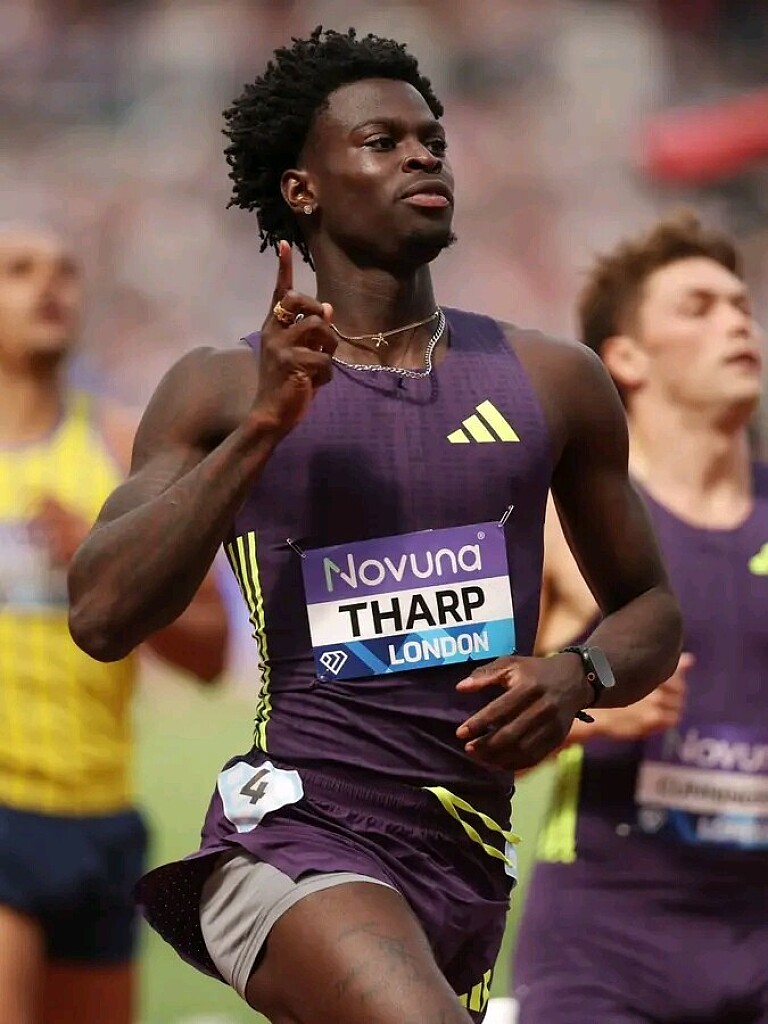
Ja'Kobe Tharp stamps his authority with London Diamond League meeting record
Ja'Kobe Tharp continued his remarkable rise in the men's 110m hurdles by delivering another commanding performance at the London Diamond League, underlining why he is rapidly becoming one of the most dangerous hurdlers in the world this season.
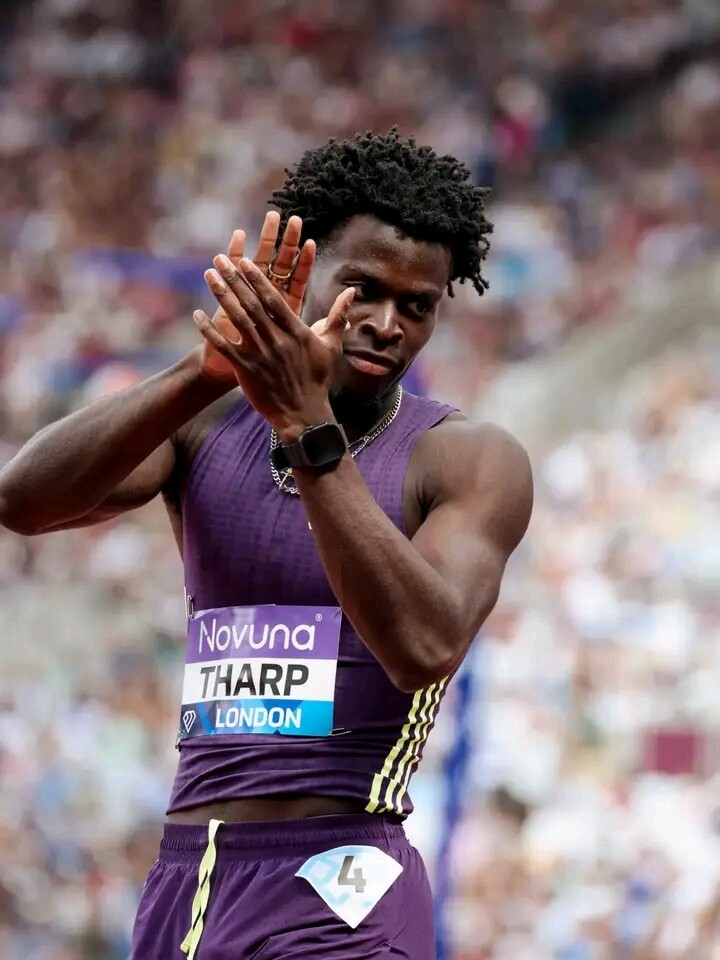
The American sprint hurdler stormed to victory in 12.89 seconds, setting a new London Diamond League meeting record and emerging as the only athlete to break the 13-second barrier in the race. His winning time came with virtually no wind assistance, adding even greater significance to an already exceptional performance.
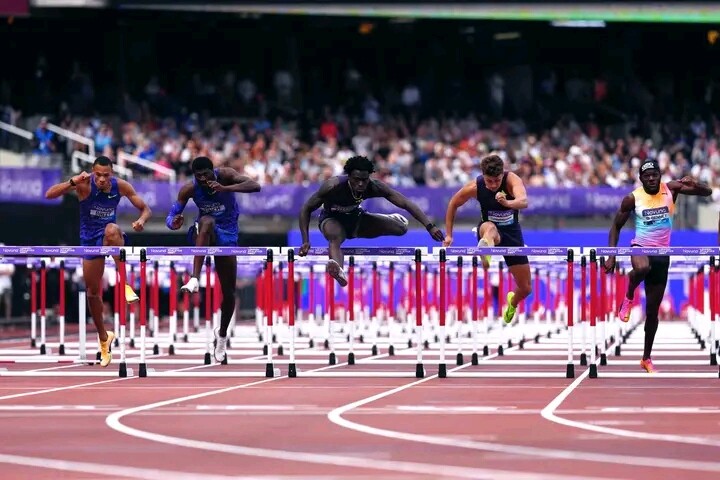
The triumph capped an outstanding week for Tharp, who had already clocked a blistering 12.85 earlier in the week. Producing two world-class performances within a matter of days—both under almost neutral wind conditions—demonstrates not only his outstanding speed but also a remarkable level of consistency at the highest level.
As the rest of the field chased in vain, Tharp looked composed from the gun, attacking each hurdle with precision before powering through the finish line to secure another emphatic victory. His ability to combine flawless technique with explosive acceleration has quickly elevated him into the conversation among the world's elite sprint hurdlers.
With the World Championships drawing closer, Tharp's latest statement in London could hardly have come at a better time. Consecutive sub-13-second performances have sent a clear message to his rivals that he is no longer just an emerging talent—he is a genuine contender capable of challenging for global honours.
His London victory was more than another win; it was a declaration of intent. By rewriting the meeting record and extending an already impressive run of form, Ja'Kobe Tharp has firmly established himself as one of the standout stars of the 2026 athletics season.
by Erick Cheruiyot for My Best Runs.
Login to leave a comment
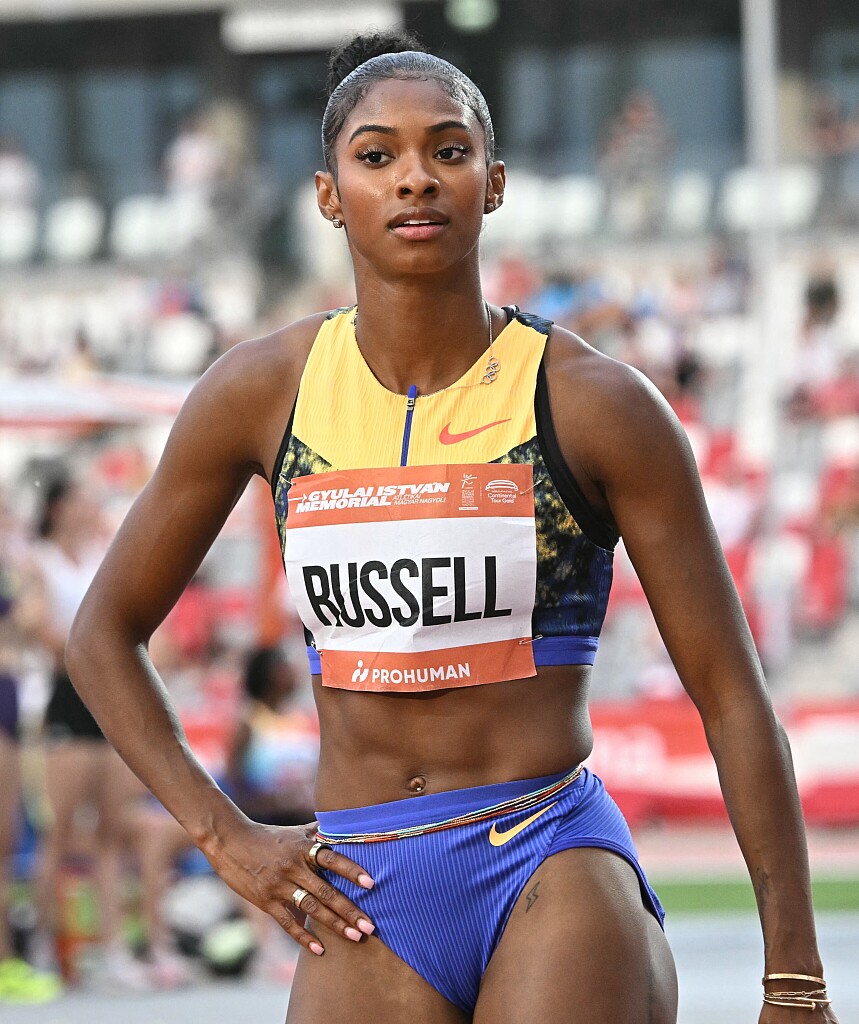
Masai Russell: Unstoppable Over the Hurdles as Perfect Season Rolls On
Masai Russell continues to establish herself as the undisputed force in the women's 100m hurdles, extending her flawless 2026 campaign with yet another commanding victory at the Gyulai István Memorial in Hungary.
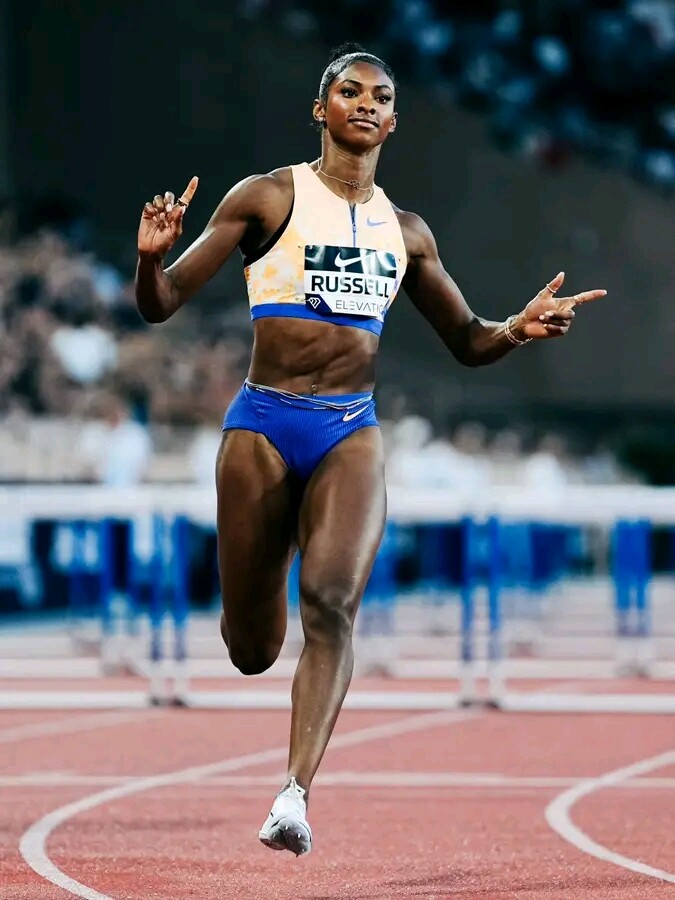
The reigning Olympic champion has now won all eight of her 100m hurdles finals this season, an extraordinary unbeaten run that underlines both her consistency and her dominance on the global stage. Even more remarkable is the quality of those performances, with five of her victories coming in times faster than 12.30 seconds—a standard that only the world's very best can consistently achieve.
Russell's latest triumph came in Hungary, where she crossed the finish line in 12.33 seconds despite a slight headwind of -0.4 m/s. While it was not her quickest race of the year, it was another composed and authoritative performance that reinforced her reputation as the athlete to beat every time she steps onto the track.
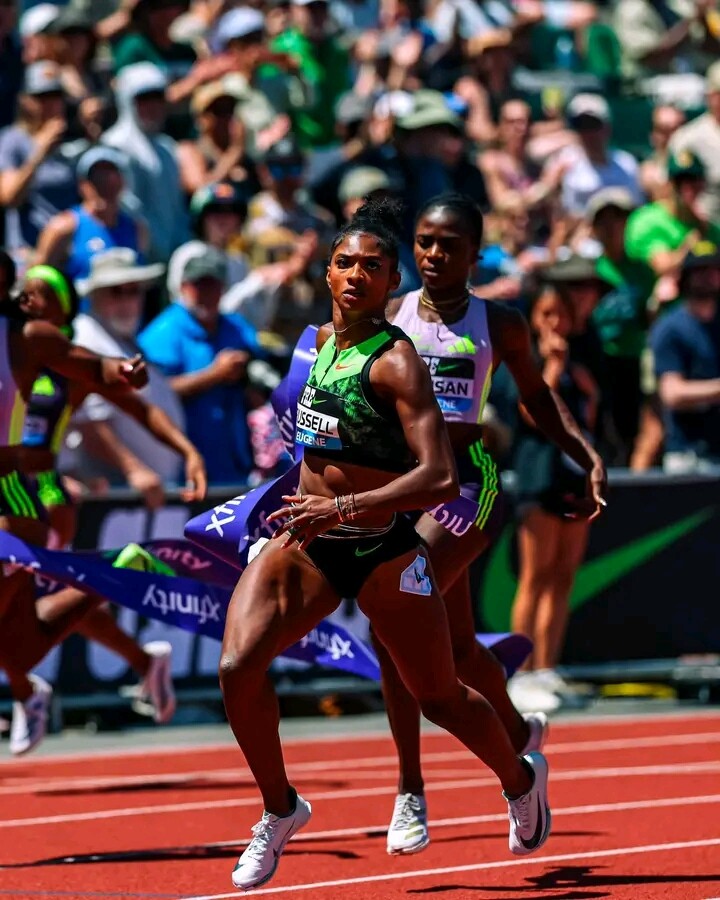
Her season began with victory at the Texas Relays before she followed it up with another win at the Jim Green Invitational. From there, Russell took her exceptional form onto the Diamond League circuit, conquering Xiamen, Shanghai, and Monaco while also claiming victory at the Los Angeles Grand Prix and the prestigious Prefontaine Classic.
Among her standout performances this season was a sensational 12.14 seconds in Xiamen, one of the fastest times recorded anywhere in the world this year. She also produced outstanding runs of 12.20 in Monaco, 12.24 at the Prefontaine Classic, 12.25 in Shanghai, and 12.26 in Los Angeles, proving her ability to deliver world-class performances across different continents and under varying race conditions.
Russell's unbeaten campaign has been built on explosive starts, exceptional hurdle technique, and remarkable composure in championship-calibre fields. Whether racing into a headwind or enjoying favourable conditions, she has repeatedly demonstrated the consistency that separates champions from the rest of the field.
With eight victories from eight finals, the American star heads into the second half of the season carrying tremendous momentum. As the major championships draw closer, her rivals face the daunting task of finding a way to stop an athlete who has looked virtually untouchable throughout 2026.
Every race has strengthened Russell's claim as the world's premier sprint hurdler, and if her current trajectory continues, this season could become one of the most dominant campaigns the event has witnessed in recent years.
by Erick Cheruiyot for My Best Runs.
Login to leave a comment
Rihana Mora Rewrites Costa Rican Sprint History with Record-Breaking Bronze at NACAC U18 Championships
Costa Rica has unearthed another exceptional sprint talent, as 17-year-old Rihana Mora Saint delivered the performance of her young career to claim the bronze medal in the women's 100 metres at the NACAC U18 Championships.
Competing against some of the fastest junior sprinters in the Americas, Mora clocked a sensational 11.59 seconds with a +1.8 m/s tailwind to finish third in the final. She trailed only Bahamas' Jazae Johnson, who stormed to victory in 11.42, and Jamaica's Malayia Duncan, who secured silver in 11.54. Jael Peters of Trinidad and Tobago placed fourth in 11.65, underlining the high quality of the final.
For Mora, the bronze medal was accompanied by an even greater achievement. Her 11.59-second performance established a new Costa Rican Under-18 national record while also marking a lifetime personal best, confirming her status as one of the country's most exciting young sprint prospects.
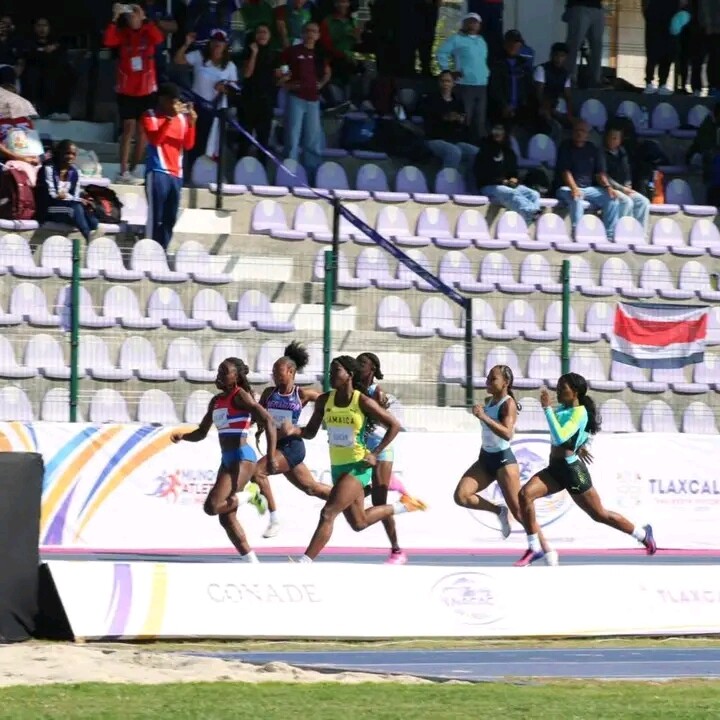
The significance of her performance extends beyond the junior ranks. Mora now sits just 0.13 seconds away from the Costa Rican senior national record of 11.46, set by Sharolyn Josephs in 2015. At only 17 years old, she is already closing in on one of the nation's most respected sprint marks, highlighting her extraordinary potential.
Throughout the championship, Mora demonstrated remarkable composure, explosive acceleration and outstanding speed against a world-class field, proving she can compete with the very best young sprinters in the NACAC region.
Her latest achievement is not only a personal milestone but also a major boost for Costa Rican athletics. Breaking the national Under-18 record while earning a continental championship medal signals the arrival of an athlete capable of achieving even greater success on the international stage.
With her confidence soaring and her development continuing at an impressive pace, Rihana Mora Saint has firmly established herself as one of the brightest young sprint talents in the Americas. If her current trajectory continues, the Costa Rican record books may soon require another rewrite.
by Erick Cheruiyot for My Best Runs.
Login to leave a comment

Historic Breakthrough at Bighorn 100 as Bo Shelby Becomes First Runner to Shatter 18-Hour Barrier
A landmark chapter was written in ultrarunning history on Friday as Bo Shelby delivered a performance for the ages at the renowned Bighorn Trail Run in Dayton, Wyoming.

For 25 years, the demanding 100-mile mountain race had resisted every attempt to be conquered in under 18 hours. The rugged trails, relentless climbs, punishing descents, and unpredictable mountain conditions had combined to make the barrier seem almost untouchable. Shelby changed that narrative in emphatic fashion.
Producing one of the finest performances ever seen on the course, Shelby stormed to victory in an astonishing 17:58:03, becoming the first athlete in race history to break the coveted 18-hour mark. In doing so, he not only secured the title but also established a new course record, setting a benchmark that many once believed was beyond reach.
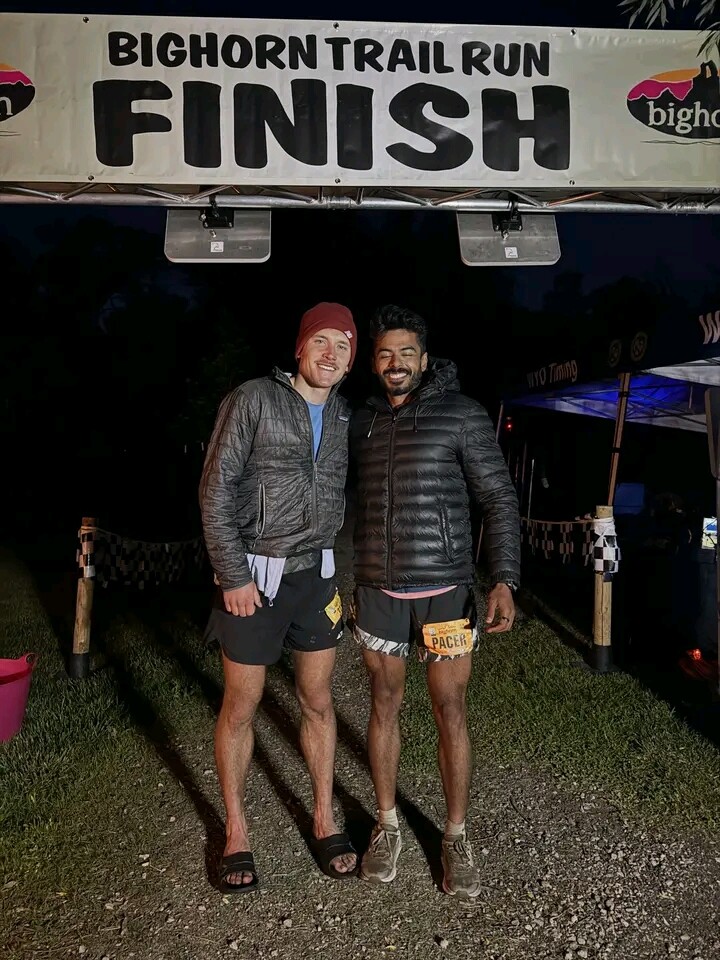
The achievement carries added significance given the reputation of the Bighorn 100, one of North America's most respected ultramarathons. Winding through the breathtaking yet unforgiving Bighorn Mountains, the race features significant elevation changes across its 100-mile route and allows runners a generous 35-hour cutoff simply to reach the finish line. For most participants, earning a finisher's buckle is considered a triumph. Shelby, however, elevated the standard entirely.
What made the race even more remarkable was the depth of competition at the front. Ben Quatromoni also delivered a historic run, crossing the line in 18:10:31. His performance eclipsed the previous course record as well, making it the second-fastest time ever recorded at Bighorn despite finishing second on the day.
Completing an outstanding men's podium was John Dragon, who secured third place in 19:48:48 after a strong and resilient effort across the challenging mountain course.
In the women's race, Leah Handelman produced a commanding display to capture victory in 24:23:35, successfully navigating the demanding terrain to claim top honors.
As the Bighorn 100 celebrates a quarter-century of racing, the 2026 edition will be remembered as a defining moment in its history. A course that had stood unconquered beneath the 18-hour threshold for 25 years finally yielded, and in spectacular fashion. Shelby's record-breaking run did more than earn a victory—it redefined what athletes can dream of achieving on one of ultrarunning's most formidable stages.
by Erick Cheruiyot for My Best Runs.
Login to leave a comment
