

Running News Daily
Running News Daily is edited by Bob Anderson and team. Send your news items to bob@mybestruns.com Advertising opportunities available.
Index to Daily Posts · Sign Up For Updates · Run The World Feed
Articles tagged #800m world record
Today's Running News
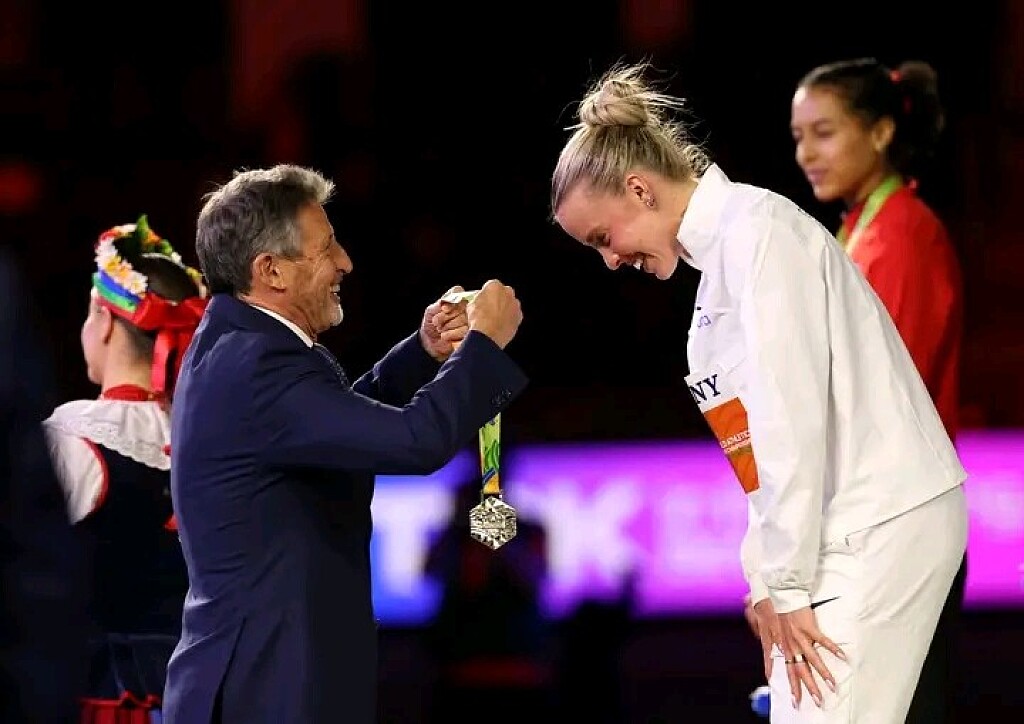


Sebastian Coe At 70: From Yorkshire Prodigy To Olympic Great And World Athletics President
Sebastian Coe turns 70 today, marking seven remarkable decades for a man whose name has become inseparable from some of the greatest moments in middle-distance running.
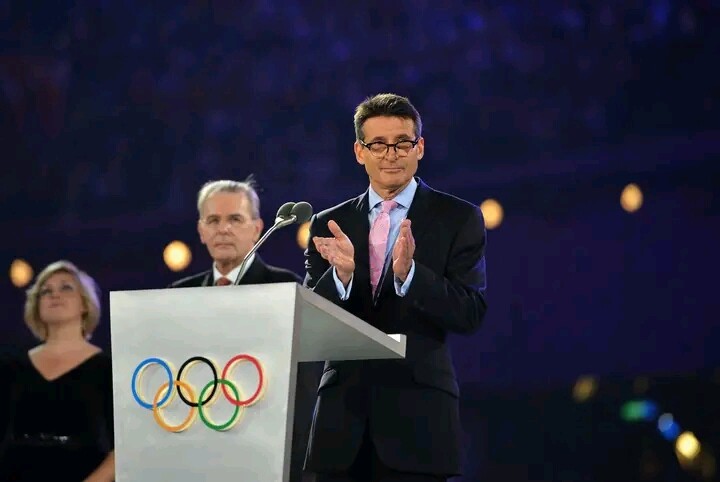
Born on September 29, 1956, Coe grew from a talented youngster in Yorkshire into one of the most influential figures athletics has ever produced — first as an extraordinary competitor on the track and later as a leader at the highest level of the sport.
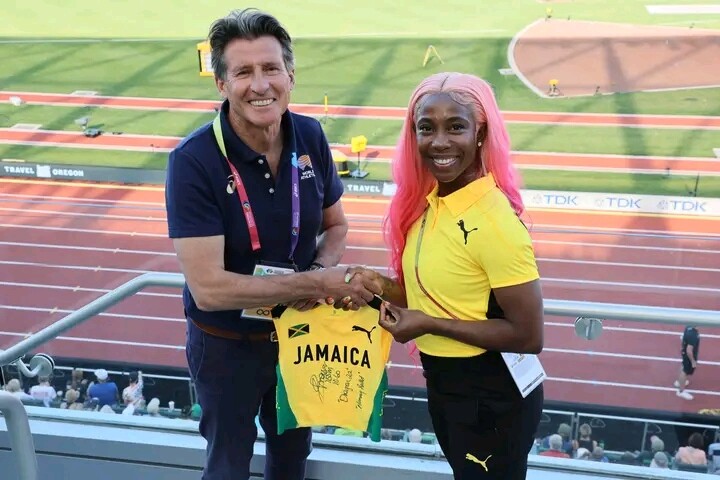
His journey began long before the Olympic medals and world records. As a teenager, Coe was already attracting attention, and his early appearances in Athletics Weekly offered a glimpse of the remarkable career that was beginning to unfold.
By the late 1970s, he had established himself as one of Britain's brightest middle-distance prospects. His rivalry with Steve Ovett became one of the defining storylines of the era, while Coe's extraordinary combination of speed, tactical intelligence and finishing power allowed him to compete successfully across the 800m, 1500m and mile.
In 1979, Coe announced himself to the world in spectacular fashion. In Oslo, he smashed the 800m world record with 1:42.33, becoming the first man to break 1:43. Just weeks later, he added a world record in the mile with 3:48.53 before ending the season as one of the sport's dominant figures.
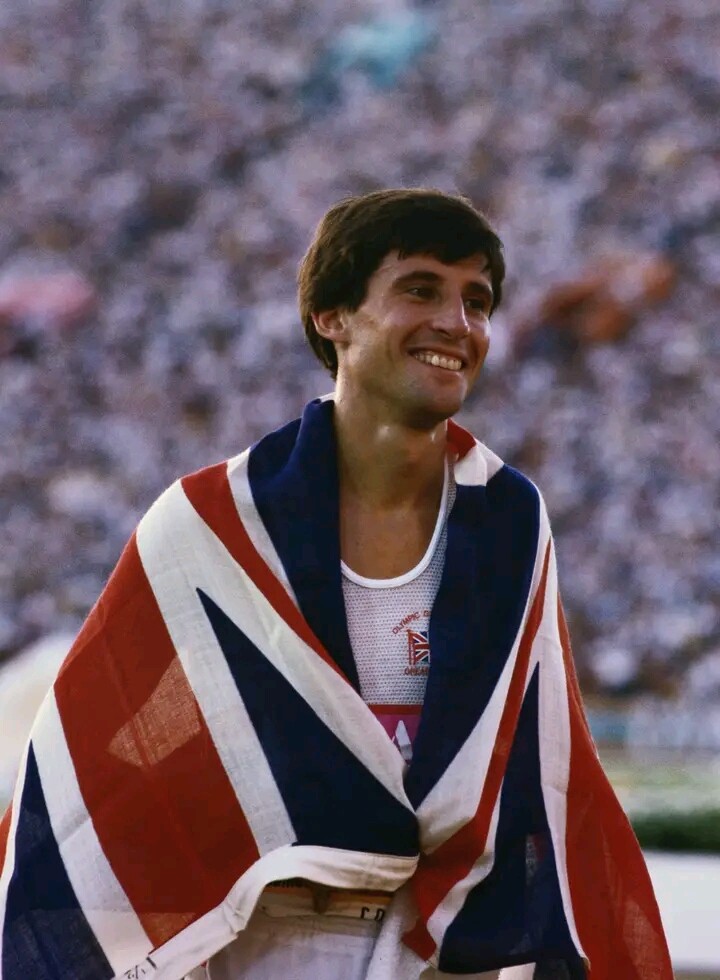
The following years produced even more extraordinary performances.
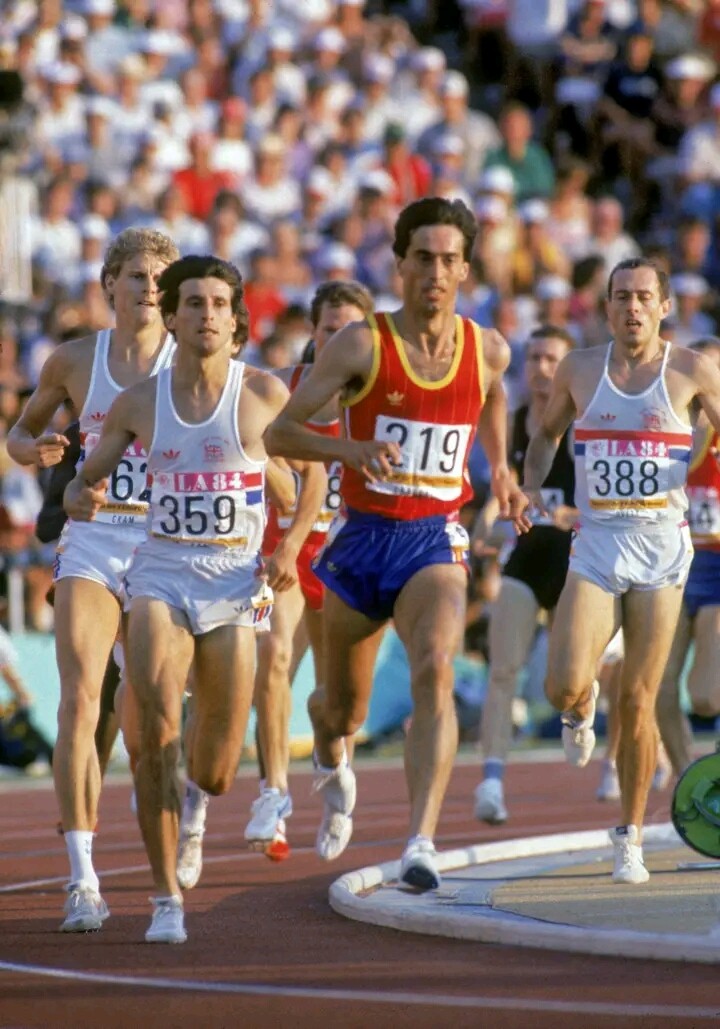
On June 10, 1981, in Florence, Coe lowered his own 800m world record to 1:41.73. The performance was historic. The mark remained untouched for 16 years before Wilson Kipketer equalled it in 1997. It remains one of the most iconic performances in 800m history.
Coe's Olympic career was equally remarkable.
At the 1980 Moscow Olympics, he won gold in the 1500m and silver in the 800m. Four years later in Los Angeles, he repeated that extraordinary combination, again taking 1500m gold and 800m silver.
His second Olympic 1500m victory in 1984 cemented his place among the greats of the event. His personal best of 3:29.77, set in 1986, remains one of the fastest marks of his era. World Athletics lists Coe as a two-time Olympic champion and two-time Olympic silver medallist, with 12 world records accumulated during his career.
His record-breaking career extended beyond the 800m and 1500m. Coe set world records over 800m, 1000m, 1500m and the mile, demonstrating an extraordinary range that was rare even among elite middle-distance specialists.
He also collected major European honours, including the European 800m title in 1986 and the European Indoor 800m crown earlier in his career.
Yet Coe's story did not end when he left competitive athletics.
After retiring from the track in 1990, he moved into public life and sports administration. His leadership role in London's successful bid for the 2012 Olympic and Paralympic Games became one of the most significant chapters of his post-athletics career. He later served as chairman of the London 2012 Organising Committee, helping oversee the preparation and delivery of the Games.
In August 2015, Coe took on perhaps his most influential role yet when he became president of World Athletics. He has since remained at the centre of global athletics, helping guide the sport through changes in competition, governance, commercialisation and athlete-focused initiatives. World Athletics currently lists him as president of the organisation.
Even at 70, Coe's connection with competition remains clear. His comments surrounding the inaugural World Athletics Ultimate Championship in Budapest in 2026 showed the same fascination with head-to-head racing that defined him as an athlete decades earlier.
From a young Yorkshire runner to an Olympic champion, world-record setter, London 2012 leader and now president of World Athletics, Coe's career has crossed almost every level of the sport.
His 1:41.73 may no longer be the world record, but the performance remains a permanent part of 800m history. His Olympic double-double remains extraordinary. And his transition from athlete to administrator has ensured that his influence extends far beyond the races he once dominated.
Seventy years on, Sebastian Coe's legacy is therefore not confined to medals, records or statistics. It is the story of a middle-distance pioneer whose impact has continued long after his final competitive race — and whose name remains firmly woven into the history of athletics.
by Erick Cheruiyot for My Best Runs.
Login to leave a comment
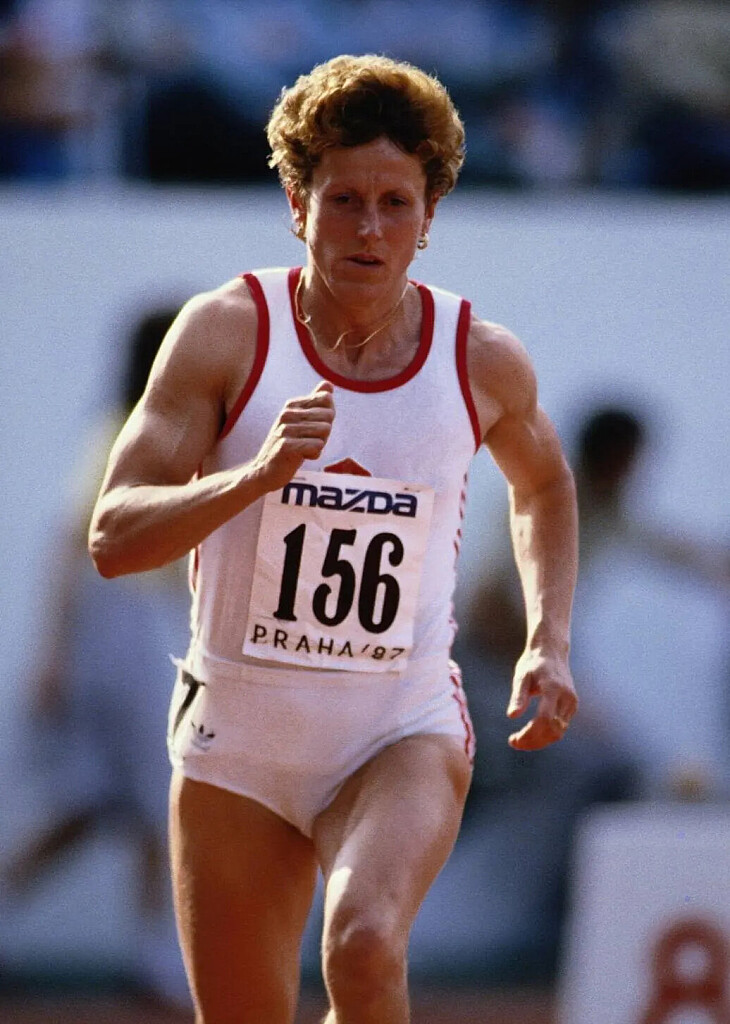
Oldest Running World Records: The Historic Marks That Refuse To Fall
Some world records are broken within months or even weeks. Others survive for years, becoming part of athletics history and turning every new generation of challengers into another chapter in their remarkable story.
As of September 25, 2026, a remarkable collection of long-standing running world records continues to stand across the track. At the top of that list is one of the most enduring marks in modern athletics: Jarmila Kratochvílová’s women’s 800m world record of 1:53.28, set in Munich in 1983. The record has now stood for 43 years, making it the oldest current outdoor track world record in athletics.
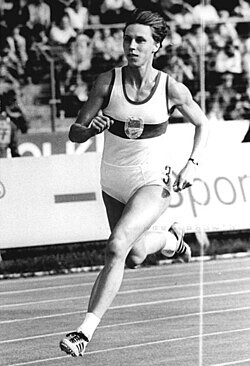
Kratochvílová’s performance remains extraordinary not only because of its longevity, but also because of how rarely athletes have come close to it. Decades after it was established, the 1:53 barrier remains one of the most formidable standards in women’s middle-distance running.
The next-oldest record on the board belongs to Marita Koch, whose 47.60 for the women’s 400m has remained untouched since 1985. Koch’s mark is now 40 years old, while Florence Griffith-Joyner’s extraordinary world records of 10.49 for 100m and 21.34 for 200m, both established in 1988, have survived for 38 and 37 years respectively.
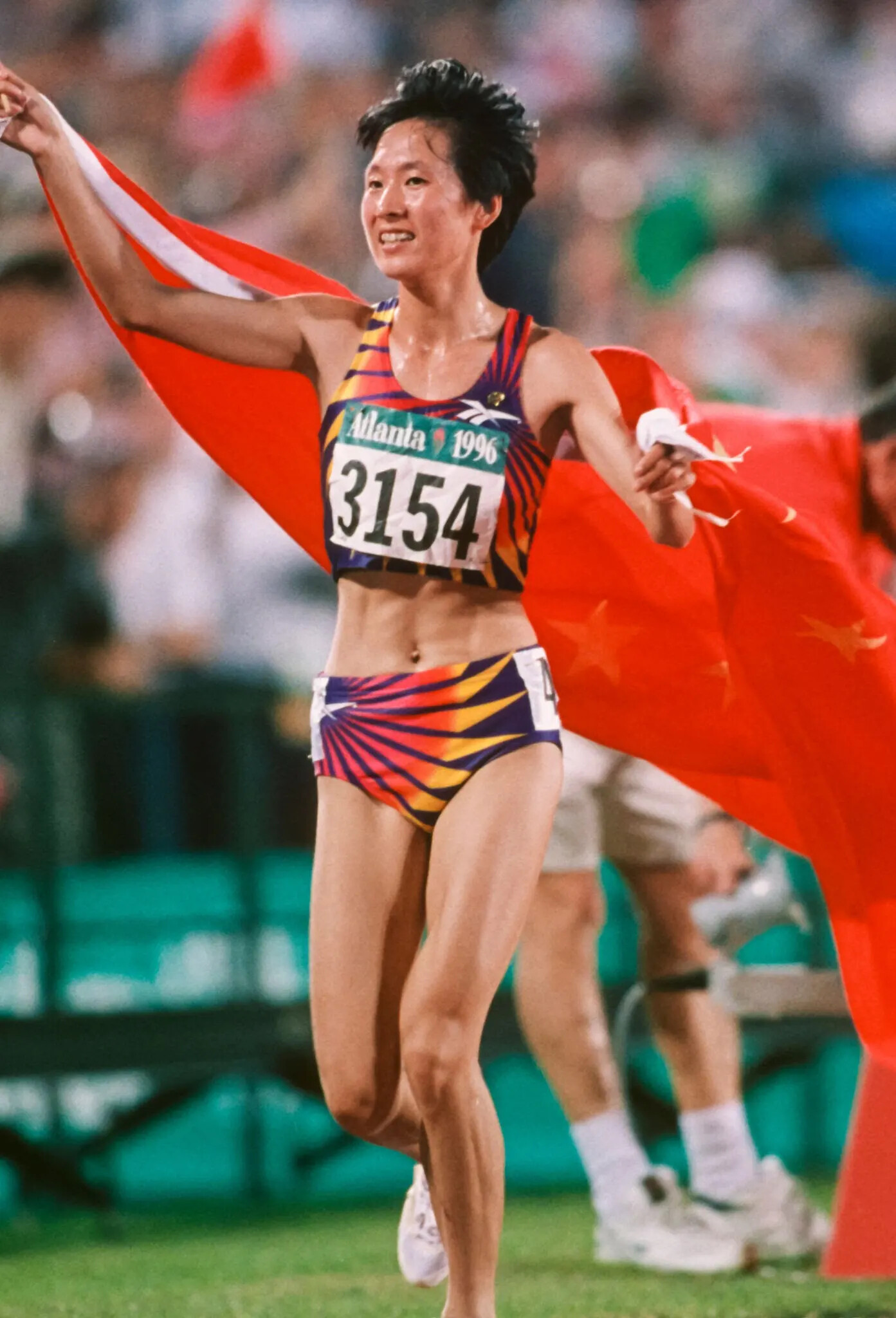
Those records from the 1980s and early 1990s form one of the most intriguing chapters in athletics history. They belong to an era that produced performances still sitting at the very top of the all-time lists, with modern generations repeatedly attempting to reach standards that have resisted decades of competition.
China’s Wang Junxia added another remarkable mark to that era when she ran 8:06.11 for 3000m in 1993. That record has now stood for 32 years, while Morocco’s Hicham El Guerrouj set the men’s 1500m world record of 3:26.00 in 1998, giving the list another mark that has survived for more than a quarter of a century.
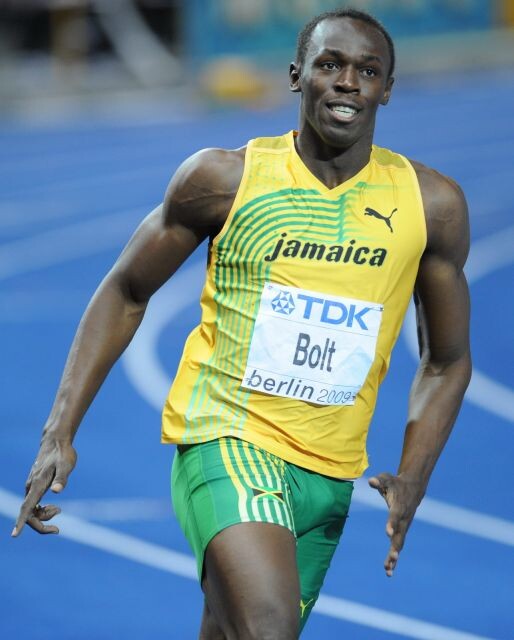
Then comes a different kind of longevity: the extraordinary sprint records of Usain Bolt.
Bolt’s 9.58-second 100m world record, set in Berlin in 2009, and his 19.19-second 200m record, established at the same championships, are now both 17 years old.
When Bolt produced those performances, many of today’s elite sprinters were still children. Yet despite enormous advances in training, sports science, track technology and competition, his two marks remain the standards that every new generation must chase.
The list also highlights the remarkable staying power of more recent records. Kenya’s David Rudisha set the men’s 800m world record of 1:40.91 at the London 2012 Olympics, while South Africa’s Wayde van Niekerk stunned the world with 43.03 in the 400m at the Rio 2016 Olympics.
Kenya’s Beatrice Chepkoech followed with her historic 8:44.32 world record in the women’s 3000m steeplechase in 2018. Uganda’s Joshua Cheptegei then established the men’s 5000m and 10,000m records in 2020, running 12:35.36 and 26:11.00 respectively.
More recently, Ethiopia’s Lamecha Girma set the men’s 3000m steeplechase world record at 7:52.11 in 2023, while Kenya’s Faith Kipyegon produced another landmark performance that year, running 4:07.64 for the women’s mile.
Together, these records create a fascinating timeline of athletics—from the pioneering performances of the 1980s to the spectacular achievements of the modern era. Some have survived for more than four decades, while others are still in the early stages of what could become an equally remarkable reign.
And that is what makes world records so captivating: every generation arrives believing that today’s impossible can become tomorrow’s target, yet some numbers continue to stand as enduring reminders of performances that changed the sport forever.
by Erick Cheruiyot for My Best Runs.
Login to leave a comment
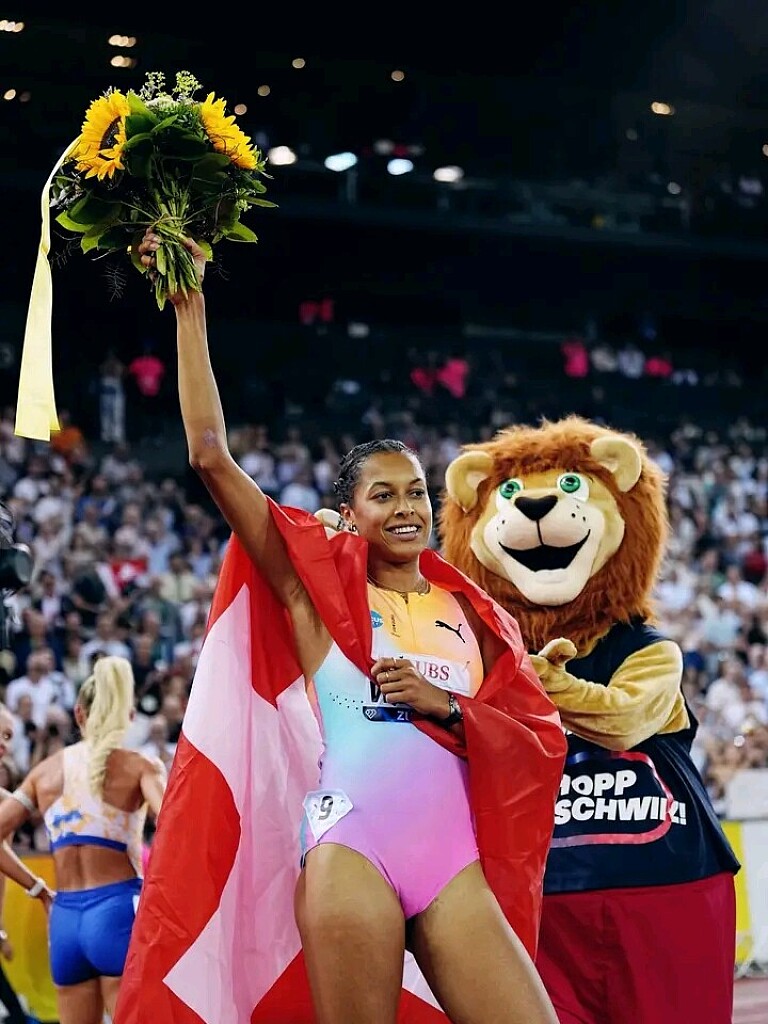
Audrey Werro Chases History In Bellinzona After Moving Within 0.42 Seconds Of The 800m World Record
Audrey Werro’s extraordinary 2026 season has entered another fascinating chapter, with the Swiss middle-distance star now within striking distance of one of athletics’ most enduring world records.
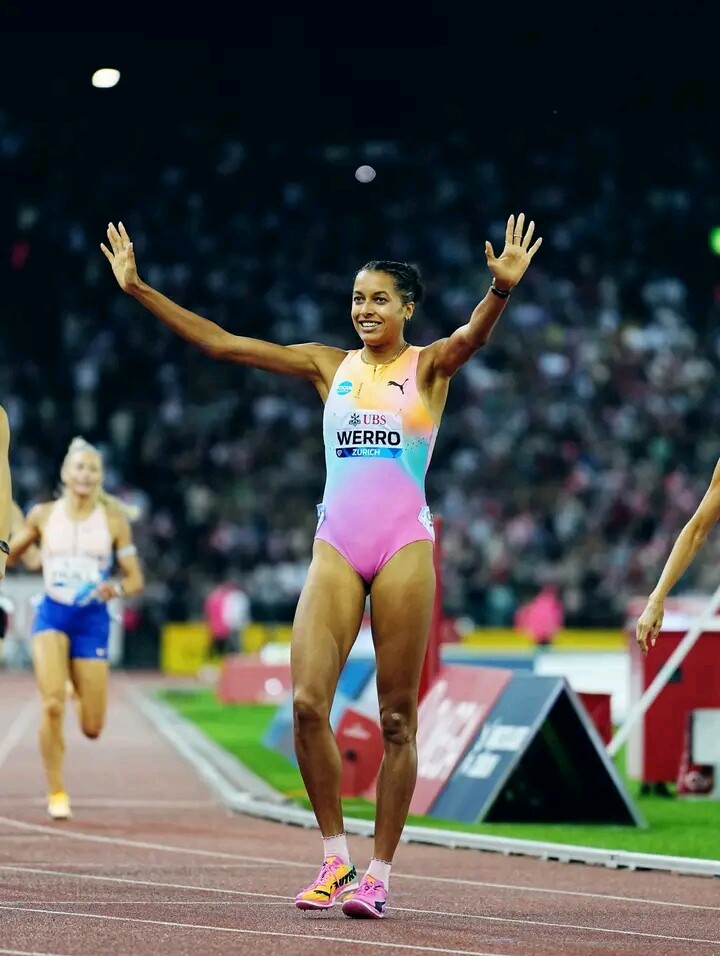
Just two days after producing a sensational 1:53.70 Swiss record at the Zürich Diamond League, Werro is set to return to action at the Gala dei Castelli in Bellinzona, where anticipation is building around the possibility of another historic performance.
Her display in Zürich was a statement of intent. Werro delivered one of the fastest 800m races ever recorded, lowering her Swiss record and moving to third on the all-time world list, behind only Jarmila Kratochvílová’s legendary 1:53.28 world record set in 1983 and Nadezhda Olizarenko’s 1:53.43 recorded in 1980.
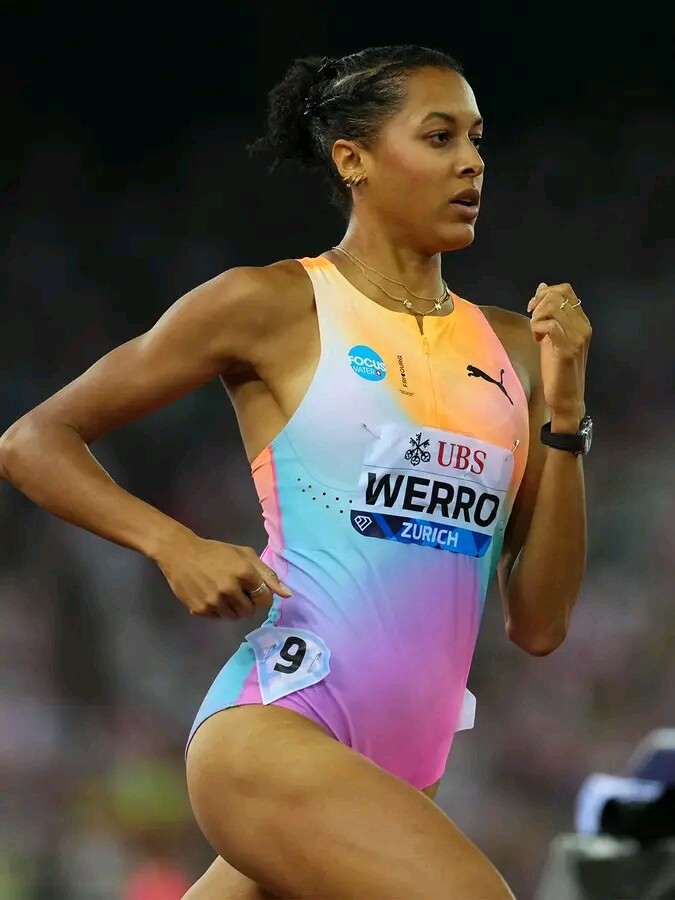
What makes Werro’s rise even more remarkable is the consistency of her performances at an extraordinary level. Earlier this season, she ran 1:53.98 in Stockholm, becoming only the third woman in history to break the 1:54 barrier. She then improved to 1:53.80 in Paris before producing her latest masterpiece of 1:53.70 in Zürich.
In the space of just a few months, Werro has transformed herself from an emerging European star into one of the fastest 800m runners the world has ever seen.
Her current progression is remarkable: 1:53.98 in Stockholm, 1:53.80 in Paris and 1:53.70 in Zürich. Each performance has brought her closer to a record that has survived for more than four decades.
Werro’s confidence is also being fuelled by her championship success. The Swiss star recently captured the European 800m title in Birmingham in 1:54.81, demonstrating that her spectacular form is not limited to Diamond League competition.
Now, all eyes turn to Bellinzona.
The target is unmistakable — 1:53.28.
Werro needs to improve by just 0.42 seconds on her Zürich performance to erase Kratochvílová’s 43-year-old world record. While 0.42 seconds may appear to be a small margin, breaking a record of such longevity requires an exceptional combination of speed, endurance, tactics and perfect execution.
A pacemaker is expected to help establish a demanding tempo, potentially giving Werro the conditions required to launch another assault on the record.
The 22-year-old has already demonstrated that she can repeatedly run at speeds that have historically been reserved for the very greatest 800m athletes. Her progression from 1:53.98 to 1:53.80 and then 1:53.70 suggests that another breakthrough may not be beyond her reach.
Bellinzona therefore promises to be more than another race on Werro’s schedule. It could become another defining moment in the rapid rise of a young athlete who is now challenging one of the oldest records in the sport.
The world record stands at 1:53.28.
Audrey Werro is 0.42 seconds away.
History is no longer a distant possibility. It is beginning to look increasingly within reach.
by Erick Cheruiyot for My Best Runs.
Login to leave a comment

Forty-Three Years of Greatness: Is Jarmila Kratochvílová's Legendary 800m World Record Finally Ready to Fall?
Some world records define an era. Others transcend generations. Jarmila Kratochvílová's astonishing 1:53.28 in the women's 800 meters belongs firmly in the latter category.
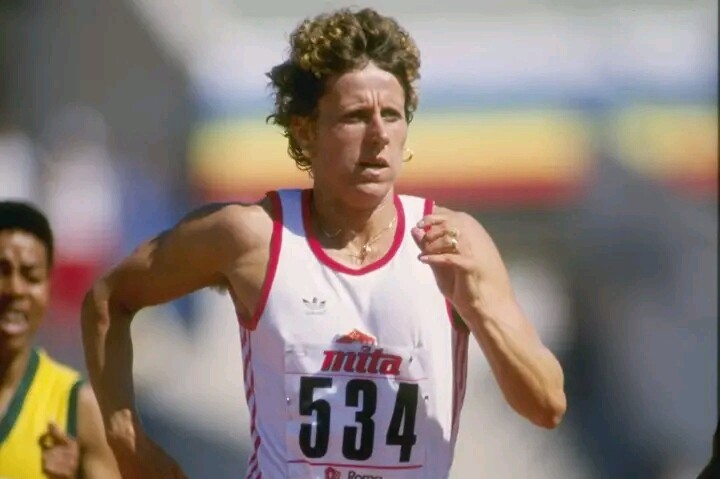
On July 26, 1983, in Munich, the Czech star delivered one of the most extraordinary performances the sport has ever witnessed, setting a world record that has now survived for an incredible 43 years. It remains the longest-standing individual track world record in athletics, a remarkable achievement in an era when advances in training, sports science, nutrition, and competition have seen countless other records disappear.
What makes Kratochvílová's feat even more extraordinary is that she was not primarily an 800-meter runner. She built her reputation as a dominant 400-meter specialist and only entered the two-lap race as a fitness test after recovering from leg cramps. What began as an experiment quickly turned into history.
After charging through an aggressive opening lap, Kratochvílová maintained her relentless pace all the way to the finish, crossing the line in an astonishing 1:53.28. It was a performance so far ahead of its time that generations of elite middle-distance runners have spent more than four decades trying—and failing—to erase it from the record books.
The longevity of the mark is no accident. Running 800 meters at world-record pace demands one of the rarest combinations in athletics: the explosive speed of a world-class 400-meter runner blended with the endurance, strength, and tactical intelligence of an elite middle-distance athlete. Few athletes in history have possessed that unique balance.
Even today, Kratochvílová sits comfortably atop one of the strongest all-time rankings in athletics history:
1. Jarmila Kratochvílová (Czech Republic) – 1:53.28 (July 26, 1983)
2. Nadezhda Olizarenko (Soviet Union) – 1:53.43 (July 27, 1980)
3. Audrey Werro (Switzerland) – 1:53.80 (June 28, 2026)
4. Pamela Jelimo (Kenya) – 1:54.01 (August 29, 2008)
5. Caster Semenya (South Africa) – 1:54.25 (June 30, 2018)
For many years, Kratochvílová's record was widely viewed as virtually untouchable. That perception, however, is beginning to change.
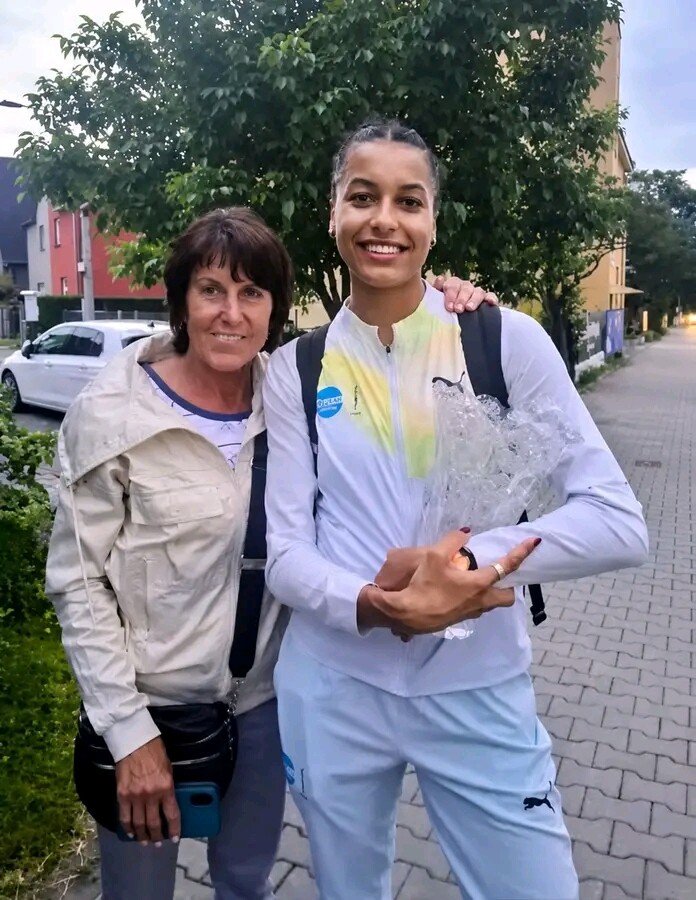
Swiss sensation Audrey Werro has reignited the conversation after producing a breathtaking 1:53.80 in Paris, moving into third place on the all-time list. Her performance was not only one of the fastest ever recorded but also the closest anyone has come to the world record in decades. At just the beginning of what promises to be a long career, Werro has demonstrated that the impossible may finally be within reach.
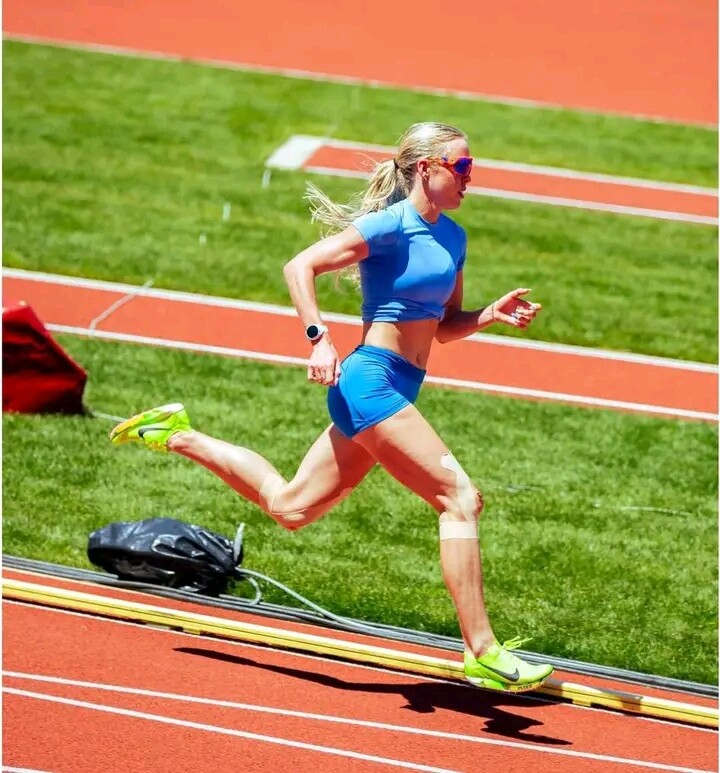
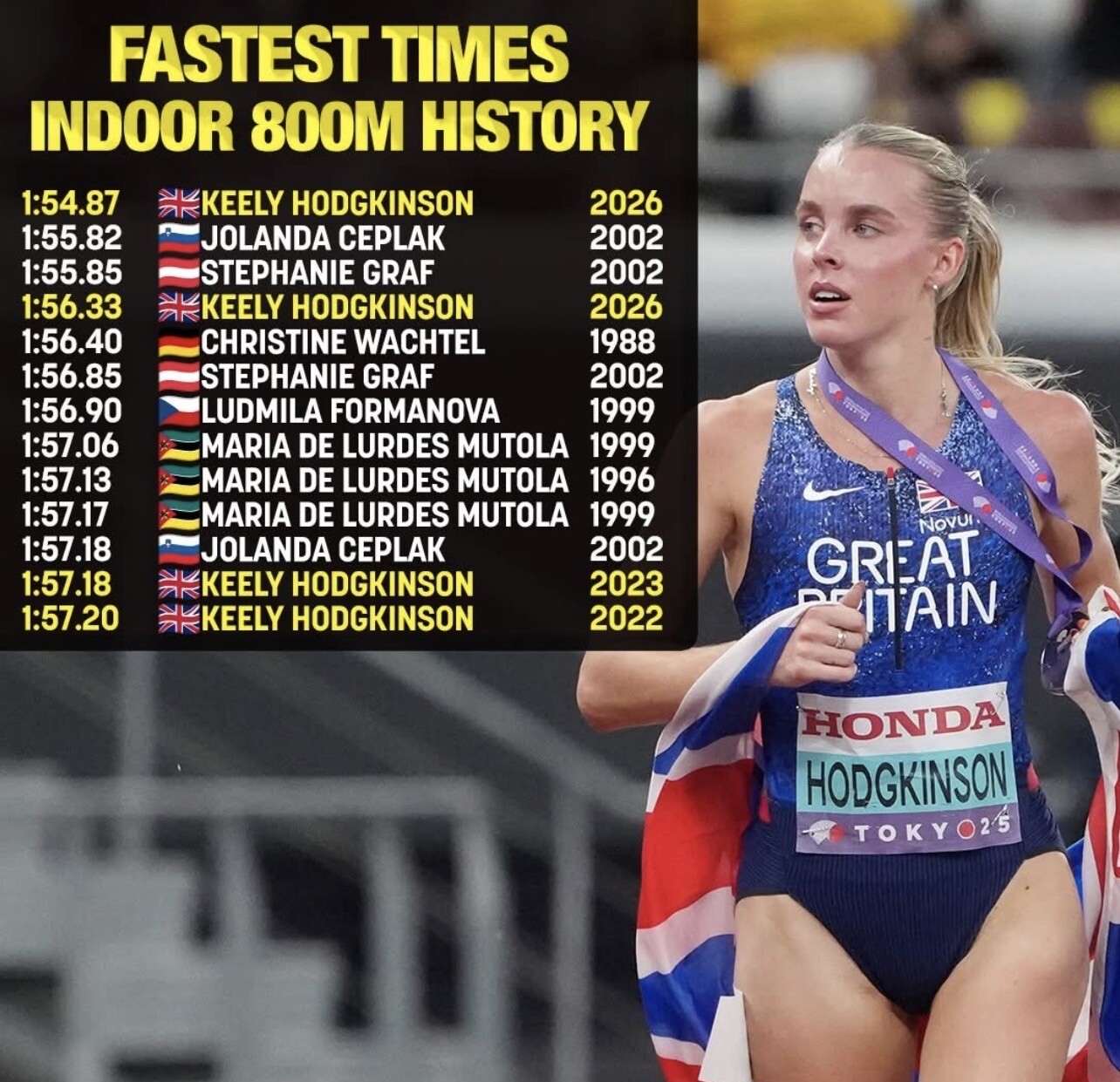
Great Britain's Keely Hodgkinson also remains one of the most compelling candidates. Already an Olympic champion and one of the most consistent performers of her generation, Hodgkinson reinforced her credentials by setting the world indoor short-track record of 1:54.87. Her combination of speed, racing intelligence, and consistency suggests that an outdoor assault on the world record cannot be ruled out.
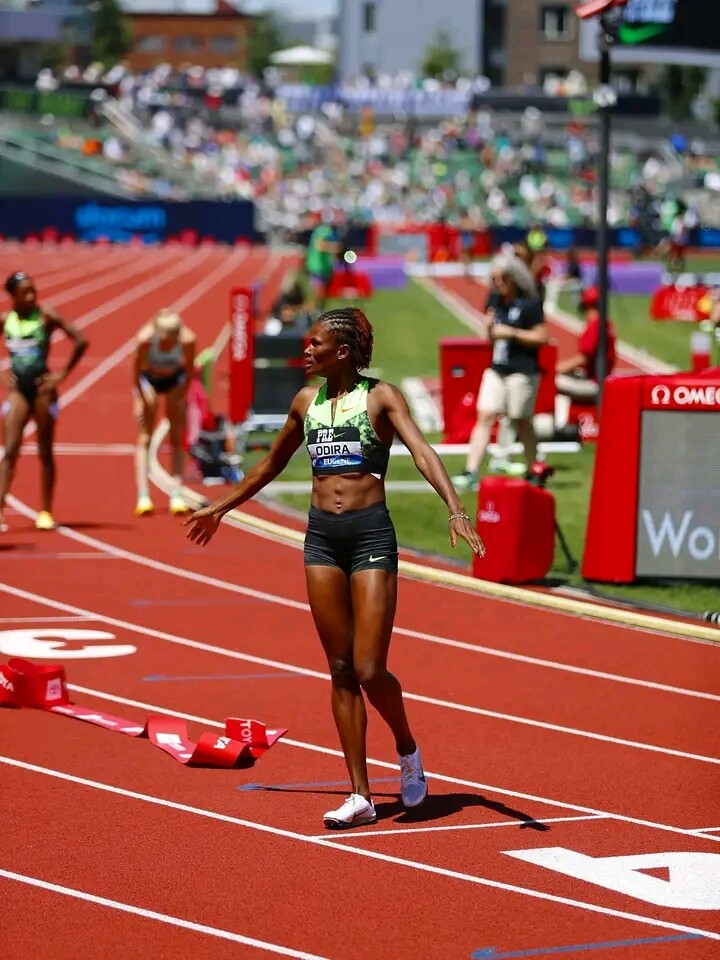
Kenya's Lilian Odira has also emerged as a genuine threat. The reigning world champion owns a personal best of 1:54.62, ranking her among the fastest women in history. She has already eclipsed Kratochvílová's long-standing championship record and continues to showcase an exceptional finishing kick that makes her dangerous in any race. If the pace is right, few athletes possess a stronger blend of championship experience and raw talent.
For 43 years, the athletics world has watched wave after wave of exceptional runners attempt to chase down one of sport's most iconic performances. Olympic champions, world champions, and record holders have all fallen short.
Yet the landscape feels different today. A new generation led by Audrey Werro, Keely Hodgkinson, and Lilian Odira is pushing the women's 800 meters to unprecedented depths. Their performances suggest that one of athletics' oldest and most celebrated records is no longer beyond imagination.
Whether Kratochvílová's 1:53.28 survives another season or another decade remains one of the sport's most fascinating questions. What is certain is that a record once considered untouchable is finally facing its most serious challenge in more than four decades.
The countdown may have already begun.
by Erick Cheruiyot for My Best Runs.
Login to leave a comment
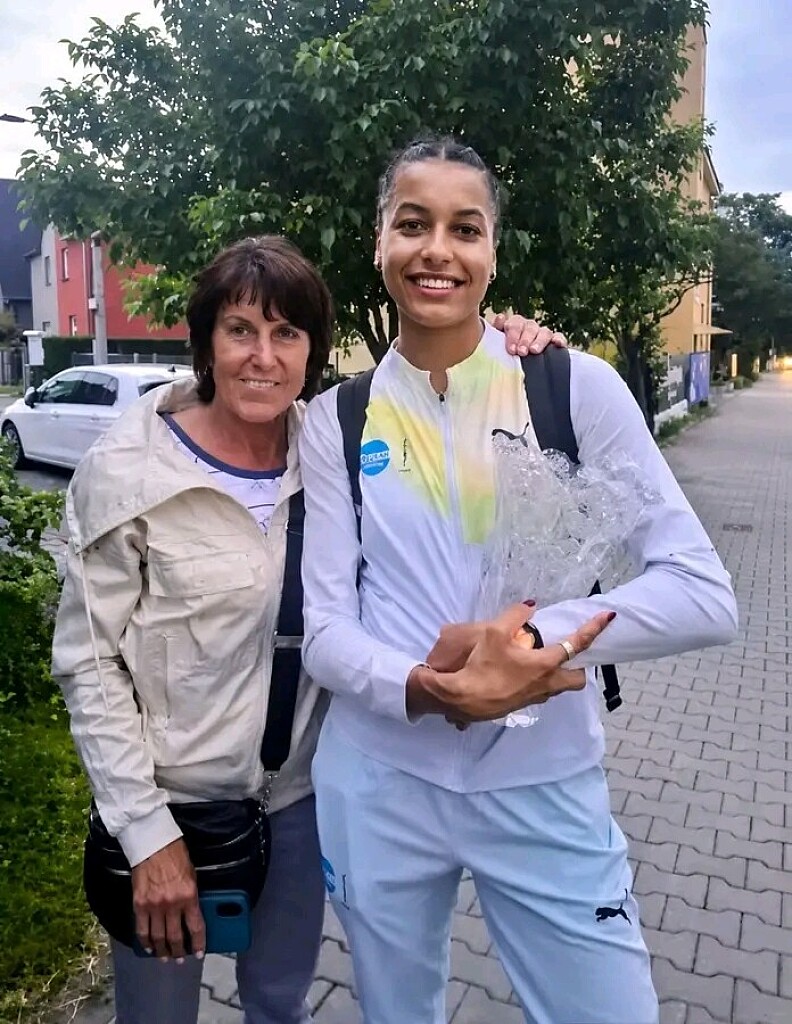
Audrey Werro's Rapid Rise Brings Jarmila Kratochvílová's Historic 800m World Record Into Focus
The women's 800 metres has entered one of its most fascinating chapters in years as rising Swiss sensation Audrey Werro edges ever closer to one of athletics' most enduring records.
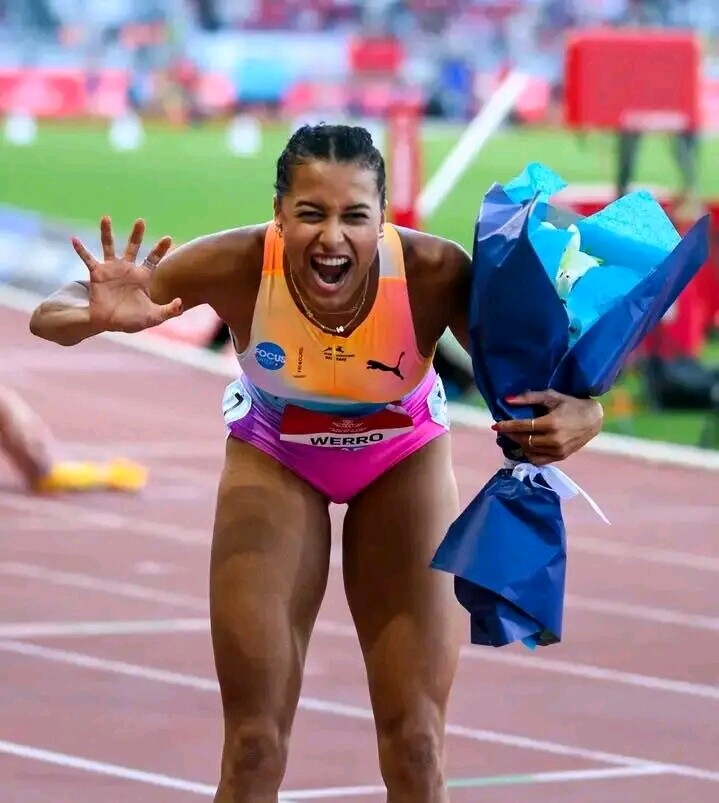
Standing between Werro and history is the remarkable mark of 1:53.28, set by Jarmila Kratochvílová in 1983—a performance that has remained untouched for more than four decades and continues to rank among the oldest world records in track and field.
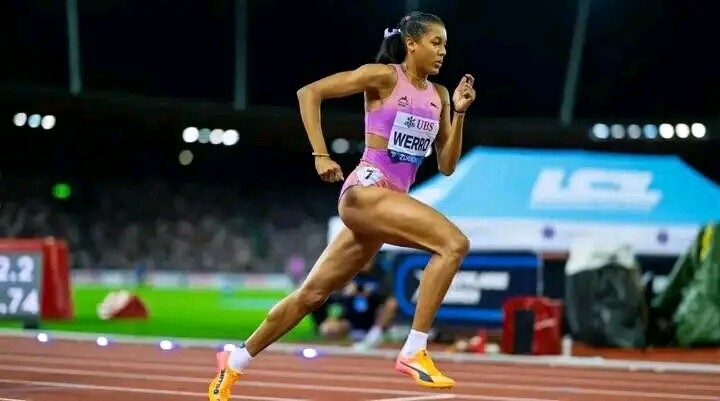
Werro's charge toward history gathered even greater momentum with a breathtaking victory at the Paris Diamond League, where she stormed to a sensational 1:53.80. The performance not only secured the win but also shattered the Diamond League record and meeting record, while establishing a new world-leading time and a Swiss national record. It was a statement performance that confirmed her status as one of the most exciting middle-distance athletes of her generation.
The talented Swiss runner has combined exceptional speed with tactical maturity and remarkable consistency, transforming what once seemed an untouchable world record into a genuine subject of discussion. Every race further strengthens the belief that she possesses the talent and confidence to challenge one of athletics' most enduring marks.
Although Kratochvílová's legendary record still stands, Werro's remarkable progression has reignited anticipation around the women's 800m. Her fearless racing style and relentless improvement have breathed new life into an event that has waited decades for an athlete capable of threatening history.
Whether the historic 1:53.28 falls this season or in the years ahead remains uncertain. What is undeniable, however, is that Audrey Werro has placed herself firmly on the doorstep of greatness, ensuring that every appearance on the track will be watched with growing excitement as the athletics world waits to see whether one of its oldest records can finally be rewritten.
by Erick Cheruiyot for My Best Runs.
Login to leave a comment
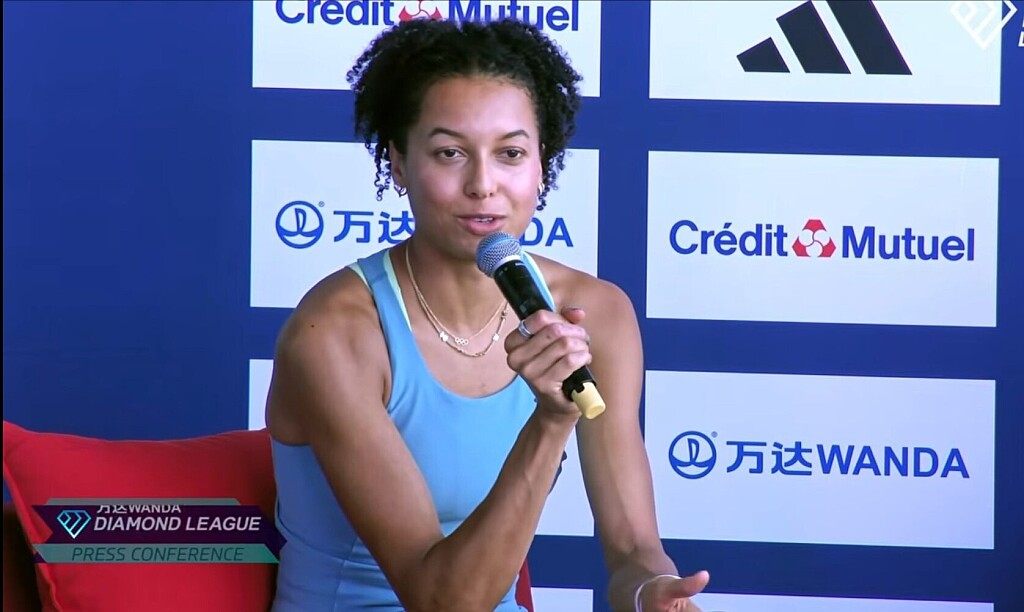
Audrey Werro Targets History with Bold World 800m Record Attempt in Paris
The stage is set for what could become one of the most memorable nights in women's middle-distance running.
Swiss sensation Audrey Werro will head to the Paris Diamond League on 28 June 2026 with one objective—an all-out assault on the women's 800m world record. Fresh off her stunning 1:53.98 performance in Stockholm, Werro has made her ambitions unmistakably clear by requesting the stadium's green wavelights to be set at 1:53.28 pace, matching the current global mark.
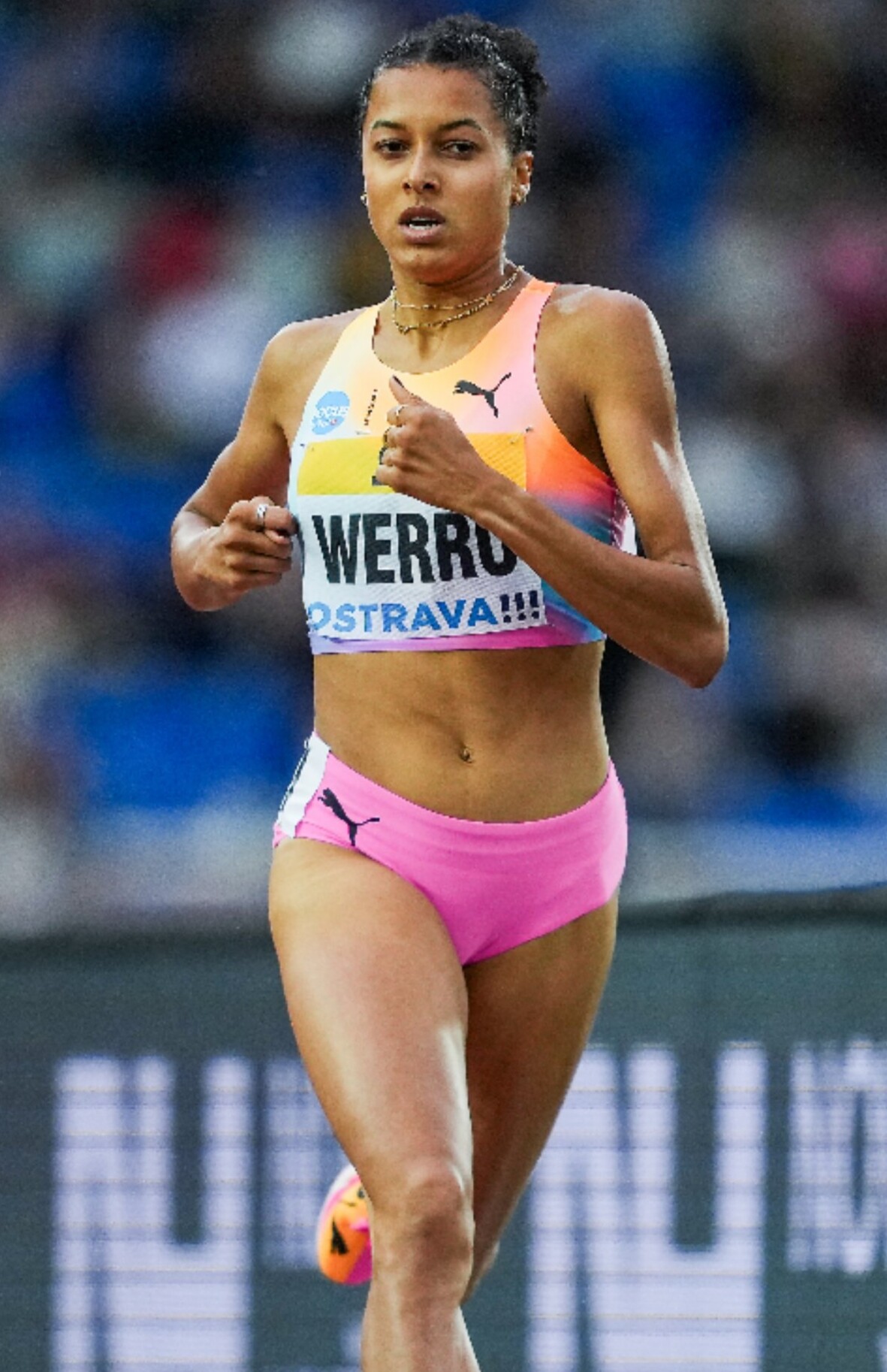
To keep that record attempt on schedule, the designated pacemaker is expected to lead the field through 400 metres in a blistering 55.50 seconds. Werro's preferred pacing strategy also calls for 27.0 seconds at 200m, 55.50 at 400m, and 1:24.50 at 600m, leaving just one final lap of sustained brilliance between her and athletics history.
The challenge is immense. The 1:53.28 world record has stood untouched for more than four decades, having been set by Jarmila Kratochvílová of former Czechoslovakia on 26 July 1983. It remains one of the longest-standing world records in track and field, making Werro's pursuit all the more captivating.
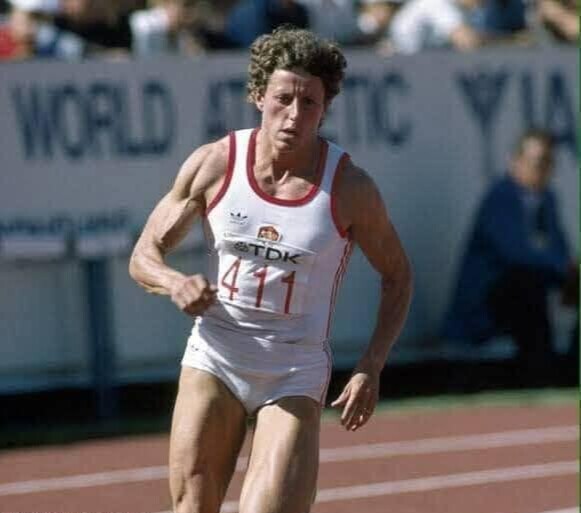
The 22-year-old has every reason to believe she can threaten the mark. Her breakthrough 1:53.98 in Stockholm made her only the third woman in history to break the 1:54 barrier, while her European-best 1:22.85 over 600m confirmed she is enjoying the finest form of her career.
With Paris renowned for producing fast middle-distance races, ideal pacing, elite competition, and world-class conditions, the ingredients are in place for a genuine world record attempt. Every split will matter, every stride will count, and the athletics world will be watching as Werro tests the limits of one of the sport's most enduring records.
Whether the record finally falls or survives another challenge, Audrey Werro's fearless pursuit of greatness promises to be one of the defining moments of the 2026 Diamond League season.
by Erick Cheruiyot for My Best Runs.
Login to leave a comment
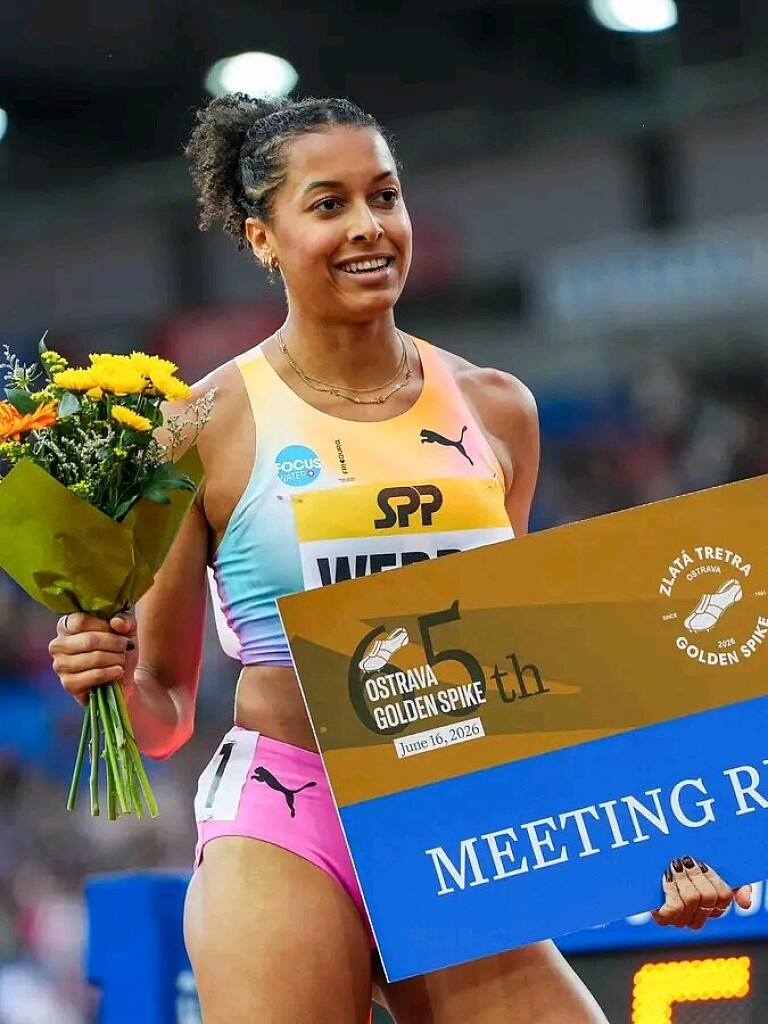
Audrey Werro Delivers Another Statement Run as 800m World Record Watch Intensifies
Audrey Werro continues to announce herself as one of the most exciting talents in global middle-distance running after producing another breathtaking 800m performance in Ostrava.
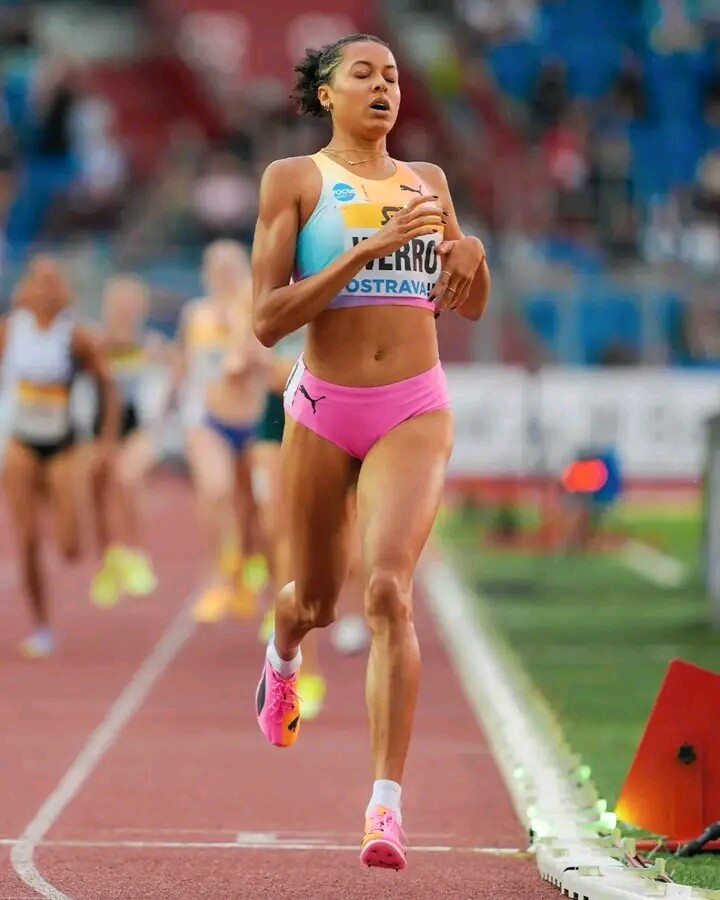
The Swiss star stormed to victory in 1:54.45, delivering a commanding display that once again placed her among the fastest women ever over the distance. Werro stayed composed through the early stages before making her decisive move in the final 200 metres, creating separation from a world-class field and powering home for a dominant win.
The race was set up at a furious pace, with the pacemaker taking the athletes through 400m in 55.8 seconds. Femke Bol’s sister, Femke Broeders-Bol, who has stepped up from the 400m hurdles this season, showed her growing strength by staying in contention alongside Werro deep into the race.
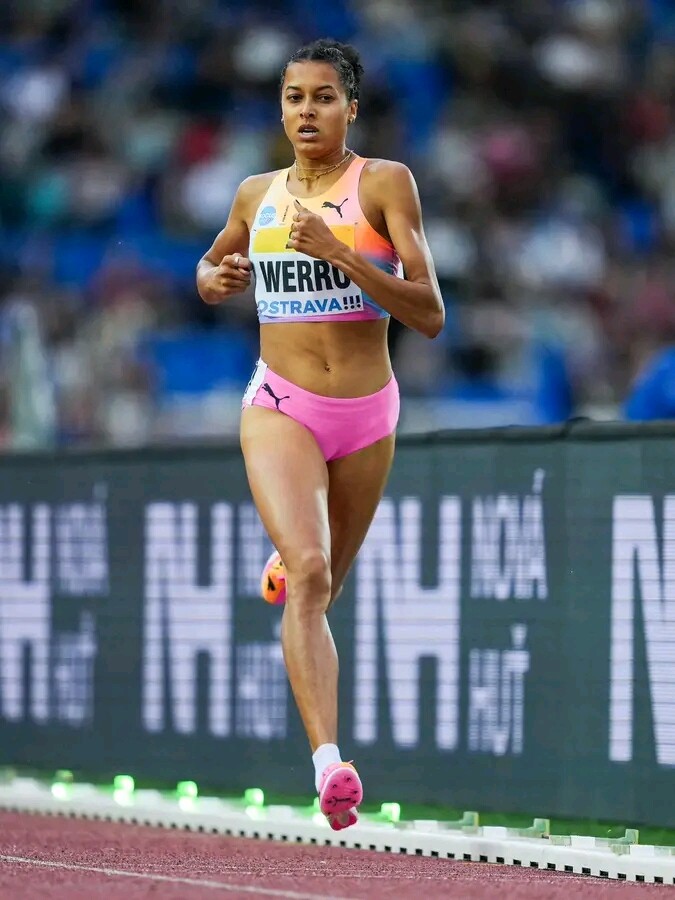
Broeders-Bol held on impressively until the final 200m before Werro shifted gears and pulled away. The Dutch athlete crossed the line second in a remarkable 1:57.13, moving to No.3 on the Dutch all-time 800m rankings with one of the best performances of her career.
The quality of the race was further highlighted by the depth of the field, as all eight finalists broke the two-minute barrier in a remarkable display of women’s 800m strength.
Werro’s performance has once again raised the question of whether the legendary world record could finally be under threat. Jarmila Kratochvílová’s long-standing mark of 1:53.28 from 1983 remains untouched, but with the current generation producing performances of this level, the historic record appears more vulnerable than it has in years.
Ostrava delivered a moment that showcased the incredible evolution of the women’s 800m, with Werro leading the charge and proving that history may soon be within reach.
by Erick Cheruiyot for My Best Runs.
Login to leave a comment
Forty-Three Years on the Clock: Is 1:53.28 Finally Ready to Fall?
For more than four decades, one number has hovered over women’s middle-distance running like a mountain peak few dare to climb: 1:53.28.
Set in 1983 by Jarmila Kratochvílová in Munich, it remains the oldest world record still standing in women’s track and field. Generations have come and gone. Champions have risen, medals have been won, but the clock has stubbornly refused to yield.
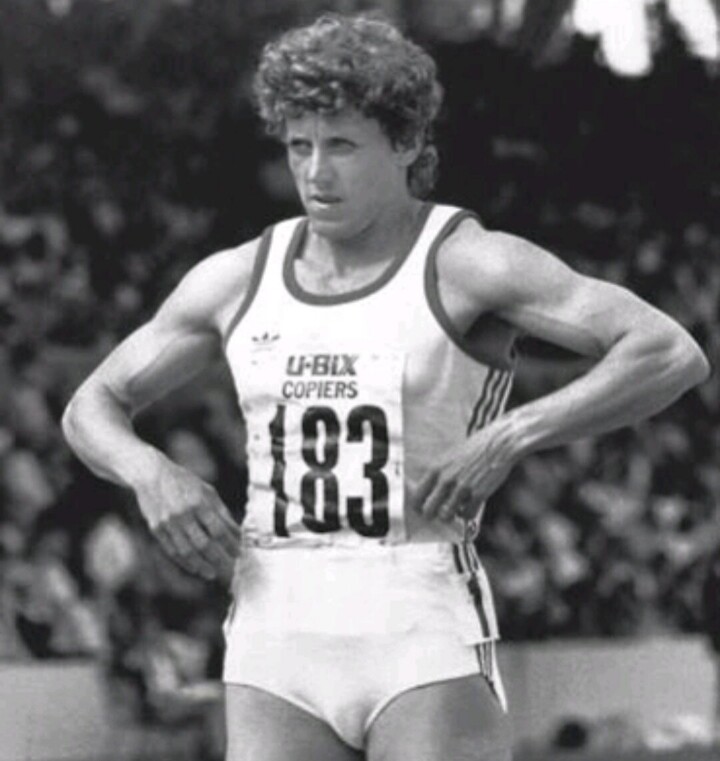
Now, the question feels sharper than ever: is that 43-year-old record finally under serious threat?
Just a week after rewriting history indoors, Keely Hodgkinson has shifted her focus to the ultimate prize — the outdoor 800m world record. Her recent indoor world record was not just a victory; it was a statement. A declaration that the margins are closing and that the impossible may simply be waiting for the right moment.
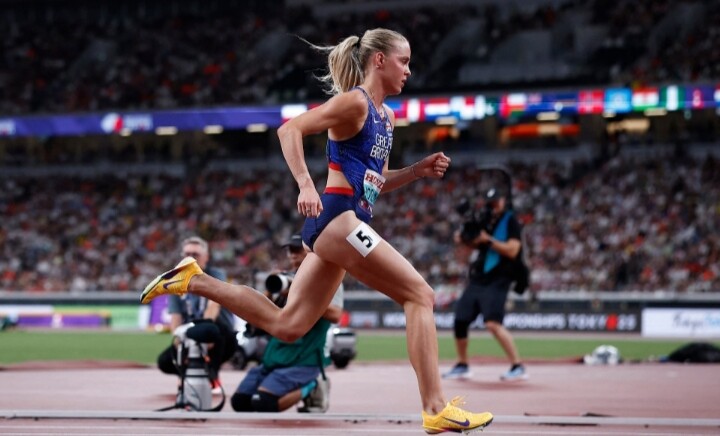
For years, Hodgkinson has hovered tantalisingly close to the barrier. The 1:54s have become familiar territory — controlled, composed, almost routine for an athlete who has built her career on remarkable consistency at the highest level. Olympic and world medals have confirmed her place among the elite, but the stopwatch keeps whispering that there is still more.
“We’ve been saying for years now,” she admitted, “and I think I’ve just been tipping on those 1:54s and at some point a 1:53 is going to come.”
That belief no longer sounds hopeful. It sounds calculated.
Hodgkinson is careful to protect what she already owns. She has made it clear that medals — earned through championship battles and tactical brilliance — mean more than a time on a scoreboard. Yet even she recognises the magnitude of what breaking 1:53.28 would represent.
“Now I do really believe that we can break it,” she said. “I think the outdoor 800m record would be like ‘cemented GOAT.’ I do really believe it’s possible.”
That phrase — cemented GOAT — captures the scale of the challenge. This is not simply about running fast. It is about redefining the boundaries of women’s middle-distance running. It is about erasing a mark that has survived eras, technologies, and entire generations of talent.
What makes this moment different is momentum. Hodgkinson is no longer chasing from a distance; she is knocking on the door. Her strength through 600 metres, her composure under pressure, and her devastating final drive suggest an athlete entering her prime with unfinished business.
Records do not fall because they are old. They fall because someone arrives who is fearless enough to believe the clock can be beaten.
For 43 years, 1:53.28 has stood untouched — a relic of another era. But with Hodgkinson’s confidence rising and her form sharper than ever, the barrier feels less mythical and more mathematical.
Is 1:53.28 finally under threat?
For the first time in decades, the answer does not feel like nostalgia.
It feels like anticipation.
by Erick Cheruiyot for My Best Runs.
Login to leave a comment
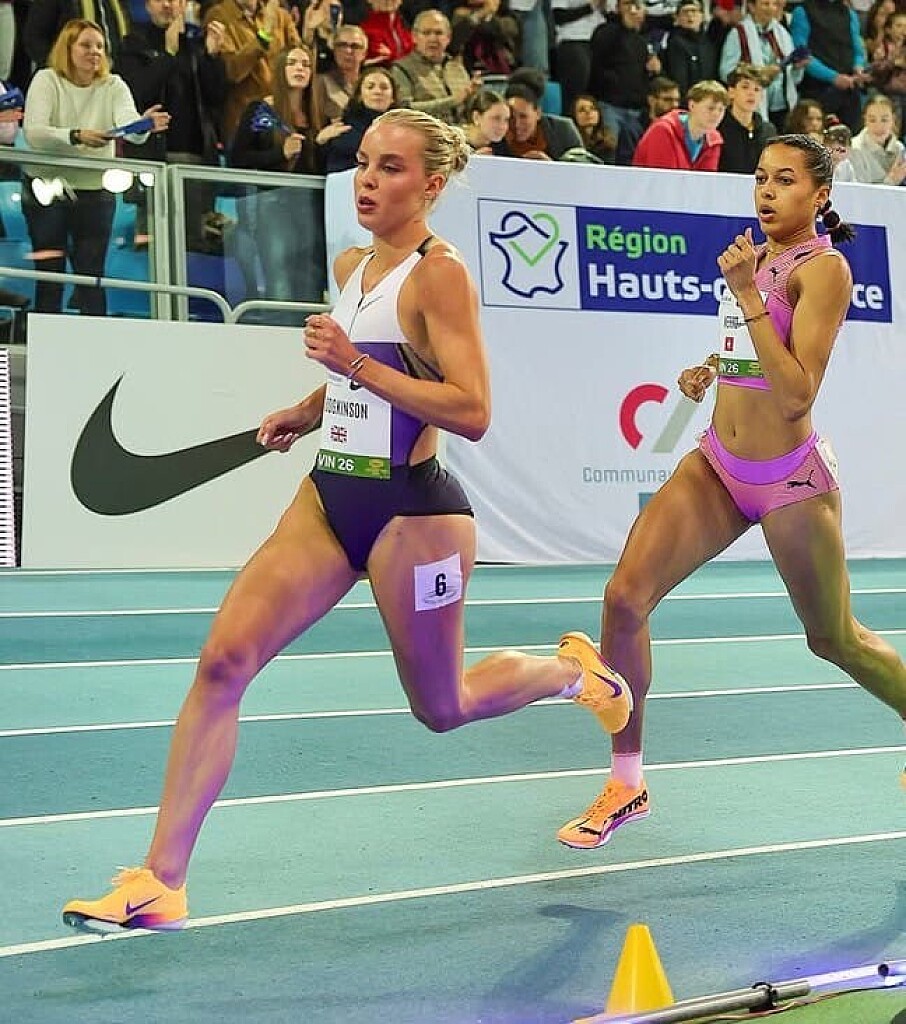
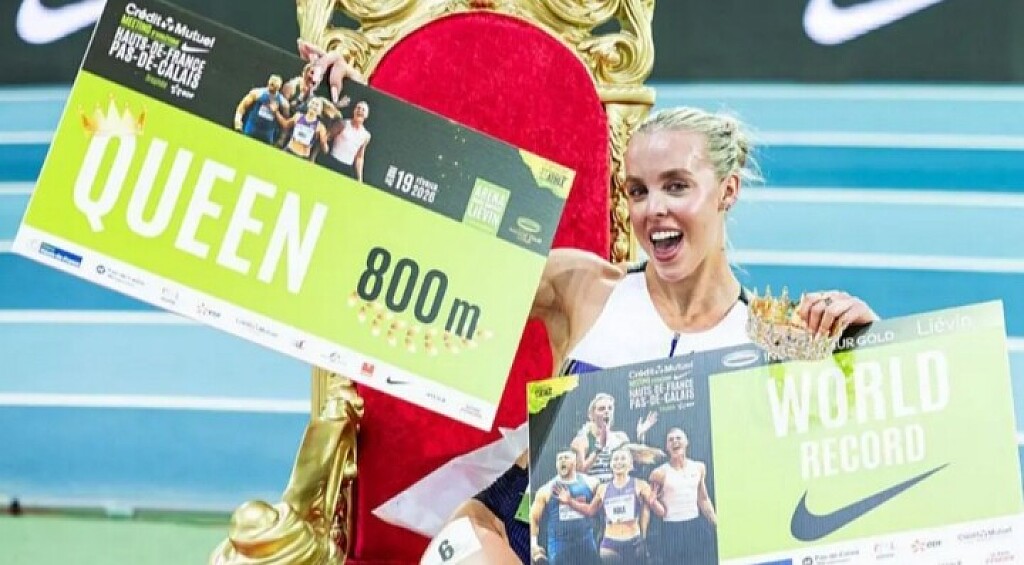
Hodgkinson Makes History in Liévin with Stunning 1:54.87 World Record
The Arena Stade Couvert in Liévin, France, became the stage for one of the most extraordinary performances in indoor middle-distance history as Britain’s Olympic champion Keely Hodgkinson delivered a masterclass over 800 meters at the Meeting Hauts-de-France Pas-de-Calais.
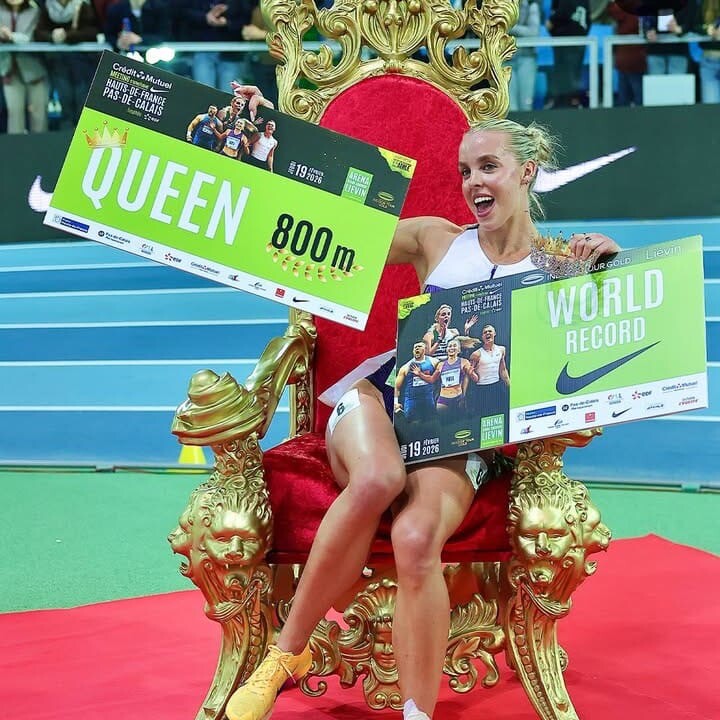
She did not simply break the women’s indoor 800m world record — she redefined it.
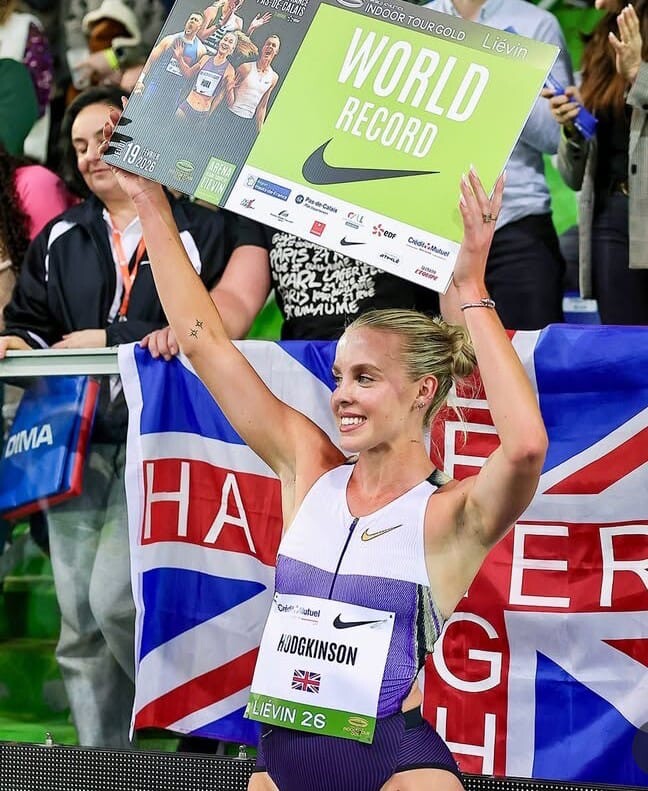
Hodgkinson stopped the clock at 1:54.87, slicing nearly a full second off the longstanding 1:55.82 mark set by Jolanda Čeplak. In doing so, she became the first woman in history to run under 1:55 indoors, a barrier many believed would stand for years.
From the gun, Hodgkinson committed to the pace lights and never wavered. Her opening lap was assertive but controlled, perfectly balanced between aggression and restraint. By 600 meters she had stretched the field into single file, running alone against the clock. There was no visible tightening in the home straight — only composed acceleration and absolute conviction through the finish line.
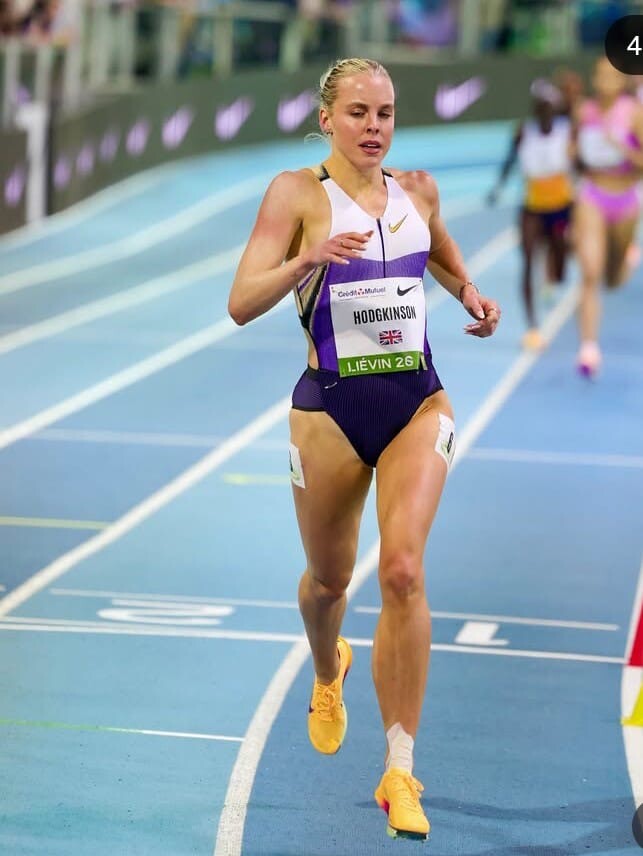
“Thank God! … That was pretty fun,” Hodgkinson said moments after crossing the line. “I’ve been really looking forward to this for a good few weeks.”
She credited the electric atmosphere inside the compact arena.
“Thank you for the amazing crowd. I could hear you all the way around, and that was a lot of fun. Thank you.”
Despite effectively racing solo over the final stages, she smiled when asked about the pressure.
“I had lots of help in here!”
Behind her, a deep international field produced strong performances, underlining the quality of the race.
Women’s 800m Results
1. Keely Hodgkinson (GBR) – 1:54.87 WR
2. Audrey Werro (SUI) – 1:58.38
3. Tsige Duguma (ETH) – 1:58.83 SB
4. Habitam Alemu Getachew (ETH) – 1:59.54 PB
5. Clara Liberman (FRA) – 2:00.61
6. Angelika Wielgosz (POL) – 2:00.70 SB
7. Dumas (FRA) – 2:01.47
Crestan Claims Meeting Record in Men’s 800m
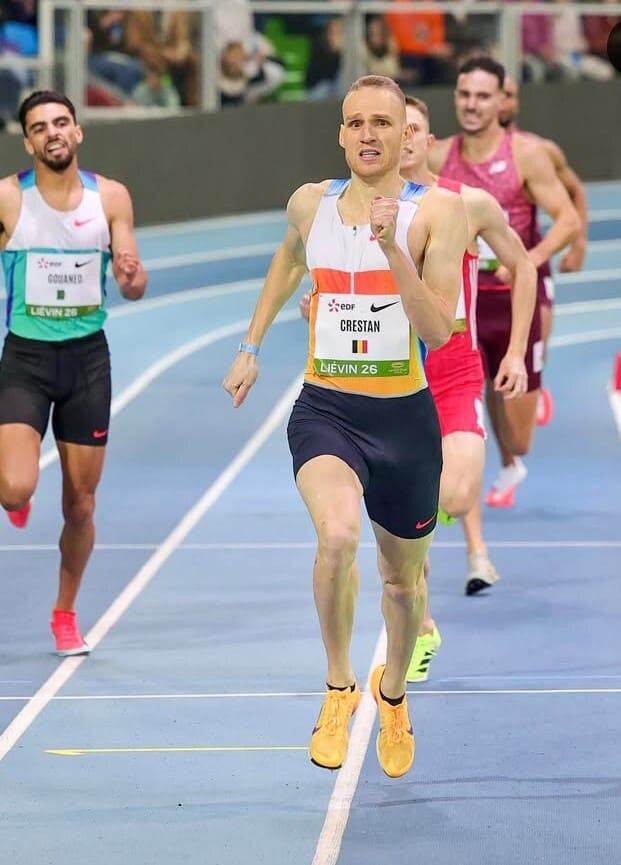
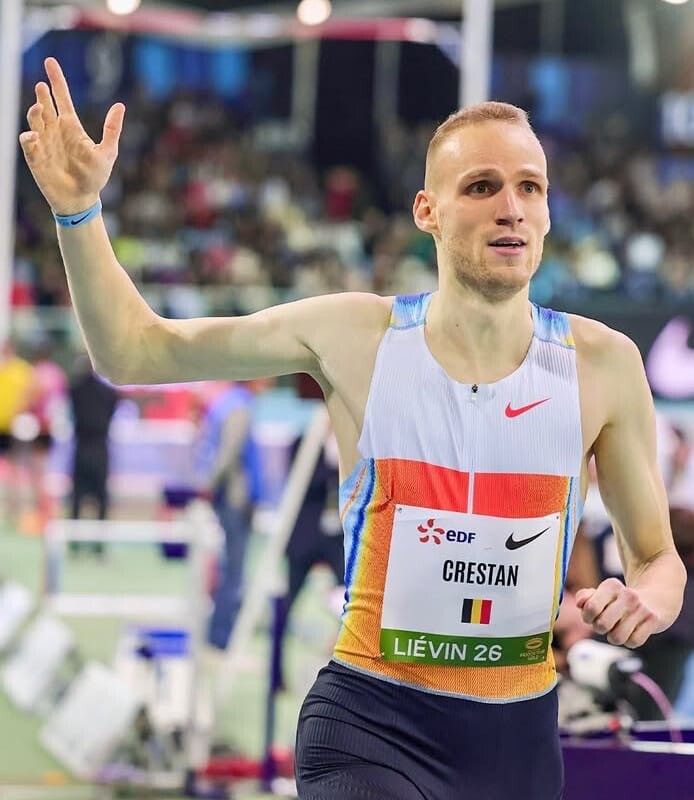
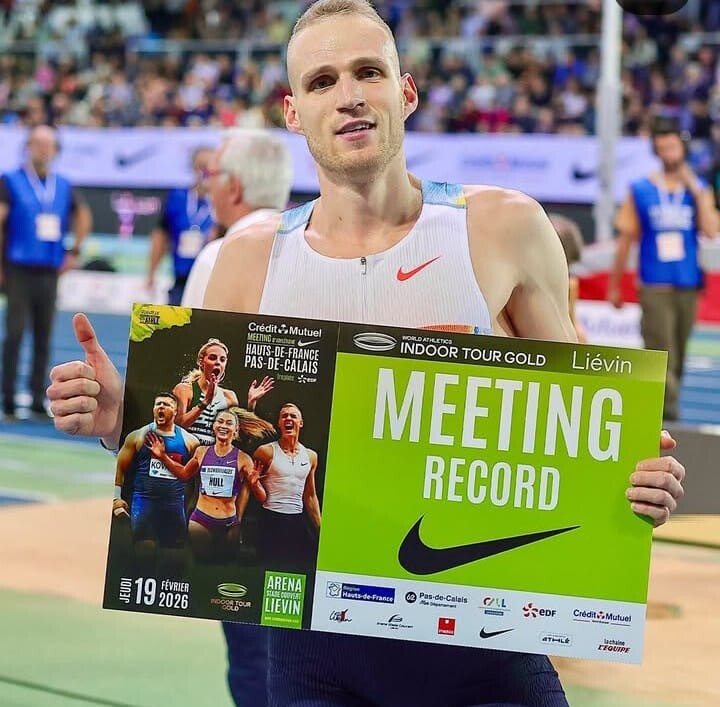
Earlier in the evening, Belgium’s Eliott Crestan delivered a performance of his own, storming to victory in 1:43.91 to secure his third consecutive Liévin title.
His time established a new meeting record, surpassing the mark previously associated with Polish great Adam Kszczot.
“I am very happy to beat this record; he is a legend,” Crestan said after the race.
The men’s final unfolded at a relentless tempo from the outset. Crestan positioned himself perfectly before asserting control over the final 200 meters, powering clear with authority.
Men’s 800m Results (Final A)
1. Eliott Crestan (BEL) – 1:43.91 MR
2. Maciej Wyderka (POL) – 1:44.64
3. Slimane Moula (ALG) – 1:44.80 PB
4. Mohamed Ali Gouaned (ALG) – 1:44.92
5. Samuel Chapple (NED) – 1:45.37
6. Ryan Clarke (NED) – 1:46.72
A Night That Redefines the Event
Liévin has long been synonymous with fast times and world-class competition. On this night, it delivered something even rarer — a defining generational statement.
By breaking through the 1:55 barrier indoors, Hodgkinson has fundamentally recalibrated expectations for the women’s 800 meters. Records are meant to be broken. Barriers, however, are meant to challenge belief.
In Liévin, belief shifted.
by Robert Kibet for My Best Runs
Login to leave a comment

Josh Hoey Shatters 28-Year-Old Indoor 800m World Record in Boston
Josh Hoey arrived in Boston with belief, preparation, and a bold target — and left with a world record.
At the New Balance Indoor Grand Prix, the opening World Athletics Indoor Tour Gold meeting of the season, the American middle-distance star delivered a performance for the ages, storming to a world 800m short track record of 1:42.50. In doing so, Hoey erased a mark that had stood untouched for 28 years, rewriting indoor history on Saturday (24).
The run confirmed what many had sensed for weeks. Just seven weeks earlier, on the same Boston track, Hoey had set a world best in the 600m indoors. That momentum carried seamlessly into this race, where he sliced 0.17 seconds off the legendary Wilson Kipketer’s 1:42.67, set at the 1997 World Indoor Championships in Paris.

Hoey entered the race already ranked as the second-fastest indoor 800m runner of all time, thanks to his North American record of 1:43.24 from last year’s US Indoor Championships in New York. But this time, there was no doubt. With precision pacing and supreme control, he elevated himself to the very top of the all-time list — and did so emphatically, winning by more than two seconds.
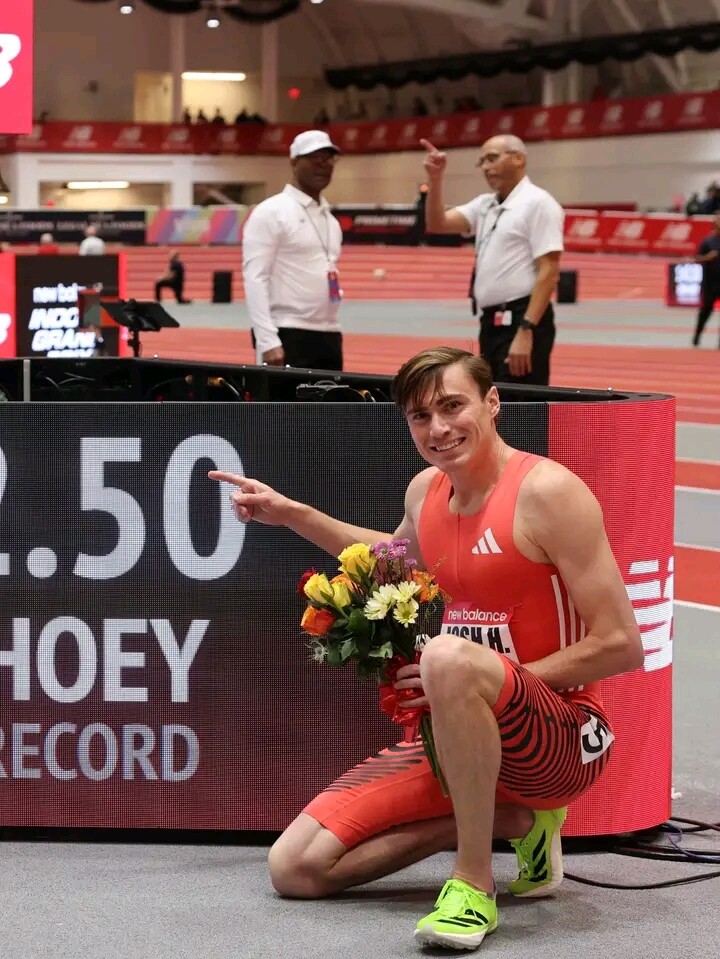
The race unfolded like a perfectly scripted plan. Paced by his brother Jaxson Hoey, Josh surged through the opening 200m in 24.81, reaching 400m in a controlled 50.21. As Jaxson stepped aside, the record attempt became a solo mission. Josh powered past 600m in 1:16.19, holding his form and composure all the way to the finish line, where the clock confirmed history: 1:42.50.
Afterward, Hoey credited months of disciplined preparation and trust in the process.
“We did a lot of pacing work,” he said. “We just kept steadily improving — week by week, block by block — and it all came together.”
For the 26-year-old, the moment carried deeper meaning. After narrowly missing selection for the U.S. teams at last year’s World Championships and the Paris Olympic Games, this performance felt less like a peak and more like a launchpad.
“This is far from the end of the journey,” Hoey reflected. “Honestly, it feels like we’re just getting started.”
With a world record now to his name and momentum firmly on his side, Josh Hoey has not only reclaimed lost ground — he has announced himself as the defining indoor 800m force of this generation.
by Erick Cheruiyot for My Bestruns.
Login to leave a comment
South Africa's Prudence Sekgodiso Closes in on 800m World Lead
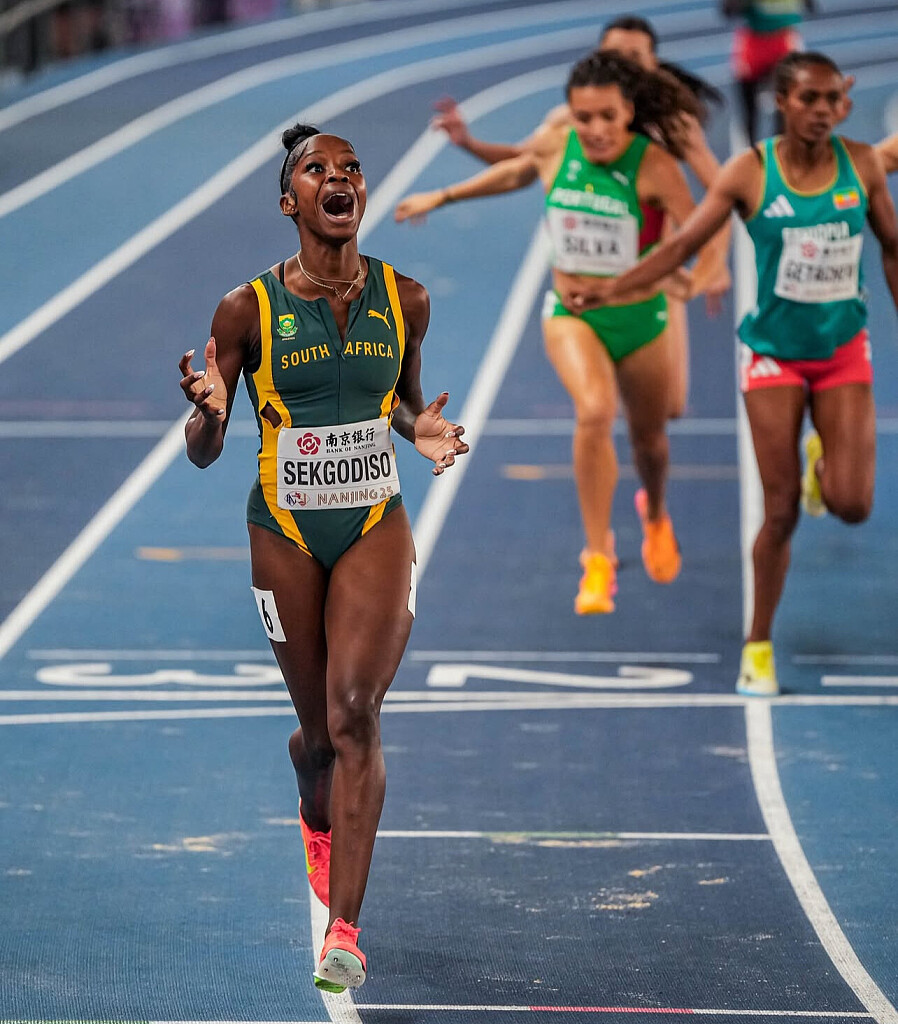
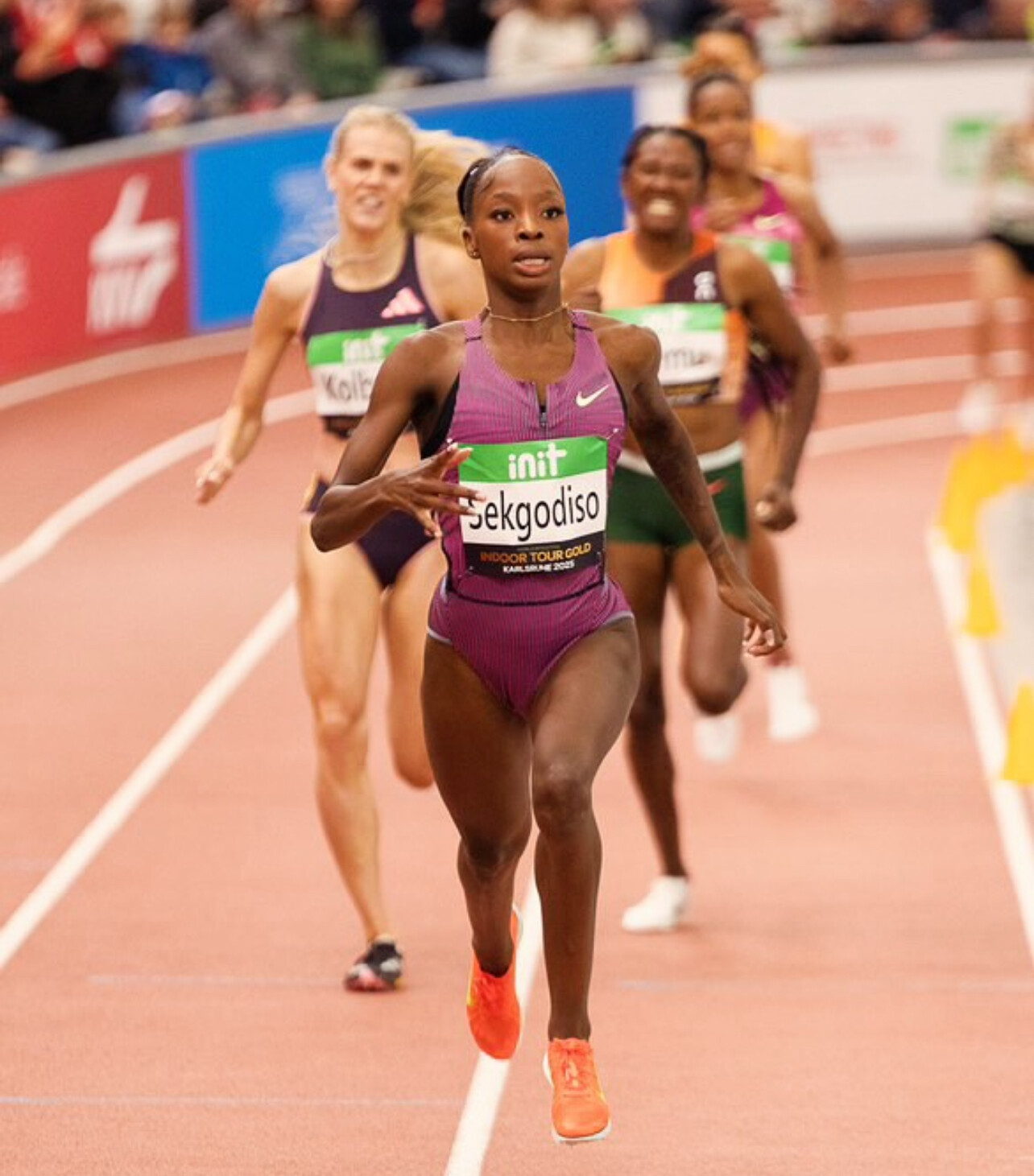
Prudence Sekgodiso of South Africa is charging toward the top of the global women’s 800m leaderboard with a sizzling time of 1:57.16, recorded in the 2025 season. As of July 4, this places her second on the current world list—trailing only Ethiopia’s Duguma, who leads with 1:56.64.
Sekgodiso’s breakthrough has sent waves through the athletics world, as seen in a recent viral post by SuperSport celebrating her ascent. The 800m is one of the most fiercely contested events in track and field, and Sekgodiso’s consistency and fearless racing style are positioning her as a serious medal contender ahead of the Paris World Championships and potentially the Olympics.
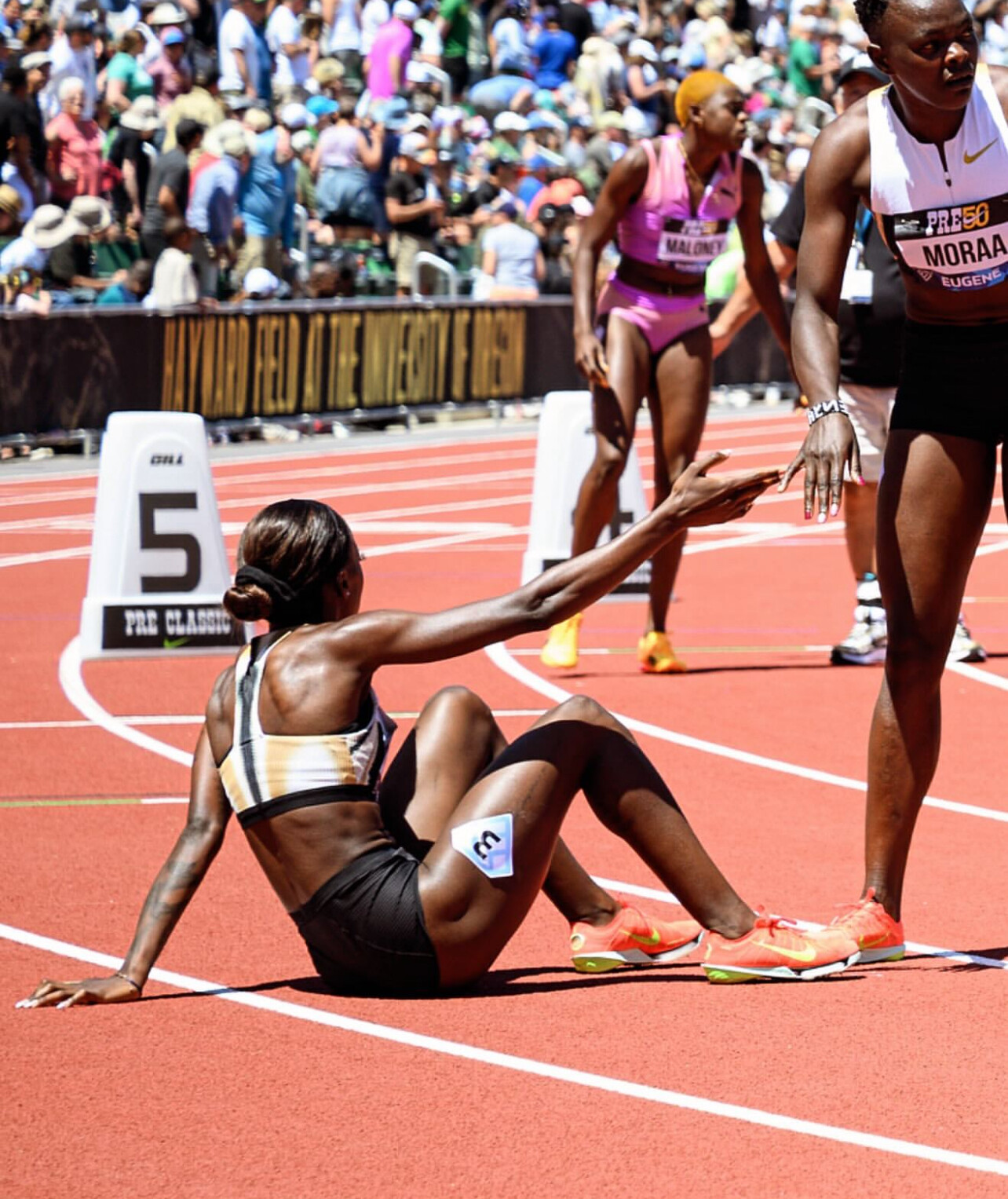
? Top 10 Women’s 800m Times in 2025 (as of July 4):
1. 1:56.64 – Duguma
2. 1:57.16 – Sekgodiso
3. 1:57.25 – Werro
4. 1:57.49 – Nowe
5. 1:57.55 – Wiley
6. 1:57.66 – Bell
7. 1:57.81 – Bourgoin
8. 1:57.83 – Billings
9. 1:57.83 – Moraa
10. 1:58.00 – Maloney
How Sekgodiso Measures Up Historically:
The women’s 800m world record still stands at 1:53.28, set by Jarmila Kratochvílová of Czechoslovakia in 1983—a mark that has stood for over 40 years and is widely considered one of the most unbreakable in athletics. Only a handful of women have ever run under 1:55, including:
• Jarmila Kratochvílová (CZE) – 1:53.28 (1983)
• Nadezhda Olizarenko (URS) – 1:53.43 (1980)
• Pamela Jelimo (KEN) – 1:54.01 (2008)
• Caster Semenya (RSA) – 1:54.25 (2018)
Prudence Sekgodiso's 1:57.16 may not yet challenge these all-time performances, but it signals her potential to enter the elite sub-1:56 territory—especially with major races still ahead this season.
South Africa’s Next Middle-Distance Icon?
Following in the footsteps of Caster Semenya, Sekgodiso has reignited South Africa’s presence in the women’s 800m. At just 22 years old, she combines speed, endurance, and confidence, and her upward trajectory is undeniable.
As she continues her climb, all eyes will be on her next race. With every lap, Prudence Sekgodiso is narrowing the gap—not just between herself and the world leader, but also between today’s stars and history’s greats.
by Boris Baron
Login to leave a comment
The Untouchable Record: Jarmila Kratochvílová’s 800m Mark Still Stands 42 Years Later — But Should It?
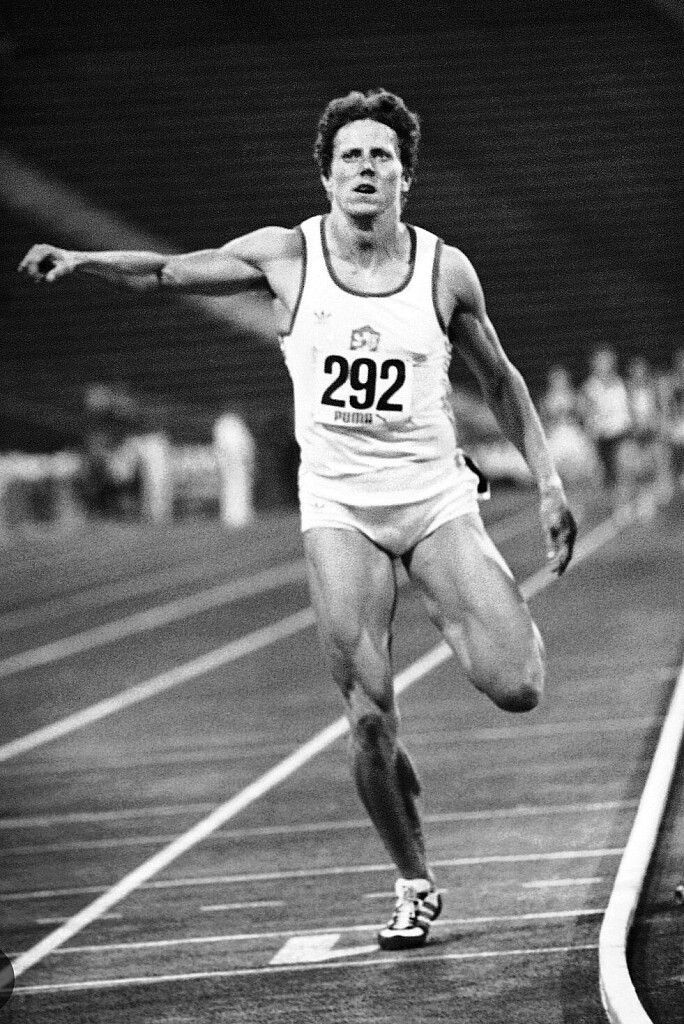
In the fast-evolving world of athletics, records are made to be broken — except, it seems, for one. On July 26, 1983, in Munich, Czechoslovakia’s Jarmila Kratochvílová ran an astonishing 1:53.28 in the women’s 800 meters. Four decades later, that time remains the oldest unbroken individual world record in track and field history.
It has withstood super spikes, altitude training, hyper-focused coaching, and the world’s most gifted middle-distance runners. Olympic champions like Caster Semenya and Athing Mu have come close, but none have truly threatened it. Which begs the question — how did a performance like this come to be? And should it still be recognized?
A Record Born in a Different Era
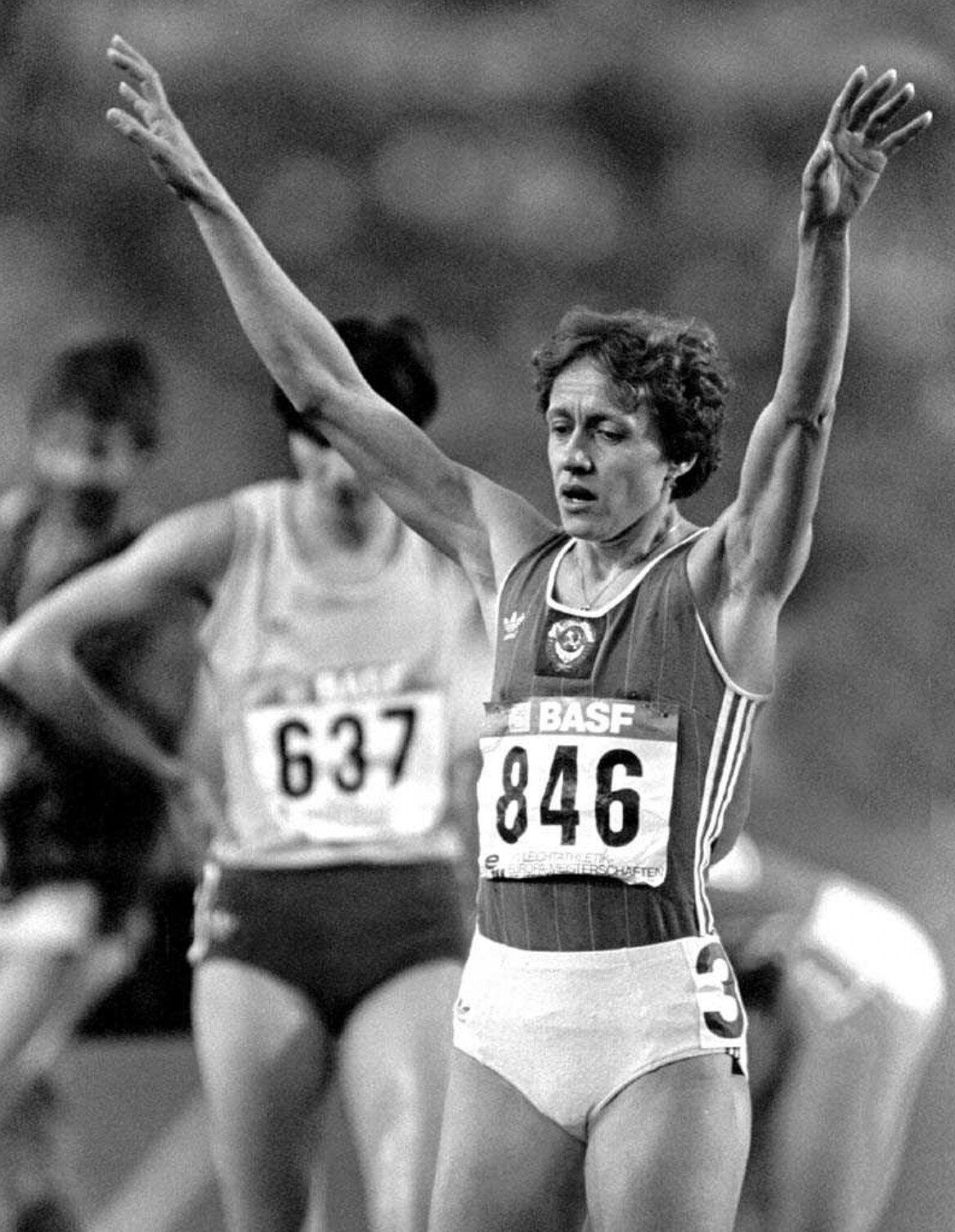
Kratochvílová’s performance came at a time when Eastern Bloc nations, including Czechoslovakia, were deep into state-sponsored sports programs. In that era, the line between elite preparation and banned enhancement was often blurred. Many athletes from that period, particularly from East Germany and the Soviet Union, have since admitted or been linked to systemic doping programs.
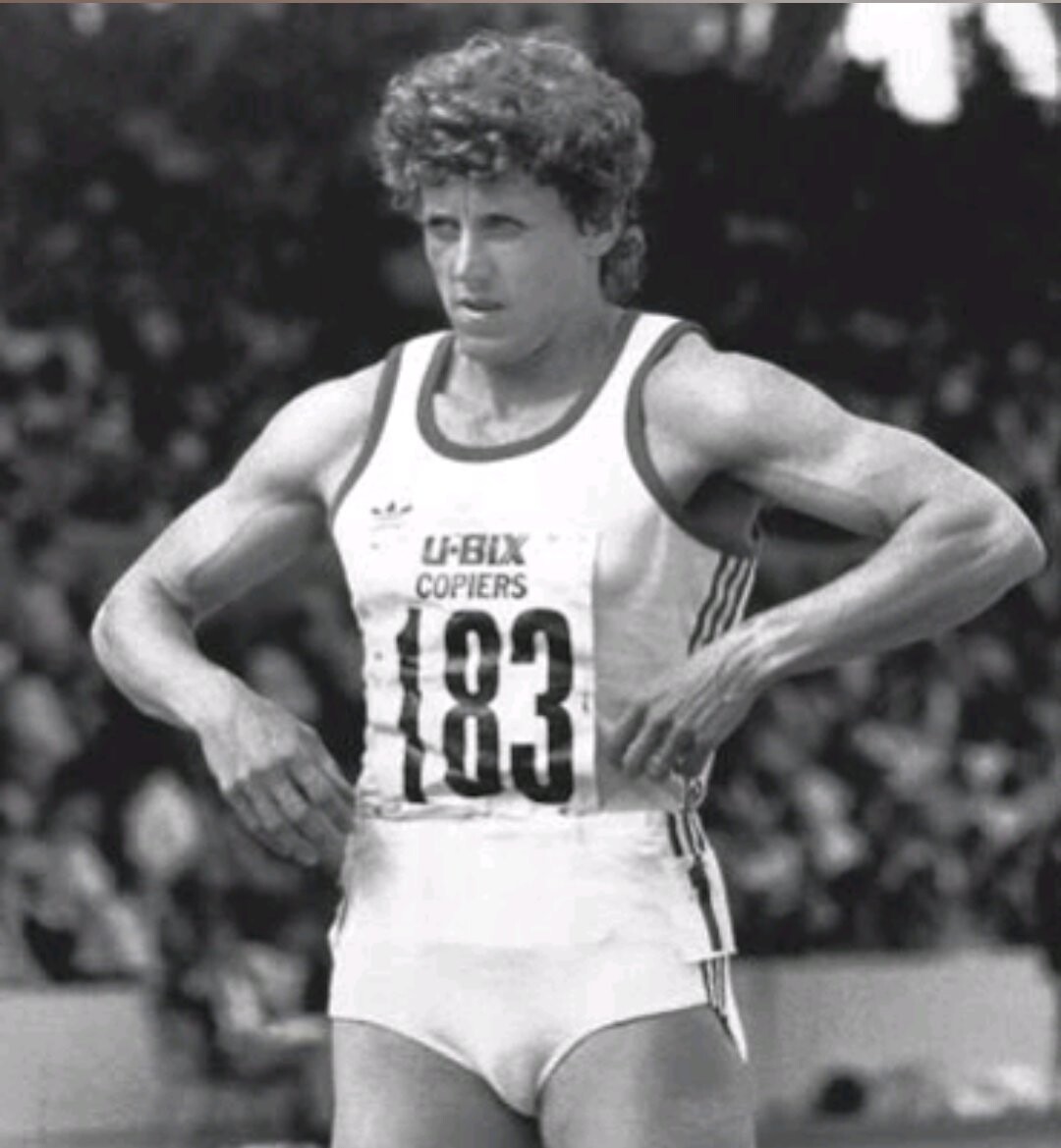
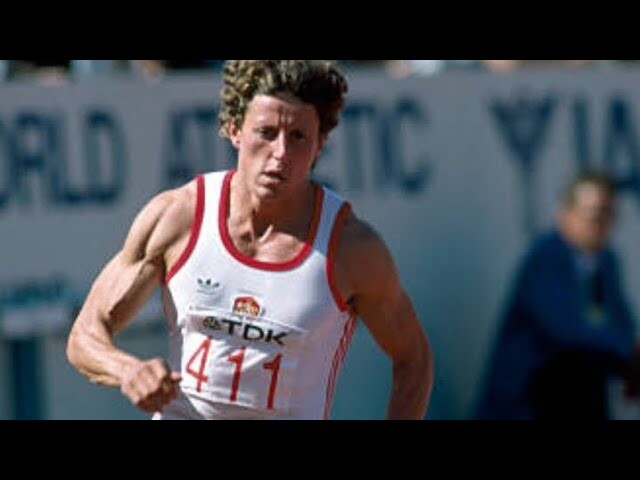
While there has been no formal proof that Kratochvílová used banned substances, the context raises suspicions. Her physical appearance — muscular, powerful, and more commonly compared to male counterparts than to female contemporaries — only added to the speculation. Combined with her unprecedented strength over both 400m and 800m distances, critics argue that the performance is not only unmatched, but possibly unnatural.
Why the Doubts Persist
• Performance Gap: Her time is still more than a second faster than most modern Olympic champions — a massive difference at the elite level.
• Era of Doping: Kratochvílová competed during a time when drug testing was primitive and records were often set under questionable conditions.
• Physique & Speculation: Her highly muscular build and deep voice led some to question if she should have been eligible to compete in the women’s category — though gender testing at the time did not flag her.
• Lack of Longevity: After 1983, Kratochvílová’s presence at major championships waned. Some suggest this could point to the unsustainable nature of her peak performance.
Arguments for Letting It Stand
Supporters of the record, including Kratochvílová herself, insist that the performance was clean and the result of hard work and unconventional training. She famously avoided standard intervals and instead focused on long sessions in heavy shoes and rugged conditions. No positive test exists, and the record has survived decades of scrutiny by World Athletics.
Moreover, some point out that breaking a record doesn’t validate its legitimacy — it simply reflects the evolution of training, equipment, and talent pools. If no one has broken it yet, perhaps it’s just one of those rare, generational performances that transcends time.
Should It Be Removed?
There have been proposals — including from World Athletics — to reset all pre-2005 records due to the lack of out-of-competition drug testing during earlier decades. The suggestion faced pushback, especially from record holders who never failed a test.
But the debate continues. Some believe Kratochvílová’s 1:53.28 represents a performance that belongs to a different set of rules — and therefore shouldn’t be part of the same record book as today’s achievements. Others see it as an enduring symbol of what the human body (with or without help) once accomplished.
Final Thought
Whether you view Jarmila Kratochvílová’s 800m world record as a miraculous outlier or a relic of a flawed system, one thing is certain: it has become the ultimate benchmark. Until someone runs faster — cleanly and unquestionably — the debate will rage on. And with every passing year, this 1983 run becomes less of a record and more of a legend.
by Boris Baron
Login to leave a comment
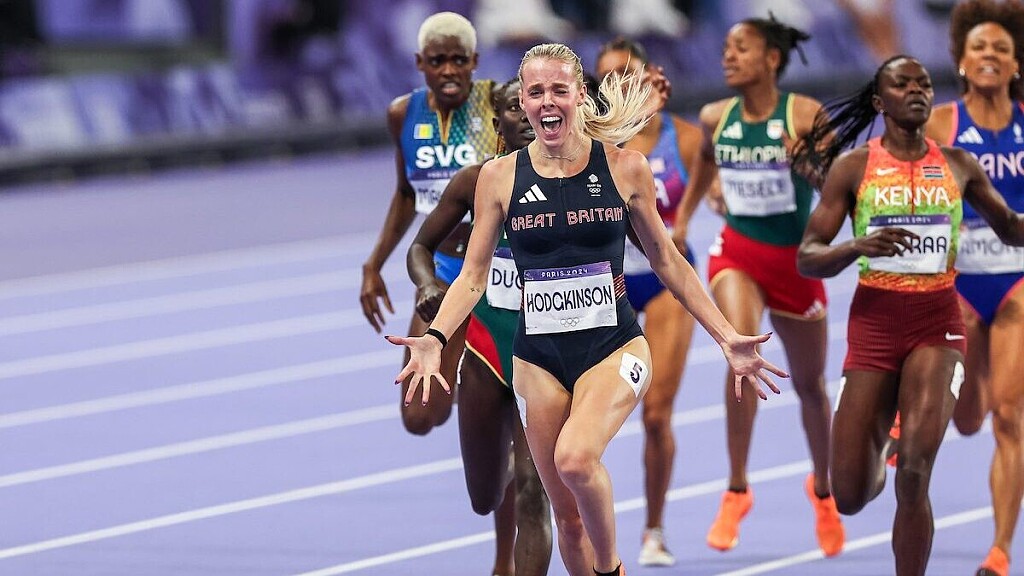
Olympic champion to challenge 41-year-old 800m world record
Launching your own track meet and naming it after yourself is one thing–but Great Britain’s 800m Olympic champion Keely Hodgkinson didn’t stop there. On Wednesday, British Athletics revealed that the inaugural Keely Klassic track meet, set for Feb. 15 in Birmingham, will conclude with Hodgkinson trying to break the 800m world record, which has stood for 41 years.
The record of 1:53.28, set by Czechoslovak athlete Jarmila Kratochvílová in 1983, is the longest-standing world record in athletics. Hodgkinson would need to run more than a second faster than her personal best (1:54.61) to even come close to taking it down. The run will mark Hodgkinson’s season opener and first race back from an injury that cut her 2024 season short.
At the Keely Klassic, Hodgkinson promises “a unique, immersive experience that will combine elite competition with an electrifying atmosphere” and extends the meeting invitation to Great Britain’s world-class track and field athletes.
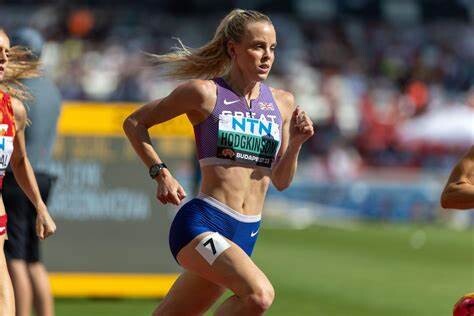
The unveiling comes less than a day after Tuesday’s BBC Sports Personality of the Year (SPOTY) ceremony, where Hodgkinson took centre stage. The 22-year-old is the first track athlete to win since Mo Farah won in 2017, and the first female track athlete to win since 2004. Her win also marks the fourth consecutive year that a woman has won the award–the longest streak in history.
“I’m actually in a bit of shock,” Hodgkinson said upon accepting the trophy. “I’m actually more excited for my coach, to be honest, because I wouldn’t be where I am without his guidance, [which] I’ve had since I was 17.”
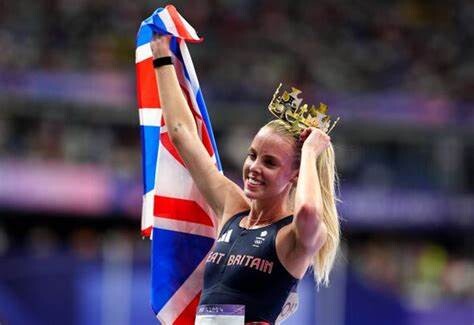
“This year has been absolutely incredible for me,” she continued. “I achieved everything I set out to do on the outdoor track, which is kind of rare, so I’m grateful to be in this position.”
Olympic triathlon champion Alex Yee was also a contender for the award.
Hodgkinson’s coaches, Trevor Painter and Jenny Meadows, were awarded Coach(es) of the Year. Along with the Olympic 800m champion, the pair coaches Olympic 1,500m bronze medallist Georgia Bell.
Mondo Duplantis wins Sport Star of the Year
Pole vaulting legend Mondo Duplantis was also acknowledged at the event, winning World Sport Star of the Year. The Swedish-American world record holder was pitted against fellow sports icons, including gymnast Simone Biles, WNBA player Caitlin Clark and Olympic marathon champion Sifan Hassan.
“So sorry that I can’t be in attendance tonight–I’m back here in the States right now, training for the up and coming season. I know I’m in great company–the biggest legends of all time in sports have won this award. This really means a lot to me.”
by Cameron Ormond
Login to leave a comment
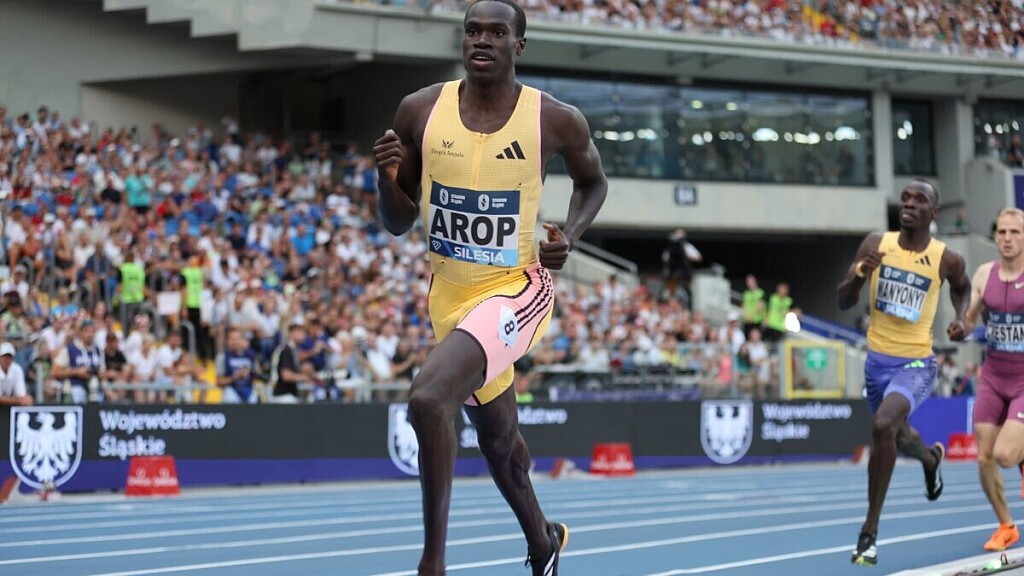
Marco Arop runs North American record over 1,000m
Arop’s time of 2:13.13 is the fifth-fastest of all time.
On Sunday evening at the Boris Hanžeković Memorial meet in Zagreb, Croatia, Canadian Olympic 800m silver medalist Marco Arop narrowly missed the world record for 1,000 metres. His winning time of 2:13.13 set a new Canadian and North American record and is the fifth-fastest time in history.
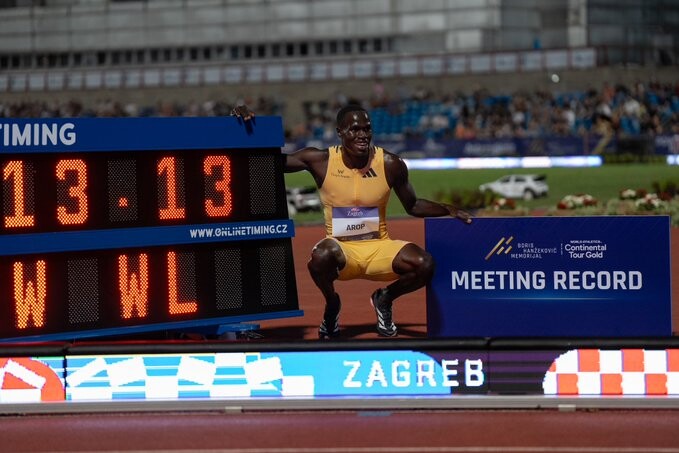
Arop was looking to break Noah Ngeny of Kenya’s world record of 2:11.92 from 1999, but he faced challenges early on. His tall frame struggled with the “waterfall” start, and he lagged behind the pace in the opening 400m, leaving him unable to fully catch up to the pace lights. However, Arop’s performance still shattered the previous North American record of 2:13.90 set by American Rick Wohlhuter 50 years ago.
The 25-year-old Edmonton native improved upon his previous personal best of 2:14.35. This was his second bid for the 1,000m world record, having fallen just short over the same distance indoors this year at the New Balance Indoor Grand Prix. Arop now holds the North American (area) records in the 800m and 1,000m events.
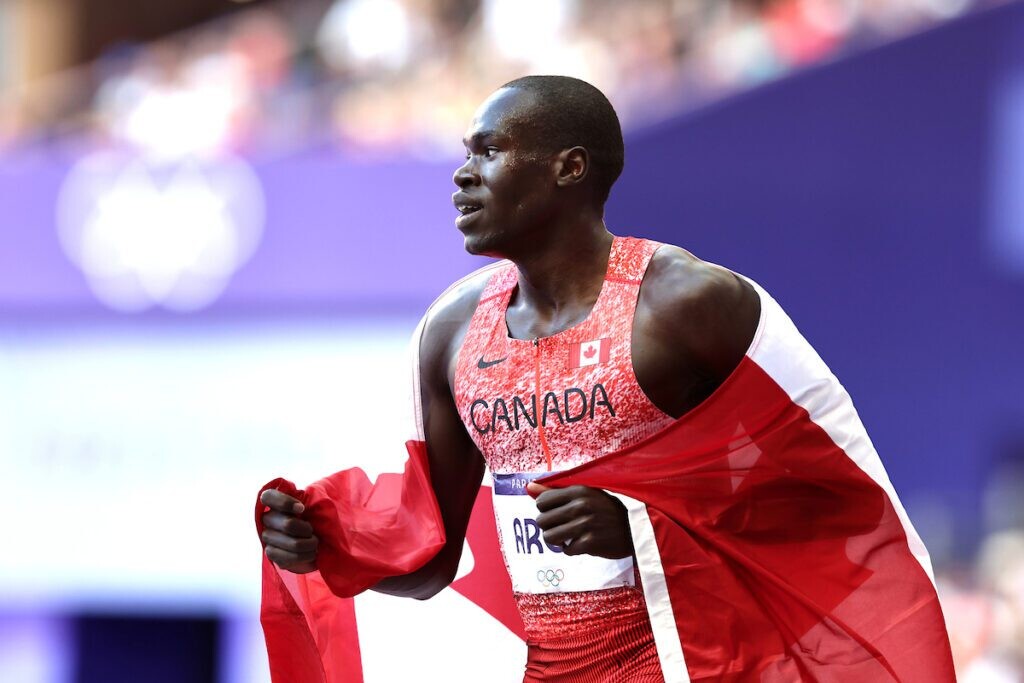
Next up, Arop will head to the Diamond League final in Brussels on Sept. 13-14, where he plans to challenge the men’s 800m world record of 1:40.91, a goal he says has been on his mind for some time.
Arop was one of three Canadian athletes competing at the Boris Hanžeković Memorial on Sunday. Olympic hammer throw champion Ethan Katzberg suffered his first loss of the season, losing to Olympic bronze medallist Mykhaylo Kokhan, who threw a new personal best of 81.14 to take the win. Canadian 4x100m relay gold medallist Jerome Blake finished fourth in the men’s 100m in 10.15 seconds.
by Marley Dickinson
Login to leave a comment
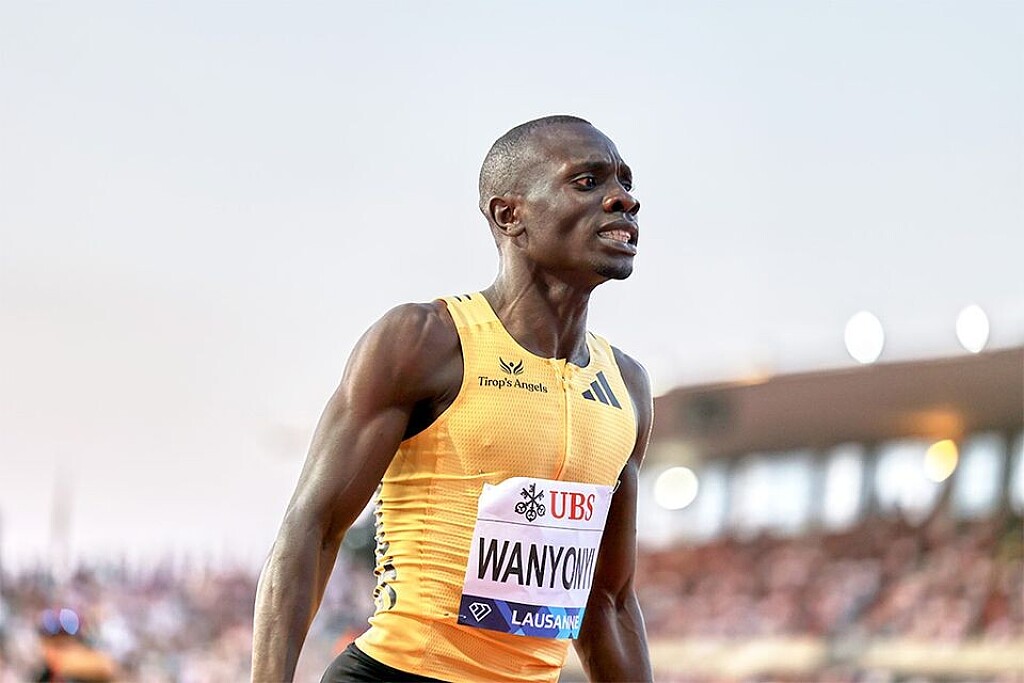
Why David Rudisha believes Emmanuel Wanyonyi is destined to break his 800m world record
Wanyonyi got to within an eighth-hundredth of a second away from equalling David Rudisha's 12-year 800m world record at the Lausanne Diamond League classic on Thursday.
When David Rudisha tipped Emmanuel Wanyonyi as the athlete most likely to break his 12-year-old 800m world record during the Kenyan trials for the Olympic Games at Nyayo National Stadium last June, it wasn’t just a casual remark.
Rudisha’s prediction is now gathering weight, especially after Wanyonyi clocked a blistering 1:41.11 at the Lausanne Diamond League meet in Switzerland on Thursday.
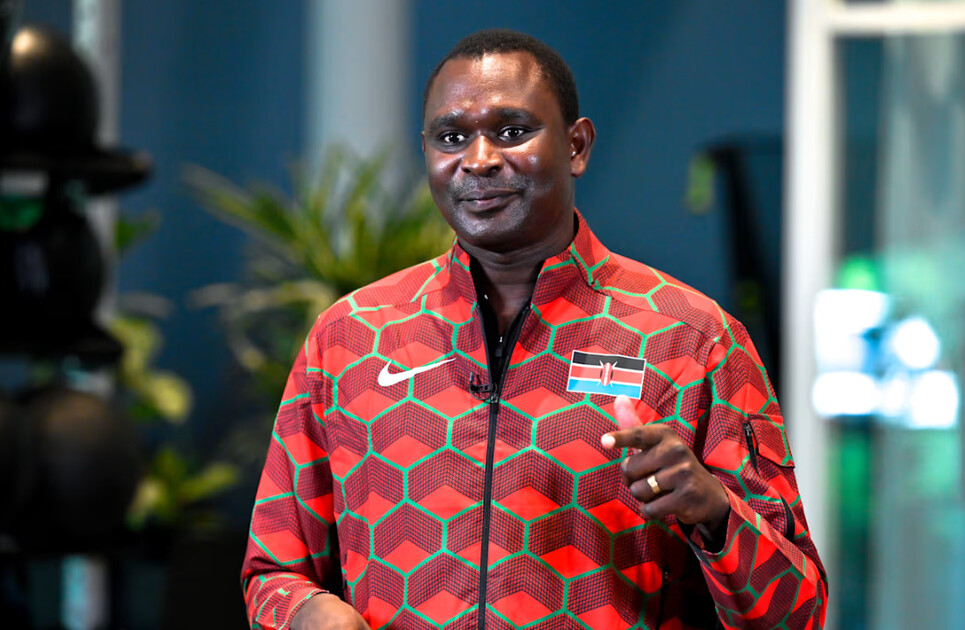
This time not only equaled Wilson Kipketer’s record but also placed Wanyonyi second on the all-time list, just eight hundredths of a second away from Rudisha’s world record of 1:40.91 set at the 2012 London Olympics.
“Wanyonyi is a young talented athlete. He has so much potential, and all he needs to do is fine-tune his craft, and this will see him push his time even lower,” Rudisha had told the media last June.
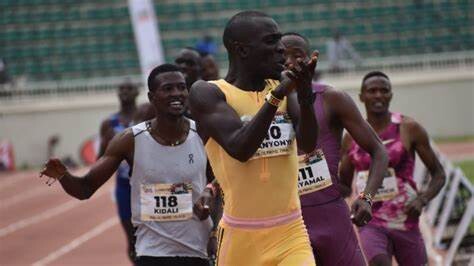
Rudisha, who knows a thing or two about world records, added, “He always shows his bravery and confidence whenever he steps on the track, and that has been the secret behind his success.
“World records are special. We are looking forward to seeing how the young generation is going to take up the challenge. Of course, there is a lot of innovation, and it improves performances. We believe that world records are there to be broken.”
Wanyonyi’s stunning performance in Lausanne has made him a force to be reckoned with in the world of athletics.
His time of 1:41.11 ties him with Kipketer and positions him as the most serious threat to Rudisha’s reign in the 800m. At just 20 years old, Wanyonyi’s rise to the top has been meteoric, and his determination to succeed mirrors that of Rudisha.
Rudisha himself had an illustrious career, beginning as a decathlete before switching to sprints and later focusing on the 800m in 2005. Just a year later, he won the 800m title at the World U20 Championships in Beijing, clocking 1:47.40.
In 2008, he claimed the African senior title in Addis Ababa with a time of 1:44.20. Then, on August 22, 2010, Rudisha set his first world record in Berlin, running 1:41.09 and breaking Kipketer’s 1997 mark.
Seven days later, he improved his record to 1:41.01 in Rieti. Rudisha continued his dominance by winning the world 800m title in Daegu in 2011, reclaiming it in Beijing in 2015, and becoming the first man since Peter Snell to retain the Olympic 800m title in Rio in 2016.
Now, Wanyonyi is carving out his own legacy. At 20, he became the youngest-ever Olympic 800m champion, leading a race of unprecedented depth in Paris.
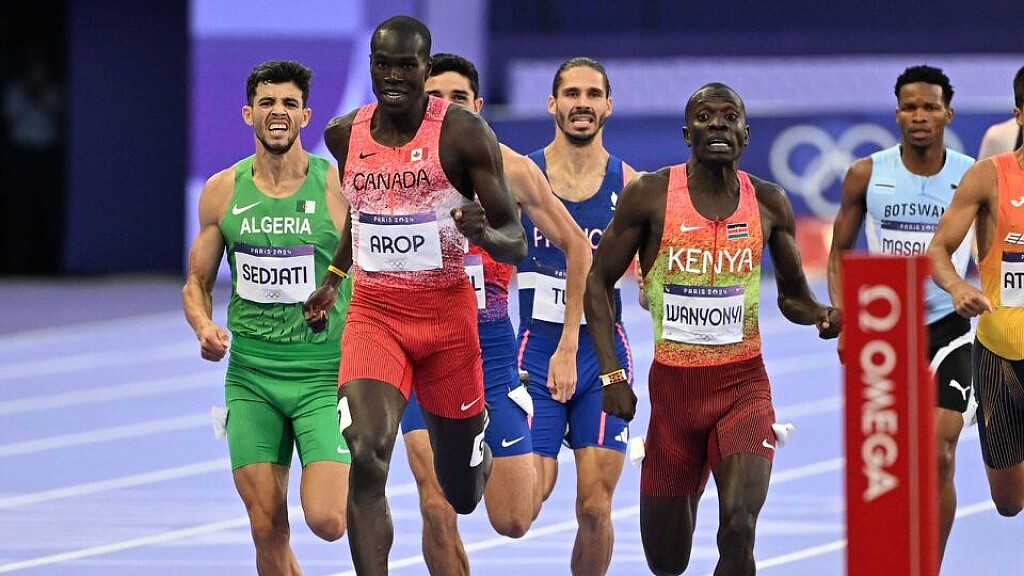
He held off Canada’s Marco Arop, the reigning world champion, who briefly took the lead off the final turn before Wanyonyi surged back in the final steps. Arop finished with a North American record of 1:41.20 for silver, while Algeria’s Djamel Sedjati claimed bronze in 1:41.50.
Reflecting on his victory, Wanyonyi said, “It was going to be hard to defend as the only Kenyan in the final. I had a lot of pressure. I spoke to Rudisha yesterday, who told me I would win if I employed my tactics. I decided to run the way he did in London. If I had run a slow race, they would have beaten me.”
Although Wanyonyi didn’t quite match Rudisha’s record, he is keen on having another go at it when the Diamond League moves to Silesia, Poland, this Sunday.
While he has remained modest about his world-record ambitions, saying, “Maybe, but not now,” the Diamond League offers the perfect stage for him to make history. The Wavelight technology, which has been instrumental in helping athletes maintain pace, will also be in use, providing Wanyonyi with every opportunity to push the boundaries.
Wanyonyi is no stranger to breaking records. At 19, he shattered the previous one-mile (1,600m) record of 3:56.13 set by American Hobbs Kessler at the World Road Running Championships in Riga, Latvia, last year.
With Rudisha as his role model and mentor, Wanyonyi is poised to continue his upward trajectory and possibly eclipse the mark set by the man he so deeply admires.
As the athletics world watches, the question on everyone’s mind is not if, but when, Emmanuel Wanyonyi will break the 800m world record. And when that day comes, it will be the culmination of a journey inspired by greatness and driven by the relentless pursuit of excellence.
by Mark Kinyanjui
Login to leave a comment
How Emmanuel Wanyonyi’s rival faced an anti-doping raid before Olympic 800m final
A track athlete was raided by anti-doping officials at the Olympic village days before securing a bronze medal in the 800m event.
Olympic 800m bronze medalist Djamel Sedjati is believed to be still under scrutiny by the Athletics Integrity Unit (AIU) following a dramatic raid in the Olympic village just days before the final event.
The incident, which unfolded a week ago but garnered minimal media attention at the time, involved French anti-doping officers executing a search linked to an ongoing investigation into alleged doping practices.
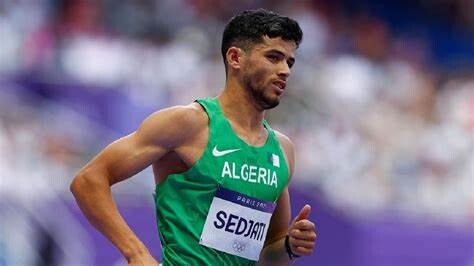
The raid, led by the French Anti-Doping Agency (AFLD), targeted Sedjati’s accommodations and was part of a broader probe that also implicated Algerian athletics coach Amar Benida.
According to the French sports daily L'Equipe, sources close to the investigation have indicated that Benida was the primary focus of the inquiry.
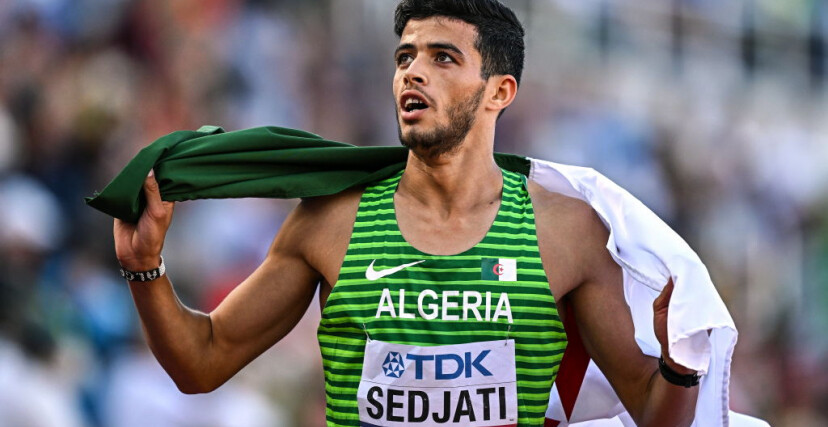
This revelation puts a different light on the events, suggesting that Sedjati may have been collateral in the broader investigation rather than the direct target.
In the wake of the raid, Sedjati displayed remarkable composure, securing a third-place finish in a fiercely competitive 800m final at the Stade de France.
The race itself was historic, with four of the seven top times on the all-time performance list being recorded, highlighting the extraordinary level of competition.
Emmanuel Wanyonyi of Kenya clinched gold with a time of 1:41.19, becoming the third-fastest performer in history.
Following his performance, Sedjati addressed the incident at a press conference.
"Nothing (important) happened. These are things that athletes can face. Thank God it was only a small inconvenience. I was quickly able to get back to normal," Sedjati told reporters.
The Paris prosecutor's office and the AFLD have remained silent on the matter offering no comments or insights into the ongoing investigation.
This lack of official information has fueled speculation and concern within the athletics community.
In response to the controversy, the Algerian Olympic Committee issued a strong statement via Al24News, condemning what they described as "malicious attempts aimed at tarnishing the image of the Algerian runner Djamel Sedjati, victim of unjustified attacks by certain sports media."
This statement reflects the tension and the high stakes involved, particularly in light of Sedjati’s recent performances and his stated ambition to break David Rudisha’s 800m world record.
Sedjati’s resilience was on full display just weeks prior at the Monaco Diamond League, where he won the race in an impressive 1:41.46, just shy of his personal best set in Paris.
His capabilities and recent form make him a significant figure on the track, and the timing of the raid raises questions about the implications for his career and reputation.
by Festus Chuma
Login to leave a comment

Paris 2024 Olympic Games
For this historic event, the City of Light is thinking big! Visitors will be able to watch events at top sporting venues in Paris and the Paris region, as well as at emblematic monuments in the capital visited by several millions of tourists each year. The promise of exceptional moments to experience in an exceptional setting! A great way to...
more...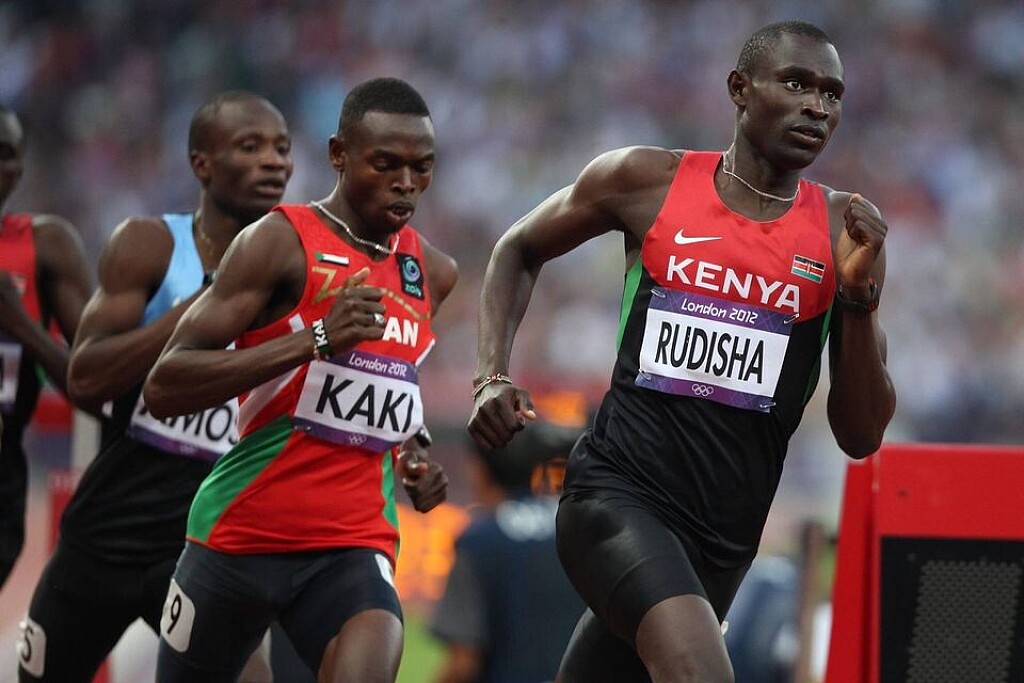
David Rudisha names 3 key athletes to shape 800m race this Olympic season
World 800m record holder David Rudisha has revealed the three key athletes who will shape the two-lap race this Olympic season and might even threaten his world record.
World 800m record holder David Rudisha has singled out three athletes that could shape the 800m at the Paris 2024 Olympic Games and beyond.
Rudisha was an 800m maestro and defined the two-lap race in his prime and he believes other athletes are coming up and have the ability to change the quality of the 800m race.
The two-time Olympic champion set his first 800m World Record of 1:41.09 on August 22, 2010 in Berlin, Germany before lowering his time to clock another world record of 1:40.91 set during the 2012 London Olympic Games.
No athlete has gotten near to the world record but the two-time world champion believes the trio of Emmanuel Wanyonyi, Marco Arop and Djamel Sedjati have the ability to redefine that.
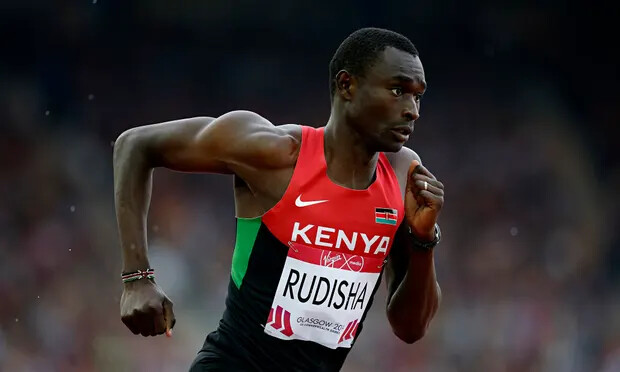
“From Kenya, we have Emmanuel Wanyonyi. Marco Arop from Canada. And I saw also a young kid Djamel Sedjati from Algeria running the world-leading time in Ostrava,” Rudisha told AFP.
“This is really amazing. We are looking forward to seeing how they are going to perform. In the Olympics, anything can happen. It's always very competitive and everybody goes there to win. So, there's a lot of expectation.”
Wanyonyi, the youngest of the three, has been in great form this season, and he will certainly be an athlete to watch in the city of love.
The world 800m silver medallist has been unbeaten in the 800m this season, winning the Kip Keino Classic and the Diamond League Meeting in Rabat, Morocco. He also set the road mile world record at the Adizero road to records event.
Meanwhile, Arop, the reigning world champion, has only raced once in the 800m outdoor and won in the Diamond League Meeting in Xiamen. He has been in great form, however, in his indoor events and will certainly be out to give his competitors a run for their money one more time.
Sedjati, 25, has also proven to be a strong athlete, striking with a world leading time of 1:43.51 in Ostrava in his season opener. He will also be looking to impress at the Paris 2024 Olympic Games, following his silver medal at the 2022 World Championships in Eugene, Oregon.
by Abigael Wuafula
Login to leave a comment
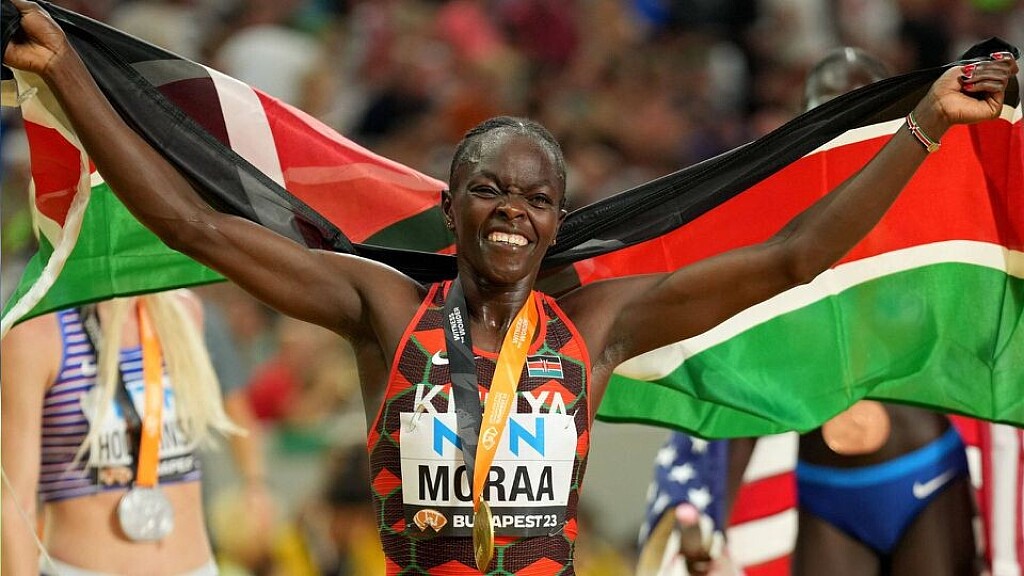
Mary Moraa confident of breaking Caster Semenya's 600m world record
Mary Moraa has revealed that breaking Caster Semenya's 600m world record is among her many plans this season.
In her build-up to breaking the 800m world record, reigning world 800m champion Mary Moraa will be keen to attack the 600m world record.
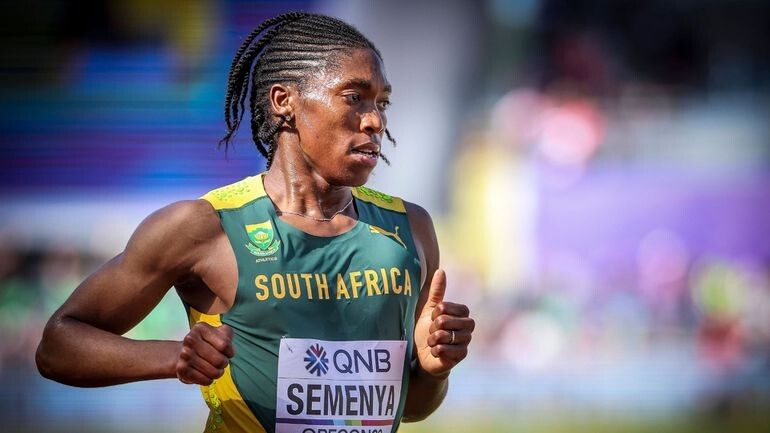
Moraa explained that her body is responding well to training and she is clearly on fire owing to her dominant exploits during the African Games national trials.
Kisii Express won the 400m final of the race to cut a direct ticket to the continental showpiece scheduled for Accra, Ghana.
“I will go for the 600m where I will attack the world record…I don’t know where I’ll compete exactly but I’m going for the record,” Moraa said.
The 600m world record currently stands at 1:21.77 and was set by South Africa’s Caster Semenya back in 2017 in Berlin, Germany.
Meanwhile, after the African Games, Moraa will return to the country to compete in the Kip Keino Classic where she also intends to shine.
She also noted that she is impressed with her form this season and cannot wait to see how the campaign will turn out for her.
“I’m happy to have come here and run well and my body is coming up slowly and I’m excited to see how the season turns out,” Moraa said.
The 23-year-old had an amazing 2023 season, winning her first world title and becoming only the third Kenyan woman to claim the 800m title at the World Championships.
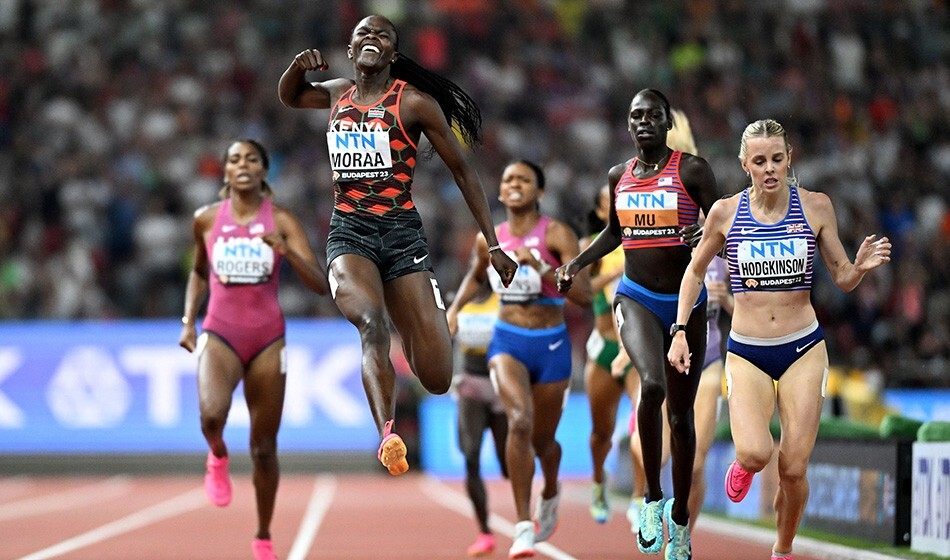
This she achieved after clocking a Personal Best time of 1:56.03 to win the race ahead of Great Britain’s Keely Hodgkinson and Athing Mu. She now looks forward to enjoying an amazing 2024 season, with the Olympic Games in Paris, France being in the cards.
by Abigael Wuafula
Login to leave a comment
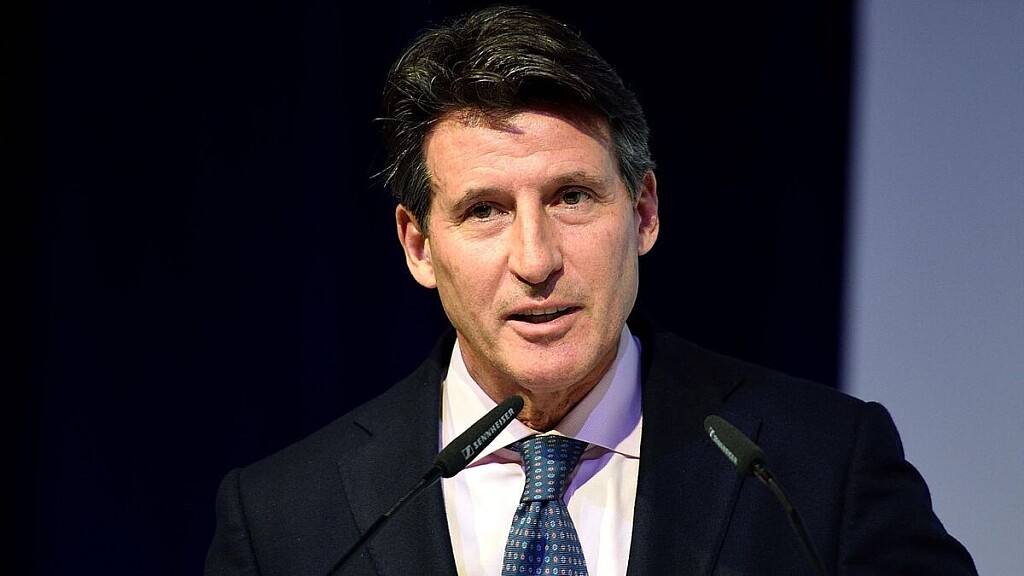
Sebastian Coe vows Enhanced Games athletes would be ‘banned for long time
The World Athletics president, Sebastian Coe, has hit out at plans for an Enhanced Games, that would allow athletes to take steroids and other performance enhancing drugs, and warned that anyone who competes will be banned for a long time.
Organisers of the Enhanced Games, which has been backed by venture capitalists including the billionaire Peter Thiel, have called their event “the Olympics of the future”. It will include athletics, swimming, weightlifting, gymnastics and combat sports.
Earlier this month the former swimming champion, James Magnussen, agreed to come out of retirement to compete in the Games and attempt to swim faster than the 50m freestyle record for a prize of $1m (£790,000).
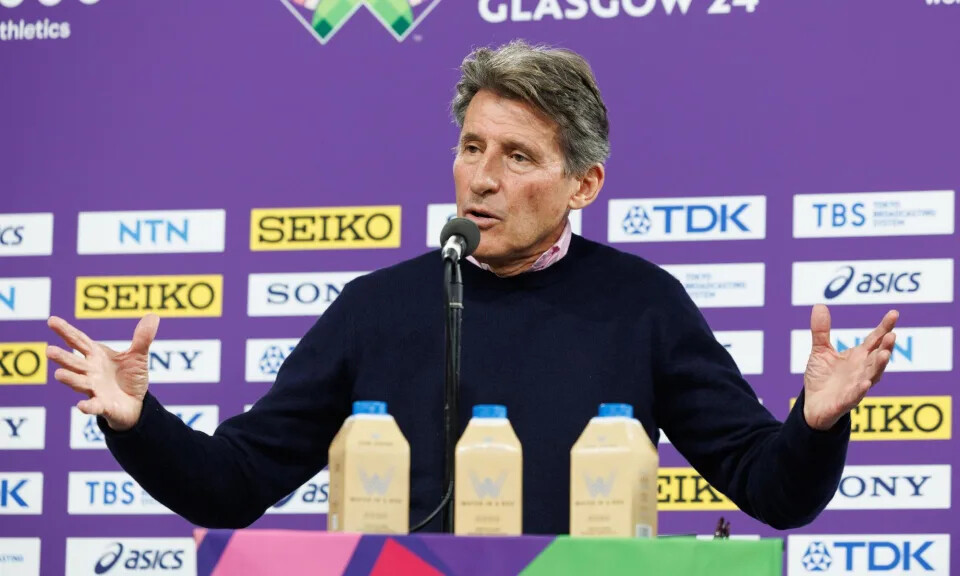
However, at a press conference for the world indoor championships in Glasgow, Lord Coe was withering when asked for his thoughts.
“It’s bollocks isn’t it?” he said. “I can’t really get excited about it. There’s only one message, and that is if anybody is moronic enough to officially take part in it, and they are in the traditional part of our sport, they’ll get banned for a long time. But I really don’t get sleepless nights about it.”
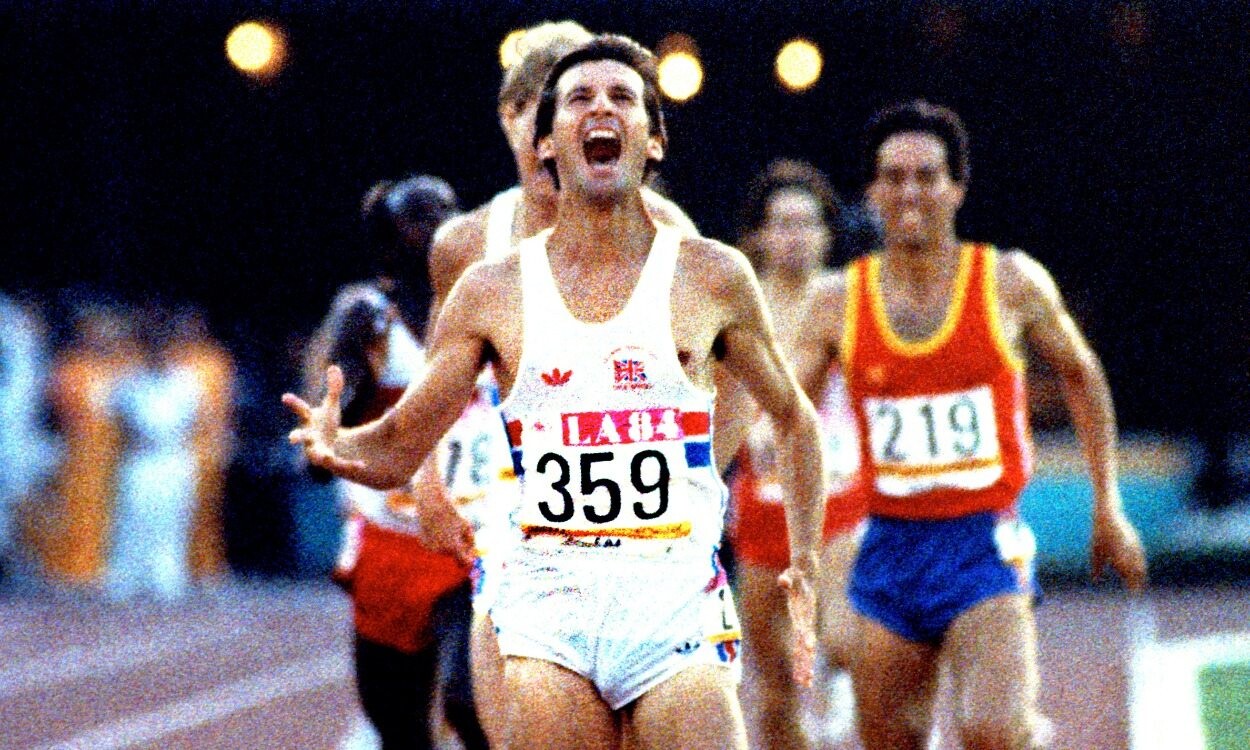
His message was supported by the men’s 800m world record-holder, David Rudisha, who said: “The integrity of the sport needs to be protected at all times. This is not a good thing and just brings a lot of confusion to people and sponsors.”
Coe also promised that World Athletics would not be deterred from trialling new proposals in the long jump and other events, despite the negative reaction to a “take-off zone” instead of the traditional wooden board.
“Our sport is 150 years old and there are elements of it that you absolutely want to protect,” he said. “They are sacrosanct. But there is stuff there that just leaves people a little cold. And 31% of all long jumpers are failing attempts. Now, I’m not saying that the take-off zone is the only remedy and it’s one of a raft of changes.”
Coe said that World Athletics knew that from detailed research from the world championships in Budapest last summer, which found that people left their seats during some events, or stopped watching the event on TV.
“We’re not going to back off innovation here,” he said. “It is really important. We have a responsibility to futureproof the sport, to continue to create the landscape financially.
“We have had meetings with world-class businesses in the last few weeks. And world-class businesses do not routinely want to join enterprises they think are going in the wrong direction.”
He added: “We can’t just sit there. The holy grail of every sport is to remain salient, interesting, and exciting to young people.
“We’re not going to frame the sport entirely around them. But we have to admit that the way people consume sport, the way they consume entertainment is different than it was even three years ago. And we have to move with the times.”
Login to leave a comment
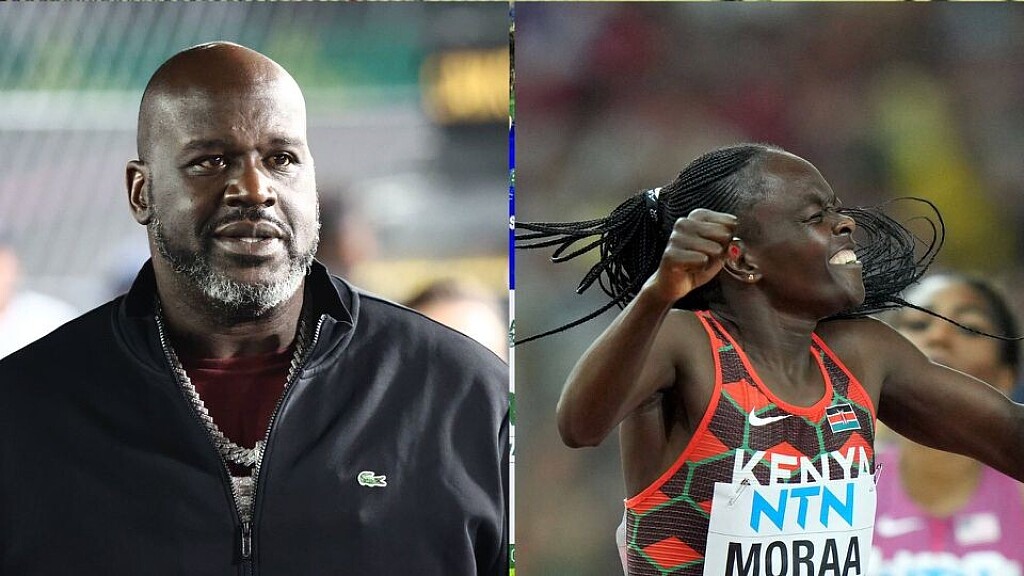
Mary Moraa has returned to training for a grueling 2024 season and is using one of NBA legend Shaquille O'Neal's famous quotes to motivate her
Reigning world 800m champion Mary Moraa is surely on a mission to make history this year as she eyes the Olympic Games in Paris, France scheduled for July 26 to August 11.
As she burns the midnight oil to ensure she makes her dreams come true, Moraa is not leaving her fans out of the mix as she keeps updating them on what she is up to.
In her recent Facebook post, she shared a video of her training at the Nyayo National Stadium and captioned the video with one of NBA legend Shaquille O'Neal’s famous quotes.
The Commonwealth Games champion said: “Excellence is not a singular act but a habit. You are what you do repeatedly.”
She also added other two photos after returning to training and captioned them saying: “I really enjoyed my first track training session this season with my training regime.”
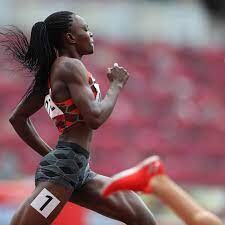
O’Neal was one of the greatest basketball players and centers of all time and Moraa recognizing him means she is on the right track.
Meanwhile, Kisii Express has made it clear that she wants to clock 1:53, the women’s 800m world record, and she is surely putting in the work.
The world record has surely stood the test of time and the world is banking on Moraa to shatter it. It was set by Jarmila Kratochvílová back in 1983.
On July 26, the Czech athlete took to the Olympiapark Meeting in Munich’s Olympic Stadium and shattered the 800m world record, clocking 1:53.28 to win the race.
by Abigael Wuafula
Login to leave a comment
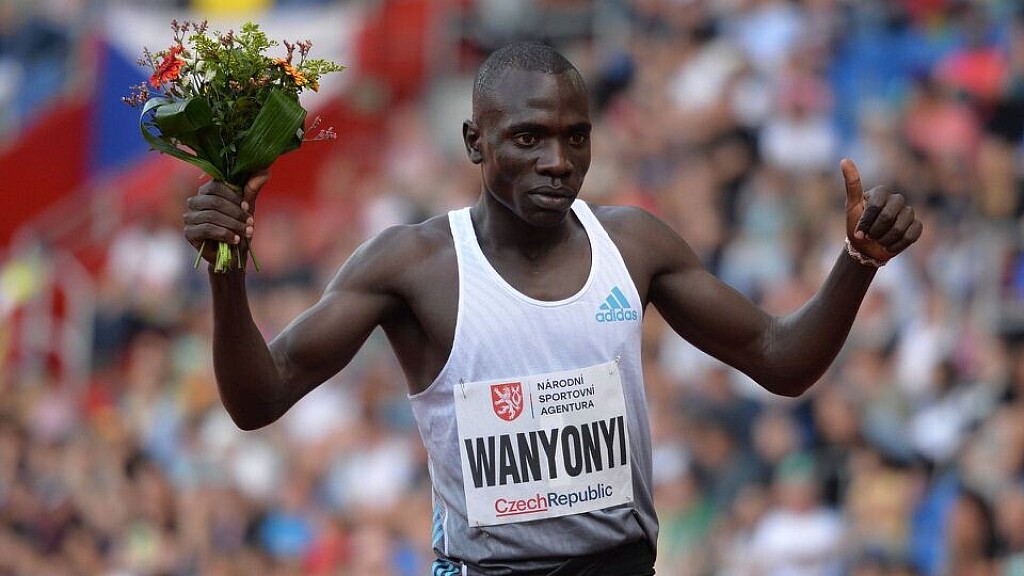
Kenyan Emmanuel Wanyonyi plotting to break David Rudisha's 800m world record
Emmanuel Wanyonyi has made his intentions clear about breaking David Rudisha's world record.
Teenage sensation Emmanuel Wanyonyi believes his dream of breaking David Rudisha’s 800m world record is inching ever so closer.
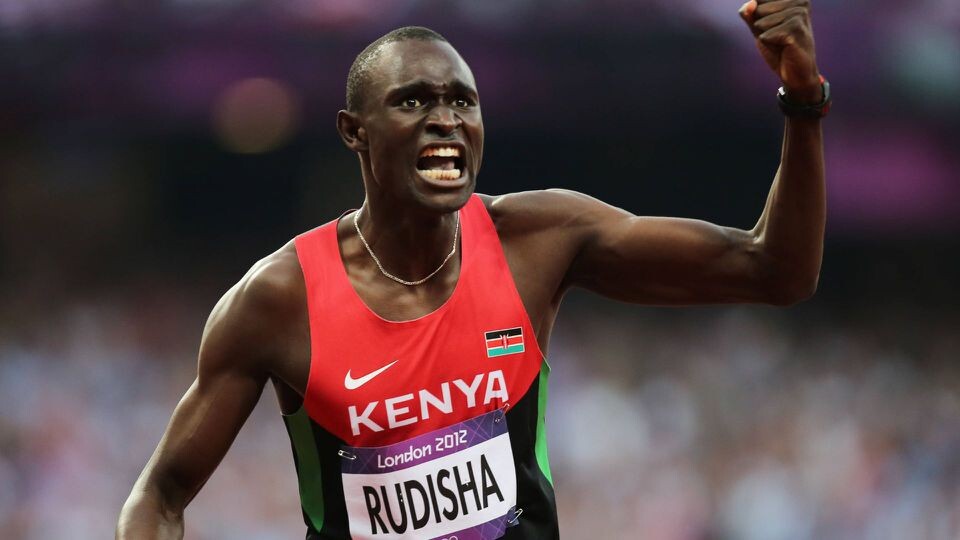
Wanyonyi, the reigning world 800m silver medalist, told Sports Brief that he believes everything is possible and if Rudisha did it, he can also do it.
“In one of my first interviews, I said that I would break the world record. I want to use my talent to show people that it is possible.
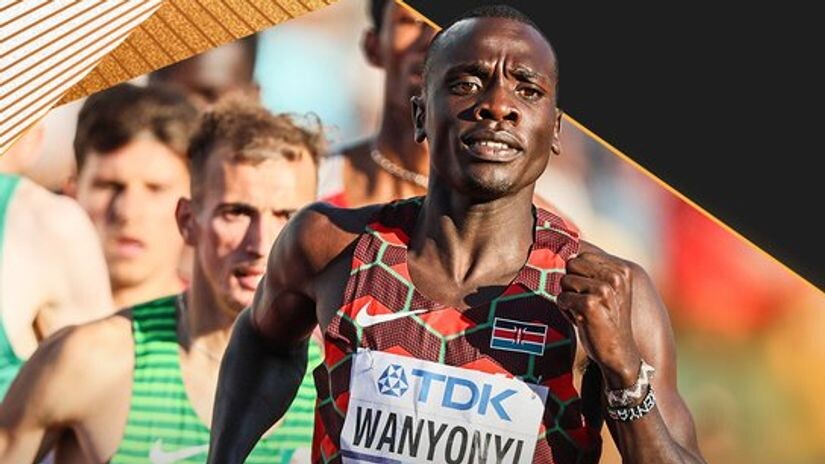
"If David Rudisha did it, I can also do it. I just have to believe in my potential,” Wanyonyi said.
On his part, Rudisha first broke the world record on August 22, 2010, at the ISTAF World Challenge meeting in Berlin where he clocked 1:41.09 to win the race.
He then went ahead to break his own world record, clocking 1:40.91 set during the 2012 London Olympic Games that still stands to date.
Meanwhile, 19-year-old also talked about his training routine which has seen him achieve a number of feats in the 2023 season.
At just 19, he bagged a silver medal at the World Championships in Budapest, Hungary, finishing second behind Canada’s Marco Arop, 25.
He also won the Diamond League Meeting final, Prefontaine Classic, held at the Hayward Field in Eugene, USA.
Wanyonyi explained that his training includes a 20 to 25-kilometer run on alternate days. He also switches the running with fieldwork to work on speed, given that 800m is a combination of endurance and a little bit of sprinting towards the tail end.
by Abigael Wuafula
Login to leave a comment
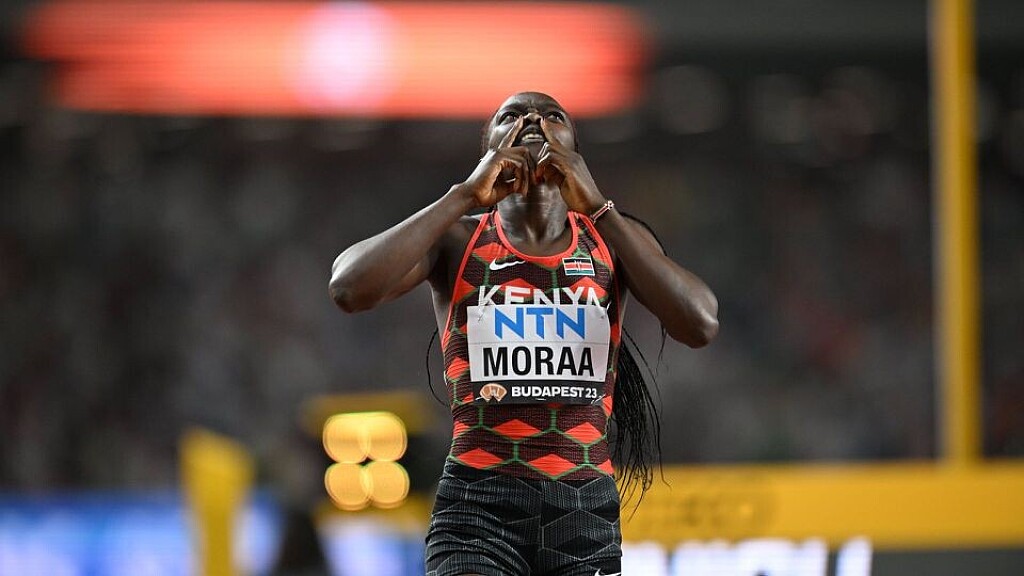
Mary Moraa dreaming of breaking 800m world record soon
Mary Moraa has promised that she will attack the 800m world record very soon.
Reigning World 800m champion Mary Moraa has promised to go for the 800m world record very soon.
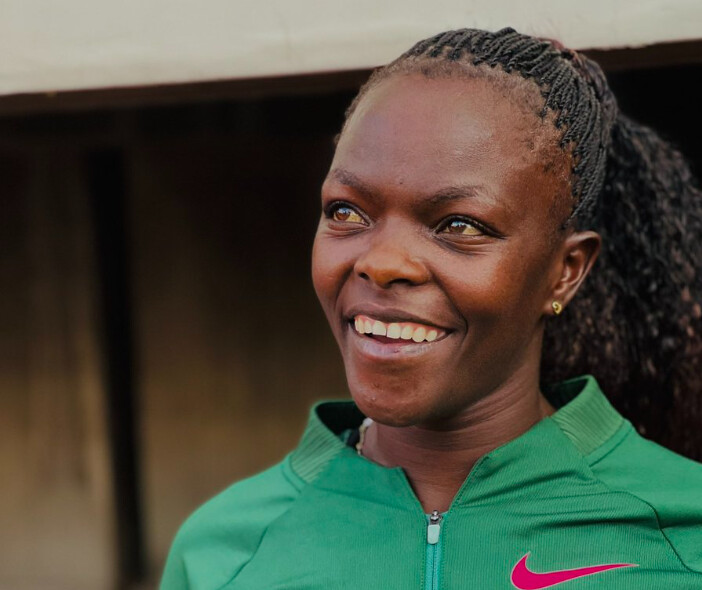
In a post on her Facebook page, Moraa shared a throwback photo of herself and double world record holder Faith Kipyegon. She was in awe of Kipyegon’s record-breaking spree and noted that she is an inspiration to many people.
She said: “When you step out in style with the world's middle distance track finest Faith Kipyegon. A great inspiration. Hii 800m World Record tutavunja siku moja...hivi karibuni (We shall one day break this 800m world record…very soon).”
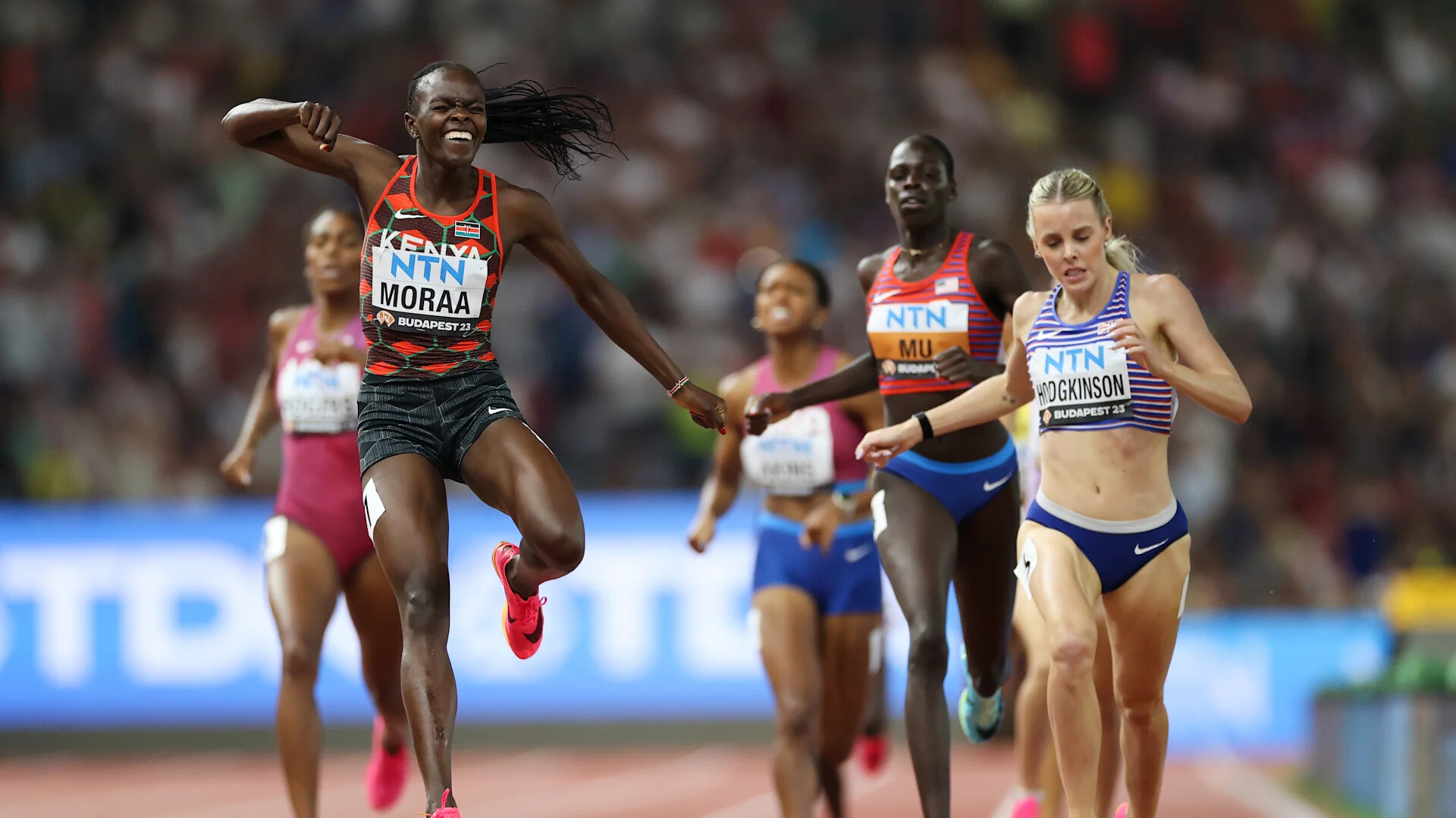
The women’s world record over the 800m stands at 1:53.28 and was set by Jarmila Kratochvílová 40 years ago.
She clocked the time on July 26, 1983, at the Olympiapark Meeting in Munich’s Olympic Stadium and has remained to be the oldest outdoor world record in the book.
On her part, Moraa’s Personal Best time currently stands at 1:56.03, a time she clocked to win the race at the World Championships in Budapest, Hungary.
By winning the title, she became just but the third Kenyan woman to win the 800m on the global stage. She comes after Janeth Jepkosgei and Eunice Sum who won the titles in 2007 and 2013 respectively.
She has also been banked on severally to break the 800m world record and affirming her fans that she would surely go for it is a sign of light at the end of the tunnel.
The reigning Commonwealth Games champion is gearing up for the Olympic Games in Paris, France next year where she hopes to extend her winning streak. This season, she only lost one 800m race, the Prefontaine Classic.
by Abigael Wuafula
Login to leave a comment
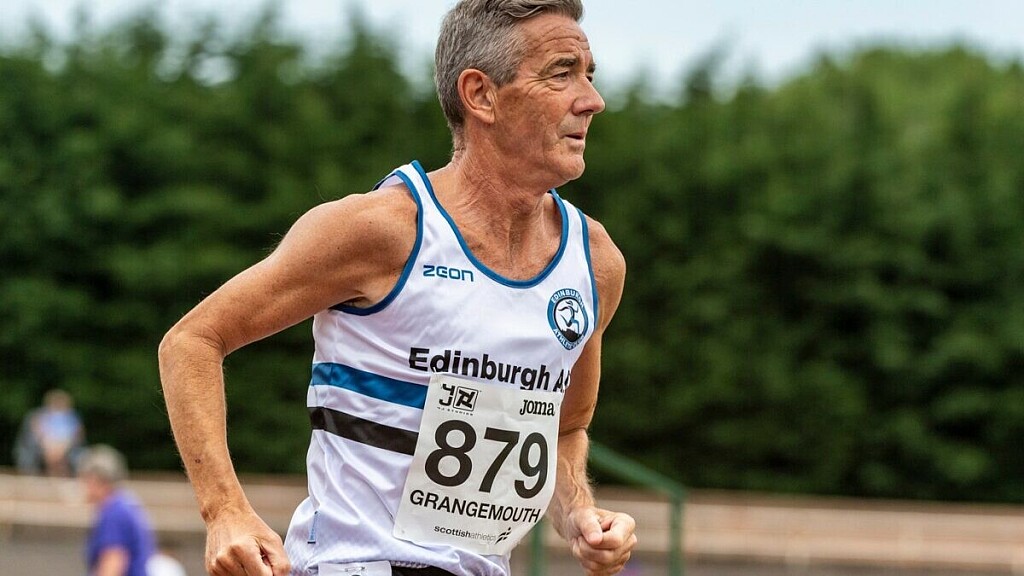
Scot breaks M65 800m world record held by Canadian for nearly 30 years
A world record held by a legendary Canadian runner for almost 30 years was toppled on a track in Italy on Friday, as Britain’s Paul Forbes ran 2:13.74 in the 800m at the European Masters Athletics Championships for a new outdoor world’s best in the M65 division.
Forbes shaved just more than half a second off the longstanding record time of 2:14:33 set by Toronto’s Earl Fee in Buffalo in 1995. With his performance in Italy, the 67-year-old Forbes also sliced 0.93 seconds off his own British M65 800m record, which he set last year at the World Masters Athletics Outdoor Championships in Tampere, Finland.
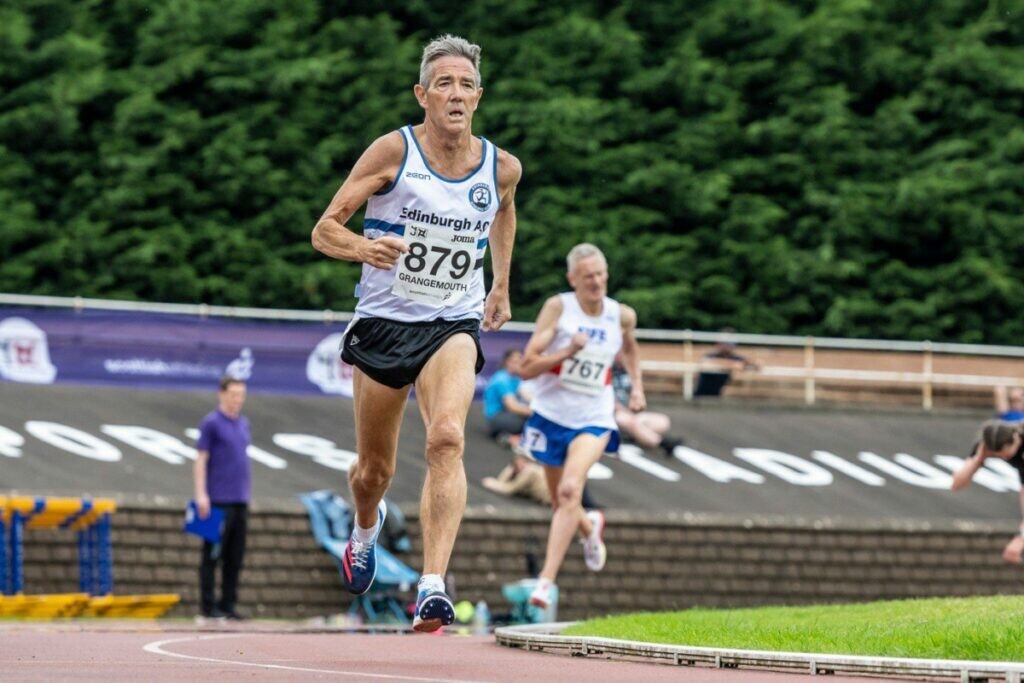
As he did in Tampere, Forbes topped the podium in both the M65 800m and 1,500m events in Pescara, Italy, running the latter in 4:44:40 on Sept. 23. That effort was only five seconds off the 4:39.15 British M65 outdoor 1500m record he set at a meet in Glasgow in July.
The European Masters Athletic Championships, which ran from Sept. 21 to Oct. 1, featured thousands of athletes from across the continent.
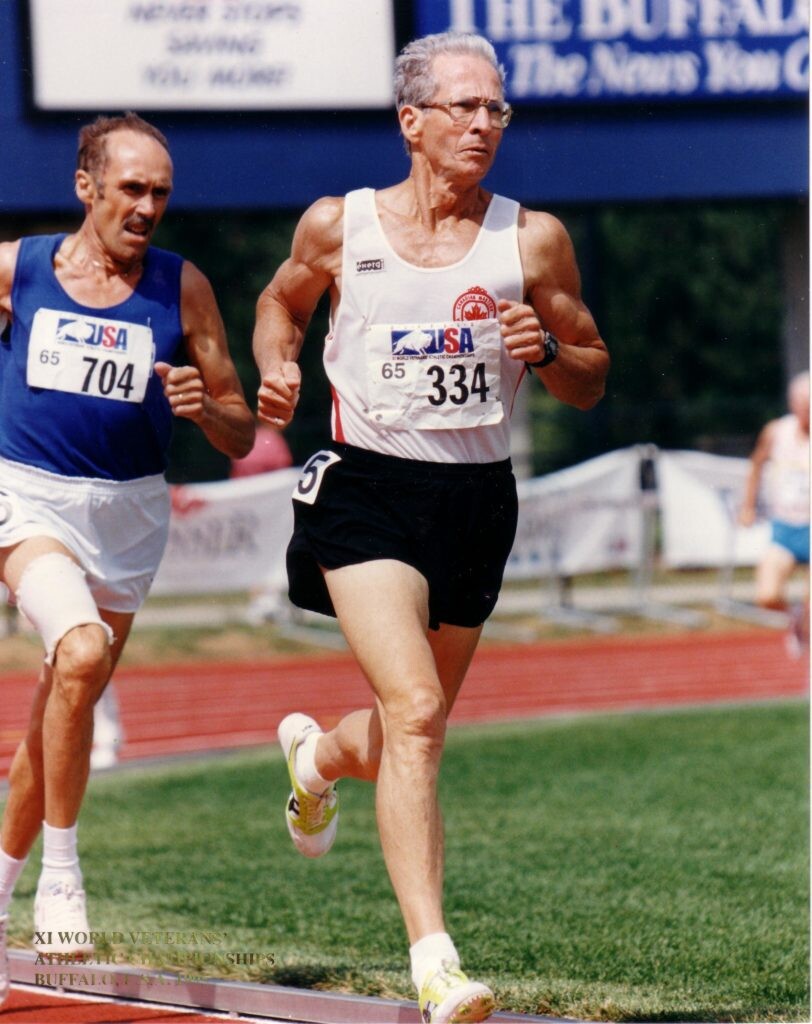
Although Fee’s 800m decades-long record has fallen, the celebrated Canadian runner’s name still features prominently in the list of world masters records. Fee, who is originally from Saskatchewan, still holds the 800m world masters records in the M70 (2:20.52) and the M90 (3:42.52) age groups. According to the latest list of records published from World Masters Athletics, the Canadian still holds nearly a dozen indoor and outdoor masters world records in events ranging from the 200m hurdles to the mile.
In 2019, Fee broke his 60th world record by running 1:29.15 in the M90 400m, a feat he accomplished in oppressive 33 C heat at the North, Central American and Caribbean Masters Athletics (NCCMA) meet at Toronto’s Varsity Stadium. That same year, Fee and fellow Canadian runner Karla Del Grande were named the overall Athletes of the Year by the NCCMA.
Fee was inducted into the Canadian Masters Association Hall of Fame in 2009. The association’s award for the Canadian Masters Athlete of the Year in track is named in his honor.
by Paul Baswick
Login to leave a comment
Wanyonyi sets focus on Paris 2024 Olympic Games
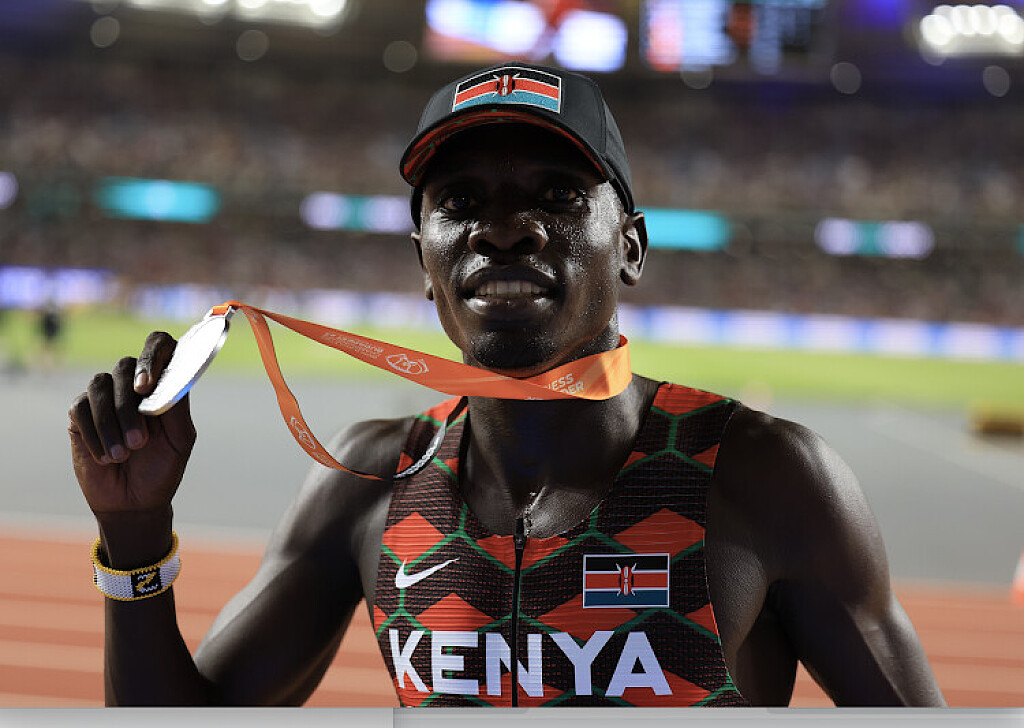
World 800m silver medalist Emmanuel Wanyonyi is already looking forward to the Paris 2024 Olympic Games after bagging silver at the World Athletics Championships which concluded last night.
Wanyonyi won silver in a time of 1:44.53 behind Canadian Marco Arop who took gold in 1:44.24. Ben Pattison completed the podium in 1:44.83.
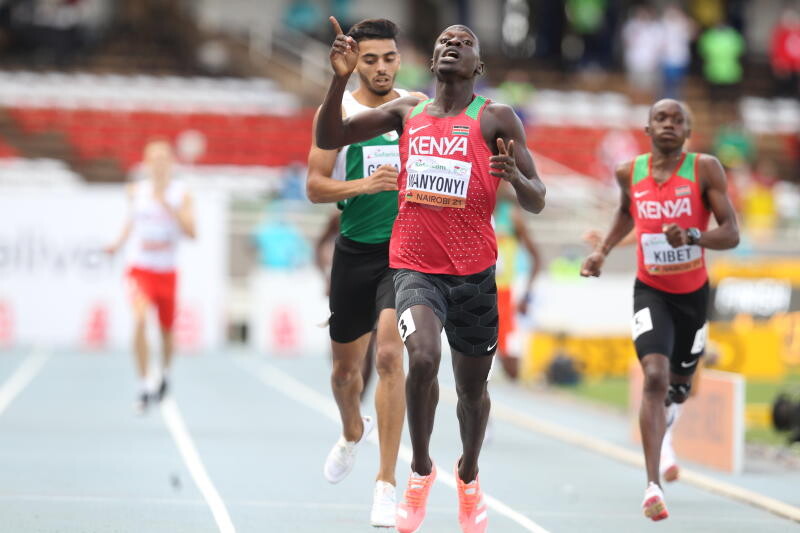
Wanyonyi said the silver not only means a whole world to him but it’s a great inspiration going into an Olympic year.
He added the silver is a dream come true after finishing fourth at the World Championships last year in Oregon. He said the story would have been even better for him if the race was faster.
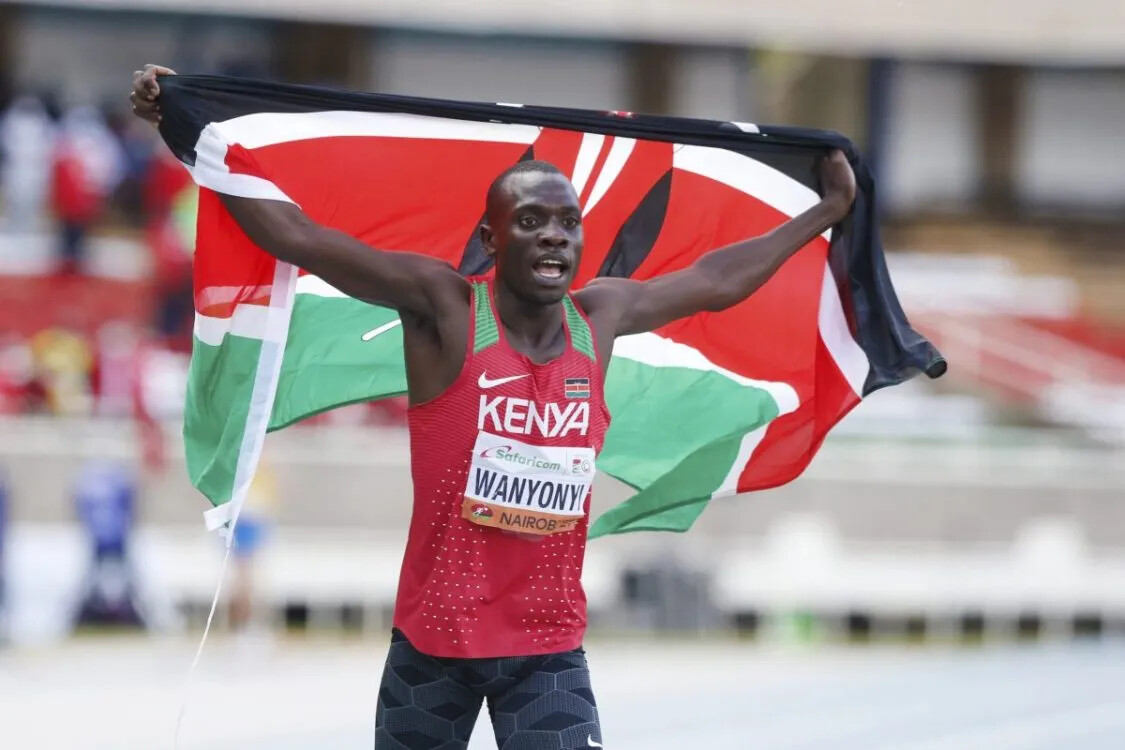
“I tend to thrive better in a faster race but this one was very slow. All the same, I thank God for the silver and I can only build up on it,” he added.
He talked to Kenya’s 800m world record holder, David Rudisha, just before the race and this gave him a lot of motivation.
“Rudisha told me to relax, believe in myself, and go for it and I guess that is exactly what I did,” noted Wanyonyi.
He said he would have loved to qualify for the final alongside fellow Kenyans, including Olympic champion Emmanuel Korir, Ferguson Rotich, and Alex Ngeno, but things did not work out and he was left as a lone ranger.
“Maybe if we were here all of us we would have won the title. Unfortunately, my colleagues were locked out with injuries and I just had to do what I did,” he noted.
Wanyonyi paid tribute to, especially, Korir and Ferguson, saying they are better runners than him especially when they are fit.
“As Kenyans, we just need to celebrate this silver because there is little we can do about injuries as was the case of Korir and Ferguson,” he noted.
He said he had learned that the World Championships are a totally different ball game compared to the Diamond League.
“ At the global championships, one has to go through the first round, semis, and eventually final, and surviving through all stages can be tricky. Just one mistake can easily lock you out and I guess this is what happened to many athletes,” he added.
He explained that the Diamond League is a one-off with comparatively easier competition.
He will compete in the Xiamen Diamond League in China on September 2 before returning home.
Wanyonyi, who is currently a Form 4 student, said it has been a delicate balance between books and training.
He, however, noted that he is happy that he is doing his final year and he can not wait.
by Chris Mbaisi
Login to leave a comment
Paris 2024 Olympic Games
For this historic event, the City of Light is thinking big! Visitors will be able to watch events at top sporting venues in Paris and the Paris region, as well as at emblematic monuments in the capital visited by several millions of tourists each year. The promise of exceptional moments to experience in an exceptional setting! A great way to...
more...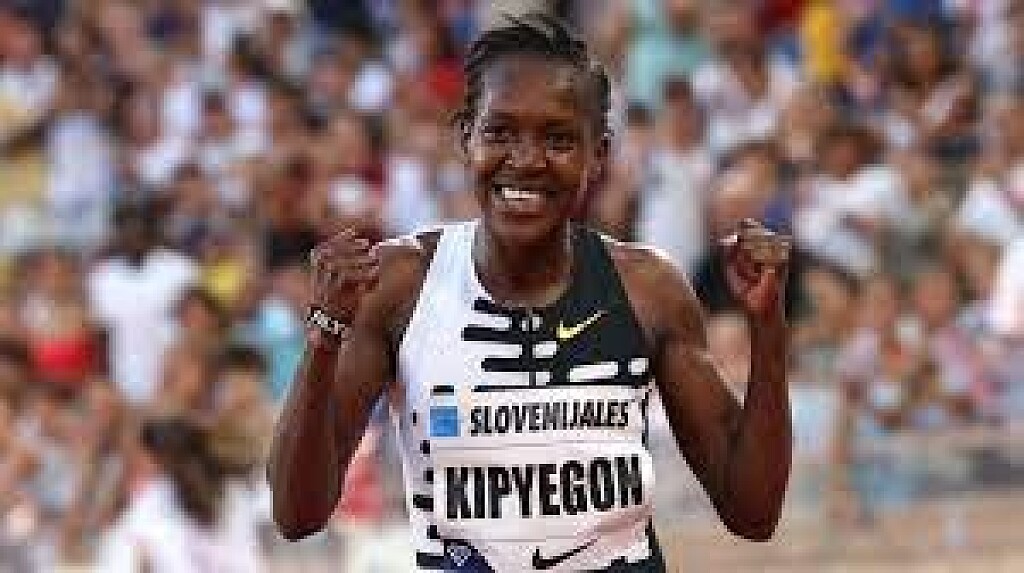
Faith Kipyegon now plans to attack the 40-year-old 800m world record
Her main focus at the moment is to successfully defend her world title when she heads to Budapest later this month.
Triple world record Faith Kipyegon might be targeting the 40-year-old 800m world record if a chance presents itself.
Kipyegon has a personal best time of 1:57.68, which she ran to win the Diamond League Meeting in Doha, Qatar in 2020. The last time she ran the two-lap race was last year during the Trials for the Commonwealth Games and World Championships where she finished.
After three world records, will Kipyegon consider lowering Czechia’s Jarmila Kratochvílova world record time of 1:53.48?
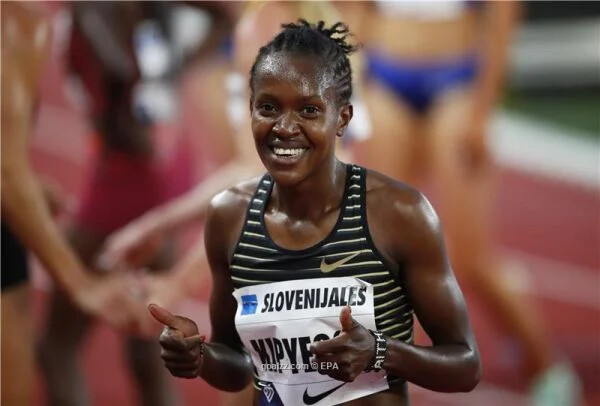
“I don’t know…800m is not easy…but anything is possible. For now, I leave that one for Mary Moraa, she is capable…or Athing Mu and Keely Hodgkinson.
They are all capable of breaking that barrier in the 800m. But if a chance comes whereby I am able to try, I’ll appreciate it,” Kipyegon told Olympics.com.
Her main focus at the moment is to successfully defend her world title when she heads to Budapest later this month.
She admitted to pressure ahead of the event since she will be doubling in the 1500m and 5000m. Her performance at the World Championships will determine greatly whether she will also be doubling at the Paris Olympics.
“I can’t go there like just an athlete, now I have three world records, they expect a lot from me. But going to Budapest, I have to just be myself and run my races and see what will happen at the finish line.
Having fun, enjoying sports and even life is amazing… it has been the drive of our success. It helps mentally (by distracting) you from thinking of races every day and upcoming races and what you want to achieve or what will be the outcome,” she said.
by Abigael Wuafula
Login to leave a comment

World Athletics Championships Budapest 23
From August 19-27, 2023, Budapest will host the world's third largest sporting event, the World Athletics Championships. It is the largest sporting event in the history of Hungary, attended by athletes from more than 200 countries, whose news will reach more than one billion people. Athletics is the foundation of all sports. It represents strength, speed, dexterity and endurance, the...
more...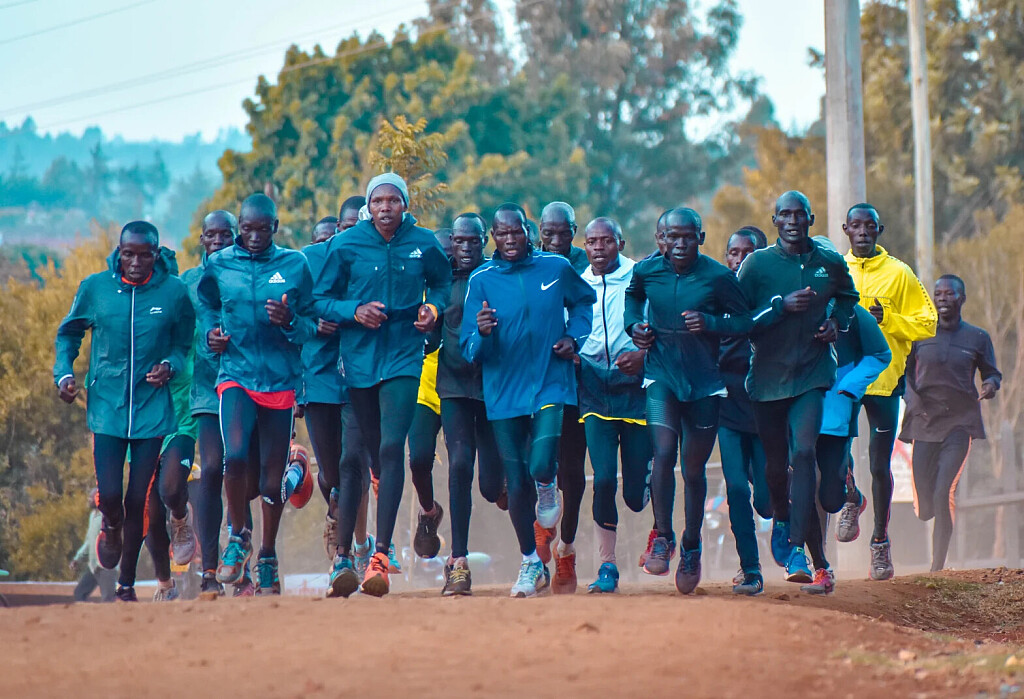
Recovery Running: What’s the Point?
This blog discusses the reasons why recovery running is an important part of any athlete’s training program and reflects on insights that the author noticed during a training camp in Iten, Kenya.
A small village called Iten in rural Kenya has produced some of the finest distance runners in the history of the sport; Olympic champions, world record holders and professional athletes choose to make this their training ground. It’s not uncommon to bump into someone on the street who can casually talk about their marathon pb of 2.08 or below who are far from boasting, or see a group or 20 athletes training at the track, all of whom have sub 28 minute 10k’s to their name.
Would it then surprise you to see these same athletes jogging along the dirt trails at 9:00/mile pace?
We hear stories of top Kenyan athletes running well in excess of 100 miles per week but while that is indeed true for many individuals, there is still an overwhelming consensus that quality beats quantity. To train at ones best the body must be in good physical condition and the Kenyans are well aware of this fact. One aspect they believe is an important factor in this is recovery runs, and these are taken very seriously.
What is a recovery run?
When you train at a high intensity your muscles accumulate blood lactate, a by-product of anaerobic respiration. While we won’t delve into the science during this article it is important to understand that hard training takes its toll on the body and that without taking the time to recover it is extremely difficult to adapt to the stresses of exercise leading to fatigue, “burnout” and ultimately injury, not to mention that you won’t be getting the benefits of the hard training anyway.
A recovery run is a relatively short run at a very comfortable pace – typically under 60% of your maximum HR. These have a number of benefits but they may not be the ones you thought of. It is commonly taught that recovery runs will aid the removal of waste products from the body after hard training, however, there is in fact very little scientific evidence supporting this. Studies have shown that even after extremely taxing workouts, almost 100% of excess accumulated lactate is metabolised or removed from the body within 1 hour of the workout. Nor has there been any research indicating that recovery runs promote the repair of damaged tissues, restore glycogen reserves in the muscles or elicit any other physiological response that aids the recovery process…
So what’s the point?
At approximately 60% of maximum HR your heart reaches its maximum stroke volume. This means that despite running with a significantly reduced rate of energy expenditure, your heart muscle is contracting with as much force as it possibly can on each beat. Even at this easy pace you are training your heart muscle without fatiguing the rest of your body.
At a cellular level running at this pace stimulates growth of the mitochondria (the organelle responsible for energy production), increase capillary capacity and the ability to deliver oxygen to the muscles.
There are also several neuromuscular benefits. Although you may think of running as a task that you don’t need to “think” about, your brain is still in control of your limbs. Running at a slow pace allows you to develop neuromuscular pathways by focussing on correct running technique.
I think the third point above has particular relevance to Kenyan running culture. It is no coincidence that the Kenyans you see on TV look so fluent and graceful in the way they move. Take David Rudisha’s 800m world record for example; he front ran 2 laps of the track without breaking form, for sure he was working hard but he certainly didn’t look like it. Kenyans use their slow runs to work on their form. They are consciously thinking during the run; how their feet contact the ground, how it feels to breath, where their arms are positioned, how their heads are held etc. It’s very difficult to consider these things when running a hard track session, but when the time comes to run fast they don’t need to think about it, it’s been ingrained into their system.
So in fact, during a ‘recovery run’ you are still training your body; you are still stressing certain systems and certain parts of the body that will actually lead to improvement. But while doing so, since you are operating at an effort well below your max, your body can still continue it’s natural recovery process.
The Experts Viewpoint:
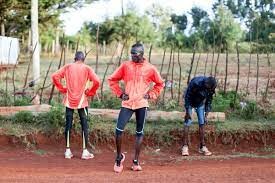
Last December, I joined a run with a group of athletes at St Patricks High School in Iten. I arrived not knowing what the workout would be. However having heard terrifying stories about how quick these guys were I was pretty nervous. What followed was very surprising. We did a warm up of some reaction games that involved jumping over a line painted on the ground and followed it with a 25 minute jog, in single file around a football field at approximately 10-12 minutes per mile pace. Legendary coach Brother Colm O’ Connell was leading the session and I asked what the point was. Otherwise I felt like I’d miss an opportunity to train hard amongst some of the worlds best runners. He replied “It’s so you can think”. I was able to think about where my feet were landing and how I was running compared to guy in front of me, how my breathing sounded compared to the guy behind me.
Of course these guys work incredibly hard when it’s time to do so, but they also take the time to think about their bodies, something that is often overlooked in the western training culture!
So the take home message may well be that these runs themselves may not directly influence ‘recovery’, but they allow you to continue to improve your fitness and work on your form, whilst you go through the natural recovery process. Which leads me to ask, if you can continue to get better whilst not compromising your recovery then why not?
by Callum Jones
Login to leave a comment
Keely Hodgkinson runs 19 consecutive sub-two-minute 800m
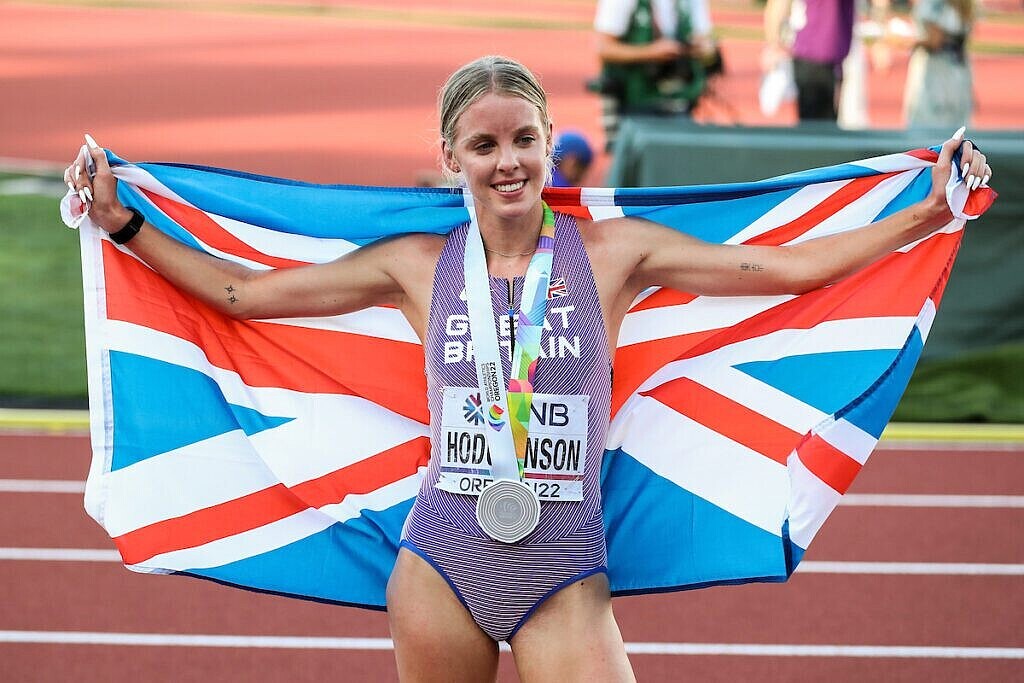
British 800m star Keely Hodgkinson won gold at the European Indoor Championships on Sunday, defending the title she first won in 2021. On top of adding yet another medal to her resume, Hodgkinson extended an extremely impressive (but potentially overlooked) streak of now 19 straight sub-two-minute 800m races (not including heats). This is an incredible run of form and it has helped Hodgkinson win multiple titles and honors in her still-young career.
Going sub-two

Running a sub-two-minute 800m is not an easy feat. In fact, only nine Canadian women have broken the two-minute barrier, which shows just how hard it is to do. Yet Hodgkinson has done that, race after race, dating back to June 2021. That was her breakout season, and seeing as it was an Olympic year, it couldn’t have come at a better time for her.
At the start of that season in January, Hodgkinson broke two minutes for the first time, running 1:59.03 at an indoor meet in Austria. She didn’t break two minutes again during the indoor season, but she carried that momentum into her following races and won her first European title at the indoor championships. She then kicked off her outdoor season with a 1:58.89 result in Czechia, and over the next seven finals she raced in 2021, she only once failed to break two minutes.
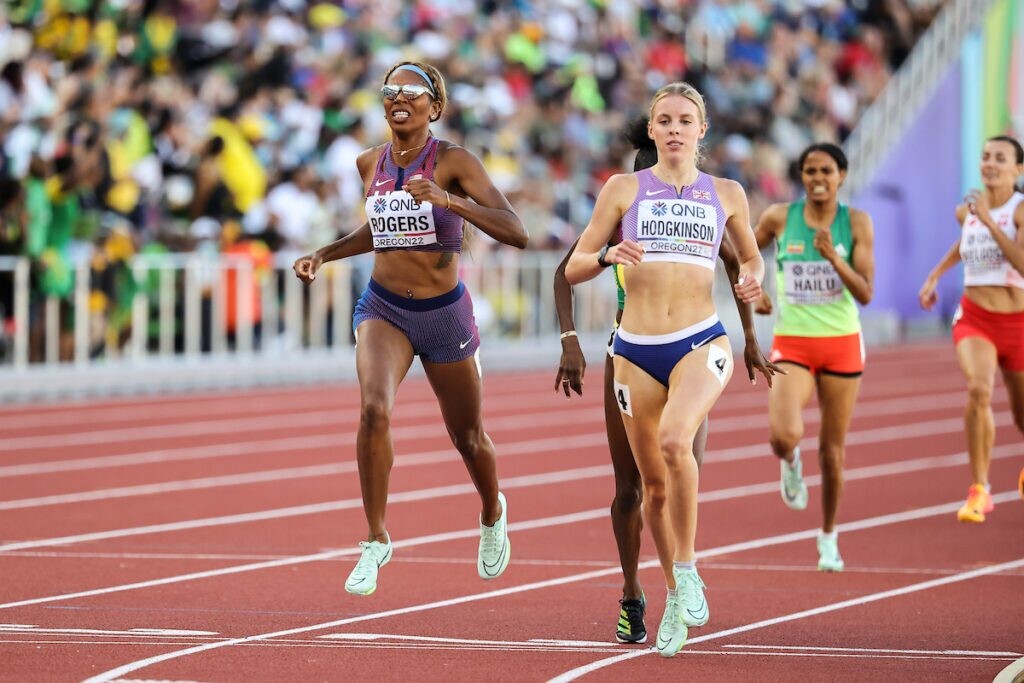
Later that year, Hodgkinson won silver at the Olympics, where she not only continued her then-new streak of sub-two performances, but also set a British record with her blazing 1:55.88 result in the finals. In 2022, her streak carried her to another silver medal, this time at the World Athletics Championships, and the outdoor European crown to match her indoor title from 2021. Hodgkinson has won every race she has run so far this year, with four sub-two results so far.
A tough streak
Hodgkinson’s streak is unprecedented in the 800m, and even the other all-time greats have failed to match her numbers. Athing Mu, the 20-year-old American who won gold ahead of Hodgkinson at the Olympics and World Athletics Championships, has only run four straight sub-two-minute results in her career. Granted, she’s young and still has plenty of time to add a longer streak to her resume, but Hodgkinson is young, too.
American Ajee Wilson owns two world championship bronze medals in the 800m and won the Diamond League 800m title in 2019, but her longest streak of sub-two runs only reached 13. This is still a super impressive tally, but it’s still pretty far below Hodgkinson’s streak, which could grow even longer over the next few months.
Two-time Olympic gold medalist Caster Semenya made it to 16 sub-two results in a row stretching from 2017 to 2019, but that’s where her streak ended (of course, Semenya may have been able to carry this streak on had she not been barred from racing the 800m). Finally, there’s the 800m world record holder, Jarmila Kratochvílová, who had a lifetime PB of 1:53.28. Even she couldn’t match Hodgkinson’s amazing streak, as her longest lasted for just 10 races.
Hodgkinson is truly a special talent, and she continues to prove that in every race she enters. It will be exciting to see her move forward with her career and to see how long she can keep her streak going before she runs north of two minutes once again.
Login to leave a comment

Eliud Kipchoge battles nine world champs for Athlete of the Year Award
Two-time Olympic marathon champion Eliud Kipchoge will battle nine world champions for the men's 2022 World Athlete of the Year Award. The 37-year-old Kipchoge, who is fresh from breaking his own marathon world record, won the 2018 and 2019 awards but also made the final list for the 2020 and 2021 awards.
The winner of the prestigious award in world athletics will be revealed on World Athletics’ social media platforms in early December.
The announcement on Thursday marked the opening of the voting process for the 2022 World Athletes of the Year ahead of the 2022 World Athletics Awards in December.
Olympics 400m hurdles champion Karsten Warholm last year became the first Norwegian to win the Male Athlete of the Year Award, beating four other finalists who included Kipchoge and Olympic 5,000m champion Joshua Cheptegei of Uganda for the award.
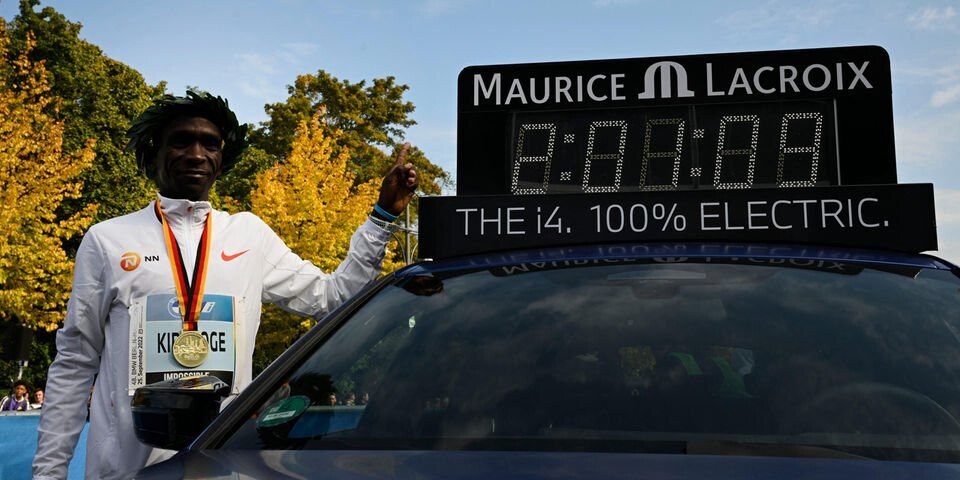
Kipchoge will face world champions Ceh Kristjan (discus) from Slovakia, Brazilian Alison Dos Santos (400m hurdles), the 2020 winner, Swede Mondo Duplantis (pole vault), Moroccan Soufiane El Bakkali (3,000m steeplechase) and American Grant Holloway (110m hurdles).
Others are Norwegian Jakob Ingerbrigtsen (5,000m), Noah Lyles (200m) from United States, Grenada’s Anderson Peters (javelin) and Pedro Pichardo (triple jump) from Portugal.
The athletes were selected by an international panel of athletics experts, comprising representatives from all six continental areas of World Athletics.
“It has been another memorable year for the sport and the nominations reflect some of the standout performances achieved at the World Athletics Championships in Oregon, World Athletics Indoor Championships in Belgrade, one-day meeting circuits and other events around the world,” said a statement from World Athletics.
Kipchoge recaptured the Berlin Marathon title, smashing his own world record by 30 seconds on September 25 in the German capital.
The 2016 and 2020 Olympic marathon champion clocked 2:01:09 to win, beating his previous world record time of 2:01:39 set when winning in Berlin in 2018.
Kipchoge had on March 6 this year won the Tokyo Marathon in a course record time of 2:02:40, beating the newly crowned London Marathon champion Amos Kipruto to second place in 2:03:13.
Kenya's Olympic and world 1,500m champion Faith Chepng'etich was on Wednesday named among the 10 nominees for the female 2022 World Athlete of the Year award.
Kipchoge is the only other Kenyan male to win the award besides 800m world record holder David Rudisha, who claimed it in 2010.
No Kenyan woman has won the award.
A three-way voting process will determine the finalists.
The voting process closes on October 31.
The World Athletics Council and the World Athletics Family will cast their votes by email, while fans can vote online via the World Athletics social media platforms.
Individual graphics for each nominee will be posted on Facebook, Twitter, Instagram and YouTube this week; a 'like' on Facebook, Instagram and YouTube or a retweet on Twitter will count as one vote.
The World Athletics Council’s vote will count for 50 percent of the result, while the World Athletics Family’s votes and the public votes will each count for 25 per cent of the final result.
Voting for the World Athletes of the Year closes at midnight on October 31. At the conclusion of the voting process, five women and five men finalists will be announced by World Athletics.
Nominees
Kristjan Ceh (Slovakia)
- World discus champion
- Diamond League discus champion, throwing a national record 71.27m on the circuit in Birmingham
- European discus silver medalist
Alison dos Santos (Brazil)
- World 400m hurdles champion
- Diamond League 400m hurdles champion
- Ran a world-leading South American record of 46.29
Mondo Duplantis (Sweden)
- World pole vault champion indoors and outdoors
- Diamond League and European pole vault champion
- Improved his world record to 6.19m and 6.20m indoors, and then 6.21m outdoors
Soufiane El Bakkali (Morocco)
- World 3000m steeplechase champion
- Diamond League 3000m steeplechase champion
- Unbeaten in 2022, running a world-leading 7:58.28 in Rabat
Grant Holloway (USA)
- World 110m hurdles champion
- World indoor 60m hurdles champion
- Diamond League 110m hurdles champion
Jakob Ingebrigtsen (Norway)
- World 5000m champion, world 1500m silver medalist indoors and outdoors
- European 1500m and 5000m champion
- Diamond League 1500m champion in a world-leading 3:29.02
Eliud Kipchoge, (Kenya)
- Improved his world marathon record to 2:01:09
- Berlin Marathon champion
- Tokyo Marathon champion
Noah Lyles (USA)
- World 200m champion
- Diamond League 200m champion
- Ran a world-leading national record of 19.31 to move to third on the world all-time list
Anderson Peters (Grenada)
- World javelin champion
- Commonwealth javelin silver medalist
- Threw a world-leading NACAC record of 93.07m, moving to fifth on the world all-time list
Pedro Pichardo (Portugal)
- World triple jump champion with a world-leading leap of 17.95m
- World indoor triple jump silver medalist
- European triple jump champion.
by Ayumba Ayodi
Login to leave a comment
Joyciline Jepkosgei receives promotion in Kenyan army following her success at London Marathon
Here’s your feel-good story of the day: Kenyan marathoner Joyciline Jepkosgei has been recognized by her country for her second-place finish at the 2022 London Marathon, earning a promotion in the army.
On Tuesday, Kenya’s Chief of Defence Forces (CDF), General Robert Kibochi, promoted Corporal Jepkosgei to the role of Sergeant (Sgt.) at the Kenyan Army Defence Headquarters in Nairobi.

General Kibochi congratulated Jepkosgei for her excellent work in representing the country in major races and for improving her time, which has seen her break multiple world records.
“We are very grateful for your continuous hard work and for representing Kenya and KDF well,” said General Kibochi.

On Sunday, Jepkosgei clocked 2:18:07, to finish second to Ethiopia’s Yalemzerf Yehualaw, who won in 2:17:26. Jepkosgei won the London Marathon in 2021, and the New York City Marathon in 2019.
Jepkosgei is one of many world-class Kenyan athletes who work for official government organizations. 800m world record holder and two-time Olympic champion David Rudisha worked as a police officer during his running career, and so does two-time NYC Marathon champion Geoffrey Kamworor, plus Canadian soil record holder and defending Toronto Waterfront Marathon champion Philemon Rono.
If your workplace offered promotions for representing the company at a global marathon, would you train a little harder?
by Running Magazine
Login to leave a comment

TCS London Marathon
Since its inaugural edition on March 29, 1981, the TCS London Marathon has grown into one of the world's most prestigious road races, blending elite competition with an extraordinary charitable legacy. Founded by former Olympic champion and journalist Chris Brasher alongside Welsh athlete John Disley, the event has been staged every year and has been held in the spring annually...
more...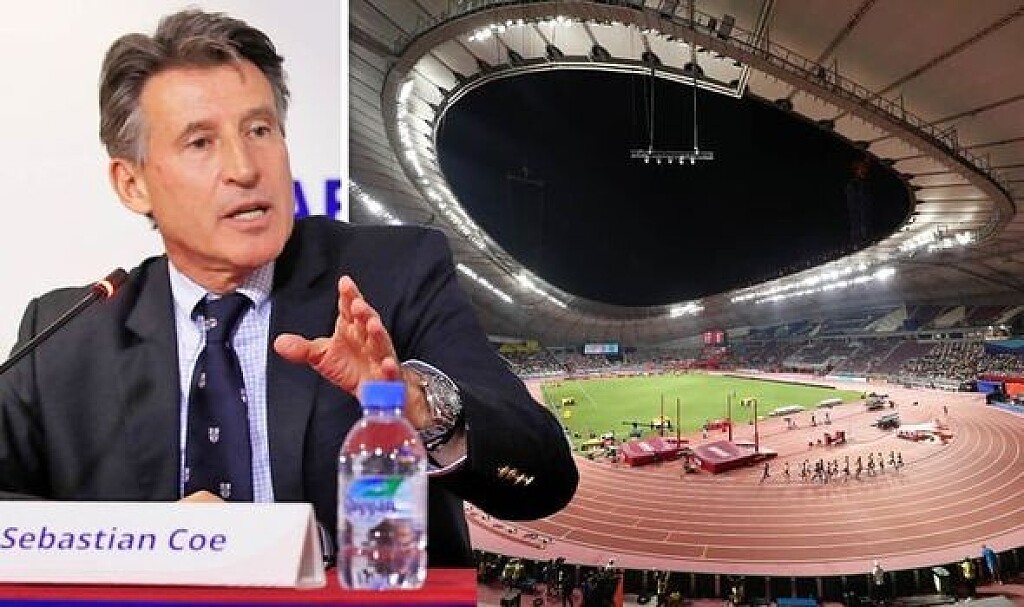
Sebastian Coe hopes current athletes break 1980s records
Sebastian Coe wants the current generation of athletes to finally take down world records from the 1980s which he concedes “may not be the safest on the book”.
The issue has become a major talking point in Eugene after Shericka Jackson ran a stunning 21.45sec to win world 200m gold, a time that put her second on the all-time list behind Florence Griffith Joyner. The controversial American, who also broke the 100m record in an era when drugs testing was sporadic, died in 1998.
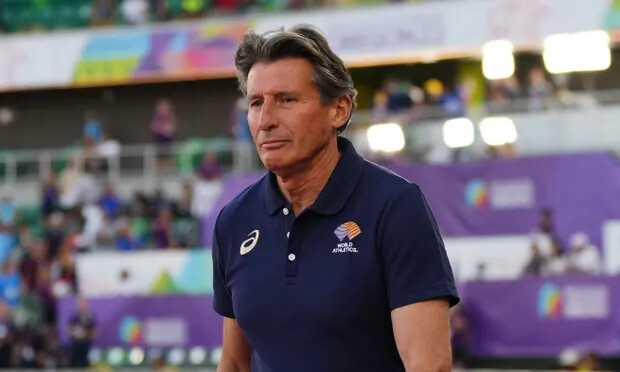
A number of other records in women’s sport have remained untouched since the 80s including the 400m, 800m, high jump, long jump, discus and shot put. They were all set by athletes from countries in the then eastern bloc.
“Legally, they are the existing records,” said the World Athletics president. “Legally, there’s nothing you can do or say beyond the evidence of a positive test. But this was my era so I have to accept it was a time when testing was a bit sporadic. We know it was a different era. There are records there that you look at and go, there’s nothing legally we can do about them but they may not be the safest records on the book.”
Lord Coe said it was impossible to strike the old records, but suggested the advent of super spikes and faster tracks could see more of them broken in the coming years. “I would prefer that there is an organic change through the Shericka Jacksons, who are now being tested regularly,” he added. “We have the Athletics Integrity Unit, we have their own national anti-doping agency that is now working far better than it was when I came into office, you’ve got agencies around the world.”
Asked to compare the modern era with the 80s, Coe added: “It’s a different world. I was part of that world so I’m not saying I was significantly different to anyone else there – well, I wasn’t a cheat. But the reality is there is very little legally you can do and I think we have to be realistic about it.
“There’s nothing that I’m in a position to do to rewrite the record books but I’m open about it – some of these records are not safe records.”
However, Coe, who himself set an 800m world record in 1981 that remained unbroken until 1997, admitted he felt some sympathy for those stuck behind the iron curtain who were forced to dope by their governments. “When you look at athletes that had to come through that system, you have more sympathy than you do for the athletes who chose, of their own volition in liberal democracies, to do it,” the double Olympic champion added.
by Sean Ingle
Login to leave a comment

World Athletics Championships Budapest23
Budapest is a true capital of sports, which is one of the reasons why the World Athletics Championships Budapest 2023 is in the right place here. Here are some of the most important world athletics events and venues where we have witnessed moments of sporting history. Throughout the 125-year history of Hungarian athletics, the country and Budapest have hosted numerous...
more...
Ugandan Joshua Cheptegei misses 3K WR in Ostrava
All eyes were on Joshua Cheptegei ahead of Wednesday’s Ostrava Golden Spike meet in the Czech Republic, as the 24-year-old Ugandan was looking to break the 3,000m world record. Cheptegei ended up running to a disappointing finish, falling well short of the record, but the meet was far from uneventful, as several other athletes posted remarkable times. Among these impressive performances were runs from teenaged Brits Max Burgin and Keely Hodgkinson in the men’s and women’s 800m races and an amazing showing from Cheptegei’s compatriot Jacob Kiplimo in the 10,000m.
Cheptegei falls short
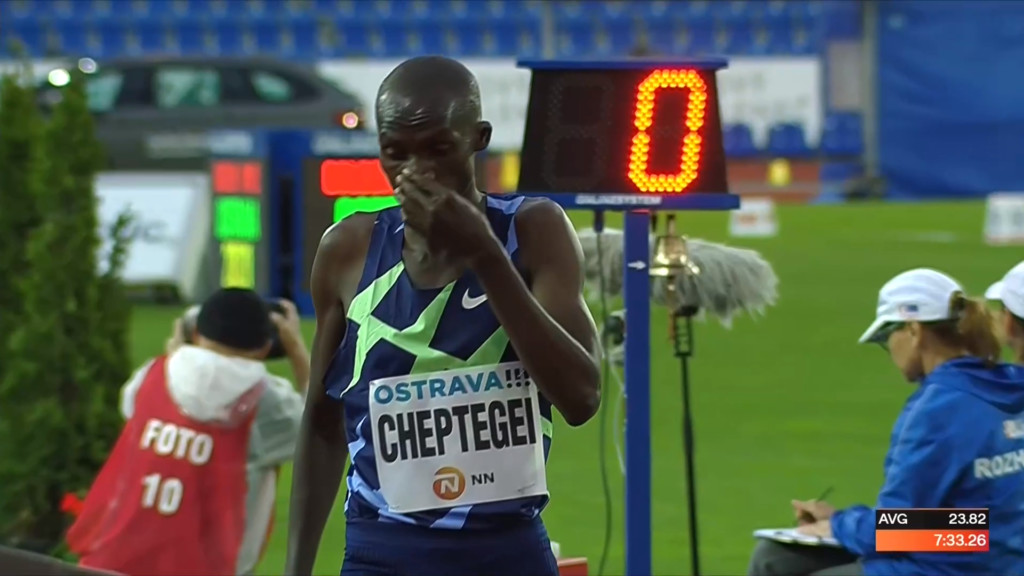
Cheptegei had an incredible 2020 season that saw him run three world records (5K, 5,000m and 10,000m) in four races. He had already raced twice in 2021 ahead of Wednesday’s meet, and he was itching to add another record to his resume, so he targeted Kenyan Daniel Komen‘s 3,000m mark of 7:20.67, which has been the time to beat for 24 years.
Before the run, Cheptegei’s agent, Jurrie van der Velden, told LetsRun.com that this record could be the toughest one Cheptegei has tried to beat, and after he finished 13 seconds behind Komen’s time on Wednesday, that appears to be true. Cheptegei opened the race on world record pace, and he passed through the first 1,600m in 3:55. He proceeded to slow considerably in the following few laps, though, and crossed the line far off the world record.
British domination
Young Brits won both 800m races. Hodgkinson’s win wasn’t too much of a surprise, as she has had a tremendous season so far. The 18-year-old opened her season in Austria in January with a U20 indoor 800m world record of 1:59.03 (which American Athing Mu lowered a month later with a 1:58.40 run in Arkansas), and she followed that up with a win in the women’s 800m at the European Indoor Championships. On Wednesday, she broke two minutes for the first time outdoors, winning the women’s race in Ostrava in 1:58.89, which is a new U20 European record.
The men’s 800m was the first race of the season for Burgin, but he ran extremely well and took the win in 1:44.14. Like Hodgkinson, Burgin (who turns 19 on Thursday) now owns the U20 European 800m record, and his result in the Czech Republic is a new world-leading time for 2021. Both Hodginson’s and Burgin’s times are under the Olympic 800m standards.
Kiplimo crushes the 10,000m
With all of the attention on Cheptegei, Kiplimo managed to fly under the radar until his race. Then, lining up in the men’s 10,000m, the 20-year-old flew away from the rest of the field, and 25 laps later, he stopped the clock in 26:33.93. This is a new world-leading time, it crushed the second-place finisher (who crossed the line in 27:07.49) and it shattered Kiplimo’s previous PB of 27:26.68 by close to a full minute. Before the race, Kiplimo said he was hoping to break 27 minutes, and he accomplished this goal with ease. His result now puts him at seventh-best in history at the distance.
Canadian sprints
Canadian sprinters Andre De Grasse and Aaron Brown were both in action in Ostrava. De Grasse raced the 100m, and he crossed the line in 10.17 seconds. He finished in third place behind American Fred Kerley (9.96) and Justin Gatlin (10.08). Brown also finished in third place, although he raced the 200m. Brown ran 20.40 seconds, and he finished behind Kenny Bednarek of the U.S. (19.93) and Kerley (20.27). Both De Grasse and Brown are set to race at the Gateshead Diamond League on Sunday in the U.K.
Login to leave a comment
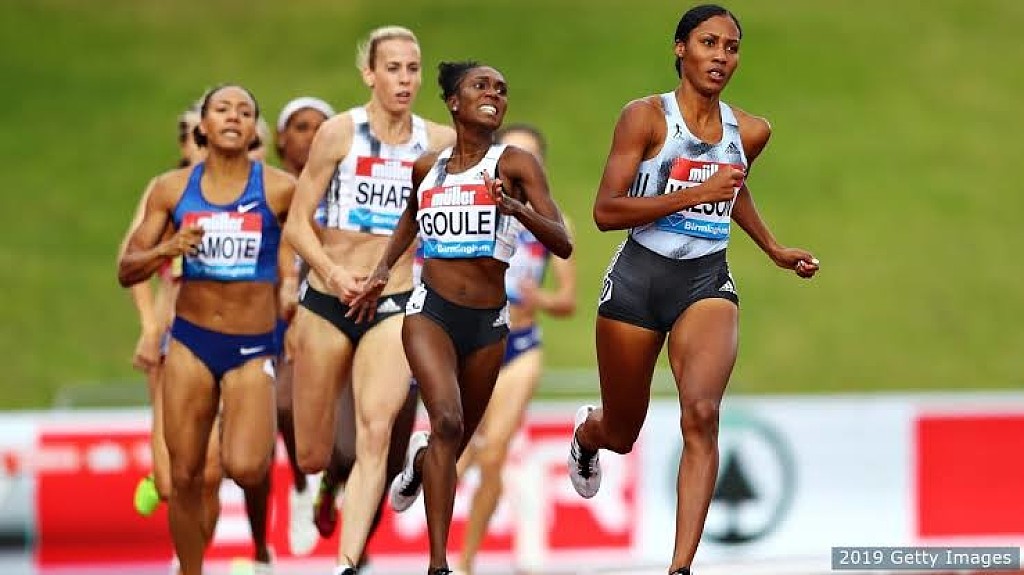
Jamaica’s record-holder Natoya Goule is set for another showdown with Ajeé Wilson in the Jack and Lewis Rudin Women’s 800m at the 113th NYRR Millrose Games
Natoya Goule last year’s Millrose runner-up and the 2019 Pan-American Games champion, is seeking her first Millrose Games win over Wilson.
Goule’s outdoor personal best of 1:56.15 is second in the field behind only Wilson. She finished sixth in the World Championship final this past October.
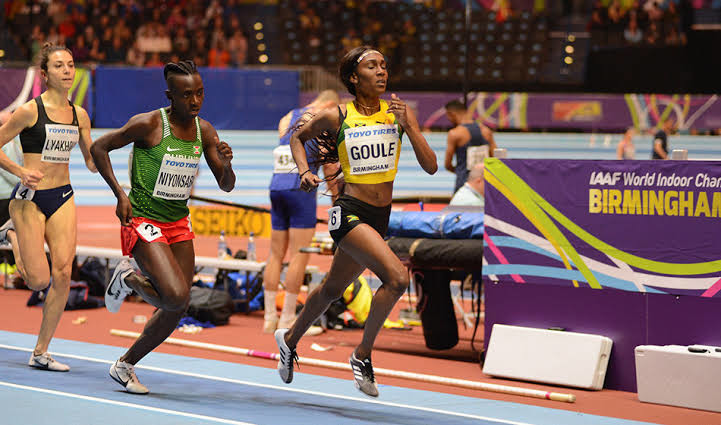
Ajeé Wilson, the race favorite, will be tested by an accomplished field that also includes multiple European and Diamond League champion, Laura Muir.
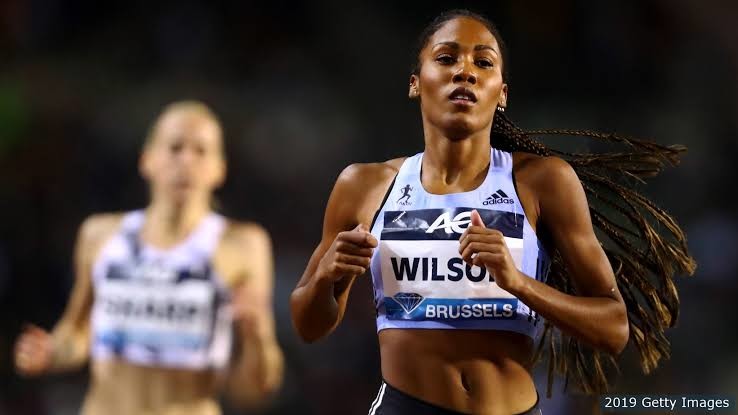
“The Armory track is one of my favorite places to compete,” Wilson said, “and I am really excited to be coming back to defend my Millrose Games title.”
Wilson, a New Jersey native, is no stranger to the bright lights of the NYRR Millrose Games.
Last year she set the American 800m indoor record of 1:58.60 on her way to a victory. In 2018 she anchored Team USA to the 4x800m world record at the Millrose Games.
Other athletes to watch in the Jack and Lewis Rudin Women’s 800m include Britain’s Shelayna Oskan-Clarke and American Ce′Aira Brown.
Login to leave a comment

NYRR Millrose Games
The Pinnacle of Indoor Track & Field The NYRR Millrose Games, first held in 1908, remains the premier indoor track and field competition in the United States. The 2025 edition will once again bring the world’s top professional, collegiate, and high school athletes to New York City for a day of thrilling competition. Hosted at the New Balance Track &...
more...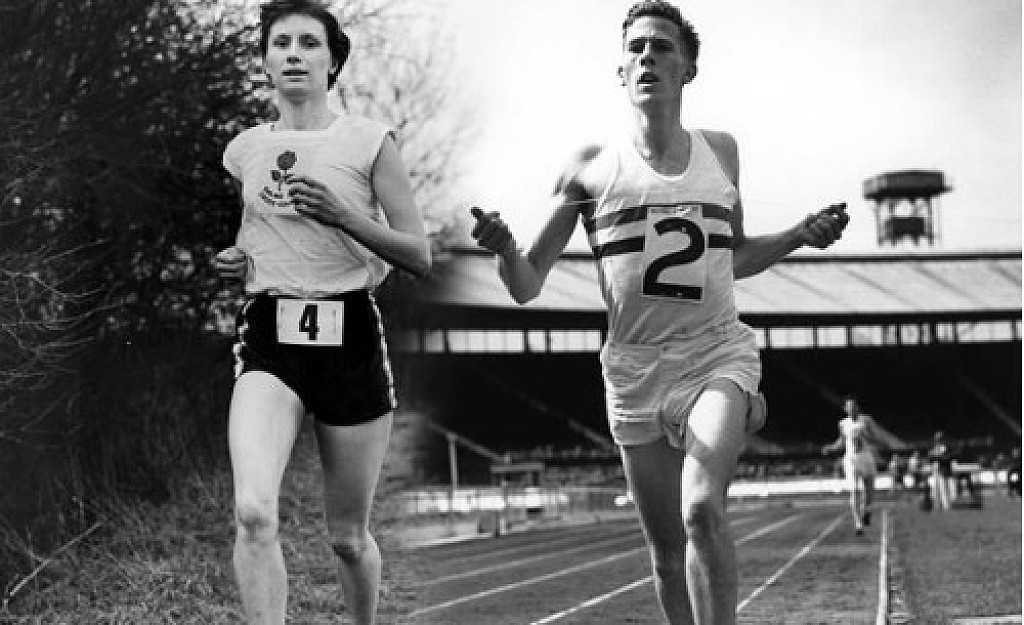
Diane Leather and Roger Bannister – the similarities and differences of two trailblazers
The world reverberated with the news that Roger Bannister had become the first man to run the mile in less than four minutes on 6 May 1954. Twenty three days later, a landmark was achieved in the women’s mile when fellow Briton Diane Leather became the first to dip under five minutes – unheralded, and, at the time, without fanfare.
Bannister’s progress continued to top the sporting agenda as he beat his Australian rival, and by then world mile record-holder, John Landy at the British Empire and Commonwealth Games in Vancouver, before hoovering up the European 1500m title and retiring to start a stellar career in medical research.
Leather remained as a runner until 1961, but while she won two silver medals in the 800m at the European Championships, and captained the women’s team at the 1960 Rome Olympics, she never got the chance to run at her best distance in a major international championship.
Less than a month after Bannister had clocked 3:59.4 at the Iffley Road track in Oxford, Leather recorded 4:59.6 at the Alexander Sports Ground in Birmingham – reacting with the words “Oh good. At last” – and the following year she ran 4:50.8 and then 4:45.0, which remained a world record until 1962.
By then Leather – who had also set an 800m world record of 2:09 in 1954 – had retired, aged 27. Women’s records for the mile were not ratified until 1967, and she never had the opportunity to race over her preferred distance at an international championship.
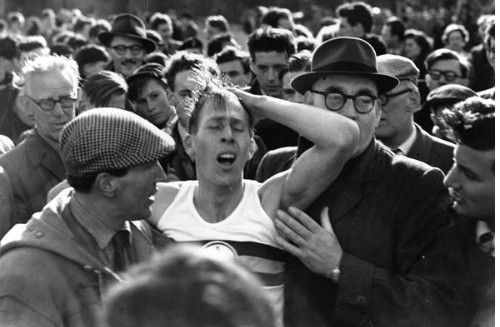
Both runners were honoured at the World Athletics Heritage Mile Night in Monaco last month with awards being made to Leather’s daughter, Lindsey Armstrong, and Bannister’s daughters Erin Bannister-Townsend and Charlotte Bannister-Parker.
The contrast in recognition for two great athletes who both died in 2018 was mirrored, oddly, in a contrast in recognition within their own families.
Lindsay Armstrong had no idea that her mum had been an athlete, or indeed a world record-holder, until she was 11.
“She didn’t tell me herself,” recalled Lindsay, who runs Shakespeare’s Schoolroom and Guildhall in Stratford-upon-Avon. “I learned about it when I found some scrapbooks that one of her brothers had kept. They were on the bottom shelves somewhere in the sitting room, just tucked away.
“I didn’t know what to do about it – it was almost as if I was being naughty!
“In the end it wasn’t really such a big conversation. She said it was just something she used to do.
“I don’t want you to get the wrong idea. She wasn’t shy and retiring. But it was just something she’d done.
“On the day she broke five minutes for the mile, she had broken an 800m record earlier that day – it may have been a national record. So she had two great legs on her.
“She ran in the Olympics in 1960, but again they still didn’t allow her to run the mile. There was nothing further than the 200 until 1960 and then they were allowed to do the 800m. So she was the women’s team captain but she didn’t get to the final. Because, you know, it was six years past her prime. We have still got her Olympic jacket at home. She stopped soon after that.
“She didn’t talk about her athletics. I know that in later years according to people that knew her then that she felt somewhat slighted, and instead of letting it upset her she just turned away from athletics earlier than she would have done.
“But she did a lot of officiating in athletics after her career. So she didn’t really turn away from the sport. She always loved it.
“She was an extraordinary athlete. She ran the 400m, she ran the relay, she was a cross country champion. She did a huge range of distances.
“She was a chemist and she went on to be a child social worker. That was her passion. She was more than just an athlete. She was an extraordinary woman who really did change lives.
“She was beautiful – so beautiful. You could see it in the film we just watched. And it was really lovely to see. We were so proud of her. To be here with all these other extraordinary runners – she would have loved to be here.”
By contrast, Bannister’s daughters Charlotte, who is a Church of England Minister at the University Church in Oxford, and Erin, an accomplished painter, recalled their father introducing athletics into their life from the point where they could remember.
“I think it would be fair to say that my father was a pretty humble man throughout his life considering what he achieved both medically and athletically,” said Charlotte.
“But in terms of us being aware that he was a runner and that running was important was something that happened right from the start of my very consciousness.
“We were encouraged to run every day. There was a little park outside our house which was a square, and he would run every day of his life, right until he had a car accident and he no longer could. But it was deeply engrained within our childhood. Much more… why it was good for you…
Her sister continued the narrative: “Why he loved to be outside… being outdoors, and including other sports, including climbing and walking, and tennis, and sailing, and a whole range of sports. He was always trying things that weren’t necessarily to do with athletics. So things like sailing were quite dangerous, but they gave us enormous fun.”
Charlotte recalled: “He would train us to get off the starting line. He just loved watching people run, and he would come to our school sports days and he would look around the field and he would say that young boy or that young girl, they have got great style.
“And then of course he was broadcasting at the Olympics as a journalist – that was one of the times we were allowed to watch television, to see the Olympic Games and the Commonwealth Games.
“He didn’t generally talk about his athletics, but during anniversaries of his achievements he would sometimes talk about them, and he would talk about how his father had taken him to see athletics very early on.
“I remember going to Crystal Palace with him a lot. And then of course when he was Chairman of the Sports Council he would have to attend a lot of sporting events and if my mother couldn’t make it he would take one of us children.
“And then of course there were interviews. When something happened in the athletics world, he used to get rung up by the BBC and asked to comment on things to do with drugs, apartheid, politics…”
Both recalled travelling to Vancouver in 1967 for the unveiling of a statue depicting the decisive moment of the Vancouver Mile race, when Landy looked back inside him as their father was making his decisive burst of speed in the lane outside.
Charlotte added: “We used to have very interesting Sunday lunches, where there were always discussions around politics, athletics and sport, and it would be a summary of the week’s news and what was going on in the wider world. So there was no sense of not being involved in what was his passion – or of him not passing on his passion to us.”
by World Athletics
Login to leave a comment
