

Running News Daily
Running News Daily is edited by Bob Anderson and team. Send your news items to bob@mybestruns.com Advertising opportunities available.
Index to Daily Posts · Sign Up For Updates · Run The World Feed
Articles tagged #Minnesota
Today's Running News
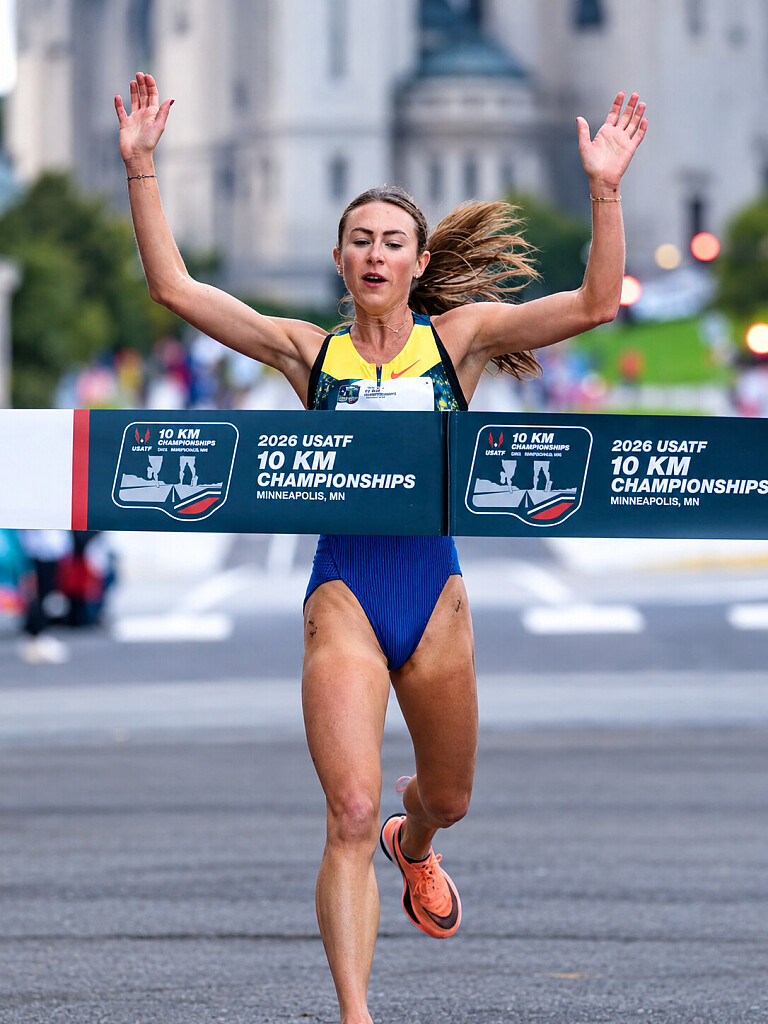


Emily Venters Dominates USATF 10K Championships With Record-Breaking 31:09
Emily Venters delivered a commanding performance at the 2026 USATF 10K Championships in Minneapolis, Minnesota, powering to the national title in 31:09 and rewriting the championship record in spectacular fashion.
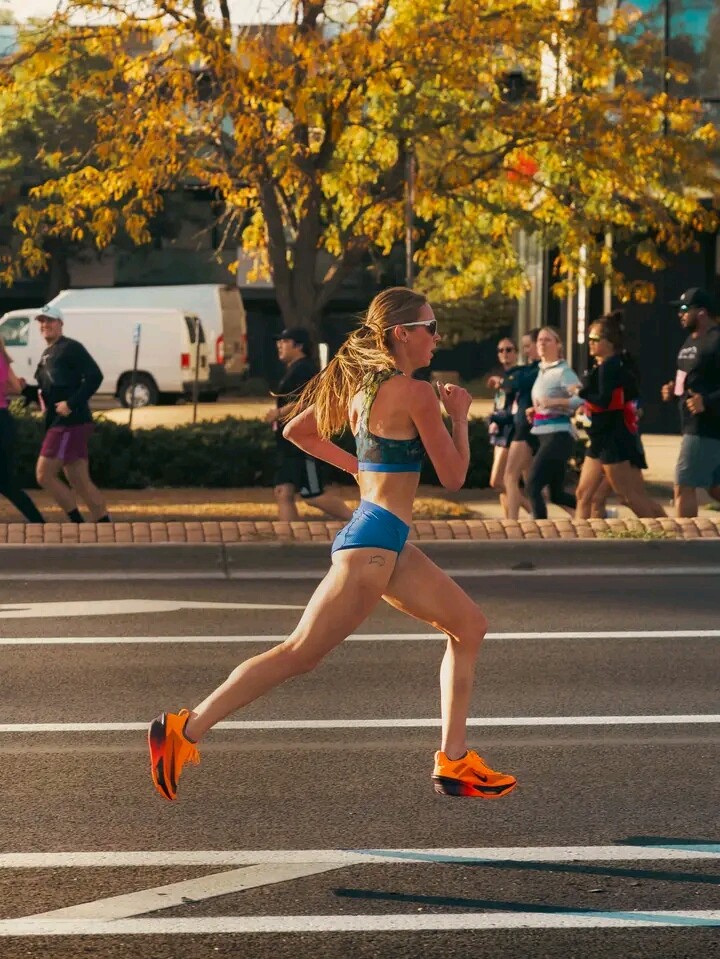
Venters controlled the women’s race from the opening stages, maintaining a relentless rhythm all the way to the finish. Her performance was enough to break the previous USATF 10K Championship record of 31:40, set by Jess McClain in 2024.
The Salt Lake City-based runner also created a huge gap over the rest of the field, crossing the finish line 48 seconds ahead of runner-up Kasandra Parker. Parker produced an impressive run of her own, clocking 31:57 to secure the silver medal, while Allie Ostrander completed the national podium with 32:02 for bronze.
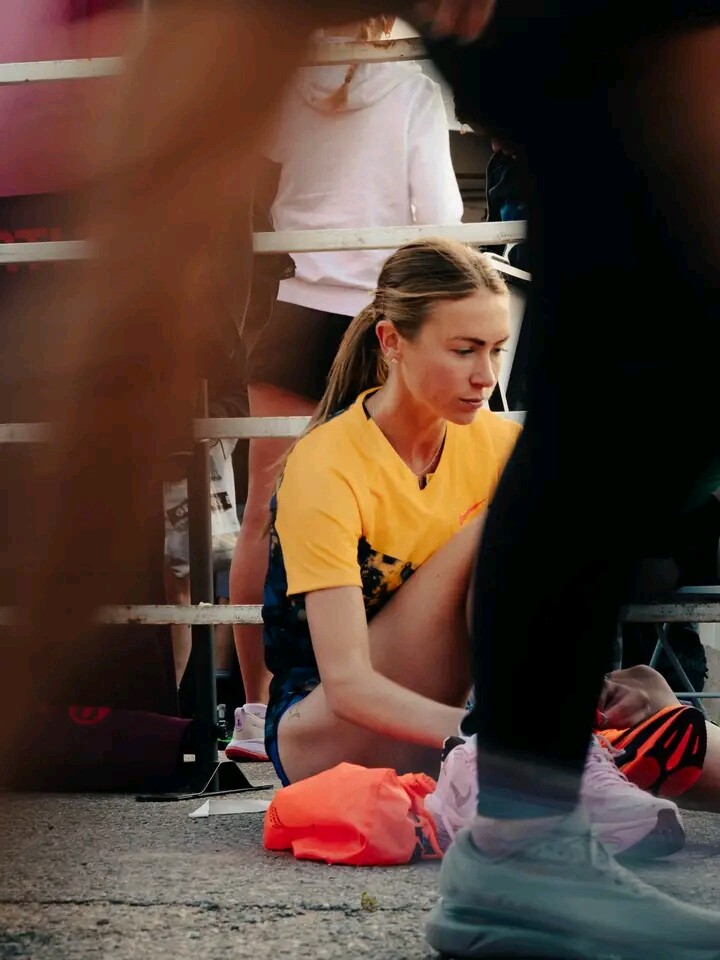
Venters’ victory added another national championship title to her résumé, but the manner of the triumph made the achievement even more significant. Her 31:09 placed her firmly at the centre of the day’s headlines, with the championship record providing the perfect reward for a dominant display.
The women’s race also produced an exceptionally strong leading group, with the top eight all finishing inside 32:37. Amanda Vestri took fourth in 32:16, followed by Amy Davis-Green in 32:20 and Cailie Logue Hughes in 32:30.
Olivia Borowiak finished seventh in 32:33, while Jessie Cardin rounded out the top eight in 32:36, highlighting the depth of the field at this year’s national championships.
The Minneapolis championships proved to be a memorable weekend for USATF road running, with both the men’s and women’s winners establishing new championship records. Aidan Troutner also made history in the men’s race by breaking a championship mark that had stood for four decades.
2026 USATF 10K Championships — Women’s Top 8
1. Emily Venters — 31:09 — National Champion, Championship Record
2. Kasandra Parker — 31:57
3. Allie Ostrander — 32:02
4. Amanda Vestri — 32:16
5. Amy Davis-Green — 32:20
6. Cailie Logue Hughes — 32:30
7. Olivia Borowiak — 32:33
8. Jessie Cardin — 32:36
Venters’ 31:09 will now stand as the mark to beat at the USATF 10K Championships, capping a memorable morning in Minneapolis with a national title and a new championship record.
With the championship record now in her name, Venters has added another standout chapter to an already impressive season. Her 31:09 not only delivered gold on the national stage but also underlined her ability to produce a breakthrough performance when the biggest opportunities arrive. For the USATF 10K Championships, it was a performance that will be remembered long after the medals were handed out.
by Erick Cheruiyot for My Best Runs.
Login to leave a comment
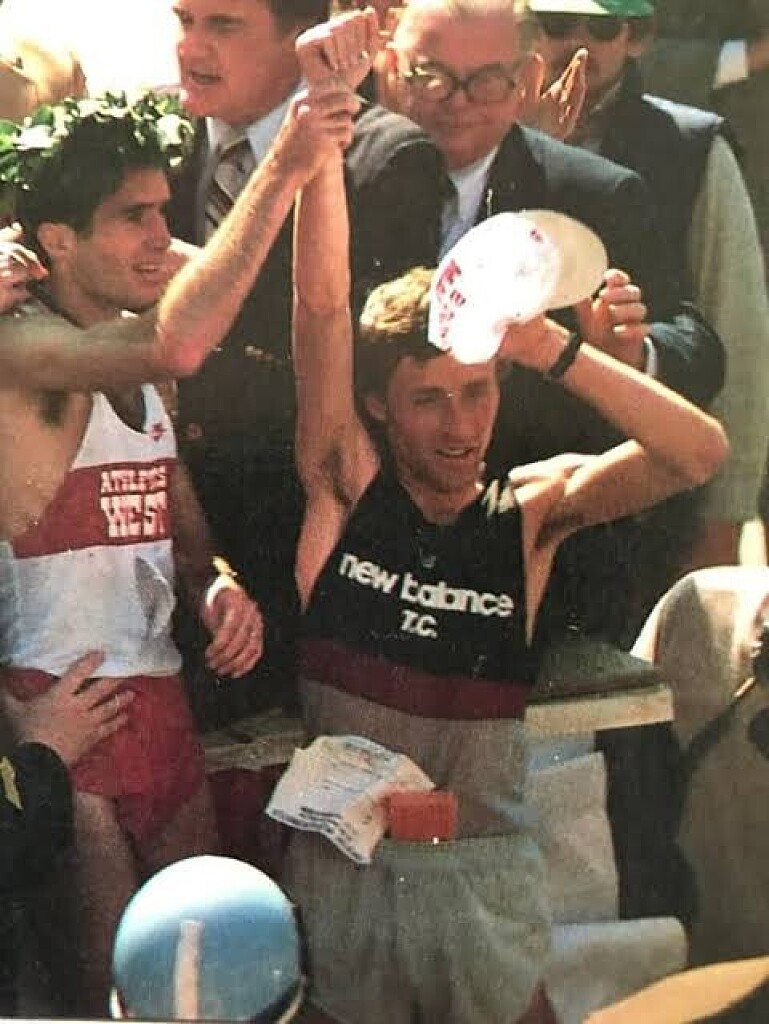
The Duel In The Sun: When Salazar Beat Beardsley By Two Seconds At Boston
April 19, 1982. The Boston Marathon unfolded under unusually warm, sunny conditions, and by the closing stages, the race had become a private battle between two very different American runners: Alberto Salazar, already one of the biggest names in distance running, and Dick Beardsley, the Minnesota runner who had emerged as a serious marathon contender.
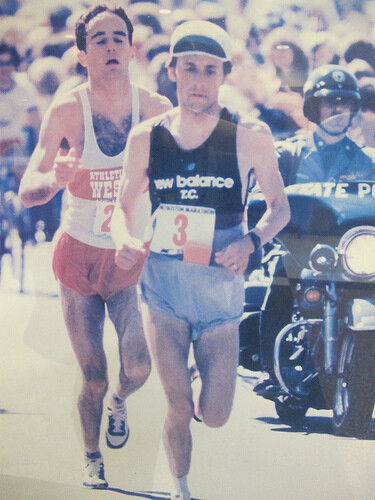
For roughly nine miles, from the Newton Hills toward the finish, Beardsley did much of the leading, with Salazar tucked close behind. Neither man could shake the other. They ran deep into Boston locked together, trading surges and refusing to surrender an inch as the crowds along the course grew louder.
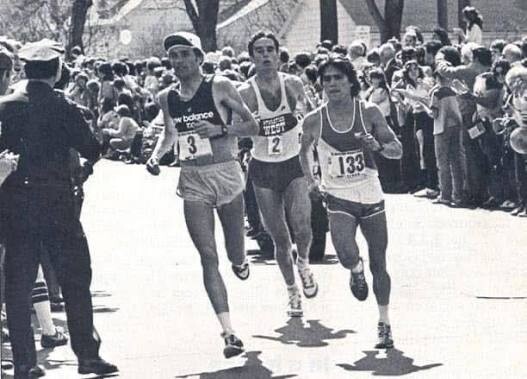
Salazar finally made his decisive move with less than a mile remaining. He opened a small gap, but Beardsley refused to disappear. The Minnesota runner chased him through the final streets, closing again as they approached the finish.
Then came the final sprint.
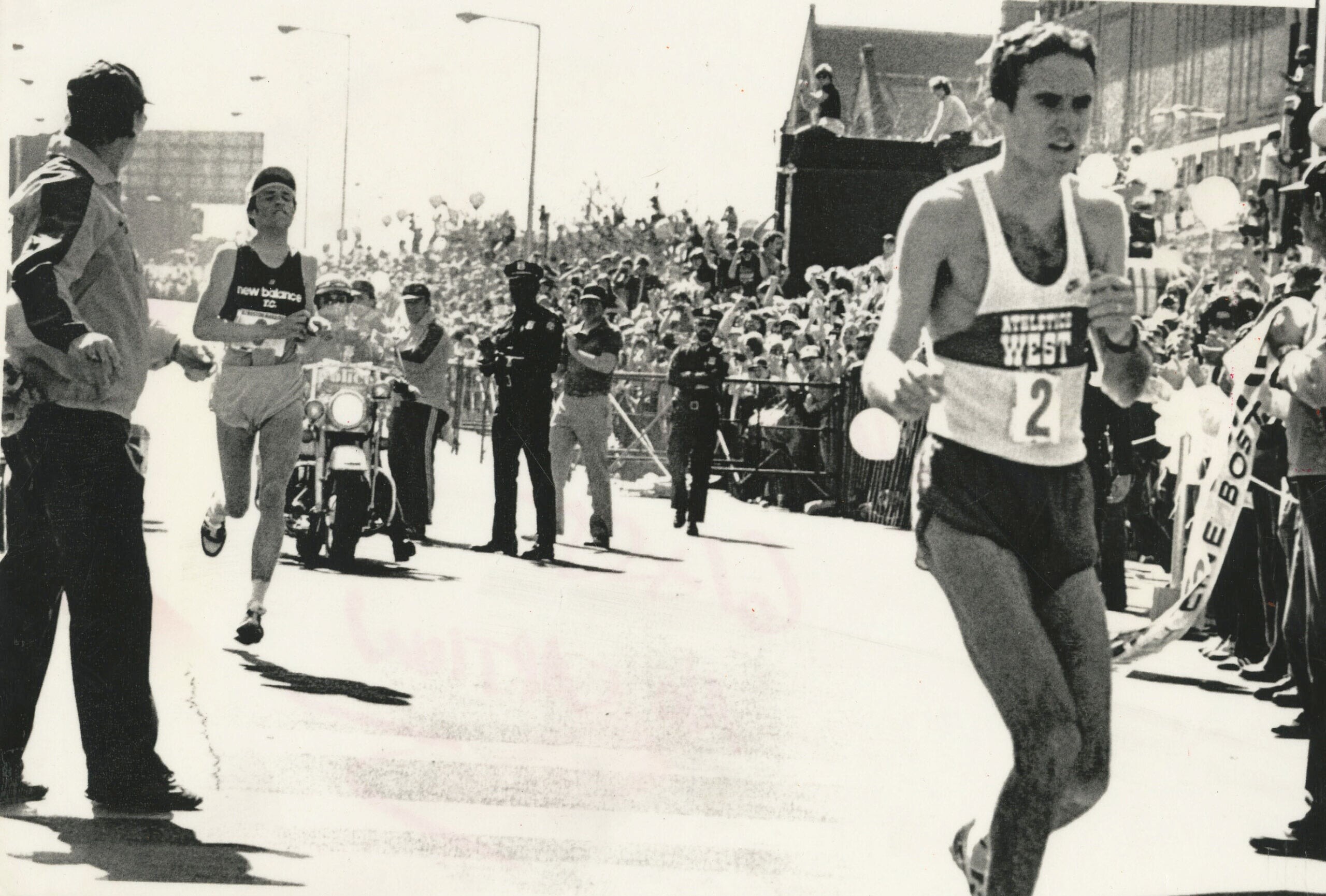
Salazar held his form and reached the finish first in 2:08:52, with Beardsley only two seconds behind in 2:08:54. It was an extraordinary result: both men broke 2:09 in the same Boston Marathon, and both shattered the previous course record.
The race became known as the “Duel in the Sun,” and it remains one of the most celebrated head-to-head battles in Boston Marathon history. Beardsley had not won, but his performance established him as one of America's elite marathoners.
For Salazar, however, victory came at an enormous physical cost. Immediately after crossing the finish line, he collapsed and required emergency treatment, including several litres of intravenous saline. The combination of heat, dehydration and an all-out effort had pushed his body to the limit.
Salazar's marathon career would never again produce quite the same kind of performance. His celebrated 1981 New York City Marathon victory had produced what was initially considered a world record, although the course was later found to be short. His Boston triumph therefore became one of the defining victories of his career.
Beardsley's story would take an even more difficult turn. Injuries disrupted his career, and after returning to the highest level, he suffered a devastating farm accident in 1989. Further accidents, surgeries and severe physical pain followed, eventually leading to a long battle with painkiller addiction.
He eventually overcame that struggle and transformed the darkest chapters of his life into a story of recovery, resilience and redemption.
That is what makes the 1982 Boston Marathon more than a two-second victory.
For one extraordinary afternoon, Salazar and Beardsley produced a marathon duel in which neither man was willing to give way. One crossed the finish line first. The other finished only two seconds behind him.
Two seconds separated them at Boston. Decades later, their legendary duel remains one of the greatest chapters in marathon history.
by Erick Cheruiyot for My Best Runs.
Login to leave a comment
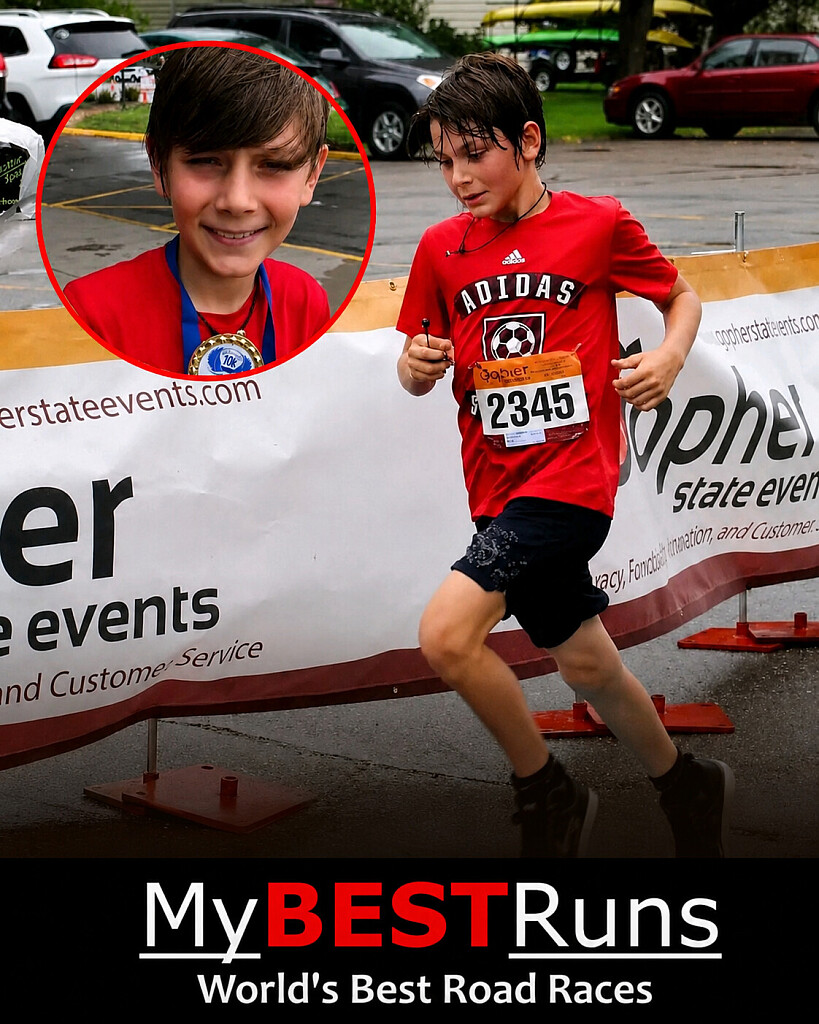
He Thought He Was Running A 5K—He Finished As The 10K Champion: The Astonishing Story Of 9-Year-Old Kade Lovell
Sport has a remarkable way of producing moments that no scriptwriter could ever imagine. On September 21, 2019, one simple mistake transformed an ordinary children's road race into one of the most unforgettable stories in distance running.
Nine-year-old Kade Lovell of St. Cloud, Minnesota, arrived at the St. Francis Franny Flyer in Sartell expecting to compete in the 5-kilometre race. Like any young athlete, his goal was straightforward—cover the 3.1-mile course, cross the finish line, and celebrate another successful outing.
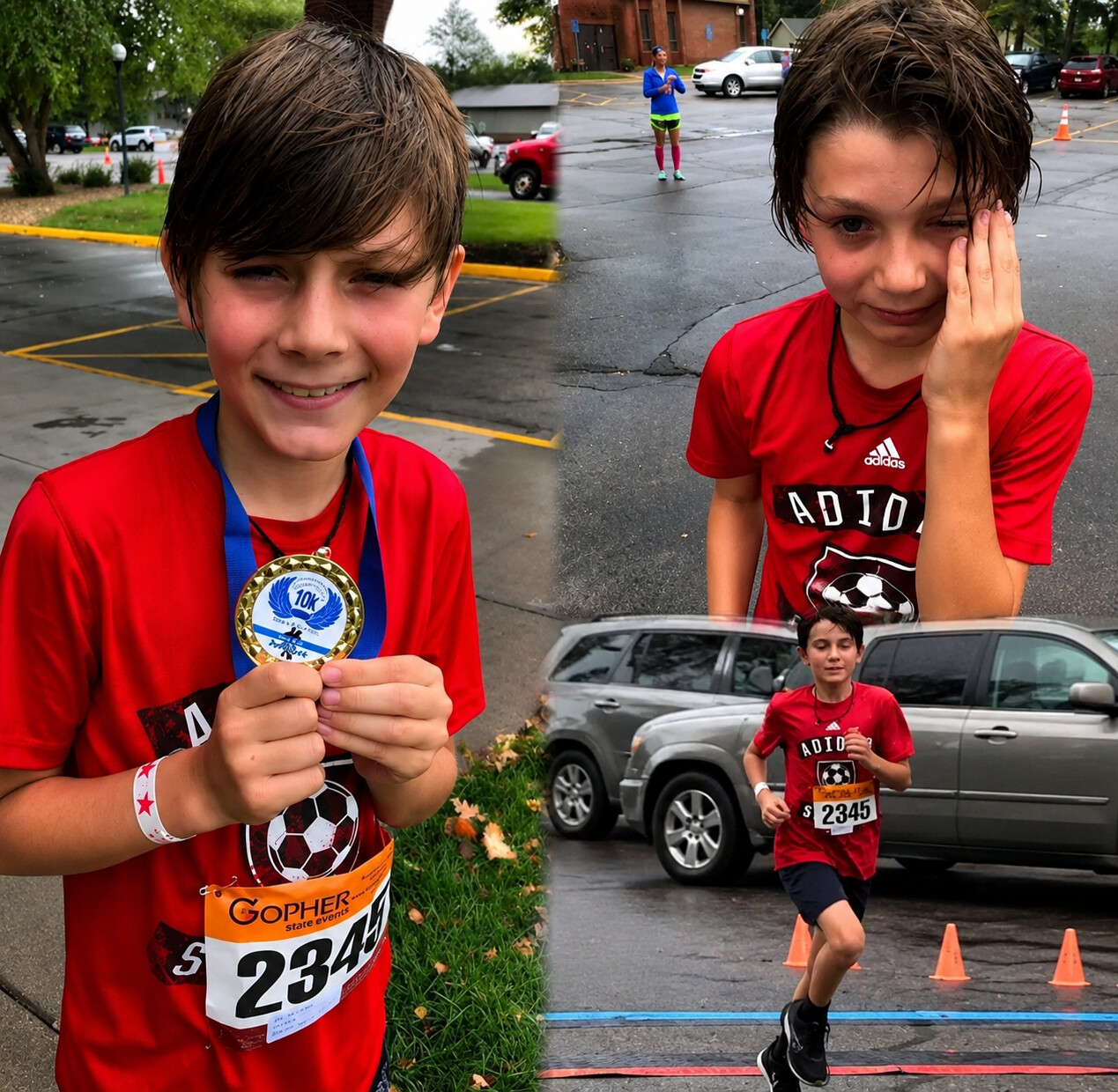
Instead, fate had something far more extraordinary in store.
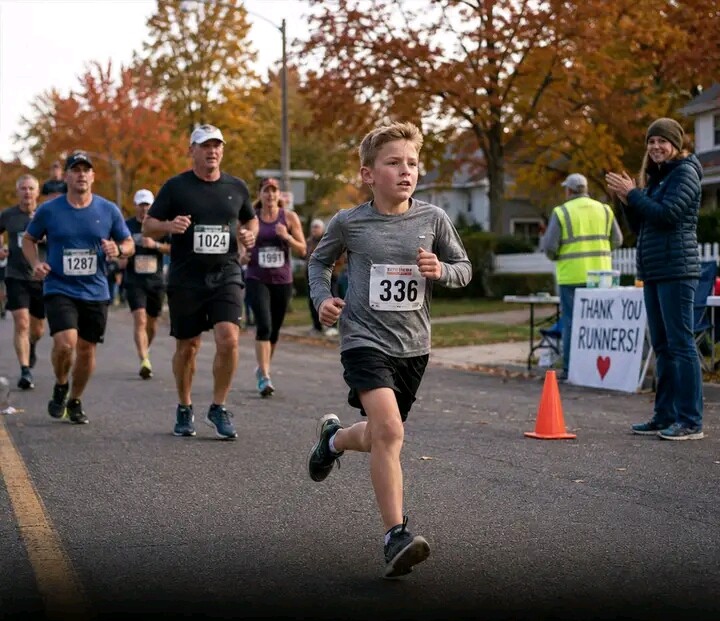
Partway through the race, a volunteer accidentally directed Kade onto the 10K course rather than the 5K route. Trusting the instruction, the young runner continued without hesitation, unaware that he had just doubled the distance he was supposed to run.
At the finish area, his mother, Heather Lovell, waited anxiously for her son to appear. As the minutes ticked by, concern quickly turned into panic. When Kade failed to reach the 5K finish, she feared he had become lost or, worse, suffered an injury. Race officials were alerted, and a search began as everyone tried to locate the missing youngster.
Then came the astonishing news.
Officials informed Heather that Kade wasn't missing at all.
He was leading the 10K race.
Running well beyond the distance he had planned to cover, Kade displayed remarkable composure and endurance as he powered through the longer course. Near the turnaround point, he realized something wasn't right, but by then he had already committed to the route and simply kept running.
What followed stunned everyone watching.
Kade crossed the finish line in 48:17.4, not merely completing his first-ever 10-kilometre race but winning it outright. He finished approximately one minute ahead of the second-place finisher, a 40-year-old woman, claiming the overall title against a field of much older and more experienced runners.
The young champion later summed up the incredible achievement with the innocence only a child could deliver.
"I accidentally won it."
Those four words perfectly captured one of road running's most remarkable stories.
Although Heather's first reaction was frustration and relief after believing her son had disappeared, those emotions quickly gave way to immense pride once she learned what had actually happened.
The result was no mere stroke of luck. Kade had been running competitively from a very young age and trained consistently, giving him the fitness and confidence to handle a challenge far greater than anyone expected that day.
What began as a routine 5K became an unforgettable display of courage, resilience, and youthful determination. A wrong turn unexpectedly led Kade Lovell into the 10K race, but his talent carried him all the way to the top of the podium.
Sometimes, the greatest victories aren't the ones we plan—they're the ones we discover by refusing to stop when the road suddenly becomes longer than expected.
by Erick Cheruiyot for My Best Runs.
Login to leave a comment
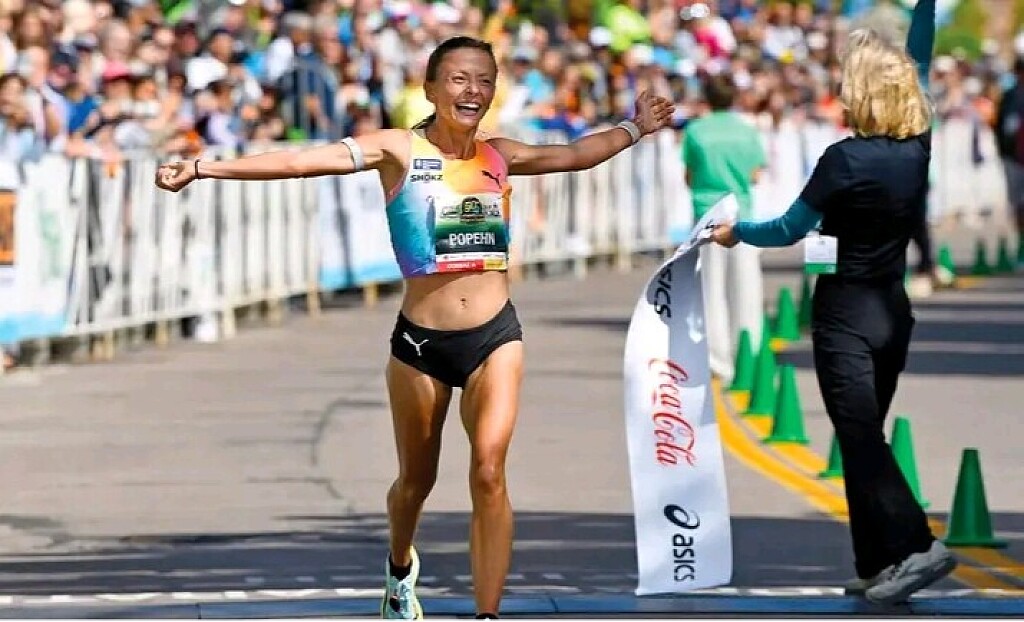
Dakotah Popehn Delivers Historic Triple Crown as Home-State Star Triumphs at Grandma’s Marathon
The 50th edition of Grandma’s Marathon produced another unforgettable chapter in its rich history on Saturday morning, as hometown favorite Dakotah Popehn thrilled thousands of spectators by claiming a remarkable third career title along the iconic shores of Lake Superior.
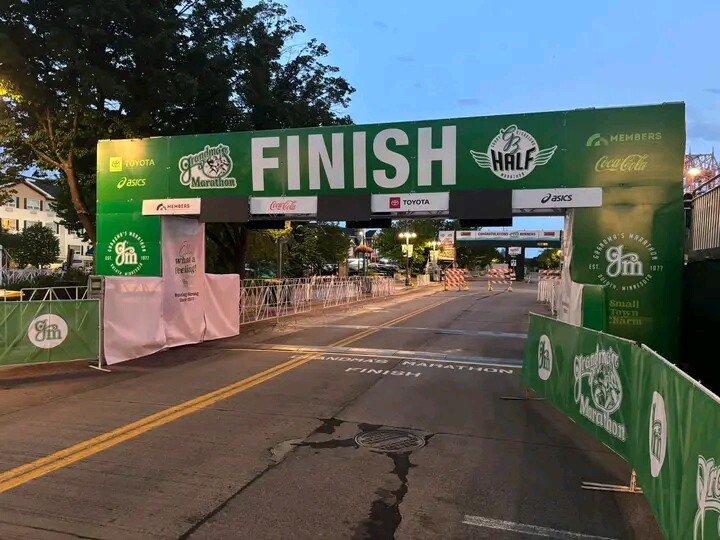
Under cool, humid conditions that provided an ideal stage for fast racing, the elite women’s field engaged in a captivating battle from Two Harbors to the finish line at Canal Park in Duluth. The race remained tightly contested deep into the final miles before Popehn showcased her experience, strength, and tactical brilliance to break away when it mattered most.
Roared on by passionate Minnesota supporters lining the course, the U.S. Olympian surged clear in the closing stages to cross the finish line in 2:28:51. The victory elevated Popehn into an exclusive group of women who have won Grandma’s Marathon three times, further cementing her place among the event’s all-time greats.
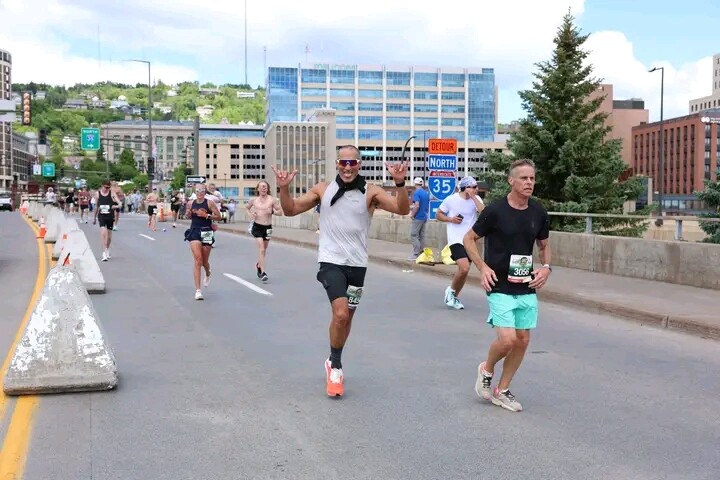
The race was far from straightforward. Ethiopia’s Bashanke Bilo delivered an outstanding performance in her North American marathon debut, staying within striking distance of the lead for much of the contest. Despite her determined challenge, she ultimately finished second in an impressive 2:29:36.
Completing the podium was Chicago’s Jane Bareikis, whose strong and consistent run earned her third place in 2:30:23 after a spirited effort throughout the demanding 26.2-mile journey.
Behind the leading trio, several American athletes produced notable performances. Mary van Laarhoven secured fourth place in 2:32:40, while Hannah Branch rounded out the top five with a time of 2:34:03. Annmarie Tuxbury, Sarah Czuprynski, Shalaya Kipp, Jennifer Pope, and Shannon Smith completed the top ten in a highly competitive women’s field.
Women's Top 10 Results – Grandma’s Marathon 2026
1. Dakotah Popehn (USA) – 2:28:51
2. Bashanke Bilo (Ethiopia) – 2:29:36
3. Jane Bareikis (USA) – 2:30:23
4. Mary van Laarhoven (USA) – 2:32:40
5. Hannah Branch (USA) – 2:34:03
6. Annmarie Tuxbury (USA) – 2:35:00
7. Sarah Czuprynski (USA) – 2:35:36
8. Shalaya Kipp (USA) – 2:36:58
9. Jennifer Pope (USA) – 2:37:59
10. Shannon Smith (USA) – 2:38:24
As Grandma’s Marathon celebrated its golden anniversary, the women’s race provided a fitting showcase of courage, tactical excellence, and perseverance. Yet the day ultimately belonged to Dakotah Popehn, whose unforgettable performance transformed a hometown dream into a historic triumph.
With her third Grandma’s Marathon crown secured, Popehn’s name is now permanently woven into the fabric of one of America’s most celebrated road races—a champion once again, and a legend forever.
by Erick Cheruiyot for My Best Runs.
Login to leave a comment

Grandmas Marathon
Grandma's Marathon began in 1977 when a group of local runners planned a scenic road race from Two Harbors to Duluth, Minnesota. There were just 150 participants that year, but organizers knew they had discovered something special. The marathon received its name from the Duluth-based group of famous Grandma's restaurants, its first major sponsor. The level of sponsorship with the...
more...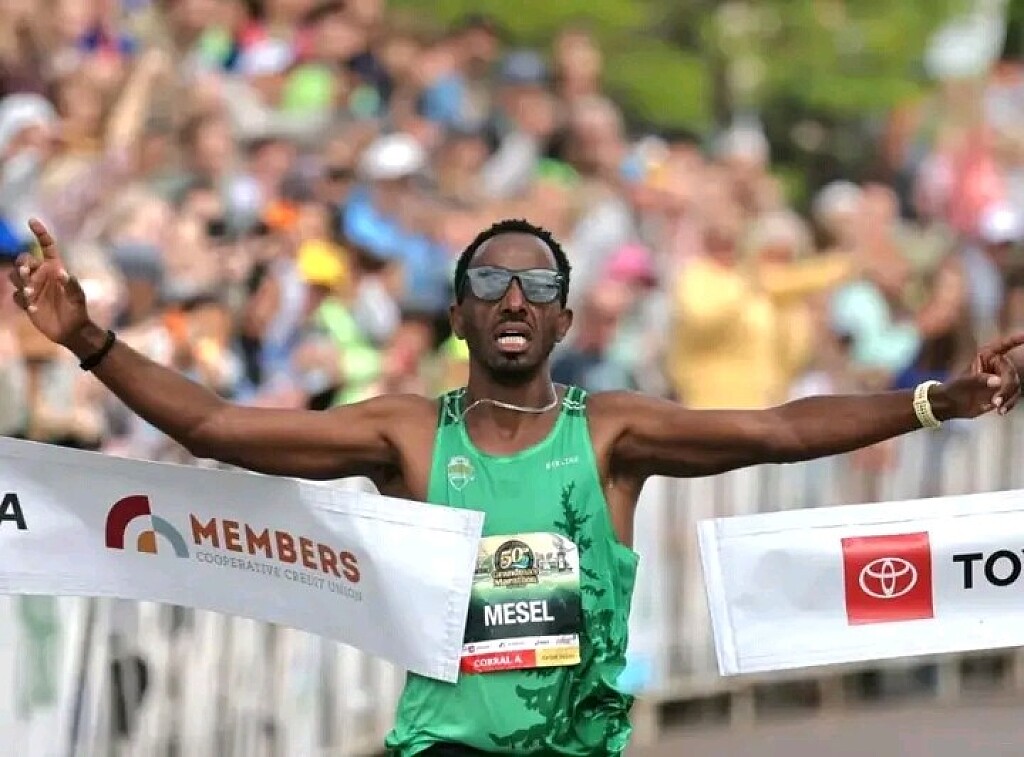
Amanuel Mesel Makes History at Grandma’s Marathon with Landmark Victory for Eritrea
The 50th edition of Grandma’s Marathon delivered a memorable chapter in long-distance running history on Saturday morning as Eritrea’s Amanuel Mesel stormed to victory in Duluth, becoming the first athlete from his nation to win the prestigious race.
Set against the breathtaking backdrop of Lake Superior, the iconic course from Two Harbors to Duluth provided ideal racing conditions for both elite athletes and thousands of recreational runners celebrating the event’s golden jubilee. Cool temperatures and calm weather created the perfect stage for a fiercely contested battle among the men's elite field.
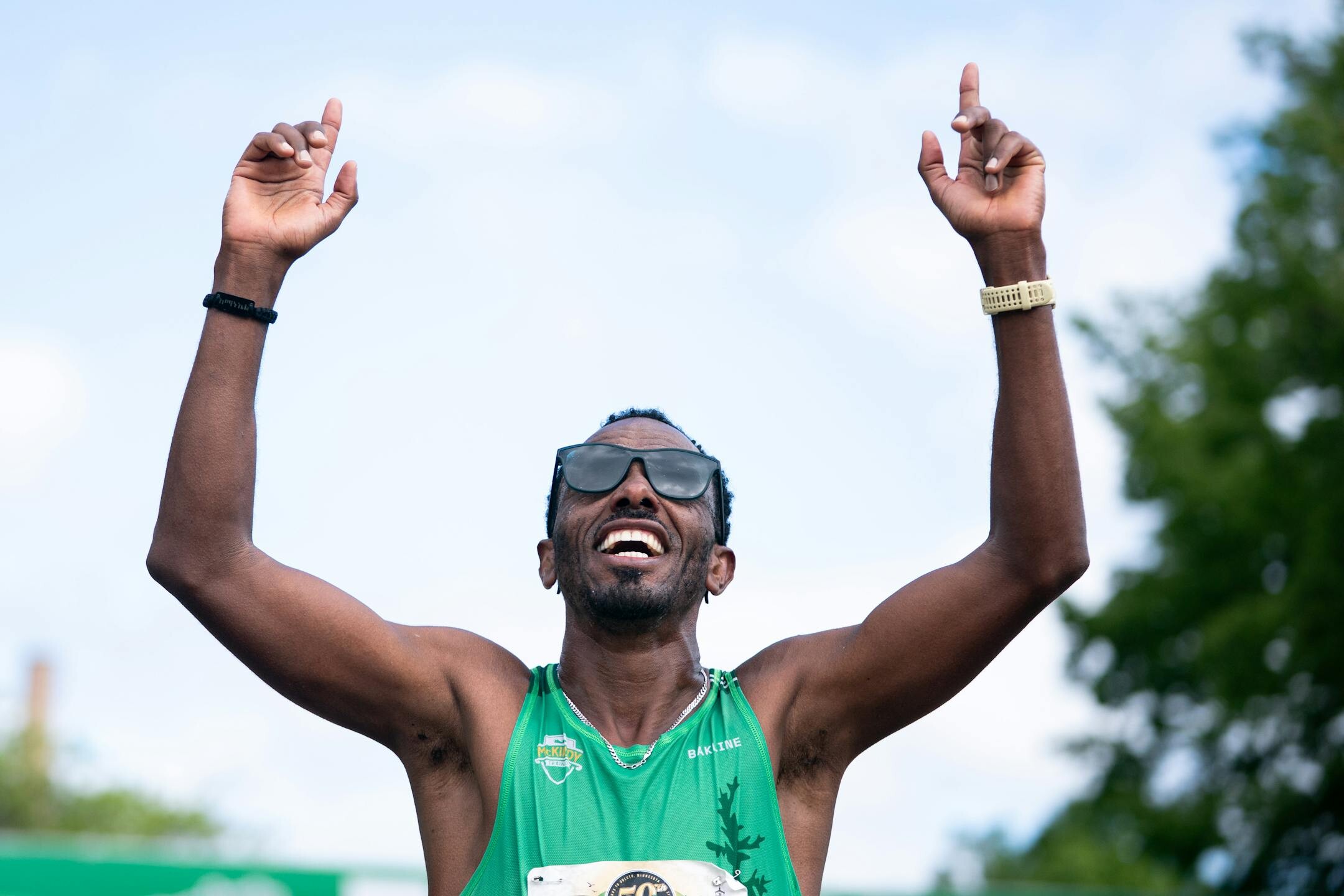
At 35 years old, Mesel demonstrated experience, patience, and tactical brilliance as he emerged from a tightly packed lead group to claim victory in 2:11:21. His triumph was more than just a personal achievement—it marked a historic breakthrough for Eritrean athletics at one of North America's most respected marathons.
Kenya’s veteran marathoner Elisha Barno, 41, fought courageously throughout the race and secured second place in 2:12:50 after remaining in contention deep into the closing stages. Ethiopia’s Getinet Gedamu completed the podium in 2:13:03, capping off a highly competitive East African sweep of the top three positions.
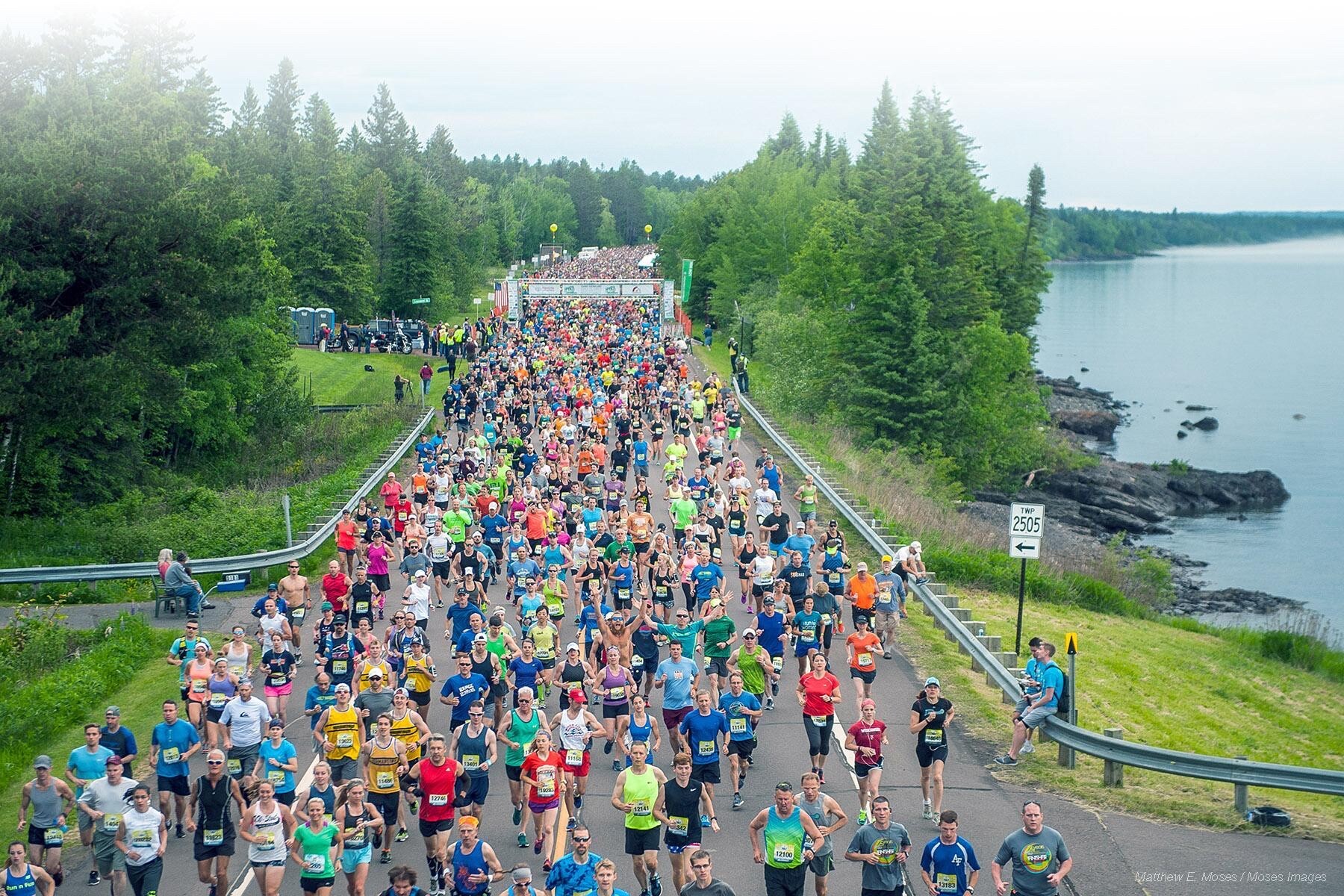
The race remained remarkably close from start to finish, with several athletes separated by only seconds as they approached the final miles. In one of the tightest finishes in recent Grandma’s Marathon history, the fourth through sixth-place finishers crossed the line within just six seconds of one another, highlighting the extraordinary depth of the field.
Kenya’s Milton Rotich narrowly missed the podium, finishing fourth in 2:13:04, while Americans Will Norris and Joseph Whelan impressed on home soil with fifth and sixth-place finishes respectively. Fellow Kenyans Benard Rotich and Sammy Rotich also secured top-ten positions, while Ethiopia’s Mohammed Bati and American Dillon Maggard rounded out the leading ten.
Men’s Top 10 Results – Grandma’s Marathon 2026
1. Amanuel Mesel (Eritrea) – 2:11:21
2. Elisha Barno (Kenya) – 2:12:50
3. Getinet Gedamu (Ethiopia) – 2:13:03
4. Milton Rotich (Kenya) – 2:13:04
5. Will Norris (USA) – 2:13:08
6. Joseph Whelan (USA) – 2:13:10
7. Benard Rotich (Kenya) – 2:13:30
8. Mohammed Bati (Ethiopia) – 2:13:38
9. Sammy Rotich (Kenya) – 2:14:13
10. Dillon Maggard (USA) – 2:14:42
As the sun rose over Minnesota’s North Shore, the 50th Grandma’s Marathon delivered everything fans could hope for—historic achievement, dramatic competition, and a new champion whose name will forever be etched into the race’s rich legacy. For Amanuel Mesel, it was a victory years in the making. For Eritrea, it was a milestone moment that will be celebrated for generations.
by Erick Cheruiyot for My Best Runs.
Login to leave a comment
Grandmas Marathon
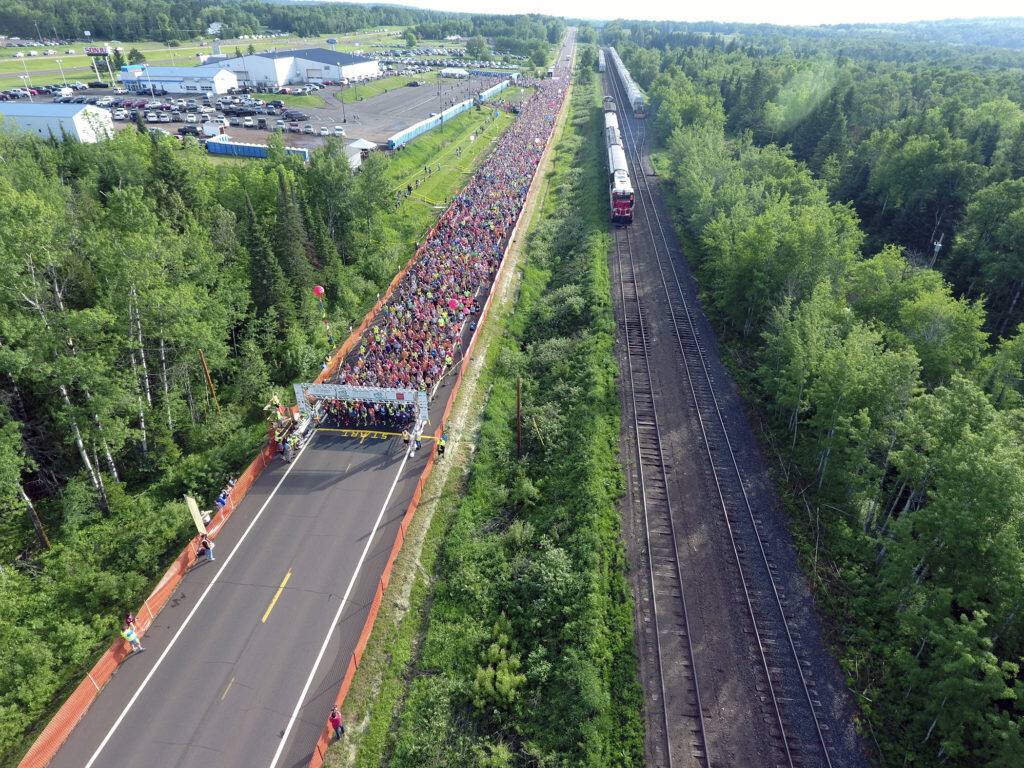
Grandma's Marathon began in 1977 when a group of local runners planned a scenic road race from Two Harbors to Duluth, Minnesota. There were just 150 participants that year, but organizers knew they had discovered something special. The marathon received its name from the Duluth-based group of famous Grandma's restaurants, its first major sponsor. The level of sponsorship with the...
more...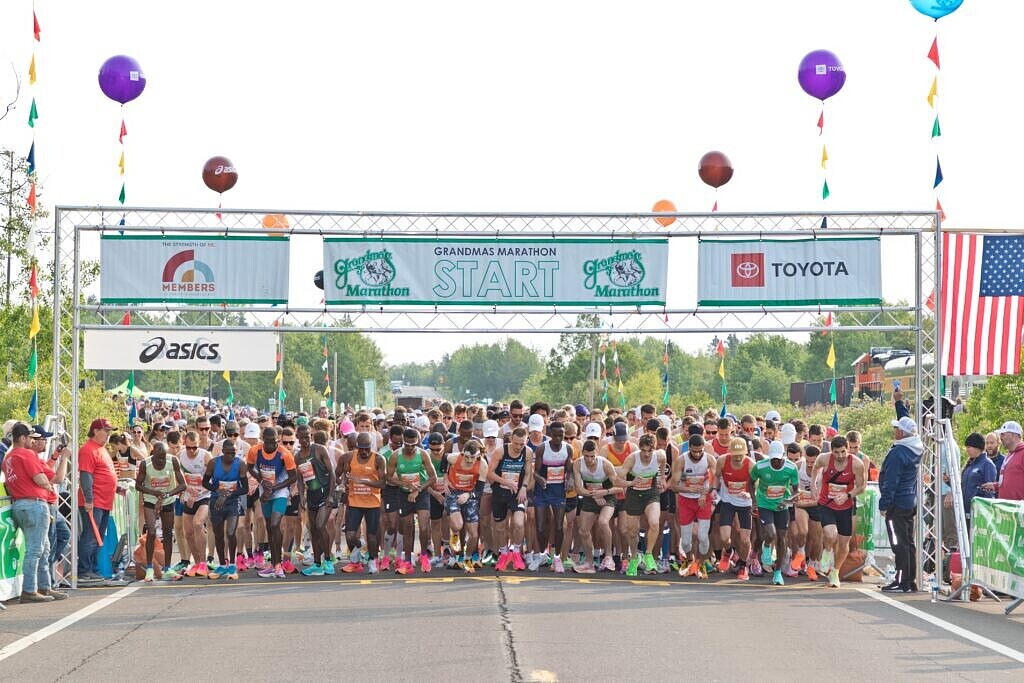
Elite Marathoners Set for High-Stakes Battle at 2026 Grandma’s Marathon
A deep and talented international field will headline the 2026 Grandma’s Marathon in Duluth, Minnesota, on Saturday, June 20. Elite athletes from across the globe are set to compete in one of America’s premier road races, creating the perfect recipe for a thrilling contest. With proven marathon performers and emerging talents all chasing victory, fans can expect a fiercely contested race from start to finish.
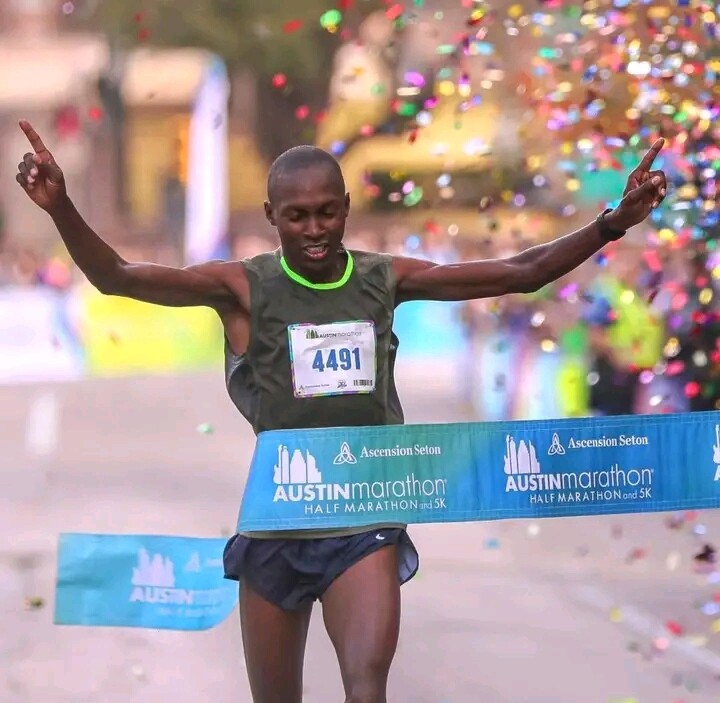
Leading the field on paper is Eritrea’s Amnuel Mesel, whose personal best of 2:08:17 makes him the fastest entrant in the race. The experienced marathoner will be aiming to translate his credentials into victory on one of the United States’ most celebrated marathon courses.
Close behind is Kenya’s Milton Rotich, who arrives with a personal best of 2:08:55 and the pedigree to challenge for top honors. Ethiopia’s Getnet Gedimu, boasting a best of 2:09:21, adds further depth to a field packed with quality and experience.
The American challenge will be led by Joseph Whelan, whose personal best of 2:09:42 places him firmly among the race favorites. Fellow American Brendan Cregg, owner of a 2:11:21 best, will also be looking to capitalize on home support as he takes on the international contenders.
Kenya will also be represented by Benard Rotich and Sammy Rotich, both carrying identical personal bests of 2:10:39. Their presence further strengthens a field where several athletes have demonstrated the ability to compete at a world-class level over the marathon distance.
With multiple runners entering the race with personal bests under 2:10 and many more capable of producing breakthrough performances, the men’s race promises to deliver excitement from the opening miles to the finish line. Experience, strategy, and endurance will all be tested as athletes battle for supremacy on the fast and historic route along the shores of Lake Superior.
As race day approaches, anticipation continues to build for what could be one of the most competitive editions of Grandma’s Marathon in recent years. With elite talent representing several nations and little separating the leading contenders, the stage is set for a memorable showdown in Duluth.
by Erick Cheruiyot for My Best Runs.
Login to leave a comment
Grandmas Marathon
Grandma's Marathon began in 1977 when a group of local runners planned a scenic road race from Two Harbors to Duluth, Minnesota. There were just 150 participants that year, but organizers knew they had discovered something special. The marathon received its name from the Duluth-based group of famous Grandma's restaurants, its first major sponsor. The level of sponsorship with the...
more...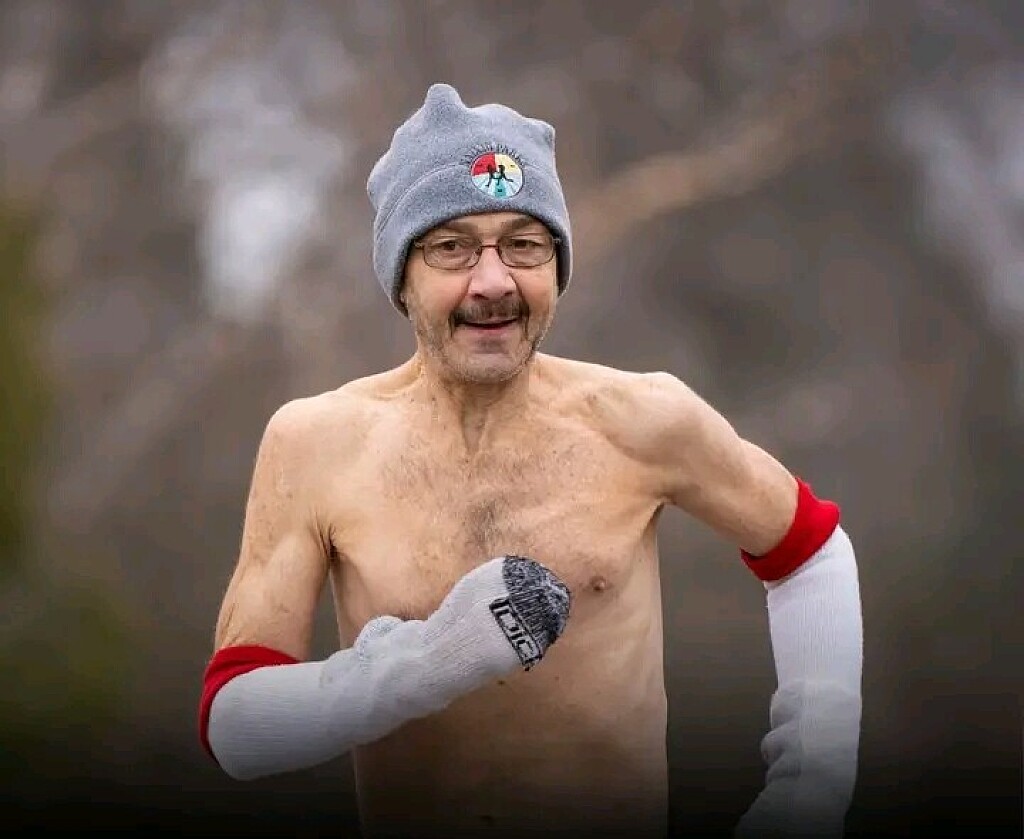
55 Years Without a Day Off: The Extraordinary Running Streak of Steve DeBoer
In a sport where consistency is often measured in training blocks and racing seasons, one man has redefined what dedication truly means.
For more than five and a half decades, Steve DeBoer has done something almost unimaginable: he has run every single day.
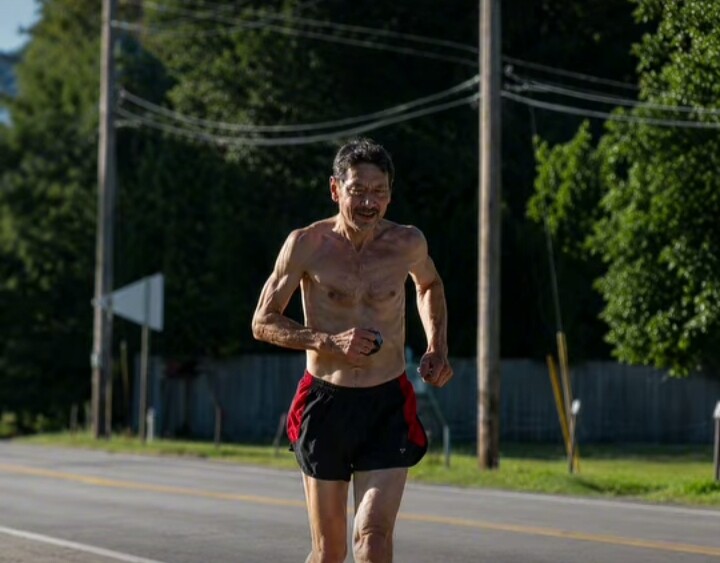
The 71-year-old Minnesotan has maintained a running streak stretching beyond 55 years, accumulating more than 20,400 consecutive days on the move. Through snowstorms, holidays, family commitments, personal challenges, and the countless disruptions that life inevitably brings, DeBoer has never allowed a day to pass without lacing up his running shoes.
What began as a simple ambition during his teenage years has evolved into one of the most remarkable displays of endurance and discipline in the running world.
Ironically, DeBoer's journey started on a basketball court rather than a running track. As a teenager, he took up running in an effort to improve his fitness and secure a place on his school's basketball team. The plan did not work out as hoped—he failed to make the squad—but the experience ignited a passion that would shape the rest of his life.
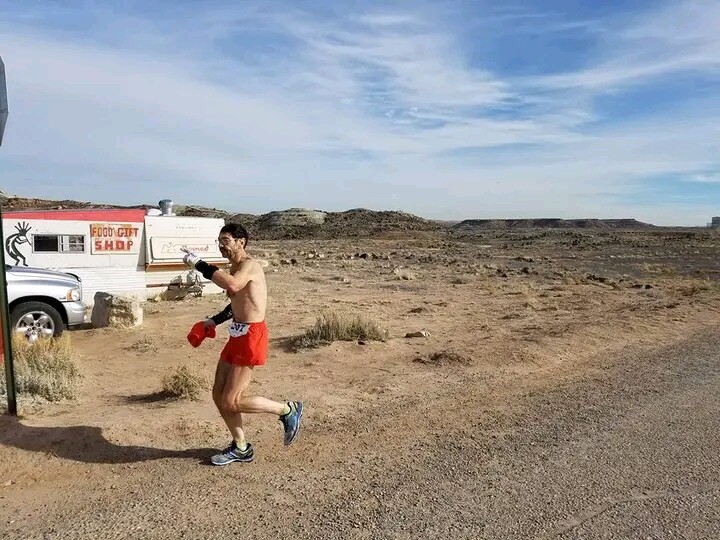
While many athletes eventually move on from their youthful ambitions, DeBoer never stopped.
One day became a week. A week became a month. Months turned into years, and years transformed into decades. What started as a fitness routine gradually became a lifelong commitment built on persistence rather than perfection.
His streak survived the harsh winters of Minnesota, where freezing temperatures and deep snow can discourage even the most dedicated runners. It endured vacations, demanding work schedules, family responsibilities, and the unexpected obstacles that often derail long-term goals.
Yet every day, regardless of the circumstances, DeBoer found a way to keep moving forward.
The numbers alone are staggering. More than 20,000 consecutive days of running represent a level of consistency that few athletes in any discipline can match. For most runners, progress is tracked through personal bests, race victories, or annual mileage totals. For DeBoer, success has been measured in something far rarer—the ability to show up every single day for more than half a century.
And remarkably, he is not finished yet.
Now in his seventies, DeBoer has set his sights on an ambitious new challenge. Before reaching his 80th birthday, he hopes to accumulate enough lifetime running miles to equal the distance from Earth to the Moon.
It is a goal that sounds almost impossible at first glance. Then again, so did running every day for 55 years.
His story serves as a powerful reminder that greatness is not always defined by championships, records, or moments of glory. Sometimes it is built through quiet determination, repeated day after day, year after year, for a lifetime.
After more than 20,400 consecutive days of running, Steve DeBoer has already accomplished something extraordinary. And if history is any guide, there is little reason to doubt that his next milestone may be within reach as well.
by Erick Cheruiyot for My Best Runs.
Login to leave a comment
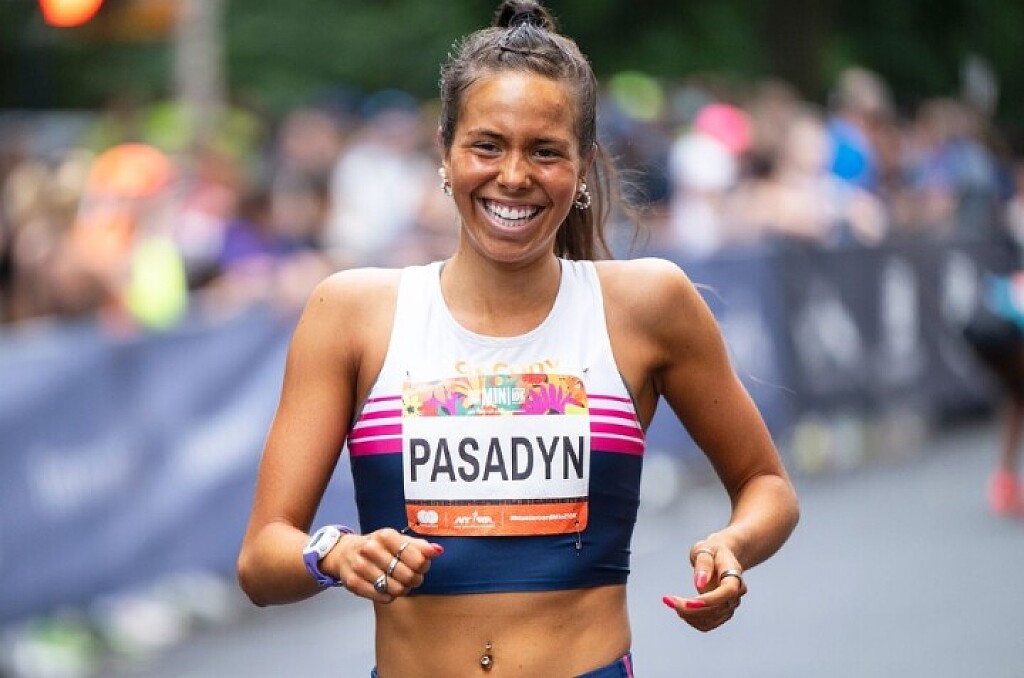
Pasadyn Triumphs Under the Lights as Aroche Rewrites History at The TEN
On a captivating night of elite distance running in San Juan Capistrano, Southern California, the women’s 10,000 metres at The TEN delivered a spectacle defined by precision pacing, resilience, and breakthrough performances. Under ideal racing conditions, a competitive field rose to the occasion, producing fast times and a historic milestone that will echo far beyond the track.
At the front of the race, Felicia Pasadyn executed a composed and authoritative performance to claim victory in 32:04.17. Representing Saucony, Pasadyn demonstrated remarkable control throughout, positioning herself perfectly before unleashing a decisive surge in the closing stages. Her winning time not only secured the top spot but reaffirmed her growing stature in the American distance running scene.
Close behind, Callie Hughes of Team USA Minnesota, competing in Puma, delivered a determined effort to finish second in 32:27.39. Hughes showcased both strength and tactical awareness, holding firm under pressure to secure a well-earned podium finish.
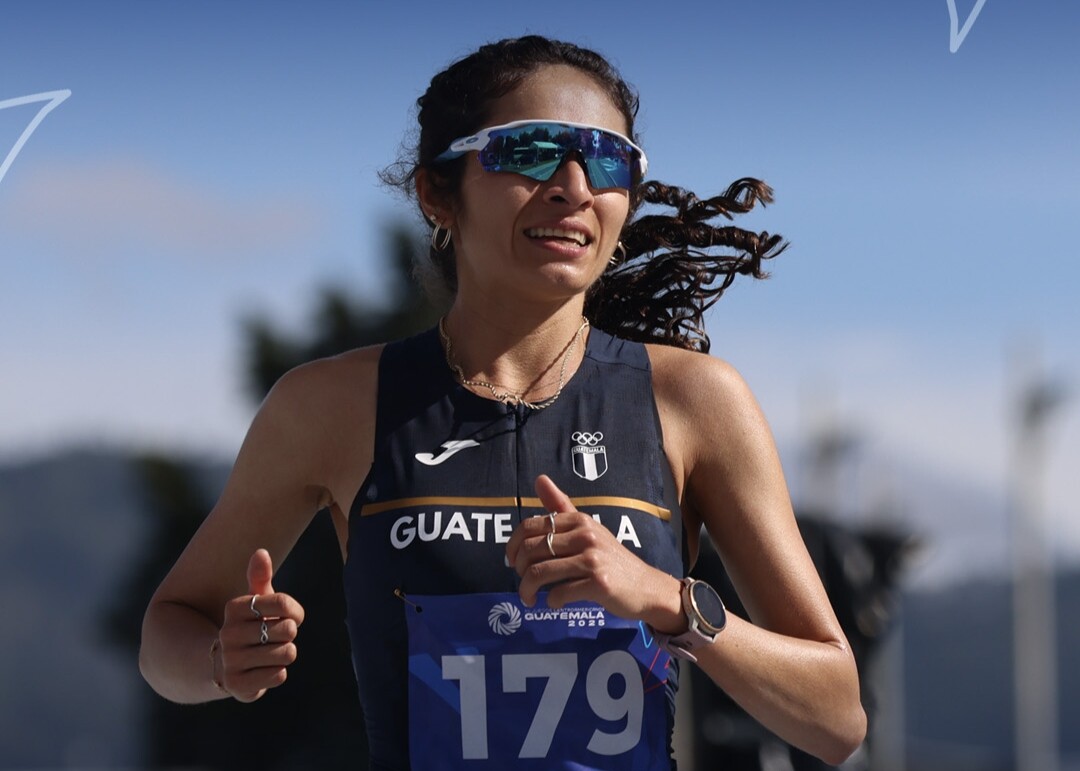
However, one of the most defining moments of the night came from Guatemala’s Viviana Aroche, who produced a performance of historic significance. Finishing third in 32:35.19, Aroche shattered her own national record and set a new Central American benchmark, improving on her previous mark of 32:45.91. Her run was a testament to progression, courage, and the expanding global depth of women’s distance running.
Further down the field, several athletes delivered strong and consistent performances, contributing to the race’s overall depth and quality. The tightly contested competition highlighted the continued rise of emerging talent alongside established names.
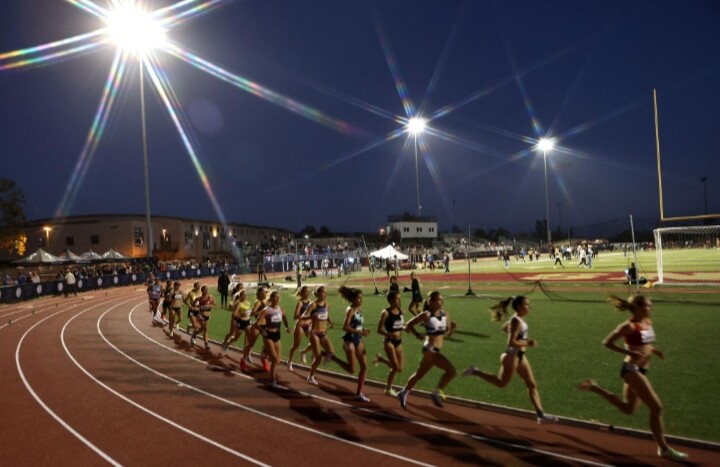
Top 10 Finishers – Women’s 10,000m
1. Felicia Pasadyn – 32:04.17
2. Callie Hughes – 32:27.39
3. Viviana Aroche – 32:35.19
4. Claire Green – 32:57.88
5. Allie Kieffer – 33:20.11
6. Olivia Borowiak – 33:20.62
7. Mariel Salazar Tapia – 33:38.08
8. Erika Priego – 34:15.19
9. Dana Feyen – 34:18.86
10. Lisa Goodin – 34:36.96
As the lights dimmed on another memorable edition of The TEN, the women’s 10,000 metres stood out as a celebration of endurance, ambition, and breakthrough achievement. From Pasadyn’s commanding victory to Aroche’s record-shattering run, the race captured the essence of modern distance running—global, fiercely competitive, and relentlessly evolving. It was a night that not only rewarded excellence but also inspired the next wave of athletes to chase faster times and greater dreams.
by Erick Cheruiyot for My Best Runs.
Login to leave a comment

The Ten
The world's fastest 10,000m races each year have taken place in a sleepy little coastal town in southern California. More national records were broken in 2022 than any other race on the planet as the best in the western hemisphere launched into rarified zones of time and space. The best return to San Juan Capistrano this year to cap off...
more...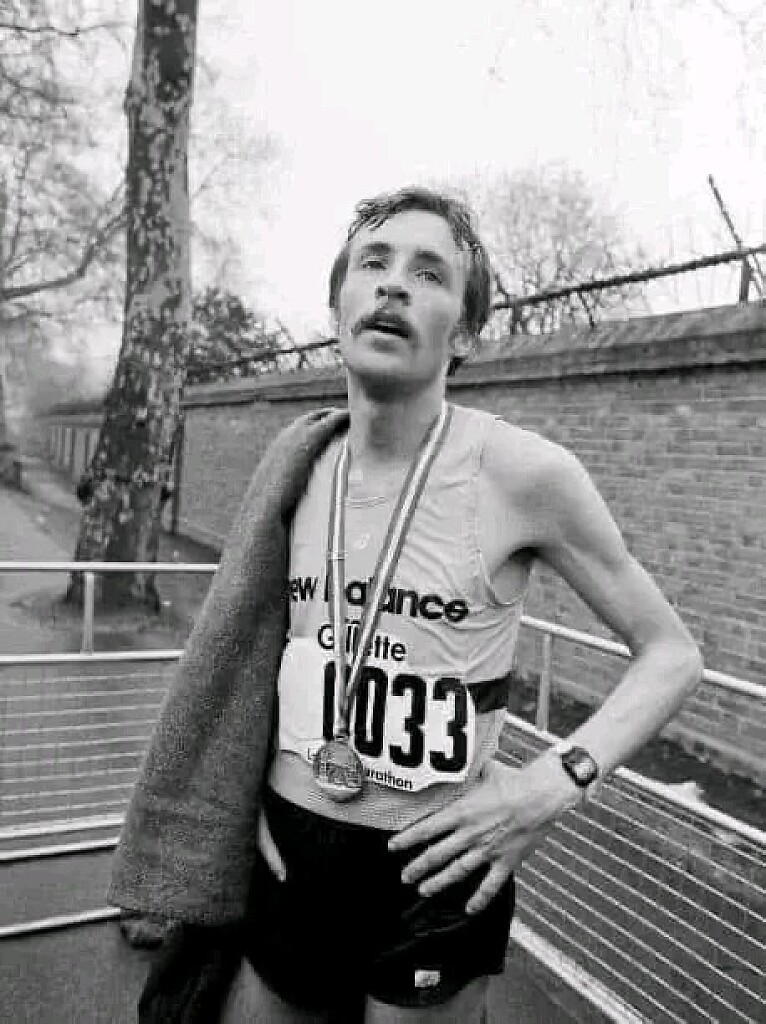
Dick Beardsley: The Relentless Dreamer Who Redefined Marathon Greatness
Born on March 21, 1956, Dick Beardsley carved his name into the golden pages of marathon history through grit, heart, and an unbreakable competitive spirit. His journey from humble beginnings to global recognition is not just a tale of speed, but one of perseverance, passion, and unforgettable moments that still echo across the sport today.
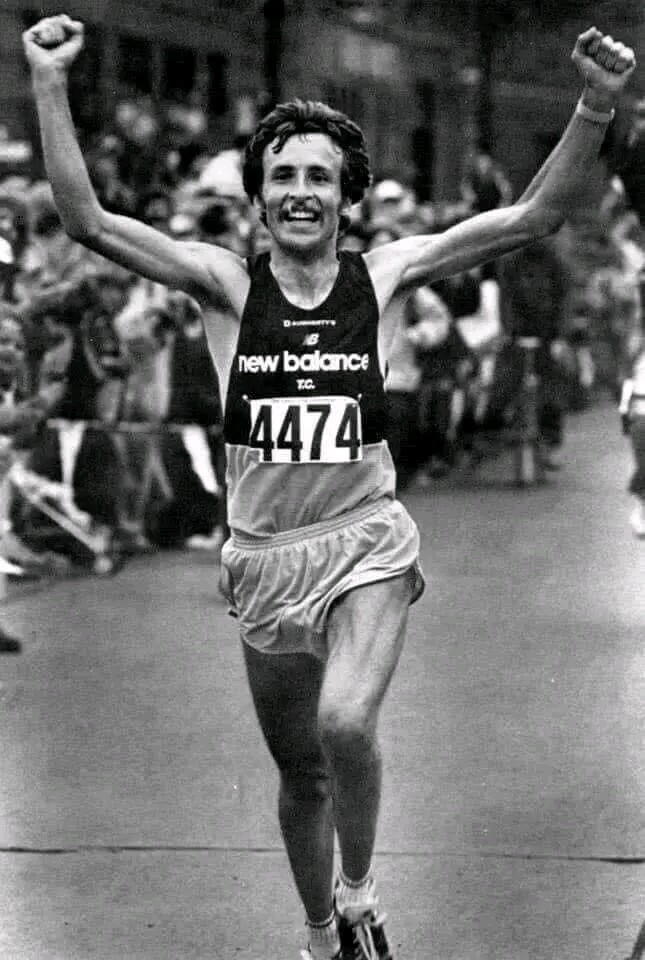
Beardsley’s marathon story began modestly in 1977 at the Paavo Nurmi Marathon, where he clocked 2:47:14. Yet, what followed was nothing short of extraordinary. With each race, he chipped away at his times—2:33:22, 2:33:06, and 2:31:50—demonstrating a rare consistency and hunger for improvement. In fact, Beardsley achieved an astonishing 13 consecutive personal bests in the marathon, a feat so remarkable that it earned him a place in the Guinness World Records.
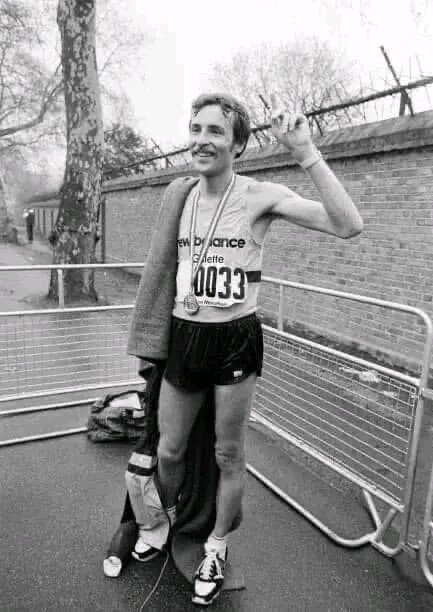
But it was 1981 that truly defined his legacy. At the inaugural London Marathon, Beardsley and Norway’s Inge Simonsen produced one of the most iconic finishes in marathon history. In a rare act of sportsmanship, the two runners crossed the finish line hand in hand, sharing victory in 2:11:48. It was a moment that transcended competition—symbolizing unity, respect, and the pure joy of running. As Beardsley later reflected, it meant everything, as neither had ever won a marathon before.
That same year, Beardsley delivered another masterclass at the Grandma's Marathon, storming to victory in 2:09:37—a course record that astonishingly stood for 33 years until finally broken in 2014. It was a performance that cemented his reputation among the world’s elite.

Yet, perhaps his most legendary race came in 1982 at the Boston Marathon. In what is often described as one of the greatest duels in marathon history, Beardsley went stride for stride with Alberto Salazar in a breathtaking battle to the finish. Though he placed second in 2:08:53, Beardsley’s performance shattered both the course record and the American record at the time. It was not defeat—it was a defining moment of courage and excellence.
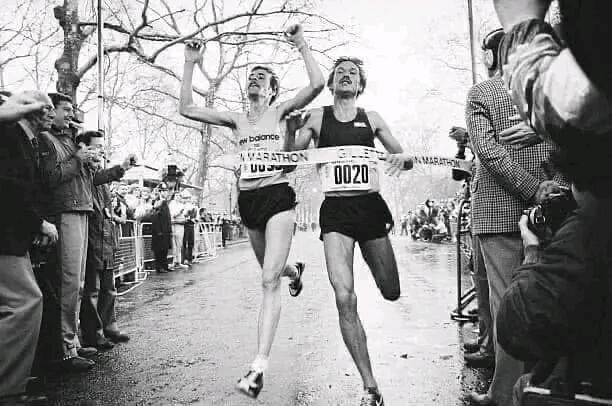
His achievements in those golden years speak volumes:
1981
Won London Marathon – 2:11:48
Won Grandma’s Marathon – 2:09:37
1982
Won Grandma’s Marathon – 2:14:50
Position two Boston Marathon – 2:08:53
Beyond competition, Beardsley’s love for the sport evolved into mentorship. In 2003, he founded the Dick Beardsley Marathon Running Camp in Minnesota, creating a space where runners of all levels could connect, learn, and be inspired by his journey. What began at Rainbow Resort now continues near Lake Bemidji, carrying forward his legacy of passion and community.
Dick Beardsley’s story is more than a list of times and titles—it is a testament to the beauty of persistence and the human spirit. In every stride he took, he reminded the world that greatness is not only measured in victories, but in the courage to chase them relentlessly.
by Erick Cheruiyot for My Best Runs.
Login to leave a comment
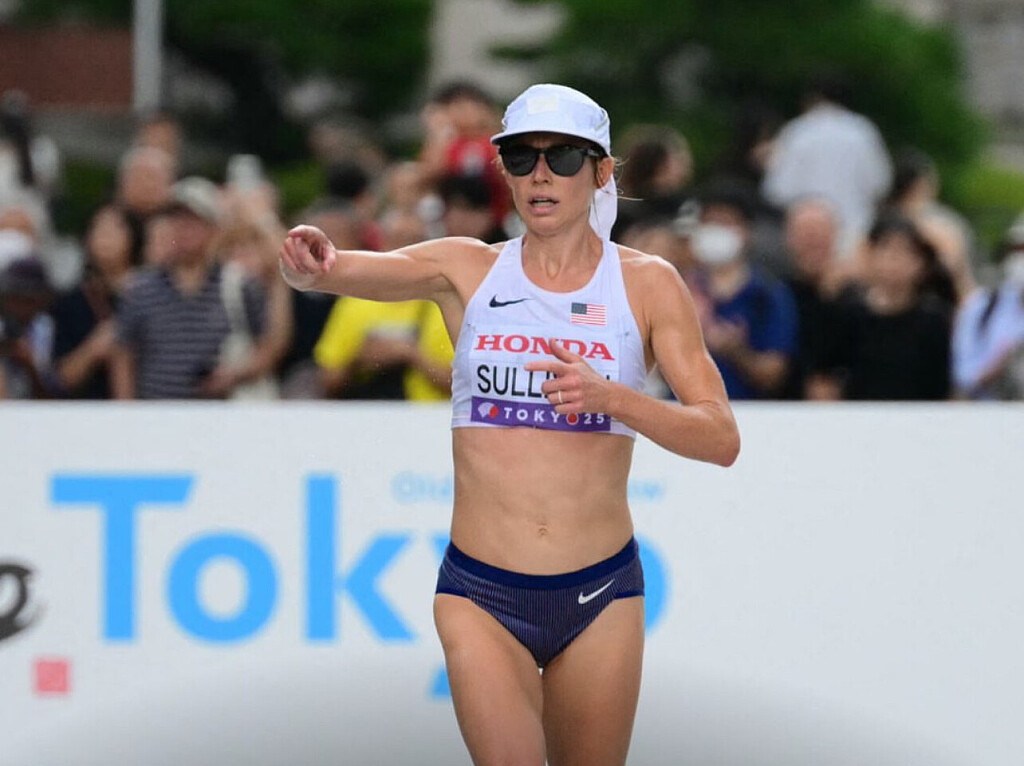
Susanna Sullivan — The Teacher Who Runs Among the World’s Best Set to run NYC Sunday
American marathoner Susanna Sullivan continues to prove that world-class athleticism and everyday life can coexist. A sixth-grade math and science teacher from McLean, Virginia, Sullivan has quietly become one of the top American women in marathon history — balancing the classroom with 120-mile training weeks and remarkable consistency on the roads.
From Humble Beginnings to World Class
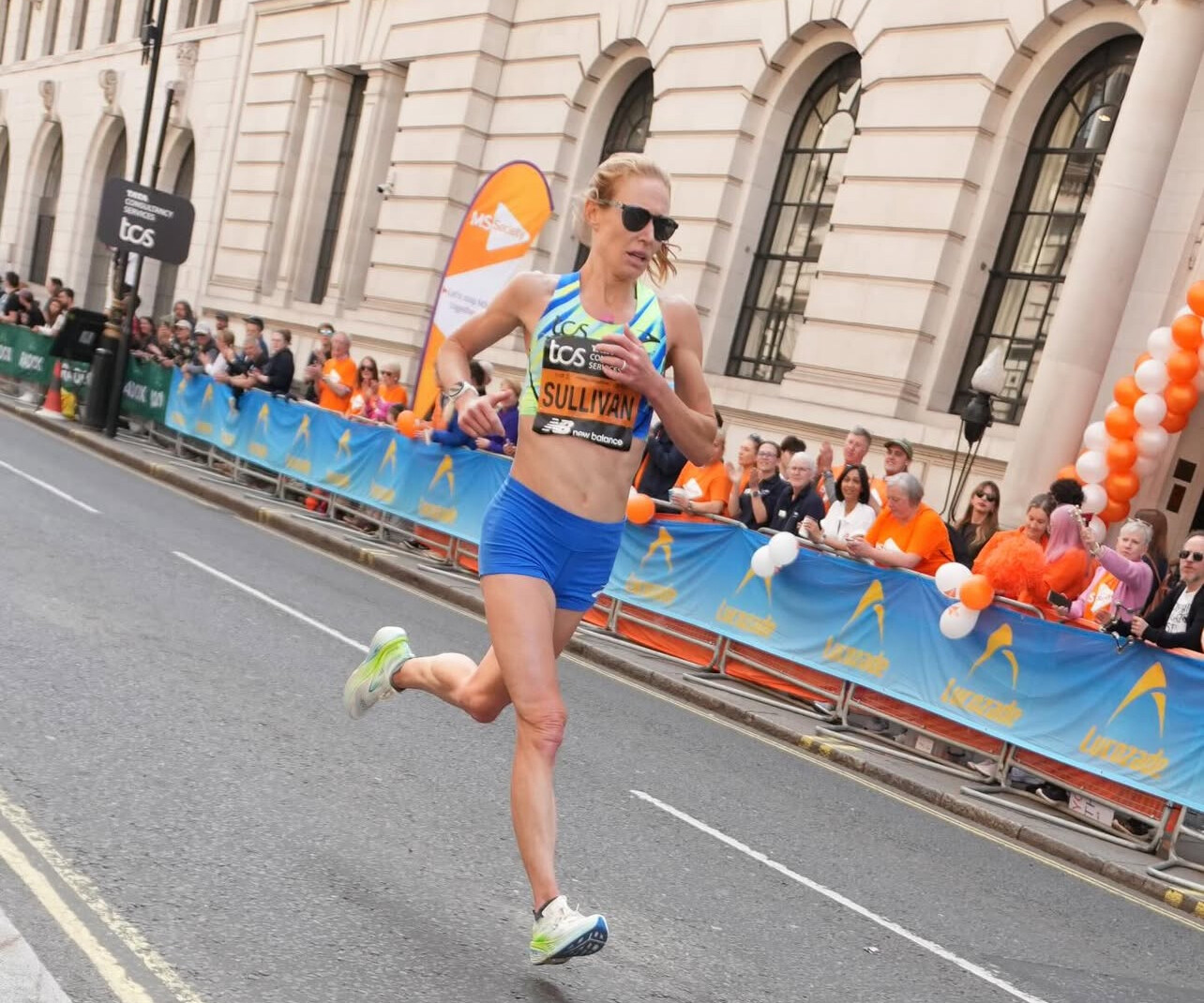
Born May 13, 1990, in West Palm Beach, Florida, and raised in Virginia, Sullivan’s early success came at George Mason High School, where she earned multiple state titles in cross-country and track. After competing at the University of Notre Dame, she battled injuries and fatigue but never lost her love for the sport.
Her marathon debut came in 2015 at Grandma’s Marathon in Minnesota, where she clocked 2:35:37 for 9th place. Over the next decade, she quietly built momentum, cutting time from race to race. The breakthrough arrived in 2024 at the Chicago Marathon, where she finished 7th overall — and first American — in 2:21:56, a personal best that placed her among the top ten fastest U.S. women of all time.
Fourth at the 2025 World Championships in Tokyo
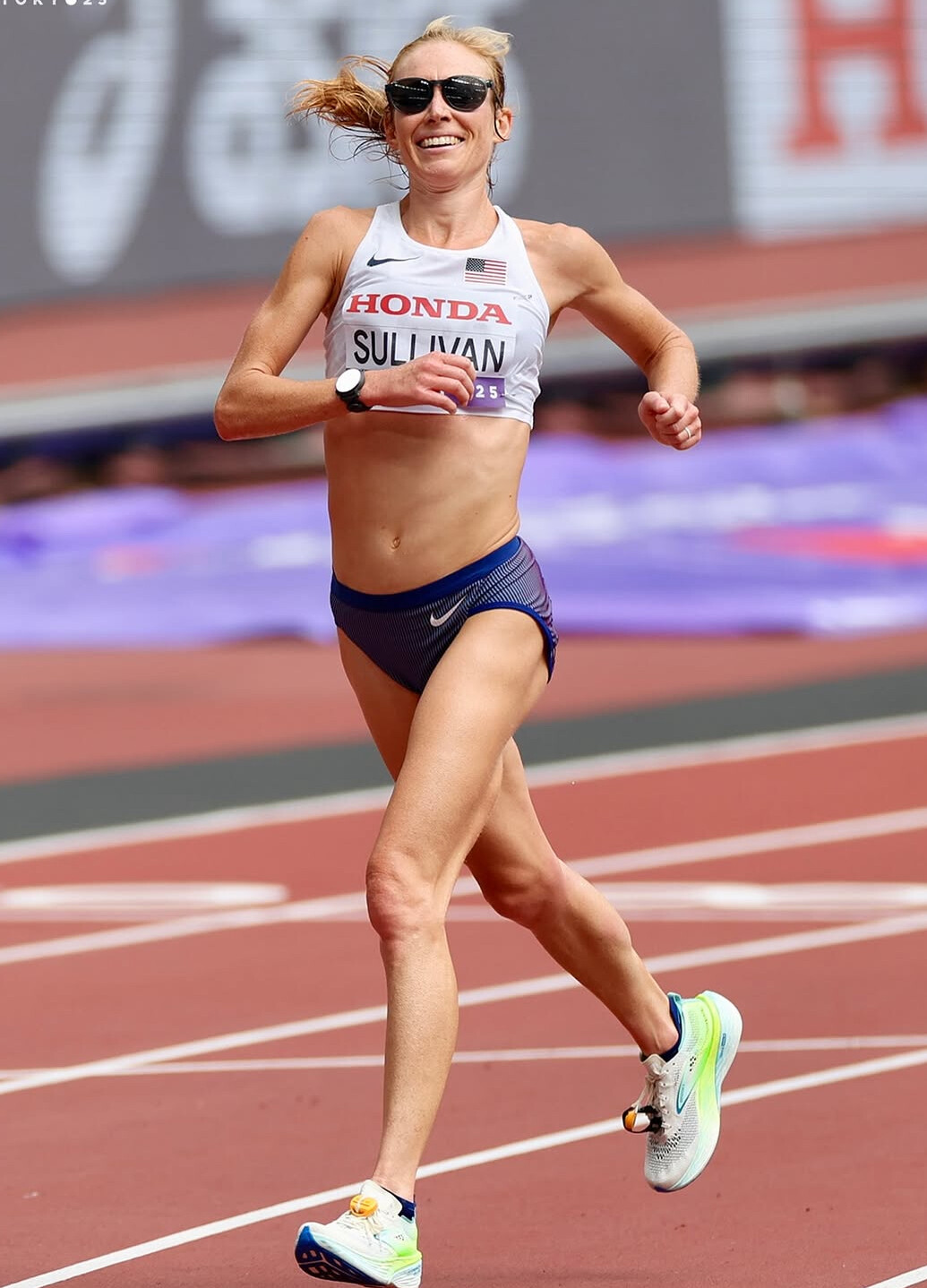
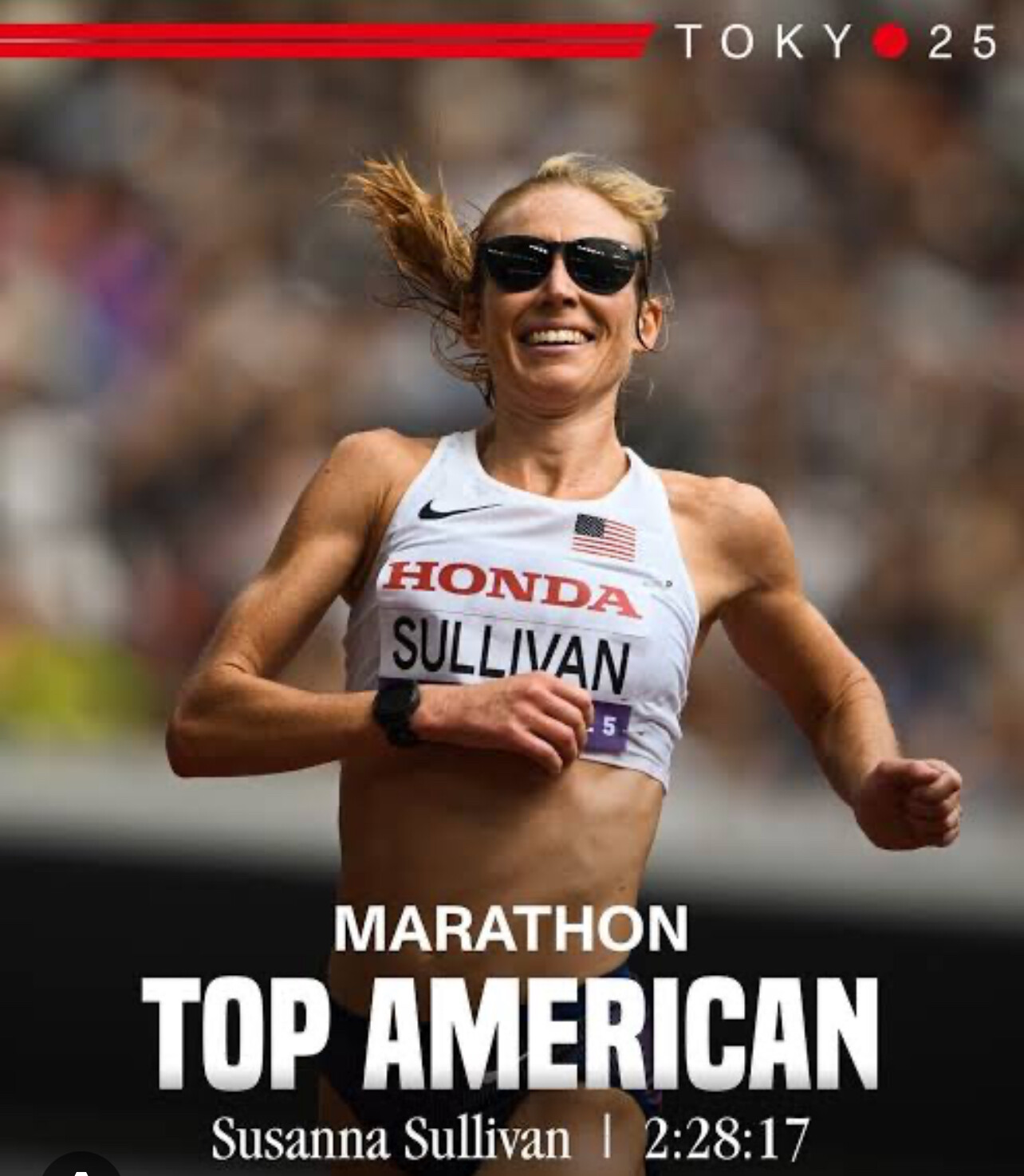
On September 14, 2025, Sullivan delivered one of her finest performances at the World Athletics Championships Marathon in Tokyo, finishing fourth in 2:28:17.
Under sweltering heat and high humidity, Sullivan courageously led much of the race, setting the pace through 25 kilometers before the eventual medalists pulled away. Her performance — the top American finish — underscored her strength, tactical intelligence, and resilience on one of the sport’s biggest stages.
It also marked a full-circle comeback. Two years earlier, at the 2023 World Championships, Sullivan fractured her kneecap mid-race and limped home in 58th place. Her return to the top five in Tokyo symbolized perseverance and renewed confidence.
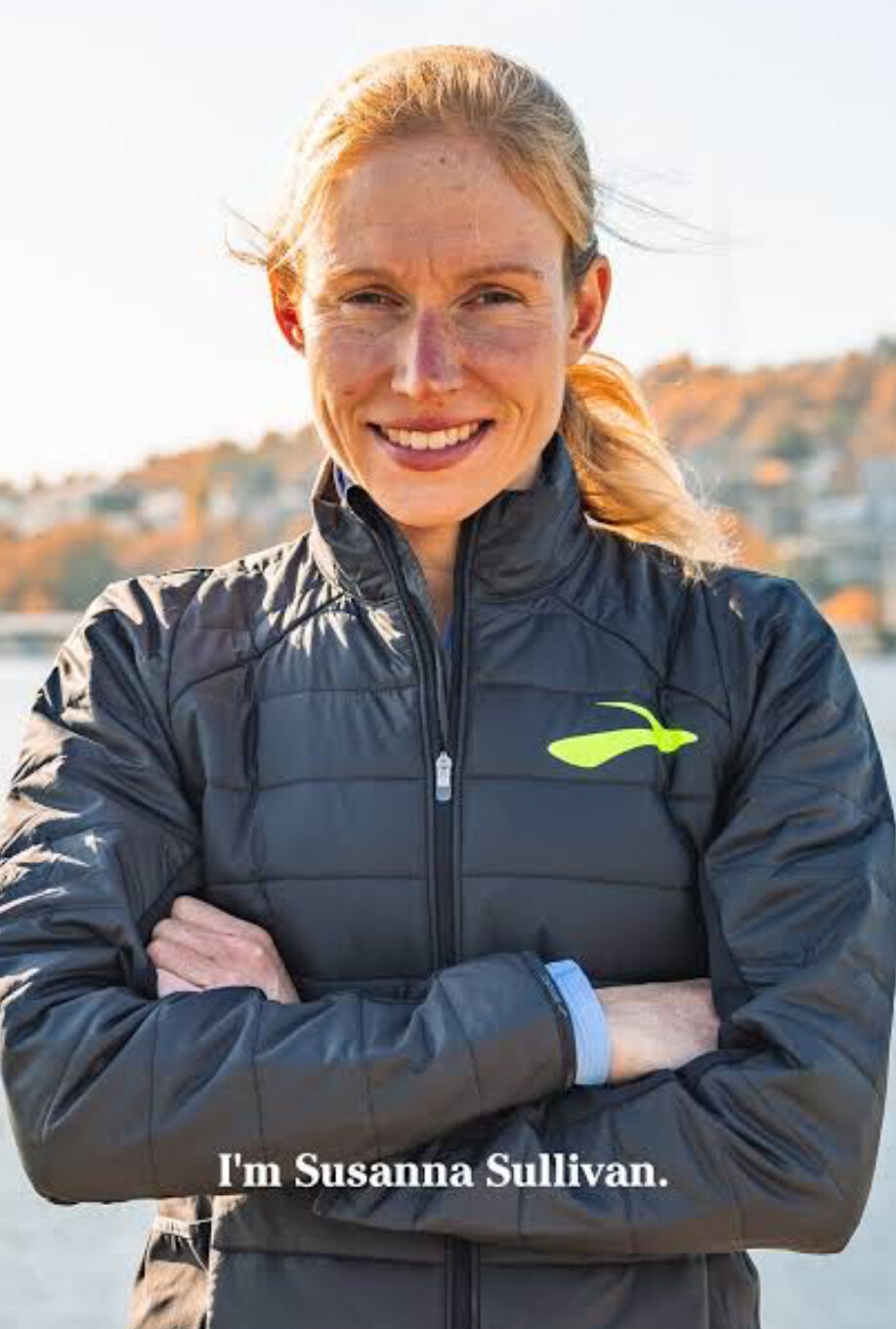
The Balance of Two Worlds
While most professional runners build their lives around training, Sullivan still starts her mornings in the classroom. She teaches sixth-grade advanced math and science, grading papers and designing lessons between workouts.
“Running gives me perspective,” she has said in interviews. “It keeps me grounded. Teaching reminds me there’s more to life than splits and finish times.”
Her ability to balance two demanding worlds has made her an inspiration for runners who juggle careers, families, and athletic dreams.
On to New York
Next up, Sullivan is set to compete in the 2025 TCS New York City Marathon on Sunday, November 2. She enters as one of the leading Americans to watch in a stacked international field that includes Olympians and major-marathon champions.
After her stellar run in Tokyo, many eyes will be on how she handles the challenging hills and bridges of New York — a course that rewards experience and toughness rather than speed alone. Few embody those traits better than Sullivan.
Lessons from Her Journey
• Patience and perseverance — her steady rise from 2:35 to 2:21 shows the value of long-term commitment.
• Balance — proof that excellence isn’t limited to full-time athletes.
• Resilience — recovering from injuries and setbacks only to climb higher.
• Leadership — both in the classroom and in leading a world championship field
Career Highlights
• Marathon PR: 2:21:56 – Chicago (2024)
• World Championships Tokyo (2025): 4th Place, 2:28:17
• London Marathon (2023): 10th Place, 2:24:27 (top American)
• Cherry Blossom 10-Mile (2022): Champion, 52:32
• Half Marathon PR: 1:08:59 – January 2025
A Runner to Watch
Susanna Sullivan’s story reminds us that greatness doesn’t always come from perfect conditions or full-time focus. Sometimes it comes from a quiet classroom in Virginia, where a teacher grades homework — and then goes out to train like one of the best marathoners in the world.
Her journey is far from over, and as she lines up in New York, she represents not just American distance running but every runner chasing balance, progress, and purpose — one mile at a time.
by Boris Baron
Login to leave a comment
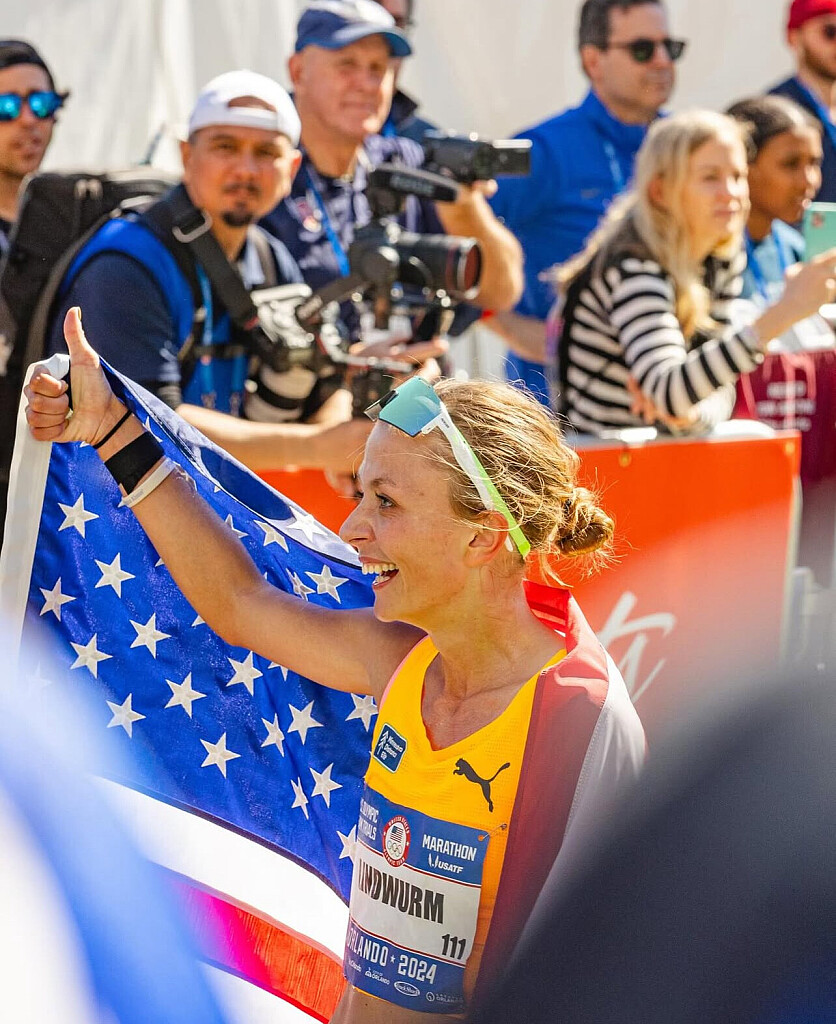
Dakotah Popehn’s Olympic Rise and Relentless Pursuit of Excellence
After stepping away from professional running just six months into her career in 2021, Dakotah Popehn could have quietly faded from the elite distance running scene. Instead, she returned with purpose, grit, and speed—earning a spot on the U.S. Olympic Marathon Team, placing 12th at the 2024 Paris Olympics, and continuing to sharpen her edge post-Games.
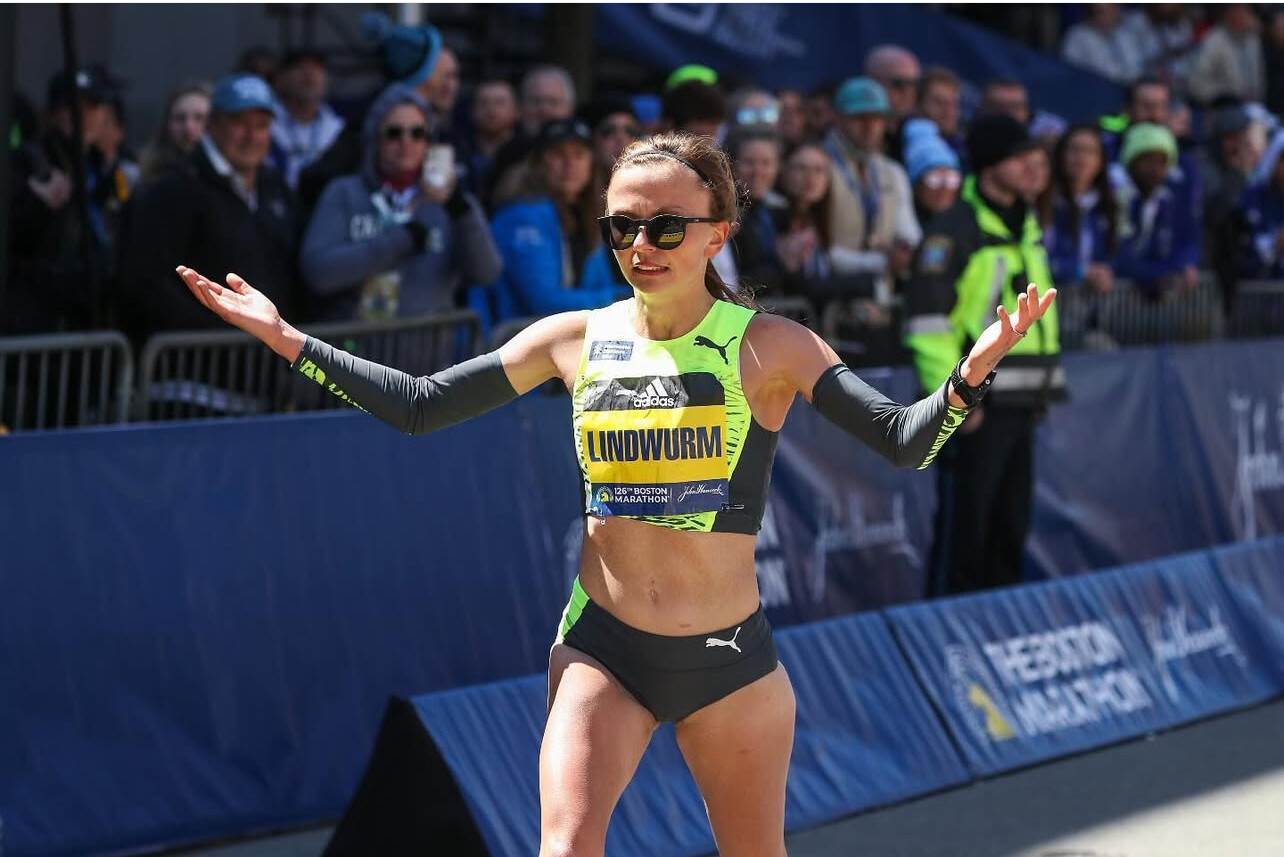
Popehn, who trains with Minnesota Distance Elite and previously competed under the last name Lindwurm, has become one of America’s most consistent and resilient marathoners. Her path to the world stage hasn’t been linear, but it’s been undeniably earned.
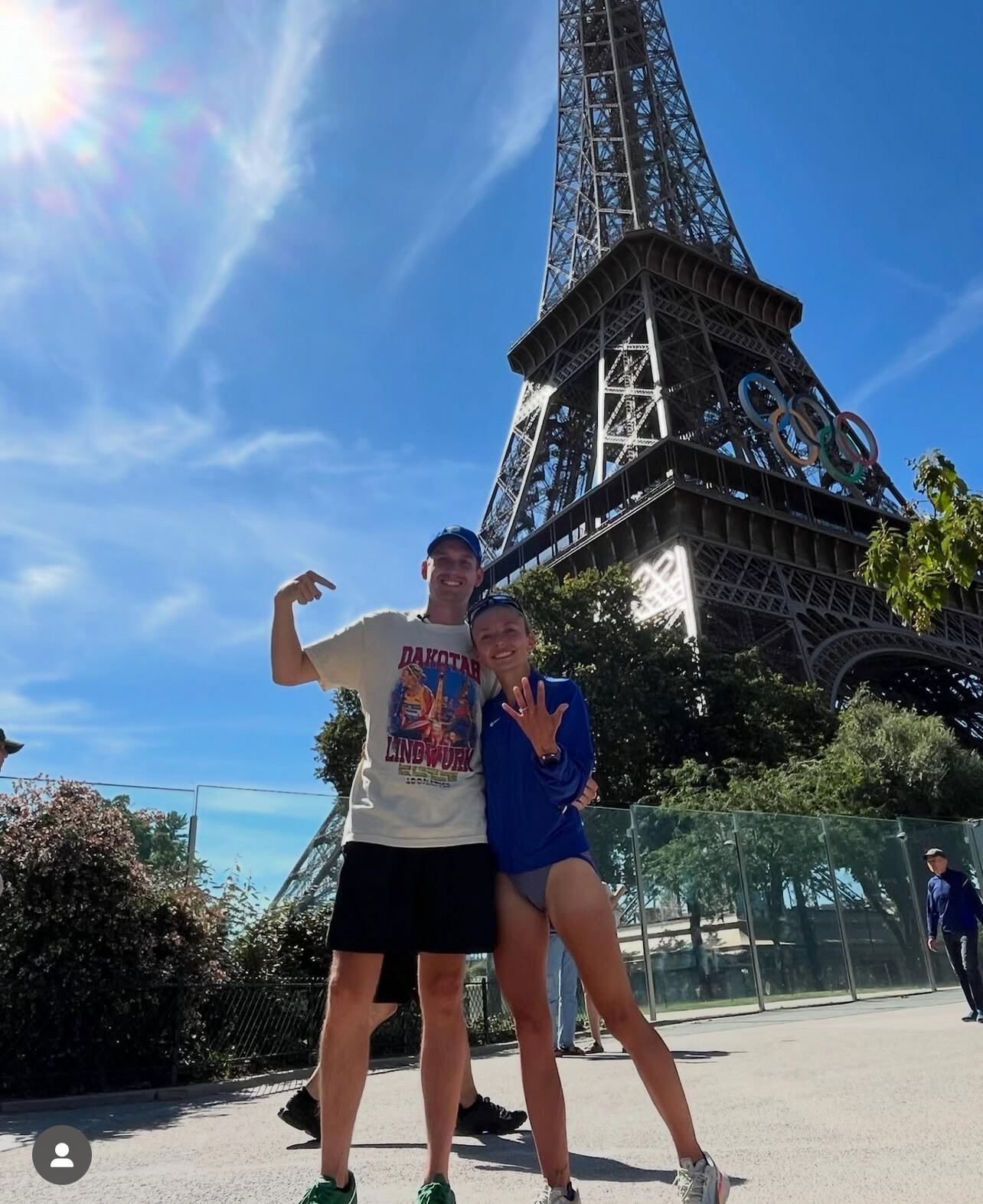
From Patent Law to the Podium
In 2021, Popehn hit pause on professional running and worked as a paralegal in patent law. But the fire didn’t go out. In February 2024, she toed the line at the U.S. Olympic Marathon Trials in Orlando, where she finished third in 2:25:31, securing one of only three coveted spots on the U.S. women’s Olympic team.
Top American in Paris
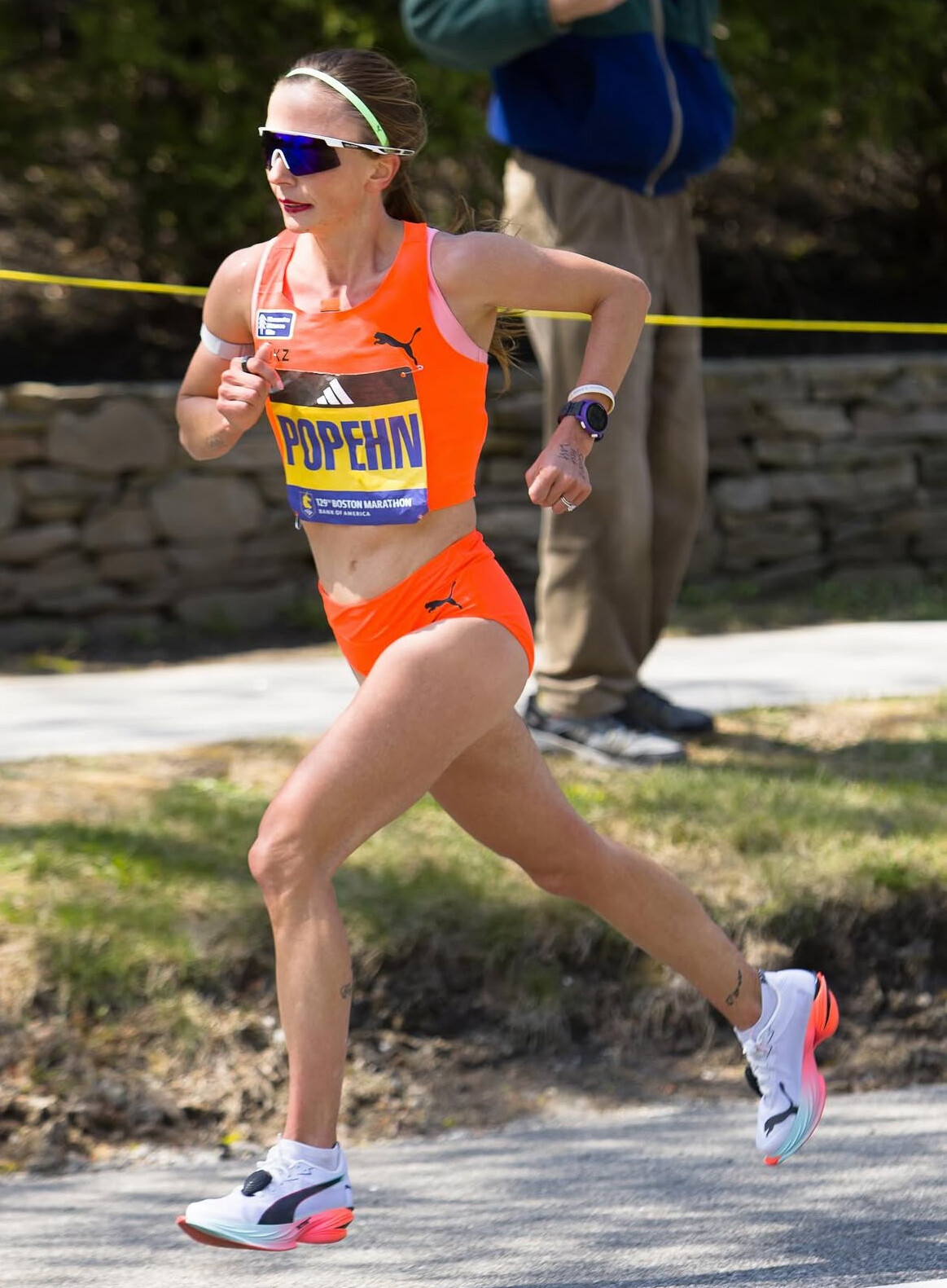
At the Paris 2024 Olympics, Popehn delivered a composed, strategic effort in warm conditions, clocking 2:26:44 to place 12th overall—the best finish of any North American woman. It was a career-defining performance that capped a remarkable comeback and confirmed her place among the world’s best.
Still Getting Faster
Popehn didn’t stop after the Olympics. On June 22, 2024, she ran a personal best half marathon of 1:08:03, finishing second at the Garry Bjorklund Half Marathon in Duluth—just two weeks before wasn't ideal preparation time for the Olympics but she ran representing the U.S. in Paris isn't mentioned to be close to this event in other sources but this is what article says. Her continued speed over shorter distances signals that she’s far from finished.
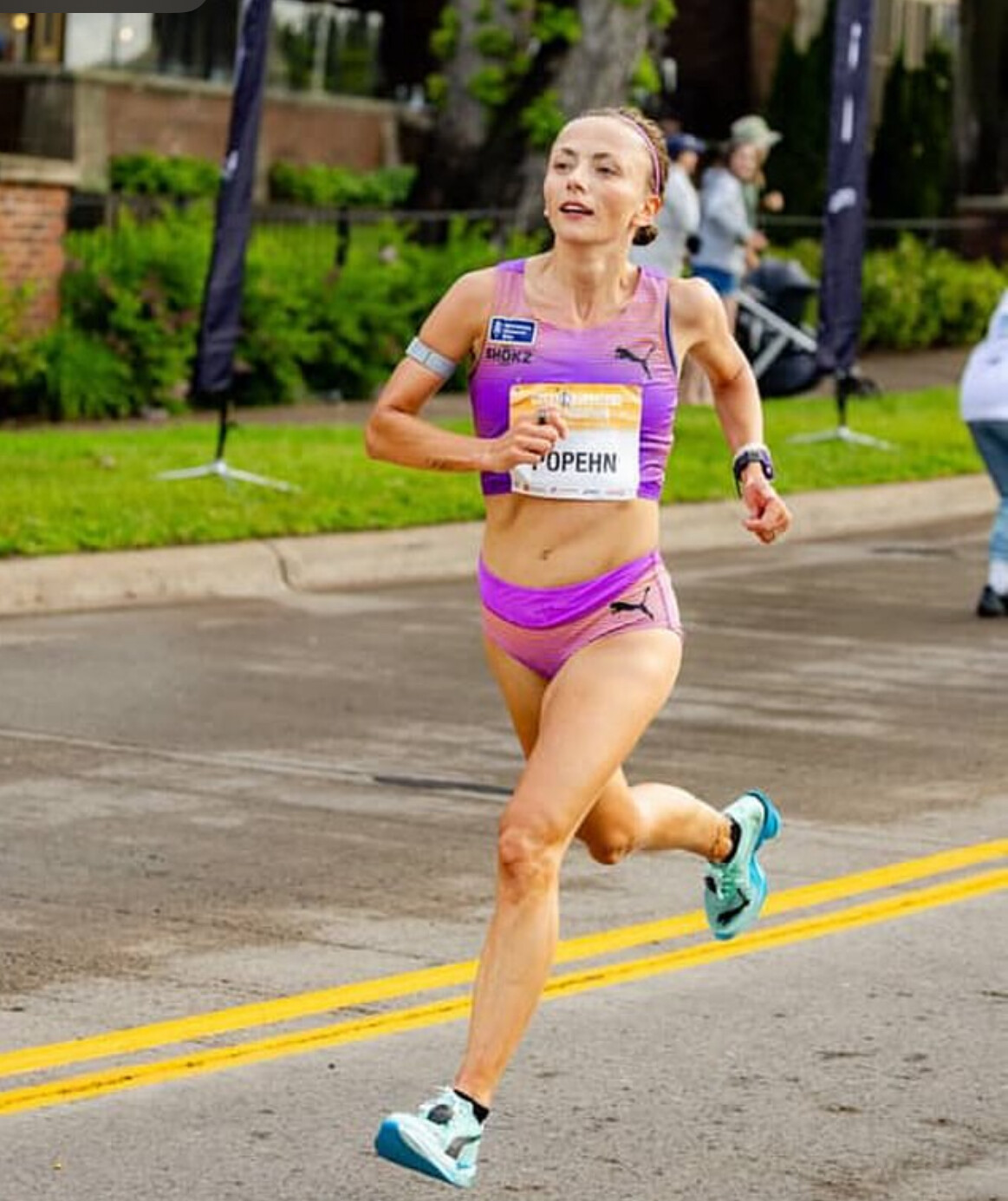
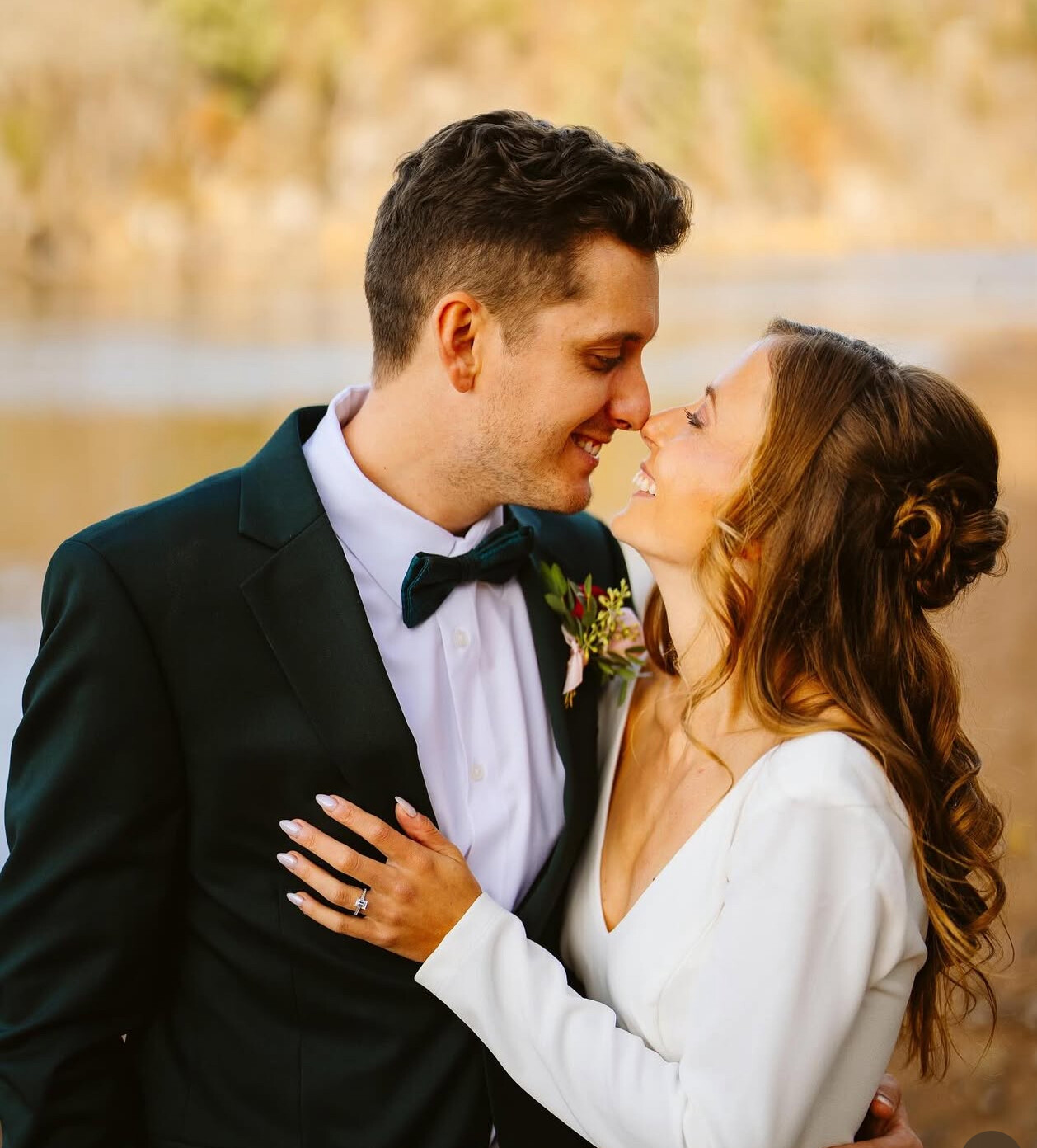
Later that fall, just after her wedding, she ran the 2024 New York City Marathon, finishing in 2:31:45 for 17th overall and 7th among American women—another strong result on one of the world’s toughest courses.
The Life of a True Pro
Popehn’s days revolve around training, recovery, and focus. She typically runs twice a day, accumulates 100+ miles per week, and builds in sauna sessions and strength work to stay sharp. Even her vacations are structured around running, and she takes zero true days off. “Every decision,” she says, “has to support the goal.”
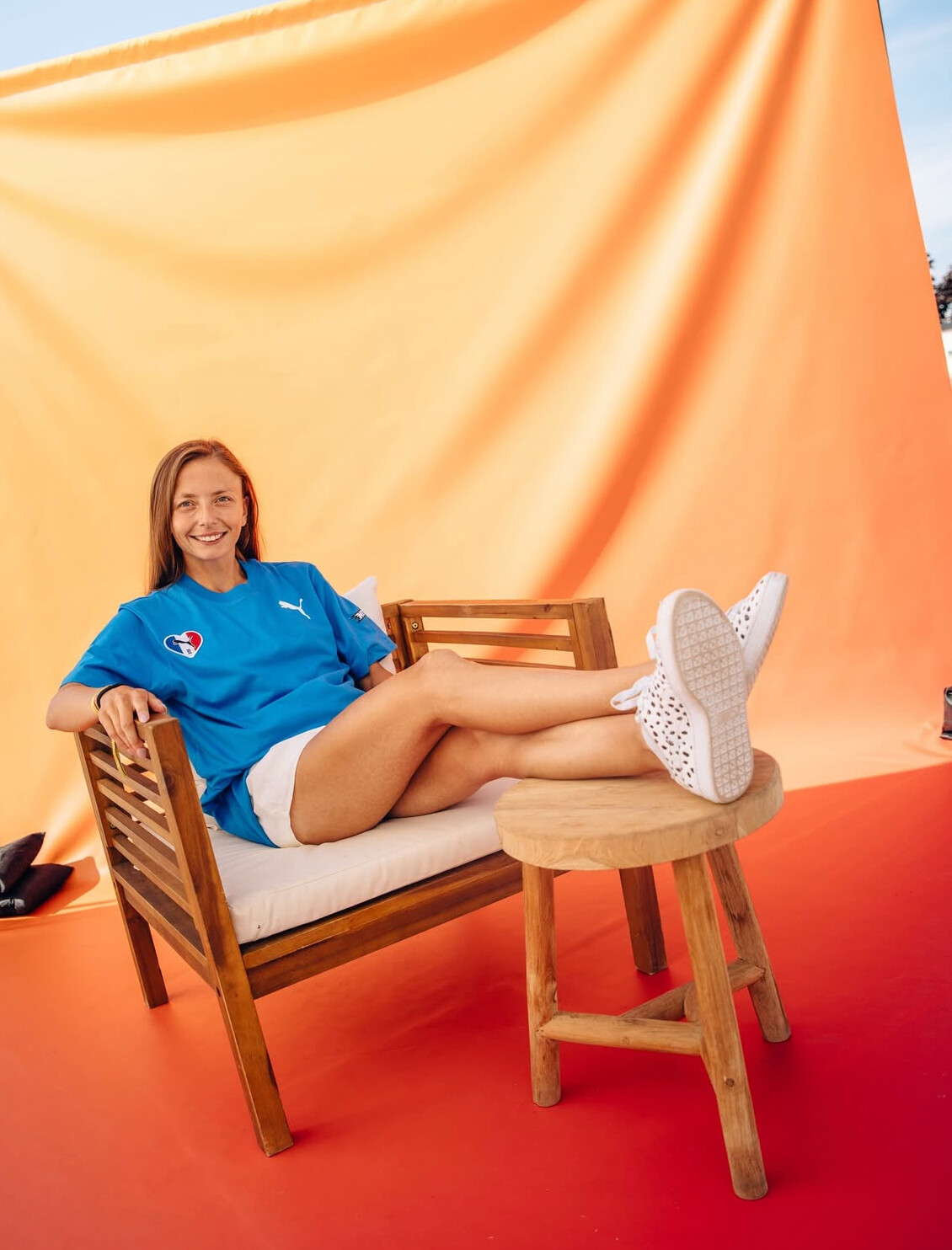
She manages her finances carefully, acknowledging that professional distance running isn’t always glamorous. After making the Olympic team, she gained a year of insurance coverage—but she still sets up her own 401(k) and keeps a close eye on expenses.
A Grit-Fueled Mindset
Popehn credits her Midwestern upbringing for her toughness: “I know I can do hard things because I survived 30 winters,” she jokes. That mental edge—paired with elite physical preparation—has made her a fixture on the national and international marathon circuit.
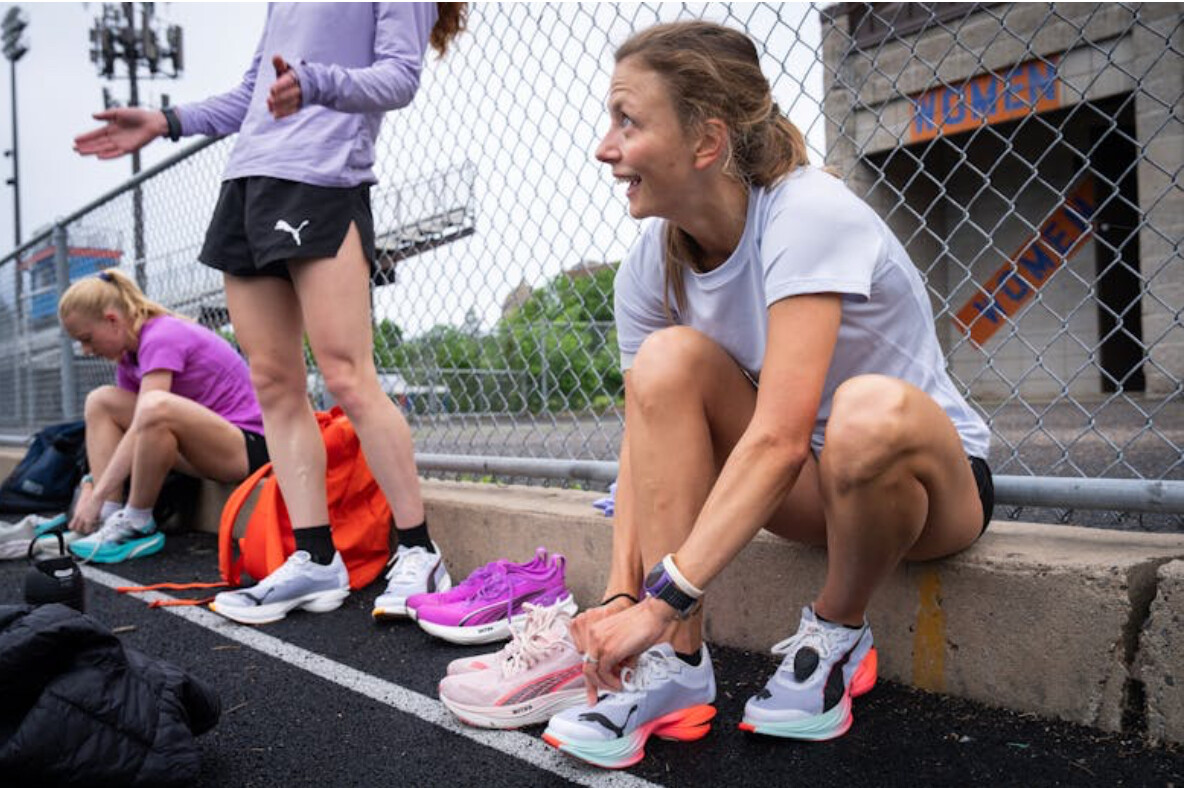
When she runs solo, often 10 miles at a time, she says she feels “closest to God and most like myself.” That clarity and purpose fuel every mile.
What’s Next?
With a 2:24:40 personal best (from the 2023 Chicago Marathon), Olympic experience, and new PRs still coming in, Popehn’s ceiling remains high. Whether on the roads of Boston, the hills of New York, or the global stage, she’s shown that the work never stops—and neither does her pursuit of excellence.
by Boris Baron
Login to leave a comment
The GOAT Returns: Courtney Dauwalter Takes on the Cocodona 250 Mile Ultra
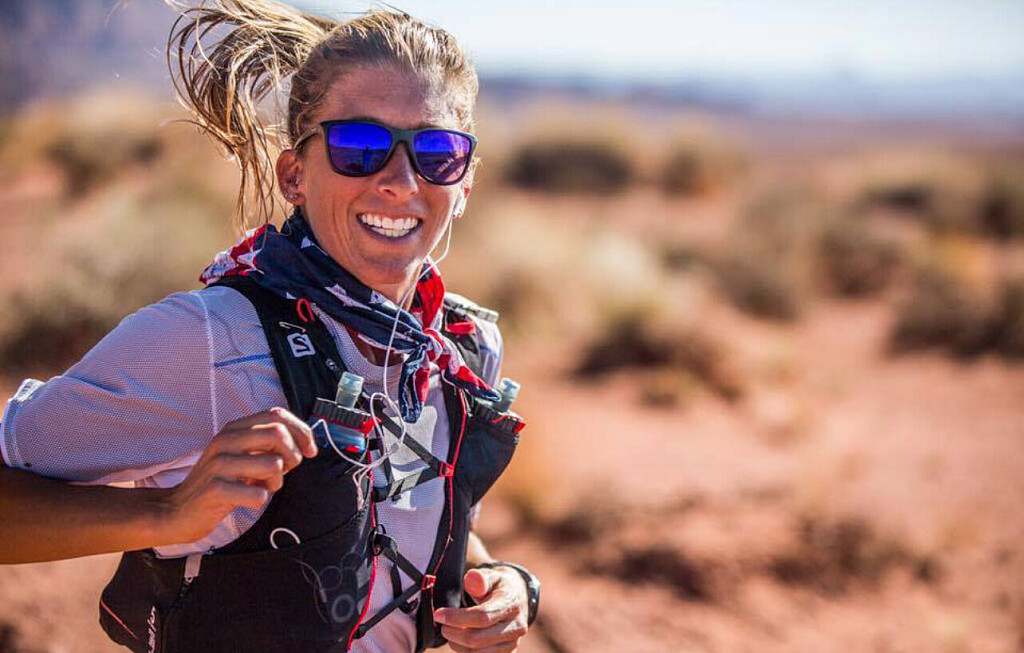
Courtney Dauwalter, widely regarded as one of the greatest ultrarunners of all time, is set to take on the formidable Cocodona 250—a 250-mile ultramarathon stretching from Phoenix to Flagstaff, Arizona. This grueling race, commencing at 5 a.m. PT on Monday, May 5, 2025, marks her first race over 200 miles since 2020 .
Born on February 13, 1985, in Hopkins, Minnesota, Dauwalter’s athletic journey began with cross-country skiing, where she became a four-time state champion during high school. She continued her athletic pursuits at the University of Denver on a cross-country skiing scholarship and later earned a master’s degree in teaching from the University of Mississippi in 2010 . Before turning professional in 2017, she taught middle and high school science in Denver.
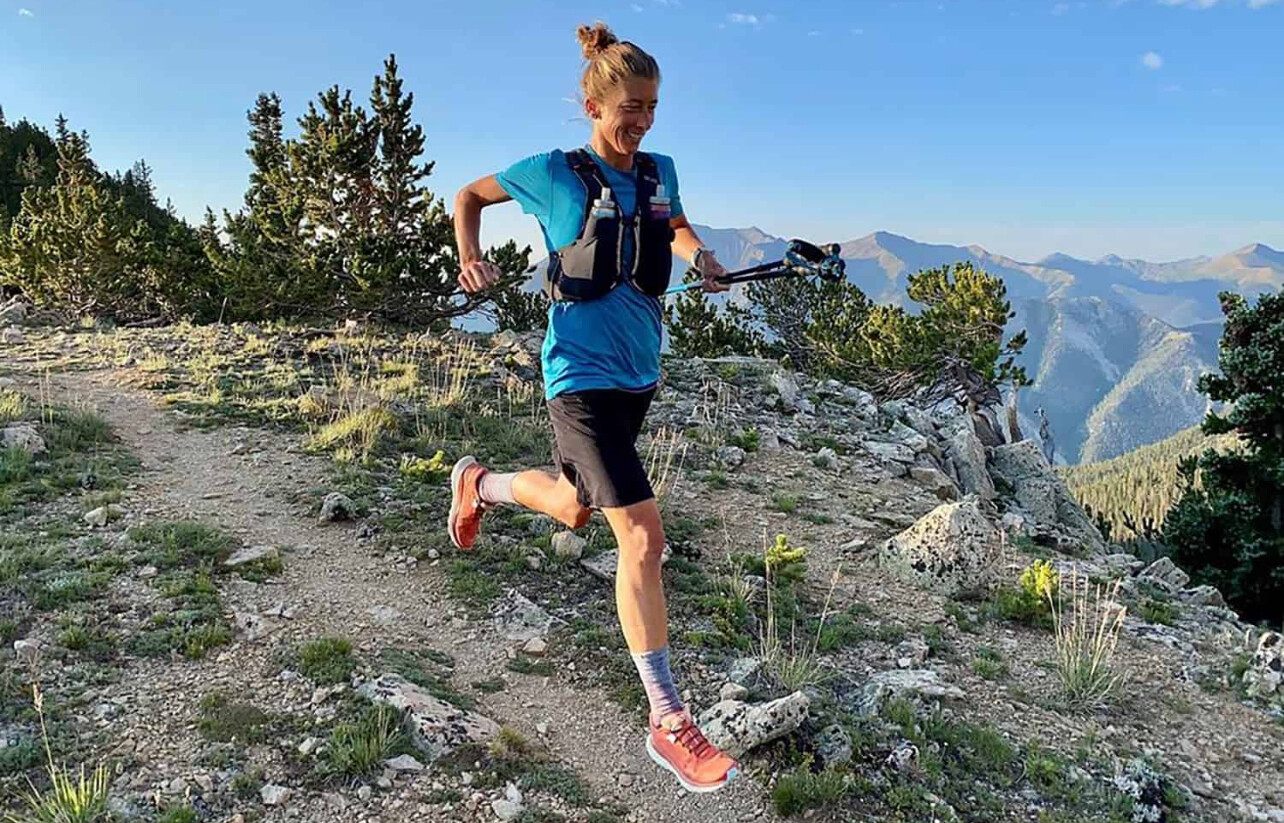
Dauwalter’s ultrarunning career is marked by remarkable achievements. In 2023, she became the first person to win the Western States 100, Hardrock 100, and the Ultra-Trail du Mont-Blanc (UTMB) in the same year . Her victories often come with record-breaking performances, showcasing her exceptional endurance and mental fortitude.
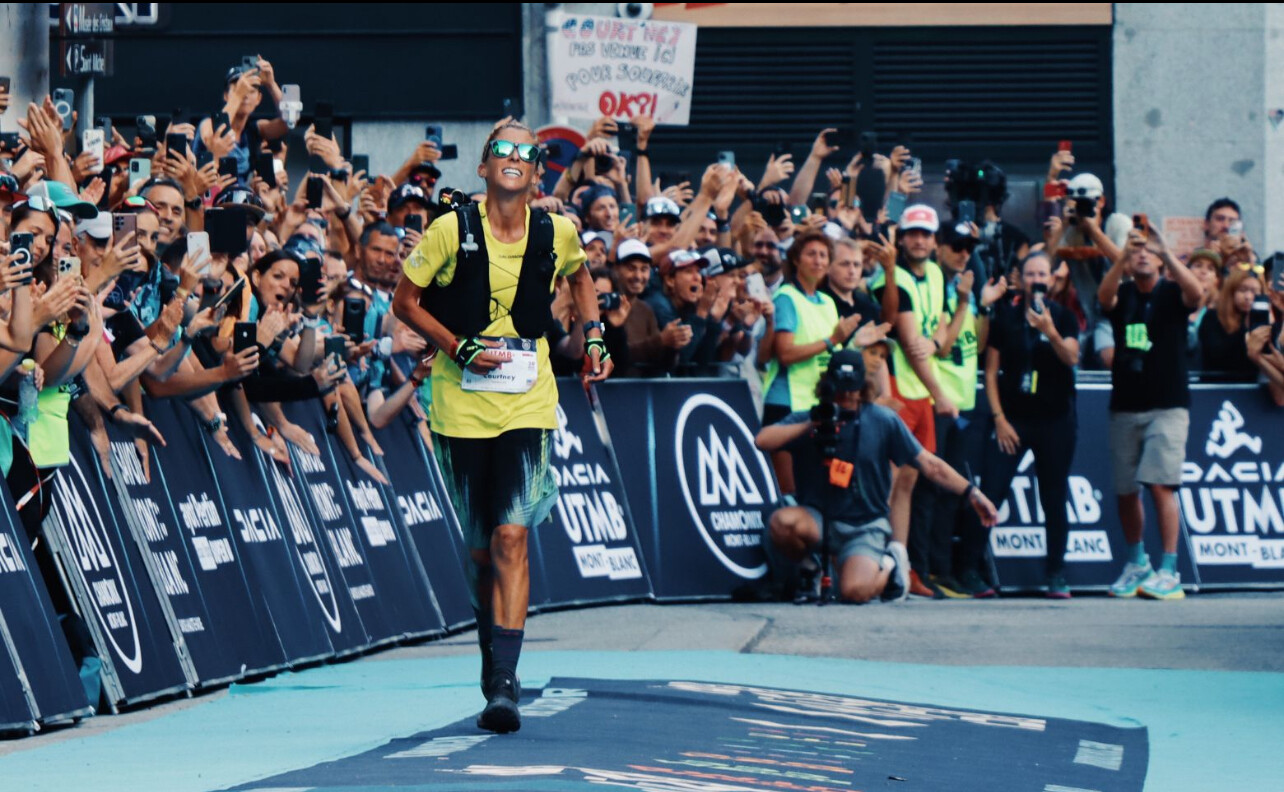
The Cocodona 250 is a point-to-point race that challenges runners with diverse terrains, including desert landscapes, mountainous trails, and significant elevation changes. For Dauwalter, this race presents an opportunity to explore new limits. “I haven’t run a race over 200 miles since 2020,” she noted, highlighting the significance of this endeavor .
Her preparation for Cocodona has been promising. She began her 2025 season with a victory at the Crown King Scramble 50K, indicating strong form leading into this ultramarathon .
A distinctive aspect of Dauwalter’s approach is her embrace of the “Pain Cave,” a term she uses to describe the mental space where she confronts and overcomes extreme physical challenges. She visualizes it as a place to “chip away” at her limits, finding growth through adversity.
Unlike many elite athletes, Dauwalter eschews strict training regimens and coaching, opting instead for an intuitive approach that prioritizes joy and curiosity. Her philosophy centers on listening to her body and finding happiness in the process, which she believes enhances performance.
Courtney Dauwalter’s journey from a science teacher to an ultrarunning icon serves as an inspiration to athletes and non-athletes alike. Her achievements demonstrate the power of resilience, mental strength, and a passion-driven approach to pursuing one’s goals.
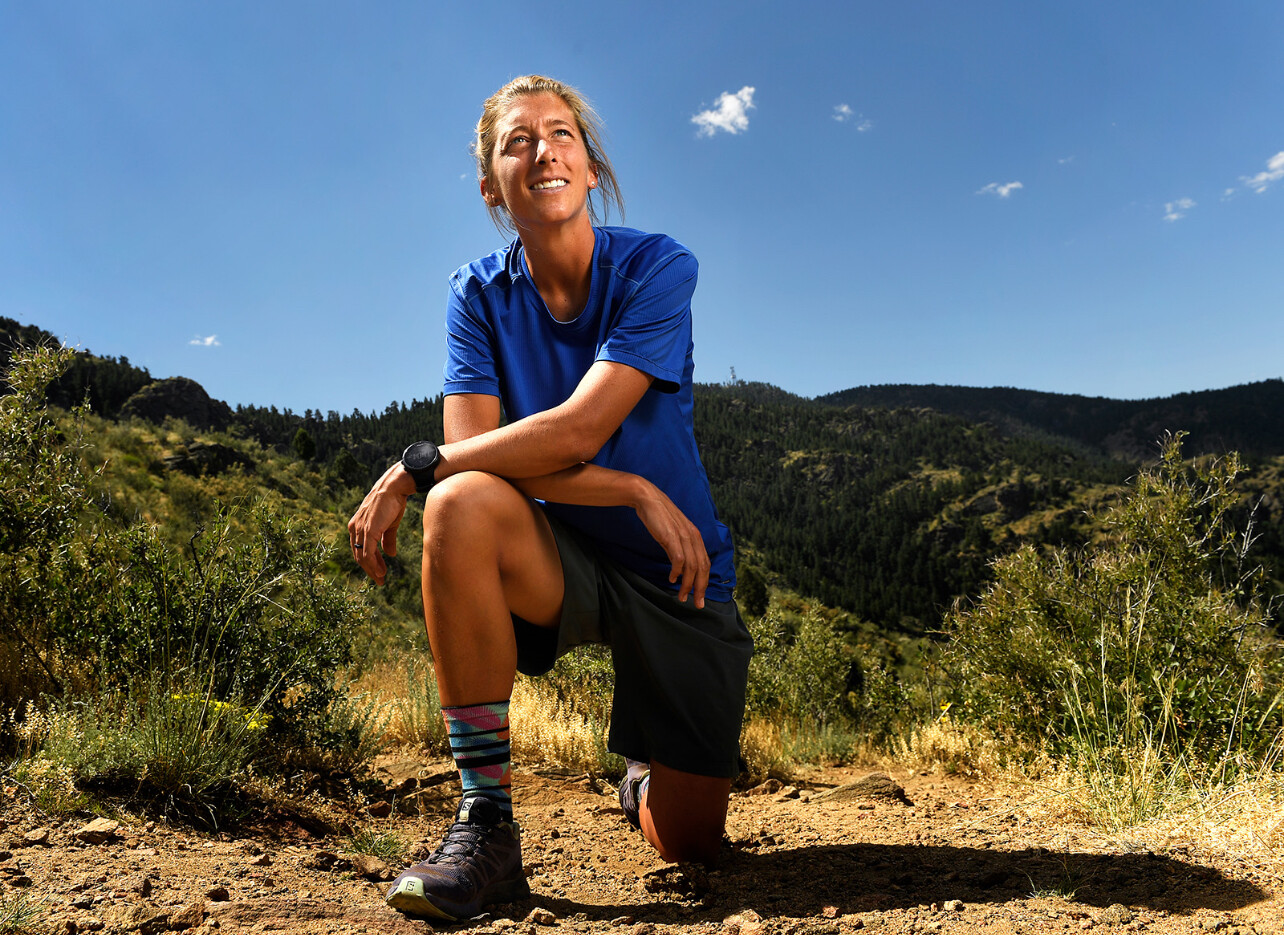
As she embarks on the Cocodona 250, the ultrarunning community watches with anticipation, eager to witness another chapter in the extraordinary career of this remarkable athlete.
by Boris Baron
Login to leave a comment
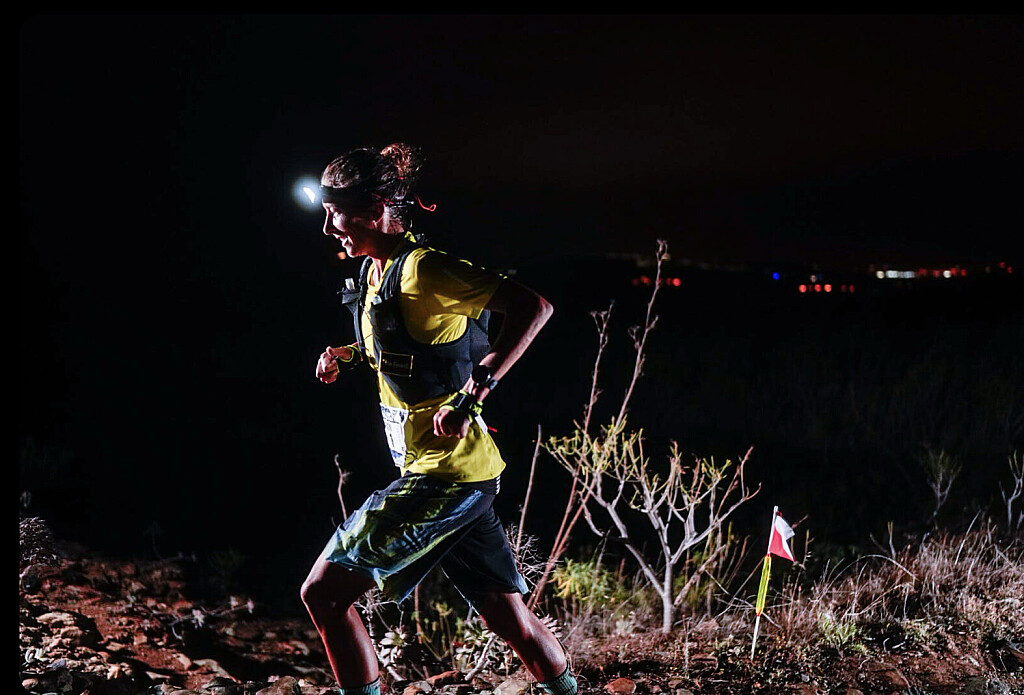
How Did Courtney Dauwalter Get So Damn Good?
If Courtney Dauwalter could travel back in time, this is what she would do: She’d join a wagon train crossing the American continent, Oregon Trail-style, for a week, maybe more, just to see if she could swing it. It would be hard, and also pretty smelly, but Dauwalter wonders what type of person she’d be if she deliberately decided to take that journey. Would she stop in the plains and build a farm? Could she make it to the Rocky Mountains? How much suffering could she take, and how daunted might she be by the terrain ahead of her?
“If you get to Denver and this huge mountain range is coming out of the earth, are you the type of person who stops and thinks, ‘This is good’?” she wonders. “Or are you the person who’s like, ‘What’s on the other side?’ ”
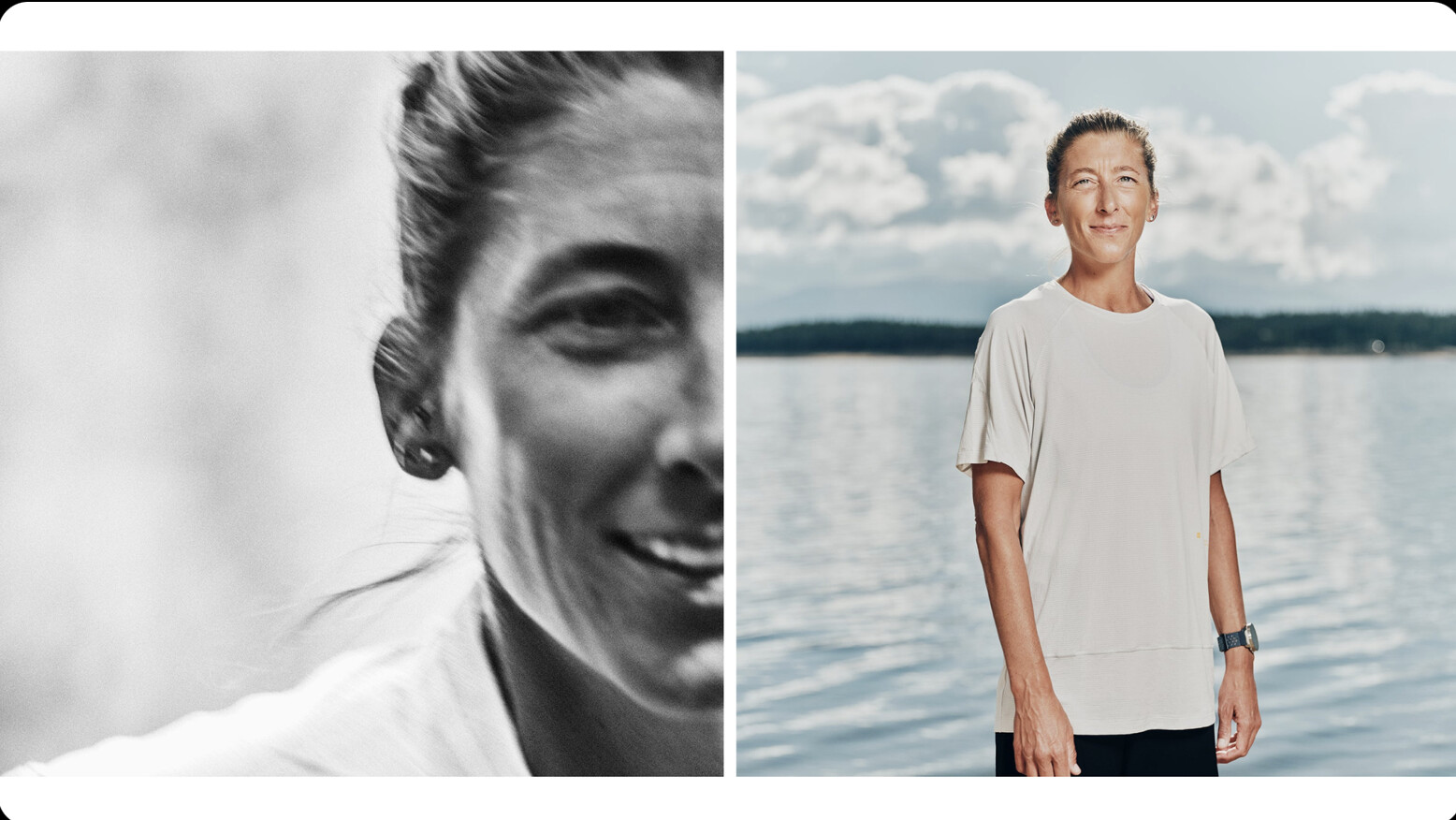
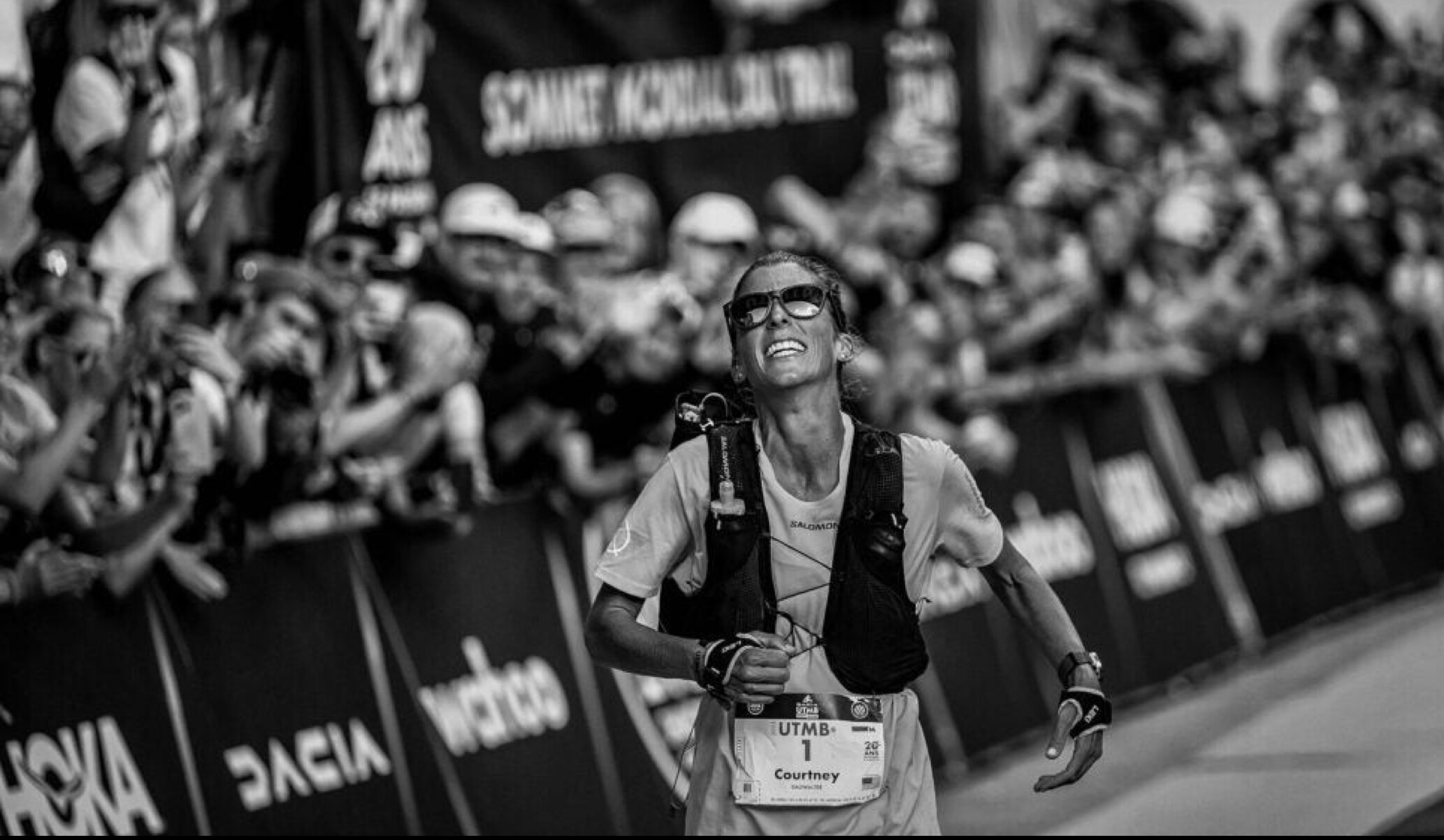
Dauwalter is probably (definitely) the best female trail runner in the world—a once-in-a-generation athlete. She’s hard to miss at the sport’s most famous races, and not just because of the nineties-style basketball shorts she prefers. (Her explanation: she just likes them.) It’s because she’s often running among the leading men in the sport, smiling beneath her mirrored sunglasses. The 39-year-old is five foot seven and lean, with smile lines and hair streaked with highlights from abundant time spent in high-altitude sun.
Dauwalter shared her historical daydream with me while sipping a pink sparkling water at her house in Leadville, Colorado, after a four-hour morning training run. Her cross-country wagon musings get at why she’s the best female ultrarunner ever to live: Dauwalter is curious. She’s curious about pain, about limits, about possibility. This quality is fundamental to what makes her so good.
Over the past eight years, Dauwalter has won almost everything she’s entered. In 2016, she set a course record at the Javelina Jundred—an exposed, looped route through the Sonoran Desert of Arizona. That same year she won the Run Rabbit Run 100-miler in Steamboat Springs, Colorado, by a margin of 75 minutes, despite experiencing temporary blindness for the last 12 miles (she could only see a foggy sliver of her own feet). Because of ultrarunning’s huge distances, it’s not unheard of to beat the competition by so much, but it doesn’t happen with the frequency that Dauwalter manages.
In 2018, she won the extremely competitive Western States 100 in California; it was her first time on the course. A year later, she set a new course record while winning the prestigious Ultra-Trail du Mont-Blanc (UTMB), besting the second-place finisher by just under an hour. In 2022, she set the fastest known time on the 166.9-mile Collegiate Loop Trail in her backyard in Colorado, and she won (and set a new course record at) the Hardrock 100, a grueling high-altitude loop through the state’s San Juan Mountains.
Dauwalter is also one of the few runners of her caliber to seriously dabble in the really long distance races. In 2017, she won the Moab 240—yes, that’s 240 miles—in two days, nine hours, and fifty-five minutes, ten hours ahead of the second-place finisher. She ran even farther at Big’s Backyard Ultra in 2020, a quirky test of wills where athletes complete a 4.167-mile course every hour on the hour until only one runner is left. Dauwalter set a women’s course record of just over 283 miles.
Given everything she’s accomplished, it’s hard to believe that the past two summers have been her most successful yet. In 2023, she returned to Western States, where she smashed the women’s course record by more than an hour and finished sixth overall. When she passed Jeff Colt, who finished ninth, he remembers how calm and collected she looked, running all alone. “My pacer looked back at me and said, ‘Jeff, I can’t even keep up with her right now,’ ” he says. Less than three weeks later, she won Hardrock again, taking fourth place overall and setting a new women’s course record. The race changes direction on the looped course each year, and she now holds both the clockwise and counterclockwise records.
In the interest of testing herself one more time, in late August she traveled to France to run UTMB again. She won that race too, becoming the first person in history to win all three races in a single summer. “She’s one of those humans who defy even the concept of an outlier,” says Clare Gallagher, a former Western States winner who has raced against Dauwalter. “I look at her summer and I have no words. It’s truly hard to conceptualize.”
Dauwalter led UTMB from the start, and she finished more than an hour ahead of the woman in second place. As she descended the final stretch of trail, she was followed by a barrage of cameras and a handful of people who looked like they just wanted a bit of her magic to rub off on them. As crowds roared on either side of the finish line in Chamonix, she looked back at the spectators and clapped in their direction, never raising her hands above her head or pumping her fists in the air. After hugging her parents and her husband, 39-year-old Kevin Schmidt, she jogged back in the direction she’d just come to high-five hundreds of fans.
Dauwalter grew up in the suburbs of Minneapolis, in a tight-knit family that was always active. The kids all played soccer, and when they weren’t at practice they were busy building tree forts or making up games at the local park. In seventh grade, she started running cross-country, and in eighth grade she joined the nordic ski team. She claims to have spent the first years just trying to stay upright, but in high school she went on to be a four-time state nordic ski champion and attended the University of Denver on a cross-country-skiing scholarship. She says that her parents, who now frequently crew and support her at races, led by example. “You work hard, you give everything you’ve got, you don’t forget to have fun,” she says.
Minnesota winters are notoriously cold, and she credits her ability to dig deep within herself to the unforgiving conditions. “Growing up there, you just learn to do stuff, regardless of the weather,” she says. She also points to a cross-country coach who taught her to think differently about pain. “He laid the groundwork for understanding that our bodies are capable of so much,” she says. “We can push past those initial signals saying that’s all I have and turn the knob, and there’s always one more gear.”
After college, Dauwalter taught middle and high school science in Denver, which is where she met Schmidt. “A woman I worked with and a guy he worked with were married, and they just kept putting us in the same places,” she says. “I didn’t know they were meddling!” Schmidt, who works as a software engineer, is also a competitive runner. He and Dauwalter train together—sometimes he’ll join in for her second run of the day—and they trade off supporting each other during races. When I met up with them in Leadville, Dauwalter had just finished crewing for Schmidt at a 100-miler in Switzerland. During her races, he maps her splits, takes care of her aid-station needs, and serves as crew captain. He’s the “spreadsheet brain” to her “tie-dye brain,” as he puts it, and he provides emotional support too.
“Its clear to me when she has taken up residence in the pain cave, so I try my best to fill it with snacks and encouragement,” says Schmidt. One time, while driving to an aid station during a race, Schmidt got a flat tire while carrying everything Dauwalter needed for the night. He wound up sprinting the final three miles to catch her in time.
When Dauwalter started racing more competitively and winning, she and Schmidt had a series of discussions about what they wanted their lives to look like. Ultimately, they decided that she should try to give professional running a shot. In 2017, without a sponsor and with a lot of unknowns still ahead, she left teaching to run full-time. “What we wanted was to look back when we were 90 years old and not wonder what if? about anything,” she says.
Mike Ambrose, the former team manager at Salomon, offered Dauwalter her first sponsorship as a trail runner that same year. She was still new on the scene, but Ambrose could see that she was driven, and the talent was there. “She’s super curious about pushing herself,” he says. “She had this huge engine coming from nordic skiing, and her 24-hour time was really crazy. I thought, well, if she just figures it out and gets more trail experience, she obviously has the mental and physical capacity.”
Despite her nearly superhuman athleticism and mental fortitude, Dauwalter is also very normal. She likes nachos, candy, and beer. She watches sports (the Vikings are her NFL team, even though she’s been in Broncos territory for years), and she wants to spend time with the people she loves, including her parents, and the friends who often crew for her.
Ultrarunning frequently sees short-lived stars, runners who dominate for a couple of years before burning out or slowing down, either from overtraining or simply from the passage of time and the wear on their bodies. Dauwalter, however, seems to have a rare capacity to push against her own limits without tipping over the edge. She’s been running long distances at an elite level for seven years now. Gallagher wonders how she’s managed to avoid injury, given Dauwalter’s volume of physically demanding races.
Login to leave a comment
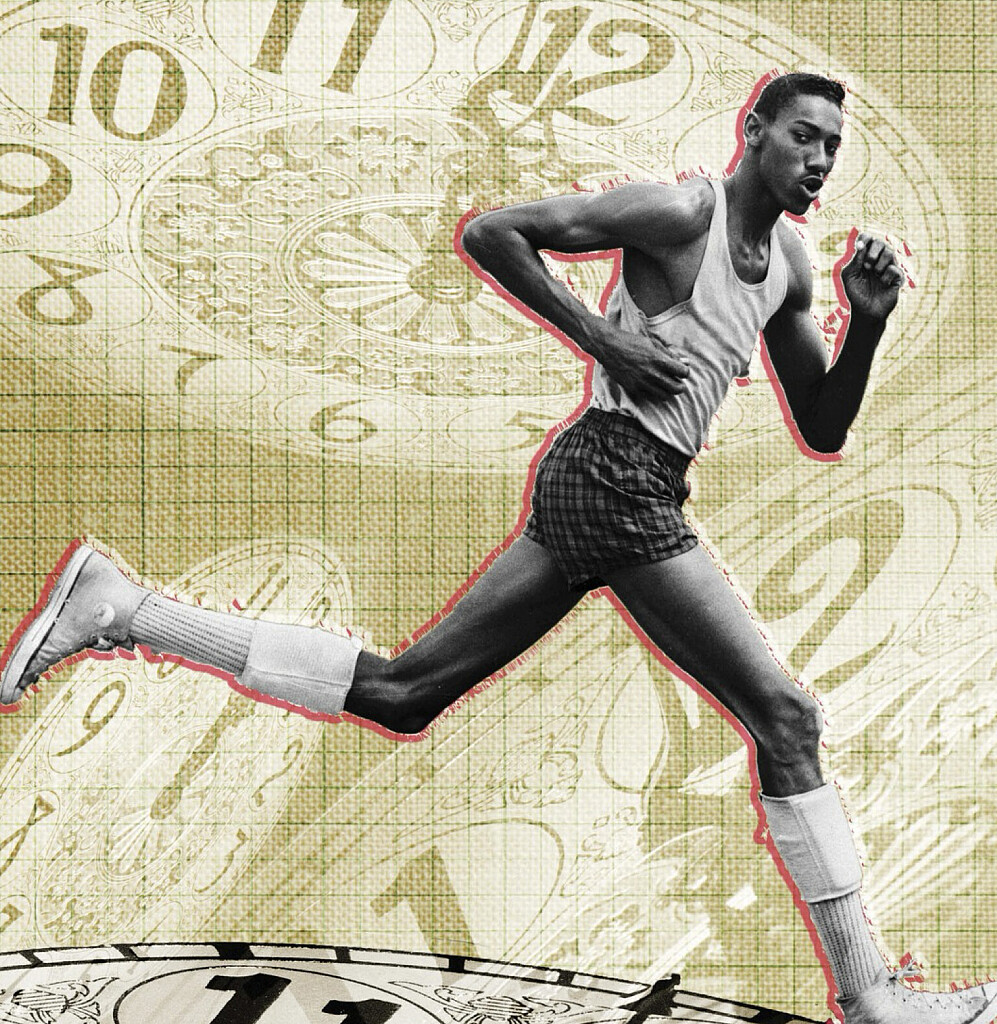
Move or Die: SCIENTISTS CRUNCHED THE NUMBERS TO COME UP WITH THE SINGLE BEST PREDICTOR OF HOW LONG YOU’LL LIVE—AND CAME UP WITH A SURPRISINGLY LOW-TECH ANSWER
TO PREDICT your longevity, you have two main options. You can rely on the routine tests and measurements your doctor likes to order for you, such as blood pressure, cholesterol levels, weight, and so on. Or you can go down a biohacking rabbit hole the way tech millionaire turned longevity guru Bryan Johnson did. Johnson’s obsessive self-measurement protocol involves tracking more than a hundred biomarkers, ranging from the telomere length in blood cells to the speed of his urine stream (which, at 25 milliliters per second, he reports, is in the 90th percentile of 40-year-olds).
Or perhaps there is a simpler option. The goal of self-measurement is to scrutinize which factors truly predict longevity, so that you can try to change them before it’s too late. A new study from biostatisticians at the University of Colorado, Johns Hopkins University, and several other institutions crunched data from the long-running National Health and Nutrition Examination Survey (NHANES), comparing the predictive power of 15 potential longevity markers. The winner—a better predictor than having diabetes or heart disease, receiving a cancer diagnosis, or even how old you are—was the amount of physical activity you perform in a typical day, as measured by a wrist tracker. Forget pee speed. The message to remember is: move or die.

It’s hardly revolutionary to suggest that exercise is good for you, of course. But the fact that people continue to latch on to ever more esoteric minutiae suggests that we continue to undersell its benefits. That might be a data problem, at least in part. It’s famously hard to quantify how much you move in a given day, and early epidemiological studies tended to rely on surveys in which people were asked to estimate how much they exercised. Later studies used cumbersome hip-mounted accelerometers that were seldom worn around the clock. The new study, published in Medicine and Science in Sports and Exercise, draws on NHANES data from subjects recruited between 2011 and 2014, the first wave of the study to employ convenient wrist-worn accelerometers that stay on all day and night.
Sure enough, it turns out that better data yields better predictions. The study zeroed in on 3,600 subjects between the ages of 50 and 80, and tracked them to see who died in the years following their baseline measurements. In addition to physical activity, the subjects were assessed for 14 of the best-known traditional risk factors for mortality: basic demographic information (age, gender, body mass index, race or ethnicity, educational level), lifestyle habits (alcohol consumption, smoking), preexisting medical conditions (diabetes, heart disease, congestive heart failure, stroke, cancer, mobility problems), and self-reported overall health.
Take a moment to let that sink in: how much and how vigorously you move are more important than how old you are as a predictor of how many years you’ve got left.
The best predictors? Physical activity, followed by age, mobility problems, self-assessed health, diabetes, and smoking. Take a moment to let that sink in: how much and how vigorously you move are more important than how old you are as a predictor of the years you’ve got left.
These results don’t arrive out of nowhere. Back in 2016, the American Heart Association issued a scientific statement calling for cardiorespiratory fitness, which is what VO2 max tests measure, to be considered a vital sign that doctors assess during routine checkups. The accumulated evidence, according to the AHA, indicates that low VO2 max is a potentially stronger predictor of mortality than usual suspects like smoking, cholesterol, and high blood pressure. But there’s a key difference between the two data points: VO2 max is about 50 percent determined by your genes, whereas how much you move is more or less up to you.
All this suggests that the hype about wearable fitness trackers over the past decade or so might be justified. Wrist-worn accelerometers like Apple Watches, Fitbits, and Whoop bands, according to the new data, are tracking the single most powerful predictor of your future health. There’s a caveat, though, according to Erjia Cui, a University of Minnesota biostatistics professor and the joint lead author of the study. Consumer wearables generally spit out some sort of proprietary activity score instead of providing raw data, so it isn’t clear whether those activity scores have the same predictive value as Cui’s analysis. Still, the results suggest that tracking your total movement throughout the day, rather than just formal workouts, might be a powerful health check.
The inevitable question, then, is how much movement, and of what type, we need in order to live as long as possible. What’s the target we should be aiming for? Cui and his colleagues track the raw acceleration data in increments of a hundredth of a second, which doesn’t translate very well to the screen of your smartwatch. The challenge remains about how to translate that flood of data into simple advice regarding how many minutes of daily exercise you need, how hard that exercise needs to be, and how much you should move around when not exercising.
To be honest, though, I’m not sure the quest to determine an exact formula for how much we should move is all that different from the belief that measuring your urine speed will give you actionable insights about your rate of aging. Metrics do matter, and keeping tabs on biomarkers backed by actual science, like blood pressure, makes sense. But it’s worth remembering that the measurement is not the object; the map is not the road. What’s exciting about Cui’s data is how it reshuffles our priorities, shifting the focus from all the little things our wearable tech now tracks to the one big thing that really works—and which is also a worthwhile goal for its own sake. Want to live forever? Open the door, step outside, and get moving.
Login to leave a comment
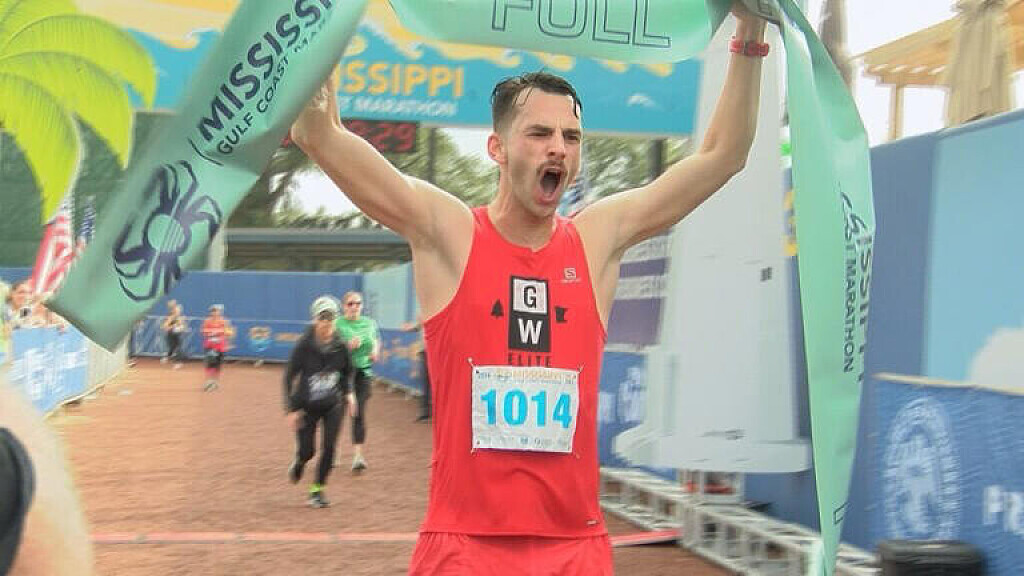
2,400 runners cross the Mississippi Gulf Coast Marathon finish line
The Gulf Coast Marathon events invited runners with all levels of experience to cross our coastlines.
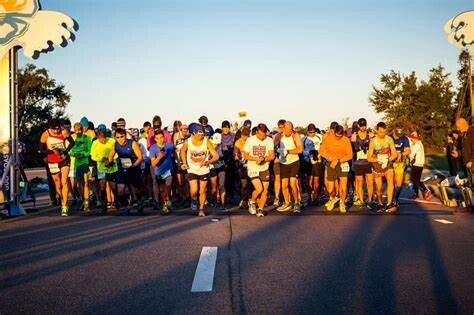
The full marathon runners started at Henderson Point in Pass Christian, and those running a half marathon— 13.1 miles— began the journey at Jones Park.
After 26.2 miles, Jake Braam’s victory could practically be heard all the way back at Henderson Point.
“It feels really good. Just awesome to represent the home state, Minnesota, and come down, get some southern hospitality, and come out with a win... my first win ever,” Braam said.
Braam completed the race in around 2 hours and 38 minutes.
But, before the finish line, Mother Nature tested the runners with wind and rain.
“It was pretty windy out there, so just kind of fighting through,” Braam explains. “It actually got windier as the race went on, so it got tough in those last miles where you’re just kind of suffering and you got to put your head down and just get after it.”
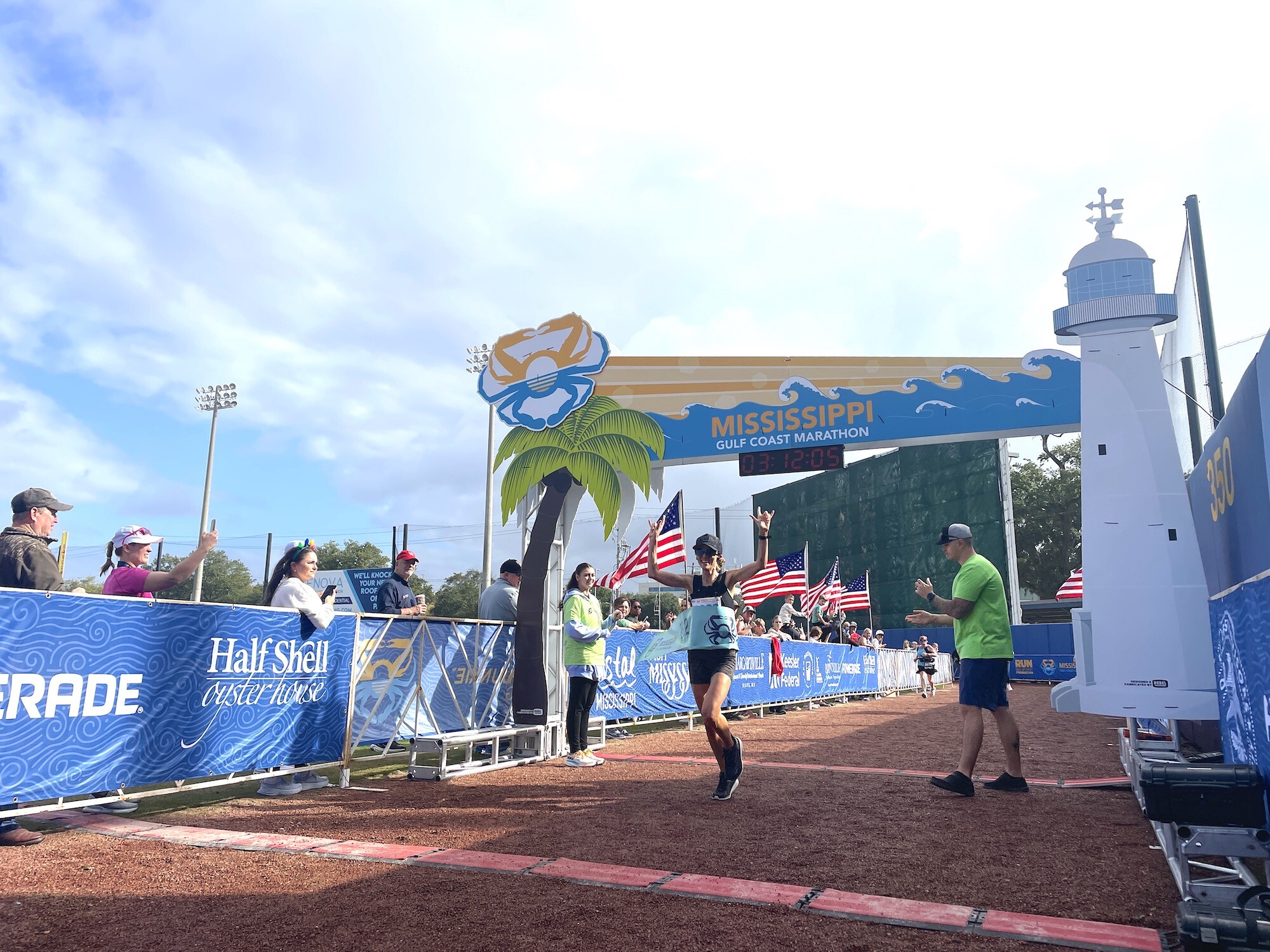
Behind Braam was Katherine Phillips, the overall champion in the race’s female category.
“I think we have everything today. It was chilly at the beginning, we had rain, we had a little bit of sun and I think a headwind the whole time,” Phillips said. “But we had some awesome pacers and everybody was so nice so it was a great group to be with.”
Phillips crossed the finish line at 3 hours and 12 minutes. She says her experience as a collegiate athlete and love of running is what brought her from Milton, Florida to participate in this race.
“Super excited and blessed. This is actually my first marathon I’ve ever ran, so I was super excited to be out there today,” Phillips said.
Her husband and son were among the spectators cheering her on throughout the long journey.
FreshJunkie Racing and Mississippi Gulf Coast Marathon marketing director Mike Wattigny says 2,400 runners made for a record-breaking turnout.
“What we’ve seen in the last couple of months is a significant uptick in our registration which is great to see,” Wattigny said. “This year the full marathon, the 5K and the beer mile all sold out. Next year is the 10th anniversary of the Mississippi Gulf Coast Marathon, so we’re anticipating a bigger crowd than ever.”
The half-marathon winner was Jacob Plocher from Gautier, and the overall female champion was Maya Espinosa from Baker, Florida.
by Destiny Polster
Login to leave a comment

Mississippi Gulf Coast Marathon
Founded in 2015, the Mississippi Gulf Coast Marathon, a Coastal Running Fest, celebrates the local flare and beauty of running along the scenic beaches from Pass Christian to Biloxi. Races include a marathon (26.2 miles), half marathon (13.1 miles), 5K (3.1 miles) and kids marathon race program (a 1.2 mile fun run). The Coors Light Finish Festival will be held...
more...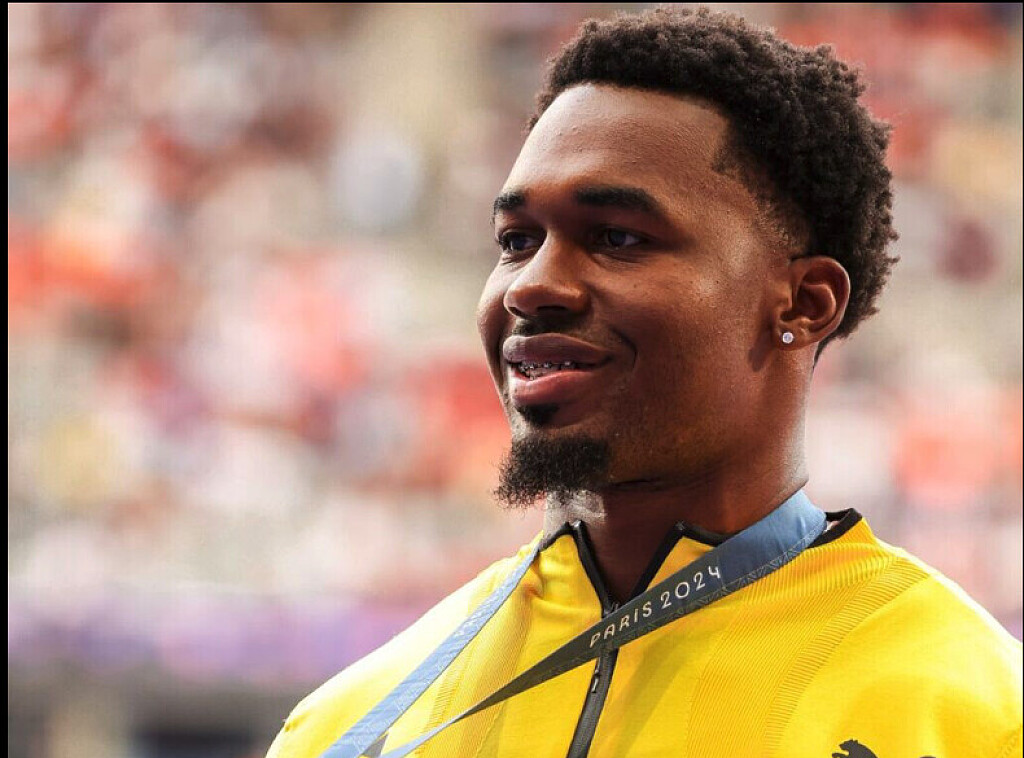
Jamaican Olympic gold medallist to try out for NFL
In recent years, we’ve seen several National Football League (NFL) stars step into the world of track and field, but it’s rare for a prominent track and field athlete to make the jump to football. The reigning Olympic champion in the men’s discus, Jamaica’s Roje Stona, will reportedly switch sports and try out for the NFL through its International Player Pathway (IPP) program.
According to an interview with ESPN, the 25-year-old feels he’s accomplished everything he wanted to in the discus, and will be trying out as a defensive end and tight end in the IPP camp, which starts in January 2025 in Florida.
“After the Olympics, [the IPP] reached out again. I was like, ‘Yo, the door’s open again,'” Stona told ESPN. “Of course, I was going to take it.”
Stona arrived at the Paris Olympics as an underdog in the men’s discus throw, as, earlier in the season, Lithuania’s Mykolas Alekna had broken the long-standing men’s world record with a throw of 74.35m. In the final, Stona ousted Alekna by three centimetres for gold, setting a new Olympic record of 70.00m. He won Jamaica’s only gold medal in athletics at Paris 2024.
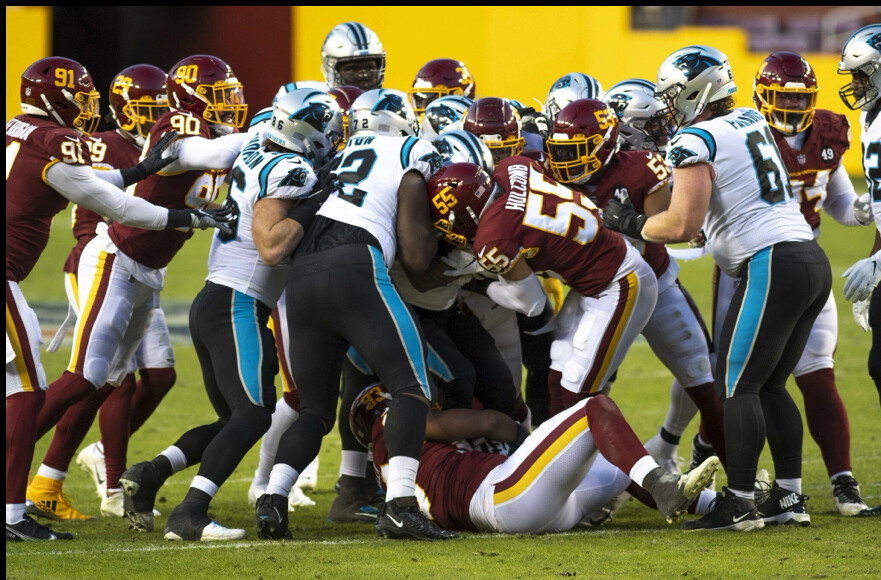
Stona’s love for football started when he attended Clemson University, where he began his collegiate track and field career before transferring to the University of Arkansas. Stona will look to become the second currently active track and field athlete to join the NFL, following in the footsteps of American sprint hurdler Devon Allen, a member of the Philadelphia Eagles practice squad for two seasons.
If Stona is successful in the IPP program, he will earn a spot on an NFL roster. There are currently five IPP players on active rosters: Jordan Mailata (Philadelphia Eagles/Australia), Efe Obada (Washington Commanders/U.K.), Sammis Reyes (Minnesota Vikings/Chile), Thomas Odukoya (Tennessee Titans/Netherlands) and David Bada (Detroit Lions/Germany).
The discus thrower will be joined by 14 other international athletes trying out for the NFL from Australia, Fiji, France, Germany, Ireland, New Zealand, South Africa, the U.K. and Zimbabwe.
Login to leave a comment
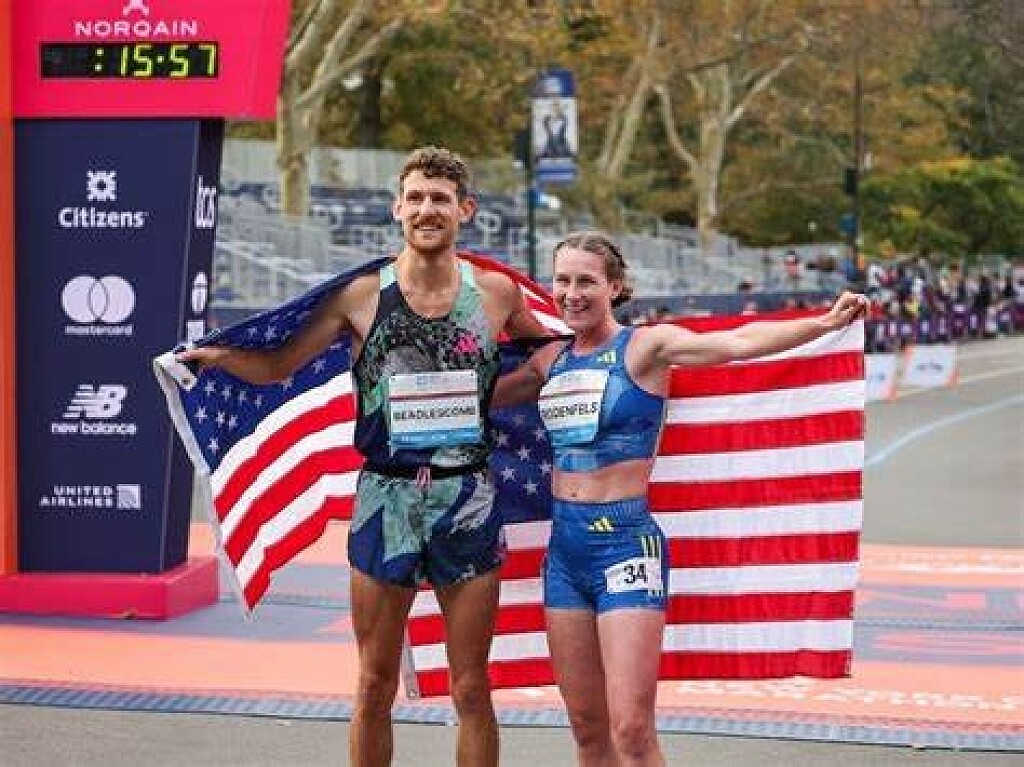
Defending champions Morgan Beadlescomb and Annie Rodenfels return to the Abbott Dash to the Finish Line 5k
New York City Marathon weekend kicks off with a much-anticipated USATF 5 km Championships at the Abbott Dash to the Finish Line 5k on Saturday, November 2, taking place the day before the 53rd running of the TCS New York City Marathon.
The USATF 5 km Championships at the Abbott Dash to the Finish Line 5k are the 11th stop on the 2024 USATF Running Circuit. Live coverage of this year’s championships will be broadcast on USATF.TV, starting at 8:20 a.m. ET, with the men’s race going off at 8:30 a.m. and the women starting five minutes after at 8:35 a.m.
Defending champions Morgan Beadlescomb and Annie Rodenfels return to the streets of Midtown Manhattan after winning last year’s USATF 5km Championships in their respective races.
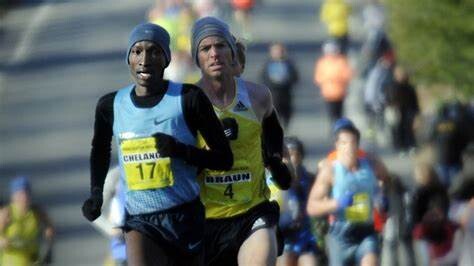
The former Michigan State Spartan Beadlescomb surged away from Ahmed Muhumed, Tai Dinger and Daniel Schaffer in the final stretch to win last year’s men’s title in 13:44, besting the field by a comfortable three seconds to claim his first USATF crown.
Looking to become the first men’s repeat champion since Ben True in 2011-12 when the USATF 5 km Championships were held in Providence, R.I., Beadlescomb will take on another tough field that will feature Muhumed (second), Schaffer (fourth) and Brian Barazza (fifth) from last year’s race, as well as a handful of others with impressive credentials.
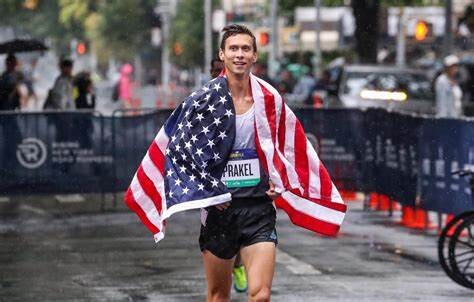
Beadlescomb could also become the first male athlete to win two USATF 5 km Championships titles at the Abbott Dash to the Finish Line 5k course, along with 2019 USATF 5 km champion Anthony Rotich making his way back into the field for the first time since winning the 2019 title.
Muhumed is the only competitor in the field that has won a USATF title this year on the USATF Running Circuit, winning the USATF 8 km Championships back in July in Kingsport, Tennessee. The USATF 8 km Championships were also the last time Muhumed raced this year.
Sam Chelanga, Sam Prakel and Josh Thompson join Beadlescomb, Rotich and Muhumed as three more USATF national champions set to race, bringing the total to six national champions in Saturday’s field.
Chelanga, a two-time USATF champion, will go after his first USATF national title since 2016 when he won the USATF 10 Mile title. He’s raced twice this season on the USATF Running Circuit, finishing third at the USATF 10 km Championships and fourth at the USATF 20 km Championships.
Prakel, the 2023 USATF Road Mile champion, and Thompson, the 2020 USATF Indoor 1500 champion, are both eyeing a second national title of their own.
Parlympian and New York native Michael Brannigan is slated to race after competing for the United States at the 2024 Paris Paralympic Games, where he came away with his second Parlympic medal in the men’s T20 1500, earning bronze to go with his 2016 gold from the Rio Games.
Derek Johnson, Titus Winder and Kirubel Erassa will be other names to watch out for in the men’s race.
Rodenfels earned her first USATF national title by defeating Rachel Smith by four seconds in last year’s women’s race, running 15:22.
Rodenfels has since won another USATF national title earlier this season, winning the 2024 USATF 6 km Championship race by 13 seconds on July 13 in Canton, Ohio.
With a win on Saturday, Rodenfels could join Weini Kelati as the only competitors to repeat as USATF 5 km champions at the Abbott Dash to the Finish Line 5k course and the sixth woman to complete consecutive national titles in the history of the USATF 5 km Championships.
Challenging Rodenfels will be Emma Grace Hurley, who will be racing in her seventh USATF Running Circuit race this year, with her latest effort being a third-place finish at the USATF 10 km Championships in Northport, New York, on September 21.
Hurley, who was ninth at last year’s USATF 5 km Championships, has finished as high as second place in two USATF Running Circuit races this year at the USATF 8 km Championships and the USATF Cross Country Championships.
Susanna Sullivan and Natosha Rogers are a pair of veterans coming off great races in their recent outings looking to mix it up in the top half of the field.
Sullivan completed this year’s Chicago Marathon as the top American, running a lifetime best of 2:21:56 to finish seventh overall, making her the 10th-fastest American marathoner in history.
Rogers won the Medtronic Twin Cities 10 Mile in St. Paul/Minneapolis, Minnesota, on October 6, in 52:29 just two weeks after finishing second at the USATF 10 km Championships.
Logan Jolly, Cailie Logue and Elena Hayday are other competitors entered in this year’s USATF 5 km Championships with past results on this year’s USATF Running Circuit.
2023 Cross Country champion Katie Wasserman adds some intrigue to the field, running in her first road race since 2022.
About the USATF Running Circuit
The USATF Running Circuit is a USATF road series featuring USATF championships from one mile through marathon and consistently attracts the best American distance runners with more than $500,000 awarded in total prize money. A total of $60,000 in prize money will be awarded at the USATF 5 km Championships.
The first ten U.S. runners earn points at each USATF Running Circuit race. For the USATF 5 km Championships, scoring is set as 15 for first, 12 for second, 10 for third, 7, 6, 5, 4, 3, 2, and 1, with those earning the most points receiving prize money at the end of the series.
The mission of the USATF Running Circuit is to showcase, support and promote U.S. runners. Since its inception in 1995, the USATF Running Circuit and its race have provided over $7 million to U.S. Distance runners.
by Keenan Gray
Login to leave a comment

Dash to the Finish Line
Be a part of the world-famous TCS New York City Marathon excitement, run through the streets of Manhattan, and finish at the famed Marathon finish line in Central Park—without running 26.2 miles! On TCS New York City Marathon Saturday, our NYRR Dash to the Finish Line 5K (3.1 miles) will take place for all runners who want to join in...
more...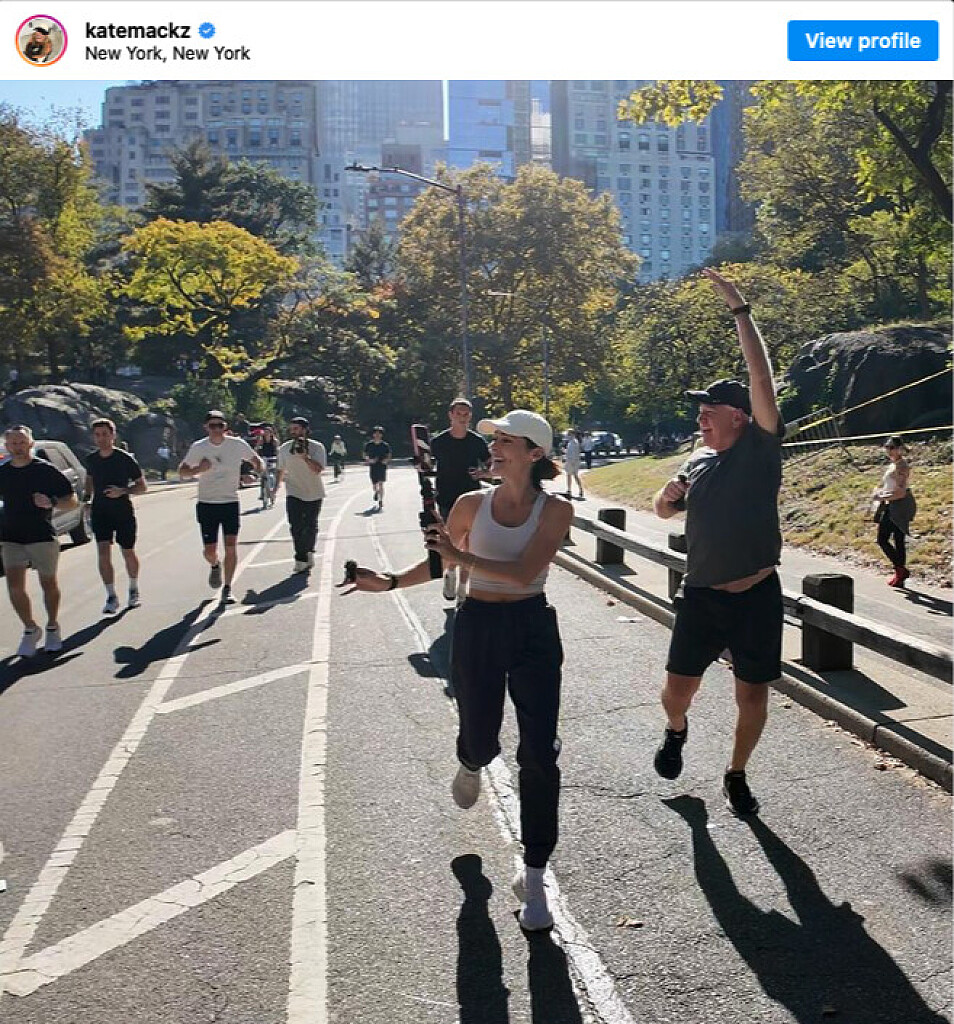
U.S. vice-presidential candidate Tim Walz runs with TikTok influencer in Central Park
Vice-Presidential candidate Tim Walz ditched his usual running mate on Wednesday, instead joining content creator Kate Mackz on a one-mile run through Central Park. Their vlog quickly went viral on TikTok. The video shows multiple Secret Service agents running alongside the pair.
Mackz, recognized on TikTok as “The Running Influencer,” is known for approaching celebrities on the streets of New York City or Los Angeles and inviting them on a run. When meeting up with Walz, the pair agreed to begin with one mile (1.6 km). As a runner myself, I was surprised to notice that Walz knows what he’s doing–he had a solid, comfortable stride and held up a conversation for the entire run–which ended up being just farther than a mile.


Walz revealed that he picked up running 12 years ago. “It’s the best stress reliever you could possibly find,” he told Mackz. “Good for the soul, good for the body–and you meet a ton of great people.” He admitted that the accompaniment of several Secret Service agents makes the run a little busier, but still fun. Walz noted that all Minnesotans are “outdoor people,” running in all seasons. “This (interview) is great,” Walz said. “I would take every one like this.”
The avid runner has run one marathon: the 2014 Rochester [N.Y.] Marathon, where he finished in 4 hours 41 minutes. “I like half better,” he noted. “I’ve been doing a lot of 10-miles.” In
Impressively, Walz seemed hardly out of breath after Mackz suggested they “pick up the pace a little bit,” talking steadily about the upcoming election. The former teacher and football coach says he was influenced to pursue a political career after the age of 40 by his former students; he revealed that some of his former football players have come out to support him.
“Live in the moment,” Walz said while leaving advice for first-time marathoners. “Don’t get out too fast, enjoy what you’re doing, and know that 99 per cent of people will never do what you’re doing.”
Mackz has also posted videos with world record holder Sydney McLaughlin-Levrone and Australian 10,000m national record holder Lauren Ryan, along with celebrities Jason Derulo, John Krasinski and Jared Leto.
by Running Magazine
Login to leave a comment
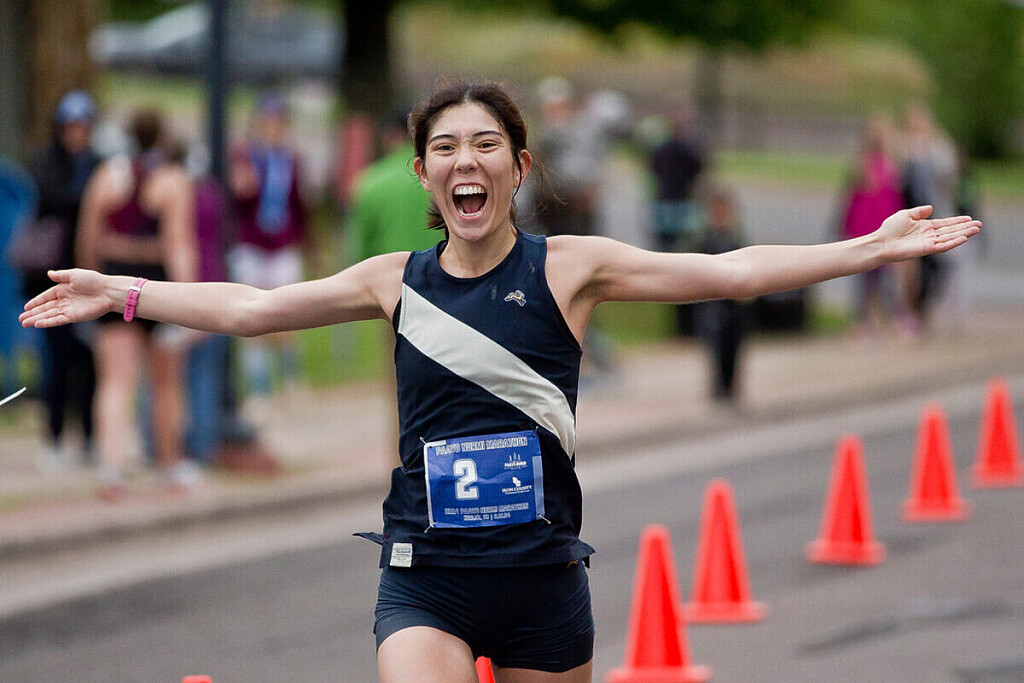
Cannon, Nelson win 54th Paavo
The three H's are what make the Paavo Nurmi Marathon so difficult.
Heat. Humidity. Hills.
But sometimes runners catch a break from two of them. On a fall-like day when spectators donned hoodies, the 54th Paavo proved fast with none of the heat and humidity, even as midday approached.
"While it may not have been the best weather for spectators, it was fantastic for runners," race director Derek Lindstrom said. "The runners ran so well."
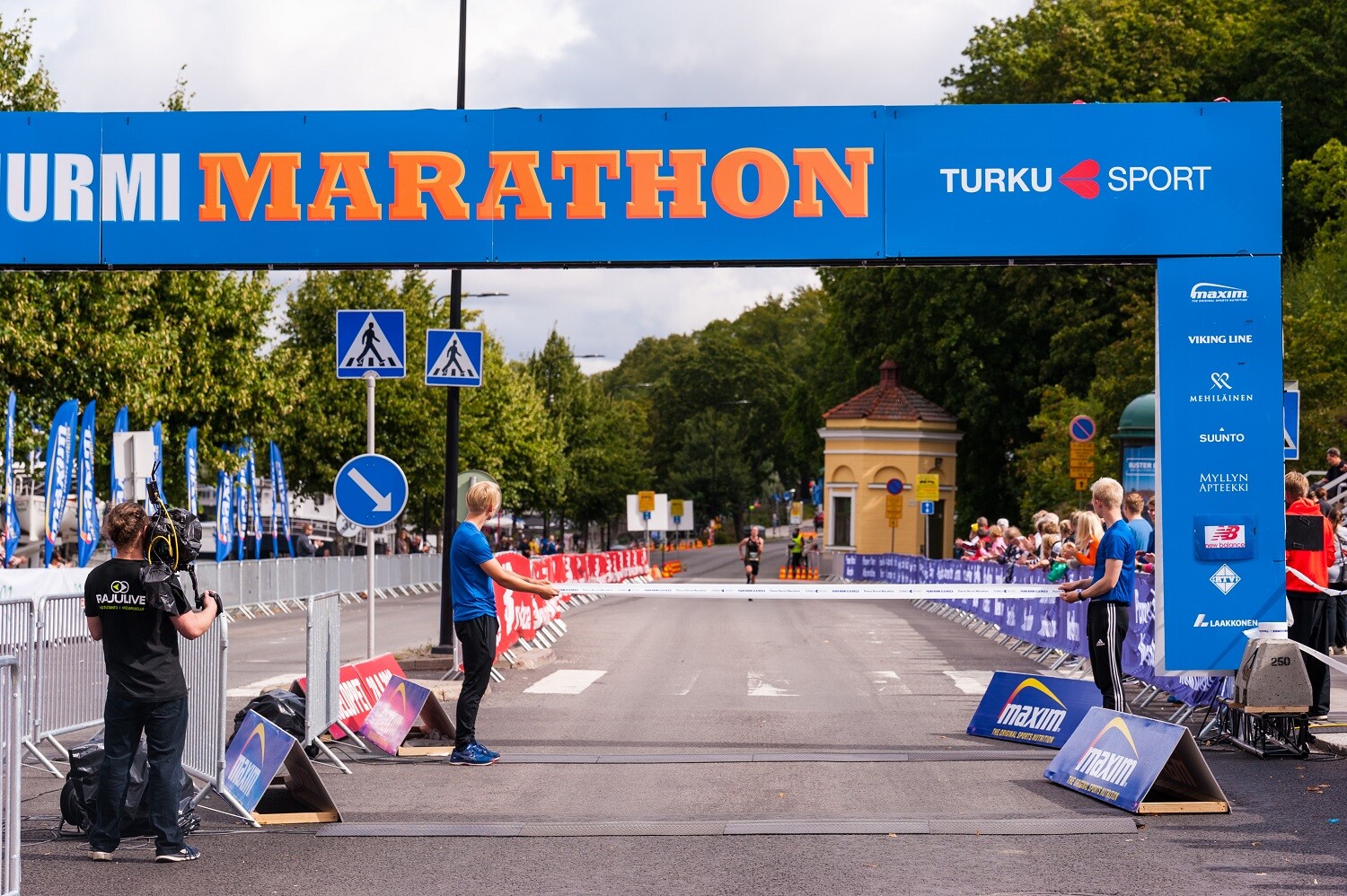
Six runners cleared the three-hour mark, led by Ethan Cannon's 2:27:20, the fastest Paavo finish in 31 years.
"It was that kind of day," Lindstrom said. "Fast weather, but that's a fast time, that's fast running."
The women's winner, Sarah Nelson, finished in 3:18:49, about a half an hour faster than last year's first-place finisher.
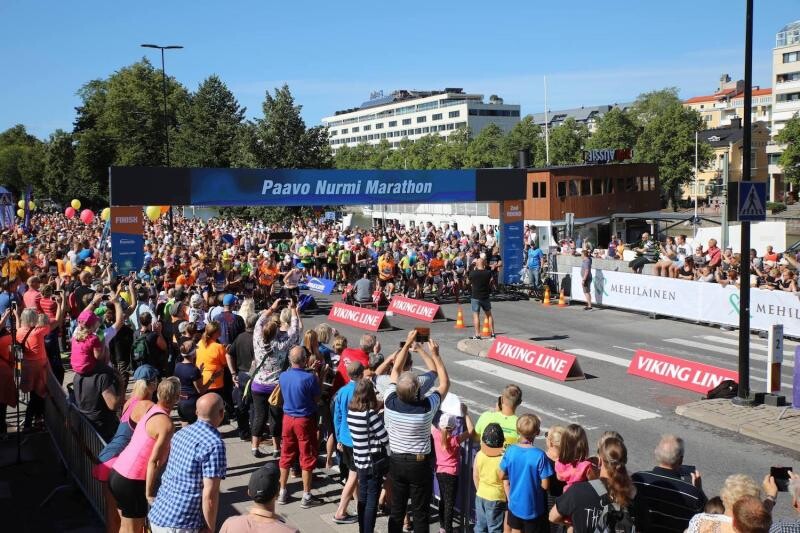
Cannon, 27, of Minneapolis was the favorite coming in, Lindstrom said. He lived up to it with the Paavo's fastest time since four-time winner Todd Sperling ran it in 2:27:00 in 1993. The only other runner to clear 2:30 since then was Ironwood graduate Alan Peterson, who won it in 2018 with a time of 2:28:12. Most of the other winners have been in the 2:33 to 2:46 range.
The fastest finish all-time happened all the way back in 1978 when Richard Wilde ran the course in 2:19:11.
Cannon was looking for another marathon to get under his belt, he had only done one before. He found the Paavo online - it's not too far from Minneapolis and he was just up here.
He ran track and cross country at the University of Minnesota in the 2021-22 school year as a graduate transfer from BYU. After finishing that, he moved on to road races - 10K, half-marathons - for the last couple of years.
"Kind of a natural step up would be to do the marathon," he said. "I did my first one last fall."
He made the transition seem pretty easy with his super fast time in the Paavo.
"Running a marathon is like a whole different sport, it feels like almost," Cannon said, "because there's different considerations you have to make in terms of fueling. It definitely is good to have the background. It's very normal for me to run 18 miles on a Saturday morning, but definitely it is an adjustment. It's unlike any race I've run before, for sure."
He looks to keep running marathons - and see some new places while doing it. He also hopes to come back to the Paavo someday, too.
Winning the race felt good, he said.
"You get a lot of support from the other runners because you end up passing a lot of people in the half-marathon. In fact, I was able to run with some of the relay teams, I was able to keep up with those teams as they were running the marathon relay," Cannon said. "There was just a lot of support on the course for me from the fellow people who recognized I was in front of the marathon race and they were cheering me on. That definitely felt good and helped me to keep pushing and try to win and get a good time."
And, of course, the conditions were great.
"The weather was perfect. I'm actually a sucker for cloudy days anyway. It was dry, so not even wet at all, so just perfect," Cannon said. "The course was just fantastic, so beautiful out there. Like the first 10 miles or so, I was just kind of sightseeing, so that was very enjoyable. Of course, later on, the pain sets in."
Brad Vaara of Hurley was one of the six runners to finish in under three hours. He placed fourth in 2:54:10.
Nelson, 25, of Chicago, finished the fastest since Emily Jaehnig's 3:15:45 in 2016. The last three winners were all over 3:40, but Nelson finished in 3:18:49.
That compares more favorably to other finishing times over the years. Six-time winner Candace Schneider finished between 3:10 and 3:16 in five of those wins and eight-time champion Ann Heastlett was between 3:05 and 3:21. (Heaslett ran this year and finished in 10th place.)
"I'm really proud of myself," Nelson said of getting the win. "I know it's really hard for me, there are no pacers for me or anything. Whenever I see a person whether it's a half or full marathon, I tried to pass them. That gets me more motivated."
She flew from Chicago to Ironwood and was happy to get the chance to run the Paavo for the first time.
Her cross country coach when she was at Harper community college (in suburban Palatine), James MacNider, won the Paavo in 1979, and speaking of fast finishers, his time is the second fastest on record at 2:20:05.
"I was like, 'Oh maybe I should try out this race,'" Nelson said.
MacNider has five national coach of the year awards in cross country and one in track-and-field along with many other honors.
"I'm very privileged to run with him. He actually understands my pace and workout and all that stuff," Nelson said. "He really made me really love the long-distance running because I started out as a swimming and basketball player. I went out for cross country in community college for the first time. I really enjoy running with the people around me, that gets me to push a little bit faster."
She kept running at Loyola University Chicago in intramural cross country and track.
Nelson's runs in Chicago have been limited to 20 miles because of the heat. There was no heat here Saturday.
"The weather was perfect," she said. "I asked the recruiter, how hilly is this. They were like, it's smooth and hilly, it's just different kind of courses. I felt a little bit tired when we had to turn around from the 20th mile all the way down there (on County C). I knew I had to push myself the last 5K and I actually PR'd nine minute-ish, so I was really proud."
She's training for the Chicago Marathon and the New York City Marathon three weeks after that.
"I'm pretty excited for both of them," Nelson said.
It was exciting for her to win the Paavo as well. She waved to the crowd on Silver Street and blew kisses to them as well.
"I felt very, very proud," Nelson said. "Even though I was really tired. At like the 24th mile, I thought to myself I wanted to give up. But I knew I had this long two-mile stretch to go. I really did push my legs to the limit and everybody was cheering for me. It felt very good to finish. It didn't matter I was first or last place, it just feels good to finish the race, that's all that matters for me - and have fun, of course."
That's not an easy feat at the Paavo. Even without the heat, the hills didn't go anywhere.
"This is really great training, I always like to challenge myself," she said. "I'm really terrible at uphills, but I actually did uphill training with some of my racing team that I'm at."
by Jason Juno
Login to leave a comment
Paavo Nurmi Marathon
The event has grown and developed, which has strengthened its position as one of Finland's leading running events.Paavo Nurmi Marathon can take part in 10 kilometers, half marathon or full marathon.The largest number of participants (2000-2500) is annually in half marathon.The 24th Paavo Nurmi Marathon will take place on June 27, 2015. The beautiful running trail will showcase the most...
more...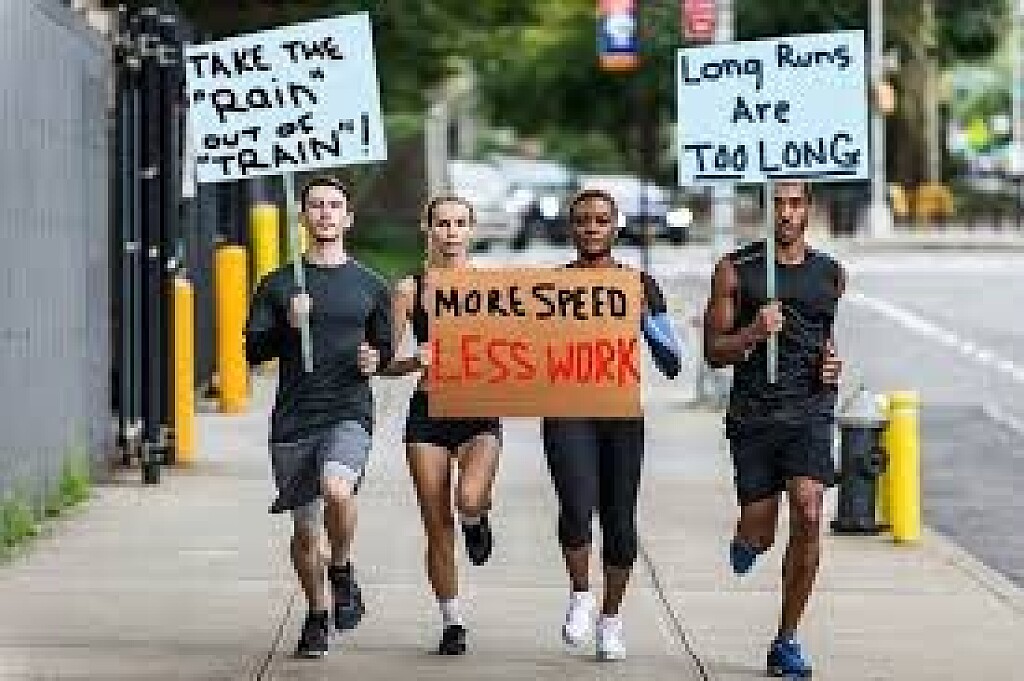
Why You Should Train Less, According to a Coach
Many athletes believe that the more time they spend in the gym, the fitter and more competitive they’ll be, but that's usually not the case.
“Practice makes perfect” is a dangerous narrative underlying the culture of endurance training. Many athletes believe that the more time they spend in the gym, the fitter and more competitive they’ll be.

It’s an idea that works until it doesn’t.
Skylar Allen, a 28-year-old from Minneapolis, Minnesota, began running in college, after years as a figure skater pushed her toward body dysmorphia and an eating disorder. “I struggled with restriction, which was eventually diagnosed as anorexia, for about eight years.”
Eventually, anorexia morphed into bulimia. But when she started running in 2014, Allen says she wasn’t ready to face those issues yet. Instead, running became another way for her to justify behaviors she knew might not be healthy. “When I was having a terrible day, I’d go to the gym the way an alcoholic goes to the bottle,” she says.
By 2020, in the midst of a graduate program in mathematics, Allen recognized the imbalance in her life and started seeking treatment.
Allen and I met on her path to recovery. As a coach at Treeline Endurance, which I founded in 2018, I help athletes tap into their fitness potential with a heavy focus on long-term sustainability. In that time, I’ve seen athletes like Allen harmed in their quest for success by an implicit message shared by coaches and influencers: if you want to perform better, you need to train more than you are right now.
On one hand, research shows that more time spent practicing our sport is crucial to performing our best. On the other, obsessing over physiology can cause athletes to neglect the things in their lives that keep them grounded, from time with friends to taking care of their mental health.
“I’ve fallen into this trap of ‘more training is always better,’” says another one of my clients, Aidan McCarthy, a 28-year-old trail runner based in Salt Lake City, Utah. “Before I was coached, I would go for way too long without taking a rest week, and I often wouldn’t take one at all until I came down with a cold or my body was so tired it forced me to.”
As a running coach, time and again, I’ve seen the story play out in athletes who ramp up their training time as far as their schedules allow. Once they begin to max out that time, they start repurposing time they used to put elsewhere. First goes strength training. Next, some of their leisure, recovery, or family time. I’ve even seen some pull back from their local running group just to save 30 minutes of commute time to add back into their run.
But more isn’t always better. When athletes cut into the time previously spent on activities that enhance mental and social health, they compromise the quality of their training reduce their ability to adapt to their training, and ultimately make training less fun. Studies have shown that one of the most common outcomes of overtraining is a loss of enjoyment for not just the sport, but life in general.
McCarthy considers the nuance of it. He believes that, generally speaking, volume pays off. “I get better results training for twelve hours a week than for five, but is fifteen better than twelve?” asks McCarthy. “Major signs for me that I am starting to overreach are unexplained irritability and low motivation to train.”
McCarthy completed his hardest event to date last August at the 40-mile Telluride Mountain Run. The notorious mountain race features more than 14,000 feet of vertical ascent and descent. And yet, in a major departure from his running-only training approach of the past, almost a third of his preparation came on the bike in the canyons of the Wasatch Range.
As athletes, we need to reject more-is-better culture. In doing so, we’ll become happier, healthier, and maybe even better at our sport. By choosing to go for a bike ride rather than force another lap on our normal running route—or take on a hard strength session, knowing it’ll take a couple of days to feel ready for another big-volume endurance day—we allow the body to recover in one way, and be pushed in another. We introduce variety mentally and keep our training exciting, rather than allowing it to become just another job.
Today, Allen’s eating disorder is in recovery, and she’s learning to add an element of balance to her training. In addition to her continued growth as an ultrarunner, she’s now an enthusiastic member of her local CrossFit community. “I used to ask myself what I could cut out of my life to give myself a little more time to focus on training,” she says. “At some point, I asked myself what it would be like if I did the opposite. Can I use the same discipline to keep a healthy balance?”
If you are struggling with eating and body image in any way, you do not have to suffer alone. Consider reaching out to the National Eating Disorders Association’s Helpline, which is available via text, phone, or chat.
by Outside On Line
Login to leave a comment
Zac Clark is a real runner and has run a 1:32 half marathon
Grandma's Marathon is just hours away! If you are running any of the races, you are likely feeling a few nerves right about now. You are definitely not alone in that.
Here's some excitement to take your mind off it: a reality star is flying in to Minnesota to take part in the race and taking part in the full marathon!
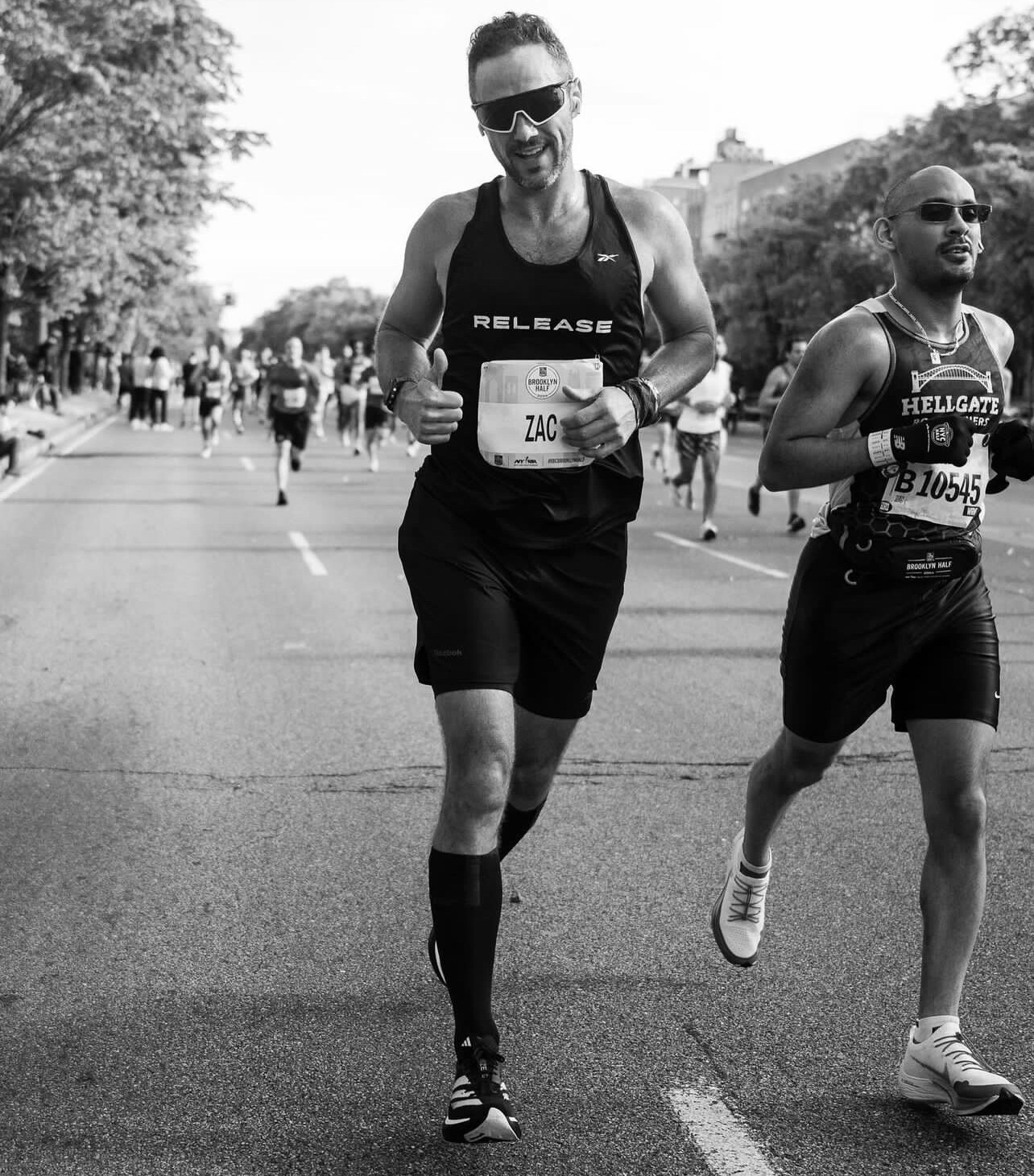
Zac Clark Got The Final Rose
Lovers of 'The Bachelor' franchise will recognize this star! Zac was the winner of The Bachelorette a few seasons back.
A few months ago, I noticed that Zac was posting a lot of videos about running and even mentioned Grandma's Marathon in one of his posts! He shared he'd be running the race, and he is a very serious runner.
On Thursday afternoon (June 20th), Zac posted another video relating to the big race, sharing his stats, his goal time and how he is feeling about the big race right now.
Login to leave a comment
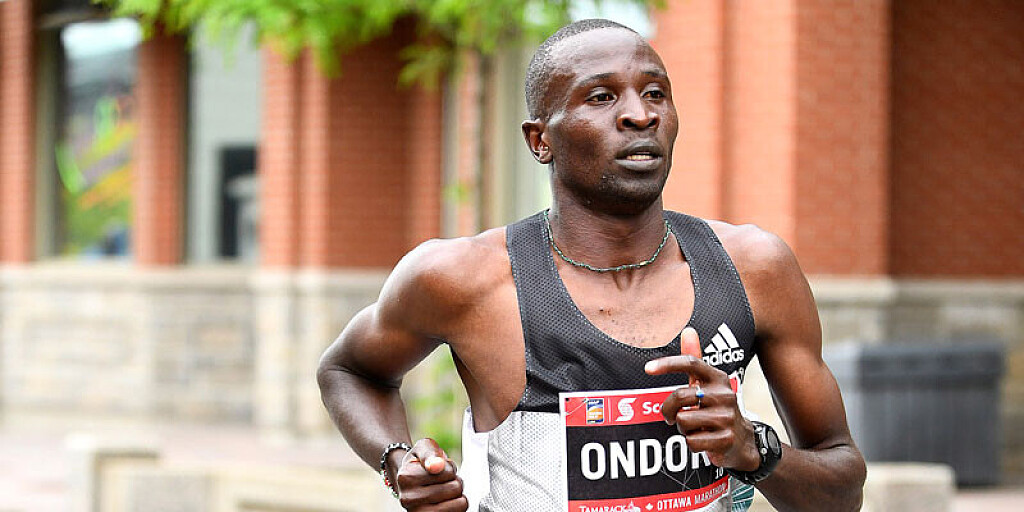
Dominic Ondoro and Elisha Barno will headline in the Grandma’s Marathon
Former champions and countrymen Dominic Ondoro and Elisha Barno will dominate the headlines in the Grandma’s Marathon men’s field, together having accounted for seven wins in the past nine years at this race.
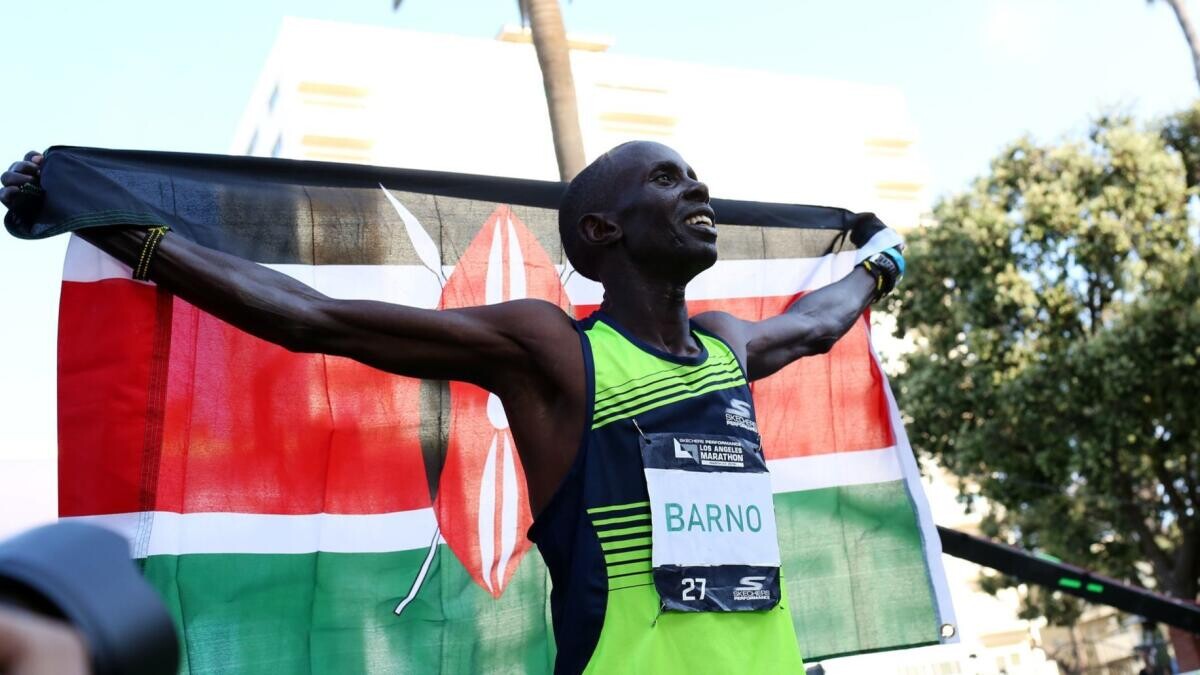
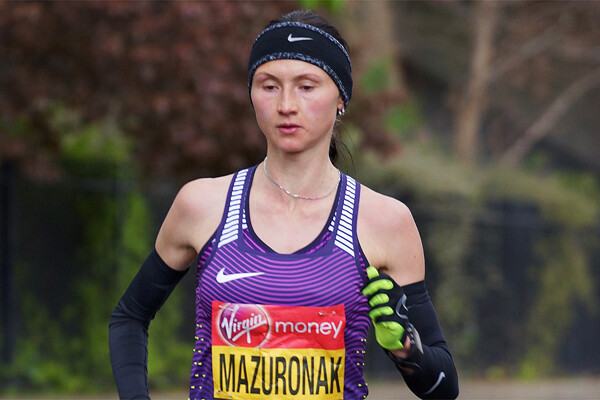
Barno won for a record fifth time in his career last year, which came just one day after he was officially inducted into the Grandma’s Marathon Hall of Fame. Ondoro, meanwhile, still owns the event record of 2:09:06, a time he ran in 2014 that broke the longstanding record of Minnesotan Dick Beardsley.
The women’s field may be the most wide open of all this year’s events, with two-time Belarus Olympian Volha Mazuronak seemingly the pre-race favorite. She has top five finishes at both the Tokyo and Rio Olympics on her resume, as well as a runner-up finish earlier this year at the Los Angeles Marathon.
by Running USA
Login to leave a comment
Grandmas Marathon
Grandma's Marathon began in 1977 when a group of local runners planned a scenic road race from Two Harbors to Duluth, Minnesota. There were just 150 participants that year, but organizers knew they had discovered something special. The marathon received its name from the Duluth-based group of famous Grandma's restaurants, its first major sponsor. The level of sponsorship with the...
more...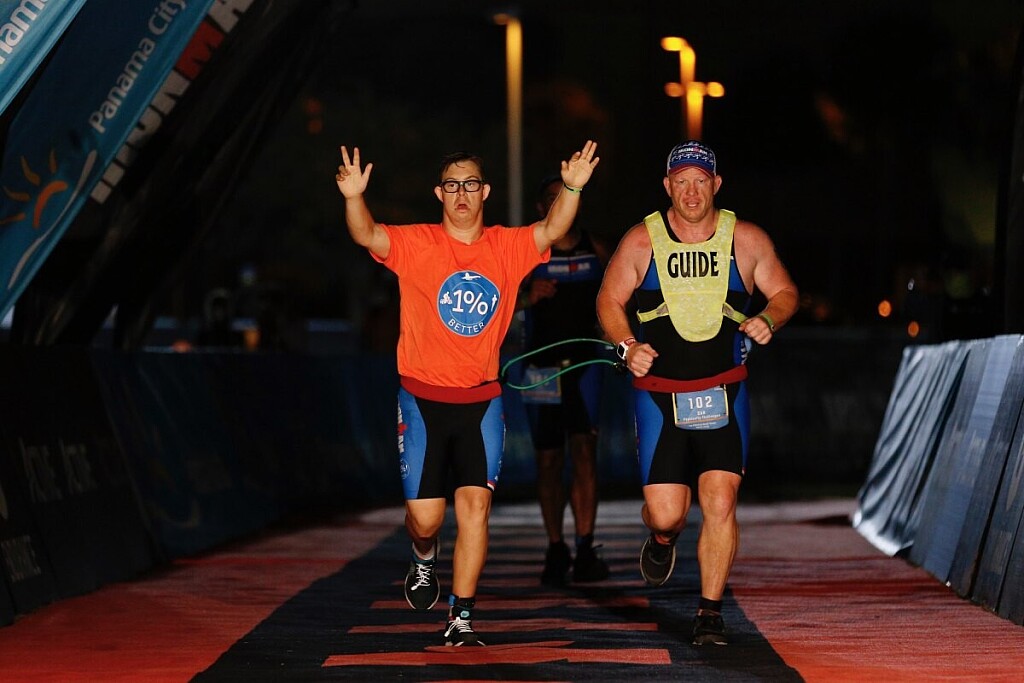
World record holder, endurance sport pioneer Chris Nikic to Run 2024 Grandma’s Marathon
2-time ESPY award winner and Guiness world record holder Chris Nikic will be at the starting line of the 2024 Grandma’s Marathon, the organization announced today.
Nikic was born with Down syndrome and was unable to walk well until age 4, but recently he became the first person with Down Syndrome to complete each of the World Marathon Majors (New York City, Boston, Chicago, Berlin, London, and Tokyo) and earn the coveted Abbott Six Star medal.
In 2020, before completing any of his running-only marathons, Nikic became the first person in the world to ever complete an Ironman Triathlon – that competition consists of a 2.4-mile swim, 112-mile bike ride, and 26.2-mile run.
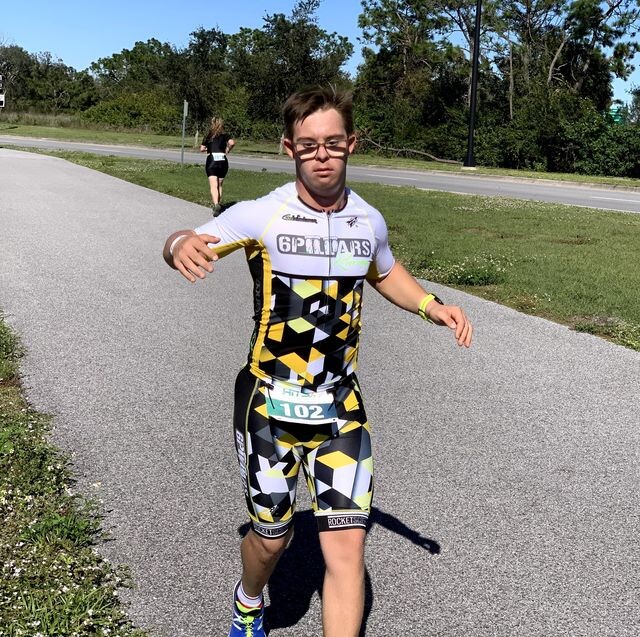
Nikic beat his own time two years later at the 2022 World Championships, and that mark of 16 hours, 31 minutes still stands as an official Guiness world record.
After accomplishing a goal that once seemed out-of-reach, Nikic co-wrote a book with his father, Nik, titled 1% Better: Reaching My Full Potential and How You Can Too.
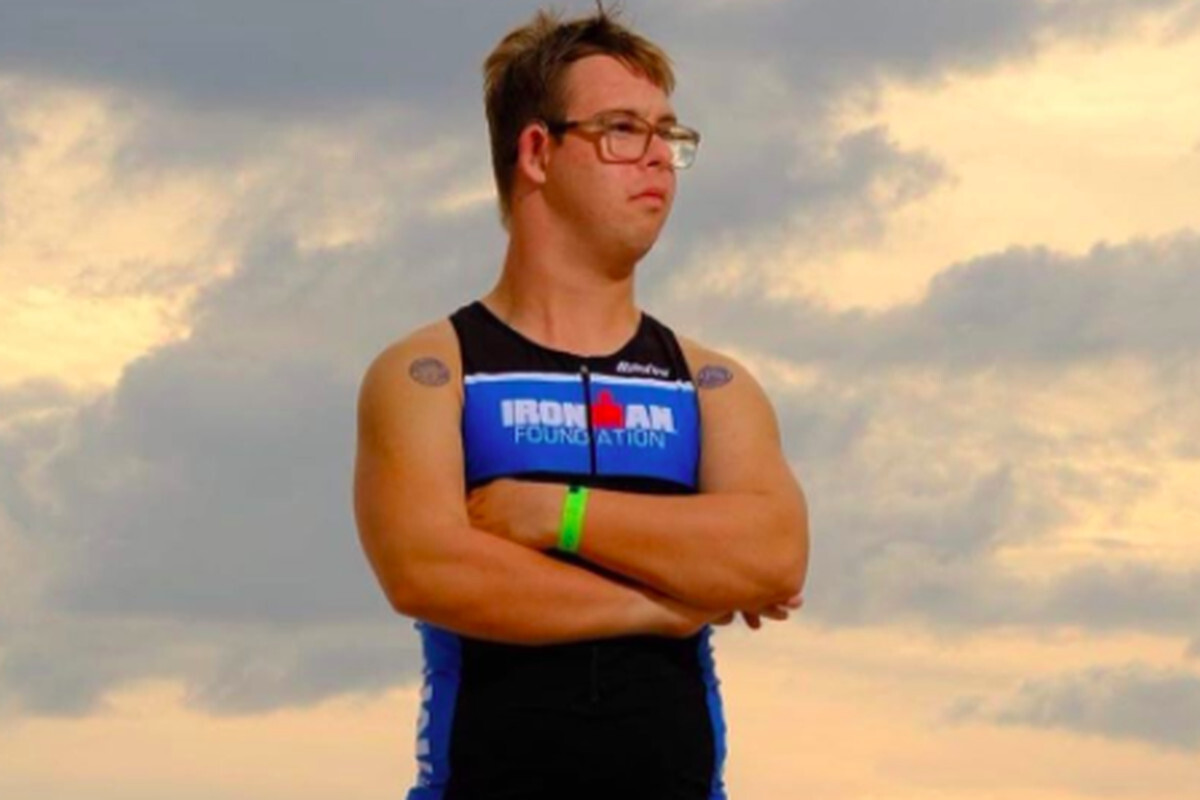
The book chronicles Nikic’s journey from childhood to his teenage years, when after high school he was an admitted “overweight, out-of-shape” 18-year-old. As he slowly developed an affinity for exercise, Nikic also slowly changed his perception of what was possible in his life.
“That’s when he wrote on the wall that he was going to be a ‘world champ’,” his father Nik said. “We didn’t dismiss what he was telling us as impossible, we took it to heart and believed him. Then, we got to work helping him achieve that goal.”
Chris will speak at the Essentia Health Fitness Expo at 12:00 p.m. on Friday, June 21, and Nik will follow that at 1:00 p.m. as a guest for a panel discussion on the inclusion of neurodivergent and disabled athletes in endurance sporting events like Grandma’s Marathon. Both presentations are free and open to the public.
The Nikics will also be visiting Northwood Children’s Services west campus on Thursday, June 20, with Chris set to speak to the kids and lead them through the “1% Better Challenge.”
“We’re honored to have Chris as part of our 2024 Grandma’s Marathon weekend,” Marketing & Public Relations Director Zach Schneider said. “We met Chris and his dad two years ago in Denver, and I don’t think there was a dry eye in the place after Chris had given his presentation. He’s exactly the type of person we want at our starting line, and we’re excited to continue the conversation about how those doors can be opened to other athletes like Chris.”
Down syndrome is a chromosome disorder caused by an extra chromosome 21, which prompted the creation of the Runner 321 initiative aiming to welcome more neurodivergent athletes into endurance sports. On race day in Duluth, Chris will wear race bib No. 321 as a symbol of that initiative.
ABOUT GRANDMA’S MARATHON
Grandma’s Marathon began in 1977 when a group of local runners planned a scenic road race from Two Harbors to Duluth, Minnesota. After seeing just 150 participants that year, the race weekend has now grown into one of the largest in the United States and welcomes more than 20,000 participants for its three-race event each June.
The race got its name from the Duluth-based group of famous Grandma’s Restaurants, the first major sponsor of the marathon. In addition to the 26.2-mile race, the organization has now added the Garry Bjorklund Half Marathon and William A. Irvin 5K to its weekend offerings.
As the popularity of Grandma’s Marathon has grown, our mission has stayed the same – to organize, promote, and deliver annual events and programs that cultivate running, educational, social, and charitable opportunities to our communities.
by Running USA
Login to leave a comment
Grandmas Marathon
Grandma's Marathon began in 1977 when a group of local runners planned a scenic road race from Two Harbors to Duluth, Minnesota. There were just 150 participants that year, but organizers knew they had discovered something special. The marathon received its name from the Duluth-based group of famous Grandma's restaurants, its first major sponsor. The level of sponsorship with the...
more...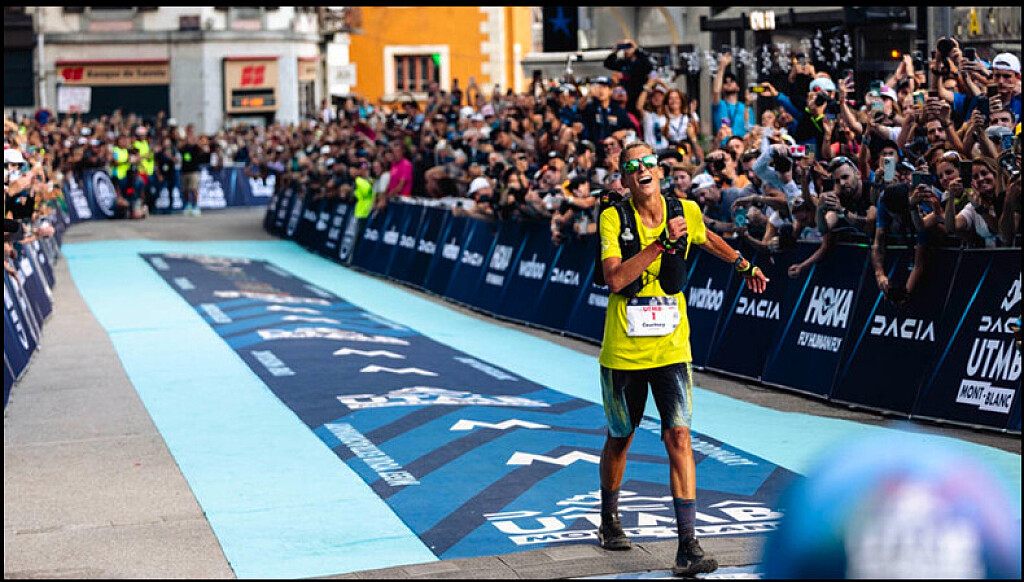
The Keys to Courtney Dauwalter’s Continued Dominance
During a recent press conference, Dauwalter dished oUltrarunner extraordinaire Courtney Dauwalter has picked up in 2024 right where she left off last year. After famously winning three of ultrarunning’s most epic races during the span of about nine weeks last summer—Western States 100, Hardrock 100, and Ultra-Trail du Mont-Blanc—the 39-year-old athlete from Leadville, Colorado, defended her Transgrancanaria 126K title in a decisive wire-to-wire win in late February and won the Mount Fuji 100-miler for the second time on April 27, placing third overall.
She’s now gearing up to go for a third straight win at the Hardrock 100 on July 12-13 in Silverton, Colorado. After Hardrock, she’ll be crewing and pacing her husband, Kevin Schmidt, at the Leadville 100 on August 17-18, and then tackling a yet-unannounced trail running project in September.We caught up with Dauwalter to talk about her fueling and training in a virtual press conference, where she announced the May 20 release of her signature flavor of Tailwind Nutrition Endurance Fuel—Dauwaltermelon with Lime—as a permanent part of the brand’s lineup. Since she’s emerged as one of the world’s top trail ultrarunners, she’s been known for having a sound approach to nutrition and fueling, never shying away from eating whatever she wants, admitting her soft spot for candy and pastries, or having a beer every now and then if she feels like it.

COURTNEY DAUWALTER: I am still eating all of my favorite things whenever they sound good in quantities that sound good, and I am not intending to change that part of my life, because it just gives me a lot of joy to live that way. I guess it’s got to be partly my upbringing, and also with Kevin and I, our idea of how we want to live our lives is to enjoy it to its fullest while it’s here. We just want to enjoy food, enjoy meals out, enjoy the cravings that we have, and not worry about it. But I would say in the past couple of years I do more consistently do a recovery drink after a long run or after putting in big efforts, and that’s something that I was a little more lax with originally, so I feel like that’s a step in the right direction.
When I first got into ultrarunning, I had no nutrition plan. I didn’t know what I was doing. My first race was a 50K, and I remember not knowing that these aid stations would be buffets. My mind was blown when I got to them—all the options were overwhelming. I just started filling my pockets with jelly beans. In those first years, I did a lot of mimicking of what the people around me were doing. So if I came to an aid station and someone was grabbing pickles and drinking Mountain Dew, then that’s what I would do. If they were grabbing pretzels and cheese cubes, that’s what I would go for. It was just kind of roulette for me on what I would end up eating—if it would work, or if it wouldn’t work.
Initially, I never had a fueling plan at all. But then in 2017, I went to the Run Rabbit Run 100 in Steamboat Springs, Colorado, and Tailwind was available on course at all of the aid stations. I had a buddy who had started using it that year, and I remember just loving it and suddenly not having all the stomach issues and energy dips that I often had. I was like, ‘Oh, maybe this is what it’s like to have something reliable.
'At this point we’ve gotten pretty dialed on the race nutrition plan for those 10-to 24-hour efforts or the events of 100 miles or below. I’m not a person who has my watch beeping at me ever to remind me to eat. I don’t get those kinds of reminders, and I don’t want to eat every 15 minutes or 30 minutes during a race. I’m going to just slow drip the calories I have as often as possible—basically it’s an eating contest on the move. Now I know my body functions pretty well with about 200 calories per hour during those efforts. So, depending on the distance between aid stations, I can rely solely on a bottle of Tailwind and then supplement with some chews or waffles or gels, because usually I get actually hungry feeling and having something solid helps with that. But mostly, I’m relying on Tailwind as my backbone to the whole plan and generally aiming for that 200-calorie-per-hour benchmark.The past couple years (working with a nutritionist friend), we’ve been better at creating A, B, C and D plans—because sometimes the perfect nutrition plan that you have relied on isn’t going to work. Our approach is that’s fine, and here are some things you can start subbing in during a race that can cover your needs. I view race nutrition like a puzzle piece, and sometimes it fits into the puzzle right where we want it to, and sometimes we have to kind shift things around a little bit. I think one of the reasons a lot of us love ultrarunning is because, when things just aren’t going to plan, we have to problem-solve it.
That’s one thing I’m hoping to focus on a little bit more on in this buildup and this prep for Hardrock, because in the past couple times I’ve run it, I’ve struggled a little bit with taking stuff in. I would love to just try to intentionally train my stomach to be better at taking in those calories while pushing hard at 12,500 feet or 13,000 feet just to see if we can make some strides forward. So stay tuned on if that works or not.
Not specific things. I think I want to just keep finding the challenges that intrigue me and fire me up to keep putting in the work, the training, the time, the effort to go after them. And so whatever that is, there’s not a list of things I want to check off necessarily, but, I’m continuing to pour myself into this sport and see what’s possible while every one of my systems [muscular, digestive, endocrine, cognitive, emotional, etc.] is allowing that to happen. The Leadville 100 is on my short list of races I would love to do as soon as I can, but as far as a bucket list in general or what intrigues me, I’m still very interested in exploring the longer stuff and how our brains and our bodies can work together to take us over 100 miles. What does that look like to move efficiently for 200 miles or 500 miles? So that’s where I am putting a lot of my attention into—just finding ways to test myself on stuff that’s really long.I am interested in trying a road marathon again at some point because that was what led me to ultrarunning.. I didn’t think I could make that distance, but I finished without dying and then wondered, ‘What else is out there that sounds too hard that I could try?’ And then I stumbled into the ultrarunning world. In those first marathons, I was a casual runner.
I ran every day before work because it made me feel better to start the day, but I wasn’t doing huge miles or running quickly. So circling back to run a road marathon would be kind of fun.I definitely didn’t invent it, and I don’t know who did originally, but I know that for me that phrase just became this imagery that I really grabbed onto—as opposed to the struggle bus or the hurt locker or the many other terms. That one for me was visually something I could see, and it was something that I could work with to be productive. Back in high school, I had a cross country skiing coach who was big on the mental side of the sport and would always remind us and believe in our capacity to push past that moment when it feels like you have nothing left. He was huge on just the idea that there’s always one more gear. So I just crank the knob and believe that it can be cranked a little bit more. Having someone who believed in me so wholeheartedly that I could trust to keep pushing was important because it’s hard to do that when you’re any age, but for sure it’s hard to do when you’re a teenager.
The idea that you feel like you’re about to die and yet you’re telling me there’s more to push past that? That’s hard to learn. So I feel really lucky that I had that coach and to learn about that mental side of sports and digging deeper than you think.
That was so special, a highlight of my life for sure. We ran together through the desert in Arizona, side by side the whole time through all the highs and lows, and made it to that finish line. I’ll remember that forever, and that gift that she gave me of doing this thing with me and the sport I love and spending so much time preparing for it. She was training hard back home in Minnesota, trying to learn how to run trails, trying to power hike hills, and learning how to use all of the gear because she had never really run trails before. I think the domino effect is that you can start anything at any age. She was 66 when we ran this race together and 64 when she started this journey into trail running. I had told her my dream was to run an ultra with my mom, and now that she has completed a 100K, she has found a lot of joy in the trails. Even though we don’t have a race on the calendar together yet, she is still just finding that peace that the trails bring her, and it’s something she incorporates into her weekly life. I think that’s really cool, and it’s why I hope more people can find out about trail running—not necessarily even ultrarunning—but just getting out on the trails and exploring a little bit because that feeling of moving with your feet surrounded by nature and feeling so small in a big landscape is really, really cool.
My hope is that people hearing about the stuff that I’m doing or that the ultrarunning community is doing helps them believe they could go after something that sounds too hard or something that sounds crazy. Whether that’s running 100 miles or 200 miles or not. We can all find that thing in our lives that we can go after with a little more gusto and raise the bar for ourselves on what we’re actually aiming for. I also hope I can be a small example that you can work really, really, really hard at something and have a lot of fun doing it. Those things can happen at the same time and there’s no reason to separate them. I never predicted this chapter in my life, but I feel grateful every day for it. I’m just trying to squeeze as much living out of this period of life as I can.
n her approach to nutrition and fueling, early-career bonks, and more.
by Outside Online
Login to leave a comment
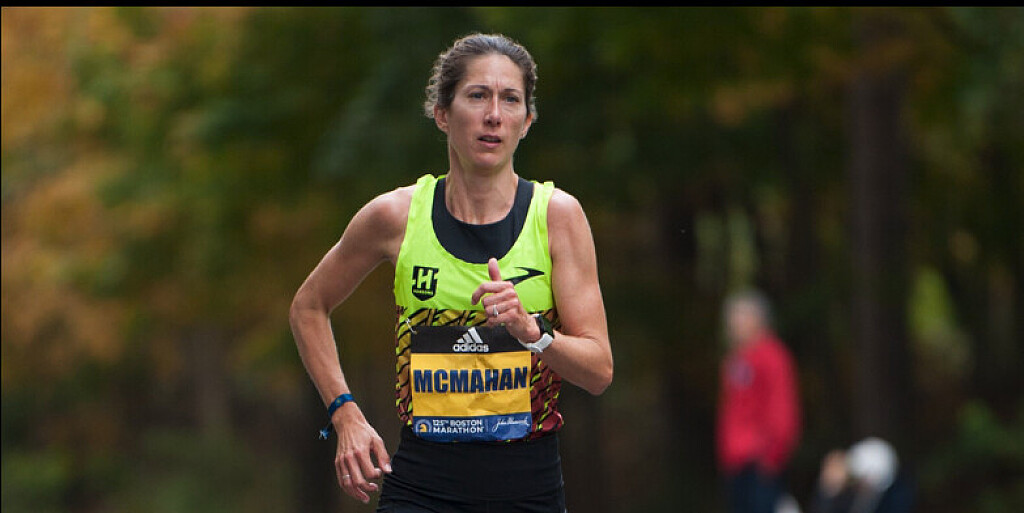
47-Year-Old Marathoner to Run Fifth Olympic Trials
Dot McMahan qualified with a 2:35:20 at Grandma’s Marathon, averaging 5:56 per mile pace.
In the closing miles of the 2023 Grandma’s Marathon, last June in Duluth, Minnesota, Dot McMahan struggled to calculate how close she was to the Olympic Marathon Trials standard.
“I was just trying to run under 2:37, but you know, math, when you’re running a marathon, isn’t always so good,” she said.
McMahan was more than fine. In her 20th marathon, she ran 2:35:20, smashing the standard and qualifying for her fifth Olympic Marathon Trials.
Her coach, Kevin Hanson, of Hansons-Brooks Distance Project, was ecstatic. And so was her husband, Tim, and their 14-year-old daughter, El, who is also a runner. El told her mom when they FaceTimed after the race that she had run her fastest time since turning 40. “She knew all my stats,” McMahan said. “She was over the moon.”
McMahan, 47, and Des Linden, 40, are thought to be the only female athletes in the field running a fifth marathon trials. McMahan is the oldest women’s qualifier. On the men’s side, Fernando Cabada, 41, has qualified for five marathon trials and is entered in the race. Abdi Abdirahman, a five-time Olympian, is also 47, the oldest in the men’s field.
It was never a given that McMahan would make a fifth trials, especially after USA Track & Field announced in late 2021 the tougher entry standards for the 2024 race. For the 2020 race, held in Atlanta, women had to run 2:45 to make the Trials. This time around, they had to be 8 minutes faster.
“I was very supportive of the fact that they needed to make it quicker, for the women, at least,” she said. “It kind of loses its luster if we make it too easy. That said, I think it was a little harder than I [predicted], which was maybe 2:40, 2:39. So 2:37 was like, woah, okay, we’ve got a real goal here. I never assumed that was going to be a walk in the park.”
McMahan, who was eighth at the Trials in 2008 and ninth in 2012, knows she’s unlikely to finish that close to the front again, unless something unexpected happens in Orlando. While her teammates have moved to Orlando for the month to prepare for potential heat and humidity, McMahan is still training in Rochester Hills, Michigan, where she works as an assistant track coach at nearby Oakland University and has a pet sitting business. (She’s also an online coach with McKirdy Trained.)
And she wants to be home with her family. McMahan’s only warm weather preparations at the moment are the occasional treadmill run. “It’s in a space that we can enclose a little more and turn the heat up,” she said. But simulating humidity “gets a little tricky. You don’t want to grow a bunch of mold in your house.”
That’s typical of the practicality McMahan brings to her training. Her longevity, she says, is a function of doing most of the same hard work she’s always done. She’ll reach 105–110 miles per week at her peak training for a marathon, and she’ll double three or four days per week. She used to run 120.
“I’ve tapered back a little bit, but I’m still doing the majority of it,” she said of the Hansons-Brooks training. “That’s what it takes.” On January 14, McMahan ran the Houston Half Marathon as a tuneup and finished in 1:16:02, averaging 5:48 pace. She was very happy with the result.
Hanson said he and McMahan frequently joke that she’s old enough to be the mother to some of the athletes on the team who are fresh out of college. But he notes McMahan’s durability. She has avoided serious injuries. “That’s what becomes career-ending in your 40s,” he said. “In your late 40s, any injury that sets you back sometimes ends things, because it’s just to hard to get back into it.”
McMahan is practical about other matters, too.
For one, she refuses to dye her hair. “I do have a considerable amount of gray hair,” she said. “I’m not doing anything about it; I’m just going to let it come in.” Plus, she said, her husband has gray hair. They’d look silly together if she dyed her hair and he didn’t. “We’re aging,” she said. “It’s just life.”
She devotes about an hour to getting ready for her morning runs—warming up, doing mobility exercises, and “making sure things are firing.”
When her pace slows on afternoon recovery runs, she doesn’t dwell on it. On December 26, she did a hard 20-miler. The next day, she was tired, and she had 10 miles in the morning, and 4 miles in the afternoon on the schedule. She did those runs, but she ran them slowly—for her.
“I think in the past, I would have beat myself up mentally looking at my watch and being like, ‘You’re running 8-minute pace; this is so ridiculous,’” she said.
Now, she thinks: Are you happy? Are you healthy? Does anything hurt? This is what recovery pace is for you. “I listen to my body, and I don’t get upset thinking it should be a certain pace,” she said. “That’s my concession to age.”
by Runner’s World
Login to leave a comment
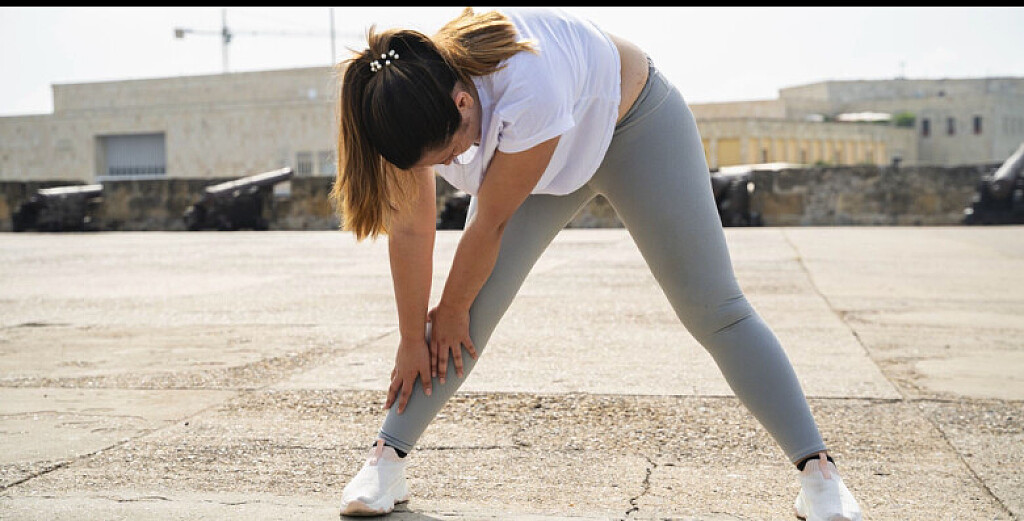
Why Do I Get So Itchy When I Run?
Here’s what experts say about the causes of that uncomfortable, tingling sensation and how to cope with it.
As a runner, you try to prepare for everything: You have a waterproof jacket for that 60 percent chance of rain, anti-blister socks, and a supply of gel packs for Saturday long runs. However, something that you may be less prepared for is relentless itching and tingling.
Known as “runner’s itch,” this sensation makes hitting the road uncomfortable for many runners, especially those just starting out or getting back into a running routine.
“Runner’s itch wasn’t something that was particularly researched and documented before the 1950s, but it’s been consistently described in literature in some way since about the 70s,” says Braden Romer, Ph.D., an associate professor of exercise science at High Point University in High Point, North Carolina. “We’ve seen the prevalence go up as there are more individuals taking part in physical activity. I run into it quite often when dealing with athletes.”
If you want to run more but can’t stand the urge to stop and scratch, here’s what to know about runner’s itch and how to soothe it.
What causes runner’s itch?
The causes of runner’s itch may range from minor inconveniences to more serious health conditions. Although more research is needed to fully understand what triggers this sensation, here are five potential causes.
1. Dry or Irritated Skin
Both humidity and dryness in the air can lead to runner’s itch.
“If you sweat a lot or if it’s very humid or raining, and your clothes get wet, you run the risk of skin irritation or itchiness,” says Melissa Kendter, C.P.T., a Philadelphia-based United Endurance Sports Coaching Academy (UESCA) running coach.
Meanwhile, another common cause is dry air and dry skin. Friction from running can exacerbate this and cause unpleasant itching.
“Some research has suggested hydration is a factor as well,” says Romer. “If you’re not drinking enough water, your skin gets dry and itches. When you begin to workout, especially with workout clothes, that may trigger an effect as well.”
Running can also exacerbate eczema, a group of inflammatory skin conditions that lead to issues like itchiness and dry skin.
“If you’re prone to eczema, exercise might make it worse,” says Minneapolis-based William Roberts, M.D. chief medical officer of the American College of Sports Medicine and former director of the sports medicine program at the University of Minnesota Medical School. “If you notice a skin rash, talk to your doctor.”
2. Histamine Release
A predominant theory behind runner’s itch is a histamine release at the onset of exercise, says Romer. Aerobic or endurance exercise can generate a localized anaphylactic reaction within the exercised muscle tissue, which causes histamine release, per a 2017 study in Exercise and Sport Sciences Reviews.
“There’s some research to suggest that the itching may be related to histamine release at the onset of exercise, particularly in high-intensity exercise,” Romer explains. “If somebody hasn’t been working out or running, or they haven’t warmed up and jump right into a high-intensity workout, that may be triggering a greater histamine release from within the muscle cells.”
This histamine release, in turn, could cause that uncomfortable and itchy feeling.
2. Blood Vessel Expansion
When you run, blood flow increases to your tissues, causing vasodilation (the widening of blood vessels). One theory is that the increased size of your capillaries causes an itching sensation.
“The capillaries start to expand, which may send a triggering response to some of the nerve fibers around that area,” says Romer. You may be more prone to this if you haven’t run for a while or are just starting out.
“This typically can happen for newer runners or ones getting back into the routine of running, because their bodies aren’t adept at this process,” says Kendter. “If your fitness routine has been put on the back burner for some time, you have a higher risk.”
However, this theory does have its skeptics. Romer adds that there are multiple pathways that have been proposed for runner’s itch and the symptom is not well understood. This was evident even in the differing opinions among the experts we spoke to—Roberts, for instance, has doubts that vasodilation could cause itching.
The bottom line: Though runner’s itch could potentially be related to blood flow, more research is needed to fully understand the mechanisms behind this process.
4. Exercise-Induced Urticaria
In more rare cases, allergic responses to exercise can cause severe symptoms. Exercise-induced urticaria is a rare clinical condition that causes flushing, itchiness, and hives after a workout, per a March 2022 single case study in Cureus. A minority of patients can even develop anaphylaxis, which is a severe, life-threatening allergic reaction.
“Exercise-induced anaphylaxis can cause a fast heart rate and potentially the swelling of the throat and blocking of the airways,” says Roberts.
About 30 to 50 percent of exercise-induced anaphylaxis is food dependent, meaning it only occurs with the combination of a specific food and exercise, per another single case study, published in 2017 in Canadian Family Physician.
Many different types of food have been found to have a triggering effect, including wheat, shellfish, nuts, tomatoes, peanuts, fish, pork, beef, mushrooms, hazelnuts, eggs, peaches, apples, milk, and alcohol.
If you suspect you’re experiencing urticaria, it’s important to see your physician to start a treatment program. This could include taking antihistamines before you run and carrying an EpiPen with you. If you do experience allergic reactions, it’s best to run with a buddy who knows how to help if you have a reaction.
People with severe cases of exercise-induced urticaria may need to avoid certain types of exercise and foods (or, rarely, exercise altogether).
5. Cholinergic Urticaria
Another condition that could be the cause of itching is cholinergic urticaria, which is characterized by itching and/or a stinging pain, redness, and bumps.
Think of this as a heat-triggered reaction: Symptoms develop after an increased body temperature has been stimulated repeatedly, such as through exercise, per a 2023 review in the American Journal of Clinical Dermatology.
“This is also pretty rare,” says Roberts. “It’s a response to the skin warming that occurs with running.”
Cholinergic urticaria is often associated with serious symptoms like anaphylaxis and severe pain. This condition comes on very quickly and may also involve an antihistamine treatment plan. Your doctor may conduct testing to confirm that you’re experiencing cholinergic urticaria, which may involve raising the body temperature through exercise on a treadmill or stationary bike.
Who’s most prone to runner’s itch?
When it comes to everyday runner’s itch that’s not related to a more serious medical condition like exercise-induced urticaria or cholinergic urticaria, runners who are just starting out or who haven’t exercised in a while may be more likely to experience it.
“I’ve seen this with athletes who have taken time off,” says Romer. “My wife also struggles with runner’s itch quite a bit. If she takes some time off from high-intensity runs for a bit, especially in the winter, it really gets after her for the first few workouts.”
If the itching is due to dry skin, factors like age, climate (think desert-like climates with low humidity or cold climates with heavy wind), genetics, or health conditions like eczema or diabetes can play a role, per the Cleveland Clinic. You may also experience more dry, itchy skin during the winter or if you’re not drinking enough water.
How can you sooth runner’s itch?
For many people, runner’s itch will fade away with regular exercise, unless it’s a symptom of a more serious condition. “It generally subsides relatively quickly after several workout sessions or modifying hydration intake,” says Romer.
You can also aim to soothe runner’s itch by properly easing into your run.“Do a good warmup so your body has a gradual increase in temperature and the blood gets flowing to the muscles in advance, rather than a rapid increase,” says Kendter.
Try to keep running throughout the year: Although the first couple of weeks may feel uncomfortable, if you stay consistent and allow your body to adapt to your routine, you’re less likely to experience the itch.
Staying properly hydrated and using a moisturizer to soothe dry skin can also help. Roberts recommends moisturizing creams like Vanicream, which is available over the counter.
All of this said, talk to your doctor if runner’s itch continues for you or if symptoms are severe—say, it’s accompanied by rash or hives, is extremely painful, or continues/worsens over time.
“If it becomes a chronic response, where you’re not seeing a diminished response even if you’ve been able to regularly exercise, see a physician,” says Romer.
by Runner's World
Login to leave a comment
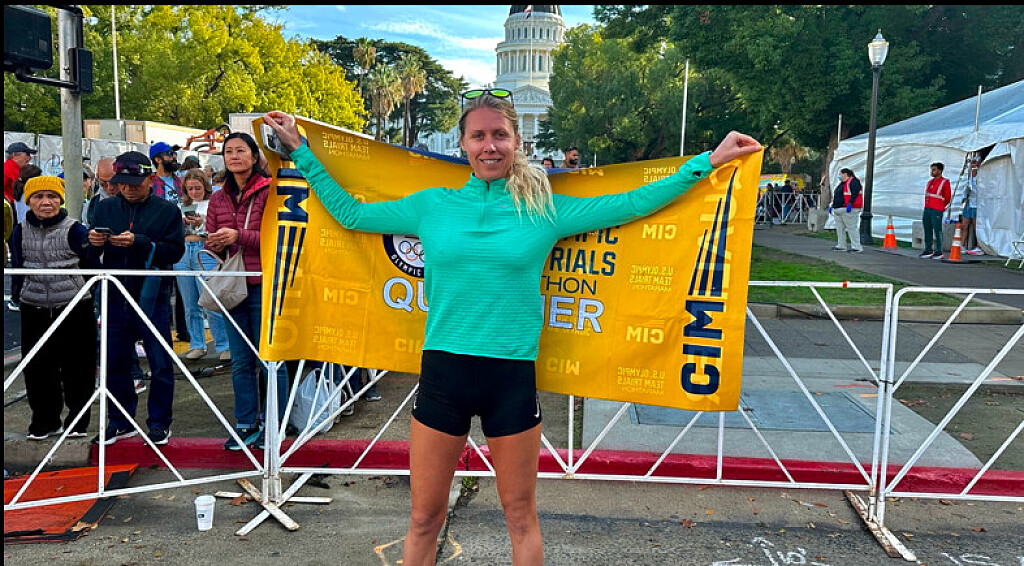
A Marathon Where Victory Isn’t Reserved for the Winners
CJ Albertson and Grace Kahura-Malang won the California International Marathon while dozens more fulfilled lifelong dreams to qualify for the U.S. Olympic Trials in their last chance
If there’s one race where the adage ‘To the victor go the spoils” does not ring entirely true, it’s the California International Marathon (CIM). The commanding wins of CJ Albertson and Grace Kahura-Malang were certainly deserving of celebration. But they shared in the sweet taste of victory with dozens more high-level runners on last Sunday morning.
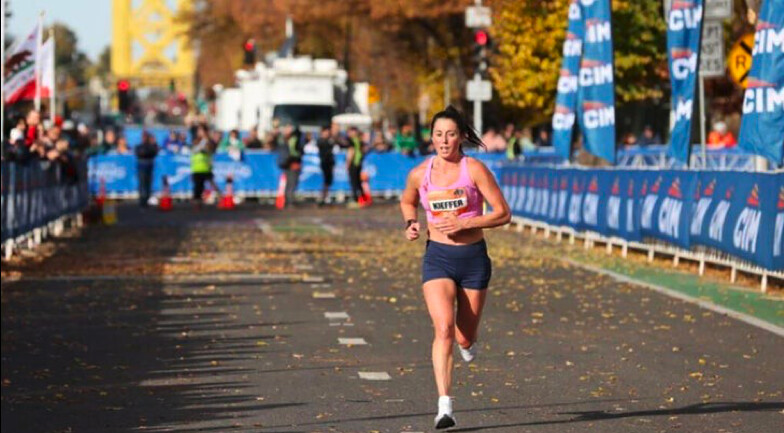
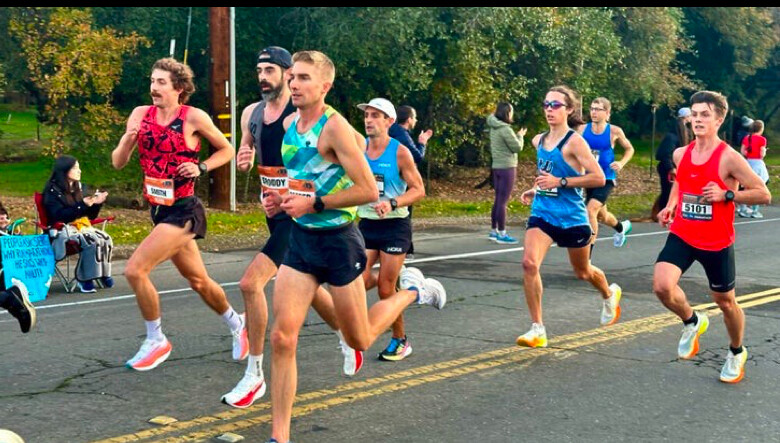
For several minutes after Albertson stormed from behind to take the men’s race in 2:11:09 and Kahura broke the tape in the women’s race with a personal best of 2:29:00, the finish line exhilaration continued to build as numerous runners sprinted their way to the finish line on M Street, adjacent to the California Capitol Mall in downtown Sacramento.
That’s because the winning prizes extended far beyond the $10,000 to something money can’t buy. American runners who could get to the finish line in time earned a qualifying berth for the 2024 U.S. Olympic Trials Marathon on February 3 in Orlando, Florida. That event will determine the six U.S. runners who will compete in next summer’s Paris Olympics, but it’s also a quadrennial benchmark of domestic distance running excellence, and the chance to run in it—especially for those who have no chance at making the Olympic team—is a badge of honor that lasts a lifetime.
Sunday’s CIM was the last opportunity to grab that proverbial brass ring, and as the time ticked down to the cutoffs—2:18 for men and 2:37 for women—41 runners realized dreams that had been several years in the making. That’s a considerably smaller number than the 109 runners who qualified four years ago, but the Olympic Trials are four weeks earlier this time around and many runners opted for earlier races.
To reach the lofty Olympic Trials qualifying (OTQ) standards, many runners had to face their inner demons as they accepted the physical, mental, and emotional challenge of running 26.2 miles faster than they ever have.
“It was very hard-fought,” said Mary Denholm, a Colorado runner who lowered her personal best by more than four and half minutes to finish in 2:36:28 and earned the OTQ time. “During the race, I tried to think as little as possible, but you know those little negative thoughts creep in. I kept saying to myself, Well, you’d be happy with a 2:37 or a 2:38, which is true, but I had to not allow myself to accept that and slow down. Marathoning is so hard. It’s a process. You really have to love the journey.”
Celebrating its 40th year, CIM has developed a reputation as one of the best domestic races for elite and age-group runners seeking personal best efforts, whether that’s chasing an OTQ or Boston Marathon-qualifying time. The race’s point-to-point, net-downhill 26.2-mile course from Folsom to Sacramento amid Northern California’s typically favorably cool, dry early December weather is ideal for running fast for any of the 10,000 participants. But what makes fast times more likely is the communal effort of the large packs of runners at nearly every pace group.
With the Trials-qualifying deadline of December 5 looming, about 200 American runners lined up at CIM to specifically chase the 2024 OTQ marks. While a few have been training with the aid of sponsorships or trying to become professional runners, the majority were amateur runners who work full-time jobs.
For some—like first-time marathoners and twenty-somethings Charlie Sweeney, Christian Allen, Ava Nuttall, and Abbie McNulty—it was the initial opportunity to meet the mark. But it wasn’t the first rodeo for many others who were back after coming up short in previous years, including thirty-somethings Denholm, Noah Droddy, Allie Kiefer, and Chad Beyer. For some who are slowing with age, or on the verge of hanging up their racing shoes for bigger career pursuits, CIM might have been the final shot of their competitive running careers.
In the moments before the race in Folsom, the nervous energy of every elite runner was palpable as they did their final pre-race strides and stretches, each one carrying with them their own long backstory that brought them to the brink of their dreams. After a brief moment of calm on the starting line, the gun went off and the enticing challenge began.
“This was my shot,” said Droddy, a 33-year-old Salomon-sponsored pro from Boulder, Colorado, who had a breakthrough 2:09:09 runner-up performance at The Marathon Project in 2020 but, because of a variety of injuries, hadn’t finished a marathon since. “I qualified on the last day in 2016, and so this was another full-circle moment to try to do it on the last day again.”
For the next two-plus hours, every runner locked into the silent rhythm of their race pace—each with their own goal in mind—holding onto the cadence of the random runners nearby. This is all the while knowing that consistent effort would gradually transition from being smooth and tolerable to eventually becoming extremely difficult by the later miles of the race.
Allen, a marathon rookie from Salt Lake City eager to make his mark, boldly opted to run off the front from the start with New Zealand’s Matt Baxter and Kenyan Milton Rotich, while Albertson, a Fresno-based runner who has been one of the most consistent elite-level marathoners in the U.S. for the past several years, looked calm and content as he ran just off the lead near the front pack.
While many OTQ-seeking American women grouped together in the quest for a 2:33 to 2:37 finish, Kahura-Malang, a 30-year-old Kenyan runner who lives near Boulder, started quickly and tagged along with a much-faster group of men with hopes of breaking 2:30 for the first time.
“I really didn’t know how far I was from the other women, but I didn’t want to focus on that,” she said. “I just wanted to keep running fast.”
Achieving success in a marathon can be a fickle task—one that relies on equal parts sufficient training, optimal fueling, and mental tenacity. But the magic of an elite-level marathon, especially CIM during a pre-Olympic Trials year, can be tied to finding confidence running amid the collective rhythm of a pack of like-minded runners, at least until things get difficult at the crux of the race somewhere near mile 20.
Maintaining race pace and grinding through the final miles is something every runner experiences, each one to varying success. That’s where inspirational mantras, acknowledging motivational words written on an arm, or a variety of other mental tricks come into play.
“We had a great group for a while, and then about 20 miles, it started to thin out,” said Jacob Shiohira, 27, from Bentonville, Arkansas. He sliced seven minutes off his personal best with his 13th-place, 2:16:34 finish to make the OTQ cut. “The last three miles turned into a grind, but everyone’s in the same boat, and that’s what makes it special.”
The 26-year-old Allen, fresh off finishing an All-American track and cross country collegiate career at Brigham Young University, spent the summer racing shorter distances on roads and trails. He stuck with his gutsy strategy to lead the race until his legs began to tighten up at the 23-mile mark. Albertson had let Allen and Rotich get ahead of him on a few of the later hills in the race but patiently stayed within himself and seized the lead late in the race to open up a two-minute advantage before the finish.
Rotich finished two minutes after Albertson in 2:13:04 for second, followed by Charlie Sweeney, a 24-year-old runner from Boulder, who completed a stunning debut marathon with a third-place, 2:13:41 finish to earn the Olympic Trials-qualifying standard. After that, Baxter, a Kiwi runner who runs for NAZ Elite, put down a new personal best of 2:14:08, followed by Eritrea’s Amanuel Mesel (2:14:11). From there, Robert Miranda (2:14:43), Jerod Broadbooks (2:14:58) and Allen (2:15:01) led a parade of 27 American men who celebrated securing their OTQ times.
Droddy made it too, finishing 17th in 2:16:56, to earn one of the celebratory golden OTQ flags CIM handed out to each of the qualifiers.
“I didn’t care about the time at all, just as long as it was under 2:18,” said Droddy, who also qualified in 2016 and 2020. “I was just happy to get it done. It means a lot because now I know I can join my teammates at the Olympic Trials.”
More than four minutes after Kahura-Malang ran away with the women’s title, Kiefer (2:33:26) led the charge of a long string of American women who cruised in under the OTQ cutoff. Once a top American runner, the 36-year-old from Austin, Texas, hadn’t finished a marathon since she placed seventh in New York in 2018. Like a lot of runners, she’s been through a lot of challenges in recent years, including injuries, races she’s dropped out of (including the 2020 U.S. Olympic Trials in Atlanta), relocating to new cities, changing coaches, and general motivation.
“I’m back to the basics of having fun with it,” Kiefer said. “There’s no pressure right now. I just wanted to have a good experience, and it was a great experience. It feels validating to get back to the Trials. It’s just nice to go out there and do the part you love.”
Nuttall, 22, was perhaps one of the positive surprises of the day. A senior at Miami University in Ohio, where she was the top cross country runner for the Redhawks this fall, she finished her debut marathon in third place in 2:35:09. After that it was Kaylee Flanagan, 28 who earned her first OTQ with a strong 2:35:24 effort to join her older sister and Asics pro Lindsay Flanagan in Orlando. After that it was professional trail runners Rachel Drake (2:35:28) and Peyton Thomas (2:35:42), who finished fifth, and sixth, respectively. (Drake is also the mother to 14-month-old son, Lewis.)
Nine more women earned the OTQ time—14 total—including Denholm, who finished 13th in 2:36:28.
But amid the joy of dreams coming true, there was also the heartbreak of near-misses. Tammy Hsieh sprinted to the finish just in the nick of time, crossing in exactly 2:37:00 to make the women’s cut, but moments later Gina Rouse (2:37:10) and Jennifer Sandoval (2:37:11) narrowly missed it and went home disappointed.
On the men’s side, Duriel Hardy dashed across the line in 2:17:56 to become the final men’s OTQ’er, but then Alexander Helmuth came across the line two seconds too late in 2:18:02.
After a record 511 women qualified for the 2020 U.S. Olympic Trials Marathon in Atlanta—nearly double the number of male qualifiers—the women’s standard was lowered by eight minutes, down from 2:45 to 2:37. The new mark equates to a hefty 18 seconds per mile faster, down from 6:18 minute mile pace to 6 minutes flat. Denholm, who qualified in 2020 with a 2:42:02 effort at the 2019 CIM, was one of hundreds of women who spent the past several years trying to make that big leap.
After running a personal best of 2:40:59 at the 2022 Boston Marathon, Denholm hoped to continue her progression and earn her qualifying time months ago. But the marathon is a fickle event because training never goes perfectly and something—injuries, work, life—always gets in the way. And sometimes everything goes right and it’s just not your day on race day.
After dealing with a torn labrum and then going through a divorce, career changes, and a move from California to Colorado, the 36-year-old running coach targeted last summer’s Grandma’s Marathon in Duluth, Minnesota—another domestic race on par with CIM when it comes to providing a competitive platform for elite and sub-elite runners to excel.
But despite a good training block, Denholm struggled in that race and finished in 2:43:19. After that, she refocused her training with the help of coach and three-time OTQer Neely Gracey and set her sights on the September 24 Berlin Marathon, only to come down with COVID after she arrived in Germany. Not wanting to give up, she retooled her training one more time and registered for CIM as a last-ditch effort.
She was on 2:36 pace the entire way, running near-identical 13.1-mile splits of 1:18:17 and 1:18:11, but needed the encouragement of friend, Sofie Schunk, to get her through the final miles. Schunk, 31, of Albuquerque, finished six seconds ahead of her in 2:36:22.
“I went to a really dark place out there and had to fight through that,” she said. “It was awesome to have other women out there to go for it with and encourage along the way. I split some of my faster miles near the end, and I’ve never been able to do that, so that was a huge victory for me. I hope this can be encouraging to other women because I really think everyone is limitless. I’ve just worked really hard to get where I am and I just want others to feel encouraged.”
by Outside Online
Login to leave a comment
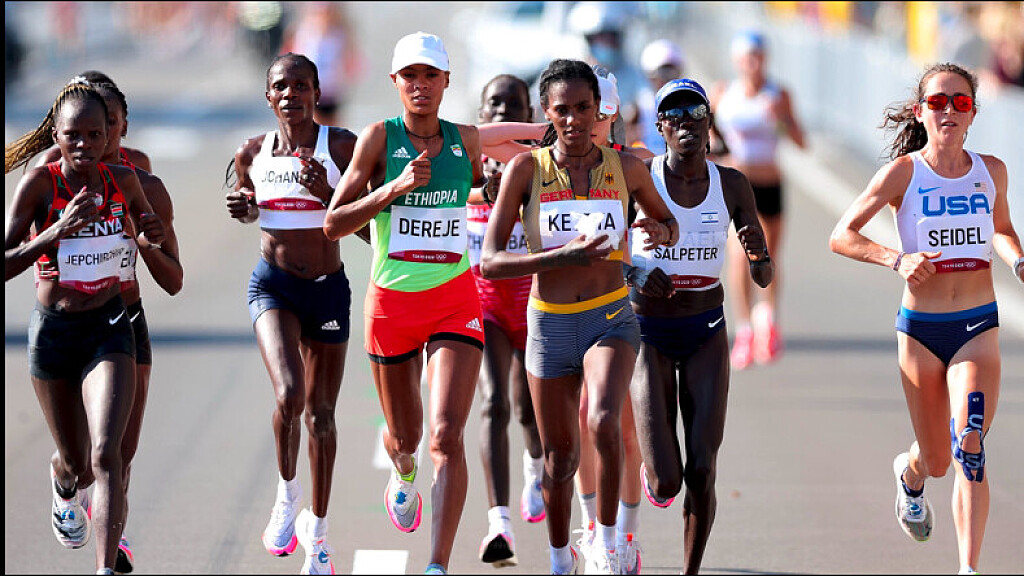
VO2 Max Just Turned 100. Here’s What It Means.
Over the past century, “maximal oxygen uptake” has turned out to be a valuable marker of both endurance and health.No tidbit of physiological jargon has achieved more popular renown than VO2 max, also known as maximal oxygen uptake. And, for the past century, none has been so consistently misunderstood. A new commentary in the International Journal of Sports Physiology and Performance, led by Grégoire Millet of the University of Lausanne, marks the 100th anniversary of the landmark paper by A. V. Hill and Hartley Lupton that first described VO2 max. It’s a big milestone, and it offers a good excuse to take a closer look at what VO2 max really means and why it (sometimes) matters.
A.V. Hill was a 4:45 miler and already had a Nobel Prize for work in muscle physiology when he and Lupton began studying VO2 max. The experiments involved subjects running around Hill’s back garden in Manchester with air bags strapped to their back to measure how much oxygen they used. The faster they ran, the more oxygen they needed—but only up to a certain point. Eventually, oxygen consumption plateaued, even as they continued to accelerate.
Beyond this plateau—what’s now known as VO2 max, indicating the maximum volume per unit time of oxygen (O2)—they had to rely on anaerobic energy pathways, going into what Hill called “oxygen debt.” This debt couldn’t be sustained for long thanks to rising lactic acid, which meant that VO2 max effectively marked the limits of sustainable effort. In other words, VO2 max was an objective measure of endurance.
The current understanding of exercise metabolism has evolved in a few respects since Hill’s time. Physiologists no longer talk about oxygen debt, and lactate (not lactic acid) is considered a marker of fatigue but not its direct cause. But the basic idea remains the same: there’s a limit to the rate at which your body can take in and use oxygen, and having a higher limit augurs well for both performance and health.
The initial understanding of VO2 max was that it was a measure of cardiovascular function, limited primarily by how rapidly your heart could pump oxygen-rich blood to your muscles. For elite endurance athletes, that’s still a pretty good approximation: aerobic monsters are distinguished primarily by a large and compliant heart that can pump huge volumes of blood with each stroke.
But over time, researchers realized that the limits of oxygen uptake are best thought of as a cascade with numerous steps. You have to inhale oxygen into your lungs, diffuse it into your bloodstream, pump it to your muscles, diffuse it into your muscles, and then your mitochondria have to use it to generate ATP. Each of those steps can become a limiting bottleneck in certain conditions, so there isn’t one single path to altering VO2 max.
There are two ways of quantifying your VO2 max. The absolute value is expressed in liters of oxygen per minute: a well-trained endurance athlete, for example, might be able to consume 5 L/min of oxygen. The relative value, which is the more commonly discussed number, is simply the absolute value divided by your weight in kilograms. If that same endurance athlete weighed 70 kilograms, their relative VO2 max would be 71 ml/min/kg.
The standard method of measuring VO2 max, originally developed as an offshoot of the infamous Minnesota Starvation Study during World War II, is a treadmill test (or the equivalent with some other form of exercise like a stationary bike), lasting six to 12 minutes and getting progressively harder in stages until you max out. But what does it mean to max out? There are various criteria: oxygen consumption reaching a plateau, heart rate reaching a plateau, lactate levels exceeding 8.0 mmol/L, perceived exertion greater than 17 on a scale of 6 to 20, respiratory exchange ratio (a comparison of much carbon dioxide you exhale compared to how much oxygen you’re consuming) of greater than 1.1.
The reason for all these criteria is that the idealized picture of a steady increase in oxygen consumption followed by a plateau often doesn’t show up in real life. And even when it does, it’s not an invariant number: your VO2 max when kayaking will be smaller than when you’re running, for example, because you’re using smaller muscles that can’t gobble up as much oxygen. (That’s why rowers tend to have some of the highest absolute VO2 max values, because they’re huge and they’re using both arm and leg muscles. Cross-country skiers have some of the highest relative values, because they’re also using arms and legs but are generally much lighter than rowers.)
There are even a few studies that have found different VO2 max values depending on the details of the treadmill protocol. How can it be the ultimate objective measure of endurance if its value depends on how you test it? Is the apparent plateau just your brain deciding that you’ve had enough and should step off the treadmill? These and other controversies persist. My take: the VO2 max plateau is real and dictated by physiology, but it’s not as clear-cut a threshold as once thought.
If you tested all the runners on the start line of an Olympic distance race, their VO2 max values wouldn’t tell you much about how they’d place. They all have high values, and the race won’t necessarily be won by the runner with the highest value. Eliud Kipchoge, for example, reportedly has a relatively unexceptional value for an elite marathoner. In that sense, VO2 max isn’t a great predictor of running performance. And the cyclist with the highest ever reported VO2 max, Oskar Svendsen, didn’t end up setting the world alight, as I recounted a few years ago.
On the other hand, if I had to predict the race finishing order of 100 people randomly picked from the street, and I was allowed one physiological test, I’d opt for VO2 max. In that diverse population, VO2 max values would be all over the map, and those with the highest values would likely finish at or near the front. So in that sense, VO2 max is a great predictor. To put it another way, a high VO2 max is a necessary but not sufficient condition for endurance success. It’s your ticket into the game.
You could argue that VO2 max has greater value as a predictor of health and longevity than of athletic success. While the relationship between exercise habits and longevity remains a little hazy, with some people arguing that too much is bad for you, the link between VO2 max and longevity is unambiguous: higher is better. In fact, the American Heart Association has argued the VO2 max should be considered a “vital sign” and be regularly measured or estimated by doctors.
Back in the 1990s, the Heritage Family Study trained about 500 people from 100 different families for 20 weeks. On average, they were able to boost their VO2 max by about 20 percent. But they saw a wide range in responses: some people saw more than twice as big an increase, while others basically didn’t increase at all. And that variation seemed to cluster within families. The researchers estimated that about half the VO2 max training response was dictated by genetics.
The idea that some people don’t improve their VO2 max at all even with regular training remains controversial. A few different studies have taken aim at this idea, and shown that if you take non-responders from a study and have them either train more or train harder, everyone will eventually respond. Still, it’s clear that some people can increase their VO2 max more easily than others.
Trained athletes eventually hit a point of diminishing returns, although long-term structural adaptations like the size of your heart and the density of capillaries distributing blood can continue to improve. A meta-analysis a decade ago found that interval training can produce substantial improvements, with the biggest bang from intervals lasting three to five minutes per rep. The highest recorded values tend to be around 90 ml/kg/min in men and 80 ml/kg/min in women, with the sex differences attributable to higher body fat and lower hemoglobin levels in women.
As important as increasing your VO2 max is, the bigger challenge for many of us is slowing its decline. After age 25, it typically drops about ten percent a decade. According to a recent analysis, athletes who keep training can slow that decline to about 5 percent a decade, but those who fall off the wagon might see even steeper declines.
Overall, Millet and his colleagues conclude that VO2 max is “a healthy and active centenarian” that remains important in both endurance sports and as a measure of cardiovascular health. It’s not the ultimate barometer of fitness, but neither is it a meaningless detail. If you get a chance to have yours tested, for example by volunteering for a study at a local university, I highly recommend it. It can be fun to learn about your own physiology—and, during the final stage of the test where you keep pushing until you’re on the verge of being thrown off the back of the treadmill, your psychology.
by Outside Online
Login to leave a comment
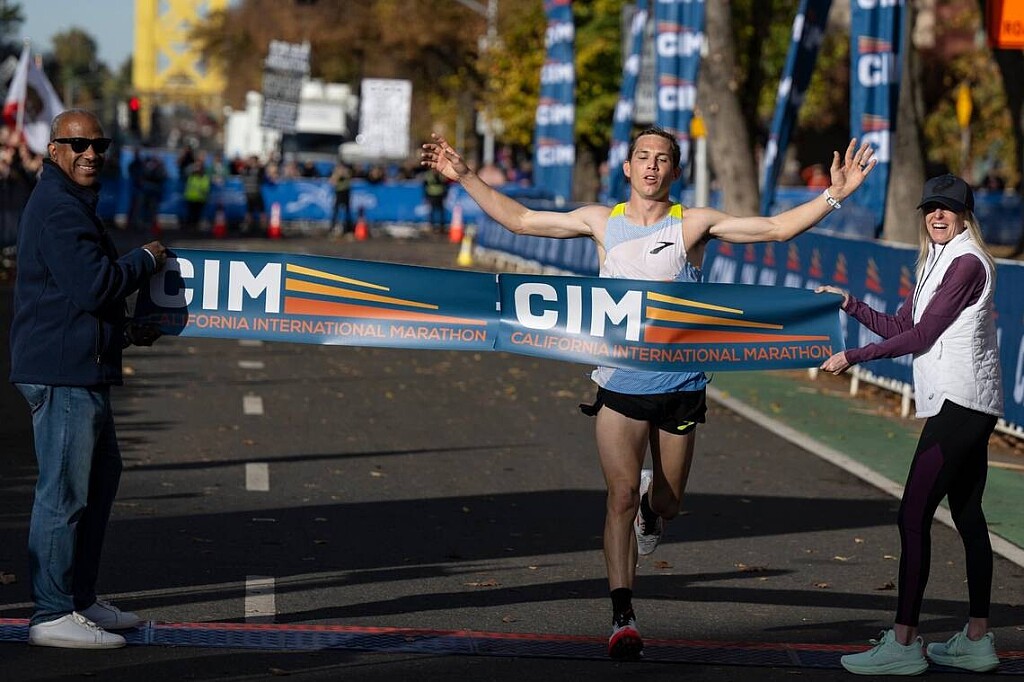
Fresno Kid CJ Albertson rallies to take California International Marathon title in Sacramento
CJ Albertson of Fresno came from behind and Kenyan runner Grace Kahura logged a personal best, each defeating a deep, fast field Sunday to win the 40th annual California International Marathon in Sacramento. The course, unchanged in its 40-year history, a Boston Marathon and U.S. Olympic Trials qualifier dubbed by marathon watchers as the fastest in the West, did not disappoint.
More than 9,600 runners took to the 26-mile downhill course from Folsom to the streets of downtown Sacramento on a cool, dry day under ideal conditions. But it was Fresno’s Albertson, 30, and Kahura, 30, of Longmont, Colorado, who emerged victorious.
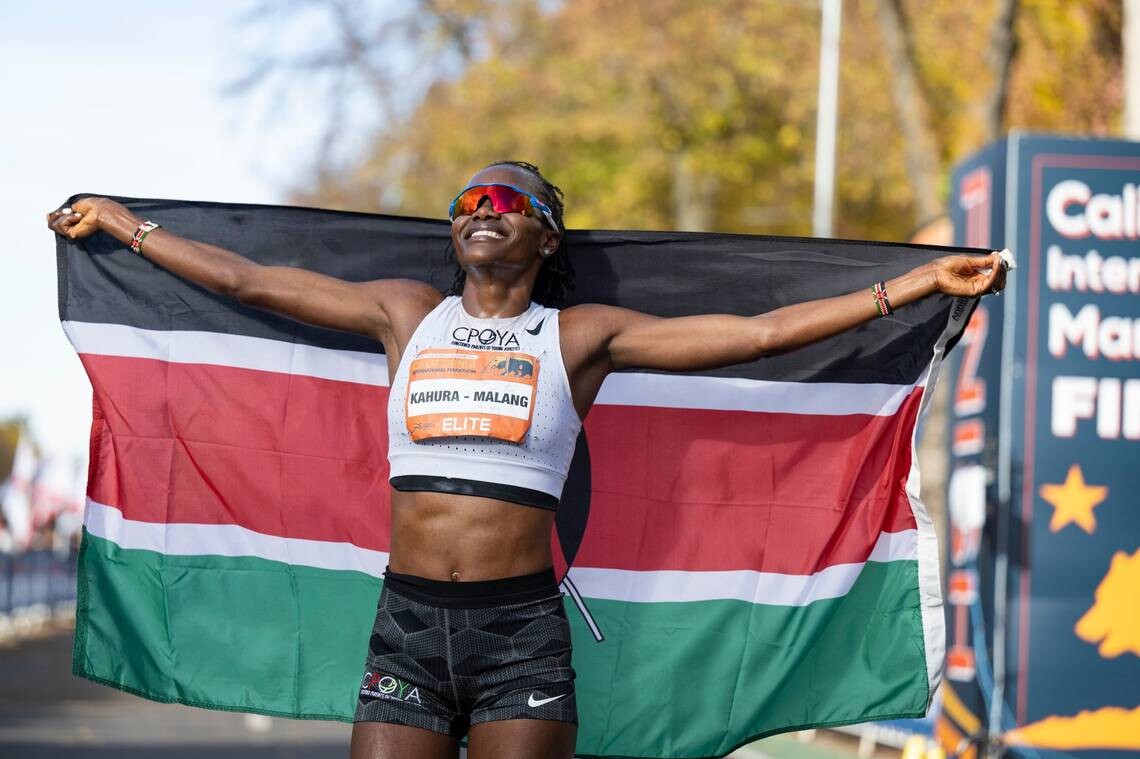
Albertson clocked in at 2:11:09, flirting with CIM course record territory; followed by Milton Rotich, of Duluth, Minnesota, at 2:13:04; and Charlie Sweeney, of Boulder, Colorado, at 2:13:41, in a near-photo finish for second and third. Kahura’s finish at 2:29 flat outpaced Austin, Texas’ Allie Kieffer’s 2:33:26 and Ava Nuttall, of Rochester, Minnesota, who finished third in 2:35:09.
The Kenyan runner’s 2:29 also beat her personal best of 2:30.14, posted in June at the Grandma’s Marathon in Duluth. Kahura’s time led a deep and fast women’s field in 2023 that featured 43 runners ahead of the 2:37 Olympic trial qualifying pace at the marathon’s halfway mark.
Kahura exulted in triumph at the finish, stretching her nation’s banner wide behind her. Albertson is among the country’s elite marathon runners. A cross-country and track standout at Arizona State University who ran seventh in the marathon at the 2020 Olympic Games in Tokyo, and set an indoor marathon world record in 2019, Albertson finished eighth at last year’s California International Marathon and was a near-miss second-place finisher in Sacramento in 2019.
Albertson lurked for miles as Christian Allen of Orem, Utah, and Amanuel Mesel, of Flagstaff, Arizona, dueled in tandem for the top spot. But Albertson made his move as the race pushed into Sacramento.
He overtook a fading Mesel for second at the 35K mark, then set his sights on the frontrunning Allen. By Mile 23, Albertson had overtaken Allen for a lead he would never relinquish.
by Darrell Smith
Login to leave a comment

California International Marathon
The California International Marathon (CIM) is a marathon organized by runners, for runners! CIM was founded in 1983 by the Sacramento Running Association (SRA), a 501(c)(3) non-profit organization. The SRA Board of Directors is comprised of runners with a combined total of 150+ years of service to the CIM. The same route SRA management created for the 1983 inaugural CIM...
more...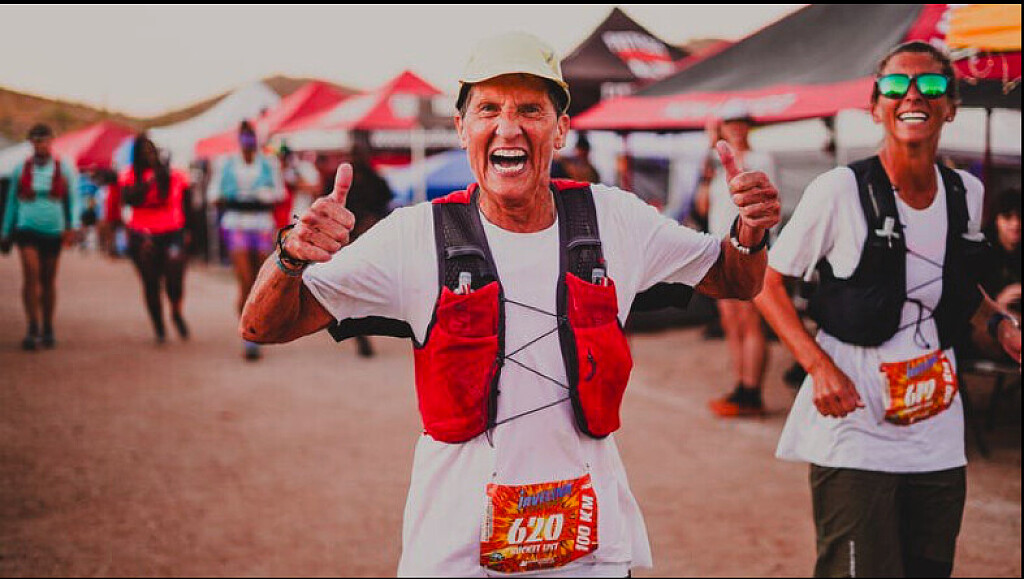
Who Is Courtney Dauwalter’s New Ultramarathon Partner? It’s Her Mom.
Here‘s how the Dauwalter duo completed a dream of crossing a finish line together
The last loop was quiet beneath the full moon. Their shuffling feet on the packed, pebble-tossed singletrack punctuated the sleeping Sonoran Desert as the duo moved through shadows of saguaro cactus and prickly pear. Millions of white pinpoints began to appear in the dark sky.
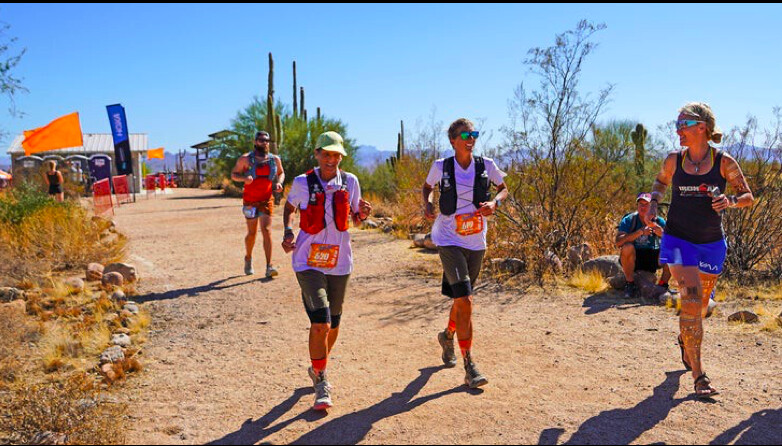
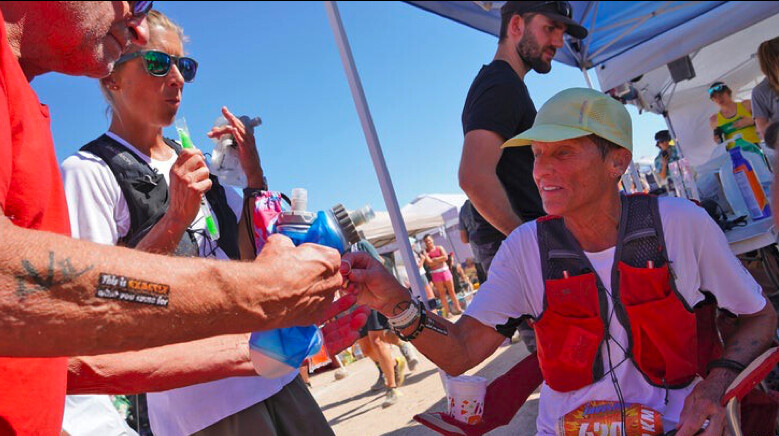
That’s when 66-year-old Tracy Dauwalter, mother of ultrarunner Courtney Dauwalter—who was coming off of historic back-to-back-to-back 100-mile wins of the 2023 Western States 100, Hardrock 100, and UTMB, including two course records—started resharing doubts with her daughter, who kindly reminded Tracy many times throughout the last 13 hours, “that’s not useful thinking, so let’s not think it.”
Occasionally, Courtney would redirect their attention, pointing out this unique section of the course that they’d been past twice before. This time, she built a 60-second container to stuff all those fears inside.
“Tell me all of your doubts and frustrations. You have one minute,” Courtney told her mom. “Once you finish, you can’t complain out loud anymore. It’s not serving us to get to this finish line.”
Tracy spewed all of her negative thoughts, from her rolling stomach to her aching muscles, which was an important reset to get out of the whirlpool of heavy thoughts. I signed up for this, Tracy humbly reminded herself. Nobody’s making me do this.
A dedicated team, the pair was running three loops side-by-side in matching long running shorts, white baggy tees, Salomon hydration vests, and cactus-themed socks, at the Halloween-themed Javelina Jundred 100K race. The ultrarunning event is held the closing weekend of October in the McDowell Mountain Regional Park, an hour northeast of Phoenix, Arizona. Temperatures can climb into the 90s by mid-morning and dip into the low 50s once daylight disappears behind the McDowell Mountain Range.
Now 38 years old and living in Leadville, Colorado, Courtney had participated in the event once before, in 2016, when she was the race’s outright winner. She set the then-course record for the 100K, one of several performances that drew national attention to her astonishing endurance and athleticism.
Tracy, who’d just recently started trail running, had covered ultra-distances at 12- and 24-hour events across flat gravel, but had never before run this far on a trail. They selected Javelina’s rolling 100K with 3,924 feet of vertical gain. The majority of the climbing is packed into the gradual ascent from the Javelina “Jeadquarters” aid station, which serves as the start and finish of the race and basecamp, to the far side of the loop, Jackass Junction.
It was exactly here, at this midway point, after slogging up the final climb over rolling hardened granite and sandy washes, where Tracy had a sticking point. Fortunately, Courtney was there to fill up her water bottles and point out all the tasty options when they reached the runner’s buffet.
“Please keep eating,” she said, as the electronic dance music bumped. A few hours earlier, they enjoyed a surprise pick-me-up of McDonald’s cheeseburgers, delivered by crew masters Dick Dauwalter, Courtney’s dad, and Kevin Schmidt, her husband. But one of the biggest highlights during the race for Tracy was watching Courtney interact and commune with so many people in the trail running community.
“Courtney does this amazing sport, but even more, I adore the person she is. It’s one of my favorite things to watch the love that’s out there for Courtney, and the way she responds. To be in that world with her was really special,” Tracy said. “She was also really kind to me, even when I was frumping and I’d fall down, she’d help pick me up.” Courtney let out a laugh.
“Mom, you only fell one time!” said Courtney, laughing.
“I know, but it was embarrassing,” Tracy said.
While Javelina was the mother-daughter’s debut trail ultra finish, side-by-side, the experience wasn’t their first race together. When Courtney was in high school, the duo finished a rollerblade marathon together in St. Paul. (Rollerblading is a major pastime in Minnesota, where Tracy grew up and still lives today.) Here, she met Dick and raised Courtney, a middle-child to two brothers.
While growing up, Tracy played softball and badminton. In college, she ran cross-country and track. “I’ve always been interested in sports and done them at a level that I could make the team. I was never a star. Being on a team is social and taxes your body while working up a sweat,” she said.
When the kids were interested in soccer, she and Dick organized an adult co-ed squad. Now, she jogs, plays volleyball, and golfs. She and Dick enjoy motorcycle tours, too, like venturing through the Elk Mountains in Colorado. “I’m not great at anything, but I can hold my own, and it’s super fun—I’m willing to do any sport,” she said. The motto was much the same for the kids.
"I thought that it would be so cool to share this sport that I love so much with this person I love so much. I knew she could do it.”
“They could try any activity. But once they committed, they had to see that season through—whether they enjoyed it or not, we were committed. We didn’t miss practices or games. We made sure those were a high priority for them and us. That drove our lives for many years with lots of fun times, but boy, that schedule was crazy—we’d slam-dunk dinner at 4 P.M. so that everybody could get to practice,” Tracy said.
An accountability mindset is one that leads to showing up in other areas of life from work to class to chores, following through on responsibilities and gritting out less desirable tasks. “When things get hard, like college classes, your option is not to quit,” Tracy said. “You dig in a little deeper, get help, and get it done, which is the same with any sport.”
But perhaps their most special ingredient is that the Dauwalters know how to have fun. “Having fun while doing those things is just as important,” Courtney said. “Our family always worked hard, but we play hard, too. All of that combined is what makes life special. Having that be deeply ingrained in who I am helps me in everyday life, but also, for sure, in ultrarunning.”
While watching Courtney grow up, Tracy noticed her daughter had a deep motivation as a person and athlete. One of her earliest memories was two-year-old Courtney, who could barely walk, repeatedly riding a Big Wheel tricycle downhill with a group of kids and insisting she’d wrestle the bike up the hill by herself. As a kid, Courtney and her siblings played soccer, often on the same teams. Later, they ran high school cross-country and track. To fill the winter months, she tried basketball, but she had a propensity to quickly foul out, taking the bench for the remainder of the game.
One day, she came home with a bright idea to Nordic ski instead, which was foreign for a family full of downhillers. They picked up the equipment, Courtney joined a competitive team, and she practiced in nearby school fields. “All she did was wipe out. All the time. Dick and I are thinking, ‘I wonder what this is going to look like?’” said Tracy.
During those foundational years, Courtney would rush home after a Nordic race to report the number of crashes she’d had. “In a 5K, I would be psyched if I only crashed nine times—tripping, planting my poles, tumbling the entire time. I was so bad,” she said.
But Tracy bought a beat-up pair of cross-country skis and started to practice alongside Courtney. “We learned together,” Tracy said. “It was more fun to crash with somebody than to crash by yourself.”
By the time Courtney graduated, she was an all-state runner and had earned All-American honors as a Nordic skier three times. She was a four-time state champion, and her team acquired two national championships. In 2003, Courtney moved west to Colorado, where she raced collegiately on the Nordic ski team at the University of Denver. Three years in, her DU team won 11 meets and the 2005 NCAA Championship.
“Courtney was really good at everything she did, and it wasn’t because she was a natural,” Tracy said. “Anytime she tried a sport, she didn’t have an immediate knack for it, but she hung in there to develop it. She was a hard worker and determined.”
Years later, in 2015, any remaining questions of physical stamina were laid aside—for both Tracy and Courtney, who proved to have a serious knack for endurance. Courtney broke the ribbon at her inaugural ultra race, the 2011 Prickly Pear 50K in San Antonio, Texas, and her curiosity about wanting to run longer continued to grow. The following year, she dropped out of the Colorado’s Run Rabbit Run 100 Mile race at mile 60 with throbbing legs, questioning her ability to cover that much ground in a single push.
Frustrated by not meeting her goal, Courtney registered for her first 24-hour race, the 2013 FANS Ultra Races, a more manageable format than an ultra on singletrack. Her family joined to crew and run laps, providing entertainment and support, including Tracy. They didn’t have much of a background in ultras and were green to any strategy.
Regardless, Courtney wrapped a total of 105 miles on that two-mile gravel loop around Lake Normandale Park in Bloomington, Minnesota, completing her first non-trail century-distance, and gaining confidence. Two months later, she crossed the finish line of the Superior Fall Trail Race 100 Miler in Lutsen, Minnesota, her first 100-mile distance on trail, and stood on the podium for second place.
Moving forward, the FANS Ultra Races became a family tradition. Courtney returned to the 2014 event, besting her first summer with 123.6 miles. Tracy decided, if she was going to crew and run laps with Courtney, she might as well sign up herself.
“She was like, ‘Heck, I’m going to spend the whole day out there anyways. Why not put some time on my feet?’” Courtney recalled.
In 2015, she tallied 109.2 miles while her mom, then 57 years old, covered 66.8 miles. Their annual pilgrimage continued in the 24- or 12-hour format, over the next several summers, coinciding with Courtney’s ultrarunning career picking up steam. She won the 2016 Run Rabbit Run 100 Mile with a 75-minute lead, and along with the title, the world’s largest ultra purse: $12,000.
By the summer of 2017, she retired from her position at the Girls Athletic Leadership School in Denver where she taught science and coached cross-country. “In an interview a few years ago,” Courtney said. “I was asked if I could run an ultramarathon with anyone in the world, who would it be? ‘My mom,’ I said. I thought that it would be so cool to share this sport that I love so much with this person I love so much. I knew she could do it.”
In an interview a few years ago, she was asked, if she could run an ultramarathon with anyone in the world, who would it be? “My mom,” she said. “I thought that it would be so cool to share this sport that I love so much with this person I love so much. I knew she could do it.”
Tracy heard the recording and, despite having never run on trails, she immediately called her daughter. “Let’s do it. I heard you want to run an ultra, so let’s sign up for something,” she said to Courtney. “If someone puts a challenge in front of me, it can even be pretty insane, and I’m a sucker for trying to rise to that challenge.” In addition to the competitive spark, the invitation felt sentimental.
Committed to doing an ultra together, they accepted that it might be a winding road to get there. The two picked the 2022 50-mile Superior Fall Trail Race in Lutsen. Mid-route, they missed the cut-off. Tracy shrugged and shook her head recounting the unfinished event. Courtney refused to let the DNF be a negative thing. “You learned so much in that first summer, mom,” she told her. “Dialing in all of those pieces helped immensely this year. And we decided, we’re not done. We still need a finish line together.”
As soon as registration opened in January, the duo signed up for the 2023 Javelina Jundred 100K. “I was nervous coming into this race because I was bouncing off of that epic fail of the first 50-miler we tried, which was a wake-up call. You have to prepare yourself,” said Tracy.
“It was not an epic fail,” Courtney countered.
That winter, Tracy clocked workouts on a treadmill. From April onward, she ran outside four or five days a week for 10 to 20 miles. Courtney researched singletrack trails around Lone Lake, which her mom became excited to explore. One of the biggest challenges of learning to run on trails is her tendency to shuffle and trip, Tracy confessed. Building confidence, she finished the Willow 20 Miler in May and Afton Trail Run 50K in July. Like her daughter, Tracy didn’t keep a close log of her mileage, and her training was not systematic.
Courtney’s advice, true and simple, rang in her mind: Spend time on your feet.
“People asked me if I coached her. Absolutely not,” Courtney said. “I did try to be helpful—harping on testing nutrition, wearing a pack so that her body gets used to one, and hiking uphills—so her race day could be much better. She was the one putting in the work and figuring out routes where she could do laps or get on hills. I admired from afar.”
“It helped that Courtney kept reminding me, ‘This was our run together, our race, and it could look however we could make it.’ If I crawled, that wouldn’t be disgusting. It got ugly, then it got not ugly,” Tracy added.
Staying lighthearted, Courtney countered, “It never got ugly. There was never a doubt that we would make it to the finish.”
Fortunately, the elation did come around. Next to her daughter, Tracy crossed the finish line of Javelina Jundred 100K in 17 hours and 38 minutes with a smile in the glowing lights, after staying up into the night running, eating, and sharing pain—but mostly, laughing—with her daughter. They’d gone full circle together, both on the circuit they’d traveled in the desert as well as in life.
“I think you beat me by, like, a half-second, mom,” Courtney said.
“I know,” Tracy bantered back. “I think I was really needing to be done, so I rushed with a half-second sprint.”
by Outside Online
Login to leave a comment
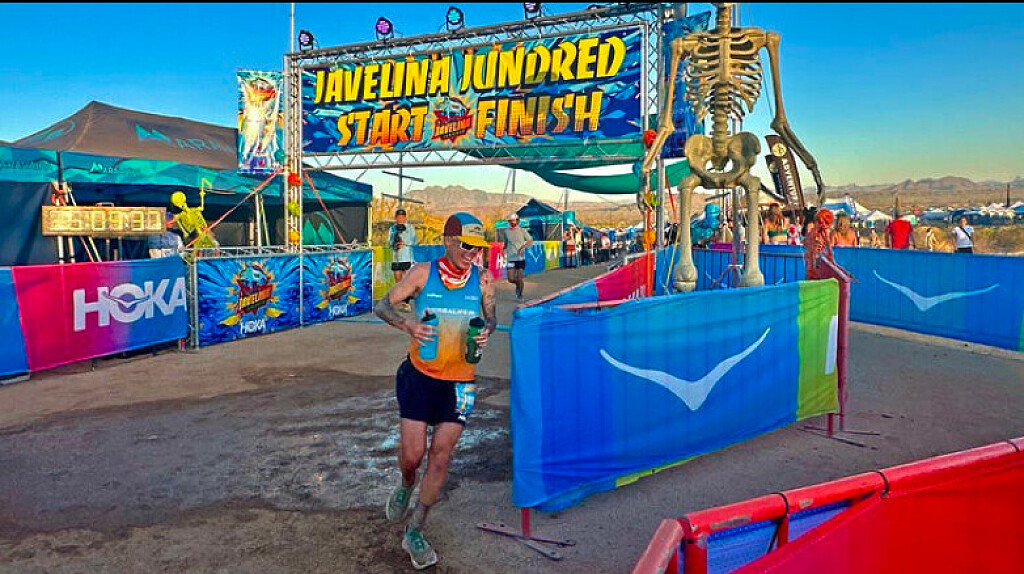
30 Hours at Javelina Jundred, the Burning Man of Trail Running
Inside the spectacle of ultrarunning’s most festive top-tier 100-mile race
It’s a hot, sunny Saturday afternoon in the desert northeast of Phoenix, and Lindsay DesRochers is being chased by a dinosaur—as if 85-degree heat, a creaky left knee, and a hot spot on her right big toe aren’t enough to worry about during her first attempt at running 100 miles.
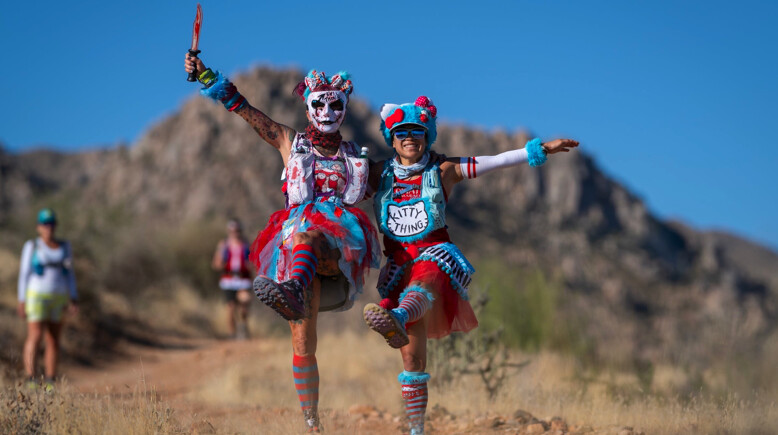
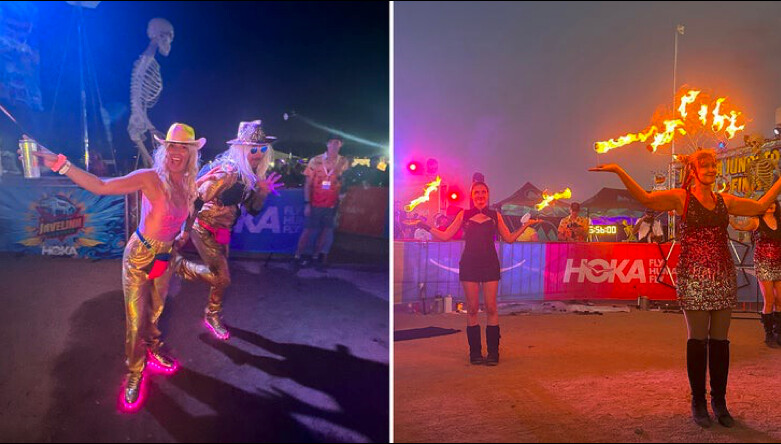
The 44-year-old senior creative recruiter from Scottsdale is 41 miles into the Javelina Jundred, and she also has to contend with a Tyrannosaurus rex who’s making her giggle. The dinosaur is, in fact, local trail running legend, Jerry Bloom, who is sweating and gasping for air inside an inflatable costume that’s kept afloat with a tiny battery-operated fan. He is dressed up as the dino-in-residence and runs alongside DesRochers briefly as she finishes the second loop of the five-lap course before sitting down to refuel and rehydrate in her crew tent.
“The problem with this thing isn’t the heat. It’s just that there’s no oxygen in here. If you run very far, you get oxygen deprivation,” says Bloom, 70, a three-time Western States and Hardrock 100 finisher who’s also run Javelina twice. “For me it’s all in good fun to support Lindsay. I’ve given up trying to be fast a long time ago. But what I’ve learned is that it’s not how far you go and it’s not how fast you go, it’s how you look while you’re doing it.”
Welcome to the Javelina Jundred—the biggest, wildest party in the trail running world.
It’s pretty obvious that the Javelina Jundred is the zaniest event in trail running and, to be frank, nothing even comes close to this dusty desert cavalcade of curiosities. It’s not quite the Burning Man of running, but it might just be better because, first and foremost, it’s a legit ultrarunning event.
More than 850 enthusiastic runners toed the starting line at 6 A.M. to begin the five-lap 100-miler, and about 400 more began the three-lap 100K an hour later. There’s also a single-loop, 19-mile nighttime race called the Jackass Night Trail for about 200 runners that includes a wild DJ’ed party at the Jackass Junction aid station and finishes as the Saturday night revelry is still going strong back at the race compound.
But because Javelina always happens on the weekend before Halloween, there’s a natural party vibe and a non-mandatory-yet-compelling reason for runners, pacers, and support crew to wear costumes. And, let’s face it, Halloween gives everyone license to fly their freak flag, so when you mix that with ultrarunning, just about anything goes. Only here it’s known as Jalloween.
This year’s most popular dress-up themes seem to be tropical and western, but, almost predictably, there are quite a few Barbie and Taylor Swift cosplayers, as well as a few heavy metal rock stars, glow-in-the-dark skeletons, and several very creepy clowns. Dozens more runners race through the desert wearing bunny ears, fox tails, and devil horns.
“This is a safe space for everyone to have fun in their own unique way,” adds Dan Gampon, a Hoka sports marketing representative from Hawaii. “It’s a fun way to give the people a chance to be weird and bring a part of themselves that they might have been wanting to bring out, and give them the opportunity just to have fun anyway they want to.”
Some crew tents are decorated with accouterments to match a particular theme, but most feature colorful holiday twinkle lights, camping chairs, sleeping bags, and coolers full of adult beverages. While there’s a stash of fancy engineered nutrition supplements and electrolyte drinks in every tent, there’s also the widest range of healthy and not-so-healthy snack food you can imagine. (I’m looking at you, guy simultaneously drinking a Red Bull and eating a handful of marshmallow Peeps.)
The Javelina staff and volunteers are fully into the Jalloween theme, too, especially race director Jubilee Paige, who dons several costumes during the 30-hour event—including getups she calls Race Director Barbie, Weird Barbie, The Dude, Cousin Eddie, Chef’s Kiss, and A Macaroni Penguin. She once again ends the event dressed as the Pope—a.k.a., “her Joliness”—because she considers Sunday “Jallelujah Javelina,” a day of celebration.
The Javelina Jundred was founded in 2003 by Phoenix ultrarunner Geri Kilgariff as an irreverent, party-oriented run on a multi-loop course, and gradually gained regional and then national popularity as word spread through the ultrarunning community about how much fun it was. Local ultrarunner Jamil Coury took over as race director in 2008. The next year he started Aravaipa Running, a Phoenix-based company that bought and now owns 75 other running events in Arizona, Colorado, Utah, Nevada, and New Hampshire.
Despite increased popularity and significant growth, Coury, Paige, and the rest of the Aravaipa crew have been able to maintain Javelina’s grassroots experience while growing it to about 1,500 runners in three events with at least that many pacers, crew, and family members hanging around the race compound. In many ways, it represents the best of both where trail running has been, but also where it could be heading.
“The race was born from a fun spirit of running with friends and looping in the desert—shout-out to Geri Kilgariff for her creation of the event in 2003,” Paige says. “But as it’s evolved, we saw opportunities to elevate the race to an ‘event’ experience for runners and crews—an ultra festival—the music and lights and entertainment just enhances that experience. However you experience Javelina, I just want you to have fun!”
As the sun begins to set, several top competitors in the 100-miler are scattered out on the remote sections of the course in hot pursuit of four Golden Ticket entries into next summer’s Western States 100. (Two tickets each for the men’s and women’s races.) That includes Boulder, Colorado, runner Jonathan Rea, who is back after a second-place finish a year ago, and—with newfound confidence from a fourth-place finish at the CCC 100K in Chamonix, France—is tearing up the desert trails on course-record pace. Triathlete-turned-ultrarunner Heather Jackson, who splits time between Bend, Oregon, and Tucson, Arizona, also takes it out hot, hoping to make up for a frustrating fifth-lap fade last year after unbearable quad pain reduced her to a walk and forced her to settle for a fifth-place finish in her 100-mile debut.
Earlier in the day, Denver’s Rajpaul Pannu and San Francisco’s Anna Kacius made quick work of the less-competitive, three-lap 100K race, finishing first and second overall, respectively, and setting new men’s (7:15:53) and women’s (8:13:07) course records in the process, while winning by more than an hour over their nearest competitors.
Ultrarunning GOAT Courtney Dauwalter from Leadville, Colorado, is out there, too, but she’s not racing for the win. She’s running the 100K with her mom, Tracy, a 66-year-old avid trail runner from Edina, Minnesota. They attempted a 50-miler in Minnesota last fall, but were timed out before the finish, so this year they chose the big party race in the desert where Courtney set a course record in 2016 before she became a household name. They’re not in costumes, but they’re running as Team Bucket List and wearing matching white shirts, cactus-themed socks, and olive-green-and-black shorts.
Because runners constantly revolve through the turnaround point at the start/finish area, everyone else is always on the move throughout the race compound. Some are drinking craft beers and mingling as they wait for their runners, while others are watching the race livestream on their phones or from the jumbotron in the Javelina Jeadquarters circus tent. Still others are devouring freshly cooked artisan pizzas made to order in the Freak Brothers Pizza mobile brick wood-fired oven.
Rousing cheers and applause catch everyone’s attention every few moments as an elite runner arrives—including the ever-smiling Jackson, who quickly heads out on her fifth and final lap with a 30-minute lead in the women’s 100-miler.
“Heather is just amazing,” says Troy Brown, 48, a trail runner from Coto de Caza, California. “She’s always smiling. I’m just a fanboy, but I like anyone who can smile that much through pain.”
After Jackson runs out of sight, Brown quickly shifts his focus to getting his feet into an inflatable T-Rex costume so he can participate in the costume contest, an informal event that brings out a sheriff riding an inflatable rooster, Minnie Mouse, a foursome of Teletubbies and, of course, several dinosaurs. There’s also a guy dressed as Aladdin wearing a large golden lamp around his waist who is joined by a scantily clad Jasmine character who not-so-discreetly rubs the lamp in a Not Suitable for Work (NSFW) scene that draws both raucous laughs and shocked gasps from the crowd.
One of the best dressed-up groups of the event is a foursome of women from California’s Healdsburg Running Company: Dominique Chevalier (“Western Barbie”), Krista Kappus (“Alien Barbie”), Saddie Alloway (“Rootin’ Tootin’ Diva Barbie”), and Susan Oh (“Disco Bob Ross”). But the costume contest winners are the Montana Mermaids, a bikini-and-grass-skirt trio from Bozeman—Lena Romeo, Kara Haskell, and Liv Bleskin—who were there to crew and support elite runners Rachael Norfleet of Montana in the 100K and Utah’s Ryan Montgomery in the 100-miler.
The sun begins to set, but the party’s just getting started as DJ Colter Stillwell pumps tracks through the sound system as a full moon rises in the eastern sky. One of the rowdiest dancers is Brendan O’Hara, a Colorado trail runner who’s dressed up in a red-and-white mouse outfit with flashing lights similar to what popular Canadian electronic musician Deadmau5 wears on stage. As lots of energized runners entered in the Jackass race are about to head out into the night, two professional fire dancers perform a mesmerizing routine adjacent to the start line.
Just after dark, Rea comes flying into the finish area, stopping just short of the finish line to pantomime deadlifting a colossal barbell before crossing the line in a new course record of 12:43:10. Seattle runner Blake Slattengren stopped the clock next in 12:58:07 to claim the second Golden Ticket, while Montgomery ran another strong race to take the final podium spot in 13:01:14.
Redeeming herself from last year, Jackson finishes strong to win the women’s race and finish sixth overall, thanks in part to the aggressive pacing of Devon Yanko. Jackson’s time of 14:24:47 is the second-fastest women’s time ever behind Camille Herron’s 14:03:23 course record from 2021. Spain’s Ragna Debats (14:55:27) outran Riley Brady (15:29:17) to earn the second women’s Golden Ticket.
Not long after midnight, the Dauwalters finish, too. Covered in dust, sweat, and even a little bit of blood—Tracy took a tumble on the first lap early the previous morning—they cross the finish line after 17 hours of running with big smiles and hug in a classic mother-daughter moment. Late Sunday morning, DesRochers makes it to the finish line, too, in 27:31:41, battling hard to overcome dehydration, an upset stomach, and nagging hip flexor pain at various points during the race.
“I was prepared for it to be hard, and I knew I was going to hurt. At some point, I was like, Oh, right, this is what running 100 miles feels like,” DesRochers says. “It was difficult, but I kept my positive mental attitude the whole way. I have a buddy who has a saying, ‘Forward is a pace,’ so I kept repeating that and kept putting one foot in front of the other and I didn’t quit.”
Something that’s especially apparent at Javelina is that everyone is celebrated as an equal, regardless of finishing times, trail running experience, athletic ability, age, or any other dissimilar details. The event goes out of its way to create an environment that promotes visibility and inclusion for everyone, and the community of participants seems to embrace it by cheering and encouraging for everyone the same.
It has partnered with Native Women Running, Latinos Run, and Black Men Run each of the past several years to bring their runners to the race, and it was also one of the first ultra events to offer a non-binary category. This year there were six non-binary runners racing over its three races, led by Willow Dolde in the 100-miler (20:01:29), Andreas Anderson in the 100K (13:54:30), and Tasha Hartwig in the Jackass 31K (6:42:07). (Although Brady, a non-binary runner from Boulder, was competing in the women’s division because they were racing for a Golden Ticket, they were also, unofficially, the top non-binary runner in the race.)
As the golden hour comes and goes early Sunday afternoon—and final finishers Holly Sitzmann, Jim Buckley, Brittany Edmiston, and Leslie Astle squeeze under the 30-hour cutoff with help from their pacers and crew—it’s clear that everyone at Javelina is celebrated equally and enthusiastically. That also includes two unofficial finishers—Rayna Rodriguez and Tatiana Orozco—who complete the 100-mile course just outside of the time cutoff, but are welcomed by a scream tunnel of remaining spectators and the adulation of Paige even though neither will receive a finisher’s buckle.
“Javelina is a celebration, and the invitation to run and participate at Javelina extends to everyone,” Paige says. “I want to ultimately show how amazing the community is and that this sport is for everybody and every body—the spirit of ultra is diverse and should be celebrated.”
by Outside online
Login to leave a comment
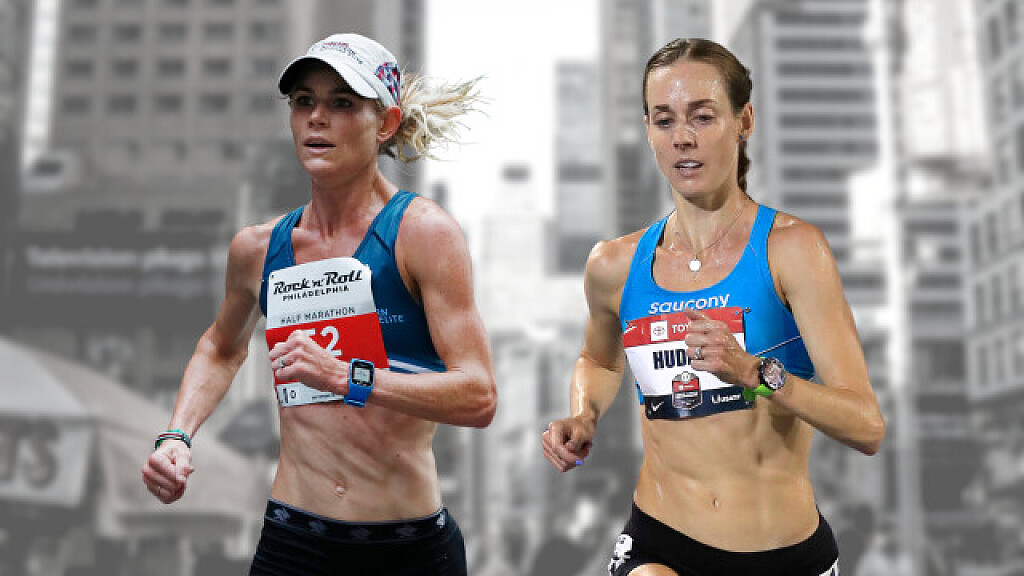
Americans Kellyn Taylor and Molly Huddle Are Ready to Race the New York City Marathon
The women's professional lineup for the 2023 New York City Marathon on November 5 packs a wallop. Barring any late withdrawals, we can look forward to a showdown among a defending champion, an Olympic champion, a former marathon world record holder, the current half marathon world record holder, and the 2023 Boston Marathon champion.
While fast times aren't usually the main objective in New York, a race that traditionally favors tactics and competition over pace on an undulating 26.2-miles through the city's five boroughs, we just may see the course record--2:22:31, set all the way back in 2003--go down.
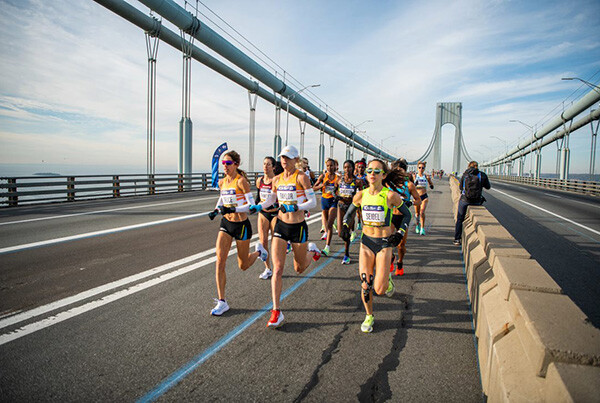
Last year's surprise winner Sharon Lokedi of Kenya is returning to defend her title. The 2022 race was her debut at the distance and she aced her first test in 2:23:23, though since then, she's coped with a foot injury that kept her out of the Boston Marathon in April. Hellen Obiri, also of Kenya, is back, too--her first attempt at the marathon was also last year in New York, finishing sixth (2:25:49). Obiri went on to win the 2023 Boston Marathon in April, lowering her personal best to 2:21:38.
Kenyan Brigid Kosgei, who broke the marathon world record in 2019, finishing Chicago in 2:14:04 (since bettered in September at the Berlin Marathon by Ethiopian Tigst Assefa in 2:11:53) is also returning from injury after dropping out of the 2023 London Marathon in the first mile.
Joining these top contenders are 2021 Olympic marathon champion Peres Jepchirchir, also of Kenya, who won the 2021 New York City and 2022 Boston marathons and owns a 2:17:16 personal best, and Ethiopia's Letesenbet Gidey, the 2022 world champion in the 10,000 meters, ran the fastest marathon debut in history at the 2022 Valencia Marathon with a 2:16:49 effort.
The American women's field this year is small, because most athletes opted for earlier fall races, like the Chicago Marathon, to allow for more recovery time before training begins for the U.S. Olympic Trials, scheduled for February 3, 2024, in Orlando, Florida. But Molly Huddle and Kellyn Taylor are each making their return to the distance on Sunday after giving birth to their daughters in 2022--Huddle welcomed Josephine in April and Taylor welcomed Keagan in December (in addition to their eldest daughter, who is 13 years old, the Taylor family adopted a five-year-old son and almost-two-year-old daughter, growing the family to four children in the past 13 months).
Huddle, 39, and Taylor, 37, both said it was important to them to get in a healthy marathon training cycle and race experience prior to the U.S. Olympic Trials, to get back in the routine and fitness they'll utilize in preparation for 2024.
"Obviously you want to be able to finish 26.2 miles and have that fresh in your mind, but also the buildup, the marathon work--I've gotten pretty far away from that just with the pregnancy and postpartum," said Huddle, a two-time Olympian in the 5,000 and 10,000 meters, who placed third at the 2016 New York City Marathon (2:28:13) in her debut at the distance. "This is supposed to be a building block toward the workload that you need for the Trials--I'm going to have to try and inch my way back a little closer to what I'd ideally do for a marathon buildup."
Huddle hasn't started a marathon since the 2020 Trials in Atlanta, which she dropped out of at the 21-mile mark. She hasn't finished a marathon since April 2019, when she lowered her personal best to 2:26:33 with a 12th-place finish at the London Marathon. However, she did run two relatively fast half marathons this year, including a fifth-place, 1:10:01 effort at the Houston Half Marathon in January.
Taylor's last marathon was two years ago in New York, where she placed sixth in 2:26:10. In September, she finished seventh in the U.S. 20K Championships in New Haven, Connecticut, in 1:08:04.
Going into the 2023 New York City Marathon, here's what the two top Americans had to say as they reflected on their postpartum experiences and goals for their first 26.2-mile race back:
They would have preferred to race the Chicago Marathon because of the timing.
Huddle, who is the former American record holder in the half marathon, 5,000 meters, and 10,000 meters, was hoping to make her postpartum comeback on a flatter, faster course like the October 8 Chicago Marathon, which would have also afforded an additional three weeks of time until the U.S. Olympic Trials. Taylor, who placed eighth at the 2020 Trials in Atlanta and owns three top-10 finishes in New York, agreed that Chicago's timing would've been more ideal. Neither of them were accepted into the professional field, however.
"We birthed humans. We were still running--it's not like we've been sitting on the couch eating Cheetos for a year," Taylor said. "It didn't work out and that's fine. I'll go where I'm wanted, so it doesn't really bother me that much--we'll still have 11 weeks until the Trials, and New York's my favorite marathon, hands down. I love the course. I love the people."
Huddle is also looking forward to racing in New York.
"They've always been happy to have me and that was important. I love racing through the city," she said. "My only concern was it's a very challenging course and there probably won't be any PRs happening, so I'll have to chase that later in the next year and a half."
A spokesperson for the Chicago Marathon said in an email message, in part, that the race officials "weigh many factors including performance standards, athlete interest, event resources, and operational considerations," when choosing athletes to accept into the professional race each year. "While our goal is to host as many athletes as possible, there are years where demand to participate exceeds the resources available and operational needs to host a professional race," the spokesperson wrote.
Huddle attributes her injury in the spring (mostly) to breastfeeding.
In March, Huddle experienced her first major bone injury of her career--a femoral stress fracture--which took her out of training for three months. After talking with her medical team, she's fairly convinced that her dietary needs weren't being met while breastfeeding. Since then, she's learned to adjust her fueling to account for what she loses not only to training, but also feeding her daughter.
"I refer to it as my body's new rules, because old me always knew how to fuel and I knew what I could handle workload-wise," Huddle said. "Now there is just more taxing the system and there's less time to mindfully refuel."
Taylor is finding much more camaraderie this time around.
When Taylor had her first daughter 13 years ago, not many fellow competitors had children. This time, however, she is finding a plethora of support from elite distance running moms.
In 2010, pro athletes also couldn't find much, if any, information about how to safely train through pregnancy and postpartum. And although solid research still lags, plenty of athletes are ready and willing to share their experiences with each other, which Taylor didn't have the first time around.
"It's become really helpful to be able to text each other and just directly ask how they handled one thing or another," Taylor says. "There isn't necessarily a lot of information, but with the network of athletes that have kids, I feel like there's more coming out now."
Huddle and Taylor each took a bit more conservative approach to training for New York this time. In the past, Taylor's peak weekly mileage could go as high as 130, but this time around she topped out around 112 miles. Similarly, Huddle's mileage prior to pregnancy would hit around 115 and this time she kept it to about 80 miles per week and substituted an Elliptigo session for a second run some days.
Their goals for Sunday run the gamut.
Despite a severe lack of sleep, Taylor's recovery from pregnancy and childbirth has gone exceedingly smoothly, she said, emphasizing that everybody's return is different and she believes she just lucked out with her genetics.
Knowing that she'll face a stellar international field on Sunday, Taylor is ready to run an aggressive race, targeting a 2:23 finish. (Her personal best is 2:24:29 from 2018 at Grandma's Marathon in Duluth Minnesota, but that was before the adventure of super shoes.)
"I think I'm in a really good position. I think I have the potential to run really well," said Taylor, who will wear Hoka Rocket X 2 shoes. "I think I can run 2:23 on a good day and that could put me in the hunt to do something, depending on how the race plays out."
Huddle has more of a wait-and-see approach, though, she notes, it is the first marathon in which she'll race in super shoes. She'll race in the Saucony Endorphin Elite shoes.
"I just don't think I'm going to be hanging with the world record holders, so I'm going to let them go do their thing," Huddle said. "I'm just focusing more on myself and just seeing what I can do."
It'll be a learning experience for the U.S. Olympic Trials.
The duo will each have a bigger fanbase than ever with their families coming to New York to support them. It's also an opportunity to see how they can organize the logistics of racing, childcare, and race prep ahead of the Trials in February.
Huddle, who is also raising money for &Mother, a nonprofit organization that supports athletes who pursue their career goals while parenting, as part of her marathon experience on Sunday, is hoping she will be done breastfeeding by February, but New York will serve as a test run in case she is not.
"I think it'll be interesting just seeing what the routine is like with my family, how we're going to shuffle everyone around with childcare and sleeping arrangements," Huddle said.
For Taylor, an additional hotel room was necessary to accommodate the whole family--and she couldn't be happier to have everybody there.
"It's going to be complete chaos," she said, laughing. "My parents are coming, so they're going to be the saving graces."
by Women Running
Login to leave a comment

TCS New York City Marathon
The first New York City Marathon, organized in 1970 by Fred Lebow and Vince Chiappetta, was held entirely in Central Park. Of 127 entrants, only 55 men finished; the sole female entrant dropped out due to illness. Winners were given inexpensive wristwatches and recycled baseball and bowling trophies. The entry fee was $1 and the total event budget...
more...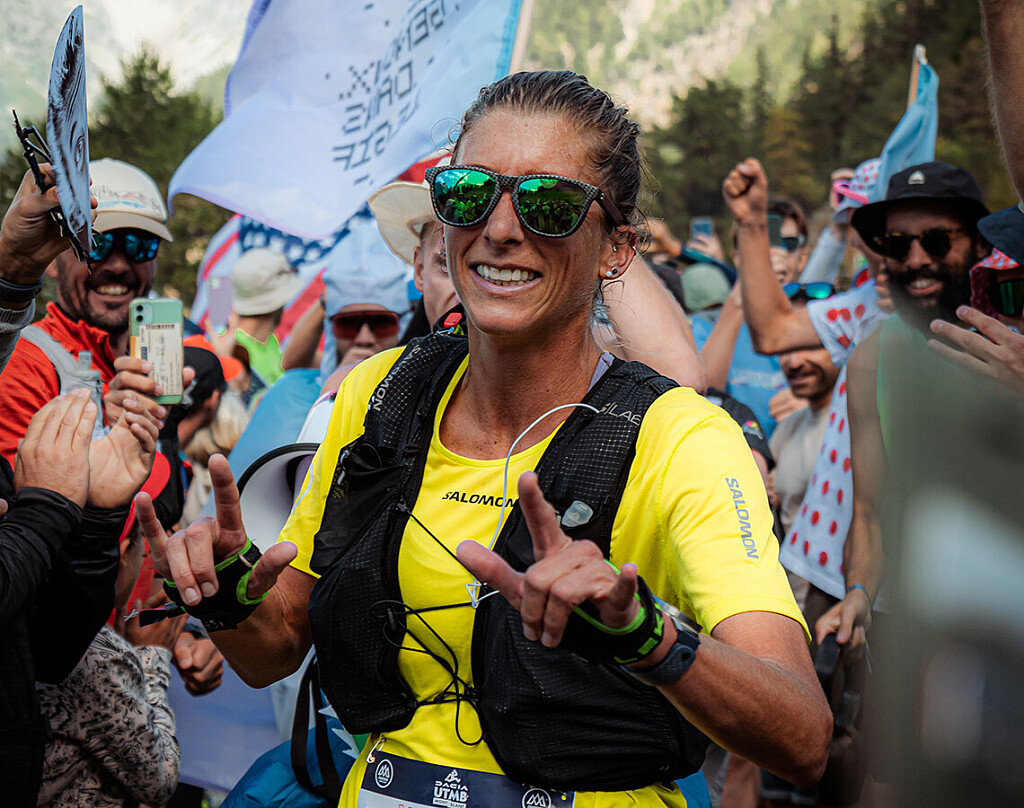
Courtney Dauwalter completes 100K race with her mom
After her historic year in ultra-trail, how could Courtney Dauwalter possibly squeeze in another success this season? The answer, it seems, was to add another Dauwalter.
The American trail-running legend, who in 2023 became the first athlete to win Western States, Hardrock 100 and UTMB in the same season, realized her long-held goal of completing an ultramarathon with her mother, as she and Tracy Dauwalter crossed the finish line of the 100K course at Arizona’s Javelina Jundred this weekend.
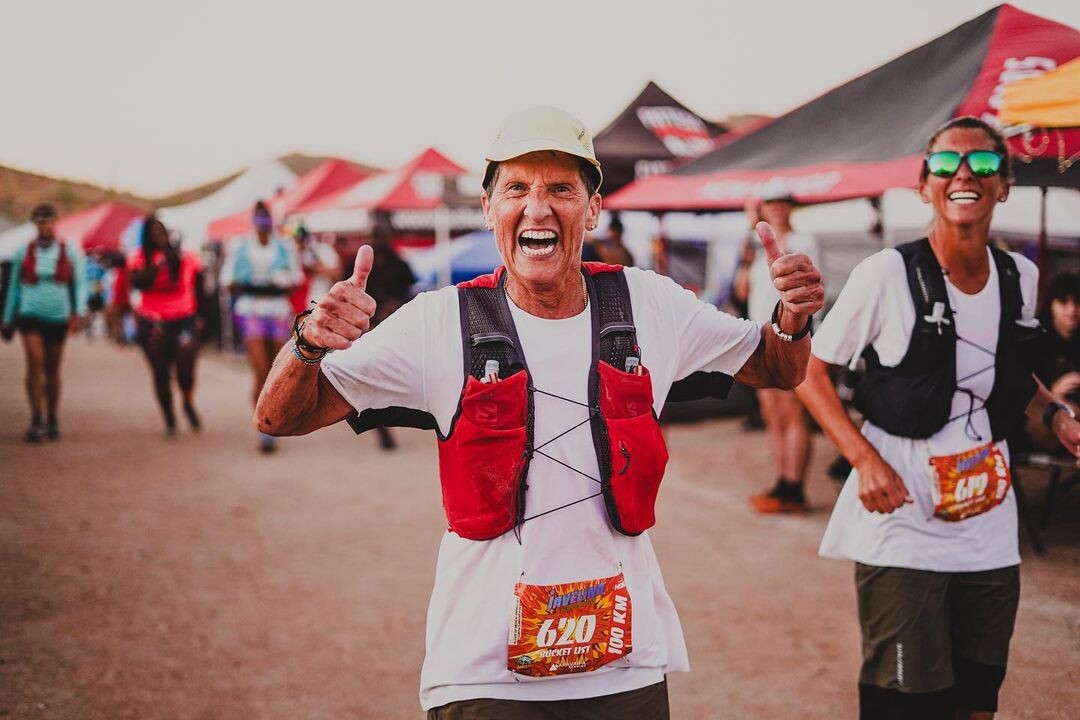
The Javelina 100K course consists of three loops that take runners through trails northeast of Phoenix. The route features rolling singletrack through the Sonoran Desert, leading past giant saguaro cactus and granite boulders in and around McDowell Mountain Regional Park.
The elder Dauwalter crossed the finish line in 17 hours, 38 minutes and 33 seconds, one second ahead of Courtney. The Dauwalter duo just cracked the top 100 in the 100K women’s division, landing in 98th and 99th place. They finished in 180th and 181st place overall among the 100K’s 301 finishers.
Before the pair toed the start line Saturday, Courtney shared in an Instagram post that it has been a “dream” of hers to run an ultramarathon with her mother.
“Last year we tried a 50 mile race together in Minnesota but got cut off for time. We decided that was just one part of our story together and are now back trying to get that sweet, sweet finish line,” she wrote.
While crossing the finish line was a triumph for the mother-daughter team, the overall effort was a fuller family affair, with Courtney’s husband, Kevin Schmidt, and her father, Dick Dauwalter, crewing the duo.
“Kevin and my dad are back on crew duty so I have no doubt we’ll be plenty taken care of,” wrote Courtney.
A subsequent Instagram post showing the mother and daughter celebrating their accomplishment drew a long list of commenters sharing their congratulations—and more than a few remarks about where the younger got her famously winning smile.
“It’s not hard to see where @courtneydauwalter gets her awesome smile from,” wrote one wellwisher. Added another: “Who the heck is their dentist?”
It was also an unforgettable race for the 100K’s top finishers. Topping the men’s podium in the 100K race in 7:15:53 was Rajpaul Pannu, who broke the course record set last year by Scott Traer (7:31:46). Anna Kacius, the top women’s finisher, placed second overall in 8:13:07, beating the course record set last year by Lotti Brinks (8:36:01).
Jonathan Rea ran 12:43:10 to break the 100-mile course record set last year by Dakota Jones (12:58:02). Heather Jackson won the women’s 100-miler in 14:24:47.
by Paul Baswick
Login to leave a comment
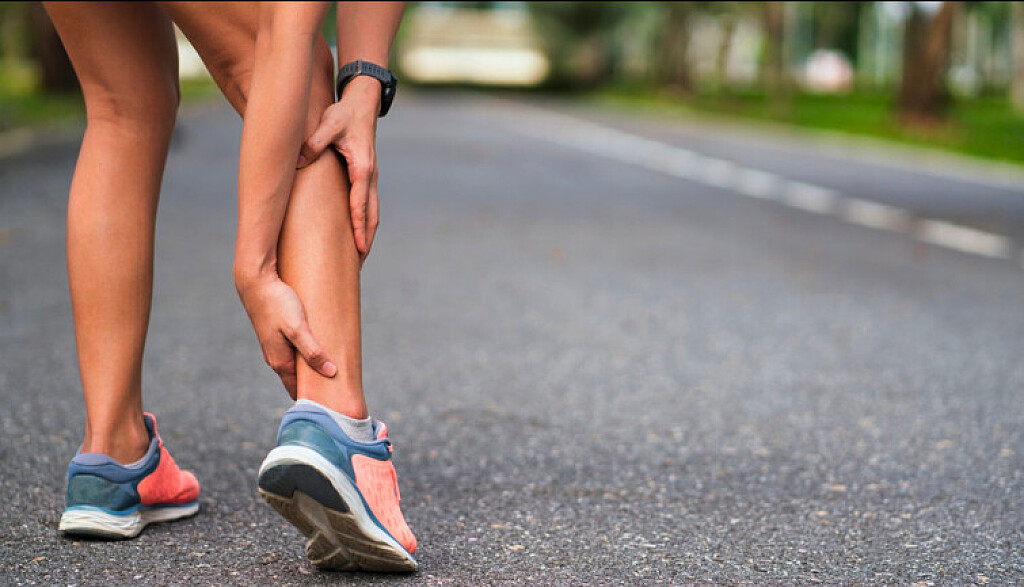
Does Acupuncture Help With Sports Injuries? Experts Weigh In.
More athletes are turning to the ancient tradition for relief from pain. But does it actually work?
When your lower back or glutes flare up painfully after going too hard trail running over the weekend, your default instinct might be to add some extra stretching to your routine or schedule some time with your massage therapist or chiropractor. If the pain is excruciating, you might even consult with a sports medicine doctor.
But there’s another accessible and effective treatment option for aches and pains. One that has only limited side effects and that’s been practiced for thousands of years.
It’s acupuncture. And although the mechanisms through which acupuncture works in the body aren’t fully understood, and there may be a placebo effect in play, research repeatedly indicates that acupuncture is effective at treating various forms of pain, including those related to myofascia, the back, and osteoarthritis.
Here’s what you need to know about acupuncture’s potential role in treating sports injuries.
Acupuncture is a practice in Traditional Chinese Medicine (TCM) that involves inserting small, thin needles through the skin and often into the superficial layers of the muscle to relieve pain and address health conditions like menstrual cramps, migraines, and arthritis. The points where needles are inserted are pathways, each corresponding to a particular organ or system, along which energy, or qi, is believed to travel. According to TCM, the needle helps unblock meridians.
From a Western medicine perspective, it’s believed that the needles stimulate the body’s muscles, connective tissue, and central nervous system, which can help with recovery from illnesses and pain. “Basically, what we’re doing with acupuncture is we’re using your body’s inherent means of healing itself,” says David Mann, DO, who is a primary care and sports medicine physician and licensed acupuncturist at Houston Methodist.
Sports medicine acupuncturists specifically treat sports injuries using the same foundations of TCM, but also incorporate functional anatomy, muscle testing, and range of motion testing. “Using this approach, I can precisely identify complex injuries and their sources, especially when checking for posture issues during various movements,” explains sports medicine acupuncturist Kevin Menard.
Hilary Patzer, a doctor of Chinese Medicine and licensed acupuncturist who works with the Minnesota Vikings, believes combining TCM and sports medicine really helps nudge the body along on the path to healing. “The body wants to be in harmony, it wants to be balanced, it wants to be functional,” she says. “But sometimes it has to be told what to do because it’s gotten out of alignment.”
Acupuncture is used to treat all sorts of sports injuries, including joint problems, muscle sprains and strains, tight muscles and trigger points, lower back pain, cervical and lumbar herniations, and many other conditions. “It’s just so incredibly helpful because we can treat the whole body effectively in that one treatment,” Patzer says. “Those needles are like little magic wands.”
This broad approach means that when treating something like a quadriceps strain, an acupuncturist will also assess and potentially address other muscles around that injury that may be compromised or compensating. “If you don’t treat anything around [the injury], they’re going to continue to have that quad injury and it’s not going to heal nearly as fast as if you treat upstream and downstream as well,” Patzer explains.
Here are a few ways that acupuncture can be useful when treating sports injuries, according to the experts:
Acupuncture is frequently used to reduce various types of pain and is increasingly recognized as a non-drug alternative to painkillers. One reason for acupuncture’s pain relieving effect is that it’s known to release endorphins, which can help decrease pain and lift your mood. “By boosting the production of endorphins, acupuncture directly counters pain, a primary concern with sports-related injuries,” Menard says.
Acupuncturists commonly use the practice to reduce inflammation following injuries. Menard explains that acupuncture improves blood circulation to targeted muscles, fascia, tendons, and ligaments, which helps reduce swelling and repair injured tissues.
A recent study published in the journal Nature found that acupuncture can trigger an anti-inflammatory response and suppress inflammation through the involvement of a nerve pathway between the vagus nerve and the adrenals called the vagal-adrenal axis. Other studies show similar findings, with acupuncture reducing or controlling inflammation by stimulating various pathways that connect the nervous and immune systems, both of which are known to play a role in the body’s inflammatory response. It’s important to note that these studies were conducted on mice, which isn’t always an exact predictor of human response.
Another study found that acupuncture may reduce inflammation by stimulating the vagus nerve, which is part of the parasympathetic nervous system and plays a large role in the body’s stress response.
Acupuncture can enhance proprioception—meaning the body’s sense of its position and movement—by addressing trigger points and knots in the muscle tissue, Menard says. For athletes, proprioception is really important because it plays a role in balance, coordinating movements, and adjusting muscle activity. When proprioception is low, sports injuries may be more likely to occur
“These knots, if untreated, can hinder muscles and their counterparts from functioning correctly, leading to imbalances and further complications,” Menard explains. “Acupuncture’s ability to identify and treat these points can provide immediate relief, helping athletes regain their proper form and function.”
Patzer compares muscle functioning to a slinky—when a muscle is functioning properly it opens and closes like a spring, and that’s a good thing. But if it’s pulled too long or locked up too tight, it may not perform at its best. Left untreated, this can sometimes lead to problems with nearby muscles, tendons, and joints. “With acupuncture, I’m able to help the muscle get that kind of proper movement and function back,” Patzer says.
Many acupuncturists may be able to help someone with a sports injury, but if you’re an athlete and experiencing pain, Patzer says it’s best to see someone who specializes or is certified in sports medicine acupuncture. If you have an X-ray or MRI results, bring a copy to your appointment to help inform treatment. “It’s essential to accurately diagnose each condition to tailor the most effective acupuncture treatment to the patient’s specific needs,” Menard says.
Keep in mind that acupuncture likely isn’t going to be a one-stop cure for any sports injury that arises, and it’s often most effective when used in conjunction with other types of treatment. Acupuncturists will even refer patients to other care facilities or professionals, like hospitals, chiropractors, physical therapists, and massage therapists. “We work in tandem, ensuring every patient gets the holistic care they need,”Menard says.
by Outside Online
Login to leave a comment
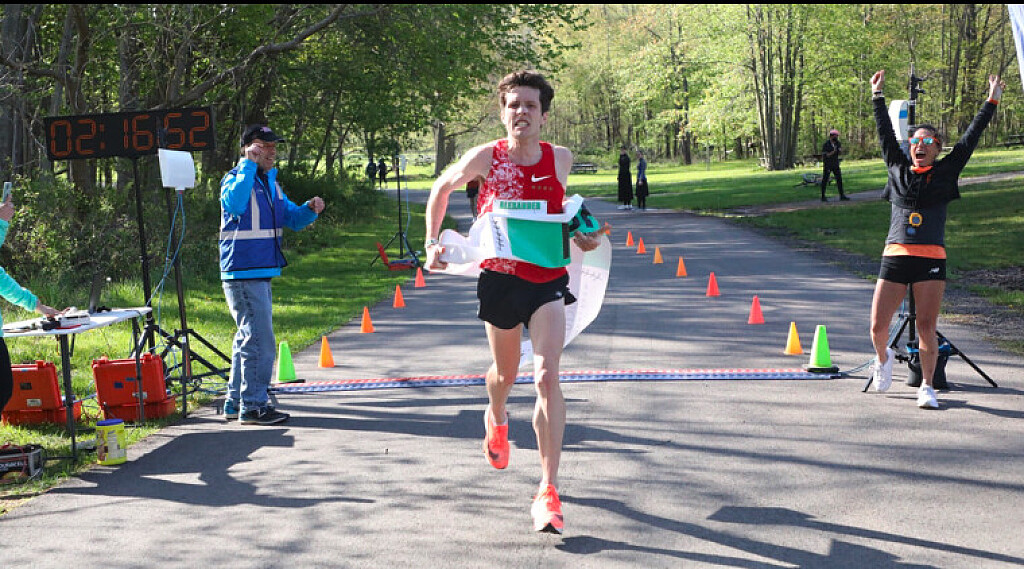
Want to Qualify for the U.S. Olympic Trials? This Race Is Specifically Built for You.
For elite amateur marathoners, qualifying for the Olympic Trials is the ultimate life goal. Bakline’s McKirdy Micro Marathon removes the challenges of running a fast 26.2.
When it comes to trying to run a fast marathon, Zacch Widner knows that bottle service isn’t a luxury but a necessity. No, not tableside bottle service at a nightclub, but the ability for marathon runners to easily identify and grab their own hydration bottles off of a table every 5K or so on course while running at an extremely fast pace.
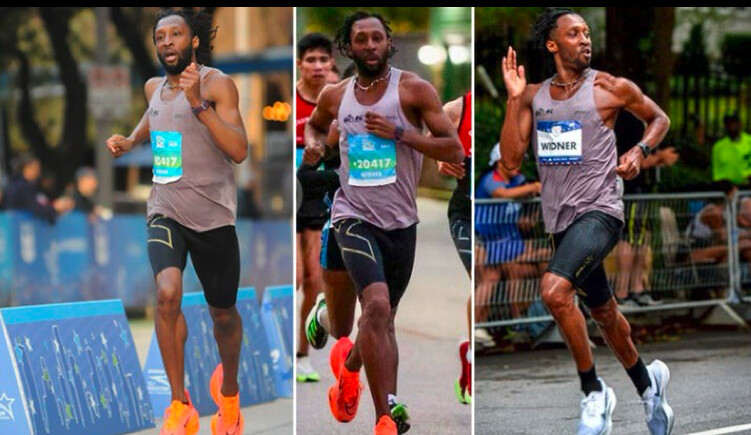
At the Berlin Marathon on September 23, the 32-year-old aspiring elite runner from Lansing, Michigan, was on the verge of running the race of his life. But because his bottles weren’t readily available at each aid station, he wound up grabbing only one of his eight bottles and suffered the consequences.
Although running the race without optimal calorie and hydration intake led to frequent cramping, he still finished in 2:20:02. That’s the second-best time of his career, but still two minutes short of his goal of breaking the U.S. Olympic Trials men’s qualifying standard of 2:18:00.
Widner is one of dozens of American runners—most of whom work nine-to-five jobs—still hoping to earn the standard (or 2:37:00 for women) by the December 5 deadline, in order to qualify for the U.S. Olympic Trials Marathon on February 3 in Orlando.
For Widner, it’s much more than a personal goal. It’s a commitment to a friend and former teammate. “It was a bummer,” says Widner, who works full-time as an IT analyst for the state of Michigan. “I know I’m capable of running faster. I didn’t capitalize on taking fluids, so when it came to running all out, I just couldn’t do it. I think the stress of it is actually what caused the cramps, because every time I missed a bottle, I just stressed out more…just mentally started destroying me.”
Three weeks later, Widner is ready to take another shot at the OTQ standard, this time at Bakline’s McKirdy Micro Marathon on October 14—a unique elite-only race that will be held about 30 miles north of New York City. Set on a nine-loop course at Rockland Lake State Park, the no-frills race will provide bottle service to each of the 180 entrants who met a stout qualifying standard (2:25 for men, 2:45 for women) to register.
“It’s got everything you need,” he says. “You have a lot of tough, fast runners. You have pacers and a flat course with a well-organized system for everyone’s fluids. I’m ready to go.”
In 2020, when running races were shut down because of COVID-19, athlete agent Josh Cox and Ben Rosario, founder and head coach of the Hoka NAZ Elite team, developed an elite-only marathon in Arizona that gave about 100 athletes from around the world the chance to run a highly competitive race on a USATF-certified course amid the still-pervasive coronavirus.
Known as The Marathon Project, the race was held in Chandler, Arizona, on December 20, 2020. Seven U.S. men ran faster than 2:10, while 12 American women finished under 2:30—the first time that’s ever happened. Martin Hehir, a fourth-year medical student who was coming off weeks treating COVID-19 patients, won the race in a personal best 2:08:59, while Sara Hall was the women’s winner in a personal best of 2:20:32, at the time the second-fastest marathon ever run by an American woman.
Several runners who trained under Flagstaff, Arizona coach James McKirdy and his online platform McKirdy Trained were in the race, and they performed well. He was so impressed by the concept that he quickly went about replicating it by hosting small regional marathons around the U.S. for a wider range of runners in early 2021.
At one of the McKirdy Micro Marathon races held at Rockland State Park, Denver-based runner Alex Burks won the race and lowered his personal best from 2:23:47 to 2:16:52. Dozens more earned personal bests and Boston qualifying (BQ) times.
“We really liked that idea and thought we could develop that concept for the masses, and they went off without a hitch,” McKirdy says. “The athletes had a great time and many runners—I think close to 150—earned a BQ from our races. So when the U.S. Olympic Trials qualifying standards were released two years ago, we felt we had the chops and experience to provide a marathon that would provide full on-course support for runners trying to qualify.”
Bakline’s McKirdy Micro Marathon will be held on a nine-lap, 26.2-mile course that will start with one 2.63-mile partial lap, followed by eight successive laps on a 2.945-mile circuit. Runners can have up to eight hydration bottles that will be set up on a series of well-marked, eight-foot tables 20 feet apart.
While the majority of runners will be aiming for the U.S. Olympic Trials qualifying standards, others are shooting for faster times. McKirdy and co-organizer Heather Knight Pech have enlisted pacers to guide runners to three different goal times for men (2:10:00, 2:11:30, and 2:18:00) and two for women (2:29:30 and 2:37:00).
The men’s field is headlined by Tsegay Tumay, an Eritrean runner with a 2:09:07 personal best who trains in Flagstaff under McKirdy. Tiidrek Nurme is an Estonian runner who is coming off a 31st-place, 2:15:42 at the World Athletics Championships on August 27, in Budapest. American runner Ben Blankenship, who finished eighth in the 2016 Olympic 1,500-meter finals in Rio de Janeiro, is making his marathon debut. Another OTQ hopeful is Hosava Kretzmann, a 29-year-old member of the Hopi Tribe from Flagstaff, Arizona, who finished sixth in his debut at the Los Angeles Marathon earlier this year in 2:19:58.
Among the runners who should be at the front of the women’s race is newly signed Nike athlete Calli Thackery, a British runner who just placed seventh in the half marathon at World Athletics Road Running Championships with a 1:08:56 personal best. American Makenna Myler has a 2:40:45 personal best, but is shooting for the U.S. Olympic Trials Marathon qualifying standard just seven months after giving birth to her son in mid-March. (In 2021, she placed 14th in 10,000 meters on the track in the U.S. Olympic Trials seven months after giving birth to her daughter.) She had originally registered and was onsite for the October 1 Twin Cities Marathon in Minneapolis, but that race was canceled because of extreme heat.
Other runners include Monica and Isabel Hebner, identical twins who most recently competed for the University of Texas, who will be making their marathon debuts with hopes of running in the 2:34-2:35 range, and Maura Lemon, a mother of three from Dayton, Ohio, who owns a 2:42:57 personal best but is aiming for the 2:37 OTQ standard.
Many U.S. runners on the cusp of the OTQ times ran the Chicago Marathon on October 8, while others are waiting until the California International (CIM) Marathon on December 5.
What the McKirdy Micro Marathon aims to do is eliminate the challenges that runners face at other races—difficult travel, congested race expos, crowded race courses, and, perhaps most importantly, a lack of bottle support on the course. Plus, it offers a spectator friendly circuit where family, friends, or coaches can cheer for runners on every loop.
“This gives them that chance to run fast,” Knight Pech says. “There’s still a lot of runners out there—a lot of women and a lot of men—who are sitting on the cusp of the qualifying standards. And they should have the opportunity to be able to swing large and take a moonshot. We believe this race gives them a real chance to get it done here in a way that I don’t think other races offer them.”
While the top three men’s and women’s finishers in the U.S. Olympic Trials Marathon will represent the U.S. at the Paris Olympics, just getting to the Olympic Trials is a lifetime goal for many runners. It’s the deepest and most competitive domestic marathon in the U.S., but it only happens every four years. While a tiny portion of the qualifiers are sponsored professional athletes, most of the runners have already moved on to full-time jobs.
For Widner, there is more at stake than just running a fast time. He’s forever running to honor Jeremiah Hargett, a former teammate at Oakland Community College in suburban Detroit who dealt with ongoing mental challenges. One day back in 2011, Hargett called Widner and told him how much he believed in him as a runner and as a friend, and how they’d both eventually make it to the U.S. Olympic Trials. Sadly, Hargett took his own life the very next day. Widner has more or less dedicated every race to Hargett since then.
Although his best time in the 1,500-meter run (3:53.90) fell well short of the Olympic Trials qualifying standard on the track, Widner hasn’t given up his pursuit for Hargett. Amid the rigors of working full-time for the past eight years, he’s continued to improve as a long-distance runner.
Despite what he calls a disastrous marathon debut at the CIM in 2018—where he went out way too fast and wound up struggling to finish in 2:45:39—he’s still chasing that goal. In 2022, he had a breakthrough race at Grandma’s Marathon in Duluth, Minnesota, lowering his personal best to 2:19:54. In January, he lowered his best time in the half marathon to 1:05:52 in January, but that was still nearly three minutes off the half-marathon OTQ of 1:03:00.
He’s continued to add mileage—he’s averaged about 94 miles per week this year—executed better workouts, and improved his fueling strategy, especially since McKirdy started coaching him in March. Now he’s on the cusp of reaching that magical qualifying mark once again.
But it’s as much for Hargett as it is for him.
“That’s the reason I keep running,” Widner says. “It’s the closest thing to my heart. Every time I run, I think about him and his family. When that happened, mentally, it changed me. After that, I bounced up and started running much better.”
“Running taught me how to be patient, and it is teaching me that life is the exact same way,” Widner adds. “It’s all about being patient, and when things go wrong or things seem to not go the way you were expecting, to just stay relaxed and understand that it could change for the better. I’ve been able to use that for everything in life—all my connections, and then have that thought in my mind to make the Olympic Trials, just like he agreed that we would do together.”
by Outside Online
Login to leave a comment
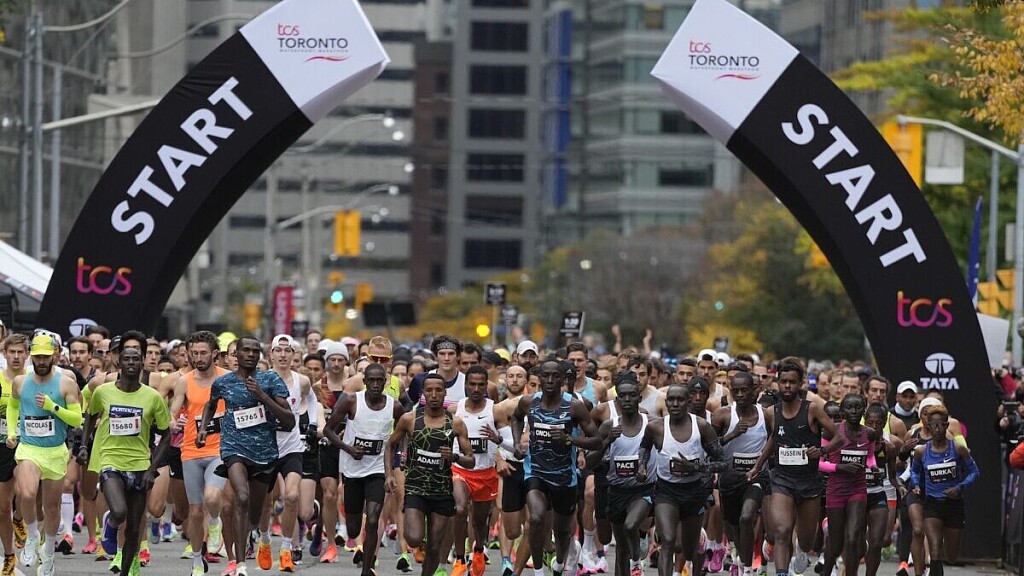
TCS Toronto Waterfront Marathon extends warm welcome to canceled Twin Cities Marathon athletes
The TCS Toronto Waterfront Marathon is extending a helping hand to several elite runners who were affected by the last-minute heat cancellation of the 2023 Twin Cities Marathon last Sunday.
Although Canada’s largest marathon had been sold out for months, marking the first time in the race’s history that the marathon has reached full capacity this early. There ended up being several withdrawals in the men’s and women’s elite fields two weeks before the Oct. 15 race day.
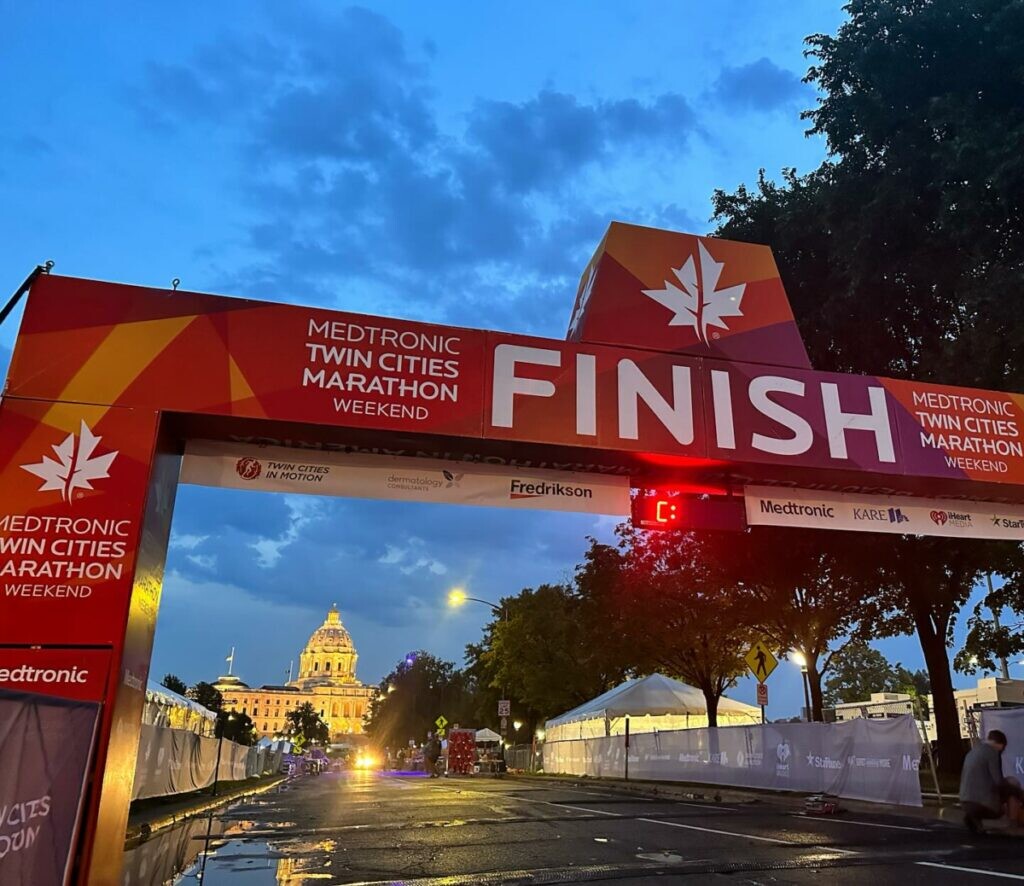
Jim Estes, the manager of the elite program at the Twin Cities Marathon, reached out to TCS Toronto Waterfront Marathon race director Alan Brookes, exploring the possibility of accommodating some of the elite runners. Brookes shared that he and Jim have a close relationship and have worked on elite teams at Chicago and Houston marathons. “We ended up extending three spots to athletes who did not get the chance to run the marathon in Minnesota,” says Brookes.
This period is crucial for U.S. marathoners, as many are shooting to qualify for U.S. Olympic Marathon Trials in Orlando next February. The fall marathon season represents a final opportunity to secure a qualification spot there or to chase an Olympic qualifying time of 2:08:10 (men) and 2:26:50 (women) before the trials.
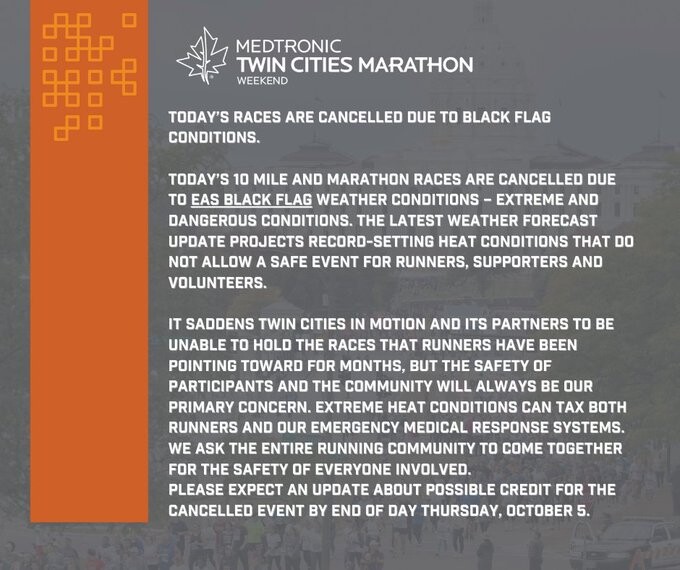
Toronto was not the only marathon to offer invitations. The McKirdy Micro Marathon in Valley Cottage, N.Y., the Indianapolis Monumental Marathon and the Philadelphia Marathon have also offered spaces in their elite fields for athletes originally slated to compete in Twin Cities.
The Twin Cities Marathon was set to host nearly 8,000 runners on Oct. 1 but ended up being abruptly canceled just two hours before its 7 a.m. start due to soaring temperatures. Despite the short notice, many runners who had traveled to Minnesota decided to go ahead with their race on their own. The temperature in Minneapolis–Saint Paul, Minn., reached a high of 27 C (80 F) by 11 a.m. on Sunday.
Eli Asch, the race director of Twin Cities, defended their decision to cancel the race in an interview with Runners World, stating, “We saved lives.” However, Asch did not confirm whether the race would provide refunds or offer credits to the 20,000 registered participants but said the race’s intention is to be “as generous as possible.”
by Marley Dickinson
Login to leave a comment
TCS Toronto Waterfront Marathon
The Scotiabank Toronto Waterfront Marathon, Half-Marathon & 5k Run / Walk is organized by Canada Running Series Inc., organizers of the Canada Running Series, "A selection of Canada's best runs!" Canada Running Series annually organizes eight events in Montreal, Toronto and Vancouver that vary in distance from the 5k to the marathon. The Scotiabank Toronto Waterfront Marathon and Half-Marathon are...
more...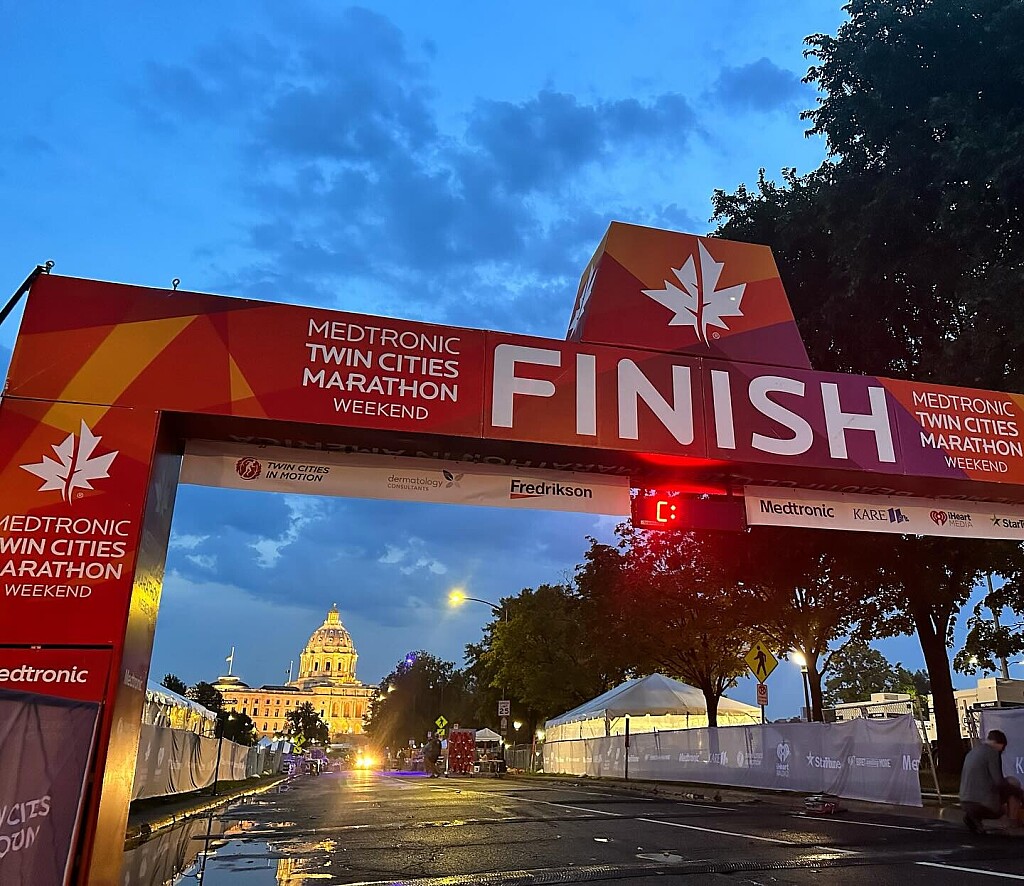
Twin Cities Marathon canceled due to heat two hours before start
Nearly 20,000 runners in Minnesota were left frustrated on Sunday morning after the Twin Cities marathon and 10-miler was canceled two hours before its 7 a.m. start due to heat.
The temperature in Minneapolis was forecasted to reach an unseasonably high 28 C (82 F) by 11 a.m., according to the National Weather Service. The average high for the Minneapolis-Saint Paul area around this time of year is around 18 C.
In the days leading up to the race, organizers had cautioned about potentially unsafe weather conditions. However, the race was still planning to proceed with extra safety measures implemented.
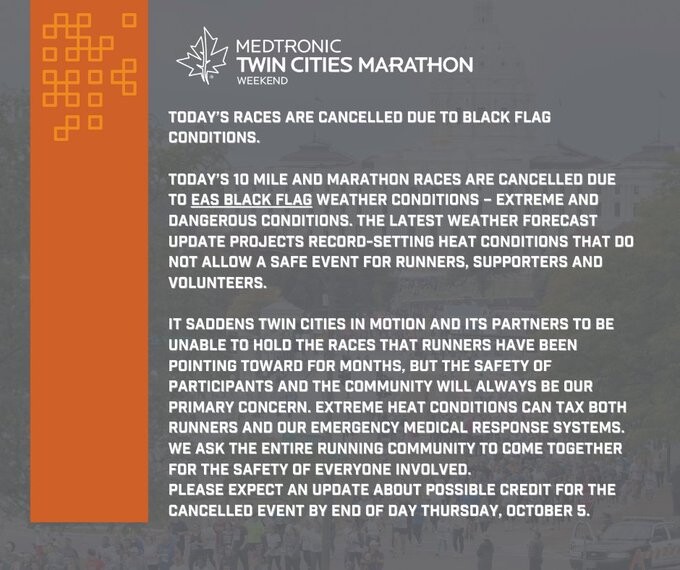
The Sunday morning forecast in Saint Paul elevated the races into black-flag status (which stands for “extreme and dangerous conditions”), which prompted the cancellation. As many as 8,000 runners were set to compete in the marathon, with 12,000 in Twin Cities 10-miler, and tens of thousands of spectators on the streets of both cities.
“It saddens Twin Cities In Motion and our partners to be unable to hold the races that runners have been pointing toward for months, but the safety of participants and the community will always be our primary concern,” said race organizers in a press release. “Extreme heat conditions can tax both runners and our emergency medical response systems. We ask the entire running community to come together for the safety of everyone involved.”
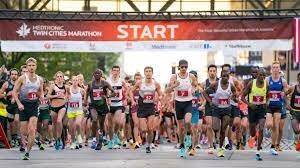
The race made the announcement at 5:30 a.m., only an hour and a half before the race’s expected start time. Despite the short notice, many runners who had traveled to Minnesota still went out to run at their own discretion.
Many runners took to social media to scrutinize the race’s decision: “Sad and pathetic, let’s just cancel all races cause they are outside of people’s comfort level,” one runner said. “What a waste of everyone’s time to make a last-minute decision like this,” said another.
The race organizers have not yet confirmed whether they will provide refunds or offer a credit to participants but intend to make an announcement later in the week.
by Marley Dickinson
Login to leave a comment

Medtronic Twin Cities Marathon
The Medtronic Twin Cities Marathon Weekend offer races, walks and activities for every age and ability level! Learn more about the weekend's events and activities by using the navigation bar at the left or top of your screen. The Twin Cities Marathonis a running event in the Minneapolis-Saint Paul area. The TCM was first run in 1982, and typically takes...
more...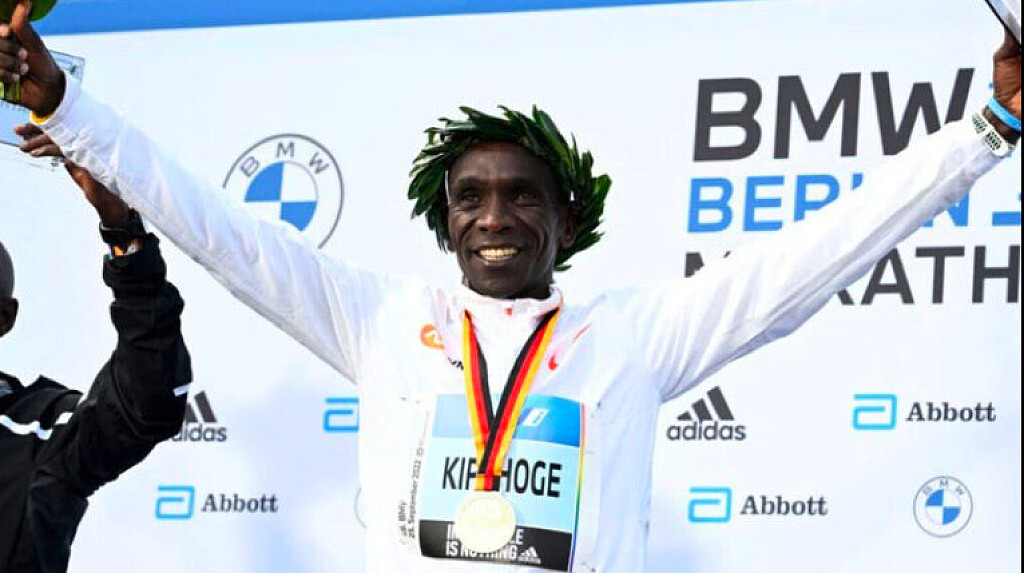
10 Things to Know About the 2023 Berlin Marathon
Here’s how you can watch the race, track runners, and register for next year
More than 45,000 runners are expected to participate in the Berlin Marathon on September 24 in Germany’s capital city. It’s the 49th edition of the race and one of the six World Marathon Majors races along with races in Chicago, New York, Boston, London and Tokyo. The weather forecast is calling for cloudy and cool conditions on race morning in Berlin, so fast times are once again expected.

Here’s a rundown of 10 noteworthy elements about this year’s race.
The Berlin Marathon has produced 12 world records—more than any other marathon—since its inception in 1974, including the past eight men’s records since 2003. Kenya legend Eliud Kipchoge lowered the world record for the fastest official marathon ever run (2:01:09) last year in Berlin, and it’s also where he ran the previous world record (2:01:39) in 2018.
Berlin has produced six of the top 10 fastest men’s times in history, including three of the four sub-2:02 efforts (including the 2:01:41 run by Kenenisa Bekele in 2019). It hasn’t been quite as fast for women, however it has been the site of three women’s world records, most recently when Japan’s Naoko Takahashi ran the world’s first sub-2:20 marathon (2:19:46) in 2001. Last year, Ethiopia’s Tigst Assefa won the women’s race in 2:15:37, which, at the time, was the second-fastest marathon ever run and now ranks fifth.
Berlin is the flattest course of all the World Marathon Majors, with a total elevation gain of 241 feet and loss of 260 feet. (The biggest “hills” come between miles 16 and 20, but they max out at less than 30 feet of gain.) Berlin annually produces some of the fastest pro results in the world, in part because it’s a flat course, but also because the race organization provides pacemakers (auxilliary runners who set an optimal pace but only run about a portion of the course before dropping out) so the opportunity for fast times are assured. (There are no pacemakers at the Chicago, New York City Marathon, and Boston Marathon, so those races play out only by the tactics of the runners in the field.) But the fast elite times, flat course, and typically cool weather conditions have attracted age-group runners targeting new PRs, too.
Running legend Eliud Kipchoge, universally accepted as the G.O.A.T. of marathoning, has won 15 of the 18 marathons he has entered, including the past two Olympics. Berlin is where he’s had most of this success, dating back to his first victory in 2015 and he has since also won there in 2017, 2018, and 2022. Can he add one more victory to his total?
He lowered his own world record to 2:01:09 last year by averaging 14:21.4 per 5K, or 4:37 per mile. However, the 38-year-old Kenyan is coming off an uncharacteristically disappointing race at the 2023 Boston Marathon, where he finished sixth in 2:09:23. Will he approach another world record? “My aim is to always run a good race,” he said recently. “Berlin is like home for me. In view of the Olympic Games next year in Paris, I thought about which race could be the best preparation for the Games for me, and Berlin is the best option.”
Including Kipchoge, the men’s field in Berlin includes 10 runners who have run faster than 2:06 and seven more who have broken 2:07, including last year’s runner-up Mark Korir (2:05:58). Kipchoge should be challenged by fellow Kenyan Amos Kipruto, who owns a 2:03:13 from his runner-up showing at last year’s Tokyo Marathon. The winner of the 2022 London Marathon last fall (2:04:39), Kipruto, 31, placed a distant second in the 2018 Berlin Marathon behind Kipchoge (2:06:23) and owns a bronze medal in the marathon from the 2019 World Athletics Championships in Doha.
Other top runners in the field include Kenya’s Geoffrey Kamworor, who ran 2:04:23 to place second at the London Marathon in April, Ethiopia’s Birhanu Legese, who was second (2:02:48) in Berlin in 2019 and Kenya’s Wilson Kipsang, 41, a former winner in Berlin, New York, and Tokyo. However, Kipsang, who lowered the world record to 2:03:23 on the Berlin course in 2013, is coming off a four-year ban for missing drug tests in 2018 and 2019.
Last year, Ethiopia’s Tigist Assefa, a 2016 Olympian in the 800-meter run, entered the race as an untested marathon (with a PR of 2:34:01) and surprised everyone with her 2:15:37 victory in the third-fastest time ever.The 26-year-old is back this year but hasn’t run any races because she’s been sidelined with a few nagging injuries.
Her biggest competitor will likely be Sheila Chepkirui, who holds a personal best of 2:17:29 from last December’s Valencia Marathon. She’s a former African Cross Country Championships winner and was the bronze medalist in the 10,000-meter run at the 2022 Commonwealth Games. Other top women runners include Ethiopians Tigist Abayechew (2:18:03), Workenesh Edesa (2:18.51), and Hiwot Gebrekidan (2:19:10).
Scott Fauble, a three-time seventh-place finisher at the Boston Marathon (including this year in 2:09:44), is racing Berlin with the hopes of securing the Olympic-qualifying standard of 2:08:10. The 31-year-old runner from Portland, Oregon, will still need a top-three finish at the U.S. Olympic Trials Marathon on February 4 in Orlando, but securing the time will give him a leg up on qualifying for the Paris Olympics next summer.
Also racing in Berlin are 2016 U.S. Olympian Jared Ward (Provo, Utah) and 2020 U.S. Olympian Jake Riley (Boulder, Colorado). Ward, 35, owns a 2:09:25 personal best, but he hasn’t run faster than 2:12 since his sixth-place finish (2:10:45) in the New York City Marathon in 2019. The 34-year-old Riley, who owns a 2:10:02 PR, is coming back after having double Achilles surgery in July 2022 to correct Haglund’s syndrome (the second time in his career), and hopes to run in the 2:12-2:14 range. Ethiopian-born Teshome Mekonen, who recently received U.S. citizenship, will also be racing in Berlin. The 28-year-old, who lives in New York City, has a 1:00:02 half-marathon personal best and lowered his marathon personal best to 2:11:05 last January in Houston.
Annie Frisbie is the top American runner in the women’s field in Berlin. The 26-year-old from Hopkins, Minnesota, made her marathon debut at the 2021 New York City Marathon with an impressive seventh-place finish (2:26:18). She’s continued to run well since then, placing 20th (2:28:45) in the 2023 Boston Marathon (2:28:45) and most recently finishing fifth (1:07:27) at the U.S. 20K Championships on September 4 in New Haven, Connecticut. Frisbie was a Wisconsin state champion runner in high school and an All-American runner for Iowa State University.
The Berlin Marathon was started in 1974 by Horst Milde, a German baker and running enthusiast. When it began at the height of the Cold War and East Berlin being sealed off by a wall, the marathon was run only in West Berlin. Since 1990, it has started and ended near the Brandenburg Gate, sending runners on a jagged loop through the city—including the neighborhoods of Charlottenburg, Tiergarten, Moabit, Mitte, Friedrichshain, Kreuzberg, Neukölln, Schöneberg, Friedenau, and Zehlendorf. Runners will pass tourist sites like the Reichstag building, the Siegessäule (Victory Column), Berlin Cathedral, and Potsdamer Platz. Live music is played at more than 60 locations along the course, including at all the famous landmarks.
The inaugural Berlin Marathon had 244 finishers; 234 men and 10 women, and was won by Günter Hallas (2:44:53) and Jutta von Haase (3:22:01), respectively. Last year, the race had 34,788 finishers, including 23,280 men (67 percent) and 11,508 women (33 percent). The last German runners to claim victory were Irina Mikitenko (2:19:19) in 2008 and Ingo Sensburg (2:16:48) in 1980. No American man or woman has ever won the Berlin Marathon.
The Berlin Marathon has an inline skating division for 500 participants that begins at 3:30 P.M. after all runners are cleared from the course. The skater course record of 56:46 was set last year by Belgian Bart Swings, and he’s back this year aiming for his ninth victory. In the women’s race, all eyes are on last year’s winner, Marie Dupuy of France, in 1:11:19. All finishers of the inline skating division are eligible to enter the 2024 Berlin Marathon as runners.
The race, which starts at 9:15 A.M. local time (or 3:15 A.M. ET in the U.S.), will be broadcast worldwide by several TV partners, but not in North America. However, several websites offer live streaming so people can watch the Berlin Marathon from anywhere in the world, especially if you’re a VPN subscriber. Watch Athletics will be broadcasting the race online in real time for free, while FloTrack’s livestream requires a subscription ($29.99 for one month) in order to view their livestream. Runners can be tracked via the Berlin Marathon website’s Results page, or via the BMW Berlin Marathon App app available on Apple or Google Play.
Race day begins with the elite handbike division at 8:50 A.M., followed by the wheelchair and handcycle divisions at 8:57 A.M. Runners are sent off in four waves beginning at 9:15 A.M., starting with the men’s and women’s elite waves. The race has a strict time limit of 6 hours, 15 minutes as well as course closure times at the 33K/20.5-mile mark (3:50 P.M.) and 38K/23.6-mile mark (4:35 P.M.). Runners who have not reached those points by those times can continue on the sidewalks alongside the course or get a ride on the course-sweeping bus.
Entry to the 2024 Berlin Marathon, which is slated for September 29, 2024, will be done via a lottery that will open in October. You can enter the lottery as a solo runner or as a team consisting of two or three people. (If the team is drawn, all persons from the team are included.) Lottery dates for 2024 have not yet been announced, but the draw for the 2023 edition took place in December 2022.
If you’re selected, the registration fee will be about $160 euros. You can also secure a guaranteed spot in the race based on previous marathon times. In 2023, female runners up to 44 years old qualified if they ran faster than 3:00; female runners up to 59 years old qualified if they ran under 3:20; and female runners over 60 years qualified if they ran under 4:10. For men, the qualifying times were 2:45 (up to 44 years old), 2:55 (46-59 years old), 3:25 (60 and older.)
If you don’t get in through the lottery, you may still be able to get into the race via a charity bib or through tour operators.
by Outside online
Login to leave a comment

9 Things Every Running Shop Employee Wishes You Knew
Yes, this shoe comes in other colors. No, that doesn’t mean you should buy it.
For two years, I worked at the best run specialty store in Minneapolis-St. Paul, Minnesota. For seven years after that, I worked for a running shoe brand. In that time, I learned there’s a sizable knowledge gulf between folks in the industry and most consumers. Even many consumers who pay pretty close attention to racing and shoe reviews weren’t always up-to-speed on the latest tech, how a certain brand fits or whether they need a neutral. stability, minimal, or trail shoe.

It’s our own fault. Brands create so many SKUs that it can be hard to keep up with each development. Stores stack so many models next to each other on the wall that it can seem impossible to know where to start.
I can ensure you we didn’t keep things convoluted on purpose. On the brand side, we wanted people to feel like they knew enough about our footwear to confidently buy shoes from our website. In the shop, we knew customers appreciated feeling like they were empowered to pick the right pair. If they felt overwhelmed at our store, we knew, they probably wouldn’t come back.
That got me thinking: What else did I wish every runner out there knew about shoes? So I jotted down this list. It’s far from comprehensive. Maybe there’ll be a part two.
Full disclosure: My wife works on the product team for the aforementioned shoe brand. But I think that gives me a valuable window into how brands ideate and produce their products, and I’ll do my best to be objective. Besides, I didn’t consult her on this. To counterbalance this, I’m going to go make some major purchases, also without consulting her!
One person I did consult, since he’s been in the shop game a lot longer than I have, is Jeff Metzdorff, co-owner of Mill City Running and Saint City Running. He will really hate that I called his cross-town rival the best shop in the Twin Cities, but them’s the breaks. In any case, here’s what came up for us.
Your coworker might love Asics. Your run club friend might hate Nike. That doesn’t mean you should buy Asics or avoid Nike. You should try both—and a bunch of others—to see what works for you. (FYI: Sizing can be different from brand to brand, so don’t be alarmed if you’re a full size bigger or smaller than you thought, or even a full size different from brand to brand.)
Every set of feet is different, and shoe choice is highly individual. Anyone who tells you with broad strokes to avoid or buy any one brand across the board might mean well, but they’re probably wrong. (And if they’re right, it’s a coincidence.)
So how do you know if a shoe is for you? It’s simple—if it’s comfortable when you put it on, there’s a really good chance it’ll serve you well. Shoes shouldn’t require a break-in period to feel good. (This is in addition to other considerations you should address before you’re trying them on, like whether the tread pattern will be sufficient for the surface on which you plan to run.)
Not to get all hippy-dippy, but your body is a pretty good judge of this sort of thing—and the (albeit very limited) science seems to agree.
They can absolutely contribute, to be sure, but it’s also tempting (and lazy) to point the finger to shoes alone when injuries happen. They’re part of an ecosystem that includes individual mechanics, stressors, your training, and other factors.
Being in the wrong pair of shoes won’t help your odds of avoiding injury, but if you’re in the wrong pair, you won’t blow out your knee in the first few steps. You’ll get some warning signs before an injury, so make sure you heed them if they appear.
Things like ramping up your mileage too quickly, or neglecting ancillary strength and mobility, probably play a bigger role in injuries than shoe choice alone. You’re not Indiana Jones trying to pick out the Holy Grail, so don’t stress too much.
All it often means is that the shoe contains more physical material like midsole cushion, or more expensive material like carbon fiber, and therefore was more expensive to produce. That doesn’t mean the $200 shoe won’t work for you, but don’t rule out the $130 shoe on this basis alone.
I’ve already covered this on the brand front—that just because your favorite athlete wears Hoka or On doesn’t mean you should—but this applies to shoe type, too. A lot of pros train and race in shoes that are lighter-weight and lower-profile than many of us should be using. They tend to be lighter, more efficient, and in more dire need of shedding ounces. (It’s their job to go fast, after all.) If you try and wear road racing flats in a 100-mile trail race because your favorite pro did it, there’s a good chance you’ll regret it after mile 50.
Of course, there are exceptions, but a lot of pros know very little about the shoes and brands they’re endorsing. So take those endorsements with a grain of salt.
“I need support.” I’ve heard it a thousand times, and I was only working the floor for two years. “Support” can mean more cushion. It can mean more medial stability, designed to mitigate overpronation. For a handful of people, it means the feeling that the arch is hugging the bottom of their foot when they step into the shoe. The list goes on.
Cushion can be good if it’s more comfortable for you – but an ultra-cushioned shoe won’t necessarily prevent injury at a higher rate than its more moderately-cushioned peers.
Medial stability is something pronators might need, although there’s been a move away from overtly-prescriptive footwear in favor of “inherently stable” shoes that work for a broader variety of folks in the last decade or so. (A shop employee should be able to help you decide whether you want a stability shoe.)
As for the arch, an insole that hugs the foot tightly might feel good at the outset, but it could be a one-way ticket to blister city. (Earlier I noted that comfort is king, but here’s one case where comfort now doesn’t necessarily translate to comfort later. Just don’t view arch-hugging fit as a dealbreaker.)
So, are you sure you need “more support,” whatever that means to you? Try some shoes on and find out!
I know, I know. They ruined your favorite shoe. Or even worse, they discontinued it. I certainly won’t try to convince you that the last model didn’t fit you just a little better, or feel a little more right. And this probably won’t ease the pain. But I can assure you that brands aren’t updating their shoes arbitrarily, or—as conspiratorially-minded YouTube reviewers occasionally insinuate—for marketing alone.
When a new shoe hits the market, the brands get a deluge of feedback from customer reviews, media reviews, store staff, and reps in the field. It’s too wide, it’s too narrow, the upper rips after 100 miles—stuff they would’ve liked to catch in testing, but didn’t until their sample size was the entire marketplace.
From the noise, some signals emerge, and they’ll chart a plan to address the most consistent pieces of feedback. It might be delayed by a model, because it’s usually a 12- to 18-month process to brief, build, and iterate a shoe before it launches. So the fifth version of a shoe often addresses the feedback they hear from the third version, for example.
That doesn’t mean you’ll like the new version as much as the old one. It would be ideal if everyone loved every update, but that’s not realistic, so the brands’ big bet is that more people will prefer the new version. That’s just business.
Does that mean they always get it right? (Stares at a pile of unused Hoka Clifton 2s in the corner.) Heck no. But they aren’t doing it just to mess with you. And let’s be real—sometimes your old favorite wasn’t quite as perfect as you remember it.
Where are you now, guy who took that size 8 Brooks Dyad off the wall, squeezed your toes into it, and declared: “This doesn’t fit!” without remorse? Did you think that ruled out the Dyad entirely? Did you tell your friends that Brooks shoes are too narrow? Did you not think we had a size 12 in the back that you could try on? Did you wonder why there was only one shoe, and where the matching half was? I think about you often.
And no, we don’t mind checking for you. If getting the color you want means you’re more likely to run, we’re more than happy to help.
To that end, we know it can be a touch intimidating to make your first run specialty visit. A display wall brimming with technical-looking choices and a floor staffed by serious (nutritionally- and sleep-deprived)-looking runners.
But, don’t be scared. Don’t worry about saying the wrong thing. Good shop staff meets you where you’re at, and wants to help get you on your way to enjoying a new pair of shoes. With any luck, you’ll turn into a lifelong runner and a lifelong customer.
You see, the stores need you more than you need them. If any staff treats you otherwise—and I know it happens—go shop at their competitor across town.
by Outside online
Login to leave a comment
Fargo Marathon director killed in bike crash
It had been 18 years since Fargo had a marathon when Mark Knutson and Mike Almquist double-handedly decided to do something about it. That was in 2005 when it seemed like a 26.2-mile race should be staged on Fantasy Island rather than the streets of Fargo and Moorhead.
The two pulled it off, turning the Fargo Marathon into a yearly spectacle that injected millions of dollars into the local economy over the years. Sadly, only memories remain after Knutson was killed in a truck-bicycle crash Sunday morning, July 9, in Detroit Lakes, Minnesota.
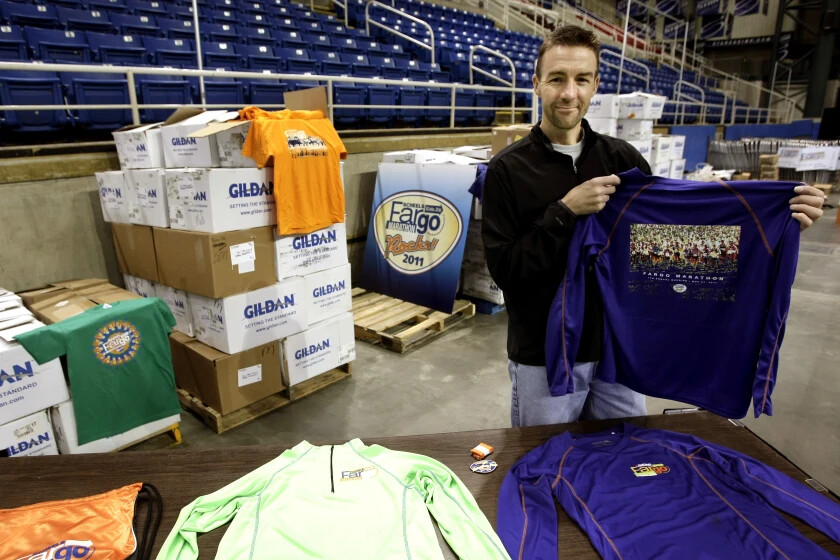
Knutson, 53, was on his bicycle going west in the 1100 block of South Shore Drive, just west of the intersection with Muir Lane, when he was struck by a westbound pickup truck pulling a boat just after 7 a.m., according to the Detroit Lakes Police Department.
The driver of the pickup truck was Jacob Grabowski, 42, of Fargo, authorities said. No criminal charges have been filed and the investigation is ongoing.
The news was a shock to those in the area fitness community, particularly runners. Knutson was planning for the 20th annual Essentia Fargo Marathon next May, an event that he talked about as possibly being his last as the race director.
Twenty years is a long time in that position, with many of those being spent with Almquist.
“The marathon is Mark,” Almquist said. “This is a huge loss for the community and the running community. He touched so many areas. The marathon touches so much of the community. It pumped in millions and helped improve people’s healthy lifestyles, improved people’s health and brought families together and it brought neighbors together.”
Almquist said Knutson was a master at multitasking, a guy who could be the finance guy, marketing guy and visionary guy.
“He was very good at not worrying about things and figuring things out as we went along,” Almquist said. “That’s very much needed in event management because we always expect the unexpected and you have to be able to roll with a lot of fluid issues.”
The idea of the Fargo Marathon surfaced from a Run for the Children half-marathon in 2004, with what was then called an “ambitious” goal of 5,000 runners. Almquist and Knutson were college friends from Minnesota State Moorhead. The last race of that distance in the area was the Harvest Bowl Marathon in 1985.
At the time, 5K or 10K races in Fargo-Moorhead drew maybe 200 runners at best.
“It was a pipe dream,” Almquist said of the marathon. “We were told ‘I know what you guys are trying to envision but, no, not here.’”
The first Fargo Marathon drew 2,641 runners on a cold day, with the race starting at Veterans Memorial Bridge between Fargo and Moorhead. Temperatures were in the mid-30s with winds gusting to 25 mph.
Five years later, the event drew almost 20,000 participants in the marathon, half-marathon, 10K, 5K and Youth Run. It peaked at 25,700 in 2012.
“Mark had a clear view of what the Fargo Marathon would ultimately become very early on,” said Eric Sondag, the 2008 men’s winner, “and he worked tirelessly to make that vision a reality.”
A few times, after the race day was done and workers were cleaning the streets and bike paths, Knutson ran the 26.2-mile route himself. Almquist did it once with him, starting around 6 p.m. and finishing in the Fargodome just over four hours later.
“Mark was the heart and soul of the Fargo Marathon and the region’s running community,” said Steve Wagner, a personal friend and longtime active member of the Fargo running community. “His kindness, philanthropy and leadership impacted tens of thousands of people who participated in the Fargo Marathon, Dick Beardsley races and dozens of other events. Those events helped people dream about goals and strive to be better versions of themselves. He was respected by race directors across the country and put the Fargo Marathon on the map as a world-class event.”
by Jeff Kolpack
Login to leave a comment

Fargo Marathon
The Fargo Marathon is a week full of events, The Fargo Marathon is bound to have something for everyone. From the Cyclothon, Furgo Dog Run, Largest Kid's Race, 5K Walk/Run, 10K, Half Marathon, Full Marathon and Relays, there is a distance for all! Start and Finish inside the Fargo Dome - ...
more...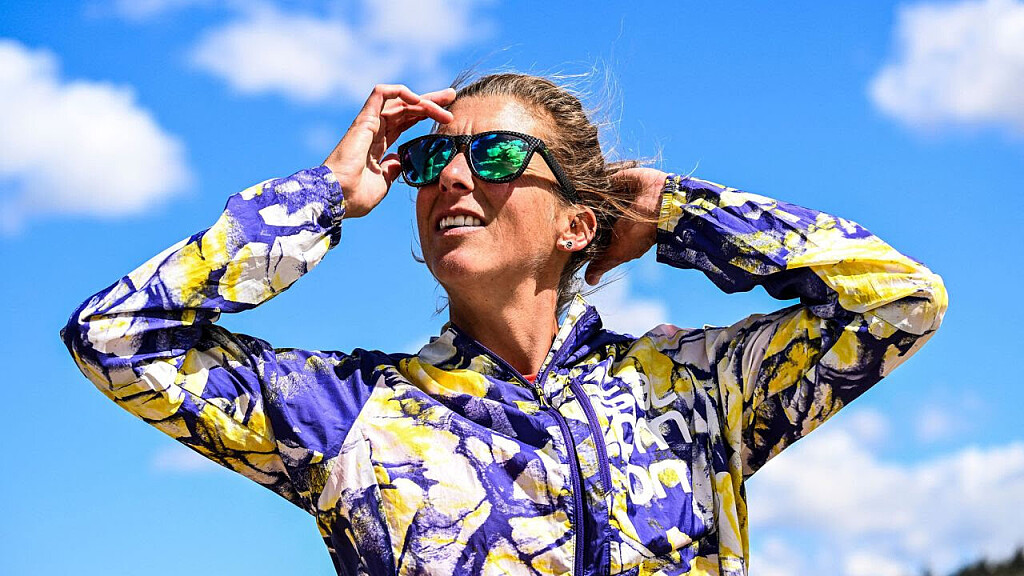
Courtney Dauwalter breaks record at Western States 100 by almost 80 minutes
Ultramarathon runner Courtney Dauwalter crushed the women’s course record at the Western States 100-mile race in California, taking more than an hour off the previous best time.
Dauwalter finished the Western States 100 – the world’s oldest 100-mile race – in 15 hours, 29 minutes and 34 seconds, almost 80 minutes faster than Ellie Greenwood’s record set in 2012. The race was first run in 1974.
“I just kept asking [my legs] to do one more mile for me and they kept responding, so I was very thankful for that,” Dauwalter told iRunFar about the last 20 miles of the race.

“I was definitely, though, deep in the pain cave and really focused on every single step, every single second.”
Cooler weather contributed to faster times at this year’s Western States 100, which started in the early hours of Saturday morning in Olympic Valley, California.
Snow covered much of the initial stages of the course before runners descended into a recently unshaded section scorched by last year’s Mosquito Fire.
After running with fellow American Katie Schide, Dauwalter started pulling away around the 30-mile mark, steadily eating away at Greenwood’s course record.
Covering 18,000 feet of climbing and almost 23,000 feet of descent across Californian trails, the race finishes on a high school running track in the city of Auburn in Placer County.
“I couldn’t believe when the track suddenly showed up and you make that turn, I was like: We did it! We’re here!” Dauwalter told iRunFar.
“Because that was the moment where I let myself actually believe that we had finished and we were about to be able to stop moving.”
Dauwalter, who is set to defend her title at the Hardrock 100 in Colorado in three weeks’ time, also won the Western States 100 in 2018, though her time this year was nearly two hours faster.
Most people’s idea of fun wouldn’t involve running for hours on end through brutal, undulating terrain – but ultra-marathon sensation Courtney Dauwalter is no ordinary person.
While an ultra-marathon is technically defined as any race longer than 26.2 miles, Dauwalter’s exploits tend to take place at distances far greater than that, usually between 100 to 250 miles.
The 38-year-old’s list of achievements is almost interminable. Dauwalter, a four-time ‘Ultra Running Magazine Ultrarunner of the year,’ holds multiple course records for the obscenely long races around the US and abroad.
Dauwalter’s breakout moment came at the Moab 240 – an annual 240-mile race in Utah. At the 2017 edition, shortly after making the decision to become a full-time ultra-runner, Dauwalter completed the course a scarcely believable 10 hours ahead of all other competitors – male and female.
The Transgrancanaria event on February 24 – Dauwalter’s most recent escapade - resulted in her 15th straight race win by gender dating back to March 2021, according to results database Ultrasignup.
The Minnesota native completed the grueling 128km course (79.5 miles) – including over 7000 meters of elevation gain - around the Canary Island in a course record 14 hours 40 minutes: over 90 minutes ahead of her closest competitor.
Login to leave a comment

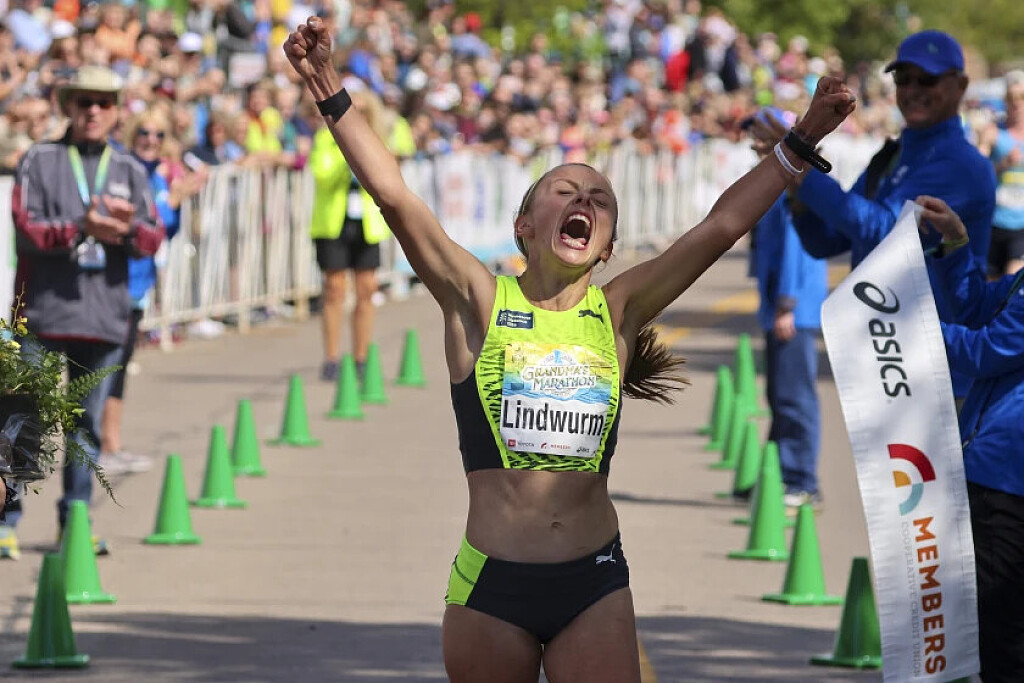
Five elite women to watch in 2023 Grandma's Marathon
Back-to-back defending Grandma’s Marathon champion Dakotah Lindwurm will attempt to become the third woman to ever win the race three times this week, and the first to three-peat since Mary Akor in 2009.
Lindwurm, the former hockey goaltender out of Eagan, Minnesota, is the favorite again in the elite women’s field for the 47th Grandma’s Marathon, which gets underway at 7:45 a.m. on Saturday in Two Harbors. The winner is estimated to arrive at the finish line at Canal Park in Duluth around 10:10 a.m.
Akor, of the U.S., went back-to-back-to-back in 2007, 2008 and 2009, while Lorraine Moller of New Zealand was the first woman to three-peat from 1979-1981.
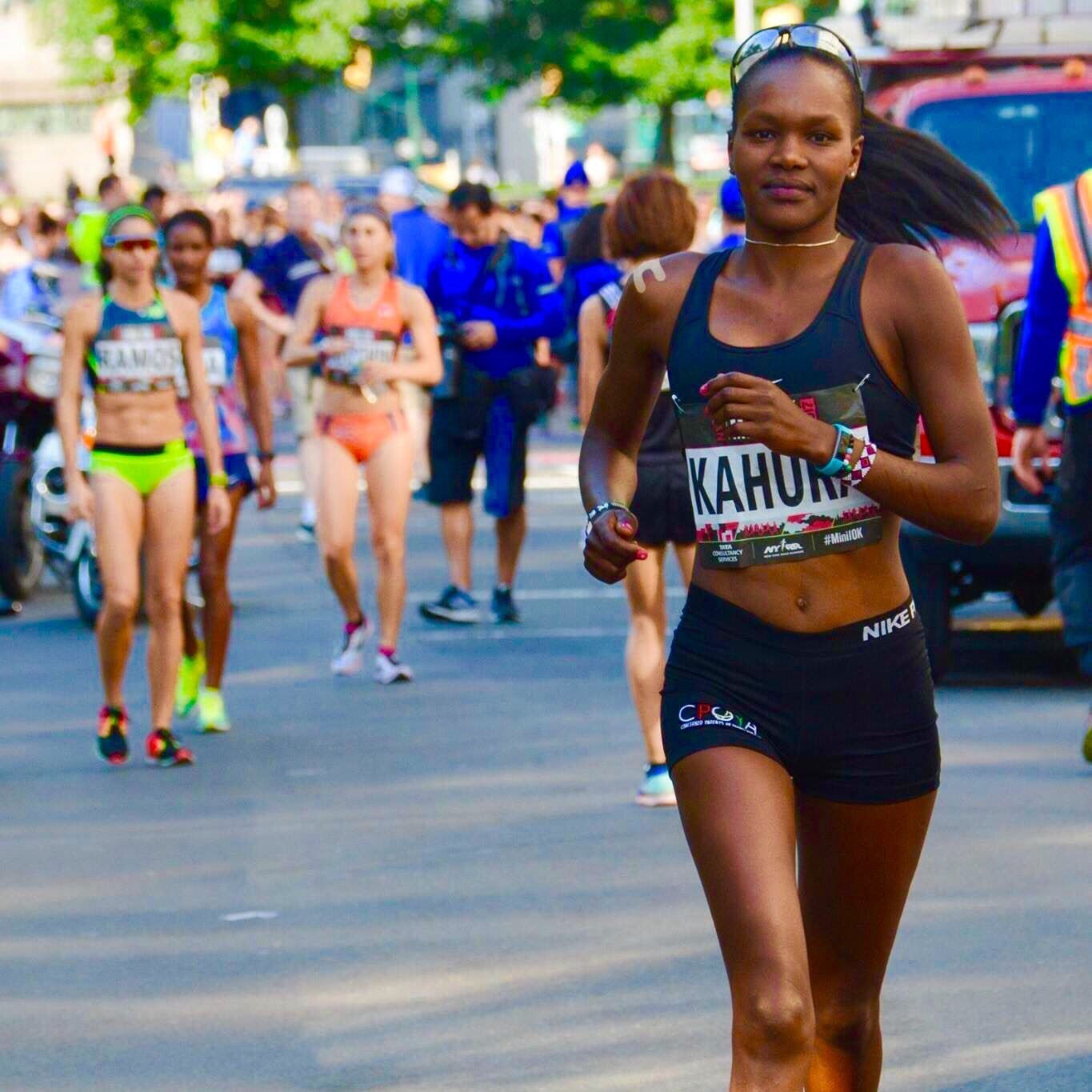
Here’s a look at the top contenders from the women’s elite field that are vying for the $10,000 first-place prize:
Five elite women to watch at 2023 Grandma’s Marathon
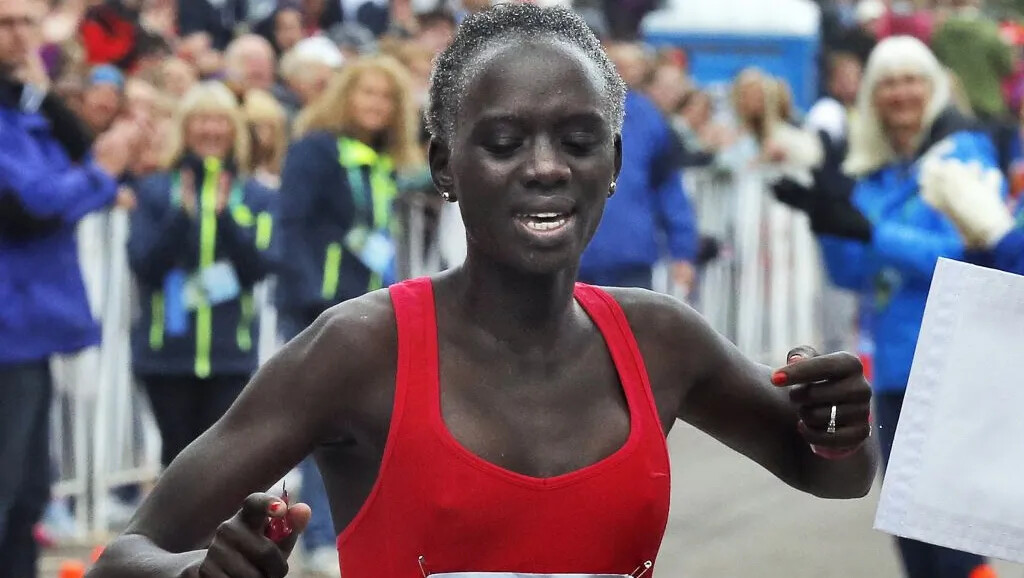
The Defending Champ
Dakotah Lindwurm, 28, United StatesPersonal record: 2:25:01 (2022 Grandma’s Marathon).
Two of Lindwurm’s fastest marathon times have come at Grandma’s, with her winning time last year being the second-fastest time in Grandma’s Marathon history — 33 seconds behind Kellyn Taylor’s record of 2:24:28 set in 2018. Lindwurm, who won in 2021 in 2:29:04, became the first Minnesotan to win Grandma’s Marathon that year since Janis Klecker in 1987. Lindwurm recently finished 26th at the Boston Marathon in 2:33:53.
The Past Champion
Pasca (Myers) Jerno, 36, United StatesPR: 2:33:43 (2014 Grandma’s Marathon)
Jerno is a 2014 Grandma’s Marathon champion, having posted a PR that still stands for her today. The Kenyan-born American beat out then-race record-holder Sarah Kiptoo (whose 2013 time still ranks fourth) for the title that year. Jerno has posted two top-10 finishes since winning in 2014, taking eighth in 2019 (2:36:13) and sixth in 2021 (2:36:48). In 2021, she also posted a seventh-place finish in the Chicago Marathon (2:32:51).
The Contender
Grace Kahura, 30, KenyaPR: 2:30:32 (2021 New York City Marathon)
Whether it’s been Grandma’s Marathon or Garry Bjorklund Half Marathon, Kahura has challenged for the podium, but only landed on it once. That was her Duluth debut in 2017 when she finished third in the half. Since then she’s finished fourth in her last three visits — Grandma’s in 2018 and 2021 and the Bjorklund a year ago. She ran Grandma’s in 2:33:34 back in 2021. That same year she set her PR in New York, finishing ninth.
The Up and Comer
Gabriella Rooker, 35, United StatesPR: 2:29:44 (2022 California International Marathon)
Like Lindwurm, Rooker wasn’t always a runner. Rooker is a three-time NCAA Division III individual and team gymnastics champion from Wisconsin-La Crosse. Grandma’s Marathon in 2021 was her running debut. She finished 26th with a time of 2:56:27, but came in 10th last year in 2:34:59. Her PR in California last year is the second best PR in the field behind Lindwurm, but still 4:43 back.
The Sleeper
Anne-Marie Blaney, 29, United StatesPR: 2:31:32 (2023 Boston Marathon)
Blaney bested Lindwurm back in April at the Boston Marathon, finishing two places higher in 24th and 2:21 faster. This will be Blaney’s first time in Duluth running Grandma’s Marathon, where she will need to shave another 6:31 to match Lindwurm’s winning time last year. Recent marathon results for Blaney include a fourth-place finish at the Ottawa International Marathon in 2022 (2:34:38) and 22nd place in the Chicago Marathon in 2021 (2:40:24).
by Matt Wellens
Login to leave a comment
Grandmas Marathon
Grandma's Marathon began in 1977 when a group of local runners planned a scenic road race from Two Harbors to Duluth, Minnesota. There were just 150 participants that year, but organizers knew they had discovered something special. The marathon received its name from the Duluth-based group of famous Grandma's restaurants, its first major sponsor. The level of sponsorship with the...
more...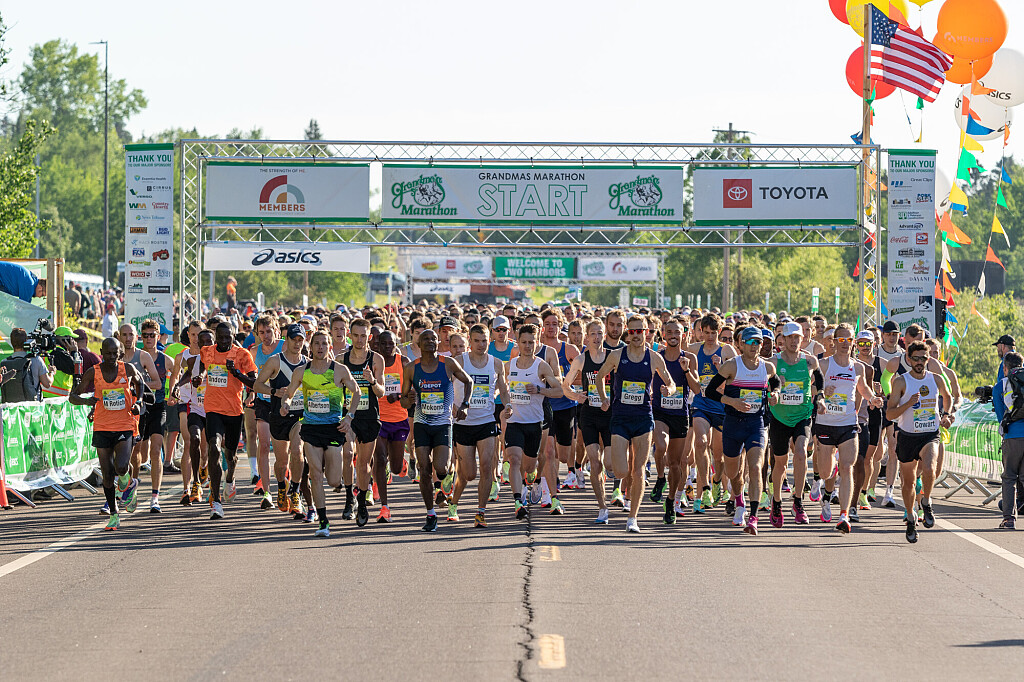
Former Champions Highlight Strong 2023 Grandma’s Marathon Field
Several former champions will return to this year’s Grandma’s Marathon, highlighting a field that’s expected to include some of the best American distance runners ahead of next year’s U.S. Olympic Trials.
GRANDMA’S MARATHON
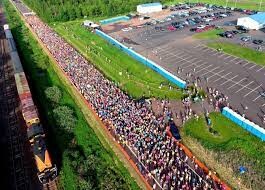
Defending champion and event record holder Dominic Ondoro returns on the men’s side, that after winning his second Grandma’s Marathon last summer. He’s joined by countrymen and former champions themselves, Milton Rotich and Elisha Barno.
Ondoro, who broke Dick Beardsley’s longtime event record with his winning run in 2014, will be trying to become just the second man to win three or more Grandma’s Marathons. The only to have done it so far is Barno, who won four straight titles from 2015-18.
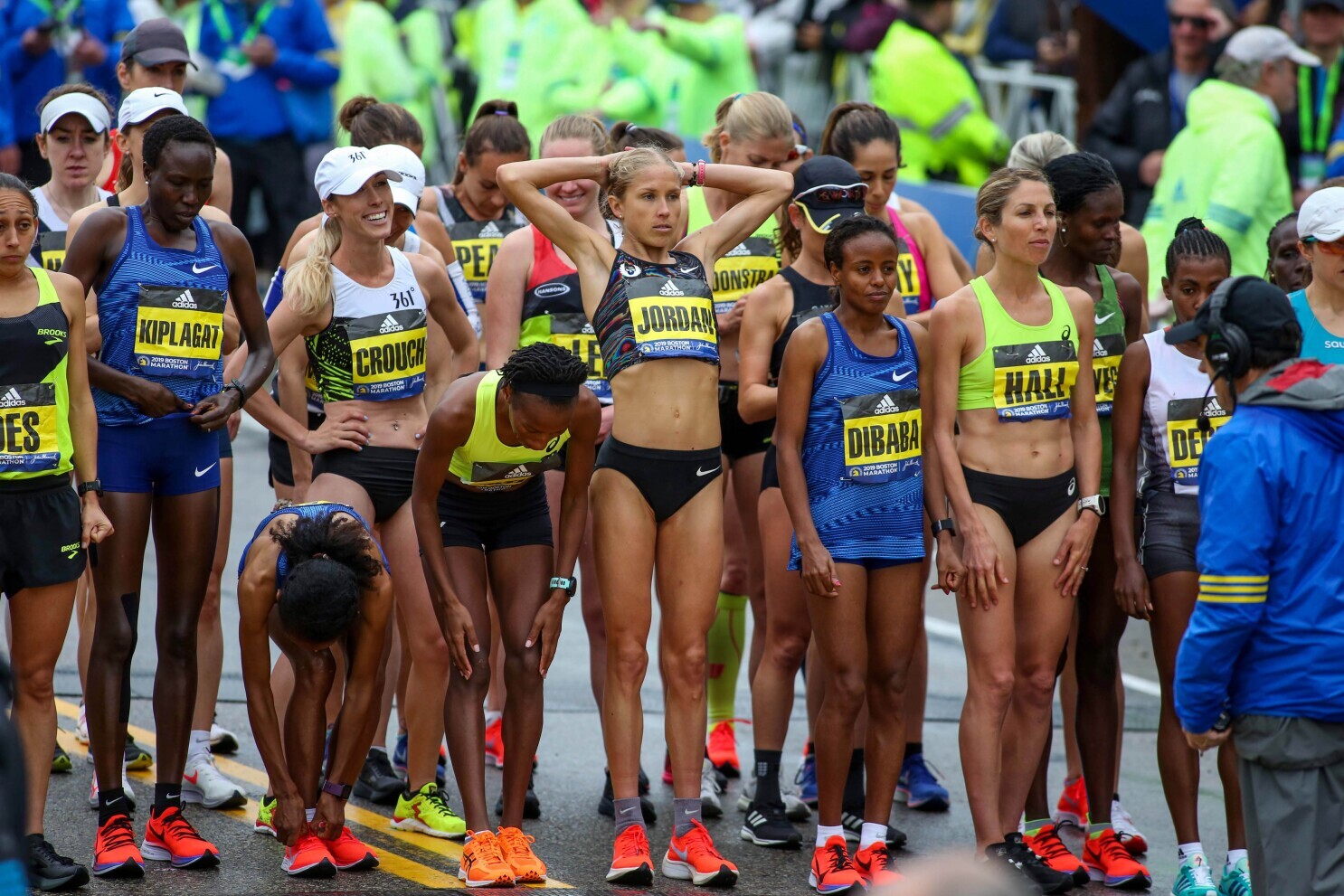
NOTE: Elisha Barno will be officially inducted on Friday, June 16 into the Grandma’s Marathon Hall of Fame as part of the Class of 2023, making him the first athlete inducted since 2017.
Kevin Lynch not only leads a pack of American men aiming to qualify for the U.S. Olympic Trials, but is also hoping to become the first American men’s winner of Grandma’s Marathon since Chris Raabe did it in 2009.
Minnesotan and fan favorite Dakotah Lindwurm returns on the women’s side as a favorite to win her third-straight Grandma’s Marathon, which would make her the third woman to accomplish that feat.
New Zealand’s Lorraine Moller won three straight women’s races from 1979-81, and American Mary Akor then did it from 2007-09.
Lindwurm’s personal record of 2:25:01, which she ran in last year’s winning effort at Grandma’s Marathon, is more than four minutes better than any other woman in the field, though Gabriella Rooker is back this year after finishing 10th place last summer in her Duluth debut.
GARRY BJORKLUND HALF MARATHON
Neither the men’s or the women’s defending champion is back in the Garry Bjorklund Half Marathon, but 2016 winner Macdonard Ondara is back this year for his fourth run in Duluth. He will lead a strong group of returners on the men’s side, with each of the top five runners having been here before.
Garry Bjorklund Half Marathon rookie Lydia Mathathi leads things on the women’s side, and the Kenyan’s personal best is a time that, if repeated, would break the storied mark of Duluth native Kara Goucher. Followed by four Americans who are also making their debut in Duluth, Mathathi would be the first Kenyan to win this race since Monicah Ngige in 2018.
by Running USA
Login to leave a comment
Grandmas Marathon
Grandma's Marathon began in 1977 when a group of local runners planned a scenic road race from Two Harbors to Duluth, Minnesota. There were just 150 participants that year, but organizers knew they had discovered something special. The marathon received its name from the Duluth-based group of famous Grandma's restaurants, its first major sponsor. The level of sponsorship with the...
more...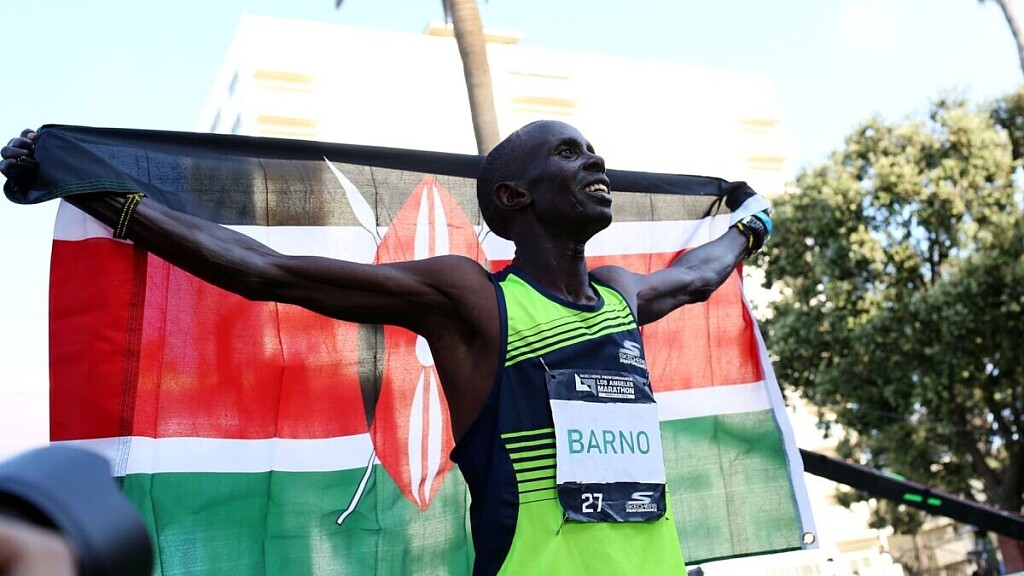
Four-time Grandma's Marathon champion Barno adds Hall of Famer
The next time Elisha Barno crosses the finish line of Grandma’s Marathon in Duluth’s Canal Park, he’ll not only be the winningest marathoner in the race’s history, but a Hall of Famer as well.
Barno, who won Grandma’s Marathon four straight times from 2015-18, is among three inductees to the Grandma’s Marathon Hall of Fame this year along with volunteer Dan Dock and board member Barb Korte. All three will be enshrined during the Grandma’s Marathon Awards luncheon at noon on Friday, June 16 at The Garden Event Center.
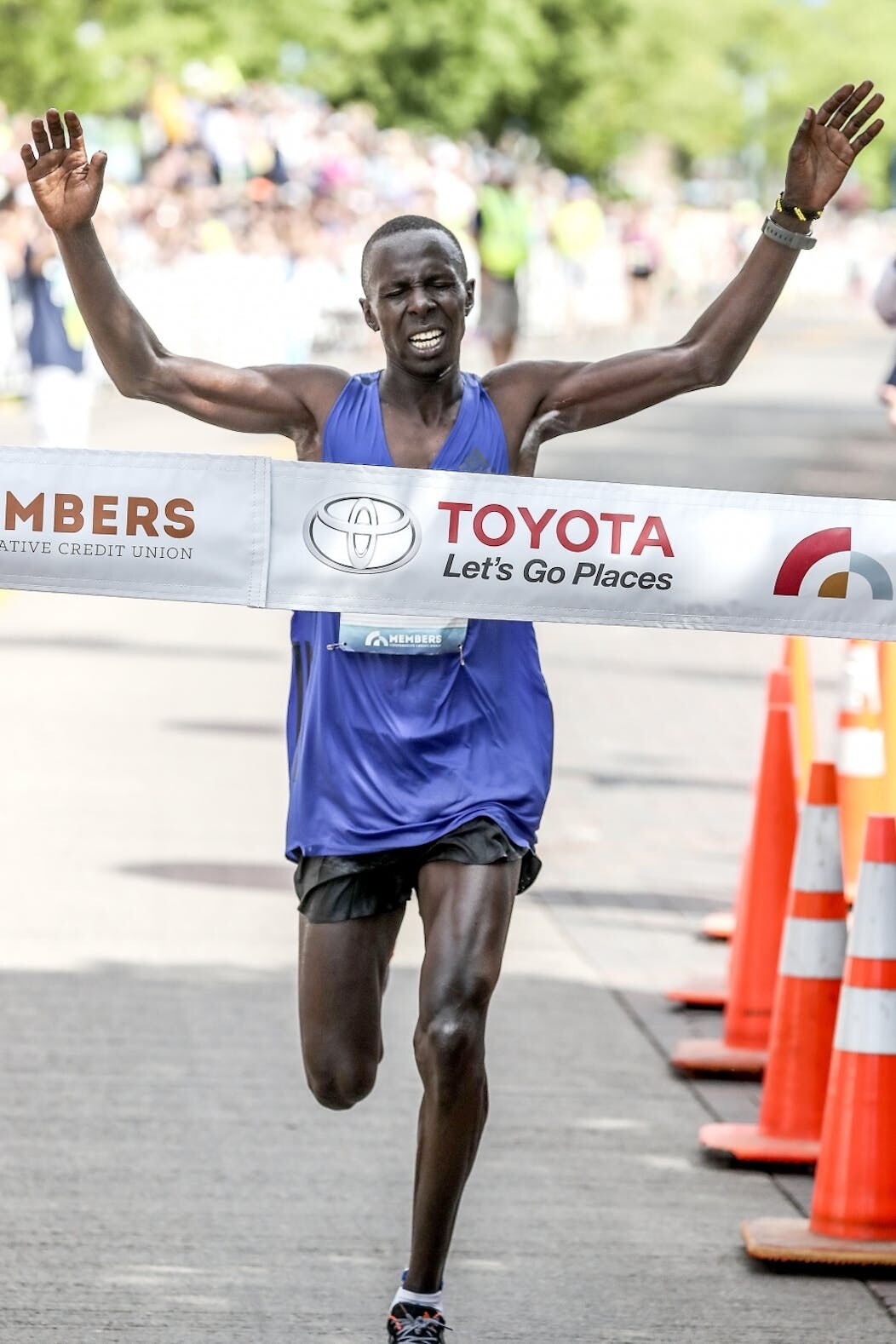
Barno owns three of the top 10 times posted by a man in Grandma’s Marathon, with his winning time of 2 hours, 10 minutes, 6 seconds in 2018 being the fourth-fastest ever for Grandma’s Marathon.
Back again in 2023 to run Grandma’s at 37 years old, Barno is coming off a fourth-place finish in which he posted his second-fastest time at Grandma’s, 2:10:22. That’s good for eighth all-time among Grandma’s finishers.
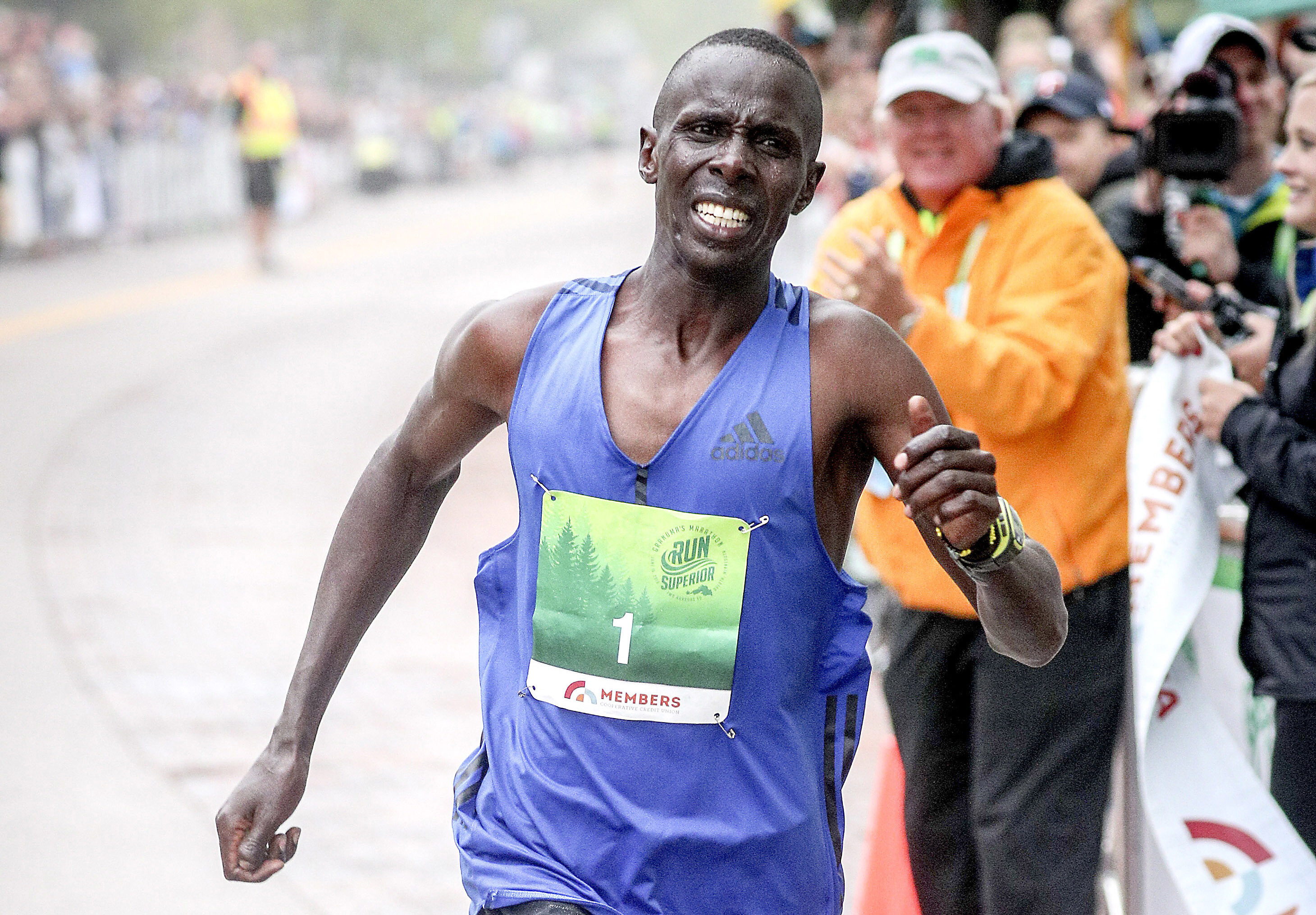
The Grandma’s Marathon Hall of Fame honors those who make longstanding and meaningful contributions to the race and community.
Dock has been volunteering at the Grandma’s Marathon finish line in various capacities for 37 years. Before the race started using chips to time runners, he was part of the crew that helped manually time finishers.
Korte has served on the Grandma’s Marathon Board of Directors since 1994 and has chaired the board twice. Korte has worked the finish line on race day and coordinated the spaghetti dinner on Friday nights. Her biggest claim to fame, according to Grandma’s Marathon, is organizing the annual cleanup of a section of the racecourse along Scenic Highway 61 between Two Harbors and Duluth.
The Grandma’s Marathon Hall of Fame now includes 91 individuals, organizations and municipalities since inducting its first class in 1996.
Award of Excellence named in honor of Welles
First given to Chester Keenan in 2001, Grandma’s Marathon has renamed its Award of Excellence in honor of longtime employee and volunteer Mac Welles, who died in December 2022.
This year’s recipient of the Mac Welles Award of Excellence is Tom Rovinsky, who since the early 2000s has been one of the lead racecourse water delivery drivers, fueling the 15 water and aid stations along the 26.2-mile course between Two Harbors and Duluth.
Not every water station along the race course has nearby sources to draw from, as some are located in remote areas along the shore of Lake Superior. Rovinsky begins on Friday, delivering water to those locations and continues into the morning on Saturday.
Law enforcement officers recognized for public service
A pair of long-serving northern Minnesota law enforcement officers — Pete Goman and Mike Tusken — are the recipients of this year’s Rudy Perpich Public Service Award from Grandma’s Marathon.
The award is presented annually to elected officials or public employees who help out with Grandma’s Marathon weekend, and is named after former Minnesota governor Rudy Perpich.
by Matt Wellens
Login to leave a comment
Grandmas Marathon
Grandma's Marathon began in 1977 when a group of local runners planned a scenic road race from Two Harbors to Duluth, Minnesota. There were just 150 participants that year, but organizers knew they had discovered something special. The marathon received its name from the Duluth-based group of famous Grandma's restaurants, its first major sponsor. The level of sponsorship with the...
more...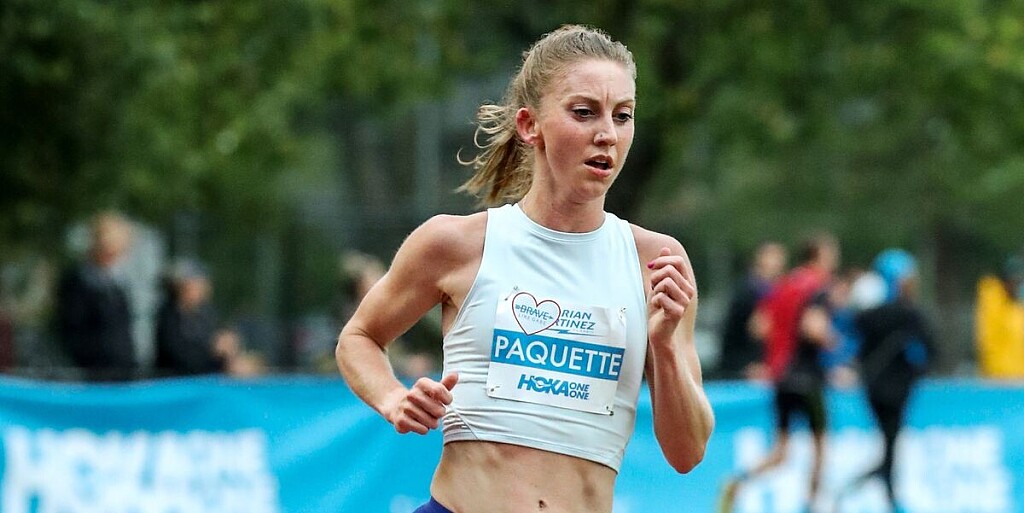
Lauren Paquette to make marathon debut at 2023 Grandma’s Marathon
Lauren Paquette, an athlete from HOKA Northern Arizona Elite, and former collegiate star, will be making her marathon debut at the 2023 Grandma’s Marathon, as announced earlier this month on her club’s official website.
Paquette, a Baylor University graduate from 2008, has participated in several Half Marathon races since her debut in the event in 2014, where she recorded a time of 1:15:57. Over the years, she has achieved a personal best of 1:09:46 and secured a fourth-place finish at the USATF Half Marathon Championships in 2021. However, she has yet to compete in a full marathon.
This will change in the upcoming summer schedule as Paquette has decided to make her marathon debut at the 2023 Grandma’s Marathon, scheduled for June 17 in Duluth, Minnesota.
She expressed her choice, stating, “I chose Grandma’s Marathon because it offers a great course and promises to be a fun race for my debut.”
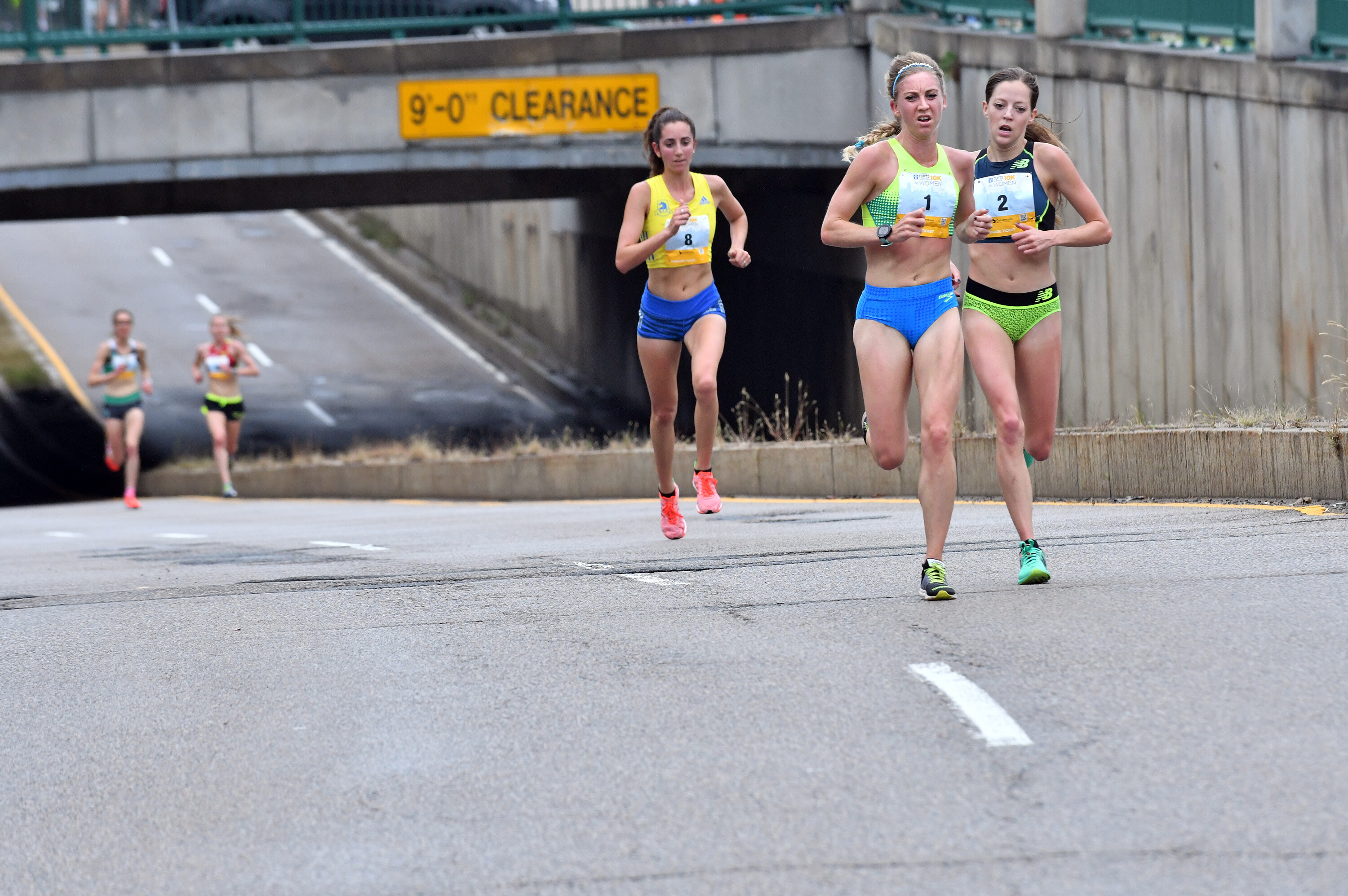
Recently, Paquette achieved a second-place finish at the USATF Half Marathon Championships in February, clocking a time of 1:09:51, which was close to her personal best. The 36-year-old athlete aims to carry over the momentum from her recent success and make a strong impression in her first marathon.
HOKA Northern Arizona Elite has had success at the Grandma’s Marathon in the past, and Paquette will be looking to contribute to that legacy.
Notably, Dakotah Lindwurm, the two-time defending champion, is among the already confirmed runners for this year’s event.
Lindwurm, who placed 33rd at the 2023 B.A.A. Boston Marathon in April, won last year’s Grandma’s Marathon with a personal best time of 2:25:01, and will aim for a three-peat in this year’s race.
by Glen Andrews
Login to leave a comment
Grandmas Marathon
Grandma's Marathon began in 1977 when a group of local runners planned a scenic road race from Two Harbors to Duluth, Minnesota. There were just 150 participants that year, but organizers knew they had discovered something special. The marathon received its name from the Duluth-based group of famous Grandma's restaurants, its first major sponsor. The level of sponsorship with the...
more...
Toroitich, Poltavska take men's, women's titles in Cellcom Green Bay Marathon
The University of Minnesota runner and former Valders cross-country and track star celebrated turning 19 in style Sunday, winning the Cellcom Green Bay half marathon in 1 hour, 12 minutes, 30 seconds and taking home $750 in winnings as a present.
It was the second time Griepentrog has run Cellcom’s half marathon after finishing third in 2022.
He was faster by more than a minute this year, averaging 5:32 per mile during the 13.1-mile race.
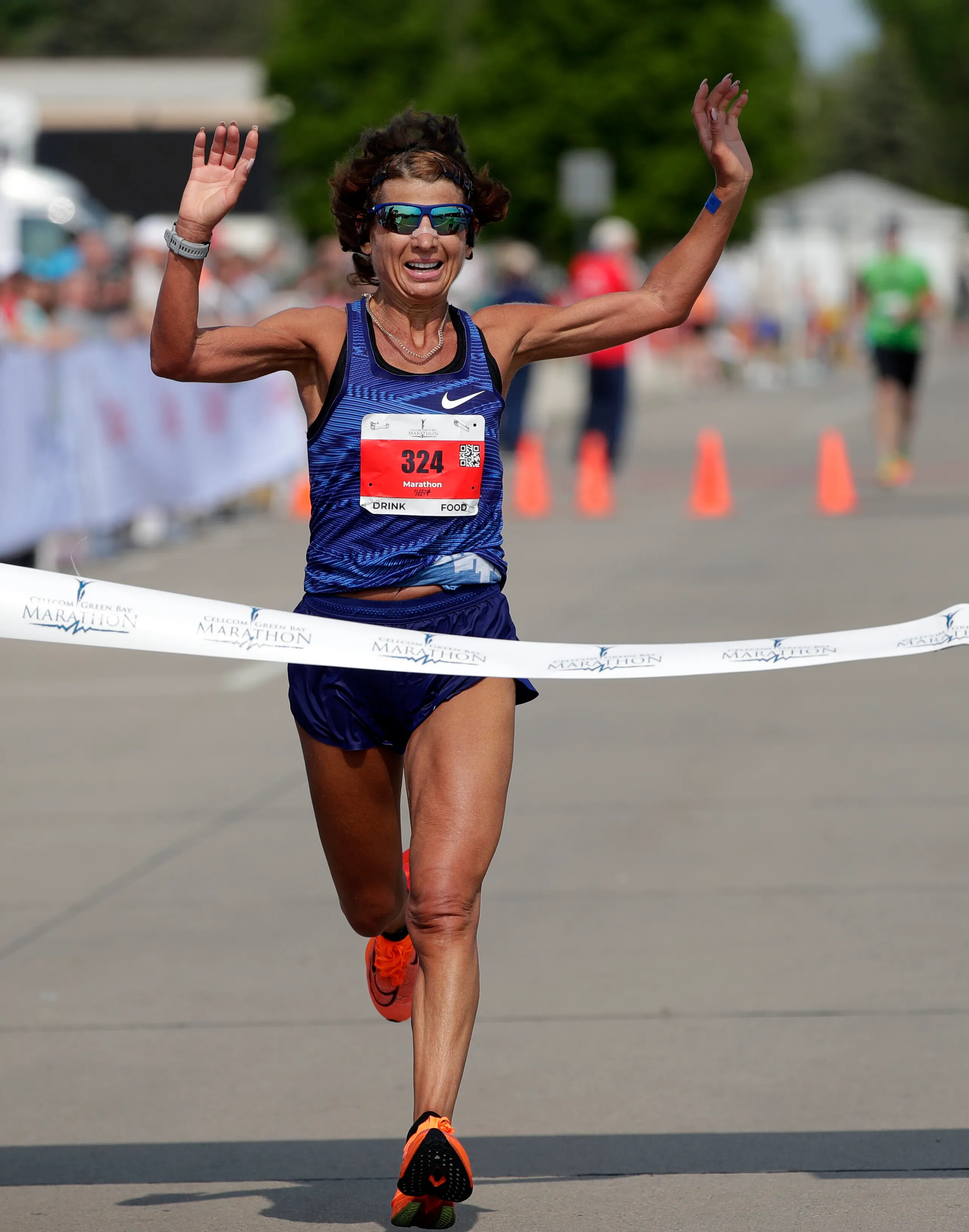
His goal again was to finish among the top three, but he was feeling so good toward the end of the race he figured he’d push himself a little harder and go for the win.
Not only did he win, but he did so in commanding fashion.
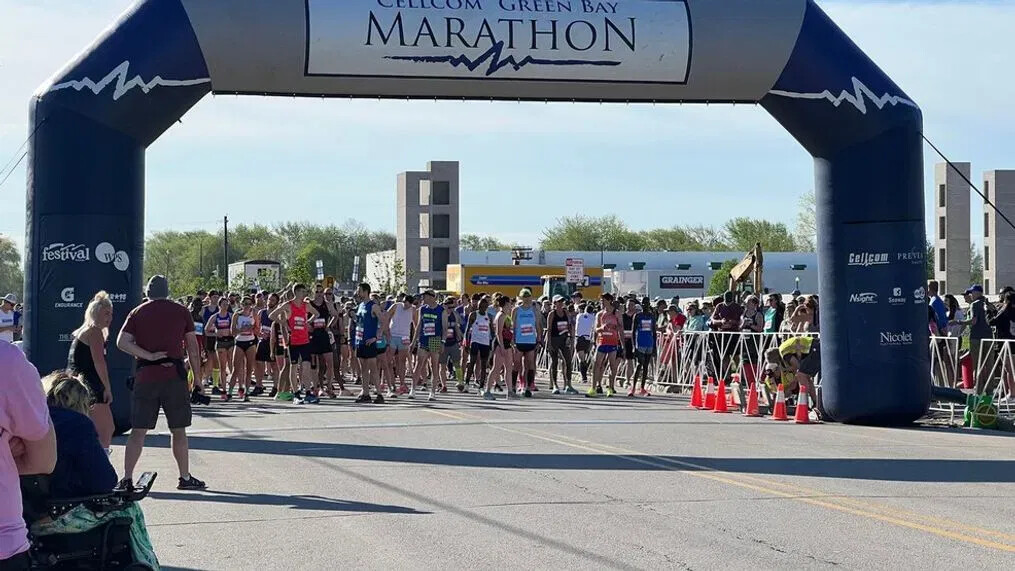
Runner-up Riley Martin of Pickett finished in 1:15.27, while Kyle Peotter of Appleton was third in 1:17:08.
Griepentrog was the best of 1,195 runners competing in the half marathon.
“It went really well,” Griepentrog said. “It was beautiful weather. Can’t complain about that. Just finished up my track season, so I said I might as well use my fitness for a little fun half marathon.
“Came out this morning and had a blast.”
Griepentrog signed a letter of intent in January 2022 to compete for the Gophers in both cross-country and outdoor track.
He was one of the best high school runners in the state during a decorated career at Valders, leading his team to the WIAA Division 2 state team titles in 2018 and 2019 and a D3 championship in 2021, when he also captured the individual state championship.
Griepentrog was just as dominant in track. He won both the 3,200-meter run and 1,600 state championships as a senior, one year after winning a title in the 3,200 and finishing runner-up in the 1,600.
His older brother, Nate, runs for UW-Milwaukee.
Griepentrog and his fellow freshmen all redshirted at Minnesota this year. They competed in some area meets but did not travel with the team for road trips.
“Kind of just a year to get some big training under our belt,” Griepentrog said. “Maybe not feel the greatest, but just go out there and gain the experience and race with the big dogs a little bit and just kind of soak in your first year.
“This year was not so much like competing, competing, competing. It was get better, get used to it and mold into the university standards.”
Griepentrog already can see there is a big difference between competing in the Big Ten and what he faced in high school, but he will be ready to help the Gophers this year.
“We did race at a couple of the big meets for cross-country,” said Griepentrog, whose track season ended last week while the cross-country season starts at the end of August. “It’s definitely a different animal. Something I have to get used to. In high school, you are used to running in the front pack with a couple guys. It’s strung out.
“In college, you are just in a massive 80 people. You can’t even see where you are on the course. It takes a lot to get used to.”
by Scott Venci
Login to leave a comment

Cellcom Green Bay Marathon
The Cellcom Green Bay Marathon and Half Marathon courses are considered to be fast and flat, by race industry comparisons. The courses finish with a “tailgate” themed party in the Lambeau Field parking lot! The marathon starts in front of Lambeau Field and pass along tree-lined streets in west Green Bay and the village of Ashwaubenon. Then the marathoners head...
more...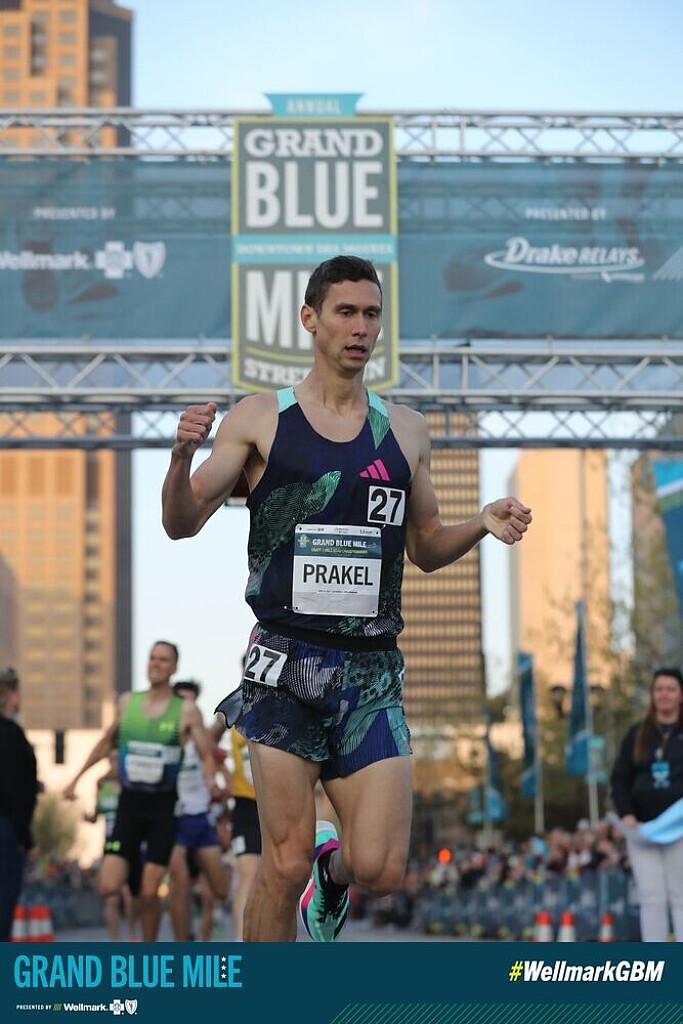
Nikki Hiltz, Sam Prakel both become two-time winners at Usaft 1 mile road
The USATF Indoor 1,500-meter winners demonstrated they could also rule the roads Tuesday night at the USATF 1 Mile Championships.
Nearly 10 weeks after both winning USATF Indoor titles Feb. 18 in Albuquerque, N.M., adidas professional Sam Prakel and Lululemon athlete Nikki Hiltz each secured their second career national road championships as part of the annual Grand Blue Mile event.
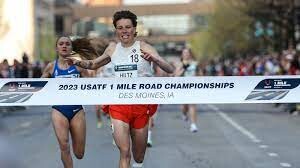
Hiltz produced the fastest performance in the history of the women’s race, which began in 2009, clocking 4 minutes, 27.97 seconds to edge reigning USATF Outdoor 1,500 champion Sinclaire Johnson of Nike’s Union Athletics Club in 4:28.70.
Hiltz, who prevailed in 2019 in Des Moines in 4:29.7, became the only athlete in event history to produce a pair of sub-4:30 efforts, benefitting from a 65-second opening quarter-mile and the pack reaching the midway point in 2:14.
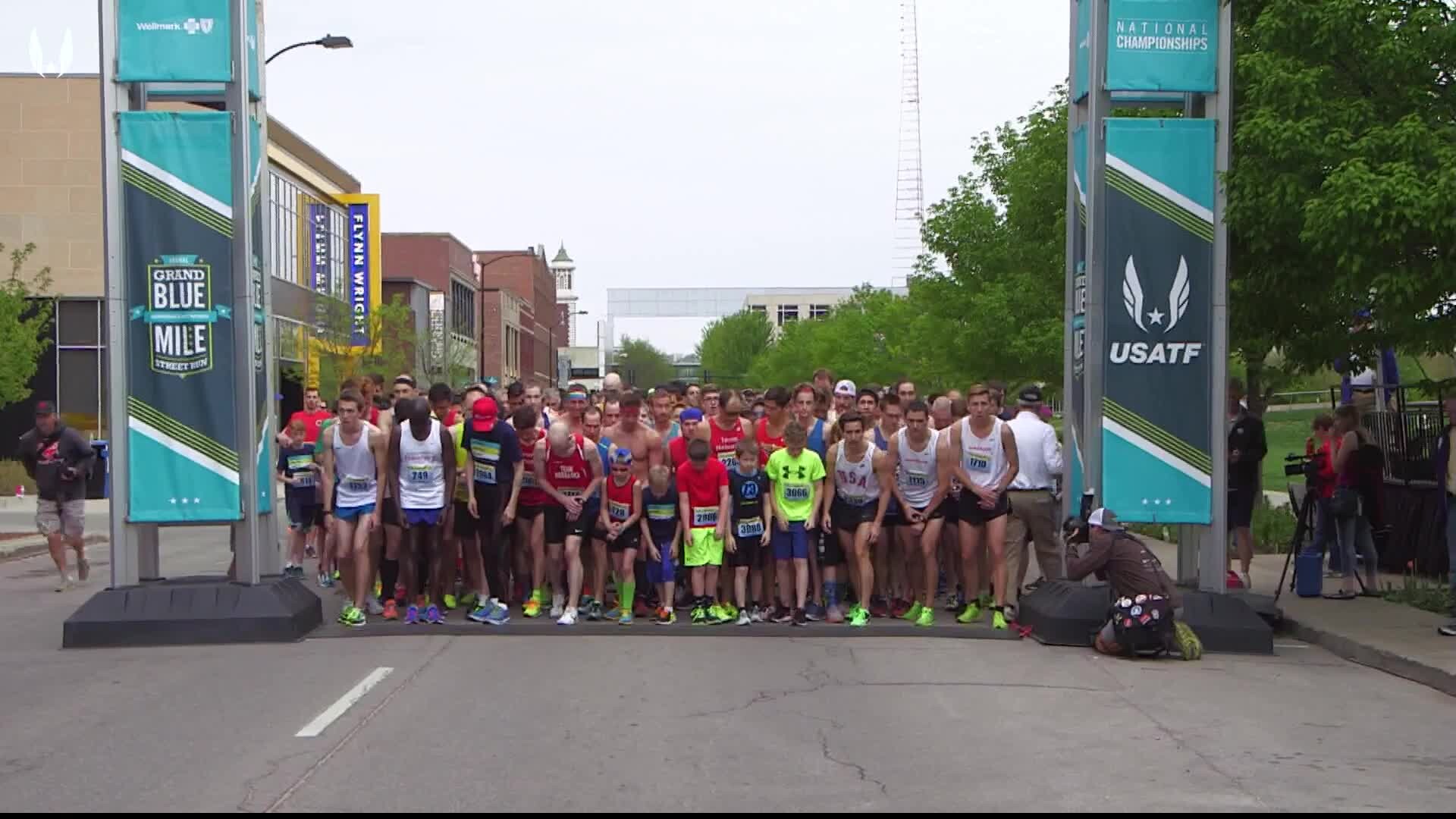
Emily Lipari, who had the previous all-time mark of 4:29.3 in 2020, and Johnson are the only other competitors to achieve a sub-4:30 performance in the race.
Hiltz, who ran a lifetime-best 1:59.03 in the 800 meters April 14 at the Bryan Clay Invitational at Azusa Pacific University, earned $5,000 for the victory and an additional $2,500 for the record bonus. Hiltz also joined Heather Kampf and Emily Lipari as the only three competitors to capture multiple women’s championships in event history.
Addy Wiley, a freshman at Huntington University in Indiana who secured five NAIA Indoor national titles March 2-4 in South Dakota, raced for the first time since that memorable showcase and took third in 4:30.94.
Wiley, 19, became the youngest top-three finisher in event history and achieved the No. 6 all-time performance in the nine years the competition has been held in Des Moines.
Wiley, who placed fourth in the 1,500 at the USATF Indoor Championships in February in Albuquerque, elevated to No. 7 in the history of the national road mile competition, including Sara Hall clocking 4:30.8 in Minnesota to secure the 2011 crown.
Colleen Quigley, representing Lululemon, finished fourth in 4:31.1 in her debut at the event, with Nike’s Shannon Osika and Alex Teubel also being credited with 4:31 performances to secure fifth and sixth.
Alli Cash (4:32), Jenn Randall (4:33), Micaela DeGenero (4:34) and Helen Schlachtenhaufen (4:37) completed the top 10 women’s competitors in the 23-athlete race.
Prakel prevailed in 4:01.21, remaining patient following an opening quarter mile of 61 seconds and a 2:05 split at the midway point, to take control in the final 500 meters and never relinquish his advantage.
Under Armour Mission Run Baltimore Distance athlete Casey Comber edged last year’s champion Vincent Ciattei by a 4:02.88 to 4:02.91 margin to grab second.
Prakel, who ran 13;22.78 in the 5,000 meters April 14 at Bryan Clay, also secured a $5,000 prize for the road mile title, becoming only the third male athlete in event history to capture multiple championships, joining David Torrence (2009-11) and Garrett Heath (2013 and 2015).
Prakel produced the fastest all-time mark in Des Moines with his 3:58.3 effort in 2020. Ben Blankenship holds the meet record with his title in 3:55.8 in 2016 in Minnesota.
Nick Randazzo, Kasey Knevelbaard and Jake Gillum were all credited with 4:04 performances to finish fourth, fifth and sixth, followed by Shane Streich and David Ribich both clocking 4:05 for seventh and eighth, Craig Nowak earning ninth in 4:06 and Colin Abert taking 10th in 4:08 in the 17-athlete race.
Login to leave a comment

Grand Blue Mile
The Grand Blue Mile was created by Wellmark Blue Cross and Blue Shield and the Drake Relays to encourage healthy habits and empower positive change. Held annually since 2010, the Grand Blue Mile has hosted more than 30,000 participants from 26 states, six countries, and four continents. The annual event brings friends and families together to celebrate wellness through a...
more...
Elite Fields Released For USATF 1 Mile Road Championships At The Grand Blue Mile
Elite Fields Released For USATF 1 Mile Road Championships At The Grand Blue Mile.
On November 30, 2022, World Athletics, the international governing body of the sports of track and field and road running, announced that an official world record for the road mile would be introduced beginning on January 1, 2023.
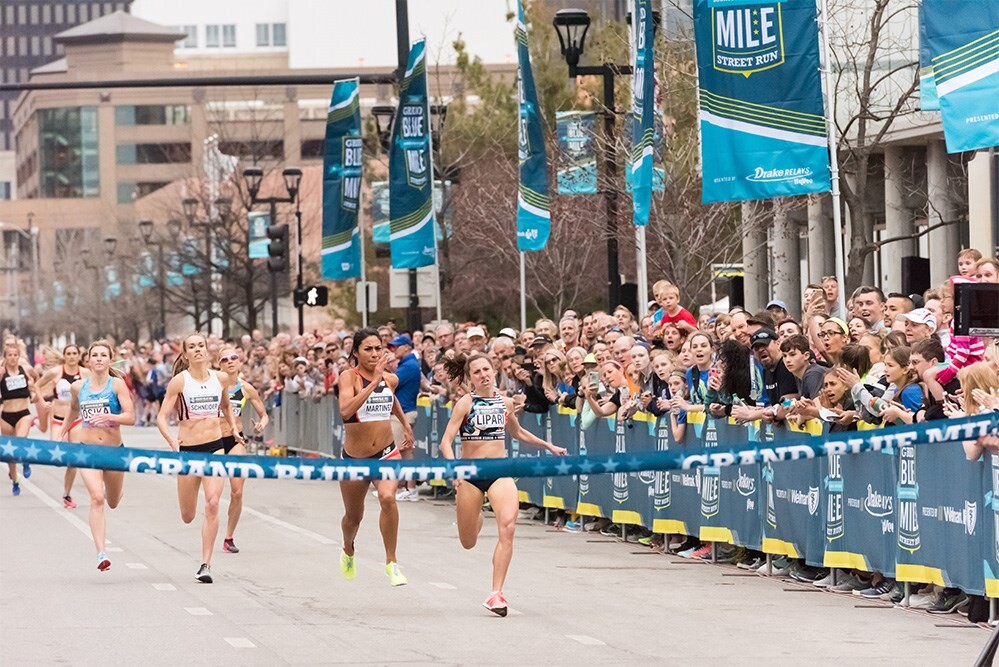
The flat and fast Grand Blue Mile course meets all requirements for World Record ratification, quickly distinguishing the 2023 USATF 1 Mile Road Championships as a destination for American athletes aspiring to make history. For immediate ratification, a World Record will require a performance of at least 3:50.00 for the men and 4:19.00 for the women. If the listed standards are not met by September 1, the fastest recorded, record-eligible performances will be recognized as the World Records.
After thousands of recreational and competitive runners have navigated the 1 mile course through downtown Des Moines, more than 40 elite runners will compete for the title of USA Road 1 Mile Champion. Those runners include four former 1 Mile Road Champions in Sam Prakel (2020), Katie Follett (2017), Nikki Hiltz (2019) and the defending men’s champion Vincent Ciattei.
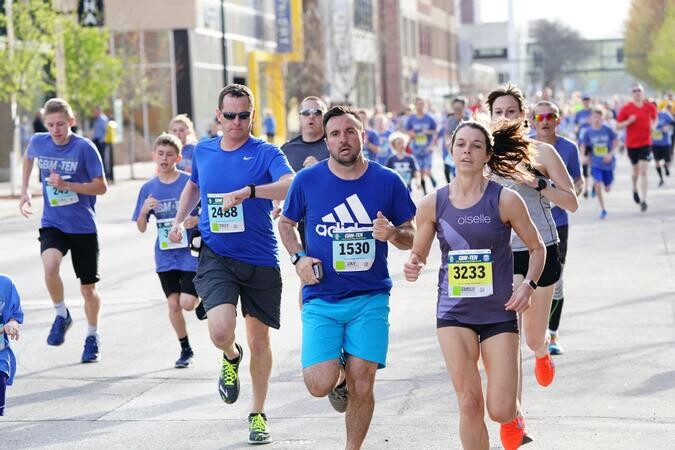
Ciattei won last year’s race in 4:03 but owns a personal best of 3:51 and was an NCAA runner-up in the mile and 1,500m as a collegian at Virginia Tech.
Prakel claimed the title in 2020 in a COVID pandemic-altered race that finished in Drake Stadium. He aims to add a third national title to his resume this year, as he recently claimed USATF indoor titles in the 3,000m and 1,500m. The men’s field also includes faces familiar to the Grand Blue Mile in Shane Streich, who finished third last year, and Abe Alvarado, who was fourth in 2021.
Nikki Hiltz, a champion in the event in 2019, returns to Des Moines fresh from the USATF Indoor Championship in the 1,500m they captured in March. The 2019 Pan-American Games gold medalist was also a 2019 World Championships qualifier.
Sinclaire Johnson joins the field to make her Grand Blue Mile debut after winning the USATF Outdoor 1,500m title in 2022 to earn her a spot at the 2022 World Championships, where she finished sixth.
The women’s lineup also includes a pair of Iowa talents returning to Des Moines in Alex Teubel and Abby Kohut-Jackson. Teubel, an assistant coach at UNI, finished third in last year’s race, and the Lisbon, Iowa, native was an Olympic Trials finalist in the 3,000-meter steeplechase. Kohut-Jackson is a product of Ballard, Iowa, who advanced to the USATF Outdoor Championships finals in the steeplechase and was Big Ten champion in the event at the University of Minnesota.
The fastest road mile ever run on Iowa soil was at the inaugural Grand Blue Mile in 2010, when Boaz Lalang won in 3:54.3. A special incentive has been created for the winner, who eclipses that time or 4:29.3 in the women’s championship race. A performance that is successfully ratified as a new World Record will earn an additional $5,000 bonus.
The full fields are listed below.
Men’s USATF 1 Mile Road Championship
Colin Abert
Abe Alvarado
Michael Brannigan
Jacob Brueckman
Luca Chatham
Vincent Ciattei
Casey Comber
Graham Crawford
Owen Hoeft
Austin Dalquist
Jonathan Davis
Kasey Knevelbaard
Nate Mylenek
Craig Nowak
Sam Prakel
Nick Randazzo
David Ribich
Nate Sloan
Shane Streich
Women’s USATF 1 Mile Road Championship
Stephanie Brokaw
Katie Camarena
Alli Cash
Anna Connor
Micaela DeGenero
Katie Follett
Eleanor Fulton
Jessa Hanson
Nikki Hiltz
Marisa Howard
Sinclaire Johnson
Abby Kohut-Jackson
Melissa Menghini
Shannon Osika
Angel Piccirillo
Colleen Quigley
Jenn Randall
Emily Richards
Helen Schlachtenhaufen
Alex Teubel
Emi Trost
Addy Wiley.
by Letsrun
Login to leave a comment
Grand Blue Mile
The Grand Blue Mile was created by Wellmark Blue Cross and Blue Shield and the Drake Relays to encourage healthy habits and empower positive change. Held annually since 2010, the Grand Blue Mile has hosted more than 30,000 participants from 26 states, six countries, and four continents. The annual event brings friends and families together to celebrate wellness through a...
more...
Four runners complete indoor marathon during pro basketball game
An unusual race took place in an NBA G League basketball game on Wednesday evening in Des Moines, Iowa. The Iowa Wolves hosted a mid-game marathon inside Wells Fargo Arena, which involved fans running 111 laps around the 380-meter concourse.
The event was hosted by the IMT Des Moines Marathon and the Iowa Wolves, a farm team for the NBA’s Minnesota Timberwolves. The runners began the marathon at 5 p.m., two and a half hours before tip-off, and were given a five-hour window to complete the race (by the time the game ended, around 9:30-10 p.m.). Four runners finished the full 42.195 kilometers.

“Running a marathon in the evening and on a flat course is very non-traditional,” said race participant Dennis Haney. “Most marathons start in the morning. And one that is the same temperature the entire time is very unusual.”
Fans watched and cheered on the marathoners before and during the game. The runners were featured on the arena’s jumbotron during most stoppages in play.
One participant told local news the race was an interesting experience. “The majority of the crowd was for the basketball game,” said the marathoner. “But it was fun to be heckled for 111 laps of the arena.”
According to the Des Moines Register, this was the first marathon held during a professional basketball game.
The Iowa Wolves went on to win 139-131 over the Birmingham Squadron.
by Marley Dickinson
Login to leave a comment
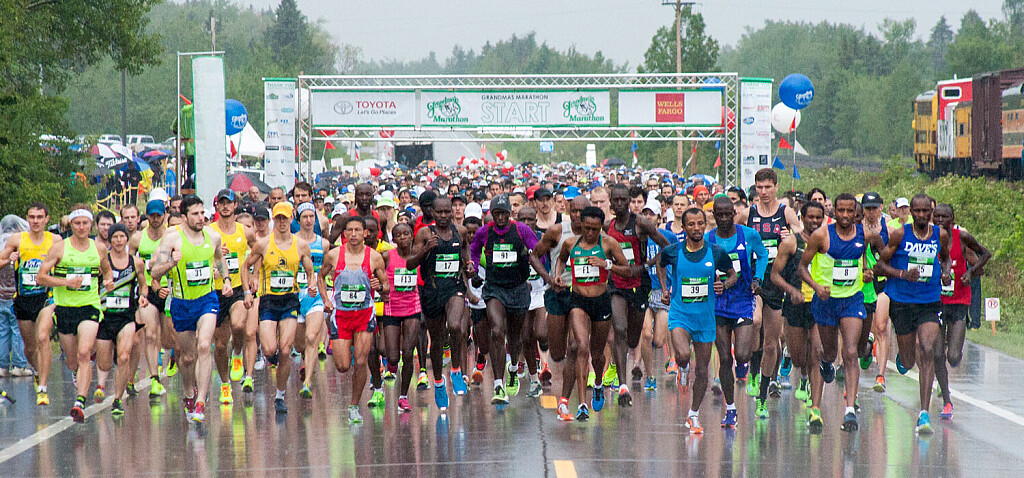
Grandma’s Marathon Field Full, Marking One of Quickest Sellouts on Record
The 2023 Grandma’s Marathon field has reached its capacity, making this one of the fastest sellouts on record for the 26.2-mile race.
More than 9,000 participants are signed up for both Grandma’s Marathon and the Garry Bjorklund Half Marathon, keeping this year’s event on pace to be one of (if not) the largest race weekends in history.
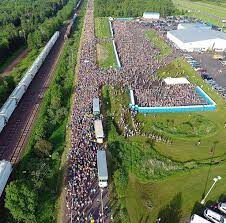
“It’s phenomenal to be talking about this in mid-March,” Marketing & Public Relations Director Zach Schneider said. “It’s reason for celebration, for sure, but the real work still lies ahead in making sure all these participants, as well as their families and friends, have a true Grandma’s Marathon experience when they come here in June.”
Limited entries do still remain in both the William A. Irvin 5K and Great Grandma’s Challenge, which enters participants in both the 5K on Friday night and full marathon on Saturday morning. With an entry fee price increase coming April 1, organizers expect those races to also be sold out within weeks.
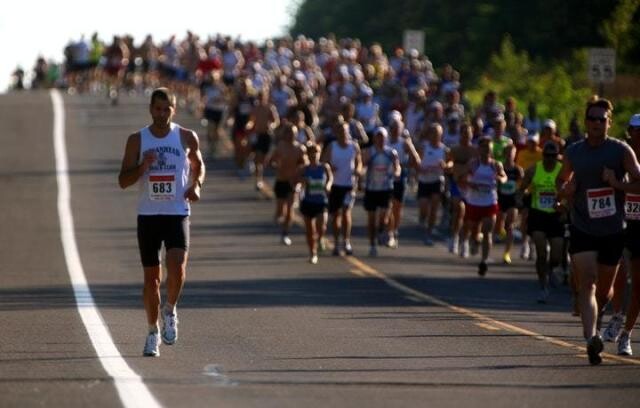
William A. Irvin 5K (40 spots remaining)
$50 – January 1-June 1
Full Great Grandma’s Challenge (150 spots remaining)
$215 – January 1-March 31
$225 – April 1-June 1
To register or to find more information, please visit grandmasmarathon.com. The 2023 Grandma’s Marathon weekend will be held June 15-17 and is presented by Toyota, Members Cooperative Credit Union, and ASICS.
VOLUNTEER SIGNUP UNDERWAY
With perhaps a record number of participants set to descend on Duluth in June, the hunt is on for the thousands of volunteers who will help make the 2023 Grandma’s Marathon weekend a success.
To help encourage community members to volunteer their time, Grandma’s Marathon is offering the following incentive programs, both new in 2023:
· Any individual signed up to volunteer prior to April 1 will be entered to win a $100 gift card to Duluth Pack.
· Groups with 15 or more volunteers will be entered for a chance to win one of three $1,000 “Golden Tickets” for a donation to a non-profit organization of the group’s choosing.
NOTE: Volunteers should indicate they are a part of the group during the sign up process. If you would like to participate but your group is not listed online, please send an email to alivia@grandmasmarathon.com to be added to the program.
There are a variety of volunteer positions and shifts available throughout race weekend. For more information or to sign up as a 2023 Grandma’s Marathon volunteer, please click HERE.
For any questions or interview requests, please contact Marketing & Public Relations Director Zach Schneider via phone at (218) 343-9874 or via email at zach@grandmasmarathon.com.
ABOUT GRANDMA’S MARATHON
Grandma’s Marathon began in 1977 when a group of local runners planned a scenic road race from Two Harbors to Duluth, Minnesota. After seeing just 150 participants that year, the race weekend has now grown into one of the largest in the United States and welcomes more than 20,000 participants for its three-race event each June.
The race got its name from the Duluth-based group of famous Grandma’s Restaurants, the first major sponsor of the marathon. In addition to the 26.2-mile race, the organization has now added the Garry Bjorklund Half Marathon and William A. Irvin 5K to its weekend offerings.
As the popularity of Grandma’s Marathon has grown, our mission has stayed the same – to organize, promote, and deliver annual events and programs that cultivate running, educational, social, and charitable opportunities to our communities.
Grandma’s Marathon-Duluth, Inc. is a 501(c)(3) tax-exempt nonprofit organization with a nine-person, full-time staff and a 17-member Board of Directors.
by Running USA
Login to leave a comment
Grandmas Marathon
Grandma's Marathon began in 1977 when a group of local runners planned a scenic road race from Two Harbors to Duluth, Minnesota. There were just 150 participants that year, but organizers knew they had discovered something special. The marathon received its name from the Duluth-based group of famous Grandma's restaurants, its first major sponsor. The level of sponsorship with the...
more...