

Running News Daily
Running News Daily is edited by Bob Anderson and team. Send your news items to bob@mybestruns.com Advertising opportunities available.
Index to Daily Posts · Sign Up For Updates · Run The World Feed
Articles tagged #St. Paul
Today's Running News
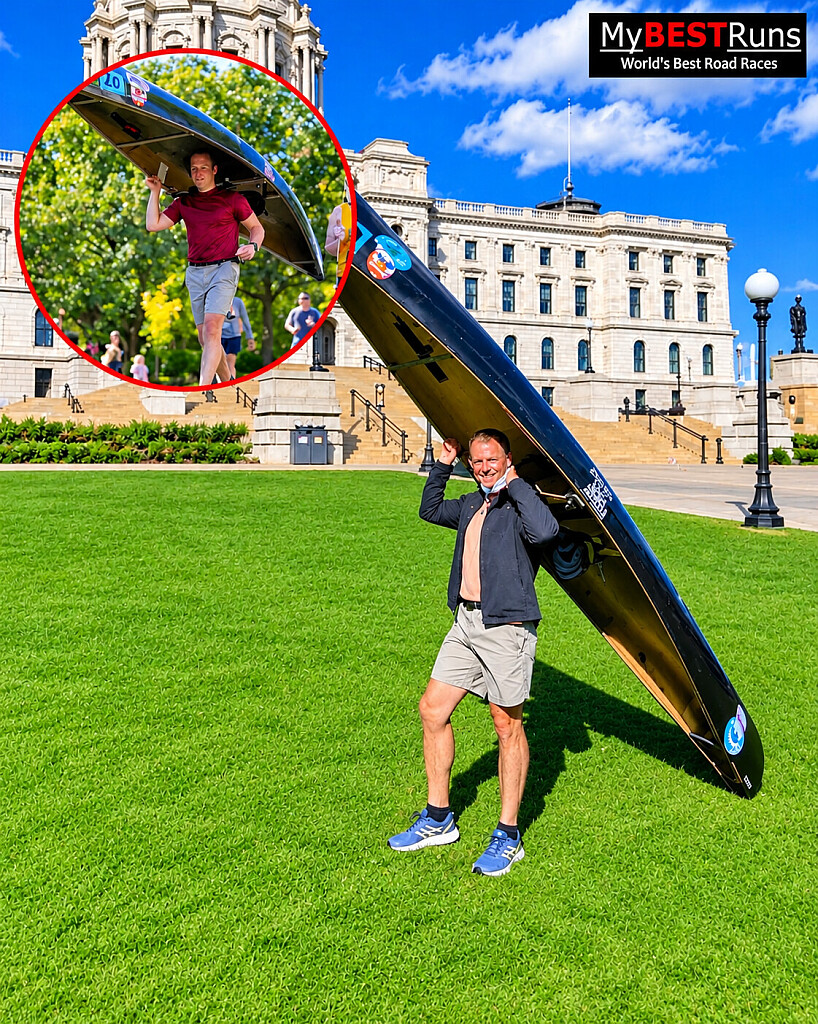


One Canoe, 52 Marathons, One Big Mission: The Minnesota Runner Carrying An 18-Pound Canoe Across Marathon Courses To Save The Boundary Waters!
For most marathon runners, the challenge is simply getting through 26.2 miles. But for 38-year-old American runner Travis Meier, covering that distance is only part of the battle. He has taken on an extraordinary challenge: running marathons while carrying an 18-pound canoe on his shoulders, with the ambitious goal of completing 52 canoe-carrying marathons in 52 weeks.
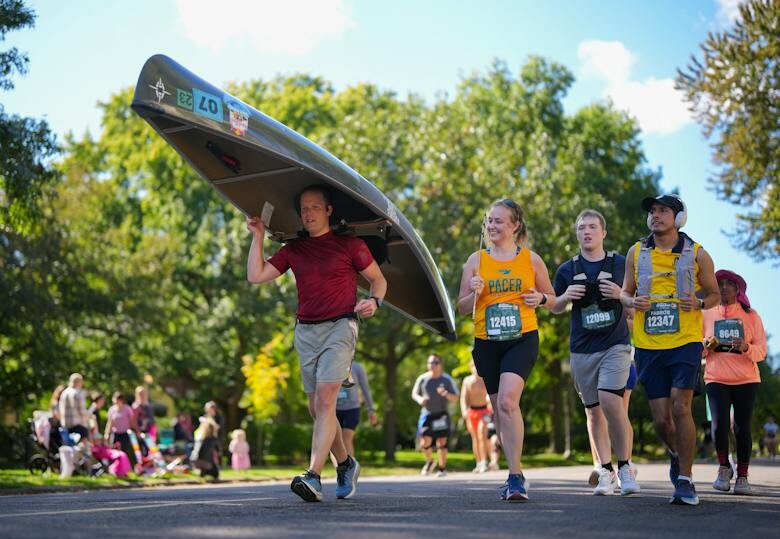
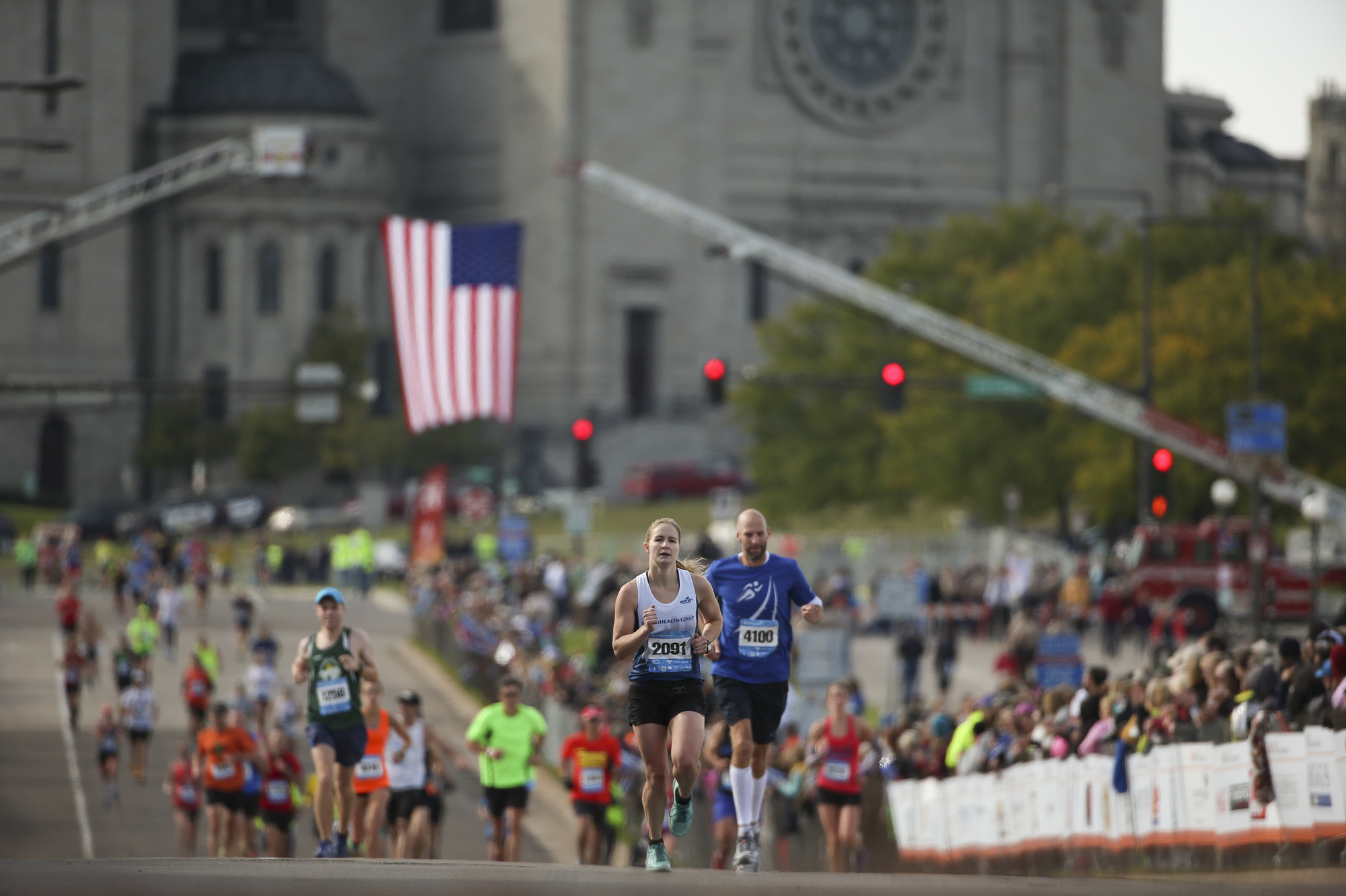
Meier, who comes from Minneapolis, Minnesota, attracted attention at the Twin Cities Marathon on October 4, 2026, when he appeared on the starting course carrying a carbon-fibre solo canoe instead of the usual running equipment.
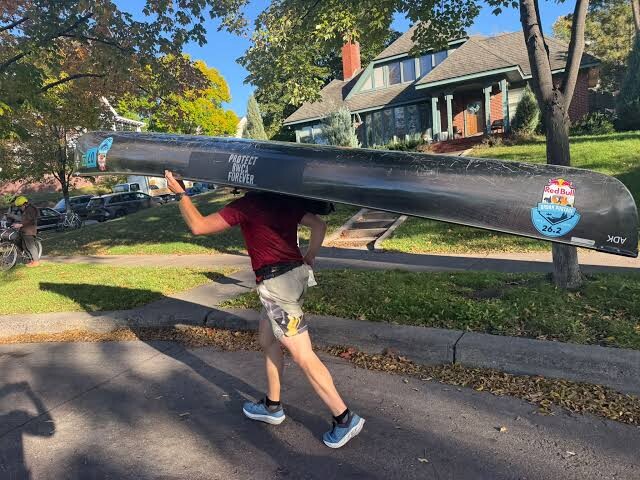
While other competitors relied on energy gels, hydration belts and lightweight racing gear, Meier chose to shoulder the approximately 18-pound canoe for the journey from Minneapolis to St. Paul.
He eventually crossed the finish line in 5:57:06, having carried the unusual load for almost the entire 26.2-mile distance. However, his remarkable effort came with a price: race officials disqualified him because carrying an additional prop was against the competition rules.
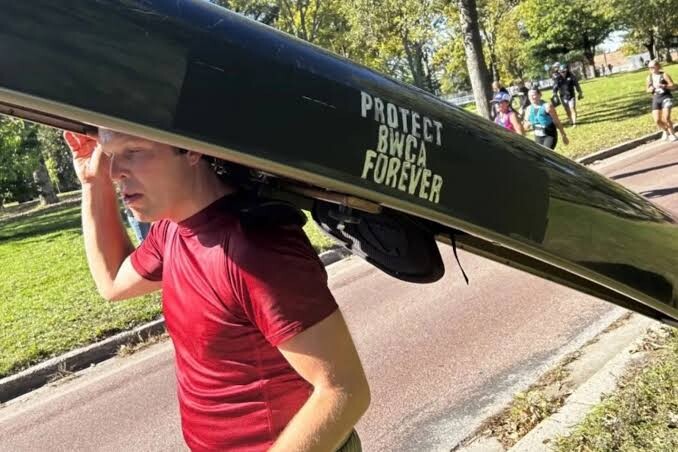
Interestingly, Meier was fully aware that his unconventional approach could lead to disqualification. He reportedly anticipated being stopped during the opening miles and even kept the canoe away from the starting corral to avoid obstructing other competitors.
But the disqualification did little to discourage him. For Meier, the marathon was never simply about earning an official finishing position or collecting another medal. His real objective was to use the unusual spectacle to draw attention to an environmental cause he deeply believes in.
Since his appearance in Minneapolis and St. Paul, he has continued taking his canoe onto marathon courses, completing the Gandy Dancer Marathon in Wisconsin and the Mankato Marathon in Minnesota. Each event has provided another opportunity to spread his message.
Now, he has set himself an even more demanding target: completing 52 canoe-carrying marathons in 52 weeks. With a full-time job to balance, he acknowledges that attending an organised marathon every week may not always be possible. On those occasions, he intends to cover the required distance independently while still carrying his canoe.
Behind the extraordinary physical challenge is a campaign to protect the Boundary Waters Canoe Area Wilderness, a spectacular natural region in northern Minnesota renowned for its interconnected lakes, rivers, forests and wildlife.
Meier is particularly concerned about the proposed Twin Metals copper-nickel mining project near the wilderness area. Environmental advocates warn that mining activities within the surrounding watershed could threaten the region's pristine waters through pollution and other long-term environmental damage. Supporters of the mining project, meanwhile, point to its potential economic benefits, employment opportunities and contribution to domestic mineral supplies.
The controversy has become an increasingly important political issue, with the future protection of the Boundary Waters attracting attention at both state and federal levels.
Meier has chosen an unconventional way of joining that debate. Rather than limiting his activism to statements or online campaigns, he is taking his message directly to the streets, using marathon running and an unmistakable canoe to attract public attention.
He has even given himself a fitting nickname: The Lorax of the Boundary Waters, inspired by the fictional character known for speaking up for nature and protecting the environment.
His challenge is certainly not an ordinary marathon adventure. Carrying an 18-pound canoe over 26.2 miles places additional demands on the shoulders, upper body and core, while also requiring concentration and balance throughout the journey.
Yet Meier appears determined to keep going, regardless of whether his efforts earn official race results or recognition from organisers.
One man, one canoe and 52 marathons in a year. For Travis Meier, every mile is an opportunity to make people stop, look and ask questions about the wilderness he wants to protect.
And while the canoe may have cost him an official result in the Twin Cities Marathon, it has given him something far more important in his eyes: a platform to take his environmental campaign to a much wider audience.
by Erick Cheruiyot for My Best Runs.
Login to leave a comment
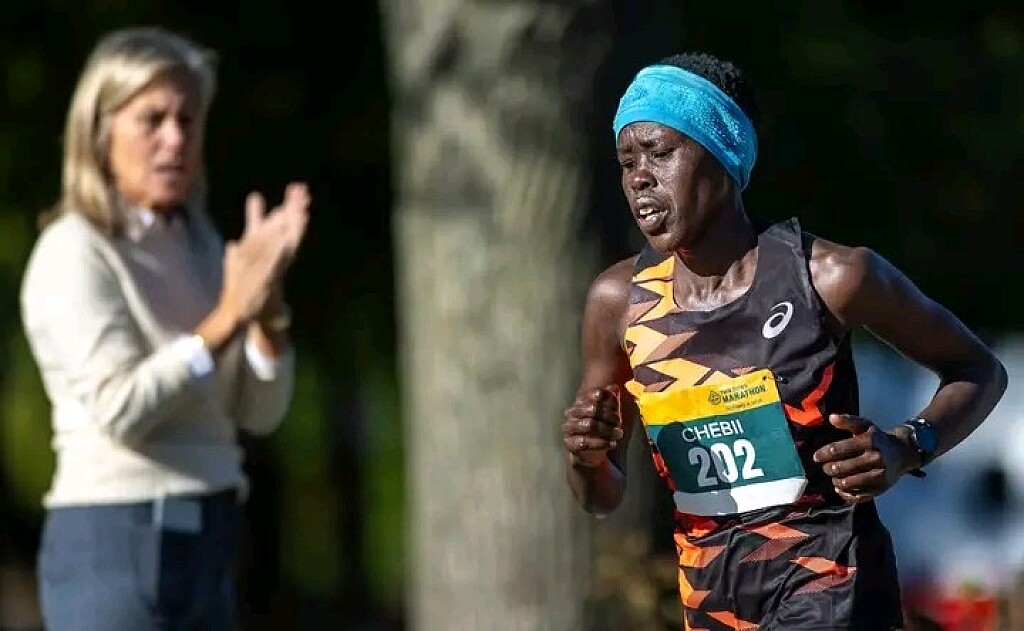
Twin Cities Marathon Turns the Page as Iconic Race Moves to Mid-October in 2027
The Twin Cities Marathon has closed the chapter on one of the longest-running traditions in American marathon racing, with the event set to leave its familiar early-October slot and move to mid-October beginning in 2027.

The 2026 edition marked the final time the race would be held in its traditional early-October window, bringing an end to a calendar tradition that has defined the event for more than four decades.
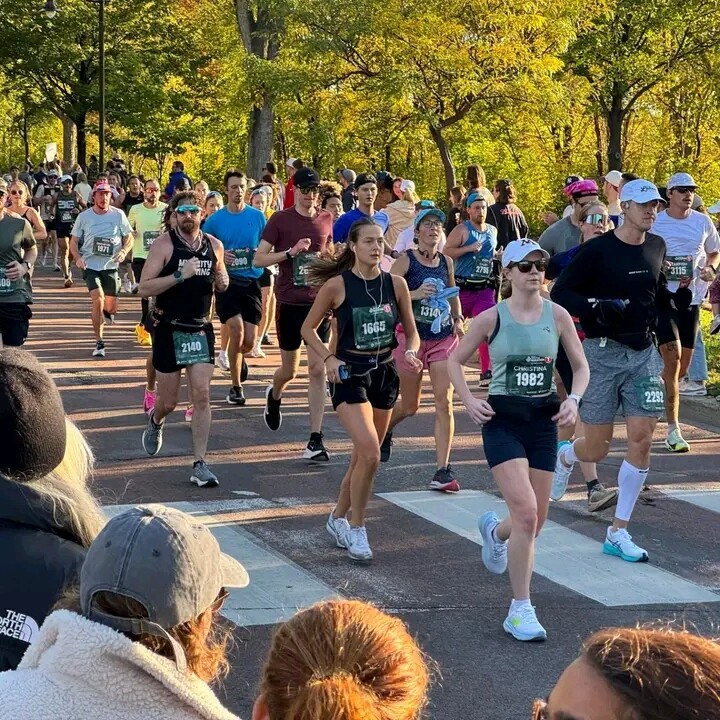
Beginning in 2027, Twin Cities Marathon Weekend will move to a mid-October date. The decision follows growing concerns over warmer and increasingly unpredictable conditions during the race's traditional weekend, with organisers seeking a better environment for runners, spectators and volunteers.
The change is more than a simple adjustment to the racing calendar. Early October, once synonymous with crisp autumn temperatures in Minnesota, has increasingly brought challenging heat. In recent years, organisers have had to contend with conditions that can place additional stress on marathon runners and increase demands on medical and public-safety teams.
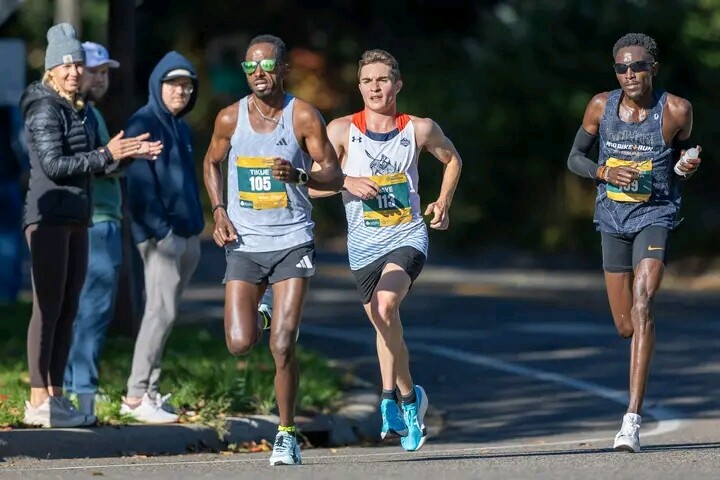
The inaugural Twin Cities Marathon was held on October 3, 1982, attracting 4,563 entrants. What began as a relatively young marathon has since developed into one of the most recognisable road races in the United States, growing alongside the running communities of Minneapolis and St. Paul.
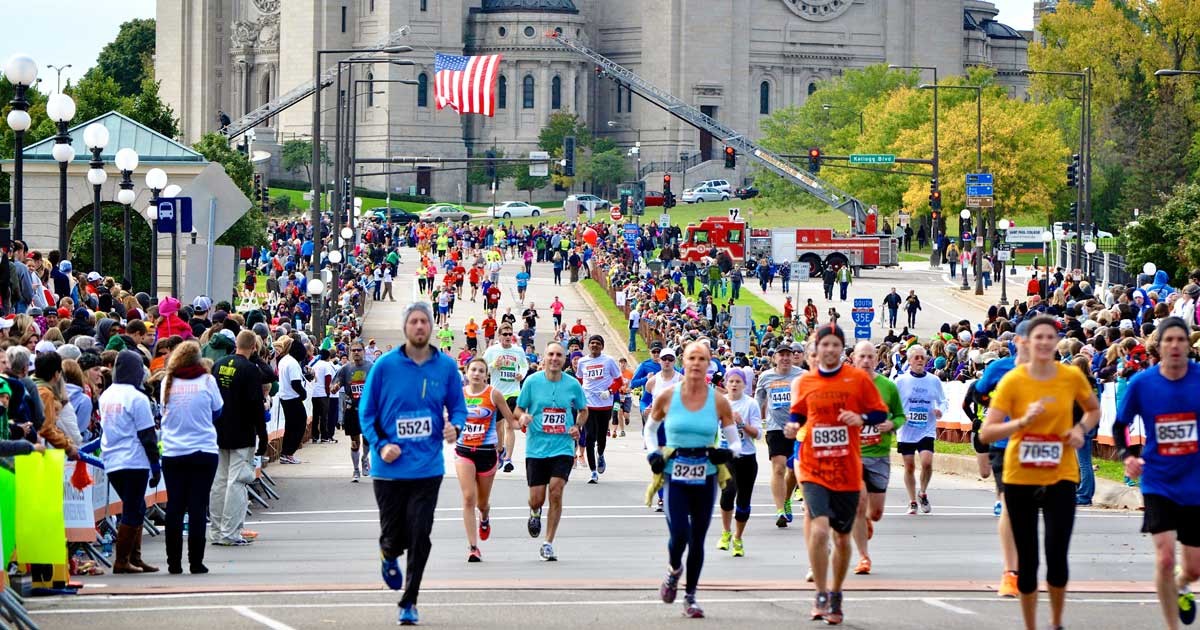
The course itself has long been one of the event's defining features. Runners travel through Minneapolis, pass the city's famous chain of lakes and follow a scenic route toward St. Paul before finishing near the Minnesota State Capitol. The combination of major urban landmarks, parkways, waterways and autumn scenery has helped give the race its distinctive identity.
The 2026 edition continued that long tradition, with roughly 30,000 runners taking part across the various events of Marathon Weekend. The marathon also featured defending champions Will Norris and Jane Bareikis, while favourable temperatures provided runners with much more comfortable conditions than some of the warmer editions in recent years.
Yet even with favourable weather this year, the decision to move the race reflects a longer-term concern. Organisers are looking beyond a single race morning and considering how changing weather patterns could affect the event in the years ahead.
For runners, the move could eventually become one of the most important changes in the marathon's modern history. A later October date offers the possibility of cooler racing conditions while preserving the course, the atmosphere and the traditions that have made Twin Cities Marathon a fixture on the American running calendar.
For more than four decades, the first Sunday of October provided a familiar date for thousands of runners preparing to take on the Twin Cities course.
That tradition has now reached its final chapter.
From 2027, the Twin Cities Marathon will arrive later in the fall — opening a new era for a race whose history remains firmly connected to the streets of Minneapolis and St. Paul.
by Erick Cheruiyot for My Best Runs.
Login to leave a comment
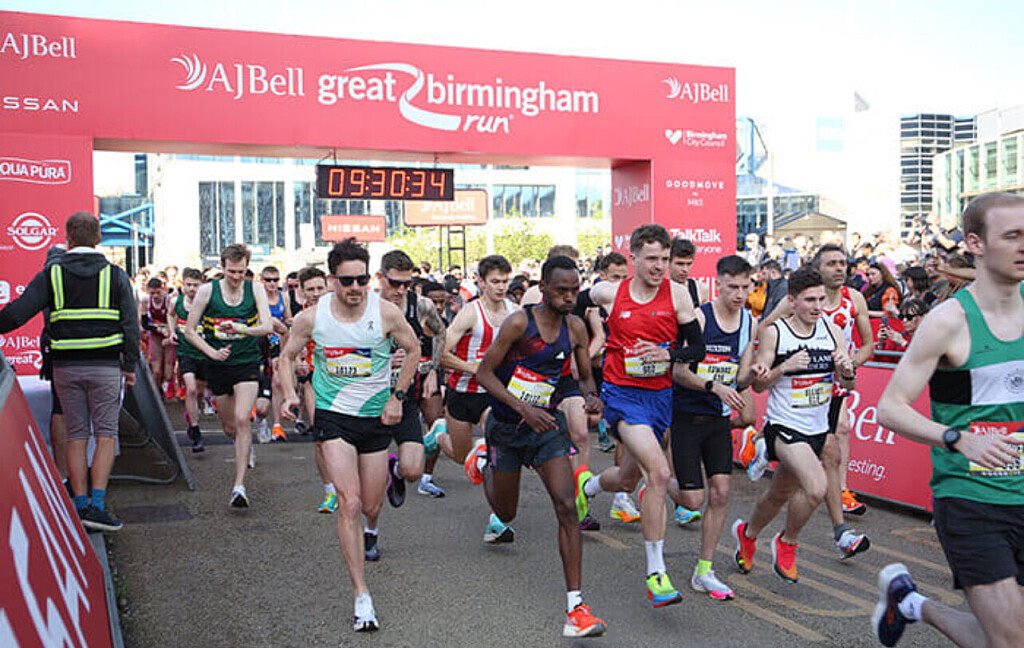
The AJ Bell Great Birmingham Run 2025: A Citywide Celebration of Running and Community
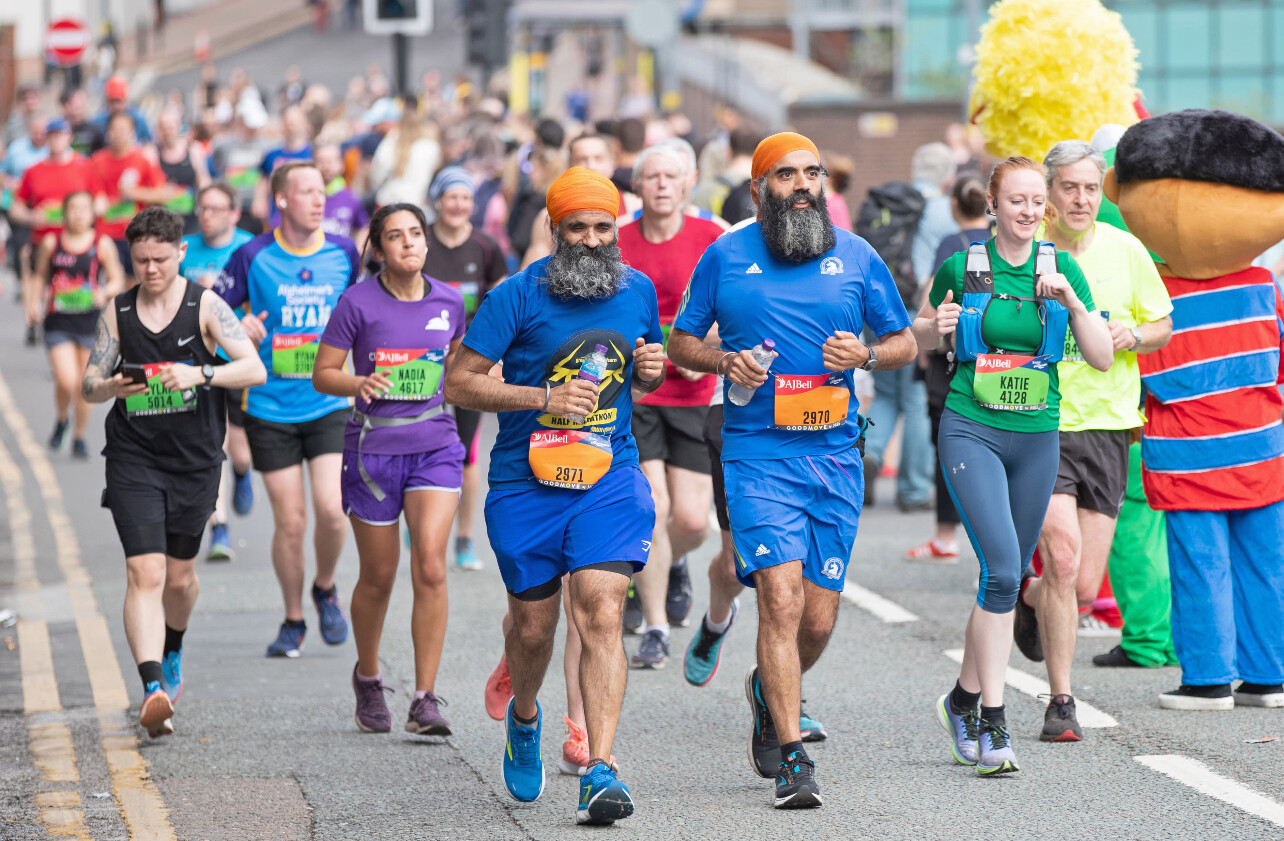
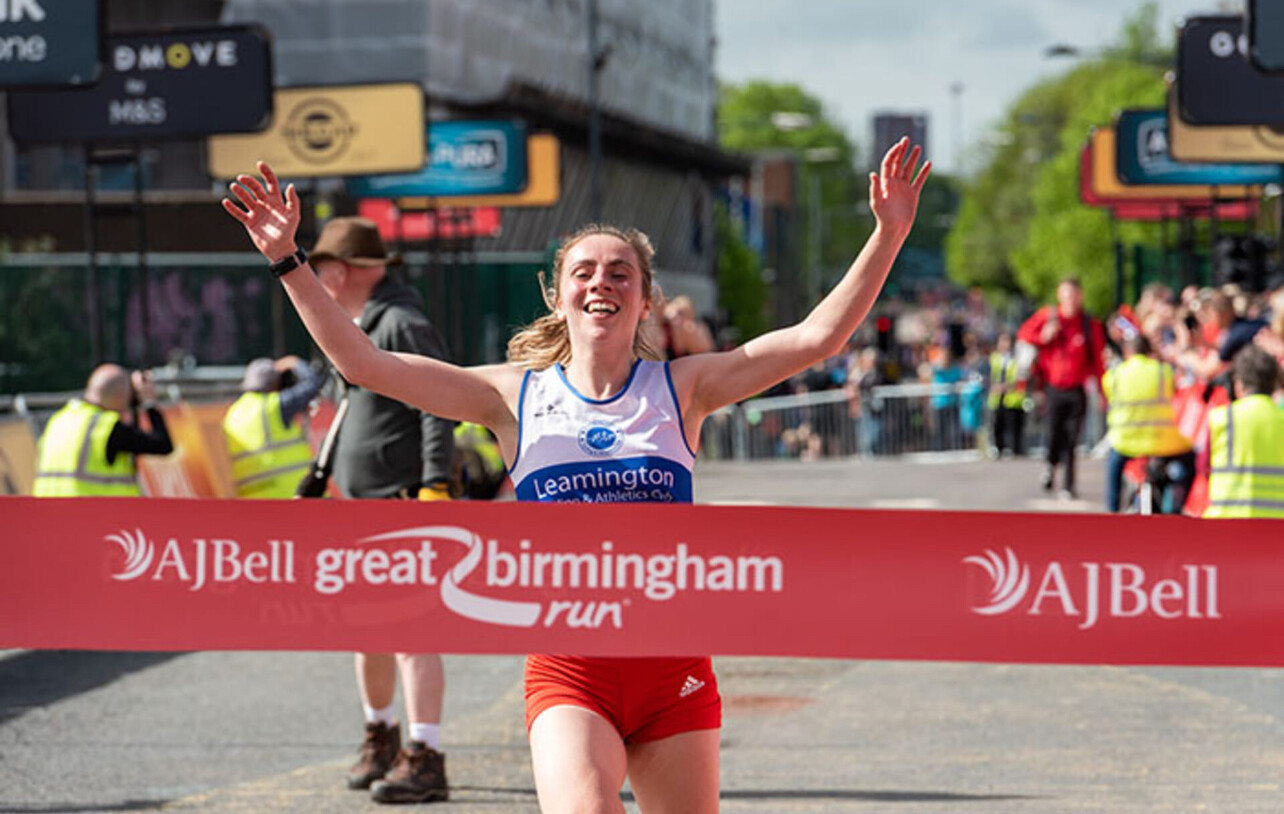
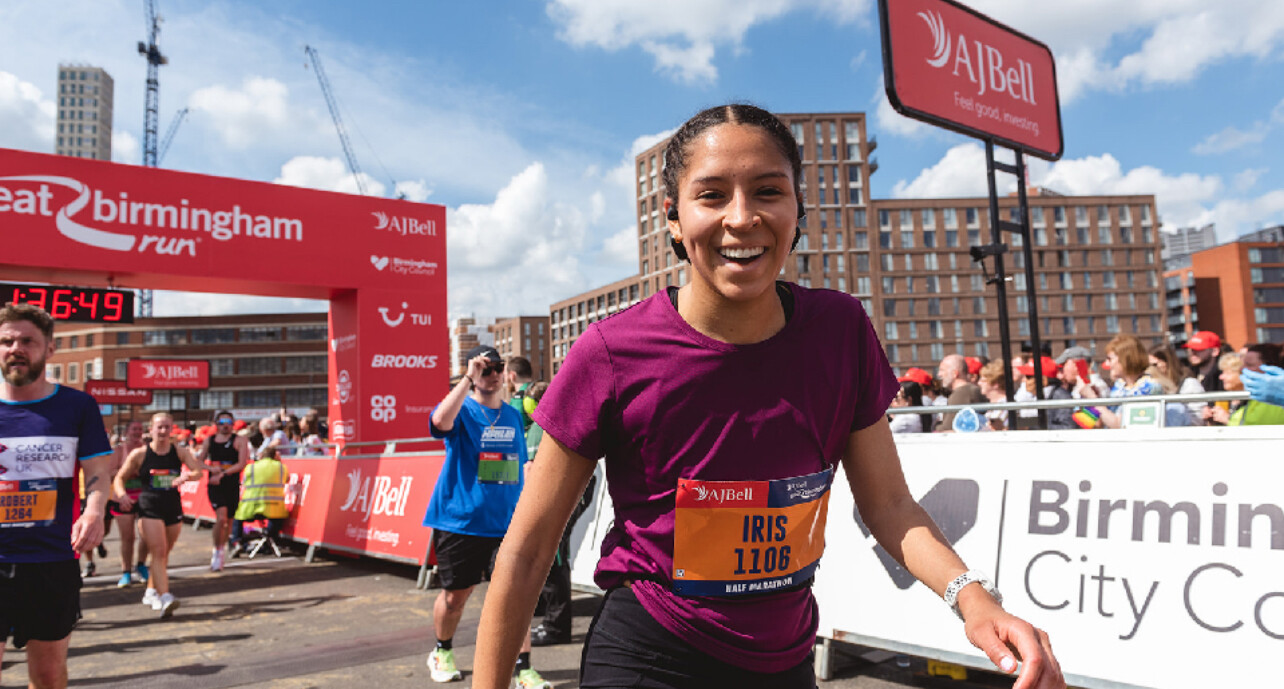
This Sunday, 4 May 2025, Birmingham will host the AJ Bell Great Birmingham Run, welcoming over 16,000 runners to the city’s streets. As part of the esteemed Great Run Series, this event offers both 10K and Half Marathon distances, attracting participants of all levels to experience Birmingham’s dynamic atmosphere.
Event Overview
• Date: Sunday, 4 May 2025
• Distances: 10K and Half Marathon
• Start Location: Centenary Square, Birmingham
• Finish Location: Smithfield, Birmingham city centre
• Start Times: Wave starts beginning at 8:30 AM
• Participants: Over 16,000 runners expected
The event is renowned for its electric atmosphere, with live music zones, charity cheer buses, and enthusiastic spectators lining the streets. The event village at Smithfield will feature food stalls, live DJs, and a festive post-run celebration.
Course Highlights
The race courses showcase Birmingham’s rich heritage and modern landmarks. Runners will pass through iconic sites such as the Jewellery Quarter, St. Paul’s Square, the Mailbox, Grand Central at New Street Station, and Digbeth. Half Marathon participants will also enjoy scenic views of Cannon Hill Park and Edgbaston Stadium.
Course Records
The Great Birmingham Run has seen impressive performances over the years. The current course records are:
• Men’s Half Marathon: Micah Kogo (Kenya) – 1:00:17 (2012)
• Women’s Half Marathon: Gemma Steel (UK) – 1:10:19 (2013)
Elite Participation
While the 2025 elite field has not been officially announced, the Great Run Series typically attracts top-tier athletes. Notable past participants include Haile Gebrselassie and Gemma Steel, who have both delivered memorable performances on Birmingham’s streets.
Junior & Mini Runs
On Saturday, 3 May 2025, young runners can participate in the Junior & Mini Great Birmingham Run at Alexander Stadium. This family-friendly event offers a fantastic introduction to running in a fun and supportive environment.
Final Thoughts
Whether you’re aiming for a personal best, supporting a charity, or simply soaking in the city’s vibrant atmosphere, the Great Birmingham Run 2025 promises an unforgettable experience. With its combination of challenging courses, enthusiastic crowds, and festive celebrations, it’s a highlight of the UK’s running calendar.
by Boris Baron
Login to leave a comment

Great Birmingham Run
The Great Birmingham Run event held in Birmingham, UK. For security reasons the 2019 race was not a full half marathon. The distance was 11.07 miles. It forms part of the Great Run British Marathon Series. The first event was held on October 15, 2017 on the same day as the existing Great Birmingham Run in the city center. Whether...
more...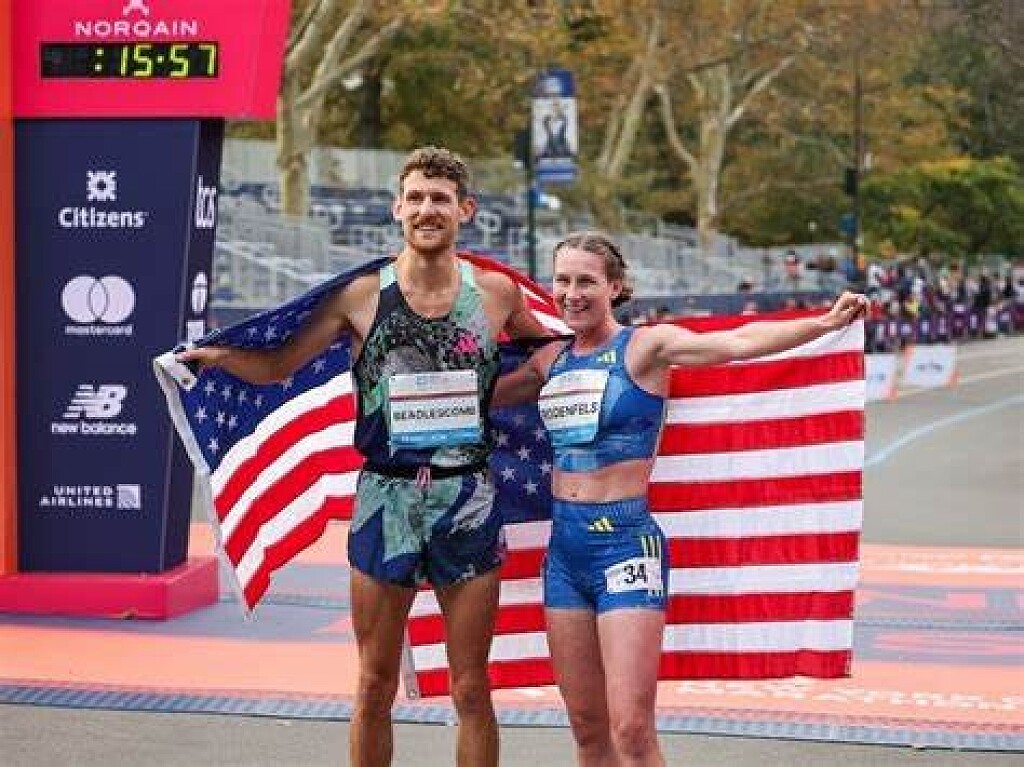
Defending champions Morgan Beadlescomb and Annie Rodenfels return to the Abbott Dash to the Finish Line 5k
New York City Marathon weekend kicks off with a much-anticipated USATF 5 km Championships at the Abbott Dash to the Finish Line 5k on Saturday, November 2, taking place the day before the 53rd running of the TCS New York City Marathon.
The USATF 5 km Championships at the Abbott Dash to the Finish Line 5k are the 11th stop on the 2024 USATF Running Circuit. Live coverage of this year’s championships will be broadcast on USATF.TV, starting at 8:20 a.m. ET, with the men’s race going off at 8:30 a.m. and the women starting five minutes after at 8:35 a.m.
Defending champions Morgan Beadlescomb and Annie Rodenfels return to the streets of Midtown Manhattan after winning last year’s USATF 5km Championships in their respective races.
The former Michigan State Spartan Beadlescomb surged away from Ahmed Muhumed, Tai Dinger and Daniel Schaffer in the final stretch to win last year’s men’s title in 13:44, besting the field by a comfortable three seconds to claim his first USATF crown.
Looking to become the first men’s repeat champion since Ben True in 2011-12 when the USATF 5 km Championships were held in Providence, R.I., Beadlescomb will take on another tough field that will feature Muhumed (second), Schaffer (fourth) and Brian Barazza (fifth) from last year’s race, as well as a handful of others with impressive credentials.
Beadlescomb could also become the first male athlete to win two USATF 5 km Championships titles at the Abbott Dash to the Finish Line 5k course, along with 2019 USATF 5 km champion Anthony Rotich making his way back into the field for the first time since winning the 2019 title.
Muhumed is the only competitor in the field that has won a USATF title this year on the USATF Running Circuit, winning the USATF 8 km Championships back in July in Kingsport, Tennessee. The USATF 8 km Championships were also the last time Muhumed raced this year.
Sam Chelanga, Sam Prakel and Josh Thompson join Beadlescomb, Rotich and Muhumed as three more USATF national champions set to race, bringing the total to six national champions in Saturday’s field.
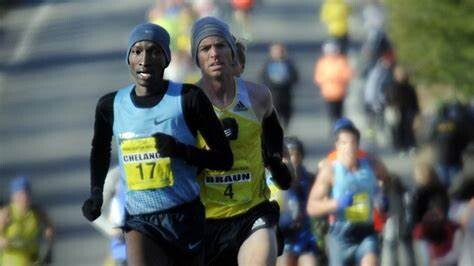
Chelanga, a two-time USATF champion, will go after his first USATF national title since 2016 when he won the USATF 10 Mile title. He’s raced twice this season on the USATF Running Circuit, finishing third at the USATF 10 km Championships and fourth at the USATF 20 km Championships.
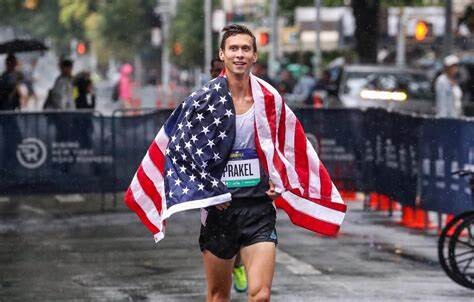
Prakel, the 2023 USATF Road Mile champion, and Thompson, the 2020 USATF Indoor 1500 champion, are both eyeing a second national title of their own.
Parlympian and New York native Michael Brannigan is slated to race after competing for the United States at the 2024 Paris Paralympic Games, where he came away with his second Parlympic medal in the men’s T20 1500, earning bronze to go with his 2016 gold from the Rio Games.
Derek Johnson, Titus Winder and Kirubel Erassa will be other names to watch out for in the men’s race.
Rodenfels earned her first USATF national title by defeating Rachel Smith by four seconds in last year’s women’s race, running 15:22.
Rodenfels has since won another USATF national title earlier this season, winning the 2024 USATF 6 km Championship race by 13 seconds on July 13 in Canton, Ohio.
With a win on Saturday, Rodenfels could join Weini Kelati as the only competitors to repeat as USATF 5 km champions at the Abbott Dash to the Finish Line 5k course and the sixth woman to complete consecutive national titles in the history of the USATF 5 km Championships.
Challenging Rodenfels will be Emma Grace Hurley, who will be racing in her seventh USATF Running Circuit race this year, with her latest effort being a third-place finish at the USATF 10 km Championships in Northport, New York, on September 21.
Hurley, who was ninth at last year’s USATF 5 km Championships, has finished as high as second place in two USATF Running Circuit races this year at the USATF 8 km Championships and the USATF Cross Country Championships.
Susanna Sullivan and Natosha Rogers are a pair of veterans coming off great races in their recent outings looking to mix it up in the top half of the field.
Sullivan completed this year’s Chicago Marathon as the top American, running a lifetime best of 2:21:56 to finish seventh overall, making her the 10th-fastest American marathoner in history.
Rogers won the Medtronic Twin Cities 10 Mile in St. Paul/Minneapolis, Minnesota, on October 6, in 52:29 just two weeks after finishing second at the USATF 10 km Championships.
Logan Jolly, Cailie Logue and Elena Hayday are other competitors entered in this year’s USATF 5 km Championships with past results on this year’s USATF Running Circuit.
2023 Cross Country champion Katie Wasserman adds some intrigue to the field, running in her first road race since 2022.
About the USATF Running Circuit
The USATF Running Circuit is a USATF road series featuring USATF championships from one mile through marathon and consistently attracts the best American distance runners with more than $500,000 awarded in total prize money. A total of $60,000 in prize money will be awarded at the USATF 5 km Championships.
The first ten U.S. runners earn points at each USATF Running Circuit race. For the USATF 5 km Championships, scoring is set as 15 for first, 12 for second, 10 for third, 7, 6, 5, 4, 3, 2, and 1, with those earning the most points receiving prize money at the end of the series.
The mission of the USATF Running Circuit is to showcase, support and promote U.S. runners. Since its inception in 1995, the USATF Running Circuit and its race have provided over $7 million to U.S. Distance runners.
by Keenan Gray
Login to leave a comment

Dash to the Finish Line
Be a part of the world-famous TCS New York City Marathon excitement, run through the streets of Manhattan, and finish at the famed Marathon finish line in Central Park—without running 26.2 miles! On TCS New York City Marathon Saturday, our NYRR Dash to the Finish Line 5K (3.1 miles) will take place for all runners who want to join in...
more...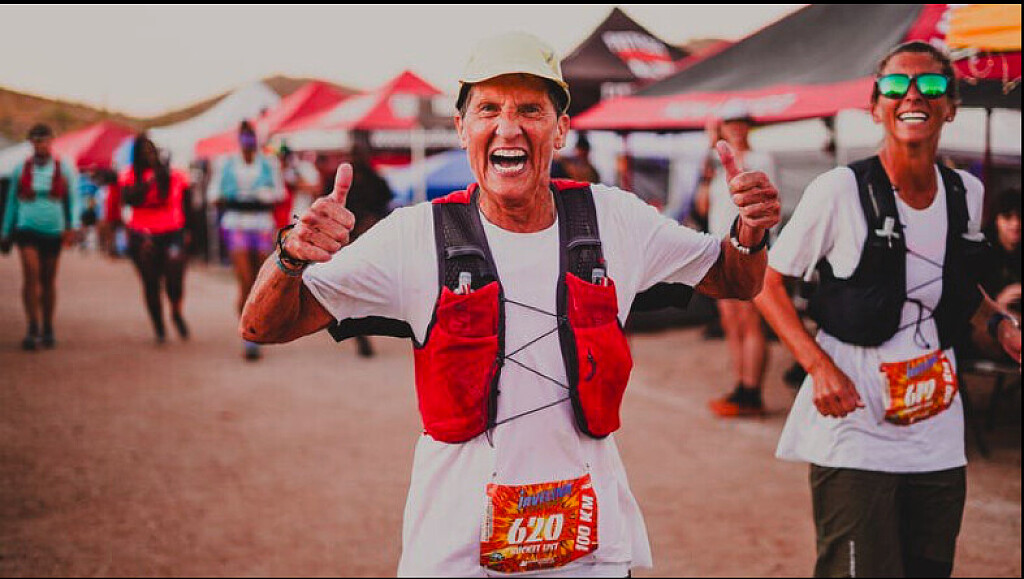
Who Is Courtney Dauwalter’s New Ultramarathon Partner? It’s Her Mom.
Here‘s how the Dauwalter duo completed a dream of crossing a finish line together
The last loop was quiet beneath the full moon. Their shuffling feet on the packed, pebble-tossed singletrack punctuated the sleeping Sonoran Desert as the duo moved through shadows of saguaro cactus and prickly pear. Millions of white pinpoints began to appear in the dark sky.
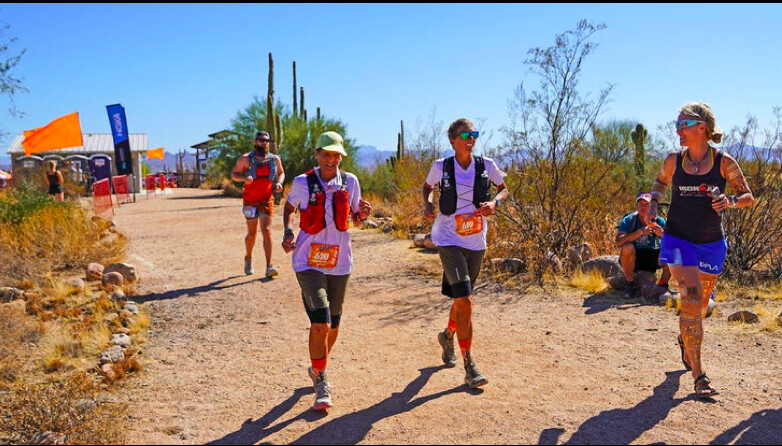
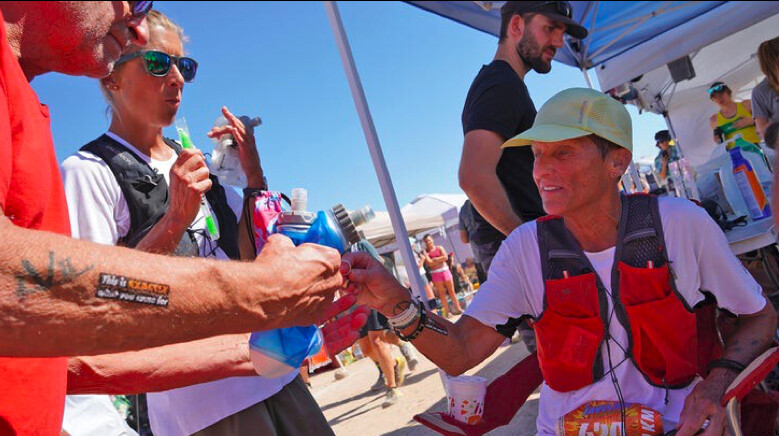
That’s when 66-year-old Tracy Dauwalter, mother of ultrarunner Courtney Dauwalter—who was coming off of historic back-to-back-to-back 100-mile wins of the 2023 Western States 100, Hardrock 100, and UTMB, including two course records—started resharing doubts with her daughter, who kindly reminded Tracy many times throughout the last 13 hours, “that’s not useful thinking, so let’s not think it.”
Occasionally, Courtney would redirect their attention, pointing out this unique section of the course that they’d been past twice before. This time, she built a 60-second container to stuff all those fears inside.
“Tell me all of your doubts and frustrations. You have one minute,” Courtney told her mom. “Once you finish, you can’t complain out loud anymore. It’s not serving us to get to this finish line.”
Tracy spewed all of her negative thoughts, from her rolling stomach to her aching muscles, which was an important reset to get out of the whirlpool of heavy thoughts. I signed up for this, Tracy humbly reminded herself. Nobody’s making me do this.
A dedicated team, the pair was running three loops side-by-side in matching long running shorts, white baggy tees, Salomon hydration vests, and cactus-themed socks, at the Halloween-themed Javelina Jundred 100K race. The ultrarunning event is held the closing weekend of October in the McDowell Mountain Regional Park, an hour northeast of Phoenix, Arizona. Temperatures can climb into the 90s by mid-morning and dip into the low 50s once daylight disappears behind the McDowell Mountain Range.
Now 38 years old and living in Leadville, Colorado, Courtney had participated in the event once before, in 2016, when she was the race’s outright winner. She set the then-course record for the 100K, one of several performances that drew national attention to her astonishing endurance and athleticism.
Tracy, who’d just recently started trail running, had covered ultra-distances at 12- and 24-hour events across flat gravel, but had never before run this far on a trail. They selected Javelina’s rolling 100K with 3,924 feet of vertical gain. The majority of the climbing is packed into the gradual ascent from the Javelina “Jeadquarters” aid station, which serves as the start and finish of the race and basecamp, to the far side of the loop, Jackass Junction.
It was exactly here, at this midway point, after slogging up the final climb over rolling hardened granite and sandy washes, where Tracy had a sticking point. Fortunately, Courtney was there to fill up her water bottles and point out all the tasty options when they reached the runner’s buffet.
“Please keep eating,” she said, as the electronic dance music bumped. A few hours earlier, they enjoyed a surprise pick-me-up of McDonald’s cheeseburgers, delivered by crew masters Dick Dauwalter, Courtney’s dad, and Kevin Schmidt, her husband. But one of the biggest highlights during the race for Tracy was watching Courtney interact and commune with so many people in the trail running community.
“Courtney does this amazing sport, but even more, I adore the person she is. It’s one of my favorite things to watch the love that’s out there for Courtney, and the way she responds. To be in that world with her was really special,” Tracy said. “She was also really kind to me, even when I was frumping and I’d fall down, she’d help pick me up.” Courtney let out a laugh.
“Mom, you only fell one time!” said Courtney, laughing.
“I know, but it was embarrassing,” Tracy said.
While Javelina was the mother-daughter’s debut trail ultra finish, side-by-side, the experience wasn’t their first race together. When Courtney was in high school, the duo finished a rollerblade marathon together in St. Paul. (Rollerblading is a major pastime in Minnesota, where Tracy grew up and still lives today.) Here, she met Dick and raised Courtney, a middle-child to two brothers.
While growing up, Tracy played softball and badminton. In college, she ran cross-country and track. “I’ve always been interested in sports and done them at a level that I could make the team. I was never a star. Being on a team is social and taxes your body while working up a sweat,” she said.
When the kids were interested in soccer, she and Dick organized an adult co-ed squad. Now, she jogs, plays volleyball, and golfs. She and Dick enjoy motorcycle tours, too, like venturing through the Elk Mountains in Colorado. “I’m not great at anything, but I can hold my own, and it’s super fun—I’m willing to do any sport,” she said. The motto was much the same for the kids.
"I thought that it would be so cool to share this sport that I love so much with this person I love so much. I knew she could do it.”
“They could try any activity. But once they committed, they had to see that season through—whether they enjoyed it or not, we were committed. We didn’t miss practices or games. We made sure those were a high priority for them and us. That drove our lives for many years with lots of fun times, but boy, that schedule was crazy—we’d slam-dunk dinner at 4 P.M. so that everybody could get to practice,” Tracy said.
An accountability mindset is one that leads to showing up in other areas of life from work to class to chores, following through on responsibilities and gritting out less desirable tasks. “When things get hard, like college classes, your option is not to quit,” Tracy said. “You dig in a little deeper, get help, and get it done, which is the same with any sport.”
But perhaps their most special ingredient is that the Dauwalters know how to have fun. “Having fun while doing those things is just as important,” Courtney said. “Our family always worked hard, but we play hard, too. All of that combined is what makes life special. Having that be deeply ingrained in who I am helps me in everyday life, but also, for sure, in ultrarunning.”
While watching Courtney grow up, Tracy noticed her daughter had a deep motivation as a person and athlete. One of her earliest memories was two-year-old Courtney, who could barely walk, repeatedly riding a Big Wheel tricycle downhill with a group of kids and insisting she’d wrestle the bike up the hill by herself. As a kid, Courtney and her siblings played soccer, often on the same teams. Later, they ran high school cross-country and track. To fill the winter months, she tried basketball, but she had a propensity to quickly foul out, taking the bench for the remainder of the game.
One day, she came home with a bright idea to Nordic ski instead, which was foreign for a family full of downhillers. They picked up the equipment, Courtney joined a competitive team, and she practiced in nearby school fields. “All she did was wipe out. All the time. Dick and I are thinking, ‘I wonder what this is going to look like?’” said Tracy.
During those foundational years, Courtney would rush home after a Nordic race to report the number of crashes she’d had. “In a 5K, I would be psyched if I only crashed nine times—tripping, planting my poles, tumbling the entire time. I was so bad,” she said.
But Tracy bought a beat-up pair of cross-country skis and started to practice alongside Courtney. “We learned together,” Tracy said. “It was more fun to crash with somebody than to crash by yourself.”
By the time Courtney graduated, she was an all-state runner and had earned All-American honors as a Nordic skier three times. She was a four-time state champion, and her team acquired two national championships. In 2003, Courtney moved west to Colorado, where she raced collegiately on the Nordic ski team at the University of Denver. Three years in, her DU team won 11 meets and the 2005 NCAA Championship.
“Courtney was really good at everything she did, and it wasn’t because she was a natural,” Tracy said. “Anytime she tried a sport, she didn’t have an immediate knack for it, but she hung in there to develop it. She was a hard worker and determined.”
Years later, in 2015, any remaining questions of physical stamina were laid aside—for both Tracy and Courtney, who proved to have a serious knack for endurance. Courtney broke the ribbon at her inaugural ultra race, the 2011 Prickly Pear 50K in San Antonio, Texas, and her curiosity about wanting to run longer continued to grow. The following year, she dropped out of the Colorado’s Run Rabbit Run 100 Mile race at mile 60 with throbbing legs, questioning her ability to cover that much ground in a single push.
Frustrated by not meeting her goal, Courtney registered for her first 24-hour race, the 2013 FANS Ultra Races, a more manageable format than an ultra on singletrack. Her family joined to crew and run laps, providing entertainment and support, including Tracy. They didn’t have much of a background in ultras and were green to any strategy.
Regardless, Courtney wrapped a total of 105 miles on that two-mile gravel loop around Lake Normandale Park in Bloomington, Minnesota, completing her first non-trail century-distance, and gaining confidence. Two months later, she crossed the finish line of the Superior Fall Trail Race 100 Miler in Lutsen, Minnesota, her first 100-mile distance on trail, and stood on the podium for second place.
Moving forward, the FANS Ultra Races became a family tradition. Courtney returned to the 2014 event, besting her first summer with 123.6 miles. Tracy decided, if she was going to crew and run laps with Courtney, she might as well sign up herself.
“She was like, ‘Heck, I’m going to spend the whole day out there anyways. Why not put some time on my feet?’” Courtney recalled.
In 2015, she tallied 109.2 miles while her mom, then 57 years old, covered 66.8 miles. Their annual pilgrimage continued in the 24- or 12-hour format, over the next several summers, coinciding with Courtney’s ultrarunning career picking up steam. She won the 2016 Run Rabbit Run 100 Mile with a 75-minute lead, and along with the title, the world’s largest ultra purse: $12,000.
By the summer of 2017, she retired from her position at the Girls Athletic Leadership School in Denver where she taught science and coached cross-country. “In an interview a few years ago,” Courtney said. “I was asked if I could run an ultramarathon with anyone in the world, who would it be? ‘My mom,’ I said. I thought that it would be so cool to share this sport that I love so much with this person I love so much. I knew she could do it.”
In an interview a few years ago, she was asked, if she could run an ultramarathon with anyone in the world, who would it be? “My mom,” she said. “I thought that it would be so cool to share this sport that I love so much with this person I love so much. I knew she could do it.”
Tracy heard the recording and, despite having never run on trails, she immediately called her daughter. “Let’s do it. I heard you want to run an ultra, so let’s sign up for something,” she said to Courtney. “If someone puts a challenge in front of me, it can even be pretty insane, and I’m a sucker for trying to rise to that challenge.” In addition to the competitive spark, the invitation felt sentimental.
Committed to doing an ultra together, they accepted that it might be a winding road to get there. The two picked the 2022 50-mile Superior Fall Trail Race in Lutsen. Mid-route, they missed the cut-off. Tracy shrugged and shook her head recounting the unfinished event. Courtney refused to let the DNF be a negative thing. “You learned so much in that first summer, mom,” she told her. “Dialing in all of those pieces helped immensely this year. And we decided, we’re not done. We still need a finish line together.”
As soon as registration opened in January, the duo signed up for the 2023 Javelina Jundred 100K. “I was nervous coming into this race because I was bouncing off of that epic fail of the first 50-miler we tried, which was a wake-up call. You have to prepare yourself,” said Tracy.
“It was not an epic fail,” Courtney countered.
That winter, Tracy clocked workouts on a treadmill. From April onward, she ran outside four or five days a week for 10 to 20 miles. Courtney researched singletrack trails around Lone Lake, which her mom became excited to explore. One of the biggest challenges of learning to run on trails is her tendency to shuffle and trip, Tracy confessed. Building confidence, she finished the Willow 20 Miler in May and Afton Trail Run 50K in July. Like her daughter, Tracy didn’t keep a close log of her mileage, and her training was not systematic.
Courtney’s advice, true and simple, rang in her mind: Spend time on your feet.
“People asked me if I coached her. Absolutely not,” Courtney said. “I did try to be helpful—harping on testing nutrition, wearing a pack so that her body gets used to one, and hiking uphills—so her race day could be much better. She was the one putting in the work and figuring out routes where she could do laps or get on hills. I admired from afar.”
“It helped that Courtney kept reminding me, ‘This was our run together, our race, and it could look however we could make it.’ If I crawled, that wouldn’t be disgusting. It got ugly, then it got not ugly,” Tracy added.
Staying lighthearted, Courtney countered, “It never got ugly. There was never a doubt that we would make it to the finish.”
Fortunately, the elation did come around. Next to her daughter, Tracy crossed the finish line of Javelina Jundred 100K in 17 hours and 38 minutes with a smile in the glowing lights, after staying up into the night running, eating, and sharing pain—but mostly, laughing—with her daughter. They’d gone full circle together, both on the circuit they’d traveled in the desert as well as in life.
“I think you beat me by, like, a half-second, mom,” Courtney said.
“I know,” Tracy bantered back. “I think I was really needing to be done, so I rushed with a half-second sprint.”
by Outside Online
Login to leave a comment
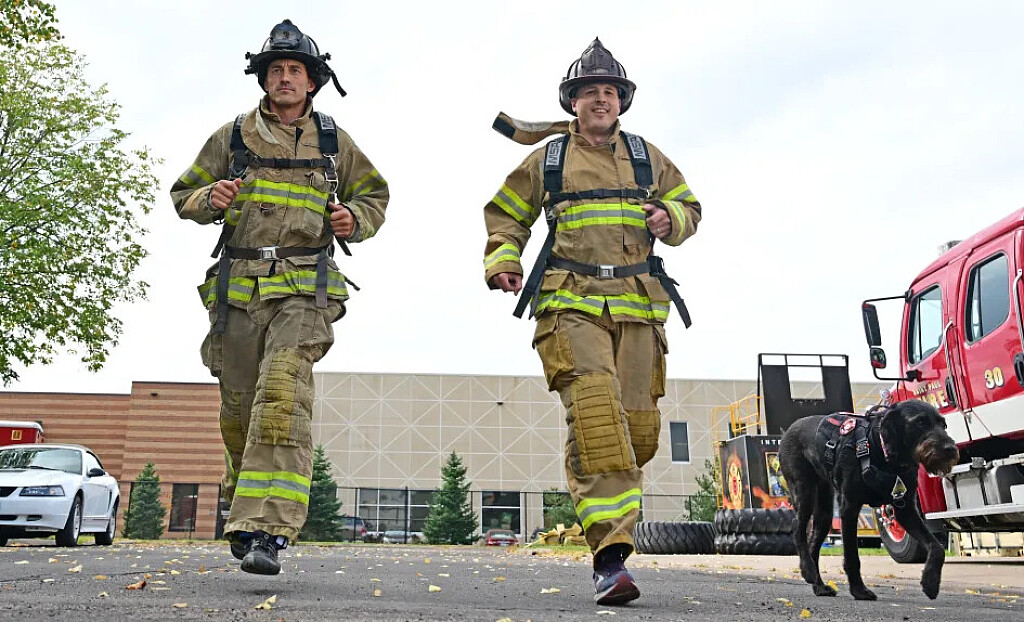
St. Paul firefighters tackling the Twin Cities Marathon in full gear for a cause
Among the sea of runners in shorts and tank tops in the Twin Cities Marathon, two will stand out for what they’re wearing: They’ll be in their St. Paul firefighter turnout gear and helmets.
Their heavy gear won’t be ideal for the expected temperatures, but that’s not why they’d rather not be there. It’s because of what their presence represents: Capt. Kyle Bode and firefighter Bryan Buxton are taking part in the marathon for their fallen co-workers, who they wish were alive and not having people run in their memories.
They’re trying to bring attention to the job-related risks to firefighters: cancer, cardiac problems and suicide linked to trauma that builds up from what firefighters witness in their work. Five active-duty St. Paul firefighters have died of such causes in the last eight years.
After St. Paul Fire Capt. Chris Parsons passed away of a heart attack at age 48 in June, Bode said he was sick of seeing his friends from the fire department die.
“I don’t like sitting around and I’m frustrated and I want to do something,” Bode said recently. He said the community might notice when individual firefighters die unexpectedly, “but I don’t know if anyone realizes the big picture of how many people we’ve lost.”
Bode and Buxton enjoying taking on challenges — like the impromptu time they decided to see who could do the most burpees (Buxton reached 750 over three hours). And the men knew they needed to do something on a large scale. Running a 5K in their full gear wouldn’t cut it.
They thought participating in the marathon in their gear would be a way to raise awareness and donations to a nonprofit foundation for firefighter wellness.
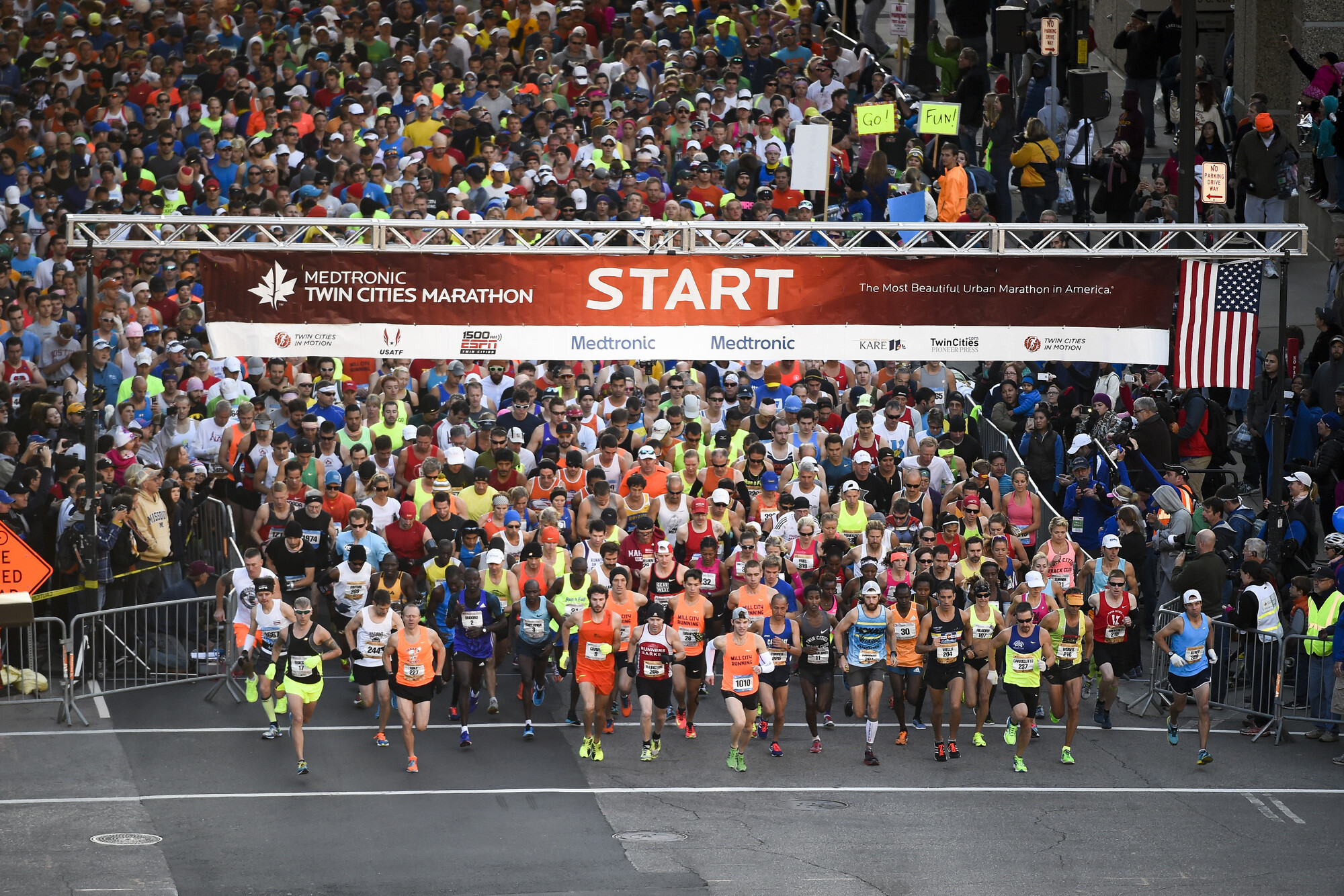
More than 20,000 people are registered for the Twin Cities Marathon and 10-mile race on Sunday. With projected highs in the 80s this weekend, and the National Weather Service saying it will feel more like summer than fall, organizers are warning racers to prepare for high temperatures and high humidity. St. Paul firefighters and paramedics will be along the route in the Capital City to ensure racers are safe and healthy, said Deputy Fire Chief Roy Mokosso.
Getting support from fellow firefighters
Some of the stigma around mental health has meant firefighters not talking about the horrors they respond to on emergency calls, and Bode and Buxton are trying to break that down just by asking for help with the marathon.
“In the past, it’s been very difficult for firefighters to ask for help because we’re the ones that help people,” Buxton said. “We’re making that change and we’ve reached out to people at the fire department and said, ‘We need help. We’re not sure if we’re going to be able to complete this task.'”
Off-duty firefighters will be along the marathon route to provide nutrition and hydration to Buxton and Bode, as well as moral support.
Buxton has run the distance of a marathon (26.2 miles), but not an official marathon; he’s done triathlons, mud races with obstacle courses, and rucking events (long walks while carrying a weighted rucksack).
Bode has run seven marathons, mostly the Twin Cities Marathon, and competed in Iron Man triathlons.
“I’m pretty slow,” Bode said. “I wouldn’t qualify for Boston (the marathon) or anything. I just like to push myself.”
They’ll stick together through the race course
Bode has been a St. Paul firefighter for nearly 18 years and the department’s health and wellness coordinator for about a year. He works with all firefighters and with cadets as they go through the department’s fire academy.
“My focus has been on trying to prevent some difficulties that firefighters face later on, whether it be mental health or making sure they keep their health a priority,” he said.
The St. Paul Fire Department has a peer support group, a peer fitness team and a cancer task force that works to reduce how much exposure firefighters have to dangerous chemicals from fires.
Buxton is a St. Paul firefighter of 10 years who’s currently a training assistant. He’s helping to run the fire academy that started Monday.
Buxton and Bode initially thought they’d walk Sunday’s marathon, but then they realized the time limit is six hours. They’re planning a combination of jogging and fast walking, and their goal is to complete it in time.
They’re going to start at the back of the pack and stay together the whole time. They plan to wear about 40 pounds of turnout gear — that’s the protective jacket, air tanks (but not the breathing masks they’d usually wear with them) and helmet that firefighters don to battle fires. They’ll likely start and end the race in pants that are part of the gear, but otherwise wear shorts.
Both men are also paramedics for the fire department, and said they’ll be watching over each other. They’ll be making sure they get plenty of electrolytes and hydration. If they feel overheated, Bode said they’ll take off their jackets until they cool down.
“We have a rule in the fire service: Two in, two out. You go in the fire together, you leave the fire together,” Buxton said. “We don’t want anybody to be alone and we’re taking that same tactic in this race. We’re going in together, we’re coming out together.”
Mokosso, the deputy fire chief, will be running Sunday’s 10-mile race for Capt. Parsons. Mokosso wasn’t planning to run this year, but after he saw that Parsons had signed up before he died, he asked Parsons’ family if he could take his spot and run in his honor.
“Chris has been at the top of my mind every run,” Mokosso said of his preparation for the race. “We were both the same age, we had a lot of things in common, and he and I had run a couple of marathons together.”
Annika Parsons, Chris’ younger daughter, said every way that people honor her father is meaningful to her and her family.
Chris Parsons was known for his statewide advocacy for firefighter health and safety, and he was physically fit, “so when it happened to him, it showed how it can happen to anyone,” Annika Parsons said. “Getting the word out really can help firefighters in the future, too.”
When Bode and Buxton need motivation, they expect they’ll be remembering their co-workers and families they left behind: Capts. Chris Parsons and Mike Paidar, and firefighters Tommy McDonough, Jason Woodbury and Shane Clifton.
by Mara H. Gottfried
Login to leave a comment

Medtronic Twin Cities Marathon
The Medtronic Twin Cities Marathon Weekend offer races, walks and activities for every age and ability level! Learn more about the weekend's events and activities by using the navigation bar at the left or top of your screen. The Twin Cities Marathonis a running event in the Minneapolis-Saint Paul area. The TCM was first run in 1982, and typically takes...
more...
9 Things Every Running Shop Employee Wishes You Knew
Yes, this shoe comes in other colors. No, that doesn’t mean you should buy it.
For two years, I worked at the best run specialty store in Minneapolis-St. Paul, Minnesota. For seven years after that, I worked for a running shoe brand. In that time, I learned there’s a sizable knowledge gulf between folks in the industry and most consumers. Even many consumers who pay pretty close attention to racing and shoe reviews weren’t always up-to-speed on the latest tech, how a certain brand fits or whether they need a neutral. stability, minimal, or trail shoe.

It’s our own fault. Brands create so many SKUs that it can be hard to keep up with each development. Stores stack so many models next to each other on the wall that it can seem impossible to know where to start.
I can ensure you we didn’t keep things convoluted on purpose. On the brand side, we wanted people to feel like they knew enough about our footwear to confidently buy shoes from our website. In the shop, we knew customers appreciated feeling like they were empowered to pick the right pair. If they felt overwhelmed at our store, we knew, they probably wouldn’t come back.
That got me thinking: What else did I wish every runner out there knew about shoes? So I jotted down this list. It’s far from comprehensive. Maybe there’ll be a part two.
Full disclosure: My wife works on the product team for the aforementioned shoe brand. But I think that gives me a valuable window into how brands ideate and produce their products, and I’ll do my best to be objective. Besides, I didn’t consult her on this. To counterbalance this, I’m going to go make some major purchases, also without consulting her!
One person I did consult, since he’s been in the shop game a lot longer than I have, is Jeff Metzdorff, co-owner of Mill City Running and Saint City Running. He will really hate that I called his cross-town rival the best shop in the Twin Cities, but them’s the breaks. In any case, here’s what came up for us.
Your coworker might love Asics. Your run club friend might hate Nike. That doesn’t mean you should buy Asics or avoid Nike. You should try both—and a bunch of others—to see what works for you. (FYI: Sizing can be different from brand to brand, so don’t be alarmed if you’re a full size bigger or smaller than you thought, or even a full size different from brand to brand.)
Every set of feet is different, and shoe choice is highly individual. Anyone who tells you with broad strokes to avoid or buy any one brand across the board might mean well, but they’re probably wrong. (And if they’re right, it’s a coincidence.)
So how do you know if a shoe is for you? It’s simple—if it’s comfortable when you put it on, there’s a really good chance it’ll serve you well. Shoes shouldn’t require a break-in period to feel good. (This is in addition to other considerations you should address before you’re trying them on, like whether the tread pattern will be sufficient for the surface on which you plan to run.)
Not to get all hippy-dippy, but your body is a pretty good judge of this sort of thing—and the (albeit very limited) science seems to agree.
They can absolutely contribute, to be sure, but it’s also tempting (and lazy) to point the finger to shoes alone when injuries happen. They’re part of an ecosystem that includes individual mechanics, stressors, your training, and other factors.
Being in the wrong pair of shoes won’t help your odds of avoiding injury, but if you’re in the wrong pair, you won’t blow out your knee in the first few steps. You’ll get some warning signs before an injury, so make sure you heed them if they appear.
Things like ramping up your mileage too quickly, or neglecting ancillary strength and mobility, probably play a bigger role in injuries than shoe choice alone. You’re not Indiana Jones trying to pick out the Holy Grail, so don’t stress too much.
All it often means is that the shoe contains more physical material like midsole cushion, or more expensive material like carbon fiber, and therefore was more expensive to produce. That doesn’t mean the $200 shoe won’t work for you, but don’t rule out the $130 shoe on this basis alone.
I’ve already covered this on the brand front—that just because your favorite athlete wears Hoka or On doesn’t mean you should—but this applies to shoe type, too. A lot of pros train and race in shoes that are lighter-weight and lower-profile than many of us should be using. They tend to be lighter, more efficient, and in more dire need of shedding ounces. (It’s their job to go fast, after all.) If you try and wear road racing flats in a 100-mile trail race because your favorite pro did it, there’s a good chance you’ll regret it after mile 50.
Of course, there are exceptions, but a lot of pros know very little about the shoes and brands they’re endorsing. So take those endorsements with a grain of salt.
“I need support.” I’ve heard it a thousand times, and I was only working the floor for two years. “Support” can mean more cushion. It can mean more medial stability, designed to mitigate overpronation. For a handful of people, it means the feeling that the arch is hugging the bottom of their foot when they step into the shoe. The list goes on.
Cushion can be good if it’s more comfortable for you – but an ultra-cushioned shoe won’t necessarily prevent injury at a higher rate than its more moderately-cushioned peers.
Medial stability is something pronators might need, although there’s been a move away from overtly-prescriptive footwear in favor of “inherently stable” shoes that work for a broader variety of folks in the last decade or so. (A shop employee should be able to help you decide whether you want a stability shoe.)
As for the arch, an insole that hugs the foot tightly might feel good at the outset, but it could be a one-way ticket to blister city. (Earlier I noted that comfort is king, but here’s one case where comfort now doesn’t necessarily translate to comfort later. Just don’t view arch-hugging fit as a dealbreaker.)
So, are you sure you need “more support,” whatever that means to you? Try some shoes on and find out!
I know, I know. They ruined your favorite shoe. Or even worse, they discontinued it. I certainly won’t try to convince you that the last model didn’t fit you just a little better, or feel a little more right. And this probably won’t ease the pain. But I can assure you that brands aren’t updating their shoes arbitrarily, or—as conspiratorially-minded YouTube reviewers occasionally insinuate—for marketing alone.
When a new shoe hits the market, the brands get a deluge of feedback from customer reviews, media reviews, store staff, and reps in the field. It’s too wide, it’s too narrow, the upper rips after 100 miles—stuff they would’ve liked to catch in testing, but didn’t until their sample size was the entire marketplace.
From the noise, some signals emerge, and they’ll chart a plan to address the most consistent pieces of feedback. It might be delayed by a model, because it’s usually a 12- to 18-month process to brief, build, and iterate a shoe before it launches. So the fifth version of a shoe often addresses the feedback they hear from the third version, for example.
That doesn’t mean you’ll like the new version as much as the old one. It would be ideal if everyone loved every update, but that’s not realistic, so the brands’ big bet is that more people will prefer the new version. That’s just business.
Does that mean they always get it right? (Stares at a pile of unused Hoka Clifton 2s in the corner.) Heck no. But they aren’t doing it just to mess with you. And let’s be real—sometimes your old favorite wasn’t quite as perfect as you remember it.
Where are you now, guy who took that size 8 Brooks Dyad off the wall, squeezed your toes into it, and declared: “This doesn’t fit!” without remorse? Did you think that ruled out the Dyad entirely? Did you tell your friends that Brooks shoes are too narrow? Did you not think we had a size 12 in the back that you could try on? Did you wonder why there was only one shoe, and where the matching half was? I think about you often.
And no, we don’t mind checking for you. If getting the color you want means you’re more likely to run, we’re more than happy to help.
To that end, we know it can be a touch intimidating to make your first run specialty visit. A display wall brimming with technical-looking choices and a floor staffed by serious (nutritionally- and sleep-deprived)-looking runners.
But, don’t be scared. Don’t worry about saying the wrong thing. Good shop staff meets you where you’re at, and wants to help get you on your way to enjoying a new pair of shoes. With any luck, you’ll turn into a lifelong runner and a lifelong customer.
You see, the stores need you more than you need them. If any staff treats you otherwise—and I know it happens—go shop at their competitor across town.
by Outside online
Login to leave a comment
USA Record For Hillary Bor Yields $59,000 Payday At Cherry Blossom 10 Mile
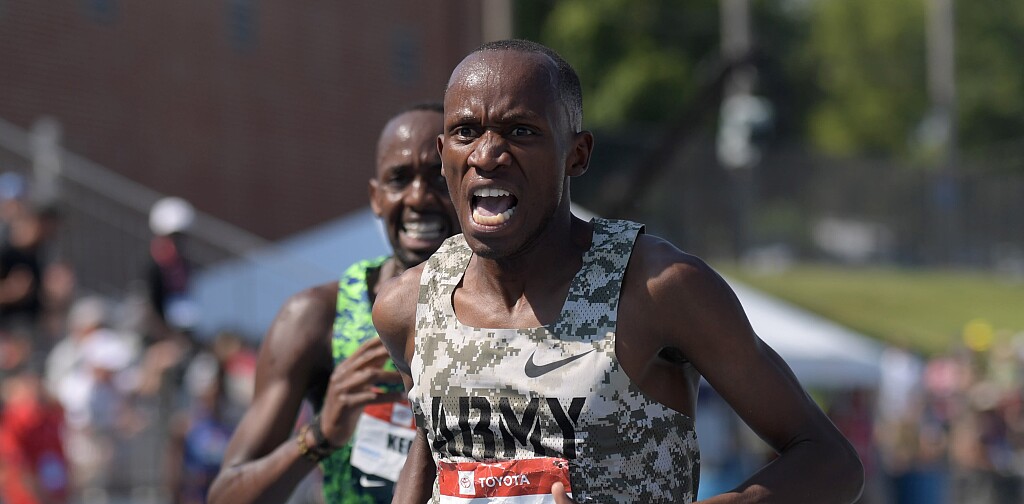
The 50th edition of the Credit Union Cherry Blossom 10 Mile here this morning ended with a bang when Olympic steeplechaser Hillary Bor not only won the men’s division of the USATF 10 Mile Championships, but also claimed a $50,000 bonus for breaking Greg Meyer’s 40-year-old national record by just two seconds.
Bor, 33, who represents Hoka One One and wore bib 13, clocked 46:11, three seconds behind overall race champion Tsegay Kidanu of Ethiopia. Including his prize money, Bor collected a total of $59,000.
“I came here to break the record and the weather wasn’t going to stop me,” Bor told Race Results Weekly, referring to the unusually cold temperatures and strong winds. “It’s something I’ve been working for since October last year.”
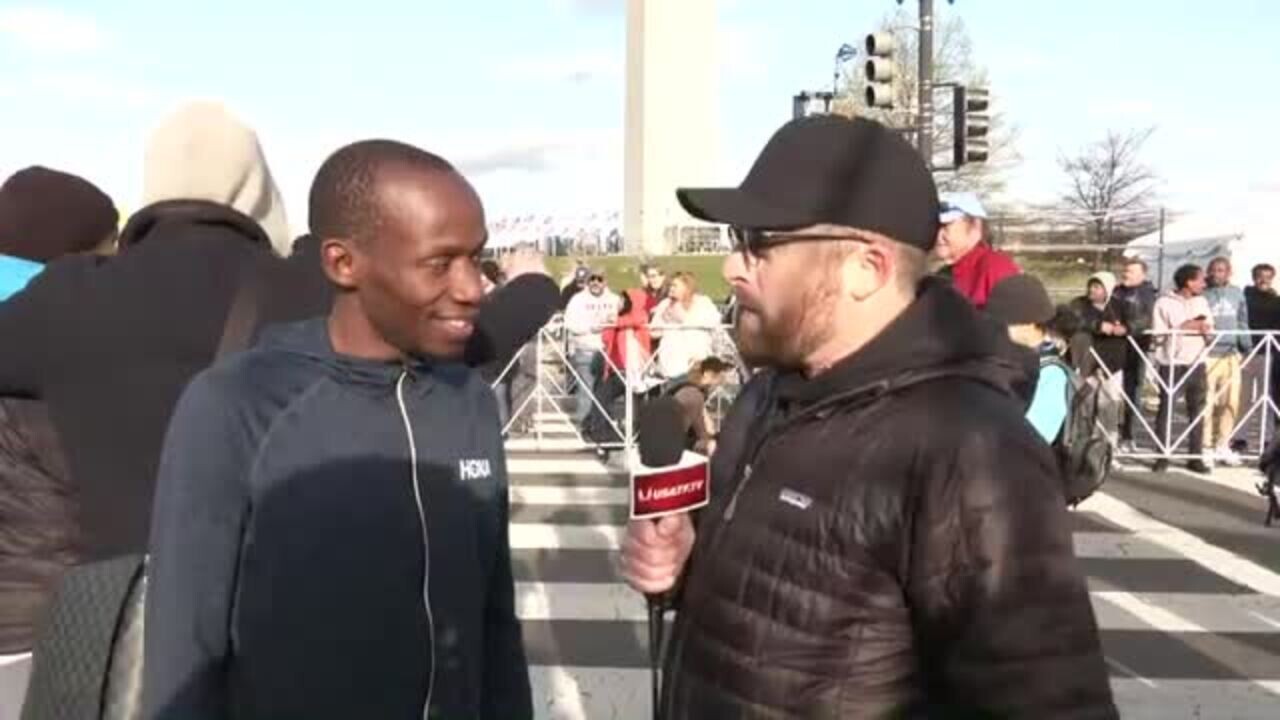
Last October Bor won the USATF 10 Mile Championships in St. Paul, Minn. He ran 46:06 in that race, a championships and course record, but that course was 31 meters downhill and not eligible for record setting. However, Bor and coach Scott Simmons realized that breaking Meyer’s mark was within his capabilities, especially because a faster time run by two-time Olympic medalist, Galen Rupp, was never ratified by USATF. Rupp ran a 10 mile split of 45:54 at the Row River Half-Marathon in Dorena, Ore., in October, 2020, but the paperwork for verifying that record was never completed or approved.
“My coach knew I was in really good shape to run 45 (minutes),” Bor said. “But, the weather’s not good today. The last two miles was just the wind on our face the whole time.”
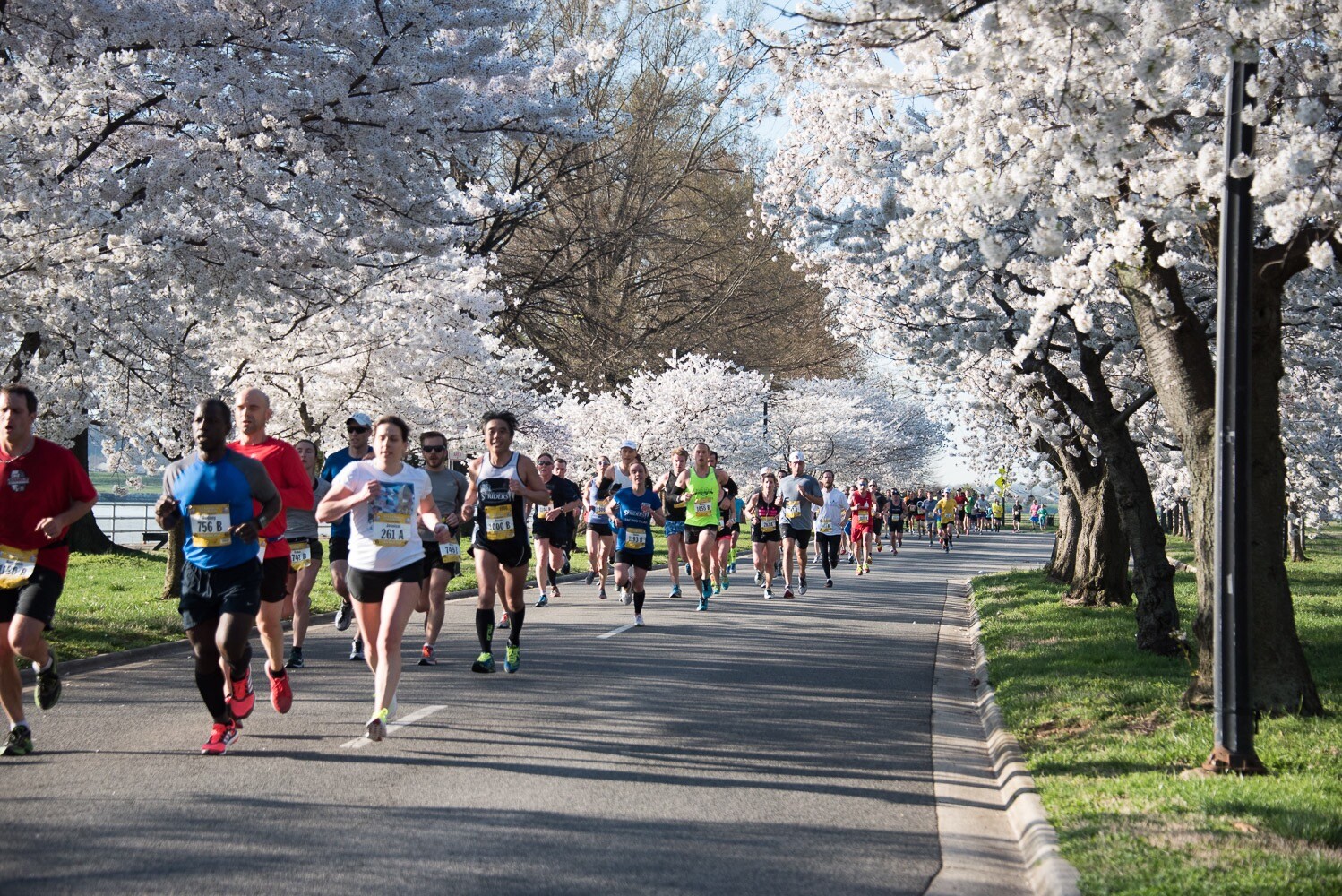
Indeed, it was in those last two miles that Bor and Kidanu did their best to push each other. Kidanu, who represents Asics, was just trying to keep up the pressure on Bor.
“The wind was very strong and it made it very tough,” Kidanu told Race Results Weekly through a translator. He continued: “At the beginning there were a lot of us, but later only a few of us. But the wind made it very difficult. Two of us were able to prevail and we battled one another. In the end, I was able to win.”
In the final sprint to the line, Bor wasn’t really sure where he stood against the clock. The wind was so strong that the 9-mile marker blew down, despite being weighted with sandbags. Also, Bor started the race without his watch.
“Today, I didn’t have my watch so that was not really good because I didn’t know the splits,” Bor said, looking slightly embarrassed. “When I saw the split at 8 miles I knew I needed to run 4:45, but the wind was too much. I just put my head down and just grind, and grind, and grind.”
Biya Simbassa (Under Armour) finished a distant third in 47:09 and finished second in the national championships division. Kenya’s Charles Langat (Asics) was fourth in 47:25, and Jacob Thomson (Under Armour) took fifth –and third in the national championships– in 47:27.
Bor, who will return to the steeplechase during the track season, said that today’s race was all about self-belief.
“It shows if you put something in your head you can accomplish it,” he said.
The women’s competition was a tale of two races.
In the overall competition, Uganda’s Sarah Chelangat (Nike) surged away from the field just before the five mile mark. Her six-mile split was a snappy 4:56, and that put her 22 seconds ahead at that point. Despite running directly into the wind (and alone) in the final miles, she was able to extend her lead to 30 seconds by the ninth mile, and 33 seconds by the finish. Her winning time of 52:04 was excellent given the conditions, but she fell well short of the 51:23 world best for an all-women’s race which would have given her a share of the race’s $50,000 bonus pool.
Behind Chelangat, there was a heated battle for both second place overall and the USATF title. In the ninth mile, Emma Grace Hurley (Atlanta Track Club Elite), Sara Hall (Asics), Nell Rojas (Nike), and Molly Grabill (Unattached) separated themselves from the rest of the pack, all of them trying for the national title. As they crested the final hill before the course turns slightly downhill to the finish line, Hall and Rojas were locked in a sprint for the win. Hall, who is running the Boston Marathon in 15 days, got the best of Rojas, 52:37 to 52:38.
Hall, who turns 40 on April 15, almost skipped today’s race. She just returned from a family trip to Ethiopia where her training didn’t go well because she got sick.
“Honestly, I feel so thankful for today because four days ago I wasn’t going to race,” Hall told Race Results Weekly. “I had COVID last week and training was just so rough. I had a fever. I had two different viruses back to back.”
But like Bor, Hall had the power of self-belief working for her today.
“I think my whole career I’ve just chosen to show up,” Hall said, wrapped in an American flag. “So, just today I decided to show up and I’m really glad I did, especially with Asics sponsoring this event.”
While the wind –which Rojas called “nasty”– was a challenge, Hall saw it as an opportunity to prepare mentally for Boston where conditions can be difficult, too. She thought about the 2018 race where temperatures were just above freezing and athletes had to run through a driving rain storm.
“I was thinking about Boston because, you know, 2018 with that headwind and the storm,” Hall said. “I have Boston in two weeks, so this is just a good time to practice.
Like Bor, Hall had thought about trying for a share in the record bonus pool, but discarded that idea when she felt the power of the wind.
“Normally, I would have wanted to go for the record out here, but with the significant wind I didn’t know if that was going to be in the cards, so I just chose to compete,” she said. “I think this was a great opportunity to do that with Boston coming up.”
With her win here today, Hall has won a total of 12 national titles, four at 10 miles (2017, 2018, 2019, and 2023).
Hurley finished fourth (third American) in 52:41, and Grabill got fifth (fourth American) in 52:42. Defending champion Susanna Sullivan, who led most of the first half of the race, finished seventh (sixth American) in 53:25. She’s running the TCS London Marathon in three weeks and has been doing heavy mileage.
“I’m ready to run a marathon,” she said, smiling, as she changed into warm clothes in the athlete recovery area.
Some 16,000 runners competed today after about 6,000 ran the companion 5-K yesterday (which took place in the rain). Several former race champions were on hand to celebrate the 50th edition, including Kathrine Switzer (1973), Greg Meyer (1983), Eleanor Simonsick (1982 and 1983), and Bill Rodgers (1978 through 1981). Race director Phil Stewart reflected on how the race had endured for so many years and through so many cultural and political changes.
“Through Watergate, gas crises, the fall of the Berlin Wall, the invention of the internet, the first and second Iraq Wars, the 2008 financial crisis, America’s first Black President, two impeachments, an insurrection and the War in Ukraine, runners have returned each spring for what is known as the ‘Runners Rite of Spring,'” Stewart said at last night’s pre-race dinner.
by David Monti
Login to leave a comment

Cherry Blossom Ten Mile Run
The Credit Union Cherry Blossom is known as "The Runner's Rite of Spring" in the Nation's Capital. The staging area for the event is on the Washington Monument Grounds, and the course passes in sight of all of the major Washington, DC Memorials. The event serves as a fundraiser for the Children's Miracle Network Hospitals, a consortium of 170 premier...
more...
Covid Protocols Announced for 2021 Medtronic Twin Cities Marathon Weekend
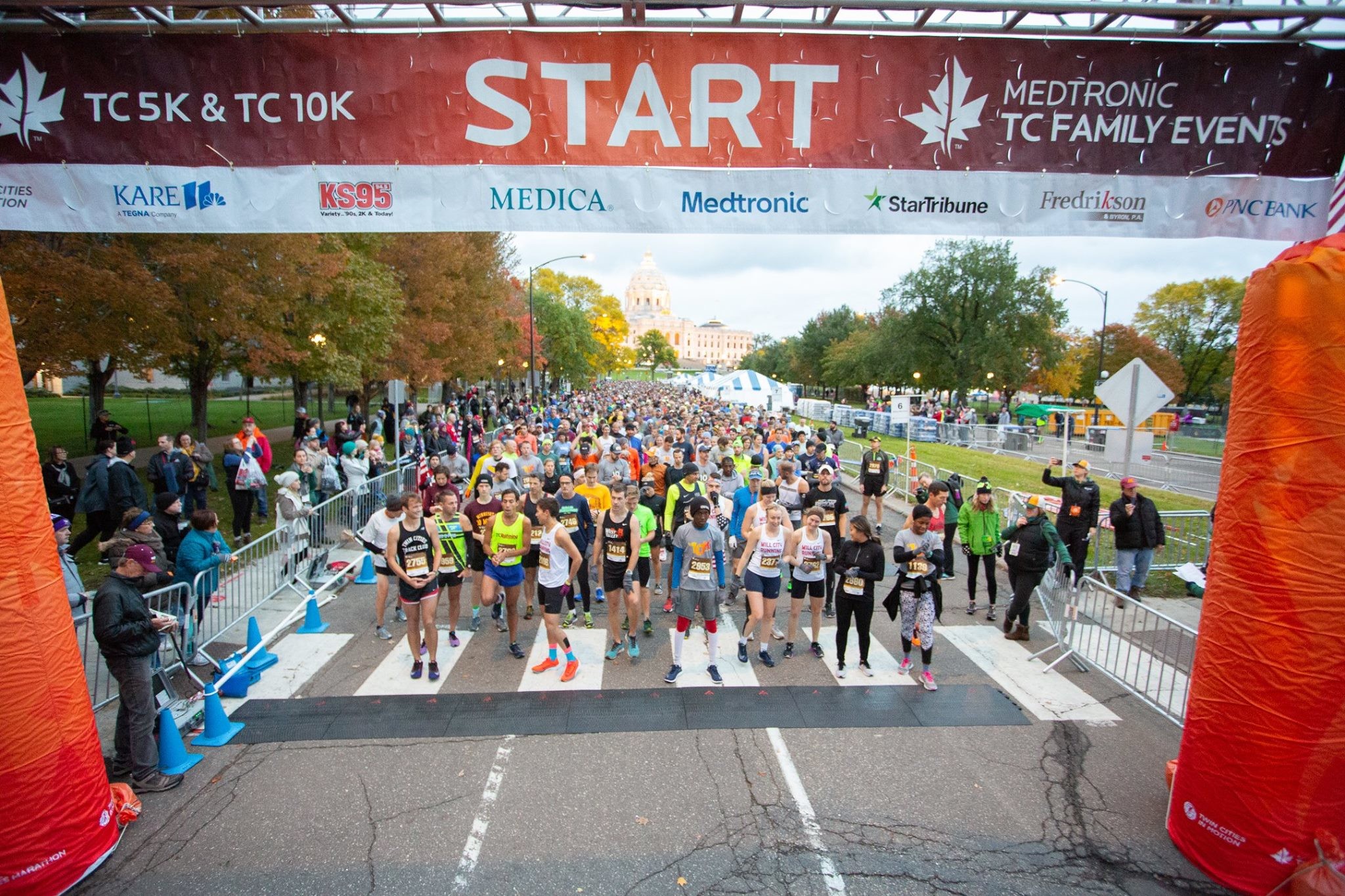
Masking will be required for all indoor spaces and in select higher-density outdoor settings at Medtronic Twin Cities Marathon Weekend which kicks off Friday, October 1, and runs through Sunday, October 3, in Minneapolis and St. Paul.
The event, which is being held with reduced field sizes across its races and with extra space for social distancing, announced finalized Covid protocols for the event. Masking will be required for participants, event officials and volunteers:
· At the Health & Fitness Expo at Saint Paul RiverCentre on October 1-2
· At other indoor facilities associated with the event, including enclosed tents
· On race transportation vehicles, including buses to the start line
· In outdoor start area corrals where runners gather before their races
· In outdoor finish line walk-off area
Additionally, because most youth participants have not been vaccinated, masks will be required for all participants, volunteers, staff, and other attendees in the registration and race packet pick-up area for the Medtronic TC Family Events, TC 10K, presented by Dermatology Consultants, and TC 5K, presented by Fredrikson & Byron, P.A., on Saturday, October 2.
Runners will not be required to wear masks while they run their races.
“We take health seriously, we take safety seriously and we take Covid-19 and the Delta variant seriously,” Twin Cities In Motion Executive Director Virginia Brophy Achman said. “Our staff and medical team have been preparing for this event since the pandemic emerged. We’ve worked with the Minnesota Department of Health, an internationally respected crowd scientist and with local and national industry peers, including the Minnesota Running Industry Covid Task Force, to design the right safety measures for our event. We wanted to do everything we could to help our participants feel confident when they are at our event.”
Additionally, event organizers have taken steps to reduce high-density gathering situations, by staggering start area arrival times, moving gear check drop off to the expo from the start area, and transforming formerly tented areas into open-air spaces when appropriate.
“We are asking participants, volunteers, and staff at the event to be considerate of others’ comfort level and maintain distance from people outside their household,” Brophy Achman added. “The running community has always shown fellowship and respect for one another, so we’re confident that spirit will prevail during this unique edition of the event.”
The event’s comprehensive COVID-19 Policies and Procedures document may be read here.
Despite the safety precautions, the event will still offer the spirit and energy Medtronic Twin Cities Marathon is known for. More than 18,000 participants will enjoy races on Saturday and Sunday, October 2-3. Local mascots will still race on Saturday at the Medtronic TC Family Events, marathon runners will enjoy personalized, recorded cheers and greetings from friends and family via a large Cheer Channel video screen at the 18.5 mile mark, and all race finishers of legal drinking age will earn a free Summit beer at the finish line beer garden.
The return of the event to the streets of Minneapolis and St. Paul after its one-year hiatus will also reestablish an important fundraising platform for dozens of local nonprofits who use the marathon to raise money and awareness of their organizations. Runners raised more than $1 million at the last in-person edition of the race in 2019. 
Medtronic Twin Cities Marathon Weekend kicks off at 11 a.m. Friday, October 1, with the opening of the Health & Fitness Expo at the Saint Paul RiverCentre, continuing through Saturday evening. Running kicks off at 7:15 a.m. Saturday, October 2, at the State Capitol grounds in St. Paul with the TC 10K, presented by Dermatology Consultants, followed by the TC 5K, presented by Fredrikson & Byron, P.A. and the Medtronic TC Family Events.
The Medtronic TC 10 Mile will kick off Sunday racing at 7 a.m. from downtown Minneapolis with the 2021 Medtronic Twin Cities Marathon following at 8 a.m. Both races finish at the State Capitol grounds.
by Running USA
Login to leave a comment
Medtronic Twin Cities Marathon
The Medtronic Twin Cities Marathon Weekend offer races, walks and activities for every age and ability level! Learn more about the weekend's events and activities by using the navigation bar at the left or top of your screen. The Twin Cities Marathonis a running event in the Minneapolis-Saint Paul area. The TCM was first run in 1982, and typically takes...
more...
Missouri man returns for another ‘Grandma’s Double,’ running the course twice in one day
The first 25-26 miles are “the easy ones,” said Eric Strand, 60. “Then you have the benefit of aid stations, the crowd and fellow runners to commiserate with on the way back. It’s a fun way to get a training run in.”
Before runners hit the starting line, before volunteers set up aid stations and before the sun rises, Eric Strand is running Grandma’s Marathon.
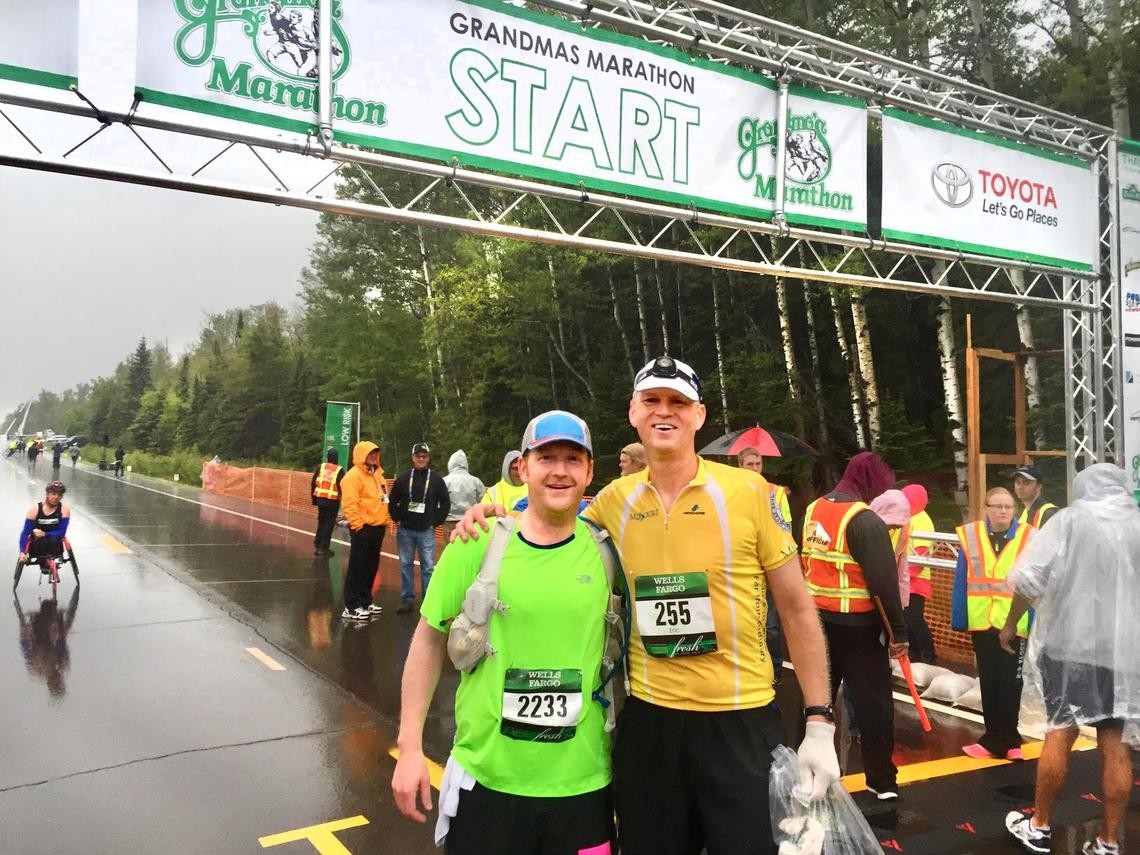
Backwards. And then back again.
The “Grandma’s Double” is a long-running tradition for Strand.
About 3 a.m. on race day, his wife drops him off in Canal Park. He runs 26.2 miles to Two Harbors — and joins the other marathoners for Round 2.
The first 25-26 miles are “the easy ones,” said Strand, 60. “Then you have the benefit of aid stations, the crowd and fellow runners to commiserate with on the way back. It’s a fun way to get a training run in.”
It started as a way to prepare for the 100-mile Leadville Trail ultramarathon. Grandma’s landed on a weekend that Strand needed to get in a 50-mile run. Instead of spreading it out, he decided to pack it into one day.
“It was very interesting running the course backwards, especially when the bars had people filing out. You had an interesting crowd," Strand said in a 2012 News Tribune story.
Strand gets to see things other marathoners don’t: the race course waking up and volunteers getting ready, and some of the aid station captains are there every year.
He has heard his fair share from passersby about going the wrong way, and it happens even more now.
“They've all learned their lines,” he said with a laugh.
The Missouri man, formerly of St. Paul, grew up hearing about Grandma’s, but on New Year’s Eve before his 40th birthday, he registered for it.
He trained for six months and made every mistake.
“There’s euphoria. You hit new distance markers … you get this in your mind that you are invincible. The next day, you wake up, and you have plantar fasciitis or shin splints or your knee hurts, and you very quickly realize you aren't,” Strand said.
But you slow down, heal up, maybe bike for a while and you get back to running, he added.
Strand recalled the end of his first Grandma’s Marathon: “As I was enjoying the runner’s high, my kids reminded me that there were three 70-year-olds that beat me that day. It brought me down to earth; they’re really good at doing that.”
Strand said tying training into a race is one way to make it fun. He averages about 2,500 miles a year; that’s typically 7 miles a day, but sometimes, it’s 100 miles at a time.
Strand ran his first five Grandma’s Doubles solo, save for one year with Ben McCaux. Since then, he has been joined by his son, Zach.
They’ve tackled the Double three times; they ran their first father-son Leadville 100 in 2017.
In a 2017 video of the latter, the pair are seen trekking across Colorado terrain.
“Zach’s doing great,” Eric Strand says into the camera. “He’s fun to run with. As long as he keeps his fueling and hydration in good shape, he’s down for a buckle.”
They have tallied 25 marathons and ultramarathons together.
“He’s better than me now, which he’s quick to point out,” he said.
During training, Strand mostly listens to audiobooks, but, if he needs motivation, there’s Britney Spears and Miley Cyrus — music his kids listened to when they were teens.
As for his powerhouse song, that’s Eminem’s “Lose Yourself.”
He doesn’t listen to anything during races; he likes to interact with others.
His race-day eats were pretty standard: Gatorade and gels; but for ultramarathons, his wife brings him a cheeseburger at mile 50.
Saturday will be his 22nd Grandma’s Marathon — his 10th Grandma’s Double — and there’s no end in sight.
There’s a cadence to the year — the Boston Marathon in April, Leadville in August, Chicago in October, a mix of others — but June will always be Duluth.
“There will be a day when I won’t be able to do this,” Strand said, “but it’s not today, and hopefully won’t be for a long time. I hope to enjoy it as long as I can.”
by Melinda Lavine
Login to leave a comment

Grandmas Marathon
Grandma's Marathon began in 1977 when a group of local runners planned a scenic road race from Two Harbors to Duluth, Minnesota. There were just 150 participants that year, but organizers knew they had discovered something special. The marathon received its name from the Duluth-based group of famous Grandma's restaurants, its first major sponsor. The level of sponsorship with the...
more...
Medtronic Twin Cities Marathon registration opens April 8 to be run in person
The Medtronic Twin Cities Marathon Weekend of Events went virtual only in 2020, but it will return in-person this year on Oct. 2 and Oct. 3.
The Medtronic TC Family Events will take place on Saturday, October 2, and the weekend will conclude with the Medtronic Twin Cities Marathon and TC 10-Mile races. Those races run from downtown Minneapolis to the State Capitol in St. Paul, on Sunday, October 3. To register, you can visit Twin Cities in Motion’s webpage starting at 10 a.m. on Thursday, April 8.
Twin Cities in Motion has partnered with experts and officials to build an event that’s COVID-safe. Virtual races are included as well for those who prefer the option. All 2021 Medtronic Twin Cities Marathon Weekend events will have limited field sizes. The marathon is currently limited to 4,000 in-person registrants.
If the event is cancelled due to COVID-19, a partial cash refund policy will be in place. For more information on safety precautions, see here.
Get the Twin Cities in Motion app for pro tips, free Runcoach training, and helpful content for free virtual check-in races to gauge your progress and prepare you for the race.
Registration is also open for the Earth Day 8K, presented by Everlight Solar on Sunday, April 25 at Lake Como, the Spring into Summer 5K, presented by LX Medical on Saturday, May 22 at Lake Phalen and the Summit Triumphant 5K and 10K on Saturday, June 26, at Bde Maka Ska.
KARE 11 is proud to be the official media sponsor for the Medtronic Twin Cities Marathon Weekend and the presenting sponsor for the KARE 11 Family Mile.
by Sonya Nayar
Login to leave a comment
Medtronic Twin Cities Marathon
The Medtronic Twin Cities Marathon Weekend offer races, walks and activities for every age and ability level! Learn more about the weekend's events and activities by using the navigation bar at the left or top of your screen. The Twin Cities Marathonis a running event in the Minneapolis-Saint Paul area. The TCM was first run in 1982, and typically takes...
more...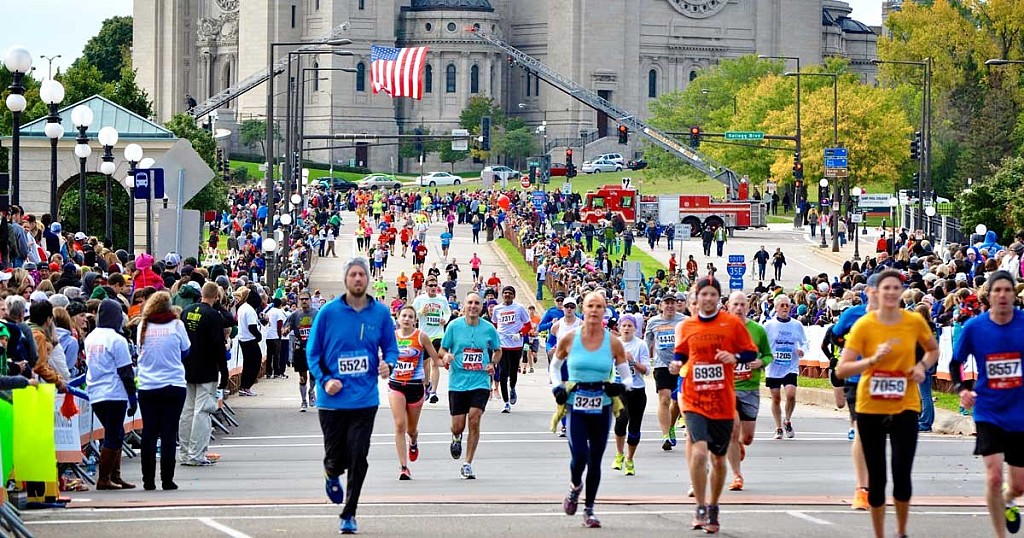
Covid-Safe Medtronic Twin Cities Marathon Planned for October 3
The 2021 Medtronic Twin Cities Marathon is scheduled to take place as a reduced-size, COVID-safe event on Sunday, October 3, race organizer Twin Cities In Motion announced. The race, which was cancelled last year due to the pandemic, will limit marathon participation to 4000 runners, and COVID-safety measures will be in place throughout the event.
Registration for the 2021 marathon and other Medtronic Twin Cities Marathon Weekend events will open on Thursday, April 8. The marathon race runs from downtown Minneapolis to the State Capitol grounds in St. Paul.
“We’re optimistic about our ability to host an in-person event this fall,” Twin Cities In Motion Executive Director Virginia Brophy Achman said. “Our team has consulted medical and crowd science experts and worked closely with relevant public agencies to get to this point. That work will continue until race day as we properly calibrate the event to this fall’s public health situation.”
Participants can expect to see changes in the event from previous editions. While plans will be modified to match conditions later in the year, Twin Cities In Motion is telling participants to expect:
• Reduced field sizes in all marathon weekend races
• Mask-wearing requirements except while racing
• Social distancing requirements across the event weekend
• Spectating discouraged and spectator access limited in certain areas
• Reduced touchpoints when possible
“While there will be noticeable differences from pre-COVID days,” Brophy Achman said, “we plan to do all we can to maintain the spirit and energy of the event despite the constraints. The power of the event lies in the thousands of personal achievements that culminate at our finish line, and we’re excited to return those moments to our participants’ lives after all they’ve endured.”
The return of the event to streets of Minneapolis and St. Paul will also reestablish an important fundraising platform for dozens of local nonprofits who use the marathon to raise money and awareness of their organizations. Runners raised more than $1 million at the last in-person edition of the race in 2019.
“The TCM team is pleased to be preparing for an in-person race, because it’s the work we love to do,” Twin Cities In Motion President Dean Orton said.
“But we know the event is an important annual event in our community and we’re excited to be bringing back all the meaningful elements marathon weekend offers – from youth fitness to volunteer opportunities, from economic impact to the unique fundraising platform we offer.”
Registration for the marathon will be conducted online through the Twin Cities In Motion website, tcmevents.org, beginning at 10:00 a.m. CDT on April 8. Registration will also open for the following Medtronic Twin Cities Marathon Weekend events:
• Medtronic TC Family Events
• TC 5K, presented by Fredrikson & Byron P. A.
• TC 10K
Those events take place at the State Capitol grounds on Saturday, October 2. Registration will also open for the TC Loony and TC Ultra Loony Challenges – where runners participate in the TC 5K and TC 10K prior to running either the 10 mile or marathon the following day. The registration drawing for the Medtronic TC 10 Mile held on October 3 will be open in mid-summer.
More than 25,000 runners participated in the 2019 Medtronic Twin Cities Marathon Weekend, including more than 7,000 marathoners and more than 13,000 10 milers.
Login to leave a comment

Medtronic TC 10 Mile
Twin Cities In Motion originated in a grassroots effort to bring the energy and positivity of a community-wide running event to Minneapolis and St. Paul. From the first strides of the inaugural Twin Cities Marathon in 1982 through a rich history that saw the addition of events and programming to serve the community, TCM has inspired and empowered the Twin...
more...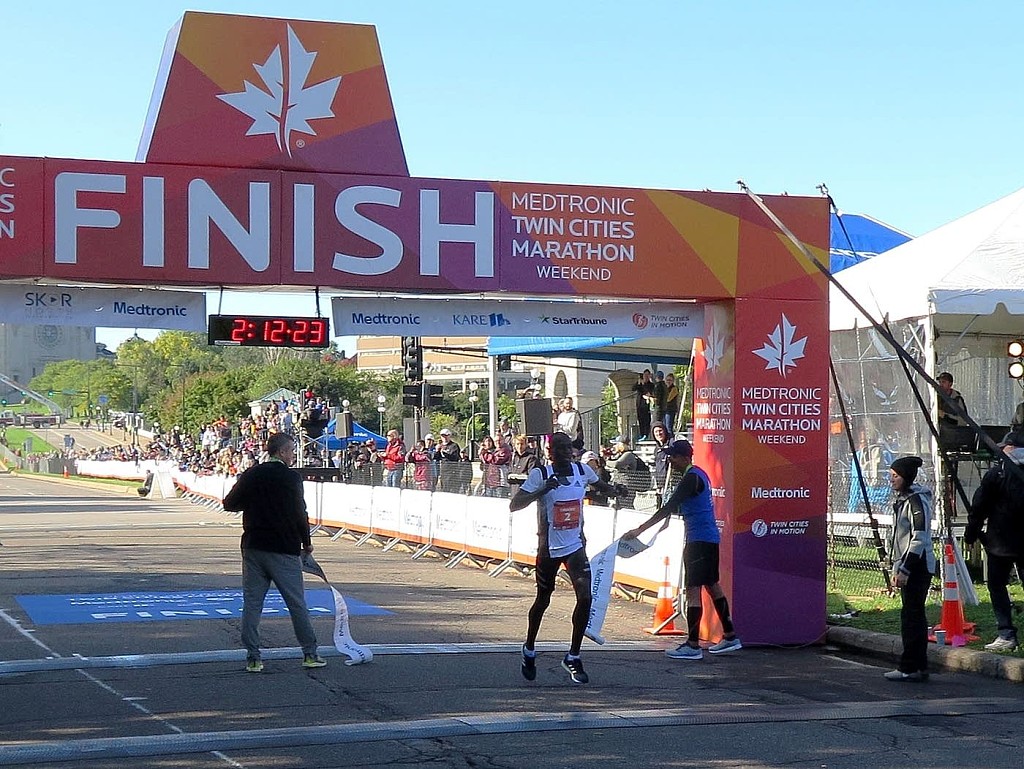
Dominic Ondoro of Kenya won the Medtronic Twin Cities Marathon on Sunday for a record-breaking fourth time
Dominic Ondoro of Kenya won the Medtronic Twin Cities Marathon on Sunday for a record-breaking fourth time, unprecedented in the 38-year history of the race from Minneapolis to St. Paul.
Ondoro, who also holds the record for fastest time in the race, came in at 2 hours, 12 minutes, 23 seconds.
Two Minnesotans finished the race in the top three: St. Paul native Danny Docherty, now of Minneapolis, came in third in the men’s race in 2:15:55. In the women’s race, Dakotah Lindwurm of Burnsville placed second in 2:32:49.
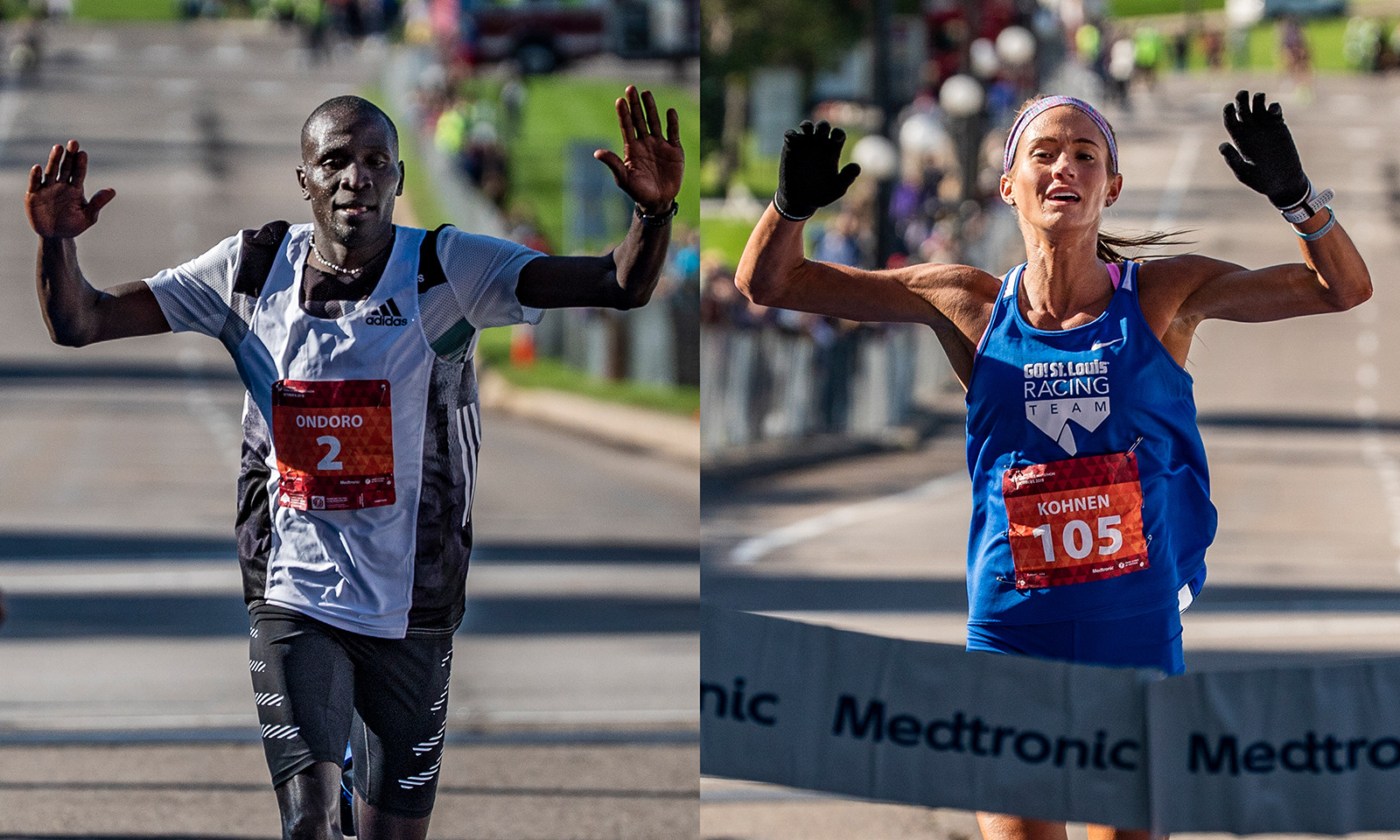
In the men’s race, Denis Chirchir of Kenya was second in 2:13:50.
Julia Kohnen of Florissant, Mo., won the women’s race in 2:31:29. Coming in third was 2014 Medtronic Twin Cities Marathon runner-up Heather Lieberg at 2:34:07.
In a press release sent out by event organizers, Ondoro, who has won the marathon four times in five attempts, including 2015, 2016 and 2017, said he had hoped to break his record but his back “rebelled.”
“I was running easily, but around 20K, I felt something in my (lower back), so no record,” he said. “I hope next year I can try my best. It’s exciting. I like the way the people here interact with us. They cheer us very well.”
Kohnen was pleased to win her first Twin Cities race, saying, “It’s a really good feeling to have a fast time under my belt now. The weather plays a huge factor, and we couldn’t have gotten luckier today. It’s so fun; the neighborhoods are absolutely gorgeous.”
Login to leave a comment
Medtronic Twin Cities Marathon
The Medtronic Twin Cities Marathon Weekend offer races, walks and activities for every age and ability level! Learn more about the weekend's events and activities by using the navigation bar at the left or top of your screen. The Twin Cities Marathonis a running event in the Minneapolis-Saint Paul area. The TCM was first run in 1982, and typically takes...
more...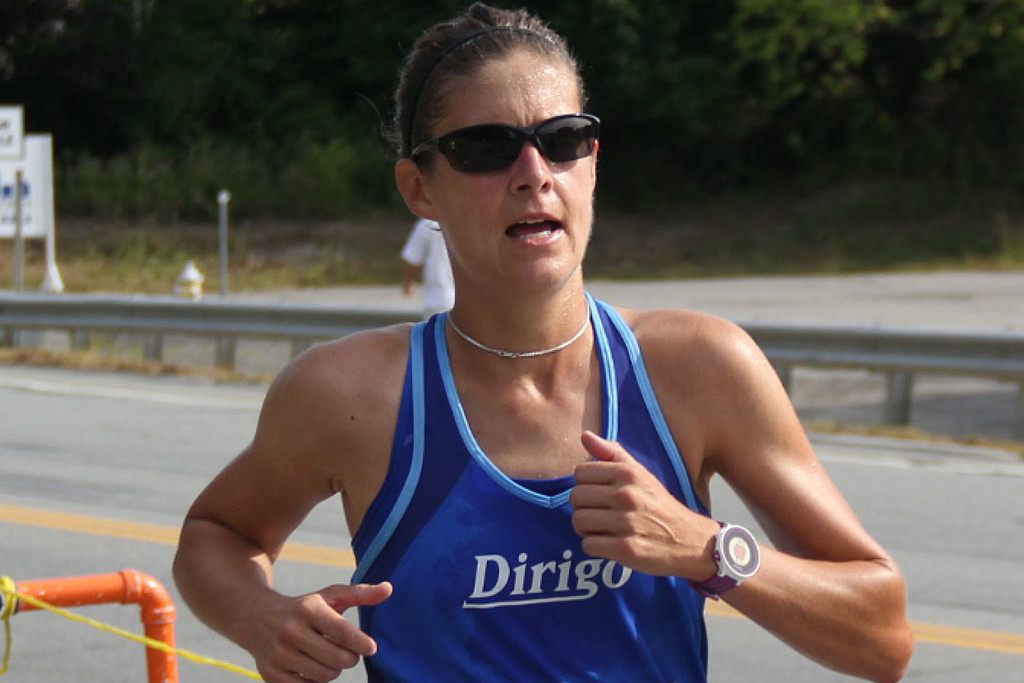
Tracy Guerrette, will continue her quest for an Olympic Trials berth while pursuing theology degree
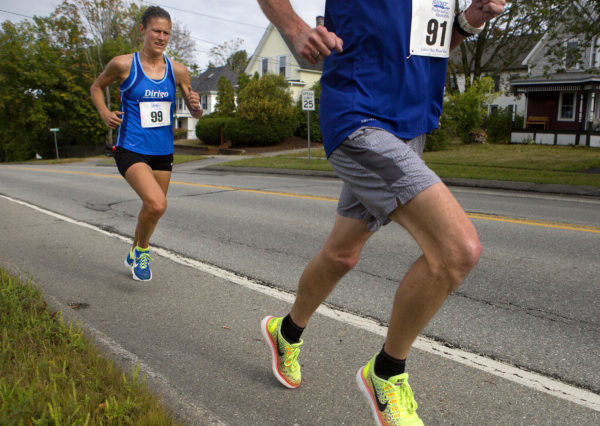
Tracy Guerrette, finally recovered from a fractured bone in her foot, continues her quest to qualify for the U.S. Olympic Marathon trials scheduled for Feb. 29, 2020, in Atlanta.
But the St. Agatha native won’t be training in the streets of Bangor much longer.
The former two-year basketball captain at the University of Maine is leaving her job as the director of faith formation at St. Paul the Apostle Parish in Bangor. She plans to pursue a master’s degree in theology at the Pontifical John Paul II Institute for Studies on Marriage and Family at The Catholic University of America in Washington, D.C.
“It is something I have been thinking about for a real long time, since my early 20s actually, but I never had a chance to do it,” the 38-year-old Guerrette said. “In the past couple of years, I’ve been considering it more seriously. I’d been praying about it and thought it was a good time to apply.”
She said she was accepted to a couple of schools and chose the Pontifical John Paul II Institute. She is enrolled in a two-year program.
“I feel like I needed to take a step back. It’s almost like a professional sabbatical. I want to study to better myself in my faith,” Guerrette said.
She feels it will help her better serve the Lord and the Catholic Church. It will also give her a variety of career options after she completes her degree.
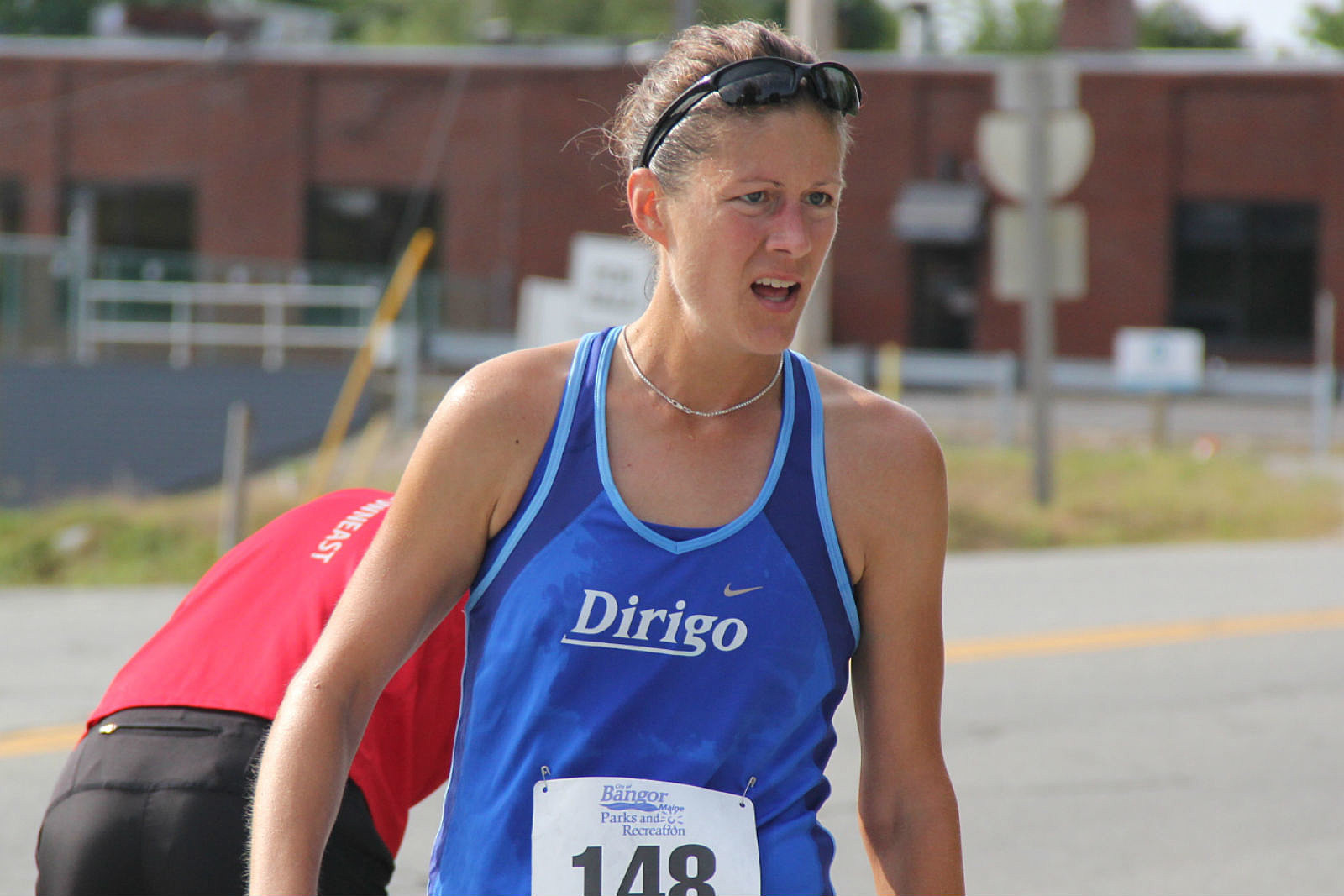
“I could continue to go to school, I could come back and work for a parish or a diocese or I could teach,” Guerrette said.
“My most prized possessions besides my running shoes are my theology books. But I haven’t had time to read them all because of my work, which is also a blessing,” Guerrette said.
Her degree study will focus on society and the current culture, and she said it will help prepare her to make a difference in people’s lives.
by Larry Mahoney
Login to leave a comment

2028 US Olympic Trials Marathon
Most countries around the world use a selection committee to choose their Olympic Team Members, but not the USA. Prior to 1968, a series of races were used to select the USA Olympic Marathon team, but beginning in 1968 the format was changed to a single race on a single day with the top three finishers selected to be part...
more...
Medtronic Twin Cities Opens Registration Early
Login to leave a comment
