

Running News Daily
Running News Daily is edited by Bob Anderson and team. Send your news items to bob@mybestruns.com Advertising opportunities available.
Index to Daily Posts · Sign Up For Updates · Run The World Feed
Articles tagged #Twin Cities Marathon
Today's Running News
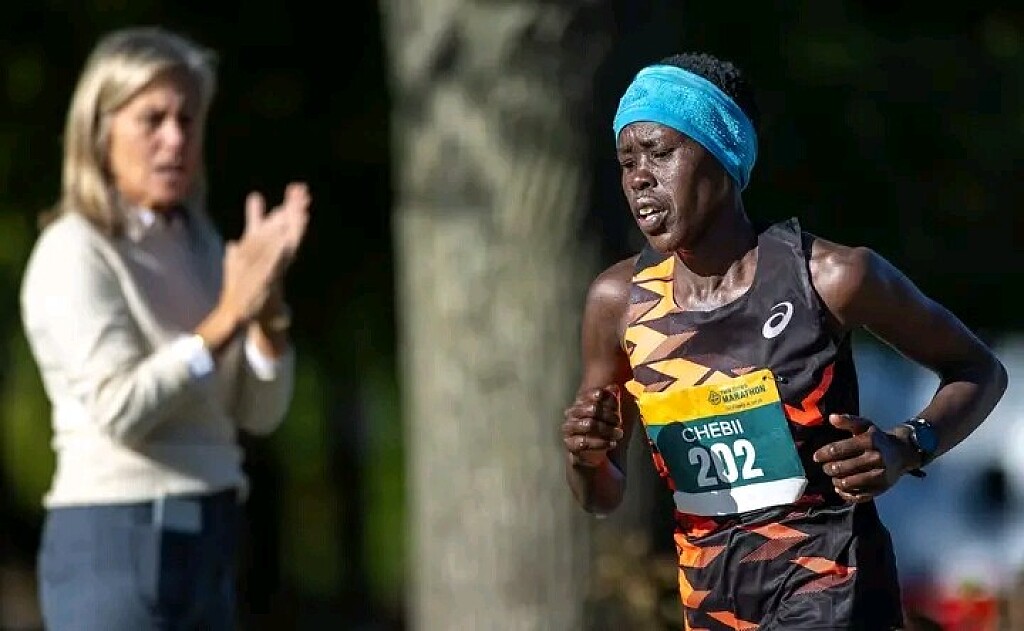


Twin Cities Marathon Turns the Page as Iconic Race Moves to Mid-October in 2027
The Twin Cities Marathon has closed the chapter on one of the longest-running traditions in American marathon racing, with the event set to leave its familiar early-October slot and move to mid-October beginning in 2027.

The 2026 edition marked the final time the race would be held in its traditional early-October window, bringing an end to a calendar tradition that has defined the event for more than four decades.
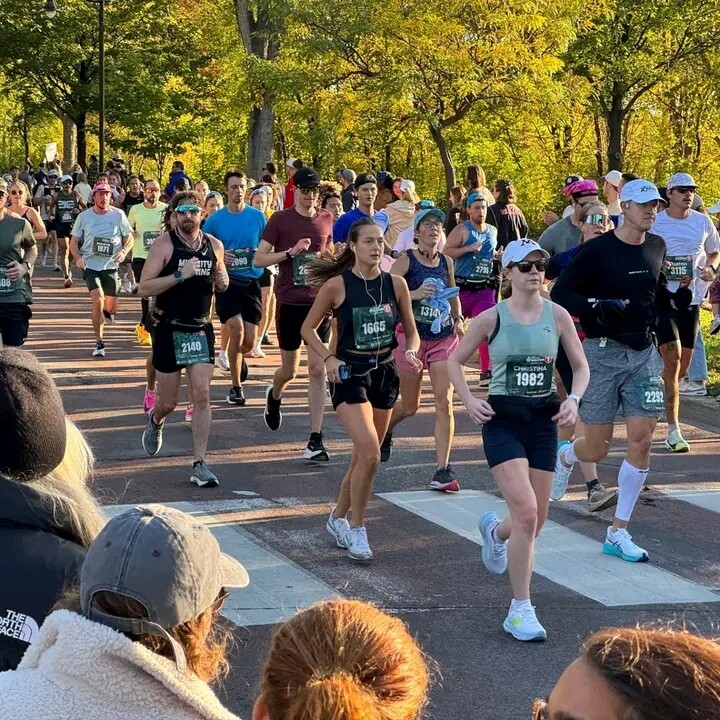
Beginning in 2027, Twin Cities Marathon Weekend will move to a mid-October date. The decision follows growing concerns over warmer and increasingly unpredictable conditions during the race's traditional weekend, with organisers seeking a better environment for runners, spectators and volunteers.
The change is more than a simple adjustment to the racing calendar. Early October, once synonymous with crisp autumn temperatures in Minnesota, has increasingly brought challenging heat. In recent years, organisers have had to contend with conditions that can place additional stress on marathon runners and increase demands on medical and public-safety teams.
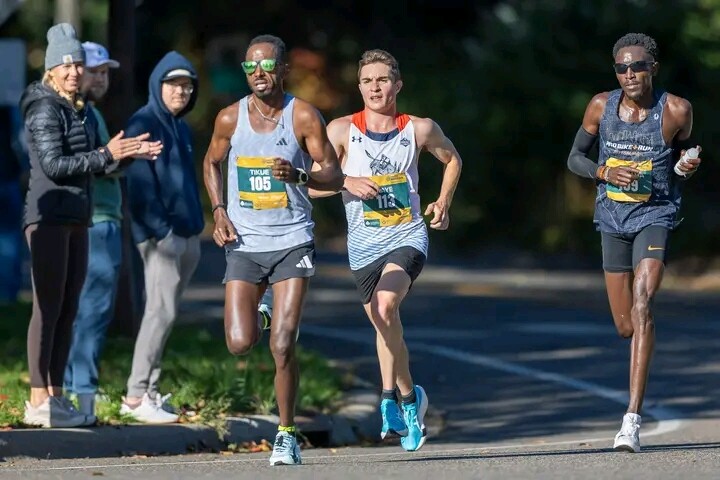
The inaugural Twin Cities Marathon was held on October 3, 1982, attracting 4,563 entrants. What began as a relatively young marathon has since developed into one of the most recognisable road races in the United States, growing alongside the running communities of Minneapolis and St. Paul.
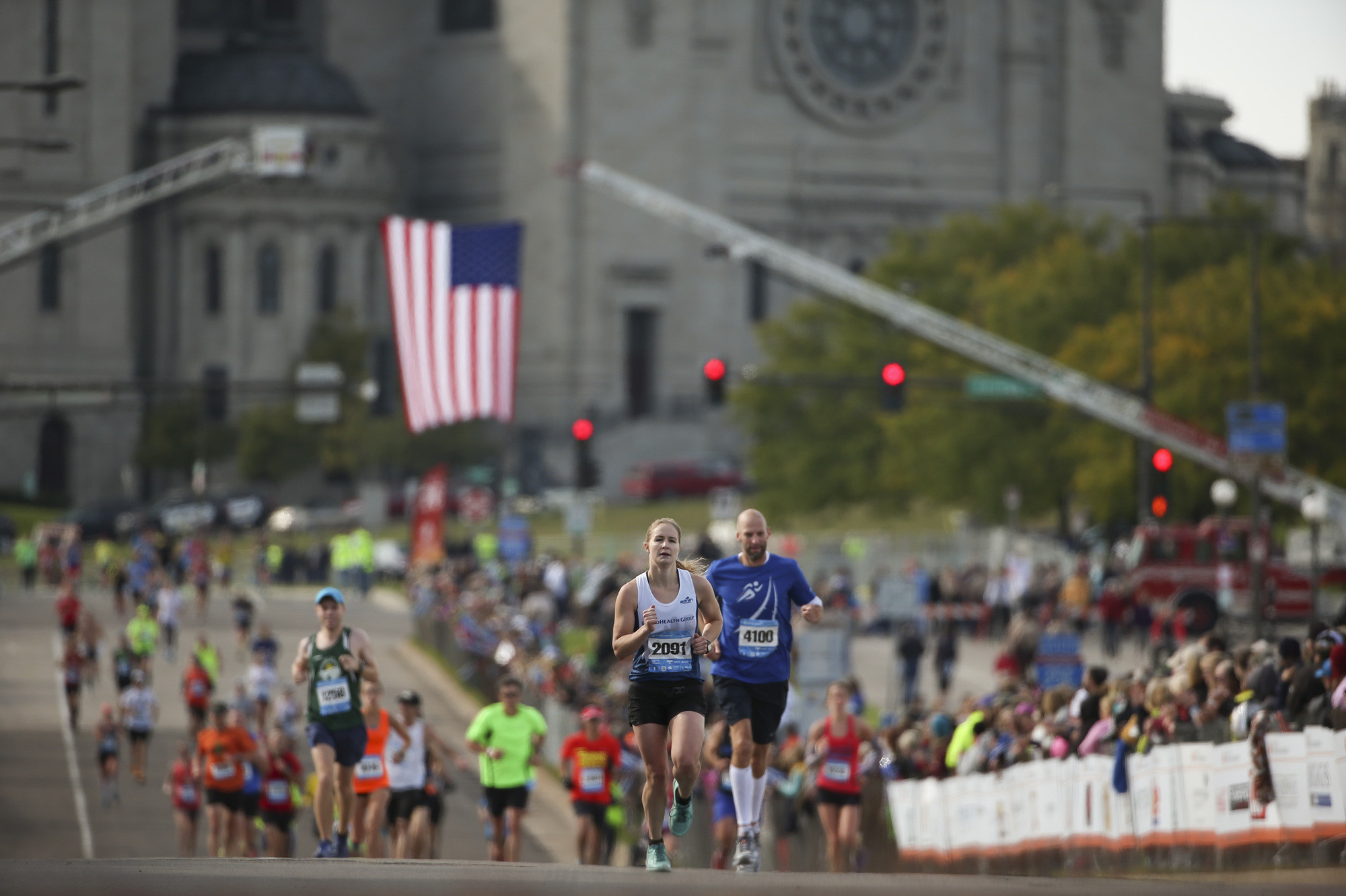
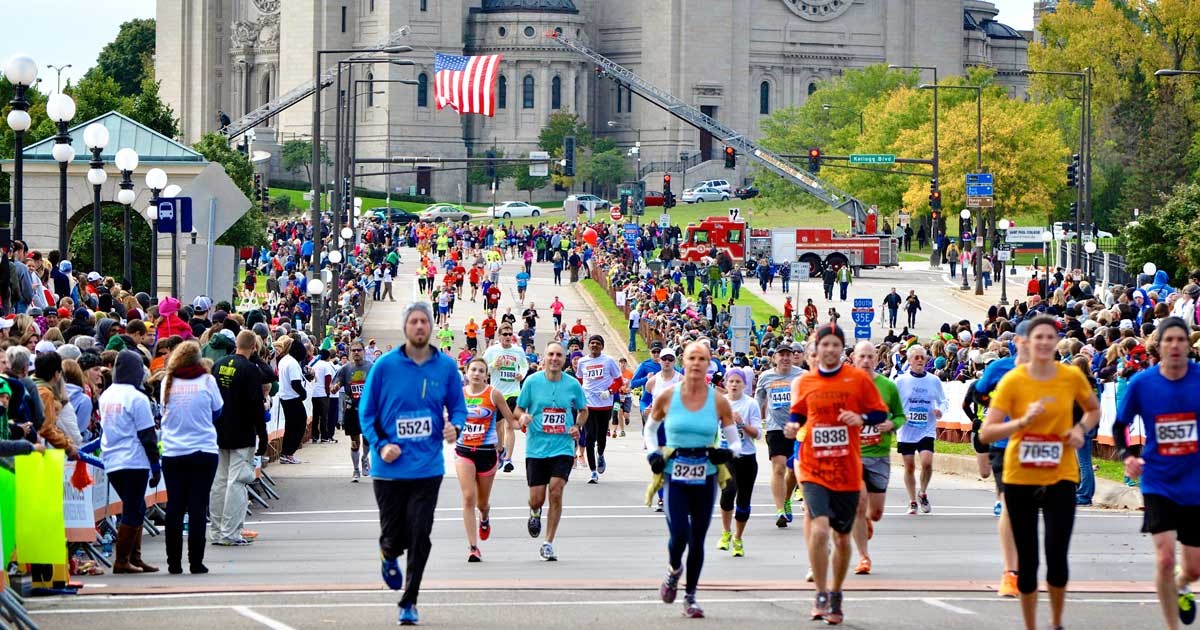
The course itself has long been one of the event's defining features. Runners travel through Minneapolis, pass the city's famous chain of lakes and follow a scenic route toward St. Paul before finishing near the Minnesota State Capitol. The combination of major urban landmarks, parkways, waterways and autumn scenery has helped give the race its distinctive identity.
The 2026 edition continued that long tradition, with roughly 30,000 runners taking part across the various events of Marathon Weekend. The marathon also featured defending champions Will Norris and Jane Bareikis, while favourable temperatures provided runners with much more comfortable conditions than some of the warmer editions in recent years.
Yet even with favourable weather this year, the decision to move the race reflects a longer-term concern. Organisers are looking beyond a single race morning and considering how changing weather patterns could affect the event in the years ahead.
For runners, the move could eventually become one of the most important changes in the marathon's modern history. A later October date offers the possibility of cooler racing conditions while preserving the course, the atmosphere and the traditions that have made Twin Cities Marathon a fixture on the American running calendar.
For more than four decades, the first Sunday of October provided a familiar date for thousands of runners preparing to take on the Twin Cities course.
That tradition has now reached its final chapter.
From 2027, the Twin Cities Marathon will arrive later in the fall — opening a new era for a race whose history remains firmly connected to the streets of Minneapolis and St. Paul.
by Erick Cheruiyot for My Best Runs.
Login to leave a comment
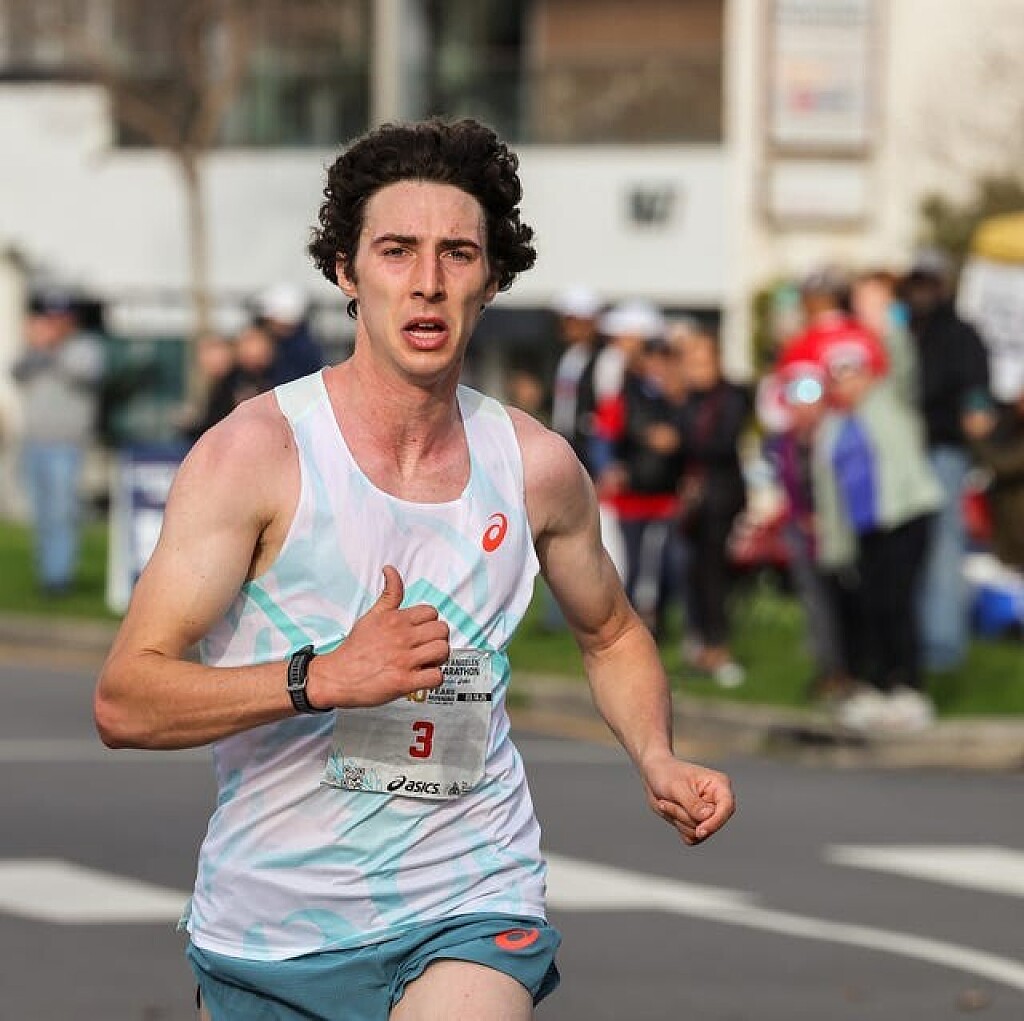
Matt Richtman - The Unexpected Hero of American Distance Running
On March 16, 2025, Matt Richtman stunned the running world by becoming the first American man in 31 years to win the Los Angeles Marathon. His time—2:07:56—was not only a personal best, but also the seventh-fastest marathon time in U.S. history. What made the victory even more remarkable was how he got there: no professional training group, no high-profile coach, just relentless work, self-belief, and a deep-rooted passion for the sport.
Humble Beginnings in a Running Family
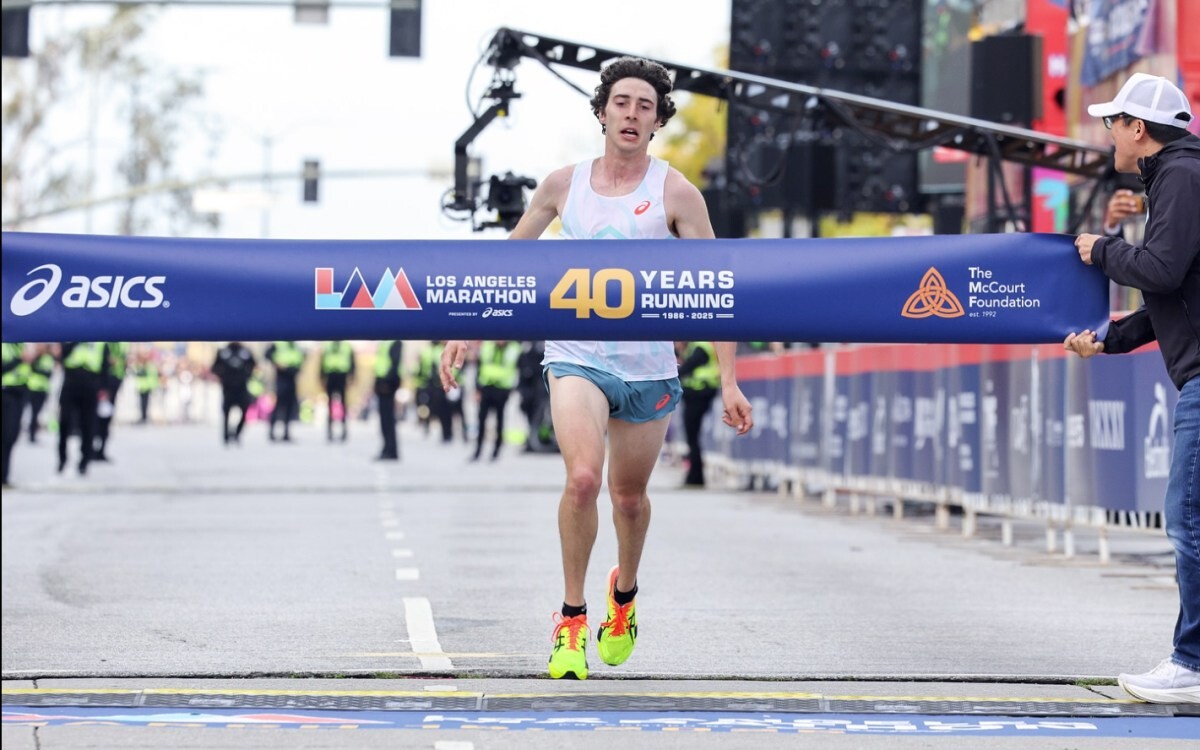
Born on January 13, 2000, in Elburn, Illinois, Richtman was raised in a family where running was part of the fabric of life. His parents, Tom and Karen, along with his sisters, Rebecca and Rachel, were known locally as “The Running Richtmans.” Inspired by that environment, Matt began running competitively in middle school and quickly rose through the ranks.
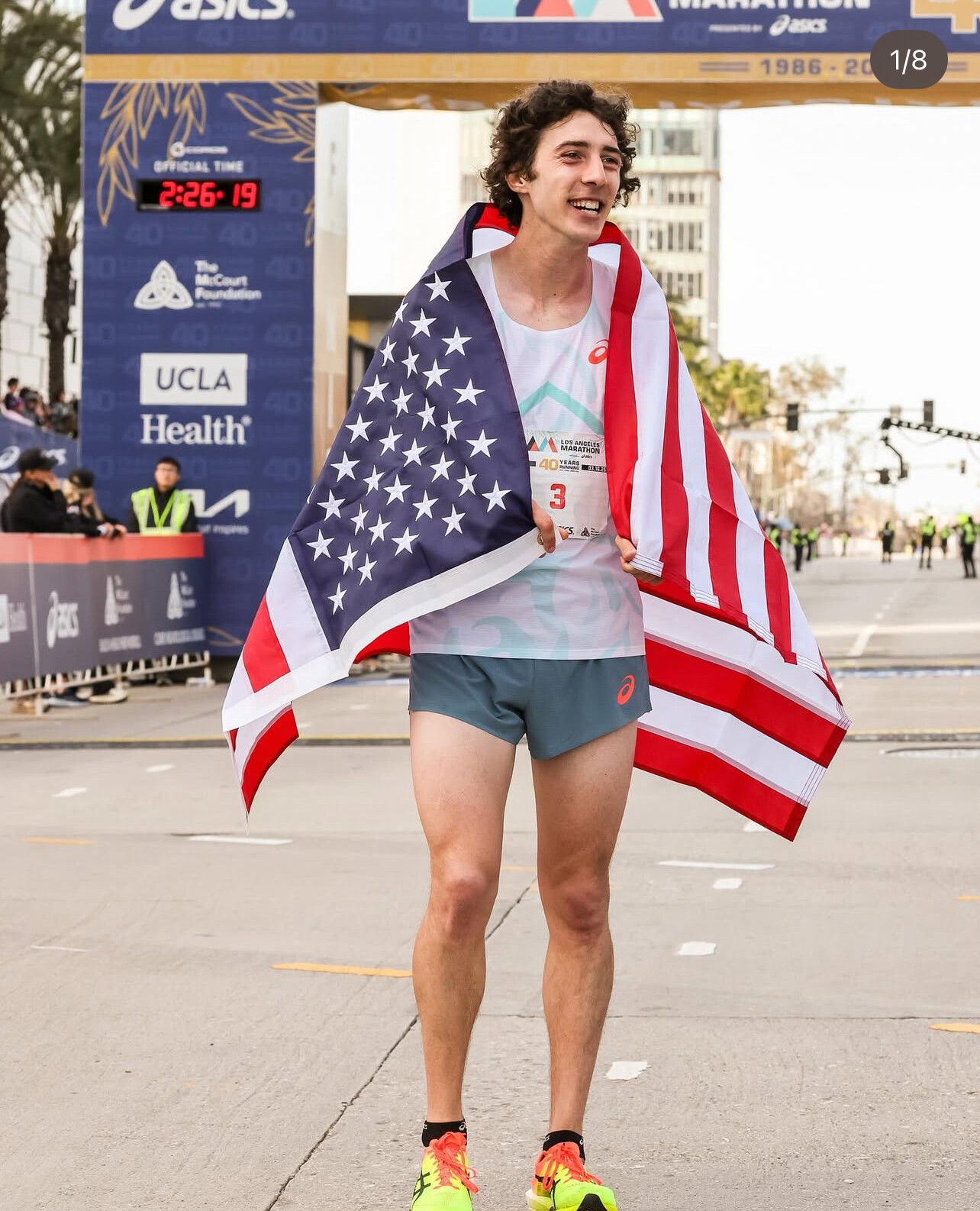
In 2017, as a senior at Kaneland High School, he won the Illinois Class 2A cross-country state title. From there, he ran at Bradley University before transferring to Montana State University, where he earned All-Big Sky honors and became a standout on the cross-country and track teams. He graduated in 2023 with a degree in mechanical engineering.
A Blue-Collar Approach to Greatness
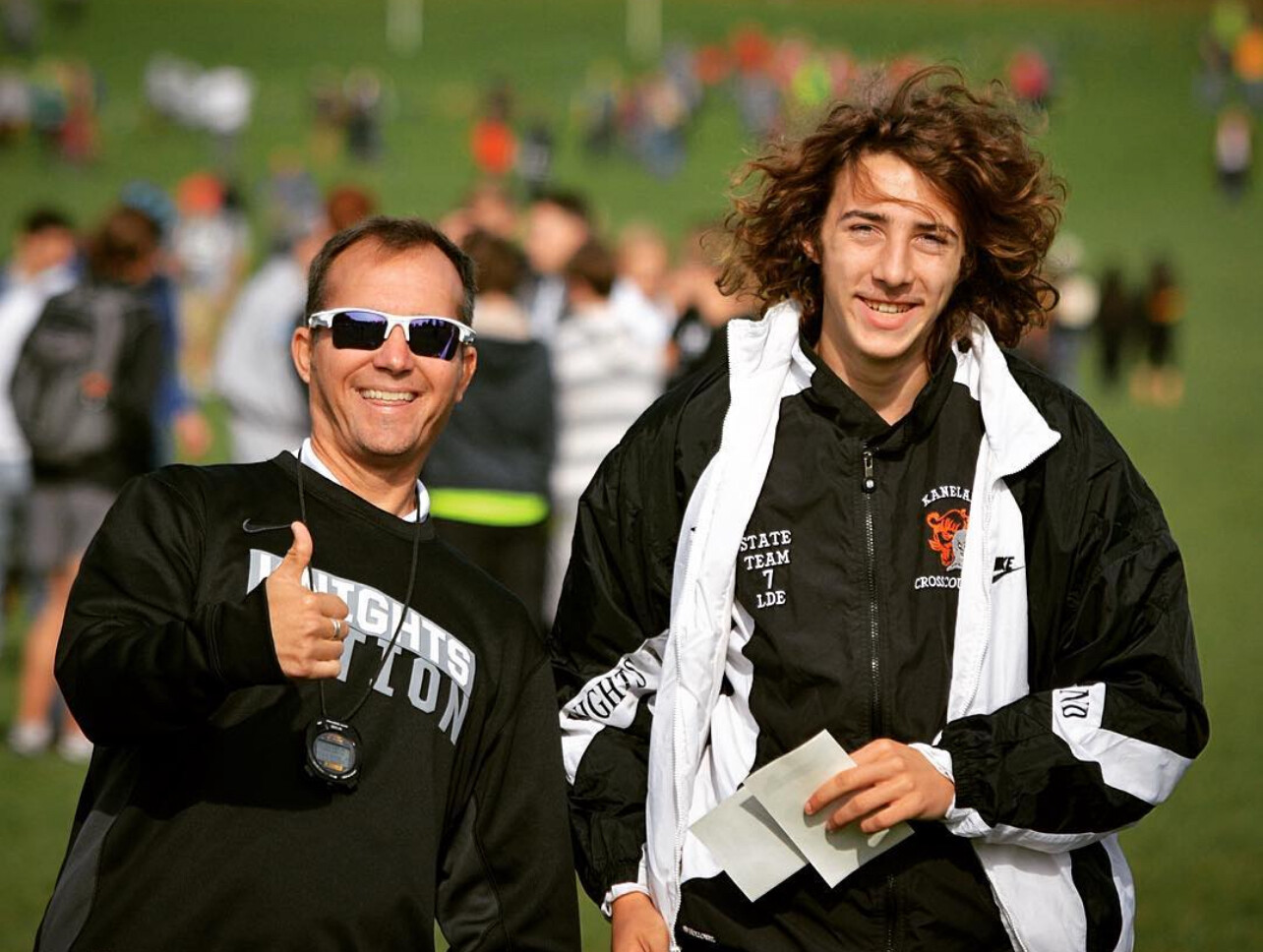
After college, Richtman returned to Illinois to work with his father’s carpentry business and volunteered as a coach at his former high school. Though his path diverged from the traditional elite training pipeline, he continued to train with quiet intensity.
In October 2024, Richtman made his marathon debut at the Twin Cities Marathon, finishing fourth in 2:10:47. That performance earned him a sponsorship from ASICS, allowing him to train full-time. Still, he remained self-coached and based in Bozeman, Montana, where he trained with a small group that included former Montana State teammates.
His training emphasized consistency over flash: weekly mileage exceeding 100 miles, long progression runs, and mile repeats with short recovery. No altitude camps. No super team. Just hard work.
Making History in Los Angeles
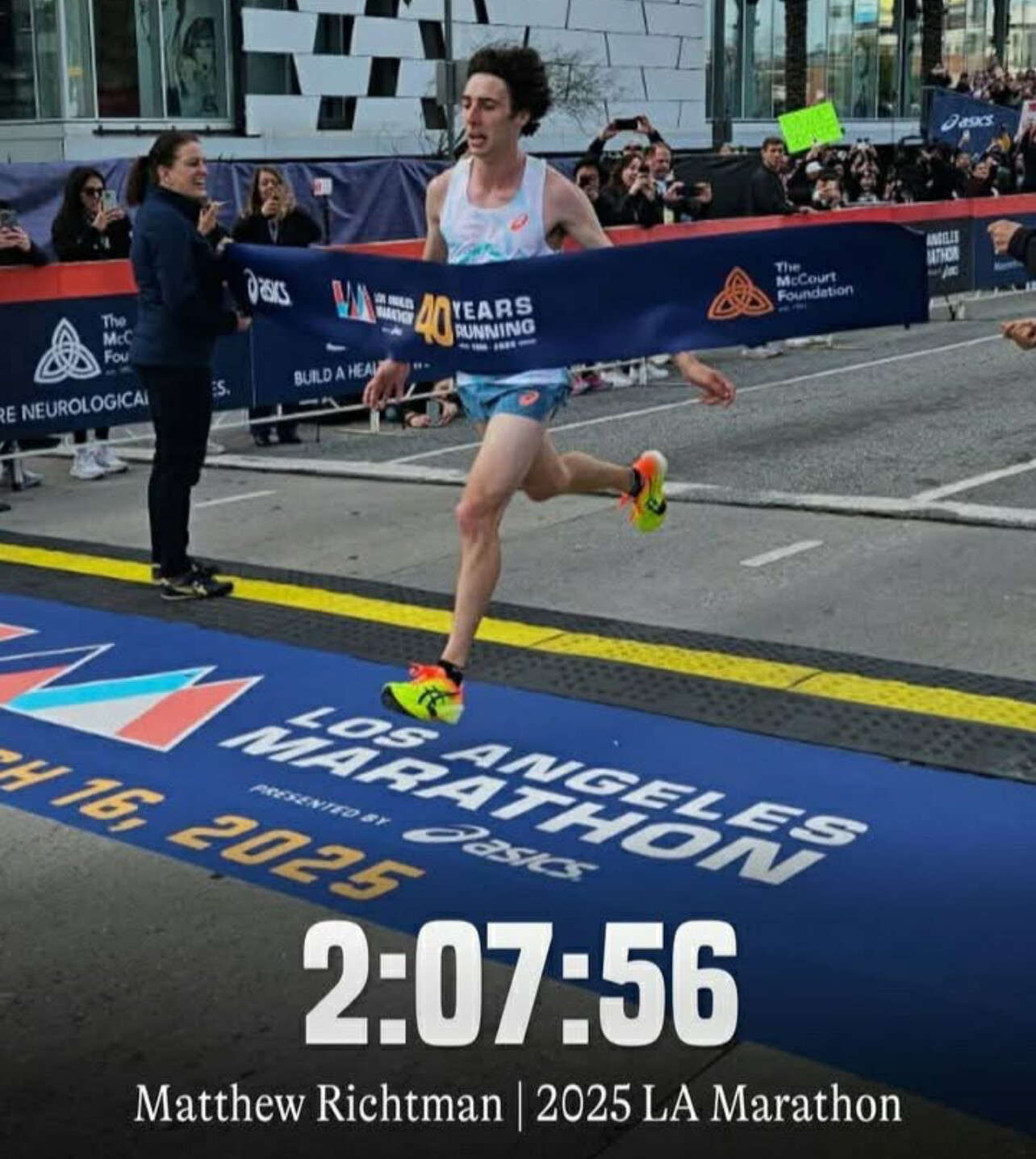
At the 2025 LA Marathon, Richtman took control in the late miles and never looked back. He crossed the finish line alone, arms raised, breaking a 31-year drought for American men at this race. It was a breakthrough not just for Richtman, but for American distance running.
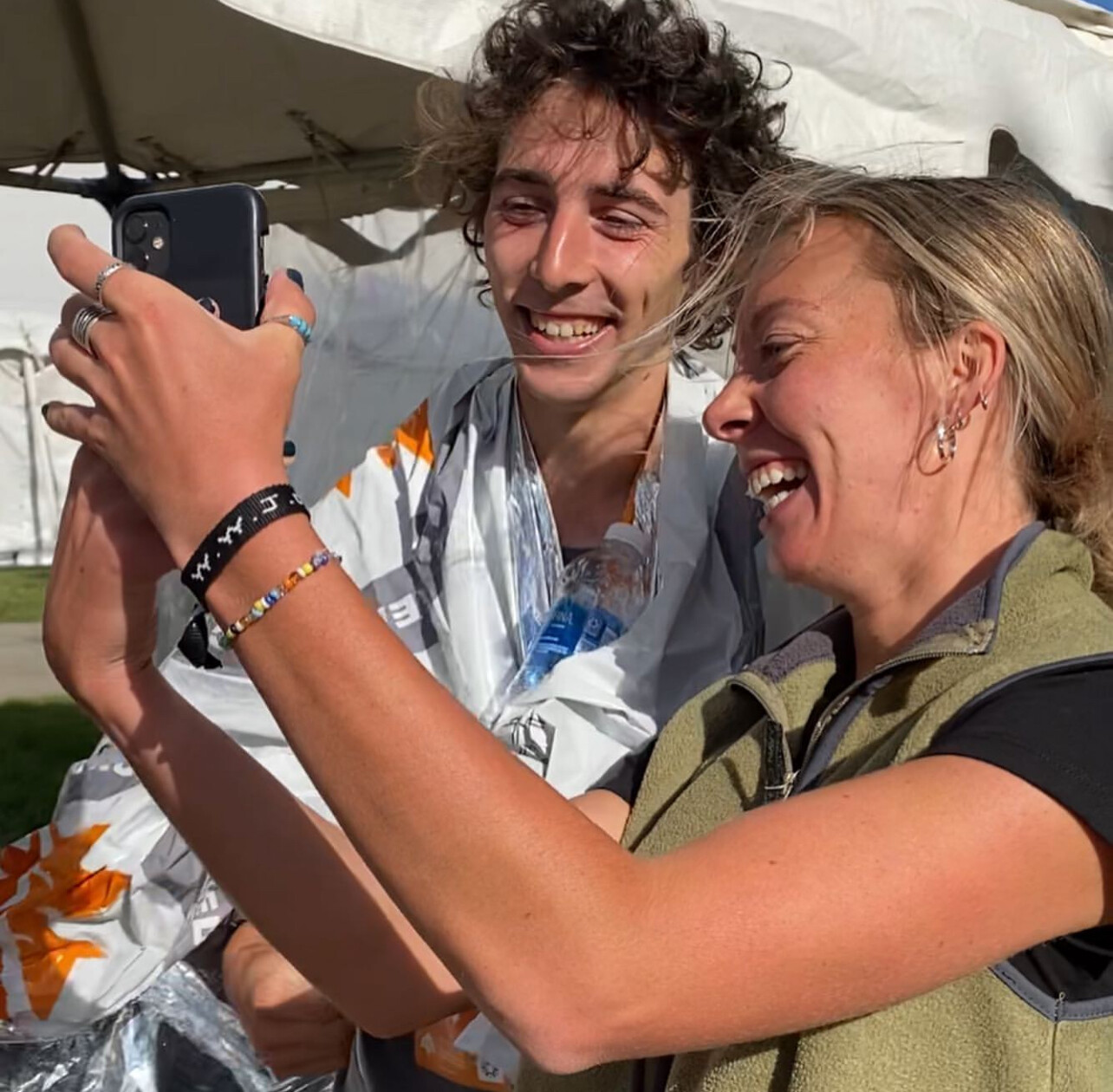
In post-race interviews, Richtman humbly credited his support system and years of preparation. His father, watching from the finish line, said it best: “Matt trains every day, rain or snow. He earned this.”
What’s Next?
With his sudden rise to national prominence, Richtman now has his eyes on the global stage. He hopes to represent the United States at future World Championships and at the 2028 Los Angeles Summer Olympics—poetically, back where it all started.
Whether or not he joins a professional group or continues to go it alone, one thing is certain: Matt Richtman has proven that there’s more than one path to greatness. His win in LA was more than just a race—it was a reminder of what’s possible when talent meets tenacity.
by Boris Baron
Login to leave a comment

Los Angeles Marathon
The LA Marathon is an annual running event held each spring in Los Angeles, Calif. The 26.219 mile (42.195 km) footrace, inspired by the success of the 1984 Summer Olympic Games, has been contested every year since 1986. While there are no qualifying standards to participate in the Skechers Performnce LA Marathon, runners wishing to receive an official time must...
more...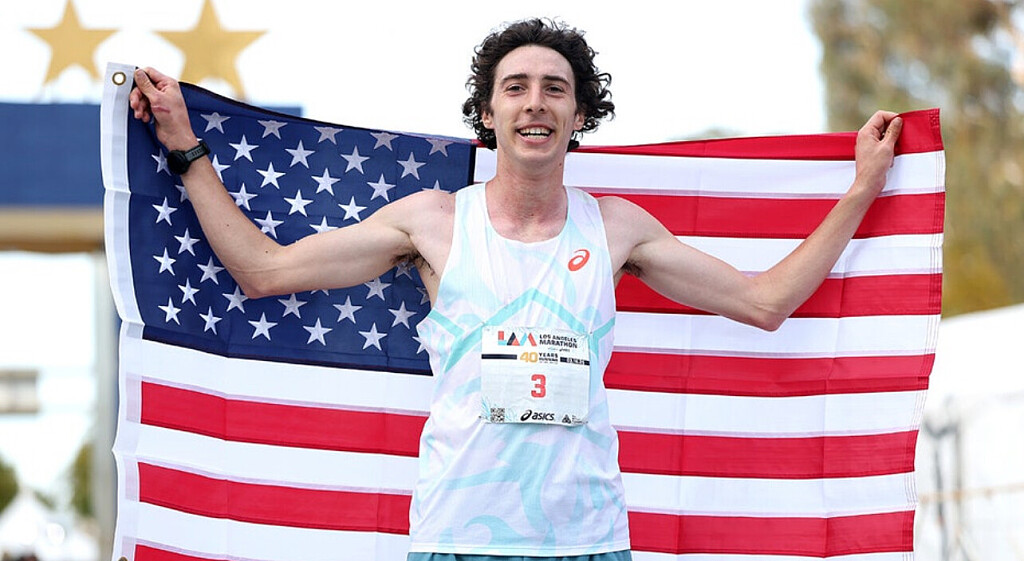
Matt Richtman from Illinois is the first American to win the LA marathon in 31 years
Matt Richtman has arrived and put the U.S. distance running world on notice with his historic win at the Los Angeles Marathon. In a stunning performance, Richtman became the first American man to win the LA Marathon since 1994, finishing the 26.2-mile race in a personal best time of 2 hours, 7 minutes, and 56 seconds.
Early Life and High School Achievements
Born and raised in Elburn, Illinois, Richtman displayed exceptional running talent during his time at Kaneland High School. He clinched the Illinois Cross Country Class 2A Championship in 2017 and earned all-state honors in his sophomore, junior, and senior years. Richtman set a school record at the state cross country meet with a time of 14:21 and achieved personal bests of 4:17 in the 1,600 meters and 9:14 in the 3,200 meters.

Collegiate Career and Development
Richtman began his collegiate journey at Bradley University, where he was named the 2019 Missouri Valley Conference Cross Country Freshman of the Year. He later transferred to Montana State University, emerging as a standout performer for the Bobcats. As a junior in the 2022-23 season, he earned All-America honors, finishing 26th at the NCAA Cross Country Championships—the fourth-best finish by a Montana State runner in program history.
Marathon Success and Future Prospects
Richtman’s marathon debut came last fall at the Twin Cities Marathon, where he finished fourth with a time of 2:10:47. Building on that experience, his recent victory in Los Angeles not only ended a three-decade drought for American men at the event but also signals a promising future for U.S. marathoning. As he continues to build on his early successes, the running community will be watching closely to see how he shapes the landscape of men’s marathoning in the years to come.
by Boris Baron
Login to leave a comment
Los Angeles Marathon
The LA Marathon is an annual running event held each spring in Los Angeles, Calif. The 26.219 mile (42.195 km) footrace, inspired by the success of the 1984 Summer Olympic Games, has been contested every year since 1986. While there are no qualifying standards to participate in the Skechers Performnce LA Marathon, runners wishing to receive an official time must...
more...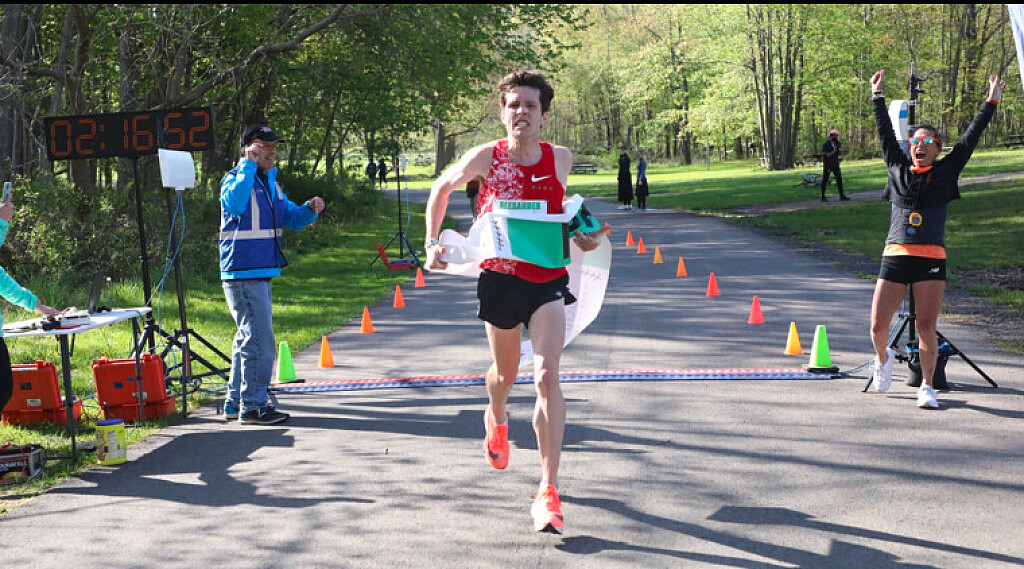
Want to Qualify for the U.S. Olympic Trials? This Race Is Specifically Built for You.
For elite amateur marathoners, qualifying for the Olympic Trials is the ultimate life goal. Bakline’s McKirdy Micro Marathon removes the challenges of running a fast 26.2.
When it comes to trying to run a fast marathon, Zacch Widner knows that bottle service isn’t a luxury but a necessity. No, not tableside bottle service at a nightclub, but the ability for marathon runners to easily identify and grab their own hydration bottles off of a table every 5K or so on course while running at an extremely fast pace.
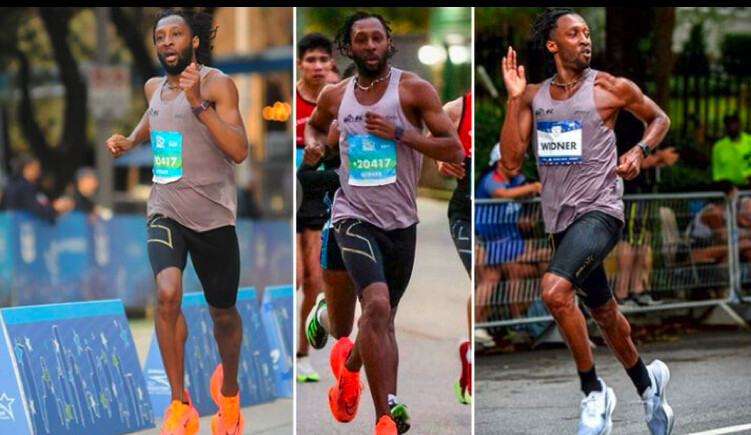
At the Berlin Marathon on September 23, the 32-year-old aspiring elite runner from Lansing, Michigan, was on the verge of running the race of his life. But because his bottles weren’t readily available at each aid station, he wound up grabbing only one of his eight bottles and suffered the consequences.
Although running the race without optimal calorie and hydration intake led to frequent cramping, he still finished in 2:20:02. That’s the second-best time of his career, but still two minutes short of his goal of breaking the U.S. Olympic Trials men’s qualifying standard of 2:18:00.
Widner is one of dozens of American runners—most of whom work nine-to-five jobs—still hoping to earn the standard (or 2:37:00 for women) by the December 5 deadline, in order to qualify for the U.S. Olympic Trials Marathon on February 3 in Orlando.
For Widner, it’s much more than a personal goal. It’s a commitment to a friend and former teammate. “It was a bummer,” says Widner, who works full-time as an IT analyst for the state of Michigan. “I know I’m capable of running faster. I didn’t capitalize on taking fluids, so when it came to running all out, I just couldn’t do it. I think the stress of it is actually what caused the cramps, because every time I missed a bottle, I just stressed out more…just mentally started destroying me.”
Three weeks later, Widner is ready to take another shot at the OTQ standard, this time at Bakline’s McKirdy Micro Marathon on October 14—a unique elite-only race that will be held about 30 miles north of New York City. Set on a nine-loop course at Rockland Lake State Park, the no-frills race will provide bottle service to each of the 180 entrants who met a stout qualifying standard (2:25 for men, 2:45 for women) to register.
“It’s got everything you need,” he says. “You have a lot of tough, fast runners. You have pacers and a flat course with a well-organized system for everyone’s fluids. I’m ready to go.”
In 2020, when running races were shut down because of COVID-19, athlete agent Josh Cox and Ben Rosario, founder and head coach of the Hoka NAZ Elite team, developed an elite-only marathon in Arizona that gave about 100 athletes from around the world the chance to run a highly competitive race on a USATF-certified course amid the still-pervasive coronavirus.
Known as The Marathon Project, the race was held in Chandler, Arizona, on December 20, 2020. Seven U.S. men ran faster than 2:10, while 12 American women finished under 2:30—the first time that’s ever happened. Martin Hehir, a fourth-year medical student who was coming off weeks treating COVID-19 patients, won the race in a personal best 2:08:59, while Sara Hall was the women’s winner in a personal best of 2:20:32, at the time the second-fastest marathon ever run by an American woman.
Several runners who trained under Flagstaff, Arizona coach James McKirdy and his online platform McKirdy Trained were in the race, and they performed well. He was so impressed by the concept that he quickly went about replicating it by hosting small regional marathons around the U.S. for a wider range of runners in early 2021.
At one of the McKirdy Micro Marathon races held at Rockland State Park, Denver-based runner Alex Burks won the race and lowered his personal best from 2:23:47 to 2:16:52. Dozens more earned personal bests and Boston qualifying (BQ) times.
“We really liked that idea and thought we could develop that concept for the masses, and they went off without a hitch,” McKirdy says. “The athletes had a great time and many runners—I think close to 150—earned a BQ from our races. So when the U.S. Olympic Trials qualifying standards were released two years ago, we felt we had the chops and experience to provide a marathon that would provide full on-course support for runners trying to qualify.”
Bakline’s McKirdy Micro Marathon will be held on a nine-lap, 26.2-mile course that will start with one 2.63-mile partial lap, followed by eight successive laps on a 2.945-mile circuit. Runners can have up to eight hydration bottles that will be set up on a series of well-marked, eight-foot tables 20 feet apart.
While the majority of runners will be aiming for the U.S. Olympic Trials qualifying standards, others are shooting for faster times. McKirdy and co-organizer Heather Knight Pech have enlisted pacers to guide runners to three different goal times for men (2:10:00, 2:11:30, and 2:18:00) and two for women (2:29:30 and 2:37:00).
The men’s field is headlined by Tsegay Tumay, an Eritrean runner with a 2:09:07 personal best who trains in Flagstaff under McKirdy. Tiidrek Nurme is an Estonian runner who is coming off a 31st-place, 2:15:42 at the World Athletics Championships on August 27, in Budapest. American runner Ben Blankenship, who finished eighth in the 2016 Olympic 1,500-meter finals in Rio de Janeiro, is making his marathon debut. Another OTQ hopeful is Hosava Kretzmann, a 29-year-old member of the Hopi Tribe from Flagstaff, Arizona, who finished sixth in his debut at the Los Angeles Marathon earlier this year in 2:19:58.
Among the runners who should be at the front of the women’s race is newly signed Nike athlete Calli Thackery, a British runner who just placed seventh in the half marathon at World Athletics Road Running Championships with a 1:08:56 personal best. American Makenna Myler has a 2:40:45 personal best, but is shooting for the U.S. Olympic Trials Marathon qualifying standard just seven months after giving birth to her son in mid-March. (In 2021, she placed 14th in 10,000 meters on the track in the U.S. Olympic Trials seven months after giving birth to her daughter.) She had originally registered and was onsite for the October 1 Twin Cities Marathon in Minneapolis, but that race was canceled because of extreme heat.
Other runners include Monica and Isabel Hebner, identical twins who most recently competed for the University of Texas, who will be making their marathon debuts with hopes of running in the 2:34-2:35 range, and Maura Lemon, a mother of three from Dayton, Ohio, who owns a 2:42:57 personal best but is aiming for the 2:37 OTQ standard.
Many U.S. runners on the cusp of the OTQ times ran the Chicago Marathon on October 8, while others are waiting until the California International (CIM) Marathon on December 5.
What the McKirdy Micro Marathon aims to do is eliminate the challenges that runners face at other races—difficult travel, congested race expos, crowded race courses, and, perhaps most importantly, a lack of bottle support on the course. Plus, it offers a spectator friendly circuit where family, friends, or coaches can cheer for runners on every loop.
“This gives them that chance to run fast,” Knight Pech says. “There’s still a lot of runners out there—a lot of women and a lot of men—who are sitting on the cusp of the qualifying standards. And they should have the opportunity to be able to swing large and take a moonshot. We believe this race gives them a real chance to get it done here in a way that I don’t think other races offer them.”
While the top three men’s and women’s finishers in the U.S. Olympic Trials Marathon will represent the U.S. at the Paris Olympics, just getting to the Olympic Trials is a lifetime goal for many runners. It’s the deepest and most competitive domestic marathon in the U.S., but it only happens every four years. While a tiny portion of the qualifiers are sponsored professional athletes, most of the runners have already moved on to full-time jobs.
For Widner, there is more at stake than just running a fast time. He’s forever running to honor Jeremiah Hargett, a former teammate at Oakland Community College in suburban Detroit who dealt with ongoing mental challenges. One day back in 2011, Hargett called Widner and told him how much he believed in him as a runner and as a friend, and how they’d both eventually make it to the U.S. Olympic Trials. Sadly, Hargett took his own life the very next day. Widner has more or less dedicated every race to Hargett since then.
Although his best time in the 1,500-meter run (3:53.90) fell well short of the Olympic Trials qualifying standard on the track, Widner hasn’t given up his pursuit for Hargett. Amid the rigors of working full-time for the past eight years, he’s continued to improve as a long-distance runner.
Despite what he calls a disastrous marathon debut at the CIM in 2018—where he went out way too fast and wound up struggling to finish in 2:45:39—he’s still chasing that goal. In 2022, he had a breakthrough race at Grandma’s Marathon in Duluth, Minnesota, lowering his personal best to 2:19:54. In January, he lowered his best time in the half marathon to 1:05:52 in January, but that was still nearly three minutes off the half-marathon OTQ of 1:03:00.
He’s continued to add mileage—he’s averaged about 94 miles per week this year—executed better workouts, and improved his fueling strategy, especially since McKirdy started coaching him in March. Now he’s on the cusp of reaching that magical qualifying mark once again.
But it’s as much for Hargett as it is for him.
“That’s the reason I keep running,” Widner says. “It’s the closest thing to my heart. Every time I run, I think about him and his family. When that happened, mentally, it changed me. After that, I bounced up and started running much better.”
“Running taught me how to be patient, and it is teaching me that life is the exact same way,” Widner adds. “It’s all about being patient, and when things go wrong or things seem to not go the way you were expecting, to just stay relaxed and understand that it could change for the better. I’ve been able to use that for everything in life—all my connections, and then have that thought in my mind to make the Olympic Trials, just like he agreed that we would do together.”
by Outside Online
Login to leave a comment
The Road to the Paris Olympics and here is What You Need to Know.
American runners are about to begin training for the U.S. Olympic Trials Marathon
It’s early October, which means it’s the peak marathon season for many runners. But with an Olympic year on the horizon, it also means America’s top marathoners are about to hit the road to Paris.
More specifically, the men’s and women’s 2024 U.S. Olympic Trials Marathon races—scheduled for February 3 in Orlando, Florida—are just four months away. And that means the top U.S. runners hoping to represent their country at next summer’s Olympics are about to begin preparing for the all-or-nothing qualifying race that decides which six runners will represent Team USA next summer on the streets of Paris.
Although several top American runners are racing the Chicago Marathon on October 8, even they have their eyes on a much bigger prize next February.
“There’s nothing in my mind that compares with being an Olympian and being in the Olympic Games,” says 26-year-old Utah-based Nike pro Conner Mantz, who returns to Chicago after finishing seventh last year in 2:08:16 in his debut at the distance. “So putting that first has been the plan for a long time. We’re just putting that first and we’re working backwards through the season with other races.”
Registration will open for the U.S. Olympic Trials Marathon in early November for runners who have surpassed the qualifying times in the marathon (2:18:00 for men, 2:37:00 for women) or half marathon (1:03:00 for men, 1:12:00 for women). The qualifying window extends through December 3—the race date of the last-chance California International Marathon, which for decades has been one of the most popular Olympic Trials qualifying races.
In 2020, a record 708 runners—465 women and 243 men—qualified for the U.S. Olympic Trials Marathon in Atlanta just before the onset of the Covid-19 pandemic. But USA Track & Field lowered the women’s qualifying standard by eight minutes from the more attainable 2:45:00 plateau, which means there will most likely be a much smaller women’s field this year.
But even so, amid the handful of runners who have a legitimate shot at making the Olympic team, there will also be dozens of dreamers, wannabes, and just-happy-to-be-there elite amateurs who have worked hard, put in the miles, and earned the chance to be on the start line of the deepest and most competitive U.S. distance-running races that only happen once every four years.
The men’s and women’s races will run simultaneously with the men beginning at 12:10 P.M. EST. and the women starting 10 minutes later. Runners have complained that a high noon start means they will be forced to race in hot, humid conditions. Over the past decade, the average temperature on February 3 in Orlando has been 69.6 degrees Fahrenheit at noon, rising to 73.3 at 4 PM. But actual temperatures have varied drastically, from 81 degrees Fahrenheit at 2 P.M. last year to 56 at the same time the year before. USATF officials have responded by saying that the start times are to accommodate live coverage on NBC and to match the expected conditions in Paris.
Here’s an update and overview of what’s next, who the top contenders are, the course, and what to expect in the next four months.
The 26.2-mile U.S. Olympic Trials course runs through downtown Orlando and consists of one 2.2-mile loop and three eight-mile loops. The marathon course will run through several neighborhoods, main streets, and business districts in Orlando, including Central Business District, City District, South Eola, Lake Eola Heights Historic District, Lake Cherokee Historic District, Lake Davis Greenwood, Lake Como, North Quarter, Lawsona/Fern Creek, SoDo District, and the Thornton Park neighborhood. It will then head east to and around The Milk District neighborhood and Main Street. (Notably, the course will come close to Disney World, which is about 15 miles to the southwest.)
Unlike the Olympic Marathon course in Paris, which will challenge runners with significant hills in the middle, the Orlando course is mostly flat. Each loop has a few minor variations in pitch, but only 38 feet separate the high and low points on the course. Ultimately, though, it’s a spectator-friendly route with chances for family, friends, and fans of runners to see the action several times.
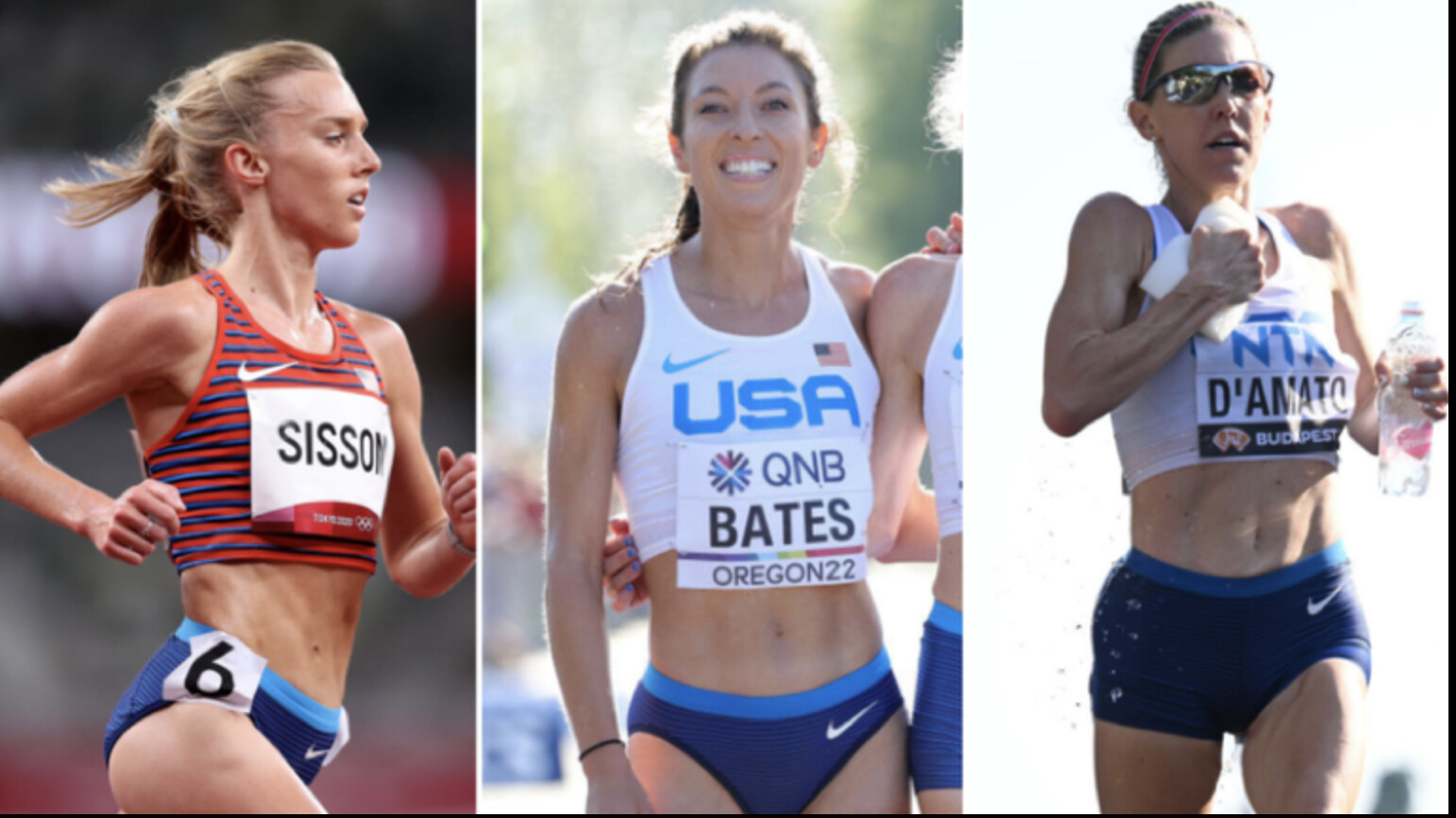
The top women—based on personal best times and recent race results—are Emily Sisson, Emma Bates, Keira D’Amato, Betsy Saina, and Lindsay Flanagan. But the U.S. Olympic Trials races almost always produce surprises with a few great runners having off days and a few good runners having exceptional days, so there is reason to expect the unexpected.
Sisson lowered the American record to 2:18:29 last year when she finished second in the Chicago Marathon. She’s running Chicago again on October 8 along with Bates, who has said she’s hoping to break the American record. In January, Sisson, 31, chopped her own American record in the half marathon in Houston with a 1:06:52 effort, and most recently won the U.S. 20K Championships (1:06:09) on September 4 in New Haven, Connecticut. Bates, also 31, hasn’t raced at all since her sterling fifth-place effort at the Boston Marathon in April, when she slashed her personal best to 2:22:10.
While Chicago will be another good place to test themselves, both have unfinished business after Bates was seventh at the 2020 Trials and Sisson dropped out near the 21-mile mark.
The same goes for Flanagan, 32, who has been one of America’s best and most consistent marathoners for the past five years. She placed 12th at the trials in 2020. She had a breakthrough win (2:24:43) at the Gold Coast Marathon in 2022 followed by a strong, eighth-place finish (2:26:08) at the Tokyo Marathon earlier this year. In August, she ran perhaps the best race of her career, when she finished ninth (2:27:47) at the world championships in Budapest amid hot, humid conditions.
The 38-year-old D’Amato, meanwhile, just capped off another strong season with a 17th-place showing (2:31:35) at the World Athletics Championships in Budapest, a year after finishing eighth in the world championships and setting an American record 2:19:12 at the 2022 Houston Marathon. She was 15th at the Trials in 2020 in 2:34:24, just two years into her competitive return to the sport after having two kids and starting a career in real estate in her early 20s.
“It’s such a huge goal of mine to become an Olympian,” says D’Amato, who lowered Sisson’s U.S. record in the half marathon with a 1:06:39 effort at the Gold Coast Half Marathon on July 1 in Australia. “It’s really hard for me to put words into this because my whole life, wearing a Team USA jersey has been like a huge dream. And when I left the sport (temporarily), I felt like I said goodbye to that dream and I kind of mourned the loss of being able to represent my country. I feel like it’s the greatest honor in our sport to be able to wear our flag and race as hard as possible.”
Saina, a 35-year-old Kenya-born runner who ran collegiately for Iowa State University, became a U.S. citizen in late 2021. She placed fifth in the 10,000-meters at the 2016 Olympics in Rio de Janeiro while competing for Kenya. She’s spent the past several years splitting time between Kenya and Nashville, Tennessee, where she gave birth to a son, Kalya, in December 2021.
She’s returned with a strong fourth-place 1:11:40 result at the Tokyo Half Marathon last October and a fifth-place 2:21:40 showing at the Tokyo Marathon in February. In May, Saina won the U.S. 25K Championships in Michigan. Two weeks ago she broke the tape at the Blackmores Sydney Marathon in Australia in 2:26:47.
Other top contenders include but are not limited to Tokyo Olympics bronze medalist Molly Seidel (who’s personal best is 2:24:42), 2022 U.S. Olympic Trials champion Aliphine Tuliamuk (2:24:37, 11th in Boston this year), Susanna Sullivan (2:24:27 personal best, 10th in London this year), two-time Olympian and 2018 Boston Marathon winner Des Linden (2:22:38), and Sara Hall (2:20:32, fifth at last year’s world championships), plus Kellyn Taylor (2:24:29), Nell Rojas (2:24:51), Sarah Sellers (2:25:43), Lauren Paquette (2:25:56), Dakotah Lindwurm (2:25:01), Annie Frisbie (2:26:18), Sara Vaughn (2:26:23), Tristin Van Ord (2:27:07), and Jacqueline Gaughan (2:27:08).
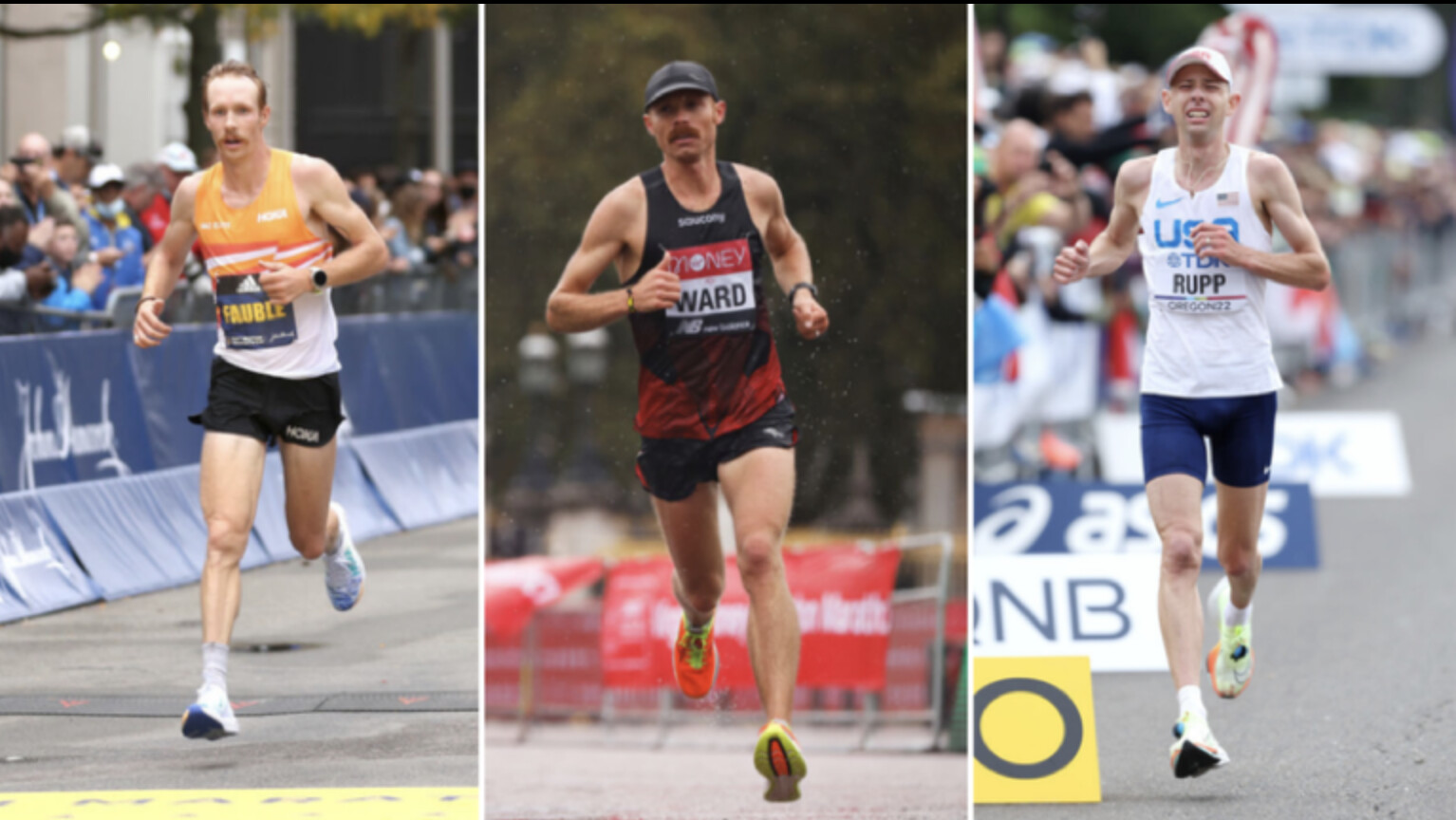
The list of potential men’s top contenders isn’t as clear-cut, partially because there are so many sub-2:11 runners and several fast runners who are relatively new to the marathon. But all that suggests a wide-open men’s race where more than a dozen runners are legitimately in the mix for the three Olympic team spots. That said, the top runners on paper, based on both time and consistent results over the past few years, are Scott Fauble, Jared Ward, Galen Rupp, Conner Mantz, Leonard Korir, Matt McDonald, and C.J. Albertson.
The 31-year-old Fauble, who was 12th in the Olympic Trials in 2020 and owns a 2:08:52 personal best, has finished seventh in the Boston Marathon three times since 2019 and also finished seventh in the New York City Marathon in 2018. Ward is a 2016 U.S. Olympian and has three top-10 finishes at the New York City Marathon and a 2:09:25 personal best from Boston in 2019. He’s 35, but he just ran a 2:11:44 (27th place) at the Berlin Marathon in late September.
Rupp, who won the past two U.S. Olympic Trials Marathons and earned the bronze medal in the marathon at the 2016 Olympics, is nearing the end of his competitive career. He boasts a 2:06:07 personal best and has run under 2:10 more than any American in history, including when he finished 19th at the world championships (2:09:36) last year. He’s a bit of a wild card because he’s 37 and hasn’t raced since his lackluster 17th-place showing at the NYC Half Marathon (1:04:57) in March, but the world will get a glimpse of his fitness in Chicago this weekend.
Mantz followed up his solid debut in Chicago last fall with a good Boston Marathon in April (11th, 2:10:25) and solid racing on the track and roads all year, including his recent runner-up showings at the Beach to Beacon 10K in August and the U.S. 20K Championships in September.
McDonald, 30, who was 10th in the 2020 U.S. Olympic Trials, has quietly become one of the best marathoners in the U.S. while serving as a postdoctoral associate in chemical engineering at M.I.T. His last three races have clocked in at 2:10:35 (Boston 2022), 2:09:49 (Chicago 2022), and 2:10:17 (Boston 2023). The only other runner who rivals that kind of consistency is Albertson, 29, who has run 2:10:23 (Boston 2022), 2:10:52 (Grandma’s Marathon 2022) and 2:10:33 (Boston 2022) in his past three marathons and was seventh in the U.S. Olympic Trials in 2020 (2:11:49).
The men’s race will likely have a mix of veteran runners and newcomers who have run in the 2:09 to 2:10 range since 2022. Among those are 2020 U.S. Olympic Trials runner-up Jake Riley (2:10:02 personal best), who is returning from double Achilles surgery; 2016 U.S. 10,000-meter Olympian Leonard Korir (2:07:56), who ran a 2:09:31 in Paris in April; Zach Panning (2:09:28, plus 13th at the world championships in August); U.S. 25K record-holder Parker Stinson (2:10.53); Futsum Zienasellassie who won the California International Marathon last December in his debut (2:11:01) and then doubled-back with a new personal best (2:09:40) at the Rotterdam Marathon in the spring; Abbabiya Simbassa, who ran a solid debut marathon (2:10:34) in Prague this spring; and Eritrean-born Daniel Mesfun (2:10:06) and Ethiopian-born Teshome Mekonen (2:10:16), who both received U.S. citizenship within the past year; and solid veterans Nico Montanez (2:09:55), Elkanah Kibet (2:10:43) and Nathan Martin (2:10:45).
Additional sub-2:12 runners who will be in the mix are Andrew Colley (2:11:26), Clayton Young (2:11:51), Brendan Gregg (2:11:21), Josh Izewski (2:11:26), Jacob Thompson (2:11:40), and Kevin Salvano (2:11:49).
As noted previously, some top contenders will season their marathon legs one final time at the flat and fast Chicago Marathon on October 8. An even more select few will opt for the New York City Marathon on November 5. After that, nearly every American with eyes set on an Olympic berth will double-down over the holiday season for that one final, critical marathon training cycle. Expect to see a wide range in heat training, from sauna protocols, to warm weather training trips, to simply an adjusted race day strategy.
Of course, with the Olympic Marathon falling under the purview of World Athletics, qualifying for the U.S. Olympic Marathon team is not quite as simple as finishing on the podium in Orlando. Any American looking to have a breakout performance and finish within the top three at the U.S. Olympic Trials Marathon will need to have run under 2:11:30 for men and 2:29:30 for women within the qualification window, which spans from November 1, 2022 to April 30, 2024. Given the possibility of oppressively hot and humid temps on February 3 in Orlando, they’re best bet is to secure that time now.
These qualification standards are in accordance with a new rule from World Athletics, which allows national Olympic committees to circumvent the typical Olympic qualification process of running under 2:08:10 for men and 2:26:50 for women, or being ranked among the top 65 in the world on a filtered list of the top three athletes from each country. The catch, though, is that three other runners from said country must have met one of these two standards. If this sounds complicated, that’s because it is.
For the hundreds of elite amateurs on the cusp of hitting that coveted U.S. Olympic Trials qualifying time, it’s do or die mode. While a few made the cut at the Berlin Marathon on September 24, one of those opportunities was lost when the Twin Cities Marathon was canceled on October 1 because of excessive heat. Temperatures are shaping up for an auspicious day in Chicago this weekend, and many more will give it a final shot at the Columbus Marathon on October 15; Indianapolis Monumental Marathon on October 28; the Philadelphia Marathon on November 18; and the last-call California International Marathon, a point-to-point race ending in Sacramento, California on December 3.
Ultimately, only six American runners will likely continue on along the road to Paris and earn the chance to run in the men’s and women’s Olympic marathons next August 10-11. For a handful of younger runners, the 2024 U.S. Olympic Trials will be a motivation to reinvigorate the Olympic dream or keep a faint hope alive, at least until the 2028 U.S. Olympic Trials that will determine the team for the Los Angeles Olympics. But for many runners, the journey to the U.S. Olympic Trials in Orlando will lead to the end of their competitive road running careers as new jobs, young families, a switch to trail running, and other priorities will take hold.
“I think the Olympic Trials is an important part of American distance running,” says Kurt Roeser, 36, a two-time U.S. Olympic Trials Marathon qualifier who works full-time as a physical therapist in Boulder, Colorado. “I’m glad that they kept it the same event for this cycle and hopefully for future cycles because it gives people like me a reason to keep training. I’m older now and I’m not going to actually have a chance to make an Olympic team, but for somebody that’s fresh out out of college and maybe they just barely squeak in under the qualifying time, maybe that’s the catalyst they need to start training more seriously through the next cycle. And maybe four years from now, they are a serious factor for making the team.”
by Outside Online
Login to leave a comment
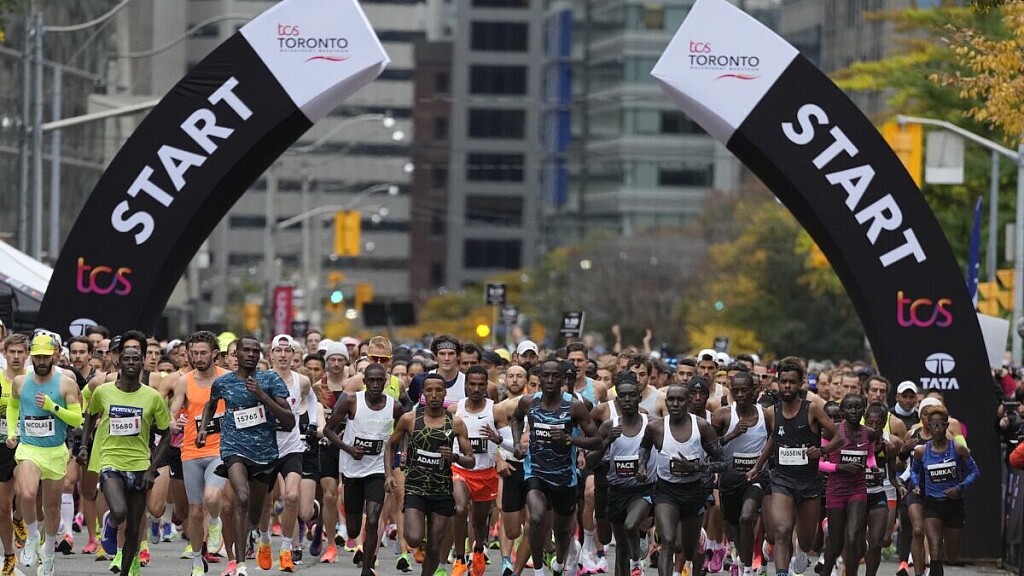
TCS Toronto Waterfront Marathon extends warm welcome to canceled Twin Cities Marathon athletes
The TCS Toronto Waterfront Marathon is extending a helping hand to several elite runners who were affected by the last-minute heat cancellation of the 2023 Twin Cities Marathon last Sunday.
Although Canada’s largest marathon had been sold out for months, marking the first time in the race’s history that the marathon has reached full capacity this early. There ended up being several withdrawals in the men’s and women’s elite fields two weeks before the Oct. 15 race day.
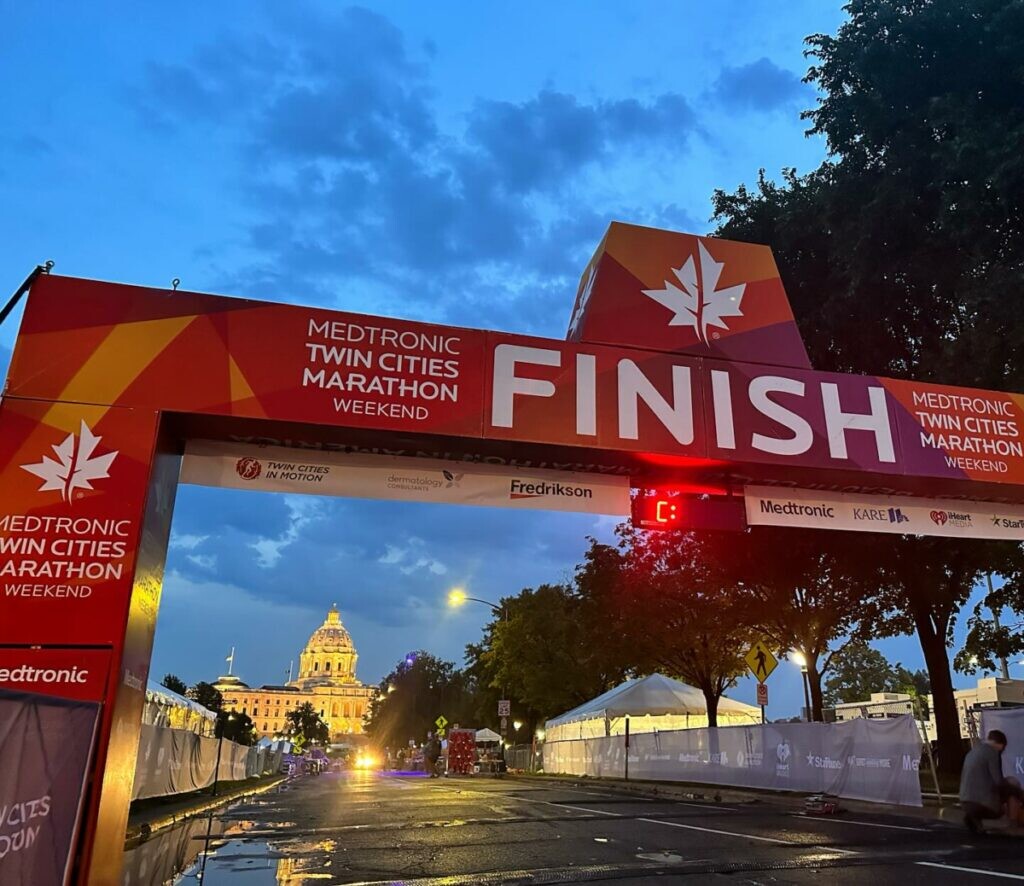
Jim Estes, the manager of the elite program at the Twin Cities Marathon, reached out to TCS Toronto Waterfront Marathon race director Alan Brookes, exploring the possibility of accommodating some of the elite runners. Brookes shared that he and Jim have a close relationship and have worked on elite teams at Chicago and Houston marathons. “We ended up extending three spots to athletes who did not get the chance to run the marathon in Minnesota,” says Brookes.
This period is crucial for U.S. marathoners, as many are shooting to qualify for U.S. Olympic Marathon Trials in Orlando next February. The fall marathon season represents a final opportunity to secure a qualification spot there or to chase an Olympic qualifying time of 2:08:10 (men) and 2:26:50 (women) before the trials.
Toronto was not the only marathon to offer invitations. The McKirdy Micro Marathon in Valley Cottage, N.Y., the Indianapolis Monumental Marathon and the Philadelphia Marathon have also offered spaces in their elite fields for athletes originally slated to compete in Twin Cities.
The Twin Cities Marathon was set to host nearly 8,000 runners on Oct. 1 but ended up being abruptly canceled just two hours before its 7 a.m. start due to soaring temperatures. Despite the short notice, many runners who had traveled to Minnesota decided to go ahead with their race on their own. The temperature in Minneapolis–Saint Paul, Minn., reached a high of 27 C (80 F) by 11 a.m. on Sunday.
Eli Asch, the race director of Twin Cities, defended their decision to cancel the race in an interview with Runners World, stating, “We saved lives.” However, Asch did not confirm whether the race would provide refunds or offer credits to the 20,000 registered participants but said the race’s intention is to be “as generous as possible.”
by Marley Dickinson
Login to leave a comment
TCS Toronto Waterfront Marathon
The Scotiabank Toronto Waterfront Marathon, Half-Marathon & 5k Run / Walk is organized by Canada Running Series Inc., organizers of the Canada Running Series, "A selection of Canada's best runs!" Canada Running Series annually organizes eight events in Montreal, Toronto and Vancouver that vary in distance from the 5k to the marathon. The Scotiabank Toronto Waterfront Marathon and Half-Marathon are...
more...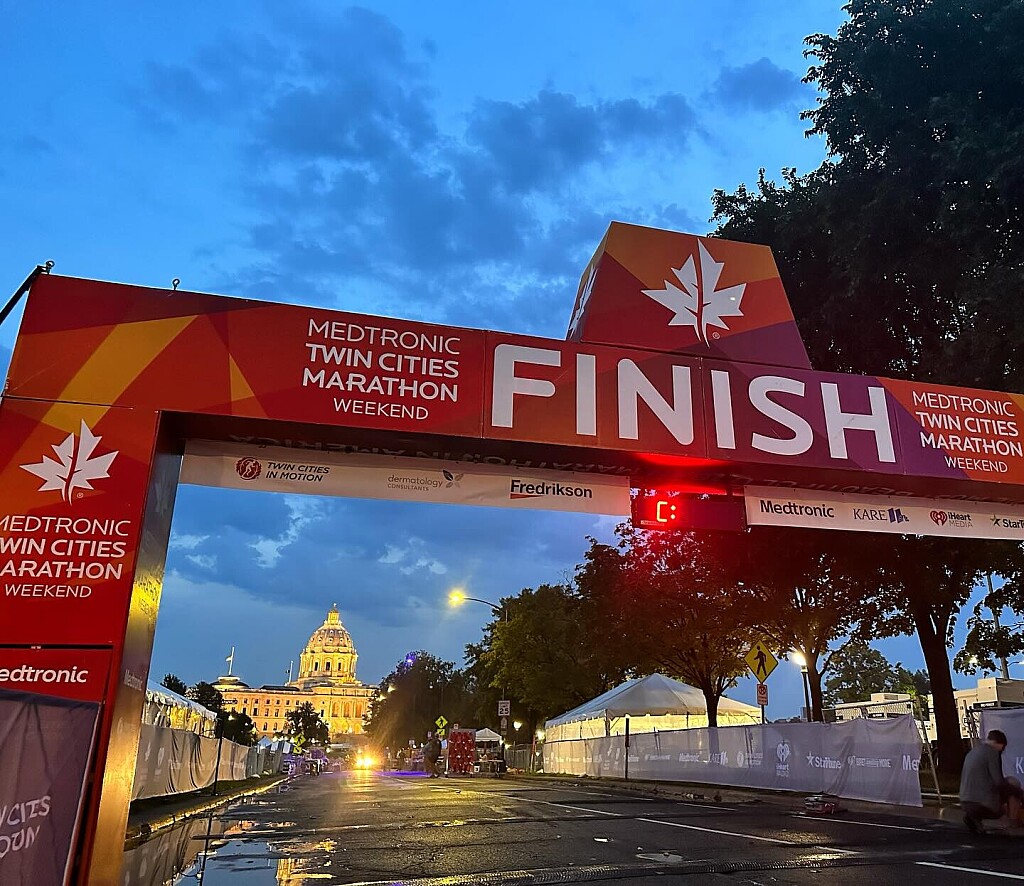
Twin Cities Marathon canceled due to heat two hours before start
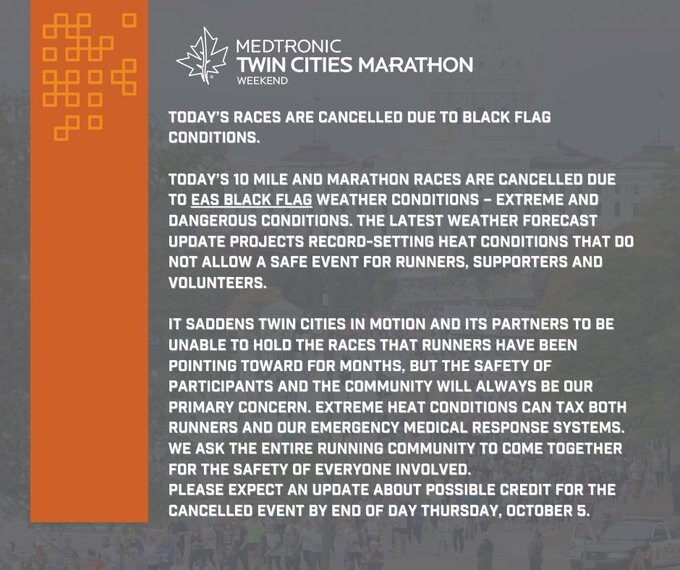
Nearly 20,000 runners in Minnesota were left frustrated on Sunday morning after the Twin Cities marathon and 10-miler was canceled two hours before its 7 a.m. start due to heat.
The temperature in Minneapolis was forecasted to reach an unseasonably high 28 C (82 F) by 11 a.m., according to the National Weather Service. The average high for the Minneapolis-Saint Paul area around this time of year is around 18 C.
In the days leading up to the race, organizers had cautioned about potentially unsafe weather conditions. However, the race was still planning to proceed with extra safety measures implemented.
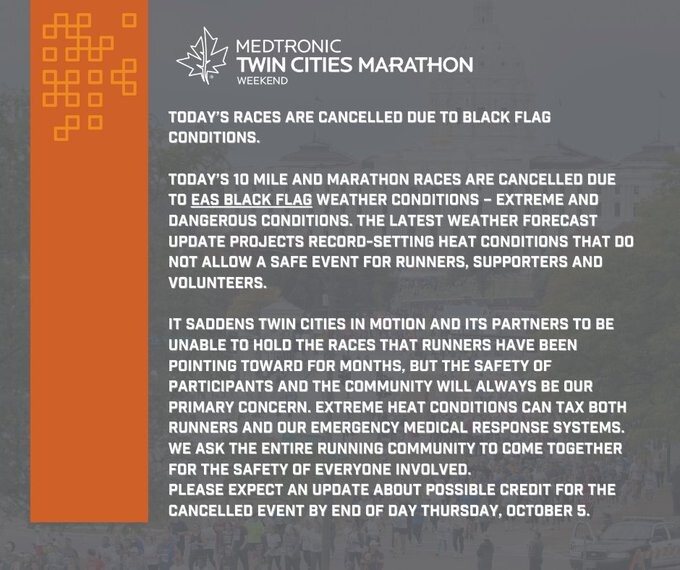
The Sunday morning forecast in Saint Paul elevated the races into black-flag status (which stands for “extreme and dangerous conditions”), which prompted the cancellation. As many as 8,000 runners were set to compete in the marathon, with 12,000 in Twin Cities 10-miler, and tens of thousands of spectators on the streets of both cities.
“It saddens Twin Cities In Motion and our partners to be unable to hold the races that runners have been pointing toward for months, but the safety of participants and the community will always be our primary concern,” said race organizers in a press release. “Extreme heat conditions can tax both runners and our emergency medical response systems. We ask the entire running community to come together for the safety of everyone involved.”
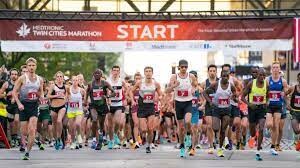
The race made the announcement at 5:30 a.m., only an hour and a half before the race’s expected start time. Despite the short notice, many runners who had traveled to Minnesota still went out to run at their own discretion.
Many runners took to social media to scrutinize the race’s decision: “Sad and pathetic, let’s just cancel all races cause they are outside of people’s comfort level,” one runner said. “What a waste of everyone’s time to make a last-minute decision like this,” said another.
The race organizers have not yet confirmed whether they will provide refunds or offer a credit to participants but intend to make an announcement later in the week.
by Marley Dickinson
Login to leave a comment

Medtronic Twin Cities Marathon
The Medtronic Twin Cities Marathon Weekend offer races, walks and activities for every age and ability level! Learn more about the weekend's events and activities by using the navigation bar at the left or top of your screen. The Twin Cities Marathonis a running event in the Minneapolis-Saint Paul area. The TCM was first run in 1982, and typically takes...
more...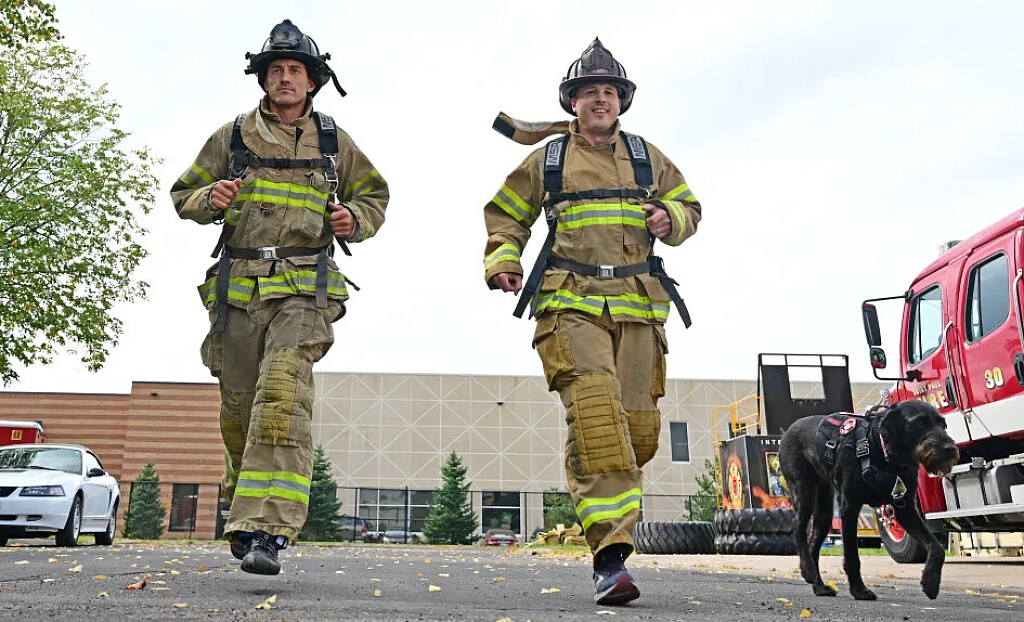
St. Paul firefighters tackling the Twin Cities Marathon in full gear for a cause
Among the sea of runners in shorts and tank tops in the Twin Cities Marathon, two will stand out for what they’re wearing: They’ll be in their St. Paul firefighter turnout gear and helmets.
Their heavy gear won’t be ideal for the expected temperatures, but that’s not why they’d rather not be there. It’s because of what their presence represents: Capt. Kyle Bode and firefighter Bryan Buxton are taking part in the marathon for their fallen co-workers, who they wish were alive and not having people run in their memories.
They’re trying to bring attention to the job-related risks to firefighters: cancer, cardiac problems and suicide linked to trauma that builds up from what firefighters witness in their work. Five active-duty St. Paul firefighters have died of such causes in the last eight years.
After St. Paul Fire Capt. Chris Parsons passed away of a heart attack at age 48 in June, Bode said he was sick of seeing his friends from the fire department die.
“I don’t like sitting around and I’m frustrated and I want to do something,” Bode said recently. He said the community might notice when individual firefighters die unexpectedly, “but I don’t know if anyone realizes the big picture of how many people we’ve lost.”
Bode and Buxton enjoying taking on challenges — like the impromptu time they decided to see who could do the most burpees (Buxton reached 750 over three hours). And the men knew they needed to do something on a large scale. Running a 5K in their full gear wouldn’t cut it.
They thought participating in the marathon in their gear would be a way to raise awareness and donations to a nonprofit foundation for firefighter wellness.
More than 20,000 people are registered for the Twin Cities Marathon and 10-mile race on Sunday. With projected highs in the 80s this weekend, and the National Weather Service saying it will feel more like summer than fall, organizers are warning racers to prepare for high temperatures and high humidity. St. Paul firefighters and paramedics will be along the route in the Capital City to ensure racers are safe and healthy, said Deputy Fire Chief Roy Mokosso.
Getting support from fellow firefighters
Some of the stigma around mental health has meant firefighters not talking about the horrors they respond to on emergency calls, and Bode and Buxton are trying to break that down just by asking for help with the marathon.
“In the past, it’s been very difficult for firefighters to ask for help because we’re the ones that help people,” Buxton said. “We’re making that change and we’ve reached out to people at the fire department and said, ‘We need help. We’re not sure if we’re going to be able to complete this task.'”
Off-duty firefighters will be along the marathon route to provide nutrition and hydration to Buxton and Bode, as well as moral support.
Buxton has run the distance of a marathon (26.2 miles), but not an official marathon; he’s done triathlons, mud races with obstacle courses, and rucking events (long walks while carrying a weighted rucksack).
Bode has run seven marathons, mostly the Twin Cities Marathon, and competed in Iron Man triathlons.
“I’m pretty slow,” Bode said. “I wouldn’t qualify for Boston (the marathon) or anything. I just like to push myself.”
They’ll stick together through the race course
Bode has been a St. Paul firefighter for nearly 18 years and the department’s health and wellness coordinator for about a year. He works with all firefighters and with cadets as they go through the department’s fire academy.
“My focus has been on trying to prevent some difficulties that firefighters face later on, whether it be mental health or making sure they keep their health a priority,” he said.
The St. Paul Fire Department has a peer support group, a peer fitness team and a cancer task force that works to reduce how much exposure firefighters have to dangerous chemicals from fires.
Buxton is a St. Paul firefighter of 10 years who’s currently a training assistant. He’s helping to run the fire academy that started Monday.
Buxton and Bode initially thought they’d walk Sunday’s marathon, but then they realized the time limit is six hours. They’re planning a combination of jogging and fast walking, and their goal is to complete it in time.
They’re going to start at the back of the pack and stay together the whole time. They plan to wear about 40 pounds of turnout gear — that’s the protective jacket, air tanks (but not the breathing masks they’d usually wear with them) and helmet that firefighters don to battle fires. They’ll likely start and end the race in pants that are part of the gear, but otherwise wear shorts.
Both men are also paramedics for the fire department, and said they’ll be watching over each other. They’ll be making sure they get plenty of electrolytes and hydration. If they feel overheated, Bode said they’ll take off their jackets until they cool down.
“We have a rule in the fire service: Two in, two out. You go in the fire together, you leave the fire together,” Buxton said. “We don’t want anybody to be alone and we’re taking that same tactic in this race. We’re going in together, we’re coming out together.”
Mokosso, the deputy fire chief, will be running Sunday’s 10-mile race for Capt. Parsons. Mokosso wasn’t planning to run this year, but after he saw that Parsons had signed up before he died, he asked Parsons’ family if he could take his spot and run in his honor.
“Chris has been at the top of my mind every run,” Mokosso said of his preparation for the race. “We were both the same age, we had a lot of things in common, and he and I had run a couple of marathons together.”
Annika Parsons, Chris’ younger daughter, said every way that people honor her father is meaningful to her and her family.
Chris Parsons was known for his statewide advocacy for firefighter health and safety, and he was physically fit, “so when it happened to him, it showed how it can happen to anyone,” Annika Parsons said. “Getting the word out really can help firefighters in the future, too.”
When Bode and Buxton need motivation, they expect they’ll be remembering their co-workers and families they left behind: Capts. Chris Parsons and Mike Paidar, and firefighters Tommy McDonough, Jason Woodbury and Shane Clifton.
by Mara H. Gottfried
Login to leave a comment
Medtronic Twin Cities Marathon
The Medtronic Twin Cities Marathon Weekend offer races, walks and activities for every age and ability level! Learn more about the weekend's events and activities by using the navigation bar at the left or top of your screen. The Twin Cities Marathonis a running event in the Minneapolis-Saint Paul area. The TCM was first run in 1982, and typically takes...
more...
How Young Is Too Young to Lace Up for a Marathon?
A new paper looks at the available research and makes recommendations.
The world—running and not—had its eyes on the Flying Pig Marathon this past May after a 6-year-old boy completed the race with his family in 8 hours and 35 minutes.

It wasn’t the finish itself that caused an outcry, but a subsequent social media post by the boy’s mother that references his distress during the later miles of the race.
The photo showed the boy holding a box of Pringles potato chips with the caption, “On the marathon course, Rainier knew they usually hand out Pringles around mile 20. He was struggling physically and wanted to take a break and sit every three minutes. After 7 hours, we finally got to mile 20 and only to find an abandoned table and empty boxes. He was crying and we were moving slow so I told him I’d buy him two sleeves if he kept moving. I had to promise him another sleeve to get him in the family pic at the finish line. Today I paid him off.”
Sports medicine experts and pediatricians got wind of the boy’s marathon finish, and its unique circumstances, and published a paper in JAMA Pediatrics in October, titled “Kids on the Run—Is Marathon Running Safe for Children?”
The answer is: We’re not totally sure.
“Youth running is becoming more popular, particularly at longer distances, and the trend is ahead of the research,” says Emily Kraus, M.D., a clinical assistant professor at Stanford University, a sports medicine physician at Stanford Children’s Hospital, and the director of the the Female Athlete Science and Translational Research Program.
Kraus, a runner, was not an author on the JAMA Pediatrics paper but coauthored the 2021 youth running consensus statement published in the British Journal of Sports Medicine.
“We can’t conclude that there’s no risk or minimal risk, or a greater risk [to young children running long distances],” she tells Runner’s World.
The paper looks back at the running boom of the 1970s when several young children completed marathons; children as young as 8 years old covered the distance in 3 hours and 31 seconds. The authors note that although there were no reports of injuries or adverse events, physicians and race directors started to worry about the potential dangers of youth participation. In 1981 the New York City Marathon, then in its 11th year, instituted a minimum age requirement of 16 years old. Other races followed suit.
A 2010 paper published in the Clinical Journal of Sports Medicine looked at data from the Twin Cities Marathon from 1982 to 2007, which included 310 children aged 7 to 17 years old. The researchers found that the risk of a medical incident was about 50 percent lower in children than adults but not statistically significant. In other words: We can’t say for sure if they’re at lower risk for injury or medical problem.
“Some of the early research shows that the overall risk of competing in races is quite minimal or lower when compared to the adult running population,” Kraus says. “But the question becomes is that because the number [of children finishers] is so much smaller?”
Kraus, who treats primarily middle-school age athletes whose growth plates are still open, expresses concerns that we don’t know if marathoning at a young age will affect long-term growth and development.
“Young kids haven’t even started to initiate [certain developmental] milestones,” she says. “Athletes who are younger than 10 or 11 years old are true children. We don’t know enough to give the okay, in my opinion.”
Kraus advises against the repetitiveness of a single activity over time, like running. Instead, she encourages young athletes to try different physical activities that lend themselves to multidirectional movement, like soccer, tennis, and old-fashioned tag.
When asked to give guidance on a distance for young kids, Kraus says anything up to a 10K is “probably okay.” Ideally, she says, we would measure how far a young kid runs on any given day during free play or team sports to help guide that recommendation.
“[For children], free play at that stage of their development is more valuable in developing motor skills, agility, and hand-eye coordination,” she says.
Plus, although research is clear that healthy behaviors developed during youth sports can promote long-term physical activity and reduce the risks of diseases like diabetes, cardiovascular disease, and cancer, “sport specialization during childhood does not provide competitive advantages and is not a requirement for elite status,” the authors wrote in the JAMA Pediatrics paper.
What’s more is that youth marathon or ultramarathon running may not lead to lifelong participation in running events or long-term health benefits. The authors wrote: “Among children who participated in ultramarathons [longer than a marathon], less than 25 percent continued to do so as adults, and less than 10 percent were still running ultramarathons 30 years later.”
Most youth ultrarunners, the researchers wrote, are between 16 and 18 years old, but there are runners younger than 10 years old who have completed an ultra event.
Experts are unsure if this drop off in participation is because of overuse injury and burnout, or changes in interests. The authors go on to say that potential health benefits and risks of youth marathon running have not been compared similarly to shorter distance running or other sports.
But pediatric specialists like Kraus and the authors point out that the bigger question and concern when it comes to youth marathoning, particularly in children under 10 years old, is the intrinsic motivation of a young runner.
“Why is this child racing? Is it because they have a family of runners and they don’t want to feel left out? Is it something they deeply want to do?” Kraus asks, noting that young children likely don’t fully understand what training for and running a marathon really entails.
“If I were working with a 6-year-old, my conversation would be, ‘Do you know what [a marathon] is? Do you know what it feels like to run one mile? Or other shorter distances?’” Kraus says.
She’d then also work with families to understand why they were having a young child participate in such an extreme distance at this particular time, suggesting, instead, to use a marathon as a goal for years down the road.
Based on the available evidence, the authors developed a list of points families should consider before a young child runs a marathon or ultramarathon, in addition to assessing the physical health of the child, including:
Potential risks and benefits, reiterating there is limited available research
Determine the motivation for marathon running, with an emphasis on voluntary participation
Inform children that they have a right to stop at any point and will not be punished or experience negative consequences if they decide to stop
Discuss ways children can communicate their choice to parents and guardians
Monitor physical, psychological, social, and academic well-being, as well as continued commitment to marathon running during training
“For a 6- or 7-year-old who hasn’t fully captured goal-setting and follow-through, a marathon is a different type of challenge that goes beyond what they’re capable of handling,” Kraus says.
by Runner’s World
Login to leave a comment
Covid Protocols Announced for 2021 Medtronic Twin Cities Marathon Weekend
Masking will be required for all indoor spaces and in select higher-density outdoor settings at Medtronic Twin Cities Marathon Weekend which kicks off Friday, October 1, and runs through Sunday, October 3, in Minneapolis and St. Paul.
The event, which is being held with reduced field sizes across its races and with extra space for social distancing, announced finalized Covid protocols for the event. Masking will be required for participants, event officials and volunteers:
· At the Health & Fitness Expo at Saint Paul RiverCentre on October 1-2
· At other indoor facilities associated with the event, including enclosed tents
· On race transportation vehicles, including buses to the start line
· In outdoor start area corrals where runners gather before their races
· In outdoor finish line walk-off area
Additionally, because most youth participants have not been vaccinated, masks will be required for all participants, volunteers, staff, and other attendees in the registration and race packet pick-up area for the Medtronic TC Family Events, TC 10K, presented by Dermatology Consultants, and TC 5K, presented by Fredrikson & Byron, P.A., on Saturday, October 2.
Runners will not be required to wear masks while they run their races.
“We take health seriously, we take safety seriously and we take Covid-19 and the Delta variant seriously,” Twin Cities In Motion Executive Director Virginia Brophy Achman said. “Our staff and medical team have been preparing for this event since the pandemic emerged. We’ve worked with the Minnesota Department of Health, an internationally respected crowd scientist and with local and national industry peers, including the Minnesota Running Industry Covid Task Force, to design the right safety measures for our event. We wanted to do everything we could to help our participants feel confident when they are at our event.”
Additionally, event organizers have taken steps to reduce high-density gathering situations, by staggering start area arrival times, moving gear check drop off to the expo from the start area, and transforming formerly tented areas into open-air spaces when appropriate.
“We are asking participants, volunteers, and staff at the event to be considerate of others’ comfort level and maintain distance from people outside their household,” Brophy Achman added. “The running community has always shown fellowship and respect for one another, so we’re confident that spirit will prevail during this unique edition of the event.”
The event’s comprehensive COVID-19 Policies and Procedures document may be read here.
Despite the safety precautions, the event will still offer the spirit and energy Medtronic Twin Cities Marathon is known for. More than 18,000 participants will enjoy races on Saturday and Sunday, October 2-3. Local mascots will still race on Saturday at the Medtronic TC Family Events, marathon runners will enjoy personalized, recorded cheers and greetings from friends and family via a large Cheer Channel video screen at the 18.5 mile mark, and all race finishers of legal drinking age will earn a free Summit beer at the finish line beer garden.
The return of the event to the streets of Minneapolis and St. Paul after its one-year hiatus will also reestablish an important fundraising platform for dozens of local nonprofits who use the marathon to raise money and awareness of their organizations. Runners raised more than $1 million at the last in-person edition of the race in 2019. 
Medtronic Twin Cities Marathon Weekend kicks off at 11 a.m. Friday, October 1, with the opening of the Health & Fitness Expo at the Saint Paul RiverCentre, continuing through Saturday evening. Running kicks off at 7:15 a.m. Saturday, October 2, at the State Capitol grounds in St. Paul with the TC 10K, presented by Dermatology Consultants, followed by the TC 5K, presented by Fredrikson & Byron, P.A. and the Medtronic TC Family Events.
The Medtronic TC 10 Mile will kick off Sunday racing at 7 a.m. from downtown Minneapolis with the 2021 Medtronic Twin Cities Marathon following at 8 a.m. Both races finish at the State Capitol grounds.
by Running USA
Login to leave a comment
Medtronic Twin Cities Marathon
The Medtronic Twin Cities Marathon Weekend offer races, walks and activities for every age and ability level! Learn more about the weekend's events and activities by using the navigation bar at the left or top of your screen. The Twin Cities Marathonis a running event in the Minneapolis-Saint Paul area. The TCM was first run in 1982, and typically takes...
more...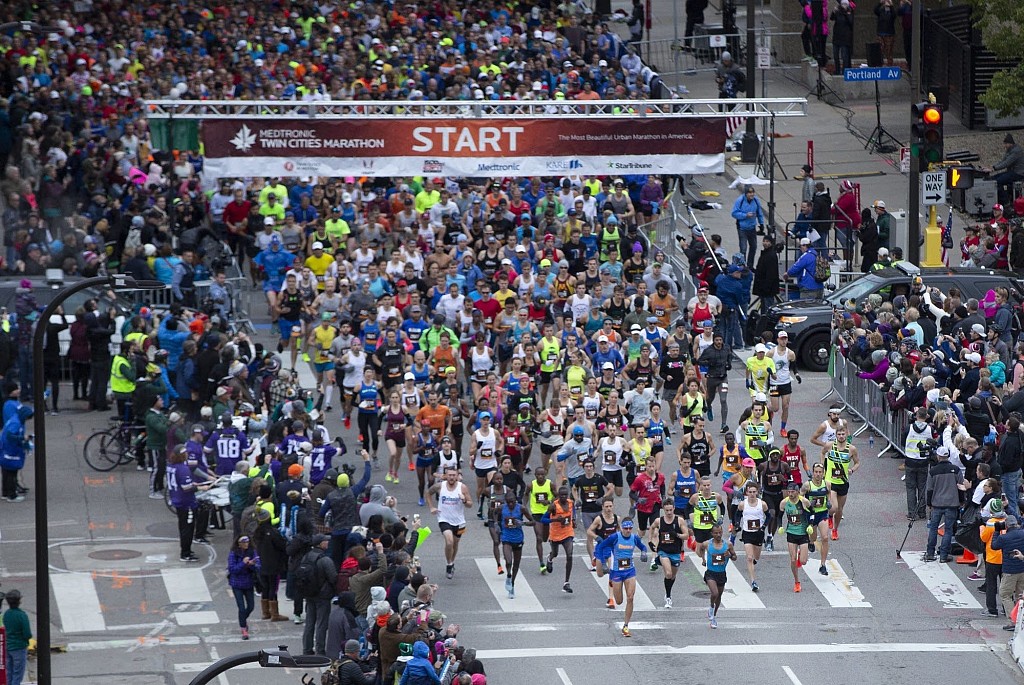
Medtronic Twin Cities Marathon registration opens April 8 to be run in person
The Medtronic Twin Cities Marathon Weekend of Events went virtual only in 2020, but it will return in-person this year on Oct. 2 and Oct. 3.
The Medtronic TC Family Events will take place on Saturday, October 2, and the weekend will conclude with the Medtronic Twin Cities Marathon and TC 10-Mile races. Those races run from downtown Minneapolis to the State Capitol in St. Paul, on Sunday, October 3. To register, you can visit Twin Cities in Motion’s webpage starting at 10 a.m. on Thursday, April 8.
Twin Cities in Motion has partnered with experts and officials to build an event that’s COVID-safe. Virtual races are included as well for those who prefer the option. All 2021 Medtronic Twin Cities Marathon Weekend events will have limited field sizes. The marathon is currently limited to 4,000 in-person registrants.
If the event is cancelled due to COVID-19, a partial cash refund policy will be in place. For more information on safety precautions, see here.
Get the Twin Cities in Motion app for pro tips, free Runcoach training, and helpful content for free virtual check-in races to gauge your progress and prepare you for the race.
Registration is also open for the Earth Day 8K, presented by Everlight Solar on Sunday, April 25 at Lake Como, the Spring into Summer 5K, presented by LX Medical on Saturday, May 22 at Lake Phalen and the Summit Triumphant 5K and 10K on Saturday, June 26, at Bde Maka Ska.
KARE 11 is proud to be the official media sponsor for the Medtronic Twin Cities Marathon Weekend and the presenting sponsor for the KARE 11 Family Mile.
by Sonya Nayar
Login to leave a comment
Medtronic Twin Cities Marathon
The Medtronic Twin Cities Marathon Weekend offer races, walks and activities for every age and ability level! Learn more about the weekend's events and activities by using the navigation bar at the left or top of your screen. The Twin Cities Marathonis a running event in the Minneapolis-Saint Paul area. The TCM was first run in 1982, and typically takes...
more...
Covid-Safe Medtronic Twin Cities Marathon Planned for October 3
The 2021 Medtronic Twin Cities Marathon is scheduled to take place as a reduced-size, COVID-safe event on Sunday, October 3, race organizer Twin Cities In Motion announced. The race, which was cancelled last year due to the pandemic, will limit marathon participation to 4000 runners, and COVID-safety measures will be in place throughout the event.
Registration for the 2021 marathon and other Medtronic Twin Cities Marathon Weekend events will open on Thursday, April 8. The marathon race runs from downtown Minneapolis to the State Capitol grounds in St. Paul.
“We’re optimistic about our ability to host an in-person event this fall,” Twin Cities In Motion Executive Director Virginia Brophy Achman said. “Our team has consulted medical and crowd science experts and worked closely with relevant public agencies to get to this point. That work will continue until race day as we properly calibrate the event to this fall’s public health situation.”
Participants can expect to see changes in the event from previous editions. While plans will be modified to match conditions later in the year, Twin Cities In Motion is telling participants to expect:
• Reduced field sizes in all marathon weekend races
• Mask-wearing requirements except while racing
• Social distancing requirements across the event weekend
• Spectating discouraged and spectator access limited in certain areas
• Reduced touchpoints when possible
“While there will be noticeable differences from pre-COVID days,” Brophy Achman said, “we plan to do all we can to maintain the spirit and energy of the event despite the constraints. The power of the event lies in the thousands of personal achievements that culminate at our finish line, and we’re excited to return those moments to our participants’ lives after all they’ve endured.”
The return of the event to streets of Minneapolis and St. Paul will also reestablish an important fundraising platform for dozens of local nonprofits who use the marathon to raise money and awareness of their organizations. Runners raised more than $1 million at the last in-person edition of the race in 2019.
“The TCM team is pleased to be preparing for an in-person race, because it’s the work we love to do,” Twin Cities In Motion President Dean Orton said.
“But we know the event is an important annual event in our community and we’re excited to be bringing back all the meaningful elements marathon weekend offers – from youth fitness to volunteer opportunities, from economic impact to the unique fundraising platform we offer.”
Registration for the marathon will be conducted online through the Twin Cities In Motion website, tcmevents.org, beginning at 10:00 a.m. CDT on April 8. Registration will also open for the following Medtronic Twin Cities Marathon Weekend events:
• Medtronic TC Family Events
• TC 5K, presented by Fredrikson & Byron P. A.
• TC 10K
Those events take place at the State Capitol grounds on Saturday, October 2. Registration will also open for the TC Loony and TC Ultra Loony Challenges – where runners participate in the TC 5K and TC 10K prior to running either the 10 mile or marathon the following day. The registration drawing for the Medtronic TC 10 Mile held on October 3 will be open in mid-summer.
More than 25,000 runners participated in the 2019 Medtronic Twin Cities Marathon Weekend, including more than 7,000 marathoners and more than 13,000 10 milers.
Login to leave a comment

Medtronic TC 10 Mile
Twin Cities In Motion originated in a grassroots effort to bring the energy and positivity of a community-wide running event to Minneapolis and St. Paul. From the first strides of the inaugural Twin Cities Marathon in 1982 through a rich history that saw the addition of events and programming to serve the community, TCM has inspired and empowered the Twin...
more...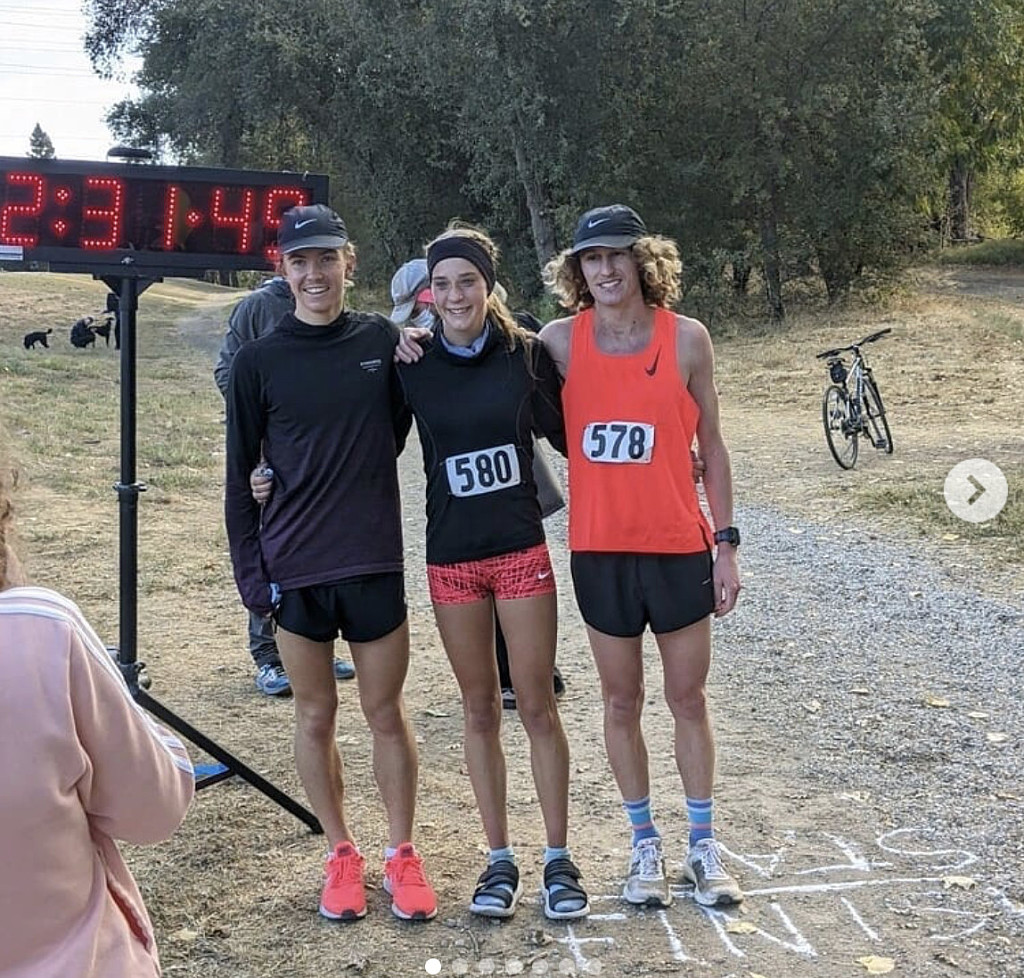
17-year-old Tierney Wolfgram runs a 2:31:49 marathon for a new American junior record
On Saturday November 6, Tierney Wolfgram, a 17-year-old runner from Minnesota, broke the American U19 marathon record of 2:34:24, which Cathy O’Brien set in 1984. Wolfgram, who is in her rookie season at the University of Nevada, ran a blistering 2:31:49 marathon, smashing O’Brien’s 36-year-old mark and catapulting her into the top 65 of all time among U.S. women marathoners.
Wolfgram was paced to the record time by two of her Nevada Wolfpack teammates, Adam Sjolund and Carson Leavitt, who were the only other runners in the race.
Although quite young, Wolfgram already has a lot of experience in the marathon, and she even competed at the U.S. Olympic Trials in Atlanta in February, where she ran to a 76th-place finish in 2:42:47. She qualified for the Trials in 2018, when — at the age of 15 — she finished as the sixth female runner at the Twin Cities Marathon in Minnesota. For a while in that race, Wolfgram actually held the lead. She opened the first 5K with a 17:32 split, which put her more than 30 seconds ahead of second place.
At 10K (which she passed through in 35:42), she still had the lead, but was only up nine seconds on the next closest runner. Wolfgram faded considerably in next 11K, and by the halfway point she was in sixth place, where she stayed for the rest of the race. She crossed the line in Minnesota in 2:40:03, which was an age group world record and well under the U.S Trials qualifying standard of 2:45:00.
If O’Brien’s career is any indication of what Wolfgram could accomplish in the coming decade or two, then the young runner has an exciting few years ahead of her. O’Brien ran her U19 record at the 1984 U.S. Olympic Marathon Trials, where she finished in ninth. Four years later, O’Brien was back at the Trials, where she climbed the ladder to a third-place finish, earning her a spot on the U.S. Olympic team.
She ran to 40th place at the Seoul Games, and in 1992, she finished in 10th at the Barcelona Olympics.
Wolfgram still has years left in her marathon career, but she has already accomplished so much. Her record is the latest addition to her running resume, but it will almost certainly not be the last, and her name is definitely one to remember.
Wolfgram’s run on Saturday was the 13th-fastest of the year from an American woman, and it’s tied for 64th-fastest in U.S. history. The race was specifically organized for the record attempt, and only Wolfgram and her two pacers ran the course. She ran an evenly-paced race, averaging 3:36 per kilometre.
After the race, she posted on Instagram to write about her run and thank Sjolund and Leavitt. “There are no words to describe the mass of my gratitude for these two guys,” she wrote. “They kept me in line and controlled me in the early miles, broke the wind for me the entire way and lent me strength during the tough parts. Never once did I feel the loneliness that running a marathon brings, and it’s all because of them.”
by Running Magazine
Login to leave a comment
2020 Medtronic Twin Cities Marathon to be Held Virtually due to the pandemic
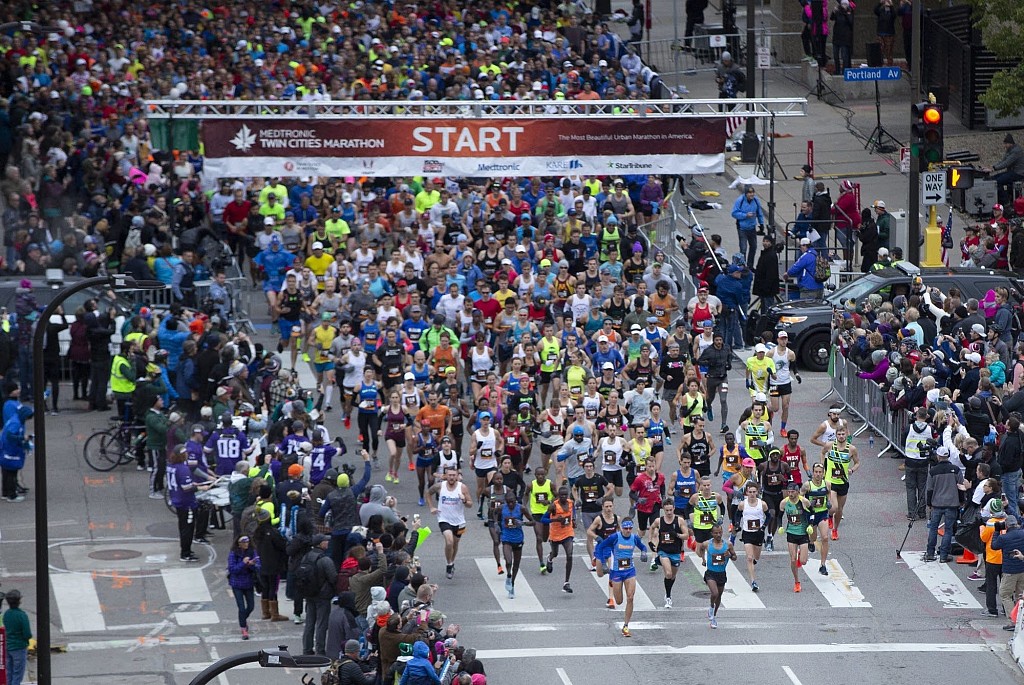
Due to the ongoing COVID-19 pandemic, Twin Cities In Motion will conduct the 39th Medtronic Twin Cities Marathon Weekend and its other remaining 2020 events virtually. The decision to forgo in-person events was guided by public health officials and made in consultation with the Twin Cities In Motion medical directors. It was made with the safety of participants, volunteers, spectators, and the community at large foremost in mind.
The 39th Medtronic Twin Cities Marathon Weekend was originally scheduled for October 2-4. The event regularly draws 30,000 participants and 300,000 spectators.
Twin Cities In Motion made this decision based on current Minnesota Department of Health restrictions that do not allow for public gatherings larger than either 25 or 250 persons (depending on venue), and which are not expected to be loosened substantially between now and October.
“In the early months of the COVID-19 crisis, we hoped to hold an in-person Medtronic Twin Cities Marathon Weekend in a manner that was safe for runners, spectators, volunteers, and the community at large,” Twin Cities In Motion president Mike Logan said. “Based on guidance from public health authorities and our medical directors, however, we have determined that is not possible. We make the decision with a heavy heart, but we know it’s the right thing to do for our runners and our community.”
The following 2020 Twin Cities In Motion events will now be held virtually:
Red, White & Boom! TC Half Marathon, Relay & 5K,presented by Summit Brewing CompanySaturday, July 4 – Saturday, July 18
Medtronic TC 1 Mile.- Thursday, August 13 – Thursday, August 20.
Twin Cities Orthopedics' Women Run the Cities.- presented by PNC Bank, Thursday, September 10 – Sunday, September 20.
Medtronic Twin Cities Marathon Weekend.- Thursday, October 1 – Saturday, October 31.
Twin Cities In Motion is currently transitioning its events into robust virtual offerings where runners have an extended period of time to run their race in a safe, socially distanced manner, submit results, earn participant gear and finisher medals and participate in app-based and social media-centered activities. Virtual Medtronic Twin Cities Marathon activities will last the entire month of October.
Twin Cities In Motion is able to provide a partial credit to participants who signed up for in-person races. Registration is also open for the now-virtual events, and registration for the virtual Medtronic TC 10 Mile, which had not yet launched, will open on Thursday, July 9 at 10 a.m. with first-come first-served rush registration.
Login to leave a comment
Medtronic Twin Cities Marathon
The Medtronic Twin Cities Marathon Weekend offer races, walks and activities for every age and ability level! Learn more about the weekend's events and activities by using the navigation bar at the left or top of your screen. The Twin Cities Marathonis a running event in the Minneapolis-Saint Paul area. The TCM was first run in 1982, and typically takes...
more...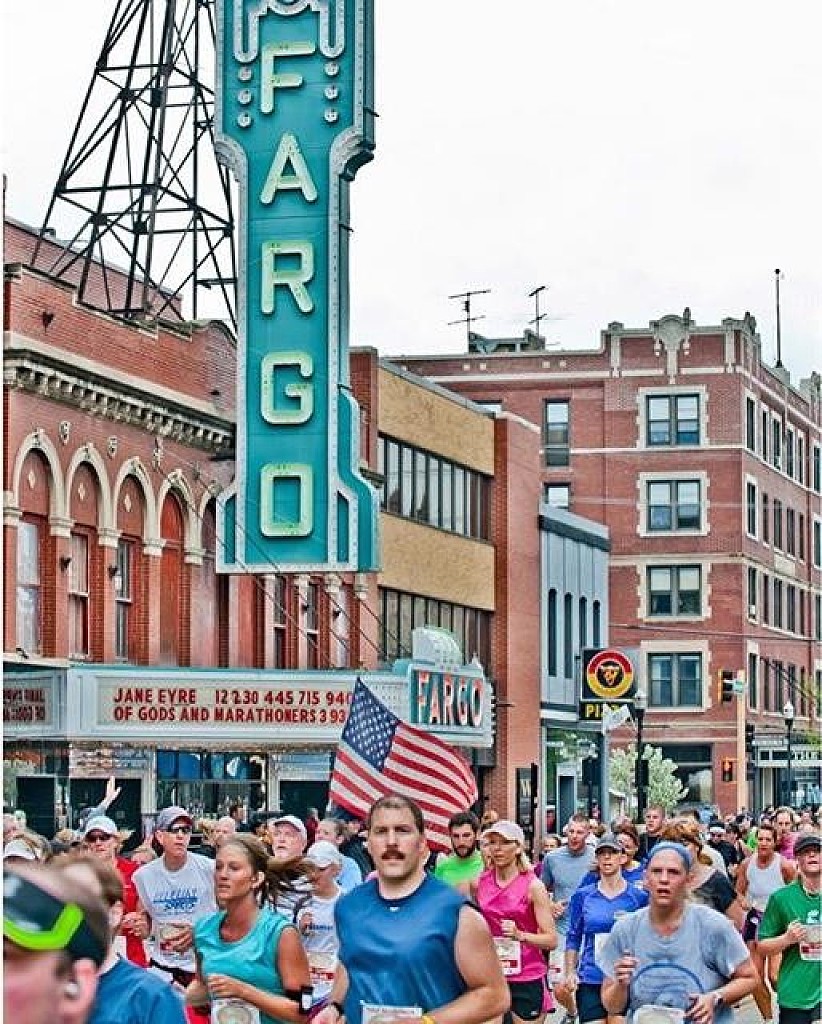
The Fargo Marathon got the green light from the city and it is on for August 29
Ladies and gentlemen, start your running shoes. The Sanford Fargo Marathon got the green light from the city of Fargo and crucial sponsors and will proceed as planned for its week-long events Aug. 24-29.
Moreover, the 26.2-mile marathon may be one of the few races of that distance in the country and could attract more runners than usual. It most likely will be the first to resume after being rescheduled because of the COVID-19 pandemic.
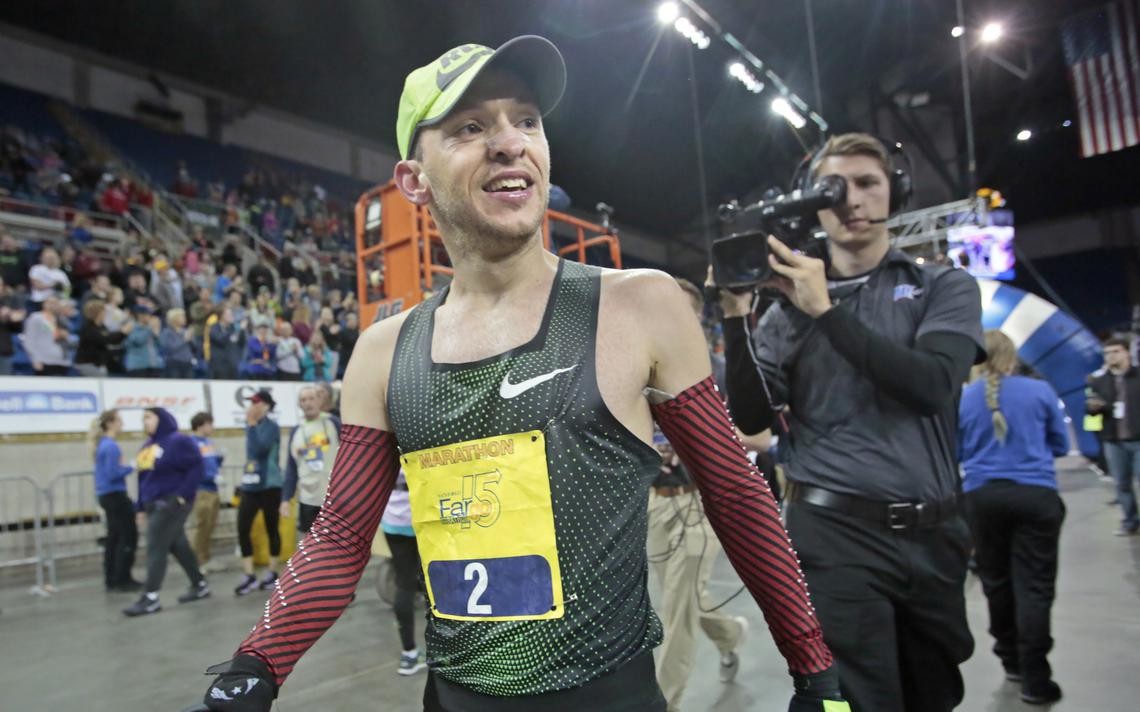
“We’re getting emails from people all over the country saying I see you’re still on,” said race director Mark Knutson.
He said Rugged Races, the owner of the Fargo Marathon, gave its blessing. Mike Almquist, who along with Knutson has been on board since the event’s inception in 2005 and is the operations manager under Rugged, has been getting elite applications almost daily, Knutson said.
The record number of registered runners for the full is 2,631 in 2011 with the race holding steady annually at between 1,500 and 2,000.
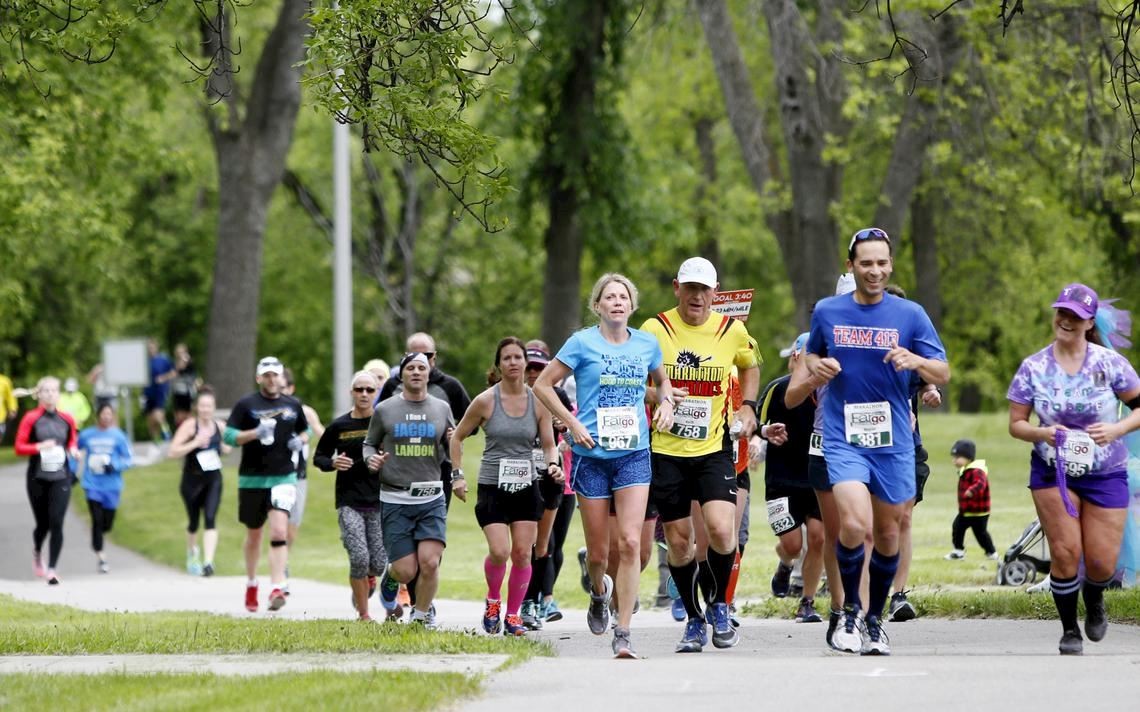
This year’s races will see some significant changes with social distancing measures. They will start and finish on the east side of the Fargodome instead of inside the facility. Runners will be starting in groups of 500 that will be assembled in multiple corrals in the dome parking lot.
“There will be no mass start outside of 500 people,” Knutson said.
The marathon route may have to change depending on the access to the city of Moorhead, Concordia College and Minnesota State Moorhead. It may go through downtown Fargo at the beginning of the race instead of toward the end but that is more because of road construction, Knutson said.
“By no means do we want to leave Moorhead out,” he said. “The course is still a little bit in limbo. If we can’t go into Moorhead, we’ll have to figure out additional real estate in Fargo.”
Around 10,000 are currently registered for all events. Knutson sees a realistic cap of around 15,000 registrants. Precautions will also be taken at aid stations, packet pickup and with volunteers.
The marathon has also received guidance from Fargo Cass Public Health.
“We have a very good COVID-focused plan, a really good plan,” he said.
The plan could see further easing of restrictions depending on the level of risk that is determined by the North Dakota Health Department. It’s currently at a green, or low level. It’s one level above blue, which is the safest.
At a green level, finishers will be given a medal, a pre-packaged food bag and then be encouraged to leave the premises.
“If we go to a blue on a state-wide level, I’m sure we’ll have music at the finish line and have a party in the parking lot,” Knutson said. “But for now, we’re going to proceed as if we’re going to stay with a green level.”
The record for all events is 25,700 set in 2012. A proliferation of marathons in recent years has made for a more competitive market, especially for out-of-town runners looking for a destination marathon.
Grandma’s Marathon in Duluth, Minn., normally held this month, was canceled. Knutson said he’s heard from runners who were registered for the Boston Marathon, which also was canceled.
“We hope to get some more national draw,” he said.
The Twin Cities Marathon on Oct. 4 and the Chicago Marathon on Oct. 11 are still on.
The Fargo Marathon and four-person relay, 13.1-mile half marathon and 10K are set for Saturday the 29th. The cyclothon, either a 15-mile or 26.2-mile loop, begins the week on Monday, Aug. 24 followed by the Furgo Dog Run on Tuesday. The annual Youth Run is set for Thursday and the 5K is set for Friday night.
The events were originally scheduled for mid-May. Participants who were registered for those races will automatically be entered in the new dates.
No refunds will be given. Registered runners who can’t make the new dates can do a “virtual run” and have their medal, bib number and race swag shipped to them.
Login to leave a comment

Fargo Marathon
The Fargo Marathon is a week full of events, The Fargo Marathon is bound to have something for everyone. From the Cyclothon, Furgo Dog Run, Largest Kid's Race, 5K Walk/Run, 10K, Half Marathon, Full Marathon and Relays, there is a distance for all! Start and Finish inside the Fargo Dome - ...
more...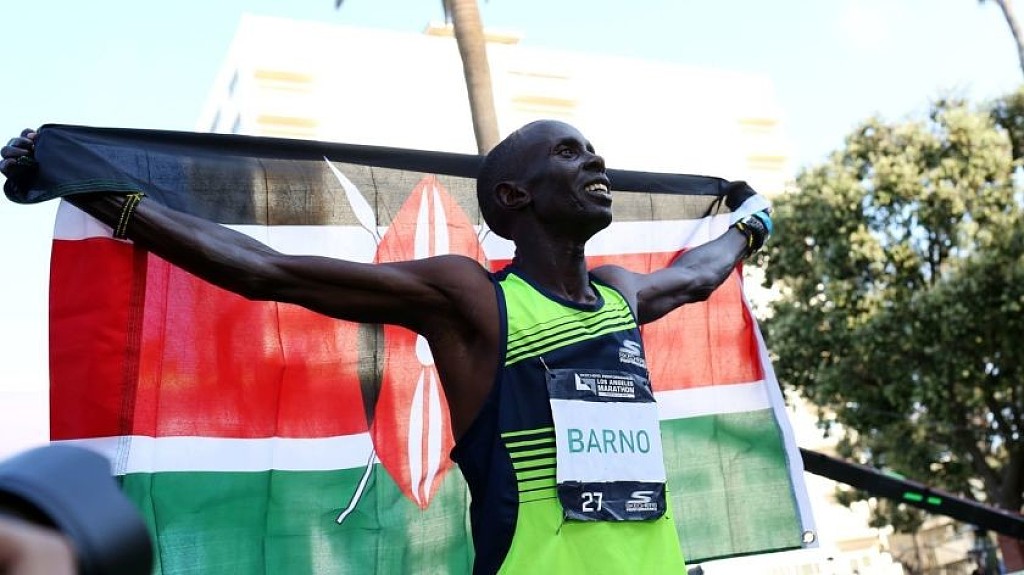
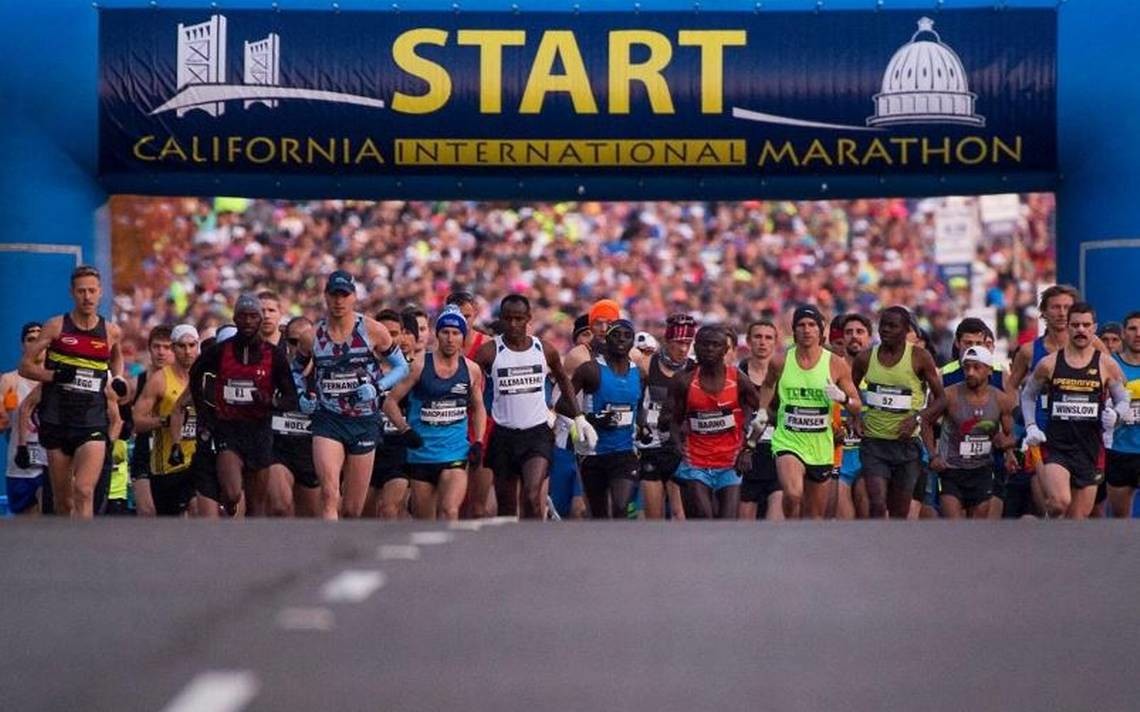
Kenyans Elisha Barno and Jane Kibii will return to lead the CIM elite field
The 37th annual California International Marathon returns CIM top performers, 2015 CIM Champion Elisha Barno and 2014 runner-up Jane Kibii, while also serving as one of the last opportunities for American athletes to qualify for the 2020 U.S. Olympic Marathon Trials.
“This should be a unique and exciting year at CIM with a mix of steady vets returning to ‘The Fastest Course in the West’ as well as a flood of ‘dream chasers’ entering the ‘OTQ Factory’ for a last chance at earning a trip to the U.S. Olympic Marathon Trials in Atlanta in February,” said SRA Executive Director Scott Abbott.
Favorites to win the men’s race include Kenyan natives Elisha Barno and Denis Chirchir. Barno holds a personal best marathon time of 2:09:32 set in 2018, and has had past success at CIM, winning the race in 2015 and finishing runner-up in 2016. Denis Chirchir, who ran 2:13:50 earlier this fall, will be making his first appearance at CIM and is expected to battle up front with Barno.
Barno and Chirchir will likely be challenged by American runners C.J. Albertson, Colin Mickow, and Patrick Smyth, who are currently in the midst of breakthrough seasons. Albertson of Fresno, Calif and Mickow of Naperville, Ill. ran personal best marathons earlier this fall with 2:14:49 and 2:14:55 finishes, respectively. Smyth, who hails from Santa Fe, N.M., ran a personal best half-marathon time of 1:02:39 in early November of this year.
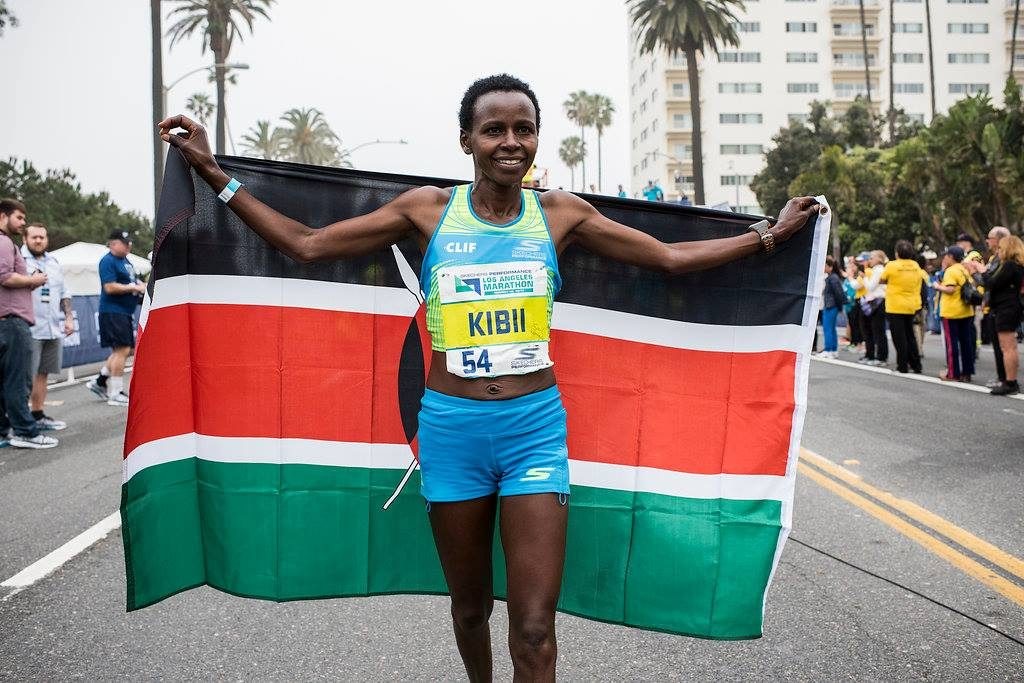
The women’s race is headlined by local athlete Jane Kibii, who represents Kenya in international competition and lives in Auburn, Calif., less than twenty miles from the CIM start line. Kibii returns to CIM with the goal of capturing her first CIM title. Like Barno, Kibii has proven herself on the CIM course, with finishes of 2nd (2014) and 3rd (2015) to go along with her personal best marathon time of 2:30:01.
“I love running in my hometown and feeling the local support,” said Kibii. “I have raced CIM twice and this time around I want to go for a win.”
Other women to look for up front on December 8 include Obsie Birru from Phoenix, Ariz. who ran a personal best 2:35:51 at the Twin Cities Marathon in October and Katja Goldring (Flagstaff, Ariz.) who holds a personal best time of 2:35:21. Two marathon debutants, Kaitlyn Peale (Portland, Ore.) and Ivette Mejia (New York), could also be factors up front with personal best half-marathon times of 1:13:09 and 1:13:36, respectively.
Beyond the competition for the $70,000 prize purse available to the men’s and women’s fields, hundreds of American runners will toe the line at the 2019 CIM hoping to qualify for the 2020 U.S. Marathon Olympic Trials. Men need to run 2:19:00 or faster and women need to run 2:45:00 or faster to qualify.
In 2018, CIM had a record number of U.S. athletes run an Olympic Trials Qualifier (OTQ), with 99 American women and 53 American men running under the qualifying standards. With the qualification window closing in January, the 2019 CIM will be many athletes’ last shot.
“The past few years have shown that CIM is the perfect place to chase an OTQ,” said Olympic Trials hopeful Peter Bromka. “Not only the course and the weather, but every detail of the race is carefully considered by the organizers to help athletes run fast. Once the gun goes off, packs of hopefuls form and work together every mile to the capitol.”
Athletes who run a qualifying time will compete for a spot on the 2020 USA Olympic Marathon team on February 29, 2020 in Atlanta, Georgia. The top three men and top three women finishers in Atlanta will compete for Team USA at the Olympic Games in Tokyo.
Login to leave a comment
California International Marathon
The California International Marathon (CIM) is a marathon organized by runners, for runners! CIM was founded in 1983 by the Sacramento Running Association (SRA), a 501(c)(3) non-profit organization. The SRA Board of Directors is comprised of runners with a combined total of 150+ years of service to the CIM. The same route SRA management created for the 1983 inaugural CIM...
more...
Tyler Pennel is Ready for Long-Awaited Marathon Comeback At TCS New York City Marathon
With little fanfare, Tyler Pennel has quietly established himself as one of America's top marathoners over the past five years. Despite often being overshadowed by bigger names from high-profile training groups, he's won a national title, played a decisive role in the 2016 U.S. Olympic Trials, and finished in the top five at an Abbott World Marathon Majors race. But he's also dealt with a series of frustrating injuries that have disrupted his momentum and left some unanswered questions about his true potential.
With the next Olympic Trials looming this winter, the 31-year-old Pennel will make his comeback at the distance on November 3, at the TCS New York City Marathon. It will be his first marathon in 18 months and only his fourth race at any distance this year. "I'm a little nervous," Pennel told Race Results Weekly in a recent telephone interview from Blowing Rock, N.C., where he lives and trains as part of the On ZAP Endurance group. "That first race back is always a shock to the system. A lot of it is mentally remembering what it feels like to race."
Pennel grew up in Golden, Colo,, and had an impressive career at Western State College (since renamed Western Colorado University), winning the NCAA Division II title over 10,000 meters as a senior in 2012. He joined the ZAP Endurance group shortly after graduating and made his 26.2-mile debut at the Twin Cities Marathon in 2014, which doubled as the USA Track & Field championship that year. He pulled off a surprise win that day, setting a still-standing personal best of 2:13:32.
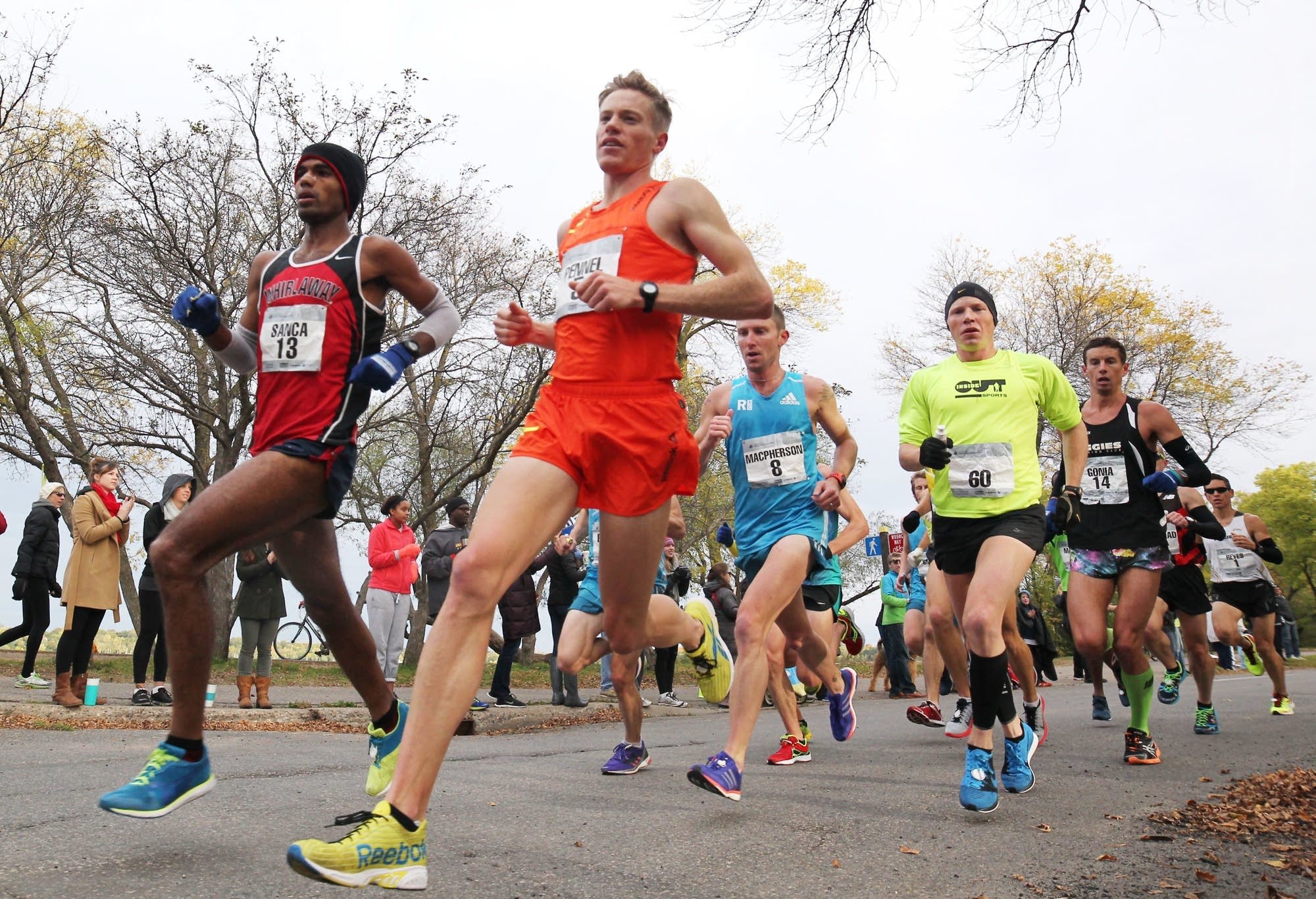
He carried that momentum into 2015 with a series of strong results on the roads and track (including lowering his best in the mile to 3:58.99), and headed into the 2016 U.S. Olympic Trials riding high with confidence. Perhaps too high. On a hot day in Los Angeles, Pennel took the lead in the 16th mile and forced the pace for the next several miles. The tempo ultimately took a toll and he faded to fifth place in 2:14:57, missing a spot on the squad for the Rio Games by just under two minutes.
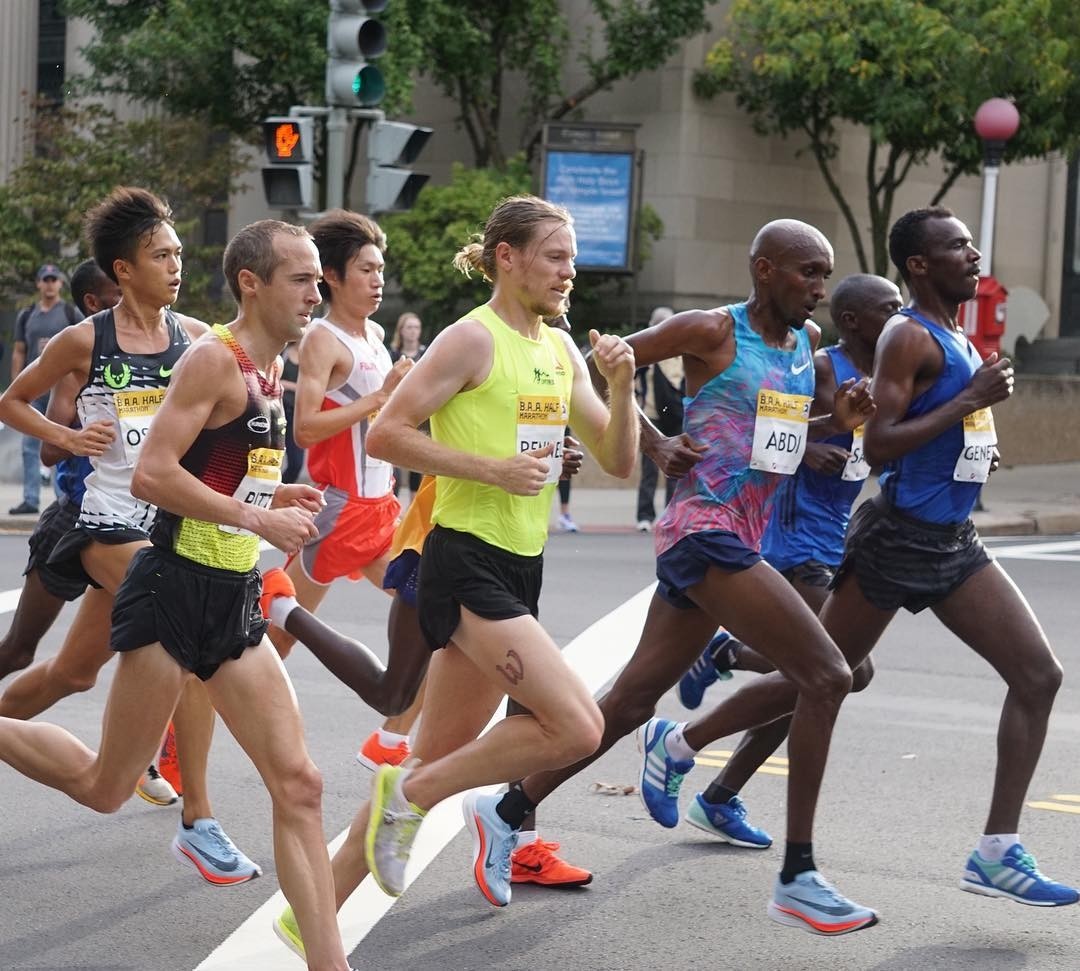
"The Trials was my second marathon, and I think since I had a good first one maybe I was a little bit overconfident," he says. "Initially when I made that move I felt great. That first mile that I led I was almost shocked nobody went with me. That's how good I felt. It wasn't until after I started pressing after that first mile of leading that it really hurt."
Since that disappointment, a variety of injuries prevented Pennel from consistently training and racing. He's put together some bright spots, including finishing eighth at the TCS New York City Marathon in 2016 and running to a gutsy fourth-place finish at the 2018 Boston Marathon during the now-infamous nor'easter that turned the race into a cold, wet and windy war of attrition. But after taking third-pace at the Peachtree Road Race in Atlanta in July 2018 he didn't race again for 11 months, first battling a sacral stress fracture, followed this past winter and spring by a bout of osteitis pubis (inflammation of the tissues around the pubic bone). That's the same injury that plagued marathoner Laura Thweatt.
Pennel has been healthy since May, but raced sparingly during his preparation for New York. "The build-up has been really stellar," says On ZAP Endurance coach Pete Rea. "He was able to train through the summer and put together a full marathon build-up cycle. In terms of actual true consistency and healthy running for months and months, that had not happened for Tyler since 2016 until these last six months."
Pennel has been making adjustments to his routine to avoid injuries, including taking one day off from running each week. "If anything I would say he has really made a conscious effort to try to hit fewer home runs in training since, in some respects, that's what got him in trouble in the past," Rea says. "He's actually running more quickly at a lower intensity. He's working less-hard in terms of intensity, but it seems far more comfortable than it did a few years ago."
by Runners web
Login to leave a comment
TCS New York City Marathon
The first New York City Marathon, organized in 1970 by Fred Lebow and Vince Chiappetta, was held entirely in Central Park. Of 127 entrants, only 55 men finished; the sole female entrant dropped out due to illness. Winners were given inexpensive wristwatches and recycled baseball and bowling trophies. The entry fee was $1 and the total event budget...
more...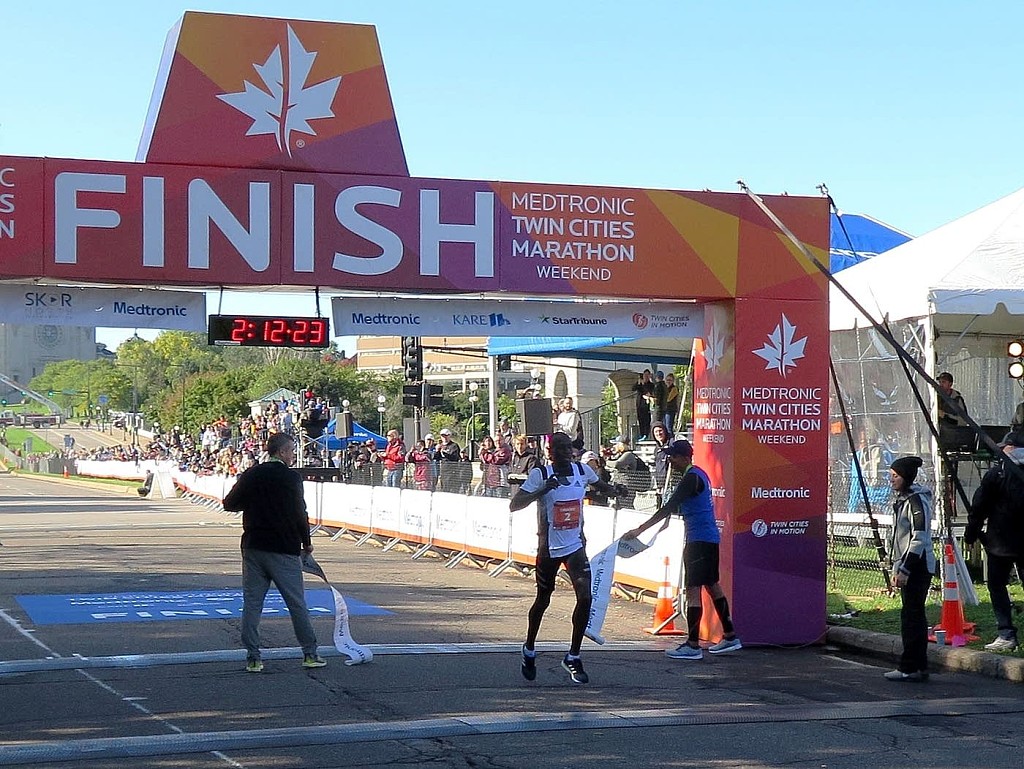
Dominic Ondoro of Kenya won the Medtronic Twin Cities Marathon on Sunday for a record-breaking fourth time
Dominic Ondoro of Kenya won the Medtronic Twin Cities Marathon on Sunday for a record-breaking fourth time, unprecedented in the 38-year history of the race from Minneapolis to St. Paul.
Ondoro, who also holds the record for fastest time in the race, came in at 2 hours, 12 minutes, 23 seconds.
Two Minnesotans finished the race in the top three: St. Paul native Danny Docherty, now of Minneapolis, came in third in the men’s race in 2:15:55. In the women’s race, Dakotah Lindwurm of Burnsville placed second in 2:32:49.
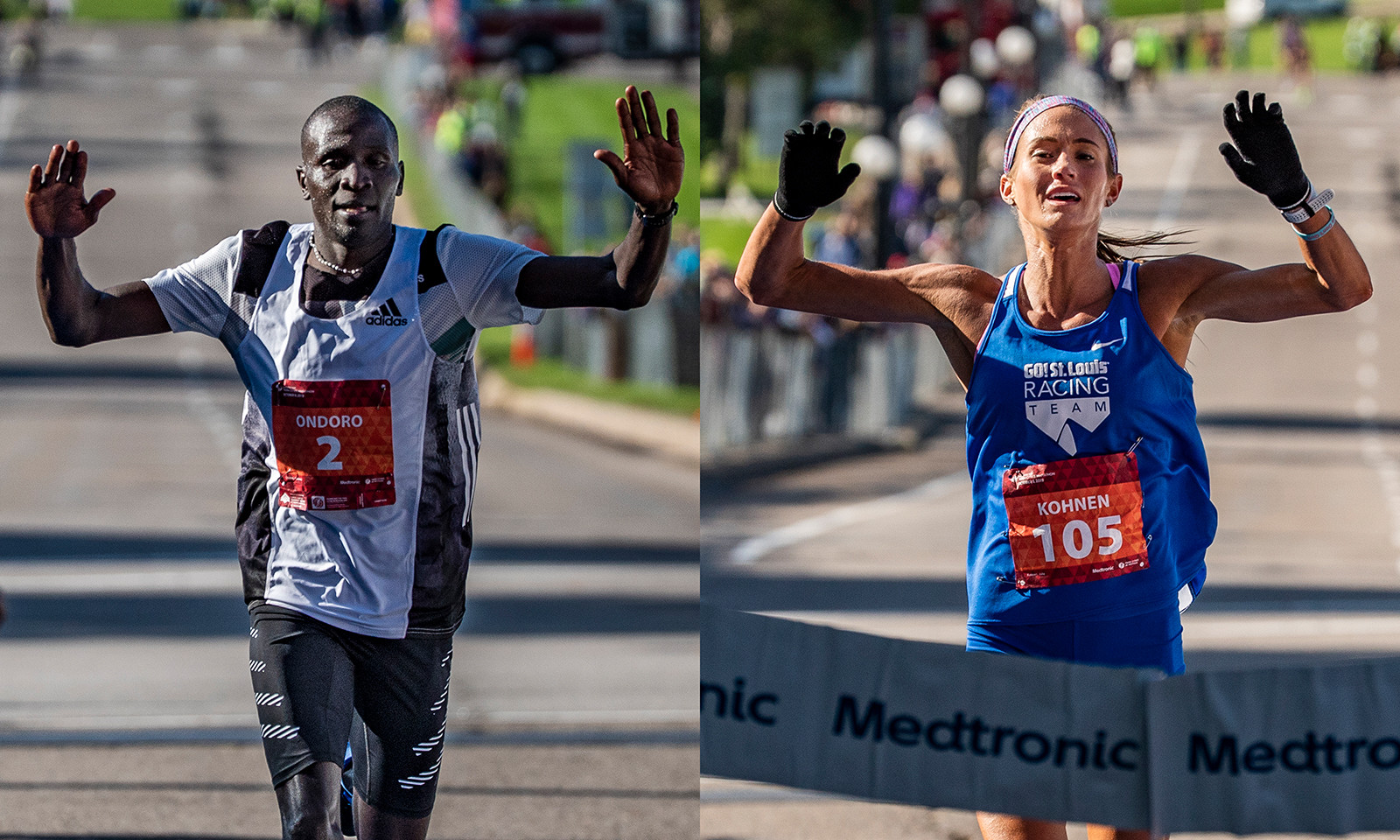
In the men’s race, Denis Chirchir of Kenya was second in 2:13:50.
Julia Kohnen of Florissant, Mo., won the women’s race in 2:31:29. Coming in third was 2014 Medtronic Twin Cities Marathon runner-up Heather Lieberg at 2:34:07.
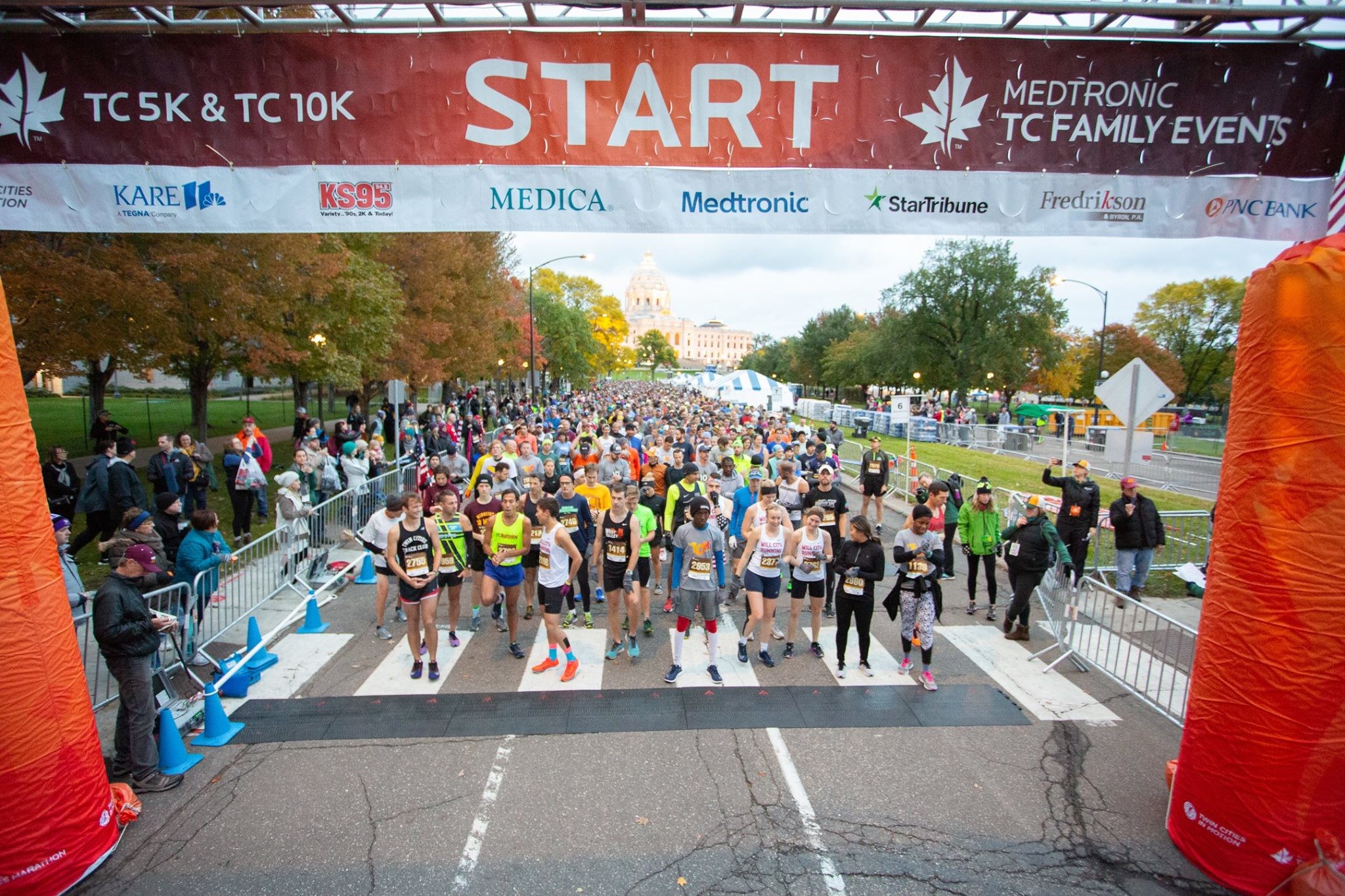
In a press release sent out by event organizers, Ondoro, who has won the marathon four times in five attempts, including 2015, 2016 and 2017, said he had hoped to break his record but his back “rebelled.”
“I was running easily, but around 20K, I felt something in my (lower back), so no record,” he said. “I hope next year I can try my best. It’s exciting. I like the way the people here interact with us. They cheer us very well.”
Kohnen was pleased to win her first Twin Cities race, saying, “It’s a really good feeling to have a fast time under my belt now. The weather plays a huge factor, and we couldn’t have gotten luckier today. It’s so fun; the neighborhoods are absolutely gorgeous.”
Login to leave a comment
Medtronic Twin Cities Marathon
The Medtronic Twin Cities Marathon Weekend offer races, walks and activities for every age and ability level! Learn more about the weekend's events and activities by using the navigation bar at the left or top of your screen. The Twin Cities Marathonis a running event in the Minneapolis-Saint Paul area. The TCM was first run in 1982, and typically takes...
more...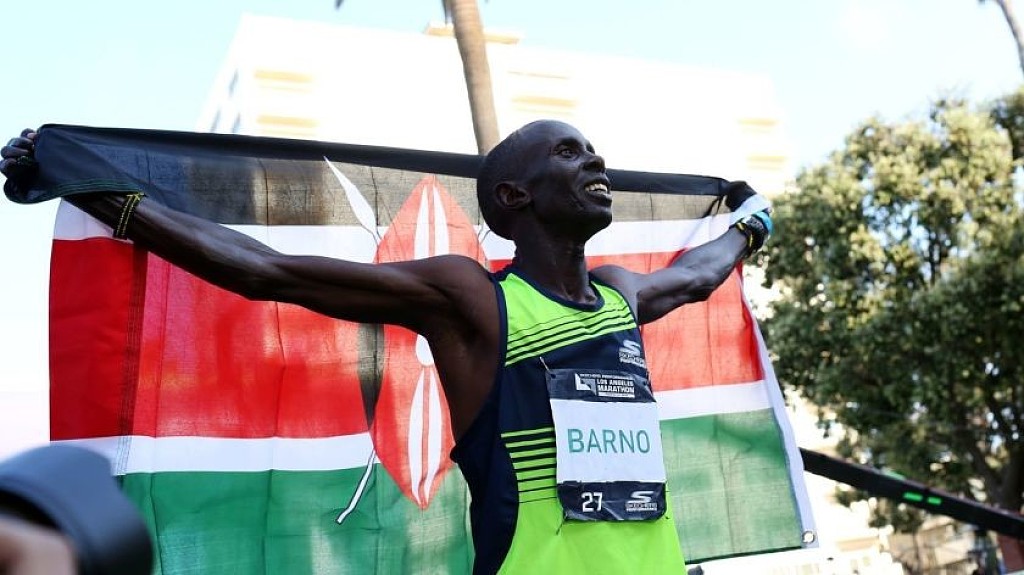
Kenyan compatriots, training partners and rivals Elisha Barno and Dominic Ondoro will renew their Medtronic Twin Cities Marathon rivalry on Sunday
Between them, the pair has won the last four editions of the event, with Barno entering this year’s race as the defending champion, but Ondoro still possessing the event record. A wide-open women’s race will crown a new champion this year, with 2018 champ Sinke Biyadgilgn of Kenya racing elsewhere this fall.
Among the top women’s contenders are former Grandma’s Marathon record-holder Sarah Kiptoo of Kenya, 2014 Medtronic Twin Cities Marathon runner-up Heather Lieberg of Helena, Mont., and Team USA Minnesota rising star Dakotah Lindwurm of Burnsville.
The men’s and women’s marathon favorites will be racing for $5000 winners’ checks and $25,000 course record bonuses.
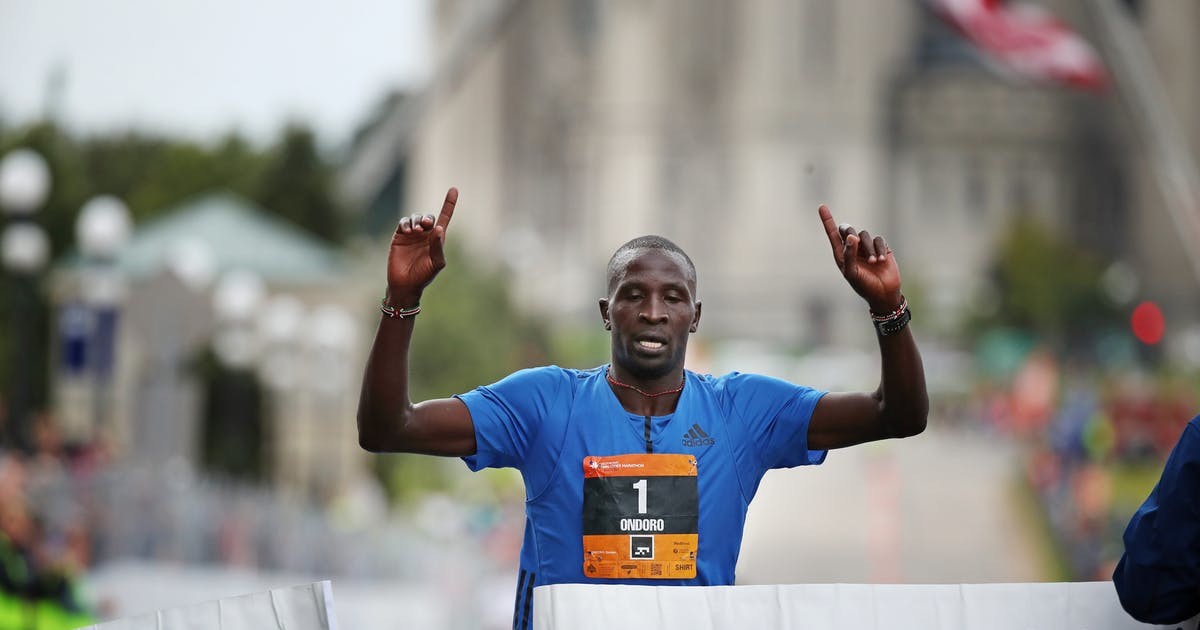
In the Medtronic TC 10 Mile, set for earlier Sunday morning, balanced men’s and women’s fields will race for USATF titles, $12,500 winners’ checks and a $10,000 “Equalizer Bonus for the first champion – female or male – to cross the finish line in a competition where the women start the race ahead of the men.
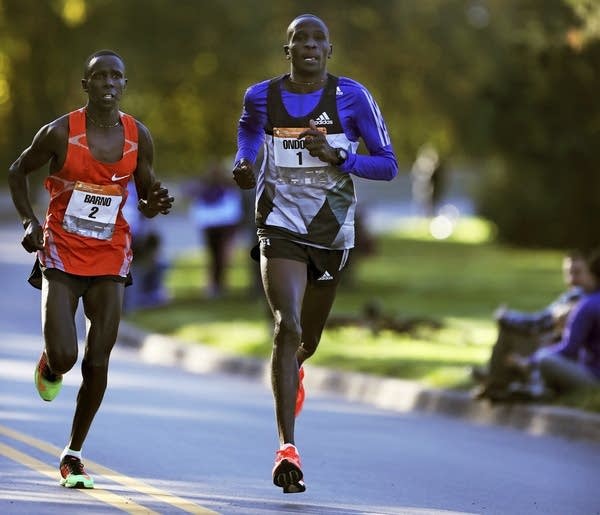
With defending champions Shadrack Kipchirchir and Sarah Hall not in the field this year, attention is focused on Josef Tessema of Castle Rock, Colo., last year’s 5th place finisher, Scott Fauble, a USATF Championship runner-up at 25K and half marathon, and local favorite Tyler Jermann of Burnsville, who represents Team USA Minnesota.
The women’s field is headlined by Katy Jermann, (spouse of Tyler) runner up at the recent USATF 20K Championships, Anne-Marie Blaney of Rochester Hills, Mich., 6th here last year, and 2019 Grandma’s Marathon champion Nell Rojas of Boulder, Colo.
The Medtronic TC 10 Mile with its more than 13,000 runners will start at approximately 6:54 a.m. Sunday, with the Medtronic Twin Cities Marathon and its more than 8,700 participants starting at 7:55 a.m.
Medtronic Twin Cities Marathon Weekend kicks off at 11:00 a.m. on Friday, October 4, with the opening of the Health & Fitness Expo at Saint Paul RiverCentre.
Login to leave a comment
Medtronic Twin Cities Marathon
The Medtronic Twin Cities Marathon Weekend offer races, walks and activities for every age and ability level! Learn more about the weekend's events and activities by using the navigation bar at the left or top of your screen. The Twin Cities Marathonis a running event in the Minneapolis-Saint Paul area. The TCM was first run in 1982, and typically takes...
more...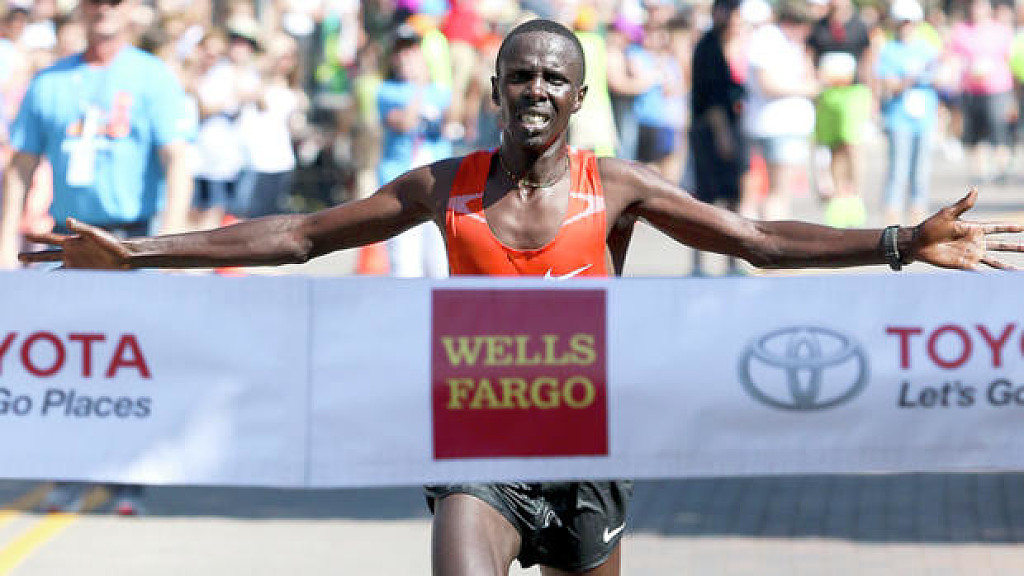
Kenya's Elisha Barno will be going after his fifth win at the Grandma's Marathon June 22
Already the only man to win four consecutive Grandma's Marathons, Kenya's Elisha Barno will strive for No. 5 at the 43rd installment of Minnesota's oldest marathon on June 22.
And he'll bring along his buddy and countryman, Grandma's record-holder Dominic Ondoro. Their New Mexico-based agent, Scott Robinson, confirmed both are planning to race in Duluth. And while that could change, it's an exciting prospect.
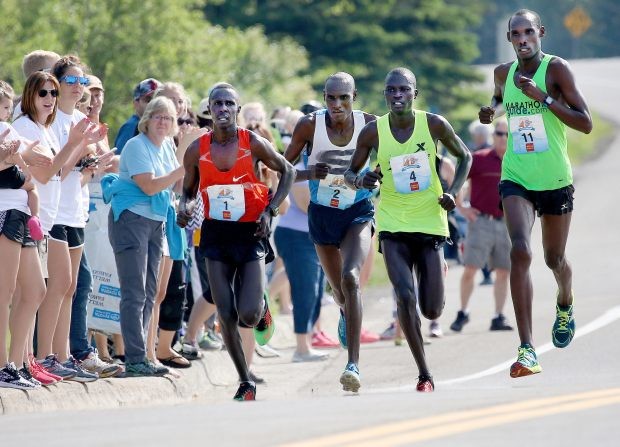
In winning for the fourth straight year last June, Barno produced the third-fastest time in event history — 2 hours, 10 minutes and 6 seconds. Speedy as that was, it's a minute slower than the 2:09:06 Ondoro unleashed in 2014 when he bumped Dick Beardsley from the top spot.
Barno will arrive in the Northland riding a swell of success. Following three straight runner-up finishes (all to Ondoro), he finally broke through, and broke the tape, at the Twin Cities Marathon last October. And on March 24, he won the closest Los Angeles Marathon ever contested, nudging John Korir by seven seconds.
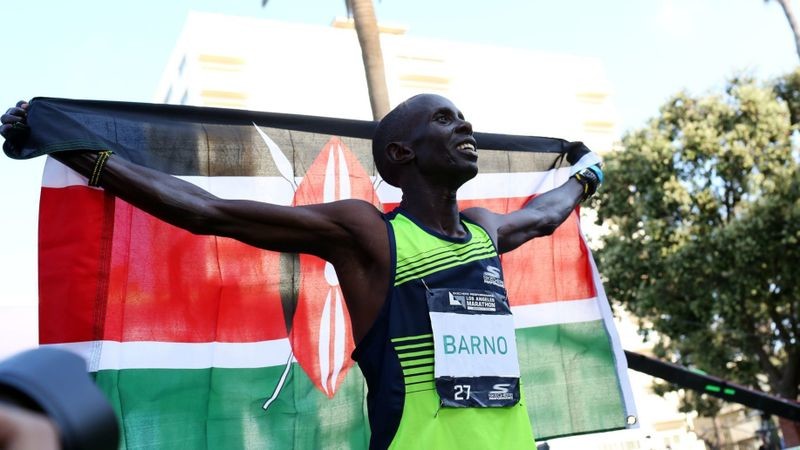
Barno and Ondoro will headline what figures to be a loaded field of elites.
"It's going to be an exciting year," Grandma's executive director Shane Bauer said. "I think we're all looking forward to what's going to happen at the finish line this year."
While the defending champ and fastest finisher return to the men's race, the same won't be true on the women's side. Kellyn Taylor, who blew away the competition at Grandma's in 2018 by coming through in an event-record 2:24:28, won't be back.
Login to leave a comment

Grandmas Marathon
Grandma's Marathon began in 1977 when a group of local runners planned a scenic road race from Two Harbors to Duluth, Minnesota. There were just 150 participants that year, but organizers knew they had discovered something special. The marathon received its name from the Duluth-based group of famous Grandma's restaurants, its first major sponsor. The level of sponsorship with the...
more...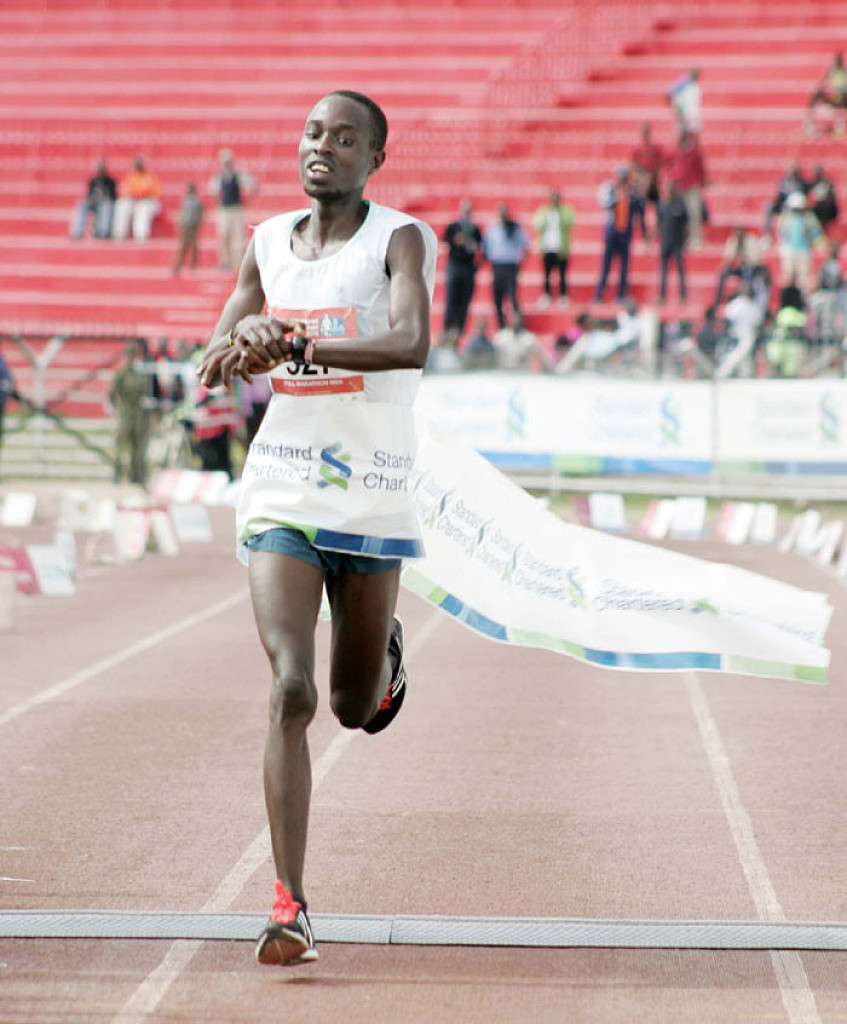
Joshua Kipkorir winner of the 2016 Standard Chartered Marathon wants to set the course record
Login to leave a comment
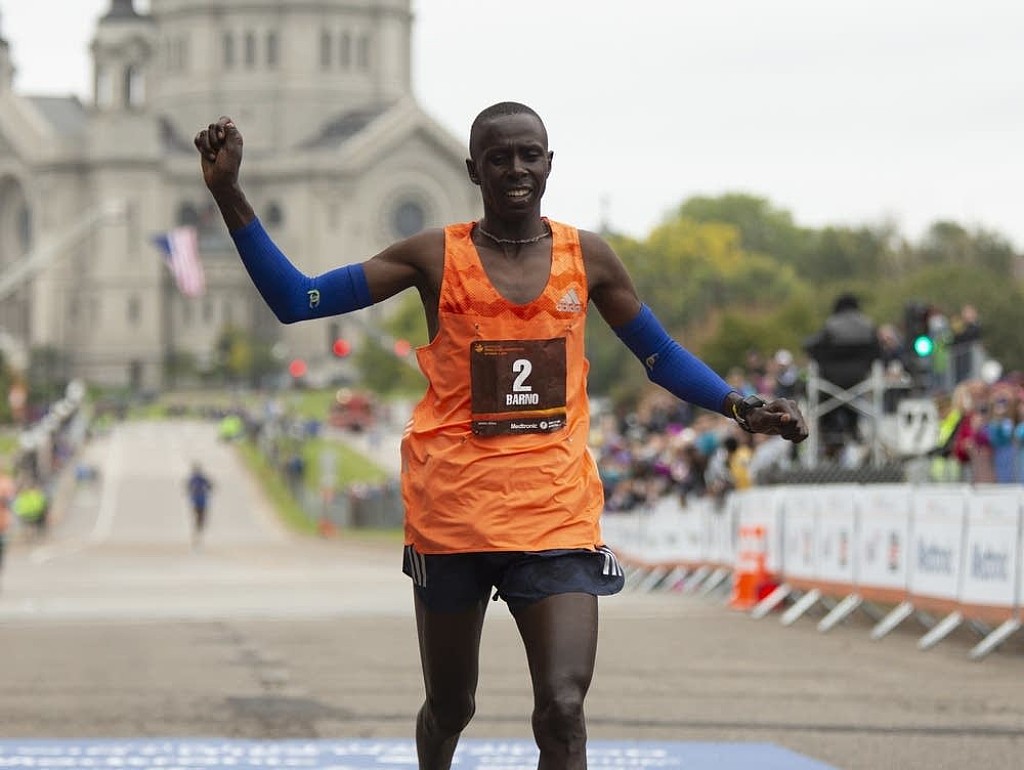
Elisha Barno crosses the finish line to win the men's title at the Twin Cities Marathon on Sunday
Login to leave a comment
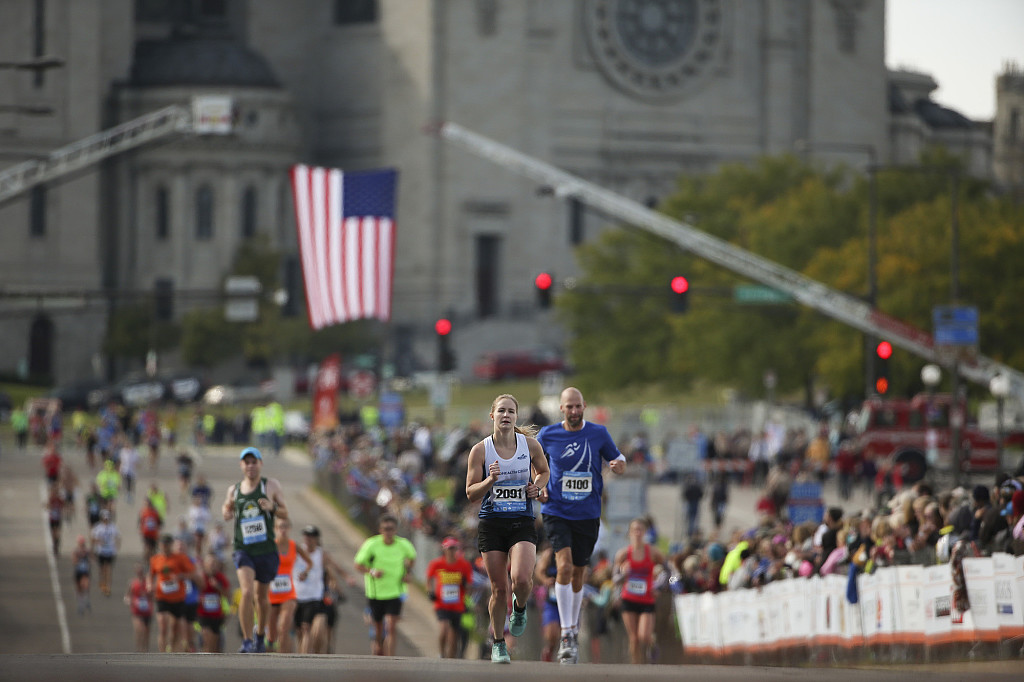
Medtronic Twin Cities Opens Registration Early
Login to leave a comment
