

Running News Daily
Running News Daily is edited by Bob Anderson and team. Send your news items to bob@mybestruns.com Advertising opportunities available.
Index to Daily Posts · Sign Up For Updates · Run The World Feed
Articles tagged #Minneapolis
Today's Running News
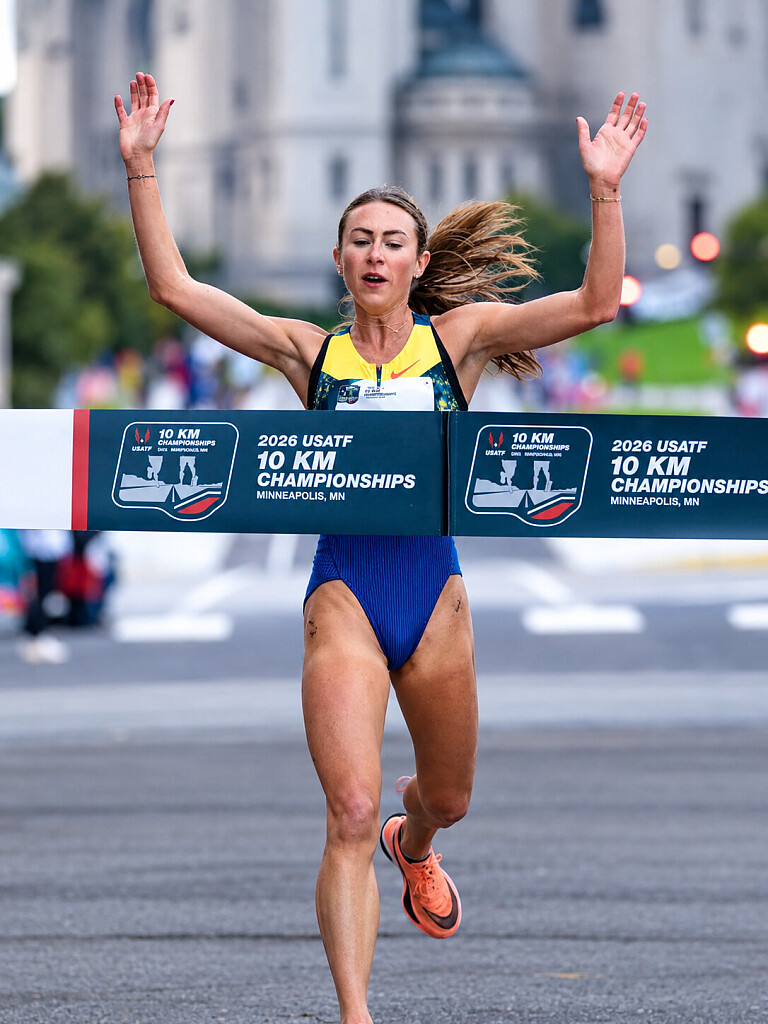


Emily Venters Dominates USATF 10K Championships With Record-Breaking 31:09
Emily Venters delivered a commanding performance at the 2026 USATF 10K Championships in Minneapolis, Minnesota, powering to the national title in 31:09 and rewriting the championship record in spectacular fashion.
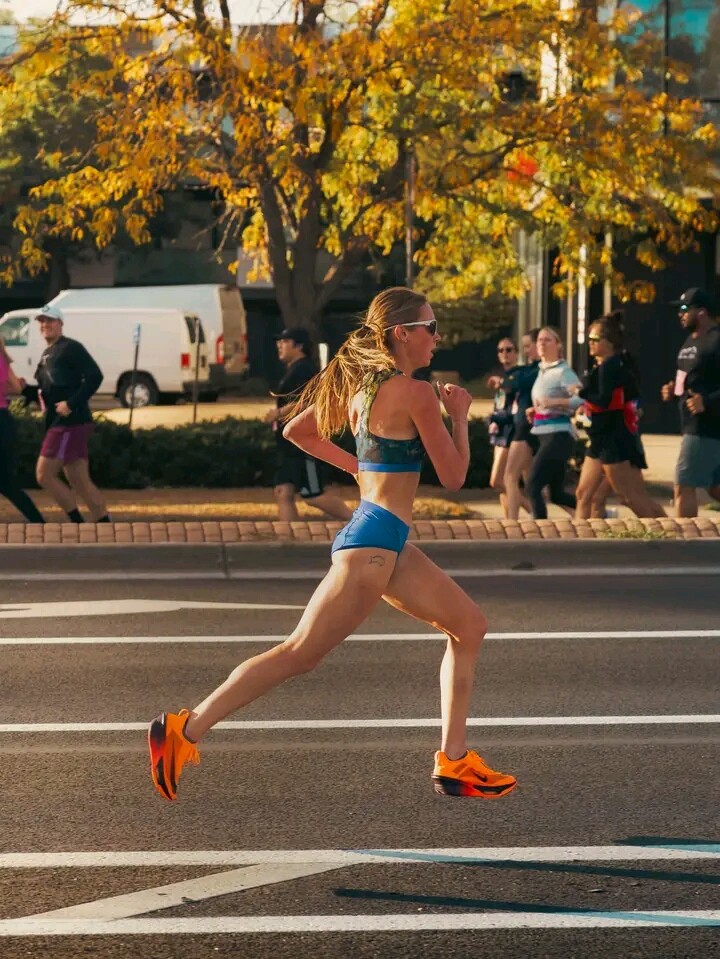
Venters controlled the women’s race from the opening stages, maintaining a relentless rhythm all the way to the finish. Her performance was enough to break the previous USATF 10K Championship record of 31:40, set by Jess McClain in 2024.
The Salt Lake City-based runner also created a huge gap over the rest of the field, crossing the finish line 48 seconds ahead of runner-up Kasandra Parker. Parker produced an impressive run of her own, clocking 31:57 to secure the silver medal, while Allie Ostrander completed the national podium with 32:02 for bronze.
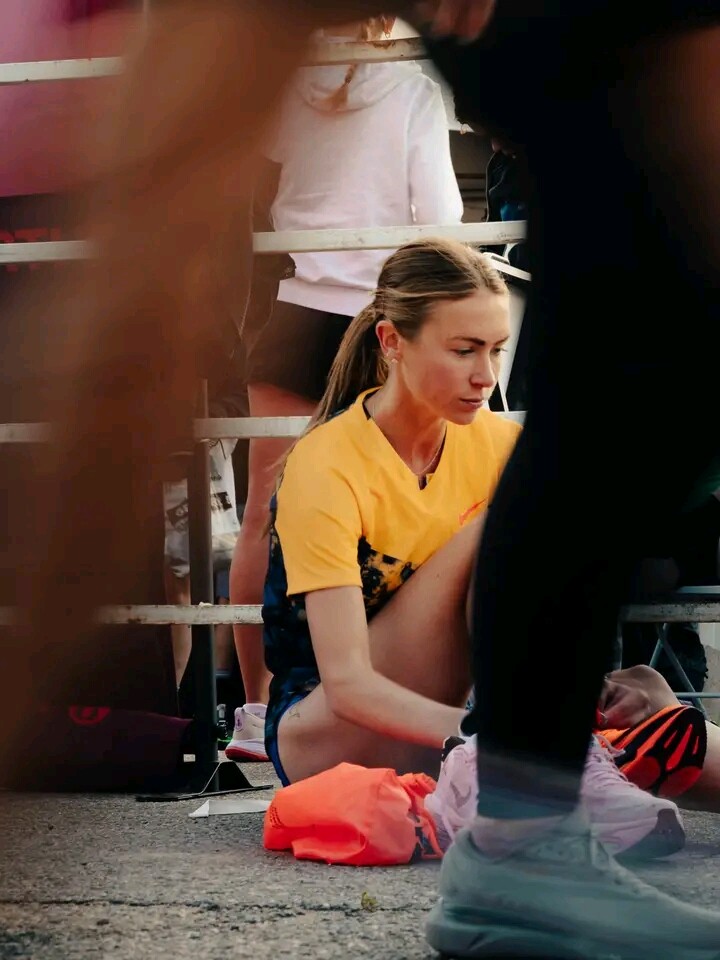
Venters’ victory added another national championship title to her résumé, but the manner of the triumph made the achievement even more significant. Her 31:09 placed her firmly at the centre of the day’s headlines, with the championship record providing the perfect reward for a dominant display.
The women’s race also produced an exceptionally strong leading group, with the top eight all finishing inside 32:37. Amanda Vestri took fourth in 32:16, followed by Amy Davis-Green in 32:20 and Cailie Logue Hughes in 32:30.
Olivia Borowiak finished seventh in 32:33, while Jessie Cardin rounded out the top eight in 32:36, highlighting the depth of the field at this year’s national championships.
The Minneapolis championships proved to be a memorable weekend for USATF road running, with both the men’s and women’s winners establishing new championship records. Aidan Troutner also made history in the men’s race by breaking a championship mark that had stood for four decades.
2026 USATF 10K Championships — Women’s Top 8
1. Emily Venters — 31:09 — National Champion, Championship Record
2. Kasandra Parker — 31:57
3. Allie Ostrander — 32:02
4. Amanda Vestri — 32:16
5. Amy Davis-Green — 32:20
6. Cailie Logue Hughes — 32:30
7. Olivia Borowiak — 32:33
8. Jessie Cardin — 32:36
Venters’ 31:09 will now stand as the mark to beat at the USATF 10K Championships, capping a memorable morning in Minneapolis with a national title and a new championship record.
With the championship record now in her name, Venters has added another standout chapter to an already impressive season. Her 31:09 not only delivered gold on the national stage but also underlined her ability to produce a breakthrough performance when the biggest opportunities arrive. For the USATF 10K Championships, it was a performance that will be remembered long after the medals were handed out.
by Erick Cheruiyot for My Best Runs.
Login to leave a comment
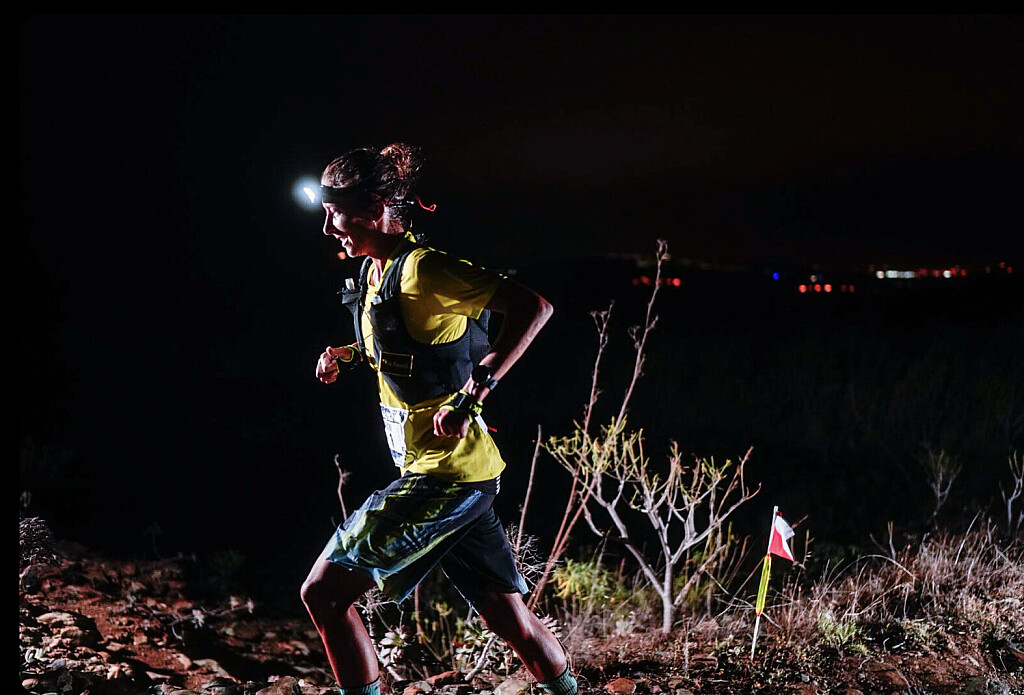
How Did Courtney Dauwalter Get So Damn Good?
If Courtney Dauwalter could travel back in time, this is what she would do: She’d join a wagon train crossing the American continent, Oregon Trail-style, for a week, maybe more, just to see if she could swing it. It would be hard, and also pretty smelly, but Dauwalter wonders what type of person she’d be if she deliberately decided to take that journey. Would she stop in the plains and build a farm? Could she make it to the Rocky Mountains? How much suffering could she take, and how daunted might she be by the terrain ahead of her?
“If you get to Denver and this huge mountain range is coming out of the earth, are you the type of person who stops and thinks, ‘This is good’?” she wonders. “Or are you the person who’s like, ‘What’s on the other side?’ ”
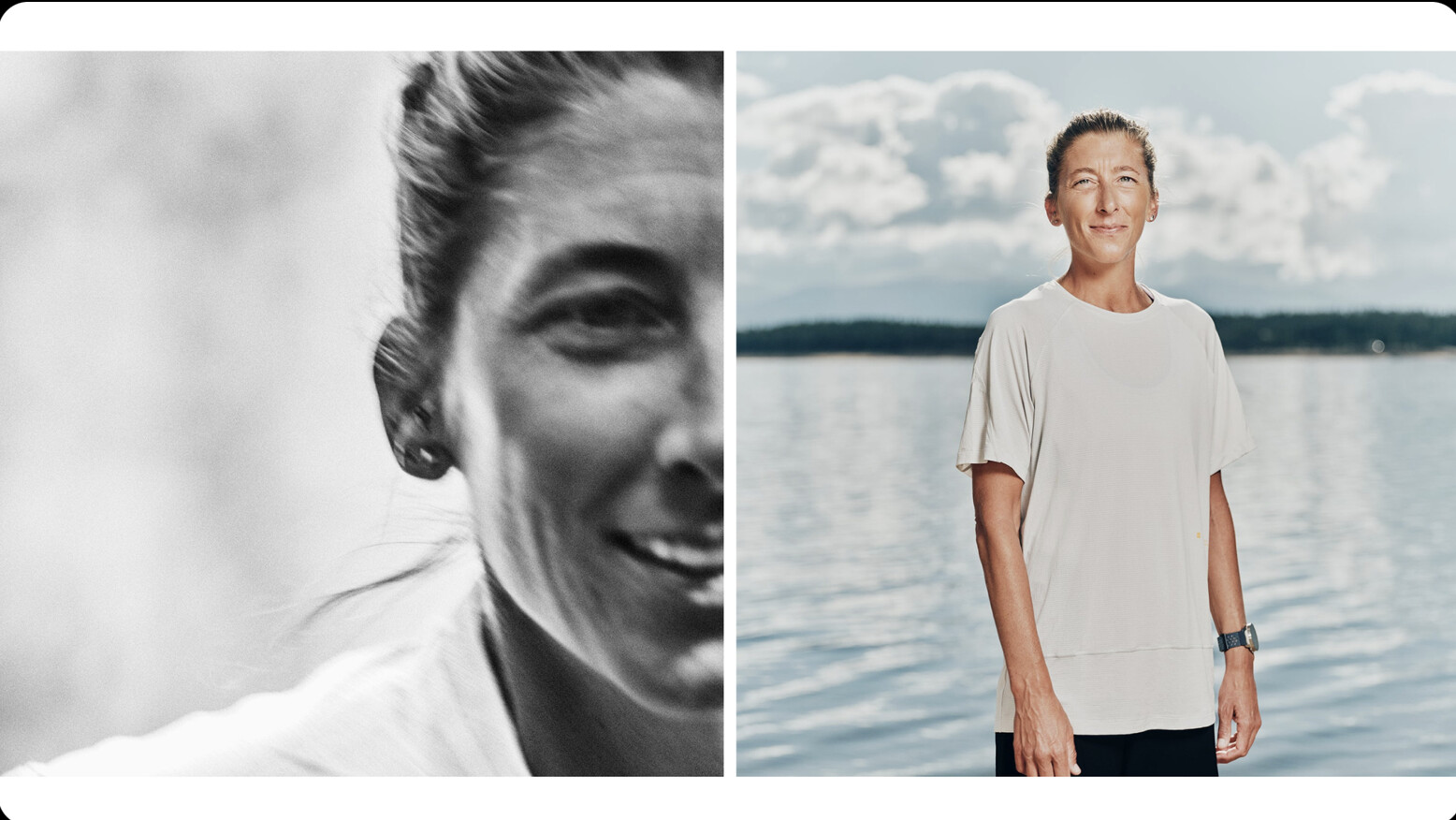
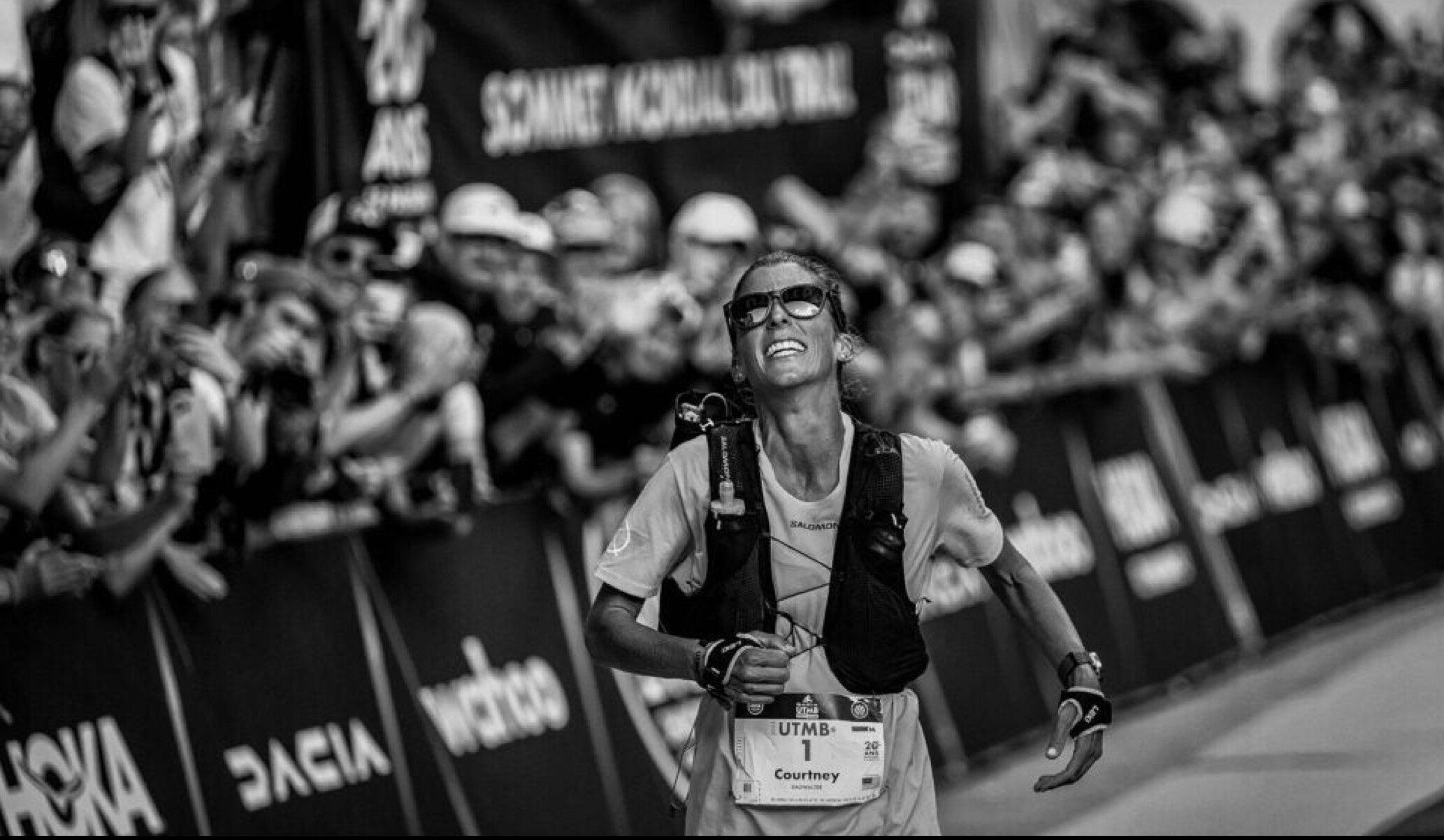
Dauwalter is probably (definitely) the best female trail runner in the world—a once-in-a-generation athlete. She’s hard to miss at the sport’s most famous races, and not just because of the nineties-style basketball shorts she prefers. (Her explanation: she just likes them.) It’s because she’s often running among the leading men in the sport, smiling beneath her mirrored sunglasses. The 39-year-old is five foot seven and lean, with smile lines and hair streaked with highlights from abundant time spent in high-altitude sun.
Dauwalter shared her historical daydream with me while sipping a pink sparkling water at her house in Leadville, Colorado, after a four-hour morning training run. Her cross-country wagon musings get at why she’s the best female ultrarunner ever to live: Dauwalter is curious. She’s curious about pain, about limits, about possibility. This quality is fundamental to what makes her so good.
Over the past eight years, Dauwalter has won almost everything she’s entered. In 2016, she set a course record at the Javelina Jundred—an exposed, looped route through the Sonoran Desert of Arizona. That same year she won the Run Rabbit Run 100-miler in Steamboat Springs, Colorado, by a margin of 75 minutes, despite experiencing temporary blindness for the last 12 miles (she could only see a foggy sliver of her own feet). Because of ultrarunning’s huge distances, it’s not unheard of to beat the competition by so much, but it doesn’t happen with the frequency that Dauwalter manages.
In 2018, she won the extremely competitive Western States 100 in California; it was her first time on the course. A year later, she set a new course record while winning the prestigious Ultra-Trail du Mont-Blanc (UTMB), besting the second-place finisher by just under an hour. In 2022, she set the fastest known time on the 166.9-mile Collegiate Loop Trail in her backyard in Colorado, and she won (and set a new course record at) the Hardrock 100, a grueling high-altitude loop through the state’s San Juan Mountains.
Dauwalter is also one of the few runners of her caliber to seriously dabble in the really long distance races. In 2017, she won the Moab 240—yes, that’s 240 miles—in two days, nine hours, and fifty-five minutes, ten hours ahead of the second-place finisher. She ran even farther at Big’s Backyard Ultra in 2020, a quirky test of wills where athletes complete a 4.167-mile course every hour on the hour until only one runner is left. Dauwalter set a women’s course record of just over 283 miles.
Given everything she’s accomplished, it’s hard to believe that the past two summers have been her most successful yet. In 2023, she returned to Western States, where she smashed the women’s course record by more than an hour and finished sixth overall. When she passed Jeff Colt, who finished ninth, he remembers how calm and collected she looked, running all alone. “My pacer looked back at me and said, ‘Jeff, I can’t even keep up with her right now,’ ” he says. Less than three weeks later, she won Hardrock again, taking fourth place overall and setting a new women’s course record. The race changes direction on the looped course each year, and she now holds both the clockwise and counterclockwise records.
In the interest of testing herself one more time, in late August she traveled to France to run UTMB again. She won that race too, becoming the first person in history to win all three races in a single summer. “She’s one of those humans who defy even the concept of an outlier,” says Clare Gallagher, a former Western States winner who has raced against Dauwalter. “I look at her summer and I have no words. It’s truly hard to conceptualize.”
Dauwalter led UTMB from the start, and she finished more than an hour ahead of the woman in second place. As she descended the final stretch of trail, she was followed by a barrage of cameras and a handful of people who looked like they just wanted a bit of her magic to rub off on them. As crowds roared on either side of the finish line in Chamonix, she looked back at the spectators and clapped in their direction, never raising her hands above her head or pumping her fists in the air. After hugging her parents and her husband, 39-year-old Kevin Schmidt, she jogged back in the direction she’d just come to high-five hundreds of fans.
Dauwalter grew up in the suburbs of Minneapolis, in a tight-knit family that was always active. The kids all played soccer, and when they weren’t at practice they were busy building tree forts or making up games at the local park. In seventh grade, she started running cross-country, and in eighth grade she joined the nordic ski team. She claims to have spent the first years just trying to stay upright, but in high school she went on to be a four-time state nordic ski champion and attended the University of Denver on a cross-country-skiing scholarship. She says that her parents, who now frequently crew and support her at races, led by example. “You work hard, you give everything you’ve got, you don’t forget to have fun,” she says.
Minnesota winters are notoriously cold, and she credits her ability to dig deep within herself to the unforgiving conditions. “Growing up there, you just learn to do stuff, regardless of the weather,” she says. She also points to a cross-country coach who taught her to think differently about pain. “He laid the groundwork for understanding that our bodies are capable of so much,” she says. “We can push past those initial signals saying that’s all I have and turn the knob, and there’s always one more gear.”
After college, Dauwalter taught middle and high school science in Denver, which is where she met Schmidt. “A woman I worked with and a guy he worked with were married, and they just kept putting us in the same places,” she says. “I didn’t know they were meddling!” Schmidt, who works as a software engineer, is also a competitive runner. He and Dauwalter train together—sometimes he’ll join in for her second run of the day—and they trade off supporting each other during races. When I met up with them in Leadville, Dauwalter had just finished crewing for Schmidt at a 100-miler in Switzerland. During her races, he maps her splits, takes care of her aid-station needs, and serves as crew captain. He’s the “spreadsheet brain” to her “tie-dye brain,” as he puts it, and he provides emotional support too.
“Its clear to me when she has taken up residence in the pain cave, so I try my best to fill it with snacks and encouragement,” says Schmidt. One time, while driving to an aid station during a race, Schmidt got a flat tire while carrying everything Dauwalter needed for the night. He wound up sprinting the final three miles to catch her in time.
When Dauwalter started racing more competitively and winning, she and Schmidt had a series of discussions about what they wanted their lives to look like. Ultimately, they decided that she should try to give professional running a shot. In 2017, without a sponsor and with a lot of unknowns still ahead, she left teaching to run full-time. “What we wanted was to look back when we were 90 years old and not wonder what if? about anything,” she says.
Mike Ambrose, the former team manager at Salomon, offered Dauwalter her first sponsorship as a trail runner that same year. She was still new on the scene, but Ambrose could see that she was driven, and the talent was there. “She’s super curious about pushing herself,” he says. “She had this huge engine coming from nordic skiing, and her 24-hour time was really crazy. I thought, well, if she just figures it out and gets more trail experience, she obviously has the mental and physical capacity.”
Despite her nearly superhuman athleticism and mental fortitude, Dauwalter is also very normal. She likes nachos, candy, and beer. She watches sports (the Vikings are her NFL team, even though she’s been in Broncos territory for years), and she wants to spend time with the people she loves, including her parents, and the friends who often crew for her.
Ultrarunning frequently sees short-lived stars, runners who dominate for a couple of years before burning out or slowing down, either from overtraining or simply from the passage of time and the wear on their bodies. Dauwalter, however, seems to have a rare capacity to push against her own limits without tipping over the edge. She’s been running long distances at an elite level for seven years now. Gallagher wonders how she’s managed to avoid injury, given Dauwalter’s volume of physically demanding races.
Login to leave a comment
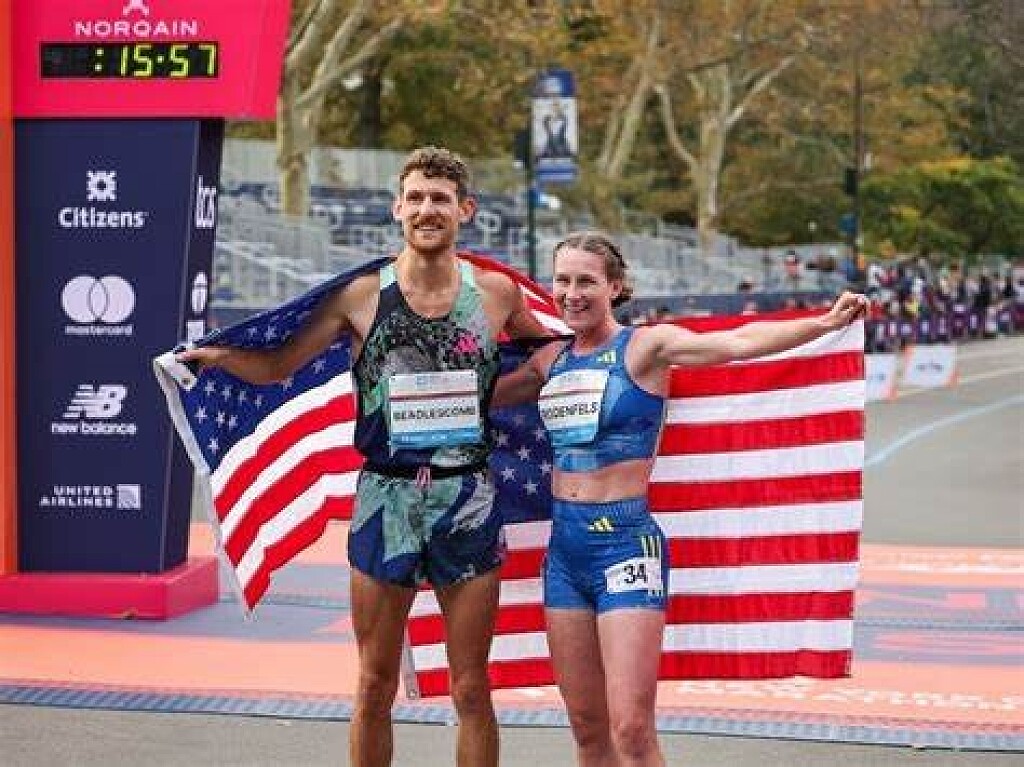
Defending champions Morgan Beadlescomb and Annie Rodenfels return to the Abbott Dash to the Finish Line 5k
New York City Marathon weekend kicks off with a much-anticipated USATF 5 km Championships at the Abbott Dash to the Finish Line 5k on Saturday, November 2, taking place the day before the 53rd running of the TCS New York City Marathon.
The USATF 5 km Championships at the Abbott Dash to the Finish Line 5k are the 11th stop on the 2024 USATF Running Circuit. Live coverage of this year’s championships will be broadcast on USATF.TV, starting at 8:20 a.m. ET, with the men’s race going off at 8:30 a.m. and the women starting five minutes after at 8:35 a.m.
Defending champions Morgan Beadlescomb and Annie Rodenfels return to the streets of Midtown Manhattan after winning last year’s USATF 5km Championships in their respective races.
The former Michigan State Spartan Beadlescomb surged away from Ahmed Muhumed, Tai Dinger and Daniel Schaffer in the final stretch to win last year’s men’s title in 13:44, besting the field by a comfortable three seconds to claim his first USATF crown.
Looking to become the first men’s repeat champion since Ben True in 2011-12 when the USATF 5 km Championships were held in Providence, R.I., Beadlescomb will take on another tough field that will feature Muhumed (second), Schaffer (fourth) and Brian Barazza (fifth) from last year’s race, as well as a handful of others with impressive credentials.
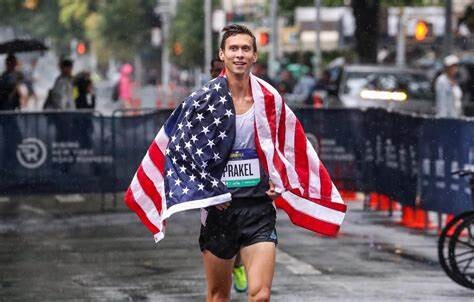
Beadlescomb could also become the first male athlete to win two USATF 5 km Championships titles at the Abbott Dash to the Finish Line 5k course, along with 2019 USATF 5 km champion Anthony Rotich making his way back into the field for the first time since winning the 2019 title.
Muhumed is the only competitor in the field that has won a USATF title this year on the USATF Running Circuit, winning the USATF 8 km Championships back in July in Kingsport, Tennessee. The USATF 8 km Championships were also the last time Muhumed raced this year.
Sam Chelanga, Sam Prakel and Josh Thompson join Beadlescomb, Rotich and Muhumed as three more USATF national champions set to race, bringing the total to six national champions in Saturday’s field.
Chelanga, a two-time USATF champion, will go after his first USATF national title since 2016 when he won the USATF 10 Mile title. He’s raced twice this season on the USATF Running Circuit, finishing third at the USATF 10 km Championships and fourth at the USATF 20 km Championships.
Prakel, the 2023 USATF Road Mile champion, and Thompson, the 2020 USATF Indoor 1500 champion, are both eyeing a second national title of their own.
Parlympian and New York native Michael Brannigan is slated to race after competing for the United States at the 2024 Paris Paralympic Games, where he came away with his second Parlympic medal in the men’s T20 1500, earning bronze to go with his 2016 gold from the Rio Games.
Derek Johnson, Titus Winder and Kirubel Erassa will be other names to watch out for in the men’s race.
Rodenfels earned her first USATF national title by defeating Rachel Smith by four seconds in last year’s women’s race, running 15:22.
Rodenfels has since won another USATF national title earlier this season, winning the 2024 USATF 6 km Championship race by 13 seconds on July 13 in Canton, Ohio.
With a win on Saturday, Rodenfels could join Weini Kelati as the only competitors to repeat as USATF 5 km champions at the Abbott Dash to the Finish Line 5k course and the sixth woman to complete consecutive national titles in the history of the USATF 5 km Championships.
Challenging Rodenfels will be Emma Grace Hurley, who will be racing in her seventh USATF Running Circuit race this year, with her latest effort being a third-place finish at the USATF 10 km Championships in Northport, New York, on September 21.
Hurley, who was ninth at last year’s USATF 5 km Championships, has finished as high as second place in two USATF Running Circuit races this year at the USATF 8 km Championships and the USATF Cross Country Championships.
Susanna Sullivan and Natosha Rogers are a pair of veterans coming off great races in their recent outings looking to mix it up in the top half of the field.
Sullivan completed this year’s Chicago Marathon as the top American, running a lifetime best of 2:21:56 to finish seventh overall, making her the 10th-fastest American marathoner in history.
Rogers won the Medtronic Twin Cities 10 Mile in St. Paul/Minneapolis, Minnesota, on October 6, in 52:29 just two weeks after finishing second at the USATF 10 km Championships.
Logan Jolly, Cailie Logue and Elena Hayday are other competitors entered in this year’s USATF 5 km Championships with past results on this year’s USATF Running Circuit.
2023 Cross Country champion Katie Wasserman adds some intrigue to the field, running in her first road race since 2022.
About the USATF Running Circuit
The USATF Running Circuit is a USATF road series featuring USATF championships from one mile through marathon and consistently attracts the best American distance runners with more than $500,000 awarded in total prize money. A total of $60,000 in prize money will be awarded at the USATF 5 km Championships.
The first ten U.S. runners earn points at each USATF Running Circuit race. For the USATF 5 km Championships, scoring is set as 15 for first, 12 for second, 10 for third, 7, 6, 5, 4, 3, 2, and 1, with those earning the most points receiving prize money at the end of the series.
The mission of the USATF Running Circuit is to showcase, support and promote U.S. runners. Since its inception in 1995, the USATF Running Circuit and its race have provided over $7 million to U.S. Distance runners.
by Keenan Gray
Login to leave a comment

Dash to the Finish Line
Be a part of the world-famous TCS New York City Marathon excitement, run through the streets of Manhattan, and finish at the famed Marathon finish line in Central Park—without running 26.2 miles! On TCS New York City Marathon Saturday, our NYRR Dash to the Finish Line 5K (3.1 miles) will take place for all runners who want to join in...
more...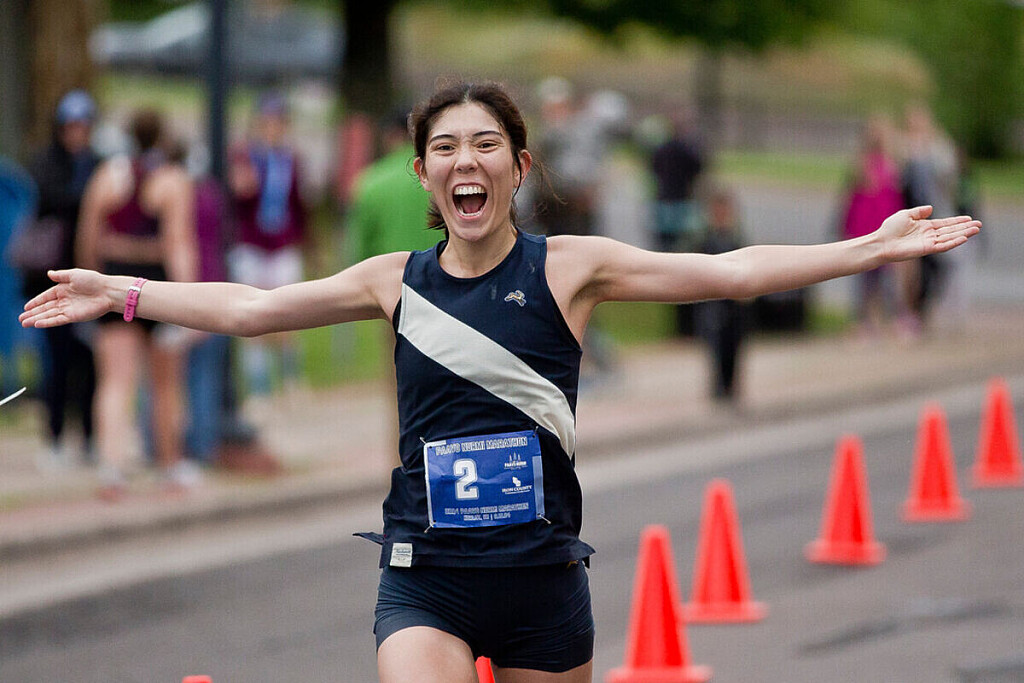
Cannon, Nelson win 54th Paavo
The three H's are what make the Paavo Nurmi Marathon so difficult.
Heat. Humidity. Hills.
But sometimes runners catch a break from two of them. On a fall-like day when spectators donned hoodies, the 54th Paavo proved fast with none of the heat and humidity, even as midday approached.
"While it may not have been the best weather for spectators, it was fantastic for runners," race director Derek Lindstrom said. "The runners ran so well."
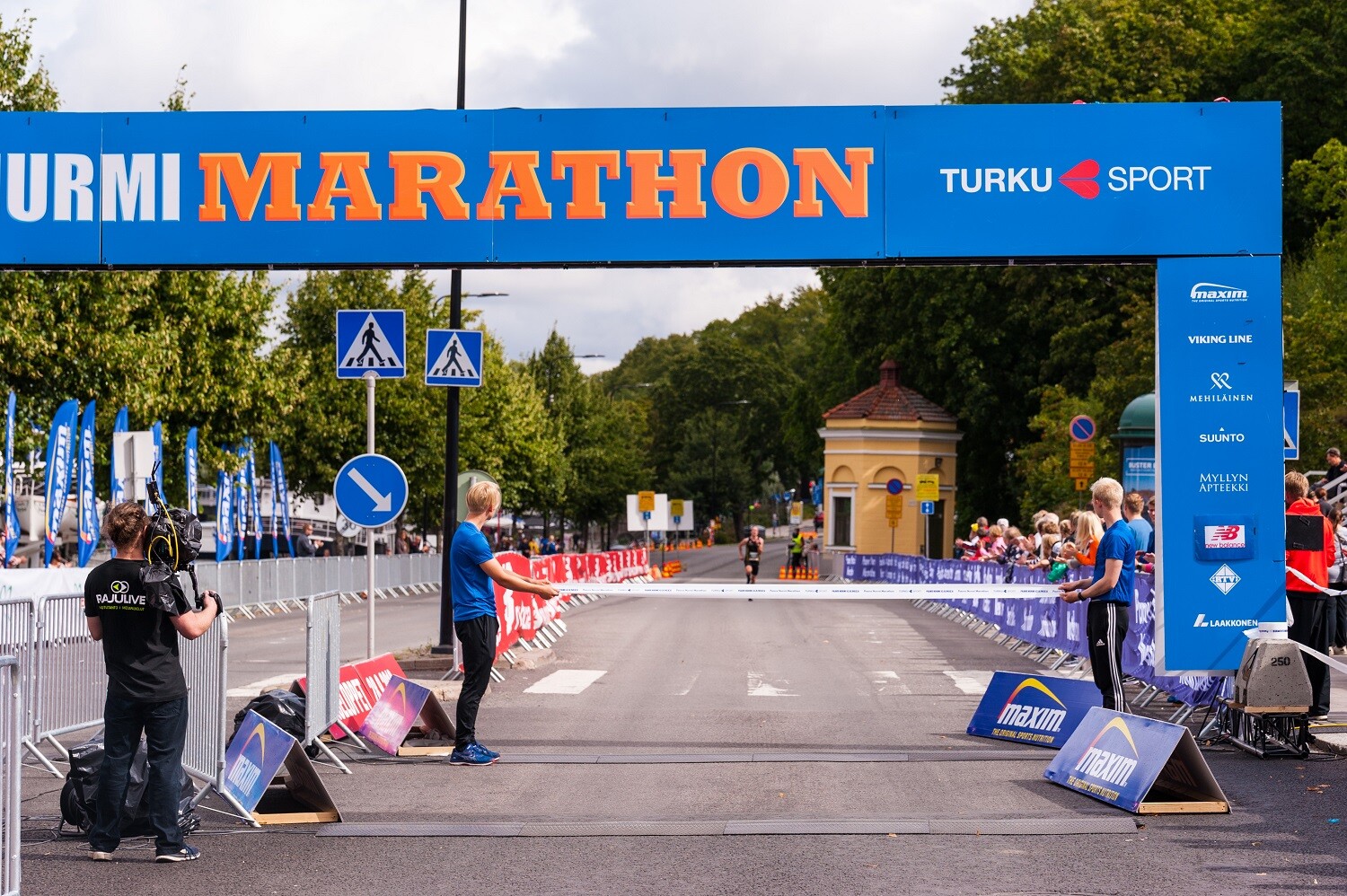
Six runners cleared the three-hour mark, led by Ethan Cannon's 2:27:20, the fastest Paavo finish in 31 years.
"It was that kind of day," Lindstrom said. "Fast weather, but that's a fast time, that's fast running."
The women's winner, Sarah Nelson, finished in 3:18:49, about a half an hour faster than last year's first-place finisher.
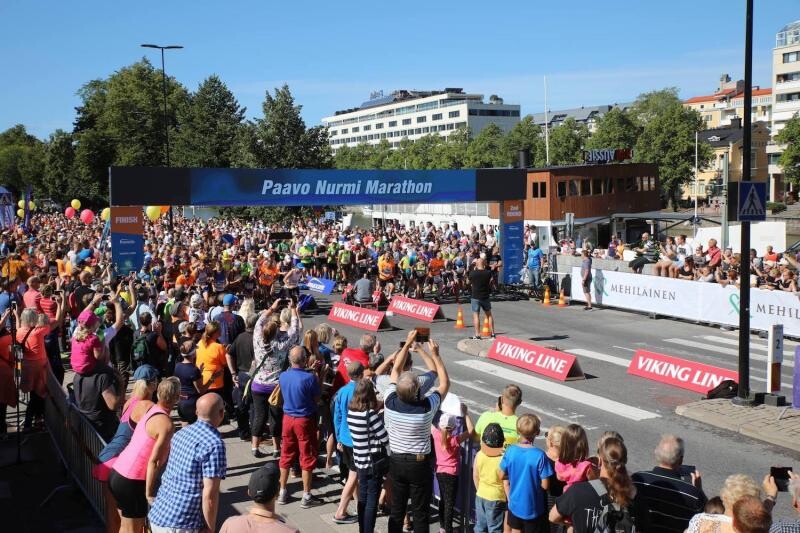
Cannon, 27, of Minneapolis was the favorite coming in, Lindstrom said. He lived up to it with the Paavo's fastest time since four-time winner Todd Sperling ran it in 2:27:00 in 1993. The only other runner to clear 2:30 since then was Ironwood graduate Alan Peterson, who won it in 2018 with a time of 2:28:12. Most of the other winners have been in the 2:33 to 2:46 range.
The fastest finish all-time happened all the way back in 1978 when Richard Wilde ran the course in 2:19:11.
Cannon was looking for another marathon to get under his belt, he had only done one before. He found the Paavo online - it's not too far from Minneapolis and he was just up here.
He ran track and cross country at the University of Minnesota in the 2021-22 school year as a graduate transfer from BYU. After finishing that, he moved on to road races - 10K, half-marathons - for the last couple of years.
"Kind of a natural step up would be to do the marathon," he said. "I did my first one last fall."
He made the transition seem pretty easy with his super fast time in the Paavo.
"Running a marathon is like a whole different sport, it feels like almost," Cannon said, "because there's different considerations you have to make in terms of fueling. It definitely is good to have the background. It's very normal for me to run 18 miles on a Saturday morning, but definitely it is an adjustment. It's unlike any race I've run before, for sure."
He looks to keep running marathons - and see some new places while doing it. He also hopes to come back to the Paavo someday, too.
Winning the race felt good, he said.
"You get a lot of support from the other runners because you end up passing a lot of people in the half-marathon. In fact, I was able to run with some of the relay teams, I was able to keep up with those teams as they were running the marathon relay," Cannon said. "There was just a lot of support on the course for me from the fellow people who recognized I was in front of the marathon race and they were cheering me on. That definitely felt good and helped me to keep pushing and try to win and get a good time."
And, of course, the conditions were great.
"The weather was perfect. I'm actually a sucker for cloudy days anyway. It was dry, so not even wet at all, so just perfect," Cannon said. "The course was just fantastic, so beautiful out there. Like the first 10 miles or so, I was just kind of sightseeing, so that was very enjoyable. Of course, later on, the pain sets in."
Brad Vaara of Hurley was one of the six runners to finish in under three hours. He placed fourth in 2:54:10.
Nelson, 25, of Chicago, finished the fastest since Emily Jaehnig's 3:15:45 in 2016. The last three winners were all over 3:40, but Nelson finished in 3:18:49.
That compares more favorably to other finishing times over the years. Six-time winner Candace Schneider finished between 3:10 and 3:16 in five of those wins and eight-time champion Ann Heastlett was between 3:05 and 3:21. (Heaslett ran this year and finished in 10th place.)
"I'm really proud of myself," Nelson said of getting the win. "I know it's really hard for me, there are no pacers for me or anything. Whenever I see a person whether it's a half or full marathon, I tried to pass them. That gets me more motivated."
She flew from Chicago to Ironwood and was happy to get the chance to run the Paavo for the first time.
Her cross country coach when she was at Harper community college (in suburban Palatine), James MacNider, won the Paavo in 1979, and speaking of fast finishers, his time is the second fastest on record at 2:20:05.
"I was like, 'Oh maybe I should try out this race,'" Nelson said.
MacNider has five national coach of the year awards in cross country and one in track-and-field along with many other honors.
"I'm very privileged to run with him. He actually understands my pace and workout and all that stuff," Nelson said. "He really made me really love the long-distance running because I started out as a swimming and basketball player. I went out for cross country in community college for the first time. I really enjoy running with the people around me, that gets me to push a little bit faster."
She kept running at Loyola University Chicago in intramural cross country and track.
Nelson's runs in Chicago have been limited to 20 miles because of the heat. There was no heat here Saturday.
"The weather was perfect," she said. "I asked the recruiter, how hilly is this. They were like, it's smooth and hilly, it's just different kind of courses. I felt a little bit tired when we had to turn around from the 20th mile all the way down there (on County C). I knew I had to push myself the last 5K and I actually PR'd nine minute-ish, so I was really proud."
She's training for the Chicago Marathon and the New York City Marathon three weeks after that.
"I'm pretty excited for both of them," Nelson said.
It was exciting for her to win the Paavo as well. She waved to the crowd on Silver Street and blew kisses to them as well.
"I felt very, very proud," Nelson said. "Even though I was really tired. At like the 24th mile, I thought to myself I wanted to give up. But I knew I had this long two-mile stretch to go. I really did push my legs to the limit and everybody was cheering for me. It felt very good to finish. It didn't matter I was first or last place, it just feels good to finish the race, that's all that matters for me - and have fun, of course."
That's not an easy feat at the Paavo. Even without the heat, the hills didn't go anywhere.
"This is really great training, I always like to challenge myself," she said. "I'm really terrible at uphills, but I actually did uphill training with some of my racing team that I'm at."
by Jason Juno
Login to leave a comment
Paavo Nurmi Marathon
The event has grown and developed, which has strengthened its position as one of Finland's leading running events.Paavo Nurmi Marathon can take part in 10 kilometers, half marathon or full marathon.The largest number of participants (2000-2500) is annually in half marathon.The 24th Paavo Nurmi Marathon will take place on June 27, 2015. The beautiful running trail will showcase the most...
more...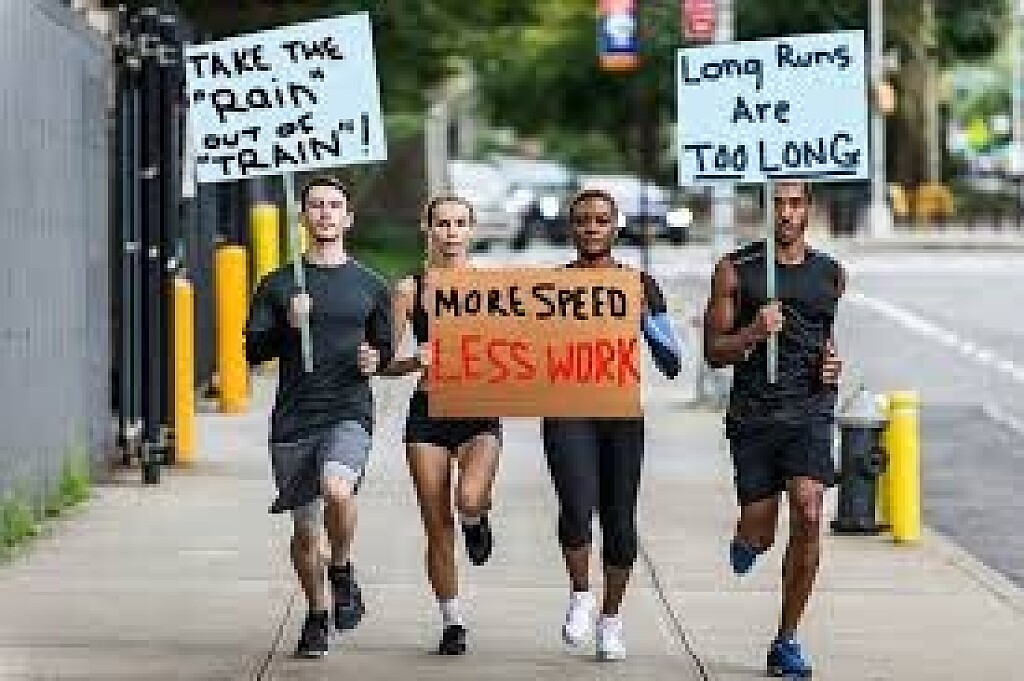
Why You Should Train Less, According to a Coach
Many athletes believe that the more time they spend in the gym, the fitter and more competitive they’ll be, but that's usually not the case.
“Practice makes perfect” is a dangerous narrative underlying the culture of endurance training. Many athletes believe that the more time they spend in the gym, the fitter and more competitive they’ll be.

It’s an idea that works until it doesn’t.
Skylar Allen, a 28-year-old from Minneapolis, Minnesota, began running in college, after years as a figure skater pushed her toward body dysmorphia and an eating disorder. “I struggled with restriction, which was eventually diagnosed as anorexia, for about eight years.”
Eventually, anorexia morphed into bulimia. But when she started running in 2014, Allen says she wasn’t ready to face those issues yet. Instead, running became another way for her to justify behaviors she knew might not be healthy. “When I was having a terrible day, I’d go to the gym the way an alcoholic goes to the bottle,” she says.
By 2020, in the midst of a graduate program in mathematics, Allen recognized the imbalance in her life and started seeking treatment.
Allen and I met on her path to recovery. As a coach at Treeline Endurance, which I founded in 2018, I help athletes tap into their fitness potential with a heavy focus on long-term sustainability. In that time, I’ve seen athletes like Allen harmed in their quest for success by an implicit message shared by coaches and influencers: if you want to perform better, you need to train more than you are right now.
On one hand, research shows that more time spent practicing our sport is crucial to performing our best. On the other, obsessing over physiology can cause athletes to neglect the things in their lives that keep them grounded, from time with friends to taking care of their mental health.
“I’ve fallen into this trap of ‘more training is always better,’” says another one of my clients, Aidan McCarthy, a 28-year-old trail runner based in Salt Lake City, Utah. “Before I was coached, I would go for way too long without taking a rest week, and I often wouldn’t take one at all until I came down with a cold or my body was so tired it forced me to.”
As a running coach, time and again, I’ve seen the story play out in athletes who ramp up their training time as far as their schedules allow. Once they begin to max out that time, they start repurposing time they used to put elsewhere. First goes strength training. Next, some of their leisure, recovery, or family time. I’ve even seen some pull back from their local running group just to save 30 minutes of commute time to add back into their run.
But more isn’t always better. When athletes cut into the time previously spent on activities that enhance mental and social health, they compromise the quality of their training reduce their ability to adapt to their training, and ultimately make training less fun. Studies have shown that one of the most common outcomes of overtraining is a loss of enjoyment for not just the sport, but life in general.
McCarthy considers the nuance of it. He believes that, generally speaking, volume pays off. “I get better results training for twelve hours a week than for five, but is fifteen better than twelve?” asks McCarthy. “Major signs for me that I am starting to overreach are unexplained irritability and low motivation to train.”
McCarthy completed his hardest event to date last August at the 40-mile Telluride Mountain Run. The notorious mountain race features more than 14,000 feet of vertical ascent and descent. And yet, in a major departure from his running-only training approach of the past, almost a third of his preparation came on the bike in the canyons of the Wasatch Range.
As athletes, we need to reject more-is-better culture. In doing so, we’ll become happier, healthier, and maybe even better at our sport. By choosing to go for a bike ride rather than force another lap on our normal running route—or take on a hard strength session, knowing it’ll take a couple of days to feel ready for another big-volume endurance day—we allow the body to recover in one way, and be pushed in another. We introduce variety mentally and keep our training exciting, rather than allowing it to become just another job.
Today, Allen’s eating disorder is in recovery, and she’s learning to add an element of balance to her training. In addition to her continued growth as an ultrarunner, she’s now an enthusiastic member of her local CrossFit community. “I used to ask myself what I could cut out of my life to give myself a little more time to focus on training,” she says. “At some point, I asked myself what it would be like if I did the opposite. Can I use the same discipline to keep a healthy balance?”
If you are struggling with eating and body image in any way, you do not have to suffer alone. Consider reaching out to the National Eating Disorders Association’s Helpline, which is available via text, phone, or chat.
by Outside On Line
Login to leave a comment
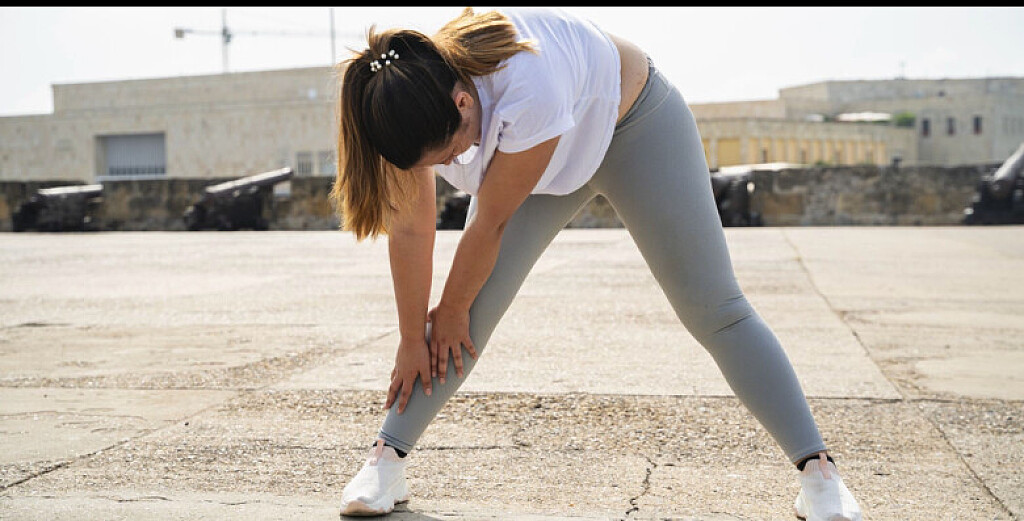
Why Do I Get So Itchy When I Run?
Here’s what experts say about the causes of that uncomfortable, tingling sensation and how to cope with it.
As a runner, you try to prepare for everything: You have a waterproof jacket for that 60 percent chance of rain, anti-blister socks, and a supply of gel packs for Saturday long runs. However, something that you may be less prepared for is relentless itching and tingling.
Known as “runner’s itch,” this sensation makes hitting the road uncomfortable for many runners, especially those just starting out or getting back into a running routine.
“Runner’s itch wasn’t something that was particularly researched and documented before the 1950s, but it’s been consistently described in literature in some way since about the 70s,” says Braden Romer, Ph.D., an associate professor of exercise science at High Point University in High Point, North Carolina. “We’ve seen the prevalence go up as there are more individuals taking part in physical activity. I run into it quite often when dealing with athletes.”
If you want to run more but can’t stand the urge to stop and scratch, here’s what to know about runner’s itch and how to soothe it.
What causes runner’s itch?
The causes of runner’s itch may range from minor inconveniences to more serious health conditions. Although more research is needed to fully understand what triggers this sensation, here are five potential causes.
1. Dry or Irritated Skin
Both humidity and dryness in the air can lead to runner’s itch.
“If you sweat a lot or if it’s very humid or raining, and your clothes get wet, you run the risk of skin irritation or itchiness,” says Melissa Kendter, C.P.T., a Philadelphia-based United Endurance Sports Coaching Academy (UESCA) running coach.
Meanwhile, another common cause is dry air and dry skin. Friction from running can exacerbate this and cause unpleasant itching.
“Some research has suggested hydration is a factor as well,” says Romer. “If you’re not drinking enough water, your skin gets dry and itches. When you begin to workout, especially with workout clothes, that may trigger an effect as well.”
Running can also exacerbate eczema, a group of inflammatory skin conditions that lead to issues like itchiness and dry skin.
“If you’re prone to eczema, exercise might make it worse,” says Minneapolis-based William Roberts, M.D. chief medical officer of the American College of Sports Medicine and former director of the sports medicine program at the University of Minnesota Medical School. “If you notice a skin rash, talk to your doctor.”
2. Histamine Release
A predominant theory behind runner’s itch is a histamine release at the onset of exercise, says Romer. Aerobic or endurance exercise can generate a localized anaphylactic reaction within the exercised muscle tissue, which causes histamine release, per a 2017 study in Exercise and Sport Sciences Reviews.
“There’s some research to suggest that the itching may be related to histamine release at the onset of exercise, particularly in high-intensity exercise,” Romer explains. “If somebody hasn’t been working out or running, or they haven’t warmed up and jump right into a high-intensity workout, that may be triggering a greater histamine release from within the muscle cells.”
This histamine release, in turn, could cause that uncomfortable and itchy feeling.
2. Blood Vessel Expansion
When you run, blood flow increases to your tissues, causing vasodilation (the widening of blood vessels). One theory is that the increased size of your capillaries causes an itching sensation.
“The capillaries start to expand, which may send a triggering response to some of the nerve fibers around that area,” says Romer. You may be more prone to this if you haven’t run for a while or are just starting out.
“This typically can happen for newer runners or ones getting back into the routine of running, because their bodies aren’t adept at this process,” says Kendter. “If your fitness routine has been put on the back burner for some time, you have a higher risk.”
However, this theory does have its skeptics. Romer adds that there are multiple pathways that have been proposed for runner’s itch and the symptom is not well understood. This was evident even in the differing opinions among the experts we spoke to—Roberts, for instance, has doubts that vasodilation could cause itching.
The bottom line: Though runner’s itch could potentially be related to blood flow, more research is needed to fully understand the mechanisms behind this process.
4. Exercise-Induced Urticaria
In more rare cases, allergic responses to exercise can cause severe symptoms. Exercise-induced urticaria is a rare clinical condition that causes flushing, itchiness, and hives after a workout, per a March 2022 single case study in Cureus. A minority of patients can even develop anaphylaxis, which is a severe, life-threatening allergic reaction.
“Exercise-induced anaphylaxis can cause a fast heart rate and potentially the swelling of the throat and blocking of the airways,” says Roberts.
About 30 to 50 percent of exercise-induced anaphylaxis is food dependent, meaning it only occurs with the combination of a specific food and exercise, per another single case study, published in 2017 in Canadian Family Physician.
Many different types of food have been found to have a triggering effect, including wheat, shellfish, nuts, tomatoes, peanuts, fish, pork, beef, mushrooms, hazelnuts, eggs, peaches, apples, milk, and alcohol.
If you suspect you’re experiencing urticaria, it’s important to see your physician to start a treatment program. This could include taking antihistamines before you run and carrying an EpiPen with you. If you do experience allergic reactions, it’s best to run with a buddy who knows how to help if you have a reaction.
People with severe cases of exercise-induced urticaria may need to avoid certain types of exercise and foods (or, rarely, exercise altogether).
5. Cholinergic Urticaria
Another condition that could be the cause of itching is cholinergic urticaria, which is characterized by itching and/or a stinging pain, redness, and bumps.
Think of this as a heat-triggered reaction: Symptoms develop after an increased body temperature has been stimulated repeatedly, such as through exercise, per a 2023 review in the American Journal of Clinical Dermatology.
“This is also pretty rare,” says Roberts. “It’s a response to the skin warming that occurs with running.”
Cholinergic urticaria is often associated with serious symptoms like anaphylaxis and severe pain. This condition comes on very quickly and may also involve an antihistamine treatment plan. Your doctor may conduct testing to confirm that you’re experiencing cholinergic urticaria, which may involve raising the body temperature through exercise on a treadmill or stationary bike.
Who’s most prone to runner’s itch?
When it comes to everyday runner’s itch that’s not related to a more serious medical condition like exercise-induced urticaria or cholinergic urticaria, runners who are just starting out or who haven’t exercised in a while may be more likely to experience it.
“I’ve seen this with athletes who have taken time off,” says Romer. “My wife also struggles with runner’s itch quite a bit. If she takes some time off from high-intensity runs for a bit, especially in the winter, it really gets after her for the first few workouts.”
If the itching is due to dry skin, factors like age, climate (think desert-like climates with low humidity or cold climates with heavy wind), genetics, or health conditions like eczema or diabetes can play a role, per the Cleveland Clinic. You may also experience more dry, itchy skin during the winter or if you’re not drinking enough water.
How can you sooth runner’s itch?
For many people, runner’s itch will fade away with regular exercise, unless it’s a symptom of a more serious condition. “It generally subsides relatively quickly after several workout sessions or modifying hydration intake,” says Romer.
You can also aim to soothe runner’s itch by properly easing into your run.“Do a good warmup so your body has a gradual increase in temperature and the blood gets flowing to the muscles in advance, rather than a rapid increase,” says Kendter.
Try to keep running throughout the year: Although the first couple of weeks may feel uncomfortable, if you stay consistent and allow your body to adapt to your routine, you’re less likely to experience the itch.
Staying properly hydrated and using a moisturizer to soothe dry skin can also help. Roberts recommends moisturizing creams like Vanicream, which is available over the counter.
All of this said, talk to your doctor if runner’s itch continues for you or if symptoms are severe—say, it’s accompanied by rash or hives, is extremely painful, or continues/worsens over time.
“If it becomes a chronic response, where you’re not seeing a diminished response even if you’ve been able to regularly exercise, see a physician,” says Romer.
by Runner's World
Login to leave a comment
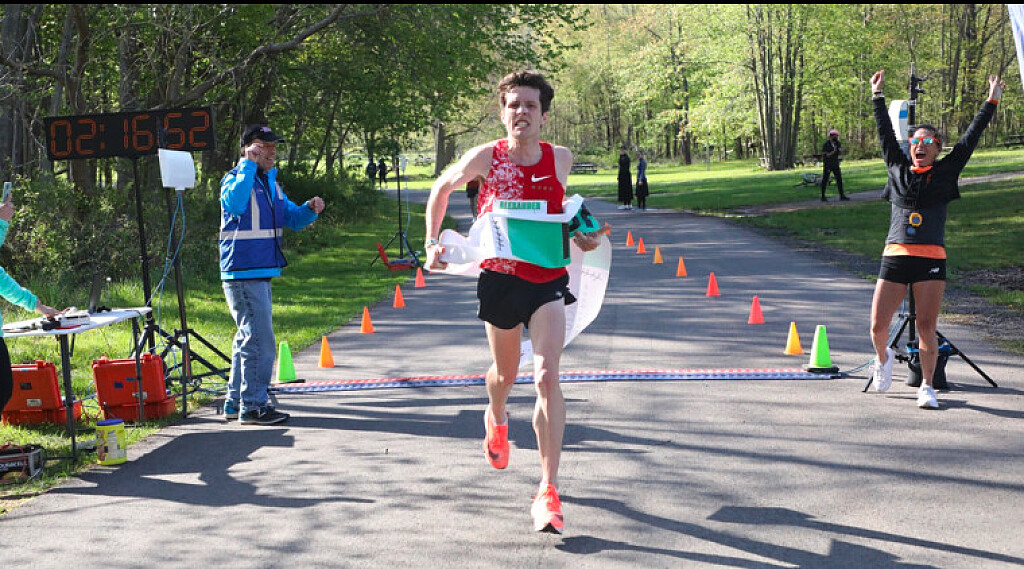
Want to Qualify for the U.S. Olympic Trials? This Race Is Specifically Built for You.
For elite amateur marathoners, qualifying for the Olympic Trials is the ultimate life goal. Bakline’s McKirdy Micro Marathon removes the challenges of running a fast 26.2.
When it comes to trying to run a fast marathon, Zacch Widner knows that bottle service isn’t a luxury but a necessity. No, not tableside bottle service at a nightclub, but the ability for marathon runners to easily identify and grab their own hydration bottles off of a table every 5K or so on course while running at an extremely fast pace.
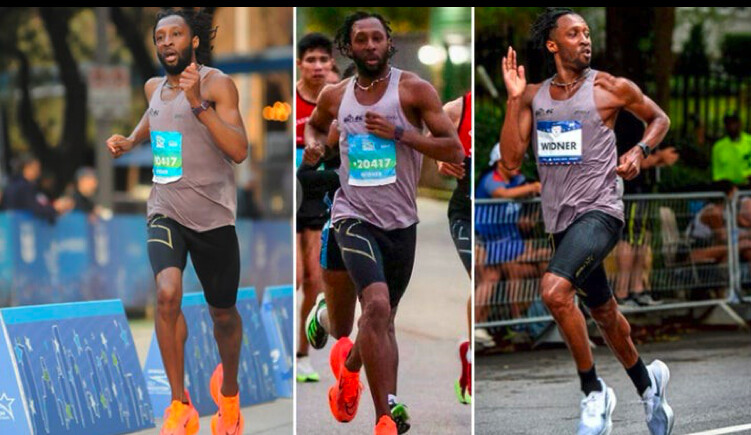
At the Berlin Marathon on September 23, the 32-year-old aspiring elite runner from Lansing, Michigan, was on the verge of running the race of his life. But because his bottles weren’t readily available at each aid station, he wound up grabbing only one of his eight bottles and suffered the consequences.
Although running the race without optimal calorie and hydration intake led to frequent cramping, he still finished in 2:20:02. That’s the second-best time of his career, but still two minutes short of his goal of breaking the U.S. Olympic Trials men’s qualifying standard of 2:18:00.
Widner is one of dozens of American runners—most of whom work nine-to-five jobs—still hoping to earn the standard (or 2:37:00 for women) by the December 5 deadline, in order to qualify for the U.S. Olympic Trials Marathon on February 3 in Orlando.
For Widner, it’s much more than a personal goal. It’s a commitment to a friend and former teammate. “It was a bummer,” says Widner, who works full-time as an IT analyst for the state of Michigan. “I know I’m capable of running faster. I didn’t capitalize on taking fluids, so when it came to running all out, I just couldn’t do it. I think the stress of it is actually what caused the cramps, because every time I missed a bottle, I just stressed out more…just mentally started destroying me.”
Three weeks later, Widner is ready to take another shot at the OTQ standard, this time at Bakline’s McKirdy Micro Marathon on October 14—a unique elite-only race that will be held about 30 miles north of New York City. Set on a nine-loop course at Rockland Lake State Park, the no-frills race will provide bottle service to each of the 180 entrants who met a stout qualifying standard (2:25 for men, 2:45 for women) to register.
“It’s got everything you need,” he says. “You have a lot of tough, fast runners. You have pacers and a flat course with a well-organized system for everyone’s fluids. I’m ready to go.”
In 2020, when running races were shut down because of COVID-19, athlete agent Josh Cox and Ben Rosario, founder and head coach of the Hoka NAZ Elite team, developed an elite-only marathon in Arizona that gave about 100 athletes from around the world the chance to run a highly competitive race on a USATF-certified course amid the still-pervasive coronavirus.
Known as The Marathon Project, the race was held in Chandler, Arizona, on December 20, 2020. Seven U.S. men ran faster than 2:10, while 12 American women finished under 2:30—the first time that’s ever happened. Martin Hehir, a fourth-year medical student who was coming off weeks treating COVID-19 patients, won the race in a personal best 2:08:59, while Sara Hall was the women’s winner in a personal best of 2:20:32, at the time the second-fastest marathon ever run by an American woman.
Several runners who trained under Flagstaff, Arizona coach James McKirdy and his online platform McKirdy Trained were in the race, and they performed well. He was so impressed by the concept that he quickly went about replicating it by hosting small regional marathons around the U.S. for a wider range of runners in early 2021.
At one of the McKirdy Micro Marathon races held at Rockland State Park, Denver-based runner Alex Burks won the race and lowered his personal best from 2:23:47 to 2:16:52. Dozens more earned personal bests and Boston qualifying (BQ) times.
“We really liked that idea and thought we could develop that concept for the masses, and they went off without a hitch,” McKirdy says. “The athletes had a great time and many runners—I think close to 150—earned a BQ from our races. So when the U.S. Olympic Trials qualifying standards were released two years ago, we felt we had the chops and experience to provide a marathon that would provide full on-course support for runners trying to qualify.”
Bakline’s McKirdy Micro Marathon will be held on a nine-lap, 26.2-mile course that will start with one 2.63-mile partial lap, followed by eight successive laps on a 2.945-mile circuit. Runners can have up to eight hydration bottles that will be set up on a series of well-marked, eight-foot tables 20 feet apart.
While the majority of runners will be aiming for the U.S. Olympic Trials qualifying standards, others are shooting for faster times. McKirdy and co-organizer Heather Knight Pech have enlisted pacers to guide runners to three different goal times for men (2:10:00, 2:11:30, and 2:18:00) and two for women (2:29:30 and 2:37:00).
The men’s field is headlined by Tsegay Tumay, an Eritrean runner with a 2:09:07 personal best who trains in Flagstaff under McKirdy. Tiidrek Nurme is an Estonian runner who is coming off a 31st-place, 2:15:42 at the World Athletics Championships on August 27, in Budapest. American runner Ben Blankenship, who finished eighth in the 2016 Olympic 1,500-meter finals in Rio de Janeiro, is making his marathon debut. Another OTQ hopeful is Hosava Kretzmann, a 29-year-old member of the Hopi Tribe from Flagstaff, Arizona, who finished sixth in his debut at the Los Angeles Marathon earlier this year in 2:19:58.
Among the runners who should be at the front of the women’s race is newly signed Nike athlete Calli Thackery, a British runner who just placed seventh in the half marathon at World Athletics Road Running Championships with a 1:08:56 personal best. American Makenna Myler has a 2:40:45 personal best, but is shooting for the U.S. Olympic Trials Marathon qualifying standard just seven months after giving birth to her son in mid-March. (In 2021, she placed 14th in 10,000 meters on the track in the U.S. Olympic Trials seven months after giving birth to her daughter.) She had originally registered and was onsite for the October 1 Twin Cities Marathon in Minneapolis, but that race was canceled because of extreme heat.
Other runners include Monica and Isabel Hebner, identical twins who most recently competed for the University of Texas, who will be making their marathon debuts with hopes of running in the 2:34-2:35 range, and Maura Lemon, a mother of three from Dayton, Ohio, who owns a 2:42:57 personal best but is aiming for the 2:37 OTQ standard.
Many U.S. runners on the cusp of the OTQ times ran the Chicago Marathon on October 8, while others are waiting until the California International (CIM) Marathon on December 5.
What the McKirdy Micro Marathon aims to do is eliminate the challenges that runners face at other races—difficult travel, congested race expos, crowded race courses, and, perhaps most importantly, a lack of bottle support on the course. Plus, it offers a spectator friendly circuit where family, friends, or coaches can cheer for runners on every loop.
“This gives them that chance to run fast,” Knight Pech says. “There’s still a lot of runners out there—a lot of women and a lot of men—who are sitting on the cusp of the qualifying standards. And they should have the opportunity to be able to swing large and take a moonshot. We believe this race gives them a real chance to get it done here in a way that I don’t think other races offer them.”
While the top three men’s and women’s finishers in the U.S. Olympic Trials Marathon will represent the U.S. at the Paris Olympics, just getting to the Olympic Trials is a lifetime goal for many runners. It’s the deepest and most competitive domestic marathon in the U.S., but it only happens every four years. While a tiny portion of the qualifiers are sponsored professional athletes, most of the runners have already moved on to full-time jobs.
For Widner, there is more at stake than just running a fast time. He’s forever running to honor Jeremiah Hargett, a former teammate at Oakland Community College in suburban Detroit who dealt with ongoing mental challenges. One day back in 2011, Hargett called Widner and told him how much he believed in him as a runner and as a friend, and how they’d both eventually make it to the U.S. Olympic Trials. Sadly, Hargett took his own life the very next day. Widner has more or less dedicated every race to Hargett since then.
Although his best time in the 1,500-meter run (3:53.90) fell well short of the Olympic Trials qualifying standard on the track, Widner hasn’t given up his pursuit for Hargett. Amid the rigors of working full-time for the past eight years, he’s continued to improve as a long-distance runner.
Despite what he calls a disastrous marathon debut at the CIM in 2018—where he went out way too fast and wound up struggling to finish in 2:45:39—he’s still chasing that goal. In 2022, he had a breakthrough race at Grandma’s Marathon in Duluth, Minnesota, lowering his personal best to 2:19:54. In January, he lowered his best time in the half marathon to 1:05:52 in January, but that was still nearly three minutes off the half-marathon OTQ of 1:03:00.
He’s continued to add mileage—he’s averaged about 94 miles per week this year—executed better workouts, and improved his fueling strategy, especially since McKirdy started coaching him in March. Now he’s on the cusp of reaching that magical qualifying mark once again.
But it’s as much for Hargett as it is for him.
“That’s the reason I keep running,” Widner says. “It’s the closest thing to my heart. Every time I run, I think about him and his family. When that happened, mentally, it changed me. After that, I bounced up and started running much better.”
“Running taught me how to be patient, and it is teaching me that life is the exact same way,” Widner adds. “It’s all about being patient, and when things go wrong or things seem to not go the way you were expecting, to just stay relaxed and understand that it could change for the better. I’ve been able to use that for everything in life—all my connections, and then have that thought in my mind to make the Olympic Trials, just like he agreed that we would do together.”
by Outside Online
Login to leave a comment
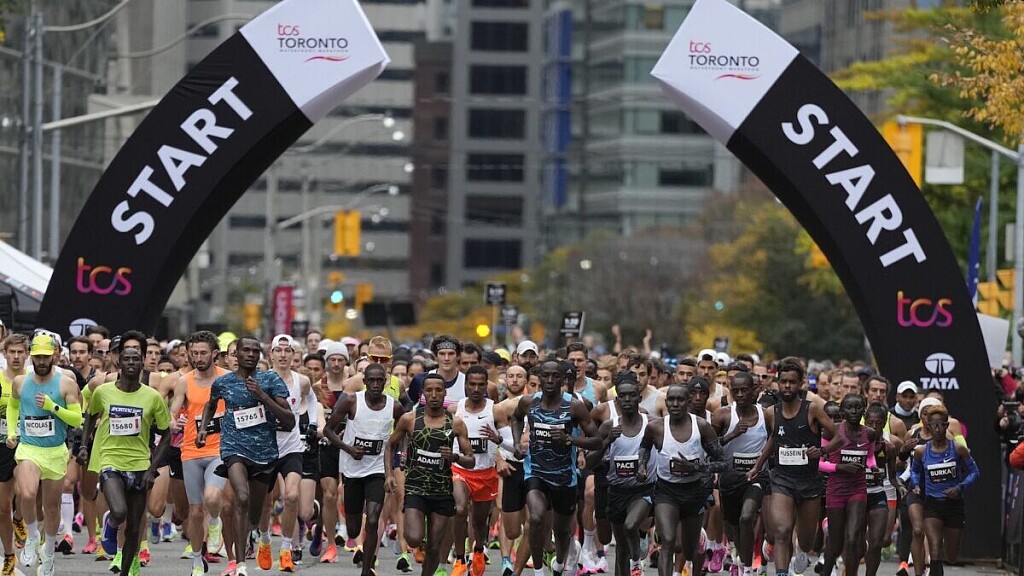
TCS Toronto Waterfront Marathon extends warm welcome to canceled Twin Cities Marathon athletes
The TCS Toronto Waterfront Marathon is extending a helping hand to several elite runners who were affected by the last-minute heat cancellation of the 2023 Twin Cities Marathon last Sunday.
Although Canada’s largest marathon had been sold out for months, marking the first time in the race’s history that the marathon has reached full capacity this early. There ended up being several withdrawals in the men’s and women’s elite fields two weeks before the Oct. 15 race day.
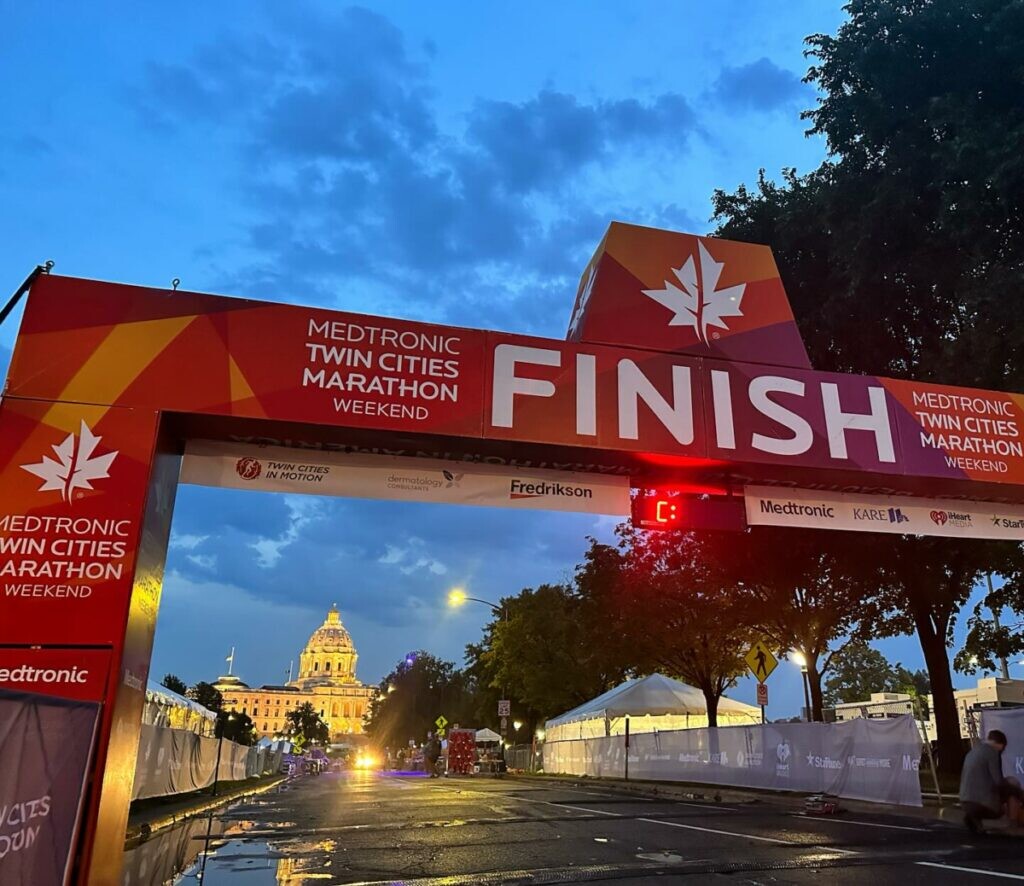
Jim Estes, the manager of the elite program at the Twin Cities Marathon, reached out to TCS Toronto Waterfront Marathon race director Alan Brookes, exploring the possibility of accommodating some of the elite runners. Brookes shared that he and Jim have a close relationship and have worked on elite teams at Chicago and Houston marathons. “We ended up extending three spots to athletes who did not get the chance to run the marathon in Minnesota,” says Brookes.
This period is crucial for U.S. marathoners, as many are shooting to qualify for U.S. Olympic Marathon Trials in Orlando next February. The fall marathon season represents a final opportunity to secure a qualification spot there or to chase an Olympic qualifying time of 2:08:10 (men) and 2:26:50 (women) before the trials.
Toronto was not the only marathon to offer invitations. The McKirdy Micro Marathon in Valley Cottage, N.Y., the Indianapolis Monumental Marathon and the Philadelphia Marathon have also offered spaces in their elite fields for athletes originally slated to compete in Twin Cities.
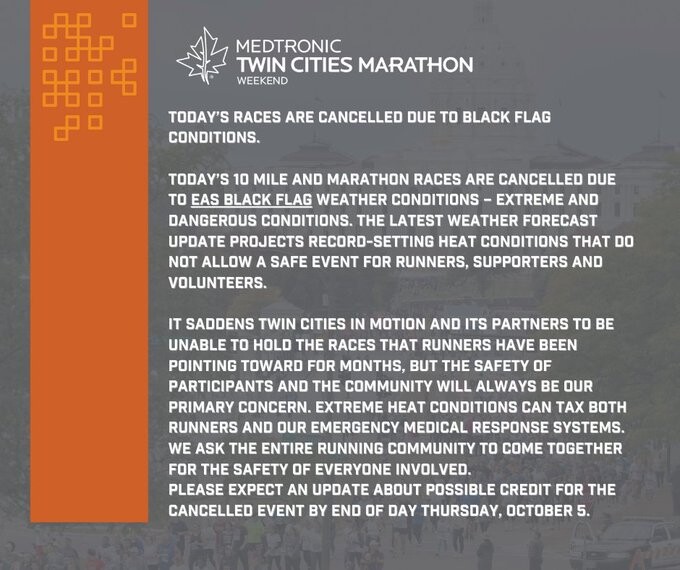
The Twin Cities Marathon was set to host nearly 8,000 runners on Oct. 1 but ended up being abruptly canceled just two hours before its 7 a.m. start due to soaring temperatures. Despite the short notice, many runners who had traveled to Minnesota decided to go ahead with their race on their own. The temperature in Minneapolis–Saint Paul, Minn., reached a high of 27 C (80 F) by 11 a.m. on Sunday.
Eli Asch, the race director of Twin Cities, defended their decision to cancel the race in an interview with Runners World, stating, “We saved lives.” However, Asch did not confirm whether the race would provide refunds or offer credits to the 20,000 registered participants but said the race’s intention is to be “as generous as possible.”
by Marley Dickinson
Login to leave a comment
TCS Toronto Waterfront Marathon
The Scotiabank Toronto Waterfront Marathon, Half-Marathon & 5k Run / Walk is organized by Canada Running Series Inc., organizers of the Canada Running Series, "A selection of Canada's best runs!" Canada Running Series annually organizes eight events in Montreal, Toronto and Vancouver that vary in distance from the 5k to the marathon. The Scotiabank Toronto Waterfront Marathon and Half-Marathon are...
more...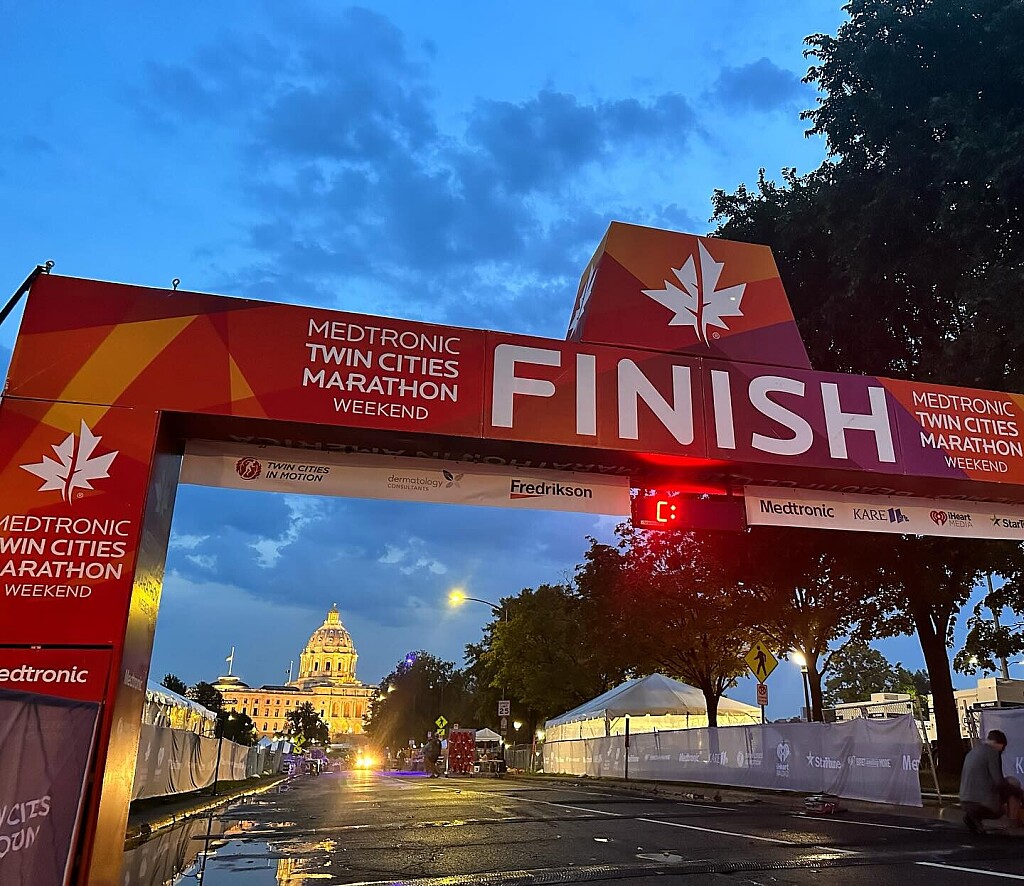
Twin Cities Marathon canceled due to heat two hours before start
Nearly 20,000 runners in Minnesota were left frustrated on Sunday morning after the Twin Cities marathon and 10-miler was canceled two hours before its 7 a.m. start due to heat.
The temperature in Minneapolis was forecasted to reach an unseasonably high 28 C (82 F) by 11 a.m., according to the National Weather Service. The average high for the Minneapolis-Saint Paul area around this time of year is around 18 C.
In the days leading up to the race, organizers had cautioned about potentially unsafe weather conditions. However, the race was still planning to proceed with extra safety measures implemented.
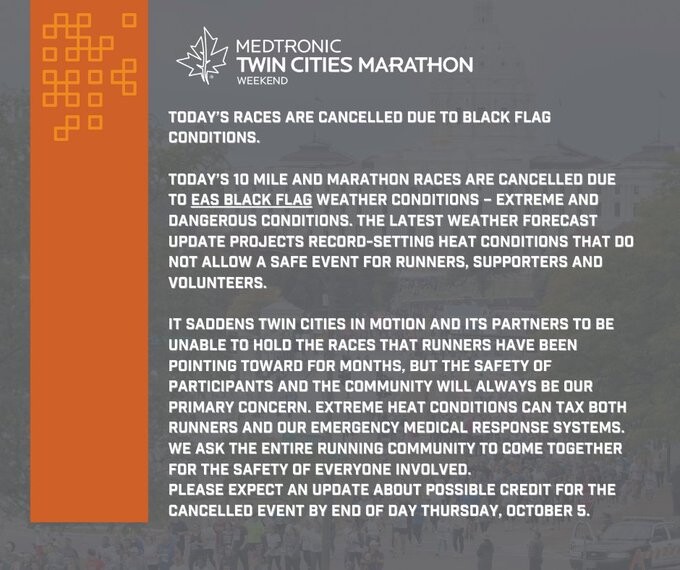
The Sunday morning forecast in Saint Paul elevated the races into black-flag status (which stands for “extreme and dangerous conditions”), which prompted the cancellation. As many as 8,000 runners were set to compete in the marathon, with 12,000 in Twin Cities 10-miler, and tens of thousands of spectators on the streets of both cities.
“It saddens Twin Cities In Motion and our partners to be unable to hold the races that runners have been pointing toward for months, but the safety of participants and the community will always be our primary concern,” said race organizers in a press release. “Extreme heat conditions can tax both runners and our emergency medical response systems. We ask the entire running community to come together for the safety of everyone involved.”
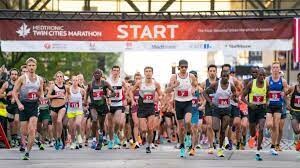
The race made the announcement at 5:30 a.m., only an hour and a half before the race’s expected start time. Despite the short notice, many runners who had traveled to Minnesota still went out to run at their own discretion.
Many runners took to social media to scrutinize the race’s decision: “Sad and pathetic, let’s just cancel all races cause they are outside of people’s comfort level,” one runner said. “What a waste of everyone’s time to make a last-minute decision like this,” said another.
The race organizers have not yet confirmed whether they will provide refunds or offer a credit to participants but intend to make an announcement later in the week.
by Marley Dickinson
Login to leave a comment

Medtronic Twin Cities Marathon
The Medtronic Twin Cities Marathon Weekend offer races, walks and activities for every age and ability level! Learn more about the weekend's events and activities by using the navigation bar at the left or top of your screen. The Twin Cities Marathonis a running event in the Minneapolis-Saint Paul area. The TCM was first run in 1982, and typically takes...
more...
9 Things Every Running Shop Employee Wishes You Knew
Yes, this shoe comes in other colors. No, that doesn’t mean you should buy it.
For two years, I worked at the best run specialty store in Minneapolis-St. Paul, Minnesota. For seven years after that, I worked for a running shoe brand. In that time, I learned there’s a sizable knowledge gulf between folks in the industry and most consumers. Even many consumers who pay pretty close attention to racing and shoe reviews weren’t always up-to-speed on the latest tech, how a certain brand fits or whether they need a neutral. stability, minimal, or trail shoe.

It’s our own fault. Brands create so many SKUs that it can be hard to keep up with each development. Stores stack so many models next to each other on the wall that it can seem impossible to know where to start.
I can ensure you we didn’t keep things convoluted on purpose. On the brand side, we wanted people to feel like they knew enough about our footwear to confidently buy shoes from our website. In the shop, we knew customers appreciated feeling like they were empowered to pick the right pair. If they felt overwhelmed at our store, we knew, they probably wouldn’t come back.
That got me thinking: What else did I wish every runner out there knew about shoes? So I jotted down this list. It’s far from comprehensive. Maybe there’ll be a part two.
Full disclosure: My wife works on the product team for the aforementioned shoe brand. But I think that gives me a valuable window into how brands ideate and produce their products, and I’ll do my best to be objective. Besides, I didn’t consult her on this. To counterbalance this, I’m going to go make some major purchases, also without consulting her!
One person I did consult, since he’s been in the shop game a lot longer than I have, is Jeff Metzdorff, co-owner of Mill City Running and Saint City Running. He will really hate that I called his cross-town rival the best shop in the Twin Cities, but them’s the breaks. In any case, here’s what came up for us.
Your coworker might love Asics. Your run club friend might hate Nike. That doesn’t mean you should buy Asics or avoid Nike. You should try both—and a bunch of others—to see what works for you. (FYI: Sizing can be different from brand to brand, so don’t be alarmed if you’re a full size bigger or smaller than you thought, or even a full size different from brand to brand.)
Every set of feet is different, and shoe choice is highly individual. Anyone who tells you with broad strokes to avoid or buy any one brand across the board might mean well, but they’re probably wrong. (And if they’re right, it’s a coincidence.)
So how do you know if a shoe is for you? It’s simple—if it’s comfortable when you put it on, there’s a really good chance it’ll serve you well. Shoes shouldn’t require a break-in period to feel good. (This is in addition to other considerations you should address before you’re trying them on, like whether the tread pattern will be sufficient for the surface on which you plan to run.)
Not to get all hippy-dippy, but your body is a pretty good judge of this sort of thing—and the (albeit very limited) science seems to agree.
They can absolutely contribute, to be sure, but it’s also tempting (and lazy) to point the finger to shoes alone when injuries happen. They’re part of an ecosystem that includes individual mechanics, stressors, your training, and other factors.
Being in the wrong pair of shoes won’t help your odds of avoiding injury, but if you’re in the wrong pair, you won’t blow out your knee in the first few steps. You’ll get some warning signs before an injury, so make sure you heed them if they appear.
Things like ramping up your mileage too quickly, or neglecting ancillary strength and mobility, probably play a bigger role in injuries than shoe choice alone. You’re not Indiana Jones trying to pick out the Holy Grail, so don’t stress too much.
All it often means is that the shoe contains more physical material like midsole cushion, or more expensive material like carbon fiber, and therefore was more expensive to produce. That doesn’t mean the $200 shoe won’t work for you, but don’t rule out the $130 shoe on this basis alone.
I’ve already covered this on the brand front—that just because your favorite athlete wears Hoka or On doesn’t mean you should—but this applies to shoe type, too. A lot of pros train and race in shoes that are lighter-weight and lower-profile than many of us should be using. They tend to be lighter, more efficient, and in more dire need of shedding ounces. (It’s their job to go fast, after all.) If you try and wear road racing flats in a 100-mile trail race because your favorite pro did it, there’s a good chance you’ll regret it after mile 50.
Of course, there are exceptions, but a lot of pros know very little about the shoes and brands they’re endorsing. So take those endorsements with a grain of salt.
“I need support.” I’ve heard it a thousand times, and I was only working the floor for two years. “Support” can mean more cushion. It can mean more medial stability, designed to mitigate overpronation. For a handful of people, it means the feeling that the arch is hugging the bottom of their foot when they step into the shoe. The list goes on.
Cushion can be good if it’s more comfortable for you – but an ultra-cushioned shoe won’t necessarily prevent injury at a higher rate than its more moderately-cushioned peers.
Medial stability is something pronators might need, although there’s been a move away from overtly-prescriptive footwear in favor of “inherently stable” shoes that work for a broader variety of folks in the last decade or so. (A shop employee should be able to help you decide whether you want a stability shoe.)
As for the arch, an insole that hugs the foot tightly might feel good at the outset, but it could be a one-way ticket to blister city. (Earlier I noted that comfort is king, but here’s one case where comfort now doesn’t necessarily translate to comfort later. Just don’t view arch-hugging fit as a dealbreaker.)
So, are you sure you need “more support,” whatever that means to you? Try some shoes on and find out!
I know, I know. They ruined your favorite shoe. Or even worse, they discontinued it. I certainly won’t try to convince you that the last model didn’t fit you just a little better, or feel a little more right. And this probably won’t ease the pain. But I can assure you that brands aren’t updating their shoes arbitrarily, or—as conspiratorially-minded YouTube reviewers occasionally insinuate—for marketing alone.
When a new shoe hits the market, the brands get a deluge of feedback from customer reviews, media reviews, store staff, and reps in the field. It’s too wide, it’s too narrow, the upper rips after 100 miles—stuff they would’ve liked to catch in testing, but didn’t until their sample size was the entire marketplace.
From the noise, some signals emerge, and they’ll chart a plan to address the most consistent pieces of feedback. It might be delayed by a model, because it’s usually a 12- to 18-month process to brief, build, and iterate a shoe before it launches. So the fifth version of a shoe often addresses the feedback they hear from the third version, for example.
That doesn’t mean you’ll like the new version as much as the old one. It would be ideal if everyone loved every update, but that’s not realistic, so the brands’ big bet is that more people will prefer the new version. That’s just business.
Does that mean they always get it right? (Stares at a pile of unused Hoka Clifton 2s in the corner.) Heck no. But they aren’t doing it just to mess with you. And let’s be real—sometimes your old favorite wasn’t quite as perfect as you remember it.
Where are you now, guy who took that size 8 Brooks Dyad off the wall, squeezed your toes into it, and declared: “This doesn’t fit!” without remorse? Did you think that ruled out the Dyad entirely? Did you tell your friends that Brooks shoes are too narrow? Did you not think we had a size 12 in the back that you could try on? Did you wonder why there was only one shoe, and where the matching half was? I think about you often.
And no, we don’t mind checking for you. If getting the color you want means you’re more likely to run, we’re more than happy to help.
To that end, we know it can be a touch intimidating to make your first run specialty visit. A display wall brimming with technical-looking choices and a floor staffed by serious (nutritionally- and sleep-deprived)-looking runners.
But, don’t be scared. Don’t worry about saying the wrong thing. Good shop staff meets you where you’re at, and wants to help get you on your way to enjoying a new pair of shoes. With any luck, you’ll turn into a lifelong runner and a lifelong customer.
You see, the stores need you more than you need them. If any staff treats you otherwise—and I know it happens—go shop at their competitor across town.
by Outside online
Login to leave a comment

I used to run in pursuit of race results. Not for fitness. And certainly not for fun
First, I should clarify: I wasn't a pro. I wasn't even that fast. I just acted like I was, prioritizing my training over everything. The local trail racing scene in my hometown of Minneapolis was low-hanging fruit a decade ago, and I trained to win or podium at those races with joyless devotion.
I used to turn down invitations to run with a friend or a group if it meant I'd have to adjust a training plan written beforehand. When I did run with others, I'd frequently add mileage before or after.

Once, after a short run at a friend's bachelor party, I dipped out the back to run pre-prescribed hill sprints, sneaking off to do them because explaining what I was doing would be awkward and skipping it would be unthinkable. (It turns out disappearing to run farther without warning was, in my friends' eyes, also a little weird.)
I used to obsess over distance and vert. I don't just mean I wanted to hit daily and weekly goals - I mean I'd run around the trailhead parking lot to make sure I hit 20 miles on the dot. I mean I learned exactly how far over ".0" I needed to run to avoid the dreaded ".99" when I uploaded it. (On my Suunto, it was 0.02; my Apple Watch, 0.08; my Soleus, 0.23.) Once, when I uploaded a bike ride and it reported 4,999 feet of vert, I nearly threw my phone through the window.
At times, I could be a bit of a nightmare to run with. Once, a friend visiting from out of town wanted to run 5 miles. But I wanted to run 10, so I told him we were running 5, then took him on a 10-mile loop with no bailout points. (He started walking in protest near the end. I think we're still friends - he let me speak at his wedding a couple years later.)
A different time, that same friend and I went camping on Minnesota's north shore with the intention of running up Eagle Mountain - the highest point in the state - the next day. But rain came through, our tent leaked, and we were soaked, shivering, and in no condition to run. I made him do it with me anyway. When we got to the top, it was completely socked in, the famous viewpoint covered by a white sheet of clouds. (Maybe that was a step too far - he didn't come to my wedding.)
For several years, every step I ran, whether a workout or a recovery run, was in the pursuit of improvement. I may well have been on the road to disownment by my family and friends. But somewhere along the line, I snapped out of it.
How?
Ironically, the single biggest thing that changed my outlook was moving to a mid-sized town backed by spectacular mountains that were rife with trails - perfect for extremely serious training, on paper. But it had the opposite effect.
I moved there to work for a running shoe brand. You'd think living and breathing running all day, every day, would fuel my passion for it. You'd be wrong, though. The challenges got bigger - and my perspective widened with them.
When I arrived in Santa Barbara, I pictured myself becoming a super-fit mountain athlete on the challenging trails that were, almost literally, out my back door. But I quickly found that, man, these trails are really challenging. I've written before about how difficult running in the Santa Ynez mountains can be.
That dramatic terrain lent itself to epic days out with incredible views. The system of front- and backcountry trails made for some mouthwatering linkups. But it was all so steep. And slow-moving. And hot and sunny. (I'm a ginger from the Upper Midwest.) The conditions made recovery tougher, so it became overwhelming to try and hit mileage goals out there. It was normal to be out for four or five hours, tag a couple peaks, and have less than 20 miles to show for it.
Rough going, if you're the sort of person who runs back and forth in front of your house to make sure you hit exact mileage.
So I had a choice: I could use even more of my free time and energy to ensure I stuck to my old training ways. Or, I could loosen my grip. (Especially since I was nowhere near being a pro athlete.) In a rare moment of clarity, I realized - if I'm not having fun, what's the point?
So I adapted. One weekend, I planned a run based not on mileage, but on tagging a summit. The next weekend, I planned a two-summit run, then one with two plus a saddle for the most aesthetically-pleasing Strava map. The mileage wasn't always high, but these were long days out. I even initiated a three-man excursion to connect the front-country's three most prominent peaks in one go - and didn't get mad when we got off-course, bushwhacked through poison oak and came perilously close to running out of water. For nearly five hours of trouble? 15 well-earned miles.
I embraced the adventure - the time on my feet, the vast emptiness of Los Padres National Forest, the definition of "epic" as something other than long and fast, and the very real sense of risk in the backcountry. I didn't quite learn to stop and smell the roses, but I learned to enjoy running with friends, especially when one of them had a wild idea about running slowly via headlamp at night, or linking point A to point B via the ridgeline, mileage be damned.
If I'm not having fun, what's the point?
Some other stuff happened, too: That running shoe gig? Well, it was still a 9-to-5 desk job, which can put a damper on training. And it turned out when my job revolved around running, I wanted to use my free time to stay a little more well-rounded.
I also got a little older. I got injured a little more than I used to. Hard efforts started to come in at a pace I'd once considered a recovery run. In the interest of running as long as possible, I dialed back my mileage. This happens to everyone, so it was nice that it coincided with a new outlook and a new playground, rather than precipitating an identity crisis.
In my hard-charging days, I loved seeing my times improve, and I loved winning on the rare occasion it happened. But I realized it's dangerous to depend on those things for happiness, or to be unwilling to redefine what "winning" and "improving" mean to you, because an injury or plain-old time means that eventually your raw speed will plateau, perhaps even regress. You can adjust your goals - some people stay motivated by age-group competition even when their PRs are behind them - or you can learn to enjoy running every day, rather than seeing running as a means to a worthy end.
I don't fret over pace. I'm just happy to be out there.
Our journeys for improvement never stop, but we can find things to improve other than how fast we've run a given distance. In my case, I improved my navigation skills, hydration and nutrition, and frequency of sunscreen reapplication. I also improved my mood. Maybe not as sexy as a 50-mile PR, but it's something to hang my hat on.
I've traded a white-whale fixation on future results for day-to-day enjoyment. I think they're both noble in their own right, and I don't regret my old approach, but I know it wouldn't work for me now. These days, I try and enjoy the act of running, rather than exclusively enjoying "having run," as Brendan Leonard coined it.
When I run now, I'll stop and put my hands on my hips at a cool overlook, like in all those marketing photos you see. I won't roll my eyes if someone wants to take a group photo. (Well, I will, but I won't verbally protest, too.) I'll pet all the very good dogs I encounter. I'll run with people when I'm invited to. I'll get coffee afterward, even if it means we cut a couple miles off for time constraints. I don't fret over pace. I'm just happy to be out there.
I still sometimes run back and forth in front of my house to hit an even mileage, though. That's one habit you'll have to pry from my sticky, GU-covered fingers.
by Trail Runner Magazine
Login to leave a comment
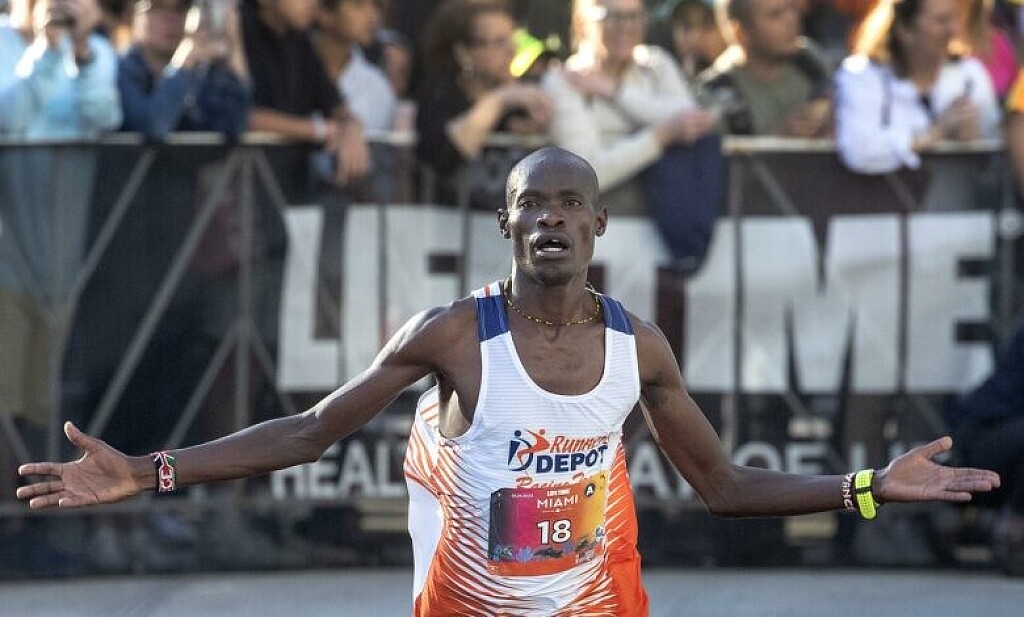
Kenyans take Home Life Time Miami Marathon Titles
They were nearly 8,000 miles from home in the urban center of Kisii, Kenya, but their individual pursuits for Life Time Miami Marathon titles brought them together in South Florida on Sunday. Originating from farming families in southwest Kenya, George Onyancha and Damaris Areba both secured easy victories in their inaugural appearances in Miami's signature running event.
Twenty-nine-year-old Onyancha (2:18:25) finished nearly six minutes ahead of Siraj Amda (2:24:16) of New York in the men's Marathon. Twenty-seven-year-old Areba turned in the second fastest time in Miami Marathon history (2:33:49) bettered only by fellow Kenyan Martha Akeno's course record (2:29:00) last year. Isgah Cheruto (2:36:19) of Minneapolis was second behind Areba.
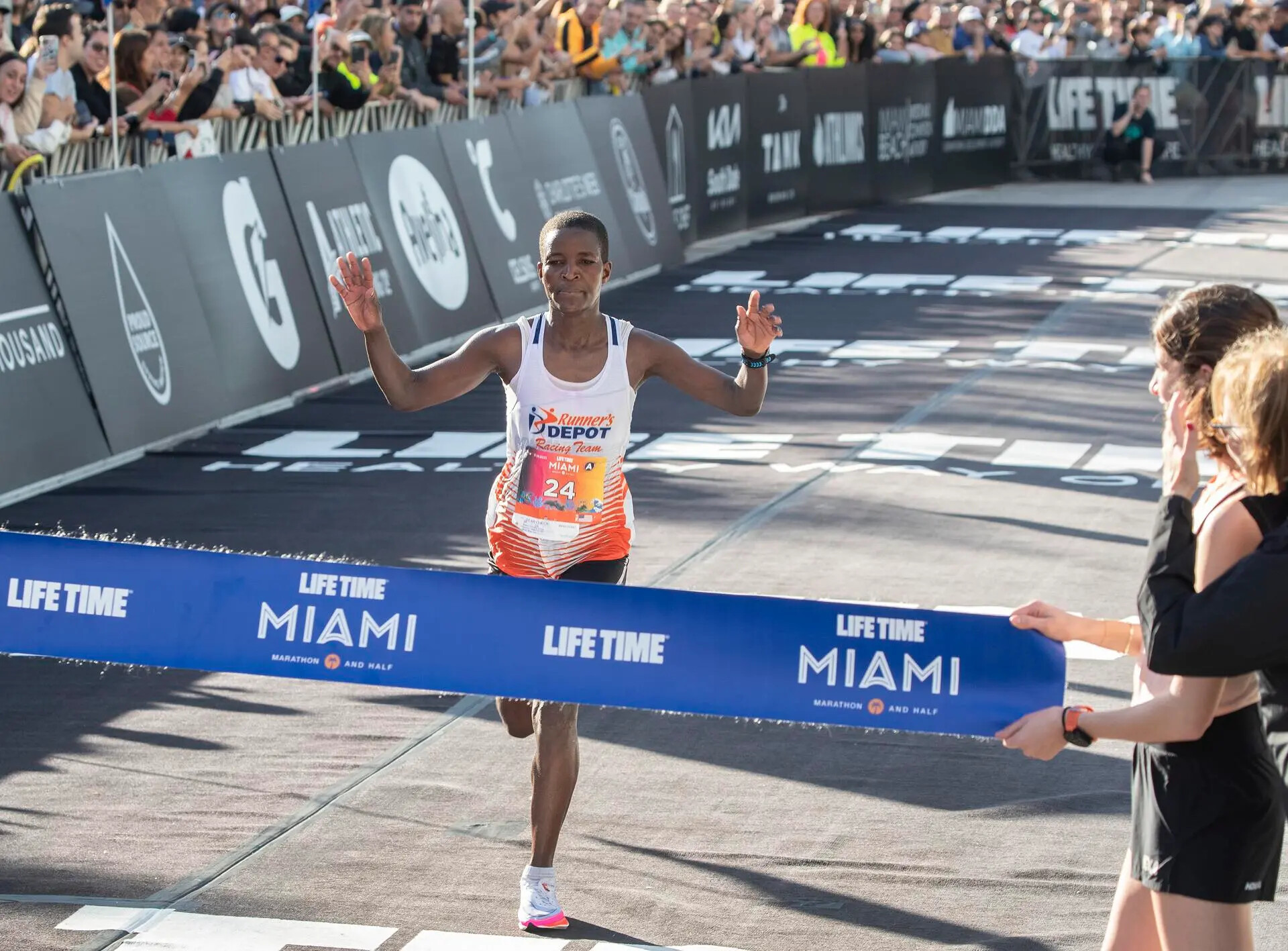
Onyancha and Areba were winners of few words. "I was leading and had another runner behind me until the 25K mark," Onyancha said. "Since I didn't know what his strategy was, I thought: 'Let me take off."
Areba was more focused on the uniqueness of the course route. The U.S.TAF-certified and Boston Marathon-qualifying circuit showcased the best views of Miami's cityscape and waterways during the 26.2-mile and 13.1-mile races. "The lights on the big ships, they're so beautiful," Areba said.
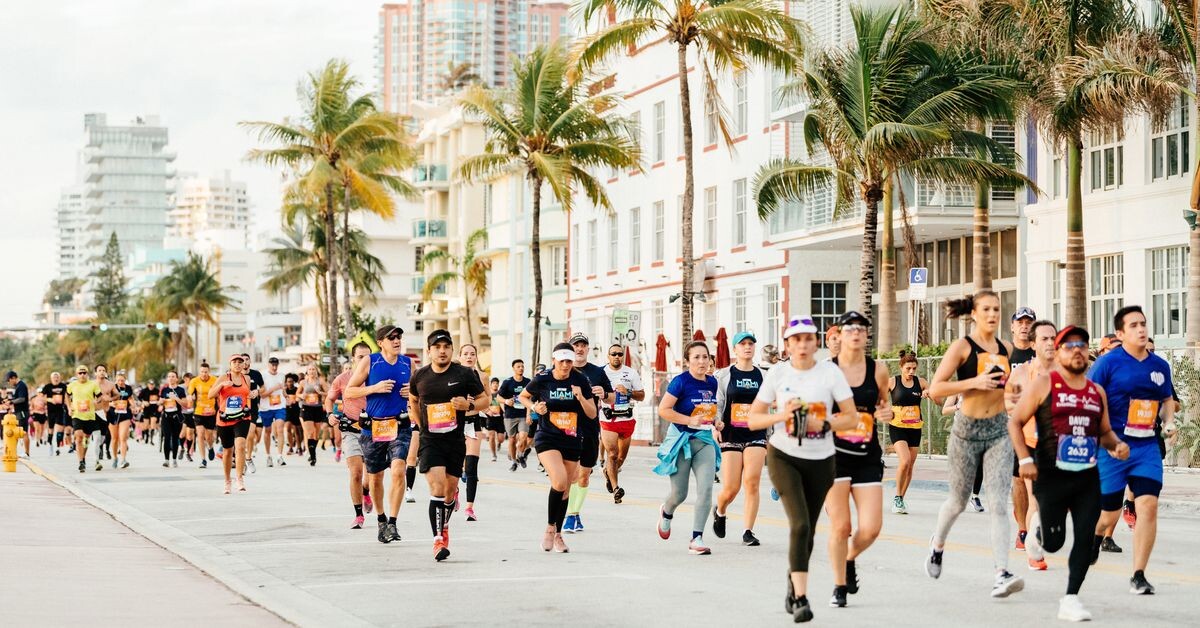
It was the 21st edition of the Life Time Miami Marathon and Half, which wound through downtown Miami, Miami Beach and Coconut Grove. The event's sold-out field of 18,000 runners came from all 50 states and 69 countries – generating upwards of $50 million in economic impact to the Miami community. Colombia (1,300) and Mexico (1,100) led a wave of Latino runners, while nearly 1,000 U.S.-based runners represented the state of New York.
The Marathon began in front of the downtown Miami-Dade Arena before heading to South Beach via the MacArthur Causeway and then back downtown along the Venetian Causeway. Runners then headed south through the lush Coconut Grove community before turning north through the Brickell Avenue financial district and across the finish line at Bayfront Park.
The temperature at race start was 72 degrees and eventually settled into the mid-70s. Runners were able to experience the South Florida sunrise nearly an hour into their run, and the sparkling cruise ships docked at the Port of Miami put an exclamation point on the Event's iconic views.
Onyancha races mostly in Europe and China, and Sunday's marathon was his first in the United States. Areba has been on a tear, winning four marathons in eight months. Prior to her Miami victory Sunday, Areba won titles at the Green Bay Marathon (May), the Quad Cities Marathon (September) and the Des Moines Marathon (October). In November, she was fourth at the Philadelphia Marathon.
When Nacho Hernando-Angulo (1:08:36) arrived first to the finish line of the Half Marathon, he was almost home. The 29-year-old broke the tape just 800 meters from the hi-rise where he lives in downtown Miami. "To be home with the (2023) title is awesome," said Hernando-Angulo. "This title has to stay home, in Miami."
Veteran French triathlete, Brice Daubord (1:10:11), and 24-year-old, Alberto Mena (1:10:21) of Ecuador, were nearly two minutes off Angulo's pace to secure second and third place while event-defending-champion, Cesar Lizano, was sixth (1:14:01). The 40-year-old Costa Rican was fourth in 2012, third in 2014 and fifth in 2015 before winning last year's Miami title.
A native of Madrid, Spain, Hernando-Angulo settled in Miami in 2018 following running careers at New Hampshire Technical Institute and Southern New Hampshire University. He works as a sales director for a European importer. "I moved to Miami for work, definitely not for training," he said. "It's very tough to be an elite runner here. So we do what we can."
Ethiopia's Weynshet Ansa Weldestadisk (1:14:55) won her second career half-marathon Sunday, ahead of Ukraine's Valentyna Veretska (1:18:41) and defending champion, Lisa Brooking (1:18:50) of Canada. "It was a good course, but very windy and hot," said Weldestaisk. "The city is so beautiful. I wish I could live here. Everybody was telling me 'good job.' It gave me power."
The tall and slender Weldestadisk has been based in Washington DC for the last four months while competing in a series of U.S. races. The 26-year-old smashed the course record at the Extra Long Bronx (NY) 10-Mile Race last September and won both the Philadelphia Marathon and the Virginia 10 Miler in November.
Veretska, the women's half-marathon runner-up, continued her good results since fleeing Ukraine last year and winning the Jerusalem Marathon a month later in borrowed shoes and gear. The 32-year-old ran her first race in the U.S. in November, finishing third at the Princeton Marathon.
Onyancha and Areba each received $4,500 for their first-place finishes. Onyancha will use the funds to pay for two of his brothers' tuition payments while Areba will donate a portion to Kenyan youth developmental running programs and use the remainder to buy land to build a house. She and her husband are currently living in a rental unit. "I loved the city and the palm trees," Onyancha said about his first experience in Miami. "They look like umbrellas."
More information about the Life Time Miami Marathon may be found at www.themiamimarathon.com and on social media at Facebook.com/RunMiami, Instagram.com/TheMiamiMarathon, and Twitter.com/RunMiami. The Life Time Miami Marathon And Half operates with the tremendous support of the Miami Beach Visitor and Convention Authority.
The Miami Marathon And Half is owned and produced by Life Time, the premier healthy lifestyle brand. It is among more than 30 premier athletic events owned by the Company, including the Chicago Spring Half Marathon, Garmin UNBOUND Gravel, and Leadville Race Series. For more information about Life Time (NYSE: LTH), visit www.lifetime.life. More information about Life Time athletic events is available at lifetime.life/athletic-events.
Login to leave a comment

The Miami Marathon
Over the past 16 years of the existence of the current Miami Marathon, there was only just over 90 athletes who had run every single event. Before the inception of the Miami Marathon as we know it now (est. 2003), the race was originally known as the Orange Bowl Marathon which began in the late 1970s. One of our very...
more...
Four Helpful Tips for Anyone Who's Just Starting to Run
As a long-distance runner for almost 15 years, the most common comments I get from nonrunner friends are “I wish I could do that” or “I can’t even run a mile.” But the truth is, that’s actually normal when you’re starting to run. In fact, most seasoned runners also didn’t knock out a quick mile on their very first go.
I first started running as a high school sophomore, slowly building up a few laps on the track at a time. The next semester, I joined the track and cross-country teams. I kept up with consistent shorter runs through college before eventually running my first half marathon when I was 21 and my first full marathon when I was 23, eight years after I got started. I credit my very gradual buildup with helping me stay injury-free and letting me ease into the sport so I could actually enjoy it (instead of end up resenting it).
When you’re excited about starting a new activity, like running, it’s easy to get ahead of yourself and pile on too much too soon. After all, it seems logical that pushing yourself hard will help you jump right into it and get better faster. But when it comes to running, that’s definitely not the best approach—in fact, this mind-set is a big reason why many optimistic beginners ultimately end up not sticking with a running routine. If you set your expectations high and then fail to meet them, it’s easy to think “I’m just not a runner”—when really, you just needed to start a little slower and expect to get better gradually.
Here are a few tips from professional coaches on how to approach running as a first-timer without ending up intimidated or discouraged by the sport. I promise, once you feel comfortable doing it, running is a lot of fun.
1. Alternate between running and walking your first few weeks.
One of the biggest things coaches stress to brand-new runners is to simply focus on spending time on your feet and not get caught up in the numbers. Most would agree that you shouldn’t start out running more than a few minutes at a time, with walk breaks in between.
Jimmy Balmer, a certified running coach with Strait Speed in the Philadelphia area, recommends beginner runners start with a run/walk three times a week, in which they run for one minute and walk for 90 seconds for a total of 20 minutes per session.
Many long-term training plans aim to have runners increase their total mileage by 10 percent each week, but Balmer maintains that this doesn’t pertain to runners starting from scratch. “I recommend these runners stay at the same volume for three weeks before beginning to gradually increase the volume and duration of their runs every fourth week,” he says. “Realistically, you should expect to still be doing walking intervals for the first six weeks of this routine.”
Another approach: “A simple and attainable goal is to just add a minute per week to each run segment,” adds Rebekah Mayer, a USATF Level 1 coach and national training manager at Life Time Run in Minneapolis. “If you were already very active, you will find you can increase your mileage more quickly.”
If you are already cross-training with another activity such as cycling or swimming, you already have a base level of cardio conditioning, which will give you a leg up when you start running. “Cardiovascular activities like indoor cycling or Step aerobics classes can help to get the heart and lungs ready to take the next step and add running, while having a foundation of muscle strength can help with injury prevention,” Mayer says. “But if you’ve just been doing strength work, it’s not wise to be overconfident and attempt to knock out an hour-long run right from the start.”
Strength training experience is still helpful, though. Having a foundation of strength will help you to take on additional activity with less aggravation and soreness. You are in a better position than being totally sedentary in that you are less likely to get injured, Balmer says. “Either way, I would still recommend new runners start with the run/walk routine instead of just running in the beginning,” he says.
2. Choose a realistic first training goal.
Building up to a 5K with little to no stopping within about eight weeks after beginning to run is a realistic time frame, Mayer says. She recommends waiting about two years before considering training for a longer race like a half marathon.
Another key in tackling a longer distance—regardless of how long you’ve been running—is to make sure you’re running enough of a base before your new training plan starts, Mayer says. This means, for example, you should be able to run an easy 6 miles before beginning a training plan for a half marathon, and an easy 8 to 10 miles before beginning a 16-week training plan for a marathon.
“One of the most frustrating things as a coach is to get a call from someone wanting to start training for a marathon 12 weeks out, yet they are only currently running 3 to 4 miles max,” Mayer says. “That is the type of coaching request I would decline, as it’s too risky. I would rather protect a runner from getting injured by helping them reframe their goals to run something shorter along the way to the eventual bigger goal.”
3. Consider joining a social running club for one of your weekly sessions.
These days, it’s not hard to find a free group running option in just about any city or town, whether it’s hosted by a gym, running store, running club, or even a local pub. The beauty of these runs is that they attract runners of all levels because they are more focused on enjoying the sport rather than grinding out the speed. If you’re feeling insecure about how far you have or haven’t run, a social run is a great place to start because you’ll find many people in the same boat as you, making it easier to relax and feel confident.
“Social runs are very beginner-friendly and are a great way to meet people to build your motivation and chase your goals with,” Mayer says. You might just walk out of there with a new running buddy who can help keep you motivated and excited about logging miles.
4. Be patient when it comes to noticing progress.
It’s important for new runners to remember that it can take weeks before they’re running without needing walk breaks and before running actually feels more comfortable.
“There are always going to be plateaus, peaks, and valleys with starting a new program,” Balmer says. “Don’t get discouraged if you feel like you’re not seeing immediate results while you adapt to those first few weeks of stress on the body.” If you keep at it, you’ll start to notice your body adapting eventually, meaning that running will feel easier and you’ll be able to run faster or longer than you did at first.
It’s also important to remember that while consistency is key, occasionally missing a planned session because life or bad weather gets in the way won’t make or break your progress, Balmer says. (This is true for both beginners and for seasoned runners.) “It’s also key to prioritize rest and recovery and enjoy days off both physically and mentally.”
And if you ever feel discouraged, remember this: Just getting out there and starting to run is a huge success in itself. Being patient with yourself, and giving your body the time it needs to get used to this new sport, will pay off down the road. Just think about how great it will feel to look back in a few months and see how far you’ve come.
by Emilia Benton
Login to leave a comment
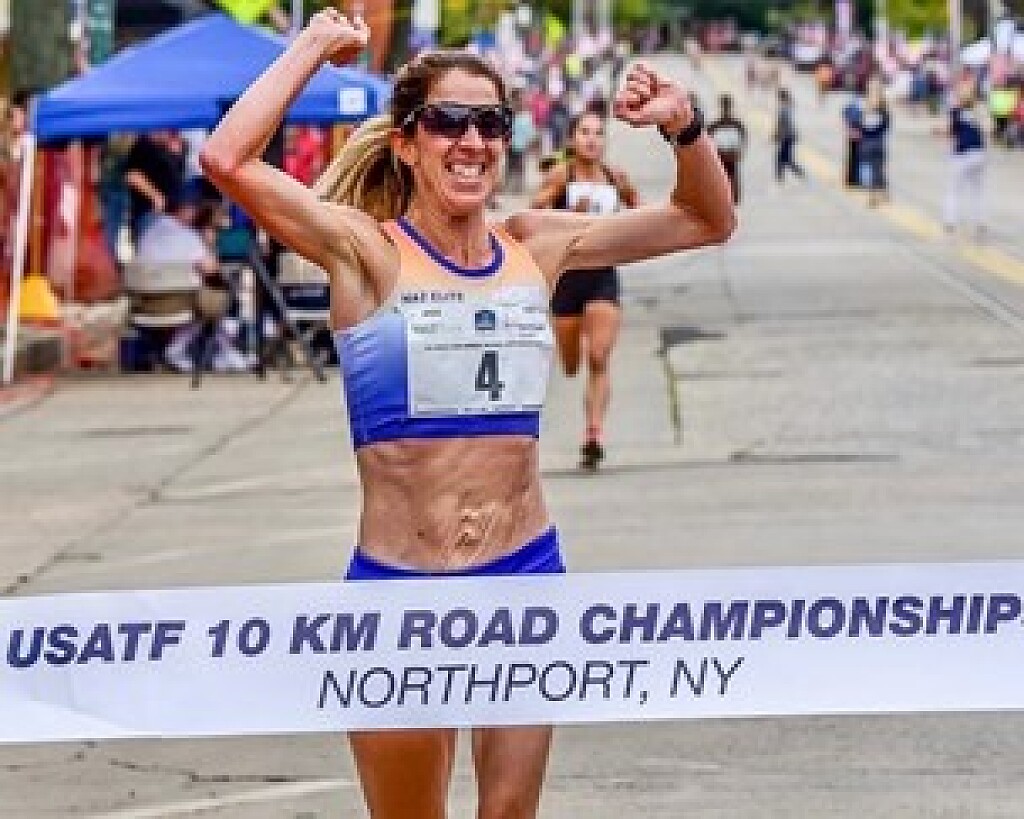
SIMBASSA, BRUCE VICTORIOUS AT THE USATF 10 KM ROAD CHAMPIONSHIPS
Abbabiya Simbassa ran an incredible final mile on the men’s side, while Stephanie Bruce used a furious kick to the finish in the women’s race, both claiming victory Saturday morning in Northport, New York at the USATF 10 km Road Championships presented by Toyota.
The USATF 10 km Road Championships was the ninth stop on the 2022 USATF Running Circuit presented by Toyota.
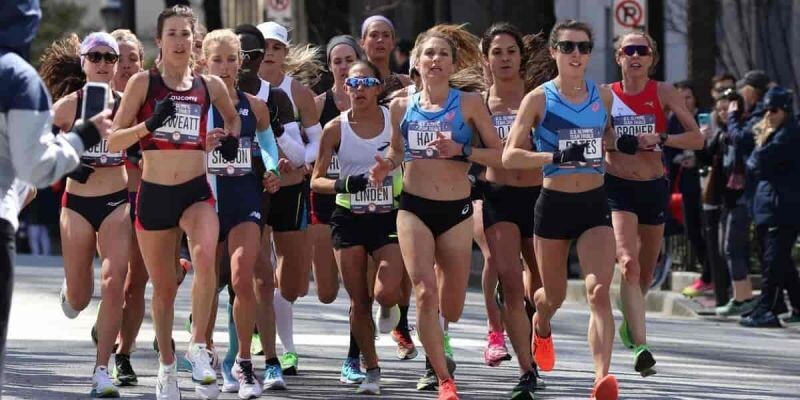
As the starting cannon sounded, the men’s field immediately strung out along the streets of Northport, with Jacob Thomson pushing the pace and taking over the early lead. The honest early pace kept the front pack small, with Thomson being joined by Sam Chelanga, Simbassa, and Korir, with a few second gap back to the rest of the field. With the halfway point in sight, Thomson opened a small lead over the rest of the lead quartet, passing through the 5 km mark in 14:21 and earning a half-way bonus.
Chelanga and Simbassa passed through two seconds back in 14:23, with Korir coming through 5 km in 14:27. Thomson would fall off pace shortly after halfway, with Simbassa and Chelanga taking over the pacing duties and pushing the pace over the next mile.
Korir sat just behind in third. With less than two miles to go, Simbassa pushed the pace and opened an immediate gap on Korir and Chelanga. Simbassa continued to push over the next mile, opening a nearly 20-second lead heading into the final mile of the race.
Over the final mile, Simbassa maintained both pace and form, extending his lead ever so slightly, on his way to claiming his third USATF Running Circuit title, crossing the finish line in 28:12, a new course record. Behind Simbassa, Korir and Chelanga waged an epic kick to the finish, with Korir pulling ahead by a step in the final meters to claim second overall in 28:34, while Chelanga placed third in 28:35.
Dillon Maggard, Futsum Zienasellassie, and Tai Dinger ran much of the race together Saturday, but in the end, it was Maggard pulling away in the final mile to claim fourth in 28:45. Zienasellassie earned another top-five finish on the USATF Running Circuit season with his fifth-place effort in 28:55, while Dinger finished a second behind in sixth in 28:56. Geoffrey Kipchumba claimed seventh overall in 29:00. Thomson slid back to eighth overall in 29:19. Ryan Kutch and Brian Barraza rounded out the top ten in 29:28 and 29:34.
With Korir’s runner-up finish, his second of the USATF Running Circuit season, he elevated himself to an even more dominant first-place standing, with a 104 point total. Zienasellassie’s fifth-place effort added another six points to his standings total, giving him 56.5, sitting in second place overall. Chelanga’s third-place finish moved up into third place overall in the standings with 42 points.
Early in the women’s race, a pack of four women pulled away from the field, establishing a pace that no one else could manage. Bruce, Annie Frisbie, Nell Rojas, and Ednah Kurgat formed a tight pack and worked with one another along the streets of Northport.
The quartet came through the halfway point mark in 16:05, all four looking strong and able to handle the fast pace. Little changed among the top four until the final mile and a half, when Kurgat started to dip off the back of the pace, while the other three charged ahead, seemingly only a matter of time before someone made a move to try and break open the race.
Over the final mile, Bruce charged to the lead, ramping up the pace, a move that would prove decisive. Bruce pulled away from Rojas, Frisbie, and Kurgat, and never looked back, raising her arms as she crossed the line while earning her second USATF 10 km Road title and her third USATF Running Circuit victory of her career.
Bruce finished first in 31:52, while also breaking the course record. Rojas was able to break free of Frisbie and Kurgat in the final 800m to place second in 31:56, while Frisbie finished two seconds back in 31:58 and Kurgat seven seconds back in 32:03, as the two placed third and fourth, respectively.
With her runner-up effort, Rojas added 12 more points to her USATF Running Circuit standings total, giving her 33 points overall. That addition moves Rojas up into sole position of third overall, a half point ahead of Aliphine Tuliamuk, but still well behind USATF Running Circuit standings leaders Emily Sisson and Keira D’Amato, who are tied for first with 55.5 points.
After the top four women, there was a race for fifth happening over the back half of Saturday’s contest. In the end it was Emma Hurley pulling away from the field in the final mile, racing to a fifth-place finish in 32:49. Hurley finished just ahead of Amy Davis and Molly Grabill, who ran to sixth and seventh place finishes in 32:52 and 32:54. Erika Kemp, who owned the previous course record, placed eighth overall in 32:59. Carrie Verdon took home ninth place in 33:05 and Anne-Marie Blaney earned tenth in 33:21.
Next up on the USATF Running Circuit is the USATF 10 Mile Championships presented by Toyota, which take place on Sunday, October 2 in Minneapolis, hosted by the Medtronic TC 10 Mile.
Login to leave a comment
Al Franken, West Coast sports promoter, dies at 96
Al Franken, who promoted track and field, golf and tennis on the West Coast during a long career in sports, died Wednesday. He was 96.
He died at his home in the Westwood section of Los Angeles from acute myeloid leukemia that was discovered recently, according to his son Don.
Franken co-founded the Los Angeles Invitational track and field meet held at the old Los Angeles Sports Arena in 1960. It was held indoors in February and televised nationally, serving as an elite-level stop between the Millrose Games in New York and the U.S. indoor national championships. It was known as the Sunkist Invitational until 1995 because of its sponsor Sunkist Growers. It continued until 2003, when it was canceled for lack of sponsorship.
Franken hustled to recruit stars and sponsors. He stirred up interest by offering $500,000 to any athlete who broke a world record.
The meet also featured top high school runners. More than 100 Olympic gold medalists competed during its existence.
Franken also coordinated indoor meets in San Francisco and San Diego. He helped develop the Kinney High School Cross Country Championships into a major event
He was the Los Angeles Lakers’ first public relations director when the team moved west from Minneapolis.
Franken handled PR for the Los Angeles Open golf tournament for 22 years, as well as assignments for the men’s and women’s pro tennis tours.
He founded Franken Enterprises in 1952 and World Class Sports in 1982 to promote and market track and field.
Franken graduated from UCLA, where he was sports editor of the Daily Bruin newspaper. He later worked as a sports writer at the Los Angeles Mirror.
Besides his son, he is survived by daughter Jill Franken. He is not related to the former U.S. senator from Minnesota who shares his name.
Login to leave a comment
Covid Protocols Announced for 2021 Medtronic Twin Cities Marathon Weekend
Masking will be required for all indoor spaces and in select higher-density outdoor settings at Medtronic Twin Cities Marathon Weekend which kicks off Friday, October 1, and runs through Sunday, October 3, in Minneapolis and St. Paul.
The event, which is being held with reduced field sizes across its races and with extra space for social distancing, announced finalized Covid protocols for the event. Masking will be required for participants, event officials and volunteers:
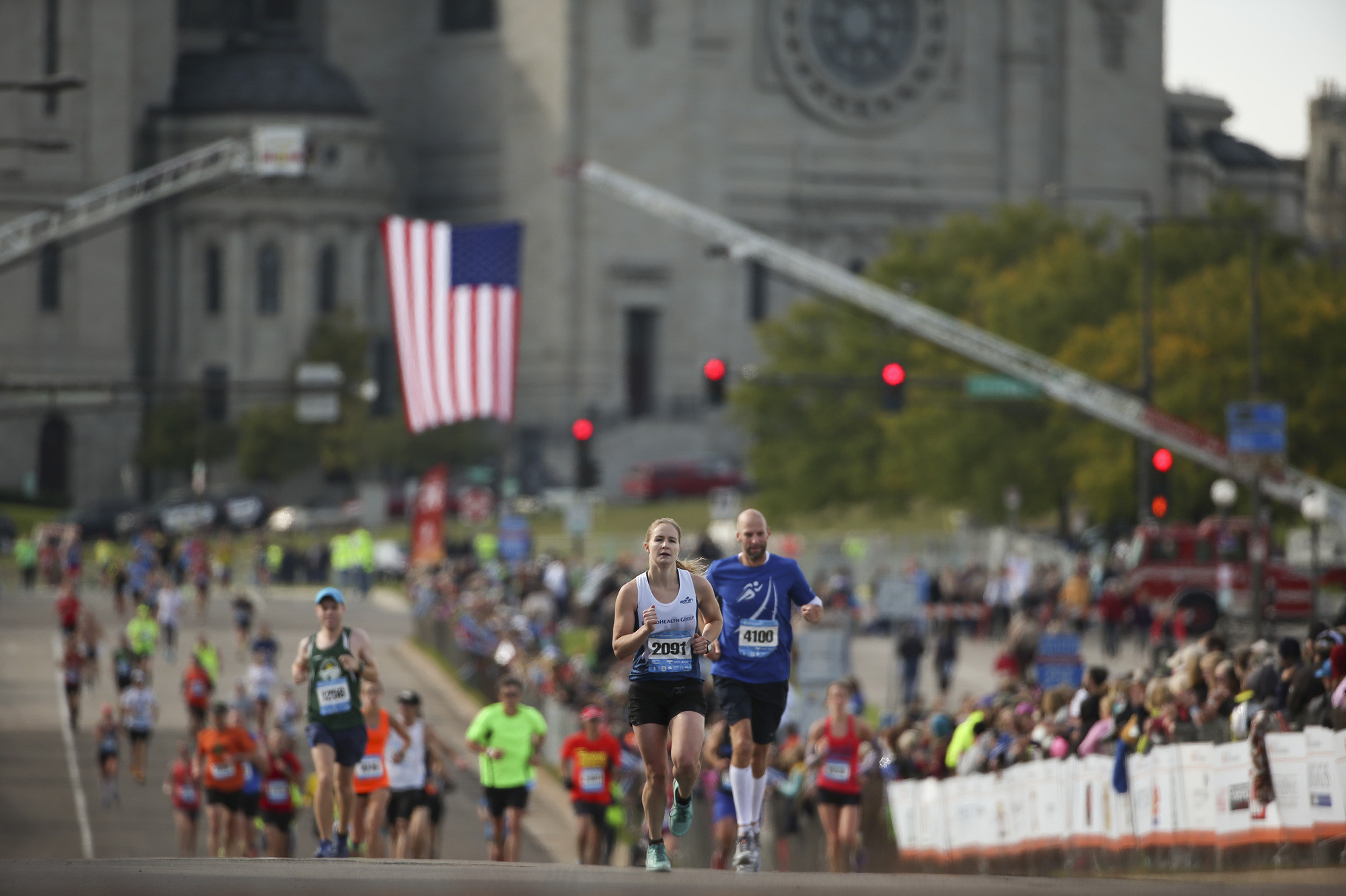
· At the Health & Fitness Expo at Saint Paul RiverCentre on October 1-2
· At other indoor facilities associated with the event, including enclosed tents
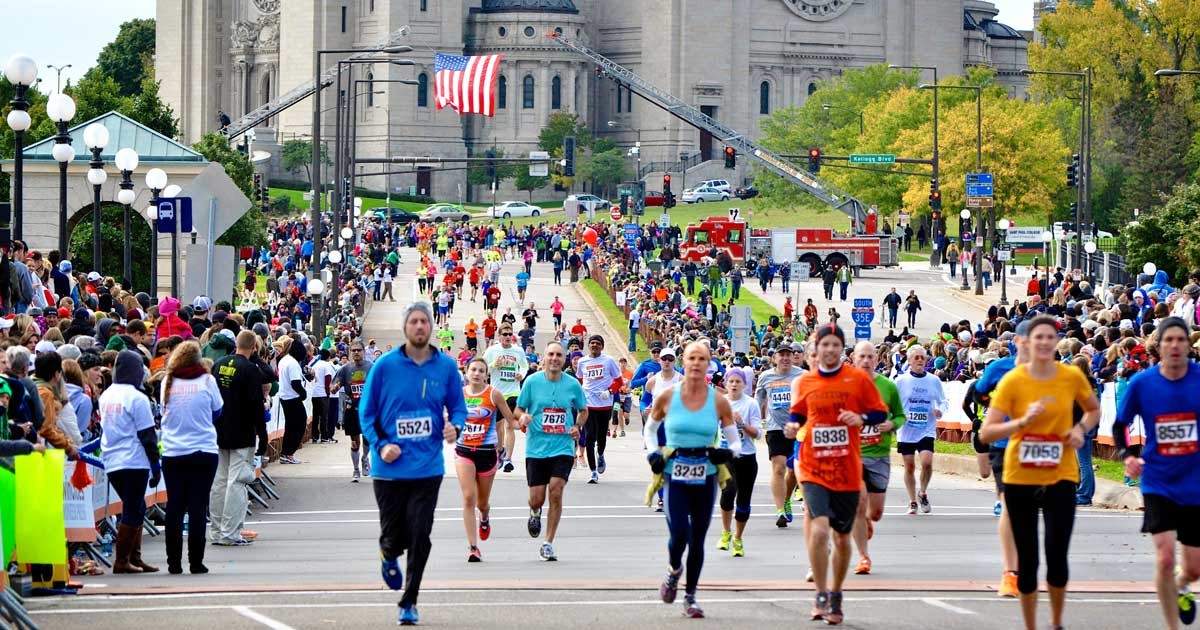
· On race transportation vehicles, including buses to the start line
· In outdoor start area corrals where runners gather before their races
· In outdoor finish line walk-off area
Additionally, because most youth participants have not been vaccinated, masks will be required for all participants, volunteers, staff, and other attendees in the registration and race packet pick-up area for the Medtronic TC Family Events, TC 10K, presented by Dermatology Consultants, and TC 5K, presented by Fredrikson & Byron, P.A., on Saturday, October 2.
Runners will not be required to wear masks while they run their races.
“We take health seriously, we take safety seriously and we take Covid-19 and the Delta variant seriously,” Twin Cities In Motion Executive Director Virginia Brophy Achman said. “Our staff and medical team have been preparing for this event since the pandemic emerged. We’ve worked with the Minnesota Department of Health, an internationally respected crowd scientist and with local and national industry peers, including the Minnesota Running Industry Covid Task Force, to design the right safety measures for our event. We wanted to do everything we could to help our participants feel confident when they are at our event.”
Additionally, event organizers have taken steps to reduce high-density gathering situations, by staggering start area arrival times, moving gear check drop off to the expo from the start area, and transforming formerly tented areas into open-air spaces when appropriate.
“We are asking participants, volunteers, and staff at the event to be considerate of others’ comfort level and maintain distance from people outside their household,” Brophy Achman added. “The running community has always shown fellowship and respect for one another, so we’re confident that spirit will prevail during this unique edition of the event.”
The event’s comprehensive COVID-19 Policies and Procedures document may be read here.
Despite the safety precautions, the event will still offer the spirit and energy Medtronic Twin Cities Marathon is known for. More than 18,000 participants will enjoy races on Saturday and Sunday, October 2-3. Local mascots will still race on Saturday at the Medtronic TC Family Events, marathon runners will enjoy personalized, recorded cheers and greetings from friends and family via a large Cheer Channel video screen at the 18.5 mile mark, and all race finishers of legal drinking age will earn a free Summit beer at the finish line beer garden.
The return of the event to the streets of Minneapolis and St. Paul after its one-year hiatus will also reestablish an important fundraising platform for dozens of local nonprofits who use the marathon to raise money and awareness of their organizations. Runners raised more than $1 million at the last in-person edition of the race in 2019. 
Medtronic Twin Cities Marathon Weekend kicks off at 11 a.m. Friday, October 1, with the opening of the Health & Fitness Expo at the Saint Paul RiverCentre, continuing through Saturday evening. Running kicks off at 7:15 a.m. Saturday, October 2, at the State Capitol grounds in St. Paul with the TC 10K, presented by Dermatology Consultants, followed by the TC 5K, presented by Fredrikson & Byron, P.A. and the Medtronic TC Family Events.
The Medtronic TC 10 Mile will kick off Sunday racing at 7 a.m. from downtown Minneapolis with the 2021 Medtronic Twin Cities Marathon following at 8 a.m. Both races finish at the State Capitol grounds.
by Running USA
Login to leave a comment
Medtronic Twin Cities Marathon
The Medtronic Twin Cities Marathon Weekend offer races, walks and activities for every age and ability level! Learn more about the weekend's events and activities by using the navigation bar at the left or top of your screen. The Twin Cities Marathonis a running event in the Minneapolis-Saint Paul area. The TCM was first run in 1982, and typically takes...
more...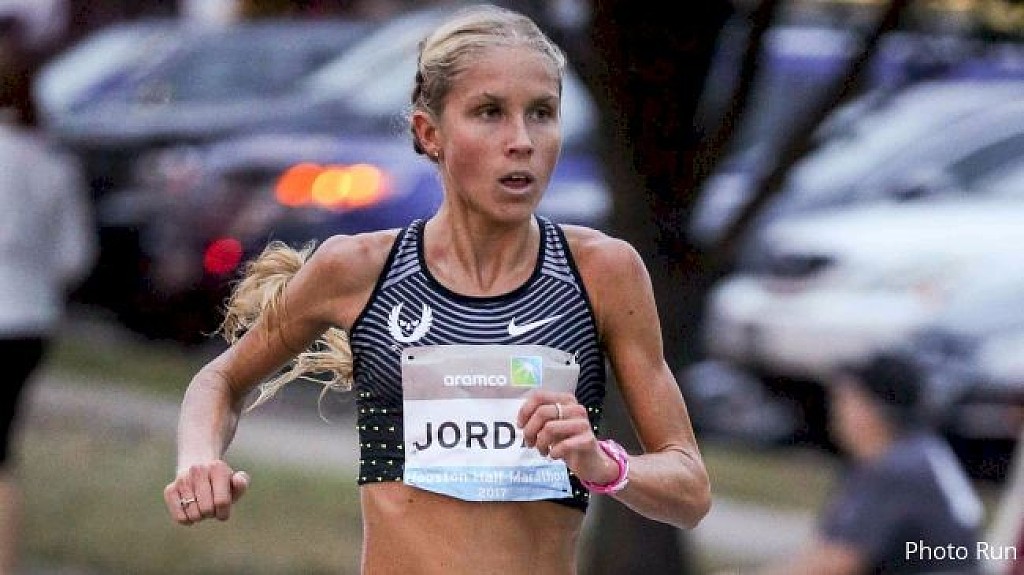
48th Edition of Credit Union Cherry Blossom Ten Mile Run to Feature Strong Men’s and Women’s Fields
It has been a long time coming — too long — and America’s finest distance runners are eager to toe the starting line at the 2021 Credit Union Cherry Blossom Ten Mile (CUCB), to be held in our Nation’s Capital on Sunday, September 12. With $26,000 in U.S. championship prize money on offer as well as a $10,000 bonus for an American Record (the bonus will be split if both the male and female break the American records), road racing fans can look forward to hotly contested races among both the men and women.
“It has been nearly two years since the last time the U.S. Ten Mile Championships for men and women were held,” said event director Phil Stewart. “I know a host of talented Americans are eager to take an important middle-distance test as most of them prepare for fall marathons, of which there are plenty, with all six World Marathon Majors events taking place over a six-week period between September 26 and November 7.”
This will be the third time one or more of the USATF 10 Mile Championships have been hosted by CUCB alongside the traditional international competition: the women’s championships were part of the 2013 Credit Union Cherry Blossom Ten Mile, with Janet Bawcom winning the title in 53:28 while placing fourth overall. A year later in 2014, race organizers hosted both the men’s and women’s championships. Christo Landry (46:41) was the first American to cross the finish line—in sixth place overall—while Bawcom repeated as the U.S. women’s champion by placing second overall in 52:12. Both of Bawcom’s times established American records at the time.
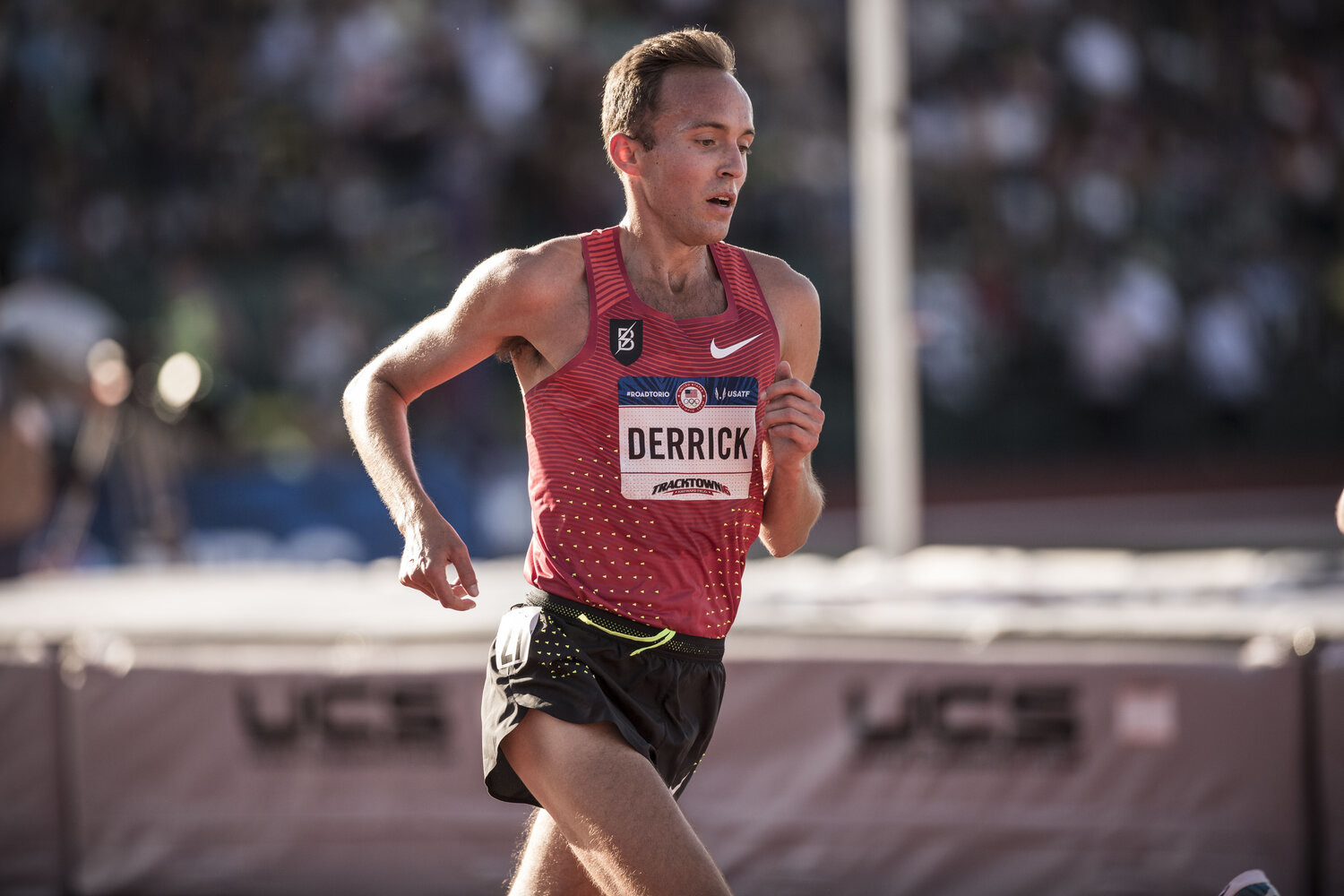
Keira D’Amato broke Bawcom’s American Record last fall at the Up Dawg Ten Mile, running 51:23 in a small invitational race organized by the Cherry Blossom Race Committee specifically for her to chase Bawcom’s record. D’Amato’s effort was recently verified as a women’s only World Record by the Association of Road Racing Statisticians as well. (ARRS is the only organization keeping world records at the 10-mile distance.)
D’Amato will be joined on the starting line by two American women who have broken 53 minutes for 10 miles: Jordan Hasay (52:49) and Emma Bates (52:51). Three other Americans have run 54:00 or faster: Natosha Rogers (53:45), Diane Nukuri (53:56), and Annie Frisbie (54:00).
On the men’s side, Futsum Zienasellassie will be defending the USATF 10 Mile Championship he won in Minneapolis in 2019 (the last time American runners competed for this title, thanks to Covid-19). His winning time of 46:55 is one of four sub-47:00 marks among the American men entered in the race. Chris Derrick boasts the fastest personal best (46:53), which he ran at CUCB in 2018 when he was top American and fifth overall. Abbabiya Simbassa ran 46:57 to place second behind Zienasellassie in Minneapolis in 2019, and Kiya Dandena ran 46:58 in 2017 at CUCB. The current pending men’s American record is 45:54 set by Galen Rupp last fall. Rupp’s time bettered Greg Meyer’s time of 46:13 from the 1983 Cherry Blossom Ten Mile.
Here’s a complete listing of elite American athletes who have confirmed their entry into the 2021 Credit Union Cherry Blossom Ten Mile, with personal bests noted in parentheses:
Women:
Keira D’Amato (51:23)
Jordan Hasay (52:49)
Emma Bates (52:51)
Natosha Rogers (53:45)
Diane Nukuri (53:56)
Annie Frisbie (54:00)
Bria Wetsch (54:14)
Susanna Sullivan (54:22)
Bethany Sachtleben (54:42)
Grayson Murphy (54:51)
Carrie Verdon (56:57)
Danielle Shanahan (31:22.9 10K)
Amy Davis (32:13 10K)
Abbie McNulty (33:07 10K)
Stephanie Bruce (1:09:55 half marathon)
Nell Rojas (1:10:45 half marathon)
Men:
Chris Derrick (46:53)
Futsum Zienasellassie (46:55)
Abbabiya Simbassa (46:57)
Kiya Dandena (46:58)
Augustus Maiyo (47:05)
Elkanah Kibet (47:15)
Girma Mecheso (47:22)
Noah Droddy (47:28)
Louis Serafini. (47:35)
Emmanuel Bor (47:39)
Reed Fischer (47:50)
Shadrack Biwott (47:53)
John Raneri (47:53)
Tyler McAndless (47:56)
Dhruvil. Patel (48:37)
Frank Lara (48:37)
Joel Reichow (48:41)
Alex Monroe (48:57)
Willie Milam (49:10)
Robert Brandt (27:39.2 10K)
Brendan Gregg (44:25 15K)
Reid Buchanan (44:40 15K)
Emmanuel Roudolff (1:04:08 half marathon).
by Running USA
Login to leave a comment

Cherry Blossom Ten Mile Run
The Credit Union Cherry Blossom is known as "The Runner's Rite of Spring" in the Nation's Capital. The staging area for the event is on the Washington Monument Grounds, and the course passes in sight of all of the major Washington, DC Memorials. The event serves as a fundraiser for the Children's Miracle Network Hospitals, a consortium of 170 premier...
more...
Hunter and Davis are officially melting the Internet: Hunter on Instagram - They said I’d never walk, So I learned to run instead!
#TeamUSA long jumper Tara Davis & Paralympic athlete Hunter Woodhall are officially melting the Internet!! I hope they both win gold in the #TokyoOlympicGames!! 🇺🇸 Posted Gary Allen on FB.
After two-time Paralympic medalist Hunter Woodhall ran a season-best 11.04 seconds in the 100-meter T62 sprint at the U.S. Paralympic Team Trials for Track and Field on June 18 in Minneapolis, he picked up his phone and FaceTimed his girlfriend immediately upon stepping off the track.
Tara Davis was already on the other side of the country, preparing for the long jump competition at the U.S. Olympic Team Trials in Eugene, Oregon. Woodhall and Davis, who train at the University of Arkansas and University of Texas, respectively, are accustomed to regular FaceTime calls at all moments in time to keep their long-distance relationship strong.
In Tokyo, Woodhall is expected to compete in both the 100 and 400; at the last Paralympic Games in Rio he won silver in the 200 and bronze in the 400. While he’s no longer competing at the NCAA level — he turned pro in January — he’s still training with the Arkansas team, having adjusted his schedule to peak at Trials and the Games as opposed to indoor and outdoor collegiate nationals.
Davis was competing in her second Olympic Trials after finishing 19th in the long jump in 2016. She has held the American junior record in the event since 2017 and earlier this season broke Jackie Joyner-Kersee’s collegiate record set back in 1985.
Davis is also No. 2 at the junior level in the 60-meter hurdles.“I can't put into words how I'm feeling right now, there just are so many emotions,” Davis said to the website of the University of Texas, where she was an NCAA indoor and outdoor national champion.
“I say it all the time, I didn't think I was going to be here. I was going through so much I just didn't ever think I was going to be at the Olympic Trials. But here I am, and I was so grateful for the opportunity, and I took advantage of it.
”The couple, both 22, have been chronicling their journeys in their own YouTube channel, and Woodhall, a TikTok star who has more than three million total social followers across all his platforms, has been profiled by the likes of the New York Times and “The Ellen DeGeneres Show.
”The first double amputee track and field athlete to have earned a Division I athletic scholarship insists there will be as many reasons to follow the Para track and field athletes like himself in Tokyo, as the Olympic athletes like Davis.
“The biggest reason to tune in is because of the stories that come along with the Paralympics — things that people have had to fight through and go through just to be here,” he said.
“At the end of the day we are all humans and all in the same field. If people can come out here and compete after the things they’ve gone through and still be chasing their dreams, that shows that everyone’s on the same level.”
Login to leave a comment
What’s It Like to Run Ahead of Des Linden for 50K? Her Pacer Can Tell You
Charlie Lawrence had the task of keeping the marathoner hitting her splits for 31 miles.
Des Linden is a master of marathon pacing—that’s no secret at this point in her career.
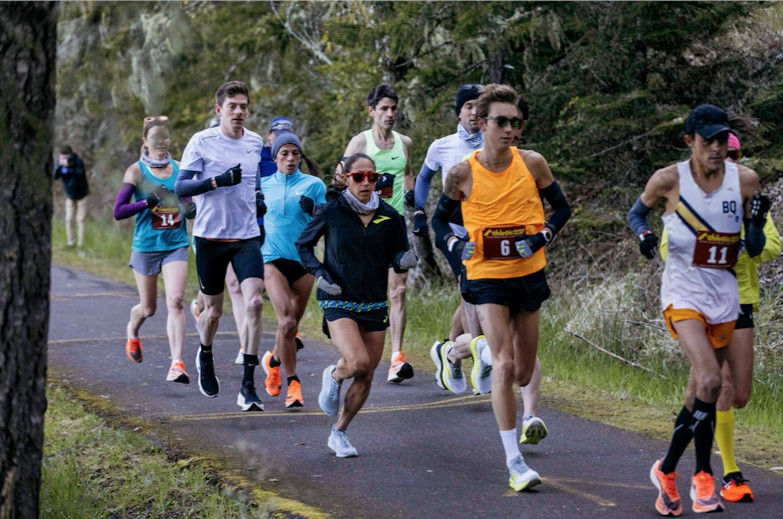
But for her first 50K—on a deserted bike path alongside Dorena Lake outside of Eugene, Oregon—the scene was different. She had no competitors, no screaming fans, and she was running almost 5 miles longer than the distance she usually races. Plus, she was making a world record attempt.
For that, she brought in a pacer.
Who was the guy? His name is Charlie Lawrence, he’s 26, and he lives in Boulder, Colorado. Lawrence, who ran at the University of Minnesota, made his marathon debut in 2018 at Cal International, where he ran 2:16:13 and qualified for the 2020 Olympic Marathon Trials. He got to know Linden when he was running for Hansons-Brooks Distance Project, Linden’s former team, in Michigan. 

In Boulder, Lawrence works part time for a Minneapolis-based app development consulting company and is training for the U.S. 50K road championships in June. (A win there would give him an automatic berth on the U.S. team for the world 50K championships in October in Chinese Taipei.) So when Josh Cox, Linden’s agent, called Lawrence in March and asked if he would be interested in pacing her, Lawrence was excited to be a part of it, and get a solid training run in at the same time.
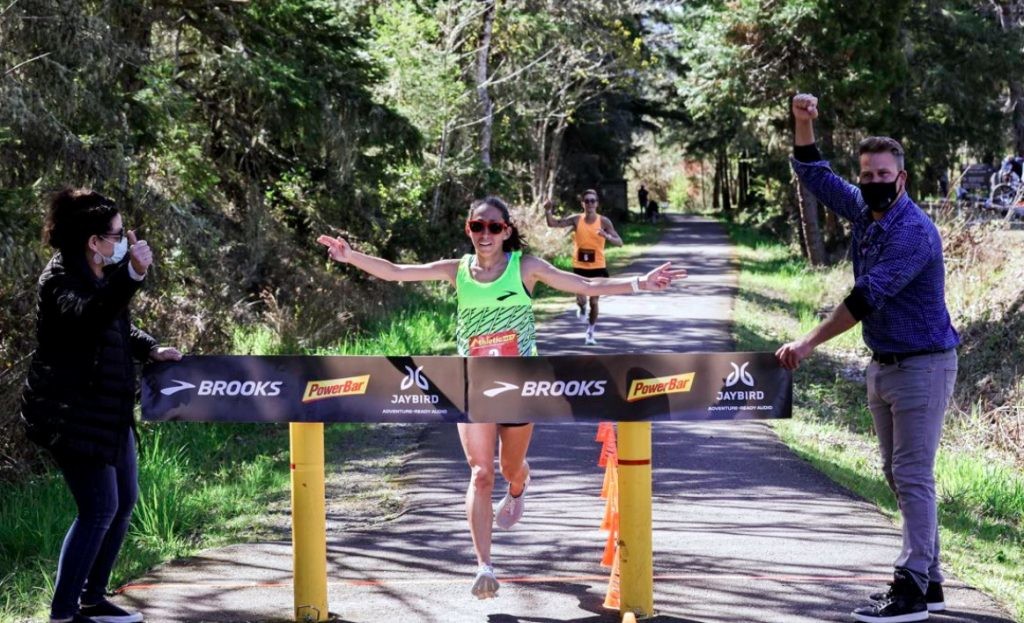
By now, the results are well known. Linden, 37, ran 2:59:54 and lowered the world best for 50K by more than 7 minutes. She also broke the three-hour barrier.
“Charlie is a such a great guy,” Linden told Runner’s World after the race. “I’m not a big fan of pacers but I knew he’d be great at the job and absorb a lot from the experience. Plus, I knew I could hang out with him for three hours and not get irritated.”
Linden added that they didn’t chat much but they worked well together. “Having him as a bit of a moving target late in the race was definitely what got me under 3.”
Lawrence answered a few questions from Runner’s World about what it was like to be there every step of the way.
Runner’s World: How did this come about?
Charlie Lawrence: It was January 2021. Des and I were just texting about what’s on the calendar this year, with so many things gone because of Covid. She said, off the record, “I think I want to go for the 50K world record.”
The biggest thing on my calendar was I wanted to try to make the U.S. team for the world 50K champs. I told Des that if I can help in any way, I’d love to help. She said, “Absolutely, we’ll follow up.”
About a month ago, I was down in Scottsdale, Arizona, for a race, and Des was there. We were talking about it and she said it was going to be mid-April. The next week Josh texted me and let me know that if I wanted to do it, I’ve got first dibs.
I went to Cory Leslie, my coach. He said it makes sense—it’s eight weeks out from the U.S. 50K road champs. I could get an awesome long run in, and learn from Des and practice bottles and fluids. It was a perfect storm to help a friend and mentor break a world record.
I have run with Des a handful of times in the past few years, but to be honest, we have probably had more coffee and beer together.
How did you work out where you would be running?
It was myself and Ryan [Linden, her husband] helping pace her. I was off her shoulder. It was very calm at the start. She said, “Run at the side, it feels easier and more natural.” That’s what we did the whole way out to the first turnaround. At 15 or 16 miles, the wind picked up a bit. It was swirling. There was a cross wind, so I went to either side of her, depending on which side the wind was coming from. When it was a headwind, I’d get in front of her.
I was getting the splits on my watch and I’d say, “5:45—right on the money,” just talking to her. There was a mile early on that was 5:38. I was like, “All right, we’ll dial it back. We just need to be running 5:45, 5:50.” She goes, “Yup, sounds good.”
Were you nervous at all heading in?
It was more like nervous excitement. Let’s do this thing. It was a cool opportunity for Des. My strong suit is I’ve been able to string together some awesome long runs, some 25-milers, sub-5:40 pace, at altitude. That’s the reason why I’m going for 50K. And this was a chance to get an awesome workout in and help Des achieve a goal of hers. I knew I could handle it. The pressure was just on me to do everything I possibly could to help Des break the record.
We had a pace goal going into the race, so the goal was to be as even as possible and just click off splits as close to that goal. Coach Drenth [Walt Drenth, Linden’s coach] gave Des splits he thought she could run. Josh talked us though some pacing as well. [Linden ended up averaging 5:47 pace.]
Did she hit any rough patches?
She was definitely feeling it a little bit the last 5K. I felt kind of bad, in the last two miles, I was out in front of her, and I got a few too many steps in front of her. Instead of 5 feet it was about 5 yards. So I said, “Let’s go, Des, finish this, finish this.” She kept it all together just like a pro. She hung together. When we were at about 2:59, she’s was like, “Awesome, let me take it.” I said, “ Finish it off, champ,” and I pulled off. You can see me in some of the photos in the background with my finger pointing, throwing up a one. To be able to play a small role in helping her, it’s one of the biggest highlights in my running career thus far.
Did Des pay you for this?
No, but they covered everything for the trip. After the race was over, we went to The Allison in wine country and stayed up there. They took awesome care of me. I tried paying for stuff and got harassed.
So it was an all-expenses-paid trip to Eugene and wine country and all you had to do was run 50K?
Exactly. Don’t screw up. Let’s get Des a world record.
How did you feel physically after?
The legs feel awesome. I woke up the next day, got an easy hour run in, got some core in. Legs feel like I’m coming off a hard long run in Boulder. My body responds well to it. It’s business as usual. I’m back to training.
Would you have any advice for middle-of-the-pack runners who are pressed into pacing duties?
My best advice to anyone who might pace friends is to absolutely do it. This sport is so great because of the people. What better way to spend time with someone than very high-quality miles, either pacing or just on everyday runs?
by Runner’s World
Login to leave a comment
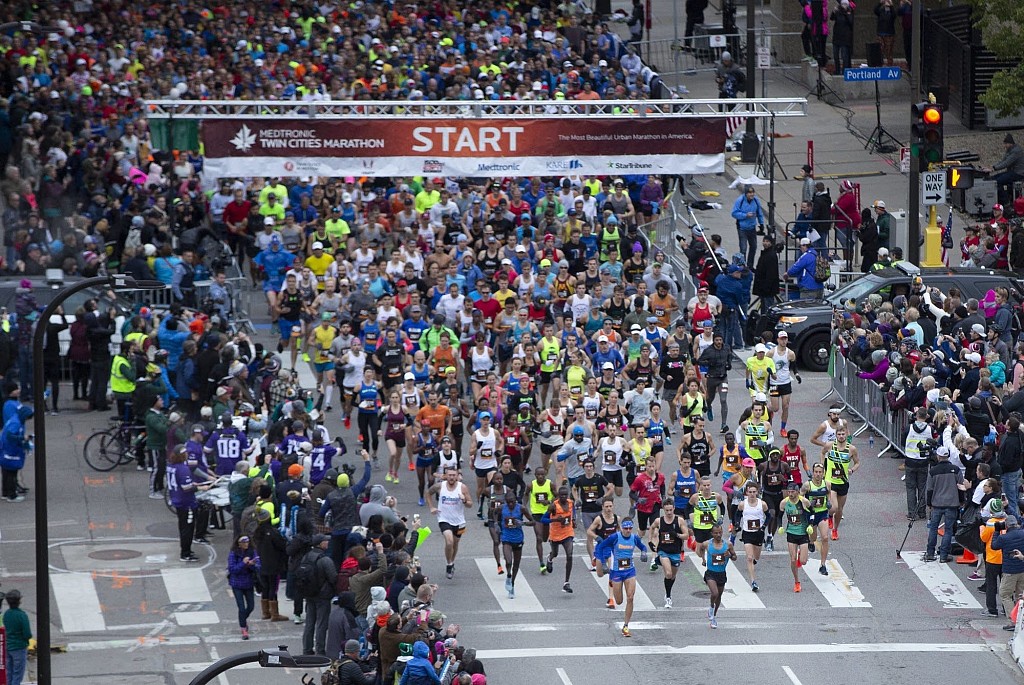
Medtronic Twin Cities Marathon registration opens April 8 to be run in person
The Medtronic Twin Cities Marathon Weekend of Events went virtual only in 2020, but it will return in-person this year on Oct. 2 and Oct. 3.
The Medtronic TC Family Events will take place on Saturday, October 2, and the weekend will conclude with the Medtronic Twin Cities Marathon and TC 10-Mile races. Those races run from downtown Minneapolis to the State Capitol in St. Paul, on Sunday, October 3. To register, you can visit Twin Cities in Motion’s webpage starting at 10 a.m. on Thursday, April 8.
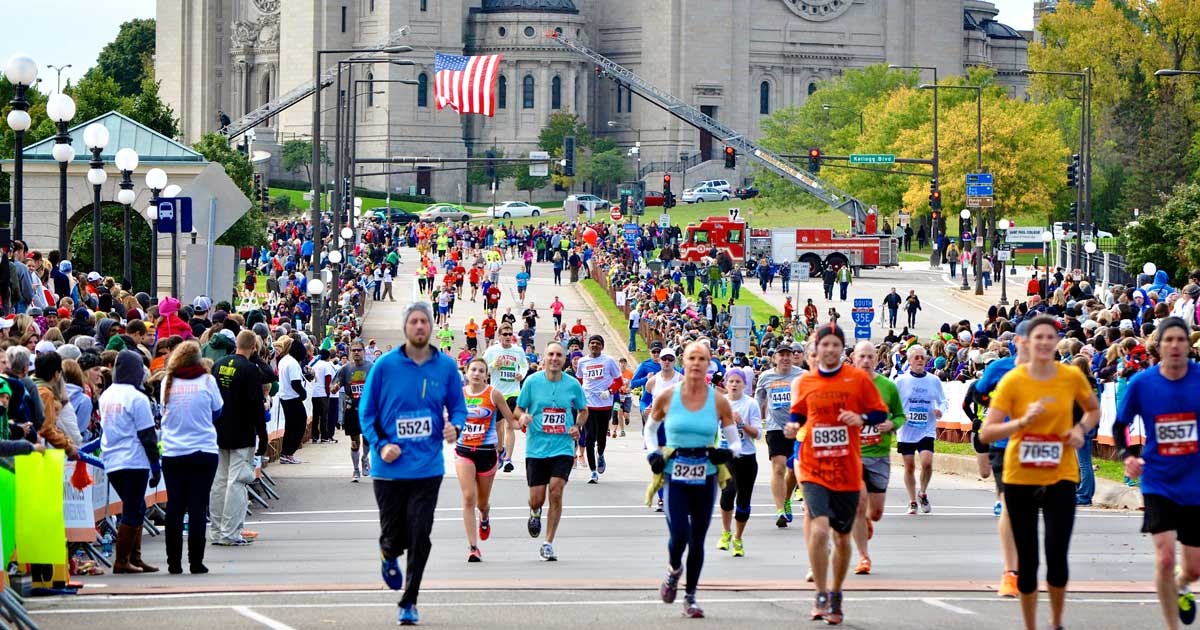
Twin Cities in Motion has partnered with experts and officials to build an event that’s COVID-safe. Virtual races are included as well for those who prefer the option. All 2021 Medtronic Twin Cities Marathon Weekend events will have limited field sizes. The marathon is currently limited to 4,000 in-person registrants.
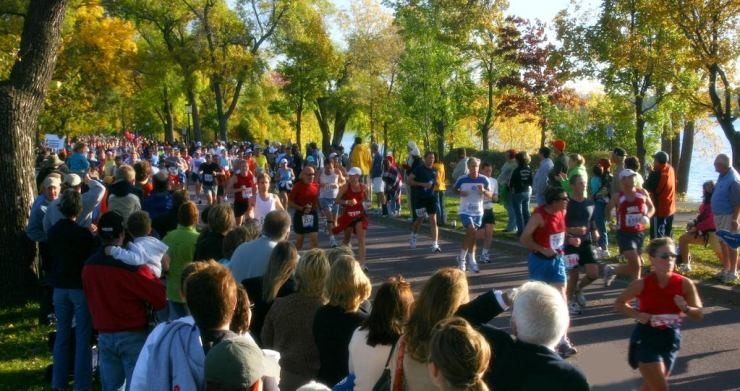
If the event is cancelled due to COVID-19, a partial cash refund policy will be in place. For more information on safety precautions, see here.
Get the Twin Cities in Motion app for pro tips, free Runcoach training, and helpful content for free virtual check-in races to gauge your progress and prepare you for the race.
Registration is also open for the Earth Day 8K, presented by Everlight Solar on Sunday, April 25 at Lake Como, the Spring into Summer 5K, presented by LX Medical on Saturday, May 22 at Lake Phalen and the Summit Triumphant 5K and 10K on Saturday, June 26, at Bde Maka Ska.
KARE 11 is proud to be the official media sponsor for the Medtronic Twin Cities Marathon Weekend and the presenting sponsor for the KARE 11 Family Mile.
by Sonya Nayar
Login to leave a comment
Medtronic Twin Cities Marathon
The Medtronic Twin Cities Marathon Weekend offer races, walks and activities for every age and ability level! Learn more about the weekend's events and activities by using the navigation bar at the left or top of your screen. The Twin Cities Marathonis a running event in the Minneapolis-Saint Paul area. The TCM was first run in 1982, and typically takes...
more...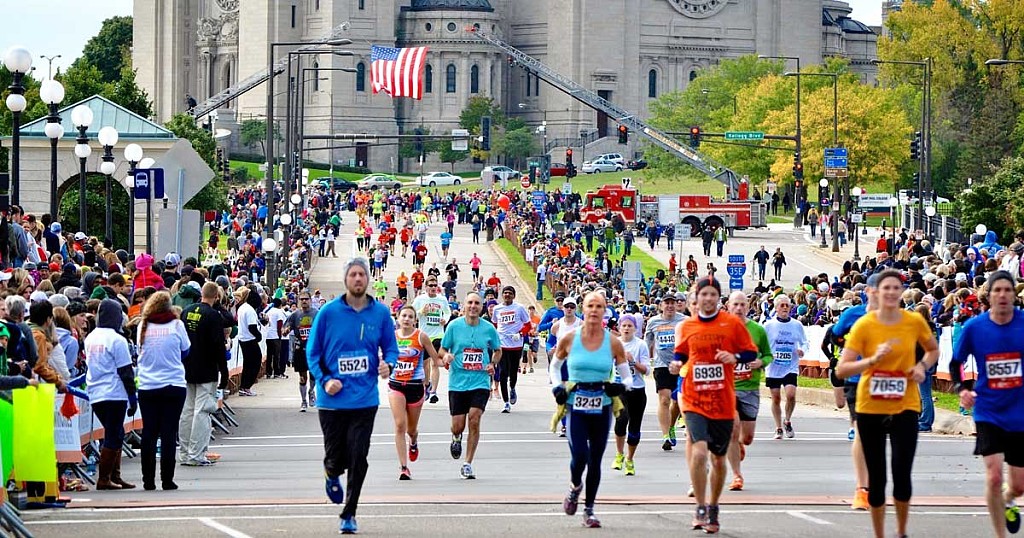
Covid-Safe Medtronic Twin Cities Marathon Planned for October 3
The 2021 Medtronic Twin Cities Marathon is scheduled to take place as a reduced-size, COVID-safe event on Sunday, October 3, race organizer Twin Cities In Motion announced. The race, which was cancelled last year due to the pandemic, will limit marathon participation to 4000 runners, and COVID-safety measures will be in place throughout the event.
Registration for the 2021 marathon and other Medtronic Twin Cities Marathon Weekend events will open on Thursday, April 8. The marathon race runs from downtown Minneapolis to the State Capitol grounds in St. Paul.
“We’re optimistic about our ability to host an in-person event this fall,” Twin Cities In Motion Executive Director Virginia Brophy Achman said. “Our team has consulted medical and crowd science experts and worked closely with relevant public agencies to get to this point. That work will continue until race day as we properly calibrate the event to this fall’s public health situation.”
Participants can expect to see changes in the event from previous editions. While plans will be modified to match conditions later in the year, Twin Cities In Motion is telling participants to expect:
• Reduced field sizes in all marathon weekend races
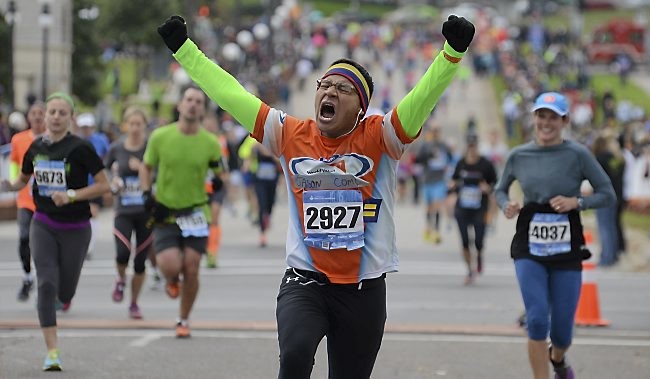
• Mask-wearing requirements except while racing
• Social distancing requirements across the event weekend
• Spectating discouraged and spectator access limited in certain areas
• Reduced touchpoints when possible
“While there will be noticeable differences from pre-COVID days,” Brophy Achman said, “we plan to do all we can to maintain the spirit and energy of the event despite the constraints. The power of the event lies in the thousands of personal achievements that culminate at our finish line, and we’re excited to return those moments to our participants’ lives after all they’ve endured.”
The return of the event to streets of Minneapolis and St. Paul will also reestablish an important fundraising platform for dozens of local nonprofits who use the marathon to raise money and awareness of their organizations. Runners raised more than $1 million at the last in-person edition of the race in 2019.
“The TCM team is pleased to be preparing for an in-person race, because it’s the work we love to do,” Twin Cities In Motion President Dean Orton said.
“But we know the event is an important annual event in our community and we’re excited to be bringing back all the meaningful elements marathon weekend offers – from youth fitness to volunteer opportunities, from economic impact to the unique fundraising platform we offer.”
Registration for the marathon will be conducted online through the Twin Cities In Motion website, tcmevents.org, beginning at 10:00 a.m. CDT on April 8. Registration will also open for the following Medtronic Twin Cities Marathon Weekend events:
• Medtronic TC Family Events
• TC 5K, presented by Fredrikson & Byron P. A.
• TC 10K
Those events take place at the State Capitol grounds on Saturday, October 2. Registration will also open for the TC Loony and TC Ultra Loony Challenges – where runners participate in the TC 5K and TC 10K prior to running either the 10 mile or marathon the following day. The registration drawing for the Medtronic TC 10 Mile held on October 3 will be open in mid-summer.
More than 25,000 runners participated in the 2019 Medtronic Twin Cities Marathon Weekend, including more than 7,000 marathoners and more than 13,000 10 milers.
Login to leave a comment

Medtronic TC 10 Mile
Twin Cities In Motion originated in a grassroots effort to bring the energy and positivity of a community-wide running event to Minneapolis and St. Paul. From the first strides of the inaugural Twin Cities Marathon in 1982 through a rich history that saw the addition of events and programming to serve the community, TCM has inspired and empowered the Twin...
more...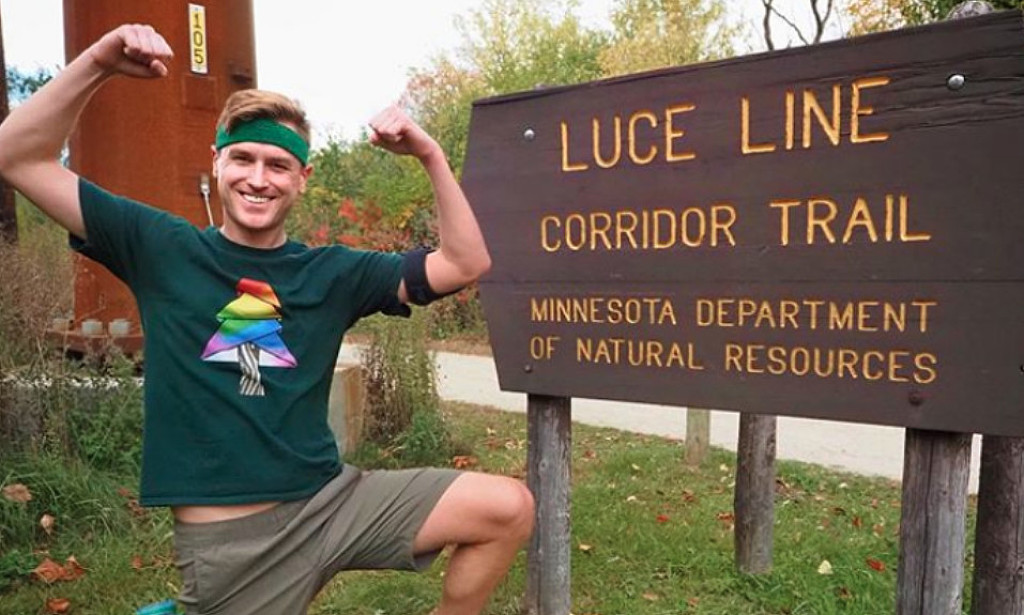
Minnesota man runs cross-state for LGBTQ+ community
Mikah Meyer ran 200 miles across Minnesota to raise awareness for the Outside Safe Space program
Minnesota’s Mikah Meyer recently completed a 38-day, 209-mile (336K) run across his entire state, from the border of South Dakota to the border of Wisconsin. He averaged about 10K a day and spent his nights in a van, all to raise awareness for his project called the Outside Safe Space, a program he created to support members of the LGBTQ+ community. His run didn’t break any records, but it did garner a lot of media attention for the cause, which is extremely important to Meyer (himself a member of the LGBTQ+ community).
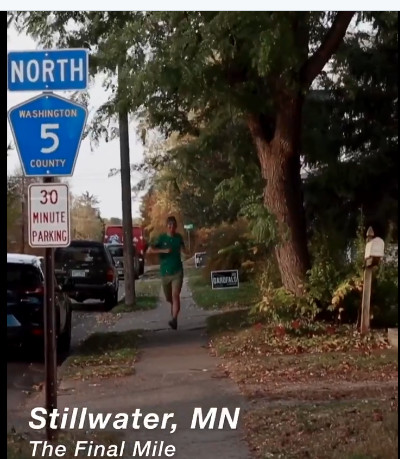
Meyer’s run
In an interview with Fox 9 in Minneapolis, Meyer said he only picked up running a couple of years ago when his doctor said he needed to lose some weight. During the pandemic, though, he said “running has been a godsend” for him, as it was one of the only activities he could keep up when everything in the U.S. was shut down. It was on these early-pandemic training runs that he came up with the idea for a cross-Minnesota adventure. He was actually inspired by Terry Fox, which he noted while talking with Fox 9.
“I thought, ‘Maybe I can use my profession, my privilege and my platform to do something to help other people.'” Like Fox, he decided on a long run, and although he didn’t run as far as the Canadian icon did in his Marathon of Hope, the run across Minnesota was still a big project. Meyer said he wasn’t used to running as much as he did while on the road, and his daily average of about 10K was far more than his usual 11K every couple of days when at home. Still, he added that “the easiest part of my journey is the running.” The hardest part was the planning, he said, including where he would park his van to sleep each night, organizing each day with his support crew and promoting the Outside Safe Space. After 38 days on the road, Meyer completed his run on October 11.
The Outside Safe Space
“So often when LGBTQ people leave urban centres,” Meyer told Fox 9, “places where we are often accepted and appreciated, we go out into rural areas, we go out into the outdoors, and it’s less likely that we feel safe or we feel welcome.” After a years-long journey across America to visit all 419 of the country’s national parks in one trip, the outdoors are a big part of Meyer’s life, so he wants to help make these rural areas feel more welcoming for LGBTQ+ people. His plan to make this possible comes in the form of a rainbow-coloured tree, a symbol he donned throughout his run.
As he writes on his website, “The Outside Safe Space tree represents welcome to LGBTQ+ people. Whether you’re an ally or identify as LGBTQ+, wearing or displaying this symbol nonverbally communicates your support for folks being their authentic selves in rural and outdoor places, and outside traditionally welcoming spaces.”
To learn more about Meyer and the Outside Safe Space program, click here.
by Running Magazine
Login to leave a comment
How to train safety for marathon season during the pandemic
With less access to gyms and people sitting for longer stretches as they work from home, many runners are experiencing more aches and pains than usual, says Jordan Metzl, a sports medicine physician at the Hospital for Special Surgery in New York.
Here, experts weigh in on how to stay motivated and get across the virtual finish line injury free:
Create a support network.

Remember, you won’t have water stations every mile and frequent aid stations like you would during a live marathon. “You should map out your course and leave supplies like water bottles, energy chews and Vaseline at different points,” says Cristina Martello, a physical therapist and running-analysis specialist at SPEAR Physical Therapy in New York City. She also suggests stashing extra masks with supplies. “Most sportswear companies make masks that are less constrictive, more breathable and they can stand up to the condensation from heavy breathing,” she says.
Aaron Mares, associate medical director for the Pittsburgh Marathon, emphasizes the importance of sharing your route with someone or using a buddy system while still following local and state social distancing guidelines.
Use the virtual format to your advantage.
Most marathons require runners to rise before dawn to arrive at the starting line, which can be tough if you aren’t a morning person, notes Chad Asplund, professor of family medicine and orthopedics within the sports medicine division at the Mayo Clinic in Minneapolis. “One positive of the virtual format is that you can choose a time that works best for you,” he says. “Having a window of days also gives you more flexibility with weather. If it’s raining or really hot the day you planned to run, there’s no penalty for postponing.” Dr. Asplund also points out that many traditional marathons ban headphones, so while there won’t be crowds, at least runners can listen to their favorite playlist.
Listen to your body more than your training program.
Most typical marathon-training plans are 16 to 20 weeks. If you’re struggling with 6 miles and your plan has you jumping to 15, consider scaling back, Dr. Mares says. “A lot of us are out of our normal routines and deconditioned,” he says. “Don’t beat yourself up if you feel sore at Mile 8 of a 12-mile run when in past years you normally wouldn’t have problems.”
Brett Toresdahl, research director for the Hospital for Special Surgery Primary Care Sports Medicine Service in New York, says in general that soreness that goes away with warming up and within the first mile of a run is OK. “If there is pain that gets worse throughout the course of a run and causes a runner to limp or change how they run, that should be seen by a sports medicine specialist,” he says. Many physical-therapy clinics are open or offering telemedicine.
Don’t neglect cross-training.
“The biggest mistake people make is thinking as long as they get their long runs in they’ll be able to get through 26 miles,” Ms. Martello says. “Half the battle is doing shorter runs and cross-training.”
Dr. Asplund says if you’re short on time, it’s better to skip an easy run day and focus on strength. “Runners are great at going straight ahead,” he says. “Injuries arise when the gluteus medius and external hip rotators are weak. These are the muscles that stabilize the pelvis.” Try this workout to build hip stability.
Embrace recovery days.
Runner’s bodies tend to break down two to four weeks before race day, Ms. Martello says. Typical overuse aches and injuries include shin splints, patellofemoral pain (also known as runner’s knee) and Achilles and hip flexor tendinitis, she says. “The best way to prevent these aches from sneaking up on you is to put a lot of stress on recovery days,” she says. Recovery days should include icing, self-massage, like foam rolling, and mobility work and stretching. And if you’re feeling pain, take a day off, she says.
Take your taper weeks seriously.
Some people find it challenging to cut back after working up to big miles. But the marathon taper, a gradual decline in mileage that typically starts two weeks before the event, prepares the body to be at its peak on race day, Ms. Martello says. “This isn’t the time to sneak in miles you missed or bang out heavy squats,” she says. She suggests combining short runs with dynamic warm-up exercises such as monster walks and walking knee hugs to help keep the muscles fluid.
by Jen Murphy
Login to leave a comment
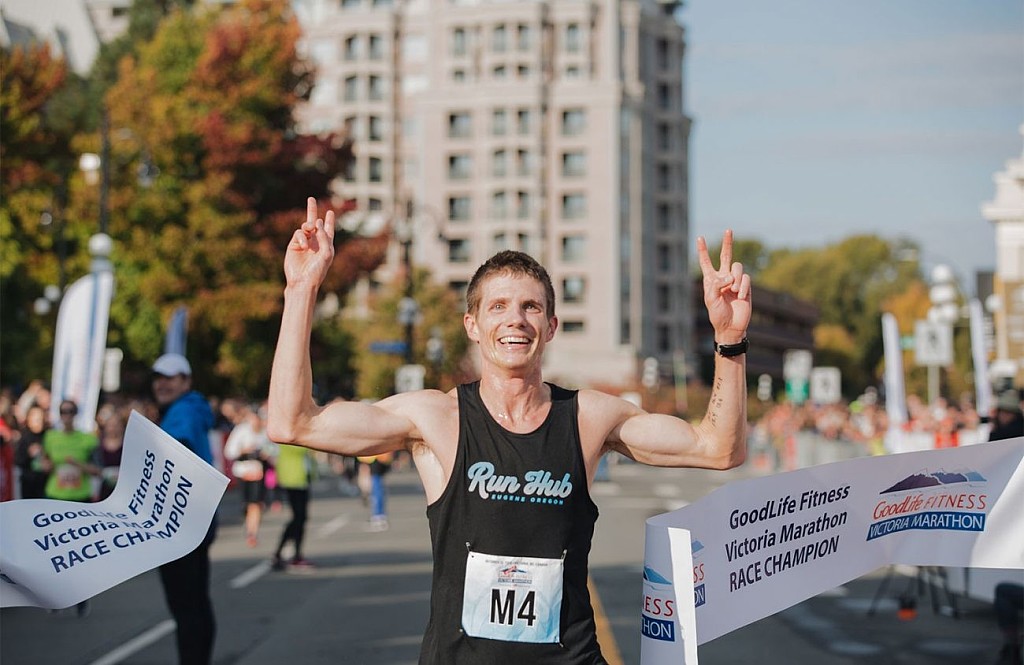
Eric Finan is dealing with a broken toe, heading for the 2020 Olympic trials
The injury is the result of a mountain bike incident, but it sounds like only a minor setback for his training to run the marathon in the 2020 Olympic trials in Atlanta, Georgia, on Feb. 29. He’s optimistic that he’ll soon be running 100 miles a week again.
Finan has made many major life decisions based on running, and when he runs at the trials on Leap Day, he’s accomplishing a goal that he once thought had disappeared years ago.
Before moving to Eugene in 2015, Finan attended University of Cincinnati because he wanted to pursue engineering while also running in a competitive collegiate conference. After graduating in 2012, he wanted to run in a post-collegiate group, but because he was injured during the last part of his fifth season, he says those running groups didn’t want him.
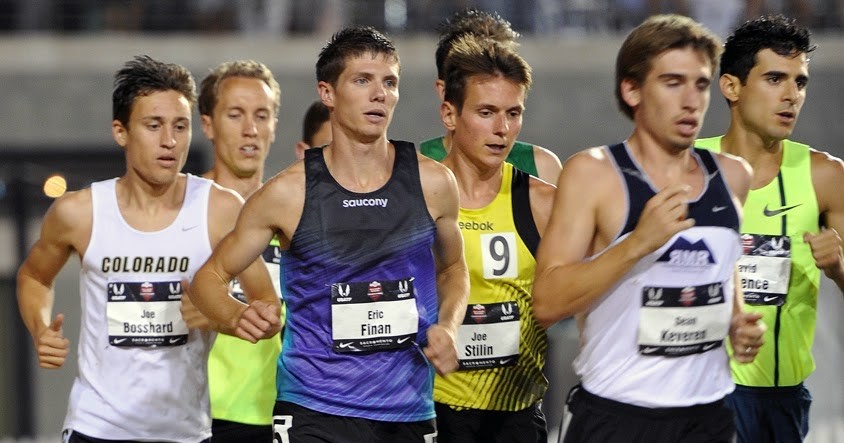
He worked in Cincinnati for a year and got healthy. In 2013, he ran the U.S. Half Marathon Championships in Minnesota, finishing in 1:04:42. He attracted the attention of Team USA Minnesota, so he moved to Minneapolis to run with the group.
But after again suffering some injuries from the higher-intensity philosophy of the coach there, Finan says he decided to run with Team Run Eugene, so he looked for work in the area.
Today, Finan is coached by Tim Sykes, who was a volunteer assistant coach at the University of Oregon before moving to Western Kentucky University for a full-time coaching job.
A self-described realist, Finan says he’s not expecting to make it in the top three on the U.S. team that would compete in Tokyo. Judging by the results from the 2012 Olympic trials in Houston, to make the team he’d need to finish under 2:10 — meaning he’d have to run a 5-minute pace.
He’s setting the bar at a top-25 finish, but he’s not necessarily running the trials to make the team. It’s about completing promises he made to himself while in high school.
He set two life goals then: to run a 4-minute mile and run in the Olympic trials. He completed the first goal, but missed the second goal in 2016 by seven seconds and didn’t make the trials for the 5k event.
Finan says he was devastated that he didn’t make the trials. He didn’t run for a few months and drank and ate to excess.
“I had my mind set on the trials. I had my heart set, my body, my soul to compete in the Olympic trials,” he says. “I believed it in my entire being that this thing was going to be true.”
He adds that he took it as a given that he would be running in the trials and was already thinking about preparing himself for the actual race. “I was crushed, and I was definitely depressed,” he says about missing the cutoff time. “I felt like I had worked so hard — for what?”
After taking a few months off from running — the longest non-injury break he’d ever taken — he talked with some friends and hit the pavement running again. It was a rough first month back because he hadn’t treated his body well during that break, he says.
About 12 weeks of training later, thanks to a dedication to weight training and years of high-volume running, he made his marathon debut at California International Marathon in Sacramento, finishing at 2:17:51.
The result meant that he could — after missing trials in the 5k — satisfy that other running goal he established for himself. He returned to Sacramento in 2017, finishing the race at 2:16:42, qualifying to compete in the U.S. Olympic Trials.
by Henry Houston
Login to leave a comment

2028 US Olympic Trials Marathon
Most countries around the world use a selection committee to choose their Olympic Team Members, but not the USA. Prior to 1968, a series of races were used to select the USA Olympic Marathon team, but beginning in 1968 the format was changed to a single race on a single day with the top three finishers selected to be part...
more...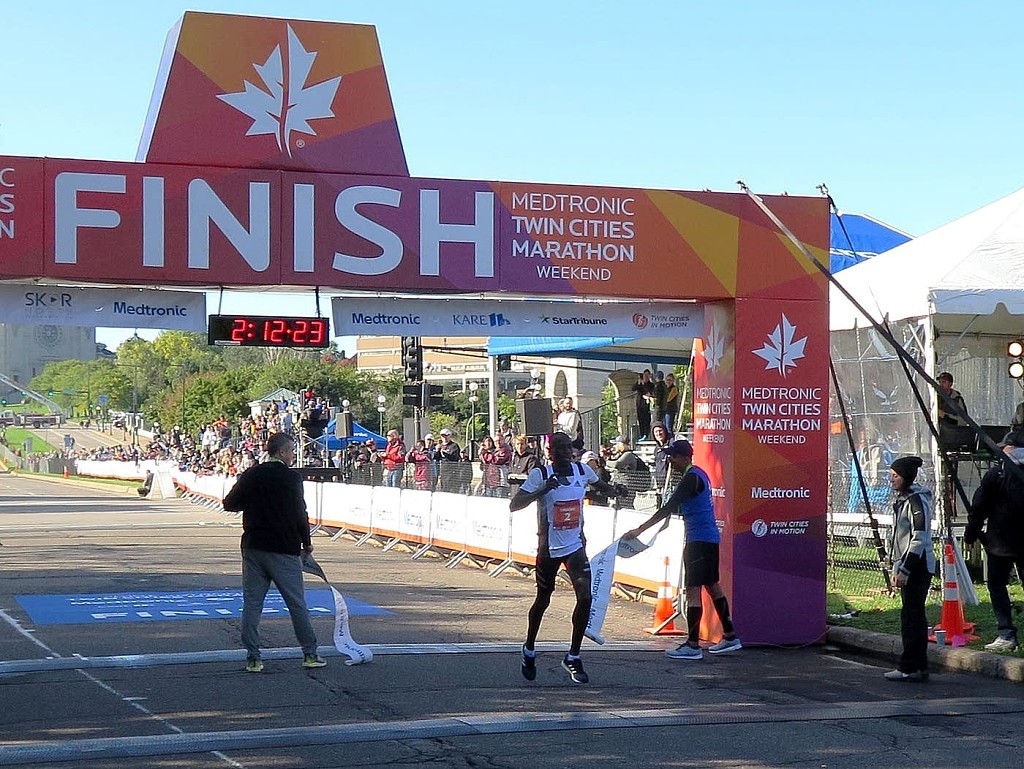
Dominic Ondoro of Kenya won the Medtronic Twin Cities Marathon on Sunday for a record-breaking fourth time
Dominic Ondoro of Kenya won the Medtronic Twin Cities Marathon on Sunday for a record-breaking fourth time, unprecedented in the 38-year history of the race from Minneapolis to St. Paul.
Ondoro, who also holds the record for fastest time in the race, came in at 2 hours, 12 minutes, 23 seconds.
Two Minnesotans finished the race in the top three: St. Paul native Danny Docherty, now of Minneapolis, came in third in the men’s race in 2:15:55. In the women’s race, Dakotah Lindwurm of Burnsville placed second in 2:32:49.
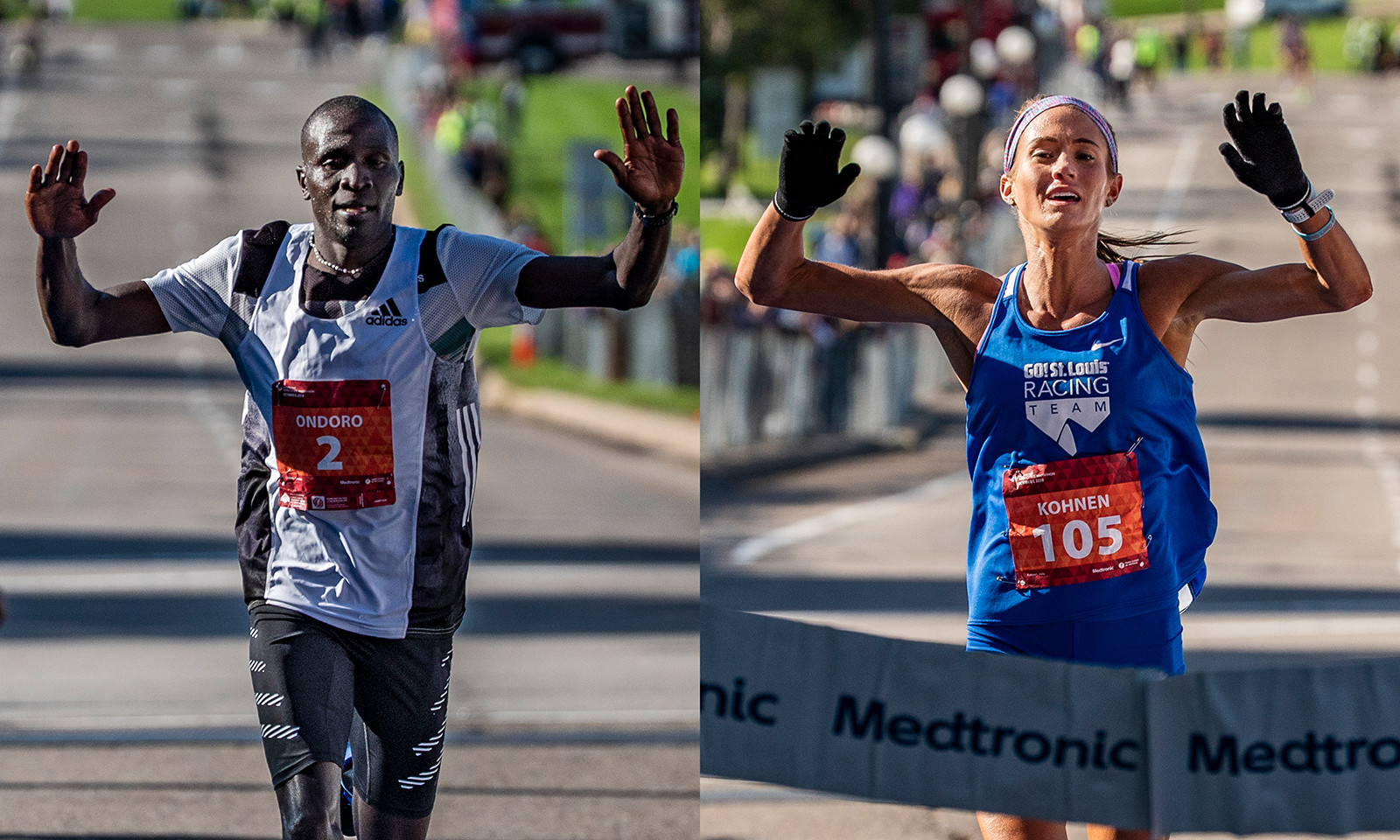
In the men’s race, Denis Chirchir of Kenya was second in 2:13:50.
Julia Kohnen of Florissant, Mo., won the women’s race in 2:31:29. Coming in third was 2014 Medtronic Twin Cities Marathon runner-up Heather Lieberg at 2:34:07.
In a press release sent out by event organizers, Ondoro, who has won the marathon four times in five attempts, including 2015, 2016 and 2017, said he had hoped to break his record but his back “rebelled.”
“I was running easily, but around 20K, I felt something in my (lower back), so no record,” he said. “I hope next year I can try my best. It’s exciting. I like the way the people here interact with us. They cheer us very well.”
Kohnen was pleased to win her first Twin Cities race, saying, “It’s a really good feeling to have a fast time under my belt now. The weather plays a huge factor, and we couldn’t have gotten luckier today. It’s so fun; the neighborhoods are absolutely gorgeous.”
Login to leave a comment
Medtronic Twin Cities Marathon
The Medtronic Twin Cities Marathon Weekend offer races, walks and activities for every age and ability level! Learn more about the weekend's events and activities by using the navigation bar at the left or top of your screen. The Twin Cities Marathonis a running event in the Minneapolis-Saint Paul area. The TCM was first run in 1982, and typically takes...
more...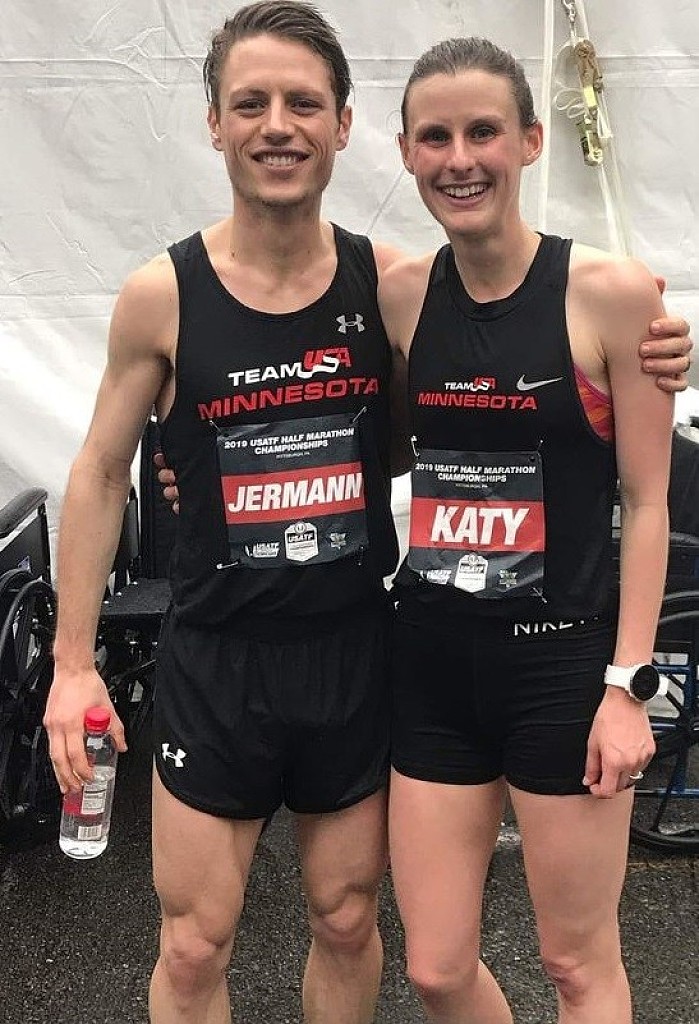
Katy and Tyler Jermann got married last summer, they train together and now are set to Run the Faxon Law New Haven 20K
They are on the same running team in Minnesota. They run the same races. They are a little competitive with each other.
“We get a little competitive with our times,” Tyler said.
Tyler gives Katy a 35-second-per-mile handicap.
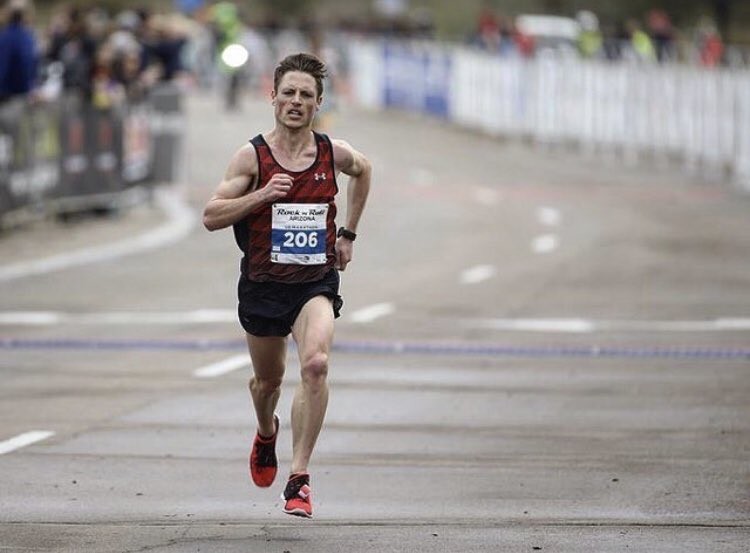
“If it’s anything under a half-marathon, she wins, usually,” he said. “Anything longer, I win.
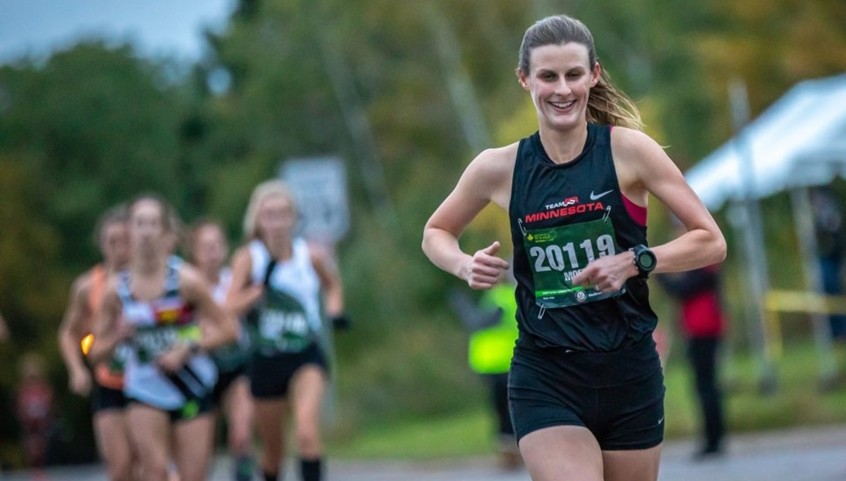
“We’ve been doing it for a year or two. Katy had a big injury two years ago but she’s on the comeback. We had to adjust the conversion. It started off as a minute [per mile] but now it’s not fair anymore.”
So Katy, 27, may have the edge at Monday’s Faxon Law New Haven Road Race, which is the 20K USATF national championship (8:30 a.m. start, New Haven Green).
“I’m usually stronger at the marathon distance,” said Tyler, 27, who won the 50K national championship in 2017. “20K is a bit out of my wheelhouse.”
Both are training for the New York City Marathon in November and both have qualified for the Olympic Marathon Trials Feb. 29 in Atlanta.
Katy qualified in her marathon debut in Houston in January, running a negative split (78 minutes the first half and 75 the second) to go under the “A” standard (2:37) for the trials, finishing in 2:33:41. It turned out to be a great day for the Jermanns as Tyler also ran under the men’s “A” standard (2:15) with a personal best of 2:13:29. Both finished ninth in their respective races.
“It was great,” Katy said. “I loved it. I was very conservative. I wanted to make sure I could walk away from the marathon knowing that I loved it and wanted to do more and felt confident about the distance.”
It was Tyler’s 13th marathon and his fifth attempt at trying to get the “A” standard.
The two met while running at Iowa State, where Katy was a Big 12 champion in the 5,000 and 10,000 meters, but they didn’t really become friendly until after graduation. They reconnected at a training camp in Flagstaff, Ariz., started dating in January of 2017 and were married last summer.
They live outside of Minneapolis and train with Team USA Minnesota.
“We have the same running schedules and the same workouts,” Katy said. “We can do our warmup together with the team. Then he goes and does his run and I do mine.
“It’s neat to be able to share our stories. If I was tired and he was also, it’s nice to have that camaraderie – like it’s normal to feel tired today. It’s nice to go through that together.”
Tyler’s half-marathon personal best is 1:03:31; Katy’s is 1:10:27. She hopes to be in the top three at New Haven. Last year’s winner Sara Hall is the favorite in the women’s field, while two-time men’s winner Leonard Korir is the favorite to win the men’s title. Korir became the first American since 1988 to win the Falmouth Road Race earlier this month.
by Lori Riley
Login to leave a comment

New Haven Road Race
The Faxon Law New Haven Road Race, renowned as the longest-running USATF 20K National Championship, is scheduled for Monday, September 1, 2025 (Labor Day), in New Haven, Connecticut. This event will once again host the Men's and Women's USATF 20K National Championships, attracting elite athletes, including past champions and U.S. Olympians. Participants can choose from various race options, including the...
more...
June 25 would have been Gabriele Grunewald’s 33rd birthday and the state of Minnesota has named June 25 Brave Like Gabe Day
Gabriele Grunewald was initially diagnosed with adenoid cystic carcinoma, a rare form of cancer affecting the salivary gland, in 2009, and thyroid cancer the following year.
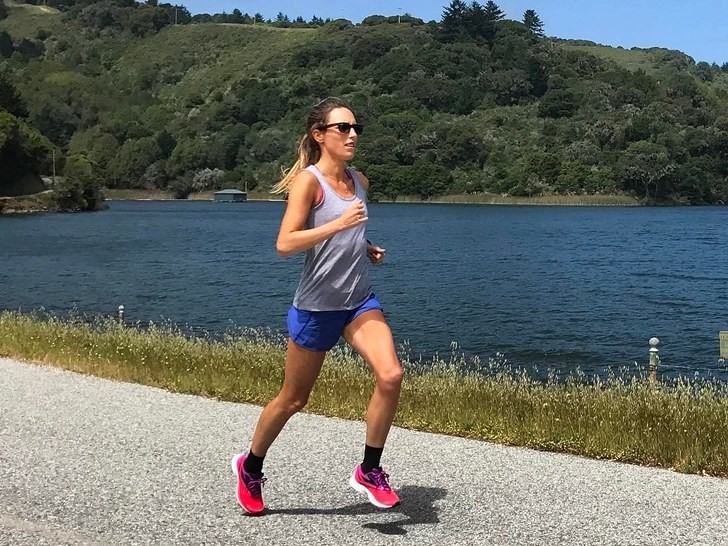
She graduated as an NCAA All-American in the 1,500m, and pursued a professional running career despite dealing with several surgeries and chemotherapy. In 2014, she won the US indoor national championship in the 3,000m. Grunewald was sponsored by Brooks.
In late 2016 she learned the cancer had spread to her liver, and she had an operation that left a long and visible scar on her abdomen, which became a badge of courage as she continued to race and began to speak publicly about her cancer journey.
Two weeks ago Gabe lost her battle and passed away. The world lost an amazing woman but she will never be forgotten.
In her honor runners will gather on Tuesday (June 25) evening at 6:15 pm in B.F. Nelson Park in Minneapolis, Minnestoa to honour Grunewald.
If you’re not able to make the run in person, you can contribute via Strava. So far 6,693 participants have run a collective 8,735 miles.
The Strava challenge is open for the entire day today. Additionally, runners can photograph their runs and use the #BravelikeGabe or #Runningonhope to contribute.
by Madeleine Kelly
Login to leave a comment
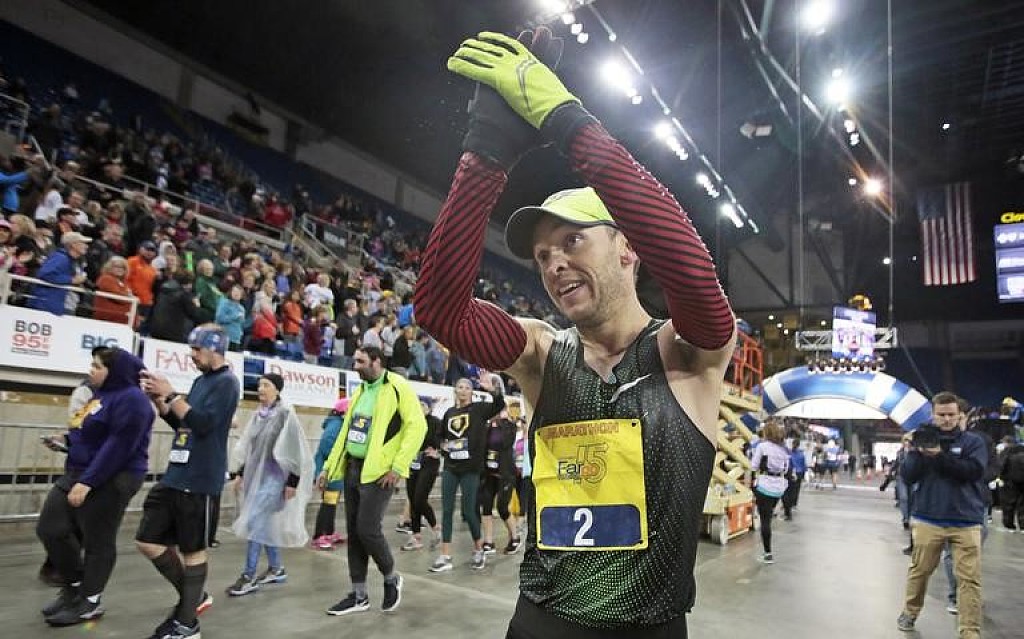
Arturs Bareikis took the lead at 20 miles and went on to win the Sanford Fargo Marathon
After grabbing the lead at about Mile 20, Arturs Bareikis spent the final six miles in the Sanford Fargo Marathon on Saturday constantly looking over his shoulder. There was noone there.
The 32-year-old from Midlothian, Ill., made his third trip to Fargo winning the 15th annual event in 2 hours, 27 minutes, 14 seconds. He placed second in 2014? He was on a mission not to let that happen again.
“I came here to do one thing,” Bareikis said.
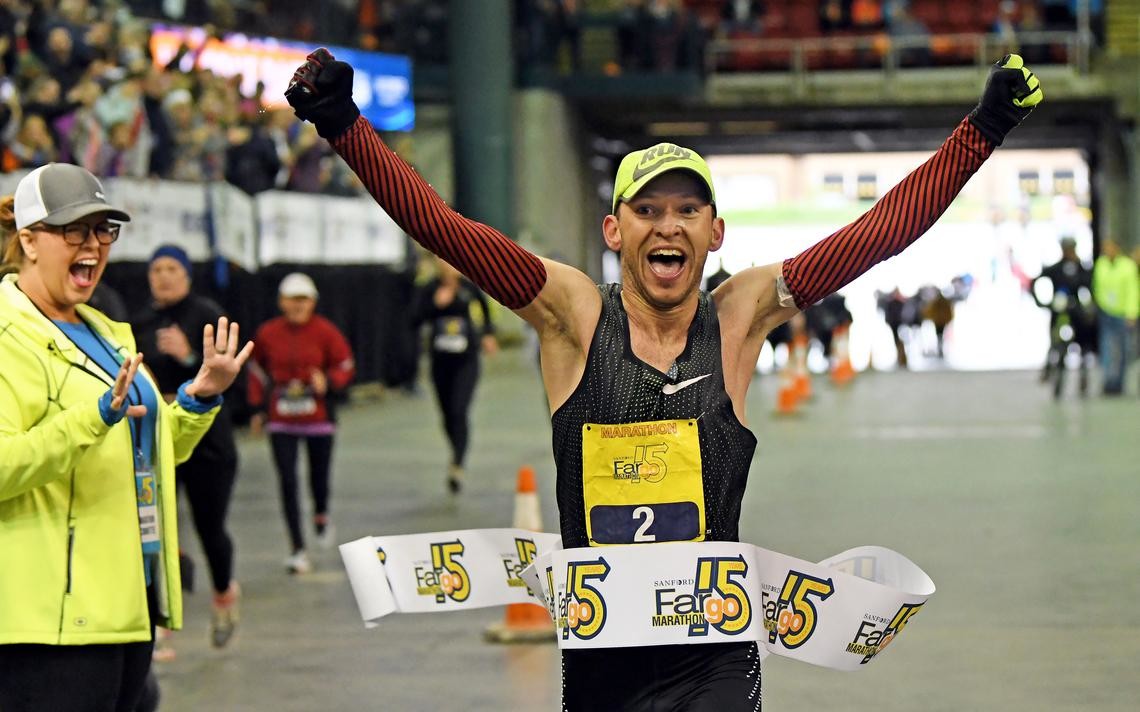
Winning was the only goal. He didn’t wear a watch and therefore wasn’t paying attention to mile splits. It was all about racing with a pack of four from the outset that consisted of defending champion Geofrey Terer, Anthony Kirui of Minneapolis and Garang Madut from Lebanon, Tenn.
Terer and Kirui split from the other two after a few miles. In an oddity, Terer had the solo lead around Mile 9 where he had to stop to tie his shoe. That appeared to solidify the pack again until Bareikis made his break at Mile 20.
“I knew that was going to cost him and he wasn’t going to be able to make that last move,” Bareikis said of Terer having to stop. “I always observe early in the race what people do and I was staying in the back. You only get one real move and I waited for mile 20 to make it. It wasn’t guaranteed but I knew (Friday) I was going to hit it at Mile 20.”
He knew Friday after studying the weather forecast. The race was was run in light rain and wind. Those elements, Bareikis said, played into his favor.
After mile splits in the neighborhood of 5:45 to 6:05, Bariekis ripped off a 5:19 from mile 20 to 21. He was hoping a small cramp that began to develop in his leg didn’t escalate.
“Once you start feeling a cramp, it’s a little bit scary,” he said. But it did not excalate and he went on to win.
by Jeff Kolpack
Login to leave a comment

Fargo Marathon
The Fargo Marathon is a week full of events, The Fargo Marathon is bound to have something for everyone. From the Cyclothon, Furgo Dog Run, Largest Kid's Race, 5K Walk/Run, 10K, Half Marathon, Full Marathon and Relays, there is a distance for all! Start and Finish inside the Fargo Dome - ...
more...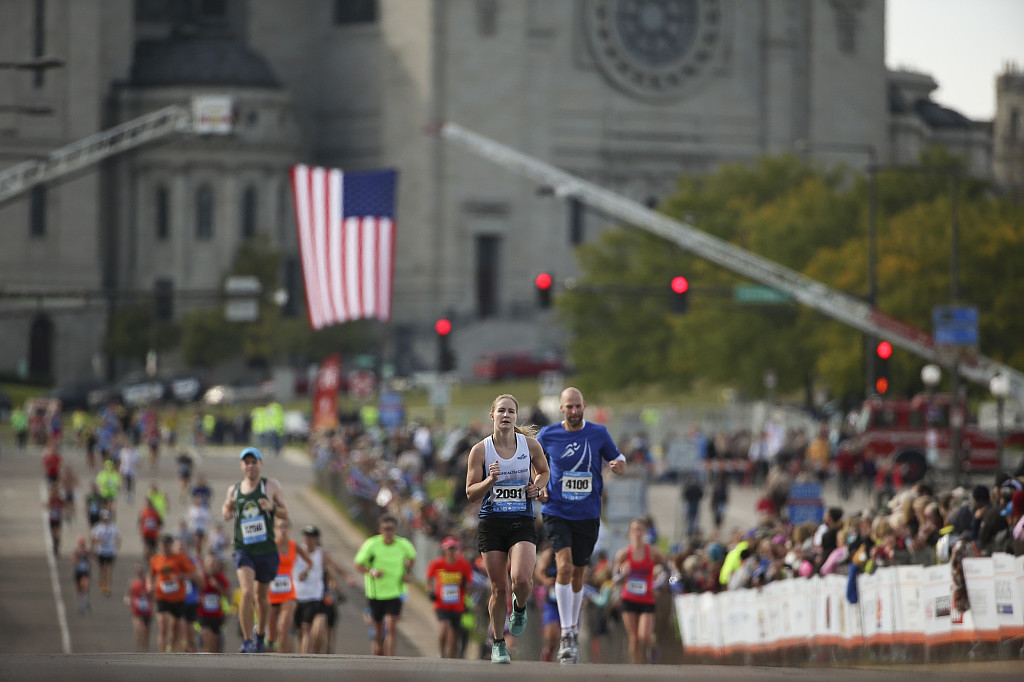
Medtronic Twin Cities Opens Registration Early
Login to leave a comment
