

Running News Daily
Running News Daily is edited by Bob Anderson and team. Send your news items to bob@mybestruns.com Advertising opportunities available.
Index to Daily Posts · Sign Up For Updates · Run The World Feed
Articles tagged #Kosgei
Today's Running News
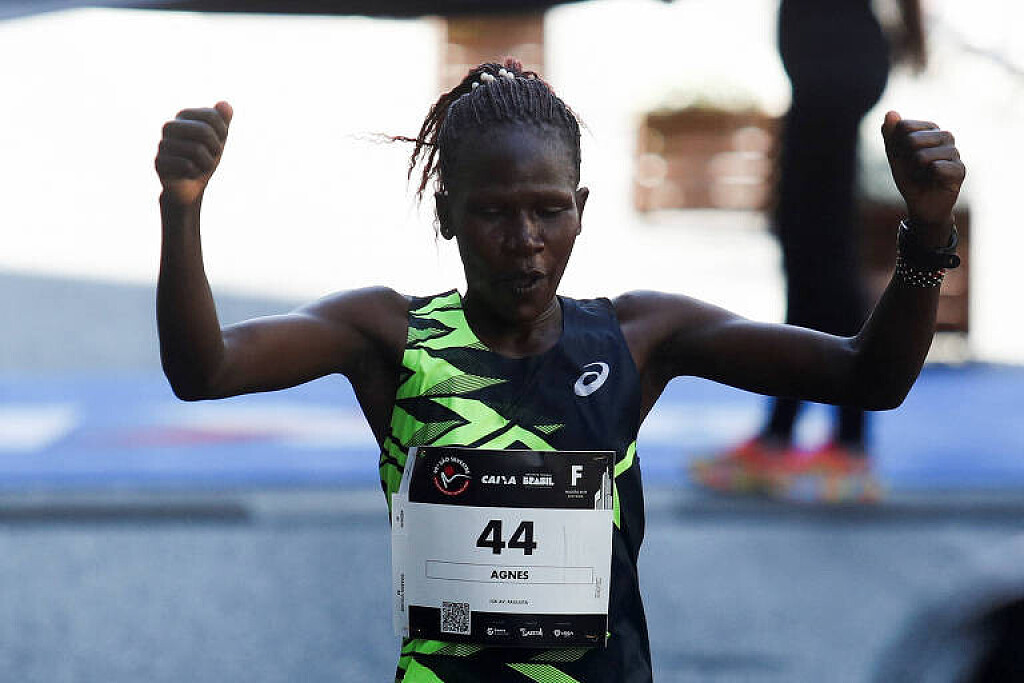


Fantu Shugi And Agnes Ngeno Headline Star-Studded Women’s Field For 2026 Cologne Marathon
Ethiopian marathon standout Fantu Shugi and Kenyan road-racing talent Agnes Ngeno will headline a formidable women’s elite field at the 2026 Cologne Marathon in Germany, with the race set to take place on October 4.
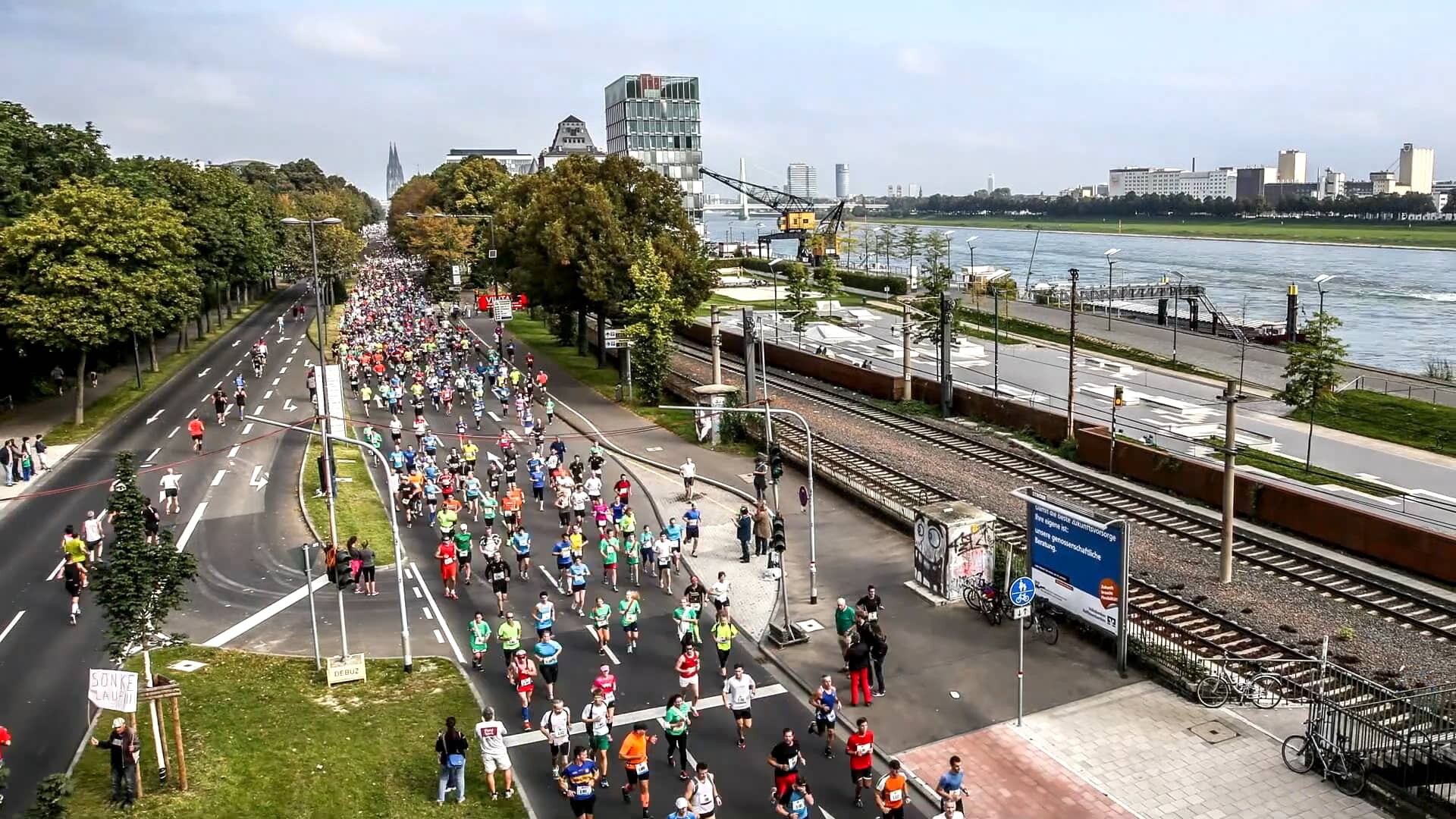
The Cologne streets are expected to provide the stage for a fiercely competitive battle, with athletes from Kenya, Ethiopia, Tanzania, the Netherlands and Germany assembling a field rich in marathon experience and sub-2:25 potential.
Leading the entry list is Kenyan Agnes Keino, who arrives with an impressive personal best of 2:22:53. She will face strong opposition from Ethiopia’s Fantu Shugi, whose 2:23:29 personal best places her among the leading contenders.
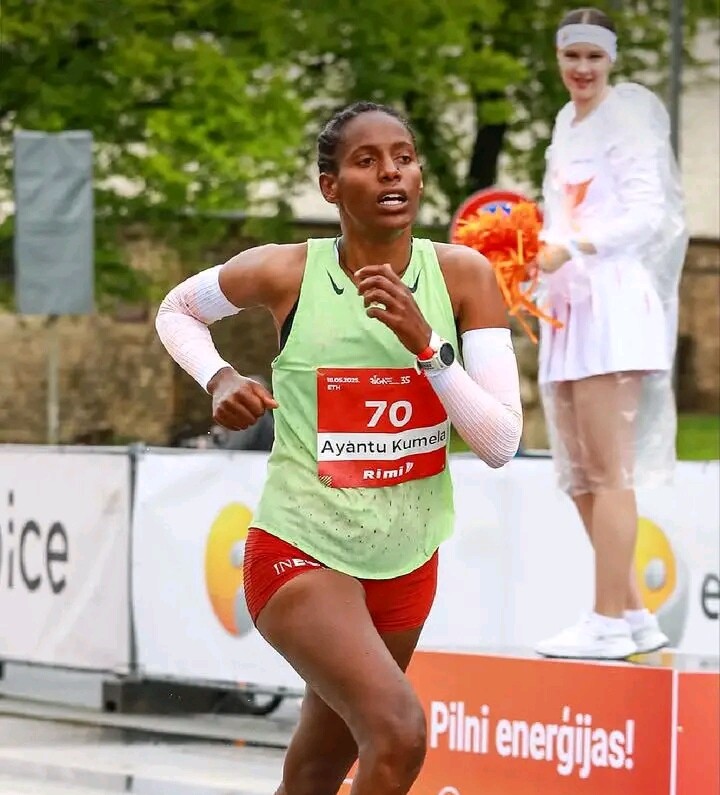
Cynthia Chepchirchir Kosgei is another Kenyan with a proven ability over the marathon, boasting a 2:23:43 personal best, while compatriot Jackline Chepngeno enters the race with a best of 2:24:21.
Ayantu Kumela, one of Ethiopia’s leading names in the field, owns a 2:24:29 personal best and will be determined to challenge the Kenyan contingent when the race gets underway. She will be joined by fellow Ethiopian Aamelmal Tagel, who has a 2:24:38 personal best.
Kenya’s Naomy Tuei, with a best of 2:26:06, and Ethiopia’s Alemtsehay Mekuria Alamirew, who has run 2:26:18, further strengthen the front end of the field. Faith Chepkoech adds another Kenyan threat with a 2:26:22 personal best.
The depth continues beyond the leading group, with Kenya’s Deborah Samum listed at 2:30:16, Ethiopia’s Tigist Worku Anagaw at 2:35:15 and Tanzania’s Neema Mathias Msuadi at 2:38:40.
The international field is completed by Dutch runner Hannah Olds Loohuis, who has a 2:40:12 personal best, and Germany’s Maike Drieb-Schön, whose marathon best stands at 2:47:51.
With several athletes carrying personal bests below 2:25, the women’s race promises to be one of the major highlights of the 2026 Cologne Marathon. The combination of Kenyan strength, Ethiopian depth and international representation could produce an intriguing tactical contest before the decisive stages unfold.
All eyes will be on Cologne on October 4 as the elite women take to the start line, with Shugi and Ngeno among the names expected to command attention in a race packed with quality and ambition.
by Erick Cheruiyot for My Best Runs.
Login to leave a comment

Cologne Marathon
There are marathons in numerous cities, but the Cologne Marathon is unique: a mixture of elite and regular runners, carnival, a folk and running festival! The entire city is vivid and the spectators cheer passionately for the runners on the course! Everywhere you may hear your name and you run through espaliers! This is something that you have to experience!...
more...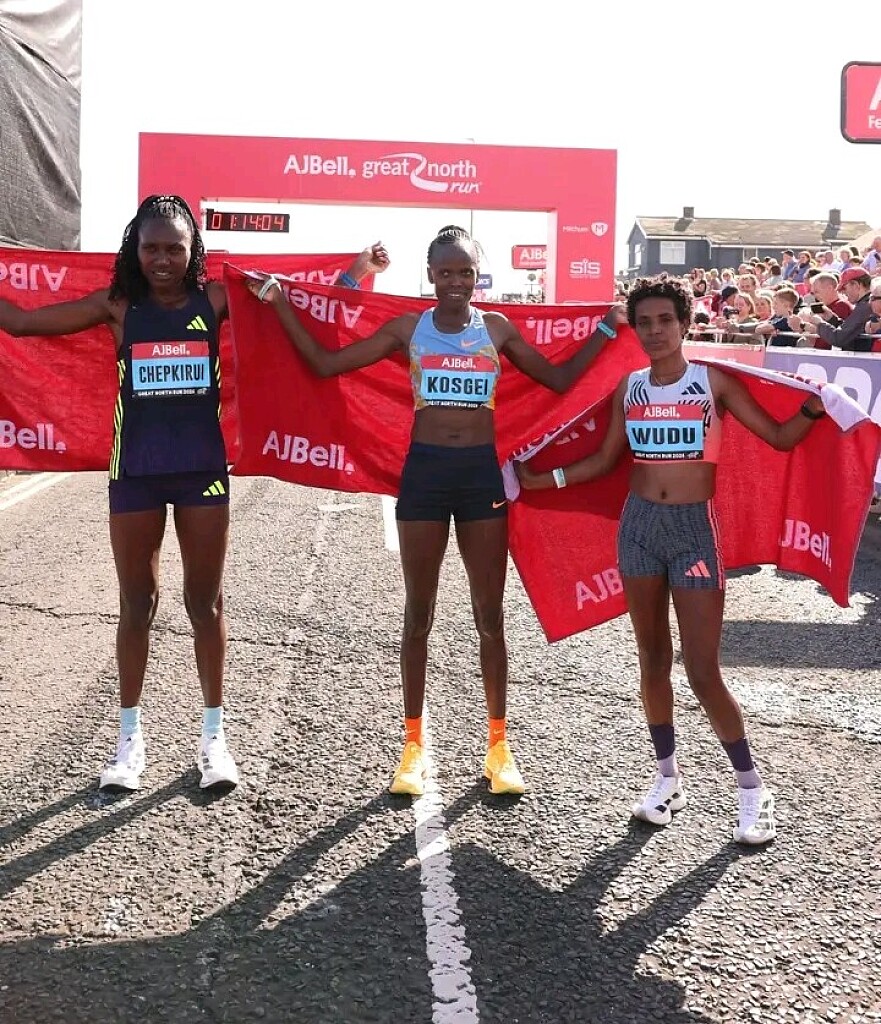
Brigid Kosgei Claims Second Great North Run Title In Kenyan 1-2 Finish
Brigid Kosgei returned to the top at the AJ Bell Great North Run on Sunday, September 13, delivering a commanding performance to win the women’s half marathon and lead Kenya to a memorable one-two finish.
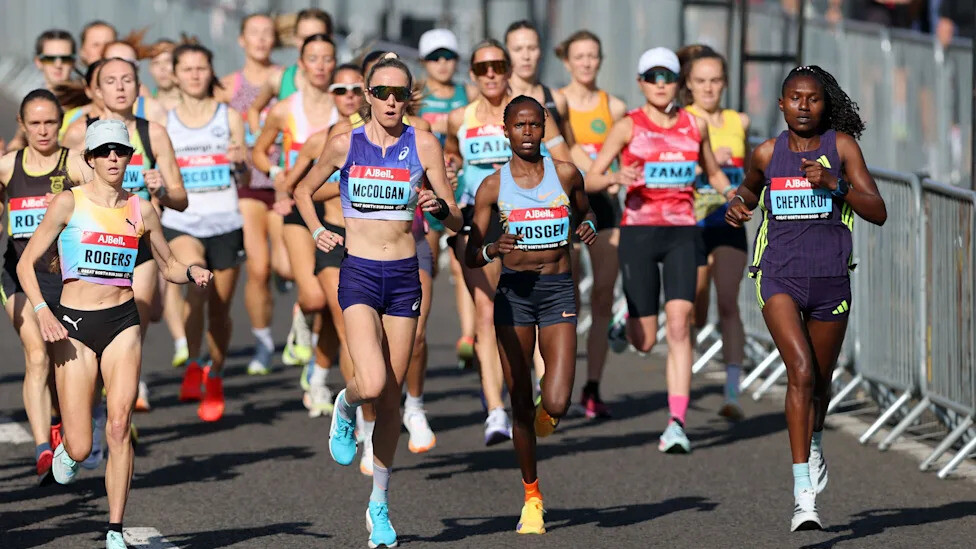
The former marathon world-record holder crossed the line in 1:06:15, securing her second Great North Run title after previously winning the prestigious race in 2019.
Fellow Kenyan Sheila Chepkirui who was battling to defend the title finished second in 1:06:19, completing a memorable Kenyan one-two at one of the world’s most celebrated half-marathons.
Behind the leading Kenyan pair, Ethiopia’s Melknat Wudu produced an impressive run to claim third in 1:09:37. Wudu was the first athlete outside the Kenyan duo to reach the finish and comfortably secured a place on the podium, highlighting the strong international quality of the women’s field.
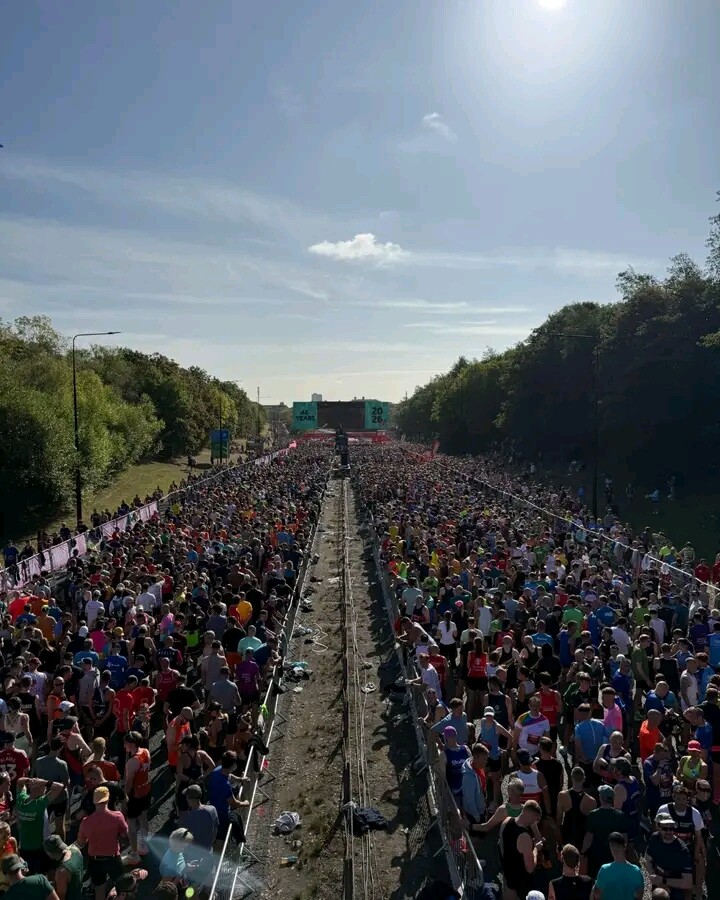
Japan’s Honami Maeda finished just six seconds behind Wudu to take fourth in 1:09:43, while Great Britain’s Amy-Eloise Neale was the leading home athlete in fifth with 1:10:27.
American Natosha Rogers followed in sixth in 1:11:44, with Britain’s Annabel Grummow seventh in 1:12:37 and Nancy Scott completing the top eight in 1:12:51.
For Kosgei, the victory adds another prestigious achievement to an already remarkable distance-running career. Returning to the Great North Run winner’s circle six years after her first triumph, she once again demonstrated her ability to deliver on one of the biggest stages in the half marathon.
Chepkirui’s runner-up finish made the occasion even more significant for Kenya, as the two athletes combined to secure the top two positions. Wudu’s third-place performance completed an international podium and ensured the race featured a strong representation from three of the sport’s leading distance-running nations.
Women’s Top 8 Finishers
1. Brigid Kosgei — Kenya — 1:06:15
2. Sheila Chepkirui — Kenya — 1:06:19
3. Melknat Wudu — Ethiopia — 1:09:37
4. Honami Maeda — Japan — 1:09:43
5. Amy-Eloise Neale — Great Britain — 1:10:27
6. Natosha Rogers — United States — 1:11:44
7. Annabel Grummow — Great Britain — 1:12:37
8. Nancy Scott — Great Britain — 1:12:51
The 2026 Great North Run therefore ended with Kosgei back on top, Chepkirui alongside her in second and Wudu completing a high-quality international podium. For Kosgei and Kenya, it was a particularly memorable day, combining individual success with a commanding one-two finish and reinforcing the country’s enduring strength in elite distance running.
by Erick Cheruiyot for My Best Runs.
Login to leave a comment

Great North Run
Great North Run founder Brendan Foster believes Britain is ready to welcome the world with open arms after the launch of the event's most ambitious plan to date. The Great World Run campaign seeks to recruit one runner from every country in the United Nations – 193 in total – to take part in the iconic half marathon in...
more...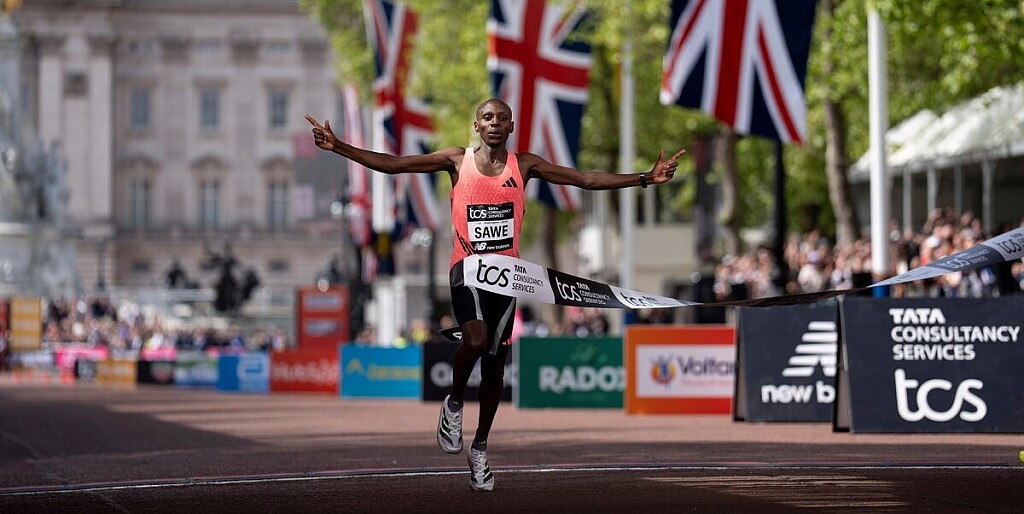
Marathon Majors Course Records: Where Speed, History And The Course Collide
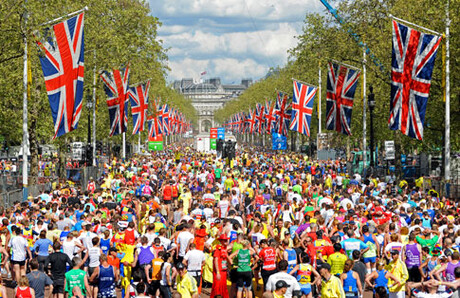
The world’s biggest marathons are united by prestige, elite fields and unforgiving 26.2-mile battles, but their course records tell very different stories. From Tokyo to Sydney, each course has its own character, while London and Chicago have become synonymous with extraordinary speed.
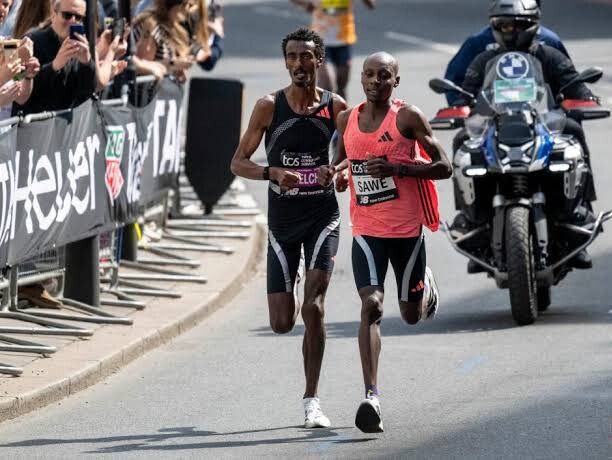
At the top of the men’s list stands the London Marathon, where Kenya’s Sabastian Sawe produced one of the greatest performances in road-running history. Sawe clocked 1:59:30 in April 2026, becoming the first athlete to officially break the two-hour barrier in a marathon. His performance also lowered the world record from Kelvin Kiptum’s previous mark of 2:00:35.
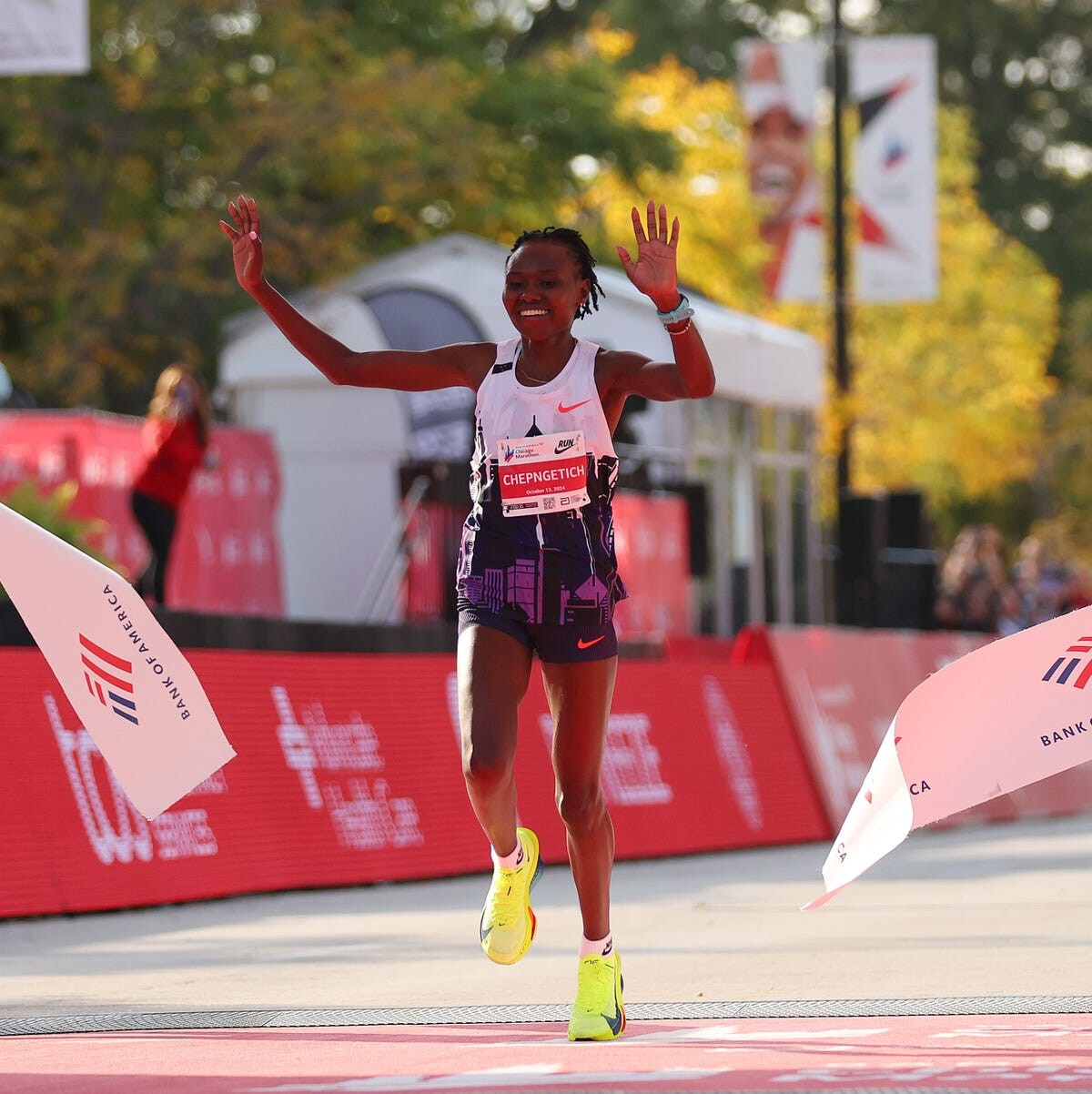
Chicago, meanwhile, owns one of the most remarkable records in women’s marathon history. Kenya’s Ruth Chepngetich ran 2:09:56 in 2024, becoming the first woman to break the 2:10 barrier. The performance remains a landmark in the event’s history and gives Chicago a special place among the fastest marathon courses in the world.
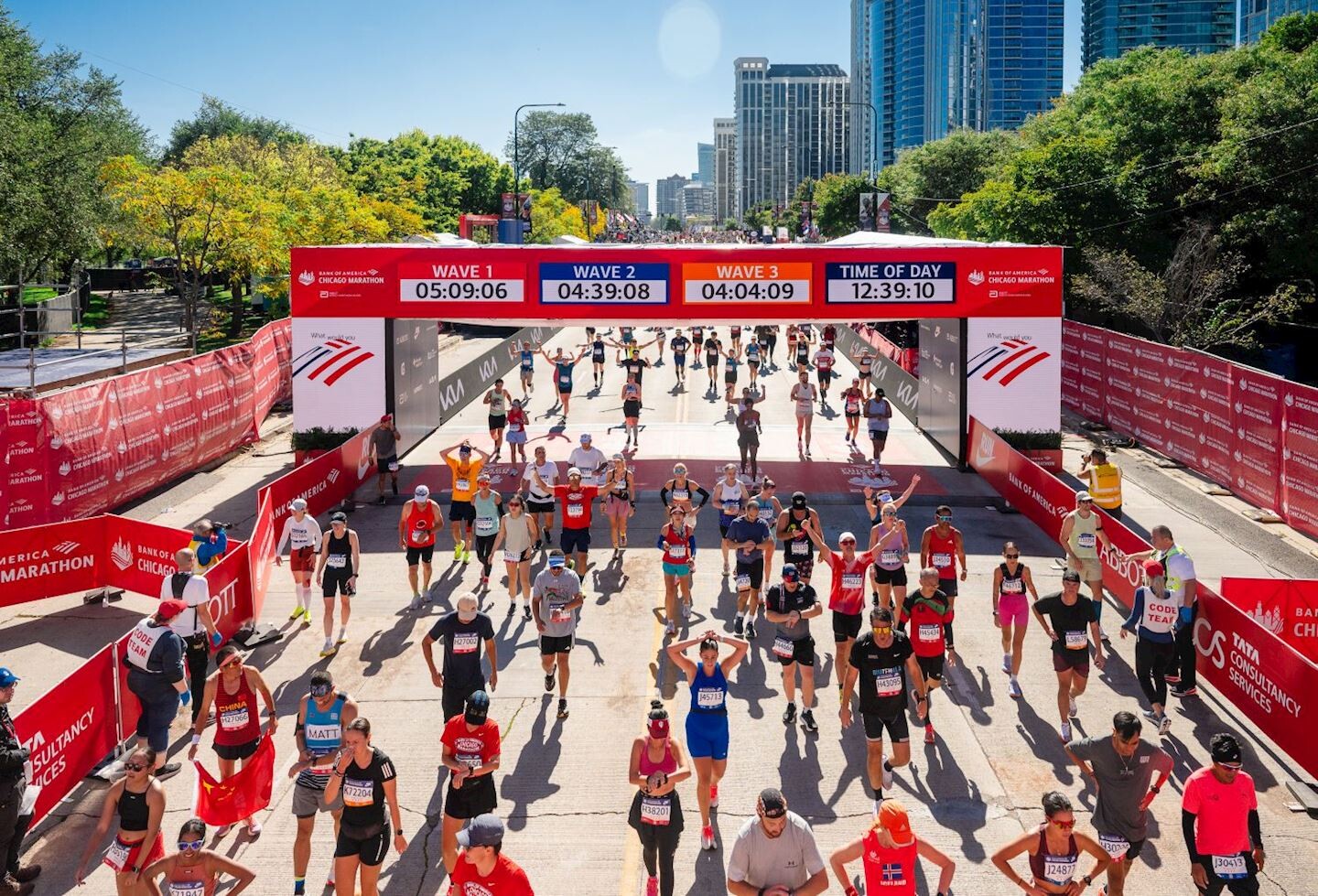
The men’s Chicago record is 2:00:35, set by the late Kelvin Kiptum in 2023. That performance stood as the world record until Sawe’s extraordinary 1:59:30 in London in 2026.
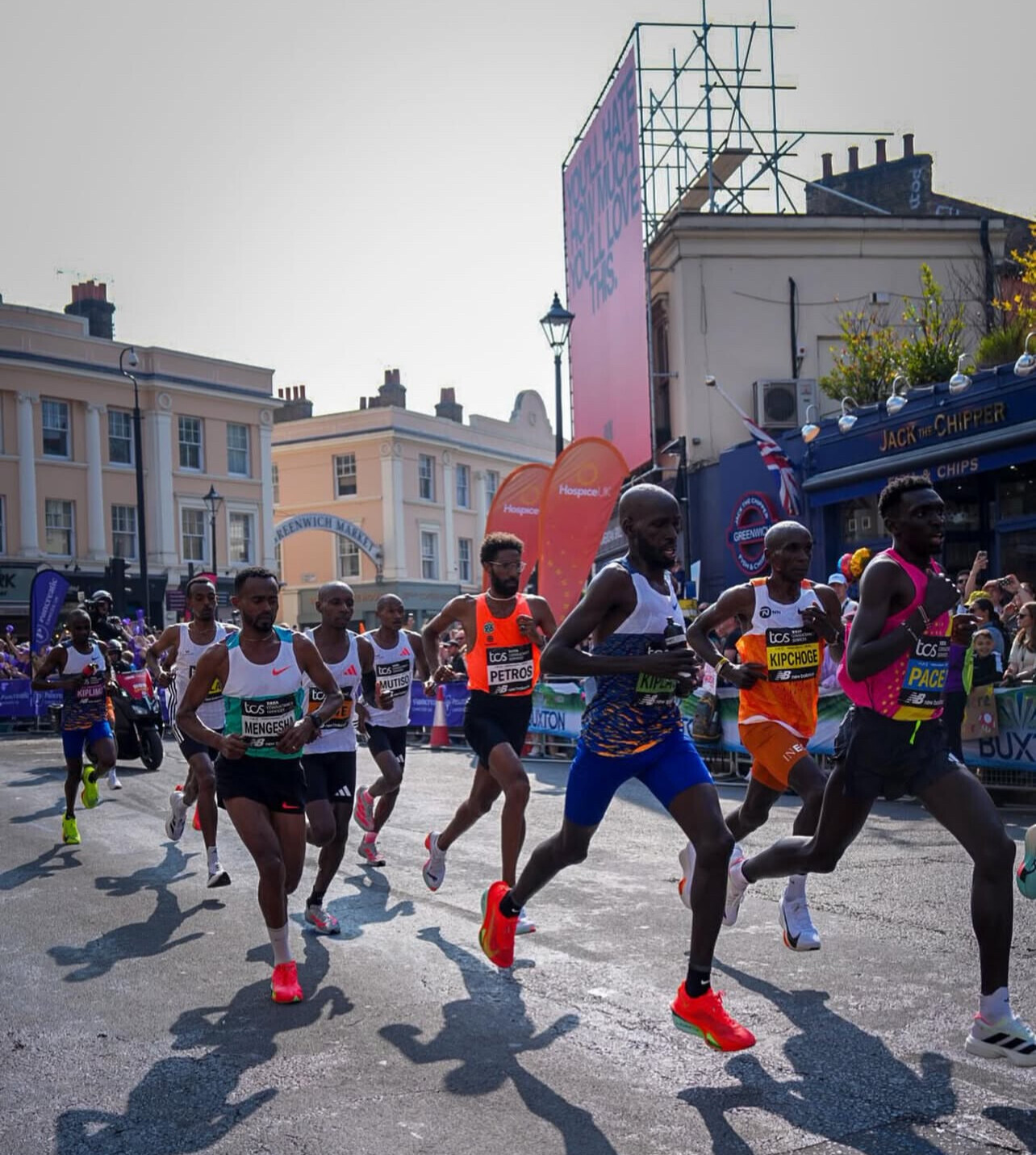
Then there is Berlin, perhaps the most celebrated world-record factory in marathon history. Kenya’s Eliud Kipchoge holds the men’s course record at 2:01:09, while Ethiopia’s Tigist Assefa owns the women’s mark at 2:11:53. Berlin has hosted numerous men’s world records over the years, underlining its reputation as one of the fastest marathon courses on the planet.
The elevation figures help explain why the courses produce such different performances. Berlin has relatively modest elevation changes, creating a fast and rhythm-friendly route. Other Majors present considerably greater challenges.
Boston, for example, climbs 248 metres but descends 388 metres. Its famous point-to-point layout and net downhill profile make it exceptionally fast in places, but its course does not qualify for official world-record purposes because the elevation drop exceeds the limit permitted by World Athletics.
New York City is a completely different proposition. With approximately 246 metres of climbing, it is among the toughest Major Marathon courses, demanding strength and tactical patience rather than simply raw speed. Its records therefore carry a different kind of significance, earned on a course that tests athletes through bridges, climbs and a demanding closing stretch into Central Park.
Tokyo offers another fast but distinctive challenge, with Benson Kipruto holding the men’s course record in 2:02:16. Brigid Kosgei’s 2:14:29 remains the women’s course record, illustrating the exceptional standard required to rewrite the record books in the Japanese capital.
And then there is Sydney, the newest addition to the Abbott World Marathon Majors family. Its course has already produced outstanding performances, with Addisu Gobena’s 2:04:42 listed as the men’s course record and Sifan Hassan’s 2:18:22 as the women’s mark in the graphic. With its demanding elevation profile, those performances underline just how quickly the Sydney course has established itself among the world’s major marathon stages.
What makes these records fascinating is that they cannot be judged by the clock alone. A 2:01 on a fast, record-legal course is a completely different achievement from a 2:04 on a demanding route, while Boston’s unique course rules mean that even exceptionally fast performances cannot enter the official world-record conversation.
For decades, marathon greatness was largely measured by who could run fastest. Today, the Majors show that where the time is run can be almost as important as the time itself. From Sawe’s historic sub-two-hour breakthrough in London to Chepngetich’s barrier-breaking run in Chicago and Berlin’s remarkable record history, these performances represent different chapters of marathon history—and the next chapter could be written at any Major.
by Erick Cheruiyot for My Best Runs.
Login to leave a comment
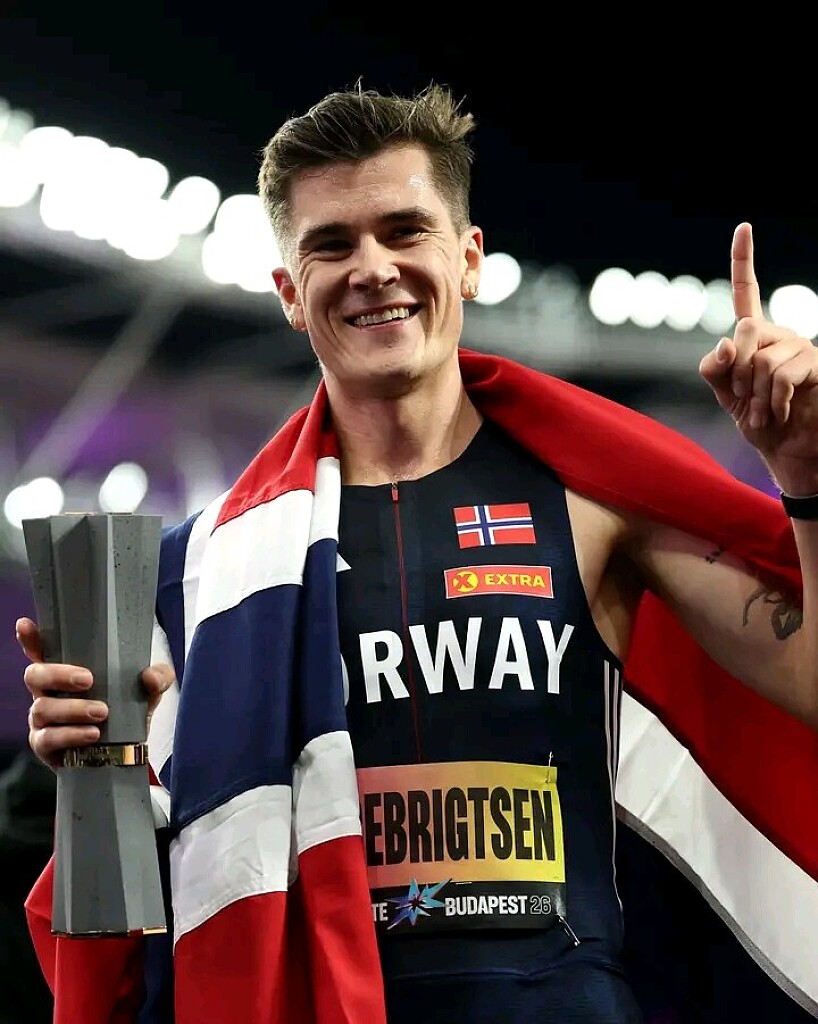
Jakob Ingebrigtsen Withdraws From Budapest 1500m After Stunning 5000m Victory: “Fitness Cannot Be Faked”
Jakob Ingebrigtsen has made a major decision regarding the remainder of his World Athletics Ultimate Championship campaign, confirming that he will withdraw from the men’s 1500m in Budapest despite producing a sensational performance to win the 5,000m title.
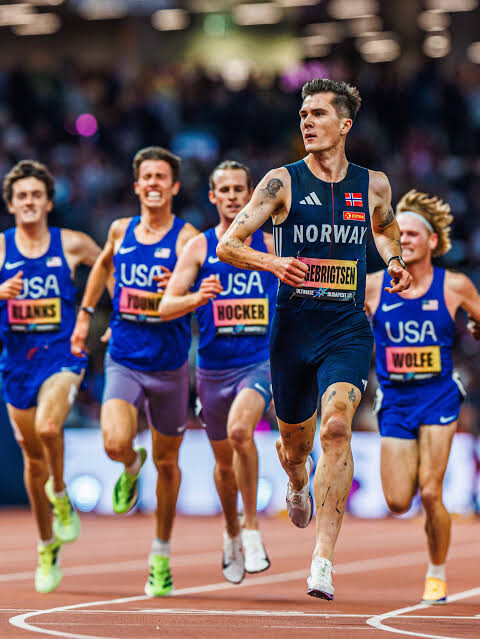
The Norwegian superstar stormed to victory in the inaugural Ultimate Championship 5,000m on Friday night, clocking a season-best 12:59.24 and delivering a devastating finishing kick to defeat Olympic 5,000m champion Cole Hocker and American Parker Wolfe.
Ingebrigtsen’s final 100 metres was arguably the defining moment of the race. The Olympic champion produced a remarkable 12.60-second closing 100m, powering away from the field to secure the $150,000 winner’s prize and underline just how far his fitness has progressed since returning from Achilles surgery.
The victory was particularly significant after what has been an extremely difficult period for the 25-year-old. Earlier in the season, Ingebrigtsen faced serious uncertainty over whether he would even be able to compete at the highest level again. His return has gradually gathered momentum, and his performance in Budapest offered perhaps the clearest indication yet that the Norwegian is rediscovering his formidable racing ability.
But rather than risk pushing his recovering body further, Ingebrigtsen has now opted to step away from the 1500m.
The decision means the highly anticipated showdown with British rival Josh Kerr will not take place in Budapest after all. The two stars had been expected to renew one of the biggest rivalries in modern middle-distance running in the 1500m final.

Instead, Ingebrigtsen is looking beyond the immediate opportunity and towards the bigger picture.
“I’m thinking about 2027… Fitness cannot be faked,” the Norwegian said, signalling that protecting his long-term condition has become more important than chasing another major victory only days after his return to peak-level competition.
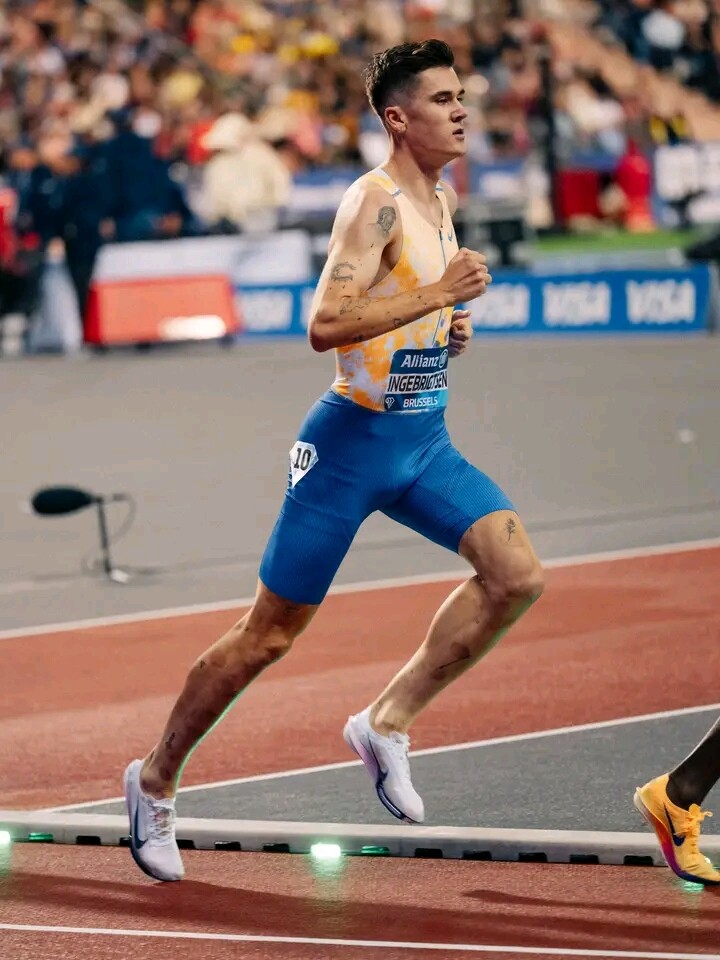
The decision comes just one week after an emotionally charged Diamond League Final in Brussels, where Ingebrigtsen finished fourth in the 1500m behind Australia’s Cameron Myers, Kenya’s Phanuel Kipkosgei Koech and American Ethan Strand.
After that race, Ingebrigtsen delivered a fiery assessment of his rivals and questioned the tactics surrounding the pacemaking, particularly involving Hocker. He later acknowledged that there had been “a little too much adrenaline and emotion” when microphones were placed in front of him immediately after the race.
Yet his latest decision shows that beneath the emotion and competitive intensity lies a longer-term strategy.
Ingebrigtsen has already demonstrated that he can compete at an elite level again. His 12:59.24 in Budapest was not simply a victory — it was a statement that the Norwegian remains capable of producing a world-class finish even after months of injury rehabilitation.
Now, however, he is choosing not to gamble with that progress.
For a runner who has spent much of the year fighting his way back from injury, another 1500m race could have offered enormous rewards but also carried unnecessary risk. By withdrawing, Ingebrigtsen is effectively prioritising longevity over one more opportunity for immediate glory.
His message is clear: the comeback is underway, but it will not be rushed.
The 5,000m victory has given Ingebrigtsen confidence, momentum and perhaps, most importantly, proof that his body can once again handle elite competition.
Now comes the harder part — knowing when to stop.
With 2027 already firmly in his sights, the Norwegian has chosen recovery over risk. And after everything he has endured, that could ultimately prove to be one of the most important decisions of his comeback.
Jakob Ingebrigtsen is not walking away from the sport. He is protecting his future in it.
by Erick Cheruiyot for My Best Runs.
Login to leave a comment
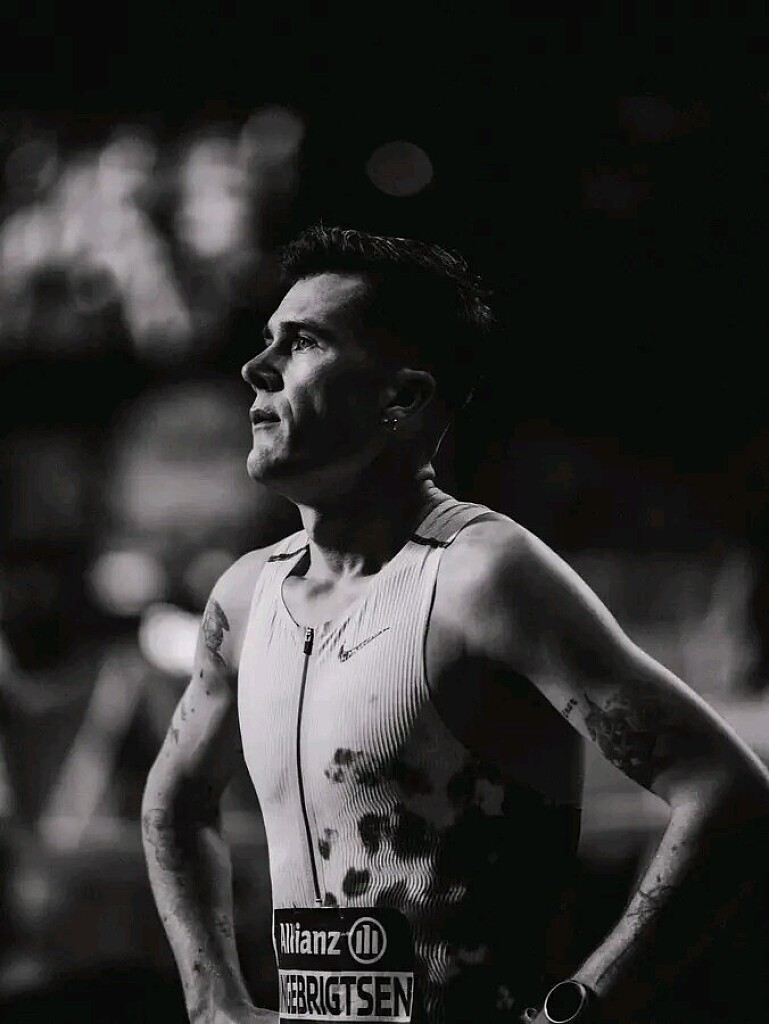
Ingebrigtsen Clarifies Fiery Brussels Outburst After 1500m Defeat: “I Will Always Call Things as I See It
Jakob Ingebrigtsen has offered a measured reflection on his explosive post-race comments following a dramatic men’s 1500m Diamond League Final in Brussels, acknowledging that adrenaline and emotion may have played a role while making it clear that his competitive fire remains as strong as ever.
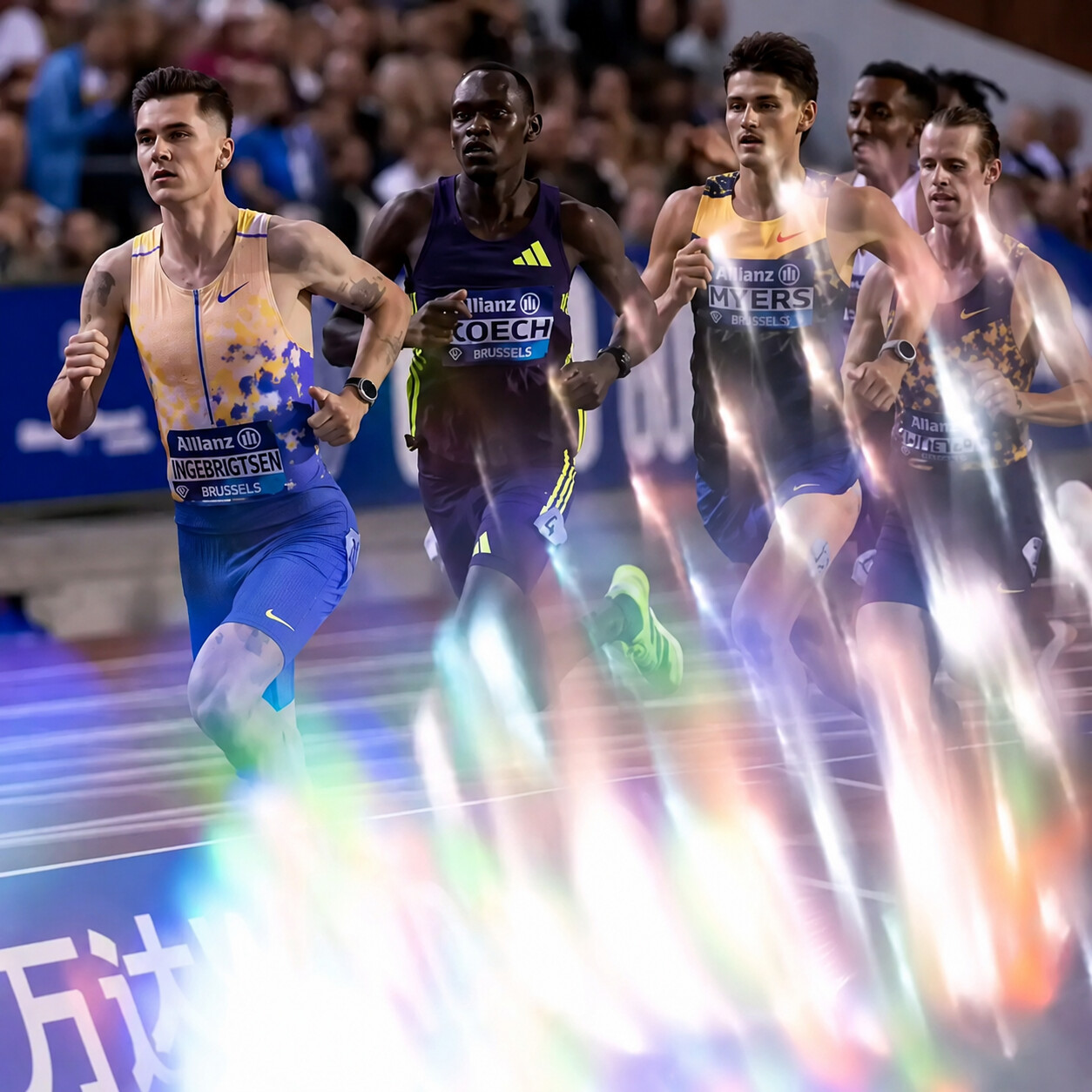
The Norwegian Olympic champion endured a frustrating night at the King Baudouin Stadium, finishing fourth in a season’s best 3:30.52 after taking responsibility for much of the race from the front. Australia’s Cameron Myers produced a perfectly timed late surge to claim the Diamond League title in 3:30.14, edging Kenya’s Phanuel Kipkosgei Koech by just 0.04 seconds, with American Ethan Strand completing the podium in 3:30.50.
Ingebrigtsen had looked capable of converting his aggressive front-running strategy into victory, but the race changed dramatically in the final stages. Myers found a narrow opening and accelerated past the Norwegian, while Koech and Strand also came through strongly as Ingebrigtsen faded over the closing metres.
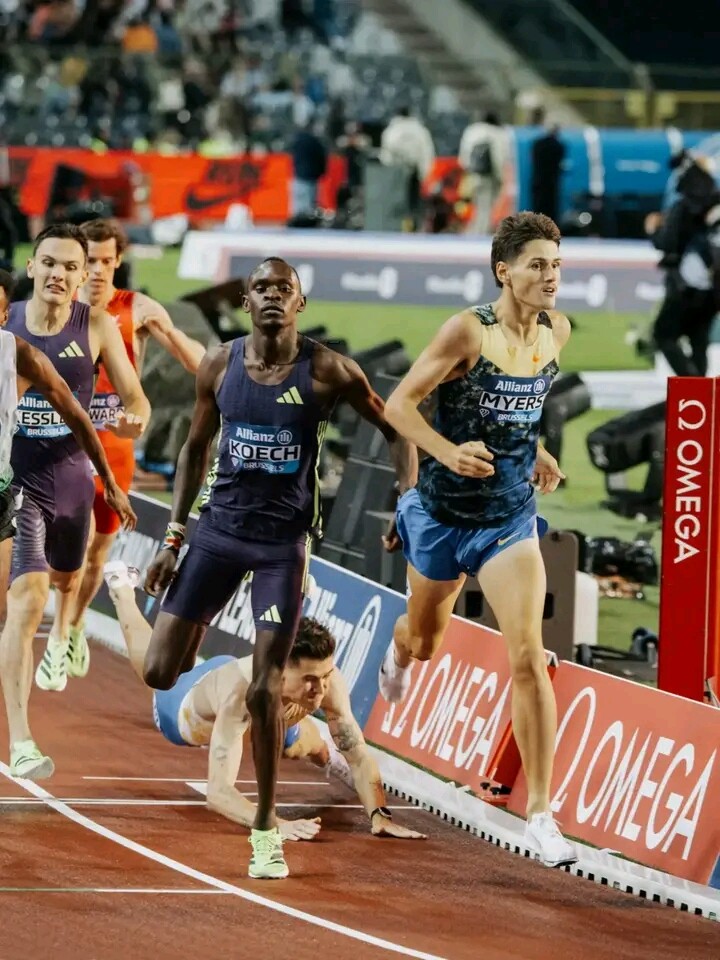
The defeat triggered an unusually fiery reaction from the 25-year-old, who criticised the tactical approach of his rivals and described himself as having raced against “a bunch of cowards”. He was particularly frustrated by what he perceived as competitors sitting back before unleashing their finishing speed when the race reached its decisive phase.
Ingebrigtsen also directed criticism towards Olympic champion Cole Hocker, questioning the way the pacing situation had unfolded and arguing that the American had influenced the pacemaking strategy to his own advantage.
However, after the emotions of the night had settled, Ingebrigtsen returned to social media with a noticeably more reflective message.
“My love for this sport can never be questioned,” he wrote, making it clear that his passionate reaction should not be interpreted as a lack of respect for athletics.
“There was maybe a little too much adrenaline and emotion when the microphones were thrown in front of me last night but I will always call things as I see it.”
The message offered an important qualification to his earlier remarks. Rather than retracting his competitive assessment, Ingebrigtsen appeared to acknowledge that the intensity of the moment had amplified his words.
He also chose to focus on the positives from his performance.
“Pushing from the front, a seasons best and feeling a little more like myself every race,” he added.
That statement is particularly significant given his difficult return to the 1500m after Achilles problems. His 3:30.52 in Brussels was his fastest performance since returning from the injury, providing evidence that his race sharpness is gradually returning despite the disappointment of missing out on the Diamond League crown.
And despite the frustration, Ingebrigtsen made it clear that the defeat has not diminished his hunger.
“Positives to take and lots of fuel for the fire.”
That final line perhaps captures the Norwegian better than anything he said immediately after the race. The fourth-place finish may have frustrated him, but it has also provided another source of motivation as he continues rebuilding his form.
He concluded his message by thanking supporters for standing behind him throughout his comeback.
“Thanks for all the support as always, it feels so good to be back!”
For Ingebrigtsen, Brussels was therefore a night of contrasting emotions: disappointment at surrendering a race he had helped control, frustration with the tactics around him, but also encouragement from a season’s best performance and the feeling that he is gradually returning to his best.
For Myers, it was a breakthrough evening and one of the biggest victories of his young career. For Ingebrigtsen, however, the story may not end with fourth place.
If his latest message is anything to go by, the defeat has simply added more fuel to an already fiercely burning competitive fire.
by Erick Cheruiyot for My Best Runs.
Login to leave a comment
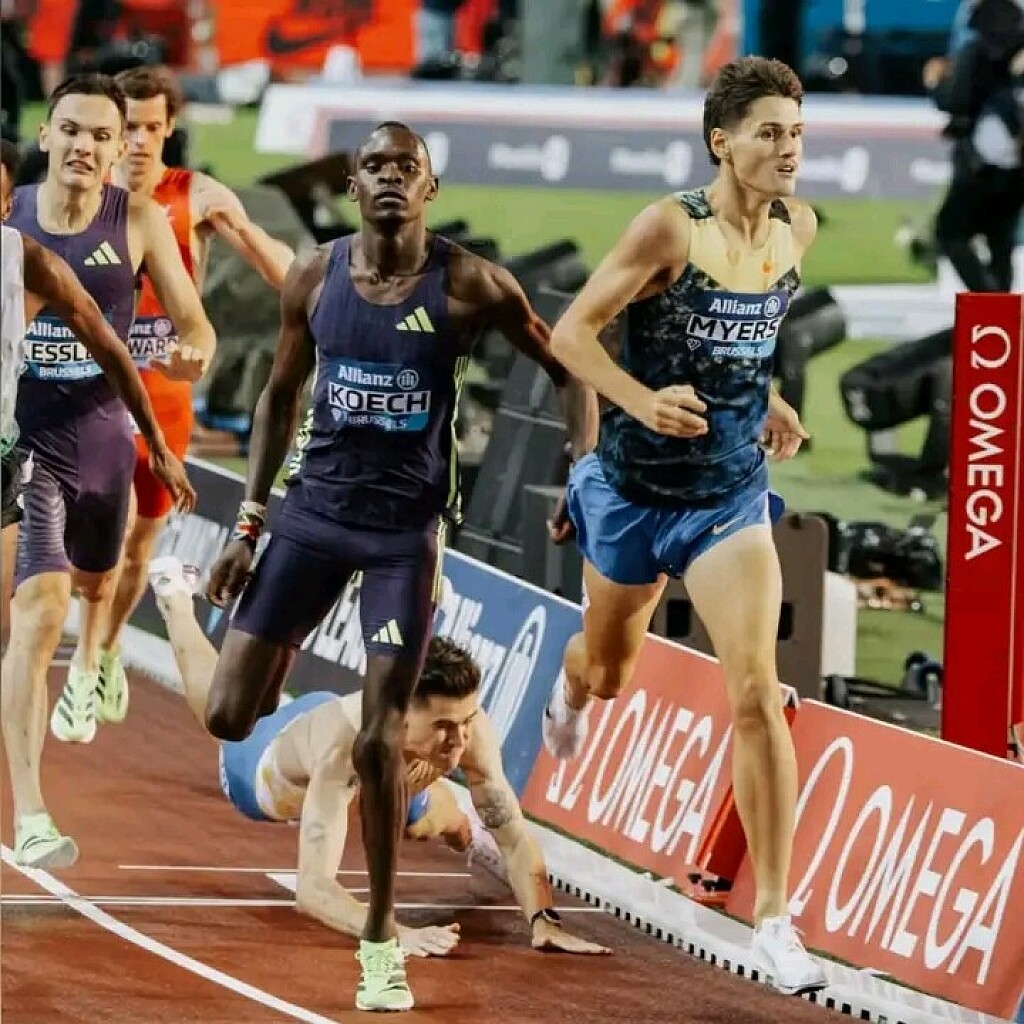
Cameron Myers Produces A Champion’s Kick To Win Thrilling Brussels 1500m Final
Cameron Myers delivered a breathtaking finish in Brussels to capture the men’s 1500m Diamond League Final title, producing a decisive late surge before dipping for the line in 3:30.14 to claim the coveted Diamond Trophy.
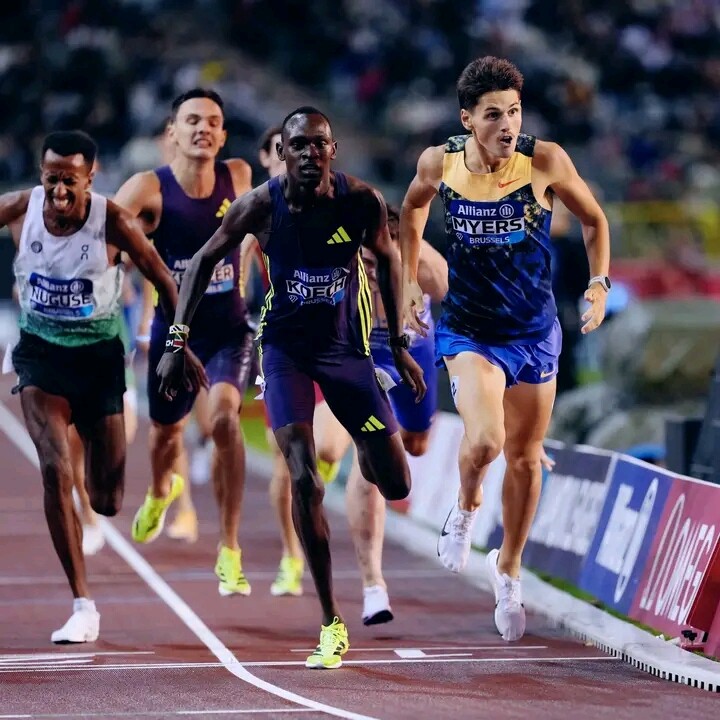
The Australian was moving with remarkable speed when it mattered most, unleashing the finishing kick of a champion in the closing metres. With the race finely poised, Myers held his composure and found the extra strength needed to edge ahead at the line in a dramatic conclusion to the final.
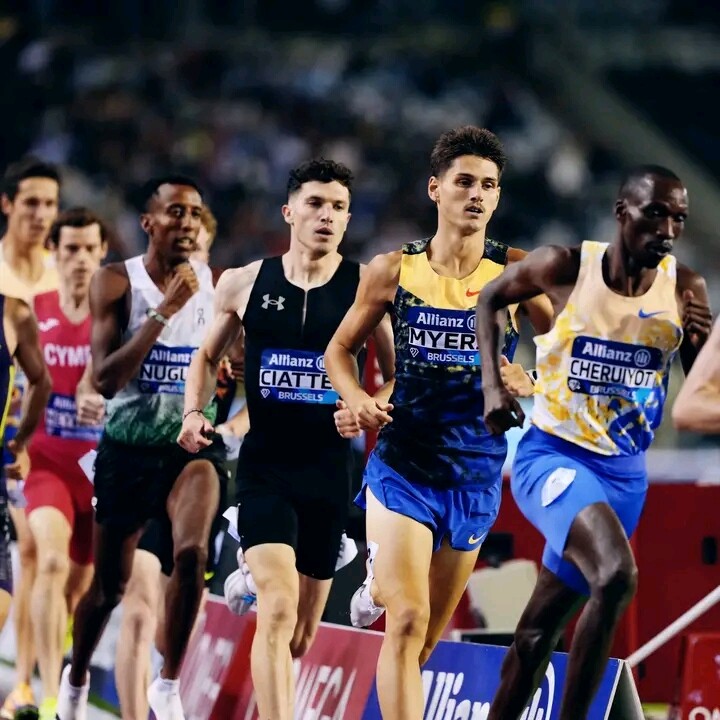
Kenya’s Phanuel Kipkosgei Koech came agonisingly close to taking the title, crossing the finish in 3:30.18—just 0.04 seconds behind Myers. Koech produced a brilliant closing effort and pushed the Australian all the way, narrowly missing out on what would have been a stunning Diamond League triumph.
American Ethan Strand completed the podium in 3:30.50, adding another layer to an extraordinary finish. The first three athletes were separated by just 0.36 seconds, underlining just how fiercely contested the race was from start to finish.
For Myers, the victory was a powerful statement on one of the biggest stages of the Diamond League season. When the pressure reached its peak, the Australian responded with speed, determination and the composure required to deliver when victory was decided by the smallest of margins.
Koech, meanwhile, leaves Brussels with plenty of credit after pushing Myers to the absolute limit. His silver-medal performance demonstrated both his strength and his ability to compete fearlessly against elite opposition, even though the Diamond Trophy slipped away by the narrowest of margins.
It was a finish worthy of a Diamond League Final—three athletes charging for the line, separated by fractions of a second, with Myers ultimately producing the decisive move. Four hundredths of a second made the difference between gold and silver in one of Brussels’ most thrilling showdowns
by Erick Cheruiyot for My Best Runs.
Login to leave a comment
Americans Bring The Heat As Lausanne Diamond League Sets Up A Fierce 5000m Showdown
The Wanda Diamond League returns to action on Friday, August 21, and the men’s 5000m in Lausanne promises to be one of the evening’s most compelling distance races, with a strong American quartet ready to take on a deep international field.
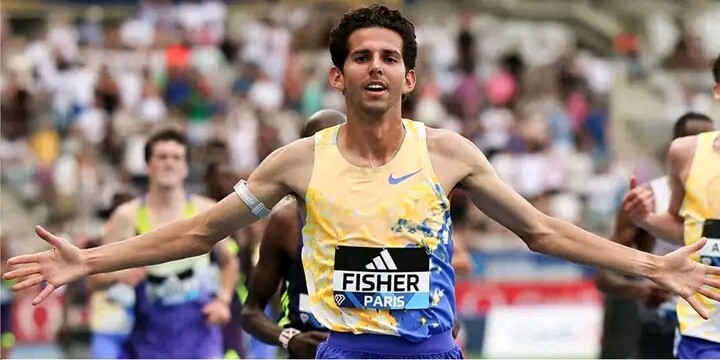
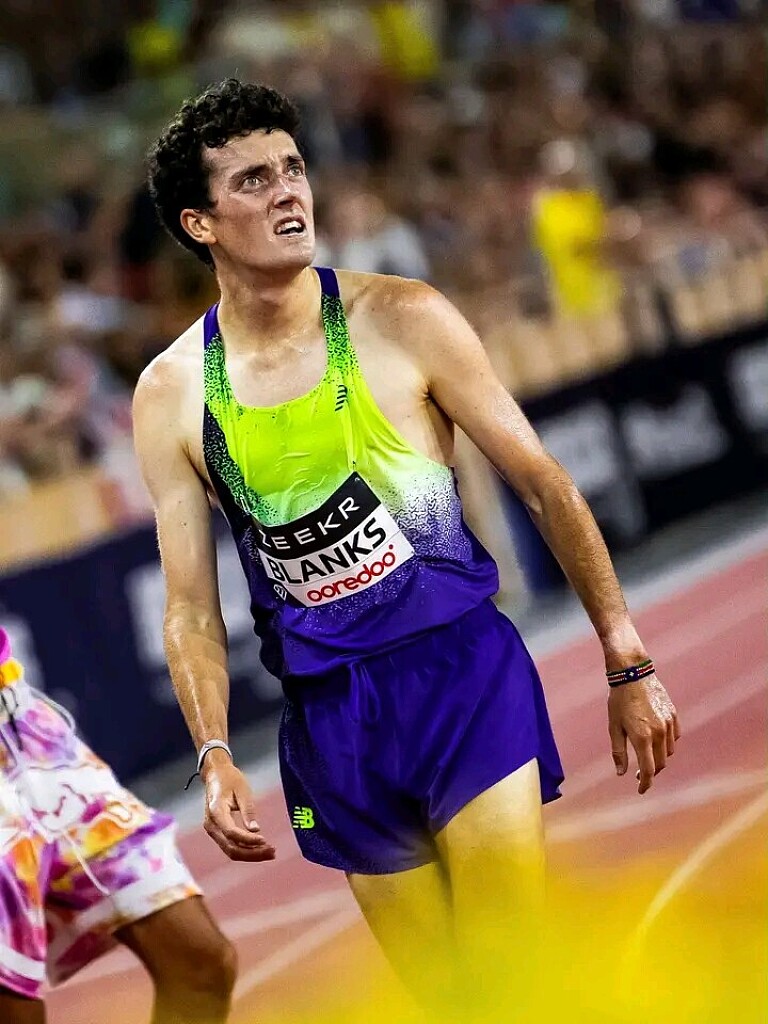
Graham Blanks, Grant Fisher, Parker Wolfe and Nico Young will carry the American challenge at Athletissima, where they will line up against a formidable group featuring athletes from Kenya, Ethiopia, Bahrain, Eritrea, Burundi, Switzerland, Uruguay, Slovenia and Mexico.

The Lausanne meeting marks an important point in the 2026 Diamond League campaign, with the Road to the Final entering its decisive stages ahead of the series finale in Brussels on September 4-5. Lausanne is followed just two days later by the Silesia meeting, before the series heads to Zurich for the final regular-season stop.

Fisher arrives as one of the most established names in the field. The American Olympic bronze medallist has already produced a 12:49.61 season best over 5000m in Oslo and also won the 3000m in Paris earlier this season. His experience at the highest level makes him a major contender when the pace accelerates over the closing laps.
Blanks is another American to watch closely. Ranked among the leading 5000m athletes in the world, he has continued to establish himself as one of the United States’ most exciting young distance runners. World Athletics’ rankings placed him eighth globally in the event as of July 26, with Fisher sixth.
Wolfe and Young add further depth to an American lineup that could make the race particularly tactical. With four athletes capable of competing at a high level, the United States will have several cards to play as the race develops.
But the Americans will have no easy path to victory.
Bahrain’s Birhanu Balew headlines the international opposition and entered the season among the world’s highest-ranked 5000m runners. Kenya will be represented by Jacob Krop, Edwin Kurgat, Cornelius Kemboi, Charles Kiboina, Mathew Kipchumba Kipsang and Laban Kiptoo Kosgei, giving the race a powerful Kenyan presence.
Ethiopia also brings considerable strength, with Khairi Bejiga, Kuma Girma, Shimelis Niguse, Mezgebu Sime and Getnet Wale all listed in the field. Eritrea’s Abderezak Suleman, Burundi’s Egide Ntakirutimana, Switzerland’s Dominic Lokinyomo Lobalu, Uruguay’s Santiago Catrofe, Slovenia’s Žan Rudolf and Mexico’s Eduardo Herrera complete a truly international lineup.
The Lausanne 5000m is therefore shaping up as much more than an American showcase. It is a meeting of contrasting strengths: American depth, Kenyan distance tradition, Ethiopian endurance and a collection of international contenders eager to make their mark on one of the sport’s biggest stages.
With the Diamond League season moving rapidly toward its final stretch, every position and every point carries added importance. The question now is whether the American quartet can convert its collective strength into a victory—or whether the international field will once again prove too deep to control.
One thing is certain: when the Lausanne 5000m gets underway, the pace is expected to be hot, the competition fierce and the final laps unforgettable.
by Erick Cheruiyot for My Best Runs.
Login to leave a comment
Pamela Kosgei Triumphs In Thrilling Falmouth Road Race 7-Mile Finish
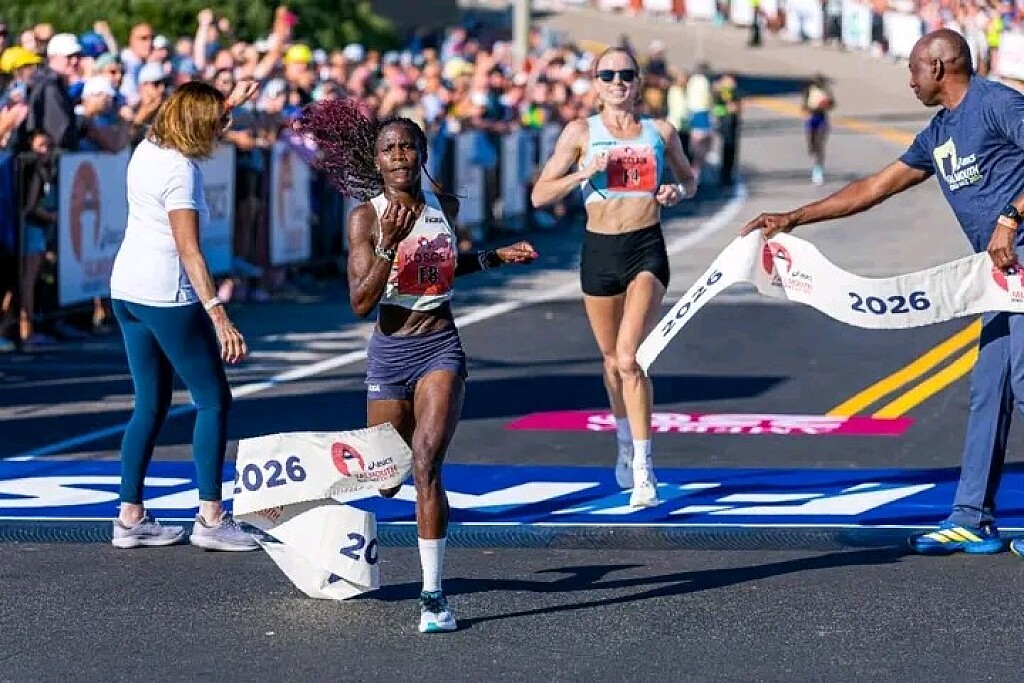
Pamela Kosgei delivered a breathtaking performance to capture the 2026 Falmouth Road Race 7-mile title, producing a perfectly timed finish to edge American challenger Jessica McClain in a dramatic battle that went right down to the wire.
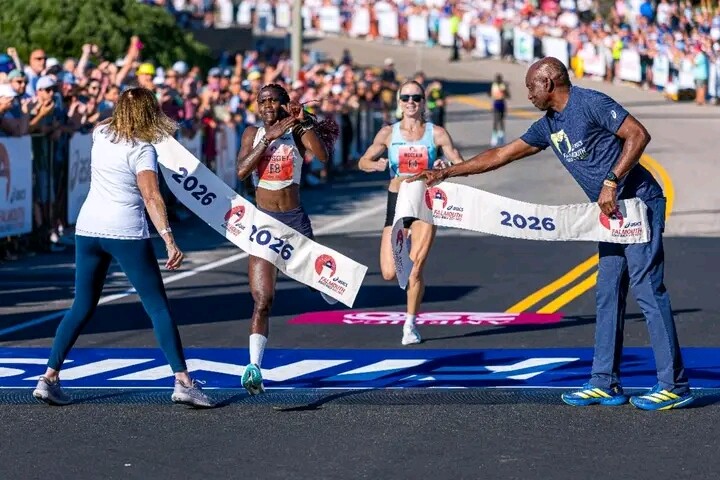
Kosgei and McClain both stopped the clock at 35:25, but the Kenyan had just enough of an advantage at the finish to secure the coveted victory. It was a remarkable display of composure and determination, with neither athlete willing to surrender an inch in the closing stages of the seven-mile contest.
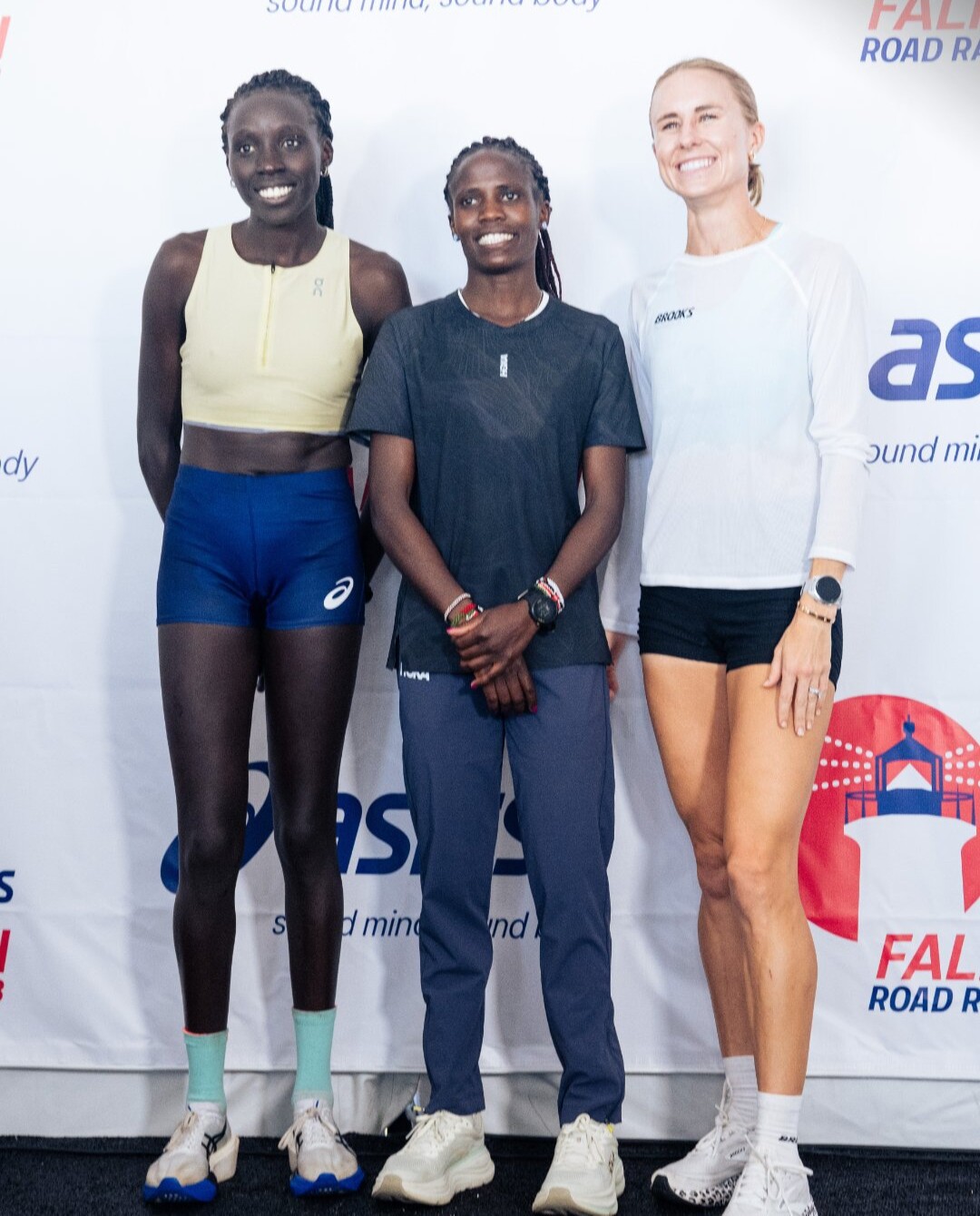
The victory adds another impressive chapter to what has already been a remarkable rise for Kosgei. At the 2025 Outdoor NCAA Championships, she captured both the 5000m and 10,000m titles, earning valuable points for the University of New Mexico Lobos during her freshman campaign. Her success on the track has now translated beautifully onto the roads.
Remarkably, Kosgei has only recently begun testing herself over the roads. Making her road debut just a few weeks ago, she announced herself in emphatic fashion by winning the Beach to Beacon Road Race. She then carried that winning momentum into Falmouth, producing another confident performance against a strong international field.
The Kenyan triumph was made even sweeter by Everlyn Kemboi, who stormed into third place in 35:34, giving Kenya a powerful double presence on the podium. Behind them, America's Emma Grace Hurley produced a solid run to finish fourth in 35:36, while Kenya's Mercy Chelangat completed the top five in 35:55.
Kosgei's rise also carries a remarkable family legacy. Her older sister, Brigid Kosgei, is an Olympic silver medallist in the marathon and a former marathon world-record holder. With Pamela now making her own mark across the track and roads, the Kosgei name continues to shine brightly in elite distance running.
It was a race filled with speed, suspense and relentless determination, with the leading athletes separated by only seconds. Kosgei's victory was ultimately forged through her ability to remain composed under immense pressure and produce the decisive effort when it mattered most.
The victory also carried a special touch of excellence, as Kosgei stood proudly at the summit while McClain and Kemboi strengthened the depth among the leading finishers. Together, the performances painted a beautiful picture of determination, resilience and the unmistakable fighting spirit that continues to make distance running so captivating around the world.
For Kosgei, this was more than simply another road-racing victory. It was a statement of strength, resilience and competitive maturity on an international stage. From NCAA champion to emerging road-racing star, her rapid transition has been nothing short of impressive—and Falmouth may only be the beginning of an exciting new chapter.
Top 5 Finishers
1. Pamela Kosgei — Kenya — 35:25
2. Jessica McClain — USA — 35:25
3. Everlyn Kemboi — Kenya — 35:34
4. Emma Grace Hurley — USA — 35:36
5. Mercy Chelangat — Kenya — 35:55
With a thrilling finish, the Falmouth Road Race once again showcased the beauty and competitiveness of elite distance running, bringing together determined athletes from different backgrounds and nations. Kosgei's victory, McClain's fierce challenge and the strong performances throughout the field combined to create a memorable contest that will linger long after the finish line.
by Erick Cheruiyot for My Best Runs.
Login to leave a comment

Falmouth Road Race
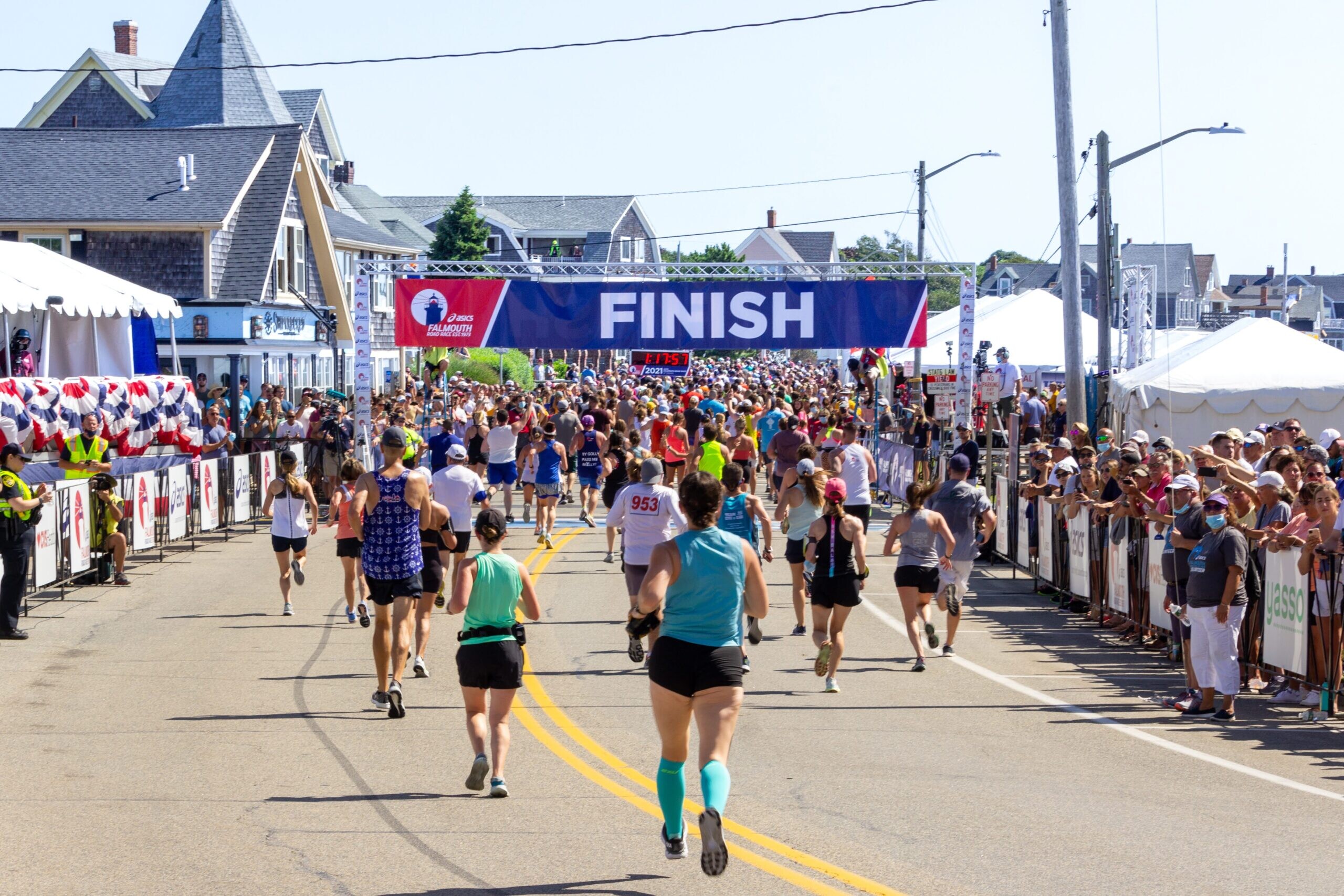
The Falmouth Road Race was established in 1973 and has become one of the premier running events of the summer season. Each year the race draws an international field of Olympians, elite runners and recreational runners out to enjoy the scenic 7-mile seaside course. The non-profit Falmouth Road Race organization is dedicated to promoting health and fitness for all in...
more...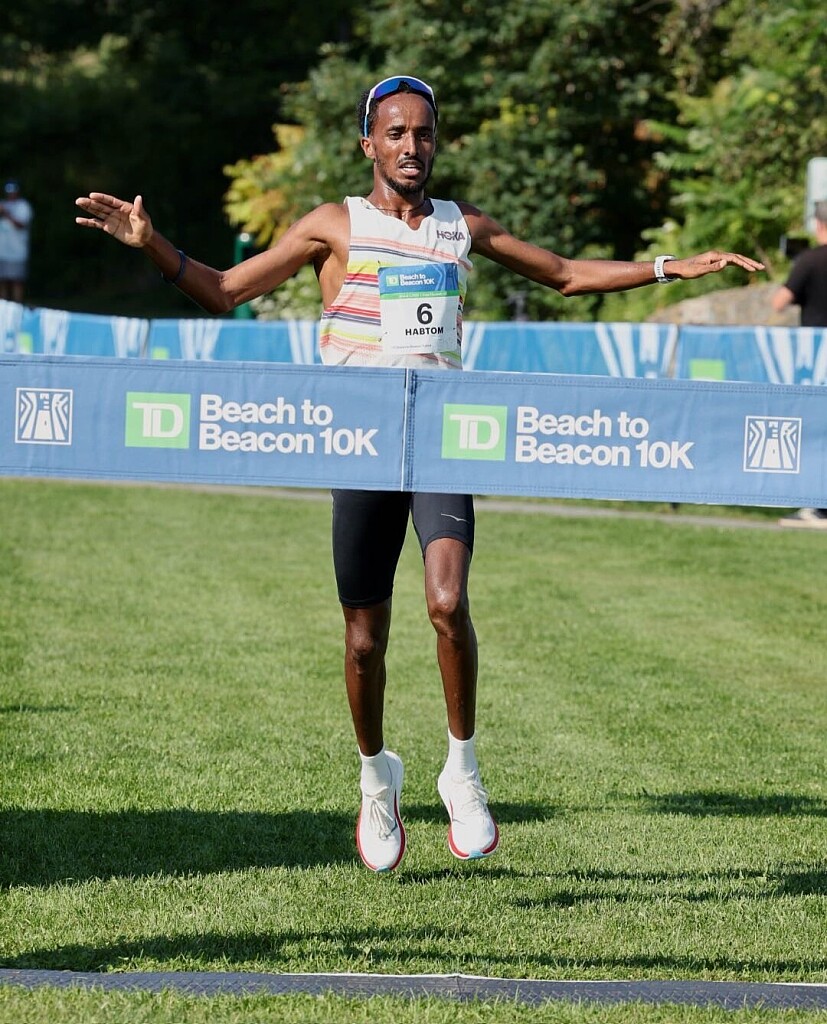
Habtom Samuel And Pamela Kosgei Shine With Brilliant Victories At TD Beach To Beacon 10K
The 2026 TD Beach to Beacon 10K delivered another memorable chapter in one of America's most prestigious road races as Eritrea's Habtom Samuel and Kenya's Pamela Kosgei produced commanding performances to capture the men's and women's titles in Cape Elizabeth, Maine.
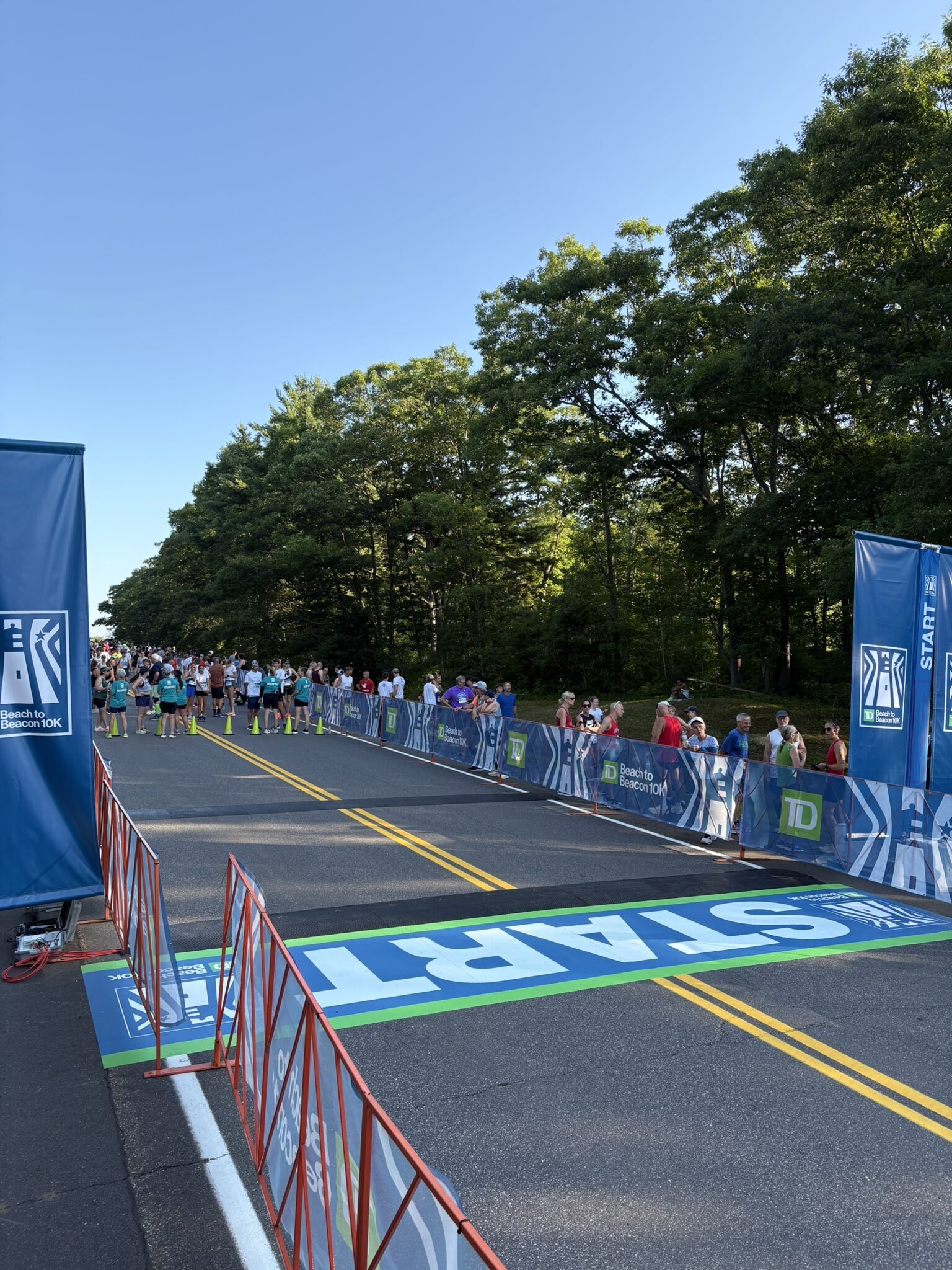
On a fast morning along the scenic coastal course, Samuel proved to be the class of the men's field. The Eritrean distance star surged to victory in an impressive 27:40, holding off a strong Kenyan challenge to secure one of the biggest road-racing victories of his career.
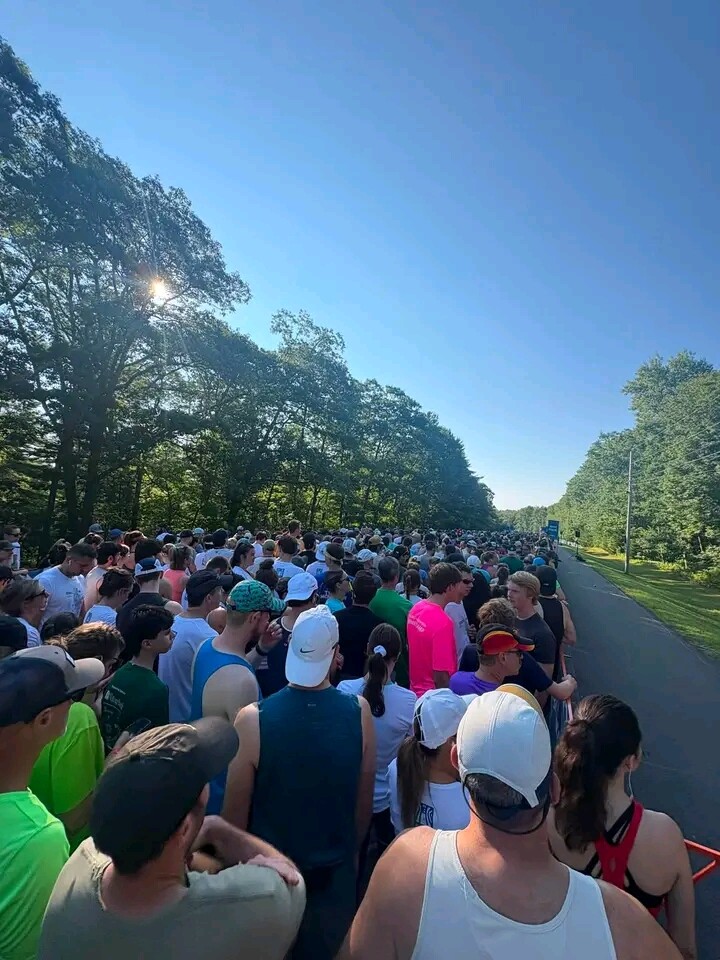
Patrick Kiprop led the pursuit and crossed the finish line eight seconds later in 27:48 to claim second place after a determined performance from start to finish. Fellow Kenyan Raphael Lekini Dapash completed the podium in 28:03, ensuring Kenya placed two athletes among the top three in a fiercely competitive international field.
Great Britain's Patrick Dever narrowly missed the podium with a time of 28:05, while American standout Biya Simbassa finished fifth in 28:11. Thailand's Kieran Tuntivate continued his consistent road-racing form by taking sixth in 28:12, ahead of Americans Joe Klecker (28:14) and Andrew Colley (28:16). Kenya's Pasanjo Kitonga finished ninth in 28:27, with Reid Buchanan rounding out the men's top ten in 28:29.
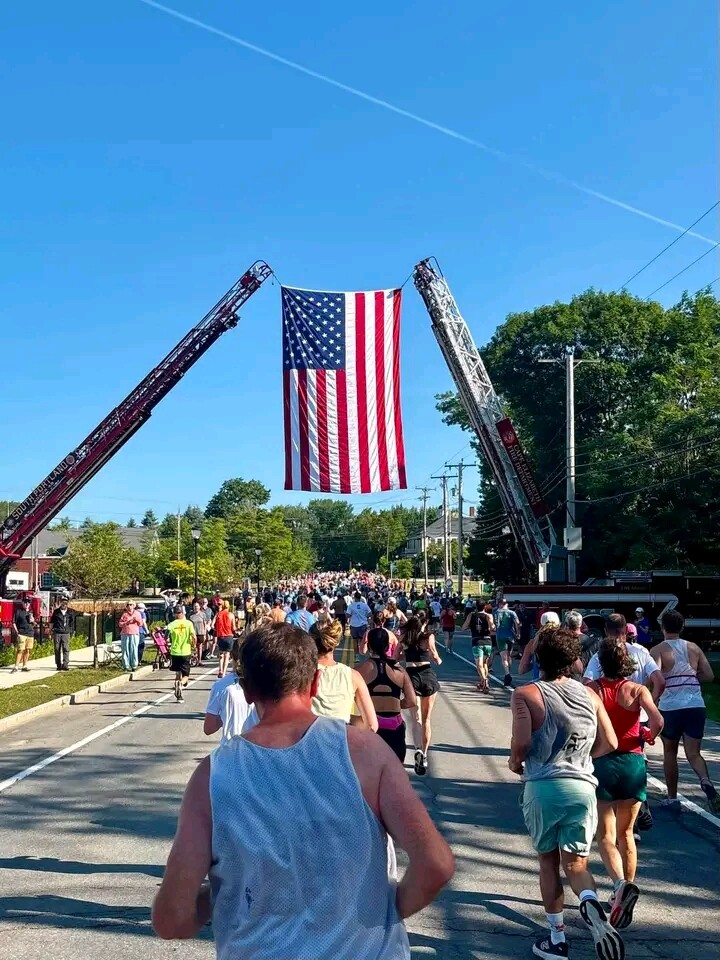
The women's race was equally captivating as Kenya's Pamela Kosgei displayed outstanding composure and strength to claim the title in 31:50. Kosgei faced relentless pressure from American distance star Elise Cranny throughout the closing stages but remained composed to cross the line just two seconds ahead and secure a memorable victory.
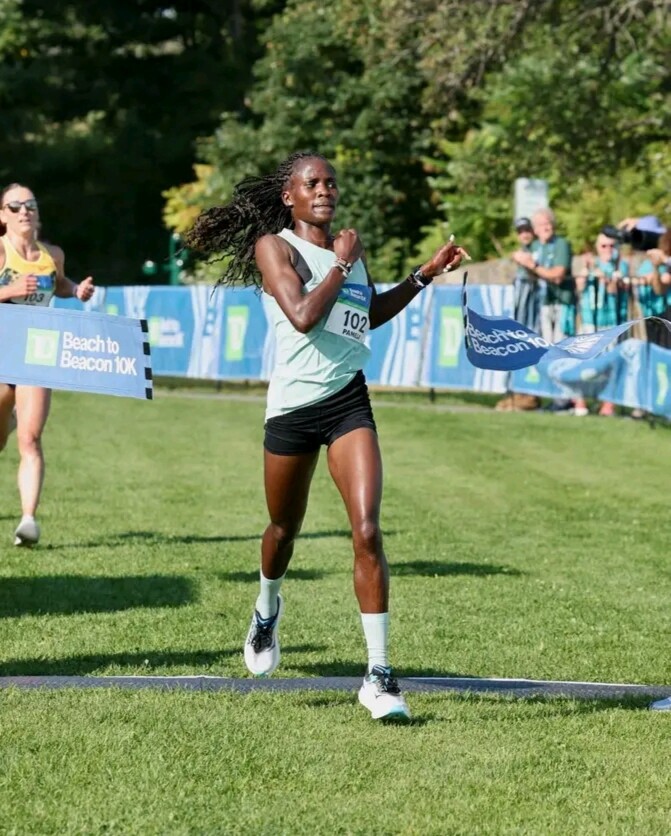
Cranny's courageous effort earned her second place in 31:52, while fellow American Molly Born completed the podium after running 32:14.
The battle for the remaining top positions was equally competitive. Annie Rodenfels finished fourth in 32:19, only one second ahead of China's Wuga He, who clocked 32:20. Megan Sailor placed sixth in 32:27, narrowly ahead of Kenya's Vicoty Chepngeno in 32:28. Dakotah Popehn finished eighth with 32:37, followed by Allie Buchalski in 32:40, while Uruguay's Julia Paternain completed the top ten in 32:57.
The 2026 edition of the TD Beach to Beacon 10K once again showcased world-class road racing, with elite athletes from across the globe producing exceptional performances on the renowned Maine course. Samuel's authoritative victory highlighted Eritrea's continued strength in distance running, while Kosgei reinforced Kenya's dominance on the international road-running circuit with a composed and tactical winning display.
The outstanding depth of both elite fields provided spectators with thrilling competition from the opening kilometers to the finish line, further cementing the Beach to Beacon 10K's reputation as one of the premier road races on the global athletics calendar.
by Erick Cheruiyot for My Best Runs.
Login to leave a comment

TD Beach to Beacon 10K
Joan Benoit Samuelson, a native of Cape Elizabeth, Maine, won the first-ever women's Marathon at the 1984 Olympics in Los Angeles and is founder and chair of the TD Bank Beach to Beacon 10K. "A long time dream of mine has been realized" says Samuelson. "I've always wanted to create a race that brings runners to some of my most...
more...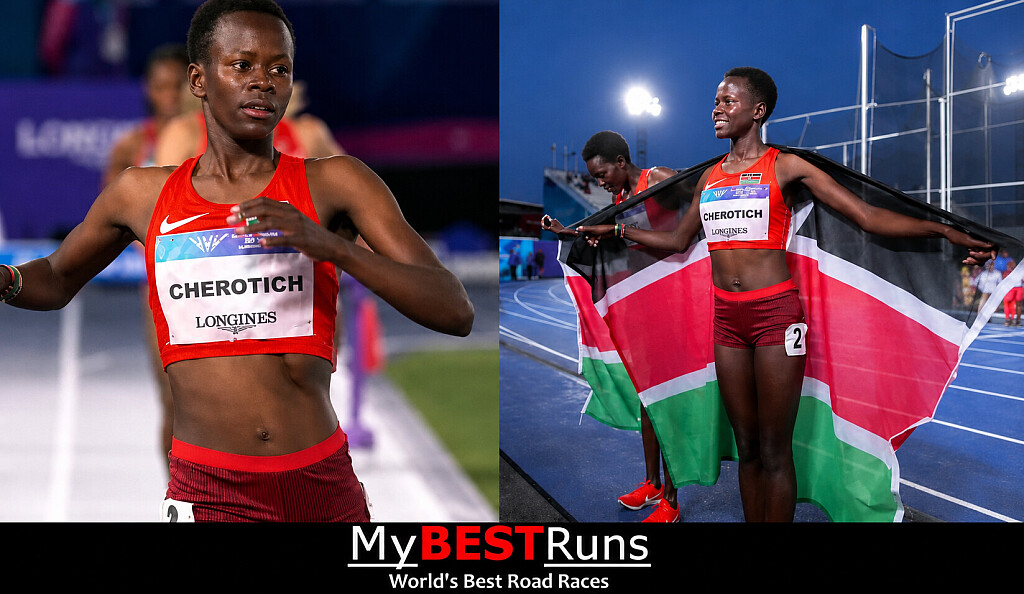
Faith Cherotich Rewrites Commonwealth Games History with Record-Breaking Steeplechase Triumph
Faith Cherotich delivered one of the greatest performances of the Glasgow 2026 Commonwealth Games, producing a breathtaking run to capture the women's 3,000m steeplechase gold medal while rewriting the championship record books.
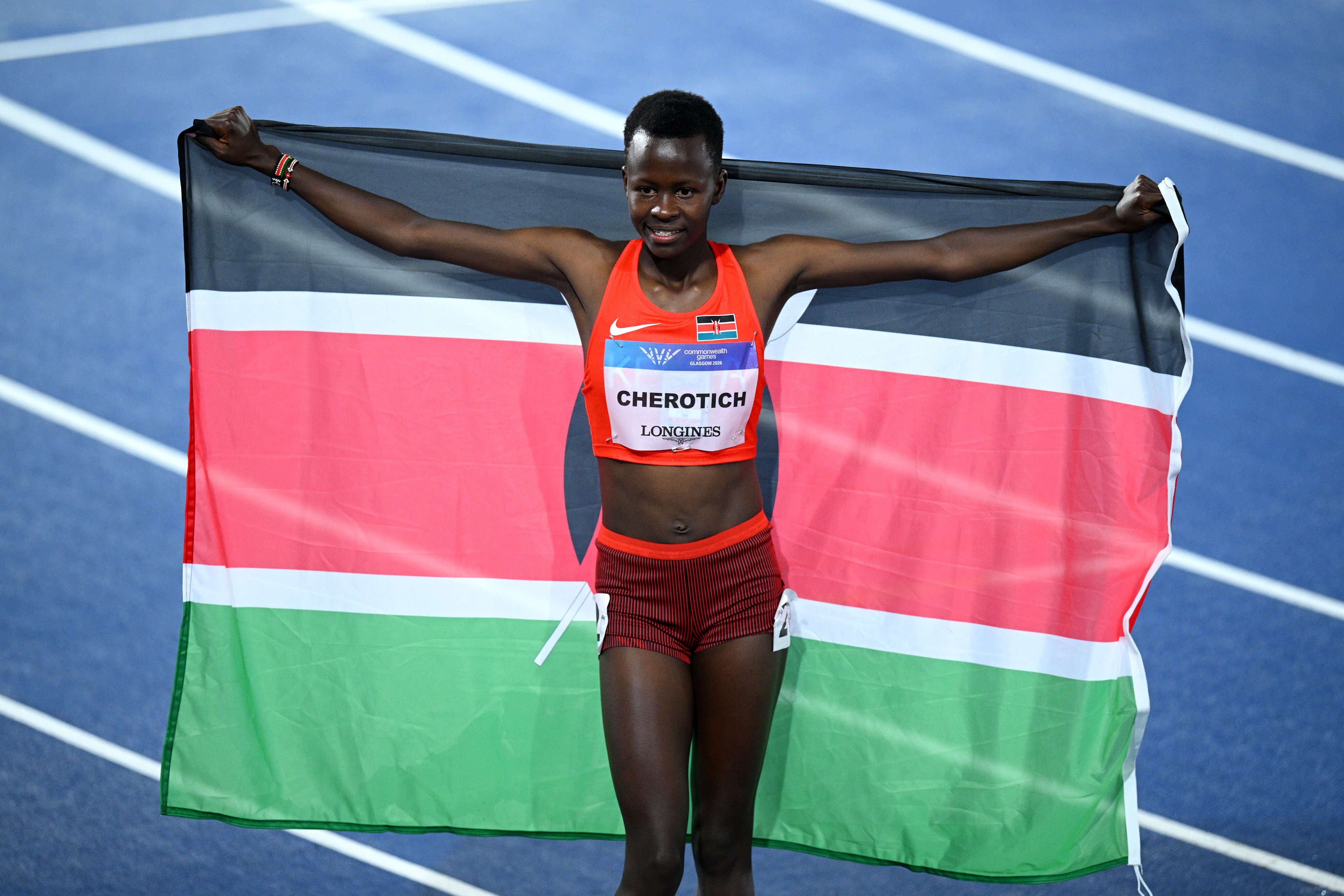
The Kenyan sensation powered away from the field with authority, crossing the finish line in a remarkable 9:01.76 to claim the Commonwealth title in unforgettable fashion. Her stunning performance erased the previous Commonwealth Games record of 9:15.68, set by fellow Kenyan Jackline Chepkoech at the Birmingham 2022 Games, underlining Kenya's continued dominance in one of its signature events.
From the opening laps, Cherotich looked composed and determined, confidently controlling the race before unleashing a devastating surge that none of her rivals could answer. Clearing every barrier with precision and maintaining a relentless rhythm, she transformed the closing stages into a celebration of world-class steeplechasing.
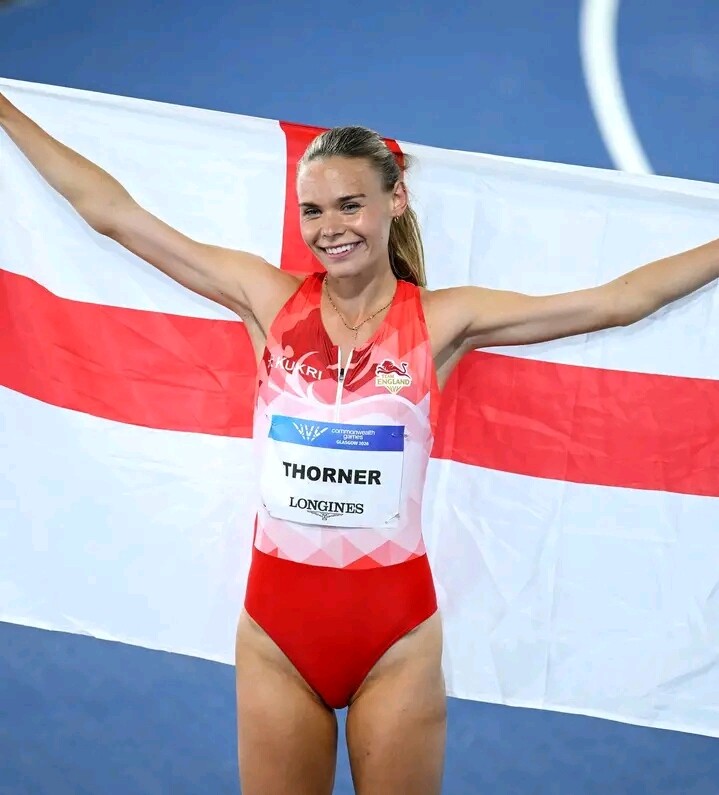
The battle for the medals was every bit as captivating. England's Elise Thorner produced a lifetime best of 9:05.45 to secure the silver medal, while Olympic champion Peruth Chemutai of Uganda claimed bronze in 9:09.96 after another courageous performance. Australia's Cara Feain-Ryan finished fourth in 9:22.07, with India's Parul Chaudhary taking fifth in 9:26.75. Canada's Grace Fetherstonhaugh crossed the line sixth in a personal best 9:27.49, while Kenya's Celestine Jepkosgei Biwot added a strong seventh-place finish in 9:33.61.
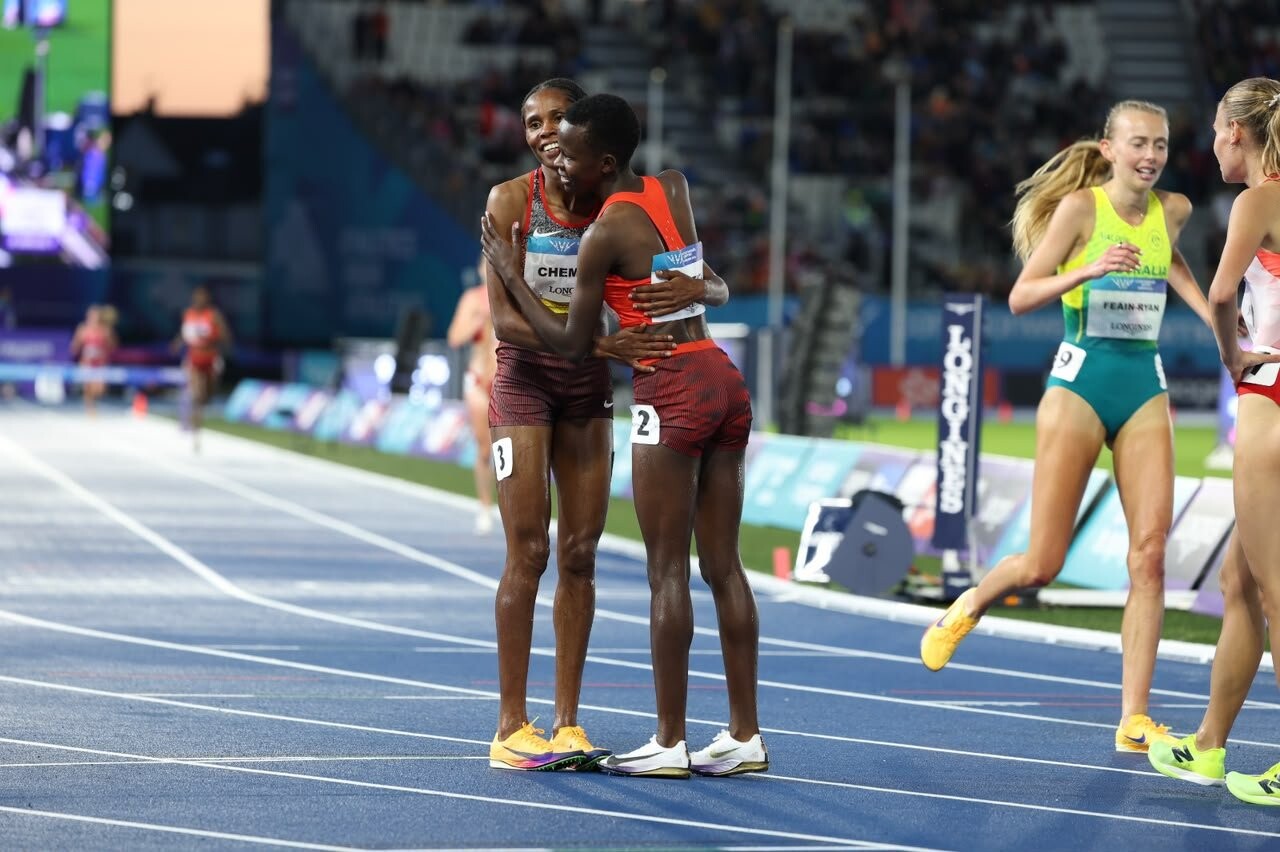
Women's 3000m Steeplechase Final – Glasgow 2026 Commonwealth Games
1. Faith Cherotich (Kenya) – 9:01.76 (Gold, Commonwealth Games Record)
2. Elise Thorner (England) – 9:05.45 (Silver, Personal Best)
3. Peruth Chemutai (Uganda) – 9:09.96 (Bronze)
4. Cara Feain-Ryan (Australia) – 9:22.07
5. Parul Chaudhary (India) – 9:26.75
6. Grace Fetherstonhaugh (Canada) – 9:27.49 (Personal Best)
7. Celestine Jepkosgei Biwot (Kenya) – 9:33.61
8. Cari Hughes (Wales) – 9:40.71 (National Record)
9. Katelyn Stewart-Barnett (Canada) – 9:46.98
10. Sarah Tait (Scotland) – 9:47.41
Cherotich's victory not only earned Kenya another gold medal but also reinforced the nation's remarkable legacy in the women's steeplechase. Breaking the Commonwealth Games record by nearly 14 seconds is a statement that echoes far beyond Glasgow, confirming the young Kenyan as one of the world's finest athletes in the event.
On a night filled with memorable performances, Faith Cherotich stood above them all. Draped in the Kenyan flag after her historic triumph, she celebrated a victory that will be remembered for years to come—a performance defined by courage, speed, and history-making brilliance.
by Erick Cheruiyot for My Best Runs.
Login to leave a comment

The Commonwealth Games
The Commonwealth Games are coming to Victoria - bringing an action packed sports program to our regional cities and delivering a long-term legacy for our future. From 17 to 29 March 2026, Geelong, Bendigo, Ballarat, Gippsland and Shepparton will be on the world stage, attracting millions of viewers and creating thousands of jobs. The multi-city model will...
more...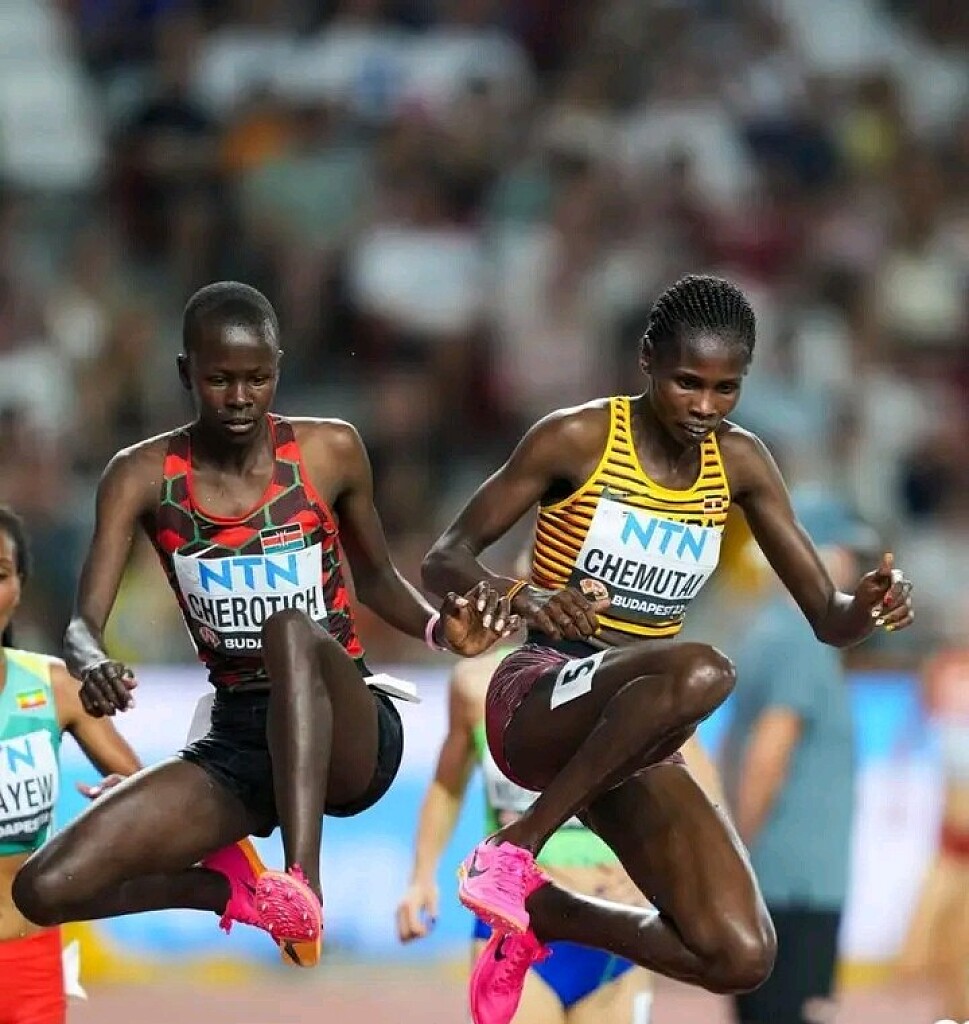
Faith Cherotich and Peruth Chemutai Set for Blockbuster Commonwealth Games Steeplechase Final in Glasgow
One of the most eagerly anticipated distance races of the 2026 Commonwealth Games will take center stage tonight in Glasgow as the women's 3,000m steeplechase final brings together two of the world's finest barrier specialists in a captivating battle for Commonwealth gold.
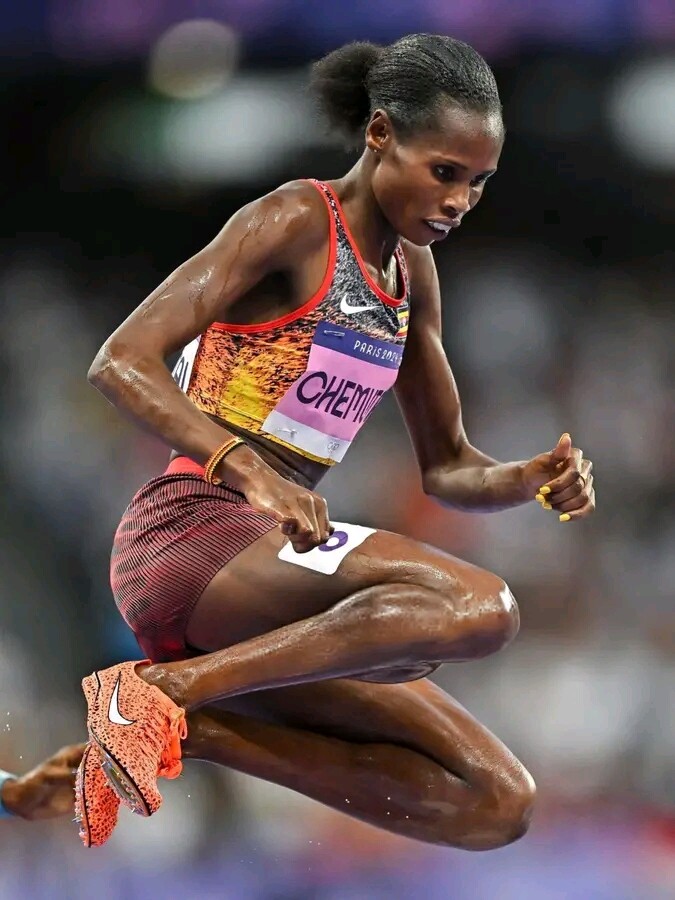
All eyes will be on Kenya's Faith Cherotich and Uganda's Peruth Chemutai, whose remarkable form this season has set the stage for what promises to be an unforgettable showdown. With both athletes arriving in Glasgow separated by less than half a second on the season's rankings, the margin for error could hardly be smaller.
Chemutai, the Olympic champion from Uganda, enters the final with the fastest season's best in the field at 8:51.06, while Kenya's rising star Cherotich has clocked an equally impressive 8:51.48. Even more remarkably, both women own personal bests under 8:49, highlighting the exceptional quality expected in the final.
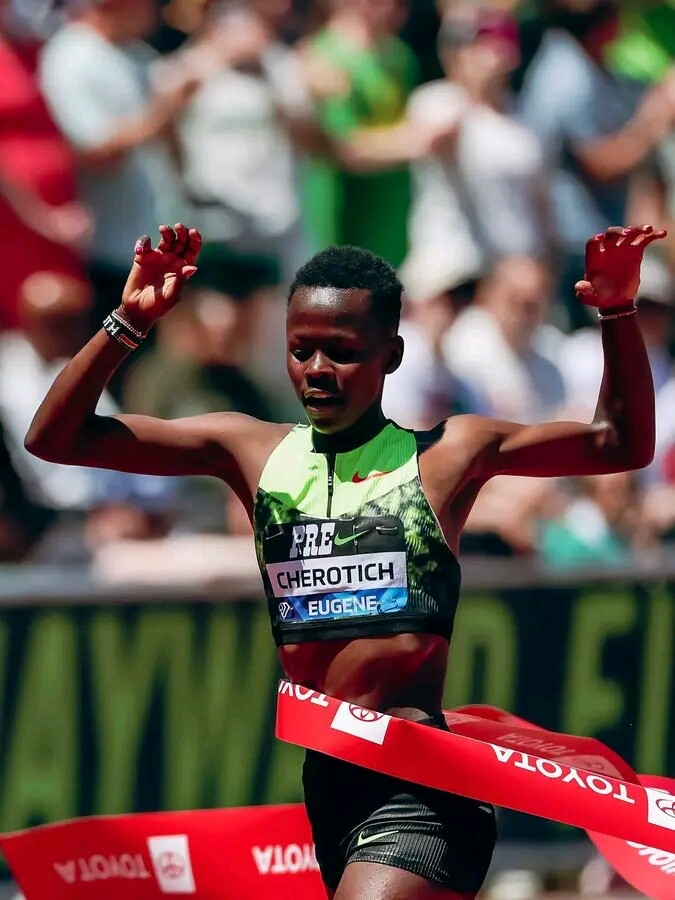
The race is expected to be a fascinating clash of styles. Chemutai's experience and relentless rhythm over the barriers will be tested by Cherotich's fearless racing instincts and devastating finishing speed. If the pace remains honest throughout, the outcome may not be decided until the final water jump or the last sprint down the home straight.
Although the spotlight naturally falls on the East African rivals, the battle for the medals extends well beyond them. England's Elise Thorner, boasting a personal best of 9:07.39, arrives as a genuine podium contender, while India's Parul Chaudhary has consistently demonstrated her ability to compete at the highest international level. Scotland's Sarah Tait will also enjoy passionate home support as she attempts to challenge the established favorites.
Kenya's Celestine Jepkosgei Biwot adds further depth to a competitive field that also includes Canada's Grace Fetherstonhaugh and Katelyn Stewart-Barnett, Australia's Cara Feain-Ryan, and Wales' Cari Hughes, ensuring the race will feature talent from across the Commonwealth.
Women's 3,000m Steeplechase Final – Start List
1. Grace Fetherstonhaugh (Canada) – PB: 9:28.42 | SB: 9:31.98
2. Faith Cherotich (Kenya) – PB: 8:48.71 | SB: 8:51.48
3. Peruth Chemutai (Uganda) – PB: 8:48.03 | SB: 8:51.06
4. Sarah Tait (Scotland) – PB: 9:18.66 | SB: 9:40.92
5. Parul Chaudhary (India) – PB: 9:12.46 | SB: 9:12.84
6. Katelyn Stewart-Barnett (Canada) – PB: 9:33.21 | SB: 9:36.69
7. Elise Thorner (England) – PB: 9:07.39 | SB: 9:07.39
8. Celestine Jepkosgei Biwot (Kenya) – PB: 9:17.06 | SB: 9:26.12
9. Cara Feain-Ryan (Australia) – PB: 9:21.35 | SB: 9:21.35
10. Cari Hughes (Wales) – PB: 9:41.66 | SB: 9:59.89
With two world-class athletes at the peak of their powers, national pride on the line, and a Commonwealth title at stake, Glasgow is set for a spectacular night of steeplechasing. Whether it is Chemutai's championship experience or Cherotich's youthful brilliance that prevails, fans can expect an electrifying contest that could become one of the defining races of the 2026 Commonwealth Games. The stage is set, the athletes are ready, and tonight promises to deliver a thrilling battle all the way to the finish line.
by Erick Cheruiyot for My Best Runs.
Login to leave a comment
The Commonwealth Games
The Commonwealth Games are coming to Victoria - bringing an action packed sports program to our regional cities and delivering a long-term legacy for our future. From 17 to 29 March 2026, Geelong, Bendigo, Ballarat, Gippsland and Shepparton will be on the world stage, attracting millions of viewers and creating thousands of jobs. The multi-city model will...
more...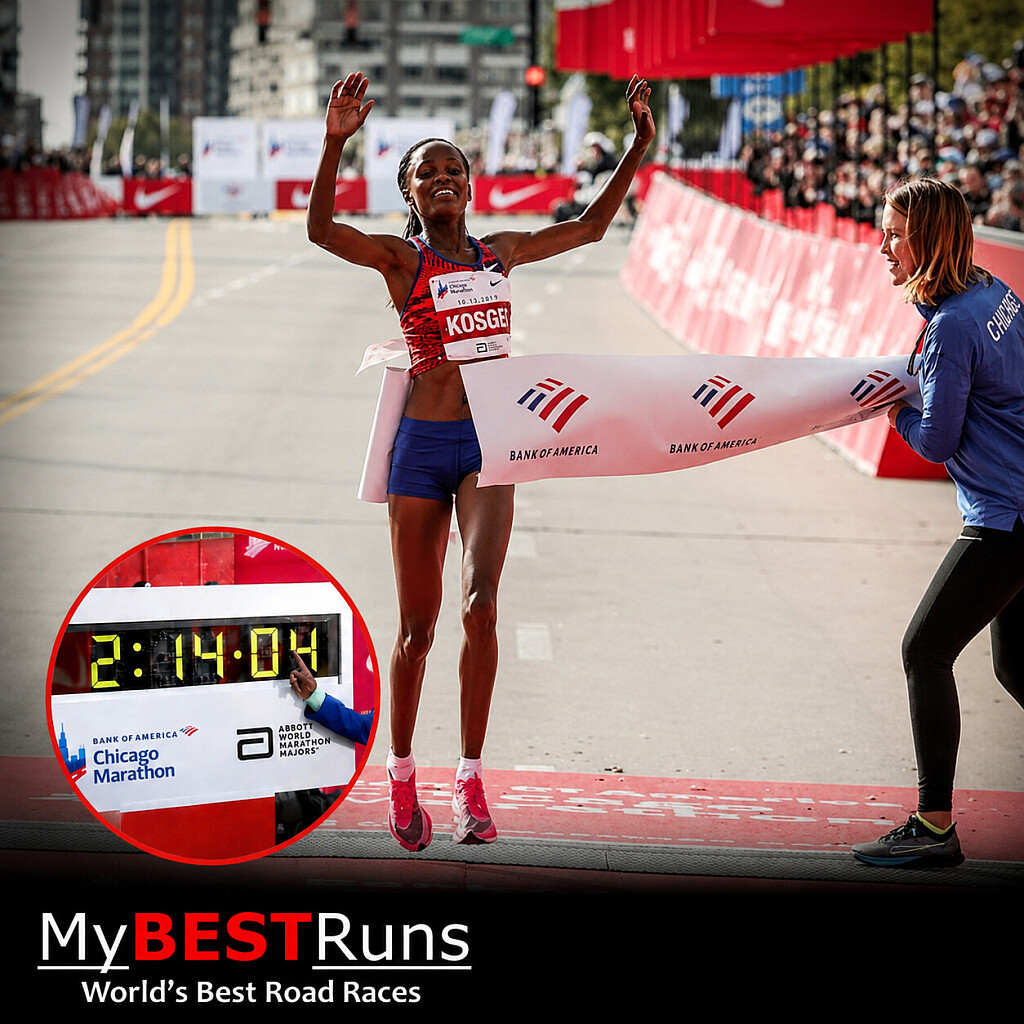
Brigid Kosgei Returns to the Course Where She Redefined Women's Marathon Running
Seven years after producing one of the most extraordinary performances the marathon has ever witnessed, Brigid Kosgei is heading back to the streets where she etched her name into athletics history. The Kenyan distance-running icon will return to the Bank of America Chicago Marathon on October 11, 2026, rekindling memories of her breathtaking triumph in 2019 that transformed the sport forever.
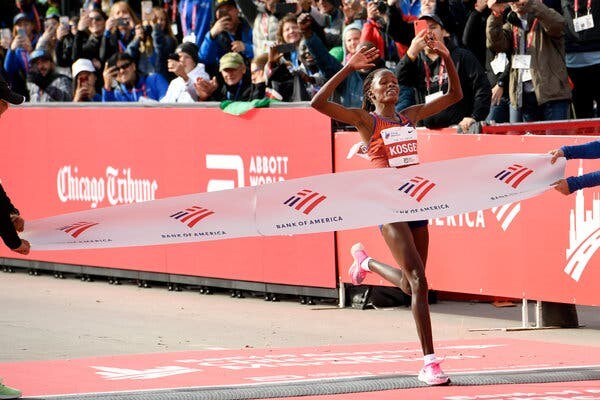
Chicago was the stage where Kosgei delivered a performance for the ages, crossing the finish line in an astonishing 2:14:04 to erase Paula Radcliffe's 16-year-old women's marathon world record. That unforgettable run remains one of the greatest achievements in long-distance running and cemented her place among the finest marathoners in history.
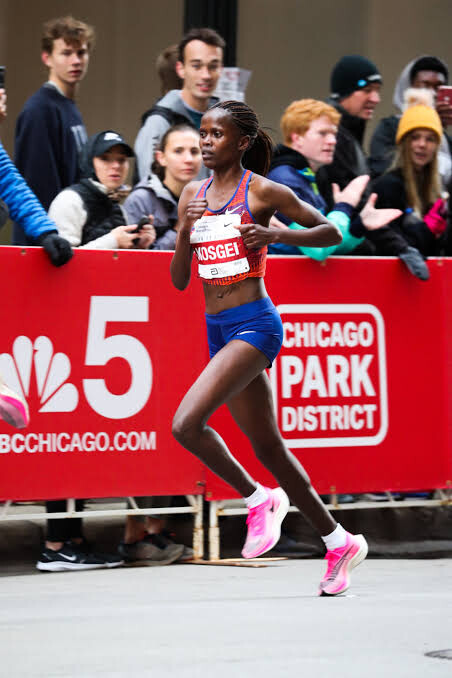
Her return comes at the perfect moment. Kosgei arrives in exceptional form after capturing victory at the 2026 Tokyo Marathon, where she stormed to a course-record 2:14:29, proving she is once again among the world's most dangerous marathon competitors. With renewed confidence and outstanding fitness, she will be aiming to conquer Chicago for another memorable chapter in her remarkable career.
However, victory will be anything but straightforward. The 2026 women's race features one of the deepest and strongest marathon fields ever assembled, setting the stage for a spectacular battle between some of the sport's biggest names.
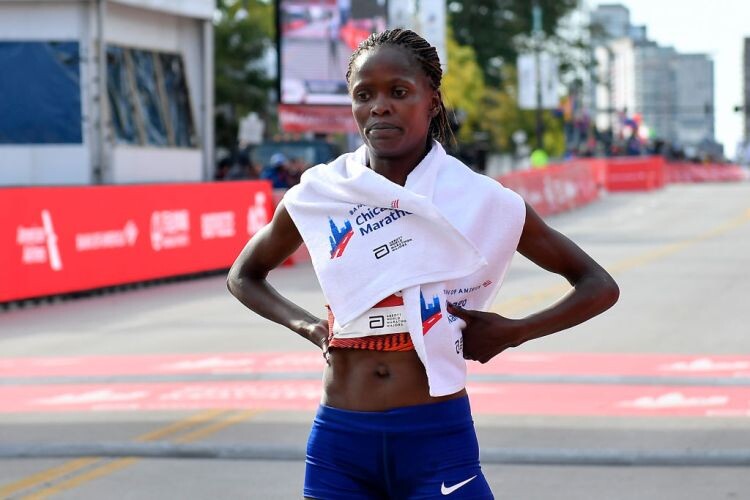
Defending champion Hawi Feysa returns determined to protect her Chicago crown after establishing herself among the world's elite. Ethiopia's Sutume Kebede and Megertu Alemu add further strength to an already formidable lineup, while Kenya's Brillian Kipkoech, Loice Chemnung, Joan Kilimo, Magdalyne Masai, and Mary Ngugi Cooper ensure the East African rivalry will be as fierce as ever.
Another athlete attracting enormous attention is Boston Marathon champion Sharon Lokedi, who will make her highly anticipated Chicago Marathon debut. Having already proven herself on the biggest stages, Lokedi adds another exciting dimension to a race packed with championship pedigree and world-class talent.
The international field is equally impressive, with Ethiopia's Degitu Azimeraw and Fantu Worku joining Japan's Yuka Ando, Australia's Isobel Batt-Doyle, and American standouts Sara Hall, Susanna Sullivan, Des Linden, and Natosha Rogers in pursuit of marathon glory.
With a former world-record holder returning to her most historic venue, a defending champion eager to retain her title, and several major marathon winners chasing one of the sport's most prestigious crowns, the 2026 Bank of America Chicago Marathon promises to deliver a thrilling contest from start to finish. Every indication suggests this could become one of the most memorable women's marathon races in recent history.
As the countdown to October 11 continues, anticipation is rapidly building. Can Brigid Kosgei recreate the magic that changed marathon history, or will a new champion rise on the streets of Chicago? One thing is certain—the world will be watching as an exceptional field battles for one of road running's most coveted titles.
by Erick Cheruiyot for My Best Runs.
Login to leave a comment

Bank of America Chicago
Running the Bank of America Chicago Marathon is the pinnacle of achievement for elite athletes and everyday runners alike. On race day, runners from all 50 states and more than 100 countries will set out to accomplish a personal dream by reaching the finish line in Grant Park. The Bank of America Chicago Marathon is known for its flat and...
more...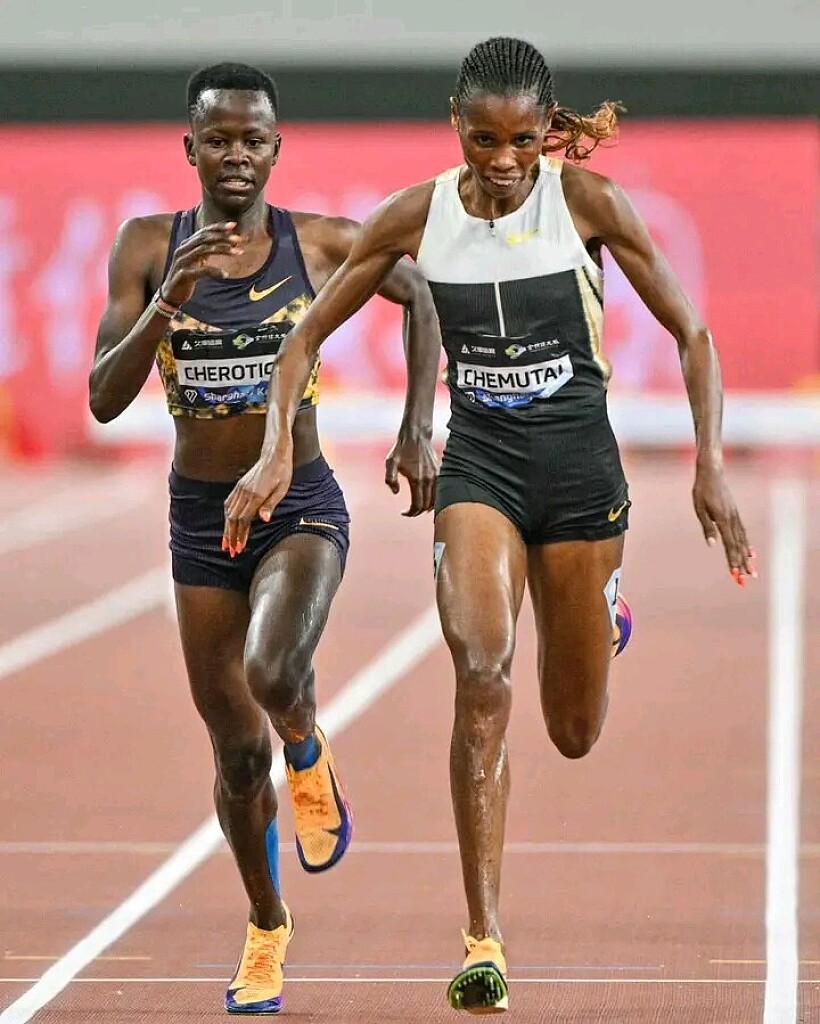
Commonwealth Games Women's Steeplechase Set for a Classic Showdown as Faith Cherotich and Peruth Chemutai Renew Their Rivalry
The women's 3,000-meter steeplechase promises to be one of the standout distance races of the 2026 Commonwealth Games when a talented field lines up on July 29, headlined by two of the world's finest barrier specialists: Kenya's Faith Cherotich and Uganda's Peruth Chemutai.
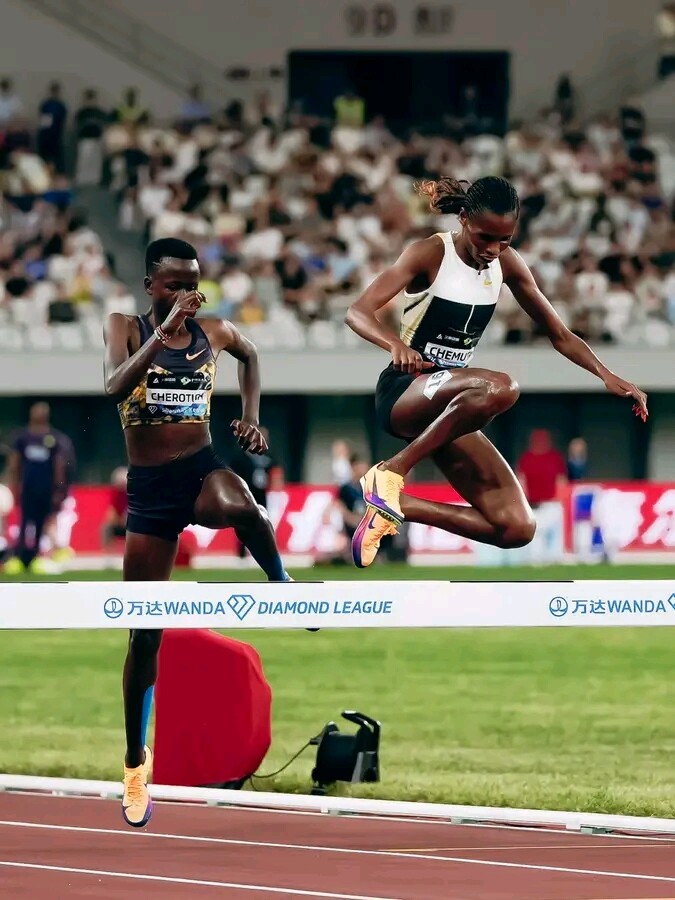
With personal bests separated by less than a second, the race has all the ingredients of a championship classic. Olympic medalists, emerging stars, and national champions will all be chasing Commonwealth glory, but much of the spotlight will naturally fall on the fierce rivalry between Cherotich and Chemutai.
Cherotich arrives as one of the fastest women ever over the barriers with a personal best of 8:48.71, a mark that underlines her remarkable rise to the top of global steeplechasing. The young Kenyan has established herself as one of the sport's brightest talents through her fearless front-running, smooth hurdling technique, and devastating finishing speed.
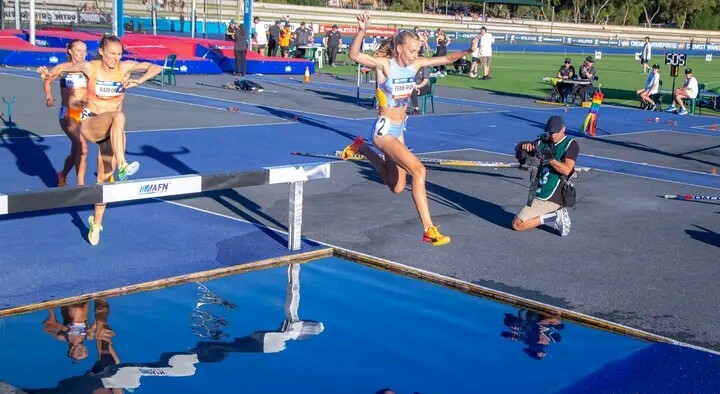
Standing in her way is Uganda's Peruth Chemutai, whose personal best of 8:48.03 makes her the fastest athlete in the field on paper. The Olympic champion has repeatedly proven she thrives in championship racing, combining tactical intelligence with years of experience on the biggest stages. Her ability to produce her very best when medals are on the line makes her an exceptionally dangerous competitor.
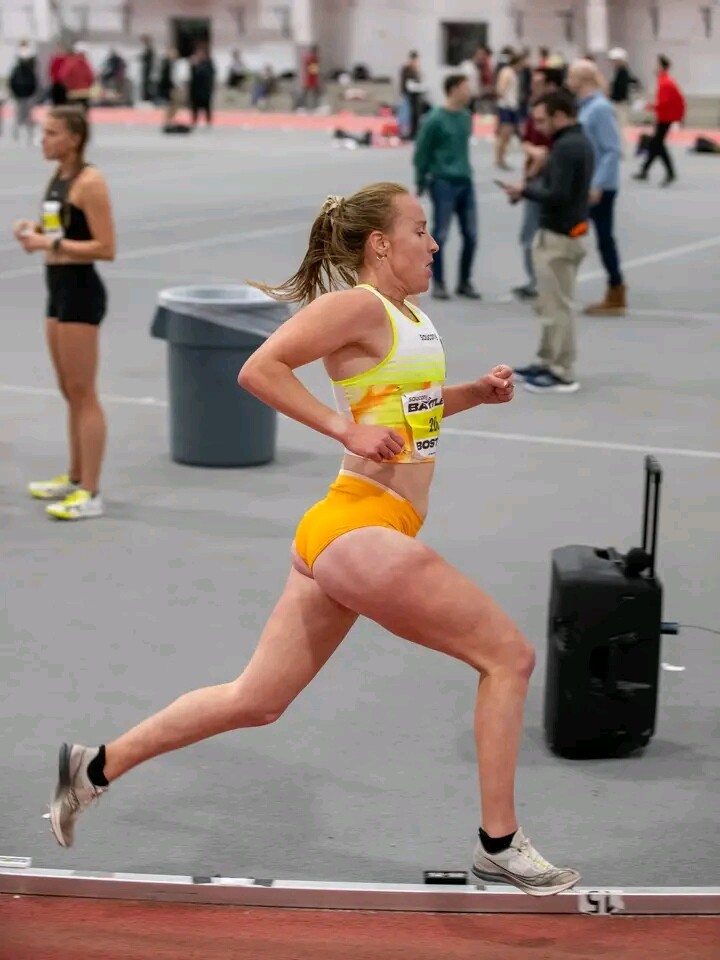
Kenya also boasts impressive depth through Celestine Jepkosgei Biwot, who owns a personal best of 9:19.06 and could play a significant role in the race if the early pace becomes tactical. A Kenyan podium sweep may be difficult against such quality opposition, but Biwot has shown she is capable of competing with the continent's elite.
England's Elise Thorner enters as one of the strongest challengers outside East Africa. With a personal best of 9:07.39, she has consistently demonstrated the ability to race aggressively and could place herself firmly in medal contention if the favorites hesitate.
India's Parul Chaudhary brings another compelling storyline after lowering her personal best to 9:12.46, establishing herself as one of Asia's leading steeplechasers. She will be aiming to deliver one of India's strongest distance performances of the Games.
Australia's Cara Feain-Ryan (9:21.35), Scotland's Sarah Tait (9:18.66), Canada's Grace Fetherstonhaugh (9:31.98), Canada's Katelyn Stewart-Barnett (9:36.69), and Wales' Cari Hughes (9:41.66) complete a diverse and competitive field representing six Commonwealth nations.
While personal bests provide an indication of form, championship racing often rewards patience, tactical awareness, and flawless barrier technique as much as outright speed. Every water jump and every barrier could prove decisive in a race where momentum can change within seconds.
The start list suggests a fascinating battle between proven championship performers and ambitious newcomers eager to announce themselves on one of athletics' biggest stages. If the pace is honest from the opening laps, spectators could witness one of the fastest Commonwealth Games steeplechase finals in history.
With continental pride, championship medals, and Commonwealth supremacy at stake, all eyes will turn to the women's 3,000-meter steeplechase on July 29, where Faith Cherotich and Peruth Chemutai are set to write another thrilling chapter in one of distance running's most exciting rivalries.
by Erick Cheruiyot for My Best Runs.
Login to leave a comment
The Commonwealth Games
The Commonwealth Games are coming to Victoria - bringing an action packed sports program to our regional cities and delivering a long-term legacy for our future. From 17 to 29 March 2026, Geelong, Bendigo, Ballarat, Gippsland and Shepparton will be on the world stage, attracting millions of viewers and creating thousands of jobs. The multi-city model will...
more...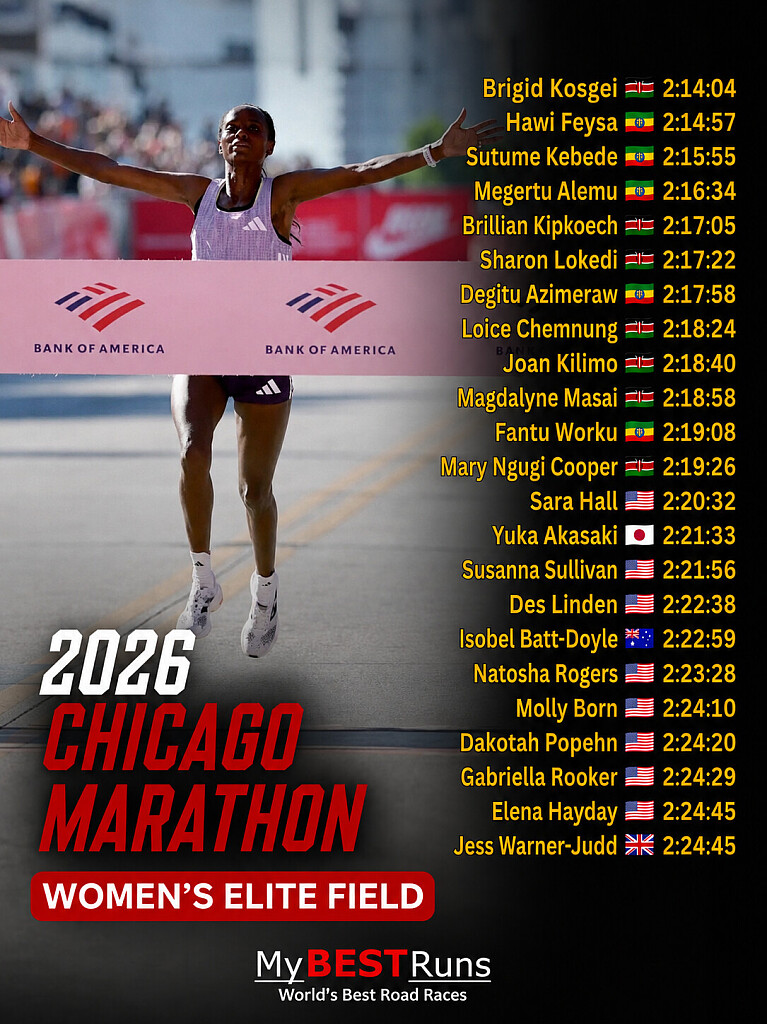
Chicago Marathon Unveils One of the Strongest Women's Elite Fields in Race History
The world's finest women marathoners will converge in Chicago, Illinois, on Sunday, October 11, for what promises to be one of the most competitive races in the history of the 2026 Bank of America Chicago Marathon. Returning to defend her Chicago Marathon title is Ethiopia's Hawi Feysa, who produced a breakthrough victory in last year's race. With a personal best of 2:14:57, Feysa returns carrying the confidence of a reigning champion and will be determined to become the first woman in several years to successfully defend the Chicago Marathon crown. Her title defense adds another compelling storyline to what is already one of the strongest women's marathon fields ever assembled in Chicago.
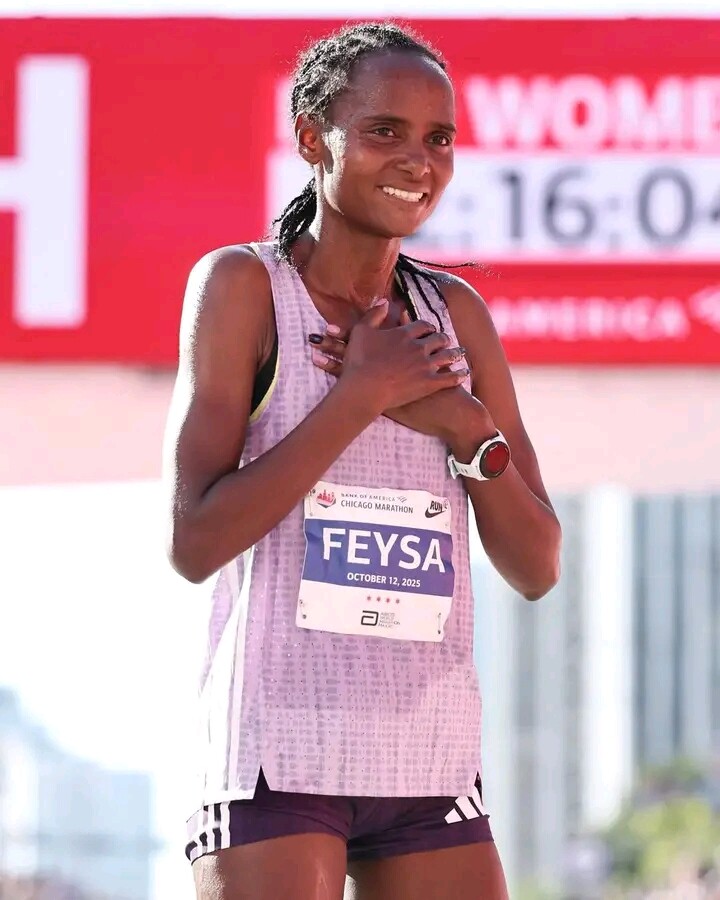
Adding even greater star power to the race is former world record holder Brigid Kosgei, whose outstanding personal best of 2:14:04 remains one of the fastest marathon performances in history. The Kenyan legend leads an exceptional field packed with proven champions, major marathon winners, and rising stars, ensuring every mile will be fiercely contested.
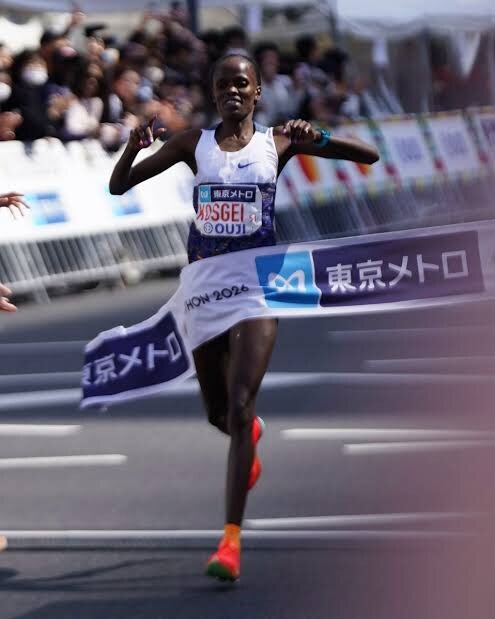
The depth of this year's lineup is nothing short of extraordinary. Twelve athletes boast personal bests under 2:20, highlighting the exceptional quality of the field. Rarely has Chicago welcomed such an impressive collection of elite marathon talent, making this one of the most competitive women's races in the event's history.
Ethiopia arrives with a formidable squad led by defending champion Hawi Feysa, alongside Sutume Kebede (2:15:55), Megertu Alemu (2:16:34), Degitu Azimeraw (2:17:58) and Fantu Worku (2:19:08). Together, they represent one of the strongest national teams in the race, with each athlete capable of challenging for victory.

Kenya counters with an equally impressive lineup headed by Brigid Kosgei, while Brillian Kipkoech, Sharon Lokedi, Loice Chemnung, Joan Kilimo, Magdalyne Masai, and Mary Ngugi Cooper add further strength to a nation renowned for producing world-class marathon champions.
The international challenge is equally compelling. The United States fields a strong contingent featuring Sara Hall, Susanna Sullivan, Des Linden, Natosha Rogers, Molly Born, Dakotah Popehn, Gabriella Rooker, and Elena Hayday, while Japan's Yuka Akasaki, Australia's Isobel Batt-Doyle, and Great Britain's Jess Warner-Judd complete a truly global field capable of producing surprises.
With defending champion Hawi Feysa seeking back-to-back victories, former world record holder Brigid Kosgei aiming to add another World Marathon Major title to her illustrious career, and 12 women with sub-2:20 personal bests on the start line, Chicago on October 11 is set to host one of the most anticipated women's marathon races of the year. Fans can expect a thrilling contest that could produce another unforgettable chapter in the rich history of the Chicago Marathon.
by Erick Cheruiyot for My Best Runs.
Login to leave a comment
Bank of America Chicago
Running the Bank of America Chicago Marathon is the pinnacle of achievement for elite athletes and everyday runners alike. On race day, runners from all 50 states and more than 100 countries will set out to accomplish a personal dream by reaching the finish line in Grant Park. The Bank of America Chicago Marathon is known for its flat and...
more...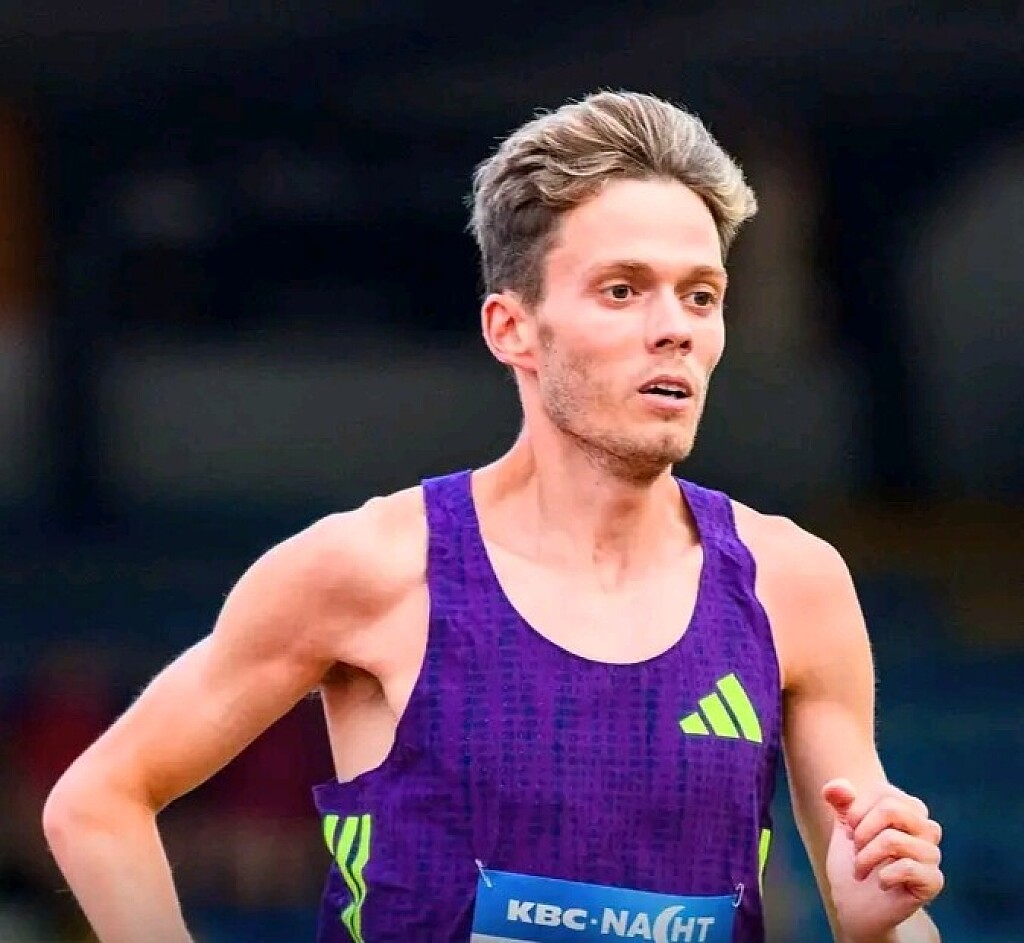
Triple Personal Bests Light Up KBC Night of Athletics as José Carlos Pinto Breaks the 13-Minute Barrier
The KBC Night of Athletics in Heusden-Zolder, Belgium, delivered another unforgettable evening of distance running as José Carlos Pinto, Duncan Waweru, and Laban Kiptoo Kosgei all produced career-best performances in a thrilling men's 5,000m showdown.
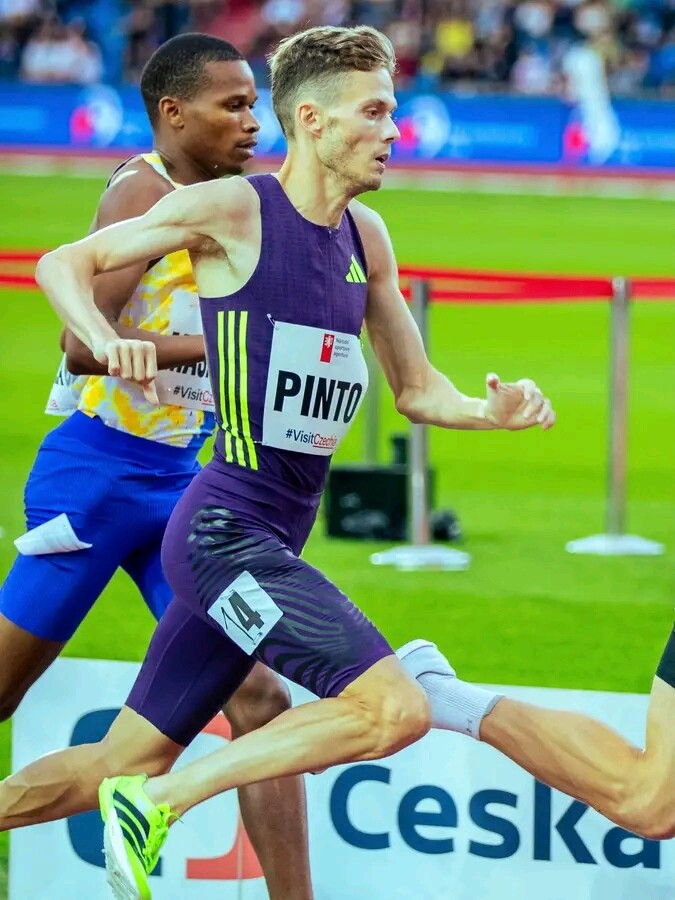
Portugal's José Carlos Pinto stole the spotlight, storming to victory in 12:59.75 to become the only athlete in the field to dip under the coveted 13-minute barrier. The outstanding performance marked a significant milestone in his career, earning him both the race win and a new personal best.
Kenya's Duncan Waweru continued his impressive rise on the international circuit, finishing second in a lifetime best of 13:03.48. Waweru remained in contention throughout the race before producing a strong finish to slash his previous best and underline his growing potential among the world's elite distance runners.
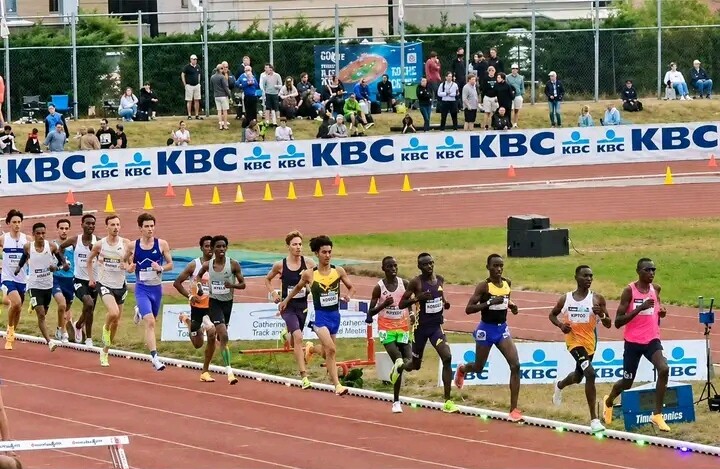
Another Kenyan talent, Laban Kiptoo Kosgei, also celebrated a breakthrough performance. The 19-year-old clocked 13:05.22 to secure third place, setting a new personal best in what was one of the finest races of his young career. His composed and confident display further highlighted his promise as one of Kenya's emerging stars over 5,000 metres.
Behind the leading trio, Norway's Narve Gilje Nordås finished fourth in 13:13.84, while Ethiopia's Fasika Ayele rounded out the top five with 13:14.25 in a race contested at an uncompromising pace from the opening laps.
With all three podium finishers leaving Belgium with new lifetime bests, the men's 5,000m was undoubtedly one of the standout events of the meeting. Pinto's historic sub-13 performance, combined with the breakthrough runs from Waweru and Kosgei, added another memorable chapter to the reputation of the KBC Night of Athletics as one of Europe's premier stages for fast distance running.
As the championship season gathers momentum, these performances send a strong message that all three athletes are reaching peak form at exactly the right time, with even faster times likely to come in the weeks ahead.
by Erick Cheruiyot for My Best Runs.
Login to leave a comment
São Paulo Marathon Set for High-Stakes Showdown as Kipkosgei, Wami and Lelei Target Victory
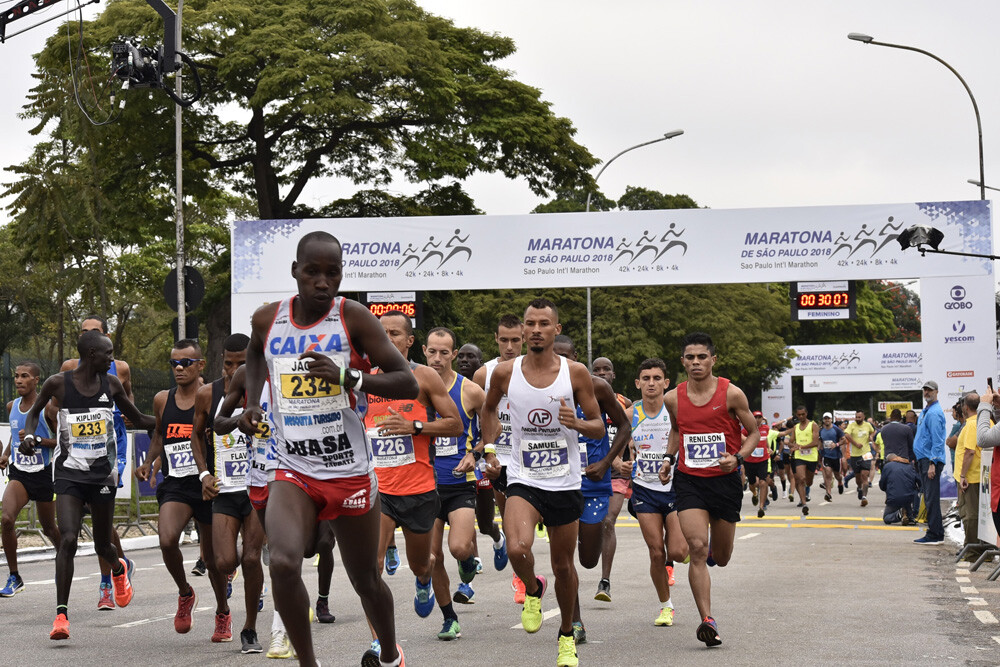
The countdown is on for the 2026 São Paulo Marathon, where an elite international field is set to battle for one of South America's most prestigious road racing titles on Sunday, July 26, in Brazil.
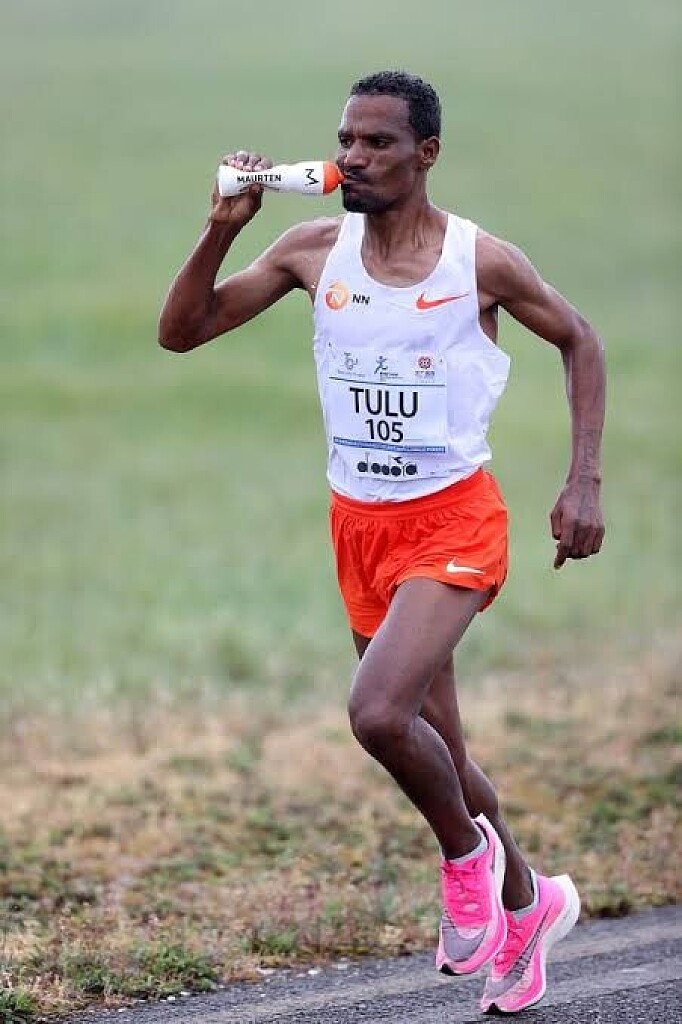
Ethiopia's Tulu Wami arrives carrying the fastest personal best in the field, having clocked an outstanding 2:05:19, making him the man every rival will be watching when the race gets underway. On paper, Wami stands as the favorite, but championship marathons are rarely decided by statistics alone.
Kenya will mount a formidable challenge through Denis Kipkosgei and Isaack Lelei, two accomplished marathoners eager to upset the pre-race predictions. Kipkosgei brings a personal best of 2:08:36, while Lelei has demonstrated his own consistency with a lifetime best of 2:09:32. Both possess the experience and tactical awareness to capitalize if the race turns into a battle of endurance rather than pure speed.
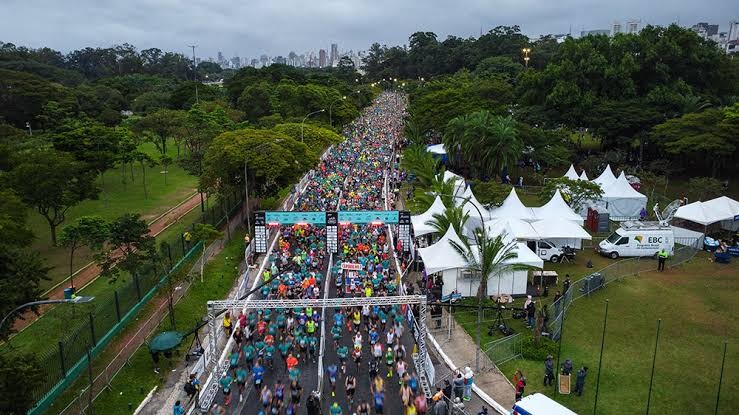
With three proven distance runners leading a deep and competitive field, the stage is set for an intriguing contest over the 42.195-kilometre distance. Whether the pace is aggressive from the gun or develops into a strategic duel in the closing kilometres, every move will carry significant weight.
Brazilian fans can expect an exciting spectacle as East Africa's marathon powerhouses renew one of the sport's greatest rivalries on Brazilian roads. Wami may hold the quickest credentials, but Kipkosgei and Lelei will be determined to write a different ending and take the title back to Kenya.
As anticipation builds ahead of Sunday's race, one question remains:
Will Tulu Wami justify his status as the fastest man in the field, or will Denis Kipkosgei or Isaack Lelei produce a memorable upset to claim the São Paulo Marathon crown?
by Erick Cheruiyot for My Best Runs.
Login to leave a comment

Sao Paulo Marathon
São Paulo International Marathon is held annually in the city of São Paulo since 1995. The competition also includes the25 km, 10 km and 3 km walk, in addition to the marathon. It is carried out all within the city of São Paulo, with departure and arrival in the Ibirapuera Park....
more...
Four Legends Who Defined Kenya's Golden Era of the 800 Metres
Kenya's rich history in the 800 metres has produced some of the finest middle-distance athletes the world has ever witnessed. Across different generations, extraordinary talent, resilience and excellence have transformed the nation into a global powerhouse in the two-lap event. From world records and Olympic triumphs to groundbreaking achievements and inspirational coaching, four remarkable athletes stand out as enduring symbols of Kenya's golden era.
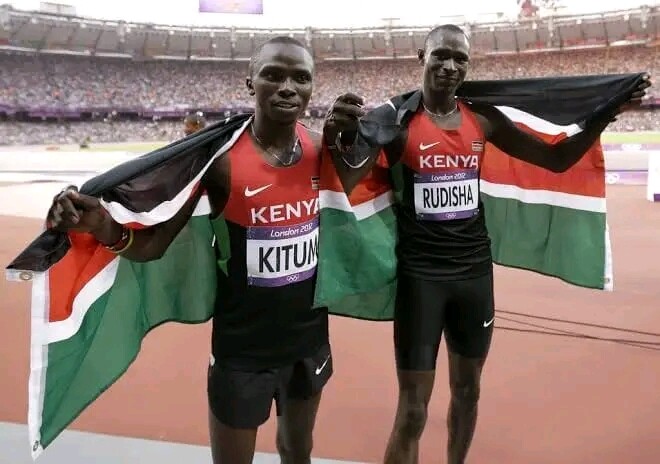
Leading the list is David Rudisha, the undisputed king of the men's 800 metres. His name is synonymous with greatness after redefining what was thought possible over two laps. A two-time Olympic champion and two-time world champion, Rudisha reached the pinnacle of the sport at the London 2012 Olympic Games, where he produced one of the greatest performances in athletics history. His breathtaking world record of 1:40.91, set from the front without the aid of a pacemaker, remains unbeaten and continues to inspire generations of middle-distance runners around the world.
Sharing that unforgettable London final was Timothy Kitum, whose remarkable breakthrough captivated the athletics world. At just 18 years old, he delivered a sensational performance to claim the Olympic bronze medal in a personal best of 1:42.53, a time that still stands as Kenya's national under-20 record. Although he later stepped away from elite competition, Kitum has remained closely connected to the sport, proudly supporting his wife, multiple Olympic champion Faith Kipyegon, as she continues to build one of the greatest careers in middle-distance running history.
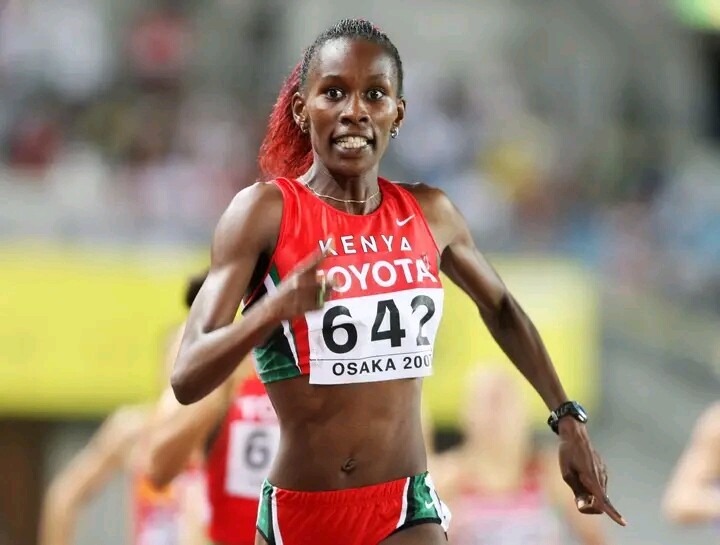
On the women's side, Janeth Jepkosgei broke new ground for Kenyan athletics by becoming the country's first female World Champion in the 800 metres. Affectionately known as the "Eldoret Express," she captured the world title in Osaka in 2007 before adding an Olympic silver medal at the Beijing Games in 2008. Her influence, however, extends well beyond the medals she won. After retiring from competition, Jepkosgei dedicated herself to coaching, helping nurture a new generation of Kenyan middle-distance stars.
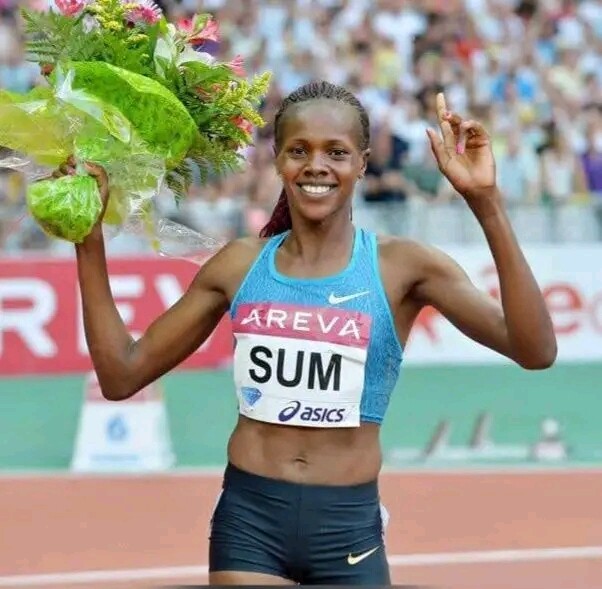
Among those who benefited most from her guidance was Eunice Sum. Under Jepkosgei's mentorship, Sum blossomed into one of the world's finest 800-metre athletes, winning the World Championship title in Moscow in 2013 before adding a bronze medal at the 2015 World Championships. Her rise from promising youngster to global champion stands as a powerful testament to the value of mentorship and the enduring strength of Kenya's middle-distance tradition.
Together, these four icons represent far more than medals and records. They embody the passion, discipline and relentless pursuit of excellence that have made Kenya the benchmark in the 800 metres. Their achievements have inspired generations of athletes, while their legacy continues to shape the future of Kenyan middle-distance running. From world records and Olympic glory to championship titles and coaching excellence, they remain enduring symbols of one of the greatest eras in the history of the 800 metres.
by Erick Cheruiyot for My Best Runs.
Login to leave a comment
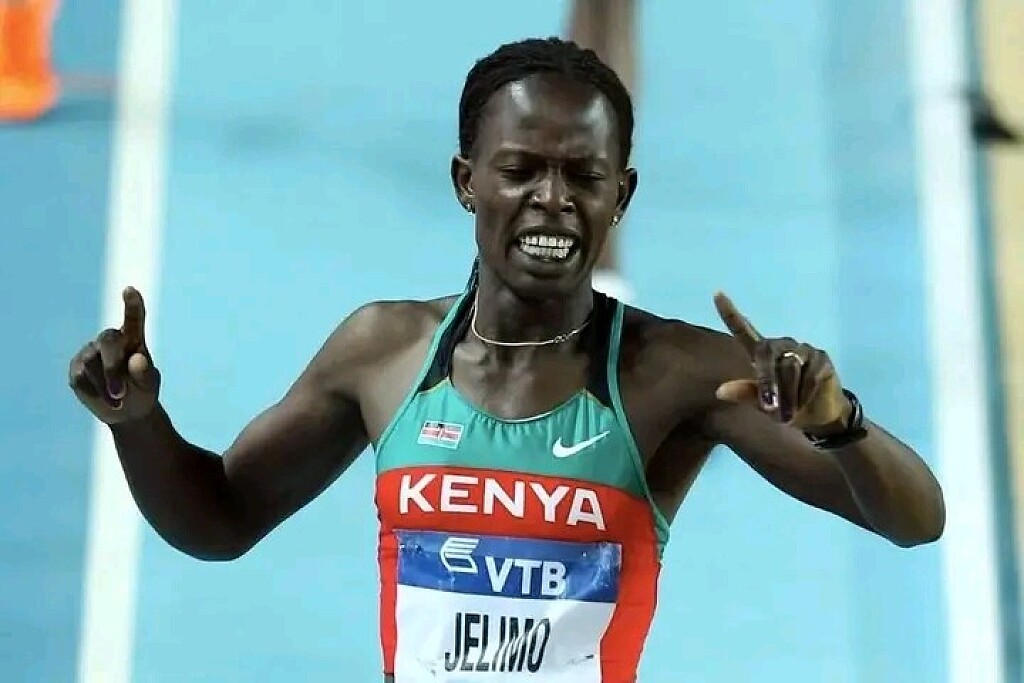
A Silver Worth the Wait: Pamela Jelimo Officially Recognized as London 2012 Olympic Runner-Up
More than a decade after competing on athletics' grandest stage, Kenyan middle-distance star Pamela Jelimo has officially been confirmed as the silver medalist in the women's 800 metres at the London 2012 Olympic Games following a medal reallocation approved by the International Olympic Committee (IOC).
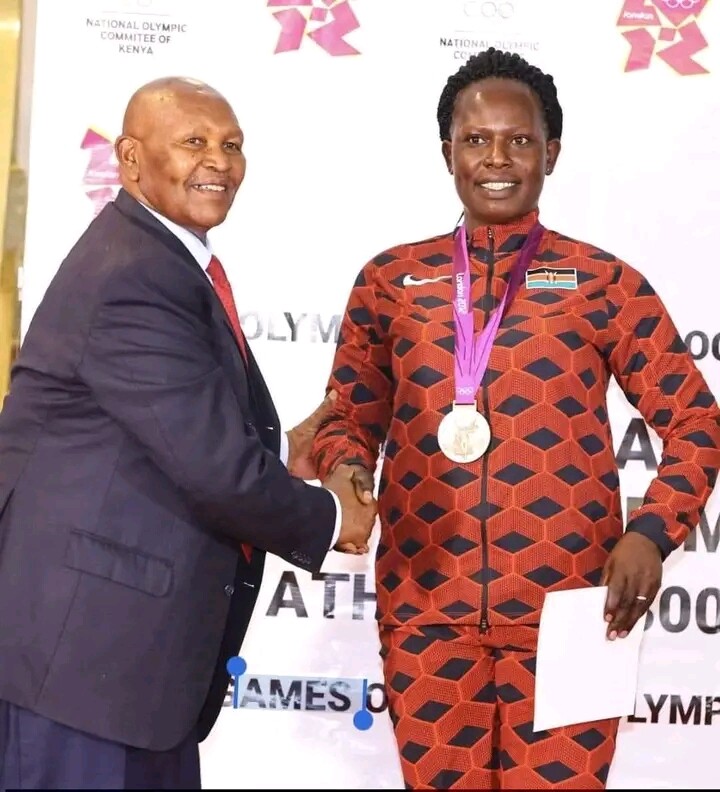
The IOC Executive Board ratified the revised results after the disqualification of Russian athlete Yekaterina Poistogova for an anti-doping rule violation. With all legal processes now concluded, the final standings have been formally updated, bringing long-awaited recognition to athletes who competed cleanly.
The decision elevates Jelimo from third place to the Olympic silver medal position, adding another prestigious chapter to the career of one of Kenya's most accomplished middle-distance runners. While the moment comes years after the race was run, it reinforces the enduring principle that integrity in sport ultimately prevails.
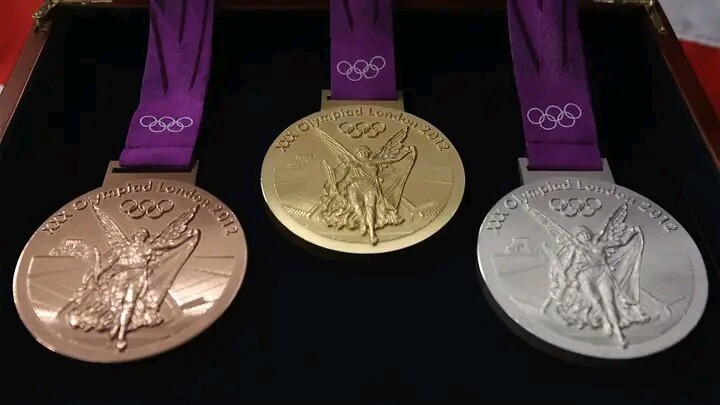
The revised podium now sees American athlete Alysia Montaño promoted to the bronze medal position. Meanwhile, Francine Niyonsaba moves into fourth place, with fellow Kenyan Janeth Jepkosgei Busienei officially ranked fifth.
For Kenya, Jelimo's promotion represents more than a statistical adjustment. It is a belated reward for an athlete whose remarkable talent helped shape a golden era of Kenyan women's middle-distance running. Although the medal upgrade arrives years after the celebrations that followed the London Olympics, its significance remains undiminished.
Jelimo burst onto the international scene as a teenage sensation, capturing global attention with her fearless racing style and dominant performances. Her newly confirmed Olympic silver medal further cements her legacy among Kenya's finest athletes and adds another distinguished achievement to an already impressive career.
The reallocation also serves as a powerful reminder of the ongoing fight for clean sport. While athletes affected by doping violations often endure years of waiting before receiving rightful recognition, the updated results demonstrate the commitment of sporting authorities to preserving fairness and protecting the integrity of competition.
Fourteen years after the London Games captivated the world, justice has finally caught up with the women's 800 metres final. For Pamela Jelimo, the silver medal may have arrived late, but its value and meaning remain as powerful as ever.
by Erick Cheruiyot for My Best Runs.
Login to leave a comment
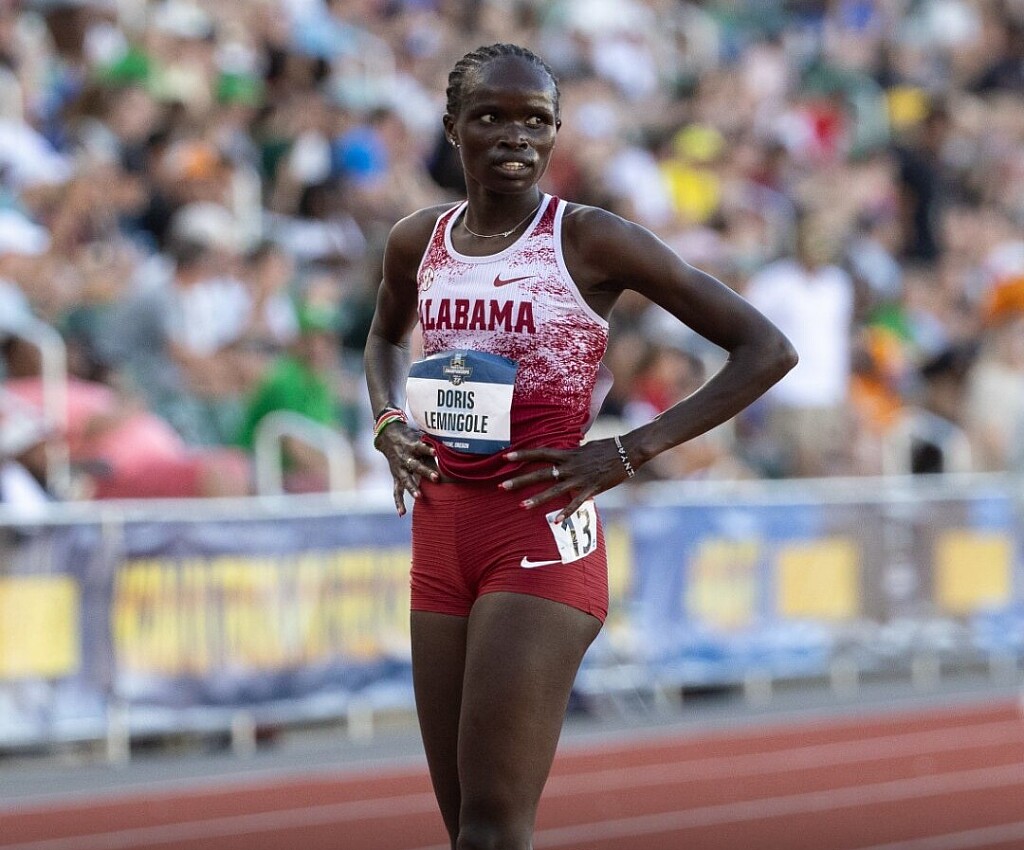
DRAMA IN EUGENE: Doris Lemngole’s NCAA 5000m Triumph Overturned as Jepngetich Claims Crown
The NCAA Outdoor Championships delivered one of the most dramatic twists of the season as the women’s 5000m final ended in unexpected heartbreak and a new champion being crowned after the finish line.
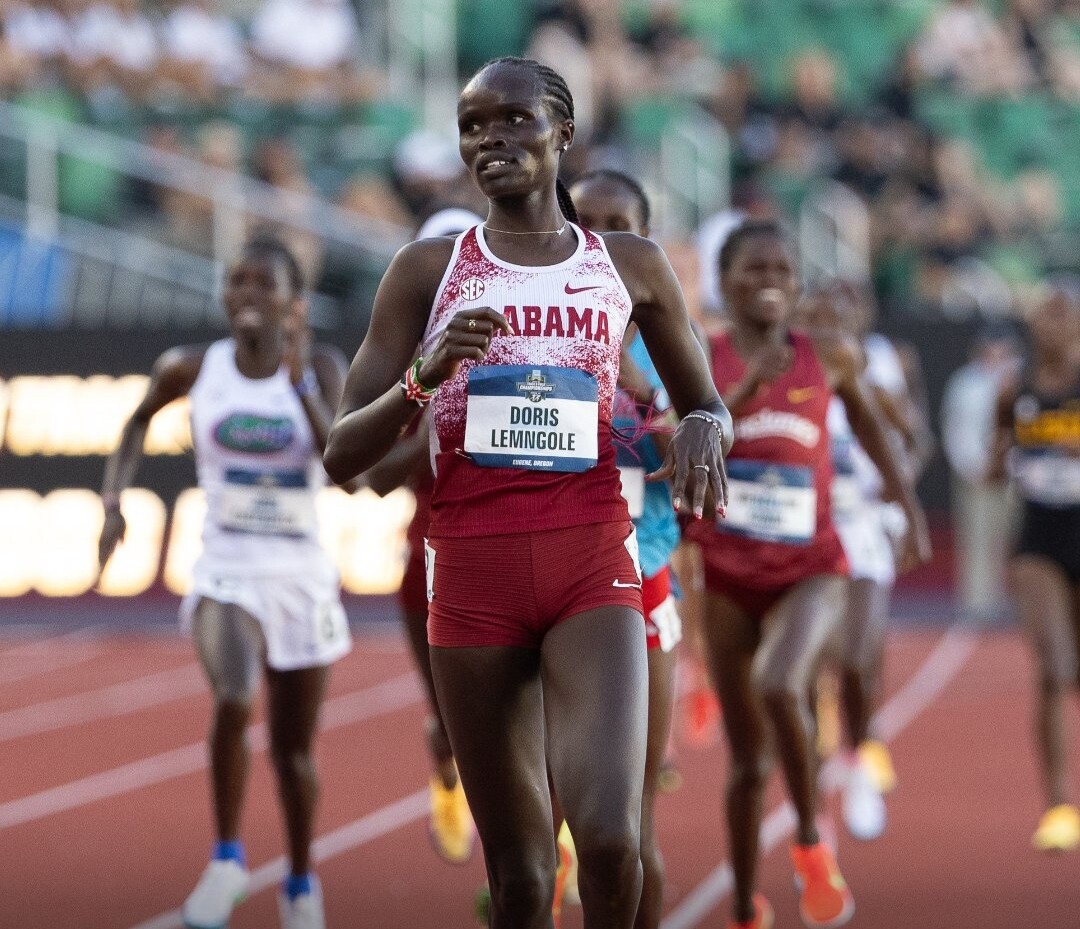
Alabama’s Kenyan star Doris Lemngole looked set to celebrate a historic moment after storming to victory in a brilliant 15:11.71, crossing the line first and appearing to secure another national title for the Crimson Tide. The performance looked like the perfect ending to a dominant race — until officials made a decision that changed everything.
Race officials later issued a disqualification against Lemngole under rule 15.5-3g, citing multiple steps on or over the inside track curb. Alabama immediately challenged the ruling through an appeal, but after review, the protest was rejected, confirming the disqualification and removing the race winner from the official results.
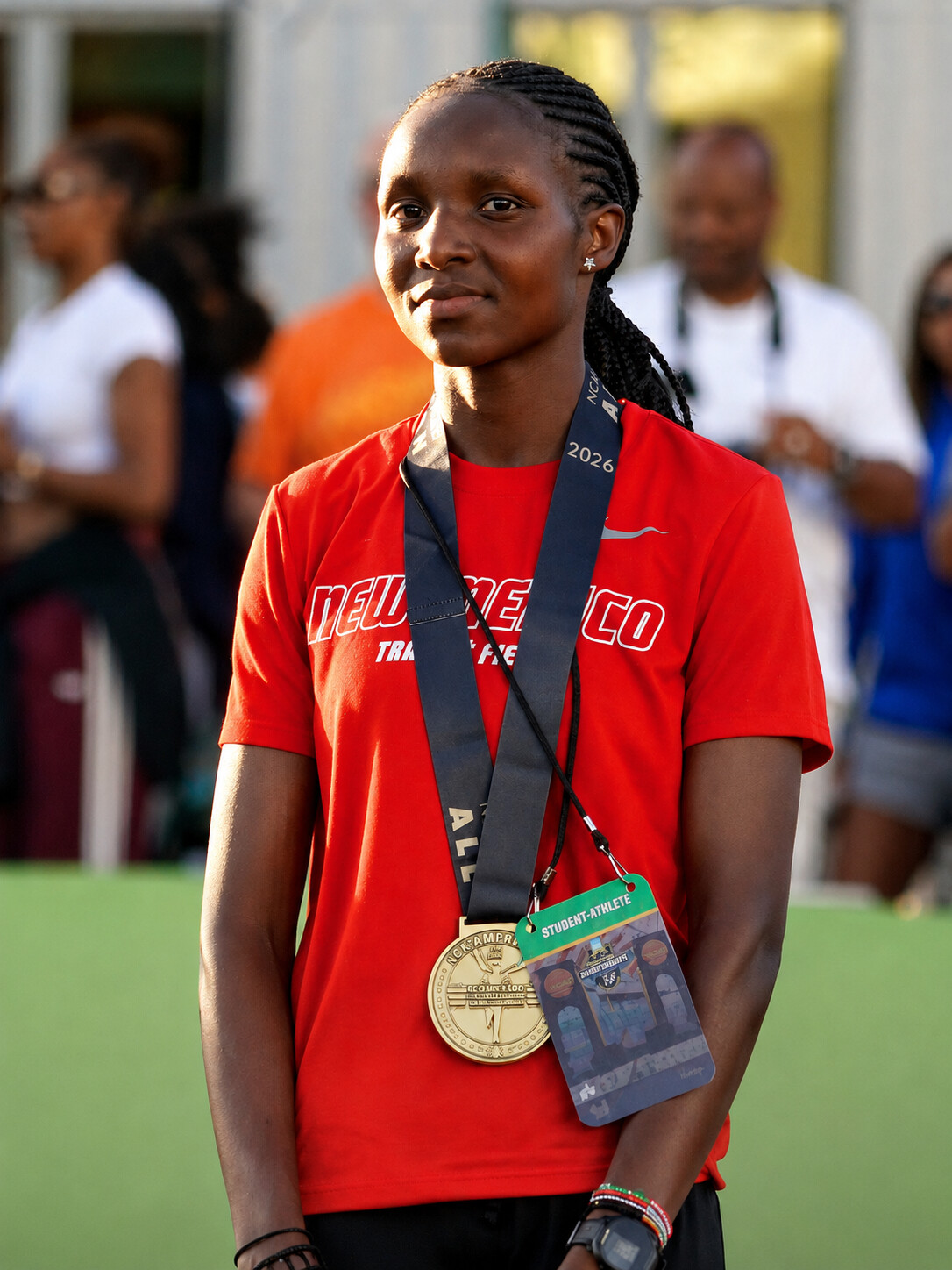
With Lemngole’s result erased, New Mexico’s Marion Jepngetich moved into the championship position, producing a spectacular performance of her own to claim the NCAA 5000m title in a personal best of 15:13.01.
The final standings showed just how competitive the race was, with several athletes delivering outstanding performances and multiple personal bests. Mercyline Kirwa of Iowa State finished second in 15:13.72, while Florida’s Judy Chepkoech completed the podium in 15:14.05 — both recording lifetime bests.
The top ten was dominated by incredible depth, with Betty Kipkore (Iowa State) taking fourth in 15:14.43, Pamela Kosgei (New Mexico) fifth in 15:15.88, and Hilda Olemomoi (Florida) sixth with a season best of 15:16.23. Edna Chelulei of Eastern Kentucky, Katie Bohlke of Virginia Tech, Jane Hedengren of BYU, and Juliet Cherubet of Oregon completed the top ten.
For Lemngole, it was a painful reminder of how unforgiving elite sport can be. After producing the fastest time of the night and crossing the finish line as the apparent winner, a technical ruling outside the excitement of the finish changed the entire outcome.
Jepngetich, meanwhile, now celebrates a championship victory earned on one of the most dramatic evenings in NCAA distance running history — a race where the final result was decided not only by speed, but also by the smallest margins of competition.
The NCAA 5000m final will be remembered not just for the incredible performances on the track, but for the unforgettable twist that came after the race was already over.
by Erick Cheruiyot for My Best Runs.
Login to leave a comment
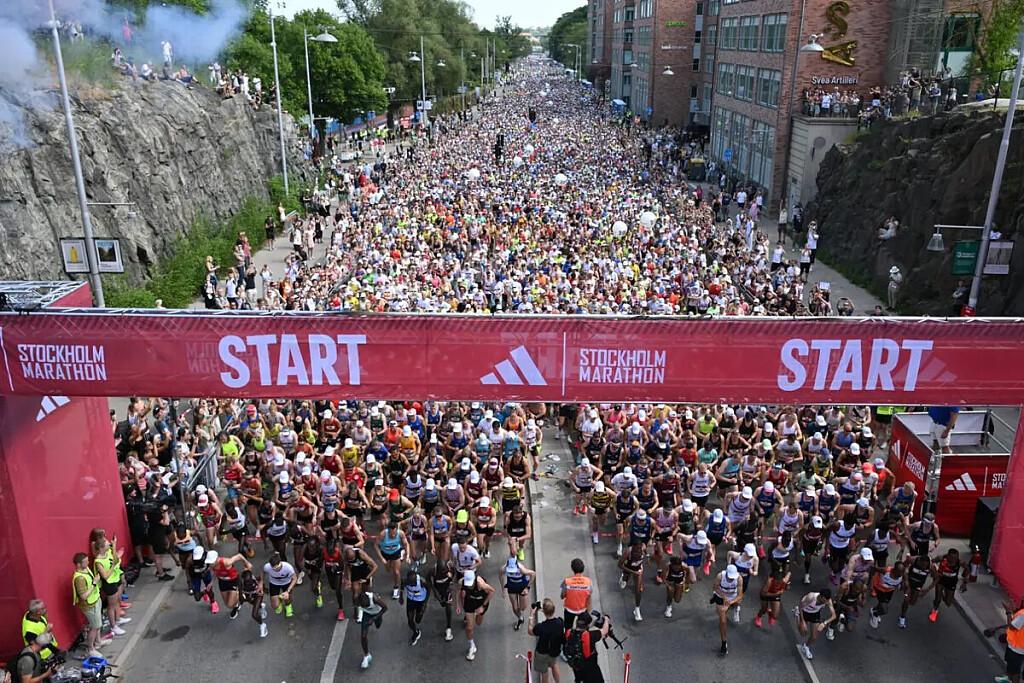
Battle of the Marathon Giants Awaits in Stockholm
The Stockholm Marathon returns on May 30 with a strong international field expected to light up the streets of the Swedish capital. Athletes from different parts of the world are set to battle for top honours, with the elite start list featuring several accomplished marathon runners carrying impressive personal bests into what promises to be a highly competitive contest in both the men’s and women’s races. This year’s race promises a blend of speed, endurance and tactical brilliance as athletes chase victory on one of Europe’s most prestigious marathon courses
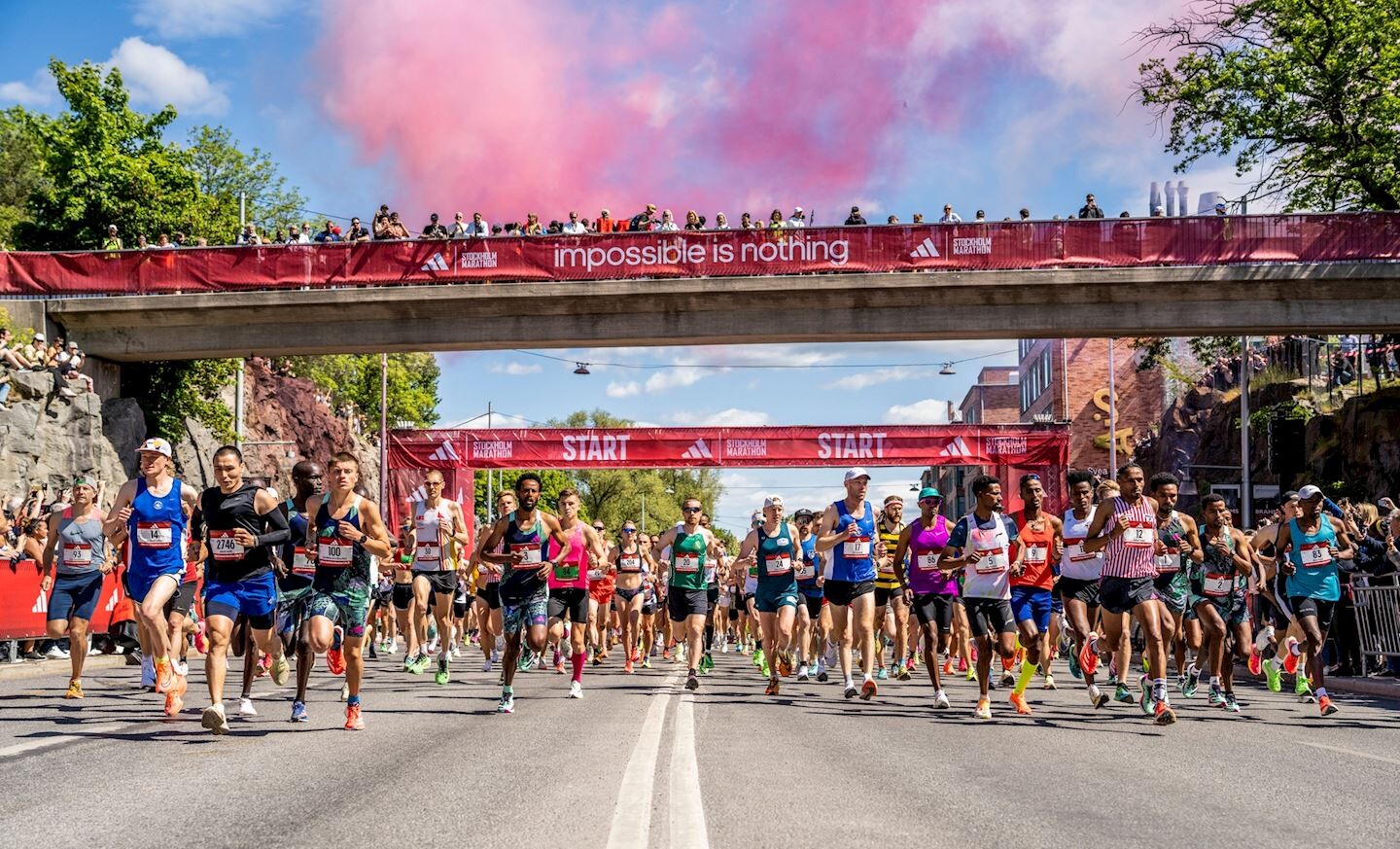
Leading the men’s field is Kenya’s Moses Kibet, the fastest entrant on paper with a personal best of 2:05:20. Renowned for his consistency and strength over the classic distance, Kibet arrives in Stockholm carrying the weight of expectation and will be eager to convert his credentials into a commanding performance.
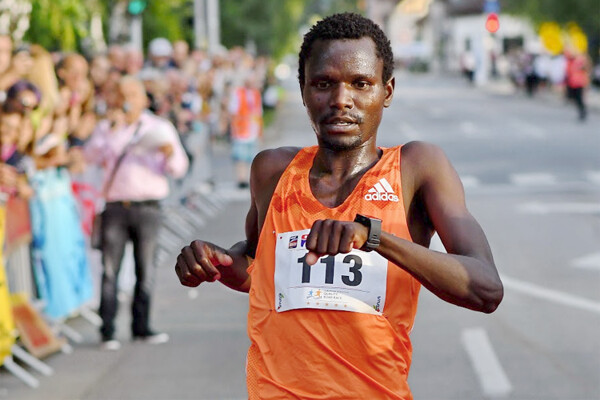
Fellow Kenyan Edwin Kiptoo, who owns a career-best mark of 2:06:10, is expected to pose one of the strongest challenges. His ability to maintain a relentless pace deep into races makes him a genuine contender for top honours. Also in the mix is Luke Kiprop, another experienced marathon campaigner whose personal best of 2:06:39 underlines his capability to compete at the highest level.
Adding further depth to the elite men’s contest is Edwin Kosgei, whose 2:07:31 lifetime best places him firmly within striking distance of the leading pack. With four accomplished Kenyan athletes boasting world-class credentials, the battle for the podium could develop into an enthralling tactical affair.
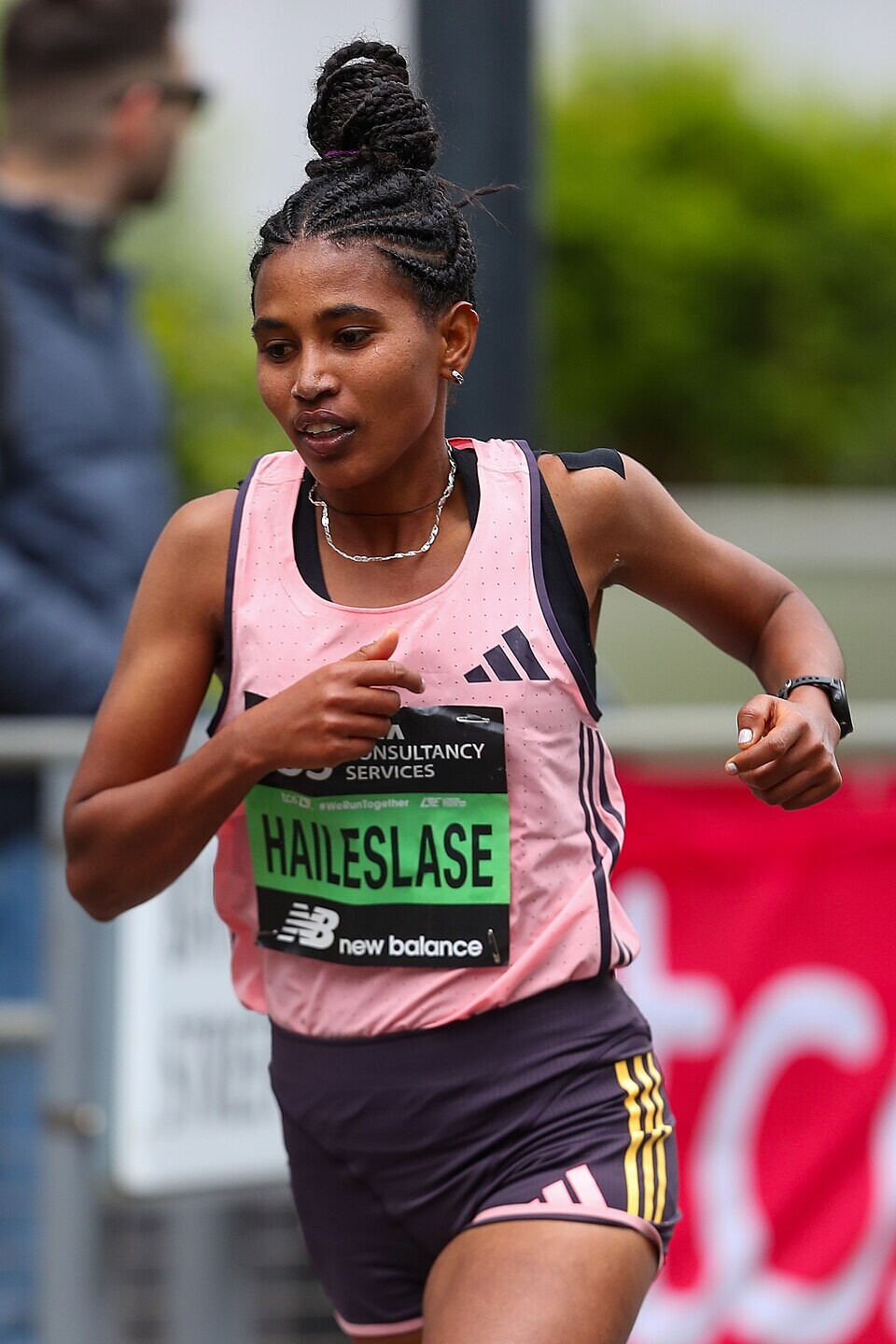
The women’s race is equally compelling, featuring a high-quality duel between Kenyan and Ethiopian contenders. Ethiopia’s Tsige Haileslase enters as the fastest woman in the field with a personal best of 2:22:10, giving her a slight statistical edge heading into the race. However, the margins are razor-thin.
Just three seconds behind on paper is Kenya’s Monicah Wanjuhi, whose 2:22:13 personal best signals her readiness to challenge for victory. With both athletes separated by the narrowest of margins, spectators can expect an intense head-to-head contest that may not be decided until the closing kilometres.
Ethiopia’s Sentayehu Lewetegn adds another layer of intrigue with a best time of 2:22:36, while Kenya’s Rebeca Chesir, a proven performer with a personal best of 2:24:25, completes a highly competitive elite women’s lineup capable of producing fireworks on race day.
As the countdown to Stockholm Marathon 2026 reaches its final days, anticipation continues to build around what could become one of the most exciting editions in recent memory. With experienced marathoners, closely matched personal bests and national pride at stake, the Swedish capital is poised to witness a spectacular showcase of world-class distance running.
by Erick Cheruiyot for My Best Runs.
Login to leave a comment

ADIDAS Stockholm Marathon
ASICS Stockholm Marathon is an exciting race in a beautiful city with runners from all over the world. This is one of the major sporting events in Sweden with hundreds of thousands of spectators along the route cheering the participants. The race takes you through Stockholm, one of the world’s most beautiful capitals. Built on 14 islands around one of...
more...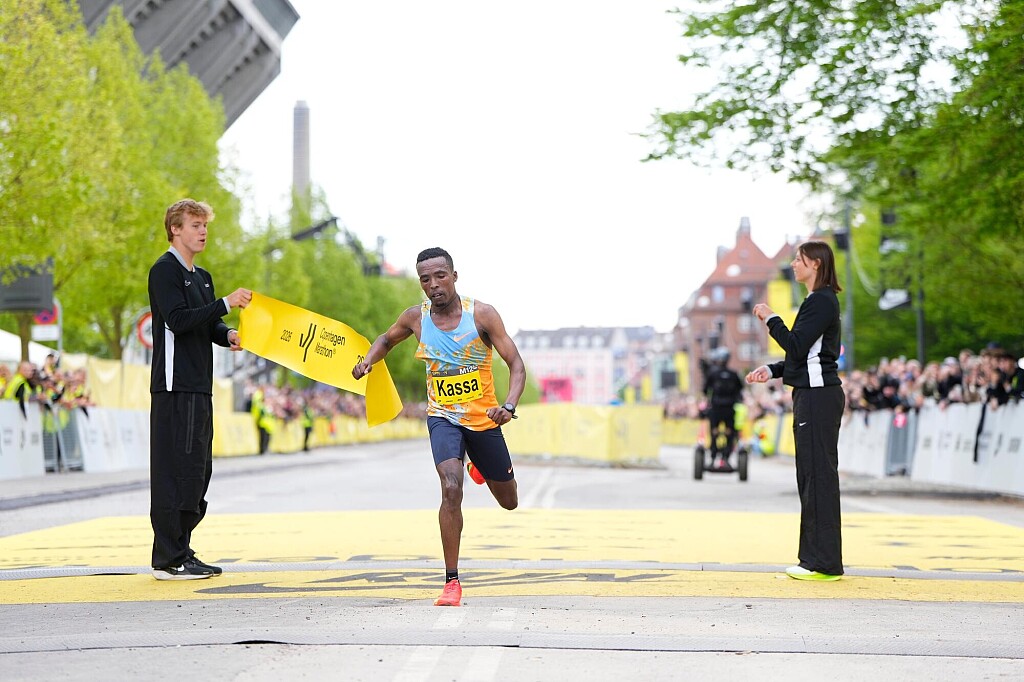
Tadesse Kassa Conquers Copenhagen in Thrilling Marathon Showdown
Tadesse Kassa of Ethiopia produced a commanding performance to claim victory at the Copenhagen Marathon 2026, storming to the finish line in a personal best of 2:08:26 after a fiercely contested battle through the streets of the Danish capital.
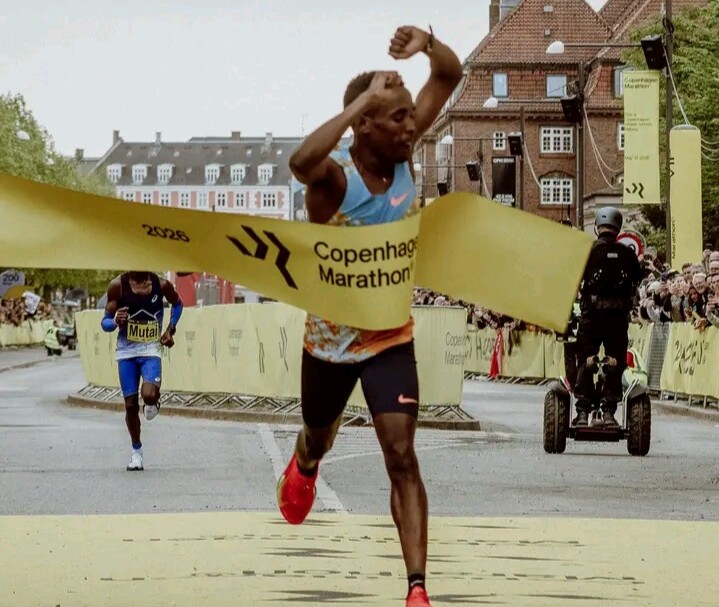
The Ethiopian distance star delivered a composed and tactical race, breaking away in the closing stages to secure a memorable triumph ahead of a world-class field. His victory capped a high-quality men’s race that remained unpredictable deep into the final kilometres, with several athletes still in contention before the decisive surge.
Kenya’s Vincent Mutai pushed hard all the way to the line and settled for second place in 2:08:30, only four seconds behind the winner in one of the closest finishes of the season so far. Ethiopia’s Dejene Weyen completed the podium with a strong run of 2:09:14, ensuring Ethiopia placed two athletes inside the top three.
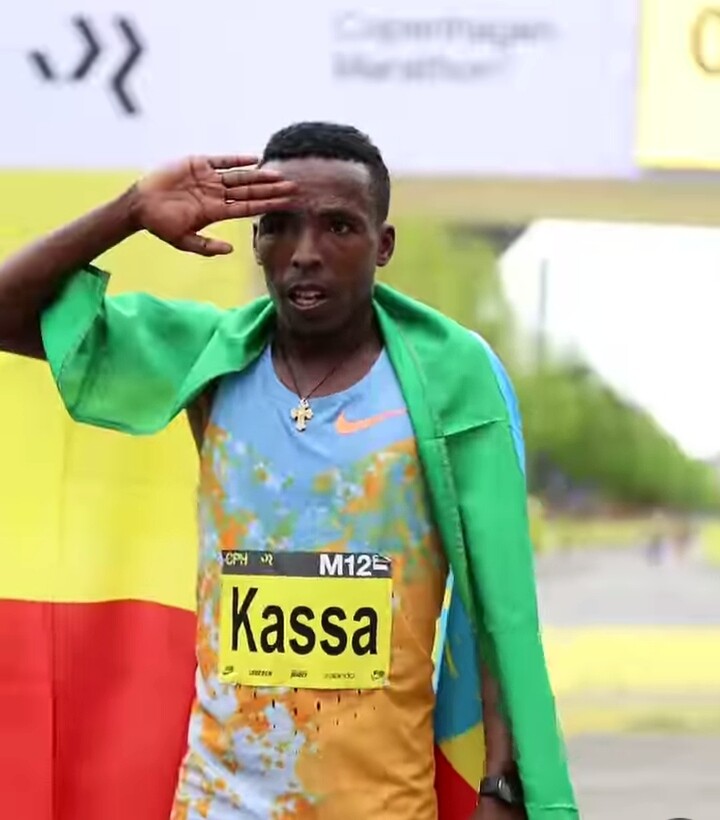
The race unfolded at an aggressive pace from the early stages, with the lead pack refusing to hold back despite the demanding conditions. Kassa, however, remained patient and controlled, waiting for the perfect moment before unleashing his finishing strength near the end of the race.
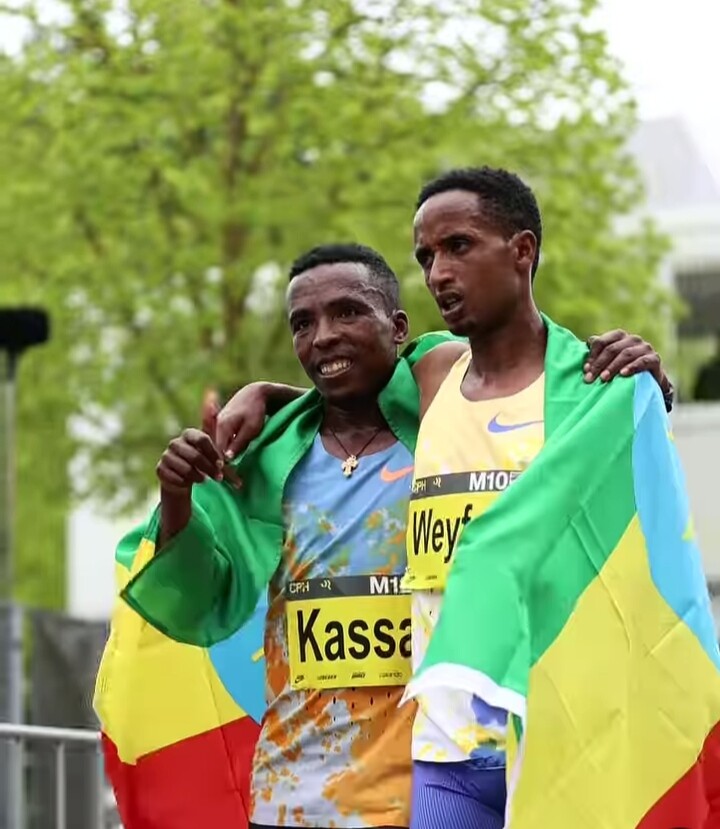
For Vincent Mutai of Kenya, the narrow defeat will still be remembered as a remarkable performance after staying shoulder-to-shoulder with the eventual champion for most of the contest. Meanwhile, Dejene Weyfen of Ethiopia showed impressive consistency to secure a deserved podium finish in a highly competitive field.
Beyond the podium battle, several athletes produced notable performances, with personal bests and season bests highlighting the depth of quality on display in Copenhagen.
Men’s Top 10 Results
1. Tadesse Kassa (Ethiopia) – 2:08:26 PB
2. Vincent Mutai (Kenya) – 2:08:30 PB
3. Dejene Weyfen (Ethiopia) – 2:09:14 SB
4. Merhawi Kesete (Eritrea) – 2:09:16 SB
4. Henok Tesfay (Eritrea) – 2:10:10 SB
6. Tesfaye Demeke (Ethiopia) – 2:11:09
7. Dennis Kipkosgei (Kenya) – 2:12:03
8. Abdenasser Oukhelfen Ben Haddou (Spain) – 2:12:13
9. Omar Hassan (Ecuador) – 2:12:17 PB
10. Robi Syianturi (Indonesia) – 2:12:20 PB
Copenhagen once again delivered a spectacular marathon atmosphere, but this year belonged to Tadesse Kassa of Ethiopia — a man who combined patience, courage and finishing power to write his name into the history of the race.
by Erick Cheruiyot for My Best Runs.
Login to leave a comment

Copenhagen Marathon
The race is special in many ways But one thing is the course around almost every part of Copenhagen. The course goes to Frederiksberg which is a very beautiful part of the city. Theres a fantastic atmosphere in the city, and a lot of spectators along the route. The course is pretty fast, and the field of elite runners is...
more...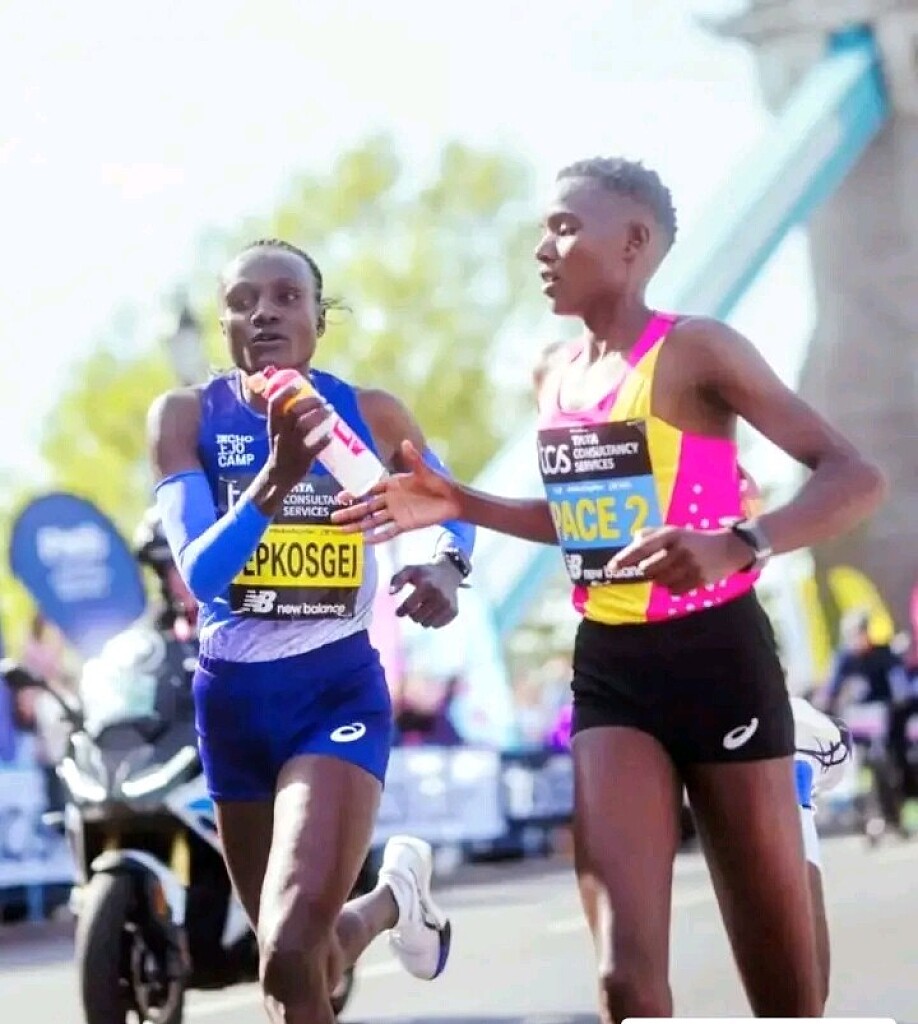
Shared Sacrifice and Silent Strength: Joyciline Jepkosgei’s Defining London Marathon Moment
The 2026 edition of the London Marathon delivered countless images of courage, endurance, and elite competition, but few moments captured the true essence of marathon running more powerfully than the sight of Joyciline Jepkosgei sharing a bottle of water with her pacemaker, Mariam Chebet, during the heat of battle on the streets of London.
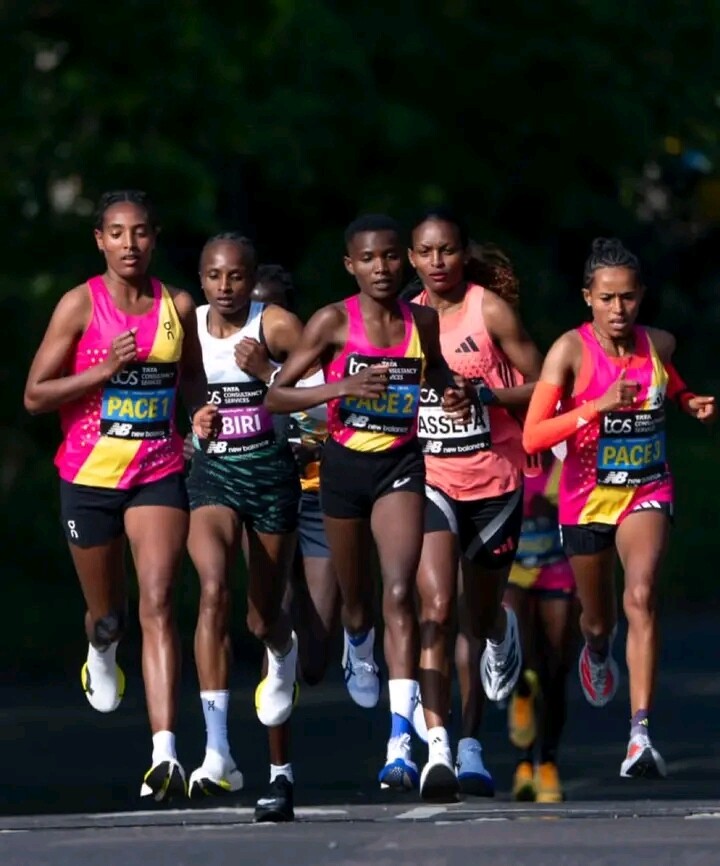
In a sport often defined by ruthless competition and relentless pursuit of victory, the gesture stood out as a quiet reminder that marathon running is also built on trust, teamwork, and shared suffering. As the pace intensified and the physical demands of the race grew heavier with every mile, Jepkosgei and Chebet momentarily revealed the human side of elite athletics — a bond forged through sacrifice, discipline, and collective ambition.
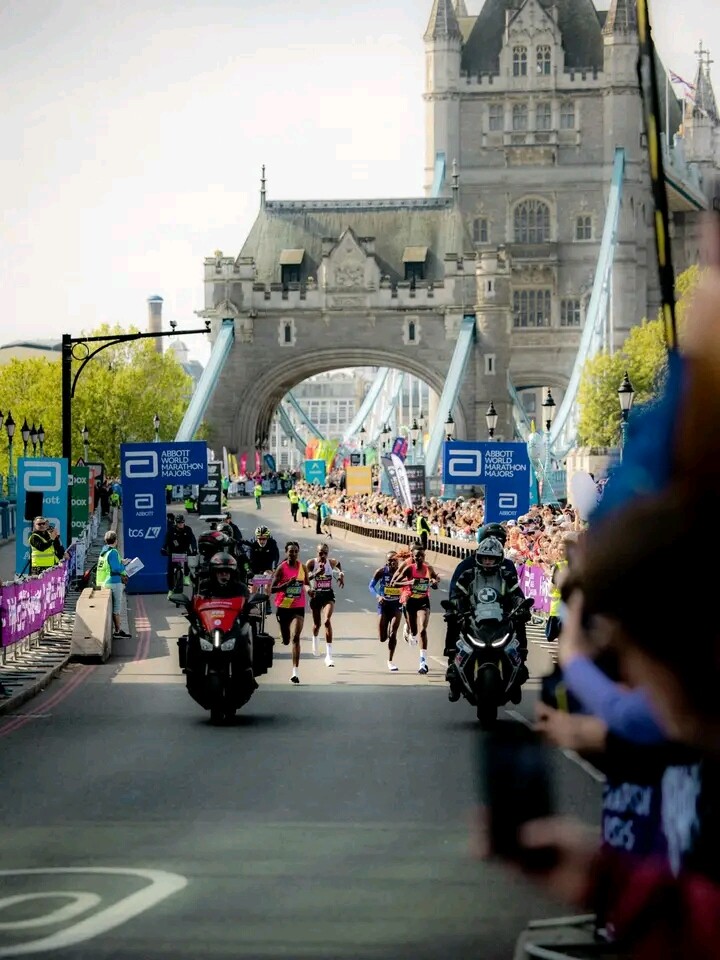
The image quickly became one of the unforgettable highlights of the race, symbolising more than hydration in a tactical contest. It reflected unity in struggle. Pacemakers are frequently viewed only as instruments of speed, tasked with dragging athletes through punishing early splits before stepping aside. Yet Chebet’s role alongside Jepkosgei illustrated the deeper relationship that often exists behind the scenes — one rooted in commitment, rhythm, and mutual belief.
For Jepkosgei, one of Kenya’s most accomplished road runners, the London Marathon once again became a stage where composure and resilience carried equal importance to raw athletic ability. Every movement through the capital’s famous streets revealed the precision and calmness that have made her one of the most respected figures in women’s distance running.
But beyond the elite performances and stopwatch battles, it was that simple exchange of water that resonated deeply with fans across the world. In a race overflowing with pressure and expectation, it became a snapshot of sportsmanship at its purest — two athletes pushing the limits of human endurance while still looking out for one another.
The 2026 London Marathon will be remembered for its world-class racing, electric atmosphere, and historic performances, but moments like these are what truly give the marathon its soul.
by Erick Cheruiyot for My Best Runs.
Login to leave a comment
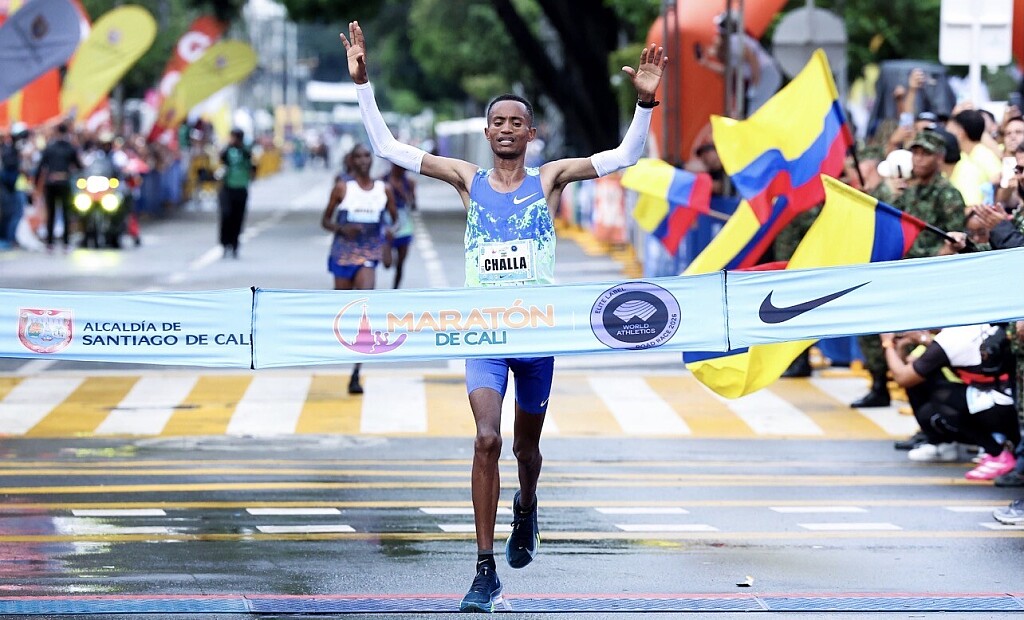
Gossa and Ndiwa Upset Defending Champions at Cali Marathon
Challa Gossa of Ethiopia and Kenya’s Stacy Ndiwa denied the defending champions at the Cali Marathon in Colombia on Sunday, overcoming tough conditions of heat, humidity, and altitude to take impressive victories.
Warm temperatures above 20°C, high humidity, and an elevation of around 1,000 meters made fast times difficult and ended hopes of course records. Still, the races produced exciting finishes in both the men’s and women’s competitions.
In the men’s race, Challa Gossa surged past defending champion Evans Mayaka with just 250 meters remaining to win in 2:11:49. Mayaka, who set the course record of 2:11:04 last year, finished just five seconds back in 2:11:54, with Ethiopia’s Habtamu Birlew close behind in 2:11:56. The top four runners all broke 2:12 in a tightly contested finish.
The early pace was aggressive, with a group of ten passing 10K in 30:23, well on course-record pace. However, the humid conditions took their toll as the race progressed. By halfway (65:00), a lead pack of six runners and two pacemakers remained, including Mayaka, Birlew, Gossa, and Uganda’s Martin Musau.
After the pacemakers stepped aside and the pace slowed, the leading group stayed together deep into the race. Mayaka made a move shortly after 40K, but could not break clear. Gossa then unleashed his finishing speed in the closing meters to take his first marathon victory.
“The conditions were very difficult, so I stayed with the group and relied on my finishing speed,” said 25-year-old Gossa, who was runner-up in Frankfurt in 2024 and owns a personal best of 2:07:32.
Mayaka admitted the weather played a major role: “After the pacers stopped, I tried several times to increase the pace, but my body was too tired. The humidity and conditions were much harder than last year.”
Kenya’s Eric Kiptanui, who has a 2:05:47 personal best, dropped off the lead group before 15K but ran much of the race alone to finish sixth in 2:16:27.
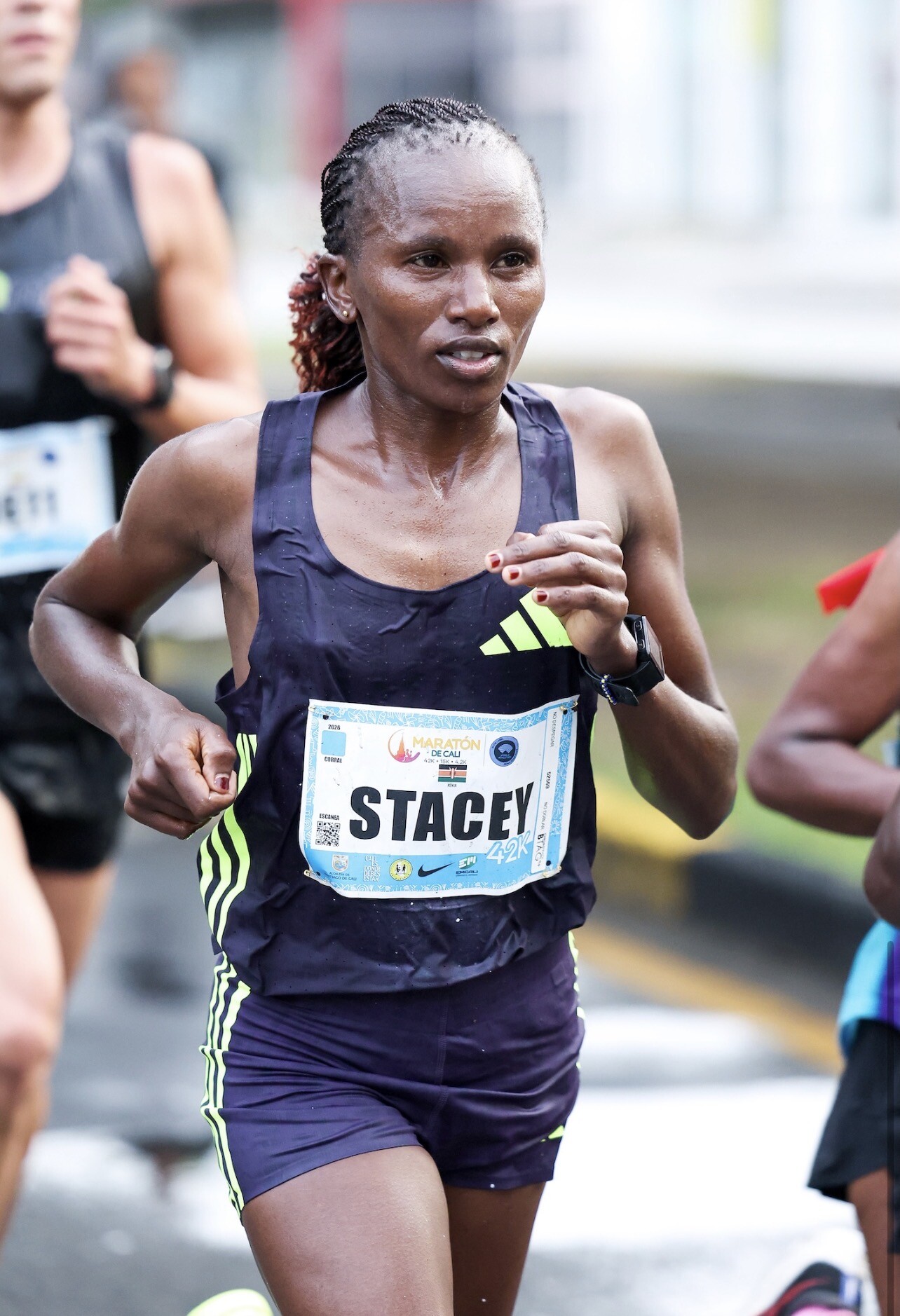
In the women’s race, Stacy Ndiwa ran a controlled and confident race to win in 2:29:55, pulling away from defending champion Emmah Ndiwa with about 8 kilometers remaining. Emmah Ndiwa finished second in 2:31:01, followed by Gladys Chesir in 2:33:59.
An early lead group of five included both Ndiwas, Chesir, Nazret Weldu, and Ethiopia’s Sadiya Awel. The pace quickened after 10K (34:35), and by halfway (73:18), three runners remained.
As in the men’s race, the second half slowed significantly due to the humidity. Awel briefly lost contact after stopping at a refreshment table at 25K and was unable to regain her position.
Stacy Ndiwa made her decisive move after 35K. “My training had gone well, and I was confident,” she said. “We were on pace early, but I began to tire, so we slowed down. When I saw Emmah struggling, I pushed harder and was able to break away.”
The 33-year-old Kenyan, who finished ninth at the Boston Marathon last year with a personal best of 2:23:29, held her lead comfortably to the finish.
The Cali Marathon continues to grow rapidly, with more than 20,000 athletes from 49 nations registered across all race distances—nearly double the number from its inaugural edition. Over 3,000 runners competed in the marathon, which holds World Athletics Elite Label status.
Men:
Challa Gossa (ETH) – 2:11:49
Evans Mayaka (KEN) – 2:11:54
Habtamu Birlew (ETH) – 2:11:56
Martin Musau (UGA) – 2:11:59
Ezra Kering (KEN) – 2:12:20
Eric Kiptanui (KEN) – 2:16:27
Carlos Mario Patiño (COL) – 2:18:38
Santiago Zerda (COL) – 2:18:38
Women:
Stacy Ndiwa (KEN) – 2:29:55
Emmah Ndiwa (KEN) – 2:31:01
Gladys Chesir (KEN) – 2:33:59
Sadiya Awel (ETH) – 2:34:25
Cynthia Kosgei (KEN) – 2:35:22
Nazret Weldu (ERI) – 2:37:49
Mildrey Echavarría (COL) – 2:40:45
Kellys Arias (COL) – 2:41:50
by Race. News Service
Login to leave a comment
Cali Marathon Draws World-Class Talent in Bid to Become South America’s Premier Race
“Run in Heaven’s Capital.” That’s the bold promise as the Cali Marathon returns this Sunday in southwestern Colombia for its second edition. After a strong debut last year, organizers are aiming higher—positioning Cali as a future major international marathon.
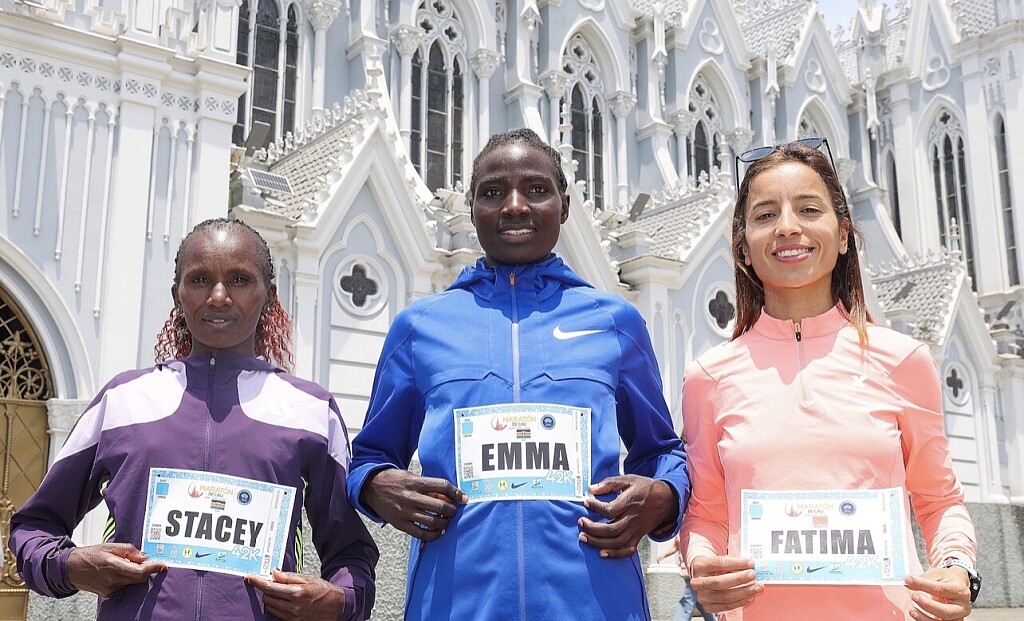
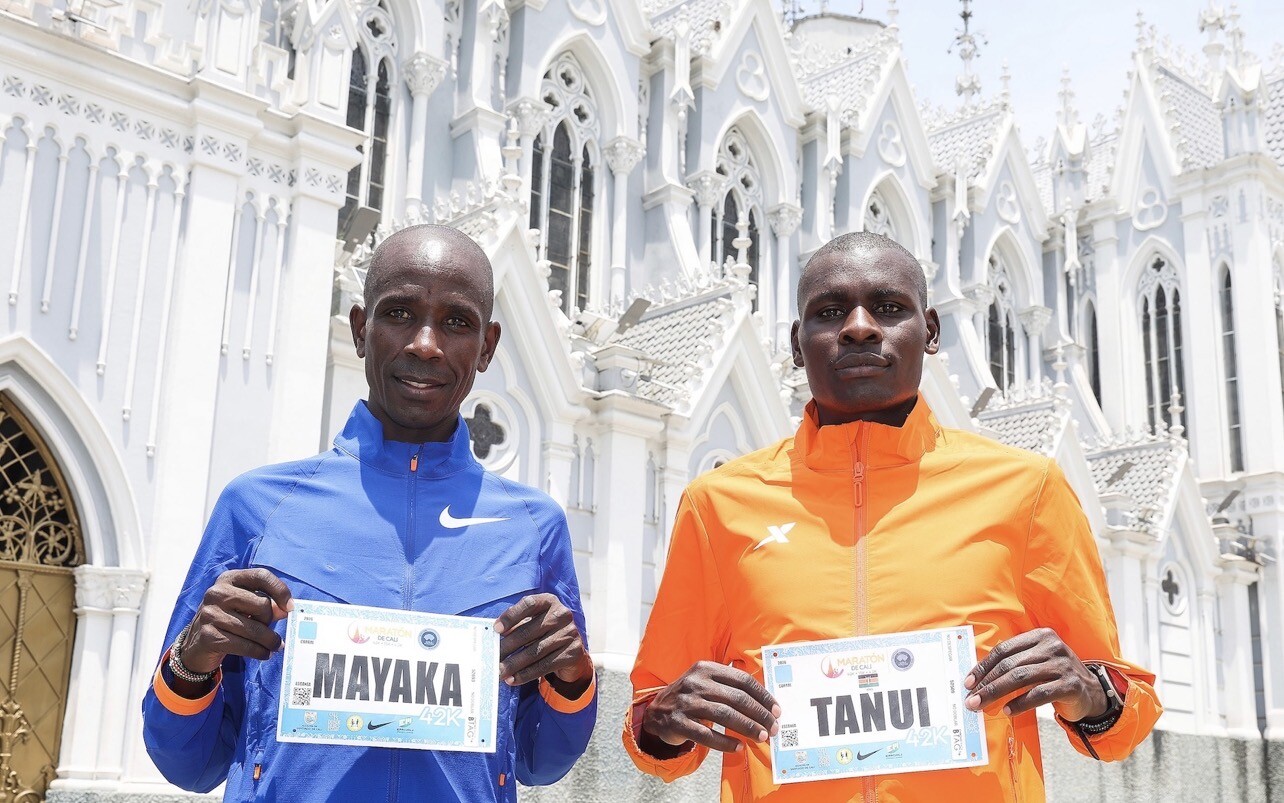
They’ve taken a big step toward that goal with one of the deepest elite fields ever assembled on the continent. Kenya’s Ronald Korir (2:04:22) headlines the men’s race, while Eritrea’s Nazret Weldu (2:20:29) leads the women’s field. Defending champions Evans Mayaka and Emmah Ndiwa are back, but repeating will be anything but easy. No other marathon in South America currently matches Cali’s depth.
Participation has surged. A total of 20,000 athletes from 49 nations have entered across all distances, nearly doubling last year’s 11,000. The marathon itself will feature 3,000 runners. Race Director Luis Felipe Posso is encouraged but measured: the goal isn’t simply bigger numbers—it’s building a world-class marathon.
“This race has grown incredibly fast,” said Posso. “Now we want to increase the quality and establish Cali as a true destination for marathon runners.”
Even seasoned observers are impressed. Abel Antón, Spain’s two-time world marathon champion (1997, 1999), is in Cali as a guest of honor and noted how quickly the event has developed.
Conditions will play a role. At roughly 1,000 meters altitude with expected humidity and temperatures around 20°C (68°F), fast times are unlikely. But that often leads to compelling racing. Last year proved that, with late-race drama deciding the outcome.
Mayaka and Ndiwa both set Colombian all-comers’ records in 2025—2:11:04 and 2:29:26 respectively. Organizers would love to see those marks fall again, especially a first-ever sub-2:10 on Colombian soil.
Men’s Race
The depth is remarkable. Five athletes have run under 2:06, and eight have broken 2:10. Interestingly, defending champion Evans Mayaka ranks just ninth on paper with his 2:10:00 best—but he proved last year that position on a start list doesn’t decide the race.
Ronald Korir enters as the fastest man in the field. He ran 2:04:44 in Berlin and followed that with a strong 2:05:41 for fourth place in Hamburg. After battling injuries, he’s optimistic.
“It’s been a difficult couple of years, but my training for Cali has gone well,” Korir said. “I believe I can win.”
Ezra Tanui arrives in top form. He swept three marathons in 2025—Doha, JiLin, and Yellow River—and followed that with a 2:05:55 personal best for third in Osaka earlier this year.
“I’m confident,” Tanui said. “I’m not chasing a time—I trust my strength to carry me through.”
Adding to the moment, Kenya’s Abel Kirui—two-time world champion and Olympic silver medalist—will run the final marathon of his career. The 44-year-old owns a personal best of 2:05:04 and remains one of the sport’s most respected figures.
Women’s Race
The women’s field is equally competitive. Morocco’s Fatima Gardadi could thrive in Cali’s conditions. She won bronze at the 2023 World Championships in Budapest and has proven strength in warm-weather racing.
Nazret Weldu returns to competition after giving birth to her daughter in May last year. The Eritrean star, fourth at the 2022 World Championships and winner of the 2024 Vienna Marathon, is focused on competing rather than chasing time.
“I want to be competitive,” Weldu said. “I hope my strength will help me perform well.”
Kenya’s Stacy Ndiwa is another strong contender. The 2024 Los Angeles Marathon champion owns a 2:23:29 personal best and has shown consistency at major races. She is not related to defending champion Emmah Ndiwa, who will also be in the mix despite ranking outside the top tier on paper.
With so many athletes capable of contending, both races could come down to strength, patience, and positioning in the final kilometers—especially in Cali’s demanding conditions.
Elite runners with personal bests
MEN:
Ronald Korir KEN 2:04:22
Abel Kirui KEN 2:05:04
Okubay Tsegay ERI 2:05:20
Eric Kiptanui KEN 2:05:47
Ezra Tanui KEN 2:05:55
Challa Gossa ETH 2:07:32
Martin Musau UGA 2:08:42
Habtamu Birlew ETH 2:09:10
Evans Mayaka KEN 2:10:00
Derlys Ayala PAR 2:10:11
Ezra Kering KEN 2:11:55
Bernard Geay TAN 2:15:47
Mayko Geay TAN Debut
Brian Kwemoi KEN Debut
David Wanjohi KEN Debut
WOMEN:
Nazret Weldu ERI 2:20:29
Gladys Chesir KEN 2:20:30
Stacy Ndiwa KEN 2:23:29
Cynthia Kosgei KEN 2:23:43
Fatima Gardadi MAR 2:24:06
Letebrhan Haylay ETH 2:24:47
Sadiya Awel ETH 2:24:57
Emmah Ndiwa KEN 2:25:15
Rosa Chacha ECU 2:26:43
Nigist Muluneh ETH 2:27:41
Fatiha Benchatki MAR 2:28:29
Marcela Gomes ARG 2:28:58
Veronicah Wanjiru KEN 2:29:03
Login to leave a comment
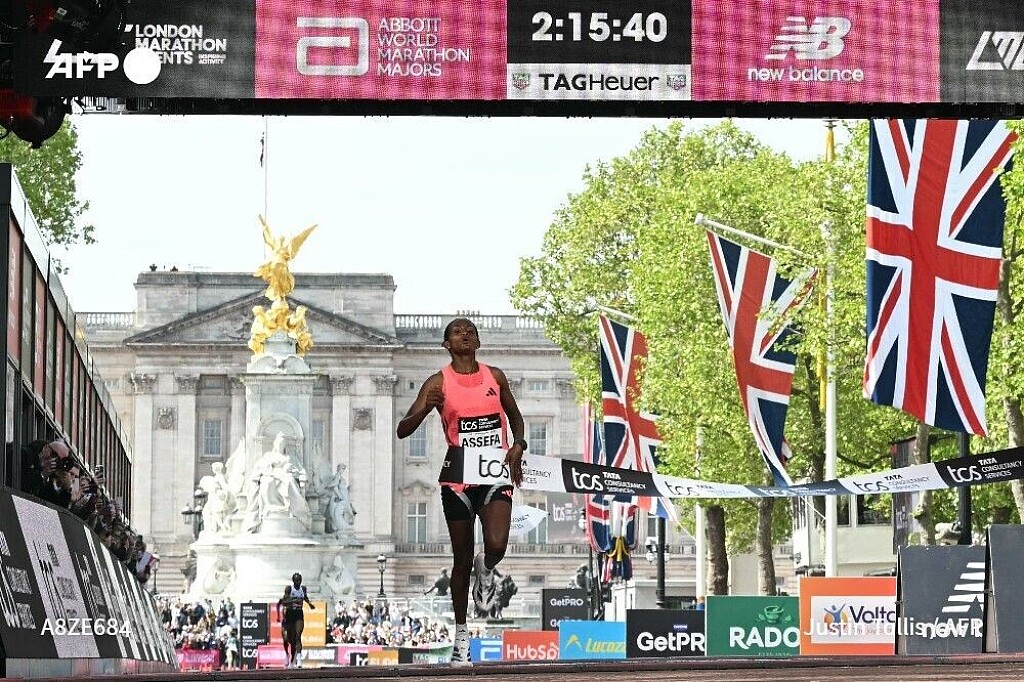
Assefa’s Historic Surge Headlines East African Masterclass in London
The 2026 edition of the London Marathon 2026 delivered a race for the ages, as East Africa once again stamped its authority on one of the sport’s grandest stages. At the center of it all was Ethiopia’s Tigst Assefa, who produced a breathtaking performance to win the women’s race in 2:15:41, breaking her own women-only world record in emphatic fashion.
From the gun, the pace was unrelenting. The lead group, dominated by Ethiopian and Kenyan contenders, surged through the early checkpoints with intent, setting the tone for what would become a historically fast contest. Assefa, calm yet decisive, positioned herself perfectly before gradually turning the race into a test of pure strength and precision.
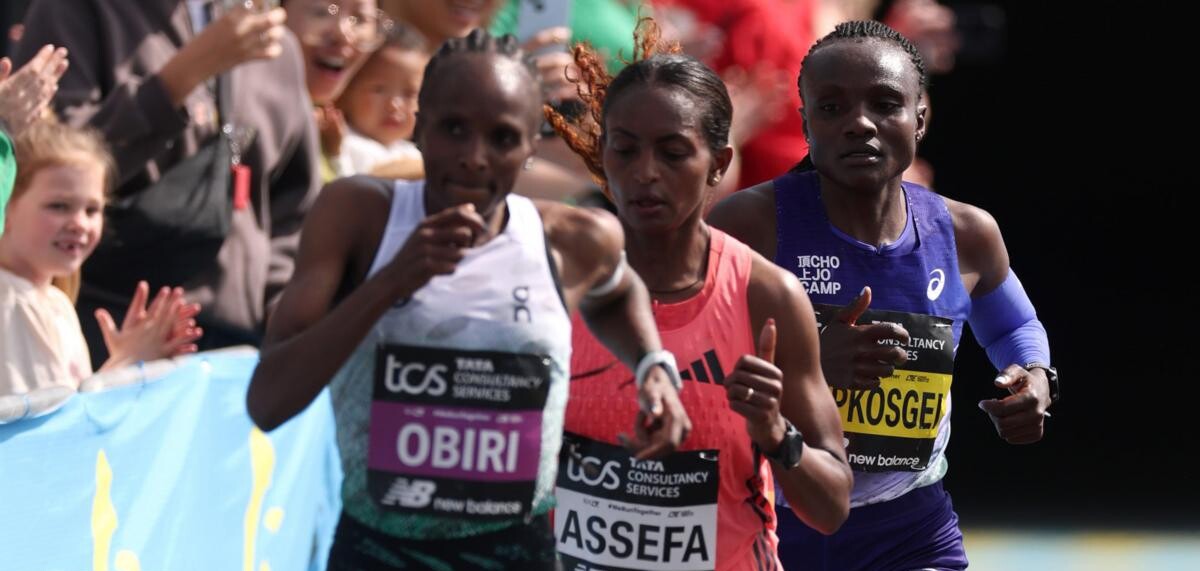
By the latter stages, the Ethiopian star had shifted gears, her stride smooth and efficient as she pulled away under the weight of expectation and the pressure of elite competition. When she crossed the finish line along the iconic streets of London, the clock confirmed what the racing world had begun to suspect—history had been rewritten once more.
Hot on her heels was Kenya’s Hellen Obiri, who clocked an outstanding 2:15:53 to finish second, just 12 seconds adrift in one of the closest high-caliber finishes in recent marathon memory. Fellow Kenyan Joyciline Jepkosgei completed the podium in 2:15:55, only two seconds behind Obiri, underlining the fierce competitiveness at the very top.
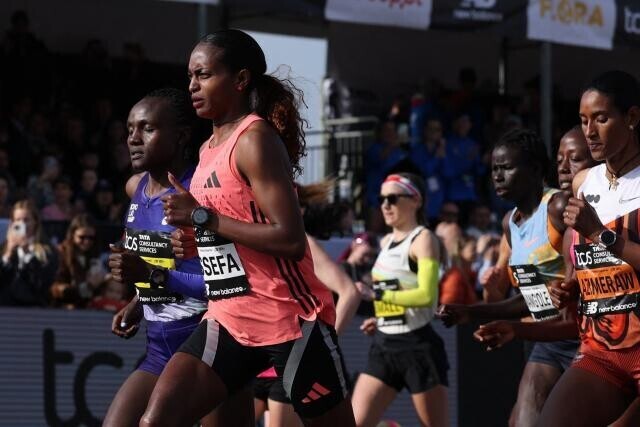
The narrow margins separating the top three told a deeper story—this was not merely a race, but a battle of resilience, tactics, and extraordinary endurance. All three athletes dipped well into elite territory, showcasing a level of depth that continues to define women’s marathon running today.
Top 10 Finishers – Women’s Marathon Final Results
1. Tigst Assefa (ETH) – 2:15:41 WR
2. Hellen Obiri (KEN) – 2:15:53 PB
3. Joyciline Jepkosgei (KEN) – 2:15:55
4. Degitu Azimeraw (ETH) – 2:19:13
5. Catherine Reline Amanang'ole (KEN) – 2:21:20
6. Eunice Chebichii Chumba (BRN) – 2:23:44
7. Eilish McColgan (GBR) – 2:24:51
8. Jucia Paternain (URU) – 2:25:47 NR
9. Rose Harvey (GBR) – 2:26:14
10. Marta Galimany (ESP) – 2:27:38
Beyond the times and records, the race served as a powerful reminder of East Africa’s enduring dominance in long-distance running. With discipline forged at altitude and an unmatched competitive culture, athletes from Ethiopia and Kenya once again transformed London into a theatre of excellence.
As the crowds roared and the finish line drama unfolded, one narrative stood clear: this was a day where greatness met opportunity—and Tigst Assefa seized it to perfection, delivering a performance that will echo through marathon history.
by Erick Cheruiyot for My Best Runs.
Login to leave a comment
TCS London Marathon
Since its inaugural edition on March 29, 1981, the TCS London Marathon has grown into one of the world's most prestigious road races, blending elite competition with an extraordinary charitable legacy. Founded by former Olympic champion and journalist Chris Brasher alongside Welsh athlete John Disley, the event has been staged every year and has been held in the spring annually...
more...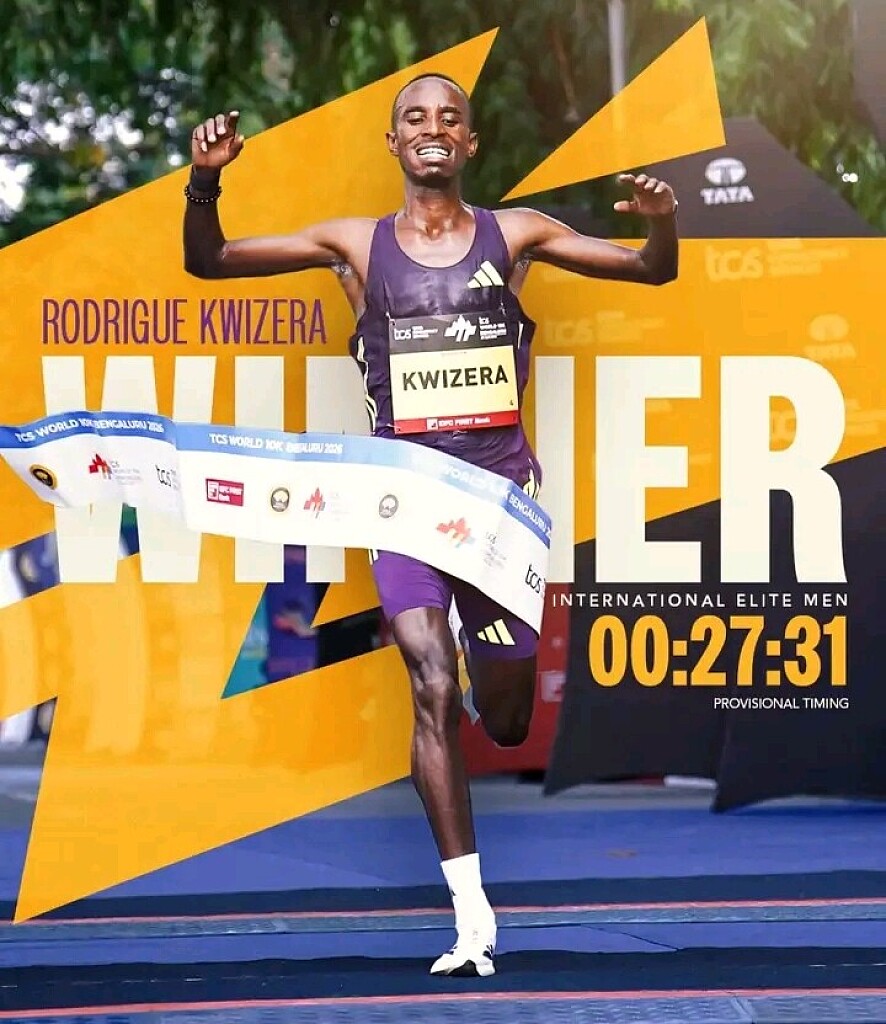
Kwizera Rewrites History in Bengaluru with Commanding Course Record Run
Burundi’s rising distance star Rodrigue Kwizera delivered a performance of rare authority at the TCS World 10K Bengaluru, storming to victory in a blistering 27:31 to set a new course record and underline his growing status on the global road running scene.
On a morning charged with anticipation in Bengaluru, Kwizera wasted little time asserting control. From the early stages, he positioned himself at the front of a tightly packed lead group, dictating a relentless tempo that gradually thinned the field. By the closing kilometers, his composure and strength proved decisive as he surged clear, leaving his rivals struggling to respond.
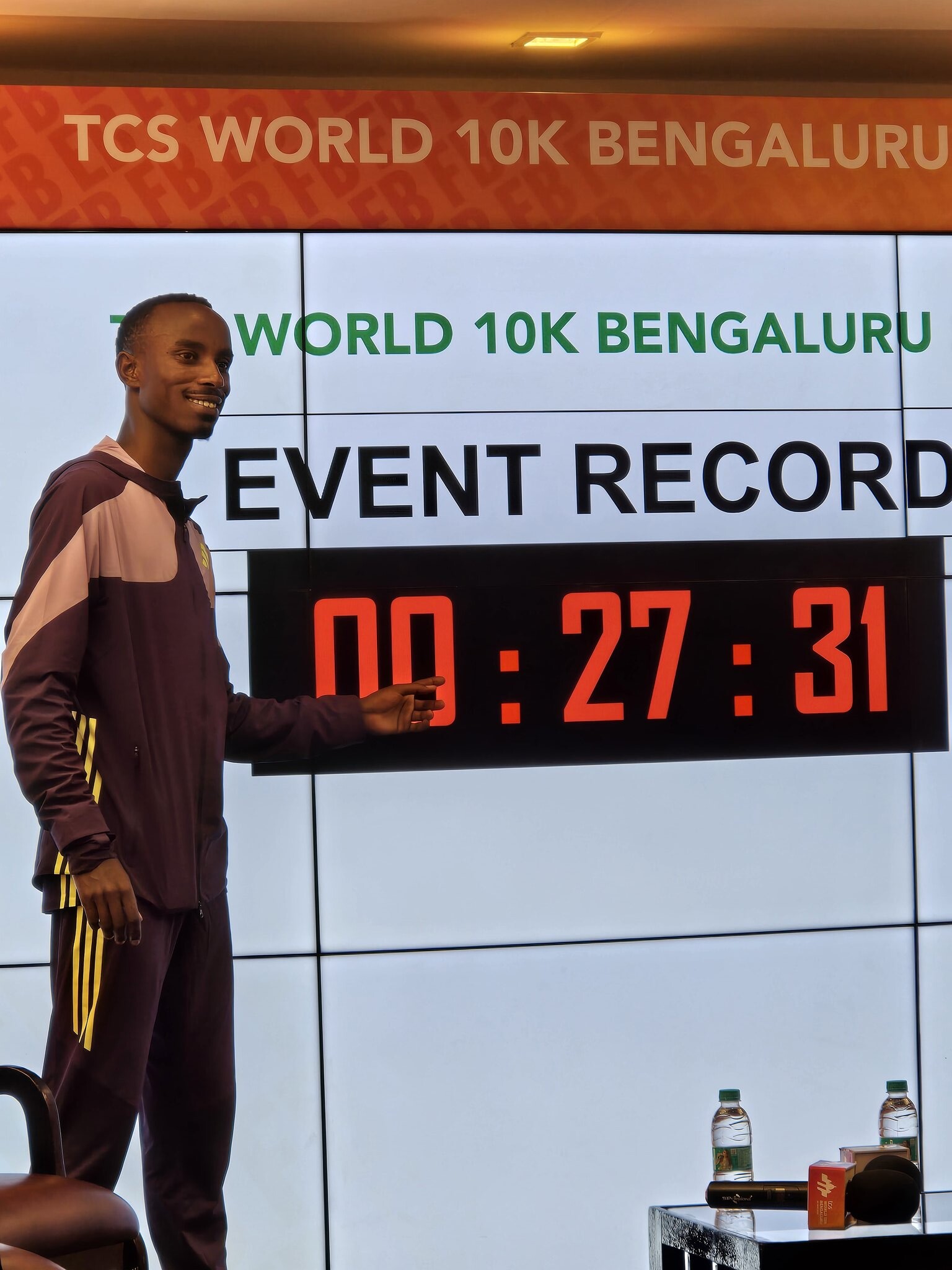
His finishing time of 27:31 shaved seven seconds off the previous course record of 27:38, which had been set in 2022 by Nicholas Kipkorir. The margin may appear slim on paper, but in elite 10K racing, it represents a significant leap—especially on a course known for its competitive depth and tactical complexity.
Behind him, Harbert Kibet secured second place in 27:39, while Kenya’s Gilbert Kipkosgei Kiprotich completed the podium in 27:43. Eritrea’s Saymon Tesfagiorgis Amanuiel and Tanzania’s Benjamin Fernandi Ratsim rounded out a fiercely competitive top five, all finishing within seconds of each other in a race defined by sustained pace rather than late theatrics.
Kwizera’s triumph is more than just a record-breaking run—it signals the arrival of a major force in road racing. His ability to combine tactical awareness with sustained speed suggests there is still more to come, particularly as he continues to gain experience against the world’s best.
As the dust settles in Bengaluru, one thing is certain: a new benchmark has been set, and Rodrigue Kwizera is the man who now owns it.
by Erick Cheruiyot for My Best Runs.
Login to leave a comment

TCS WORLD 10K BENGALURU
The TCS World 10k Bengaluru has always excelled in ways beyond running. It has opened new doors for people to reach out to the less privileged of the society and encourages them to do their bit. The TCS World 10K event is the world’s richest 10 Km run and has seen participation from top elite athletes in the world. ...
more...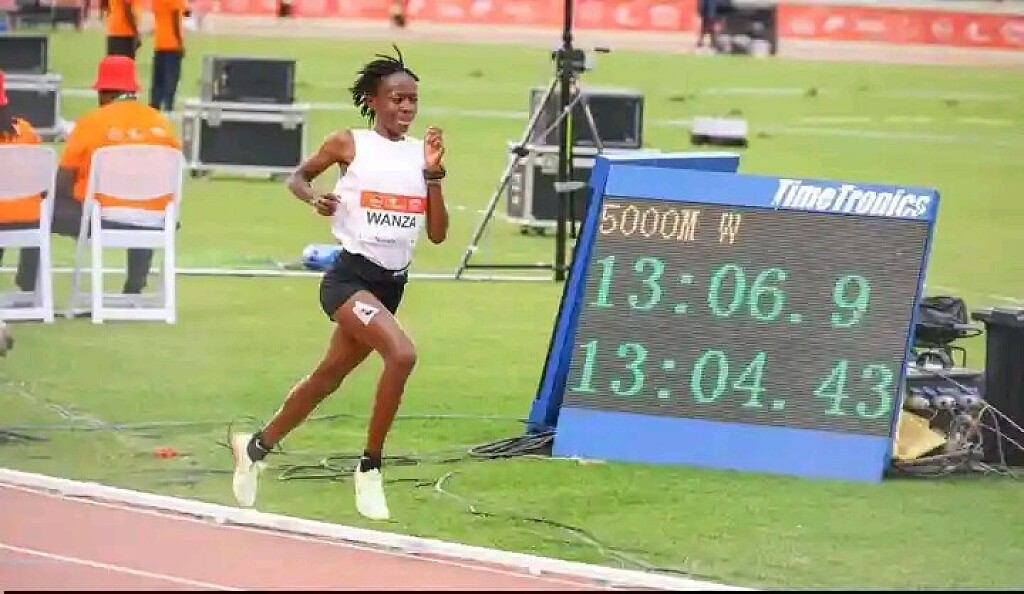
Wanza Shines Bright as Kenyan Women Dominate 5000m at Kip Keino Classic
Diana Wanza announced herself in emphatic fashion at the 2026 Kip Keino Classic, producing a beautifully controlled performance to claim victory in the women’s 5000m and underline her growing status in Kenyan distance running.
On a lively afternoon in Nairobi, Wanza judged her race to perfection. Calm through the early stages and decisive when it mattered most, she surged clear to cross the line in a personal best of 15:28.91, rewarding the home crowd with one of the standout distance displays of the meeting.
Her triumph led a commanding Kenyan sweep of the podium, with Mercy Chepkemoi finishing second in 15:49.85, while Dorcus Chepkwemoi secured third place in 15:55.20 after a strong closing effort.
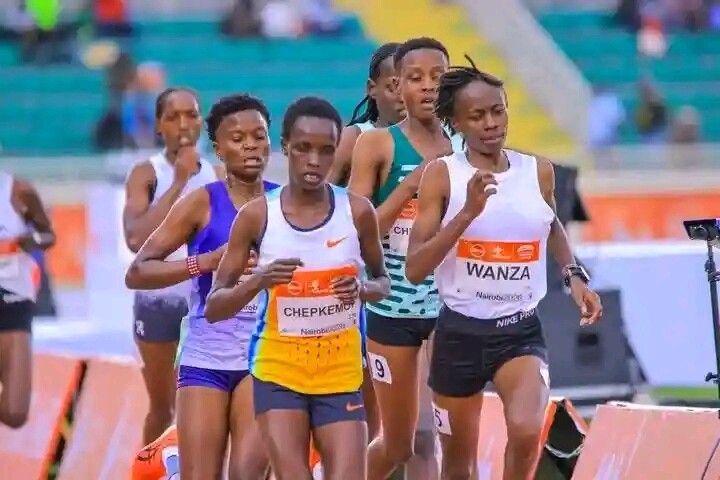
The depth of local talent was equally impressive, as Joyline Chepkemoi narrowly missed the podium in fourth with 15:55.40, followed by Emmaculate Jepkosgei in fifth at 16:01.75. Joan Chepkirui placed sixth in 16:07.26, while Betty Chepngeno celebrated a personal best of 16:11.12 in seventh. Alice Chemtai completed the top eight in 16:21.23.
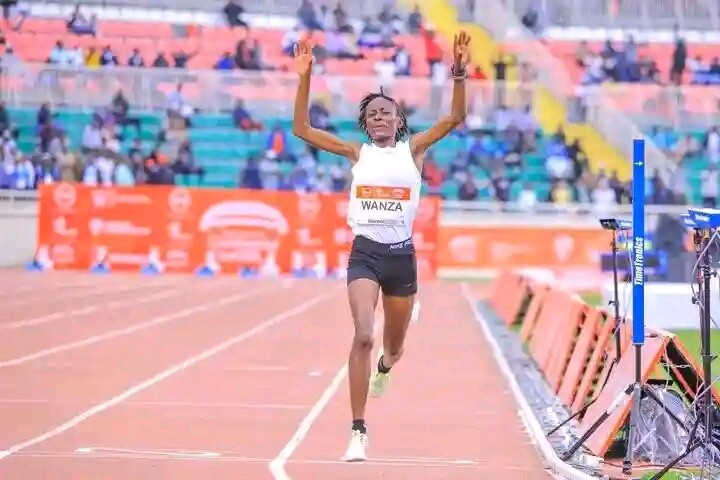
Wanza’s rise also carries a story of patient development and disciplined preparation. She is a former alumna of the Kenyan Athletics Training Academy, where she sharpened her talent while balancing life as a student at Kenyatta University back in 2021 and 2022. During that period, she combined academic responsibilities with the demanding routine required to grow as a competitive athlete.
Her journey from academy athlete to Kip Keino Classic champion reflects the value of structured mentorship and perseverance. The foundations laid during her university years are now beginning to bear fruit on the national stage, as she transforms promise into elite performance.
Wanza’s victory was not only a personal milestone but also a reminder of Kenya’s enduring strength in women’s distance running. With world champion Beatrice Chebet expected to return to competition soon, the prospect of Wanza and Chebet racing together offers an exciting glimpse into what could become a formidable partnership for Kenya on the global stage.
If this performance was any indication, Diana Wanza is no longer simply a promising name—she is rapidly becoming a serious force.
by Erick Cheruiyot for My Best Runs.
Login to leave a comment
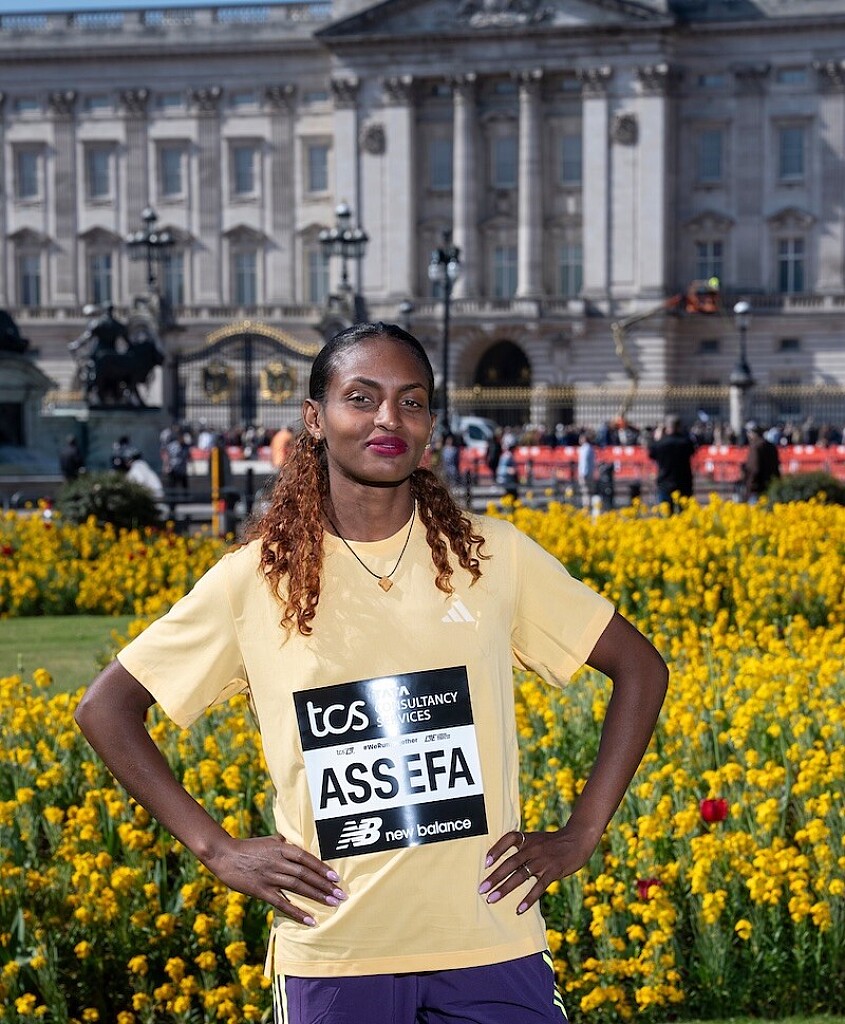
Assefa Eyes Another Historic Run as London Pace Could Decide World Record Bid
Tigist Assefa has set her sights on another landmark performance at the 2026 London Marathon, revealing that stronger pacing in the opening stages could be the key to lowering her women-only world record.
The Ethiopian superstar, who stunned the athletics world with a brilliant 2:15:50 in London last year, returns to the British capital determined to chase history once more when the race takes place on Sunday, April 26, 2026.
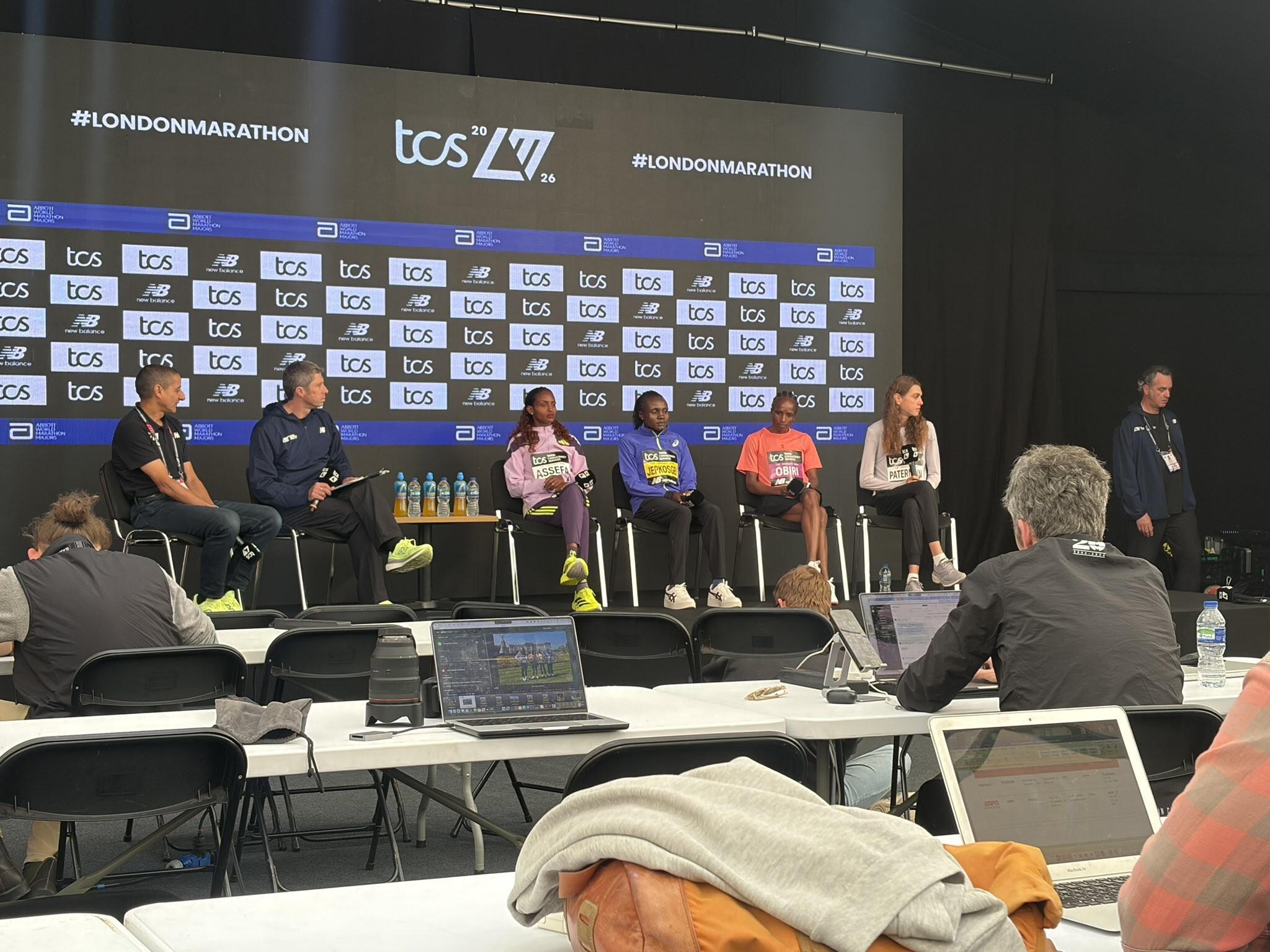
Speaking ahead of the marathon, Assefa expressed gratitude to the organisers and confidence in her preparations.
She said she was delighted to be back in London and believes her training block has gone smoothly enough to put another record-breaking run within reach.
However, the 28-year-old made it clear that elite pacing support could be decisive if she is to improve on last year’s mark. According to Assefa, a sharper tempo through the first half of the race would give her the platform to attack the closing miles even faster than before.
That statement sends a strong warning to the rest of the field: if the pace is right, another historic performance could unfold on the streets of London.
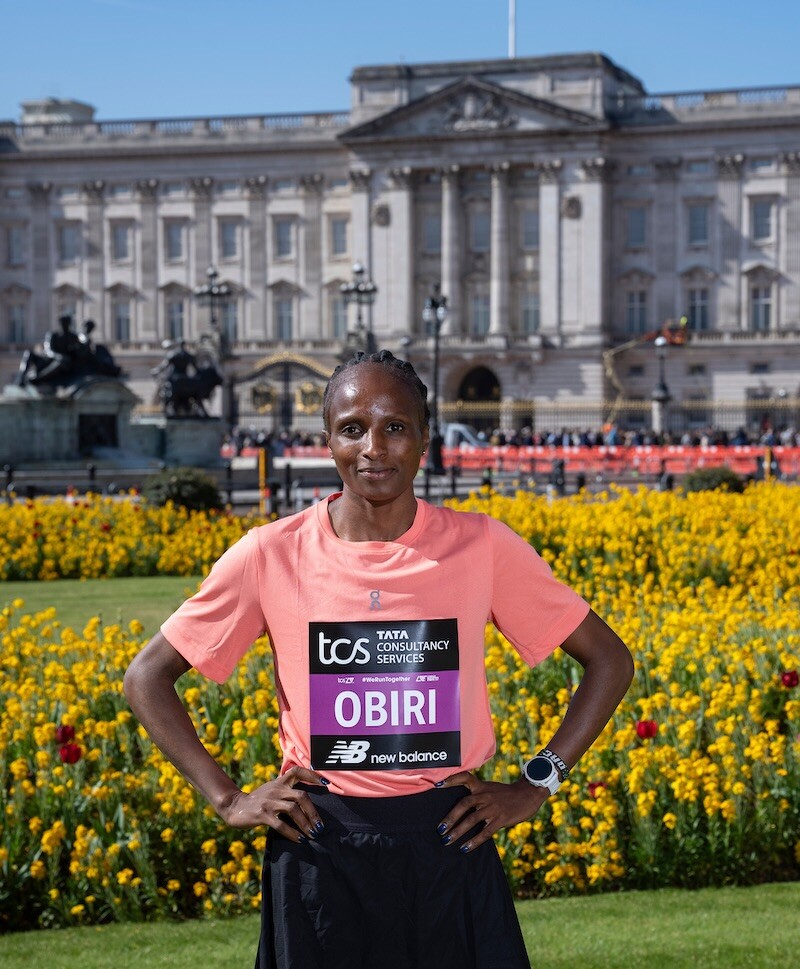
Yet victory will be far from guaranteed. Assefa is expected to face fierce resistance from reigning champion Hellen Obiri and fellow Kenyan star Joyciline Jepkosgei, both proven championship racers with the strength to challenge over the full 26.2 miles.
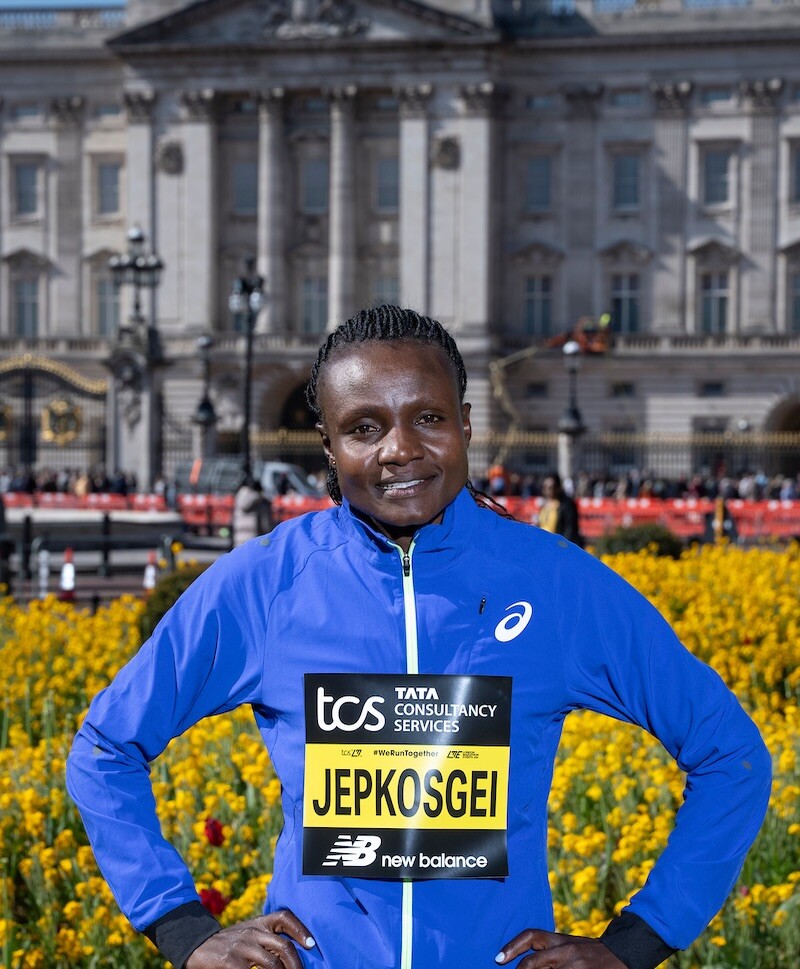
With world-class rivals, record pace ambitions, and one of marathon running’s grandest stages, the women’s race is shaping into one of the most anticipated showdowns of the season.
If the pacemakers deliver, London may witness history once again.
by Erick Cheruiyot for My Best Runs.
Login to leave a comment
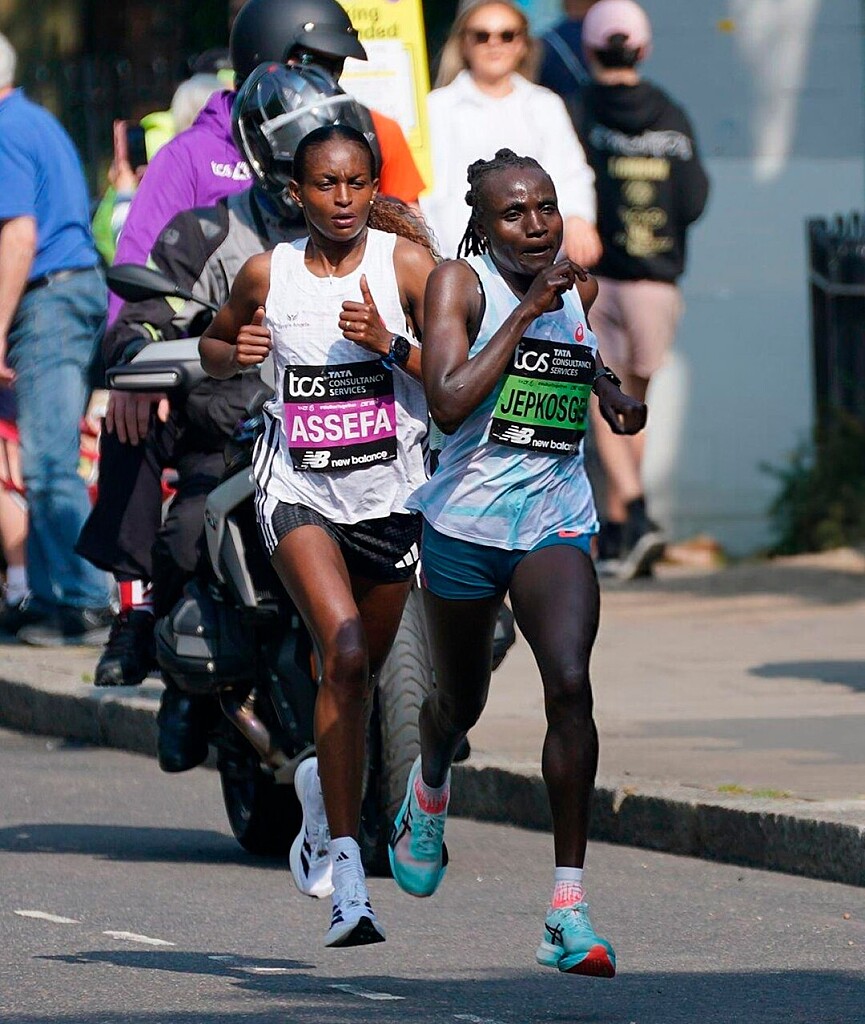
Queens of the Road: A Star-Studded Women’s Field Set to Ignite the 2026 London Marathon
The streets of London are once again poised to host one of the most electrifying spectacles in distance running as the 2026 London Marathon prepares to unfold on Sunday, April 26. With the women’s elite race scheduled for 9:30 AM (GMT), anticipation is building for a contest that promises both tactical intrigue and blistering pace.
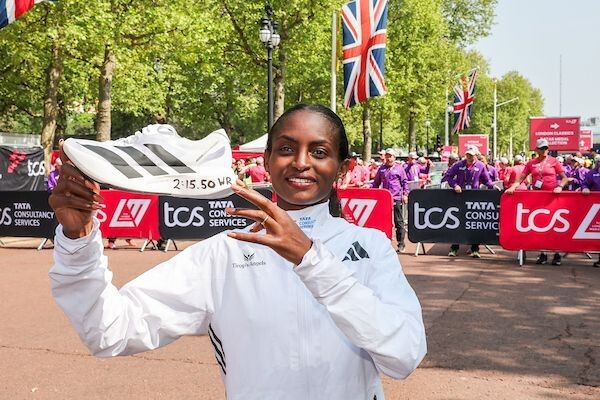
At the heart of the lineup is Ethiopia’s formidable Tigst Assefa, a marathoner whose record-breaking credentials have redefined the limits of the sport. Known for her relentless rhythm and devastating finishing strength, Assefa arrives as a central figure in what could become another historic chapter on London’s fast and flat course.
Kenya’s challenge will be led by the ever-consistent Joyciline Jepkosgei and the immensely versatile Hellen Obiri. Jepkosgei, a proven road racing specialist, brings tactical sharpness and endurance, while Obiri—already a global champion on track, cross country, and the marathon—continues to demonstrate a remarkable ability to adapt and conquer across disciplines.
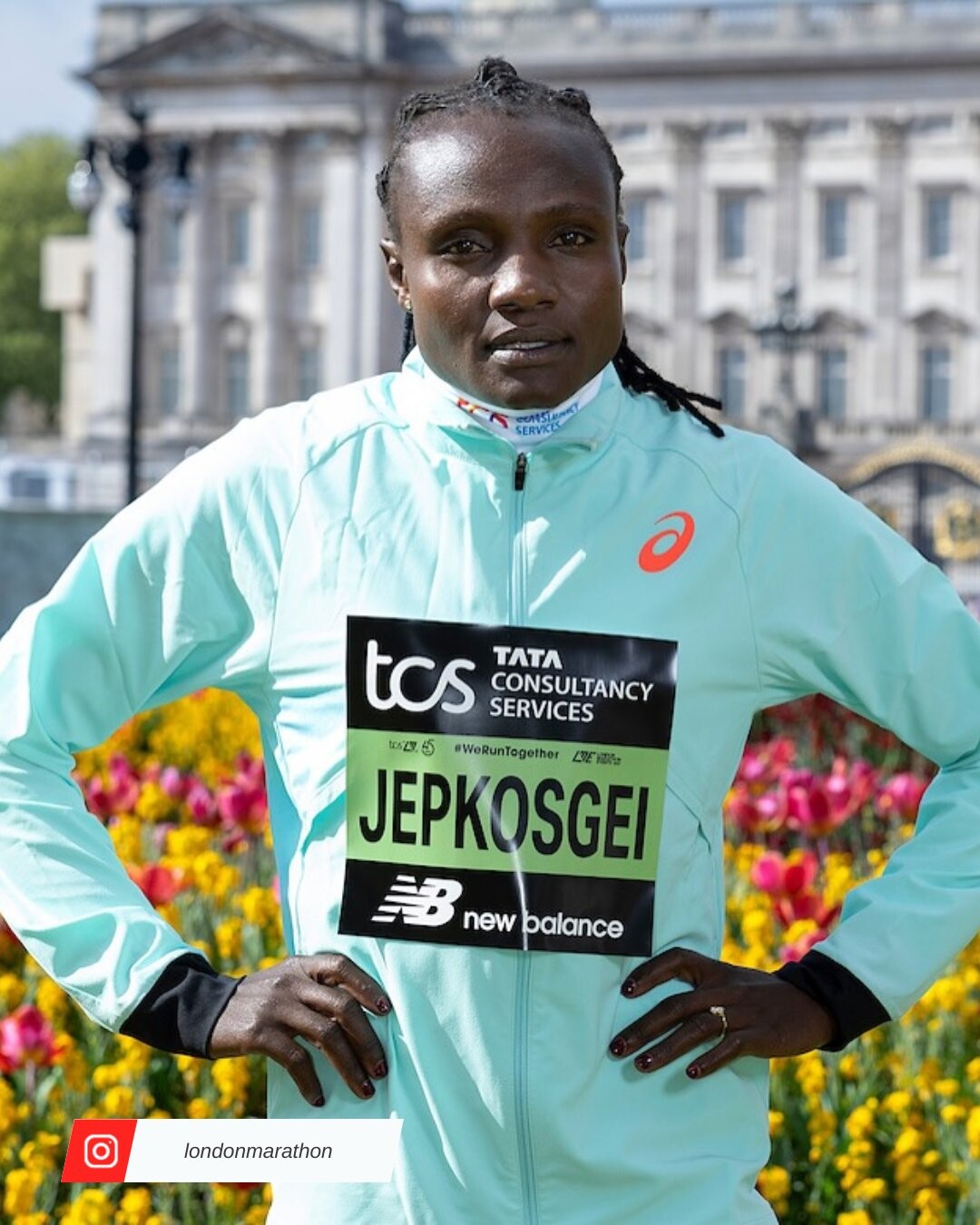
Ethiopia’s depth does not end with Assefa. Athletes such as Megertu Alemu and Degitu Azimeraw add further firepower, ensuring that the East African rivalry remains as fierce as ever. Meanwhile, Kenya’s lineup is bolstered by emerging and experienced names, including Catherine Reline Amanang'ole, adding depth to an already formidable contingent.
The international flavor of the race extends well beyond East Africa. Great Britain’s hopes will rest on athletes like Eilish McColgan, whose transition to the marathon has been closely followed, alongside compatriots such as Charlotte Purdue and Rose Harvey. Their presence ensures a strong home narrative, with the London crowd expected to rally behind its local stars.
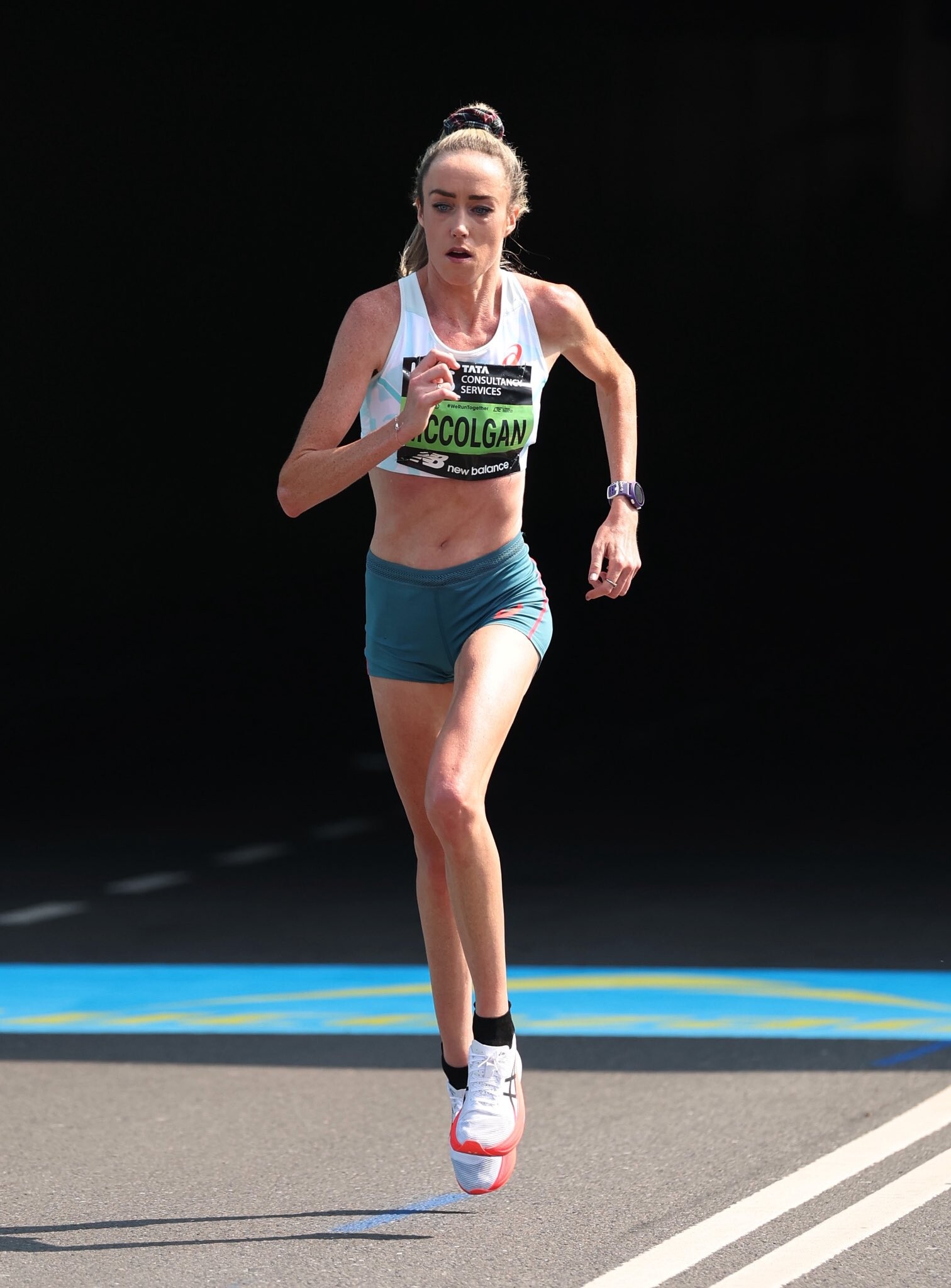
Elsewhere, Spain’s Laura Luengo, Argentina’s Florencia Borelli, and France’s Fadouwa Ledhem add further international intrigue, turning the race into a truly global showdown.
What makes this edition particularly compelling is not just the depth of talent, but the clash of styles—front-runners capable of forcing a punishing pace against tacticians who thrive in championship-like scenarios. London’s course, known for its speed, has often been the stage for record-breaking performances, and with such a loaded field, another fast time cannot be ruled out.
As the countdown continues, the 2026 London Marathon women’s elite race shapes up as more than just a competition—it is a convergence of the world’s finest endurance athletes, each chasing victory, legacy, and perhaps even history.
by Erick Cheruiyot for My Best Runs.
Login to leave a comment
TCS London Marathon
Since its inaugural edition on March 29, 1981, the TCS London Marathon has grown into one of the world's most prestigious road races, blending elite competition with an extraordinary charitable legacy. Founded by former Olympic champion and journalist Chris Brasher alongside Welsh athlete John Disley, the event has been staged every year and has been held in the spring annually...
more...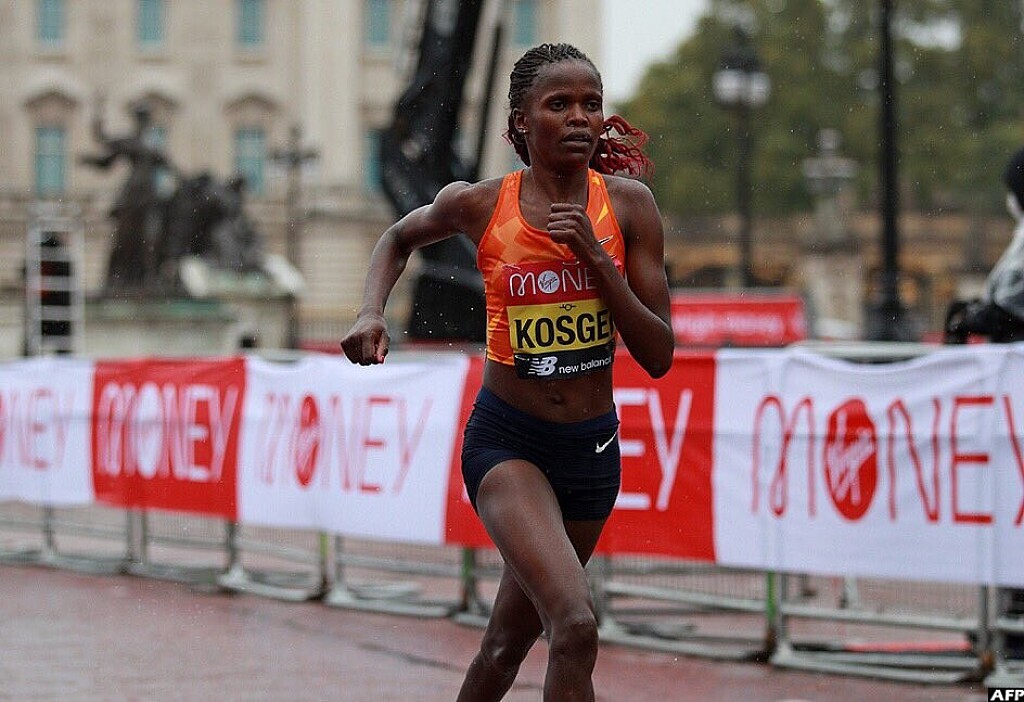
Türkiye Transfer Bid Rejected as Brigid Kosgei, Catherine Reline and 9 Others Denied Nationality Switch
Kenya’s former marathon world record holder Brigid Kosgei and fellow distance runner Catherine Reline will remain eligible under their current national status after the World Athletics Nationality Review Panel rejected a wave of transfer requests involving 11 international athletes seeking to represent Türkiye.
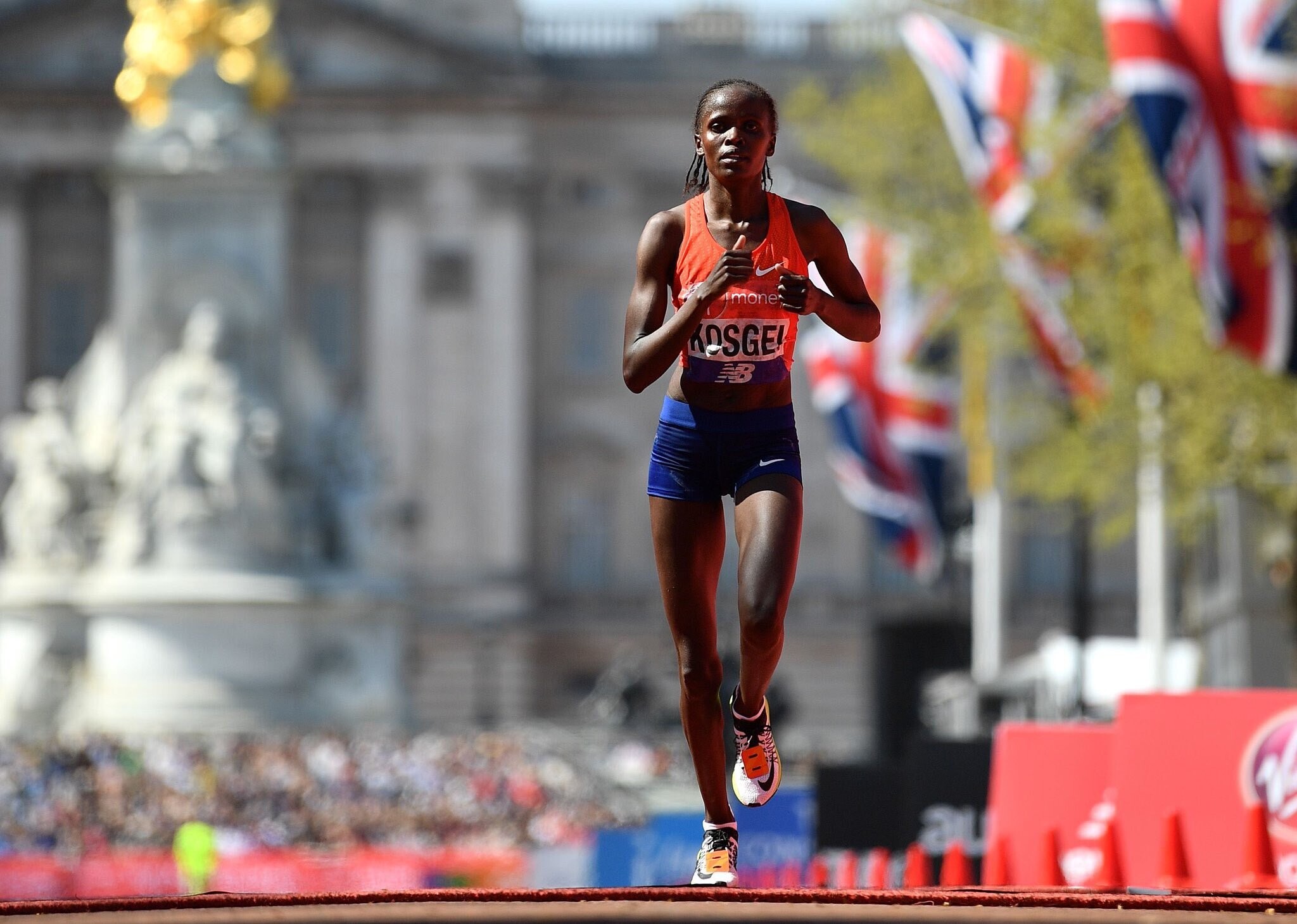
The decision, announced today, blocks one of the most closely watched nationality change cases in recent athletics history. Several high-profile competitors from Kenya, Jamaica, Nigeria, Russia and other nations had applied to switch allegiance, but the panel ruled against all submissions.
For Kenya, the outcome means celebrated marathon star Brigid Kosgei will not be changing citizenship or sporting identity. Kosgei remains one of the most accomplished road runners of her generation, famously rewriting the women’s marathon world record and establishing herself among the sport’s all-time greats.
Catherine Reline, who had previously competed under the Turkish name Selin Can, was also among those denied clearance. The ruling adds another dramatic chapter to the growing global debate over athlete transfers, national identity and the balance between opportunity and sporting integrity.
The full list of athletes whose applications were refused includes Catherine Reline (Kenya), Rajindra Campbell (Jamaica), Jaydon Hibbert (Jamaica), Brian Kibor (Kenya), Brigid Kosgei (Kenya), Ronald Kwemoi (Kenya), Nelvin Jepkemboi (Kenya), Favour Ofili (Nigeria), Wayne Pinnock (Jamaica), Rojé Stona (Jamaica) and Sophia Yakushina (Russia).
The inclusion of major names such as Jaydon Hibbert, Wayne Pinnock, Rojé Stona and Favour Ofili underlines the scale of the attempted recruitment drive. Many of the athletes are medal contenders or established global performers, making the verdict significant far beyond administrative circles.
Nationality transfers have become one of the most sensitive issues in modern athletics, particularly when elite athletes move from traditional powerhouse nations to countries investing heavily in international talent. Supporters argue such moves can provide better support systems, financial security and competitive pathways, while critics believe they risk weakening the meaning of national representation.
For Kenya, the ruling may be welcomed as a major boost. Retaining athletes of the calibre of Kosgei, Ronald Kwemoi and other established stars protects the nation’s rich athletics heritage and preserves depth ahead of future global championships.
While the rejected athletes may explore other options or future appeals depending on eligibility rules, today’s decision sends a clear message: changing flags in world athletics is never automatic. For now, the names remain the same, the nations remain the same, and the race for global glory continues under familiar colours.
by Erick Cheruiyot for My Best Runs.
Login to leave a comment
Kenya’s Endurance Empire Roars in Cape Town at the Two Oceans Marathon
Cape Town, South Africa provided the perfect stage for another unforgettable edition of the Two Oceans Marathon, where endurance, precision, and courage were tested over the punishing 56-kilometre course. With breathtaking coastal scenery surrounding one of the world’s most iconic ultra-distance races, athletes were pushed to their absolute limits in a contest that delivered drama, quality, and international class from start to finish.
Often celebrated as one of the most beautiful races on earth, the Two Oceans Marathon is never conquered by scenery alone. Its relentless climbs, tactical shifts, and unforgiving final kilometres demand far more than raw speed. They demand intelligence, resilience, and the ability to suffer when it matters most. This year’s race showcased every one of those qualities.
In the women’s competition, South Africa’s Gerda Steyn thrilled the home crowd with a commanding victory, crossing the finish line in a superb 3:27:43. Her performance was powerful, controlled, and worthy of the occasion. Yet while Steyn claimed the crown, Kenya’s presence across the leaderboard was impossible to ignore.
Margaret Jepchumba produced a magnificent run to secure second place in 3:31:31, leading a remarkable Kenyan surge in one of the strongest collective displays of the day. Nobukhosi Tshuma finished third in 3:38:34, Shelmith Muriuki followed with a determined fourth-place finish in 3:39:14, while Rholex Jelimo added another top performance in fifth with 3:40:38. Mildred Chepkemei completed the outstanding team effort by taking sixth in 3:42:42.
To place four athletes inside the top six of a world-class ultra-marathon is no ordinary achievement. It was a demonstration of depth, discipline, and the enduring strength of Kenyan distance running on the global stage.
The men’s race carried the same intensity. South Africa’s Arthur Jantjies rose to the moment in front of an energized home crowd, surging to victory in 3:09:25 after a fiercely contested battle. Every second mattered in a race defined by relentless pressure and narrow margins. Onalenna Khonkhobe finished second in 3:10:00 and Blessing Zvikomborero Waison closed the podium in 3:11:13
Kenya was again at the heart of the action through Dennis Kipkosgei, who delivered a courageous and competitive performance to finish fourth in 3:11:29, narrowly missing the podium in one of the closest finishes of the day.
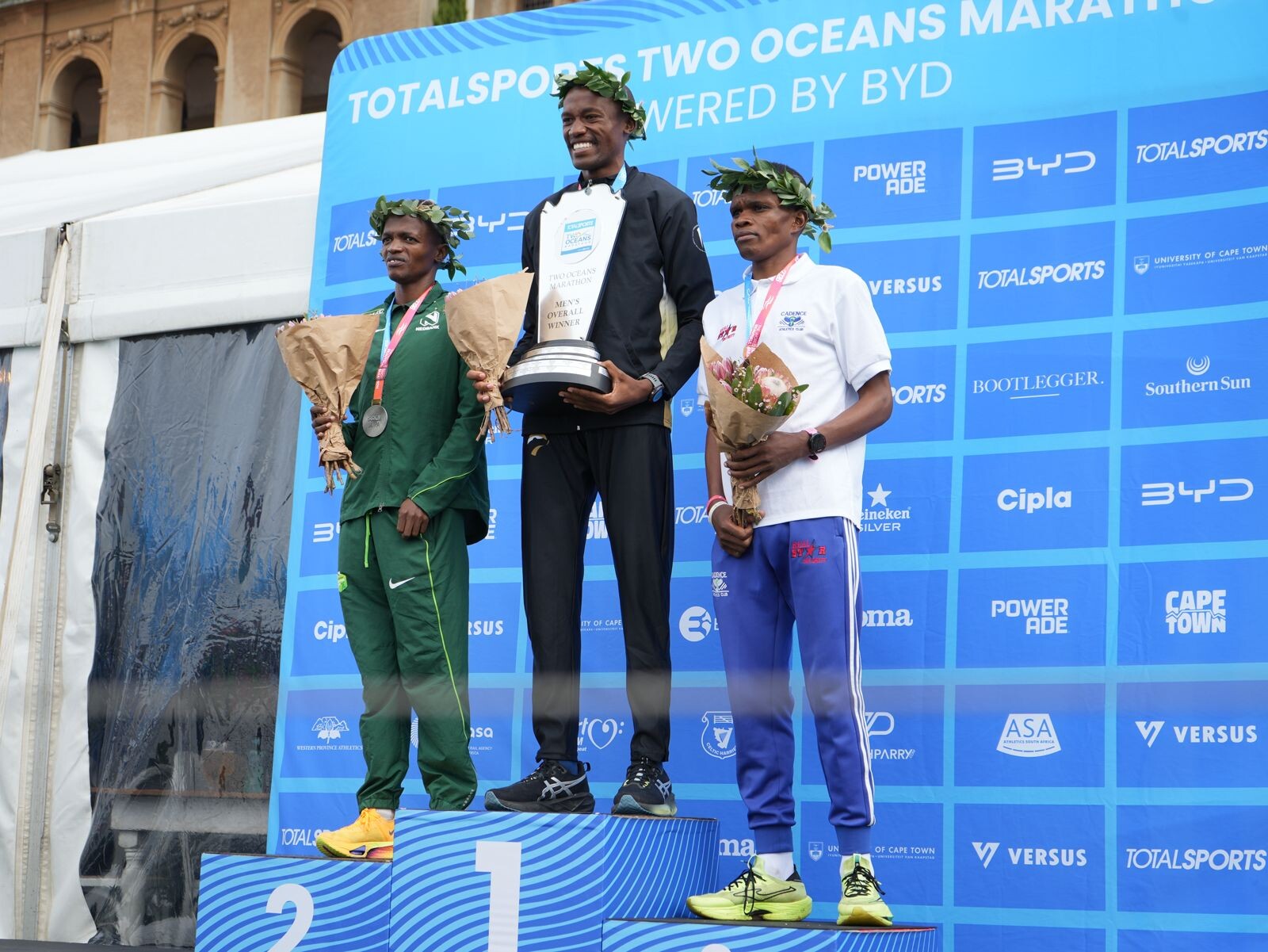
Beyond the results, the Two Oceans Marathon once again reminded the sporting world why it remains such a treasured event. It is a race where beauty meets brutality, where champions are forged through sacrifice, and where the human spirit is measured one stride at a time.
For Kenya, this was more than a day of strong finishes. It was another statement of excellence. No overall title was needed to underline the message. From the women’s leaderboard to the men’s front pack, Kenyan athletes once again proved that when endurance is tested, they remain among the finest in the world.
by Erick Cheruiyot for My Best Runs.
Login to leave a comment

Two Oceans Marathon
Cape Town’s most prestigious race, the 56km Old Mutual Two Oceans Ultra Marathon, takes athletes on a spectacular course around the Cape Peninsula. It is often voted the most breathtaking course in the world. The event is run under the auspices of the IAAF, Athletics South Africa (ASA) and Western Province Athletics (WPA). ...
more...
Hendengren Rewrites History: A Stunning NCAA 10,000m Record Falls at Stanford
Under the soft California evening light at the prestigious Stanford Invitational, history was not just witnessed—it was decisively rewritten. Rising distance talent Jane Hedengren delivered a performance of rare authority and composure, storming to a breathtaking NCAA 10,000m record in 30:46.80.
From the opening laps, the race carried an unmistakable sense of purpose. Hedengren ran with poise beyond her years, settling into a rhythm that hinted at something extraordinary. As the laps clicked by, her cadence remained fluid, her stride efficient, and her intent unmistakable. By the time the bell rang, the outcome was no longer in doubt—only the magnitude of history remained to be measured.
In obliterating the previous collegiate record of 30:50.43 held by Parker Valby, Hedengren did more than shave seconds off the clock—she elevated the standard of women’s collegiate distance running. Her 30:46.80 now stands as a new benchmark, a mark of both precision and endurance forged in a perfectly executed race.
Yet, the night was not hers alone. Pamela Kosgei delivered a remarkable run of her own, finishing second in 30:49.99—a personal best that also dipped under the former NCAA record. In any other race, it would have been the headline performance. Instead, it became part of a deeper narrative: a race that pushed boundaries and redefined expectations.
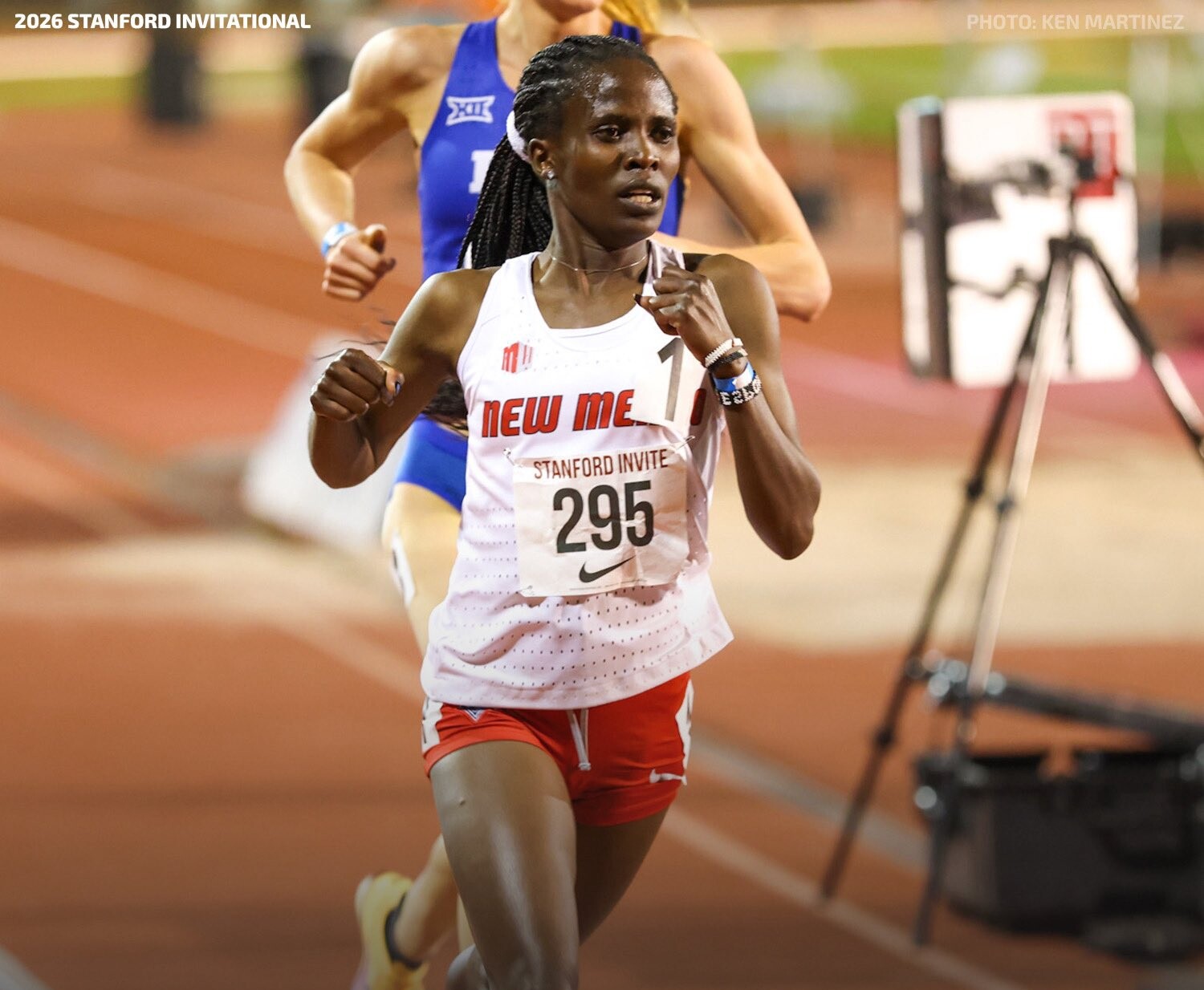
What made this contest truly compelling was not just the times, but the shared excellence. Two athletes, driven by ambition and sharpened by competition, combined to produce one of the finest distance races in collegiate history.
For Hedengren, this moment signals more than a record—it announces her arrival on the global stage. Calm under pressure and devastatingly efficient, she has shown the kind of form that transcends collegiate competition and hints at a much larger future.
As the echoes of Stanford fade, one truth remains clear: this was not merely a race—it was a statement. And with it, Jane Hedengren has etched her name into the sport with authority, redefining what is possible over 10,000 meters.
by Erick Cheruiyot for My Best Runs.
Login to leave a comment
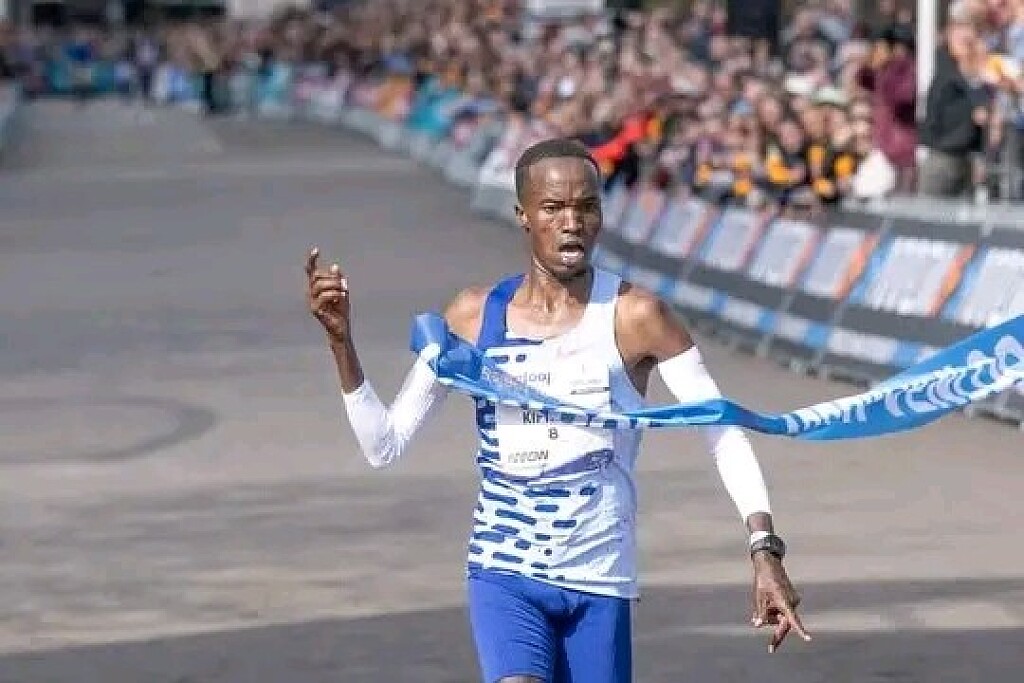
Venloop 2026: Kenya Dominates as Records Fall and Rivals Fade
On a vibrant Sunday in the Netherlands, the 2026 Venloop Half Marathon delivered a spectacle worthy of its growing international reputation, as elite runners transformed the streets of Venlo into a stage of speed, precision, and dominance. Against a backdrop of roaring crowds and crisp European spring conditions, it was Kenya that once again seized the spotlight with commanding authority in both the men’s and women’s races.
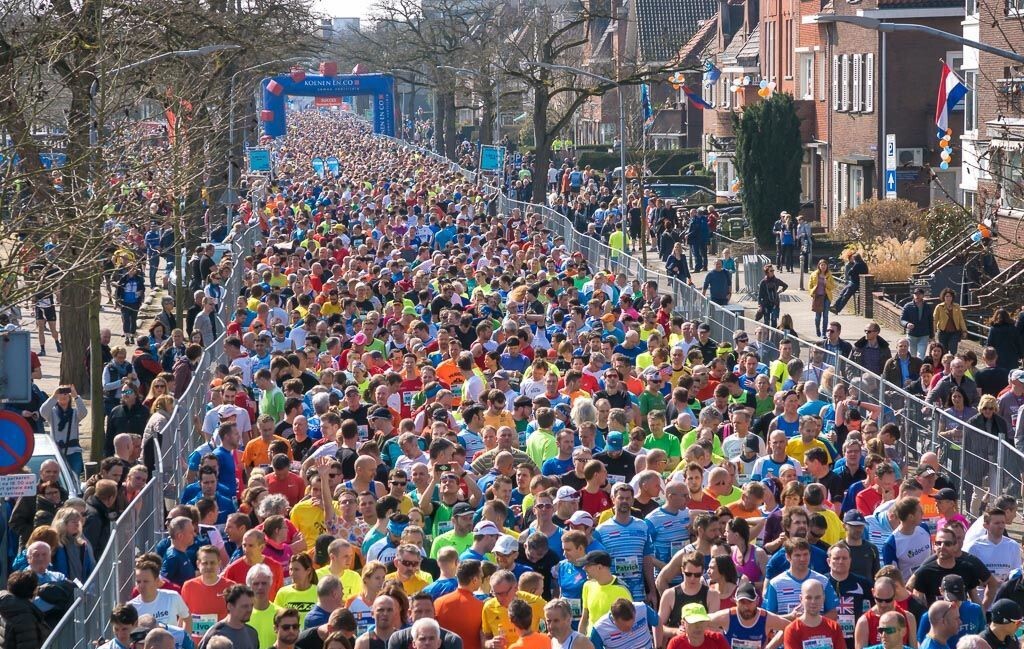
The men’s contest unfolded at a relentless tempo, with the lead pack pushing the pace from the early kilometers. As the race approached its decisive stages, Jamal Kipkosgei Kiprono surged with purpose, displaying remarkable strength and composure to break clear and storm to victory in a personal best of 59:55. His performance not only dipped under the coveted one-hour barrier but also stamped his class on a highly competitive field.
Behind him, the battle for the remaining podium places remained fiercely contested. Amos Kiprotich held his nerve to secure second place in 1:00:13, also a personal best, while Jonathan Kipkoech Kamosong completed a clean Kenyan sweep of the podium, clocking 1:00:17 in yet another lifetime best. The trio’s synchronized excellence underscored Kenya’s enduring supremacy in global road racing, as they locked out the podium in emphatic fashion.
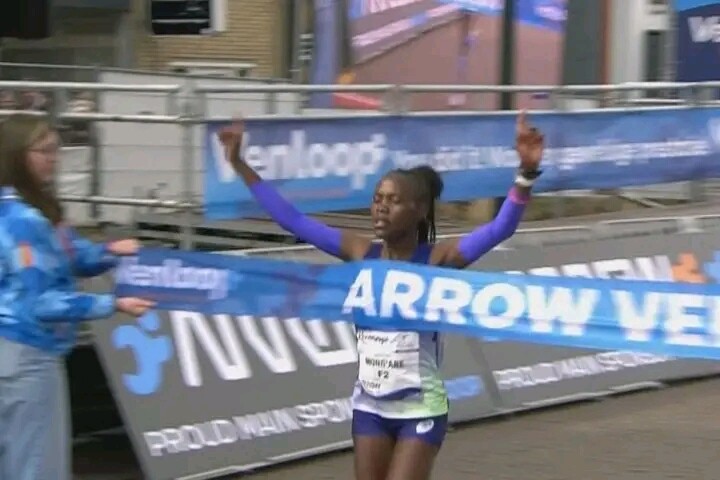
If the men’s race was a statement, the women’s race was nothing short of historic. Gladys Kwamboka delivered a masterclass in front-running, dictating the pace with confidence and control before powering away to claim victory in 1:06:45. Her performance not only secured a personal best but also shattered the course record, marking one of the standout moments of the event.
She was followed home by compatriot Vibian Chepkurui, who ran a strong and composed race to finish second in 1:08:47. Completing yet another all-Kenyan podium, Cynthia Limo claimed third place in 1:09:10, capping off a day where Kenyan athletes proved untouchable across both fields.
From the first stride to the final sprint, Venloop 2026 was defined by pace, resilience, and national pride. The double podium sweep by Kenya not only highlighted the nation’s extraordinary depth of talent but also reinforced its position at the pinnacle of long-distance running.
As the crowds in Venlo celebrated a day of elite performance and unforgettable racing, one truth stood clear—when it comes to the roads, Kenya continues to set the standard, and the world is still chasing.
by Erick Cheruiyot for My Best Runs.
Login to leave a comment

Weir Venloop Half
The Venloop is a running event organized in Venlo, Netherlands every March. The course runs through the streets of the Venlo region. The final meters pass the atmospheric Parade with the finish in front of the Limburgs Museum. In addition to a half marathon, the Venloop offers 10 km and 5 km courses. The Venloop also wants to get youngsters...
more...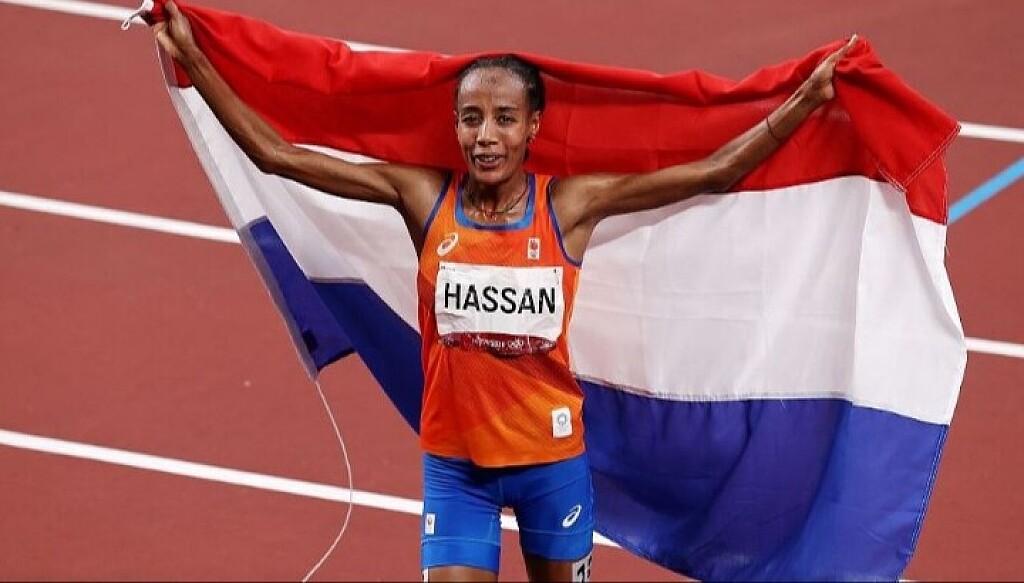
Hassan Sidelined: Olympic Champion Withdraws from London Marathon in Injury Blow
The road to the 2026 edition of the London Marathon—scheduled for Sunday, April 26th, 2026, in London—has suffered a major shake-up following the withdrawal of reigning Olympic champion Sifan Hassan. The Dutch star has been forced to pull out after sustaining an Achilles injury during a treadmill training session approximately six weeks ago, cutting short what many expected to be another thrilling appearance.
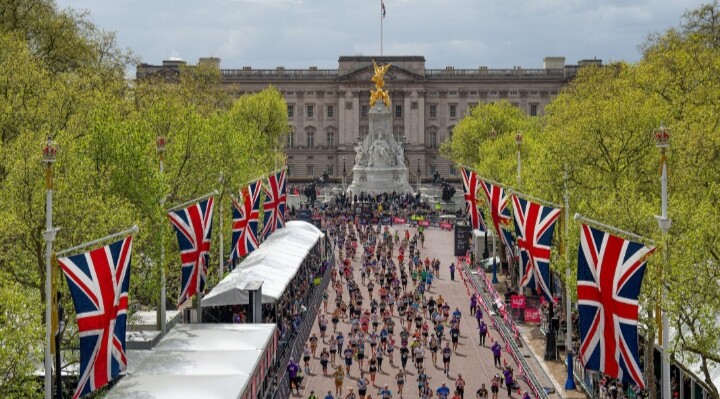
For Hassan, the decision was anything but simple. London holds a special place in her career—it is the stage where she announced her marathon brilliance to the world, capturing her first victory over the distance in unforgettable fashion. However, elite competition demands peak physical condition, and anything less can compromise both performance and long-term health.
In a heartfelt reflection, Hassan acknowledged the emotional weight behind stepping away from a race she deeply cherishes. Despite initial hopes that the injury would subside, it became increasingly clear as training progressed that she could not reach the level she expects of herself. Prioritizing recovery, she has chosen patience over risk, signaling the mindset of a seasoned champion who understands the importance of longevity in sport.
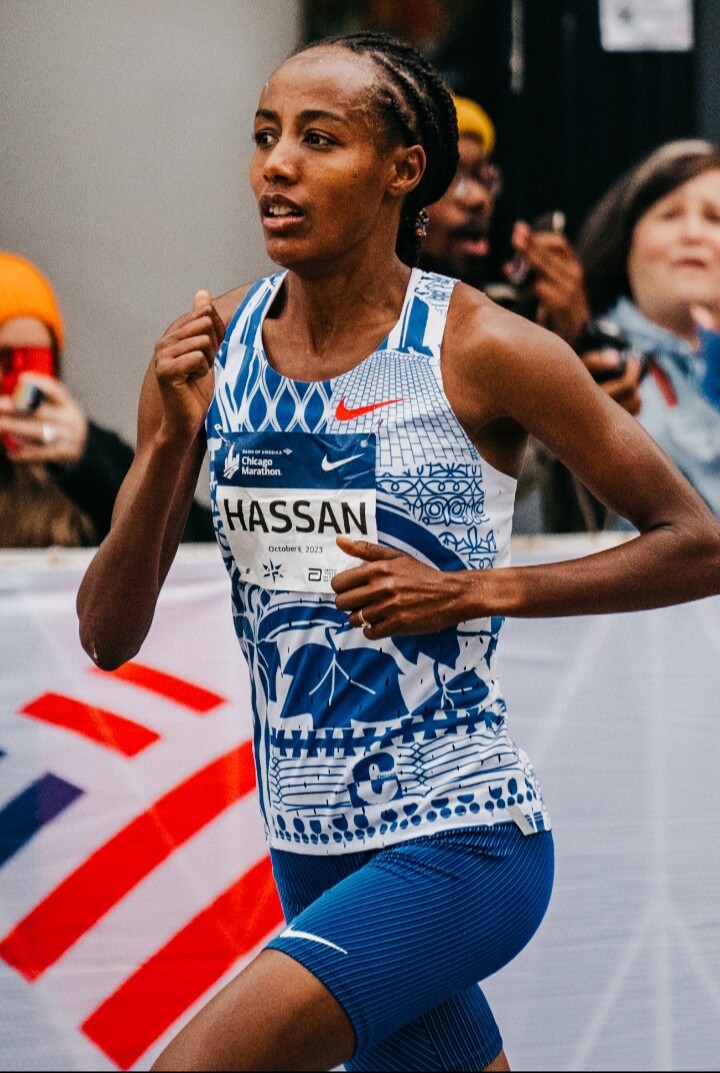
Her absence undeniably alters the dynamic of the race, yet the women’s field remains exceptionally strong. World-class contenders such as Tigst Assefa, Joyciline Jepkosgei, and Hellen Obiri are still set to headline the event, ensuring that the competition will retain its elite status and global appeal.
While fans will miss Hassan’s electrifying presence on the streets of London, her focus now shifts to recovery and a full return to racing. If her career has proven anything, it is that setbacks often serve as the foundation for even greater comebacks. And when she does return to the London stage, it will undoubtedly be with renewed strength and unfinished business.
by Erick Cheruiyot for My Best Runs.
Login to leave a comment
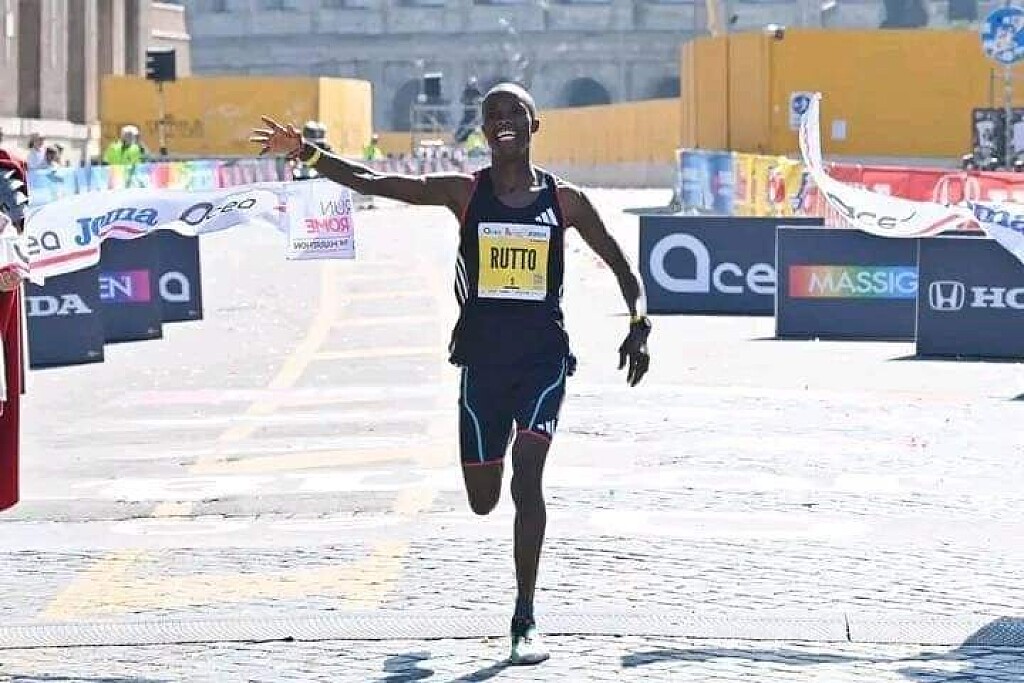
Rome Awaits a Classic: Rutto and Tesfaye Set for a Marathon Duel in the Eternal City
The historic streets of Rome are poised for a captivating spectacle this Sunday, March 22, as the Rome Marathon 2026 assembles a world-class field headlined by a thrilling head-to-head between Kenya’s Asbel Rutto and Ethiopia’s Lencho Tesfaye. With both men separated by mere seconds on paper, anticipation is building for what promises to be a fiercely contested race through one of the most iconic courses in global distance running.
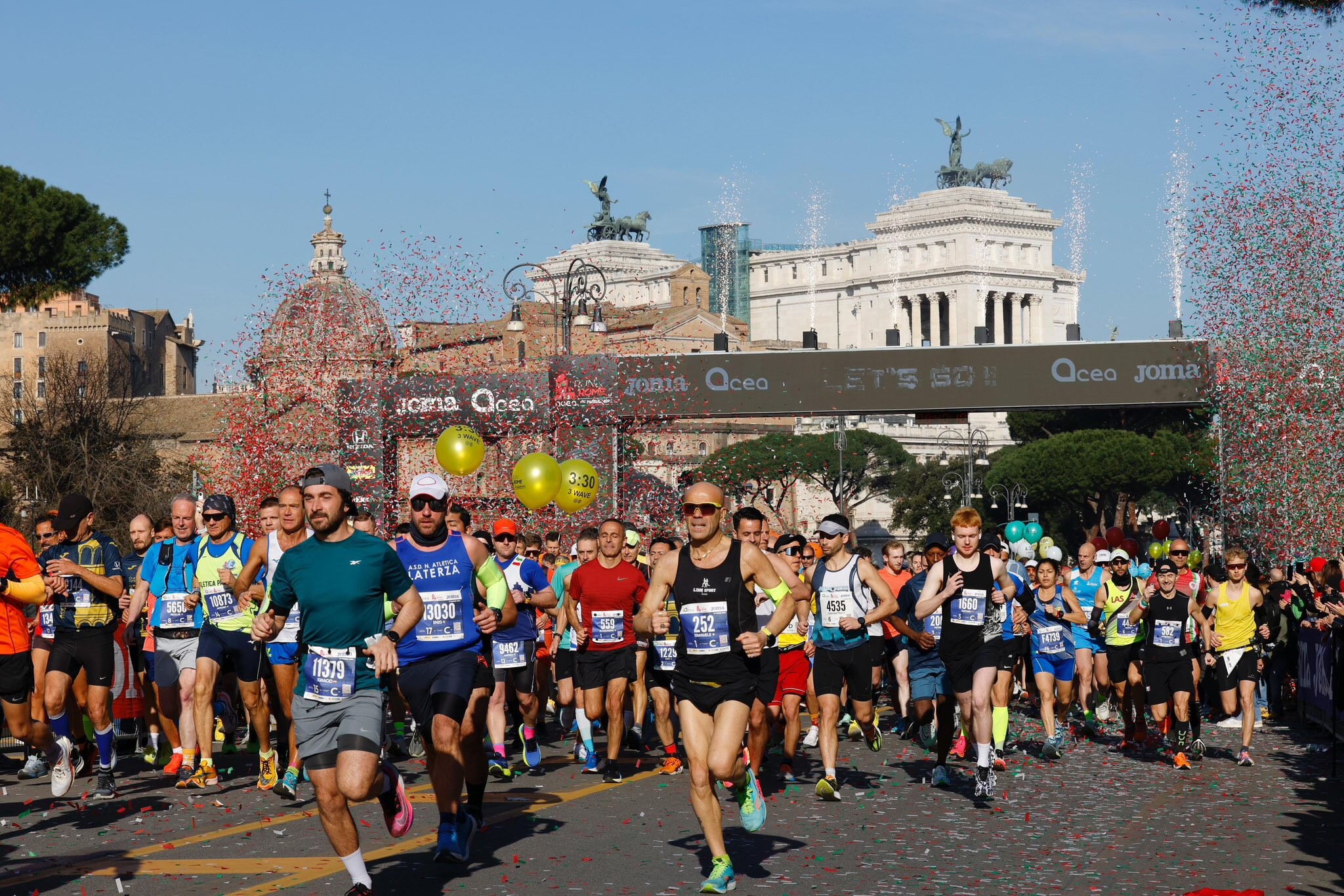
Tesfaye arrives with a marginal edge, boasting a personal best of 2:06:18, a mark that underscores his pedigree and consistency on the international stage. Yet Rutto, just six seconds behind with a lifetime best of 2:06:24, carries equal firepower and the hunger to assert Kenyan dominance on Italian soil. Their duel is expected to unfold stride for stride, a tactical battle where patience, rhythm, and late-race strength could ultimately define the champion.

Lurking just behind the two frontrunners is fellow Kenyan Edwin Kosgei, whose 2:07:31 personal best places him firmly within striking distance. Should the pace falter or the favorites hesitate, Kosgei possesses the experience and resilience to disrupt the script and turn the race into a three-man war deep into the closing kilometers.
In the women’s race, Kenya’s Betty Chepkwony leads a tightly matched field, bringing a strong personal best of 2:23:02 into the contest. She will face stern opposition from Ethiopia’s duo of Netsanet Gudeta (2:23:43) and Aberash Fayesa (2:24:59), both of whom have demonstrated the capacity to rise on the big stage. The women’s contest shapes up as a test of endurance and composure, where small margins could separate victory from heartbreak.
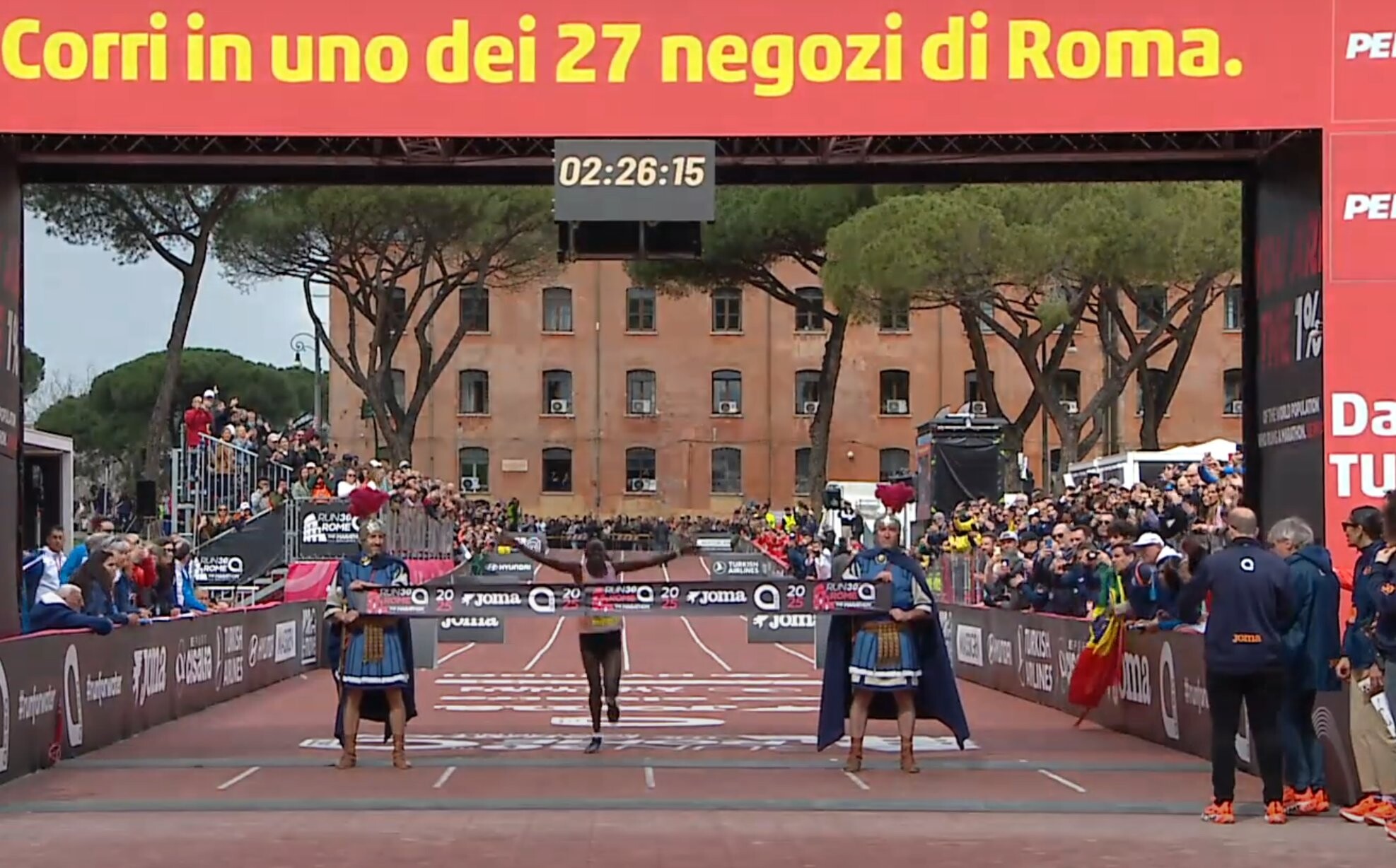
Beyond times and statistics, the Rome Marathon offers something deeper—a fusion of history, atmosphere, and elite competition. As runners surge past ancient landmarks and roaring crowds, the race will demand not only physical excellence but mental fortitude under pressure.
With national pride, personal legacy, and victory on the line, Sunday’s showdown in Rome is more than just a race—it is a collision of ambition and endurance at the highest level. And when the dust settles in the Eternal City, only one name will rise above the rest, etched into the story of the 2026 marathon season.
by Erick Cheruiyot for My Best Runs.
Login to leave a comment

Run Rome The Marathon
When you run our race you will have the feeling of going back to the past for two thousand years. Back in the history of Rome Caput Mundi, its empire and greatness. Run Rome The Marathon is a journey in the eternal city that will make you fall in love with running and the marathon, forever. The rhythm of your...
more...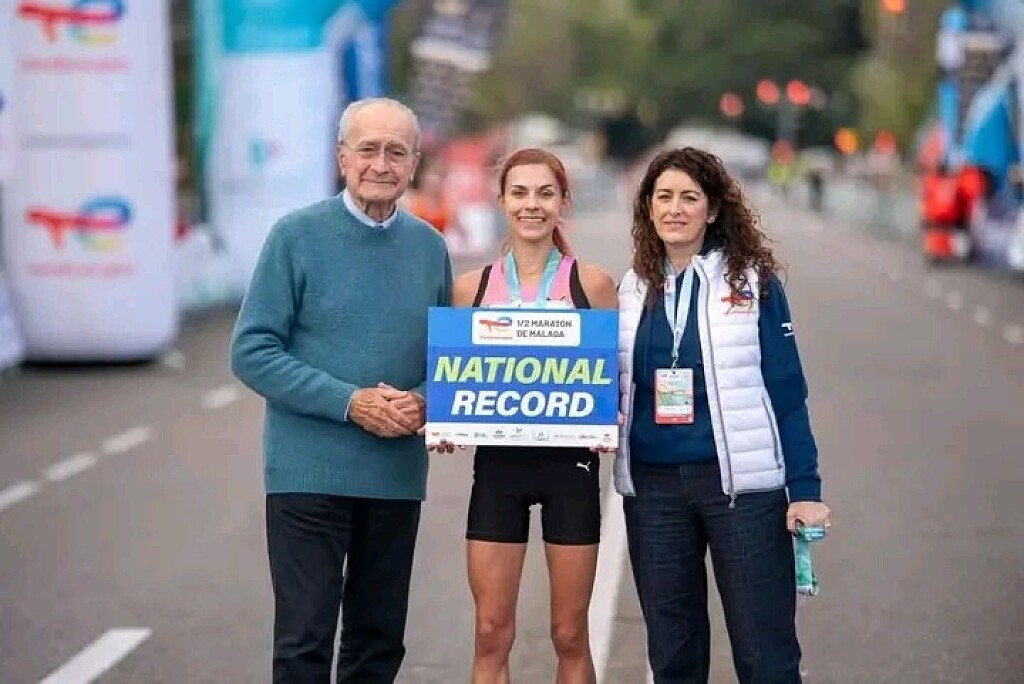
Kipkorir Blazes to Victory as Lukan Makes History in Málaga Half Marathon
The streets of southern Spain witnessed a thrilling morning of elite road racing as the TotalEnergies Media Maratón Ciudad de Málaga delivered another spectacular edition, reaffirming its reputation as one of Europe’s fastest and most competitive half marathons.
Under near-perfect racing conditions in the vibrant coastal city of Málaga, top international athletes produced remarkable performances, highlighted by a commanding victory in the men’s race and a historic national record in the women’s competition.
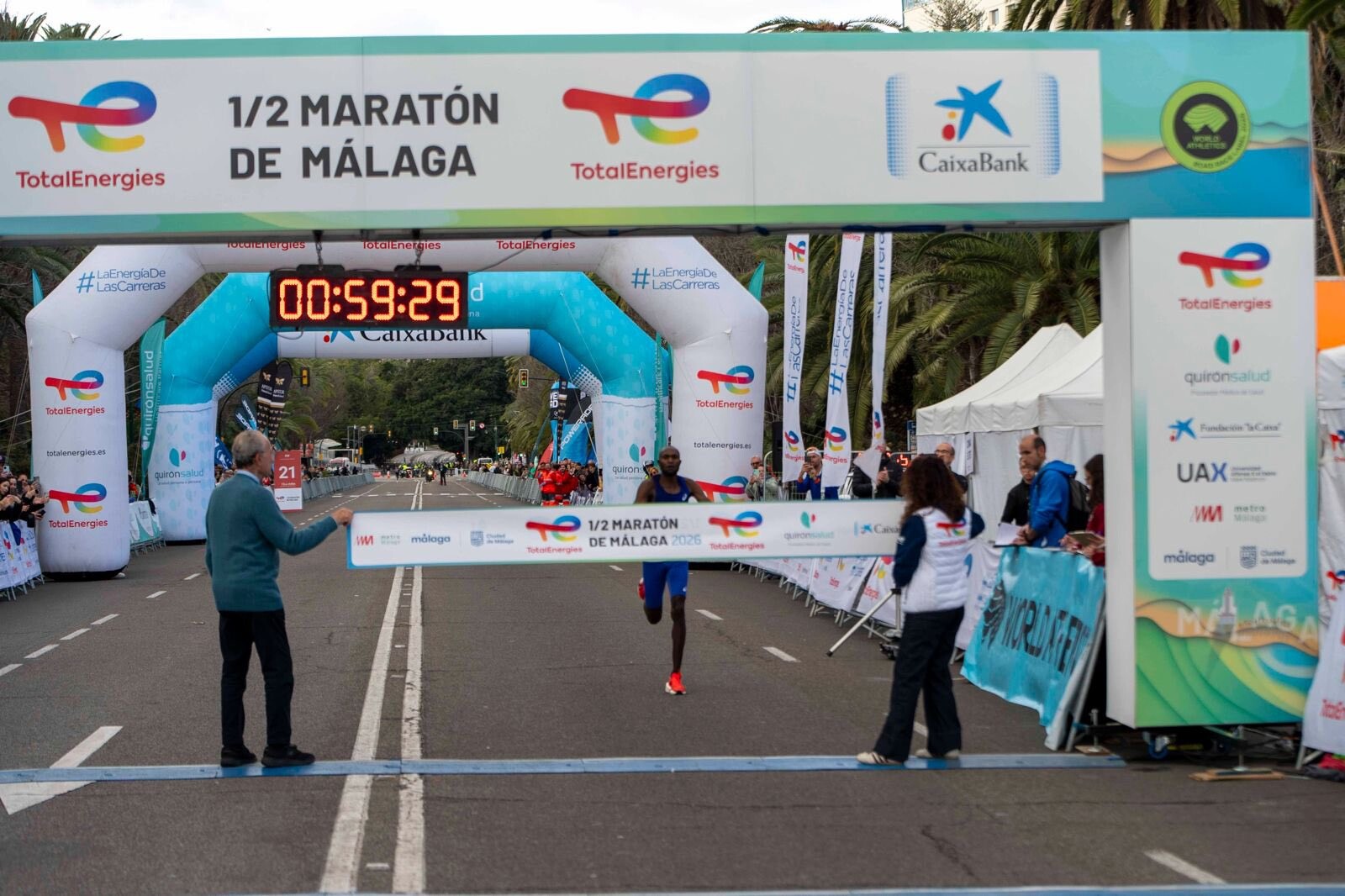
Kenya’s Vincent Kipkorir emerged as the dominant force in the men’s race, surging away from the field to secure victory in an impressive 59:30. Demonstrating both patience and strength, Kipkorir controlled the latter stages of the race, crossing the finish line comfortably ahead of his challengers.
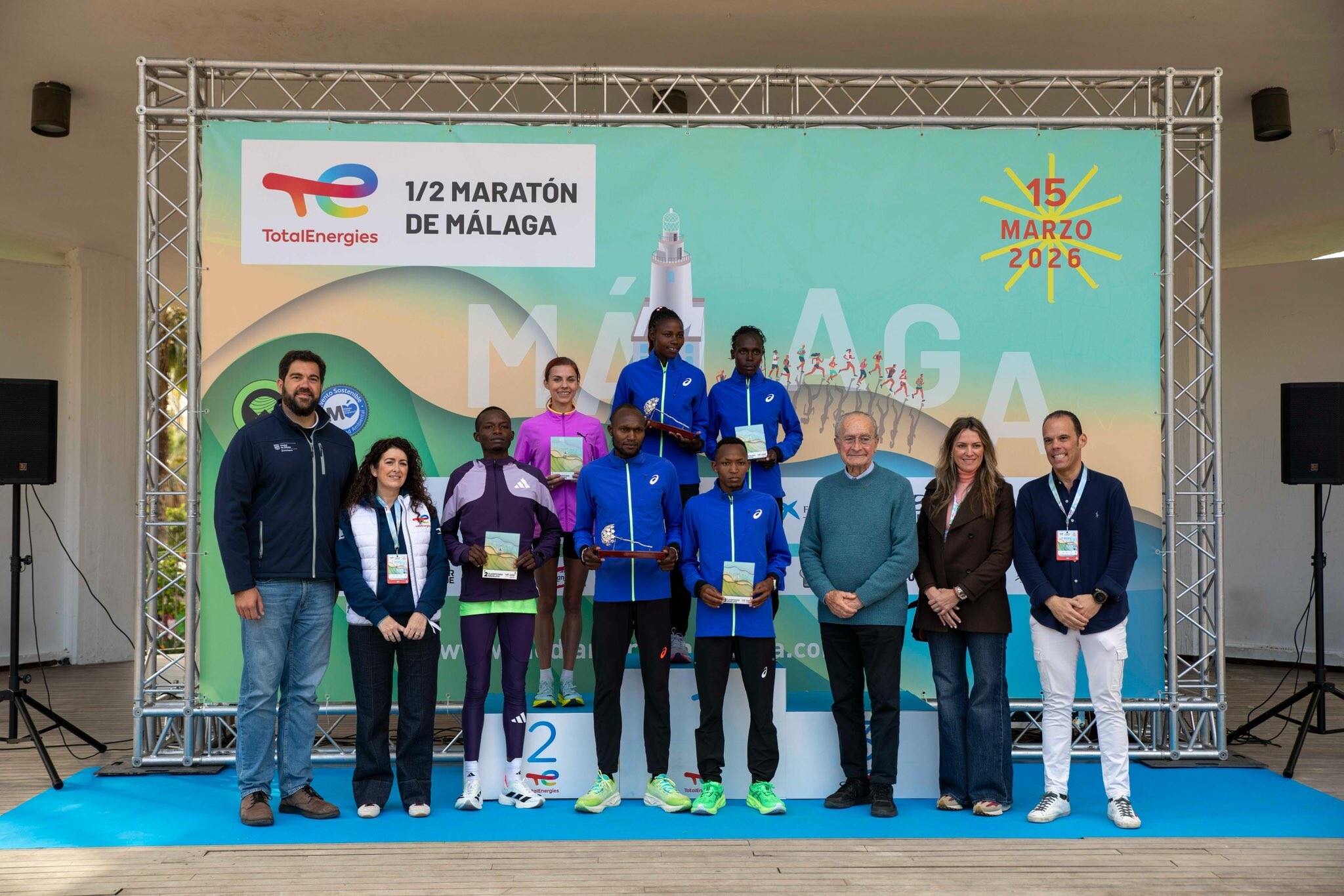
Compatriot Shadrack Musyoka claimed second place after a solid run that saw him stop the clock at 1:00:16, while fellow Kenyan Mathew Kipruto completed the podium in 1:01:29, underlining Kenya’s continued dominance in global road racing.
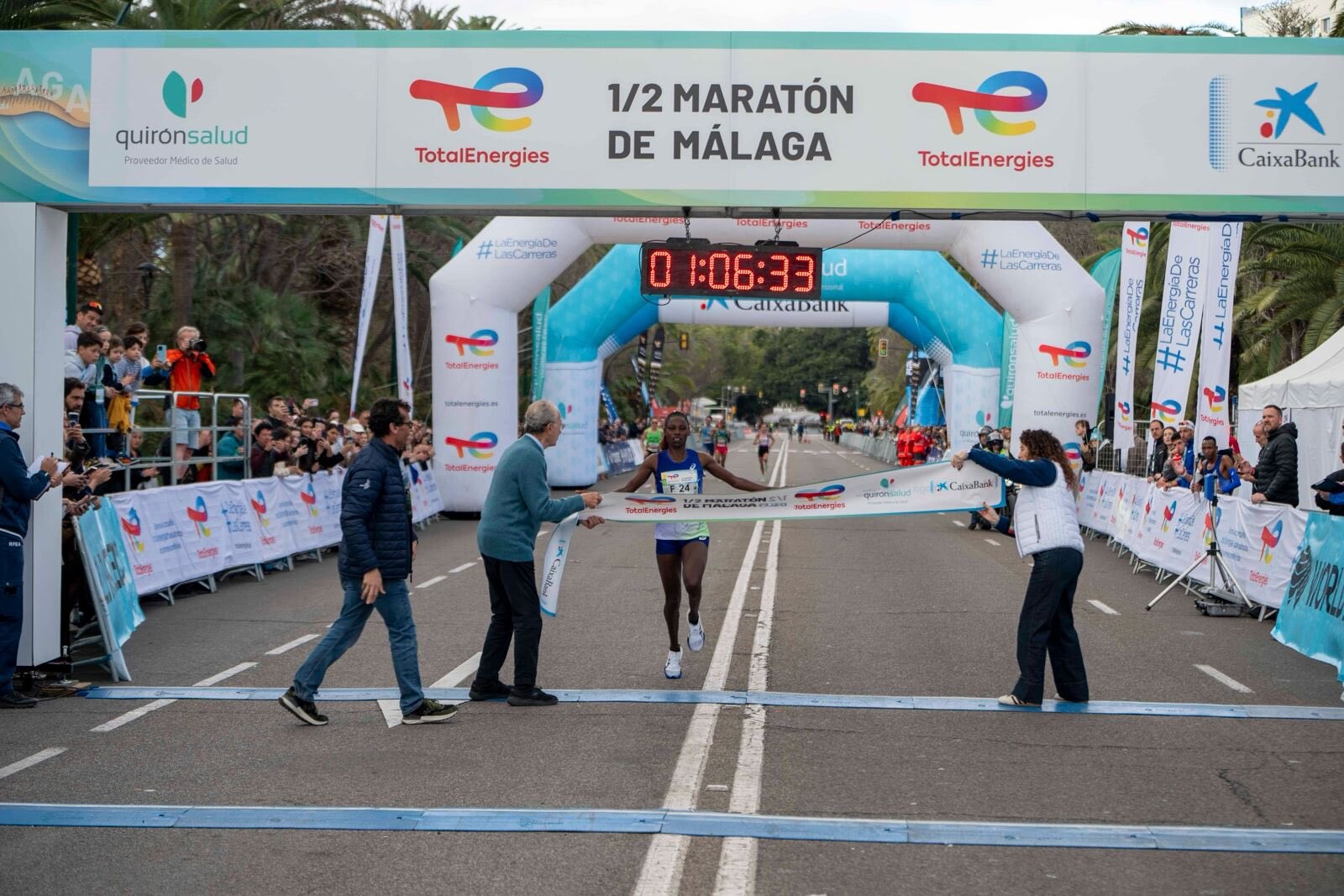
The women’s race was equally captivating, featuring a fierce contest that produced one of the most memorable performances of the event. Uganda’s Esther Chebet delivered a superb run to claim victory in 1:06:33, holding off strong international competition to take the top spot.
Just seconds behind her was Slovenia’s rising star Klara Lukan, who finished second in 1:06:43. Despite narrowly missing the win, Lukan achieved a remarkable milestone by setting a new Slovenian national record, while also recording a personal best—an achievement that marks a significant moment in her career and in Slovenian distance running.
Kenya’s Winnie Jepkosgei rounded out the women’s podium with a strong performance, finishing third in 1:08:02.
Known for its fast, flat course and ideal racing atmosphere, the Málaga Half Marathon continues to attract elite athletes eager to chase quick times. This year’s edition once again delivered high-level competition and unforgettable performances, proving why the race has earned its place among Europe’s premier road running events.
With commanding victories, a national record, and impressive depth across both fields, the 2026 TotalEnergies Media Maratón Ciudad de Málaga added another brilliant chapter to its growing legacy on the international road racing calendar.
by Erick Cheruiyot for My Best Runs.
Login to leave a comment

Malaga Half Marathon
TheTotalEnergies Málaga Half Marathonis one of Europe’s premier road racing events, held annually in the sun-drenched coastal city ofMálaga, Spain. Known for its lightning-fast course and ideal racing conditions, this half marathon attracts elite athletes and recreational runners from around the world. Set along the scenicCosta del Sol, the route is celebrated for itsultra-flat profile, featuring just a7-meter elevation...
more...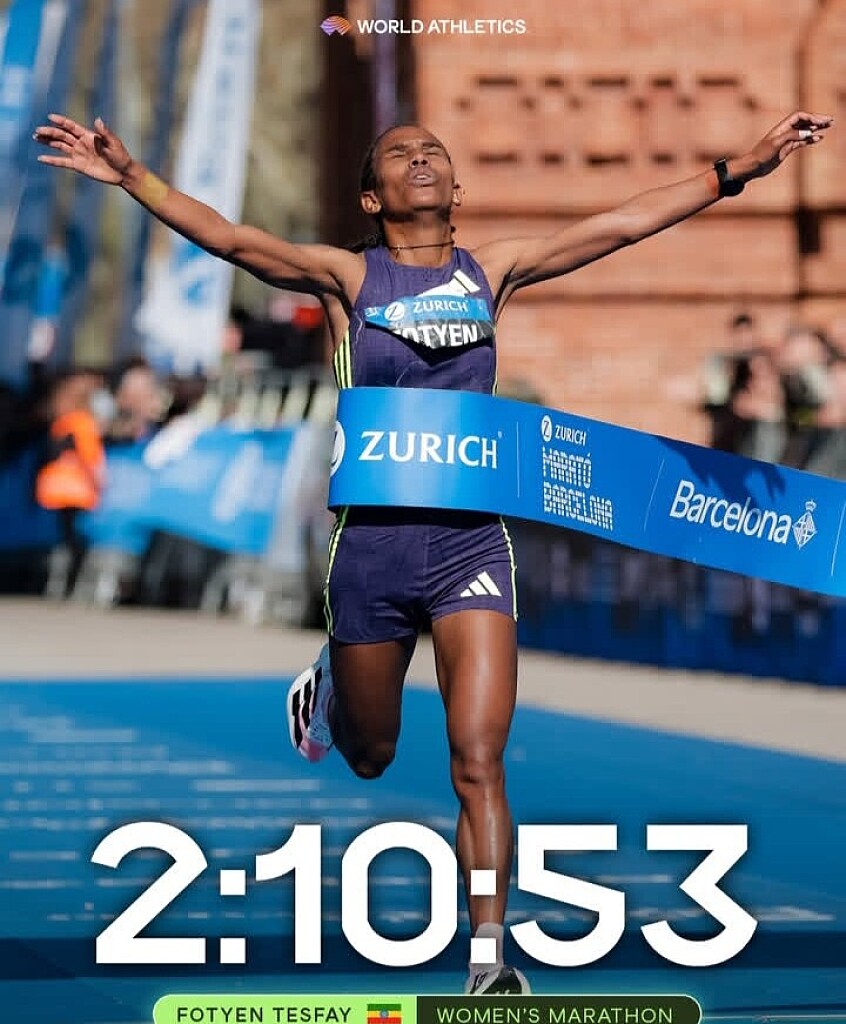
Tesfay’s Dream Debut: Ethiopian Star Blazes to Second-Fastest Marathon in History in Barcelona
The streets of Barcelona witnessed an extraordinary moment in distance running as Ethiopia’s rising star Fotyen Tesfay delivered a marathon debut for the ages. Competing at the renowned Zurich Marató Barcelona, Tesfay stormed to victory in a stunning 2:10:53, recording the second-fastest women’s marathon time ever run and announcing herself as a formidable new force over the classic 42.195-kilometre distance.
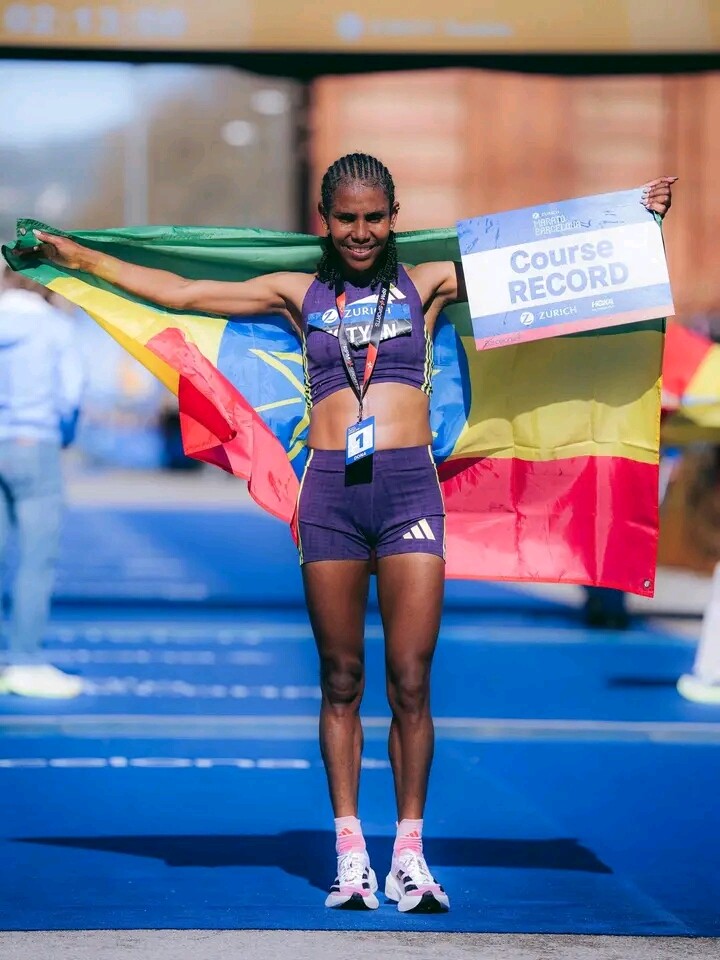
From the moment the race settled into rhythm, Tesfay ran with remarkable composure and quiet authority. The Ethiopian appeared unfazed by the magnitude of the occasion—her first attempt at the marathon distance—gliding through the early kilometres with a smooth, economical stride that hinted at something extraordinary unfolding.
As the race progressed along Barcelona’s scenic coastal avenues and historic boulevards, the pace remained relentlessly quick. Yet Tesfay looked increasingly comfortable while others struggled to maintain contact. By the latter stages, she had seized clear command of the race, transforming what began as a tactical contest into a commanding solo performance.
Crossing the finish line in 2:10:53, Tesfay not only secured victory but also etched her name into the sport’s record books. Her performance stands as the second-fastest women’s marathon ever recorded, while also delivering a national record for Ethiopia and a course record in Barcelona—an astonishing achievement for a marathon debut.
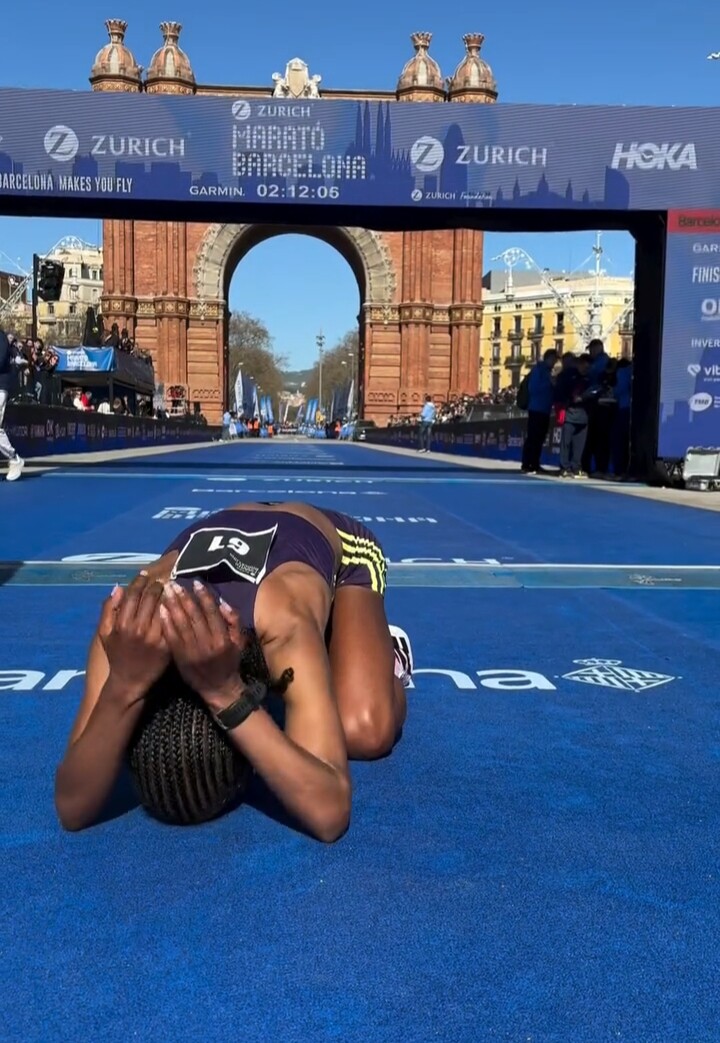
Behind her, Kenya’s Joan Jepkosgei Kiplimo produced a strong run to claim second place in 2:18:42, recording a new personal best. Ethiopia’s Zeineba Yimer Worku followed closely in third place in 2:18:49, also setting a personal best as the podium showcased the continued dominance of East African athletes on the global marathon stage.
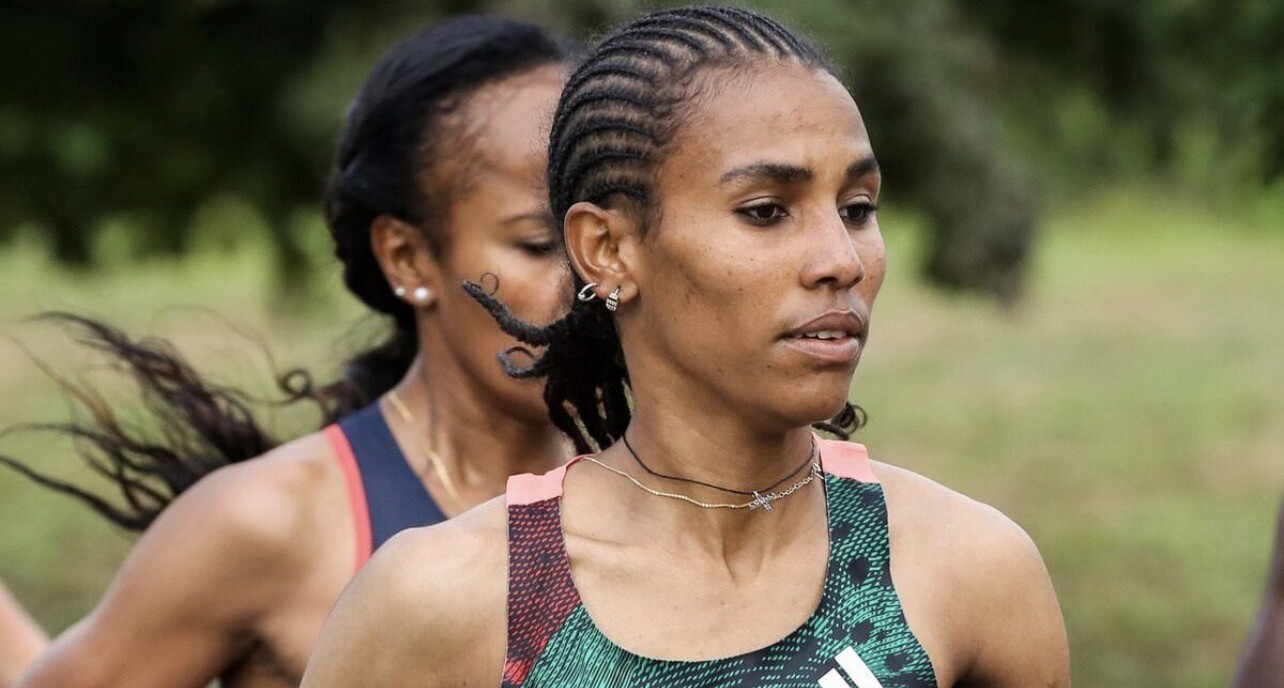
The women’s race unfolded as a thrilling celebration of speed, courage, and global talent, leaving the Catalan capital glowing with admiration for one of the most extraordinary marathon debuts the sport has ever seen.
Top 10 – Women’s Results
1. Foyten Tesfay Hailu (Ethiopia) — 2:10:53
2. Joan Jepkosgei Kiplimo (Kenya) — 2:18:42
3. Zeineba Yimer Worku (Ethiopia) — 2:18:49
4. Chaltu Chimdesa Kumsa (Ethiopia) — 2:23:32
5. Yalganesh Eskamech Gedefa (Ethiopia) — 2:24:05
6. Carolina Robles Campos (Spain) — 2:24:58
7. Lucy Nthenya Ndambuki (Kenya) — 2:28:02
8. Gladys Tejeda (Peru) — 2:29:51
9. Sofia Assefa Abebe (Ethiopia) — 2:31:29
10. Loréna Meningand (France) — 2:31:52
For the fans lining the vibrant streets of Barcelona, the race delivered a moment they will long remember. They came expecting a competitive marathon; instead, they witnessed the breathtaking arrival of a new star in the sport.
If this extraordinary debut is any indication, Fotyen Tesfay has not merely entered the marathon world—she may well be on the verge of reshaping it.
by Erick Cheruiyot for My Best Runs.
Login to leave a comment

Zurich Marato Barcelona
The race is a favorite among both professional athletes and amateur runners, offering a unique running experience in and around Zurich. The scenic course follows the shores of Lake Zurich for much of the route, making it not only a thrilling sports event but also a visually stunning one. The start and finish lines are located at the upper lake...
more...
Shanghai Marathon Moves Closer to World Marathon Major Status as Global Series Eyes Historic Expansion
The landscape of global marathon racing could soon undergo a significant transformation after the Abbott World Marathon Majors confirmed that the Shanghai Marathon has successfully passed the first stage of evaluation in its quest to join the prestigious marathon series.
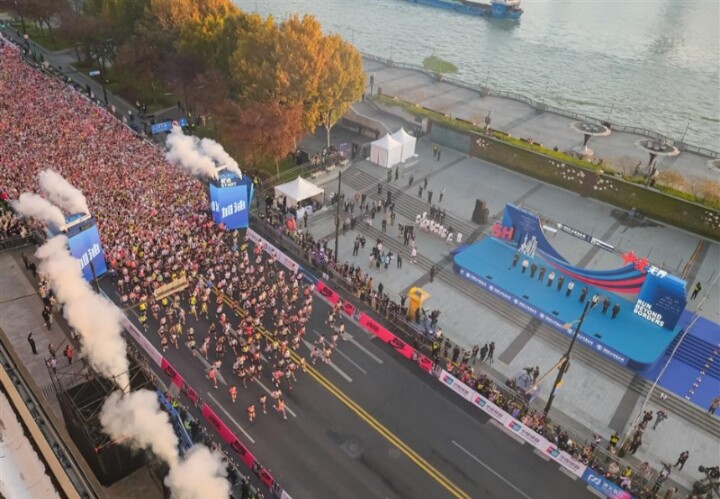
The Chinese race is now one step closer to becoming part of one of the most exclusive clubs in road running. If the event fulfills all remaining criteria during its December 2026 edition, Shanghai could officially be welcomed into the Majors calendar as early as 2027.
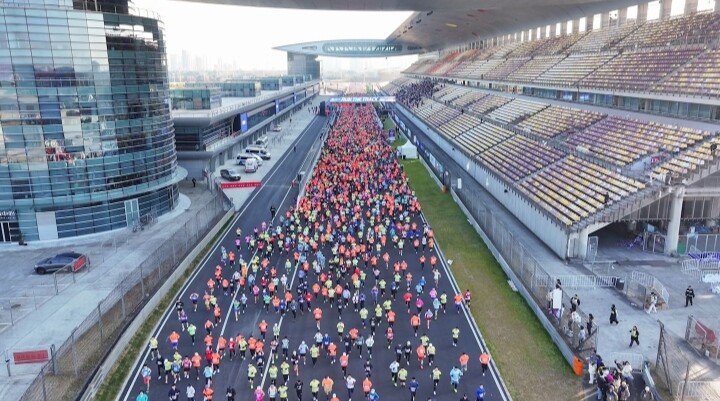
Such a development would mark a major milestone not only for the race itself but also for marathon running in Asia. In recent years, the Shanghai Marathon has steadily grown in stature, attracting elite athletes and producing performances that signal its readiness for the sport’s highest tier.
Evidence of that progress was on full display at the latest edition when former world record holder Brigid Kosgei delivered a historic run, clocking the fastest marathon ever recorded on Chinese soil. Her performance underscored the race’s rising reputation as a venue capable of hosting world-class competition and record-breaking moments.
At the same time, another race is nearing a decisive moment in its own bid for inclusion. The Cape Town Marathon is currently undergoing its final evaluation phase, with hopes of becoming the first African event to join the celebrated marathon series. Should it succeed, it would represent a landmark achievement for distance running across the continent and further highlight Africa’s profound influence on the sport.
If both Shanghai and Cape Town ultimately secure approval, the Abbott World Marathon Majors would expand from seven races to nine, reflecting the sport’s growing global reach.
At present, the Majors circuit consists of the world’s most iconic marathons: the Tokyo Marathon, Boston Marathon, London Marathon, Berlin Marathon, Chicago Marathon, the New York City Marathon, and the recently added Sydney Marathon.
The possible addition of Shanghai and Cape Town would represent more than just numerical growth. It would signal a new era for marathon running — one that reflects the sport’s expanding global footprint, bringing the Majors closer to runners and fans across Asia and Africa while strengthening the truly worldwide identity of the marathon.
by Erick Cheruiyot for My Best Runs.
Login to leave a comment

Shanghai International Marathon
Shanghai International Marathon has established itself as the marquee running event on China’s Marathon calendar. Every November, tens of thousand participants run passing the many historical places of this city such as Bund Bull, Customs House, Shanghai Museum, Shanghai Grand Theater, Shanghai Exhibition center, Jing’an Temple, Nan Pu Bridge, Lu Pu Bridge, Long Hua Temple, Shanghai Stadium. The course records...
more...
Jacob Kiplimo Rewrites History Again with Stunning Half Marathon World Record in Lisbon
The streets of Lisbon witnessed another unforgettable chapter in distance running as Uganda’s phenomenal star Jacob Kiplimo produced a breathtaking performance to set a new half marathon world record of 57:20 at the Lisbon Half Marathon in Portugal.
Running with remarkable control and relentless pace, Kiplimo turned the race into a historic moment for global road running. From the early kilometres he looked comfortable at record speed, gradually pulling away from the field and leaving little doubt that something extraordinary was unfolding on the fast Portuguese course.
As he surged down the finishing stretch, the clock confirmed what spectators had begun to realize—Kiplimo had rewritten history once again. His 57:20 not only secured victory but also smashed the official world record recognized by World Athletics, further cementing his place among the greatest half-marathon runners the sport has ever seen.
The achievement carried extra significance for the Ugandan star. Just a year earlier, he had run a stunning 56:42 in Barcelona—the fastest half marathon ever recorded—but the mark was never ratified, leaving a lingering debate in the sport. In Lisbon, however, Kiplimo removed any doubt with a definitive, record-breaking run.
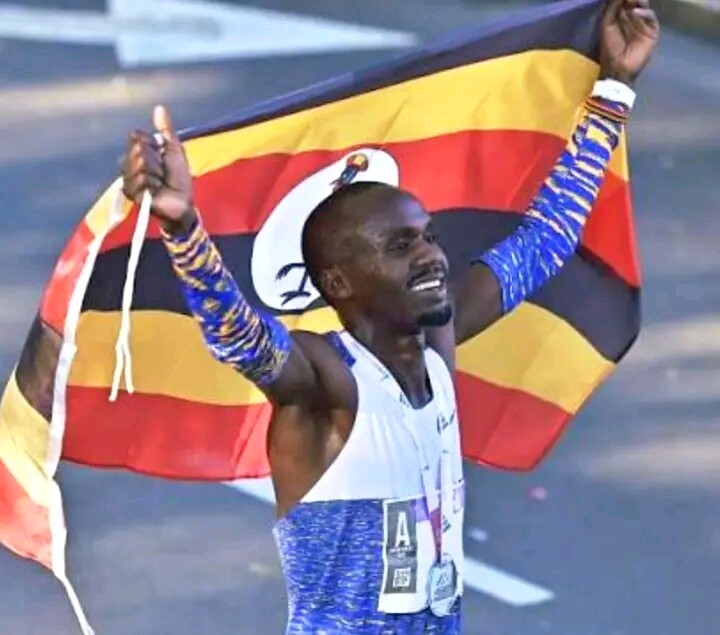
Fittingly, the Portuguese course has become part of his remarkable legacy. It was here in 2021 that he first stunned the athletics world with a 57:31 world record, and now he has returned to push the limits even further. Three extraordinary races across the years now define Kiplimo’s half-marathon dominance—each performance reinforcing his reputation as one of the sport’s most relentless competitors.
Behind the record-breaking champion, the race produced a series of impressive performances from some of the world’s best road runners, highlighting the depth and intensity of the elite field.
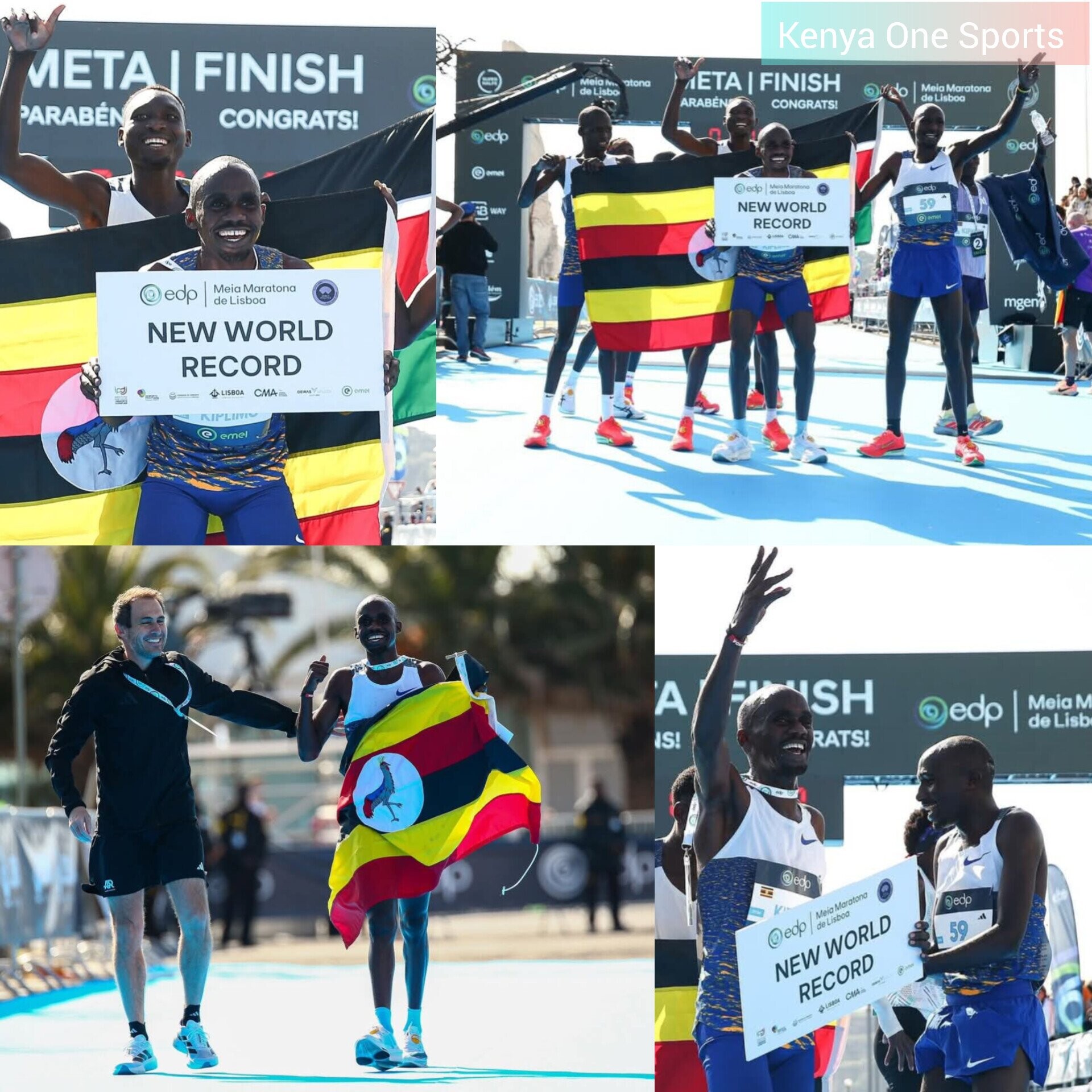
Top 10 Finishers – 2026 Lisbon Half Marathon
1. Jacob Kiplimo (Uganda) — 57:20 WR
2. Nicholas Kipkorir (Kenya) — 58:08
3. Gilbert Kipkosgei Kiprotich (Kenya) — 58:59
4. Benard Langat (Kenya) — 59:31
5. Mohamed Ismail (Djibouti) — 59:45
6. Oscar Chelimo (Uganda) — 1:00:12
7. Stanley Waithaka Mburu (Kenya) — 1:00:17
8. Esau Kipkorir Kemboi (Kenya) — 1:00:19
9. Egide Ntakarutimana (Burundi) — 1:00:34
10. Célestin Ndikumana (Burundi) — 1:00:34
As the celebrations fade and the records settle into the history books, one thing remains clear—Jacob Kiplimo is redefining what is possible in distance running. With courage, rhythm, and a relentless will to chase greatness, he continues to stretch the limits of human endurance. And with the legendary London Marathon looming on the horizon, the world now watches with anticipation, wondering just how much further this extraordinary runner can carry the sport into a new era of speed and brilliance.
by Erick Cheruiyot for My Best Runs.
Login to leave a comment

EDP HALF MARATHON OF LISBON
EDP Lisbon Half Marathonis an annual internationalhalf marathoncompetition which is contested every March inLisbon,Portugal. It carries World Athletics Gold Label Road Racestatus. The men's course record of 57:31 was set byJacob Kiplimoin 2021, which was the world record at the time. Kenyanrunners have been very successful in the competition, accounting for over half of the total winners, withTegla Loroupetaking the...
more...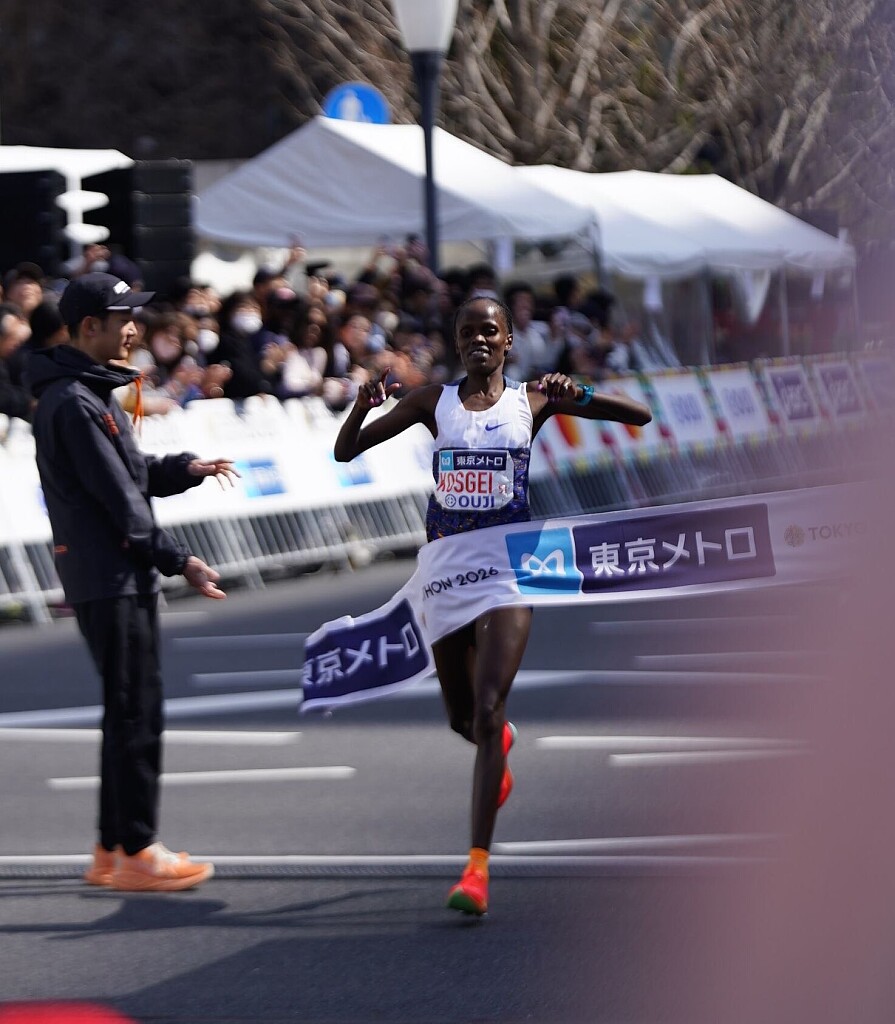
Kosgei Reigns Supreme in Tokyo as Course Record Falls in Women’s Marathon Thriller
The streets of Tokyo witnessed a masterclass in endurance and tactical brilliance as the women’s elite race at the Tokyo Marathon 2026 delivered one of the most compelling chapters in the event’s history. At the heart of it all was Kenya’s marathon queen, Brigid Kosgei, who stormed to victory in a breathtaking 2:14:29, smashing the course record and reaffirming her status among the greatest marathoners of her generation.
From the early kilometres, the pace signaled serious intent. The lead group moved with composure through Tokyo’s iconic avenues, but as the race stretched beyond the 30km mark, it became clear that Kosgei was running with something extraordinary in reserve. With controlled aggression and trademark efficiency, she gradually broke away, her stride smooth and decisive.
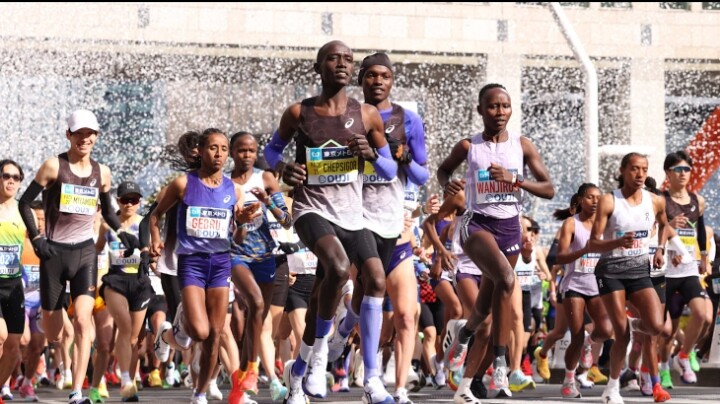
By the final stretch, the outcome was no longer in doubt. Kosgei powered through the closing kilometres to cross the line alone, arms raised in triumph, the clock confirming a new course record — a performance of authority, experience, and pure class.
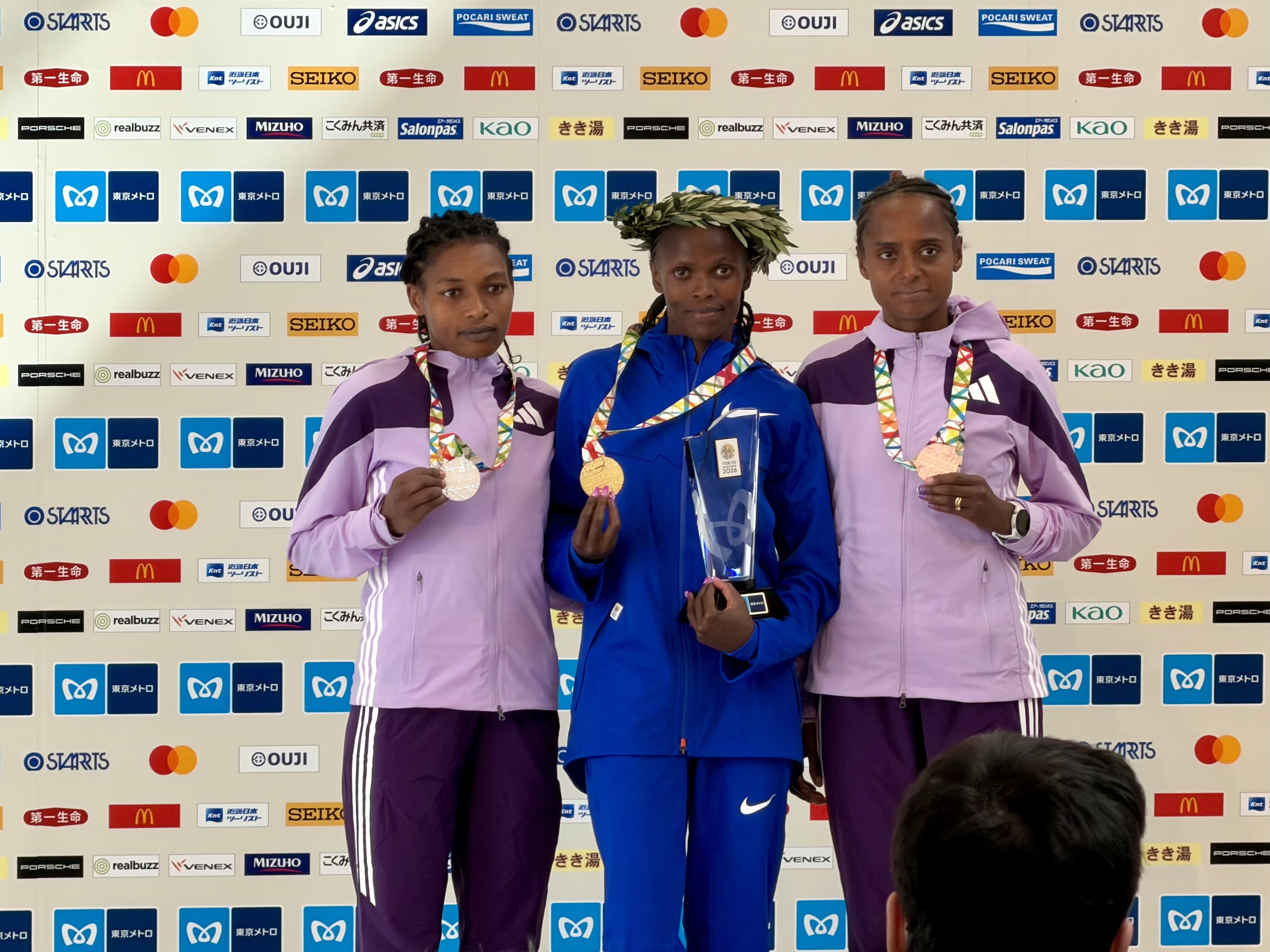
Behind her, Ethiopia’s Bertukan Welde delivered a career-defining run. Clocking 2:16:36, she secured second place with a personal best, demonstrating remarkable composure in one of the deepest fields assembled this season. Her breakthrough performance signals a powerful emergence on the global marathon stage.
The battle for the final podium spot produced the day’s most dramatic moment. Ethiopia’s Hawi Feysa and compatriot Sutume Asefa Kebede were inseparable in the closing metres. In a thrilling sprint to the line, both were credited with 2:17:39, but Feysa edged ahead by the narrowest of margins to claim third, sealing an unforgettable duel that electrified the finish area.
The 2026 edition once again highlighted Tokyo’s reputation as one of the premier stages in global road racing, blending fast conditions with elite depth and tactical racing of the highest order.
Top 10 Women – Official Results
1. Brigid Kosgei (KEN) – 2:14:29 (CR)
2. Bertukan Welde (ETH) – 2:16:36 (PB)
3. Hawi Feysa (ETH) – 2:17:39
4. Sutume Asefa Kebede (ETH) – 2:17:39
5. Megertu Alemu (ETH) – 2:18:50
6. Viola Cheptoo (KEN) – 2:19:05
7. Mestawut Fikir (ETH) – 2:20:00
8. Aberu Ayana (ETH) – 2:20:30
9. Pascalia Jepkogei (KEN) – 2:21:39
10. Ai Hosoda (JPN) – 2:23:39
Beyond the podium, the depth of the field reflected the continued rise of women’s marathon running across continents — from Africa to Asia, Europe to Oceania and the Americas. Every athlete in the top ranks contributed to a race defined by courage, precision, and competitive spirit.
Tokyo once again proved that when the world’s finest gather on its roads, history is never far away. And in 2026, it belonged to Brigid Kosgei — a champion rewriting records with every decisive stride.
by Erick Cheruiyot for My Best Runs.
Login to leave a comment

Tokyo Marathon
The Tokyo Marathon is a world-renowned annual marathon held in Tokyo, Japan. As one of the prestigious Abbott World Marathon Majors, it attracts elite and amateur runners from around the globe. The race holds World Athletics Platinum Label status, recognizing its high competitive standards, top-tier organization, and international appeal. Sponsored by Tokyo Metro, the Tokyo Marathon has grown into one...
more...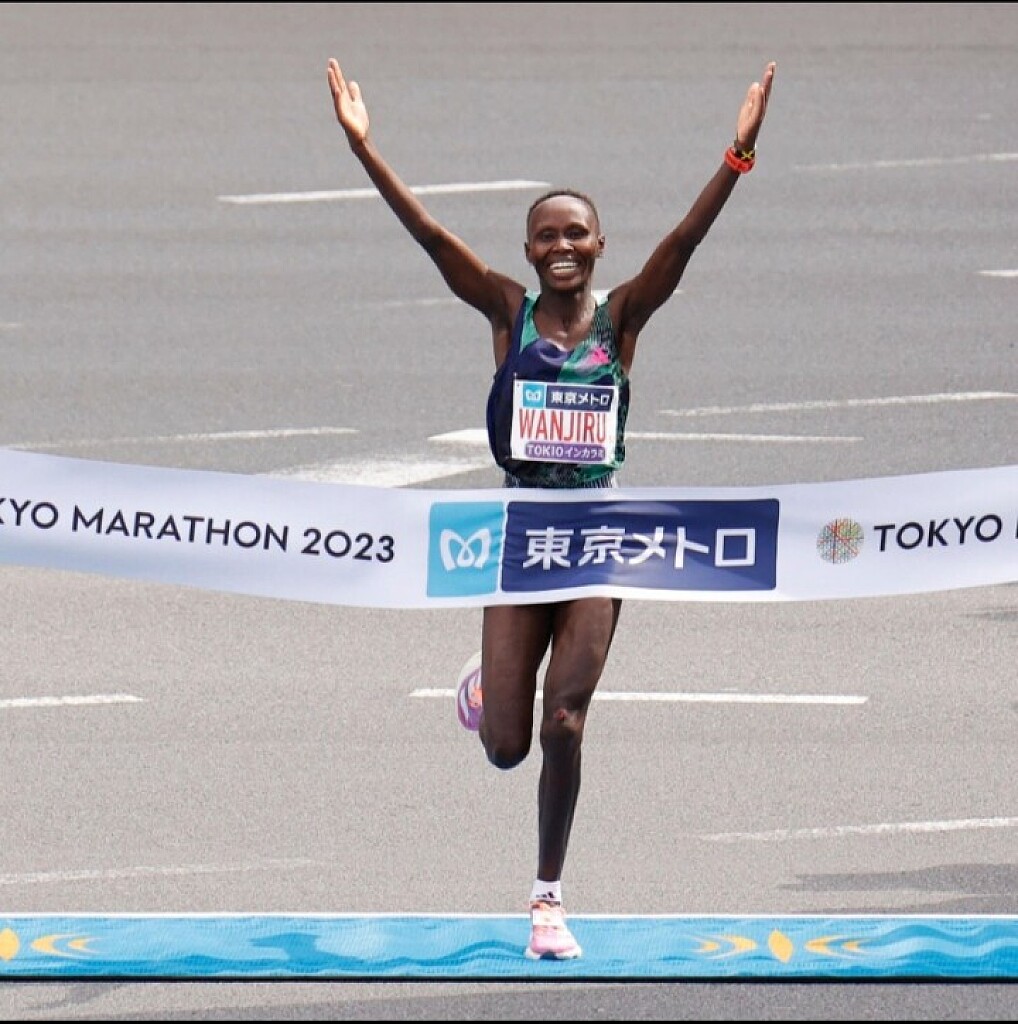
Wanjiru Returns to Tokyo: Kenya’s Marathon Queen Ready for Another Golden Chapter
She is back where memories were made and history was written.
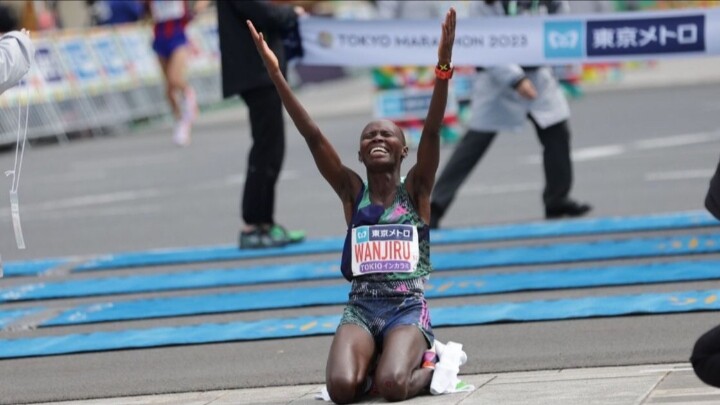
When the women’s elite field gathers in Tokyo for the Tokyo Marathon on Sunday, March 1, 2026, much of the attention will naturally settle on Rosemary Wanjiru — an athlete whose journey on these streets has already been remarkable.
Tokyo is more than just another stop on the marathon circuit for Wanjiru. In 2023, she produced a commanding performance to claim the title, controlling the race with confidence and finishing with authority. It was a breakthrough moment that elevated her standing among the world’s elite.
She returned to the same course and delivered even greater evidence of her progress, clocking a personal best of 2:16:14 — a time that underscored her ability to blend strength with precision pacing. On Tokyo’s fast layout, Wanjiru has consistently shown composure, patience in the early stages, and decisive strength when the race reaches its critical moments.
Her victory at the Berlin Marathon in 2025 added another dimension to her profile. Berlin, widely respected for its speed and depth of competition, demanded both tactical awareness and sustained aggression. Wanjiru met that challenge with maturity, reinforcing her reputation as one of the most reliable performers on the global stage.
Yet this year’s return comes within a broader competitive context. Defending champion Sutume Asefa Kebede will seek to protect her crown, while former world record holder Brigid Kosgei brings invaluable experience to the contest. The presence of such accomplished rivals ensures that Tokyo 2026 will be shaped by collective excellence rather than individual expectation.
For Wanjiru, the objective is clear but measured: execute her race plan, respond to the rhythm of the field, and compete with the calm authority that has defined her recent seasons. The elite Men's and Women’s race in Tokyo will set off at 9:10 AM local time (JST). For fans following from across the world, this corresponds to earlier or later local times.
Local Time
Tokyo, Japan (JST)
9:10 AM
Sunday, Mar 1
Nairobi, Kenya (EAT)
3:10 AM
Sunday, Mar 1
As dawn breaks over Tokyo, Wanjiru will line up among the world’s best, representing Kenya’s depth in marathon running. While she is a leading contender, the race promises to be highly competitive, with multiple athletes capable of challenging for podium positions.
Tokyo 2026 is a global stage where strategy, endurance, and resilience define the winners. Rosemary Wanjiru’s return adds star power, but the race is open — and every competitor has a chance to make history.
by Erick Cheruiyot for My Best Runs.
Login to leave a comment
Queens of the Marathon: A Loaded Women’s Field Set to Ignite Tokyo 2026
The women’s race at the 2026 Tokyo Marathon to be staged on 1st March in Tokyo, Japan is shaping up to be one of the deepest and most compelling contests in recent marathon history, blending reigning champions, global major winners, national icons, and seasoned veterans into a single high-stakes showdown. At the center of the narrative stands Ethiopia’s formidable title defender Sutume Asefa Kebede, who returns to Tokyo chasing a third consecutive victory after dominating the previous two editions and establishing herself as the course record holder.
Kebede’s authority in Tokyo has been built on tactical intelligence and relentless pace control, but her path to another triumph will be far from straightforward. Among the most dangerous challengers is compatriot Hawi Feysa, who finished third in Tokyo last year before ascending to global prominence with victory at the 2025 Chicago Marathon. Her breakthrough confirmed what many suspected — that she possesses the finishing speed and endurance to win on any major stage.
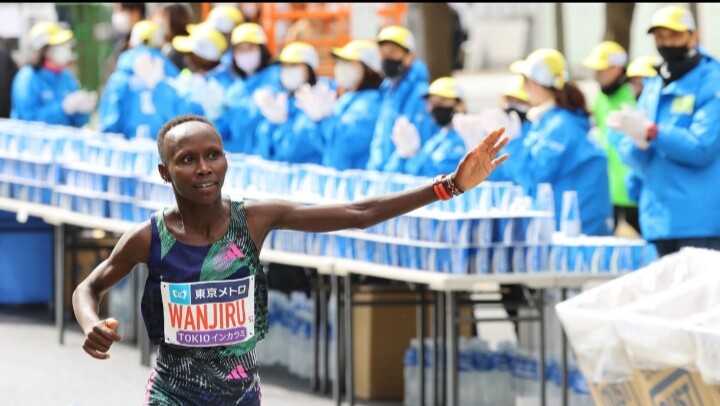
Another major threat comes from Kenya’s Rosemary Wanjiru, the 2025 Berlin Marathon champion, whose consistency at the highest level continues to make her one of the most dependable performers in elite women’s marathoning. With proven championship composure and a powerful late-race surge, Wanjiru enters Tokyo as a genuine title contender capable of disrupting Ethiopian dominance.
The depth extends even further with a wave of major champions from the past two seasons. Ethiopia’s Megertu Alemu, winner in Valencia in 2024, arrives with one of the fastest personal bests in the field, while Bertukan Welde brings confidence from her victory in Prague in 2025. Adding to the Ethiopian strength is Mestawut Fikir, who captured the Paris Marathon crown in 2024, and Waganesh Mekasha, winner of Osaka the same year — further proof of the nation’s extraordinary marathon pipeline.
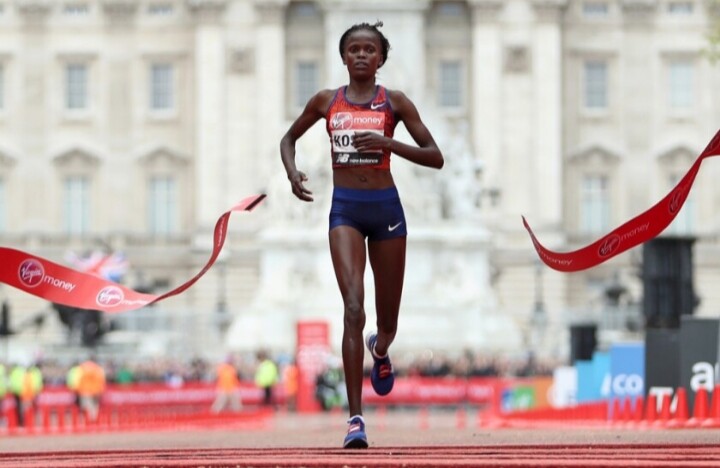
Yet perhaps the most recognizable name in the field remains Kenya’s Brigid Kosgei, the former world record holder whose 2:14:04 still ranks among the fastest performances ever recorded by a woman. Kosgei’s experience, championship pedigree, and proven ability to handle aggressive pacing make her presence alone a psychological factor for the entire field.
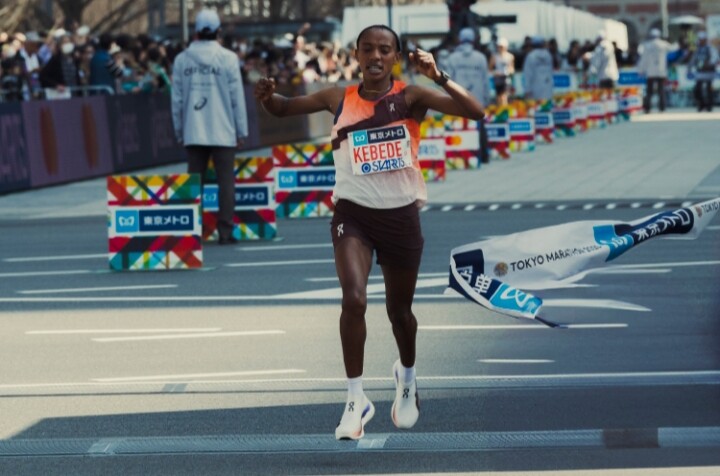
Japan’s hopes will largely rest on Ai Hosoda, currently the nation’s seventh-fastest woman in history. Hosoda produced a career-best 2:20:31 in Berlin in 2024 and recently announced that Tokyo will serve as her farewell race. The emotional weight of competing at home in her final marathon could provide an added dimension of motivation, especially after she secured qualification for the 2028 Olympic Trials with a strong performance in Sydney last year.
Beyond the headline names, the international depth remains impressive. Canada’s Malindi Elmore brings championship experience and resilience, while American veteran Sara Hall continues to defy expectations deep into her career. China fields a strong contingent led by Yuyu Xia, joined by Poland’s Aleksandra Brzezińska and Australia’s Vanessa Wilson, all capable of influencing the race dynamics if conditions or tactics shift.
What makes Tokyo particularly fascinating is the blend of proven speed and competitive hunger. Several athletes own personal bests under 2:18, creating the possibility of a historically fast race if pacing conditions align. But Tokyo is rarely predictable. Weather, pack strategy, and the psychological battle after 35 kilometers often determine the final outcome more than raw times on paper.
As the world turns its attention to Japan’s capital, one question dominates: can Kebede secure a historic three-peat, or will a new champion emerge from one of the strongest women’s marathon fields assembled this season?
by Erick Cheruiyot for My Best Runs.
Login to leave a comment
Tokyo Marathon
The Tokyo Marathon is a world-renowned annual marathon held in Tokyo, Japan. As one of the prestigious Abbott World Marathon Majors, it attracts elite and amateur runners from around the globe. The race holds World Athletics Platinum Label status, recognizing its high competitive standards, top-tier organization, and international appeal. Sponsored by Tokyo Metro, the Tokyo Marathon has grown into one...
more...
A Dream Showdown Awaits: London Marathon Unveils a Historic Women’s Elite Field
The 2026 TCS London Marathon, scheduled for Sunday, April 26, 2026, is shaping up to be one of the most electrifying races in the event’s storied history, with an elite women’s field that reads like a roll call of modern marathon greatness.
Reigning champion Tigst Assefa returns to London carrying both confidence and unfinished business. The Ethiopian star, whose 2:11:53 personal best ranks among the fastest ever recorded, will once again test her limits on the streets of the British capital. But this time, the challenge is even steeper.
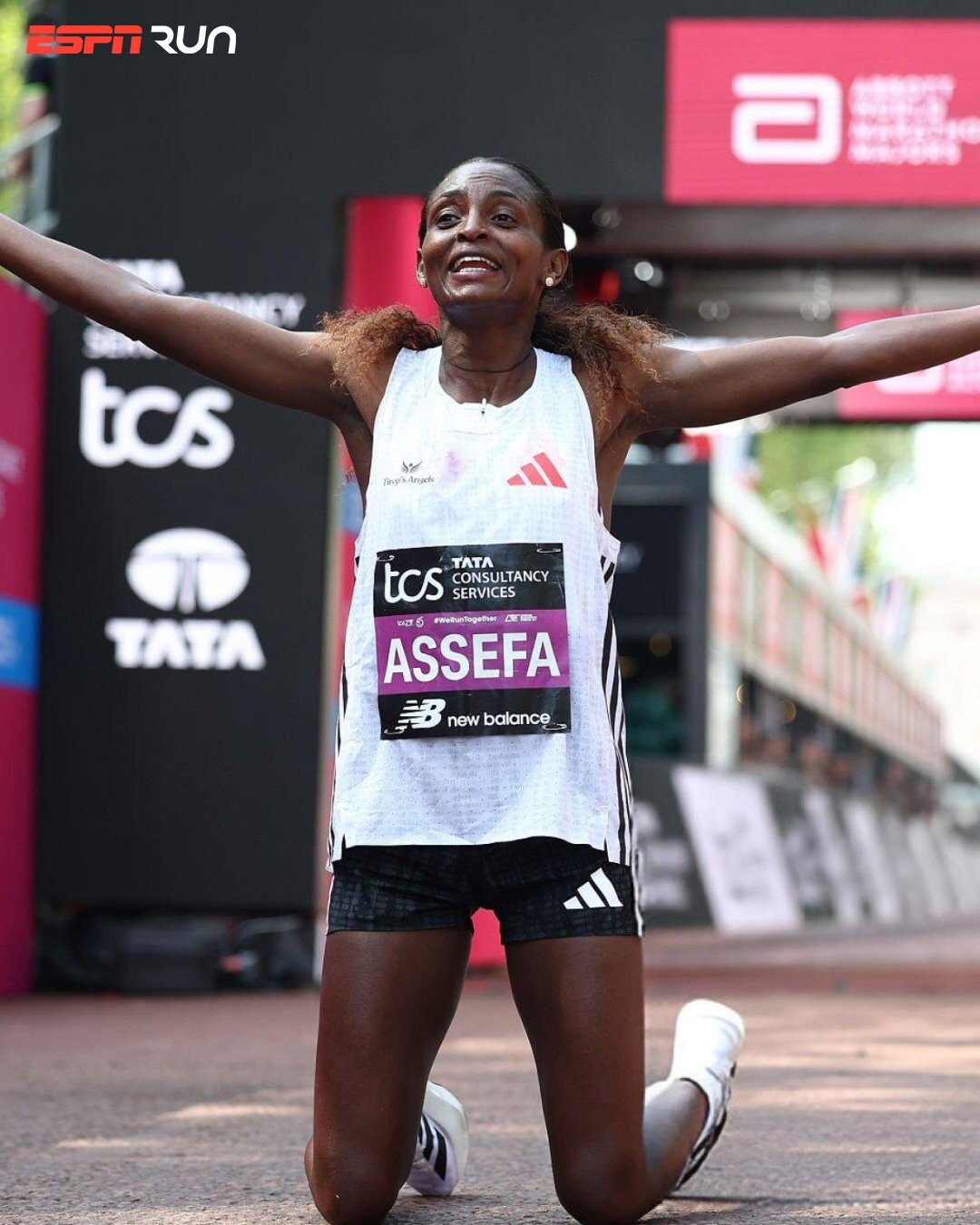
Standing in her way are the current Olympic and world marathon champions, Sifan Hassan and Peres Jepchirchir, setting the stage for a clash that fans have long dreamed of. Hassan’s fearless racing style and unmatched versatility have redefined what is possible in distance running, while Jepchirchir’s tactical brilliance and finishing power make her one of the most dangerous competitors over 42.195 kilometers.
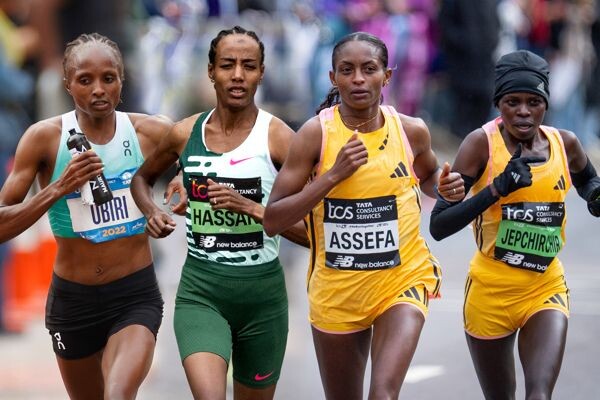
Adding another layer of intrigue is Hellen Obiri, the double New York City and Boston Marathon champion, who will be making her long-awaited London Marathon debut. Already proven on the toughest courses in the world, Obiri’s arrival in London raises expectations and deepens an already stacked field.
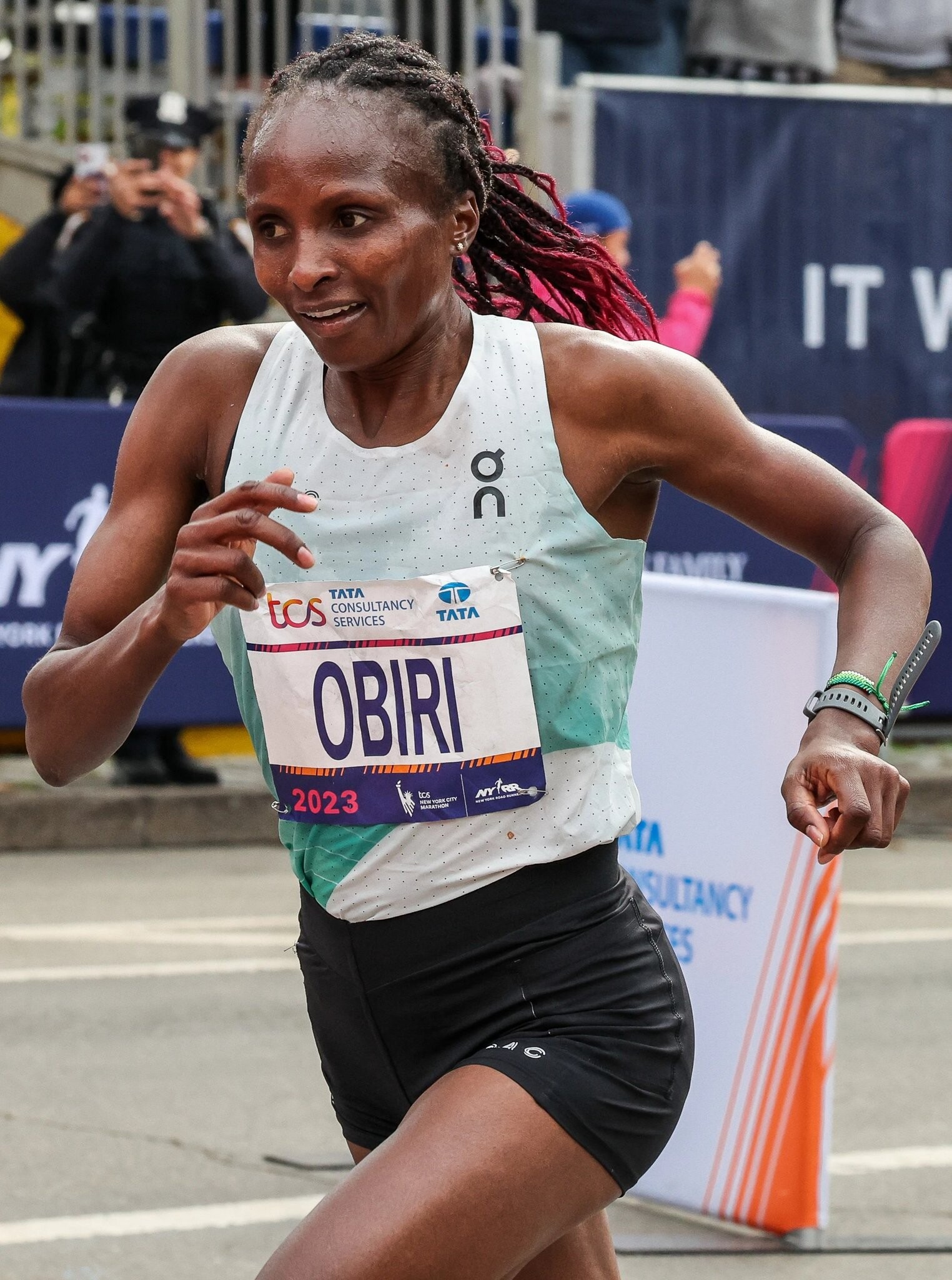
Experience and consistency also feature prominently through Megertu Alemu, a familiar force in major marathons. With four podium finishes at World Marathon Majors—two of them in London—Alemu knows exactly what it takes to perform on this stage and could once again play a decisive role.
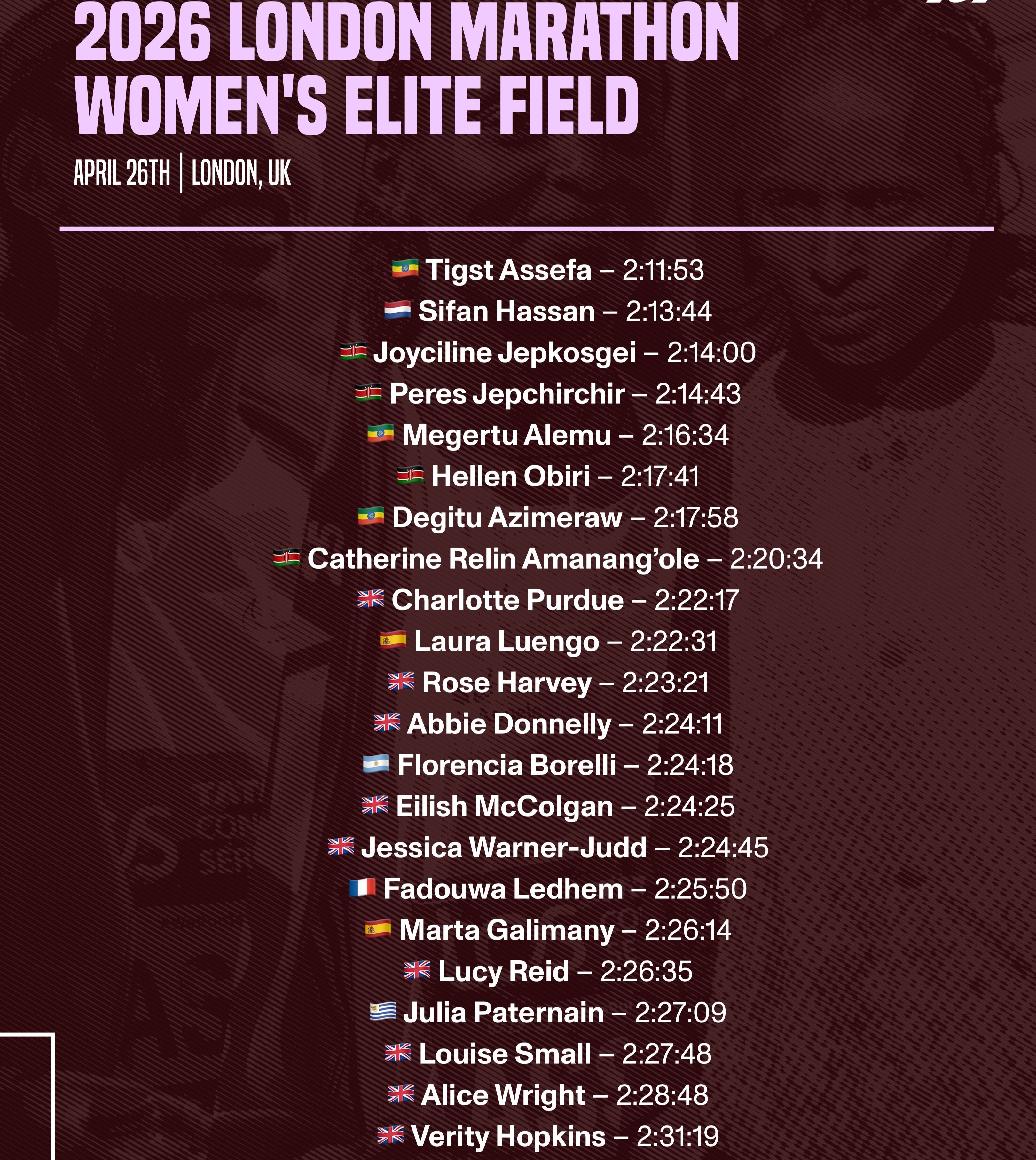
The depth does not end there. Former London winner Joyciline Jepkosgei, along with accomplished athletes such as Degitu Azimeraw, Catherine Amanang’ole, Charlotte Purdue, and Laura Luengo, ensures that no moment of the race will be predictable. From the opening kilometers to the final stretch along The Mall, pressure will be relentless.
More than just a race, the April 26, 2026 showdown promises a celebration of excellence, resilience, and fearless competition. With world-class champions, debutants hungry for glory, and proven contenders ready to strike, this year’s women’s race is not merely about winning—it is about redefining greatness on one of marathon running’s biggest stages.
The countdown to London has truly begun.
by Erick Cheruiyot for My Bestruns.
Login to leave a comment
TCS London Marathon
Since its inaugural edition on March 29, 1981, the TCS London Marathon has grown into one of the world's most prestigious road races, blending elite competition with an extraordinary charitable legacy. Founded by former Olympic champion and journalist Chris Brasher alongside Welsh athlete John Disley, the event has been staged every year and has been held in the spring annually...
more...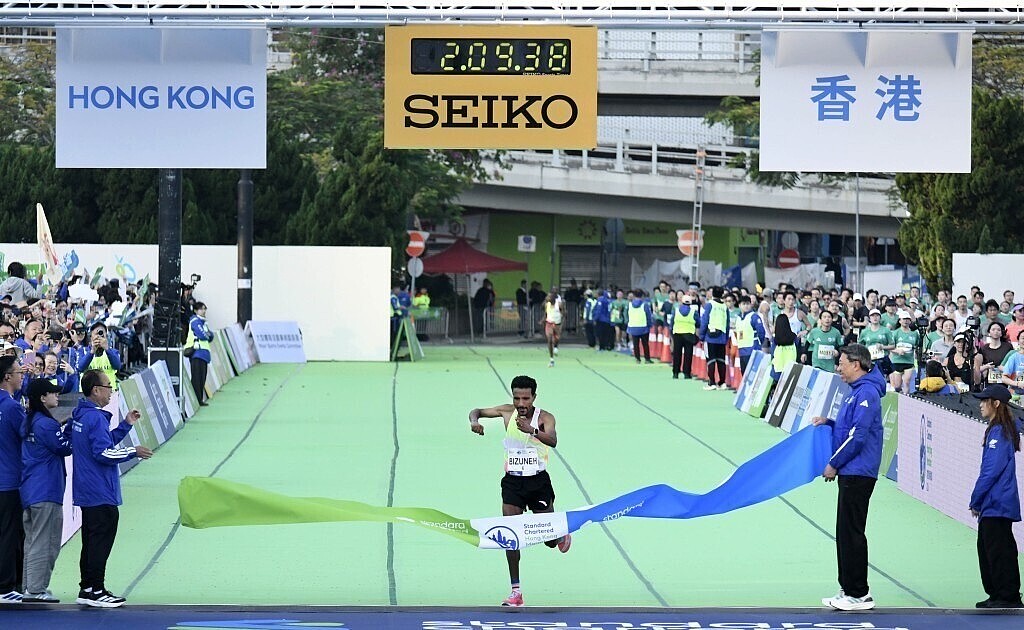
Balachew and Eshete Claim Hong Kong Marathon Titles in Thrilling 30th Edition
Ethiopia’s Bizuneh Balachew and Bahrain’s Shitaye Eshete Habte claimed top honors at the 30th Standard Chartered Hong Kong Marathon, delivering decisive performances on one of Asia’s most demanding urban courses along Victoria Harbour.
From the opening kilometers, the men’s race unfolded as a tactical chess match. A tightly packed lead group — including Kenyans Silas Too, Francis Kipkorir, and Douglass Kimeli — matched Balachew stride for stride through the first 25 kilometers. The pivotal moment came just past 30 km, when Balachew surged decisively, opening a small but crucial gap.
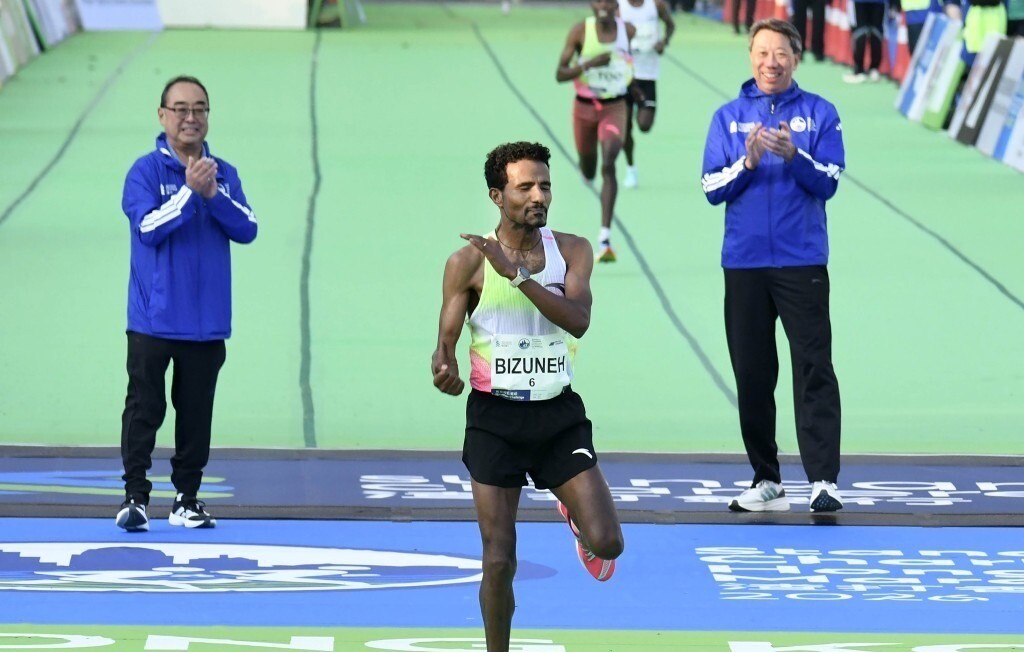
Despite an aggressive chase from the Kenyan trio, Balachew held his form and composure to cross the line in 2:09:39, finishing 17 seconds ahead of Too and 20 seconds clear of Kipkorir. The victory marked a significant international win for Balachew, who owns a personal best of 2:06 from Berlin in 2024.
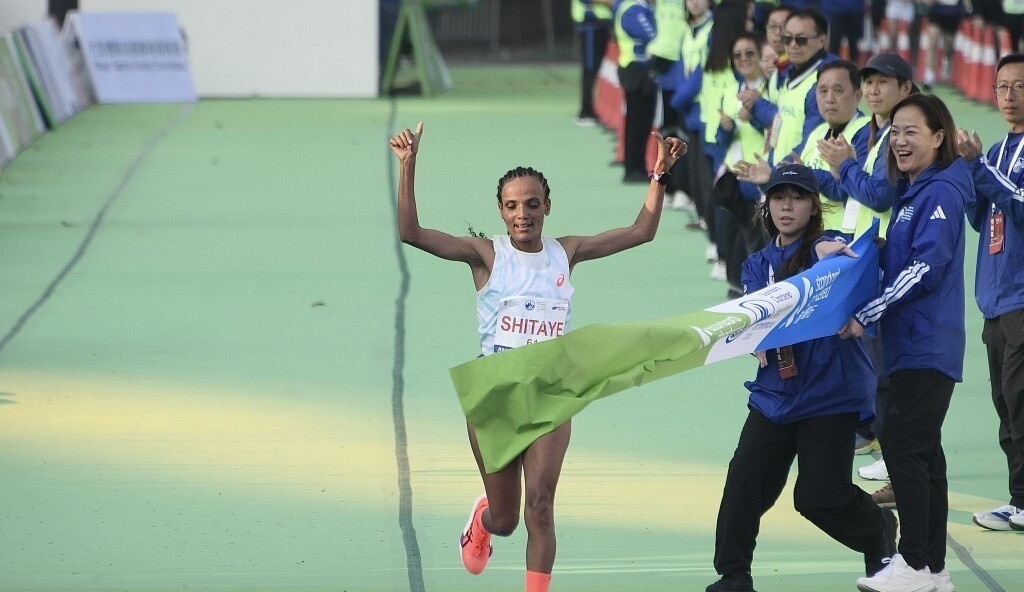
The depth of the men’s field was evident throughout the top ten, with Kimeli (2:10:17), Edwin Koech (2:10:24), and Han Ii Ryong (2:10:39) all finishing within a minute of the winner.
The women’s race proved equally compelling. Eshete Habte ran patiently through the early stages, keeping Ethiopia’s Tesfay Haftu and Kenya’s Linet Masai within reach. In the final kilometers, Eshete injected a well-timed surge, creating just enough separation to secure victory in 2:29:03 — 10 seconds ahead of Haftu and 20 seconds in front of Masai.
The women’s top ten reflected the event’s international depth, featuring athletes from Bahrain, Ethiopia, Kenya, and North Korea, underscoring the global competitiveness of the Hong Kong Marathon.
Course conditions played a defining role throughout the day. The 42.195 km route — beginning on Nathan Road, winding through tunnels, crossing the Stonecutters and Ting Kau Bridges, and finishing in Victoria Park — tested athletes with rolling terrain, tight turns, and coastal winds. While not conducive to fast personal bests, the course rewarded tactical intelligence, resilience, and patience — qualities exemplified by both champions.
Local runners also delivered standout performances, with Hong Kong residents Wong Yin-chun and Law Ying-ting impressing in the marathon divisions. Across the half marathon and 10 km races, tens of thousands of recreational runners filled the streets, creating a vibrant festival atmosphere.
The 30th edition of the Standard Chartered Hong Kong Marathon once again confirmed its reputation as a World Athletics Gold Label event — seamlessly blending elite competition, international representation, and mass participation into one of Asia’s most celebrated road races.
Elite Top 10 – Men
1. Bizuneh Balachew – 2:09:39
2. Silas Too – 2:09:56
3. Francis Kipkorir – 2:09:59
4. Douglass Kimeli – 2:10:17
5. Edwin Koech – 2:10:24
6. Han Ii Ryong – 2:10:39
7. Kiprono Kipkemoi – 2:10:53
8. Irena Gemechu – 2:10:54
9. Gebre Ayenew – 2:11:07
10. Anderson Seroi – 2:11:46
Elite Top 10 – Women
1. Shitaye Eshete Habte – 2:29:03
2. Tesfay Haftu – 2:29:13
3. Linet Masai – 2:29:23
4. Adilo Kesir – 2:30:00
5. Caroline Kilel – 2:30:44
6. Geremew Workenesh – 2:31:08
7. Emily Chebet – 2:32:29
8. Jon Su Gyong – 2:32:30
9. Pak Sol Gyong – 2:35:33
10. Vivian Kosgei – 2:35:37
by Robert Kibet for My Best Runs
Login to leave a comment

HONG KONG MARATHON
The Hong Kong Marathon, sponsored by Standard Chartered Bank, is an annual marathon race held in January or February in Hong Kong. In addition to the full marathon, a 10 km run and a half marathon are also held. Around 70,000 runners take part each year across all events. High levels of humidity and a difficult course make finishing times...
more...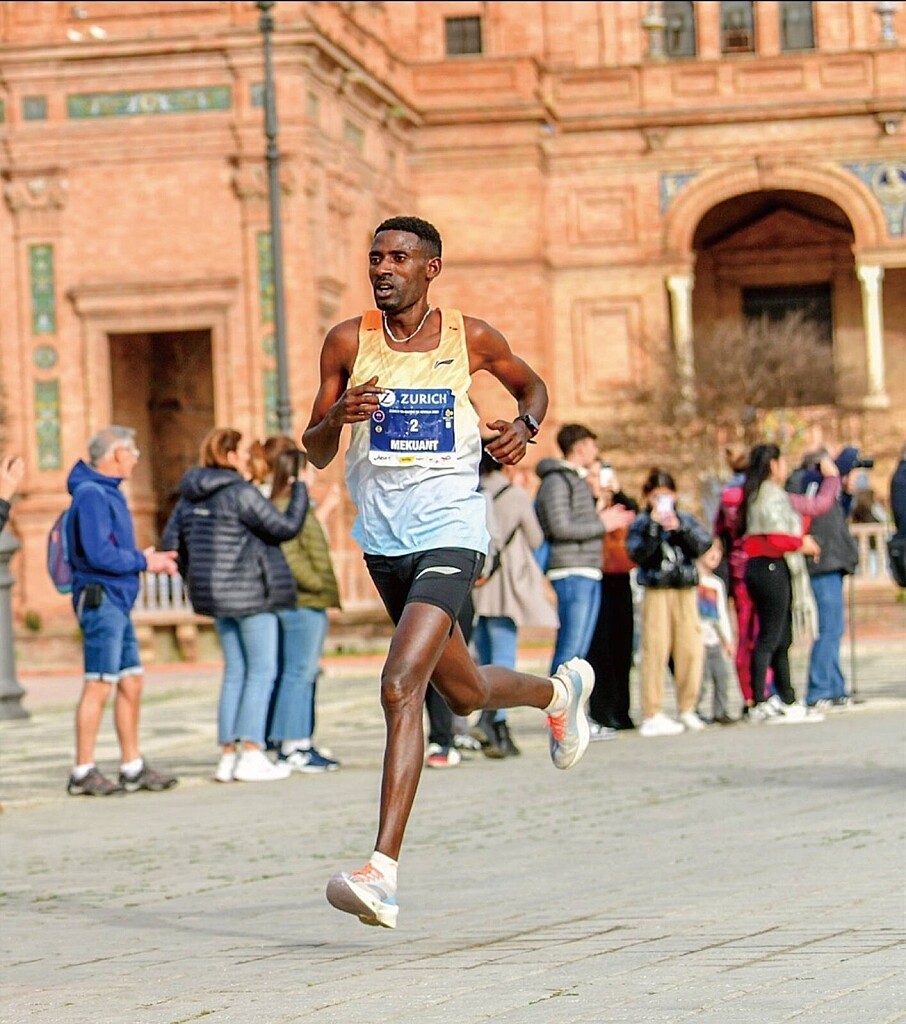
A Tactical Marathon Showdown: Elite Entrants Eye Hong Kong Glory
The Standard Chartered Hong Kong Marathon returns on Sunday, January 18, 2026, shaping up as one of the most intriguing early-season tests on the global marathon calendar. Established in 1997 and now a World Athletics Gold Label event, the race has built its reputation not on record-chasing, but on tactical nuance—where patience, positioning, and timing often trump raw speed.
That dynamic makes this year’s edition especially compelling, as a deep and accomplished elite field converges on a course known for demanding smart racing.
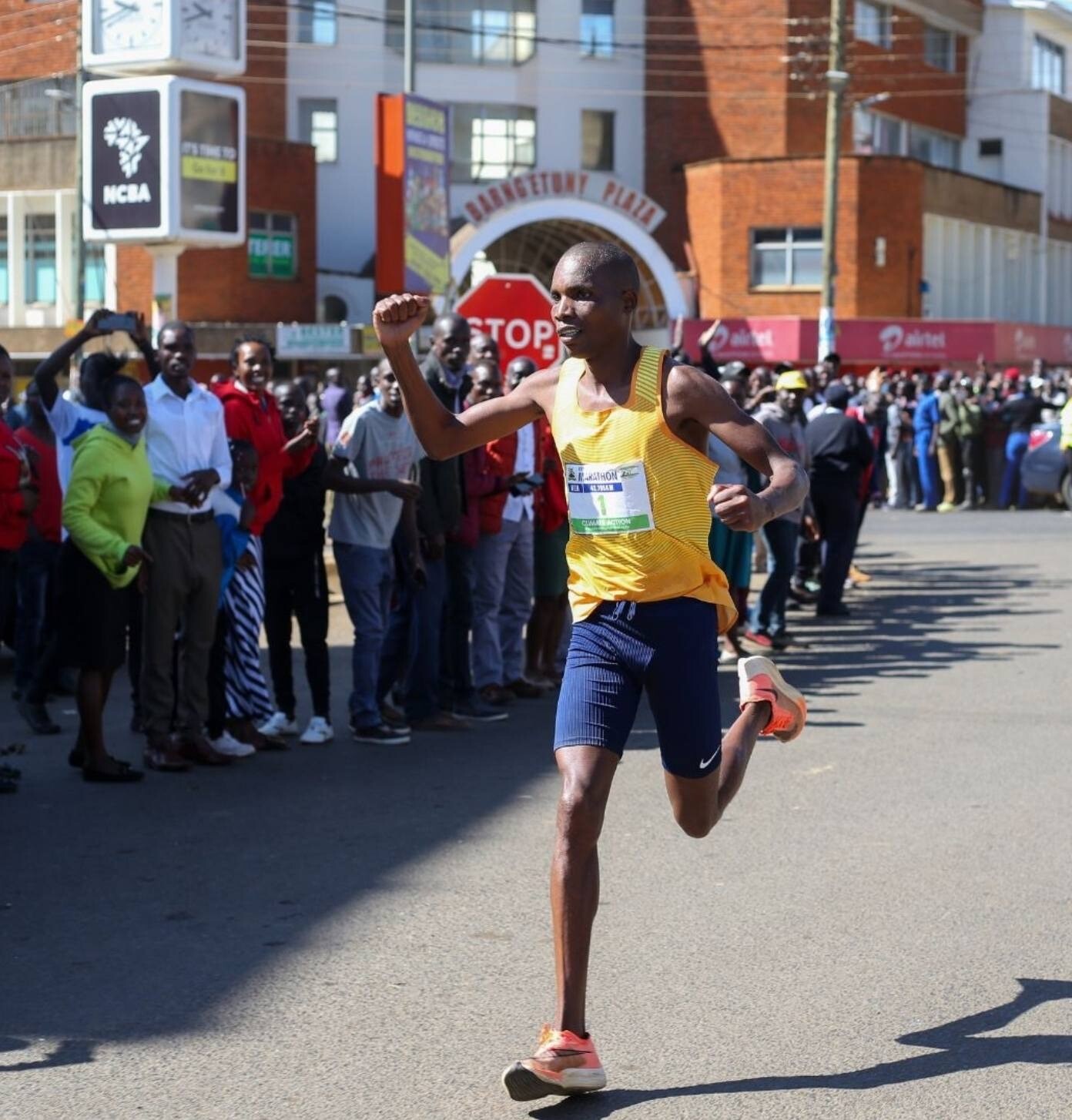
Leading the men’s start list is Ethiopia’s Gebre Mekuant Ayenew, whose personal best of 2:04:46 positions him as the clear favorite on paper. By global standards, Ayenew ranks among the sport’s upper tier—an athlete capable of world-class times if conditions allow.
But Hong Kong rarely rewards straight-line speed alone. The urban course, winding from Nathan Road to Victoria Park, features sharp turns, rolling sections, bridges, and the ever-present factor of subtropical winter humidity. These elements routinely transform the race into a chess match, where tactical awareness becomes as decisive as fitness.
Kenya’s contingent arrives with depth and experience, forming a formidable counterbalance. Victor Kipchirchir (2:05:43) stands out as the most immediate threat. Known for measured pacing and a strong finish, Kipchirchir is well-suited to a race that rewards restraint before aggression.
Backing him are Silas Kiprono Too (2:06:32), Kipkemoi Kiprono (2:06:45), Reuben Kiprop Kerio(2:07:00), and Simon Kipkosgei (2:07:07). Collectively, they offer tactical versatility and the ability to apply pressure during the critical middle stages—often where Hong Kong races are won or lost.
Ethiopia counters with its own depth. Abdi Fufa Nigassa (2:05:57), Gebru Nguse Redahgne(2:05:58), Yitayal Atnafu Zerihun (2:06:21), and Melaku Belachew Bizuneh (2:06:30) complete a formidable lineup. While their personal bests suggest the potential for fast running, Hong Kong history suggests that tactical surges and energy management often dictate the podium.
International intrigue comes courtesy of Yuki Kawauchi (JPN, 2:07:27), one of the sport’s most unpredictable racers. Renowned for his aggressive, fearless approach, Kawauchi has a habit of disrupting conventional pacing and forcing rivals into uncomfortable decisions. He is joined by Ghazouany Mohamed (MAR, 2:09:01) and Han Il Ryong (PRK, 2:09:42), underscoring the truly global character of the field.
Recent history provides useful perspective. In 2025, winning times hovered around 2:11–2:12, with Kenyan runners dominating the podium. The 2024 edition was similarly measured, reinforcing the course’s tactical reputation. Against that backdrop, the 2026 start list represents a notable shift: several contenders arrive with sub-2:06 credentials, raising the possibility of a quicker race—if the lead pack commits to pushing the tempo.
Still, the course demands respect. Early aggression has often been punished, while disciplined positioning and energy conservation through the mid-race sections have proven decisive. Misjudgment can lead to dramatic fade-outs over the final 10 kilometers; patience, on the other hand, often opens the door to late-race surges and podium-deciding moves.
That tension sets up a fascinating strategic question: will Ethiopia attempt to control the race through collective pacing, or will Kenya counter with tactical pressure and well-timed attacks? And could Kawauchi’s trademark aggression fracture the rhythm entirely?
With personal bests tightly clustered and tactical variables at play, Hong Kong once again promises a marathon where intelligence and restraint may outweigh even the fastest résumés.
As the 2026 marathon season gets underway, all eyes turn to January 18 when Hong Kong’s streets will host a contest shaped by history, strategy, and split-second decisions—another reminder that here, the smartest runner often wins.
by Robert Kibet for My Best Runs
Login to leave a comment
HONG KONG MARATHON
The Hong Kong Marathon, sponsored by Standard Chartered Bank, is an annual marathon race held in January or February in Hong Kong. In addition to the full marathon, a 10 km run and a half marathon are also held. Around 70,000 runners take part each year across all events. High levels of humidity and a difficult course make finishing times...
more...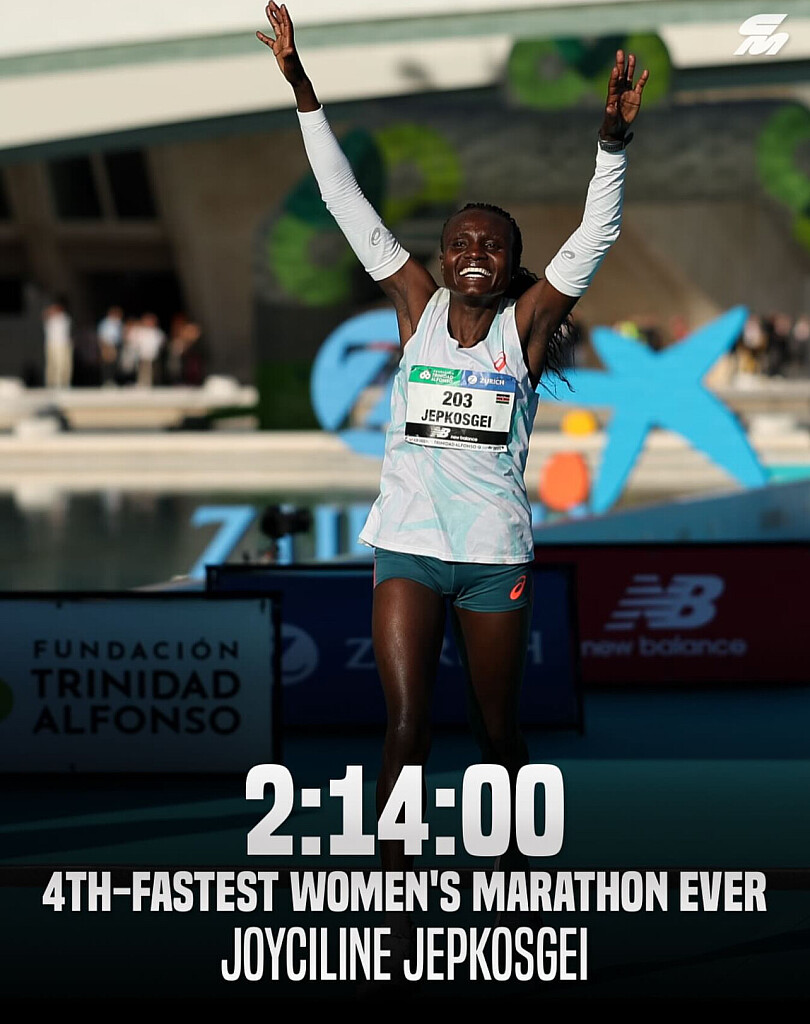
Records Fall as Korir and Jepkosgei Triumph at the 2025 Valencia Marathon
VALENCIA, Spain — December 7, 2025
The 2025 edition of the Valencia Marathon once again delivered world-class performances, national records and an elite-deep field over a fast, flat course in near-perfect early-December conditions.
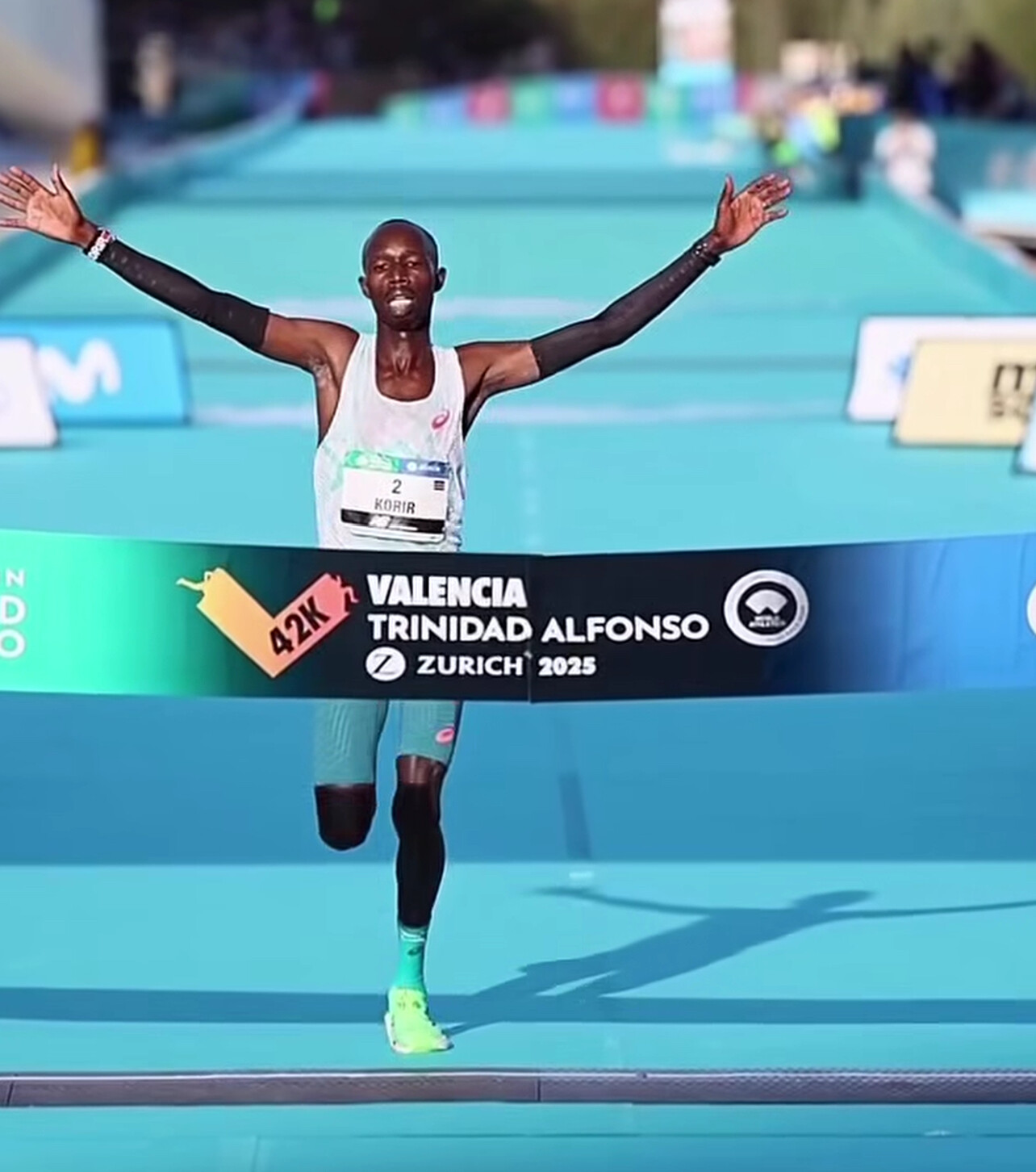
Conditions & Course — Perfect for Fast Times
The marathon started at 8:15 a.m. local time, on a flat, sea-level course that winds through wide avenues, coastal stretches, and the scenic historic center of Valencia.
Race organizers and runners praised the combination of smooth pavement, well-organized hydration/aid stations roughly every 5 km, and benign weather — all of which contributed to ideal conditions for record-chasing efforts.
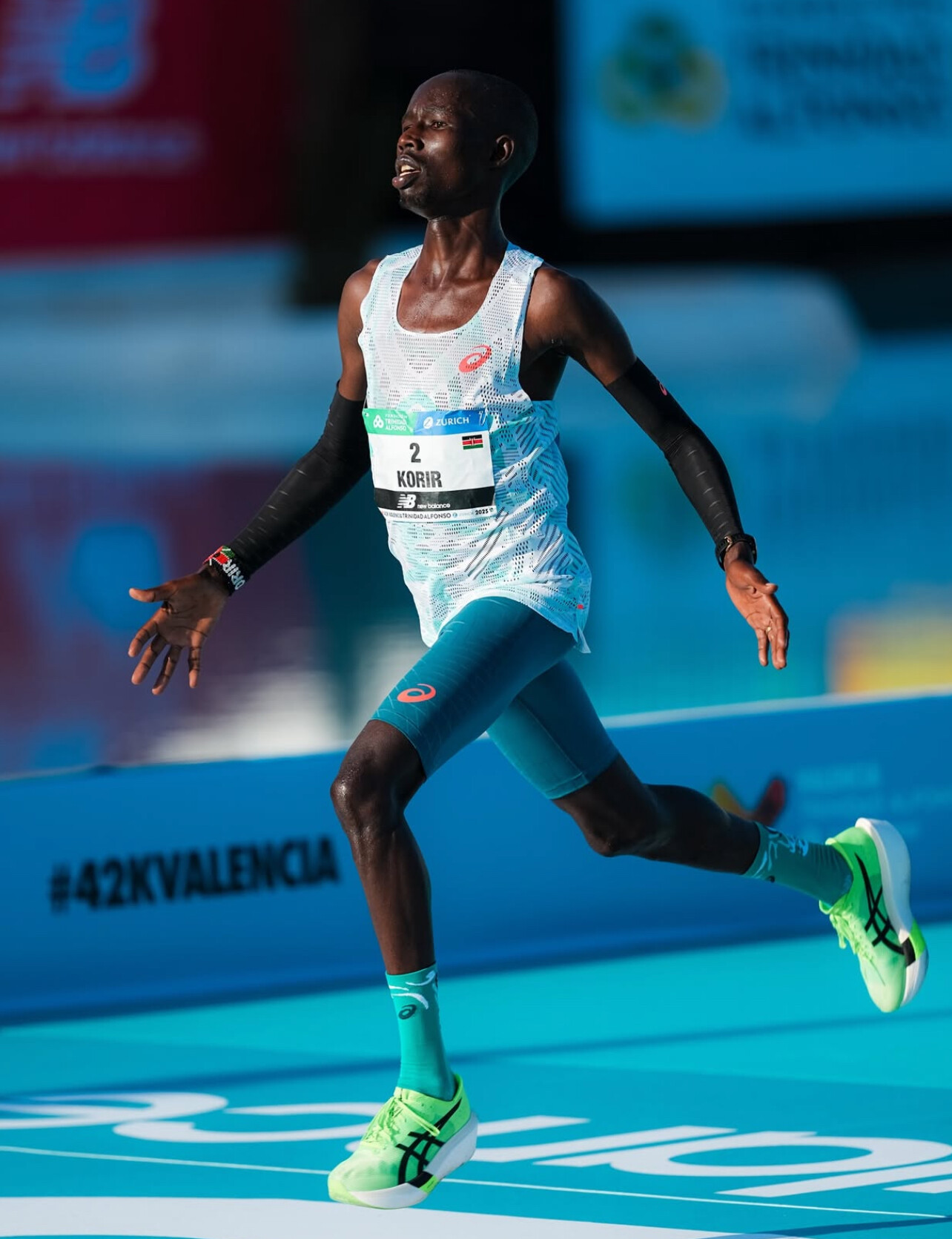
Standout Performances & National Records
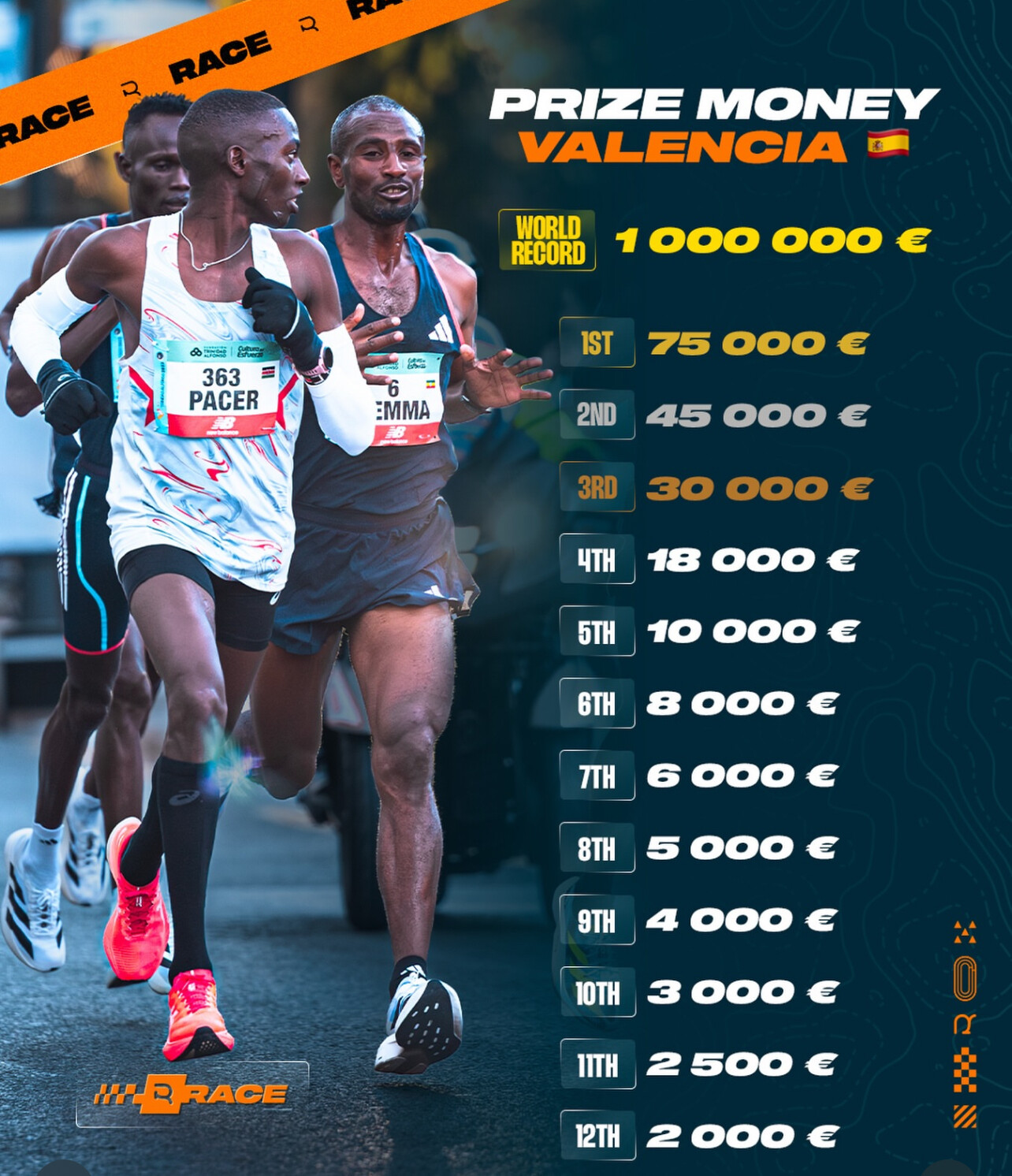
• Men’s Winner — John Korir (KEN) crossed the line in 2:02:24, setting a personal best and claiming the men’s title in dominant fashion.
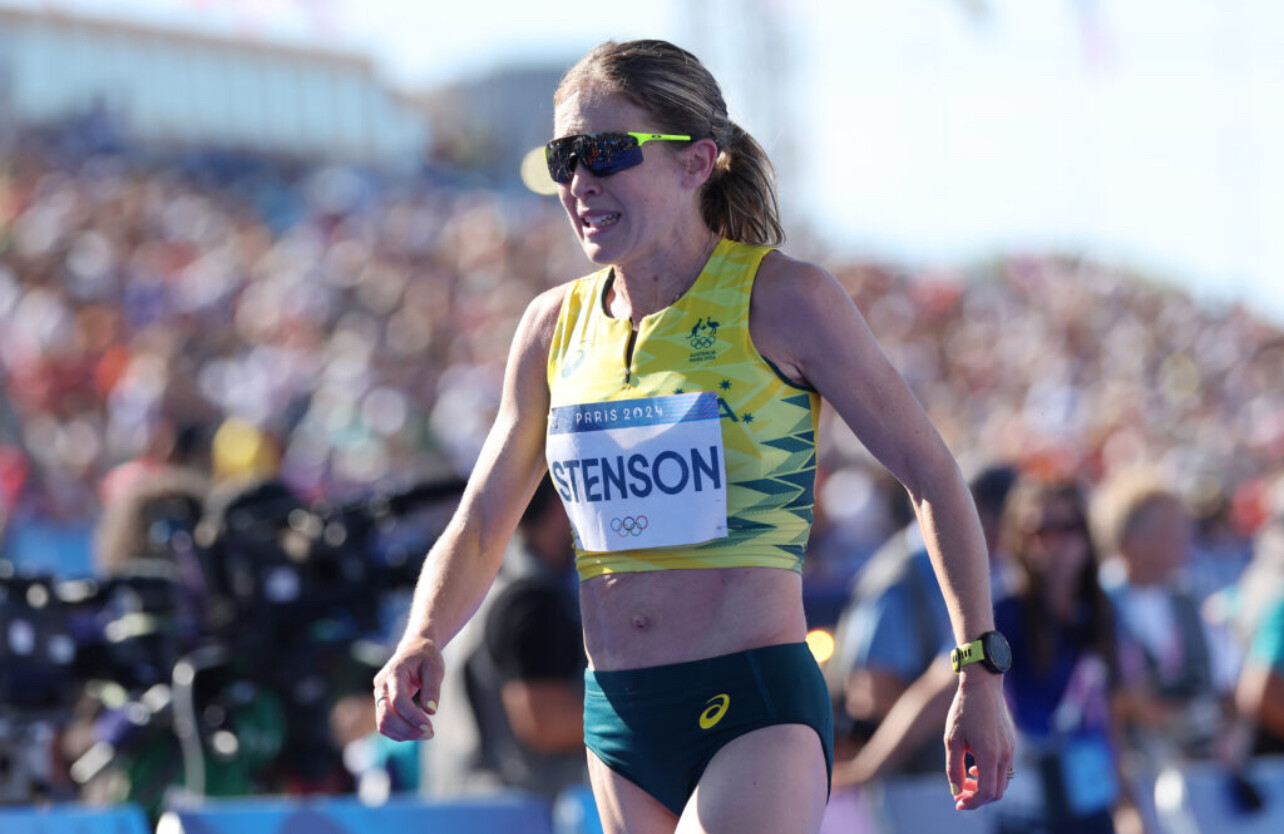
• Amanal Petros (GER) took second with 2:04:03, smashing the German national record and re-establishing himself among Europe’s elite marathoners.
• Suguru Osako (JPN) ran 2:04:55 to finish fourth overall — a new Japanese national record and a major personal best.
• On the women’s side, Joyciline Jepkosgei (KEN) won with 2:14:00, the fastest women’s marathon time in the world this year — and now the fourth-fastest women’s marathon performance in history.
• Peres Jepchirchir (KEN) finished second in 2:14:43, giving Kenya a dominant 1-2 sweep in the women’s race.
• Jessica Stenson (AUS) clocked 2:21:24, breaking the Australian national marathon record — a momentous achievement that makes her the fastest Australian woman ever over 42.195 km.
Top Finishers — Elite Spotlight
Men
1. John Korir (KEN) — 2:02:24
2. Amanal Petros (GER) — 2:04:03 (German record)
3. Awet Kibrab (NOR) — 2:04:24
4. Suguru Osako (JPN) — 2:04:55 (Japanese record)
5. Gashau Ayale (ISR) — 2:05:29
6. Justus Kangogo (KEN) — 2:06:10
7. Alex Yee (GBR) — 2:06:38
8. Félix Bour (FRA) — 2:06:41
9. Filmon Tefsu (NED) — 2:06:42
10. Gemechu Dida (ETH) — 2:06:45
Women
1. Joyciline Jepkosgei (KEN) — 2:14:00
2. Peres Jepchirchir (KEN) — 2:14:43
3. Chloe Herbiet (BEL) — 2:20:38
4. Alisa Vainio (FIN) — 2:20:48
5. Jessica Stenson (AUS) — 2:21:24 (Australian record)
Mass Race & Depth Behind Elites
Beyond the elite competition, the 2025 Valencia Marathon also featured a massive recreational and amateur component — true to its reputation as one of the most accessible and well-attended marathons globally. The race drew tens of thousands of runners, from competitive amateurs seeking sub-3:00 times to first-time marathoners chasing a finish line under the Mediterranean sun. The broad, flat course, combined with frequent refreshment and aid stations, plenty of crowd support, and smooth logistics helped countless runners achieve personal bests, secure Boston or other Major qualifiers, or simply check off a bucket-list marathon.
This blend of elite performance and mass participation underscores why Valencia remains a favorite among serious runners, recreational marathoners, and anyone chasing a fast, well-supported marathon experience.
The 2025 Valencia Marathon Will Be Remembered
• A world-leading women’s time (2:14:00) that now sits among the fastest five in history.
• Multiple national records — for Germany, Japan, and Australia — in a single edition.
• A men’s field with seven finishers under 2:05, showing the depth and quality of competition.
• A fast, flat, sea-level course and ideal weather that once again proved why Valencia is a “time-trial” marathon.
Valencia 2025 was not just another marathon — it was a landmark event. For runners, record-chasers, and fans, it set a high bar for what a winter marathon can deliver: speed, spectacle, and unforgettable achievements.
by Boris Baron
Login to leave a comment

VALENCIA TRINIDAD ALFONSO
The Trinidad Alfonso EDP Valencia Marathon is held annually in the historic city of Valencia which, with its entirely flat circuit and perfect November temperature, averaging between 12-17 degrees, represents the ideal setting for hosting such a long-distance sporting challenge. This, coupled with the most incomparable of settings, makes the Valencia Marathon, Valencia, one of the most important events in...
more...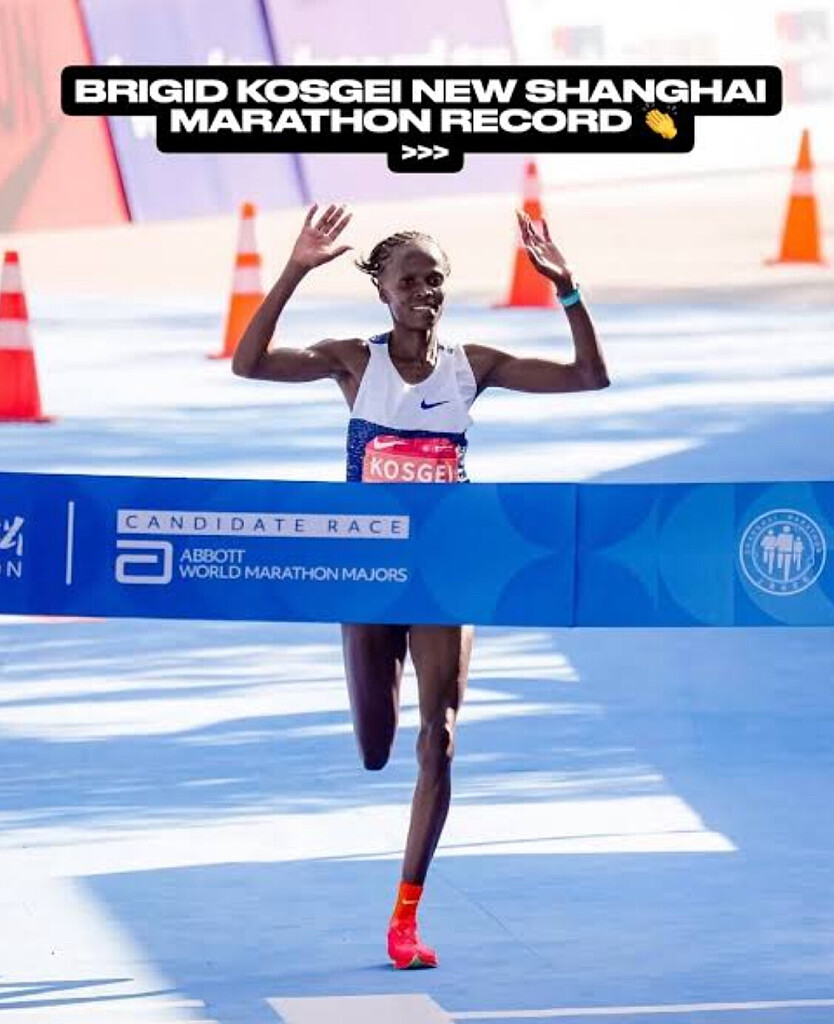
Kosgei Shatters Course Record as Mengesha Leads Ethiopian Sweep at the 2025 Shanghai Marathon
The 2025 Shanghai Marathon delivered the kind of fireworks organizers were hoping for on Sunday, November 30—fast times, dominant front-running, and a powerful statement that Shanghai is ready to join the World Marathon Majors.
More than 23,000 runners started at the Bund at 7 a.m., racing through one of the world’s most iconic skylines before finishing at Shanghai Stadium. Both the men’s and women’s races produced standout performances.
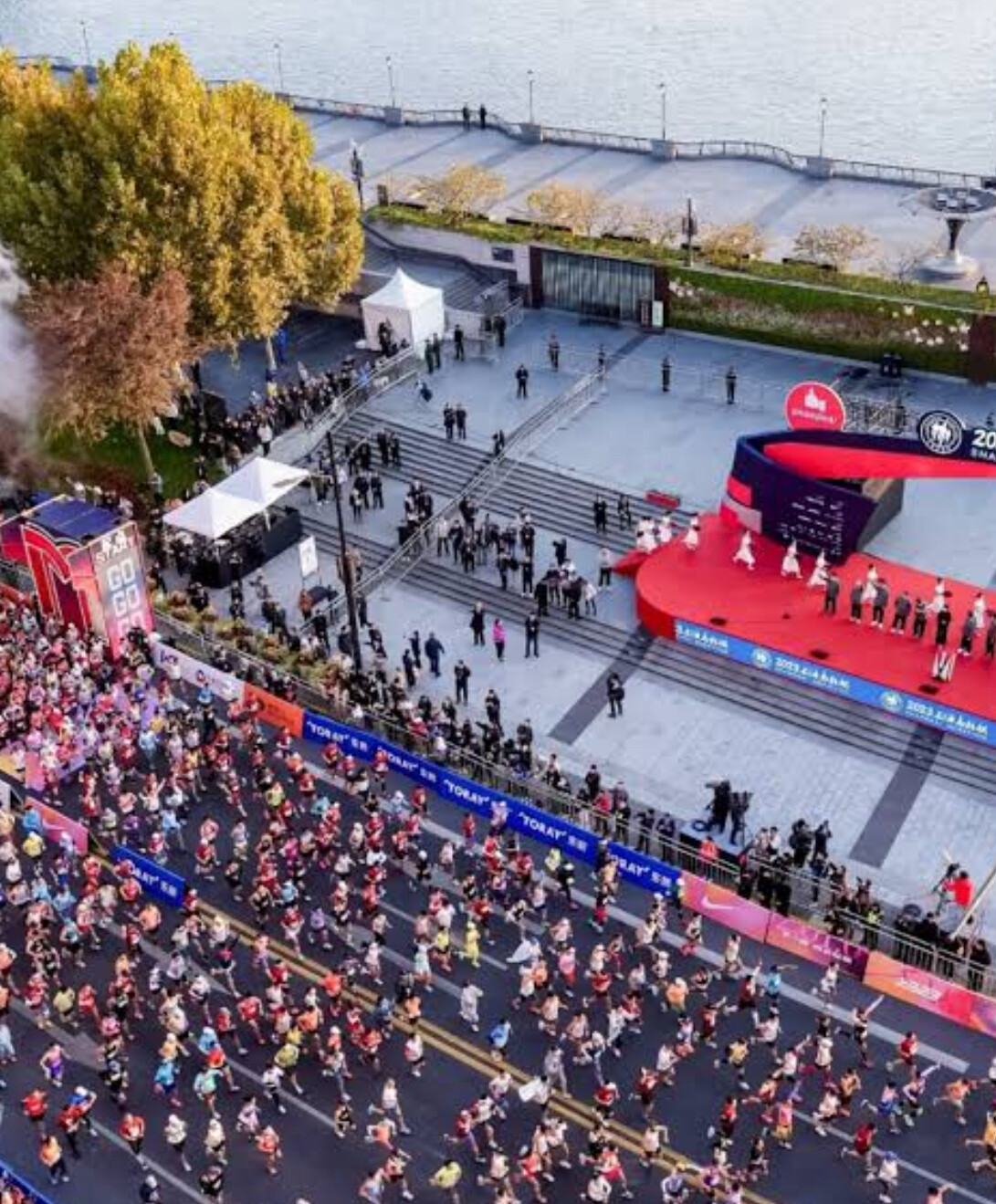
Kosgei Back on Top With a Historic Run
Former world record-holder Brigid Kosgei returned to the top of the podium in commanding style. The 31-year-old Kenyan surged early, hit halfway under 69 minutes, and never looked back, winning in 2:16:36—
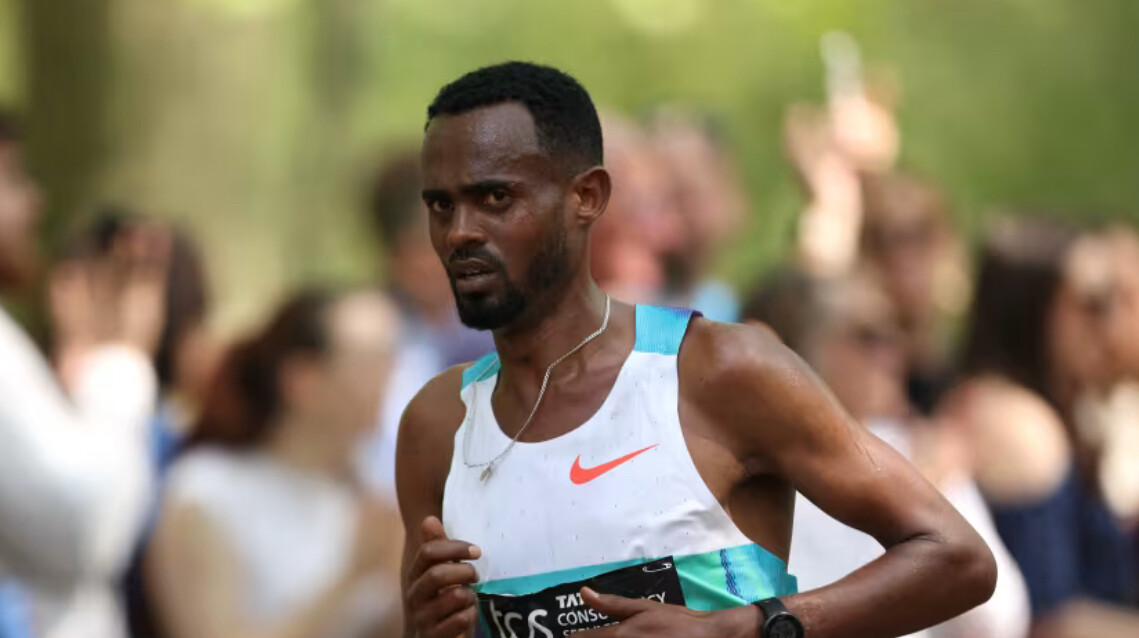
• the fastest marathon ever run on Chinese soil,
• a new Shanghai course record, and
• the third-fastest performance of her career.
Only compatriot Irine Chepet Cheptai could stay close in the early miles, eventually taking second in 2:18:51. Ethiopia’s Tiruye Mesfin finished third in 2:20:38, followed closely by fellow Ethiopian Bekelech Gudeta at 2:20:59.
China’s top star Zhang Deshun placed fifth in 2:25:13, continuing her impressive streak of top domestic finishes.
Ethiopia Sweeps the Men’s Podium
The men’s race unfolded differently—a large, aggressive pack early on before Ethiopia dominated the final 10K. In a furious sprint to the line, Milkesa Mengesha broke the tape in 2:06:25, edging compatriot Dawit Wolde by two seconds. Deresa Geleta finished third in 2:06:36, completing an all-Ethiopian podium.
Five Ethiopians broke 2:07, underscoring the depth at the front.
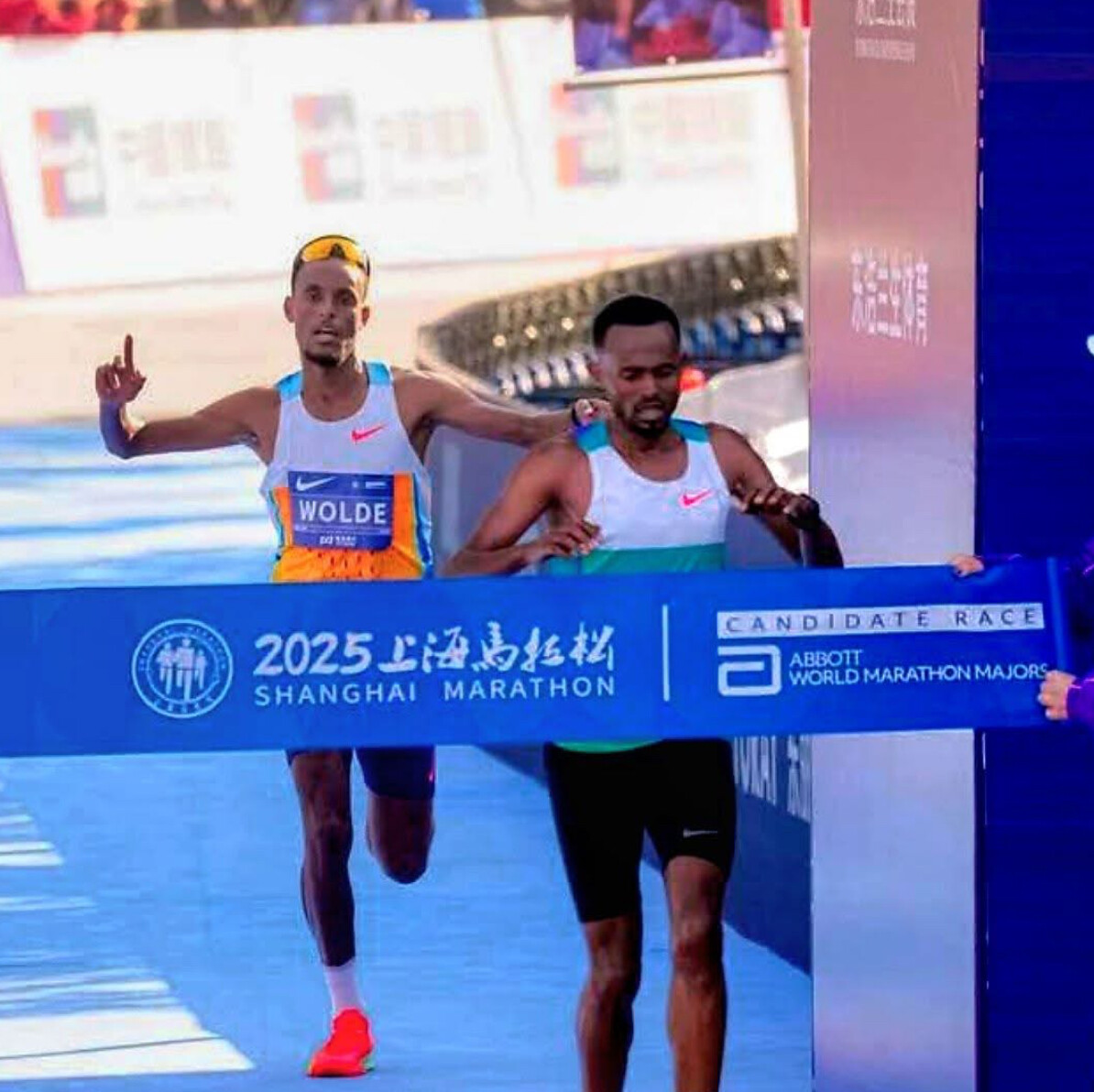
China’s Feng Peiyou delivered the best domestic performance of the day, clocking 2:08:36, the fastest marathon ever run by a Chinese athlete in Shanghai. Countrymen Yang Kegu, Li Dalin, and Ma Rui also cracked the top ten.
Top 10 Results
Men
1. Milkesa Mengesha (ETH) – 2:06:25
2. Dawit Wolde (ETH) – 2:06:27
3. Deresa Geleta (ETH) – 2:06:36
4. Haftu Teklu (ETH) – 2:06:57
5. Challa Gossa (ETH) – 2:08:06
6. Feng Peiyou (CHN) – 2:08:36
7. Solomon Kirwa Yego (KEN) – 2:09:42
8. Yang Kegu (CHN) – 2:12:00
9. Li Dalin (CHN) – 2:13:11
10. Ma Rui (CHN) – 2:13:26
Women
1. Brigid Kosgei (KEN) – 2:16:36 (course & Chinese all-comers record)
2. Irine Chepet Cheptai (KEN) – 2:18:51
3. Tiruye Mesfin (ETH) – 2:20:38
4. Bekelech Gudeta (ETH) – 2:20:59
5. Zhang Deshun (CHN) – 2:25:13
6. Veronicah Njeri Maina (KEN) – 2:26:33
7. Wu Shuang (CHN) – 2:27:17
8. Yao Miao (CHN) – 2:31:13
9. Shen Jiayao (CHN) – 2:31:57
10. Ma Xuexian (CHN) – 2:34:51
Shanghai’s Road to Becoming a Major
For the second straight year, organizers staged the race under the “Run Beyond Borders” banner, showcasing deep elite fields, expanded medical and volunteer support, and international broadcast coverage. Shanghai is currently undergoing World Marathon Majors evaluation, with the earliest possible inclusion in 2027.
by Boris Baron
Login to leave a comment
Shanghai International Marathon
Shanghai International Marathon has established itself as the marquee running event on China’s Marathon calendar. Every November, tens of thousand participants run passing the many historical places of this city such as Bund Bull, Customs House, Shanghai Museum, Shanghai Grand Theater, Shanghai Exhibition center, Jing’an Temple, Nan Pu Bridge, Lu Pu Bridge, Long Hua Temple, Shanghai Stadium. The course records...
more...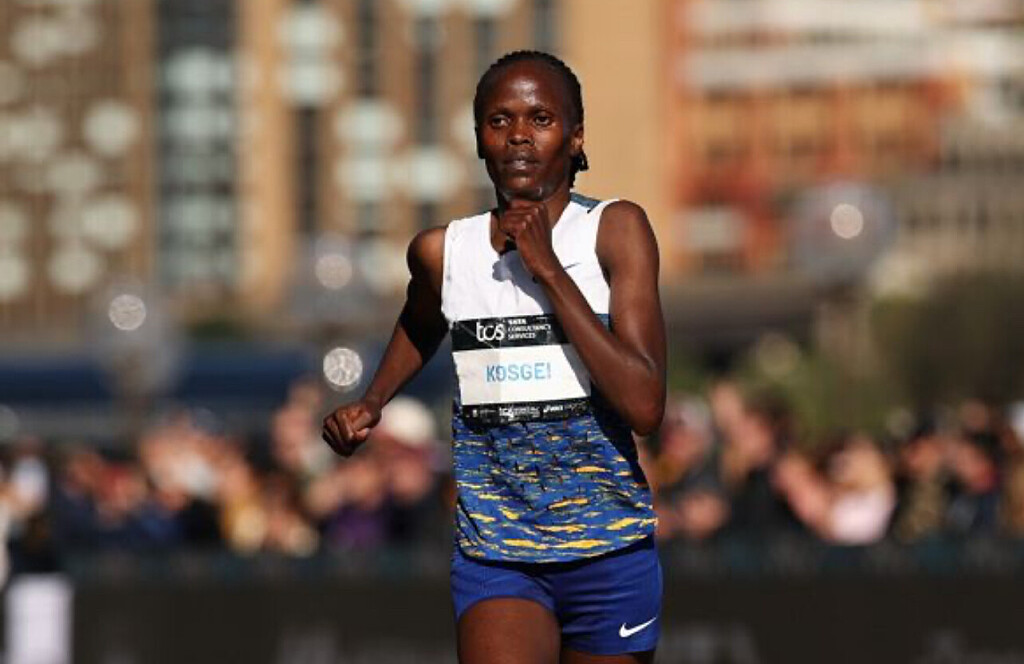
Stacked Fields Set for Sunday’s Shanghai Marathon as Kosgei and Kipchumba Return
The 2025 Shanghai Marathon — a World Athletics Platinum Label event — is set for Sunday (30), and both the women’s and men’s races are shaping up as some of the strongest in the event’s history. Former world record-holder Brigid Kosgei and defending men’s champion Philimon Kiptoo Kipchumba headline a deep international lineup chasing fast times on one of Asia’s premier courses.
The mass start field in Shanghai will once again deliver the energy and depth that has become a signature of this Platinum Label event, with tens of thousands of runners pouring through the city streets behind one of the strongest elite line-ups of the season. Local club runners, age-group veterans, first-time marathoners, and international amateurs will all share the course with the world’s best, creating a fast, colorful, and highly competitive atmosphere from start to finish.
With ideal late-November conditions expected and Shanghai’s reputation for producing personal bests, the mass field is poised for another year of standout performances and unforgettable marathon moments.

Kosgei Targets First Win in Two Years — and a Course Record
Brigid Kosgei, whose 2:14:04 stood as the world record from 2019 to 2023, lines up for her third marathon of the year. The 31-year-old Kenyan has been consistently sharp in 2025—second in Hamburg (2:18:26) and again in Sydney (2:18:56).
A victory in Shanghai would be her first since Abu Dhabi 2023, but the stakes go beyond winning:
• The course record stands at 2:20:36 (Yebrgual Melese, 2018).
• Pacers have been asked to roll out at 2:17:50 pace, fast enough to challenge both the course mark and the Chinese all-comers’ record (2:18:09 by Ruti Aga, 2023).
Kosgei will not be alone. Two sub-2:20 performers stand in her way:
• Irine Cheptai (KEN) — PB 2:17:51, coming off strong runs in Chicago and Boston.
• Tiruye Mesfin (ETH) — PB 2:18:35, part of Ethiopia’s long history of dominance here.
Ethiopian women have won 10 of the last 14 editions, and Mesfin leads their charge again.
China brings a serious contender as well.
• Zhang Deshun, the No. 3 all-time Chinese marathoner (2:20:53 at Tokyo), returns just two weeks after winning the National Games.
Add in Bekelech Gudeta (ETH) — who won marathons in Seoul and Mexico City this year — and the women’s race becomes one of the most competitive in Shanghai’s history.
Four Sub-2:04 Ethiopians Lead Men’s Lineup

The men’s race may be even deeper. Ethiopia sends a quartet capable of pushing into all-time territory:
• Deresa Geleta (ETH) — 2:02:38, fastest in the field
• Birhanu Legese (ETH) — 2:02:48, two-time Tokyo champion
• Milkesa Mengesha (ETH) — 2024 Berlin winner
• Dawit Wolde (ETH) — former Xiamen champion
Geleta has been brilliant when healthy, clocking 2:02:38 in Valencia and 2:03:51 in Tokyo this year, though he dropped out of Wuxi and the World Championships. Legese tuned up with a 1:00:54 at the New Delhi Half.
But Ethiopia is far from guaranteed victory.
Kiptoo Kipchumba Returns to Defend His Title
Kenya’s Philimon Kiptoo Kipchumba, the 2023 champion, owns the Chinese all-comers’ record of 2:05:35 set in Shanghai. He hasn’t raced since placing 10th here last year, but he returns with unfinished business.
He is joined by a strong Kenyan contingent:
• Titus Kipruto — 2:04:54
• Solomon Kirwa Yego — 2:05:42
• Kenneth Keter — 2:05:53
• Edmond Kipngetich — 2:06:47
China’s biggest hope is Feng Peiyou, the second-fastest Chinese marathoner ever (2:07:06). A small improvement would break the national record of 2:06:57.
Pacers will target 2:58/km (≈2:05:00) — fast enough to threaten Kiptoo’s all-comers’ record.
Leading Entries
Women
• Brigid Kosgei (KEN) – 2:14:04
• Irine Chepet Cheptai (KEN) – 2:17:51
• Tiruye Mesfin (ETH) – 2:18:35
• Selly Chepyego Kaptich (KEN) – 2:20:03
• Zhang Deshun (CHN) – 2:20:53
• Bekelech Gudeta (ETH) – 2:21:36
• Veronicah Njeri Maina (KEN) – 2:24:46
• Xia Yuyu (CHN) – 2:25:45
• Wu Bing (CHN) – 2:26:01
• Li Meizhen (CHN) – 2:27:51
• Shen Ni (CHN) – 2:28:47
• Huang Xuemei (CHN) – 2:29:51
Men
• Deresa Geleta (ETH) – 2:02:38
• Birhanu Legese (ETH) – 2:02:48
• Dawit Wolde (ETH) – 2:03:48
• Haftu Teklu (ETH) – 2:04:42
• Titus Kipruto (KEN) – 2:04:54
• Philimon Kiptoo Kipchumba (KEN) – 2:05:35
• Solomon Kirwa Yego (KEN) – 2:05:42
• Kenneth Keter (KEN) – 2:05:53
• Edmond Kipngetich (KEN) – 2:06:47
• Feng Peiyou (CHN) – 2:07:06
• Challa Gossa (ETH) – 2:07:32
• Wu Xiangdong (CHN) – 2:08:04
by World Athletics
Login to leave a comment
Shanghai International Marathon
Shanghai International Marathon has established itself as the marquee running event on China’s Marathon calendar. Every November, tens of thousand participants run passing the many historical places of this city such as Bund Bull, Customs House, Shanghai Museum, Shanghai Grand Theater, Shanghai Exhibition center, Jing’an Temple, Nan Pu Bridge, Lu Pu Bridge, Long Hua Temple, Shanghai Stadium. The course records...
more...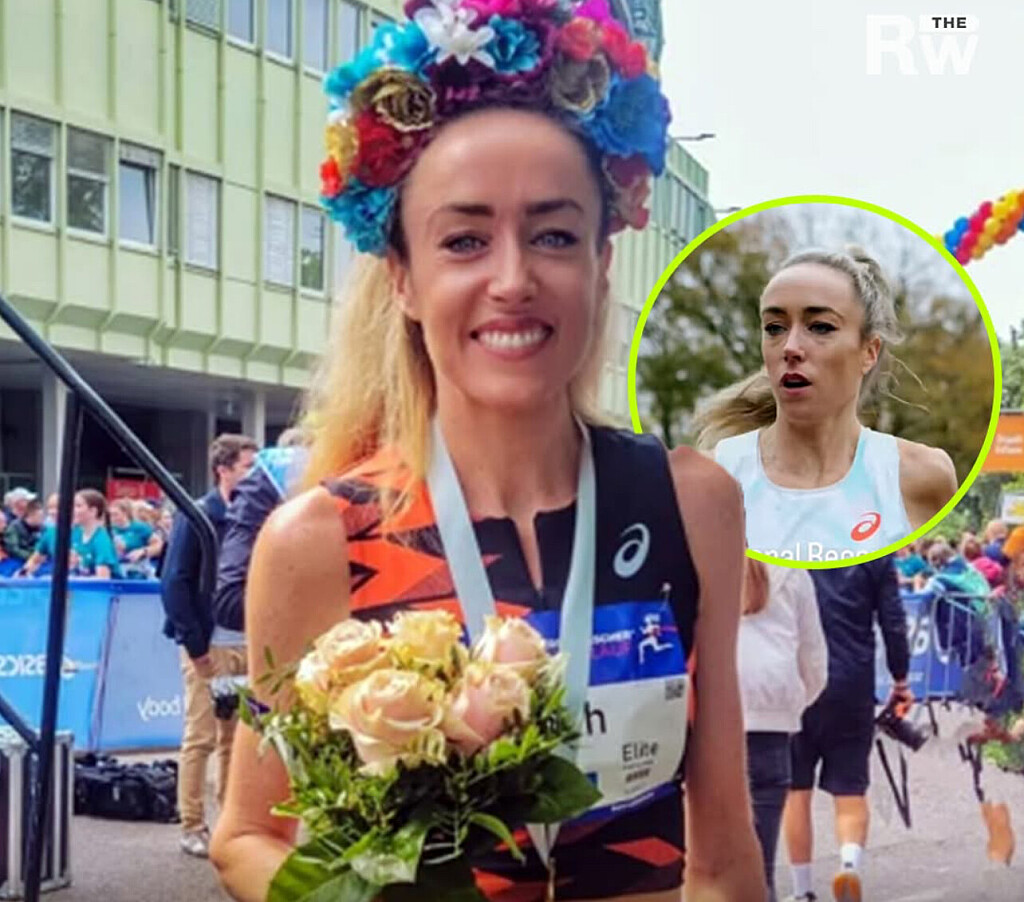
Eilish McColgan Shatters British 15K Record with Sensational 47:12 at Zevenheuvelenloop
Eilish McColgan lit up the roads of Nijmegen on Sunday Nov 16 with a performance that redefines her comeback story. Racing the historic Zevenheuvelenloop 15K, the Scottish star clocked a stunning 47:12, breaking the British national record and finishing fourth overall.
Her time erased the previous British mark of 47:24, set earlier this year by Calli Hauger-Thackery, and moves McColgan to No. 2 on the European all-time list, behind only Lornah Kiplagat’s 46:59 from 2007.
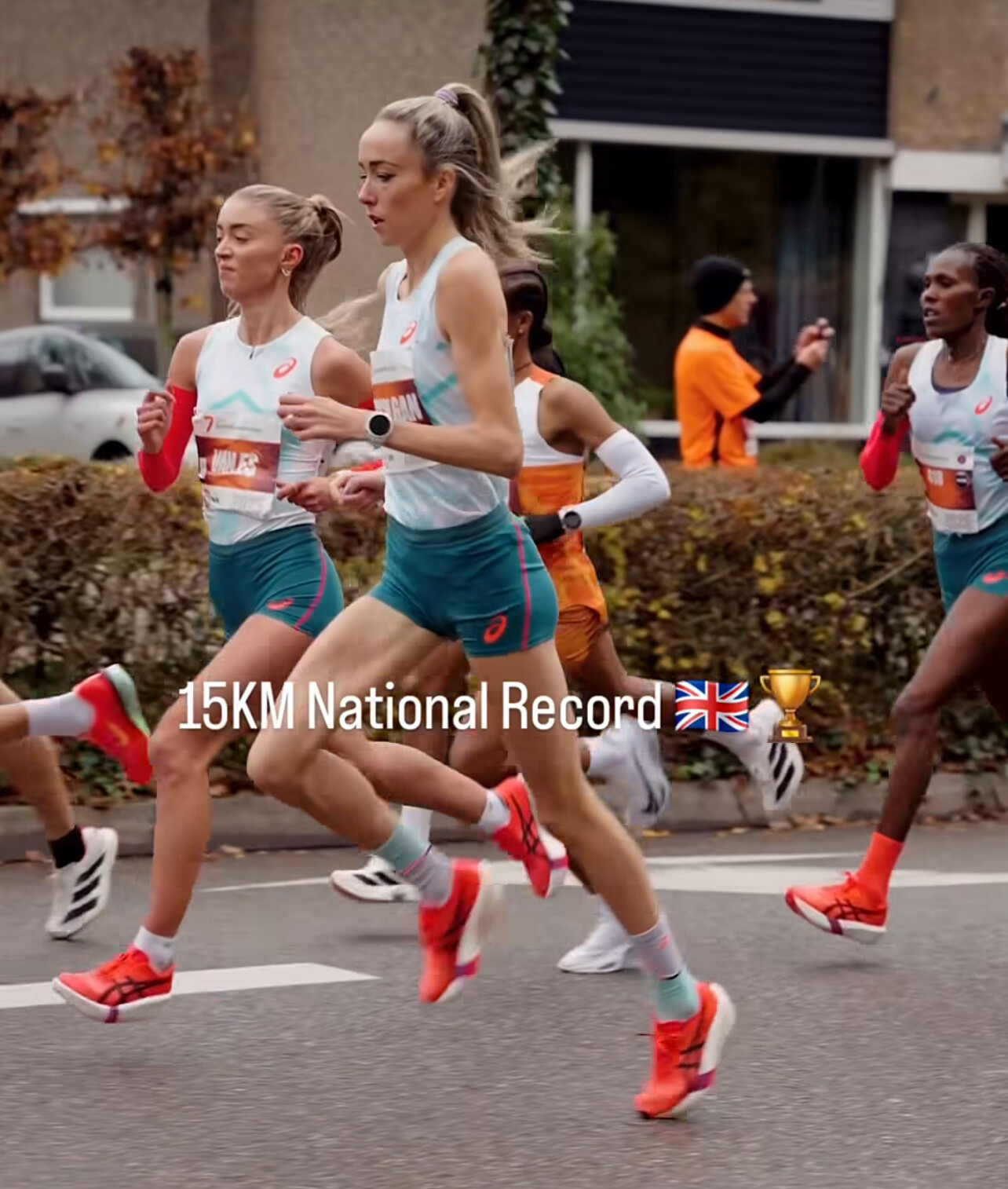
McColgan ran aggressively from the gun, navigating the rolling hills—“Zevenheuvelenloop” literally means “Seven Hills Run”—and holding pace with the world-class lead pack before surging home for the fastest 15K of her career.
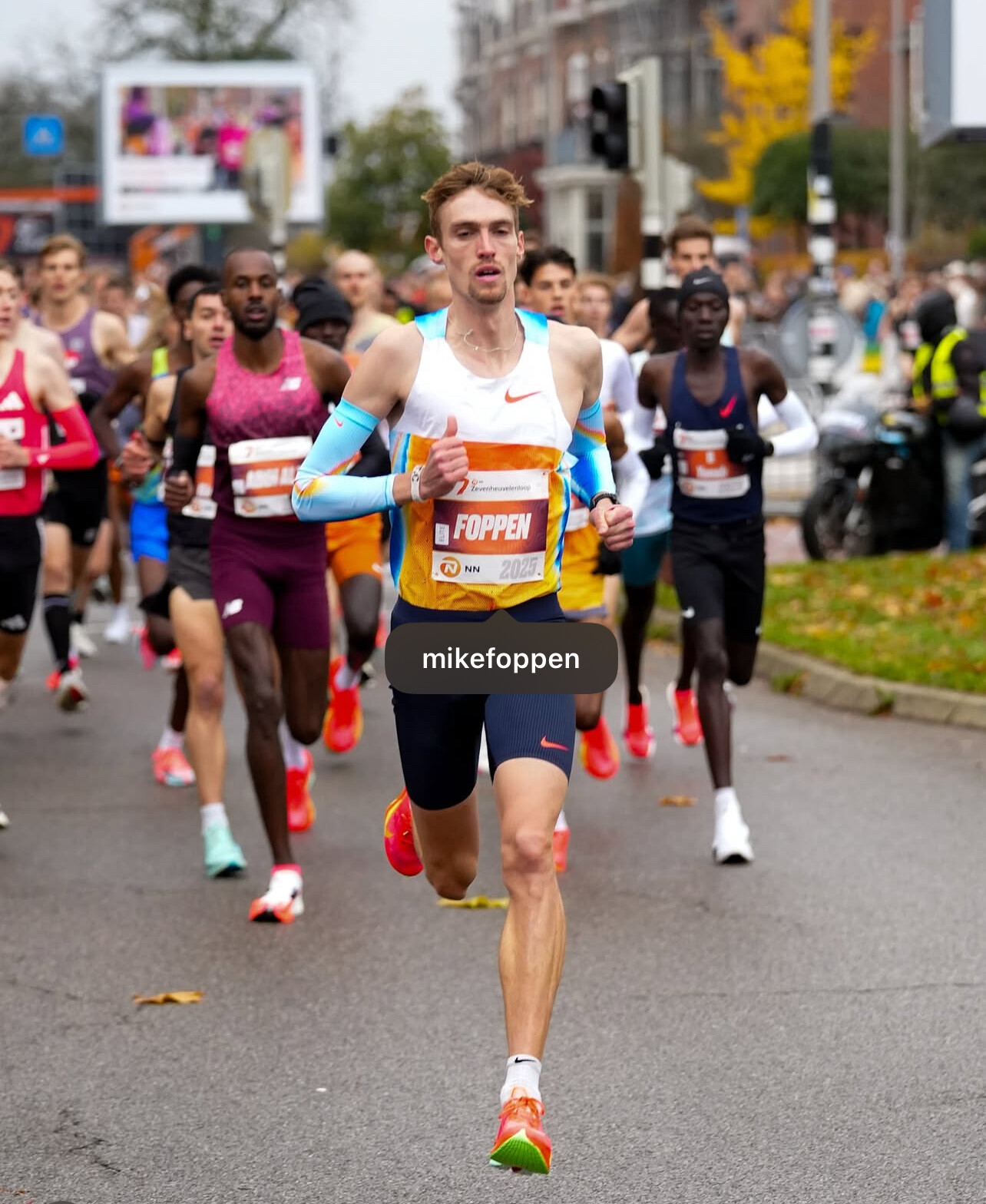
Top Women – Zevenheuvelenloop 15K (2025)
1. Joyciline Jepkosgei (KEN) – 46:53
2. Jane Chelangat (KEN) – 46:59
3. Calli Hauger-Thackery (GBR) – 47:09
4. Eilish McColgan (GBR) – 47:12 (British Record)
McColgan finished just three seconds behind Hauger-Thackery and only 19 seconds behind the winner—an incredibly tight margin at this level.
lTop Men – Zevenheuvelenloop 15K (2025)
1. Selemon Barega (ETH) – 41:35
2. Bernard Kimeli (KEN) – 41:52
3. Birhanu Balew (BRN) – 42:10
The men’s race was fast from the start, with Olympic champion Selemon Barega controlling the front and closing with authority.
A Statement from McColgan
For McColgan, who has endured a difficult stretch of injuries and recovery over the past two seasons, this run marks one of her finest road performances. It signals she is back in top form heading into what promises to be a compelling 2026 season.
by Boris Baron
Login to leave a comment

The NN Zevenheuvelenloop
The NN Zevenheuvelenloop, or Seven Hills Run, is an annual 15-kilometer road race held in Nijmegen, Netherlands. Established in 1984 as a modest event with 500 male participants, it has evolved into one of Europe's premier running events, attracting over 25,000 runners in recent years. Renowned for its picturesque and undulating course, the Zevenheuvelenloop has been the stage for multiple...
more...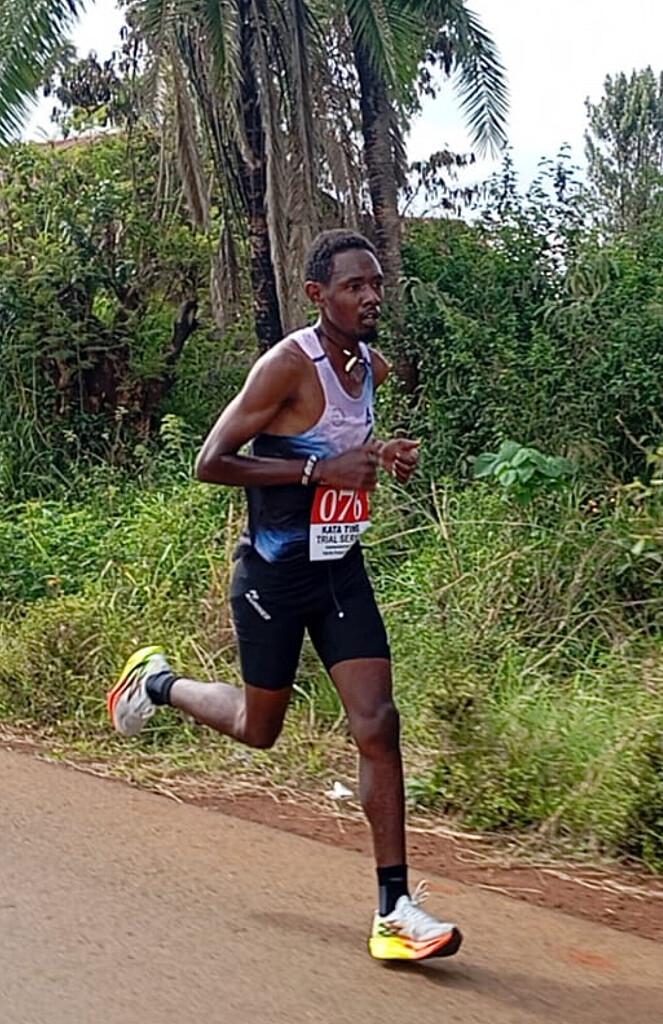
KATA Time Trial 50 Marks Milestone with Strong Performances in Thika
THIKA, Kenya — November 12, 2025 — The 50th edition of the KATA Time Trial was held today at the Kenyan Athletics Training Academy (KATA) in Thika, marking a major milestone for the event that continues to nurture and test athletes under challenging conditions. Despite the warm, humid air and gusty winds, runners delivered impressive performances across both the 5km and 10km distances.
In the men’s 5km race, Charles Ndirangu, still recovering from injury, displayed determination and class to cross the finish line first in 15:32. Sixteen-year-old James Lawrence followed with a strong run of 18:01, showing promise as one of KATA’s rising young athletes. Eric Mwaura, 18, clocked 18:07to round out the top three.
The women’s 5km race saw Agnes Wanjiru take to the course solo, clocking 19:21. Having recently battled illness, her performance reflected admirable resilience and commitment to the KATA program.
The men’s 10km was one of the most competitive fields of the day. John Chege, 21, took command early and maintained his lead to win in 29:49. He was followed by Bernard Waweru (40) in 30:29, with Stephen Ngigi, 22, close behind in 30:36 to complete the podium.
The women’s 10km produced another standout performance, with Loise Kiarie, 24, setting a new personal best of 33:49, improving her previous time by 30 seconds despite the less-than-ideal weather. Jacinta Kamau, also 24, claimed second in 34:48, while Kellen Waithira (38) finished third in 36:11.
The KATA Time Trials, founded by Bob Anderson, continue to provide a world-class platform for Kenyan athletes to measure progress and stay race-ready between competitions. Today’s edition celebrated not only endurance and improvement but also the spirit of consistency that has defined the KATA community since its inception.
The next KATA Time Trial will take place on December 17, both in Thika and at most of KATA’s satellite running camps across Kenya, as the program continues to expand its reach and provide competitive opportunities to athletes nationwide.
KATA Time Trial #50 – Official Results
5km Men
- Charles Ndirangu – 24 yrs – Bib 74 – 15:32
- James Lawrence – 16 yrs – Bib 73 – 18:01
- Eric Mwaura – 18 yrs – Bib 35 – 18:07
- Tobias Kosgei – 16 yrs – Bib 73 – 18:50
5km Women
- Agnes Wanjiru – 20 yrs – Bib 33 – 19:21
10km Men
- John Chege – 21 yrs – Bib 76 – 29:49
- Bernard Waweru – 40 yrs – Bib 31 – 30:29
- Stephen Ngigi – 22 yrs – Bib 71 – 30:36
- Boniface Mungai – 30 yrs – Bib 77 – 30:53
- Dan Lolngojine – 19 yrs – Bib 49 – 31:01
- John Kuria – 30 yrs – Bib 40 – 31:33
- Joel Maina – 43 yrs – Bib 41 – 32:15
- Justus Nyamai – 18 yrs – Bib 48 – 33:25
- Ismael Mburu – 25 yrs – Bib 50 – 33:44
- Eric Cheruiyot – 30 yrs – Bib 46 – 33:55
- Joseph Nyota – 20 yrs – Bib 32 – 34:05
- Peter Mukundi – 27 yrs – Bib 37 – 36:46
- Charles Ndirangu – 65 yrs – Bib 53 – 38:02
10km Women
- Loise Kiarie – 24 yrs – Bib 39 – 33:49 (PB)
- Jacinta Kamau – 24 yrs – Bib 38 – 34:48
- Kellen Waithira – 38 yrs – Bib 54 – 36:11
- Susan Njuu – 40 yrs – Bib 52 – 36:34
- Lilian Nyamai – 25 yrs – Bib 47 – 37:04
- Karen Cheokemoi – 24 yrs – Bib 51 – 37:29
- Ruth Maina – 23 yrs – Bib 72 – 37:36
- Felistas Maina – 37 yrs – Bib 34 – 40:04
- Mary Wangari – 35 yrs – Bib 36 – 40:04
by Boris Baron
Login to leave a comment

KATA Time Trial Series
Welcome to the KATA Monthly Time Trial Held at the Kenyan Athletics Training Academy in Thika, Kenya, the KATA Monthly Time Trial is a unique and inclusive event designed to support runners of all levels in achieving their goals and showcasing their fitness. This event offers both 10K and 5K distances on an accurate, certified course, providing participants with...
more...