

Running News Daily
Running News Daily is edited by Bob Anderson and team. Send your news items to bob@mybestruns.com Advertising opportunities available.
Index to Daily Posts · Sign Up For Updates · Run The World Feed
Articles tagged #Hawaii
Today's Running News


World-Class Distance Stars Set for 2026 Kalakaua Merrie Mile in Hawaii
An impressive international field of middle- and long-distance running stars will descend on Honolulu, Hawaii, on December 12 for the 2026 Kalakaua Merrie Mile, promising an exciting contest along the scenic Waikiki Beach as part of Honolulu Marathon Weekend.
The elite fields have been confirmed for the one-mile race, featuring 23 athletes across the women's and men's competitions. The event will bring together world championship medallists, national champions and established international stars in a unique format designed to deliver an exciting battle for the overall victory.
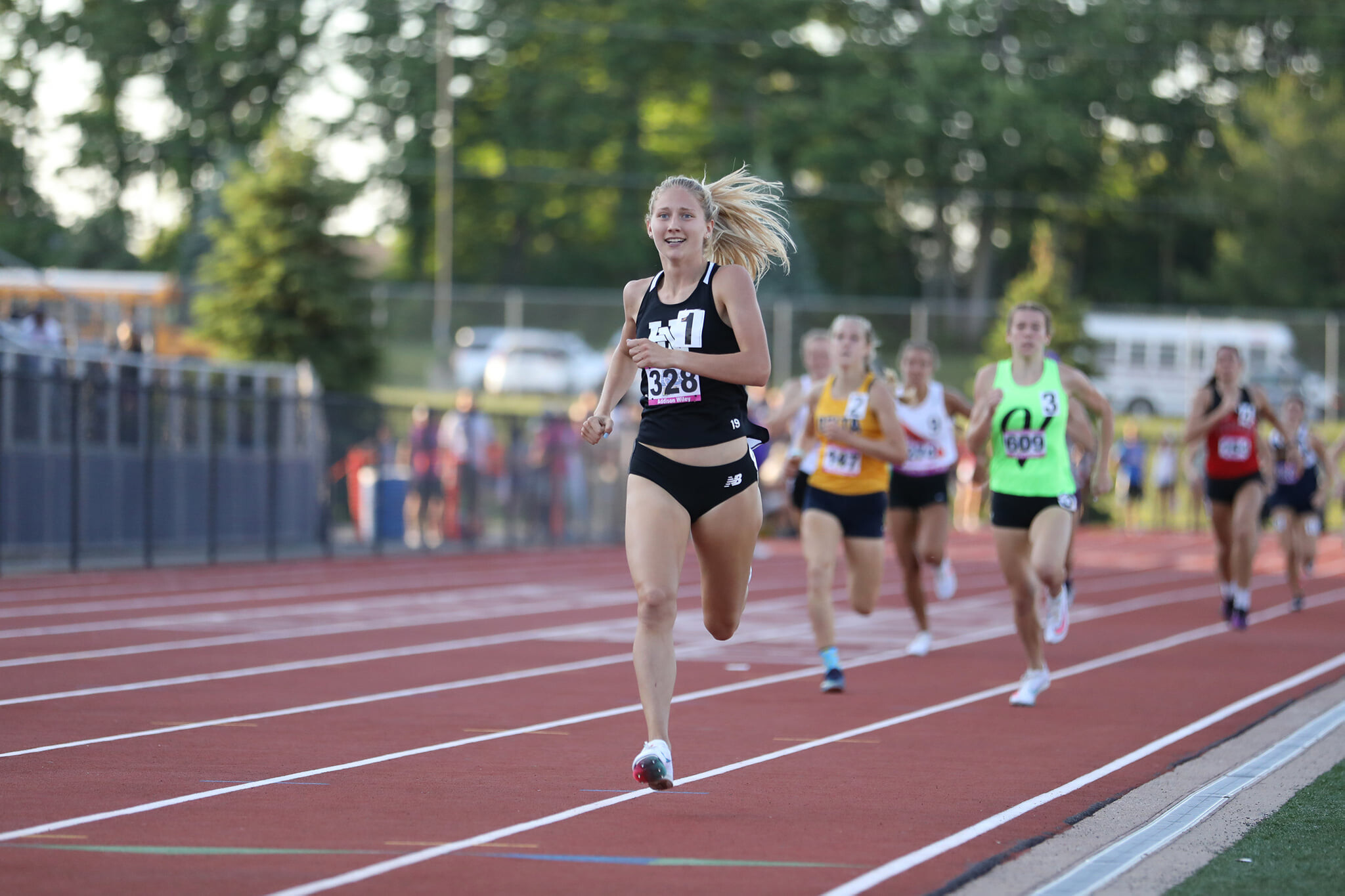
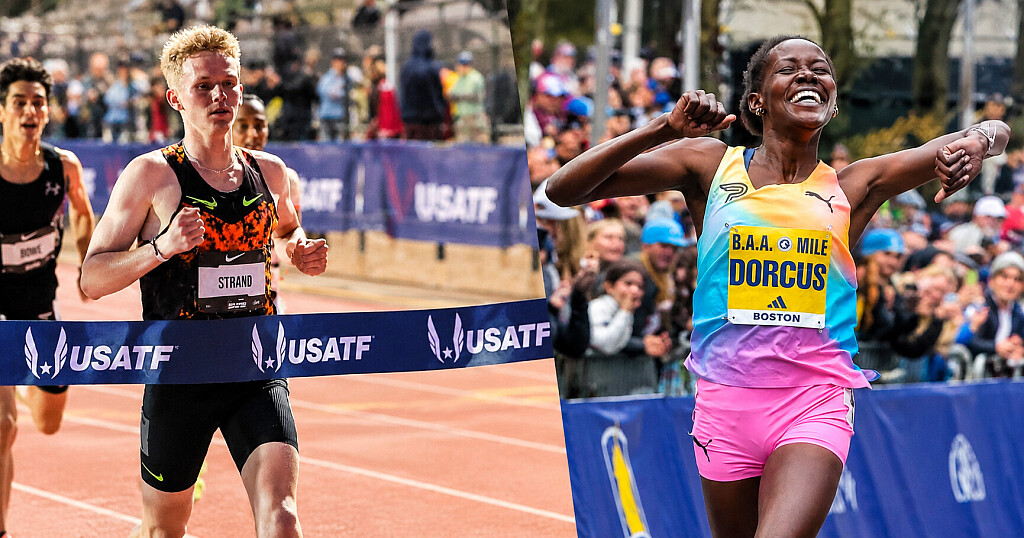
Kenya's Dorcus Ewoi, the World Championships 1500m silver medallist, headlines the women's field. She will face a competitive lineup that includes American Addy Wiley, the World Indoor Championships 800m bronze medallist, and Japanese record holder Nozomi Tanaka.
Other notable contenders include American middle-distance runners Josette Andrews, Abbey Caldwell, Kayley DeLay, Susan Ejore-Sanders, Angelina Ellis, Garbija Galvydyte, Taryn Parks, Annika Reiss and Addy Wiley, alongside Tanaka and Ewoi. The field combines international experience with athletes capable of making the mile a fiercely contested race.
The men's competition is equally compelling, with several accomplished distance runners expected to challenge for the top honours. American Ethan Strand, the U.S. 1500m champion, will line up against compatriot Vince Ciattei, the U.S. 5000m champion, in a field packed with championship pedigree.
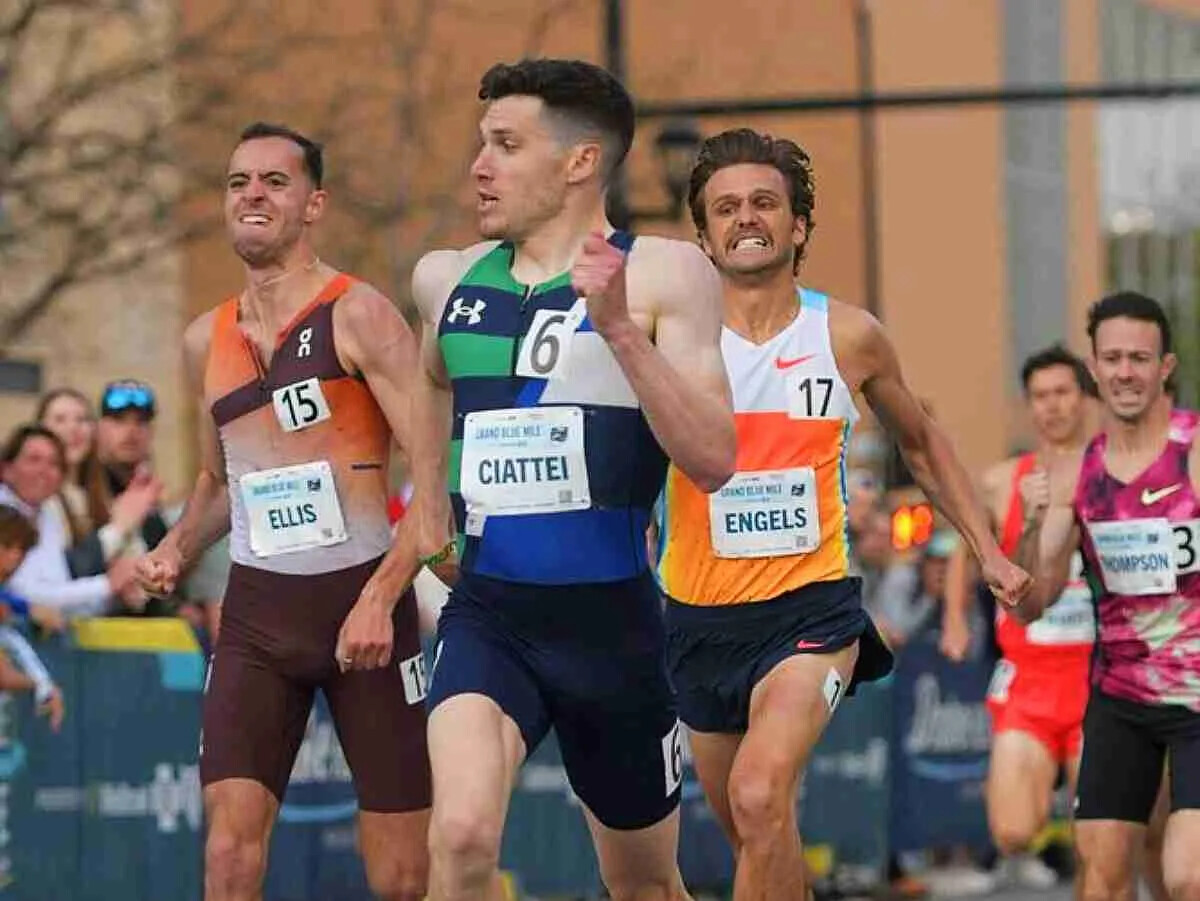
Australia's Oliver Hoare and Ky Robinson, both Commonwealth Games champions, add further international quality to the contest. American Nico Young, the U.S. 10,000m champion, will also be among the athletes to watch, while Kenya's Festus Lagat and other leading competitors will be looking to make their mark.
The men's field also includes Davis Bove, Allon Clay, Foster Malleck, Gary Martin, Trent McFarland, Ethan Strand, Matt Wilkinson and Nico Young, setting up an intriguing contest among athletes with different strengths and racing backgrounds.
One of the event's biggest attractions is its battle-of-the-sexes chase format. The women will receive a head start before the men begin their pursuit, with athletes from both fields competing for the same overall finishing order. The format adds a tactical dimension to the race, creating the possibility of a dramatic fight for the line as the leading runners converge in the closing stages.
With $39,000 in guaranteed prize money and $15,000 awarded to the overall winner, the race offers a significant financial incentive alongside the opportunity to compete against an elite international lineup. The shared finishing order also means the overall title will be determined by performance across both fields rather than by the men's and women's races being treated as entirely separate contests.
The Kalakaua Merrie Mile has become an attractive feature of Honolulu's running calendar, combining elite competition with the atmosphere of one of the world's most recognisable coastal destinations. Its December 12 staging will provide another opportunity for fans to see accomplished athletes compete over the mile in an unconventional and spectator-friendly format.
The 2026 edition will take place on Saturday, December 12, along Waikiki Beach in Honolulu, Hawaii, during Honolulu Marathon Weekend.
With world championship medallists, national champions and international record holders among the confirmed entrants, the Kalakaua Merrie Mile is shaping up to be one of the standout attractions of Honolulu Marathon Weekend.
by Erick Cheruiyot for My Best Runs.
Login to leave a comment

LA28 Olympic Flame To Make History With First-Ever Journey Through All 50 U.S. States
The Olympic flame is preparing for a journey unlike any it has made before.
For the first time in Olympic history, the flame heading to the Los Angeles 2028 Olympic Games will travel through all 50 U.S. states, bringing one of the Games’ most enduring traditions directly into communities across the country.
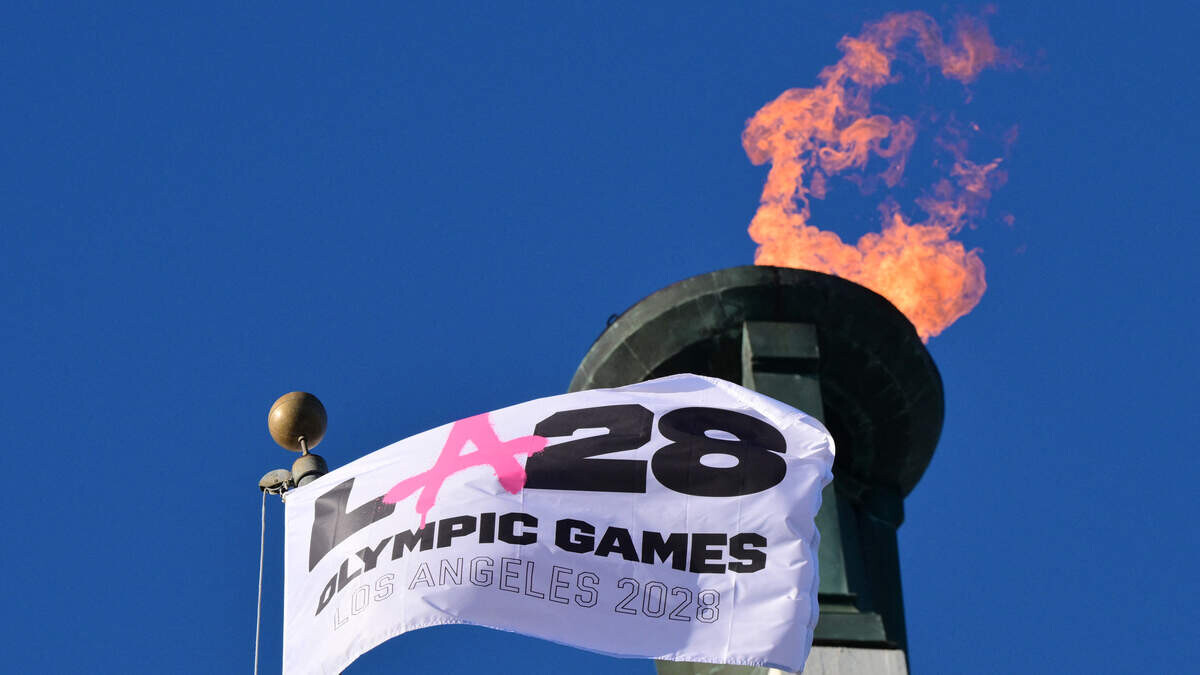
The historic American chapter will begin in Atlanta, Georgia, the host city of the 1996 Olympic Games and the last U.S. city to stage a Summer Olympics. Thirty-two years after the Atlanta flame was extinguished, the Olympic flame will return to the city to begin its extraordinary journey toward Los Angeles.
Before reaching American soil, the flame will be ceremonially lit in Olympia, Greece, the birthplace of the ancient Olympic Games. From there, it will make its way to the United States before beginning a nationwide relay in spring 2028. The complete route is expected to be announced in 2027.
50 STATES. ONE FLAME. ONE JOURNEY.
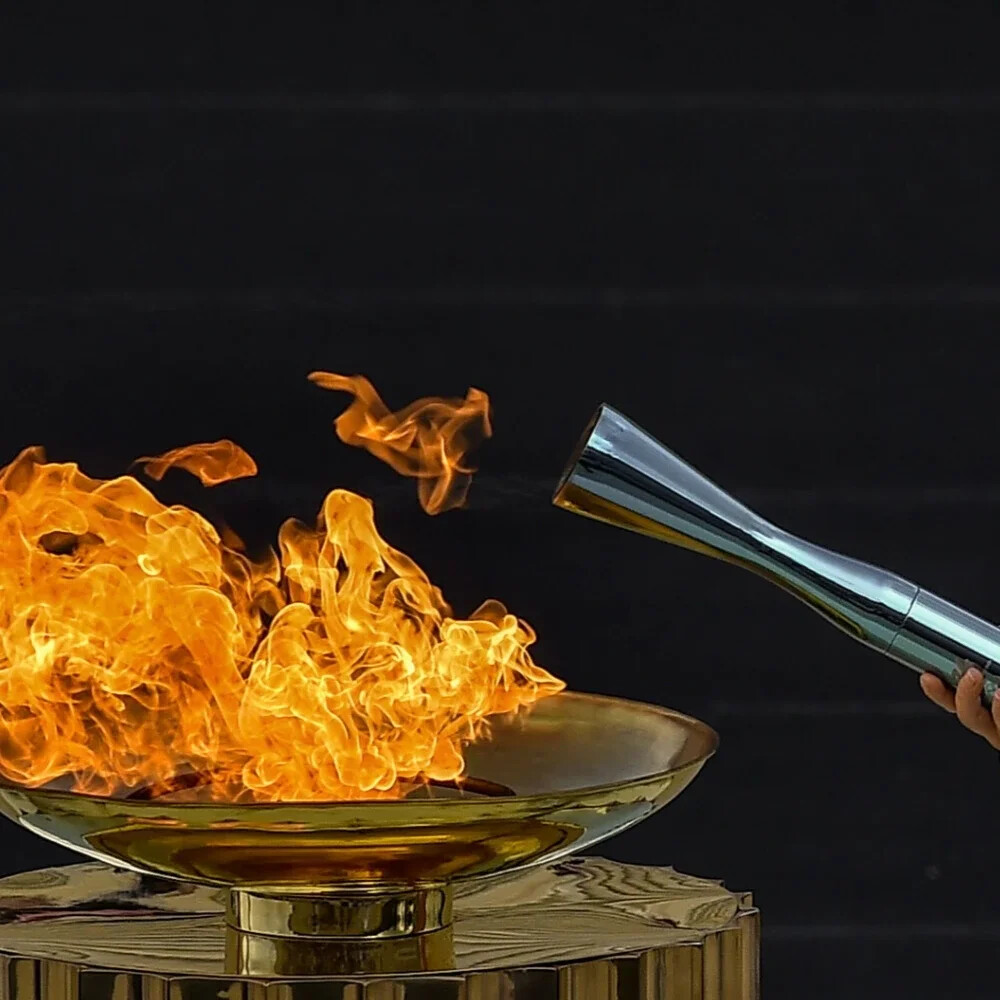
From Hawaii to North Dakota and from South Dakota to California, the relay is being designed to showcase communities, landmarks, cultural celebrations and major events across the United States.
LA28 says the relay will be one of the largest in Olympic history, with the flame passing through iconic locations and bringing celebrations to selected cities along the way. The journey is intended to give people across the country an opportunity to experience the Olympic spirit before the Games officially begin in Los Angeles.
The public will also have an opportunity to become part of the history. LA28 has confirmed that members of the general public will be eligible to be nominated as torchbearers, although further details about the nomination process will be announced later.
The full route remains under development, meaning the landmarks, cities and communities that will welcome the flame are still to be revealed. What is already certain, however, is the scale of the journey: every U.S. state will have a place in the Olympic Torch Relay for the first time.
THE OLYMPIC STORY WILL CONTINUE
The flame's journey will not be the only torch relay connected with LA28.
Following the conclusion of the Olympic Games, the Paralympic Torch Relay will begin in August 2028. Its flame will originate in Stoke Mandeville, United Kingdom, the birthplace of the Paralympic Movement, before continuing its own journey toward Los Angeles. The starting point of the U.S. portion of that relay will be announced at a later date.
The LA28 Paralympic Games are scheduled for 15–27 August 2028, marking Los Angeles' first time hosting the Paralympic Games.
For LA28, the Olympic flame will therefore become more than a symbol carried toward an opening ceremony. It will become a moving connection between communities separated by thousands of miles, linking America's Olympic past in Atlanta with its Olympic future in Los Angeles.
One flame. Fifty states. Millions of people. One extraordinary road to LA28.
by Erick Cheruiyot for My Best Runs.
Login to leave a comment
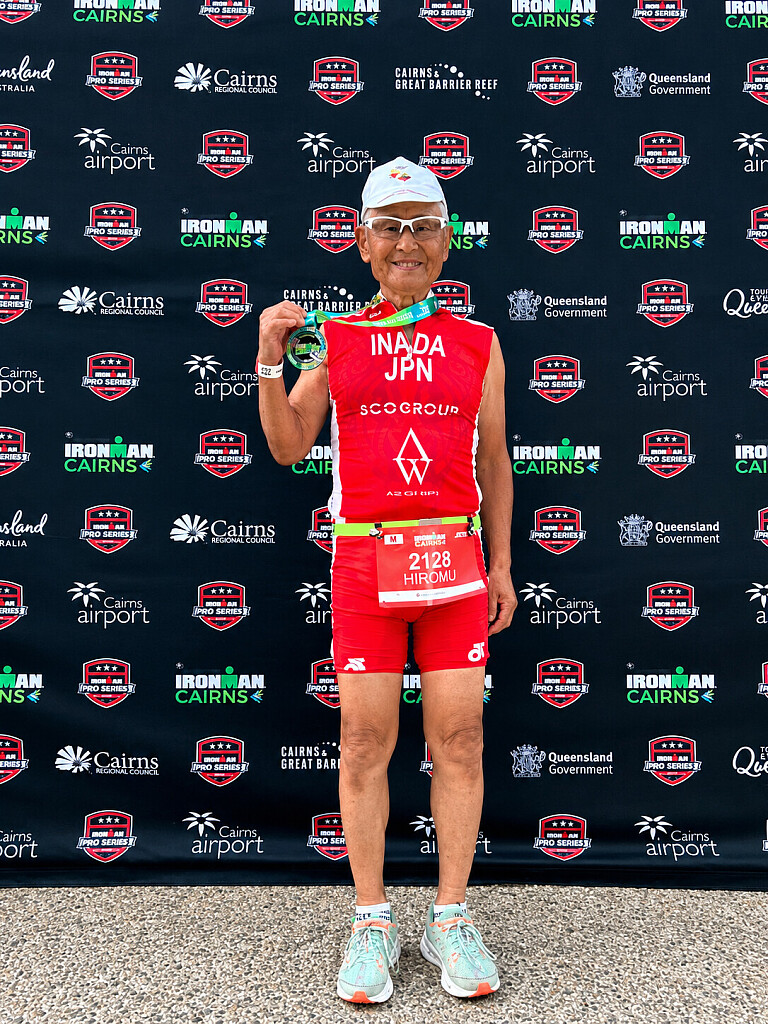
From Defeat at 76 to History at 85: The Unstoppable Journey of Hiromu Inada
Most athletes spend their lives chasing greatness. Hiromu Inada discovered his challenge when many people were already settling into retirement.
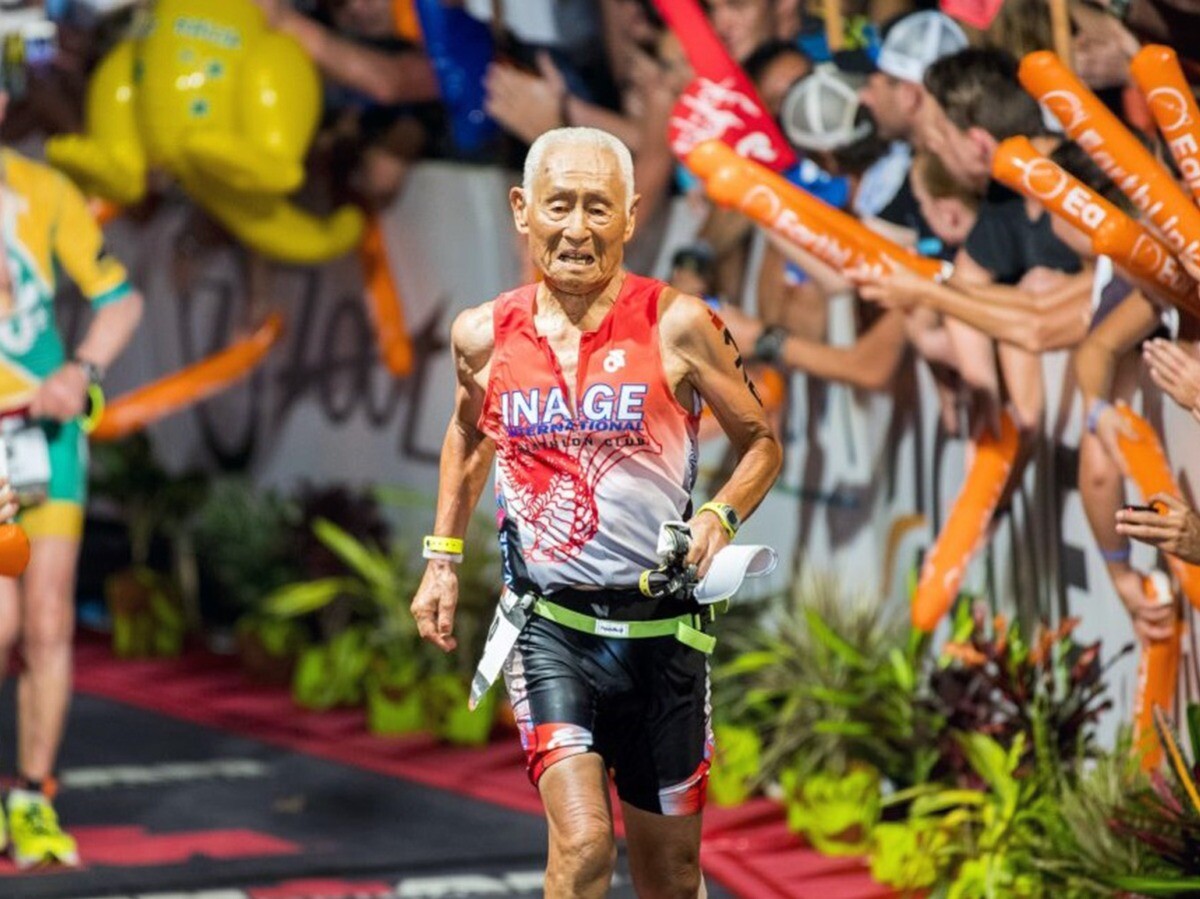
His story does not begin with victory. It begins with failure.
At 76 years old, Inada stood on the start line of his first Ironman triathlon, one of the most demanding endurance events in the world. The challenge was immense: a 2.4-mile swim, a 112-mile bike ride, and a full marathon to finish. He gave everything he had, but the clock proved unforgiving. He did not reach the finish line within the required time limit.
For many, that would have been the end of the dream.
For Inada, it was only the beginning.
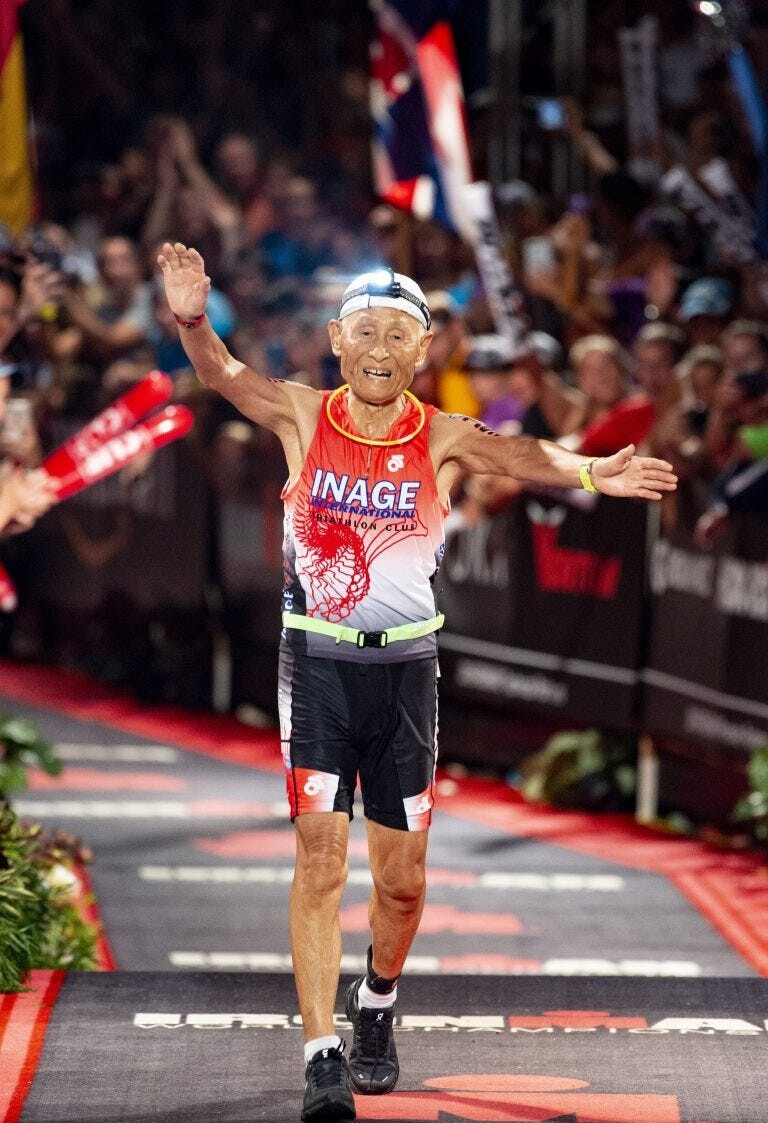
A former television technician from Japan, he had not spent his youth as an elite athlete. In fact, he only learned to swim after retiring from his career. Triathlon entered his life late, arriving during a period marked by personal loss and change. Rather than stepping away from new challenges, he embraced them.
He trained among athletes decades younger than himself, often becoming the oldest competitor at races by a remarkable margin. While others focused on records and podium finishes, Inada focused on something simpler: returning to the start line again and again.
Year after year, he continued to test himself against one of endurance sport's toughest challenges.
Then came the moment that would place his name permanently in sporting history.
At 85 years old, on the demanding roads and volcanic terrain of Kona, Hawaii, Inada completed the Ironman World Championship. Covering the full 140.6-mile distance, he crossed the finish line in just under 17 hours, becoming the oldest person ever to complete the race.
The achievement was far more than a record. It was the culmination of nearly a decade of persistence after the disappointment of his first attempt. The same event that had defeated him at 76 became the stage for one of the most inspiring accomplishments endurance sport has ever witnessed.
Yet perhaps the most remarkable chapter came after the record.
Inada did not retire on a high note. He did not declare the mission complete and step away from competition. Instead, he kept racing.
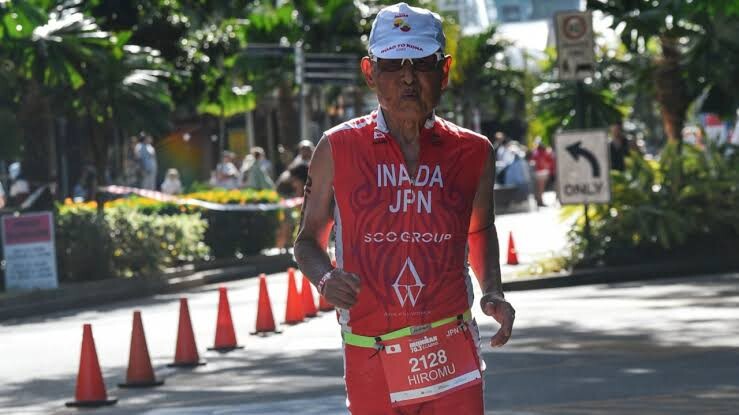
Now in his nineties, he continues to enter triathlons, demonstrating that his greatest strength was never speed, power, or endurance alone. It was consistency. The willingness to keep showing up long after expectations, excuses, and conventional limits had faded away.
When asked about his longevity in the sport, Inada offered a characteristically simple explanation. He believes triathlon is particularly suited to older athletes because success is not determined solely by physical ability. It rewards commitment, patience, and the determination to keep moving forward—qualities that can grow stronger with age rather than weaker.
His story forces a question that resonates far beyond sport.
What is more impressive: failing to finish an Ironman at 76, becoming the oldest finisher in history at 85, or continuing to compete into his nineties?
The answer may be all three.
Because Hiromu Inada's legacy is not defined by a single race or a world record. It is defined by a mindset. A refusal to let age decide what is possible. A belief that setbacks are not endings, only turning points.
Many people stop when they encounter failure.
Hiromu Inada failed at 76, rewrote history at 85, and never stopped moving forward. That may be the most extraordinary achievement of all.
by Erick Cheruiyot for My Best Runs.
Login to leave a comment
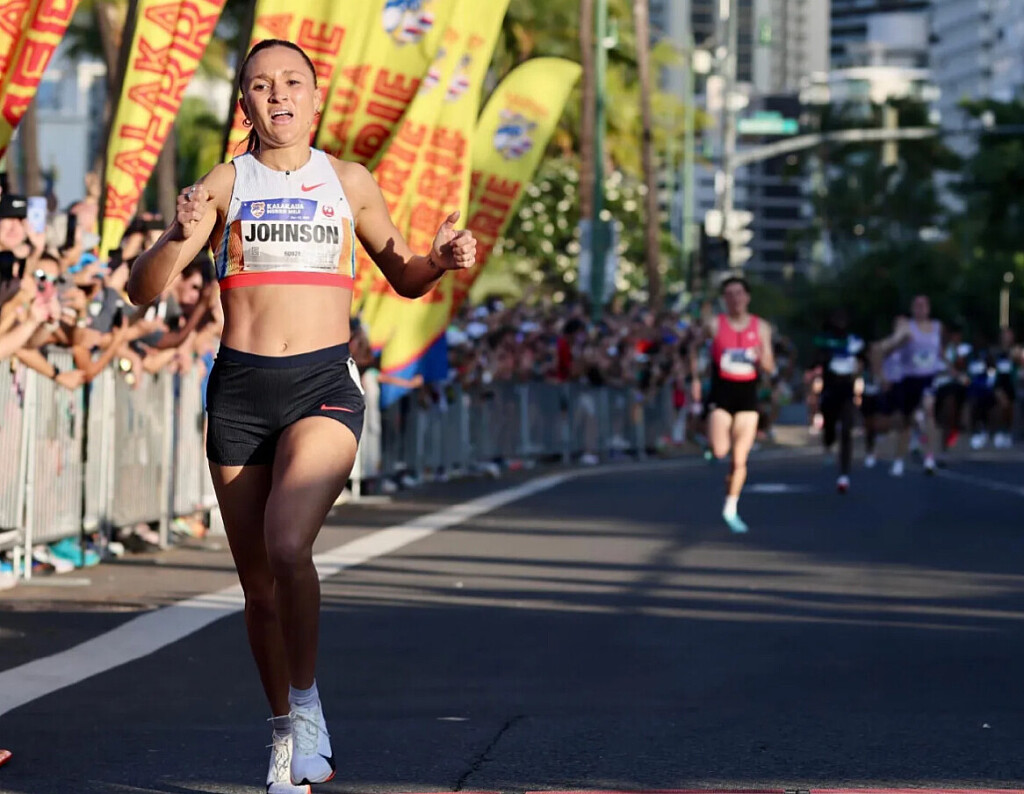
Sinclaire Johnson Breaks American Road Mile Record at Kalakaua Merrie Mile
Thousands of runners lined Kalakaua Avenue on Saturday morning as Waikiki hosted the annual Kalakaua Merrie Mile, the traditional appetizer ahead of Sunday’s Honolulu Marathon.
The one-mile dash delivered a historic moment when American middle-distance standout Sinclaire Johnson surged to a winning time of 4:21, breaking the American road mile record in the heart of Waikiki.
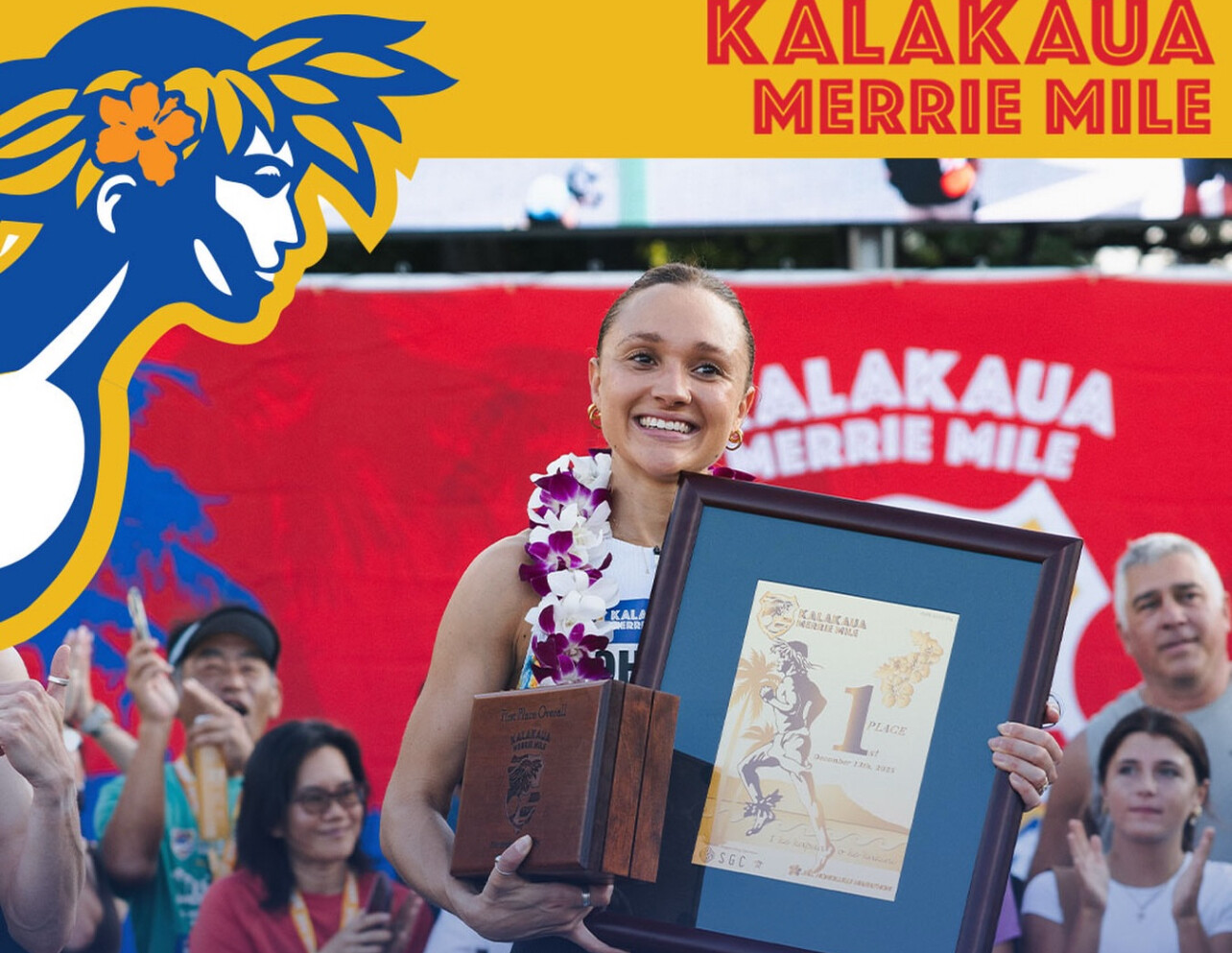
“It’s really special—I think I shocked myself today,” Johnson said after the race. “I thought maybe I could run in the 4:24 range, but to run 4:21 and get the American record is a testament to believing in myself and the work I’ve put in.”
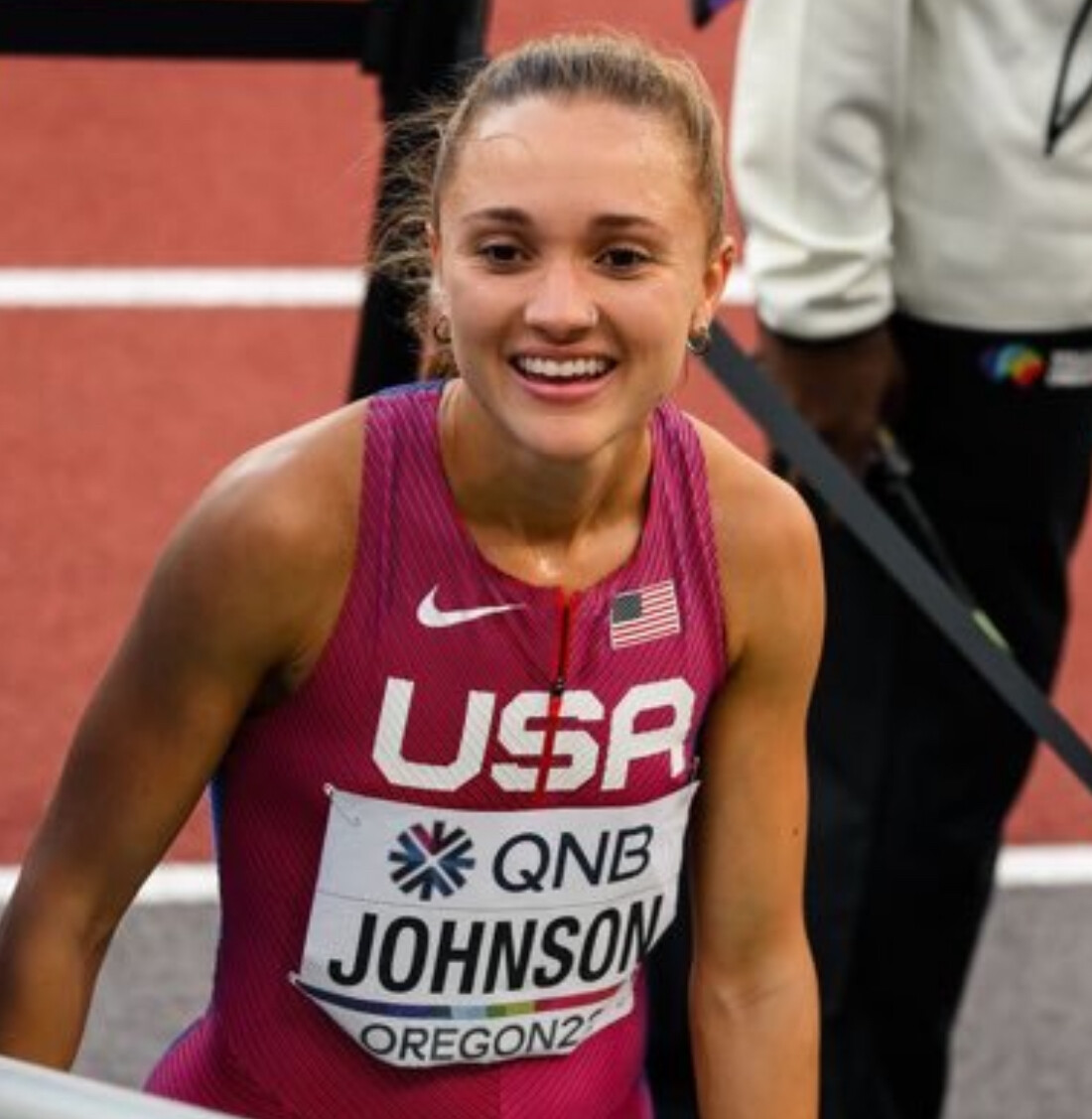
A former NCAA 1,500-meter champion at Oklahoma State, Johnson has competed on some of the sport’s biggest stages, yet she said this race stands out.
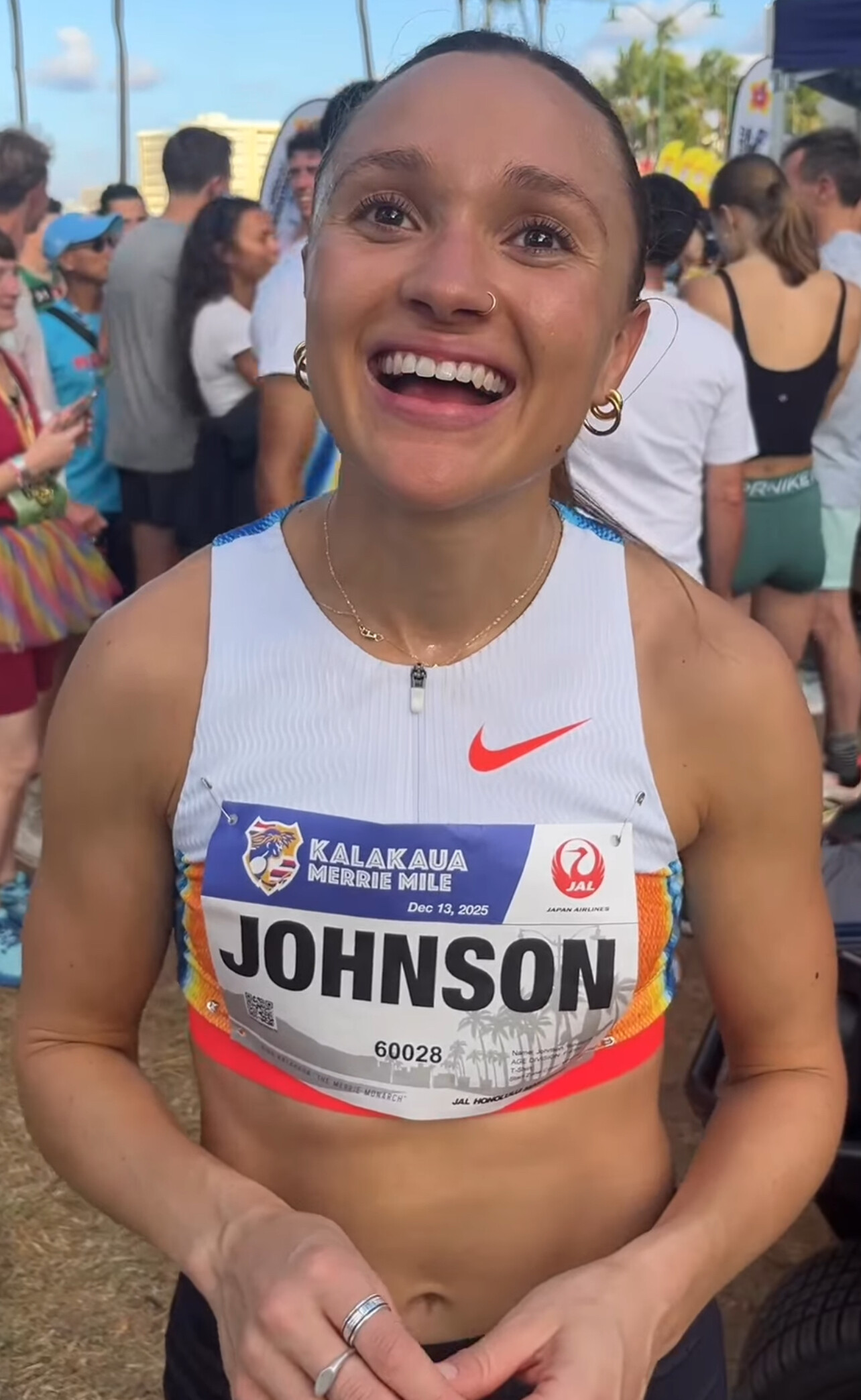
“The conditions are great—it’s sunny, there’s a little breeze, and something about the Hawaiian air just feels different,” she said. “This race is one of my favorites.”
Finishing just behind Johnson was Nikki Hiltz, last year’s winner, as part of a strong elite field that included 12 Olympians competing in Saturday’s race.
For many participants, the opportunity to share the course—and later watch world-class athletes up close—was part of the magic.
“That would be really cool if we could see them,” said Kenai Nacapui. “They just either won or came from the Olympics.”
Oliver Cheng added, “It’s really fun to see Olympians because compared to us, they run way faster.”
Maui resident Mary Trotto said the elite race never fails to amaze her. “You have to see them—it’s unbelievable. In like two minutes, they’re already at the turnaround. It just blows your mind.”
Trotto says the Merrie Mile has become a tradition worth traveling for. “Ever since they added the mile as part of the marathon weekend, I’ve done every one,” she said. “I’ll keep flying over from Maui.”
With record-setting speed, a festive crowd, and Honolulu Marathon weekend officially underway, the Kalakaua Merrie Mile once again delivered a memorable start to one of running’s most iconic race weekends.
by Boris Baron
Login to leave a comment
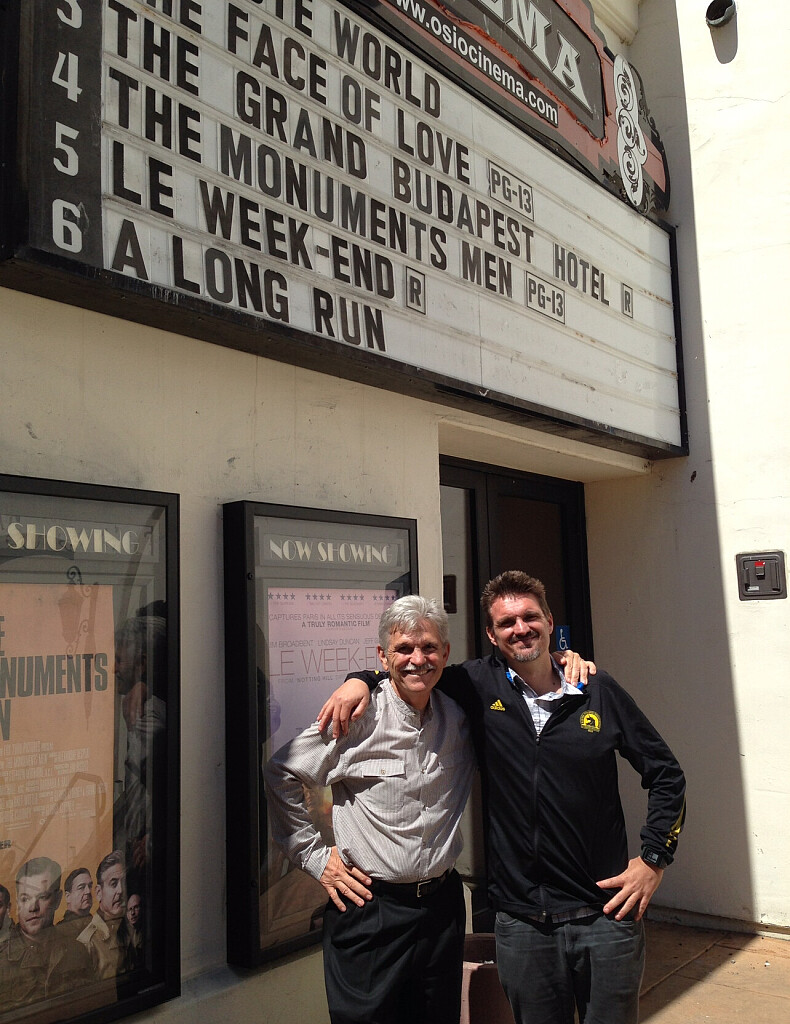
A Long Run – The Running Documentary That’s Inspiring Runners Everywhere
Some films tell a story. Others ignite a movement. A Long Run does both.
But don’t just take our word for it—here’s what real runners who watched the film had to say:
@no1fibersplicer525"I love this! I’m 49 and I started ‘Couch to 5K’ three weeks ago. I signed up for my first 5K last night. I’m super excited...I’m tired after each run, but even as I run further, it’s the same ‘tired’—I’m adapting! I’m becoming that guy I see on TV. I will run this 5K and I will start calling myself a runner! Thanks for the encouragement!"
@AdventuresomeOutlook"I love hearing stories of people picking up running. Running saved me from a deep depression after getting diagnosed with multiple medical conditions. I picked up running (something I never desired doing), and it’s helped me gain so much confidence and pride in myself..."
@deldridg"So many life lessons here. Thank you for such a wonderful documentary and for all the inspiration. Tomorrow after dropping the kids off at school, this Sydney dad will be heading out to a gorgeous trail to enjoy running through 10km of views over the Hawkesbury River, endless bird song, and the company of the occasional goanna. On Sunday, the whole family will do it again. I can’t wait!! Cheers and thank you!"
The Man Behind the Journey
The old guy still has it. A runner will always be a runner.
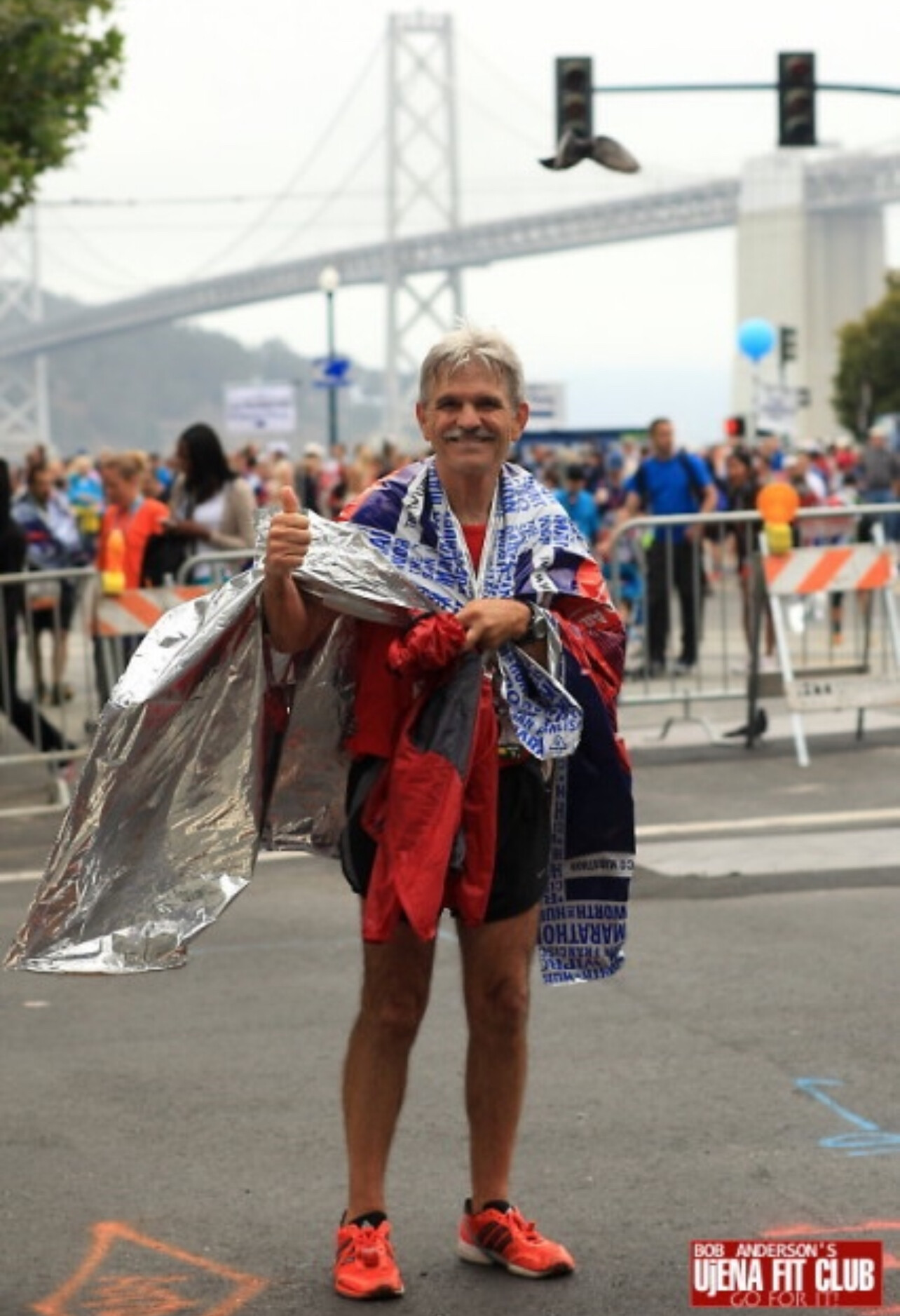
That “old guy” is Bob Anderson, the man who founded Runner’s World magazine at age 17 with just $100 and a typewriter. He built the magazine into a global running institution before selling it to Rodale Press in 1984. But his love for running never faded.
50 years after his first run, Bob took on a bold challenge: run 50 races in one year covering 350 miles at an average pace under 7 minutes per mile—all at the age of 64.
That’s equivalent to a 5:30 pace for a 30-year-old male or a 6:00 pace for a 30-year-old female—elite-level speed at any age.
Could he do it? How would he handle injuries, fatigue, and the mental grind?
A Film Narrated by an Icon
What makes A Long Run even more special is that it’s narrated by actor Sean Astin, best known for his roles in Rudy, The Goonies, and The Lord of the Rings trilogy.
Bob met Sean at one of the races he was staging, and the two immediately bonded over their shared passion for running. Sean, an avid marathoner himself, was the perfect voice to bring Bob’s incredible journey to life, adding emotional depth and energy that captures the heart of the film.
More Than a Personal Challenge—A Tribute to Running
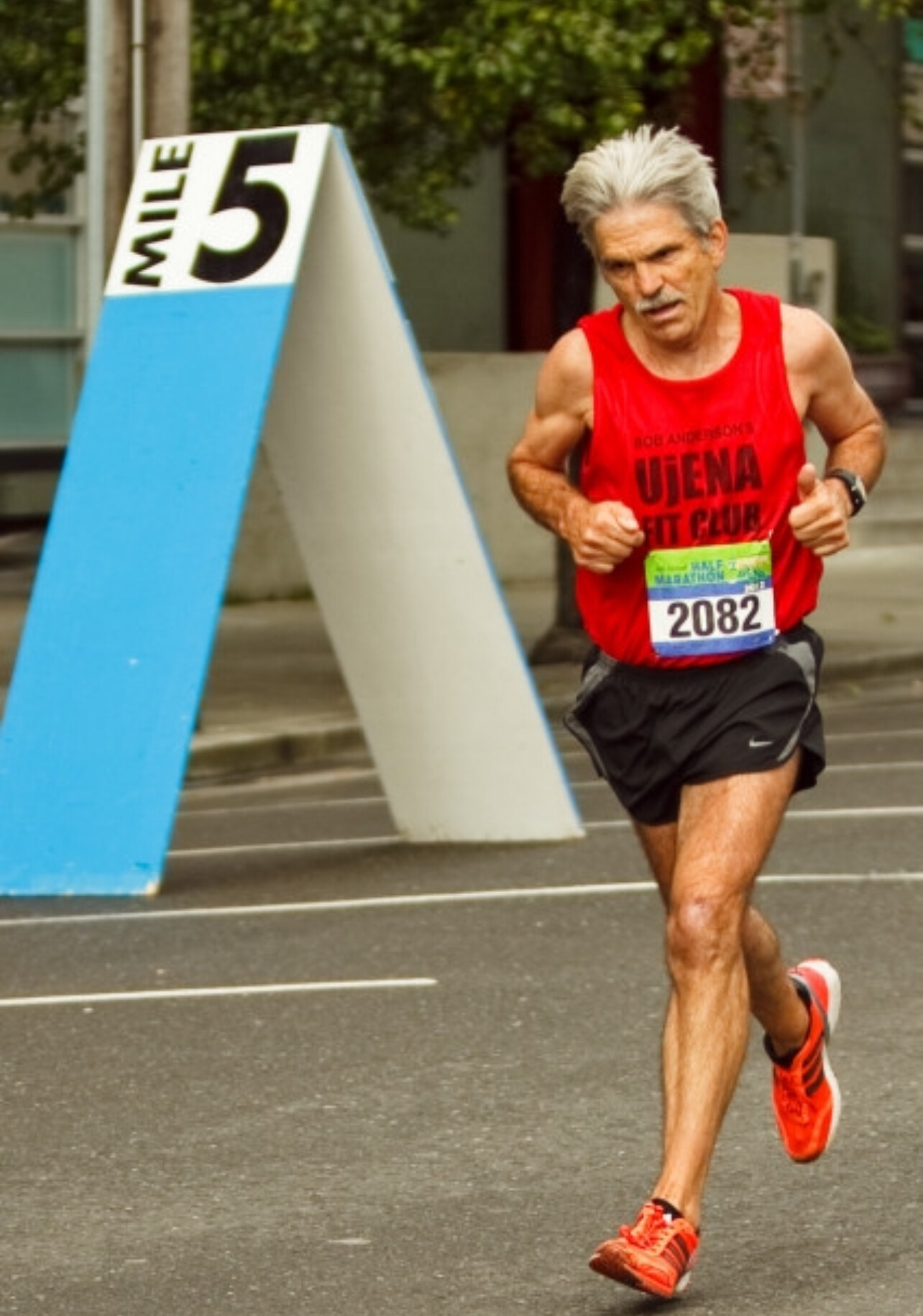
The film isn’t just about Bob. It’s about the sport itself.
The history – A Long Run takes you back to the early days of the running boom, featuring icons like Bill Rodgers, Billy Mills, Paula Radcliffe, Dean Karnazes, and George Hirsch.
Some of the races – Experience the thrill of running through:
Avenue of the Giants – Towering redwoods in California create a breathtaking race backdrop.
San Francisco’s hills – A stunning yet brutal testing ground for runners.
Coastal Fort Bragg – Where the ocean’s rhythm meets the rhythm of the runner.
Run the Parkway Half Marathon (Kansas) – The race near Overland Park, Kansas, where Bob founded Distance Running News, the publication that later became Runner’s World.
Falmouth Road Race (Massachusetts) – One of the most scenic and historic road races on the East Coast.
Kauai Half Marathon (Hawaii) – A September race offering breathtaking ocean and mountain views in paradise.
@angellosmalefakis1321"This was a wonderful film, Bob! Wonderful in so many ways! Good to see that you presented so many icons of the sport of running. I was with Runner’s World when it was young. There in NYC when the marathon was at its infancy. We still miss Fred. Miss Greta. Wonderful film in so many ways! I love it! I am 65 and still running—now winning masters races!"
Why You Should Watch A Long Run
If you’ve ever laced up your shoes for a jog, if you’ve ever wondered how far you could go, or if you just need a spark to get moving again, this film is for you.
With over 342,000 views, A Long Run has inspired runners around the world. The best part? It’s completely free to watch!
@mpgrewal00"Bob loves running. Bob lives running. Good work, Bob."
@shamelesssheamis545"I’m 35 and started 5 months ago. One day I just got up and ran a mile. It was slooow. But that was it for me. I’m up to running 12 miles now and I cannot wait to see where this goes! Happy running, everyone!"
@barefootbeachrunner9498"Awesome. Inspiring film. Thanks for reminding me why I run!"
Where to Watch
Watch the full film for free on YouTube: A Long Run.
Or visit alongrun.com for more information.
We hope you’ll watch it and let us know what you think. Leave a comment, share your thoughts, and help us reach 500,000 views!
This is your chance to see what happens when passion meets determination. To feel the runner’s high without breaking a sweat. To be inspired by the sport we all love.
Because, as Bob Anderson has proven, a long run never really ends.
by Boris Baron
Login to leave a comment

Prison marathon documentary is changing lives behind bars
In 2024, 26.2 to Life, a powerful documentary by filmmaker Christine Yoo, brought the story of San Quentin’s 1,000 Mile Club to audiences worldwide. The film follows incarcerated men training for the San Quentin Marathon, held each year on a quarter-mile loop within the prison yard. Beyond earning critical praise, the documentary inspired change—spurring the creation of new prison running clubs and starting discussions about rehabilitation. Plans for 2025 are already underway, and the impact of 26.2 to Life continues to grow.
Reaching audiences across the world
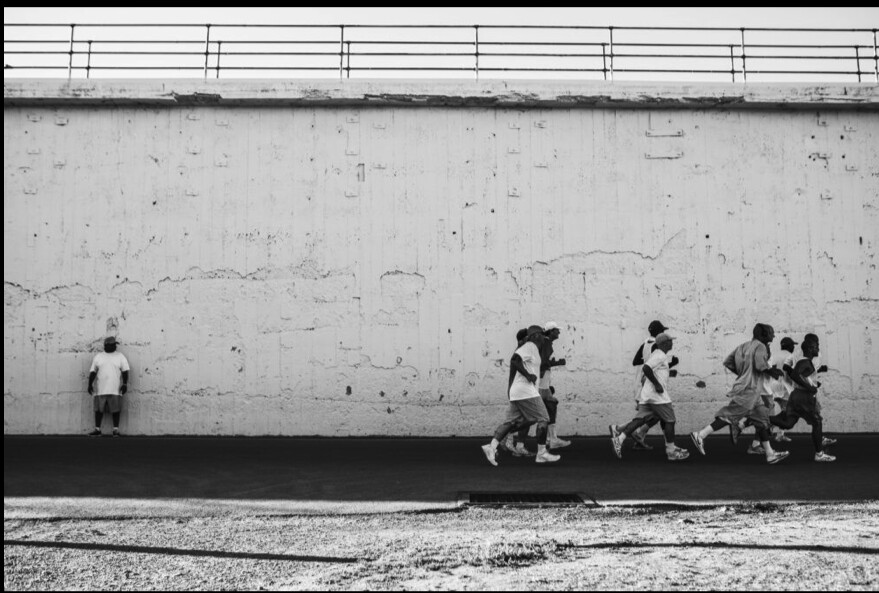
The 1,000 Mile Club evolved after a small group of volunteer coaches was permitted to start a running club in the prison almost 18 years ago, with the idea being that interested inmates could rack up 1,000 miles during their period of incarceration. 26.2 to Life had its broadcast debut on ESPN, bringing the story of the 1,000 Mile Club into living rooms across the U.S. The film is now streaming on ESPN+ and continues to air on ESPN2. Its global reach expanded with in-flight screenings on four different airlines, making the film accessible to more than 300 million passengers.
26.2 to Life has also received critical acclaim, with Best Directing and Best Producing nominations at the Women’s Image Awards. In February, the story will cross international borders with its BBC premiere in the U.K.
Inspiring transformation behind bars
Beyond its cinematic success, 26.2 to Life has created change. This fall, the film was screened at prisons in North Dakota, Oregon, California and Hawaii, offering hope to incarcerated individuals. As one volunteer at Columbia River Correctional Center noted, “Your film offers a powerful message of hope and a vision for possible changes in the penal system.”
The documentary has also inspired new prison running clubs. Seven clubs have been established across the U.S., with six more in the works. To support these efforts, the team developed a free handbook to guide the creation of new clubs, offering practical advice, sample workouts and stories of transformation. You can download a copy of their handbook here.
Looking ahead
The momentum isn’t slowing down. Starting in 2025, 26.2 to Life will become required viewing for all 43,000 employees of the California Department of Corrections and Rehabilitation as part of their annual training. In January, the film will also be showcased at the U.S. 9th Circuit Court of Appeals’ annual conference to foster discussions among judges about rehabilitation and change.
The mission to inspire continues with plans to bring the film to more prisons across the country and to expand the distribution of the 1000 Mile Club Handbook.
Login to leave a comment
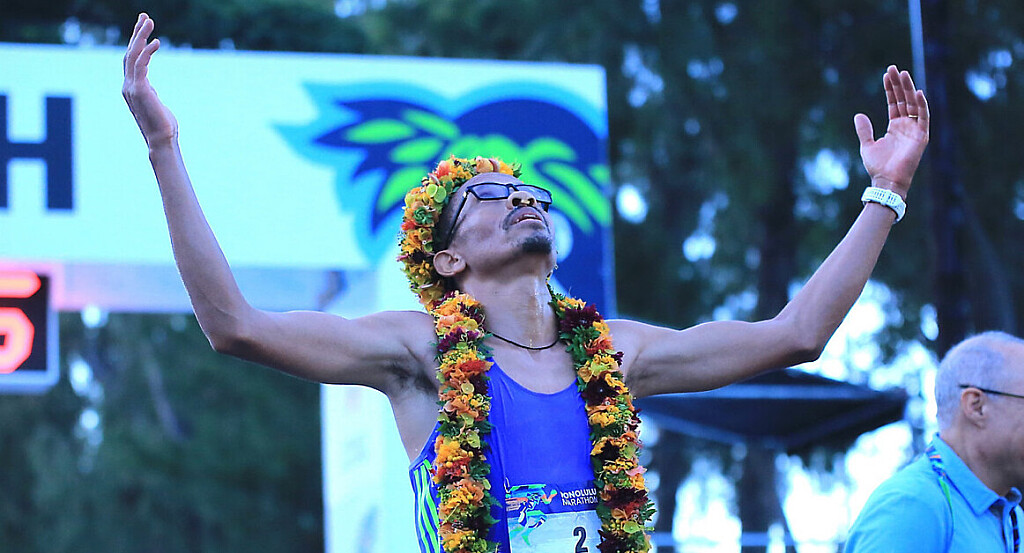
The 52nd Honolulu marathon was another fun and spirited event
Nearly 25,000 runners started the 52nd Honolulu Marathon under 72°F temperatures, 88% humidity and very calm winds. Due to the increased competition that has grown during a second running boom in recent years, Honolulu’s pro marathon field was not as deep as in the past.
“It’s getting harder to get the top runners here,” admitted marathon president Dr. Jim Barahal. “There are other races now, like Valencia, that have faster so they come back they come back courses, no heat or hills. But I’m happy with the field we got and the races they produced.”
Both defending champions returned, heading up small, but strong lead packs.
Kenya’s Paul Lonyagata came down with a small injury two months ago back home in Kenya, and wasn’t prepared to defend his title with any strength. He dropped out just before the 10K mark.
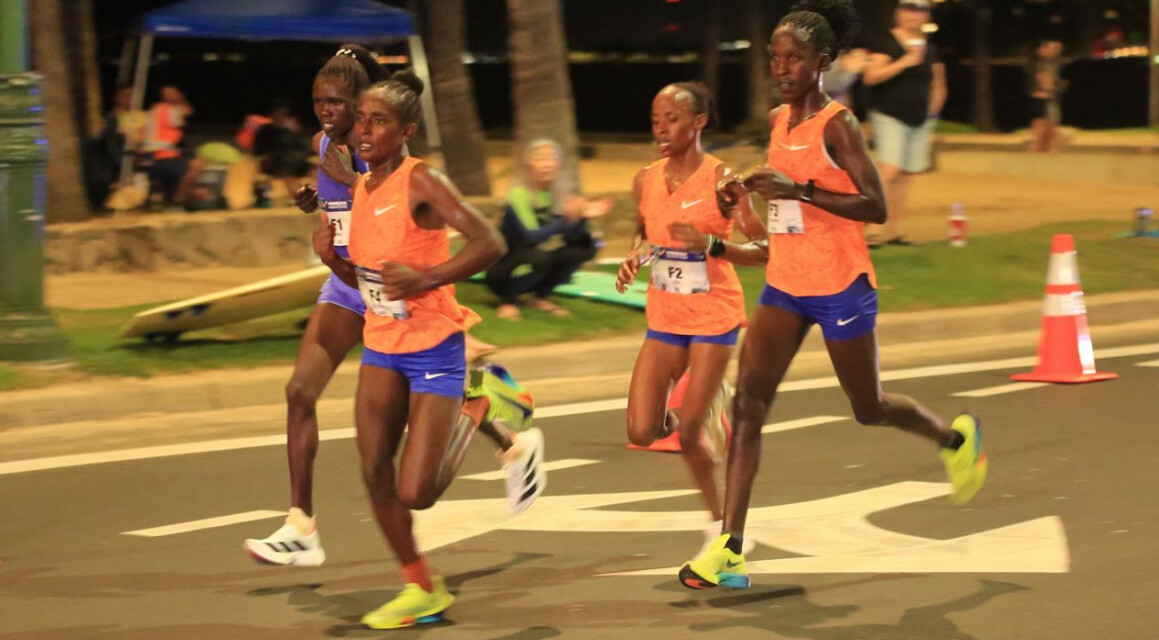
But women’s defender, Cynthia Limo, who debuted with her victory in Honolulu last year in 2:33:01, saw herself in a tight four woman battle that lasted from the 1st mile until 30 km.
Last year’s third place men’s finisher, Reuben Kerio, 30, of Kenya, for some reason, downloaded a 4:38 11th mile as the race headed out Kalanianaʻole Highway for the 4 mile stretch out to Hawaii Kai and the turnaround.
What had been a four man pack was instantly reduced to two as Eritrean Olympian Yamane Haileselassie, 26, who debuted in Boston in April, answered the call a few steps behind the rushing Kenyan.
Super shoes not withstanding, a 4:38 is more like a breakaway mile after 30 km not a how-do-you-do mile not even halfway through the race. Pundits on the scene questioned Kerio‘s decision.
At 15 miles, Yamane HaileSelassie made a move of his own, and within a mile had 10 seconds on Kerio. The lead grew to 30 seconds by 20 miles and the race seemed all but over.
HaileSelassie defected to the United States after the world championships in Eugene, Oregon in 2022. He moved to Flagstaff, Arizona, where he drives an Uber making food deliveries 40 hours a week to supplement is racing income.
He recently won the BAA Half Marathon in Boston on November 10th, running 1:01:46. He was third in that race last year and in seventh the year before. So you knew he was on form. He was also the fifth place finisher at the 2021 Olympic steeplechase final in Tokyo. When you can run top five in the Olympic steeplechase, you know this could be a great marathon runner.
According to his coach, James McKirdy, this is the first season that Yamane has worn super shoes. But he didn’t seem to be dialed in to the new technology quite yet as his feet came out full of blisters at the end of the competition. Still, he held off a never-say-die Reuben Kerio to win the race in 2:11:59
Kerio, who closed within 12 seconds going up Diamondhead at 40 km, finished 17 seconds back with Japan’s Kensuke Horio taking third place in 2:15:30.
Women leaders through Waikiki in mile 6 (33:10)
The women staged a four-person battle from mile one to mile 19. Defending champion Cynthia Limo ran alongside country woman F3 Judith Korir, silver medalist at the 2022 World Championships marathon in Eugene, Oregon. Along with them was F2 Sandrafelis Tuei, also of Kenya, who is has personal best of 2:22:22 from a fourth place finish in Shanghai, China in 2023. The fourth woman in the group was F4 Fanta Gelasa of Ethiopia, runner up at the 2024 Milan Marathon in Italy.
The tall striding Judith Korir controlled the pace for much of the first half, but at 19 miles the Ethiopian Gelasa finally let go and Cynthia Limo began to show signs of trying to take the race over.
In mile 20 Judith Korir finally fell away, leaving just Cynthia and Sandrafelis.
Those two stay together until Diamond Head when, at the 39 km mark, at the aid station Tuei seemed indecisive, unsure how to go to the table and almost ran into it before coming around the table to get her drink. But then she failed to grab it, whereas Cynthia easily snatched her bottle and kept on trucking’.
Suddenly, a side-by-side battle was a two stride advantage. And that seemed to be enough to break Tuei. From there, Limo loped home uncontested to finish in 2:31:13 to take her second straight, Honolulu Marathon title. Tuei finishing 2:31:47, with Judith Korir taking third in 2:36:17.
In this modern area of super shoes, when winning times are faster than ever, sometimes an old-fashioned foot race can be more fun to watch than a solo run against the clock.
Honolulu never had, nor never will have, a reputation for being a fast marathon. But pro racing is just as important to the Honolulu Marathon Association as tens of thousands of average runners. Though In 2019, Honolulu had both the fastest marathon in the America (2:07:59) and the slowest, as they never close their finish line and some finishers take up to 17 hours to complete their journey.
But that’s what makes Honolulu special. And with more people than ever coming to enjoy sun and sand and swaying palm trees while the snow flies back home, it seems the aloha spirit will never go out of style.
by Toni Reavis
Login to leave a comment

Honolulu Marathon
The Honolulu Marathon’s scenic course includes spectacular ocean views alongside world-famous Waikiki Beach, and Diamond Head and Koko Head volcanic craters.The terrain is level except for short uphill grades around Diamond Head. ...
more...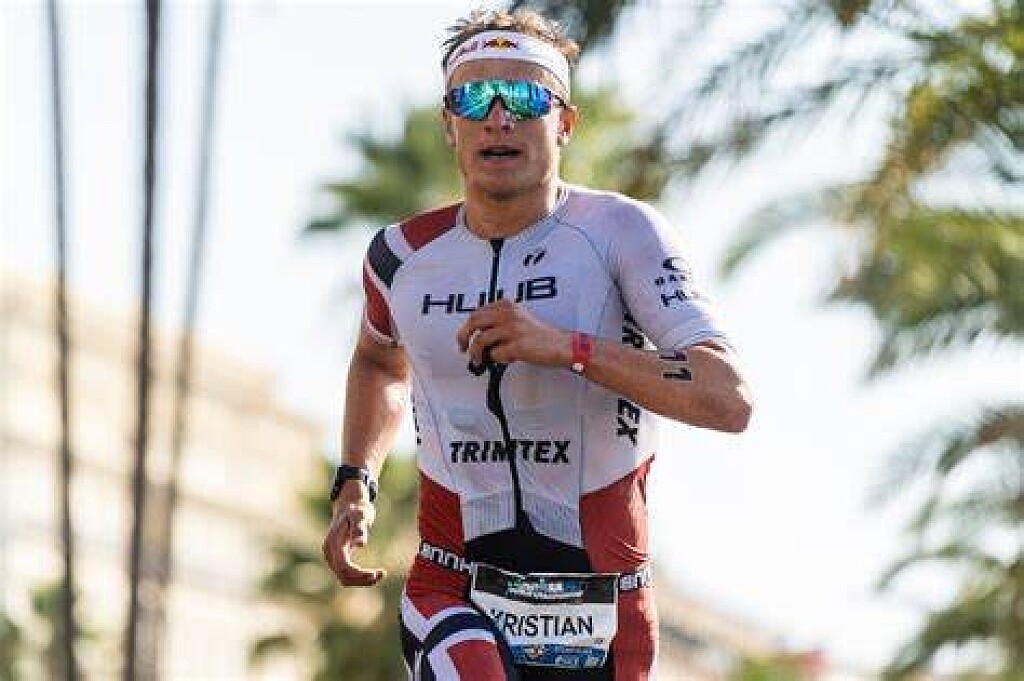
IRONMAN Kona 2024: Kristian Blummenfelt targets World Championship RECORD
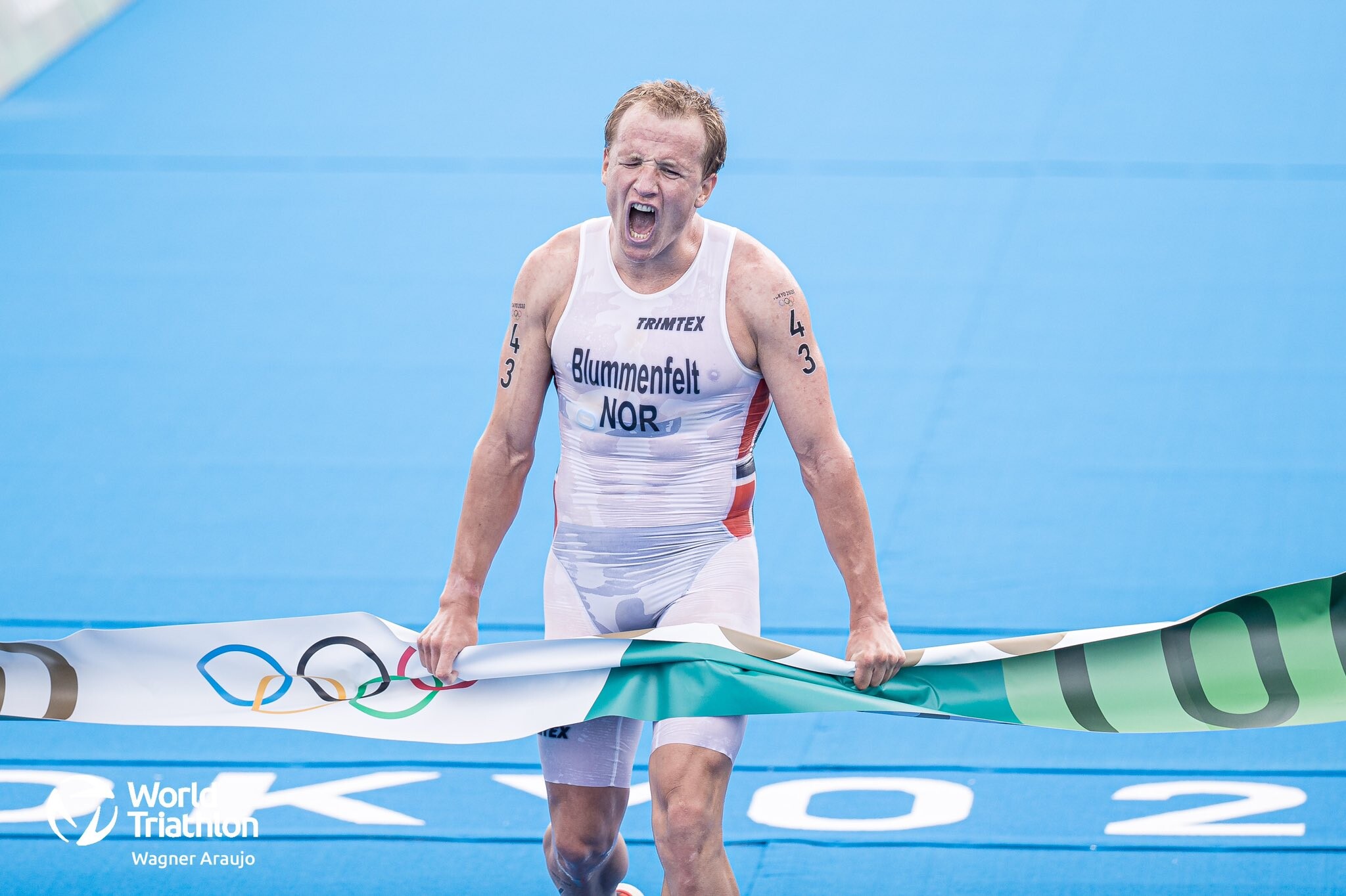
There is one triathlon summit Kristian Blummenfelt has yet to scale, and this Saturday (October 26) in Hawaii he bids to end the wait.
Kona 2024 sees the professional men return to the Big Island for the first time in two years to fight out the 2024 IRONMAN World Championship, with a stellar field set to line up.
Blummenfelt, third behind compatriot Gustav Iden in 2022, will likely start the favourite to top the podium this time, with his friend and rival still rebuilding from a 2023 beset by injury and personal tragedy.
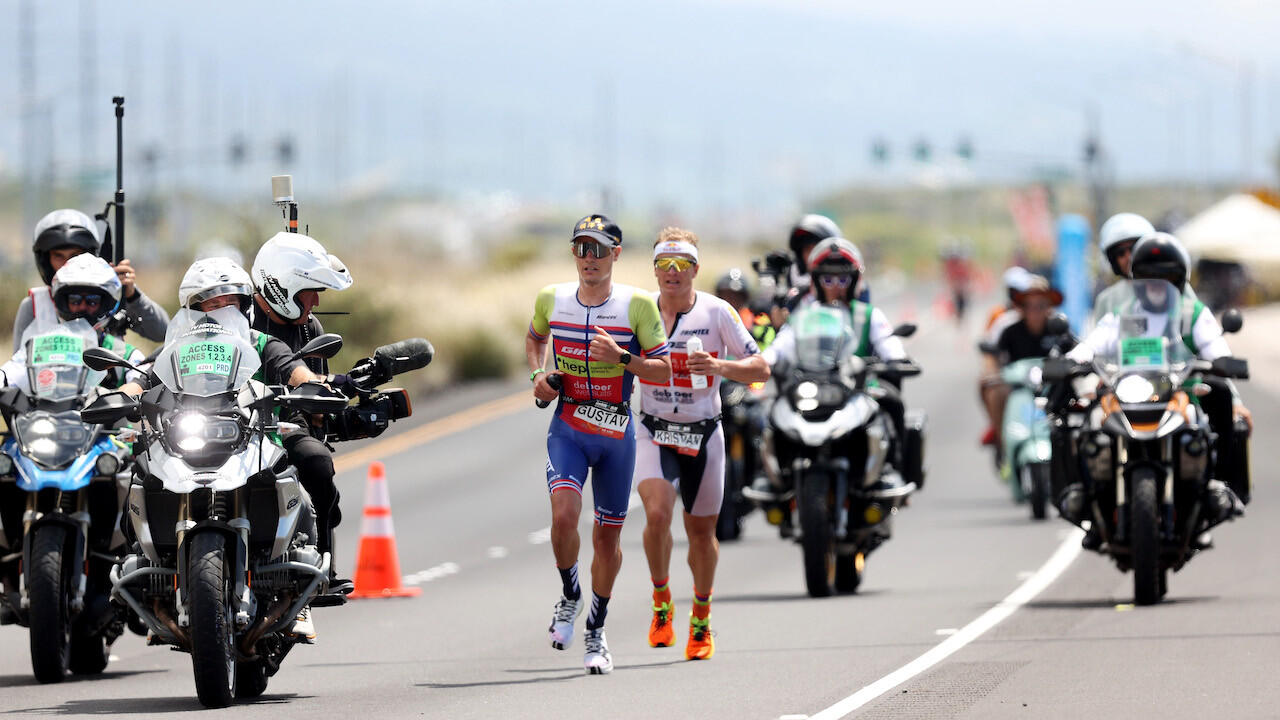
It will not be a cakewalk though (when is Kona ever a cakewalk), with defending champion Sam Laidlow, two-time king Patrick Lange and giant Dane Magnus Ditlev among those also set to toe the line.
Blummenfelt has already shown he is Ironman-ready for this test – remember how he aced Frankfurt less than two weeks after racing the Mixed Relay at the Paris 2024 Olympics? A blistering 7:27:21 – topped off by a 2:32:29 marathon – shocked many, including the man himself.
Blummenfelt Kona prep
Since then Blummenfelt and Iden have been preparing for Kona in the familiar surroundings of Flagstaff, Arizona. And according to Kristian’s coach Olav Aleksander Bu, things are going well.
The Norwegians are always brutally honest about where they are at heading into a race, and always fiercely ambitious with their goals. This time is clearly no different, Blummenfelt is aiming not just to win…
Bu told TRI247: “Prep has been good. It helps that it is a couple of weeks later this year. Race day will have to show what he is capable of ? The weather plays a big role, but a record is always a good target.”
The current Kona record remember was set just two short years ago, in the last Pro Men championship race on the Big Island. That was Iden with a spectacular 7:40:24.
Once Kona is in the rear view mirror, all attention will turn to what Blummenfelt does from 2025 on. That ambitious plan to move to pro cycling and the Tour de France appears to be dead, so he is once again all in on triathlon.
What next for Blummenfelt in 2025?
If L.A. 2028 is confirmed as a future goal, the big question will be how ‘Big Blu’ approaches the four-year cycle heading once more towards the greatest show on earth.
As Bu told TRI247 recently, 10 months of short-course preparation and racing heading into Paris 2024 was ‘mission impossible’, so it is likely the 30-year-old from Bergen would transition back down in distance much earlier next time round.
Bu explained: “We’ll have to come back to this later, but if LA becomes realistic, it means transitioning earlier with more short-course racing. However, with the development we have seen around the tactics, involving dedicated domestiques, it has become a less interesting sport from an individual level, and more a “team” sport.”
We also asked Bu who he fears among the opposition this coming Saturday, and his response as ever was illuminating. The focus is 100 percent on elite preparation and performance from his own athletes, and absolutely nothing else.
“I don’t know, as I really don’t pay attention to what others do. I obviously know some of the household names, which have been on the podium the last few years, but not how they are performing and who is on the start line.”
by Graham Shaw
Login to leave a comment
Ironman World Championship Triathlon Men
The inaugural KONA™ race was conceptualized in 1978 as a way to challenge athletes who had seen success at endurance swim, cycling, and running events. Honolulu-based Navy couple Judy and John Collins proposed combining the three toughest endurance races in Hawai’i—the 2.4-mile Waikiki Roughwater Swim, 112 miles of the Around-O’ahu Bike Race and the 26.2-mile Honolulu Marathon—into one event. ...
more...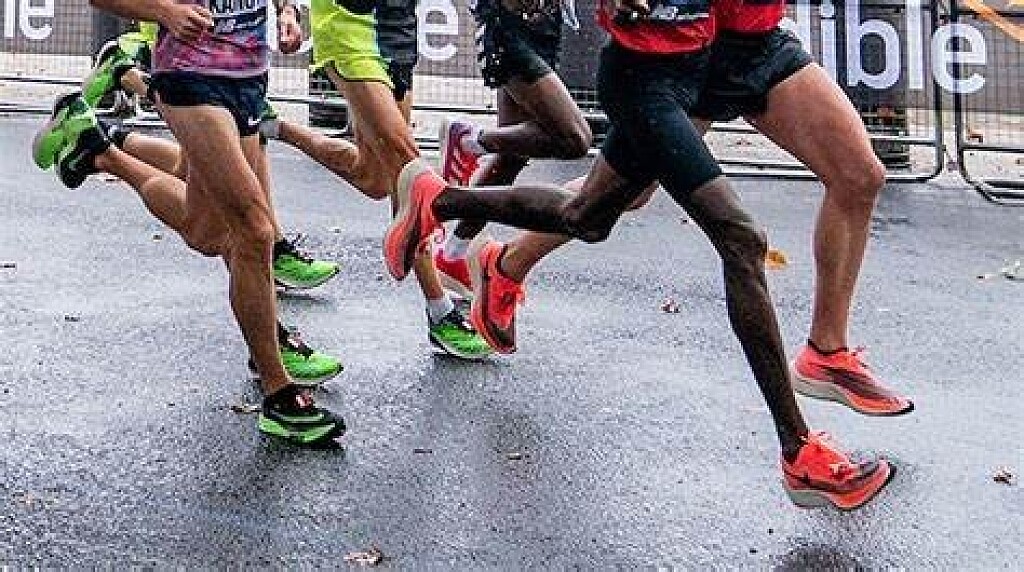
Why running ‘super shoes’ might not be so super for triathlons
Technology might be helping Patrick Lange's rivals more than it helps him, says triathlon legend Mark Allen.
Elite triathletes are running faster and faster every year – in no small part to the technology at their disposal – and that includes those much-hyped ‘super shoes’.
But ironically the ever-advancing plate-enhanced footwear on offer may be giving the sport’s fastest ever marathon runner more trouble than they are worth, according to six-time IRONMAN World Champion Mark Allen.
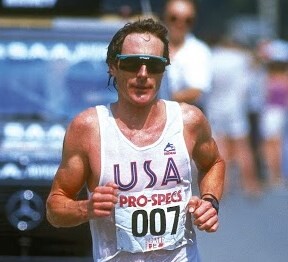
Germany’s Patrick Lange, two-time Kona champion himself, has made a career out of running down the opposition at the end of a brutal 140.6-mile race. Quite simply, nobody has ever been faster.
Twice Lange has come agonisingly close to running the sport’s first ever sub-2:30 marathon, clocking 2:30:27 at Challenge Roth in 2023 and 2:30:32 at IRONMAN Israel in 2022. Undoubtedly helped to an extent by ‘super shoes’.
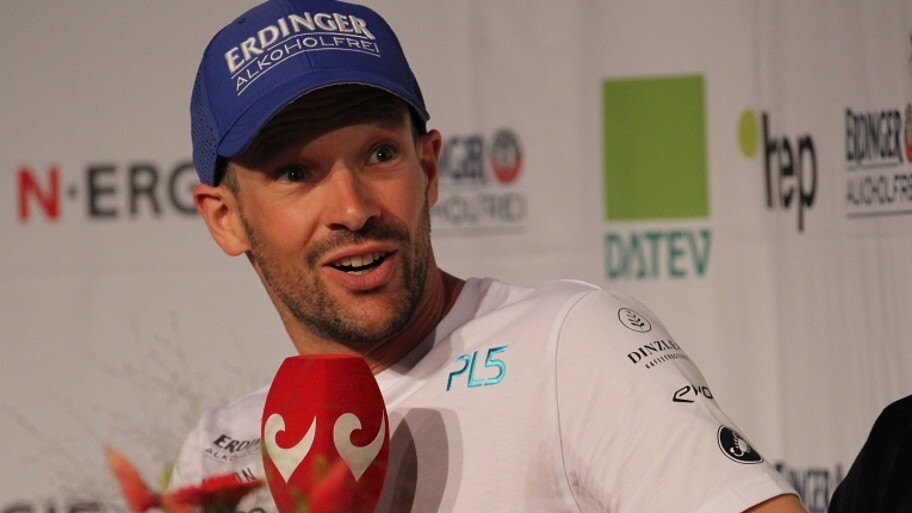
But Allen’s hunch is that those shoes are actually helping Lange’s rivals even more, allowing them to blunt his opportunity to run them down in the closing stages. He explained his rationale when speaking to TRI247 in the countdown to the upcoming 2024 IRONMAN World Championship in Kona.
Mark Allen on Lange
“The interesting thing in my opinion – I think the super shoes have helped some of the less talented runners more than the talented runners. It’s almost like when you throw on a wetsuit, that helps the less talented swimmer more than the talented swimmer.
“Just looking at some of the splits of guys compared to what they maybe had done in the past, it helped Patrick for sure I would say – some of the times he’s been running are phenomenal – but I think it’s helped guys who are maybe a little bit slower running, more than him. Which when it comes to first, second or third, makes it a little more difficult for a really good runner.
“So don’t count him out [in Kona], but also, unless the dynamic is just right and he can feed off the train of a pack, I think it will be hard for him to be top three.”
Despite Allen’s fears about how the race dynamic will impact Lange’s hopes of a third title in Hawaii on October 26, he does believe the German is in peak form coming into the race.
Patrick is peaking for Kona 2024
“A number of people, when I was in Nice for the IRONMAN World Championship, were saying they think he’s actually gonna have a really good race in Kona this year. The underground guys who are keeping track of him, who are there, seeing what he’s doing, knowing what he’s doing, knowing how he’s raced and all that.
“Even if he doesn’t have a win or a top three, I think he’s got that desire to go sub 2:30 on the marathon. So even if he doesn’t win, maybe we’re gonna see a sub 2:30 marathon, which would be kind of like one of those 27-year split times that stays on the record books for quite a while.”
by Graham Shaw
Login to leave a comment

6 Different Kinds of Salt and How to Use Them
For such a basic ingredient, there is variety.

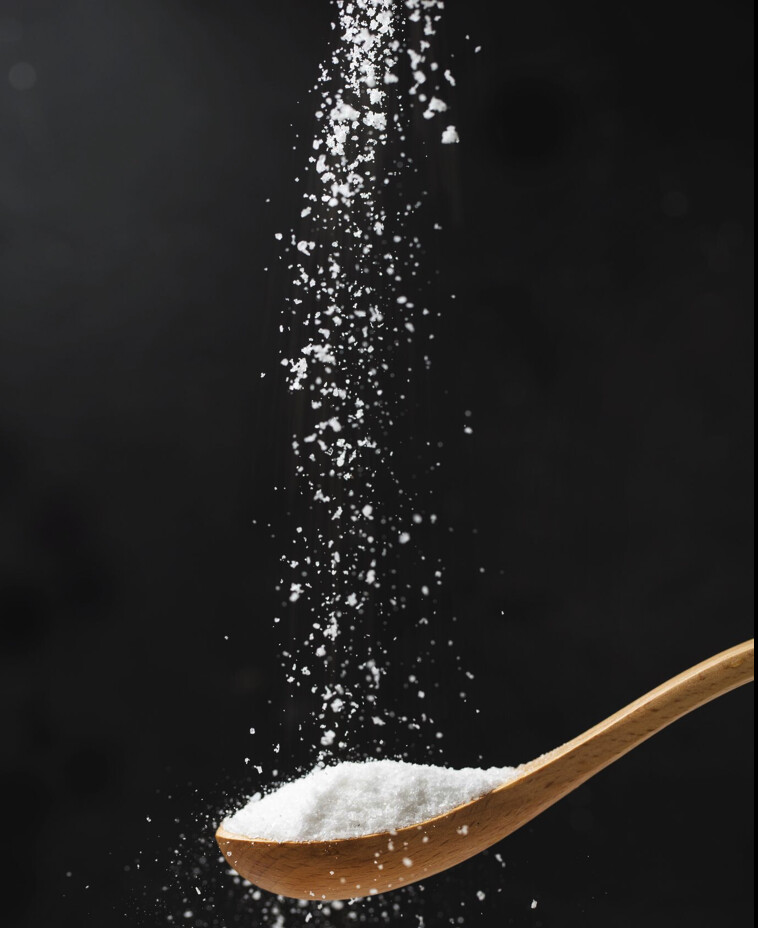
SALT IS ONE of the most commonly used ingredients in the kitchen. And, if you've restocked your supply anytime recently, you might have noticed that there are a few more options beyond a classic shaker of Morton's nowadays. It leaves you to wonder: Are certain kinds of salt healthier than others?
We spoke with Amelia Sherry, M.P.H., R.D., to find out what makes salts different, if some are healthier than others, and how much is too much.
What is salt?
Salt is a mineral composed of sodium chloride, used in foods for flavor, baking, and curing purposes.
"The biggest differences are in size, shape, and texture (of the crystals) which really impacts seasoning and flavors in your food," says Sherry. “Larger granules are less salty, similar to table salt, which has tinier granules. Smaller granules offer a saltier flavor, and there are also salts that are more crunchy and harder."
The differences depend on from where the salt is from, how it's prepared, and its mineral content. While these factors don't affect the nutritional value of salt, they can change the flavor.
Are some salts healthier than others?
There's not much of a difference.
“I don't think there is one that's superior to another. The best one is the one that works for you, while still limiting the amount you consume per day,” Sherry says. There's a misconception that sea salts might be better because they contain naturally occurring minerals like magnesium or potassium, but there's not enough of those nutrients to make a difference in your intake.
How much salt should I have per day?
The amount of salt you should consume per day depends on your specific needs, Sherry says. Although salt is not pure sodium, it is made up of sodium chloride. Too much sodium can be harmful to your health, causing dehydration, high blood pressure, and fluid retention.
Generally, the American Heart Association recommends consuming no more than 2,300 milligrams of sodium per day. (Though the amount also depends on how much you exercise, how much potassium you eat, and if you have any heart conditions.) “If you're avoiding sodium in your diet or eating a low-sodium diet, half a teaspoon may be acceptable per day. For most of us, [salt intake may be lower] because we get sodium from other foods," she says.
And, let's be real: most prepared and processed foods have salt in them. (Even your protein powder has salt in it.) If you're consuming a good amount of processed foods, Sherry suggests limiting to about a quarter teaspoon of salt a day.
1
Table Salt
Regular table salt is a staple in many kitchens. It is very fine, almost powder-like, and highly concentrated. Table salt is usually refined to remove impurities and often has iodine added, which helps regulate thyroid hormones.
“It's important to note that iodized table salt is a significant source of iodine. This is crucial to keep in mind if you're avoiding iodized foods like seafood, dairy, and eggs,” which your doctor might recommend if you have thyroid issues, Sherry says.
Use table salt sparingly, as it packs a lot of flavor in a small amount.
2
Flaky Salt
Flaky salt has flat, larger crystals and a coarser texture than traditional table salt. These flakes are less salty due to their larger volume and are perfect as a finishing touch on chocolate chip cookies, avocado toast, and a fried egg.
3
Sea Salt
Derived from evaporated seawater, sea salt comes in many varieties and origins. The most common are Celtic sea salt, Fleur de Sel from the French sea, and Hawaiian sea salt. Sea salt is less refined than conventional table salt, with retaining traces of minerals and electrolytes like iron, zinc, magnesium, and potassium, which alters the flavor.
4
Pink Himalayan Salt
Mined from the Khewra Salt Mine in Pakistan, Pink Himalayan salt is often thought to be healthier due to its mineral content—but that's not true. The additional mineral content is so minimal that it doesn't really change its nutritional value.
Himalayan salt is often used as a finishing salt in sauces, marinades, or to enhance dishes.
5
Black Salt
Black salt gets its color from high-temperature kiln heating of pink Himalayan salt. It has a distinctive strong, pungent flavor reminiscent of eggs, making it a popular choice in dishes like tofu scrambles.
6
Seasoned Salts
These blends combine herbs and spices with salt, perfect for barbecue rubs, chicken, salad dressings, and snacks like popcorn.
Login to leave a comment

Why You (Yes, You) Were Born to Run
A new analysis in Nature Human Behaviour bolsters the case that persistence hunting—and, by extension, running itself—is a key part of our collective history.The theory that human endurance evolved out of our need to outrun our prey has intrigued runners for four decades. After all, the idea of “persistence hunting” presents a much more romantic explanation for our otherwise pathological obsession with slogging through the Trial of Miles. According to the original endurance hunting theory laid out in a 1984 paper by David Carrier, modern runners are actually expressing the essential spirit of our species. It is running that, as the cliché goes, made us human—and that’s why so many of us still run.
It’s such a lovely theory that, in the running world at least, we mostly tried not to probe it too closely. In the scientific world, though, there have long been doubters. In particular, the hypothesis has two main weak points. One is that running incinerates calories, which is great if you’re trying to lose weight but highly problematic if you’re trying to eke out a precarious living on the savanna. The other is that, among the hunter-gatherer societies that maintained their traditions into the 20th century and beyond, persistence hunts seem to be rare novelties that only occur in a few special places. No one doubts that we can run down antelopes, but it doesn’t seem to be the kind of core pursuit that would shape our evolution.
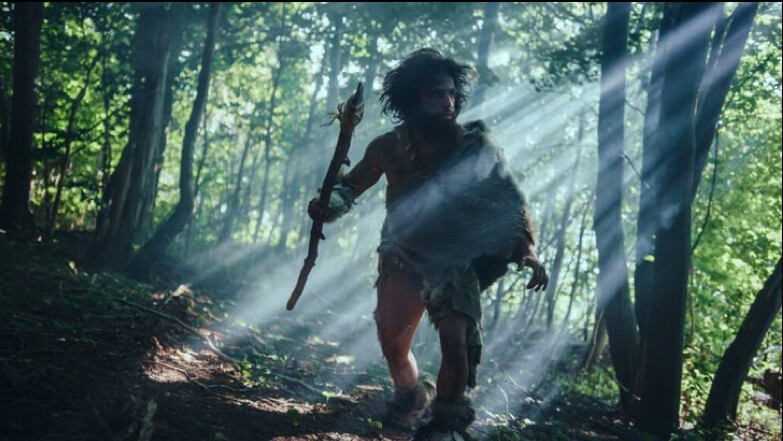

Happily, a new analysis in Nature Human Behaviour counters those criticisms with fresh data, bolstering the case that persistence hunting—and, by extension, running itself—is a key part of our collective history. Eugène Morin of Trent University and Bruce Winterhalder of UC Davis bring together several different lines of evidence to argue that persistence hunting was worth the caloric price, and took place in virtually every corner of the globe—not just on the African savanna, but in dense woodlands, on mountain slopes, and across snow-covered wastelands.David Carrier’s original endurance hunting theory was further fleshed out in 2004 by Daniel Lieberman and Dennis Bramble, then made famous in Christopher McDougall’s 2009 bestseller Born to Run. According to the theory, we have a bunch of traits that make us good long-distance runners. Most importantly, we have lots of efficient and fatigue-resistant slow-twitch muscle fibers in our legs, and we can cool ourselves by sweating from our mostly hairless body surfaces. There’s a long list of other potentially advantageous adaptations, from flexible breathing patterns to long Achilles tendons. These features suggest that our bodies were shaped by evolution to be good at endurance running.
There’s no doubt, though, that running burns more calories than walking to cover a given distance. If you’re tracking an antelope, wouldn’t it make more sense to be patient and stick to walking along its trail? Morin and Winterhalder calculate the return rate for various hunting scenarios, taking into account the calories you’ll burn in the pursuit, the chances of success or failure, and the calories you’ll get from the animal to produce an overall estimate of how many calories per hour each hunting method is “worth.”
Surprisingly, the faster you go, the more rewarding the hunt is. Faster speeds burn more calories per unit time but take less time to catch the animal; the time savings outweigh the extra cost of running. The benefits of ending the hunt sooner are so big that it’s still more efficient to run even if you have to cover twice the distance that you would if you walked.Morin and Winterhalder and their colleagues have done similar calculations for other types of hunting—“encounter” and “communal drive”—and find that the return rates are similar, or in some cases even better for persistence hunts, depending on the context. For example, the persistence hunter has an advantage when the terrain impedes the prey: pursuing game through deep or crusty snow is effective if you’ve got snowshoes or skis. Hot weather also favors humans over animals like deer, which cool themselves by panting, though it’s possible to run them to overheating even in moderate conditions.
All this is interesting but theoretical. How do these numbers translate to real-world behavior? The other part of the study is a new examination of old ethnographic sources that have been digitized in recent years, making them easier to search. The researchers assembled 8,000 publicly available “memoirs, travelogs, missionary accounts” and other documents, and used content analysis software to look for passages where words such as “run down,” “tiring,” “game,” and “animal” occurred close together. Amazingly, they turned up 391 descriptions of persistence hunts dating from the 1500s to the 1900s, occurring on every continent except Antarctica and in a wide variety of different environments and societies.
Most of the previously known accounts of persistence hunting came from hot, open plains in Southern African, the American Southwest, and Australia. The new accounts cover a much broader territory: native Hawaiians “jog-trotting” over rocky terrain until wild goats give up in exhaustion; single unaccompanied Beothuks in Newfoundland running down fat stags; Dayaks in Borneo taking advantage of hot, dry days to catch deer. Around 40 percent of the hunts were in forest, taiga, or rainforest, and another 20 percent were in environments with mixed vegetation.There’s a big gap in southern Eurasia, which is probably because hunter-gatherer societies in those regions were replaced by farmers long before there were written records or curious anthropologists. And there’s a big cluster along the west coast of North America, thanks to a massive ethnographic project undertaken by the University of California in the 1930s and 1940s. This Cultural Element Distribution project systematically surveyed 141 societies in the region; 114 of them, or 81 percent, reported persistence hunting, bolstering the claim that this was a widespread activity rather than a rarity. (In the inset, persistence-hunting societies from this survey are shown with black dots; non-persistence-hunting ones are red dots. If you can see the difference, your eyes are better than mine.)
The upshot of all this data-crunching is a much more robust claim that persistence hunting was a widespread human activity that could well have shaped our evolution. “The emergence of endurance running,” Morin and Winterhalder write, “also informs our predilection for recreational running.” In other words, yes, we were born to run. But don’t feel bad if you read these accounts and think, “Oh man, I’ve been training for all these years and there’s still no way I could run down a deer.” That, too, is a tale as old as time.
“In the old days we used to hunt with the bow and spear,” a Gwich’in elder in northwestern North America lamented in the 1850s. “Our young men were strong in those days. We hunted the moose by running him down on snowshoes, and we could run all day, such as wolves. Now our young men are become lazy and feeble. They prefer to hunt the moose in the fall, when he is easy to kill. They ride on their dog-sleds and are afraid to run all day.”
by Outside online
Login to leave a comment
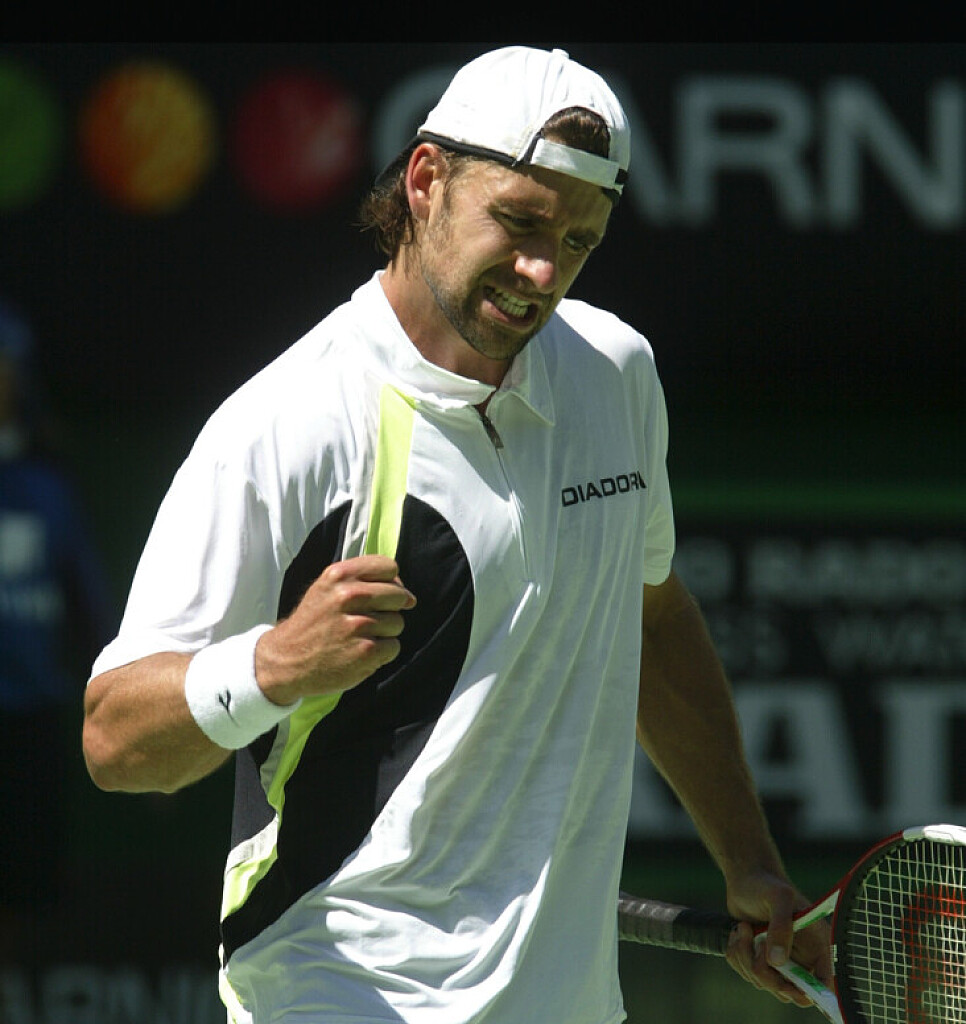
Here Are the Celebrities Running the 2024 Boston Marathon
Zdeno Chara and Meb are a few of the big names toeing the line in Hopkinton this year.Every year, the Boston Marathon attracts celebrities from various fields, from athletes to actors, and this year is no different. Last year, former Boston Red Sox players Brock Holt and Ryan Dempster took to the streets alongside legendary quarterback Doug Flutie, who won the Heisman while at Boston College.
This year, things kick off with former Patriots tight end Rob Gronkowski serving as grandmaster for the race. Gronkowski will also receive the Patriots' Award from the Boston Athletic Association, which honors a “patriotic, philanthropic, and inspirational” individual who “fosters goodwill and sportsmanship.”
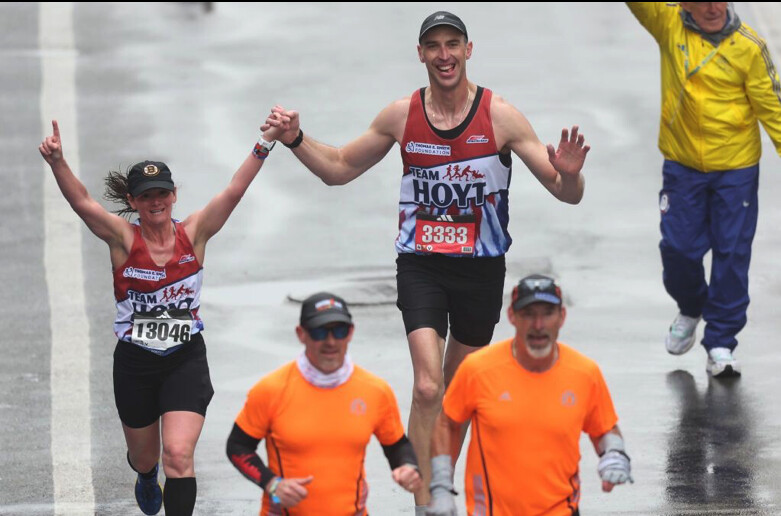
This year, spectators will see not only a few returning faces in the streets but also a few first-timers. So, what notable names can we expect to see lining up in Hopkinton this year for the Boston Marathon? 1
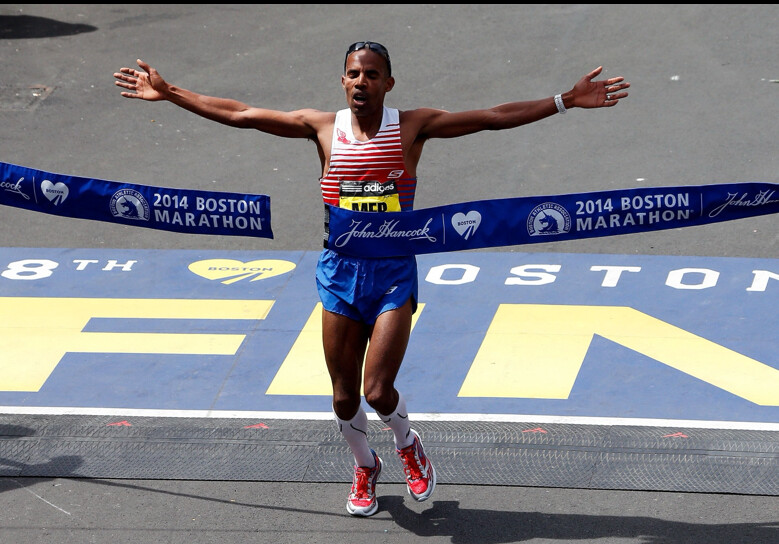
Meb KeflezighiMeb Keflezighi, now with New Balance, announced his return to the race earlier this year. In 2014, Keflezighi became the first American to win the men’s race since 1983.
Keflezighi, 48, will run the race to support his MEB Foundation, which supports “health, education, and fitness worldwide.”
“I will be returning to the streets of Boston, taking on the prestigious race and celebrating my victory from 2014,” Keflezighi said on Instagram. “Together, we can light the path for those in need and show the world the power of compassion and community. Let’s run with purpose and inspire others to join us in spreading kindness and hope.”2
Zdeno CharaChara, the legendary Bruins hockey player who stands a mighty six feet, nine inches and helped bring the Stanley Cup to Boston in 2011, is again running in support of the Thomas E. Smith Foundation and the Hoyt Foundation.
“I’m excited to be running the 2024 Boston Marathon to raise money and awareness for @thomasesmithfoundation & @teamhoytofficial!,” Chara said on Instagram. “These two amazing foundations impact the lives of those living with disabilities through financial and emotional support.”3
Nicolas KieferKiefer’s Boston Marathon run will see the former tennis pro complete the last of the big six, having previously run Berlin, Chicago, London, New York, and Tokyo.
Kiefer, who won silver in the 2004 Olympics, wrote on Instagram that he felt “extremely good” during his final training run before the marathon.4
Chris NikicAt 22, Chris Nikic completed his first Boston Marathon in 2021. He is the first person with Down Syndrome to finish the Hawaii Ironman and all Big Six marathons. Nikic aims to improve his Boston time to 5:35 in 2024, his third time running the race.
“Last long run (20 miles) before @bostonmarathon next weekend and @londonmarathon in 2 weeks,” Nikic said on Instagram on Sunday. “Looking to see if I can do better each marathon.”5
Daniel HummDaniel Humm, the chef behind NYC’s three-Michelin star restaurant Eleven Madison Park, hoped to run the New York Marathon but had to drop out due to an Achilles injury. Instead, he will be running in Boston, hoping to beat his time in the same race last year when he ran a 2:58:53.6
Matt WilpersFamed Peloton instructor Matt Wilpers will be running the marathon as a long-time personal goal and as a way to inspire others as he does during his popular workouts.
“My success is when my athletes are successful, so if I can push them to be stronger, better versions of themselves by going out and leading by example, like, I love this stuff,” Wilpers told Boston.com. “I’ll have fun racing a marathon, I’ll have fun racing a 5K. Whatever it is, this is what I do for fun. And so if this is going to get people excited, let’s go do it.”
by Runner’s World
Login to leave a comment

Burnout Is Complicated
Kieran Abbotts is a PhD student at the University of Oregon, studying human physiology. He earned his master's degree in Metabolism and Exercise Physiology at Colorado State University. The lab that he works at now studies exercise and environment and stressors on physiology. In other words, he's an expert on how the chemicals in the body work during exercise, and what happens when things get out of whack.
"Essentially, there are two kinds of training. There's functional overreaching, which means you stress the body with hard workouts and long runs. Then you provide adequate time to recover, and you induce adaptations," Abbotts said. This kind of training is ideal-your body is getting stronger. "You want to be functionally overreaching as an elite athlete-so that you're making progress and becoming a better runner, but also giving yourself adequate recovery."
And then there's non-functional overreaching, which can feel the same to many athletes, but it's very different.
"With non-functional overreaching you're essentially doing the same thing-big workouts, stressing the body-but not giving yourself enough time to recover. And so you start doing damage." That damage might take a long time to show itself, Abbots said, but it eventually will.
This might be the most important thing to know about being an athlete at any level. Non-functional overreaching is exactly the same as very healthy training, except without enough rest. And rest is different for everyone, which makes it exceptionally easy to slip from functional overreaching into damaging non-functional overreaching without realizing it. Without adequate rest, the body begins to break down instead of build stronger.
Stress Is Stress
Professional ultrarunner Cat Bradley, 31, living in Hawaii, has experienced fatigue and burnout in various forms, including just after she won Western States in 2017.
Winning a big race is great, but it also means all eyes are on you-the pressure is high to stay on top. "After winning Western States, I took a month off, but I was still running at a high level. And for lack of a better term, I felt like I had a gun to my back," Bradley said. "I wanted Western States so badly, and after I won, so many things happened and I never shook that gun-to-the-back feeling. After a while, it led to burnout. I had to take a mental break."
For many athletes, finding success can be the stress that makes non-functional overreaching feel necessary. How can you take an extended break when you're winning and signing new sponsor contracts?
A second version of burnout for Bradley came when she went through an especially stressful situation outside of running. She was dealing with such extreme daily emotional stress in her personal life that everything else was affected, including running and training. When the body is enduring stress, it doesn't know (or care) what the cause is. We can't put our life into silos. If there's stress in one's life, everything else needs to be adjusted. It doesn't matter if that stress is "just work" or illness, or relationships.
When you're overtraining, or chronically overstressed, your body is creating higher levels of "catecholamines" hormones released by your adrenal glands during times of stress like epinephrine, norepinephrine, or adrenaline. "Having those chronically high levels of overstimulation and not enough recovery, you wind up with a desensitization," Abbotts said. "Overstimulation also causes decreased levels of plasma cortisol. Cortisol is the stress hormone, and it plays a very important role in your physiology."
When you're exercising or stressing the body, cortisol will go up, to help the body deal with the stress. But if you're constantly requiring lots of cortisol, your body will eventually down-regulate. It will adapt and then you'll have low levels of cortisol. This means trouble dealing with physical and mental stress.
In February, Bradley experienced her most recent version of burnout, and it happened mid-race. Bradley was running the Tarawera 100-miler in New Zealand. Besides training for such a big race, she was also working full-time and planning and preparing for her wedding, which was just days after the race. On top of everything, travel to the event was incredibly stressful.
"I was in fourth place, I could see third, and at mile 85, I passed out and hit my head on a rock," Bradley said. "We can talk about the reasons that I fainted, but I really think my brain just shut down-it was too much."
For Bradley, reaching burnout has a lot more to do with outside stressors than the actual running. But now she's aware of that-she continues to work on not reaching the gun-to-the-back feeling. The need to please others. The fear of losing fitness in order to take care of her body. It's an ongoing process, but an important one.
Overdoing Is the American Way
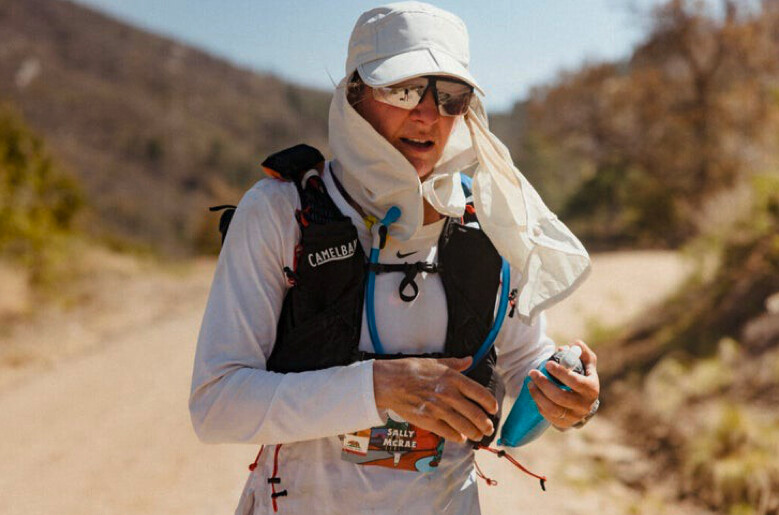
Professional ultrarunner Sally McRae said, based on her observations, Americans are really bad at taking time off. "I've traveled the world and Americans are really bad at resting," she said. "It's part of our work system. You go anywhere in Europe and everyone takes a month-long holiday. You have a kid and you take a year off. We're not conditioned like that in America. It's like you get one week and then after you work a decade, you get two weeks of vacation."
For McRae, avoiding burnout and overtraining has a lot to do with creating a life that's sustainable. She started working when she was 15-years-old, so she realized earlier than most that life couldn't just be working as hard as possible to count down to retirement.
"Perspective is massive when it comes to burnout. My goal every year is to find the wonder and the beauty and the joy in what I do. Because it's my job, but it's also my life," McRae said. "And I really believe we're supposed to rest-it should be a normal part of our life. Whether that's taking a vacation or taking an off-season. I take a two-month offseason and I have for a long time."
One of the most important parts about rest and not overstressing the body is that everyone is different. An overstressed body can lead to hormonal imbalances, which in turn affects everything.
"When you're overtraining, you tend to get mood changes and have trouble sleeping," Abbotts said. "Two of the big things that stand out are you're exhausted but you can't sleep. And the other is irritability-mood swings, and depression." When you get to the point that you've overstressed your body for so long that the chemicals are changing, pretty much everything starts falling apart.
And even though everyone is different, you'd never know that from looking at social media. "I know social media makes it seem like ultrarunners are running 40 miles a day, doing a 100-mile race every other weekend," McRae said. "And that's insane. You've got to be in touch with yourself. It's very different to wake up and feel sore or tired, but if you wake up and feel like you have no joy in the thing you're doing, you need a real break from it."
How Can the Running Community Do Better?
Elite ultrarunner and running coach Sandi Nypaver wants runners to get more in touch with how they're feeling and less concerned about numbers or what anyone else is doing.
"I have to have honest talks with people I'm coaching. I need them to feel like they can tell me how they feel, because sometimes they think they have to stick to the training plan for the week no matter what," she said. "But the plan is never set in stone. It's meant to be adjusted based on how you're feeling. Some weeks we might feel great and not need to change anything, while other weeks we might have to totally crash the plan and do something else."
It's easy to judge ourselves against everyone else, especially when results and reactions are so public and available.
"It's easy to say, 'if that person only took three days off after a big race, and now they're already back to training, that must be what you're supposed to do,'" she said. "But even at the highest level, training is different for everyone. Resting is different for everyone."
"Something that's really, really hard for many runners to understand is that once you're not sore anymore, that you're still not recovered," Nypaver said. "A lot of research says that things are still going on in your body for up to four weeks after, for certain races, depending on the distance."
Sometimes it's difficult to be aware of subtle signs when the soreness is gone. "Convincing people that they need to chill out for a while, even past the soreness, can be really difficult." But after a huge effort, and before the next, people rarely end up saying things like, "I really wish I hadn't rested so thoroughly." Part of it is actually having a recovery plan. Putting rest days on the calendar, focusing on foam rolling and mobility on days that you're not "doing."
"And, actually just relaxing. Taking it easy. It's not just a running model, we live in a culture where we're always being asked to do more," Nypaver said. "I wish instead of always thinking about doing more, we'd focus on how we want to be more. A lot of us want to be more relaxed and less stressed and happier and enjoy our lives. We need to put our attention on that instead of trying to do so much. It's something I struggle with all the time."
We don't get validation for resting, relaxing, and being present because there's no tangible thing to show for it. There's no "be really calm often" challenge on Strava. But the bigger rewards are great. You just have to trade in immediate dopamine hits for a much more balanced, happier life.
Simple, right?
"One thing I'm doing, and asking my athletes to do, is to write down your intentions," Nypaver said. "One of my intentions is to chill out more this summer and enjoy it. I grew up thinking it's all about running, and I have to go all-in on running. But having other outlets, other things that I like to do, is so important."
When you've reached burnout-an extended period of non-functional overreaching, prolonged rest is the only way to let the body fix itself.
"Once you are overtrained, you need to stop training," Abbotts said. "It's just kind of the bottom line. Maybe some people can get away with greatly reducing their training load, but most of the time you need to stop. You need an extended amount of time off."
There's nothing glamorous about rest. There's no prize money in relaxing. But it's the absolute key ingredient in extended performance, and in a much healthier, happier life.
by Trail Runner Magazine
Login to leave a comment
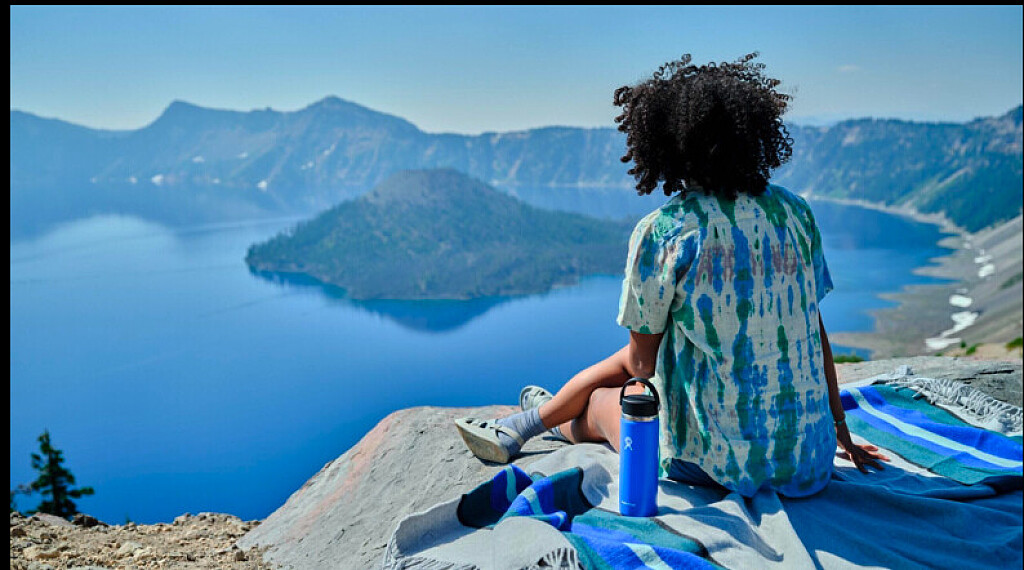
Why the Color of Your Water Bottle Matters
For 15 years, Hydro Flask has taken colors very seriously. Turns out, science agrees.Every color tells a story. Green is never just green, nor is blue ever just blue. It’s the flash of sunlight on an alpine lake or the underside of a cloud on a spring morning. It’s a snapshot of a place, a memory, a feeling.
At least, that’s how Hydro Flask sees things. The Bend, Oregon–based hydration brand, which pioneered the vacuum-insulated water bottle back in 2009, has always taken a unique approach to color, with palettes drawn from nature and designed to evoke feelings of our favorite outdoor memories. Like a smell or sound, color can snap you back into a memorable moment or place.But that’s not all color can do. Just think about choosing the paint for your bedroom or house, or the shade of your favorite shirt. Color is a powerful force, and researchers who study color psychology say colors can change your mood and even shape your thinking. That means blue tones, for example, could make you more relaxed, more tranquil, and more creative.

Maybe that’s why we intuitively pay close attention to the products we use, the clothes we wear, and the style we cultivate. The combinations are a way to express our personal style, and Hydro Flask water bottles and tumblers, with their carefully crafted hues, offer the perfect accessory to add a bit of everyday color.And color could even have an effect on your health. Consider this: the importance of hydration to overall well-being is well documented, and the latest research suggests proper hydration is linked to healthier aging as well. Could a colorful water bottle help you with your hydration goals?
“Absolutely,” says Dena Blevins, creative director at Hydro Flask. “You’re more likely to use something that you like and makes you feel good about using it. It’s a reflection of your style, of who you are, and an extension of your personality.” It may also be easier to stay hydrated if your bottle reminds you of nature and staying healthy.
So it appears Hydro Flask was on to something when it made color development an essential design tenet when the brand was founded 15 years ago. Since then, Hydro Flask has plucked hues from landscapes across the United States—from the lush coasts of Hawaii to the sunlit sandstone of the desert Southwest. Now, the company is turning its gaze to its own backyard in Oregon.“We are very fortunate to be surrounded by incredible views and landscape that inspire creativity in our everyday,” says Blevins. Hydro Flask’s home state hosts a stunning variety of landscapes, from temperate rainforest to alpine tundra to high desert. Along the western coast, clouds cast deep purple shadows across the sea. Silvery rainfall waters verdant stands of old-growth trees. Farther inland, brilliant sunlight filters through evergreen needles, calling attention to pastel-pink flowers along the forest floor. Oregon’s landscapes provide a constant source of awe and inspiration.The most vibrant color in the new lineup, Cascade was inspired by the crisp, soothing blue of the alpine lakes that dot the North Cascade Range. They’re a sight to behold and an experience to be felt. Take a dip in the icy water, and you’ll remember the exhilarating chill long after you warm up (especially during a group swim with friends). Fed by glacial snowmelt, these lakes get their otherworldly color from the fine rock dust, sometimes called glacial flour, suspended in the water. The tiny particles scatter incoming sunlight, casting the lakes in a vibrant turquoise. In the Cascades, lakes serve as a welcome finish line for many grueling hikes. They symbolize life, vitality, and triumph.
This calming, powdered rose hue is inspired by the distinctive trillium blooms that speckle Oregon forests with a soft glow. The flower is one of the season’s first and signals the end of the long winter. It’s a sign of hope and joy as well as grace—the blooms perch at the end of long, slender stalks that sway gently in the spring breeze. Wherever you live, get out for a hike in the spring and look for wildflowers and other signs of renewal. It’s a great way to mark the transition from winter to spring and get energized for a new season outdoors.
Oregon’s plentiful rainfall feeds lush woodlands. This color mimics the deep green of Oregon’s old-growth forests, home to 1,000-year-old trees. Just plant yourself at the base of one of these towering giants and look up—there’s nothing like feeling small in a really big way. Throughout the centuries, these ancient groves have protected and nurtured both people and wildlife alike, and you’ll feel the forest’s comfort and strength just by walking through it.Hydro Flask® is the leader in high-performance insulated products that help people enjoy the things they love to do in the places they love to be. From the number one–selling water bottle to soft goods innovations like the Day Escape™ Soft Coolers to the Outdoor Kitchen dining collection, Hydro Flask’s delightfully simple designs and go-anywhere durability deliver the perfect temperature when you need it. Founded in 2009 in Bend, Oregon, Hydro Flask inspires active outdoor lives with two simple words: Let’s go! Its giving program, Parks for All, supports nonprofit organizations focused on building, maintaining, restoring, and investing in public green spaces so people everywhere can live healthier, happier, and more fulfilled lives. To learn more about Hydro Flask and Parks for All, and to see the full lineup of award-winning products, visit hydroflask.com.e-hard football fans have something to teach trail runners, skimo racers, and other competitive athletes
by Outside Magazine
Login to leave a comment
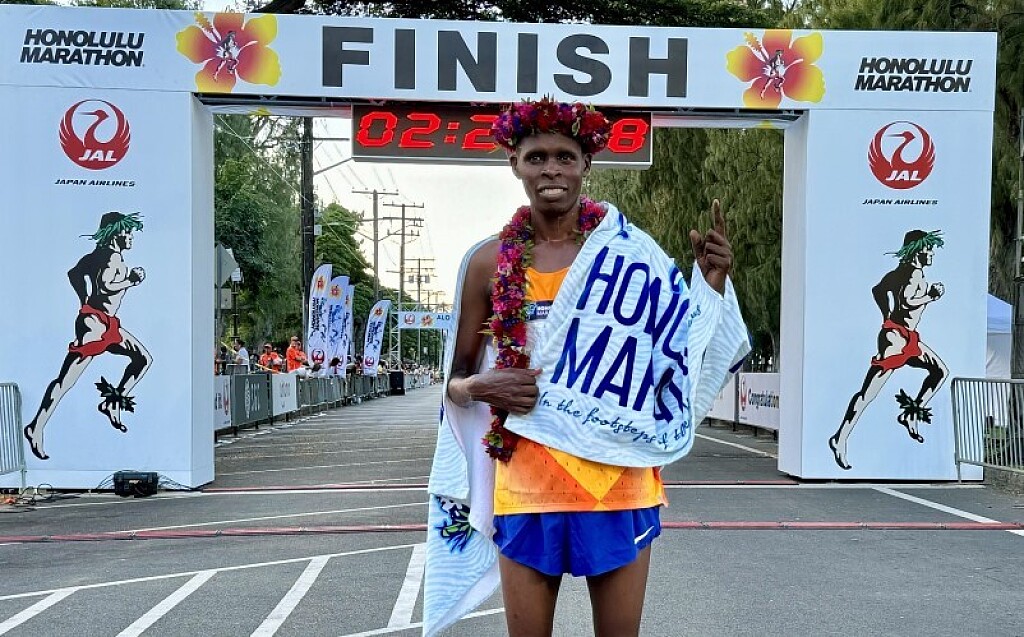
Kenyans Paul Lonyangata and Cynthia Limo win Honolulu Marathon
Kenyans Paul Lonyangata and Cynthia Limo patiently waited before making decisive moves to earn convincing wins at today’s Honolulu Marathon in challenging conditions. High humidity and long stretches of strong winds, combined with the course’s notorious hills, led to slow finish times in the 51st running of this race, the fourth largest marathon in the United States.
The race began in the darkness at 5:00 am local time with a fireworks display. Dickson Chumba of Kenya, the designated pacer, set an aggressive early pace for men’s leaders, coming through 5-K in 15:17, which projects to a sub-2:09 time. (The course record is 2:08:00.) In his wake were Lonyangata, fellow Kenyan Reuben Kiprop Kerio, Ethiopian Abayneh Degu and a pair of U.S.-based Eritreans, Filmon Ande and Tsegay Weldlibanos.
Through 10-K, the pace was picking up, with Chumba –a three-time winner of World Marathon Majors races– in front at 30:25. Kerio had drifted back and was 19 seconds behind. But the pace started to lag on an uphill section between 13-K and 14-K and Kerio quickly regained contact with the pack. Meanwhile, Weldlibanos, who had been fighting the flu in the week leading up to the race, was the first casualty, dropping out around 15-K.
During a long stretch along Kalaniana’ole Highway the pace was lagging in the 5:20 per mile range and it was clear that this would be a tactical battle. “This is the graveyard of fast times,” Honolulu Marathon Association president Dr. Jim Barahal, riding in the lead vehicle, lamented of this notoriously windy stretch. “But it means we’re going to have a great finish.”
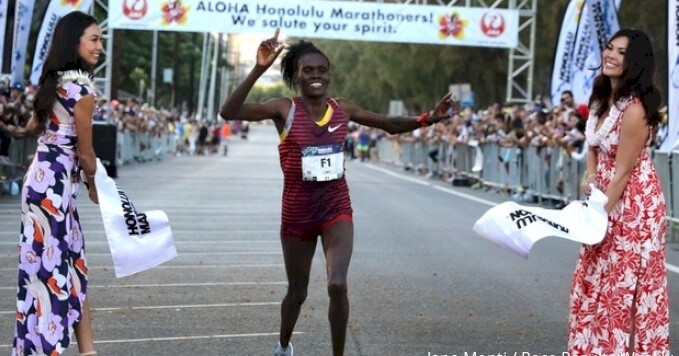
Indeed, the halfway point was reached in a modest 1:07:19. Chumba stepped off just before 25-K and moments later Lonyangata briefly surged ahead. The field came back to him within minutes, but as the course entered a less windy section, he made what would be the day’s decisive move. His pace quickened dramatically as he covered the 18th mile in 4:49. By 30-K (1:35:51) he had built a five-second lead over Kerio, with Ande another five seconds back. (Degu had dropped out some time after halfway, leaving only three men in the elite field.)
Lonyangata –who had finished second in his previous appearance in Honolulu in 2014, and owns a personal best of 2:06:10 from the 2017 Paris Marathon– continued to press the pace. Ande and Kerio were waging a back-and-forth duel for second place, and by 35-K, they were 21 seconds behind Lonyangata (1:52:14).
Lonyangata continued to look back for signs of danger, but a strong uphill surge as the course passed the Diamond Head volcanic crater for the second time kept him out of reach of his pursuers. “The hills you must run as hard as you can, you push uphill even if it’s hard,” he said.
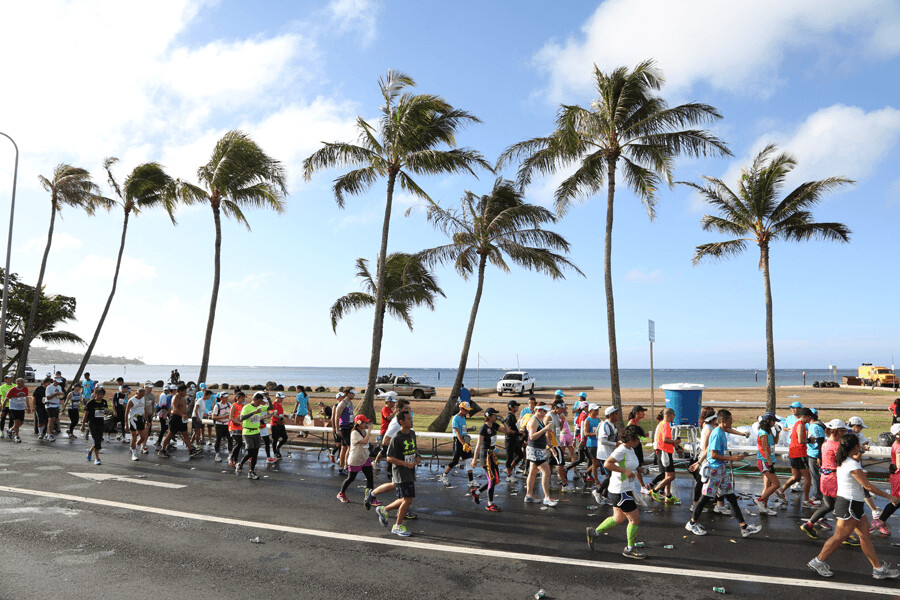
He crossed the finish line in Kapiolani Park in 2:15:42. “When you prepare for everything you know you are ready,” said Lonyangata, who was cleared to compete again on May 25 after serving a 19-month suspension for using a banned diuretic (the Honolulu Marathon has drug testing). “And when you decide when to make the move, you have to go hard.”
Ande made up some ground in the final miles, despite dealing with pain in his foot, and finished 19 seconds back in 2:16:01.
Kerio, who finished second here in 2018 and has served as the pacer four other times (including last year), came home third in 2:17:32.
In the women’s race, Limo was making her marathon debut, and decided to wait slightly longer to make her move. For the early going she ran alongside Ethiopians Sintayehu Tilahun Getahun and Kasu Bitew Lemeneh, who was running her fourth marathon of the year. They hit 5-K in 18:17, then picked up the pace slightly through 10-K (35:59). There was no change at halfway (1:16:43) and 30-K (1:50:05).
Finally, after the 30-K aid station, Lemeneh began to slip behind. Limo and Getahun forged ahead, running together for the next 5-K segment. Finally, at 35-K Limo started to pull away. By 40-K her lead ballooned to a minute and 38 seconds. She cruised home in 2:33:01, running the second half slightly faster than the first and finishing more than two minutes ahead of Tilahun (2:35:16).
“When we got to 35 kilometers, I felt that I was still strong and I knew it was only seven kilometers that remained, so I had to do it by myself,” said Limo, the 2016 World Athletics Half Marathon Championships silver medalist. “I tried to push and push. I am so pleased.”
In addition to the high mileage she logged in Kenya during her build-up to this race, she credited the speed she sharpened while competing in numerous American road races this year, including wins at the Cooper River Bridge Run 10-K in Charleston, South Carolina, the Carmel (Indiana) Half-Marathon, the Toledo (Ohio) Half-Marathon and Philadelphia’s Broad Street Run 10 Mile. “I can say that it was not really so hard to do the marathon,” she said. “It is a matter of making up your mind that you can do the training. And I am so happy that I did that.”
Bitew (2:36:04) held on for third, and Japan’s Yukari Abe, who finished tenth in her country’s Olympic trials in October, took fourth (2:47:32).
Lonyangata and Limo earned $25,000 for their victories, along with a flashy gold medal worth nearly $15,000. They both credited hearty support from fans along the course as well as the throngs of mass-race runners, who were going in the opposite direction on the out-and-back course. (One enthusiastic participant encouraged Lonyangata with an enthusiastic cheer of “Go get that money!”)
“The other runners were so good,” a smiling Limo noted. “They were cheering, they were making us move faster.”
There were 15,594 starters this year, up from 14,645 in 2022.
The companion Start to Park 10-K was run contemporaneously with the marathon, with 6,976 starters and 6961 finishers. Joshua Williams was the fastest athlete in 32:02, but not far behind him was Molly Seidel, the 2021 Olympic bronze medalist in the marathon. Seidel clocked 32:25 and was the fastest woman on the day. She, and training partner Jessa Hanson, were using the race as part of their humidity training for February’s U.S. Olympic Team Trials Marathon in Orlando, Florida.
“It’s so cool to come out and have the whole energy of the marathon around you,” said Seidel, who finished eighth at the Chicago Marathon two months ago. “This is such a fun vibe. I love to come out and race in Hawaii. Honestly, we wanted to get some good humidity racing, get a nice quicker tempo and then settle in. Coming out today was exactly what we needed. I love racing in humidity.”
by Steve Soprano
Login to leave a comment
Honolulu Marathon
The Honolulu Marathon’s scenic course includes spectacular ocean views alongside world-famous Waikiki Beach, and Diamond Head and Koko Head volcanic craters.The terrain is level except for short uphill grades around Diamond Head. ...
more...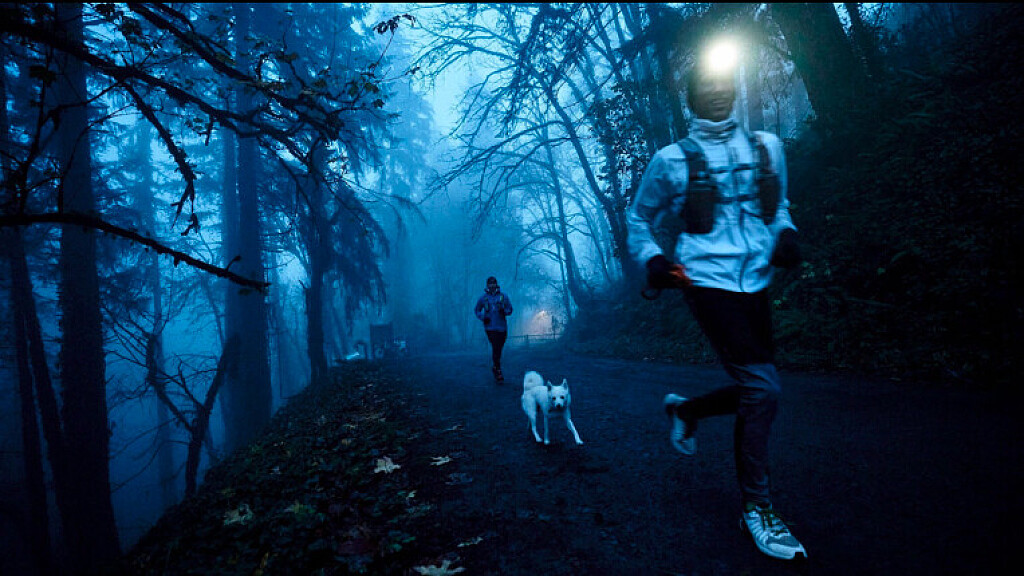
Running Through the Night to Confront the Darkness of Substance Addiction
Ultrarunner Yassine Diboun found his own unique way to help those in recovery move through darkness together. It’s working.
Since 2020, Yassine Diboun has made it a point each year to black out one square on his calendar with a Sharpie.
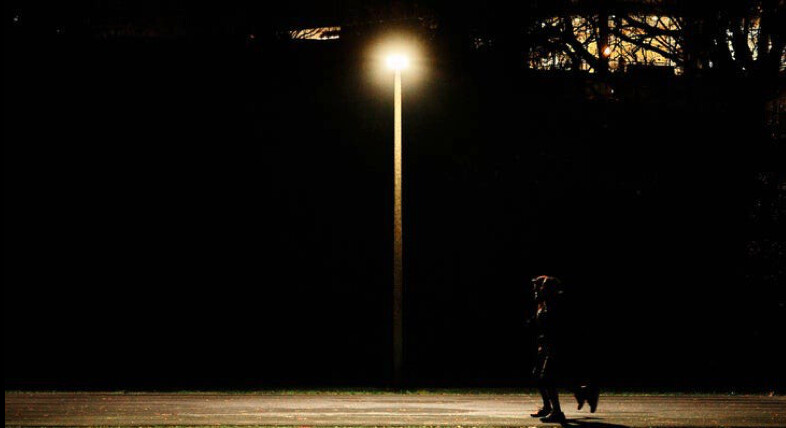
It’s a gesture to signify that on this day, typically set around the winter solstice, this 45-year-old ultrarunner and coach from Portland, Oregon, won’t run during the day, as he does most every other day of the year. Instead, he’ll watch a movie with his daughter, Farah, or cook a meal with his wife, Erica, eagerly waiting for night to fall. Because that is when the action starts.
Diboun has become a fixture in Portland’s trail running scene, a Columbia-sponsored runner and one of the most electric and positive forces in the U.S. ultrarunning scene today. He is also an athlete in active substance addiction recovery since 2004.
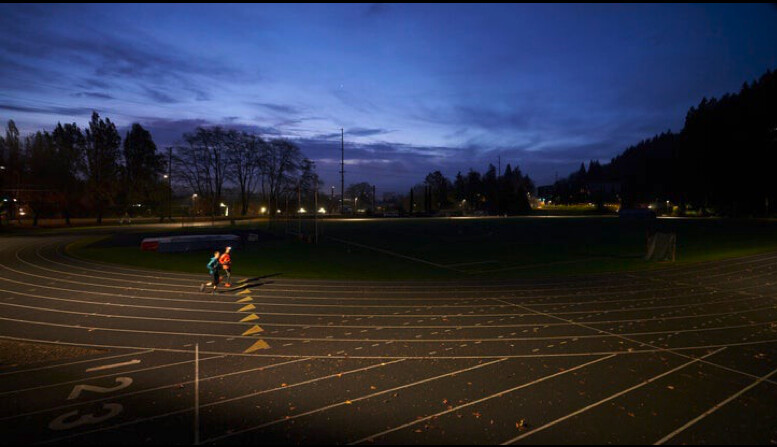
And here, at the confluence of endurance and recovery, is where Diboun enacts an annual tradition in Portland called Move Through Darkness. From sundown to sunup, Diboun runs through the evening, covering a route that connects city streets with trails in Forest Park while accompanied by dozens of other runners.
On December 9, Diboun will start his fourth-annual Move Through Darkness run. It may exceed 70 miles. It may not. That’s not really the point, though in some sense it is, for the more miles he runs, the more pledge-per-mile dollars he gains to funnel into future recovery programs, the very support structures that saved his own life two decades prior.
In 2009, Diboun and his wife moved to Portland, where he pursued a career in coaching. One of the first things Diboun did upon arrival was to connect with the recovery community, which led him to The Alano Club of Portland, the largest recovery support center in the United States.
Diboun’s personal history of substance addiction is circuitous and complicated—documented extensively in Trail Runner, The New York Times, Ginger Runner interviews, and others—but what’s most important to know is that it led him down a path that wasn’t his own. Alcoholics Anonymous (A.A.) and the 12-step program threw him a lifeline and he white-knuckled it to shore, reinforced by commitments to a plant-based diet and a healthy dose of body movement. (That’s code for running a ton of miles.)
Such discipline brought him to the highest levels of ultrarunning. He’s a four-time finisher of the Western States 100 Mile Endurance Run (once in the top 10), a three-time finisher of the H.U.R.T. 100, in Hawaii, and he represented the U.S. at the IAU Trail World Championships in 2015. These accolades sit beside countless ultra wins and podiums.
His success story prompted Brent Canode, executive director of the Alano Club or Portland, to reach out to Diboun in 2018 with a proposition. Diboun had, by then, teamed up with mountain athlete Willie McBride, to start Wy’East Wolfpack in 2012. The business offers group functional fitness programs, youth programs, and personal guidance to get people outdoors and on trails.
Under Canode’s leadership, the Alano Club just launched The Recovery Gym (TRG)—a CrossFit-style facility offering courses for those in recovery, and Canode saw running as a natural extension of this program. He asked Diboun to spearhead a new running portion of the gym. For Canode, though models like the 12-step program were widely available and proven effective, he found the diversity of options for community lacking beyond that.
“What we learned was that a lot of folks don’t attend 12-step programs,” Canode says. “They haven’t found a connection anywhere else, and that’s a matter of life or death for a person in recovery.”
Together, the two started regular informal runs called the Recovery Trail Running Series, which evolved into a more formalized wing of the gym: Run TRG. This program quickly took off, offering evening group runs, outings that would often end in post-run dinners and fun gatherings. The groups grew bigger each week.
“We cultivated this community for anybody in or seeking recovery from substance addiction, and it really picked up some good momentum,” Diboun says.
When the pandemic shut everything down in March 2020, including The Recovery Gym and its new Run program, regulars instantly lost the group’s connection. Many relapsed and started using substances again. A few turned to suicide, including a prospective coaching client for Diboun who had met with him just one week prior.
“I know from personal experience that life can get too overwhelming at times and you get too stressed or overwhelmed and you can’t see anything,” Diboun says. “You can’t see any hope, so you just live recklessly, helplessly. In extreme cases, life can feel not worth living anymore.”
While running one evening by headlamp, Diboun thought about the fragility of hope, the pandemic, the recent suicides, and the ever-increasing need for community. The combination of isolation and mental health decline, paired with an uptick in running popularity during the pandemic (Run TRG, once relaunched, tripled in size), created an opportunity for Diboun to leverage his visibility as both a decorated ultrarunner and someone vocal about his addiction history.
An idea was born: Move Through Darkness.
For one night, sundown to sunrise, he would organize a run to crisscross the city, connecting various trail systems and raising visibility of the mental health challenges entangled with isolation and addiction. It would take place around the winter solstice, the longest night of the year.
The initiative would serve three main purposes: First, it would be a personal pilgrimage for Diboun, a reminder of his own ongoing relationship with sobriety. Second, it would offer another way for those in recovery to come closer during difficult times. And third, the event would raise financial support for the Alano Club of Portland, which serves more than 10,000 people in recovery each year through mutual support groups like A.A., peer mentoring services, art programs, harm reduction services, and fitness-based initiatives like The Recovery Gym and Peak Recovery, Alano’s newest program, which provides free courses in split boarding, rock climbing, and mountaineering. Over the last eight years Alano has won four national awards for innovation in the behavioral health field.
December 2020 was the first-ever Move Through Darkness event. About 30 runners participated throughout the night, joining Diboun in various sections of his sinuous route. Given that the invitation was to run upwards of 100K through the night in some of the worst weather of the year, the turnout was impressive. The group eventually made their way to Portland’s Duniway Track to complete a few hours of loops, encouraged onward by music.
One of those runners that first year was Mike Grant, 47, a licensed clinical social worker from Portland. Grant has been in long-term recovery with substance addiction and understands the initial hurdles of getting out there. During the event, Grant completed his first ultra-distance run by covering 50 miles. He hasn’t missed a Move Through Darkness run since.
This year, he’ll be joining again, in large because of Diboun.
“You hang out with Yassine for any length of time, and the next thing you know you’re running further than you ever have before,” Grant says. “He’s one of those people you just feel better when you’re around.”
The Move Through Darkness route is roughly the same every year, but it always starts and ends at the Alano Club, located in Portland’s Northwest neighborhood. This first year, his daughter, Farah, ran with him from Duniway to the Alano Club, which was a particularly special moment to share.
The fundraising component is a pledge-per-mile model, where you can pay a certain dollar amount for every mile Diboun will cover. All funds go to support the Alano Club, specifically the Recovery Toolkit Series. Other recovery-focused gyms are increasingly available nationwide, but The Recovery Gym is the only CrossFit affiliate in the U.S. designed from the ground up, exclusively for individuals in recovery.
Each week, TRG offers six to eight classes free of charge to anyone in recovery. Every coach holds credentials in both CrossFit instruction and peer mentoring for substance use and mental health disorders. An original inspiration for Run TRG was the Boston Bulldog Running Club, a nonprofit established in 2015 to provide running community reinforcement for those affected by addiction and substance addiction.
According to national statistics released earlier this year, 29 percent of U.S. adults have been diagnosed with depression at some point in their lives—the highest rate since such data was measured. Suicides in the U.S. reached all-time highs in 2022, at nearly 50,000 lives—about 135 people per day lost to self-inflicted death. In 2022, 20.4 million people in the U.S. were diagnosed with substance abuse disorder (SUD).
Oregon, specifically, is rated number one in the country for illicit drug use. In 2020, Oregon had the second-highest alcohol and drug addiction rates in the country, while ranking last in treatment options.
Canode says that, after 40 years of researching addiction and effective recovery, the single most important aspect of recovery success is authentic connection to a like-minded community. That’s why both Canode and Diboun are building an all-hands-on-deck approach to recovery through running, to strengthen connections through movement.
“In recovery, we know how to grind,” he says. “We are naturally great endurance athletes. We also know how to consistently move through darkness, which is especially true in the beginning of someone’s recovery journey. It’s often not rainbows and unicorns and lots of positivity. It’s a grind. It’s grueling.”
Annalou Vincent, 42, a senior production manager at Nike, is one of the many people who have reached out to Diboun from all over the Portland community.
“Finding Yassine and Run TRG saved my life,” she says. After starting a running practice in her thirties, she started feeling better and decided to question decisions like drinking alcohol. She eventually dropped booze and became a regular at the Run TRG. Vincent has worked closely with Yassine to develop and promote Run TRG, and has joined Diboun for various legs of Move Through Darkness over the years.
“I can’t imagine my life or my sobriety without running and this program, says Vincent. “Over the years I’ve seen it change the lives of many others. Move Through Darkness is an extension of that. This program and others like it are saving lives.”
Willie McBride, Diboun’s business partner, supports Move Through Darkness each year and has witnessed its evolution and impact.
“I think people really connect with this project because they understand those dark parts of life, and how challenging they can be. Darkness comes in all different forms,” he says. “But also the very tangible act of running all night, literally putting their body out there—coming together as a group sheds light right into that darkness.”
Diboun is reminded daily of his life’s work, to remain sober and offer his endurance as a gift to others, even when it gets difficult.
“I’m coming up on 20 years sober, but I’m not cured of this,” he says. “This is something I need to keep doing and stay on the frontlines.”
With record rainfall aiming for Oregon in December, this Saturday night calls for a 58 percent chance of rain showers, with the last light at 5 P.M. and the first light around 7 A.M. That’s potentially 14 soggy hours of night running. But this forecast doesn’t cause Diboun any concern. He’s used to it, used to running for hours in the dark, used to being drenched. He’s faced that long tunnel and knows that there’s always light at the end, as long as you keep trudging forward, and best when together.
“You keep passing it on,” he says. “You keep giving it away, in order to keep it. Gratitude is a verb.”
by Outside Online
Login to leave a comment
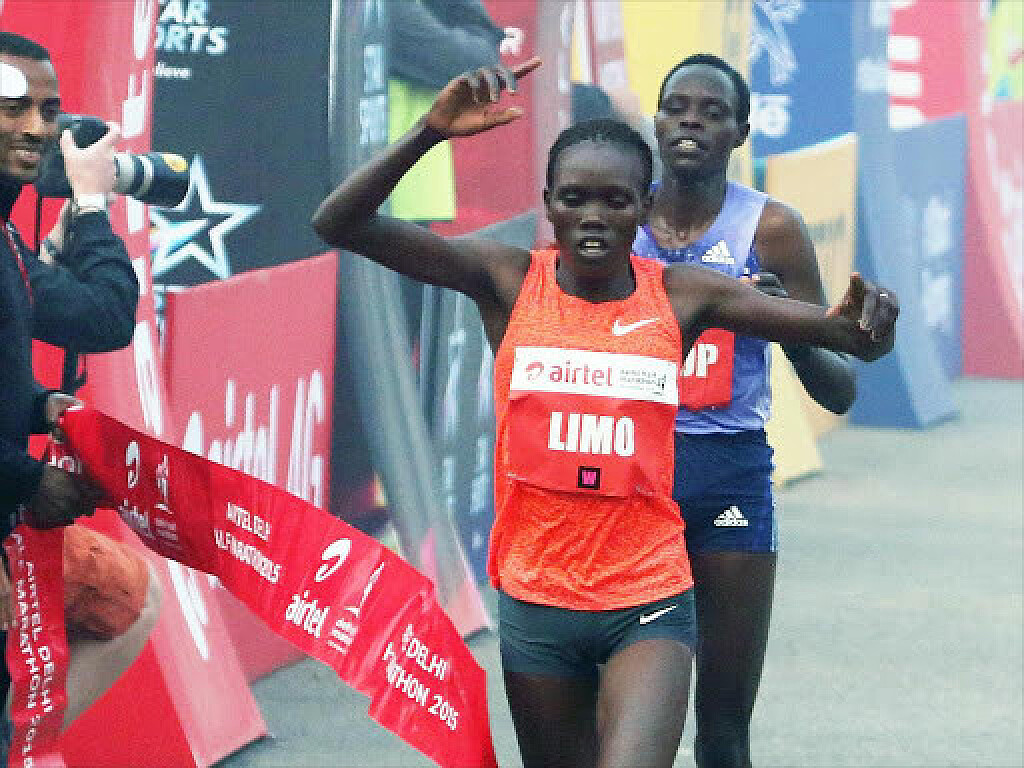
Cynthia Jerotich Limo set to make her marathon debut in Honolulu
The 2016 World Half Marathon Championships silver medalist, Cynthia Jerotich Limo will make her marathon debut at the 50th edition of the Honolulu Marathon slated for this Sunday 10, 2023 in Honolulu, Hawaii, USA.
The 33 year-old who holds a life time best of 1:06.04 in half marathon, has also set two course records this season at the Carmel and Toledo Half Marathons.
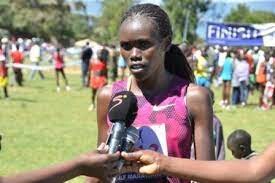
Limo will have to get past the experienced Kasu Bitew Lemeneh of Ethiopia who has already participated in three marathons this season and also holds the second fastest time in the entry list of 2:26.18 that she got last year at the Madrid Marathon where she took the bronze medal.
The two will have to battle Ethiopia’s Sintayehu Tilahun Getahun who is poised as the race favorite as she holds the fastest time on paper of 2:22.19 that she got last year at the Milan Marathon, where she finished in second place. Getahun has already participated in two marathons, Sydney and Hamburg where she finished in ninth and twelfth respectively.
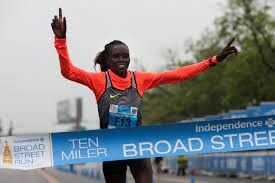
The race organizers have assembled a strong elite field to try and lower the race course record of 2:22.15 set five years ago by Kenya’s Brigid Kosgei.
The winner will pocket $25,000 as prize money and $10,000 for breaking the course record.
by James Koech
Login to leave a comment
Honolulu Marathon
The Honolulu Marathon’s scenic course includes spectacular ocean views alongside world-famous Waikiki Beach, and Diamond Head and Koko Head volcanic craters.The terrain is level except for short uphill grades around Diamond Head. ...
more...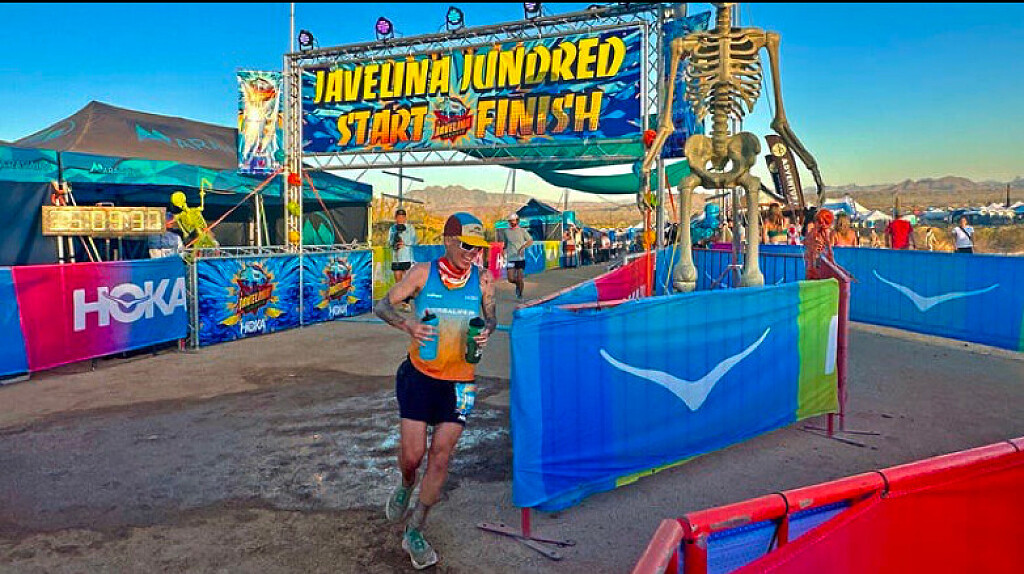
30 Hours at Javelina Jundred, the Burning Man of Trail Running
Inside the spectacle of ultrarunning’s most festive top-tier 100-mile race
It’s a hot, sunny Saturday afternoon in the desert northeast of Phoenix, and Lindsay DesRochers is being chased by a dinosaur—as if 85-degree heat, a creaky left knee, and a hot spot on her right big toe aren’t enough to worry about during her first attempt at running 100 miles.
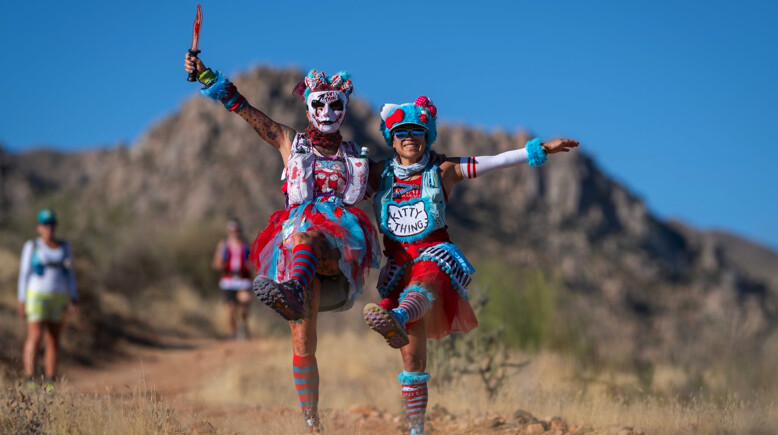
The 44-year-old senior creative recruiter from Scottsdale is 41 miles into the Javelina Jundred, and she also has to contend with a Tyrannosaurus rex who’s making her giggle. The dinosaur is, in fact, local trail running legend, Jerry Bloom, who is sweating and gasping for air inside an inflatable costume that’s kept afloat with a tiny battery-operated fan. He is dressed up as the dino-in-residence and runs alongside DesRochers briefly as she finishes the second loop of the five-lap course before sitting down to refuel and rehydrate in her crew tent.
“The problem with this thing isn’t the heat. It’s just that there’s no oxygen in here. If you run very far, you get oxygen deprivation,” says Bloom, 70, a three-time Western States and Hardrock 100 finisher who’s also run Javelina twice. “For me it’s all in good fun to support Lindsay. I’ve given up trying to be fast a long time ago. But what I’ve learned is that it’s not how far you go and it’s not how fast you go, it’s how you look while you’re doing it.”
Welcome to the Javelina Jundred—the biggest, wildest party in the trail running world.
It’s pretty obvious that the Javelina Jundred is the zaniest event in trail running and, to be frank, nothing even comes close to this dusty desert cavalcade of curiosities. It’s not quite the Burning Man of running, but it might just be better because, first and foremost, it’s a legit ultrarunning event.
More than 850 enthusiastic runners toed the starting line at 6 A.M. to begin the five-lap 100-miler, and about 400 more began the three-lap 100K an hour later. There’s also a single-loop, 19-mile nighttime race called the Jackass Night Trail for about 200 runners that includes a wild DJ’ed party at the Jackass Junction aid station and finishes as the Saturday night revelry is still going strong back at the race compound.
But because Javelina always happens on the weekend before Halloween, there’s a natural party vibe and a non-mandatory-yet-compelling reason for runners, pacers, and support crew to wear costumes. And, let’s face it, Halloween gives everyone license to fly their freak flag, so when you mix that with ultrarunning, just about anything goes. Only here it’s known as Jalloween.
This year’s most popular dress-up themes seem to be tropical and western, but, almost predictably, there are quite a few Barbie and Taylor Swift cosplayers, as well as a few heavy metal rock stars, glow-in-the-dark skeletons, and several very creepy clowns. Dozens more runners race through the desert wearing bunny ears, fox tails, and devil horns.
“This is a safe space for everyone to have fun in their own unique way,” adds Dan Gampon, a Hoka sports marketing representative from Hawaii. “It’s a fun way to give the people a chance to be weird and bring a part of themselves that they might have been wanting to bring out, and give them the opportunity just to have fun anyway they want to.”
Some crew tents are decorated with accouterments to match a particular theme, but most feature colorful holiday twinkle lights, camping chairs, sleeping bags, and coolers full of adult beverages. While there’s a stash of fancy engineered nutrition supplements and electrolyte drinks in every tent, there’s also the widest range of healthy and not-so-healthy snack food you can imagine. (I’m looking at you, guy simultaneously drinking a Red Bull and eating a handful of marshmallow Peeps.)
The Javelina staff and volunteers are fully into the Jalloween theme, too, especially race director Jubilee Paige, who dons several costumes during the 30-hour event—including getups she calls Race Director Barbie, Weird Barbie, The Dude, Cousin Eddie, Chef’s Kiss, and A Macaroni Penguin. She once again ends the event dressed as the Pope—a.k.a., “her Joliness”—because she considers Sunday “Jallelujah Javelina,” a day of celebration.
The Javelina Jundred was founded in 2003 by Phoenix ultrarunner Geri Kilgariff as an irreverent, party-oriented run on a multi-loop course, and gradually gained regional and then national popularity as word spread through the ultrarunning community about how much fun it was. Local ultrarunner Jamil Coury took over as race director in 2008. The next year he started Aravaipa Running, a Phoenix-based company that bought and now owns 75 other running events in Arizona, Colorado, Utah, Nevada, and New Hampshire.
Despite increased popularity and significant growth, Coury, Paige, and the rest of the Aravaipa crew have been able to maintain Javelina’s grassroots experience while growing it to about 1,500 runners in three events with at least that many pacers, crew, and family members hanging around the race compound. In many ways, it represents the best of both where trail running has been, but also where it could be heading.
“The race was born from a fun spirit of running with friends and looping in the desert—shout-out to Geri Kilgariff for her creation of the event in 2003,” Paige says. “But as it’s evolved, we saw opportunities to elevate the race to an ‘event’ experience for runners and crews—an ultra festival—the music and lights and entertainment just enhances that experience. However you experience Javelina, I just want you to have fun!”
As the sun begins to set, several top competitors in the 100-miler are scattered out on the remote sections of the course in hot pursuit of four Golden Ticket entries into next summer’s Western States 100. (Two tickets each for the men’s and women’s races.) That includes Boulder, Colorado, runner Jonathan Rea, who is back after a second-place finish a year ago, and—with newfound confidence from a fourth-place finish at the CCC 100K in Chamonix, France—is tearing up the desert trails on course-record pace. Triathlete-turned-ultrarunner Heather Jackson, who splits time between Bend, Oregon, and Tucson, Arizona, also takes it out hot, hoping to make up for a frustrating fifth-lap fade last year after unbearable quad pain reduced her to a walk and forced her to settle for a fifth-place finish in her 100-mile debut.
Earlier in the day, Denver’s Rajpaul Pannu and San Francisco’s Anna Kacius made quick work of the less-competitive, three-lap 100K race, finishing first and second overall, respectively, and setting new men’s (7:15:53) and women’s (8:13:07) course records in the process, while winning by more than an hour over their nearest competitors.
Ultrarunning GOAT Courtney Dauwalter from Leadville, Colorado, is out there, too, but she’s not racing for the win. She’s running the 100K with her mom, Tracy, a 66-year-old avid trail runner from Edina, Minnesota. They attempted a 50-miler in Minnesota last fall, but were timed out before the finish, so this year they chose the big party race in the desert where Courtney set a course record in 2016 before she became a household name. They’re not in costumes, but they’re running as Team Bucket List and wearing matching white shirts, cactus-themed socks, and olive-green-and-black shorts.
Because runners constantly revolve through the turnaround point at the start/finish area, everyone else is always on the move throughout the race compound. Some are drinking craft beers and mingling as they wait for their runners, while others are watching the race livestream on their phones or from the jumbotron in the Javelina Jeadquarters circus tent. Still others are devouring freshly cooked artisan pizzas made to order in the Freak Brothers Pizza mobile brick wood-fired oven.
Rousing cheers and applause catch everyone’s attention every few moments as an elite runner arrives—including the ever-smiling Jackson, who quickly heads out on her fifth and final lap with a 30-minute lead in the women’s 100-miler.
“Heather is just amazing,” says Troy Brown, 48, a trail runner from Coto de Caza, California. “She’s always smiling. I’m just a fanboy, but I like anyone who can smile that much through pain.”
After Jackson runs out of sight, Brown quickly shifts his focus to getting his feet into an inflatable T-Rex costume so he can participate in the costume contest, an informal event that brings out a sheriff riding an inflatable rooster, Minnie Mouse, a foursome of Teletubbies and, of course, several dinosaurs. There’s also a guy dressed as Aladdin wearing a large golden lamp around his waist who is joined by a scantily clad Jasmine character who not-so-discreetly rubs the lamp in a Not Suitable for Work (NSFW) scene that draws both raucous laughs and shocked gasps from the crowd.
One of the best dressed-up groups of the event is a foursome of women from California’s Healdsburg Running Company: Dominique Chevalier (“Western Barbie”), Krista Kappus (“Alien Barbie”), Saddie Alloway (“Rootin’ Tootin’ Diva Barbie”), and Susan Oh (“Disco Bob Ross”). But the costume contest winners are the Montana Mermaids, a bikini-and-grass-skirt trio from Bozeman—Lena Romeo, Kara Haskell, and Liv Bleskin—who were there to crew and support elite runners Rachael Norfleet of Montana in the 100K and Utah’s Ryan Montgomery in the 100-miler.
The sun begins to set, but the party’s just getting started as DJ Colter Stillwell pumps tracks through the sound system as a full moon rises in the eastern sky. One of the rowdiest dancers is Brendan O’Hara, a Colorado trail runner who’s dressed up in a red-and-white mouse outfit with flashing lights similar to what popular Canadian electronic musician Deadmau5 wears on stage. As lots of energized runners entered in the Jackass race are about to head out into the night, two professional fire dancers perform a mesmerizing routine adjacent to the start line.
Just after dark, Rea comes flying into the finish area, stopping just short of the finish line to pantomime deadlifting a colossal barbell before crossing the line in a new course record of 12:43:10. Seattle runner Blake Slattengren stopped the clock next in 12:58:07 to claim the second Golden Ticket, while Montgomery ran another strong race to take the final podium spot in 13:01:14.
Redeeming herself from last year, Jackson finishes strong to win the women’s race and finish sixth overall, thanks in part to the aggressive pacing of Devon Yanko. Jackson’s time of 14:24:47 is the second-fastest women’s time ever behind Camille Herron’s 14:03:23 course record from 2021. Spain’s Ragna Debats (14:55:27) outran Riley Brady (15:29:17) to earn the second women’s Golden Ticket.
Not long after midnight, the Dauwalters finish, too. Covered in dust, sweat, and even a little bit of blood—Tracy took a tumble on the first lap early the previous morning—they cross the finish line after 17 hours of running with big smiles and hug in a classic mother-daughter moment. Late Sunday morning, DesRochers makes it to the finish line, too, in 27:31:41, battling hard to overcome dehydration, an upset stomach, and nagging hip flexor pain at various points during the race.
“I was prepared for it to be hard, and I knew I was going to hurt. At some point, I was like, Oh, right, this is what running 100 miles feels like,” DesRochers says. “It was difficult, but I kept my positive mental attitude the whole way. I have a buddy who has a saying, ‘Forward is a pace,’ so I kept repeating that and kept putting one foot in front of the other and I didn’t quit.”
Something that’s especially apparent at Javelina is that everyone is celebrated as an equal, regardless of finishing times, trail running experience, athletic ability, age, or any other dissimilar details. The event goes out of its way to create an environment that promotes visibility and inclusion for everyone, and the community of participants seems to embrace it by cheering and encouraging for everyone the same.
It has partnered with Native Women Running, Latinos Run, and Black Men Run each of the past several years to bring their runners to the race, and it was also one of the first ultra events to offer a non-binary category. This year there were six non-binary runners racing over its three races, led by Willow Dolde in the 100-miler (20:01:29), Andreas Anderson in the 100K (13:54:30), and Tasha Hartwig in the Jackass 31K (6:42:07). (Although Brady, a non-binary runner from Boulder, was competing in the women’s division because they were racing for a Golden Ticket, they were also, unofficially, the top non-binary runner in the race.)
As the golden hour comes and goes early Sunday afternoon—and final finishers Holly Sitzmann, Jim Buckley, Brittany Edmiston, and Leslie Astle squeeze under the 30-hour cutoff with help from their pacers and crew—it’s clear that everyone at Javelina is celebrated equally and enthusiastically. That also includes two unofficial finishers—Rayna Rodriguez and Tatiana Orozco—who complete the 100-mile course just outside of the time cutoff, but are welcomed by a scream tunnel of remaining spectators and the adulation of Paige even though neither will receive a finisher’s buckle.
“Javelina is a celebration, and the invitation to run and participate at Javelina extends to everyone,” Paige says. “I want to ultimately show how amazing the community is and that this sport is for everybody and every body—the spirit of ultra is diverse and should be celebrated.”
by Outside online
Login to leave a comment
Australian ultrarunner makes history by racing UTMB and Ironman World champs
Ultrarunner Lucy Bartholomew made running and triathlon history on Sunday, becoming only the second woman ever to finish the 171-kilometre Ultra-Trail du Mont-Blanc (UTMB) as well as the Ironman World Championships in the same year.
Bartholomew ran remarkably well at both events, taking a tenth-place finish at UTMB in 27:39:22, and completing what was only her second Ironman in 10:43:41, with a 3:31 marathon time.
The double–nearly 400 kilometres of challenging racing–has only been conquered by one woman before Bartholomew: Ireland’s Diana Hogan-Murphy, in 2014. Bartholomew is also the fastest person of any gender to have completed both events in the same year.Bartholomew shot to fame in the ultrarunning world in 2018, when she was the third female at the Western States 100. The runner shared on social media that she lost some of the joy in racing in the years following her WSER podium, and after her 2022 race ended in a DNF, she wasn’t sure if she’d race 100 miles again.
“You show up (almost) every day to run so that you can run even more on the race day, finish and not be able to run, only to want to run, and then run to aid in the recovering of the running and to prepare for more running,” Bartholomew explained. “To take myself out of this cycle I decided to tick a bucket list idea to do an IRONMAN triathlon. It was a ‘one day, someday’ objective that I pulled forward to help pull me out of feeling stuck.”Bartholomew’s first Ironman, in Western Australia in December 2022, qualified her for the Kona World Championship event in Hawaii.
While the runner had only planned to complete one Ironman, she felt she couldn’t miss the opportunity to race in Hawaii. “Not being one who steps down from a challenge, it seemed right to go one more,” she said.
“I’ve swum, biked and run my way to fantastic recovery from UTMB and moderate triathlon fitness for Kona,” Bartholomew said pre-race. “It was a fun, fine balance to play with these two big events so close to each other.”
by Running Magazine
Login to leave a comment
Viktoria Brown smashes her own 6-day record
Whitby, Ont.’s Viktoria Brown has conquered the multi-day racing scene, and she just keeps getting better. Brown ran a whopping 747 kilometers at the EMU 6-day Race in Hungary, besting her previous Canadian 6-day record of 736 km. Runners competed on an 898.88 meter-long certified road loop that was 100 per cent asphalt.
Brown is well-known for her many multi-day records, and for recently competing at Badwater 135, the scorching ultra in Death Valley, Calif., where she finished fourth.
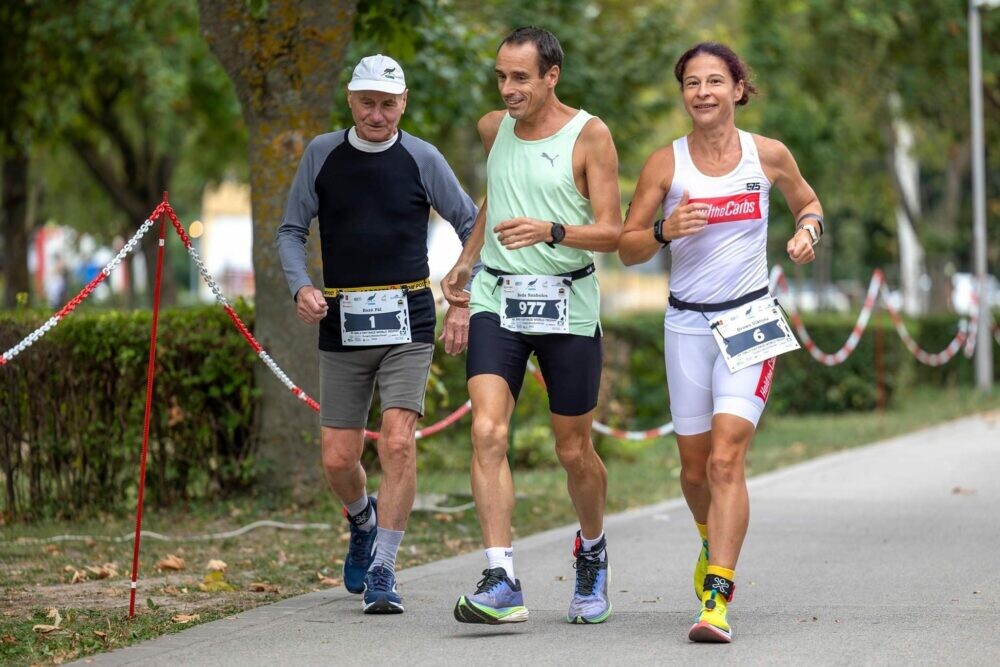
She holds the 48h Canadian record (363 km), and the 72-hour Canadian record (471 km), and was the owner of the 72h WR, recently bested by Danish athlete Stine Rex. She entered EMU having trained minimally, and became ill with salmonella poisoning partway through the event.”My goal at this race was to hit 800 kilometers,” Brown told Canadian Running.
“Only three women have ever done that, and I believe that without the salmonella poisoning, I would have hit it,” she said. “I only ran 56 km on day five, while I ran 110+ km on all other days, including 151 km on day six.”
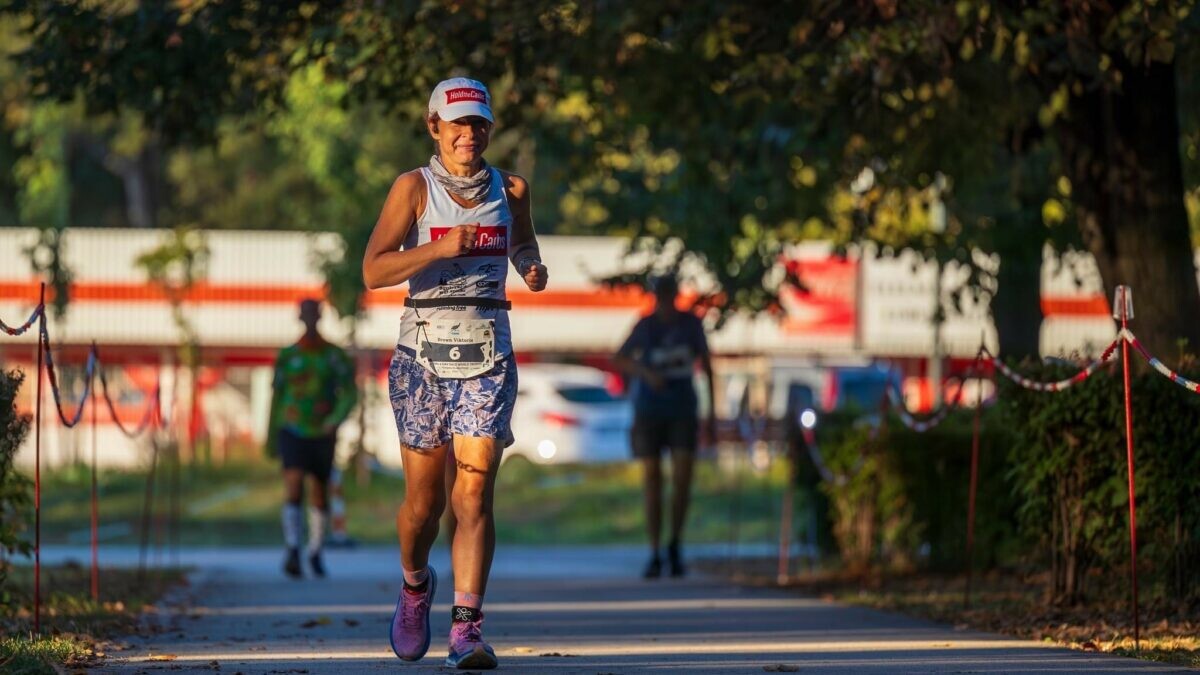
Ultras are often a test in troubleshooting, and this is only magnified by multi-day racing.”Vomiting started at noon on Monday (the start of day five) and went on all day until I went down for sleep around 10 pm,” Brown said. “I got up at 3:30 am, was back on the course at 4 a.m., and ran straight until the race ended, 32 hours later.” Brown says she was extremely lucky to have a medical doctor on her crew, whom she credits with bringing her back from illness.
To combat the salmonella, Brown slept for six and a half hours to reset her body.”I wasn’t throwing up anymore, although my body was completely empty and I still had diarrhea,” she said. “But that meant that five-10 per cent of the intake was absorbed, so we could slowly start to refuel.” Brown had to walk until late afternoon on Tuesday, both because her body was recovering and due to intense heat during the daytime.”By late afternoon I was able to start jogging, then running, and then even running relatively fast by the end.”
Brown says she felt she was unable to train for this race, but her excellent base fitness proved to be enough. “After the 48h World Championship in August (that I won) I had some slight pain under my right knee, so I could only do minimal training,” she explains.”By the time the injury healed, I caught a cold, so then I couldn’t train at all. Maybe being more rested for this race helped more than the training would have,” said Brown.
Post-race, Brown says it’s hard to catch up on sleep, but she has a surprising lack of soreness and no blisters.”My body is in great shape, but my mind will need some serious recovery,” the runner said. “These races are extremely demanding mentally.” Brown will compete next at the Kona Ironman World Championship in Hawaii in October, and later at the 24-hour world championship with Team Canada in Taiwan.
by Keeley Milne
Login to leave a comment
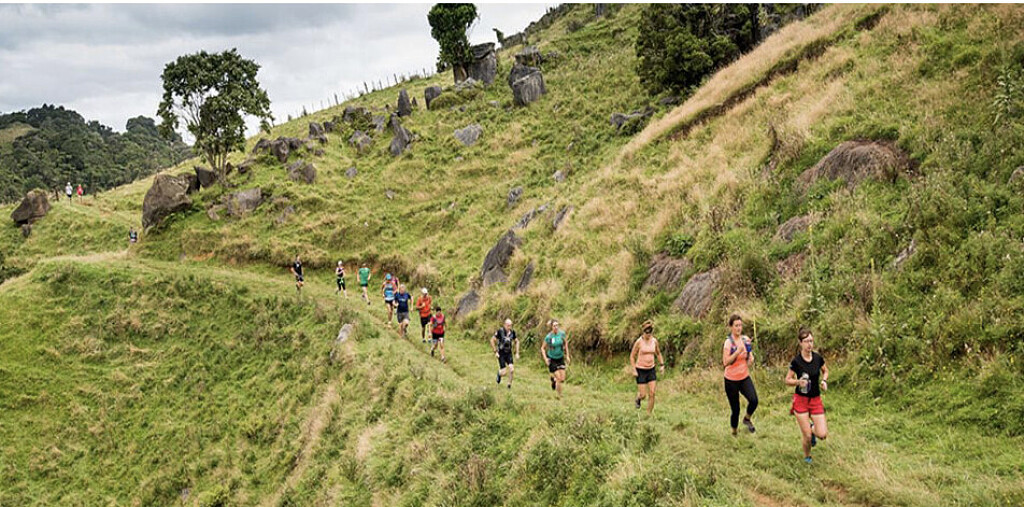
Beyond Marathons: Uncovering the World’s Most Scenic Trail Runs
For experienced trail runners searching for their next trail marathon and newcomers to the sport who are researching trail run events for the first time, we have compiled a list of the top destinations for trail running
These races are renowned and provide breathtaking scenery, making them a must-have addition to your race calendar. Our selection deliberately combines well-known races with hidden gems you may not be familiar with. These hidden gems offer a unique sense of adventure and excitement, going beyond the usual races that everyone knows about.
WaitomoTrailRun,New Zealand
The Waitomo Trail Run, a one-of-a-kind event located in New Zealand's North Island, offers a unique and unforgettable experience. Now in its third year, this trail run has quickly become the largest of its kind in the country.
Participants find themselves immersed in the stunning landscape of Hobbit country, with its picturesque rolling hills adorned with vibrant green grass. As you traverse the course, you'll also have the opportunity to explore captivating limestone caves illuminated by the enchanting glow of glowworms.
It's important to note that littering is strongly discouraged, as there is a peculiar consequence for those who discard their energy gel wrappers. Participants may find themselves tasked with clearing gorse from the hills above Te Anga road while sporting nothing but jandals, shorts, and a singlet. However, they will be rewarded with warm cordial for sustenance and have the opportunity to partake in the wet Perendales crutching experience for several days.
Lavaredo Ultra Trail, Northern Italy
Located in central-eastern Italy, the Dolomites showcase breathtaking rock formations that are truly remarkable. The Lavaredo Ultra Trail takes place within this distinctive lunar landscape, ranking as one of the most exquisite races worldwide. Only by participating in this event will you truly grasp why this place holds a magical allure, much like Venice.
Even the world’s best sportsbooks that cover marathon odds would struggle to conjure up the necessary prices due to the distraction this location's beauty presents.
As part of the UTWT competitions, the race unfolds amidst the majestic Dolomite mountains, running alongside the picturesque Misurina Lake and at the base of the renowned Tre Cime of Lavaredo, a symbol of global mountaineering. The beauty of this location stems from the striking contrast between the lush alpine forests, the rugged gray rocks, and the vivid blue skies and lakes.
While the race offers fast sections, it is also technically demanding, requiring attentiveness to the rocky terrain and tree roots along the course. This is an event that should not be missed, although securing a spot through the registration draw is essential. Be sure to mark it on your agenda, as the experience is bound to be unforgettable!
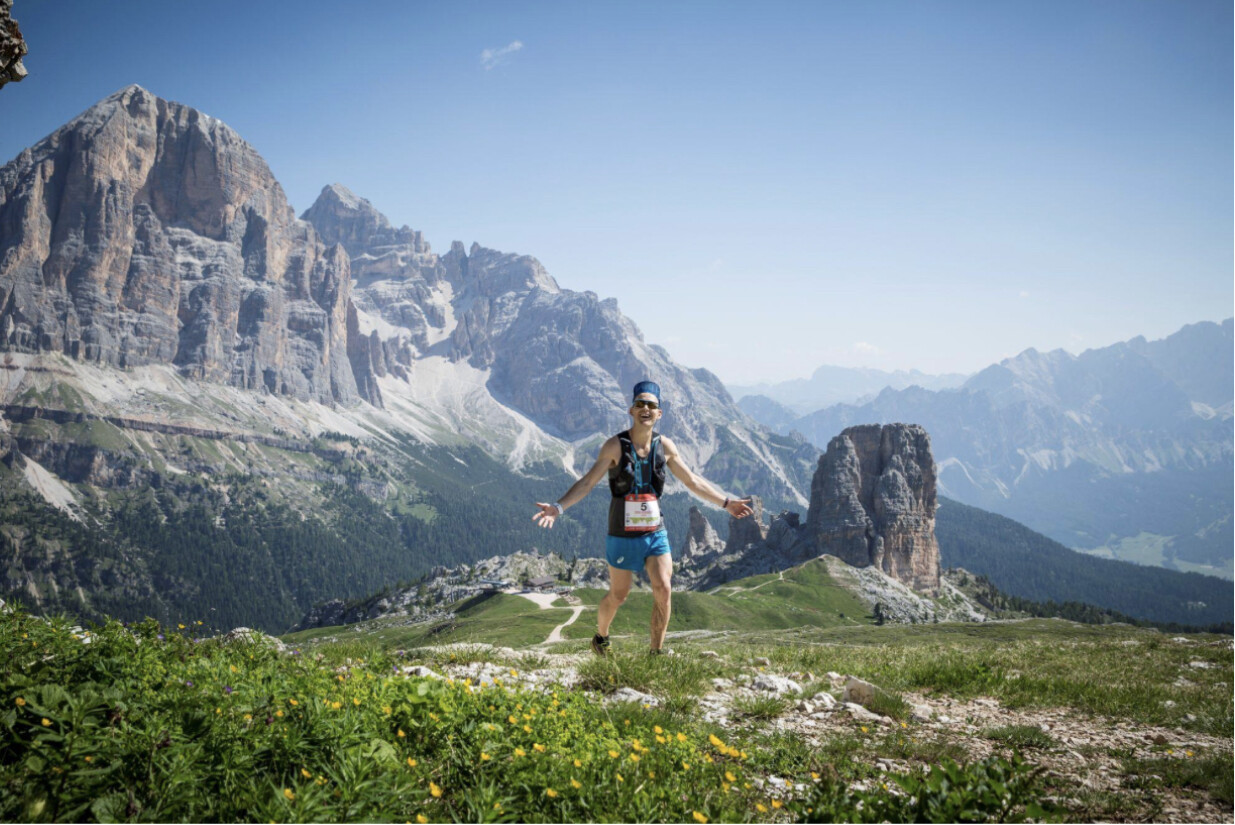
Vallee Du Trail, Chamonix, France
Chamonix, renowned as the valley for trail running and the official host of the prestigious Ultra Trail du Mont Blanc, embodies the essence of the trail running community. Chamonix is a paradise for trail runners, as it offers a remarkable collection of 18 well-marked running routes that meander through picturesque mountain trails, enchanting forests, and serene alpine meadows, all while providing breathtaking panoramas of majestic mountains and icy peaks.
What sets Chamonix apart is its inclusive and hospitable trail running community, which caters to elite athletes and anyone who possesses a deep affection for the mountains and the exhilarating outdoors.
MatterhorUltraks, Switzerland
The Matterhorn, the ultimate representation of a picturesque alpine setting and alpine skiing, takes center stage for trail running during the summer. In Switzerland's Matterhorn Ultraks event, this majestic peak is visible from all directions and can be encircled through various routes ranging from 16 to 46 km.
One particularly remarkable feature is the K30 trail, which spans 31.5 km and includes a thrilling highlight: a suspension bridge crossing the glacier gorge. Zermatt serves as the starting point for all the trails.
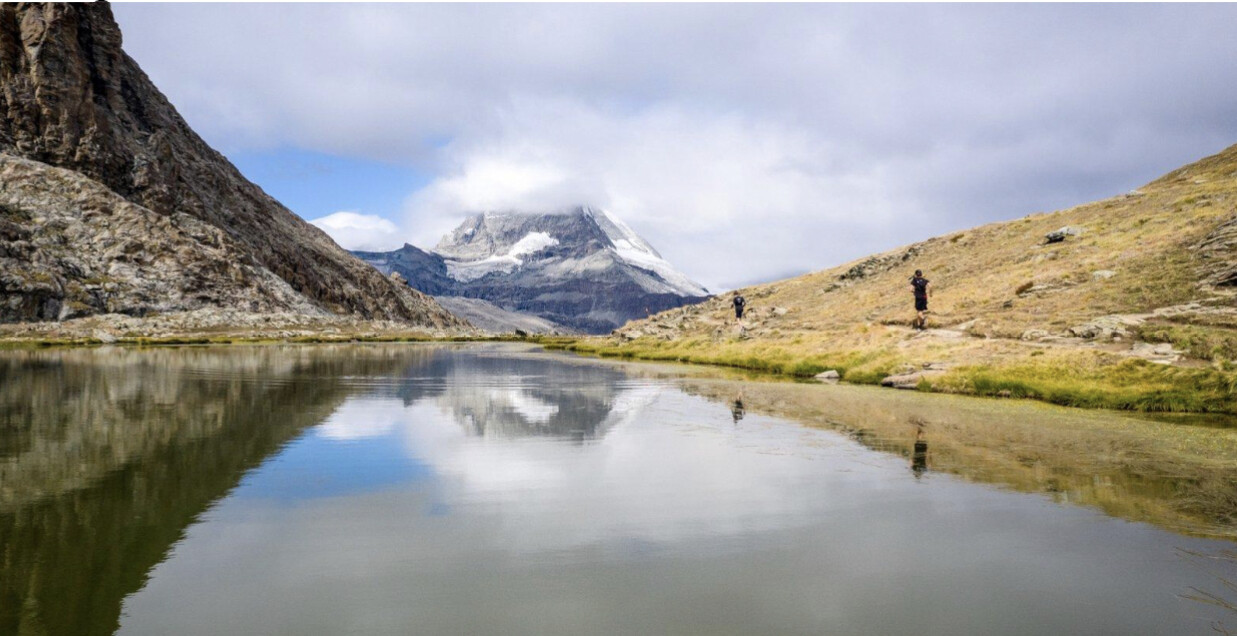
By the way, "Ultraks" represents a series of trail running events at the most awe-inspiring mountain peaks across Europe.
X-TerraTrailRunWorld Championship, Hawaii
The X-Terra Trail Run World Championship is held at Kualoa Ranch, located in Hawaii. This ranch is famously known as Jurassic Valley, as it served as the backdrop for the iconic dinosaur movies.
The trails used in the X-Terra Trail Run World Championship are typically inaccessible to the general public. Therefore, this race offers a unique opportunity for runners to explore and appreciate the natural beauty of this area.
The terrain itself is diverse and awe-inspiring. Participants will have the chance to run alongside cliffs and white sand beaches and navigate their way through dense rainforests.
No prior qualifications are required to participate in the 21-kilometer championship course. This event also includes a 10-kilometer race, a five-kilometer race, and an "adventure walk," making it accessible to runners of all ages and skill levels, from beginners to elite athletes.
Login to leave a comment
3 Years After a Car Accident Put Him in a Coma, This Runner Finished an Ironman
Now he runs for his young son with an incurable heart disease.Whether it’s one mile or 100 miles, running is my time to reflect, and appreciate every breath, heartbeat, and mile along the journey, and to celebrate the gift of life.
I’ve always enjoyed running and I started competing in 6th grade on the track and field team for my middle school. I loved being a part of a team atmosphere, and as I entered high school, I still wanted to run, but my coaches preferred that I throw shot put and discus because I was doing a lot of strength training and some powerlifting at the time. I enjoyed the throwing events, but had an interest in running over the years, and would ask my coach to put me in a sprint relay or two throughout the season. Outside of track, I also started swimming competitively when I was 15, and when I wasn’t at swim practice, I was usually jogging.
Growing up, I also had a dream of wanting to complete an Ironman triathlon. I saw the Hawaii Ironman on television when I was 5 years old and was inspired by the athleticism and inspirational stories of the athletes.
Unfortunately, one month after I graduated high school in July 2004, I was involved in a near-fatal car accident. The injuries were catastrophic: my heart went across my chest, I sustained shattered ribs, pelvis, left clavicle, and severe nerve damage to my left shoulder. Nearly every major organ in my body was damaged, failed, or lacerated. I also had a concussion from the impact of the crash and experienced 60 percent blood loss.
The EMS and rescue workers who got me out of the vehicle were later given awards for their work. I was then flown by a medevac to the hospital, and my trauma team explained to my parents that it would be a miracle if I survived the first 24 hours. Well, I did and I would spend the next two months in a coma, on life support. I was brought back to life eight times during the 14 major operations I had over that time.
When I came out of the coma, I had lost 100 pounds, and had to learn how to talk, eat, drink, tie my shoes, comb my hair, and brush my teeth all over again. The thought of walking was just that—only a thought—due to the damage to my crushed pelvis.
However, with help from my medical team, I was slowly able to stand, with restraint belts around my waist while being held up by physical therapists on each side. I then progressed to standing on my own with a walker, then a cane, and then shuffling my feet a few inches at a time across the floor to learn how to walk again.
After months of intense physical therapy, I was able to walk around my local high school track, which was a triumphant day. A few months after that, I was able to jog a mile around the track, and I kept progressing from there.
A year after leaving the ICU in 2005, I finally started college, and joined the swim team (even though I was just doggy paddling or doing light kicking with the kick board once or twice a week for 30-minute sessions.) Then two years later, in 2007, I was able to live my dream of crossing the finish line of the Hawaii Ironman triathlon, and also complete my healing process.
It was a team effort to save my life that terrible day and help me heal 100 percent from the EMTs, medevac team, pilots, surgeons, nurses, and physical therapists. So crossing the finish line at Ironman was my way of saying thank you to everyone who was a part of my journey and encouraging me every single step along the way.
Completing that race inspired me to continue racing, and eventually get into trail running, which I love.
Today, though, I run for my son, Liam. My wife, Pam, and I have two amazing children, Clara, who is 6 years old, and Liam, who is 4 years old. My children are my absolute world and they inspire me on a daily basis. My son, Liam, has a very critical form of congenital heart disease (CHD). CHD is a defect in the heart’s structure that’s present at birth, affecting nearly 40,000 babies each year in the U.S alone. His oxygen levels will always be lower than normal, so he gets dusky in color when he gets upset or cries.
Since birth, he’s undergone four major open heart surgeries, and other related procedures. His surgeries are palliative—not cures. He also has heterotaxy, which is when the organs are not in the correct location of the body, which can affect their ability to properly function. Liam’s lungs and liver are impacted, and he does not have a spleen so he is at higher risk for infections.
As Liam grows, he will require more cardiac operations. There is currently no cure for his type of congenital heart disease, and due to the cardiac defects that he has, there is an increased risk to liver dysfunction in the future.
We have been prepared that in Liam’s 20s or 30s, there’s a possibility he will need a heart transplant. This thought is very difficult for us as a family, but we hold onto the hope that medicine and surgical innovation will continue to advance over the next few years.
In Liam’s honor, I will be running the Grindstone 100K this year in Virginia. It is also my hope to raise awareness of congenital heart disease.
It’s been nine months since Liam’s most recent open heart surgery, and he is getting stronger each month. Seeing his improvement, and watching what he’s overcome has inspired and filled my heart with such gratitude. I’m going to get to that finish line for my son to celebrate his recovery!
I’m grateful for my family, and the second chance at life I was given after my near-fatal car accident, so having the opportunity to make it to the starting line of these events is a gift.
With Liam’s operations, running has been therapeutic for me—it’s a time for quiet reflection, and observing what my son has been able to overcome in his young life. It’s also a time to find inspiration on how I can help him, my family, and other families who are going through this journey.
Anxiety, depression, and PTSD can become overwhelming leading up to my son’s open-heart surgeries, but running allows me a physical and mental release from the stress.
When I get out there on the trails, I’m able to confront the concerns and worries that I have. Running has always been joyful, and these days it’s also my way to reduce stress, and inspire my children to see that when you work hard and set goals, you can achieve anything. Running is also my way to raise awareness on congenital heart disease and do all I can to help find a cure for the type of cardiac defects that my son, and many other heart warriors have. These tips have made my running journey a success:
1. Stay consistent
Each week I strive to hit a certain mileage that safely builds off the previous weeks, which then helps build a solid foundation for future training. The more consistent I am with mileage, nutrition, and pace, the better I feel at the starting line. I break larger goals into smaller, more achievable goals that over time help build confidence in my training. Over time, small goals can become big wins during the season!2. Rest and recover
In my first few years of running, I felt inspired to get out the door and train as much as possible each week. However, as I’ve been running more over the years, I have come to realize how important rest and recovery are after each training session. Having high mileage weeks is certainly an integral part of the training plan, but after every three to four weeks, I’ve found that taking the time to decrease the mileage during that “recovery” week helps keep me healthy and well rested.
3. Mix up your training and racing
I’m a bit of a hybrid endurance athlete, and I love to race in a variety of long-distance events, from marathons, to 100 mile ultramarathons. I have multiple goals in each discipline, and depending on the time of year and overall goals for the season, I’ll specifically focus on the upcoming race and how I can best prepare for it. This keeps it interesting! My weekly training plan includes swimming, biking, running, and strength training. The variety of the training and different goals has kept me feeling fresh and motivated.
Brian’s Must-Have Gear
→ PowerGel Green Apple: I’ve included Powerbar products in my training and racing since I started competing in sports in middle school, and they are a training staple of mine that I use every single day. During a training run or in the middle of a 100-miler, this is a delicious way to get much needed energy to keep running strong.
→ Nike Kiger 9 Men’s Running Shoe: These are my favorite trail running shoes because they are just the right amount of weight with optimum cushion. The way the shoe is designed, my feet feel secure, mile after mile, and I’m able to get an efficient and smooth foot strike with quick turnover. I also love the style and color range of this shoe, and they have the right amount of grip on technical terrain.
→Inner Armour Sports Nutrition Whey Protein Matrix: With the amount of training I do each week, recovery is essential in order to make the most of the next training session right around the corner. I’ve found great success in this protein formula because it tastes great, it helps hold onto the lean muscle mass when training, and aids the recovery process so I feel refreshed the next day when I get back out on the trails.
by Runner’s World
Login to leave a comment
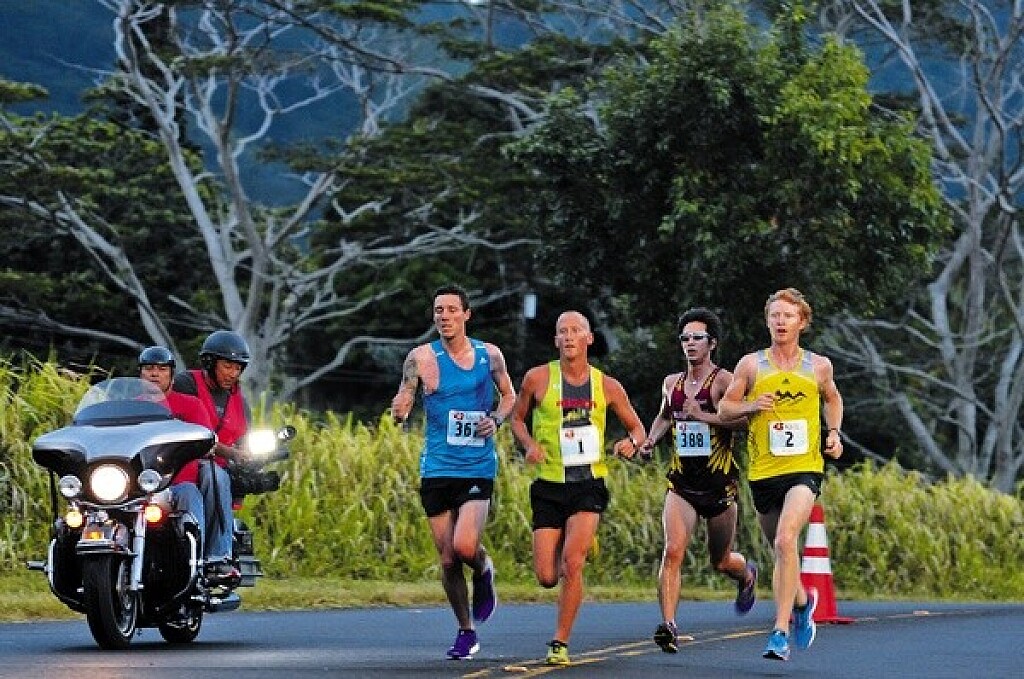
The Kaua‘i Marathon takes off on Sept. 3
The Kaua‘i Marathon and Half Marathon is back on Sept. 3, and deadline for online registration at www.thekauaimarathon.com is 11:59 p.m. on Aug. 30.
“This 14th Kaua‘i Marathon world-class event provides the perfect three-day adventure for residents and visitors to experience Kaua‘i’s aloha spirit,” said Jeff Sacchini, the Kaua‘i Marathon founder.
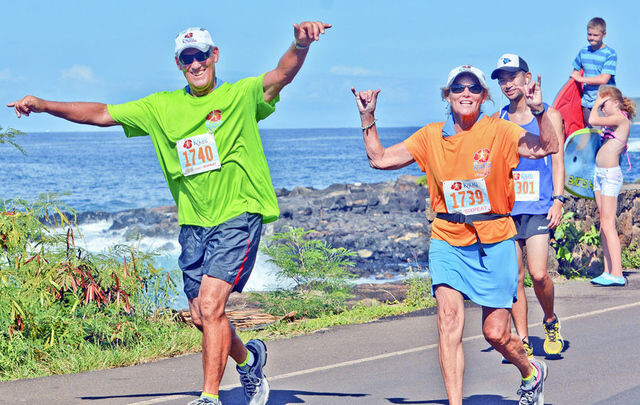
“Between the hundreds of volunteers who assist with race day duties to the Hawaiian blessing, Polynesian entertainment and cultural experiences along the course, The Kaua‘i Marathon and Half Marathon is a destination race to remember.”
The experience starts with the Wilcox Health Sports and Fitness Expo at the Grand Hyatt Kaua‘i Resort &Spa in Po‘ipu, where marathon participants pick up their race packets from 10 a.m. to 6 p.m. ahead of the Sunday run.
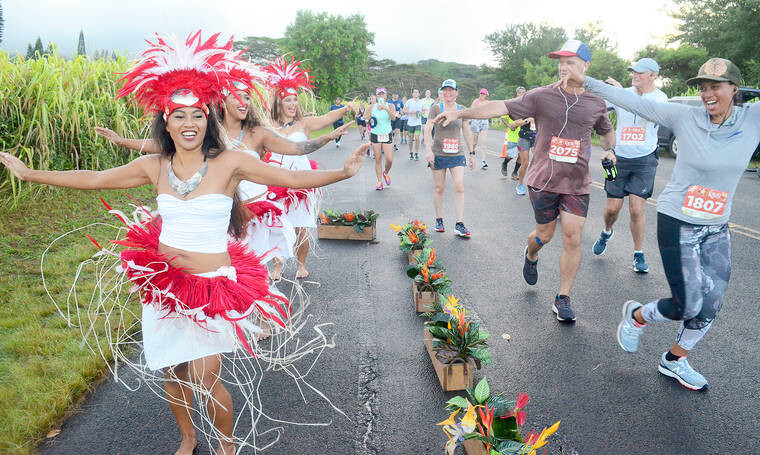
A sponsor reception rounds out Friday. The expo continues on Saturday from 9 a.m. to 4 p.m. with a Keiki Run starting at 9 a.m., and Family Fun Run chasing a very fast 6-foot chicken. The main races start Sunday morning at 6 a.m. at the front of Po‘ipu Shopping Village.
Traffic advisories, including various road closures, can be found in detail on the Kaua‘i Marathon website at www.kauaimarathon.com.
“We have some distinguished participants for this year’s marathon,” said Robin Jumper, the Kaua‘i event coordinator for The Kaua‘i Marathon. “Michael Wardian, a past champion and ultra runner from Delaware, will be doing the full marathon, and Tyler McCandless, a past champion and the spokesperson for the Kaua‘i Marathon Youth Running Program, will be doing the half marathon.”
Additionally, as COVID-19 conditions improve, at least two runners from Japan will be among this year’s Kaua‘i Marathon field.
Shinya Ohashi, who finished first in the 2018 version of the Kaua‘i Marathon with a run that stopped the clocks at 2 hours, 23 minutes, and 33 seconds, is from Ishinomaki City, Miyagi Prefecture, Japan. He was the male winner of the Iwaki Sunshine Marathon 2023, which attracted runners from Italy, Spain, United Kingdom, Thailand, Portugal and Vietnam in February.
Ohashi will be joined by Mirai Honma of Higashine City, Yamagata Prefecture, Japan, who was the female winner at the Iwaki Sunshine Marathon.
Since the inaugural Kaua‘i Marathon and Half Marathon, the island has hosted 10,232 participants from the mainland, 1,342 international runners, 3,590 participants from the neighbor islands and 8,077 from Kaua‘i.
According to the County of Kaua‘i, the direct economic impact over 14 years has equated to nearly $40 million. The Kaua‘i Marathon has donated more than $160,000 to local charities and nonprofit entities.
by Dennis Fujimoto
Login to leave a comment
Kauai Marathon
The Kauai Marathon and Half Marathon is one of the most beautiful destination races in the world today. This is a great way to combine a unique experience and a get-away that only Kauai can offer. You will be treated to beautiful beaches, an inspiring course, and fellowship with participants from around the world. Register today! The mission of the...
more...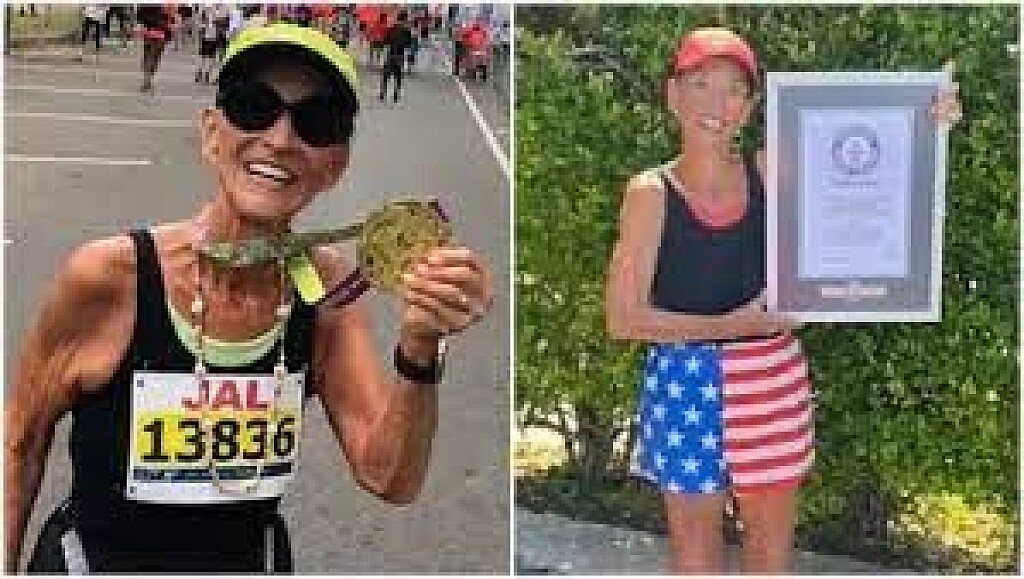
It’s Official! 92-Year-Old’s Marathon World Record Finally Approved
Mathea Allansmith now holds the Guinness World Record as the oldest woman to have completed a marathon.
In December 2022, 92-year-old Mathea Allansmith crossed the Honolulu Marathon finish line, becoming the oldest woman to have ever completed a 26.2-mile race. She surpassed the former record holder, Harriette Thompson, by over three months. Half a year later, after a thorough ratification process, Guinness World Records has given their nod of approval, making the record official.
Rain or shine, Allansmith, now 93, runs six days per week all throughout the year, maintaining a training volume of about 36 weekly miles, even on vacation, and steadily increasing her mileage about 18 weeks prior to a marathon.
The retired doctor lives in Koloa, Hawaii, and didn’t start her running journey until she was 46 years old, after a colleague suggested running two miles per day. “I took up running in 1977 and fell in love with the feeling of exercising outside,” she told GuinnessWorldRecords.com. She credits her healthy running lifestyle with her high quality of life, and while her stamina has decreased over time, she’s making the most of what she’s got at any given moment. “I see the direct connection between moving and health,” she said.
The 1982 Boston Marathon was her first experience racing 26.2 miles, but the Honolulu Marathon is her favorite, partly because the race organizers don’t have a time cutoff, so even slower runners have an opportunity to complete the course.
“It’s one of the best-executed races,” she said to Guinness. “Fantastic registration, set up and management makes it a joy to participate in.”
On the day of her world record, Allansmith’s six children surprised her by wearing matching T-shirts denoting their mother’s achievement. “I felt an enormous sense of accomplishment and joy,” she told Guinness.
Allansmith plans to continue running marathons for as long as possible, and hopes to nab some other world records along the way, for other distances like the 10K and half marathon.
by Runner’s World
Login to leave a comment
92-year-old grandmother becomes oldest woman to finish a marathon
A grandmother has officially run her way into the Guinness World Records as the oldest woman to complete a marathon. Mathea Allansmith of Koloa, Hawaii, has had her record-breaking run at December’s Honolulu Marathon ratified, an effort that saw her complete the 42.2-km distance in 11 hours, 19 minutes and 49 seconds minutes at the age of 92 years and 194 days. She completed the course in 10 hours and 48 minutes at age 91 the previous year.
Allansmith, who has since turned 93, told Guinness World Records this week that she hasn’t slowed down since her record-breaking run in Hawaii. “I train year-round but increase the mileage starting 18 weeks before a marathon,” she said. “
The pace and number of miles per training day are going to shift around but no matter what, I’ve got my running shoes on and I’m out the door six days per week. These days, on average, I run 36 miles per week.”
The retired doctor, who began running at age 46, noted her career as a physician drove home the benefits of a healthy diet and an active lifestyle on body and mind. “I see the direct connection between moving and health. … I’d say that my healthy lifestyle has allowed me to maintain a very high quality of life,” she said.
Adding to the thrill of breaking the world record, she said, was being able to do it on a course she so enjoys. “The Honolulu Marathon is my favourite marathon, partly because they don’t close the gate at a certain time, which allows even the slowest runners to finish the race. It’s one of the best-executed races. Fantastic registration, set up and management makes it a joy to participate in,” said Allansmith.
“There were several groups of people filming and cheering me on, even though I crossed the finish line some 11 hours after the start of the race. I felt an enormous sense of accomplishment and joy.”
Allansmith said she plans on running marathons for as long as possible. She added she hopes her recent world record won’t be her last, noting she plans on attempting to break the records for the oldest person to complete a 10K (female) and the oldest person to complete a half-marathon (female) within the year.
by Paul Baswick
Login to leave a comment
Honolulu Marathon
The Honolulu Marathon’s scenic course includes spectacular ocean views alongside world-famous Waikiki Beach, and Diamond Head and Koko Head volcanic craters.The terrain is level except for short uphill grades around Diamond Head. ...
more...
When you consistently stress the body and the mind, you are changing your chemical makeup. Here’s what the latest science tells us about burnout
Kieran Abbotts is a PhD student at the University of Oregon, studying human physiology. He earned his master’s degree in Metabolism and Exercise Physiology at Colorado State University. The lab where he now works studies exercise and environment and stressors on physiology. In other words, he’s an expert on how the chemicals in the body work during exercise, and what happens when things get out of whack.
“Essentially, there are two kinds of training. There’s functional overreaching, which means you stress the body with hard workouts and long runs. Then you provide adequate time to recover, and you induce adaptations,” Abbotts said. This kind of training is ideal—your body is getting stronger. “You want to be functionally overreaching as an elite athlete—so that you’re making progress and becoming a better runner, but also giving yourself adequate recovery.”
And then there’s non-functional overreaching, which can feel the same to many athletes, but it’s very different. “With non-functional overreaching you’re essentially doing the same thing—big workouts, stressing the body—but not giving yourself enough time to recover. And so you start doing damage.” That damage might take a long time to show itself, Abbots said, but it eventually will.
This might be the most important thing to know about being an athlete at any level. Non-functional overreaching is exactly the same as very healthy training, except without enough rest. And rest is different for everyone, which makes it exceptionally easy to slip from functional overreaching into damaging non-functional overreaching without realizing it. Without adequate rest, the body begins to break down instead of build stronger.
Stress Is Stress

Professional ultrarunner Cat Bradley, 31, living in Hawaii, has experienced fatigue and burnout in various forms, including just after she won Western States in 2017.
Winning a big race is great, but it also means all eyes are on you—the pressure is high to stay on top. “After winning Western States, I took a month off, but I was still running at a high level. And for lack of a better term, I felt like I had a gun to my back,” Bradley said. “I wanted Western States so badly, and after I won, so many things happened and I never shook that gun-to-the-back feeling. After a while, it led to burnout. I had to take a mental break.”
For many athletes, finding success can be the stress that makes non-functional overreaching feel necessary. How can you take an extended break when you’re winning and signing new sponsor contracts?
A second version of burnout for Bradley came when she went through an especially stressful situation outside of running. She was dealing with such extreme daily emotional stress in her personal life that everything else was affected, including running and training. When the body is enduring stress, it doesn’t know (or care) what the cause is. We can’t put our life into silos. If there’s stress in one’s life, everything else needs to be adjusted. It doesn’t matter if that stress is “just work” or illness, or relationships.
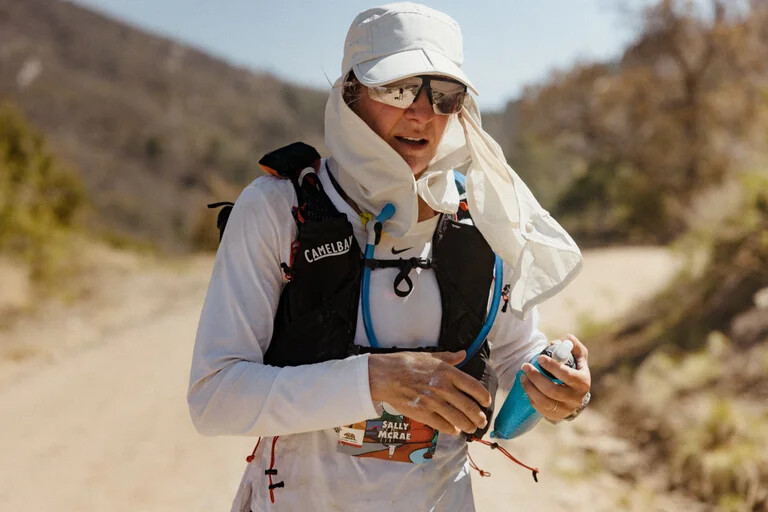
When you’re overtraining or chronically overstressed, your body is creating higher levels of “catecholamines,” hormones released by your adrenal glands during times of stress like epinephrine, norepinephrine, or adrenaline. “Having those chronically high levels of overstimulation and not enough recovery, you wind up with a desensitization,” Abbotts said. “Overstimulation also causes decreased levels of plasma cortisol. Cortisol is the stress hormone, and it plays a very important role in your physiology.”
When you’re exercising or stressing the body, cortisol will go up, to help the body deal with the stress. But if you’re constantly requiring lots of cortisol, your body will eventually down-regulate. It will adapt and then you’ll have low levels of cortisol. This means trouble dealing with physical and mental stress.
In February, Bradley experienced her most recent version of burnout, and it happened mid-race. Bradley was running the Tarawera 100-miler in New Zealand. Besides training for such a big race, she was also working full-time and planning and preparing for her wedding, which was just days after the race. On top of everything, travel to the event was incredibly stressful.
“I was in fourth place, I could see third, and at mile 85, I passed out and hit my head on a rock,” Bradley said. “We can talk about the reasons that I fainted, but I really think my brain just shut down—it was too much.”
For Bradley, reaching burnout has a lot more to do with outside stressors than the actual running. But now she’s aware of that—she continues to work on not reaching the “gun-to-the-back” feeling. The need to please others. The fear of losing fitness in order to take care of her body. It’s an ongoing process, but an important one.
Overdoing Is the American Way
Professional ultrarunner Sally McRae said, based on her observations, Americans are really bad at taking time off. “I’ve traveled the world and Americans are really bad at resting,” she said. “It’s part of our work system. You go anywhere in Europe and everyone takes a month-long holiday. You have a kid and you take a year off. We’re not conditioned like that in America. It’s like you get one week and then after you work a decade, you get two weeks of vacation.”
For McRae, avoiding burnout and overtraining has a lot to do with creating a life that’s sustainable. She started working when she was 15-years-old, so she realized earlier than most that life couldn’t just be working as hard as possible to count down to retirement.
“Perspective is massive when it comes to burnout. My goal every year is to find the wonder and the beauty and the joy in what I do. Because it’s my job, but it’s also my life,” McRae said. “And I really believe we’re supposed to rest—it should be a normal part of our life. Whether that’s taking a vacation or taking an off-season. I take a two-month offseason and I have for a long time.”
One of the most important parts about rest and not overstressing the body is that everyone is different. An overstressed body can lead to hormonal imbalances, which in turn affects everything.
“When you’re overtraining, you tend to get mood changes and have trouble sleeping,” Abbotts said. “Two of the big things that stand out are, you’re exhausted but you can’t sleep. And the other is irritability—mood swings, and depression.” When you get to the point that you’ve overstressed your body for so long that the chemicals are changing, pretty much everything starts falling apart.
And even though everyone is different, you’d never know that from looking at social media. “I know social media makes it seem like ultrarunners are running 40 miles a day, doing a 100-mile race every other weekend,” McRae said. “And that’s insane. You’ve got to be in touch with yourself. It’s very different to wake up and feel sore or tired, but if you wake up and feel like you have no joy in the thing you’re doing, you need a real break from it.”
How Can the Running Community Do Better?
Elite ultrarunner and running coach Sandi Nypaver wants runners to get more in touch with how they’re feeling and less concerned about numbers or what anyone else is doing.
“I have to have honest talks with people I’m coaching. I need them to feel like they can tell me how they feel, because sometimes they think they have to stick to the training plan for the week no matter what,” she said. “But the plan is never set in stone. It’s meant to be adjusted based on how you’re feeling. Some weeks we might feel great and not need to change anything, while other weeks we might have to totally crash the plan and do something else.”
It’s easy to judge ourselves against everyone else, especially when results and reactions are so public and available.
“It’s easy to say, ‘if that person only took three days off after a big race, and now they’re already back to training, that must be what you’re supposed to do,’” she said. “But even at the highest level, training is different for everyone. Resting is different for everyone.”
“Something that’s really, really hard for many runners to understand is that once you’re not sore anymore, that you’re still not recovered,” Nypaver said. “A lot of research says that things are still going on in your body for up to four weeks after, for certain races, depending on the distance.”
Sometimes it’s difficult to be aware of subtle signs when the soreness is gone. “Convincing people that they need to chill out for a while, even past the soreness, can be really difficult.” But after a huge effort, and before the next, people rarely end up saying things like, “I really wish I hadn’t rested so thoroughly.” Part of it is actually having a recovery plan. Putting rest days on the calendar, focusing on foam rolling and mobility on days that you’re not “doing.”
“And, actually just relaxing. Taking it easy. It’s not just a running model, we live in a culture where we’re always being asked to do more,” Nypaver said. “I wish instead of always thinking about doing more, we’d focus on how we want to be more. A lot of us want to be more relaxed and less stressed and happier and enjoy our lives. We need to put our attention on that instead of trying to do so much. It’s something I struggle with all the time.”
We don’t get validation for resting, relaxing, and being present because there’s no tangible thing to show for it. There’s no “be really calm often” challenge on Strava. But the bigger rewards are great. You just have to trade in immediate dopamine hits for a much more balanced, happier life.
Simple, right?
“One thing I’m doing, and asking my athletes to do, is to write down your intentions,” Nypaver said. “One of my intentions is to chill out more this summer and enjoy it. I grew up thinking it’s all about running, and I have to go all-in on running. But having other outlets, other things that I like to do, is so important.”
When you’ve reached burnout—an extended period of non-functional overreaching, prolonged rest is the only way to let the body fix itself.
“Once you are overtrained, you need to stop training,” Abbotts said. “It’s just kind of the bottom line. Maybe some people can get away with greatly reducing their training load, but most of the time you need to stop. You need an extended amount of time off.”
There’s nothing glamorous about rest. There’s no prize money in relaxing. But it’s the absolute key ingredient in extended performance, and in a much healthier, happier life.
by Outside Online
Login to leave a comment
13 Races for the Runners Who Love a Beer After a Run
Thirsty for a brew? You can crack a cold one postrun at these races.
Sure, the beverage most closely associated with running long distances is probably water, with sport drinks as a close second. But many other races are being organized around beer. That’s right, runners (like everyone else) love to crack open a cold one, and every year more races pop up in the United States that are geared specifically toward beer.
After all, finishing a race deserves a celebration and there’s no better way to celebrate than cheersing a pint with your best mates (while wearing split shorts and a singlet obviously.) And if you’re ditching alcohol this season, you can still partake in these races in spirit with your favorite non-alcoholic beverage.
For obvious reasons, most of these races save the drinking for after the finish line, but that’s not always the case. And while many marathons give finishers an honorary beer, some of these beer-themed races aren’t so quick to cut you off. Whether you’re a beer snob or just looking for an adventure, these races are a great addition to your racing repertoire, and so we’ve rounded up a list of some of the best around the country.
Here are 13 incredible races that give you the opportunity to sip a brew after you run.
Craft Brew Races
Location: Various in New England Date: Various
Loads of races hand out a beer at the end, but few are actually themed entirely around beer. The Craft Brew Races, a series of beer-themed runs around New England are just that. After the race, there’s a three-hour-long festival where runners can try dozens of local craft beers. Just make sure that if you sign up for the run you also recruit a designated driver to pick you up.
The Louisiana Marathon and Half Marathon
Location: Baton Rogue, Louisiana Date: January 14, 2024
While not technically a brewery-themed race, the 2023 Louisiana Marathon had six beer tags attached to runners’ bibs. Yes, that’s correct. Finishers of this race were treated to a six-pack of beer, and with several local brews to choose from, the variety won’t disappoint. Enjoy some gumbo and a few brews afterward. As they say in Baton Rogue, “Laissez les bon temps rouler!” (Translation— Let the good times roll!)
Yuengling Shamrock Marathon
Location: Virginia Beach, Virginia Date: March 17, 2024
If you’re looking for a great weekend for a beer race, an obvious choice would be St. Patrick’s Day weekend. It is, after all, a holiday celebrated almost exclusively by drinking. Virginia Beach’s race weekend, which includes a full gamut of distances to choose from, is sponsored by Yuengling and passes out beer flights to finishers. Plus, since it’s St. Patty’s, you can roll the postrace celebration into general festivities.
The Growler Team Relay
Location: Ashburn, Virginia & Virginia Beach, Virginia Date: April 15, 2023 and December 9, 2023
Running and drinking are usually more fun with friends, or at least that’s the viewpoint taken by the organizers of these Virginia races. With six legs, each team will race 33.5 miles with anywhere from two to six runners handing off the baton at the checkpoints. When teams finish, each participant receives a pint glass and plenty of beer. What makes the race even more interesting is that the routes you take in each leg are up to you. Sure you’ve got the same start and finish point, but you can get there any way you choose.
Cottonmouth Beerlay
Location: Greenville, South Carolina Date: June 3, 2023
While most races put the drinking at the end of the race, the Cottonmouth Beerlay is here to make things a little more, shall we say, interesting. The 8-mile course consists of four 2-mile loops. Before each loop, the runner must chug down a beer. If you sign up for the race in a relay, that seems doable, but individuals will be drinking at least four beers while tackling the wooded course. If you aren’t deathly ill when you finish, you can always celebrate with yet another beer.
Beer Mile World Classic
Location: Chicago, Illinois Date: July 1, 2023
While the Cottonmouth Beerlay is mostly run and games, the Beer Mile World Classic is a sporting event. These people are serious about running the “beer mile” as fast as possible, and by “beer mile” we mean running four laps around a track while chugging down a beer before each loop. The Beer Mile World Classic has slots early in the day for amateur runners, but as the day goes on, you’ll get to watch some top-notch competition. People train for this believe it or not.
Craft Classic Half Marathon and 5K
Location: Seattle, Washington Date: July 30, 2023
Seattle is a town known for its craft brewery scene, so it makes total sense that it would also host a beer-themed half marathon and 5K. The course is flat and scenic, and there is beer waiting for you at the end (which you’ll need after running in July). It’s said that runners receive a custom bottle opener at the finish. What a cute, useful little prize to win, especially if you already have 500 running T-shirts.
Dogfish Dash
Location: Milton, Delaware Date: September 24, 2023
You need to be 21-plus just to access the website for this race. The Dogfish Dash, which is sponsored by the Dogfish Head Craft Brewery, is a 5K-ish distance race around Milton, Delaware. Obviously, finishers are treated to some of the brewery’s finest beers, but you’ll also get some cool swag. This race prides itself on sustainability as well, meaning that not only do you get reusable shopping bags and water bottles for finishing, but also if you wear a costume made of recycled materials, you get entered for a special prize. Time to start working on your Pepsi can racing shorts.
Time to start working on your Pepsi can racing shorts.
Milwaukee Beer Run
Location: Milwaukee, Wisconsin Date: October 8, 2023
If you happen to be on the other side of Lake Michigan during Oktoberfest, you can run the Milwaukee Beer Run, and let’s be honest Milwaukee knows its beers. The 5K race ends at The Bavarian Bierhaus, where you’ll get a free beer (or root beer for our sober crowd). The race entry also comes with a pass into Milwaukee’s Original Oktoberfest, so you can really keep that energy going all day. Also, there is a .05 mile race (which is 54 yards) for those who want the medal and beer without actually doing much running.
Kona Oktoberfest Run
Location: Royal Oak, Michigan Date: October 8, 2023
Oktoberfest is the St. Patty’s Day of the fall, right? While you might think that this race is put on by Kona Brewing Company in Hawaii, it’s actually hosted by the Kona Running Company in Michigan. The race does, however, come with a plentiful supply of beer, as the post-race festivities include an Oktoberfest event complete with steins of ale and giant pretzels. Runners are also encouraged to run the 5K or 10K wearing Bavarian gear.
Great American Brewery Runs
Location: Various Date: Various
Great American Brewery Runs are almost more of a beer race aggregator than a specific event. They host races all over the East Coast that involve beer, but the specifics and distances vary. There’s a 50K relay, a 5,000 yard dash, and everything else in between. What they all have in common, though, is the inclusion of beer, and how can you say no to that? Might as well sign up for them all.
Shiner Beer Run
Location: Shiner, Texas Date: November 18, 2023
The Shiner Beer Run, which is hosted by the Spoetzl Brewery in Shiner, Texas, is obviously giving out Shiner Bock beer to entrants, and the race ends at the brewery where you can grab food and beers postrace. But, the prerace packet pick up is also at the Spoetzel Brewery the day before, where you can carb load the day before.
The Beer and Bagel Off-Road Race
Location: Various Date: Various
The Beer and Bagel Off-Road Race is sort of a bizarre mixture of things thrown together, but who are we to question it. Beer and bagels—both made of wheat so it works! Plus, there’s also said to be a Sasquatch running around on the course. We’re serious! The series has races all over the Midwest, South, and East, and looks like a great time.
by Runner’s World
Login to leave a comment
Professional triathlete Sika Henry will compete at Comrades Marathon
The pro triathlete believes she may have found a new sweet spot with ultra distances.
Sika Henry has never shied away from new challenges. After spending several years working to qualify for her pro card and becoming the first Black American woman to do so in May 2021, she shifted toward a new focus of ultramarathons.
Henry’s first was the 2021 JFK 50 Mile in Maryland, where she finished as the second overall woman. Nearly a year later, after deciding to take a break from triathlon, she set a record of 8:34:20 with her win at the Dismal Swamp 100K in Chesapeake, Virginia.
It seems the endurance built from triathlons—with its back-to-back-to-back swim, cycle, and run—work better for Henry than a straight-up marathon.
“I think I’m more mentally strong and can endure a lot for a really long period of time, which I think I developed from triathlon,” Henry tells Runner’s World.
Henry’s success at Dismal Swamp set the stage for her next ultramarathon endeavor: the Comrades Marathon, a 90-kilometer race and the world’s oldest ultramarathon in South Africa, taking place on June 11. (The race course, which alternates between Durban and Pietermaritzburg each year, will be run “down” this year.) Henry will be racing as an elite with the Durban-based Phantane Athletics Club, a partnership that came after she met some athletes at last year’s Ironman World Championship in Kona, Hawaii. In addition to the fact that the club will provide her with bottle and fluid support at the race, Henry was also enthused about representing them after learning about how they work to identify talent and give back to underprivileged athletes in South Africa.
Henry’s buildup for Comrades included the Dismal Swamp 100K and an early 2023 marathon at Houston. Next up was the Boston Marathon, where she received a special invitation to race as part of a team along with Alisa Harvey, Ingrid Walters, and Shawanna White to represent Marilyn Bevans, who is known as a pioneer for women’s distance running as the first Black American woman to have broken 3 hours in the marathon.
“[Bevans] has been a bit of an idol of mine for quite some time—one of the reasons why I chased a sub-3-hour marathon was to be part of ‘The List’ [of Black American women who have hit the milestone],” Henry says. “So to come back years later and have all these other races and everything under my belt, it was an honor to get to represent her.”
Henry ended up finishing Boston in 3:08:30 after going in with the plan to use the race as a training run for Comrades by holding a 7:15 to 7:30 pace. Henry found that she was nailing it until she hit mile 21, where Pioneers Run Crew and TrailBlazHers Run Co. were stationed. Henry went on to run the last miles at 6:30- to 6:40 pace, negative-splitting the race by 3 minutes.
by Emilia Benton
Login to leave a comment

Comrades Marathon
Arguably the greatest ultra marathon in the world where athletes come from all over the world to combine muscle and mental strength to conquer the approx 90kilometers between the cities of Pietermaritzburg and Durban, the event owes its beginnings to the vision of one man, World War I veteran Vic Clapham. A soldier, a dreamer, who had campaigned in East...
more...
Candice Burt tapering off after 200 ultras in 200 days
Candice Burt completed her 200th ultramarathon in 200 days earlier this week and says her body is holding up well after the staggering feat.
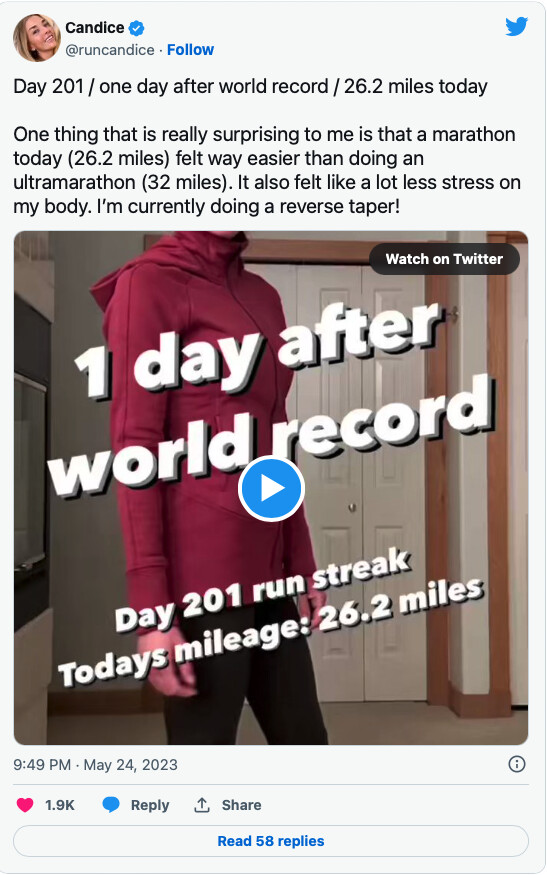
The American is set to claim the Guinness World Record once her endeavour is verified, with the previous best for consecutive days running an ultra marathon standing at 22.
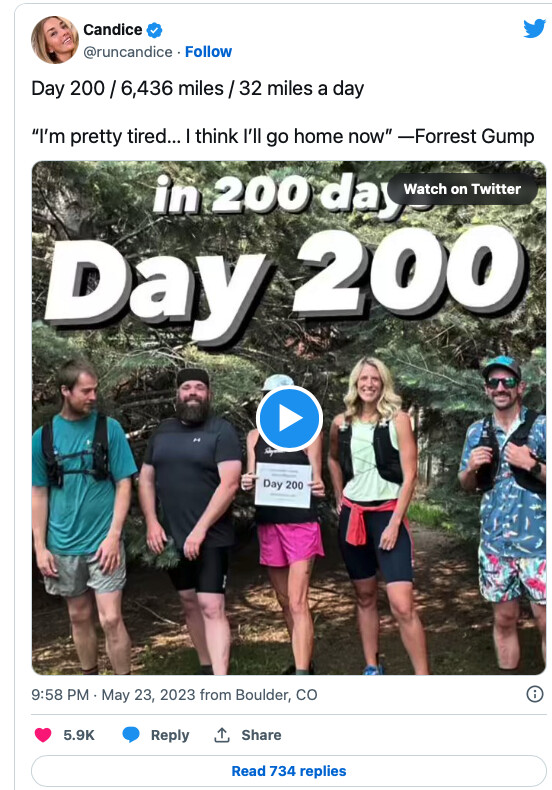
Burt, whose company Destination Trail is behind the Triple Crown of 200s – Tahoe 200, Bigfoot 200 and Moab 240 – covered over 6,400 miles after setting off on November 5, 2022.
She even ran the HURT 100 in Hawaii to continue her streak on days 71 and 72, a brutal race David Goggins has taken on four times, failing to finish in 2012.
Mental resilience
“Every morning I woke up and got it done no matter what,” she wrote on Instagram after finishing her final ultramarathon. “Thank you to the men and women who set the bar before me!”
“Records inspire us to find within ourselves courage and discipline to advance humanity
“This run has been about me trusting my body & adapting to every demand I encountered along the way. It is a personal quest, one in which I looked to satiate my curiosity about endurance, my body, running and the mind.
“That fire has only grown.
“My heart is content and I’m excited about my future adventures and spending the summer with my kids exploring Colorado.
“It’s truly incredible how good my body feels, although I’ll be the first to admit it’s changed a lot of the past 200 days. Some changes are good, some are not.”
Easy marathon
Burt is now in the process of winding down after her eye-watering schedule, but still ran a typical marathon – 26.2 miles – the day after her 200th ultra, undeterred by an “epic” thunderstorm in the latter stages.
“One thing that is really surprising to me is that a marathon today felt way easier than doing an ultramarathon,” she wrote in another Instagram post.
“I don’t have much fatigue running even 20 miles, but as I taper off the world record, part of me seems to be allowing myself to think, ‘my legs feel tried today’ instead of having to box that up and file it away.
“When you’re running a 50k a day no matter what, your feelings don’t really matter. Pain or tension in the body is used to indicate where to focus on any rehab/PT rather than to feel sorry for myself or shorten the run.
“This allowed me to grow, adapt and achieve a higher level, but it came at some cost.
“What’s the cost? There’s a bit of a disconnect between my feelings and sensations and the run. Those sensations — at least the pain or immobility ones—are saved for after the run and only for the context of treatment. My feelings, when negative, were filed away completely because they weren’t needed or helpful.
“I think learning to do this is very helpful in many endeavours. But to live in the world outside the runs I sometimes need to access these things more readily. Just an observation – one that I hope to delve into a bit more at some point.”
Flexibility decrease
Burt reiterated that her physical condition is remarkably solid, aside from some understandable stiffness following her relentless running effort.
“Let’s talk about my body: physically I feel great. There are times I’m not sure if its as great as I think or if I just got used to a high level of tension. I will get up and I can tell my muscles are sharp and ready.
“My flexibility has been significantly reduced in favor of stability and propulsion. This serves me well when running, but can make other daily tasks harder.
“For example, I cannot sit on my heels with my toes under me stretching the bottom of my feet. My feet simply don’t stretch like that anymore.”
Burt is eyeing more record-breaking runs in the future, but for now, she is enjoying a return to normality and spending time at home with her children.
Login to leave a comment

More Prize Money Is Flowing Into Trail Running. What Does That Mean for the Sport?
Annie Hughes, one of the top trail runners in the U.S. for the past two years, had another amazing season running ultra-distance races in 2022. On September 17, the 24-year-old Hoka-sponsored runner and part-time college student won the Run Rabbit Run 100 in Steamboat Springs, Colorado, her fourth win of 100 miles or longer since April. Earlier this year, she won the Coldwater Rumble 100 in January, Cocodona 250 in April and the High Lonesome 100 in July.
Those were all exceptional efforts in really challenging races, but the big difference she experienced after crossing the Run Rabbit Run finish line, 21 hours and 26 minutes later, was that she won $17,500. (And yes, she was handed one of those cartoonish, oversized checks at the awards ceremony.)
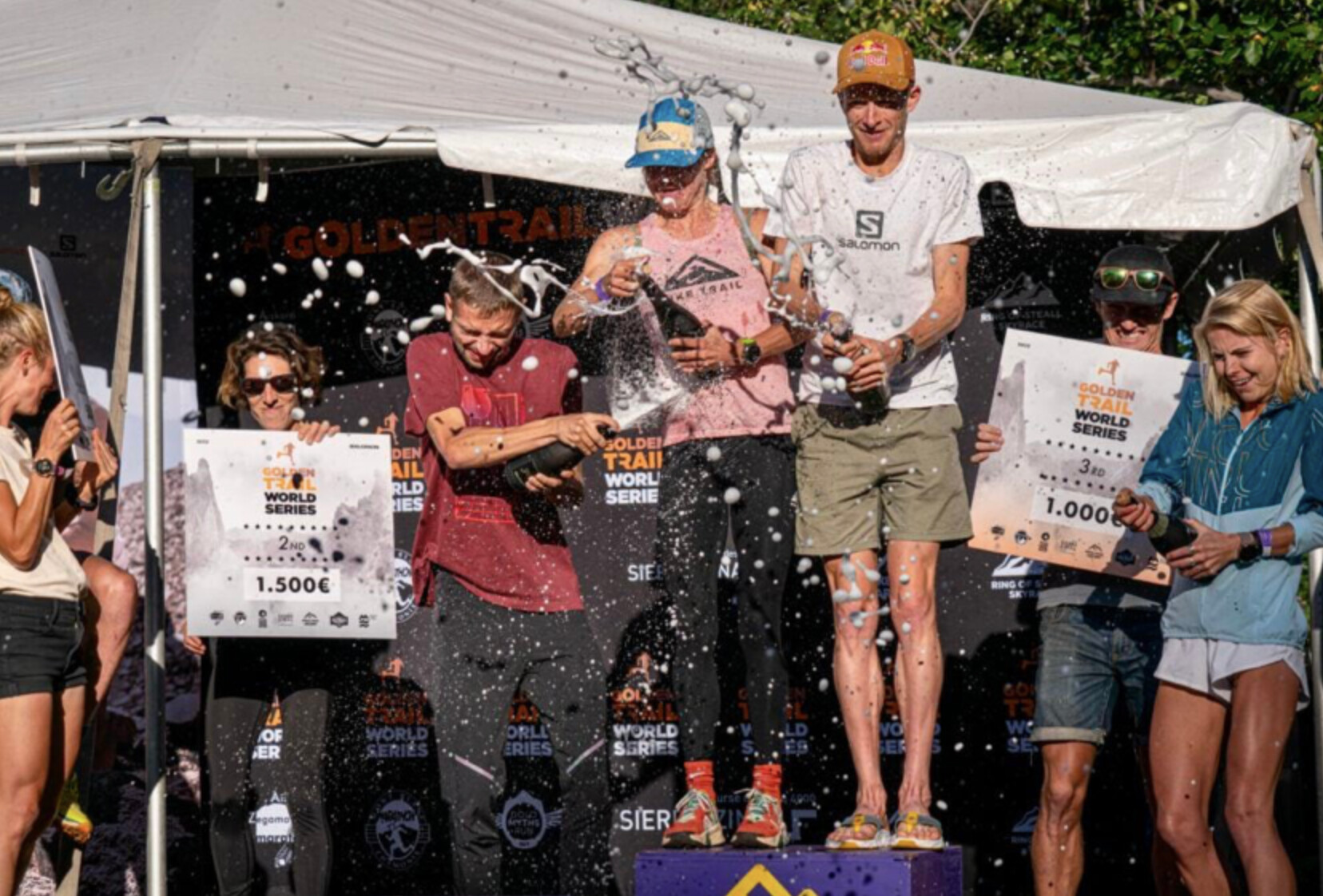
Run Rabbit Run is one of the rare American trail races that offers a relatively large prize purse, and for a decade, it's been the largest in the sport. Hughes earned $15,000 for winning the women's race and split another $5,000 with Arizona trail runner Peter Mortimer (who placed 12th overall) as part of the event's new team competition.
"That wasn't the reason I was drawn to the race, but it was definitely pretty cool to win that much money," Hughes said. "I'm glad I did it, because it wound up being a really great race with an amazing course on a beautiful day."
The origins of trail running were always more about the joy and freedom of ambling through the natural world, and less about the specific time and pace of any run or race, which is why winning big cash prizes is mostly uncommon in the sport, even for top-tier runners like Hughes. Over the past two years, Hughes has won 10 races of 50 miles or longer, yet her Run Rabbit Run victory was the first time she's ever earned money for her efforts.
More sponsorship money and bigger cash prizes are flowing into the sport, helping the top athletes earn a full-time living in the sport and become global stars. But that evolution has also created a desperate need for a unified governing body and more consistent drug-testing as doping becomes a more acute concern.
A Windfall of Prize Money
Historically, America's biggest and most notable trail running races haven't offered any prize money at all-Western States 100, Hardrock 100, Dipsea Trail Race, Leadville 100, Mount Marathon Race, Seven Sisters, Black Mountain Marathon/Mount Mitchell Challenge-partially because races simply couldn't afford to pay it, and also because, at the soul of the sport, that's not what the races were historically about or why most top runners were competing.
But with the continued growth of the sport-trail running has grown by 231 percent over the past 10 years, according to one report-and the dawn of a new level of professionalization over the past decade, there is a lot more money being injected into the sport. That includes more high-profile events and race series, more brands investing in the sport, more sponsored runners and trail running teams, as well as a growing expectation that prize money should be part of the equation as it is in road running, triathlon, and even obstacle course racing.
For many years, The North Face 50 near San Francisco was one of the only ultra trail races in the world to offer a significant prize purse. From its inception in 2006, until it disappeared after 2019, that race famously awarded $30,000 in prize money, which included $10,000 to the top finishers in the men's and women's races, plus $4,000 for second and $1,000 for third. It was a race to look forward to at the end of the calendar year, both for the cash awards and the prize-induced competition that drew top runners from around the world.
During that span, Run Rabbit Run, though a lower-profile race, quietly began dishing out some of the biggest payouts in the sport, in part because race organizers Fred Abramowitz and Paul Sachs believe in rewarding its top athletes for their efforts (as well as giving back to the community via even bigger charitable contributions). The race winnings come primarily from entry fees of the 600-runner event and sponsors, if and when the race has them. That wasn't possible back in the early days of the sport, when entry fees were minuscule and cash sponsors were mostly non-existent, but things have started to change.
Abramowitz and Sachs, who both earn their living as attorneys, are unique in that they want to give back to the elite athletes and the Steamboat Springs community, but they also want to help grow the sport. Abramowitz outlined what he calls "A Blueprint for Sponsors of Ultra Running," a three-page document that explains how and why trail ultrarunning-both as a sport and as individual races-can connect to more casual runners, sports fans, and the general public.
He points to the rampant growth of NASCAR, Professional Bull Riding, and professional poker over the past 20 years from their roots as fringe sports, relatively speaking, to mainstream spectacles with massive fan bases, TV contracts, and social media followings. Trail and ultrarunning aren't there yet, Abramowitz has noted, but they've certainly been growing rapidly.
"Today millions watch those events, though the actual number of participants is minuscule," Abramowitz wrote in his missive. "Ultrarunning can learn from these events: it needs new ideas, new ways of attracting the already committed runners and the casual sports fan to our terrific sport. Fields need to be competitive and races [need to be] dramatic; there are hundreds of 100-mile races, but those that offer competitive fields are a handful at most. Most ultra-races offer spectacular scenery in interesting venues."
Abramowitz said sponsors should support races such as Run Rabbit Run that offer prize money not merely because it's good for sport, but also because prize money can attract competitive fields, and competitive fields attract interest-from spectators, participants, potential sponsors, and the general public. He also points out that having prize money at more domestic races is a way to keep the sport from becoming entirely Euro-centric, which has been an increasing trend in the past several years.
The trend of cash purses seems to be increasing, and on the face of it, that's good for elite athletes capable of podium finishes. But it's a complex topic and one that certainly will simultaneously increase the competitiveness of the sport while, some argue, continue to pull the sport away from its organic, racing-in-nature roots that was mostly viewed as the antithesis of competitive road racing.
On the same day Run Rabbit Run paid out $75,000 in total prize money, the Pikes Peak Ascent awarded $18,000 in prize money for its top 10 finishers-including $3,000 apiece to the men's and women's winners-while the Pikes Peak Marathon, on September 18, had an additional $10,500 in total prize money for the top five runners. The races also offered $2,000 (Ascent) and $4,000 (Marathon), respectively, as course-record bonuses, and a $10,000 premium to any runner surpassing a pie-in-the-sky time well ahead of the course records. None of those records were broken, but the $28,500 in total prize money-partially backed by the Salomon-sponsored Golden Trail Series-was one of several large prize purses offered at U.S. races this year.
Other big American prize purses were also primarily tied to the Golden Trail Series events-the $50,000 spread over four races at the mid-June Broken Arrow Sky Races in Olympic Valley, California, and the September 25 Flagstaff Sky Peaks 26K race in Flagstaff, Arizona, where runners competed for $18,000 in prize money and a chance to compete at the Golden Trails World Series Final, and the $15,000 winner's earnings at the Madeira Ocean & Trails 5-Day Stage Race in October.
Also of note, the November 18-20 Golden Gate Trail Classic paid out $25,000 in total prize money to the top five finishers in both the 100K and half-marathon races, which were part of this year's nine-race $270,000 Spartan Trail World Championship Series.
Meanwhile, the Cirque Series, sponsored by On, paid out $3,600 in total prize money at each of its six sub-ultra mountain running races in the U.S., including $1,000 for the men's and women's winners. The Mt. Baldy Run-to-the-Top on September 5 in Southern California offered $3,000 to runners who broke the event's longstanding course records, and Joe Gray and Kim Dobson obliged by taking down each mark.
Most U.S. Trail and Mountain Running Championships have a minimum of $2,000 in prize money. Typically that comes from regional sponsors eager to support the local race organizations, such as the case with Northeast Delta Dental's contributions behind this year's Loon Mountain Race in Lincoln, New Hampshire, which hosted the U.S. Mountain Running Championships. That event had a $1,500 total prize purse that was paid out to the top three men and women in each race, but it also had an additional $1,500 for an Upper Walking Boss premium that was spread among the top three fastest times in each gender on the super-steep upper part of the course.
Meanwhile, the 2022 World Mountain and Trail Running Championships in Thailand paid out $66,000 to the top five finishers over four races, including $4,000 to the winners of each event.
"(The prize money) is way better than it's ever been, both for the athletes earning it and the number of sponsors who are contributing to it," says Nancy Hobbs, executive director of the American Trail Running Association and the chairperson of the USATF Mountain Ultra Trail Council that oversees national championship races and the U.S. Mountain Running Team.
From a longer view over the past decade or so, Joe Gray agrees there is more money coming into the sport than ever before. As a top-tier pro since 2008 and 21-time U.S. champion, he's regularly won more prize money at high-level races in Europe for more than a decade. But more than the growth of prize money, he has seen more brands interested in putting money behind athletes, races, and the sport in general.
"I think there has always been prize money there, and if you're successful you could make a lot more money really quickly," said Gray, a two-time World Mountain Running Champion. "I do think there is more money coming from the sponsors paying out better contracts and bigger bonuses, which I think will wind up being more beneficial to athletes overall."
Most elite trail runners get annual stipends from their sponsoring brands and bonus money for top performances. Gray is backed by Hoka, but he also has sponsorship deals with Fox River Socks, Kriva, Never Second, Knockdown, Tanri, Momentous, Casio, and GoSleeves. In addition to Hoka, Annie Hughes gets additional support from Ultraspire, Coros, and Tailwind Nutrition. But the life of professional trail runners-independent contractors who don't get healthcare and retirement program benefits-can get expensive with the growing cost of travel, regular bodywork/physio treatments, and private health insurance.
The sport's top-tier elite athletes-Joe Gray, Kilian Jornet, Courtney Dauwalter, Jim Walmsley, Maude Mathys, and Scott Jurek, among others-make a good living from their sponsorships. But there are really only a handful American trail runners making more than about $50,000 a year from shoe brand sponsorships. (Most "sponsored" trail runners are making somewhere between $10,000 to $30,000 per year.) The bottom line is that winning prize money, for those who are fast enough to consistently finish on the podium in big races, certainly helps make ends meet and is necessary to keep the sport's top athletes from having to work other jobs so they can focus entirely on training, recovery, and racing.
"This [2022] is the first year I've gone all-in on trail running," said Hughes, who worked as a waitress in Leadville the previous two years. "I'm able to live off what I make, but I'm not really saving anything. So it was really nice to win that money because then I can put some away in savings."
Higher European Standards
So far, Abramowitz appears to be right about the sport shifting to more of a European focus, and it's, at least in part, tied to the increased prize money that has attracted competitive athletes. While many top-tier European events have paid out modest prize purses for years, some of those races have also helped out visiting runners by way of travel stipends, hotel accommodations, or appearance fees. That's partially because European races are generally larger (500 to 1,000 participants or more) than U.S. races (typically fewer than 500 participants).
Unlike Hughes, who only raced in the U.S. this year, American runner Abby Hall, who runs for the Adidas-Terrex team, raced three times in Europe and earned prize money each time. She placed second in the Transgrancanaria 126K in the Canary Islands in March (which doubled as the Spartan Trail World Championship), finished third in the CCC 100K in Chamonix in August, and won the Transvulcania by UTMB 72K back in the Canary Islands in October.
Like Hughes, Hall receives an annual stipend and race bonuses from her sponsor, but admits it's been nice to have more opportunities to win money-both because it helps her make a living wage and because it's consistent with other professional endurance sports.
"In the past, it hadn't even been a consideration before, for how income would work out as an athlete," Hall said. "But this year it actually added up to be a decent amount. I'm grateful for the opportunities."
In 2022, American runner Hayden Hawks won an off-the-radar 100K a race in Krynica, Poland, and brought home the 100,000 zloty winner's prize ($26,000), one of the bigger individual purses ever awarded in trail running. In 2017, when Hawks won the CCC race, he didn't win anything because UTMB had refused until 2018 to offer prize money at its races, partly because race founders Catherine and Michel Poletti have believed that increased prize money will bring more incentive for some athletes to consider doping or that agents would take too big of a cut.
UTMB finally began offering prize money to podium finishers in 2018 with a total purse of about $34,000 (35,000) and continued that through 2021. But after forging a business relationship with Ironman and launching the new UTMB World Series, it has increased the prize money awarded in Chamonix. In 2022, UTMB said it paid out about $162,000 in total prize money (the approximate equivalent of its stated 156,000 prize purse) to the top 10 men and women finishers of the UTMB, CCC, and OCC races.
That includes $10,400 to the winners of each of those races, with approximately $5,200 going to second-place finishers and $3,125 for third. Fourth- and fifth-place finishers in each of those races earned about $1,500, while 6th through 10th took home $1,000.
While those more notable ultrarunning paydays can be big windfalls for a trail runner, they still pale in comparison to what elite-level road marathoners and triathletes earn at the biggest races that have a much larger audience, including live TV coverage. For example, the 2022 Boston Marathon awarded $876,500 in prize money and $150,000 to the winners, while New York City Marathon paid out $530,000 in total prize money at its November 6 race, including $100,000 to the men's and women's winners. The 2021 Ironman World Championships in St. George, Utah, had a $750,000 prize purse, including $125,000 to the winners, similar to what was awarded at the 2022 Ironman World Championships October 6-8 in Hawaii.
While only a few top trail runners could have opted to pursue a marathon or triathlon career instead of trail running, what's more relevant is the spike of growth trail running. Although it is not yet internationally televised as major marathons and triathlons are, the surge in participation and livestream viewing options is starting to bring in more media attention and sponsorship money than ever before. And more media attention begets more participation and professionalization.
"I think we'll definitely see ultra-trail running continue to grow for years to come," says Mike McManus, director of global sports marketing for Hoka. "I think it's at a point where it's just on the cusp of the real growth that's coming and all that will come with it, similar to where the marathon was in the 1980s and triathlon in the 1990s. It might never be as big as marathoning, but trail running will definitely get more built out as it continues to grow."
"It's nice to make some money for the sport we do. This is my job, and being able to support my family with a decent chunk of money is pretty nice," Hawks says. "I definitely don't go after races just for money, but if there is a gap in my schedule where I can win a little bit of money, I am definitely going to take advantage of that for sure. I want to continue to be in this sport and live this lifestyle as long as I can, so knowing that there are sponsors and races investing more in runners is something I am really grateful for."
The Ongoing Dilemma
While Abramowitz and Sachs have been eager to give out prize money at Run Rabbit Run, not all races are equipped to do so. Many U.S. races are garage-shop operations that barely break even, while some are just too small to make it happen. The Western States 100-Mile Endurance Run (WSER) is operated by a non-profit organization, and offering prize money goes against the mission of the race, says race director Craig Thornley.
The biggest concern that race directors have, including Thornley, is that prize money attracts athletes willing to use performance-enhancing drugs because the sport lacks a comprehensive anti-doping strategy that includes both post-race testing and out-of-competition testing.
"In general, I think the prize money is probably a good thing because professional athletes are able to make a living," Thornley said. "But I think, as a sport, we'll probably have to be more aware of people trying to use drugs or some other ways to get that prize money."
A few years ago, the Western States 100 famously announced its zero-tolerance policy regarding the use of performance-enhancing drugs (PEDs) that prohibits any athlete who has been determined to have violated anti-doping rules or policies-by World Athletics, World Anti-Doping Agency (WADA), U.S. Anti-Doping Agency (USADA), or any national sports federation-is ineligible for entry into the WSER. Although Western States has regularly drug-tested its top finishers, only a few other big trail or ultra-distance races test its finishers with a WADA-sanctioned program.
Thornley believes the incentive to cheat has probably increased as more brands have stepped up to sponsor athletes, but the increase in prize money probably makes it more tangible.
He's not the only one. Ultrarunning coach and podcaster Jason Koop, an outspoken proponent for authentic drug-testing in the sport, agrees, saying that it's time for the sport to collectively start developing mandatory drug-testing protocols, even on a small scale. While he doesn't believe doping is prevalent in trail running, he believes it's definitely already an issue.
"People would be fooling themselves if they thought that every trail running performance was clean. If you think that that's the case, then I have a bridge to sell you," Koop says. "Prize money or no prize money, I think the bigger thing is that the ecosystem is developed enough and there is enough financial reward at stake to where everyone kind of owes it to everybody else to get something done."
In other words, it's time for the sport to take some next steps-either by big governing bodies or small factions of people interested in the long-term health of the sport-to develop more structure and universal anti-doping policies.
by Trail Runner Magazine
Login to leave a comment
The Many Gifts of Joe Kleinerman
Runner. Soldier. Coach. NYRR founder. Administrator. Advocate. Volunteer.Joe Kleinerman was all these things, and more. He gave so much to running and to NYRR. We run to celebrate and honor him at the annual Joe Kleinerman 10K
An Early Start in Running
Joe was born in 1912 in Spring Valley, NY, the youngest of four children in a family recently immigrated from Ukraine. He grew up in New York City and started running as a teenager after he and one of his brothers attended the Millrose Games at Madison Square Garden. Joe captained the cross country team at DeWitt Clinton High School, where he also ran track (half-mile and mile). During the summers he trained at Macombs Dam Park in the Bronx.He competed for City College, then won an athletic scholarship to Kansas State University. It was the mid-1930s, the depths of the Great Depression, and when Joe received a job offer with the U.S. Postal Service back in NYC, he could ill afford to turn it down. He returned home to take the job and would remain a Postal Service employee for 32 years. And he continued to run. Joe joined the Millrose Athletic Association and became one of their standout competitors, placing in the top 10 at the Boston Marathon 1941 and 1942 and running a best time of 2 hours and 38 minutes. In an interview years later he noted: “That’s 2:38 with sneakers, on dirt roads, and without any water stops!”
He served as a staff sergeant in the U.S. Army Air Corps during World War II, including 19 months with the 599th Airborne in the South Pacific. He once placed fifth in a 1-mile race in Hawaii on a course laid out by another NYC serviceman also named Joe – last name DiMaggio.
"Joe ran hundreds of races before injuries caused him to stop competing at age 53. He stopped running at age 70 but was able to resume light jogging after knee-replacement surgery in his 80s.
From Competitor to Coach
Joe became the assistant coach of Millrose in 1958 and head coach in 1967. He enthusiastically recruited runners to Millrose, making the team a powerhouse, and was known to many as “Coach” for the rest of his life.At Joe’s memorial service, longtime Millrose runner and 1974 New York City Marathon winner Norb Sander recalled, “Joe was a great coach. He did not intrude. He didn’t criticize you. He was behind the scenes always to make sure that things went smoothly.”
Administrator and NYRR FounderJoe’s interest in working “behind the scenes” led him increasingly toward the administrative side of road racing. In the 1950s all competitive running in the U.S. was governed by the Amateur Athletics Union (AAU), which prohibited women from running distances over a mile, repeatedly failed to take a stand against racial segregation, and discouraged age-group competition. These regressive restrictions and biases frustrated Joe and other runners. In 1958 they formed the Road Runners Club of America (RRCA) to administer road racing.
Later that year Joe, Ted Corbitt, Harry Murphy, and about 40 other runners founded NYRR, then known as the Road Runners Club – New York Association. Joe served as NYRR’s vice president and secretary. He's pictured above with Corbitt and New York City Marathon co-founder Vince Chiappetta. He never sought the limelight, preferring to work behind the scenes. Joe directed and scored countless races and meets – a laborious and task in an era when all recordkeeping was done by hand.
Advocate and VolunteerJoe also worked tirelessly to make running more inclusive and equitable. In 1967, along with Nina Kuscsik and New York City Marathon co-founder Vince Chiappetta, he successfully led a movement to allow women to run AAU-sanctioned races longer than a mile. Later he helped put together a U.S. women’s team for the fabled London-to-Brighton 52-mile road race in England – and saw a dream fulfilled when the women won the race.
Together with Ted Corbitt and others he introduced “veterans” races for runners age 35 and older as well as ultramarathon (50K and 50-mile) national championships. As far as it’s known, Joe never received any compensation for his thousands of hours of service to running. In his old age he remained close to the NYC racing scene and to NYRR’s offices on East 89th Street, where the lobby was named after him following his 90th birthday. He loved to tell stories and to marvel at the growth of running and NYRR over the decades."I considered Joe the heart and soul of Road Runners Club – New York Association," said Gary Corbitt, the son of Ted Corbitt. "Many of the innovation the sport enjoys today were started in New York in the 1960s. My father felt that Joe put in more volunteer hours for the betterment of our sport than anyone else worldwide."
Joe died on Veterans Day in 2003 at age 91. At his memorial service, friends shared their memories of a man who lived large, his gruff manner belying a boundlessly generous spirit. “He barked,” recalled Joe’s Millrose teammate John Garlepp. “If you don’t get the bark, there’s something wrong, either he’s not feeling well or he doesn’t like you.”
Joe's niece, Ruth Kleinrock, said at the service, "Having an uncle who was so instrumental in the sport of running, especially women's running, is something of which my sisters and I will always be proud."Joe Kleinerman dedicated his life to running and creating opportunities for all. We’re grateful to him for it.
Login to leave a comment
Joe Kleinerman Classic 10K
Make good on your New Year’s running resolution by taking part in the Joe Kleinerman 10K! Kleinerman, a founding member of NYRR, the longtime coach of the Millrose Athletic Association, and a beloved NYRR employee until his death in 2003 at age 91, was a true competitor. Take on the challenge of this chilly 10K through beautiful Central Park. The...
more...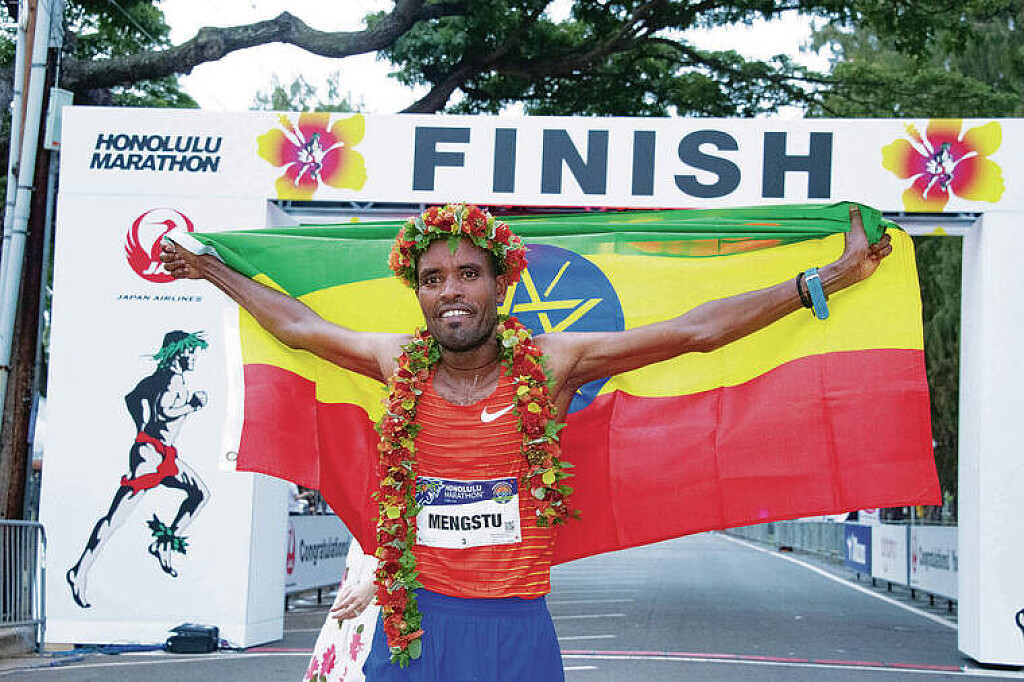
Ethiopia’s Asefa Mengstu breaks Kenya’s Honolulu Marathon dominance
After sparring toe-to-toe for over half the race, Ethiopia’s Asefa Mengstu outpaced his cross-border Kenyan rival Barnabas Kiptum to cruise into Kapiolani Park and win the 50th anniversary Honolulu Marathon, breaking a long-standing Kenyan stranglehold of Hawaii’s flagship race.
Mengstu won in two hours, 14 minutes and 40 seconds with Kiptum second in 2:17:45, some 10 minutes ahead of third-placed Japanese Yuhi Yamashita (2:27:45) in the race run under brutally windy conditions.
Ethiopia’s Asayech Bere made it an Addis Ababa sweep taking the women’s title in 2:30:58 with her compatriot Abebech Afework Bekele (2:34:39) second and Japan’s Yuhi Yamashita third in 2:27:45.
Kenyan men had been unbeaten here since 2007, Ethiopia’s Ambesse Tolossa having interrupted the clean run by winning the 2006 edition.
Prior to that, Kenyans were unbeaten since Eric Kimaiyo took over as champion from South Africa’s Josiah Thugwane in 1996.
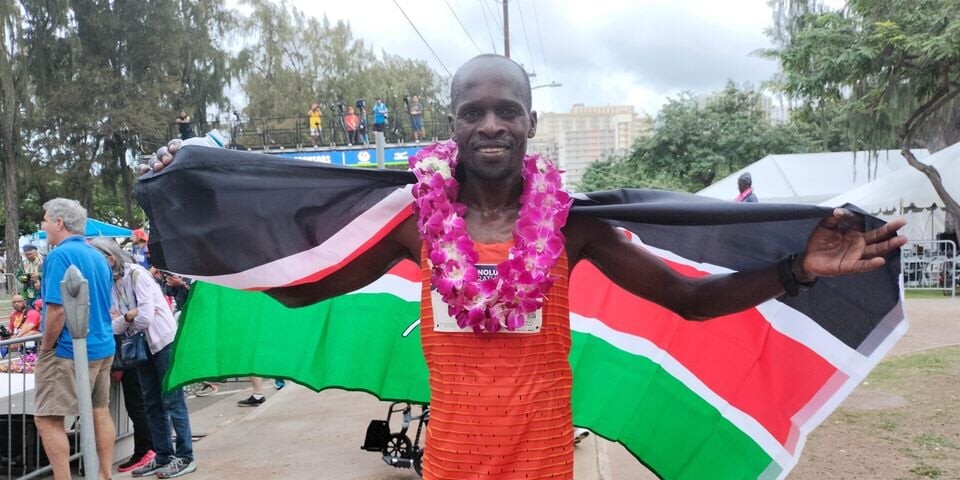
But it was Ibrahim Hussein, the legend, who made the breakthrough as the first African winner on this island city of O’ahu - birthplace of former US President Barack Obama - clinching a back-to-back hat-trick of victories from 1985 to 1987.
Sunday’s golden jubilee race started in it’s traditional night settings at 5am, local time, with spectacular fireworks and, as expected, it was the two Ethiopians, Mengstu and Shifera Tamru, who broke away together with Kiptum, crossing the 10-kilometre mark in 30 minutes and 30 seconds, paced by Kenya’s Reuben Kerio who is also preparing for next month’s Mumbai Marathon.
They then crossed the halfway mark in 1:06:38 under a slight drizzle at the Aina Haina sector after which pacemaker Kerio dropped off at the 30km mark (1:21:00).
There was drama shortly after when Kiptum and Mengstu dropped Tamru, racing on shoulder-to-shoulder as the sunrise launched in spectacular fashion at East O’ahu.
But at 33km, Mengstu broke away and ran a solo race all the way to the finish.
“It was a tough race… I’ve never competed under such tough conditions,” Mengstu said, referring to the furious headwind.
“My strategy was to attack at 35km and I was determined to win,” added Mengstu who trains under the Rosa Associati stable in Addis.
Kiptum was happy with his race, saying the atrocious winds slowed him down, but he remained confident of fighting for a place in Team Kenya to next year’s World Championships in Budapest.
“I ran in conditions similar to these in Hong Kong in 2018, but today’s wind was just too crazy,” he said.
“My body feels fine and I will now fight for a place in the team to the World Championships so that I can represent my country…
“I have what it takes, and I just have to throw in a race in spring and confirm my place in Kenya’s team to Budapest.”
Sunday’s golden Jubilee Honolulu Marathon celebrated the return of full racing and public events after two years of uncertainty occasioned by the coronavirus pandemic, much to the satisfaction of its long-standing President and CEO Jim Barahal.
After Kenya’s Titus Ekiru won back-to-back races here in 2018 and 2019, including setting a course record 2:07:59 in 2019, the race was held as a non-competitive event in 2020 due to the pandemic with Kenya’s Emmanuel Saina winning the title last year in 2:14:32.
by Elias Makori
Login to leave a comment
Honolulu Marathon
The Honolulu Marathon’s scenic course includes spectacular ocean views alongside world-famous Waikiki Beach, and Diamond Head and Koko Head volcanic craters.The terrain is level except for short uphill grades around Diamond Head. ...
more...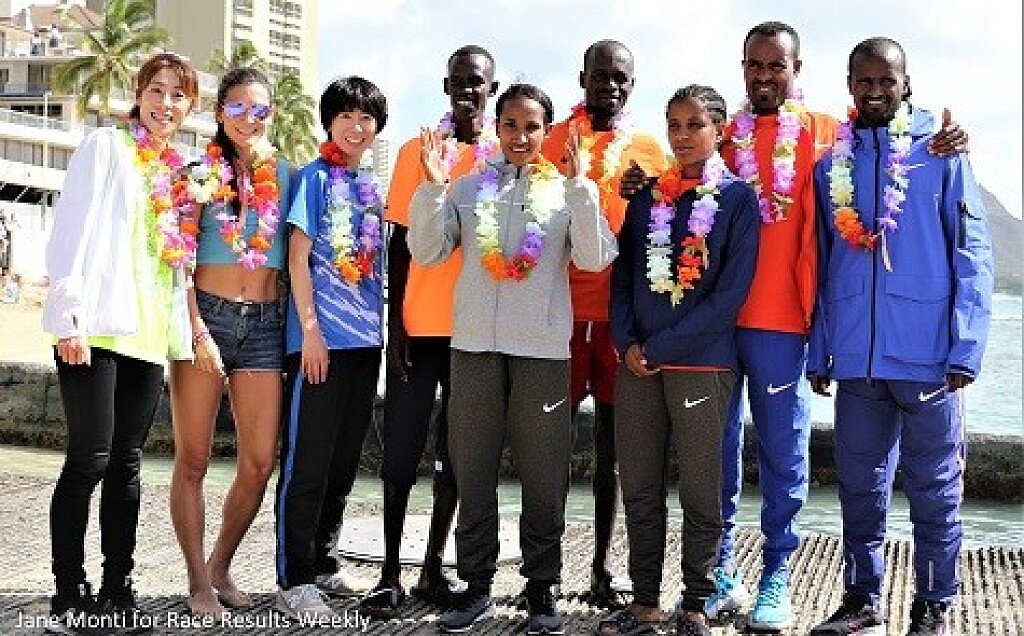
Expect an Ethiopian Flavor For Sunday's 50th Honolulu Marathon
After a marathon journey to get to Hawaii, a quartet of Ethiopian runners are looking forward to making the most of their first visit to the Aloha State. The group of athletes, coached by Yirefew Birhanu Derb, will line up Sunday before dawn for the 50th running of the Honolulu Marathon, America's fourth-largest marathon. The race features a more robust elite athlete roster following last year's slimmed down line-up coming off the pandemic.
Shifera Tamru and Asefa Mengstu lead the men's elite field, while Abebech Afework and Bere Ayalew are the top entrants in the women's division. After a trip that required more than 21 hours of air travel across multiple flights --from their home base in Addis Ababa to Frankfurt, then Los Angeles before reaching Honolulu-- they arrived late Wednesday. They immediately popped into a McDonald's for dinner, and have been getting acclimated to the local time zone, 13 hours behind Ethiopia.
They were all very happy to be invited to this race because they know it's a very good marathon," Coach Derb told Race Results Weekly during a photo shoot for the athletes on Waikiki Beach. "They are looking forward to racing and happy to have the chance to visit Hawaii."
Tamru, 24, is coming off October Chicago Marathon, where he clocked 2:07:53 to finish fifth for the second consecutive year. He says that he has recovered well and is ready to go for Sunday. He has won three marathons in his career, all in South Korea: Chunchon in 2018, Seoul in 2019 and Daegu this past April. His personal best of 2:05:18 came at the Dubai Marathon in 2019.
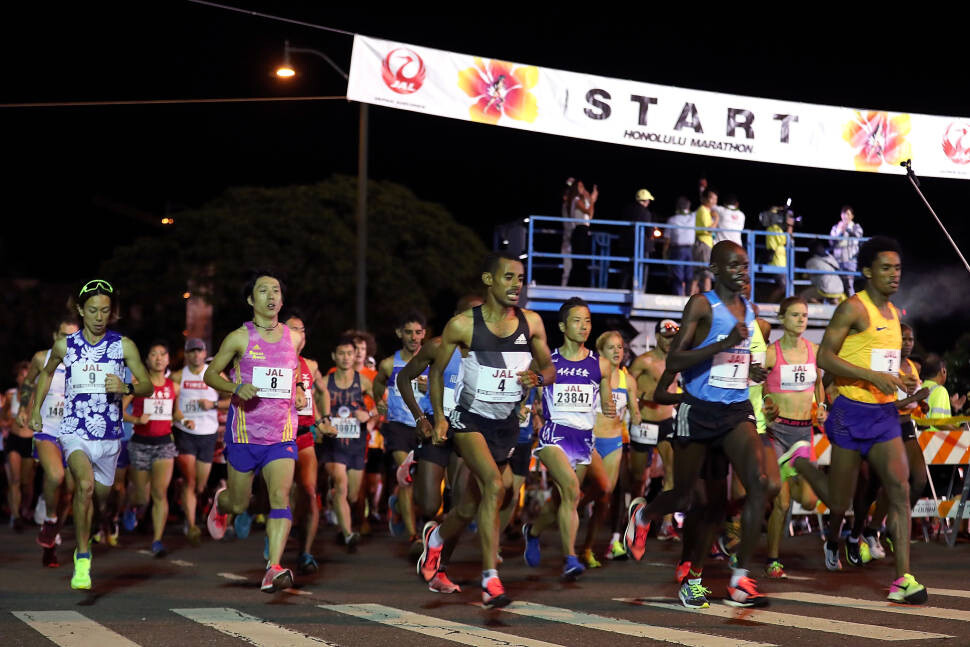
The more experienced Mengstu --who represented Ethiopia as far back as the 2010 IAAF Half Marathon Championships-- has a resume with 13 marathon finishes, including the 2018 Dubai Marathon, where ran his lifetime best of 2:04:06. His most recent race was eight months ago, so he should be well rested. "I'm happy to be here and I'm expecting to win the race on Sunday," he said with a quiet smile as the athletes posed for photographs and chatted with the media.
The two men work well together in training, Derb says. But on Sunday, he points out, "it must be a competition." In addition to each other, they will have to watch out for a strong Kenyan, 36-year-old Barnabas Kiptum, who has a personal best of 2:04:17 (Milan, 2021). He dropped out of the Chicago Marathon this fall, but in July he proved he is still a contender by placing 15th at the World Athletics Championships in Oregon. Stanley Biwott, the 2015 New York City Marathon champion with a 2:03:51 personal best, had planned to run here but scratched.
The women race is likely to come down to a duel between Afework and Ayalew. Like their male teammates, they also have a strong friendship and symbiotic relationship. "They are happy when they are training together, and they can help each other when they compete," Derb said.
Afework, 31, is by far the more seasoned of the two. Her international racing career dates back to the 2010 IAAF World Cross Country Championships, where she placed 18th. She has 20 marathon finishes to her name, and a personal best of 2:23:33 from Dubai in 2015. "I have a lot of experiences from other races and I'm expecting to use that previous experience to run well on Sunday," said Afework, who is coming off a DNF in October's Lisbon Marathon.
The 23-year-old Ayalew is a comparative novice, with four marathons in the books, but each one has been progressively faster. The most recent, in Eindhoven, Netherlands, in October, resulted in her quickest time yet (2:22:52). "My training has been good and I expect to show that on Sunday," she said.
The women's field also includes Canadian Olympian Lanni Marchant, who won this race a year ago on a short recovery from the New York City Marathon, and Japanese veteran Mai Ito (2:24:42 PB).
Should weather conditions cooperate --it's been very windy the last several days-- both the men's and women's course records could be in play. Titus Ekiru of Kenya holds the men's standard of 2:08:00 from 2019, while his compatriot Brigid Kosgei clocked 2:22:15 in 2017. (Kosgei set the current world record of 2:14:04 two years later.) Prize money will be paid three deep: $25,000-10,000-5,000.
The forecast for Sunday morning calls for a temperature of 74F/23C when the gun goes off at 5 a.m. Most of the race will be run in the dark, as the sun will rise just before 7 a.m. on race day.
by Runners Web
Login to leave a comment
Honolulu Marathon
The Honolulu Marathon’s scenic course includes spectacular ocean views alongside world-famous Waikiki Beach, and Diamond Head and Koko Head volcanic craters.The terrain is level except for short uphill grades around Diamond Head. ...
more...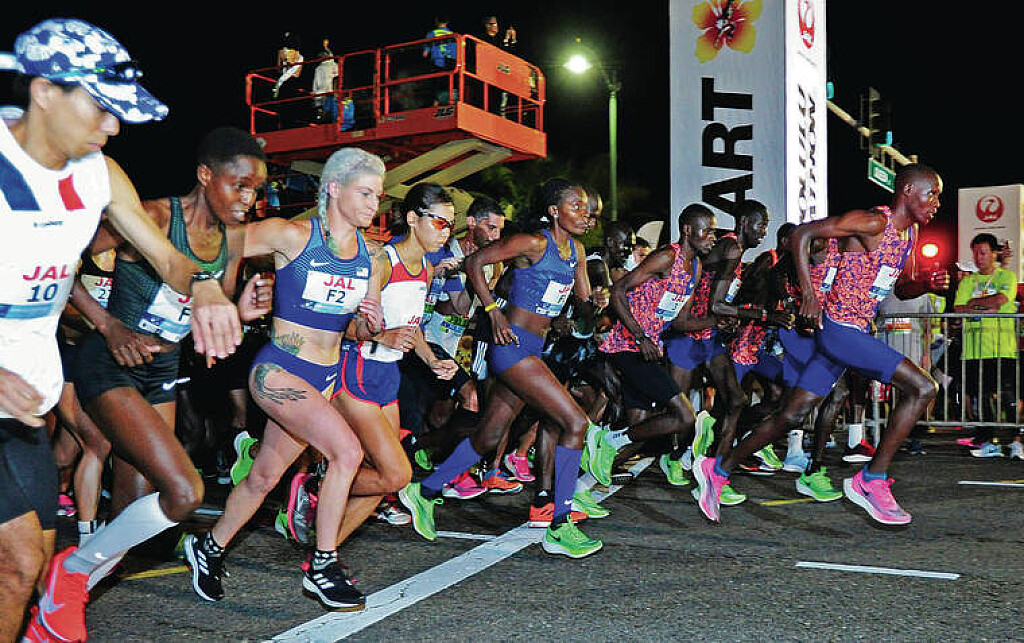
Ethiopians And Kenyans Lead Elite Field at Historic 50th Honolulu Marathon
Athletes from Ethiopia and Kenya lead the elite field for the historic 50th edition of the Honolulu Marathon, scheduled for Sunday, December 11. Founded in 1973, and historically one of the five largest marathons in the United States based on finishers, this year's race will have its first full elite athletes program since 2019, paying prize money three-deep for both men and women: $25,000-10,000-5,000. The race will be run on its traditional course starting at Ala Moana Beach Park, making a loop through Downtown, wrapping around Diamond Head, going out along the Kalanianaole Highway to Hawaii Kai, then returning to Waikiki to finish in Kapiolani Park just after sunrise.
The race was held virtually in 2020 because of the pandemic, and had only a limited elite athlete program in 2021. Organizers are excited to have athletes this year who are strong enough to challenge the course records which were both set by Kenyans: 2:08:00 (2:07:59.02) by Titus Ekiru in 2019 and 2:22:15 by now world record holder Brigid Kosgei in 2017.
"We are excited to welcome top professional athletes to attack our incredible course records for the 50th anniversary race," said Honolulu Marathon Association President Dr. Jim Barahal. "At its core the Honolulu Marathon is an athletic competition, whether against others or against oneself, and we are excited to see what transpires on December 11."
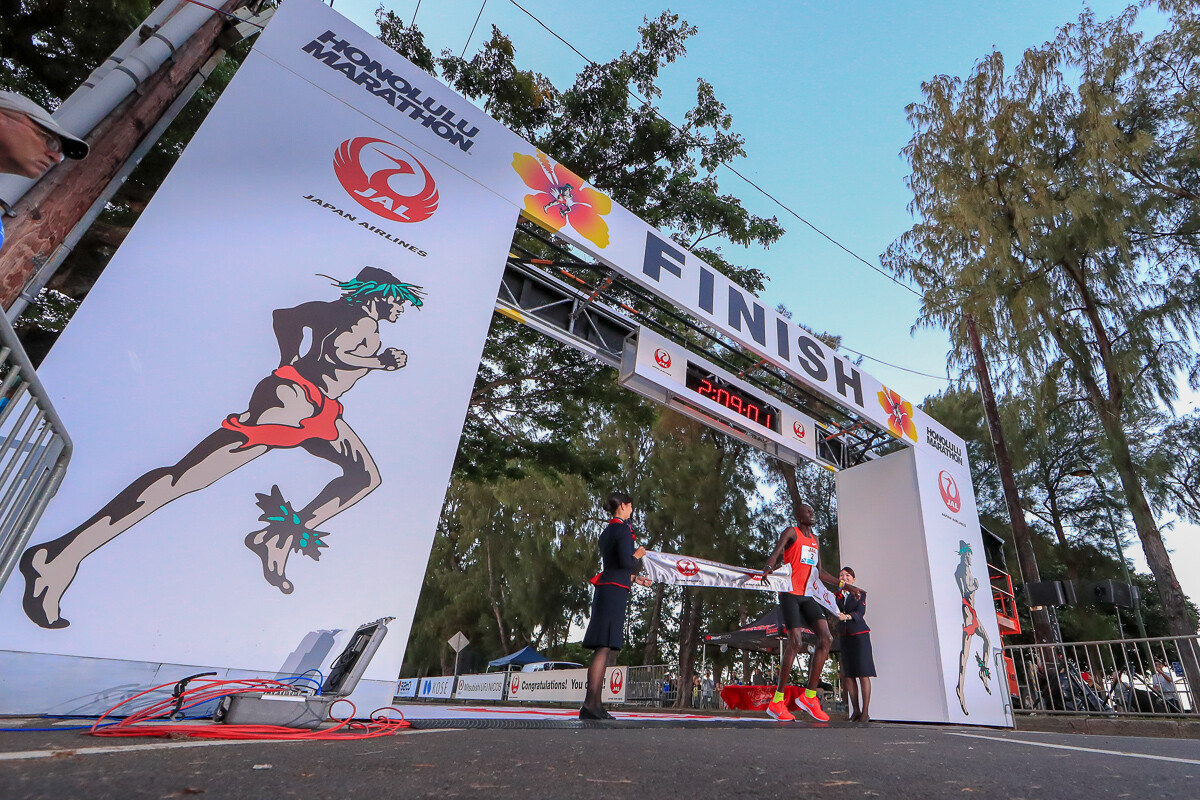
Shifera Tamru is the leading entrant from Ethiopia. The 24 year-old has a personal best of 2:05:18 (Dubai, 2019) and has three marathon wins and five podium finishes in eight starts. He won the 2022 Daegu Marathon in Korea last April in 2:06:31, and was most recently fifth at the Bank of America Chicago Marathon in October in 2:07:53. He'll be running the Honolulu Marathon for the first time.
His top rival is likely to be the Kenyan veteran Stanley Biwott, the 2015 TCS New York City Marathon champion who has a personal best of 2:03:51 (London 2016). Biwott, 36, has not completed a marathon since 2018 when he was fourth at the Abu Dhabi Marathon. He returned to racing after a long layoff earlier this year, clocking a 1:01:57 half-marathon in Padova, Italy. He has completed a total of 13 career marathons with four wins and eight podium finishes. Like Tamru, this will be his first run in Honolulu.
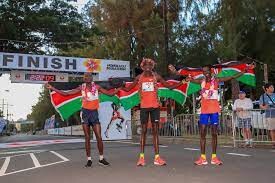
The other top contenders on the men's side are Asefa Mengstu of Ethiopia (2:04:06 personal best, Dubai, 2018) and Barnabas Kiptum of Kenya (2:04:17, Milano, 2021). Both men are veterans. Mengstu has completed 13 career marathons with 4 wins and 7 podium finishes. Kiptum has completed 18 marathons in 20 starts with 3 wins and 13 podium finishes. Neither man has ever run the Honolulu Marathon.
Two strong Ethiopian athletes lead the women's field. Abebech Afework (2:23:33 personal best, Dubai, 2015) and Bere Ayalew (2:22:52, Eindhoven, 2022) will both be making their Honolulu Marathon debuts. Afework, 31, is the more experienced athlete. She has completed 20 marathons in 21 starts, and has racked up three wins and seven podium finishes. She is coming back from a DNF at the Lisbon Marathon in October. Ayalew, 23, has only run four marathons. However, she's made the podium at all four including a second place finish at the Eindhoven Marathon in October of this year where she ran her personal best. Both athletes will be making their Honolulu Marathon debuts.
Reigning Honolulu Marathon champion, Lanni Marchant of Canada, is also in the field. The 38 year-old, who ran both the 10,000m and the marathon at the 2016 Rio Olympics, won last year's race in 2:41:25 on very limited training after finishing 11th at the TCS New York City Marathon a month before In her long marathon career, which began in 2011, Marchant has completed 15 marathons and made the podium three times. A criminal appeal lawyer based in Denver, she is the former Canadian record holder with a 2:28:00 personal best.
"It was a struggle out there," Marchant said after last year's race. "I dehydrated quick. Those last few miles I really had to find my purpose for running. I just got myself across the finish line."
Rounding out the elite field is Mai Ito of Japan. The 38 year-old --who competed in the 2016 Olympic Marathon and both the 2011 and 2015 World Championships Marathons-- has completed all 15 marathons she has started. Her personal best of 2:24:42 was set in Nagoya in 2015. This will be her first run ever at the Honolulu Marathon.
by David Monti
Login to leave a comment
Honolulu Marathon
The Honolulu Marathon’s scenic course includes spectacular ocean views alongside world-famous Waikiki Beach, and Diamond Head and Koko Head volcanic craters.The terrain is level except for short uphill grades around Diamond Head. ...
more...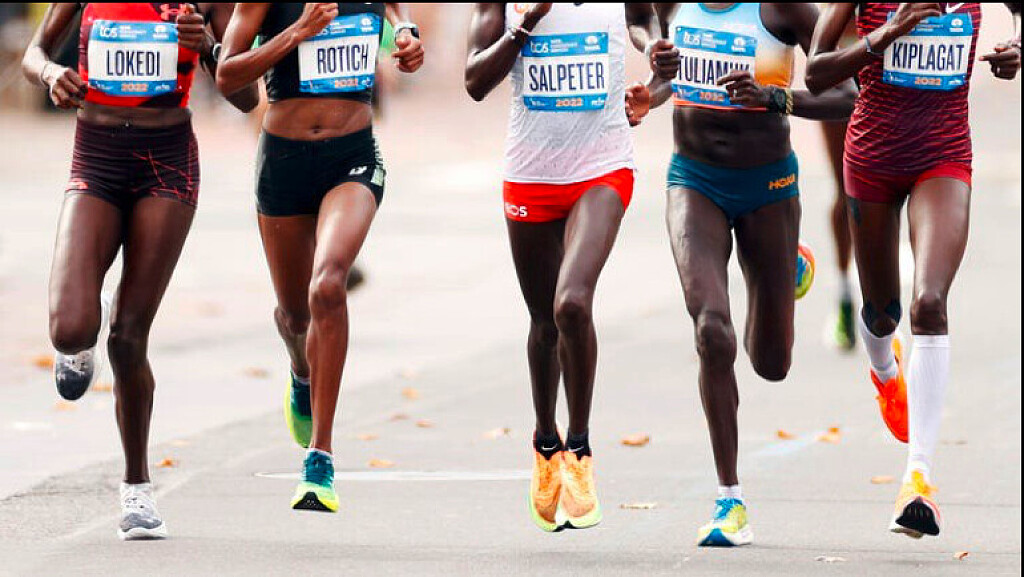
Who Wore Which Shoes at the New York City Marathon?
The running shoe hype train was high in New York City with a few fast yet-to-be-released shoes in the men’s and women’s elite fields.
For a few miles early in the New York City Marathon, Desi Linden surged into the lead of the women’s elite field. The two-time Olympian and 2018 Boston Marathon champion didn’t think she’d run away and win the race that way, but she was just trying to keep the pace honest.
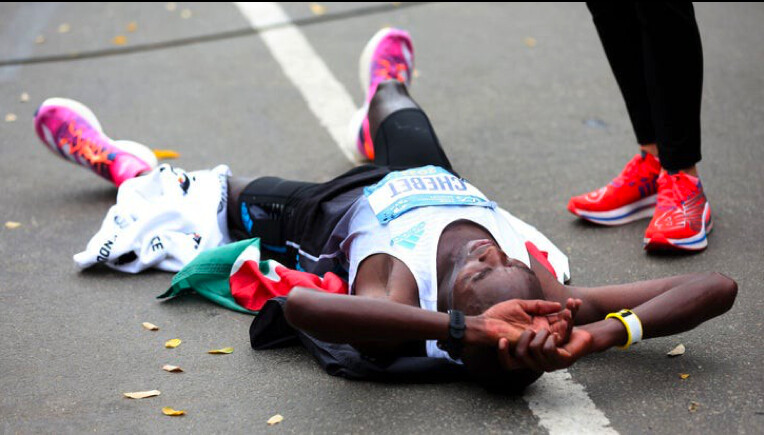
However, hiding in plain sight on her feet as she was off the front of the pack was a yet-to-be-released pair of orange, white and black Brooks prototype racing shoes. A day later, no one is willing to give up any details of the shoe, except that, like all of the other top-tier racing shoes in both the men’s and women’s elite fields, it features a carbon plate embedded in a hyper-responsive foam midsole. And although it’s all in accordance with World Athletics regulations, it won’t be released in Spring 2024 … so we’ll all have to wait a bit to see what that shoe is all about.
Linden’s shoes weren’t the only speedy outliers among the top 25 men’s and women’s finishers. While Nike, Adidas and ASICS shoes were the most prevalent brands among elite runners, there were several shoes that aren’t yet available to the public.
For example, the first runner to cross the finish line of this year’s New York City Marathon, women’s winner Sharon Lokedi, was wearing a pair of Under Armour Velociti Elite shoes. That’s notable for several reasons—because it was Lokedi’s first marathon, because the shoe won’t become available until early 2023 and because it’s the first podium finish at a major international marathon for a runner wearing Under Armour shoes.
There were also three pairs of yet-to-be-released Hoka Rocket X 2 shoes on the feet of three Hoka NAZ Elite runners — two of whom set new personal best times, Aliphine Tuliamuk (7th, 2:26:18) Matthew Baxter (12th, 2:17:15). Those fluorescent yellow shoes with orange, white and blue accents and blue laces were on the feet of Hoka pros at the Boston Marathon in April and Ironman World Championships in Hawaii in October, but they won’t be released to the public until late February or early March.
Meanwhile, the winner of the men’s race, Evans Chebet, was wearing a pair of Adidas Adizero Adios Pro 3, a shoe worn by four other runners in the top 25 of the men’s race and six among the women’s top 25, making it the second most prevalent model among the elites. Oddly, that was the same shoe worn by Brazil’s Daniel do Nascimento, who went out at record-setting sub-2:03 pace on his own, only to crumple to the ground at mile 21 after succumbing to fatigue and cramping.
The most common shoe among the top finishers was the Nike ZoomX Vaporfly Next% 2, which was on the feet of 11 of the 50 runners among the women’s and men’s top 25 finishers. There were eight runners wearing either the first or second version of the ASICS MetaSpeed Sky.
Six runners wore Nike Air Zoom Alphafly Flyknit shoes, three wore Nike Air Zoom Alphalfy NEXT% 2. There were two pairs of On Cloudboom Echo 3 in the field, including those worn by Hellen Obiri who finished sixth while running a 2:25:49 in her marathon debut, while three runners wore Puma Fast R Nitro Elite.
And what about actor Ashton Kutcher? He wore a pair of purple Nike Air Zoom Alphafly NEXT% Flyknit shoes and finished in a very respectable 3:54:01.
Matt James, the former lead of the Bachelor, finished in 3:46:45 with Shalane Flanagan as his guide wearing a pair of New Balance FuelCell Comp Trainer shoes. Flanagan wore Nike Air Zoom Alphafly Next% Flyknit shoes, as did Meghan Duggan, an Olympic gold medalist hockey player who ran a solid 3:52:03. Lauren Ridloff, actress from “The Walking Dead,” ran in a pair of Brooks Glycerin 20 and finished in 4:05:48, while Chelsea Clinton, daughter of Bill and Hillary Clinton finished in 4:20:34 wearing a pair of Brooks Ghost 14 and Tommy Rivers Puzey (aka “Tommy Rivs,” a former elite runner who survived a deadly bout of cancer in 2020, wore a pair of Craft CTM Ultra Carbon Race Rebel and finished in 6:13:54.
Here’s a rundown of what was on the feet of the top 25 women’s and men’s finishers in the Big Apple.
1. Sharon Lokedi (Kenya) 2:23:23 — Under Armour Velociti Elite
2. Lonah Salpeter (Israel) 2:23:30 — Nike ZoomX Vaporfly Next% 2
3. Gotytom Gebreslase (Ethiopia) 2:23:39 – Nike ZoomX Vaporfly Next% 2
4. Edna Kiplagat (Kenya) 2:24:16 — Nike ZoomX Vaporfly Next% 2
5. Viola Cheptoo (Kenya) 2:25:34 — Adidas Adizero Adios Pro 3
6. Hellen Obiri (Kenya) 2:25:49 — On Cloudboom Echo 3
7. Aliphine Tuliamuk (USA) 2:26:18 — Hoka Rocket X 2
8. Emma Bates (USA) 2:26:53 — ASICS MetaSpeed Sky+
9. Jessica Stenson (Australia) 2:27:27 – ASICS MetaSpeed Sky
10. Nell Rojas (USA) 2:28:32 — Nike Air Zoom Alphafly Flyknit
11. Lindsay Flanagan (USA) 2:29:28 – ASICS MetaSpeed Sky
12. Gerda Steyn (South Africa) 2:30:22 — Adidas Adizero Adios Pro 3
13. Stephanie Bruce (USA) 2:30:34 — Hoka Rocket X 2
14. Caroline Rotich (Kenya) 2:30:59 — ASICS MetaSpeed Sky+
15. Keira D’Amato (USA) 2:31:31 — Nike Air Zoom Alphafly Flyknit
16. Des Linden (USA) 2:32:37 — Brooks Prototype
17. Mao Uesugi (Japan) 2:32:56 — Adidas Adizero Adios Pro 3
18. Eloise Wellings (Australia) 2:34:50 — Adidas Adizero Adios Pro 3
19. Sarah Pagano (USA) 2:35:03 — Adidas Adizero Adios Pro 3
20. Grace Kahura (Kenya) 2:35:32 — Nike ZoomX Vaporfly Next% 2
21. Annie Frisbie (USA) 2:35:35 — Puma Fast R Nitro Elite
22. Molly Grabill (USA) 2:39:45 — Nike Air Zoom Alphafly NEXT% Flyknit
23. Kayla Lampe (USA) 2:40:42 — ASICS MetaSpeed Sky+
24. Maegan Krifchin (USA) 2:40:52 — Adidas Adizero Adios Pro 3
25. Roberta Groner (USA) 2:43:06 — Nike Air Zoom Alphafly NEXT% 2
1. Evans Chebet (Kenya) 2:08:41 — Adidas Adizero Adios Pro 3
2. Shura Kitata (Ethiopia) 2:08:54 — Nike ZoomX Vaporfly Next% 2
3. Abdi Nageeye (Netherlands) 2:10:31 — Nike ZoomX Vaporfly Next% 2
4. Mohamed El Aaraby (Morocco) 2:11:00 — ASICS MetaSpeed Sky+
5. Suguru Osako (Japan) 2:11:31 — Nike ZoomX Vaporfly Next% 2
6. Tetsuya Yoroizaka (Japan) 2:12:12 — Nike ZoomX Vaporfly Next% 2
7. Albert Korir (Kenya) 2:13:27 — Adidas Adizero Adios Pro 3
8. Daniele Meucci (Italy) 2:13:29 — ASICS MetaSpeed Sky+
9. Scott Fauble (USA) 2:13:35 — Nike Air Zoom Alphafly NEXT% 2
10. Reed Fischer (USA) 2:15:23 — Adidas Adizero Adios Pro 3
11. Jared Ward (USA) 2:17:09 — Saucony Endorphin Pro 3
12. Matthew Baxter (New Zealand) 2:17:15 — Hoka Rocket X 2
13. Leonard Korir (USA) 2:17:29 — Nike ZoomX Vaporfly Next% 2
14. Matthew Llano (USA) 2:20:04 — Under Armour Velociti Elite
15. Olivier Irabaruta (Burundi) 2:20:14 — On Cloudboom Echo 3
16. Hendrik Pfeiffer (Germany) 2:22:31 — Puma Fast R Nitro Elite
17. Jonas Hampton (USA) 2:22:58 — Adidas Adizero Adios Pro 3
18. Alberto Mena (USA) 2:23:10 — Nike ZoomX Vaporfly Next% 2
19. Jacob Shiohira (USA) 2:23:33 — Nike Air Zoom Alphafly Flyknit
20. Edward Mulder (USA) 2:23:42 — Nike Air Zoom Alphafly Flyknit
21. Jordan Daniel (USA) 2:24:27 — Nike ZoomX Vaporfly Next% 2
22. Nathan Martin (USA) 2:25:27 — ASICS MetaSpeed Sky+
23. Jeff Thies (USA) 2:25:45 — Nike Air Zoom Alphafly NEXT% 2
24. Shadrack Kipchirchir (USA) 2:28:15 — Puma Fast R Nitro Elite
25. Abi Joseph (USA) 2:29:16 — Nike Air Zoom Alphafly Flyknit
by Outside
Login to leave a comment
Winter Running Doesn't Have to Be Cold, Dark, and Lonely
The shortest days and the longest nights are upon us. In many parts of the country, it's getting cold or it will be soon. It's hibernation season, except that we aren't bears and most of us know, somewhere deep down inside, that we need to keep running, even at this sub-optimal time of year.
But what's a runner to do when motivation is low and the chances of wiping out on a patch of ice are high? We do the best we can. And we try to look on the bright side, pun intended: After December 21, it only gets lighter from here.
Readers Chime In
And listen, we're all in this together. So we asked readers to tell us how they muddle through, what mind tricks they've come up with, what pieces of advice keep them moving, even when Old Man Winter deals the harshest conditions and the alarm goes off at the darkest hour. We solicited almost 150 responses from the Twitter mindhive to come up with this collective advice, from our beloved community of winter runners:
Let there be light
Even if you are starting an early morning run before the sun comes up, several people suggested that using a light therapy box or lamp as soon as the alarm goes off can help.
"[I] stare my eyeballs right into it while getting dressed and filling my water bottle," said Lori Dierig."I swear it works really well for me!"
They might be on to something. Research has shown that bright light exposure for 30 minutes before 8 a.m. every day can improve symptoms of Seasonal Affective Disorder, which is depression related to the change in seasons. If you want to give it a try, Yale School of Medicine has done all the research on which kinds of lamps and boxes have the best results.
Even just going for a 30-minute walk or run at daybreak can help offset that feeling of sluggishness or listlessness, no matter what time of year, Dr. Richard S. Schwartz, associate professor of psychiatry at Harvard Medical School told Harvard Health.
Embrace the peace
Life at this time of year can be hectic. Holidays, school activities, work, travel-it all piles up. For many runners, getting outside before or after work is a moment to take a deep breath and relish a little quiet time. For Erica Sara, jewelry designer, small business owner, and mother of two, running is simply a coping strategy for life: "It's the only me-time I get lately."
For others, it's nice to exist in the outdoors when most people are inside.
"I don't mind running in the dark. Streets are empty, quiet, and peaceful," said George Woodward, adding, "I know I am privileged as a man to be able to do that."
Maggie Stewart added: "Each winter [I] treat myself to a new reflective item like hat or gloves."
Remember that to everything, there is a season
Amanda Parrish Morgan, author of the newly released Stroller: Object Lessons, winter is the season to maintain fitness and release herself from rigid training schedules. She prefers to accept the limitations of the season and just do what she can.
"Thirty minutes on the treadmill, turtle-like pace on snowy roads, ad-hoc fartlek on random clear patches of road," she said.
Don't measure success by how far or fast you run right now. Just get out there and give yourself credit for what you do. "You can still be consistent even if you only get out for a few minutes," Jana Sesow said. "It can give you some nice down time for your body to recover and reset between training cycles, too."
Be flexible
For those who are blessed with flexible work schedules, it's a good time of year to sleep in, wait for temperatures to rise a little bit, and run mid-morning, at lunchtime, or during the later afternoon.
"About this time of year, I start granting myself as much flexibility as possible," said Alex Fox. "Wake up at usual run time (5 a.m.) and check the weather. If it's reasonable, I'll go. Sometimes hit the tread. Sometimes go early evening.. Adaptive, flexible, and fun are key."
Find company for the misery
Almost everybody agrees that running is better with friends, whether it's winter or not. It's especially helpful to have people to meet when it's dark outside and it makes it less likely you'll skip a run if at least one other person is waiting for you.
"I can be more accountable to others than myself sometimes," said Dana Giordano, host of the "More Than Running" podcast.
Don't call it the dreadmill
Sometimes the only way to run safely is doing so inside. Many people enjoy the indoor season and entice themselves by streaming shows or listening to podcasts that they will only turn on while running on the treadmill.
"I don't call it the dreadmill," said ColleenRunsPA. "It's a training tool that I'm blessed to have. It helps me build endurance and speed during the cold months. I still run outside on the weekends."
Call it when you need to
When all else fails, remember to give yourself some grace when you just can't make it happen. You can always try again tomorrow.
"Care less about outcomes-embrace being sluggish and careful on icy sidewalks. Don't be precious about it," said Julie Hieggelke. "Be kind when your soul says, 'not today.' Try again."
And possibly the best advice of all came from Paul Hopkins, who simply said: "Move to Hawaii!"
We're on our way, Paul.
by Trail Runner Magazine
Login to leave a comment
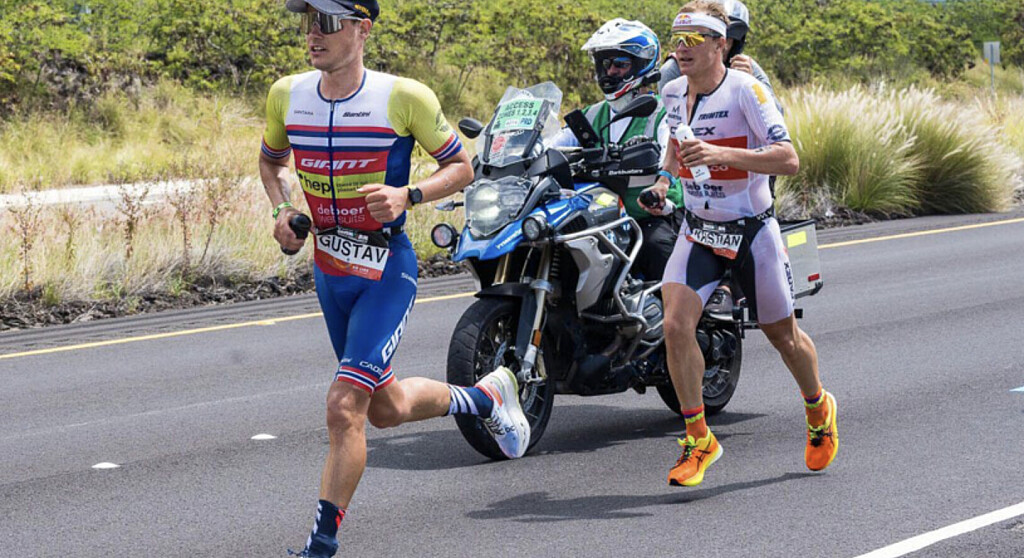
Ironman World Championship champion's "chunky" shoes spark controversy
Last week at the Ironman World Championship in Kona, Hawaii, Norway’s Gustav Iden ran a 2:36 marathon after a 180-kilometre bike and 3.8 km swim, earning his first world championship title. Iden ran a new marathon record on the Kona course in a unique pair of On’s carbon-plated running shoes, the Cloudboom Echo 3, which have a reported stack height of 50 mm, which is outside of World Athletics legal stack height rule of 40 mm for road-running events.
Iden was allowed to wear these shoes in competition, since professional triathletes do not have to comply with any rules over their choice of running shoes, World Triathlon has confirmed.
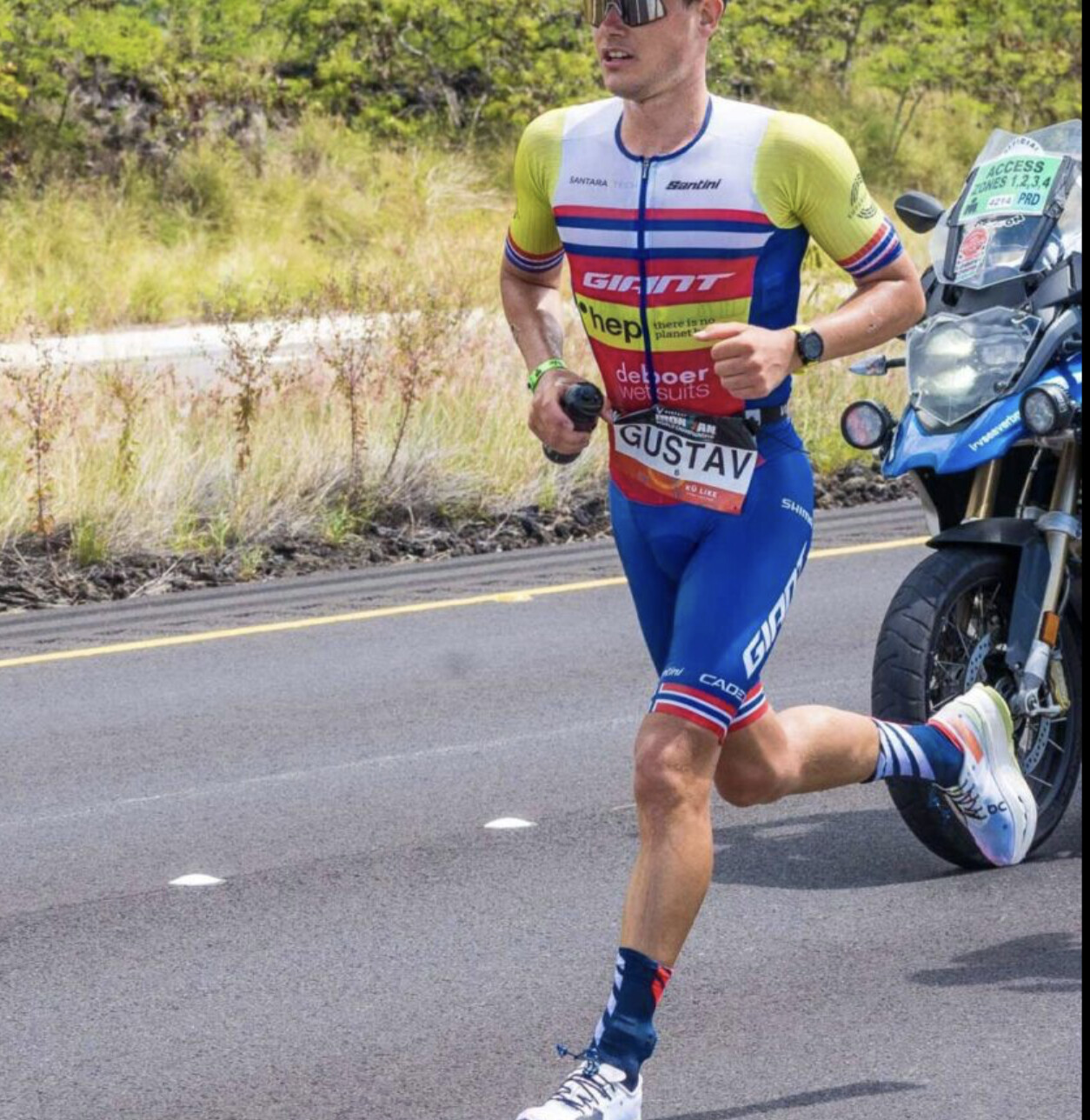
Despite regulations in athletics governing shoe technology–such as limiting the sole thickness–World Triathlon stated they will not follow World Athletics standards and no checks are being made on any of the footwear being worn.
Some fans of the sport are calling for World Triathlon to follow suit in controlling stack height for competition. The second-and third-place finishers, Sam Laidlow of France and 2020 Olympic champion Kristan Blummenfelt, both wore the WA-legal shoes Nike Alphafly Next% and Asics Metaspeed Sky 2.
Iden said this in a post-race interview with his sponsor On:
World Athletics rules state the sole must be no thicker than 40 mm and that the shoes must not contain more than one rigid or embedded plate that runs the full length of the shoes. The Cloudboom Echo 3 has a single carbon plate that runs the full length of the shoe.Canada’s Ben Flanagan also wore the Cloudboom Echo 3 during his win at the 2022 Falmouth Road Race.
Since the seven-mile road race is not sanctioned by World Athletics, elites are allowed to wear shoes which are normally not allowed at national championship road races.
Iden won in the Ironman World Championships in his Kona debut with a time of 7:40:24, taking 11 minutes off the previous course record time from 2019. On, who signed Iden in the week leading into the race, was given a green light from Ironman for the Norwegian to wear the shoe.
by Running Magazine
Login to leave a comment

10 ways to start running even if you kind of hate it
Runners love to hate their sport. Here’s advice for how to get past the pain and make running more fun.
Are you a runner who hates running?
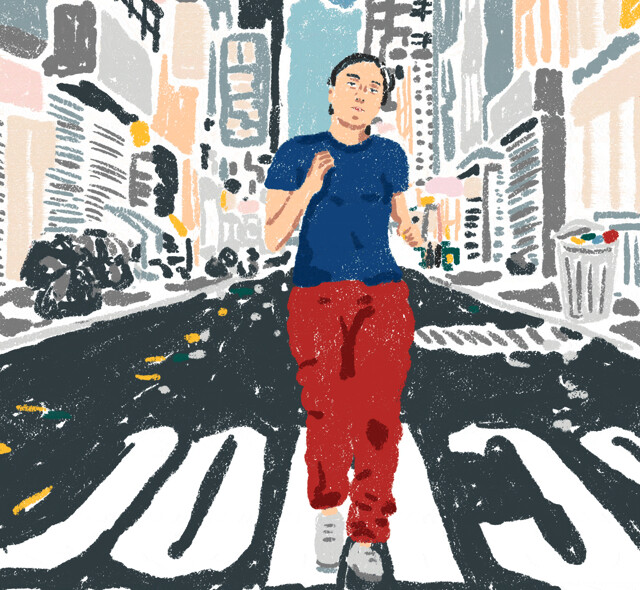
It turns out, a lot of runners don’t love the actual running part of their sport. Running can conjure up memories of pain and punishment from high school sports. It can feel like a chore. Even avid runners who love the sport have had periods where their motivation wanes. One popular search on Google: “How do you start running when you hate it?”
Brendan Leonard, an outdoor adventure writer who runs ultramarathons, said that when strangers learn he’s a distance runner, they often tell him that they hate running, to which Leonard replies, “I hate running, too, man. It’s not that fun.”
And yet, running is one of the most popular forms of exercise with nearly 8 million people around the world signing up to compete in races each year. Running can be cathartic, and people who do it often feel a sense of accomplishment.
The Washington Post asked readers, “Do you hate running but want to do it anyway?” More than 100 people responded with stories of their love-hate relationship with running. Here’s their advice.
Go slower. You can even walk sometimes.
You don’t have to go fast. You don’t even have to run the whole time.
Cody Townsend, a 39-year-old professional skier, found running boring and painful. His endurance coach, Sam Naney, told him to slow down and alternate jogging for 30 seconds and walking for 30 seconds — a run-walk-run training method popularized by Olympian Jeff Galloway.
Townsend ran-walk-ran for 20 minutes several times a week for about four to six weeks. In the beginning, that meant he was running a 12- to 13-minute mile pace.
“If you can run and have a conversation with someone, then you're at the correct pace,” Townsend said. “And once I learned that, that’s what was the key catalyst to improving and then learning to love running.”
Expect the struggle. Embrace the boredom.
The struggle of running is a shared experience with every other runner, from beginner to elite marathoner.
In his book, “I Hate Running and You Can Too: How to Get Started, Keep Going, and Make Sense of an Irrational Passion,” Leonard recommends giving yourself permission to struggle. Running takes time. It requires practice. You need the proper shoes and gear, which can be found at specialty running stores.
Another common refrain from people who don’t like running is that it’s boring. Leonard, 43, agrees. But to him, “Boredom is fertile. It’s a great place to put yourself to actually think, as opposed to something that’s commanding your attention every few seconds.”
Make a game out of it
Mika McDougall, who is married to Christopher McDougall, the best-selling author of “Born to Run: A Hidden Tribe, Superathletes, and the Greatest Race the World Has Never Seen,” realized that she needed extra motivation to run during the frigid winter days of Lancaster County, Pa.
She noticed that in a nearby neighborhood, residents had set up free libraries in their front yards. She started to organize her runs around them. By the end of her runs, she would have a pile of books to take home. She would also drop books off.
“I wanted to vary it up to entertain myself, because you can kind of get into a routine and get bored,” said McDougall, who has since moved to her home state of Hawaii, where the weather is warmer. “It was a fun way to plan the afternoon and get rid of junk around the house.”
Run with a personal coach in your ear
Listening to a running podcast or guided running app during your run is like having a personal coach by your side. You can search for a variety of apps for runners of all levels.
Jess Mullen, 39, an administrative assistant in Philadelphia, says that running is “always a slog.” Listening to the NHS Couch to 5K podcast has helped. The episodes distract her from pain and offer reminders about form and breathing. The podcast is “a completely judgment free, nurturing way into running,” Mullen said.
Mullen’s cousin, 34-year-old Emily Kane, of Philadelphia, runs with Peloton’s guided workouts. “You kind of feel like you’re not by yourself,” she said.
Run with music or entertainment
Music, audio books and podcasts can also serve as entertainment and distraction on a long run. “At low to moderate intensities of running, the reduction in the rates of perceived exertion is around 10 percent” while listening to music, said Costas Karageorghis, a professor at Brunel University in London and author of the book, “Applying Music in Exercise and Sport.”
“It encourages dissociation, which means that runners are not so aware of the fatigue related symptoms from the organs and from the working muscles,” Karageorghis said.
The sweet spot for music tempo is between 120 beats per minute for a low intensity run and 140 beats per minute for a high intensity run.
Look for headphones with “bone conduction technology” and an open-ear design so you can listen to music but still hear traffic and stay aware of your surroundings.
Head to the trails
Trail running allows a change of scenery and an escape into nature. It also gives you “permission to slow down,” said Mike Crowley, 59, of Conshohocken, Pa., who has competed in multiple 100-mile races, including the Eastern States 100 in Waterville, Pa.
“It’s not as monotonous,” Crowley said. “The environment is more appealing and changes through the season. The community of trail runners is very welcoming and a fun group to be a part of.”
The American Trail Running Association (ATRA) lists dozens of trail-running events in the United States every month.
Keep chasing the runner’s high
Not everyone experiences the runner’s high the same way, but research suggests the feeling has to do with endocannabinoids, which are the natural versions of THC and CBD.
“When we say runner’s high, we mean kind of a euphoric effect that some but not all people experience after a bout a physical activity, and also reductions in pain and anxiety and stress,” said Hilary Marusak, an assistant professor of psychiatry and behavioral neurosciences at the Wayne State University School of Medicine. “An acute bout of exercise, whether it’s running or cycling or swimming — or even yoga — was associated with an increase in levels of circulating endocannabinoids.”
Leonard, the outdoor adventure author, starts feeling the runner’s high after 40 to 50 minutes into a run. “It takes a lot of work to get to a point where running is relaxing,” he said.
Practice breathing
A common question beginners ask is how to breathe. Heather Knight Pech, a running coach for McKirdy Trained, said one of the first thing she tells her clients is to slow down their pace.
One breathing exercise Knight Pech recommends to warm up before running is box breathing — inhaling and pausing for three to five seconds before exhaling through the mouth and pausing for three to five seconds. The 60-year-old competitive marathoner practices it before running and going to bed.
While running, Knight Pech suggests inhaling through the nose and mouth but exhaling deeper out of the mouth. The key is slowing it down and avoiding short and shallow breathing. “You do not want to be breathing short,” she said. “And if you are breathing short, that probably means you’re in some sort of stress.”
Find your running community
A number of runners noted that the running community — during training and at race day events — can make running more fun. The Road Runners Club of America offers a comprehensive list of U.S.-based running groups.
Matt Lindner, a 39-year-old Chicago marketing manager, ran high school cross-country and tried to get back into the sport at various points in his adult life with little success. “For me, there was just no point going out on a run when I could sit at a bar and drink beers,” Lindner said.
On a whim, Lindner signed up to run the 2017 Chicago Marathon for charity. He joined the Chicago Area Runners Association, a nonprofit organization with more than 11,000 members. Lindner credits the group for keeping him accountable and reigniting his passion for running.
Pick a fun, weird or quirky race
Running doesn’t have to be all business. In France, runners can sign up for the Marathon du Médoc, a 26.2-mile race through scenic vineyards with over 20 wine-tasting stops along the way. In San Francisco, the Bay to Breakers 12K race routinely draws tens of thousands of participants, many of whom are in costume. Every January, Walt Disney World in Orlando hosts a marathon weekend that includes a 5K, 10K, half-marathon and marathon.
Instead of signing up for a prestigious, big city race, 35-year-old Alex Quevedo of Irvine, Calif., chose the Star Wars Half Marathon in 2015. He wore a Stormtrooper tank top with white shorts for the race.
“There was a casualness to it,” he said. “There was more community.”
Login to leave a comment
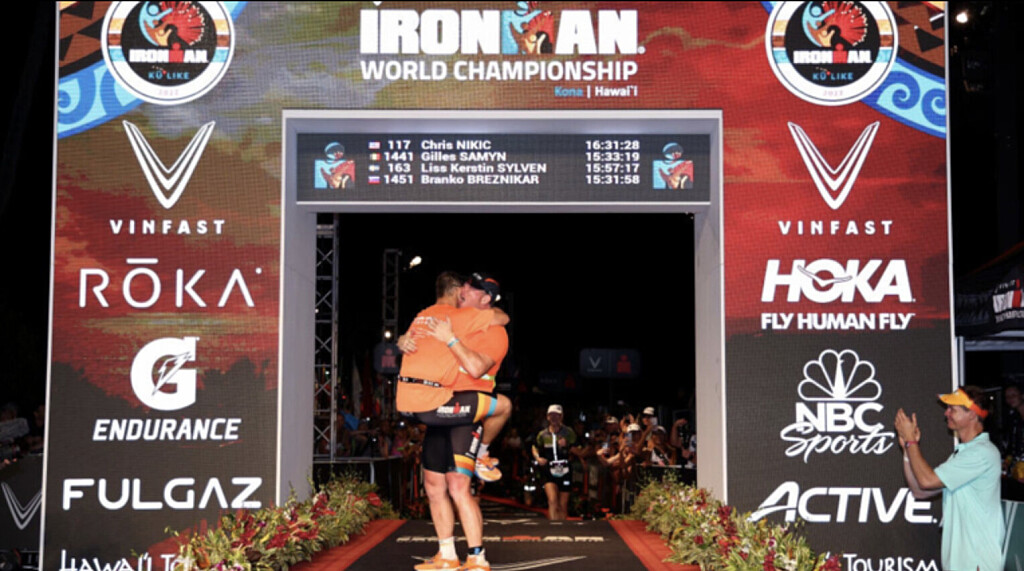
Chris Nikic Becomes the First Athlete with Down Syndrome to Finish the Ironman World Championship
With his mantra of 1% better every day, Chris Nikic continues to change the perception of what is possible. Crossing the finish line at the Ironman World Championships adds his name to the history books and cements his legacy as a pioneer in the sport.
Like every other competitor in Thursday’s Ironman World Championship in Kailua-Kona, Hawaii, Chris Nikic had moments when he struggled mightily.
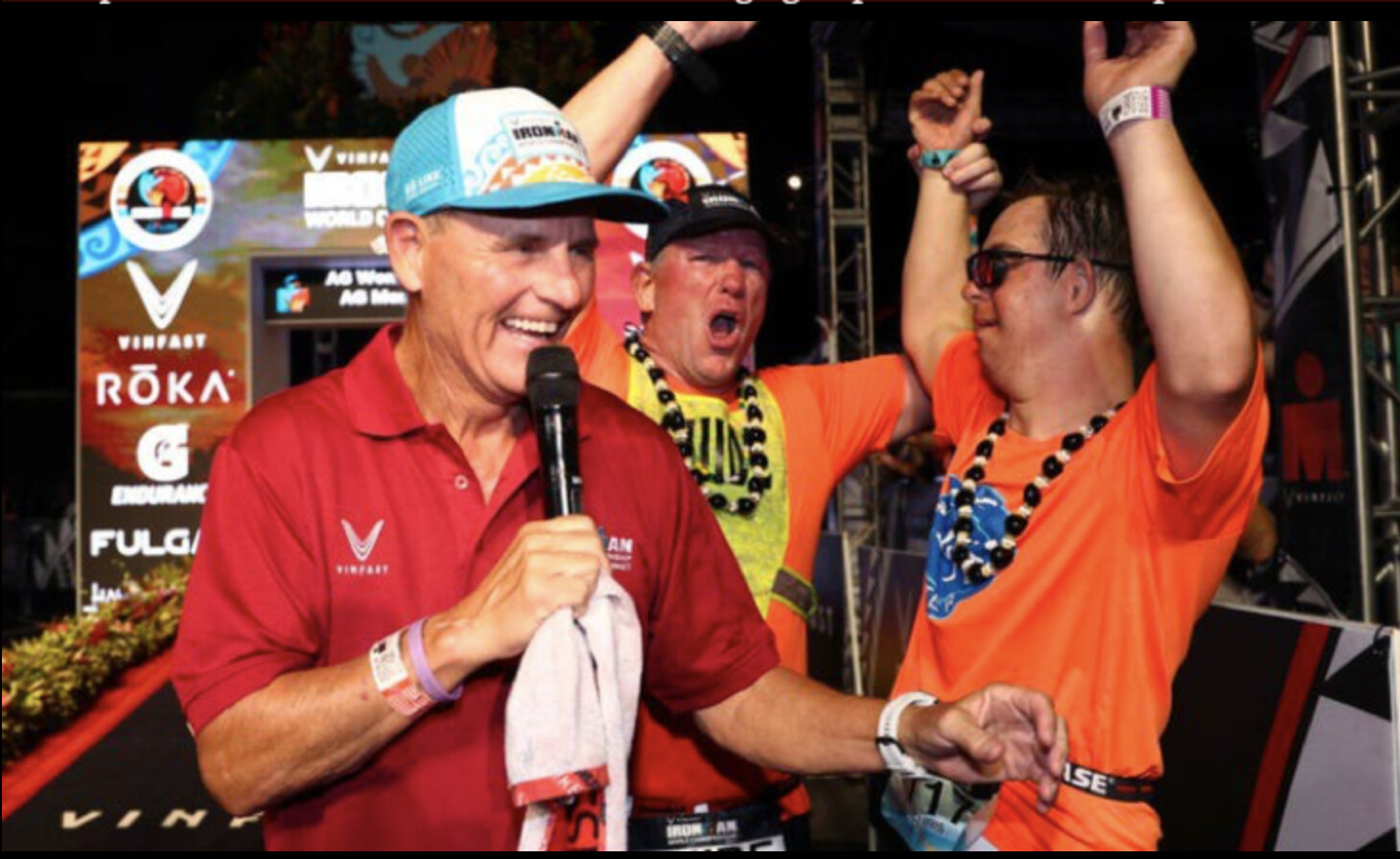
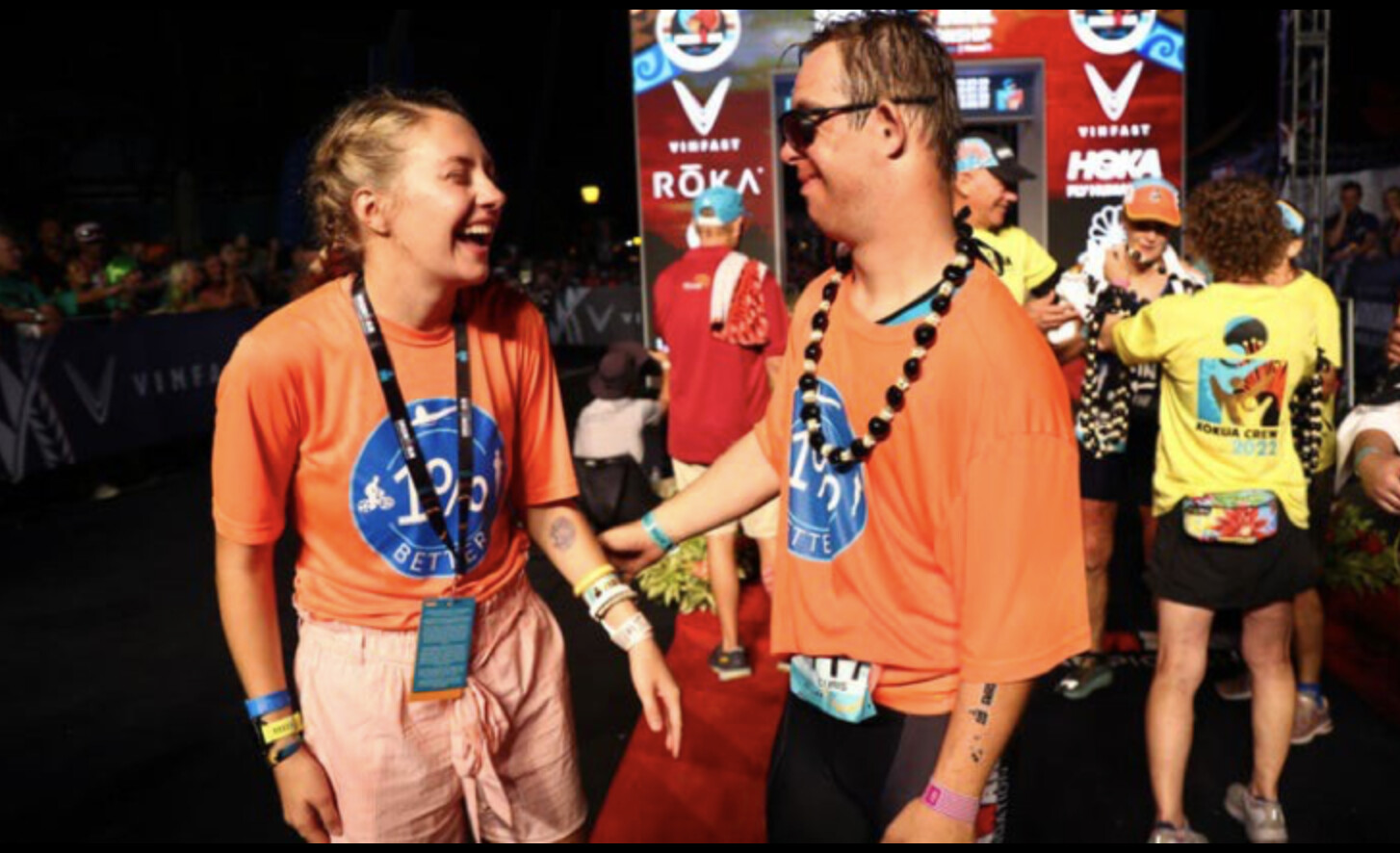
Completing a triathlon that includes a 2.4-mile swim, a 112-mile bike ride, and a 26.2-mile run is no easy task for anyone. It’s especially difficult when mid-afternoon temperatures top 90 degrees, the humidity is a muggy 85 percent, and it feels like you’re breathing through a straw. But Nikic is a unique kind of athlete, fueled by an enormous amount of determination, purpose, and the belief that anything is possible.
Late last night, after battling fatigue, dehydration, heat, wind, and moments of self-doubt, the special needs athlete from Florida became the first individual with Down syndrome to finish the 140.6-mile world championship race in Hawaii.
With help of his volunteer guide, Dan Grieb, Nikic completed the race in 16 hours, 31 minutes and 27 seconds, finishing to a cascade of cheering fans, many of whom returned to the finish line long after Chelsea Sodaro won the women’s professional race in 8:33:46. Sodaro made sure to be there, too, alongside Ironman legend Mark Allen, a six-time winner of the race, to experience the heart-warming, tear-inducing moment.
When Nikic crossed the finish line, he jumped into the arms of Grieb, who was at his side the entire way. They were tethered together on the open-water swim, in the choppy water of the Pacific Ocean. They rode side-by-side on the hot and windy bike course from Kona out to the remote town of Hawi and back along the Queen Ka’ahumanu Highway. They jogged and walked stride-for-stride on the 26.2-mile out-and-back course, to the Natural Energy Laboratory and back, to the seaside finish, a stone’s throw from where it all began.
Amid the crowd’s roar and Led Zeppelin’s “Whole Lotta Love” blaring on the sound system, Nikic marveled in the moment as he saw his finish time posed on a digital display board and then was greeted by his girlfriend Adrienne Bunn, his dad, Nik, and numerous other family members and supporters. All of this was an incredible way to celebrate his 23rd birthday, which Nikic did by not only finishing the grueling race, but by stunning the already weepy fans by presenting Bunn, a Special Olympics triathlete, with a promise ring.
It was an amazing finish to a challenging day that began at 6:27 a.m. local time and finished at 10:58 p.m. Given the harsh conditions, Nikic’s splits were impressive — 1:42 for the swim, 8:05 for the bike, and 6:29 for the run. He finished 2,265th place out of 2,314 competitors on the day, but at the finish line late Thursday night, he was No. 1 in everyone’s heart.
“This is something that changes perceptions for every parent worldwide with children with Down syndrome,” said longtime Ironman finish-line announcer, Mike Reilly. “Now they all know one thing for sure – anything is possible.”
Nikic’s resounding effort was one of the biggest highlights for the first Ironman World Championship, as it returned to Kona for the first time since 2019. The championship race was postponed in 2020 and again in 2021 because of COVID-19, and eventually the 2021 race was moved to St. George, Utah, last spring.
Other age-group highlights included 78-year-old Cherie Gruenfeld of Cathedral City, California, winning her 14th Ironman age-group world title in 16:20:07, and the 17:58 finish of Team James — 57-year-old Beth James, of Crested Butte, Colorado — who towed and pushed her 26-year-old daughter, Liza James, who suffered a traumatic brain injury in a 2004 car accident that rendered her nonverbal and unable to walk.
Because of so many backlogged qualifiers, the race was split into two days this year, with professional women and age-group women racing on Thursday, along with physically challenged athletes, hand-cycle competitors, and competitors from several men’s age-group divisions. The men’s pro race and the remainder of the men’s age-group divisions will compete on October 8.
Although he had been involved in a lot of sports growing up, Nikic’s triathlon journey started four years ago with a much shorter triathlon at the Special Olympics event in Florida. When that went well, he and his dad focused on something bigger, something they knew could change his life. He knew that if he could do big things, maybe one day he would be able to fulfill his ultimate dream of living independently, getting married, and having a family of his own.
Nikic has parlayed his triathlon success into his 1% Better Foundation as a platform to show what is truly possible, a foray into motivational speaking as a means to help others with Down syndrome. He and Grieb both competed in the race wearing bright orange 1% Better shirts.
“I want to be an example for other people with Down syndrome. I want to open doors,” Nikic said previously. “And I want to raise awareness. Anyone who sees people with Down syndrome: don’t look away or walk away.
In 2020, at age 21, he became the first person with Down syndrome to finish an Ironman triathlon. For this accomplishment, Nikic was awarded the Jimmy V Award for Perseverance as part of the 2021 ESPY Awards.
After that race, he was invited to participate in the 45th Ironman World Championship in Hawaii. To prepare, Nikic had been training three to four hours a day, six days a week, including strength training and yoga. It’s not an easy thing to do for anyone, but especially for Nikic, who suffers from reduced muscle tension (muscular hypotonia).
But Nikic has been overcoming obstacles his entire life. Nikic was born with several birth defects that affected his heart function, hearing, and balance, requiring several serious surgeries. According to the Centers for Disease Control, Down syndrome is a condition in which a baby is born with an extra copy of a chromosome. That changes how an infant’s body and brain develop, which can cause both chronic mental and physical challenges for the individual.
At 5 months old, Nikic endured open-heart surgery. He was so weak and had such poor balance that he did not walk on his own until he was 4. To keep him from choking, his family fed him baby food until he was 6. When he finally learned to run, it took him months to discover how to swing his arms at his side, instead of holding them straight above his head. It was a long journey from a challenging boyhood to the Ironman World Championship, but Nikic has always been up to the challenge.
“The second Nikic gets in the water for the start of the race, people all over the world with intellectual disabilities have won and become part of the larger endurance community,” Grieb said before the race.
Login to leave a comment
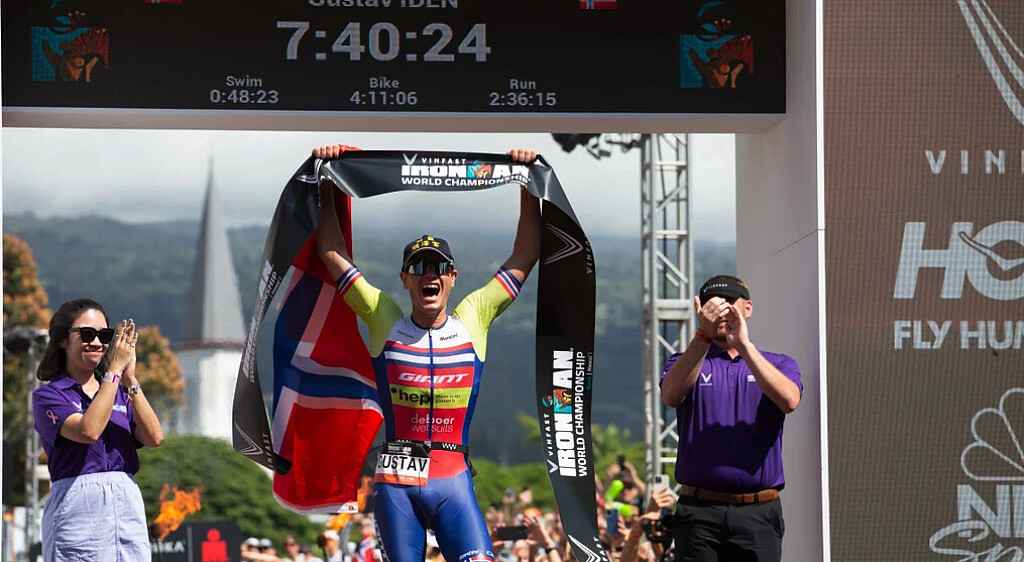
Hawaii Ironman World Championships 2022 Results: Gustav Iden Victorious With A New Course Record
Norway's Gustav Iden took the win at the 2022 Hawaii Ironman World Championships in his first try on the Big Island and second Ironman ever in a time of 7:40:24.It was calculated gutsiness that helped Norway’s Gustav Iden claim the 2022 Hawaii Ironman World Championship on his first try with a result that surprised no one – and everyone.
Much like women’s race winner, Chelsea Sodaro, this was Iden’s second Ironman event ever, but he raced it like a veteran, making decisive moves on the bike, pacing well on the run, and seizing the moment to take it all. His time of 7:40:24 is also a new course record and his 2:36 would be a new run course record of 2:36:15.
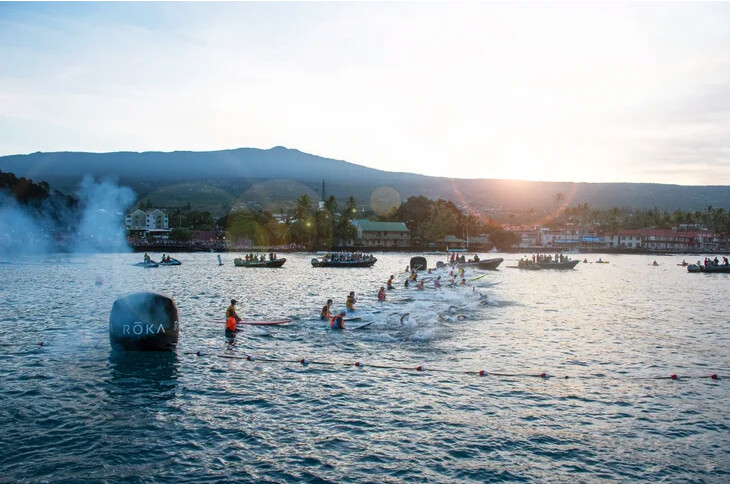
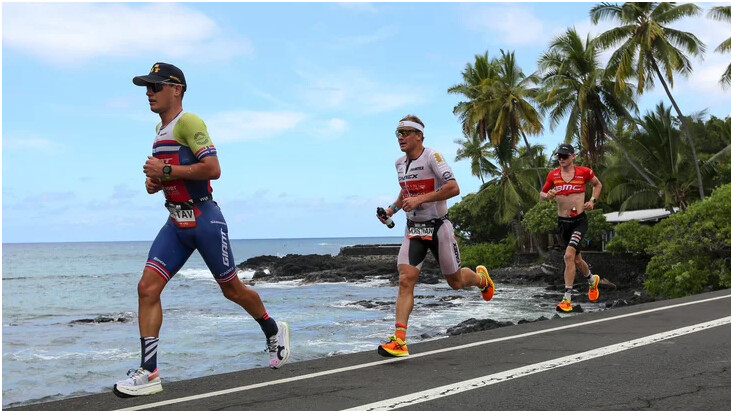
Read on to see how the 2022 Hawaii Ironman World Championship played out on the Big Island.Hawaii Ironman World Championships 2022: The SwimWith similar conditions to Thursday’s women’s race – slightly choppy with a rolling swell – many assumed the swim would favor the stronger swimmers. But on this day, everyone seemed to be a strong swimmer. Straight from the start cannon, a large pack formed, led by Sam Laidlow and Florian Angert. Despite attempts to pull away in the first half of the swim, neither were successful in building a definitive lead.
Instead, a staggering 19 pros exited the water within 15 seconds of each other, led by Angert in 48:15 and Laidlow in 48:16. This tight pack included some of the most dangerous triathletes in the field, setting up the likes of Kristian Blummenfelt, Gustav Iden, and Braden Currie in perfect position for a tactical race at the front of the field.
One minute and 15 seconds later, another large pack emerged from the water, containing even more strong cyclists capable of quickly bridging the gap. These included Igor Amorelli, Patrick Lange, Rudy Von Berg, and Magnus Ditlev.A third and final large pack, four minutes down from the leaders, contained Matt Hanson, Chris Lieferman, Cam Wurf, Sebastian Kienle, Joe Skipper, and Lionel Sanders.
Hawaii Ironman World Championships 2022: The BikeLaidlow was the one to take charge in the initial miles of the bike, setting an average pace of 27 miles per hour over the first 25 miles. Max Neumann was the only one willing to take the bait, staying just out of Laidlow’s draft to avoid a penalty.
Behind them, big groups stuck together as the crosswinds picked up through the lava fields. Fifty seconds down, the first chase group of 11 included Ditlev, Blummenfelt, Iden, O’Donnell, and Bakkegard; almost two minutes behind was a group of 18 that included contenders like Lange, Currie, Ben Hoffman, and Denis Chevrot.At mile 30 on the bike, the massive groups continued through the rolling hills on the way to Hawi. With 42 men racing within 5 minutes of each other, space was hard to come by – and the referees noticed.
As with the women’s race on Thursday, the penalties began early and often, with Angert, Clement Mignon, Mathias Petersen, and Arnad Gilloux being the first to serve their five-minute punishment for position infractions. Leon Chevalier soon joined them for a one-minute penalty as well.
Soon, more setbacks started to snowball in the men’s field. With each passing mile, Sanders saw the race get away from him as his position slipped from 4:42 down out of the water to 7:13 by mile 30. Colin Chartier, who was in the first large pack out of the swim, found it difficult to recover after an early flat tire. Lange seemed unable to jump on to the train of competitors passing him at full speed, and in a shocking twist, pre-race favorite Currie dropped from the race around mile 35.
Meanwhile, the men’s race began to take shape near the base of Hawi as Ditlev went to the front of the race and took control. Behind him, Laidlow and Neumann could not match the effort, while countrymen and training partners Iden and Blummenfelt sat 30 seconds behind Ditlev, working together near mile 50.
Just after the Hawi turnaround, Laidlow reclaimed his lead, but Ditlev, Neumann, Blummenfelt, and Iden were hot on his tail. Further back, a group including Kyle Smith, Tim O’Donnell, and Jesper Svensson trailed the leaders by 2:30; 3:30 back from the leaders were Kristian Hogenhaug and Daniel Bakkegard. A big group of dangerous bike/runners sat 5 minutes behind the front pack that included Wurf, Chevalier, Skipper, Lange, Kienle, and Andreas Dreitz.
Near mile 90, disorganization plagued the chase group of Iden, Blummenfelt, Ditlev, and Neumann as they lost an additional 1:30 to the race leader, Laidlow. Further back, Wurf, Kienle, and Chevalier led a rally to try to get within striking distance of the front, putting 2:20 into the Norwegian group over a span of over 10 miles.
As the race barreled toward T2, the chaos continued, with Ditlev receiving a five-minute position penalty at a time when most would be making their critical moves in a race.Up front, Laidlow seemed to not know – or care – about what was playing out behind him. Instead, the young gun stayed focused on his own race, surging ahead. By mile 88, Laidlow’s lead grew to 2:37; at mile 94, a 4:11 advantage.
Heading into T2, Laidlow smashed Cam Wurf’s 2018 bike course record with a split of 4:04:36—knocking almost five minutes off the previous time. Behind him, the chase group was six minutes down, and the second chase had 8:30-9:45 to make up.
Laidlow set out on the run with a target on his back. The question then became: Would his bold bike strategy pay off, or would it end in disaster? Could he actually beat the notoriously fast Norwegian runners to the finish line? Could anyone?
Hawaii Ironman World Championships 2022: The RunAs the men’s pro field moved through T2, the field shifted from large packs to a steady trickle. It was soon clear who had paced themselves well on the bike and who had burned their matches. Behind Laidlow, Blummenfelt and Iden led the charge, setting out at a 5:54 minute-per-mile pace to the leader’s 6:13 pace. Behind them, O’Donnell and Kienle were the fastest movers in the second chase pack early in the run, along with Ditlev—finally released from his penalty.
As Laidlow made his way up the Palani climb, his pace slowed to 6:23. Iden and Blummenfelt powered on, checking their watches to ensure they were sticking to their staggeringly consistent 5:58 pace. With every footfall, they seemed to cut into Laidlow’s lead. Neumann, looking to hold his own in his Kona debut, followed suit.
Slightly further back, strong runners like Kienle and Ditlev were working together as well, slowly making their way up through the top ten, through the first half of the marathon—as did Joe Skipper. At the halfway point, they found themselves in fifth and sixth place, with elder statesman Kienle offering words of encouragement to the young Dane as they ran together.Between miles 11 and 16, the Norwegians’ march toward Laidlow started to stall as the Frenchman found a way to staunch the bleeding. As he made his way out the Queen K, it seemed as if he found a pace he could comfortably sustain.
At the turnaround in the infamous Energy Lab, Laidlow could see exactly where he was relative to his competition. He knew he had a lead of just over two minutes, but what he didn’t know was whether or not the Norwegians had another gear. Anticipating a battle, Laidlow gathered all he could from the aid stations – cups of ice, a gallon bottle of water to douse himself on the scalding Kona pavement.Indeed, Iden had just decided to drop his friend and training partner, pulling ahead in the Energy Lab just before mile 19, while Blummenfelt trailed behind. With less than eight miles to go, Iden broke out into 4:38 min/mi pace, laser-focused on the task ahead.
At mile 22, Iden gave Laidlow a pat on the back to let him know his time at the front was up. With a handshake and a smile, Iden made the pass, striding confidently to the finish line.After the pass, it was the Iden show, as the Norwegian extended his lead to set a new course record with a time of 7:40:24 and a new run course record of 2:36:15. Not far behind, Sam Laidlow valiantly hung on for second place with a time that also broke the previous run record, 7:42:24. Kristian Blummenfelt would fade only slightly, but still stand on the podium with another course record time of 7:43:23.
“That was so freaking hard,” Iden said just moments after his record-setting finish. “The last 10K I was worried about the legend of the island killing me. Everything was going pretty smoothly until I caught Sam Laidlow. When I passed him, the island really tried“That was so epic, and I’m so proud of Sam and Kristian making the podium. I’m not sure if I’m coming back here, this was too hard.”
Laidlow was tearful after leading the race for so long.
“I was just loving it, I’ve been dreaming this since I was four or five,” said an emotional Laidlow. “This is my style of racing. I’ve been inspired by Jan Frodeno, and the way he races. If I win, I want to win like he does. I’m just getting started.
“It’s hard to believe as I’ve been watching the Norwegians, and to beat the Olympic champion, I really can’t put words to it.”
Login to leave a comment
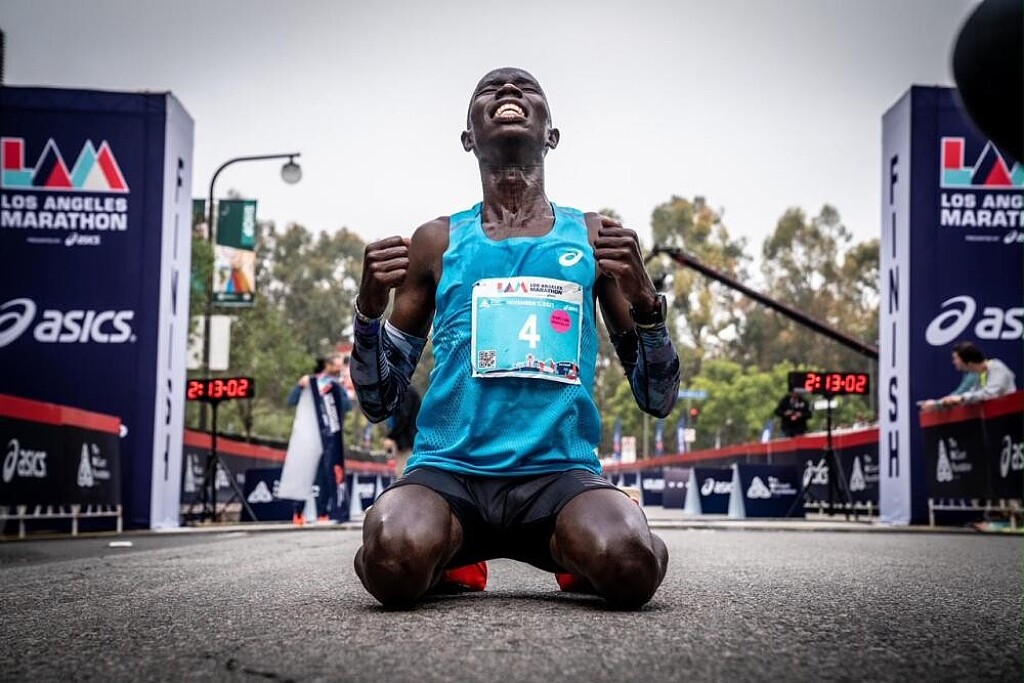
Twice LA Marathon champ John Korir aims for a Majors title
Two-time Los Angeles Marathon champion John Korir now wants a bigger title.
Korir will make his Marathon Majors debut at Chicago in the USA on Sunday confident of launching a serious assault on the crown.
He enjoyed an encouraging outing at the Los Angeles Marathon in March where he retained his title in a personal best time of 2:09:08.
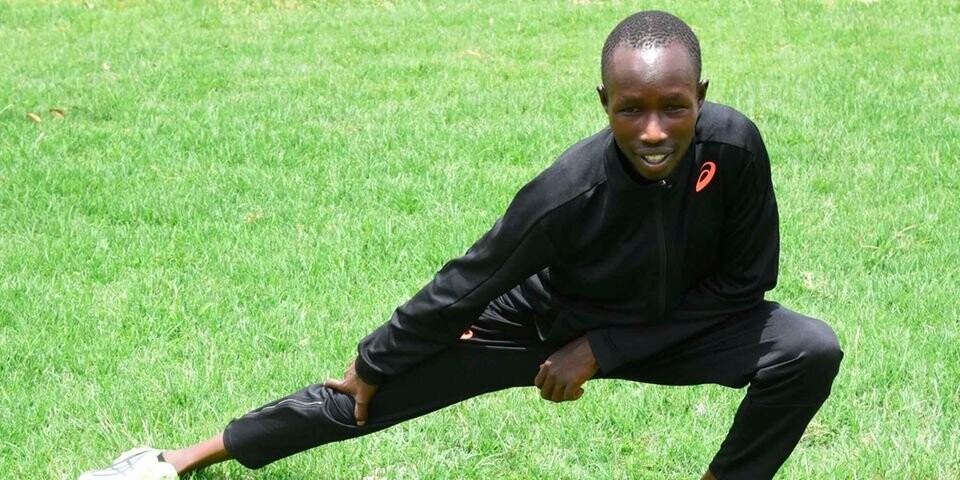
In Chicago on Sunday, Korir will come up against compatriots Amsterdam Marathon champion Bernard Koech who has a personal best of 2:04:09 and is the second fastest man in the field, Paris Marathon champion Elisha Rotich (2:04:21), Eric Kiptanui (2:05:47) and the Boston Marathon champion Benson Kipruto (2:05:13).
The Kenyan athletes will be seeking to wrest back the title from Ethiopians after Seifu Tura won last year with USA’s Galen Rupp coming in second while Kenya’s Eric Kiptanui finished third.
Korir told Nation Sport he was ready for the task and he will be eyeing a top-three finish.
“I started with build up at Kamoi in Elgeyo Marakwet which is known for its hilly terrain before shifting to Eldoret. I can say that I’m in good shape,” said Korir.
He added that since his elder brother Wesley Korir, a retired athlete, competed in the race before, he has given him tips about the course and he believes he will perform well.
“I’m lucky because my brother ran the Chicago Marathon when he was an active athlete and he has been guiding me on how to race on this course. He will personally be there to give me support during the race and I just want to run well and make him proud,” he said.
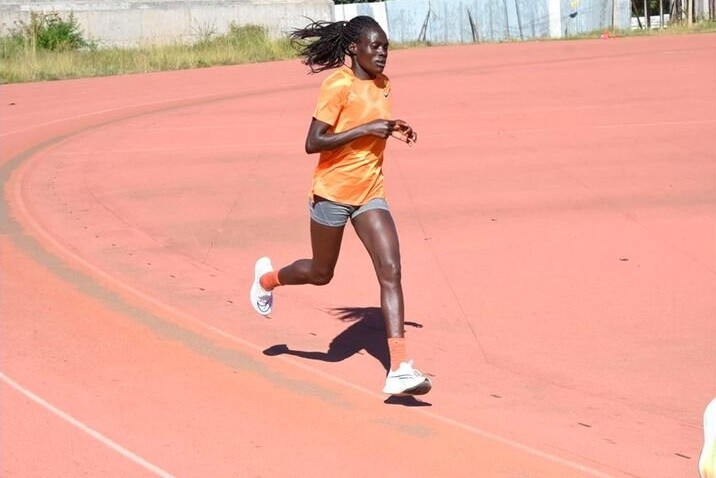
In the women category, three-time Milano Marathon Vivian Kiplagat, who trains at Kapsait Athletics Training Club in Elgeyo-Marakwet County will also be seeking the big prize as he comes face-to-face with defending champion Ruth Chepng’etich.
Incidentally, the two are under Rosa Associati management.
Also in the mix as another Kenyan, Celestine Chepchirchir.
Kiplagat said that after winning Milano Marathon in April in a personal best time of 2:20:18 she was in great shape physically and mentally.
“I’m focused on the race which I know will be fast and if the weather conditions are favorable, I want to run a personal best,” said Kiplagat.
Kiplagat won the 2018 Honolulu Marathon in Hawaii in 2:36:22, and the 2019 Abu Dhabi Marathon with a personal best time of 2:21:11. This was a massive minute inside her winning time in the Milano Marathon that year.
by Bernard Rotich
Login to leave a comment
Bank of America Chicago
Running the Bank of America Chicago Marathon is the pinnacle of achievement for elite athletes and everyday runners alike. On race day, runners from all 50 states and more than 100 countries will set out to accomplish a personal dream by reaching the finish line in Grant Park. The Bank of America Chicago Marathon is known for its flat and...
more...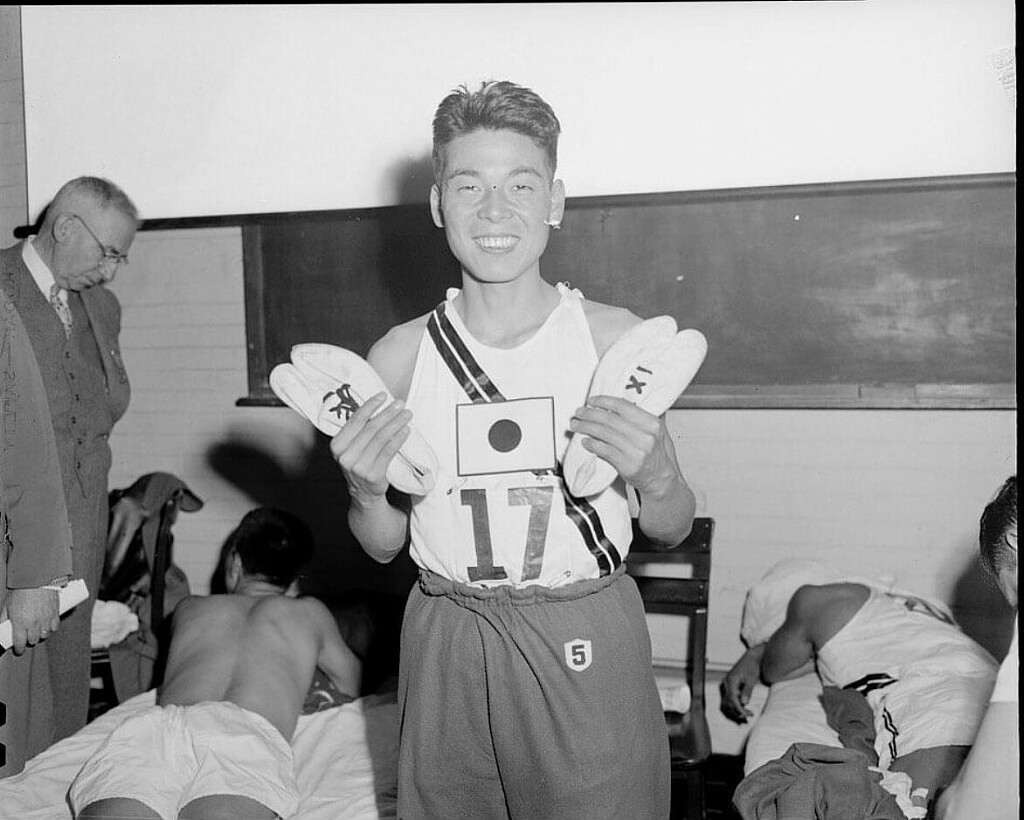
Boston Marathon first Japanese winner has passed away at age 91
The Boston Athletic Association extends condolences to the many family and friends of Shigeki Tanaka, the 1951 Boston Marathon champion who passed away this week. Tanaka made history by becoming the first Japanese athlete to win the Boston Marathon, sprinting away from the field in his unique split-toed shoes to claim victory in 2:27:45.
At just 19, Tanaka’s win helped inspire future generations of Japanese athletes, and his victory served as a unifying point for America and Japan following World War II. We will always remember Mr. Tanaka.
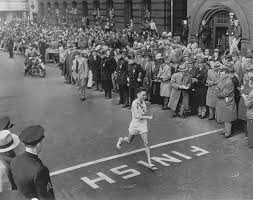
Tanaka was born in 1931.
Tanaka was 13 and living 20 miles from Hiroshima at the time of the 1945 Hiroshima atomic bombing. Following his Boston Marathon victory, he recalled, "We saw a bright light and heard a little noise. But no one thought anything about it at the time... three days later, we heard the terrible news."
He laid the groundwork for his career as a marathon runner by running 20 km from Shōbara to a Saijō municipal stadium as a high school student. He was a first-year student at Nihon University at the time of the Boston Marathon.
Japanese athletes had been barred from the 1948 Summer Olympics in London and from all major international competitions after World War II. The 1951 Boston Marathon was only the second post-World War II athletic competition, after the 1951 Asian Games held a month earlier, to invite Japanese athletes.
Tanaka was one of four Japanese runners invited to compete by Will Cloney of the Boston Athletic Association. The others were Japan's national champion Shunji Koyunagi, Yoshitaka Uchikawa, and Hiromi Haigo.[
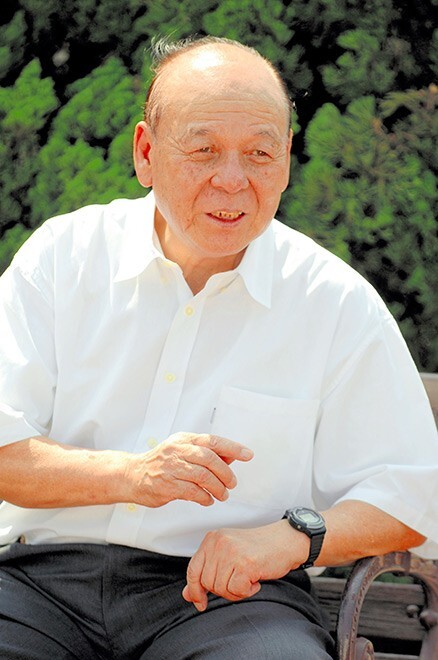
At the time, Tanaka was 20 years old, and weighed 118 pounds. The runners stopped in Hawaii, San Francisco, and New York City en route to Boston. In each stopover they went to a movie theater and people wrapped money in paper and threw it on stage for them. Tanaka later recalled that he "felt pretty strange to receive money like that, like a beggar almost... We brought sugar to bring back to Japan—that's how bad things were."
The four were given a welcoming ceremony arranged by servicemen at the Charlestown Naval Shipyard. Because Tanaka was from Hiroshima, The Boston Globe nicknamed him "atomic boy", which he found "a burden". Tanaka later recalled that people in the United States welcomed them warmly and both Japanese and Americans cheered him during the race.
Tanaka became the Boston Marathon's first Japanese winner. He won the event in 2:27:45, the third fastest time in the event's history to that point.
He took the lead on Heartbreak Hill and led convincingly with four miles to go. Observers expected him to break Suh Yun-bok's 1947 course record, but following his pre-race plans, Tanaka stuck to his own schedule; he did not push himself and finished comfortably. After the race, he stated through an interpreter, "I did not plan a record-breaking race, I ran only to win."
Tanaka won the marathon racing in tabi-inspired split-toe running shoes made by Onitsuka, which he thought would give him better traction.
The three other Japanese runners in the race also did very well: Shunji Koyunagi finished in 5th place, Yoshitaka Uchikawa in 8th place, and Hiromi Haigo in 9th place.
After his running career, Tanaka worked as a salaryman for a Tokyo area department store and served as a director at the Japanese Amateur Athletics Federation until his retirement. Tanaka died on October 4, 2022. He was 91.
Login to leave a comment

The 10 Best State Parks For Fall Running, Riding, Hiking, and Camping
Fall is officially here, and now may be the best time to visit some of these prime locations.
September 22 marked the fall equinox, the first official day of autumn. It’s a season synonymous with numerous things from pumpkin spice lattes and apple orchards to Halloween and football. Here at Runner’s World, we think state parks should be added to the list.
With cooler temperatures (in most parts of the country), autumn is the optimal time to get outside and explore nature before shorter days and colder winter months arrive.
Whether you’re running, hiking, camping, or biking, state parks offer beautiful scenery and a retreat into nature, without the crowds that often accompany national parks – a trend that took off in the pandemic.
And with 10,336 state park areas, the options are seemingly endless... So how should you choose where to go?
Google Maps has made the decision-making process a bit easier. By analyzing star ratings and reviews, they named the top 10 rated state parks in the United States.
Topping their list are the cascading waterfalls of Bond Falls Scenic Site in Michigan—a state that claims two spots on the list. California graced the top 10 list the most with three state parks, all with forests of towering redwoods.
Top 10 Rated State Parks in the U.S.
Bond Falls Scenic Site (Michigan)
Avenue of the Giants (California)
DTE Energy Foundation Trail (Michigan)
Prairie Creek Redwoods State Park (California)
Sinks Canyon State Park (Wyoming)
Jedediah Smith Redwoods State Park (California)
Granite Mountain Hotshots Memorial State Park (Arizona)
Grayson Highlands State Park (Virginia)
Waimea Canyon State Park (Hawaii)
Letchworth State Park Upper Falls (New York)
Building off the top 10, Google Maps also determined the top-rated state park in each state by looking at those with the highest star rating and at least 250 reviews. The list included parks like Alaska’s Denali State Park and Colorado’s Eldorado Canyon State Park. Additionally, Google Maps named the top state parks near national parks and the top hiking areas or vista points in state parks.
If you’re sold on a fall visit to a state park, but would rather stick to parks near you, the Association of State Park Directors (NASPD) can help. Their website’s “Locate a Park” feature allows you to see a list of all parks in your state or a map of those closest to your current location.
If you’re partial to national parks or want to combine a visit to a national park with a state park, we’ve got you covered. Check out our top picks for national parks as well as tips for running through them.
While preparing for your outdoor adventure, make sure to verify the hours and entry fees for your destination, as both can vary by location and season. You can also check the air quality (AQI) through Google Maps’ new mobile air quality layer, like the existing wildfire layer.
And if you’d rather not travel in-person, you can always check out any of these parks virtually through Google Earth.
by Runners World
Login to leave a comment
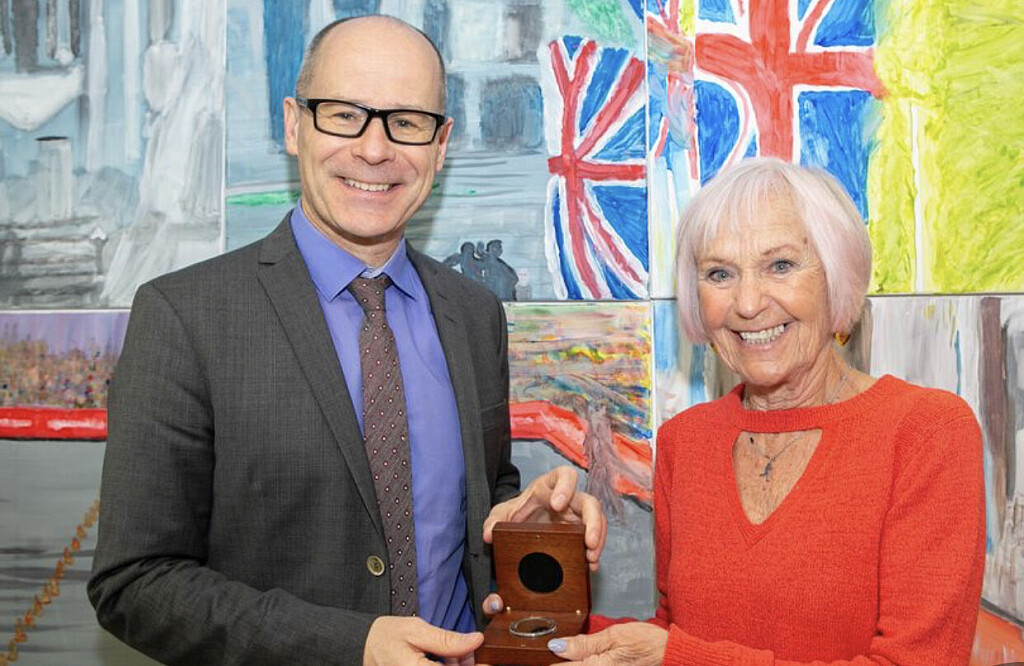
Gina Little age 77 is going to be running the London Marathon for the 38th time
A runner who has taken part in more London Marathons than any other woman plans to complete her 600th marathon later this year. Gina Little, 77, who lives in Greenwich, has run the London event 37 times since she was inspired after watching the second race pass her road in 1982.
She has chosen to mark her 600th marathon at Richmond Runfest on September 11 as a celebration with her club, Plumstead Runners, all dressed in special T-shirts. “I wanted my running club to be part of it. We have got a coach going up,” she told the PA news agency.
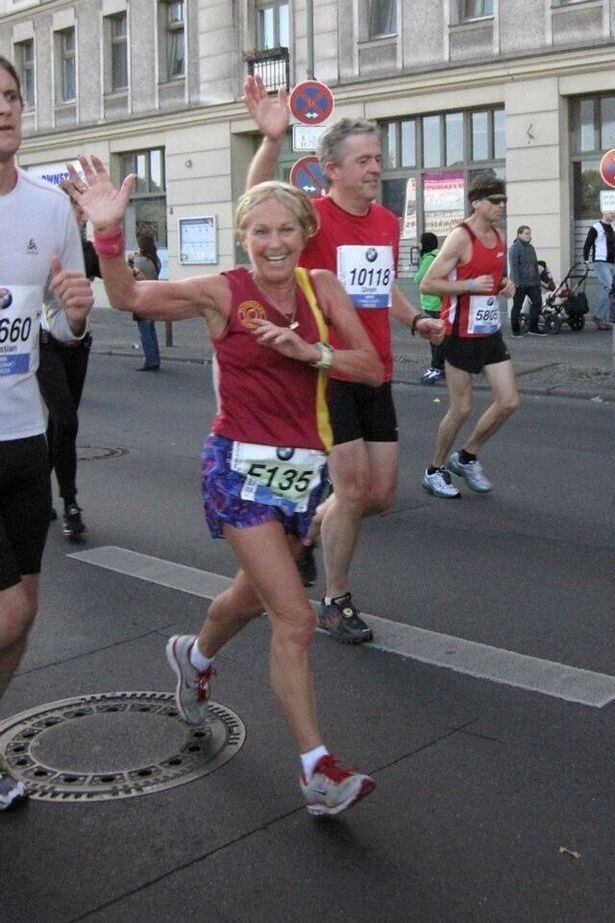
Gina has always been active and was inspired to try a marathon after seeing the London runners go past. “I didn’t know anything about the first one. I only saw the second one as it goes past the top of my road,” she said.
“I saw the French guy with a tray and a bottle of wine and a glass, and thought ‘how can he do that?'”
Gina said she was very nervous before her first London Marathon: “I ran with my friend all the way. We just enjoyed the crowds, took our time, went in pubs to use the loos. No Portaloos back then.
“We were only going to do one. Then I got the bug, I suppose.”
She recorded a personal best of three hours and 26 minutes in 1993 and now usually finishes in four hours and 30-40 minutes. Her achievement was recently rewarded with a Spirit of the London Marathon award and Mrs Little said she was “gobsmacked” to get the accolade, adding: “I have been quite lucky as I have got in as good for my age.”
While many hope for an elusive ballot place for the heavily over-subscribed London Marathon or run for charity, faster runners in each age category can apply for a good for age place. She added: “I have always been involved in it.
“When I didn’t run I have helped at a drinks station. One time I helped at the elite station.” She has also run the Berlin Marathon more than 30 times but it has fallen close to the London race since the latter was moved to October due to the Covid-19 pandemic.
“Last year I had to do Berlin one week and London the next week,” she said, "I have also got Chicago the following week. Chicago is always October. Chicago is my sixth major, so I obviously want to do that.”
There is a special medal for those who complete all six of the Abbott World Marathon Majors – Tokyo, Boston, London, Berlin, Chicago and New York. The married mother of two and grandmother of five also belongs to the 100 marathon worldwide club who meet at races and wear special vests.
Mrs Little said she has met interesting people through running, adding: “I never go to a race where I don’t know someone, which is really nice.” Running marathons and ultramarathons has taken her to 46 countries and 22 islands, including places like Hawaii and New Zealand.
“I’ve seen the world and seen the country,” she said, “When I got to 500 I thought that would be it. I don’t think there’ll be a 700th.”
Login to leave a comment
TCS London Marathon
Since its inaugural edition on March 29, 1981, the TCS London Marathon has grown into one of the world's most prestigious road races, blending elite competition with an extraordinary charitable legacy. Founded by former Olympic champion and journalist Chris Brasher alongside Welsh athlete John Disley, the event has been staged every year and has been held in the spring annually...
more...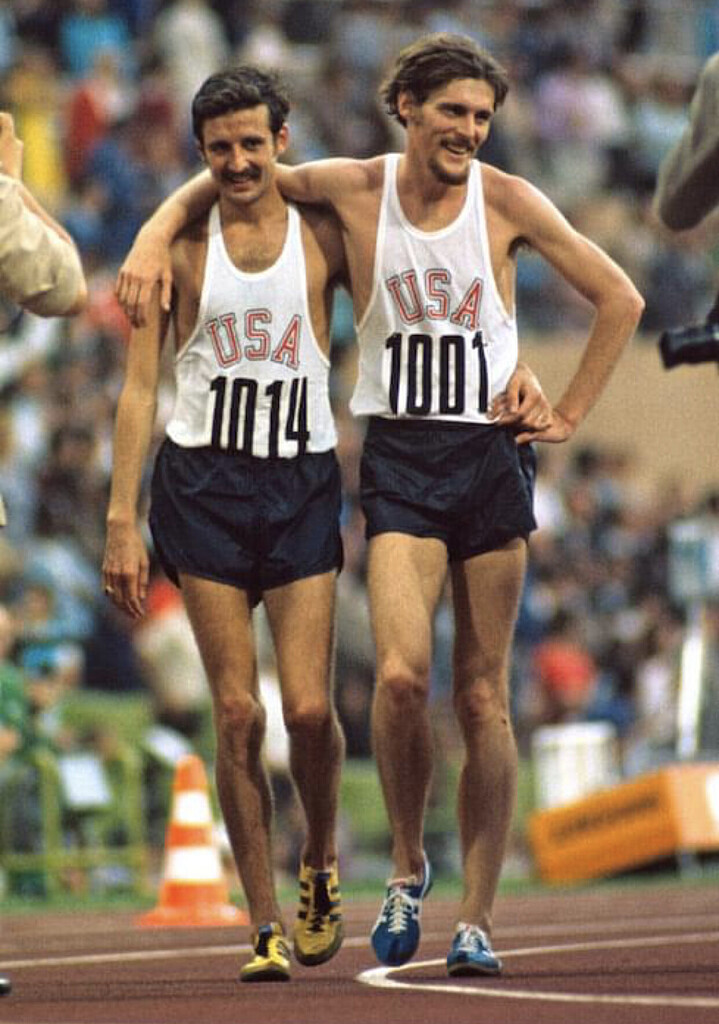
Kenny Moore one of the great story tellers of American sport for decades has died
Kenny Moore, a former University of Oregon distance runner, two-time Olympian, journalist and author, died Wednesday in Kailua, Hawaii. He was 78.
Kenny's wife, Connie Johnston Moore, would like to share this message with you and with others, written from their long-time Hawaiian home:

"Kenny found his opening this morning. It was about 7. He was already pretty distant and peaceful and then his breathing stopped. It was a very loving time for me with him. I think he knew he could leave with this morning being our last sunrise. I know you are sad but be grateful for him. It was his time and it was a relatively easy letting go I think for him. I hope you can spread the word for me. Take your time. Just love Kenny, love love love him. We were all privileged to know him and have him in our life. Peace and Love to you and everyone in Eugene."
From his 2019 Induction into the Oregon Sports Hall of Fame and Museum
As an athlete, Kenny Moore found himself right in the middle of some of those great stories while putting his own stamp on running and track and field greatness.
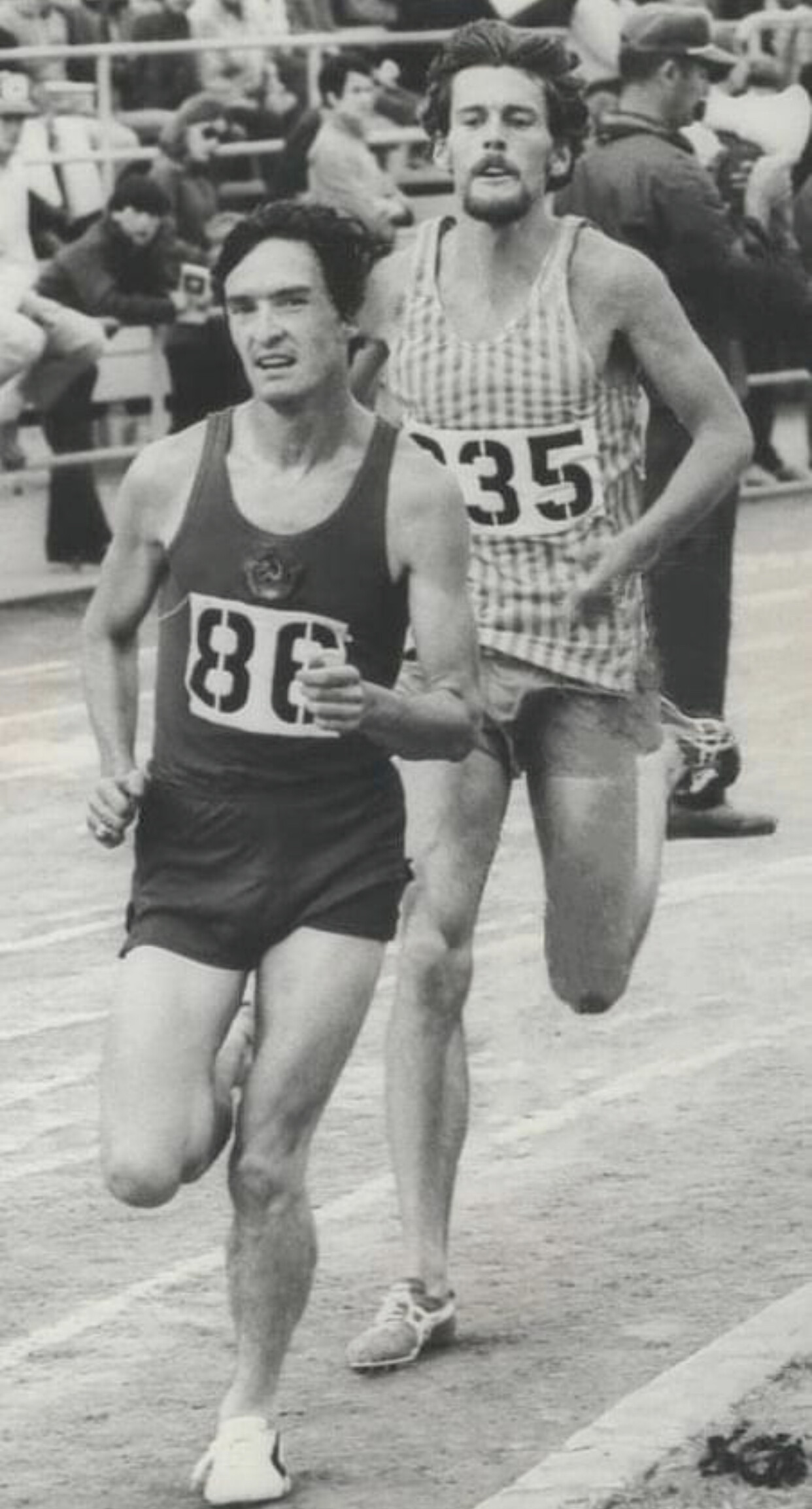
He was known as ‘Ken’ Moore when he graduated North Eugene high school and arrived at the University of Oregon. He would letter three years each in track and cross country.
Always a versatile distance runner, Ken was a three time All-American on the track, with three more top national finishes in the 3-mile, 5,000 meters and the steeplechase. Moore was a 1963 cross country All-American and was part of back-to-back teams that finished 2nd in the nation.
As a post-collegiate racer, he flexed his muscle at greater distances, winning the 1967 US Cross Country Championship and dominating the demanding Bay to Breakers road race in San Francisco. Ken won the 12K monster six consecutive years from 1968-1973.
In 1970, Moore placed second in the prestigious Fukuoka International Marathon with a loop-course American record and personal best time of 2:11.36.
Moore competed on the biggest stage of all twice. He finished 14th in the marathon at the Mexico City Olympics then qualified again in 1972, finishing dead even with training partner Frank Shorter. Shorter would take the gold and glory on the final day of the Munich games in the shadow of the terrorist attacks. Moore just missed the podium, finishing 4th.
These experiences and these times provided extensive material for the writer who would become known as Kenny Moore. In 25 years at Sports Illustrated, Moore told the big stories, championed the protection of amateur athletes and co-wrote the definitive biography of the enigmatic Steve Prefontaine that inspired the film “Without Limits”. Moore has also written a biography of his Oregon coach, the legendary Bill Bowerman.
His activism helped win the freedom of imprisoned Ethiopian marathon champion Mamo Wolde.
KENNY MOORE - Athlete and Writer R.I.P.
(December 1, 1943 to May 4, 2022)
Login to leave a comment

Seven Long Run Workouts to Nail Your Goal Pace
How many long runs should a triathlete do each week? What intensity should they be? Should a long run follow a bike session to appropriately simulate race conditions? These are just a few questions triathletes and coaches in our sport ponder.
When training for an IRONMAN 70.3 or IRONMAN race, completing the individual discipline distances during training provides a major psychological boost, before tackling the distance in the event. It can be a huge confidence boost to have covered as much of the distance as possible before the race. While it’s quite likely that you will complete a 2.4-mile swim and 112-mile bike ride before your IRONMAN race, it’s much trickier to incorporate a full marathon into your training. We need to be much more aware of the effects of a long run due to the higher impact of running relative to swimming and biking. Long runs also require more recovery than a long swim set or long bike session.
How far and how often one should run will depend on the athlete and where they are in their training. How much volume can that individual handle? How much time is available to train and recover? What are the external factors affecting their lives, be it family or work commitments, as well as how well they sleep and manage stress. These are all things that must be considered when planning out training and volume. A coach can help you balance all those elements and prescribe the appropriate plan for you. (Find your perfect coach with the newly-launched IRONMAN CoachMatch.)
We consulted with IRONMAN Hawaii age-group champion, two-time Olympian and coach Chris Hauth for his ideas on long run training. He also shared some sample run workouts to help you prepare for an IRONMAN 70.3 or IRONMAN distance race.
The Aerobic Long Run

Hauth likes to remind triathletes that, unlike runners, they are balancing and combining three sports into a single event, and thus run training should never be viewed in isolation: "While getting ready for a standalone marathon race requires maximizing aerobic capabilities via running, triathletes have the advantage of two other sports to assist with developing their aerobic system," he said.
Hauth typically recommends an aerobic or "conversational" long run once a week—depending on the athlete, their race plans, and experience. "The goal is to build time on the feet," he states. "Since the triathlete is also gaining aerobic conditioning in the pool and on the bike, the goal of an aerobic long run is as much physiological—to increase the density of mitochondria and increase in capillary beds to improve muscle and tendon strength." This means heading out the door at a low intensity pace. From time to time, he recommends that his athletes mix in a little intensity, as long as they are careful to keep it "all good form and low stress."
Adding short intervals to an aerobic long run:
→ Workout 1: Try 60-90 minutes easy running, with the last 30 minutes alternating between 5 minutes tempo (15-30 seconds faster than race pace), 5 minutes easy. Nothing too fast here, just a little variation.
→ Workout 2: Consider adding some shorter bursts of speed throughout a 90-minute to 2-hour run. For example, you could do some 10, 20, 30, 40, 50, 60, 50, 40, 30, 20, 10 second faster bursts with 1-2 minutes easy between each burst during your run, and repeat this sequence twice through. Again these aren’t 'best efforts,' but just strong, faster efforts with great form.
→ Workout 3: Fartlek-style long run where you run ~30 sec/mile faster than race pace for 2-3 miles and then 30 sec/mile slower than race pace for 2-3 miles, repeated 2-3x through.
Higher Intensity Long Run Workout
Interval training is a great way to add intensity into your training and Hauth prescribes some longer, higher intensity runs for his more experienced athletes. During a run, intervals are typically short at paces faster than your planned race pace, with recovery at race pace or easier. They have a variety of benefits, as they build neuromuscular development and efficiency as well as improving your VO2 max. Hauth points out that a time-crunched athlete can use interval sessions to build fitness as well as endurance, though he still sees value in the aerobic long runs throughout the season and interval work cannot completely replace the long run.
One of Hauth’s favorite run workouts for practicing and testing race pace is to mix speed work with race-pace effort. "The body is switching back and forth between the fat-burning, aerobic system and the glycogen-depleting anaerobic system," he says. "The goal over several weeks is for the athlete to run at the lower intensity race-pace effort following an initial harder effort."
→ Workout 1: After a 20-minute easy warm-up, run 10-20 x 400m (preferably on the track or other flat surface), at a pace slightly higher than your goal race pace. Take 30 seconds recovery between each repeat. After completing the interval work, run 3 to 8 miles at race pace. An athlete might start with 10 x 400 and a 3-mile run after the track intervals and build to 20 x 400 and an 8-mile run after the track intervals during an IRONMAN training build over a couple of months.
Running Off The Bike
In triathlon, we run off the bike, so it makes sense that we should replicate this in training as well. This gets our body and legs used to running tired, and we get familiar with the sensation after a challenging bike ride. Hauth notes that some triathletes simply run well off the bike, despite little practice or experience: "I think it often has a lot to do with their pacing ability and effort on the bike, as well as a good bike fit!" For amateur athletes, the number of times you run after a bike workout will be determined by your personal schedule, but it’s good practice to try and do one or two runs off the bike each week, varying the intensity of the run off the bike.
→ Workout 1: After a harder intensity bike set (perhaps on the trainer), include some shorter interval speed work, for example, 12 x 2 minutes progressive where each 30 seconds of the 2 minutes gets progressively faster.
If your race pace is 8min/mile then try 30sec at 9mins, 30sec at 8.30min, 30sec at 8mins, 30sec at 7.30min pace (or scale accordingly) where the last 30sec is faster than your race pace. Take 2mins easy recovery between.
→ Workout 2: After a longer ride it’s good to add a 30-40 minute steady run off the bike. Hit your race pace (or a little faster) for the first 10 minutes, then relax into an easier, steady state pace for the remaining time. This has the benefit of getting your legs used to hitting the race pace straight off the bike, and settling into good form and rhythm. Be careful not to go too fast for the first 10 minutes, but just try to find that race-pace rhythm.
→ Workout 3: One of Hauth’s favorite workouts is "cruise intervals off the bike" where he completes a long ride (80-90 miles), and then runs mile repeats. He explains further: "after an 80-90 mile ride, I run 6 x 1-mile repeats starting each interval on my goal pace split. That means if I plan to run a 7:30 pace in the race, if I run a mile in 7:00, I have 30 seconds' rest before the next mile repeat."
There are just a few options to change up your running. There are many ways to incorporate your longer run into your training plan and add a little variation into the mix. As well as keeping your mind focused and alert, it will train the body to adapt to the right pace. As mentioned for all of these sessions, remember good posture and good form is always key, regardless of speed, pace, distance, or time.
by Laura Siddall
Login to leave a comment
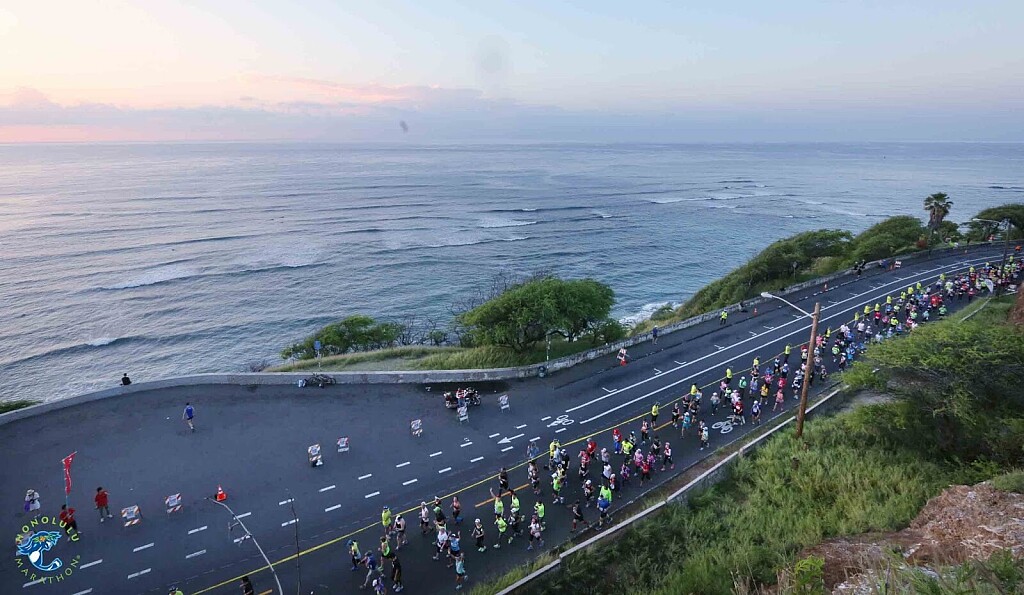
Honolulu Marathon is ready to host 14,000 runners this weekend
Rain or shine, the Honolulu Marathon is on at 5 a.m. sharp Sunday with no capacity limits.
Dr. Jim Barahal, chief executive officer of the Honolulu Marathon Association, has dealt with more than a year of much uncertainty due to the COVID-19 pandemic — but took a leap of faith that the race could be staged this month.
Despite the detection of the omicron variant in Hawaii, plus financial loss due to a drastic drop in runners from Japan, Barahal is determined to move ahead, pointing to the overall event as a symbol of triumph over adversity.
Barahal said he feels confident that outdoor activities are safe, based on guidelines from the U.S. Centers for Disease Control and Prevention, and that the marathon, which has about 14,000 registered participants across three events over the weekend — down from about 35,000 in 2019 — also will be safe.
“We’re excited,” he said. “We think a lot of people in the community are going to celebrate with us. When the gun goes off and fireworks go up in the sky, we’re going to send a signal that Hawaii is back.”
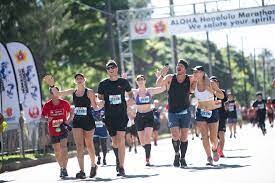
Dozens of marathons around the world have been staged this year, he noted, including major races in Boston, London and New York City. Last year’s Honolulu Marathon, along with scores of other races, was staged virtually, with participants submitting images from completed runs.
Some 10,000 participants are signed up for the 26.2-mile race, which starts on Ala Moana Boulevard and ends at Kapiolani Park. Most are local runners, while only a few hundred will be coming in from Japan. The rest are signed up for the Kalakaua Merrie Mile on Saturday and the Start to Park 10K on Sunday.
Historically, according to Barahal, half of early registrants do not show up, so organizers are expecting about 7,000 participants. “This is going to be primarily a local event,” he said, adding that he believes it will be the largest since the pandemic started.
There is going to be a financial hit, he admitted, with at least an 80% decline in revenue. The marathon gets no funding from the city, state or visitor industry.
There was no significant boost in registrations after Hawaii opened up to international travelers last month, according to Barahal, who did not expect one with the short window of time. There will be about 400 runners from Japan this year compared to 17,000 in past years. Mizuno and Japan Airlines have stayed on as sponsors.
“We’re ready to go. We have budgeted the event, we have cut where we need to, but nothing that compromises safety,” he said, adding, “To not do it two years in a row would threaten the existence of it.”
The marathon’s largest fixed costs, which include securing the course with special duty officers, barricades and the use of timing chips, will still be covered, he said, but some bells and whistles such as the video screen and photo bridge at the finish line have been dropped.
There will still be malasadas for finishers, but no live entertainment along the route or at Kapiolani Park.
The marathon is now open to fully vaccinated participants and those who show proof of a negative COVID-19 test taken within 48 hours of the event. Barahal estimates about 90% of registered runners are fully vaccinated.
Participants older than age 12 need to bring photo ID and proof of COVID-19 vaccination or negative test when picking up race packets at the Honolulu Marathon Expo at the Hawai‘i Convention Center on Friday and Saturday.
Masks will not be required while running, and under the most recent easing of restrictions, staggered starts are no longer limited to 200 participants at a time. Runners will be separated based on projected times, but the goal is to get as many on the course as quickly as possible, Barahal said.
by Nina Wu
Login to leave a comment
Honolulu Marathon
The Honolulu Marathon’s scenic course includes spectacular ocean views alongside world-famous Waikiki Beach, and Diamond Head and Koko Head volcanic craters.The terrain is level except for short uphill grades around Diamond Head. ...
more...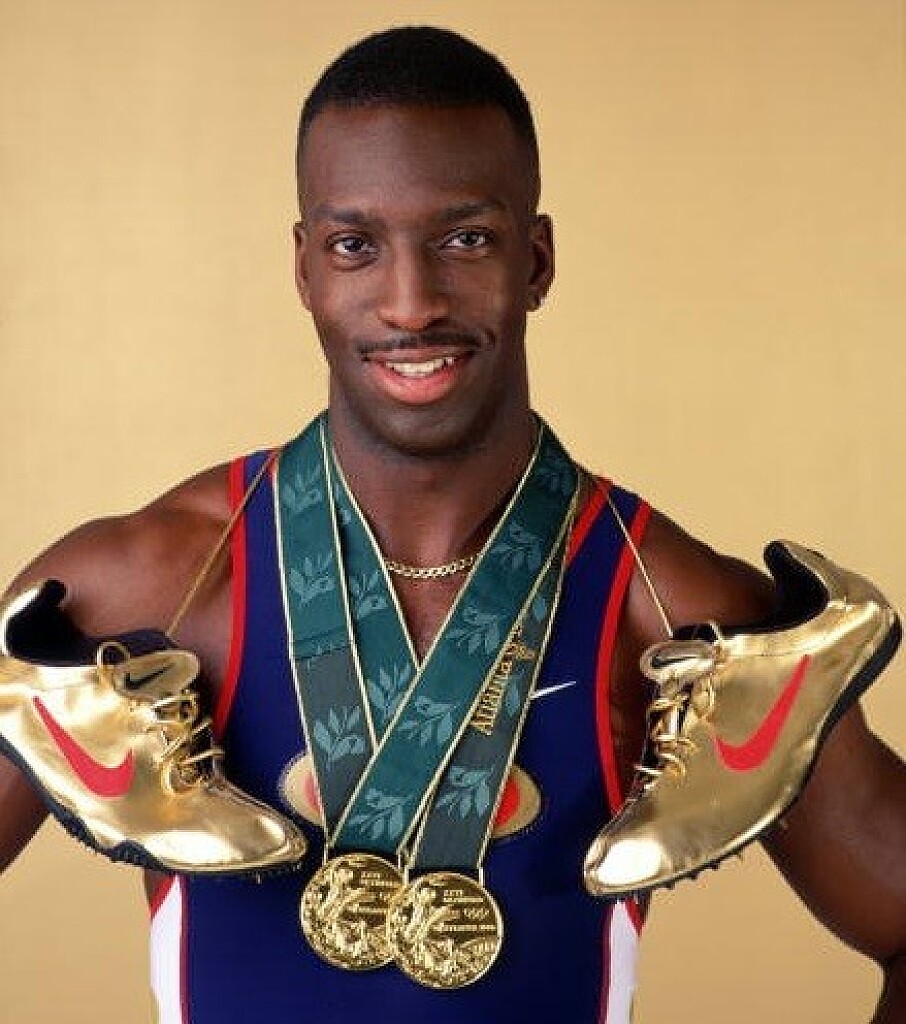
Michael Johnson's iconic gold spikes join the Heritage Collection
To mark the 226th World Athletics Council Meeting in Monaco, a special Heritage display was staged this week in the foyer of Le Meridien Beach Plaza. The exhibit contained 15 recent acquisitions made by the World Athletics Heritage Collection, which will soon be on display in glorious 3D in the virtual Museum of World Athletics (MOWA).
One of the oldest artefacts exhibited was a solid silver trophy donated by Kenya’s Olympic legend Kipchoge Keino, and one of the youngest items on show was a Tokyo 2020 Olympic Torch.
Yet arguably the greatest recent addition to the collection are three running spikes worn by eight-time world champion and four-time Olympic Games gold medalist Michael Johnson.
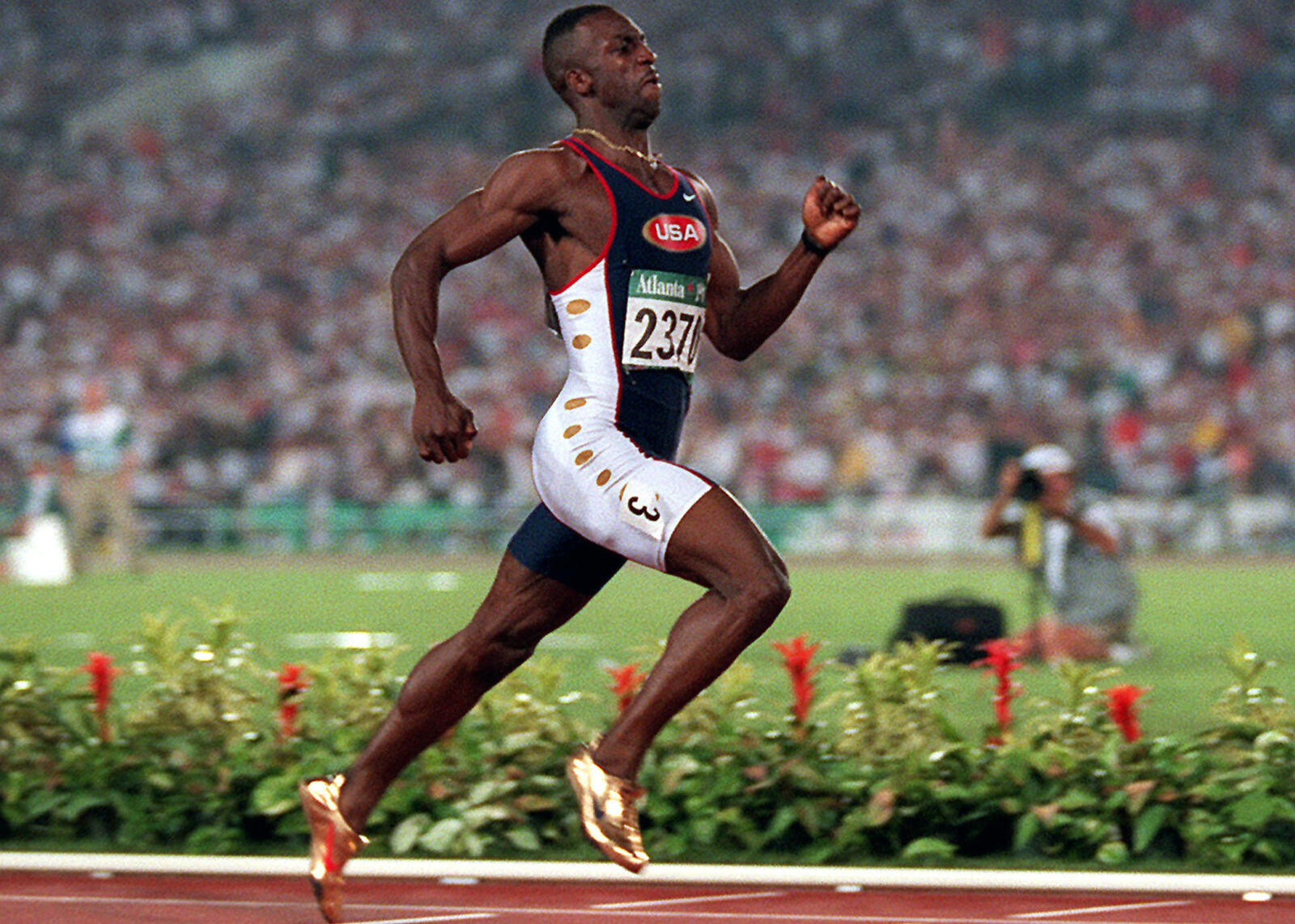
Entering the collection is one of Johnson’s iconic gold spikes from Atlanta 1996 (right foot), one from Sydney 2000 (left foot), and thirdly, a shoe from Johnson’s final race in 2001 (right foot). Each shoe is autographed.
“I can still vividly remember the chills I felt…”
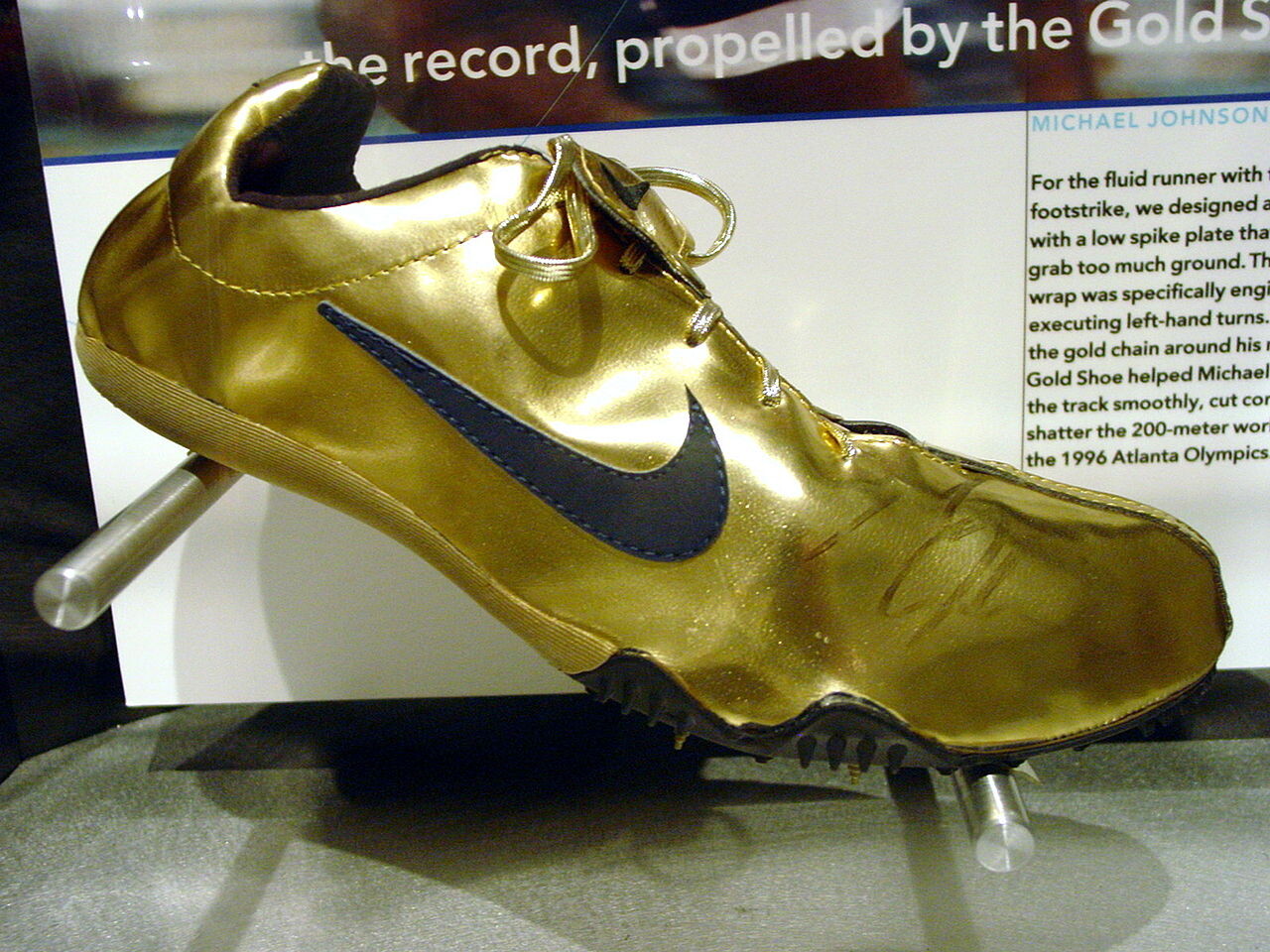
The trio now form part of the World Athletics Heritage Collection thanks the extraordinary generosity of Brad Hunt, who was Johnson’s agent during his outstanding running career.
“I visited the Heritage exhibition while at the 2019 World Athletics Championships in Doha,” commented Hunt. “The scale of the collection was particularly impressive, considering it had only been created in 2018.
“The historic display of artefacts included items from the careers of Jesse Owens, Carl Lewis and Usain Bolt. In men’s sprinting history, there was one glaring omission. By offering the spikes which Michael (Johnson) gave me after some of his most memorable races, I hope to have helped fill that gap in the World Athletics Heritage Collection,” added Hunt.
Johnson stunned the world of sport in 1996. At the Atlanta Games he won an unprecedented Olympic men’s 200m and 400m double. In the process, with a 19.32 clocking, Johnson destroyed his own 200m world record (19.66) which he had set less than two months before the Games on the same track at the US Olympic Trials.
“Both Olympic shoes were given to me two or three weeks following the Games they were used in,” confirmed Hunt. “The 1996 shoe was given to me in Hawaii, where we travelled for our post-Olympic celebrations. The 2000 shoe was given to me in Los Angeles.
“I can still vividly remember the chills I felt when I became the first person Michael told of his decision to wear gold spikes in the 1996 Olympic Games. We were sitting on a flight to Los Angeles from the Atlanta Olympic Trials to Los Angeles for Michael's first appearance on The Tonight Show with Jay Leno.
“Michael had just set his first world record (19.66 200m) the day before (23 June). We were discussing how much attention his purple spikes had received when he declared he would be wearing gold in the Games.”
14c gold in the material
Four years later, Johnson retained his Olympic 400m title in Sydney, Australia. Johnson had become world record-holder for the distance (43.18) at the World Championships in Seville, Spain, the previous year.
“Although the 2000 shoe is made with actual 14c gold in the material, thus making them shinier (with significantly more material value), the 1996 shoe is my favourite because these gold shoes were an actual media phenomenon!
“The amount of secrecy involved with the shoes' clandestine development and historical Olympic debut created one of the strongest identities an athlete has ever had with his or her footwear,” concluded Hunt.
The following year Johnson undertook his ‘Golden Victory Lap’ tour, finishing his career at the Goodwill Games in Brisbane. It is one of the shoes which he wore in that last season which completes this extra special induction of footwear into the World Athletics Heritage Collection.
The three spikes will soon be on display in the virtual MOWA.
In 2022, the spikes will also go on public show at MOWA’s onsite public exhibitions in Portland and Oregon, USA, in the lead into and during the World Athletics Championships Oregon22.
by World Athletics
Login to leave a comment
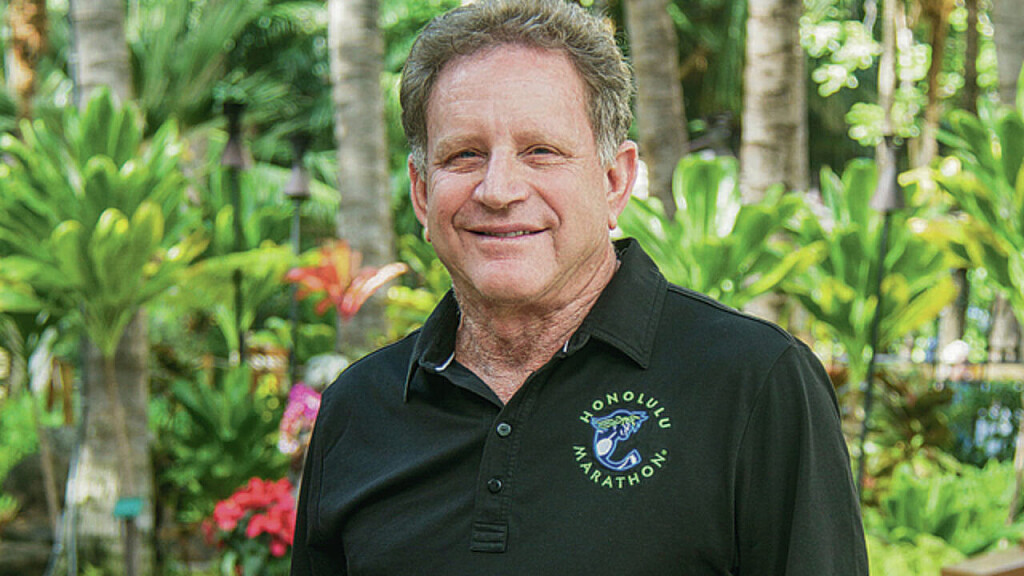
Honolulu Marathon President Jim Barahal frustrated at Hawaii Government's COVID-19 stance
Organizers are forging ahead with plans to stage the Honolulu Marathon in December despite Hawaiian Government officials' uncertainty on whether it will be allowed due to ongoing COVID-19 concerns.
While the city is easing pandemic-related restrictions on large events, organisers are reportedly frustrated that neither Hawaii Governor David Ige nor Honolulu Mayor Rick Blangiardi have given clear messages about the future of the race.
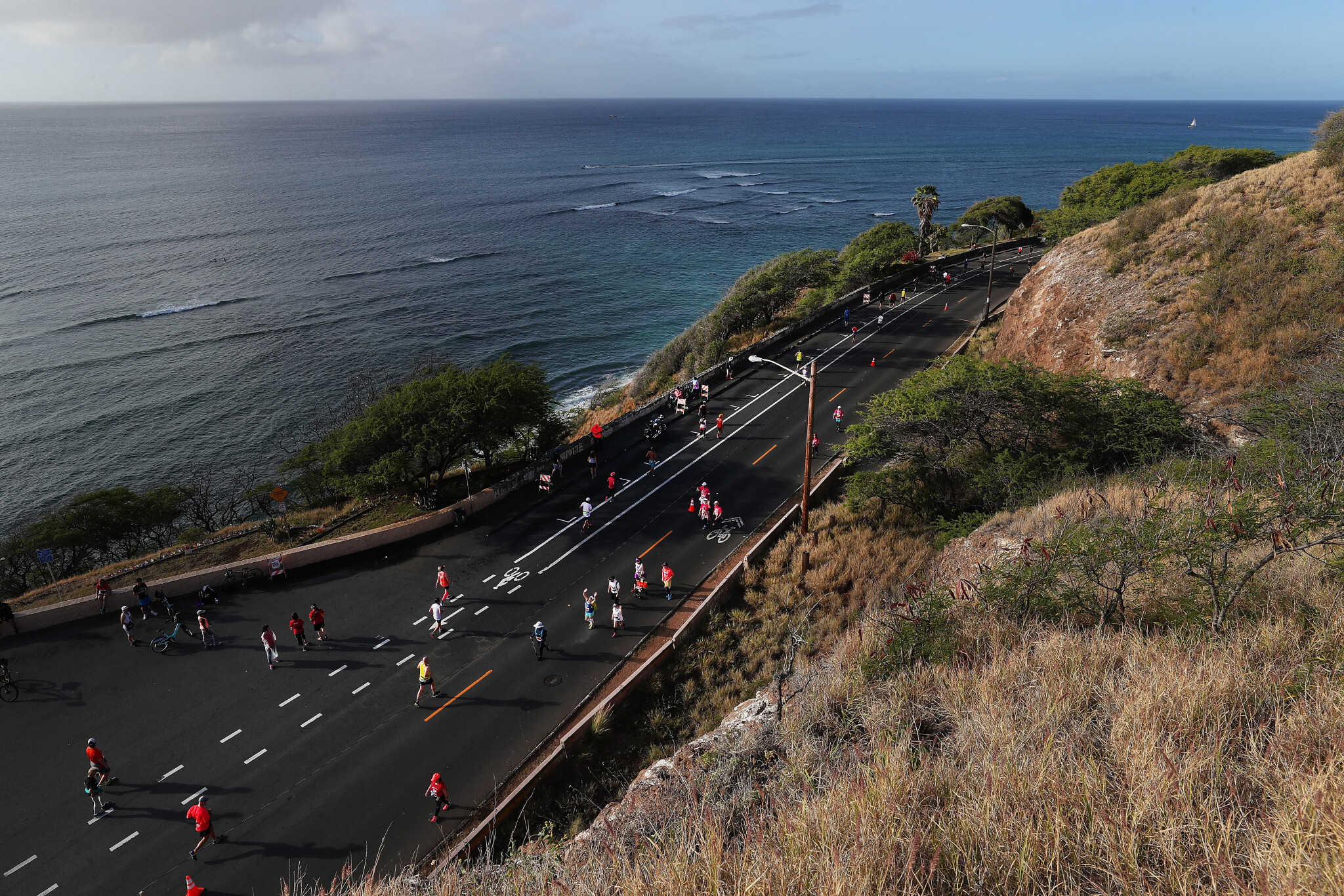
It is one of the biggest sporting events in the state and normally draws thousands of participants.
Ige and Blangiardi announced last week that, starting yesterday, restrictions will be eased for road races, outdoor weddings and other events.
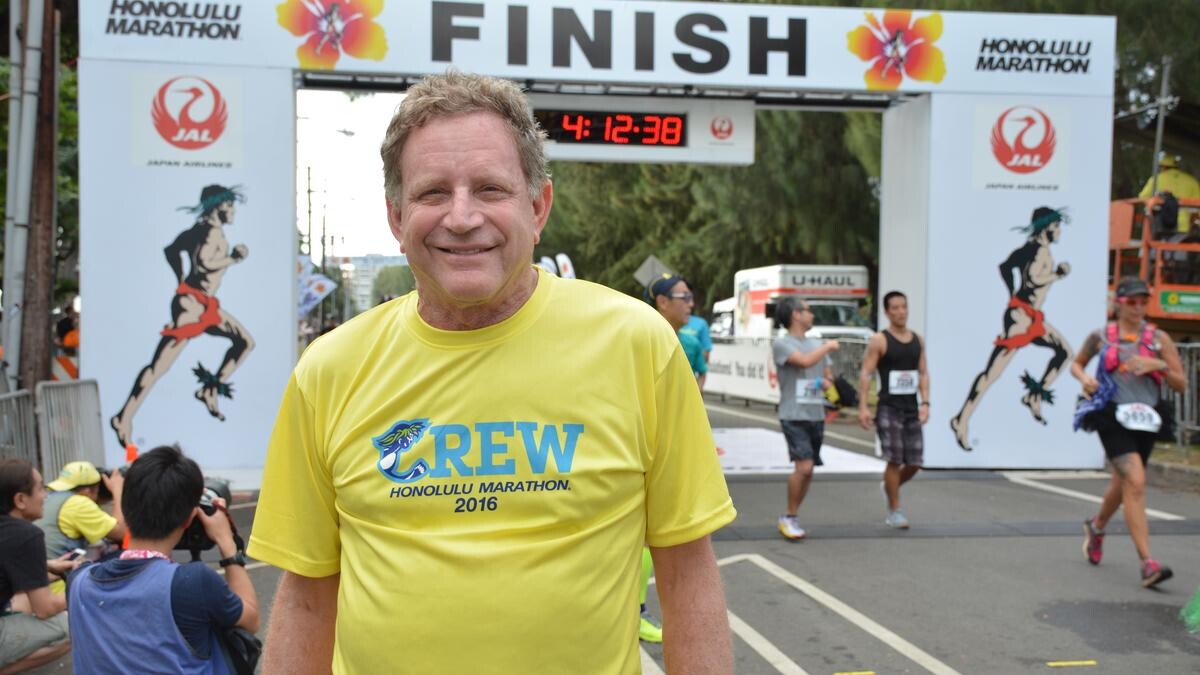
This is because of rising vaccination rates and declining coronavirus case numbers.
The 2020 Honolulu Marathon was cancelled due to COVID-19.
In 2019 there were more than 33,000 participants.
Current guidelines allow for road races of up to 500 vaccinated participants, as long as there are staggered starts of groups of 25 runners.
"We are working with the State on plans for expanding capacity for the Honolulu Marathon, which is scheduled for December 12," Blangiardi said, per the Associated Press.
"It has not been officially approved, but if conditions continue to improve I believe the Marathon could operate in a safe manner.
"It would also go a long way in helping with the psychological wellbeing and our resiliency as a community."
Honolulu Marathon President Jim Barahal is disappointed that Ige and Blangiardi have not clearly stated if the event can go ahead or not.
"We have a lot of planning to do to put on a major marathon and I thought it made it more difficult for us," Barahal told Hawaii Public Radio.
The Ironman World Championship triathlon event, usually held in Kailua-Kona, recently announced it is moving the competition from Hawaii to Utah this year because of concerns about COVID-19 restrictions.
That event, along with the Honolulu Marathon, are claimed to usually bring millions of dollars into the state economy.
by Owen Lloyd
Login to leave a comment
Honolulu Marathon
The Honolulu Marathon’s scenic course includes spectacular ocean views alongside world-famous Waikiki Beach, and Diamond Head and Koko Head volcanic craters.The terrain is level except for short uphill grades around Diamond Head. ...
more...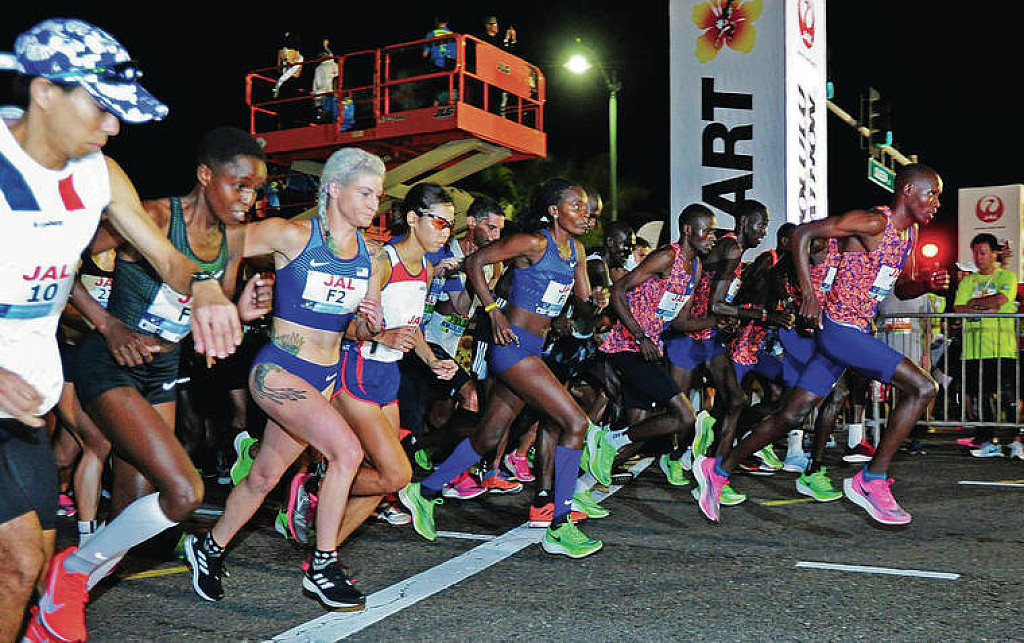
Registration for 2021 Honolulu Marathon opens in June
The Honolulu Marathon will be held in 2021 after being canceled in 2020 due to the COVID-19 pandemic.
Early registration for Hawaii residents will be open from Tuesday, June 1, through Monday, June 14.
Get Hawaii’s latest news sent to your inbox, click here to subscribe to News 2 You, a daily newsletter.
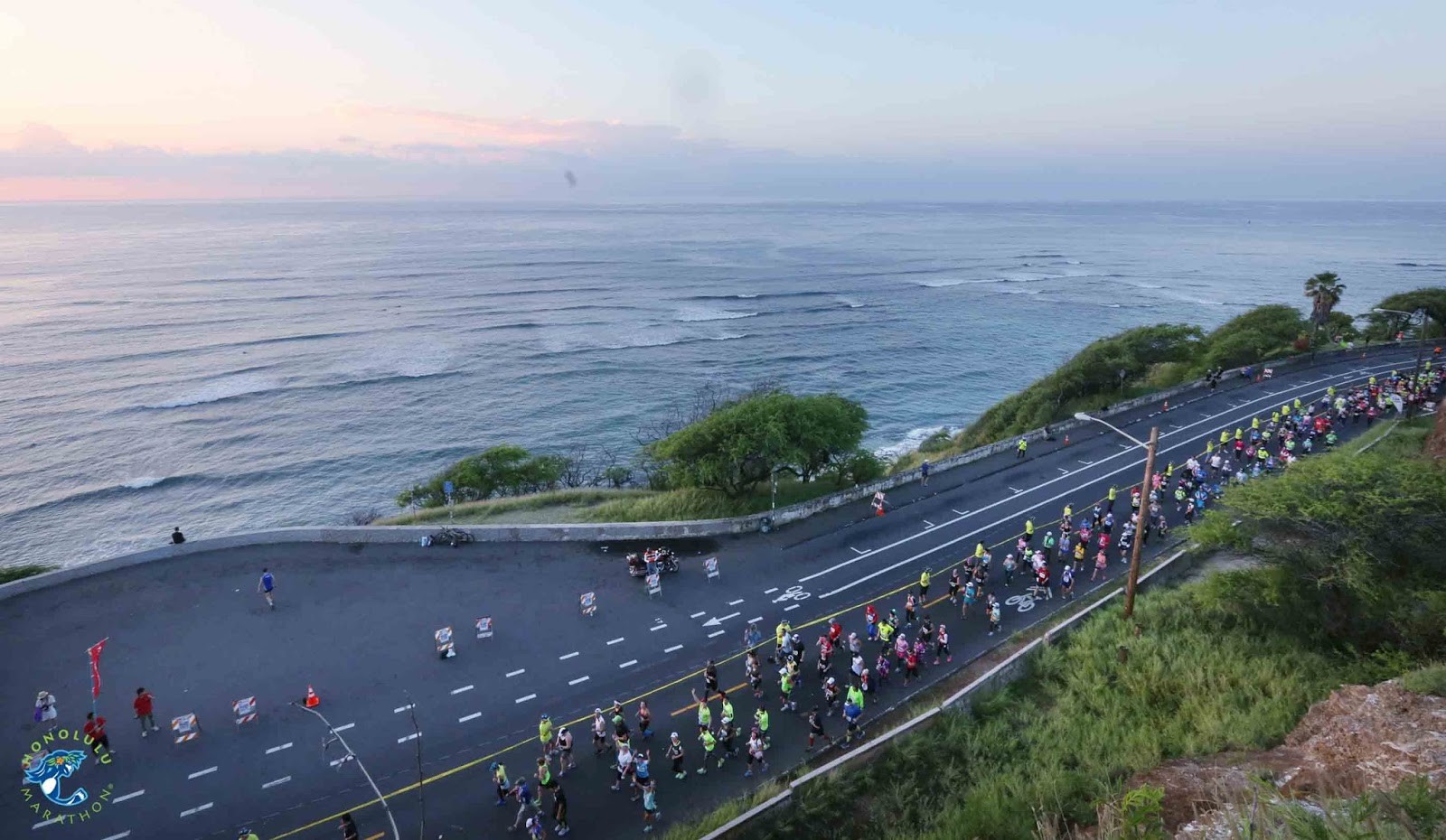
Mainland resident registration will be open Tuesday, June 15, through Wednesday, June 30, and general registration for everywhere else — excluding Japan — will open on Thursday, July 1.
The event draws tens of thousands of people from all over the world and the Department of Health believes it can be held safely.
Those who were registered for 2020s Honolulu Marathon will be allowed to register for 2021s Honolulu Marathon for free and should receive an email with a unique transfer code.
The 2021 Honolulu Marathon will be held on Sunday, Dec. 12.
Login to leave a comment
Honolulu Marathon
The Honolulu Marathon’s scenic course includes spectacular ocean views alongside world-famous Waikiki Beach, and Diamond Head and Koko Head volcanic craters.The terrain is level except for short uphill grades around Diamond Head. ...
more...