

Running News Daily
Running News Daily is edited by Bob Anderson and team. Send your news items to bob@mybestruns.com Advertising opportunities available.
Index to Daily Posts · Sign Up For Updates · Run The World Feed
Articles tagged #A Long Run
Today's Running News
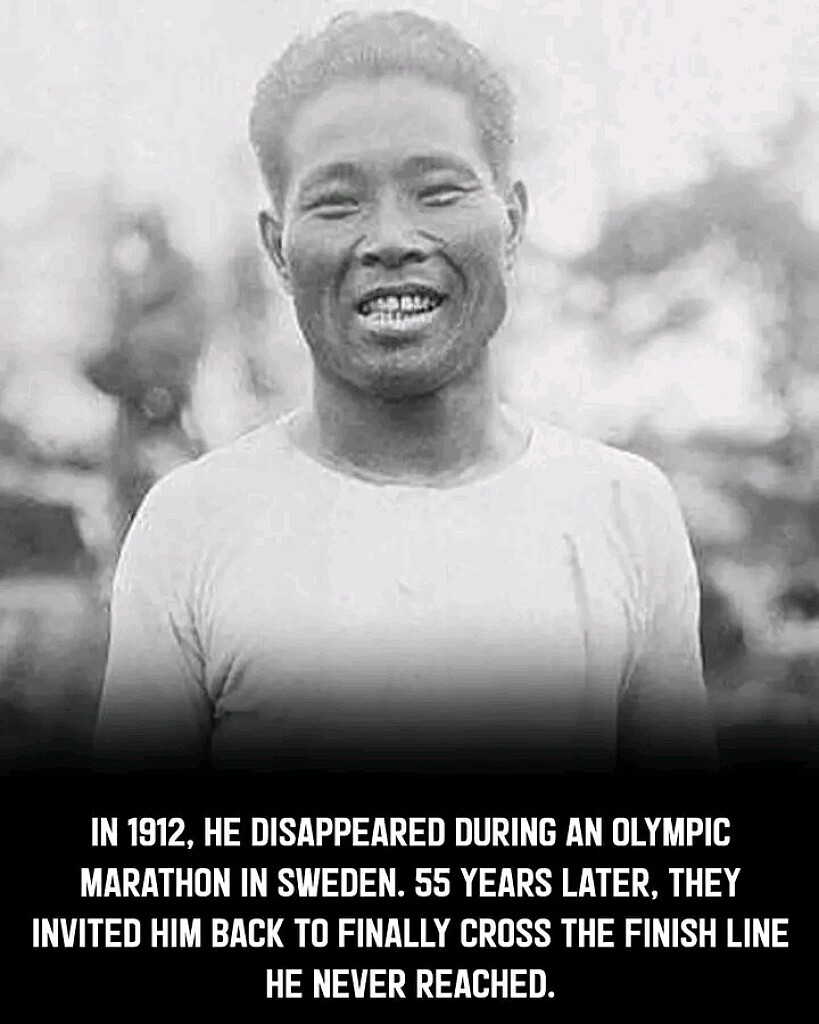


The Runner Who Vanished in 1912 and Returned in 1967
On July 14, 1912, Shizo Kanakuri stood on the start line of the Olympic marathon in Stockholm, carrying more than just race-day nerves. At 20 years old, he was representing Japan for the first time in Olympic history, introducing his country to the global stage of athletics.
Kanakuri wasn’t there simply to participate. He was one of the world’s best distance runners, having recently set a world record for 40 kilometers in 2:32:45. Expectations were high.
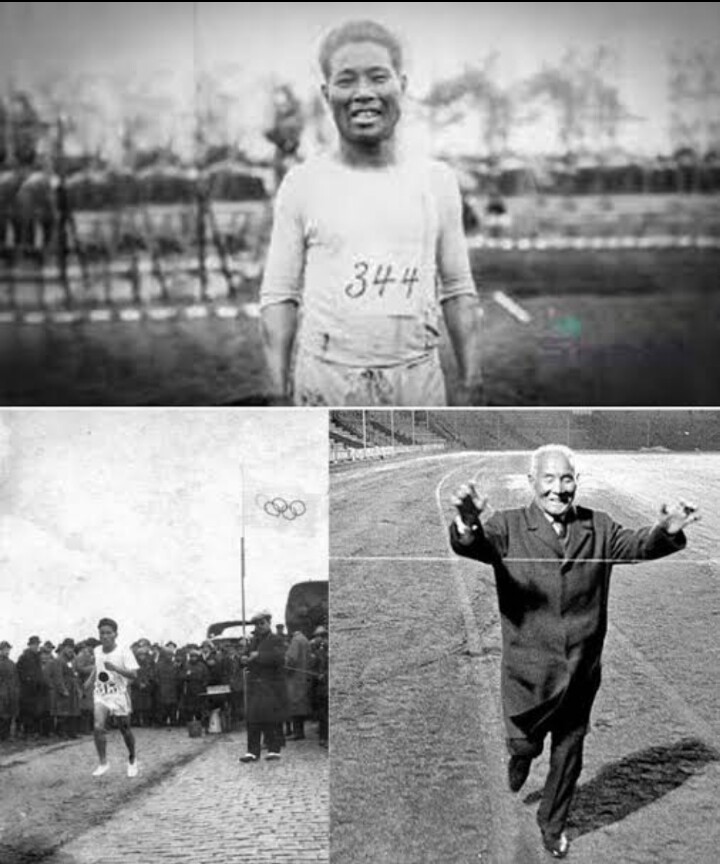
But Stockholm delivered brutal conditions. Temperatures soared to 32°C (90°F), devastating for marathoners. Sixty-eight runners from 19 nations started the race, the largest Olympic marathon field to date. Many would not finish.
Running near the front early on, Kanakuri made a decision shaped by the training beliefs of the era: he chose not to drink water, convinced it would slow him down. In extreme heat, the decision proved disastrous.
By 27 kilometers, he was in serious trouble—blurred vision, heavy legs, heat overwhelming his body. Near the course, he spotted a family garden party. Staggering off the route, he was taken in by the Pettersson family, who gave him water and juice. Exhausted, Kanakuri sat down—and fell asleep.
When he woke, the marathon was long over.
Ashamed and overwhelmed, Kanakuri quietly left Stockholm without informing race officials. To the Swedish Olympic Committee, he simply vanished. For decades, Olympic records listed him as missing.
But Kanakuri wasn’t lost. He returned to Japan, continued running, and later competed in the 1920 and 1924 Olympics. He never won a medal, but he became a teacher, mentor, and pioneer of Japanese distance running. He built a full life—married, raised six children, and inspired generations.
In 1962, Swedish journalist Claes Fellbom uncovered the mystery while researching Olympic history. He tracked Kanakuri down in Japan and learned the full story. When Swedish officials heard it, they made an extraordinary decision.
They invited him back.
In 1967—55 years after the race—Kanakuri returned to Stockholm at age 76. He visited the same neighborhood where he had stopped in 1912, met the family connected to that day, and was escorted to the Olympic Stadium.
A finish-line banner was raised. Cameras rolled.
Dressed in a suit, not racing gear, Shizo Kanakuri walked across the finish line he never reached as a young man. The clock was stopped ceremonially.
Official time:
54 years, 8 months, 6 days, 5 hours, 32 minutes, 20.3 seconds
The longest marathon in Olympic history.
Asked about his race, Kanakuri smiled and joked:
“It was a long run. Along the way, I got married, had six children, and ten grandchildren.”
Kanakuri died in 1983 at age 92. He is remembered not for medals or records, but for a story that captured something deeper about sport.
Sometimes running isn’t about winning.
Sometimes it’s about finishing—no matter how long it takes.
And sometimes, a finish line waits.
by Erick Cheruiyot
Login to leave a comment
This Is What It Really Takes to Get Faster
Every runner who dreams of shaving seconds—or minutes—off their personal best has to confront one truth: speed is earned through consistent work, not a single breakthrough workout.
Build Your Base First

“You can’t get faster if you don’t already have an aerobic base,” says Kelly Roberts, RRCA-certified coach and founder of the Badass Lady Gang. That base comes from running three to four times per week for about 40 minutes at a conversational pace. Once you can sustain that comfortably, you’re ready to introduce speed work.
Speed Comes From Teaching Your Body to Run Fast
“Speed doesn’t come from one magical workout,” says Jes Woods, RRCA-certified Nike Running coach. “It comes from consistent speed work. That’s where you actually teach your body how to run fast.”

Speed work develops efficiency: better oxygen use, quicker lactate clearing, and greater tolerance for harder efforts. In short, it trains your body to handle more stress—and recover from it—at faster paces.
What Speed Workouts Look Like
You can build speed in several ways:
• Intervals: Fast segments with recoveries.
• Fartleks: Speed play with less structure.
• Tempo runs: Steady efforts just outside your comfort zone.
• Hill sprints: Strength and power mixed with speed.
A solid weekly plan to improve speed usually includes 1–2 speed sessions, 1–2 easy runs, one strength day, and a long run. Easy runs promote recovery, strength training builds power and stability, and long runs expand endurance—all essential pieces alongside your speed days.
“That balance allows your body to stress, adapt, and recover in the right proportions,” Woods says.
The Mental Side of Getting Faster
Speed training isn’t just physical. Roberts says the hardest part is managing the mental noise when things get uncomfortable.
“When you run faster, everything gets louder,” she says. “Your legs scream, and the little parrots on your shoulder scream back.”
Her advice: pay attention to self-talk and lean on mantras. One of her go-tos is, “I don’t know if I can do this. Let’s see what happens when I give my best.”
When You’ll Start Seeing Results
If you train consistently, most runners notice progress in six to eight weeks. Research backs this up: intermittent sprint training improved 10K times in six weeks in one study, and VO₂ max increased significantly after eight weeks of aerobic training in another.
“You’ll feel different,” Roberts says. “Your runs will feel easier as your aerobic strength improves.”
Beginner vs. Experienced Runners
Genetics, training history, and consistency all shape how quickly you’ll get faster. Some runners respond more quickly, while others chip away over time. But beginners often see the biggest gains because there’s more room for improvement.
“If you’re looking to get faster, you’ll never see bigger PR swings than you will as a new runner,” Roberts says.
The Bottom Line
Speed is attainable for every runner. Build your base, train consistently, mix your workouts, and practice staying calm when things get uncomfortable. Over time, the seconds will fall off—and you’ll become a faster, stronger version of yourself.
by Boris Baron
Login to leave a comment
Building a Mental Strategy for Race Day
For many runners, the marathon is a test of both physical endurance and mental resilience. While training plans often focus on mileage, pace, and nutrition, the mental aspect of running 26.2 miles is equally crucial—and frequently underestimated. In this article, we’ll explore new and practical ways to train your mind for marathon success, including strategies you might not have considered before.
Why Mental Preparation Matters

It’s not just about “toughing it out.” Your mental state can directly impact your performance:
• A focused mind helps you stay on pace and adjust to challenges.
• A resilient attitude helps push through the inevitable rough patches.
• A calm perspective keeps race-day nerves at bay.
Elite runners and seasoned marathoners know that a strong mind is a secret weapon. But even if you’re not chasing a PR, mastering your mindset can make the difference between finishing strong and falling short.
Five Mental Strategies You Haven’t Tried Yet
Here are five actionable techniques that go beyond the usual mantras and visualization exercises:
1️⃣ Segment the Race into Micro-Stages
Instead of thinking of the marathon as one daunting 26.2-mile stretch, break it into micro-stages—for example, 5K segments, water station to water station, or even mile by mile. Each small win builds confidence and keeps your focus sharp.
2️⃣ Pre-Run “What If” Planning
Before race day, mentally rehearse various scenarios: What if the weather is hot? What if you feel sluggish at mile 15? What if you cramp at mile 20? Visualize your responses so you’re ready with calm, proactive solutions.
3️⃣ Create a “Power Playlist” of Memories
Beyond music, build a mental playlist of moments when you overcame challenges, on or off the course. When the race gets tough, recall these powerful memories to fuel your determination.
4️⃣ Leverage Your Senses
Stay present during the race by focusing on your senses:
• Feel the rhythm of your breath.
• Listen to your footfalls.
• Smell the freshness of the course.
This sensory mindfulness can ground you and reduce anxiety.
5️⃣ Develop a Personal Mantra—but Make It Dynamic
Many runners rely on static mantras (“I am strong,” “I can do this”). Instead, create a dynamic mantrathat evolves as the race unfolds. For example:
• Early miles: “I’m settling in.”
• Mid-race: “I’m moving steady.”
• Final push: “I’m finishing strong.”
This approach mirrors your changing mindset and keeps your focus fresh.
Final Thoughts
Marathon running isn’t just a physical challenge—it’s a mental game that requires preparation, strategy, and resilience. By adding these innovative mental techniques to your training toolkit, you’ll be better equipped to handle the highs and lows of race day.
So, next time you’re out for a long run, practice these mind game strategies. And when you cross that finish line, you’ll know it wasn’t just your legs that carried you—it was your mind, too.
by Boris Baron
Login to leave a comment

Running Through Stanford: Bob Anderson’s Favorite Routes Across One of the Most Scenic Campuses in the World
For over a decade, Bob Anderson — founder of Runner’s World and My Best Runs — has made the beautiful campus of Stanford University part of his regular training routine. Logging more than 40-60 runs per year, Bob doesn’t just show up for a loop or two. His connection to the campus is personal, purposeful, and deeply rooted in over ten years of consistent miles.
The Campus: Where Beauty Meets Variety

Stanford’s campus is one of the largest in the world, covering more than 8,000 acres in the heart of Silicon Valley. For runners, it’s a dream.

The terrain is varied and forgiving, with a blend of smooth bike paths, tree-lined sidewalks, dirt trails, and open stretches that feel more like parkland than a college campus. Runners pass by iconic sandstone buildings, the Rodin Sculpture Garden, and expansive green spaces that invite both focus and reflection. The Hoover Tower stands tall in the background, offering a visual anchor point during longer runs.

Whether you’re doing intervals on the flats or cruising through rolling paths near the Arboretum, Stanford has the kind of range that keeps every workout interesting.
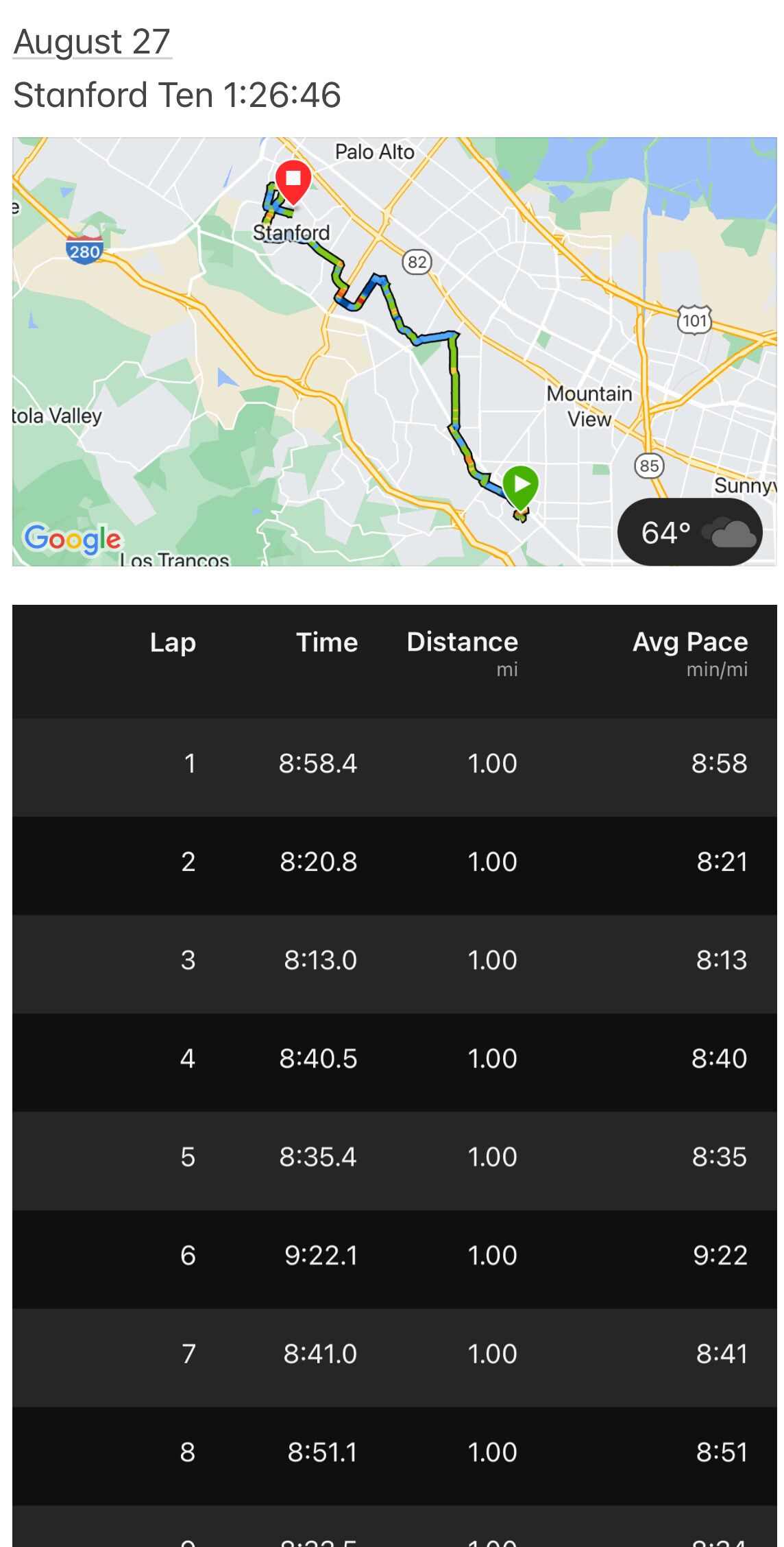
Bob’s Go-To Route: From Los Altos to Coupa Café
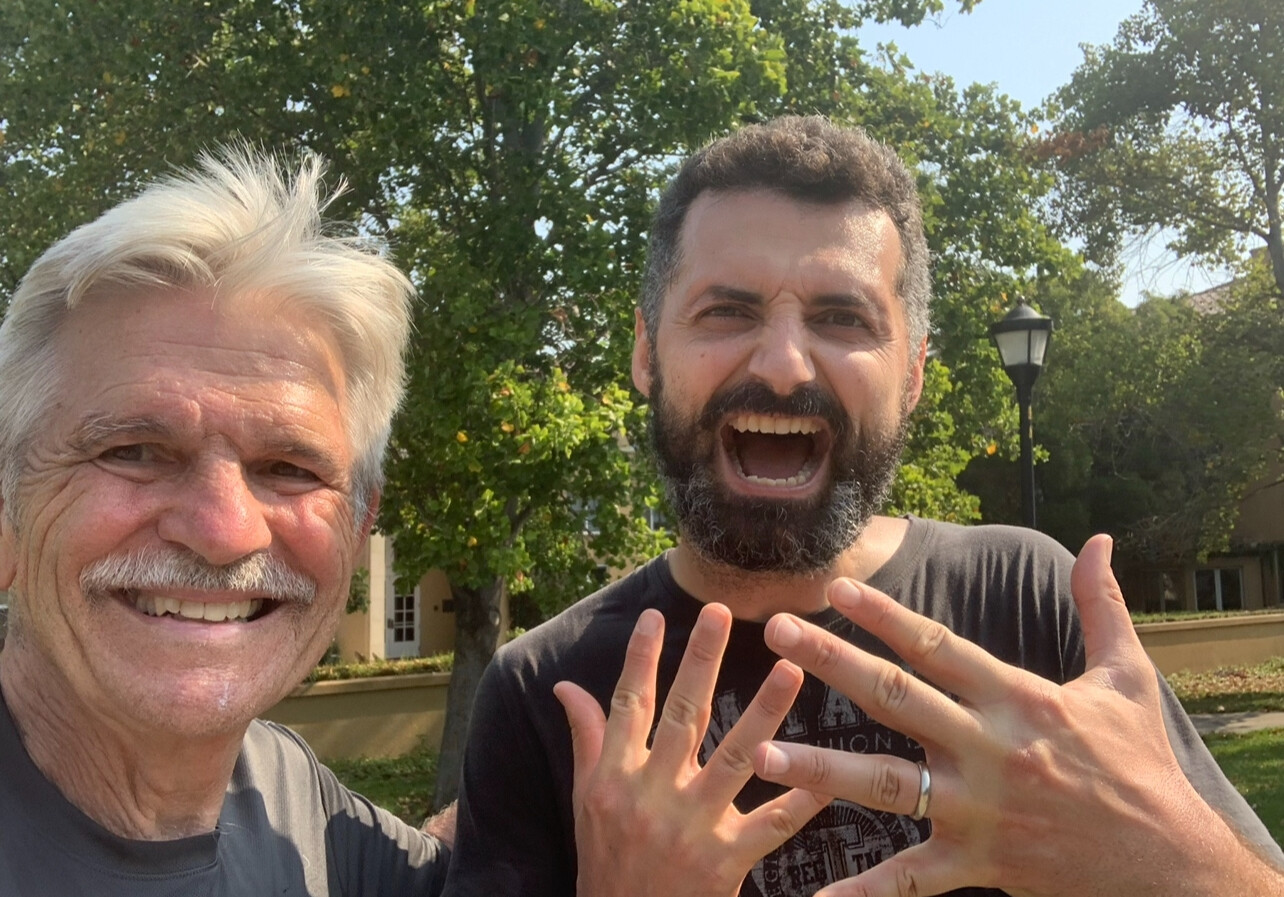
Bob typically begins his run from his home in Los Altos, covering 7.2 miles to Coupa Café on campus. Most days, he runs the first 6.2 miles, then walks the final mile as an active cooldown, enjoying the transition onto Stanford’s peaceful grounds.
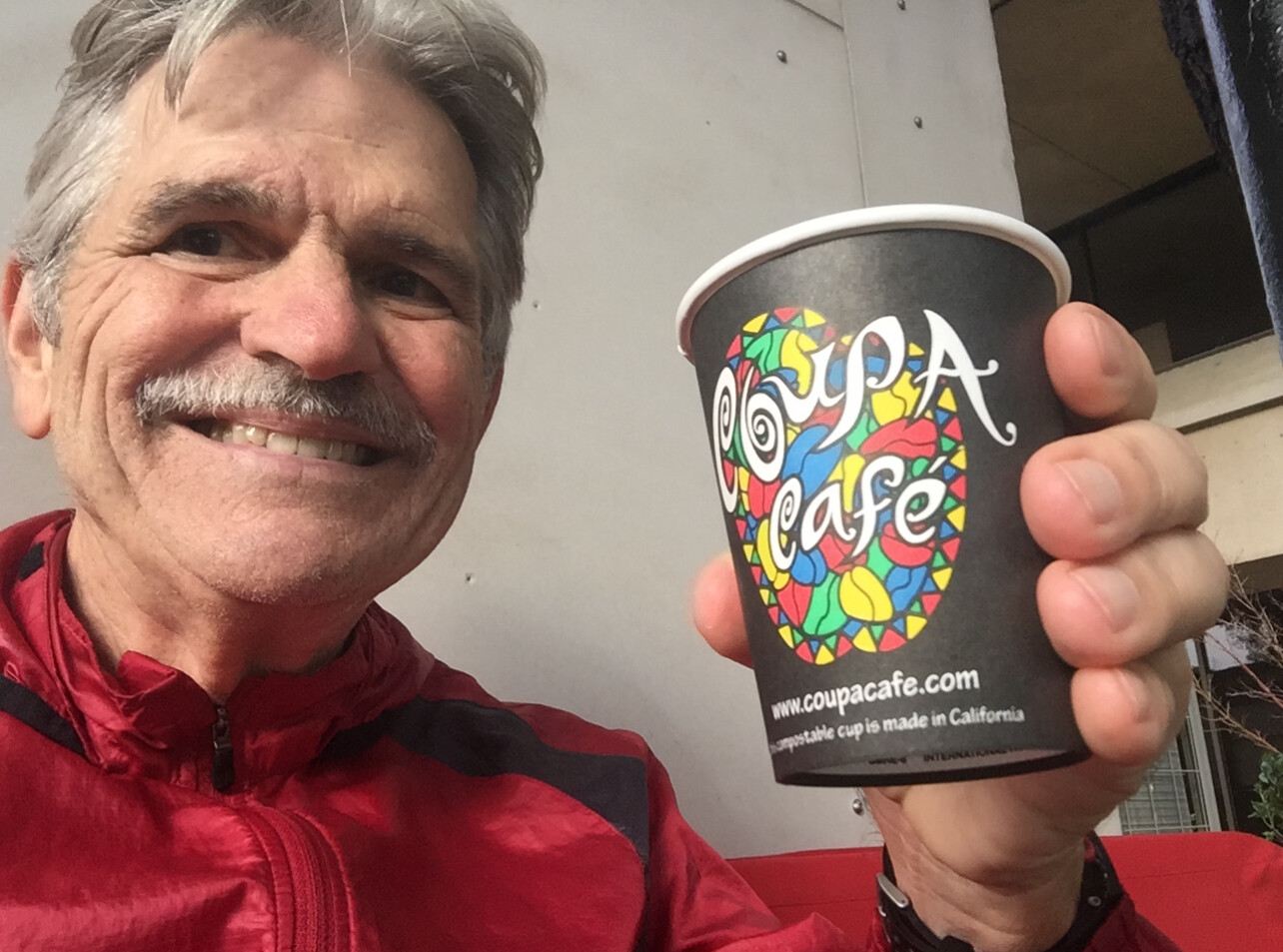
His destination is Coupa Café, a cozy outdoor spot nestled in the heart of Stanford. The stop is part of the ritual: a cup of coffee, a bag of chips, and a bottle of water — simple mid-run fuel that’s become tradition.
He’s often joined by his friend JR, especially on Sundays, turning the outing into a social run and a weekly catch-up. On Saturdays, his small dog Daisy — a fast, energetic runner — tags along. Daisy has even clocked sub-8-minute miles over 10K distance, holding her own on the longer efforts.
The 10-Mile Loop: A Long Run Favorite
Another favorite in Bob’s training rotation is a 10-mile run that also starts in Los Altos. He reaches Stanford around mile 6.5, then finishes the last 3.5 miles weaving through the most scenic parts of campus. (Sixth photo after the 10 with JR)
He wraps up the 10-miler at — where else? — Coupa Café, before taking in a post-run walk of about a mile to his pickup spot, where his wife meets him. It’s a perfectly designed effort that blends physical training with relaxation and reflection.
Why Stanford Works for Runners
• Safe and runner-friendly: Wide bike paths, sidewalks, and pedestrian zones.
• Scenic and ever-changing: Between the architecture, gardens, and trails, there’s always something new to notice.
• Flat and fast: Ideal for tempo runs, recovery jogs, or long efforts.
• Quiet corners: Great for solo runs or mindful movement.
• Accessible: Easily reached from surrounding cities, especially by foot from Palo Alto or Los Altos.
Some Final Thoughts
Stanford University isn’t just a world-class institution — it’s also one of the best places to run in the Bay Area. For Bob Anderson, it has become a cornerstone of his running life.
Whether it’s a seven-mile effort with coffee in the middle or a strong ten-mile long run with a relaxing walk to follow, Stanford delivers miles with meaning — shared with friends, family, and even a four-legged training partner named Daisy.
“There’s something about that campus that keeps calling me back,” Bob says. And after just one run through Stanford, it’s easy to understand why.
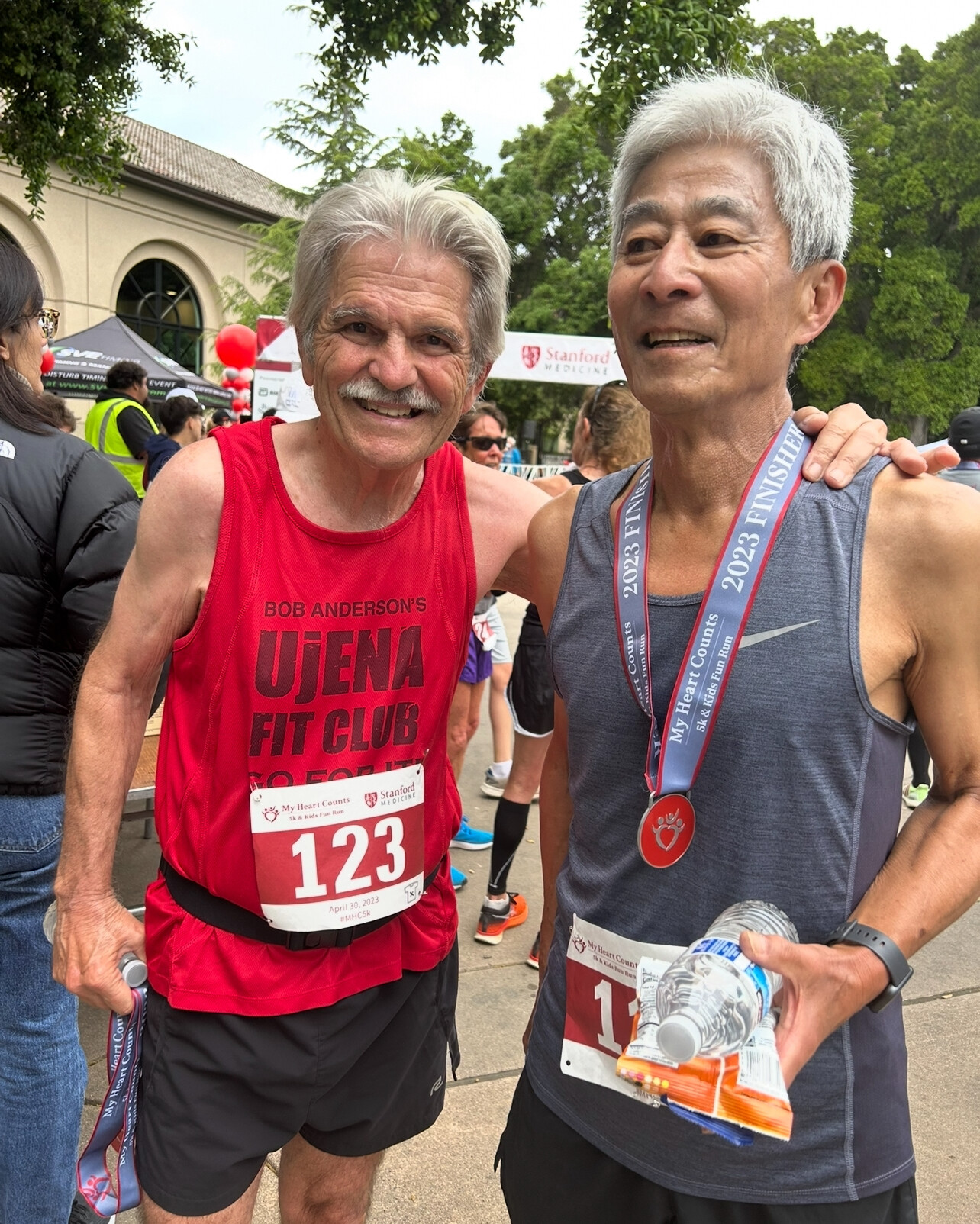
Bob has also run many races on the Stanford campus and many people have joined him at Coupa cafe. "If you have not explored the campus you should put it on your to do list," says Bob.
There are many races that run through the Stanford campus as well. The last photo is one Bob ran.
by Boris Baron
Login to leave a comment
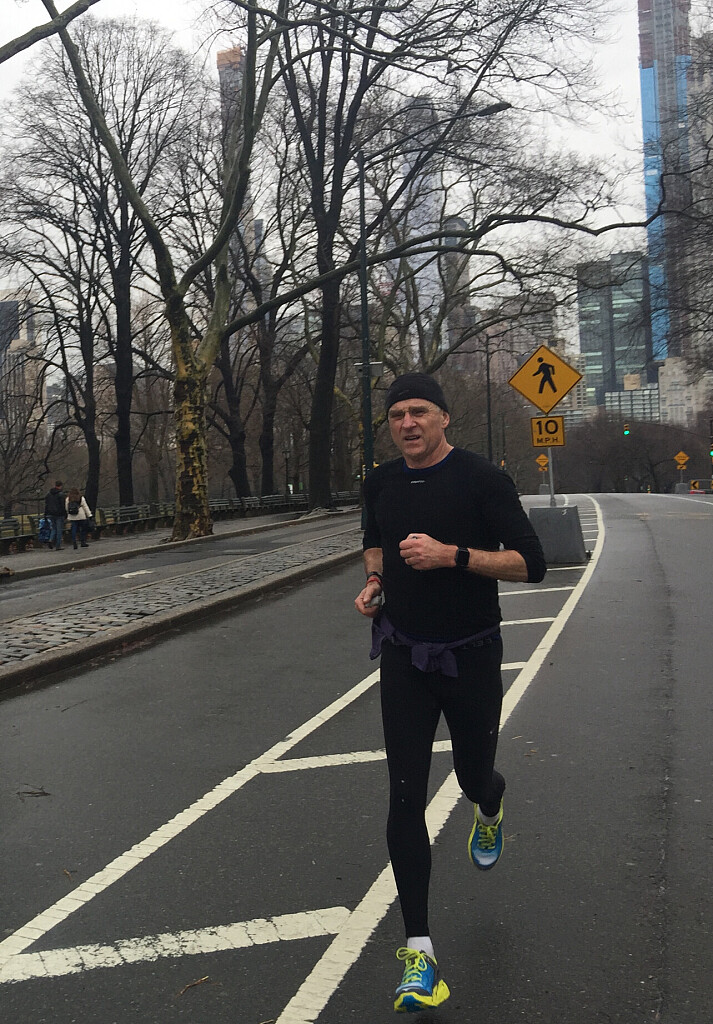
The Magical Feeling of Running in Central Park, NYC
New York City is a place of hustle and movement, where the streets are alive with energy, and the skyline is iconic. But tucked within the towering buildings and endless motion lies a runner’s paradise—Central Park. For those who have had the privilege of running here, the experience is nothing short of magical.
Whether you’re an early-morning jogger, a seasoned marathoner, or someone visiting the city with running shoes packed, Central Park offers an unforgettable running experience that blends nature, history, and the sheer excitement of running in the heart of the most famous city in the world.

A Runner’s Sanctuary in the Heart of NYC
Central Park spans 843 acres in the middle of Manhattan, creating a green oasis amid the urban sprawl. With its rolling hills, shaded pathways, and scenic lake views, it’s the perfect place for runners seeking a retreat from the city’s concrete and congestion.
The park provides a welcoming and diverse running environment—a place where runners of all backgrounds and abilities come together. On any given day, you’ll see world-class athletes training for the New York City Marathon, casual runners enjoying a peaceful jog, and tourists soaking in the beauty of one of the most legendary parks on the planet.

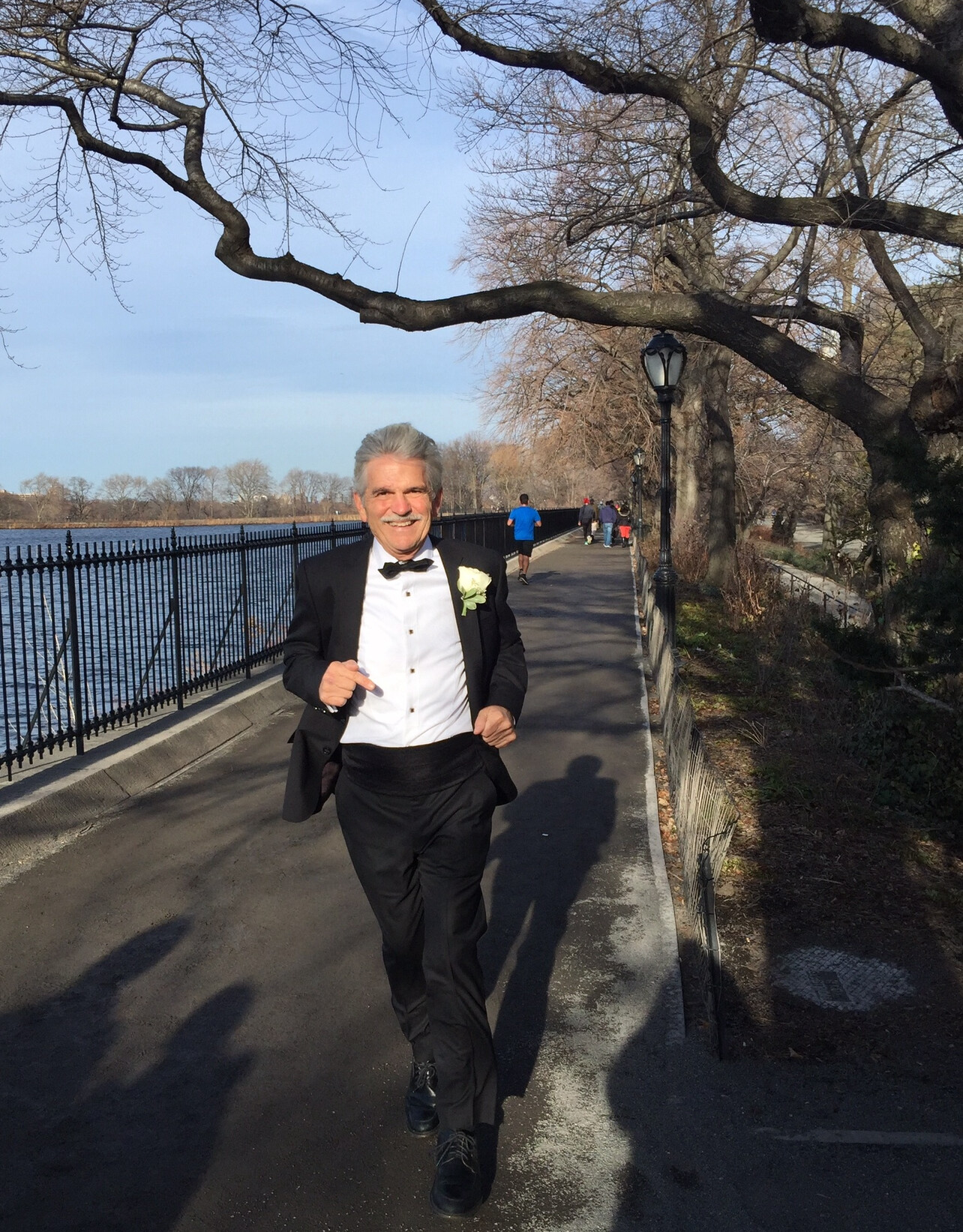
Bob Anderson, the founder of Runner’s World and My Best Runs, has run many miles in Central Park, and it just seemed like the perfect location to marry his wife, Catherine. On New Year’s Eve 2016, they exchanged vows in a treehouse in the park, celebrating their love for each other and for this special place.

Why Running in Central Park Feels So Special

1. The Perfect Blend of Nature and City

One of the most unique aspects of running in Central Park is the ability to feel completely immersed in nature while still being surrounded by the city skyline. As you glide past tree-lined paths and shimmering ponds, you’ll catch glimpses of the skyscrapers rising above, reminding you that you’re in the heart of one of the most vibrant cities in the world.
Running in Central Park at sunrise is an experience like no other—watching the first rays of light peek through the trees and reflect off the buildings, turning the entire city golden. In the fall, the park transforms into a kaleidoscope of autumn colors, while spring brings blooming cherry blossoms and fresh greenery.
2. Iconic Running Routes
Central Park offers several legendary running routes, each with its own charm:
• The Full Loop (6.1 miles / 9.8 km) – A complete circuit of the park, featuring rolling hills, open views, and famous landmarks.
• The Reservoir Loop (1.58 miles / 2.54 km) – One of the most famous running paths in the world, circling the Jacqueline Kennedy Onassis Reservoir with a stunning skyline backdrop.
• The Lower Loop (1.7 miles / 2.7 km) – A flatter, shorter route perfect for an easy jog or speed workouts.
• The Bridle Path (4.2 miles / 6.8 km total) – A softer dirt trail, ideal for runners who want to reduce impact on their joints.
One of the most well-known sights along the running route is The Lake, which was prominently featured in the classic thriller Marathon Man (1976), starring Dustin Hoffman. While the movie is not about running, Hoffman’s character, Thomas “Babe” Levy, is frequently shown running in Central Park, using it as an outlet for stress and survival. For runners who love cinema, retracing Hoffman’s steps adds an extra layer of history to an already iconic location.
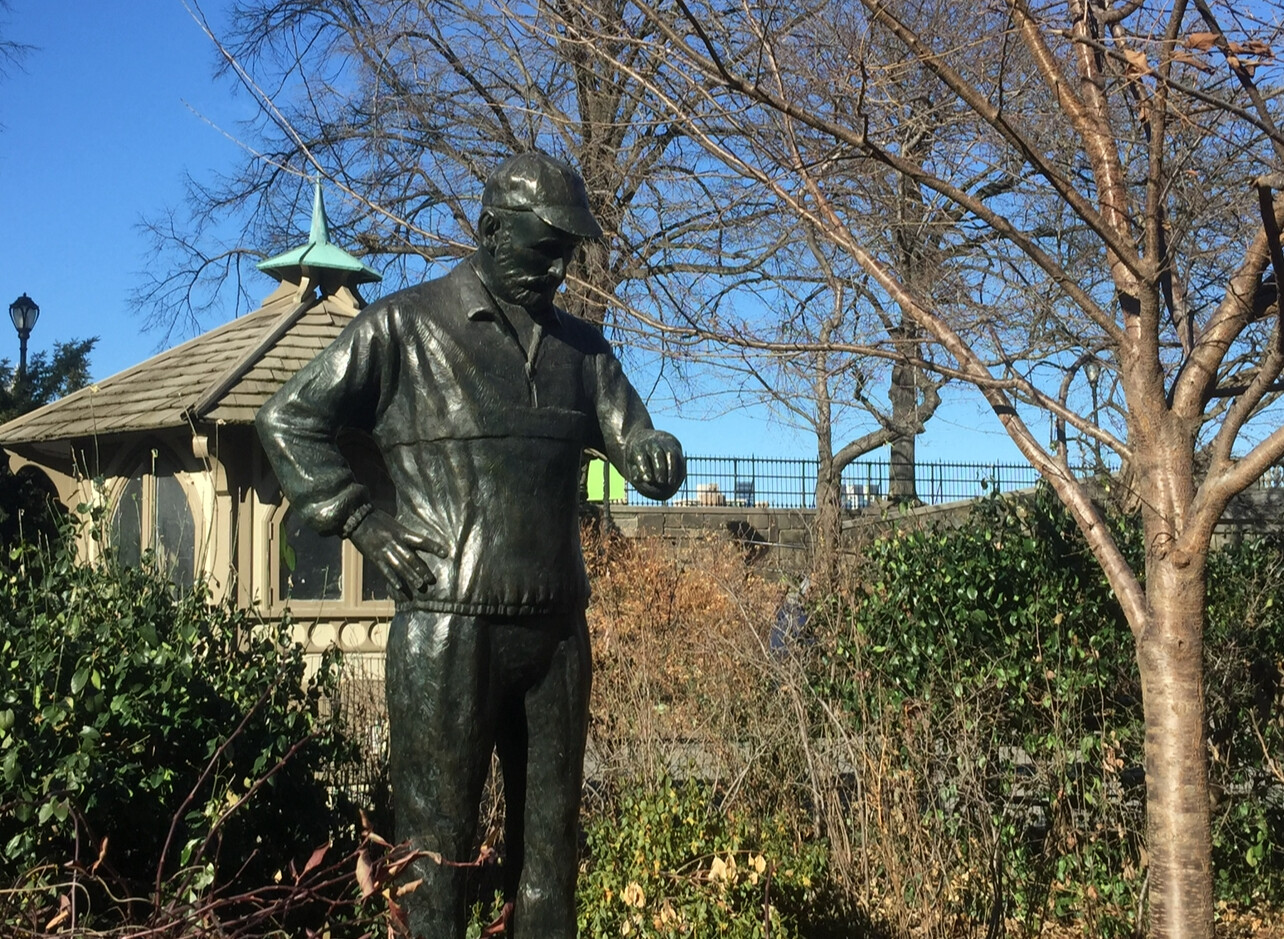
3. The Statue Honoring a Running Legend: Fred Lebow
As you run through Central Park, you’ll pass the Fred Lebow statue, a tribute to the founder of the New York City Marathon. Lebow was instrumental in turning the NYC Marathon into one of the world’s most famous races. The statue, located near the marathon’s finish line, serves as an inspiring reminder of his contributions to the sport.
Many runners stop to touch the statue or take a moment of reflection before completing their final strides—whether it’s during a training run or on race day.
4. A Shared Energy Like No Other
The atmosphere in Central Park is unlike anywhere else. It’s a place where runners from all over the world come to test their limits, find their rhythm, and be part of something bigger.
The community of runners in Central Park is welcoming and diverse. You’ll pass runners speaking different languages, elite marathoners training for their next big race, and even a few familiar faces from the professional running world. On race weekends, the energy is electric, as groups gather to cheer, pace, and celebrate the sport of running.
There’s an unspoken bond among Central Park runners—a shared understanding that this is a place where you come to feel alive.
Running Through History: The Legacy of Central Park
Beyond its beauty and convenience, Central Park has an incredible running history. It has been the training ground for some of the greatest runners in history, from legendary marathoners to track stars preparing for the Olympics.
The park plays a pivotal role in the TCS New York City Marathon, with the final miles winding through its paths before runners cross the finish line near Tavern on the Green. The sense of accomplishment felt when finishing a race in Central Park is something runners cherish forever.
Even if you’re not racing, running here allows you to be a part of that history—to step where champions have run, to push yourself the way so many others have before.
The Best Times to Run in Central Park
• Early Morning (5:30 AM - 8:00 AM): The most peaceful time to run, with fewer crowds and a stunning sunrise over the city.
• Late Afternoon (4:00 PM - 7:00 PM): The golden hour of running, when the sun sets behind the skyline, creating a surreal backdrop.
• Night Runs: Running Central Park at night offers a different kind of magic, with the city lights creating a glowing contrast against the trees.
No matter when you run, Central Park feels alive, providing motivation with every step.
Tips for First-Time Runners in Central Park
• Stick to the right. The running and biking lanes are clearly marked—stay on the right to avoid collisions.
• Hydration stations are available. Water fountains are scattered throughout the park, but in hot months, bring your own bottle.
• Be prepared for hills. While some sections are flat, parts of the park (like Harlem Hill) will test your strength.
• Enjoy the experience. Whether you’re running for speed, endurance, or simply for fun, Central Park is a place to embrace the joy of running.
Why Every Runner Should Experience Central Park
Running in Central Park is more than just a workout—it’s a moment of connection. Connection to nature, to the rhythm of the city, and to the countless runners who have made this park their sanctuary.
It’s a place where you can lose yourself in the run while feeling completely present. Where the city’s chaos fades away, replaced by the steady sound of your footsteps on the pavement.
If you ever find yourself in New York City, put on your running shoes and head to Central Park. Whether you go for a quick jog or a long run, you’ll leave feeling inspired, refreshed, and part of something greater than yourself.
Because running in Central Park isn’t just about exercise—it’s about experiencing one of the most iconic and magical places in the world, one step at a time.
Have you ever run in Central Park? Share your experience in the comments!
by Boris Baron
Login to leave a comment
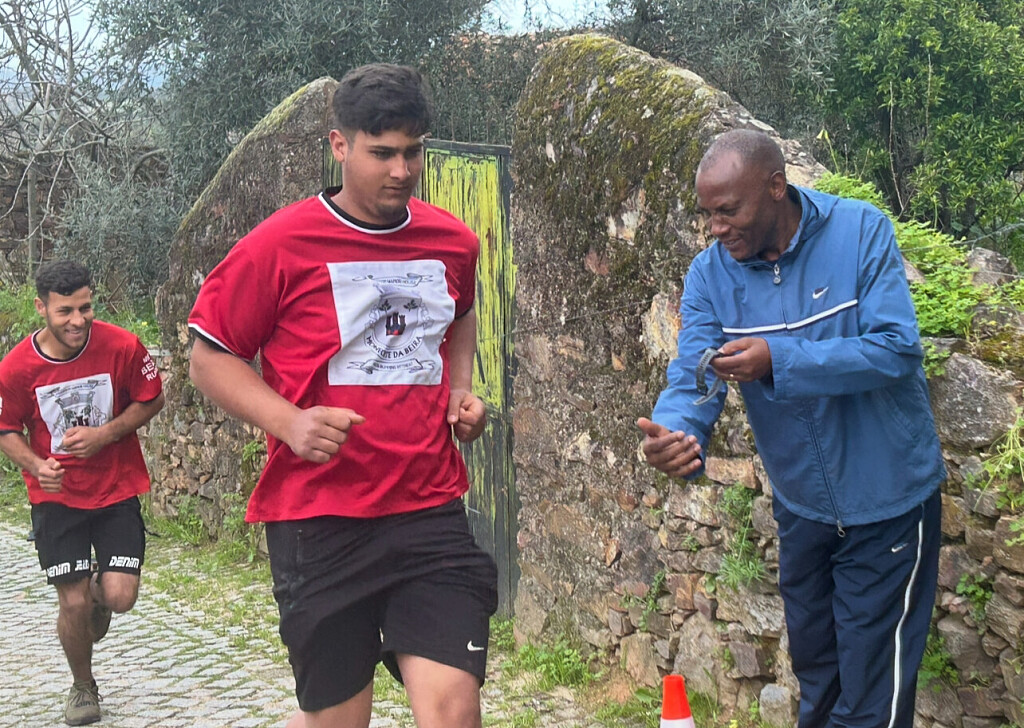
Part Two: Training the Kenyan Way—Jimmy Muindi’s Coaching Success and Impact at KATA Portugal
In Part One, we explored Jimmy Muindi’s remarkable journey from a young barefoot runner to an elite marathoner, winning the Honolulu Marathon six times and running a personal best of 2:05:24. Now, in Part Two, we dive into his success as a coach, both in Kenya and now at KATA Portugal.
Muindi has been deeply involved in training athletes back home for many years. After his own marathon wins, he set up a youth training camp in Ngong, on the outskirts of Nairobi, where he began mentoring promising runners. One of his most famous protégés is Patrick Makau.
Around 2005, Muindi—then fresh off his Rotterdam Marathon victory—heard about a talented young runner from his home area. He sought out Makau, offered guidance and encouragement, and after Makau finished high school, Muindi brought him into his camp in Ngong and trained him for two years.
Under Muindi’s tutelage, Makau developed from a schoolboy star into a world-class road racer, even winning a 25K race in Berlin as his first international competition. The pinnacle of their mentor-student relationship came in 2011, when Patrick Makau broke the marathon world record in Berlin, a testament to the solid foundation and focus Muindi helped instill early on. This example highlights Muindi’s overall impact—he has a keen eye for talent and the ability to nurture it to the highest level.
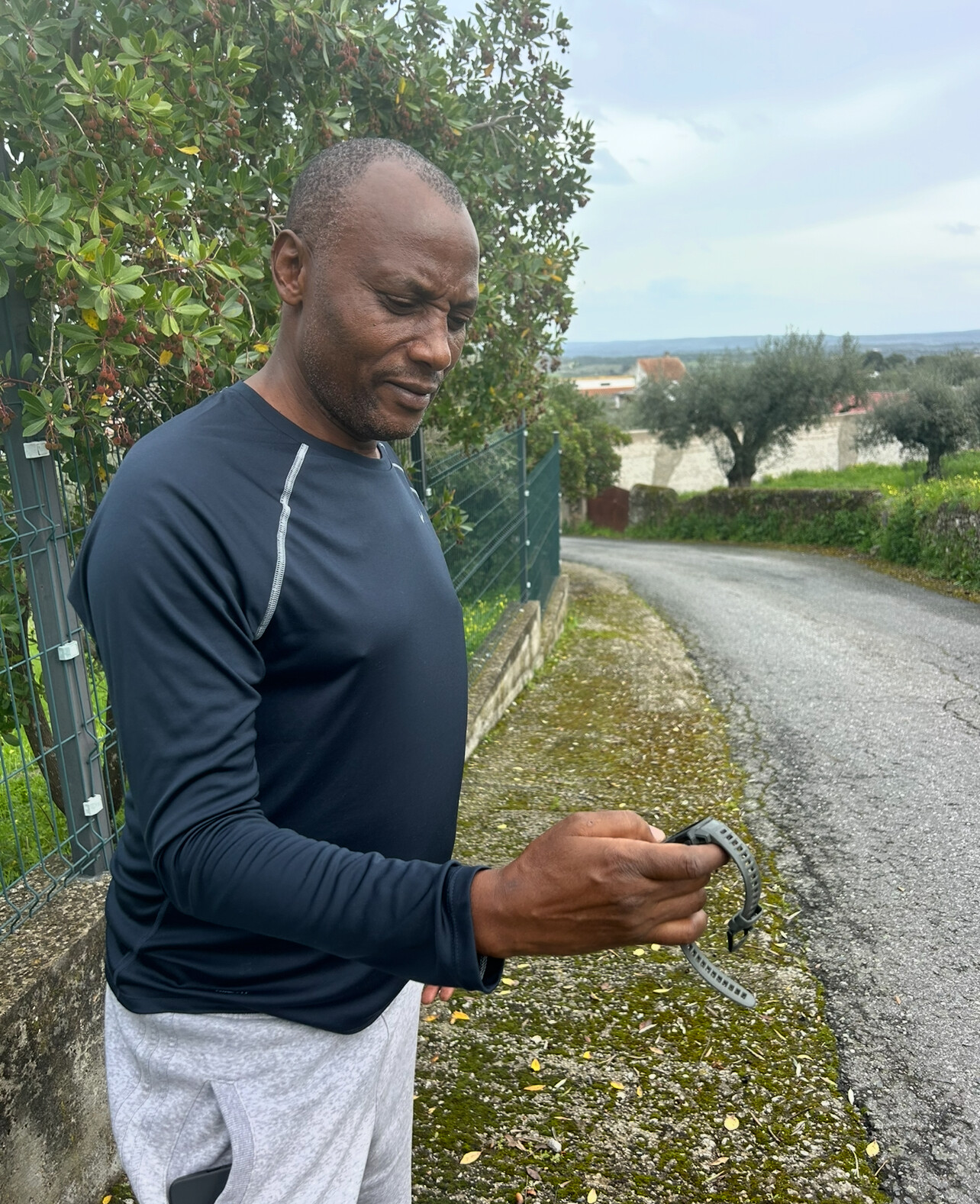
Muindi’s coaching reach doesn’t stop with Makau. Over the years, he has worked with and inspired many Kenyan athletes, as well as athletes from South Africa and Zimbabwe. He even coached and paced his younger brother, Nicholas Muindi, who himself became a 2:15 marathon runner. Training side by side with Jimmy, Nicholas and others like teammate Eric Nzioki benefited from Jimmy’s experience and training methods.
In Kenya’s running culture, group training and mentorship are key, and Muindi has been at the heart of such groups—whether informally bringing up younger runners in his home region or mentoring elite athletes at training camps. Dozens of runners have shown marked improvement under his guidance.
It’s common to hear of a runner joining a group with modest personal bests and, after months of hard training, cutting down their times significantly. This kind of progress speaks to Muindi’s effective coaching style and the training environment he helps cultivate. His approach is very much about training the Kenyan way, a philosophy he exemplifies.
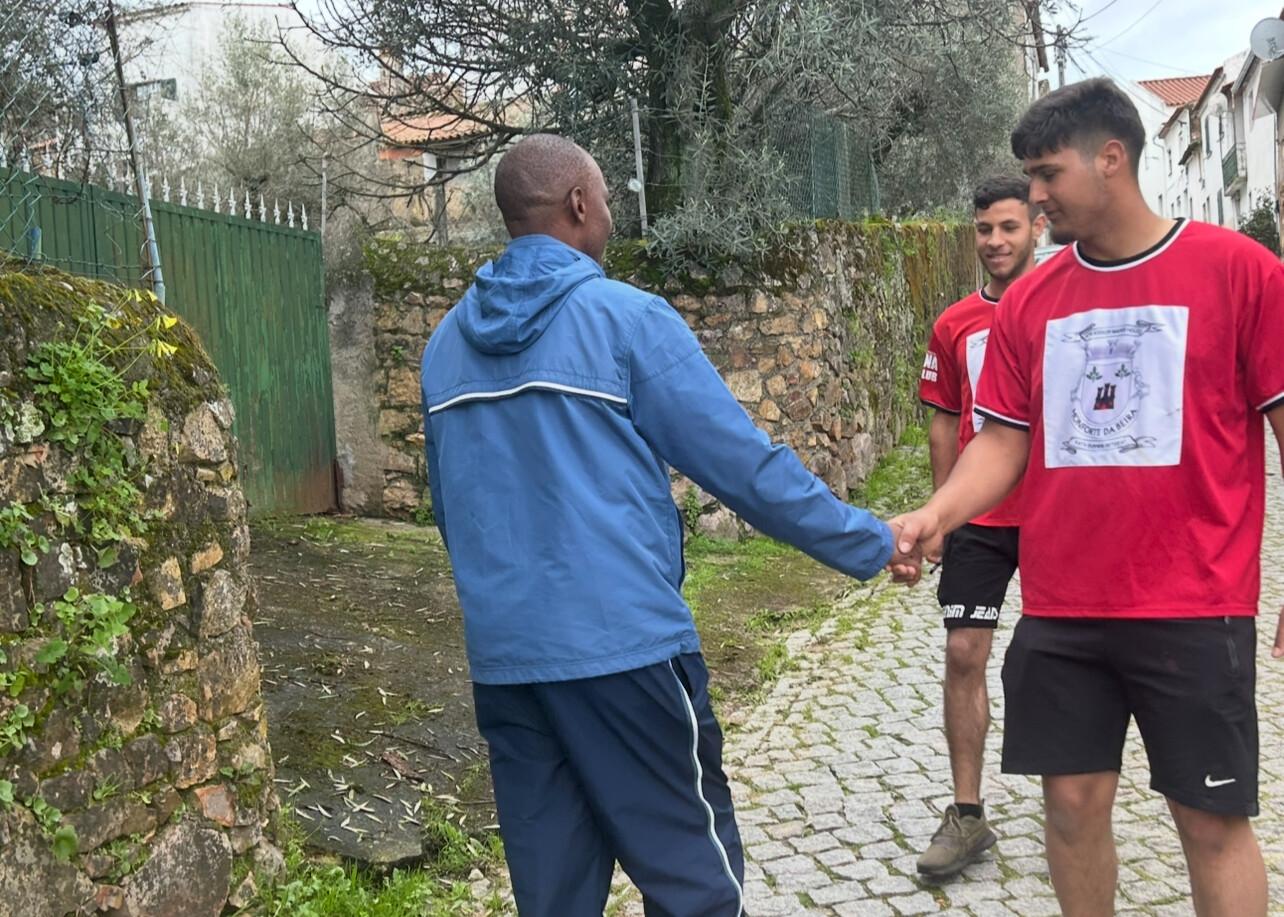
The Muindi Coaching Method: Training the Kenyan Way
What is Muindi’s coaching philosophy and method? In large part, it mirrors the proven Kenyan training principles that brought him success in his own career.
Muindi emphasizes high-mileage, high-quality training weeks. His athletes run twice a day, six days a week—a harder workout in the morning and an easy run in the evening—allowing for both intensity and active recovery.
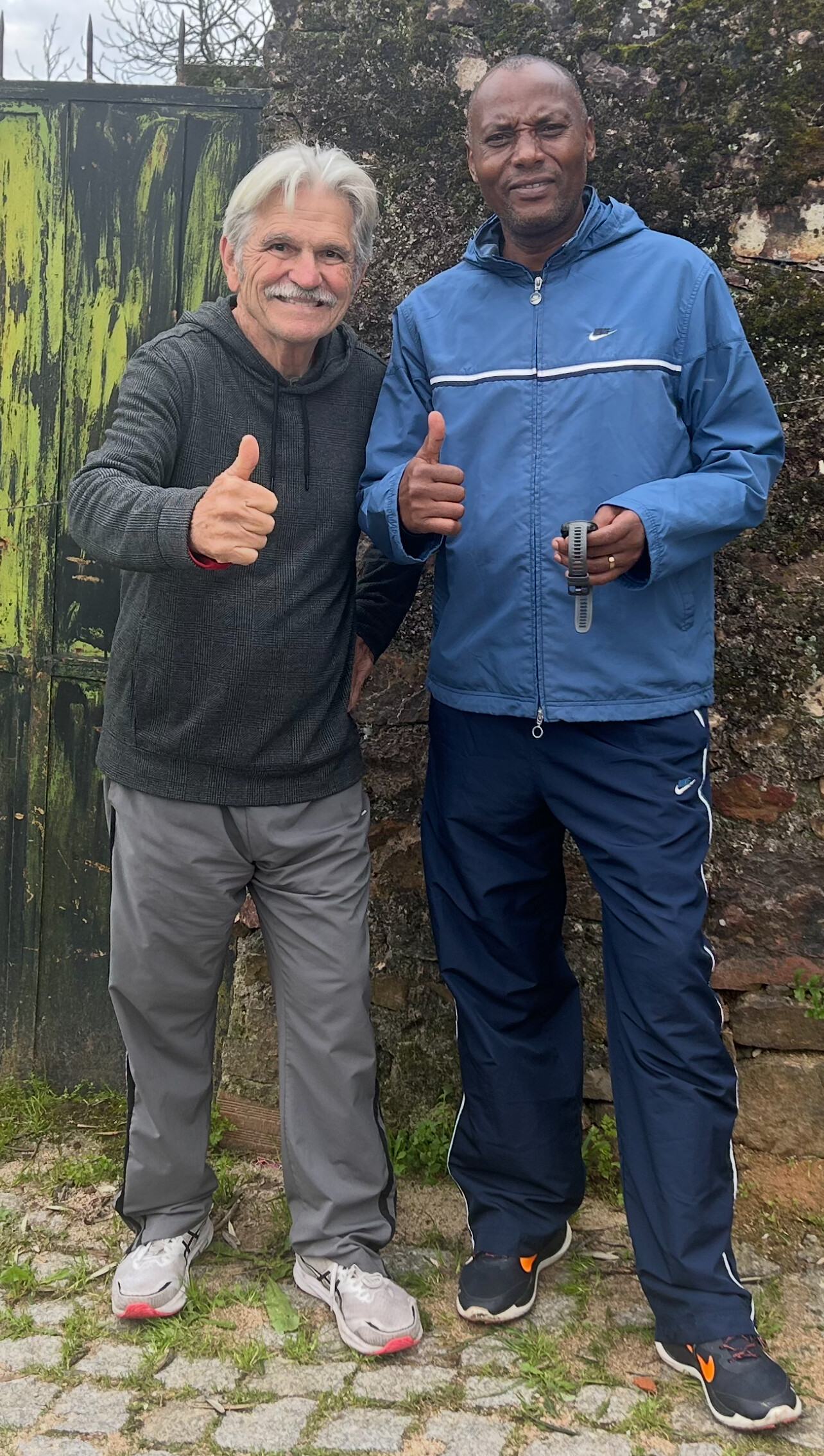
His training follows a simple but effective structure: one hard day followed by an easy day. The hard days vary and can include:
• Fartlek training—alternating between hard efforts and recovery paces over various distances
• Interval training on the track—structured repetitions such as 6 × 1,000m, 10 × 400m, or 4 × 2K at race pace
• Hill work—shorter, explosive hill sprints or longer sustained uphill efforts
• Tempo runs—steady-state efforts at or slightly above lactate threshold
On easy days, Muindi ensures that his runners focus on recovery, maintaining a relaxed effort to allow the body to adapt and rebuild.

He also incorporates a mix of workouts that have long been secrets of Kenyan distance running, including:
• Strength and form drills to improve efficiency and prevent injuries
• Diagonal runs—a drill that involves running across a grass field or from one corner of a track to the opposite corner. The effort is 100 to 120 meters, followed by a jog, then repeated ten times or more. This is often done after a long run or a few days before a major race to reinforce good form and maintain leg turnover without overstressing the body.
This structured approach has allowed many of his athletes to break through to the next level.
Bringing Kenyan Training to Portugal
Now, Muindi is bringing this train the Kenyan way experience to international guests at KATA Portugal, the academy’s new European location. Opened in 2024 at the historic Anderson Manor Retreat in central Portugal, KATA Portugal offers runners from around the world a chance to train under Kenyan coaches like Muindi without traveling all the way to East Africa.
As one of the lead coaches for KATA Portugal, Muindi provides the same level of world-class guidance that he has applied in his previous coaching experiences. Visitors can expect an immersive training week that closely models a Kenyan training camp—right down to the daily schedule and philosophy.
Runners joining KATA Portugal can look forward to personalized coaching from Muindi. He begins by evaluating each guest’s fitness and goals, then tailors the training accordingly. A day might start at dawn with an endurance run through the scenic trails around Monforte de Beira, where the retreat is located. Muindi will lead or cycle alongside, monitoring paces and offering tips on form. The morning session could be a long run or a hard workout, depending on the plan—for example, interval repeats on a nearby all-weather track or a fartlek on the rolling country roads.
His approach to guests is hands-on and encouraging. He runs some easy miles with less experienced runners, challenges the faster ones with appropriate paces, and creates an atmosphere where everyone, regardless of level, feels like part of the team.
In the afternoons, he conducts a second, lighter session—this could be an easy shakeout jog, mobility drills, or even a fun group run to explore the area.
Muindi also integrates supplemental training into the program:
• Core strength exercises
• Stretching routines
• Yoga sessions (the Portugal retreat has yoga and massage amenities on site)
All of this mirrors the components of training he used as an elite.
The Kenyan Approach to Recovery and Nutrition
Guests at KATA Portugal will quickly notice Muindi’s attention to recovery. Between runs, he stresses rest, proper hydration, and nutrition. In line with the Kenyan tradition, the meals at KATA Portugal are inspired by the Kenyan runner’s diet—simple, hearty, and rich in carbohydrates. Muindi often dines with the participants, informally sharing stories from his racing days and advice on topics like race strategy or injury prevention.
This personal touch is a huge part of what he brings to the table: you’re not just following a training schedule—you’re learning directly from someone who competed at the highest level.
Why Train with Muindi? A Champion’s Perspective
What truly sets Muindi apart as a coach at KATA Portugal is how his professional background shapes his philosophy in training others.
Having been a world-class marathoner, Muindi understands the dedication required to reach one’s potential. He approaches each runner as an individual, cognizant that everyone has their own journey.
Because he’s been through the highs and lows of competitive running—from winning major races to the grind of daily training—he can relate to the struggles his trainees face. This empathy makes him a patient and motivating coach.
Muindi’s own career was marked by consistency and longevity (he remained competitive for over two decades), and he emphasizes the same long-term approach to his trainees, preaching that improvement comes through gradual progress and consistent effort.
Under his guidance, runners at KATA Portugal gain a rare window into the mindset of a champion. Muindi teaches them to plan their races, listen to their bodies, and cultivate the confidence that comes from thorough preparation.
Coming Next in Part Three
Training is only part of the equation when it comes to running success. Nutrition and strategic race fueling play a major role in performance.
In Part Three, we will explore Muindi’s approach to diet, emphasizing why the most important meal happens two nights before a big race. His personal experience and insights will reveal how proper fueling can make or break a performance.
Stay tuned for the next installment as we dive into the nutrition strategies of elite Kenyan runners and how Muindi applies them to his coaching at KATA Portugal.
by Boris Baron
Login to leave a comment
 Besides being a world class runner and now coach Coach Jimmy is a great guy with lots to say. We are happy to have him as part of our KATA team. - Bob Anderson 3/8 8:20 am |

Sara Hall Reflects on the Path That Made Her Fall in Love with the Marathon
Sara Hall’s journey as one of America’s top marathoners has taken her across the world, from the high-altitude hills of Ethiopia to the historic streets of Boston. But one place remains especially meaningful—the rail trail to Shasta Dam in Redding, California.
Recently, Hall returned to this familiar path, sharing how it played a pivotal role in shaping her marathon career.

“Ryan & I moved to Redding in 2012 with months til the Olympic Trials, wanting more of God and to be a part of Bethel, but not knowing much about what it would be like to train here. This place far exceeded our expectations, with the most beautiful bike path in the world (rail trail up to Shasta Dam) and an endlessly positive training partner, Ben Keck.”

Reuniting with Keck for a long run, Hall logged over 1,000 feet of elevation gain without bike support—stashing bottles, ketones, and a ziplock of gummy peaches in her sports bra to fuel the effort. “Thinking of the people like Ben who have kept me enjoying the sport for so long when I could have easily hung it up—forever grateful,” she added.

Now 41, Hall continues to defy expectations as she prepares for the next phase of her career. She will turn 42 just before the 2025 Boston Marathon, an event where she will once again test herself against the world’s best.
In December 2024, she set a new U.S. masters marathon record, running 2:23:45 at the Valencia Marathon, breaking her own previous record of 2:26:06. The performance reaffirmed her status as one of the fastest American women over 40, showing she is still improving and competing at the highest level.
Her journey to the marathon was not a direct one. A standout high school and collegiate runner, Hall won multiple state and NCAA titles before turning pro. She initially focused on shorter distances before successfully moving up to the marathon, setting a personal best of 2:20:32 at the 2020 Marathon Project—one of the fastest times ever recorded by an American woman.
Her latest masters record in Valencia secured her place at the top of the fastest American women over 40 list:
Fastest American Masters Women’s Marathon Performances
Sara Hall – 2:23:45 at age 41, 2024 Valencia Marathon
Desiree Linden – 2:27:35 at age 40, 2023 Chicago Marathon
Colleen De Reuck – 2:28:40 at age 40, 2004 Olympic Trials Marathon
Roberta Groner – 2:29:09 at age 41, 2019 Rotterdam Marathon
These performances highlight the longevity and competitiveness of elite American female marathoners, proving that success in the sport doesn’t have to fade with age.
As Hall continues her career, she remains focused on both competition and the relationships that have kept her inspired along the way. Whether she is training on the hills of Ethiopia, preparing for another major marathon, or revisiting the path that first fueled her love for the sport, one thing is certain—Sara Hall is far from finished.
by Boris Baron
Login to leave a comment
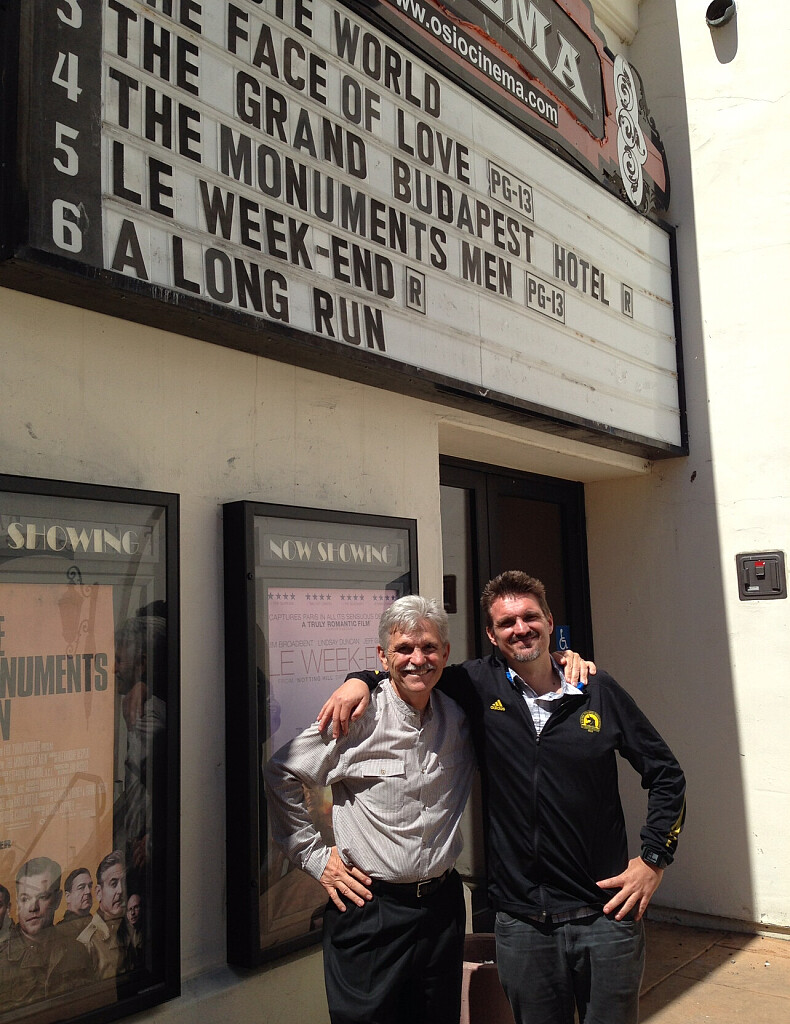
A Long Run – The Running Documentary That’s Inspiring Runners Everywhere
Some films tell a story. Others ignite a movement. A Long Run does both.
But don’t just take our word for it—here’s what real runners who watched the film had to say:
@no1fibersplicer525"I love this! I’m 49 and I started ‘Couch to 5K’ three weeks ago. I signed up for my first 5K last night. I’m super excited...I’m tired after each run, but even as I run further, it’s the same ‘tired’—I’m adapting! I’m becoming that guy I see on TV. I will run this 5K and I will start calling myself a runner! Thanks for the encouragement!"
@AdventuresomeOutlook"I love hearing stories of people picking up running. Running saved me from a deep depression after getting diagnosed with multiple medical conditions. I picked up running (something I never desired doing), and it’s helped me gain so much confidence and pride in myself..."
@deldridg"So many life lessons here. Thank you for such a wonderful documentary and for all the inspiration. Tomorrow after dropping the kids off at school, this Sydney dad will be heading out to a gorgeous trail to enjoy running through 10km of views over the Hawkesbury River, endless bird song, and the company of the occasional goanna. On Sunday, the whole family will do it again. I can’t wait!! Cheers and thank you!"
The Man Behind the Journey
The old guy still has it. A runner will always be a runner.
That “old guy” is Bob Anderson, the man who founded Runner’s World magazine at age 17 with just $100 and a typewriter. He built the magazine into a global running institution before selling it to Rodale Press in 1984. But his love for running never faded.
50 years after his first run, Bob took on a bold challenge: run 50 races in one year covering 350 miles at an average pace under 7 minutes per mile—all at the age of 64.
That’s equivalent to a 5:30 pace for a 30-year-old male or a 6:00 pace for a 30-year-old female—elite-level speed at any age.
Could he do it? How would he handle injuries, fatigue, and the mental grind?
A Film Narrated by an Icon
What makes A Long Run even more special is that it’s narrated by actor Sean Astin, best known for his roles in Rudy, The Goonies, and The Lord of the Rings trilogy.
Bob met Sean at one of the races he was staging, and the two immediately bonded over their shared passion for running. Sean, an avid marathoner himself, was the perfect voice to bring Bob’s incredible journey to life, adding emotional depth and energy that captures the heart of the film.
More Than a Personal Challenge—A Tribute to Running
The film isn’t just about Bob. It’s about the sport itself.
The history – A Long Run takes you back to the early days of the running boom, featuring icons like Bill Rodgers, Billy Mills, Paula Radcliffe, Dean Karnazes, and George Hirsch.
Some of the races – Experience the thrill of running through:
Avenue of the Giants – Towering redwoods in California create a breathtaking race backdrop.
San Francisco’s hills – A stunning yet brutal testing ground for runners.
Coastal Fort Bragg – Where the ocean’s rhythm meets the rhythm of the runner.
Run the Parkway Half Marathon (Kansas) – The race near Overland Park, Kansas, where Bob founded Distance Running News, the publication that later became Runner’s World.
Falmouth Road Race (Massachusetts) – One of the most scenic and historic road races on the East Coast.
Kauai Half Marathon (Hawaii) – A September race offering breathtaking ocean and mountain views in paradise.
@angellosmalefakis1321"This was a wonderful film, Bob! Wonderful in so many ways! Good to see that you presented so many icons of the sport of running. I was with Runner’s World when it was young. There in NYC when the marathon was at its infancy. We still miss Fred. Miss Greta. Wonderful film in so many ways! I love it! I am 65 and still running—now winning masters races!"
Why You Should Watch A Long Run
If you’ve ever laced up your shoes for a jog, if you’ve ever wondered how far you could go, or if you just need a spark to get moving again, this film is for you.
With over 342,000 views, A Long Run has inspired runners around the world. The best part? It’s completely free to watch!
@mpgrewal00"Bob loves running. Bob lives running. Good work, Bob."
@shamelesssheamis545"I’m 35 and started 5 months ago. One day I just got up and ran a mile. It was slooow. But that was it for me. I’m up to running 12 miles now and I cannot wait to see where this goes! Happy running, everyone!"
@barefootbeachrunner9498"Awesome. Inspiring film. Thanks for reminding me why I run!"
Where to Watch
Watch the full film for free on YouTube: A Long Run.
Or visit alongrun.com for more information.
We hope you’ll watch it and let us know what you think. Leave a comment, share your thoughts, and help us reach 500,000 views!
This is your chance to see what happens when passion meets determination. To feel the runner’s high without breaking a sweat. To be inspired by the sport we all love.
Because, as Bob Anderson has proven, a long run never really ends.
by Boris Baron
Login to leave a comment
Progressive Step-Up Training: Unlocking Speed and Endurance
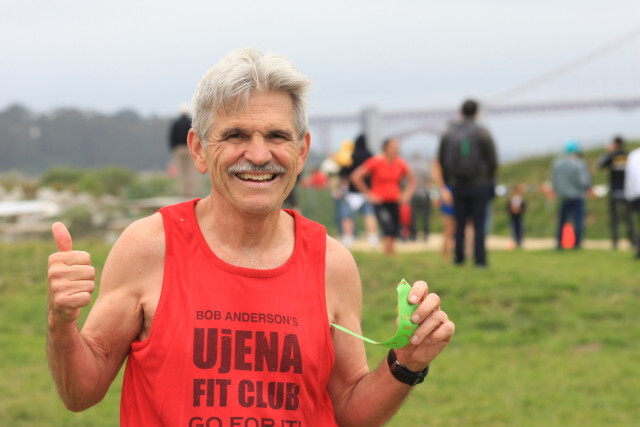
Progressive Step-Up Training is a method Bob Anderson has championed for over 20 years. It’s a simple yet powerful technique designed to progressively increase speed, either through track intervals or on long road runs. The goal? To finish faster than you started, building confidence and strength for peak race performance.
Here’s how it works: each mile (or kilometer) in the workout must be faster than the one before. The mental and physical challenge lies in maintaining focus and pacing while overcoming the pressure to perform with each step-up.
A Real-World Example
In preparation for the Stockton 10-Mile Race on January 7, 2001, Bob used the Progressive Step-Up method as a cornerstone of his training. Leading up to the race, he dedicated one day per week to a Progressive Step-Up session, alongside two long runs. On average, he logged 42 miles weekly.
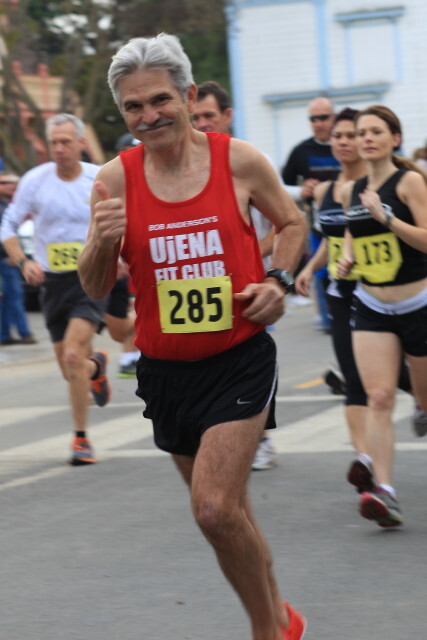
During a December track session at Foothill College, Bob completed a 6x1-mile Progressive Step-Up workout:
First Mile: 5:47
Second Mile: 5:42
Third Mile: 5:36
Fourth Mile: 5:27
Fifth Mile: 5:21
Sixth Mile: 5:17
Each interval demanded more effort, pushing both physical and mental boundaries. The break can be up to five minutes or when you are ready to run faster. By the final mile, Bob had surpassed his expectations, proving to himself he was ready to take on the race.
“I believe the most important part of my training was the Progressive Step-Up,” Bob reflects. “It taught me to stay focused, handle increasing pressure, and finish strong.”
The Race
At 53 years old, Bob’s goal for the Stockton 10-Mile Race was to break 60 minutes. Thanks to his progressive training, he hit the ground running, clocking:
Mile 1: 5:37
Mile 2: 11:15
Mile 3: 17:00
Mile 6: 34:50
Despite feeling fatigued by mile 7, the foundation built through the Progressive Step-Up method allowed Bob to finish strong, crossing the line in 59:17, his last mile being 5:57,
Why It Works
Progressive Step-Up Training develops both physical strength and mental resilience. It teaches athletes to handle increasing pressure and fatigue while maintaining focus on their goals. The flexibility of the method allows for adaptation to different distances, making it ideal for runners of all levels.
Applying It to Your Training
Choose Your Format: Decide between track intervals or a long road run.
Start Controlled: Begin at a manageable pace, focusing on proper form and rhythm.
Increase Incrementally: With each mile or repetition, push yourself slightly harder, aiming for a faster time.
Rest as Needed: Take sufficient recovery time to ensure quality when doing intervals. On long runs just keep pushing the pace for each mile.
Finish Strong: Challenge yourself to make the final repetition or mile your fastest.
Whether preparing for a race or building fitness, Progressive Step-Up Training can help you unlock your potential. Just as it did for Bob Anderson in 2001, this approach can sharpen your mind, strengthen your body, and give you the confidence to achieve your goals.
Bob and his wife, Catherine, have established two world-class training camps to help runners reach their full potential: KATA Kenya and KATA Portugal. Join us to train the Kenyan way and take your running to the next level. Kenyan Athletics Training Academy.
Learn more at: https://katarunningretreat.com/
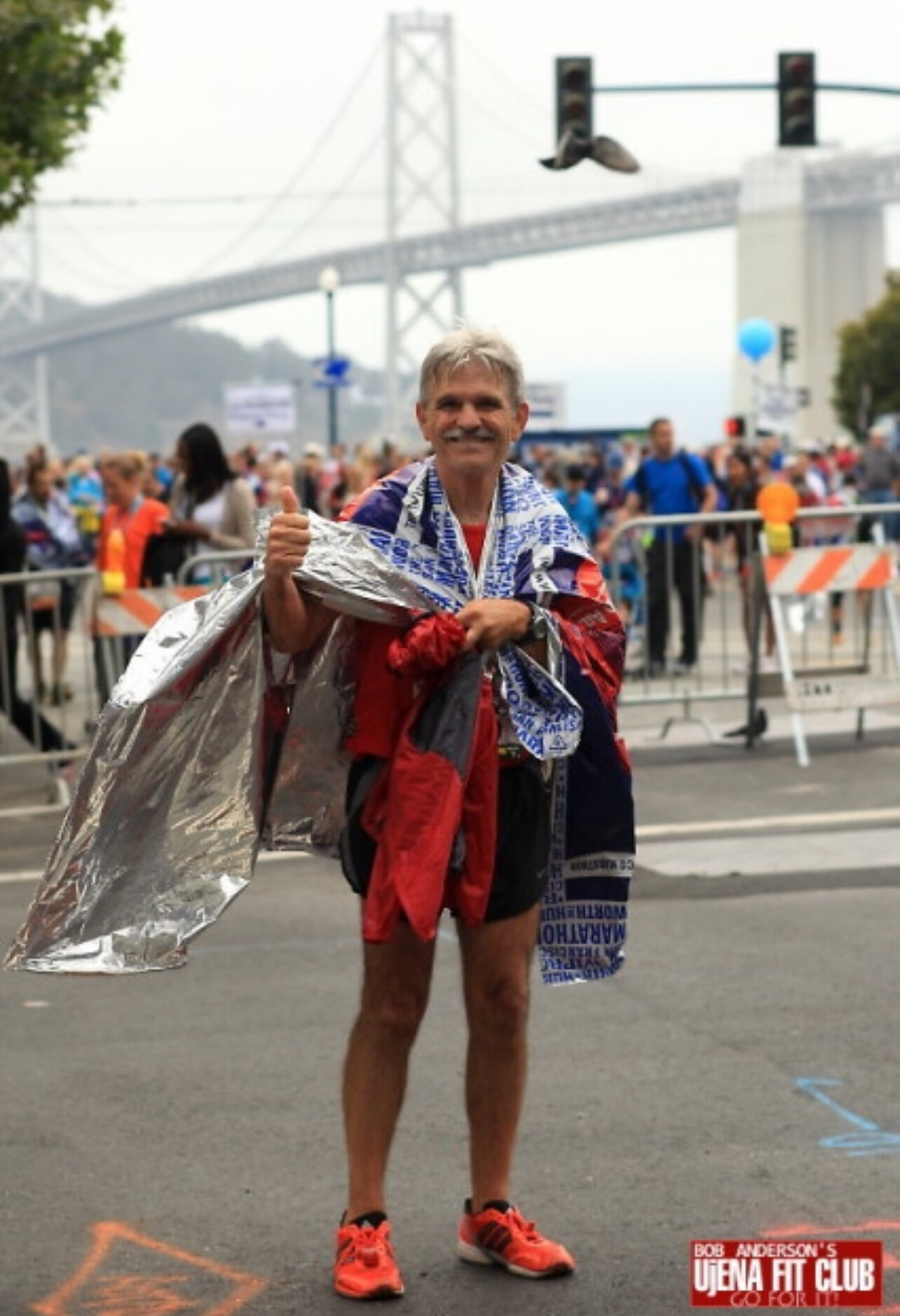
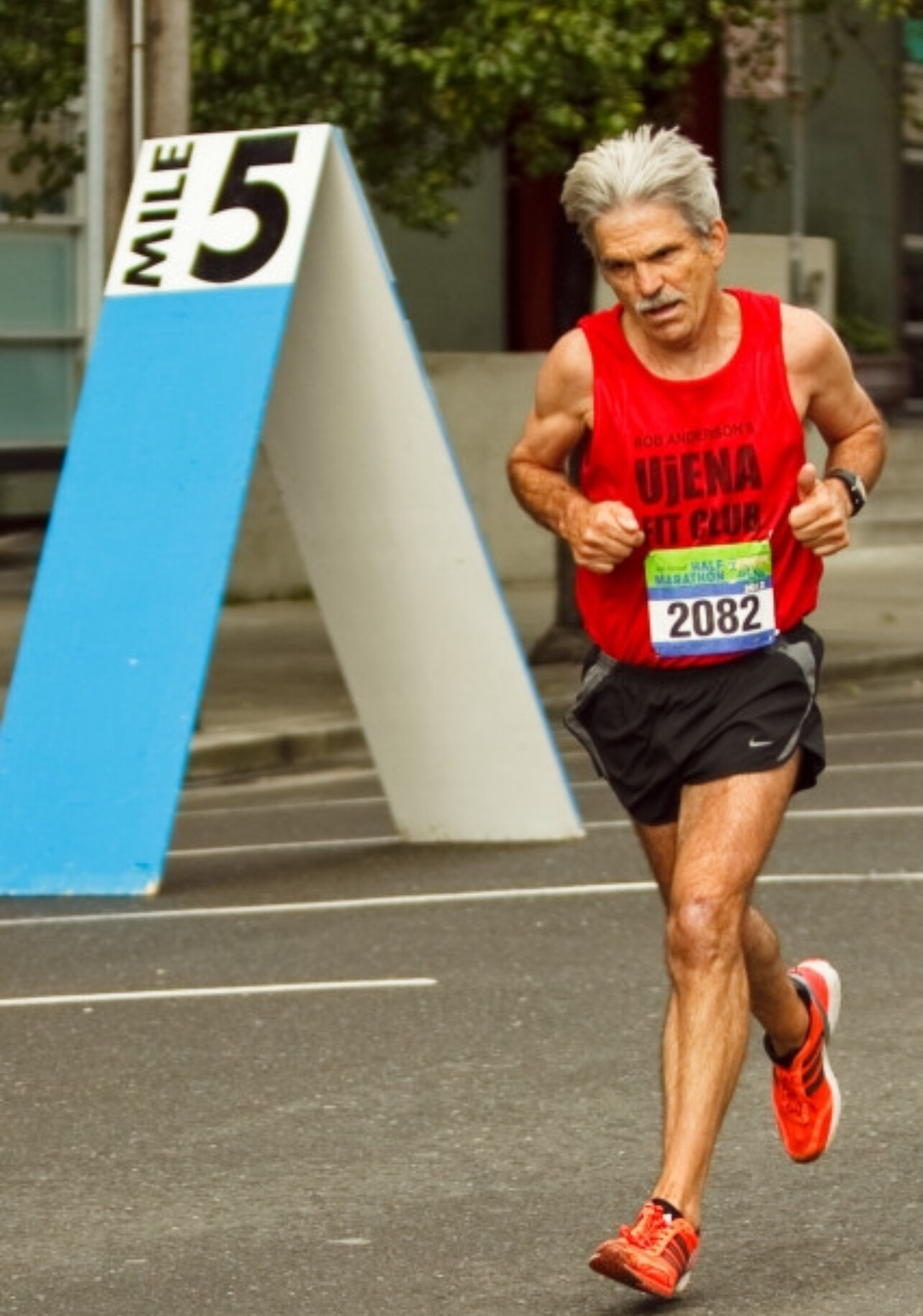
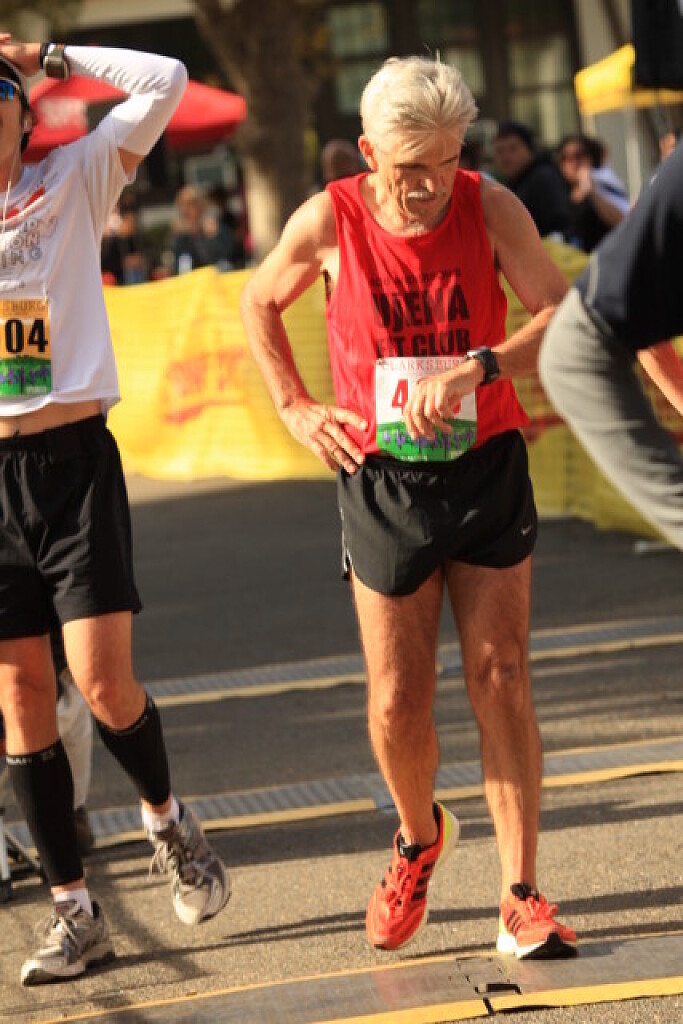
All photos taken during 2012 when Bob ran 50 races covering 350.8 miles and average 6:59 per mile. This feat was featured in the movie A Long Run the movie.
by Boris Baron
Login to leave a comment
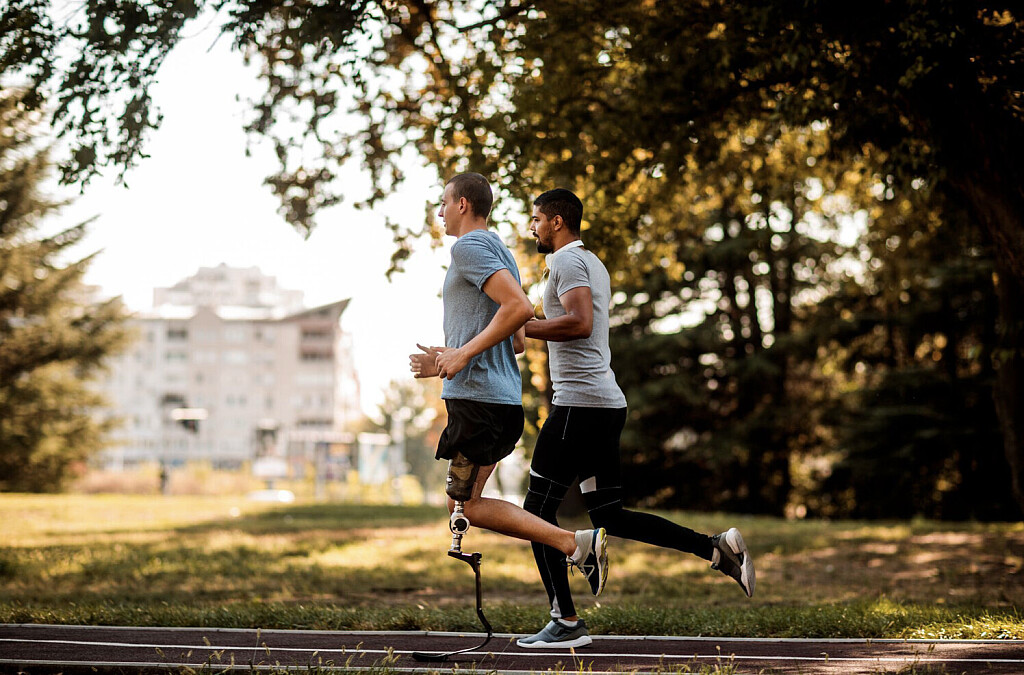
What’s Your Why? Our Readers Share Their Biggest Motivators for Getting Out There to Run
We asked runners what motivates them to get out and hit the road—their answers may inspire you.
Why do you run? If you’ve never thought about it before, ask yourself now.


Being intentional about the reason why you run is a crucial part of maintaining motivation, especially if you’re just starting your running journey. Most of us know the research-backed benefits of running, but what is going to be that thing that gets you out the door when you don’t even feel like moving?
While your reason should be unique and personal to you, here’s some inspiration from our dedicated Runner’s World+ members and social audiences on Instagram and Facebook to keep in mind when considering what your why is.
For Myself
“Running is my ‘me time.’ It is time for me to simply run, listen to music, and enjoy the outdoors. It allows me to begin each day with a sense of accomplishment, and along the way I plan my to-do list, calculate finances, and solve problems. I do my best thinking when I am running. It also keeps me focused on my health and I always have at least one half marathon or marathon to train for.”—Jill Pompi (RW+ member)
“Because it’s the only thing in my life that’s just mine.”—April Thomson
“As a mom of three littles, running is my ‘me time.’ Time to fill my own cup; time to work toward a personal goal; time to show my kids that I enjoy movement simply because it helps me be happy, healthy, and strong!”—Marlena Shaw (RW+ member)
“It’s my time—no one asking me for anything. It’s me vs. me. Love the feeling after a long run.”—Spullins JB
“Running is just for me, and I run so I can be my best self. I don’t mean physically. Sure, I love how strong my legs feel when I cross a finish line or that good burn after a long run. But my best self is found when I hit the pavement and process whatever is going on in my life. I have two young kids (ages 3 and 14 months), and I am constantly being poked, pulled, and called. When I lace up my running shoes, the stress melts away and I am a better mother because of it.”—Melissa Hofstrand (RW+ member)
“To escape from reality for a brief moment and enjoy my ME time.”—Yuri Aguilar
“Sometimes to relax, regroup, and shake out anything bothering me… but usually to start my day off just right!”—Erin Carey Ryan
For My Health
“My health, specifically my heart.”—Kati Johnson (RW+ member)
“To maintain my health and challenge myself to reach new running goals.”—Gwen Jacobson (RW+ member)
“To fight bad genetics and hear my grandkids say, ‘Whoa, Grandma!’”—Michele (RW+ member)
“My asthma kept me from doing exercise for so many years. I’m running because I can finally do something I never thought possible.”—Patricia McHugh (RW+ member)
“To save my life. I am type 2 diabetic by way of having PCOS. By the time I was diagnosed with PCOS, I had developed full-blown diabetes. I run now to train for a half marathon I crazily signed up for and to get in shape for my first century ride next year. I will run and bike towards a cure.”—Stephanie Gold (RW+ member)
“I exercise and stay active so that I can be mobile and independent as long as possible as I get older. I choose running because it gives me such a great sense of accomplishment.”—Lisa Bartlett
“I run because last year I got Pulmonary embolisms in my lungs and now I want to improve my health and my lungs and spread awareness!”—Jennifer Cole
“Manage stress and support in quitting smoking.”—Aude Carlson (RW+ member)
“Keeps my AFib under control.”—Todd W. Peterson
“I want to be able to walk well into my old age. I have family members who have significantly lost mobility due to their unwillingness to exercise.”—Amy Watkins (RW+ member)
“To control my type 2 diabetes! It works!”—Mike Shamus
For Someone Else
“I started running after witnessing my mom complete a marathon and was overcome with emotion when she finished. I began running the very next year and completed a half marathon with my mom and have been running ever since. Running does so many things for me. It’s my escape, it keeps me centered, helps me to focus, a confidence builder but more importantly allows me to follow in the footsteps of my mom and continue to honor her. I wear a shirt with a picture of her running our last race together so that she’s running with me. I love to run!”—Chantal (RW+ member)
“My daughter.”—Jesse Sturnfield (RW+ member)
“To keep my sanity. Also, I wanna show my kids if they work hard, don’t give up, and find a love for something, they can accomplish anything in life. When they’re tired, stressed, unhappy, just to channel in and get the work done. They’ve been there when I run my marathons and have shown support and encouragement, and I’ll do the same for them. My daughter joined cross country this year and wants to join again next year. My son is wanting to join as well.”—Angela Yawea
“Because my dad ran. I lost him six years ago and clearing his flat I found his medal from Reading Half Marathon in 1988. Holding it inspired me to change. I have my dad’s and my medal from the same race together.”—Stumpy Taylor
For My Mental Health
“To keep my sanity!”—Libby Meyer (RW+ member)
“It’s my therapy.”—Allie Haight
“Running is my ultimate stressbuster! As a middle-aged tech leader, husband, and father to two preteens, running generates all the right endorphins and energy to ensure I’m on top of my game—all of my games!”—Annu Kristipati (RW+ member)
“Cheaper than therapy.”—Louie J. Frucci
“Running helps me dealing with my anxiety, my mental health, but especially this past year with grief. I lost my dad last year and couldn’t work out for two months. I was able to go back to working out thanks to running. Then I signed up for my first marathon. That was on the one-year anniversary of my dad’s passing. Running is my way to feel my dad close and be able to connect with him.”—Fadela (RW+ member)
“Because it has the power to mute my anxiety and self-doubt.”—Nicholas Kuiper
“Running makes me happy. It reduces my stress and anxiety and improves my mental health. It keeps my cardiovascular system strong.”—Suzanne Reisman (RW+ member)
“To stay calm in the chaos.”—Christine Starkweather
To Feel Powerful & Free
“Because it makes me feel powerful and healthy (sometimes only once it’s over).”—Laura (RW+ member)
“To be a real-life video game character.”—Erin Fan (RW+ member)
“Feels like I’m flying. Powerful and free.”—Tenaya Hergert
“I run because I want to be healthier in my 50s than I was in my 30s! And, also, running makes me feel powerful.”—Laura (RW+ member)
“Running gives me a voice.”—Becky Westcott Capazz
“It makes me feel strong and confident, that I can handle everything else in my day.”—Rebecca Eisenbacher (RW+ member)
“To feel free, manage anxiety, accomplish increasing mileage.”—Barbara Saunders (RW+ member)
“Total freedom. Slap your shoes on and be free.”—coach_shasonta
For Connection
“Running makes me feel strong and is my way of meditating. I also love that I’ve been able to connect with people and make so many new friends through running. I enjoy seeing my fitness progression.”—Gisele Carig (RW+ member)
“For my mental health and human connection with friends.”—lizpowers76
“Refreshes the spirit. BTW: I can no longer run; I train and enter races as a walker. Have made many new friends who accept me for just being there.”—Lewis Silverman
“I have many reasons. I connect with my running partners on some runs. I connect with God on others. I find a sense of accomplishment. I like to test what my body can tolerate.”—Tim Thomas (RW+ member)
“When I’m alone, I run to quiet my mind. It is meditative and rejuvenating. I also run to be social. The running community is the best.”—Andy Romanelli (RW+ member)
“Makes 77 feel young and hanging around with younger runners is a whole lot of fun. Not to mention I’ve been loving going for a run for more than 46 years.”—Barbara Ann Morrissey
Because I Love Racing
“I want to improve my 5K time.”—Courtney Danko-Searcy (RW+ member)
“The feeling I have on race day, within the first mile, that all the training is paying off.”—Mark Hopkins (RW+ member)
“My husband and I started running about six years when my son, who was about 12 at the time, had run over 25 5Ks. It took about a year until we were ready for our first 5K. We love running and training together. Running helps me at the end of a long teaching day, and it just feels so good after! We have since ran many 5Ks, some 10Ks, and two half marathons!”—Suzy Wintjen (RW+ member)
“It’s at the end of Ironman.”—Cheryl Turpin
“First, I began to improve my health, then I got hooked. Fifteen years later I am chasing my Six Star Medal.”—Jorge Mitey (RW+ member)
“It’s something I’ve always done since fifth grade. I got into racing 25 years ago. I love the challenge running gives me to constantly improve and get back out there whenever I’ve been injured or ill; and next month will one year since starting my first running streak! Most of all, I run because I love how it makes me feel. It has gotten me through the worst times in my life. Whenever I’m having a bad day, whether I’ve already gone running or not, I go running. It always calms me and makes feel better.”—Elle Escochea Grunert
So That I Can Indulge
“Because I love carbo loading.” —Bud Bjanuar
“I run so I can eat whatever I want and still be in shape!”—Christi Webb (RW+ member)
“I run to eat poutine.”—Robin Bosse
“So I can drink beer!”—Kathy Davis Ward
“Because I am a chocoholic.”—Chantal Englebert
“Faster than walking and I like tacos.”—Shelly Pedergnana
“I run to eat crispy pata.”—Arrin Villareal
To Get Outside
“Fitness and peace of mind. Also, a great way to explore neighborhoods and the outdoors.”—Sue Padden
“The feel of being outside with my dog. Watching him enjoy the run lets me enjoy the run.”—Stan (RW+ member)
“It’s my time with nature. It’s for me to clear my head and think.”—Assa Burton
“Running is my sanctuary. It’s where I can clear my mind, letting go of stress and finding clarity with each step. The rhythm of my feet hitting the ground is a meditative escape, helping me to focus and recharge. Physically, running keeps me in peak condition, building strength and endurance while boosting my overall health. But what I love most is being outside, feeling the fresh air, and soaking in the beauty of nature. Whether it’s a sunlit trail or a quiet street at dawn, running connects me to the world around me in a way nothing else can.”—Adam Scolatti (RW+ member)
Because I Can
“This is my ‘stock’ answer. I do because I can and I can because I do.”—Chip Kidd
“Because I’m not ready to give up yet.”—Martha Rhine (RW+ member)
“Because I was completely disabled, not able to move, stand, walk, talk, or do anything... stuck in the hospital for 13 weeks. When I was discharged and started to walk a little, I needed something to help me get some kind of life back. Running was it.”—Rob Snavely
“Because I’m 70, and not dead yet.”—Michele Glover
“Because I can. One day I won’t be able to and it’s not today.”—Mike Bravo
“Because one day I’ll be old and everything will hurt, and it’s the one thing in my life that lately makes me happy. When you’re running you forget everything. If you’re still thinking of debt, sadness, breakups, you’re not trying hard enough. Every day you have to push yourself.”—Miryam Hernandez
“Because I still can… at 73.”—Joanne Gile Michaelsen
“Forty-five years, why stop now? Never regret going for a run.”—Leslie Kitching
“Sixty-one years old. Been running since I was 15. Because a day without running is like a day without brushing your teeth.”—Sharon Graeber Hall
To Prove it to Myself or Someone Else
“To prove I can. And prove my mind is more powerful than my body.”—Colton James
“Because I still can, and everyone tells me I can’t!”—Lloyd K Leverett
“To tell people I did.”—Chris S. Charlett
“I’m 55. Basketball days are over. The need to compete is still there, and even if that means competing with myself, running allows me to do that.”—Shawn Davis
Because I Hate How I Feel When I Don’t
“I don’t know, but recently I injured my knee, and I was sad I couldn’t run. Thank god, it healed itself. I think running gives me inner peace.”—Jose Murga
“Because I hate the way my brain itches when I don’t.”—Joe Baron
“Because it’s better than smacking my family upside the head from being over stimulated. [It] helps my mental health.”—heatherbrubaker19
“I don’t like it until it’s over.”—Laurie Stinson Fuller
“So that I am tolerable to my husband!”—Dimitra Zakas
“It’s either that or sending my work computer flying out the window like a frisbee on the regular.”—Ayla Amon
“It feels so good when I stop.”—Sarah Wiley
Login to leave a comment
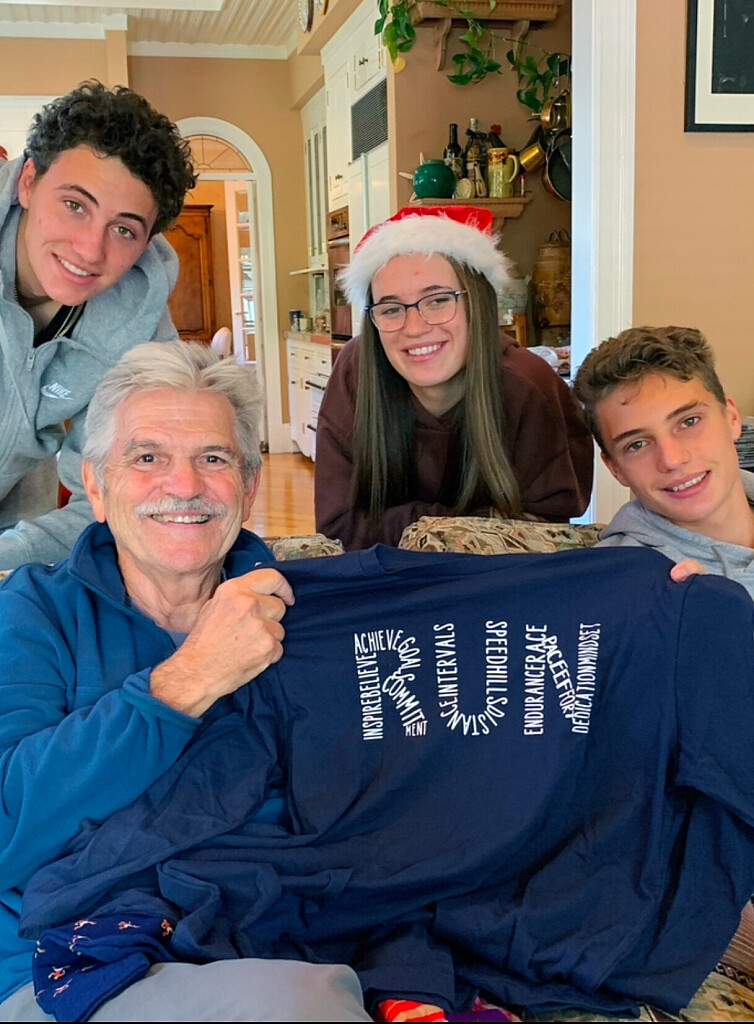
Bob Anderson: A Lifetime Dedicated to Running
Bob Anderson, born on December 28, 1947, in Manhattan, Kansas, has devoted his life to the sport of running. His journey began on February 16, 1962, and since then, he has consistently maintained an impressive regimen, averaging 46 miles per week of running and, more recently since 2023 walking/running.
In 1966, at the age of 17, Bob founded Distance Running News, a mimeographed newsletter he produced from his home in Manhattan. In 1969, he rebranded the publication as Runner’s World, a magazine that played a pivotal role in the American running boom of the 1970s and beyond.
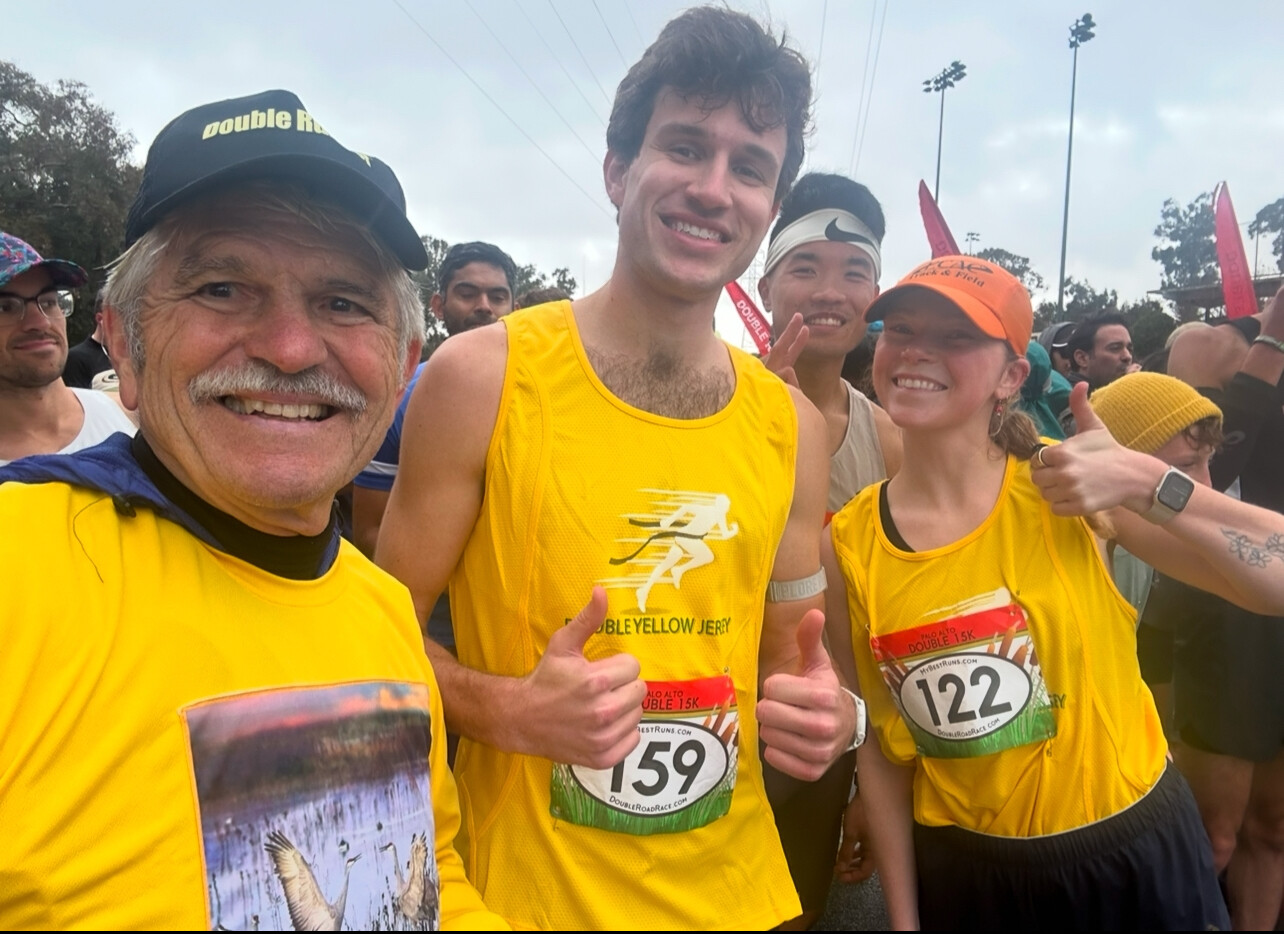
After selling Runner’s World to Rodale Press in 1984, Bob channeled his entrepreneurial spirit into founding Ujena Swimwear and Around Town Productions. In 2012, he introduced a groundbreaking new sport called Double Racing, a two-stage running event with a halftime recovery period. To promote this innovative concept, he established the Double Road Race Federation, further diversifying his contributions to the running community.
In 2014, Bob launched My Best Runs, a website dedicated to highlighting the world’s most intriguing and unique races. He also edits Running News Daily, a popular column that harkens back to his early days with Distance Running News.
Bob’s passion for running extends well beyond publishing and event organization. In 2012, to mark 50 years of running, he completed 50 races totaling 350.8 miles, achieving an average pace of 6:59 per mile. This extraordinary feat was captured in the film A Long Run.

In recent years, Bob and his wife Catherine have focused on global running initiatives. Their efforts brought them to Kenya, where they produced Double Racing events and established the Kenyan Athletics Training Academy (KATA) in Thika. This facility provides a unique environment for athletes to live and train. In 2024, they expanded their vision by opening Anderson Manor in Monforte da Beira, Portugal, which also serves as the home for KATA Portugal. Both locations attract runners from around the world, offering training opportunities in inspiring environments.
As Bob celebrates his 77th birthday on December 28, 2024, his enduring dedication to running continues to inspire athletes worldwide. His lifelong contributions have left an indelible mark on the running community, fostering a global appreciation for the sport.
by Boris
Login to leave a comment

From Beginner to Advanced Runners: How Often Should You Be Lacing Up? Experts Break Down What Factors to Consider
Use these tips for figuring out your ideal running frequency.
Just like there’s no “best” running shoe for everyone, or training plan, or energy gel, there’s no ideal running frequency for all runners. Even though many runners ask how often they should run, the days per week you lace up depends on factors that vary from one individual to the next. Even when you do settle into a pattern that works for you, your approach may need to shift as aspects of your training (and life, in general) change.

However, there are some general guidelines that can help new runners identify a healthy starting point for how often to run, as well as some guidance more experienced athletes can follow to decide if it’s time to dial up or scale back on their weekly runs. Runner’s World spoke with Alison Marie Helms, Ph.D., UESCA-certified running coach and founder of Women’s Running Academy, and Raj Hathiramani, certified running coach at Mile High Run Club in New York City, to get their expert advice. Here’s what you need to know.
Factors to Consider When Determining How Often You Should Run
Before designing a personalized training schedule, any qualified coach will take the time to understand their runner, both as an athlete and a fully-realized person with a life outside of running. So, whether you’re working with a pro or developing a plan on your own, consider the following factors when deciding how often you should run:
Goals
Determining your running goals is a good place to start figuring out how often to run. Do you want to set a new half-marathon PR? Finish your first ultra? Improve your cardiovascular health? What you hope to accomplish can help you determine your overall running volume, which informs how many times a week you should ideally run.
“People who have more specific time or distance goals may be running more frequently per week, and those who have more fitness or wellbeing-oriented goals might be running less frequently,” Hathiramani says. Among runners with performance-related goals, those who race longer distances may need to run more often than those with their sights set on shorter distances.
Experience
Two runners can have the same goal, like finishing their first marathon, for example. But if one marathon hopeful is brand new to running and the other has multiple 5K, 10K, and half-marathon races under their belt, their training frequency should look different.
“It’s never a good idea to do too much too soon,” Hathiramani says. He recommends new runners gradually ease into running, even using a walk/run approach, and avoid running on back-to-back days. “This is
Running one to two days per week is also ideal for those just getting into running. You can do a walk/run workout or go for a quick, slow jog down the block. The goal is consistency if you’re looking to jumpstart a new workout habit.
Three Days a Week
For many runners, lacing up three days a week strikes a balance between feeling substantial and attainable. You can get in a variety of runs and still have plenty of time for cross-training and recovery. For example, you may plan a long run for the weekend, an interval on Tuesday, and a tempo run on Thursday. That still leaves four days for rest and activities like strength training and mobility work.
This frequency may be ideal for someone training for a short distance, like a 5K, but it may not be adequate for all runners with long-distance racing goals, like a half marathon or longer, Hathiramani says.
Four to Five Days a Week
For Hathiramani’s client base, which is primarily half marathon and marathon runners, four to five days a week is the “sweet spot,” as it allows runners to vary their training and accumulate the volume they
→At first, keep your volume the same
For example, if you’re used to running 12 miles over the course of three days, add a day of running but keep your total weekly mileage at 12. Helms recommends doing this for a week or two before adding additional miles to your runs.
→Increase overall volume gradually
The general rule of thumb is to increase your overall weekly mileage by no more than 10 to 15 percent. (However, if your current mileage is relatively low—like five to 10 miles per week—you’re probably safe to increase by up to 30 percent, Helms says.)
→Take “step-back” weeks
Every few weeks, reduce your mileage by a small percentage. For example, if you went from 20 to 22 miles in week one, then to 24 miles in week two, and 27 miles in week three, drop back down to 20 miles in week four. “You’re still running, but you’re letting your body recover, maybe taking an extra rest day or reducing your average mileage, and letting it sort of realize some of the endurance and aerobic capacity gains you’re making,” Hathiramani says.
→Resist the urge to “catch up”
Adjusting to a more demanding
“Consistency is a really important way to instill discipline and motivation in your training to help you achieve your goal,” Hathiramani says. “That being said, there are things out of your control that may make it hard for you to be consistent, and that’s okay.”
Login to leave a comment

Can’t Fit In Your Long Run? Here's What to Do
Coaches offer advice when you have to split up, cut short, or miss your long run.
Imagine you’re in the thick of marathon training and your 18-miler falls on the weekend you’re going to be on vacation with your family. You have a 9 a.m. tour planned so you figure you can get in a solid 10 miles beforehand, then log the remaining eight miles that afternoon when you get back to your hotel.
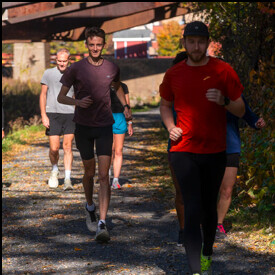
Or, maybe you have a niggling injury that starts bugging you around 13 miles in, so you call it at 13, then log the remaining five later that day.
Splitting up your long run within the same day is pretty much the same thing as logging continuous miles, right? Not so fast.
“The whole point of a long run is to get your body used to being on your feet for hours at a time, and that’s something that your body has to adapt to,” says Kara Dudley, an RRCA-certified running coach and founder of Rerouted Running. The good news is this means that slowing to a walk for a few seconds or minutes during a long run is totally okay. But this also means that you’re doing yourself a disservice if you don’t finish the job in one go.
Meg Takacs, CPT, a UESCA-certified running coach and founder of the Movement and Miles app, agrees that conquering the long run in one continuous go is important. “It’s going to be different physiologically if you do the 18 miles straight than it would be if you did nine in the morning, nine in the afternoon,” she says. “With marathon training, what matters most is not so much pace or mileage, but more so time on your feet and that gives you an opportunity to practice nutrition and hydration,” she adds.
These long-duration runs can also expose potential weaknesses, like an IT band issue that pops up two hours in, that wouldn’t be apparent in two shorter runs, Takacs says. Long runs allow you to “approach race day with a more knowledgeable idea of what your body’s going to be able to handle, or not,” she adds.
What’s more, your muscles might stiffen up between runs, putting you at greater risk of injury on the second run, Dudley says.
All of this said, sometimes you might need a less conventional approach to the long run. Here, Dudley and Takacs share some alternatives to consider before splitting it up.
If there’s a week or two that it’s truly not possible to get in your long run in one go, Dudley believes you’d be better off just going as long as you can in one run, rather than trying to tack on additional potentially junky miles later in the day. Keep in mind that missing one long run isn’t going to derail your training cycle.
If you have aches and pains…finish on the bike.
As always, see your doctor or physical therapist if you’re dealing with pain or an injury for personalized advice. So long as you have the all-clear, and you’re dealing with something that comes and goes and tends to flare up only after you reach a certain mileage, Dudley has a suggested workaround for you: Log as many miles as you can, then jump on the bike to finish out the rest of the time that would have been in that run.
For example, if you run 10-minute miles and were supposed to run an 18-miler, but start to feel achey at 13, you’d be on the bike for 50 minutes after your run. This strategy still gets you the aerobic benefit
One more thing: If you want to split up other easy runs within your week (say, a midweek easy eight-miler becomes two four-milers), that would likely have less of a negative effect than splitting up your weekly long run, Takacs says. That’s because you’ll still accumulate weekly mileage and time on your feet, without taking away the advantages you gain from your weekend long run when you want to practice going extra long like you will on race day.
Login to leave a comment

Yes, You Can Train for a Marathon Running Just 3 Days Per Week
Take notes from experts and runners who have found success with just three runs a week.
Finishing a marathon is a bucket-list item for many runners, not to mention it can seriously boost your confidence and your fitness. But with work, family, and other obligations filling up your calendar, it can be difficult to fit marathon training into your schedule... unless you have a three-day-a-week marathon training plan that makes it easier to get prepped for the starting line.
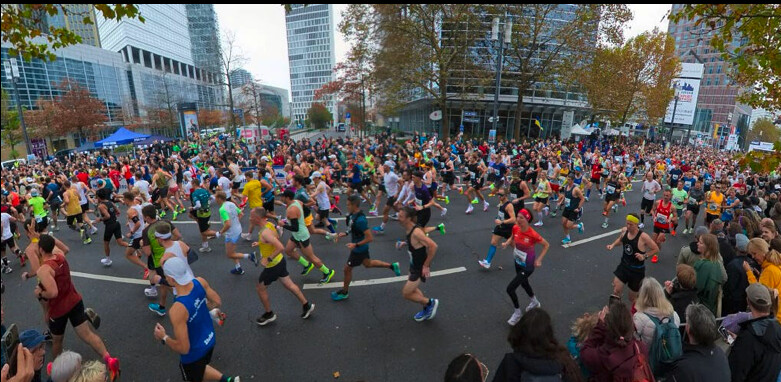
So before you write off marathon training as too time-consuming, consider this program for conquering your first or fastest 26.2. It’s the secret weapon for those of us who work odd shifts, have kids, travel often, or are injury-prone. No matter what stands in your way, your next PR is possible.
Does a 3-day-a-week marathon training plan actually work?
Yes! It turns out focusing on three key runs: a long run, a tempo run, and an interval workout each week with cross training in between provides you with all the opportunities to get faster, meet your mileage goals, and train injury-free. And research backs this up.
With a training plan backed by The Furman Institute of Running and Scientific Training (FIRST), any runner can conquer 26.2 miles by running just three days a week. Trust the three exercise science experts and avid runners who created this program about 20 years ago: Scott Murr, with a doctorate in exercise physiology, Bill Pierce, former chair of Furman’s Health and Exercise Science Department, and Furman exercise physiologist Ray Moss, Ph.D. (Murr currently teaches in the Health Science Department at Furman University in South Carolina, and has been for 25 years. Pierce and Moss have since retired.)
In 2005, these experts gathered eight women and nine men between the ages of 24 and 52 to test out the three-day-a-week plan for 16 weeks. The results showed that 12 out of the 14 runners who had previously run a marathon with alternative training plans set a new PR after the three-day-a-week marathon training plan.
The results suggest that training for a marathon with only three runs a week is not only possible, but could actually improve running performance and make you faster.
Almost two decades after creating this training plan, Murr and his former colleagues
You build a sustainable relationship with running
Life is all about balance, and running can naturally be part of the mix. But logging too many miles at once can lead to burnout, so it’s important to find other activities to supplement your marathon training.
Running three days each week provides you the freedom to enjoy other activities that you love on your days off from running, like cycling, lifting, or swimming.
It improves key performance metrics
Many runners swear by two training metrics to help them measure their improvement: VO2 max and lactate threshold. The three-day-a-week program can help you zero in on these metrics and improve them, making you a more efficient runner.
Your VO2 max is the measure of how efficiently your body takes in oxygen and converts it to energy for your muscles to use, according to Roberto Mandje, Olympian and senior advisor on engagement and coaching for New York Road Runners. The higher your VO2 max, the higher your endurance level, meaning you can run farther and longer, Mandje explains.
Your lactate threshold is the exercise intensity level you reach when lactate accumulates in the blood faster than you can remove it, leading
You’ll know if you’re meeting quality efforts by looking at your heart rate, paces, and/or RPE, so it may be helpful to keep a training log.
Heart rate is relatively easy to track, as most running watches give you an estimated heart rate, but keep in mind that your heart rate can be affected by temperature, hills, and hydration.
However, the most realistic way to monitor your progress, Murr says, is by tracking your pace. “If your 5K race time this weekend was faster than the 5K race you ran two months ago, that would indicate an improvement in running fitness,” he says.
Rate of perceived exertion (RPE) is also a reliable way to track progress, as it rates your effort on a scale of 1 to 10 with 10 being all-out. Murr explains that if you ran a five mile tempo run a month ago at a 8:15 pace and it felt like a 6 or 7, but running a five mile tempo at 8:15 pace now feels like a 5 or 6 on the same scale, you can be confident that your running fitness is progressing.
1. Interval Workout
Why it works: Intervals help
1. Swimming
Why it works: Swimming is a low-impact option for runners that can increase upper-body strength and endurance. Many runners struggle with ankle mobility, explains Murr, so the kicking in the pool can unlock some of that flexibility that you don’t typically get to achieve when you’re pounding the pavement.
How to do it: According to Murr, a reasonable goal for runners in the pool is to stay in the water for 30 minutes, doing as many laps as you can. But you can also mix in some harder efforts, like going for an RPE of 6 to 7 for two laps, with short rests in between of about 15 seconds, in order to up the intensity. Beginners don’t have to worry about intensity in the pool, Mandje says, and should instead focus on having the best form possible.
2. Cycling
Why it works: Mandje is a big fan of cycling for marathon runners, as it can be done outdoors or on an indoor trainer. He explains that cycling is non-weight bearing, low-impact exercise that’s easy on the joints. Cycling can also help reduce knee pain, according to a review and meta-analysis published in
Specific exercises that target running-specific movements include squats, step-ups, single-leg deadlifts, bent-over-rows, curl-to-press, bird dogs, clamshells, and single-leg glute bridges.
How many rest days should you take in a 3-day-a-week program?
Everyone should take at least one rest day a week, according to Mandje, even three-day-a-week runners. Rest days should consist of only light exercise, like walking, stretching, or yoga.
Murr recommends taking a rest day particularly before a long run to prepare for the high mileage you’ll tackle. But every runner is different. “For whichever key run a runner finds the most challenging, I would encourage them to take a rest day prior to that run so that they are rested,” he says.
Both Mandje and Murr agree that the three-day-a-week marathon training plan is based on the belief that runners should train hard, and recover harder, considering performance gains are made during the recovery period. “If you don't prioritize recovery, you're not going to make the gains,” says Mandje.
Login to leave a comment

How to train for a marathon no matter how fit you are
If you’re planning a marathon, you’re on the road to becoming part of a select proportion of the global population – 0.01 per cent, to be exact. But that doesn’t mean running one is exclusive to the lycra-clad minority. With the right planning, training and dogged determination anyone can have a go. Here’s what you need to know if you’re gearing up to train for the race of your life.
Which marathon should I choose to run?

The London Marathon is special, with incredible atmospheric and historic appeal, but it’s notoriously tricky to get a place and is far from the only one to consider. All marathons are 26.2 miles, so if you’re a beginner, you might want to choose what seasoned runners call an “easy” marathon – one with a flat and paved course. While the Brighton Marathon is one of the most popular (and mostly flat) UK spring races, the Greater Manchester Marathon is known as the flattest and fastest UK option. The under-the-radar Abingdon Marathon is one of the oldest in the UK and also has a flat route – great for new runners and for those who are keen to beat their personal bests.
Around Europe, try the Berlin and Frankfurt marathons in Germany, or the Amsterdam Marathon in the Netherlands. More recently, the Valencia and Seville marathons in Spain have grown in appeal. For a great beginner list, visit coopah.com. It’s worth doing your research to ensure it’s a route you’ll enjoy (atmospheric, well populated, flat, historic… whatever piques your interest), as this will pay dividends when things get tough.

Training
How long does it take to train for a marathon?
“You need 16-to-18 weeks of training,” says Richard Pickering, a UK Athletics qualified endurance coach. “And if you’re starting from nothing, I think you need closer to six months.” This may sound like a long time to dedicate to one event but a structured plan will help you develop the strength, endurance and aerobic capacity to run longer distances. Not to mention work wonders for your overall health.
“Anyone can run a marathon if they are willing to put in the hard work,’ says Cory Wharton-Malcolm, Apple Fitness+ Trainer and author of All You Need Is Rhythm & Grit . “As long as you give yourself enough time and enough grace, you can accomplish anything.’
Ready to get running? Read on.
Five steps to preparing for a marathon
1. Follow a training plan and increase mileage gradually
“Even if it’s a simple plan, and that plan is to run X times per week or run X miles per week, it’s beneficial to have something guiding you,’ says Wharton-Malcolm. ‘It’s happened to me, without that guidance, you may overtrain causing yourself an injury that could have been avoided. And if you’re injured, you’re far less likely to fall in love with running.”
For authoritative plans online, see marathon event websites (try the Adidas Manchester Marathon or the TCS London Marathon websites) or from a chosen charity such as the British Heart Foundation. Most will consist of the key training sessions: speed work (spurts of fast running with stationary or active rest periods), tempo runs (running at a sustained “comfortably uncomfortable” pace), and long-distance slogs.
Most marathon plans will abide by the 10 per cent rule, in that they won’t increase the total run time or distance by more than 10 per cent each week – something that will reduce your risk of injury.
2. Practise long runs slowly
Long runs are your bread-and-butter sessions. They prepare your body to tolerate the distance by boosting endurance, and give you the strength to stay upright for hours. Intimidating as this sounds, the best pace for these runs is a joyously slow, conversational speed.
“People may think they need to do their marathon pace in long runs,” says Pickering, “but it’s good to run slowly because it educates the body to burn fat as fuel. This teaches it to use a bit of fat as well as glycogen when it goes faster on race day, and that extends your energy window so that you’re less likely to hit the ‘wall’.”
The caveat: running slowly means you’re going to be out for a while. With the average training plan peaking at 20 miles, you could be running for many hours. “When I did lots of long runs, I had a number of tools: listening to music, audio-guided runs, apps or audio books,” says Wharton-Malcom. “I used to run lots of routes, explore cities… You can also do long runs with friends or colleagues, or get a train somewhere and run back so it’s not the same boring route.”
3. Do regular speed work
Speed work may sound like the reserve of marathon aficionados, but it’s good for new long-distance runners too. “I think people misunderstand speed work,” says Wharton-Malcom. “The presumption is that the moment you add ‘speed’ to training, you have to run like Usain Bolt, but all ‘speed’ means is faster than the speed you’d normally be running. So if you go out for a 20-minute run, at the end of the first nine minutes, run a little faster for a minute, then at the end of the second nine minutes, run a little faster for a minute.”
Small injections of pace are a great way for novices to reap the benefits. “The idea is to find the sweet spot between ‘Ah, I can only hold on to this for 10 seconds’ and ‘I can hold on to this for 30-to-60 seconds’,” he adds.
Hill sprints are great for increasing speed. Try finding a loop with an incline that takes 30 seconds to ascend, then run it continuously for two to three lots of 10 minutes with a 90-second standing rest.
Interval work is also a speed-booster. Try three lots of three minutes at tempo pace with a 90-second standing rest. “The recovery [between intervals] is when you get your breath back and your body recirculates lactate [a by-product of intense exercise, which ultimately slows bodies down],” explains Pickering, “and this means you’re able to do more than you otherwise would.”
4. Run at marathon-pace sometimes
Every now and then, throw in some running at your chosen race pace. “You need to get used to a bit of marathon pace,” says Pickering, “but I wouldn’t put it into your programme religiously.”
Some runners like to practise marathon pace in a “build-up” race, typically a half-marathon. “It can give people confidence,” says Pickering. “Your half-marathon should be six-to-seven weeks prior to the main event, and have a strategy to ensure you’re not racing it because you need to treat it as a training run.”
5. Schedule in rest and recovery
Of course, no training plan is complete without some R&R. Rest days give your body a chance to adapt to the stresses you’ve put it through and can provide a mental break. “Active recovery” is a swanky term for taking lighter exercise such as an easy run, long walk, gentle swim, some yoga – crucial because you don’t want to do two hard sessions back-to-back. “A long run would count as a hard day, so if your long run is on Sunday, you could do an easy run such as 30-40 minutes at a conversational pace on a Monday, but don’t do anything fast until Tuesday,” says Pickering.
What about recovery tools?
Foam rollers, massage guns, ice baths – the list is long. Pickering says to keep it simple: “I would encourage foam rolling [relieving muscle tension by rolling over a foam tube] or sports massage, and they’re kind of the same thing.”
And Wharton-Malcom swears by the restorative power of a good rest: “From personal experience, sleep is our secret weapon and it’s so underrated. Getting your eight-hours-plus per night, taking power naps during the day… you can do so well with just sleeping a bit more.”
Race day
How to perform your best on race day – what to eat
“The marathon is going to be relying on carbohydrate loading [such as spaghetti, mashed potato, rice pudding], which should take place one-to-three days before an event,” explains performance nutritionist Matt Lovell. Other choices might include: root vegetables (carrots, beetroot), breads or low-fat yoghurts.
“On the day, the main goal is to keep your blood glucose as stable as possible by filling up any liver glycogen.” Which means eating a breakfast rich in slow-release carbohydrates, such as porridge, then taking on board isotonic drinks, like Lucozade Sport or coconut water, and energy gels roughly every 30-45 minutes.
How to stay focused
Even with the right fuel in your body, the going will get tough. But when you feel like you can’t do any more, there is surprisingly more in the tank than you realise.
“Sports scientists used to think we eat food, it turns into fuel within our body and, when we use it up, we stop and fall over with exhaustion,” says performance psychologist Dr Josephine Perry. “Then they did muscle biopsies to understand that, when we feel totally exhausted, we actually still have about 30 per cent energy left in the muscles.”
How do you tap into that magic 30 per cent? By staying motivated – and this ultimately comes down to finding a motivational mantra that reminds you of your goal and reason for running.
“Motivational mantras are incredibly personal – you can’t steal somebody else’s because it sounds good; it has to talk to you,’ explains Dr Perry, author of The Ten Pillars of Success. “Adults will often have their children as part of their motivational mantra – they want to make them proud, to be a good role model. If you’re doing it for a charity, it might be that.” Write your motivational mantra on your energy gel, drinks bottle or hand. “It doesn’t just need to come from you,” adds Dr Perry. “I love getting athletes’ friends and family to write messages to stick on their nutrition, so every time they take a gel out of their pocket, they’ve got a message from someone who loves them.” Perry is supporting the Threshold Sports’ Ultra 50:50 campaign, encouraging female participation in endurance running events.
Smile every mile, concludes Dr Perry: “Research shows that when you smile it reduces your perception of effort, so you’re basically tricking your brain into thinking that what you’re doing isn’t as difficult as it is.”
One thing is for sure, you’re going to be on a high for a while. “What happens for most people is they run the race and, for most of the race, they say ‘I’m never doing this again,’ says Wharton-Malcom. “Then the following morning, they think, ‘OK, what’s next?’”
What clothes should you wear for a marathon?
What you wear can also make a difference. Look for clothing made with moisture-wicking fabrics that will move sweat away from the skin, keeping you dry and comfortable. An anti-chafe stick such as Body Glide Anti-Chafe Balm is a worthy investment, or simply try some Vaseline, as it will stop any areas of the skin that might rub (under the arms, between the thighs) from getting irritated. Seamless running socks, like those from Smartwool, can also help to reduce rubbing and the risk of blisters.
Post-race recovery
What to eat and drink
Before you revel in your achievement, eat and drink something. Lovell says recovery fuel is vital: “Getting carbohydrates back into the body after a marathon is crucial. It’s a forgiving time for having lots of calories from carbohydrates and proteins, maybe as a recovery shake or a light meal such as a banana and a protein yoghurt.”
Have a drink of water with a hydration tablet or electrolyte powder to replenish fluid and electrolyte salts (magnesium, potassium, sodium) lost through sweat.
“You can have a glass of red later if you want, but your priority is to rehydrate with salts first, then focus on carbohydrate replenishment, then have some protein, and then other specialist items such as anti-inflammatories.” Choose anti-inflammatory compounds such as omega 3 and curcumin from turmeric, which you can get as a supplement, to help reduce excessive inflammation and allow for better muscle rebuilding.
Tart cherry juice – rich in antioxidants, anti-inflammatories and naturally occurring melatonin – could also be useful, with the latest research reporting that it can reduce muscle pain after a long-distance race and improve both sleep quantity and quality by five-to-six per cent. “And anything that improves blood flow such as beetroot juice, which is a good vasodilator, will help with endurance and recovery,” adds Lovell. Precision Hydration tablets are very good for heavy sweaters.
Any other other good products to help with recovery?
The post-run recovery market is a saturated one, but there are a few products worth trying. Magnesium – from lotions and bath flakes to oil sprays drinks and supplements – relaxes muscles and can prevent muscle cramps, as well as aiding recovery-boosting sleep.
Compression socks boost blood flow and therefore the removal of waste products from hardworking muscles, and have been shown to improve recovery when worn in the 48 hours after a marathon. Arnica has anti-inflammatory properties that can help speed up the healing process after a long run, and can be used as an arnica balm or soak.
by The Telegraph
Login to leave a comment

How to Prepare For Your First Running Event
Are you signed up for your first running race this year? If so, you might be wondering what to do next. Many of us register for a 10k or half marathon in the hopes that doing so will simply motivate (or pressure) us to get to the finish line, and sometimes, it does. But let’s face it, Forrest Gump was just a movie. In real life, without proper preparation, you could wind up injured, unable to finish, or not even make it to the starting blocks, all of which would be really disappointing, to say the least.
Preparing for your first race requires careful planning, from training and getting the right kit to goal-setting and pre-race fuelling. Proper preparation ensures you’re physically ready for the race, have the energy to keep going and can overcome race day nerves, all of which will mean you have a more enjoyable race, and are likely to make it the first of many.
1. Set a goal
Once you’ve chosen a race and signed up, it can be smart to set an achievable goal. This can give you something to focus on during both your training and your race, and that can help you stay motivated, while achieving your goal can also give you a greater sense of satisfaction (for this reason, it’s a good idea to set a secondary goal in case you don’t make your primary goal.
Your goal could be something ambitious, like running a sub three-hour marathon, but it can easily be as simple as just finishing the race. When I did my first triathlon in 2012, I simply wanted to finish and I wanted to do so without walking during any of the running section. I didn’t finish anywhere near the podium, but I managed to achieve my goals and I was really happy with myself.

2. Make a training plan
For injury prevention, it’s obviously vital to make a smart training plan, and to leave yourself enough time before race day to actually execute it. There is no one way to train, and your plan will depend on where you’re starting and where you want to get to, but just as a rough idea, in our first marathon training plan we recommend 12 weeks for seasoned runners, but a full year for novices.
The most important aspect of training to remember is to build up gradually to give your body time to adapt to each increase in load, make ample room for rest and recovery and if possible, work with a coach and train in conditions similar to those you’ll be racing in.
3. Gear up
As you get closer to the big day, you’ll need to start to consider your gear. You’ll need to choose trail running shoes or road running shoes and have trained in them for a while to be sure they’re right for you. If you’ve already put in a ton of miles of them, you may need to replace them with an identical pair a few weeks before the race, and break them in. Once you’ve found the perfect pair of running socks, have a new or nearly new pair set aside for race day.
Use your training months to figure out what clothing you’re most comfortable in, taking into account the expected climate and conditions. Are you happiest in a pair of running shorts or do you prefer running tights? You’ll need a well-fitting running top that’s breathable and doesn’t chafe, and consider whether you want to run with a headband or running hat if you're expecting sunny conditions.
Remember, the general rule for running is light, breathable clothing that wicks moisture, but everyone is different. Reigning UTMB champ Courtney Dauwalter is well-known for running in baggy men’s running shorts and shorts, which isn’t common, but it definitely works for her.
4. Rest up
You’ll spend months slowly ramping up your mileage in order to reach your race distance, but once you get there, you’ll want to start to reduce both your distance and intensity in the final couple of weeks before your race, a practice known as tapering. During this time, you’ll focus on easy runs.
In the final two days before your race, get complete rest and lots of sleep. If you’re not a great sleeper, read our article getting better sleep for some tips on improving your sleep hygiene and routine.
5. Recce your route
Ultra runner Renee McGregor has ranked highly in some pretty rugged races, from Snowdonia to the Himalayas, and when I heard her talk about her accomplishments, she described making the podium in a gnarly race where the majority of participants took a wrong turn. Her advantage? She wasn’t necessarily the fastest runner, but she had checked out the race course ahead of time and knew where to go.
Understanding your route before you take off, if possible, can help you plan for when you’re going to want to slow down, or walk, where you can gain back some time, when and if you’ll need running poles and any tricky sections in a trail race where there’s the possibility of getting off-route.
6. Get in the right headspace
In addition to your physical training, it’s advisable to give your mental state some attention. Running a race can be exhilarating and empowering but it can also be nerve wracking and daunting. In the months leading up to your race, it can be worthwhile practicing mindfulness or meditation, which a 2020 study published in the journal Neural Plasticity found improved coordination, endurance and cognitive function. This could help you in the lead up to the race and in combating race-day nerves.
Know yourself and understand what you’ll need the day before your race and morning of to ensure you’re in the best head space possible. It might be good to minimize social contact and give yourself some quiet time to focus and get in the right headspace.
7. Fuel up
Just like filling up the tank of your car before you set off on a long drive, you’re going to want to make sure your body has plenty of energy stored before a race. For a race that’s not likely to take much more than an hour, you can simply make sure you eat well in the couple of preceding days, but fueling for endurance races can take careful fine-tuning. Following his second-place win at the 2023 UTMB, Zach Miller revealed that for him, managing his sodium levels with salt tablets was the secret to success.
For longer distances, you might want to consider increasing your carbohydrate intake – a practice known as carb loading – to increase your body’s glycogen stores. The best nutritional advice is to focus on well-balanced meals with protein and carbohydrates and not going overboard on refined carbs or fiber, which might wreak havoc on your gut. Learn more in our article on carb loading.
Though you should definitely eat well in the days leading up to your race, if you’re going to be able to eat during the race and are loading your hydration vest up with running gels, then you don’t necessarily need to carb load, but you will want to make sure your stomach can handle gels and take them with plenty of water to avoid the dreaded “runners' trots.”
Ultimately, for longer endurance races, working with a dietician will give you an advantage, since every athlete and every race is different. This will help you avoid the pitfalls of low energy availability and might help you figure out your unique nutritional needs faster.
8. Pre-hydrate
As we explain in our article on hydration tips for runners, hydration for a race doesn’t begin with filling up your hydration pack. Your behavior in the days before a long run can really affect your hydration levels on the big day, so avoid dehydrating foods like caffeine and alcohol.
According to Susan Kitchen, registered dietitian and USA Triathlon Level II and IRONMAN certified endurance coach, if you’re training for a big race, you want to avoid being in the heat unnecessarily in the days leading up to it, unless you're just doing a training run, but sitting outside on the beach sweating, or in a sauna, is not a good idea. Sip plenty of water in the days before your race, too.
9. Make a recovery plan
Chances are, all of your energy and efforts will be focused on that finish line, but the longer the race, the more you’ll want to make a recovery plan, otherwise it’s all too easy to end up having too many celebratory beers, which after a long run can be a bad idea.
Try to plan for at least a couple of days off work following your race to recuperate, hydrate and nourish your body, schedule a massage and engage in some of your favorite recovery activities to reward your body for all its hard work.
10. Set your alarm
The night before race day, make sure you set your alarm nice and early so you have plenty of time to prepare. Chiefly, you’ll want to have time to sip water, eat and give yourself enough digestion time before the starting gun goes.
In our article on what to eat before a half marathon, we explain that nutrition experts recommend runners eat a familiar breakfast around three to four hours before the race start, or a large snack 90 minutes to two hours beforehand. When deciding what time to get up, factor in that meal as well as how much time you need to get to the race plus any other pre-race rituals you want to observe.
by Julia Clarke
Login to leave a comment

Hey New Runners, Here’s How to Determine Your Goal Pace for Different Workouts
Practicing different paces can provide the key to unlock your best performances.
Most runners think pace is important because of PRs and faster race times, but paces have more significance than just those milestones. In fact even if your goal is to run longer distances or remain a runner for the rest of your life, it’s helpful to get to know your training paces.
That’s why, according to run coaches, you will earn big rewards—both in terms of fitness and mental outlook—if you figure out how to calculate your paces when you run.
“If you can run at the right pace, you’re going to run the right way and feel the right way,” Nike head running coach Chris Bennett tells Runner’s World. “And if you feel the right way, you’re going to want to do it again. That’s the most important thing.”
Whether you include speed workouts in your weekly schedule or only stick to zone 2 runs, you have an ideal pace range for almost every workout and distance you run. Let’s break down the various paces you should know and how to cue those up during various workouts.
The Benefits of Getting to Know Your Running Paces
Pace is measured in units of time per unit of distance, i.e., minutes per mile, and that pace will vary depending on the distance you’re running. For example, your fastest marathon pace will obviously be slower than your fastest 5K pace.
That’s why, when you use a run app or training plan, the program will suggest you do specific runs at a specific pace or even a variety of paces. For example, a speed workout may include short intervals at mile, 5K, or 10K paces.
Whether you train for 5Ks or marathons, or whether you run a few times a week with no particular distance in mind, running at the right pace for any given workout makes it more likely that you will better target physiological changes, such as boosting your VO2 max, Jeff Gaudette, founder of Runners Connect, tells Runner’s World.
“Paying attention to your pace allows runners to properly hit the effort and outcome they’re targeting,” says Gaudette. “Newer runners, for example, will find that if they pay attention to pacing, they can run farther or finish runs not completely exhausted.”
How to Calculate Your Paces
If You’ve Raced...
If your training plan or app suggests you use a specific pace during a run, how will you know what pace to use? Well, if you have some 5Ks or 10Ks under your belt, you can average your paces from those events and go from there.
This also works if you’ve run a marathon and a training plan calls for a long run at below marathon pace.
You can also plug any race distance and your time into an online pacing tool, such as the Runner’s World training pace calculator, to find your ideal pace for various distances.
But what if you haven’t raced or if you’re ready to race a new distance?
If You Haven’t Raced...
A simple way to estimate your 5K and 10K paces is to do a mile time trial on your own, says Gaudette. “Races provide the best data point, but this is the next best thing,” he explains. “And the nice part of doing it this way is you can retest every few weeks. The more you do it, the more you’ll learn to pace yourself.”
To do a time trial, head to a track or an open road with a smartwatch or fitness app tracking your distance. Warm up for at least 10 minutes at an easy pace (you can easily hold a conversation as you run). Then “race” one mile.
Gaudette advises running the first half at a difficult pace (think: you can barely speak a sentence) and then running the second half as fast as you can. This is your mile time.
Now, plug that number into the Runner’s World training pace calculator, or simply add 40 seconds to your mile time to approximate your 5K pace and then about 60 seconds to get your 10K pace, says Gaudette.
Other pace calculators will offer estimates for how long it might take you to complete different race distances. For example, if you plug one hour of run time and a distance of five miles into the Runner’s World pace calculator, you will get estimates like running 10 miles in 2 hours, a half marathon in 2:37, and a marathon in 5:14.
Once you know your mile pace and the relative paces for longer distances, you can also play with the numbers in these online tools to see what your targeted paces need to be during training runs to hit different goals during races.
Finally, you ca use the run/walk pace calculator to find out how to pace your intervals when using the run/walk method so you hit your goals.
How to Connect Your Paces to Your Effort
While paces are important, Bennett says you want to focus more on effort—or feel—during some of your runs, rather than numerical metrics every time you head out. That’s because several factors play a role in what exact pace is best for you on any given day and for any given workout, he explains.
“Depending on where you are in your running journey or training cycle, what the weather is, what elevation you’re at, what you did yesterday, the numbers aren’t always the same,” says Bennett. “There’s some gray area on either side of what your 5K pace or effort should be. It’s dependent on a lot. That might seem overwhelming to a runner, but really, it should be the opposite. It gives you the freedom to step back and ask yourself: How does this feel?”
While it’s helpful to use your 5K and 10K paces as a baseline metric, Bennett believes runners benefit when they pay more attention to their effort level than specific numbers. To do this, represent your effort as a number, 1 through 10 (commonly referred to as your Rate of Perceived Exertion or RPE). For example, your 10K pace will feel like a 6 or 7 RPE, while your 5K pace will feel more like 7.5 or 8.
To help runners dial in that effort even more personally, Bennett suggests using a couple words to describe what a pace feels like. Maybe your 10K effort feels strong and controlled, for example. Then, play on that description to dial into your 5K effort. You are kicking it up just a notch, so your 5K effort may feel fast and controlled.
“If you do this consistently and you keep a running log or keep metrics on your phone, after a couple weeks you can look back and find when I’m feeling good, this is roughly my pace on an easy run,” Bennett says. But then on stressful days, maybe that pace is a little slower and on days you’re well recovered, maybe it’s a little faster.
How to Use Your Paces to Improve Your Runs and Races
“Every run has a purpose,” Bennett often says, and connecting the right pace to your effort level helps you find that purpose. For example, if you are trying to improve your overall half marathon race time, some of your training runs might include speed intervals that, over time, will help you become more efficient at running faster. That is, it won’t feel as hard to run fast.
With that in mind, it helps to understand the variety of runs there are on a training plan, because each of them requires a different effort and, therefore, pace.
For example, easy runs are for going at a relaxed pace and building mileage; you should run them at a conversational effort and end feeling like you could keep going. Ideally, you’ll do these based on effort more than pace, but when you do check out your paces, you’ll likely find a big range, says Gaudette, and that’s okay.
In fact, your easy effort paces may change based on your mood and your energy level, among other variables. But if you notice that your easy pace is creeping up past your typical range, slow down. When you’re running faster than you should for any given outing, says Bennett, you’ll likely wind up stopping early and feeling defeated or even overtraining.
“It doesn’t matter if you’re brand new to running or if you’re heading to the Olympics, the majority of your running is easy runs,” says Bennett. “If you’re not nailing the easy runs, you’re not going to be nailing the harder stuff.”
As for “the harder stuff,” like speed workouts, pace can play a bigger role. Short intervals (think 400 meters) are designed to get you faster and allow you to practice running at paces above your goal race pace. You might clock these at your 5K pace or faster. Longer interval sessions, like mile repeats and tempo runs, help you improve your speed endurance, or holding onto a faster pace for longer. You might run these around 10K pace.
Over time, the combination of all these runs and mix of paces will improve your top speed, as well as your easy pace (while still feeling easy). That’s why it is so helpful to keep track of your paces with notes about your efforts and feelings about those efforts. Plus, it helps you notice and celebrate your progress.
by Runner’s World
Login to leave a comment

Boost Your VO2 Max with These 5 Expert-Recommended Workouts
Learn more about this metric and the best training sessions to add to your schedule to boost your cardio fitness.Running at the best of your ability is somewhat of a numbers game. To hit new PRs, you’ll want to keep tabs on all kinds of stats, like distance covered, pace per mile (or interval), max heart rate, hours slept… We could go on. But at the end of the day, there’s one measurement that stands out for having a huge influence on performance enhancement: your VO2 max.
All About VO2 Max and What It Means

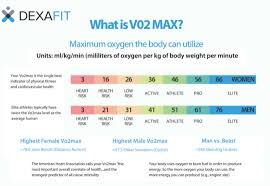
“VO2 max is a measure of the amount of oxygen your body can use while running or the maximum rate at which we can race a middle- or long-distance race,” says Juli Benson, Olympian and owner of Juli Benson Training. It’s a number that denotes what volume of oxygen (in milliliters per kilogram of bodyweight per minute) that your body delivers during activity. Simply put, it’s a gauge of your aerobic capacity.
If you’re interested in knowing your exact number, there are a few ways to measure it. The first, and most accurate, is to have it tested in a performance lab. That’s also pricey and the most uncomfortable, as you’ll have to endure a tough session at an all-out effort on a treadmill with a mask strapped to your face.
Many new smartwatches also offer VO2 max approximations; some Garmin watches, for example, estimate your number based on data including heart rate and running pace, plus info about your max heart rate.
The easiest way to approximate your VO2 max is to use a simple equation, based on your max and resting heart rates: VO2 max = 15x (HR max/resting HR)
All that being said, you can train to improve your VO2 max, and your overall running performance, without calculating your exact number. Here’s how.The Best Types of Workouts to Boost VO2 Max
When it comes to improving your VO2 max, your genes play a huge role. However, “with good old-fashioned hard work, it’s possible to improve your VO2 max,” says Benson.
Getting faster by way of VO2 max work is all about efficiency. “The higher your VO2 max, the faster or more efficiently you’ll be able to finish a race or training run—as your body moves the oxygen in the most effective manner,” says April Gatlin, ACE-certified personal trainer, master trainer, and coach for STRIDE Fitness.
The best way to train your body to do just that is by regularly tackling intervals—both interval runs and HIIT sessions incorporating strength moves. The good news: While you need to do intervals regularly, it shouldn’t take long before you see gains. “If consistent in training to increase VO2 max, people should start to notice a difference in approximately six weeks,” says Gatlin.
Research backs up the keys that unlock better VO2 max: Runners who did 200-meter interval workouts for only 10 weeks improved their aerobic capacity and VO2 max significantly more than runners who stuck to moderately-paced workouts, according to a 2018 study published in the Journal of Strength and Conditioning Research. Similarly, people who did HIIT sessions with intervals as short as 30 seconds for four weeks or less showed VO2 max improvements in a 2019 meta-analysis of studies published in the Journal of Science and Medicine in Sport; participants who did intervals closer to two minutes for four to 12 weeks showed even greater gains.
5 Workouts to Challenge Your VO2 Max
The best way to improve your VO2 max is to tap into the right heart-rate zone during those intervals. “In general, VO2 max work should be completed at about 90 to 100 percent of your max heart rate,” says Benson. That’s about the same as a 5K pace, and each of the five workouts below—recommended by Benson and Gatlin—include intervals at that approximate intensity. Feel free to dial it back a bit, Benson says, if you’re new to this type of training. Before each of these sessions, warm up by jogging for eight to 15 minutes, then do some dynamic stretches or range of motion drills, like high knees and leg swings, followed by a few reps of 20-second strides to prep your body to pick up the pace.
The tough interval sections of the workouts can range from about 10 minutes for novices to 25 minutes for advanced runners; pick your reps below to dial into the right level for your fitness. It’s always smart to start on the lower end, see how it feels, and work your way up to more reps.
Benson recommends doing a VO2 max workout twice a month for newbies, up to once a week for more experienced runners. And for the biggest benefit, be careful not to schedule them the day after a long run or other challenging session. “These types of workout sessions should be done during the week and sandwiched between two very easy days of running, cross training, or rest days,” says Benson.
Workout 1: 1,000M Repeats
Run 1,000 meters at a 5K effort, then walk or jog for the same amount of time. Repeat 3 to 6 times.
Workout 2: Two by Twos
Run for 2 minutes at a 5K effort, then walk or slowly jog for 2 minutes. Repeat 4 to 8 times.
Workout 3: Ladder
Run for 2 minutes and 30 seconds at 10K effort, rest for the same amount of time. Run 3 minutes and 30 seconds at 10K effort, rest for the same amount of time. Run 4 minutes and 30 seconds at 10K effort, rest for the same amount of time. Repeat entire set of intervals at 5K effort.Workout 4: Bodyweight AMRAP
Do 10 push-ups followed immediately by 10 bodyweight squats, then run 400 meters at a 5K or 10K pace. Repeat as many reps as possible for 20 minutes, resting when needed.
Workout 5: EMOM Sprints
Sprint at a pace you can sustain for 10 to 15 seconds, then jog for the remainder of the minute. Repeat for 20 minutes. Work up to sprinting for 20 or 30 seconds each minute.
by Men’s Health
Login to leave a comment

Should you run 42.2 kilometers in marathon training?
For distances shorter than the marathon, “over-distance” training is effective, and in the past, runners would typically run even the marathon distance in preparation for a marathon race. Running 42 kilometers takes quite a toll on your body; professional marathoners typically only race two or three marathons in a year, and take at least two very easy weeks to properly recover afterward. So if endurance runners typically run farther than race distance to build stamina and make their 5K, 10K, or half-marathon feel easier, should your weekly long run be over 42.2 km when training for the full marathon?
Marathon training plans are all pretty similar when it comes to the long run: it should definitely be less than a marathon in distance. Studies have shown weekly long runs of 75-165 minutes in length to be effective, while others go by volume, suggesting building the run up to 32 kilometers. Building mileage is a slow process, and should be done in 10 per cent increments between weeks.
What about those last 10 kilometers on race day? A combination of adrenaline, motivation, and tapering in the weeks leading up to your competition will carry you to the finish line. Research shows that competition improves endurance performance physiologically and psychologically, meaning your muscles can handle more fatigue while racing.
Running slower than your race pace during your longest run is also key for facilitating recovery. Since ramping up intensity and mileage at the same time is much harder on your body, it’s recommended to focus on speed during other workouts throughout the week. The ideal training for all distance runners can be broken down into a long run, two or three interval sessions and two or three low-intensity days. Overall, 80 per cent of your total volume should be completed at a low intensity.

Keep in mind that if you are approaching marathon distance at target race pace during your long run, you are essentially racing a marathon on a weekly basis. In an ideal world, this would make you get better, but the recovery cost means your training will be compromised.
Studies suggest completing long runs at a pace that is 30-60 seconds slower per kilometer than your marathon race pace. For beginners, this is a comfortable pace that still allows you to hold a conversation. These steady runs provide a foundation for building endurance, allowing you to improve your aerobic capacity and progress your pace over time. On workout days with lower volume, you can increase intensity by incorporating faster intervals or by progressing a medium-long run to end at your goal marathon or even half-marathon pace.
If you put in the work during training, your body will be capable of the most incredible things on race day.
by Cameron Ormond
Login to leave a comment

Why does humidity make running harder?
Don’t blame your fitness level; it’s the humidity. Here’s how you can maximize your training in humid conditions.
If you’re heading out for an easy run in muggy weather and your heart rate is skyrocketing, don’t blame your fitness level. External factors like temperature and humidity are most likely impacting your running efficiency and performance. Humidity, in particular, plays a crucial role in affecting your heart rate and perceived effort. Understanding how humidity influences your running can be essential for optimizing your training and making the most of running in hot, humid conditions.
Understanding humidity

Humidity is the amount of moisture (water vapour) in the air. When levels are high, the air is saturated with water vapour, making it harder for sweat to evaporate during exercise. This evaporation process is essential for regulating body temperature and optimizing performance. When sweat cannot evaporate efficiently, your body struggles to cool down, and your core temperature remains elevated. This means your heart has to work harder, pumping more blood to the skin’s surface to facilitate cooling through sweat evaporation.
This increased workload on the heart results in an elevated heart rate, even if your running pace remains unchanged. In other words, your heart has to beat faster to maintain adequate blood flow and temperature regulation, making running in high humidity more challenging.
Impact on running
It’s normal for your heart rate to be higher when you’re running in heat and humidity, but this can make running feel more strenuous and mean you feel fatigued earlier. If you’re training for a half-marathon or marathon and heading out for long runs in humid conditions, you might experience a phenomenon known as cardiac drift. This occurs when your heart rate gradually increases over the duration of a long run, even if your pace remains constant, making the effort feel harder over time.
To combat cardiac drift, start your runs well hydrated, and carry water with you. It’s also wise to avoid running too far from home, in case you run out of water. Many experienced marathoners tackle this by doing their long runs on a three- to five-kilometre loop, where they can set up a water station or access a water fountain. This ensures they have consistent access to water and can effectively manage their hydration.
Tips for managing humidity
Try to run during cooler times of the day, such as early morning or after sundown, when humidity levels are lower. Drink water during your run and wear cool, light, moisture-wicking clothing to help regulate your body temperature. If your heart rate remains elevated, consider slowing down the pace to allow your body to adapt to conditions. Training smart in humidity can pay dividends for fall road races.
Another approach is to leave the heart rate monitor behind and run by feel. These devices can sometimes do more harm than good by making you overly focused on numbers instead of tuning in to your body’s signals. Learn to listen to your body and pay attention to how you feel during your run. If you experience dizziness, nausea or excessive fatigue, stop running and seek water and a cooler (shaded) environment to recover.
By understanding how humidity affects your body and taking appropriate precautions, you can continue to enjoy the benefits of running while minimizing potential risks.
by Marley Dickinson
Login to leave a comment
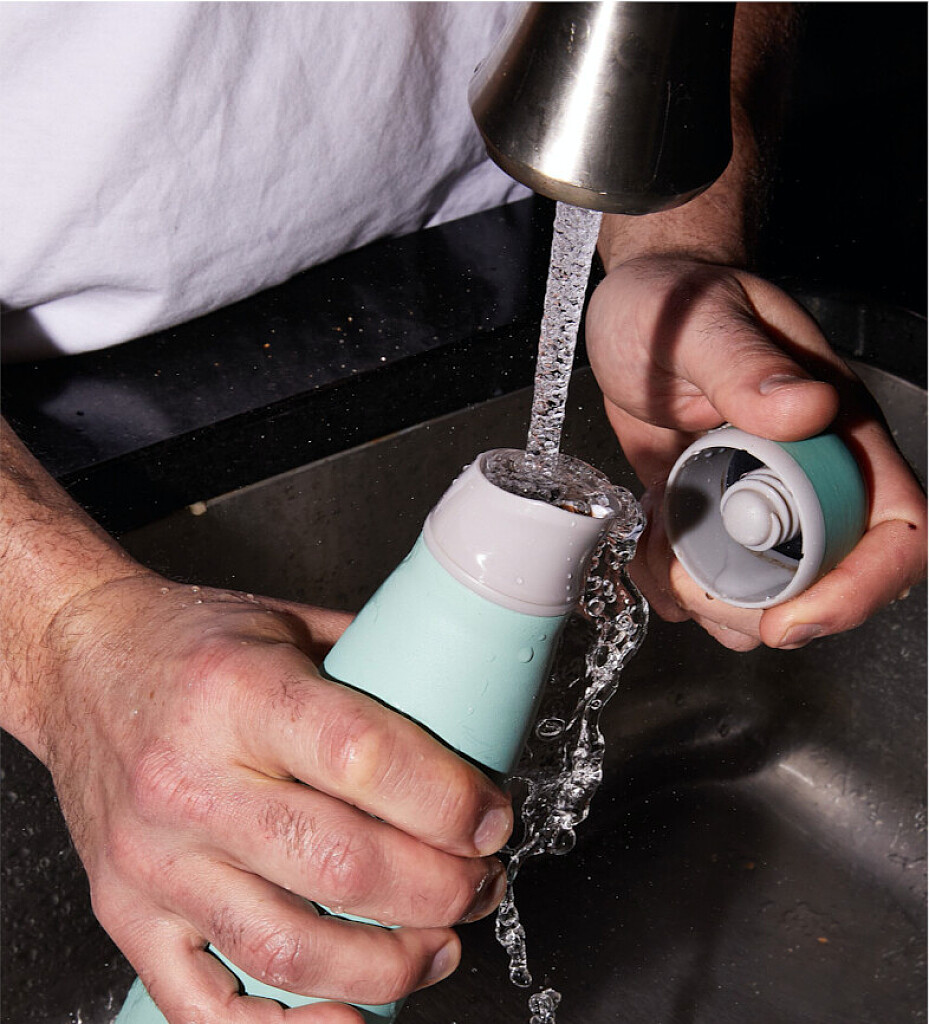
Are You Drinking Water Wrong? According to Researchers, You Probably Are
Here’s how to hydrate for better performance.Here’s how to hydrate for better performance.Staying hydrated seems simple enough—drink water when you’re thirsty and stop when you feel like you’re done, right? Well, it’s a bit more complicated than that, especially for runners.
That’s because not understanding the complicated equation of race distance and intensity combined with water and electrolyte intake can ruin a long run or race, not to mention have serious health repercussions. Drink too little and your ability to power through your workout suffers; drink too much and you can get sidelined by nausea and frequent pee breaks.
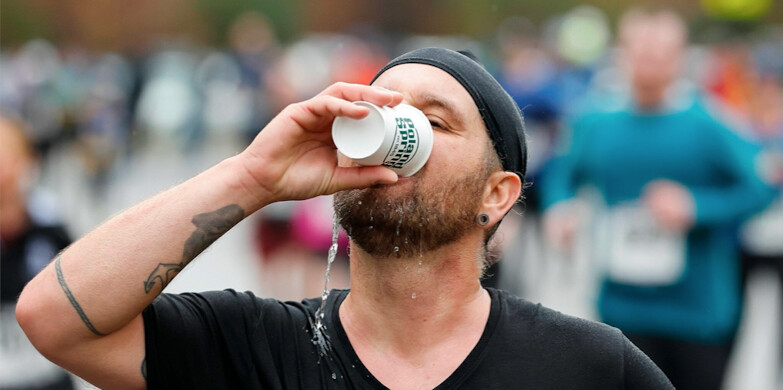
And even though you might first worry about dehydration for those summer runs, researchers found that the newer you are to running and the slower you run, the more likely it is that you will drink too much water while racing. (We’ll talk more about this later.)
To that end, much of the research demonstrates that mastering the art of hydration when you run isn’t as simple as it seems. Keep reading to find out if you drink water the wrong way—and how to drink water right.
6 Ways You Drink Water Wrong and 6 Ways to Drink Water Right
❌ Wrong Way: Gulping water during a race
✅ Right Way: Sip as you run
It’s okay to slow a little to make sure you’re getting in your fluids during a race, but gulping water at each aid station can ultimately slow you down and also lead to an upset stomach.
That’s because drinking too much water too quickly overloads the stomach, causing it to rapidly stretch. This can lead to discomfort and potential nausea, Justin Mullner, M.D., a board-certified primary care sports physician with the Orlando Health Jewett Orthopedic Institute in Florida tells Runner’s World.
Take small sips of water (or electrolyte drink) every 15 to 20 minutes, depending on the temperature and intensity of the run.
Combining a run with too much water is even more likely to cause nausea. That’s because intense exercise directs blood flow away from the stomach and toward the muscles, causing digestion to slow down. “So you put a bunch of water in there and the stomach really can’t handle it effectively and efficiently,” Mullner says.
A better strategy is to take small sips of water (or electrolyte drink) every 15 to 20 minutes, depending on the temperature and intensity of the run. “This approach helps maintain a steady level of hydration and prevents the stomach from becoming overly full,” Meghan Kennihan, a RRCA- and USATF-certified running coach, tells Runner’s World.
❌ Wrong Way: Drinking from a dirty water bottle✅ Right Way: Regularly clean your bottle
Your trusty water bottle is always there when you need it. Sadly, constant use means you’re probably getting more than water. Unless you regularly clean your water bottle—which means daily according to Mullner—you could be getting a dose of bacteria or even mold.
Every time you put your mouth to the water bottle and use your hands to open and close it, you transfer bacteria that can make its way inside. The moist environment inside your water bottle provides an optimal breeding ground for bacteria and mold, especially if you live in hot, humid areas. If left unchecked, the bacteria and mold can continue growing, potentially causing you to experience symptoms similar to food poisoning (such as stomach pain or cramps, diarrhea, and vomiting), per the Centers for Disease Control and Prevention. People with mold sensitivities can have a flare-up of allergy symptoms.Ideally, you’d wash out your reusable bottle—whether plastic, stainless steel, or glass—with soap and warm water each time, Mullner says. “It’s even more important if you’re using the bottle every single day or drinking beverages other than water,” he says. Mixing electrolyte powders or adding a sports drink to your bottle, for example, means more material for bacteria.Signs your bottle could use a good scrubbing include visible residue, a funny or foul odor, or changes in how things taste, Mullner says.
❌ Wrong Way: Waiting too long to hydrate before a run or race✅ Right Way: Start early
When preparing for a long run or race, many runners forget to hydrate until they’re practically toeing the starting line, “which is a bad idea because it doesn’t give the body enough time to absorb and utilize the fluids,” Kennihan says.
Staying well-hydrated in the days leading up to your long run or race can help you perform well, avoid feeling overly full, and reduce restroom stops. Be especially diligent about drinking water starting the day before a long run or race, and check your urine color to be sure you’re getting enough. “Really dark yellow is a sign that you’re not well-hydrated,” Mullner says. “Ideally, it has a slight tinge of yellow.”
Drink 16 to 20 ounces of water about 2 to 3 hours beforehand and then another 8 to 10 ounces 20 to 30 minutes before running.
Individual fluid needs vary. However, a general guideline for the day of the event is to drink 16 to 20 ounces of water about 2 to 3 hours beforehand and then another 8 to 10 ounces 20 to 30 minutes before running, Kennihan says. You may need to adjust your intake according to your body size, run distance, and outside temperature.
❌ Wrong Way: Drinking too much water on long runs✅ Right Way: Balance electrolyte intake with water
It’s critical to drink enough water during long training runs and races. However, drinking lots of water, and only water, can lead to overhydration, meaning you have too much water in your body.
Hyponatremia is an extreme version of overhydration, and occurs when sodium levels in the blood are lower than recommended, leading to muscle cramps, headaches, nausea and vomiting, low energy, and confusion, per the Cleveland Clinic. Normally, your body keeps your electrolytes in balance by taking the minerals from the foods you eat and filtering the excess through your urine. However, intense exercise causes electrolytes (particularly sodium) to be quickly lost through sweat, and hot, humid temperatures only accelerate this loss, per the American College of Sports Medicine.
It's not just new runners who tend to overhydrate. At the other end of the spectrum, 41 out of 63 finishers at an ultramarathon also finished with mild or severe hyponatremia, according to a 2019 Frontiers in Nutrition study.
Take in electrolytes in addition to water if you’re running for longer than 60 minutes or in hot, humid temperatures. Drinking water without replacing electrolytes dilutes the remaining electrolytes (again, sodium in particular) in your blood. “You can potentially get yourself into trouble with hyponatremia,” Mullner says.
To prevent an electrolyte imbalance, take in electrolytes in addition to water if you’re running for longer than 60 minutes or in hot, humid temperatures. Bring an electrolyte drink, some gels, or another electrolyte supplement.
❌ Wrong Way: Drinking a pure sports drink✅ Right Way: Water it down
Sports drinks offer a convenient delivery system for carbs and electrolytes while running. Still, many runners prefer to water things down.
“Many sports drinks are too concentrated, leading to stomach cramps and nausea. Diluting them can still provide the necessary electrolytes and carbohydrates without overwhelming the stomach,” Kennihan notes.
The optimal ratio of sports drink to water depends on your preferences and the makeup of your drink. Mullner suggests diluting your sports drink to the point where it’s most palatable for you.
Diluting sports drinks can still provide the necessary electrolytes and carbohydrates without overwhelming the stomach.
The exception: Don’t dilute a sports drink that contains carbohydrates if you’re using it for energy purposes. “Some sports drinks have carbs in there to help extend the amount of time you can perform, and if you’re trying to absorb carbs better, you would have it with some electrolytes,” Mullner says. Adding water can cut down on how many carbs you get per sip, limiting performance benefits.❌ Wrong Way: You don‘t know about your med’s side effects
✅ Right Way: You read labels and talk to your pharmacist
Some over-the-counter and prescription medications can affect an athlete’s hydration, says Kennihan. NSAIDs, such as ibuprofen and aspirin, can reduce blood flow to the kidneys, which can impair their ability to conserve water and electrolytes, potentially leading to dehydration, especially during prolonged physical activity like running.
Similarly, diuretics, which are prescribed for conditions such as hypertension and edema, increase urine production and promote the excretion of water and electrolytes from the body. Increased urine output can lead to a significant loss of fluids and electrolytes, making it easier for runners to become dehydrated, particularly in hot and humid conditions or during long-distance runs.
Likewise, antihistamines can reduce saliva production and increase the risk of dry mouth and dehydration, while laxatives can cause increased bowel movements and fluid loss.Lastly, stimulant medications, such as those used for attention deficit hyperactivity disorder (ADHD), can increase sweating and fluid loss, potentially leading to dehydration if fluid intake is not adequately maintained.
Bottom line: As a runner, remember that hydration is as much a part of your performance as actual time on your feet.
The authors of a 2019 article published in the International Journal of Sport Nutrition and Exercise Metabolism recommended that runners develop a “personalized and practiced race plan” to optimize their fluid and carbohydrate intake based not only on their distance and intensity, but also taking into account their body composition, as well as the weather and other race conditions, such as refueling stations, at each event.
Login to leave a comment

Research Confirms Rotating Running Shoes Could Save You From Injuries—Here’s How Your Body Benefits
Having a shoe collection is not a frivolous obsession. Here’s how you could possibly benefit from having more than one pair of running shoes.
Once you’ve found yourself the perfect pair—you know the ones you want to spend every run in—it’s kind of hard to give them up. However, doing so could actually work to your advantage by keeping you healthy and strong for each run.

“These days, a lot of people use one shoe for everything, and that puts you at risk for injury,” says Priya Parthasarathy, D.P.M., spokesperson for the American Podiatric Medical Association and partner at USFAS in Silver Springs, Maryland. Running, walking, and weightlifting all require different demands of your feet, so you’ll want to wear different shoes for these activities, she says. Plus, wearing one shoe for all of your workouts can increase the wear on the shoe, so they won’t last as long as you want.
That’s where having a running shoe rotation becomes very helpful. Research and experts back up this idea, and it’s especially helpful to have a shoe rotation if you’re training for a long distance race like a marathon. Here’s what you need to know in order to build a running shoe rotation that meets all of your needs.
Why do you need a running shoe rotation?
Naturally, running places stress on multiple parts of the body, including muscles, bones, and tendons, which can be good for you provided the stress is not too large or frequent that you can’t recover fast enough, says Andrea Myers, D.P.T., who owns a sports performance practice located in Westport and Ridgefield, Connecticut.
”We know from many research studies that different running shoe properties expose the body to different stressors,” Myers says. “We know that minimalist shoes—those with a low or zero drop, flexible sole, and minimal to no stability features—increase the demands on the ankle, foot, and calf muscles, as compared to shoes with a higher drop, which increase the demands at the knee but reduces the demands at the foot and ankle.”
A carefully crafted shoe rotation can possibly offset some of these demands.
To identify characteristics that might contribute to the development of running related injury, a 2013 research study published in the Scandinavian Journal of Medicine and Science in Sport followed 264 runners over the course of 22 weeks. The study found runners who used more than one shoe, a term which they coined “parallel use,” had a 39 percent lower risk of injury. This suggests having more than one pair of running shoes can help you ward off injury.
The reasoning behind it, if you have a cushioned shoe and you let a shoe sit for 24 to 48 hours, the foam in the shoe can de-compress before your next run, says Parthasarathy.
How many shoes do you need in your rotation?
If you’re just starting out, you don’t have to worry about rotating your running shoes, instead, invest in one good pair of running shoes. Parthasarathy recommends finding a shoe with a flexible toe box, firm heel cup, and removable insoles. The one shoe should overall be comfortable to you.
The seasoned recreational runner who runs three to four miles, three days per week, does not need a rotation of four different shoes either, says Myers. Instead, Myers recommends two pairs of shoes that you can rotate every run.
For marathon runners, racking up 35 to 60-plus miles a week with a variety of workouts (easy, long, and speed runs) on their calendars, Myers recommends keeping a shoe rotation of three to four pairs of shoes. This can include one to two pairs of shoes for easy runs and speed workouts, and one pair of shoes for long runs that can handle a variety of different paces. Your long run shoes can also double as a performance trainer, or a lightweight daily trainer, Myers says.
What types of running shoes can you add to your running shoe rotation?
Here are three different types of shoes you can consider adding to your collection, according to Myers:
Daily Trainer: These shoes are primarily for easy running, but can also handle different paces. you can use them to run strides or up-tempo long runs. Good examples of daily trainers include: the Brooks Ghost 15, Saucony Ride 17 or Guide 17, Nike Vomero 17, or Hoka Clifton 9.
Performance Trainer: Best for speed workouts, performance trainers are lightweight shoes that perform best at faster paces and can double as daily trainers as long as you feel comfortable in wearing them for longer distances. Plus, they tend to be more affordable than top-end race performance shoes. A few styles to consider include: Saucony Endorphin Speed 4, Topo Cyclone 2, Mizuno Wave Rebellion Flash 2, and Brooks Hyperion Max.
Racing Shoes: Commonly referred to now as super shoes, racing shoes tend to be more expensive and less durable, considering some shoes have a life expectancy of about 100 to 150 miles. This is why you shouldn’t do the bulk of your training in super shoes, instead you should take them out for a test run or two to ensure they’ll meet all your comfort needs on race day. Saucony Kinvara Pro, Asics Superblast, Adidas Adizero Prime x 2 Strung, and On Cloudeclipse are a few super shoes to consider.
How to find the right shoe to add to your rotation?
Before adding any a shoe to your rotation, you should consider if the shoe is a good fit for your foot arch (flat arch, high arch, or medium arch), running gait (neutral, pronated, or supinated), shoe size, preferred comfort level, and the terrain (treadmill, pavement, or trail) you’ll run on.
“Building a running shoe rotation, especially if you run on different terrains, is important because the shoe wears in different ways,” says Parthasarathy. Meaning where you run will influence some of the characteristics you look for in a shoe. For example, running on hard pavement will require increased cushioning, whereas trail running calls for more stability and traction, she explains.
If you want to change the type of shoe you’re training in, then the recommendation is to ease into the number of miles you try in the new shoe (i.e., don’t go for a long run in a drastically different shoe).
You may experience some soreness if you transition to a different type of shoe, however, you shouldn't experience pain that lasts for days or interferes with your normal running gait pattern on subsequent runs, Myers adds.
Lastly, you’ll want to get rid of your running shoes every so often due to wear and tear that may go unnoticed. ”We recommend you replace your running shoes, especially if you’re doing long distance running every six months or 300 to 500 miles, depending on how hard you are on them,” says Parthasarathy. If you can fold or bend your shoes in half, it’s often an indication the structure of the shoe and cushioning has been broken down, and it’s time for a change, she adds. As mentioned, the new high performance racing shoes tend to have a shorter shelf life when it comes to mileage.
Who should avoid rotating running shoes?
There’s no need to rotate your running shoes if you’re only running a couple of times a week because you’re likely not racking up enough miles to overstress your tissues, says Myers.
Also, don’t rotate running shoes if you have specific biomechanical or orthopedic needs due to injury, foot structure or shape. For example, runners who have arthritis that affects the big toe, a.k.a, hallux limitus, should prioritize running in shoes that can address this condition, which there are few of, Myers says.
by Runner’s World
Login to leave a comment

Why does humidity makes running harder?
If you’re heading out for an easy run in muggy weather and your heart rate is skyrocketing, don’t blame your fitness level. External factors like temperature and humidity are most likely impacting your running efficiency and performance.
Humidity, in particular, plays a crucial role in affecting your heart rate and perceived effort. Understanding how humidity influences your running can be essential for optimizing your training and making the most of running in hot, humid conditions.
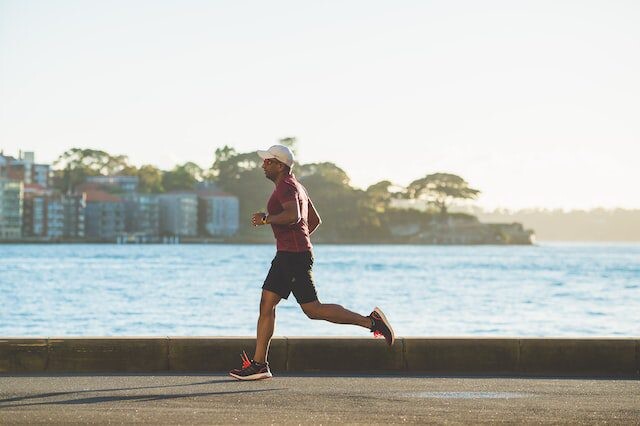
Understanding humidity
Humidity is the amount of moisture (water vapour) in the air. When levels are high, the air is saturated with water vapour, making it harder for sweat to evaporate during exercise. This evaporation process is essential for regulating body temperature and optimizing performance. When sweat cannot evaporate efficiently, your body struggles to cool down, and your core temperature remains elevated. This means your heart has to work harder, pumping more blood to the skin’s surface to facilitate cooling through sweat evaporation.

This increased workload on the heart results in an elevated heart rate, even if your running pace remains unchanged. In other words, your heart has to beat faster to maintain adequate blood flow and temperature regulation, making running in high humidity more challenging.
Impact on running
It’s normal for your heart rate to be higher when you’re running in heat and humidity, but this can make running feel more strenuous and mean you feel fatigued earlier. If you’re training for a half-marathon or marathon and heading out for long runs in humid conditions, you might experience a phenomenon known as cardiac drift. This occurs when your heart rate gradually increases over the duration of a long run, even if your pace remains constant, making the effort feel harder over time.
To combat cardiac drift, start your runs well hydrated, and carry water with you. It’s also wise to avoid running too far from home, in case you run out of water. Many experienced marathoners tackle this by doing their long runs on a three- to five-kilometre loop, where they can set up a water station or access a water fountain. This ensures they have consistent access to water and can effectively manage their hydration.
Tips for managing humidity
Try to run during cooler times of the day, such as early morning or after sundown, when humidity levels are lower. Drink water during your run and wear cool, light, moisture-wicking clothing to help regulate your body temperature. If your heart rate remains elevated, consider slowing down the pace to allow your body to adapt to conditions. Training smart in humidity can pay dividends for fall road races.
Another approach is to leave the heart rate monitor behind and run by feel. These devices can sometimes do more harm than good by making you overly focused on numbers instead of tuning in to your body’s signals. Learn to listen to your body and pay attention to how you feel during your run. If you experience dizziness, nausea or excessive fatigue, stop running and seek water and a cooler (shaded) environment to recover.
By understanding how humidity affects your body and taking appropriate precautions, you can continue to enjoy the benefits of running while minimizing potential risks.
by Marley Dickison
Login to leave a comment

Research Confirms Rotating Running Shoes Could Save You From Injuries—Here’s How Your Body Benefits
Having a shoe collection is not a frivolous obsession. Here’s how you could possibly benefit from having more than one pair of running shoes.
Once you’ve found yourself the perfect pair—you know the ones you want to spend every run in—it’s kind of hard to give them up. However, doing so could actually work to your advantage by keeping you healthy and strong for each run.
“These days, a lot of people use one shoe for everything, and that puts you at risk for injury,” says Priya Parthasarathy, D.P.M., spokesperson for the American Podiatric Medical Association and partner at USFAS in Silver Springs, Maryland. Running, walking, and weightlifting all require different demands of your feet, so you’ll want to wear different shoes for these activities, she says. Plus, wearing one shoe for all of your workouts can increase the wear on the shoe, so they won’t last as long as you want.
That’s where having a running shoe rotation becomes very helpful. Research and experts back up this idea, and it’s especially helpful to have a shoe rotation if you’re training for a long distance race like a marathon. Here’s what you need to know in order to build a running shoe rotation that meets all of your needs.
Why do you need a running shoe rotation?
Naturally, running places stress on multiple parts of the body, including muscles, bones, and tendons, which can be good for you provided the stress is not too large or frequent that you can’t recover fast enough, says Andrea Myers, D.P.T., who owns a sports performance practice located in Westport and Ridgefield, Connecticut.
”We know from many research studies that different running shoe properties expose the body to different stressors,” Myers says. “We know that minimalist shoes—those with a low or zero drop, flexible sole, and minimal to no stability features—increase the demands on the ankle, foot, and calf muscles, as compared to shoes with a higher drop, which increase the demands at the knee but reduces the demands at the foot and ankle.”
A carefully crafted shoe rotation can possibly offset some of these demands.
To identify characteristics that might contribute to the development of running related injury, a 2013 research study published in the Scandinavian Journal of Medicine and Science in Sport followed 264 runners over the course of 22 weeks. The study found runners who used more than one shoe, a term which they coined “parallel use,” had a 39 percent lower risk of injury. This suggests having more than one pair of running shoes can help you ward off injury.
The reasoning behind it, if you have a cushioned shoe and you let a shoe sit for 24 to 48 hours, the foam in the shoe can de-compress before your next run, says Parthasarathy.
How many shoes do you need in your rotation?
If you’re just starting out, you don’t have to worry about rotating your running shoes, instead, invest in one good pair of running shoes. Parthasarathy recommends finding a shoe with a flexible toe box, firm heel cup, and removable insoles. The one shoe should overall be comfortable to you.
The seasoned recreational runner who runs three to four miles, three days per week, does not need a rotation of four different shoes either, says Myers. Instead, Myers recommends two pairs of shoes that you can rotate every run.
For marathon runners, racking up 35 to 60-plus miles a week with a variety of workouts (easy, long, and speed runs) on their calendars, Myers recommends keeping a shoe rotation of three to four pairs of shoes. This can include one to two pairs of shoes for easy runs and speed workouts, and one pair of shoes for long runs that can handle a variety of different paces. Your long run shoes can also double as a performance trainer, or a lightweight daily trainer, Myers says.
What types of running shoes can you add to your running shoe rotation?
Here are three different types of shoes you can consider adding to your collection, according to Myers:
Daily Trainer: These shoes are primarily for easy running, but can also handle different paces. you can use them to run strides or up-tempo long runs. Good examples of daily trainers include: the Brooks Ghost 15, Saucony Ride 17 or Guide 17, Nike Vomero 17, or Hoka Clifton 9.
Performance Trainer: Best for speed workouts, performance trainers are lightweight shoes that perform best at faster paces and can double as daily trainers as long as you feel comfortable in wearing them for longer distances. Plus, they tend to be more affordable than top-end race performance shoes. A few styles to consider include: Saucony Endorphin Speed 4, Topo Cyclone 2, Mizuno Wave Rebellion Flash 2, and Brooks Hyperion Max.
Racing Shoes: Commonly referred to now as super shoes, racing shoes tend to be more expensive and less durable, considering some shoes have a life expectancy of about 100 to 150 miles. This is why you shouldn’t do the bulk of your training in super shoes, instead you should take them out for a test run or two to ensure they’ll meet all your comfort needs on race day. Saucony Kinvara Pro, Asics Superblast, Adidas Adizero Prime x 2 Strung, and On Cloudeclipse are a few super shoes to consider.
How to find the right shoe to add to your rotation?
Before adding any a shoe to your rotation, you should consider if the shoe is a good fit for your foot arch (flat arch, high arch, or medium arch), running gait (neutral, pronated, or supinated), shoe size, preferred comfort level, and the terrain (treadmill, pavement, or trail) you’ll run on.
“Building a running shoe rotation, especially if you run on different terrains, is important because the shoe wears in different ways,” says Parthasarathy. Meaning where you run will influence some of the characteristics you look for in a shoe. For example, running on hard pavement will require increased cushioning, whereas trail running calls for more stability and traction, she explains.
If you want to change the type of shoe you’re training in, then the recommendation is to ease into the number of miles you try in the new shoe (i.e., don’t go for a long run in a drastically different shoe).
You may experience some soreness if you transition to a different type of shoe, however, you shouldn't experience pain that lasts for days or interferes with your normal running gait pattern on subsequent runs, Myers adds.
Lastly, you’ll want to get rid of your running shoes every so often due to wear and tear that may go unnoticed. ”We recommend you replace your running shoes, especially if you’re doing long distance running every six months or 300 to 500 miles, depending on how hard you are on them,” says Parthasarathy. If you can fold or bend your shoes in half, it’s often an indication the structure of the shoe and cushioning has been broken down, and it’s time for a change, she adds. As mentioned, the new high performance racing shoes tend to have a shorter shelf life when it comes to mileage.
Who should avoid rotating running shoes?
There’s no need to rotate your running shoes if you’re only running a couple of times a week because you’re likely not racking up enough miles to overstress your tissues, says Myers.
Also, don’t rotate running shoes if you have specific biomechanical or orthopedic needs due to injury, foot structure or shape. For example, runners who have arthritis that affects the big toe, a.k.a, hallux limitus, should prioritize running in shoes that can address this condition, which there are few of, Myers says.
Login to leave a comment
How Many Carbs Are in Spring Energy, Really?
This fruit-based energy gel, once touted for its high-carb intake and low volume, contains about a third of calories than advertised, multiple independent nutritional analyses suggest
For the past 10 years, Spring Energy has provided endurance athletes with energy gels, and more recently drink mixes, made from “real” foods. Athletes looking for wholesome alternatives to more traditional sugar-based gels made in a lab have flocked to Spring’s smoothie-like gels made with fruit and basmati rice.
While Spring products are more expensive than many gels, many athletes have found the tradeoff for high-quality, real food fuel that goes down easily on the run to be worth it. Until now.
After skepticism about the actual contents of Spring’s gels began brewing late last year, it turned into a full-blown controversy this week.
In January 2021, Spring Energy released a game-changing gel, Awesome Sauce. In collaboration with coaches and runners Megan and David Roche (who taste-tested and named the flavor), the applesauce, basmati rice, and sweet potato-based gel was designed to provide endurance athletes with a whopping 180 calories per 54 gram packet.
This high-carb alternative became especially enticing when a study was published in April 2022 reporting that ultrarunners should consume 240 to 360 calories (60-90 grams of carbohydrates) per hour. It’s no surprise that Awesome Sauce (sold at $5 a gel), with its small but surprisingly mighty nutritional content, initially flew off the shelves. It seemed too good to be true.
After several third-party lab tests, that appears to be the case.
In late 2023, runners took to Reddit to discuss their doubts in Awesome Sauce’s nutritional facts, which were printed on the packaging and stated on Spring Energy’s website. Though it’s unclear who first performed a concrete test on the gel, two months ago, Liza Ershova, a Reddit user who uses the username “sriirachamayo”, posted in a thread called “False nutritional info on Spring Energy gels.” Ershova allegedly performed a test “in an environmental chemistry lab” and found that the dry weight of Awesome Sauce is 16g instead of the stated 45. She hypothesized that, “If all of those grams are carbs, that corresponds to about 60 calories, not 180.”
On May 17, German endurance sport speciality shop Sports Hunger released a video stating that they, too, had Awesome Sauce gels tested by a third party, and allegedly found that each packet contains 16g of carbs instead of the 45g that Spring Energy claimed.
“The maker of Spring Energy assures us that they will rework their manufacturing process to ensure that they will again reliably achieve their high numbers that they declare to have,” a Sports Hunger representative says in the video. “We hope that this is really going to happen because we believe that natural food for many of our customers is a great alternative to the regular gels.”
On May 28, ultrarunning coach Jason Koop, who coaches elite athletes sponsored by Spring Energy, posted an Instagram Reel saying that he’d paid for Spring Energy Awesome Sauce to be tested by a third party, RL Food Laboratory Testing in Ferndale, Washington. The results showed that the gels tested contained 76 calories and 18g of carbs. The lab results can be found on Koop’s website. Koop declined to be interviewed for this article.
Other runners have also come forward after attempting to replicate the gels with varying degrees of Awesome Sauce’s ingredients: organic basmati rice, organic apple sauce, apple juice, yams, maple syrup, lemon juice, vanilla, sea salt, and cinnamon—and could not achieve the gel’s original volume of 54g. Their experiments suggest that it’s impossible to fit all of those ingredients into the small Awesome Sauce package while achieving the stated nutritional content.
On May 22, the Ershova shared Spring Energy’s response to their experiment on Reddit: “Our analysis supports the accuracy of our product labeling. However, we will reevaluate to make sure our data is accurate. Although we hoped your experience with our products would have been wholly satisfactory, we recognize that individual needs can vary. Given the wide variety of options available across different brands, we are confident you will find the right product that suits your specific requirements.”
Four days later, on the Sunday of Memorial Day weekend, Spring Energy sent out an email to newsletter subscribers stating:
“In early May we submitted Awesome Sauce for third-party caloric and biomolecular analysis. Although the results indicated that on average our products deliver the designed nutrition value, we have recognized weaknesses in our processes and ingredients which can introduce unwanted variations in some batches.To mitigate those variations in our small batch production, we decided to modify some of the formulations, revise and innovate processes, and re-evaluate ingredient sources. These changes will bring higher quality and more consistency to our products. Enhancements of our products aimed to stabilize their nutrition values are on the horizon, and within the next few weeks, you’ll see the results of our efforts. A new and improved version of Awesome Sauce will soon be available.”
The internet outrage ballooned swiftly.
“‘On average’ – if someone has a beat on where I can grab packets of Awesome Sauce at 75g of carb per pack to allow for the average of their product to be 45g overall, hit my inbox,” @aidstationfireball posted on X. “Excited to taste the new, re-formulated, $7 gels they’ll replace these with.”
David and Megan Roche, the Boulder, Colorado-based running coach couple who collaborated with Spring Energy on Awesome Sauce, discussed the backlash on their podcast. They weren’t involved in the chemical composition and makeup of the gel, they claimed. Rather, they simply proposed the concept of a high-carb gel to their friend Rafal Nazarewicz, the founder and CEO of Spring Energy. They stated they understand the public’s outrage, and Megan added that they “didn’t really use it” during their runs because she didn’t feel that her body was responding to the energy it was supposed to provide.
In addition, the Roches stated on their podcast that they have quietly harbored concerns about Awesome Sauce for years, and while they did not explicitly tell their athletes not to use it, they made a point of promoting other gels instead. (The Roches currently have a financial partnership with The Feed, the online warehouse that sells a wide variety of sports fuel, including Spring Energy.)
David elaborated in a lengthy Instagram post on May 29: “It’s sad and infuriating that the nutrition was wrong, and we are thankful to the really smart people who figured it out on Reddit (including an athlete we coach who started the initial thread). When we described concerns to Spring, we were assured that the nutrition was correct and they followed all FDA regulations. We left the Spring sponsorship years ago, and we never received compensation for proposing the name/doing taste testing (outside of the $200 per month that we both received during the sponsorship). Since then, we have publicly directed athletes to other options for high-carb fueling, while hoping to be a source of love and support in the community. Our podcast covered our concerns as soon as the German lab testing indicated that we wouldn’t be risking making defamatory statements about a business without substantial evidence.”
While concerns around Awesome Sauce instigated this investigation, it’s not the only flavor under scrutiny. Koop sent additional Spring Energy gels, Canaberry (named after professional ultrarunner Sage Canaday) and Hill Aid, to the lab for testing. The results indicated that both of these flavors also contain fewer calories than stated on their nutrition labels.
The lab results showed that the batch of Canaberry that was tested contains 10g of carbs (versus the stated 17g), and the Hill Aid sample contains 10g of carbs (versus the stated 20g).
Koop also paid for Gu Chocolate Outrage to be tested. The results were consistent with the nutrition facts. All three of these reports can also be found on Koop’s website.
These vast discrepancies between Spring Energy’s reported nutrition facts and the lab results raise the question: which gels can be trusted?
According to the U.S. Food and Drug Association (FDA), most running gels fall under the category of “dietary supplements”, which don’t have to be approved before being sold. However, the FDA requires that all dietary supplements have nutrition information clearly marked on a product’s packaging (including serving size, number of servings, and ingredients) and periodically inspects manufacturing facilities to confirm that products meet the labeling requirements. The FDA also reviews product labels for accuracy.
“Dietary supplements are regulated by the FDA, but much of our role begins after products enter the marketplace. In fact, in many cases, companies can produce and sell dietary supplements without even notifying the FDA,” the FDA states on their website.
The FDA allows nutrition labels to have an inaccuracy margin of up to 20 percent—for reference, based on multiple lab results, Awesome Sauce’s caloric content is about 57 percent less than what the label says.
Sports psychologist and ultrarunning coach Krista Austin works with some of the top endurance athletes in the world, and is best known for training Meb Keflezighi to his 2009 New York City Marathon win. She recommends several products out on the market to her ultrarunner athletes, as well as suggestions that might work with a person’s individual plan. Typically, she suggests that athletes rotate gel flavors to avoid flavor fatigue, which can impact an athlete mentally and derail performance. So if a certain brand is proven to work well for an athlete, she says, use a variety of flavors.
“I usually use high molecular weight carbohydrates, but the thing is, they’re not as sweet as other sports nutrition products out there,” says Austin, who owns a consulting business providing sport performance services to Olympic and professional athletes as well as military and industry personnel. “So what we’ll do is we might throw in another gel like the Awesome Sauce to help give them that sweet component. It’s just in their arsenal.”
She says, in general, her athletes who have consumed Awesome Sauce have had positive experiences, but that because these gels were just one part of the fuel plan, that muddies the waters a bit. In addition, the potential lower calorie count of this gel may make it easier to digest. However, Austin recalls that one of her clients was taking in one Spring Energy gel (multiple flavors) every hour in her ultra, but found herself so hungry that she needed to eat a lot of the food provided at aid stations on the course, too.
“She was a smaller ultrarunner, and I thought it was interesting that she was taking in all these calories,” Austin says. “She was using Spring Energy gels, and I now I’m thinking, ‘Maybe this is why she needed all the additional food on the course, too, because she wasn’t getting what we thought she was.’”
Ultramarathon dietician Julie Shobe is surprised and disappointed in the news about Awesome Sauce. “My clients and myself bank on the efficiency of the gel being easy and light to carry,” she says. “Underfueling within a long run can create acute symptoms like low energy, nausea, or brain fog. Ultrarunners find themselves in dangerous situations on long runs and races, and are often in remote areas, so unintentionally underfueling could have negative consequences.”
Austin says runners can still rely on information they’re receiving about endurance fuel, but that it’s always possible there are, as Spring Energy suggests, bad batches. She’s leaning toward this being the reason for the nutritional inaccuracies (keeping an open mind that more information can come out) because she’s had experiences with bad batches of gels in the past, where the product tasted off and she brought it to the attention of the brand, who confirmed it was an error on their part.
By May 30, Spring Energy had removed Awesome Sauce from its website, although it can still be purchased in the All Inclusive and Vegan Spring sampler packs. There, Awesome Sauce is described as, “our best-seller, has been created for all carb lovers who want to fuel in a healthy way, with wholesome products free of added sugars!”
Nashville Running Company owner Lee Wilson has made the decision to take Awesome Sauce, Canaberry, and Hill Aid off store shelves. “It came down to the integrity of it,” Wilson says. “After the other flavors came out with the test results, we decided we can’t sell it.”
Nashville Running Company crew member Eric May added that this whole ordeal is disappointing, especially because the gel was so popular in the community.
“We used to have people come in when we got shipments and walk out with boxes of them,” May says. “It’s a bummer.”
He adds that a few customers have remarked that they still really enjoy Awesome Sauce and will keep using it.
“How a company reacts to the issue tells you a lot about them, and the fact that they’ve taken down their product, it means they’re probably doing their homework to see what’s going on,” Austin says. “I would say, give them a chance to rectify the situation.”
Sabrina Stanley, a pro ultrarunner from Silverton, Colorado, has used Awesome Sauce frequently in the past, but says she stopped eating it when she felt she was taking in three times what she should be consuming to keep hunger at bay. She adds that though it’s a huge disappointment that athletes thought they were buying a gel under the impression it was a different product, the company is the only party at fault.
“Professional athletes aren’t responsible for making sure the nutrition label is correct,” Stanley says. “They are often sub-contracted to give opinions and help promote a product in hopes of making a few extra dollar to continue doing what they love. They aren’t in the lab developing the product and writing the nutrition label, like the consumers, they are trusting the hired them to do their due diligence.”
On May 29, Spring Energy released an official statement on its Instagram, with Nazarewicz saying they’ve identified weaknesses in the manufacturing process, and that only some batches were accidentally made with varying nutritional values. Nazarewicz apologized and stated Spring Energy is introducing changes to its process and hopes to continue its mission toward making real food performance products.
“Spring Energy has admitted to inconsistencies in their product and also said in a recent IG post this was not intentional or malicious,” Shobe says. “However, to be this far off from your stated nutrition label deserves some major inspection. The whole thing made me question not only the integrity of their products but the nutritional labels of other products. Why, as a dietician, didn’t I become more suspicious of Awesome Sauce in the first place?”
by Outside Online
Login to leave a comment
This Runner Learned the Importance of Easy Days After Trying to Train Hard for Too Long
“Running has made me a better thinker—I’m able to solve problems when I’m on a run, and often find new and creative solutions to or perspectives on something that’s bothering me."
I played sports (baseball, basketball, lacrosse) growing up, but running was always used as a form of punishment. I didn’t understand the people who “enjoyed” running or would willingly run. I also didn’t want anything to do with running because I was too scared to lose any of the muscle I worked so hard to put on. (I picked up weightlifting in college.)

That’s when running became the perfect escape for me physically and mentally. Some of my best thoughts came from mid-afternoon runs around the suburbs of Irvine, California. While I realized that I wasn’t cut out for med school, I will say that my personal statement would have been a lot worse had I not gotten some creative inspiration on my runs.
When I first started running, I didn’t really know how to run—so I downloaded the first (good) app I could find—the Nike Run Club app. I really liked it because they had in-app coaches to help guide you through the run, plus tips on how to gauge my intensity proved helpful.
Prior to that, I would just run as fast as I could for three to four miles with zero periodization on a day-to-day or week-to-week basis. I didn’t do any races, but I did a self-imposed “5K every day” challenge in November 2020. The goal was to get faster by the end of November. I went out and ran a 5K every day at max effort, expecting to get faster by day three. Instead, I had a pretty big regression, so it wasn’t the best training method for me.
I think most beginners think that doing more of the same thing will get them to become better, when in reality periodization is what actually compounds progress the most. I thought I needed to be running at a high intensity daily. It took me two years until I realized that I only needed a few max effort sessions per week, and to simply focus on making my hard days hard and easy days easy.
I’ve also noticed that many former high school/college athletes get into running and their biggest Achilles’ heel is making easy days just as hard as hard days, and I totally get that. Running three miles at a 10-minute pace when I know I can be cooking some sub-seven-minute miles is not something my brain nor body were used to when I started.
In 2020, I decided to run an impromptu half marathon, which was my proudest running moment. To the Allen who had never hit double-digit mileage in one run, 13.1 miles was simply a mythological number.
For that run, I hadn’t followed any real training beforehand, nor did I have any gels or water (biggest mistake I made that day). It was just me, my phone, some AirPods, and my new bright orange Nike AlphaFlys. Needless to say, my first half marathon ended with me cramping and locking up outside of the Chipotle that was less than a mile from my house. I wouldn’t run more than 10 miles again until March 2022.
I almost entirely stopped running in April 2021 when I got back to the gym. However, running found me again when I signed up to participate in the Birthday Series’ 131-mile Relay Race from Montauk, New York to Times Square in June 2023. I ran 25 to 30 miles in the race. I went from running ten to 20 miles a week inconsistently (from March to May 2023) to 50-plus miles a week later that summer.
Most recently, this past April, I ran my first marathon—the Big Sur International Marathon. I was doing well and on target for a 3:15 marathon until my entire body started cramping at the end of mile 22 and my split went from a 7:30 pace to a 15-minute pace. I remember getting to a 1.5-mile enclave (from mile 23 to 24) and that was the longest 1.5 miles of my life.
Those miles were never ending, which was such a juxtaposition since the miles before it felt like they were just breezing by. I remember fully stopping and thinking to myself: “I might have to lie down in this bush,” because my legs were writhing in pain from the cramps.
At the peak of training for that marathon, I was running five days a week in Central Park and logging 50-plus miles on the rolling hills, but this still wasn’t enough to get me fully acclimated to the rolling hills of Big Sur!
But, I am definitely ready for more races in the future. I plan to run Big Sur in 2025, as I will be seeking some redemption, but I’d also like to do shorter races in between.
At this point in my life, I enjoy yoga, Pilates, running, powerlifting, and bodybuilding. Overall though, running has made me a better thinker—I’m able to solve problems when I’m on a run, and often find new and creative solutions to or perspectives on something that’s bothering me. For that, I’m grateful!
But then things changed when I didn’t have a chance to go to the gym in 2020, so I finally gave running a chance. I was also caught in the post-grad bubble of despair, and I wasn’t sure where my life was heading, so running seemed like a good way to pass the time.
My entire undergrad experience was defined by pre-med courses and a little more than 2,000 hours of sports medicine internship. Naturally, applying to graduate/medical schools was the obvious choice, but really I was applying because it was the only socially acceptable form of procrastination. (A pretty poor use of time considering some of the med school applications felt more like a job than the jobs I was working.)
During that time, I had lost two part-time jobs: demoing energy drinks at various gyms around Los Angeles and modeling. So, I was back living at home with no job, spending some 10 hours a day (wish I was kidding) on trying to craft the perfect personal statement for my med school application. I really just needed to do something for my body.
These tips have made my running journey a success:
1. Take it easy
I never liked running up until a few years ago, because I always equated “running” to “sprinting” because that was the punishment we had if we missed too many free throws in a game or missed a ground ball during lacrosse practice.
It was when I joined a run club a year ago that I realized running is not just sprinting, and can be an enjoyable, social activity with or without the presence of others.
2. Be okay with failure
You can do everything correctly during training and still not get the desired results. The benefit of running is that you can make mistakes without any major or lasting consequences. You can then try to apply that philosophy to other areas of your life.
3. Develop an athlete mentality
Whether or not you were an athlete growing up, the deal you make with yourself when you start running is that you become an athlete. If you want the opportunity to improve then you must start treating yourself with respect—like with good nutrition, rest, and health check-ups. Whether you want to run faster, further, more frequently, or just be able to start running at the drop of a hat, you need to give your body the respect it deserves, because running can quickly expose the holes in your health.
4. Invest in good shoes
Get a decent pair of shoes that can handle lots of mileage. Don’t get the most expensive shoe you see online thinking it will make you a better runner—because while it might feel that way, those effects are inflated.
5. Enlist support
Follow a program, an app, a coach, or find a running buddy. If none of those suit you, join a run club! Run clubs really help making running enjoyable with the added benefit of having built-in accountability. You likely know when and where the run is and all you have to do is show up. (One run club I like is Endorphins Running.)
6. Keep an open mind
If you are trying to better yourself and your health, keep an open mind when trying new things. If you think of your health more as a philosophy instead of a rigid set of rules, you will learn that you can start to take ideas from the things you enjoy and mold your own version of health that’s sustainable.
Allen’s Must-Have Gear
→ Normatec 3 Legs: I use these after every long run and occasionally before bed. It just feels really good to get your leg squeezed after a hard workout and it usually forces me to relax (which is great before bedtime).
→ Mito Red Light: I try my best to do everything I can to prevent injury. I’ll use my red light device at home on any areas that’ve been nagging me, as well as a few focus areas as a way to warm up. I typically do five minutes on each leg before a long run.
→ Hoka Mach 6: These have been my workhorse shoes the past few months (almost at 200 miles already on a pair). Love them for track workouts and long runs. They just get the job done.
Login to leave a comment

This Girl Scouts CEO Plans to Run a Half Marathon on Every Continent
“Running plays an important role in my professional life as training for a race requires strategy, discipline, and accountability—so does leading an organization.” Reason for Running: I love how much running affects me mentally, physically, and emotionally! I love running by myself and with others.
Most Saturdays I can be found on a long run with my twin sister or my daughter (or both). It is our treasured time to catch up and the miles fly by!Growing up, I never played any sport aside from a short stint with soccer in middle school. I often joked that I would only run if a bear was chasing me and even then, it would depend on the size of the bear! As I was approaching 40, my husband said, “Wouldn’t it be fun to do a half marathon together.” I reluctantly agreed.
I had zero running gear and only knew how far a run was by tracking the miles when I drove the same route in my car. He loves to tell the story that after a few weeks of my run/walk training, I came home elated that I had run from the school near our home to our neighborhood without walking or stopping. I was so proud of myself. Only much later did I realize that was less than a quarter of a mile!
Soon after, I crossed the finish line of that first race, signed up for my next, and have been running ever since—19 years! I used the Jeff Galloway training schedule for beginners to run that first half marathon.
After that, for many years, I would run two half marathons in the spring and two in the fall and signed up for many 5Ks and 10Ks in between. The first few years, when my kids were young, most of my runs were local. As the years went by, I started combining my love of travel with my love of running. Some of my favorite United States races include the Oregon Wine Country Half Marathon and Nashville Rock n’ Roll.
In 2018, I joined the Seven Continent Club and have run half marathons in Australia, Iceland, Patagonia, Antarctica, and many in the States. I have Africa and Asia planned for 2025 and 2026. If all goes as planned, I’ll complete the seven continents when I turn 60.
After more than 70 half marathons, I decided to train for a full and since fall 2019, I have completed eight full marathons.
A friend once told me that he sets three goals each year—one personal, one professional, and one health. I decided to do the same, and this habit is the reason for so many positive things I’ve done in my life, including earning my MBA, becoming a business owner, and saying yes to my husband when he suggested training for that first half marathon many years ago.
In 2012, I joined Girl Scouts of Eastern Missouri as their chief operating officer and then CEO. I am honored to now serve as the national CEO for Girl Scouts of the USA. Running plays an important role in my professional life as training for a race requires strategy, discipline, and accountability—so does leading an organization. I come up with some of my best ideas on long runs. I think my team rolls their eyes when I have a 20-miler—they probably wonder what ideas I might come back with.
I want our Girl Scouts to find what they enjoy most that best supports their mental, physical, and emotional health. Many of our Girl Scout councils sponsor their own run/walks. I love to see our girls introduced to running through these events.
I now run three to four times a week, cross-train two days a week, and have one day of rest. As soon as I finish one training schedule, I move to the next.
Running has changed my life—the people I’ve met, the goals I’ve achieved, the places I’ve seen—all made possible because of that simple question: “Wouldn’t it be fun to do a half marathon together?” I know I am stronger physically, mentally, and emotionally because of running.These tips have made my running journey a success:
1. Go for just one mile
This habit has served me well so many times when I don’t really feel like going out—especially when it’s too hot, too cold, too windy, too hilly, too late, too early. Just tell yourself “I can run one mile!” It rarely ends up being only one mile!
2. Track your runs
With all the amazing apps out there, I still print my running schedule, I highlight each completed run. The feeling of accomplishment is the motivation for the next day.
3. Support yourself
Positive self-talk is important. Whether it was the best run/race or not so good, own the fact that you showed up. I’m a personal fan of the sign I see at races that says, “Be proud! You’re out here!” And, when you fall off your schedule, don’t throw in the towel until the next week, the next month, or the next race—pick it up the next day.
4. Know it’s never too late
Finally, there’s no time limit on when to begin! Pick your distance and find a training plan. There are fabulous training schedules and wonderful training groups out there. Do your research, choose what works for you, and just start.
by Runner’s World
Login to leave a comment
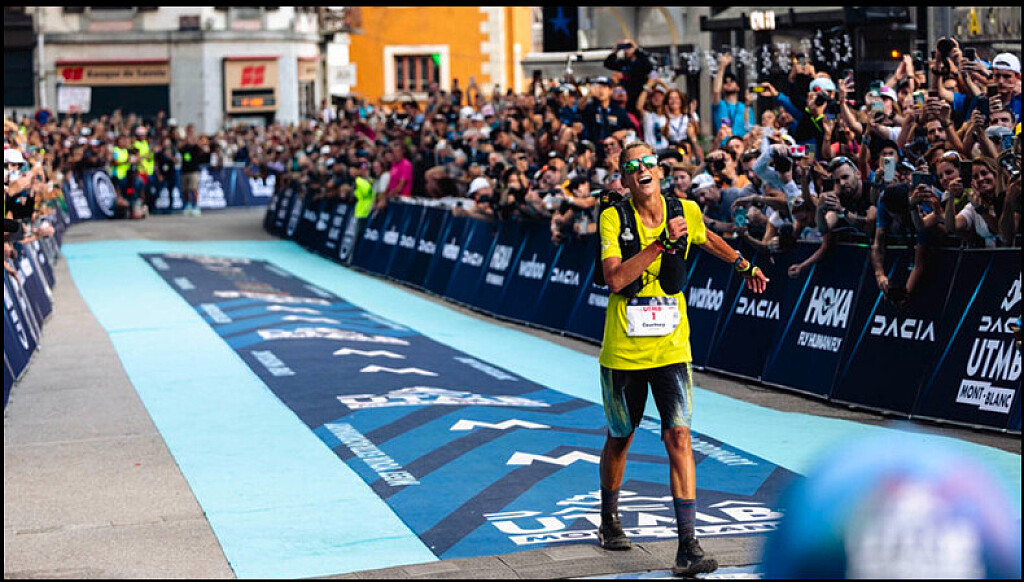
The Keys to Courtney Dauwalter’s Continued Dominance
During a recent press conference, Dauwalter dished oUltrarunner extraordinaire Courtney Dauwalter has picked up in 2024 right where she left off last year. After famously winning three of ultrarunning’s most epic races during the span of about nine weeks last summer—Western States 100, Hardrock 100, and Ultra-Trail du Mont-Blanc—the 39-year-old athlete from Leadville, Colorado, defended her Transgrancanaria 126K title in a decisive wire-to-wire win in late February and won the Mount Fuji 100-miler for the second time on April 27, placing third overall.
She’s now gearing up to go for a third straight win at the Hardrock 100 on July 12-13 in Silverton, Colorado. After Hardrock, she’ll be crewing and pacing her husband, Kevin Schmidt, at the Leadville 100 on August 17-18, and then tackling a yet-unannounced trail running project in September.We caught up with Dauwalter to talk about her fueling and training in a virtual press conference, where she announced the May 20 release of her signature flavor of Tailwind Nutrition Endurance Fuel—Dauwaltermelon with Lime—as a permanent part of the brand’s lineup. Since she’s emerged as one of the world’s top trail ultrarunners, she’s been known for having a sound approach to nutrition and fueling, never shying away from eating whatever she wants, admitting her soft spot for candy and pastries, or having a beer every now and then if she feels like it.


COURTNEY DAUWALTER: I am still eating all of my favorite things whenever they sound good in quantities that sound good, and I am not intending to change that part of my life, because it just gives me a lot of joy to live that way. I guess it’s got to be partly my upbringing, and also with Kevin and I, our idea of how we want to live our lives is to enjoy it to its fullest while it’s here. We just want to enjoy food, enjoy meals out, enjoy the cravings that we have, and not worry about it. But I would say in the past couple of years I do more consistently do a recovery drink after a long run or after putting in big efforts, and that’s something that I was a little more lax with originally, so I feel like that’s a step in the right direction.
When I first got into ultrarunning, I had no nutrition plan. I didn’t know what I was doing. My first race was a 50K, and I remember not knowing that these aid stations would be buffets. My mind was blown when I got to them—all the options were overwhelming. I just started filling my pockets with jelly beans. In those first years, I did a lot of mimicking of what the people around me were doing. So if I came to an aid station and someone was grabbing pickles and drinking Mountain Dew, then that’s what I would do. If they were grabbing pretzels and cheese cubes, that’s what I would go for. It was just kind of roulette for me on what I would end up eating—if it would work, or if it wouldn’t work.
Initially, I never had a fueling plan at all. But then in 2017, I went to the Run Rabbit Run 100 in Steamboat Springs, Colorado, and Tailwind was available on course at all of the aid stations. I had a buddy who had started using it that year, and I remember just loving it and suddenly not having all the stomach issues and energy dips that I often had. I was like, ‘Oh, maybe this is what it’s like to have something reliable.
'At this point we’ve gotten pretty dialed on the race nutrition plan for those 10-to 24-hour efforts or the events of 100 miles or below. I’m not a person who has my watch beeping at me ever to remind me to eat. I don’t get those kinds of reminders, and I don’t want to eat every 15 minutes or 30 minutes during a race. I’m going to just slow drip the calories I have as often as possible—basically it’s an eating contest on the move. Now I know my body functions pretty well with about 200 calories per hour during those efforts. So, depending on the distance between aid stations, I can rely solely on a bottle of Tailwind and then supplement with some chews or waffles or gels, because usually I get actually hungry feeling and having something solid helps with that. But mostly, I’m relying on Tailwind as my backbone to the whole plan and generally aiming for that 200-calorie-per-hour benchmark.The past couple years (working with a nutritionist friend), we’ve been better at creating A, B, C and D plans—because sometimes the perfect nutrition plan that you have relied on isn’t going to work. Our approach is that’s fine, and here are some things you can start subbing in during a race that can cover your needs. I view race nutrition like a puzzle piece, and sometimes it fits into the puzzle right where we want it to, and sometimes we have to kind shift things around a little bit. I think one of the reasons a lot of us love ultrarunning is because, when things just aren’t going to plan, we have to problem-solve it.
That’s one thing I’m hoping to focus on a little bit more on in this buildup and this prep for Hardrock, because in the past couple times I’ve run it, I’ve struggled a little bit with taking stuff in. I would love to just try to intentionally train my stomach to be better at taking in those calories while pushing hard at 12,500 feet or 13,000 feet just to see if we can make some strides forward. So stay tuned on if that works or not.
Not specific things. I think I want to just keep finding the challenges that intrigue me and fire me up to keep putting in the work, the training, the time, the effort to go after them. And so whatever that is, there’s not a list of things I want to check off necessarily, but, I’m continuing to pour myself into this sport and see what’s possible while every one of my systems [muscular, digestive, endocrine, cognitive, emotional, etc.] is allowing that to happen. The Leadville 100 is on my short list of races I would love to do as soon as I can, but as far as a bucket list in general or what intrigues me, I’m still very interested in exploring the longer stuff and how our brains and our bodies can work together to take us over 100 miles. What does that look like to move efficiently for 200 miles or 500 miles? So that’s where I am putting a lot of my attention into—just finding ways to test myself on stuff that’s really long.I am interested in trying a road marathon again at some point because that was what led me to ultrarunning.. I didn’t think I could make that distance, but I finished without dying and then wondered, ‘What else is out there that sounds too hard that I could try?’ And then I stumbled into the ultrarunning world. In those first marathons, I was a casual runner.
I ran every day before work because it made me feel better to start the day, but I wasn’t doing huge miles or running quickly. So circling back to run a road marathon would be kind of fun.I definitely didn’t invent it, and I don’t know who did originally, but I know that for me that phrase just became this imagery that I really grabbed onto—as opposed to the struggle bus or the hurt locker or the many other terms. That one for me was visually something I could see, and it was something that I could work with to be productive. Back in high school, I had a cross country skiing coach who was big on the mental side of the sport and would always remind us and believe in our capacity to push past that moment when it feels like you have nothing left. He was huge on just the idea that there’s always one more gear. So I just crank the knob and believe that it can be cranked a little bit more. Having someone who believed in me so wholeheartedly that I could trust to keep pushing was important because it’s hard to do that when you’re any age, but for sure it’s hard to do when you’re a teenager.
The idea that you feel like you’re about to die and yet you’re telling me there’s more to push past that? That’s hard to learn. So I feel really lucky that I had that coach and to learn about that mental side of sports and digging deeper than you think.
That was so special, a highlight of my life for sure. We ran together through the desert in Arizona, side by side the whole time through all the highs and lows, and made it to that finish line. I’ll remember that forever, and that gift that she gave me of doing this thing with me and the sport I love and spending so much time preparing for it. She was training hard back home in Minnesota, trying to learn how to run trails, trying to power hike hills, and learning how to use all of the gear because she had never really run trails before. I think the domino effect is that you can start anything at any age. She was 66 when we ran this race together and 64 when she started this journey into trail running. I had told her my dream was to run an ultra with my mom, and now that she has completed a 100K, she has found a lot of joy in the trails. Even though we don’t have a race on the calendar together yet, she is still just finding that peace that the trails bring her, and it’s something she incorporates into her weekly life. I think that’s really cool, and it’s why I hope more people can find out about trail running—not necessarily even ultrarunning—but just getting out on the trails and exploring a little bit because that feeling of moving with your feet surrounded by nature and feeling so small in a big landscape is really, really cool.
My hope is that people hearing about the stuff that I’m doing or that the ultrarunning community is doing helps them believe they could go after something that sounds too hard or something that sounds crazy. Whether that’s running 100 miles or 200 miles or not. We can all find that thing in our lives that we can go after with a little more gusto and raise the bar for ourselves on what we’re actually aiming for. I also hope I can be a small example that you can work really, really, really hard at something and have a lot of fun doing it. Those things can happen at the same time and there’s no reason to separate them. I never predicted this chapter in my life, but I feel grateful every day for it. I’m just trying to squeeze as much living out of this period of life as I can.
n her approach to nutrition and fueling, early-career bonks, and more.
by Outside Online
Login to leave a comment

The Keys to Courtney Dauwalter’s Continued Dominance
Ultrarunner extraordinaire Courtney Dauwalter has picked up in 2024 right where she left off last year. After famously winning three of ultrarunning’s most epic races during the span of about nine weeks last summer—Western States 100, Hardrock 100, and Ultra-Trail du Mont-Blanc—the 39-year-old athlete from Leadville, Colorado, defended her Transgrancanaria 126K title in a decisive wire-to-wire win in late February and won the Mount Fuji 100-miler for the second time on April 27, placing third overall. She’s now gearing up to go for a third straight win at the Hardrock 100 on July 12-13 in Silverton, Colorado. After Hardrock, she’ll be crewing and pacing her husband, Kevin Schmidt, at the Leadville 100 on August 17-18, and then tackling a yet-unannounced trail running project in September.
We caught up with Dauwalter to talk about her fueling and training in a virtual press conference, where she announced the May 20 release of her signature flavor of Tailwind Nutrition Endurance Fuel—Dauwaltermelon with Lime—as a permanent part of the brand’s lineup. Since she’s emerged as one of the world’s top trail ultrarunners, she’s been known for having a sound approach to nutrition and fueling, never shying away from eating whatever she wants, admitting her soft spot for candy and pastries, or having a beer every now and then if she feels like it.
RUN: How did you develop such a sensible approach to nutrition and fueling, and what, if anything, have you changed?
Courtney Dauwalter: “I am still eating all of my favorite things whenever they sound good in quantities that sound good, and I am not intending to change that part of my life, because it just gives me a lot of joy to live that way. I guess it’s got to be partly my upbringing, and also with Kevin and I, our idea of how we want to live our lives is to enjoy it to its fullest while it’s here. We just want to enjoy food, enjoy meals out, enjoy the cravings that we have, and not worry about it. But I would say in the past couple of years I do more consistently do a recovery drink after a long run or after putting in big efforts, and that’s something that I was a little more lax with originally, so I feel like that’s a step in the right direction.”

RUN: What was your fueling strategy when you first got into ultrarunning in 2011?
CD: “When I first got into ultrarunning, I had no nutrition plan. I didn’t know what I was doing. My first race was a 50K, and I remember not knowing that these aid stations would be buffets. My mind was blown when I got to them—all the options were overwhelming. I just started filling my pockets with jelly beans. In those first years, I did a lot of mimicking of what the people around me were doing. So if I came to an aid station and someone was grabbing pickles and drinking Mountain Dew, then that’s what I would do. If they were grabbing pretzels and cheese cubes, that’s what I would go for. It was just kind of roulette for me on what I would end up eating—if it would work, or if it wouldn’t work.”
RUN: You have told stories about a few famous bonks early in your career. When did you start to dial-in your fueling strategy?

CD: “Initially, I never had a fueling plan at all. But then in 2017, I went to the Run Rabbit Run 100 in Steamboat Springs, Colorado, and Tailwind was available on course at all of the aid stations. I had a buddy who had started using it that year, and I remember just loving it and suddenly not having all the stomach issues and energy dips that I often had. I was like, ‘Oh, maybe this is what it’s like to have something reliable.'”
RUN: What is your current approach to race-day nutrition?
CD: “At this point we’ve gotten pretty dialed on the race nutrition plan for those 10-to 24-hour efforts or the events of 100 miles or below. I’m not a person who has my watch beeping at me ever to remind me to eat. I don’t get those kinds of reminders, and I don’t want to eat every 15 minutes or 30 minutes during a race. I’m going to just slow drip the calories I have as often as possible—basically it’s an eating contest on the move. Now I know my body functions pretty well with about 200 calories per hour during those efforts. So, depending on the distance between aid stations, I can rely solely on a bottle of Tailwind and then supplement with some chews or waffles or gels, because usually I get actually hungry feeling and having something solid helps with that. But mostly, I’m relying on Tailwind as my backbone to the whole plan and generally aiming for that 200-calorie-per-hour benchmark”
RUN: You had to overcome some stomach challenges in UTMB in 2022 and then at last year’s UTMB you seemed as physically challenged as you have ever been. How have you adjusted your fueling in those situations?
CD: “The past couple years (working with a nutritionist friend), we’ve been better at creating A, B, C and D plans—because sometimes the perfect nutrition plan that you have relied on isn’t going to work. Our approach is that’s fine, and here are some things you can start subbing in during a race that can cover your needs. I view race nutrition like a puzzle piece, and sometimes it fits into the puzzle right where we want it to, and sometimes we have to kind shift things around a little bit. I think one of the reasons a lot of us love ultrarunning is because, when things just aren’t going to plan, we have to problem-solve it.”
RUN: You’ll be doing a lot of your pre-Hardrock training in and around Leadville between 11,000 and 14,000 feet above sea level once the spring snow subsides. How are you able to fuel at such high altitudes?
CD: “That’s one thing I’m hoping to focus on a little bit more on in this buildup and this prep for Hardrock, because in the past couple times I’ve run it, I’ve struggled a little bit with taking stuff in. I would love to just try to intentionally train my stomach to be better at taking in those calories while pushing hard at 12,500 feet or 13,000 feet just to see if we can make some strides forward. So stay tuned on if that works or not.”
RUN: Do you have any bucket list events you want to tackle in the coming years?
CD: “Not specific things. I think I want to just keep finding the challenges that intrigue me and fire me up to keep putting in the work, the training, the time, the effort to go after them. And so whatever that is, there’s not a list of things I want to check off necessarily, but, I’m continuing to pour myself into this sport and see what’s possible while every one of my systems [muscular, digestive, endocrine, cognitive, emotional, etc.] is allowing that to happen. The Leadville 100 is on my short list of races I would love to do as soon as I can, but as far as a bucket list in general or what intrigues me, I’m still very interested in exploring the longer stuff and how our brains and our bodies can work together to take us over 100 miles. What does that look like to move efficiently for 200 miles or 500 miles? So that’s where I am putting a lot of my attention into—just finding ways to test myself on stuff that’s really long.”
by Brian Metzler
Login to leave a comment

Hardrock 100
100-mile run with 33,050 feet of climb and 33,050 feet of descent for a total elevation change of 66,100 feet with an average elevation of 11,186 feet - low point 7,680 feet (Ouray) and high point 14,048 feet (Handies Peak). The run starts and ends in Silverton, Colorado and travels through the towns of Telluride, Ouray, and the ghost town...
more...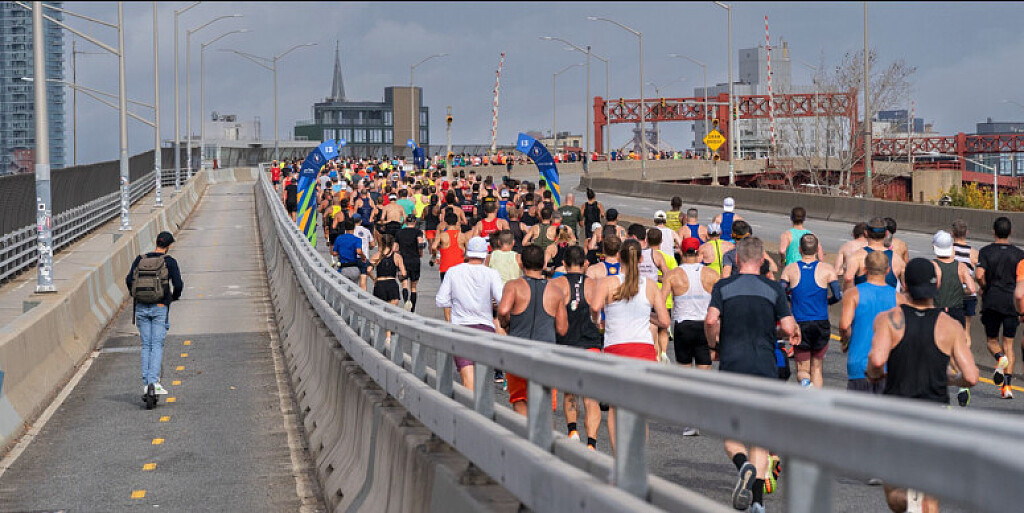
How to Add Hills to Your Marathon Training
Everything to know about adding inclines to training, including how often to tackle them and the best strength moves for prepping your legs.
Running a marathon is a difficult feat in and of itself. Add in a hilly course—like you’ll find in the Big Sur, Boston, New York City, or San Francisco marathons, for example—and that adds a new level of challenging.
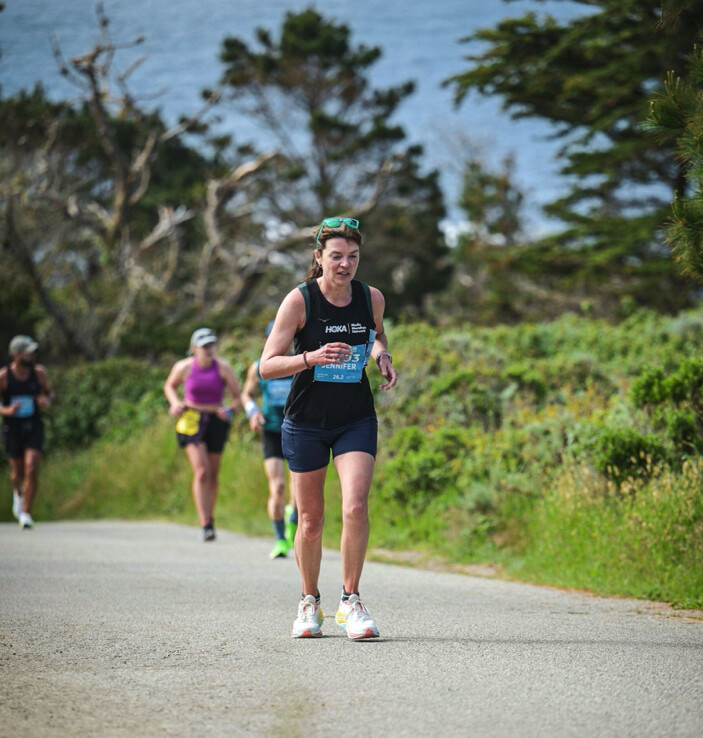
Having just run the Big Sur International Marathon, thanks to an invitation from the Hoka team last month, I learned the importance of incorporating hills into my marathon training cycle from Ben Rosario executive director of the HOKA Northern Arizona Elite in Flagstaff, Arizona, who was also my running coach.
In order to prepare for the demanding elevation changes of the course, I tackled hills every week of my training. Being that I live in Eastern Pennsylvania with many rolling hills, it wasn’t hard to seek out inclines regularly.
“You’re going to have a more enjoyable experience on race day, if you hill train throughout your marathon training,” says Rosario, whose advice rang true for me.
On race day, by mile 20, I had had enough of the hills mentally. Despite the breathtaking views of the Pacific ocean in the distance, six more miles still felt like an eternity in my head. However, I reminded myself that physically I had more to give because of the work I’d put into training, especially having pushed through so many tough climbs. I conquered the last 10K that day, and hit my marathon goal.
So how can you add hills to your own marathon training plan? Can running hills all the time be too much? And what do you do if you don’t have access to hills? To answer these questions, we chatted with expert run coaches to find out their best tips for how to train for hilly marathons.
How Often to Incorporate Hills Into Your Marathon Training Plan
If you live in a hilly area there’s nothing wrong with running hills on your regular runs—it will only help you come race day, Rosario says. “Not the hilliest run you can find necessarily, but there is nothing wrong with having a little bit of up and down in your runs everyday,” he adds.
If you don’t live in a hilly area, but you’re able to get to some place with hills, adding hills to your runs twice a week is smart, especially if you’re a more seasoned runner who has some base fitness. Incorporating hills into your weekly long run and speed session is a good place to start, Rosario suggests.
For novice runners taking on a hilly marathon, who have never consistently run hills before, be careful not to take on too much too fast, as you can get injured if you add hills into your training too aggressively or too quickly, says Richelle Weeks, D.P.T., physical therapist, certified run coach, and marathoner in Ottawa, Canada.
To make sure you don’t overdo it, Weeks advises new runners start with adding hills to one shorter run per week, until you get comfortable with climbing. Then, gradually add distance and more hills over the course of four to six weeks. “This is why I recommend a marathon training session be 20 weeks so there’s plenty of time to introduce hills,” says Weeks.
She also recommends runners have a comfortable base of running fitness first, before tackling inclines. “Most runners who get injured training for a marathon get their injury in the first month or the last month,” Weeks says. That’s because runners often are upping too many variables at once, like frequency, volume, speed, and hills. “Build frequency and volume first to get a good base. Then add in hills or speed, one at a time,” she adds.
I have a five-mile loop from my home with four big hills involved, so I would always incorporate this loop into my weekend long run, sometimes doubling it as my distance increased over the weeks. In previous marathon training, I mainly stuck to flat paths for longer runs, but knew this wouldn’t help me train for Big Sur. While my times were slower on that loop because of the hills, I did notice the more I ran it, the more efficient I was at covering climbs.
My weekend long run consisted of, on average, 1,200 feet of elevation gains for my 10- to 15-mile runs, reaching more than 1,500 feet for my 20-miler, which was helpful considering the Big Sur Marathon course features 2,182 feet of elevation gain.
How to Prep for a Hilly Marathon on a Treadmill if You Don’t Live Near Hills
If you can’t find a hilly route, finding a treadmill with both incline and decline capabilities is the next best thing, says Rosario. For many runners who don’t have access to a treadmill with decline options, Weeks advises strength training to build your quadriceps, which you need strong to tackle tough descents (see moves below).
You can research the elevation changes on the course you’ll run, and simulate that on the treadmill. If you’re doing a 15-mile treadmill run, for example, Rosario suggests plugging in the course inclines based on the elevation changes. For example, if you notice your course has a 6-percent grade at mile nine that stretches for one mile, add that percent and duration into your treadmill workout.
How to Handle Recovery Runs on Hills
It’s a good idea to keep recovery runs flat and easy during marathon training, as you want your easy runs to stay easy! If that means driving to a flat path or track, and you have the time, certainly do so, Rosario says.
If you can’t get to a flatter area, it’s okay to have those hills on your easy runs, with one caveat: Accept that you’ll really slow down your pace. “If you’re doing a recovery run, make sure you keep it easy, and if that means stopping and walking to go up the hills to keep your heart rate low and to make it feel like a relaxed run, then walk up the hills,” says Weeks.
For example, I ran some of the steeper hills on my recovery runs at a 10- to 12-minute mile pace, while my typical recovery pace is about a nine-minute mile. This strategy of adding hills to my recovery runs actually helped throughout the race. When the hills got long and taxing toward the end of the Big Sur course, I reminded myself to find my recovery pace and settle into it, so I could make it through the hills and feel strong for the subsequent miles.
The Garmin Forerunner 265S helped me maintain a lower effort on recovery runs, as I could keep an eye on my pace and heart rate, making sure I wasn’t exerting too much effort.
What to Do About Speed Workouts When Prepping for a Hilly Marathon
A mistake many runners make when it comes to training for a hilly marathon is tackling their hard workouts—like mile repeats or tempo runs—on the track or flat path that they’re comfortable with, Rosario says. The reason that’s an issue is because you’re not training your leg muscles to handle the demands of running hills at a harder effort.
Hill-based workouts ask more of the quads and calves and better prepare you for race day, Rosario adds, which is why speed workouts are precisely where you should incorporate hills. Just remember: “Hilly loops aren’t as cut and dry as training on a track,” he says, meaning your times are going to vary more as you run uphill and downhill, rather than sticking with a specific pace.
If you’re doing a speed session with hills, pay attention to your effort instead of pace, Rosario says, and give the workout the same effort you would on the track. For example, if you’re doing mile repeats with hills at threshold, instead of focusing on trying to hit a specific time, focus on maintaining about a 6 to 7 on the RPE scale (that’s a hard effort, but you can still say a few words).
Repeating the same hilly loop over and over again for those repeats will also help you see how you’re improving.
How to Strength Train for a Hilly Marathon
On average, two strength workouts a week is a good goal for most runners looking to prepare for a hilly marathon, says Weeks. Those workouts can include both uphill and downhill strength movements in each session.
“In the classic hilly marathons like Boston and Big Sur, it’s the quads that are beat to shreds after the race,” says Rosario. That’s why it’s important to incorporate strength moves to build up the quads so they can withstand the impact.
If you’re a lower mileage runner (around 30 or fewer miles per week), you can do strength work on non-running days. High mileage runners who do two or more speed sessions per week and a long run would benefit from keeping their easy days easy and hard days hard. So Weeks suggests pairing strength work with speed days.
Form Tips for Running Hills in a Marathon
Downhills are more dangerous than the uphills, say Rosario, because they cause us to run in a way that is less efficient. “When we run up a hill, there’s no way to get up it except fairly efficiently,” he says. “You’re running in a way that’s as close to perfect [form] as possible [on the uphill].”
That said, you still want to focus on solid running form when going up an incline. Think about running with a tall posture (avoid dropping your head and shoulders), a forward lean from the ankles, and avoid overstriding by keeping your foot strike underneath you. Also, use your glutes to push off and offer power.
When running downhill, runners tend to land hard on their heels, which sends a lot of shock through and up the kinetic chain—from the heel to the legs and hips—which causes eventual soreness postrace because the body is having to violently absorb all that shock, Rosario says.
Allow your feet to land closer to the hips, as opposed to way out in front of you in an overstride, as this creates a more gentle impact on the body, Weeks adds.
What runners need to practice, Rosarios says, is letting gravity do the work on the downhill. “You don’t want to bomb down the hill out of control, but you also don’t want to put on the brakes. You want to run as smoothly as possible down the hill,” he says. “It’s that medium effort that you want to find [running downhills] which takes time to learn and practice.”
As for accomplishing your hilly marathon: Give yourself grace, flexibility, plenty of time to train, and learn the marathon course you’ll run as best you can before race day. Marathons with a lot of inclines aren’t for the faint of heart, but now having raced one, I can say I’m proud I accomplished it. Afterall, American novelist and poet Jack Kerouac, who spent time living in a cabin at Big Sur in the 60s and traveling the United States wrote: “Because in the end, you won’t remember the time you spent working in an office or mowing the lawn. Climb that goddamn mountain.” In this case, just run it, for as long as you can.
by Runner’s World
Login to leave a comment
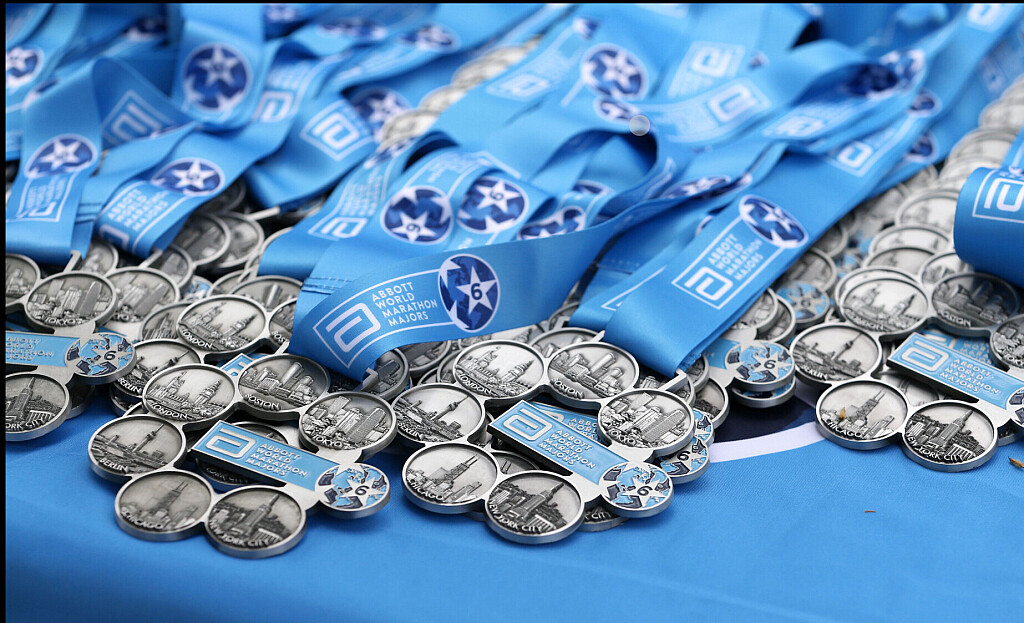
Controversy Arises Over Boston’s Moving 6-Hour Results Cutoff
For back of the packer, heartbreak is learning their finishes are not official, even though they have times.
Laura Caster wants to be clear: She knew what the Boston Marathon rule was about official finishers.

She was aware she had 6 hours from the time the last finisher crossed the starting line to finish the race in order to be considered official.
Her problem? She didn’t know what time the last finisher crossed the starting line.
Caster, 52, from Idlewild, California, was in corral 7 of Boston’s final wave, wave 4. And she crossed the starting line at 11:25 a.m. So for how many more minutes were runners crossing the starting line behind her? “Are they a minute behind me? Five minutes?” she wondered.
Every minute would count for her.
As it turned out, the final starter crossed the line at 11:28 a.m., so Caster needed to finish by 5:28 p.m. to be considered official.
Caster typically runs about 5:40 for a marathon. She finished Tokyo on March 3 in 5:41:50. Tokyo was her fifth of the World Marathon Majors six-star challenge. Boston was to be her sixth.
To gain entry to Boston, she had run for a charity, Team for Kids. She raised more than $5,000—part of the more than $40 million Boston Marathon organizers say the race raises through charity runners every year. And she treated Tokyo as a long run for Boston.
But the weather was warm on Marathon Monday, April 15. The slower runners start later in the day. And from early on, Caster knew she was in trouble. Her stomach was upset. She couldn’t take in all the fluids she needed. She was grabbing ice every time a spectator offered it.
Still, she plugged along, hitting every timing mat—even though the mats are rolled up along the course on pace with the 6-hour finish time. She passed halfway in 2:58:40.
At numerous points, Caster became aware of a vehicle trailing runners like her, who were going at about 6-hour pace. And she asked a volunteer at one timing mat, “How do I know if I’m going to be official?” Caster said he pointed at the car and told her she needed to finish in front of it.
“I was like, okay. That’s a definite answer,” she said. “I’m not going to look at my watch. I’m going to focus on not throwing up and being in front of that car.”
Caster was well ahead of the car on Commonwealth Avenue when she turned right onto Hereford Street. Just to be safe, as she approached the finish line on Boylston, Caster took a final look behind her. No sign of the official car. She crossed at 5:31 p.m., in 6:05:59. Volunteers put her in a wheelchair and sent her to the medical tent. From there, she was transported to a hospital with low blood potassium levels. She was released later that evening.
At the hospital, she looked at the results and realized she was not official. She had a gun time and a net time, but no place.
Caster was devastated. All the training, all the time and expense of pursuing the six stars, and she wasn’t really done. “I’ve worked for years, was so excited to have gotten to this point,” she said of her progress. “I was just leveled.”
Caster’s coach is Meb Keflezighi, an Olympic silver medalist and the 2014 Boston Marathon champion. On the phone with him, she broke down.
He told her, “I couldn’t be prouder of you. You missed it. We both know that you completed all six. You’re not official. But you showed grit, you showed determination.”
Allowing roads to reopen
Caster was not alone. Chris Lotsbom, a BAA spokesman, wrote in an email to Runner’s World that 497 people appeared to have crossed the Boston finish line this year after it officially closed. Volunteers staffed the area and handed out medals for approximately 4 hours, or until 9:45 p.m., longer than the race has ever continued to note times before.
Of those 497, many were within a few minutes or seconds of 5:28 p.m.
Cortney Blackburn, also in pursuit of her sixth star at Boston, missed by 37 seconds.
In an email exchange after the race with BAA officials, she asked how she was to know what the cutoff time was after she had started running. She, too, was told about the car, with flashing lights on the top, going at 6-hour pace and alerting runners if they were falling behind. Blackburn never saw the car—she finished well ahead of it—and she, too, recorded a split at every finish line mat along the way.
Lotsbom confirmed the car was there—a “road reopening vehicle”—he called it, meant to inform runners that roads were reopening and aid stations were shutting down.
“Without knowing specifics, I can’t comment on the individual instances referenced,” he wrote. “I can say that we are reviewing our processes and procedures in regards to final finishers for future Boston Marathons.”
Blackburn crossed the finish line and picked up two medals: the Boston Marathon medal and the World Marathon Majors six-star medal. Only later did she realize she wasn’t official in Boston’s results and therefore isn’t official in the WMM results, either. She has the medals, but no online record of her achievement.
But if the finish line remains open, and the timing continues, why not allow runners to be official? Or at least communicate a time—for example, 5:30 p.m.—that is consistent from year to year? Why use a moving target?
Boston’s strict cutoff is part of the agreement the race has with the cities and towns along the route. The 6-hour time limit is in place “to support the communities throughout which the race runs, to allow their road reopening program to commence as planned,” Lotsbom wrote.
“We understand we could do even more in communicating the closing time on race day and we are looking to enhance that messaging to all runners for next year to ensure everyone is clear [on] the time limit and time that the finish line will officially close on race day,” Lotsbom wrote.
A grace period
A few runners who are much slower than 6 hours get to start in earlier waves, which gives them more time to finish. For some runners close to the 5:28 p.m. cutoff, starting in an earlier corral of wave 4 would have meant the difference between an official and unofficial finish.
In 2015, some members of Boston’s Quarter Century Club, people with 25 or more consecutive Boston finishes, were concerned about the 6-hour limit, which was imposed for the 2016 race. So race officials moved them to Wave 2. Problem solved.
For others, the problem remains. And the moving cutoff appears to affect more women than men, older runners more than younger ones, and many runners of color.
Hector Espinal, like Blackburn, only discovered well after the race that he wasn’t official. He wrote on Instagram on April 18, “Despite crossing the finish line, finishing the race and receiving my medals, this morning I was informed that I did not complete the Boston Marathon in the time allotted to be considered an official finisher and @wmmajors 6 Star Marathoner.”
The post has more than 10,000 likes, and 1,000 comments, the majority of them supportive. Elite runner Mary Ngugi of Kenya, who was sixth in 2:24:24, wrote, “No no, you are a 6 time world major marathoner and a hero.”
Boston is a race that has at times struggled with its image, which critics call elitist. Spectators last year accused the race of over-policing enthusiastic fans, most of whom were people of color, at a mile 21 cheer zone, which prompted a lawsuit. Runner’s World reported in 2022 about the B.A.A.’s obscure, largely white, invitation-only membership group, which is involved with governance of the organization.
To many observers in the running community, setting a fixed finish time would be an easy way to help the race’s image as concerned about runners of varying abilities, not just the front of the pack.
Other races in the World Marathon Majors are much more lax about their finishing times, with the exception of Tokyo, which has nine cutoff points along the route, and runners are stopped if they lag behind. There are no questions, however, about where they stand.
But finishers of London, New York, and Chicago appear in results with times hours slower than the races’ published cutoff times. Berlin, which has a posted cutoff time of 6:15, stays open for an extra 15 to 20 minutes before the Brandenburg Gate closes, according to previous finishers.
Blackburn won’t be back to Boston anytime soon. “I don’t know honestly if I would do it again without major changes to actually be inclusive of non-qualifying athletes,” she wrote in a message to Runner’s World. “I think [B.A.A. officials] are putting out ‘we are trying’ vibes without actually trying.”
Caster, on the other hand, plans to try again. The uncertainty while she was on the course—and the wrong information she was given about the official vehicle—were what upset her. She doesn’t know if it would have made a difference for her had she been aware of the time she had to beat.
“But I would have liked to the opportunity to have tried,” she said. “That’s the part that I’m sore about.”
Login to leave a comment

Texas 16-Year-Old Breaks Two High School 5K Records
Elizabeth Leachman ran 15:28 for 5,000 meters indoors and 15:25 outdoors—but she’s taking the long view.
Elizabeth Leachman has built an impressive running résumé during her first two years of high school. Last December, the sophomore won the Foot Locker Cross Country Championships in San Diego in 16:50, finishing 14 seconds ahead of the second-place runner.
She made headlines on March 10 at the Nike Indoor Nationals meet in New York, when she broke an indoor track record for previously held by Katelyn Tuohy. Leachman, 16, ran 15:28.90 for 5,000 meters, bettering Tuohy’s high school record (15:37.12), set in 2018, by more than 6 seconds. Leachman averaged 4:59 per mile.
Then on March 28, she ran the 5,000 meters at the Texas Relays and took an additional 3 seconds off. Her time, 15:25.27, broke Natalie Cook’s high school record (15:25.93) from 2022.
Her coach, Jenny Breuer, doesn’t care about any of that. She just wants her athlete to run even splits.
Leachman, who goes to Boerne Champion High School, in Boerne, Texas, a suburb of San Antonio, knows her pacing can be a weakness. But she’s working on it.
“That’s definitely been a struggle for me,” she said. “I really like to go out hard and just kind of get after it. But I pay for it at the end, for sure.”
That’s why according to Breuer, the 5,000-meter record wasn’t even the most important race Leachman ran at the Nike indoor meet. Two days earlier, Leachman won the 2-mile in 9:44.16, splitting 5:03 for the first mile and 4:41 for the second.
The 4:41 was (unofficially) a mile PR for her. It also proved to her that she didn’t have to lead. Leachman has had some poor (for her) races after going out too hard, most notably at Nike Cross Nationals last fall, the week before her Foot Locker win, when she rocketed out to a 17-second lead in the early miles before fading to 15th place.
“You can’t keep doing the same thing and expecting a different result, so [for the 2-mile] we really just talked about waiting for the 1200, six laps in, then go,” Breuer said. “She likes to lead. It stresses her out not to lead. I think that gave her a lot of confidence she could race differently and still win.”
Breuer says Leachman is easily the most talented athlete she has had in 28 years of coaching college and high school athletes. But she spends most of her time holding Leachman back.
After she contended with hip bursitis and tendinitis in her hip and hamstring as a freshman, Leachman embarked on a vigorous cross-training regimen, alternating sessions of pool running, the elliptical machine, and the ARC trainer.
Her weekly schedule is similar to that of Parker Valby, the University of Florida star who is a four-time NCAA champion. Leachman’s routine includes only three or four days each week of running, for about 30 miles total. She’ll do a 90-minute session of cross-training on the days she doesn’t run, and on the days she does, she’ll put in an extra 30 minutes of cross-training after the workout.
A typical week, Breuer said, will include a long run, a threshold run or intervals, and a shorter interval workout. The long run is usually 9–11 miles. She tried to have Leachman run by time, but she ended up running too fast and too far, so they went to a mileage limit.
A recent threshold workout was 4 x 1 mile at about 5:10 pace, with a one-minute recovery between miles. The speed day was 4 x 600 meters with a 200-meter float between each. She never does more than a mile for warmup or cooldown, so that workout totaled less than 4 miles.
They’ve also spent a lot of time doing 200s in 36 seconds and 400s in 72. Breuer will sometimes have Leachman do those after the main part of the workout, just to get the feeling of the pace she should not exceed.
“If you have to take the lead, do not go faster than 36 or 72,” Breuer said she instructed Leachman before the 2-mile. “Do not run a 68. Please.”
The coach and the runner sometimes challenge each other. Leachman wants to do more. Breuer wants her to stay healthy and develop over time. “I’m always pulling her back,” Breuer said. “Err on the side of caution.”
For all the unusual ability Leachman has—a powerful aerobic engine, the discipline to work hard at cross-training—there’s one thing that she doesn’t have that most 16-year-olds do: an Instagram account.
That’s been a deliberate choice on the part of Leachman and her parents, who don’t want to see their daughter swept up into the frenzy and pressure that can sometimes descend on young, female runners. (See: Tuohy and Valby.)
“I think if it was fully up to me, I probably would have it,” Leachman said. “But my parents don’t want me to, and I’m okay with it. I haven’t really fought it.”
When she was at Nike Indoor Nationals in New York, it was the first time she had encountered fans who wanted to take pictures with her. It wasn’t too weird, she said. “It was mostly other high school girls and then a couple of younger girls,” she said. “It was sweet. I never expected that.”
The social media moratorium is a way to keep Leachman’s high school experience as typical as possible. She maintains a perfect GPA. She works occasional shifts at a gym after school, staffing the front desk or the babysitting area, where parents drop their kids while they work out. She likes to be with her teammates, helping score points for Boerne Champion, even though she does many of her workouts alone or with the boys’ team during cross-country season.
She follows what’s happening in pro and college running, but not obsessively. She knew Valby ran 14:52 in winning the NCAA indoor title—“insane” Leachman called it—but then she didn’t give it much more thought.
“Because running is important to me, it’s the focus of what I’m doing a lot of the time,” she said. “When I’m away from it, I try not to make my whole life focused around it, so that I can be more balanced in general.”
The adults in Leachman’s life sound a constant drumbeat: You are more than your performances.
“We talk a lot about external expectations, and just because you’re good at running doesn’t mean that it’s everything that defines you,” Breuer said. “That’s what’s really hard, I think, for a 16-year-old to remember sometimes when the spotlight is on. I try to remove that pressure as much as possible and remind her that this is supposed to be fun.”
There is plenty of time for all the extras. Leachman will have to wait to see if her 15:25 gets her entry into the Olympic Trials this summer, but Breuer is playing the long game.
“She has a really good perspective,” Breuer said of Leachman. “Her parents have done a super job. And also, I say, ‘I want you to be an amazing college runner, I want you to be an amazing professional runner, if that’s what you want to do. We don’t want you to peak in high school. That’s not the goal.’”
by Runner’s World
Login to leave a comment

6 Ways to Be a Great Training Partner
These 2024 Olympians know how to help each other while keeping it fun.
Pianist Harold Mabern said that jazz is “competition without animosity.” He might well have been describing the running relationship of Conner Mantz and Clayton Young, who finished first and second, respectively, at the U.S. Olympic Marathon Trials in February.
That Mantz and Young are not just two guys who run together, but true training partners, became obvious over the second half of the Trials race. Zach Panning, who wound up finishing sixth, took the lead in the sixth mile and dropped the pace by more than 10 seconds per mile. Mantz and Young tucked in; by the 19th mile, when they were Panning’s only company, they slapped each other’s hands in an apparent celebration of making the team.
When Panning started to slow a few miles later, Mantz and Young pushed on ahead. With two miles to go, Mantz was visibly struggling. Young, looking great by comparison, repeatedly talked to Mantz and stayed with him rather than running the faster pace he looked capable of. In the closing strides, Young eased back as an exhausted Mantz heaved himself over the finish line, one second ahead of his training partner.
Seven years earlier, their first run together was also memorable. Both are members of the Church of Jesus Christ of Latter-Day Saints (LDS), the largest Mormon denomination. Many LDS members go on a one- to two-year mission in their late teens to early 20s. Even for members who are top athletes, the mission is primary; most do little to no training and gain a significant amount of weight.
In 2017, Mantz returned from his mission weighing 150 pounds, compared to his usual 120. A little more than a month later, down to 140, he showed up for his first day of practice with the Brigham Young University team. The group was doing an 8-mile tempo run a little slower than 5:00 per mile. “I held onto the pack for as long as I could,” Mantz recalls. “I almost made it 5 miles until I had to slow down.”
Young, who was in the pack, says, “When Conner stuck with us past halfway, I thought, ‘Oh my gosh, he’s only a month and a half off his mission. Conner is the real deal.’”
They began training together regularly in 2019, the year when Young went pro after winning the NCAA 10,000-meter title. Young remained in Provo to train under BYU coach Ed Eyestone, a two-time Olympic marathoner. While at BYU, where he won two NCAA cross country titles, Mantz mulled going pro. He initially stayed in Provo, but thought that he would soon move and join the Oregon-based Bowerman Track Club or another group. Instead, a few months became several months, then several months became a year. After Mantz ran 2:08:16 at the 2022 Chicago Marathon in his debut, he thought, “Alright, this is working.”
That’s an understatement. Here are six takeaways about being good training partners from Mantz and Young, who will run the Olympic Marathon in Paris on August 10.
Find people with similar goals and outlooks
Since their build-up for the 2023 Chicago Marathon, where both PRed (Mantz 2:07:47, Young 2:08:00), they’ve had near-identical competitive schedules. Mantz and Young typically run together six days a week. They do their main run of the day in the morning. Depending on their schedules, the two, who live a few miles away from each other, sometimes also meet for their shorter afternoon run.
Why don’t they run together seven days a week? Both run their 100-plus-mile weeks while devoting Sundays to their faith. Being an outlier in that regard was one reason that Mantz decided not to join a more formal pro group. “I knew nobody else would be taking Sundays off,” he says, “and that added to the list of reasons to stay here.”
Good training partners help you get more out of yourself
Mantz is a notoriously hard trainer. Young is probably better aware of that than anyone else.
“My best workouts are keeping up with Conner, but Conner’s worst workouts are staying with me,” Young says. “I can’t remember the last time I dropped him in a workout or a long run. That’s one of the beauties about working out with Conner—you really do get pushed to your limit. My workouts with Conner are usually far better than they would be by myself. I just have to make sure I don’t go too hard.”
But pace-pushing Mantz also benefits from having Young to gauge himself by.
“For the most part, I would be way worse on my own,” Mantz says. “I can put a lot of pressure on myself and run too fast early on. I’m all about, ‘Let’s run faster than we did at this point last build-up.’ I see it as I want to get better every day. It’s a little difficult, because I may have gone a little too hard in workouts over the last few years, and so now to even match what I did a year or two ago is quite difficult.”
Compare yourself to you, not your training partners
“There are definitely workouts where Conner is totally trashing me the last interval,” Young says, “and I just have to say, ‘Okay, I did what Coach said and I’m faster in February 2024 than in February 2023. I just really need to compare myself with myself.”
If, like Young, you have a training partner who likes to hammer, do like Young and listen to what your body is saying on that day.
“Typically, Coach will give us some splits he thinks we should start at,” Young says about hard workouts. “But it’s not uncommon for Conner to go faster than those splits, and so I have to do these mental gymnastics of, ‘Do I go with Conner or do I do what Coach said?’ Conner and I are obviously really competitive, and you get a lot of confidence training with one of the best athletes in the marathon, so should I stick with what feels good and with what Coach said, or should I try to close this gap and run with Conner? Sometimes I do, sometimes I don’t.”
Share both the joys and the struggles
As pros, Young and Mantz are unlikely to come up with reasons to blow off runs. But we all need an occasional pick-me-up.
“If I’m not feeling good during a workout, I turn to Clayton and say, ‘You’re leading the next one,’” Mantz says. “And he’s always like, ‘Alright, I’ll help out,’ even if he’s also having a bad day.”
For many of us, meeting our running partners doesn’t just help us get out the door. Doing so is often a dependable source of pleasure. That’s as true for Olympians as it for the regular runners. “I just get excited sometimes thinking about the camaraderie and that I get to run with Clayton today,” Mantz says.
Acknowledge irksome behaviors but keep them in perspective
Some days with your training partners won’t be exciting or fun. You might even find yourself wishing you were running alone. But as with a romantic partner, it’s the overall quality of the relationship that matters.
“There are times I’m like, ‘Conner, why did you go that fast? I thought Coach said to do this,’” Young says. “I can get frustrated. But at the end of the day, it’s making me faster. As long as I recognize that balance and look at the big picture, having Conner with me as a training partner far outweighs the little frustrations that I have every now and then.”
Use your time together to improve your lives
Like a lot of us, Young and Mantz spend a good amount of their running time talking about running—how their most recent workout went, what races they have coming up, how the BYU team and other top runners are doing, what the weather will be like on their next hard day. But, says Young, “we’re kind of unique professional runners in that we have a lot of stuff going on outside of running. So we’ll also talk about family, real estate, investments, taxes.”
Mantz, who at age 27 is three years younger than Young, has used a lot of their run time to discuss marriage. “That’s the biggest benefit of having Clayton as a training partner—asking questions and getting advice on things like adjusting to having somebody in your life at a new level,” he says.
Young, who had knee surgery less than a year before making the Olympic team, says, “We’ve gone through some tough stuff. We’ve been able to lean on each other a lot. Our runs together are often like a therapy session.”
by Runner’s World
Login to leave a comment
What you should know before running the Crescent City Classic
New Orleans is just one day away from the start of the 46th Crescent City Classic, and the annual running event is expecting 15,000 participants on this year's start line.
The Classic attracts people of all ages – and fitness levels, with organizers saying more than 60 percent of participants choose to walk rather than run.
World-renowned sports performance specialists – and WWL health and fitness experts – Mackie Shilstone and son, Spencer, say "getting the body right" before pounding the pavement is paramount for success at the Crescent City Classic – or any run for that matter.
Here are a few pre-race tips to help runners go the extra mile:
Meet a runner's best friend – shoes
According to Mackie, the single most important thing a runner can do is purchase the right running shoes. Whether you supinate, pronate or stand somewhere in the middle (neutral), the selection of proper footwear can make all the difference in running success and safety.
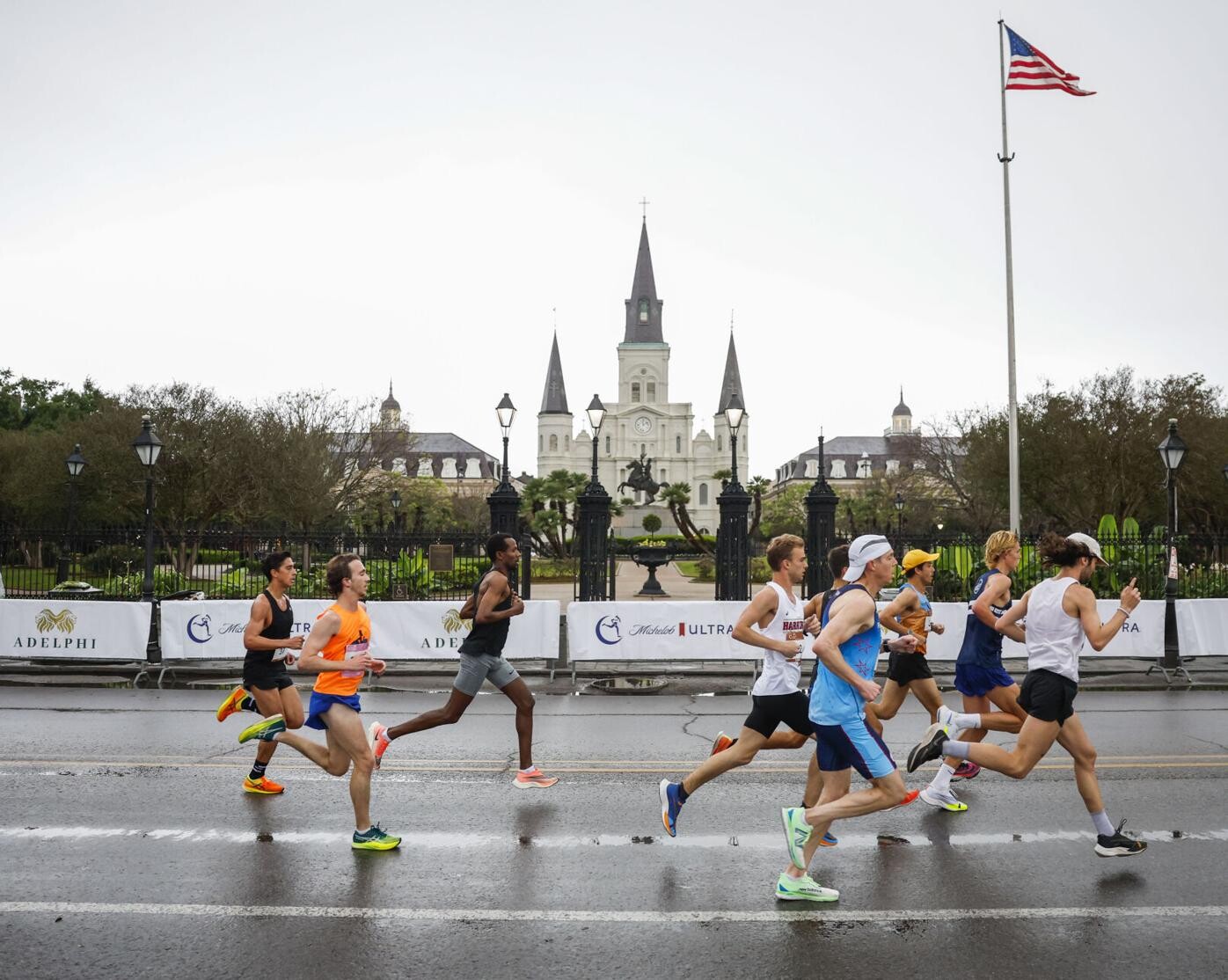
Mackie says, 70 percent of runners make first impact to the ground with their heel. So heavier runners will require a heavier heel counter because when the foot strikes the ground, the body weight is magnified by 5-7 times – five times in a moderately fit person, and seven times in an out-of-shape person.
"If you don't have the right running shoes where you have a thumbnail difference between your big toe and the end of the shoe, if you don't have the right lateral mechanics," explains Mackie. "Many people will go out and try and do this and have not prepared. So preparation in getting the right running shoe, that's for you."
Podiatrist-prescribed custom orthotics can also provide a substantial – and now affordable – solution.
And he says never, ever wait until race day to break in a new pair of kicks.
Roberts, who also leads a run club for the Louisiana Running + Walking Company, once again supports Mackie's suggestion on breaking in new shoes.
"I always recommend at least getting a few runs in even the week prior if it's a new pair of shoes," said Roberts. "But don't pull them right out of the box on the day of, especially if it's a completely different change [of shoe]. So, if you're going into it with a new speed shoe thinking you want to try something faster...don't recommend it.
Fueling the body is high-performance
Sodium is important because exercise lasting 60 minutes or longer is going to require the replacement of electrolytes. Anything longer than 90 minutes will require the intake of carbohydrates.
"Fueling the body is high-performance," said Mackie. "Mis-fueling the body is tantamount to disaster."
Mackie says most sports drinks do not provide enough sodium, which is needed to effectively use the glycogen in your liver and muscles and circulatory system.
"I'm not telling anyone on a hypertensive-type diet (less than 1,500mg per day) to go out there and increase your sodium," said Mackie. "[But] the requirement for sodium sits up there around 2200 milligrams."
Mackie also warns against the intake of fiber before a long run – or race – like the Crescent City Classic.
"You don't want any fiber in the diet," explained Mackie. "You don't want to have to go in and unfortunately have to use the toilet because your nature calls."
Truth about carb-loading for the Crescent City Classic
Mackie claims carb-loading for events such as the Crescent City Classic can be recipe for disaster. He explained that a moderately fit runner – someone running between 15-30 miles per week – can expect to finish a 10k in approximately 50 to 70 minutes. This means heavy carb-loading the night before can be excessive and counterproductive.
"Carb-loading simply means everybody's going out and eating a lot of pasta," explained Mackie Shilstone. "But let's let's go back to basics. Let's go back to human physiology. We're talking about 10k (6.2 miles). We're talking about the liver and muscle and circulatory system of the average person out there is 2,000 calories. You burn 100 calories for every 10 minutes of exercise."
Former Tulane runner and local running coach Aislinn Roberts agrees with Mackie.
“Don't go crazy on those carbs," the Willow School alum told WWL. "I know everyone starts thinking about it, but if you do go crazy, you might upset that stomach. So, it's kind of important to make sure that you're not going overboard with all that.”
'Movement is medicine' | Benefits of stretching for health
Warming up before exercise is an essential part of your pre-workout or run routine.
As a specialist in corrective exercise and performance enhancement, Spencer Shilstone says static and dynamic stretches not only optimize athletic performance, but also provide greater overall health benefits for everyone – including those in a sedentary lifestyle.
"Stretching is very important to activate your body," explained Spencer. "Movement is medicine and whether you're just sitting at a desk for a really long time, you're getting your hip flexors very tight. So, you could be going for a race or you could be getting up from the desk. It's important to stretch out and mobilize your body.
by Aaron S. Lee
Login to leave a comment

Crescent City Classic 10k
The Crescent City Classic isannual 10-kilometer race held in New Orleans, Louisiana,United States. Mac DeVaughn founded the Classic and held the first race in 1979. The race was originally held in the Fall, but the race is now held the Saturday before Easter. The Classic is New Orleans’ (and the region’s) premier 10k road race, and one of the oldest...
more...
Conquer Your Longest Distance Yet With These 9 Tips
Ultrarunners and coaches share their best advice for building mileage without getting injured.
Whether you want to progress from a 5K to a half marathon or a marathon to an ultra, a few general rules on how to run longer can help you get there.

While building mileage and time on your feet is paramount, the key to doing it successfully involves patience and persistence. “As much as volume matters—volume is king—too much volume too soon can get you on the sidelines,” Bertrand Newson, RRCA-certified run coach and founder and team captain of Too Legit Fitness, based in San Jose, California, tells Runner’s World.
Follow these tips from Newson and other coaches and ultramarathoners to successfully increase your mileage, avoid injuries, and crush your longest distances.
1. Build a Base, Then Keep It Consistent
“I steadily built up to running 250-mile races over many years, but I started by running one mile at a time,” says Sarah Ostaszewski, pro ultrarunner with Tailwind Nutrition who won the 2023 Ouray 100-Mile Endurance Run. “Build a strong base and try to keep a consistent running routine, so then adding a little extra here and there won’t seem so daunting.”
Base training typically requires about four to eight weeks (before following a race training schedule) to strengthen your cardiovascular system and your muscles, but the longer you can regularly run and set a foundation, the better. Your base work should involve mostly easy runs, low mileage, and maybe low-key speedwork (depending on your fitness level), like ending a run with strides. This part of your training is all about consistency, rather than actually building mileage.
Ultrarunner Mirna Valerio stays consistent by focusing on time on her feet, rather than distance. “This has been mentally freeing,” the author of A Beautiful Work in Progress tells Runner’s World.
“I have a standing appointment with my treadmill a couple times a week,” says Valerio, who will aim to run a minimum of 12 hours a day over six days at the Lululemon Further event, an ultramarathon for women in March. “I just get it done, which incidentally is one of my mantras.”
2. Find Your Best Approach to Building Volume
If you’re new to running and want to run longer, add another day of a short, easy run to your schedule, suggests Stefanie Flippin, an ultrarunner, Lululemon ambassador, and doctor of podiatric medicine, who has earned a first-place finish at several 100-milers.
Maxed out on available days of the week? Add to your long-run mileage, which is what Leah Yingling, ultrarunner and biochemical engineer who will see how far she can run in 24 hours at Lululemon Further, does first when aiming to build volume. The general rule is to increase your weekly mileage by about 10 percent each week, adding to that long run. For example, if you currently clock 17 miles per week with three four-mile runs during the week and a long run of five miles on the weekend, you would keep your midweek mileage the same, but kick up your long run to about seven miles next weekend.
Yingling, and many other pros, also do two runs a day. While this won’t work for everyone, if you don’t have a significant single block of time, clocking some miles in the morning and again in the evening and resting between can help you clock more mileage. One must-do to make it work: Tame the intensity on at least one of those runs.
Charlie Lawrence, 50-mile world record holder, views his second run of the day as a sort of active recovery. He often goes for double digits in the mornings, then runs for about four miles (at minimum) in the evening, keeping the effort light.
No matter what, testing out strategies to see what works for your schedule is the best way to run longer. “That might be adding a walk a few days a week in addition to your daily runs, or maybe you’re adding back-to-back long runs,” says Yingling. “Whatever you do, find something that is sustainable.”
3. Follow a Progressive Training Plan
A good training plan will slowly build mileage to decrease your risk of getting sidelined, as research shows taking on too many miles too soon is one of the biggest risk factors for overuse injuries.
When choosing your training plan, you have to be realistic about the time you have to build up to the distance you want to conquer—and where you’re at now, says Newson. For example, if you have your sights set on a half or full marathon, think about what you can comfortably run today. Then, following the loose rule of adding 10 percent more miles each week, how long do you need to train? If you currently run five miles without stopping and feel good after, and can comfortably clock 12 miles per week, you can probably conquer a 10-week half marathon plan.
Another important factor to look for when it comes to mileage on a training plan: recovery weeks. Newson explains you’ll typically see this as three weeks of building, then a week in which you back off mileage a little to give your body time to recover and actually make gains from all the work you put into your plan. This will also keep your body strong and help you sidestep aches and pains, he adds.
4. Keep Easy Runs Easy
You’ve heard it before but it’s especially true when trying to run longer: Don’t overdo your low-effort days.
“It’s important for me to always run my easy runs, short or long, at a conversational, aerobic rate of perceived exertion. This means that I can easily chat with a training partner for the duration of my runs without becoming out of breath,” Flippin says, who also clocks her heart rate to make sure she’s in an easy zone.
Don’t worry about what shows on Strava, either. “I think a lot of runners run their easy runs too hard and that is because of ego and they don’t want people to think they are slow,” says Devon Yanko, ultrarunner who’s placed first in several 100-mile races and will aim to conquer her longest distance over six days at the Lululemon Further event. “I delight in the idea that people may look at my Strava and think I am too slow, because on race day that won’t be the case!”
More generally, applying the 80/20 rule to your training overall can also help you record more low-intensity runs, Newson says, as it means 80 percent of your workouts should happen at a low intensity, and 20 percent at a hard effort.
It’s these easy runs that will help keep you running consistently—the key that unlocks higher mileage. “A B+ average of consistent runs, strength work, and recovery measures stacked over weeks, months, and years will always trump sporadic A+ weeks followed by a total drop-off,” Flippin says.
5. Master the Long Run
For most people, the long run will make up the bulk of your weekly mileage, but it doesn’t just help you clock more time on your feet. It also teaches you mental stamina, how to deal with fatigue, and it can help you get comfortable with being uncomfortable. With years of practice, this is what many pros say pulls them through farther distances.
Even though Lawrence can deal with being uncomfortable for long periods of time, he still turns to mind games to mentally check off miles. For example, he often breaks a race down into small, manageable chunks, often focusing on the next fuel stop (typically about every four miles) as a check point. If he’s struggling to get to the next four-mile marker, he may tell himself he’ll feel better in 10 to 15 minutes and checks in again then.
In addition to breaking your long run up into segments, Newson also suggests dedicating each mile to someone else, which takes it outside of yourself and gives you another reason to keep going, and says to focus on the mile you’re in, simply putting one foot in front of the other.
Finally, the long run is the perfect time to practice your fueling and fluid intake, Newson says, considering you need energy to clock longer miles. Aim to take in carbs when going for 90 minutes or longer, and go for about 30 to 60 grams per hour after the first hour.
6. Schedule a Few Harder Workouts
To build endurance, you want to run long, but you can also add intervals and speed work into your schedule.
Lawrence gets on the track for VO2 max-specific workouts at least once a week. VO2 max is the amount of oxygen you can take in while running and is a major marker of fitness—the better this metric, the easier running will feel, which will help you go longer with less effort. Focusing on VO2 max intensities on runs means going for about 90 to 100 percent of your max heart rate or about 5K pace, and it could involve intervals like 400-meter repeats.
You could also focus on lactate threshold training. Your lactate threshold is the point at which your body produces lactate at a rate you can no longer clear, leading to fatigue. To help you prolong that side effect—helping you go faster for longer—practice running at your threshold pace. (Here’s how to calculate your running speed at lactate threshold).
To do this, Ostaszewski prefers longer interval workouts with work periods ranging from six to 10 minutes near aerobic threshold. But tempo runs at your threshold speed are also smart.
7. Supplement Your Runs With Mobility and Strength
Before you jump into high mileage, you need a solid warmup. Lawrence has been doing the same activation drills before runs for a long time. He starts with foam rolling most of the lower body, then does a series of exercises, like:
Leg swings
Down dog to lunge rotation
Ankle mobility moves
Banded work, like glute bridges
This go-to routine wakes him up and gets him in run mode, even when he’s not feeling it.
Cross-training workouts are also key. Valerio mixes strength training, mobility workouts, Pilates, and rowing into her training schedule, which she says helps her avoid overuse injuries. Meanwhile, Flippin points to strength training in particular as crucial to running longer. She suggests starting with one day a week to build consistency, then adding on days from there.
Lawrence focuses specifically on doing core workouts every day (one of his go-to moves: the ab roll out), along with dedicated gym time for lifting, in which he conquers moves like hex bar deadlifts.
8. Make Recovery a Priority
Many pro runners turn to a solid nutrition practice to jumpstart recovery and fuel future performances. “I ensure I’m always getting in carbohydrates and protein within 30 minutes of finishing a key workout or long run,” Yingling says.
Finding time for other recovery practices, like mobility work, foam rolling, even meditating, can also support your training and get you prepped for the next round of mileage, Newson says. Full rest days are also important, especially if you’re feeling any aches and pains.
And you can’t forget about sleep for recovery—striving for at least the recommended seven to nine hours—especially for those looking to push their mileage.
9. Don’t Rely on Motivation Alone
Running your longest distance takes dedication and determination, but don’t expect to feel motivated every day. “People often wait to do things until they are motivated, when instead, they should have been focused on completing their plan or working toward their goal,” says Yanko. “I don’t jump out of bed every morning peppy and excited to run, but I am committed to doing the work and thus, I simply get the work done.”
Yanko also suggests tapping into curiosity to keep you going longer. “That is, instead of being intimidated by a workout or long run, I allow myself the opportunity to be curious about what might happen if I simply begin the session,” she says. “I do not believe that one workout or one long run ‘proves’ anything about my fitness or ability to race, so having curiosity means I can get into a session and allow it to unfold with confidence that if I just continue to show up and do the work, I will build my fitness brick by brick.”
Newson also suggests a running group to keep you accountable and consistent, and to elevate the fun of your workouts.
“On the mental side, I always try to see the big picture and remember that all the miles I’m running are for fun and for my own personal enjoyment,” Ostaszewski adds. “I’m always aiming to enjoy the process and recognize growth in the journey.”
by Runner’s World
Login to leave a comment
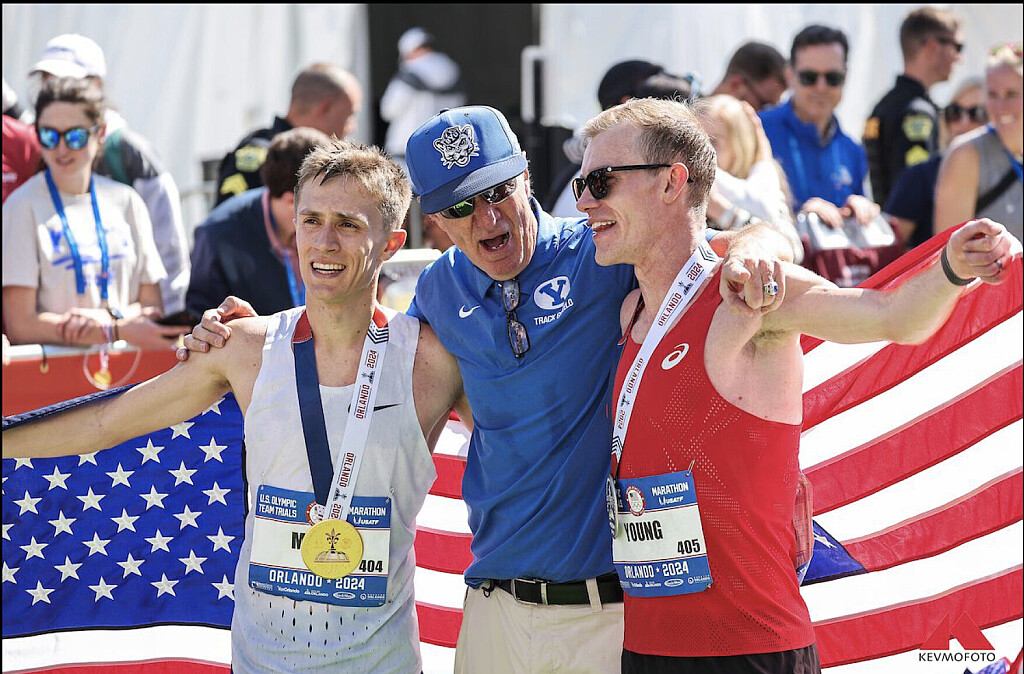
Meet the marathon guru behind three of North America's top runners
It’s been an exciting start to the year for Brigham Young University (BYU) cross-country and track head coach Ed Eyestone. In February, three athletes who once ran for Eyestone at BYU qualified for the Paris Olympics in the men’s marathon, including Canada’s Rory Linkletter, who hit the Olympic standard at last weekend’s Sevilla Marathon, running a two-minute-plus personal best of 2:08:01.
Eyestone, who coached Linkletter for five years at BYU before Linkletter turned pro (he is now coached by former U.S. marathoner Ryan Hall), knew he was ready for a breakout performance after watching Linkletter execute a top-20 finish in the marathon at the 2023 World Championships in Budapest. “I was super excited for him, and told him he was next, after the U.S. marathon trials,” says Eyestone. “To see him execute on race day, and run a fast time, I was proud of him.”
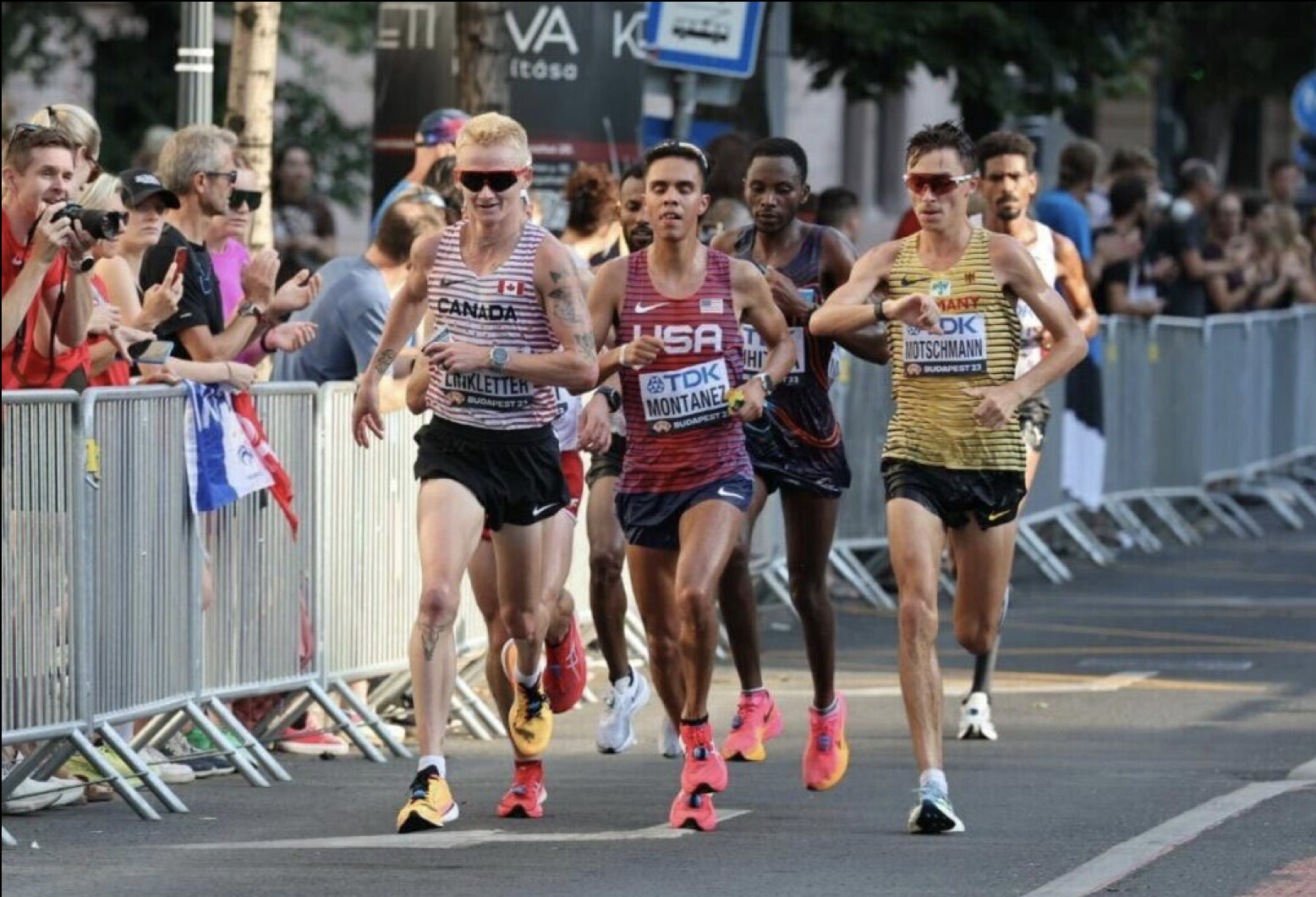
“It turns out that the group of 10K runners we had in 2018 was special,” laughs Eyestone. Linkletter ran for BYU in Provo, Utah, from 2015 to 2019, and just happened to be a part of a special group of young runners who would turn out to be three of North America’s top marathoners. U.S. Olympic Marathon Trials champion Conner Mantz and second-place finisher Clayton Young also ran at BYU during this time; they helped lead the Cougars XC team to three top-three finishes and an NCAA championship title in 2019.
“Looking back on that 2018 team, we were second and now have three men who’ve run faster than 2:08:10… if only the NCAA’s was 26.2 miles,” Eyestone laughs.
“Every high school athlete we recruit has aspirations of running professionally or being an Olympian one day,” he says. “I know with Mantz, he was heavily recruited out of high school, and he wanted to go to a school that would one day prepare him for the marathon.”
Eyestone’s coaching philosophy for developing long-distance athletes is not rocket science. He believes in long-term progression, so his athletes aren’t maxing out in college, and are leaving the window open for higher mileage post-collegiately. “I’ll have my 5,000m and 10,000m guys run around 80 miles a week, with a long run of 90 minutes,” he says. Eyestone has continued to coach Mantz and Young at the professional level, and still swears by not having them do much over two-hour long runs. “We have a great program at BYU, and it’s not unusual for Mantz and Young to hop in and work out with the college kids.”
BYU is an altitude school, standing at 1,400 metres above sea level, and has a large recruiting pool and an extensive following, with its affiliation with the Church of Jesus Christ of Latter-day Saints.
When Eyestone arrived as a coach at BYU in 2000, his goal was to build a culture to become a powerhouse program in the NCAA. “We wanted to recruit guys who wanted to challenge for an NCAA XC podium spot every year,” he says. “It all starts at the beginning of the year, with the team’s veterans setting the tone and getting younger athletes and recruits to buy in.”
Despite Linkletter choosing to part ways with Eyestone as his coach in 2019, the two remain close friends and share a level of respect for one another. “Rory is an incredible leader; he was our team captain,” says Eyestone. “He would always hold the team accountable for showing up on time and developing a healthy routine […] I remember he called it Ferrari fuel.”
Eyestone’s favourite thing about being a coach is being able to see the ripple effect of a good performance or win on an athlete’s family and personal life. “My son-in-law told me on Sunday after Rory’s race that four percent of the athletes in the men’s marathon in Paris will be former BYU runners,” Eyestone revealed. “I couldn’t be more proud of them.”
Login to leave a comment
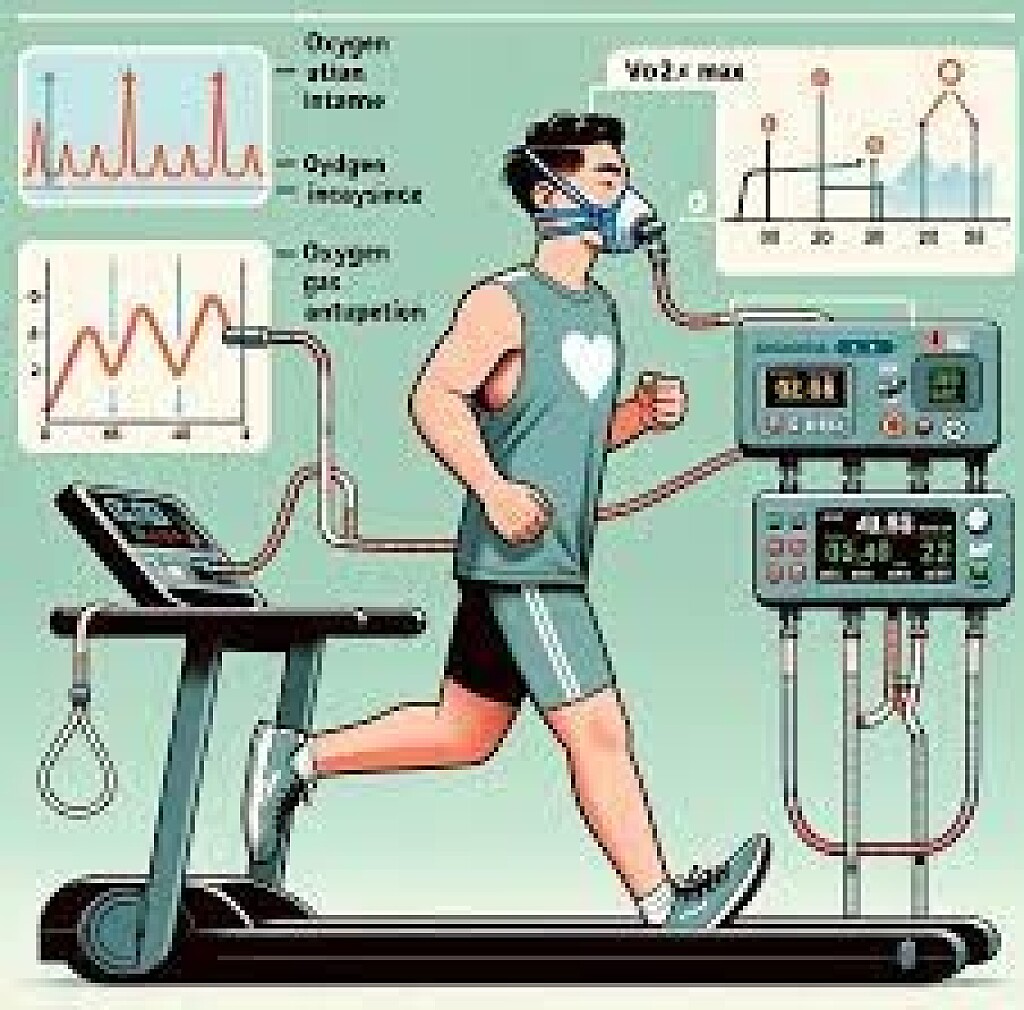
5 Workouts to Improve Your VO2 Max
Learn more about this metric—and specific workouts to improve it.
Running at the best of your ability is somewhat of a numbers game. To hit new PRs, you’ll want to keep tabs on all kinds of stats, like distance covered, pace per mile (or interval), max heart rate, hours slept… We could go on.

But at the end of the day, there’s one measurement that stands out for having a huge influence on performance enhancement: your VO2 max.
All About VO2 Max and What It Means
“VO2 max is a measure of the amount of oxygen your body can use while running or the maximum rate at which we can race a middle- or long-distance race,” says Juli Benson, Olympian and owner of Juli Benson Training. It’s a number that denotes what volume of oxygen (in milliliters per kilogram of bodyweight per minute) that your body delivers during activity. Simply put, it’s a gauge of your aerobic capacity.
If you’re interested in knowing your exact number, there are a few ways to measure it. The first, and most accurate, is to have it tested in a performance lab. That’s also pricey and the most uncomfortable, as you’ll have to endure a tough session at an all-out effort on a treadmill with a mask strapped to your face.
Many new smartwatches also offer VO2 max approximations; some Garmin watches, for example, estimate your number based on data including heart rate and running pace, plus info about your max heart rate.
The easiest way to approximate your VO2 max is to use a simple equation, based on your max and resting heart rates: VO2 max = 15x (HR max/resting HR)
All that being said, you can train to improve your VO2 max, and your overall running performance, without calculating your exact number. Here’s how.
The Best Types of Workouts to Boost VO2 Max
When it comes to improving your VO2 max, your genes play a huge role. However, “with good old-fashioned hard work, it’s possible to improve your VO2 max,” says Benson.
Getting faster by way of VO2 max work is all about efficiency. “The higher your VO2 max, the faster or more efficiently you’ll be able to finish a race or training run—as your body moves the oxygen in the most effective manner,” says April Gatlin, ACE-certified personal trainer, master trainer, and coach for STRIDE Fitness.
The best way to train your body to do just that is by regularly tackling intervals—both interval runs and HIIT sessions incorporating strength moves. The good news: While you need to do intervals regularly, it shouldn’t take long before you see gains. “If consistent in training to increase VO2 max, people should start to notice a difference in approximately six weeks,” says Gatlin.
Research backs up the keys that unlock better VO2 max: Runners who did 200-meter interval workouts for only 10 weeks improved their aerobic capacity and VO2 max significantly more than runners who stuck to moderately-paced workouts, according to a 2018 study published in the Journal of Strength and Conditioning Research. Similarly, people who did HIIT sessions with intervals as short as 30 seconds for four weeks or less showed VO2 max improvements in a 2019 meta-analysis of studies published in the Journal of Science and Medicine in Sport; participants who did intervals closer to two minutes for four to 12 weeks showed even greater gains.
5 Workouts to Challenge Your VO2 Max
The best way to improve your VO2 max is to tap into the right heart-rate zone during those intervals. “In general, VO2 max work should be completed at about 90 to 100 percent of your max heart rate,” says Benson. That’s about the same as a 5K pace, and each of the five workouts below—recommended by Benson and Gatlin—include intervals at that approximate intensity. Feel free to dial it back a bit, Benson says, if you’re new to this type of training.
Before each of these sessions, warm up by jogging for eight to 15 minutes, then do some dynamic stretches or range of motion drills, like high knees and leg swings, followed by a few reps of 20-second strides to prep your body to pick up the pace.
The tough interval sections of the workouts can range from about 10 minutes for novices to 25 minutes for advanced runners; pick your reps below to dial into the right level for your fitness. It’s always smart to start on the lower end, see how it feels, and work your way up to more reps.
Benson recommends doing a VO2 max workout twice a month for newbies, up to once a week for more experienced runners. And for the biggest benefit, be careful not to schedule them the day after a long run or other challenging session. “These types of workout sessions should be done during the week and sandwiched between two very easy days of running, cross training, or rest days,” says Benson.
Workout 1: 1,000M Repeats
Run 1,000 meters at a 5K effort, then walk or jog for the same amount of time. Repeat 3 to 6 times.
Workout 2: Two by Twos
Run for 2 minutes at a 5K effort, then walk or slowly jog for 2 minutes. Repeat 4 to 8 times.
Workout 3: Ladder
Run for 2 minutes and 30 seconds at 10K effort, rest for the same amount of time. Run 3 minutes and 30 seconds at 10K effort, rest for the same amount of time. Run 4 minutes and 30 seconds at 10K effort, rest for the same amount of time. Repeat entire set of intervals at 5K effort.
Workout 4: Bodyweight AMRAP
Do 10 push-ups followed immediately by 10 bodyweight squats, then run 400 meters at a 5K or 10K pace. Repeat as many reps as possible for 20 minutes, resting when needed.
Workout 5: EMOM Sprints
Sprint at a pace you can sustain for 10 to 15 seconds, then jog for the remainder of the minute. Repeat for 20 minutes. Work up to sprinting for 20 or 30 seconds each minute.
by Runner’s World
Login to leave a comment
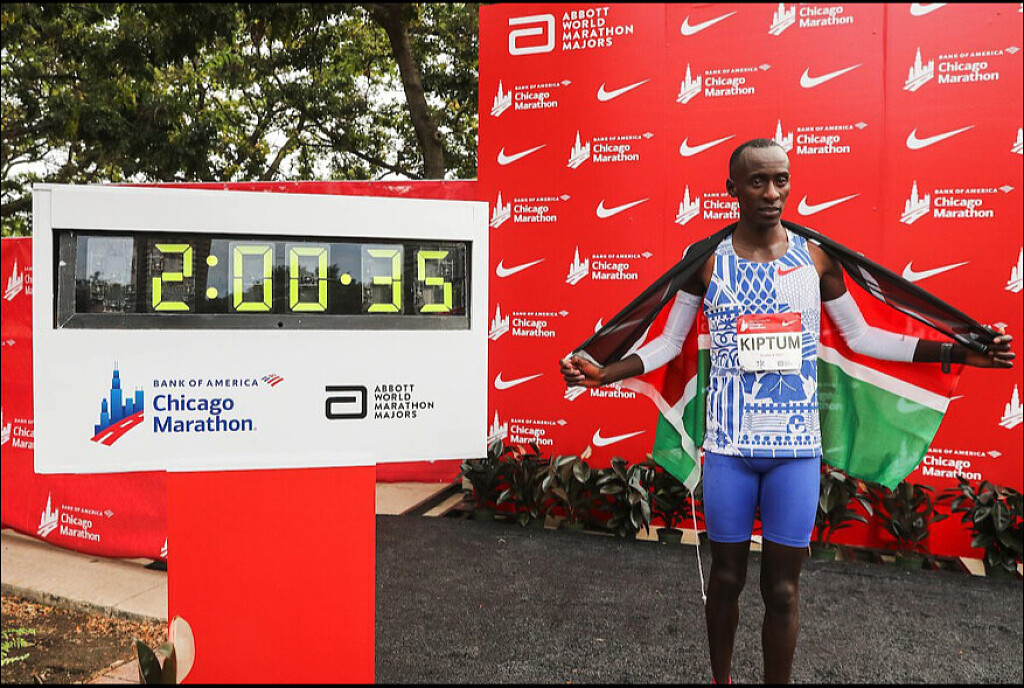
Kelvin Kiptum's legacy lives on with two-hour challenge
Last Sunday, the running world lost marathon world record holder Kelvin Kiptum at the age of 24 after he lost control of his car in Kaptagat, Kenya. Kiptum was one of the most promising athletes in the sport, setting the marathon world record of 2:00:35 at the 2023 Chicago Marathon, and was slated to challenge the two-hour barrier at the 2024 Rotterdam Marathon.
In memory of Kiptum, the running community has come up with an idea to honour his legacy: a virtual two-hour run on April 14, the day he was scheduled to run Rotterdam.The challenge isn’t asking runners to go out and try to break the world record, but they can use the challenge as a long run for their upcoming race or see how far they can run in the elapsed time.The two-hour challenge also does not have to be a run; it could be a ride, or even a walk. Just be sure to tag #TwoHours4Kiptum on your Strava or social media post.
Kiptum had a rapid rise to superstardom in the sport, recording the fastest-ever marathon debut at the Valencia Marathon in 2022. Five months later, he broke Eliud Kipchoge’s course record at the 2023 London Marathon, where he ran an impressive negative split of 2:01:25. Then came the one he’ll most be remembered for–setting a world record of 2:00:35 at the Chicago Marathon last fall.“Athletics world mourns death of marathon world record holder Kelvin Kiptum” — Canadian Running Magazine
After his world-record run, Kiptum said he never felt he was challenged by the marathon distance, and there was a fascination around what he might run in Rotterdam–a topic that will forever be debated, and a question that the world will never know the answer to. The running community will forever remember Kiptum and his drive to show people that anything is possible.
by Running Magazine
Login to leave a comment

Five exercises to amplify ankle strength and stability
Adding a few ankle exercises into your routine can help you stay strong and steady during the final tough miles of any long training run or race, whether you’re tackling roads or trails. You’ll also avoid getting sidelined by a strained ankle or repetitive stress injury.
A runner’s feet endure a continuous impact that, over time, can take a toll on the network of tendons and ligaments in the ankles. Toward the end of a long run or hard training session, fatigue and low glycogen levels cause your feet’s responsiveness of to changes in terrain to diminish, affecting the swift micro-movements crucial for maintaining balance. This decline in agility places an increasing burden on your ankles, subjecting them to prolonged stretching and strain.

The result is not only discomfort, but disarray in your proprioceptive system—the internal compass that guides your body’s position and movement—causing soreness, slips and ankle rolls. These exercises not only fortify your ankles but also act as a safeguard against the pitfalls of a fatigued and under-prepared lower extremity.
1.- Hop and hold
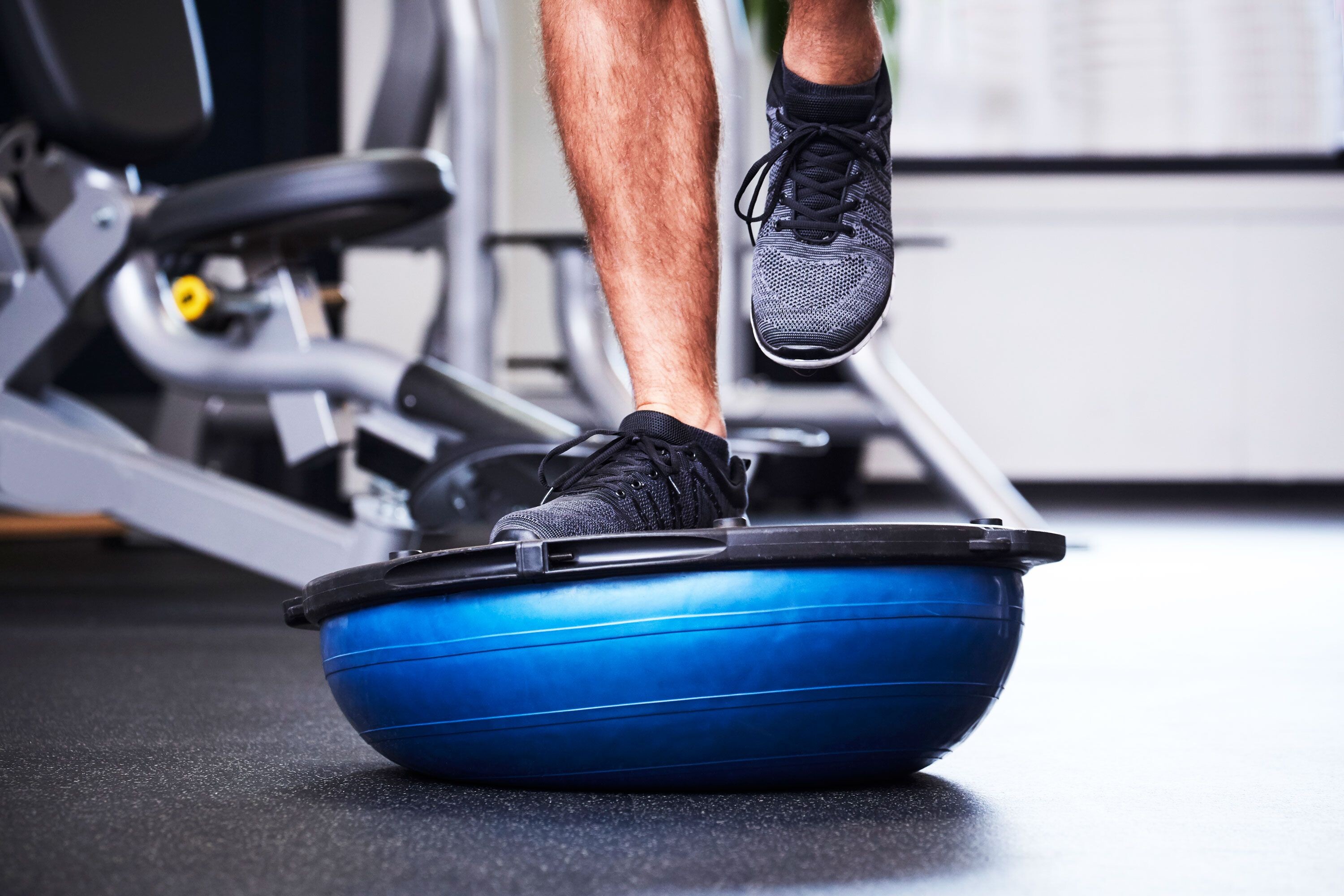
Stand with your feet hip-width apart, maintaining a straight and upright posture. Engage your core to ensure stability throughout the exercise.
Lift one foot slightly off the ground, balancing on the other.
With the grounded foot, perform a small, controlled hop. Focus on using the muscles around the ankle to control the movement. Upon landing, immediately shift your focus to holding the position. Balance on the foot that landed, ensuring that your ankle remains stable. Imagine rooting your foot into the ground.
Try to hold the position for 10-15 seconds, before switching to the other leg. Perform two to three sets of 10-15 reps on each foot, gradually increasing the duration of the hold as your ankle strength improves.
Modify this one if you find it challenging at first: you can hold onto a stable surface (like a chair or railing) for support until you build confidence and strength.
2.- Lateral shuffle
This exercise enhances ankle stability by engaging lateral movement and weight transfer.
Stand with feet hip-width apart, maintaining a slight bend in the knees.
Take a lateral step to one side, followed by the other foot. Move with controlled and deliberate steps.
Keep a low and athletic stance throughout the shuffle with your core engaged.
Try four x 10 steps to the left, then to the right.
3.- One-legged medicine ball toss
This exercise enhances ankle strength, stability and proprioception.
Stand on one leg with a slight bend in the knee for stability.
Hold a medicine ball with both hands, positioned in front of your chest.
While balancing on one leg, toss the medicine ball in the air and catch it. Focus on stability during the tossing and catching phases.
After completing a set, switch to the other leg. Try three sets of 10 tosses to start.
This exercise can be done with a cement wall, bouncing the ball gently off the wall with each toss and from both forward and sideways directions—it’s also a fun exercise to do with a partner.
4.- Eccentric calf raises
Try doing these on a step, lowering let your heels a few centimetres below the step with each one, to get a slightly deeper stretch.
Stand with feet hip-width apart and rise onto your tiptoes. Lower heels to a slow count to five.
Let your heels touch the ground, then immediately rise onto your toes again.
The key phase in this exercise is the eccentric one (the lowering part) when the tendon and muscles lengthen to control the downward path of your body.
5.- Single-leg Romanian deadlift
The single-leg Romanian deadlift targets multiple areas for runners—it not only strengthens the hamstrings and glutes but also enhances balance and stability, crucial for maintaining that strong foundation during tired miles.
Begin standing on one leg, with a slight bend in the knee. Hinge at your hips, pushing them backward while simultaneously lowering your upper body towards the ground. Keep your back straight and your chest lifted.
As you hinge forward, extend your non-standing leg straight behind you. Work to keep your extended leg, hip, and torso in a straight line, forming a “T” shape with your body.
Reach your hands towards the ground, going as low as your flexibility allows. Engage your hamstrings and glutes to return to the upright position, bring your extended leg back to the starting position, and repeat.
Aim for three sets of 10-12 repetitions on each leg.
These exercises collectively target ankle strength, stability and mobility, providing a comprehensive approach to help you maintain an unshakeable foundation. As with any exercise, start with a light load, or use your body weight and gradually increase as your strength and technique improve.
by Keeley Milne
Login to leave a comment
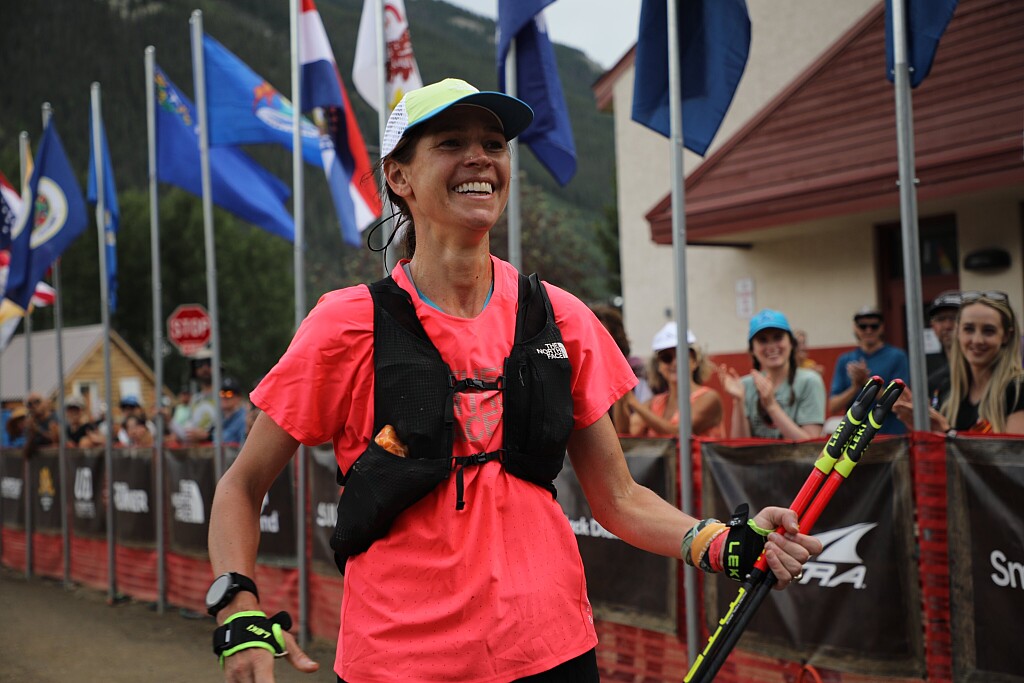
Canadian road and trail champ Anne-Marie Madden shares her wisdom
Canadian distance runner Anne-Marie Madden has been shining on both road and trails for years, most recently winning the masters division at the 2023 California International Marathon (CIM). Madden was third at Arizona’s Black Canyon 100K in 2022, earning her entry into the 2022 edition of the legendary Western States 100, where she took 11th place.
Madden, who works as a doctor in Vancouver, shared the secrets to her success in seamlessly transitioning between road and trail running with Canadian Running.
Early morning trail training

Balancing a thriving medical career with elite training demands a strategic training schedule. Madden’s weekdays are often dictated by long work hours, so she utilizes non-technical trails for pre-dawn runs with her dog, Tucker. Her days off become an opportunity for long, trail-focused runs.
“During this most recent marathon build, I made a concerted effort to do some long runs on the road,” says Madden. “My coach gave me a few workouts within a long run. This was useful on weeks when I had limited time off to do other workouts and it also built up my confidence running faster road paces again.”
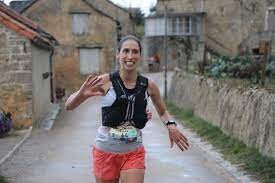
Fuelling for both styles
Madden’s fuelling strategy adapts to the demands of each terrain. For shorter, more intense road workouts, she opts for liquid nutrition and gels, finding bars challenging to consume when running at a higher intensity. She uses different methods of staying hydrated during training: on trails, she uses a filter flask to refill water from natural sources, contrasting the convenience of refilling at water fountains on urban road runs.
Tips for runners hoping to shift between terrain
“One of the biggest mental shifts for road runners moving into the trail space is to let go of pace goals,” says Madden. “The terrain often dictates the pace. Running on trails is a great opportunity to hone in on perceived effort and to tune into our body’s cues.” Madden says this skill carries over to road racing.
“For readers with a road running background looking to do more trail racing, I recommend they introduce trail runs into their program on their easy days or for a portion of their long run,” says Madden. “They can eventually work in trail workouts such as hill repeats or speed work on gravel paths.”
Vert and alpine views
Madden’s social media posts highlight the beautiful B.C. trails where she runs with her exuberant dog. “The alpine views here are spectacular and the high numbers of park visitors means the trails are well maintained and great for running,” she says. She does the bulk of her long runs on the mountain bike trails in Pemberton and Squamish.
Madden says that while there are lots of great runs in B.C. with tons of vert., the snow pack can make it hard to find long sustained climbs to train on can be challenging in early spring: “something to keep in mind if you’re signing up for a big race with lots of vertical early in the race season.”
With that in mind, Madden will next be lining up at Black Canyon 100K on Feb. 10th, “a relatively low vert trail race which is easier to train for during the Canadian winter when a lot of the higher elevation trails are snow covered,” she says.
by Keeley Milne
Login to leave a comment

Black Canyon Ultras
The Black Canyon Ultrasoffer runners an immersive experience along Arizona's historic Black Canyon National Recreation Trail. This event features two point-to-point races: a 100K on Saturday and a 50K on Sunday, both traversing the rugged and scenic Sonoran Desert. The 100K race begins at Mayer High School in Spring Valley and concludes at the Emery Henderson Trailhead near New River....
more...
How to Go From 5k to Marathon: Tips From an Expert
Ramping up in distance from a 5k to a marathon is a significant step, and it requires careful planning and gradual progression to avoid injuries and ensure success.
Build a Running Base
Building your aerobic base is one the most important things you can do when aiming for a longer race. Building this base will help you get stronger and build your endurance so you can handle longer, slower efforts.
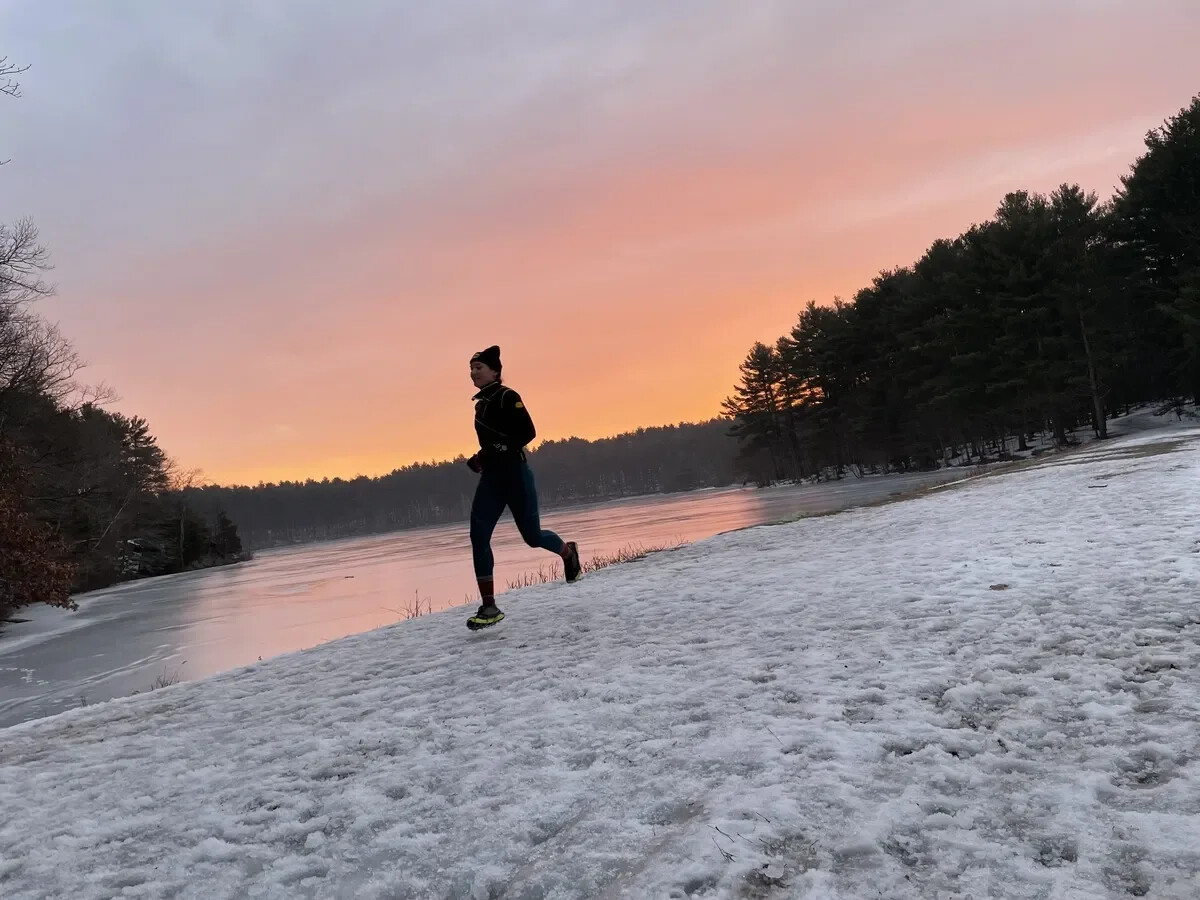
Set Realistic Goals
Establish realistic short-term and long-term goals. Consider running a 10k and a half marathon before attempting a full marathon. This allows you to gain experience with longer distances.
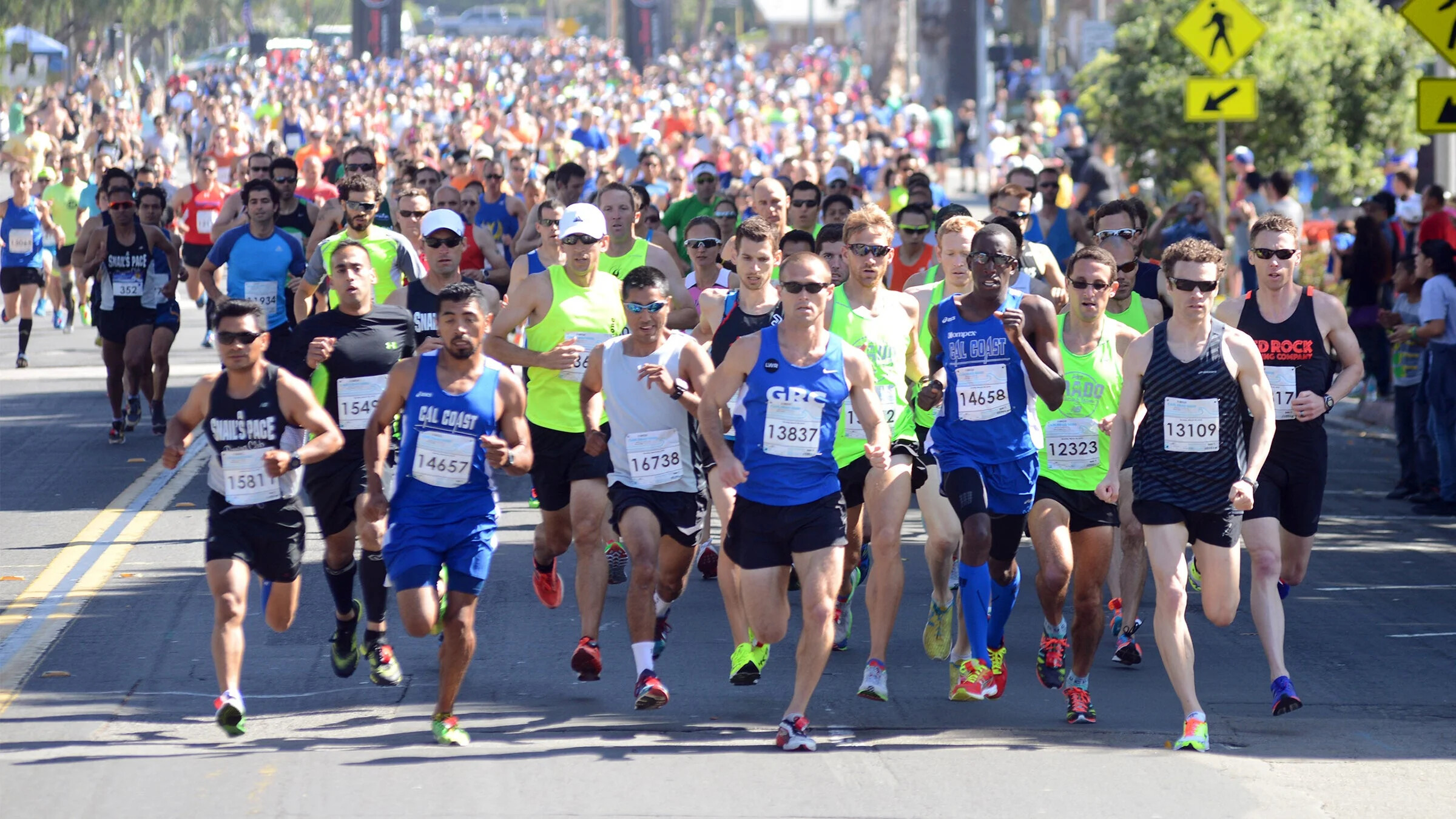
Increase Mileage Gradually
Gradually increase your weekly mileage by no more than 10% each week. This helps prevent overuse injuries and allows your body to adapt to the increased workload.
Consistent Running
Aim for at least 3-4 days of running per week. Include a mix of easy runs, tempo runs, interval training, and a long run.
Long Runs
Incorporate a weekly long run into your training. Increase the distance of your long run by 1-2 miles every 1-2 weeks. Every 3-4 weeks, scale back the distance to allow for recovery.
Cross-Training
Include cross-training activities like swimming, cycling, or strength training to enhance overall fitness and reduce the risk of injury.
Rest and Recovery
Allow your body time to recover by scheduling rest days into your training plan. Listen to your body, and if you feel fatigued or notice any signs of injury, take extra rest.
Nutrition and Hydration
Pay attention to your nutrition and hydration. Proper fueling is crucial for longer distances. Experiment with nutrition during your long runs to find what works best for you.
Practice Race Conditions
As you approach longer distances, simulate race conditions during your training. This includes practicing your nutrition and hydration strategies and running at your goal marathon pace.
Tapering
In the weeks leading up to the marathon, gradually decrease your mileage to allow your body to recover and be fresh on race day.
Mindset
Develop a positive mindset. Mental strength is crucial for marathon training. Visualize success, break the race into smaller, manageable segments, and stay focused on your goals.
Race Day Planning
Plan your race day strategy, including pacing, nutrition, and hydration. Stick to a pace that allows you to finish strong, especially considering the longer distance.
Remember that everyone’s body responds differently to training, so be attentive to how your body feels and make adjustments as needed. If possible, consult with a coach or an experienced runner for personalized advice based on your specific circumstances.
by Laurel Walker
Login to leave a comment

Feeling Terrible Two Days After a Hard Run? There’s a Reason….and a Solution.
You felt fine a day after your long run—so why the heck are you slogging through your easy workout two days later?
Picture this scenario: You get through a tough workout on Sunday—whether it’s a tough round of 800-meter repeats or 16 miles at marathon pace—and, surprisingly, you feel fine afterwards.

The next morning, you’re a little stiff, but nothing too serious. You take a day to rest, and then head back out on Tuesday for an easy run.
Then, boom. Your legs feel like they’re made of lead, you’re sore all over, and what’s supposed to be an easy run feels like you’re wading through molasses. What the heck happened?!
This is what Cory Smith, running coach and founder of Run Your Personal Best, calls “second-day syndrome.” The official term is delayed onset muscle soreness, or DOMS, but he likes to use second-day syndrome because it nails home the point that the ailment often happens two days after a hard workout, which a lot of people don’t expect.
Before getting to the bottom of why DOMS happens, let’s start with simple definitions. The American College of Sports Medicine defines DOMS as, “A sore, aching, painful feeling in the muscles after unfamiliar and unaccustomed intense exercise.” Basically, whenever you lift weights, run a tough workout, go rock climbing, or do an activity beyond your current level of fitness, you’re creating tiny tears in muscle tissue. In response, your body releases chemicals, lipids, alongside white blood cells like cytokines, macrophages, and neutrophils to quickly repair those muscles. This flurry of activity in localized areas of the body also initiates an inflammatory response. The muscle tears, rebuilding process, and inflammation creates that soreness and stiffness DOMS is recognized for.
“The soreness peaks anywhere from 24 to 48 hours after the initial stress, so it’s common for runners to feel fine the next morning and think they’re all good and recovered,” Smith says. “But then, on that second day, you might feel worse than you did yesterday.” This is because there’s a delay in delivery of blood flow to the muscle also called the “inflammatory cascade.” Think of muscle repair as a slow ramp-up process; sometimes it takes a few days to reach peak soreness.
Though it can be painful, annoying, and hindering, DOMS shouldn’t last long-term. In fact, it won’t be a recurring sensation.
“Eventually, through repeating the cycle of damaging and healing, you’ll grow stronger,” Smith says. “Your body is going to be accustomed to this stress and you’ll feel DOMS less and less.”
Depending on the severity of your workout and how often you repeat it, DOMS generally goes away in a few weeks. Your muscles heal, rebuild stronger, and eventually become accustomed to the intense exercise. Contrary to popular belief, just because that soreness goes away doesn’t mean you didn’t have a hard workout. Your body has just adapted and may require less recovery.
“If you’re not almost recovered from a normal workout on the third day, you probably went too hard,” Smith says. “Generally, it depends on the type of workout that you’re doing— some light temp work—you may only need a day in between and you’ll be recovered. Whereas if you’re doing hard 800s, you’ll probably need two full days to recover. For a long run at marathon pace, you might need three days.”
Since defining DOMS, research has traditionally been focused on muscle tissue damage. But a recent study published by the International Journal of Molecular Sciences has shown that connective tissue, like deep fascia, may be more involved than previously thought. Deep fascia is connective tissue surrounding muscles, and it facilitates movement between muscles and acts as a pathway for blood vessels.
Authors of the study believe that they’ve found evidence that proves further research and effort needs to be focused on the fascia, rather than just muscle tissue. This also means that runners may want to pay more attention to their fascia, as it doesn’t respond to conventional static stretching, rather multiple planes of stretching and mobility. It’s less about stretching individual muscles, but lengthening the connections made by the fascia.
There are several ways to target this connective tissue. One effective method is pedal during yoga: downward facing dog, the extended side angle pose, and the standing figure-four stretch.
There’s no fix-all method to preventing DOMS, but recovery protocols may dictate how severe or sustained your soreness will be. Smith recommends static stretching no more than six minutes after your run. It’s important to get those muscles stretched as quickly as possible after a run so they don’t tighten up. Tight muscles can prevent cells from expanding and bringing blood flow to the muscles. You need fresh blood and oxygen delivered to the worked out muscles, as it carries away the lactic acid buildup there. A massage gun can produce the same results.
“Movement is key! My go-to for runners is walking for 20 to 30 minutes after a hard workout, but an easy spin or recovery swim will also work,” says physical therapist and running coach Amy Parkerson-Mitchell.
The American Council on Exercise recommends drinking 7-10 ounces of water every 10-20 minutes during your run, and an additional 8 ounces within 30 minutes after. When you sweat, you lose water, which is important for oxygen delivery to the muscles. Plus, water acts as a sort of medium within the body to deliver nutrients like amino acids and electrolytes to damaged muscles.
You might be inclined to reach for an ice pack when you’re recovering from a long run, but Parkerson-Mitchell says that heat is key. In a study comparing heat and cold therapies for recovery, researchers found that applying heat directly after a workout produced less muscle damage. Ice, on the other hand, is great for when you’re in the midst of DOMS, rather than before it happens, because it eases swelling and numbs pain.
There are two types of heat therapy: dry heat in the form of heating pads, and moist heat in the form of steam towels or a hot bath. Both are effective, but the Orthopedic Institute of Pennsylvania says that moist heat works faster in changing the muscles temperature.
Amy Parkerson-Mitchell says warming up and cooling down is more important than people think, and skipping these steps can increase the time required for recovery from DOMS. Dynamic mobility exercises like walking high-kicks, knee-to-chest, and walking lunges are good for cold muscles prior to a run because you’re moving your joints through their full range of motion. One of the biggest mistakes you can make with DOMS is going too fast too soon after a hard workout.
“This is why, with my clients, we do two hard workouts a week,” Smith says. “Typically, I give two days for runners to recover from a difficult run. If you do too much too soon, that’s when you lead into stagnant performance and overtraining.”
But the too-often overlooked component of DOMS is the negative implications it has on your mindset. You might feel discouraged by how tough a run feels when you experience DOMS, especially after conquering a longer, tougher workout just a few days prior. Don’t fret or feel like you’re losing progress—remember that what you’re experiencing is completely normal, and something you can minimize for a sustainable, long-term running life.
by Outside Online
Login to leave a comment

Feeling Terrible Two Days After a Hard Run? There’s a Reason….and a Solution.
You felt fine a day after your long run—so why the heck are you slogging through your easy workout two days later?
Picture this scenario: You get through a tough workout on Sunday—whether it’s a tough round of 800-meter repeats or 16 miles at marathon pace—and, surprisingly, you feel fine afterwards.

The next morning, you’re a little stiff, but nothing too serious. You take a day to rest, and then head back out on Tuesday for an easy run.
Then, boom. Your legs feel like they’re made of lead, you’re sore all over, and what’s supposed to be an easy run feels like you’re wading through molasses. What the heck happened?!
This is what Cory Smith, running coach and founder of Run Your Personal Best, calls “second-day syndrome.” The official term is delayed onset muscle soreness, or DOMS, but he likes to use second-day syndrome because it nails home the point that the ailment often happens two days after a hard workout, which a lot of people don’t expect.
Before getting to the bottom of why DOMS happens, let’s start with simple definitions. The American College of Sports Medicine defines DOMS as, “A sore, aching, painful feeling in the muscles after unfamiliar and unaccustomed intense exercise.” Basically, whenever you lift weights, run a tough workout, go rock climbing, or do an activity beyond your current level of fitness, you’re creating tiny tears in muscle tissue. In response, your body releases chemicals, lipids, alongside white blood cells like cytokines, macrophages, and neutrophils to quickly repair those muscles. This flurry of activity in localized areas of the body also initiates an inflammatory response. The muscle tears, rebuilding process, and inflammation creates that soreness and stiffness DOMS is recognized for.
“The soreness peaks anywhere from 24 to 48 hours after the initial stress, so it’s common for runners to feel fine the next morning and think they’re all good and recovered,” Smith says. “But then, on that second day, you might feel worse than you did yesterday.” This is because there’s a delay in delivery of blood flow to the muscle also called the “inflammatory cascade.” Think of muscle repair as a slow ramp-up process; sometimes it takes a few days to reach peak soreness.
Though it can be painful, annoying, and hindering, DOMS shouldn’t last long-term. In fact, it won’t be a recurring sensation.
“Eventually, through repeating the cycle of damaging and healing, you’ll grow stronger,” Smith says. “Your body is going to be accustomed to this stress and you’ll feel DOMS less and less.”
Depending on the severity of your workout and how often you repeat it, DOMS generally goes away in a few weeks. Your muscles heal, rebuild stronger, and eventually become accustomed to the intense exercise. Contrary to popular belief, just because that soreness goes away doesn’t mean you didn’t have a hard workout. Your body has just adapted and may require less recovery.
“If you’re not almost recovered from a normal workout on the third day, you probably went too hard,” Smith says. “Generally, it depends on the type of workout that you’re doing— some light temp work—you may only need a day in between and you’ll be recovered. Whereas if you’re doing hard 800s, you’ll probably need two full days to recover. For a long run at marathon pace, you might need three days.”
Since defining DOMS, research has traditionally been focused on muscle tissue damage. But a recent study published by the International Journal of Molecular Sciences has shown that connective tissue, like deep fascia, may be more involved than previously thought. Deep fascia is connective tissue surrounding muscles, and it facilitates movement between muscles and acts as a pathway for blood vessels.
Authors of the study believe that they’ve found evidence that proves further research and effort needs to be focused on the fascia, rather than just muscle tissue. This also means that runners may want to pay more attention to their fascia, as it doesn’t respond to conventional static stretching, rather multiple planes of stretching and mobility. It’s less about stretching individual muscles, but lengthening the connections made by the fascia.
There are several ways to target this connective tissue. One effective method is pedal during yoga: downward facing dog, the extended side angle pose, and the standing figure-four stretch.
There’s no fix-all method to preventing DOMS, but recovery protocols may dictate how severe or sustained your soreness will be. Smith recommends static stretching no more than six minutes after your run. It’s important to get those muscles stretched as quickly as possible after a run so they don’t tighten up. Tight muscles can prevent cells from expanding and bringing blood flow to the muscles. You need fresh blood and oxygen delivered to the worked out muscles, as it carries away the lactic acid buildup there. A massage gun can produce the same results.
“Movement is key! My go-to for runners is walking for 20 to 30 minutes after a hard workout, but an easy spin or recovery swim will also work,” says physical therapist and running coach Amy Parkerson-Mitchell.
The American Council on Exercise recommends drinking 7-10 ounces of water every 10-20 minutes during your run, and an additional 8 ounces within 30 minutes after. When you sweat, you lose water, which is important for oxygen delivery to the muscles. Plus, water acts as a sort of medium within the body to deliver nutrients like amino acids and electrolytes to damaged muscles.
You might be inclined to reach for an ice pack when you’re recovering from a long run, but Parkerson-Mitchell says that heat is key. In a study comparing heat and cold therapies for recovery, researchers found that applying heat directly after a workout produced less muscle damage. Ice, on the other hand, is great for when you’re in the midst of DOMS, rather than before it happens, because it eases swelling and numbs pain.
There are two types of heat therapy: dry heat in the form of heating pads, and moist heat in the form of steam towels or a hot bath. Both are effective, but the Orthopedic Institute of Pennsylvania says that moist heat works faster in changing the muscles temperature.
Amy Parkerson-Mitchell says warming up and cooling down is more important than people think, and skipping these steps can increase the time required for recovery from DOMS. Dynamic mobility exercises like walking high-kicks, knee-to-chest, and walking lunges are good for cold muscles prior to a run because you’re moving your joints through their full range of motion. One of the biggest mistakes you can make with DOMS is going too fast too soon after a hard workout.
“This is why, with my clients, we do two hard workouts a week,” Smith says. “Typically, I give two days for runners to recover from a difficult run. If you do too much too soon, that’s when you lead into stagnant performance and overtraining.”
But the too-often overlooked component of DOMS is the negative implications it has on your mindset. You might feel discouraged by how tough a run feels when you experience DOMS, especially after conquering a longer, tougher workout just a few days prior. Don’t fret or feel like you’re losing progress—remember that what you’re experiencing is completely normal, and something you can minimize for a sustainable, long-term running life.
by Outside Online
Login to leave a comment
Heinz is Encouraging Runners to Start Fueling with Ketchup but is it a Bad Idea
The average marathoner would need to down over 60 packets to make it to the finish line.
We all have our favorite go-to gels and snacks to keep handy during a long run, but recently, one company has proposed turning to a different kind of packet to refuel during your runs—and you might have a drawer full of them in your kitchen.

Earlier this month, Heinz released an advertisement claiming that “Runners everywhere are using Heinz ketchup packets on their runs.” The ad announces new ketchup-themed running routes available on various running apps. The routes, shaped like the iconic bottle of the famed ketchup, will point out which restaurants in cities like Toronto, Chicago, and New York City carry packets of Heinz, just in case you need to restock during a run.
But is ketchup the best thing to power you through miles? New York-based nutritionist Amy Stephens would like to squash that idea.
“Ketchup packets are not an efficient fuel source for distance runners,” Stephens told Runner’s World. “Too much sodium and not enough carbs.” With just 10 calories and two grams of carbs per packet, Stephens notes that it would take a lot of ketchup to fuel the typical runner’s caloric needs. “Athletes need about 30 to 60 grams of carbs per hour during a long workout,” she says. “That’s 15 packets at a minimum per hour.”
But what about a marathon? The average marathon time, according to RunRepeat, is 4:32:49. That would mean the average runner would need to down at least 60 packets over the course of 26.2 to meet their nutritional needs. That’s a lot of tomato.
“I’ve used a couple [of packets] on a burger, but the thought of eating 60 for a marathon is not appealing,” Stephens said. She noted that while the packets still contain electrolytes like potassium, they don’t make up for the lack of carbohydrates.
Stephens says that while the ease of finding ketchup through running apps sounds appealing, the packets could be a gateway to other, less useful products for a run. “While Heinz promotes the ease of finding packets in fast food chains, you might stop in to grab some ketchup and end up with a burger or fries,” she said.
Additionally, the condiment could have an adverse effect on some runners.
“Ketchup can cause reflux, and many runners are particularly susceptible to GI issues,” Stephens said. “During a hard, sustained effort, the gut has a harder time digesting foods. That’s why gels and sports fuels are specifically designed to contain easily digestible sugars from glucose and fructose.” She added that she wasn’t sure how quickly the body can convert tomato puree and high fructose corn syrup into usable energy.
If you’re looking for alternatives to ketchup but still want to maintain a budget, Stephens recommends packets of honey for a quick boost of energy and, barring that, a quick handful of dates.
by Runner’s World
Login to leave a comment
Lots of exciting racing on the streets of New York City and a new course record
Hellen Obiri timed her kick to perfection to win a thrilling women’s race and Tamirat Tola broke the course record for a dominant men’s title triumph at the TCS New York City Marathon, a World Athletics Platinum Label event, on Sunday (5).
Claiming their crowns in contrasting styles, Obiri sprinted away from Letesenbet Gidey and Sharon Lokedi in Central Park and crossed the finish line in 2:27:23, winning by six seconds, while Tola left his rivals far behind with 10km remaining in a long run for home. Clocking 2:04:58, he took eight seconds off the course record set by Geoffrey Mutai in 2011 to claim his first win in the event after fourth-place finishes in 2018 and 2019.

While super fast times have dominated recent major marathon headlines, the focus in New York was always more likely to be the battles thanks to the undulating course and competitive fields, although the men's race ended up being the quickest in event history.
The women’s race was particularly loaded. Kenya’s Lokedi returned to defend her title against a strong field that featured Boston Marathon winner Obiri, 10,000m and half marathon world record-holder Gidey, and former marathon world record-holder Brigid Kosgei, while Olympic champion Peres Jepchirchir was a late withdrawal following the leg injury she sustained a week before the race.
There was no clear pre-race favourite and that remained the case right up to the closing stages, with many of the leading contenders locked in a fierce fight after a tactical 26 miles.
The pace was conservative in the first half, with a series of surges but no big moves. Eleven of the 14 members of the field remained together at half way, reached in 1:14:21. It set the scene for a final flurry, with the pace having gradually slowed after 5km was passed by the leaders in 17:23, 10km in 34:35 and 15km in 52:29.
Obiri, Lokedi and Kosgei were all firmly part of that group, along with their Kenyan compatriots Edna Kiplagat, Mary Ngugi-Cooper and Viola Cheptoo. Ethiopia’s Gidey was happy to sit at the back of the pack, with USA’s Kellyn Taylor and Molly Huddle taking it in turns to push the pace.
The tempo dropped again as the lead group hit the quiet of Queensboro Bridge, with the 25km mark reached in 1:28:39. But the group forged on, hitting 30km in 1:47:06 and 35km in 2:04:45.
Then Cheptoo made a move. The 2021 New York runner-up managed to create a gap but Obiri was the first to react and covered it gradually. Gidey followed and as Cheptoo surged again, Obiri and Gidey ran side-by-side behind her. It wasn’t decisive, though, and soon Lokedi and Kosgei were able to rejoin them.
As the group hit 24 miles in Central Park, Lokedi was running alongside Obiri and Cheptoo, with Gidey and Kosgei just behind. The pace picked up again but each time Kosgei was dropped, she managed to claw her way back – Lokedi leading from Gidey, Obiri and Kosgei with one mile to go.
Looking determined, two-time world 5000m champion Obiri saw her chance and began to stride for the finish. Being chased by Gidey and with Lokedi four seconds back, she kicked again at the 26-mile mark and couldn’t be caught, using her superb finishing speed to extend her winning margin to six seconds.
It was a brilliant return for Obiri, who finished sixth when making her marathon debut in New York last year and who went on to win the Boston Marathon in April. She becomes the first women since Ingrid Kristiansen in 1989 to complete the Boston and New York marathon title double in the same year.
Gidey followed Obiri over the finish line in 2:27:29, while Lokedi was third in 2:27:33, Kosgei fourth in 2:27:45 and Ngugi-Cooper fifth in 2:27:53.
"It's my honour to be here for the second time. My debut here was terrible for me. Sometimes you learn from your mistakes, so I did a lot of mistakes last year and I said I want to try to do my best (this year)," said Obiri.
"It was exciting for me to see Gidey was there. I said, this is like track again, like the World Championships in 2022 (when Gidey won the 10,000m ahead of Obiri)."
Tola finishes fast
The men’s race also started off at a conservative pace but by 20km a lead group of Tola, Yemal Yimer, Albert Korir, Zouhair Talbi and Abdi Nageeye had put the course record of 2:05:06 set 12 years ago back within reach.
Most of the field had been together at 5km, reached by the leaders in 15:28, and 10km was passed in 30:36. Then a serious surge in pace led to a six-strong breakaway pack, with Ethiopia’s Tola, Yimer and Shura Kitata joined by Kenya’s Korir, Dutch record-holder Nageeye and Morocco’s Talbi.
Kitata managed to hang on to the back of the pack for a spell but was dropped by 20km, reached by the leaders in 59:34.

The half way mark was passed by that five-strong lead group in 1:02:45, putting them on a projected pace just 24 seconds off of Mutai’s course record.
Tola – the 2022 world marathon champion – surged again along with Yimer, who was fourth in the half marathon at last month’s World Road Running Championships in Riga, and Korir, the 2021 champion in New York. They covered the 5km split from 20km to 25km in 14:41, a pace that Nageeye and Talbi couldn’t contend. It also turned out to be a pace that Korir couldn’t maintain and he was the next to drop, leaving Tola and Yimer to power away.
After an even quicker 5km split of 14:07, that leading pair had a 25-second advantage over Korir by 30km and Tola and Yimer were well on course record pace as they clocked 1:28:22 for that checkpoint. Tola was a couple of strides ahead as they passed the 19-mile mark, but Yimer was fixed on his heels.
The next mile made the difference. By the 20-mile marker Tola had a six-second advantage and looked comfortable, with Korir a further 45 seconds back at that point and Kitata having passed Nageeye and Talbi.
Then Yimer began to struggle. He was 33 seconds back at 35km, reached by Tola in 1:42:51, and he had slipped to fourth – passed by Korir and Kitata – by 40km.
Tola reached that point in 1:58:08, almost two minutes ahead of Korir, and more than four minutes ahead of Yimer, and he maintained that winning advantage all the way to the finish line.
With his time of 2:04:58, Tola becomes the first athlete to dip under 2:05 in the New York City Marathon. Korir was second in a PB of 2:06:57, while Kitata was third in 2:07:11. Olympic silver medallist Nageeye finished fourth in 2:10:21 and Belgium’s Koen Naert came through for fifth in 2:10:25.
"I am happy to win the New York City Marathon for the first time," said Tola. "It's the third time for me to participate, after two times finishing fourth. Now, I'm happy."
by World Athletics
Login to leave a comment

TCS New York City Marathon
The first New York City Marathon, organized in 1970 by Fred Lebow and Vince Chiappetta, was held entirely in Central Park. Of 127 entrants, only 55 men finished; the sole female entrant dropped out due to illness. Winners were given inexpensive wristwatches and recycled baseball and bowling trophies. The entry fee was $1 and the total event budget...
more...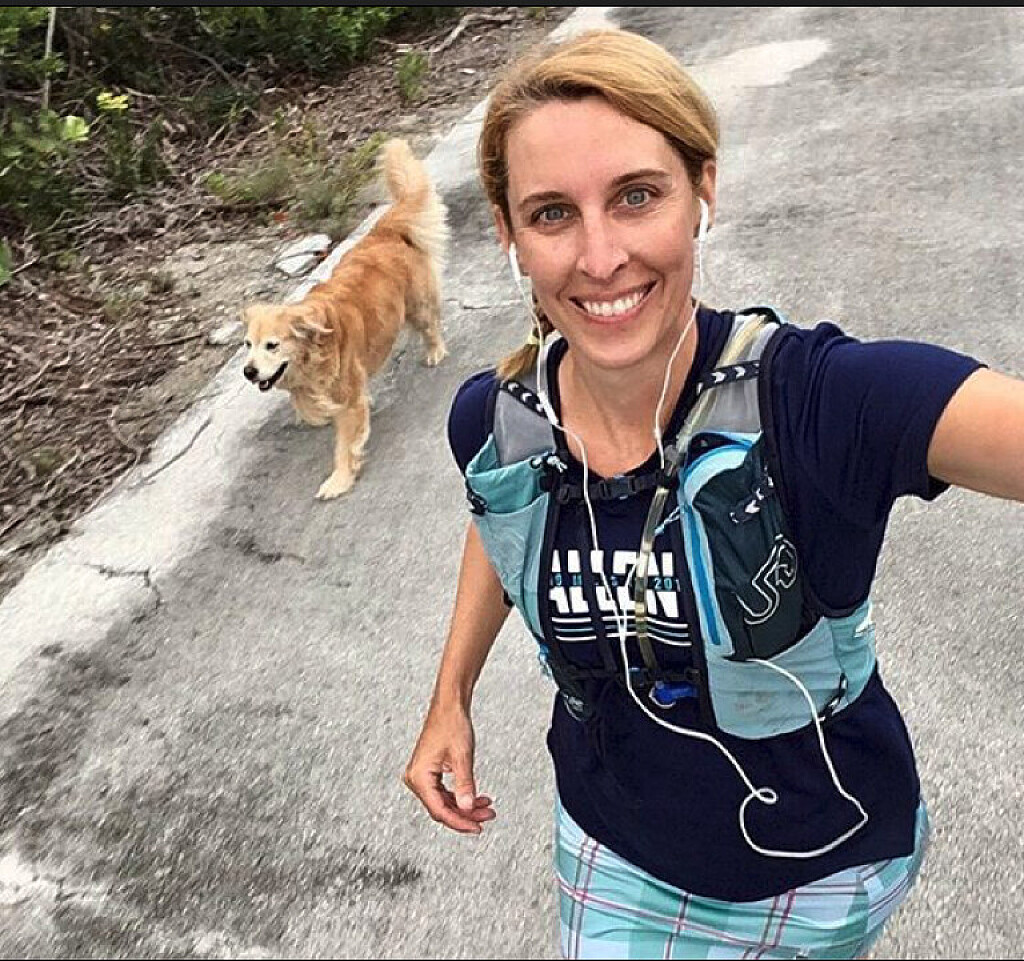
This Ultramarathoner Runs With Her 5 Golden Retrievers and Shares Her Tips for Clocking Miles With Canines
With five golden retrievers of her own, Golbeck is the dog whisperer you didn’t know you needed.
I am not one of those people who has a love/hate relationship with running. I love it purely and wholly. It feels like my body was made to do it. I love being outside and moving, and the rush of endorphins is great. If I could run all day, I would.


I started running ultramarathons to give myself permission to run forever, and found that even after running 100 miles or for 31 hours, I love it.
Like all runners, though, I have days when it’s hard to get out the door. Sometimes I’m tired, and I waste hours procrastinating when it’s cold and rainy out. Fortunately, though, I have five golden retrievers and they always need walks. Even in bad weather, one will run over with enthusiasm and joy, stretching their neck toward the collar. In those cases, to delay my run would be to deny them happiness, so suddenly it’s easy to go outside.
While I can walk five dogs at once—that’s me in the top picture with Swizzle, Venkman, Hopper, Guacamole, and Chief Brody—I never run with them all together nor do I do ultra distances with them!
While I have run with two dogs at once, it’s safest to run with just one, because when I do take two, we stop more often, and they inevitably get tangled. Then my focus becomes more on dog management than running.
In The Purest Bond: Understanding the Human-Canine Connection, Stacey Colino and I explore the science behind how relationships with dogs make human lives better. Certainly, dogs help humans move more and form better relationships in their communities. Science also shows that dogs enjoy running with us, both because of how it makes them feel physically and because they get to spend time with us.
One of my favorite workouts is to take each dog out for one or two miles until everyone who wants a run has had a chance to go out.
I’ve learned a lot about running with dogs over the years, so I’m sharing my tips for how to run safely and successfully with your own four-legged friends.
5 Tips to Better Running With Your Dog
If you want to start running with your dog, start by telling your veterinarian how far and fast you run, so they can give you specific information about your dog’s ability. Once you have the go ahead, follow these five tips to make your runs more enjoyable and safe—for both you and your pup.
1. Learn Leash Skills
When I was a graduate student, I tried to take my two golden retrievers, Pi and K, for a run. Suddenly, K spotted something exciting across the street, bolted, and pulled me off the sidewalk. I hobbled home with a sprained ankle.
To avoid unexpected accidents, work on your leash skills before you start running with your dog. Sure, a dog who pulls makes uphill runs easier, but a dog who bolts for squirrels or in traffic is a risk.
You’ll know your dog has solid leash skills if they run calmly alongside you with a loose leash, and you don’t have to pull to control them. They also should have enough self control to not dart out at animals or jump at sounds.
Your dog should also respond to commands such as “stop” or “wait,” and be able to respond to your speed, rather than you having to keep up or wait for them, especially if you want to run at a consistent pace.
If you have a scent dog, you may need to separate your runs from walks where they are able to follow their nose and go at their own pace. Habits like stopping to sniff can be managed with leash training.
My dog, Guacamole, a notorious stop-and-sniff dog, knows the difference between walks and runs, based on the way I hold the leash and, obviously, my speed. It’s like a form of non-verbal communication between the two of us. Guacamole understands that he is supposed to match my pace, whether I’m running or walking and he is able to adjust himself.
Good leash discipline is also useful when you encounter others on a trail.
2. Start With Short Runs
You won’t be surprised to learn that dogs are wired to run, according to research. Aside from having four legs, research shows that dogs also have an increase in endocannabinoids (eCBs) after a run. This is one of the main neurotransmitters believed to play a role in the runner’s high.
Of course, human runs and dog runs are very different. For example, while small dogs can be good running partners, toy breeds have to take a lot of steps to keep up with humans. Dedicated runners with dogs who may not be right for running can always consider using a jogging stroller to bring their pal along with them!
Some dogs may also be better walking partners. For example, dogs with smooshed faces (“brachycephalic”) or with short limbs, such as bulldogs and corgis, can have difficulty running and be at higher risk for injury. Again, check in with your dog’s vet for advice about how far, how fast, and how frequently your dog should run.
Natural runners, such as hounds, can still vary in the distances they prefer. My golden retrievers are comfortable with around three miles, but they are not built to be long-distance runners. Huskies, herding dogs (Australian shepherd, border collies, and others), and Vizslas are all good at going for distance.
All runners should follow the 10-percent rule for increasing their distance or intensity (an increase of no more than 10 percent each week) and this rule applies to dogs, too.
Remember, though, dogs can get the same overuse injuries as people. Be on the lookout for new limps, tenderness, or hesitation, which may indicate your dog is exceeding their abilities.
3. Learn Your Dog‘s Fuel and Hydration Needs
You need water on a run that’s over a couple of miles, and your dog does, too. Consider hydration for them, too, which means carrying at least a collapsible bowl and adding enough water to your supply to share.
If you have a breed that runs long distances, bring food, such as biscuits or treats, so they can stay fueled, too. If you’re going for a long run and don’t feel like carrying your dog’s supplies, you can find harnesses with pockets so your dog can carry their own food and water (and poop bags!), which will lighten your load.
Just like humans, my dogs are often hungrier on days that they run, so I take cues from them if they need more food. It can be a little tough to tease out when they are actually hungry because of the extra activity versus their normal habit of begging for extra food, but with attention, I have learned to tell the difference. When my dogs go to the kitchen after dinner looking for snacks or extra food or if the beg more aggressively for my food, it suggests to me that I need to feed them more.
If your dog pants hard for a very long time with a bit elongated tongue or they are more lethargic than usual after a run, it may be a sign that you went too far. Watch their recovery just as you should pay attention to your own.
4. Understand the Way Weather Affects Animals
Your dog may not need as much gear as you do, but it’s important to prepare for different weather conditions.
In hot weather, be sure to check the heat of the pavement. If it feels hot to your touch, it can burn your dog’s paws. In the Florida Keys where I live, I only take my dogs for nighttime runs during hot months.
If you live somewhere cold, your dog’s paws could literally freeze to the pavement. Plus, snow may form ice balls inside their paws, and the salt used to prevent icing on sidewalks can irritate their pads. An affordable and effective solution for snow and trail running are sled dog booties, used by mushers and their dog sled teams. For road running, you can also find options with a tougher sole.
Also, pay attention to your dog’s response to the weather. Even in mild weather, dogs can get overheated on a run. Usually, they will show this with excessive panting or by simply lying down and refusing to continue. It is crucial to give them a break in these situations, even if it means gently walking home and cutting your run short.
5. Get Them Safety Gear
In 2022, we fostered a dog named Nacho for six months. He was a very energetic 18-month-old golden retriever who needed a lot of exercise. I earned two visits to the orthopedic surgeon—once for a sprained shoulder and one for a damaged finger tendon—from those runs.
Not only had we not mastered leash skills, but I also had the wrong equipment. After those doctor visits, I switched to a waist leash so I could use my whole bodyweight to control him. You will typically weigh more than your dog, so these leashes may help you control their movement. However, some dogs are stronger than their owners, and it can be hard to balance when they pull you by the waist. So test out a waist leash on a shorter distance before you go long and see how it feels.
The scariest moments I have had with dogs is when they pulled the leash out of my hands and got away from me in the dark. In addition to the waist leash, which you can’t drop, I use LED collars at night.
You can buy plastic loops and collars with embedded rechargeable LEDs, or flashing tags for their normal collars. All of these gadgets give you a visual cue about where your dog is. They also make your dog—and you!—visible to traffic and to other people.
by Runner’s World
Login to leave a comment

Five tips for pre-run fueling
Nothing new, only tried and true–that’s the mantra runners follow when it comes to deciding what to eat the morning of and during their race. But figuring out what “tried and true” is for you can be unexpectedly challenging. Use these tips during your training to help you determine what works best for your body, so your hopes for a new PB don’t get dashed by mid-race stomach cramps.
1.- Use a journal

Write down what you ate before (and during, if you’re training for a longer race) your run, along with notes about how you felt during the run. Did your stomach feel unsettled, or was it smooth sailing? Did you feel energetic, or like you were dragging your feet? (Keep in mind that if the weather is unexpectedly warm, that could slow you down significantly and affect your energy level, which may be unrelated to your fuelling.)
2.- Plan ahead

Decide what you’re going to eat before your run, and make sure you have everything you need to prepare it. If possible, make your pre-run meal the night before, so it’s easy to grab in the morning, or at least,assemble your ingredients, so it’s quick and easy to make. This is especially important if you’ve got an early morning run on the calendar. Saving some time on food prep allows you to relax a bit before you head out, which can improve your digestion and help you feel better during your run.
3.- Start small
It’s important to fuel before a run that’s longer than 60 minutes, but if this is your first time training for a longer race and you’re not used to eating before you run, start with something small, like crackers or half a banana. As you continue to practise pre-run fuelling, your stomach will become more accustomed to it. Try to eat at least an hour before your warmup.
4.- Test on your easy day
Long runs are the perfect time to test new foods or fuelling strategies; so are recovery runs. Avoid experimenting with anything new before a key workout.
5.- Know what you need
Most runners should eat about 50-60 grams of carbohydrate before a long run to top up their glycogen stores. A cup of cooked oatmeal with a banana will put you right around the 50-60 mark, so will a couple of slices of toast topped with jam or honey.
Remember, different foods work for different runners, so just because something works for your running buddy doesn’t mean it’ll work for you, too. Always take the time to test out new foods ahead of time, and prepare in advance to make sure you have what you need on race day.
by Brittany Hambleton
Login to leave a comment
Try this long tempo during your marathon build
Tempo runs are a key part of marathon training. With a unique blend of speed and endurance, they have helped many runners reach their personal bests and beyond. We know how great they are, and so does Canadian marathon record holder Natasha Wodak. The workout below is inspired by the tempo session she did before competing in the marathon at the World Track and Field Championships in Budapest, where she landed a the top 15 finish. Even with our modifications, this is a tough workout, so don’t say we didn’t warn you!
Wodak’s workout
2 kilometers at tempo pace, 1:30 rest
8 kilometers, 3:00 rest
2 kilometers, 1:30 rest
6 kilometers, 3:00 rest
2 kilometers, 1:30 rest
4 kilometers, 3:00 rest
Each 2-kilometer section was run at a slightly faster pace than the longer sections in between. In total, this workout was a whopping 24 kilometres–and that’s without a warmup or a cool down. Of course, this is far too much for us mortals, but we can apply the concept (breaking the tempo run into sections and alternating between slower and faster) and apply it to a more attainable marathon training session.
Modified workout
Our modification to this mammoth workout is simple: cut each section of the tempo in half. That makes the total distance 12 kilometers, which is much more realistic for most runners.
The goal of this workout is to run the one-kilometer sections (i.e. the first, third and fifth intervals) at your goal marathon pace, and the other sections slightly slower. This is a great workout to incorporate into a long run when you’re already doing higher mileage, or to use as a stand-alone tempo day.
Warm-up: 10-15 minutes easy jog
Workout:
1 kilometer at marathon goal pace; 1:30 rest
4 kilometers slightly slower than marathon goal pace; 3:00 rest
1 kilometer at marathon goal pace; 1:30 rest
3 kilometers slightly slower than marathon goal pace; 3:00 rest
1 kilometer at marathon goal pace; 1:30 rest
2 kilometers slightly slower than marathon goal pace
Cooldown: 10-15 minutes easy jog
by Brittany Hambleton
Login to leave a comment

This Mom Has Maintained a 9.5-Year Run Streak
“I believe running keeps you healthy and strong, but it also shows you how much your body can do, and how hard it can work. ”
In 1995, when I started dating my husband, I began running with him. He was on the cross-country and track teams at Virginia Tech. He taught me about shoes, distance, and pacing, and we still have running dates when we want to talk and catch up. I simply loved the progress and the results I could get with running, and how I could challenge myself in different ways. More importantly, I liked how strong and accomplished I felt after running. There is no sweat like a sweat from a good run—it feels cleansing.

In the beginning, I didn’t think of myself as a “runner,” but more as someone who ran as a form of exercise. I remember being so scared lining up for my first 5K in 1995 in Charlottesville, Virginia. After that race, I gradually added more distance and signed up for my first full marathon, The Marine Corps Marathon in 1999. I am now in the Marine Corps Runners Club, which you can enter if you run the marathon at least five times.
Some of my most memorable runs have not been races, though. On one of my first dates with my husband (while in college) we went on a run and I ended up running for one whole hour–which, at the time, was my longest run. I felt so proud of that milestone.
Today, some of my favorite runs are my Saturday morning long runs with my neighborhood mom friends, and anytime my sister and I get to run together is the best, because we live in different places.
My love for running has led me to a nine-and-a-half-year run streak, which means I run at least two miles continuously every day.
I started my run streak on Sunday May 4, 2014. I went out for a run and felt really good, so the next day I ran again. I knew I wanted to make a commitment to my health and my family, to take that time for myself, and to just do something challenging. I decided to run every day for the rest of the summer. When I did that, I told myself I would run until the end of the year. Then, of course, once that passed I kept going to make it a full year.
After one year, I decided to see how far this journey could take me. I fully invested in it, and I realized the more I gave running, the more it gave me. Now I can’t imagine life without my run streak.
Since I started running, I have completed several marathons, half marathons, and a few ultramarathons. I like competing and pushing hard in some races, but I also like running a race for the enjoyment of the sport, and to run hard enough so I am still having fun but am also able to be a mom after the race.
Having races on the calendar is a great way to keep myself accountable each day. I love the process and training—the long runs, the hot runs, running alone, running with friends, running in the rain, and the runs when you don’t have the motivation to run. The races for me are the icing on the cake and the celebration that I get to move my body and be around other people who like to do the same.
For me, running is non-negotiable—it’s like brushing my teeth. Luckily it helps to have such a supportive family who knows this and who understands that running makes me better at all my roles in life. I have more energy, patience, and more to give if I run.
Staying healthy and injury-free is important for my run streak. I do a lot of my runs at an easy pace, especially if I am focused on marathon training or running more distance. I also believe in cross training—having your body move in different planes and training different muscles is so important, since running is a forward-only motion. I love lifting weights, swimming, and taking classes at the gym. Since college, I have done the same 15- to 20-minute stretch routine everyday.
Eighty percent of my runs are at an easy to moderate pace. During a typical week, I like to include one long run, one mid-long run, and one tempo run or one speed session per week. If I can, I like to incorporate a STRIDE Fitness class (the boutique fitness center where I coach) because you can get a great running workout, with loud music, and a super supportive atmosphere. Today, I run 60 to 80 miles a week.
Running has gotten me through many highs and lows of my life, from meeting my husband to challenging myself in ways harder than I ever thought possible.
Lastly, I believe running keeps you healthy and strong, but it also shows you how much your body can do, and how hard it can work. I also appreciate the routine and consistency of running—it provides me a daily reset and almost like an internal shift to help me be a better person. I am so thankful for every run!
These three tips have helped make my running journey a success:
1. Start small and be consistent
It does not take much to start running. The hard part is the consistency and determination to keep going back. You don’t have to complete a run streak, but you do need to be consistent. Start small but challenge yourself. Aim to go out for 10 to 12 minutes a day for five days in a row. You could run all of it or do a walk/run. Gradually add time. It’s easy to say I will go run tomorrow, but do it today. A little tough love is required but it’s so worth it!
2. Find comfort in being uncomfortable
Our modernized lives are based around being comfortable at all times. Being uncomfortable is not pleasant, but I think it’s essential for running and life success. When you are tired in a long run or hurting in that interval, settle in, smile, breathe, and relax. Find your groove and your comfort there. Your body can handle it, but you need to train your mind and attitude because that part wants to quit. The more often you experience discomfort the better adapted you get to facing the hard things during a run or race or your life.
3. Ditch the technology and just run
Forget the Garmin or the GPS. Do some runs where you are going on effort only. Find the joy, take in the sights, have a long conversation, listen to a podcast. Don’t get caught up in your pace or your mile splits. Take a moment and remember why you are a runner, and why you love it so. This is especially true when running in Texas humidity!
Liz’s Must-Have Gear
→Balega Socks: Good socks are essential for running so I think it’s important to invest and spend a little more money on them! I love these because they are moisture-wicking and provide the best blend of cushion/compression
→Goodr Sunglasses: I love Goodr sunglasses! They are light and they don’t slip when you are sweating. They also offer cute styles for wearing at the pool or walking the dog. Also, they are a good price so you can get several pairs!
by Runner’s World
Login to leave a comment

Build mental toughness with these panic-inducing songs for your running playlist
Not every runner chooses to complement their toughest training sessions with a soundtrack, but those who do run to music tend to select songs that lift their spirits—and possibly even their performance. There’s no doubt the right song can put a spring in a runner’s step as the legs tire in the darker moments of a long run, or make a scamper along a sun-dappled forest trail seem that much more serene.
But should music‘s role as a training tool be limited to making us feel better? I say no. Learning to cope with fatigue and exhaustion is important in other parts of training. Running on tired legs at the peak of marathon training feels pretty crummy at the time, but it can reap big rewards on race day. In the same way putting our legs through the wringer can build our physical resilience, perhaps panic-inducing tunes can fortify our mental resilience during training, giving us the confidence to know we can endure frantic doubts and crashing emotional lows on race day.

Consider adding these songs to your panicky running playlist to help you build mental resilience on training runs.
Tarred and Feathered by Cardiacs
This truly frantic piece of post-punk progressive rock unleashes the panic right out of the gates, keeping up its unrelenting tempo until the halfway point, then steadily growing slower and weaker. Great for simulating the mental distress of your GPS watch battery dying right at the start line or running the first half of your race way too fast, then ignominiously flaming out.
Snooze by Toots Thielemans
A classic by one of the titans of jazz harmonica, this song isn’t nearly as frantic, but it does a great job of inducing the dull, steady anguish that comes from fretting over non-running related matters during a race. Did I park the car in a tow-away zone? Did I remember to fill the cat’s food dish?
Sweet Caroline by Neil Diamond (Diagnostix Bootleg)
This remix of the soft-rock classic begins with the warmth of a welcomingly familiar voice—with only slight hints that something is askew—and lulls the listener into a false sense of security before going horribly, horribly wrong. Masterfully mimics the mental torture of being on pace to PB your favourite race course, then pulling your
Gimme Summn by TNGHT
A great song for simulating the panic of simultaneously being lost on a race course and swallowing way too many energy gels. As a bonus, the video—by Canadian artist and animator Cole Kush—really drives home how depressingly fleeting life is, and that you should get your runs in while there’s still time.
by Running Magazine
Login to leave a comment
