

Running News Daily
Running News Daily is edited by Bob Anderson and team. Send your news items to bob@mybestruns.com Advertising opportunities available.
Index to Daily Posts · Sign Up For Updates · Run The World Feed
Articles tagged #Brazilian
Today's Running News
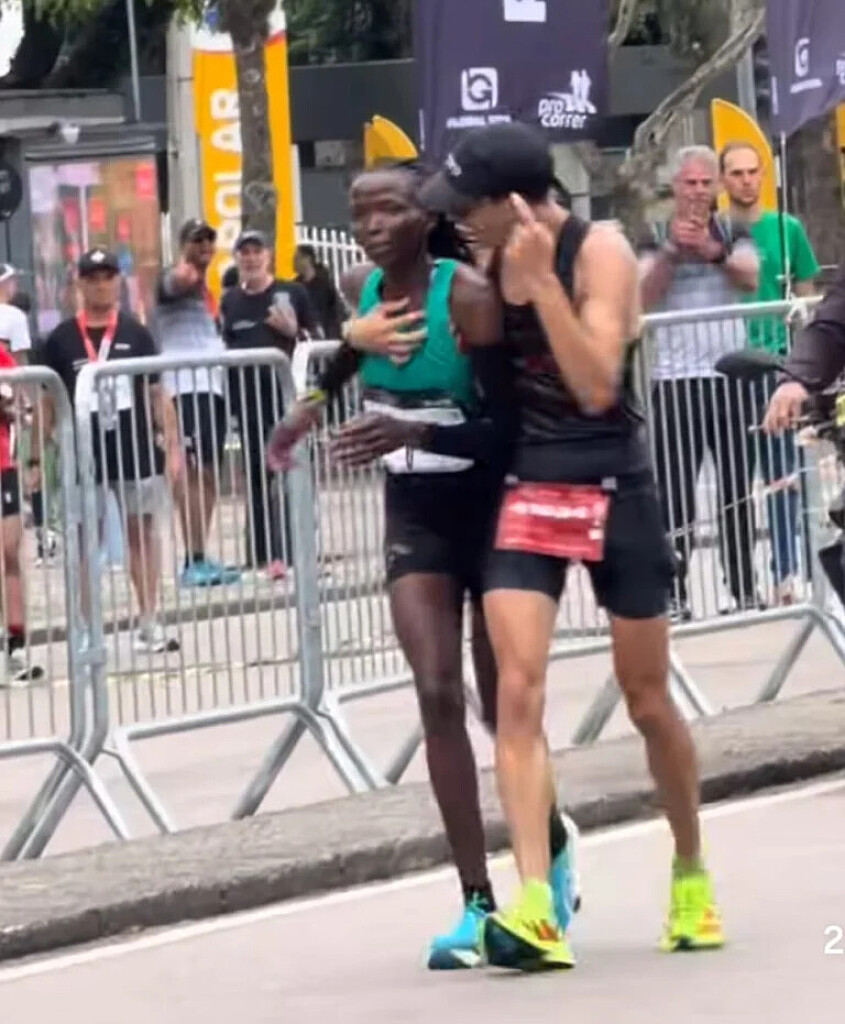


400 Metres From The Finish, Humanity Took Over! Brazilian Runner’s Selfless Act Leaves Athletics Fans Emotional.
In a remarkable demonstration of compassion and sportsmanship, Brazilian marathoner Marcos Braz has captured the admiration of athletics fans after sacrificing his own race to help Kenyan runner Naum Jepchirchir, who collapsed just 400 metres from the finish line at the 2026 Santander Curitiba Marathon in Brazil.
The emotional incident happened on Sunday, November 15, as Jepchirchir, the defending champion, approached the closing stages of the 42.195km race while fighting to secure another victory.
Having led much of the women's competition, the Kenyan suddenly fell during the final stretch, leaving her struggling to get back on her feet with the finish line almost within reach.
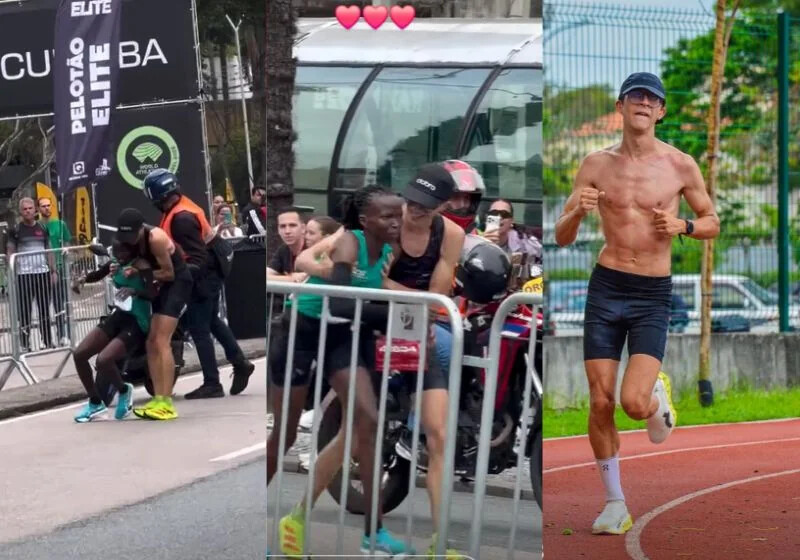
It was a heartbreaking moment for the Kenyan, who had already endured more than 42 kilometres of racing and was just moments away from completing another marathon.
However, what happened next turned the unfortunate incident into one of the most memorable moments of the competition.
Marcos Braz, who was also competing in the marathon, noticed Jepchirchir on the ground and immediately stopped running. Rather than continuing towards the finish line and concentrating on his own performance, the Brazilian went back to help the struggling Kenyan.
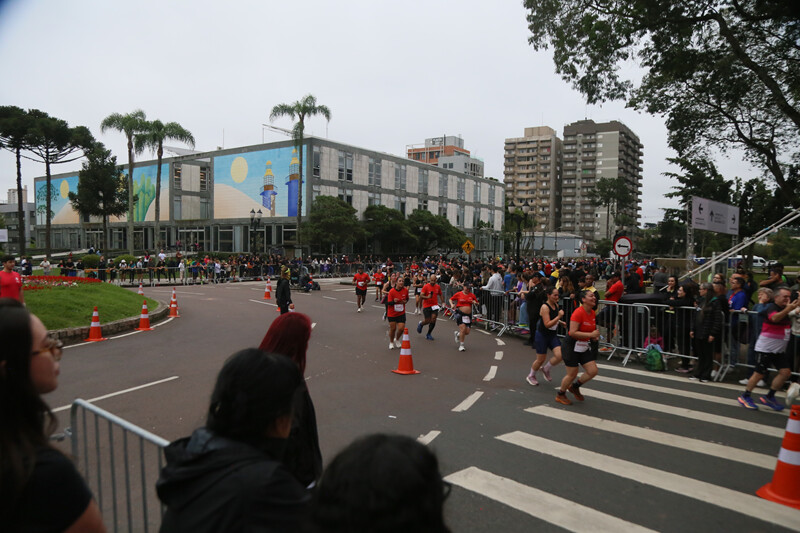
He assisted her in getting back onto her feet and remained alongside her as she battled through the remaining metres to complete the race.
His decision to put another athlete's welfare ahead of his own finishing performance drew applause from spectators and quickly attracted attention across social media.
Jepchirchir eventually crossed the finish line, securing second place despite the dramatic setback, while Brazilian athlete Ana Catarina Amancio de Oliveira claimed the women's title in 2:45:34.
Jepchirchir had arrived in Curitiba hoping to defend the title she won in 2025, when she clocked 2:39:14. Although her attempt to retain the crown ended in disappointment, her determination to finish after collapsing provided another remarkable chapter in her marathon career.
Braz's intervention also raises an important question about the rules governing competitive athletics. Under World Athletics Technical Rule 6.3.6, physical assistance from another athlete that helps a competitor make forward progress during a race is prohibited, except when the assistance involves helping a fallen athlete recover to a standing position. Any decision concerning the incident would therefore depend on the applicable competition rules and the race officials' assessment.
Nevertheless, beyond the competitive implications, the Brazilian's gesture has offered a powerful reminder of the values that make athletics special.
Marathon running is often associated with personal ambition, national pride, podium finishes, record-breaking performances and financial rewards. Yet, every once in a while, an incident reminds us that the sport is about much more than individual achievements.
Braz may have sacrificed valuable time in his own race, but his willingness to stop and help a fellow competitor demonstrated a level of sportsmanship that deserves recognition.
After running almost the entire marathon, Jepchirchir found herself facing the final 400 metres in one of the most difficult circumstances imaginable. Fortunately, she did not have to face that moment alone.
There are victories measured in seconds, medals and prize money, but there are also moments that leave a lasting impression without requiring a place on the podium.
Marcos Braz may not have been chasing the women's title, but his actions delivered a powerful lesson to the athletics community: winning is not always about being the first to cross the finish line. Sometimes, the greatest victory is helping someone else get there.
Marcos Braz for reminding the world that humanity should always come before competition. In a sport where every second counts and every athlete fights for personal glory, he chose to stop when someone needed him most. Naum Jepchirchir may have struggled to reach the finish line, but she found something far more meaningful along the way — the kindness of a fellow runner. Long after the race results are forgotten, this beautiful act of sportsmanship will remain a reminder that the greatest victories are not always won with medals, but through compassion, selflessness and the willingness to lift one another when life gets difficult.
by Erick Cheruiyot for My Best Runs.
Login to leave a comment
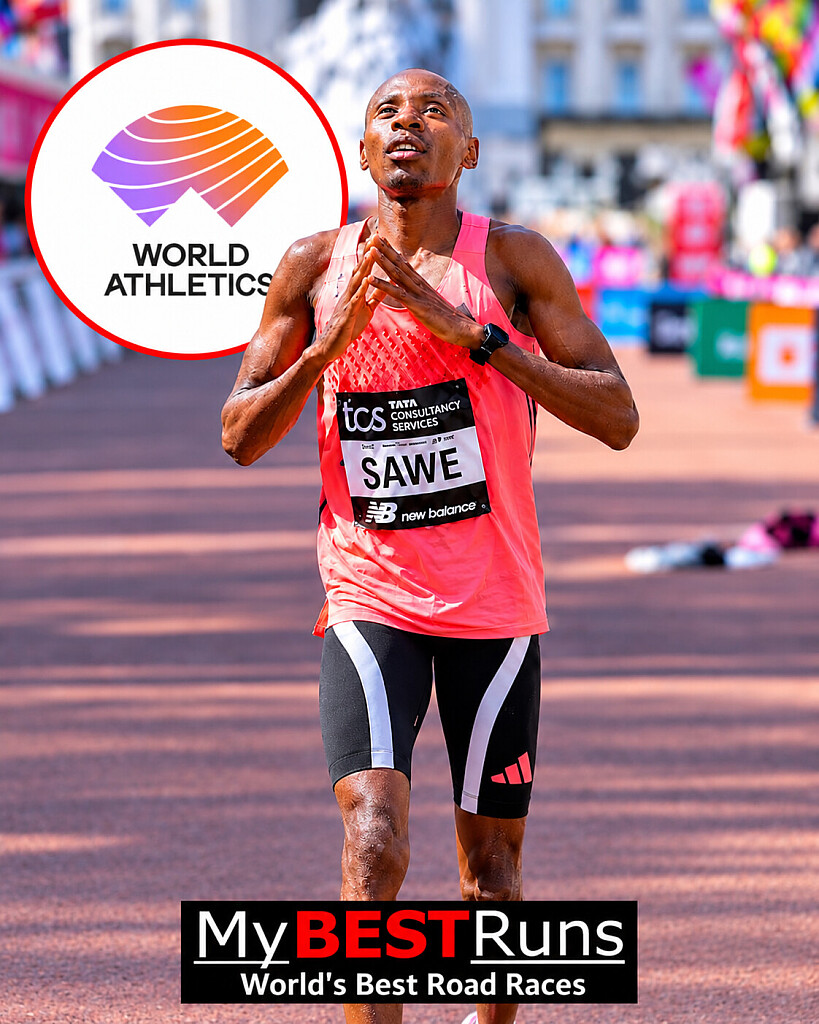
Sabastian Sawe Named Among Three Finalists For 2026 Men’s World Athlete Of The Year After Historic Sub-Two-Hour Marathon
Kenyan marathon sensation Sabastian Sawe has earned a place among the three finalists for the prestigious 2026 Men’s World Athlete of the Year award, following a remarkable season highlighted by one of the greatest performances in distance-running history.
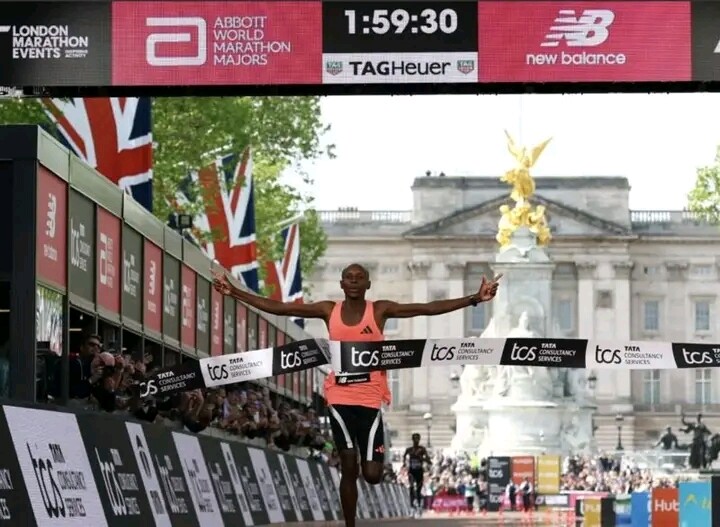
World Athletics announced the final shortlist on Tuesday, placing Sawe alongside Swedish pole vault superstar Mondo Duplantis and Brazilian 400m hurdles champion Alison dos Santos. The winner will be unveiled at the World Athletics Awards ceremony in Monaco on November 29, 2026.
Remarkably, Sawe's nomination comes after just one competitive appearance throughout the 2026 season. However, that single performance was extraordinary enough to put him firmly among the world's leading athletes.
On April 26, Sawe produced a historic performance at the London Marathon, clocking an astonishing 1:59:30 to become the first athlete to complete a marathon in under two hours in a record-eligible race. His sensational achievement also shattered the previous world record of 2:00:35, set by the late Kelvin Kiptum, by an impressive 65 seconds.
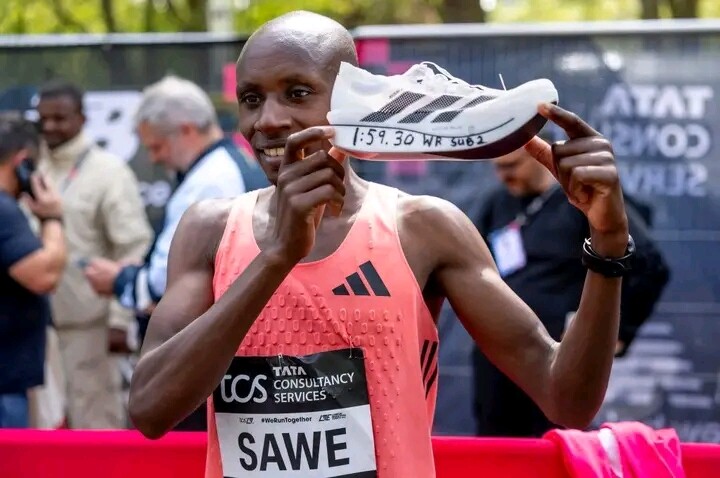
The performance represented a defining moment for marathon running, pushing the boundaries of what was previously considered possible over the 42.195-kilometre distance. Sawe's achievement immediately established him as one of the biggest sporting figures of the year and strengthened his case for global recognition.
Unfortunately, his season was cut short by an injury sustained in August, forcing him to withdraw from the Berlin Marathon, where he had been expected to defend his title. He has not competed since his historic London appearance, making his nomination even more remarkable given the limited number of races on his 2026 calendar.
Sawe is also the sole road-running representative among the three finalists, following World Athletics' decision to discontinue the separate out-of-stadium category that previously recognised achievements in road running and other disciplines. He now finds himself competing directly against two outstanding athletes whose seasons have also been defined by exceptional performances.
Duplantis strengthened his reputation as one of the greatest pole vaulters of all time after clearing a world-record height of 6.31 metres, while dos Santos delivered an impressive 45.80-second performance in the 400m hurdles. Both have presented strong cases for the coveted honour, setting up an intriguing contest for the ultimate individual recognition in world athletics.
Winning the men's award would also place Sawe in distinguished company. Eliud Kipchoge remains the only road-running athlete to have claimed the overall Men's World Athlete of the Year title, having won it in 2018 and 2019. A victory for Sawe would therefore represent another historic milestone for marathon running and Kenyan athletics.
The final three were determined through a voting process involving fans, athletes, international media representatives and members of the World Athletics family, with each group contributing to the selection. British middle-distance star Josh Kerr narrowly missed out on the final shortlist after finishing fourth.
Beyond his nomination for the main award, Sawe's record-breaking London Marathon performance has also been shortlisted for the inaugural World Athletics Moment of the Year award, further underlining the significance of his achievement.
Although injury prevented him from adding to his impressive 2026 campaign, Sawe has already delivered a performance that will remain etched in athletics history. His nomination demonstrates how one extraordinary day can define an entire season, and he now has the opportunity to cap his historic year with one of the sport's highest individual honours.
by Erick Cheruiyot for My Best Runs.
Login to leave a comment
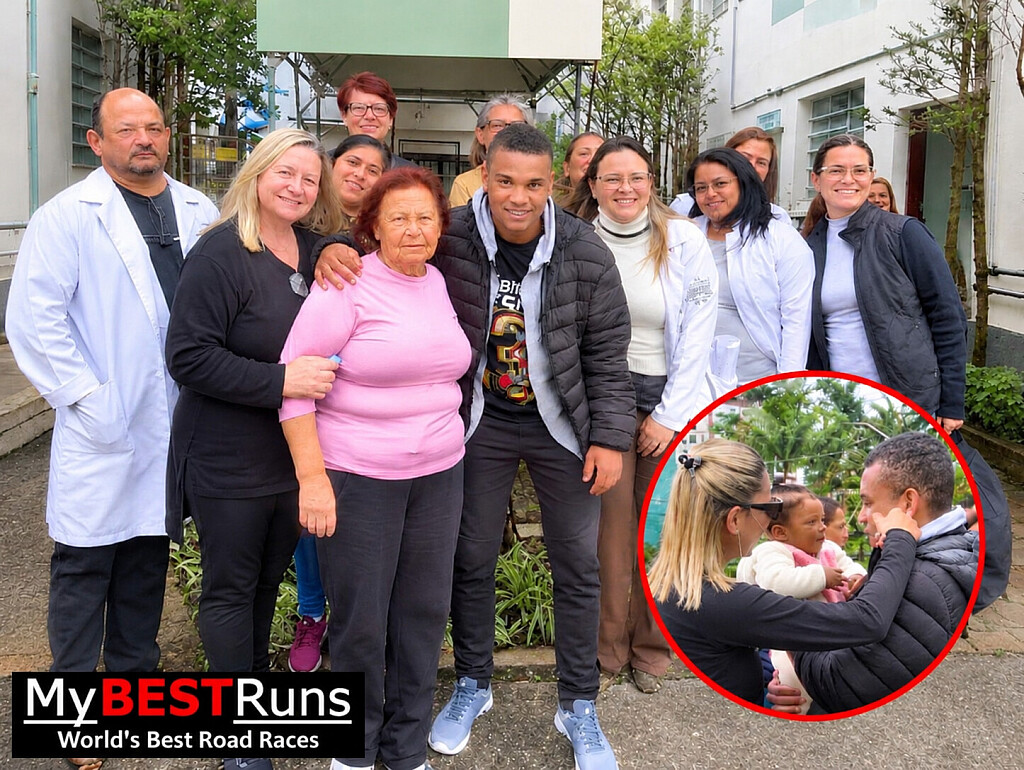
Emotional News From Brazil! Marathon Record Holder Daniel Do Nascimento Discharged After 85 Days Of Medical Treatment Following 43-Day Disappearance!
The international athletics community has received encouraging news from Brazil following the discharge of marathon star Daniel Ferreira do Nascimento, the Brazilian and South American marathon record holder, after 85 days of medical treatment and recovery.

The 28-year-old distance runner was discharged on November 10, 2026, marking an important milestone in a difficult personal journey that has attracted considerable attention and concern from the global running community.
Daniel, popularly known as Danielzinho, made headlines earlier this year after disappearing from his family home in Paraguaçu Paulista, São Paulo, on June 19. His disappearance triggered an extensive search and widespread appeals for information, leaving his family, friends and supporters deeply worried.
After 43 days of uncertainty, he was eventually located in São Paulo on August 1. His safe return brought enormous relief, and he subsequently received specialised medical attention before beginning an extended period of treatment and rehabilitation.
News of his discharge was shared by fellow Brazilian athlete Paulo Paula, who has been supporting Daniel and his family throughout this challenging period.
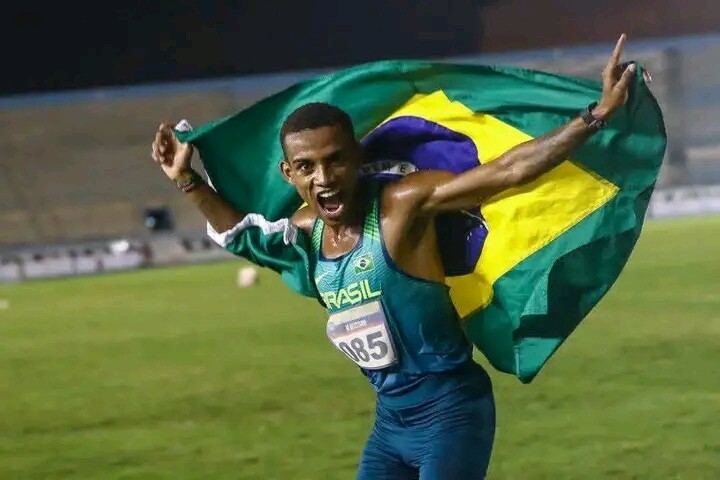
According to the update, Daniel will remain in São Paulo for another four days before discussions are held with his family and support team regarding arrangements for his continued care and recovery.
Daniel is widely recognised for his remarkable achievements on the international road-running circuit, particularly his fearless racing approach and ability to compete against some of the world's finest marathoners.
He made history on April 17, 2022, at the Seoul Marathon in South Korea, where he clocked an outstanding 2:04:51 to establish Brazilian and South American marathon records. The performance confirmed his place among the leading marathon runners in the world and remains the fastest marathon time recorded by a Brazilian athlete.
He also represented Brazil at the Tokyo Olympic Games in 2021 and the 2022 World Athletics Championships in Eugene, Oregon, further strengthening his reputation as one of South America's most accomplished distance-running talents.
For an athlete whose career has been defined by extraordinary determination and ambition, the latest development represents a significant moment beyond the sporting arena. His journey over recent months has been particularly challenging, making this news a welcome source of relief for everyone who has followed his situation.
At this stage, the priority remains his health, personal well-being and continued recovery rather than any immediate return to competitive athletics. His discharge is an encouraging step, although further support and care will remain important as he begins the next chapter of his journey.
The Brazilian athletics community and the wider international running family will now be hoping for continued positive developments as Daniel moves forward from this difficult period.
by Erick Cheruiyot for My Best Runs.
Login to leave a comment
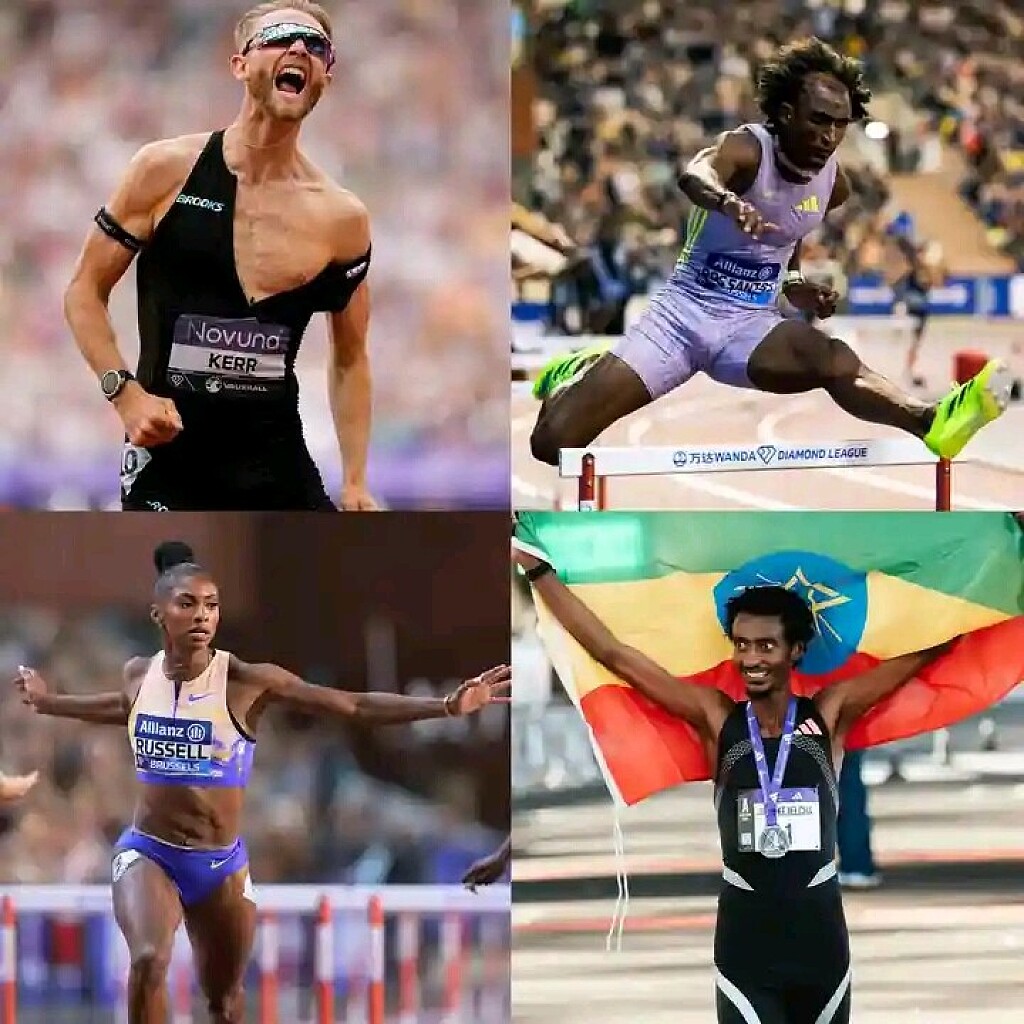
Four World Records Officially Ratified As Josh Kerr, Yomif Kejelcha, Alison Dos Santos And Masai Russell Make Athletics History!
World Athletics has officially confirmed four extraordinary world records from the 2026 athletics season, bringing formal recognition to remarkable performances by Josh Kerr, Yomif Kejelcha, Alison dos Santos and Masai Russell.
The announcement, made on November 9, 2026, marks another memorable chapter in athletics history, with the four athletes having rewritten the record books across middle-distance running, road racing and hurdling.
The performances were achieved at three major international competitions in London, Buenos Aires and Zurich, demonstrating the extraordinary level of competition and continuous evolution of the sport.
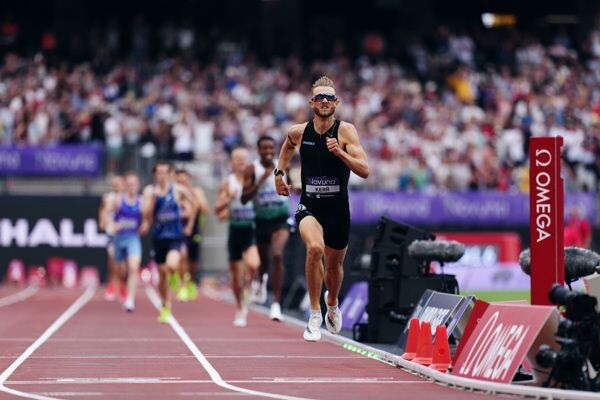
Great Britain's Josh Kerr was the first to make history, delivering a sensational performance in the men's mile at the Novuna London Athletics Meet on July 18. The reigning world-class distance star clocked an incredible 3:42.66, taking 0.47 seconds off the previous world record of 3:43.13 set by Morocco's Hicham El Guerrouj in Rome on July 7, 1999.
Kerr's performance ended a 27-year wait for a new men's mile world record. Competing in front of approximately 60,000 spectators at the London Stadium, he became the first athlete to officially break El Guerrouj's legendary mark, delivering one of the most memorable middle-distance performances of the season.
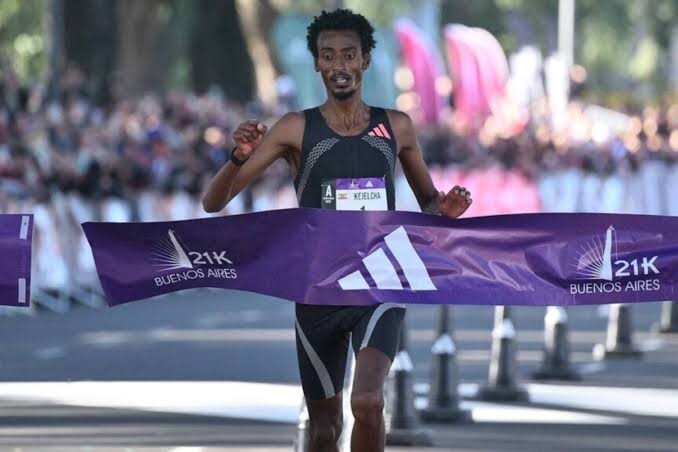
Ethiopia's Yomif Kejelcha was the next athlete to secure his place in the history books, producing a breathtaking performance at the Buenos Aires Half Marathon in Argentina on August 23.
Kejelcha stormed to victory in 56:51, taking an astonishing 29 seconds off the previous world record of 57:20 set by Uganda's Jacob Kiplimo in Lisbon on March 8, 2026.
The performance also saw Kejelcha reclaim a record he had previously held after running 57:30 in Valencia in October 2024. His latest achievement further underlined his exceptional versatility and strength over long distances, adding another major milestone to an already impressive international career.
Zurich, Switzerland, provided another unforgettable evening on August 27, when two world records fell within less than 40 minutes at the Weltklasse Diamond League meeting.
Brazilian superstar Alison dos Santos opened the historic sequence by clocking 45.80 in the men's 400m hurdles, taking 0.14 seconds off the previous world record of 45.94 held by Norway's Karsten Warholm.
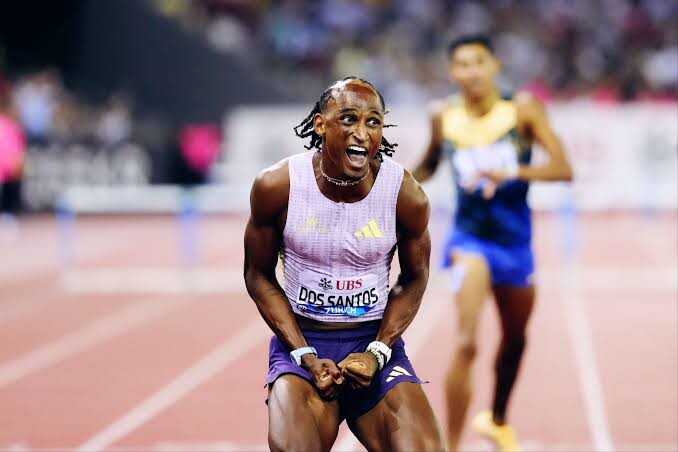
Warholm had established the previous mark during the Tokyo Olympic Games on August 3, 2021, in one of the greatest performances in the history of the discipline. Dos Santos' remarkable run finally brought that record-breaking era to an end, confirming his position among the greatest 400m hurdlers of his generation.
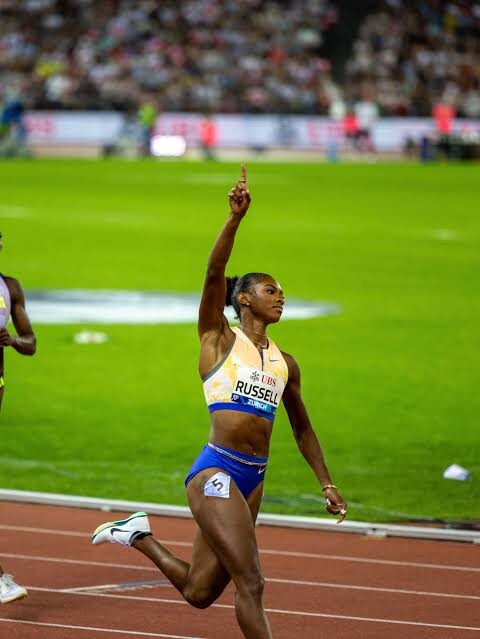
Less than 40 minutes later, American hurdling sensation Masai Russell delivered another spectacular performance, setting a new women's 100m hurdles world record of 12.09.
Russell improved the previous world record of 12.12, established by Nigeria's Tobi Amusan at the 2022 World Athletics Championships in Eugene, Oregon, on July 24. Her performance took three hundredths of a second off the existing mark and completed an extraordinary double world-record celebration in Zurich.
The significance of the Zurich meeting was particularly remarkable, as two different athletes rewrote the world record books in their respective hurdles disciplines on the same evening.
With World Athletics now having officially ratified all four performances, Kerr, Kejelcha, Dos Santos and Russell can celebrate their achievements as recognised world record holders.
From Kerr's historic mile in London to Kejelcha's extraordinary half marathon in Buenos Aires and the remarkable double world-record performance in Zurich, the 2026 season has delivered some truly exceptional moments.
These achievements also highlight the relentless pursuit of excellence in modern athletics, where established records continue to fall as athletes explore new limits of human performance.
Four world records, three host cities and four unforgettable performances that will remain part of athletics history for years to come.
The official ratification of these four world records marks another significant milestone in the 2026 athletics season, further raising the competitive standards across middle-distance running, road racing and hurdling. With the records now formally recognised by World Athletics, attention will turn to how long these historic marks can withstand the challenge of a new generation of world-class athletes.
Which of these four world records impressed you the most, and who do you think will be the next athlete to make history?
by Erick Cheruiyot for My Best Runs.
Login to leave a comment
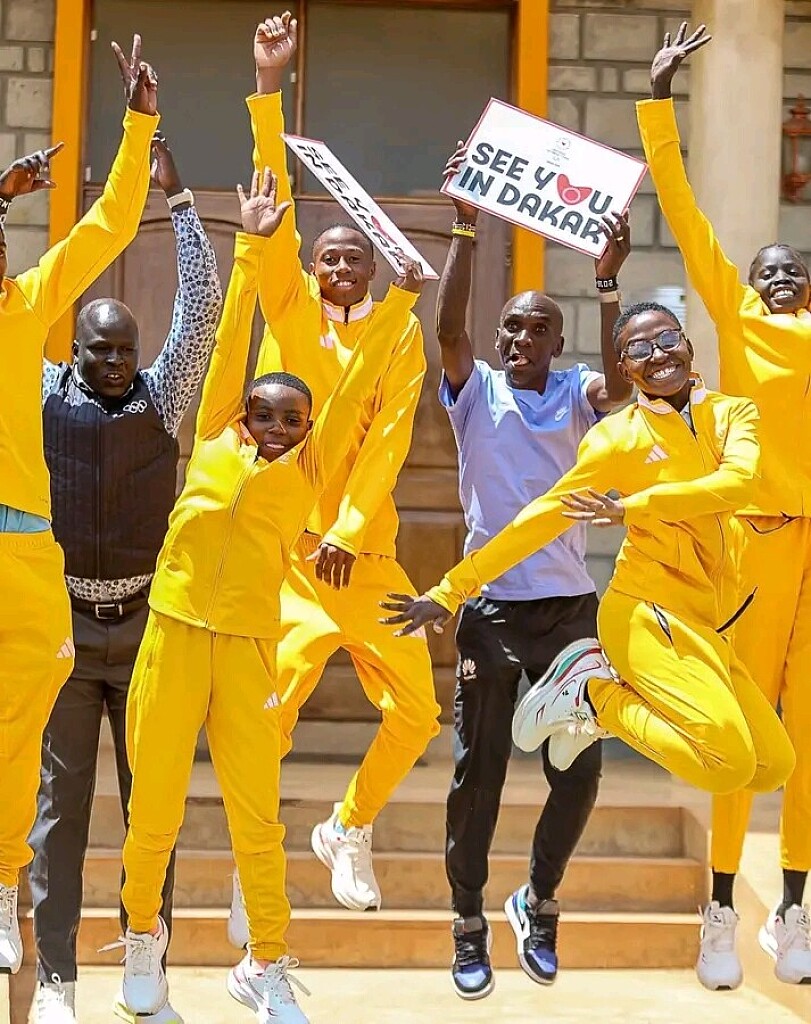
From Olympic Glory To Guiding The Next Generation: Eliud Kipchoge Takes On A New Mission In Dakar
Eliud Kipchoge has spent more than two decades chasing greatness on the world’s biggest stages. Now, the Kenyan marathon legend is taking on a different kind of challenge — helping shape the athletes who could one day follow in his footsteps.
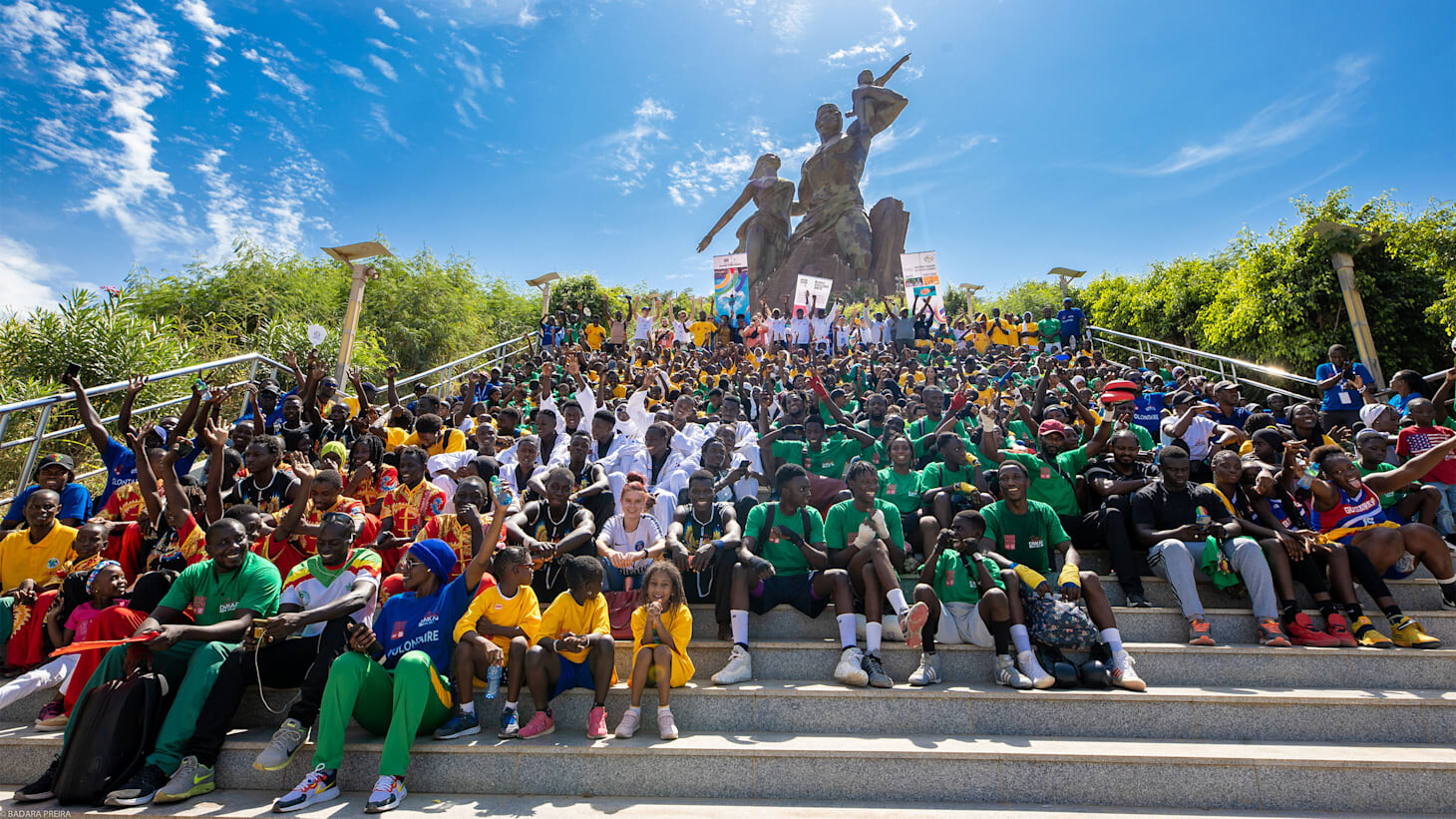
The two-time Olympic marathon champion has been appointed a Global Ambassador for the Dakar 2026 Youth Olympic Games, where he will use his experience at the highest level of sport to connect with and mentor young athletes from around the world.
Kipchoge will share the ambassadorial role with Brazilian skateboarding star Rayssa Leal, while also taking on a special mentoring role with the Refugee Olympic Team, which will make its first appearance at a Youth Olympic Games in Dakar.
For Kipchoge, the appointment represents a shift from competing for medals to investing in the future of sport.
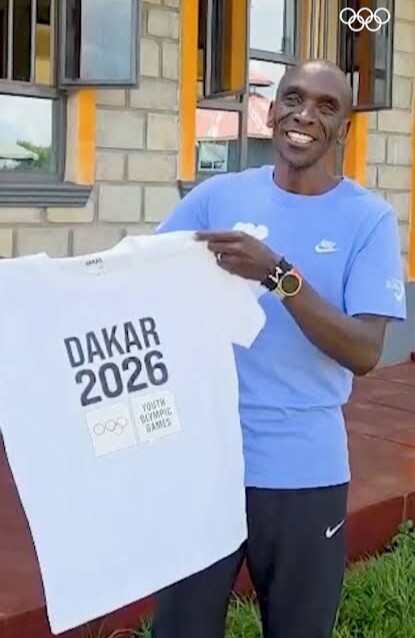
“I’ve been in the sport for 24 years; it’s my time to give back to the next generation,” Kipchoge said.
The 41-year-old has already begun that work, meeting members of the Refugee Olympic Team at their training camp in Kaptagat, Kenya. His message has extended beyond running and competition, focusing on discipline, education, personal values and what success means both in sport and in life.
“When I go to Dakar, I’ll make sure I meet young athletes from across the world — meet them, have an honest talk, mentor them, and look at what the future of sport, and the world, looks like,” Kipchoge said.
The assignment carries enormous significance for Africa. Dakar 2026 will be the first Olympic sporting event ever staged on African soil, with the Youth Olympic Games bringing together approximately 2,700 young athletes across Dakar, Diamniadio and Saly.
It will also mark a historic moment for young refugee athletes, with the Refugee Olympic Team making its Youth Olympic Games debut. World Athletics has confirmed that young athletes hosted by the National Olympic Committees of Kenya and Uganda will form part of the team competing in Senegal.
For Kipchoge, Dakar is therefore about much more than ceremonies, appearances and titles. It is an opportunity to share the lessons accumulated through an extraordinary career and encourage a new generation to believe in its own potential.
“Dakar 2026 is a huge event on our young continent — something we’ve long waited for here,” Kipchoge said. He added that being part of the first Olympic sporting event in Africa would leave a lasting impression on young people across the continent.
From Athens 2004, where he won his first Olympic medal, to his marathon triumphs at Rio 2016 and Tokyo 2020, Kipchoge has experienced virtually every level of Olympic competition. His next contribution will not be measured in seconds, medals or records.
This time, his impact will be measured by the young athletes he inspires.
The man who spent years showing the world how far a human being can push the limits is now preparing to help the next generation discover how far they can go.
Kipchoge is no longer simply chasing history. In Dakar, he will be helping the next generation write its own.
by Erick Cheruiyot for My Best Runs.
Login to leave a comment
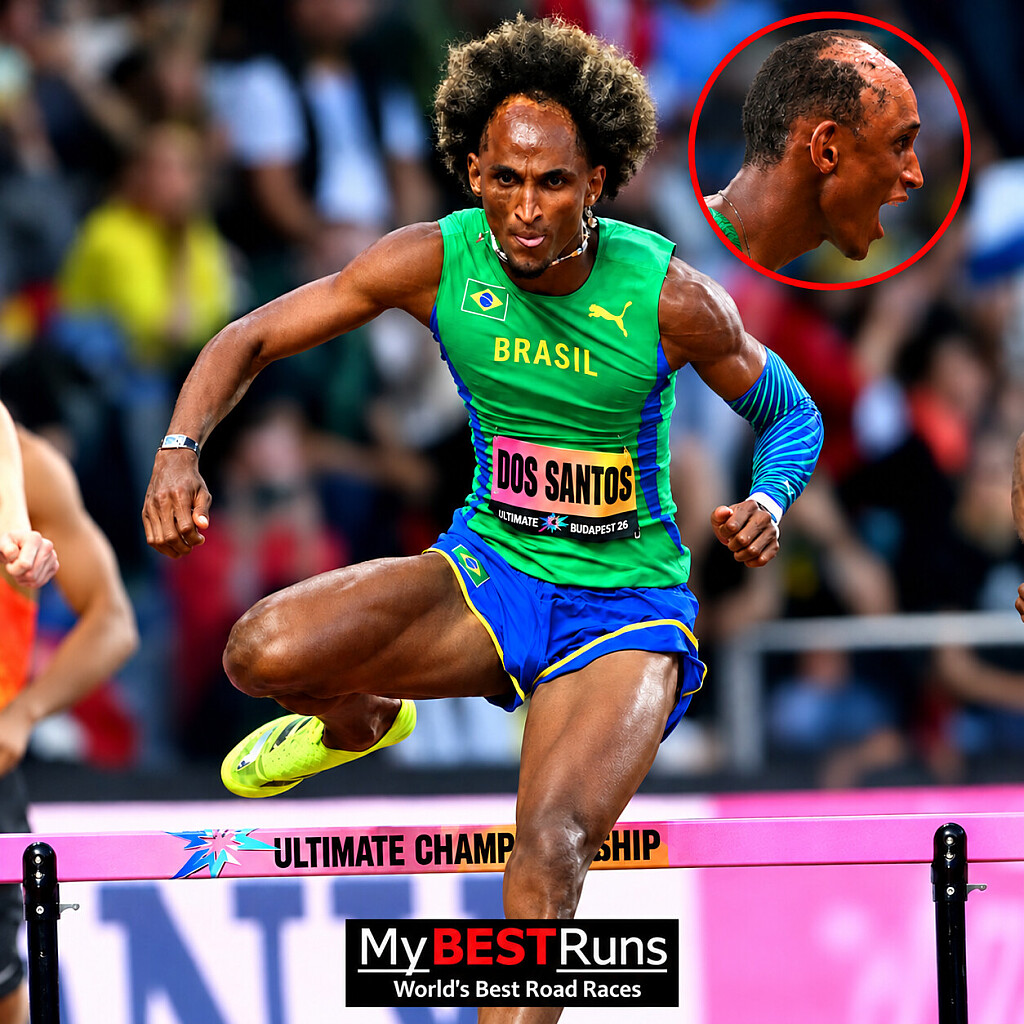
From Childhood Burns to World Records: Alison Dos Santos Turns Scars Into Strength
Alison dos Santos carries visible scars on his forehead and parts of his body, but behind them lies a remarkable story of survival that has become an important part of his journey in athletics.
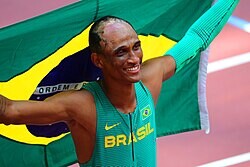
When he was just 10 months old, the Brazilian suffered severe third-degree burns after boiling oil spilled onto him. The accident left permanent scars and could easily have changed the course of his life before it had even begun.
He survived the ordeal, and as he grew older, the scars became a visible reminder of an accident he had endured as a baby. For much of his childhood, they also brought unwanted attention and insecurity. But eventually, athletics gave him something far more powerful: confidence, purpose and an opportunity to define himself through his talent rather than his scars.
That transformation took him all the way to the world's biggest sporting stages.
Dos Santos announced himself among the world's elite 400m hurdlers with an Olympic bronze medal at Tokyo 2020, clocking 46.72 seconds. In 2022, he reached another milestone by becoming world champion, confirming himself as one of the leading figures in an event that had entered an extraordinary era.
Two years later, he added another Olympic bronze medal in Paris, continuing to establish himself among the very best 400m hurdlers on the planet.
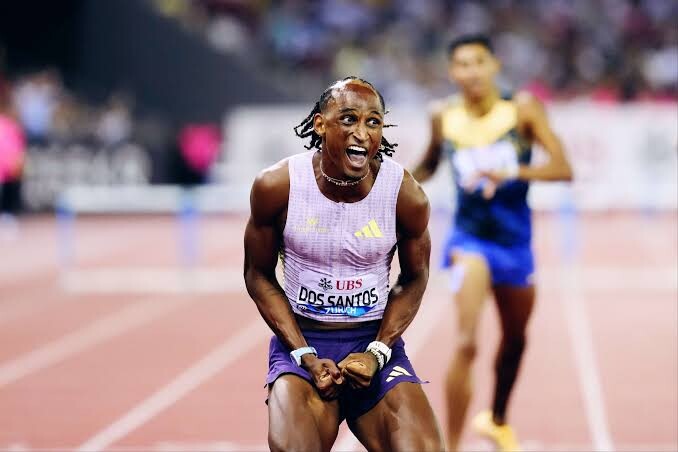
Then came Zürich.
On August 27, 2026, dos Santos delivered the race that changed his place in history. He stormed to 45.80 seconds, breaking Karsten Warholm's five-year-old world record of 45.94 and becoming the first man in history to run under 46 seconds twice.
The moment carried another layer of significance because Warholm was in the race. The Norwegian had established the previous world record in the unforgettable Tokyo Olympic final in 2021, a race in which dos Santos himself had won bronze. Five years later, the Brazilian returned to the same record-breaking narrative — this time as the man rewriting history.
But dos Santos was not finished.
Just over two weeks after his historic run in Zürich, he travelled to Budapest for the inaugural World Athletics Ultimate Championship, where the world's leading 400m hurdlers assembled for another highly anticipated showdown.

On September 13, dos Santos once again stood at the centre of the action. He produced another extraordinary performance, winning the men's 400m hurdles in 45.98 seconds and successfully defending his position at the top of an event filled with heavyweight names.
Rai Benjamin finished second in 46.40, while Warholm took third in 46.78. Dos Santos had once again beaten two of the athletes most closely associated with the modern history of the 400m hurdles.
The 45.98 also made him the first athlete to break 46 seconds twice, while ranking as the third-fastest performance ever recorded in the event at the time. His world record of 45.80 remained firmly at the top.
His latest victory therefore added another remarkable chapter to a season that had already produced a world record and a string of elite performances. Dos Santos has combined speed, consistency and resilience to turn 2026 into one of the defining seasons of his career.
And perhaps that is what makes his story so compelling. The hurdles he clears today are visible to the world, but some of the hardest obstacles he has overcome were faced long before he ever entered a stadium. His scars tell the story of what happened to him as a child; his achievements tell the story of what he chose to become.
The scars never disappeared. Neither did the determination of the boy who survived them.
Today, Alison dos Santos is not defined by the accident that marked his childhood. He is defined by the athlete he became — an Olympic medallist, a world champion, a world-record holder and now the inaugural World Athletics Ultimate champion in the 400m hurdles.
From surviving a devastating accident as an infant to standing on the highest level of his event, Piu has spent his life clearing hurdles — long before he ever started racing over them.
by Erick Cheruiyot for My Best Runs.
Login to leave a comment
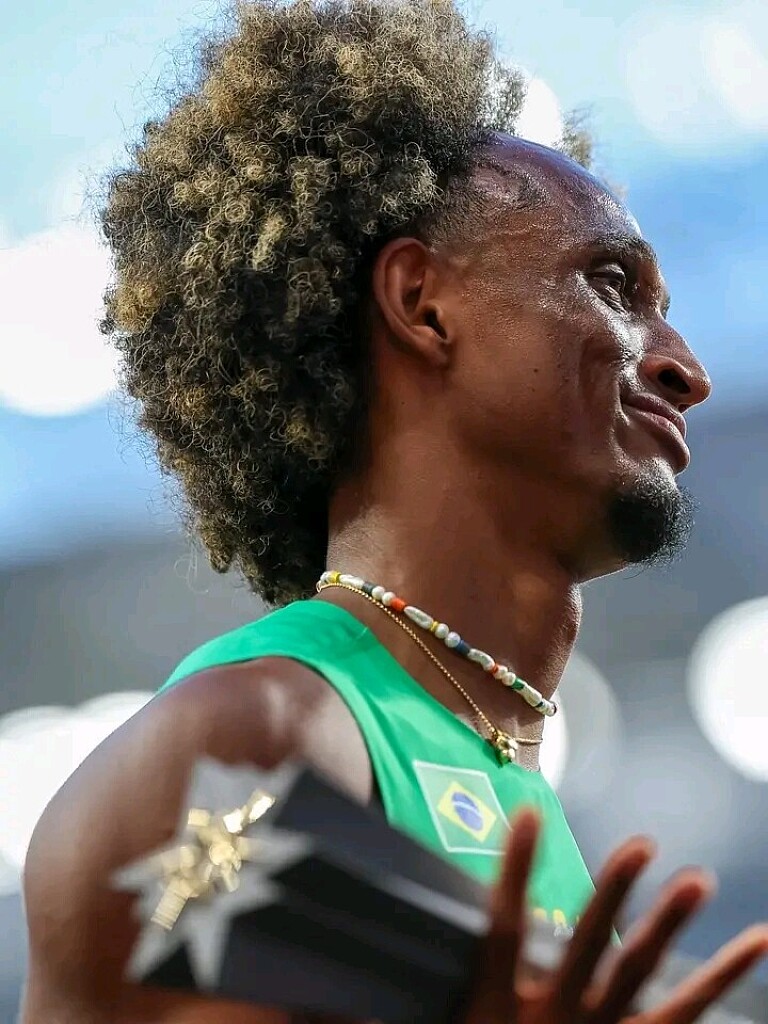
Alison Dos Santos Roars Again! World Record Holder Claims Ultimate 400m Hurdles Crown
Alison dos Santos has finished his season in spectacular fashion, adding the World Athletics Ultimate Championship title to an extraordinary run of form that has seen the Brazilian repeatedly produce performances at the highest level.
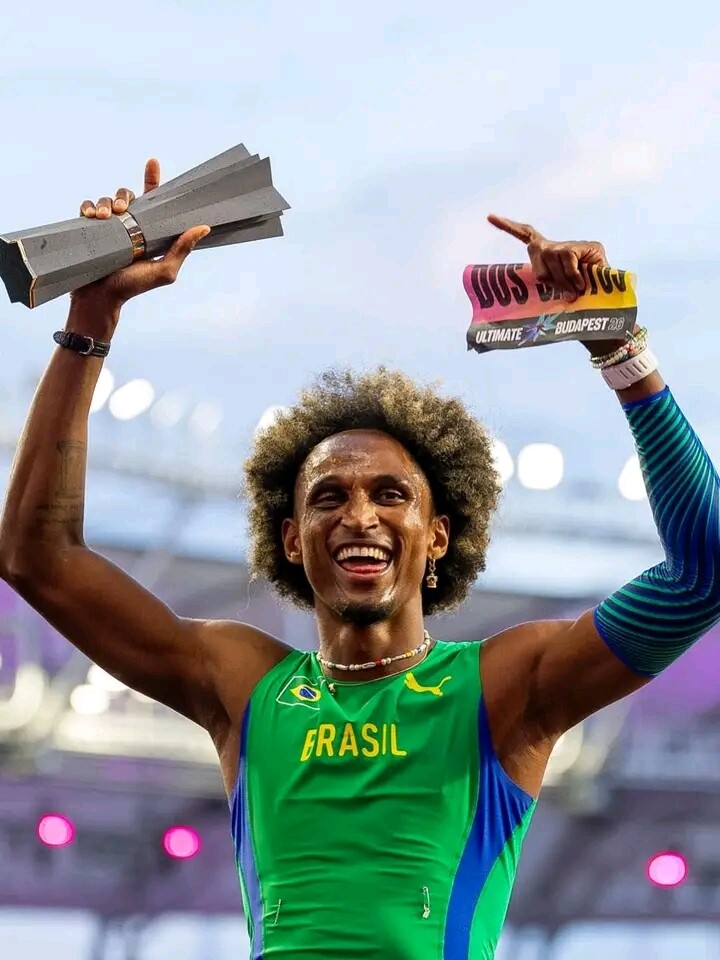
The world record holder stormed to victory in the men's 400m hurdles in Budapest, clocking a stunning 45.98 seconds to secure the ultimate crown and cap a memorable campaign in style.
Dos Santos entered the championship full of confidence after winning the Diamond League Trophy last weekend. His latest triumph came only a few weeks after his historic 45.80 world record in Zürich, making his Budapest performance another remarkable sub-46-second run.
The Brazilian once again displayed his trademark combination of speed, rhythm and control between the barriers. Although he could not quite reproduce his world-record time, his 45.98 was more than enough to defeat two of the biggest names in the event.
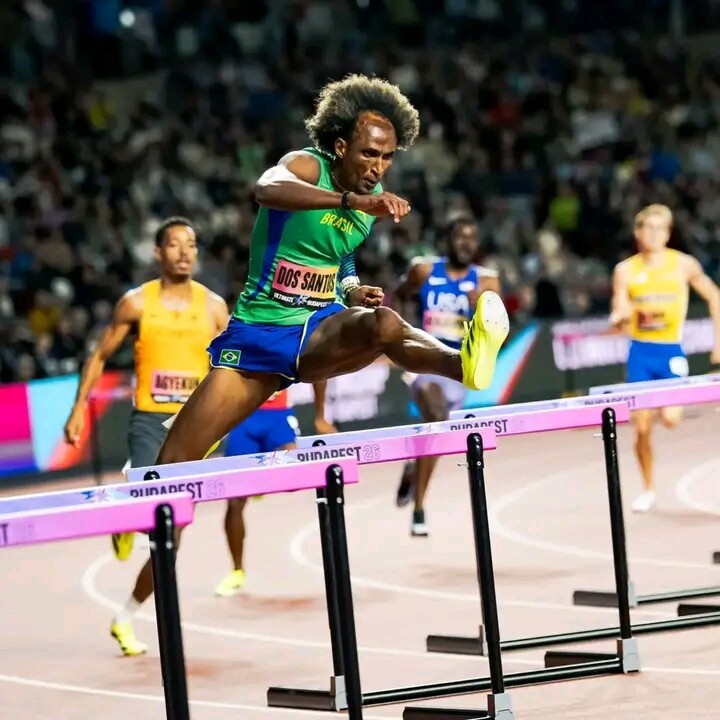
Rai Benjamin pushed hard throughout the race and finished second in 46.40 seconds, while Norwegian superstar Karsten Warholm secured third place in 46.78. The result once again highlighted the extraordinary depth and quality of a 400m hurdles event that has been dominated by these three giants in recent years.
For Dos Santos, however, the night belonged entirely to him. He not only walked away with the Ultimate Championship gold medal but also became the first man to record two sub-46-second performances over the 400m hurdles, underlining just how exceptional his current form has been.
His 45.80 world record in Zürich had already sent shockwaves through athletics, but returning a few weeks later to run 45.98 against Benjamin and Warholm shows that his record-breaking performance was no one-off.
Instead, Dos Santos has established a level of consistency rarely seen in the event. He has combined championship pressure with extraordinary speed, finishing his season as the Diamond League champion and now the Ultimate champion.
The Brazilian's latest victory is a fitting conclusion to a season in which he has continued to strengthen his reputation as one of the greatest 400m hurdlers of his generation.
From the world record in Zürich to the Diamond League Trophy and now the Ultimate Championship crown, Dos Santos has delivered a season-ending statement that will be difficult for his rivals to ignore.
What a way for the world record holder to finish the season — roaring across the line in 45.98 seconds and leaving Budapest with another major title to his name.
by Erick Cheruiyot for My Best Runs.
Login to leave a comment
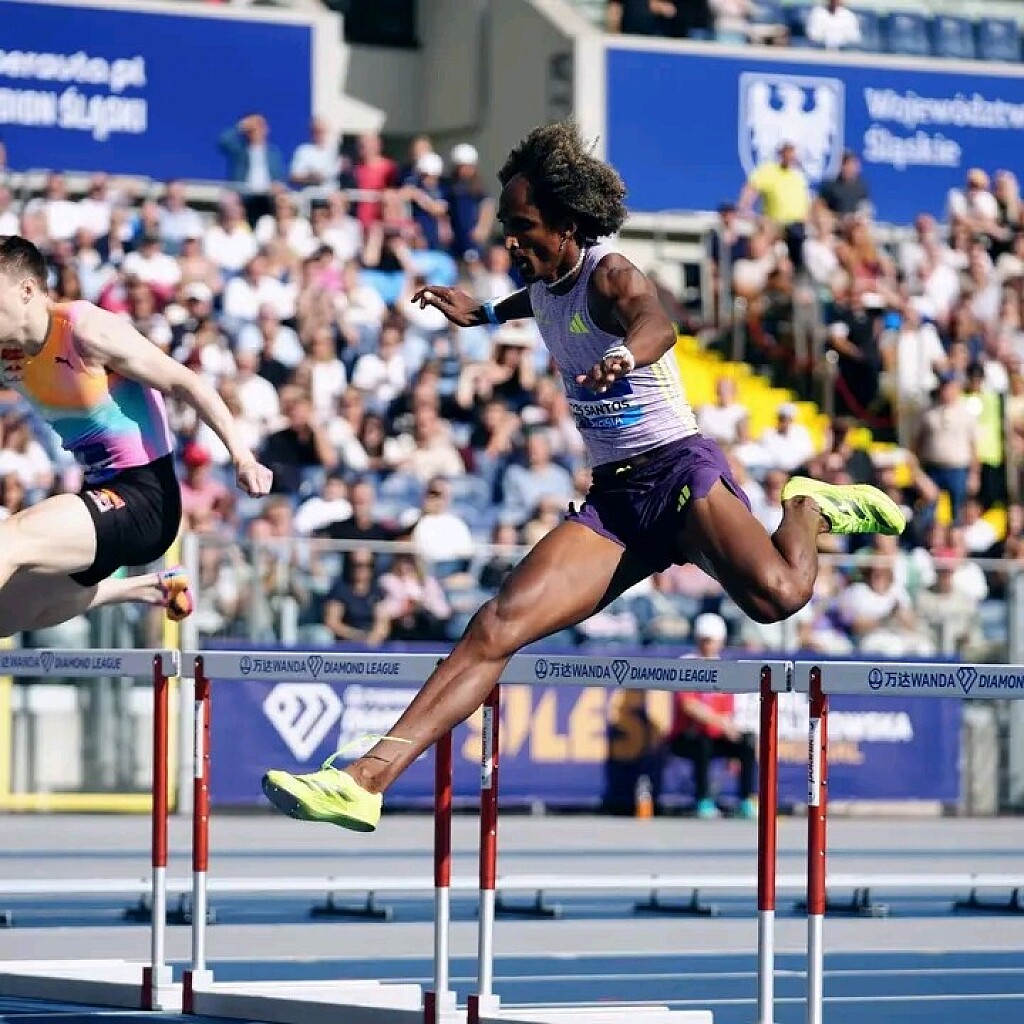
Is This the Greatest Era in Men’s 400m Hurdles History? Dos Santos Takes the Event to Another Level
The men’s 400m hurdles may be experiencing the greatest era in its history, and the numbers now make the argument almost impossible to ignore.
Brazilian superstar Alison dos Santos has taken the event to another level, storming to a sensational 45.80 world record in Zurich and moving to the summit of the all-time performance list.
But perhaps even more remarkable than the world record itself is what it has done to the historical rankings.
Every one of the 10 fastest performances in men’s 400m hurdles history is now owned by just three athletes: Alison dos Santos, Karsten Warholm and Rai Benjamin.
That extraordinary statistic perfectly captures the dominance of the current generation and highlights just how dramatically the event has evolved over the past few years.
Following his stunning performance in Zurich, dos Santos now sits at the top of the all-time list with 45.80, followed by Norway’s Karsten Warholm at 45.94, the time he ran in his historic world-record performance at the Tokyo Olympics in 2021.
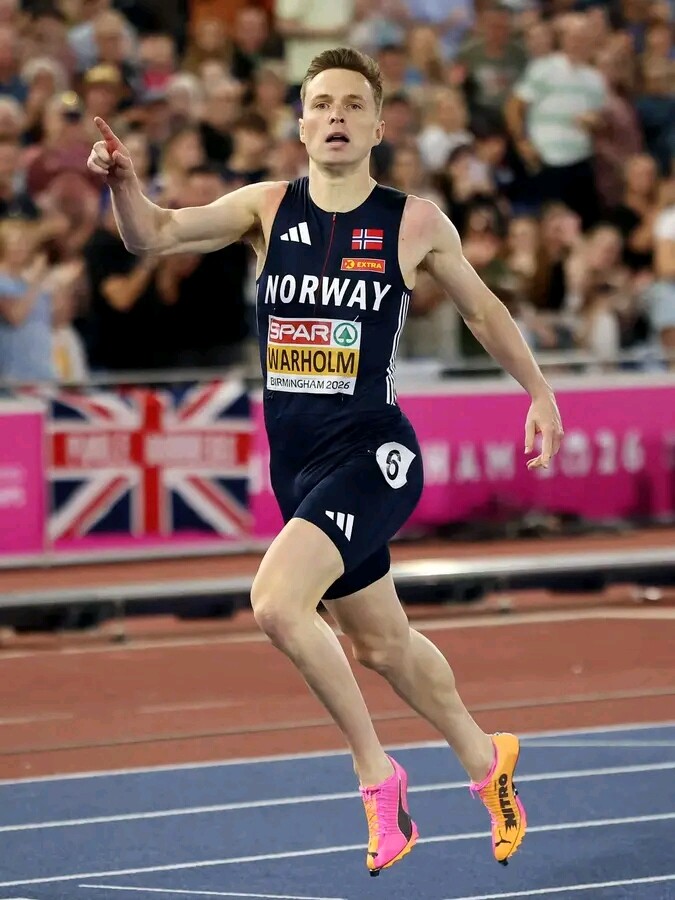
American star Rai Benjamin occupies third with 46.17, also from that unforgettable Tokyo final. Warholm is fourth with 46.28 from 2025, while dos Santos is fifth with his 46.29 from 2022.
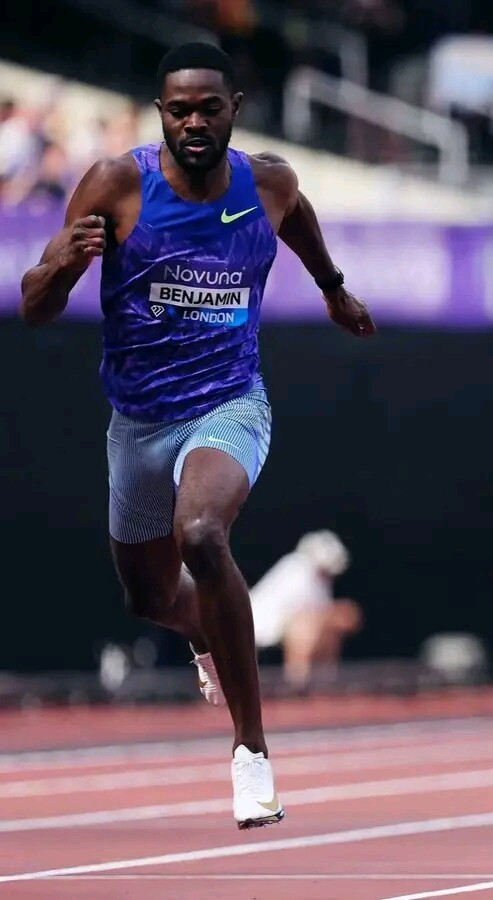
Benjamin appears again in sixth and seventh with 46.46 performances from 2024, while dos Santos takes eighth with 46.48 in 2026. Warholm completes the list with 46.51 from 2023 and 46.52 from 2023.
The distribution is extraordinary. Dos Santos owns three of the 10 fastest performances, Warholm owns four, while Benjamin owns the remaining three.
No other athlete has managed to break into the top 10.
That level of concentration at the very top of an event is a remarkable reflection of the era these three athletes have created.
At the centre of it all is dos Santos, whose 45.80 in Zurich has established a completely new benchmark. The Brazilian's performance did more than secure another historic victory; it pushed the boundaries of what is considered possible over one lap and 10 barriers.
Warholm had previously rewritten the history books in Tokyo when he clocked 45.94, becoming the first man to break the 46-second barrier and finally lowering Kevin Young’s legendary 46.78 world record, which had stood since the 1992 Barcelona Olympics.
Benjamin finished behind Warholm in Tokyo in 46.17, producing a performance that would itself have been considered extraordinary in almost any other era. Dos Santos completed the podium in 46.72, but his bronze medal would eventually prove to be just another chapter in his rise towards the summit.
The Tokyo final remains one of the most spectacular races in Olympic athletics history, but it also marked the beginning of an extraordinary period in which Warholm, Benjamin and dos Santos would repeatedly challenge the limits of the event.
Warholm has four performances inside the current top 10, including his 45.94 world record from Tokyo. Dos Santos has three, highlighted by his new global mark, while Benjamin also has three performances among the 10 fastest ever recorded.
Their remarkable consistency has transformed the 400m hurdles from an event once dominated by isolated historic performances into one defined by sustained excellence and intense rivalry.
For nearly three decades, Kevin Young’s 46.78 appeared almost untouchable. Then Warholm broke through. Benjamin immediately showed that the new standard could be challenged, and dos Santos emerged as another athlete capable of running at an astonishing level.
Now, times below 46 seconds are no longer viewed as an unimaginable frontier. They have become the territory occupied by the very best athletes of this generation.
And dos Santos has just moved that frontier even further.
His 45.80 has given the event a new target, but with Warholm and Benjamin still among the world's elite, the story may not be finished.
The question is no longer whether this generation is exceptional.
It is whether we are witnessing the greatest collection of men's 400m hurdlers ever assembled.
Three athletes now own every position in the all-time top 10.
Ten performances have been produced by just dos Santos, Warholm and Benjamin.
And at the very top stands Alison dos Santos, whose breathtaking 45.80 in Zurich has pushed the men’s 400m hurdles into territory that once seemed impossible.
Three superstars. Ten historic performances. One extraordinary era.
by Erick Cheruiyot for My Best Runs.
Login to leave a comment
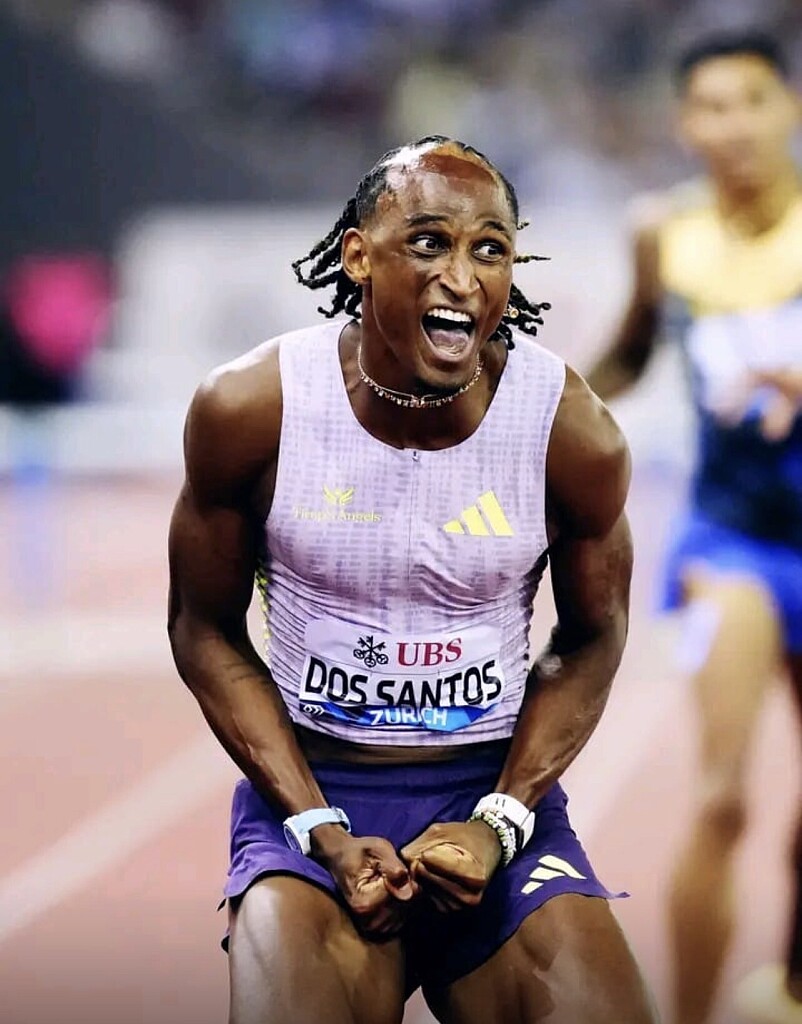
Alison dos Santos Makes History in Zurich, Smashing Warholm’s 400m Hurdles World Record
45.80 seconds. A new world record. A new chapter in the history of the 400m hurdles.
Brazilian star Alison dos Santos produced a breathtaking performance at the Zurich Diamond League on Thursday, storming to 45.80 seconds to shatter the men’s 400m hurdles world record and dethrone one of the greatest records in modern athletics.
Dos Santos delivered a sensational run at Weltklasse Zürich, becoming the first athlete to break the barrier set by Norway’s Karsten Warholm, whose legendary 45.94-second world record had stood since his spectacular victory at the Tokyo 2020 Olympic Games in 2021.
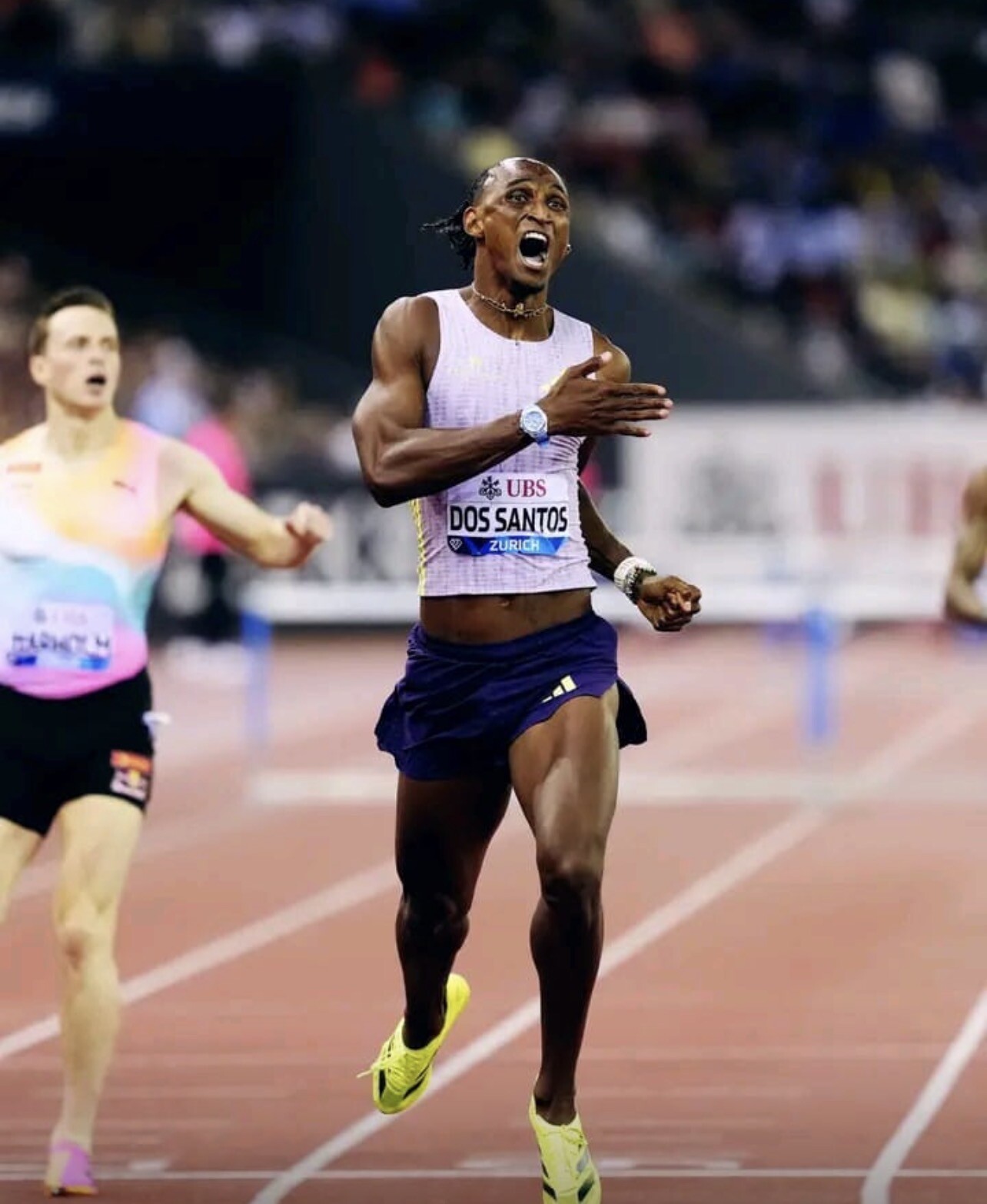
The Brazilian was in complete control from the opening stages, attacking the hurdles with remarkable speed and precision before powering down the final straight. The clock stopped at 45.80, sending shockwaves through the stadium and rewriting the record books.
Warholm, the former world-record holder and one of the sport’s most dominant figures, had to settle for second place in 46.69 seconds. Nigeria’s Ezekiel Nathaniel completed the podium in 47.50.
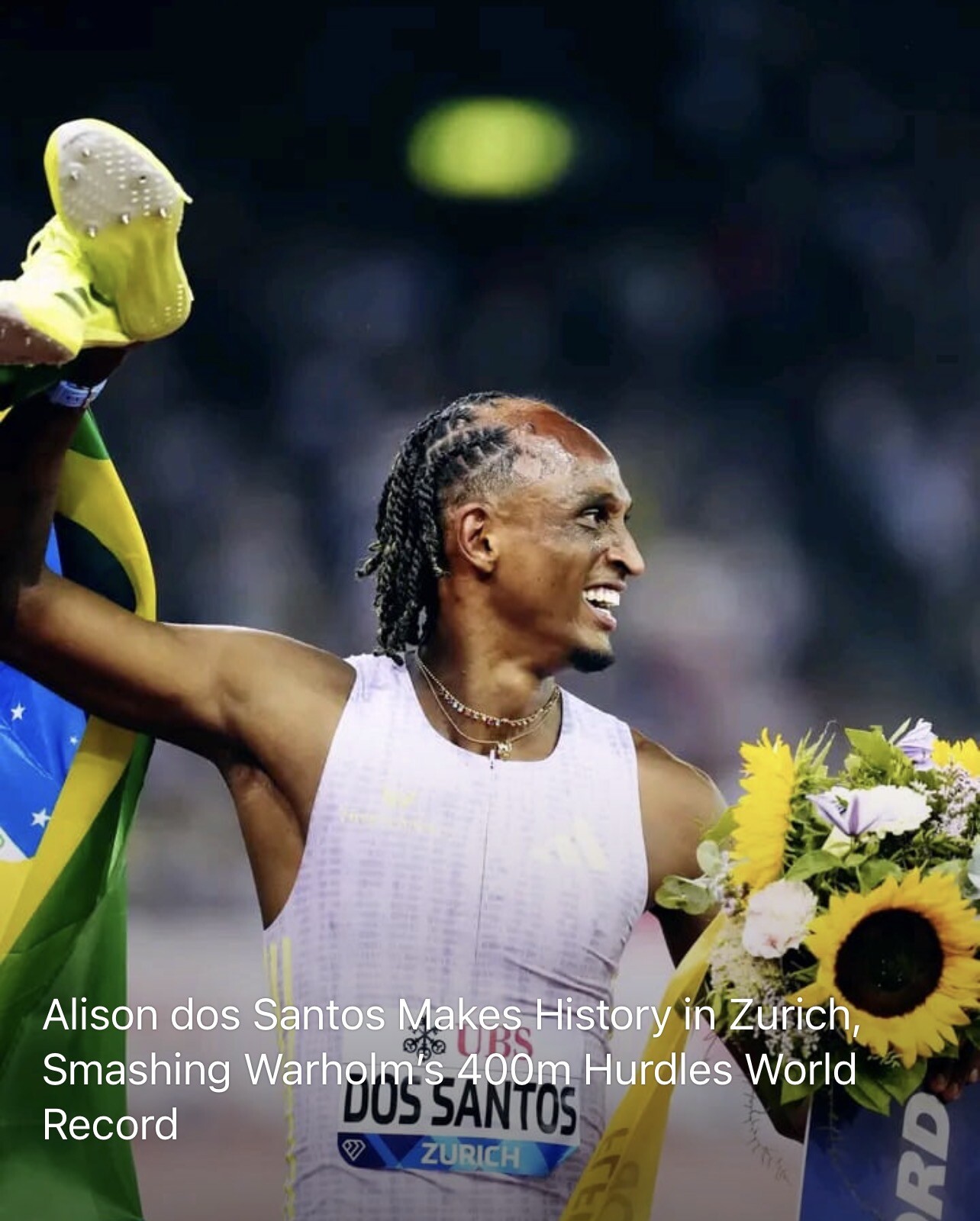
The result adds another extraordinary chapter to the rivalry between Dos Santos and Warholm. The pair have repeatedly pushed each other to new levels, but this time Dos Santos delivered the defining blow, taking down a record that had become synonymous with Warholm’s name.
The 26-year-old Brazilian has now cemented himself among the greatest 400m hurdlers in history. A world champion in 2022 and a two-time Olympic bronze medallist, Dos Santos has spent years chasing the sport’s very best — and in Zurich, he finally claimed its most coveted record.
His breakthrough is even more remarkable given that he entered the Zurich meeting with a personal best of 46.29 seconds in the 400m hurdles. His previous 2026 best had been 46.43, set just days earlier in Silesia, where he also defeated Warholm.
Now, the record belongs to Brazil.
Alison dos Santos — 45.80 seconds.
A new world record, a historic victory and a performance that will be remembered as one of the defining moments of the 2026 athletics season.
by Erick Cheruiyot for My Best Runs.
Login to leave a comment

Débora Simas Runs 866.21 Kilometres in Seven Days to Shatter the Women’s Treadmill Record
For seven relentless days, Débora Simas turned a treadmill inside a bustling shopping mall in Florianópolis, Brazil, into the stage for an extraordinary feat of endurance.
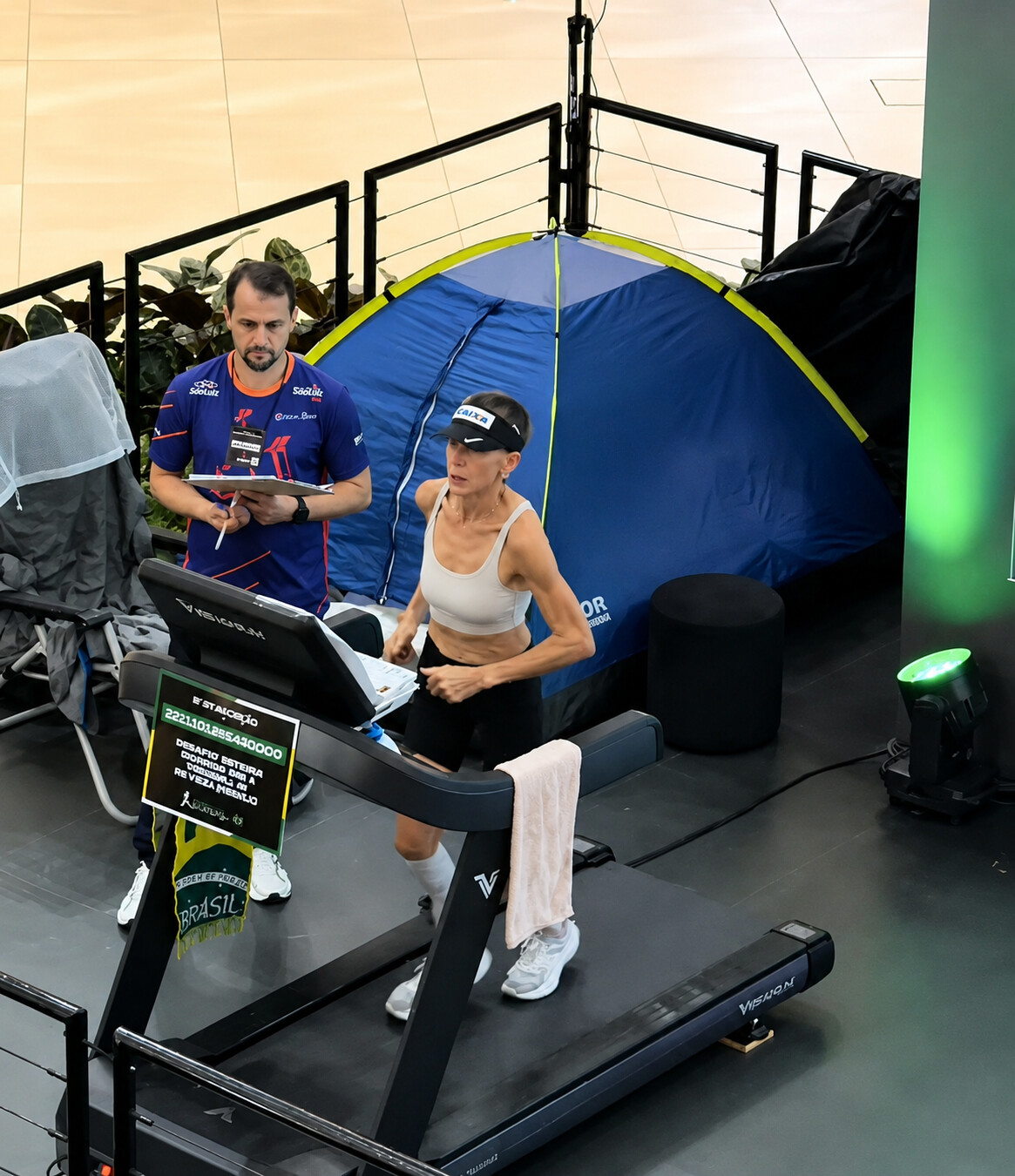
When the clock reached 168 hours at midday on Sunday, the 55-year-old ultramarathoner had covered an astonishing 866.21 kilometres — approximately 538 miles. That distance put her more than 20 kilometres beyond the previous Guinness World Records benchmark of 846.16 kilometres, set by New Zealand’s Emma Timmis in June 2024.
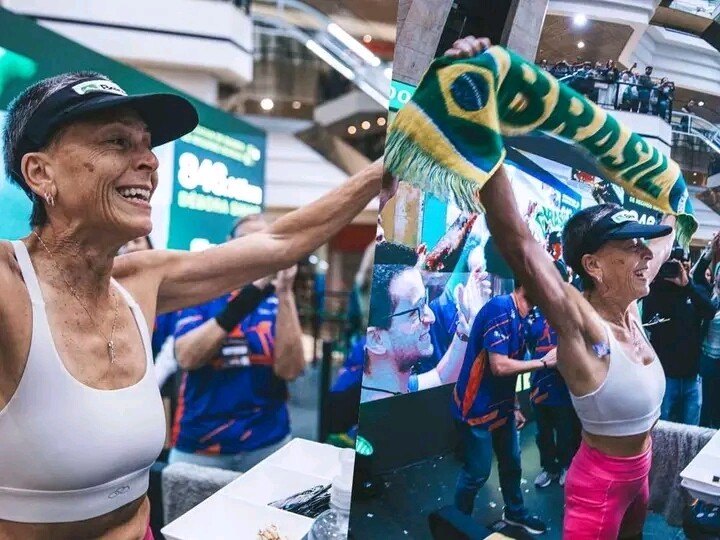
The achievement was the culmination of a challenge that demanded far more than simply running. For an entire week, Simas had to manage the relentless combination of physical fatigue, sleep deprivation, nutrition, recovery and the mental strain of repeatedly stepping back onto the treadmill.

Her temporary home was a tent positioned behind the treadmill, where she grabbed short periods of sleep and attended to essential recovery needs. Food, medical attention and other necessities had to be carefully fitted around the demands of the attempt, while a private bathroom inside the shopping centre provided the only place where she could briefly step away from the public eye.
This was not Simas’s first encounter with the unforgiving nature of seven-day treadmill running. In 2019, she completed 800.61 kilometres over the same 168-hour period at the Beiramar Shopping centre, setting a Brazilian and South American record at the time. Her return seven years later was driven by a very different ambition: to go beyond the world’s best mark.
The preparation behind the attempt was equally remarkable. Simas reportedly spent two years preparing for the challenge while balancing two jobs, often training largely on her own. Every kilometre of that preparation ultimately became part of a much bigger test of patience, resilience and belief.
There were moments during the seven days when the body threatened to take control. At one stage, a severe cramp placed the attempt in jeopardy and forced members of her support team to intervene. Yet Simas recovered and continued, refusing to let one difficult moment derail an effort that had taken years to build.
Her final distance of 866.21 kilometres represents an average of about 123.7 kilometres per day, or roughly 5.15 kilometres every hour across the full 168-hour period. That figure includes the periods when she was required to stop for essential needs, making the scale of the accomplishment even more striking.
Simas now has the number that matters most: 866.21 kilometres. However, there is an important distinction between breaking the previous mark and having the Guinness title officially ratified. Guinness World Records notes that records can change before they are immediately reflected online, and official recognition depends on the verification process.
For Simas, though, the significance of the achievement goes far beyond a number on a leaderboard. Her journey was a battle against exhaustion, discomfort and the powerful urge to stop — a test in which mental strength became just as important as physical endurance.
“I had to face the sleepiness, the pain, the exhaustion, and moments when my head had to be stronger than my body,” she said.
After 168 hours, the treadmill finally fell silent. Débora Simas stepped away having transformed seven days of relentless running into one of the most remarkable endurance performances of her career — and, pending official verification, a new women’s world-best mark for distance covered on a treadmill in one week.
by Erick Cheruiyot for My Best Runs.
Login to leave a comment

Relief at Last: Olympic Marathoner Daniel Do Nascimento Found Alive After 44 Days Missing
There are moments in sport that transcend medals, records, and championships. The safe return of Brazilian Olympic marathoner Daniel Ferreira do Nascimento is one of those moments.
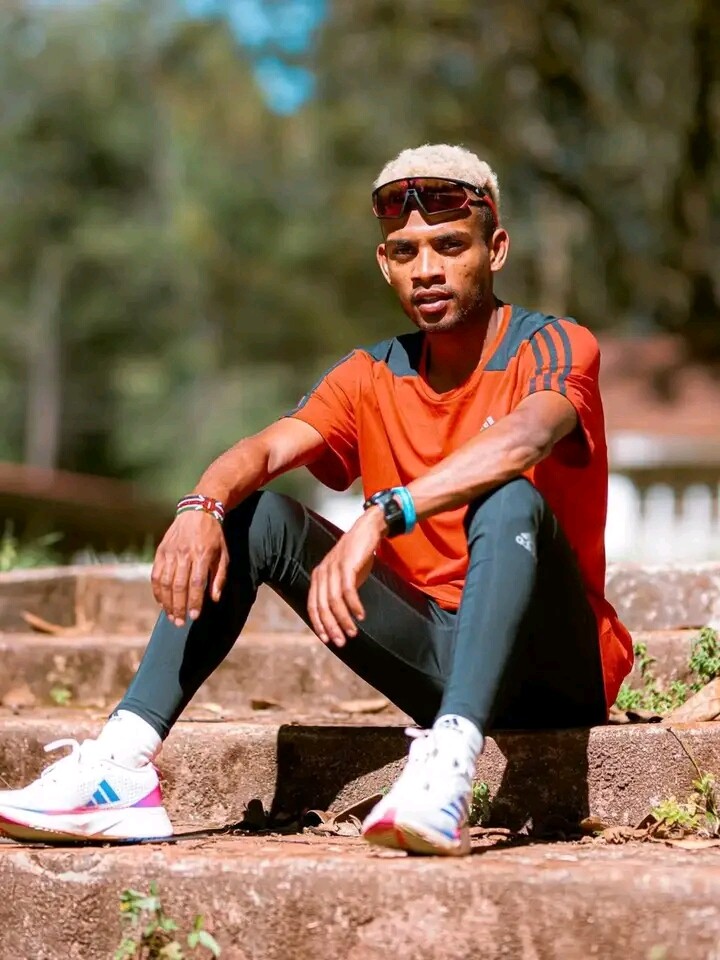
After 44 agonizing days of uncertainty, fear, and relentless searching, the South American marathon record holder has been found alive, bringing overwhelming relief to his family, friends, and the global athletics community.
Daniel had been missing since June 19, after leaving his family home in Paraguaçu Paulista, in the interior of São Paulo state, carrying only a black backpack. His sudden disappearance sparked growing concern as days turned into weeks with no confirmed information about his whereabouts.
The emotional breakthrough came after his mother, who had tirelessly appealed to the public through social media for help in finding her son, confirmed that he had been located. She immediately traveled to a police station in Brazil's capital to reunite with him, ending more than six weeks of heartbreaking uncertainty.
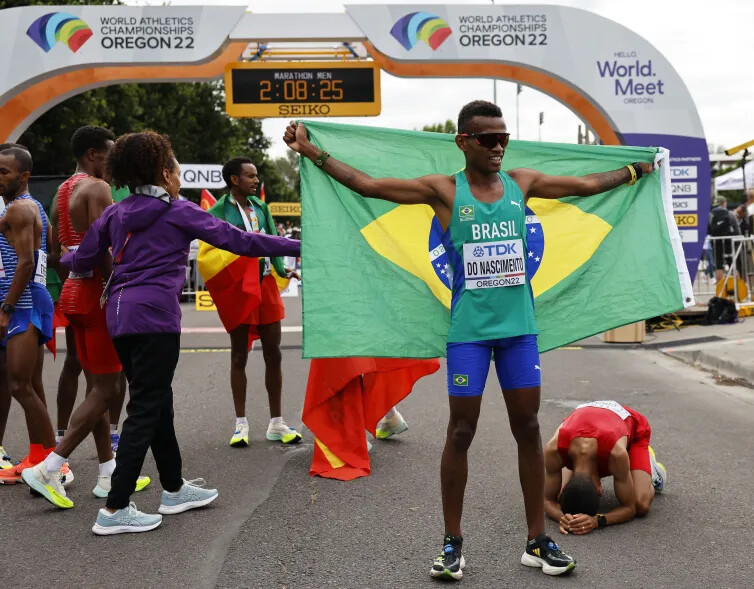
The family's search had captured widespread attention across Brazil and beyond. About a month after Daniel disappeared, relatives launched a major online campaign hoping someone would recognize him or provide information. In a particularly heartbreaking moment, the Olympic marathoner spent his 28th birthday away from those who love him, still missing as the desperate search continued.
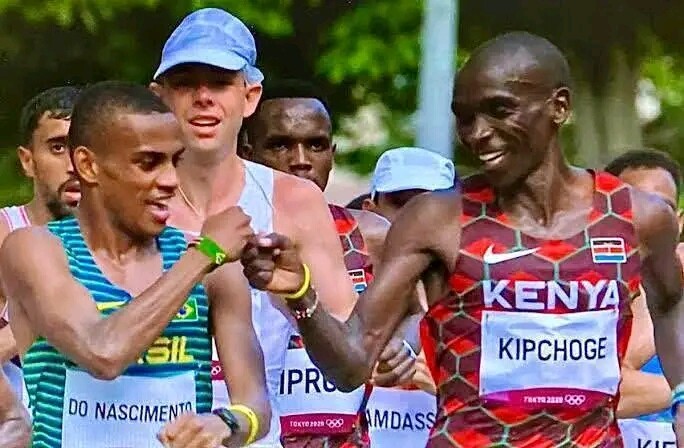
Behind the headlines lies a deeply personal struggle. According to his family, Daniel has been battling severe depression, a challenge that intensified following a doping case that abruptly brought his elite running career to a halt. In 2025, he received a five-year suspension, backdated to July 15, 2024, making him ineligible to compete in official events until 2029.
Despite the setbacks that have marked the past two years, today's news is not about records or racing. It is about life, hope, and the immeasurable joy of a family being reunited with their loved one.
Daniel remains one of South America's finest marathon runners, having represented Brazil at the Olympic Games and set a South American marathon record with a personal best of 2:04:51. Yet, this remarkable chapter serves as a powerful reminder that even the strongest athletes can face invisible battles beyond the finish line.
As Daniel returns to the care of his family, the athletics world shares in a collective sense of gratitude. The greatest victory today is not measured by time or trophies—it is the simple, priceless truth that he is alive.
The entire running community wishes Daniel strength, healing, and peace as he begins the next chapter of his journey, surrounded by the love and support of those who never stopped believing he would come home.
by Erick Cheruiyot for My Best Runs.
Login to leave a comment
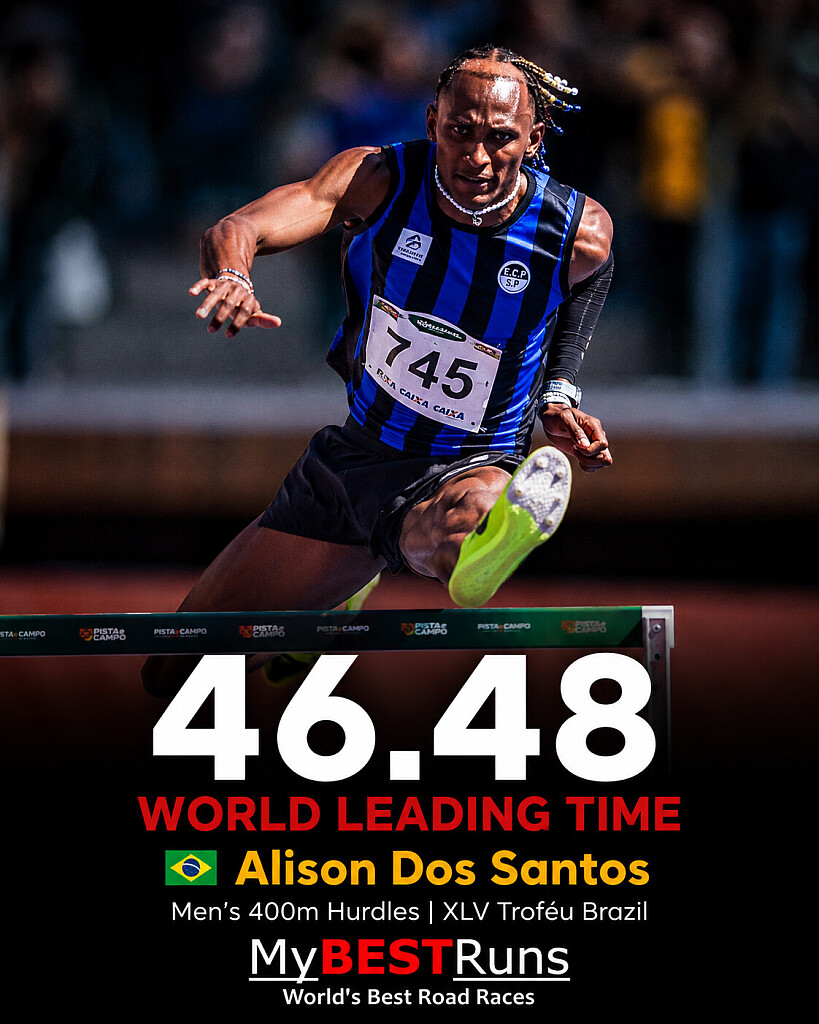
Alison Dos Santos Roars Back to the Top with World-Leading 46.48 at Troféu Brasil
Brazilian 400m hurdles star Alison Dos Santos has delivered a powerful statement ahead of the major championships, producing a sensational world-leading 46.48 seconds to win at the XLV Troféu Brasil in front of an ecstatic home crowd.
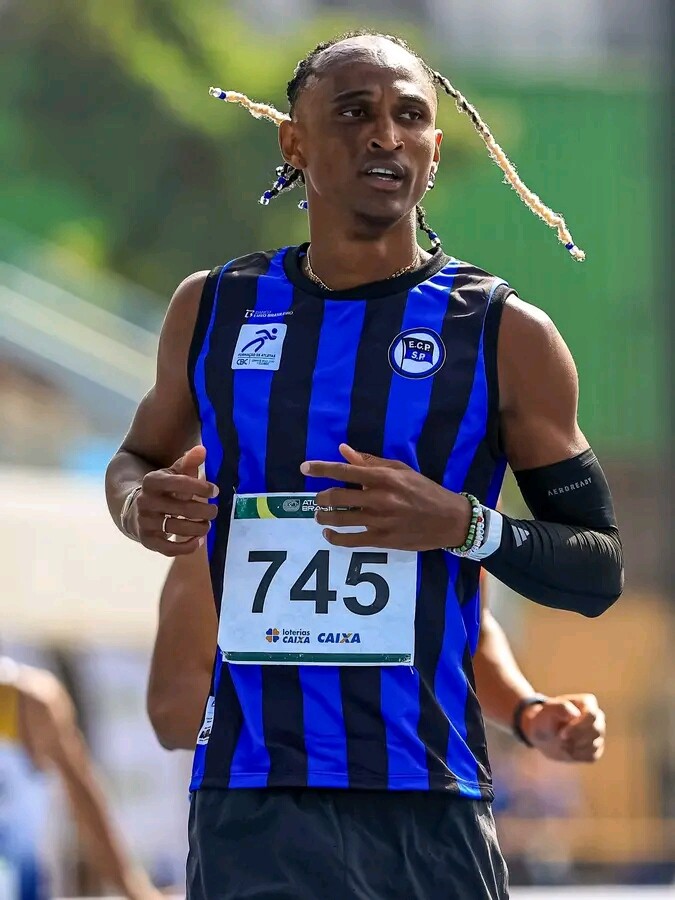
The breathtaking performance marked Dos Santos' fastest race since his unforgettable triumph at the 2022 World Athletics Championships, where he claimed global gold in dominant fashion. After battling injuries and setbacks over the past few seasons, the Brazilian has once again reminded the athletics world why he remains one of the event's greatest talents.
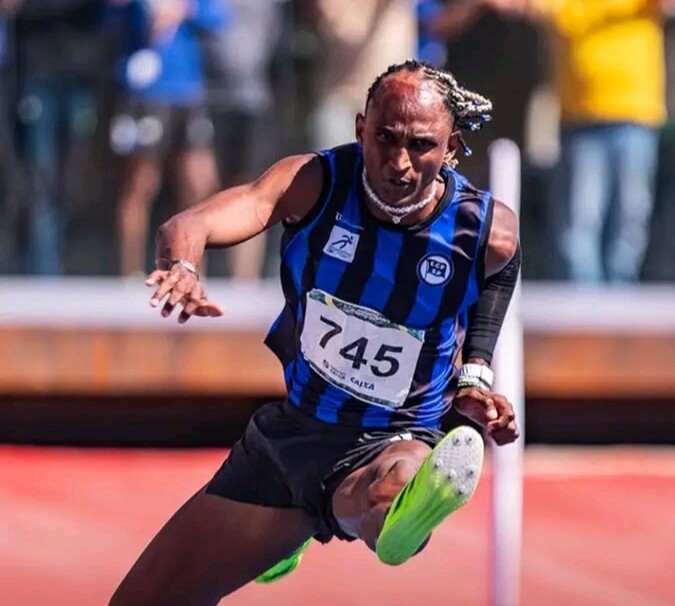
Clocking 46.48, Dos Santos surged to the top of the 2026 world rankings with a display of speed, rhythm, and flawless hurdling that left no doubt about his return to peak form. Every stride reflected the confidence and explosiveness that made him a world champion, sending a clear warning to his rivals that he is ready to challenge for more international titles.
The performance is more than just a fast time—it is a powerful comeback story. Returning to his very best after years of determination and resilience, Dos Santos has reignited excitement in one of track and field's most competitive events. His run not only thrilled the home fans but also reshaped the global picture in the men's 400m hurdles.
With the championship season gathering momentum, Alison Dos Santos has placed himself firmly back among the favourites. If this remarkable run is any indication, the Brazilian superstar is once again ready to chase gold on the world's biggest stages, proving that champions always find a way back to the top.
by Erick Cheruiyot for My Best Runs.
Login to leave a comment
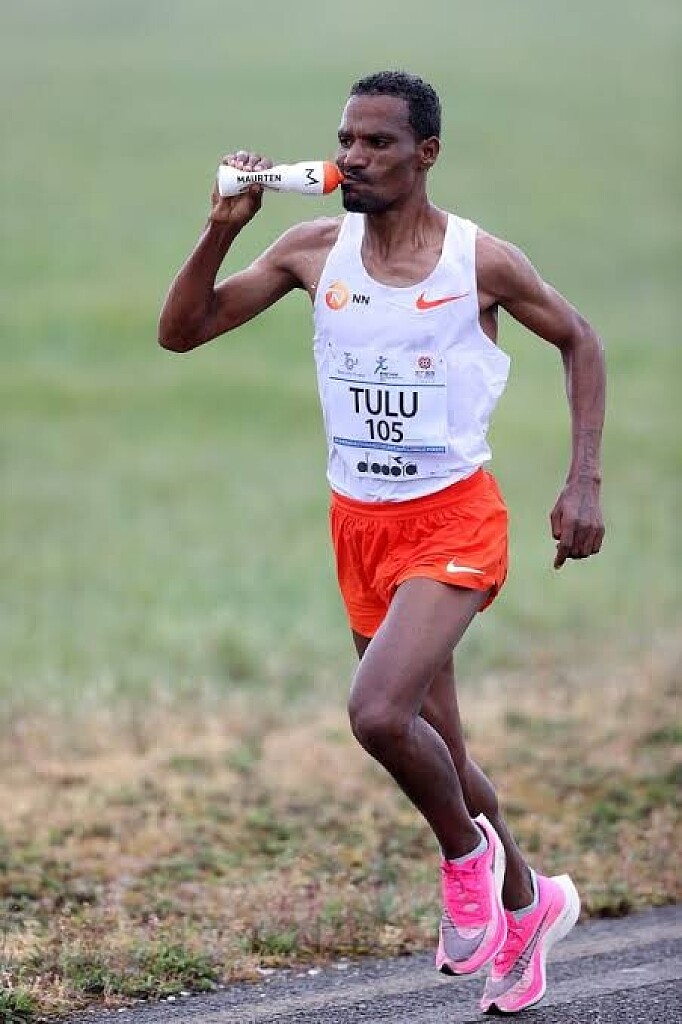
São Paulo Marathon Set for High-Stakes Showdown as Kipkosgei, Wami and Lelei Target Victory
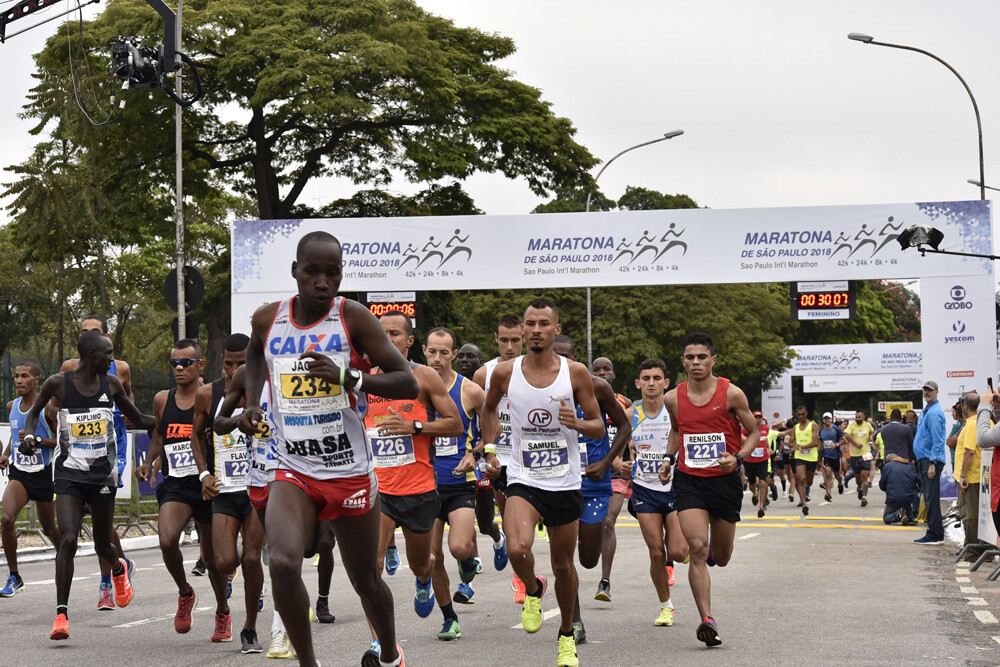
The countdown is on for the 2026 São Paulo Marathon, where an elite international field is set to battle for one of South America's most prestigious road racing titles on Sunday, July 26, in Brazil.
Ethiopia's Tulu Wami arrives carrying the fastest personal best in the field, having clocked an outstanding 2:05:19, making him the man every rival will be watching when the race gets underway. On paper, Wami stands as the favorite, but championship marathons are rarely decided by statistics alone.
Kenya will mount a formidable challenge through Denis Kipkosgei and Isaack Lelei, two accomplished marathoners eager to upset the pre-race predictions. Kipkosgei brings a personal best of 2:08:36, while Lelei has demonstrated his own consistency with a lifetime best of 2:09:32. Both possess the experience and tactical awareness to capitalize if the race turns into a battle of endurance rather than pure speed.
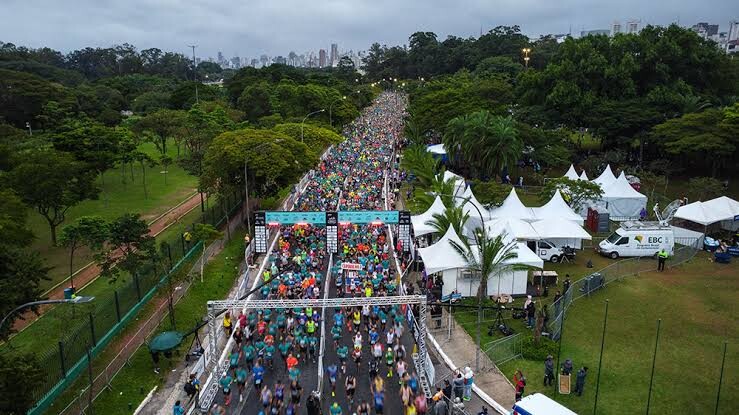
With three proven distance runners leading a deep and competitive field, the stage is set for an intriguing contest over the 42.195-kilometre distance. Whether the pace is aggressive from the gun or develops into a strategic duel in the closing kilometres, every move will carry significant weight.
Brazilian fans can expect an exciting spectacle as East Africa's marathon powerhouses renew one of the sport's greatest rivalries on Brazilian roads. Wami may hold the quickest credentials, but Kipkosgei and Lelei will be determined to write a different ending and take the title back to Kenya.
As anticipation builds ahead of Sunday's race, one question remains:
Will Tulu Wami justify his status as the fastest man in the field, or will Denis Kipkosgei or Isaack Lelei produce a memorable upset to claim the São Paulo Marathon crown?
by Erick Cheruiyot for My Best Runs.
Login to leave a comment

Sao Paulo Marathon
São Paulo International Marathon is held annually in the city of São Paulo since 1995. The competition also includes the25 km, 10 km and 3 km walk, in addition to the marathon. It is carried out all within the city of São Paulo, with departure and arrival in the Ibirapuera Park....
more...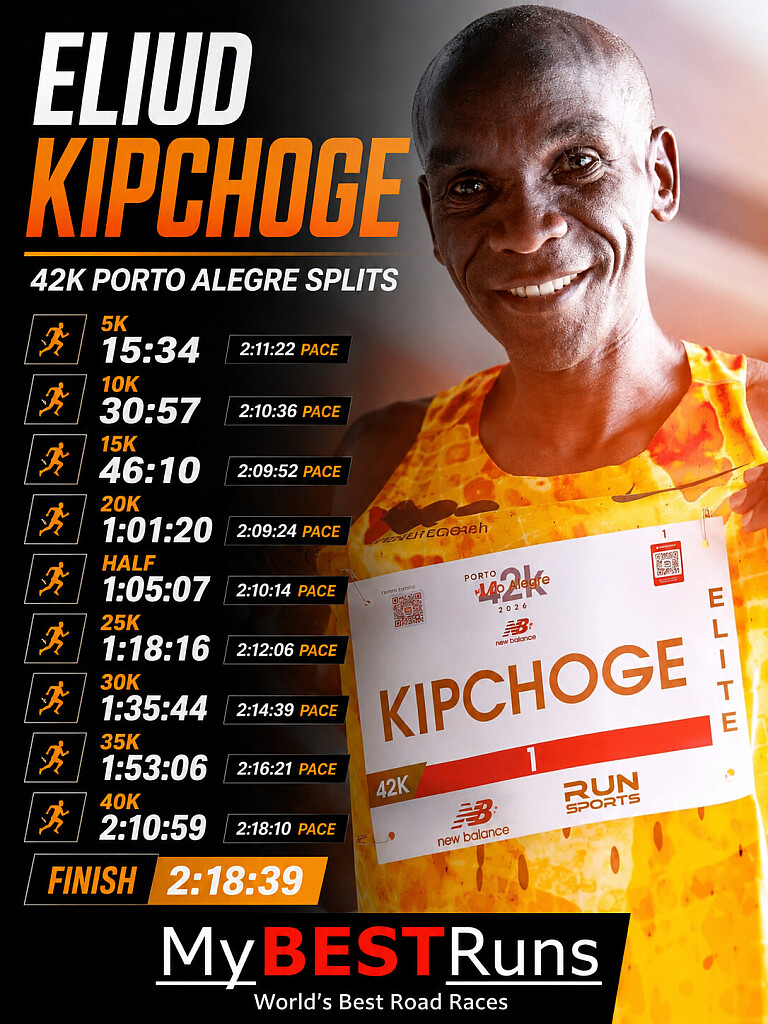
Beyond the Finish Line: Eliud Kipchoge's Journey Continues to Inspire the World
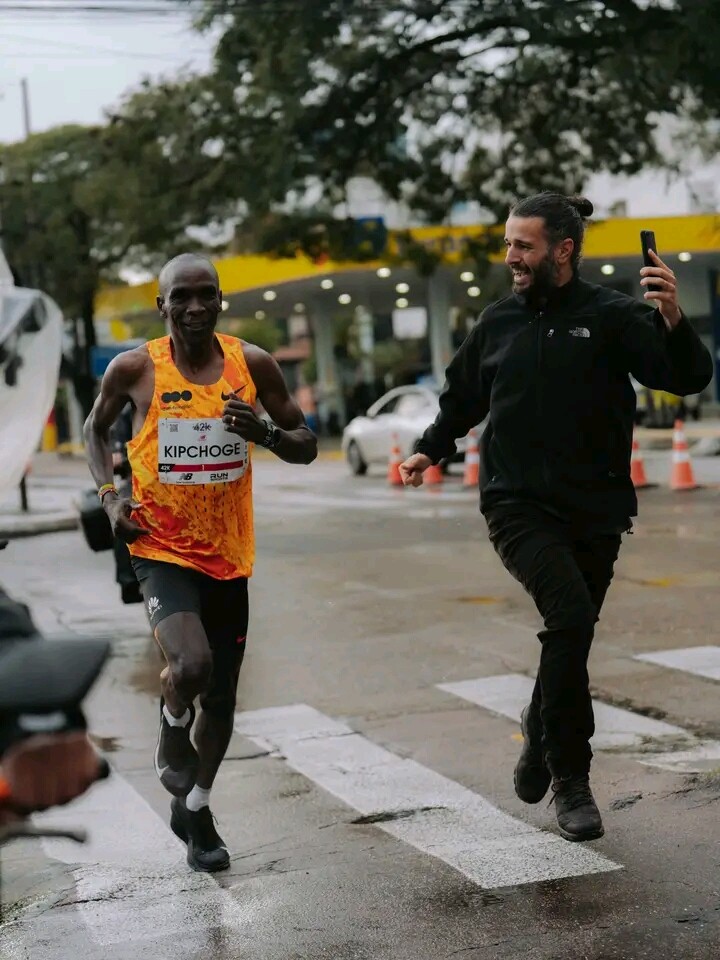
Eliud Kipchoge's remarkable World Tour continued on Brazilian soil as the Kenyan marathon icon completed the New Balance 42K Porto Alegre Marathon, crossing the finish line in 2:18:39 to place 12th overall during the second stop of his ambitious seven-continent global running tour.
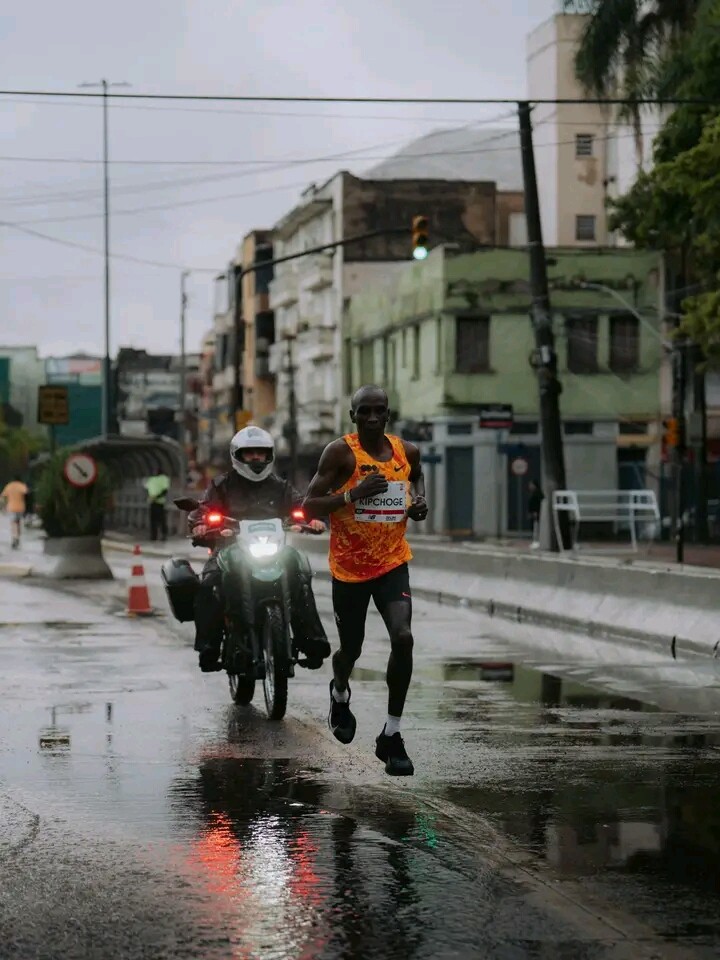
Competing against a strong international field, the two-time Olympic marathon champion displayed the resilience and determination that have defined his legendary career. While the result was not among the victories that have made him one of the greatest marathon runners in history, Kipchoge once again demonstrated the unwavering commitment that continues to inspire athletes and fans across the globe.
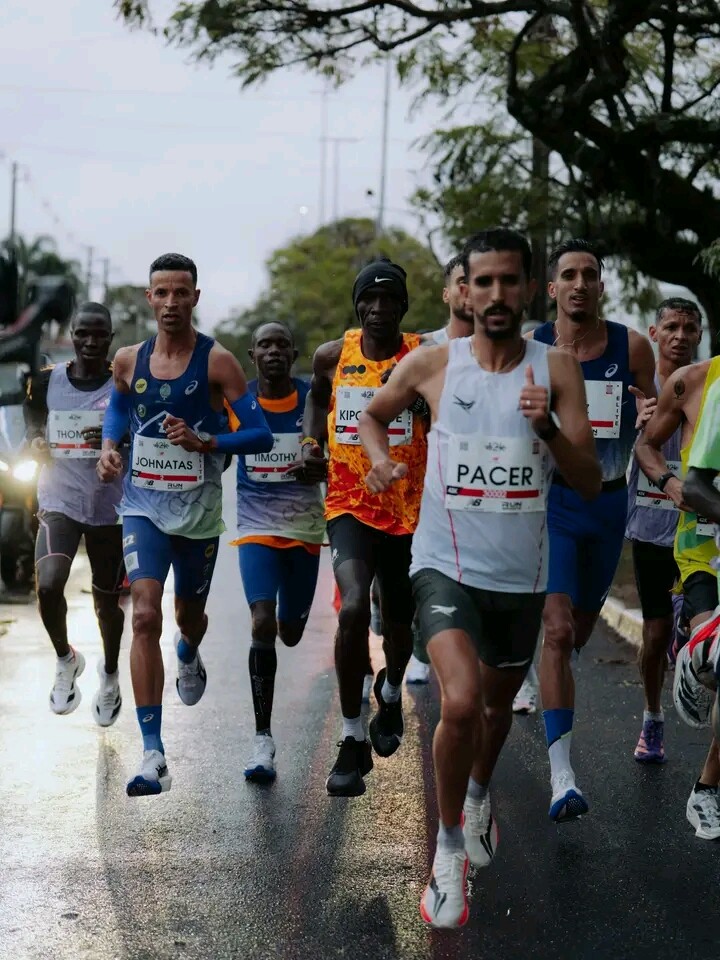
Morocco's Zineddine Ouria claimed victory in a superb 2:08:49, with Kipchoge finishing 9 minutes and 50 seconds behind the race winner after navigating the demanding course in Porto Alegre.
Kipchoge began the race with controlled and confident pacing, reaching 5km in 15:34 before passing the halfway mark in 1:05:07. As the race entered its decisive stages, the pace gradually slowed, but the veteran marathoner pressed on with characteristic determination, completing the 42.195-kilometre challenge in 2:18:39.
For many, the story will be told through the finishing position. But for those who truly understand greatness, this journey is about far more than medals, records, or podium finishes. Kipchoge's World Tour is a celebration of the sport itself—an opportunity to connect with runners across every continent, inspire the next generation, and continue living by the philosophy that has become synonymous with his career: "No Human Is Limited."
The Brazilian appearance also carried added significance, coming shortly after Kipchoge was permanently honoured in Porto Alegre with his footprints unveiled at the entrance of Parque Harmonia—a lasting tribute to his extraordinary impact on distance running and his enduring legacy in the sport.
Once a champion. Forever an inspiration. Legends do not stop inspiring when the victories become fewer; they inspire because they never stop showing up. Through every stride, every finish line, and every challenge embraced, Kipchoge continues to prove that true greatness is measured not only by what an athlete wins, but by the lives they touch along the way.
With the second stop of his World Tour now complete, Kipchoge will turn his attention to the next chapter of his global adventure when he lines up at the Melbourne Marathon in Australia this October. Wherever he races, millions will once again follow the journey of a man whose legacy extends far beyond the stopwatch.
by Erick Cheruiyot for My Best Runs.
Login to leave a comment
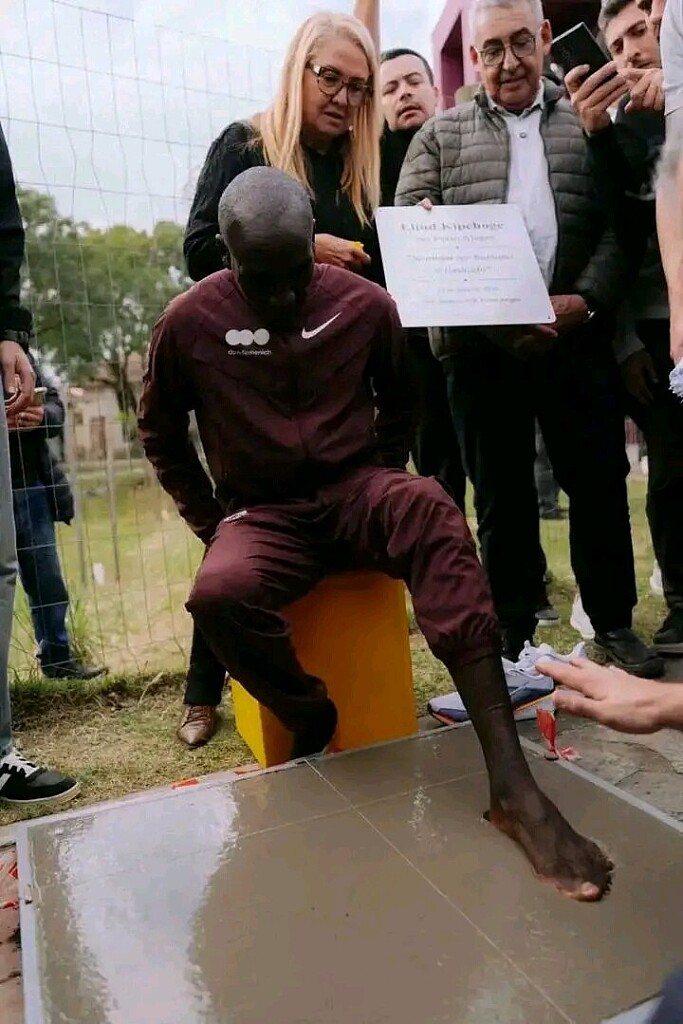
Eliud Kipchoge's Legacy Etched in Brazil as Marathon Icon Receives Permanent Honor
There are moments in sport that transcend records and victories, becoming lasting symbols of inspiration. One such moment has now been created in Brazil, where Kenyan marathon great Eliud Kipchoge has received one of the highest forms of recognition for his extraordinary contribution to athletics and global sport.

At the entrance of Parque Harmonia in Porto Alegre, Kipchoge has officially left his footprints, ensuring that his presence will remain a part of the city's sporting heritage for generations to come. Eliud Kipchoge has been permanently honored in Brazil with his footprints at the entrance of Parque Harmonia. The recognition celebrates far more than his remarkable achievements on the roads—it acknowledges the profound influence he has had on athletes, fans, and the global running community.

For millions around the world, Kipchoge represents the very definition of excellence. The two-time Olympic marathon champion has built one of the greatest careers in distance running history, winning multiple World Marathon Majors, setting world records, and becoming the first person to run a marathon in under two hours under controlled conditions. Yet beyond the medals and milestones, it is his humility, discipline, and unwavering belief that "No Human Is Limited" that have transformed him into a global symbol of perseverance and possibility.
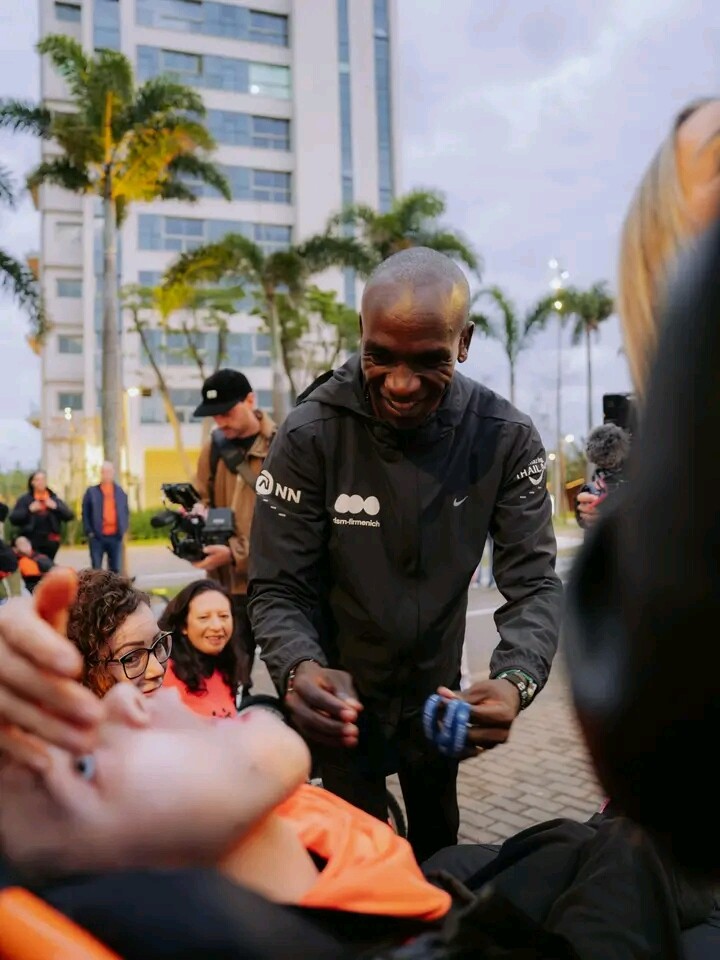
The permanent installation at Parque Harmonia stands as a powerful reminder that true greatness extends far beyond finish lines and podiums. Every visitor who walks past those footprints will be reminded of an athlete whose remarkable journey has inspired millions to dream bigger, work harder, and challenge the boundaries of human potential.
Few athletes earn recognition that becomes part of a city's landscape. Kipchoge has now joined that exclusive company, with his legacy literally etched into Brazilian soil—a fitting honor for a man whose influence reaches every corner of the running world.
As he continues to inspire both on and off the roads, Eliud Kipchoge's impact has already become timeless. His story is no longer defined solely by Olympic titles, world records, or marathon victories, but by the lives he has touched and the belief he has instilled in future generations.
His footprints in Porto Alegre symbolize far more than where he has been—they represent the path he has paved for countless others to follow. It is a legacy that will endure long after the final finish line, proving once again that true champions do not simply make history—they leave an everlasting mark on the world.
by Erick Cheruiyot for My Best Runs.
Login to leave a comment
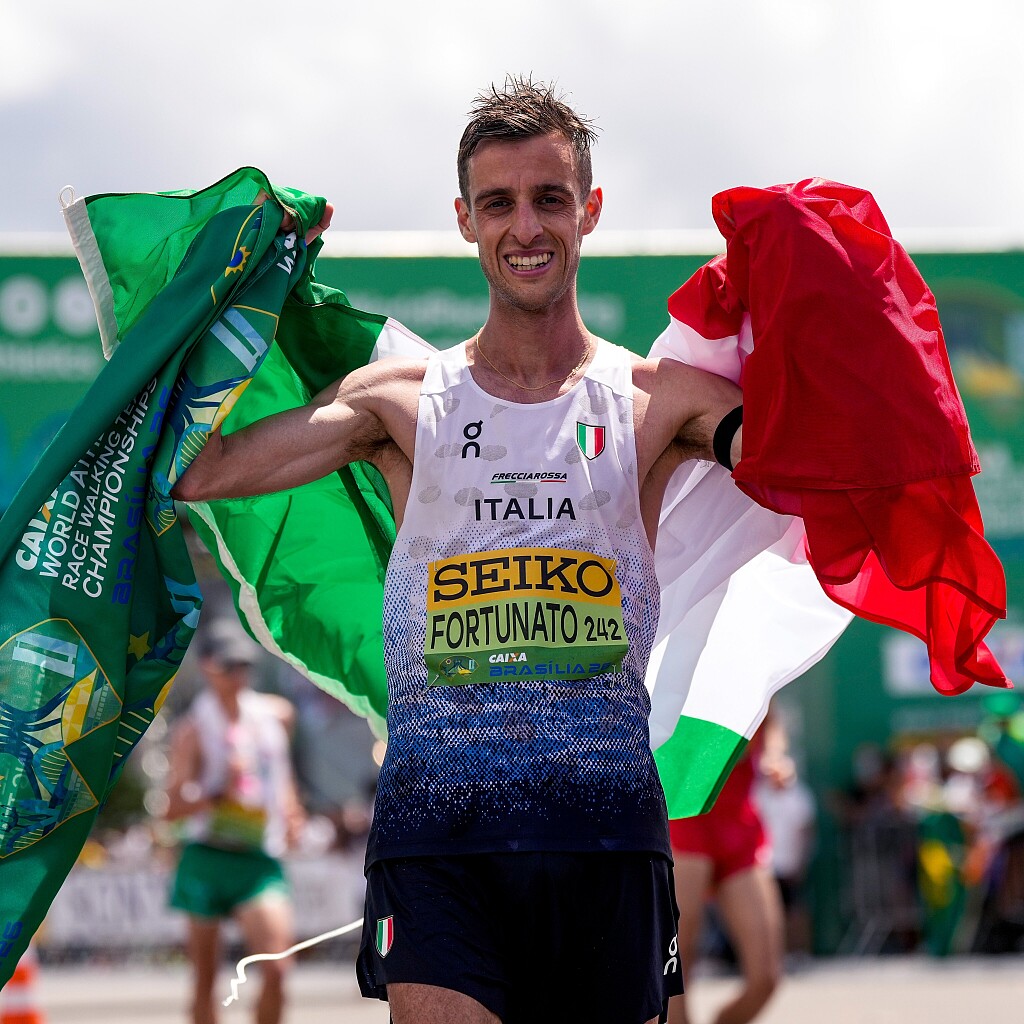
Fortunato and García León Crowned World Champions in Brazil
The 2026 World Athletics Championships Race Walk events in Brazil delivered two memorable contests, as Italy’s Francesco Fortunato and Peru’s Kimberly García León claimed gold in the men’s and women’s Half Marathon Race Walk titles respectively.
In the men’s race, Fortunato produced a performance of courage and composure to seize the world crown in dramatic fashion. The Italian star crossed the line in a championship record and personal best of 1:27:25, overcoming two red cards and harsh racing conditions before launching a devastating final-kilometre surge.
With the pressure at its highest, Fortunato found the strength to move past both Ethiopia’s Misgana Wakuma and Brazil’s Caio Bonfim, turning a tense battle into a historic victory. His triumph confirmed his status among the finest race walkers of his generation.
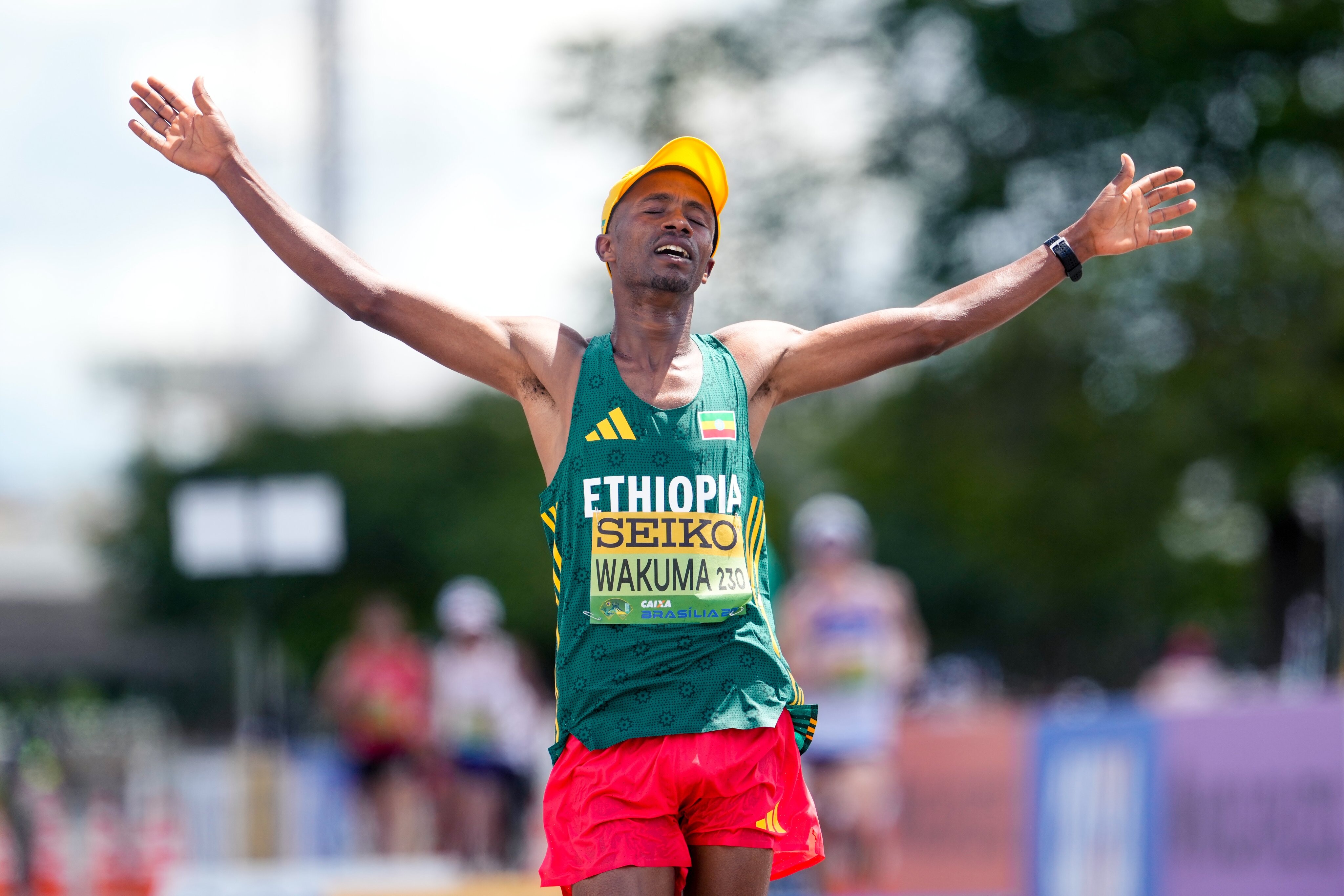
Wakuma earned a landmark silver medal for Ethiopia in 1:27:33, underlining Africa’s growing presence in the discipline, while home favourite Bonfim delighted the Brazilian crowd with bronze in 1:27:36.
Men’s Top 10 Results – Half Marathon Race Walk
1. Francesco Fortunato (Italy) – 1:27:25
2. Misgana Wakuma (Ethiopia) – 1:27:33
3. Caio Bonfim (Brazil) – 1:27:36
4. Leo Köpp (Germany) – 1:27:50
5. Kento Yoshikawa (Japan) – 1:28:00 SB
6. Jordy Rafael Jiménez Arrobo (Ecuador) – 1:28:00
7. Toshikazu Yamanishi (Japan) – 1:28:18
8. Tomohiro Noda (Japan) – 1:28:42
9. Diego García Carrera (Spain) – 1:28:55
10. Álvaro López (Spain) – 1:29:08
The women’s race was equally impressive, with Peru’s Kimberly García León once again proving why she remains one of the dominant names in global race walking. The reigning world champion over 20km judged her race perfectly, timing her effort to perfection before pulling clear to win gold in 1:35:00.
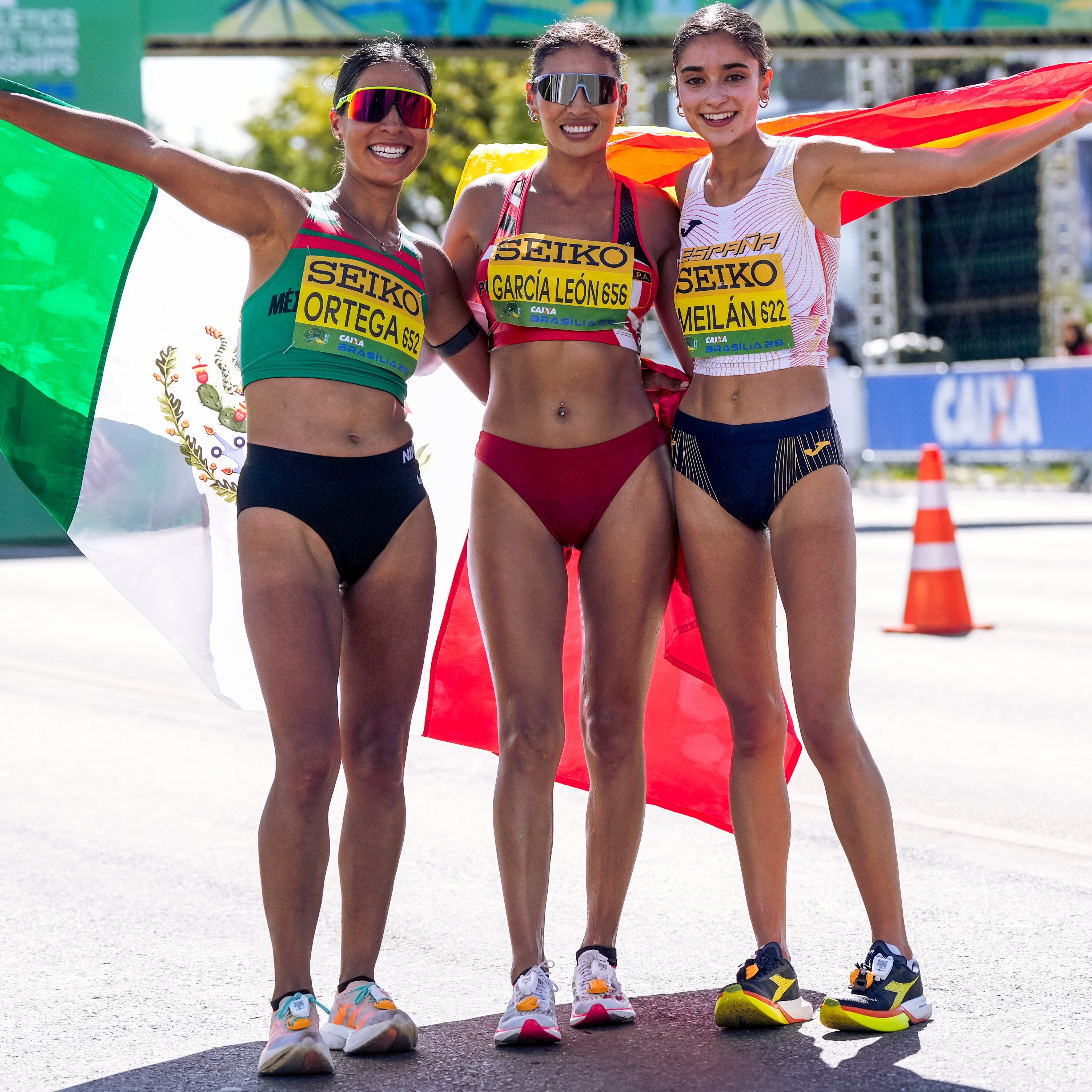
Her measured display of control and precision earned Peru another major title and reinforced her reputation as one of the sport’s most consistent champions.
Mexico’s Alejandra Ortega claimed silver in 1:35:21 after a strong and determined performance, while Spain’s Aldara Meilán completed the podium with bronze in 1:35:38.
In the women’s team standings, Ukraine secured the gold medal, with Spain taking silver and Australia finishing with bronze.
Together, the men’s and women’s races showcased the extraordinary demands of championship race walking—technical excellence, tactical intelligence, and resilience under pressure. In Brazil, Fortunato and García León rose above the rest to write their names into world championship history.
by Erick Cheruiyot for My Best Runs.
Login to leave a comment
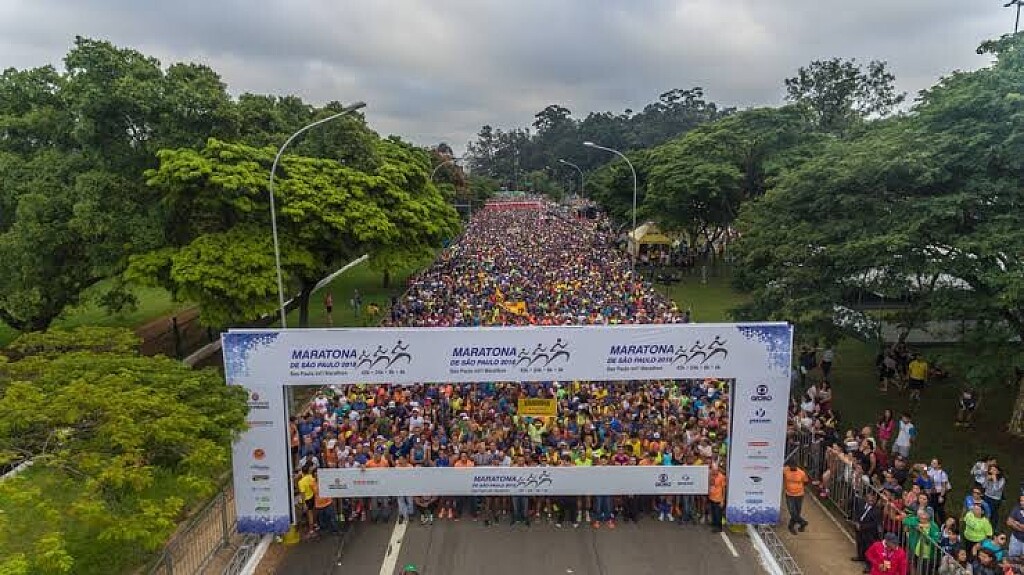
São Paulo Marathon Set for High-Calibre Showdown as Elite Field Assembles
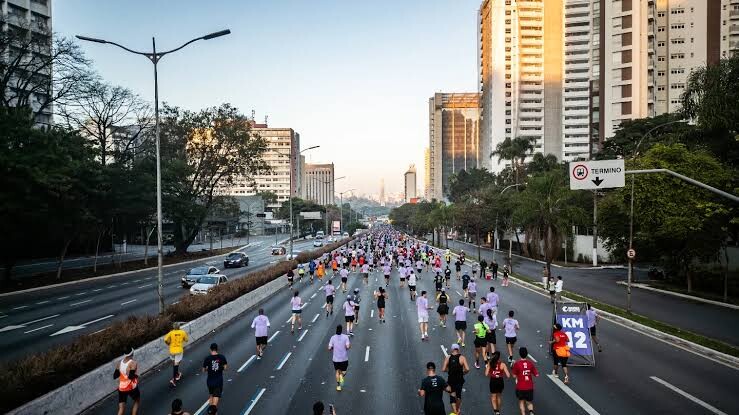
The stage is set for a compelling distance-running spectacle in São Paulo, Brazil where an accomplished and diverse elite field will converge on April 12 for the latest edition of the São Paulo Marathon. With a blend of proven performers and emerging contenders, the race promises both tactical intrigue and high-quality performances across the board.
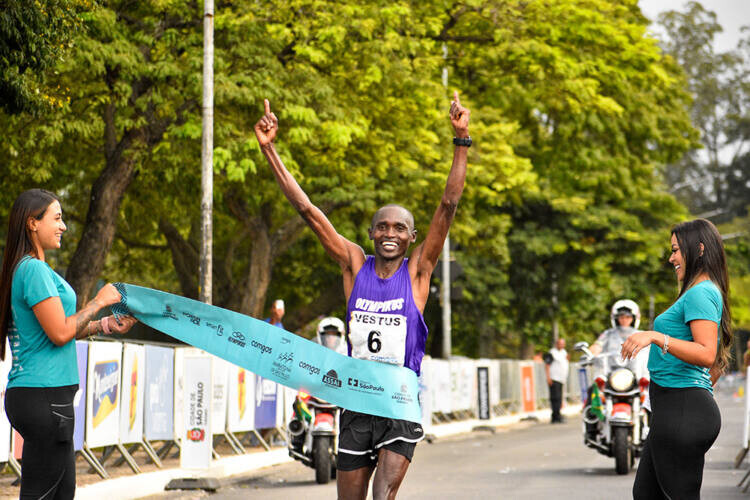
Leading the men’s lineup is Kenya’s Jonathan Maiyo, the standout entrant on paper with a personal best of 2:04:56. Known for his consistency and strength over the marathon distance, Maiyo enters as the man to beat, carrying both experience and pedigree into the Brazilian streets.
He will be closely challenged by compatriots Ezekiel Kemboi Omullo (2:08:26) and William Kibor (2:08:32), both of whom bring solid credentials and the capacity to influence the pace. With such depth among the Kenyan trio, the men’s race could unfold into a strategic battle rather than a straightforward time trial, especially if conditions play a role.
In the women’s contest, Uganda’s Nancy Cheptegei headlines the field with a personal best of 2:31:45. She faces stiff competition from Kenya’s Vivian Jeftanui Kiplagat (2:37:14) and Edna Jeruto Kimitei (2:43:15), both eager to challenge for top honors and potentially upset the pre-race hierarchy.
Beyond the statistics, the São Paulo Marathon is renowned for its vibrant atmosphere and demanding course, factors that often shape unpredictable outcomes. The combination of urban energy, climatic variables, and tactical racing typically ensures that victories are earned through resilience as much as raw speed.
As the countdown to race day narrows, anticipation continues to build. Whether it’s a dominant display from the favorites or a breakthrough performance from an outsider, all signs point to a gripping contest in one of South America’s premier road races.
by Erick Cheruiyot for My Best Runs.
Login to leave a comment
Sao Paulo Marathon
São Paulo International Marathon is held annually in the city of São Paulo since 1995. The competition also includes the25 km, 10 km and 3 km walk, in addition to the marathon. It is carried out all within the city of São Paulo, with departure and arrival in the Ibirapuera Park....
more...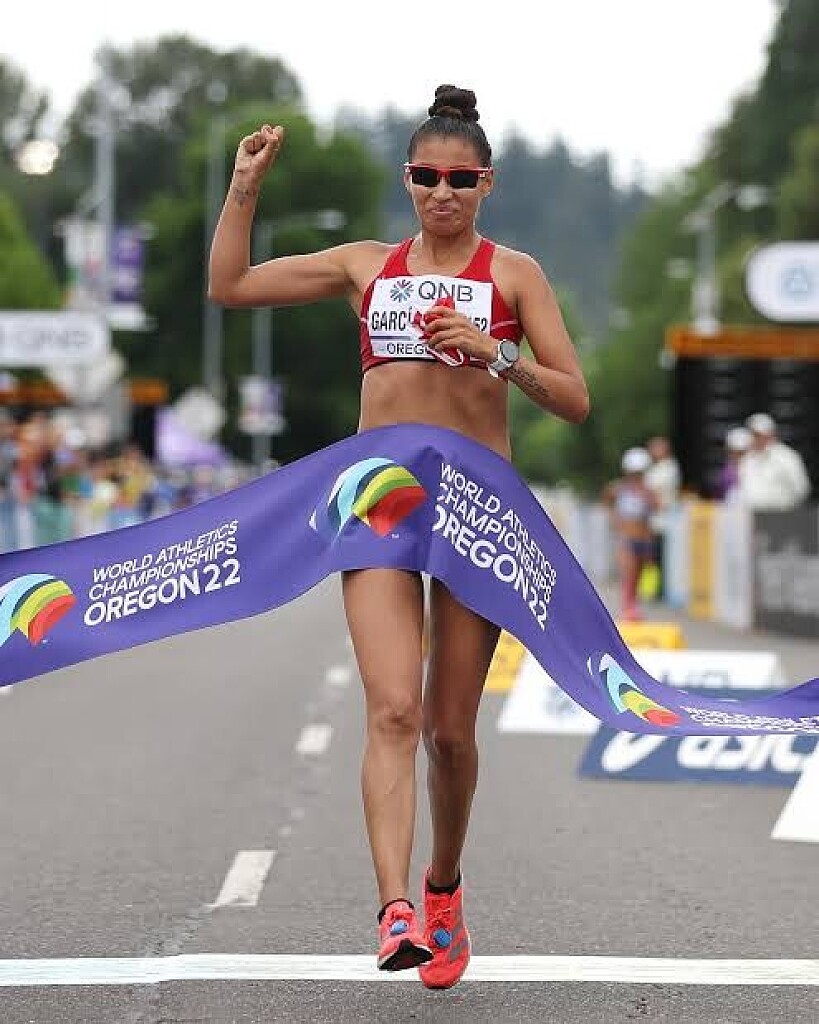
New Era Unfolds in Brasília as Race Walking Stars Chase Historic Half Marathon Glory
A fresh chapter in global race walking is set to be written in Ciaxa World Athletics Race Walking Team Championships Brasília 26, where the women’s half marathon makes its long-awaited championship debut in the Brazilian Capital. On Sunday, April 12, the Brazilian capital will host a compelling mix of proven champions and rising contenders, all navigating the uncertainty of a distance that promises both opportunity and unpredictability.
With 74 athletes representing 28 nations, the race introduces a new tactical dimension to elite race walking. The one-kilometre loop course in Brasília will test not only endurance and pacing but also adaptability, as athletes transition from the traditional 20km format to this slightly longer challenge.
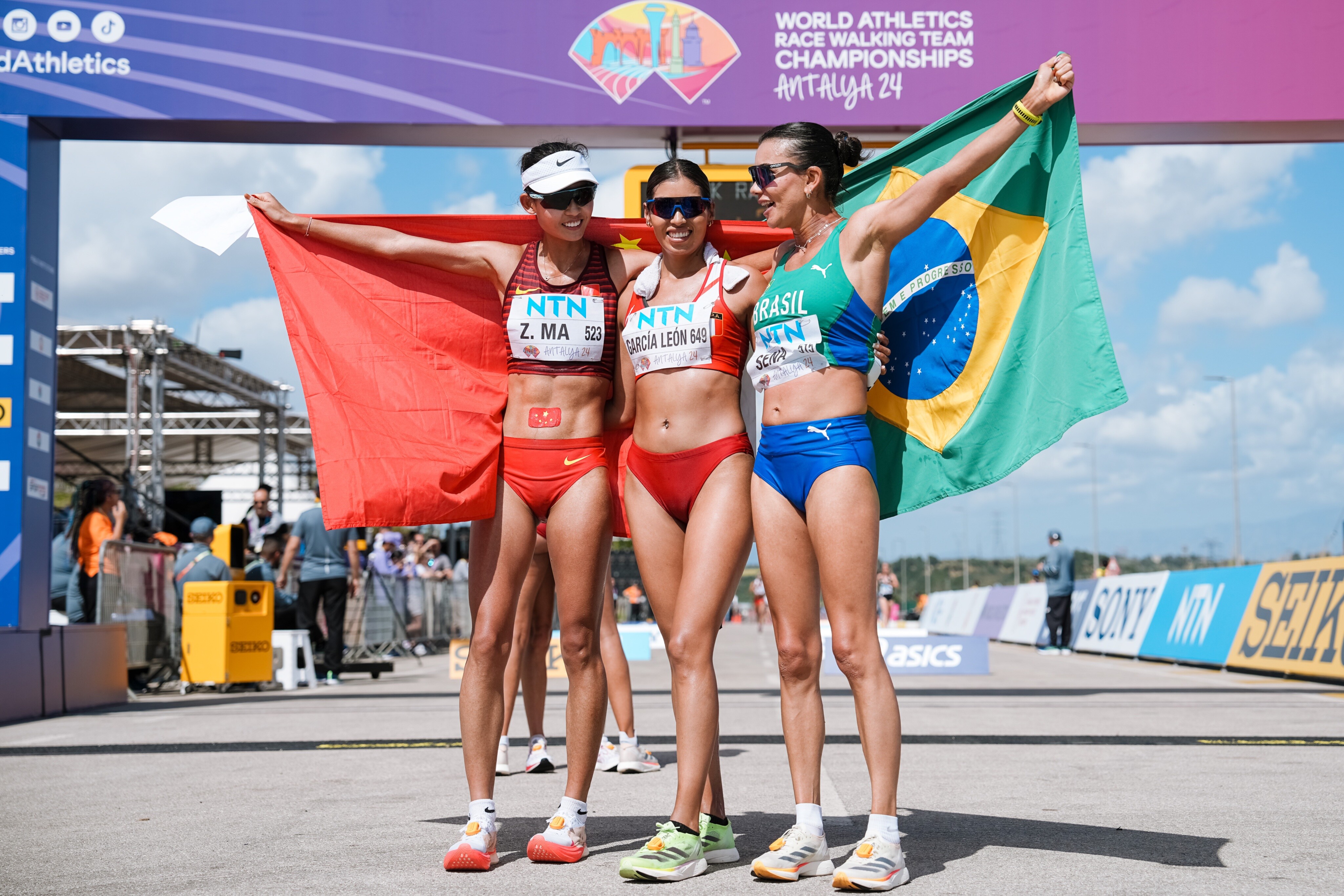
Leading the charge is Peru’s Kimberly García, a double world champion from 2022 and the reigning 20km champion from the previous edition. García has opened her 2026 season in impressive fashion, clocking a personal best of 1:34:17 at Dudince, underlining her readiness to contend for top honours. Her consistency and championship pedigree make her one of the standout names heading into this historic race.
She is joined by compatriot Evelyn Inga, who arrives with momentum after a breakthrough victory at the Dudinská 50, where she set a South American record of 1:33:49. Together, the Peruvian duo not only strengthens their individual medal prospects but also boosts their nation’s chances in the team standings, having narrowly missed out on the title in the previous championships.
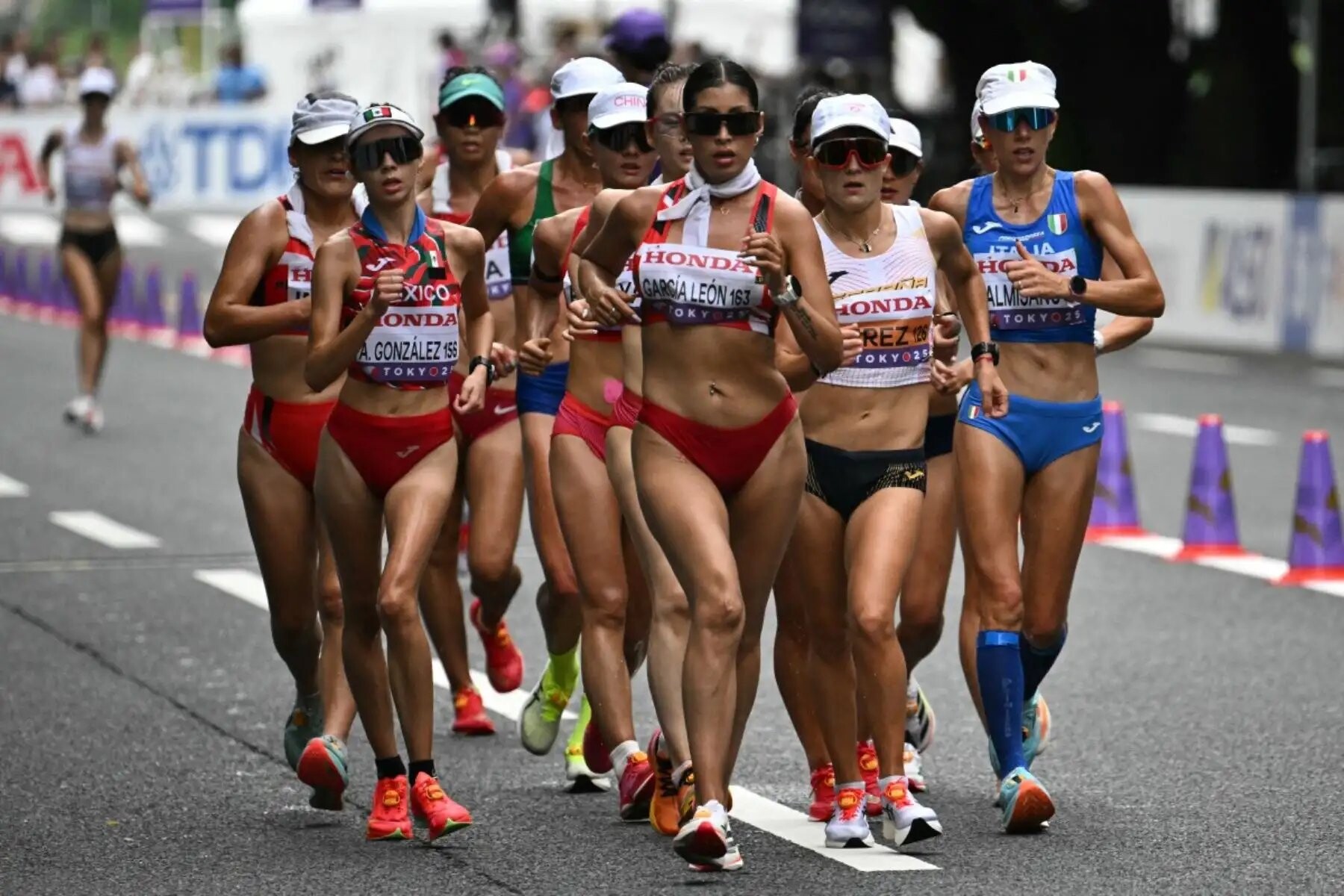
China, however, looms large once again. With exceptional depth, the Asian powerhouse fields five of the six fastest entrants. At the forefront is Ji Haiying, who leads the field with a world-class 1:32:22 recorded in Taicang. She is closely backed by Guo Na (1:32:24) and Dou Maocuo (1:32:27), forming a formidable trio that places China as overwhelming favourites for the team crown.
Spain’s Antía Chamosa adds further intrigue. The 26-year-old has steadily climbed the ranks and enters the championships in peak form after securing the national title with a personal best of 1:33:45. Her progression, combined with a strong showing at recent global events, suggests she could be a serious threat in this new format.
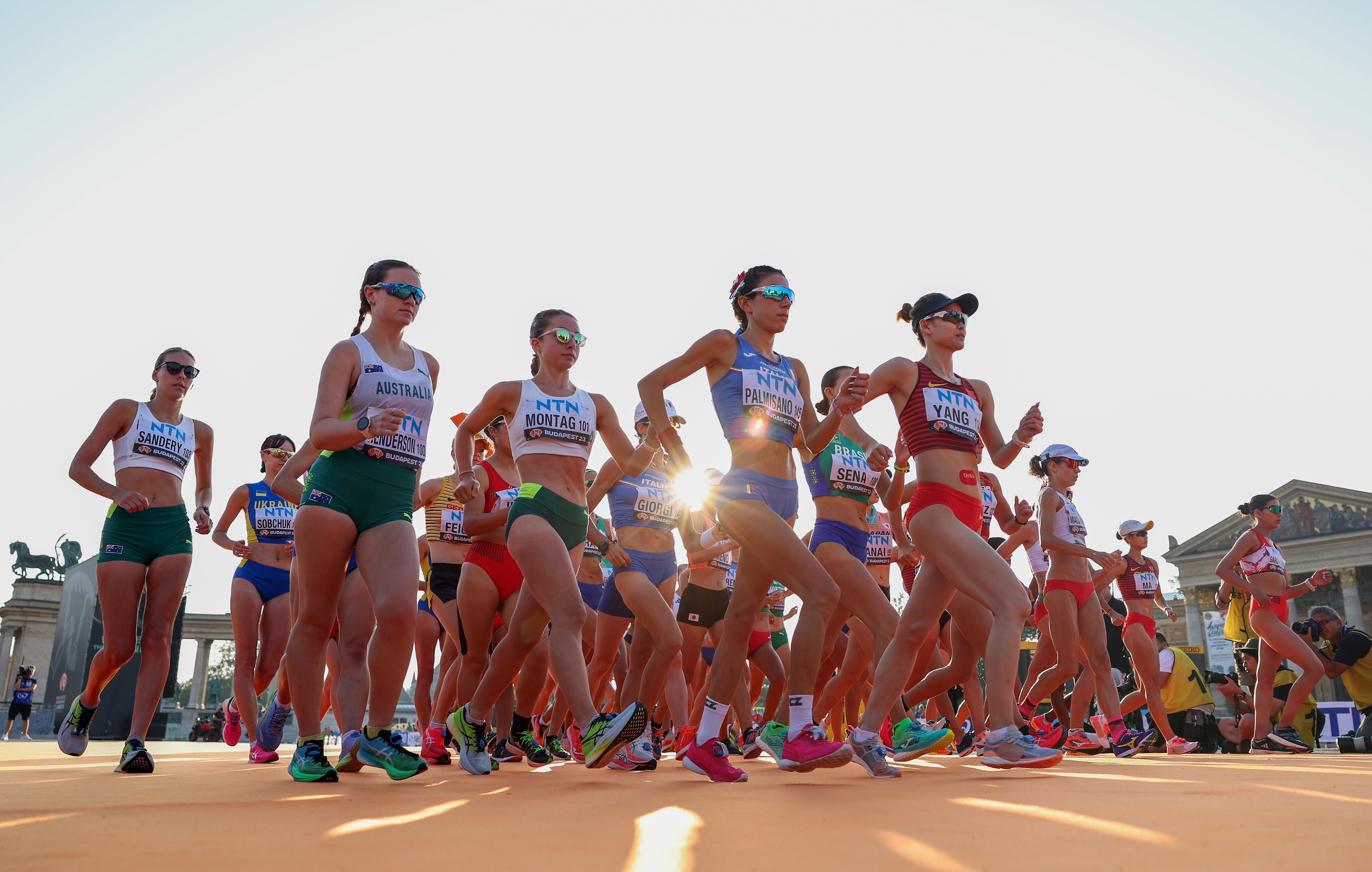
Meanwhile, Poland’s Katarzyna Zdziebło brings invaluable experience. A double world silver medallist, she thrives in high-pressure championship races. Although yet to record a time over the half marathon distance, her tactical awareness and finishing strength could prove decisive in what is expected to be a closely contested race.
Australia also enters the fray with genuine medal ambitions. Rebecca Henderson recently surged to a personal best of 1:32:25 to claim her national title, placing her among the fastest in the field. Alongside her, Olivia Sandery adds depth, having finished second domestically with 1:34:09, ensuring Australia remains competitive in both individual and team battles.
Elsewhere, Mexico’s Alejandra Ortega—third in Dudince—continues to show consistent form, while France’s emerging talent Pauline Stey is steadily gaining ground on the global stage and could challenge the established names.
Italy’s Nicole Colombi remains an intriguing wildcard, having entered both the half marathon and marathon events, with her final decision still pending.
Notably absent, however, are two of the sport’s biggest names: Spain’s double world champion María Pérez and Italy’s Olympic champion Antonella Palmisano. Their absence leaves the podium wide open, creating a rare opportunity for new champions to emerge.
As the sport embraces this new distance, Brasília stands as the stage for innovation, ambition, and history. With no established blueprint for success, the women’s half marathon promises a race defined not just by speed, but by strategy, resilience, and the courage to master the unknown.
by Erick Cheruiyot for My Best Runs.
Login to leave a comment
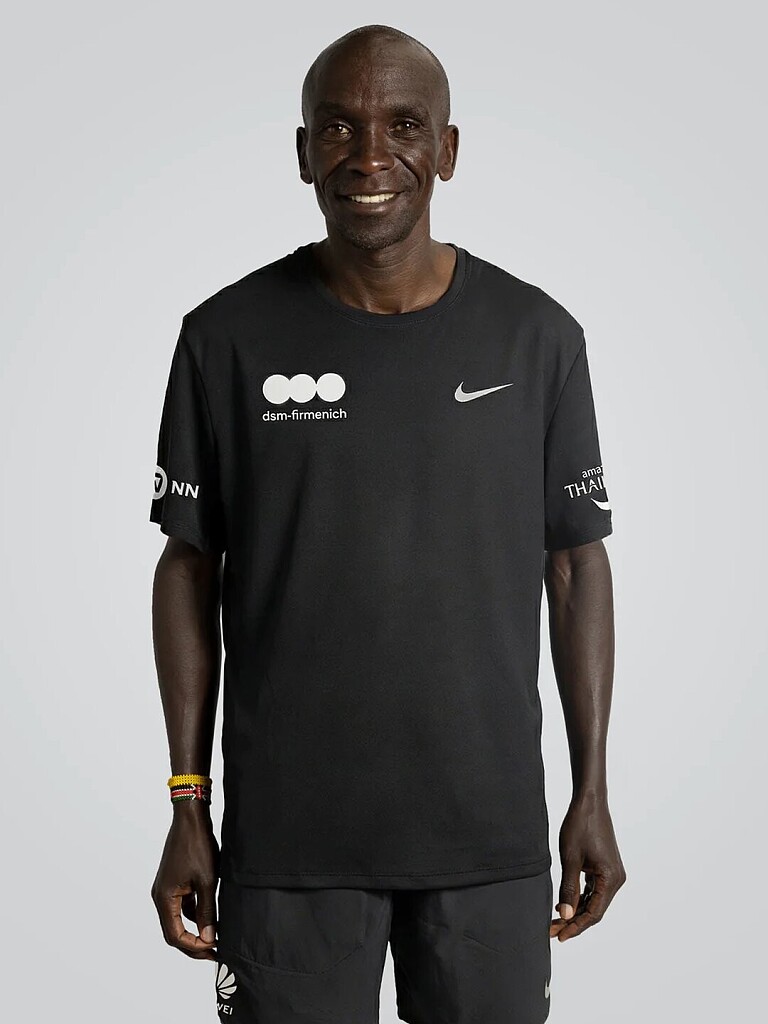
Kipchoge’s World Tour Heads to Brazil with NB42K Porto Alegre Appearance
Marathon legend Eliud Kipchoge is set to continue his ambitious global running mission with a highly anticipated appearance at the NB42K Porto Alegre on July 12, 2026, in Porto Alegre, Brazil.

The South American race will form part of Kipchoge’s unique World Tour project — a challenge that will see the Kenyan great run seven marathons across all seven continents over the next two years. The initiative reflects his vision of using running as a universal platform to connect people and inspire communities around the world.
The visit to Brazil also carries deep personal significance for the two-time Olympic champion. It comes exactly ten years after his unforgettable victory in the 2016 Rio Olympic Marathon in Rio de Janeiro, where he captured the first of his Olympic gold medals and cemented his place among the sport’s all-time greats.
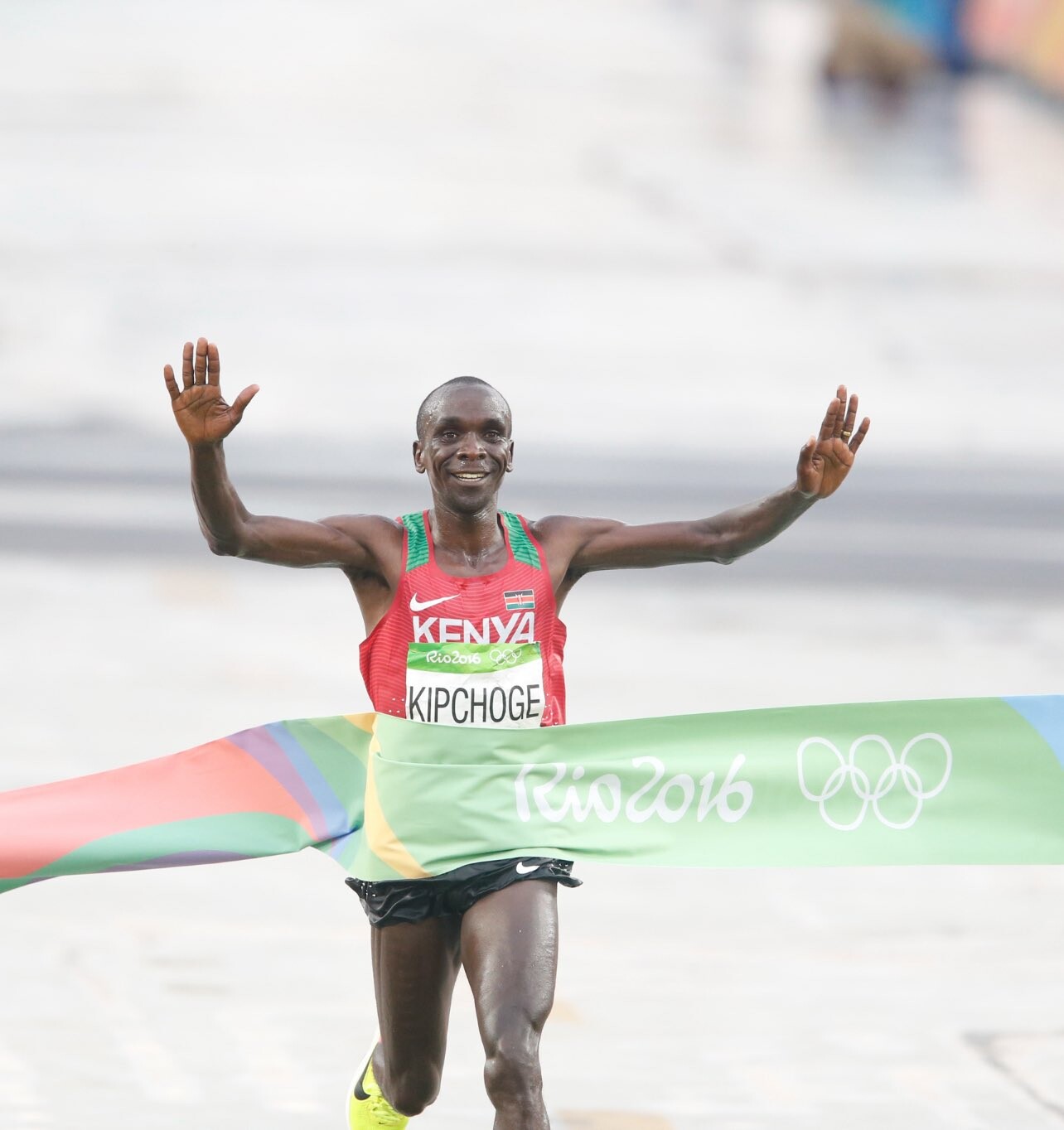
In a message shared on his social media platforms, Kipchoge expressed both excitement and nostalgia about returning to Brazil.
“Running is a universal language that speaks to hope, discipline, and unity. I am very excited to return to Brazil where I won my first Olympic Gold medal. Each continent has its own spirit, and I look forward to sharing this journey with South America while inspiring people to believe that No Human Is Limited. See you on the streets of Porto Alegre on 12 July at the NB42k!”
Kipchoge’s global journey will begin on African soil at the Cape Town Marathon in Cape Town, South Africa on May 24, before the legendary Kenyan heads to South America for the Brazilian stop.
As the world’s most celebrated marathoner continues to write new chapters in his remarkable career, his message remains clear — that running has the power to unite people across continents while reminding the world that no human is limited.
by Erick Cheruiyot for My Best Runs.
Login to leave a comment

Pedro Arieta’s Selfless Finish at the 2025 Boston Marathon Goes Viral
As the iconic finish line of the Boston Marathon came into view on April 21, Brazilian runner Pedro Arieta, 34, was just moments away from achieving a personal milestone. He had been running strong, on pace to finish in under 2 hours and 40 minutes—his ambitious goal for the 2025 edition of the world’s oldest annual marathon.
But as he turned onto Boylston Street, with the roar of the crowd rising and the clock ticking, Arieta was faced with a choice that would define his race in a way no stopwatch ever could.
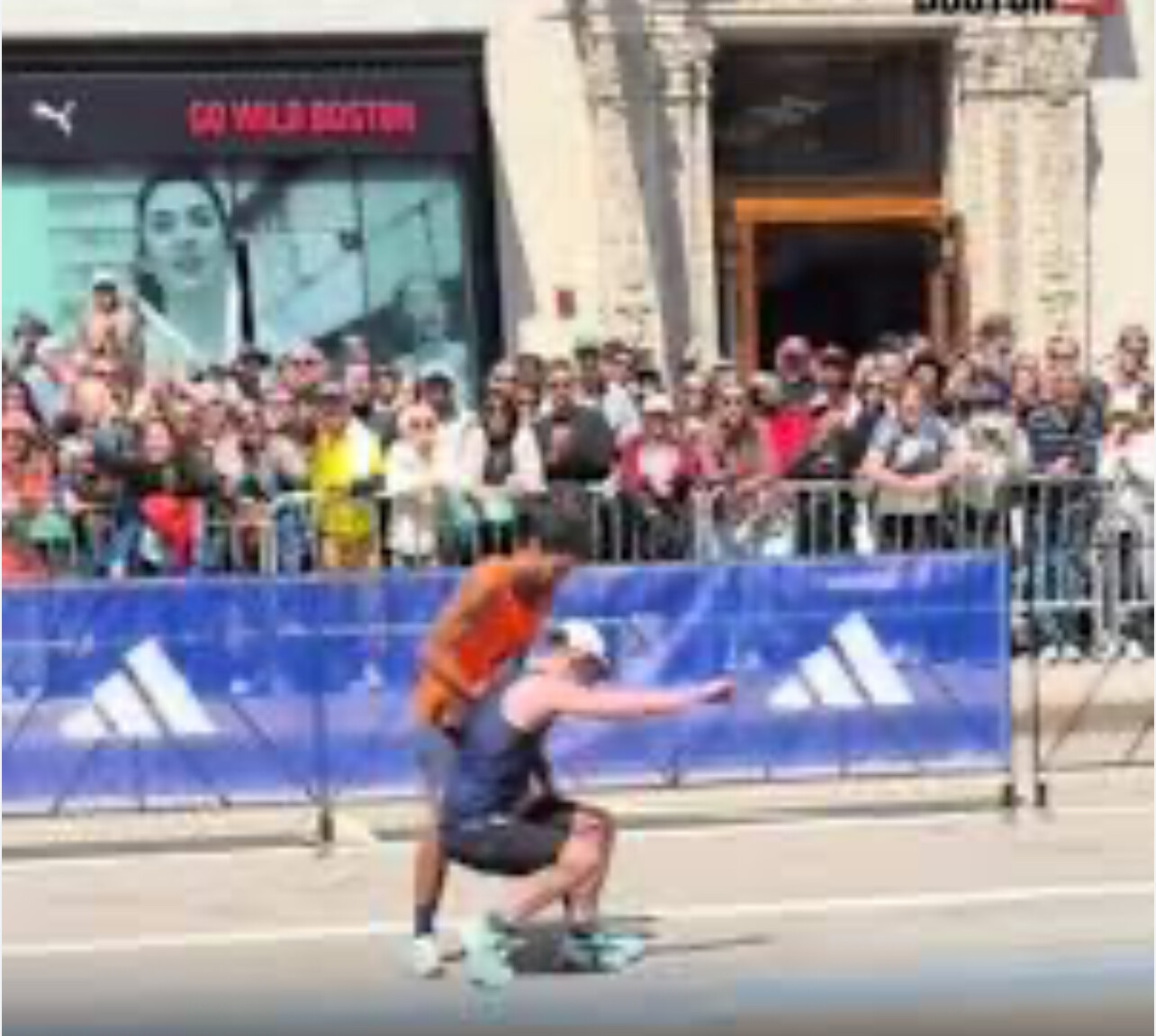
A Moment of Humanity on the Homestretch

Just ahead of him, Shawn Goodwin, a 35-year-old runner from Boston, stumbled and fell. While many runners—focused on their own times and finish-line dreams—sped past, Arieta instinctively slowed, stopped, and reached out.
He sacrificed seconds, and ultimately his sub-2:40 goal, to help a fellow runner get back on his feet and across the finish line.
Several spectators captured the act of sportsmanship on video. Within hours, Arieta’s gesture had gone viral—shared by runners, media outlets, and fans around the world as a moving reminder of what the sport is truly about.
A Finish Time with Greater Meaning
Arieta ultimately crossed the finish line in 2:41:29—just 90 seconds shy of his target. But the story he carried with him mattered more than the numbers.
“The Boston Marathon surprised me in more ways than one,” he wrote in an Instagram post the following day. “It was impossible to run past someone who needed help reaching their dream finish line and not help them complete the Boston Marathon.”
His wife, professional runner Luíza Cravo de Azevedo, who finished in 2:52:36, commented proudly on his post:
“The essence of sport to me is that right there. You dreamed about a sub 2:40 and when you were ALMOST there, God used you to lose a few minutes and do something with much more meaning.”
The Essence of Boston
For thousands of runners each year, the Boston Marathon is the culmination of training, sacrifice, and personal pursuit. But moments like this transcend time goals and rankings. Arieta’s act echoed the true spirit of Boston—a race steeped not just in elite athleticism, but in camaraderie, resilience, and shared triumph.
As Arieta and Goodwin crossed the finish line together, they reminded the world that sometimes, the most memorable moments in sport aren’t recorded on a clock—but in the heart.
by Boris Baron
Login to leave a comment
MARATHON GROUNDBREAKERS
Since Australia’s Derek Clayton ran history’s first sub—2:10 marathon in Fukuoka, Japan, on 3 December 1967, there have been a total of 4538 sub—2:10 marathons (as of 30 October 2024), 4537 by men, one by a woman.
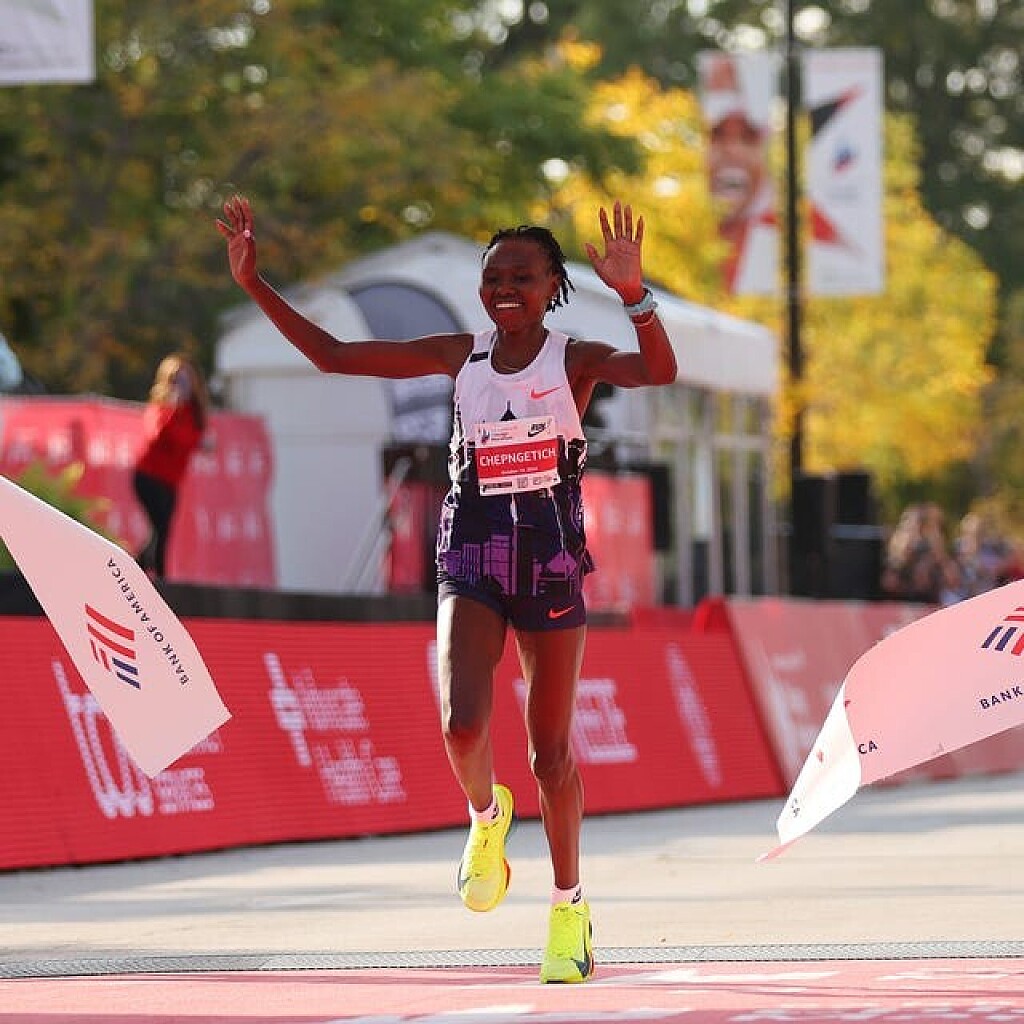
As with any new ground-breaking performance, Ruth Chepngetich’s 2:09:56 in Chicago on 13 October has forced us to reassess all our past assumptions, or, like many, to doubt the validity of the performance itself. But no matter how we got here, to whatever you want to ascribe it, this is where we are now, 2:09:56 by a woman.
In this new reality, until proven otherwise, Ruth Chepngetich is the new Paula Radcliffe, just as Paula was the new Grete Waitz, one ground-breaker to the next, 1978 to 2003 to 2024.
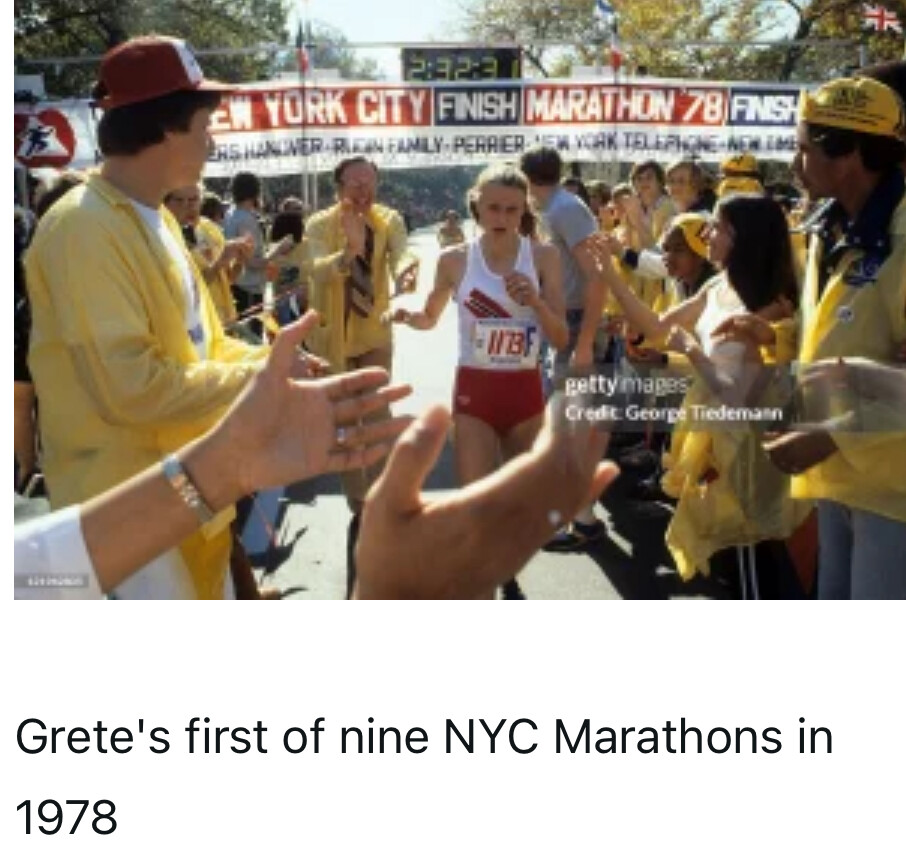
There have been many talented women champions through the years besides those three, including all the pioneers who had to overcome centuries of gender bias that restricted women from even showing their stuff.
But in terms of pure ground-breaking, the 1978 New York City Marathon drew a bright line between what once was and what would be.
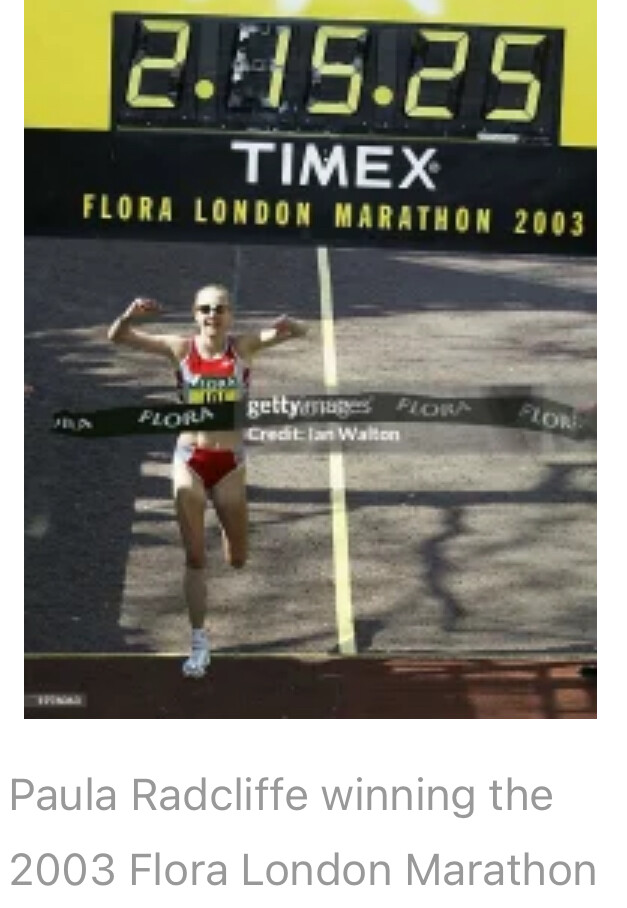
On 22 October 1978, Norway’s track and cross-country star Grete Waitz participated in the marathon for the first time, almost on a whim, as the trip was more of a honeymoon for her and husband Jack after the long track season.
The 2:32:30 world record Grete ran that day was totally unexpected by both the public and Grete herself. She wore bib #1173, wasn’t included on the list of elite women, and came with no specific marathon preparation (not a single run over 13 miles). In fact, she was so upset with husband, Jack, for suggesting she come run the marathon that she threw her shoes at him in the hotel room following her victory.
Still, like almost all debuting marathoners, after a short period of recovery and reflection, Grete concluded she could probably improve next time.
Thus, in New York 1979, following a more careful preparation, Grete ripped nearly five full minutes off her 1978 mark to record history’s first sub—2:30 by a woman at 2:27:33. Her margin of victory over England’s Gillian Adams was 11 minutes (2:38:33). The combination of the mild-mannered former geography teacher from Oslo and the raucous New York City crowds proved transformative, elevating women’s running to heights previously unimagined.
Though Japan’s Naoko Takahashi broke the 2:20 barrier for women in Berlin 2001, after Norway’s Ingrid Kristiansen (2:21:15, London ‘85), America’s Joan Benoit Samuelson (2:21:21, Chicago’85), and Kenyan Tegla Loroupe (2:20:43, Berlin ‘99) all challenged the barrier in the 1980s and ‘90s, it was England’s Paula Radcliffe who established new headlands in the marathon in London 2003 with her 2:15:25.
Nearly two minutes faster than her own 2:17:18 record from Chicago the year before, her 2:15 arced away from Catherine Ndereba’s 2:18:47 from Chicago 2001, completed just one week after Takahashi’s first sub-2:20 in Berlin.
The quality of Paula’s 2:15 can be seen in the 16 years and an entire shoe technology revolution that developed before Kenya’s Brigid Kosgei did Paula one better in Chicago 2019 at 2:14:04. That performance plowed new ground again. And now we have Ruth Chepngetich in Chicago 2024 with history’s first sub-2:10, just a year after Ethiopia’s Tigst Assefa’s first sub—2:12 in Berlin `23 (2:11:53).
Twice before, Chepngetich had come to Chicago with world record intentions. In 2022, she won the race in 2:14:18, just 14 seconds off Kosgei’s record. In 2023 she finished second in 2:15:37. On both occasions she flew through halfway under 66 minutes, only to falter in the second half. Perhaps she was a close reader of Malcolm X.
“There is no better teacher than adversity. Every defeat, every heartbreak, every loss, contains its own seed, its own lesson on how to improve your performance the next time.” – Malcolm x
In simple terms, making innovative strides in athletics requires time, experimentation, and reviewing, similar to how new scientific theories are examined before full acceptance. But women just haven’t been at the marathon game long enough to produce a large enough sample size to define their outer limits with any accuracy. They are barely two generations in since 1978.
Men have been competing for a much longer time with a much larger sample size.
Though Eliud Kipchoge surpassed the two-hour barrier in Vienna in 2019, that was accomplished as an exhibition, not a sanctioned race. In that sense, we are still awaiting the next barrier breaker on the men’s side in the Marathon.
Looking back, England’s Jim Peters stands as the first modern barrier breaker with his 2:18:40 win at the 1953 Polytechnic Marathon between Windsor and Chiswick in West London, England, history’s first sub—2:20.
Next was Ethiopia’s Abebe Bikila, the legendary double Olympic victor in Rome 1960 and Tokyo 1964. His 2:15:17 in Rome still stands as the barefoot marathon world record.
Next came Australia’s Derek Clayton, the first man under both 2:10 and 2:09. His 2:08:34 from Antwerp 1969 lasted for 12 years, holding off challenges throughout the entire Running Boom era headed by Americans Frank Shorter and Bill Rodgers.
Though never world record holders, the two Americans dominated the 1970s boom era, Shorter through the first half, Rodgers the second.
The Eighties were the last decade of international marathon champions: American (Al Salazar, Greg Meyer); European (Steve Jones, Carlos Lopes); Japanese (Toshihiko Seko and the Soh brothers); and Australian (Rob de Castella). Kenya’s Joe Nzau won Chicago in 1983 in a thrilling duel with England’s Hugh Jones when Chi-town was still developing its reputation as a world class event.
Ibrahim Hussein set new records in Honolulu and kick-started the Kenyan marathon revolution
The full East African deluge didn’t begin until 1987 and ‘88 when Kenya’s Ibrahim Hussein (already a two-time and soon to be three-time Honolulu Marathon champion) became Africa’s first New York City and Boston Marathon winner and Ethiopia’s Belayneh Dinsamo set the world record, 2:06:50, in Rotterdam 1988 that lasted over a decade.
The list of marathon stars from other nations scaled back markedly in the 1990s. Mexico had its turn at the top via greats like Dionicio Cerón (1994-`96 London champion), and back-to-back New York Ciy winner German Silva (1994 & 1995).
Moroccan-born American Khalid Khannouchi twice ran a world marathon record, first in Chicago 1999 (2:05:42), then three years later in London 2002 (2:05:38). And who could forget the personable Brazilian, Marílson Gomes dos Santos, who won New York City twice in 2006 & 2008, or Meb in NYC `09 and Boston 2014??
But the United Nations pickings get rather meager after that as East African athletes have had a stranglehold on the sport of marathoning, most dominatingly by Kenya’s Eliud Kipchoge. His run of sustained excellence over 42.2 kilometers was, and is, unprecedented in its longevity, including double gold in Rio 2016 and London 2020. And his last world record of 2:01:09 in Berlin 2022.
Sadly, the current record holder, Kelvin Kiptum, died in a car accident in February 2024 after establishing the 2:00:35 world record in Chicago 2023.
With the 2024 TCS New York City Marathon scheduled this weekend, we don’t expect to see any record performances. Yet, all the above is why we follow the game, isn’t it, to witness the arc of improvement over time, while hoping to discover a new name to remember? It’s as valid a focus as any other in this life.
And despite its many flaws and corruptions, the sport of marathoning retains an innate dignity that many endeavors do not. People may have bruised, battered, and tarnished it in the name of glory and money. But it survives, nonetheless, as a simple reflection of the human drive to achieve more in the quest to discover our best.
Doesn’t always turn out that way, but I don’t think we are done with it quite yet. Onward!
by Toni Reavis
Login to leave a comment
Paris Olympics sees record numbers of marriage proposals
Olympic engagement rings were almost as popular as medals at the 2024 Games
Paris 2024 definitely put the rings in the Olympic rings. With nine new engagements, the Paris Olympics set the record for the most proposals ever at one Games–very fitting for the City of Love. Four of these came from athletics, with a jumper, a thrower, a steeplechaser and a marathoner all taking part in what has seemed to become another Olympic trend. Some of the romantic gestures received criticism for overshadowing the athletic performances–but all partners said “yes,” and seemed pretty pleased about the special moment.

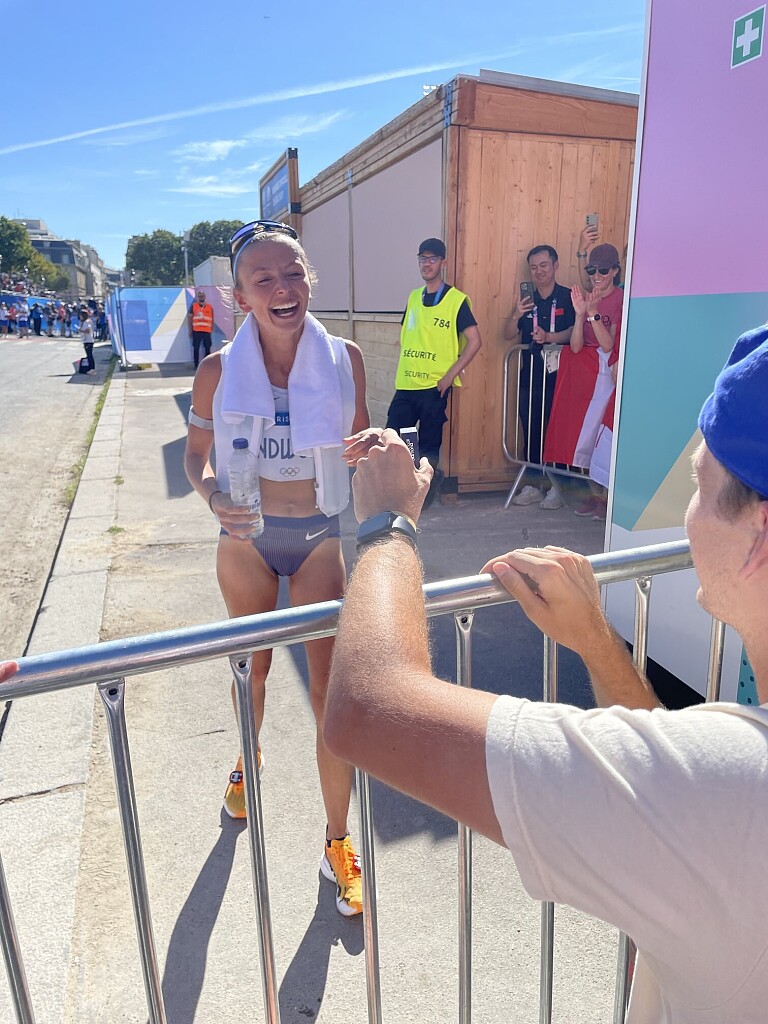
U.S. marathoner Dakotah Lindwurm
The American marathoner became an Olympian and a fiancée in the same day–on Sunday, her boyfriend had been waiting on one knee when she made her Olympic debut and crossed the line with an impressive 12th-place finish in the fastest marathon in Olympic history. Lindwurm was the first American to complete the race, clocking 2:26:44. She may not have won a medal or achieved a personal best, but she excitedly accepted the engagement ring.
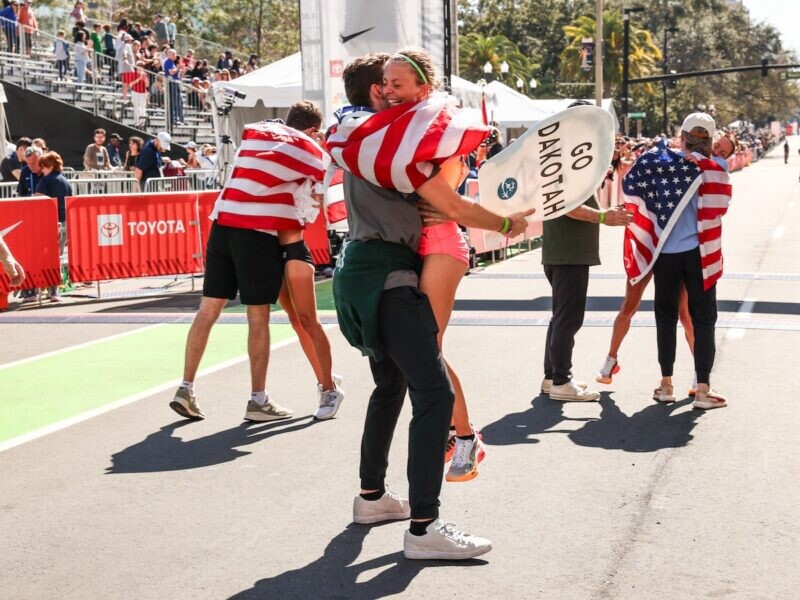
French steeplechaser Alice Finot
Also making her Olympic debut, Finot broke the European record with her fourth-place finish in the women’s 3,000m steeplechase final on Thursday, finishing in 8:58.67. She then reached behind her race bib to pull out a pin that she had run with, before dropping to her knee and presenting the pin to her partner, Bruno Martínez Bargiela.
Finot told herself she would propose if she ran under nine minutes, seeing as nine is both her lucky number and marks the number of years the couple has been together. As if to slip an engagement ring onto his finger, she fastened the pin, engraved with the words “Love is in Paris,” to his shirt.
Brazilian triple jumper Almir dos Santos
Almir dos Santos followed his 11th-place finish in the men’s triple jump final on Friday by bringing his girlfriend, Talita Ramos, trackside at the Stade de France and popping the question. 80,000 onlookers watched as he gently placed the ring on her finger on her right hand; the couple got an overwhelming amount of attention for this huge “error”. (In Brazilian culture, the ring is switched to the left hand after wedding vows are made).
American shot-putter Payton Otterdahl
Otterdahl chose a slightly more private setting to make his grand gesture. While touring the city, he presented an engagement ring to his girlfriend, Maddy Nilles, in front of the Eiffel Tower. One day earlier, on Aug. 3, he took fourth place in the men’s shot put final.
Los Angeles (the next host for the Summer Olympics) isn’t known for being quite as romantic as Paris, so this new Olympic record will probably remain for a long time.
by Cameron Ormond
Login to leave a comment

Paris 2024 Olympic Games
For this historic event, the City of Light is thinking big! Visitors will be able to watch events at top sporting venues in Paris and the Paris region, as well as at emblematic monuments in the capital visited by several millions of tourists each year. The promise of exceptional moments to experience in an exceptional setting! A great way to...
more...
Brazilian Olympic marathoner receives doping suspension
Daniel do Nascimento, a 2:04 marathoner who famously fist-bumped Eliud Kipchoge during the last Olympic marathon, has been banned after testing positive for three illegal substances.
Brazil’s national marathon record holder and Paris Olympic-bound athlete, Daniel do Nascimento, has been provisionally suspended by the Brazilian Doping Control Authority (BDCA) after testing positive for three banned substances: drostanolone, methenolone and nandrolone.
According to Brazilian media outlet Globo, do Nascimento tested positive for the three anabolic steroids during an out-of-competition test conducted on July 4 while training in Kenya for the Paris Games. As a result, he will miss the Olympics. He was slated to run the marathon after qualifying at last year’s Hamburg Marathon with a time of 2:07:06. His personal best of 2:04:51 from the 2022 Seoul Marathon stands as the South American record.
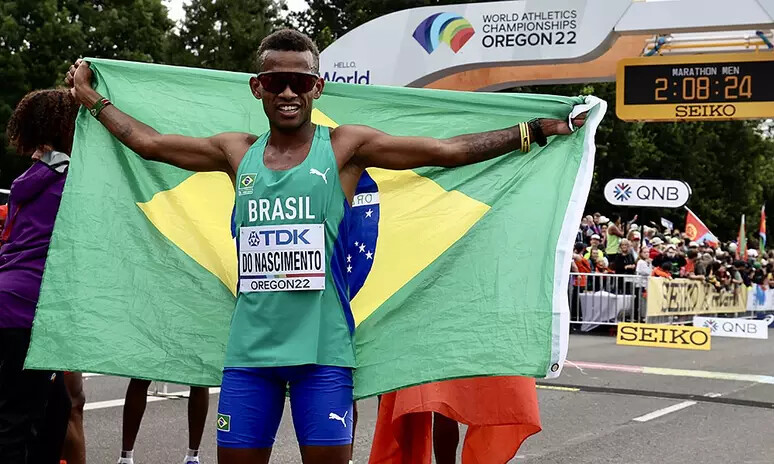
The three banned substances in Nascimento’s test are all anabolic steroids (precursors of testosterone). Do Nascimento will likely face a four-year ban from athletics, jeopardizing his dreams for the 2028 Olympics in Los Angeles. The 25-year-old’s suspension may be reduced to three years if he admits to the three anti-doping rule violations.
Do Nascimento’s girlfriend, Graziele Zarri, was also suspended earlier this year after testing positive for androstanediol and testosterone in a test conducted by the Anti-doping Agency of Kenya (ADAK). She ran 2:42:48 in her marathon debut last December in Valencia.
Beside being the South American record holder for the marathon, do Nascimento is most famous for taking a porta-potty stop while leading the 2022 New York City Marathon. He set a blistering pace for 30 km, but ended up collapsing and did not finish the race.
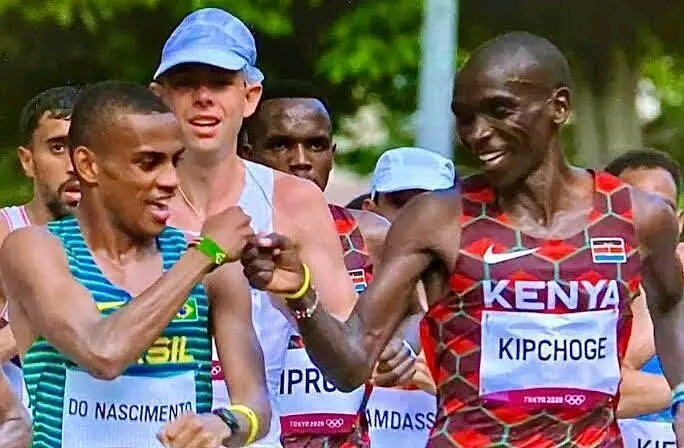
Do Nascimento also made headlines at the 2020 Olympic marathon in Tokyo for exchanging mid-race fist bumps with former world record holder Eliud Kipchoge. The moment went viral, making do Nascimento a well-known name in Brazil and the distance running world.
by Marley Dickison
Login to leave a comment
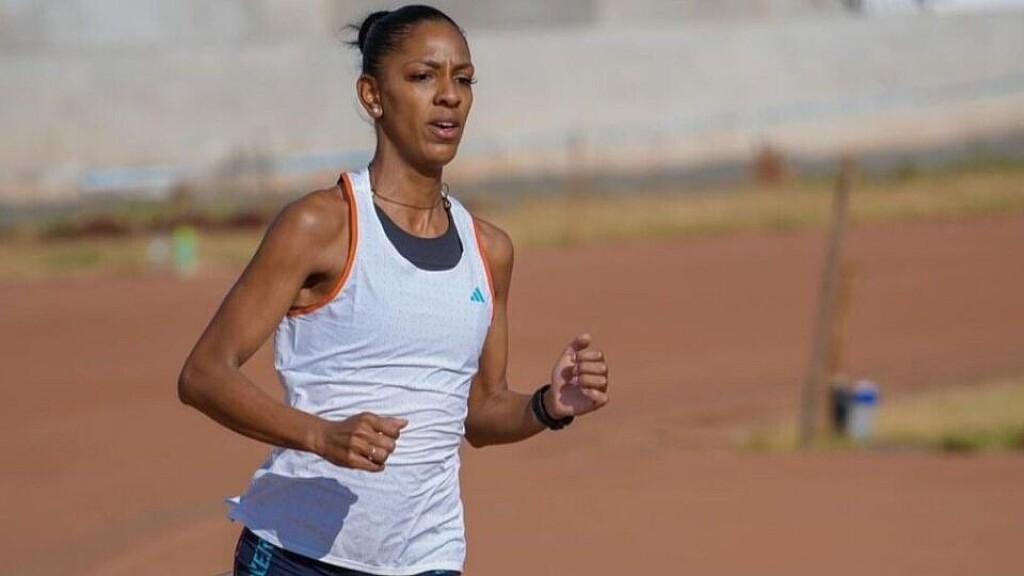
Anti-Doping Agency reveals details leading to suspension of top Brazilian athlete caught in Kenya
The Anti-Doping Agency of Kenya has detailed how a top Brazilian athlete training in Kenya was nabbed over the use of a prohibited substance before she was suspended.
Anti-Doping Agency of Kenya (ADAK) has explained how Brazilian athlete Graziele Zarri was caught cheating in the country before she was provisionally suspended.
Zarri was among five athletes suspended by ADAK over various doping offences last month, the others being Kenyans Samuel Kimani Wanjiru, Panuel Mkungo, Brian Kiptoo and Victor Kiptoo.
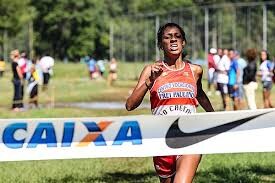
The Brazilian was nabbed for using prohibited substances S1.1 Anabolic Androgenic Steroids (AAS)/Testosterone with tests conducted while she was in the country.
“I confirm that ADAK collected a sample from the athlete on 23rd January 2024,” ADAK’s Head of Legal Services Bildad Rogoncho said in a response to Pulse Sports.
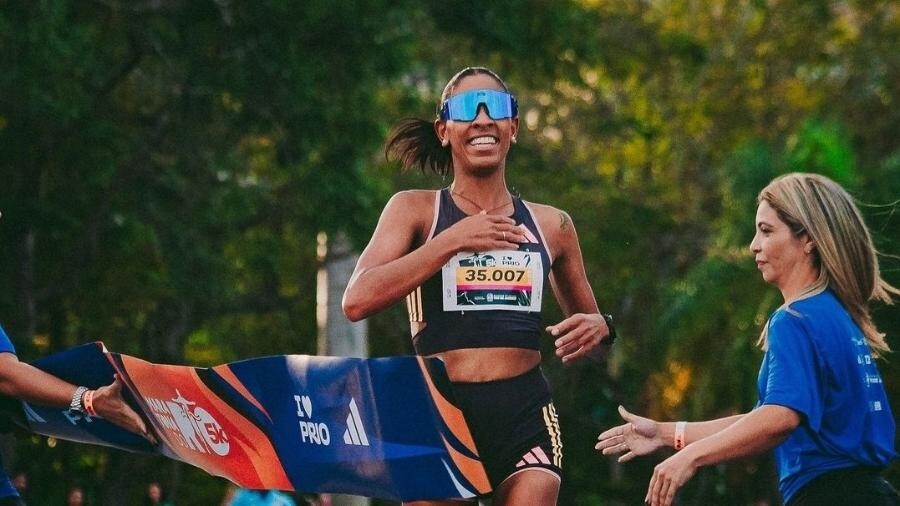
“The sample was transported to and analyzed by a WADA accredited laboratory in Stockholm, Sweden; that is the Doping Control Laboratory - Karolinska University Hospital.
“The Sample tested positive for Anabolic Androgenic Steroids (AAS)/ Pregnanediol, Androsterone, Androstane, Ketoetiocholanolone, Androstanediol, Etiocholanolone, Adilos, Epitestosterone and Testosterone.
“The athlete’s case was then referred to the Brazilian National Anti-Doping Organization for processing.”
ADAK says the athlete had been training in Eldoret when the sample was collected but when contacted, she denied having used the prohibited substance and claimed to have used a supplement acquired in Kenya.
She, however, failed to produce proof of the supplement and could not also recall its name, leaving ADAK with no option but to act.
“The athlete alleged to have bought and used some supplement which are suspected to have been contaminated with the substance found in the athlete's system. This matter is now being dealt with by the Brazilian National Anti-Doping Organization,” added Rogoncho.
Zarri is a long-distance runner who recently won the 5k race in Rio de Janeiro, Brazil and had been training in Kenya, alongside her husband Daniel Nascimento, in a bid to make Brazil’s Olympics team.
Nascimento is the South American marathon record holder and the only Brazilian qualified for the marathon at the upcoming Paris Olympics.
by Joel Omotto
Login to leave a comment
Brigid Kosgei fine tuning for London Marathon at Lisbon Half Marathon
Former world marathon record holder Brigid Kosgei will be keen to gauge her form at the Lisbon Half Marathon ahead of her return to the London Marathon.
Former world marathon record holder Brigid Kosgei is the star attraction for the Lisbon Half Marathon, where she intends to have a great build-up for the London Marathon.
The 30-year-old will use the 21km race scheduled for Sunday, March 17 to gauge form and pace for the marathon that takes place in the capital city of England.
In addition to Kosgei, there will be other big names in the ladies' elite in Lisbon, with six more women with personal bests under 68 minutes.
Bosena Mulatie (65.46), Tigist Menigstu (66.20), and Betty Chepkemoi Kibet (66.37) will be hoping to stop Kosgei who suffered an injury last season and was forced to withdraw from the London Marathon.
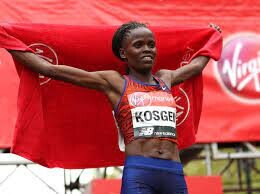
Pauline Esikon (67.15), Vivian Melly (67.35) and Zewditu Aderaw Gelaw (67.25) are the other highlights beyond Kosgei.
The men’s field has attracted 10 athletes with the best marks under the hour. Abraham Kiptum will be returning and he is the biggest highlight, with a personal best of 59.09.
He will face a stern test from Ethiopians Solomon Berihu (59.17) and Dinkalem Ayele (59.30), but also compatriots Brian Kwemoi and Bravin Kipkogei Kiptoo (both with 59.37).
Meanwhile, several European athletes like the Norwegian Sondre Nordstad Moen (59.48), the Germans Amanal Petros (60.09) and Hendrik Pfeiffer (62.05), the Irish Stephen Scullion (61.08), Hélio Gomes and Rui Pinto have also confirmed participation. Brazilian Daniel do Nascimento, with a personal record of 61.03, will also be present, in what is his first race with Nike.
by Abigael Wuafula
Login to leave a comment

EDP HALF MARATHON OF LISBON
EDP Lisbon Half Marathonis an annual internationalhalf marathoncompetition which is contested every March inLisbon,Portugal. It carries World Athletics Gold Label Road Racestatus. The men's course record of 57:31 was set byJacob Kiplimoin 2021, which was the world record at the time. Kenyanrunners have been very successful in the competition, accounting for over half of the total winners, withTegla Loroupetaking the...
more...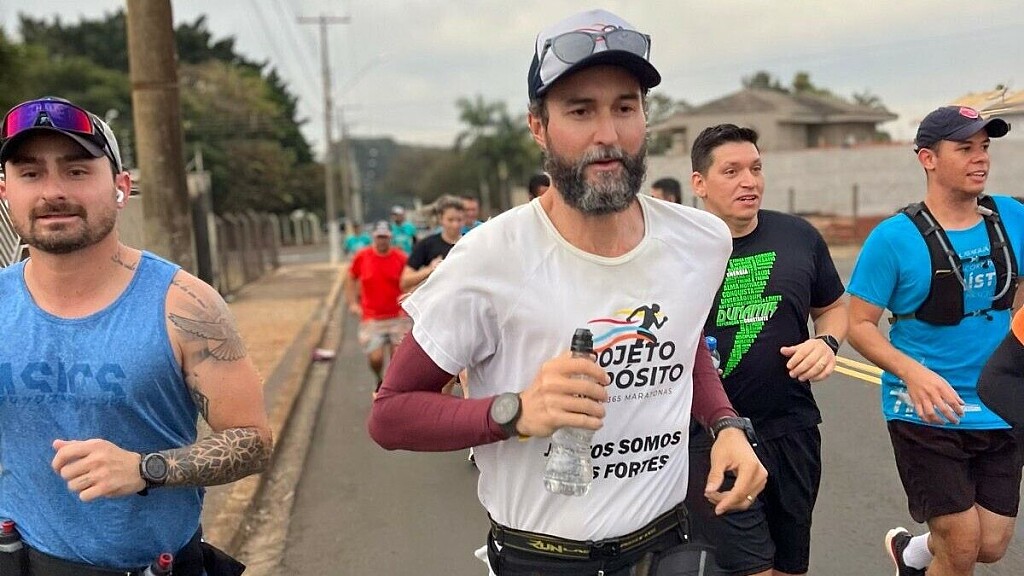
Brazilian runner breaks Guinness World Record with 366 consecutive marathons
A Brazilian ultrarunner has set a new Guinness World Record for the most consecutive marathon-distance runs in 366 days. On August 28, Hugo Farias of São Paulo completed his 366 consecutive 42.2-kilometer runs to finish his Projeto Propósito in front of a crowd of 2,000 people.
Farias, 44, started his journey on Aug. 28, 2022, after quitting his job at IBM. He set out on this challenge with the goal of completing 365 marathons in 365 days to show people that anything is possible. He did not decide to do a 366th until recently, as he wanted to eclipse the Guinness World Record and surpass the accomplishments of Belgium’s Stefan Engels and England’s Gary McKee, both of whom completed the full calendar year.
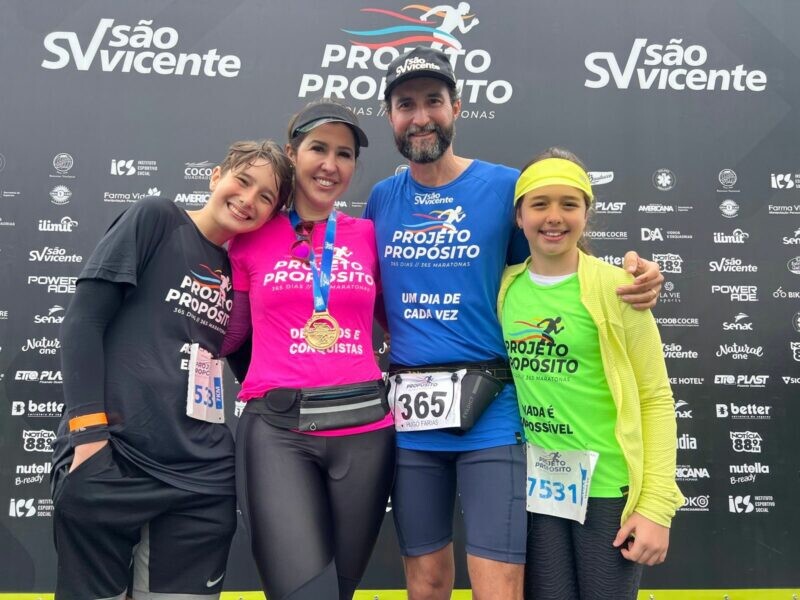
Farias tracked the entire project on Strava, where he wore daily bib numbers according to the marathon number he was on. After completing his 366th run, Farias joked, “I think I will start reducing volume now.”
The father of one covered an astonishing 15,443 km, which is equivalent to a flight from New York to Singapore, and 123,000 metres of elevation gain, or roughly 14 times the height of Mount Everest. According to his Strava, Farias went through 27 pairs of running shoes during the challenge and had 10 shoes on rotation (over 10 days) for the first five months.
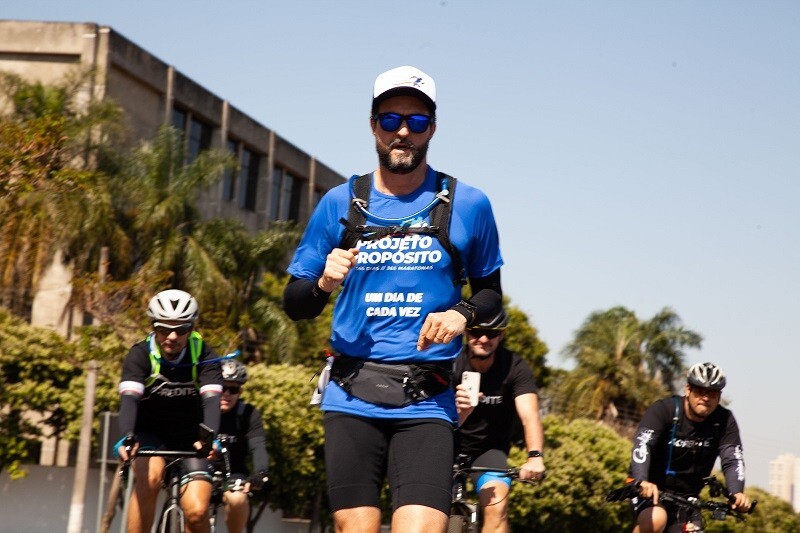
His Projeto Propósito required extensive planning, and Farias had support from a team of health professionals which included running coaches, a physical trainer, a physiotherapist, a psychologist, a nutritionist, an orthopedist, a dermatologist (his wife), plus cardiologists and physiologists. Farias also dedicated three months to physical and mental preparation before undertaking his marathon journey.
His Projeto Propósito required extensive planning, and Farias had support from a team of health professionals which included running coaches, a physical trainer, a physiotherapist, a psychologist, a nutritionist, an orthopedist, a dermatologist (his wife), plus cardiologists and physiologists. Farias also dedicated three months to physical and mental preparation before undertaking his marathon journey.
by Marley Dickinson
Login to leave a comment
18-year-old sprinter Issam Asinga breaks world junior 100m record
In a remarkable debut on the international stage, 18-year-old Issam Asinga of Suriname stunned the athletics world on Friday, shattering the U20 100m world record at the South American Championships in Sao Paulo, Brazil. Asinga clocked an impressive 9.89 seconds with a tailwind of (-0.8m/s) to become the first South American sprinter to break the 10-second barrier in the 100m.
Asinga’s blazing run surpassed the previous record of 9.91 seconds set by Botswana’s Letsile Tebogo at last year’s World U20 Championships in Cali, Colombia, and also broke the South American area record, bettering the 10.00 mark set by Brazil’s Robson da Silva in 1988.
To make his record more impressive, his time was run at altitude, as Sao Paulo sits nearly 800m above sea level. Asinga’s new record also sparred other fast times in the field, with Brazil’s Erik Cardoso breaking the Brazilian national record for silver in 9.97.
The 18-year-old sprint phenom has made headlines in the 2023 season, running for Montverde Academy near Orlando, Fla. Earlier this year, he beat world champion Noah Lyles in a 100m race to break the U.S. high school record, and a week later, broke Lyles’s 200m high school record in 19.97 seconds.
Asinga’s sights are now on the 2023 World Athletics Championships in Budapest this August, where he will run the sprint double. After worlds, Asinga will head to Texas A&M University in the NCAA on a full track and field scholarship. His exceptional talent runs in the family. His father, Tommy Asinga, holds multiple national records for Suriname and represented the country at three Olympic Games (1988, 1992 and 1996).
by Marley Dickinson
Login to leave a comment
Tiruye Mesfin targets Hamburg Marathon course record and Daniel do Nascimento intends to bounce back this Sunday
Very fast times and thrilling races are expected at the Haspa Marathon Hamburg on Sunday. Just a year after Yalemzerf Yehualaw set a sensational course record of 2:17:23, which at that time was an unofficial world debut record as well, a fellow-Ethiopian will be at the start line, hoping to smash the mark: 20 year-old Tiruye Mesfin announced at the press conference in Hamburg that she targets a world-class time of sub 2:17.
Brazil’s Daniel do Nascimento is among the men’s favorites. The South American record holder wants to bounce back after disaster struck in New York in November. After taking the European marathon gold in Munich in sensational style last summer Hamburg will be the first race at the classic distance for Germany’s Richard Ringer. Around 12,000 runners have registered for the marathon event while the total number including shorter races is over 30,000.
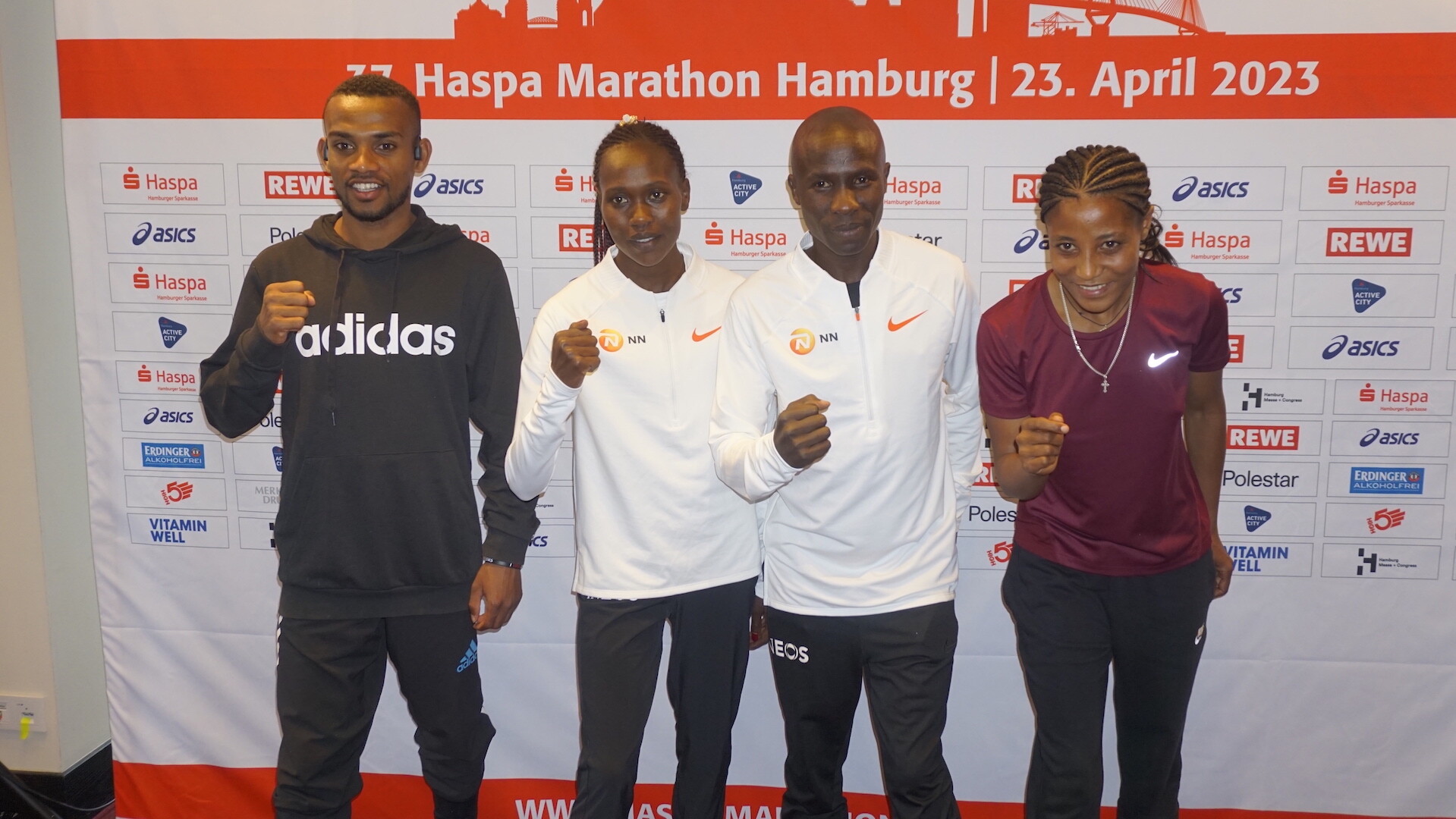
A live stream of the race will be available worldwide at www.haspa-marathon-hamburg.deon Sunday. The race starts at 9.30am local time and the coverage will begin at 8.45am. While the commentary will be in German the Twitter account of the Haspa Marathon Hamburg will carry English elite race updates.
Tiruye Mesfin could indeed be in a position to break the course record on Sunday if weather conditions will be suitable. At the moment the forecast looks good, however there might be some wind. The Ethiopian youngster ran a superb 2:18:47 debut at the Valencia Marathon in December and believes she can run considerably faster in her second marathon on Sunday.
“I am in fine form and my preparations went very well. I will try to break the course record, but at least I want to run a personal best,“ said Tiruye Mesfin, who hopes to be in the mix for Olympic qualification. „My plan is to run the first half in 68:00.“ While this would lead towards a world-class time of 2:16 she knows that it will probably not be enough to secure an Olympic spot. “I think I would have to go even faster, but there is some time left and I could do it in a later race.“
Qualifying for the 2024 Paris games will probably be easier for Stella Chesang since the competition for places in Uganda is not as tough as in Ethiopia. Running her debut marathon in Hamburg she is ready for an adventurous pace.
“I want to go with the first and see how it goes for me and what is possible. I hope to achieve Olympic qualification,“ said Stella Chesang, who chose Hamburg for her first marathon “because of the fast course“. Her half marathon PB of 68:11 indicates that she could break the Ugandan record of 2:23:13. And her tenth place at the World Cross Country Championships in Bathurst, Australia, in February shows that she is probably in very good form.
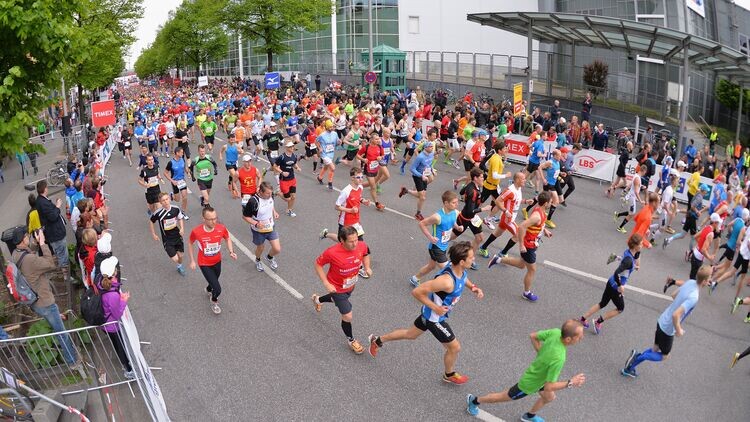
Kenya’s Bernard Koech is the fastest runner in the field with a PB of 2:04:09. He did not make it in time for Thursday’s press conference because of a strike at Hamburg airport. South American record holder Daniel do Nascimento arrived a day earlier and was present when the conference fittingly began in room Sao Paulo at the Radisson Hotel.
A year ago the Brazilian, who recently trained in Uganda for a longer period, stunned with a time of 2:04:51 in Seoul. However the 24 year-old then collapsed with ten kilometers to go at the New York Marathon in November. Daniel do Nascimento ran world record pace in the first part of that race and was ahead by well over two minutes at half way. “I made a mistake in New York, it was not a good strategy. After 30k I felt sick and got stomach problems. For me marathon is a bit like a marriage - there are difficult times and better times,“ he said. “I will run more intelligently on Sunday and will surely finish this time.“
If he should succeed in breaking his personal best he would then most probably break the course record as well. Last year Cybrian Kotut improved the mark to 2:04:47, which is just four seconds quicker than do Nascimento’s South American record. Unfortunately the Kenyan is among a number of withdrawals the organisers have to cope with. Ethiopians Mule Wasihun and Muktar Edris, who wanted to run his debut in Hamburg, had to cancel their starts due to an injury as well.
After his sensational gold medal performance at the European Championships in Munich last summer Richard Ringer returns to the classic distance for the first time. Olympic qualification is his next major goal. “Preparing for Hamburg everything went really well, even better than expected,“ said Richard Ringer, who will choose a more conservative approach on Sunday.
"I don’t want to take too many risk now as I really want to make sure that I achieve the Olympic qualifying time and go under 2:08.“ Richard Ringer’s PB stands at 2:08:49. “At the moment I hope that a time between 2.07:30 and 2:08:00will be enough to qualify for Paris.“ Another German runner who will go for the Olympic standard in Hamburg is local runner Haftom Welday. The former Eritrean surprised with a 2:09:06 in Berlin last year and now hopes to run well under the Olympic qualifying time of 2:08:10. Since he will choose a more aggressive approach than Ringer there could be an interesting German battle in Hamburg as well.
Elite Runners with Personal Bests
MEN:
Bernard Koech KEN 2:04:09
Tsegaye Kebede ETH 2:04:38
Daniel do Nascimento BRA 2:04:51
Martin Kosgei KEN 2:06:41
Masresha Bere ETH 2:06:44
John Langat KEN 2:07:11
Henok Tesfay ERI 2:07:12
Joshua Kemboi KEN 2:08:09
Daniel Mateo ESP 2:08:22
Richard Ringer GER 2:08:49
Martin Musau UGA 2:09:04
Haftom Welday GER 2:09:06
Derlys Ayala PAR 2:10:11
Jeisson Suarez COL 2:10:51
Ernesto Zamora URU 2:11:26
Andy Buchanan AUS 2:12:23
Arttu Vattulainen FIN 2:13:29
Joshua Belet KEN Debut
Moses Koech KEN Debut
Demeke Tesfaye ETH Debut
Simon Debognies BEL Debut
WOMEN:
Tiruye Mesfin ETH 2:18:47
Sintayehu Tilahun ETH 2:22:19
Giovanna Epis ITA 2:23:54
Dorcas Tuitoek KEN 2:24:54
Marion Kibor KEN 2:25:15
Kumeshi Sichala ETH 2:26:01
Tsigie Haileslase ETH 2:27:08
Paolo Bonilla ECU 2:27:38
Obse Abdeta ETH 2:27:47
Rosa Chacha ECU 2:28:17
Zenebu Bihonzg ETH 2:28:59
Katja Goldring USA 2:29:01
Tereza Hrochova CZE 2:29:06
Molly Grabill USA 2:29:17
Loreta Kancyte LTU 2:30:48
Fabienne Königstein GER 2:32:35
Tabea Themann GER 2:33:51
Stella Chesang UGA Debut
Mekdes Woldu FRA Debut
Mary Granja ECU Debut
Ana Ferreira POR Debut
Login to leave a comment

Haspa Marathon Hamburg
The HASPA MARATHON HAMBURG is Germany’s biggest spring marathon and since 1986 the first one to paint the blue line on the roads. Hamburcourse record is fast (2:05:30), the metropolitan city (1.8 million residents) lets the euphoric atmosphere spill over and carry you to the finish. Make this experience first hand and follow the Blue Line....
more...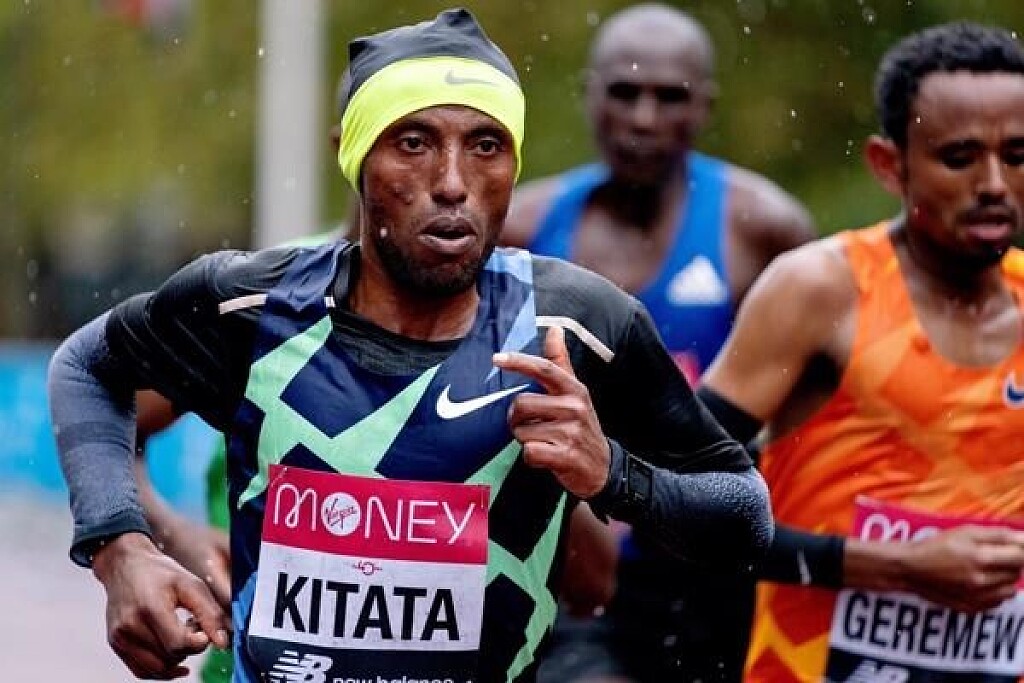
Albert Korir, Shura Kitata and Gabriel Geay confirmed to take on Kipchoge in Boston
Major marathon winners Albert Korir and Shura Kitata, as well as 2015 world champion Ghirmay Ghebreslassie, are among the many additions to the men’s elite field for the Boston Marathon on April 17, organizers of the World Athletics Elite Platinum Label road race announced today (11).
Today’s announcement expands upon four previously announced men’s entrants including world record-holder and double Olympic champion Eliud Kipchoge, reigning Boston Marathon champion Evans Chebet, 2021 winner Benson Kipruto, and two-time victor Lelisa Desisa.
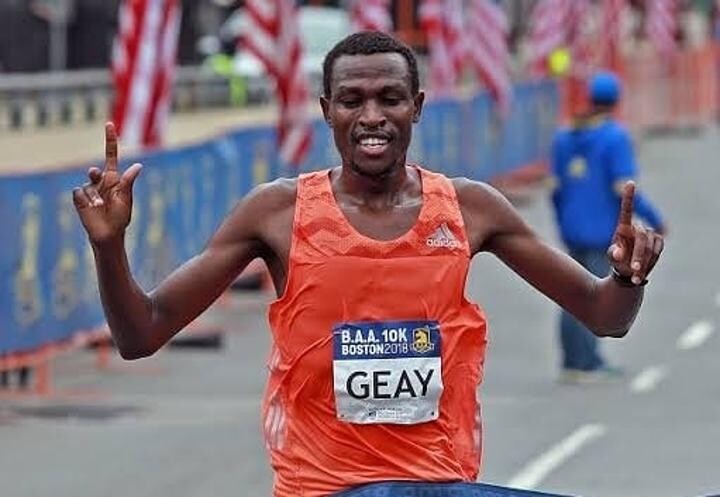
It brings the total number of sub-2:07 performers in the field to 15. Eight of those have bettered 2:05.
Korir, the 2021 New York Marathon champion, made his Boston debut last year and finished sixth. But Kitata, who beat Kipchoge to win the 2020 London Marathon champion, and Ghebreslassie will be making their Boston Marathon debuts.
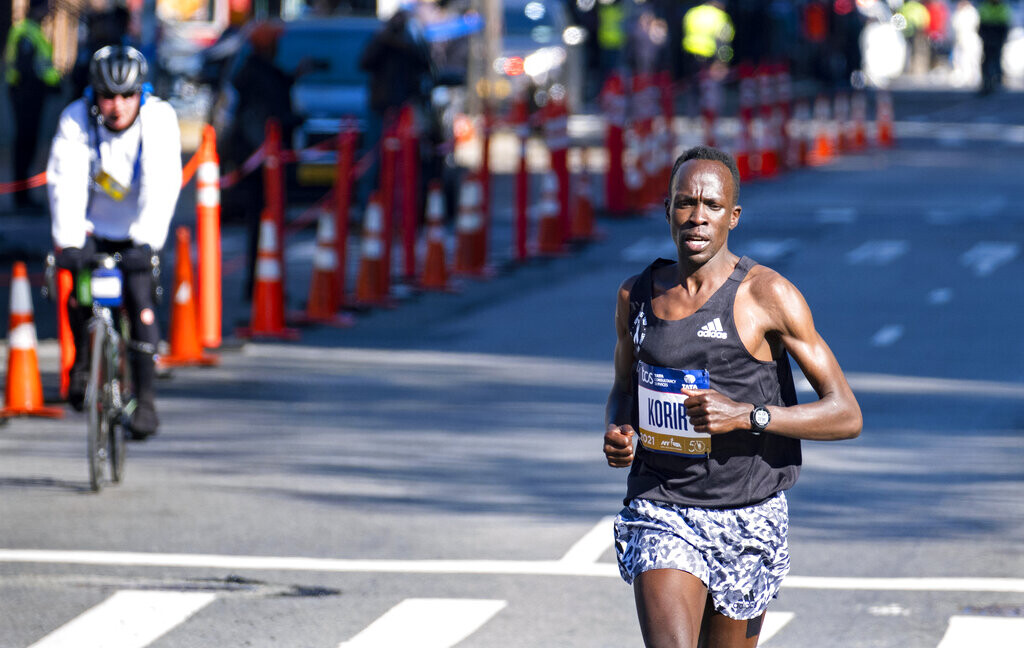
Tanzanian record-holder Gabriel Geay is the third fastest man in the field, after Kipchoge and Chebet. Geay, who finished runner-up at the Valencia Marathon last month in 2:03:00, has had success racing on the roads of Boston, winning the 2018 Boston 10K and placing fourth at last year’s Boston Marathon.
“I am excited to be returning to the Boston Marathon this year,” said Geay. “I fulfilled a dream by racing in Boston last year, but my goal is to one day win the race, and I hope that 2023 will be my year.”
Brazilian Olympian and national record-holder Daniel Do Nascimento will make his Boston debut, as will Ethiopia’s Herpasa Negasa, a 2:03:40 marathon runner. Augustine Choge, one of the most versatile runners in the world, will also line up in Boston, hoping to conquer the marathon distance once and for all.
After a 2:08:16 marathon debut in Chicago last year, USA’s Conner Mantz will take on the Boston course for the first time. He will be joined by world 50km record-holder CJ Albertson.
by World Athletics
Login to leave a comment

Boston Marathon
Among the nation’s oldest athletic clubs, the B.A.A. was established in 1887, and, in 1896, more than half of the U.S. Olympic Team at the first modern games was composed of B.A.A. club members. The Olympic Games provided the inspiration for the first Boston Marathon, which culminated the B.A.A. Games on April 19, 1897. John J. McDermott emerged from a...
more...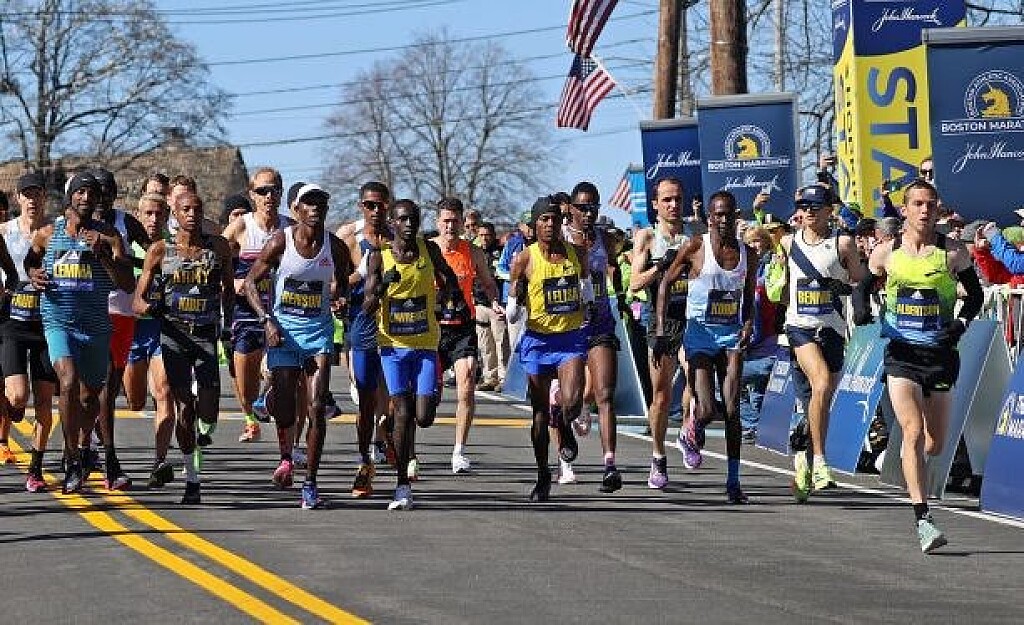
Boston Athletic Association announces 2023 Boston Marathon men´s field
The Boston Athletic Association (B.A.A.) announced today the men’s professional field for the 127th Boston Marathon, featuring 15 men who’ve run under 2:07 for the marathon distance, as well as multiple Abbott World Marathon Major race champions, Olympic and Paralympic stars.
Today’s announcement expands upon four previously announced men’s entrants including world record holder and double Olympic gold medalist Eliud Kipchoge, reigning Boston Marathon champion Evans Chebet, 2021 winner Benson Kipruto, and two-time victor Lelisa Desisa. A total of 109 men’s athletes from 21 countries are in this year’s professional field across the men’s Open, Wheelchair, and Para Athletics Divisions.
“The Boston Marathon is known for its competitiveness, with many races decided in the final meters on Boylston Street,” said Mary Kate Shea, B.A.A. Director of Professional Athletes. “This year’s field brings together athletes who’ve excelled at both speed and championship-style racing. Combined with the women’s professional field announced on Monday, this will be the fastest and most decorated Boston Marathon across all of our divisions in race history.”
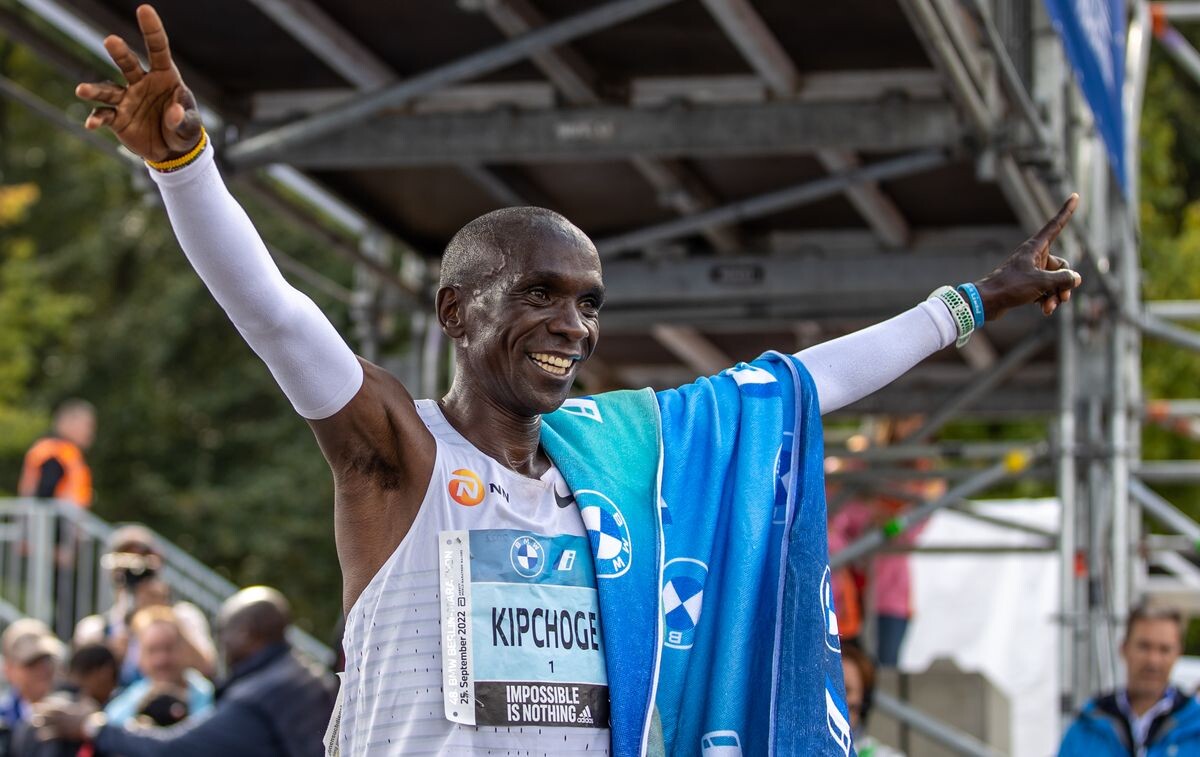
Behind Kipchoge and Chebet, the fastest man in the field will be Tanzanian national record holder Gabriel Geay, who finished runner-up at the Valencia Marathon last month in 2:03:00. Geay has had success racing on the roads of Boston, winning the 2018 B.A.A. 10K, placing fourth at last year’s Boston Marathon, and finishing in second and third at the B.A.A. Half Marathon in 2019 and 2018, respectively.
“I am excited to be returning to the Boston Marathon this year,” said Geay. “I fulfilled a dream by racing in Boston last year, but my goal is to one day win the race, and I hope that 2023 will be my year. Thank you, Boston for the opportunity!”
Joining Geay will be past Abbott World Marathon Majors winners including Albert Korir of Kenya (2021 New York City champion), Ghirmay Ghebreslassie of Eritrea (2015 World Championships gold medalist and 2016 New York City champion), and Shura Kitata of Ethiopia (2020 London Marathon champion). Brazilian Olympian and national record holder Daniel Do Nascimento will make his Boston debut, as will Ethiopia’s Herpasa Negasa, a 2:03:40 marathoner.
Last year’s seventh-place finisher and top American, Scott Fauble, returns for his fourth Hopkinton-to-Boston race, and will be joined by 50K world record holder CJ Albertson. After a 2:08:16 marathon debut in Chicago last year, Conner Mantz will take on the Boston course for the first time. He is coached by Olympic marathoner Ed Eyestone.
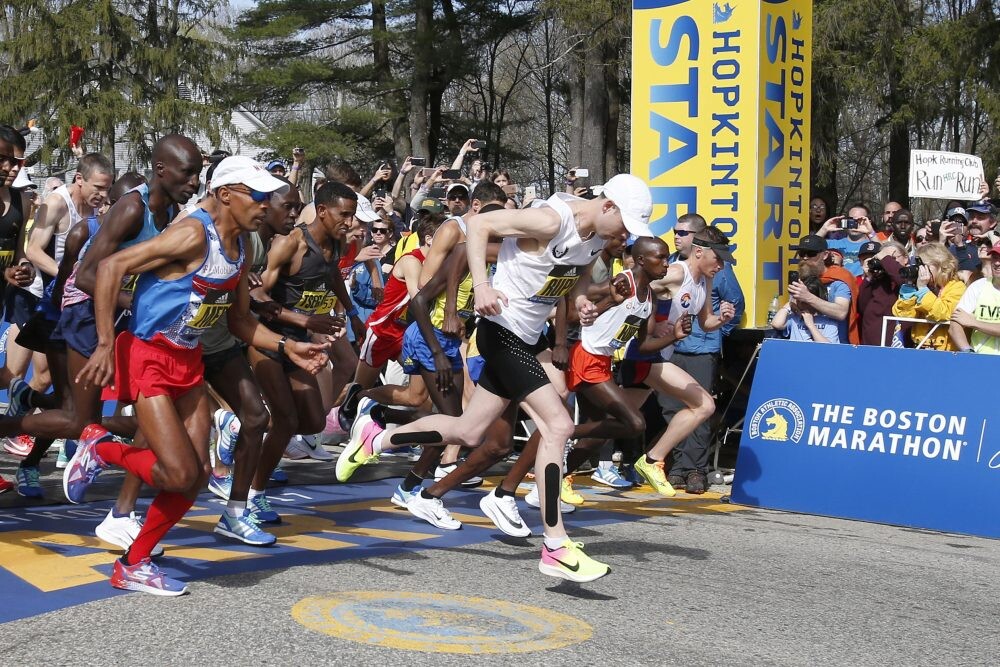
“I love the Boston Marathon. It’s one of the greatest sporting events in the world,” said Fauble. “It has a way of bringing the best out of people.”
"Boston is such a historic marathon, and I want to be a part of that history,” said Mantz. “I love the aspect of racing with no pacers and hills that break up rhythm, and Boston has both of those. When you add in the competition Boston is bringing this year with Eliud Kipchoge and many others, it makes the race so exciting!"
Ben True, a Maine native and four-time winner of the B.A.A. 5K, also is part of the American field. B.A.A. High Performance Team members Matt McDonald, Paul Hogan, and Jonas Hampton will have the hometown edge; McDonald set a new B.A.A. club record and lifetime best of 2:09:49 in Chicago last fall.
American Daniel Romanchuk will return as defending champion in the wheelchair division, coming off a 1:26:58 victory last April. Romanchuk also won Boston in 2019 (1:21:36), though he looks to be challenged by wheelchair marathon world record holder and reigning Paralympic marathon gold medalist Marcel Hug. Hug returns in search of his sixth Boston Marathon title and holds the Boston course record of 1:18:04. In 2022 the Swiss ‘Silver Bullet’ won the B.A.A. 5K in 10 minutes, 5 seconds, a course record time.
“Nothing can compare with the excitement and anticipation at the Boston Marathon,” said Romanchuk. “I’m incredibly excited and honored to be part of what should be a great race through the hills and all the way to Boylston Street.”
Aaron Pike, last year’s wheelchair division runner-up, and Ernst van Dyk, a ten-time Boston winner, are also racing. A $50,000 course record bonus is available to any open division or wheelchair division athlete who breaks a course record.
Paralympians Matthew Felton and Atsbha Gebre Gebremeskel lead the Para Athletics Division in the T46 classification (upper-limb impairment). American record holder and Massachusetts native Chaz Davis will look to defend his T12 (vision impairment) Para title.
Headlining the T62 and T63 classification are Marko Cheseto Lemtukei and Brian Reynolds. Cheseto Lemtukei earned a victory in 2:37:01 last year, while Reynolds set a pending T62 world record of 1:25:46 at the B.A.A. Half Marathon in November.
“A perfect society is one that sees diversity of its members as her strength,” said Cheseto Lemtukei, who returns as a two-time Boston Marathon Para Athletics Division champion.
The 127th Boston Marathon will be held on Monday, April 17, 2023 – Patriots’ Day in the Commonwealth of Massachusetts—and will feature 30,000 participants.
by Boston Athletic Association
Login to leave a comment
Boston Marathon
Among the nation’s oldest athletic clubs, the B.A.A. was established in 1887, and, in 1896, more than half of the U.S. Olympic Team at the first modern games was composed of B.A.A. club members. The Olympic Games provided the inspiration for the first Boston Marathon, which culminated the B.A.A. Games on April 19, 1897. John J. McDermott emerged from a...
more...
The Kenyan duo won the elite races in 2:23:23 and 2:08:41 at the NYC Marathon having to make up significant ground on the long-time leaders
Sharon Lokedi displayed remarkable discipline to win the TCS New York City Marathon on her debut at the distance, while Evans Chebet’s patience paid off to win the men’s contest at the World Athletics Elite Platinum Label road race on Sunday March 6.
Lokedi flew under the radar heading into the women’s race as most of the focus was on world champion Gotytom Gebreslase, two-time world 5000m champion Hellen Obiri, who was making her marathon debut, and world bronze medallist Lonah Chemtai Salpeter.
All four women featured in the large lead pack for the first half of the race as they passed through 10km in a conservative 34:24 before reaching the half-way point in 1:12:17. A few kilometres later, the pack had been whittled down to eight women, with two-time world champion Edna Kiplagat among them.
By 30km, however, three women had broken away from the rest of the field as Gebreslase, Obiri and Kenya’s Viola Cheptoo reached that checkpoint 1:42:27. At that point, Salpeter, Lokedi and Kiplagat were in a five-woman chase pack about 11 seconds adrift.
A few kilometres later, Salpeter and Lokedi caught the lead trio, then Cheptoo began to fade. It left Obiri, Gebreslase, Lokedi and Salpeter as the only four women in contention as they raced through Central Park in the closing stages.
Of those four, Obiri was the first to fall back, but she was far enough into the race to know that her debut marathon would not be a bad one. Somewhat surprisingly, Gebreslase was the next to slip out of contention, the world champion resigning herself to the third step on the podium.
It then left Salpeter and Lokedi to duel for the victory and for a moment it seemed as though Salpeter was the more comfortable. But with one mile to go, Lokedi dug deep and started to pull away from the Israeli runner.
Lokedi reached the finish line in 2:23:23 to win by seven seconds from Salpeter. Gebreslase took third place in 2:23:39 with Kiplagat, nine days shy of her 43rd birthday, coming through to take fourth place in 2:24:16 – more than four minutes quicker than her winning time in this race in 2010.
Cheptoo held on for fifth place in 2:25:34 and Obiri finished sixth in 2:25:49. Olympian Aliphine Tuliamuk was the top US finisher in seventh, 2:26:18.
“It was amazing,” said the US-based Lokedi. “I came in just wanting to be in the thick of the race. I knew I was strong and had really good training, so I wanted to go in and put myself in it and see where I ended up. I expected to run well, but it ended up being an even better outcome than I had hoped for.”
The men’s race played out quite differently, as South American record-holder Daniel Do Nascimento made an early break from the rest of the field.
The Brazilian led by 97 seconds at 10km, reached in 28:42 – just two seconds slower than his 10,000m track PB – and went on to reach half way in 1:01:22, more than two minutes ahead of the rest of the field and well inside course record pace.
A six-man chase pack – which included Chebet, Olympic silver medallist Abdi Nageeye, and 2020 London Marathon champion Shura Kitata – went through the half-way point in a more comfortable 1:03:35.
Do Nascimento continued to lead, although his lead started to wane – especially when he had to briefly take a visit to one of the road-side portable toilets. He passed through 30km in 1:29:09, now just over a minute ahead of Chebet, who had broken away from the rest of the chasers. By 20 miles, Do Nascimento’s lead was down to just 40 seconds. Not long after, and clearly struggling, he stopped running and crashed to the ground.
While medics helped Do Nascimento, Chebet cruised past. The Kenyan, who had won the Boston Marathon earlier this year, found himself with a 30-second lead over a three-man chasing group which included Kitata and Nageeye.
Despite a strong finish from Kitata, Chebet managed to hold on to the lead and crossed the finish line in 2:08:41. Kitata followed 13 seconds later, while Nageeye took third place in 2:10:31.
“The race was hard for me, but I was thankful for my team and have so much gratitude toward my coach,” Chebet said. “My team gave me motivation and I know that after winning Boston I could come to New York and also do well.”
Leading results
Women
1 Sharon Lokedi (KEN) 2:23:232 Lonah Salpeter (ISR) 2:23:303 Gotytom Gebreslase (ETH) 2:23:394 Edna Kiplagat (KEN) 2:24:165 Viola Cheptoo (KEN) 2:25:346 Hellen Obiri (KEN) 2:25:497 Aliphine Tuliamuk (USA) 2:26:188 Emma Bates (USA) 2:26:539 Jessica Stenson (AUS) 2:27:2710 Nell Rojas (USA) 2:28:32
Men
1 Evans Chebet (KEN) 2:08:412 Shura Kitata (ETH) 2:08:543 Abdi Nageeye (NED) 2:10:314 Mohamed El Aaraby (MAR) 2:11:005 Suguru Osako (JPN) 2:11:316 Tetsuya Yoroizaka (JPN) 2:12:127 Albert Korir (KEN) 2:13:278 Daniele Meucci (ITA) 2:13:299 Scott Fauble (USA) 2:13:3510 Reed Fischer 2:15:23
by World Athletics
Login to leave a comment

TCS New York City Marathon
The first New York City Marathon, organized in 1970 by Fred Lebow and Vince Chiappetta, was held entirely in Central Park. Of 127 entrants, only 55 men finished; the sole female entrant dropped out due to illness. Winners were given inexpensive wristwatches and recycled baseball and bowling trophies. The entry fee was $1 and the total event budget...
more...
2022 New York City Marathon Sharon Lokedi and Evans Chebet Complete a Kenyan Sweep
In record heat for November, Kenyans dominate the New York City Marathon.
Evans Chebet was among the runners who watched as Daniel do Nascimento separated himself from the rest of the men’s field at the New York City Marathon on Sunday. Do Nascimento, a 24-year-old Brazilian who is known for being — what is the word? — assertive, was a blur as he surged into the lead, then a speck off in the distance, and then gone from view entirely.
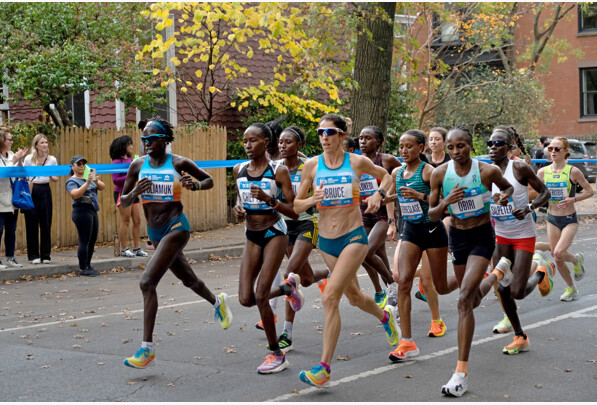
Chebet, a soft-spoken Kenyan who arrived in New York having already won the Boston Marathon this year, opted to exercise patience. Sure enough, as he approached the 21st mile of Sunday’s race, he saw do Nascimento again: face down by the side of the road, being tended to by medical personnel.
“I felt bad for him,” Chebet said in Swahili through a translator, “but I had to continue the race.”
On an unseasonably warm day, Chebet survived both the conditions and the competition, winning in 2 hours 8 minutes 41 seconds to complete a clean sweep for Kenyan men in all six of the world marathon majors this year. Chebet, 33, did his part by winning two of them — and two of the toughest. Of course, considering what Chebet had done in Boston, no one was surprised to see him tackle New York with great composure.
“Boston was actually harder,” said Chebet, who wore his laurel wreath to his news conference.
The women’s finish was much more unexpected. Sharon Lokedi, a Kenyan who raced in college at Kansas, was fearless in her marathon debut, breaking free from a celebrated field to win in 2:23:23.“Perfect weather for me,” said Lokedi, 28, who splits her time between Kenya and Flagstaff, Ariz., where she trains with the Under Armour-sponsored Dark Sky Distance group. “I didn’t expect to win. I expected to run well. But it ended up being a good outcome.”
Lokedi left an all-star cast in her wake. Lonah Chemtai Salpeter, a Kenyan-born Israeli who arrived in New York with the fastest time in the field, finished second. Gotytom Gebreslase of Ethiopia, the reigning world champion, was third. Edna Kiplagat of Kenya, who, at 42, is one of the world’s most decorated marathoners, was fourth. And Viola Cheptoo of Kenya, last year’s runner-up, was fifth.
“It was hot, but I was really prepared,” said Lokedi, who was the N.C.A.A. champion in the 10,000 meters in 2018. “I picked up water at every station to pour on myself.”Do Nascimento, who set a South American record when he finished third in the Seoul Marathon this year in 2:04:51, was the story in New York for much of the morning — until it all began to go poorly for him. Easily recognizable in his lavender tights and space-age sunglasses, he built a two-minute lead more than halfway through the race. But others in the field had seen him try that sort of bold strategy before.In brutal conditions at the Tokyo Olympics last year, do Nascimento was among the leaders when he collapsed in scenes that were vaguely horrifying and was forced to withdraw.
On Sunday, his superhuman pace was beginning to slow when he pulled off the course for an 18-second pit stop at a portable toilet. He emerged with his lead intact, albeit narrower, but it was clear that he was in trouble. About six miles short of the finish, he sank to the pavement and was forced to abandon the race.
“I want to feel sorry for him when I saw him on the ground,” said Abdi Nageeye of the Netherlands, who finished third. “But I was like, ‘Come on, man, this is the second time. You did that in the Olympics.’ ”
A spokesman for the marathon said do Nascimento was recovering at his hotel.
It was not an easy day for anyone. Galen Rupp, a two-time Olympic medalist who was making his long-awaited New York debut, dropped out about 18 miles into the race with a hip injury. And Shura Kitata of Ethiopia, who finished second behind Chebet, lumbered onto the stage for his news conference as if his legs were made of concrete. A race official handed Kitata a giant bag of ice, which he placed on his thighs.“It was very hot,” he said through a translator, “and that made it very tough.”
It was the warmest marathon on record since the race was moved to its traditional early November date in 1986. The temperature in Central Park was 73 degrees Fahrenheit at 11 a.m., shortly before the elite runners began to cross the finish line.
Scott Fauble, 31, was the top American on the men’s side, finishing ninth — a solid result coming the morning after he signed a new sponsorship deal with Nike. Fauble, who was also the top American finisher at the Boston Marathon this year, had been without a sponsor for months.
After agreeing to terms on a contract at dinner on Saturday night, Fauble took an Uber to the Nike store in Manhattan to pick up sneakers. The rest of his racing gear arrived at his hotel later that night.
“It’s quite a rush to get your singlet for the next day at 10 p.m. the night before the race,” he said.
On the women’s side, three Americans finished in the top 10. Aliphine Tuliamuk was seventh, Emma Bates was eighth and Nell Rojas was 10th. Tuliamuk, 33, who won the marathon at the U.S. Olympic trials in 2020 and gave birth to her daughter, Zoe, in January 2021, had not raced in a marathon since she injured herself at the Tokyo Games last year. On Sunday, she finished in a personal-best time of 2:26:18.
“I think that I excel when the conditions are not perfect,” Tuliamuk said. “I rise to the occasion, and I believe that today that was the case.”
Still, she had to overcome some adversity. In early September, she said, she experienced swelling in one of her ankles that forced her to take a couple of weeks off from training.
“In the back of my mind, I wished that I had a few more weeks” to train, she said. “But I also decided to focus on gratitude because I didn’t know that I was going to be here. And the fact that I was able to put in some solid training and had a chance to be competitive, I was just very grateful for that.”Gina Gregorio always watches the race from the corner of Warren Street and Fourth Avenue. This year she held signs that read, “Run to the Polls.”
“I love it when we’re right before the election because we can actually ask people to get out to vote, and it’s like nonpartisan, although I have had partisan signs before because I feel like it’s a great place to have your voice heard,” Gregorio said.
Login to leave a comment
TCS New York City Marathon
The first New York City Marathon, organized in 1970 by Fred Lebow and Vince Chiappetta, was held entirely in Central Park. Of 127 entrants, only 55 men finished; the sole female entrant dropped out due to illness. Winners were given inexpensive wristwatches and recycled baseball and bowling trophies. The entry fee was $1 and the total event budget...
more...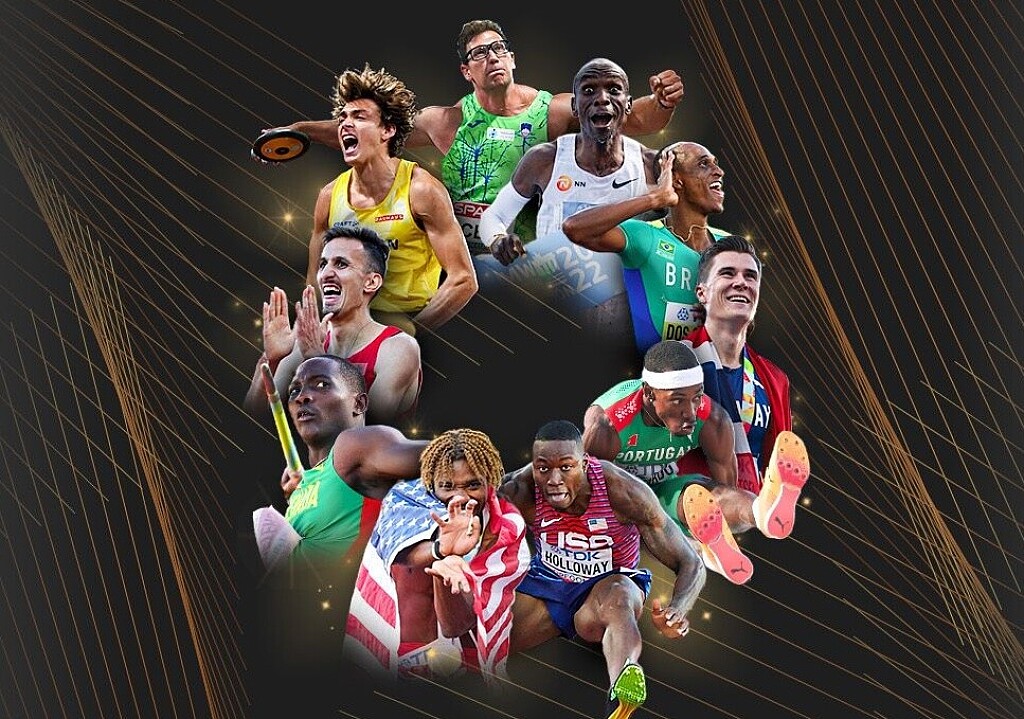
Eliud Kipchoge battles nine world champs for Athlete of the Year Award
Two-time Olympic marathon champion Eliud Kipchoge will battle nine world champions for the men's 2022 World Athlete of the Year Award. The 37-year-old Kipchoge, who is fresh from breaking his own marathon world record, won the 2018 and 2019 awards but also made the final list for the 2020 and 2021 awards.
The winner of the prestigious award in world athletics will be revealed on World Athletics’ social media platforms in early December.
The announcement on Thursday marked the opening of the voting process for the 2022 World Athletes of the Year ahead of the 2022 World Athletics Awards in December.
Olympics 400m hurdles champion Karsten Warholm last year became the first Norwegian to win the Male Athlete of the Year Award, beating four other finalists who included Kipchoge and Olympic 5,000m champion Joshua Cheptegei of Uganda for the award.
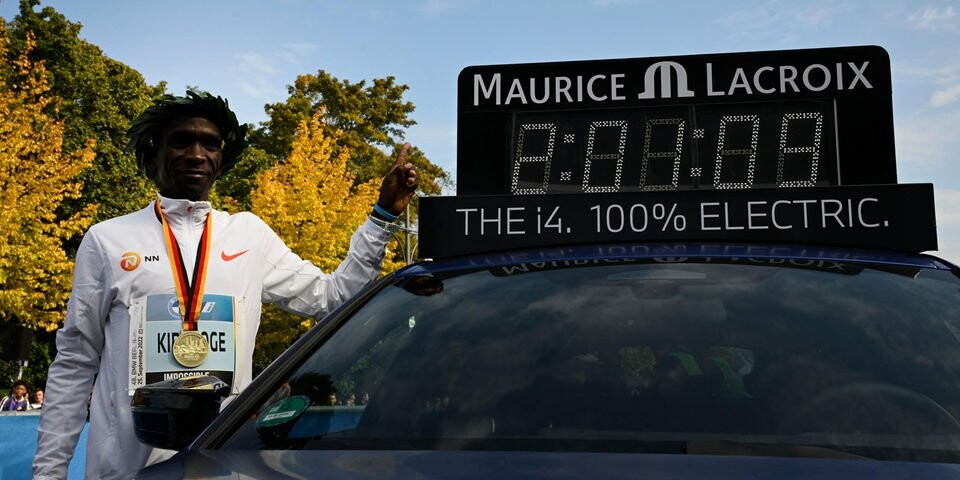
Kipchoge will face world champions Ceh Kristjan (discus) from Slovakia, Brazilian Alison Dos Santos (400m hurdles), the 2020 winner, Swede Mondo Duplantis (pole vault), Moroccan Soufiane El Bakkali (3,000m steeplechase) and American Grant Holloway (110m hurdles).
Others are Norwegian Jakob Ingerbrigtsen (5,000m), Noah Lyles (200m) from United States, Grenada’s Anderson Peters (javelin) and Pedro Pichardo (triple jump) from Portugal.
The athletes were selected by an international panel of athletics experts, comprising representatives from all six continental areas of World Athletics.
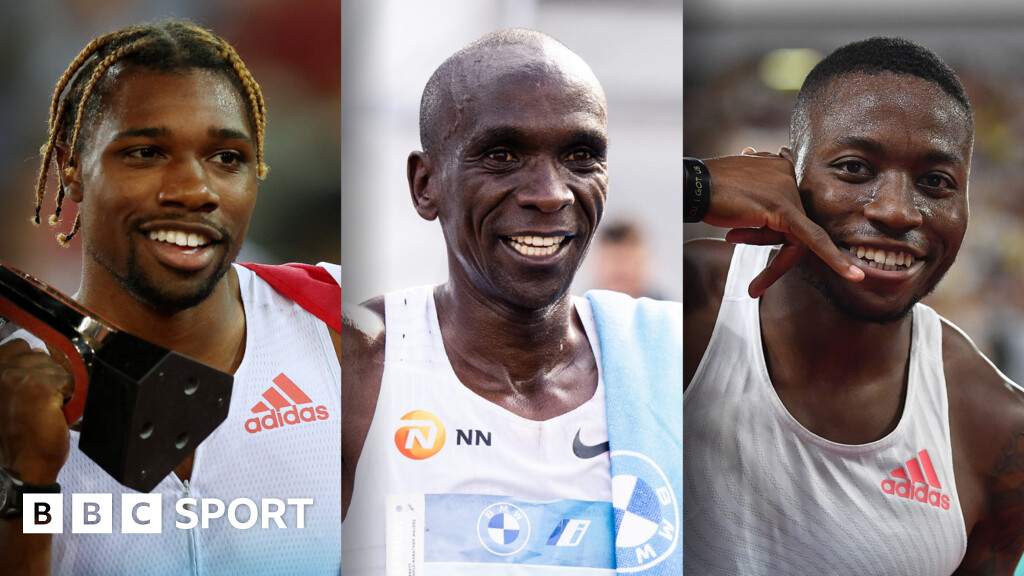
“It has been another memorable year for the sport and the nominations reflect some of the standout performances achieved at the World Athletics Championships in Oregon, World Athletics Indoor Championships in Belgrade, one-day meeting circuits and other events around the world,” said a statement from World Athletics.
Kipchoge recaptured the Berlin Marathon title, smashing his own world record by 30 seconds on September 25 in the German capital.
The 2016 and 2020 Olympic marathon champion clocked 2:01:09 to win, beating his previous world record time of 2:01:39 set when winning in Berlin in 2018.
Kipchoge had on March 6 this year won the Tokyo Marathon in a course record time of 2:02:40, beating the newly crowned London Marathon champion Amos Kipruto to second place in 2:03:13.
Kenya's Olympic and world 1,500m champion Faith Chepng'etich was on Wednesday named among the 10 nominees for the female 2022 World Athlete of the Year award.
Kipchoge is the only other Kenyan male to win the award besides 800m world record holder David Rudisha, who claimed it in 2010.
No Kenyan woman has won the award.
A three-way voting process will determine the finalists.
The voting process closes on October 31.
The World Athletics Council and the World Athletics Family will cast their votes by email, while fans can vote online via the World Athletics social media platforms.
Individual graphics for each nominee will be posted on Facebook, Twitter, Instagram and YouTube this week; a 'like' on Facebook, Instagram and YouTube or a retweet on Twitter will count as one vote.
The World Athletics Council’s vote will count for 50 percent of the result, while the World Athletics Family’s votes and the public votes will each count for 25 per cent of the final result.
Voting for the World Athletes of the Year closes at midnight on October 31. At the conclusion of the voting process, five women and five men finalists will be announced by World Athletics.
Nominees
Kristjan Ceh (Slovakia)
- World discus champion
- Diamond League discus champion, throwing a national record 71.27m on the circuit in Birmingham
- European discus silver medalist
Alison dos Santos (Brazil)
- World 400m hurdles champion
- Diamond League 400m hurdles champion
- Ran a world-leading South American record of 46.29
Mondo Duplantis (Sweden)
- World pole vault champion indoors and outdoors
- Diamond League and European pole vault champion
- Improved his world record to 6.19m and 6.20m indoors, and then 6.21m outdoors
Soufiane El Bakkali (Morocco)
- World 3000m steeplechase champion
- Diamond League 3000m steeplechase champion
- Unbeaten in 2022, running a world-leading 7:58.28 in Rabat
Grant Holloway (USA)
- World 110m hurdles champion
- World indoor 60m hurdles champion
- Diamond League 110m hurdles champion
Jakob Ingebrigtsen (Norway)
- World 5000m champion, world 1500m silver medalist indoors and outdoors
- European 1500m and 5000m champion
- Diamond League 1500m champion in a world-leading 3:29.02
Eliud Kipchoge, (Kenya)
- Improved his world marathon record to 2:01:09
- Berlin Marathon champion
- Tokyo Marathon champion
Noah Lyles (USA)
- World 200m champion
- Diamond League 200m champion
- Ran a world-leading national record of 19.31 to move to third on the world all-time list
Anderson Peters (Grenada)
- World javelin champion
- Commonwealth javelin silver medalist
- Threw a world-leading NACAC record of 93.07m, moving to fifth on the world all-time list
Pedro Pichardo (Portugal)
- World triple jump champion with a world-leading leap of 17.95m
- World indoor triple jump silver medalist
- European triple jump champion.
by Ayumba Ayodi
Login to leave a comment
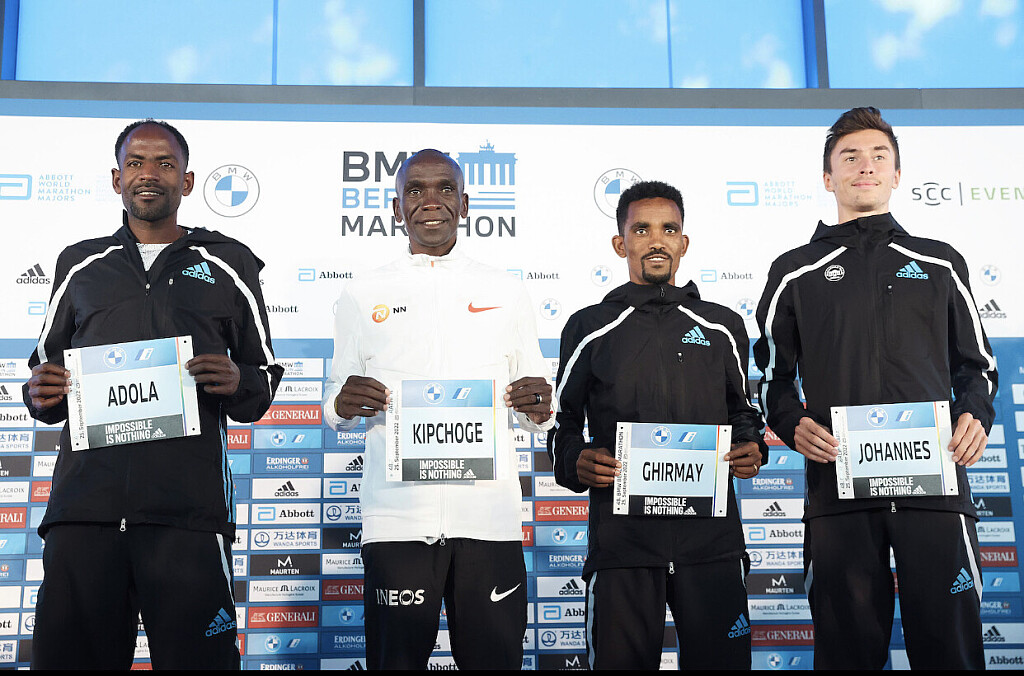
Eliud Kipchoge ready for fast times in Berlin
Eliud Kipchoge is ready for a very fast race in the BMW BERLIN-MARATHON on Sunday which may well lead him to break the world record here for the second time.
The double Olympic champion, who set the current world record of 2:01:39 in Berlin four years ago and also broke the two-hour barrier when he ran 1:59:40.2 in a race in Vienna in 2019 which did not conform to regulations, will start as the clear favourite.
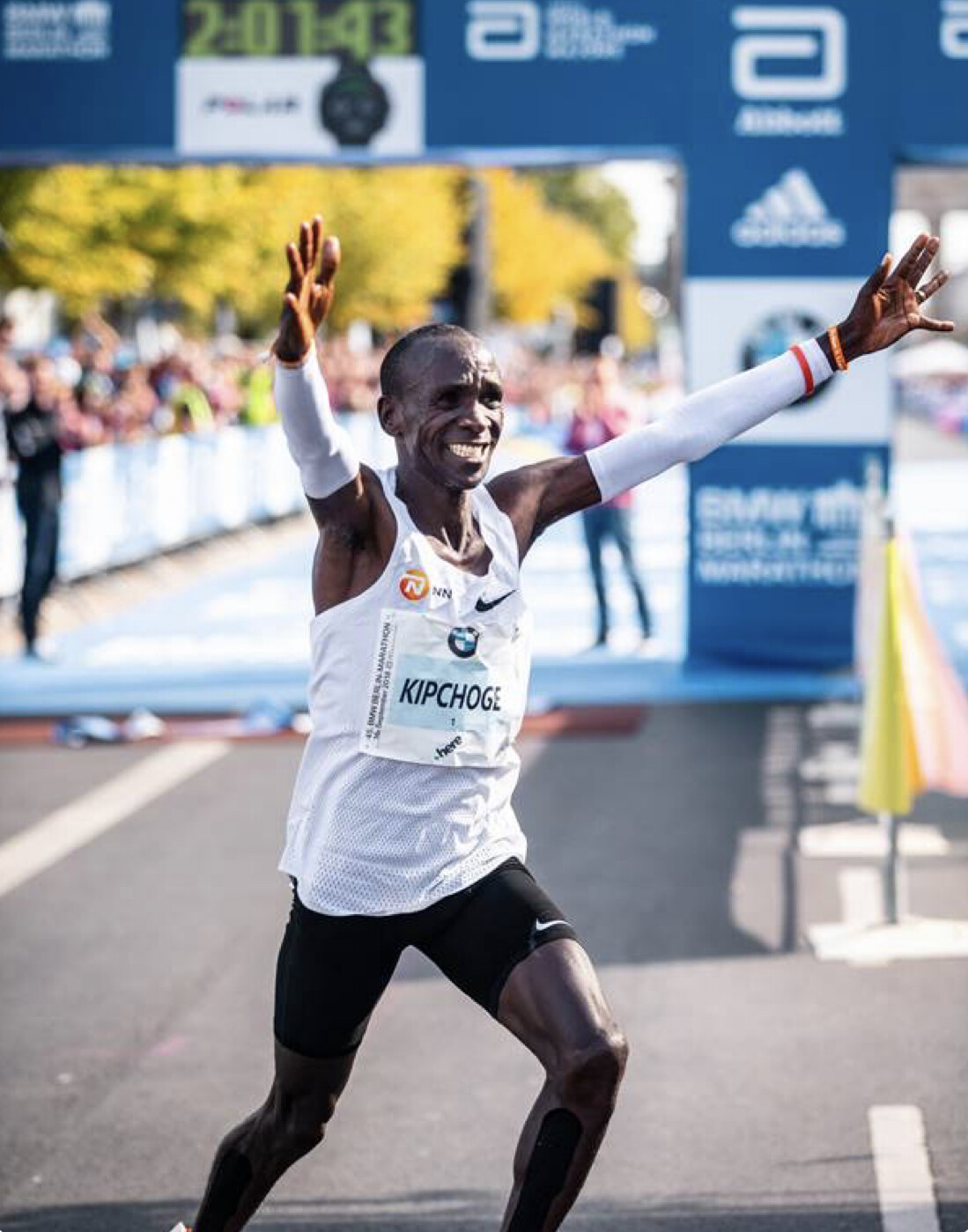
Organisers of the BMW BERLIN-MARATHON have registered 45,527 runners from 157 nations for the 48th edition of the event. Germany’s most spectacular road race is part of the Abbott World Marathon Majors (AWMM) and is also a Platinum Label Road Race of the international athletics federation, World Athletics.
The 37-year-old Kenyan held back from making any hard and fast promises when he spoke two days before the BMW BERLIN-MARATHON. “I’d like to thank the organisers for letting me race again in Berlin after four years and expect a very good race. I’ve trained well as usual – every training day is a challenge.”In response to the question at the press conference, what would be “a very good race” for him, Eliud Kipchoge answered: “A very good race is a good race.”
That got the audience on his side before he added: “I want to inspire people and if a course record comes out of this at the end, I will appreciate it,” added this outstanding athlete. It should be noted that the course record is, of course, the world record, but Eliud Kipchoge was careful not to utter these words.
The world record holder, whose career so far has brought him victory in all but two of his 18 marathons, could well achieve his fourth win in Berlin after taking the title in 2015, 2017 and 2018. That would bring him equal with the Ethiopian legend Haile Gebrselassie as the two men with most wins in Berlin. If the world athlete of the year for 2018 and 2019 is in world record form, Eliud Kipchoge should prove unbeatable on Sunday.
On the other hand, the elite field has plenty of strength in depth. Heading the list of challengers is last year’s champion Guye Adola from Ethiopia, winning the title in unseasonably warm conditions in 2:05:45 and beating the Ethiopian superstar Kenenisa Bekele into the bargain.
It was in Berlin in 2017 that Guye Adola ran what remains his personal best of 2:03:46 and on his debut at the distance. Only Eliud Kipchoge finished ahead of him though from time to time Adola took the lead. “I have prepared well and look forward to the race,” said the 31-year-old, who described Kipchoge as “a hero.”
The BMW BERLIN-MARATHON has greater strength in depth among the men’s elite field than ever before. As many as 18 runners have personal bests under 2:08. Among them is Ghirmay Ghebreslassie who caused a surprise when winning the world title in 2015 and also won in New York the following year. The Eritrean athlete has a best of 2:05:34 which he set in finishing third in Seville in February.
“It’s a big challenge to run in such a field and against Eliud Kipchoge. I’ll do my best and my aim is a place on the podium,” said Ghirmay Ghebreslassie.
An unusually large number of Japanese runners will be among the elite starters, the reason being that they are trying to qualify for the 2024 Olympics. There will be 13 of them with personal bests of under 2:10 in the BMW BERLIN-MARATHON. The fastest of them is Ryu Takaku with a best of 2:06:45.
The leading German in the field is Johannes Motschmann, who was a member of the German team at the European Championships which won the silver medal in Munich. Despite a short recovery time of six weeks since that competition, the 28-year-old wants to improve his personal best of 2:12:18 in the direction of 2:10.
The race in Berlin is the biggest of my career so far. Since I’m a hometown boy here, I’d even rate it above the European Championship marathon,” said Motschmann, who runs for the Marathon Team Berlin.
The Austrian record holder, Peter Herzog, will also be aiming to take advantage of conditions at the BMW BERLIN-MARATHON and run faster than ever before. His current best is 2:10:06 and his ambition is to become the first Austrian.
While a double world athlete of the Year in Eliud Kipchoge will take centre stage, a former star of world sport will be running some way behind him: the Brazilian football legend Kaká, a member of the team which won the World Cup in 2002, and also a Champions League winner and Footballer of the Year.
“I definitely wanted to run a major marathon and asked friends who recommended Berlin to me. That’s why I’m here. On Sunday I want to run 3:40. The marathon is something very special in that we, as mass runners, run together with the elite. I’m very excited,” admitted Kaká at the press conference.
Elite runners with personal bests
Eliud Kipchoge KEN 2:01:39
Guye Adola ETH 2:03:46
Ghirmay Ghebreslassie ERI 2:05:34
Dejene Debela ETH 2:05:46
Mark Korir KEN 2:05:49
Ashenafi Moges ETH 2:06:12
Tadu Abate ETH 2:06:13
Bethwel Yegon KEN 2:06:14
Awet HabteERI2:06:25
Ryu TakakuJPN2:06:45
Limenih Getachew ETH2:06:47
Hiroto InoueJPN2:06:47
Zablon Chumba KEN 2:07:18
Kenya Sonota JPN 2:07:23
Kento Kikutani JPN 2:07:26
Kazuki Muramoto JPN 2:07:36
Tadashi Isshiki JPN2:07:39
Atsumi Ashiwa JPN 2:07:54
Daisuke DoiJPN2:08:13
Rintaro TakedaJPN2:08:48
Yuki Matsumura JPN 2:09:01
Peter Herzog AUT 2:10:06
Johannes Motschmann GER 2:12:18
Third photo: Kipchoge's first run in Berlin
Login to leave a comment

BMW Berlin Marathon
The story of the BERLIN-MARATHON is a story of the development of road running. When the first BERLIN-MARATHON was started on 13th October 1974 on a minor road next to the stadium of the organisers‘ club SC Charlottenburg Berlin 286 athletes had entered. The first winners were runners from Berlin: Günter Hallas (2:44:53), who still runs the BERLIN-MARATHON today, and...
more...
Running injuries don’t happen for the reasons you think
Running is one of the most popular forms of physical activity worldwide. But though it requires little expertise or equipment – and can be very beneficial for our health – it unfortunately also comes with a relatively high risk of injury. In fact, one survey found nearly half of all runners experience injury or pain. Another study even estimated that runners experience nearly 18 injuries for every 1,000 hours of running.
Novice runners have the highest likelihood of sustaining an injury. The most common injuries they experience are in their lower body (such as in the Achilles tendon, shins or knees) and are often the result of overuse – an injury that happens in a muscle or joint due to repetitive trauma, usually as a result of doing more than you’re capable of, or not training with proper technique.
But that doesn’t mean injuries are inevitable. There are many ways you can protect yourself from an injury – so long as you ignore some long held ideas about the best way to do this.
Injury prevention myths
One common belief in the running community is that static stretching as part of a warm-up or cool-down can reduce risk of injury. But recent evidence suggests that stretching does little to prevent injuries. It may even reduce running performance in races less than 60 minutes long.

The belief that footwear is a significant factor in whether or not a person gets injured may also be untrue. While comfortable, properly fitting shoes are important for preventing minor issues such as blisters and can help with running performance, there’s little evidence suggesting that footwear alone reduces injury risk.
There’s also little evidence that shoes prescribed based on foot posture reduce injury. A study using army recruits during basic training even showed there was little difference in injury risk regardless of the type of support a person’s shoe had.
Evidenced-based tips
If you want to run injury free, here are the best, evidence-based ways:
1. Build strength
A recent study of Brazilian runners found that performing an eight-week training programme that focused on foot and ankle strength reduced injury risk by nearly 60% compared to a group who didn’t strength-train.
While exercising to prevent injury in runners is a relatively new concept, such programmes have also shown promise in other running-based sports such as football and volleyball where overuse injuries are also common. In general, strength training should be done three to five times a week for at least 15 minutes each session. Exercises should focus on building muscular endurance, coordination and balance – such as lunges and squats.
2. Not recovering between training sessions
Failing to recover between training sessions is shown to lead to chronic fatigue or over training – which can cause performance decline, low mood and muscle aches. These increase risk of overuse injuries as the body’s muscles and tissues aren’t able to repair and adapt between runs. The amount of time a person’s body needs to recover between runs will vary, though 36-48 hours is typical.
Not getting enough or not getting good quality sleep can also lead to overuse injuries, as sleep is important for helping the body to recover and restore itself. This is why it’s important to get around seven to nine hours of sleep each night – alongside adequate nutrition.
3. Avoid doing too much too soon
Runners are often also advised to follow the “10% rule” when training to avoid injury, meaning they shouldn’t increase their training load (the volume and intensity of their running) by more than 10% each week. Yet research shows that the 10% rule is no better at reducing injury risk than increasing your training load by a greater degree: increasing by up to 24% each week has no greater risk of injury for novice runners.
On the other hand, increasing running volume by around 30% each week is linked to greater risk of injury in novice runners. In practical terms, this would mean increasing your running load from 10km per week to 28.5km per week over a four-week period.
Given that injuries are typically the result of a combination of factors – including age, gender, experience and injury history – growing evidence suggests that the best way for runners to avoid injury is to learn how to listen to their bodies. A recent study showed that having an obsessive passion for running was associated with an increased risk of injury – this is likely due to runners ignoring their bodies and avoiding the early warning signs of injury.
Being able to listen to your body improves with experience. But two studies have shown that people suffering from both knee and Achilles injuries were still able to run without significantly worsening their pain or injury so long as they listened to their body and modified their running style slightly.
It’s unlikely a person can avoid getting injured altogether – though following these strategies may help reduce the risk and severity of injuries somewhat. If you do get injured, the best thing to do is consult a professional. But pain permitting, you may still be able to do other types of exercises in the meantime (such as cycling or using an elliptical or even strength training) to help as you recover. And, as you become more experienced as a runner, you may actually suffer fewer injuries than you did at the start.
by Jo Adetunji
Login to leave a comment
Brazilian Runner Dies After Fall During UTMB Team Event
A Brazilian runner, 40, was fatally injured at the Petite Trotte à Léon, part of the UTMB ultra, earlier this week.
The unidentified man fell 30-50 feet around 1:30 a.m., only 23 miles into the race.
The Ultra Trail du Mont Blanc (UTMB) got off to a tragic start following the death of a Brazilian runner earlier this week. The 40-year-old runner, whose identity remains anonymous, was fatally injured on the first night of the 300K (186-mile) Petite Trotte à Léon (PTL) team event.
“The runner was with his team on an official trail, which is secured for the PTL and marked throughout the year, between the Col de Tricot and the Refuge de Plan Glacier,” UTMB officials said about the accident, which occurred about 23 miles into the race.
At around 1:30 a.m. CET, the two-person Brazilian team was in a remote portion of the course with loose stones. It was there, above the French village of Les Contamines, that the victim fell an estimated 30 to 50 feet.
An Italian team, which was pacing behind the Brazilians, reported the incident after discovering the victim’s teammate safe, but in shock. A helicopter team responded shortly after and pronounced the runner dead before flying his body and teammate to a local hospital.
“It’s so very sad, but it was an accident,” Catherine Poletti, cofounder of the UTMB and president of the UTMB Group, told Outside. “When you go into nature for adventure—it may be the mountains, it may be the sea—but all the time there is a risk. We cannot provide something with zero risk. It’s impossible. I think that’s a good thing because when you want to have an experience or adventure, you absolutely need to know where the limits are, what your experience is.”
The remaining 104 teams could choose whether they wanted to finish the race—all decided to keep running.
Approximately 240 participants began this year’s PTL in Chamonix, France, on August 22. They will cover 82,000 feet of elevation gain within the Mont Blanc massif, traversing France, Switzerland and Italy.
To enhance runner safety, the race has instituted specific protocols, like selecting athletes based on criteria meant to ensure their successful completion. Runners are required to possess sound knowledge of the mountain environment, since they will likely encounter precarious weather conditions while also navigating steep slopes, falling stones, narrow paths, and glaciers. Due to a lack of marked trails, participants must be able to read a map and use a compass and altimeter, too.
While the PTL must be completed in autonomy, there are aid stations where participants can sleep and eat by cashing in one of their four meal tickets. While on course, runners are tracked with GPS beacon and required to carry mountaineering helmets—which the Brazilian victim was not wearing at the time of his death.
This is not the first time a runner has died during the UTMB since the event was founded in 2003. In August 2021, a 35-year-old Czech runner fell to his death during the Sur les Traces des Ducs de Savoie (TDS) race.
Despite the inherent risk involved, approximately 10,000 runners are expected to compete in one of this year’s eight UTMB races, held from August 22-28.
by Runner’s World
Login to leave a comment
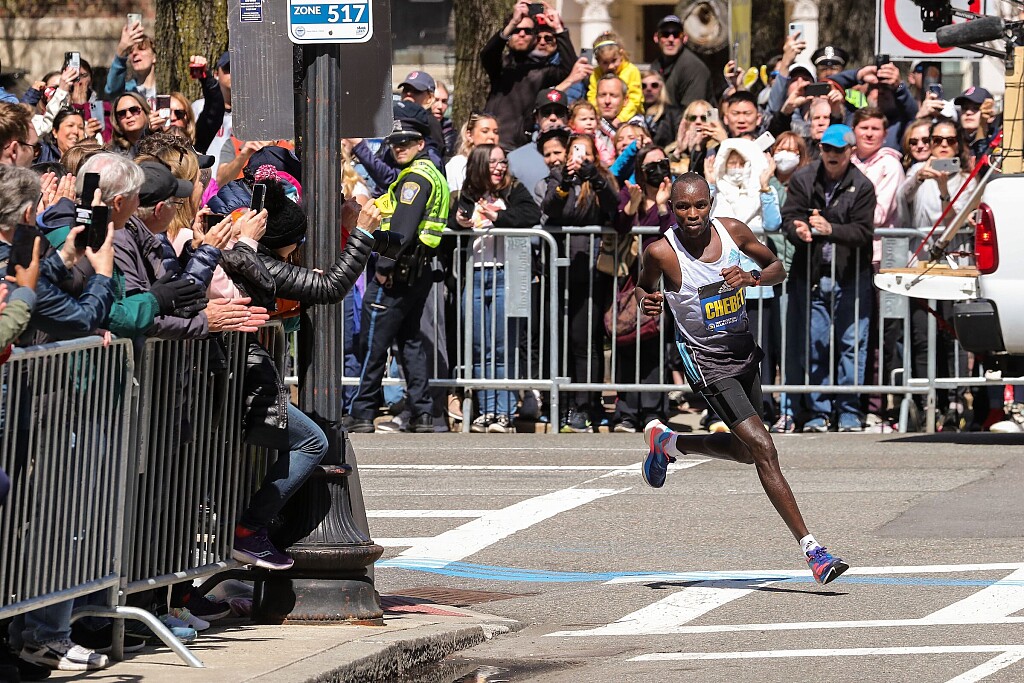
Kenyan Evans Chebet eyes course record in New York Marathon race
Boston Marathon champion Evans Chebet will be looking to extend his winning form during the New York Marathon which goes down on November 6.
Chebet will be battling it out with defending champion Albert Korir among other top names in the elite field.
Korir stormed to victory last year after clocking two hours, 8:22 seconds ahead of Mohamed El Aaraby with 2:09:06 and Eyob Faniel came third in 2:09:56.
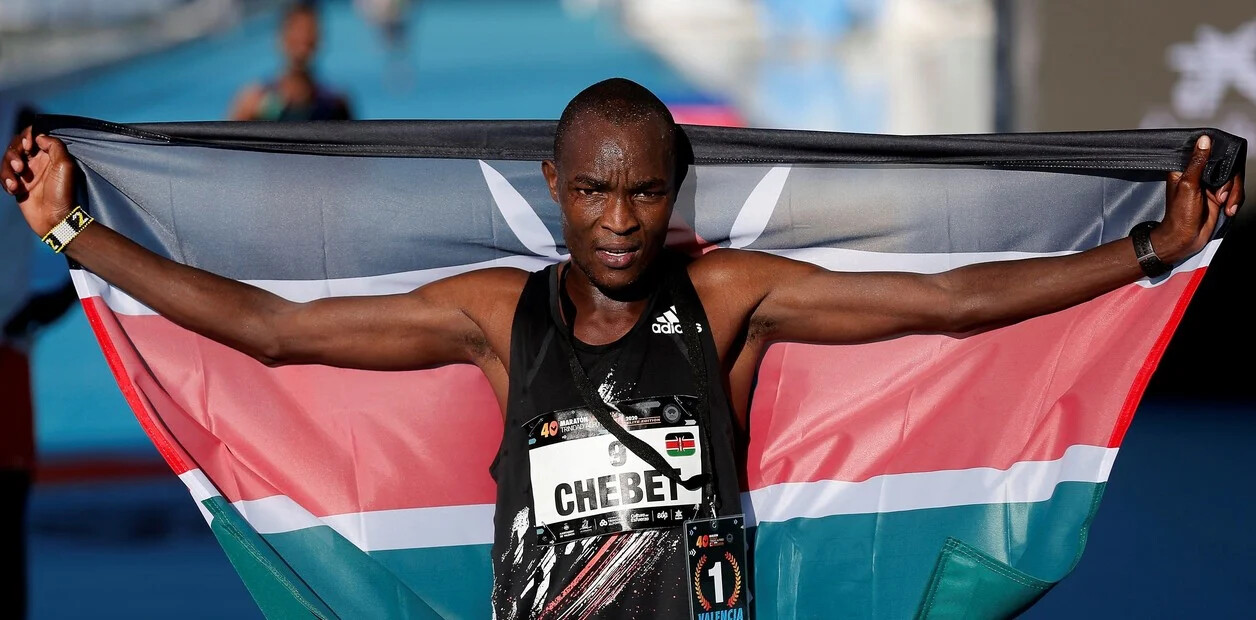
Four of the six Abott World Marathon Majors will be taking place this season. Berlin Marathon will be held on September 26, London Marathon on October 2, Chicago Marathon October 9 and New York Marathon in November.
In an interview with Nation Sport, Chebet said that he has started preparations to make his debut in the New York Marathon race.
He said that the race looks competitive, given that only two Kenyans will be lining up for the contest, but he will do his best.
“I have started preparations for my first New Marathon race. I understand the course is tough but I believe with good training I will be able to register good results,” said Chebet.
The athlete said that he will apply the same tactics he used to win the Boston Marathon during the New York race, and if possible, run a course record.
But this could be a tall order because since Geoffrey Mutai registered the 2:05:06 course record in 2011, no athlete has run close to that time due to weather conditions.
“I have asked around and I have been told that the course is tough, and I have to prepare well for that. Marathon racing needs a lot of calculation and you just can’t run without thinking what awaits you in the last few kilometres,” added Chebet.
At the same time, he said that there is need for athletes to travel with translators because they can use Kiswahili language to express themselves during the pre-race conference and interviews after the race.
“I feel comfortable expressing myself in Kiswahili, and I know many athletes are struggling but I think it is high time we have translators when we compete abroad just like the way Ethiopians do when they talk in Amharic,” he said.
The big names in the New York Marathon include; the 2020 London Marathon champion Ethiopia’s Shura Kitata, Brazilian Olympian Daniel Do Nascimento, Japan’s Suguru Osako who was third at the 2018 Chicago Marathon, Dutcs Olympic silver medallist and national record holder Abdi Nageeye and four-time Olympian American Galen Rupp.
World Athletics Championships marathon champion Ethiopia’s Tamirat Tola is also in the mix. He won the world having won the World Championships marathon title in Oregon, USA on July 17.
Albert Korir won the last Abott Marathon Majors series after accumulating 41 points for the 2019-2021 season.
The Abott Marathon Majors series this season began with the delayed 2021 Tokyo Marathon race which world marathon record holder Eliud Kipchoge won on March 6 this year. Thereafter, Chebet won the Boston Marathon title on April 18.
Ethiopia’s Tamirat Tola is also in the mix having won the World Championships marathon title last month in Oregon, USA.
by Bernard Rotich
Login to leave a comment
TCS New York City Marathon
The first New York City Marathon, organized in 1970 by Fred Lebow and Vince Chiappetta, was held entirely in Central Park. Of 127 entrants, only 55 men finished; the sole female entrant dropped out due to illness. Winners were given inexpensive wristwatches and recycled baseball and bowling trophies. The entry fee was $1 and the total event budget...
more...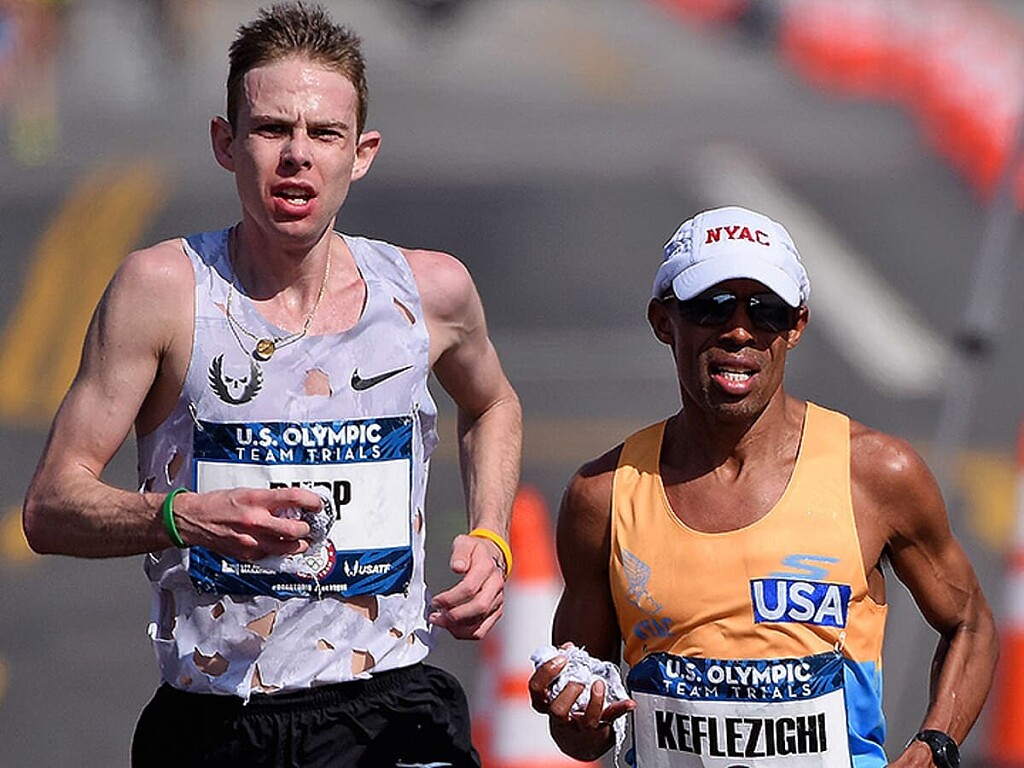
Galen Rupp will headline New York City Marathon
One of the best distance runners in U.S. history will make his debut at the 2022 TCS New York City Marathon. 2016 Olympic bronze medalist Galen Rupp will headline the men’s professional field, which is one of the strongest in recent history with 13 Olympians and six national record holders on Sunday, Nov. 6.
Rupp has competed at every Olympics since 2008, winning silver in the 10,000m in London 2012 and a bronze in the marathon in Rio 2016. He also won the 2017 Chicago Marathon and was the runner-up there last year.
“I am looking forward to making my debut in the 2022 TCS New York City Marathon,” Rupp said in a press release. “This will be my 12th marathon, so I have a lot of experience on my resume. I know a win at the TCS New York City Marathon would be right up there.”
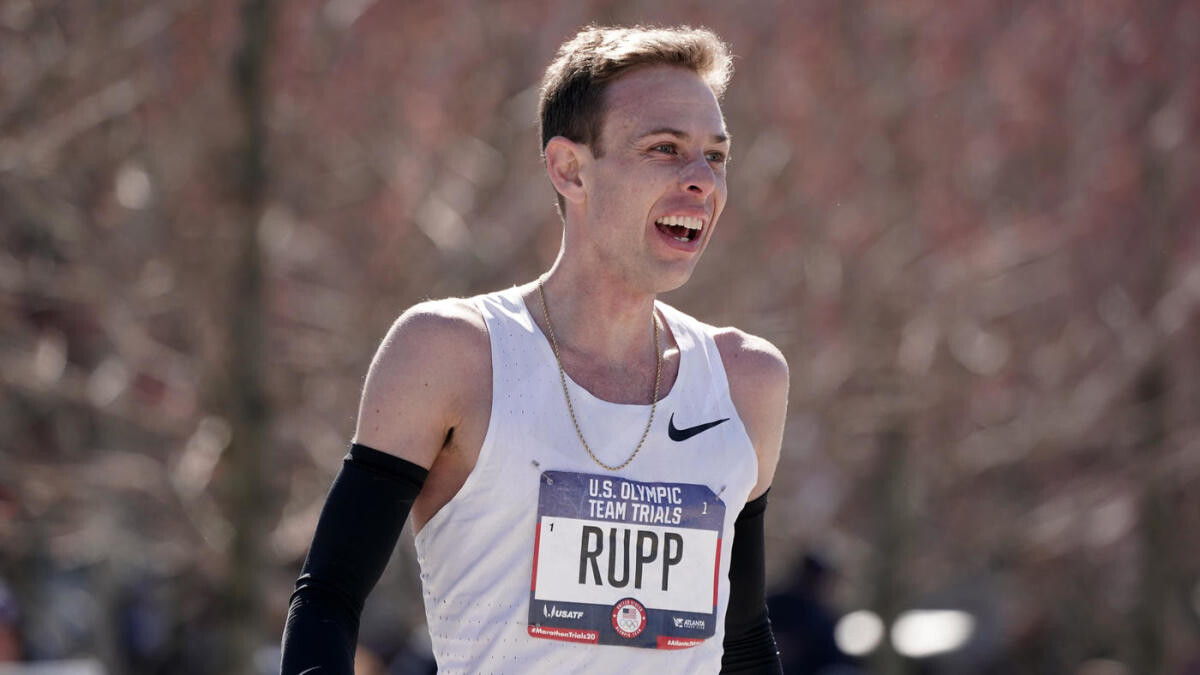
An American man has not won the race since Meb Keflezighi in 2009.
The reigning champion, Albert Korir of Kenya, will return to defend his TCS New York City Marathon title after taking the tape last year in 2:08:22 to finish one spot better and 14 seconds faster than his runner-up performance in 2019. His victory marked his first Abbott World Marathon Majors win. Korir had previous marathon wins at Elite-label races in Houston, Ottawa, and Vienna City.
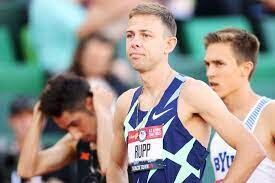
Last year’s runner-up, Morocco’s Mohammed El Aaraby, and the 2020 London Marathon champion, Ethiopia’s Shura Kitata, will join Korir and Rupp at the start line. Kenya’s Evans Chebet will also be in the mix, looking to add another world marathon title. The defending Boston Marathon champion and has top five in Berlin, London, and Tokyo, and will be making his first start in New York. Tokyo Olympic silver medalist and Dutch national record holder Abdi Nageeye will also return to New York to better his fifth-place finish in 2021.
Other international stars include Brazilian Olympian and South American marathon record-holder Daniel Do Nascimento, who was eighth at the 2022 World Athletics Championships, and Japan’s Suguru Osako, who was third at the 2018 Chicago Marathon and fourth at the 2020 Tokyo Marathon. Both will be making their TCS New York City Marathon debuts.
Five-time U.S. Olympian Abdi Abdirahman, who has six career top-10 NYC finishes to his name, will make his final start at the 2022 marathon. The 45-year-old distance runner has announced he will retire from professional competition at the end of 2022. Abdirahman finished third in the NYC marathon in 2016.
by Marley Dickinson
Login to leave a comment
TCS New York City Marathon
The first New York City Marathon, organized in 1970 by Fred Lebow and Vince Chiappetta, was held entirely in Central Park. Of 127 entrants, only 55 men finished; the sole female entrant dropped out due to illness. Winners were given inexpensive wristwatches and recycled baseball and bowling trophies. The entry fee was $1 and the total event budget...
more...
How much will running in poor air quality compromise your health? It depends on which markers of health you consider
Here’s a bold prediction for the upcoming dog days of summer 2022: it’s going to be hot, smoggy and smoky. Whether you’re in a big metropolis sucking in diesel fumes or on a remote mountain trail coughing up smoke particles from a distant forest fire, there’s a good chance you’re going to encounter some less-than-pristine air over the next few months.
Is that a problem? On the surface, the answer is obvious. Inhaling polluted air triggers a cascade of inflammation and oxidative stress that raises your risk of both immediate and long-term health problems. The rise and fall of air quality readings, for example, is mirrored by the rise and fall of hospital admissions for conditions such as heart disease. And the harder you breathe, the more pollution you inhale, which is why public health authorities typically warn you to avoid outdoor exercise on days with poor air quality.
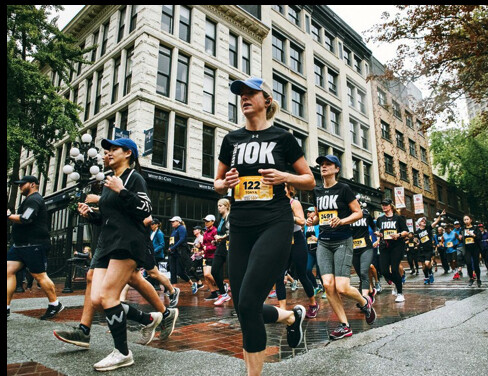
But there’s an alternate perspective. Pollution is definitely bad for your health—but so is skipping your workout. If you’re weighing the lesser of two evils, it may be that running in dirty air is better than not running at all. That’s the perspective that Michael Koehle, an environmental physiologist who is one of the world’s leading experts on exercise and air pollution, offered when I visited his lab at the University of British Columbia a decade ago: “Exercise is such a big hammer that it crushes everything else,” he told me.
At the time, few studies had addressed the balance between exercise’s benefits and pollution’s harms. Since then, Koehle and others have been grappling with this question, with new findings still appearing on a regular basis. Here’s where the research currently stands.
The good news
Last summer, researchers in Taiwan published a study in the Canadian Medical Association Journal that analyzed the medical records of nearly 400,000 adults who had undergone medical screening starting in 1994. Their exercise habits were assessed with a questionnaire, and their pollution exposure was estimated based on their home address. More exercise was associated with greater longevity, while more pollution was associated with worse longevity, as you’d expect. But it was the interaction—or rather, the lack of interaction—between these two factors that was most interesting. Exposure to high levels of pollution didn’t dampen or reverse the health benefits of high levels of exercise.
A few earlier studies have produced similar findings. For example, a Danish analysis of 52,000 people found that higher levels of exercise protected against premature death, heart disease and diabetes, regardless of how much pollution the subjects were exposed to based on a detailed street-by-street air quality database. An explanation for these results might be found in a series of studies by Brazilian scientists, who directly measured inflammation and oxidative damage in the lungs of mice breathing diesel exhaust. Regular running, it turned out, blocked this inflammation and oxidative damage; exercise was a big enough hammer to cancel out the diesel.
The bad news
Longevity is a pretty good marker of health, but it’s not the only one. Earlier this year, researchers at the University of Arizona published a pair of studies that looked at the effects of exercise and air pollution on brain health. It’s well known that people who exercise regularly tend to have brains with more grey matter (where the neurons are) and healthier white matter (which connects and supports the neurons). They are also less likely to develop degenerative brain diseases like Alzheimer’s: data from the long-running National Runners’ Health Study estimates the risk to be 40 per cent lower in those who run about 25 kilometres a week.
The first Arizona study used brain scans to assess the size and health of white and grey matter in 8,600 British adults; the second one used health records to look for dementia diagnoses in about 35,000 people. They used activity trackers to assess exercise habits and home addresses to estimate pollution exposure. For people in low-pollution areas, the results were as expected: more exercise predicted healthier brains and fewer dementia diagnoses. But for people in moderate- and high-pollution areas, the brain benefits of exercise disappeared.
It’s worth emphasizing that exercising in the polluted areas didn’t make people less healthy, nor did it cancel out the many other benefits of exercise, for example, on heart health. But we all want healthier brains, and the news that even moderate pollution blocks some of those benefits is concerning.
What to do about it
The devil is in the details. There are undoubtedly some situations—the apocalyptic aftermath of a big forest fire, say—when it makes sense to skip a run entirely. And people with respiratory or heart conditions should be especially careful to avoid poor air quality.
More often, though, it may be possible to choose a lesser evil. Mornings generally have significantly cleaner air, thanks to traffic patterns and the interaction of sunlight with certain pollutants, so set that alarm clock. Location, too, plays a big role. Trails and paths that are away from busy roads are your best bet, but even small distances and barriers can help. Vancouver’s bike lanes, for example, are often separated from traffic by a lane of parked cars because that gives cyclists measurably better air quality, according to Koehle.
Contrary to what you might expect, Koehle’s research has found that more intense exercise isn’t necessarily worse than easy exercise. Panting hard may change the way particulates of pollution settle (or don’t settle) in the lungs. As a result, he suggests favouring shorter, harder workouts rather than longer, easier ones when the air quality is worse than usual. Moving indoors is also an option—but unless your facility has state-of-the-art air filtration, don’t assume that the air inside is any better than the air outside. It all comes from the same place, after all.
In the long term, rather than tweaking when and where you run, the best solution would be to make sure that we all have consistent access to clean air. That’s a big hill to climb—but by sticking to your running plans rather than, say, driving to the gym, you’re taking a small step in the right direction.
Login to leave a comment
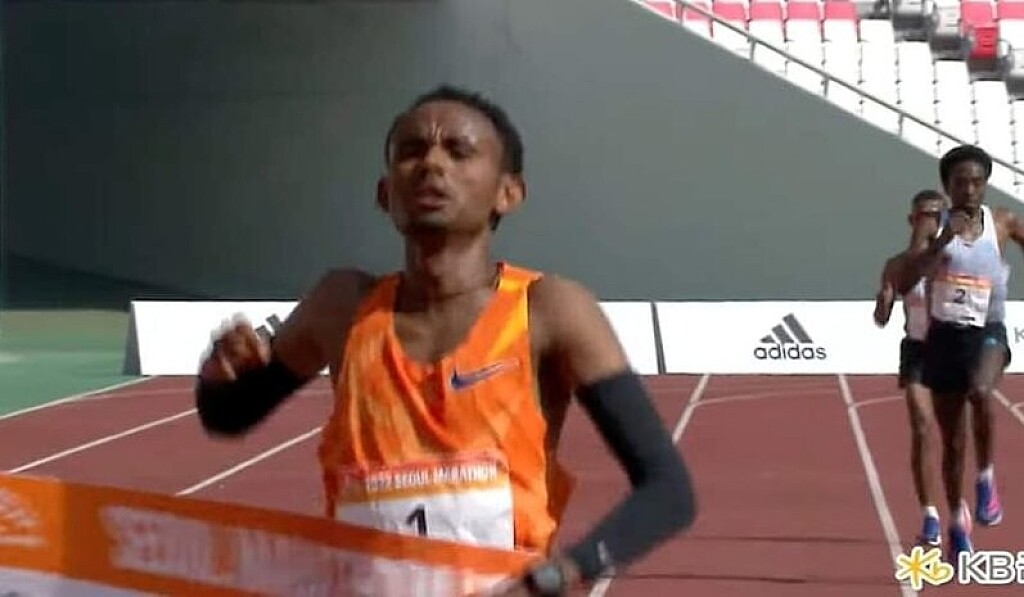
Melly and Geremew run course records for Seoul Marathon success
Joan Chelimo Melly and Mosinet Geremew both broke the course records to triumph at the Seoul Marathon, a World Athletics Elite Platinum Label road race, on Sunday (17).
Ethiopia’s world silver medallist Geremew saw off the challenge of his compatriot Herpasa Negasa and Brazil’s Daniel do Nascimento to win the men’s race in 2:04:43, while Romania’s Melly made a breakthrough to win the women’s contest in 2:18:04 ahead of Ethiopia’s Sutume Asefa Kebede and Bahrain’s Eunice Chumba.
Both eventual winners managed to pull away from their rivals over the final couple of kilometres and keep them at bay, but it remained a fight to the finish. Negasa was just six seconds behind Geremew, with Do Nascimento a further two seconds back in a South American record, and Kebede was eight seconds behind Melly, with those five athletes all finishing inside the previous respective course records of 2:05:13 and 2:19:51.
Geremew, Negasa and Do Nascimento had been part of a 19-strong group that passed 5km in 14:42 and 10km in 29:14. By 20km that pack had 14 members, with 58:43 on the clock. Over the next 10km, three runners were dropped, with Geremew, Negasa and Do Nascimento among those to the fore along with Kenya’s Elisha Kipchirchir Rotich, Philemon Rono and Mark Korir (1:28:41). Rotich, last year’s Paris Marathon winner and the 2019 runner-up in Seoul, dropped out a short while later, while Geremew, Negasa and Do Nascimento began to break away, with the Brazilian pushing the pace.
Geremew and Negasa then made a move and looked to be leaving Do Nascimento behind, with a six-second gap, 1:43:31 to 1:43:37, at 35km and Korir and Rono another eight seconds back.
But Do Nascimento wasn’t giving up and rejoined the leaders to trail by just a few strides as 40km was passed in 1:58:27.
It was London and Chicago runner-up Geremew who was strongest in the closing stages and he held off his challengers to return to winning ways after being unable to finish the Tokyo Marathon earlier this year.
Negasa, who was second in Dubai in 2019, claimed another runner-up spot in 2:04:49, while Do Nascimento improved Ronaldo da Costa’s South American record of 2:06:05 – a world record when it was run in 1998 – by more than a minute, finishing third in 2:04:51.
Korir was a couple of minutes back in fourth in 2:06:54, one second ahead of Moses Kibet.In the women’s race, Melly – who has a half marathon best of 1:05:04 and was contesting her fourth marathon – was among the nine runners who passed 5km in 16:40 and 10km in 32:58. The lead group was down to six at 15km (49:30) and Melly had broken away with 2019 Beijing Marathon winner Kebede, Chumba and Kenya’s Celestine Chepchirchir by 20km (1:05:44).
That quartet continued to race through 25km in 1:21:58 and 30km in 1:38:29, and while Olympic seventh-place finisher Chumba was 10 seconds back at 35km – 1:55:03 to 1:55:13 – she passed Chepchirchir in the closing stages to finish third, eight seconds ahead.
Melly and Kebede had broken away by 40km, passed in 1:12:16, with Melly eventually striding away to win by eight seconds, 2:18:04 to 2:18:12, and record an almost three-minute PB.
Chumba was third in 2:20:02 and Chepchirchir fourth in 2:20:10, one place off her position in Seoul in 2019.
Seven years after her victory in Seoul, Ethiopia's Guteni Shone finished fifth in 2:28:05.
Login to leave a comment

Seoul International Marathon
The only marathon hosted in the heart of the Korean capital. Seoul marathon is the oldest marathon race hosted in Asia andis one of the fastestmarathon in the world. First held in 1931, Seoul marathon is the oldest marathon eventcontinuously held in Asia, and the second oldest in the world followingthe Boston Marathon. It embodies modern history of Korea, also...
more...
Highly competitive fields ready to clash in Seoul this weekend
Organizers of the Seoul Marathon have assembled what is arguably their strongest ever line-up for the World Athletics Elite Platinum Label road race on Sunday (17).
Eight men with sub-2:06 PBs and five women with sub-2:21 lifetime bests are among the highly competitive fields.
World silver medalist Mosinet Geremew heads the men’s line-up. The former Ethiopian record-holder, who has a PB of 2:02:55, has finished in top three in eight of his nine completed marathons. He was unable to finish the Tokyo Marathon earlier this year, but he’ll return to action on Sunday in a bid to become just the second Ethiopian man in history to win the Seoul Marathon.
If he falls short of that target, compatriot Herpasa Negasa stands a good chance. Runner-up in Dubai in 2019, he is a 2:03:40 performer at his best.
Elisha Kipchirchir Rotich leads the Kenyan charge. A formidable opponent, he won the Paris Marathon last year in a PB of 2:04:21. He also has five other career marathon victories to his name, and he finished second in Seoul in 2019.
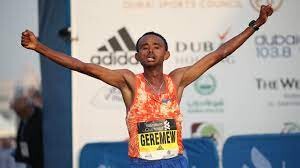
Three-time Toronto Marathon winner Philemon Rono is also entered, as is Kenyan compatriot Mark Korir. The 2015 Paris Marathon winner has a 2:05:49 PB and will be making his fifth appearance in Seoul; he has made the podium three times in the Korean city but is yet to win.
Korea’s Joohan Oh – formerly known as Wilson Loyanae of Kenya – is also familiar with the streets of Seoul, having won the race four times. He also holds the course record at 2:05:13, but his last completed marathon was back in 2019 when he finished second in Gyeongju in 2:08:42.
Ugandan duo Filex Chemonges and Moses Kibet are also worth keeping an eye on. Chemonges, who represented Uganda at the Olympics last year, holds the national record at 2:05:12. Kibet, meanwhile, has only contested two marathons to date but already has a PB of 2:05:20.
Other entered athletes include 2017 Seoul runner-up Felix Kandie of Kenya, Kenneth Keter, Brazilian Olympian Daniel do Nascimento, two-time Amsterdam winner Benard Kipyego, Solomon Kirwa Yego and Martin Kosgey.
The women’s race looks just as competitive and similarly tough to call.
Guteni Shone returns to Seoul, seven years after her victory there. Since then, she has also won in Ottawa and Seville, while in more recent years she has finished second in Prague in 2021 and second in Dubai in 2020 – the latter with a PB of 2:20:11, making her the fastest in the field for Sunday. In fact, she has finished in the top two in her past four marathons and she won’t want to relinquish that streak this weekend.
She’ll be joined on the start line by two fellow Ethiopians who also have a strong marathon record. Sutume Asefa, winner of the Beijing Marathon in 2019, set a PB of 2:20:30 when finishing third in Tokyo two years ago. Shure Demise, meanwhile, set her PB of 2:20:59 on her debut at the distance in Dubai back in 2015, but has gone on to win in Toronto twice. She also placed third in Tokyo in 2019 and in Chicago in 2018.
Netsanet Gudeta may not have the fastest PB of the elite field – partly because she has only completed two marathons to date – but she is a proven contender at the half marathon distance, having won the 2018 world title. Her half marathon PB of 1:05:45 suggests she’s capable of improving on her 2:26:09 marathon PB.
Joan Chelimo Melly has an even quicker half marathon PB, 1:05:04, making her one of the fastest women of all time for the distance. The Kenyan has started to move up to the marathon in recent years and has a PB of 2:20:57.
Other Kenyans in the line-up include Agnes Jeruto Barsosio, who was third in Seoul in 2016, Selly Chepyego Kaptich, and Celestine Chepchirchir, who was third in Seoul in 2019. Bahrain’s Eunice Chumba, seventh at the Olympics last year, is another one to watch.
Elite field
Women
Guteni Shone (ETH) 2:20:11
Sutume Asefa (ETH) 2:20:30
Joan Chelimo Melly (KEN) 2:20:57
Agnes Jeruto Barsosio (KEN) 2:20:59
Shure Demise (ETH) 2:20:59
Selly Chepyego Kaptich (KEN) 2:21:06
Eunice Chumba (BRN) 2:23:10
Celestine Chepchirchir (KEN) 2:23:38
Netsanet Gudeta (ETH) 2:26:09
Men
Mosinet Geremew (ETH) 2:02:55
Herpasa Negasa (ETH) 2:03:40
Elisha Kipchirchir Rotich (KEN) 2:04:21
Philemon Rono (KEN) 2:05:00
Filex Chemonges (UGA) 2:05:12
Joohan Oh (KOR) 2:05:13
Moses Kibet (UGA) 2:05:20
Mark Korir (KEN) 2:05:49
Felix Kandie (KEN) 2:06:03
Kenneth Keter (KEN) 2:06:05
Daniel do Nascimento (BRA) 2:06:11
Benard Kipyego (KEN) 2:06:19
Solomon Kirwa Yego (KEN) 2:06:24
Martin Kosgey (KEN) 2:06:41
Vincent Kipsang Rono (KEN) 2:07:10
Lucas Kimeli Rotich (KEN) 2:07:17
Belachew Alemayehu (ETH) 2:07:55
Brian Kipsang (KEN) 2:09:07.
by World Athletics
Login to leave a comment
Seoul International Marathon
The only marathon hosted in the heart of the Korean capital. Seoul marathon is the oldest marathon race hosted in Asia andis one of the fastestmarathon in the world. First held in 1931, Seoul marathon is the oldest marathon eventcontinuously held in Asia, and the second oldest in the world followingthe Boston Marathon. It embodies modern history of Korea, also...
more...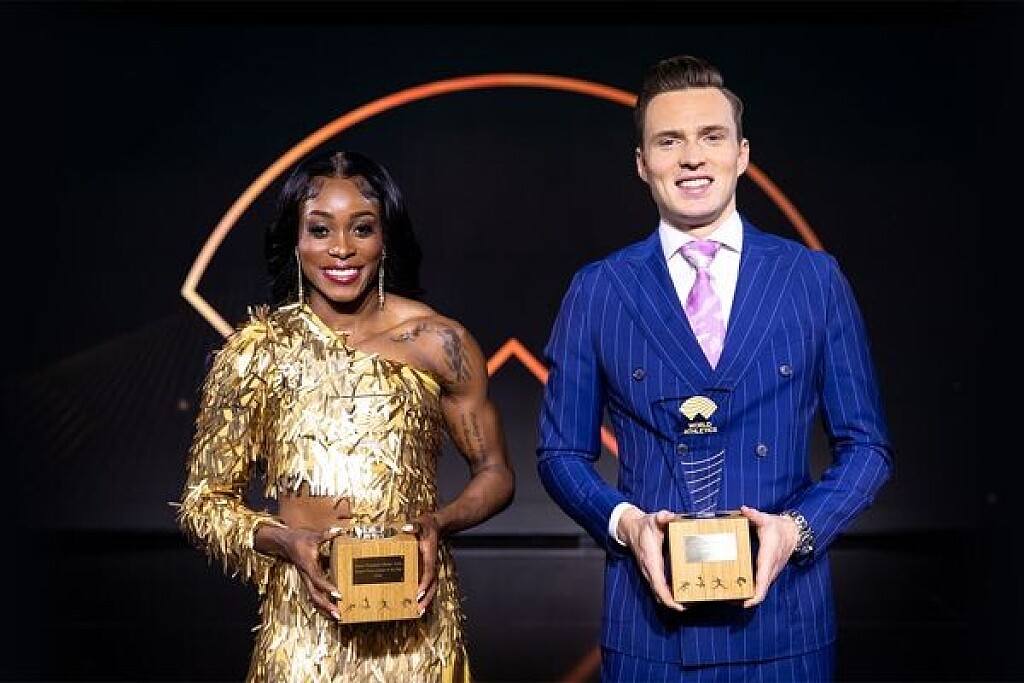
Olympic champs Elaine Thompson-Herah of Jamaica and Karsten Warholm of Norway have been named the World Athletes of the Year at the World Athletics Awards 2021
Elaine Thompson-Herah of Jamaica and Karsten Warholm of Norway have been named the World Athletes of the Year at the World Athletics Awards 2021, a ceremony held virtually on Wednesday (1).
Thompson-Herah produced one of the finest sprint seasons in history this year, retaining her Olympic 100m and 200m titles in Tokyo and adding a third gold medal in the 4x100m relay. On top of her Olympic triple, she also clocked world-leading times of 10.54 and 21.53 over 100m and 200m respectively, moving to second on the world all-time lists and coming within touching distance of the long-standing world records.
“I just take it year by year,” said Thompson-Herah. “I went very close to the world record so you know, anything is possible. No spikes hanging up any time soon!
“The World Championships in Oregon is most definitely my next big target,” she added. “It is close to home, I hope friends and family can come out and watch. I hope I get some crowd as well. That couldn’t happen in Tokyo but hopefully in Eugene I can get my friends and family to come and cheer me on.”

Warholm uncorked one of the most remarkable performances in athletics history when he stormed to gold in the 400m hurdles at the Tokyo Olympics. Having already broken the world record with 46.70 in Oslo in the lead-up to the Games, Warholm exceeded all expectations in the Japanese capital to claim gold in a stunning world record of 45.94. In a race of incredible depth, the top three athletes finished inside the pre-2021 world record.
“I’m so happy for this,” said Warholm. “First when I saw the time (in Tokyo), I was like, ‘This must be a mistake!’ Because I didn’t see that one coming. And I didn’t see the victory coming before crossing the finish line.
“It was a very intense race, I knew the American and the Brazilian and all the other guys were really chasing me. I always go out hard and I never know what is going on behind me. I was just fighting all the way to the finish line. When I realised 45.94 was the reality, I was thinking: ‘This is not too bad. I’ll take it!’"
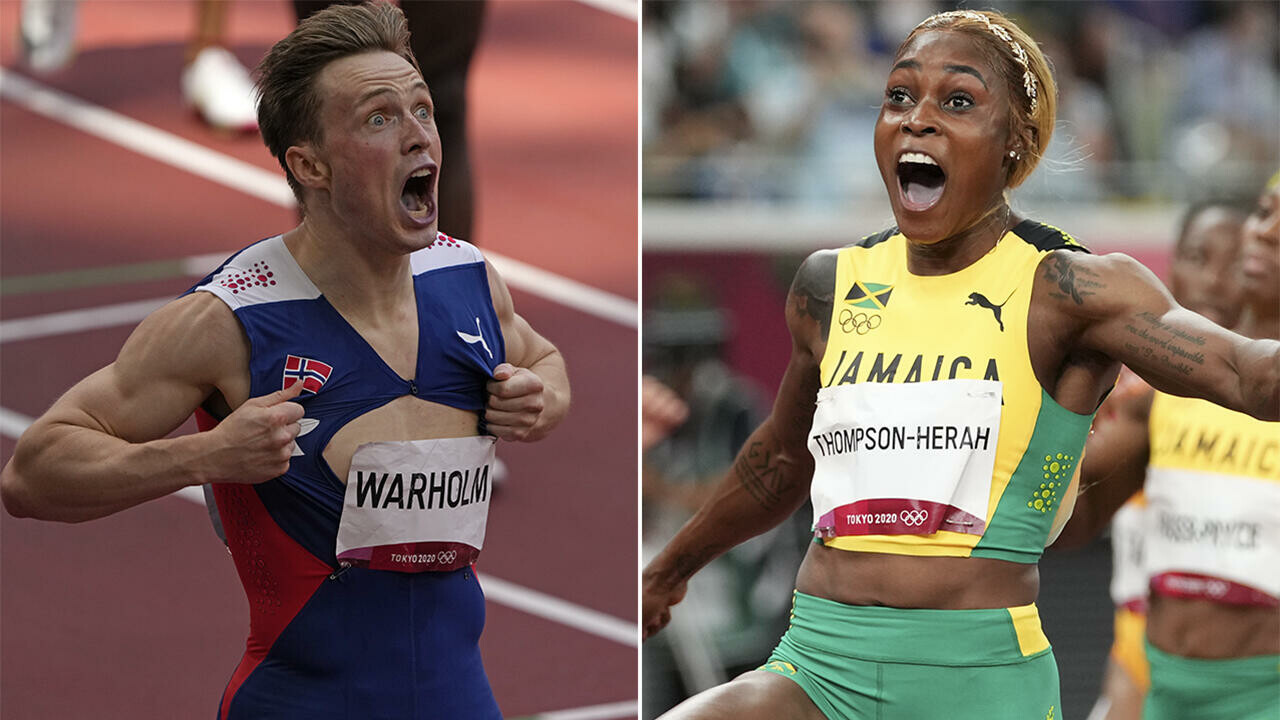
World Athletics President Sebastian Coe congratulated all of tonight’s winners and finalists on their extraordinary achievements this year.
"We have this year celebrated some jaw-dropping performances in Tokyo, at the World Athletics U20 Championships in Nairobi and through our one-day meeting circuits – the Wanda Diamond League and the Continental Tour. So we’re delighted to recognise some of our stars at tonight’s awards.
"As a sport, we are in an incredibly strong position. 2021 has been an excellent year. We cemented our position as the number 1 Olympic sport coming out of Tokyo, we have the most God given talented athletes on the planet and our sport is the most accessible of all sports. Thank you to all our athletes around the world. I am looking forward to watching what you can all do in 2022."
The other award winners were:
Female Rising Star
Athing Mu
The US teenager was undefeated at 800m all year, winning Olympic gold at the distance following a long but successful collegiate season. She broke the senior US 800m record with her triumph in Tokyo and then improved it to 1:55.04 just a few weeks later. She also excelled at 400m, clocking a North American U20 record of 49.57 for the distance.
“It means the world to know that my support goes beyond friends and families and extends worldwide,” said Mu. “This award shows all young girls that your dreams can, indeed, come true."
Male Rising Star
Erriyon Knighton
Throughout 2021 the 17-year-old took down several marks that had belonged to sprint legend Usain Bolt. Knighton first set world U18 bests of 20.11 and 20.04 over 200m, but his rapid rise continued and he broke Bolt’s world U20 record for the distance with 19.88 and 19.84. He went on to finish fourth in the Olympic final with 19.93.
“I’m really thankful for this award,” said Knighton. “One of my most memorable moments of this year was making it to the Olympic final in Tokyo and finishing fourth at the age of 17.”
Member Federations Award
Federacion Costarricense de Atletismo (Costa Rica)
In recognition for their outstanding training, competition and development programme roll-out over the past 12 months, for their consultative work on the World Athletics Kids’ Athletics programme, and for successfully staging a host of international events over the past year.
Inspiration Award
Mutaz Barshim and Gianmarco Tamberi
The shared high jump victory between Qatar’s Mutaz Barshim and Italy’s Gianmarco Tamberi became one of the biggest talking points of the Olympic Games – not only for everything it represented in their own individual careers, having both battled serious injuries since the last Games, but mainly for the act of respect and sportsmanship between two friends.
“It is just crazy if I think about this story,” said Tamberi. “Thank you very much for this trophy.
“I now call Mutaz like five times a week because I need to speak with him. I feel that now we are not just friends, we are really like blood brothers.”
Barshim added: “I hope to inspire more people to love our sport and maybe share a gold one day!”
President’s Award
Peter Diamond, Executive Vice President of NBC Olympic programming
“Athletics owes Peter a massive debt of gratitude,” said World Athletics President Sebastian Coe. “Peter has worked alongside us for effectively 40 years and has been a constant source of great advice and wise counsel, and occasional humour that has softened the edges of any particular situation. And he has made athletics a lot better.”
Coaching Achievement Award
Bobby Kersee
The US coach has guided the careers of many legendary athletes over the years, but this year two of his charges made history. Allyson Felix became the most decorated female track and field Olympian in history after winning her 10th and 11th Olympic gold medals in Tokyo, while training partner Sydney McLaughlin broke two world records in the 400m hurdles and claimed Olympic gold in the discipline.
Woman of the Year Award
Anju Bobby George
The former international long jump star from India is still actively involved in the sport. In 2016 she opened a training academy for young girls, which has already helped to produce a world U20 medallist. A constant voice for gender equality in her role as Senior Vice President of the Indian Athletics Federation, Bobby George also mentors schoolgirls for future leadership positions within the sport.
Jean-Pierre Durand World Athletics Photograph of the Year
Ryan Pierse’s photograph of the women’s high jump qualifying at the Tokyo Olympic Games
This year’s award is dedicated to the memory of Jean-Pierre Durand, one of the sport’s most prolific photographers and photo chief for a number of World Athletics Series events, who died in October.
“This winning image was taken on one of the morning sessions in Tokyo and it was a hot one,” said Pierse, who is from Australia. “I wanted to illustrate the heat and how it was affecting the athletes. It is a picture that I worked on for a while, and it all came together. I am really happy with it.
“I think it’s incredibly fitting that this award is named in memory of Jean-Pierre Durand,” added Pierse. “I had the pleasure of working alongside him, most recently at the Tokyo Olympics.”
by World Athletics
Login to leave a comment
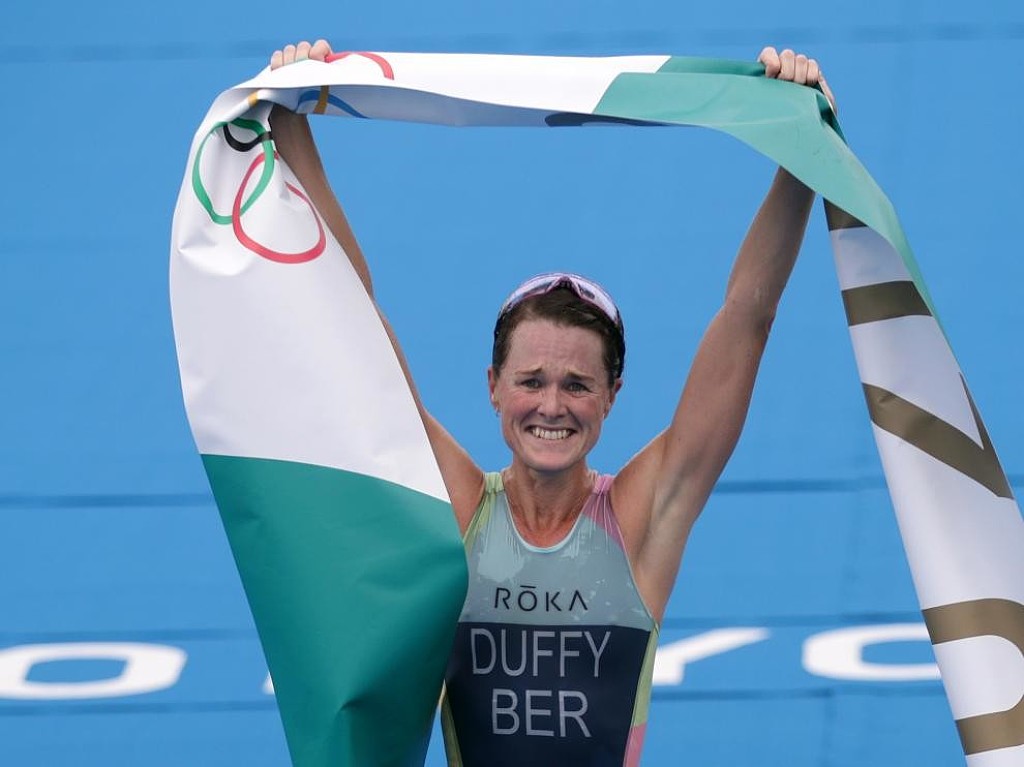
Flora Duffy delivers a golden first for Bermuda, winning the olympic women triathlon
Flora Duffy claimed a first ever Olympic Games gold medal for Bermuda with a brilliant display to win the women’s triathlon at Tokyo 2020.
The 33-year-old, world champion 2016 and 2017, was virtually faultless as she negotiated treacherous conditions in the swim and on the bike before making a decisive move to clinch victory on the run.
Great Britain’s Georgia Taylor-Brown saw her hopes of gold ruined by a flat rear tyre late in the bike leg, but fought back brilliantly to pip American Katie Zaferes to silver. The American claimed the bronze.
The conditions in Tokyo were vastly different from Monday’s men’s race – then it was brutal heat and humidity, now it was torrential rain which caused a 15-minute delay to the scheduled start.
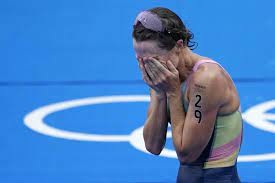
Britain’s Jess Learmonth went out hard on the swim and led the field out of the water at the end of the first lap, just ahead of Brazil’s Vittoria Lopes. Americans Zaferes and Summer Rappaport were also in close attendance with Duffy and Learmonth’s Britain team-mate Taylor-Brown.
A lead group of seven exited for T1 with Learmonth (18:24) still in front and Zaferes, Rappaport, Duffy and Taylor-Brown all in very close attendance. The third British athlete Vicky Holland meanwhile was in the second group, just under 50 seconds off the pace.
The field was already well strung out as they headed for their bikes, such was the pace that Learmonth had injected.
Bike – small but select
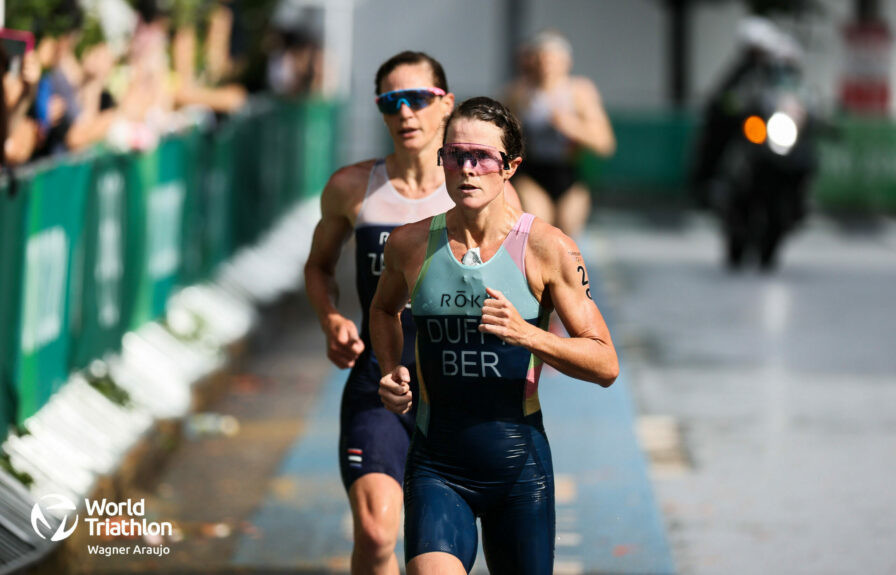
Learmonth led that select lead pack through the early stages of the bike leg, but by the end of the first lap she’d been joined at the front by Taylor-Brown and Duffy. Rappaport meanwhile was clinging desperately onto the back of the group. The chasing pack were more than a minute off the pace, with 2012 Olympic champion Nicola Spirig leading them in typical style.
The second lap saw the status quo maintained, with Duffy leading the lead group through along with Zaferes, Taylor-Brown and Learmonth. Rappaport was still struggling to maintain her position at the back of that group. The gap to the chasing pack led by Spirig was still more than a minute.
Seven became six in the lead group by the end of Lap 3 as Rappaport fell away to cross the line 37 seconds off the pace. Up front it was still the big guns Taylor-Brown, Learmonth, Duffy and Zaferes leading the way. They were in company with Germany’s Laura Lindemann and the Brazilian Lopes.
Run – decisive from Duffy
Zaferes, Lindemann, Duffy and Learmonth set off on the 10k run knowing they were in prime position to fight it out for the medals, while Taylor-Brown tried desperately to get back on terms.
Duffy made the first decisive move on the opening lap of four on the run, surging clear of Zaferes. Taylor-Brown meanwhile was making progress as she picked off team-mate Learmonth and Lindemann to move back into a medal position. At the end of that first lap Flora was 17 seconds clear of Zaferes with Taylor-Brown a further nine seconds away.
Flora, looking imperious out in front, pulled further clear on the second lap and at halfway on the run her advantage was now 47 seconds over Zaferes. Taylor-Brown meanwhile was just five seconds down on the American in the battle for silver.
The dominant Duffy increased her lead to 67 seconds on the third of the four run laps, while Taylor-Brown passed Zaferes to move into second just as the pair reached the bell.
Flora was still full of running as she powered through the final lap to come home to a famous victory in a winning time of 1:55:36. She was 74 seconds clear of silver medallist Taylor-Brown, while Zaferes was a further 13 seconds away in the bronze medal position.
by Graham Shaw
Login to leave a comment
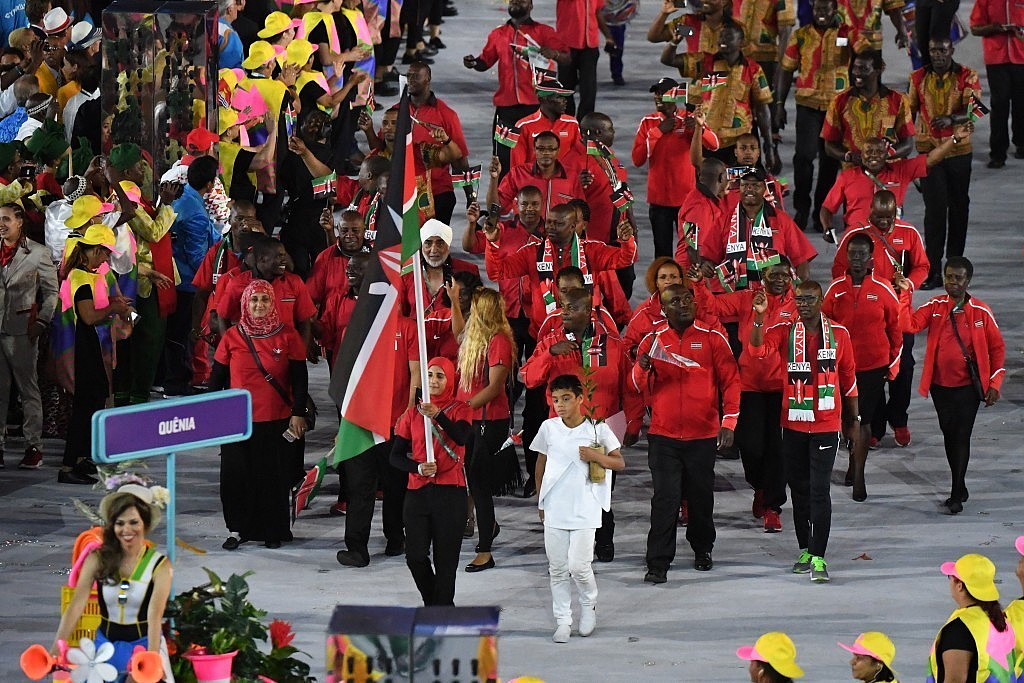
Kenya to take at least 100 athletes to Tokyo 2020 Olympics
The National Olympic Committee of Kenya (NOCK) has said it is expecting to send a record 100 athletes to this year's Tokyo 2020 Olympic Games.
The NOCK has said there are programmes in place already and enough training camps to help with preparations for the Games.
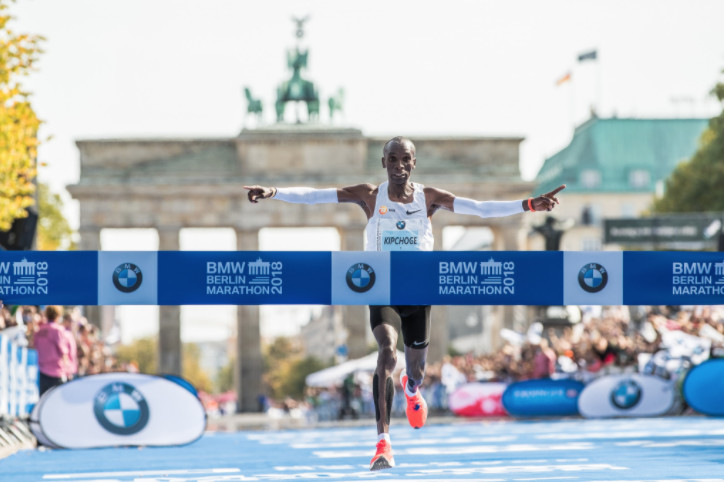
Residential training camps in Kenya are set to start in April.
Kurume on Kyushu island in Japan is due to be the base of the Kenyan team for at least 14 days before the Tokyo 2020 Olympics open on July 23.
NOCK officials are hoping the Tokyo 2020 Games - should the event take place - is free of the scandal which marred the country's team at Rio 2016.
"We expect to take at least 100 participants to the games with an expectation a higher medal haul than ever before," the NOCK said in a statement, Kenyan publication The Standard.
"We also seek to deliver the best-resourced Kenyan team in history.
"We are well set and all processes activated to ensure that we deliver an athlete-focused, well-managed, well-financed Olympic team as well as provide a memorable Olympic experience for all Kenya.
"Our resolve to deliver an exemplary Olympic experience is so strong, that our teams together with the Ministry of Sports, Art and Culture have been burning the midnight oil during the holidays to ensure that everything is set to go."
The NOCK, under the Presidency of former athlete Paul Tergat, has vowed to continue supporting qualified teams and those seeking qualification for the Games, despite the COVID-19 pandemic.
"NOCK is conjunction with the International Olympic Committee and the Association of National Olympic Committees of Africa is providing scholarships to at least 15 athletes to help them prepare for the Olympic Games," the statement added.
"Further, we are providing team preparation grants to the ladies' volleyball team and the ladies' rugby team.
"All the teams currently in the qualification pathways will be supported by the Government and NOCK to ensure that they qualify for the Games."
NOCK claim future programmes to help youth development are in place, looking to make use of sports science and high-performance centres for success at the Paris 2024 and Los Angeles 2028 Olympics.
So far, Kenya has 56 confirmed athletes for the Tokyo 2020 Olympics, including men's marathon world record holder Eliud Kipchoge and double world champion Hellen Obiri.
Kenya took a record 89 athletes in seven sports to the Rio 2016 Games, winning their best medal haul to date with six gold, six silver and one bronze medal.
Six Kenyan officials were implicated in a financial scandal at the event in the Brazilian city.
It is alleged the six officials had caused a loss of public funds with their mismanagement of the Kenyan team, with athletes' preparations hampered by their conduct.
Prosecutors also claim those in charge of the Kenyan team allowed unauthorised people to travel to Rio 2016, purchased air tickets which were not utilised and overpaid allowances.
A nation known for its pedigree of distance runners, Kenya has won 96 of its 103 Olympic medals in athletics.
The other seven, including one gold medal, have came in boxing.
Login to leave a comment
Original Coubertin drawing of Olympic rings sells for €185,000 ($216,000US) at auction
An original drawing of the Olympic rings sketched by Baron Pierre de Coubertin sold for €185,000 (£169,000/$216,000) at an auction in Cannes today.
That was €85,000 (£77,000/$99,000) above the estimate experts predicted it would fetch.
The figure included the 27 per cent commission fee of €234,950 (£214,032/$275,479).
"The drawing was sold to a Brazilian collector," Alexander Debussy, associate director of Cannes Auction House, said.
Last December, the manifesto drawn up by Coubertin which led to the revival of the Olympic Games sold for a record $8,806,500 (£6,764,543/€7,916,191) at an auction in New York City.
The founder of the modern Olympics created the five interlocking rings in 1913 in blue, yellow, black, green and red on a white field.
It is believed he intended the rings to represent the five continents of Africa, Americas, Asia, Europe and Oceania.
He claimed the colours of the rings together with the white of the background included the colours composing every competing nation's flag at the time.
In a survey published earlier this year the Olympic rings were voted among the top 10 most recognisable logo or symbol of all-time.
Coubertin introduced the rings in the August 1913 edition of Olympic Review.
His original drawing is in graphite and gouache on a 21x27.5 centimetre piece of white card, which he has autographed.
The new Olympic symbol and flag were officially approved at the International Olympic Committee (IOC) Congress at the Sorbonne University on June 15 in 1914, held to mark the 20th anniversary of the decision to revive the Games and the formation of the Olympic Movement.
But the shadow of World War One hanging over the world meant the rings and flag did not appear at an Olympic Games until the Opening Ceremony of Antwerp in 1920.
Cannes Auction House had put a reserve of €50,000 (£45,000/$57,000) on the item – which was from a private Swiss collection – but estimated bidding would reach between €80,000 (£73,000/$91,000) and €100,000 (£91,000/$114,000).
The 5,000-word handwritten manifesto sold in New York City was purchased by Russian billionaire Alisher Usmanov, the President of the International Fencing Federation.
In February it was announced that he had donated the document to the Olympic Museum.
Login to leave a comment
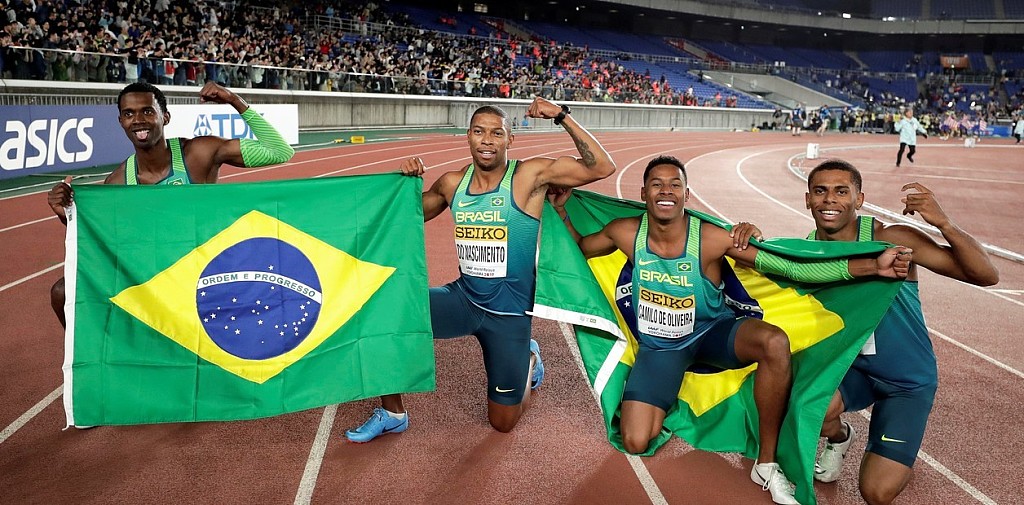
Brazil's elite athletes return to training after more than four months of isolation
Brazil's elite athletes resumed normal training on Tuesday after more than four months of confinement because of the COVID-19 pandemic.
The Brazilian Olympic Committee (BOC) said its training centers across the country were reopened with strict sanitary protocols.
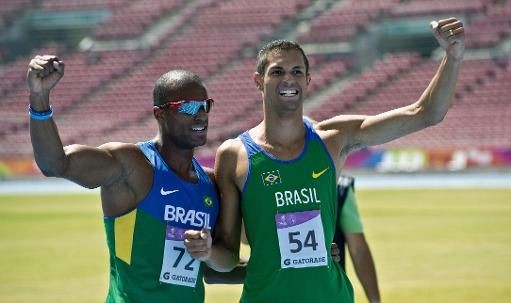
"It's a good time for us to come back," open water swimmer Ana Marcela Cunha said. "I'm looking forward to the Tokyo Olympics and have a feeling of starting over to fulfil a dream. Today's first practise was a warm-up."
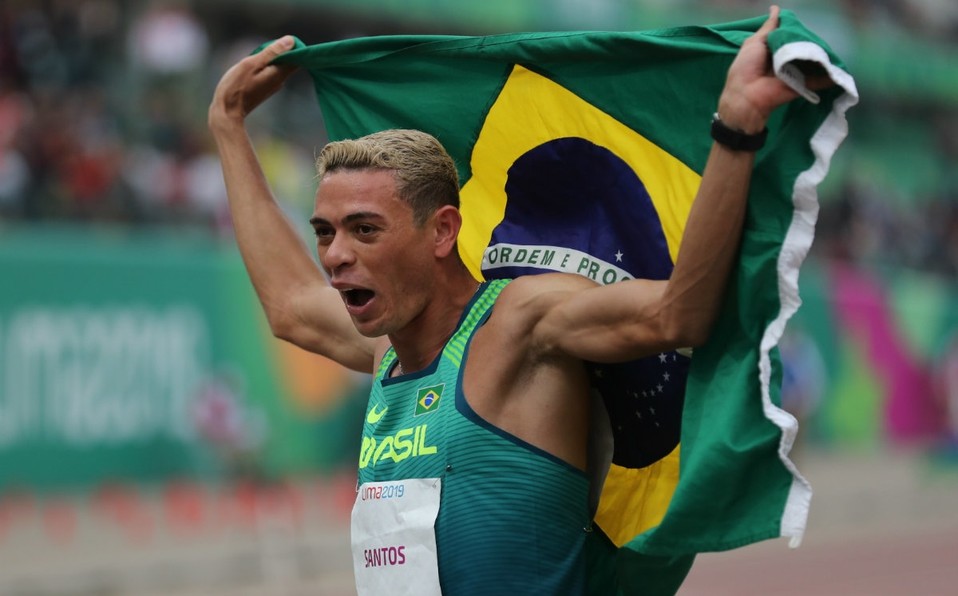
Brazilian athletes have been limited to home training regimes since mid-March, when facilities were closed and competitions suspended amid the escalating pandemic.
Those to make immediate use of the decision included gymnasts, judokas, weightlifters and divers, among others.
"We're facing a very difficult time, but we'll get through it," said BOC sport manager Jorge Bichara.
"We're going to resume training. We are going to work very hard next year so that the athletes arrive in good condition at the Tokyo Olympics and can represent Brazil."
Login to leave a comment
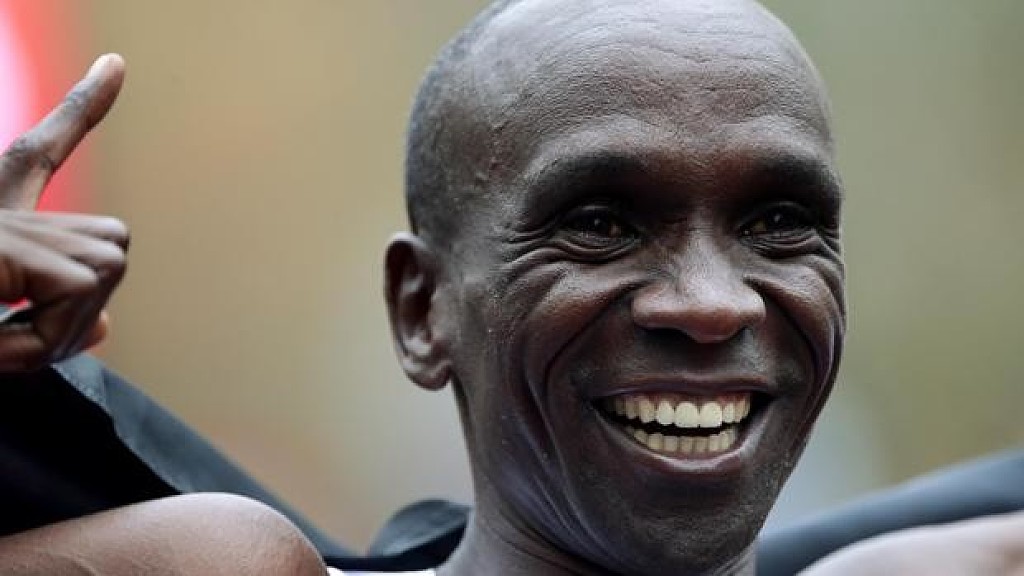
Eliud Kipchoge said that he was incredibly happy to see the world running as one at the Run as One virtual team marathon
Imagine running on the same team as Olympic icons Eliud Kipchoge, Kenenisa Bekele, Geoffrey Kamworor...
Well that's exactly what happened this weekend as normal people across the world ran with Olympic champions in the 'Run as One' worldwide virtual relay marathon.
Teams of four completed a marathon by running 10.5k each, and just by entering you were in with a chance to run alongside some of the biggest names in sport.
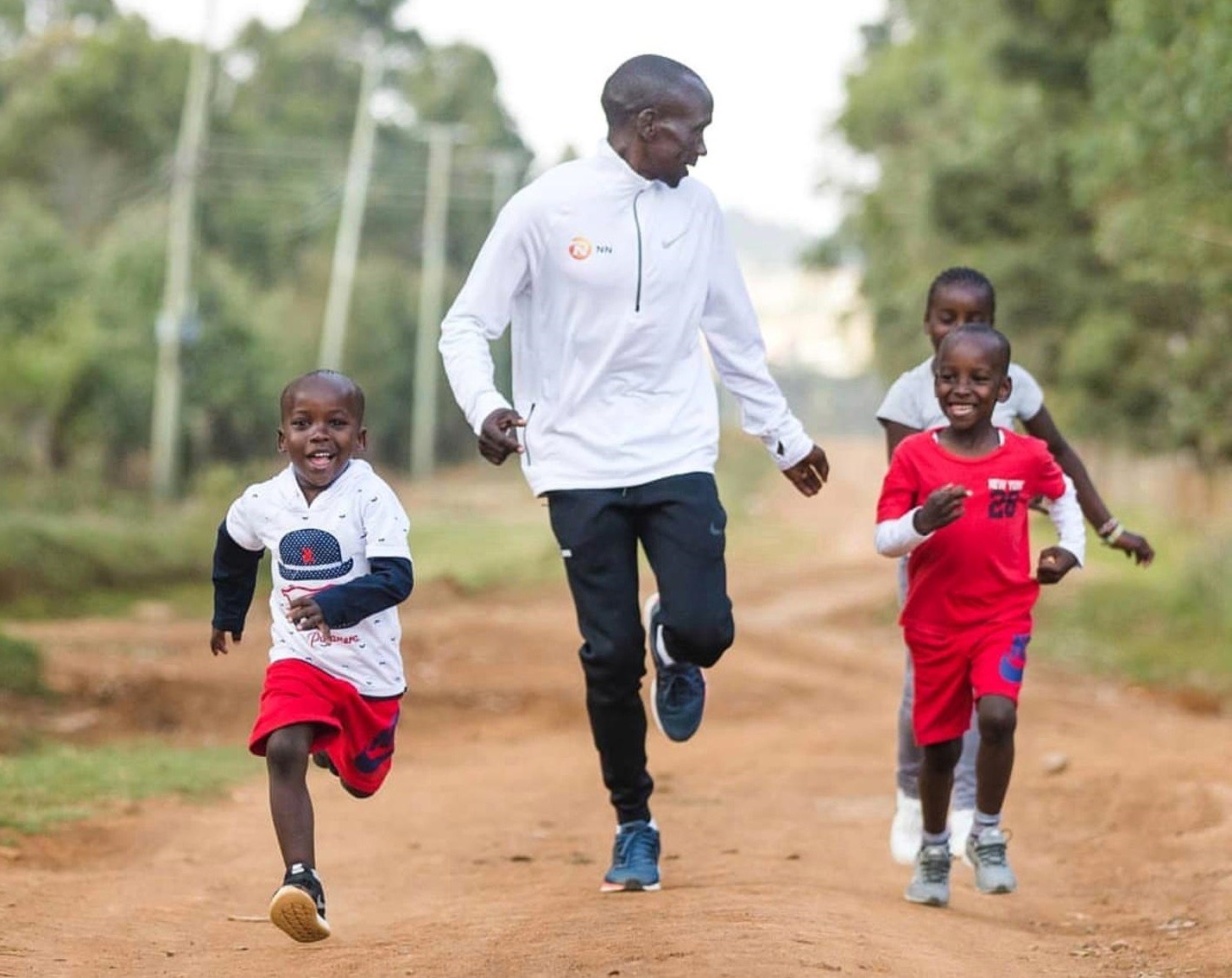
But it wasn't just running superstars who stepped up, Tottenham Hotspur football club, Olympic triathlon gold medallist from Germany Jan Frodeno and Spanish sky runner/ultramarathon/daredevil Kilian Jornet also got involved.
The event was organised by NN Running Team, an international team of elite long-distance runners managed by a company in the Netherlands.
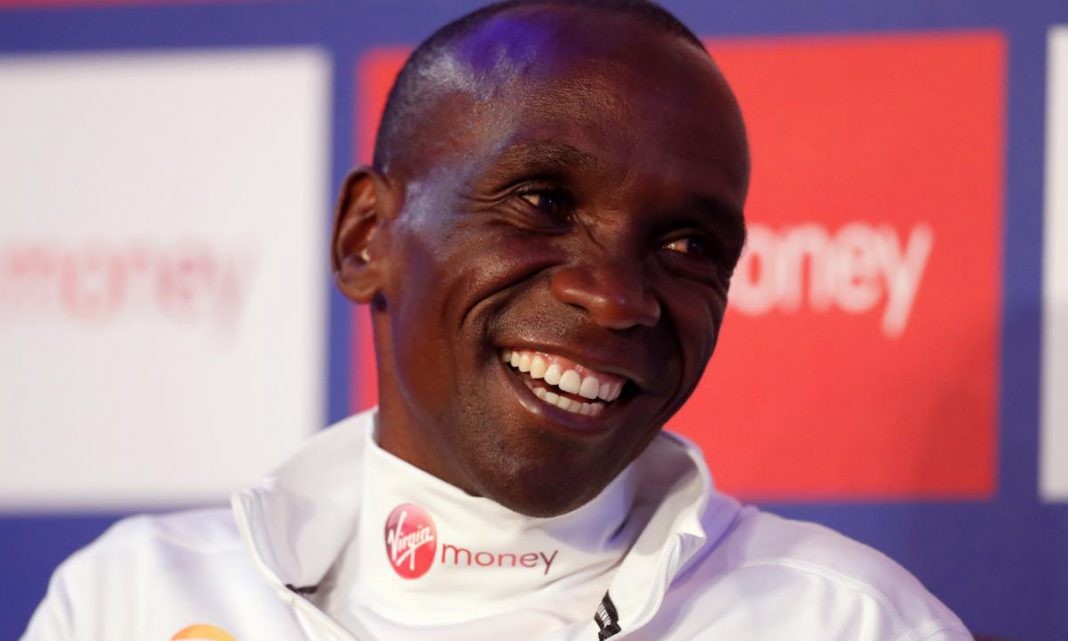
Kipchoge, whose historic sub-two hour run in Vienna last October broke new ground, teamed up with amateur runners from Brazil.
The Kenyan ran 10.5k in 31:28 seconds, not the fastest time on the leaderboard, but this event was about much more than running fastest or coming first.
"It makes me incredibly happy to see the world running as one this weekend," said Kipchoge the day before his run.
"Today I ran for my Brazilian team," he posted on Instagram after his 10.5km run, "but together we have all run as one. Runners from all over the world have joined us and showed how ours is a running world."
"Good luck everybody who is taking part today," said Kipchoge as he signed off on Sunday with many more runners still to come.
Another world-record holder and three-time Olympic champion Kenenisa Bekele ran with Joris, Stephen, Andy and Tharkun from the Netherlands.
The Ethiopian ran his 10.5km in 32:57 on his own track that he built in Sululta, 25 minutes outside the Ethiopian capital Addis Ababa.
The 5000m and 10,000m World record-holder built a six-lane all-weather track which is home to many athletes training and dreaming of Olympic glory.
They call it Bekele's ‘field of dreams’.
"It was a great pleasure to run my 10.5k as part of the MA RA TH ON challenge on my own track in Sululta," he posted.
It was hardly any surprise that half-marathon world record holder Geoffrey Kamworor put in the fastest time, going 10.6 km in 30:08s.
This time Eliud Kipchoge wasn't there to greet him at the finish line like he did at the 2019 New York marathon, but Kamworor was pleased with the run.
The Kenyan ran with a team from the USA.
Kilian Jornet does many things - like ultramarathons and literally running up and down mountains.
He is said to hold the fastest known time for the ascent and descent of Mount Everest for example.
For most of us, running 10.5km is a struggle, but when Jornet's Strava App told him that he had only run 10.49km making his entry invalid, he said ok:
I'll start again.
"It’s been actually pretty fun this MA RA TH ON!" Jornet posted, despite having to do it twice.
"Today I did my relay to join my teammates @davidnilssons@mustafamohamed79 and @fra_puppinho to finish this challenge among more than 100.000 runners worldwide. Thanks guys!"
by Ken Browne
Login to leave a comment
It is not only the athletes who have been forced to adjust during the Covid-19 pandemic but also their coaches
For Nelio Moura, former coach to 2008 Olympic long jump champion Irving Saladino, the lockdown has created a coaching conundrum spanning not just one country but two continents.
The Brazilian horizontal jumps coach works with several athletes from his homeland, including South American women’s long jump champion Eliane Martins, Uruguay’s South American long jump champion Emiliano Lasa and a trio of leading Chinese athletes.
Back on 19 January, Moura flew from Brazil to China completely unaware of the new coronavirus but by the time he landed in China two days later he says “the news of the coronavirus was everywhere,”
“The situation was getting worse, but we kept to the plan and two weeks later we flew to Madrid,” he explains.
Mersha Asrat, coach to three-time Olympic track champion Kenenisa Bekele, believes his role in the these challenging times is to put a plan in place to “survive the storm.”
With both the opportunity to race - in the foreseeable future - and group training taken away from athletes, he believes this has impacted on motivation.
Yet as a coach Asrat insists he has to remain positive.
“All my athletes need to be strong – a role model for others with their behaviour,” he says. “As a coach, I have to tell them that this will pass.”
With no events on the immediate horizon he has advised his athletes to rein back on the training – and he has recommended combining a mixture of endurance running and strength training.
“There are no races happening for some time so this is a time when they can run three time a week alternating with workouts. I’ve given them all individual workouts with a meaning. This is an opportunity to work on their strength exercises, to improve and even become masters of the workout.”
Despite the uncertainty surrounding future international competition, Dale Stevenson, coach to 2019 Diamond League shot champion and World Championship bronze medallist Tom Walsh, is preparing his athletes with the mindset that events will re-start sooner rather than later.
“When full training resumes, I’m hoping that it is a step in for us rather than a step back,” he explains. “So when they go back to normality they’ll feel as if they are a full-time athlete.”
Stevenson, a 2012 Olympic shot put representative for Australia, says as a coach he had to react quickly in March as New Zealand went from a level two alert to a full level four lockdown in a matter of 48 hours.
For athletes who remained in Christchurch such as Walsh, the main task for Stevenson and his coaching team was to source gym equipment while for others in his training group who has moved back to different regions the main task was to identify training implements during this frantic period.
The coach has been immensely impressed with how the athletes have readjusted to training in a full lockdown. Some have revealed great improvisation skills with one athlete converting a cow shed into a throwing area and another making a homemade hammer out of a kettle bell.
Stevenson too has been forced to adapt.
Patrick Sang, coach to world marathon record-holder Eliud Kipchoge and world half-marathon record-holder Geoffrey Kamworor, believes “delegating greater authority” to his athletes following training restrictions created by the Covid-19 pandemic is the biggest challenge he has faced.
Sang coaches a large group of athletes based out of a training group in Kaptagat, Kenya, but government restrictions around group gatherings put in place in March meant athletes had to head home to their families and train alone.
Breaking down his athletes into smaller groups of track and marathon athletes the initial challenge was communication but having alleviated this issue thanks to WhatsApp and other methods it has been his lack of a “coach’s eye” on the progress of his athletes which has proved the biggest obstacle.
“Our coaching is very much one on one and the ‘coach’s eye’ is an instrument we use to see how the individual athletes are responding to the workload at any given time. The activation of the coach’s eye in these circumstances is not possible. You are relying on the feedback of the athletes.”
Sang insists the athlete manager, Valentijn Trouw, has played a pivotal role in maintaining the information flow to athletes to help them maintain a positive stance in challenging times.
And positivity is the keen message Sang likes to emit at all times.
“We’ve experienced calamities before and normally they don’t last forever,” explains Sang. “We have a time scale and a race plan (for later in the year) we are looking at and our energies are focused on the remaining part of the season.”
Coach to a group of athletes led by 2017 World 1500m champion Faith Kipyegon, Dutch-based Bram Som says it is important to stay focused on the “circle of influence” and not the “circle of concern” during the Covid-19 crisis.
“One of the biggest challenges is that you no longer look an athlete in the eye to see how he or she is behaving,” explains Som, a former European 800m champion. “To counter this you have to improve your conversation skills, ask the right questions and listen carefully.”
Som insists the middle-distance athletes he coaches have largely been able to carry out long runs, interval and hill sessions as normal but he has also introduced solo time trials to keep the athletes focused. Flexibility, he insists, is key.
by World Athletics
Login to leave a comment
Brazilian racing driver Tony Kanaan will be running in the OneAmerica 500 Festival Mini-Marathon on May 2
Tony Kanaan's last season in IndyCar will include a race of a different kind.
The 2013 Indianapolis 500 champion will run in the OneAmerica 500 Festival Mini-Marathon on May 2.
“I’m excited to join in on the celebrations by running in America’s best half marathon - the OneAmerica 500 Festival Mini-Marathon," Kanaan said. "Not only is it a great way to stay physically fit, but gives me another opportunity to connect with fans.
I’ve already recruited my wife, Lauren, and several friends to join me on May 2. I hope that fans will feel inspired and commit to join me at this Indy Mini!”
Kanaan finished the Mini in 2016, posting a time of 1:43:29 and ran as the race's charity pacesetter in 2017. The 500 Festival donates money to a charity for each runner who beats the pacesetter's time.
He has announced that the 2020 IndyCar season will be his last and will compete in five oval races, including the Indianapolis 500 on May 24.
Login to leave a comment

OneAmerica 500 Festival Mini-Marathon
The mission of the 500 Festival is to produce life-enriching events and programs while celebrating the spirit and legacy of the Indianapolis 500 and fostering positive impact on the city of Indianapolis and state of Indiana. As an organization providing multiple events and programs, many of which are free to attend and impact over 500,000 people annually, our mission to...
more...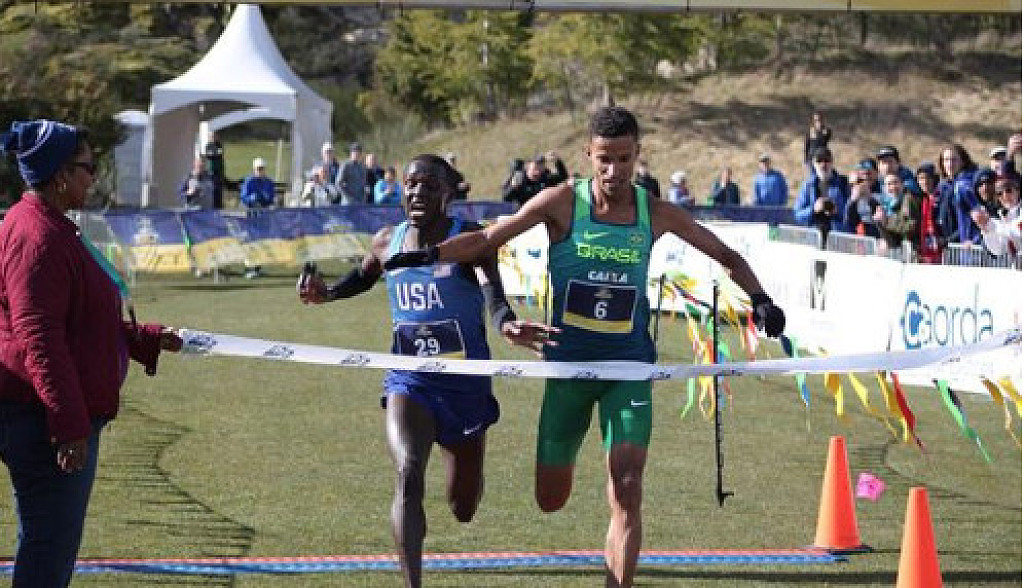
De Oliveira and Lalonde crowned Pan American cross-country champions
Applying different running tactics, Johnatas de Oliveira and Genevive Lalonde made history for Brazil and Canada respectively by earning their country’s first ever senior title at the 4th Pan American Cross Country Cup in Langford, Canada, on Saturday (29).
Lalonde, the Pan American Games and Canadian record holder for the steeplechase, dominated the women’s race almost from start to finish, moving away from the rest of the field just 10 minutes into the race.
The 28-year-old found no opposition through the three remaining laps of the five-loop course along the gold course at Bear Mountain Resort and crossed the finish line in 37:37, 32 seconds ahead of her next competitor, Carrie Verdon of the USA. Peru’s Lizaida Thalia Valdivia overtook Canada’s early leader Natasha Wodak in the final stages to secure bronze in 38:12.
“This is a good start to the 2020 season and looking to the lead up to the Olympic Games,” Lalonde told Athletics Canada. “Going up the hill, I kept my rhythm and kept it smooth and I took it out more than I expected. We’re here to inspire you so we’re going to keep running, keep racing.”
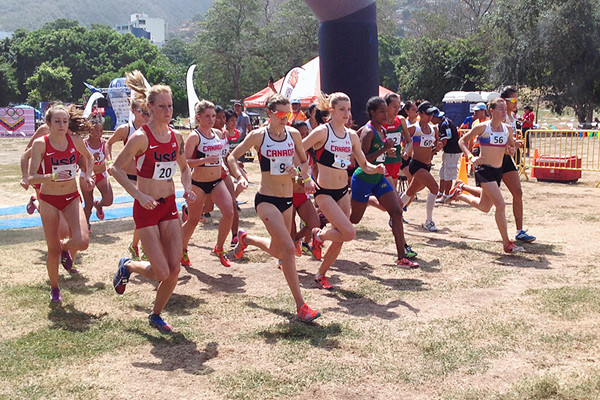
Having moved to the west coast of Canada a month earlier, Lalonde’s dominant display came as no surprise, considering the two-time national cross-country champion finished 20th at last year’s World Cross Country Championships, making her the highest-placed woman from the Americas.
In the men’s race, the Brazilian duo of Johnatas de Oliveira and national champion Daniel Ferreira took the early pacing, closely followed by USA’s four-time NCAA champion Anthony Rotich, in a group that included 12 men from Brazil, Peru, Mexico and five USA runners.
Some 21 minutes into racing, De Oliveira and Rotich started to separate themselves from the rest of the field, setting the stage for the final lap. With the last 180 metres of the race in elevation, De Oliveira took a narrow edge. Rotich launched his sprint on the home stretch and both crossed the finish line in 32:50. The photo finish determined the gold for the unheralded Brazilian, second at the National Cross Country Championships a month earlier.
“This is the most important result of my career,” De Oliveira told the Brazilian Athletics Confederation. “I have only been a competitive runner for four years. It was a sensational finish, but I was not going to give up, especially all I went through in this cold weather (8C).”
The 29-year-old, who competed at least year’s World Cross, improved on his silver medal performance at the 2019 South American Cross Country Championships.
Peru’s Paul Ramirez bided his time and moved into the bronze medal position in the final lap, securing the fourth individual bronze medal for his country on the day.
Gilberto Silvestre Lopes, twice a silver medallist at continental events, finished 10th this time.
In the U20 races, the USA finished 1-2 in the men’s 8km with Corey Gorgas (27:15) and Evan Bishop (27:20). Peru’s Alejandro Alania overtook Mexico’s Cesar Daniel Gomez at the line for bronze. Both were timed at 27:35.
In the U20 women’s 6km race, the first one of the championships, USA’s Brooke Rauber took gold in 23:12, ahead of Canada’s Sadie Sigfstead (23:23) and Peru’s Jhenifer Melchor (23:46).
The Pan American Championships, held in North America for the first time, is held in even years as the South American and NACAC events in odd years. Athletes from The Bahamas, Puerto Rico, Guadeloupe, El Salvador, Colombia, Costa Rica and Panama, also competed at the biennial event, first held in 2015.
by World Athletics
Login to leave a comment
