

Running News Daily
Running News Daily is edited by Bob Anderson and team. Send your news items to bob@mybestruns.com Advertising opportunities available.
Index to Daily Posts · Sign Up For Updates · Run The World Feed
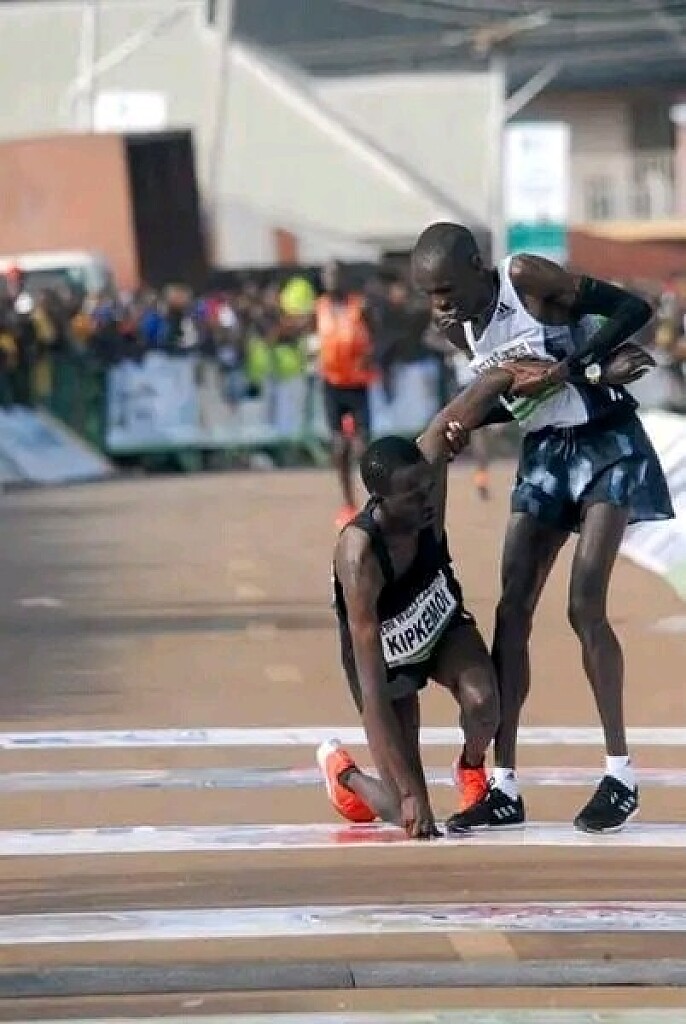


He Let the Finish Line Go — and Gave the Sport Its Soul
The final meters of the Okpekpe International 10km Road Race are designed to reward the relentless. On May 25, 2019, in Edo State, Nigeria, they became something else entirely.
Kenyan runner Simon Cheprot was still racing — lungs burning, legs heavy, eyes fixed on the finish — when he noticed movement on the road ahead. Another athlete had gone down. It was Kenneth Kipkemoi, a fellow Kenyan, his body finally overwhelmed by the strain of elite competition. He tried to rise. He couldn’t.
Around them, the race did what races always do. Runners streamed past. The clock kept ticking. The finish line waited.
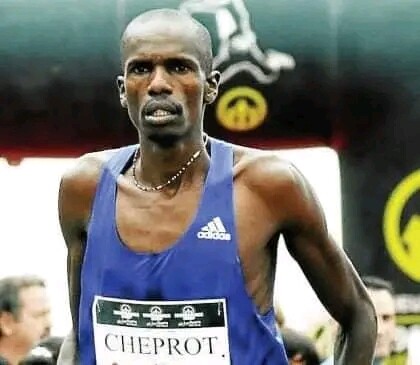
Cheprot slowed. Then he stopped.
In a sport where hesitation costs careers, he turned back. He reached down, lifted Kipkemoi, and wrapped an arm around him. With every step, Cheprot dragged his exhausted compatriot forward, not toward victory, but toward safety. The sprint was gone. The podium was gone. So was the prize money that so often defines survival in professional road racing.
What remained was a choice.
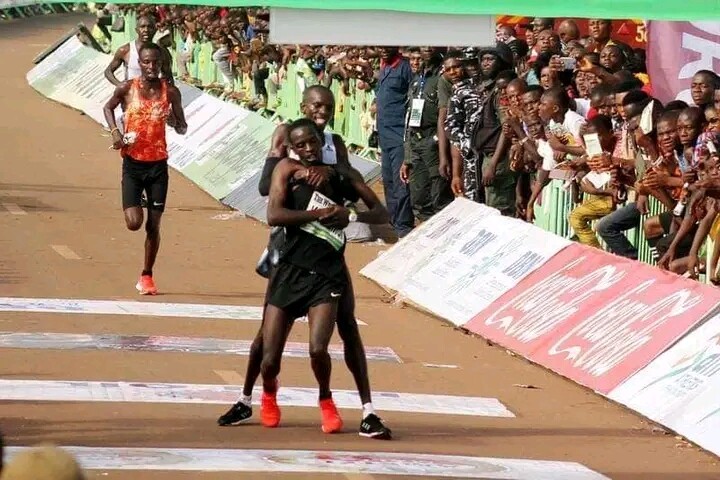
Cheprot knew exactly what he was giving up. A top placing in a World Athletics–labelled road race carries more than prestige; it brings financial relief, future invitations, and validation. By stopping, he erased all of that in seconds. Yet there was no drama in his decision, no gesture for the cameras. Just urgency, effort, and care.
Spectators sensed it immediately. The noise shifted — from cheers for speed to applause for humanity. Officials and medical staff moved in as Cheprot ensured Kipkemoi was no longer alone on the road.
In those moments, the finish line lost its power.
The images traveled quickly, cutting through a sports world conditioned to celebrate only winners. Here was something rarer: an athlete refusing to step over another’s pain for personal gain.
Cheprot finished far back in the results, his name absent from headlines that usually list times and places. But the act itself became the story. Not because it was emotional, but because it was honest.
Athletics often speaks about respect, solidarity, and fair play. On that day in Okpekpe, Simon Cheprot lived those words. He reminded the world that behind every bib number is a human being, and that the true measure of sport is not how fiercely we compete — but how we respond when competition asks us to forget our humanity.
The clock kept running.
The race moved on.
But something far more important stopped — and was remembered.
(01/07/2026) ⚡AMPby Erick Cheruiyot for My Bestruns.
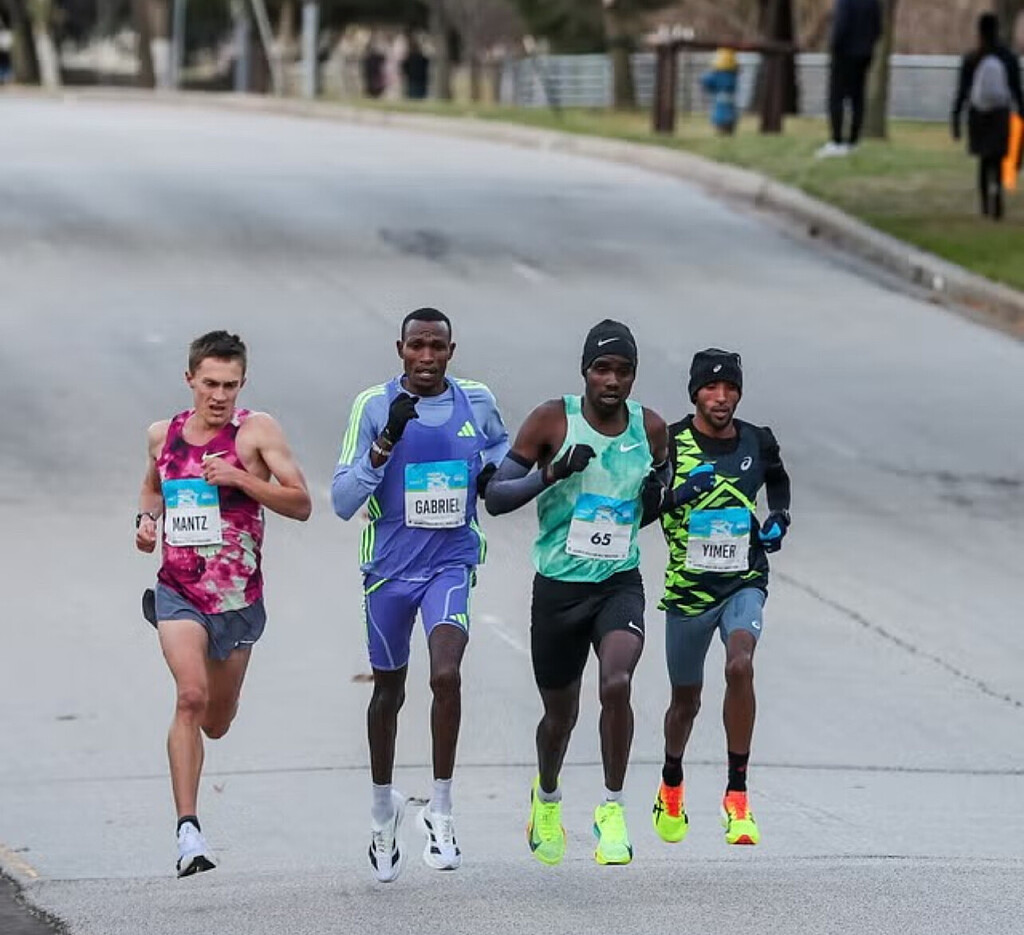
Houston Reloaded: Star-Studded Men’s Field Sets the Stage for a Wide-Open 2026 Half Marathon
With no defending champion, no American record holder, and a reshuffled elite lineup, the January 11, 2026, Houston Half Marathon is shaping up as one of the most open and unpredictable men’s races the event has seen in years.
A Reset Year in Houston
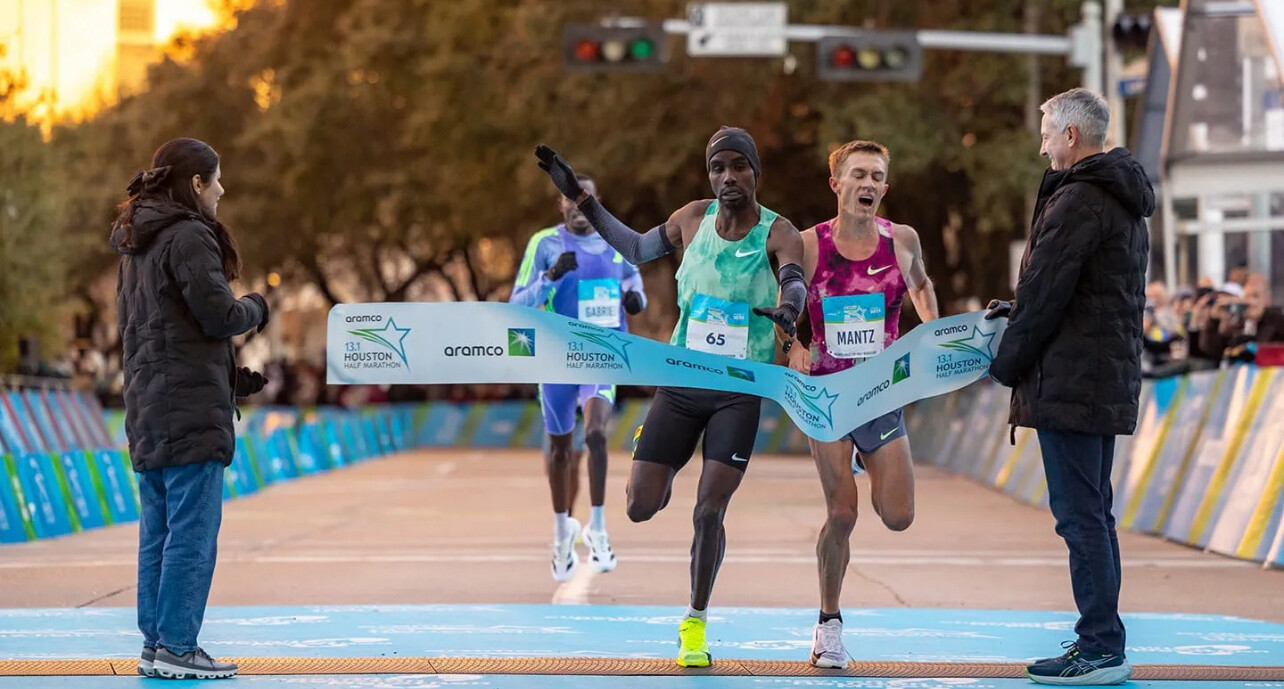
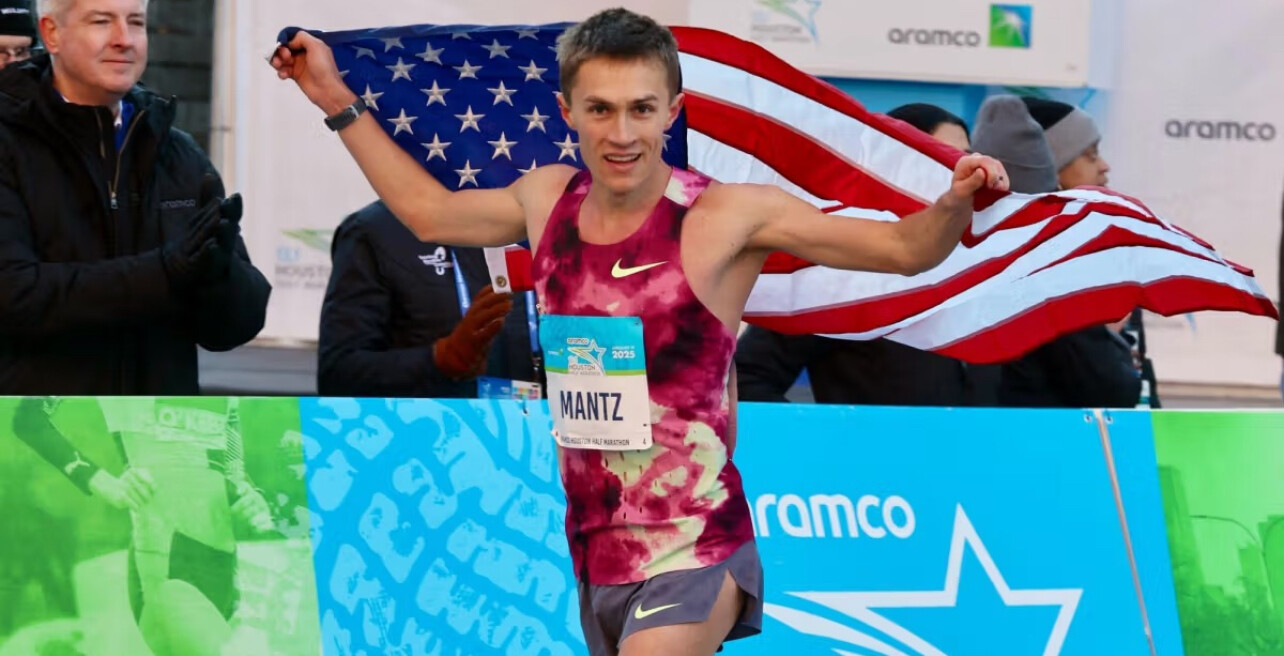
When the gun goes off on Sunday, Houston will once again showcase one of the fastest half-marathon courses in the world—but without the familiar faces that dominated the podium last year. None of the top five finishers from 2025 return, creating a rare reset for a race long associated with records, breakthroughs, and Olympic-cycle statements.
What remains is depth, intrigue, and a compelling blend of proven performers and ambitious newcomers ready to write a new chapter.
Vincent Ngetich: Speed Meets Staying Power
Kenya’s Vincent Ngetich enters as the fastest man in the field on paper, owning a 59:09 personal best from 2022. His half-marathon credentials are formidable, but his reputation soared after a stunning 2:03:13 runner-up finish at the 2023 Berlin Marathon, behind Eliud Kipchoge.
Houston offers Ngetich the opportunity to reassert himself over 21.1 km and test his speed against a deep American contingent on a course that rewards bold, aggressive racing.
Hillary Bor Leads the Returners
Kenyan-born American Hillary Bor is the top returner from last year’s race after finishing sixth in 1:00:20. His 59:55 personal best, set at the NYC Half Marathon, underscores his sub-60 capability—even if that performance came on a non-record-eligible course.
Bor arrives with consistency and experience on his side and will be keen to capitalize on a field without a clear dominant force.
Galen Rupp Back in the MiX
Few names carry the weight of Galen Rupp in American distance running. The two-time Olympian owns a 59:47 personal best from 2018 and returns to Houston after finishing 12th in 1:02:37 in 2024.
While Rupp is no longer chasing records, his race intelligence, experience, and ability to manage fast early pace could prove influential in a race likely to unfold aggressively from the start.
Rising Americans and International Depth
The American contingent is deep, with several sub-61 runners including Sam Chelanga, Biya Simbassa, Andrew Colley, Alex Maier, and Reed Fischer, all bringing strong recent road or cross-country form into the season.
International depth adds further intrigue, with athletes such as Cam Levins, Alex Masai, Patrick Kiprop, and Mohamed El Yousfi all capable of factoring into a fast-moving lead pack.
The Debutant to Watch: Habtom Samuel
One of the most compelling storylines belongs to Habtom Samuel, the 2025 NCAA cross country champion, who is set to make his half-marathon and road-racing debut. Samuel recently clocked 13:05.2 for 5000 meters at Boston University, signaling sharp fitness as he transitions from the track and cross country to the roads.
Houston has a long history of rewarding fearless debutants, and the University of New Mexico standout fits that mold perfectly.
A Race Built for Breakthroughs
With no defending champion, no American record holder, and a deep field eager to make a statement, the 2026 Houston Half Marathon promises fast early splits, tactical uncertainty, and genuine breakthrough potential.
On one of the world’s most trusted fast courses, opportunity—not reputation—may prove to be the real favorite.
2026 Houston Half Marathon – Men’s Elite Entrants (with Country)
1. Vincent Ngetich — Kenya (KEN)
2. Galen Rupp — United States (USA)
3. Hillary Bor — United States (USA)
4. Cam Levins — Canada (CAN)
5. Biya Simbassa — United States (USA)
6. Sam Chelanga — United States (USA)
7. Andrew Colley — United States (USA)
8. Alex Maier — United States (USA)
9. Marcelo Laguera — Mexico (MEX)
10. Reed Fischer — United States (USA)
11. Rory Linkletter — Canada (CAN)
12. Ryan Ford — United States (USA)
13. Alberto Mendez — Guatemala (GUA)
14. Alex Masai — Kenya (KEN)
15. Peter Lynch — Ireland (IRL)
16. Patrick Kiprop — Kenya (KEN)
17. Aaron Bienenfeld — Germany (GER)
18. Mohamed El Yousfi — Morocco (MAR)
19. Kengo Suzuki — Japan (JPN)
20. Haimro Alame — Israel (ISR)
21. William Amponsah — Ghana (GHA)
22. Daniel Michalski — United States (USA)
23. Bran Barraza — United States (USA)
24. Aaron Gruen — Austria (AUT)
25. Robert Warner-Judd — Great Britain (GBR)
26. Habtom Samuel — Eritrea (ERI) (half-marathon debut)
27. Casey Clinger — United States (USA) (debut)
28. Isai Rodriguez — United States (USA) (debut)
29. Graydon Morris — United States (USA) (debut)
30. Dylan Schubert — United States (USA) (debut)
31. Merga Gemeda — United States (USA) (debut)
32. Hunter Christopher — United States (USA) (debut)
(01/06/2026) ⚡AMPby Robert Kibet

Chevron Houston Marathon
The Chevron Houston Marathon offers participants a unique running experience in America's fourth largest city. The fast, flat, scenic single-loop course has been ranked as the "fastest winter marathon" and "second fastest marathon overall" by Ultimate Guide To Marathons. Additionally, with more than 200,000 spectators annually, the Chevron Houston Marathon enjoys tremendous crowd support. Established in 1972, the Houston Marathon...
more...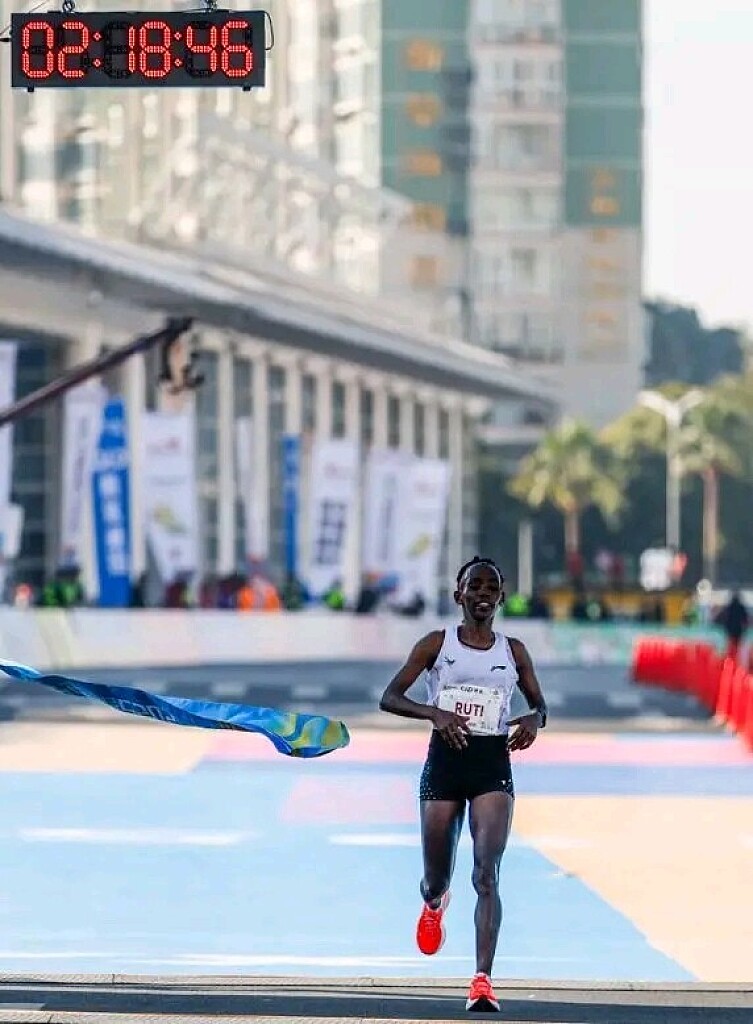
Ruti Aga Sora Headlines a Powerful Women’s Field at the 2026 Xiamen Marathon
The international road racing calendar turns its focus to Asia as Ethiopia’s consistent and battle-tested marathoner Ruti Aga Sora arrives in China for the 2026 Xiamen Marathon, scheduled for January 11 in the coastal city of Xiamen China. Known for her ability to deliver strong performances year after year, Sora enters the race carrying both experience and expectation in one of the deepest women’s elite fields seen at the event.
With a personal best of 2:16:34, Sora stands as the fastest athlete in the line-up. Beyond the numbers, her greatest strength lies in how she manages championship races—patient in the early stages, composed through the middle miles, and decisive when fatigue begins to shape the outcome. That racing intelligence could prove decisive on a course that often rewards control as much as speed.
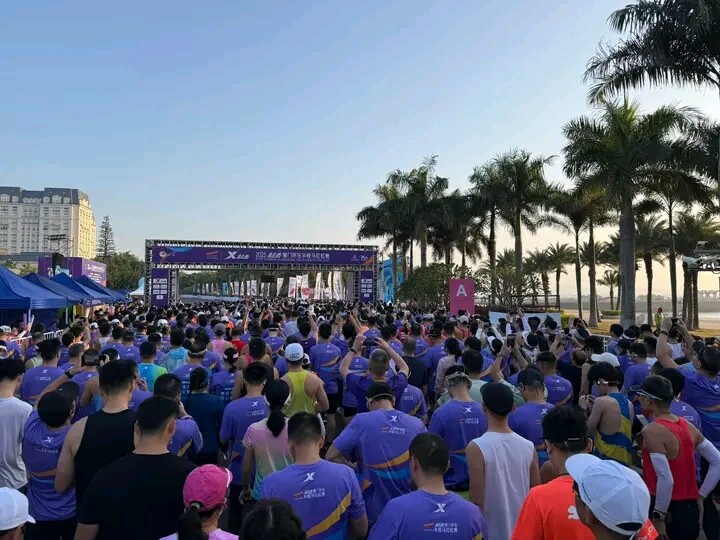
She will be challenged by a powerful group of elite runners, led by fellow Ethiopians Megertu Alemu (2:18:09) and Meseret Abebayehu (2:19:50), alongside Fikrte Wereta Admasu (2:21:32). Kenya’s challenge is equally compelling, with Helah Jelagat Kiprop (2:21:27), Stacy Jepkemoi Ndiwa (2:23:29), and Mercy Jerop Kwambai (2:23:58) all capable of influencing the race if the pace remains honest deep into the final kilometers. On paper, the depth suggests a controlled opening followed by an increasingly tactical battle as the field thins.

The race will start at 7:30 AM local time in China, which corresponds to 2:30 AM in Kenya and 3:30 PM Pacific Time in the United States, allowing fans across multiple continents to follow the action live. Xiamen’s growing reputation as a fast and competitive marathon makes it an ideal setting for elite athletes seeking both performance and prestige.
As the kilometers unfold along Xiamen’s coastal roads, experience will collide with ambition. East Africa’s dominance in women’s marathon running once again takes center stage, but the outcome will be decided not by reputations or personal bests, but by resilience after 30 kilometers. When the finish line finally comes into view, only one athlete will claim victory—but every contender will be pushed to the limit.
(01/06/2026) ⚡AMPby Erick Cheruiyot for My Bestruns.
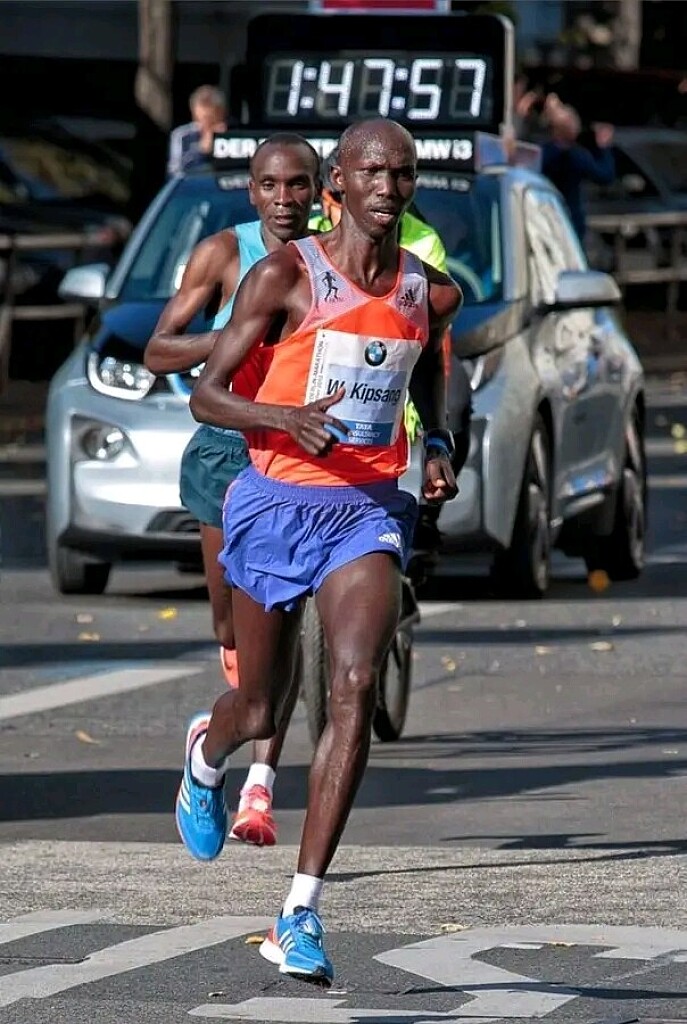
From the Hills of Keiyo to the World’s Clock — A Journey Etched in Endurance
Long before his name was stitched onto race bibs and printed in record books, Wilson Kipsang learned to run on earth that burned his feet. In Kenya’s Keiyo highlands, mornings began with urgency. A young boy sprinted to school barefoot, not chasing ambition but trying to arrive on time. Footwear was rare, comfort rarer still. Every step across dust and stones quietly hardened him for a future no one had promised.
His days were shaped by necessity. Livestock had to be guided, distances had to be covered, chores could not wait. Without knowing it, endurance settled into his body like instinct. There were no training plans, no watches, no applause — only movement, repetition, and resilience. Life did not encourage him. It demanded strength.

Adulthood brought heavier burdens. Kipsang drove taxis, burned charcoal, and worked until exhaustion became normal. He was one of many, unseen and unnamed, surviving day by day. In those moments, success felt distant, almost unreal. Yet even then, running remained his constant. Not as performance, but as identity. It was how he breathed.
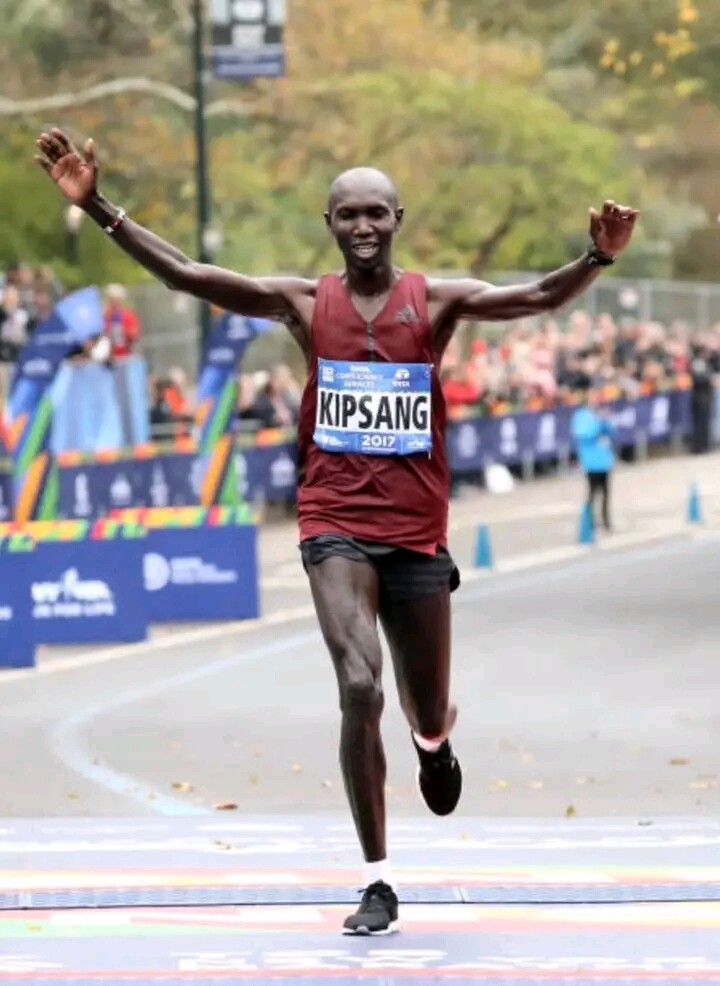
Opportunity finally found him when he joined the Kenya Police Service. Structure replaced uncertainty. Discipline sharpened his focus. What had always lived quietly inside him now had direction. Each race became a statement, each stride an answer. Observers began to notice a runner whose pace carried urgency, whose presence felt inevitable.
In 2013, on Berlin’s wide streets far from his rural beginnings, Kipsang delivered a performance that reshaped the sport. He crossed the finish line in 2:03:23, faster than anyone before him. The numbers told one story; the journey told another. A boy who once ran without shoes had outrun history itself.
The global stage never dimmed his resolve. At the London 2012 Olympic Games, under immense pressure, he claimed bronze — a medal built from patience and perseverance. Major cities followed. London twice, Frankfurt twice, New York with authority, Tokyo with calm control. Across continents, his consistency spoke louder than celebration.
There is a quiet truth in his journey: strength often grows unnoticed. Like a river carving its path through stone, Wilson Kipsang became powerful by continuing forward. From rural paths to world records, his story reminds us that greatness is not sudden — it is earned step by step.
(01/04/2026) ⚡AMPby Erick Cheruiyot for My Bestruns.
Mengesha and Loibach Conquer the World’s Longest Sea Bridge at Zhuhai–Macao Half Marathon
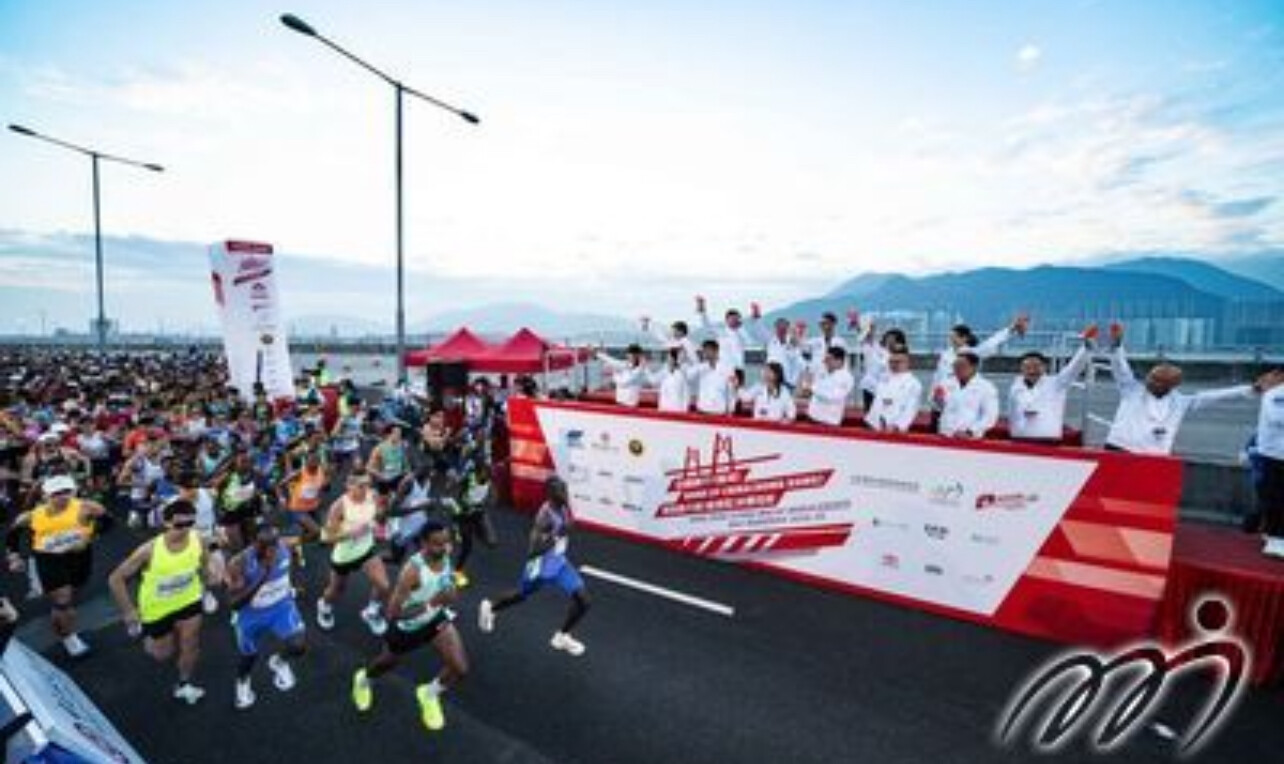
Ethiopia’s Milkesa Mengesha delivered a commanding performance to claim the men’s title at the 2026 Zhuhai–Macao Bridge Half Marathon, stopping the clock at 1:01:27 as elite runners battled wind and exposure on one of the most extraordinary road courses in the world.
Staged on the Hong Kong–Zhuhai–Macao Bridge, the longest sea-crossing bridge on the planet, the race offered a rare blend of speed, spectacle, and sustained mental challenge. Athletes surged onto wide, open tarmac suspended above the Pearl River Delta, facing long straightaways, gentle undulations, and uninterrupted views of open water stretching in every direction.
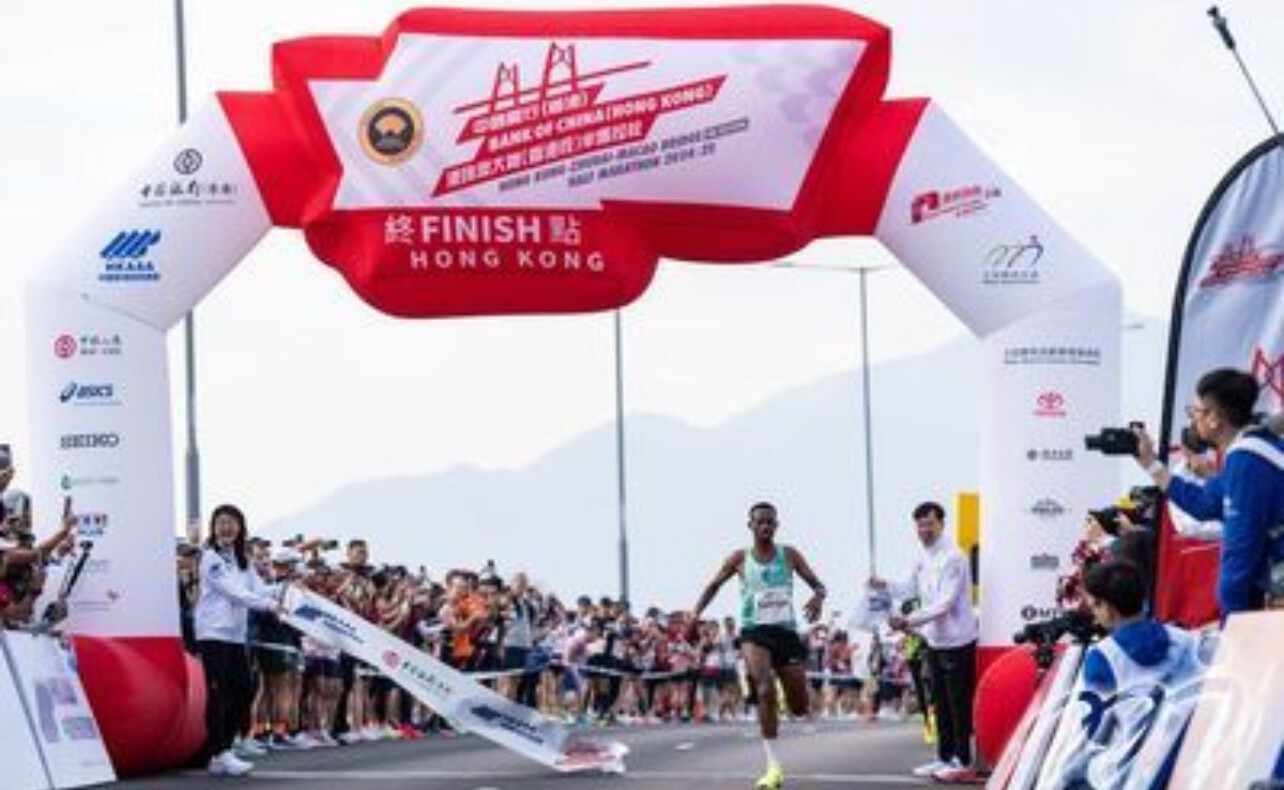
Mengesha remained patient through the early kilometres as a tightly packed lead group controlled the tempo. He broke clear late in the race, asserting his strength when conditions began to bite. Kenya’s Patrick Mosin stayed close throughout but settled for second in 1:01:30, just three seconds back, while fellow Ethiopian Haftu Teklu completed the podium in 1:02:54.
A Course That Tests Rhythm and Resolve

Unlike traditional city courses lined with spectators, the bridge route is defined by exposure. January brought cool temperatures and steady coastal winds—ideal for fast running but demanding precise pacing. With little shelter on the open deck, runners were forced to manage rhythm and energy as gusts disrupted stride patterns and pack dynamics.
The out-and-back layout added another tactical layer, allowing athletes to measure themselves directly against the field. The turnaround point became a revealing moment, separating those with reserves left for the return leg from those already on the edge.
Loibach Leads Kenyan Sweep in the Women’s Race
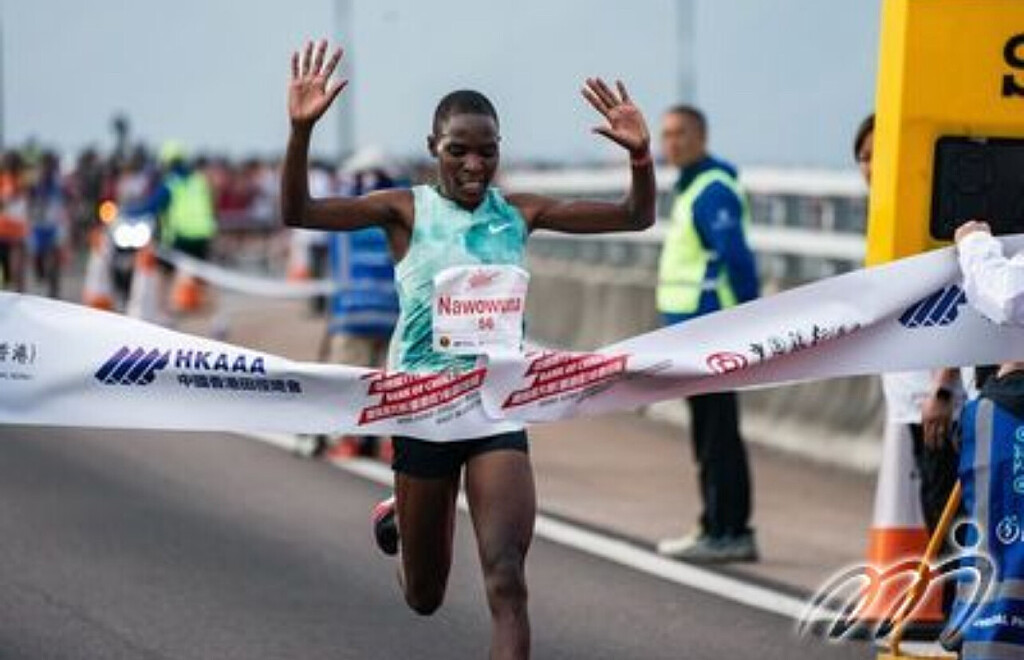
In the women’s contest, Kenya’s Grace Loibach Nawowuna underlined her rising status on the international road circuit, claiming victory in 1:07:56 after a fiercely contested race among a deep Kenyan contingent.
She was followed closely by Sheila Chelangat (1:08:06) and Viola Chepngeno (1:08:09), with the top four women finishing within half a minute of one another—a reflection of both tactical racing and the course’s unforgiving nature.
Loibach’s winning time marked an improvement on last year’s performance, highlighting both favourable conditions and the increasing depth of competition the race continues to attract.
A Step Forward From Last Year
In the previous edition, winning times were marginally slower, shaped by cautious early pacing. This year’s performances—particularly at the front—reflected a shift toward more assertive racing, aided by calm early conditions and strong international fields from East Africa and Asia.
The Zhuhai–Macao Bridge Half Marathon is rapidly establishing itself as a destination race for elite and sub-elite runners alike, offering genuine speed potential on a course unlike any other on the global road calendar.
For many competitors, it was more than a race for time or position—it was an experience of running between sea and sky, where concentration, patience, and strength mattered as much as raw speed.
RESULTS – ZHUHAI–MACAO BRIDGE HALF MARATHON
Men
1. Milkesa Mengesha (ETH) — 1:01:27
2. Patrick Mosin (KEN) — 1:01:30
3. Haftu Teklu (ETH) — 1:02:54
4. Weldon Langat (KEN) — 1:02:57
5. Luke Kiprop (KEN) — 1:02:57
6. Negasa Dekeba (ETH) — 1:05:03
7. Yuki Kawauchi (JPN) — 1:07:52
8. Chong See Yeung (HKG) — 1:09:44
9. Man Ho (HKG) — 1:10:36
Women
1. Grace Loibach Nawowuna (KEN) — 1:07:56
2. Sheila Chelangat (KEN) — 1:08:06
3. Viola Chepngeno (KEN) — 1:08:09
4. Gladys Chepkurui (KEN) — 1:08:23
5. Gotytom Gebreslase (ETH) — 1:08:54
6. Miriam Chebet (KEN) — 1:09:59
7. Daisy Jepkemei (KAZ) — 1:10:08
8. Megertu Mideksa (ETH) — 1:11:41
9. Ying Chu Lo (HKG) — 1:16:45
10. Shiu Yan Leanne Szeto (HKG) — 1:20:15
(01/04/2026) ⚡AMPby Robert Kibet for My Best Runs
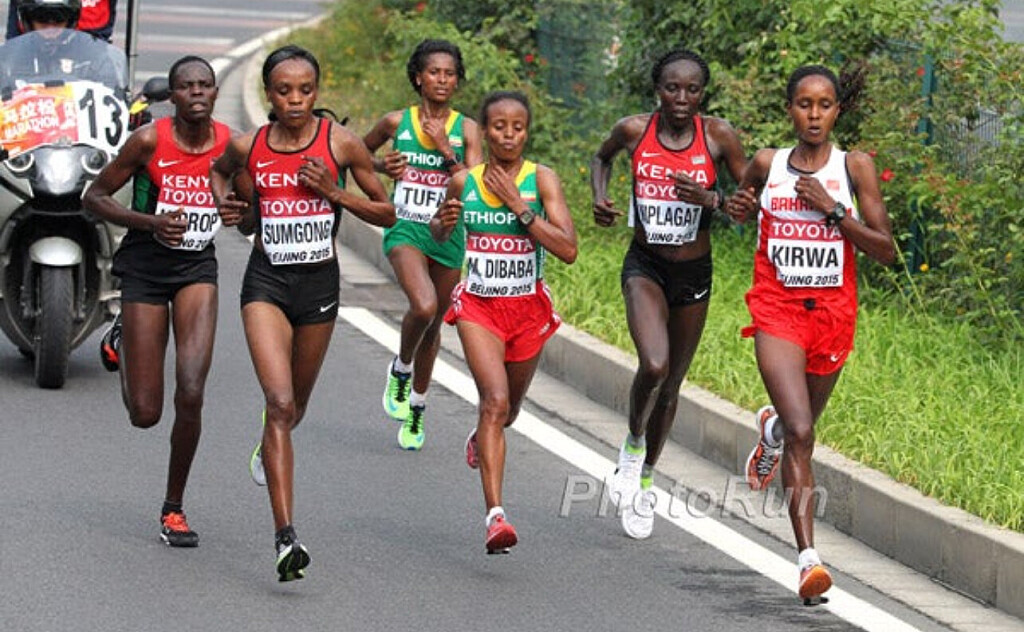
Women’s Marathon Power by Nation: What the Fastest Times Ever Reveal About Global Depth
When we talk about greatness in the women’s marathon, records and medals often dominate the conversation. A world record here, an Olympic podium there. But those moments, as extraordinary as they are, don’t always tell the full story.
A deeper question matters just as much:
Which countries consistently produce elite women marathoners—year after year, athlete after athlete?
To answer that, analysts have stepped away from single seasons and headline performances and instead examined historical depth. The result is a ranking based on the average of the 10 fastest women’s marathon times ever recorded by each country, compiled as of December 31, 2025.
This is not about who ran best in 2025.
This is about who has built lasting excellence.
How the Rankings Were Calculated
For each country:
• All women’s marathon performances in the historical record were reviewed
• The 10 fastest marathon times ever recorded by women from that country were identified
• Those ten times—regardless of year—were averaged
• The resulting figure represents that country’s all-time marathon depth
The year a performance occurred does not matter. An athlete needed only to run a marathon once to be included, as long as the time ranked among the nation’s fastest ten ever.
This approach shifts the lens from short-term form to long-term system strength.
A Dead Heat at the Top
At the summit of women’s marathon history sit two familiar giants—and they are inseparable.
Ethiopia and Kenya, both averaging 2:17:10, are tied at the top.
This is not the work of a single superstar. It reflects ten separate performances from each nation that, when averaged, would place comfortably on the podium at nearly any major marathon in the world. It is dominance built on depth—high-altitude environments, strong road-racing cultures, and generations of knowledge passed forward.
Japan and the United States: Different Systems, Similar Results
Behind the East African leaders, Japan (2:23:14) and the United States (2:23:39) stand out.
Japan’s strength comes from a uniquely structured system: corporate teams, deep domestic racing calendars, and an enduring cultural reverence for distance running. The consistency is remarkable.
The United States, by contrast, reflects a more decentralized model—athletes emerging from NCAA programs, professional training groups, and a growing focus on marathon specialization. The result is increasing depth at the elite level, even without a single dominant pipeline.
Europe’s Collective Strength
Europe does not produce women’s marathoners in quite the same numbers as East Africa, but its breadth is unmistakable.
Great Britain, Germany, the Netherlands, France, Spain, and others cluster tightly in the mid-2:20 range. No single nation dominates the continent, but together they form a strong competitive core, driven by improved sports science, professional racing opportunities, and increased global exposure.
Expanding Global Reach
One of the most telling aspects of this ranking is how widely excellence is distributed.
From Australia to China, from Bahrain to Peru, competitive women’s marathon running is no longer confined to a handful of regions. National programs, migration, dual citizenship, and professional opportunities have reshaped the global map.
Even countries lower on the list demonstrate something important: producing ten world-class marathon performances is no longer rare—it is becoming achievable.
Why This Ranking Matters
This list is not meant to replace medals, championships, or seasonal rankings. Instead, it complements them by answering a different question:
Who has built a system capable of producing elite marathon performances over time?
By focusing on all-time best performances rather than a single season, the rankings reward:
• Development, not just talent
• Consistency, not just peaks
• Depth, not just stars
In the modern era of women’s marathon running, that depth is what sustains greatness.
The Bigger Picture
The women’s marathon has never been deeper, more global, or more competitive than it is today. And as more countries invest in athlete development, the next reshuffling of this list may come from unexpected places.
What will not change is the lesson this ranking makes clear:
Greatness in the marathon is not built in one race or one year—it is built over generations.
Countries Included in This Ranking (with Average Times)
The following countries are represented in the women’s marathon depth analysis, based on the average of their 10 fastest women’s marathon performances ever recorded, compiled as of December 31, 2025:
• Ethiopia — 2:17:10
• Kenya — 2:17:10
• Japan — 2:23:14
• United States — 2:23:39
• Bahrain — 2:24:34
• Great Britain — 2:25:28
• Australia — 2:25:53
• China — 2:26:31
• Germany — 2:26:43
• Morocco — 2:26:43
• Netherlands — 2:27:56
• North Korea — 2:27:29
• France — 2:28:04
• Spain — 2:28:13
• Russia — 2:31:18
• Peru — 2:32:25
• Canada — 2:33:19
• South Korea — 2:33:19
• Poland — 2:35:01
• Sweden — 2:35:16
(01/03/2026) ⚡AMPby Boris Barron

From Soil to Stride: How KATA Kenya and the Double Road Race Redefined Athlete Development in 2025
As 2025 draws to a close, year-end reflections in distance running often gravitate toward times, titles, and breakthrough performances. Yet some of the most compelling stories in Kenya this year unfolded far from finish lines—across high-altitude farms, disciplined training camps, and an unconventional road race that asked athletes to start twice in a single day.
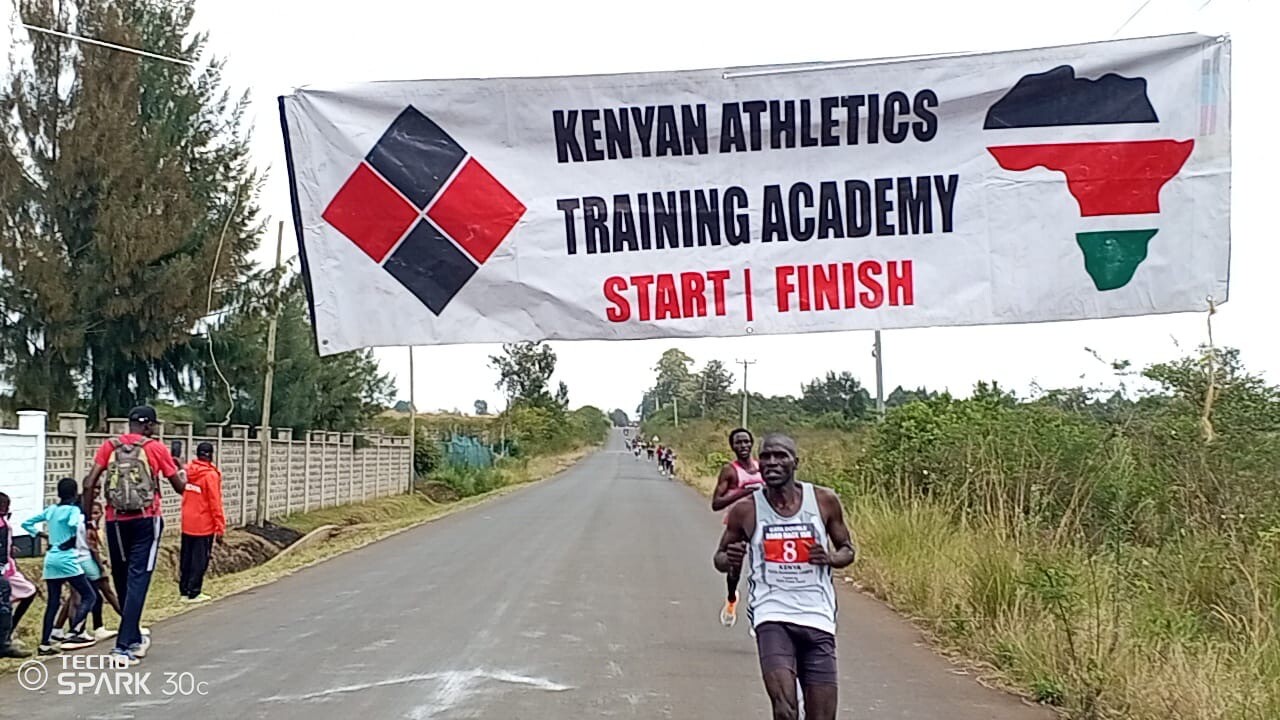
In 2025, the Kenya Athletics Training Academy (KATA) quietly reshaped what athlete development looks like in practice. Across Kenya’s famed running regions—Iten, Kaptagat, Nyahururu, Keringet, Molo, Kericho, Bomet, and Elgeyo Marakwet—KATA, under the guidance of Chief Technical Officer Denis Musau, expanded its focus beyond mileage and workouts to include nutrition, recovery, sustainability, and innovative competition design.
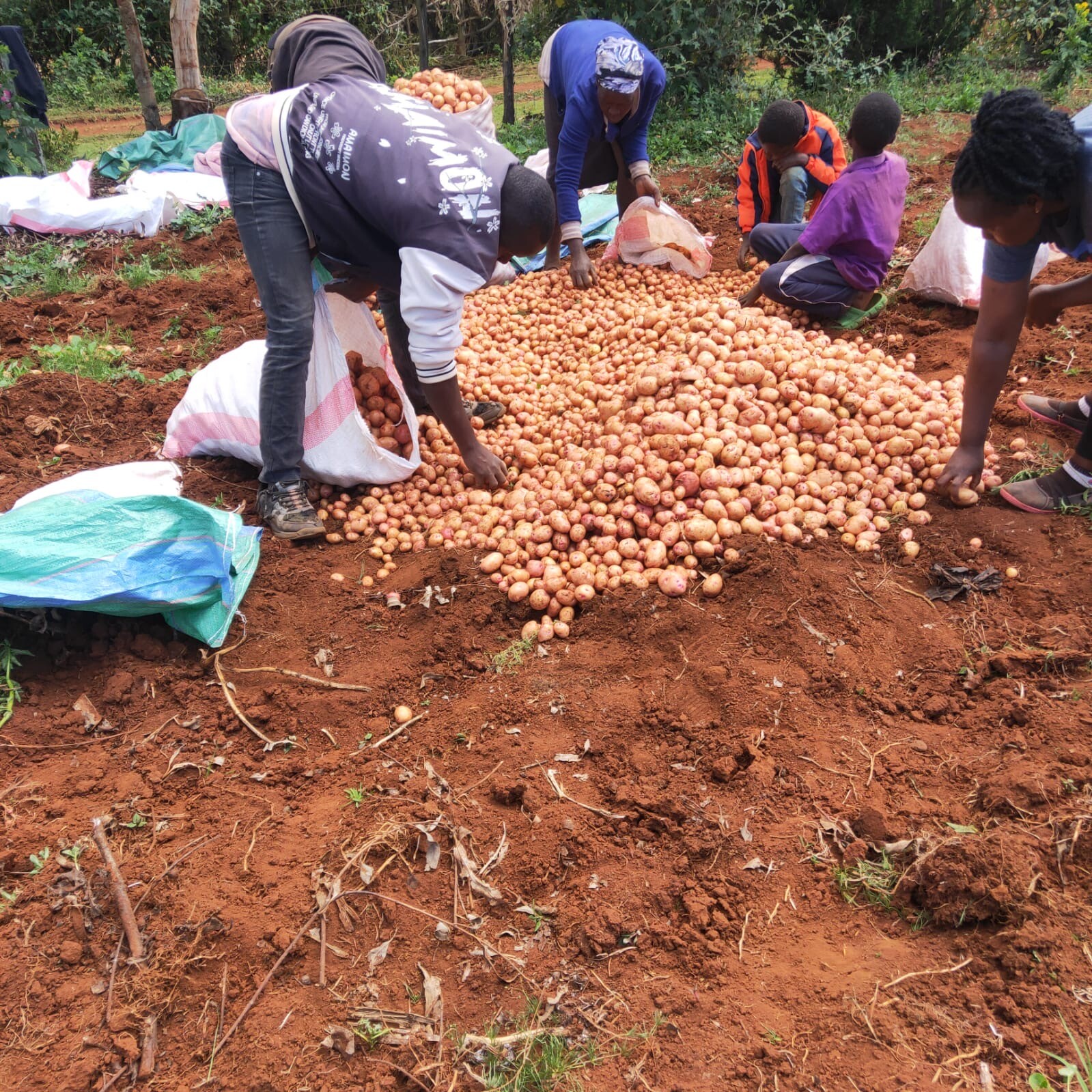
At the center of that shift was an initiative that seemed deceptively simple: potato farming.
Originally launched to support camp operators, the program quickly addressed two pressing challenges—nutrition and economic stability. For athletes living and training full-time at altitude, consistent access to energy-rich food proved as critical as any interval session.
“The potato farm has helped some of our camp operators and the entire athletics fraternity,” Musau said. “It is very nutritious, gives energy, and supports recovery for our athletes. Despite being cheap and easy to find in the market, potatoes play a big role in our training environment.”
The initiative aimed to ease food costs, improve diet quality, and reinforce camps running sustainably. It also fostered a sense of ownership within camps—reflecting KATA’s long-term goal of building resilient training ecosystems rather than dependence on outside support.
Kenya’s varied geography, however, quickly revealed that not every region was equally suited to potato farming.
“Potato farming has been good across the nation where we have camps,” Musau explained, “but some parts of the country are not suitable because of climate factors such as rainfall and soil type.”
Rather than dilute the project, KATA responded with refinement. Future planting will be concentrated in regions that best support both agriculture and elite training, including Keringet in Nakuru County, Kapcherop in Elgeyo Marakwet, and Olkalou in Nyandarua County.
“Next season, we must carefully consider the best areas to plant potatoes,” Musau added.
Life inside KATA camps remains demanding. Athletes rise before dawn for long runs at altitude, balancing hill work, track sessions, and cross-country trails with careful attention to recovery, diet, and mental preparation. In such an environment, even modest improvements—better nutrition, improved recovery routines—can produce meaningful gains.
While farming strengthened life off the track, competition remained central to KATA’s mission. Structured time trials across camps continued to provide performance benchmarks and exposure to international opportunities.
“Normally, we conduct time trials across our camps, which help expose and link our athletes to international opportunities,” Musau noted.
Yet one event stood out as both a philosophical statement and a competitive crucible: the Double Road Race.
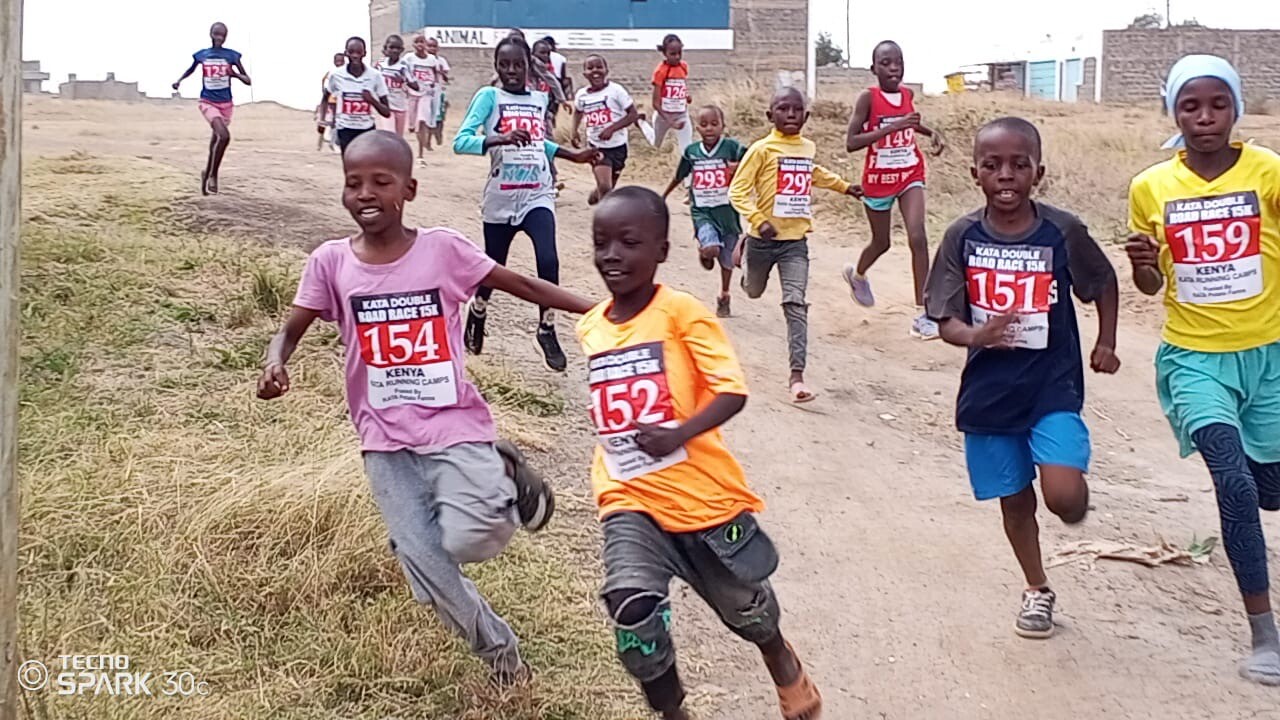
Conceived by Bob Anderson, veteran running journalist and founder of Runner’s World magazine and My Best Runs, the Double Road Race challenges athletes to race twice in a single day—testing endurance, recovery, pacing, and mental resilience. Designed to reward discipline and preparation over raw talent alone, the format has become a rare meeting point for athletes from different camps, regions, and backgrounds.
“Every year in September, we hold the Double Road Race, where athletes from across the country come together to compete,” Musau said. “This year, we had a successful race in Thika, Kiambu County.”
For many KATA athletes, the event served as a real-world stress test. Racing twice in one day exposed weaknesses in recovery, fueling, and mental focus—validating training systems built on consistency rather than shortcuts. Athletes returned to camp with lessons that extended beyond the road: how to manage energy, respect process, and embrace discipline.
By year’s end, the significance of 2025 lay not in a single headline result but in the quiet evolution of systems. From structured camps and practical nutrition initiatives to innovative competition formats, Kenya continued to offer a blueprint for athlete development that resonates far beyond its borders.
From potato fields at altitude to double starts on Kenyan roads, KATA’s 2025 reinforced a simple truth: performance is cultivated long before race day—and often, the most meaningful progress happens where few are watching, until the results speak for themselves.
Looking ahead to 2026, these lessons provide a clear roadmap for the next generation of athletes. The blend of practical support, strategic training, and innovative racing promises to keep Kenya at the forefront of global distance running—and ensures that transformation continues both on and off the track.
(12/31/2025) ⚡AMPby Robert Kibet for My Best Runs

Elite Distance Stars Set for Fireworks at the 2025 BOclassic Alto Adige 10K
As the athletics world prepares to usher in the New Year, all eyes will turn to Bolzano, Italy, where the iconic BOclassic Alto Adige returns on December 31, 2025, with a world-class field worthy of its legendary status.
Headlining the elite lineup is Yomif Kejelcha, one of Ethiopia’s most formidable distance runners and a global championship medalist. Renowned for his devastating finishing speed and sharp tactical sense, Kejelcha brings pedigree, experience, and a championship mindset to the fast, spectator-friendly streets of Bolzano.
Kenya’s challenge will be led by Charles Rotich, a proven road-racing specialist whose strength and consistency make him a threat on any course. Representing Team Kenya, Rotich embodies the nation’s enduring dominance in distance running and will be eager to close the year with a statement performance on European soil.
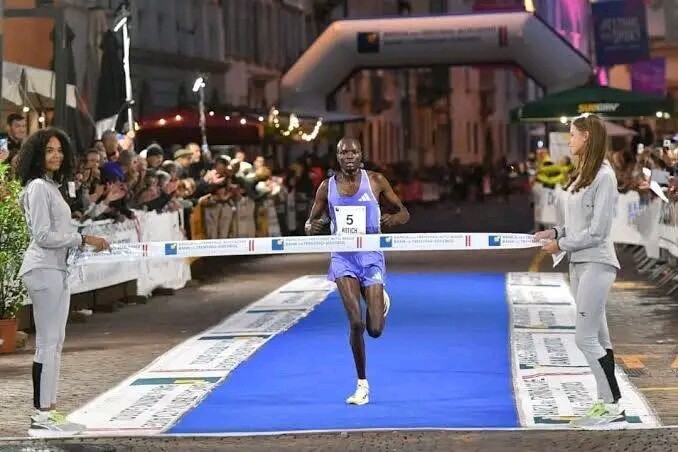
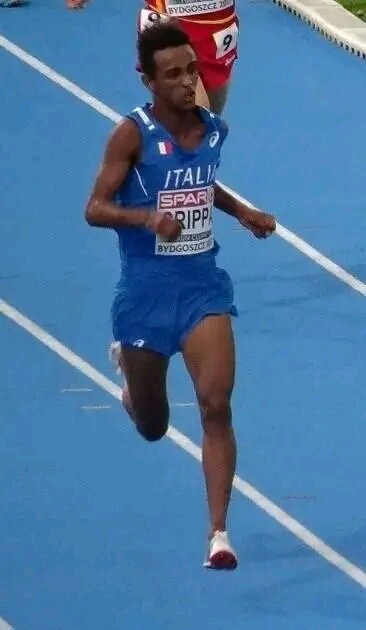
Completing the trio of elite contenders is Yemaneberhan Crippa, Italy’s distance-running standard-bearer. Racing on home ground, Crippa carries the hopes of the host nation as he faces Africa’s finest. His fearless racing style and deep familiarity with the BOclassic atmosphere make him a genuine podium contender.
With athletes from Ethiopia, Kenya, and Italy converging on one of the most historic road races in the world, the 2025 BOclassic Alto Adige promises a compelling showdown of speed, strategy, and national pride. As tradition dictates, Bolzano will once again provide the perfect stage to celebrate the past season—and launch the new one—with a spectacular clash of global distance-running excellence.
(12/30/2025) ⚡AMPby Erick Cheruiyot for My Bestruns.

BOclassic Alto Adige 10k
Challenge yourself against the world’s best! The BOclassic Raiffeisen New Year’s Eve Run is a prestigious year-end road race held annually, attracting elite international athletes alongside amateur runners. Known for its competitive field and festive atmosphere, the event provides a rare opportunity to test your speed on the same course as some of the world’s top distance runners. Whether you...
more...
Where Only the Strong Endure: Countdown to World Cross Country in Tallahassee Florida USA
Cross country running has never been about comfort. It is a ruthless examination of endurance, strength, terrain awareness, and mental resilience. In just over a week, the world’s finest distance runners will converge in Tallahassee, Florida, for another chapter of the sport’s most unforgiving championship: the World Cross Country Championships.
History tells us these titles are rarely decided by fitness alone. More often, they are determined by survival.

Courses That Defined Greatness
Mombasa – 2007
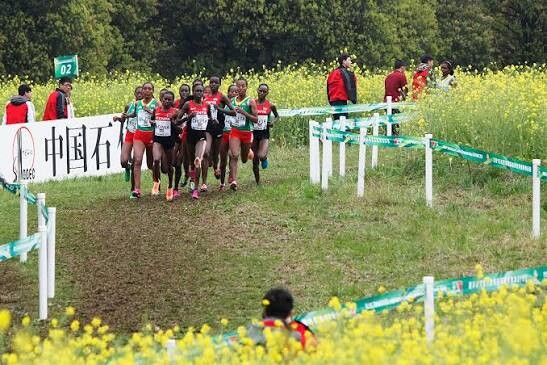
Few championships have tested human limits like Mombasa. Run in suffocating coastal heat and humidity, the race devolved into a war of attrition. Athletes dropped out in waves, legs seized, and only the strongest endured. It remains one of the most punishing championships ever staged—a reminder that in cross country, nature is always part of the field.
Aarhus – 2019
Engineered for cruelty, the Aarhus course was a tactical nightmare. Deep mud, sharp climbs, uneven footing, and relentless turns demanded total concentration. Every stride mattered, every mistake was punished. Strength counted as much as speed, redefining what it meant to be a complete cross country runner.
Bathurst – 2023
An adventure disguised as a race. Extreme weather shifts, hard surfaces, exposed terrain, and constant elevation changes combined to create one of the most laborious championships in modern history. Bathurst rewarded resilience, adaptability, and fearless racing.
Now Tallahassee Awaits
As Tallahassee prepares to host the world, the central question is not who is fastest—but who is toughest. The terrain, conditions, and championship pressure will once again strip the sport down to its raw essence.
Nations with deep cross country heritage—Kenya, Uganda, Ethiopia, along with challengers from across the globe—will arrive knowing one truth:
World cross country titles are earned, not given.
In Tallahassee, reputations will be tested, legacies will be forged, and only those willing to suffer will stand on the podium.
The countdown is nearly over.
The world is watching.
Cross country’s ultimate test is about to begin.
(12/30/2025) ⚡AMP
by Erick Cheruiyot for My Bestruns

Eilish McColgan Targets Her Own European Record at Valencia 10K
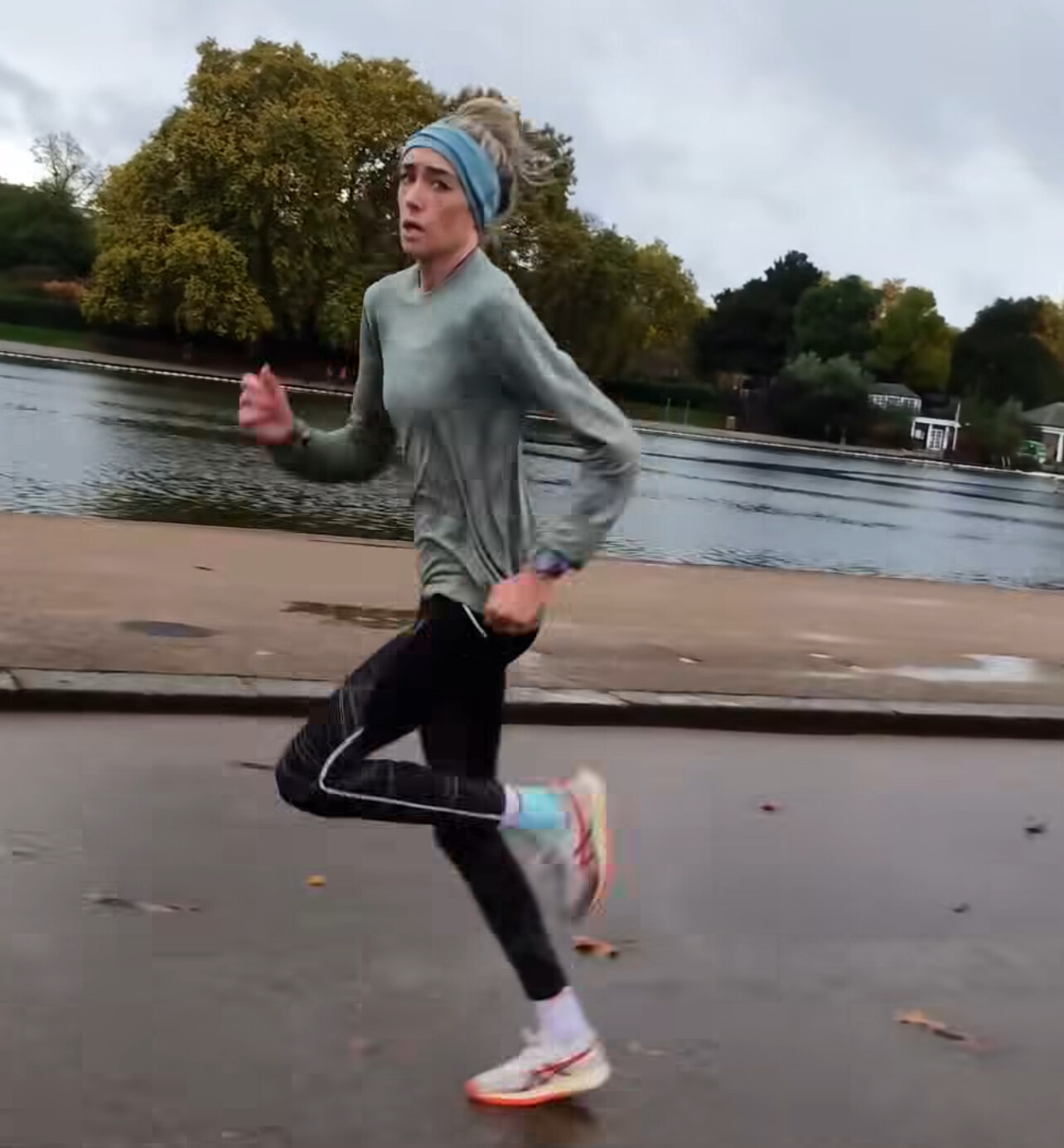
On Sunday, January 11, Britain’s Eilish McColgan returns to one of the fastest road courses in the world with a clear objective: to run faster than ever before. McColgan will headline the Valencia 10K, aiming to improve the European 10K record of 30:19 that she already owns.
Valencia has become synonymous with speed. Flat, wide roads, cool January temperatures, and deep elite fields have turned the Spanish city into a global magnet for record-seekers. For McColgan, it is the ideal setting to push the limits again.
A Record Already Redefined
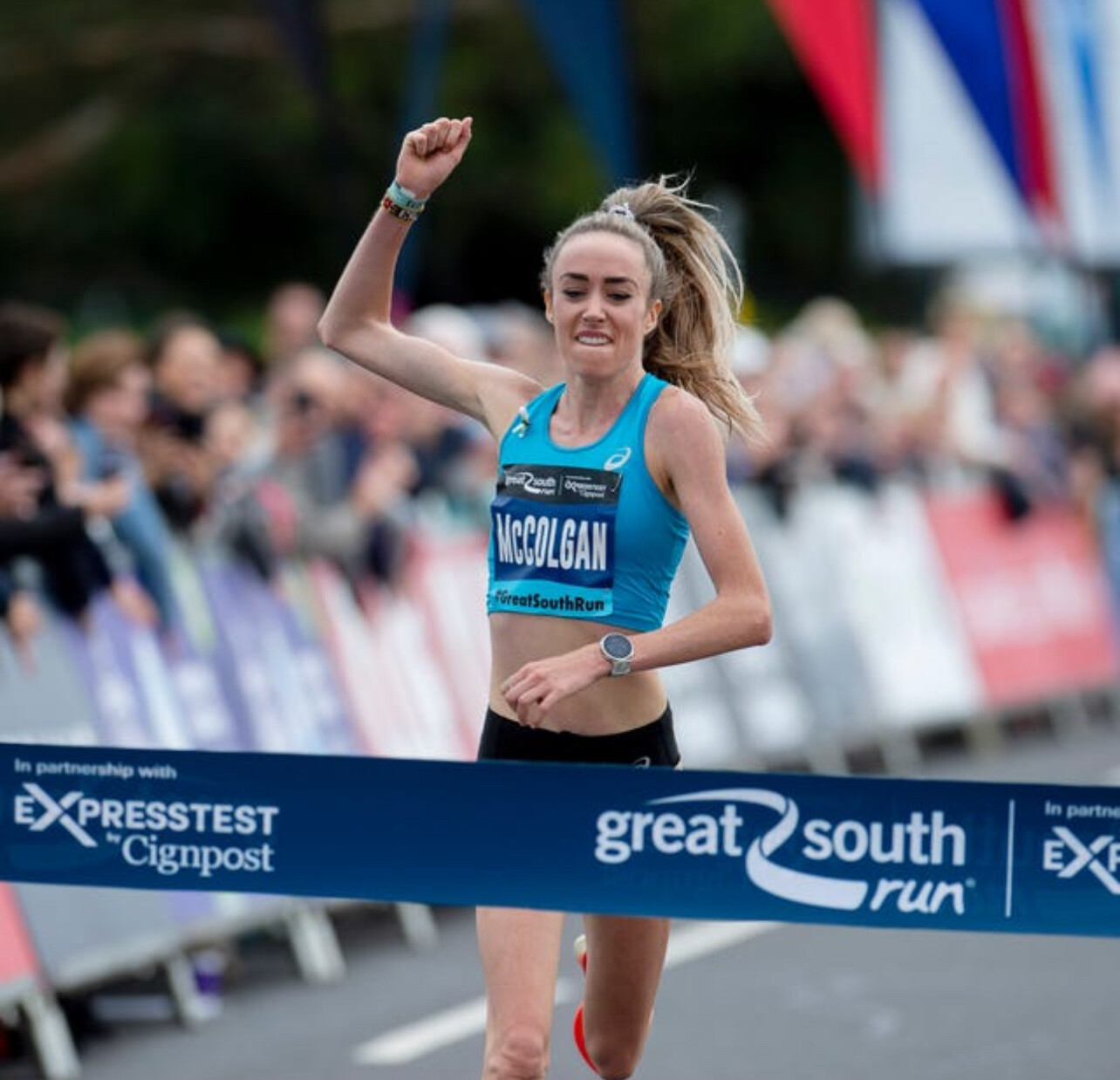
McColgan’s 30:19 shattered expectations when she set it, establishing a new benchmark for European women over 10 kilometers on the road. The performance was not only a record, but a statement—proof that European distance running continues to close the gap with the very best in the world.
Now, with another year of high-level racing behind her, McColgan believes there is more to come.
“I know I’m capable of faster,” she has said in recent interviews, pointing to consistent training blocks and renewed confidence as key factors heading into 2025.
Why Valencia?
The Valencia 10K has earned its reputation honestly. Year after year, the race produces world-class times across both the men’s and women’s fields. The course is famously flat, the pacing is precise, and the atmosphere—lined with knowledgeable, enthusiastic fans—helps pull athletes through the toughest late stages of the race.
For runners chasing records, few places offer better conditions.
Momentum Into 2025
McColgan enters the new season with momentum. Her track credentials as a former European champion at 10,000 meters translate perfectly to the road, where rhythm, strength, and controlled aggression are essential. Valencia’s fast early kilometers often allow athletes to settle into pace quickly—critical for anyone targeting historic times.
A faster run than 30:19 would not only lower her own European record, but also reaffirm McColgan’s position among the world’s elite road racers.
A Race to Watch
With top international competition expected and pacing designed for fast times, the women’s race promises to be one of the highlights of the early road-racing calendar. Whether McColgan rewrites the record books again or simply pushes the boundaries of what is possible, all eyes will be on Valencia.
One thing is certain: when Eilish McColgan toes the start line on January 11, she won’t be running conservatively.
She’ll be running for history.
(12/30/2025) ⚡AMPby Boris Baron

10k Valencia Trinidad Alfonso
Around the corner we have one more edition of the 10K Valencia Ibercaja, organized one more year by the C. 10K VALENCIA Athletics premiering the running season in Valencia. It is a massive urban race with more than 3,000 registered annually of 10 kilometers, where the maximum duration of the test will be 1 hour 40 minutes (100 minutes). The...
more...
Kenya Sharpened Its Edge in Kigari as World Cross Country Battle Lines Were Drawn
As dawn broke each morning over the rolling hills of Kigari in Embu County, Kenya’s cross-country runners surged into punishing training sessions, their collective focus fixed firmly on January 10, when the 46th World Cross Country Championships will unfold in Tallahassee, Florida.
The residential camp was never about mileage alone. It was a deliberate, finely calibrated response to a shifting global cross-country landscape—one in which Kenya’s long-held dominance now faces sustained and increasingly sophisticated challenges.
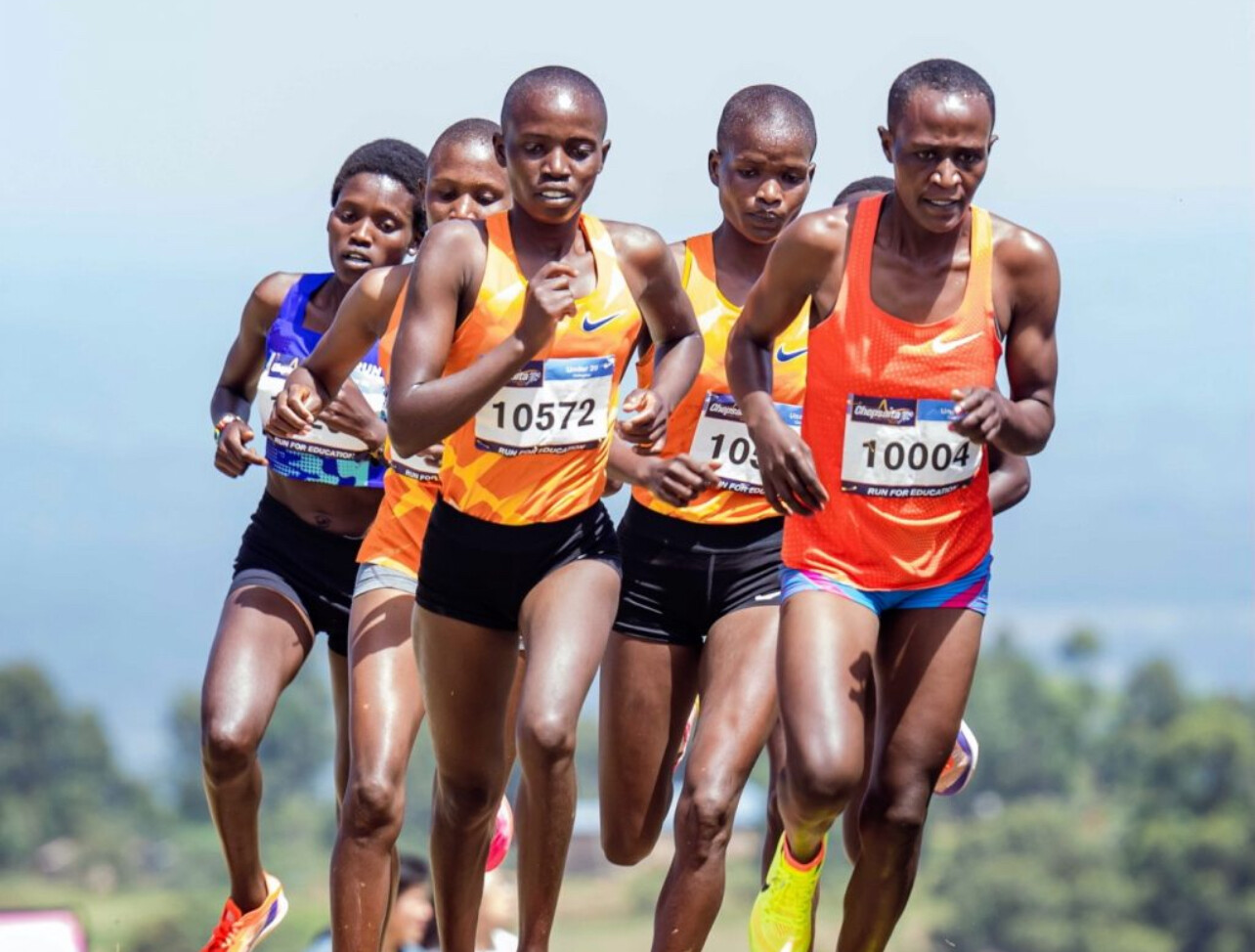
Since reporting to camp on November 23, athletes were immersed in a demanding but carefully structured five-week program designed to sharpen endurance, tactical awareness, and mental resilience.
“Since our arrival, everything went as planned,” said head coach Japheth Kemei. “The athletes responded very well to the training, and we used different venues depending on what each session required.”
Training for the Unknown
Preparation in Kigari extended far beyond altitude conditioning. The technical team deliberately exposed athletes to uncomfortable, varied environments to mirror the unpredictable demands of international cross-country racing.
“Some of the venues we used were at the foot of Mount Kenya, where the ground was almost wet all the time,” Kemei explained. “We also trained inside the forest, where it was darker and colder. By doing this, we felt we were giving the athletes exactly what they required.”
With Florida’s winter expected to present cooler, unfamiliar conditions, adaptability—not comfort—was the guiding principle.
“It was cold compared to Kenya,” Kemei said, “but the athletes were prepared.”
Defending More Than Medals
Kenya will travel to Tallahassee as the overall defending champion following a dominant showing at the previous championships in Belgrade, where the team collected 11 medals and swept all team titles except the senior men’s race.
During a visit to the camp, Barnaba Korir, Athletics Kenya’s Youth Development Director and First Vice President of the National Olympic Committee of Kenya, struck a balance between confidence and realism.
“Kenya will be defending the title we won in Belgrade,” Korir said. “The women won, the junior men and women did a splendid job, and this young team has the capacity to do it again.”
Yet the margins are tightening. Ethiopia and Uganda remain persistent threats, while European and American athletes continue to close the gap.
“The Ethiopians were beaten badly recently, so they are likely to come back with fire,” Korir noted. “But we are also ready.”
Youth, Belief, and the Senior Men’s Question
The Kigari squad was notably youthful, anchored by experienced figures such as Daniel Ebenyo and newly transitioned senior Ismail Kipkuri, but largely built around emerging athletes being groomed for the next competitive cycle.
“It was a young team, but we were not worried at all,” Kemei said. “The spirit among the athletes was very high, and we believed they would give Kenyans what they expected.”
The senior men’s 10km—a title Kenya has narrowly missed in recent editions—remained a central theme throughout the camp.
“We kept reminding them about the need to bring home that title,” Kemei revealed. “They assured us.”
Korir echoed that belief.
“Ebenyo and Ismail have a real chance to contest for the top positions. I am really excited to see what they can do.”
Ebenyo: Carrying Kenya on His Shoulders
As team captain and Kenya’s leading contender in the men’s 10km, Daniel Ebenyo framed the championships as both a sporting challenge and a national responsibility.
“In Tallahassee, it will not only be a race against the best athletes in the world,” Ebenyo said. “We will race with the spirit of Kenya on our shoulders.”
He described the Kigari camp as exhaustive but purposeful.
“Training went very well. Every obstacle that would be there, we were shown. The team is ready to compete with discipline, humility, and hard work.”
For Ebenyo, consistency has come through structure and accountability.
“My consistency came from discipline—being disciplined with my coach, my training partners, and my training,” he explained.
Returning to the national team after time away, Ebenyo embraced the moment with renewed hunger.
“I was happy to be back in Team Kenya. This time, I wanted to do my best, because I love cross-country medals.”
Fear, he said, had no place in camp.
“We were not scared. May the best win.”
Chepsaita Promise Fulfilled: Juniors Join Team Kenya
Beyond elite preparation, the Kigari camp reflected Kenya’s long-term investment in youth development. Two standout junior athletes—Kelvin Kariankei and Joan Chepkurui—earned places on Team Kenya after dominant victories at the 2025 Great Chepsaita Cross Country Run, a World Athletics Gold Label event.
Kariankei powered to victory in the men’s U20 8km in 25:20, while Chepkurui controlled the women’s U20 6km in 21:34 on a demanding course that tested both strength and tactical maturity.
Their selection fulfilled a promise by Farouk Kibet that the top junior male and female finishers at Chepsaita would earn a fully paid trip with Team Kenya to Florida—an initiative aimed at early international exposure, motivation, and long-term succession planning.
Sacrifice Over Comfort
One of the clearest indicators of intent came during the festive season, when athletes collectively chose to remain in camp rather than return home.
“The amazing thing was that the athletes decided not to go home for Christmas,” Korir said. “They chose to continue training so they could perform well.”
Support systems were firmly in place. Nike competition kits had been delivered, and athlete allowances approved.
“They had everything they needed,” Korir said. “They were protected and taken care of.”
Confidence in the Women and the Relay
Confidence extended strongly into the women’s race and the mixed relay, where continuity and form inspired belief.
“Agnes, who finished fifth last time, was back and in good shape,” Korir said. “The mixed relay team had raced together before. They had a big chance of winning.”
Kemei was equally assured.
“The women were good. We had new faces, but that was not something to worry about. Kenyans are Kenyans.”
Kigari’s Quiet Statement
As departure day approaches, Kigari has become more than a training base—it has become a statement. Kenya understands the rising pressure from Uganda’s momentum, Ethiopia’s resurgence, and the growing sophistication of European and American cross-country programs.
But forged in mud, forest shade, discipline, sacrifice, and renewed youth promise, the team leaves Embu with belief intact—ready once more to test its legacy against the world, carrying Kenya’s spirit firmly on its shoulders.
(12/29/2025) ⚡AMPby Robert Kibet

One Finish Line. Three Victories. One Powerful Photo.
The 2023 Honolulu Marathon delivered a moment that perfectly captures what running—and life—is truly about.
In one frame stood the fastest and the last, the elite and the everyday hero.
Kenyan Paul Lonyangata stormed to victory in the men’s race, stopping the clock at 2:15:41.
Kenyan Cynthia Limo followed with an equally commanding performance, winning the women’s title in 2:33:01.
Fast. Elite. Impressive.
But the most unforgettable story of the day unfolded long after the champions had celebrated.
Nearly 17 hours after the starting gun, Andy Sloan crossed the same finish line in 16:56:39—exhausted, emotional, and triumphant in a way no stopwatch can define. It was his first marathon ever.
Step by step.
Mile by mile.
One very long, very brave day.
Andy finished last—but he did not lose.
He conquered 26.2 miles, years of self-doubt, and every voice that ever whispered, “You can’t.” On this day, he proved that he could—and he did.
Andy’s journey began in 2017, when he weighed 463 pounds. Today, he is down to about 300 pounds, fueled by determination, grit, and an unbreakable support system of parents, family, and friends who refused to let him quit—especially on the moments he wanted to most.
At the Honolulu Marathon, where there is no cutoff, every runner is given the same gift: a chance to finish. And in doing so, every dream is honored.
This single photo tells three stories:
The pursuit of excellence
The reward of discipline
And the quiet courage of never giving up
Because the biggest victories aren’t measured by time—but by heart.
(12/27/2025) ⚡AMPby Erick Cheruiyot for My Bestruns.

Running Takes Over Porto: From Daily Miles to Major Races Along the Douro
PORTO, Portugal — During a recent visit to Porto, one thing stood out immediately: runners were everywhere.
Not just a few individuals squeezing in a workout, but a steady, continuous flow—on both sides of the Douro River, along waterfront promenades, through historic neighborhoods, and even across the city’s iconic bridges. Morning, afternoon, and early evening, Porto felt like a city permanently in motion.
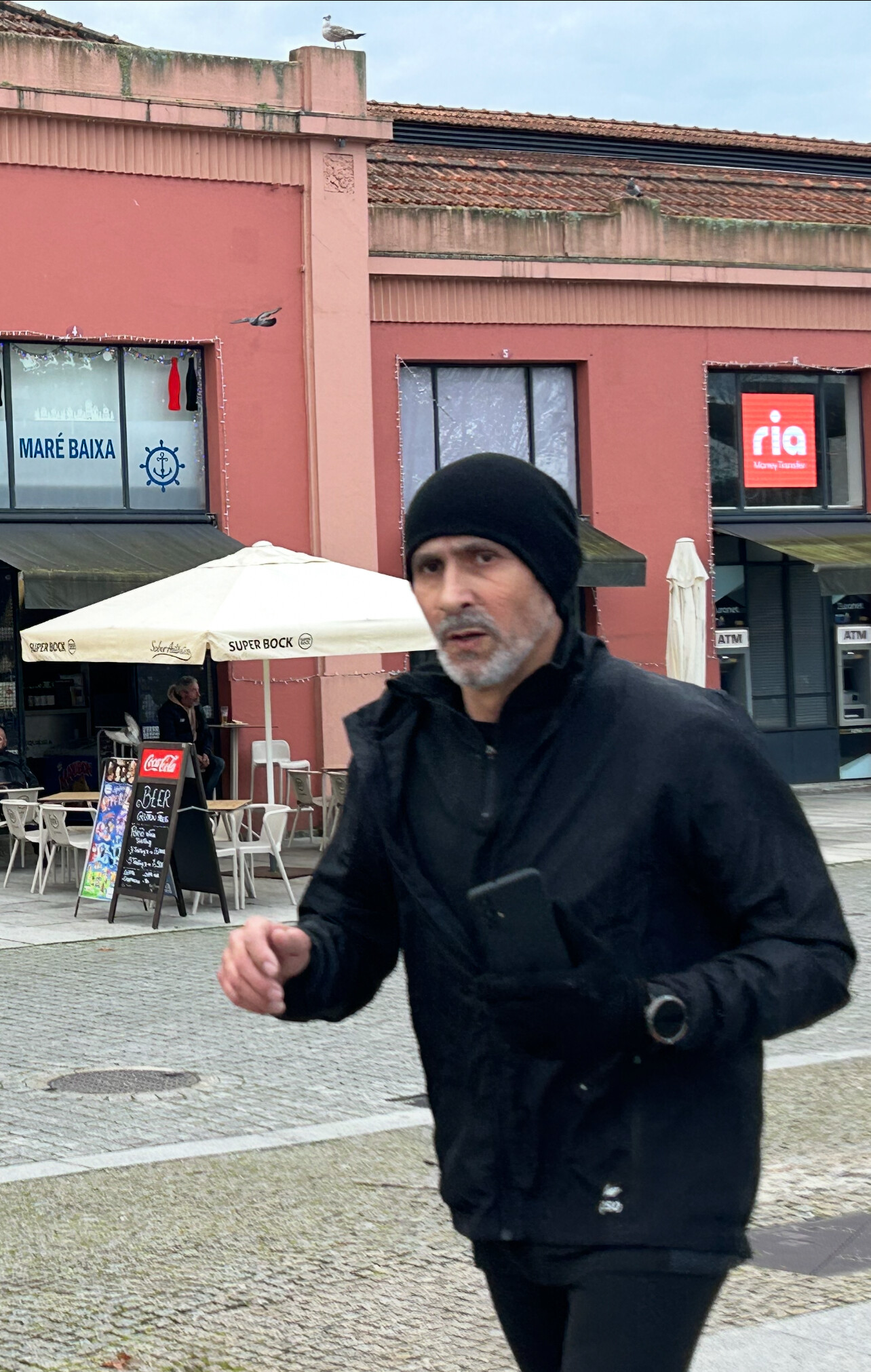
What made the impression even stronger was the range of runners. Men and women, young and old, first-time joggers and clearly experienced athletes. Some moved easily through recovery miles, others pushed the pace with purpose. Porto didn’t feel like a place where people run occasionally—it felt like a place where running is part of everyday life.

A City Built for Running
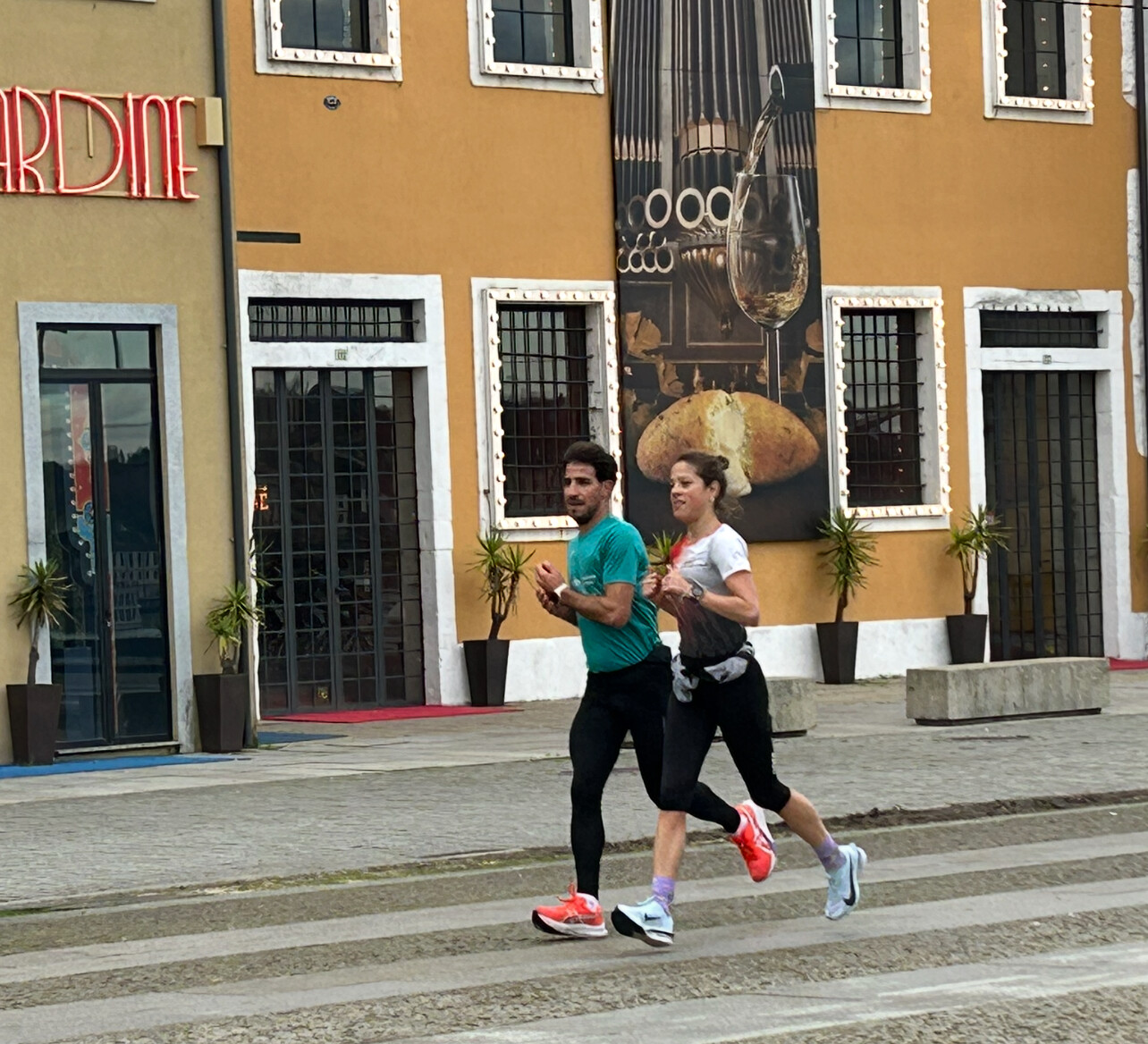
Few European cities offer the natural variety Porto does. Flat riverside paths stretch for miles along the Douro, ideal for steady aerobic runs. Step slightly inland and runners find rolling terrain and short climbs that quietly build strength. Smooth paved walkways blend into older stone streets, giving every run a mix of rhythm and challenge.
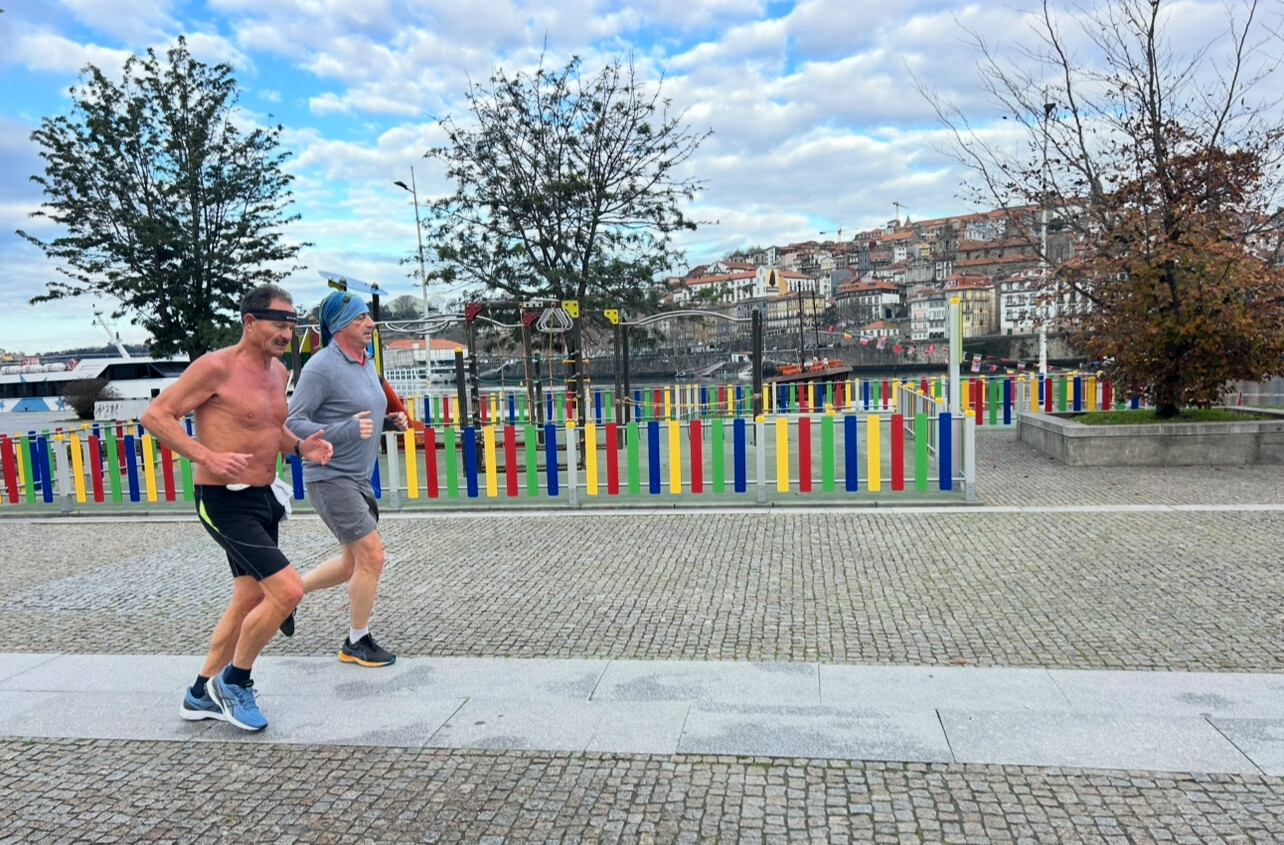
One of the most striking sights was runners crossing the Dom Luís I Bridge, high and low above the river, linking Porto with Vila Nova de Gaia. It’s exposed, often windy, and far from flat—yet runners of all ages crossed confidently. This wasn’t something special or staged. It was routine.
A Deeper Running Culture
Compared with other European cities, including Lisbon, Porto appeared to have more runners consistently on the streets, particularly along the riverfront. My wife was there three days during Christmas this year. At nearly any time of day, runners passed in both directions, quietly acknowledging one another as part of an unspoken community.
Running here isn’t limited to parks or hidden routes. Runners move through the heart of the city—past cafés, historic façades, working docks, and tourist corridors. They don’t stand out. They belong.
What stood out most was how unpretentious it all felt. No spectacle. No performance. Just people running because that’s what they do.
Home to Major Races
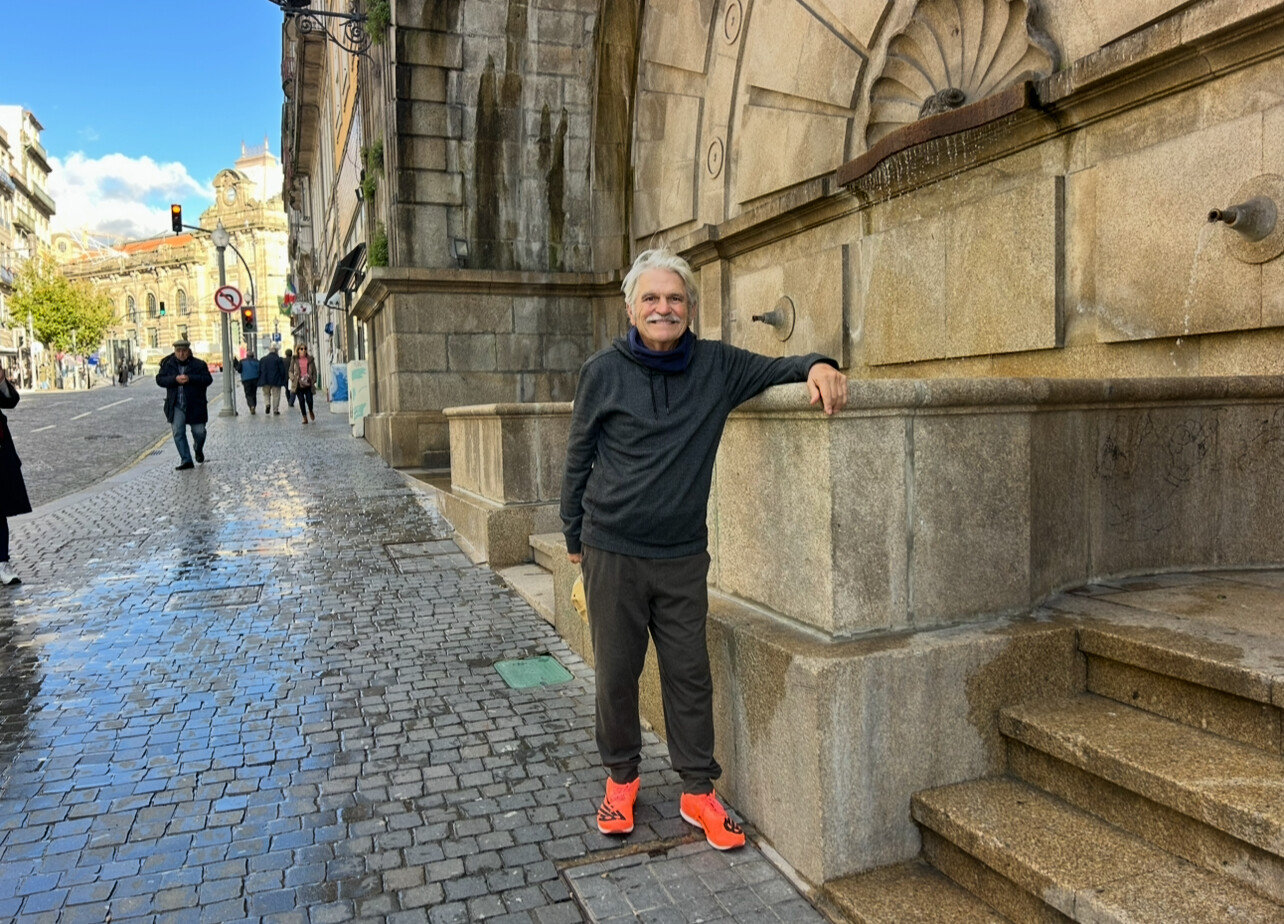
This everyday running culture naturally feeds into Porto’s race calendar. The city hosts some of Portugal’s most important road events, including the Porto Marathon and the Porto Half Marathon, races that draw international fields while remaining deeply connected to the local running community.
These events showcase exactly what makes Porto special: fast stretches along the river, challenging sections through the city, and unforgettable scenery from start to finish. For visiting runners, they offer a rare combination—serious competition in a city that genuinely understands and supports running.
Portugal has quietly built a strong endurance-sports identity over the past decade, and Porto reflects that evolution perfectly. The city doesn’t just host races—it lives the sport year-round.
A Runner’s City, Without Trying to Be One
Porto may be best known for its wine cellars, historic architecture, and dramatic river views, but it is increasingly clear that it is also a runner’s city—not by branding or promotion, but by habit.
For runners visiting from abroad, the appeal is immediate. Lace up your shoes, step outside, follow the river, cross a bridge, turn around when it feels right—and suddenly you’re part of the flow.
The best running cities are often the ones that don’t advertise themselves. They reveal who they are through simple, repeated moments.
In Porto, that moment happens again and again:
Runners moving steadily along the Douro.
Across bridges.
Through history.
Every single day even on Christmas Day.
(12/27/2025) ⚡AMPby Bob Anderson for My Best Runs
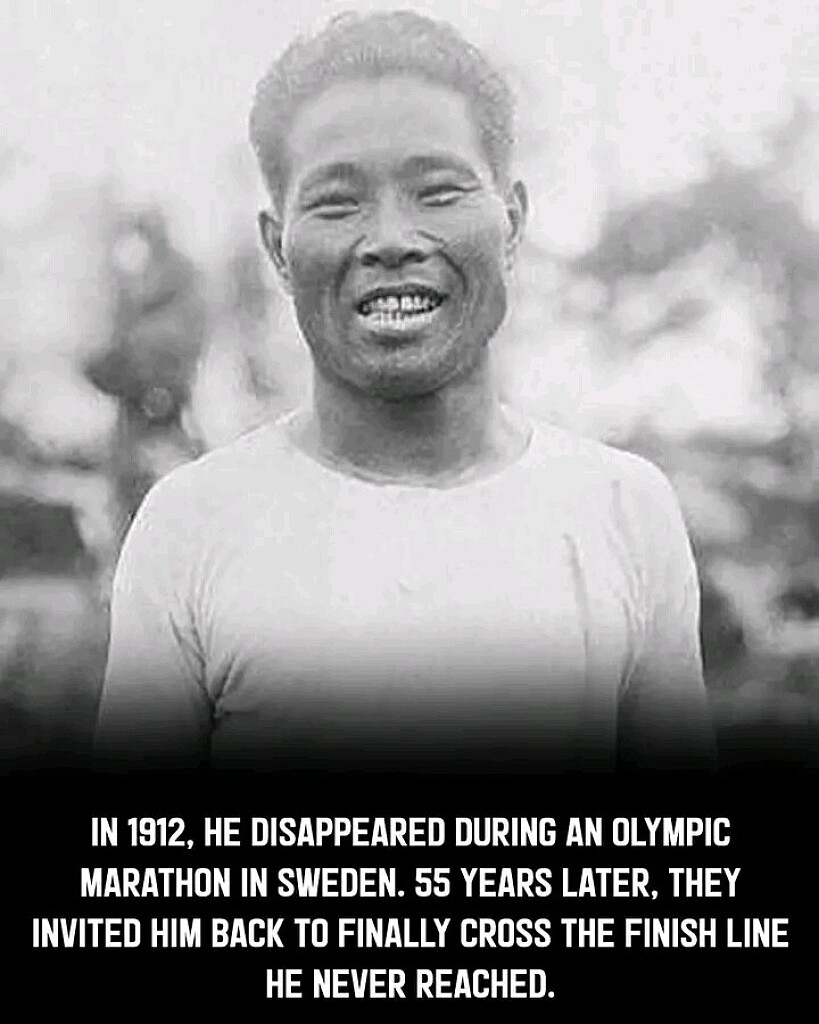
The Runner Who Vanished in 1912 and Returned in 1967
On July 14, 1912, Shizo Kanakuri stood on the start line of the Olympic marathon in Stockholm, carrying more than just race-day nerves. At 20 years old, he was representing Japan for the first time in Olympic history, introducing his country to the global stage of athletics.
Kanakuri wasn’t there simply to participate. He was one of the world’s best distance runners, having recently set a world record for 40 kilometers in 2:32:45. Expectations were high.
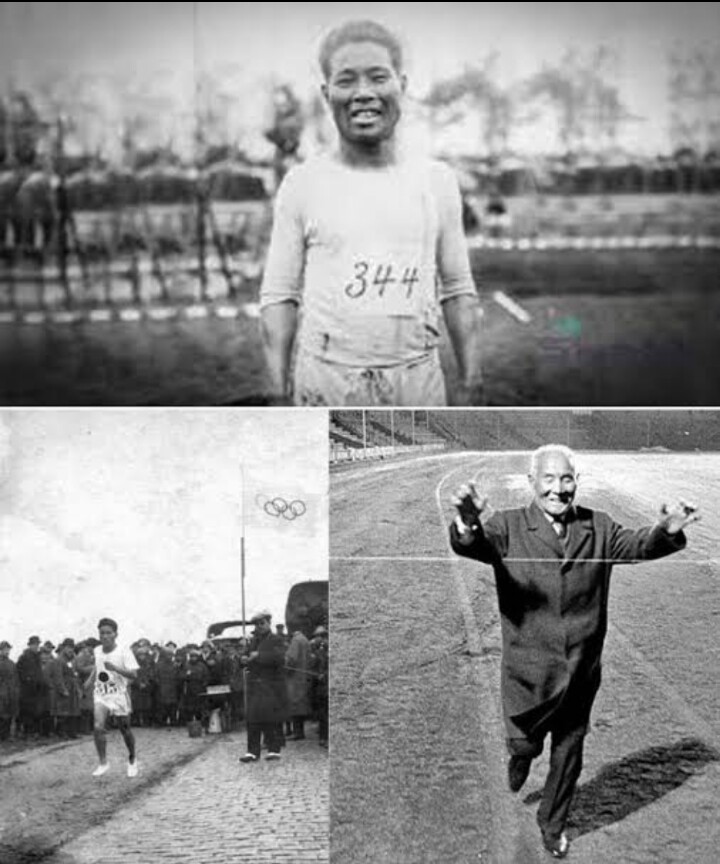
But Stockholm delivered brutal conditions. Temperatures soared to 32°C (90°F), devastating for marathoners. Sixty-eight runners from 19 nations started the race, the largest Olympic marathon field to date. Many would not finish.
Running near the front early on, Kanakuri made a decision shaped by the training beliefs of the era: he chose not to drink water, convinced it would slow him down. In extreme heat, the decision proved disastrous.
By 27 kilometers, he was in serious trouble—blurred vision, heavy legs, heat overwhelming his body. Near the course, he spotted a family garden party. Staggering off the route, he was taken in by the Pettersson family, who gave him water and juice. Exhausted, Kanakuri sat down—and fell asleep.
When he woke, the marathon was long over.
Ashamed and overwhelmed, Kanakuri quietly left Stockholm without informing race officials. To the Swedish Olympic Committee, he simply vanished. For decades, Olympic records listed him as missing.
But Kanakuri wasn’t lost. He returned to Japan, continued running, and later competed in the 1920 and 1924 Olympics. He never won a medal, but he became a teacher, mentor, and pioneer of Japanese distance running. He built a full life—married, raised six children, and inspired generations.
In 1962, Swedish journalist Claes Fellbom uncovered the mystery while researching Olympic history. He tracked Kanakuri down in Japan and learned the full story. When Swedish officials heard it, they made an extraordinary decision.
They invited him back.
In 1967—55 years after the race—Kanakuri returned to Stockholm at age 76. He visited the same neighborhood where he had stopped in 1912, met the family connected to that day, and was escorted to the Olympic Stadium.
A finish-line banner was raised. Cameras rolled.
Dressed in a suit, not racing gear, Shizo Kanakuri walked across the finish line he never reached as a young man. The clock was stopped ceremonially.
Official time:
54 years, 8 months, 6 days, 5 hours, 32 minutes, 20.3 seconds
The longest marathon in Olympic history.
Asked about his race, Kanakuri smiled and joked:
“It was a long run. Along the way, I got married, had six children, and ten grandchildren.”
Kanakuri died in 1983 at age 92. He is remembered not for medals or records, but for a story that captured something deeper about sport.
Sometimes running isn’t about winning.
Sometimes it’s about finishing—no matter how long it takes.
And sometimes, a finish line waits.
(12/25/2025) ⚡AMPby Erick Cheruiyot
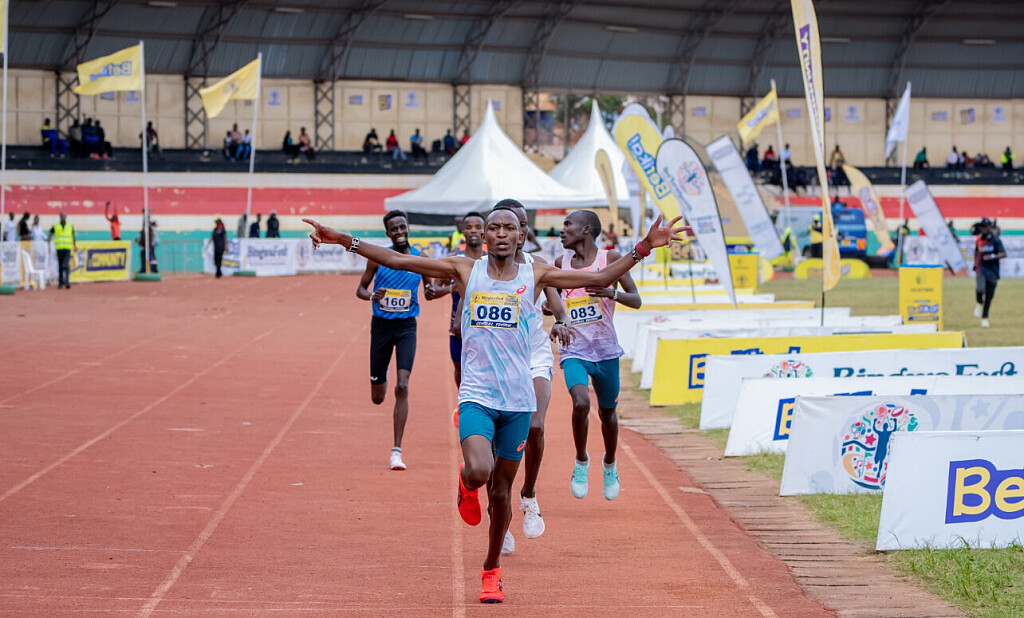
Two Weeks, Two Terrains: Kipkoech Masters Cross Country and Bingwafest Track
Barely days after asserting his authority on the rugged highland trails of Chepsaita in Turbo, 20-year-old Mathew Kipkoech arrived at Kinoru Stadium in Meru with momentum firmly on his side and clarity in his purpose. Chepsaita, deep in Kenya’s Rift Valley, is a high-altitude proving ground where thin air, rolling terrain, and unforgiving dirt paths reward strength and resilience. There, Kipkoech powered to victory at the Great Chepsaita Cross Country Run 10km in 31:49, a World Athletics Gold Label race that underscored the quality of competition he overcame.
On Saturday at the Bingwafest 2025 Central Edition, he translated that cross-country form into a composed and intelligent victory in the men’s 10,000m, confirming his ability to dominate across terrains.
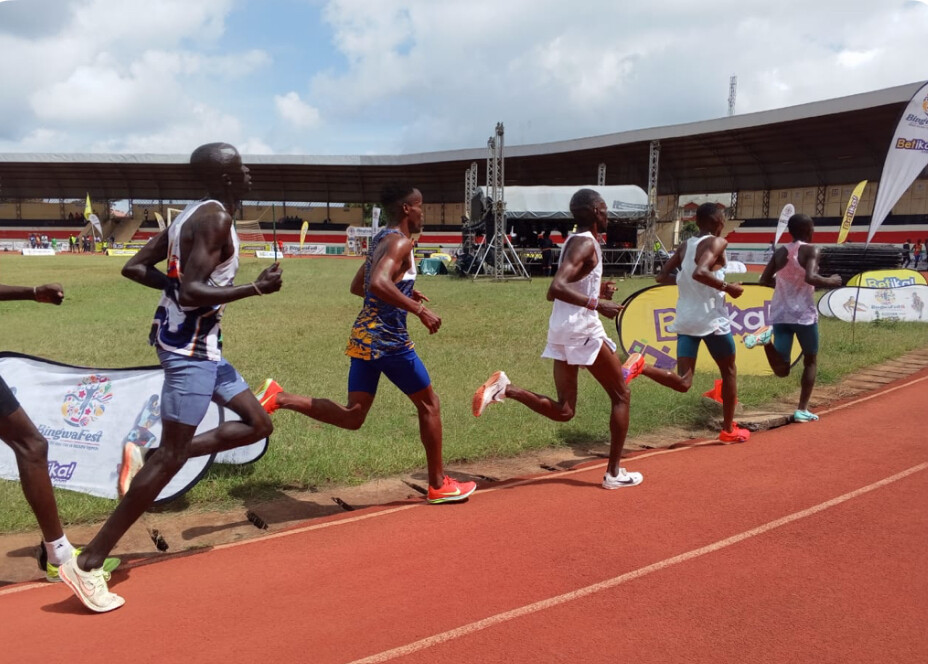
Powered by Betika, Bingwafest again showed its growing importance as a competitive platform for Kenyan athletics, bringing together established performers and emerging talent in a disciplined, high-quality racing environment.
Forged at Altitude, Focused on the Track
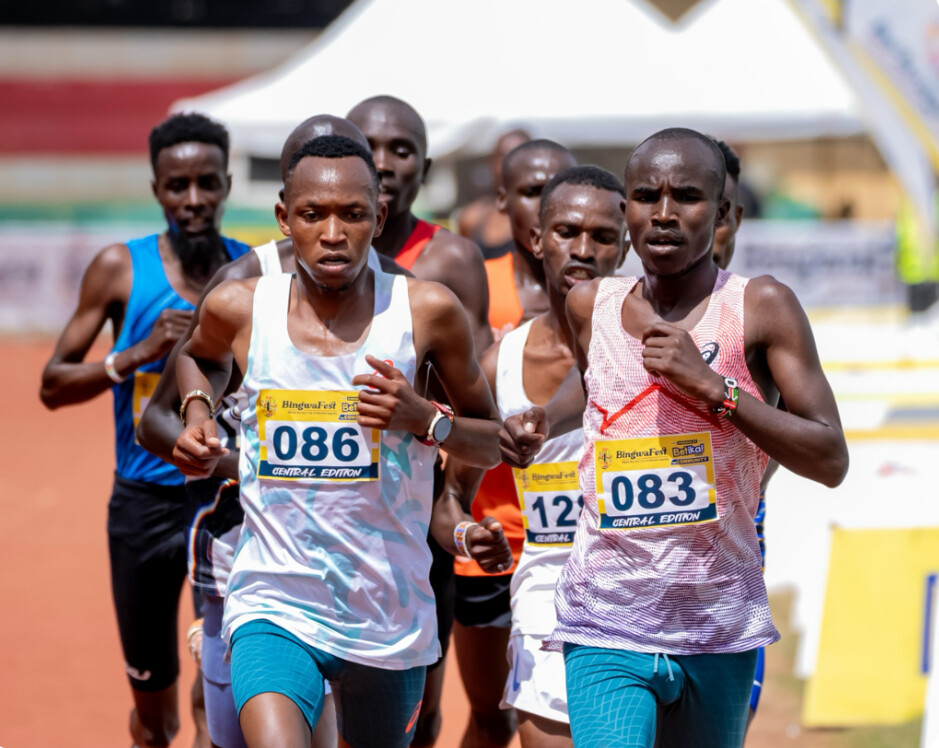
Before the gun fired at Kinoru Stadium, the tension was unmistakable. A deep, evenly matched field crowded the start line, spikes aligned, bodies angled forward in quiet concentration. Kipkoech stood among them calm and deliberate. While Chepsaita had tested his endurance over uneven ground, the track demanded patience and precision.
When the race began, he resisted the urge to dictate early, settling smoothly into the lead group as the pace found a controlled rhythm.
A Tactical Test of Patience
From the opening laps, it was clear this would be a race of restraint rather than bravado. The tempo remained competitive but measured, forming a compact lead pack that refused to break. Kipkoech stayed ever-present and unhurried, tracked closely by Justus Lelinton, Amos Langat, Rasini Lemeteri, and Victor Kimosop.
Through halfway, the leaders were separated by seconds rather than meters, with splits hovering in the low 2:50 range. The race had evolved into a tactical contest—a chess match run at speed.
Control Without Drama
What set Kipkoech apart was not flamboyance, but authority. As fatigue crept in, he subtly tightened the pace—no sudden surge, just a steady escalation. Lelinton stayed attached, while Langat and Lemeteri began to feel the strain.
Behind them, Julius Kipkwam and Benson Mashon fought to maintain contact as the quality of the field ensured every position had to be earned.
The Decisive Finish
When the bell rang, the outcome finally revealed itself. Kipkoech applied one final, sustained increase in pressure. Lelinton fought bravely but could not respond. Down the home straight, Kipkoech ran tall and composed, crossing the line in 28:44.22.
Lelinton followed in 28:44.73, with Langat third in 28:45.24. Lemeteri (28:45.85), Kimosop (28:46.56), and Kipkwam (28:47.07) completed a tightly packed top six—an emphatic illustration of the race’s depth.
“You Must Think on the Track”
“It was not an easy race, especially coming so soon after Chepsaita,” Kipkoech said afterward. “The field was very strong, so I had to use tactics and stay patient.”
He emphasized the contrast between disciplines. “At Chepsaita, you rely on strength because the terrain is tough. On the track, you must think. You cannot rush—you wait for the right moment.”
Built for the Global Stage
That composure has been shaped beyond Kenya’s domestic circuit. In January 2023, Kipkoech ran a personal best 13:18 at the Valencia 10km. Later that year, he competed at the Valencia Half Marathon, where four athletes dipped under 58 minutes, led by former world record-holder Kibiwott Kandie. Those experiences sharpened his pace judgment—qualities clearly evident in Meru.
This was Kipkoech’s first appearance at Bingwafest, and it delivered more than a win—it set a benchmark. Enjoying a season free from injury, he now looks ahead with confidence, with interval training anchoring his preparation.
Managed under ASICs alongside women’s standout Lucy Chemnung, Kipkoech’s performance highlighted the strength of structured athlete development on display at Kinoru Stadium.
From the high-altitude trails of Chepsaita to the precision lanes of Meru, Mathew Kipkoech did not simply win.
He controlled the race—and reaffirmed his readiness for the global stage.
(12/23/2025) ⚡AMPby Robert Kibet for My Best Runs
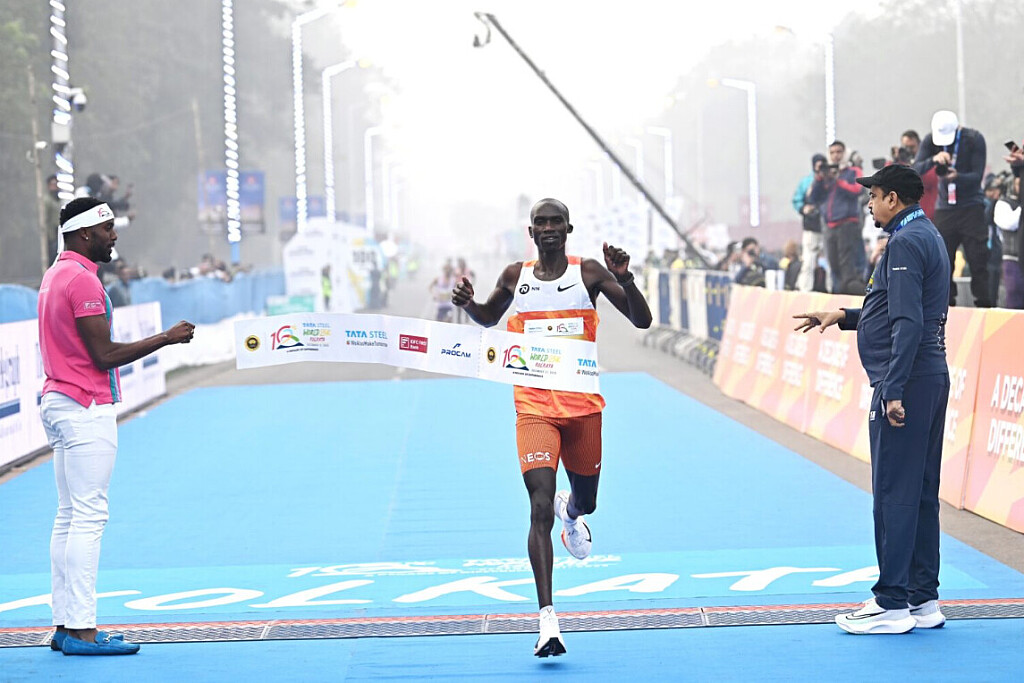
Joshua Cheptegei and Degitu Azimeraw Win Kolkata 25K
The 10th edition of the Tata Steel World 25K delivered a compelling blend of experience and debut brilliance on Sunday (Dec 21) morning in Kolkata, India. Ethiopia’s Degitu Azimeraw claimed a comeback victory in the women’s race, while Olympic and world champion Joshua Cheptegeiproduced a measured, authoritative win in his first-ever 25K appearance.
Azimeraw Returns to the Top
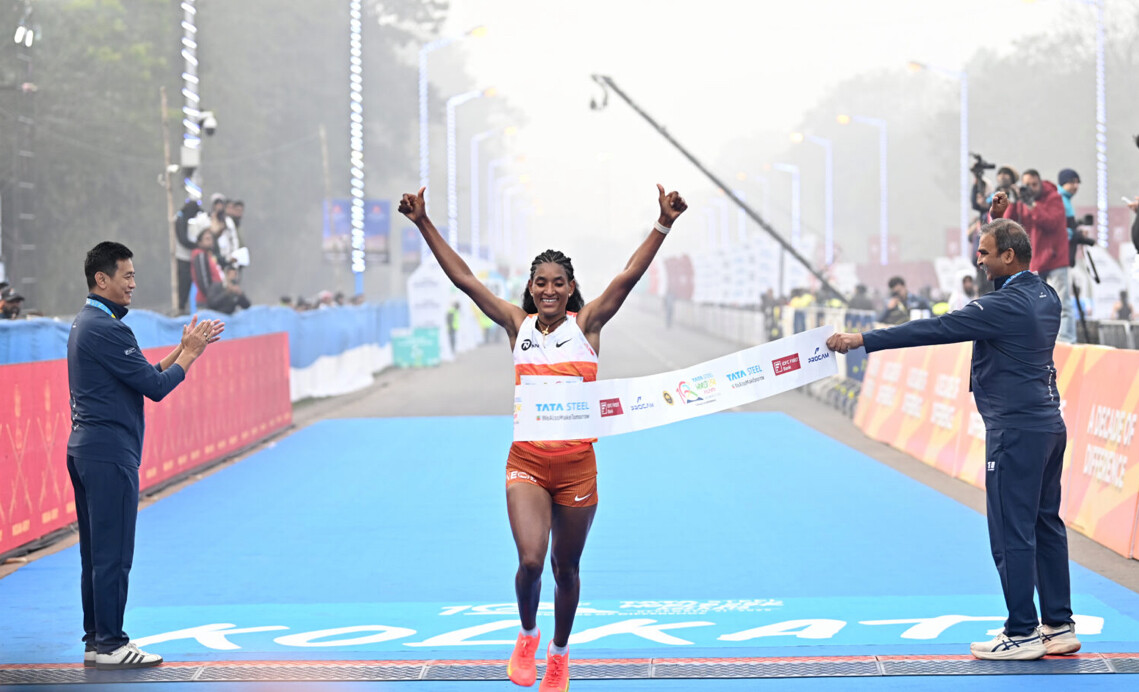
Run under cool conditions, the women’s race opened with a tightly packed Ethiopian quartet through the opening 5 km. Sutume Asefa Kebede—winner of this year’s Tokyo Marathon and a two-time defending champion in Kolkata—was the most decorated name in the group, joined by Azimeraw and Meselech Alemayehu.
Azimeraw, who won in Kolkata in 2017 and finished fourth the following year, stayed patient through the early stages. Alemayehu briefly edged ahead around 15 km, but Azimeraw responded decisively soon after, lifting the pace and asserting control.
She crossed the line in 1:19:36, securing her second Kolkata title eight years after her first. Kebede rallied late but had to settle for second in 1:20:28, with Alemayehu third in 1:20:48.
“It wasn’t the plan before for me,” Azimeraw said afterward. “My legs were a little stiff early, so I focused on staying strong. After 10 km, they felt better, and I kept building my race and speed. I’m very happy with this win.”
Cheptegei Delivers on 25K Debut
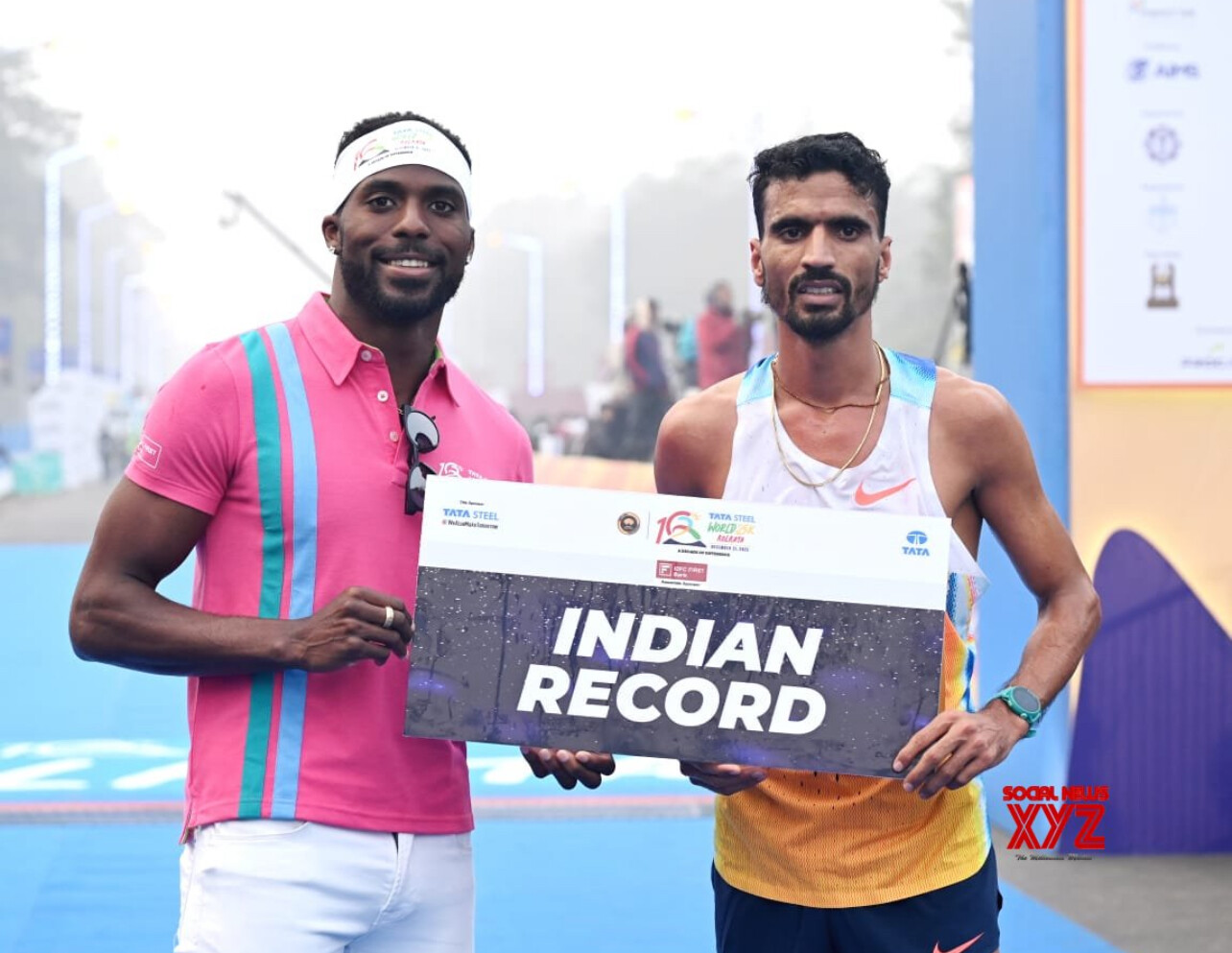
The men’s race unfolded as a tactical contest, led for much of the distance by Lesotho’s Tebello Ramakongoana. Tanzania’s Alphonce Simbu and Cheptegei shadowed closely as the leaders passed 20 km in 57:34 and the half-marathon mark in 60:49.
Cheptegei made his move soon after, breaking clear with a controlled surge that gradually opened daylight. Despite a determined late chase from Simbu, the Ugandan star held firm to win in 1:11:49, his first victory at the distance. Simbu followed in 1:11:56, with Ramakongoana third in 1:11:59.
“Winning mattered more than the record for me,” Cheptegei said. “Coming back to Kolkata and winning here is special. This victory gives me confidence and positivity as I prepare for my next marathon.”
Neither winner managed to break the world best or course record, narrowly missing out on the event’s top performance bonuses.
Indian Runners Rewrite the Record Books
India’s elite races provided some of the day’s most striking storylines. Gulveer Singh delivered a statement run, finishing sixth overall in 1:12:06 and slicing more than two minutes off his own Indian best of 1:14:10 set in 2024. His aggressive yet controlled effort left the rest of the domestic field trailing by significant margins.
“Records come from consistency,” Gulveer said. “With strong support, dedicated coaches, and relentless training, the goal is to be better than yesterday. India is rising, step by step.”
In the women’s Indian elite race, Seema matched that authority. The Asian cross-country champion stopped the clock at 1:26:04, breaking the long-standing Indian course record of 1:26:53 set in 2017. She dominated from early on, steadily increasing her lead before cruising home with energy to spare.
“The course is more challenging now, but I came here with the mindset of winning,” Seema said. “Discipline and sacrifice are everything. My next goal is qualifying for the Asian and Commonwealth Games.”
A Decade of World-Class Racing
As the Tata Steel World 25K celebrated its 10th edition, Sunday’s results reinforced its status as one of Asia’s premier road races—where Olympic champions, seasoned marathoners and rising national talents meet on equal footing. For Azimeraw and Cheptegei, Kolkata offered confidence and momentum; for India’s best, it marked another step forward on the global stage.
Overall International Men
1. Joshua Cheptegei (UGA) — 1:11:49
2. Alphonce Felix Simbu (TAN) — 1:11:56
3. Tebello Ramakongoana (LES) — 1:11:59
4. Collins Kipkorir (KEN) — 1:12:02
5. Gulveer Singh (IND) — 1:12:06
6. Fikadu Liche (ETH) — 1:12:09
7. Wisley Yego (KEN) — 1:12:12
8. Haymanot Alew (ETH) — 1:14:35
9. Niguse Abera (ETH) — 1:14:38
10. Harmanjot Singh (IND) — 1:15:11
Overall International Women
1. Degitu Azimeraw (ETH) — 1:19:36
2. Sutume Asefa Kebede (ETH) — 1:20:28
3. Meselech Alemayehu (ETH) — 1:20:48
4. Kuftu Tahir (ETH) — 1:23:32
5. Demilew Zemenaw (ETH) — 1:23:34
6. Netsanet Tafere (ETH) — 1:23:56
7. Rediet Daniel (ETH) — 1:24:18
8. Aberash Minsewo (ETH) — 1:24:48
9. Ergat Heshe (ETH) — 1:24:59
10. Seema (IND) — 1:26:04
(12/22/2025) ⚡AMPby Christopher Kelsall

Kolkata 25k
In Kolkata, a city rich in history, culture and custom, the third Sunday in December is a date that is eagerly anticipated. The Tata Steel Kolkata 25K (TSK 25K) has become synonymous with running in eastern India since it began in 2014. India’s first AIMS-certified race in the unique 25 km distance, the TSK 25K went global in its fourth...
more...
Mailu and Omare Win Bangsaen21 Half Marathon in Thailand
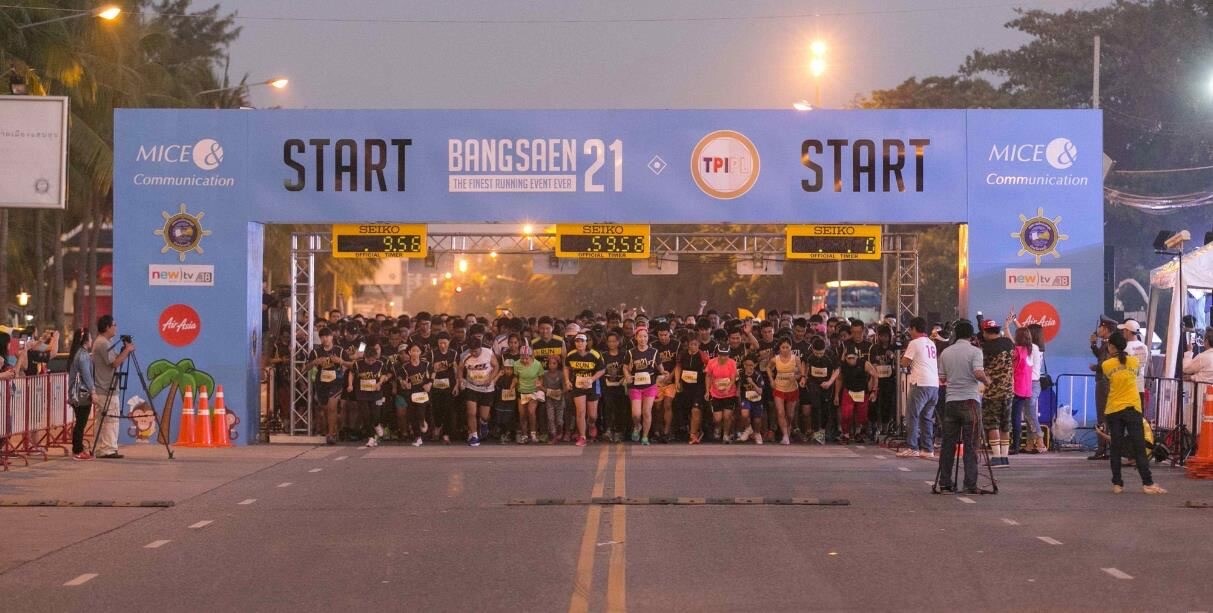
The coastline of Bangsaen, Thailand, provided a fitting stage for season-ending statements as the Bangsaen21 Half Marathon unfolded in the cool pre-dawn hours. On a course that rewards discipline as much as speed, Kenya’s Samwel Nyamai Mailu and Dolphine Nyaboke Omare delivered controlled, authoritative victories—closing their 2025 campaigns with confidence and setting a clear tone for the road season ahead.
From the opening kilometres, the race signaled its intent. The pace was honest but restrained, shaped by exposed coastal stretches and rising humidity along the Gulf of Thailand. Rather than early fireworks, both elite fields settled into rhythm, waiting for the moment when patience would turn into purpose.
Mailu Times It Perfectly
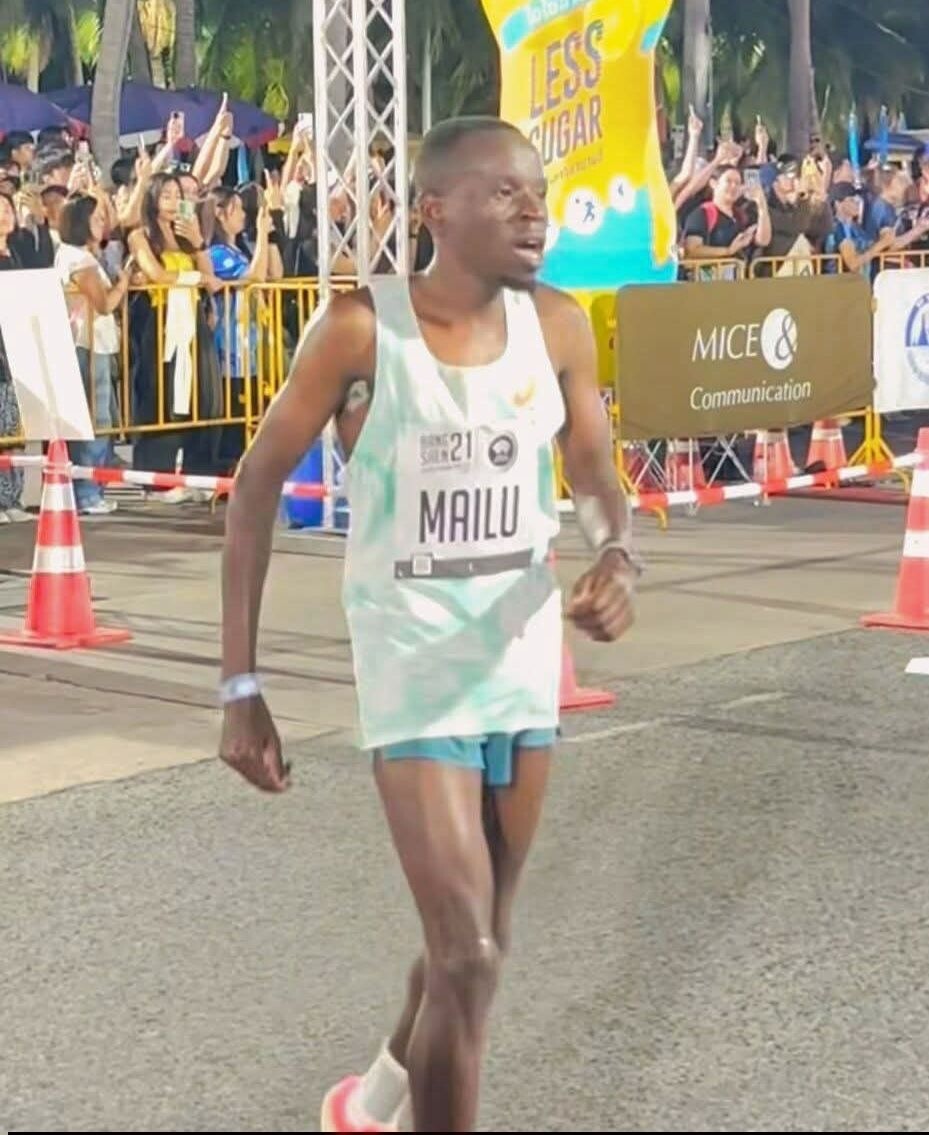
In the men’s race, a compact lead pack flowed smoothly through the early stages, with Kenyan and Ethiopian runners sharing the workload. Mailu ran economically and composed—never forcing the pace, never drifting from contention.
As the field passed halfway, the tempo tightened. Between 15 and 18 kilometres, Mailu applied sustained pressure, lifting the pace without a sharp surge. The move was subtle but decisive. Ethiopia’s Teresa Nyakola and Regasa Seyoum Beharu responded gamely, but the Kenyan’s rhythm proved relentless. By the closing kilometres, the gap had opened, and Mailu crossed the line in 1:02:59, a victory built on control and timing.
“This race was important for me to close the year well,” Mailu said. “I ran with patience and trusted my training. Now I’ll return to training and start preparing for next year’s road races.”
Nyakola secured second in 1:03:22, with Seyoum third in 1:03:36, completing a podium defined by tactical intelligence rather than early aggression.
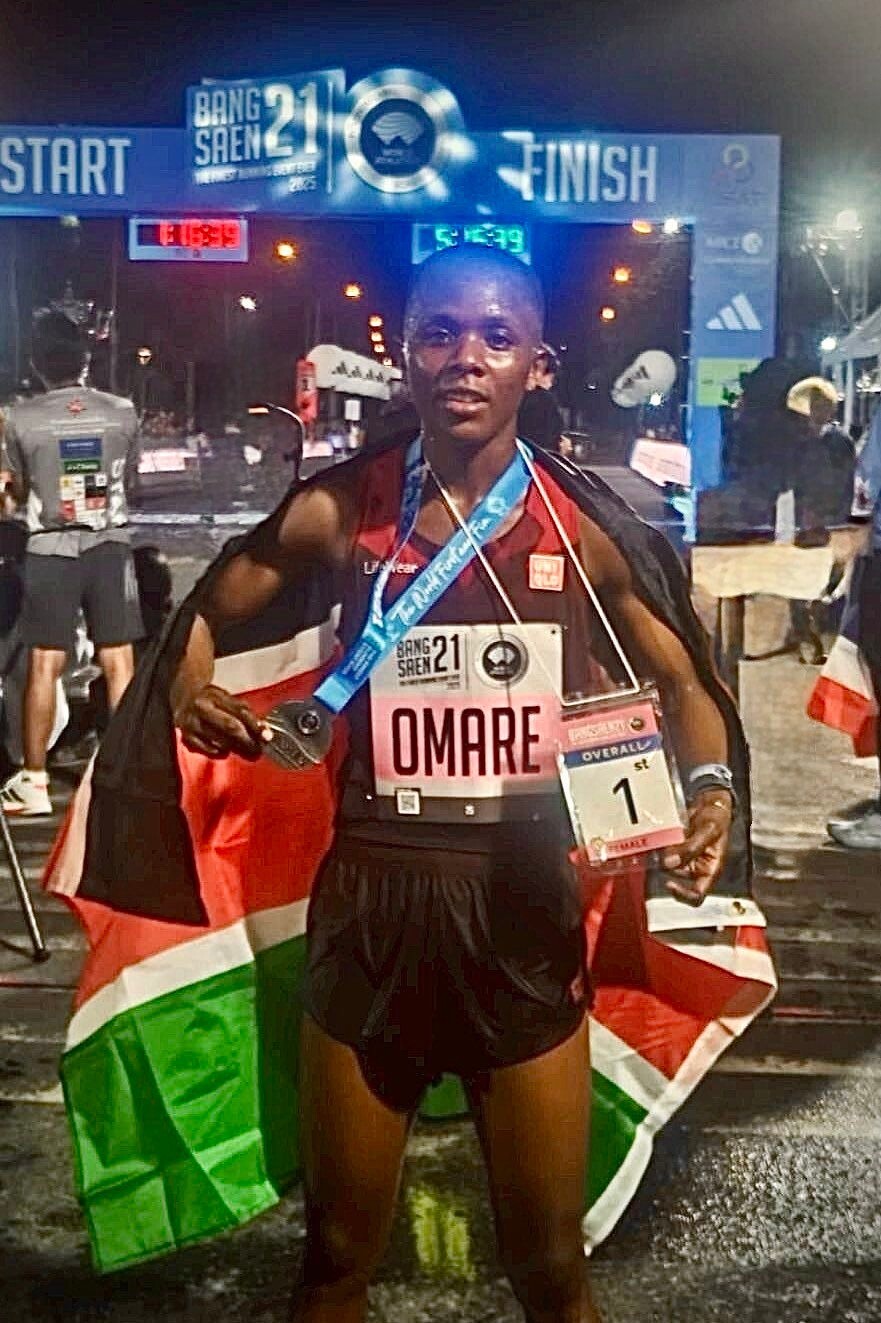
Omare’s Authority in the Women’s Race
If the men’s contest was about timing, the women’s race was about command.
From the outset, Omare took responsibility at the front, dictating a steady, uncompromising tempo. Ethiopia’s Beriha Gebreslasie and Mehret Gemeda stayed close, forming a compact trio through the middle stages as the course flattened along the coast.
The separation came quietly. Between 12 and 16 kilometres, Omare increased the pace gradually, stretching the elastic until it finally snapped. Without drama, she edged clear, maintaining form and cadence as the humidity deepened. Omare crossed the line in 1:10:14—a performance marked by calm authority and fatigue resistance.
“I’m happy to finish the year with a win,” Omare said. “This race gives me confidence. I’ll focus on next year’s road season, building step by step for the big races ahead.”
Gebreslasie finished second in 1:11:12, while Gemeda claimed third in 1:12:30, both producing resilient runs that kept the contest honest deep into the second half.
Discipline Rewarded on the Coast
Bangsaen21 once again proved to be a race that rewards restraint. The flat profile invites ambition, but the conditions punish excess. Those who conserved early and committed late emerged strongest.
For Mailu and Omare, the victories were about more than the clock—closing a demanding year with clarity, validating months of preparation, and turning the page with purpose. As the sun rose over the Gulf of Thailand and applause filled the finish area, the message was clear: the champions leave Bangsaen with momentum, eyes already fixed on 2026 and the global road calendar ahead.
Bangsaen21 2025 Results
Men
Samwel Nyamai Mailu (KEN) — 1:02:59
Teresa Nyakola (ETH) — 1:03:22
Regasa Seyoum Beharu (ETH) — 1:03:36
Gelana Teshome (ETH) — 1:04:20
Eyob Faniel (ITA) — 1:05:54
Abdi Kebede (ETH) — 1:05:55
Nattawut Innum (THA) — 1:10:10
Arthit Soda (THA) — 1:10:50
Pongsakorn Suksawat (THA) — 1:11:32
Women
Dolphine Nyaboke Omare (KEN) — 1:10:14
Beriha Gebreslasie (ETH) — 1:11:12
Mehret Gemeda (ETH) — 1:12:30
Lelise Bekele (ETH) — 1:13:49
Kalkidan Debeb (ETH) — 1:17:59
Pareeya Sonsem (THA) — 1:22:05
Ornanong Wongsorn (THA) — 1:22:14
Linda Chantachit (THA) — 1:24:13
Kawinthida Thadased (THA) — 1:25:35
Thanaporn Phatthanothai (THA) — 1:25:37
(12/22/2025) ⚡AMPby Robert Kibet for My Best Runs

Bangsaen 21
We woud like to invite all kind of runners from all over the world to join us in the firts an only half marathon "World Athletics Elite Label" Award in Thailand. Bangsaen 21 Half Marathon, ASIA´S best Half Marathon. A single race of Half Marathon distance, experience the most beautiful and challege course along the unique Bangsaen Beach....
more...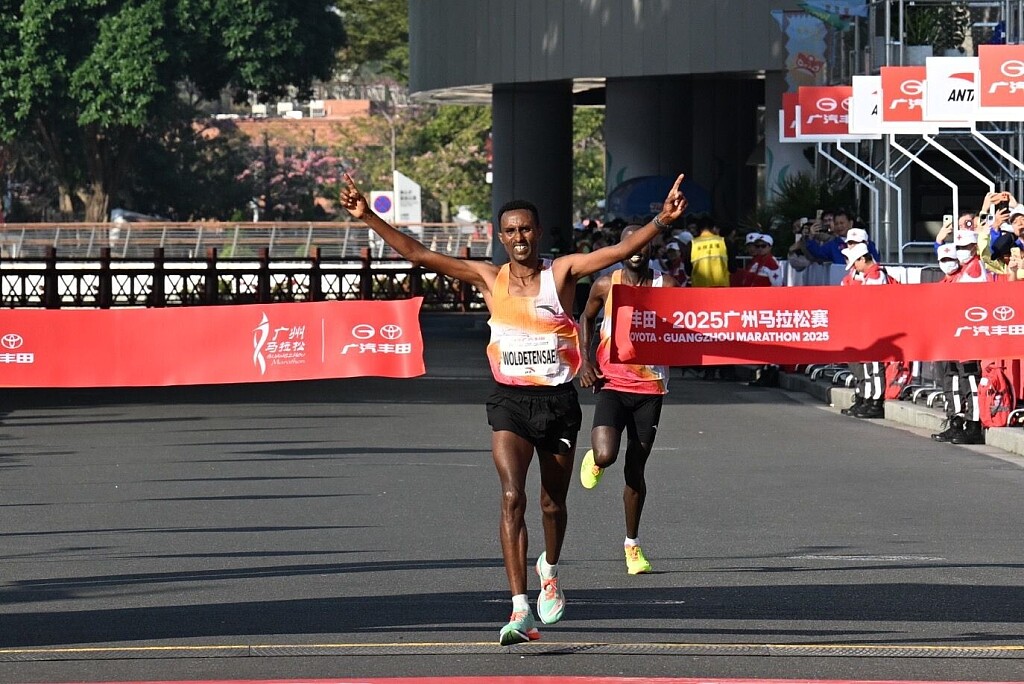
Ethiopian, Kenyan and Chinese Stars Shine at the Guangzhou International Marathon
Held in Guangzhou, the 2025 Guangzhou International Marathon brought 26,000 runners to the streets of southern China on December 21, unfolding beneath a crisp Lingnan sunrise at Tianhe Sports Center. From elites hunting fast times to first-timers savoring the spectacle, the day delivered standout performances and a citywide celebration of running.
The race followed the classic “One River, Two Banks” course—an urban showcase linking riverside boulevards, gleaming skyscrapers and historic districts, with signature crossings such as Liede Bridge and Haixinsha Island Park before the final run-in.

Men: A Two-Second Duel
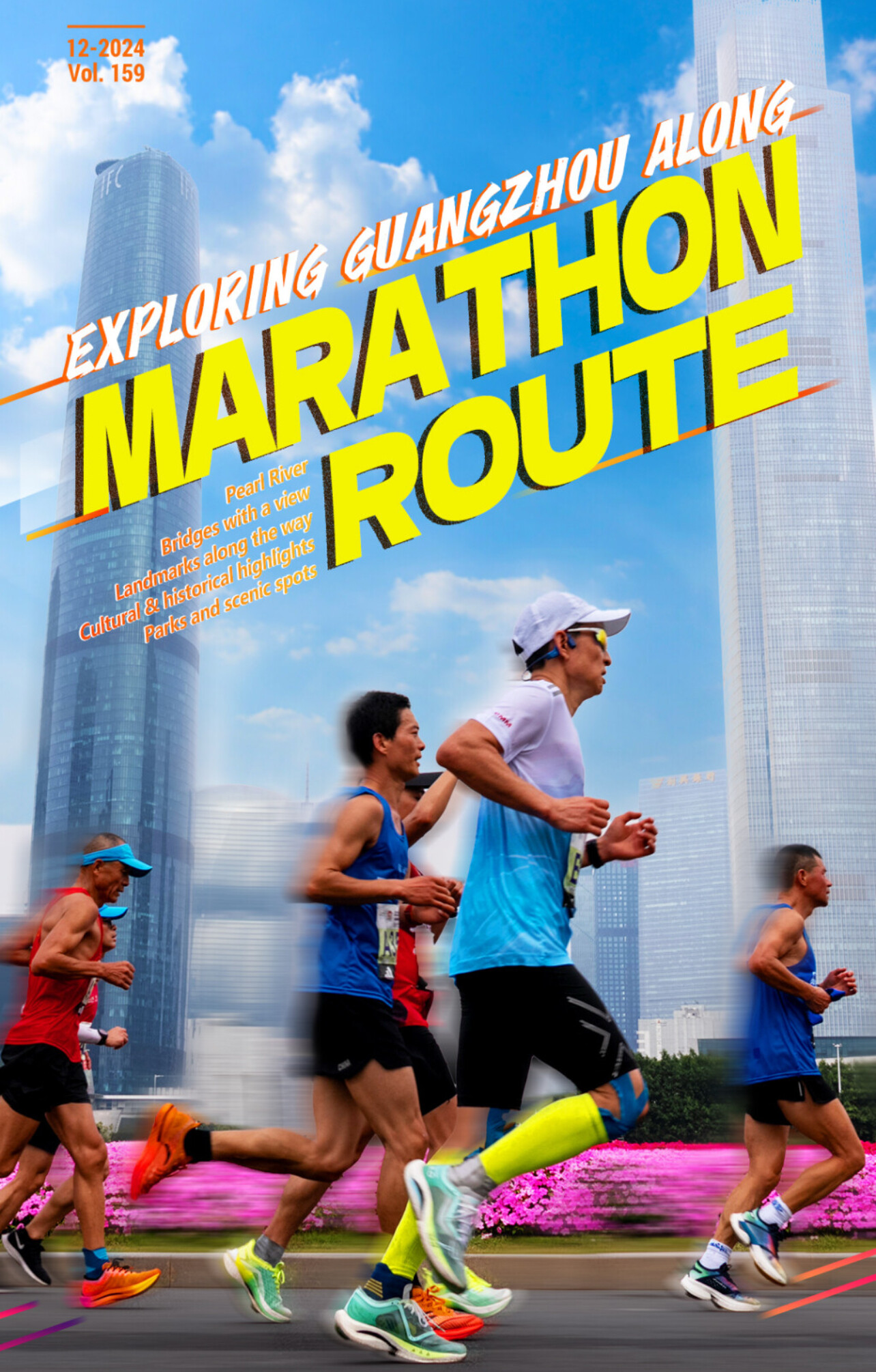
Ethiopia’s Afewerk Mesfin Woldetensae controlled the men’s race with poise, timing his effort perfectly through the middle stages and holding firm to the line for victory in 2:12:23. Kenya’s Felix Kirwa pressed relentlessly and finished just two seconds back in 2:12:25, a thrilling margin that kept spectators on edge to the finish.
The loudest cheers came for China’s Zhaxi Ciren, who surged to third overall in 2:14:06 to claim top domestic honors—an important podium for home athletes on one of the country’s biggest road-racing stages.
Chinese runners showed impressive depth throughout the top eight. Yang Chunlong clocked 2:17:57, Solang Cairen followed in 2:18:34, while Zhou Youfa (2:20:15) and Deng Guomin (2:20:22) rounded out strong performances that underscored a rising competitive standard.
Women: Record-Setting Authority
The women’s race belonged to Kenya’s Joyce Chepkemoi Tele, who produced a commanding, front-to-back run to win in 2:22:40 and break the course record. Her effort combined bold early pacing with measured control and sustained strength to the tape.
Ethiopia completed the podium sweep as Betelihem Afenigus Yemer (2:27:52) and Chaltu Chimdesa Kumsa (2:31:37) followed, highlighting the nation’s depth and tactical sharpness on fast, city courses.
Chinese women also had reason to celebrate. Ding Changqin led the domestic contingent with a fine 2:35:40 for fifth overall. She was followed by Tang Xiaofang (2:40:26), Song Jinting (2:41:41) and Li Yingcui (2:45:36), all finishing inside the top eight.
A Festival on the Run
Beyond the front of the race, Guangzhou embraced marathon day. Creative costumes—from Cantonese opera tributes to animated mascots—dotted the route, while spectators packed bridges, plazas and riverside promenades, turning the course into a moving festival.
Organizers matched the energy with careful planning. Cooling mist stations, clearly marked aid points and visible safety crews helped ensure the 42.195-kilometer journey was both competitive and runner-friendly.
By day’s end, the 2025 Guangzhou International Marathon had crowned champions, rewritten records and delivered personal victories for thousands. For elites, the results will resonate into the season ahead; for the wider field, it was a day of breakthroughs and shared joy—running through one of China’s most vibrant cities.
Top Results — 2025 Guangzhou Marathon
Men
1. Afewerk Mesfin Woldetensae (ETH) — 2:12:23
2. Felix Kirwa (KEN) — 2:12:25
3. Zhaxi Ciren (CHN) — 2:14:06
4. Yang Chunlong (CHN) — 2:17:57
5. Solang Cairen (CHN) — 2:18:34
6. Zhou Youfa (CHN) — 2:20:15
7. Deng Guomin (CHN) — 2:20:22
Women
1. Joyce Chepkemoi Tele (KEN) — 2:22:40
2. Betelihem Afenigus Yemer (ETH) — 2:27:52
3. Chaltu Chimdesa Kumsa (ETH) — 2:31:37
4. Pending official release
5. Ding Changqin (CHN) — 2:35:40
6. Tang Xiaofang (CHN) — 2:40:26
7. Song Jinting (CHN) — 2:41:41
8. Li Yingcui (CHN) — 2:45:36
(12/22/2025) ⚡AMPby Robert Kibet for My Best Runs

Guangzhou International Marathon
The Guangzhou Marathon was launched in 2012 and certified by CAA as the A level event. From 2014 to 2017,Guangzhou Marathon was recognized as the CAA Gold Medal Race for four consecutive years. The year of 2018 has seen this event was upgraded as IAAF Gold Label Road Race after it was awarded as IAAF Bronze and Silver Label Road...
more...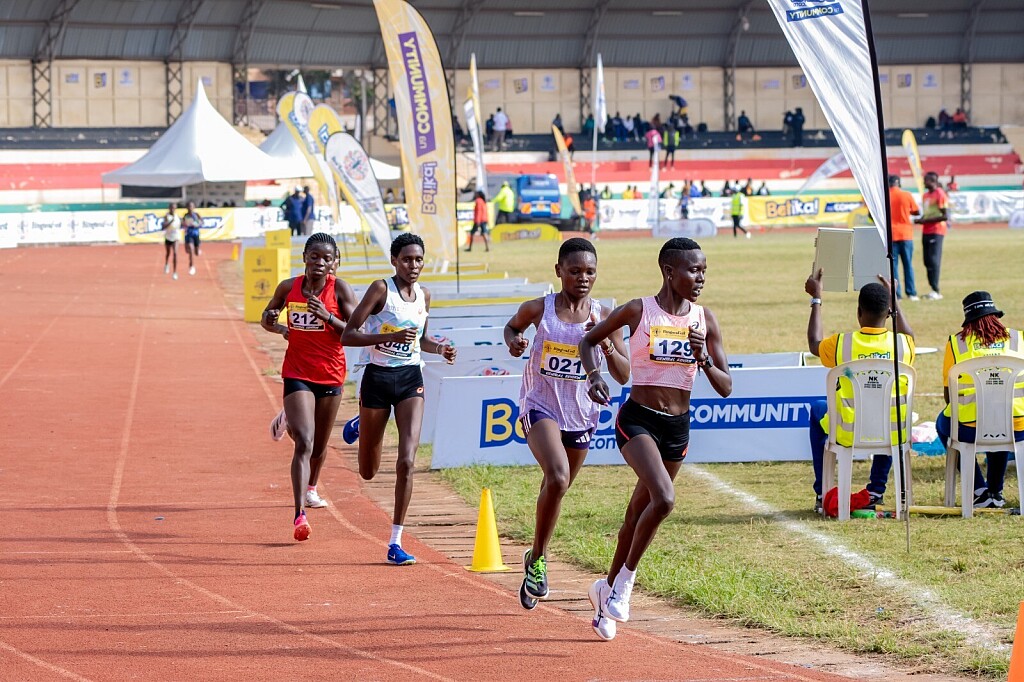
On the Road to Osaka, Barcelona, and Boston, Chemnung Doubles Up at Bingwafest in Meru
With her eyes fixed on pacing duties at the Osaka Women’s Marathon, racing the Barcelona Marathon, and building toward the Boston Marathon, Kenya’s Loice Chemnung turned Bingwafest 2025’s Central Edition into a statement performance—completing a commanding women’s 10,000m–5,000m double Dec 20 at Kinoru Stadium In Maru, Kenya.
Barely hours apart, Chemnung treated the track not as a destination but as a finely tuned instrument—honing speed and strength for the roads ahead. The West Pokot-born runner swept both distance titles, reinforcing a season that has reshaped her career trajectory and announced her as a serious marathon contender.
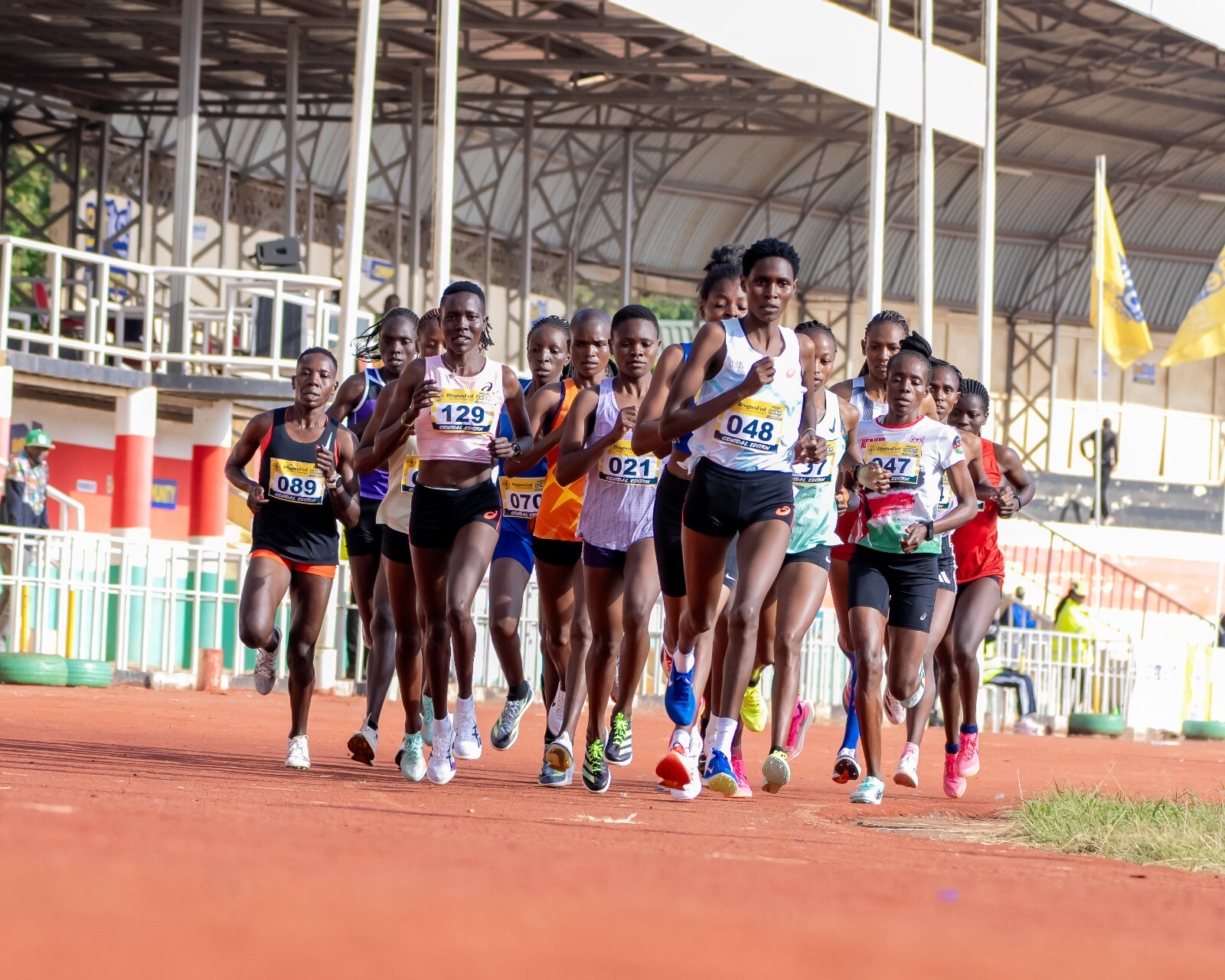
10,000m: Control, Pressure, and a Decisive Move
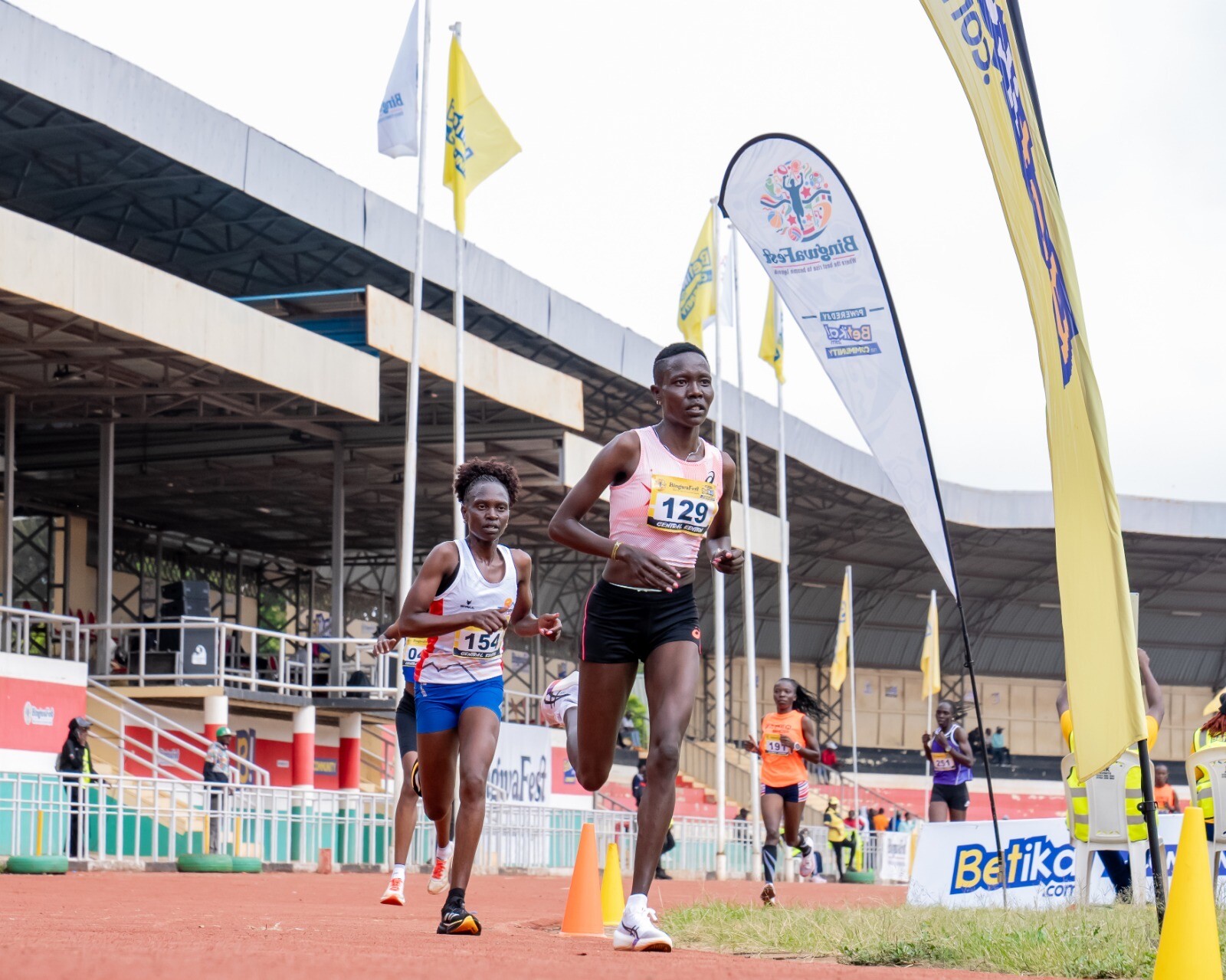
The women’s 10,000m opened the meeting with a tactical, high-quality contest. Chemnung asserted early control but faced sustained pressure from Maryam Lufti Njoki (formerly Christine Njoki). The pair exchanged the lead through the opening and middle stages, steadily stretching the field as the tempo rose.
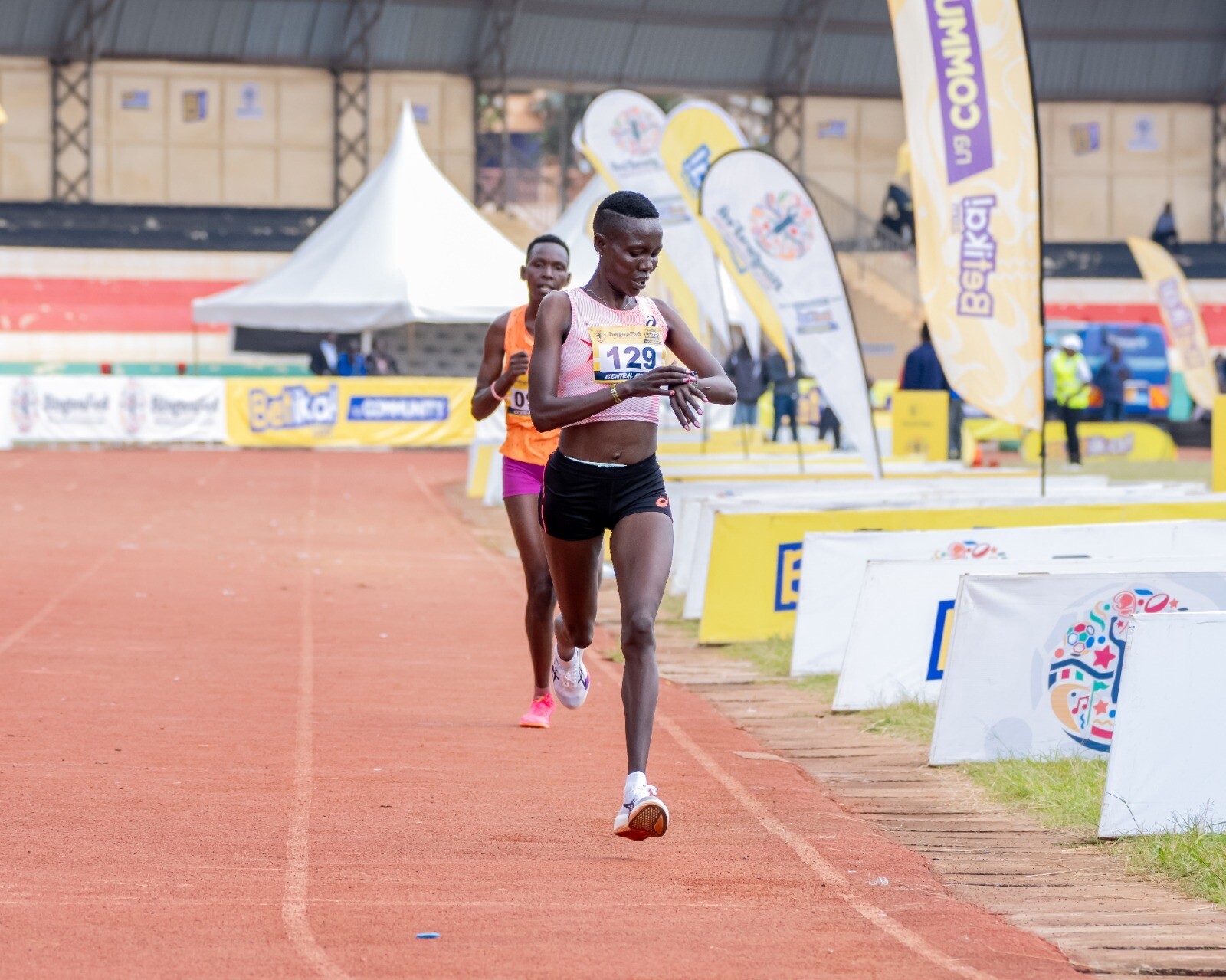
With just under three kilometres remaining, Chemnung injected a measured, relentless surge that finally broke Njoki’s resistance. She powered home unchallenged in 32:07.7, with Njoki second in 32:56.9 and Cintia Chepngeno third in 33:01.1.
Depth followed the medals. Deborah Chemutai placed fourth (33:05.1), ahead of Esther Chemtai Kipkech (33:24.3) and Jackline Rotich (34:12.9), underscoring the opener’s competitive density.
5,000m: The Encore
Hours later, Chemnung returned for the 5,000m—and the script repeated. Calm and economical, she waited before asserting herself late to claim victory again, completing a rare double at the meet. Njoki finished second once more, confirming her range, while Chepngeno secured another third—two podiums in a single day.
The double was deliberate. Bingwafest was built into Chemnung’s training, not circled for trophies.
“I had planned to run only the 10,000m, but my coach encouraged me to also try the 5,000m,” she said. “I used these races as tempo and speed training.”
After visa delays forced her to miss a planned race in Thailand, Chemnung chose to stay sharp at home.
“I chose Bingwafest as part of my speed workouts,” she explained. “Seeing my coach running around the track and pushing me to the limits really helped.”
From Track Authority to Road Ambition
That pragmatic approach mirrors a season defined by a successful transition to the roads. In October, Chemnung debuted at the Chicago Marathon—a World Athletics Platinum Label race—finishing an impressive fourth in 2:18:24, immediately elevating her profile.
Her endurance credentials are clear: a 30:44.86 track PB for 10,000m (May 2024) and a 29:57 road 10km best—numbers that explain both her closing authority at Kinoru and her confidence stepping up to the marathon.
Looking ahead, the roadmap is set: pace Osaka in January 2026, race Barcelona in February, then focus fully on Boston.
“Next season, I may not focus much on track races because my main focus will be on the marathon,” she said. “I thank God because since 2024, I feel I have been running my best.”
Roots and Motivation
Chemnung hails from Ortum village in West Pokot—the third-born in a family of nine raised by farming parents. The only runner in her family, she shares origins with Doris Lemngole, the 2025 Bowerman Award winner and University of Alabama standout. Two elite runners from the same village have become a powerful source of motivation.
“I come from West Pokot, and I am proud of Tecla Lorupe and running for a cause—to help others in my community,” Chemnung said. “Seeing what Doris has achieved also inspires me.”
At Kinoru Stadium, that inspiration translated into action: two races, two wins, and a clear message. The track is now a means, not the destination. As Chemnung sets her sights on Osaka, Barcelona, and Boston, her Bingwafest double serves as a timely reminder—Kenya’s next marathon force is sharpening her edge, one lap at a time.
Bingwafest 2025 – Women’s Results
10,000m Final
1. Lucy (Loice) Chemnung – 32:07.7
2. Maryam Lufti Njoki – 32:56.9
3. Cintia Chepngeno – 33:01.1
4. Deborah Chemutai – 33:05.1
5. Esther Chemtai Kipkech – 33:24.3
6. Jackline Rotich – 34:12.9
7. Veronica Wakuraya – 34:14.8
8. Miriam Jelagat Tamu – 34:28.1
9. Jacinta Kamau – 34:28.7
10. Melan Chepleting Misikhu – 34:29.4
5,000m Final
1. Loice Chemnung (129) – 15:22.42
2. Miriam Lutfi (021) – 15:32.73
3. Cynthia Chepngeno (144) – 15:45.34
4. Nancy Cherop (032) – 15:50.75
5. Deborah Chemutai (048) – 15:55.76
6. Esther Chemutai (212) – 16:01.87
7. Fancy Cherop (032*) – 16:05.78
8. Jackline Rotich (296) – 16:20.59
(12/20/2025) ⚡AMPby Robert Kibet for My Best Runs
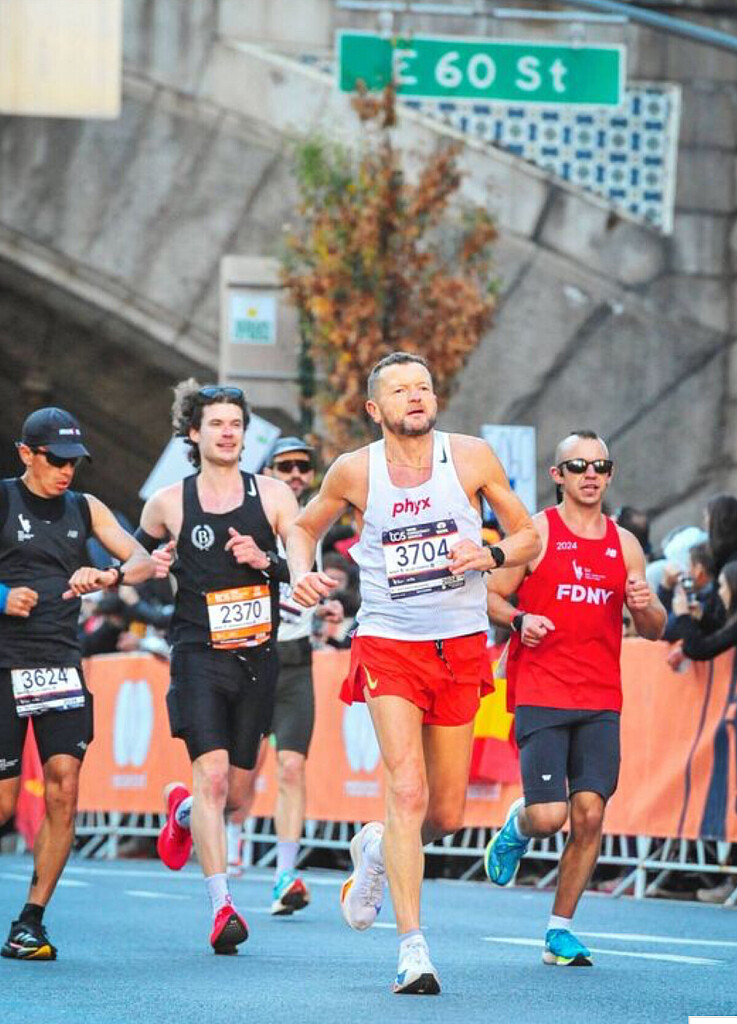
Cork’s Liam Cotter Still Chasing the Marathon Dream
There is a particular kind of obsession required to keep returning to the marathon—not simply to finish, but to keep chasing it year after year, long after most runners have stepped away.
For Liam Cotter, a native of Cork, Ireland, it all began almost by accident.
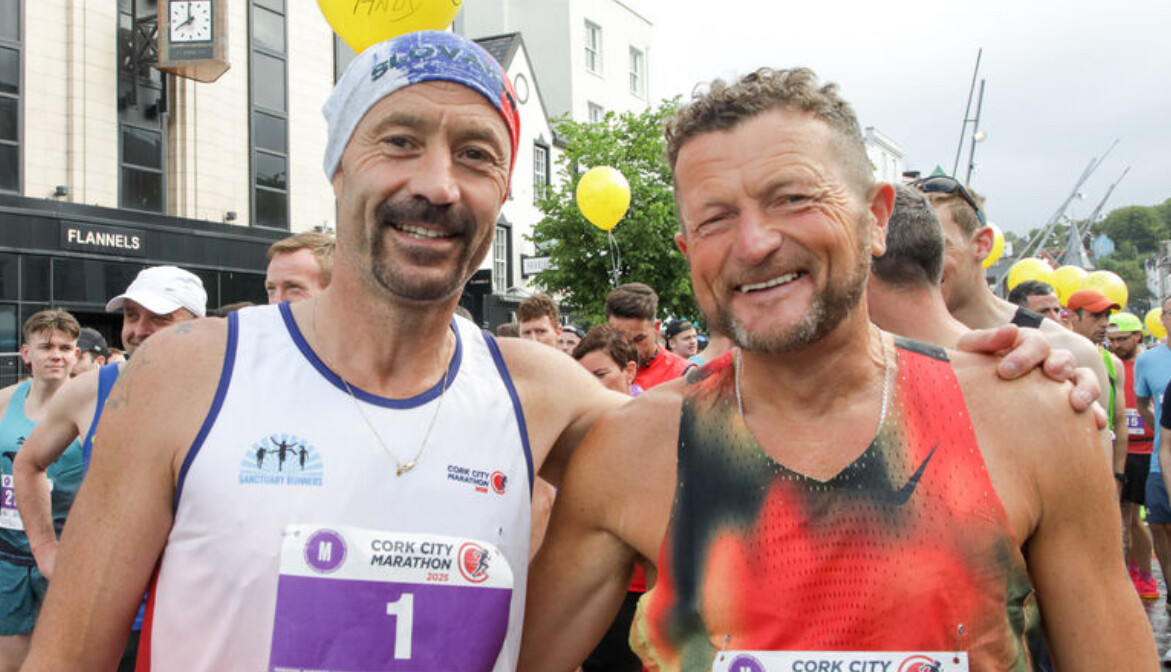
In 2007, Cork’s marathon made its long-awaited return. Cotter was driving through the city with his wife on the way to West Cork when traffic forced them to stop. As runners streamed past, something clicked.
“I remember it vividly,” Cotter says. “I said to myself, I’ll be here next year.”
He was—and with no real strategy. His approach to that first marathon was refreshingly honest: run as far as possible, as fast as possible, for as long as possible. The result was a 3:08 debut.
“I obviously hit the wall,” he laughs. “But it took off from there.”
A year later, the Cork runner lined up at the Dublin Marathon and broke three hours for the first time. Since then, the numbers have quietly mounted: 31 sub-three-hour marathons, including seven under 2:50. Now in his 60s, training under Gary O’Hanlon and John Dillon and racing for St Finbarr’s AC, Cotter continues to produce sub-three performances with striking consistency.
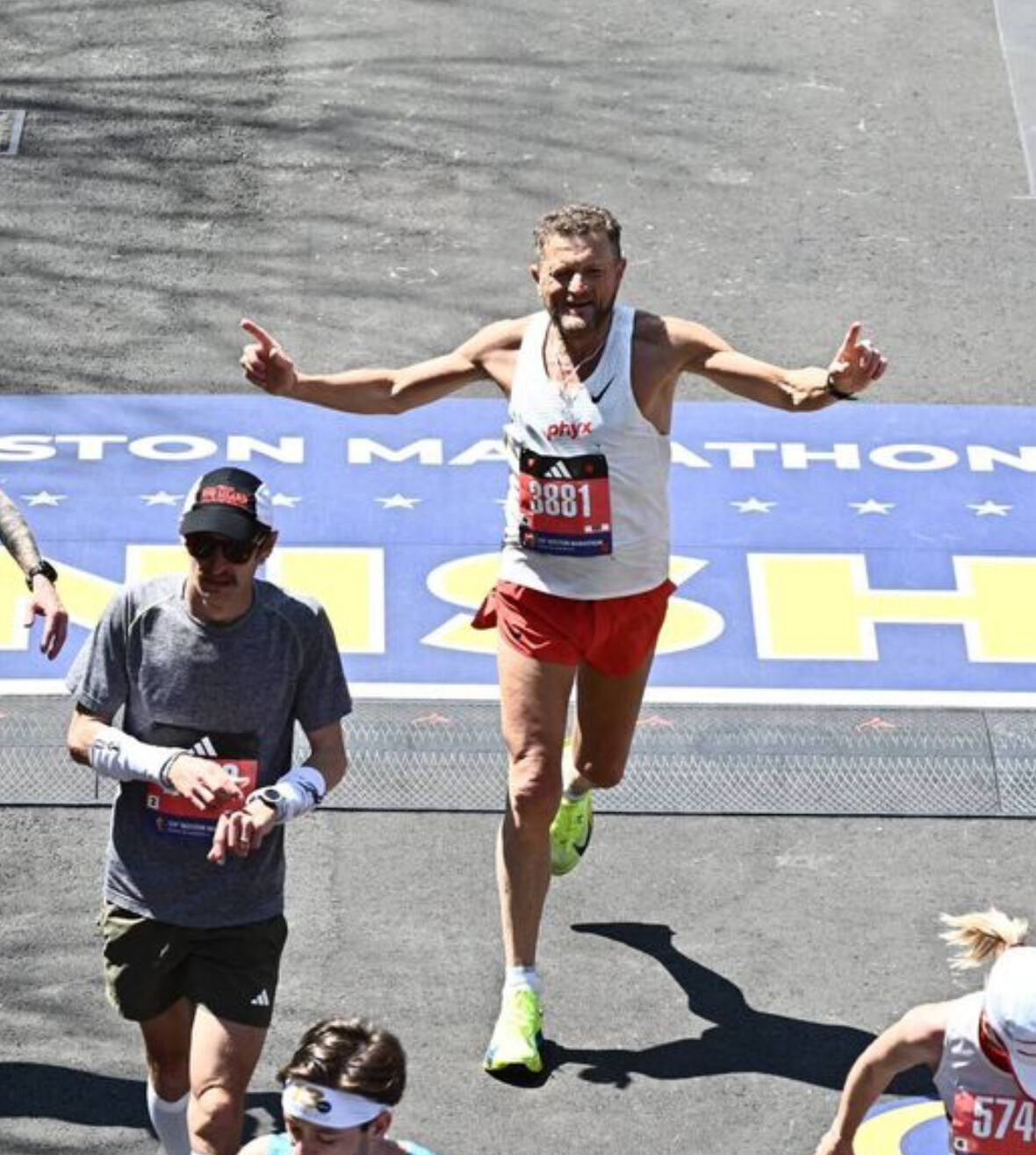
The marathon soon carried him far beyond Ireland. Cotter has completed all six World Marathon Majors—New York, Chicago, Boston, Berlin, London, and Tokyo—three times each.
“My first international marathon was New York,” he says. “To this day, I still think it’s the holy grail. If someone wanted to do just one marathon in their life, I’d say New York.”
That first New York experience in 2010 left a lasting impression.
“The buildup to a foreign marathon, the crowds, the energy—it’s life-changing. Running through the streets of New York gives you a buzz like nothing else.”
Running under 2:50 there only deepened the attraction. And remarkably, Cotter is getting faster as the years go by.
“Since COVID, I hadn’t run a sub-2:50. I had plenty of sub-2:55s and thought maybe those days were over,” he says. “But in 2025 I’ve already run two sub-2:50 marathons. What makes it even more exciting is that I’m over 60 and now getting on the podium at world marathons.”
His recent results underline that point. Cotter ran 2:49 at Valencia, finishing third in his age category, then followed it with another third-place category finish at Berlin, one of the most competitive stages in the sport.
That has sharpened his focus.
“My goal now is to finish on the podium in all six World Marathon Majors,” he says. “I’ve completed them all three times already. This fourth time, I want a top-three finish in each. One is done—five to go.”
With 39 marathons already behind him and no shortage of ambition remaining, Cork’s Liam Cotter shows no sign of slowing. For some runners, the marathon is a phase. For others, it becomes a lifelong pursuit—one that grows more compelling with every finish line crossed.
(12/20/2025) ⚡AMPby Boris Baron
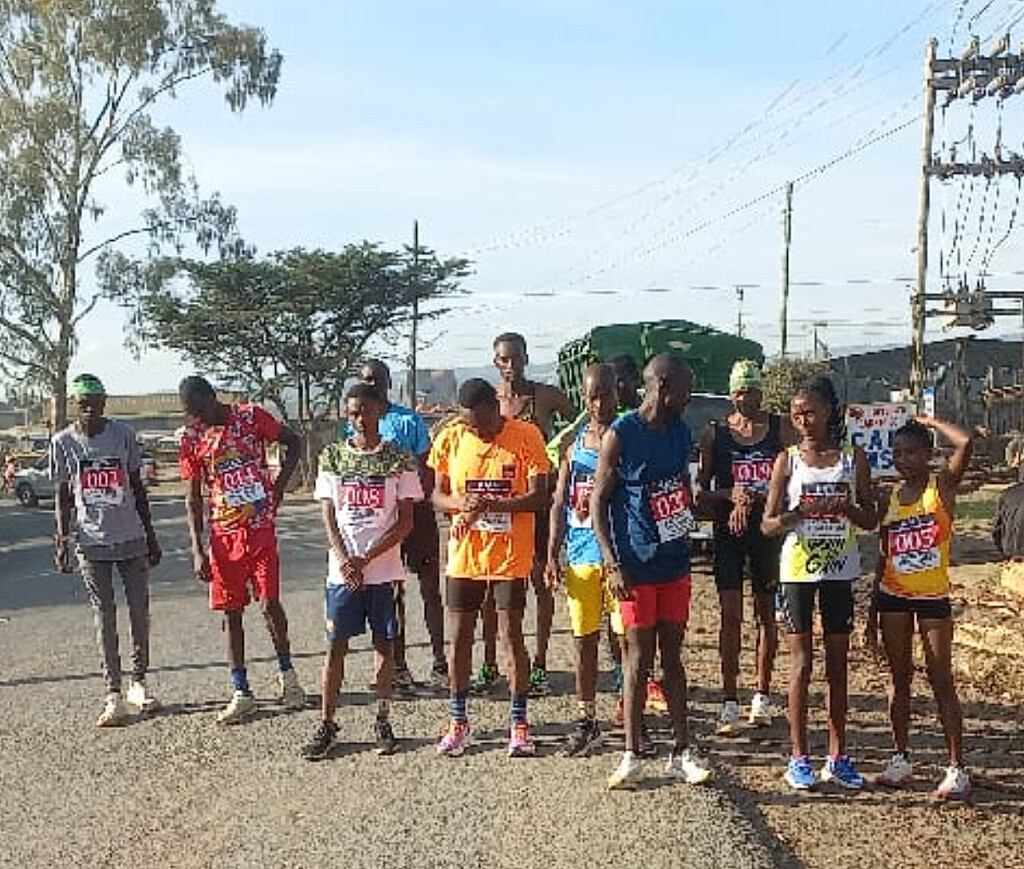
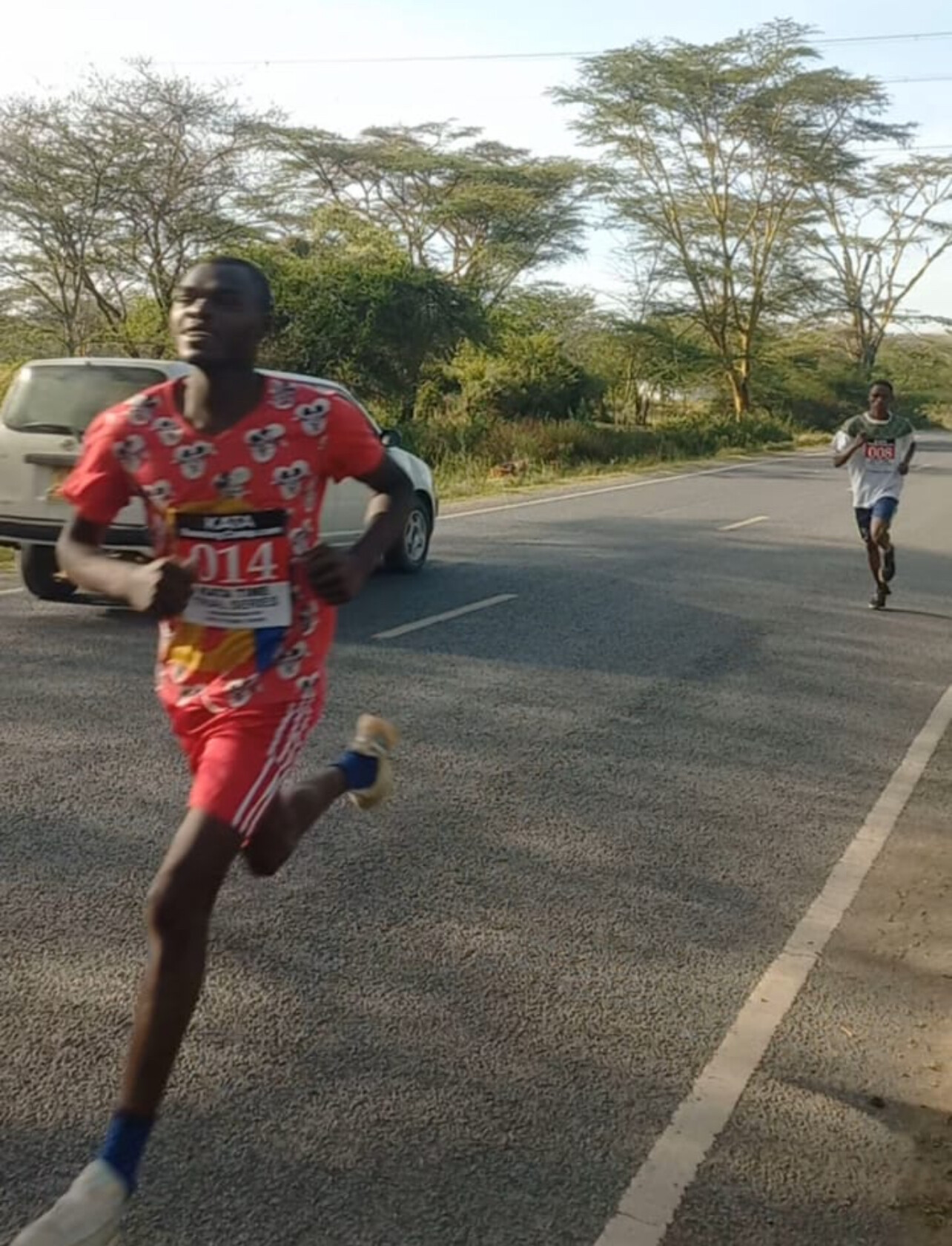
Tough Conditions but Strong Performances at KATA (07) Salgaa–Rongai Time Trial
The fourth KATA (07) Time Trial was held today on the Salgaa–Rongai route, with Camp ID KATA (07) under the direction of operator Amos Chirchir, based in Sachangwan, Kenya.
Athletes were tested by a demanding environment, yet still delivered solid performances and personal bests. Conditions at race time included:
• Temperature: 68°F (20°C)
• Humidity: 71%
• Wind: 4 mph from the south
• UV Index: 4.9
Despite these factors, the field responded with determination and competitive depth.
Men’s 10K: Kirui Controls the Race on Home Roads
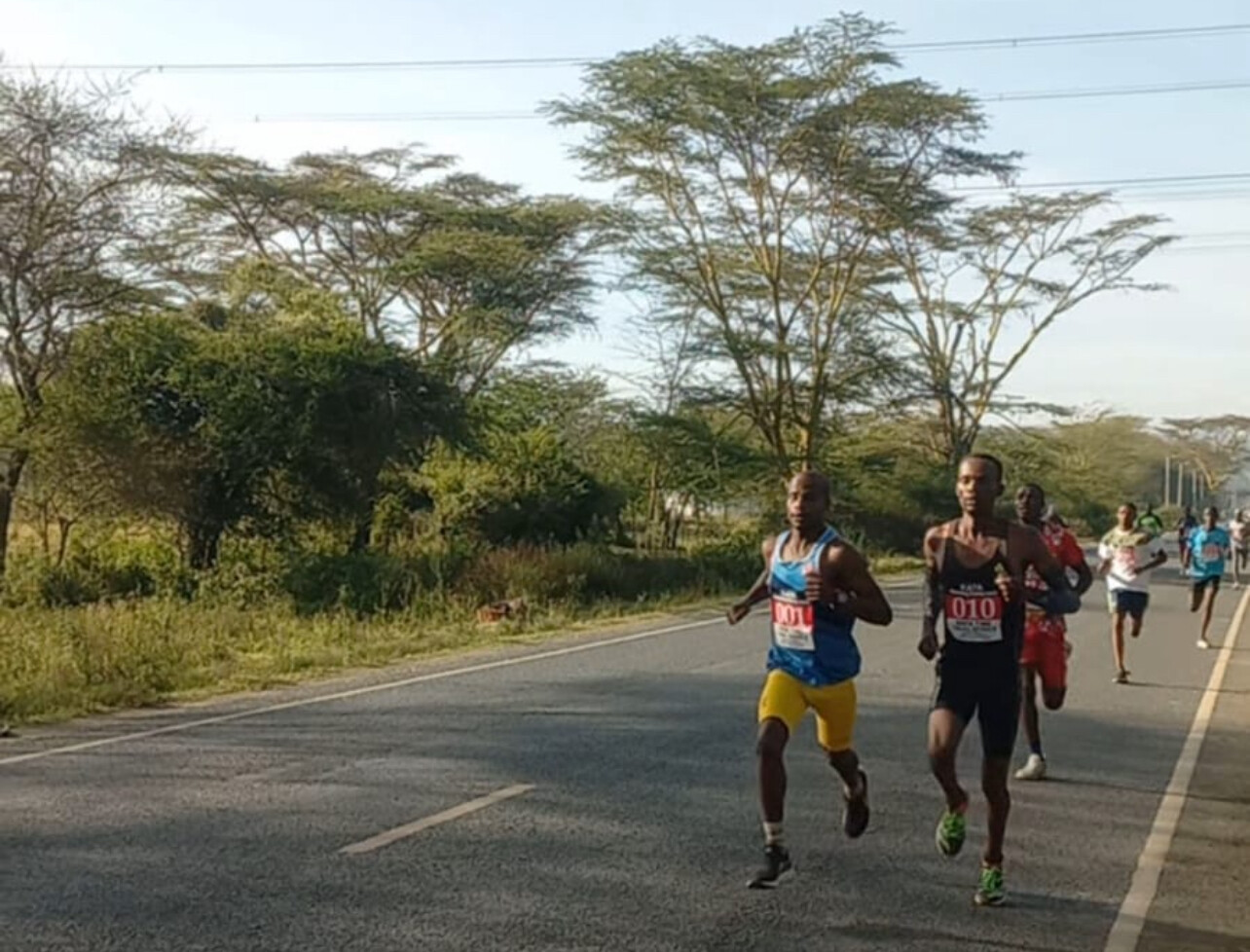
The men’s 10K was dominated by Robert Kirui (23, Bib 010), who hails from the Salgaa–Rongai area and trains regularly on the route. Kirui controlled the race from the front, stopping the clock at 30:45
Weldon Langat (19, Bib 001) finished second in 30:53, drawing on his experience despite managing a minor arch injury in recent weeks. Emmanuel Bor (24, Bib 026) completed the podium in 31:15.
Men’s 10K Results
1. Robert Kirui (23, 010) – 30:45
2. Weldon Langat (19, 001) – 30:53
3. Emmanuel Bor (24, 026) – 31:15
4. Kelvin Kipngetich (18, 023) – 32:28
5. Ronald Cheruiyot (25, 022) – 32:49
6. Bernard Kiptum (19, 002) – 34:50
7. Lameck Mokua (35, 021) – 35:04
8. Samuel Sang (35, 019) – 36:10
9. Mark Kibet (18, 008) – 36:34
10. Gedion Rotich (20, 014) – 37:04
Women’s 5K: Wambui Leads Under Testing Conditions
In the women’s 5K, Elizabeth Wambui (20, Bib 016) delivered the top performance of the day, winning in a fast 17:42 despite the challenging conditions.
Ida Chepkorir (16, Bib 005) followed in 19:54, continuing to gain valuable racing experience.
Women’s 5K Results
1. Elizabeth Wambui (20, 016) – 17:42
2. Ida Chepkorir (16, 005) – 19:54
Building Resilience Through Racing
With four time trials now completed at KATA (07), the Salgaa–Rongai route continues to serve as an effective proving ground. Harsh conditions, honest courses, and regular competition remain central to the KATA model—developing not only speed, but resilience and race intelligence.
(12/17/2025) ⚡AMPby Boris Baron
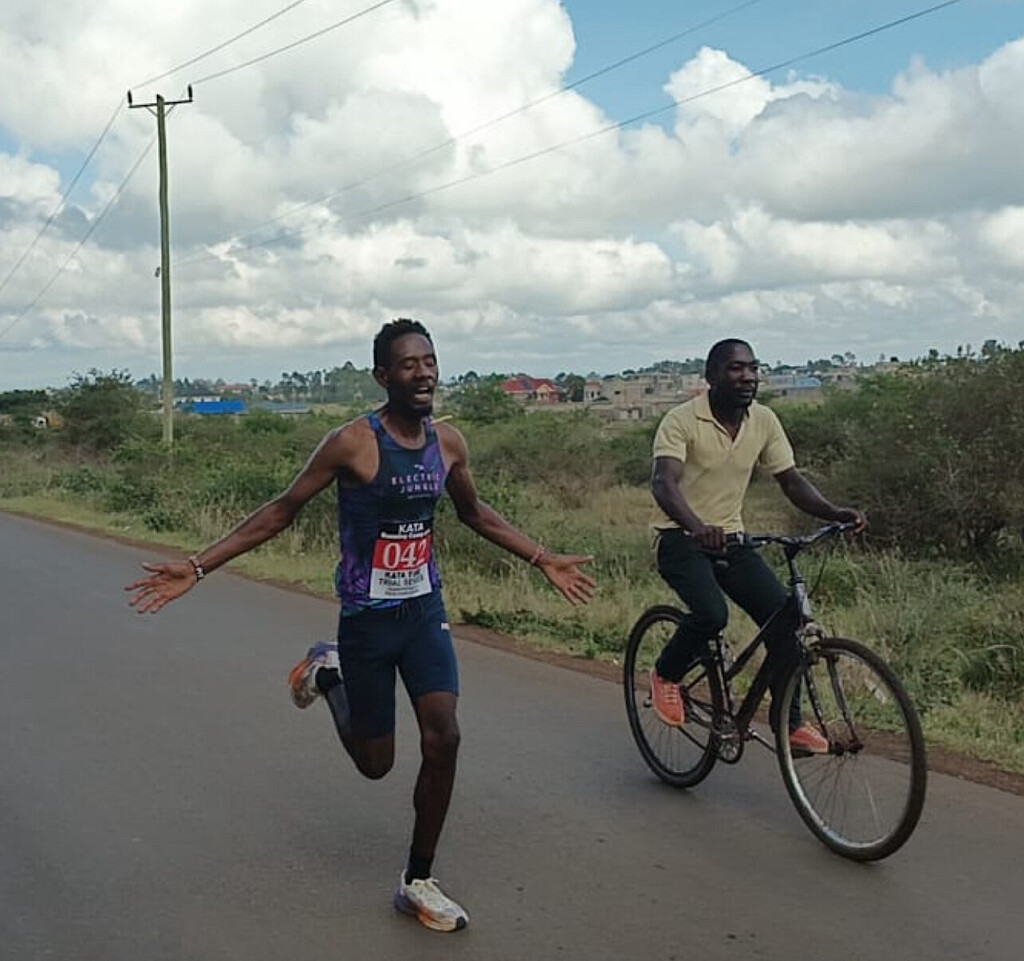
KATA Thika Hosts 51st Monthly Time Trial as Youth and Experience Deliver Strong Performances
The 51st KATA Monthly Time Trial was held today in Thika, Kenya, continuing a tradition that has become a cornerstone of athlete development at the Kenyan Athletics Training Academy (KATA).
With competitive fields in the 5K and 10K for both men and women, today’s time trial highlighted emerging junior talent alongside experienced runners, reinforcing KATA’s depth across age groups.
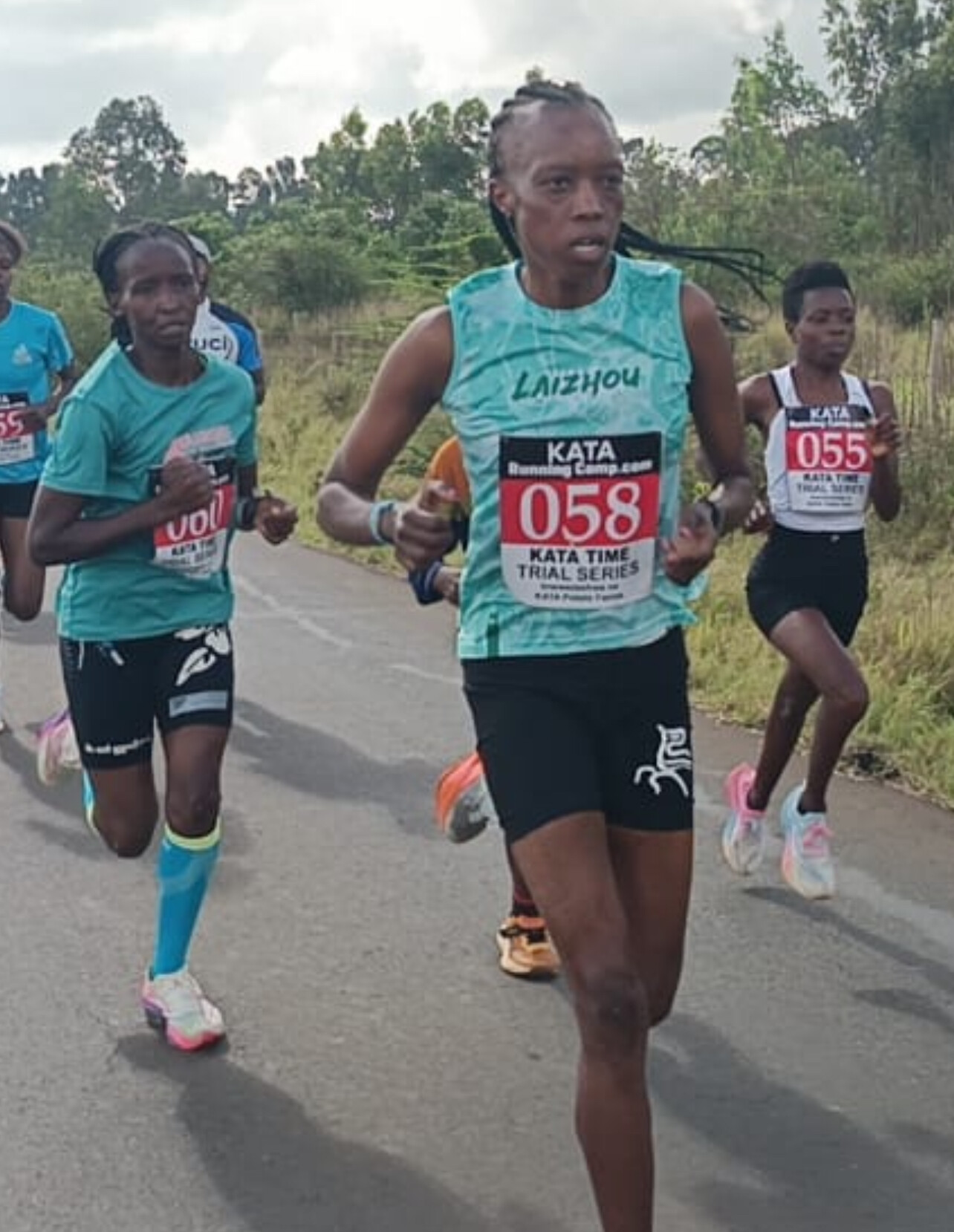
Men’s 10K: John Chege Powers to Solo Victory
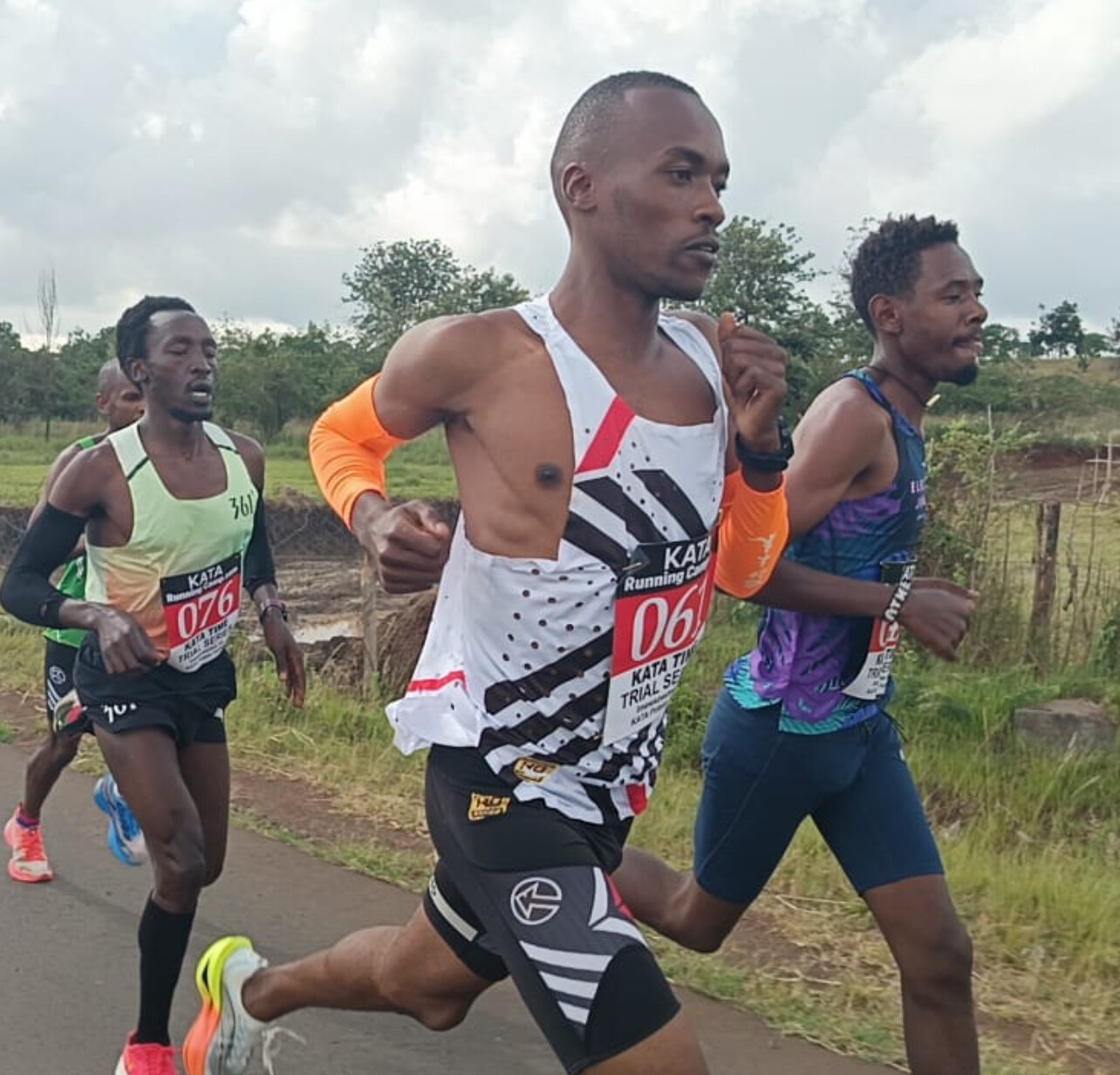
The men’s 10K saw John Chege (21, Bib 042) take control early and push on alone for much of the race, stopping the clock at 29:49 for a convincing win. Chege said afterward that he felt ready to run under 29 minutes, but acknowledged how difficult it was to maintain pace without company.
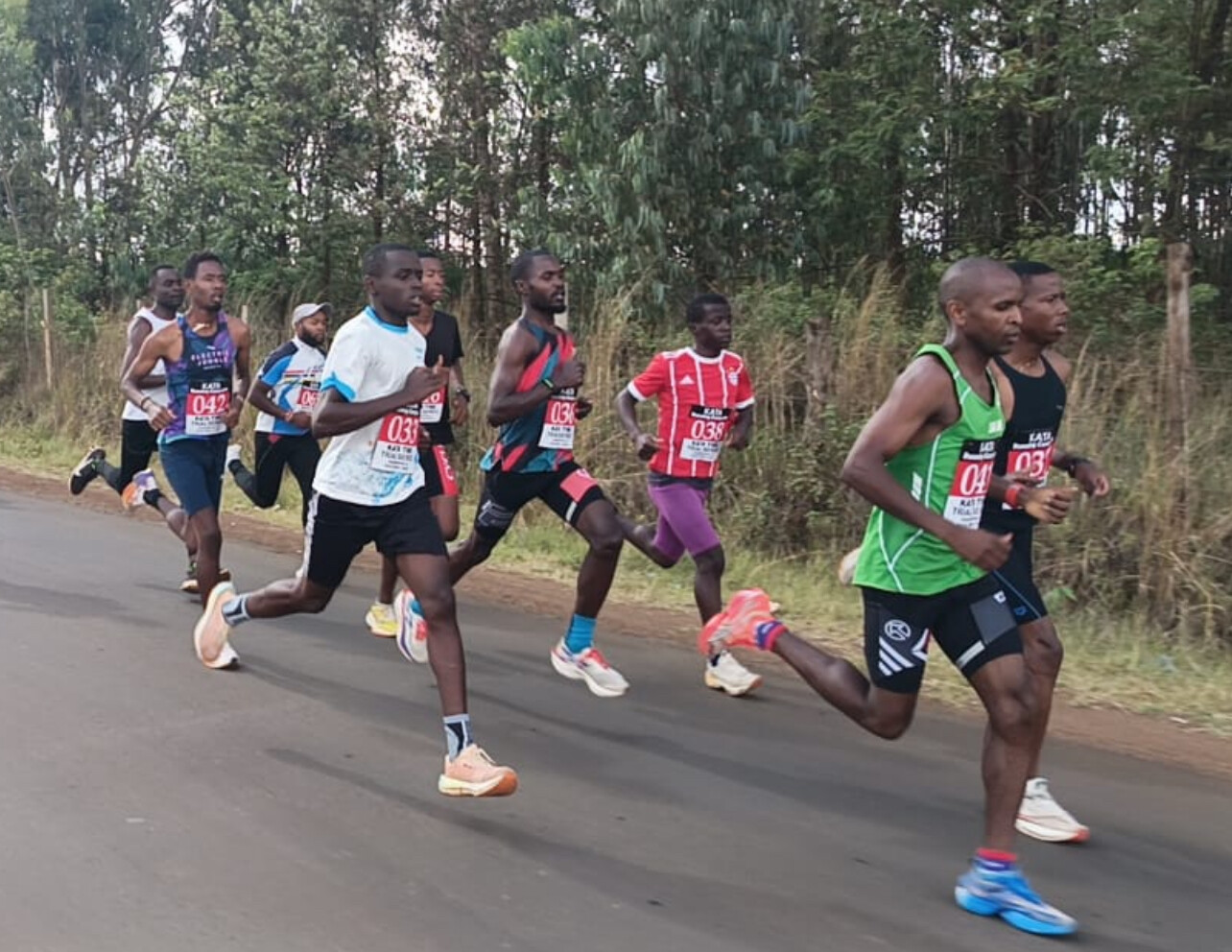
Stephen Ngigi (22, Bib 061) claimed second place in 30:04, followed by Raphael Karita (26, Bib 043) in 30:22.
Men’s 10K Results
1. John Chege (21, 042) – 29:49
2. Stephen Ngigi (22, 061) – 30:04
3. Raphael Karita (26, 043) – 30:22
4. Bernard Waweru (40, 041) – 30:38
5. Erick Mutuku (23, 040) – 30:39
6. Kristian Muthini (29, 074) – 31:57
7. Charles Ndirangu (24, 031) – 32:26
8. Erick Cheruiyot (30, 032) – 32:32
9. Fredrick Wambua (20, 073) – 32:56
10. Ismael Mburu (25, 036) – 33:31
11. Joseph Wanjiru (40, 064) – 34:12
12. John Wekesa (29, 045) – 34:27
13. Joseph Nyota (20, 035) – 35:05
14. Paul Ng’ang’a (43, 039) – 35:44
15. Joel Maina (40, 062) – 35:56
16. Kelvin Waiganjo (29, 065) – 43:23
Women’s 10K: Susan Njuu Leads, Chepkemoi Sets PB
In the women’s 10K, Susan Njuu (40, Bib 058) took the win in 35:58, showing strength and consistency throughout the race.
She was followed closely by Caren Chepkemoi (24, Bib 059), who ran a personal best of 36:12, taking more than 30 seconds off her previous mark. Naomi Wambui (40, Bib 057) completed the podium in 36:44.
Women’s 10K Results
1. Susan Njuu (40, 058) – 35:58
2. Caren Chepkemoi (24, 059) – 36:12 (PB)
3. Naomi Wambui (40, 057) – 36:44
4. Ruth Maina (23, 055) – 38:46
5. Mary Wangari (34, 077) – 39:32
6. Regina Sandiki (19, 048) – 40:22
7. Faith Mutua (16, 052) – 44:38
Men’s 5K: Teenagers Set the Pace
The men’s 5K belonged to Robin Musa (17, Bib 072), who delivered an impressive performance to win in 15:46. Close behind was Justus Nyamai (18, Bib 037) in 15:51, with Kelvin Mutunga (19, Bib 053) taking third in 16:34.
Men’s 5K Results
1. Robin Musa (17, 072) – 15:46
2. Justus Nyamai (18, 037) – 15:51
3. Kelvin Mutunga (19, 053) – 16:34
4. James Wahome (16, 033) – 16:48
5. Timothy Juma (20, 046) – 17:25
6. Erick Mwaura (18, 038) – 17:33
7. Samuel Maingi (14, 045) – 17:39
8. John Nzioka (16, 071) – 20:40
9. Ryan Kiarie (17, 075) – 23:28
Women’s 5K: Macharia Returns Strong Despite Injury
Despite nursing an injury, Ruth Macharia (27, Bib 056) topped the women’s 5K field, winning in 20:44.
She was followed by Irene Kameme (12, Bib 050), who impressed with a 21:50 run, while Assumpta Mwende (17, Bib 051) placed third in 22:08.
Women’s 5K Results
1. Ruth Macharia (27, 056) – 20:44
2. Irene Kameme (12, 050) – 21:50
3. Assumpta Mwende (17, 051) – 22:08
4. Winfred Munini (17, 047) – 22:26
5. Agnes Kavuu (13, 049) – 23:27
6. Catherine Waithera (22, 063) – 23:21
Consistency Builds Champions
Now 51 editions strong, the KATA Monthly Time Trial remains a vital proving ground for athletes across Kenya. Held today under competitive conditions, the event once again demonstrated how regular racing, honest competition, and a supportive training environment continue to produce measurable progress.
(12/17/2025) ⚡AMPby Boris Baron

KATA Time Trial Series
Welcome to the KATA Monthly Time Trial Held at the Kenyan Athletics Training Academy in Thika, Kenya, the KATA Monthly Time Trial is a unique and inclusive event designed to support runners of all levels in achieving their goals and showcasing their fitness. This event offers both 10K and 5K distances on an accurate, certified course, providing participants with...
more...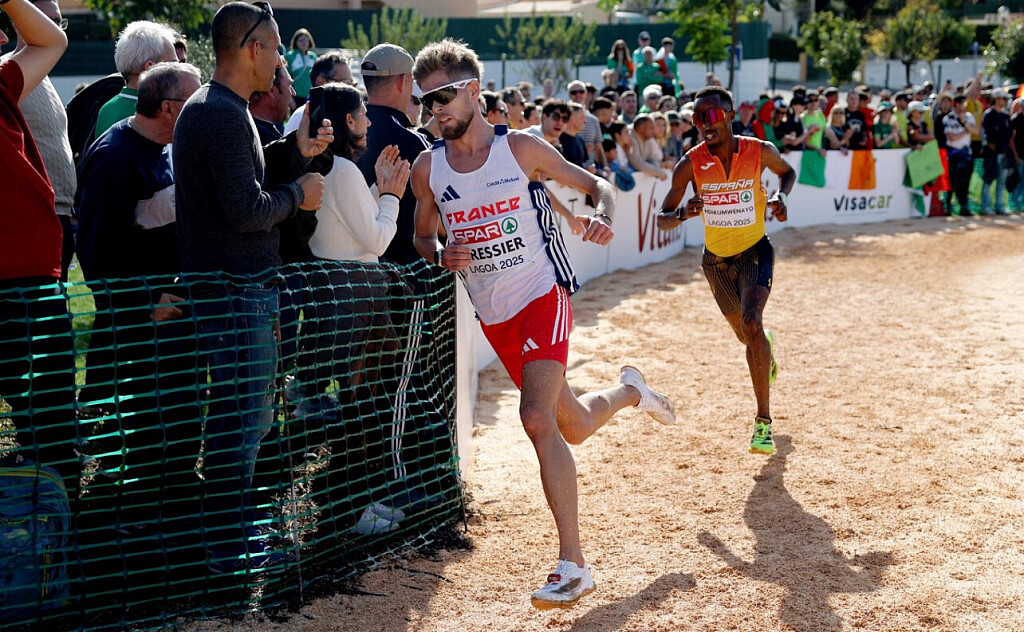
Ndikumwenayo Stuns Gressier in Thrilling Senior Men’s Cross Country Duel at Lagoa
Thierry Ndikumwenayo delivered one of the standout performances of the cross-country season, outkicking France’s world 10,000 m champion Jimmy Gressier to win the senior men’s title at the 31st SPAR European Cross Country Championships in Lagoa, Portugal.
In a race defined by tactics and grit, the Spaniard stopped the clock at 22:05 over the demanding 7.47 km course, finishing just three seconds ahead of Gressier after a dramatic sprint to the line.
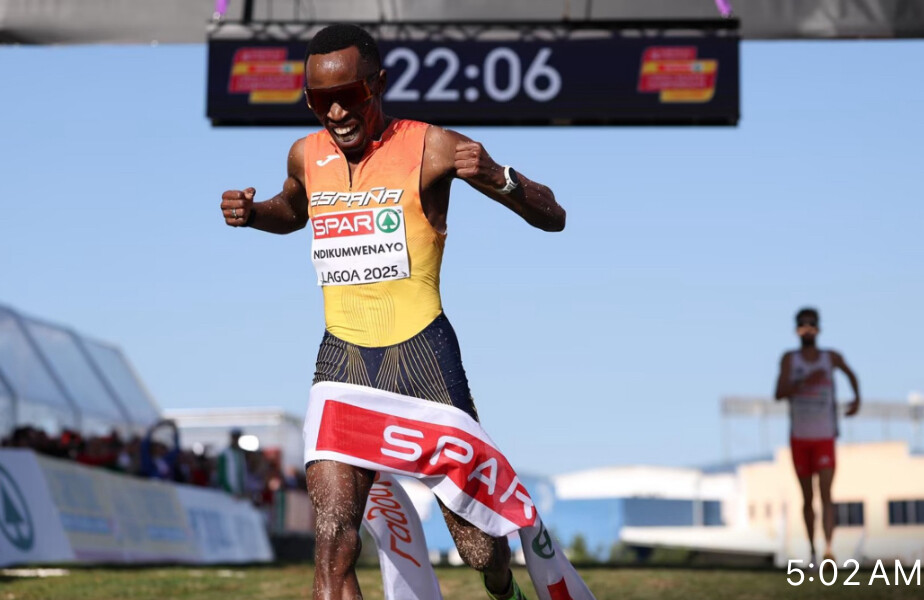
From the opening meters, the course—featuring rolling terrain, sandy stretches, and sharp turns—began to thin the field. By the midpoint, Ndikumwenayo and Gressier had broken clear, forming a two-man lead group that quickly established control. The pair matched each other stride for stride, trading subtle surges while keeping the chasers at bay.
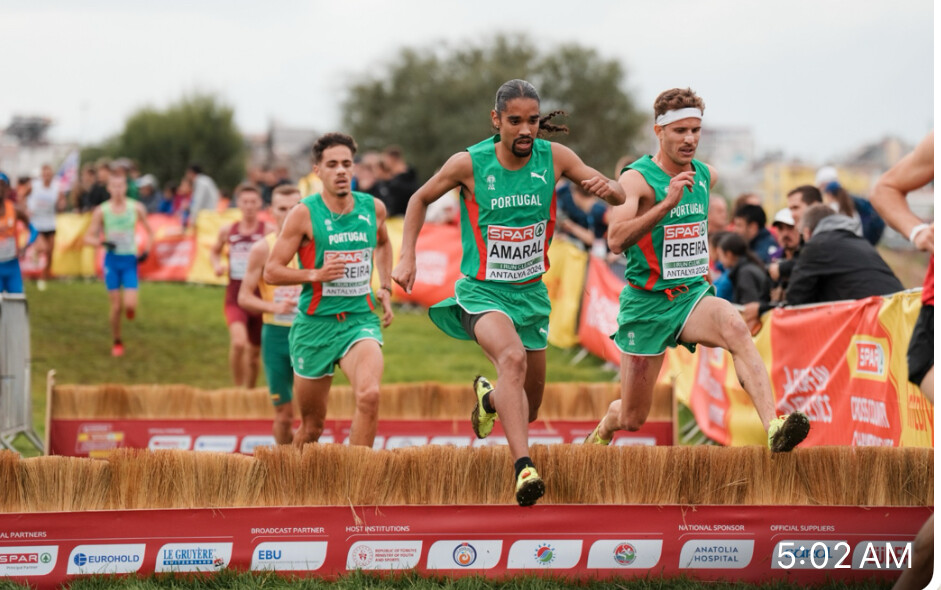
Gressier, 28, arrived in Lagoa riding the momentum of a remarkable 2025 season that included a world title over 10,000 m in Tokyo, European half-marathon gold, and European indoor records at 5,000 m. A European cross-country crown would have capped a year that showcased his range across track, road, and grass.
Ndikumwenayo had other plans. Born in Burundi in 1997 and now racing for Spain, he has steadily evolved into one of Europe’s most complete distance runners. After taking bronze at last year’s championships in Antalya, he arrived in Portugal sharper, stronger, and ready to challenge for gold.
The decisive moment came on the final bend. Gressier, preparing to unleash his trademark finishing kick, briefly lost his footing—just enough hesitation for Ndikumwenayo to strike. The Spaniard surged decisively and held on through the line, sealing a memorable victory in one of the closest finishes of the championships.
Behind the front two, Switzerland’s Dominic Lokinyomo Lobalu claimed bronze in 22:23 after a hard-fought battle, edging Great Britain’s Scott Beattie, who finished fourth in the same time. Ireland’s Jack O’Leary took fifth in 22:25, playing a key role in Ireland securing its first senior men’s team medal at these championships in 25 years.
Spain’s dominance was underlined by strong supporting runs from Abdessamad Oukhelfen (6th) and Aarón Las Heras (9th), giving the nation a comfortable team title and confirming its depth in European cross-country.
Top 10 – Senior Men’s Cross Country
1. Thierry Ndikumwenayo (ESP) — 22:05
2. Jimmy Gressier (FRA) — 22:08
3. Dominic Lokinyomo Lobalu (SUI) — 22:23
4. Scott Beattie (GBR) — 22:23
5. Jack O’Leary (IRL) — 22:25
6. Abdessamad Oukhelfen (ESP) — 22:27
7. Ruben Querinjean (LUX) — 22:28
8. Simon Sundström (SWE) — 22:29
9. Aarón Las Heras (ESP) — 22:30
10. Brian Fay (IRL) — 22:31
Ndikumwenayo’s victory in Lagoa was about more than a narrow margin. It marked the arrival of a runner fully in command of his craft—strong, patient, and fearless when it mattered most. On a course that rewarded toughness and timing, he delivered both, producing one of the defining moments of the 2025 European cross-country season.
(12/16/2025) ⚡AMPby Robert Kibet for My Best Runs
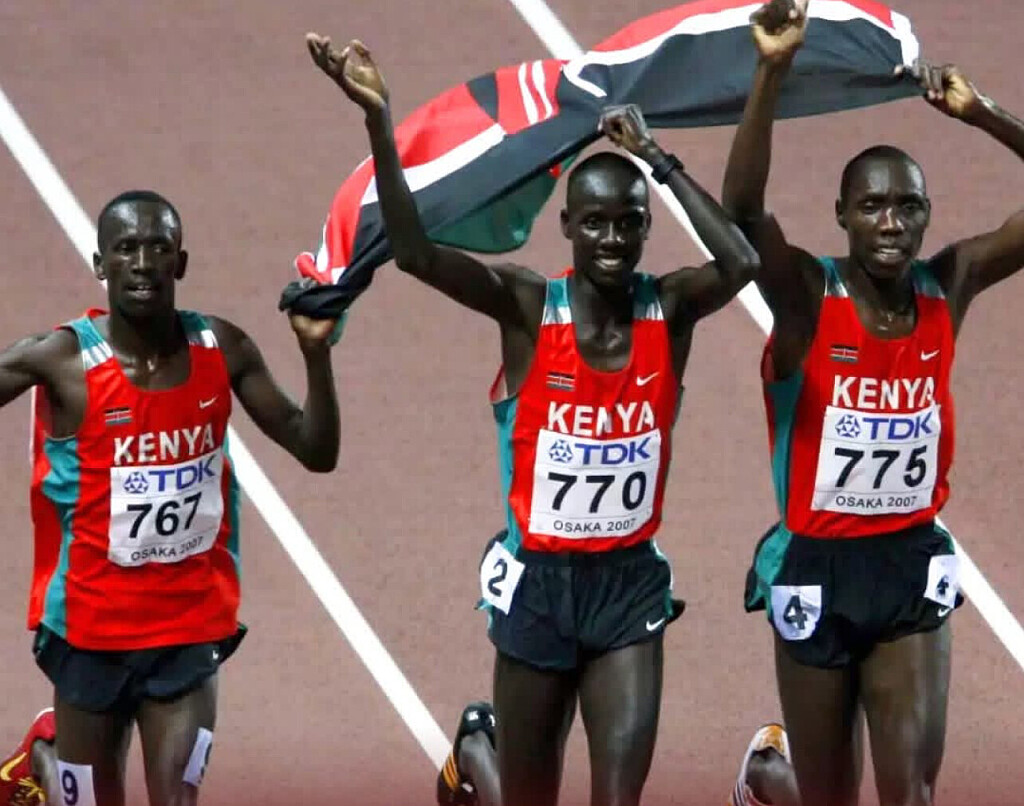
How One Tribe in Kenya Came to Dominate Global Distance Running
There may be no statistic in all of sports more astonishing than this one.
The Kalenjin, an ethnic group—often referred to as a tribe—in Kenya, make up about 13.4% of the country’s population, roughly 6.3 million people. On a global scale, they represent about one out of every 1,000 people worldwide.
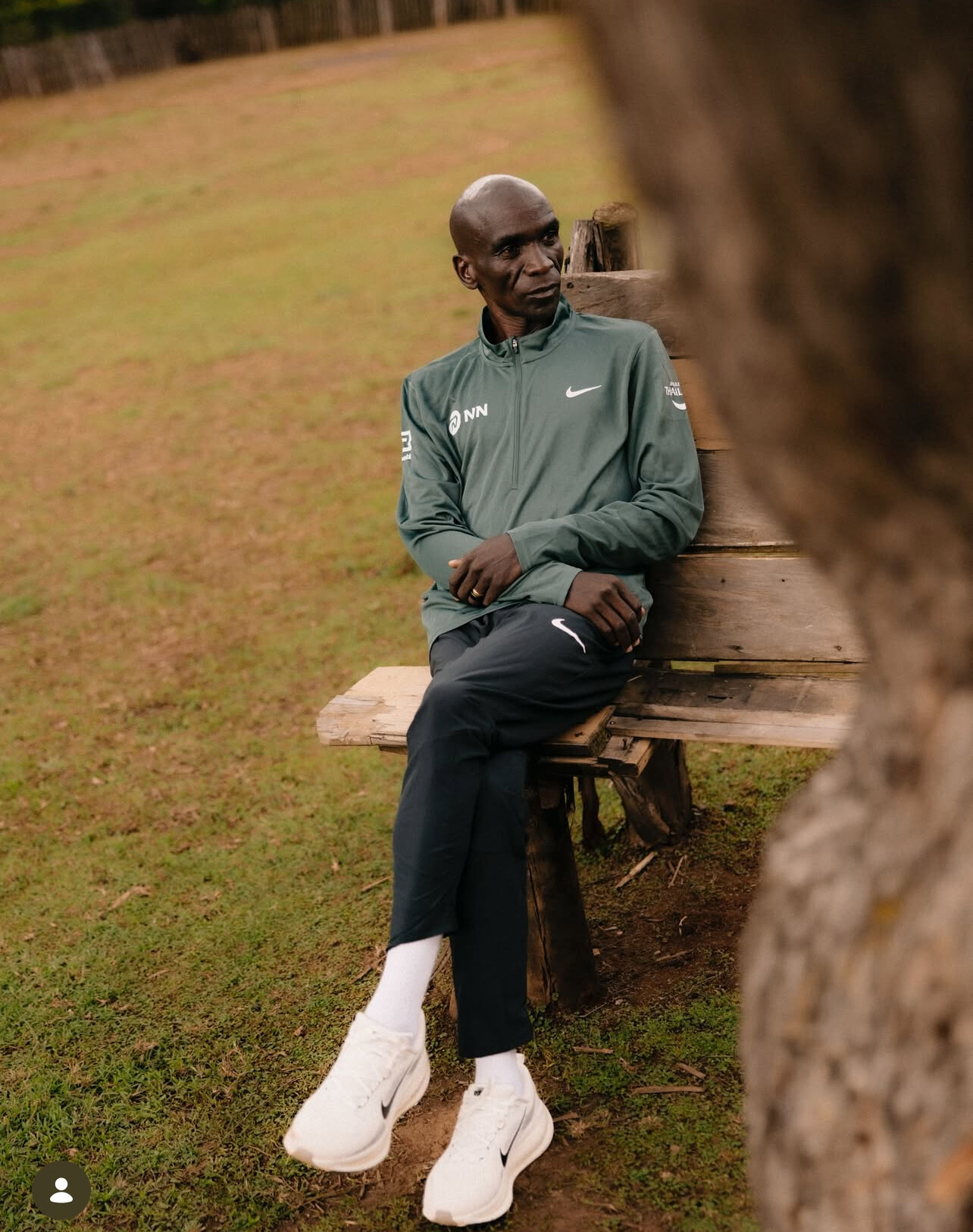
Yet this small community has produced an overwhelming share of the world’s greatest distance runners.

Their dominance has been so complete, and so sustained, that it has been described as “the greatest geographical concentration of achievement in the annals of sport.” And it is hard to argue otherwise.
From the Rift Valley to the World Stage
Most elite Kalenjin runners come from Kenya’s Rift Valley region, particularly areas such as Nandi, Elgeyo-Marakwet, Uasin Gishu, and Baringo, where elevations range from 2,000 to 2,400 meters (6,500–8,000 feet) above sea level.
Here, running is not a hobby—it is part of daily life.
Children grow up walking and running long distances, often on dirt roads. Training at altitude is the norm, not a strategy. And success stories are local and visible, creating a powerful cycle of belief and opportunity.
Champions Across Eras
The Kalenjin impact on global athletics stretches back more than half a century.
Kipchoge Keino, one of the pioneers of Kenyan distance running, won Olympic gold in the 1500 meters at the 1968 Mexico City Games and the 3000-meter steeplechase in 1972, helping place Kenyan runners on the world map.
Since then, Kenyan athletes—many of them Kalenjin—have dominated:
• The 3000-meter steeplechase, winning Olympic gold in nearly every Games since 1968
• The 5,000 meters and 10,000 meters at World Championships
• The marathon, particularly at the World Marathon Majors
Masters of the Marathon
Perhaps nowhere is this dominance more visible than in the marathon.
Kalenjin runners have repeatedly won and controlled races such as:
• Berlin Marathon
• London Marathon
• Chicago Marathon
• Boston Marathon
• New York City Marathon
These victories are not isolated moments—they are part of a long, uninterrupted pattern.
At the center of it all stands Eliud Kipchoge, widely regarded as the greatest marathon runner in history. A member of the Kalenjin community, Kipchoge has:
• Won two Olympic marathon gold medals (2016, 2021)
• Set a world record of 2:01:09 at the Berlin Marathon
• Become the first human to run 26.2 miles in under two hours
He is not an exception. He is the most refined expression of a system that has been producing champions for generations.
Why This One Tribe?
No single explanation tells the whole story, but several factors come together in the Rift Valley:
• Geography: High altitude, rolling terrain, and ideal training conditions
• Physiology: Exceptional running economy and efficient biomechanics
• Culture: Running as a respected path to success and opportunity
• Environment: Group training, competition, and long-term development from a young age
Together, these elements have created something unmatched in sport.
A Phenomenon Without Parallel
Great athletes come from everywhere. But nowhere else has such a small, specific populationproduced such sustained global dominance across events, generations, and decades.
Not sprinting.
Not swimming.
Not cycling.
Not soccer.
Only distance running.
From the highland paths of the Rift Valley to Olympic podiums and marathon finish lines around the world, the story of the Kalenjin remains one of the most extraordinary achievements in human performance.
And it is still being written.
(12/15/2025) ⚡AMPby Boris Baron
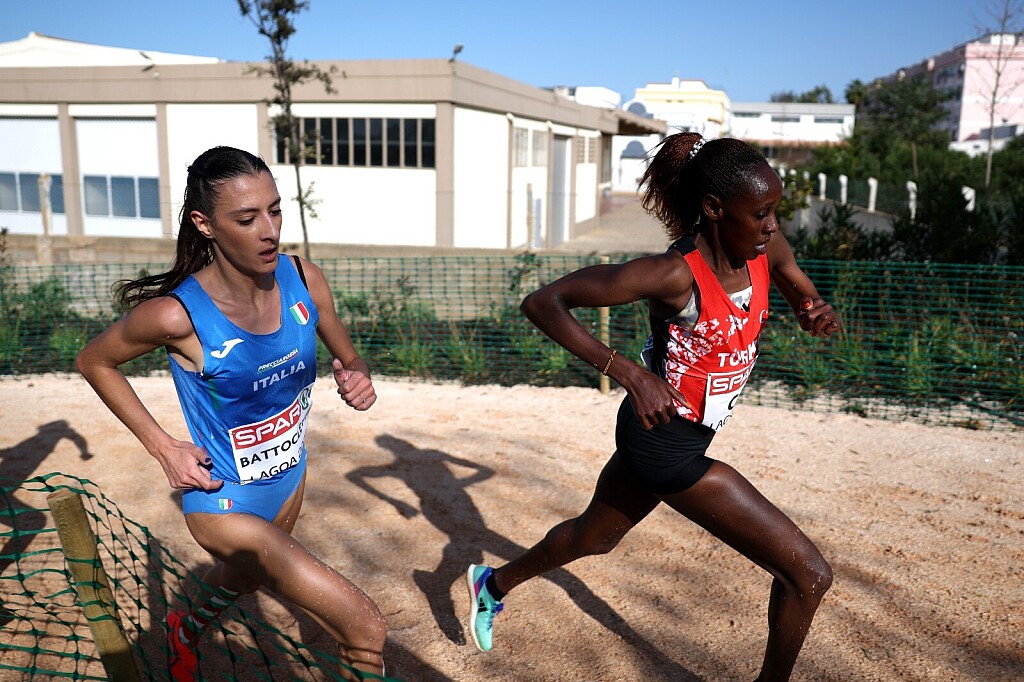
Nadia Battocletti Triumphs at European Cross Country Championships in Lagoa
Italian star returns to the top with commanding senior women’s victory
A Golden Return to Form: Nadia Battocletti of Italy added another chapter to her growing legacy on Sunday in Lagoa, Portugal, powering to victory in the senior women’s race at the European Cross Country Championships. On a demanding, technical course that rewarded strength and patience, Battocletti stopped the clock at 24:52, delivering a performance that combined tactical intelligence with championship composure.
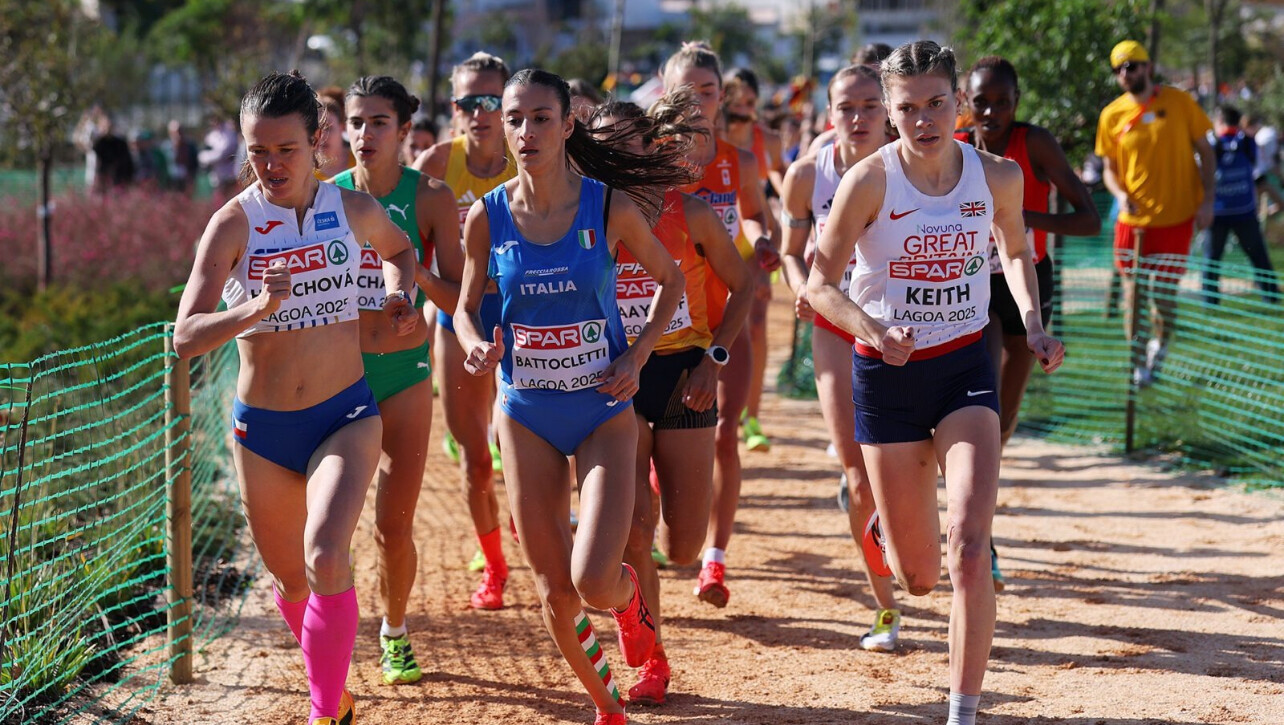
From the opening strides, the pace was honest and the intent clear. The rolling hills, slick footing, and tight turns quickly tested the field. Great Britain’s Megan Keith stayed close to the front, her determination evident with every surge, while Yasemin Can of Turkey—born in Kenya—ran with quiet confidence, conserving energy as the race unfolded. Battocletti remained calm and controlled, matching moves without overreacting as she waited for the right moment.
The Making of a Champion
Battocletti’s win in Lagoa was the product of years of steady progression and resilience. She first announced herself on the European stage as a junior, capturing back-to-back U20 cross country titles—Tilburg 2018 (4.3 km in 13:46) and Lisbon 2019 (13:58). Even then, her sense of rhythm, race awareness, and ability to perform under pressure set her apart.
Her transition to the senior ranks has been seamless. At the Paris 2024 Olympic Games, Battocletti claimed silver in the 10,000 meters in 30:43.35, finishing just behind Kenya’s Beatrice Chebet. One year later, at the 2025 World Championships in Tokyo, she again pushed Chebet to the limit, earning another silver in 30:38.23 and confirming her status as one of the world’s most consistent distance runners.
In Lagoa, she drew on all that experience. Battocletti controlled the tempo throughout and made her decisive move in the penultimate lap, a gradual acceleration that stretched the field and left her rivals struggling to respond.
Profiles of the Podium Finishers
Megan Keith took silver in 25:07, further cementing her reputation as one of Europe’s rising distance talents. The Scottish runner showed excellent judgment on the technical course, managing her effort and responding to changes in pace with maturity beyond her years. Her performance suggests bigger podiums may not be far away.
Yasemin Can finished third in 25:13, adding another medal to an already distinguished career. A multiple European champion on track and cross country, Can’s experience and strength were evident as she stayed in contention through the final lap before securing bronze.
Just off the podium, Belgium showcased impressive depth with Jana Van Lent in fourth (25:24), Lisa Rooms fifth (25:34), and Chloé Herbiet seventh (25:43). The Netherlands’ Amina Maatoug placed sixth (25:36), while Germany’s Elena Burkard (8th), Sweden’s Sarah Lahti (9th), and Ireland’s Fiona Everard (10th) completed a highly competitive top ten.
Tactical Brilliance on a Demanding Course
The Lagoa course added a dramatic dimension to the race. Its undulating terrain and narrow turns demanded constant focus and adaptability. Battocletti’s tactical sense stood out as she gradually increased the pressure, forcing her rivals into difficult decisions before unleashing a finishing push that settled the race.
By the final straight, her victory was beyond doubt. Battocletti crossed the line with a composed smile, while Keith and Can battled fiercely behind her, delivering a thrilling conclusion for spectators lining the course.
Looking Ahead
Battocletti’s victory in Lagoa reinforces her position as one of Europe’s premier long-distance athletes. With Olympic and world silver medals already to her name, this European cross country gold completes a remarkable arc from junior standout to senior champion.
Keith and Can also made powerful statements, and their performances hint at compelling rivalries in the seasons ahead. As winter training continues and the global calendar turns toward major championships, the senior women’s distance scene in Europe looks stronger—and more exciting—than ever.
European Cross Country Championships 2025
Senior Women – Top 10
1. Nadia Battocletti (Italy) – 24:52
2. Megan Keith (Great Britain) – 25:07
3. Yasemin Can (Türkiye) – 25:13
4. Jana Van Lent (Belgium) – 25:24
5. Lisa Rooms (Belgium) – 25:34
6. Amina Maatoug (Netherlands) – 25:36
7. Chloé Herbiet (Belgium) – 25:43
8. Elena Burkard (Germany) – 25:45
9. Sarah Lahti (Sweden) – 25:48
10. Fiona Everard (Ireland) – 25:54
(12/14/2025) ⚡AMPby Robert Kibet for My Best Runs
Fitzgerald Completes Historic U20 Hat-Trick as Lagoa’s Brutal Course Breaks the Field
Innes Fitzgerald dominates European Cross Country Championships, while Ireland claims a breakthrough medal
A Course Built to Punish, A Champion Built to Endure
The European Cross Country Championships delivered both spectacle and separation in Lagoa, Portugal, where Great Britain’s Innes Fitzgerald stormed to a historic third consecutive victory in the women’s Under-20 race on one of the most demanding courses the event has seen in recent years.
Set on a punishing 4.45km loop carved into the Algarve terrain, the course offered little rhythm. Sharp divots, twisting turns, and short but unforgiving climbs forced constant adjustment, rewarding strength, patience, and race intelligence. Commentators noted it was a circuit suited to steeplechasers and mountain runners—and from the opening strides, it shaped the race.
Early Aggression Tests the Field
Germany’s Julia Ehrle, a world mountain running champion, set the tone with an aggressive surge in the opening kilometre, immediately stretching the field. Several athletes attempted to respond, but the cost was clear early on as runners throughout the top 20 were already operating on the edge.
Fitzgerald, however, remained calm.
By the end of the first lap, the British teenager had moved decisively to the front, opening daylight behind her. Gaps widened quickly as she increased the tempo, forcing an early reckoning. Spain briefly led the team standings after one lap, but the individual contest was already tilting firmly in Fitzgerald’s favor.
Control Through Chao
There was no relief from the terrain. Turf laid specifically for the championships softened the ground but added unpredictability, with awkward divots repeatedly disrupting stride patterns. Ehrle, so fluent early, began to lose momentum as a coordinated chase pack formed behind her.
Midway through the race, Fitzgerald’s lead had grown beyond 13 seconds. Her expression told a story of controlled suffering—this was no cruise. Commentators reflected on her evolution as a championship racer, recalling earlier setbacks before she refined her front-running approach through successive wins in Brussels and Antalya.
This time, experience guided aggression.
The Race Ignites Behind the Leader
As the bell signaled the final lap, Fitzgerald’s advantage had stretched to 24 seconds, placing her on course for the largest winning margin ever recorded in the women’s U20 race.
Behind her, the medal fight erupted.
Ireland’s Anna Gardiner and Emma Hickey surged together with impeccable timing, their patient approach paying dividends as others faltered. France’s Lucie Paturel—whose modest track credentials masked exceptional endurance—moved smoothly through the field, judging her effort to perfection.
Those who attacked early paid the price. Those who waited were rewarded.
A Champion Alone at the Front
At the front, Fitzgerald ran alone—visibly exhausted, yet relentless. With a kilometre remaining, her lead had surpassed 30 seconds, a staggering margin in a race lasting just over 14 minutes.
As she entered the finishing straight, she raised three fingers in celebration, joining Steph Twell as the only athlete to win three European U20 cross country titles. Fitzgerald crossed the line in 14:35, collapsing moments later after an all-out effort.
Breakthroughs and Team Drama
Thirty seconds later, Paturel claimed a superb silver medal, while Hickey secured bronze—Ireland’s first-ever individual medal in this category—following a courageous, perfectly paced run.
The drama continued in the team standings, where every position mattered. Athletes sprinted through exhaustion on the finishing straight, and when the unofficial scores were confirmed, Great Britain emerged team champions with 33 points, ahead of Spain (38) and Sweden (43), underlining the depth behind Fitzgerald’s brilliance.
Germany’s Ehrle, whose bold opening gambit shaped the race, finished tenth—her ambition acknowledged even as it proved unsustainable.
The End of an Era, The Start of Anothe
For Fitzgerald, this was more than a victory. It marked the end of her Under-20 career. Already a senior international, a European record-holder on the track, and a proven championship racer across disciplines, she leaves the junior ranks having redefined them
For three years, the question in this race has remained the same: who dares to go with Innes Fitzgerald—and who can survive it?
In Lagoa, once again, there was only one answer.
Women’s U20 – Top 10 Results
European Cross Country Championships, Lagoa, Portugal
1. Innes Fitzgerald (Great Britain) – 14:35
2. Lucie Paturel (France) – 15:07
3. Emma Hickey (Ireland) – 15:10
4. Carmen Cernjul (Sweden) – 15:14
5. Edibe Yağız (Türkiye) – 15:15
6. Anna Gardiner (Ireland) – 15:17
7. Fanny Szalkai (Sweden) – 15:21
8. Evi Falkena (Netherlands) – 15:23
9. Shirin Kerber (Switzerland) – 15:25
10. Julia Ehrle (Germany) – 15:29
(12/14/2025) ⚡AMPby Robert Kibet for My Best Runs
Sinclaire Johnson Breaks American Road Mile Record at Kalakaua Merrie Mile
Thousands of runners lined Kalakaua Avenue on Saturday morning as Waikiki hosted the annual Kalakaua Merrie Mile, the traditional appetizer ahead of Sunday’s Honolulu Marathon.
The one-mile dash delivered a historic moment when American middle-distance standout Sinclaire Johnson surged to a winning time of 4:21, breaking the American road mile record in the heart of Waikiki.

“It’s really special—I think I shocked myself today,” Johnson said after the race. “I thought maybe I could run in the 4:24 range, but to run 4:21 and get the American record is a testament to believing in myself and the work I’ve put in.”
A former NCAA 1,500-meter champion at Oklahoma State, Johnson has competed on some of the sport’s biggest stages, yet she said this race stands out.

“The conditions are great—it’s sunny, there’s a little breeze, and something about the Hawaiian air just feels different,” she said. “This race is one of my favorites.”
Finishing just behind Johnson was Nikki Hiltz, last year’s winner, as part of a strong elite field that included 12 Olympians competing in Saturday’s race.
For many participants, the opportunity to share the course—and later watch world-class athletes up close—was part of the magic.
“That would be really cool if we could see them,” said Kenai Nacapui. “They just either won or came from the Olympics.”
Oliver Cheng added, “It’s really fun to see Olympians because compared to us, they run way faster.”
Maui resident Mary Trotto said the elite race never fails to amaze her. “You have to see them—it’s unbelievable. In like two minutes, they’re already at the turnaround. It just blows your mind.”
Trotto says the Merrie Mile has become a tradition worth traveling for. “Ever since they added the mile as part of the marathon weekend, I’ve done every one,” she said. “I’ll keep flying over from Maui.”
With record-setting speed, a festive crowd, and Honolulu Marathon weekend officially underway, the Kalakaua Merrie Mile once again delivered a memorable start to one of running’s most iconic race weekends.
(12/14/2025) ⚡AMPby Boris Baron
Vitalis Kibiwott Shatters Turkish Allcomers’ Record at Mersin Marathon
Vitalis Kibiwott delivered the breakthrough performance of his career on Sunday, storming to victory at the Mersin Marathon and smashing the Turkish Allcomers’ record. The 27-year-old Kenyan clocked a stunning personal best of 2:07:14, improving both the national mark and the course record by nearly a minute.
In the women’s race, pre-race favorite Rebecca Tanui of Kenya lived up to expectations, winning convincingly in 2:25:35 under excellent weather conditions. The Mersin Marathon holds World Athletics Elite Label status.
Still relatively unknown on the international marathon calendar, the Mersin Marathon is held in the major port city of Mersin, located on Türkiye’s southeastern Mediterranean coast and home to just over one million people. The seventh edition of the race attracted just over 400 marathon runners, alongside approximately 2,000 participants in the non-elite 10K. Despite its modest field size, the event has steadily built a reputation for fast times on its flat, out-and-back course.
The headline name on the men’s start list was Ghirmay Gebreslassie, Eritrea’s 2015 world champion. However, the 30-year-old was forced to drop out at 18 kilometers after developing a hamstring problem. That opened the door for a surprise turn of events, as his 18-year-old brother Abraham Embaye boldly took control of the race, passing halfway in 63:52.
Embaye remained in front deep into the race, but with just over five kilometers to go, experience prevailed. Kibiwott steadily closed the gap before moving past the young Eritrean, followed shortly by fellow Kenyan Albert Kangogo. Embaye fought on gamely to secure third place in 2:08:29.
Kibiwott finished powerfully to claim the win in 2:07:14, slicing 59 seconds off the Turkish Allcomers’ record. A year earlier, Kenyan Bethwell Kipkemboi had won in 2:08:13. Coming into the race with a personal best of 2:11:08, Kibiwott had been ranked only 11th on the start list—making his near four-minute improvement all the more remarkable.
“My training was very good, so I was expecting to run sub-2:08 and fulfilled my expectations,” said Kibiwott. “The young Eritrean was far ahead early, but I didn’t hurry. I felt strong at the end and made my move. The Mersin Marathon has a completely flat and very fast course.”
Women’s Race
Rebecca Tanui took command of the women’s race early and reached halfway in 72:30, closely shadowed by Ethiopia’s Genet Robi. The two remained together until around the 30-kilometer mark, where Tanui gradually pulled clear to secure a decisive victory.
While the course record of 2:23:08 remained intact, Tanui’s 2:25:35 was the fastest women’s marathon time run in Türkiye this year. The 33-year-old continues to show impressive consistency at the distance, following her victory at the 2023 Košice Marathon (PB 2:21:08) and a runner-up finish at this spring’s Vienna City Marathon.
Results
Men
1. Vitalis Kibiwott (KEN) – 2:07:14
2. Albert Kangogo (KEN) – 2:07:26
3. Abraham Embaye (ERI) – 2:08:29
4. Samuel Naibei (KEN) – 2:08:59
5. Abebaw Desalew (ETH) – 2:09:14
6. Isaac Kibet (UGA) – 2:10:19
Women
1. Rebecca Tanui (KEN) – 2:25:35
2. Genet Robi (ETH) – 2:26:07
3. Peninah Jerop (KEN) – 2:30:52
4. Millicent Kibet (KEN) – 2:31:05
5. Letebrhan Gebreslasea (ETH) – 2:35:35
(12/14/2025) ⚡AMPby Race News Service
13th Annual Christmas Double 15K, Palo Alto 29K, 5K & Bob Anderson Mile
Standout Performances Highlighted a Fun Family Event
The 13th Annual Christmas Double 15K and the accompanying Palo Alto 10k, 5K, and Bob Anderson Mile were held in Palo Alto, California, under excellent racing conditions. Temperatures hovered around 50 degrees, with no wind, on flat out-and-back courses along a mostly paved bike path.
There were only a few standout performances, those efforts were very good and clearly separated themselves on the day.

Double 15K Highlights

The Double 15K follows a unique format: runners first contest a 10K, then return 1 hour and 45 minutes later to run a 5K. The two times are added together to determine final standings, testing both speed and recovery.

First Photo:Andrea Cloarec (Age 33, Woodside, CA) delivered the top performance of the event, winning the Double 15K with:
10K: 32:54
5K: 15:51
Combined Time: 48:45
Cloarec also captured the Double Victory Cup, awarded to the runner with the best age-graded performance in the Double 15K. His combined effort produced an age-graded score of 84.89%.
Additional Highlights
Whitney Trainor-Guitton (Age 46) was the first female finisher in the Double 15K, posting a combined time of 1:03:56.
Third photo: Nelleke Gibson ran 17:40 in the 5K.
In the Bob Anderson Mile (Ages 13 & Under), Charlotte Kenney (Age 12) won in 6:08.
Just 25 minutes after the start of the mile, Charlotte returned to the line for the Palo Alto 5K, where she finished as the second female overall, an impressive double on the day.
A Palo Alto Holiday Tradition
With 321 registered runners, the event once again delivered a fun, family-oriented holiday race. While the number of standout performances was limited, the quality at the top—combined with excellent conditions and strong community participation—made the 13th edition a success.
(12/13/2025) ⚡AMP
by Boris Baron

Palo Alto Double 15K and 10K/5K
Bring the whole family and enjoy our pre Christmas events. All participants get a special shirt and bag. All finishers get a special medal. $200 of cash prizes ($100 each for winners of Double 15k) There will be four events in Palo Alto. Palo Alto Double 15K (10K+5K), Palo Alto 10K, Palo Alto UjENA 5K Run/Walk and Bob Anderson's Kids...
more...
Michka-Mae Hyde Shatters Jamaica’s Marathon Record in Philadelphia
Jamaica has a new national marathon record holder.
Michka-Mae Hyde delivered a historic performance at the Philadelphia Marathon on November 23, 2025, running 2:35:28 to smash Jamaica’s women’s marathon record for the 26.2-mile distance. The previous mark of 3:08:47 had stood for years—making Hyde’s improvement of more than 30 minutes one of the most dramatic national-record breakthroughs in recent memory.
The run places Hyde firmly on the international radar and signals a potential turning point for Jamaican distance running. While the island nation is synonymous with sprinting dominance, the marathon has long been an underrepresented event. Hyde’s performance suggests that may be changing.

What makes the result even more compelling is Hyde’s athletic background. A former standout at George Mason University, she competed primarily in the 400 meters and 400-meter hurdles, showcasing speed and strength before transitioning to the roads. Her successful leap to the marathon highlights both her versatility and the untapped potential that exists beyond Jamaica’s traditional sprint pipeline.
National records are typically lowered by seconds—sometimes minutes. Hyde didn’t just lower the record; she rewrote it entirely.
With a time of 2:35:28, Hyde has established a new benchmark and opened the door for greater participation, belief, and investment in Jamaican marathon running. For the country, the event has entered a new chapter—and Michka-Mae Hyde is leading the way.
(12/11/2025) ⚡AMP
by Boris Baron

Philadelphia Marathon and Half
Have the time of your life in 2022 completing 13.11 miles! Runners will start along the Benjamin Franklin Parkway in the cultural Museum District and wind through Philadelphia’s most scenic and historic neighborhoods. From the history-steeped streets of Old City, through one of the liveliest stretches of Center City, across the Schuylkill River...
more...
Alex Yee Shocks the Marathon World With 2:06:38 Breakthrough in Valencia
Valencia has earned its reputation as one of the world’s fastest marathon—and on Sunday Dec 7th morning it delivered another stunning storyline. Great Britain’s Alex Yee, best known globally as one of the top triathletes on the planet, produced an extraordinary 2:06:38 to finish 7th overall in a loaded elite field,
The performance instantly places Yee No. 2 on the all-time British marathon list, trailing only Sir Mo Farah’s 2:05:11 from the 2018 Chicago Marathon. For an athlete who has only recently begun to explore the marathon seriously, the achievement is nothing short of remarkable.
Yee ran with discipline uncommon for a marathon newcomer—controlled through halfway, efficient in the challenging middle miles, and strong over the closing stretch as the race broke apart around him. His combination of endurance, speed, and race IQ—honed through years of Olympic-level triathlon competition—translated seamlessly to 42.2 km.
This run doesn’t just mark a breakthrough; it signals the arrival of a major new force in British distance running. With Farah retired and a new generation emerging, Yee’s Valencia performance hints at enormous potential still untapped.
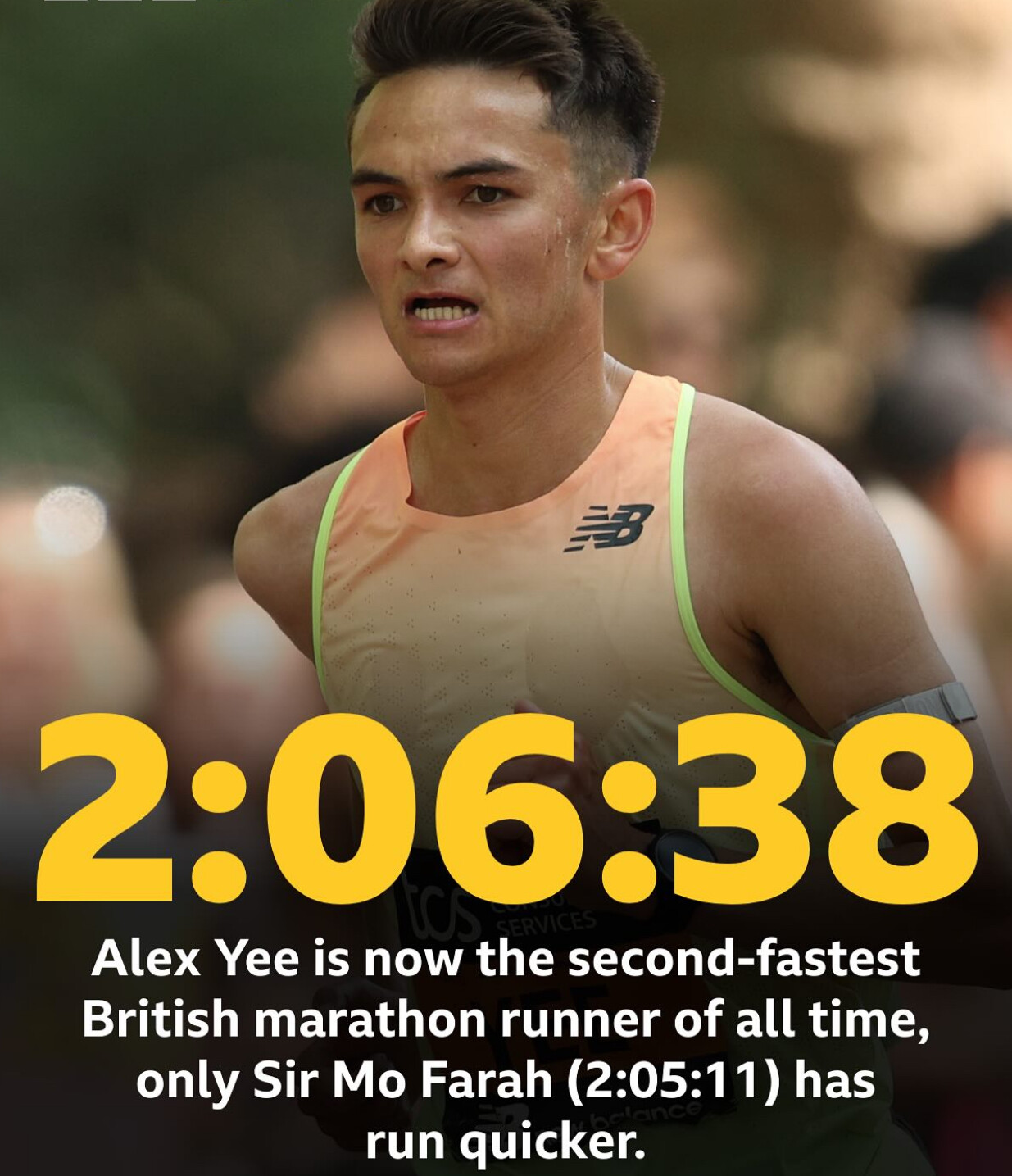
At just 26 years old, and with world-class credentials across multiple disciplines, the possibilities ahead are wide open. Whether he continues balancing triathlon with marathon racing or eventually shifts his focus fully to the roads, one thing is clear:
Alex Yee is no longer a marathon experiment—he is a marathon contender. And this may only be the beginning.
(12/10/2025) ⚡AMP
by Boris Baron

Do You Really Need to Cool Down After a Run? The Short Answer May Surprise You
Runners have long been told the cooldown is essential. Coaches swear by it, magazines promote it, and influencers call it a “game changer.” But how important is it, really?
What the Research Actually Says

Studies show that cooling down does not reduce injury risk and doesn’t prevent soreness. DOMS happens because of muscle damage during hard training—something a cooldown can’t reverse. Strength work helps injury prevention far more.
So Why Do Coaches Still Recommend It?
Because cooldowns do offer a few real-world benefits:
• Faster lactate clearance:
Easy jogging or walking helps flush out lactate from intense workouts, making your legs feel better in the short-term.
• Calms the nervous system:
High-intensity running activates the fight-or-flight response. A cooldown helps your body return to a relaxed state—useful if you run at night or head to work right after training.
• It feels good:
For many runners, ending with a gentle transition makes the session more enjoyable and helps shift into recovery mode.
Bottom Line
Skipping the cooldown isn’t harmful. You won’t raise your injury risk or sabotage your fitness.
But if you can spare five to ten minutes?
It’s still worth doing. A short walk or jog can help your legs feel better, settle your breathing, and give your mind a chance to unwind—small benefits that add up in a busy world.
(12/09/2025) ⚡AMPby Boris Baron
Sara Hall’s Brilliant California Marathon Run Upstaged by Molly Born’s Historic Debut in Sacramento
At 42 years old, Sara Hall produced one of the finest races of her storied career on Sunday at the California International Marathon — yet even her record-breaking brilliance wasn’t enough to stop the emergence of a new U.S. marathon star.
In a sensational debut that electrified the net-downhill course, 26-year-old Molly Born stormed to victory in 2:24:09, slicing 19 seconds off the women’s course record and claiming the 2025 USATF Marathon Championship title. The Oklahoma State alumna and Chapel Hill resident seized control at mile 19 and powered home with a fearless negative split, averaging a searing 5:30 per mile despite nearly stumbling on the homestretch.
Hall, the pre-race favorite and 2017 CIM champion, ran one of the greatest masters performances in U.S. history. Her 2:24:36 not only marked her fastest marathon since 2020, but also obliterated the American masters record for women over 40 and erased the sting of last month’s DNF in New York.
Megan Sailor completed the podium with a strong 2:25:16, but the day belonged to two runners at opposite ends of their careers: Hall, the enduring veteran proving she can still rise to championship form, and Born, whose fearless debut announces her as a rising force in U.S. distance running.
At a race known for breakthroughs, Sunday’s showdown delivered a generational moment — the established legend running one of her finest marathons, and the newcomer running into history.
(12/09/2025) ⚡AMPby Boris Baron
Tension in Iran After Women Run Unveiled at Kish Island Marathon; Organizers Arrested
The running world turned its attention to Iran this week after a marathon on Kish Island — held on Friday off Iran’s southern coast — sparked both celebration and controversy. The event, which featured 3,000 men and 2,000 women running in separate races, became the center of national debate when images spread online showing a number of female runners competing without hijabs.
A Marathon That Broke More Than Finish Lines
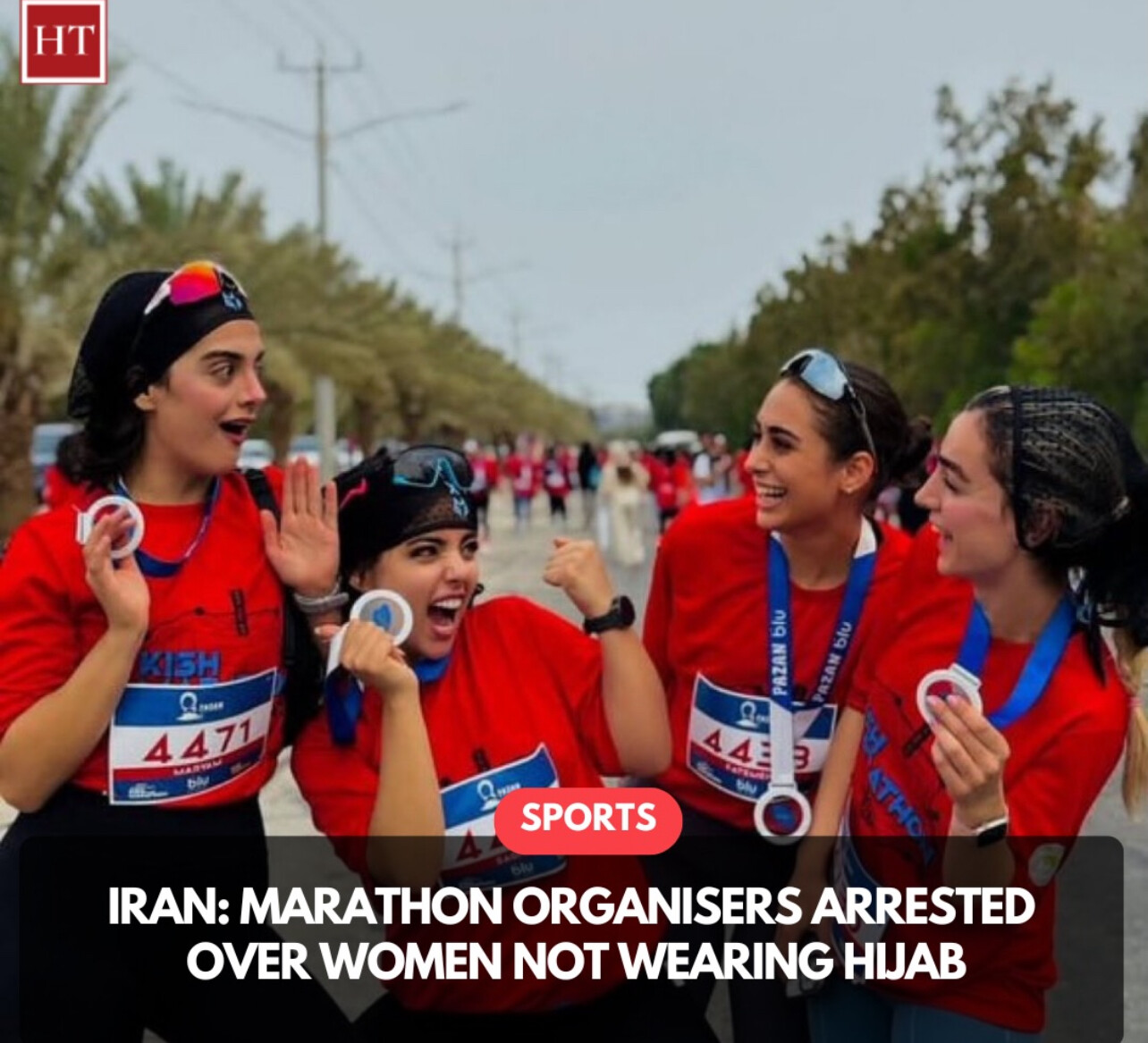
Photos showed women racing in red event shirts, some without the required head covering. For many inside and outside Iran, the images quickly became a symbol of resistance, athletic freedom, and the growing demand among Iranian women to participate fully in public life — including sports — on their own terms.

Supporters of change hailed the moment as another step forward. Iranian authorities, however, viewed it very differently.
Within 24 hours, Iran’s judiciary announced the arrest of two marathon organizers, accusing them of allowing a “violation of public decency.” Officials stressed that it wasn’t only the lack of hijab compliance that drew condemnation, but the very decision to stage such a large-scale women’s race in the first place.

Just a few years ago, seeing thousands of women running together — even in a segregated format — would have been unthinkable in Iran.
A Flashpoint in a Larger National Struggle
The Kish Island marathon controversy comes at a time when the role of women in public spaces remains one of the most sensitive issues in Iran. Enforcement of the mandatory hijab has fluctuated for years — at times loosening, at other times tightening.
The issue returned to global focus after the death of Mahsa Amini three years ago, which triggered nationwide protests and a severe crackdown. Since then, many women across Iran have continued to appear in public without head coverings despite the risks. That growing defiance has prompted renewed warnings from senior officials.
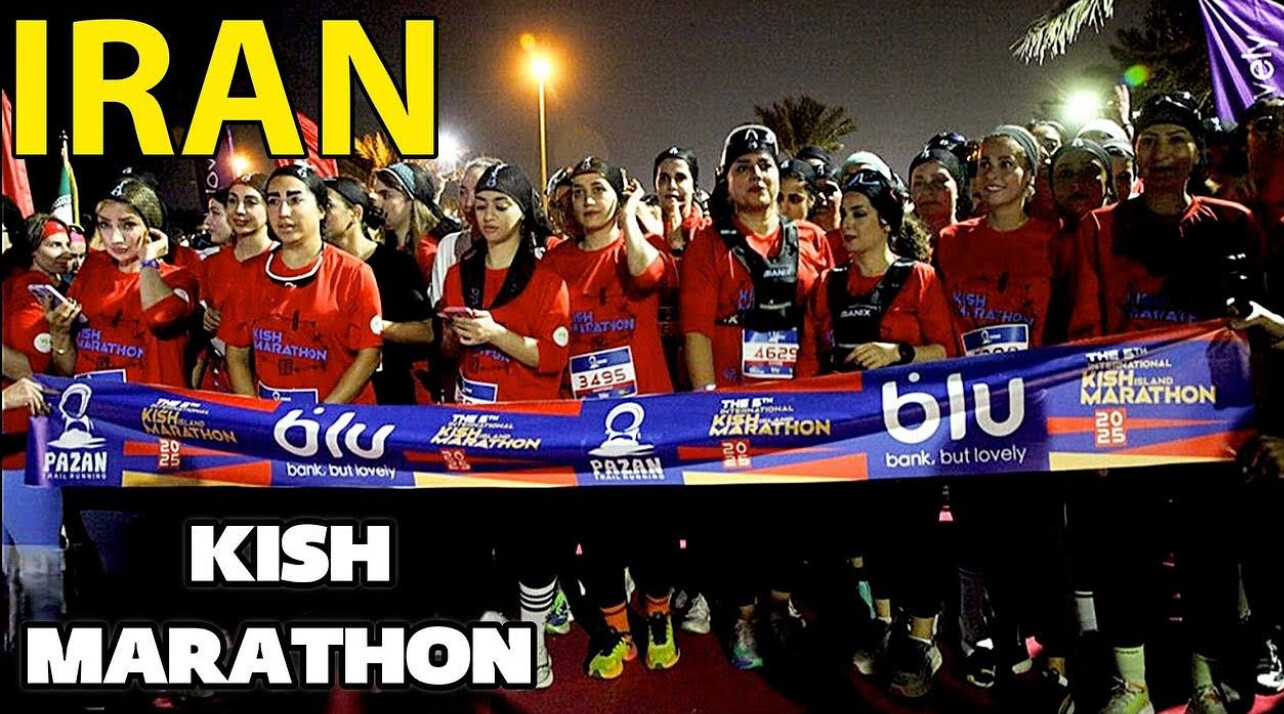
The head of Iran’s judiciary recently ordered intelligence agencies to identify what he called “organized trends promoting non-veiling.” The marathon incident has now been folded into that campaign.
Running as Expression — And as a Flashpoint
For the global running community, the images from Kish Island carried a dual meaning. On one hand, the sight of thousands of Iranian runners — especially women — participating in a mass-start road race reflects the universal appeal of running as freedom, expression, and personal challenge.
On the other hand, the swift response from authorities underscores how even a marathon can become a battleground in Iran’s ongoing struggle over women’s rights, social norms, and public expression.
The arrests of the organizers are unlikely to be the final chapter. Instead, the Kish Island race has become another symbolic moment in a long-running standoff — one fueled by a younger generation eager to push boundaries, and a leadership determined to hold the line.
As of now, the two detained organizers face further investigation, and the future of mass-participation running events for women in Iran remains deeply uncertain.
(12/07/2025) ⚡AMPby Boris Baron
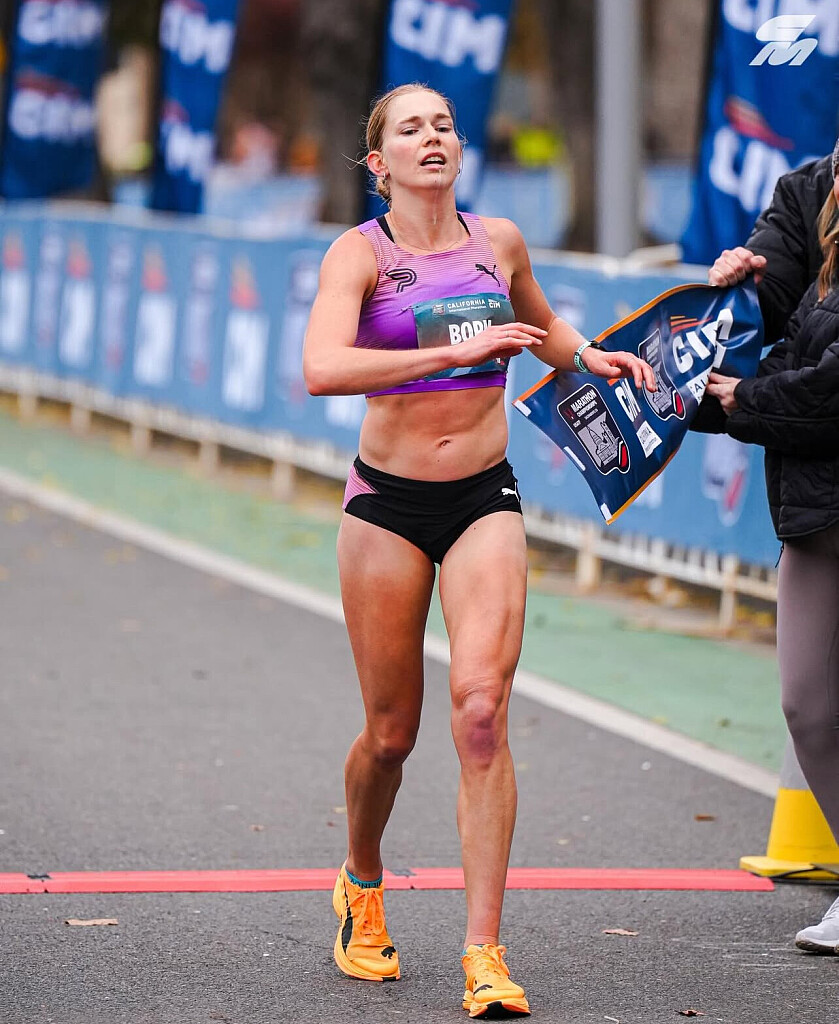
Molly Born Smashes Course Record in Marathon Debut; Futsum Zienasellassie Returns to the Top at CIM 2025
SACRAMENTO, California — December 7, 2025 The California International Marathon once again lived up to its reputation as America’s fastest championship course, producing breakout performances and reaffirming elite talent at the 2025 USATF Marathon Championships. Two standout athletes—Molly Born and Futsum Zienasellassie—delivered the signature performances of the day.
Born’s Brilliant Debut: 2:24:09 Course Record
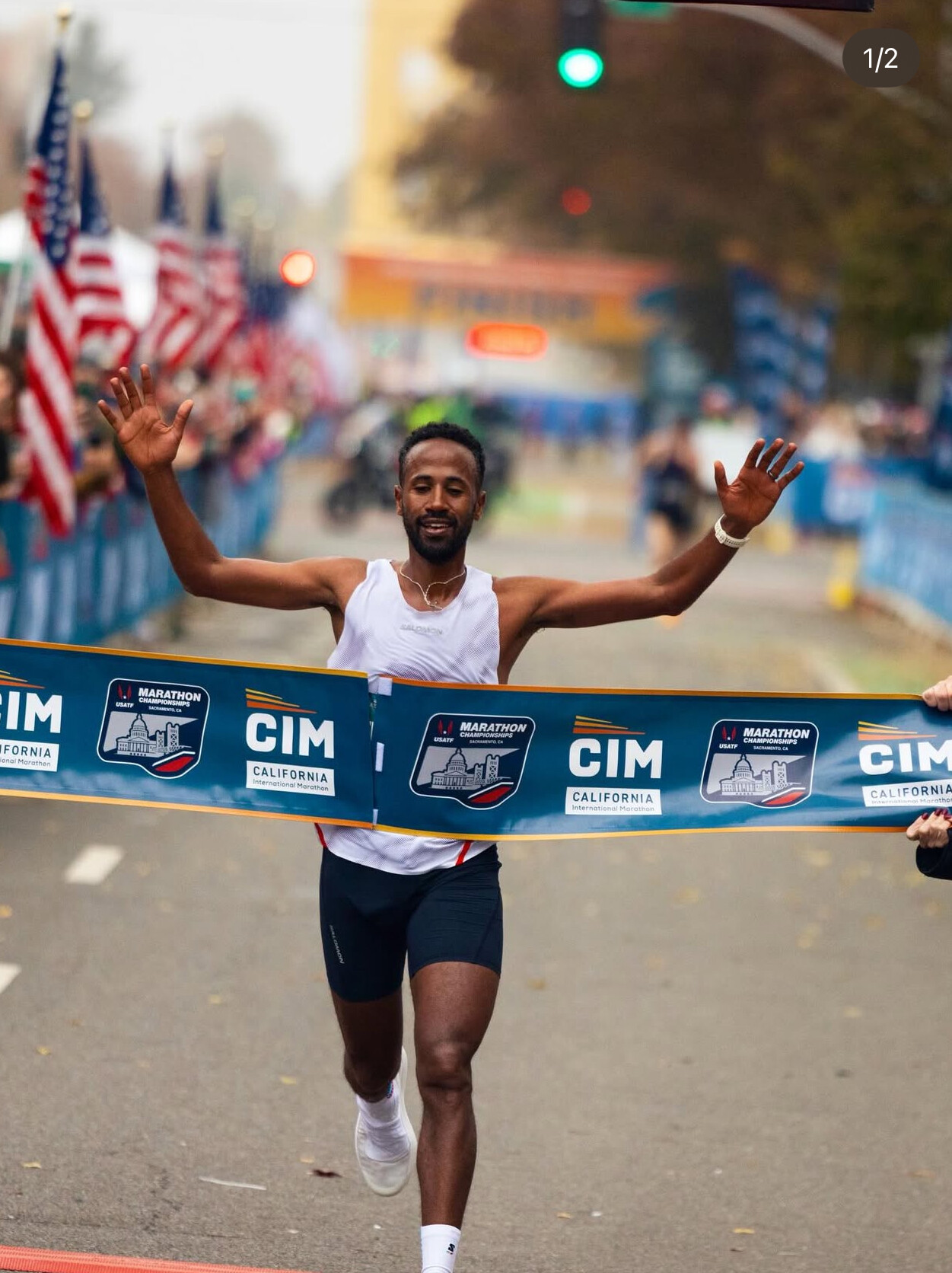
In her first-ever marathon, 26-year-old Molly Born ran with the poise and confidence of a seasoned veteran. The Oklahoma State alumna powered through the rolling downhills from Folsom to Sacramento to claim the 2025 USATF Marathon Championship in 2:24:09, breaking the women’s course record and announcing herself as a major new force in American distance running.
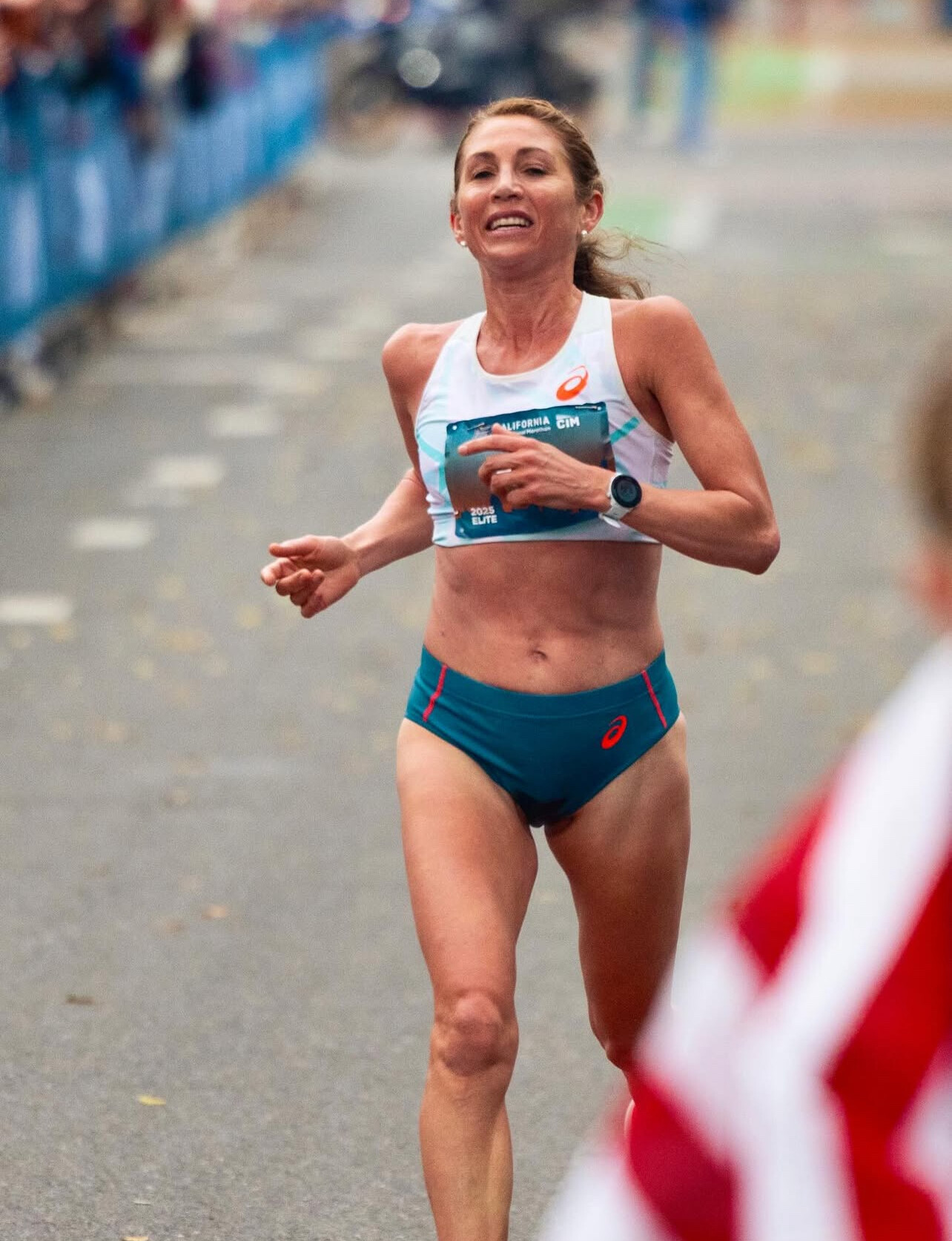
Born excelled at 1,500m through 10,000m during her collegiate career, but never attempted the marathon until today. Her debut suggests she has found her event.
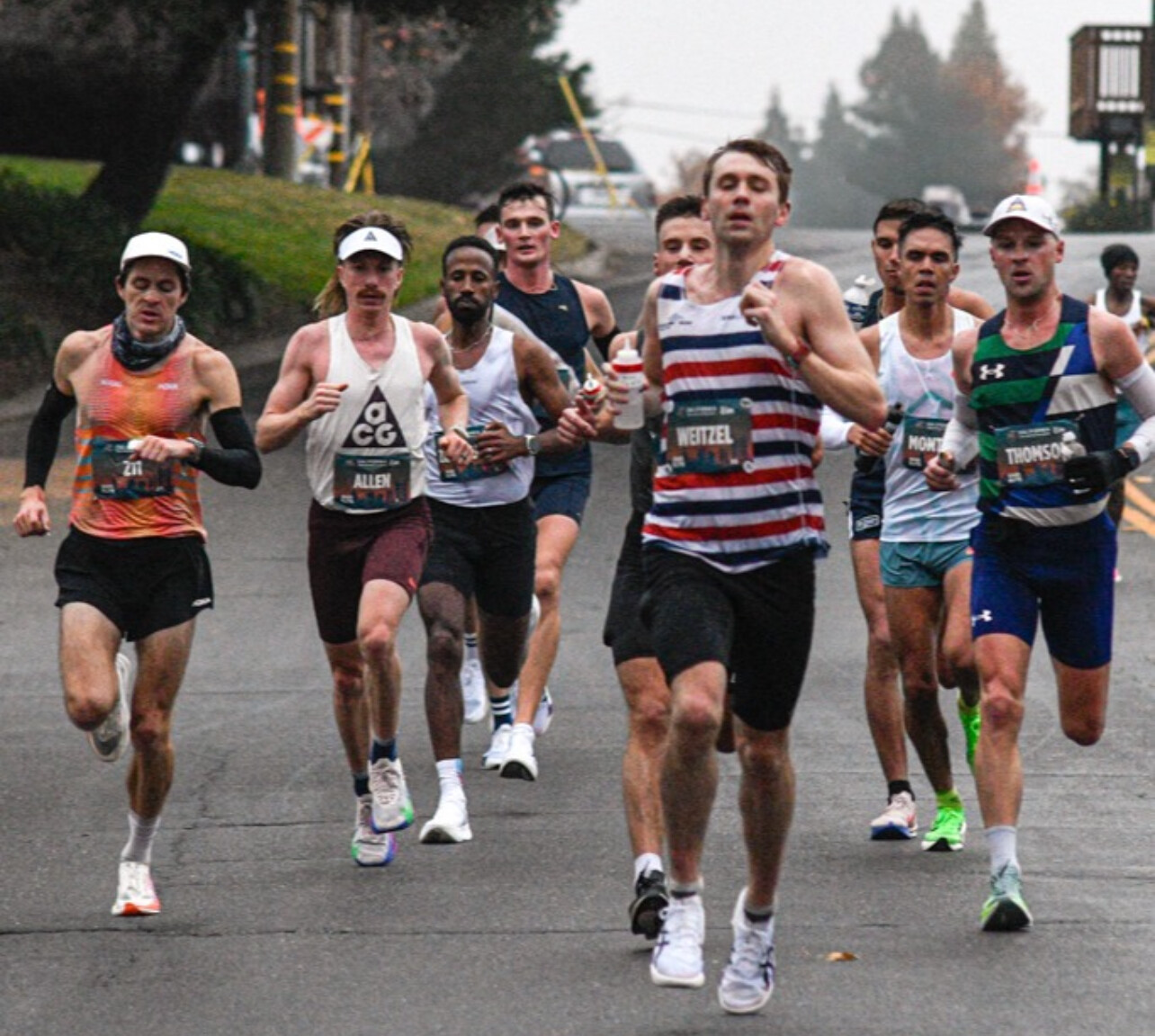
“I knew it was a possibility, but I wasn’t expecting all this,” Born said after winning.

“It feels really good. I think I’ve found my event—going forward, it’s going to be the marathon.”
Women’s Top Five — CIM 2025
1. Molly Born — 2:24:09 (Course Record)
2. Sara Hall — 2:24:36
3. Megan Sailor — 2:25:16
4. Lindsey Bradley — 2:28:41
5. Maya Weigel — 2:28:44
Hall and Sailor also broke 2:26, marking one of the deepest women’s fields ever at CIM.
Zienasellassie Reclaims the CIM Crown
On the men’s side, Futsum Zienasellassie reclaimed the title he first won in 2022, crossing the finish in 2:09:29 to earn his second CIM victory. Smooth, controlled pacing and a strong final 10K separated him from the pack in a deep men’s field.
Zienasellassie famously grew up in Eritrea before starring at Northern Arizona University. His win today continues his rise as one of the most consistent American marathoners.
Men’s Top Five — CIM 2025
1. Futsum Zienasellassie — 2:09:29
2. Joseph Whelan — 2:09:41
3. Christian Allen — 2:09:57
4. Joseph Trojan — 2:10:38
5. Chris Maxon — 2:10:54
Three men breaking 2:10 on the CIM course underscores why this race remains a cornerstone of American distance running.
A Historic Day in Sacramento
Ideal racing conditions and CIM’s fast net-downhill profile helped produce one of the strongest editions in race history:
• A course record in the women’s race
• Three men under 2:10
• A national title decided in dramatic fashion
• An electrifying debut from one of America’s newest marathon stars
The 2025 California International Marathon once again proved why so many U.S. runners come to Sacramento seeking breakthroughs—and today, the event delivered exactly that.
(12/07/2025) ⚡AMPby Boris Baron

California International Marathon
The California International Marathon (CIM) is a marathon organized by runners, for runners! CIM was founded in 1983 by the Sacramento Running Association (SRA), a 501(c)(3) non-profit organization. The SRA Board of Directors is comprised of runners with a combined total of 150+ years of service to the CIM. The same route SRA management created for the 1983 inaugural CIM...
more...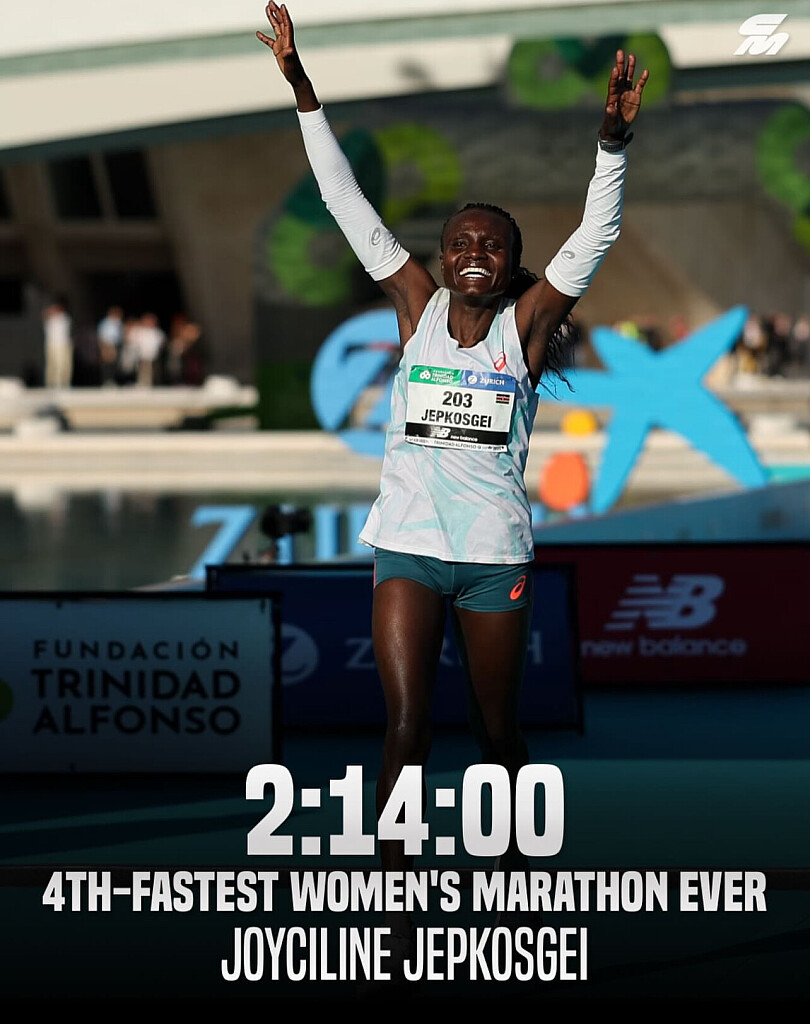
Records Fall as Korir and Jepkosgei Triumph at the 2025 Valencia Marathon
VALENCIA, Spain — December 7, 2025
The 2025 edition of the Valencia Marathon once again delivered world-class performances, national records and an elite-deep field over a fast, flat course in near-perfect early-December conditions.
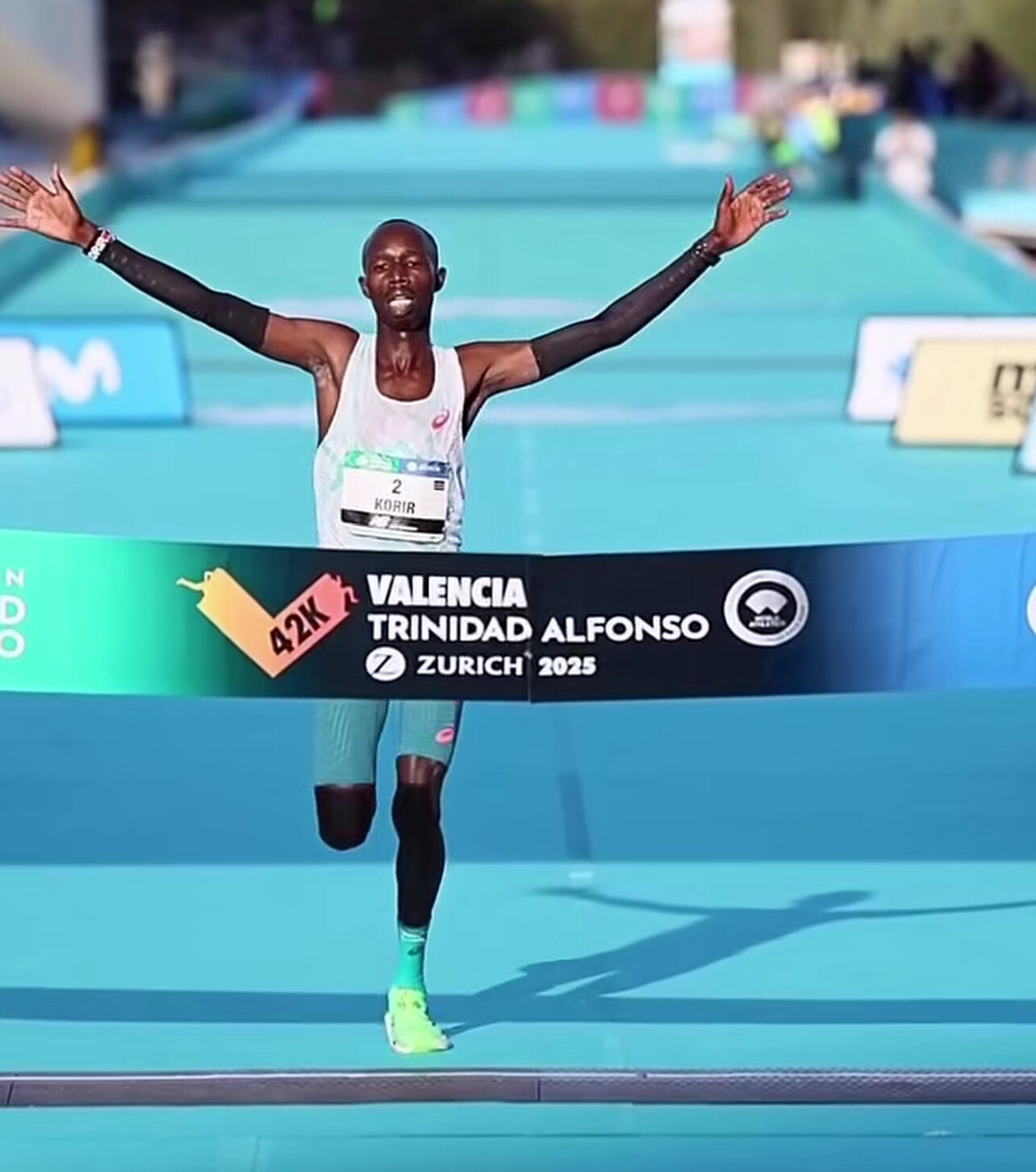
Conditions & Course — Perfect for Fast Times
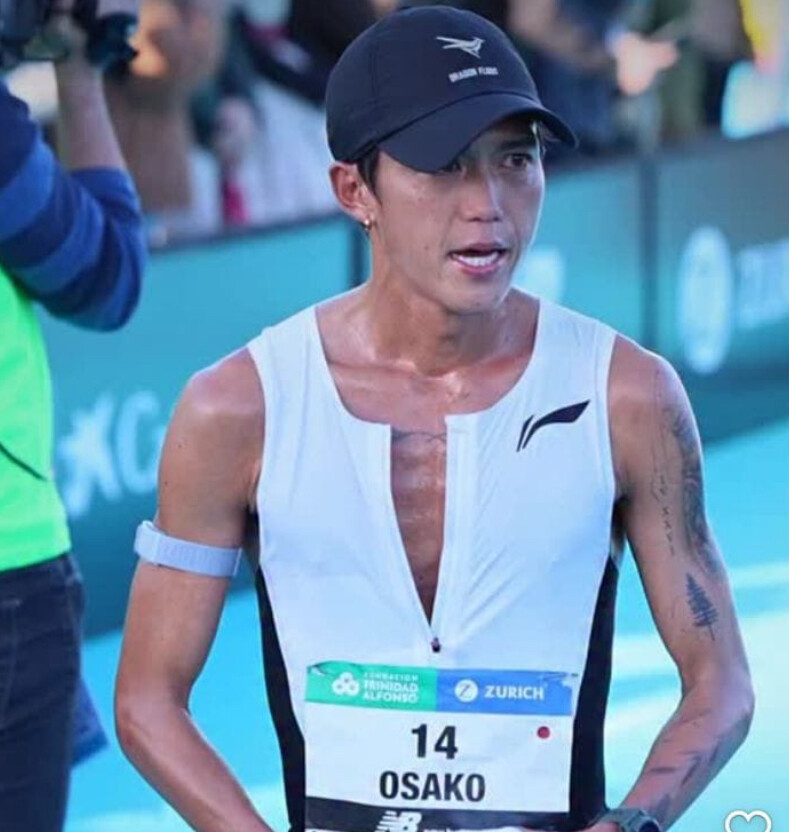
The marathon started at 8:15 a.m. local time, on a flat, sea-level course that winds through wide avenues, coastal stretches, and the scenic historic center of Valencia.
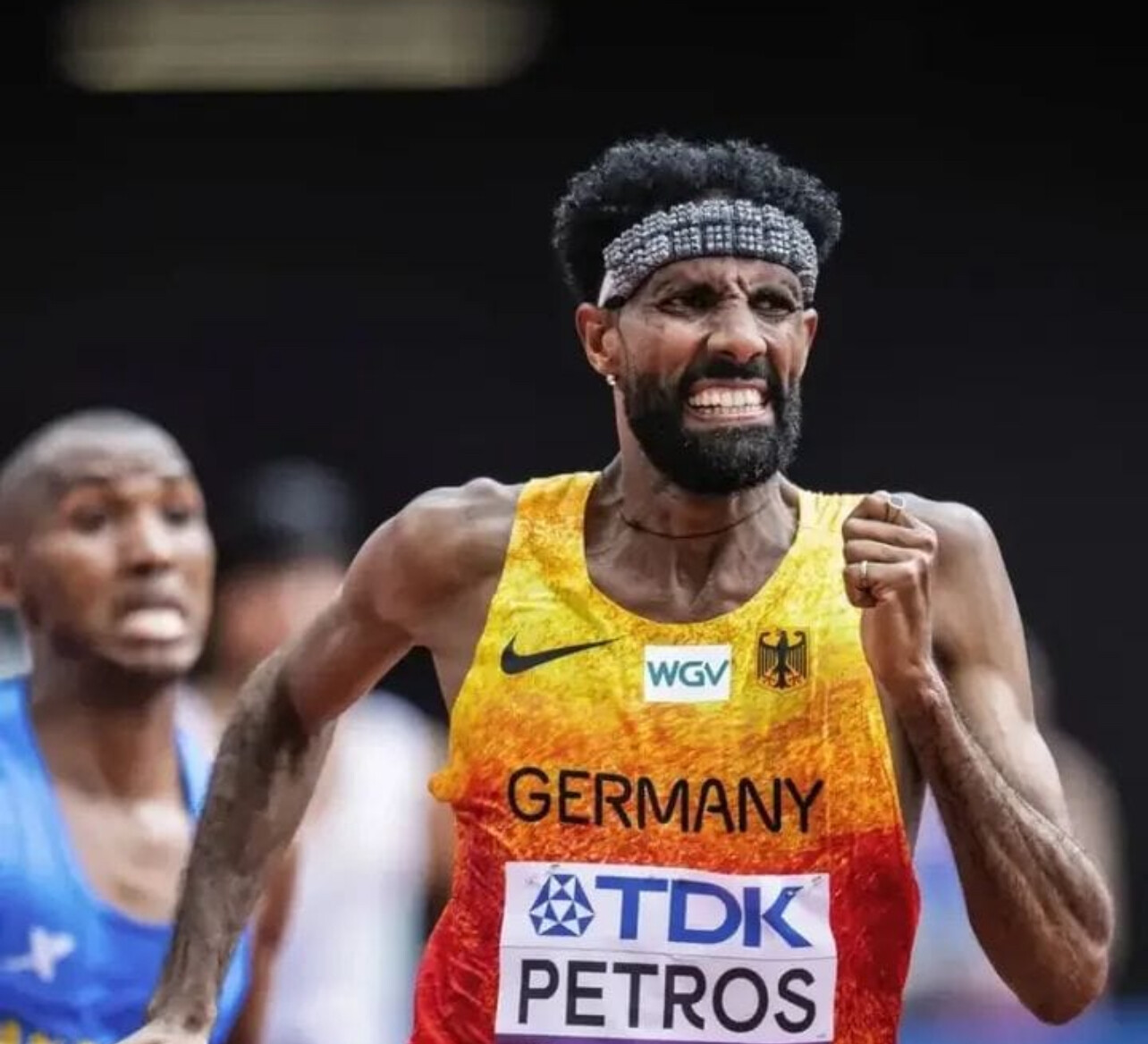
Race organizers and runners praised the combination of smooth pavement, well-organized hydration/aid stations roughly every 5 km, and benign weather — all of which contributed to ideal conditions for record-chasing efforts.
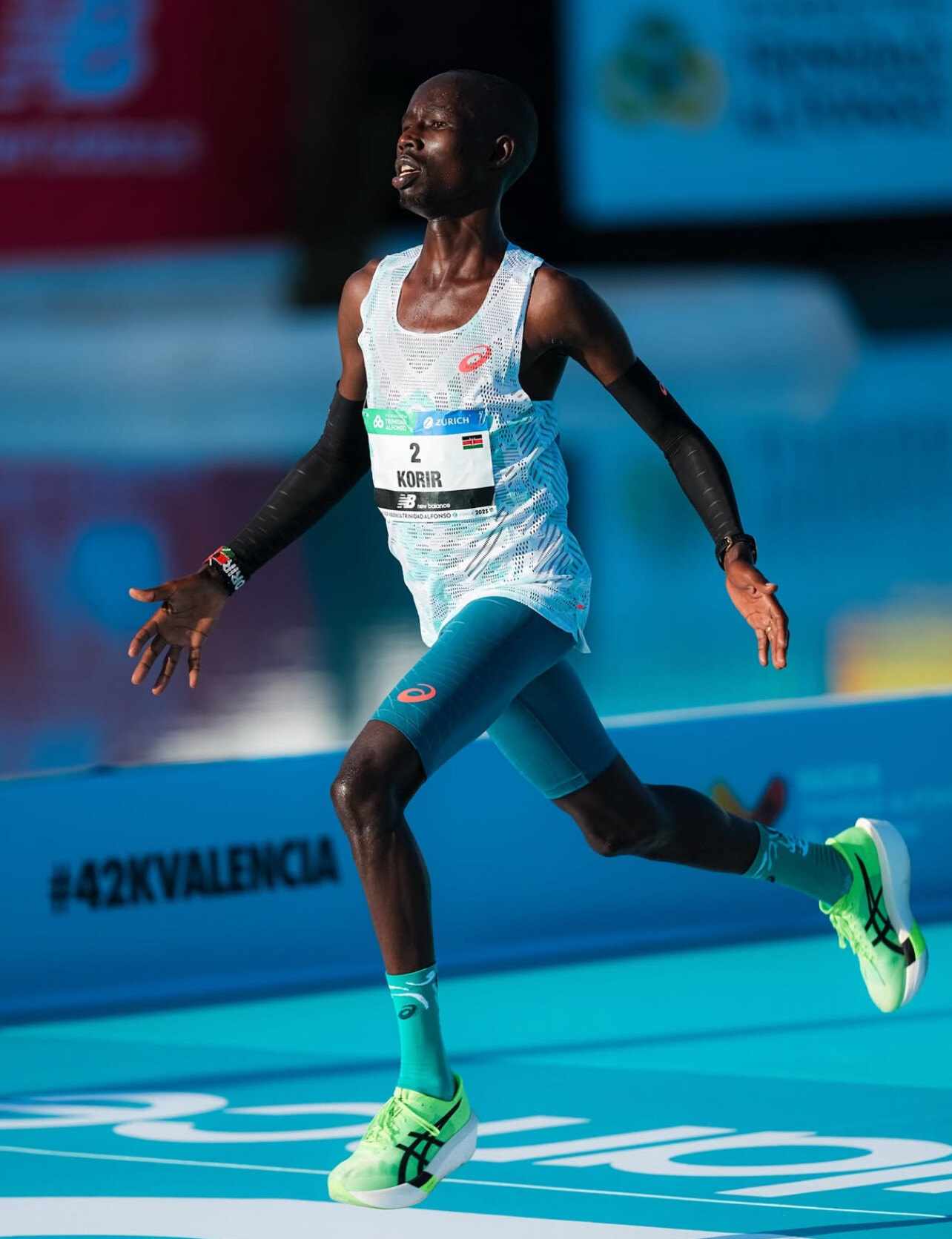
Standout Performances & National Records
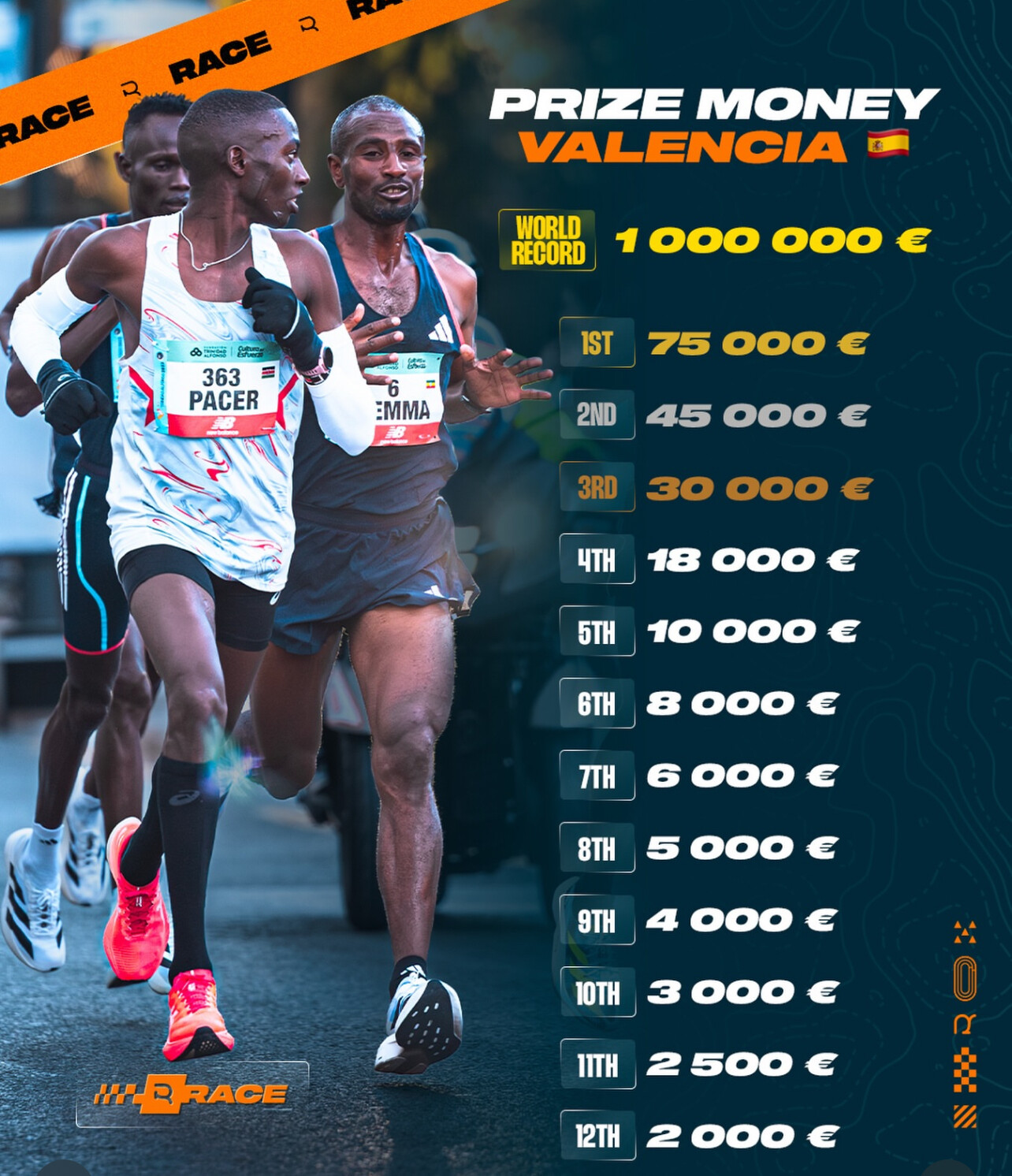
• Men’s Winner — John Korir (KEN) crossed the line in 2:02:24, setting a personal best and claiming the men’s title in dominant fashion.
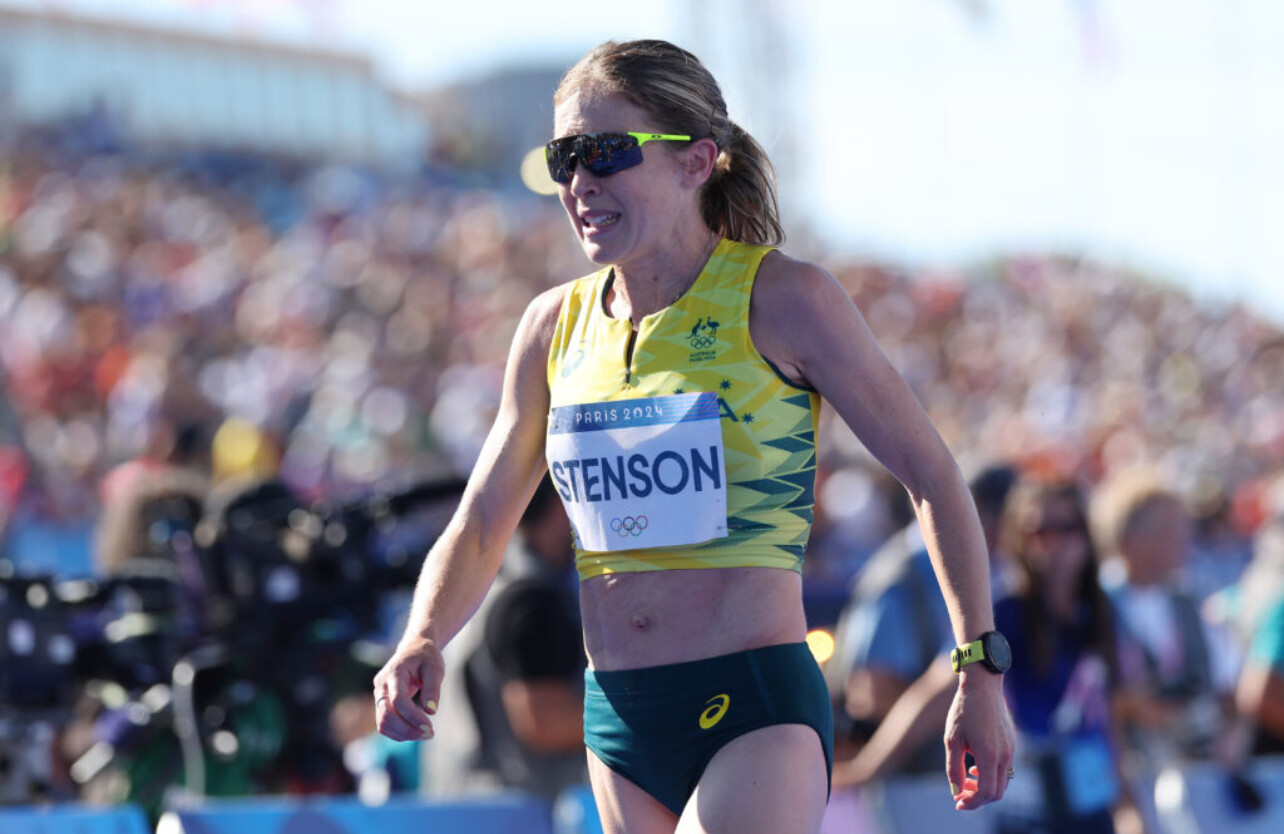
• Amanal Petros (GER) took second with 2:04:03, smashing the German national record and re-establishing himself among Europe’s elite marathoners.
• Suguru Osako (JPN) ran 2:04:55 to finish fourth overall — a new Japanese national record and a major personal best.
• On the women’s side, Joyciline Jepkosgei (KEN) won with 2:14:00, the fastest women’s marathon time in the world this year — and now the fourth-fastest women’s marathon performance in history.
• Peres Jepchirchir (KEN) finished second in 2:14:43, giving Kenya a dominant 1-2 sweep in the women’s race.
• Jessica Stenson (AUS) clocked 2:21:24, breaking the Australian national marathon record — a momentous achievement that makes her the fastest Australian woman ever over 42.195 km.
Top Finishers — Elite Spotlight
Men
1. John Korir (KEN) — 2:02:24
2. Amanal Petros (GER) — 2:04:03 (German record)
3. Awet Kibrab (NOR) — 2:04:24
4. Suguru Osako (JPN) — 2:04:55 (Japanese record)
5. Gashau Ayale (ISR) — 2:05:29
6. Justus Kangogo (KEN) — 2:06:10
7. Alex Yee (GBR) — 2:06:38
8. Félix Bour (FRA) — 2:06:41
9. Filmon Tefsu (NED) — 2:06:42
10. Gemechu Dida (ETH) — 2:06:45
Women
1. Joyciline Jepkosgei (KEN) — 2:14:00
2. Peres Jepchirchir (KEN) — 2:14:43
3. Chloe Herbiet (BEL) — 2:20:38
4. Alisa Vainio (FIN) — 2:20:48
5. Jessica Stenson (AUS) — 2:21:24 (Australian record)
Mass Race & Depth Behind Elites
Beyond the elite competition, the 2025 Valencia Marathon also featured a massive recreational and amateur component — true to its reputation as one of the most accessible and well-attended marathons globally. The race drew tens of thousands of runners, from competitive amateurs seeking sub-3:00 times to first-time marathoners chasing a finish line under the Mediterranean sun. The broad, flat course, combined with frequent refreshment and aid stations, plenty of crowd support, and smooth logistics helped countless runners achieve personal bests, secure Boston or other Major qualifiers, or simply check off a bucket-list marathon.
This blend of elite performance and mass participation underscores why Valencia remains a favorite among serious runners, recreational marathoners, and anyone chasing a fast, well-supported marathon experience.
The 2025 Valencia Marathon Will Be Remembered
• A world-leading women’s time (2:14:00) that now sits among the fastest five in history.
• Multiple national records — for Germany, Japan, and Australia — in a single edition.
• A men’s field with seven finishers under 2:05, showing the depth and quality of competition.
• A fast, flat, sea-level course and ideal weather that once again proved why Valencia is a “time-trial” marathon.
Valencia 2025 was not just another marathon — it was a landmark event. For runners, record-chasers, and fans, it set a high bar for what a winter marathon can deliver: speed, spectacle, and unforgettable achievements.
(12/07/2025) ⚡AMPby Boris Baron

VALENCIA TRINIDAD ALFONSO
The Trinidad Alfonso EDP Valencia Marathon is held annually in the historic city of Valencia which, with its entirely flat circuit and perfect November temperature, averaging between 12-17 degrees, represents the ideal setting for hosting such a long-distance sporting challenge. This, coupled with the most incomparable of settings, makes the Valencia Marathon, Valencia, one of the most important events in...
more...
Jane Hedengren’s Record 5000m Headlines a Spectacular BU Season Opener
The 2025 BU Sharon Colyear-Danville Season Opener once again delivered the kind of early-season excitement Boston has become famous for. Inside the fast confines of the BU Track & Tennis Center, two performances stood above an already electric evening: a collegiate record in the women’s 5000m and a world record in the men’s 600m.
Hedengren Makes NCAA History in the 5000m

BYU freshman Jane Hedengren stormed into the national spotlight by smashing the NCAA indoor 5000m record with a brilliant 14:44.79. In doing so, she became the first collegiate woman ever to break 14:50 indoors, a barrier long thought years away from being threatened.
Hedengren ran with the composure of a veteran — controlled early, then increasingly aggressive as the laps wound down. Her roughly 4:35 closing 1600m sealed a performance that instantly ranks among the fastest indoor 5000m marks ever recorded by an American athlete.
Her debut wasn’t just fast — it was historic.
Hoey Breaks the Indoor 600m World Record
The men’s middle-distance events produced fireworks of their own. Josh Hoey blasted to an astonishing 1:12.84 in the 600m, breaking the all-time indoor world record. His final lap separation and relentless pace redefined what is possible in an event rarely highlighted for record-setting potential.
Hoey’s mark, paired with Hedengren’s breakthrough, gave the BU Opener two of the biggest global performances of the young indoor season.
A Powerful Start to the Season
The BU Opener once again proved why it is considered the premier early-season distance meet in the United States. Hedengren’s record run signaled the arrival of a rising star, while Hoey’s world record added a sprint-middle-distance exclamation point.
If opening weekend is any indication, this indoor season is set to be fast, competitive, and full of surprises.
(12/07/2025) ⚡AMPby Boris Baron

John Korir Set for Valencia Marathon Showdown After Boston Glory and Chicago DNF
The streets of Valencia—long known as a launchpad for marathon breakthroughs—will welcome another major storyline this Sunday as Boston Marathon champion John Korir lines up for one of the fastest races in the world.
Korir, who claimed the 2024 Boston Marathon title, heads to Spain looking to reset his momentum after a disappointing DNF at the Chicago Marathon. Valencia, however, has a reputation for revitalizing careers and producing history-making performances. It was here that Kelvin Kiptumastonished the running world with his 2:01:53 debut, and where Sebastian Sawe delivered his own blazing introduction to the distance.

This year’s edition will test Korir against another powerhouse field.

A Clash With Sisay Lemma and a Deep Kenyan Contingent
Leading the opposition is Sisay Lemma, the Ethiopian star and one of the most consistent marathoners on the international circuit. Lemma, who has repeatedly delivered world-class marks, will be targeting a major statement run in Valencia.
The Kenyan challenge will be formidable as well, with a trio of established athletes joining Korir on the start line:
• Hillary Kipkoech – former track standout making waves on the roads
• Edward Cheserek – the 17-time NCAA champion continuing his marathon evolution
• Justus Kangongo – a proven performer capable of big breakthroughs
Each arrives with something to prove—and Valencia’s flat, rapid course has a way of rewarding ambition.
Why Valencia Matters
The Valencia Marathon has earned its reputation as the fastest marathon outside of the World Marathon Majors, regularly producing:
• Course records
• National records
• Top-10 all-time performances
• Breakout debuts for emerging stars
For Korir, the race presents the perfect environment to reestablish his position among the world’s elite and build momentum heading into the 2025 season.
What’s at Stake
A strong performance would reinforce Korir’s Boston victory as a sign of lasting form—not a one-off moment. With Olympic selections and global rankings in play, every second in Valencia matters.
As fans await Sunday’s race, one question stands out:
Will the City of Running deliver yet another defining chapter in marathon history?
My Best Runs will have full coverage and results as the race unfolds.
(12/04/2025) ⚡AMPby Boris Baron
VALENCIA TRINIDAD ALFONSO
The Trinidad Alfonso EDP Valencia Marathon is held annually in the historic city of Valencia which, with its entirely flat circuit and perfect November temperature, averaging between 12-17 degrees, represents the ideal setting for hosting such a long-distance sporting challenge. This, coupled with the most incomparable of settings, makes the Valencia Marathon, Valencia, one of the most important events in...
more...
Sydney McLaughlin-Levrone Named Women’s Track Athlete of the Year
Sydney McLaughlin-Levrone has been named the Women’s Track Athlete of the Year for 2025 by World Athletics, capping off a season where she once again redefined what excellence looks like in the 400 meters.
Already one of the most gifted athletes in the sport, McLaughlin-Levrone delivered a dominant year highlighted by her 400m world title and a world-leading performance in the flat 400m—a rare double few athletes have even attempted. Her speed, form, and command over both the hurdles and the flat event continue to elevate her into all-time territory.
McLaughlin-Levrone’s season was not simply about winning races. It was about how she won them—control from the opening strides, unmatched top-end speed, and the kind of precision that has become her signature. Every time she stepped on the track, she looked untouchable.
Her rivalry with Dutch star Femke Bol fueled global attention throughout the year, but when it came to the biggest stage, McLaughlin-Levrone delivered once again.
With this award, she solidifies her place as one of the defining athletes of her generation—and one of the most complete 400m runners the sport has ever seen.
(12/02/2025) ⚡AMPby Boris Baron

Emmanuel Wanyonyi Named Male Track Athlete of the Year
Kenya’s Emmanuel Wanyonyi has been named Male Track Athlete of the Year, a recognition that felt inevitable after a season marked by dominance, composure, and electrifying performances on the global stage. At just 20 years old, Wanyonyi has already rewritten expectations in the men’s 800 meters—and 2025 proved to be his breakthrough year.
Wanyonyi consistently displayed the kind of front-end speed, race intelligence, and finishing strength that separates champions from contenders. His victories across the Diamond League circuit, combined with his commanding global championship run, made him the clear favorite for the award.
What sets Wanyonyi apart is his ability to take control of races early and maintain a pace that leaves even seasoned competitors scrambling. Whether he was pushing the tempo from the break or waiting to unleash a decisive final burst, Wanyonyi showed maturity well beyond his age.
Could anyone else have challenged him?
In truth, only a handful came close. Canada’s Marco Arop, the reigning world champion from 2023, mounted a strong season and pushed Wanyonyi in several marquee races. Algeria’s Djamel Sedjati also delivered standout performances. But no one matched Wanyonyi’s consistency, his fearlessness, or his results across the year’s biggest stages.
Wanyonyi’s rise is also seen as a resurgence for Kenya’s middle-distance dominance, echoing the eras of David Rudisha and Wilson Kipketer. Coaches and analysts agree: we may only be seeing the beginning.
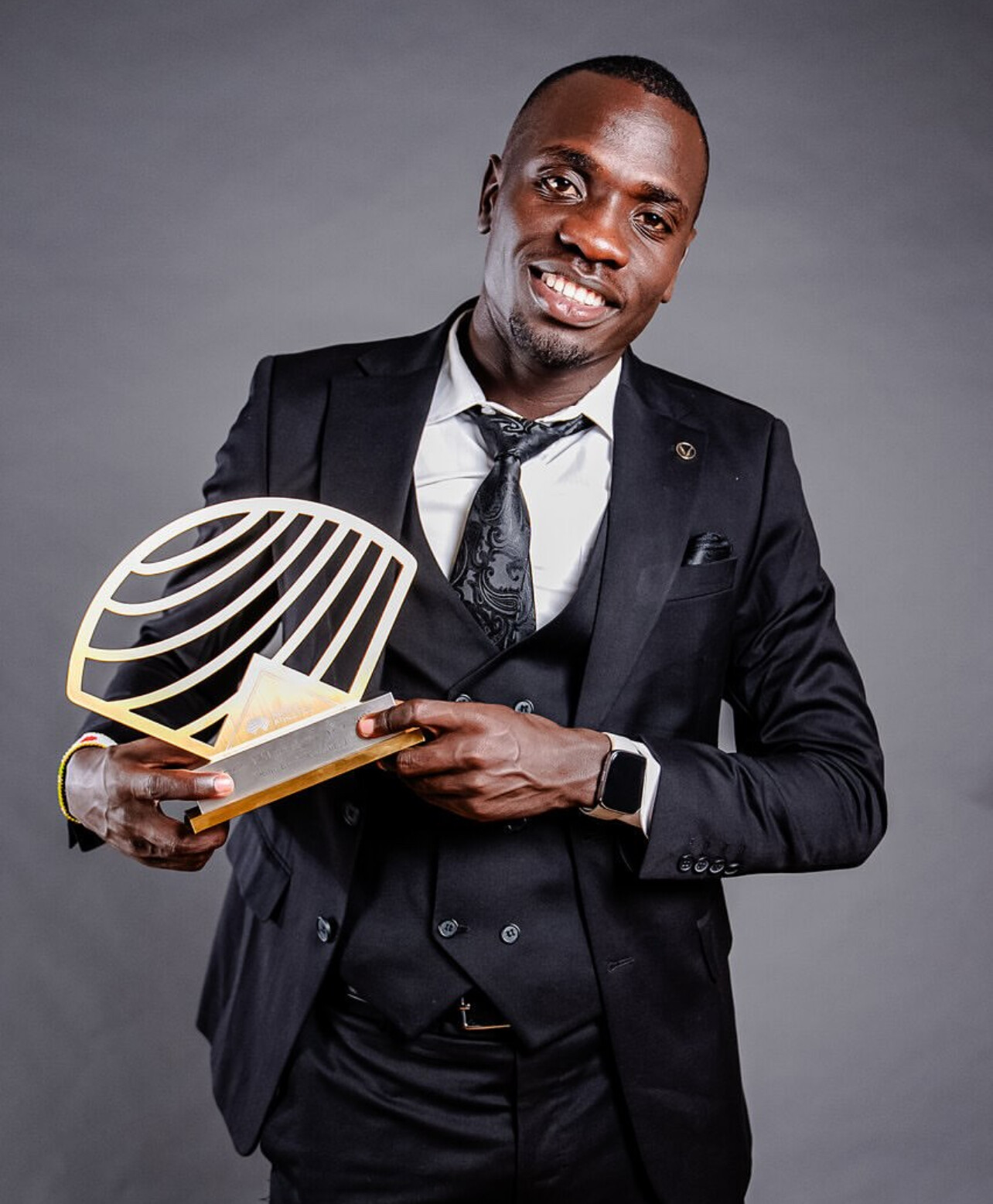
As 2026 approaches, Wanyonyi now stands as the man to beat—and the face of the next generation of 800m excellence.
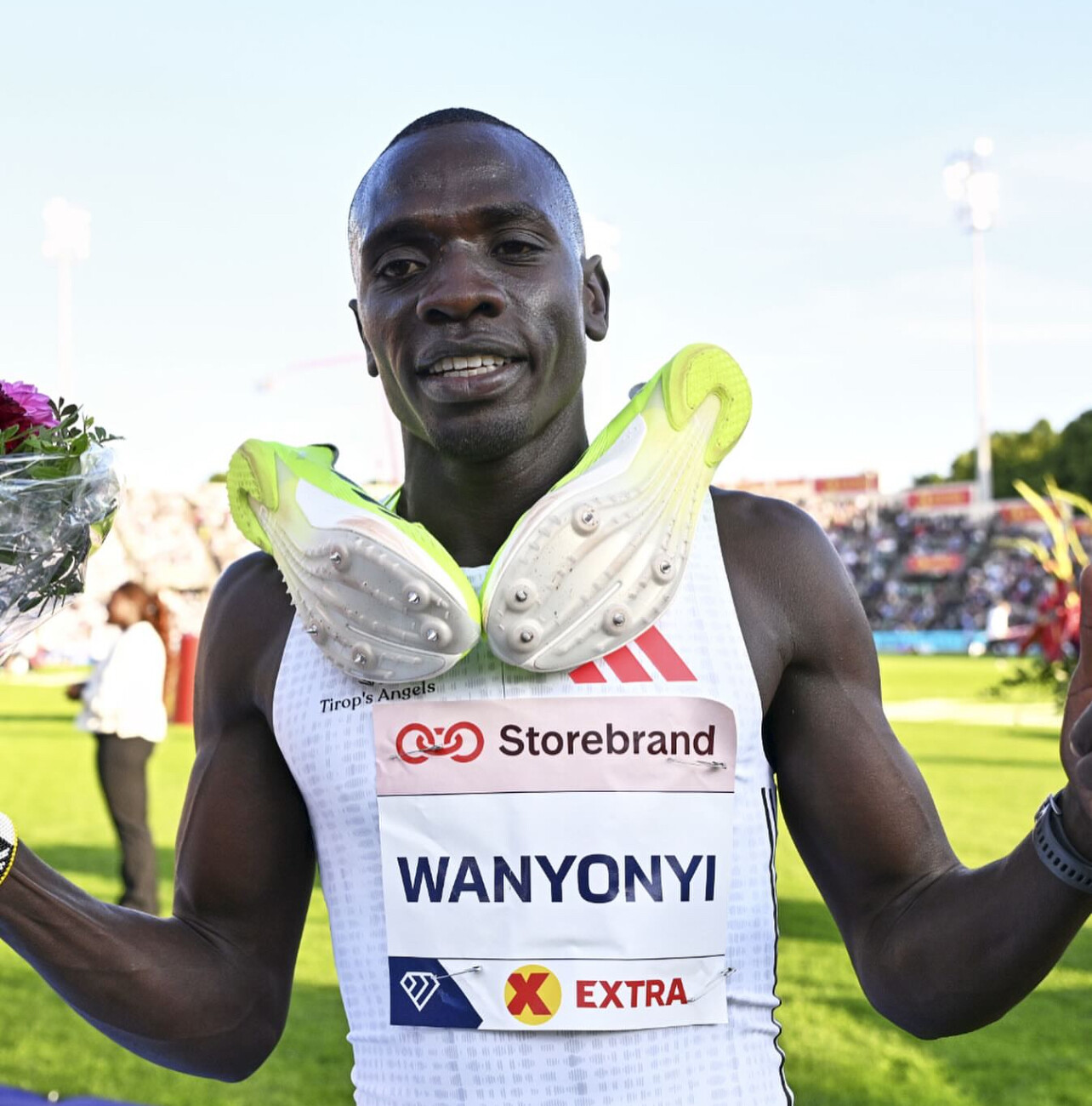
by Boris Baron

Kosgei Shatters Course Record as Mengesha Leads Ethiopian Sweep at the 2025 Shanghai Marathon
The 2025 Shanghai Marathon delivered the kind of fireworks organizers were hoping for on Sunday, November 30—fast times, dominant front-running, and a powerful statement that Shanghai is ready to join the World Marathon Majors.
More than 23,000 runners started at the Bund at 7 a.m., racing through one of the world’s most iconic skylines before finishing at Shanghai Stadium. Both the men’s and women’s races produced standout performances.
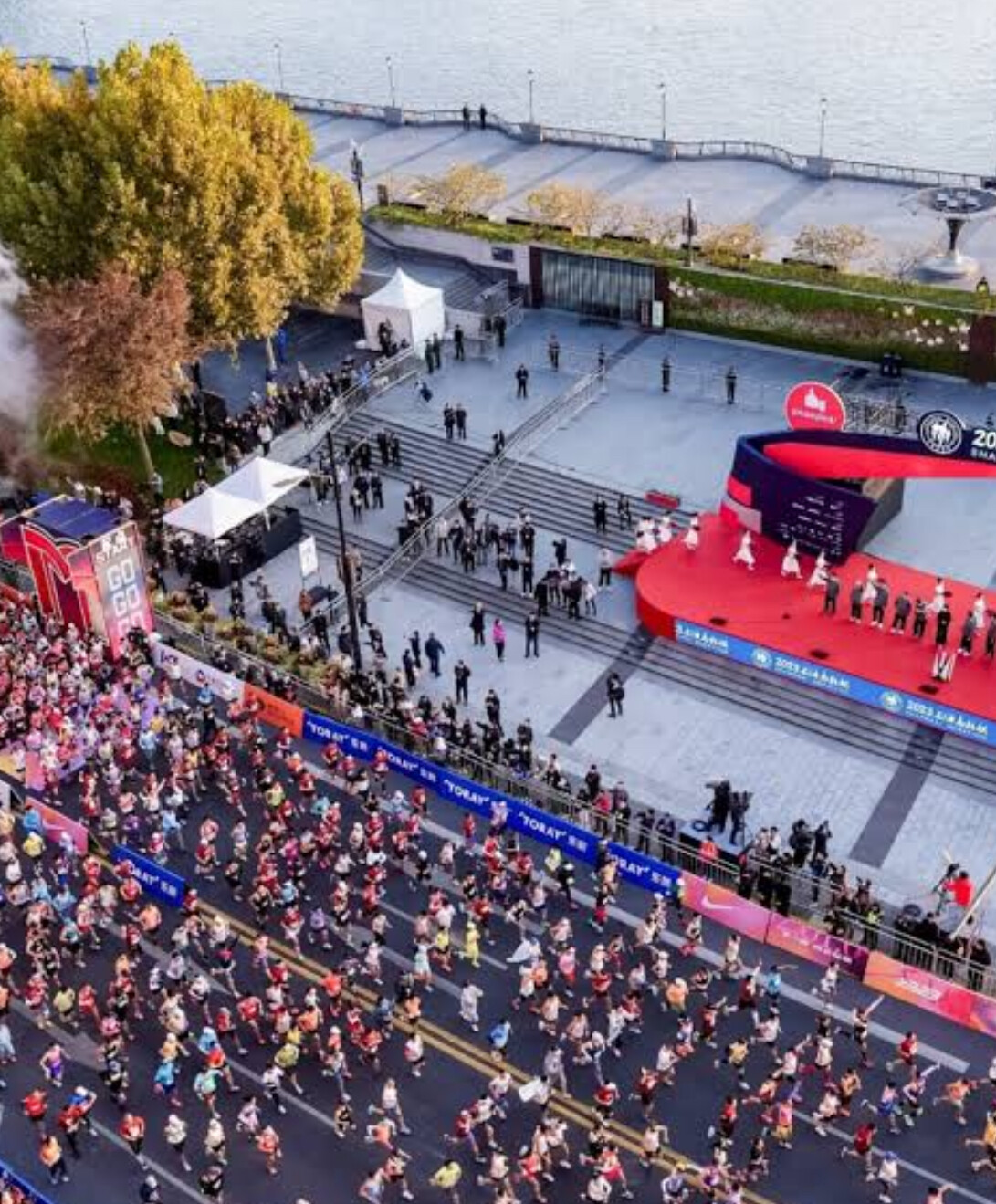
Kosgei Back on Top With a Historic Run
Former world record-holder Brigid Kosgei returned to the top of the podium in commanding style. The 31-year-old Kenyan surged early, hit halfway under 69 minutes, and never looked back, winning in 2:16:36—
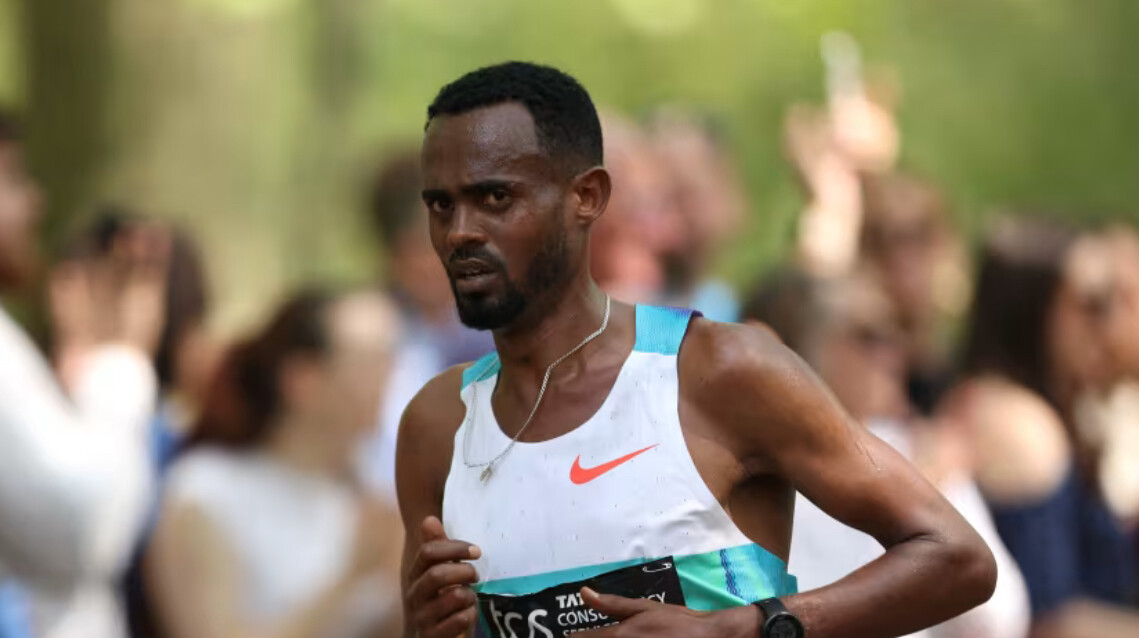
• the fastest marathon ever run on Chinese soil,
• a new Shanghai course record, and
• the third-fastest performance of her career.
Only compatriot Irine Chepet Cheptai could stay close in the early miles, eventually taking second in 2:18:51. Ethiopia’s Tiruye Mesfin finished third in 2:20:38, followed closely by fellow Ethiopian Bekelech Gudeta at 2:20:59.
China’s top star Zhang Deshun placed fifth in 2:25:13, continuing her impressive streak of top domestic finishes.
Ethiopia Sweeps the Men’s Podium
The men’s race unfolded differently—a large, aggressive pack early on before Ethiopia dominated the final 10K. In a furious sprint to the line, Milkesa Mengesha broke the tape in 2:06:25, edging compatriot Dawit Wolde by two seconds. Deresa Geleta finished third in 2:06:36, completing an all-Ethiopian podium.
Five Ethiopians broke 2:07, underscoring the depth at the front.
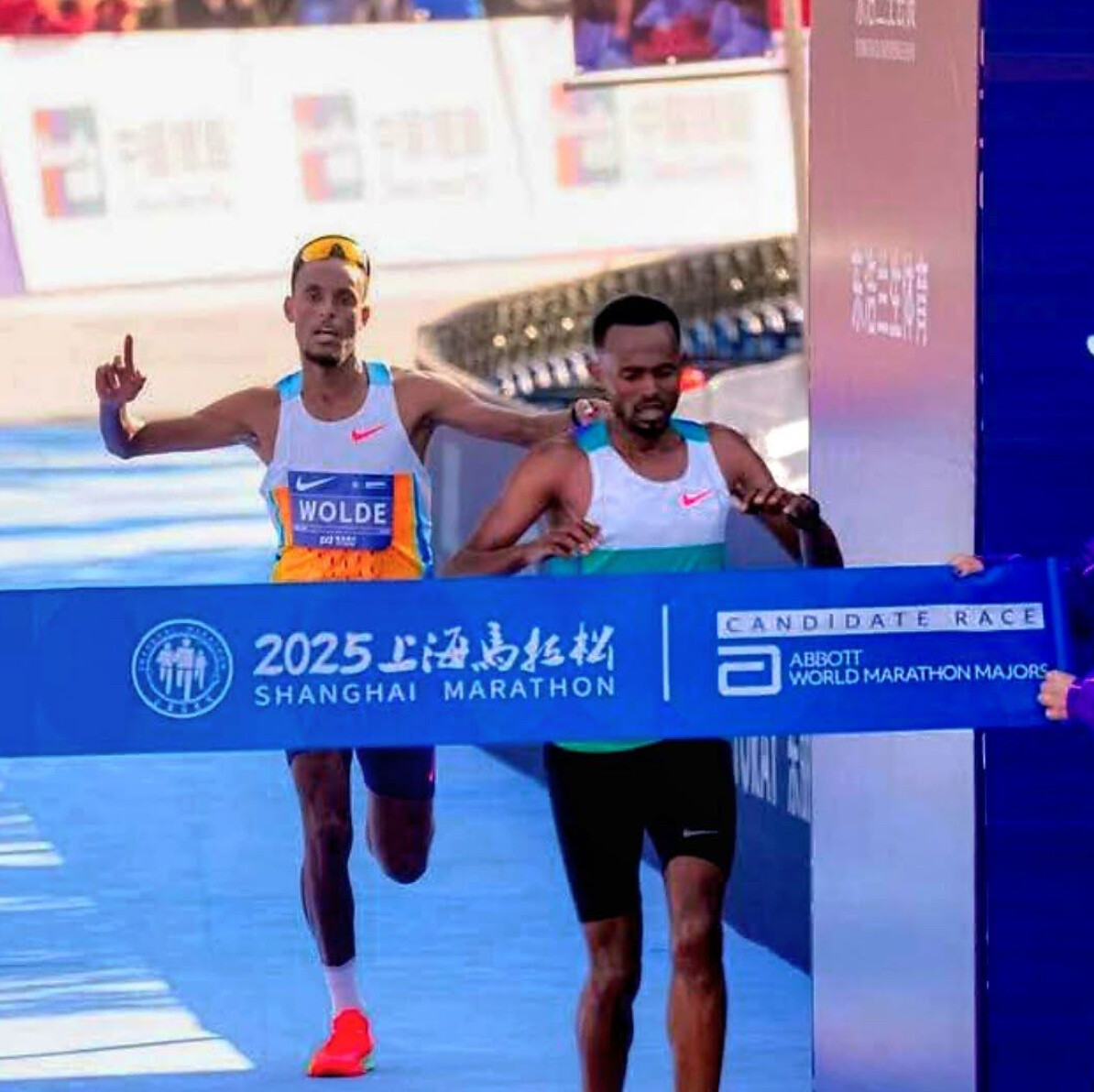
China’s Feng Peiyou delivered the best domestic performance of the day, clocking 2:08:36, the fastest marathon ever run by a Chinese athlete in Shanghai. Countrymen Yang Kegu, Li Dalin, and Ma Rui also cracked the top ten.
Top 10 Results
Men
1. Milkesa Mengesha (ETH) – 2:06:25
2. Dawit Wolde (ETH) – 2:06:27
3. Deresa Geleta (ETH) – 2:06:36
4. Haftu Teklu (ETH) – 2:06:57
5. Challa Gossa (ETH) – 2:08:06
6. Feng Peiyou (CHN) – 2:08:36
7. Solomon Kirwa Yego (KEN) – 2:09:42
8. Yang Kegu (CHN) – 2:12:00
9. Li Dalin (CHN) – 2:13:11
10. Ma Rui (CHN) – 2:13:26
Women
1. Brigid Kosgei (KEN) – 2:16:36 (course & Chinese all-comers record)
2. Irine Chepet Cheptai (KEN) – 2:18:51
3. Tiruye Mesfin (ETH) – 2:20:38
4. Bekelech Gudeta (ETH) – 2:20:59
5. Zhang Deshun (CHN) – 2:25:13
6. Veronicah Njeri Maina (KEN) – 2:26:33
7. Wu Shuang (CHN) – 2:27:17
8. Yao Miao (CHN) – 2:31:13
9. Shen Jiayao (CHN) – 2:31:57
10. Ma Xuexian (CHN) – 2:34:51
Shanghai’s Road to Becoming a Major
For the second straight year, organizers staged the race under the “Run Beyond Borders” banner, showcasing deep elite fields, expanded medical and volunteer support, and international broadcast coverage. Shanghai is currently undergoing World Marathon Majors evaluation, with the earliest possible inclusion in 2027.
(12/01/2025) ⚡AMPby Boris Baron

Shanghai International Marathon
Shanghai International Marathon has established itself as the marquee running event on China’s Marathon calendar. Every November, tens of thousand participants run passing the many historical places of this city such as Bund Bull, Customs House, Shanghai Museum, Shanghai Grand Theater, Shanghai Exhibition center, Jing’an Temple, Nan Pu Bridge, Lu Pu Bridge, Long Hua Temple, Shanghai Stadium. The course records...
more...
Stacked Fields Set for Sunday’s Shanghai Marathon as Kosgei and Kipchumba Return
The 2025 Shanghai Marathon — a World Athletics Platinum Label event — is set for Sunday (30), and both the women’s and men’s races are shaping up as some of the strongest in the event’s history. Former world record-holder Brigid Kosgei and defending men’s champion Philimon Kiptoo Kipchumba headline a deep international lineup chasing fast times on one of Asia’s premier courses.
The mass start field in Shanghai will once again deliver the energy and depth that has become a signature of this Platinum Label event, with tens of thousands of runners pouring through the city streets behind one of the strongest elite line-ups of the season. Local club runners, age-group veterans, first-time marathoners, and international amateurs will all share the course with the world’s best, creating a fast, colorful, and highly competitive atmosphere from start to finish.
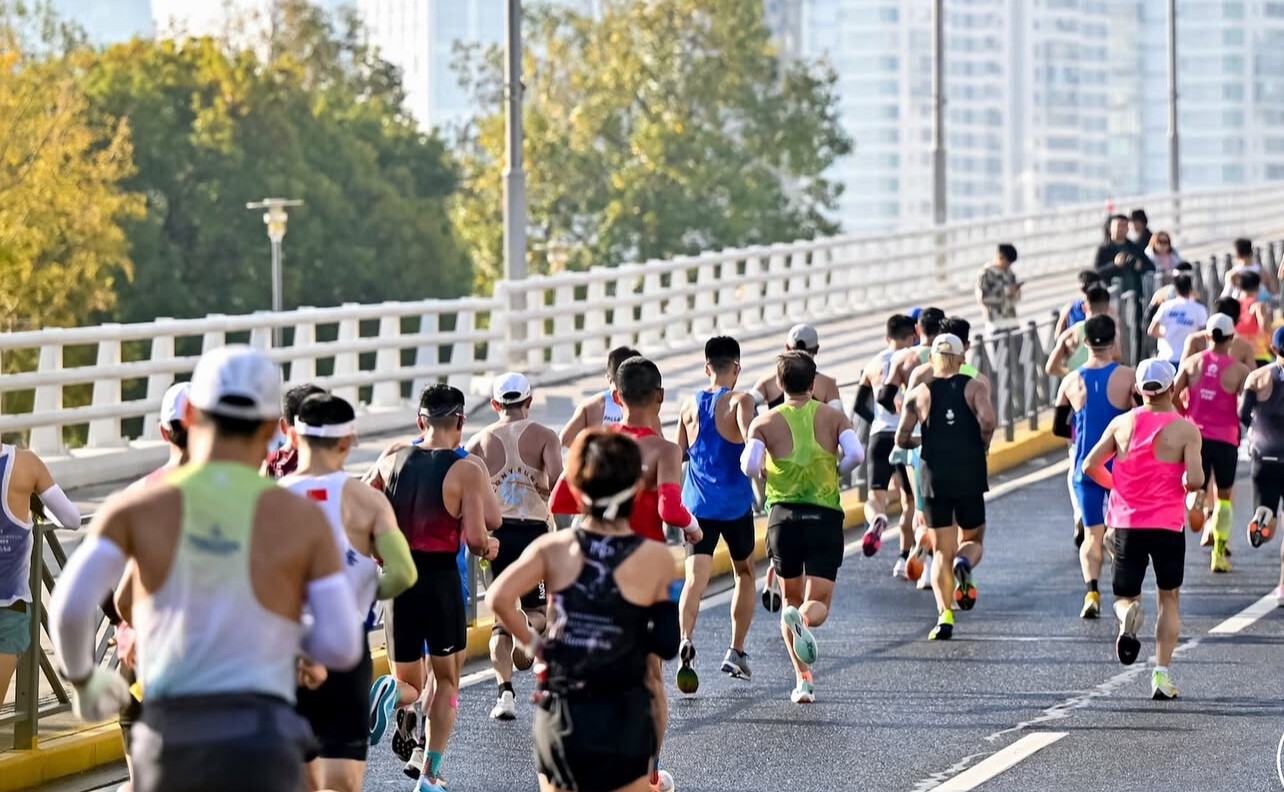
With ideal late-November conditions expected and Shanghai’s reputation for producing personal bests, the mass field is poised for another year of standout performances and unforgettable marathon moments.

Kosgei Targets First Win in Two Years — and a Course Record
Brigid Kosgei, whose 2:14:04 stood as the world record from 2019 to 2023, lines up for her third marathon of the year. The 31-year-old Kenyan has been consistently sharp in 2025—second in Hamburg (2:18:26) and again in Sydney (2:18:56).
A victory in Shanghai would be her first since Abu Dhabi 2023, but the stakes go beyond winning:
• The course record stands at 2:20:36 (Yebrgual Melese, 2018).
• Pacers have been asked to roll out at 2:17:50 pace, fast enough to challenge both the course mark and the Chinese all-comers’ record (2:18:09 by Ruti Aga, 2023).
Kosgei will not be alone. Two sub-2:20 performers stand in her way:
• Irine Cheptai (KEN) — PB 2:17:51, coming off strong runs in Chicago and Boston.
• Tiruye Mesfin (ETH) — PB 2:18:35, part of Ethiopia’s long history of dominance here.
Ethiopian women have won 10 of the last 14 editions, and Mesfin leads their charge again.
China brings a serious contender as well.
• Zhang Deshun, the No. 3 all-time Chinese marathoner (2:20:53 at Tokyo), returns just two weeks after winning the National Games.
Add in Bekelech Gudeta (ETH) — who won marathons in Seoul and Mexico City this year — and the women’s race becomes one of the most competitive in Shanghai’s history.
Four Sub-2:04 Ethiopians Lead Men’s Lineup

The men’s race may be even deeper. Ethiopia sends a quartet capable of pushing into all-time territory:
• Deresa Geleta (ETH) — 2:02:38, fastest in the field
• Birhanu Legese (ETH) — 2:02:48, two-time Tokyo champion
• Milkesa Mengesha (ETH) — 2024 Berlin winner
• Dawit Wolde (ETH) — former Xiamen champion
Geleta has been brilliant when healthy, clocking 2:02:38 in Valencia and 2:03:51 in Tokyo this year, though he dropped out of Wuxi and the World Championships. Legese tuned up with a 1:00:54 at the New Delhi Half.
But Ethiopia is far from guaranteed victory.
Kiptoo Kipchumba Returns to Defend His Title
Kenya’s Philimon Kiptoo Kipchumba, the 2023 champion, owns the Chinese all-comers’ record of 2:05:35 set in Shanghai. He hasn’t raced since placing 10th here last year, but he returns with unfinished business.
He is joined by a strong Kenyan contingent:
• Titus Kipruto — 2:04:54
• Solomon Kirwa Yego — 2:05:42
• Kenneth Keter — 2:05:53
• Edmond Kipngetich — 2:06:47
China’s biggest hope is Feng Peiyou, the second-fastest Chinese marathoner ever (2:07:06). A small improvement would break the national record of 2:06:57.
Pacers will target 2:58/km (≈2:05:00) — fast enough to threaten Kiptoo’s all-comers’ record.
Leading Entries
Women
• Brigid Kosgei (KEN) – 2:14:04
• Irine Chepet Cheptai (KEN) – 2:17:51
• Tiruye Mesfin (ETH) – 2:18:35
• Selly Chepyego Kaptich (KEN) – 2:20:03
• Zhang Deshun (CHN) – 2:20:53
• Bekelech Gudeta (ETH) – 2:21:36
• Veronicah Njeri Maina (KEN) – 2:24:46
• Xia Yuyu (CHN) – 2:25:45
• Wu Bing (CHN) – 2:26:01
• Li Meizhen (CHN) – 2:27:51
• Shen Ni (CHN) – 2:28:47
• Huang Xuemei (CHN) – 2:29:51
Men
• Deresa Geleta (ETH) – 2:02:38
• Birhanu Legese (ETH) – 2:02:48
• Dawit Wolde (ETH) – 2:03:48
• Haftu Teklu (ETH) – 2:04:42
• Titus Kipruto (KEN) – 2:04:54
• Philimon Kiptoo Kipchumba (KEN) – 2:05:35
• Solomon Kirwa Yego (KEN) – 2:05:42
• Kenneth Keter (KEN) – 2:05:53
• Edmond Kipngetich (KEN) – 2:06:47
• Feng Peiyou (CHN) – 2:07:06
• Challa Gossa (ETH) – 2:07:32
• Wu Xiangdong (CHN) – 2:08:04
(11/29/2025) ⚡AMPby World Athletics
Shanghai International Marathon
Shanghai International Marathon has established itself as the marquee running event on China’s Marathon calendar. Every November, tens of thousand participants run passing the many historical places of this city such as Bund Bull, Customs House, Shanghai Museum, Shanghai Grand Theater, Shanghai Exhibition center, Jing’an Temple, Nan Pu Bridge, Lu Pu Bridge, Long Hua Temple, Shanghai Stadium. The course records...
more...
Stephen Mokoka Breaks 37-Year-Old SA Veterans Marathon Record at Big Hole Marathon
South African marathon legend Stephen Mokoka continues to prove that age is no barrier to excellence. On Saturday, November 22, 2025, the 40-year-old star shattered the South African veterans (40+) marathon record at the Big Hole Marathon in Kimberley, finishing second overall in a brilliant 2:15:31.
The previous record — 2:17:40, set by Paulus Masilela in 1988 — had stood untouched for 37 years. Mokoka didn’t just dip under it; he demolished it.
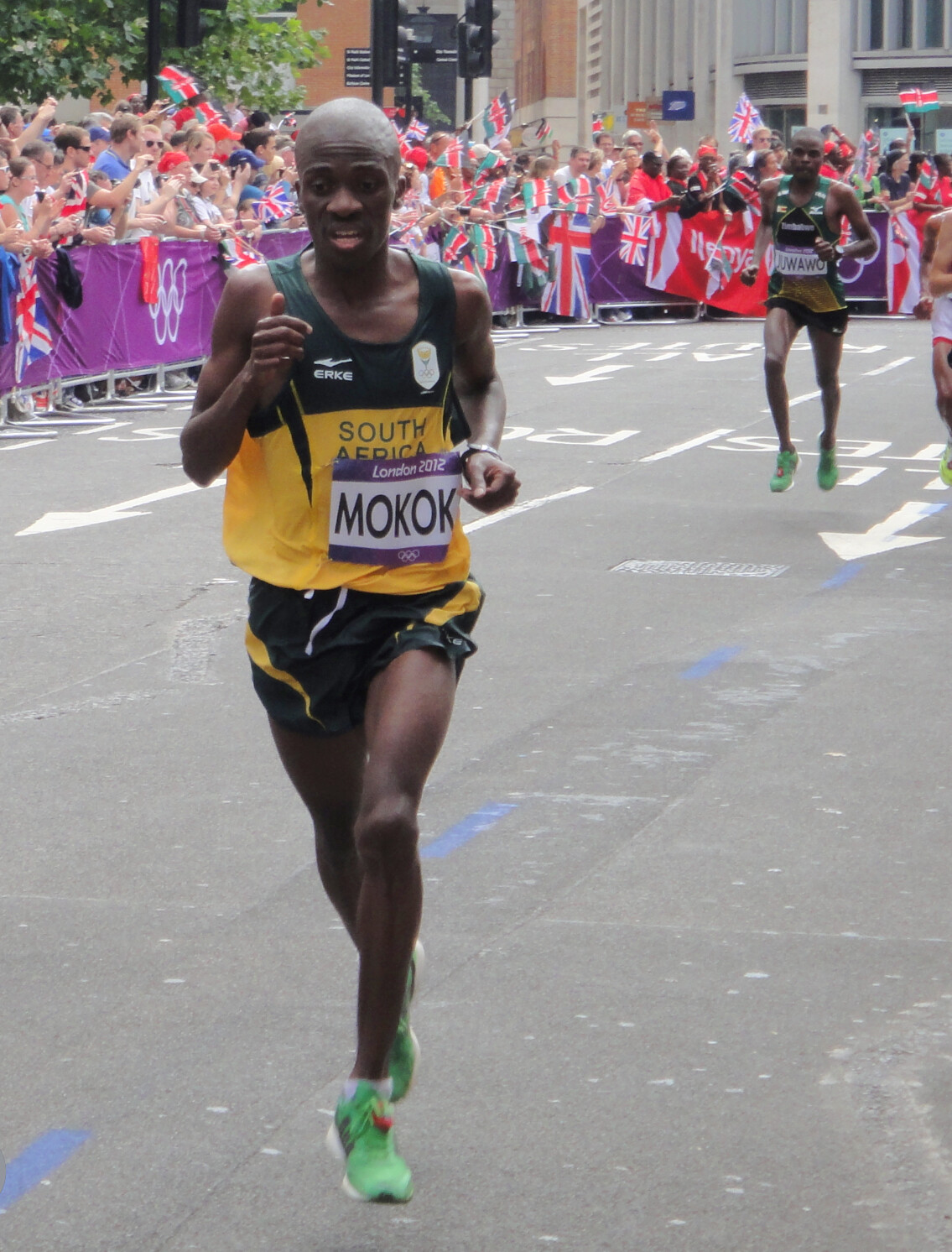
Adding to the historic moment, fellow veteran Lucky Mohale also broke the old mark with his fourth-place finish in 2:17:19. Two over-40 athletes surpassing a decades-old national record on the same day is a rare and remarkable achievement in distance running.
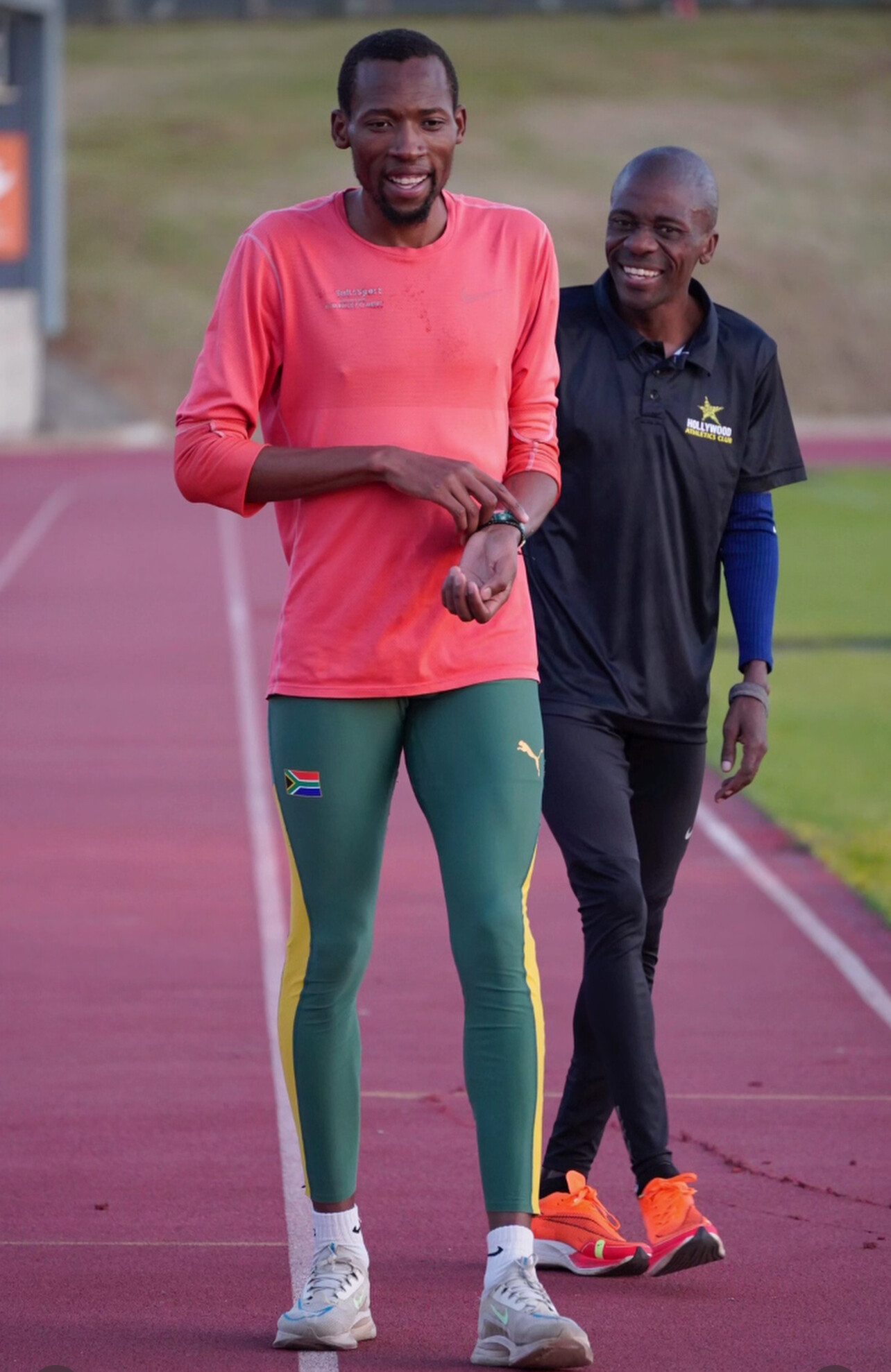
Top Veterans Results
• Stephen Mokoka — 2:15:31
• Lucky Mohale — 2:17:19
A Masterclass in Longevity
Mokoka, one of South Africa’s most decorated distance runners, has been a model of consistency for nearly two decades. His record-breaking run in Kimberley underscores not only his exceptional endurance but also his continued drive to compete at the highest level well into his 40s.
With performances like this, Mokoka solidifies his place as one of the most durable marathoners of his era.
What’s Ahead?
With the veterans record now rewritten, fans are already asking:
Can Mokoka target even more age-group records in 2026?
Given the shape he showed in Kimberley, nothing seems out of reach.
A historic day for South African distance running — and a powerful reminder of what is possible when talent, experience, and longevity come together.
(11/28/2025) ⚡AMPby Boris Baron
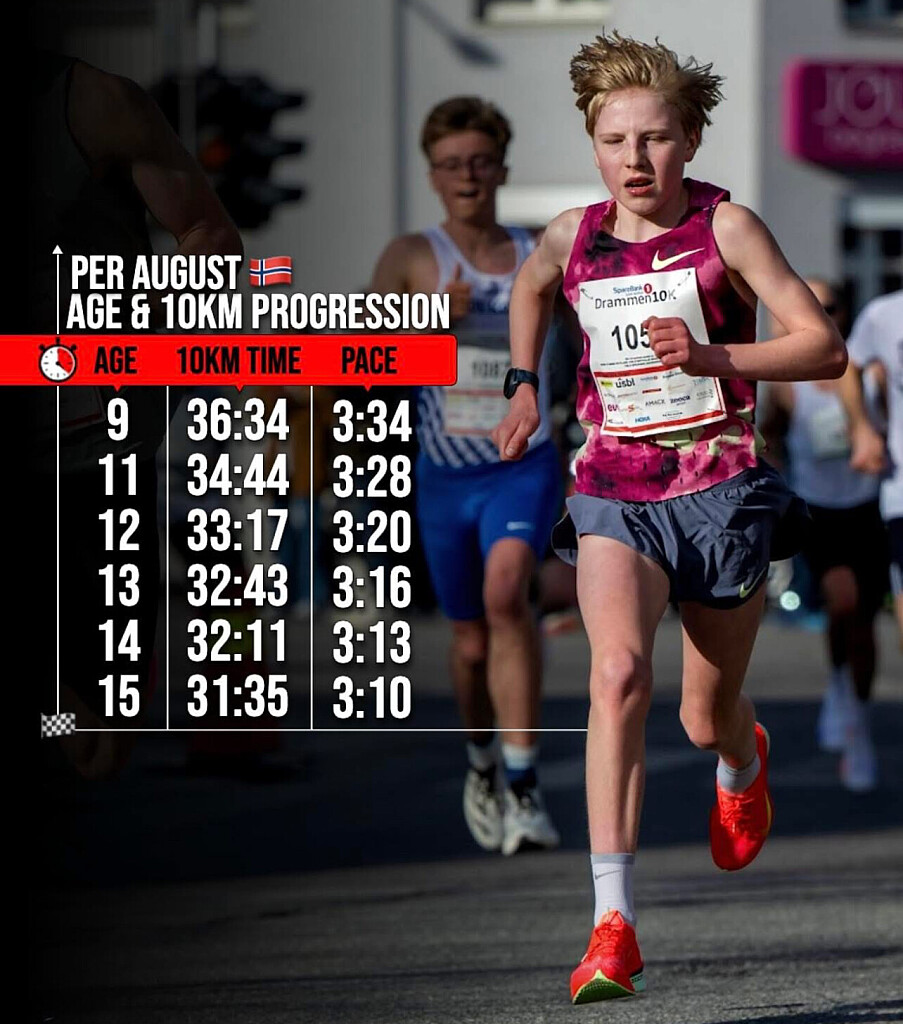
From 36:34 10k at Age 9 to 31:35 at Age 15: The Remarkable Rise of Norway’s Per August
In a world where young talent is emerging faster than ever, few stories capture the imagination quite like that of Per August, Norway’s rapidly rising teenage distance star. His progression over the past six years is nothing short of extraordinary—moving from a 36:34 10K at just nine years old to an impressive 31:35 at age 15.
What sets Per August apart isn’t just the times; it’s the level of professionalism embedded in his training. Guided by a Norwegian system known for its precision, he has embraced a routine that mirrors the world’s best:
• Double-threshold sessions
• Weekly hill intervals
• Significant mileage performed on the treadmill
• Regular lactate testing to perfectly dial in effort
This scientific, disciplined approach—popularized by Norway’s Ingebrigtsen brothers—has helped Per August shave nearly five minutes off his 10K time between ages 9 and 15. His year-by-year progression demonstrates both remarkable consistency and a rare ability to adapt to higher training loads:
Age 9: 36:34 (3:34/km pace)
Age 11: 34:44
Age 12: 33:17
Age 13: 32:43
Age 14: 32:11
Age 15: 31:35 (3:10/km)
For a 15-year-old, 31:35 places him in elite company—not just locally, but globally.
Per August’s story is a testament to what happens when smart training meets long-term commitment. His progression reminds the running world that success is not built overnight, but year after year, with patience, structure, and belief.
If this trajectory continues, Norway may soon have another world-class distance runner on its hands. And at only 15, Per August’s journey is just getting started.
(11/27/2025) ⚡AMPby Boris Baron
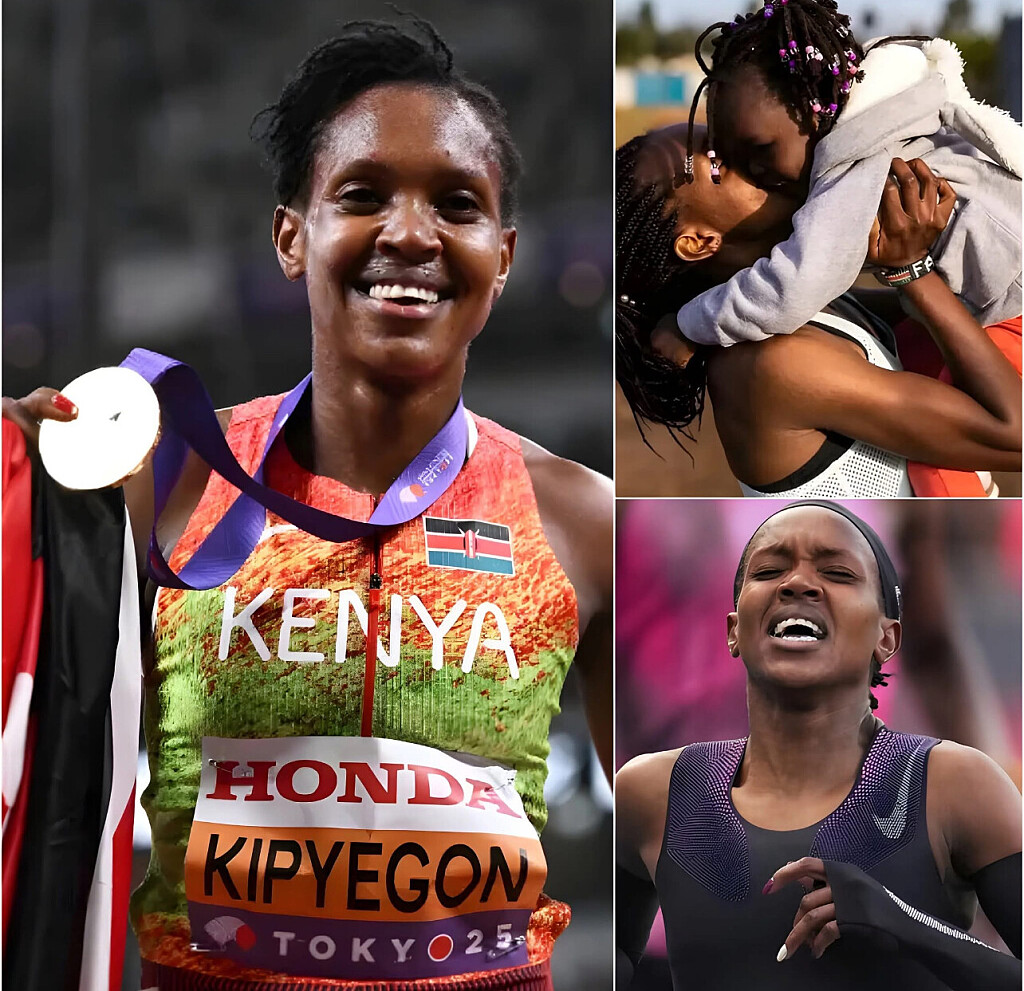
Faith Kipyegon: The Mother, the Champion, the Miracle
When Faith Kipyegon gave birth to her daughter in 2018, doctors advised her to take it slow—very slow. Heavy training, they cautioned, should wait at least two years. Most athletes would have accepted that timeline. But Faith Kipyegon is not like most athletes.
Just six months after becoming a mother, she laced up her spikes again.
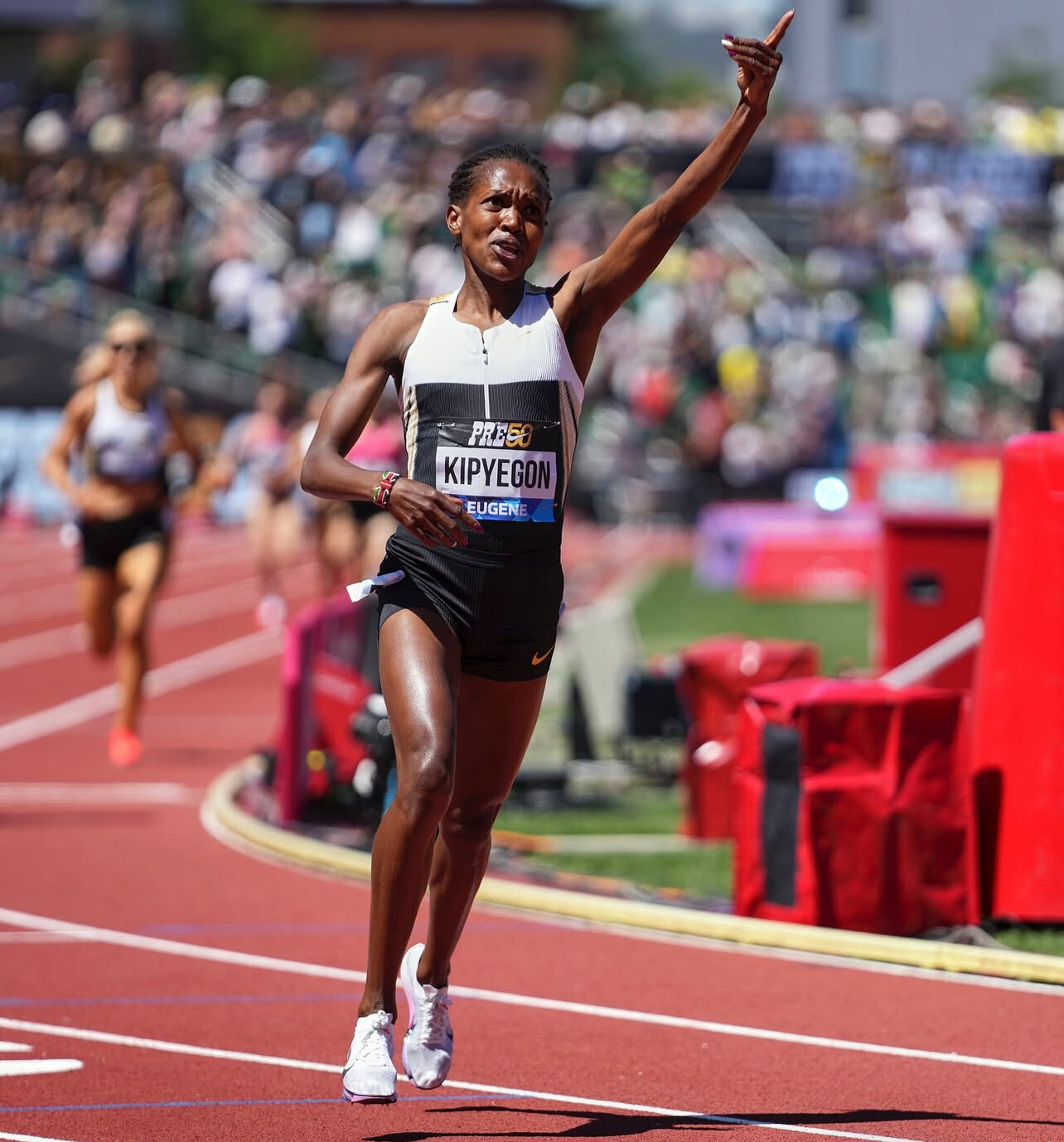
At first, it was simply to move, to feel the track beneath her feet. But soon, the quiet fire that defines the greatest champions began to burn again. What unfolded next is one of the most remarkable comeback stories in modern athletics.
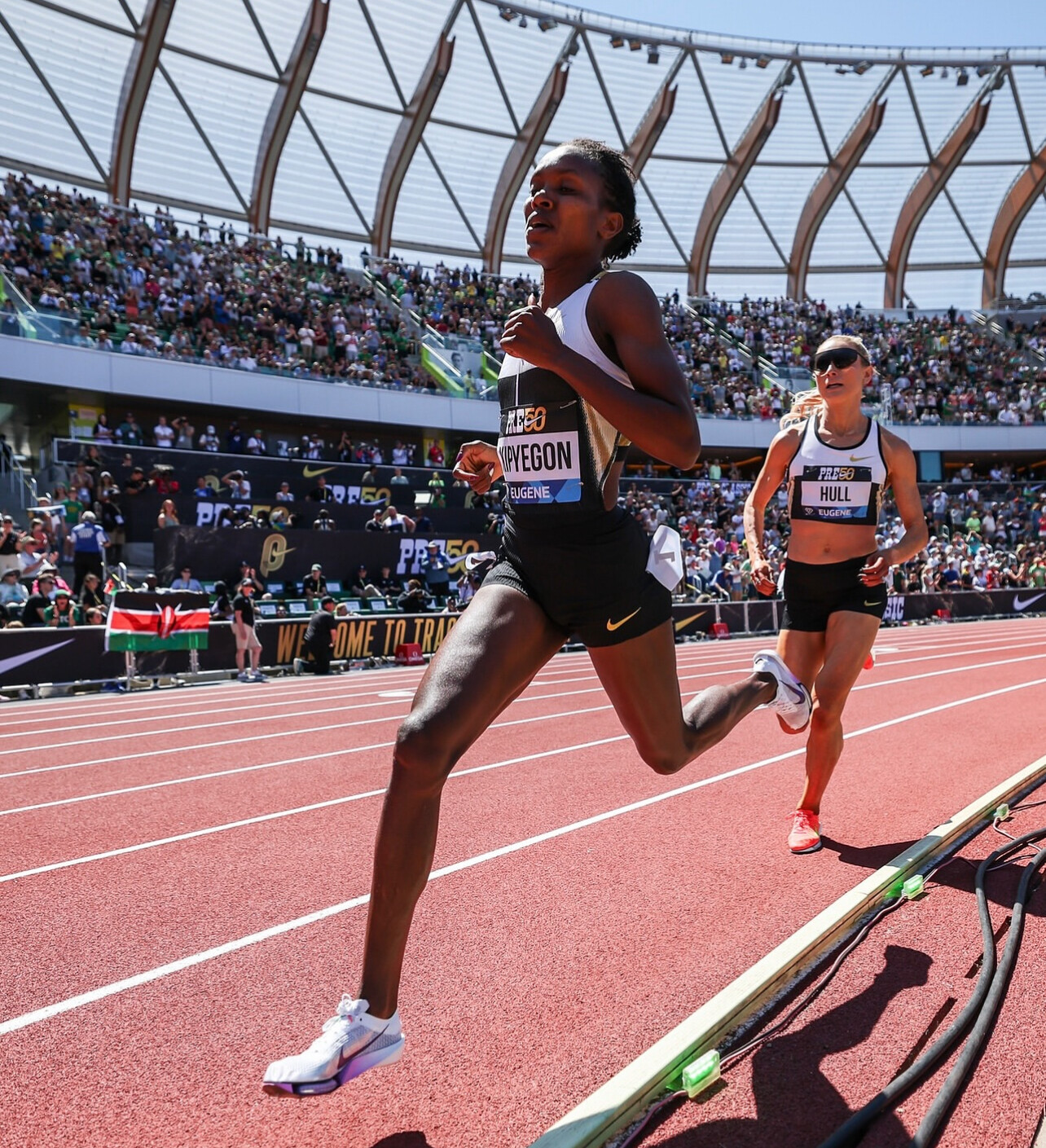
Kipyegon didn’t just return—
she rose higher than ever before.
In a sport where returning to elite form after childbirth is already a major achievement, Kipyegon did the unthinkable. She not only reclaimed the top of the world, she reset the limits of what humans—and mothers—can do.
In 2023, she produced one of the most extraordinary streaks in track history, breaking two world records within weeks:
• 1500m World Record – 3:49.11
• 5000m World Record – 14:05.20
Her 1500m dominance continued into global championships, where she ran with a mixture of elegance, ferocity, and absolute confidence—qualities that have made her one of Kenya’s most beloved athletes and one of the greatest middle-distance runners of all time.
Kipyegon’s story is not simply about medals or records.
It is the story of resilience, of a woman who refused to accept limitations—medical, physical, or societal. It is about the extraordinary will of a mother who wanted to show her daughter, and the world, that strength does not disappear with motherhood; it transforms.
Today, Faith Kipyegon stands as a global symbol of perseverance. Her journey continues to inspire millions—athletes, mothers, and dreamers everywhere—who see in her story a reminder that the human spirit is capable of more than we dare to imagine.
A champion.
A mother.
A legend rewriting what is possible.
(11/27/2025) ⚡AMPby Boris Baron
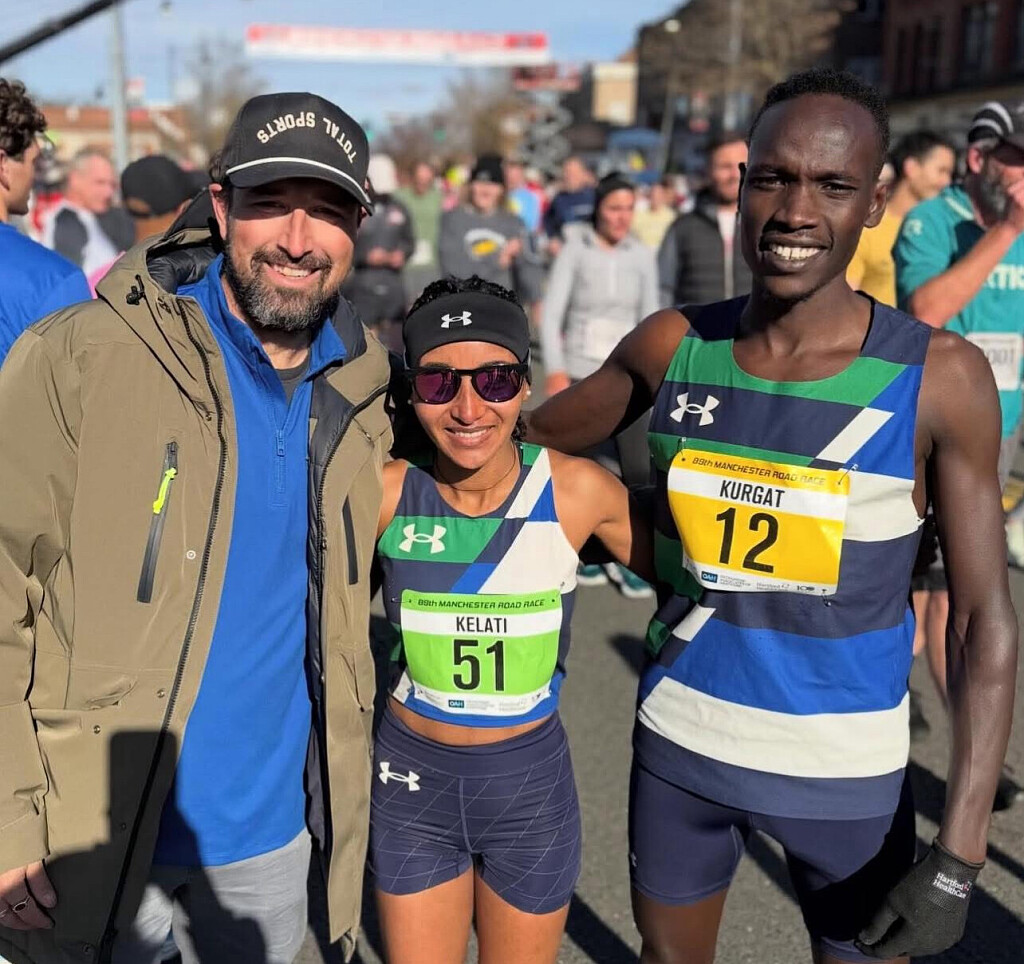
Edwin Kurgat and Weini Kelati Shine at the 89th Manchester Road Race
MANCHESTER, Connecticut — Edwin Kurgat and Weini Kelati delivered commanding performances on Thursday morning, claiming victory at the 89th edition of the storied Manchester Road Race. Clear, cool weather set the stage as the two Flagstaff-based athletes dominated the 4.737-mile loop through downtown Manchester—a Thanksgiving tradition that blends elite competition with a festive community atmosphere.
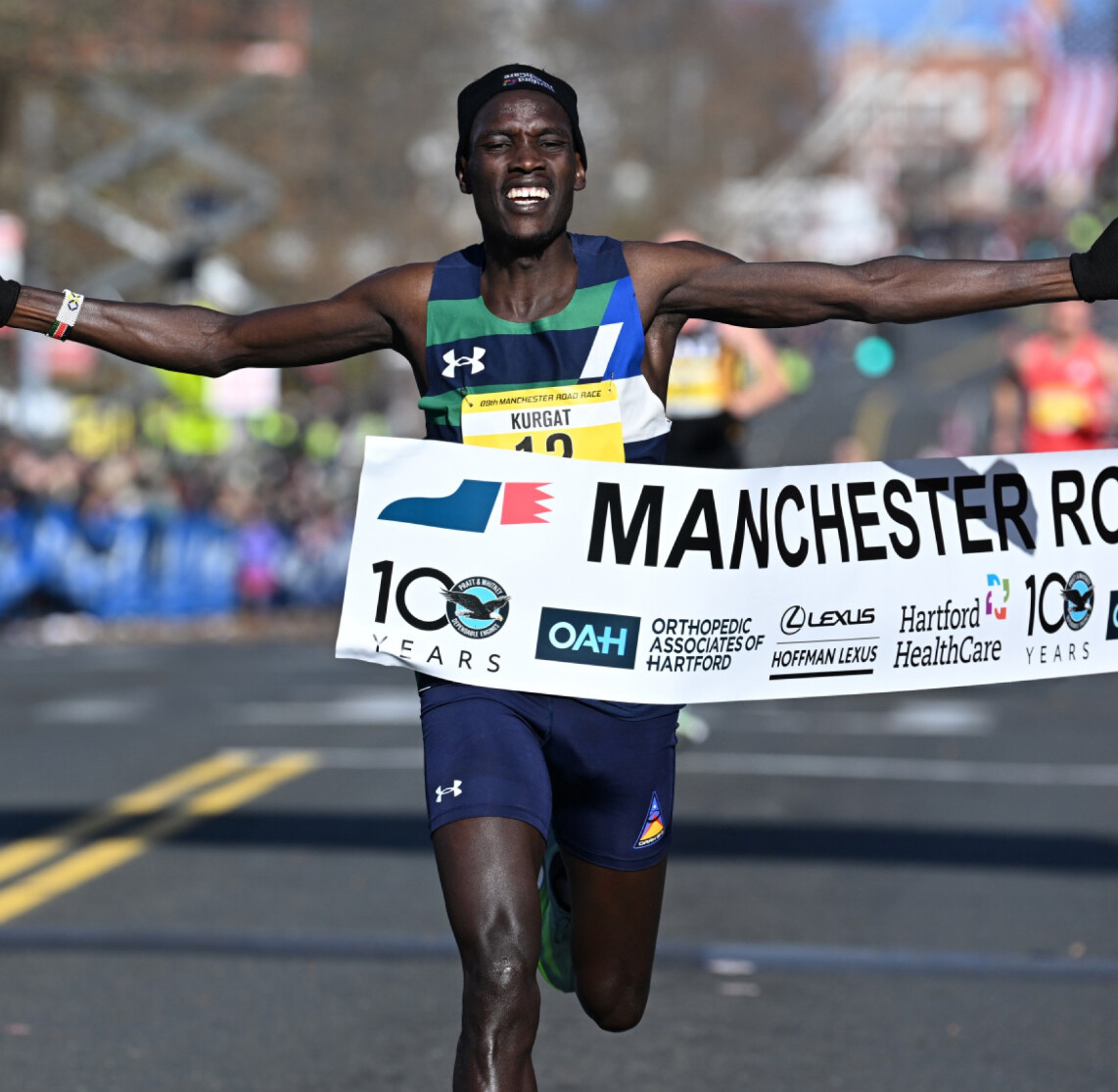
Kurgat stormed to the men’s title in a record-breaking 20:54, eclipsing the previous mark of 21:04 set by Conner Mantz in 2022. In the women’s race, Kelati secured an extraordinary five-peat, crossing the line in 23:18. While short of her own course record of 22:55 from 2021, her consistency and dominance reaffirmed her status as one of America’s top road runners.
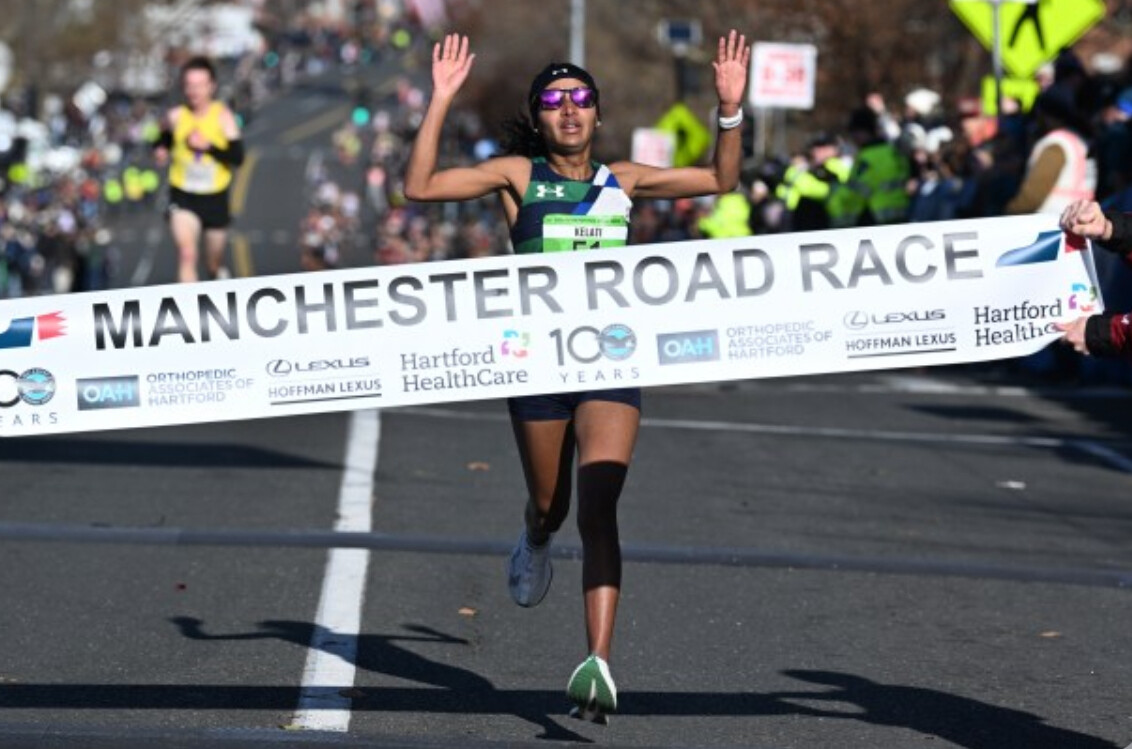
This year’s race attracted 12,386 registrants, continuing the event’s strong post-COVID resurgence. The “massive field,” as race officials described it, featured defending men’s champion Andrew Colley, 2023 champion Morgan Beadlescomb, Kelati, and world-class Kenyan standout Dorcus Ewoi—further cementing Manchester’s reputation as one of the premier road races in the United States.
(11/27/2025) ⚡AMPby Boris Baron

Manchester Road Race
The Manchester Road race is one of New England’s oldest and most popular road races. The 86th Manchester Road Race will be held on Thanksgiving Day. It starts and finishes on Main Street, in front of St. James Church. The Connecticut Sports Writers’ Alliance recently honored the Manchester Road Race. The CSWA, which is comprised of sports journalists and broadcasters...
more...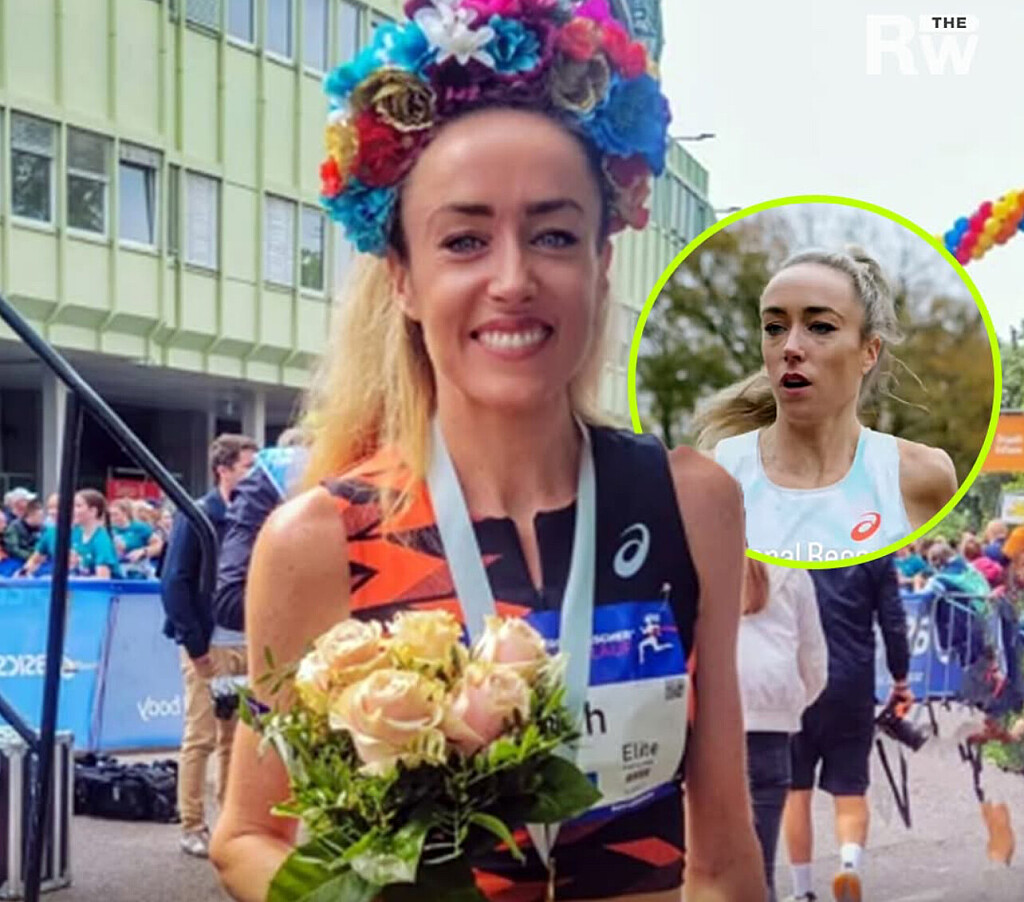
Eilish McColgan Shatters British 15K Record with Sensational 47:12 at Zevenheuvelenloop
Eilish McColgan lit up the roads of Nijmegen on Sunday Nov 16 with a performance that redefines her comeback story. Racing the historic Zevenheuvelenloop 15K, the Scottish star clocked a stunning 47:12, breaking the British national record and finishing fourth overall.
Her time erased the previous British mark of 47:24, set earlier this year by Calli Hauger-Thackery, and moves McColgan to No. 2 on the European all-time list, behind only Lornah Kiplagat’s 46:59 from 2007.
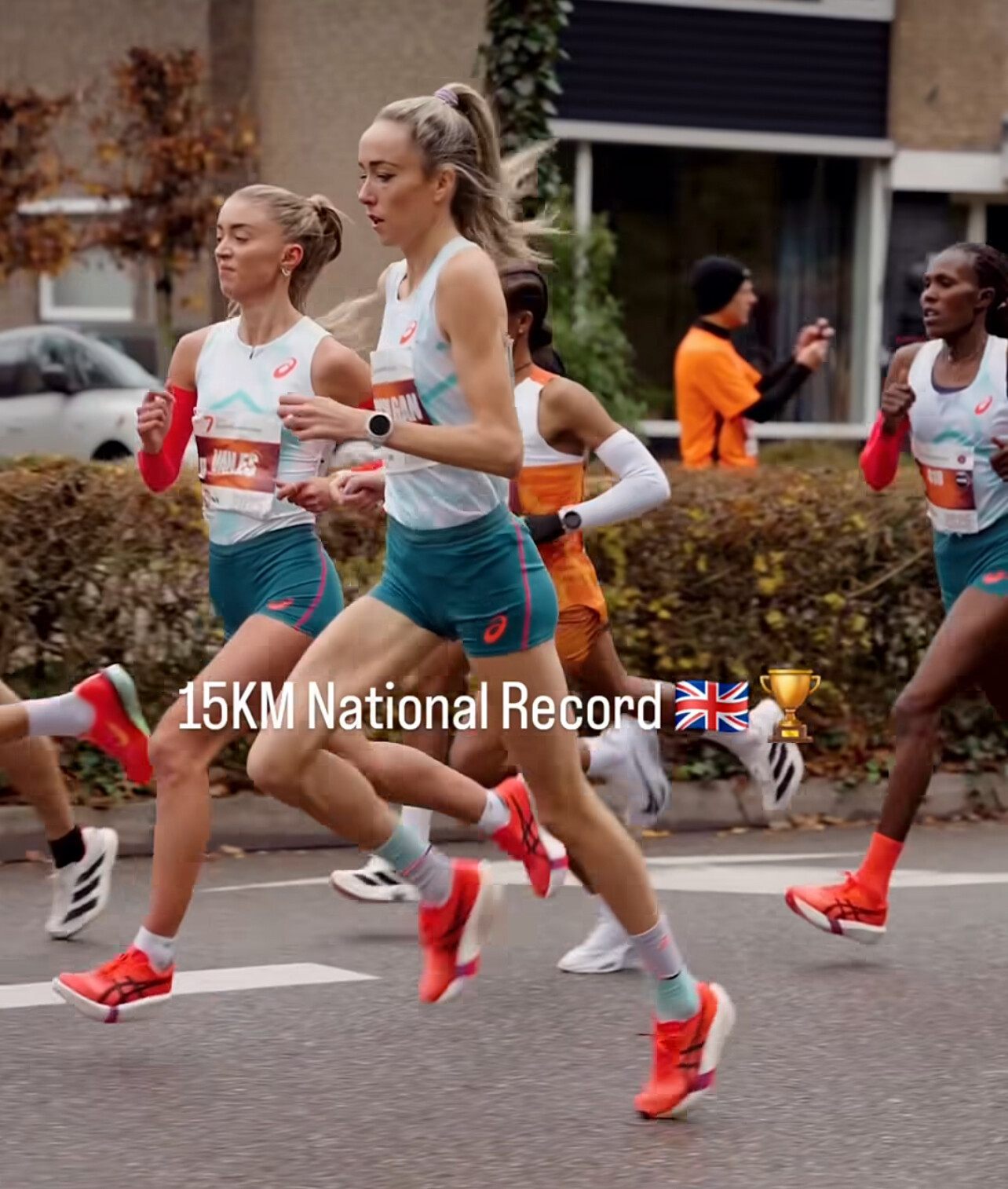
McColgan ran aggressively from the gun, navigating the rolling hills—“Zevenheuvelenloop” literally means “Seven Hills Run”—and holding pace with the world-class lead pack before surging home for the fastest 15K of her career.
Top Women – Zevenheuvelenloop 15K (2025)
1. Joyciline Jepkosgei (KEN) – 46:53
2. Jane Chelangat (KEN) – 46:59
3. Calli Hauger-Thackery (GBR) – 47:09
4. Eilish McColgan (GBR) – 47:12 (British Record)
McColgan finished just three seconds behind Hauger-Thackery and only 19 seconds behind the winner—an incredibly tight margin at this level.
lTop Men – Zevenheuvelenloop 15K (2025)
1. Selemon Barega (ETH) – 41:35
2. Bernard Kimeli (KEN) – 41:52
3. Birhanu Balew (BRN) – 42:10
The men’s race was fast from the start, with Olympic champion Selemon Barega controlling the front and closing with authority.
A Statement from McColgan
For McColgan, who has endured a difficult stretch of injuries and recovery over the past two seasons, this run marks one of her finest road performances. It signals she is back in top form heading into what promises to be a compelling 2026 season.
(11/22/2025) ⚡AMPby Boris Baron

The NN Zevenheuvelenloop
The NN Zevenheuvelenloop, or Seven Hills Run, is an annual 15-kilometer road race held in Nijmegen, Netherlands. Established in 1984 as a modest event with 500 male participants, it has evolved into one of Europe's premier running events, attracting over 25,000 runners in recent years. Renowned for its picturesque and undulating course, the Zevenheuvelenloop has been the stage for multiple...
more...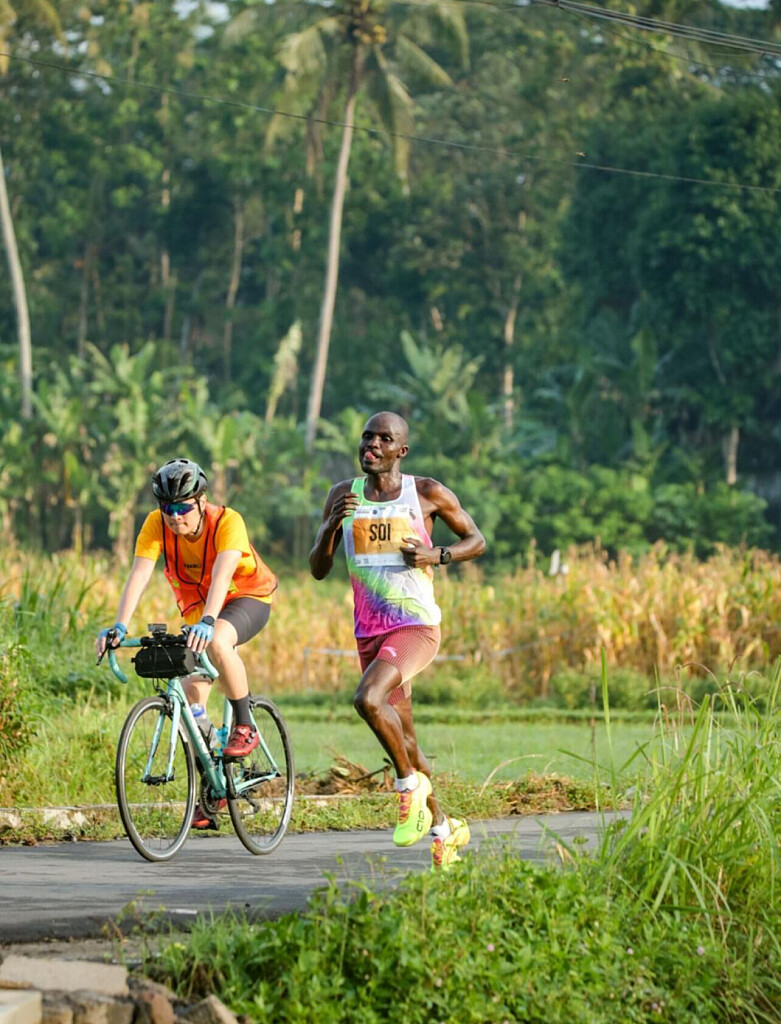
Edwin Soi’s Second Act: Veteran Track Star Turns Mentor While Leading Kenyan Charge at the Borobudur Marathon
In the tranquil dawn surrounding Indonesia’s ancient Borobudur Temple, Kenya’s Edwin Soi—once one of the world’s deadliest final-lap specialists—returned to the global stage with a performance defined by grit, maturity, and renewed purpose. His 2:20:21 fourth-place finish may have placed him just outside the podium, but it became one of the most compelling stories of this year’s Borobudur Marathon.
On a redesigned course rich in culture and punishing in terrain, Soi showed the poise of an athlete embracing the complexities of his second act—a transition from mid-distance brilliance to marathon resilience.
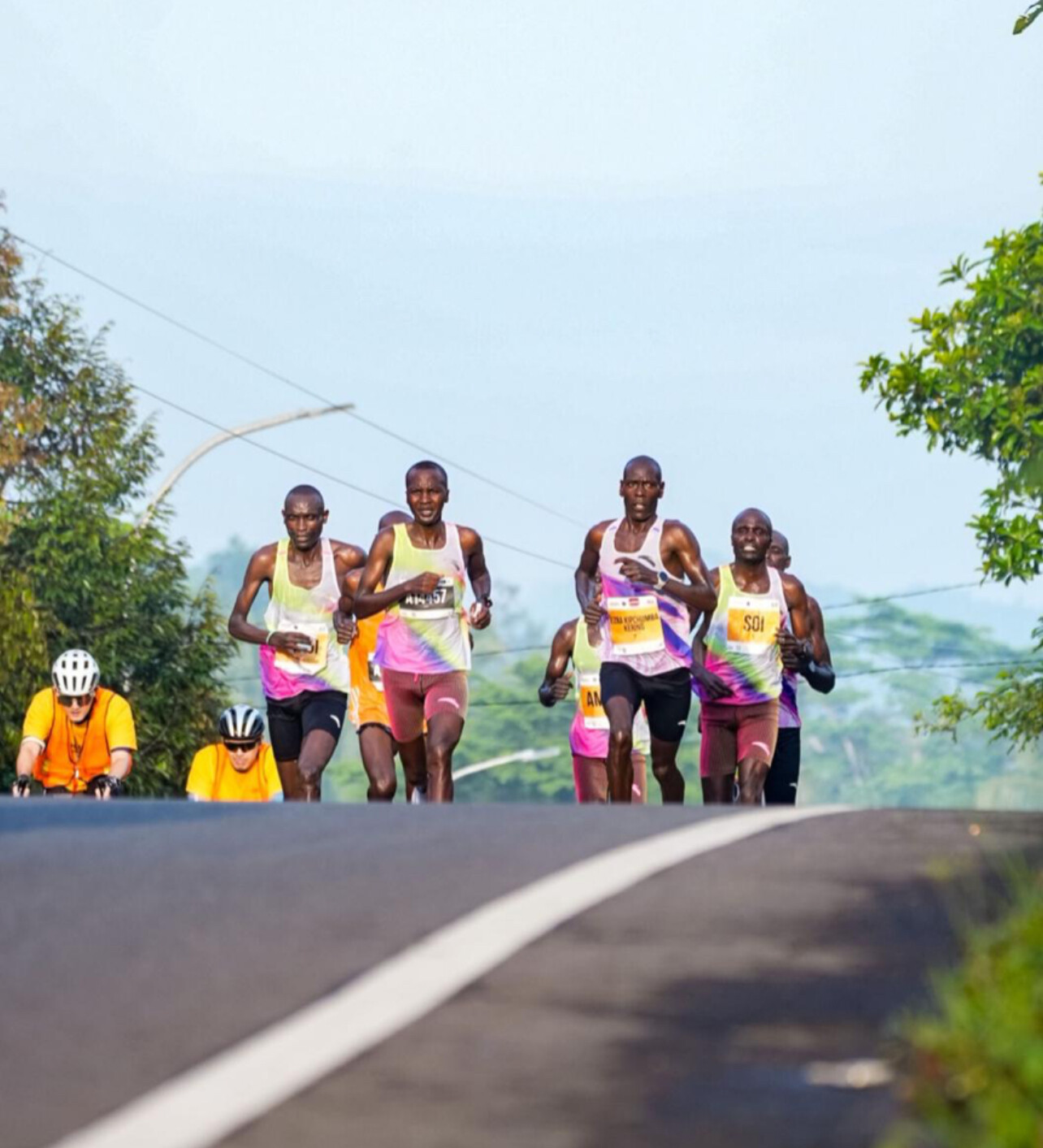
Speaking with My Best Runs after the race, Soi described the deep transformation required to evolve from track icon to marathon contender.
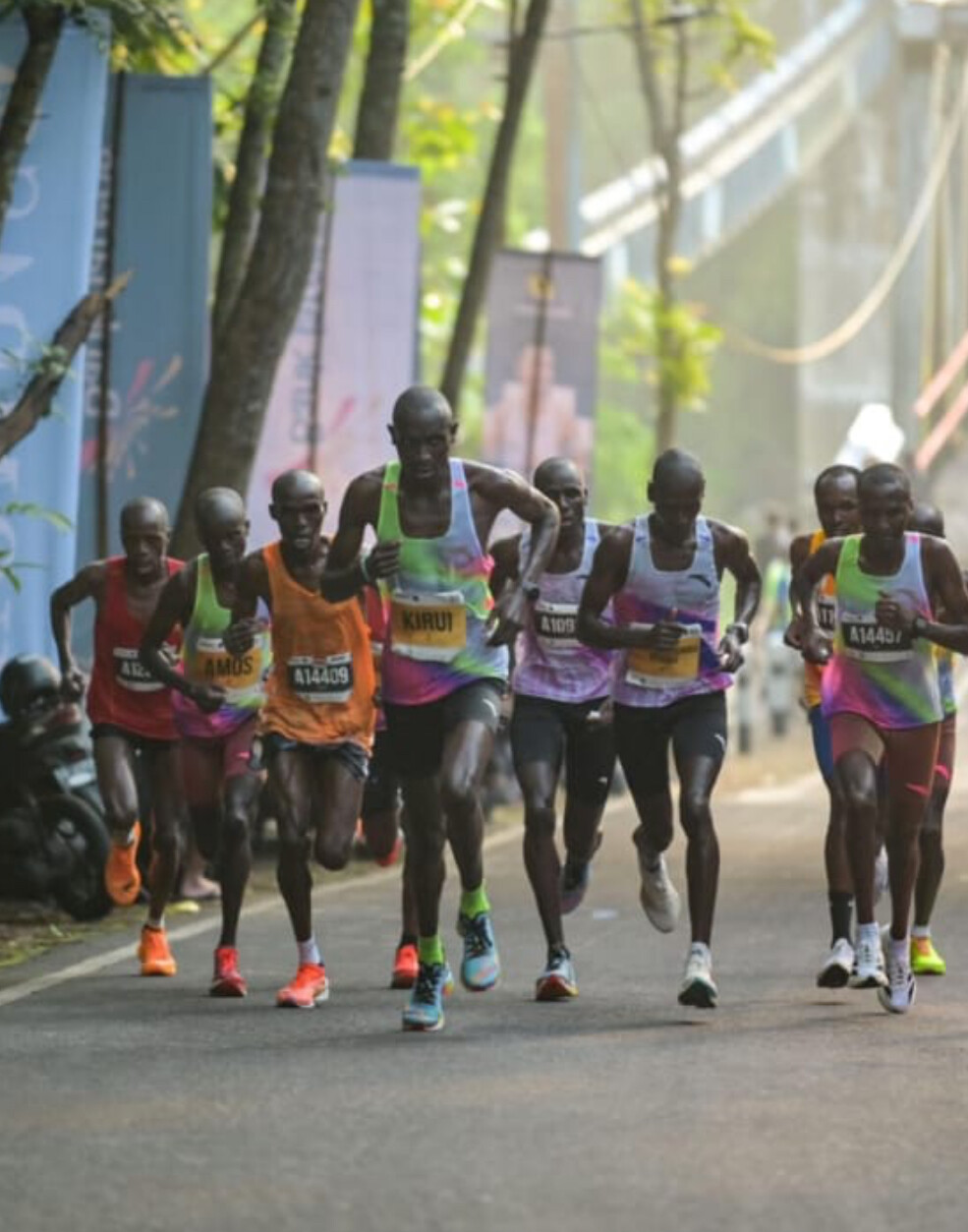
“My career on the track—my Olympic bronze in the 5,000m—was built on the fast finish,” he said. “But the marathon is completely different in the final 5km. You can’t just turn your legs over like on the track; the fuel is nearly gone. The biggest adjustment is shifting from raw speed to relentless endurance.”
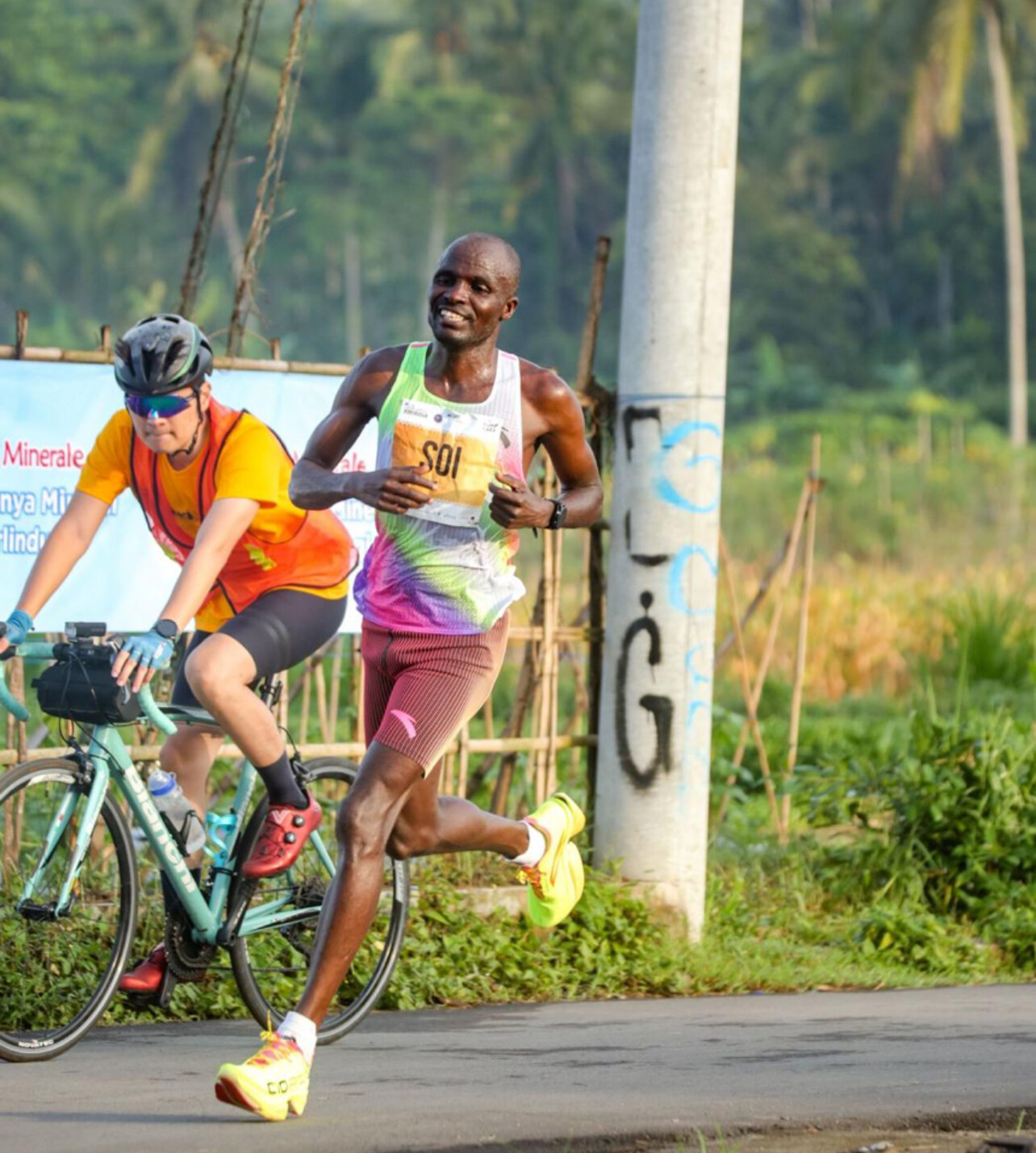
A Course That Demands Respect
The Borobudur route, winding through rice terraces, traditional villages, and the rolling Menoreh highlands, offered no shortcuts—and no mercy. It rewarded steady pacing, intelligent energy management, and deep aerobic strength, qualities Soi has been sharpening as he shifts to longer distances.
“The tropical heat and especially the humidity were the biggest challenges,” he said. “Even with the early start, the air felt heavy and thick as the sun rose. For us, training in the altitude and cooler air of Kenya, it required immense discipline with hydration from the first kilometer.”
The constant undulation of the course forced him into a measured rhythm:
“I had to run more conservatively in the first half to save energy for the inevitable struggle after 25km. But the scenery, the villages, the people cheering… it is one of the most beautiful races I’ve experienced.”
From Track Legend to Builder of Future Champions
Though he remains globally known for his devastating last-lap kick, Soi’s greatest work today may be happening far from stadium lights. In Kuresoi, through Bob Anderson’s KATA programme, he now mentors a rising generation of disciplined young runners.
“This has been a year of deepening purpose,” he said. “My reflection is less about my personal stopwatch and more about the impact I can have on the future of Kenyan running.”
He still trains at a high level, balancing heavy marathon mileage with the demands of leadership.
“Running competitively keeps me sharp and helps me understand the sacrifices my young athletes are making. Every morning, I run alongside them—I’m not just a coach shouting instructions; I am a competitor in the pain cave with them.”
On the misty loops of Kuresoi, he passes down the two things that shaped him: the speed of the track and the patience of the marathon.
Kenyan Depth on Full Display
Despite missing the podium, Soi helped anchor a dominant Kenyan performance in Magelang, Central Java, Indonesia, where the marathon began and finished inside the historic Lumbini Park complex at Borobudur Temple.
The top four in the elite men’s marathon—all representing Kenya—were:
1. Ezra Kipchumba Kering (Kenya) — 2:17:33
2. Alex Oloitiptip Korio (Kenya) — 2:17:43
3. Kiprop Tonui (Kenya) — 2:18:01
4. Edwin Cheruiyot Soi (Kenya) — 2:20:21
A Cultural and Competitive Showcase
The 2025 Borobudur Marathon, elevated to World Athletics Elite Label status, attracted more than 11,500 runners from 38 countries. Its scenery, cultural performances, and enthusiastic supporter crowds generated more than Rp 73 billion in economic impact, cementing its place as one of Asia’s rising marathon gems.
A Legacy in Motion
For Soi, Borobudur was more than a race—it was a declaration. A reminder that champions don’t fade; they evolve.
His footsteps now tell two intertwined stories: a veteran still capable of racing among the world’s best, and a mentor shaping futures in the hills of Kuresoi.
As Kenyan runners painted the leaderboard red, green, and black, Soi’s fourth-place finish stood out not for what it lacked, but for what it symbolized: a champion transforming—and lighting the path for those who follow.
(11/18/2025) ⚡AMPby Robert Kibet
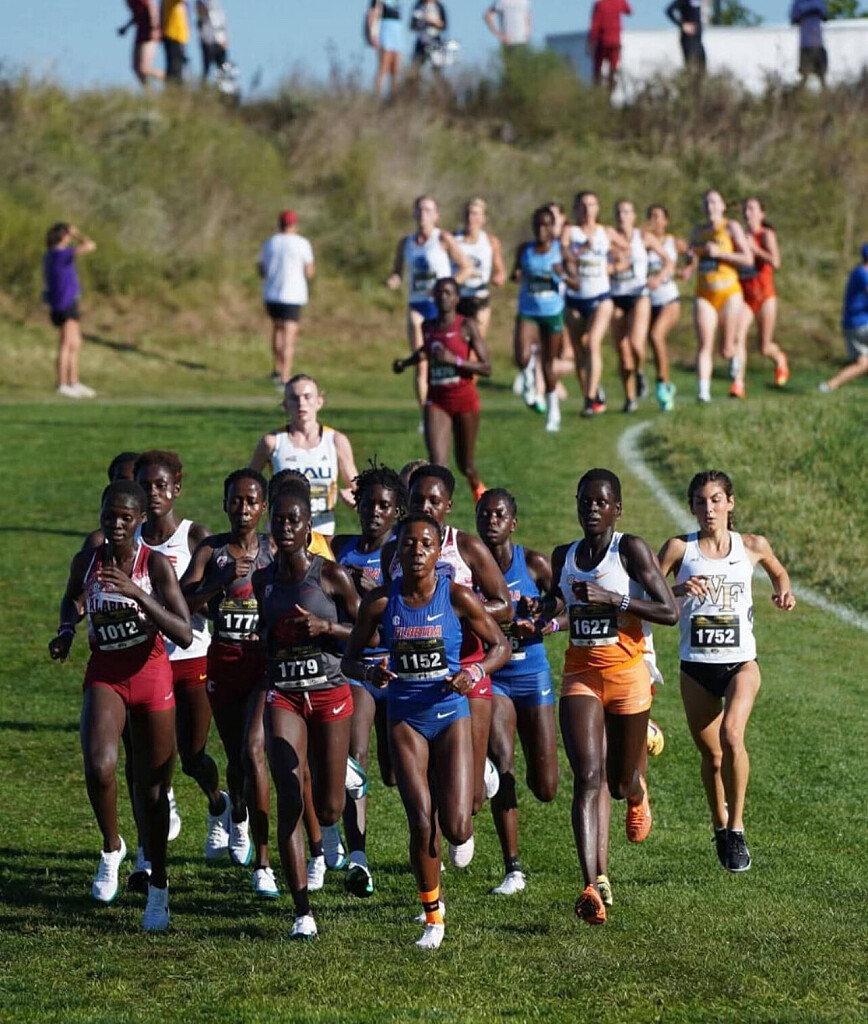
A Record-Breaking Journey: 60 Townhall Athletes Set for NCAA Nationals
For young runners in Kenya, the dream has always extended far beyond the finish line. It is about opportunity, education, and building a future through running. On November 22, sixty alumni of Townhall Athletics will stand on the starting line at the Gans Creek Cross Country Course in Columbia, Missouri—not only as competitors, but as student-athletes whose journeys blend world-class talent with academic ambition.
Their road to the NCAA National Cross Country Championships was forged through nine regional qualifiers, where Townhall athletes earned advancement both individually and through team berths. Each qualifier represents a story that began on rugged high-altitude trails in Kenya and continued in American classrooms—balancing mileage with lectures, workouts with research projects.
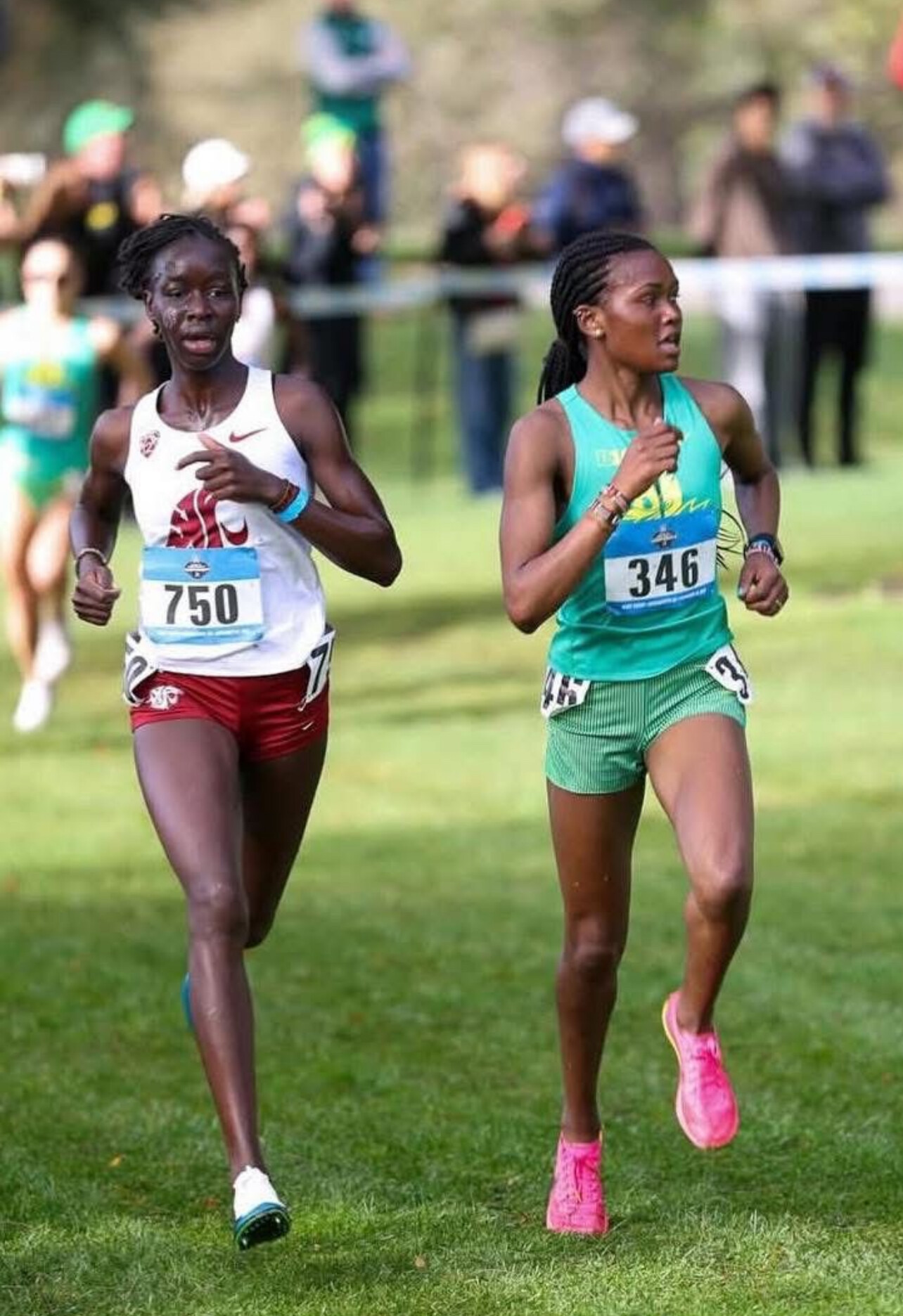
A Pipeline for Talent and Learning
Many of these athletes grew up with limited access to formal training facilities—sometimes even without proper running shoes. Through Townhall Athletics, runners such as Brian Musau, Dennis Kipngetich, and Laban Kipkemboi at Oklahoma State University received structured coaching and the mentorship needed to secure life-changing scholarships.
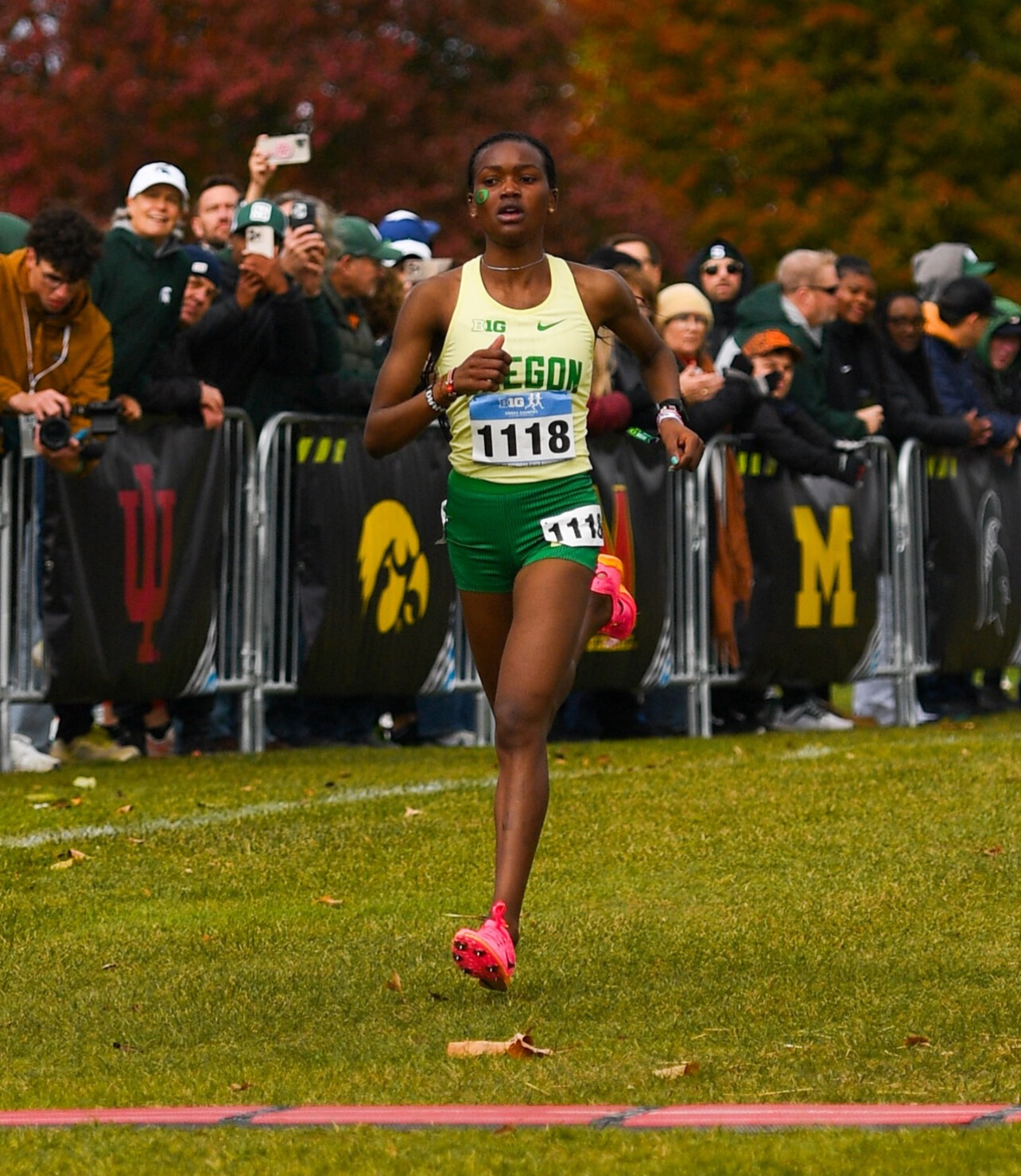
In Florida, Kelvin Cheruiyot, Desma Chepkoech, and Judy Chepkoech have combined tactical racing with strong academic records, while Debora Cherono at Texas A&M has emerged as a respected leader both on campus and on the track.
In the Mountain West Conference, New Mexico’s Evans Kiplagat and Vincent Chirchir continue to show how academic and athletic development go hand in hand. At Iowa State, Joash Rutto and Mercylin Kirwa have built reputations for consistency and endurance, exemplifying the discipline long associated with Kenyan distance running.
Other Townhall standouts, including Meshack Kuiyo at Boise State and Gilbert Rono at Tulane, carry the hopes of their programs while pursuing degrees and competing at the top level of collegiate sport.
Gans Creek: Where Experience Meets Ambition
Gans Creek is known for its rolling hills, long grass straights, and technical curves—terrain that demands smart pacing and a strong finish. For Kenyan athletes who grew up training at altitude, the course offers a blend of familiarity and challenge, providing a perfect stage to showcase endurance, resilience, and race intelligence.
Lining up against top collegiate athletes from across the United States and around the world, Townhall runners bring not only speed but also the mental fortitude and tactical awareness refined through years of structured training back home.
Voices of Support
Kenyan sports leaders continue to stress that athletic success must be paired with education to secure a long-term future.
Barnaba Korir, AK Youth Development Director and NOC-K First Vice President, emphasizes:
“These scholarships are more than athletic opportunities—they are life-changing. Education ensures our youth can thrive long after the final lap.”
Ibrahim Hussein Kipkemboi, Director of the Africa Athletics Development Centre, adds:
“Blending study with sport protects athletes from early burnout and equips them for the future.”
Athletics Kenya President Lt. Gen. (Rtd) Jackson Tuwei reinforces the message:
“The goal is not just fast runners, but well-rounded individuals. Education and athletics go hand in hand for global success.”
Impact Beyond the Course
These sixty qualifiers demonstrate how structured development and academic pathways can open doors for rural youth across Kenya. Their progress validates youth programs, inspires younger athletes, and shows how scholarships allow talent to flourish both on the track and in the classroom.
The Journey and the Finish Line
On race day, athletes such as Rosemary Longisa and Caroline Jepkorir of Washington State University, Evans Tanui of Arizona, and Diana Cherotich of Oregon will carry far more than personal ambition. They will carry the dreams of families, coaches, and communities who believed in them from the start.
Every stride over Missouri’s rolling terrain reflects years of discipline, sacrifice, and the pursuit of excellence—both academic and athletic.
When the final lap is run, results will matter. But so will the journey that brought them here. From dusty Kenyan tracks to the championship stage at Gans Creek, Townhall athletes have shown that with vision, support, and resilience, success in running and life can grow together.
As they race for NCAA glory, they continue to inspire a generation to see that the finish line is not an end—it is, in fact, the beginning.
(11/16/2025) ⚡AMPby Robert Kibet
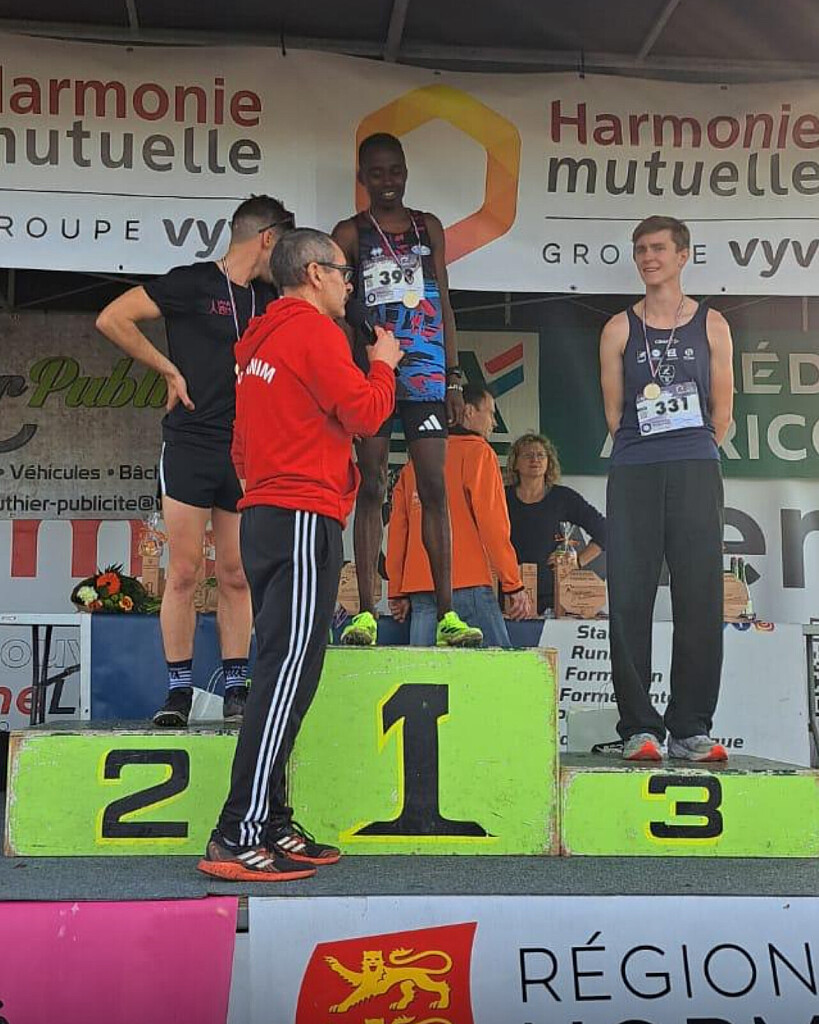
Introducing the 200,000 KES KATA Athletics Performance Contest
To further motivate and reward our dedicated athletes, we’re launching the KATA Athletics Performance Contest—a biannual competition designed to celebrate the top earners among our athletes and camps.
How It Works:
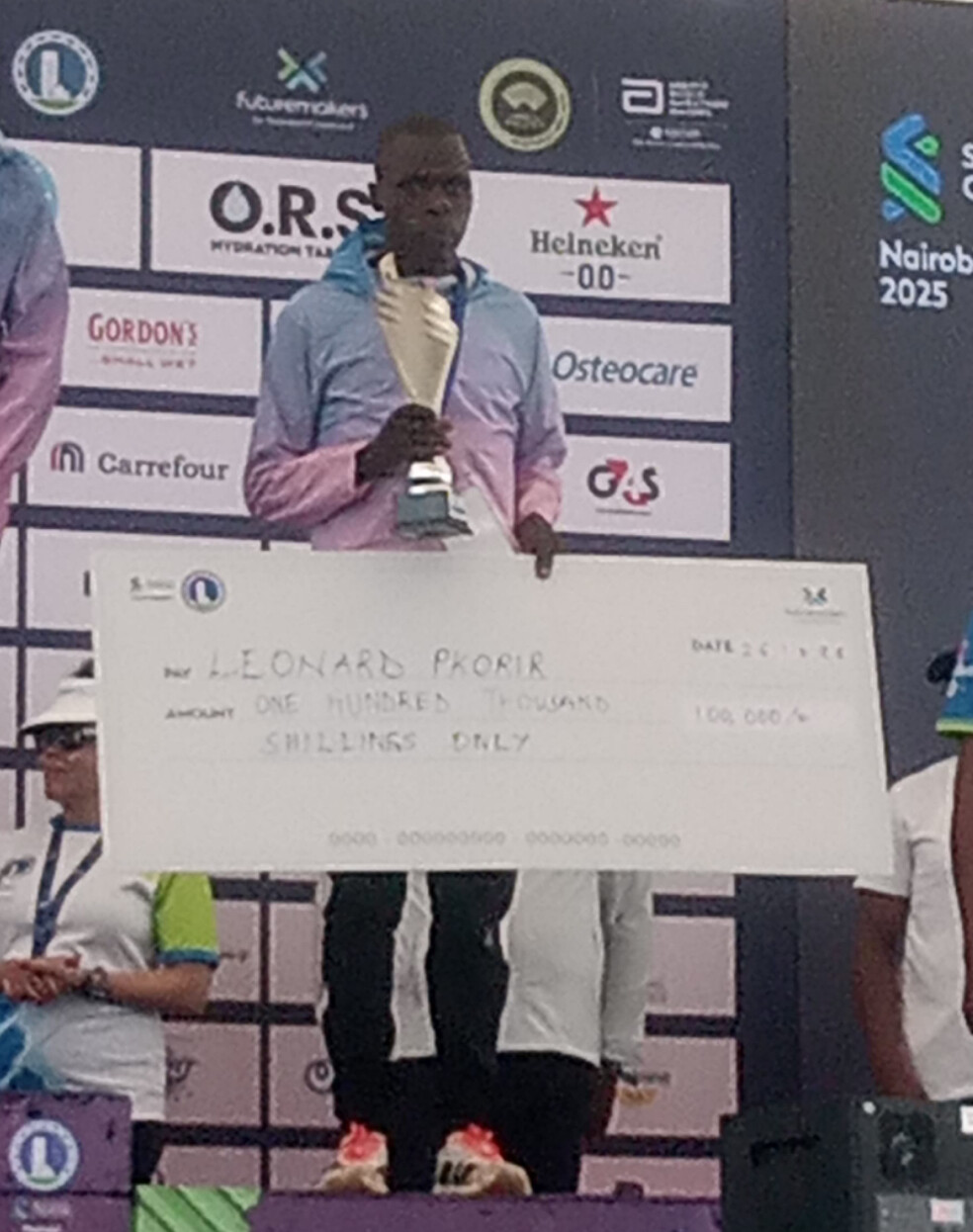
Twice a year, KATA will reward the athlete who has earned the most prize money by sending 15% of their winnings to KATA’s bank account. The responsibility lies with the camp or farm operator to ensure these funds are submitted, as results only count once the money is received in our account.
The first contest period will conclude at the end of January 2026, allowing for any delays in prize money payments. The second contest will wrap up at the end of July. This twice-annual schedule ensures everyone has ample time to report and account for their winnings.
Camp and Athlete Rewards:
At the end of each contest period, the individual athlete who has earned the most prize money will receive a 25,000 KES bonus. Additionally, the top three KATA camps—those whose athletes collectively submit the highest total winnings—will each receive 25,000 KES.
In other words, each contest distributes a total of 100,000 KES: 75,000 KES to the top three camps (25,000 each) and 25,000 KES to the top individual athlete. Over the course of a year, that’s a total of 200,000 KES in rewards.
Conclusion:
Because there can be delays in receiving prize money, the contest periods are extended slightly to ensure all earnings are accounted for. We’re excited to see our athletes and camps compete and look forward to celebrating their achievements together!
(11/15/2025) ⚡AMPby Bob Anderson
