

Running News Daily
Running News Daily is edited by Bob Anderson and team. Send your news items to bob@mybestruns.com Advertising opportunities available.
Index to Daily Posts · Sign Up For Updates · Run The World Feed
Articles tagged #half marathon
Today's Running News
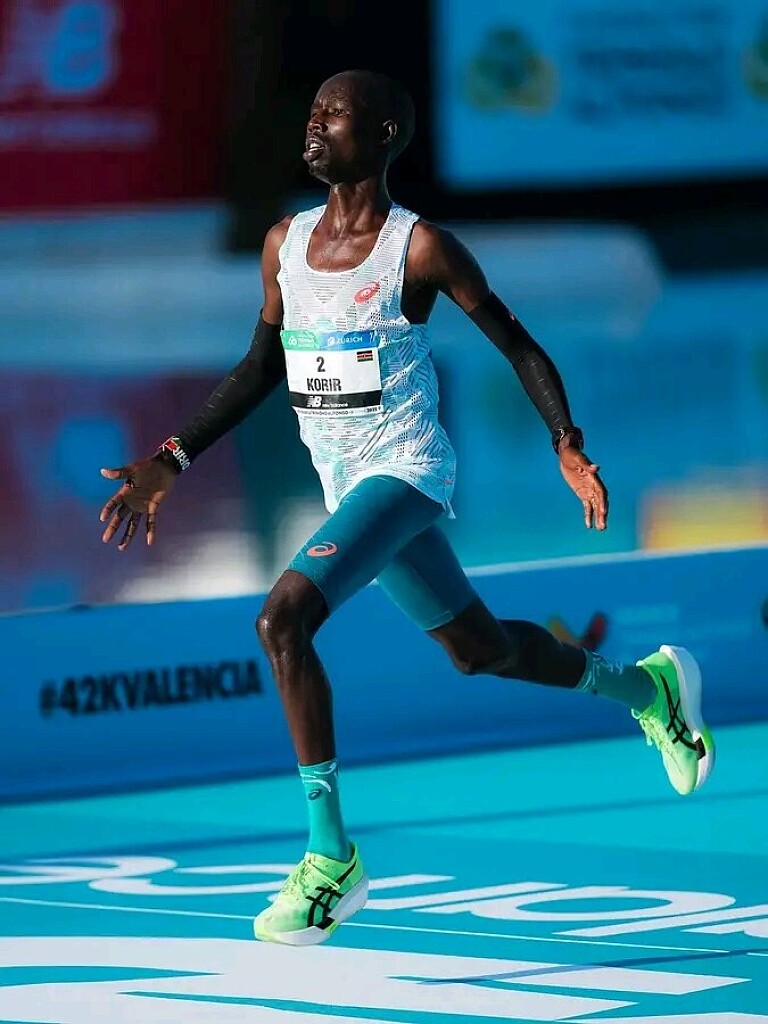


John Korir Reveals Huge Training Mileage Ahead Of Valencia Marathon Showdown
Kenyan marathon star John Korir has offered a glimpse into the demanding preparation behind his pursuit of another major victory, revealing that he is covering an astonishing amount of mileage as he builds towards the 2026 Valencia Marathon.

Korir, who will return to Spain on December 6 for the prestigious Valencia Marathon, says his current training programme involves running between 45 and 48 kilometres a day, with his weekly mileage reaching between 250 and 270 kilometres.
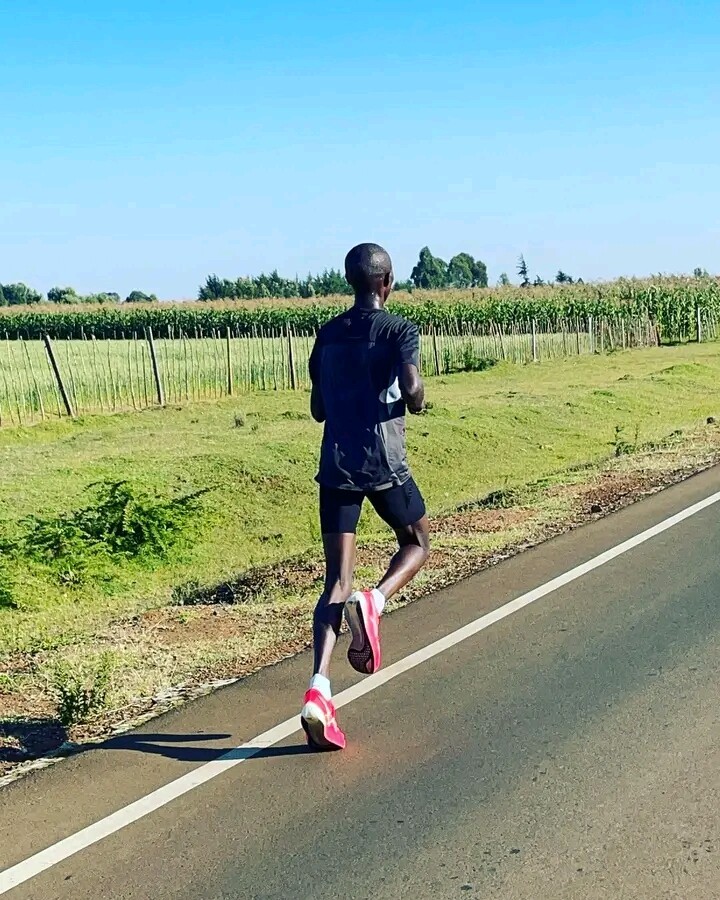
“I do 45 to 48 kilometres a day and 250 to 270 kilometres per week,” Korir revealed in an exclusive interview with Teddy Mulei of The Star.
The remarkable workload highlights the level of endurance required at the very top of marathon running, with Korir combining substantial mileage with dedicated speed work as he prepares for another demanding championship-calibre race.
“I have been focusing on both speed and endurance,” he added.
Korir will head to Valencia with confidence after establishing himself as one of the leading marathoners on the global circuit. He won the 2025 Valencia Marathon in 2:02:24, delivering a controlled and powerful performance to claim the prestigious title.
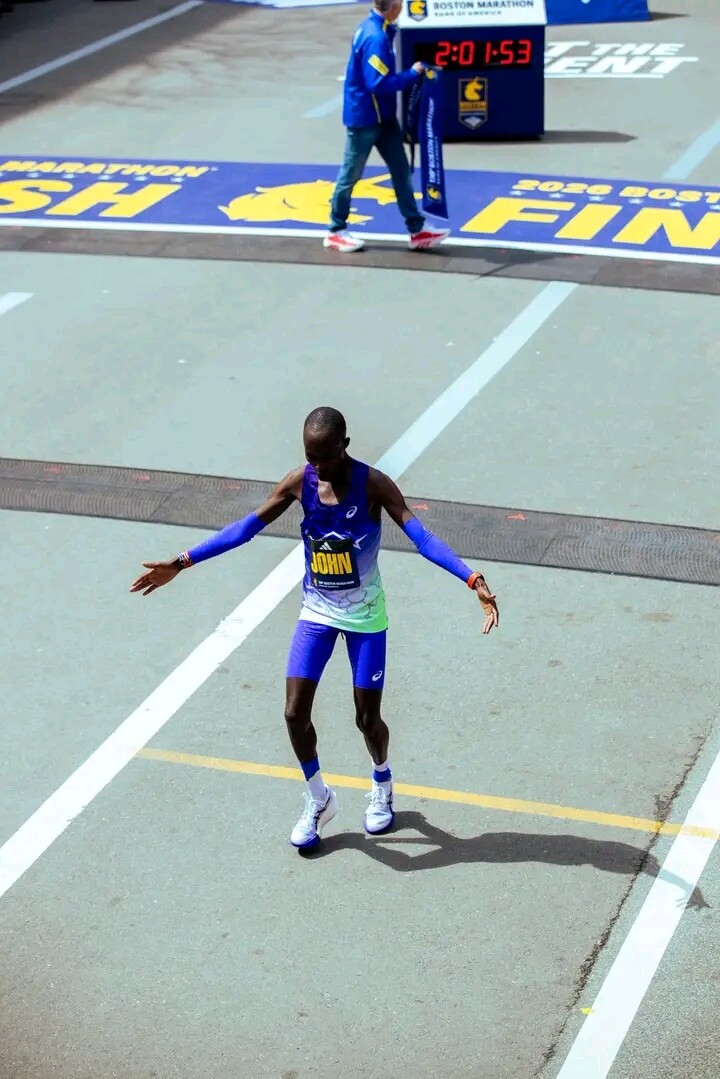
His impressive form continued into 2026 when he produced one of the biggest performances of his career at the Boston Marathon. Korir stormed to victory in a course-record 2:01:52, lowering his personal best and further strengthening his reputation as one of Kenya’s leading marathon specialists.
The challenge in Valencia, however, is expected to be significantly tougher this time around, with a formidable international field taking shape.
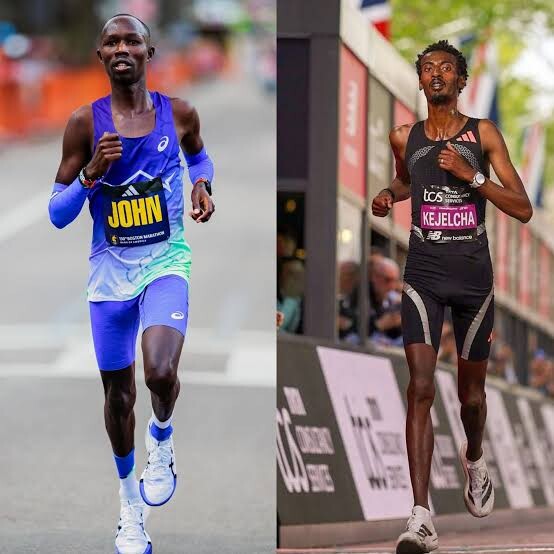
Among the biggest names expected to line up is Ethiopian speedster Yomif Kejelcha, whose transition from the track and shorter road distances to the marathon has already produced remarkable results.
Kejelcha made headlines with a sensational 1:59:41 in London, becoming only the second man to break the two-hour barrier in an official marathon after Kenya’s Sabastian Sawe recorded the world-record 1:59:30 in the same race.
The Ethiopian also has a strong connection with Valencia. He previously set a world record in the half marathon on the Spanish course and has demonstrated repeatedly that he possesses the speed required to produce extraordinary times over longer distances.
For Korir, the upcoming Valencia Marathon will therefore represent more than simply a defence of his title. It will be another opportunity to measure himself against some of the fastest marathoners in the world.
Despite the excitement surrounding the race and the possibility of another exceptionally fast performance, Korir is choosing to remain measured about his specific target.
“For now I cannot talk about what I will be going for in Valencia, but I am praying to God for good health and to be injury-free,” he said.
That cautious approach reflects the unpredictable nature of marathon racing, where months of preparation can ultimately come down to how an athlete responds over the final kilometres.
With his massive training volume, renewed focus on speed and endurance, and growing experience at the highest level, Korir is laying the groundwork for another major performance.
When the elite field takes over the streets of Valencia on December 6, the defending champion will have the added motivation of protecting his crown against a group of rivals carrying ambitions of their own.
For Korir, the road to Valencia has already begun with thousands of kilometres of preparation. The next chapter will be written over 42.195 kilometres.
by Erick Cheruiyot for My Best Runs.
Login to leave a comment

VALENCIA TRINIDAD ALFONSO
The Trinidad Alfonso EDP Valencia Marathon is held annually in the historic city of Valencia which, with its entirely flat circuit and perfect November temperature, averaging between 12-17 degrees, represents the ideal setting for hosting such a long-distance sporting challenge. This, coupled with the most incomparable of settings, makes the Valencia Marathon, Valencia, one of the most important events in...
more...
Nicholas Kipkorir Leads Star-Studded Men’s Half Marathon Field At World Road Running Championships
The stage is set for a spectacular men’s half marathon at the World Athletics Road Running Championships Copenhagen 26, with some of the world’s leading distance runners preparing to battle for global honours on Sunday, September 20.
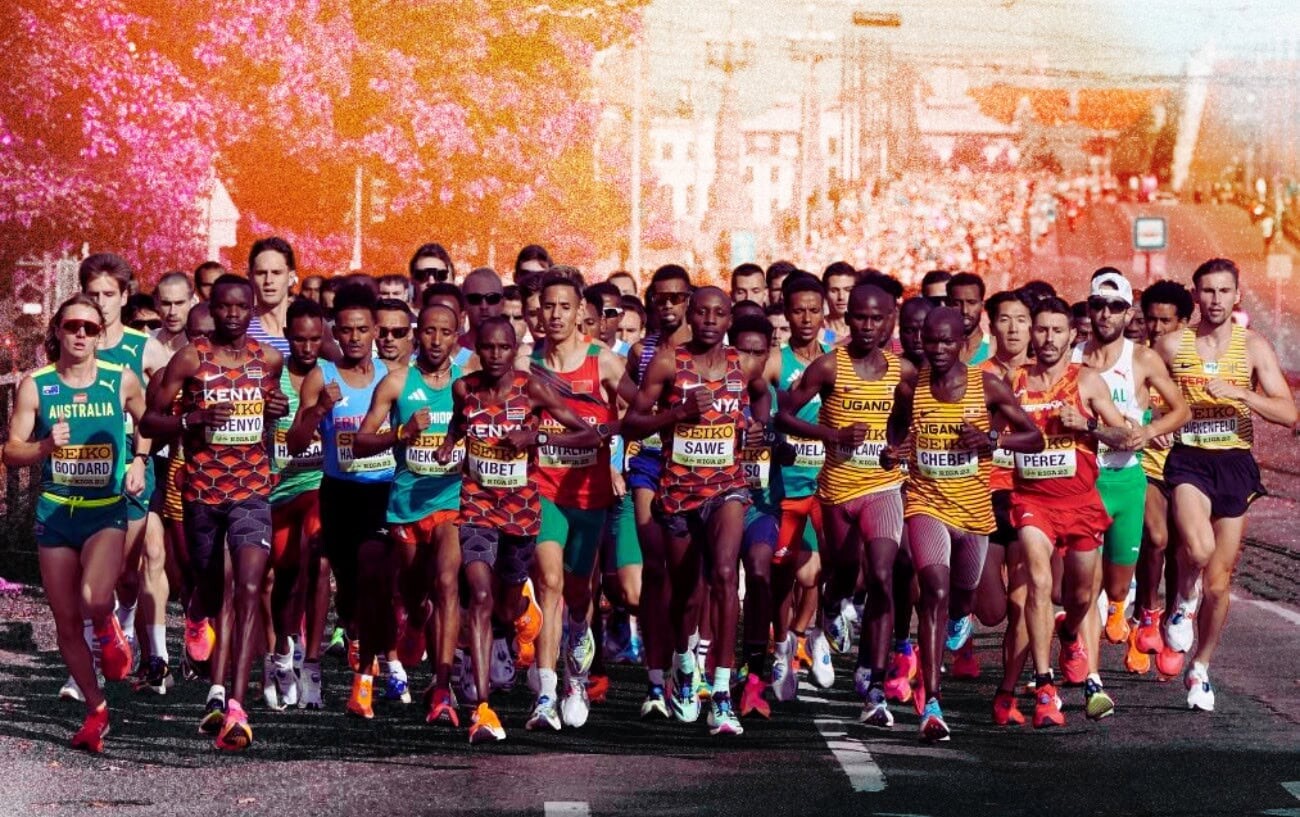
Kenya’s Nicholas Kipkorir headlines the field with a remarkable personal best of 58:08, the fastest mark among the athletes entered.
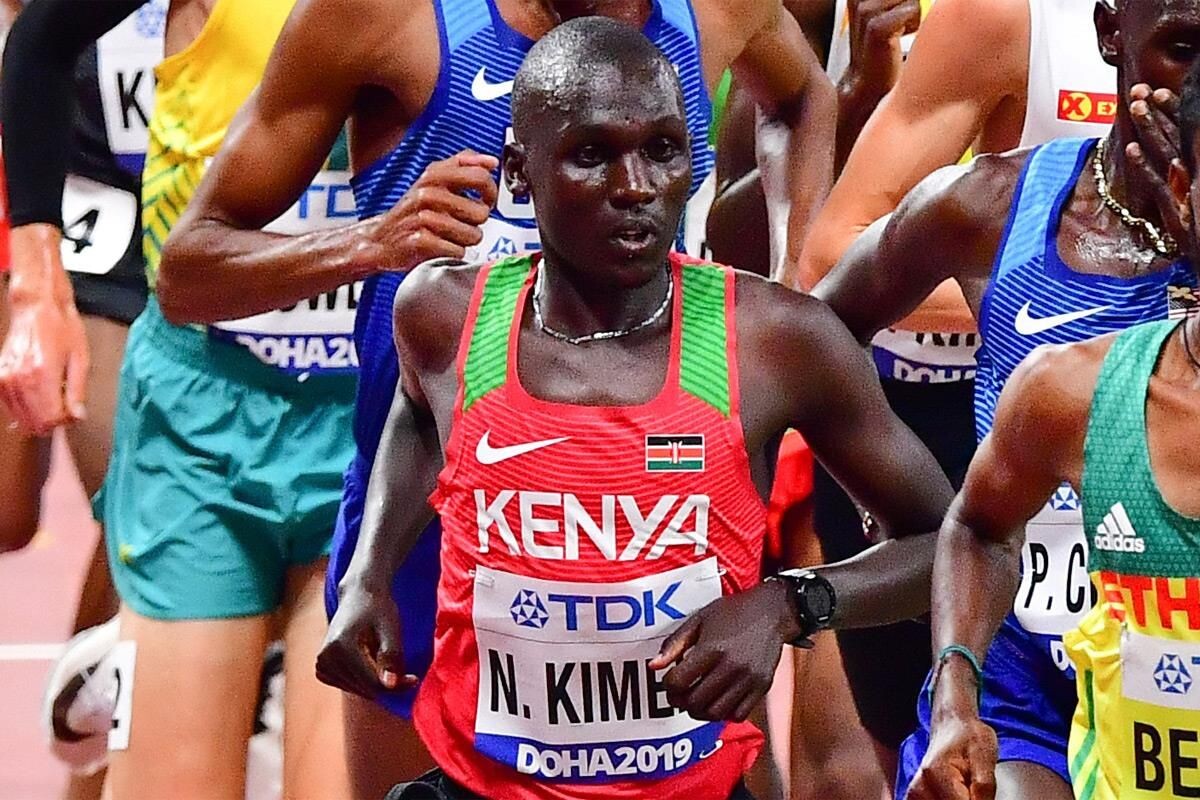
Kipkorir will face a formidable challenge from compatriot Gideon Kipkertich Rono, who owns a 58:38 personal best. Sweden’s Andreas Almgren also brings an exceptional 58:41 to the start line, while Ethiopia’s Tadese Worku has a 58:59 personal best.
Italy’s Yemaneberhan Crippa adds another major name to the field with a national record of 59:01, while Kenya’s Daniel Simiu Ebenyo enters with a 59:04 personal best and valuable championship experience.
Ebenyo won silver at the 2023 World Road Running Championships in Riga and will be looking to challenge for another medal in Copenhagen.
Uganda’s Joshua Cheptegei will bring enormous championship pedigree to the race. The Olympic and multiple world champion has a half marathon best of 59:21, making him another athlete capable of featuring prominently in the battle for the medals.
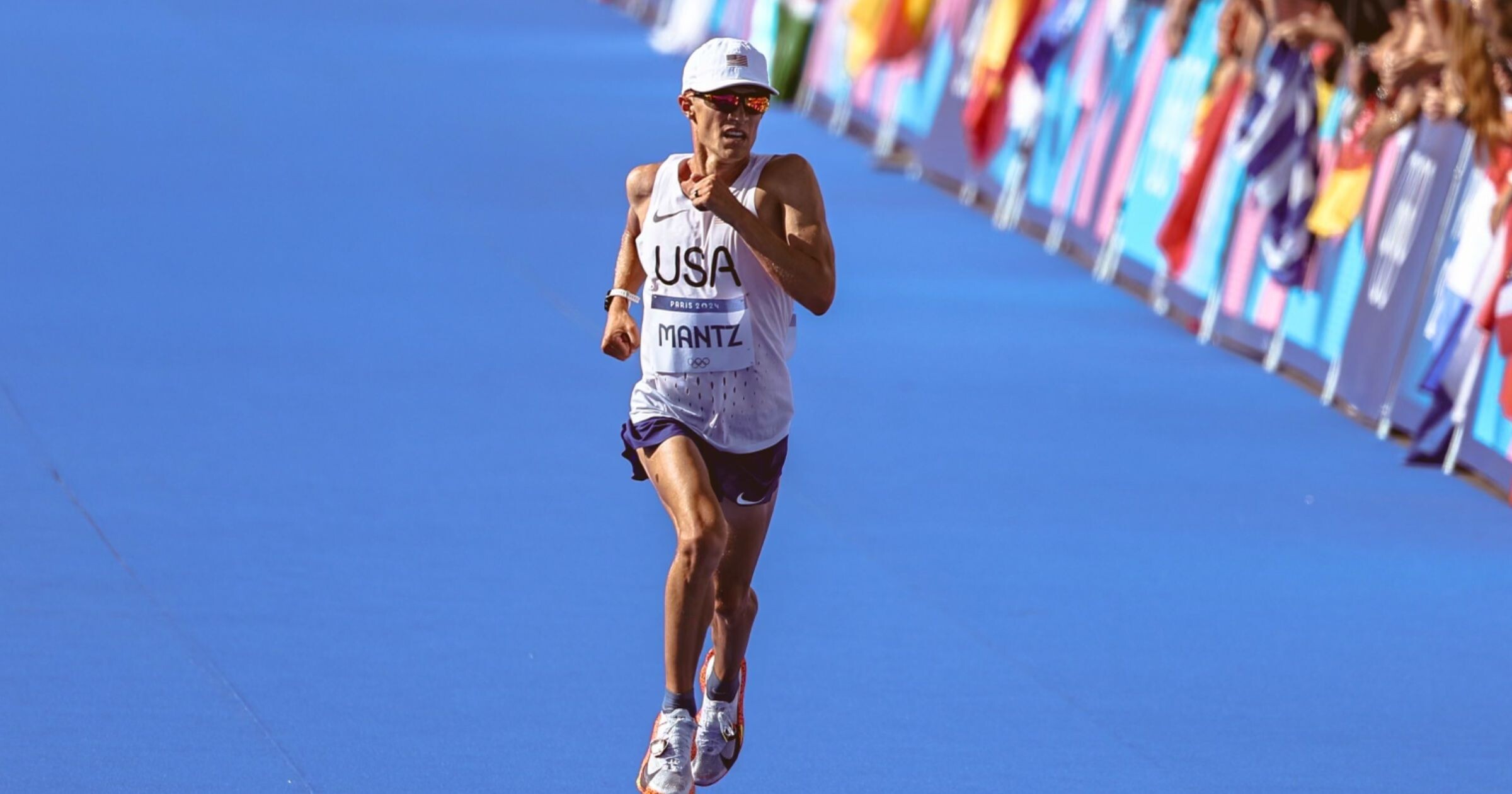
The American challenge will be led by Conner Mantz, who owns a 59:15 personal best. France’s Etienne Daguinos, Portugal’s Samuel Barata, Ethiopia’s Bereket Nega, France’s Jimmy Gressier, Canada’s Rory Linkletter, Australia’s Jack Rayner and Morocco’s Mohamed Reda El Aaraby further strengthen an already formidable international field.
Kenya will have particular interest in the championship, with several of its leading road runners lining up against some of the best athletes from Europe, Africa, North America, Asia and Oceania.
The race will be contested over the traditional 21.0975-kilometre distance, with the elite men scheduled to start at 9:45 a.m. local time on Sunday, September 20.
Leading Athletes And Personal Bests
1. Nicholas Kipkorir (Kenya) — 58:08
2. Gideon Kipkertich Rono (Kenya) — 58:38
3. Andreas Almgren (Sweden) — 58:41
4. Tadese Worku (Ethiopia) — 58:59
5. Yemaneberhan Crippa (Italy) — 59:01
6. Daniel Simiu Ebenyo (Kenya) — 59:04
7. Alex Nzioka Matata (Kenya) — 59:11
8. Conner Mantz (USA) — 59:15
9. Joshua Cheptegei (Uganda) — 59:21
10. Etienne Daguinos (France) — 59:27
11. Samuel Barata (Portugal) — 59:40
12. Bereket Nega (Ethiopia) — 59:43
13. Jimmy Gressier (France) — 59:45
14. Rory Linkletter (Canada) — 59:49
15. Peter Lynch (Ireland) — 59:52
16. Jack Rayner (Australia) — 59:53
17. Mohamed Reda El Aaraby (Morocco) — 59:54
18. Hillary Bor (USA) — 59:55
19. Zerei Kbrom Mezngi (Norway) — 1:00:01
20. Bastien Augusto (France) — 1:00:09
21. Mande Bushendich (Uganda) — 1:00:14
22. Jack Rowe (Great Britain) — 1:00:17
23. Cameron Levins (Canada) — 1:00:18
24. Ogikubo Tomoya (Japan) — 1:00:22
25. Bayelign Teshager (Ethiopia) — 1:00:22
26. Elroy Gelant (South Africa) — 1:00:22
27. Célestin Ndikumana (Burundi) — 1:00:23
28. Said Mechaal (Spain) — 1:00:24
29. Nishizawa Yuma (Japan) — 1:00:26
30. Namiki Neo (Japan) — 1:00:29
31. Othmane El Goumri (Morocco) — 1:00:30
32. Inyasi Nicodemus Sulley (Tanzania) — 1:00:31
33. Wesley Kiptoo (USA) — 1:00:34
34. Haftu Strintzos (Australia) — 1:00:36
35. Filmon Tesfu (Netherlands) — 1:00:38
36. Mustapha Akkaoui (Morocco) — 1:00:38
With such remarkable depth, the championship could remain finely poised until the closing stages. The presence of multiple sub-59-minute runners, experienced championship performers and strong finishers sets the scene for a race in which positioning, tactics and the ability to respond to late surges could prove decisive.
For Kipkorir, Ebenyo and their Kenyan teammates, Copenhagen provides an opportunity to turn impressive personal credentials into championship medals. But with a world-class field assembled behind them, the final outcome will only be determined when the leading runners reach the finish line.
by Erick Cheruiyot for My Best Runs.
Login to leave a comment
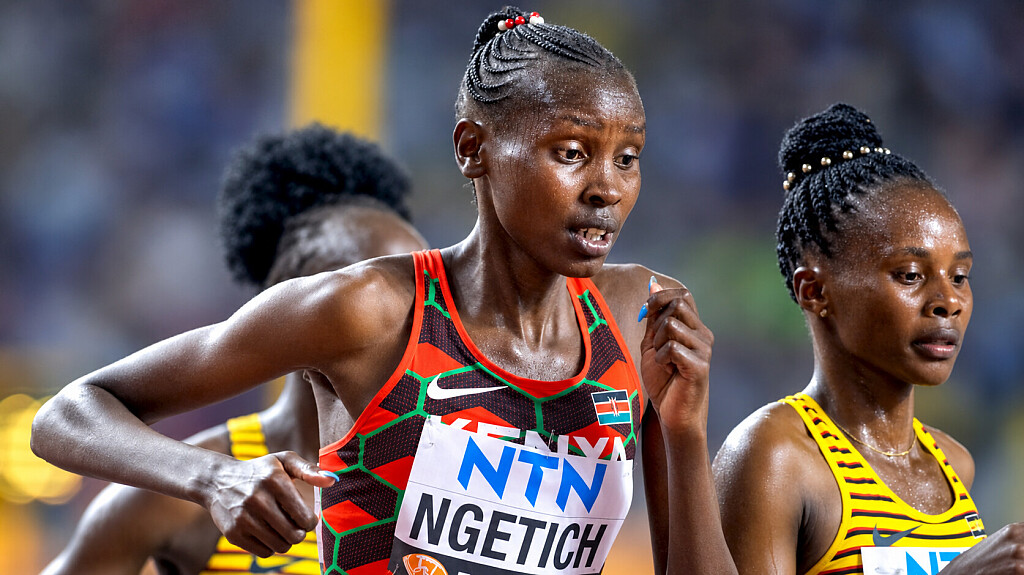
Agnes Ngetich Leads Star-Studded Women’s Half Marathon Field At World Road Running Championships
The stage is set for a spectacular women’s half marathon at the 2026 World Athletics Road Running Championships in Copenhagen, Denmark, with a deep international field ready to battle for the world title on Sunday, September 20.
The elite women’s race will begin at 9:10 a.m. local time, with the 21.0975-kilometre championship race taking runners through the streets of Copenhagen before the finish on Øster Allé.
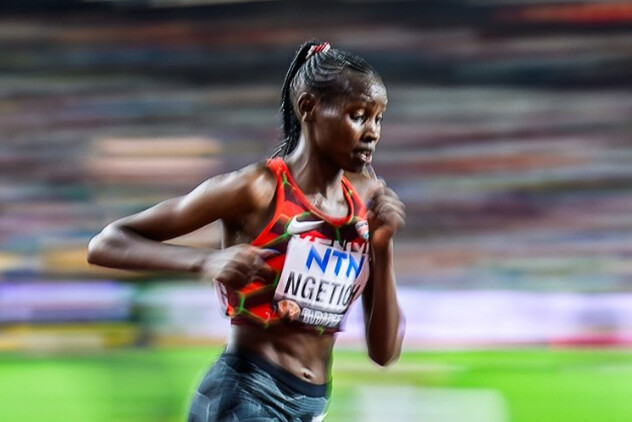
At the head of the entry list is Kenya’s Agnes Jebet Ngetich, who brings a sensational 1:03:04 personal best into the championship. She will lead a powerful Kenyan contingent that also includes Lilian Kasait Rengeruk, whose 1:03:32 is among the fastest times ever recorded over the distance.
Ngetich has established herself as one of the leading distance runners in the world, and her combination of speed and endurance makes her one of the major names to watch when the championship race gets underway.
Rengeruk provides another formidable Kenyan threat, while Daisilah Jerono, with a 1:05:21 personal best, and Veronica Loleo, with 1:05:35, add further depth to the Kenyan line-up.
Ethiopia will also arrive with serious firepower. Tsigie Gebreselama owns a remarkable 1:04:21 personal best, while Ftaw Zeray comes into Copenhagen with a 1:05:12 lifetime best.
The battle will not be restricted to the leading African nations, however. Weini Kelati Frezghi heads the American challenge with a 1:06:04 personal best, while Esther Chebet of Uganda has run 1:06:33.
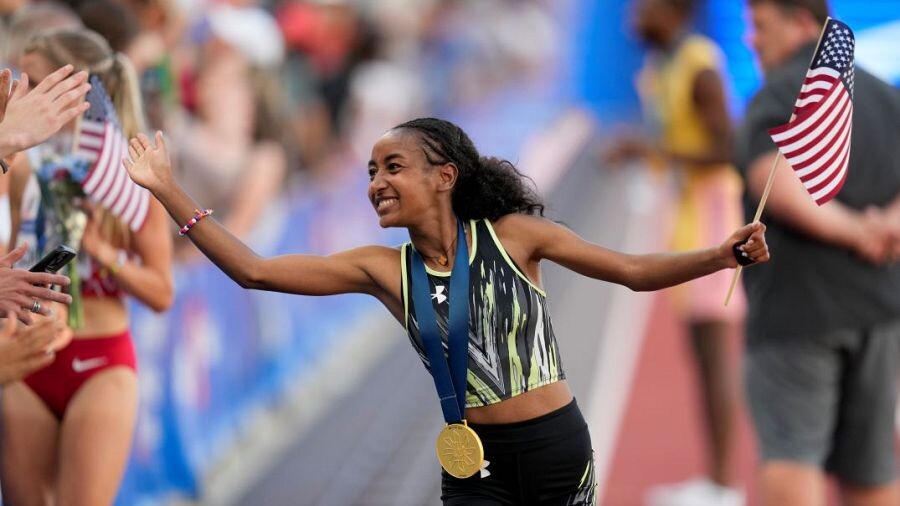
Europe will be represented by several accomplished athletes, including Slovenia’s Klara Lukan, who owns a 1:06:43 personal best, and Norway’s experienced Karoline Bjerkeli Grøvdal, whose best stands at 1:06:55.
South Africa’s Glenrose Xaba is another prominent name on the list with a 1:07:03 personal best, while Great Britain’s Samantha Harrison enters with 1:07:10.
Uganda has further depth through Rebecca Chelangat at 1:07:18, Annet Chemengich Chelangat at 1:08:12 and Rispa Cherop at 1:08:53.
The international field also includes Ethiopia’s Melat Siyoum and Baraky Redae, Rwanda’s Florence Niyonkuru and Emeline Imanizabayo, Mexico’s Laura Galván, Belgium’s Chloé Herbiet and Lisa Rooms, the United States’ Emma Grace Hurley, Ednah Kurgat, Carrie Ellwood and Jessica McClain, France’s Mekdes Woldu, Alessia Zarbo and Mélody Julien, Italy’s Sofia Yaremchuk and Elvanie Nimbona, China’s He Wuga and Liang Tiantian, and New Zealand’s Georgie Grgec.
Women’s Half Marathon Entry List
1. Agnes Jebet Ngetich — Kenya — 1:03:04
2. Lilian Kasait Rengeruk — Kenya — 1:03:32
3. Tsigie Gebreselama — Ethiopia — 1:04:21
4. Ftaw Zeray — Ethiopia — 1:05:12
5. Daisilah Jerono — Kenya — 1:05:21
6. Veronica Loleo — Kenya — 1:05:35
7. Weini Kelati Frezghi — United States — 1:06:04
8. Esther Chebet — Uganda — 1:06:33
9. Klara Lukan — Slovenia — 1:06:43
10. Karoline Bjerkeli Grøvdal — Norway — 1:06:55
11. Glenrose Xaba — South Africa — 1:07:03
12. Samantha Harrison — Great Britain — 1:07:10
13. Rebecca Chelangat — Uganda — 1:07:18
14. Melat Siyoum — Ethiopia — 1:07:21
15. Florence Niyonkuru — Rwanda — 1:07:22
16. Baraky Redae — Ethiopia — 1:07:31
17. Laura Galván — Mexico — 1:07:31
18. Chloé Herbiet — Belgium — 1:07:32
19. Emeline Imanizabayo — Rwanda — 1:07:35
20. Emma Grace Hurley — United States — 1:07:35
21. Annet Chemengich Chelangat — Uganda — 1:08:12
22. Mekdes Woldu — France — 1:08:20
23. Alessia Zarbo — France — 1:08:20
24. Ednah Kurgat — United States — 1:08:25
25. Sofia Yaremchuk — Italy — 1:08:27
26. He Wuga — China — 1:08:31
27. Liang Tiantian — China — 1:08:33
28. Carrie Ellwood — United States — 1:08:34
29. Jessica McClain — United States — 1:08:37
30. Elvanie Nimbona — Italy — 1:08:38
31. Lisa Rooms — Belgium — 1:08:40
32. Rispa Cherop — Uganda — 1:08:53
33. Georgie Grgec — New Zealand — 1:09:13
34. Mélody Julien — France — 1:09:15
With so many athletes separated by relatively small margins on paper, the championship race could develop into a fascinating tactical contest. Personal bests provide an indication of speed, but championship racing often comes down to positioning, patience and the ability to respond when the decisive moves arrive.
For Ngetich, Rengeruk, Gebreselama, Zeray and the rest of the field, the opportunity is clear: 21.0975 kilometres through Copenhagen with a world championship title waiting at the finish.
The World Athletics Road Running Championships Copenhagen 26 take place on September 19–20, with the women’s elite half marathon taking centre stage on Sunday, September 20, at 9:10 a.m.
Copenhagen is ready for a major championship showdown — and the women’s half marathon promises to be one of the highlights of the weekend.
by Erick Cheruiyot for My Best Runs.
Login to leave a comment
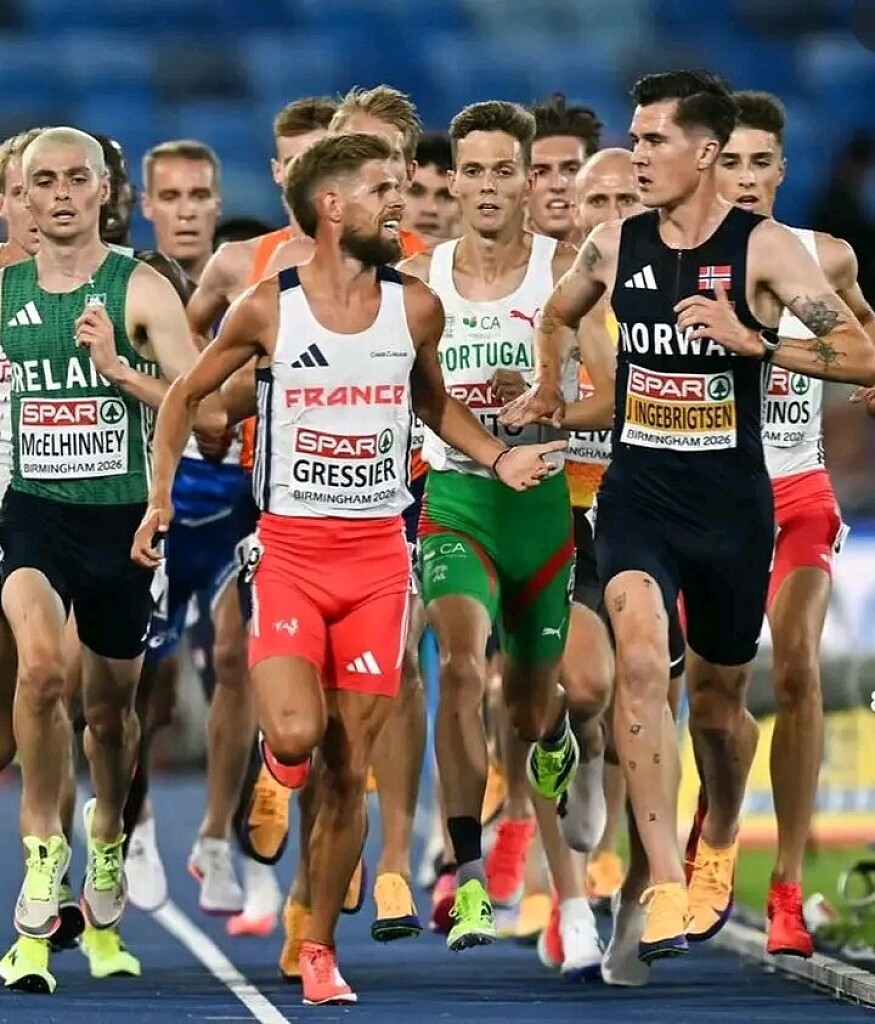
Jakob Ingebrigtsen And Jimmy Gressier Set For First-Ever Road Showdown In Copenhagen
COPENHAGEN — Two of the biggest names in modern distance running are about to take their rivalry onto unfamiliar territory.
Norway’s Jakob Ingebrigtsen and France’s Jimmy Gressier are set to meet for the first time on the roads when the men’s 5km at the World Athletics Road Running Championships gets underway in Copenhagen on Saturday, September 19.
The highly anticipated clash brings together two athletes with very different paths to the start line, but an equally strong appetite for another global title.
Ingebrigtsen arrives in Denmark as the reigning Olympic 5000m champion and a four-time European 5000m champion. He has also just added the inaugural World Athletics Ultimate Championship 5000m title to his collection, producing a powerful 12:59.24 performance in Budapest only days ago.
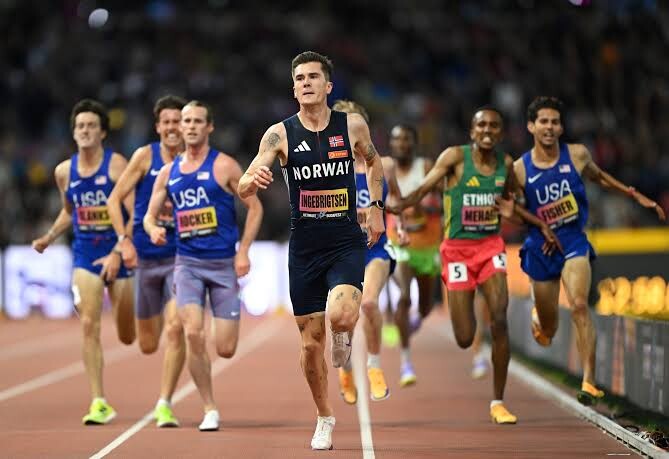
The Norwegian has already conquered some of the biggest stages in track and field. Now, Copenhagen presents a new challenge: winning a global title on the roads.
His road-racing experience over 5km is limited, however. World Athletics notes that Ingebrigtsen has raced the distance only once before, clocking 13:28 in Stavanger in 2020. He also raced his first and, so far, only half marathon in Copenhagen in 2024.
Standing in his way is a man who has already proved that he belongs among the very best road racers in the world.
Gressier enters Copenhagen as the reigning world 10,000m champion and the fastest man on the 5km entry list. In April, the Frenchman stormed to a European record of 12:51 in Lille, moving within just two seconds of the world record. Only Ethiopia’s Berihu Aregawi and Yomif Kejelcha have ever run faster over the distance.
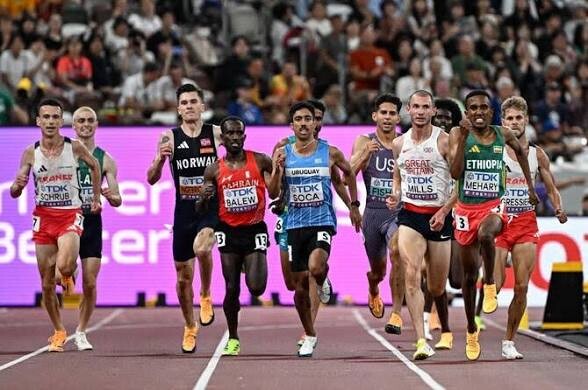
That performance also came with a warning for the rest of the field.
Ethiopia’s Addisu Yihune finished second behind Gressier in Lille in 12:54, a mark that places him fifth on the world all-time list. The two will meet again in Copenhagen, adding another major storyline to an already loaded championship race.
And Gressier is not stopping after one race.
The French star is entered for both the 5km on Saturday afternoon and the men’s half marathon on Sunday morning. With the 5km scheduled for 2:40 p.m. and the half marathon at 9:45 a.m. the following day, he will have only around 19 hours between the two championship races.
It is an extraordinary test of versatility. First comes a five-kilometre battle likely to demand close to all-out speed from the opening stages. Then, before a full day has passed, Gressier will have to return to the start line for 21.1 kilometres against a field packed with established road specialists.
Yet the 29-year-old is no stranger to the half marathon. He won the European half marathon title in 2025 in 59:45 and finished fifth at the 2023 World Road Running Championships in Riga in 59:46.
The 5km field, meanwhile, extends well beyond the headline names.
Kenya’s Mathew Kipsang arrives as the reigning Commonwealth 5000m champion, while Australia’s Ky Robinson, Burundi’s Egide Ntakarutimana, Norway’s Narve Gilje Nordås and Portugal’s José Carlos Pinto are among the other athletes capable of making the race highly competitive.
Copenhagen is therefore preparing for much more than a simple Ingebrigtsen-Gressier duel.
It is a meeting between a track superstar testing himself on the roads and a world champion who has already demonstrated extraordinary speed over the distance. Add Yihune’s 12:54, Kipsang’s championship pedigree and a deep international field, and the ingredients are there for a fiercely contested world title.
For Ingebrigtsen, the question is whether his world-class track speed and devastating finishing ability can translate seamlessly onto the roads.
For Gressier, the challenge is whether he can turn his remarkable 12:51 into a world championship crown — while keeping enough in reserve for the half marathon less than 24 hours later.
One thing is certain: when the gun fires in Copenhagen, the roads will provide a completely new chapter in the careers of two athletes who have already conquered some of the biggest stages in the sport.
And this time, there will be nowhere to hide.
Jakob Ingebrigtsen versus Jimmy Gressier.
Track royalty meets road-running firepower.
Copenhagen is ready.
by Erick Cheruiyot for My Best Runs.
Login to leave a comment
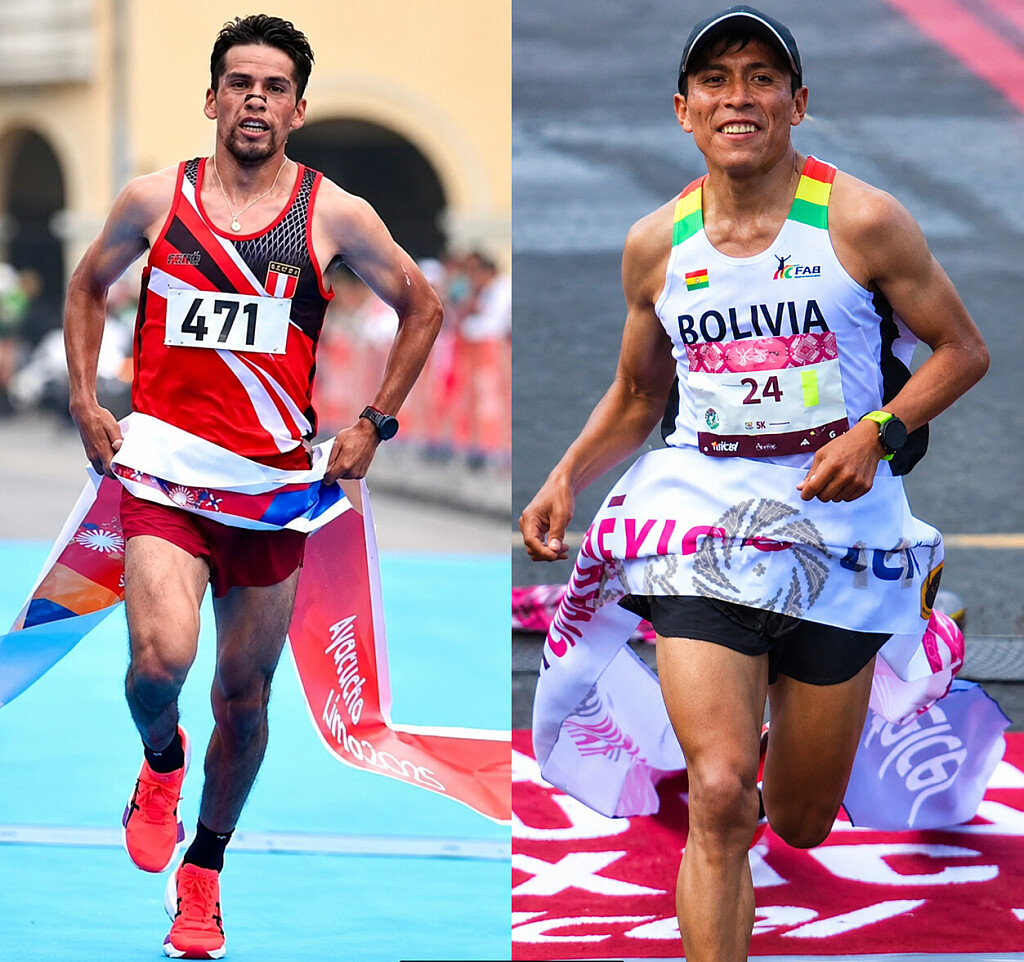
South America’s Best Set For Copenhagen World Half Marathon Showdown
South America will be represented by a strong eight-man contingent at the World Athletics Road Running Championships Copenhagen 26, with the athletes set to take on one of the deepest and most competitive men’s half marathon fields on Sunday.
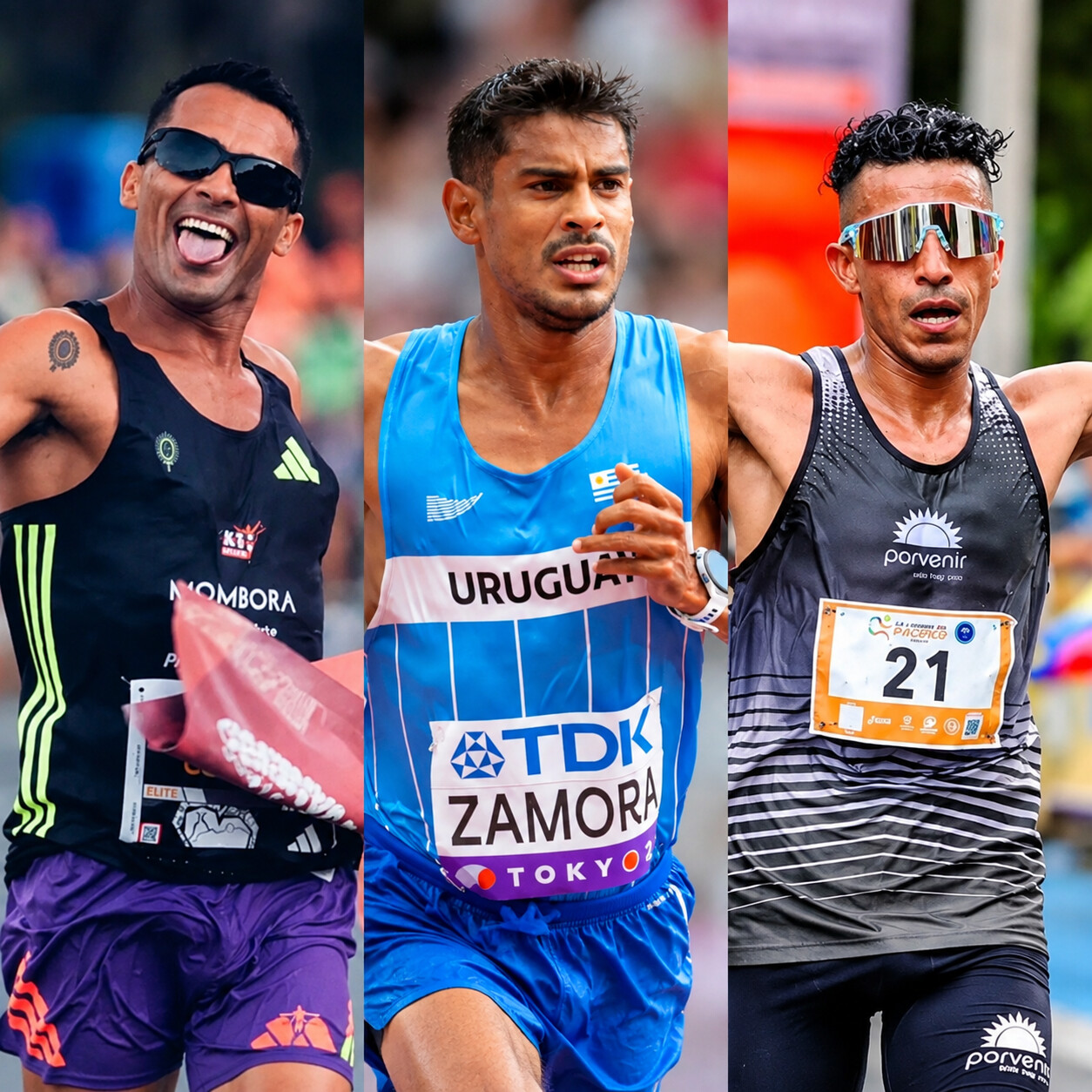
The championship will bring together leading road runners from around the world, creating a demanding stage for the South American representatives as they battle for strong championship positions and potentially significant personal breakthroughs.
Bolivia’s Héctor Garibay headlines the group, joined by Colombia’s Mauricio González and Uruguay’s Cristhian Zamora. Peru will be represented by Ferdinand Cereceda, while Brazil has the largest presence with Fabio Jesus Correia, Lucas Paulo Ferreira and Giovani Dos Santos.
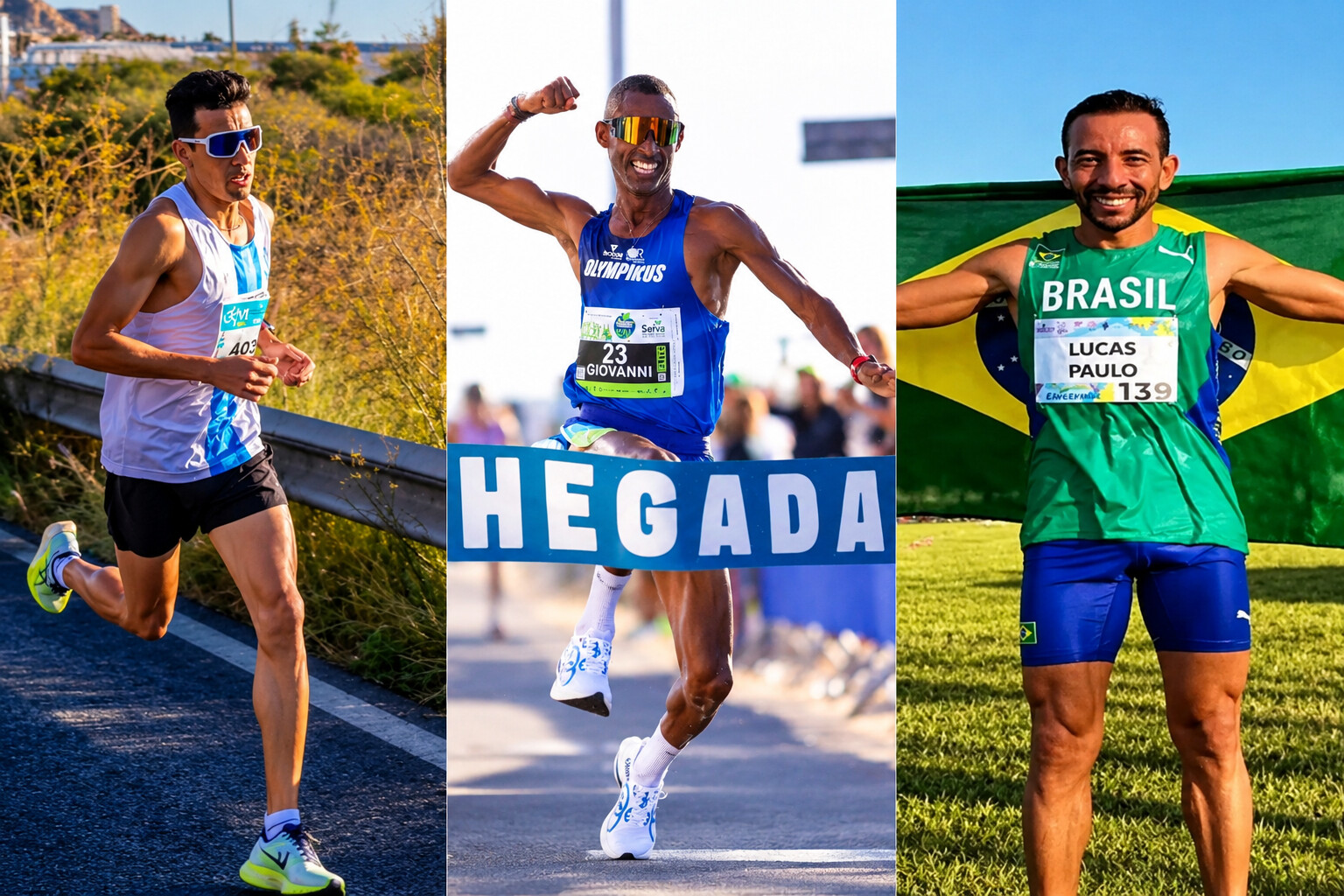
Argentina completes the contingent with Marcelo Fabian Manrique, giving South America a diverse eight-man lineup ready to take on the challenge in Copenhagen.
Competing at a World Athletics championship is never simply about chasing a fast time. Championship racing often demands patience, tactical awareness and the ability to respond when the pace changes, particularly when the field contains athletes capable of producing world-class performances.
For the South American runners, Copenhagen offers more than an opportunity to compete for championship honours. It is a chance to test themselves against the very best in the world and measure how far they have progressed on the international stage.
The contingent also brings a fascinating mix of experience, ambition and emerging talent. Each athlete arrives with a different racing background, but they share the same opportunity: to turn months of preparation into one memorable performance on the biggest road-running stage. Against a world-class field, even a small improvement in the closing kilometres could make a significant difference in the final standings.
Copenhagen is therefore set to provide a true test of character as much as fitness. The championship atmosphere, fast competition and relentless pace will demand that the South American runners remain composed from the opening kilometres to the final stretch. If they can execute their race plans and find another level when it matters most, several could leave Denmark with performances that represent important milestones in their careers.
With the pressure of a global championship and the depth of talent expected on the starting line, every kilometre will count. A personal best would be a major achievement, but strong tactical racing and a competitive finish could prove just as valuable.
The eight athletes will now look to arrive in Copenhagen ready to embrace the challenge, with South America hoping to make its presence felt when the world’s best half marathoners take over the streets of the Danish capital.
by Erick Cheruiyot for My Best Runs.
Login to leave a comment
Owen Korir And Naomi Chepngeno Crowned Champions At Porto Half Marathon
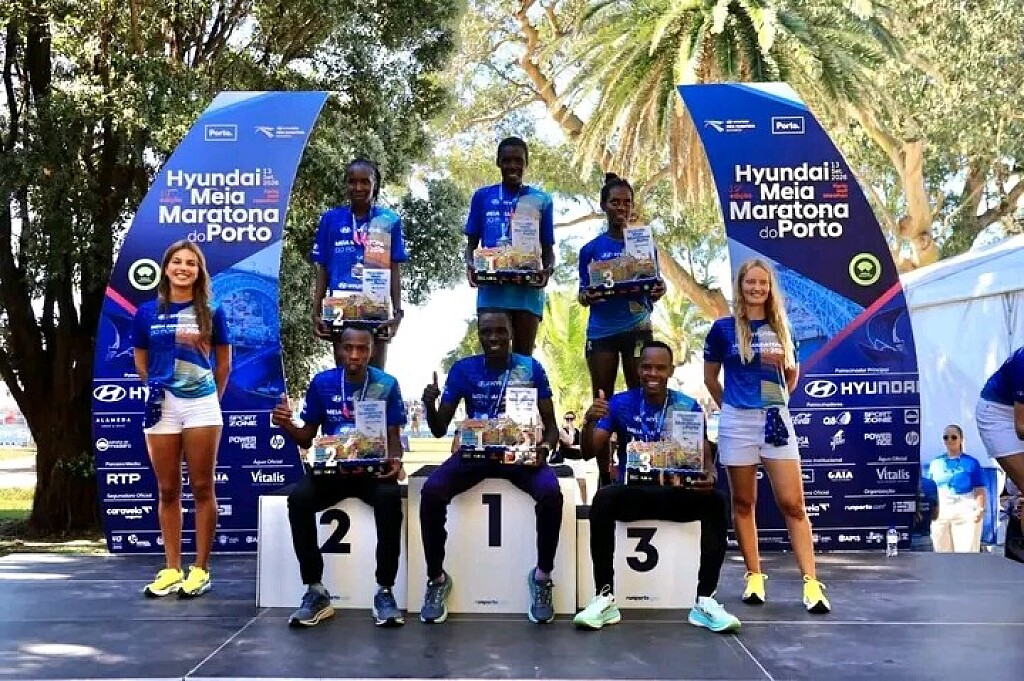
Kenyan distance runners produced a commanding performance at the 2026 Hyundai Meia Maratona do Porto in Portugal, taking all three men’s podium places and securing a one-two finish in the women’s race. The 21-kilometre contest combined speed, endurance and excitement, with athletes battling through the streets of Porto and Gaia before a memorable finish beside the Douro River.
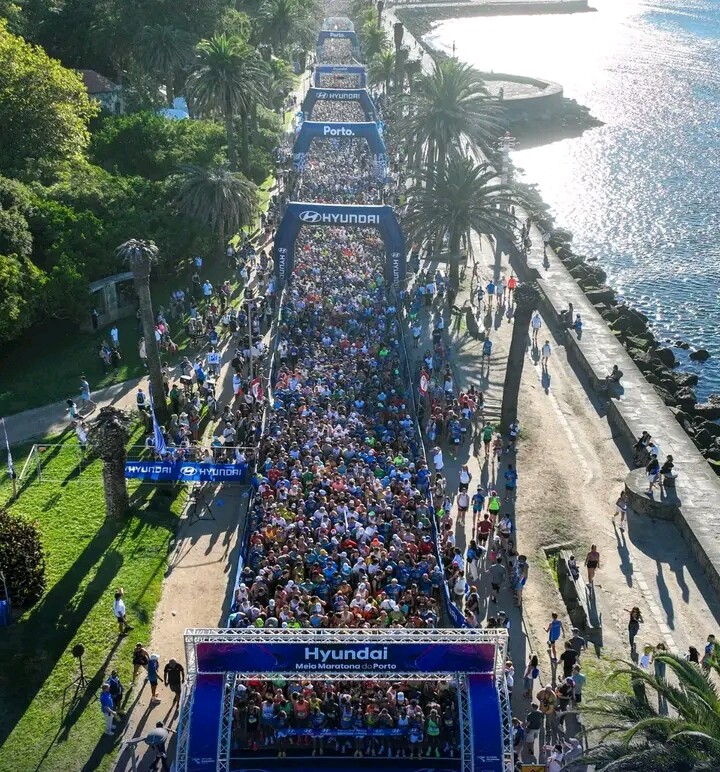
Owen Korir Kapkama claimed the men’s title in 1:01:58, delivering a polished performance to lead the field across the finish line. His compatriot Cyrus Kipkemoi Kimayo mounted a strong challenge and finished only five seconds behind, stopping the clock at 1:02:03 to take second place.
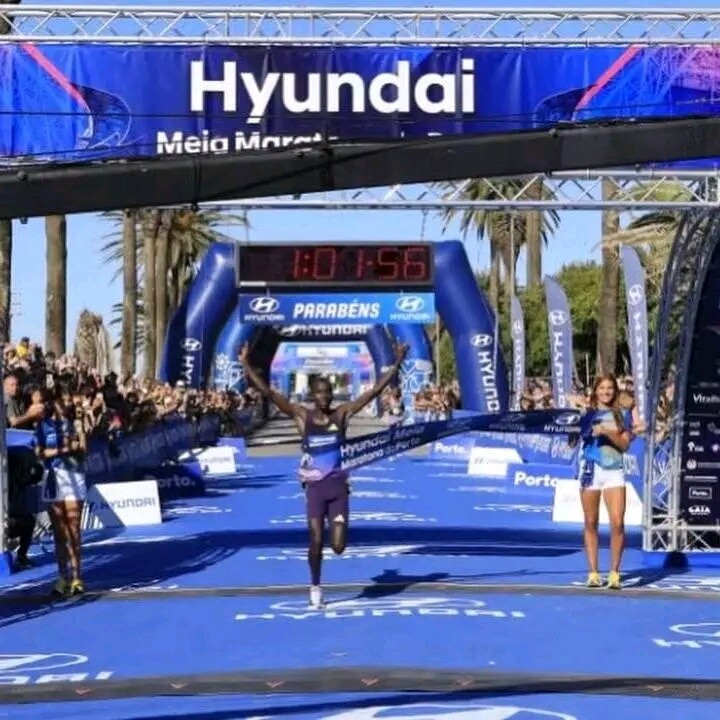
The battle for third also remained firmly in Kenyan hands, with Timothy Kibet Misoi completing the podium in 1:03:22. His result confirmed Kenya’s complete control of the men’s top three, as the country’s runners combined tactical discipline with the sustained pace required over the demanding half-marathon distance.
In the women’s race, Naomi Chepngeno delivered a winning performance to secure the title in 1:10:35. She held off fellow Kenyan Margaret Murinjo Monicah, who crossed the line in 1:10:57, finishing just 22 seconds behind the champion.
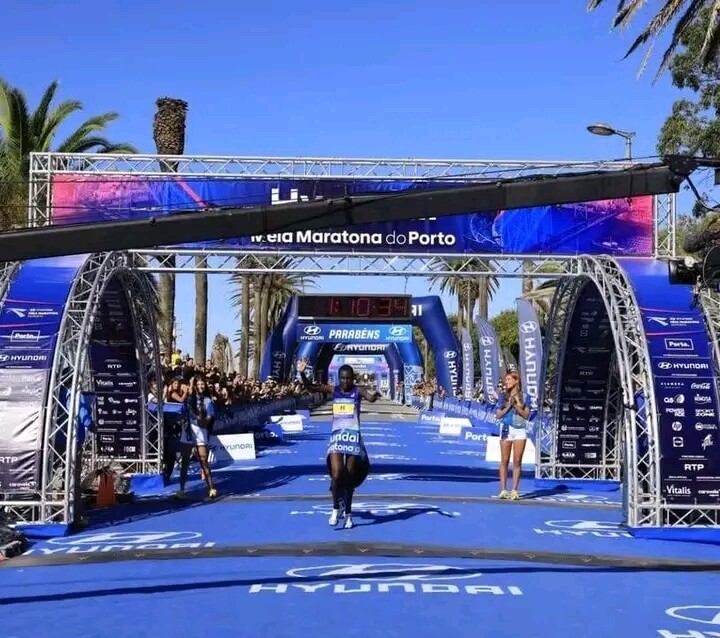
Hiwot Mehari Beza of Ethiopia claimed third place in 1:12:07, completing a competitive women’s podium and adding an international dimension to an event otherwise dominated by Kenyan athletes.
The race unfolded against a striking Portuguese backdrop, with Porto and Gaia providing a scenic yet demanding stage for the competitors. From the opening kilometres to the final push toward the finish, the athletes brought intensity and determination to a course that rewarded both speed and endurance.
The closing stretch offered a particularly memorable setting, as runners approached the Douro River with the iconic Ponte Luís I serving as a dramatic backdrop. The historic bridge and riverside scenery added a touch of grandeur to the final moments of a race defined by athletic excellence.
Along the route, thousands of spectators gathered to encourage the competitors, creating an energetic atmosphere that carried the runners through the streets. Their cheers, combined with the rhythm of racing feet and the determination of the athletes, helped transform the event into a celebration of running.
The 19th edition of the Hyundai Meia Maratona do Porto concluded with Kenya dominating the men’s podium and securing the top two positions in the women’s race. With its competitive racing, iconic riverside finish and enthusiastic crowds, the event once again showcased the enduring appeal of road running in Porto and Gaia.
by Erick Cheruiyot for My Best Runs.
Login to leave a comment

Porto Half Marathon
Hyundai Porto Half Marathon is an annual race that takes place in Portugal since 2007 and has the honor of hosting thousands of runners from around the world. Alongside the Half Marathon, there is also a Mini Marathon distance of 6 km, with a participation of over 11.000 runners. With breathtaking scenery, always along the riverside of Douro River, with...
more...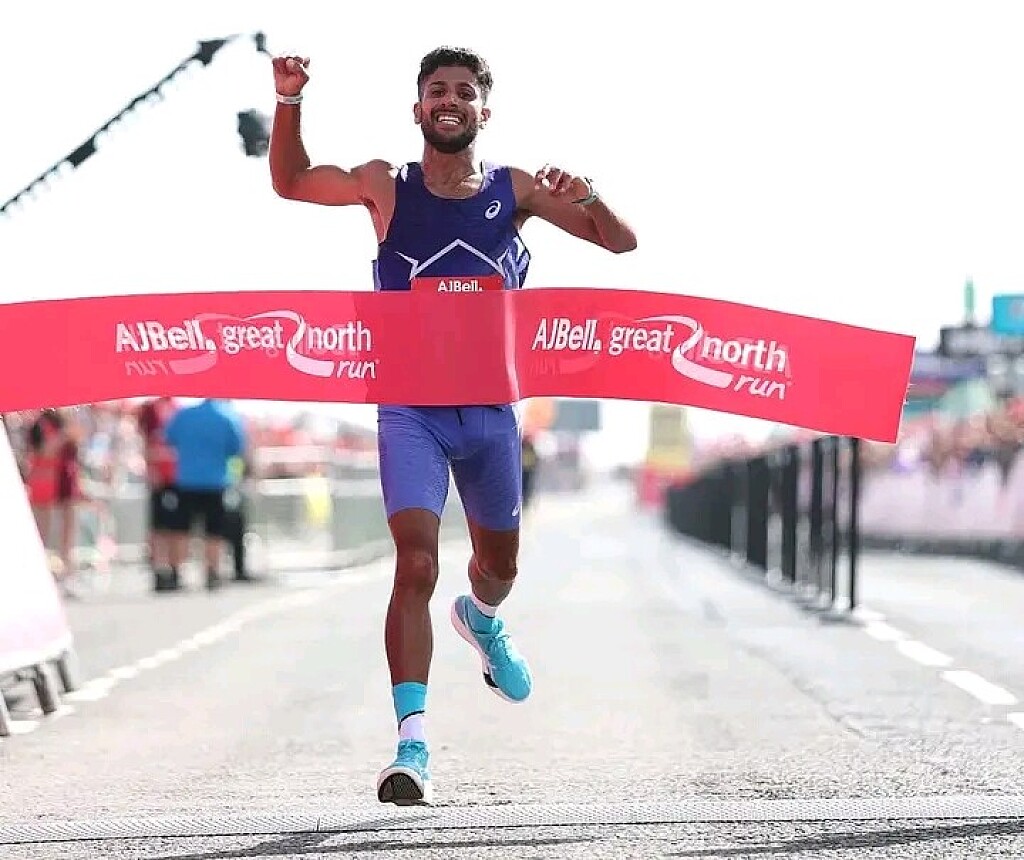
Talbi Overhauls Defending Champion Mutiso In Great North Run Thriller
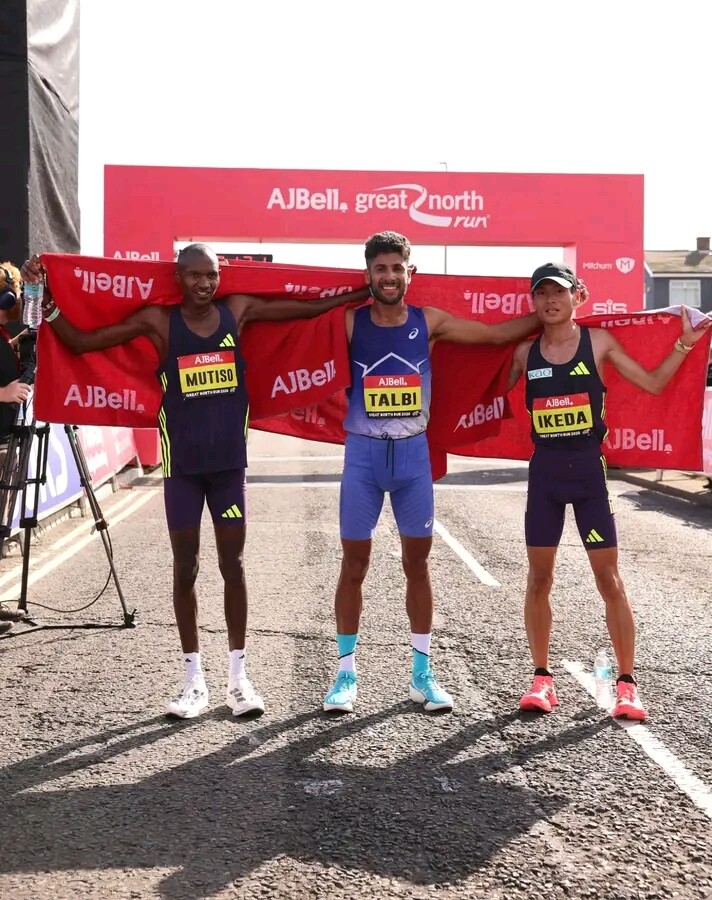
Zouhair Talbi delivered a sensational performance at the 2026 Great North Run, overpowering defending champion Alexander Mutiso Munyao in a thrilling men’s half marathon battle that went down to the final stages.
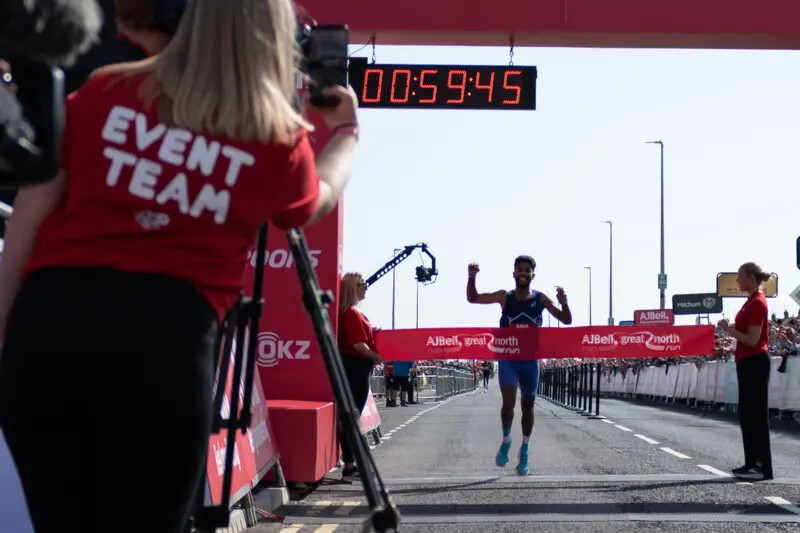
Talbi crossed the finish line in 59:47 to claim a brilliant victory, while Mutiso, the reigning champion, was forced to settle for second in 1:00:01. The Kenyan remained firmly in contention for much of the race, but Talbi produced the decisive move when the pressure reached its peak.
The turning point came on one of the course’s downhill sections. With Mutiso still within striking distance, Talbi used the descent to inject another burst of speed, gradually opening a gap that would prove impossible for the defending champion to close.
It was a calculated escape rather than a sudden collapse from Mutiso. Talbi attacked the downhill with confidence, allowing gravity and his momentum to work in his favour as he stretched the gap metre by metre. Mutiso responded, but the American had already created the separation he needed.
From there, Talbi held his composure and drove toward the finish, eventually stopping the clock in an impressive 59:47. Mutiso fought all the way to the line, but his 1:00:01 was not enough to retain the title he had won previously.
Japan’s Yohei Ikeda completed the podium in 1:00:40, while American Casey Clinger finished fourth in 1:01:36. Japan’s Kosei Matsunami was fifth in 1:01:59, followed closely by compatriot Shouya Yonei in 1:02:01.
Clayton Young was seventh in 1:02:04, with Britain’s Marc Scott completing the top eight in 1:02:10.
Men’s Top 8 Results
1. Zouhair Talbi — United States — 59:47
2. Alexander Mutiso Munyao — Kenya — 1:00:01
3. Yohei Ikeda — Japan — 1:00:40
4. Casey Clinger — United States — 1:01:36
5. Kosei Matsunami — Japan — 1:01:59
6. Shouya Yonei — Japan — 1:02:01
7. Clayton Young — United States — 1:02:04
8. Marc Scott — Great Britain — 1:02:10
Talbi’s victory also carried historic significance. His triumph made him the first American man to win the Great North Run, adding a landmark achievement to an already memorable afternoon. His 59:47 also marked the second sub-60-minute half marathon of his career, further underlining his growing credentials at the distance.
For Mutiso, the result was a rare disappointment on a course where he arrived as the defending champion. Yet his 1:00:01 still underlined his quality over the half-marathon distance and ensured that he remained within touching distance of the winner until the decisive stages.
For Talbi, however, this was a victory built on timing, strength and courage. His downhill attack created the separation he needed, and once he escaped the defending champion, he never surrendered the advantage.
The 2026 Great North Run therefore belonged to Talbi—a race in which the defending champion fought bravely, but the American found one crucial surge at exactly the right moment to turn a close contest into a historic victory.
by Erick Cheruiyot for My Best Runs.
Login to leave a comment

Great North Run
Great North Run founder Brendan Foster believes Britain is ready to welcome the world with open arms after the launch of the event's most ambitious plan to date. The Great World Run campaign seeks to recruit one runner from every country in the United Nations – 193 in total – to take part in the iconic half marathon in...
more...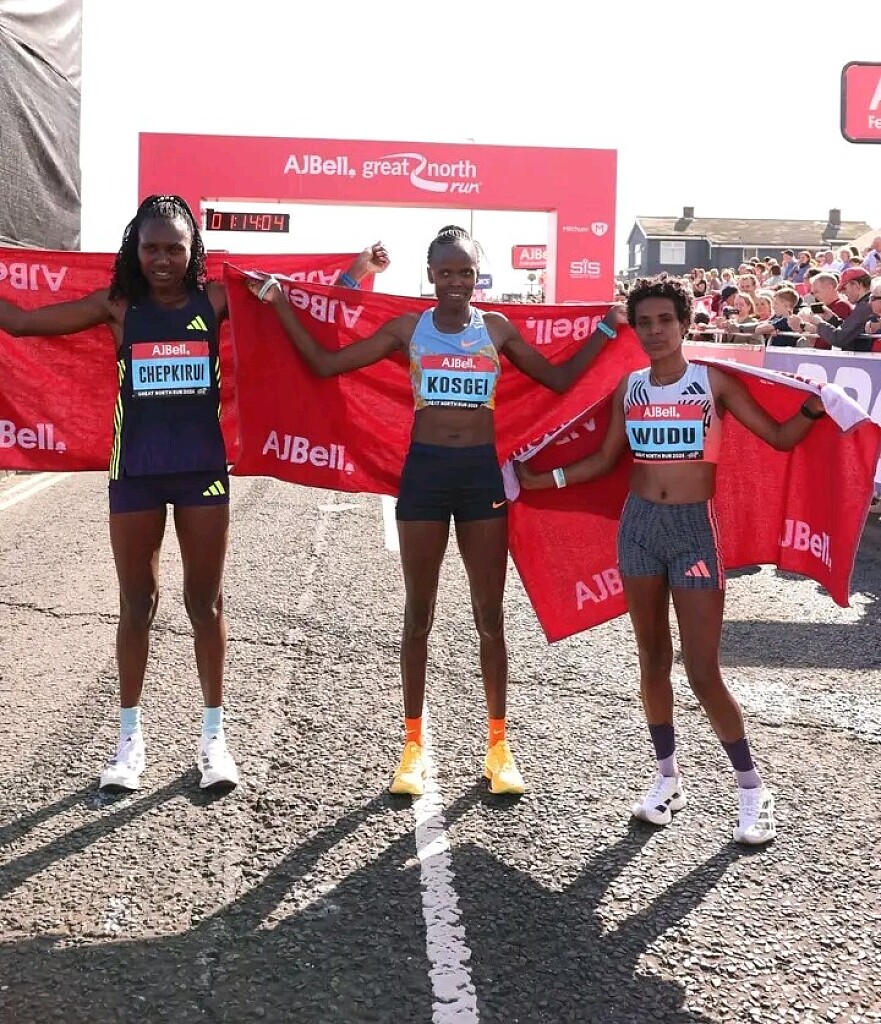
Brigid Kosgei Claims Second Great North Run Title In Kenyan 1-2 Finish
Brigid Kosgei returned to the top at the AJ Bell Great North Run on Sunday, September 13, delivering a commanding performance to win the women’s half marathon and lead Kenya to a memorable one-two finish.
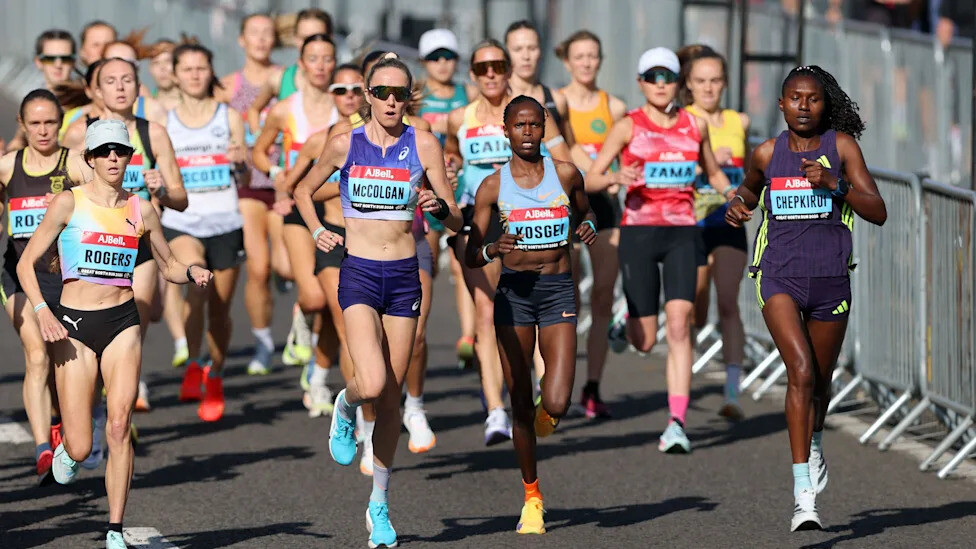
The former marathon world-record holder crossed the line in 1:06:15, securing her second Great North Run title after previously winning the prestigious race in 2019.
Fellow Kenyan Sheila Chepkirui who was battling to defend the title finished second in 1:06:19, completing a memorable Kenyan one-two at one of the world’s most celebrated half-marathons.
Behind the leading Kenyan pair, Ethiopia’s Melknat Wudu produced an impressive run to claim third in 1:09:37. Wudu was the first athlete outside the Kenyan duo to reach the finish and comfortably secured a place on the podium, highlighting the strong international quality of the women’s field.
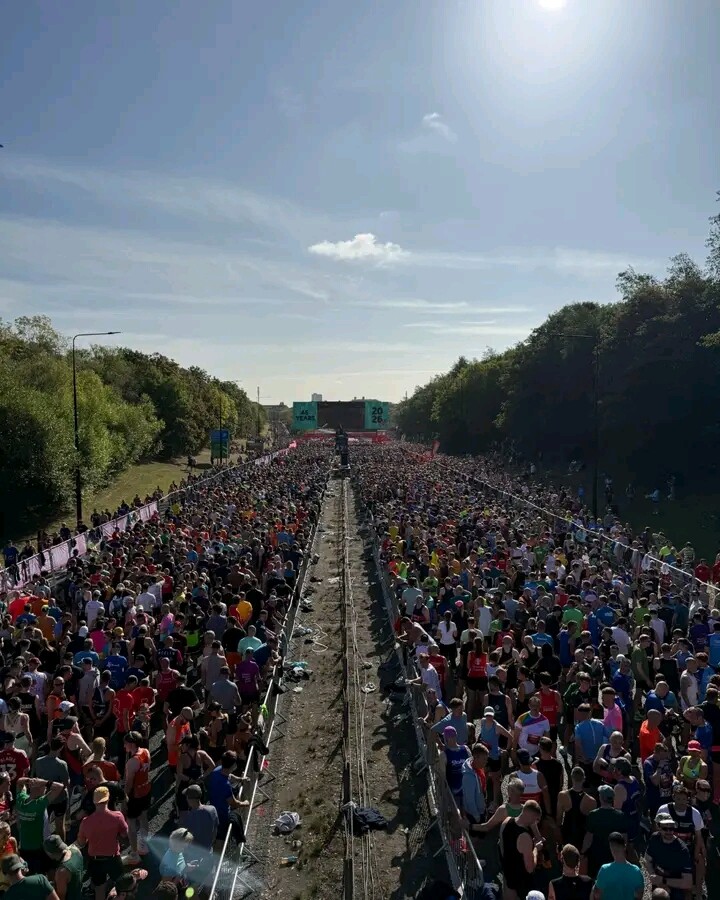
Japan’s Honami Maeda finished just six seconds behind Wudu to take fourth in 1:09:43, while Great Britain’s Amy-Eloise Neale was the leading home athlete in fifth with 1:10:27.
American Natosha Rogers followed in sixth in 1:11:44, with Britain’s Annabel Grummow seventh in 1:12:37 and Nancy Scott completing the top eight in 1:12:51.
For Kosgei, the victory adds another prestigious achievement to an already remarkable distance-running career. Returning to the Great North Run winner’s circle six years after her first triumph, she once again demonstrated her ability to deliver on one of the biggest stages in the half marathon.
Chepkirui’s runner-up finish made the occasion even more significant for Kenya, as the two athletes combined to secure the top two positions. Wudu’s third-place performance completed an international podium and ensured the race featured a strong representation from three of the sport’s leading distance-running nations.
Women’s Top 8 Finishers
1. Brigid Kosgei — Kenya — 1:06:15
2. Sheila Chepkirui — Kenya — 1:06:19
3. Melknat Wudu — Ethiopia — 1:09:37
4. Honami Maeda — Japan — 1:09:43
5. Amy-Eloise Neale — Great Britain — 1:10:27
6. Natosha Rogers — United States — 1:11:44
7. Annabel Grummow — Great Britain — 1:12:37
8. Nancy Scott — Great Britain — 1:12:51
The 2026 Great North Run therefore ended with Kosgei back on top, Chepkirui alongside her in second and Wudu completing a high-quality international podium. For Kosgei and Kenya, it was a particularly memorable day, combining individual success with a commanding one-two finish and reinforcing the country’s enduring strength in elite distance running.
by Erick Cheruiyot for My Best Runs.
Login to leave a comment
Great North Run
Great North Run founder Brendan Foster believes Britain is ready to welcome the world with open arms after the launch of the event's most ambitious plan to date. The Great World Run campaign seeks to recruit one runner from every country in the United Nations – 193 in total – to take part in the iconic half marathon in...
more...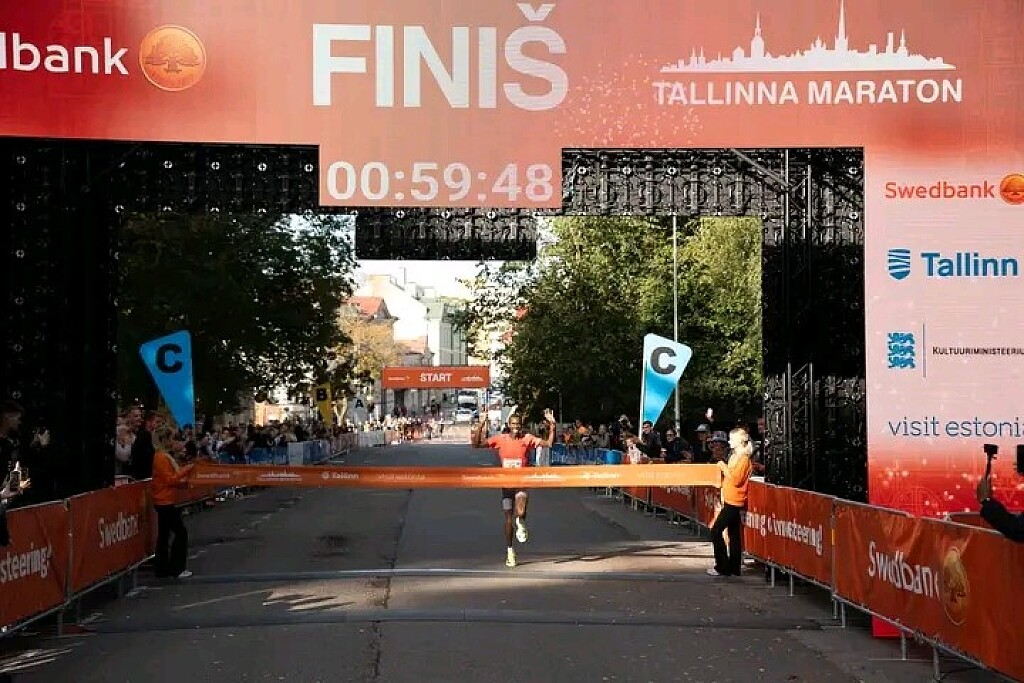
History Made in Tallinn as Vincent Kiptoo Breaks One-Hour Barrier in Estonia
Kenya produced a remarkable double victory at the 2026 Swedbank Tallinn Marathon Half Marathon in Estonia, with Vincent Kiptoo and Regina Wambui Ndungu claiming the men’s and women’s titles in record-breaking fashion.
Kiptoo delivered the headline performance of the morning, storming to victory in 59:48 to become the first athlete to run a half marathon in under one hour on Estonian soil. His performance also established a new Tallinn Half Marathon course record, marking a historic milestone for both the Kenyan and the race.
The Kenyan’s victory was backed by an impressive display of depth from his compatriots. Johana Erot finished second in 1:00:51, recording a personal best, while Enos Kipruto Saat completed the podium in 1:01:22. Kenya therefore swept all three men’s podium positions.
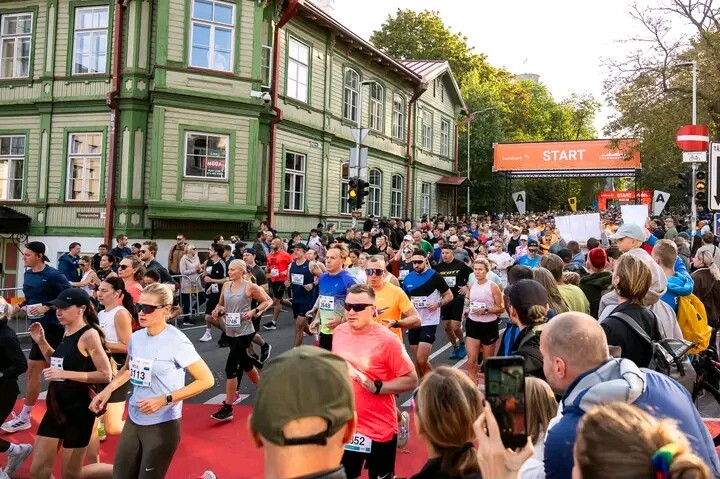
The fastest Estonian in the men’s race was Leonid Latsepov, who finished in 1:04:20, giving the home crowd another performance to celebrate despite the dominance of the Kenyan contingent.
The women’s race provided another Kenyan triumph, with Regina Wambui Ndungu producing a superb 1:07:35 to take the title and set a new Tallinn Half Marathon course record. Her performance completed a memorable Kenyan double on a morning when both winners rewrote the course records.
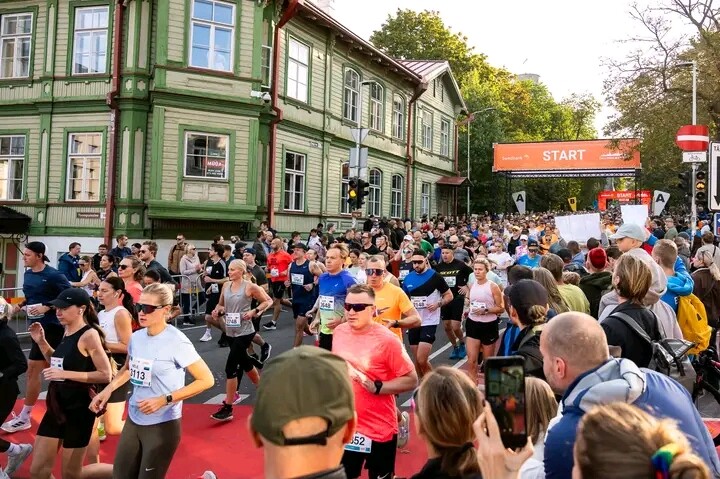
Winsam Jerono secured second place in 1:10:29, also improving her personal best, while Morocco’s Soukaina Atanane took third in 1:11:24. The fastest Estonian woman was Pille Hinn, who crossed the line in 1:23:02.
The men’s result was particularly striking, with Kenya occupying every place on the podium. Kiptoo’s historic sub-hour run was followed by Erot’s personal-best performance and Kipruto Saat’s strong third-place finish, underlining the depth of Kenyan talent over the half-marathon distance.
For Kiptoo, the 59:48 performance represents more than a race victory. Breaking the one-hour barrier in Estonia places his name in the history of the Tallinn Half Marathon and gives him a course record that will now become the benchmark for future editions of the race.
Ndungu’s victory added another layer to the Kenyan success. Her 1:07:35 not only secured the women’s title but also lowered the course record, meaning both elite races produced new standards on the same morning.
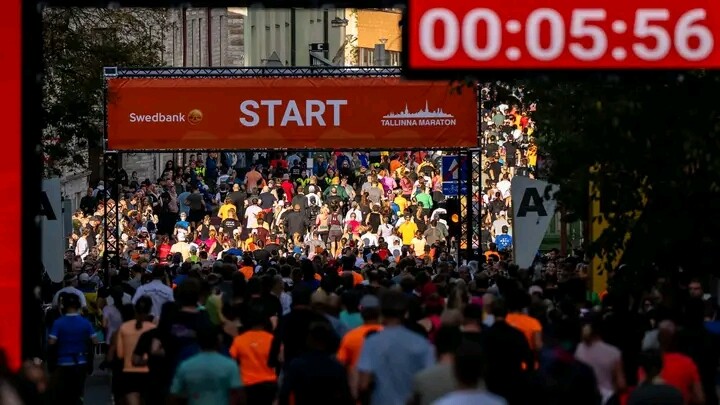
The scale of the event added to the occasion, with more than 5,000 runners taking on the 21.1-kilometre challenge. The streets of Tallinn were filled with runners of different levels, creating a vibrant backdrop for a morning that produced two Kenyan victories and two new course records.
The half marathon was only one part of a packed Tallinn running weekend. The 10K Tallinn Autumn Run was scheduled to follow at 14:00, with the Nike Youth Run later in the evening at 18:30, keeping the Estonian capital at the centre of the running action throughout Saturday.
The weekend will then reach its grand finale on Sunday morning with the Tallinn Marathon, scheduled for a 09:00 start. With thousands of runners continuing to take to the streets, the city’s celebration of distance running is set to continue.
For Kenya, however, the defining moment of the half marathon will remain Kiptoo’s historic 59:48. Alongside Ndungu’s course-record victory, it gave the country a spectacular start to the Tallinn Marathon weekend and etched another memorable chapter into Kenya’s remarkable road-running story.
by Erick Cheruiyot for My Best Runs.
Login to leave a comment

Tallin Marathon
The Tallinn Marathon has won a sure place in the competition calendar of runners and has become an attractive destination for running tourists looking for new experiences. About 20 000 running enthusiasts from 56 different countries participated in the 2017 event. As a tradition, the marathon will take place in every second Sunday of September, this year 9th of September,...
more...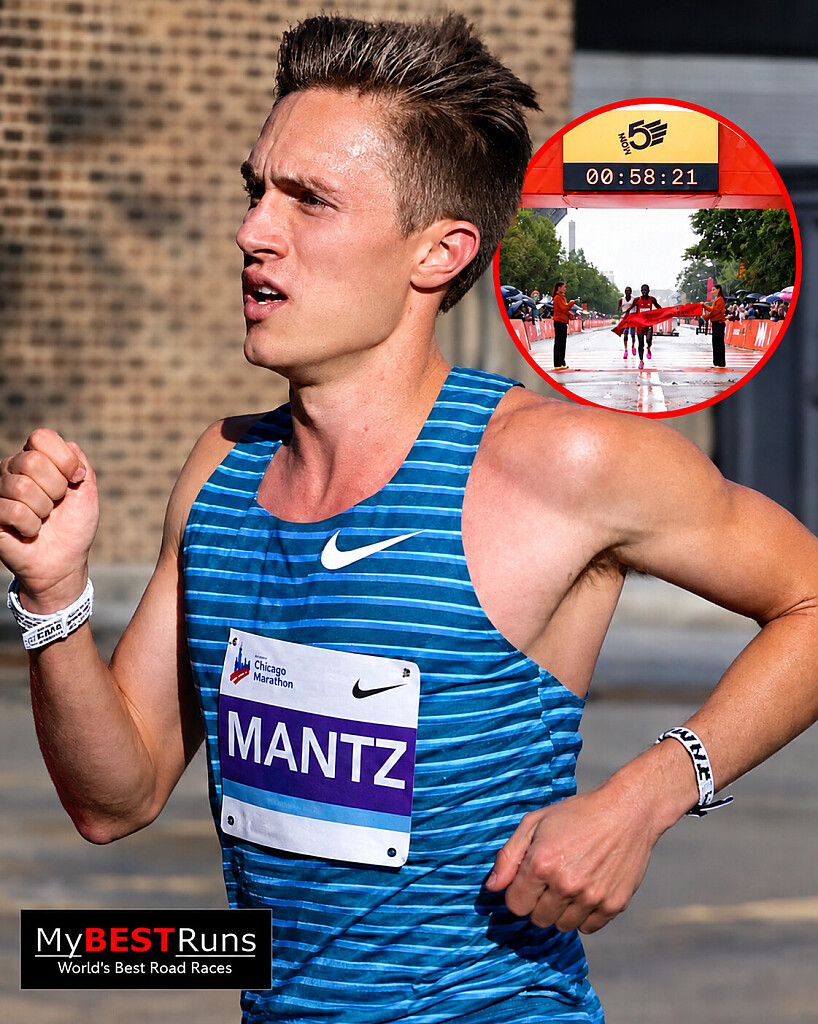
Conner Mantz’s Long Road Back: From American Record Holder to World Championship Return
Less than a year ago, Conner Mantz was rewriting American distance-running history. Now, after months of injury, rehabilitation and rebuilding, the American record holder is preparing for another major test — this time on the world stage in Copenhagen.
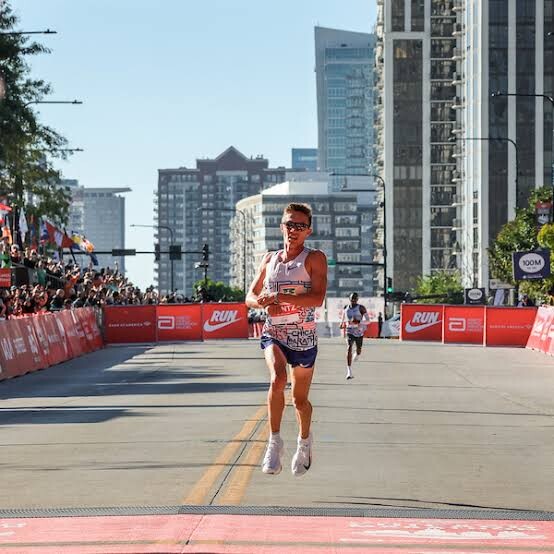
On October 12, 2025, Mantz produced the performance of his career at the Chicago Marathon, running 2:04:43 to break Khalid Khannouchi’s long-standing American record of 2:05:38, set in London in 2002. The performance made Mantz the fastest American marathoner in history and confirmed his place among the country’s elite distance runners.
But what followed was far removed from the glory of Chicago.
Only weeks after the marathon, Mantz began experiencing hip pain that was eventually diagnosed as a sacral stress fracture. The injury forced him away from running for 12 weeks and disrupted what had been shaping up to be another important season. He ultimately withdrew from the 2026 Boston Marathon during race week after acknowledging that his fitness had not returned sufficiently.
Rather than forcing the comeback, Mantz had to rebuild from the ground up.
Swimming became a major part of that process. Long sessions in the pool gradually became faster, with his pace progressing from around 1:43 per 100 yards to below 1:30. Some sessions stretched close to three hours. Cycling also became part of his training, while running was carefully introduced whenever his body allowed it — and stopped whenever the injury demanded caution.
For an athlete accustomed to racing at the highest level, it was a frustrating period of patience.
Mantz finally returned to competition at the ASICS Falmouth Road Race in August, almost ten months after his historic Chicago performance. He finished as the second American, a result that may not have been the comeback statement he wanted, but was nevertheless an important step forward.
Now comes a much bigger examination.
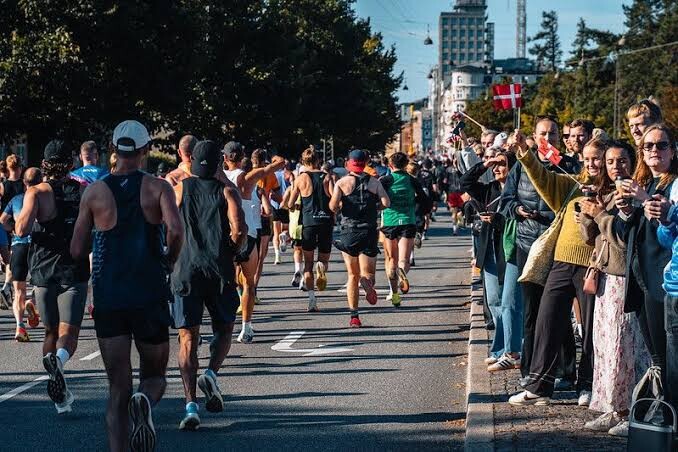
On Sunday, September 20, Mantz will line up in Copenhagen for the men's half marathon at the 2026 World Athletics Road Running Championships. It will be his first global championship appearance since the Paris 2024 Olympics.
And Mantz is not arriving merely as another member of the American team. He is the reigning American record holder in the half marathon.
That record came in 2025, when he ran 59:17 in Houston to erase Ryan Hall's 59:43 American record, which had stood for 18 years.
In the same year, Mantz would go on to claim the American marathon record as well.
Two national records. One extraordinary season. Then an injury that forced him to step away from the racing world for months.
Now, the question is no longer simply how fast Mantz can run on his best day. It is about what remains after everything he has been through.
Copenhagen offers the perfect stage for that answer. With the world's best runners gathered for a global title, Mantz will have the opportunity to measure himself against the strongest competition while continuing his journey back to his best.
He has already shown that he can break records. He has already shown that he can compete with the world's best.
This time, he is simply trying to rediscover the runner who did it.
Records can redefine the ceiling. Injuries can force an athlete to rediscover the foundation. On Sunday in Copenhagen, we will find out just how much of the old Conner Mantz is back — and how much stronger the journey has made him.
by Erick Cheruiyot for My Best Runs.
Login to leave a comment
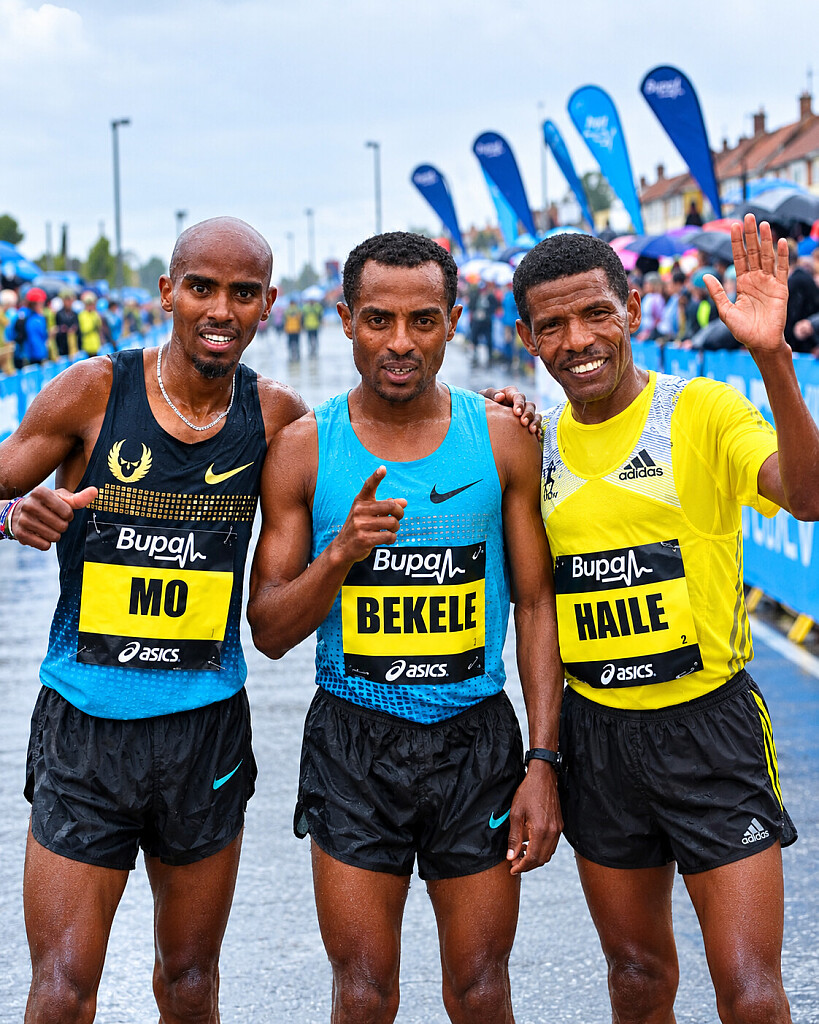
When Three Distance Running Legends Met on One Road: The Great North Run Showdown That Delivered
Thirteen years ago this week, the Great North Run produced a race that remains one of the most memorable showdowns in road-running history.
On September 15, 2013, three giants of distance running—Mo Farah, Kenenisa Bekele and Haile Gebrselassie—lined up together for the famous half marathon from Newcastle to South Shields. Between them, they represented an extraordinary collection of Olympic and World Championship titles.
Gebrselassie, then 40, was the elder statesman. Bekele was making his competitive half-marathon debut, while Farah was chasing a historic British victory at a race no British man had won since 1985.
From the opening stages, the race became a fascinating tactical battle.
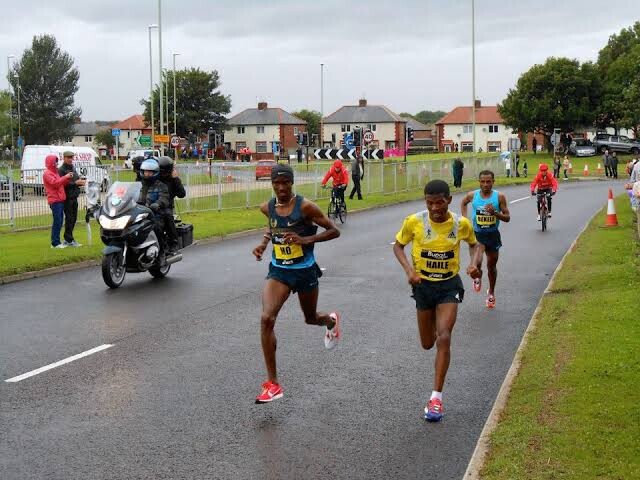
Gebrselassie took much of the responsibility at the front, setting the rhythm as Farah and Bekele remained close behind. Bekele occasionally dropped off the pace before returning to the leaders, adding another layer of intrigue to an already captivating contest.
At 10 kilometres, the trio went through together in 28:58, and remarkably, they remained locked together deep into the race.
Then, with less than two kilometres remaining, Bekele made his move.
The Ethiopian unleashed a powerful surge on a downhill section, immediately creating separation. Gebrselassie could not respond, while Farah was forced into a desperate chase.
For a moment, it looked as though Bekele had escaped.
But Farah's legendary finishing speed came into play.
The Briton gradually clawed back the gap during the closing stages, reducing the deficit dramatically as they approached the South Shields seafront. With only a few hundred metres remaining, Farah was almost on Bekele's shoulder.
The finish became a sprint.
Bekele held firm.
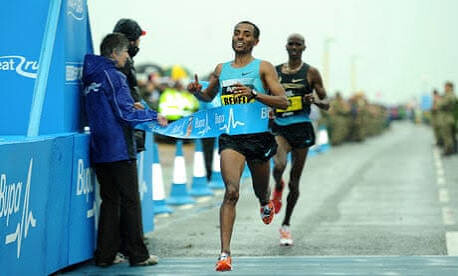
He crossed the line in 60:09, just one second ahead of Farah, who finished in 60:10. Gebrselassie completed the extraordinary podium in 60:41, setting a world best for the over-40 age category.
2013 Great North Run — Men's Podium
1. Kenenisa Bekele — 60:09
2. Mo Farah — 60:10
3. Haile Gebrselassie — 60:41
Bekele's victory was particularly significant as he made an immediate impact on his first competitive half marathon. Farah, meanwhile, came agonisingly close to victory after producing a remarkable late comeback.
But the numbers only tell part of the story.
The real magic was seeing three athletes who had defined different chapters of distance running history racing shoulder-to-shoulder on the same road. Gebrselassie's experience, Bekele's tactical intelligence and Farah's devastating finishing speed combined to create a contest worthy of the occasion.
And after more than 13 miles of racing, just one second separated first and second place.
Many heavily promoted athletics showdowns struggle to live up to their billing.
The 2013 Great North Run did the opposite. It brought three legends together—and gave the world a finish worthy of their greatness.
by Erick Cheruiyot for My Best Runs.
Login to leave a comment
Great North Run
Great North Run founder Brendan Foster believes Britain is ready to welcome the world with open arms after the launch of the event's most ambitious plan to date. The Great World Run campaign seeks to recruit one runner from every country in the United Nations – 193 in total – to take part in the iconic half marathon in...
more...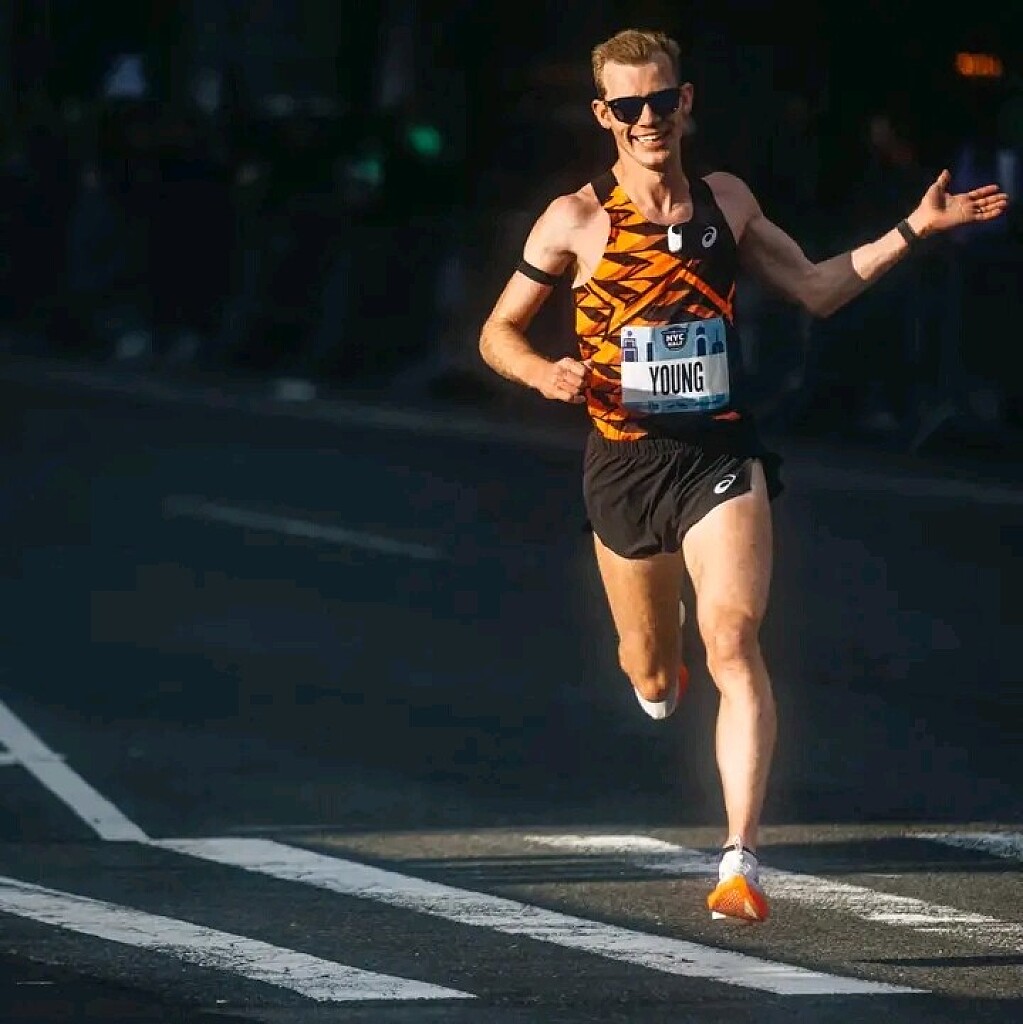
A Sneaky Road Race to Watch This Weekend: Great North Run Set for a Star-Studded Showdown
The road racing spotlight will turn to Newcastle this Sunday as the 2026 AJ Bell Great North Run brings together an impressive international men's field featuring several of America's leading distance runners alongside proven global stars.
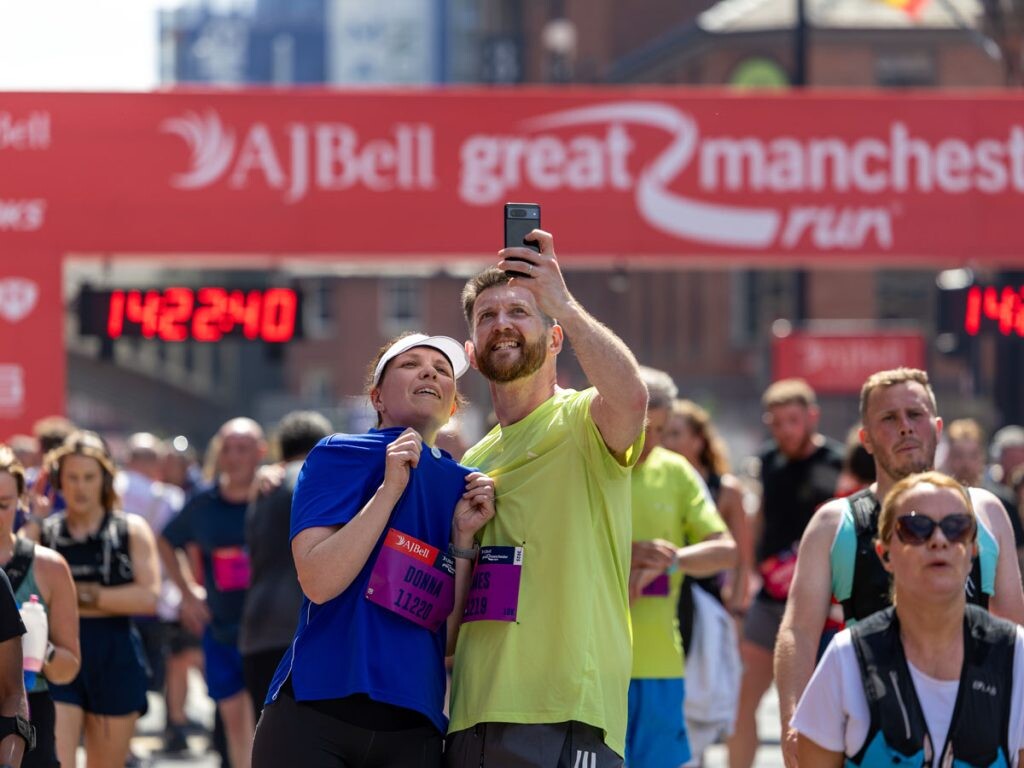
The iconic half marathon from Newcastle upon Tyne to South Shields is once again shaping up to be one of the most intriguing road races of the weekend, with a deep field capable of producing a highly competitive battle over 13.1 miles.
Leading the American challenge is Clayton Young, who heads into the race with an important autumn marathon campaign already on his mind. Young recently announced plans to make an attempt at the American marathon record at the Chicago Marathon later this fall, making Sunday's race an interesting opportunity to gauge his fitness ahead of that major target.
However, Young will face plenty of quality opposition.
The American contingent also includes Zouhair Talbi, Casey Clinger, Woody Kincaid, Jared Ward and Jake Barraclough, giving the United States considerable depth in the men's field.
Kincaid is particularly intriguing. The USATF 10K champion has already established himself as one of America's most accomplished distance runners and will be looking to continue building his reputation on the roads against an international field.
The global challenge is equally strong.
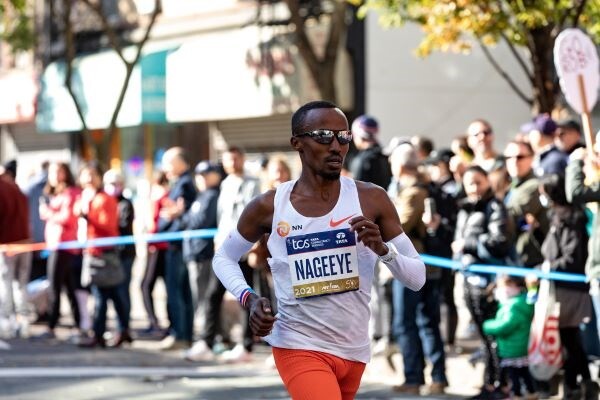
Alex Mutiso of Kenya, Abdi Nageeye of the Netherlands, Ethiopia's Deresa Geleta, Italy's Iliass Aouani, Britain's Ben Connor and Andy Butchart, as well as a strong contingent from Japan, add plenty of experience and firepower to the race.
With athletes arriving at different stages of their seasons and several already looking toward major autumn targets, the Great North Run could produce a fascinating tactical battle before the final miles decide who has the strength to take control.
Selected Men's Elite Entries
1. Clayton Young — United States
2. Casey Clinger — United States
3. Zouhair Talbi — United States
4. Woody Kincaid — United States
5. Jared Ward — United States
6. Jake Barraclough — United States
7. Alex Mutiso — Kenya
8. Abdi Nageeye — The Netherlands
9. Deresa Geleta — Ethiopia
10. Ben Connor — Great Britain
11. Taiga Hirayama — Japan
12. Ayumu Kobayashi — Japan
13. Tatsuya Maruyama — Japan
14. Kosei Matsunami — Japan
15. Yohei Ikeda — Japan
16. Shoya Yonei — Japan
17. Iliass Aouani — Italy
18. Andy Butchart — Great Britain
19. Alfie Manthorpe — Great Britain
20. Calum Johnson — Great Britain
The 2026 AJ Bell Great North Run will take place on Sunday, September 13, with the elite men's race scheduled to get underway in Newcastle.
It may be a half marathon, but this is certainly not a race to overlook. With Young preparing for Chicago, Kincaid continuing to make his mark on the roads and an international field packed with talent, the Great North Run could quietly become one of the most entertaining races of the weekend.
by Erick Cheruiyot for My Best Runs.
Login to leave a comment
Great North Run
Great North Run founder Brendan Foster believes Britain is ready to welcome the world with open arms after the launch of the event's most ambitious plan to date. The Great World Run campaign seeks to recruit one runner from every country in the United Nations – 193 in total – to take part in the iconic half marathon in...
more...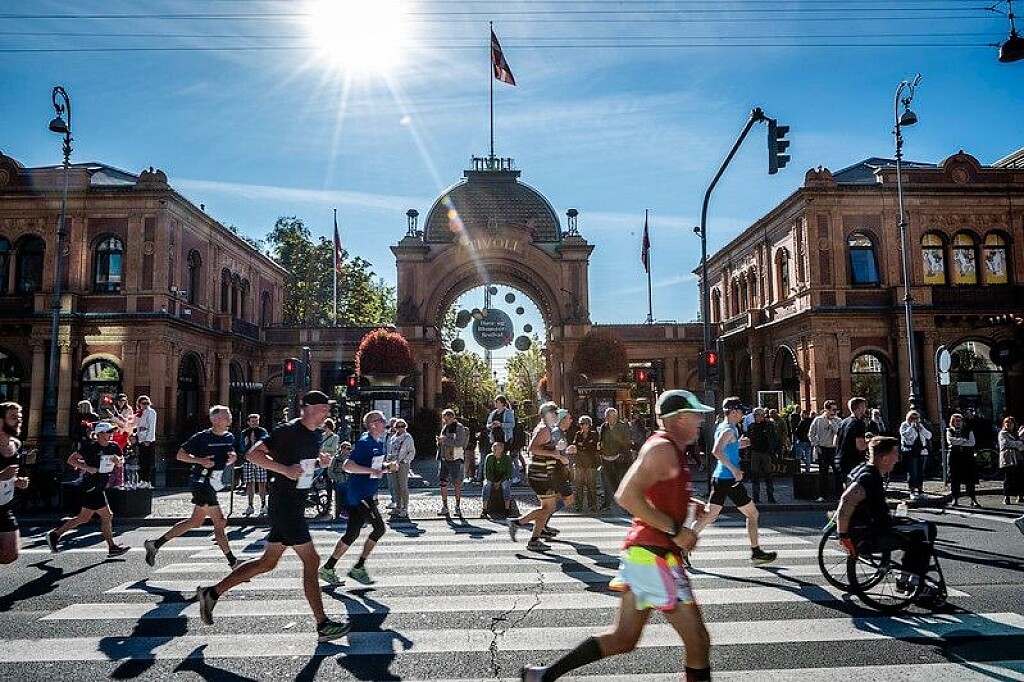
Copenhagen Half Marathon Turns to Lottery System as Demand Soars for 2027 Race
The Copenhagen Half Marathon is the latest major road race to abandon the traditional first-come, first-served entry system, with the hugely popular event set to allocate places for its 2027 edition through a lottery.
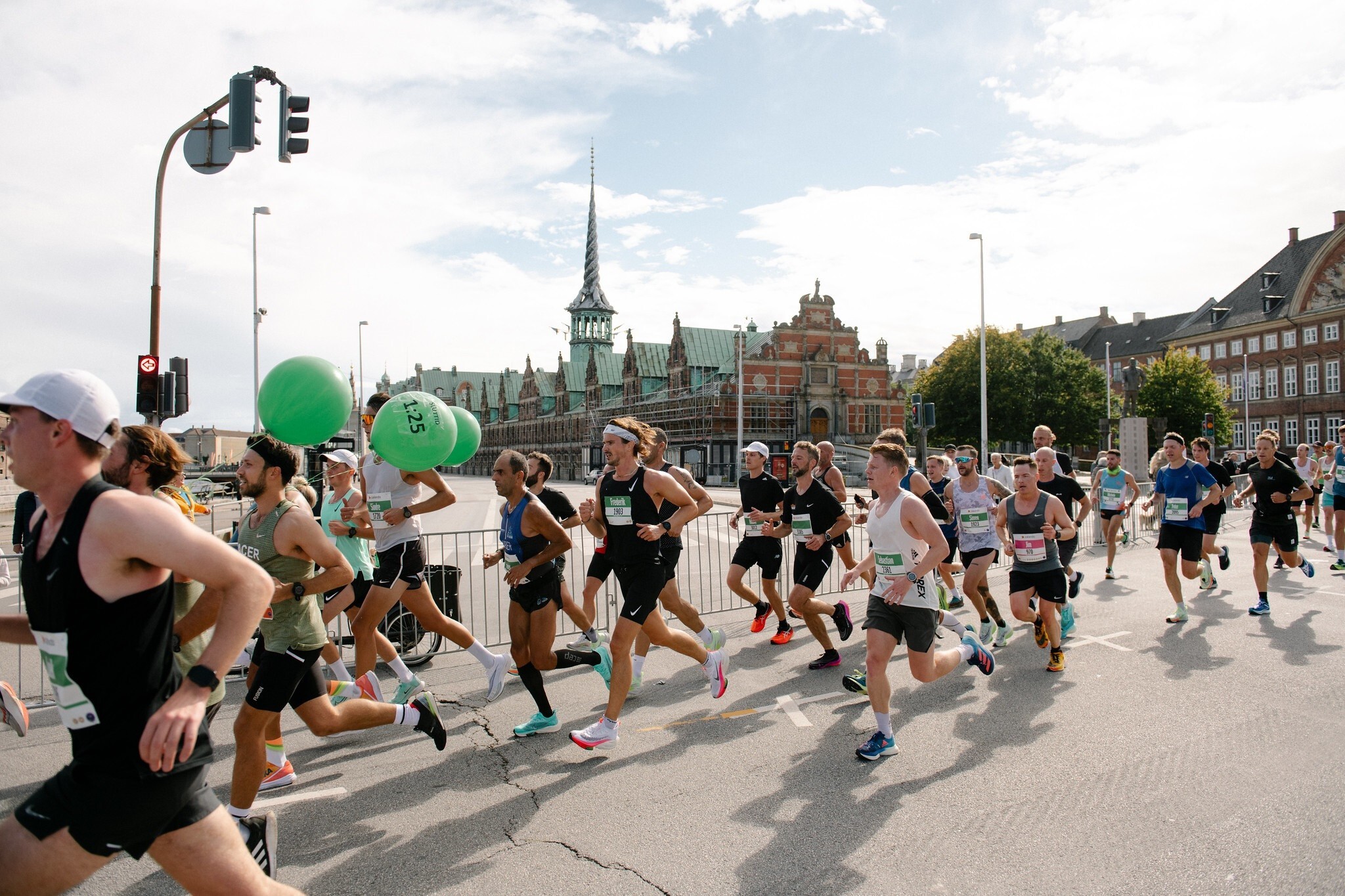
Registration will be free and will open on Tuesday, September 16, before closing on September 30. Crucially, runners will have exactly the same chance of securing a place whether they register on the first day or in the final minutes before the deadline.
A record 45,000 runners are expected to take to the streets of Copenhagen in 2027, underlining the extraordinary growth and demand surrounding one of Europe's biggest half marathons.
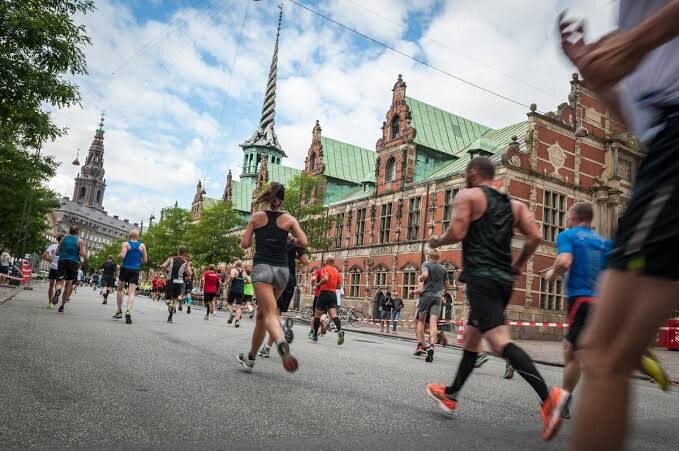
The move comes after the race's previous editions demonstrated just how difficult it had become to secure an entry. The 2025 Copenhagen Half Marathon sold out in just two and a half hours, while the 2026 edition—which will also serve as the World Athletics Half Marathon Championship this Sunday—had already moved to a ballot system when entries opened in March 2025.
Sparta Athletics, the organisation behind both the Copenhagen Marathon and Copenhagen Half Marathon, has now firmly embraced the lottery approach for its major events. The 2027 Copenhagen Marathon ballot attracted an astonishing 80,937 applications for only 35,000 available places, highlighting the enormous gap between demand and capacity.
Copenhagen is far from alone. Prague introduced a similar system in August, while Berlin and Lisbon also used ballots for their 2026 races, reflecting a major shift in the way Europe's most sought-after road races are managing unprecedented demand.
There will also be no official resale platform for Copenhagen's 2027 half marathon. Entries will remain strictly personal and non-transferable, meaning anyone attempting to buy a bib from another runner risks arriving at the start line with an entry that cannot be used.
For runners, the message is becoming increasingly clear: the days of simply logging on and buying a place in one of Europe's biggest road races are disappearing.
As participation in distance running continues to surge, the Copenhagen Half Marathon's decision is another powerful sign of a changing era. The biggest races are no longer asking whether they will sell out—but how they can fairly decide who gets to stand on the start line.
by Erick Cheruiyot for My Best Runs.
Login to leave a comment
Copenhagen Half Marathon
The Copenhagen Half Marathon was the first road race in Scandinavia and is one of the fastest half marathons in the world. The Copenhagen Half Marathon has been awarded with the International Association of Athletics Federation's (IAAF) most distinguished recognition - the IAAF Road Race Gold Label. Copenhagen Half Marathon was awarded the IAAF Road Race Bronze Label in January...
more...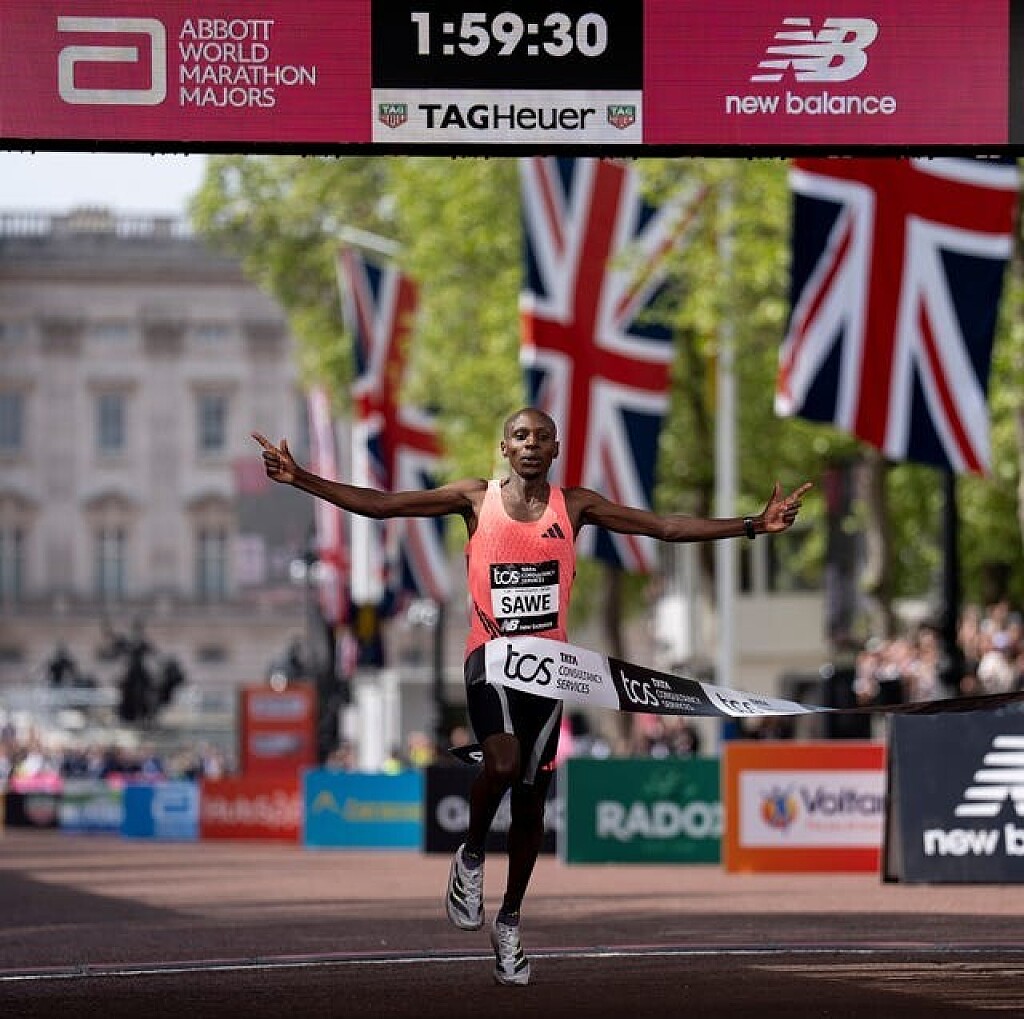
2026: The Year Distance Running’s Impossible Records Began to Fall
Distance running has witnessed extraordinary seasons before, but 2026 is producing something that feels almost unprecedented.
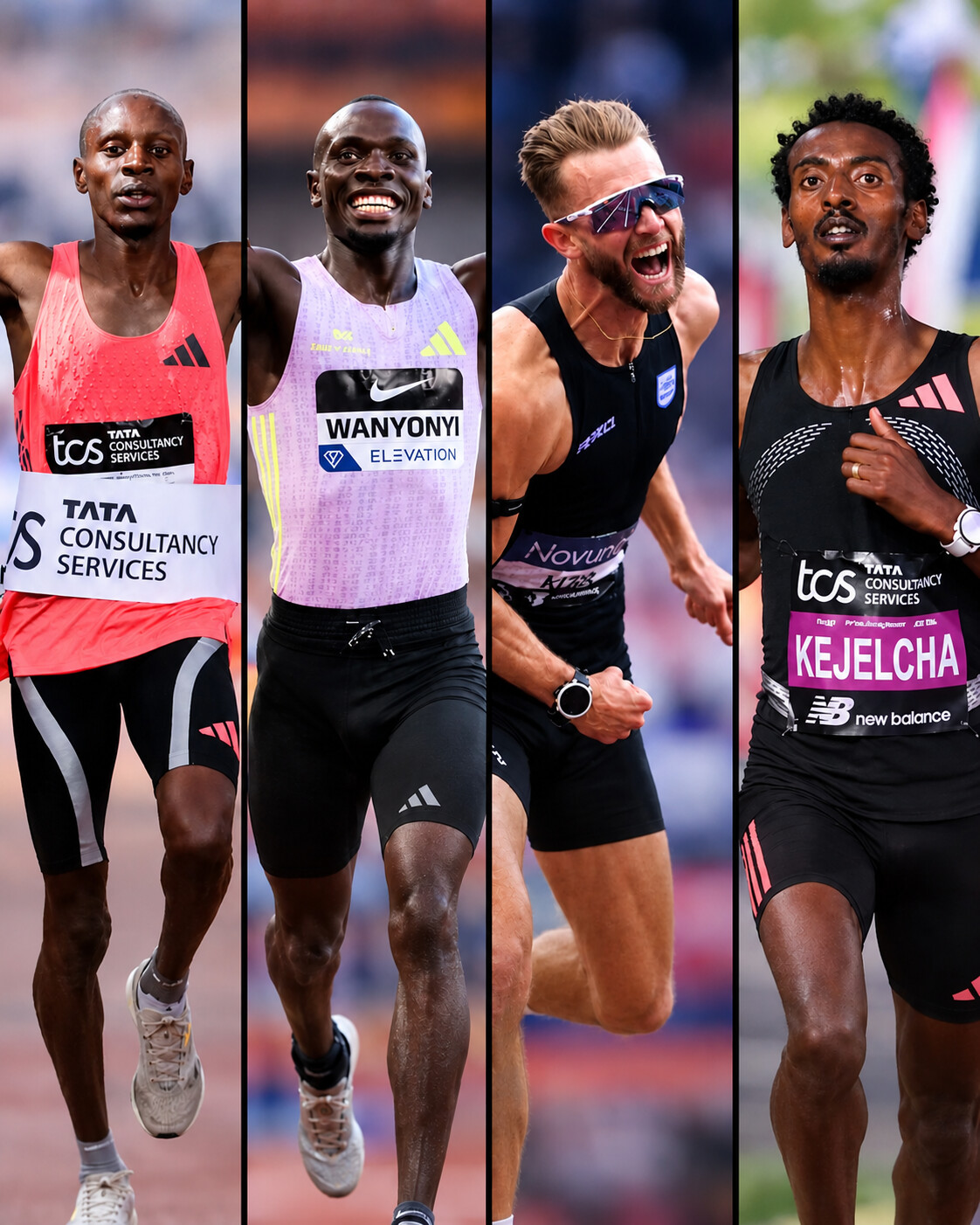
Records that had survived for decades, marks that appeared untouchable and performances that had defined entire generations of athletes are falling at a remarkable rate. In the space of just four months, four historic world records were rewritten, creating one of the most astonishing stretches the sport has ever seen.
And with four months still remaining in 2026, the question is no longer whether this has been an exceptional year.
It is just how much further the boundaries can be pushed.
The extraordinary sequence began on April 26 at the London Marathon, where Sabastian Sawe delivered one of the defining performances in the history of the event. The Kenyan crossed the finish line in a breathtaking 1:59:30, becoming the first athlete to run a marathon under two hours in officially recognised, record-eligible conditions.
Eliud Kipchoge had famously broken the two-hour barrier in Vienna in 2019, proving that such a performance was humanly possible, but the specially organised conditions—including rotating pacemakers and a pace car—meant the time could not be recognised as an official world record.
Sawe's performance was different.
His 1:59:30 came in a conventional elite marathon race, and the historic morning became even more extraordinary as Ethiopia's Yomif Kejelcha finished in 1:59:41, while Uganda's Jacob Kiplimo clocked 2:00:28. In one astonishing race, three athletes went faster than the previous world-record standard.
Then came Monaco.
On July 10, Emmanuel Wanyonyi stepped into completely unfamiliar territory when he lined up for his first-ever 1000m race. What followed was nothing short of spectacular. The Kenyan middle-distance star stormed to 2:11.83, smashing a world record that had belonged to Noah Ngeny since 1999.
The previous mark had stood for 27 years, having been set four years before Wanyonyi was even born. Yet on his debut over the distance, Wanyonyi made history look effortless, while Britain's Jake Wightman also produced a superb performance to move into fifth place on the all-time list.
Just eight days later, London delivered another historic moment.
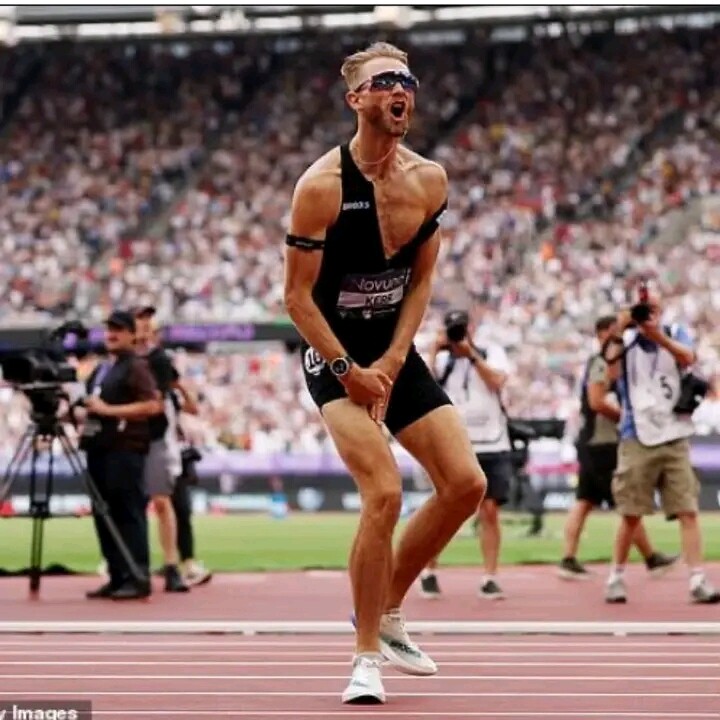
Josh Kerr had spoken openly about his ambitious mission, calling it “Project 222.” On the track, however, ambition turned into reality. The British star produced a stunning 3:42.66 for the mile, finally surpassing Hicham El Guerrouj's legendary 3:43.13 world record.
For decades, El Guerrouj's mark had stood as one of athletics' most iconic standards—a performance that appeared almost immune to the passing of time. Kerr changed that, producing a run that instantly secured its place among the greatest mile performances ever witnessed.
And then, in Buenos Aires on August 23, Yomif Kejelcha returned to the centre of the distance-running world.
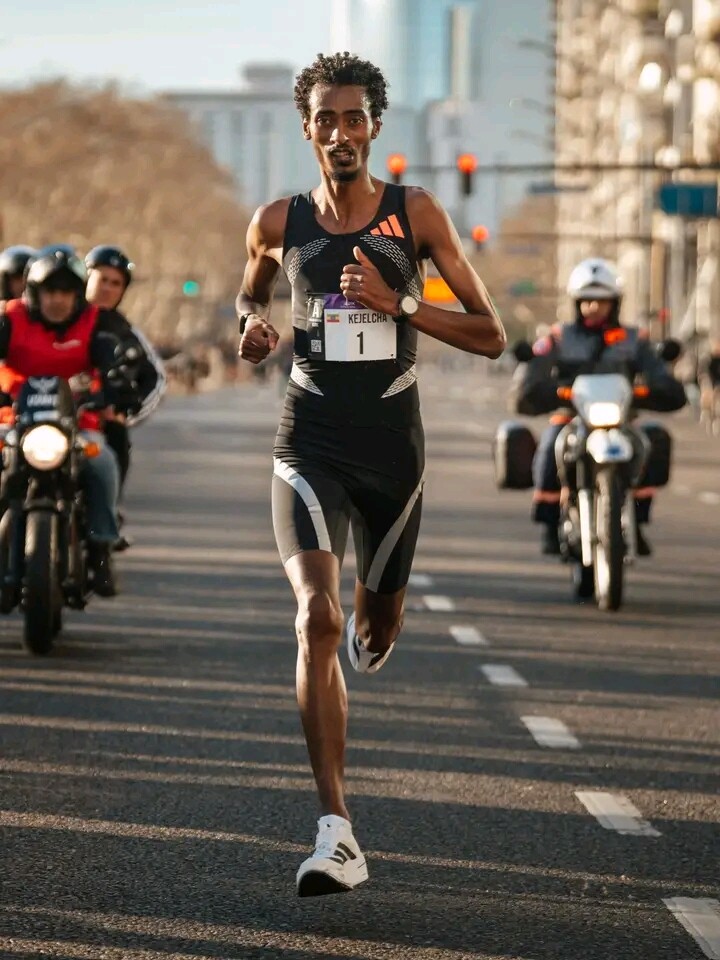
Having already played a major role in London's historic marathon, the Ethiopian produced another extraordinary performance, this time over the half marathon. Kejelcha clocked 56:51, becoming the first man in history to break 57 minutes for the distance under valid record conditions.
What made the performance even more remarkable was the manner in which it unfolded. Kejelcha was running alone from around the 7km mark, with no rival beside him and no dramatic sprint finish required. He simply continued driving forward, producing one of the most dominant record-breaking performances ever seen on the roads.
Four historic records.
Four months.
A marathon barrier that had long been considered impossible in official competition. A 1000m record that had survived for 27 years. A mile record that had belonged to one of the greatest middle-distance runners in history. And a half-marathon performance that carried the event into completely new territory.
Distance running is living through a year unlike almost anything the sport has experienced before.
The most remarkable part?
2026 is not over yet.
With four months still remaining, the athletes of this extraordinary era may not be finished rewriting history.
by Erick Cheruiyot for My Best Runs.
Login to leave a comment
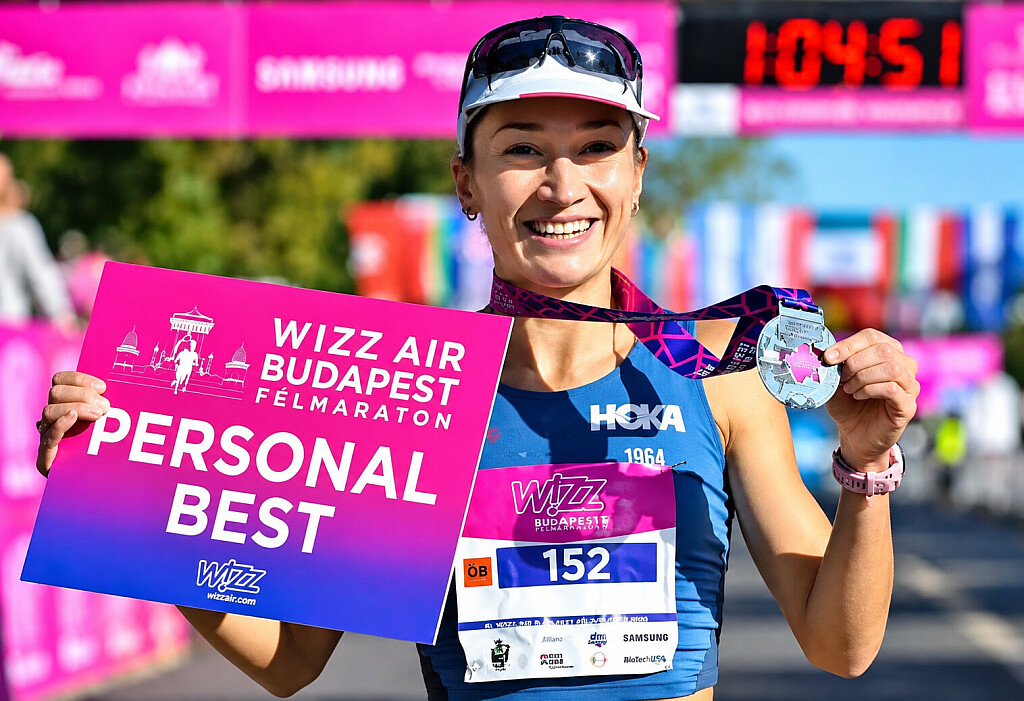
Budapest Half Marathon 2026: Vindics-Tóth Lili Anna Shines With PB As Karsai Gábor Takes Men’s Crown
The 2026 Budapest Half Marathon delivered an impressive display of road racing in the Hungarian capital, with home athletes dominating both podiums. Vindics-Tóth Lili Anna produced the headline performance in the women’s race, while Karsai Gábor led the men’s field to victory.
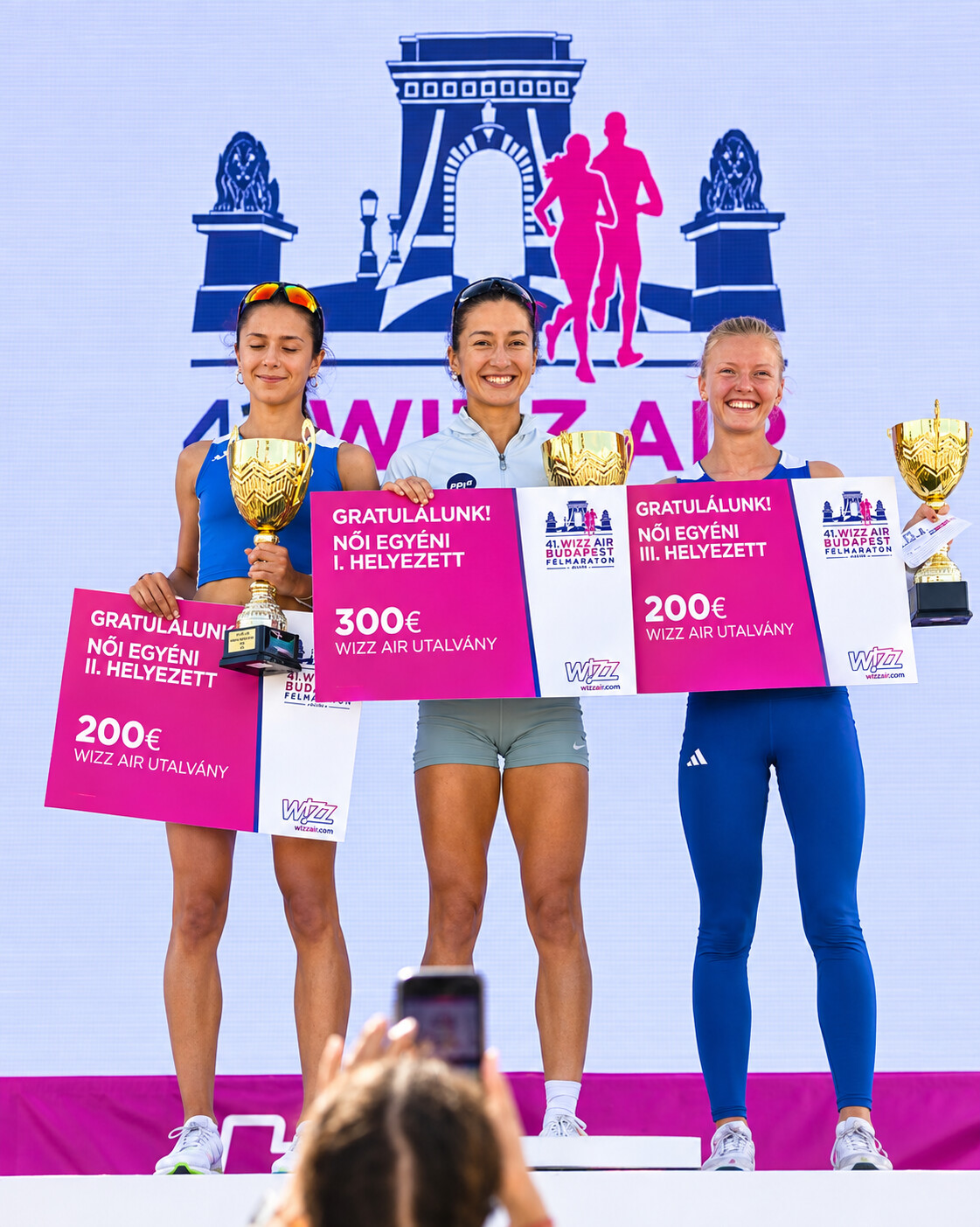
Vindics-Tóth was in outstanding form, crossing the finish line in 1:09:20 to secure the women’s title and, importantly, improve her personal best. Her performance was comfortably clear of the chasing pack and underlined her strength over the 21.1-kilometre distance.
Behind her, Niesz Viktória claimed second place in 1:18:43, while Nagy Nóra completed the women’s podium in 1:19:35. The result gave Hungary a clean sweep of the top three positions in the women’s competition.
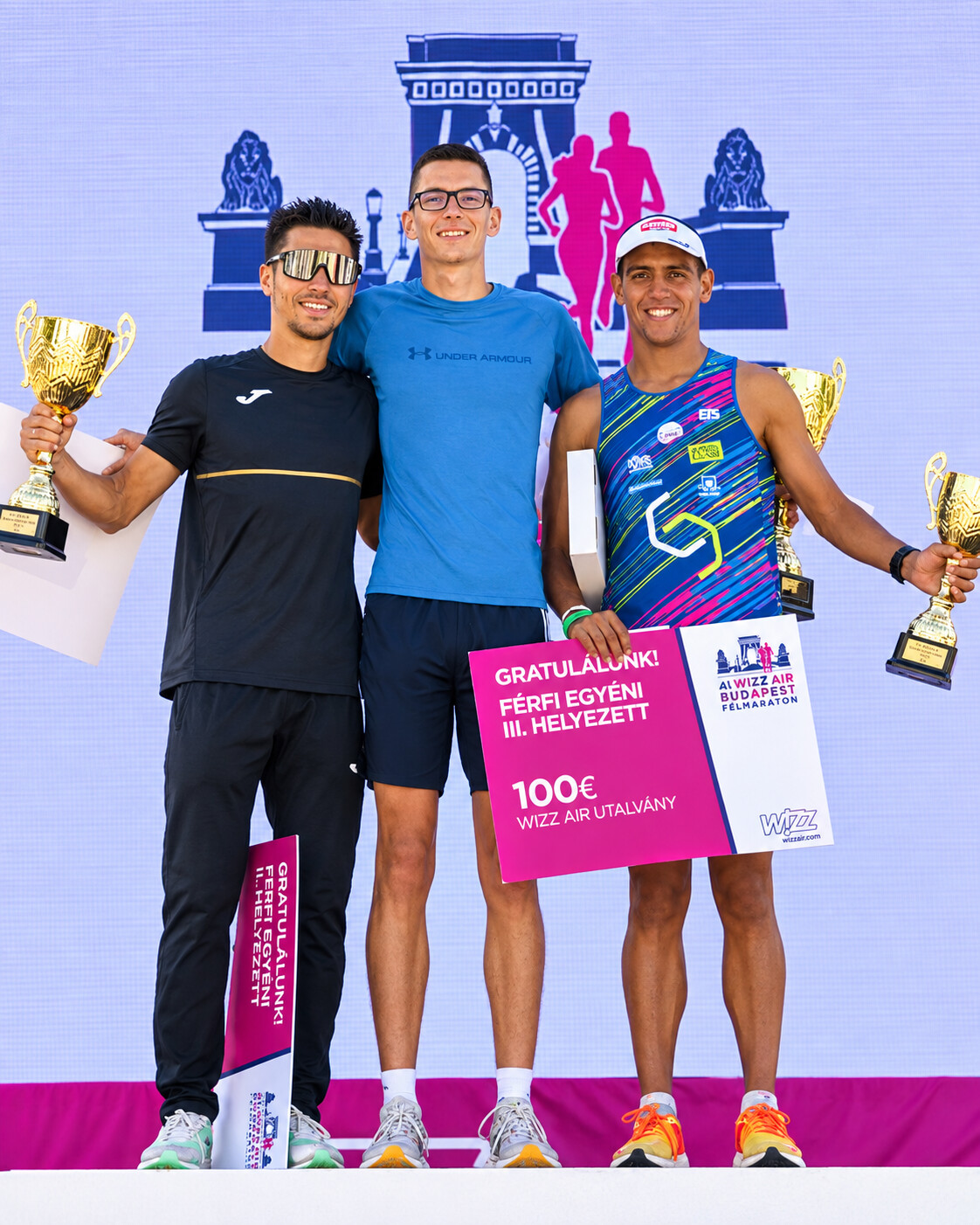
The men’s race also produced a Hungarian victory, with Karsai Gábor taking the title in 1:04:18. Karsai delivered the fastest performance of the men’s field and secured the win ahead of a competitive battle for the remaining podium places.
Italy’s Riccardo Mugnosso provided the international challenge at the front, finishing second in 1:05:20. He was followed by Hungary’s Vásárhelyi Máté Dávid, who completed the men’s podium in 1:07:27.
The women’s race was particularly notable for the margin between Vindics-Tóth and the rest of the podium. Her 1:09:20 personal best represented the defining performance of the women’s competition, while Niesz and Nagy battled for the remaining top-three positions.
In the men’s contest, Karsai’s winning time of 1:04:18 put him more than a minute clear of Mugnosso, while Vásárhelyi finished a further two minutes behind the Italian. The spread across the podium highlighted the different levels of the race as the athletes completed the demanding half-marathon distance.
Overall, the 2026 Budapest Half Marathon proved a successful outing for Hungarian distance running, with Hungarian athletes taking five of the six available podium places across the men’s and women’s races. Vindics-Tóth’s personal-best victory provided the standout individual achievement, while Karsai added another home triumph in the men’s competition.
With strong performances across both fields and a PB at the top of the women’s results, the Budapest Half Marathon once again provided a compelling stage for road-running talent, as athletes battled over 21.1 kilometres through Hungary’s capital.
by Erick Cheruiyot for My Best Runs.
Login to leave a comment

Budapest Half Marathon
Participating in the half marathon is essentially a running sightseeing tour of the beautiful Budapest. The course leads through the center of the city, down the famous Andrassy Boulevard and across the Chain Bridge. Admire the view of the Buda Castle from the Danubebanks and marvel in the panorama of Pest as well as Europe´s third largest Parliament building! There...
more...
Jimmy Gressier’s Bold Copenhagen Double: From Sub-13 Speed To Half-Marathon Glory?
Jimmy Gressier is preparing to take on one of the most intriguing challenges of the 2026 World Athletics Road Running Championships in Copenhagen — competing in both the men’s 5km and half-marathon, with less than a day separating the two races.
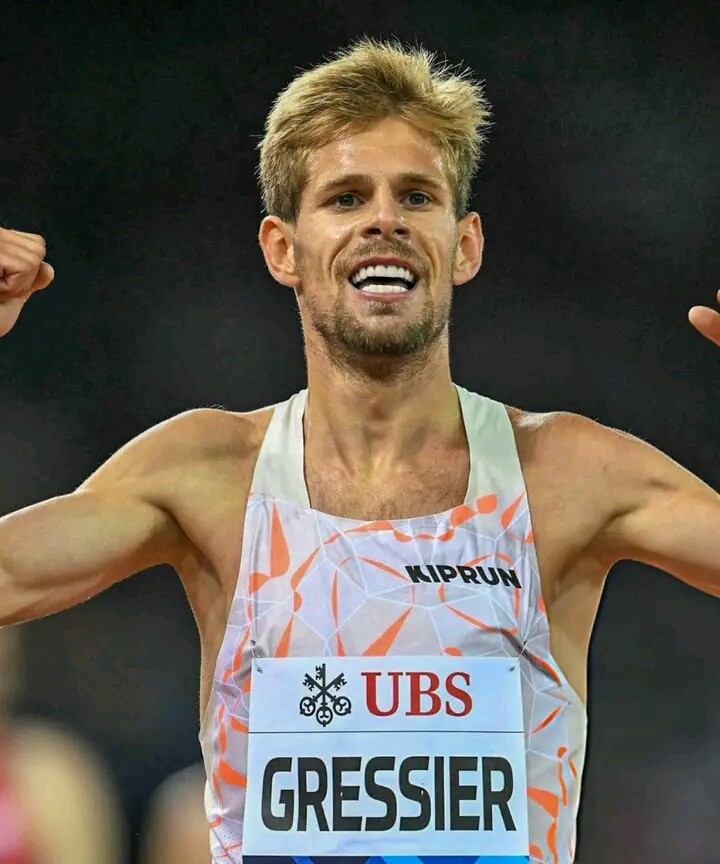
The French star is listed for the 5km on September 19 at 2:40 p.m., before returning to action for the half-marathon at 9:45 a.m. the following morning. That gives him just 19 hours and five minutes between races.
It is a remarkable contrast. One race is expected to last less than 13 minutes for Gressier; the other could keep him racing for around an hour. His personal bests tell the same story: 12:51 for 5km, equivalent to roughly 4:08 per mile, and 59:45 for the half-marathon, or about 4:33 per mile.
And the difference in his standing on the two start lists is striking.
In the 5km, Gressier enters as the fastest man in the field of 63 athletes. His sensational 12:51 in Lille in April made him the European record-holder and moved him to within just two seconds of the world record. Ethiopia’s Addisu Yihune is the only other athlete entered with a faster mark than 13 minutes, having run 12:54, while no other competitor has broken 13:06 this year.
The half-marathon presents a completely different challenge.
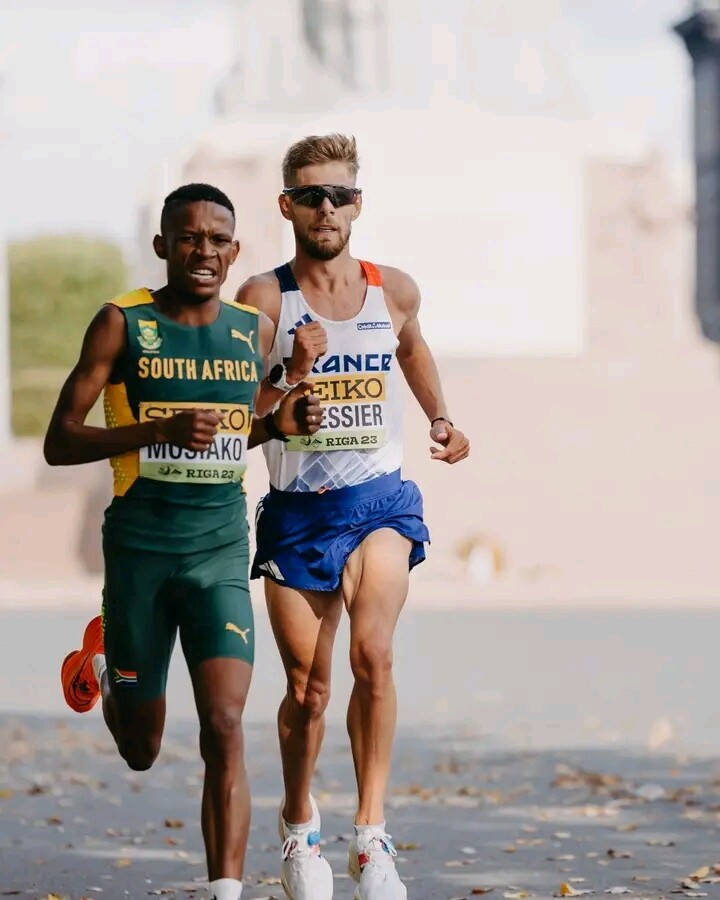
Gressier’s 59:45 personal best places him 13th on the entry list, with 12 athletes boasting faster lifetime performances. Kenya’s Nicholas Kipkorir leads that group with 58:08, while Sweden’s Andreas Almgren arrives with the European record of 58:41. Gideon Kipkertich Rono has run 58:38, Tadese Worku 58:47, while the field also includes major names such as Joshua Cheptegei, Daniel Simiu Ebenyo, Yemaneberhan Crippa and Conner Mantz.
Adding another layer of intrigue, Gressier has not raced a half-marathon in 2026.
Yet this is far from unfamiliar territory for the Frenchman.
Gressier has already demonstrated that he can excel over 21.1 kilometres. His 59:45 came when he won the European half-marathon title in Brussels-Leuven in April 2025, defeating Norway’s Awet Nftalem Kibrab by 1:23. He also finished fifth at the 2023 World Half Marathon Championships in Riga, clocking 59:46.
That makes Copenhagen’s unusual schedule particularly important.
When the inaugural World Road Running Championships were held in Riga three years ago, the elite races were compressed into a single afternoon, making a 5km-and-half-marathon double far more difficult to contemplate. Copenhagen has instead spread the competitions across the weekend, creating a window that allows athletes such as Gressier to attempt something far more ambitious.
He will not be alone. Ten athletes on the final entry lists have entered two races, but Gressier’s combination is arguably among the most demanding because of the intensity with which he attacks both distances.
There is also a powerful reminder of what Gressier can produce when the stakes are highest.
At last year’s World Championships in Tokyo, he produced a breathtaking finish to claim the 10,000m world title, edging Yomif Kejelcha by just 0.06 seconds. His own description of that dramatic finish captured his competitive instinct perfectly: he had targeted a medal, moved into third on the home straight, then surged through second before taking gold.
Now, Gressier is preparing for another test of versatility.
First comes the explosive 5km, where he arrives as the fastest man on paper and one of the biggest threats to the world’s best. Then, barely 19 hours later, comes the half-marathon — a race filled with established road-running specialists and several athletes with considerably faster credentials.
Two races. Two very different challenges. One extraordinary weekend.
In Copenhagen, Jimmy Gressier will find out just how far his remarkable range can take him.
by Erick Cheruiyot for My Best Runs.
Login to leave a comment
From 1:07:01 To 56:51: The Extraordinary Evolution Of The Half Marathon World Record
The history of the men’s half marathon world record is a remarkable journey through more than six decades of distance running, tracing the sport’s transformation from club-level competition to an era of extraordinary professional speed.
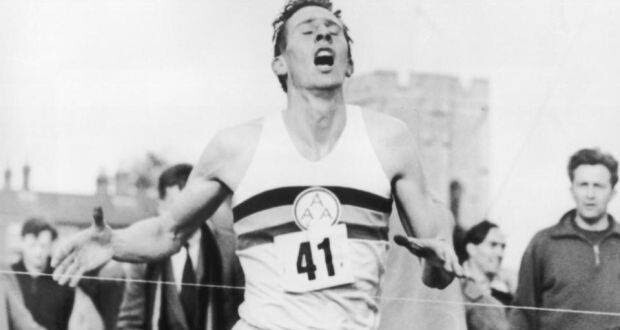
The story began in the spring of 1960 in Romford, Essex, where British club runner Brian Hill-Cottingham ran 21.0975 kilometres in 1:07:01, setting the fastest officially recorded time at the distance at the time.
For years, the record progressed slowly. British and American runners dominated much of the early history, with improvements often measured in seconds rather than dramatic leaps. Ron Hill lowered the mark to 1:05:44 in 1965, while Derek Clayton took it down to 1:03:22 in 1967. Through the 1970s and 1980s, the barrier continued to fall as athletes from different nations gradually pushed the limits of what was possible over 21.1 kilometres.
Then came the breakthrough that changed the character of the event.
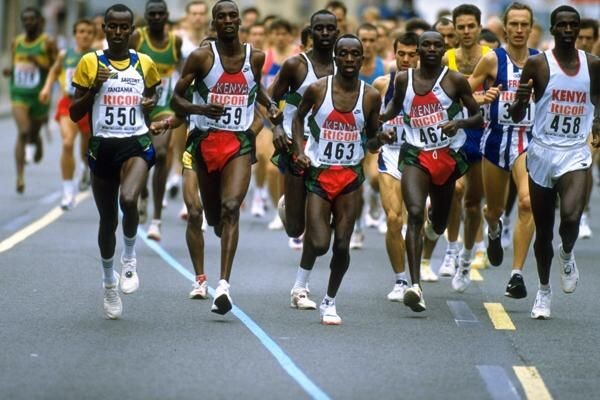
In 1993, Kenya’s Moses Tanui became the first man to break the one-hour barrier, running 59:47 in Milan. It was a landmark moment for road running. The half marathon was no longer simply another distance on the racing calendar; it had become an event worthy of specialised preparation and elite-level ambition.
Kenya subsequently established a remarkable presence in the record progression. Paul Tergat lowered the record to 59:17 in 1998 before eventually pushing it below 59 minutes with a 59:06 mark later that year. Eritrea’s Zersenay Tadese and Kenya’s Sammy Wanjiru continued the progression in the 2000s, with Wanjiru taking the record to 58:33 in 2007.
Tadese reclaimed the record in 2010 with 58:23, but the most dramatic developments were still to come.
In 2018, Kenya’s Abraham Kiptum ran 58:18, only for countryman Geoffrey Kamworor to lower the standard to 58:01 in 2019. A year later, another Kenyan, Kibiwott Kandie, produced one of the greatest breakthroughs in the event’s history, becoming the first man to break 58 minutes with 57:32 in Valencia.
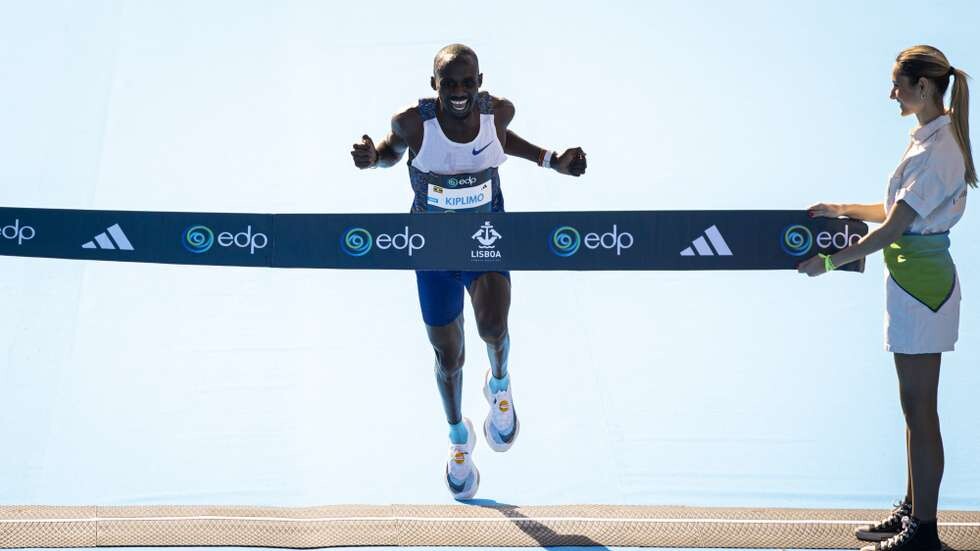
Uganda’s Jacob Kiplimo then entered the record books, running 57:31 in Lisbon in 2021. Ethiopia’s Yomif Kejelcha lowered it by another second to 57:30 in Valencia in 2024.
And then, in 2026, the record progression became a breathtaking battle between two of the finest distance runners of their generation.
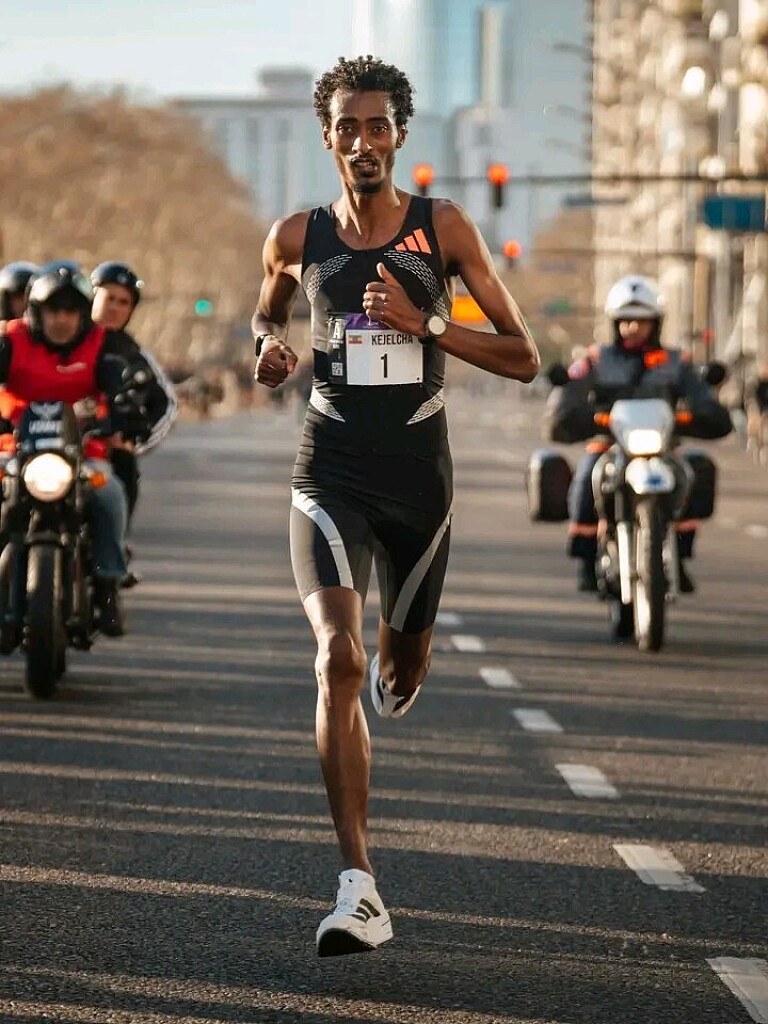
Kiplimo reclaimed the world record in Lisbon with 57:20, taking 10 seconds from Kejelcha’s mark. But Kejelcha responded with an extraordinary performance in Buenos Aires on 23 August 2026, stopping the clock at 56:51.
The improvement was staggering—29 seconds faster than Kiplimo’s previous record.
Kejelcha’s 56:51 means he averaged approximately 2:42 per kilometre for the entire 21.0975-kilometre distance, a pace that would have seemed almost unimaginable when Hill-Cottingham first established the record at 1:07:01 in 1960.
From 1:07:01 to 56:51, the progression tells the story of an event that has undergone a remarkable transformation. Training has become more sophisticated, competition has intensified, courses have become faster, and generations of athletes have continued to challenge the boundaries of human endurance and speed.
What began as a record set by a British club runner on a spring day in Essex has evolved into one of the most fiercely contested records in modern distance running.
And with Kiplimo and Kejelcha pushing each other to unprecedented heights, the question is no longer whether the half marathon can go faster.
The question is: how low can the world record ultimately go?
by Erick Cheruiyot for My Best Runs.
Login to leave a comment

Three Historic World Records Ratified As Kiplimo, Tharp And Wanyonyi Enter The Record Books
Three extraordinary performances that captivated the athletics world have now been officially ratified by World Athletics, with Jacob Kiplimo, Ja’Kobe Tharp and Emmanuel Wanyonyi securing their places in the history books with remarkable world-record performances.
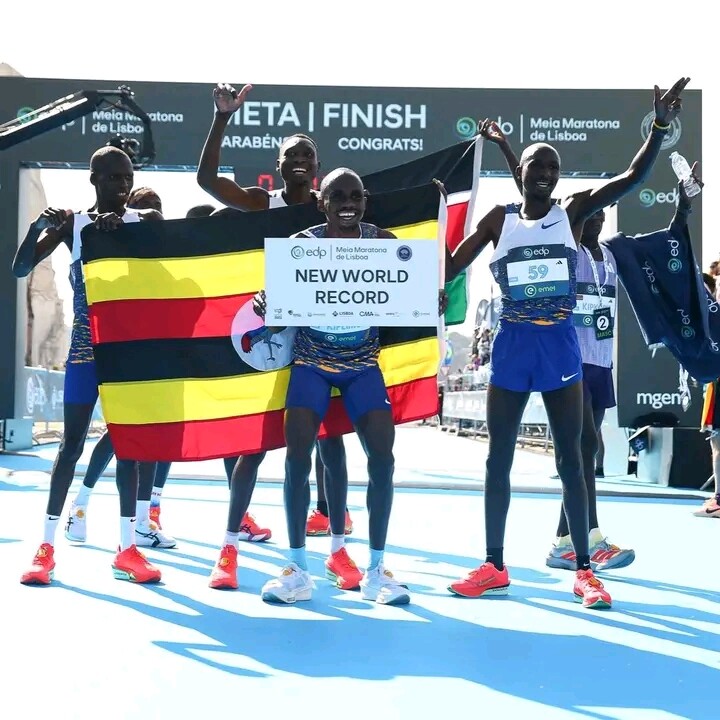
Uganda’s Jacob Kiplimo delivered a breathtaking 57:20 at the EDP Lisbon Half Marathon on 8 March 2026, producing what was then a spectacular world record. His performance underlined his exceptional ability over the half-marathon distance and further strengthened his status as one of the finest road runners of his generation.
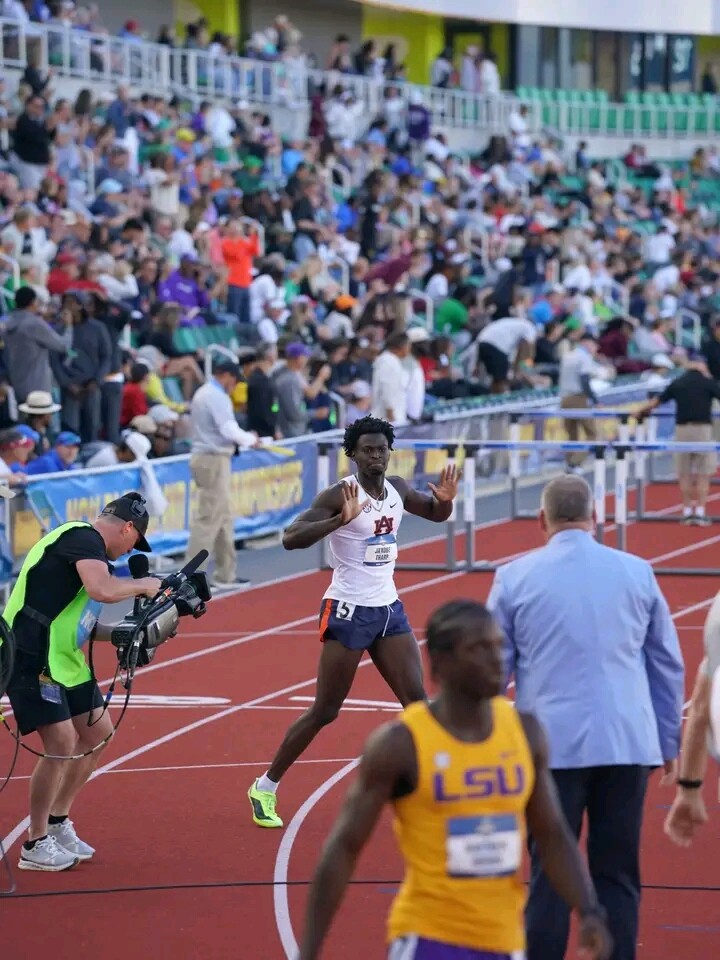
American hurdler Ja’Kobe Tharp created his own piece of history in Eugene on 10 June 2026, storming to 12.75 seconds in the 110m hurdles. The sensational performance came with a legal +1.0m/s following wind and established Tharp as the new world record-holder, marking a remarkable breakthrough on the global stage.
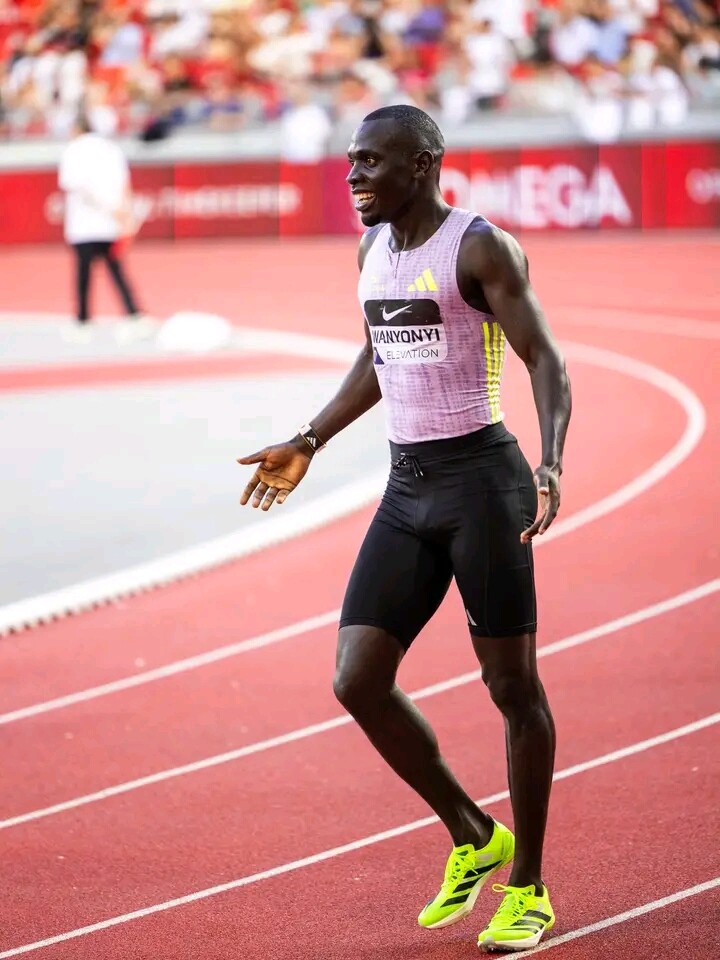
Kenya’s Emmanuel Wanyonyi completed the trio with a sensational 2:11.83 world record in the 1000m. The Olympic champion produced the performance in Monaco, lowering Noah Ngeny’s long-standing 2:11.96 world record from 1999. It was another extraordinary demonstration of Wanyonyi’s speed, strength and versatility beyond his specialist 800m distance.
What makes the three records particularly special is the variety of disciplines involved. Kiplimo conquered the demanding half marathon, Tharp mastered the technical challenge of sprint hurdling, while Wanyonyi extended his middle-distance brilliance over 1000m. Each performance showcased a different form of athletic excellence, yet all three athletes reached the same extraordinary destination: the world-record books.
Accuracy Note: Kiplimo’s 57:20 has since been surpassed by Ethiopia’s Yomif Kejelcha, who ran 56:51 at the Media Maratón Ciudad de Buenos Aires on 23 August 2026, taking 29 seconds off Kiplimo’s mark. The newer performance was still listed as pending ratification, meaning Kiplimo’s mark had been overtaken on the clock even as his record was among those formally ratified.
The ratification of the Kiplimo, Tharp and Wanyonyi performances nevertheless gives official recognition to three spectacular moments that will remain significant chapters in the 2026 athletics season.
Three athletes. Three extraordinary performances. Three officially ratified world records. From Lisbon to Eugene and Monaco, Kiplimo, Tharp and Wanyonyi have added another unforgettable chapter to the story of athletics
by Erick Cheruiyot for My Best Runs.
Login to leave a comment
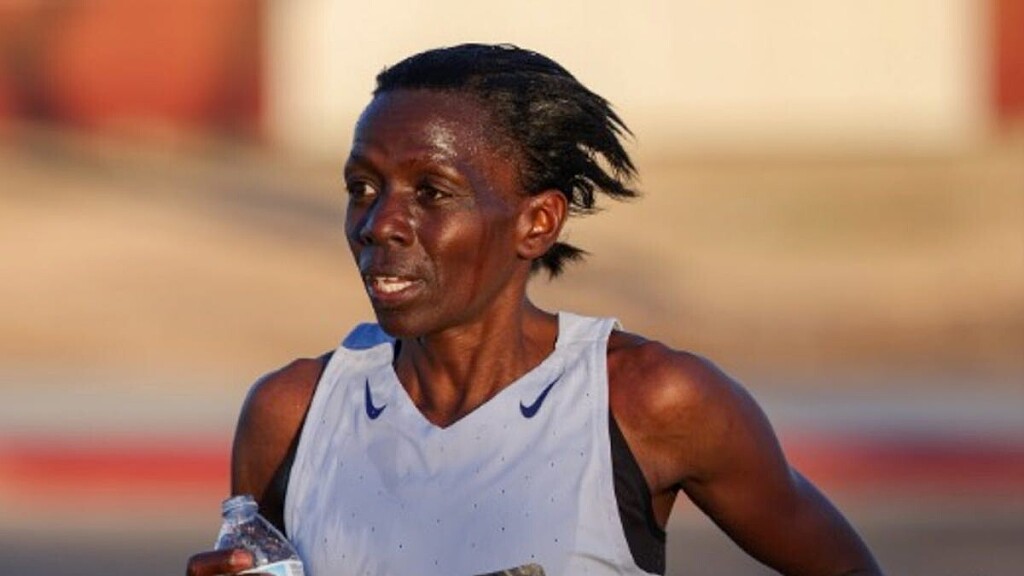
Priscah Cherono Turns Back The Clock In Sydney With A Historic Marathon Performance
At 46, Priscah Cherono showed that age is no barrier to racing with the world’s best.
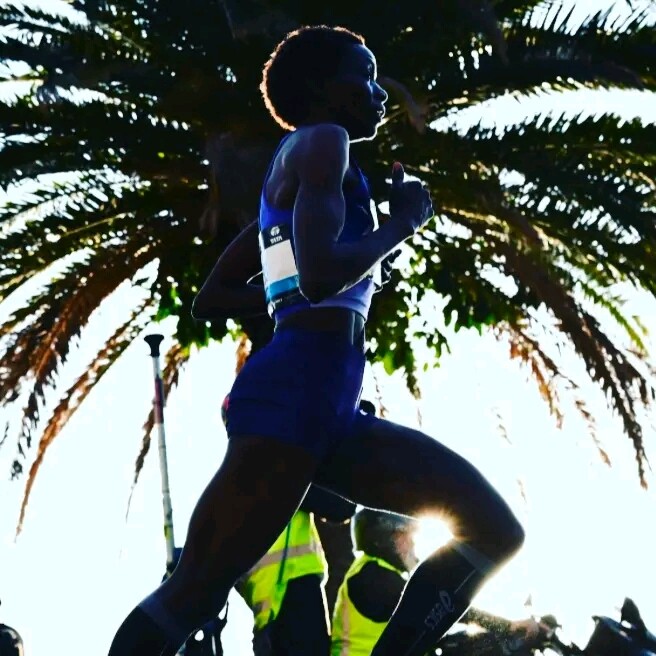
The Kenyan veteran produced a remarkable performance at the Sydney Marathon, taking the race by the horns from the early stages and, for a remarkable stretch, leading the entire professional women’s field.
Cherono moved into the lead before 5km and by 10km had opened a gap of around 16 seconds on her closest challengers. Rather than settling into the pack, she continued to dictate the pace, remaining at the front until close to the 28km mark.
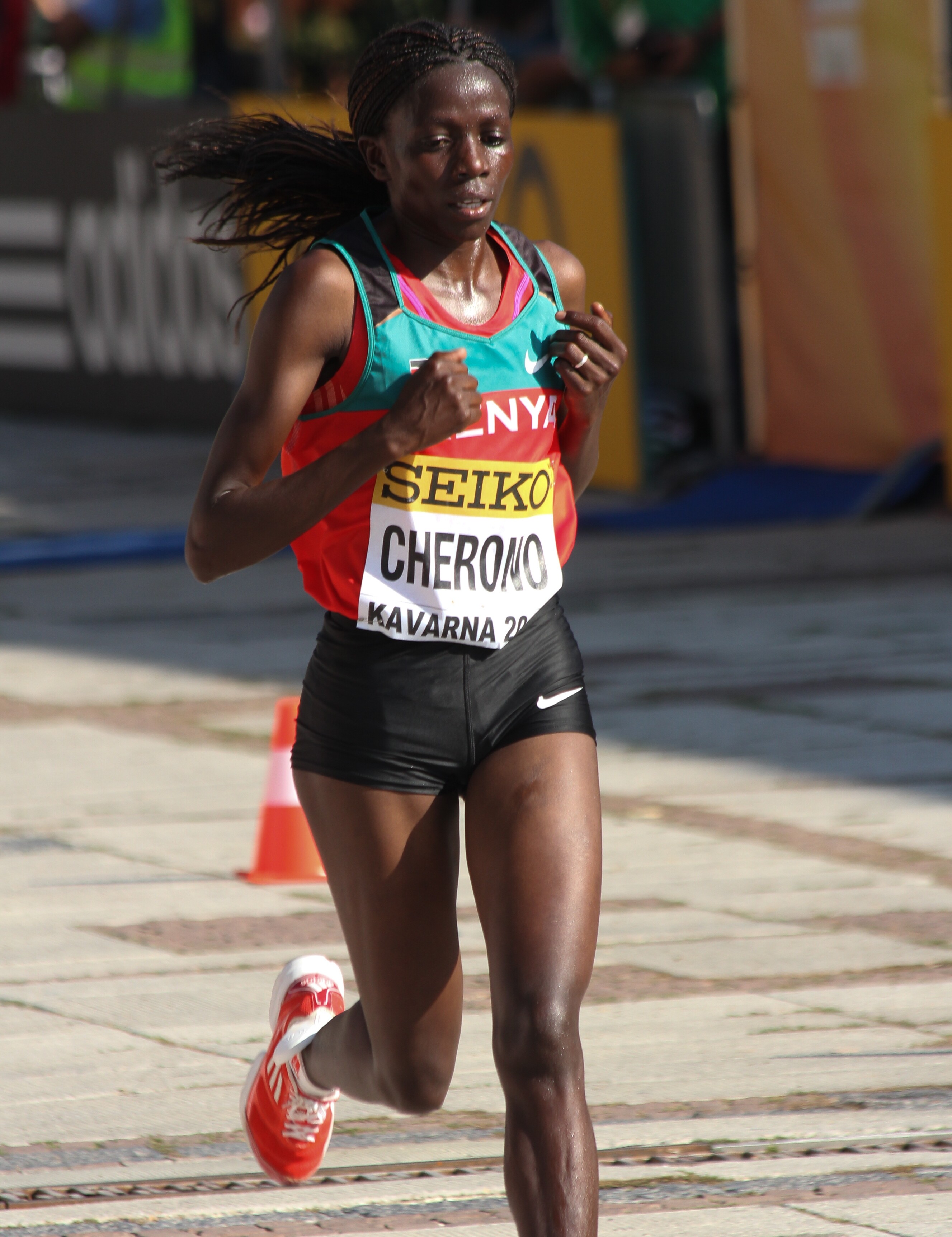
Then came the most eye-catching moment of her race.
Cherono reached halfway in 67:59, an extraordinary split that works out to roughly 5:11 per mile. It was around 36 seconds faster than her previous standalone half-marathon best, underlining just how aggressively she had approached the opening half of the race.
Her halfway split was also just seven seconds outside the masters world record for the half marathon.
Inevitably, such a demanding opening came at a cost. Cherono struggled to maintain the same rhythm after halfway, covering the second half in approximately 75:50. She eventually slipped down the standings but refused to give up, crossing the finish line in 2:23:49 for sixth place.
And that finish was historic.
Cherono’s time established a new marathon world best for women aged 46 and over, improving on the previous mark of 2:25:07, set by fellow Kenyan Edna Kiplagat last year.
But Cherono’s Sydney story is about far more than one record.
Her athletics journey stretches back three decades. In 1996, at just 16 years old, she won the Kenyan junior 5000m title. That same year, she travelled to Sydney for the World Junior Championships and finished eighth in the 5000m.
Thirty years later, she returned to the same city — this time as a 46-year-old marathoner — and found herself leading a major international marathon against a field filled with younger elite athletes.
That is what makes her performance so remarkable.
Cherono did not simply run a fast marathon for her age. She went to the front, took control of the race, attacked the pace and dared to challenge the clock before eventually paying the price for her ambition.
She may have faded in the closing kilometres, but her boldness produced something far more valuable than a conservative finish: a place in the history books.
From a teenage athlete competing in Sydney in 1996 to a record-breaking masters marathoner dominating the opening half of the Sydney Marathon three decades later, Cherono’s career has come full circle in extraordinary fashion.
The question is simple: if you were 46 and leading a major marathon at halfway on record-setting pace, would you keep pushing for greatness — or back off and protect the finish?
by Erick Cheruiyot for My Best Runs.
Login to leave a comment

Sydney Marathon
The Sydney Marathon is a marathon held annually in Sydney, Australia. The event was first held in 2001 as a legacy of the 2000 Summer Olympics, which were held in Sydney. In addition to the marathon, a half marathon, 9 kilometres (5.6 mi) "Bridge Run", and a 3.5 kilometres (2.2 mi) "Family Fun Run" are also held under the banner...
more...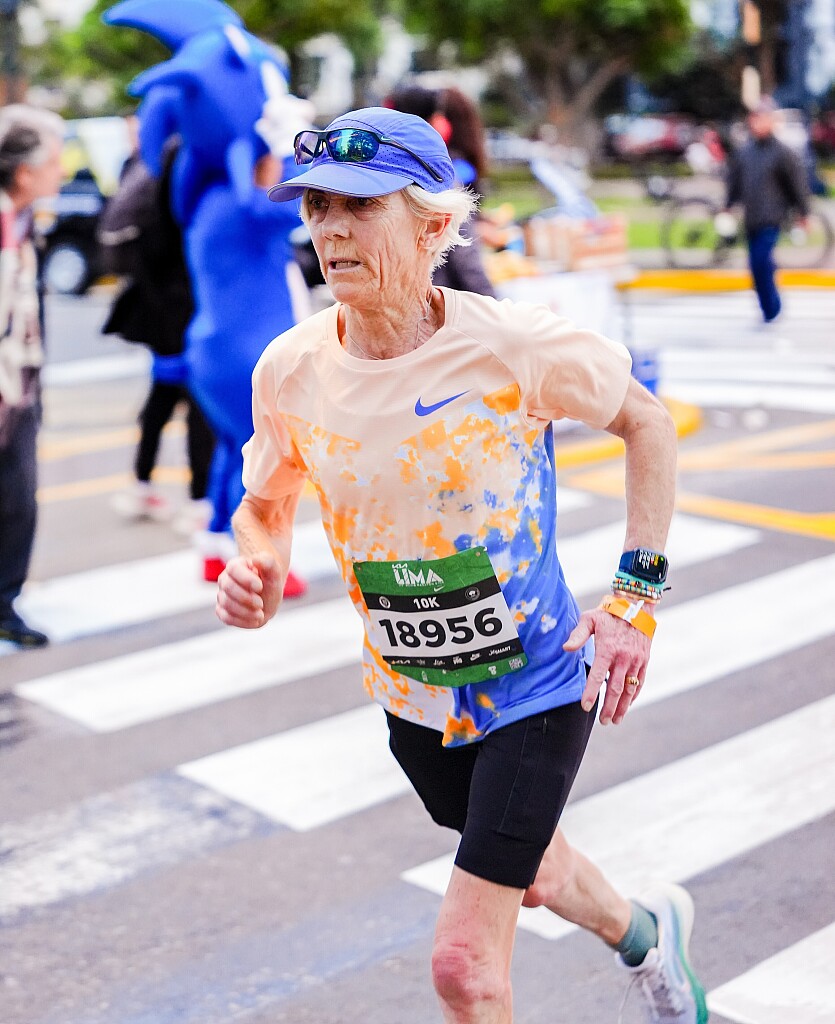
69 And Still Running: Joan Benoit Samuelson Inspires Lima With Another Remarkable 10K
At an age when many athletes have long since stepped away from competition, Joan Benoit Samuelson continues to remind the running world that the finish line is never defined by a number.
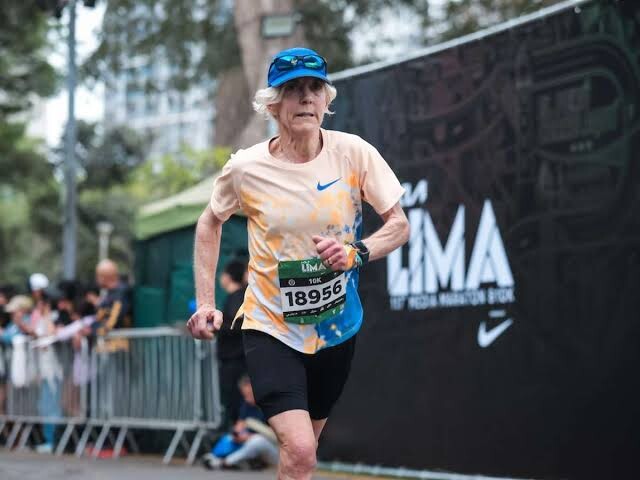
On Sunday in Lima, Peru, the pioneering American distance runner lined up for the 10K at the 117th KIA Media Maratón de Lima & 10K, and at 69 years old, she crossed the finish line in an impressive 47:49 — averaging approximately 7:43 per mile.
It was another chapter in a remarkable running life that has stretched across more than four decades, taking Samuelson from the roads of New England to Olympic history and, now, to the streets of Lima.
The first Olympic women's marathon champion, Samuelson was in Peru as part of a Nike-backed trip, experiencing a race course that links Lima's historic heart with its modern districts. The event attracted around 21,000 runners, creating a spectacular celebration of running in one of South America's most historic cities.
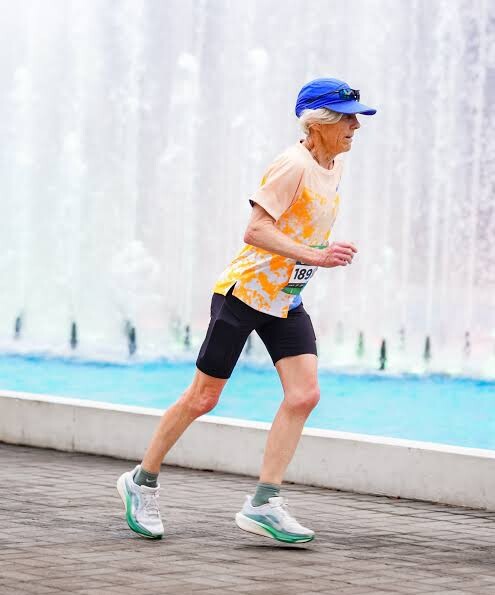
The half marathon accompanying the 10K carries an extraordinary legacy of its own. First staged in 1909, the race is billed as the world's oldest half marathon, adding another layer of history to Samuelson's appearance.
But Samuelson herself needs little introduction when it comes to the history of women's distance running.
Her career helped redefine what was possible for women on the marathon course. She won the Boston Marathon in 1979 and again in 1983, then produced a stunning American record of 2:22:43 in her marathon debut that same year.
A year later, she reached the summit of the sport.
At the 1984 Los Angeles Olympics, Samuelson captured gold in the inaugural women's Olympic marathon, running 2:24:52 and finishing 1 minute 26 seconds ahead of legendary Norwegian Grete Waitz. It was a victory that became one of the defining moments in the history of women's athletics.
And she was far from finished.
In 1985, Samuelson won the Chicago Marathon in 2:21:21, setting another American record that remained untouched for 18 years. Her achievements became part of the foundation upon which the modern era of women's distance running was built.
Yet perhaps the most remarkable part of her story is not what she accomplished four decades ago, but the fact that she is still curious, still competing and still eager to learn from the sport.
Before Sunday's race, Samuelson praised the growing strength of Peruvian distance running, telling local media: “Runners from Peru are starting to show up on the world stage, and they are doing it very well.”
Those words capture something that has defined her journey for generations: a belief that running is not simply about records, medals or victories. It is about discovery, connection and the endless possibility of seeing how far the human spirit can go.
Four decades after making history in Los Angeles, Samuelson is still answering the starting gun.
At 69, the Olympic champion is no longer chasing the clock she once conquered. She is chasing something far more enduring — the joy of running itself.
And in Lima, thousands of runners had the privilege of watching a living legend continue to do what she has always done best: inspire people to keep moving forward.
by Erick Cheruiyot for My Best Runs.
Login to leave a comment
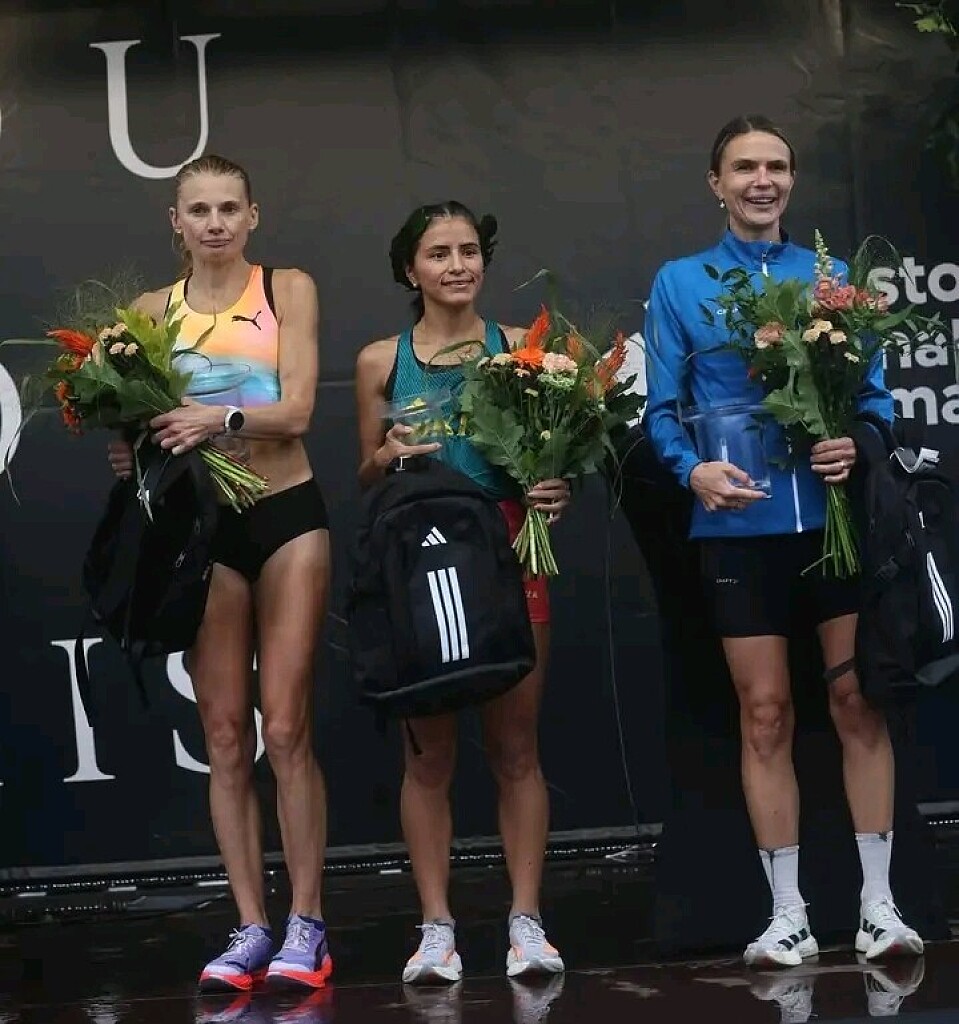
Tisalema Triumphs In Stockholm While Marie Edges A Nail-Biting Men’s Battle
Ecuadorian distance runner Katherine Tisalema produced a commanding performance in Sweden this weekend, racing to victory at the Stockholm Half Marathon in an impressive 1:13:15.
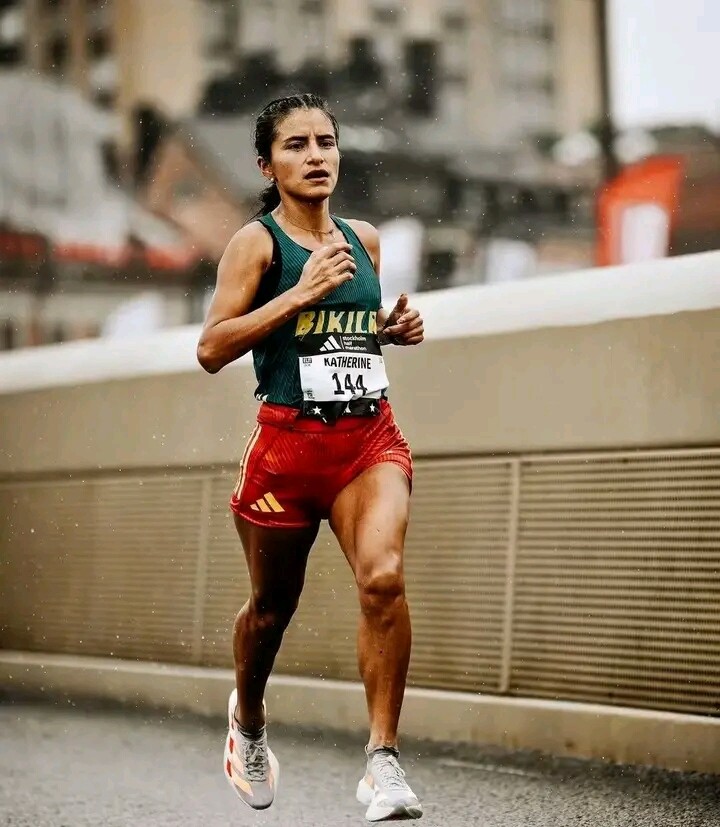
Tisalema controlled the women’s contest over the 21.1-kilometre distance, holding her composure through the closing stages to secure a memorable international victory. Sweden’s Hanna Lindholm finished second in 1:13:53, while compatriot Malin Starlet completed the podium in 1:15:47.
The women’s race delivered its own share of drama as Lindholm continued to chase down Tisalema, refusing to let the Ecuadorian disappear from sight. However, Tisalema remained composed when the pressure intensified, protecting her advantage all the way to the finish and sealing the victory in Stockholm.
Behind the winner, the fight for the remaining podium places added another layer of excitement. Lindholm ultimately held off Starlet to take second, while Starlet secured third and completed a strong showing for the host nation.

The men’s race was even more dramatic, producing a thrilling battle that was decided by just five seconds across the entire podium. France’s Enzo Marie emerged victorious in 1:03:35, but there was virtually nothing separating the leaders as they approached the finish.
Eritrea’s Senay Fissehatsion finished only three seconds behind Marie in 1:03:38, while Great Britain’s Lewis Hannigan was just two seconds further back in 1:03:40. The razor-thin margins meant that every surge, every stride and every second counted in the closing kilometres.
Marie ultimately found the decisive edge to claim the men’s title, with Fissehatsion and Hannigan forced to settle for second and third respectively after an absorbing battle to the line.
With Tisalema producing a strong winning performance in the women’s race and Marie surviving a fiercely contested men’s finish, the Stockholm Half Marathon delivered a compelling showcase of international distance-running talent and plenty of drama across the streets of the Swedish capital.
by Erick Cheruiyot for My Best Runs.
Login to leave a comment

Stockholm Half Marathon
Stockholm Half marathon has a unique course. Starting and running in the area between the castle, the Riksdaghuset and the Opera is special. And running in the middle of town is really a special feeling. The half marathon in Stockholm has been called Stockholm Halvmarathon (Stockholm Half Marathon) since 2007 but the race is actually much older. In 1927, the...
more...
From Buenos Aires History to Valencia Ambition: Kejelcha Begins the Next Chapter
Ethiopian distance-running sensation Yomif Kejelcha has been taking time to reflect on an unforgettable week in Buenos Aires, where he delivered one of the most extraordinary performances of his career and added another historic chapter to his remarkable journey.
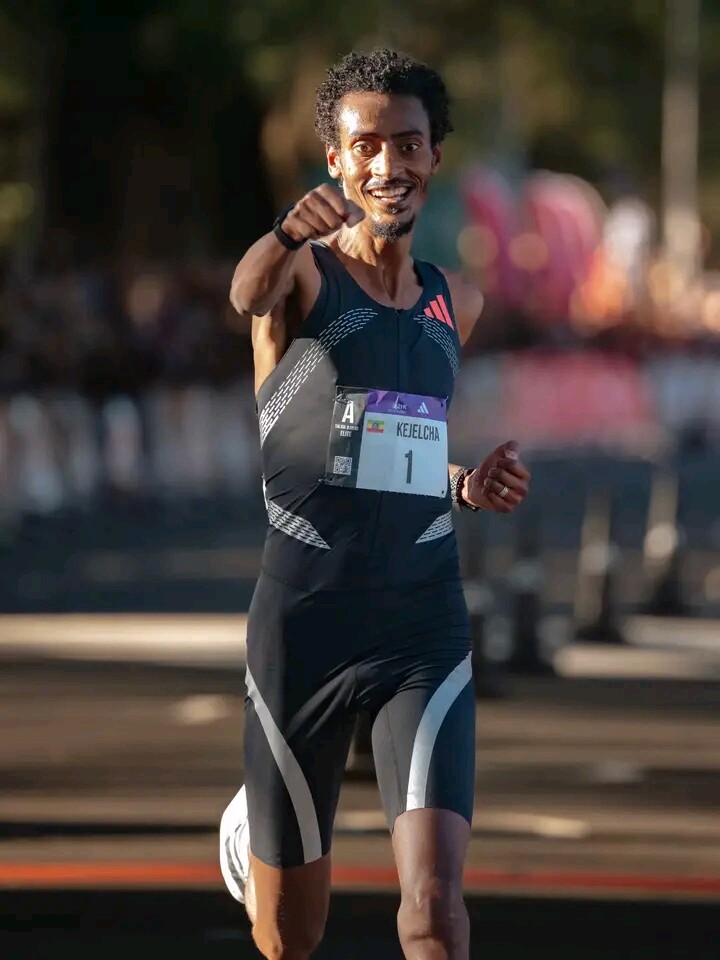
The memories from the Argentine capital remain fresh after Kejelcha produced a sensational 56:51 to break the half marathon world record in August 2026. His performance lowered the previous record by 29 seconds and marked another extraordinary milestone for one of the most versatile distance runners in the sport.
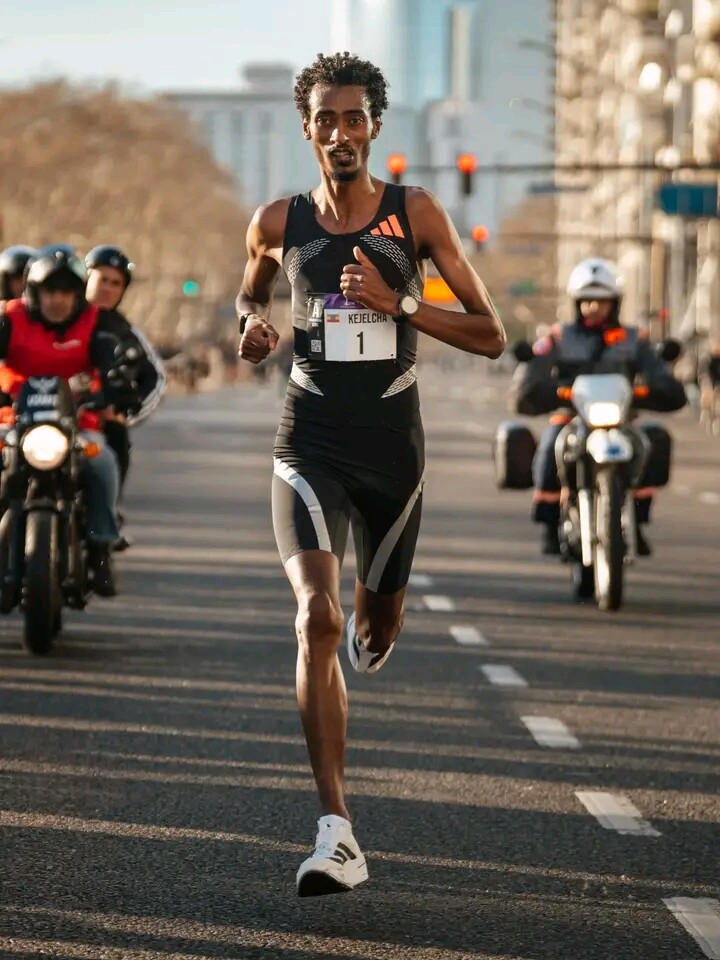
It was also a return to familiar territory for Kejelcha, who had previously held the half marathon world record after clocking 57:30 in Valencia in 2024. His latest performance in Buenos Aires therefore reinforced his remarkable ability over the 21.1km distance and added further significance to a city and race that he says left him deeply grateful for the warmth and support he received.
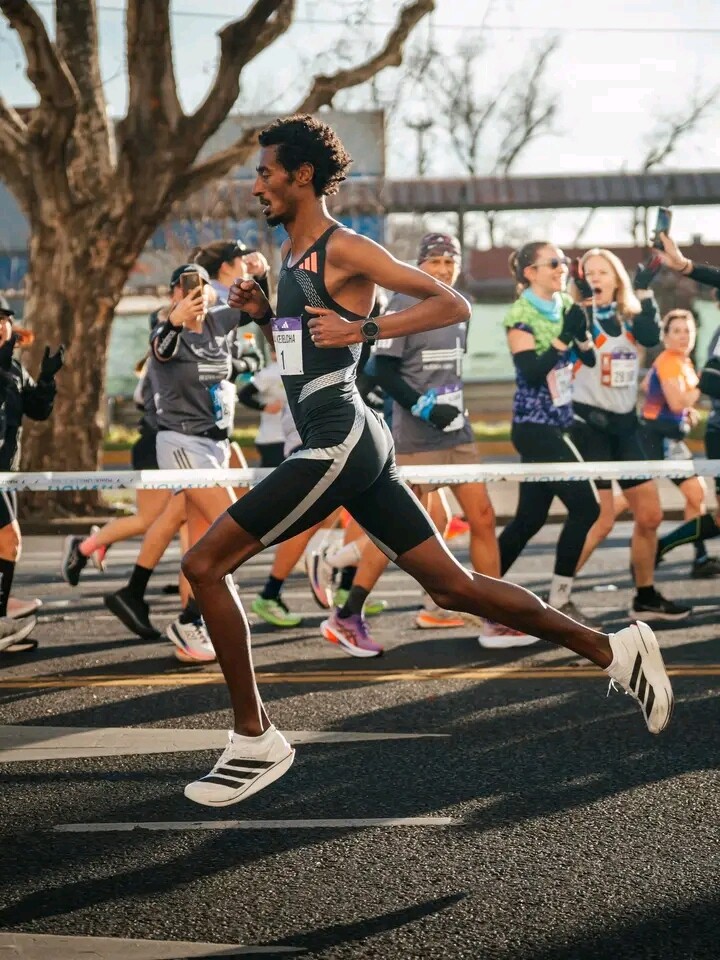
Reflecting on his time in Buenos Aires, Kejelcha shared his happiness over everything he experienced during the trip, expressing sincere appreciation for the love, encouragement and hospitality shown to him. The reception he received from fans and the local community made the historic occasion even more memorable.
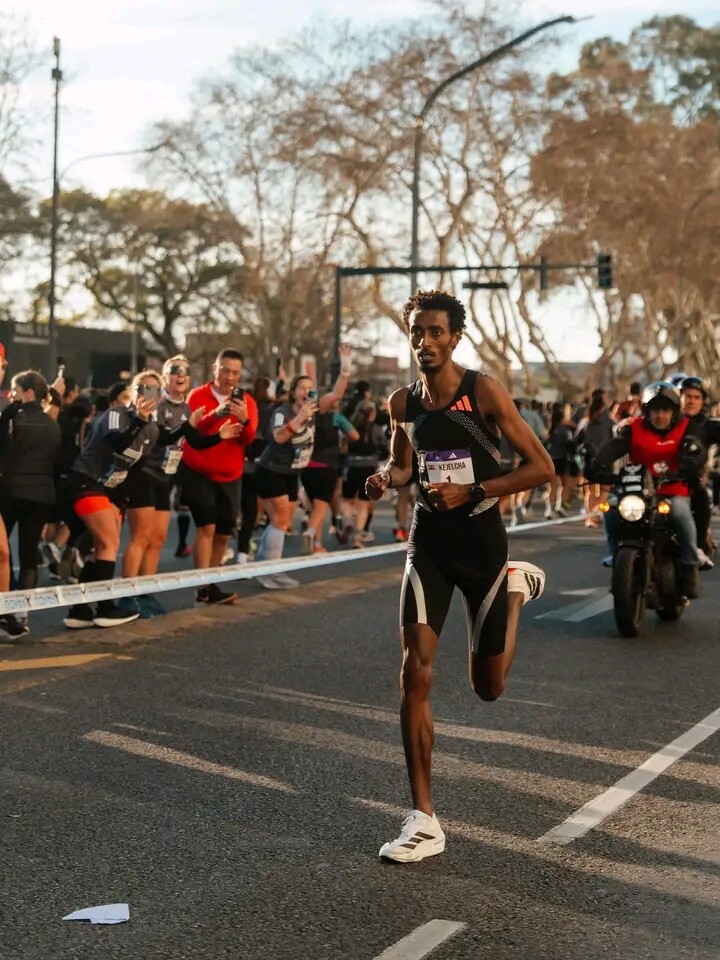
After the intensity and emotion of that performance, Kejelcha has returned home to Ethiopia, where the past week has been dedicated to rest, recovery and spending valuable time with his family. Following a demanding stretch of racing and training, the Ethiopian star is now giving both his body and mind the opportunity to recharge before gradually returning to his normal routine.
His incredible 2026 season has already featured another historic achievement. In April, Kejelcha made his marathon debut at the London Marathon and finished second in a breathtaking 1:59:41. The performance became the fastest marathon debut in history and made him only the second athlete to officially break the two-hour barrier in a record-eligible race.
Now, however, his attention is beginning to turn towards the next major challenge.
Kejelcha has identified the Valencia Marathon as his main objective for the closing stages of the season. Step by step, he is preparing to resume full training and build towards the prestigious Spanish race, where he will aim to bring an already historic campaign to a memorable conclusion.
Valencia also carries special significance in Kejelcha's recent career. It was there in 2024 that he set his previous half marathon world record, and he will now return to the Spanish city with even greater experience, confidence and a growing reputation as one of the most formidable distance runners of his generation.
The Ethiopian star also expressed his gratitude to supporters around the world for the overwhelming messages and affection he has received since his latest achievement. He made it clear that the encouragement from fans has meant a great deal to him and has added even more meaning to an unforgettable period in his career.
For now, the focus remains on recovery, family and patiently rebuilding towards the final major test of the season. But after rewriting history in Buenos Aires and producing a stunning marathon debut earlier in the year, Kejelcha's journey is far from over.
With Valencia now firmly in his sights, one of distance running's most exciting talents is preparing for the next chapter—and if 2026 has shown anything so far, it is that Yomif Kejelcha is capable of producing something truly extraordinary whenever history is on the line.
by Erick Cheruiyot for My Best Runs.
Login to leave a comment
VALENCIA TRINIDAD ALFONSO
The Trinidad Alfonso EDP Valencia Marathon is held annually in the historic city of Valencia which, with its entirely flat circuit and perfect November temperature, averaging between 12-17 degrees, represents the ideal setting for hosting such a long-distance sporting challenge. This, coupled with the most incomparable of settings, makes the Valencia Marathon, Valencia, one of the most important events in...
more...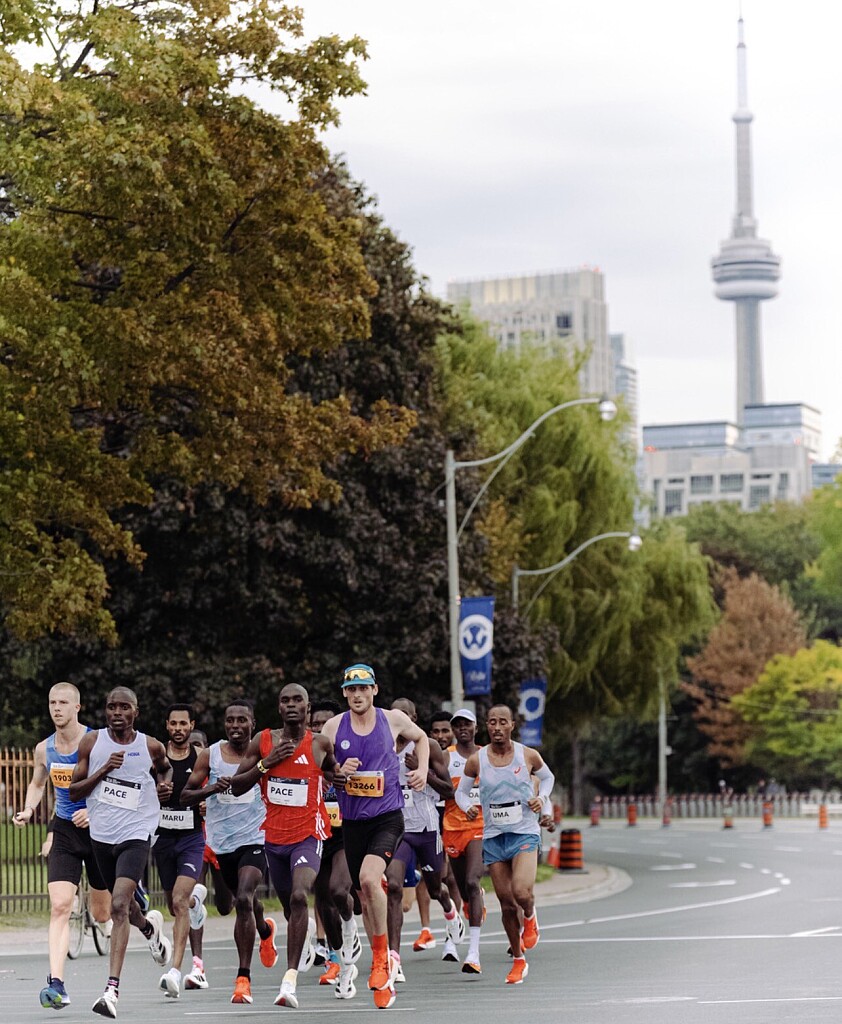
Two London-Area Standouts Set for Marathon Debuts at Toronto Waterfront
Two Canadian distance running stalwarts will make their marathon debuts at the 2026 TCS Toronto Waterfront Marathon October 18. Both make their homes in the London area of southwestern Ontario.
The event is a World Athletics Elite Label race and also serves as the official Athletics Canada Canadian Marathon Championships.
Connor Black and Jeremy Coughler are former training partners and Canadian championship medalists over 10,000m and cross country. They have followed different paths since the retirement of their coach, Dave Mills, although they occasionally meet for long runs while preparing for Toronto.
Coughler still follows a program designed by Mills—a special exception made by his former coach—while Black has worked with two-time Canadian Olympic marathoner Reid Coolsaet for the past two years. Their approaches to the Toronto race could hardly be more different.
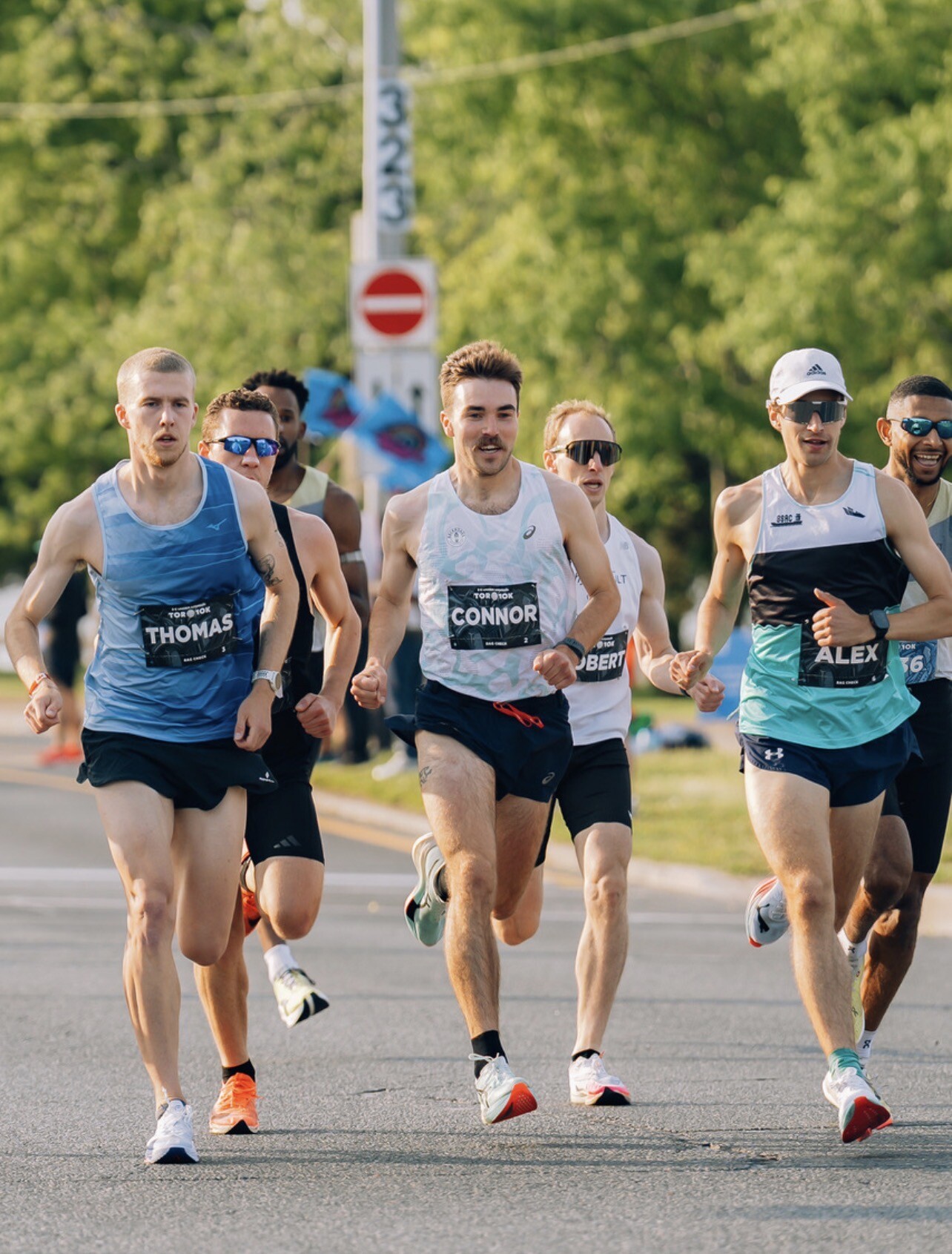
Black, who lives in London—known as “The Forest City”—sees his marathon debut as an important step toward a possible challenge for Canada’s 2028 Olympic team.
“I am 30 years old and I am not making money in the sport, but I still have goals,” Black declares. “My final goal would be to try and make an Olympic team, and I don’t think it’s feasible as an unsponsored track runner targeting the 5K or 10K.
“The marathon is a more even playing field. I can get into any marathon I want, within reason. There are 80 spots in the Olympics. So, if I am going to give it one last shot, it has to be in the marathon.”
At the 2025 Project 13.1 Half Marathon in Congers, New York, Black ran a personal best of 1:03:34 in his first race at the distance. Until then, he had competed primarily over 5,000m and 10,000m. In 2022, he won the Canadian Cross Country Championships.
Black is a secondary school teacher but remains classified as “Long Term Occasional,” meaning he moves from school to school wherever there is an opening.
“Last year I was at Strathroy District Collegiate Institute, which, funnily enough, was where Dave taught for 10 or 15 years,” Black says. “I taught phys ed and math. I can also teach English as a Second Language and biology. I am kind of a Swiss Army knife.”
As he increases his training load for Toronto, completing most of the work by himself, he admits he has reservations about returning to work.
“I am quite nervous to resume teaching,” he reveals. “Recently, my mileage has gone up. When you are starting your build, you are tired. It has been nice having the summer off and being able to focus on training.
“I used to believe you could train like a professional and have a full-time job. I think it’s possible, but if you want to run 200 kilometres a week for the marathon, it is definitely easier and probably better for your performance if you don’t have to work full time.”
Meanwhile, Coughler and his wife, Emma, are chiropractors and partners in Re-Charge Health and Wellness in London’s east end. They are also the parents of a young son, Otto, which means managing their time carefully.
“My wife and I split the work schedule,” Coughler, 30, explains during a day off. “I work Tuesday, Thursday, Friday and Saturday, so I try to do workouts on my days at home—Mondays and Wednesdays.
“If I have something first thing at 7 or 8 a.m., I do a run and then a shakeout between patients or after work. It’s not too bad.”
Running remains important to Coughler, but it is now one of several priorities. He estimates he is running up to 110 kilometres a week, similar to the volume he maintained when finishing third at both the 2023 and 2024 Canadian 10K Championships in Ottawa. He also won the Canada Running Series’ Beneva Spring Run-Off 8K four consecutive years between 2022 and 2025.
Although that mileage is well below what many elite marathoners run, Coughler set a half-marathon personal best of 1:04:33 earlier this year at the Project 13.1 Half Marathon in New York State. The performance earned him eighth place in a strong field. He admits his attitude toward running has changed.
“It’s a shift mentally because I have so much other stuff going on,” he explains. “I am trying to view running as something I do because I love it rather than because it’s my whole life.
“When I was at Indiana University, running was everything. When you run well, it’s great, but when you are not running well, it starts eating you alive.”
With the support and encouragement of Mills, they have mapped out a plan they hope will see Coughler finish his debut in the 2:14 to 2:16 range. He also intends to run more marathons in the future.
“It’s nice knowing there will be a bunch of other Canadian guys who can run around the same time, and that will make it deeper,” he says. “At the front, there are always good Kenyans and Ethiopians running fast. Even if there are a bunch of guys running between 2:12 and 2:20, it would be great.”
The race’s proximity to his home in Thamesford—15 minutes from his practice and about a two-hour drive from Toronto—means Emma, Otto and his parents can accompany him on race weekend. It is one reason he chose the TCS Toronto Waterfront Marathon for his debut.
Coughler is also familiar with the first half of the course, having finished third in the Toronto Waterfront Half Marathon a year ago. Runners in both events follow the same route until the 20-kilometre mark.
Between now and race day, there are many kilometres to be covered. Subject to their schedules and traffic conditions, the two London-area runners will reunite for some workouts.
If all goes well, they will arrive at the starting line ready to join the long list of Canadians who have successfully made the move to the classic marathon distance.
by Paul Gains
Login to leave a comment
TCS Toronto Waterfront Marathon
The Scotiabank Toronto Waterfront Marathon, Half-Marathon & 5k Run / Walk is organized by Canada Running Series Inc., organizers of the Canada Running Series, "A selection of Canada's best runs!" Canada Running Series annually organizes eight events in Montreal, Toronto and Vancouver that vary in distance from the 5k to the marathon. The Scotiabank Toronto Waterfront Marathon and Half-Marathon are...
more...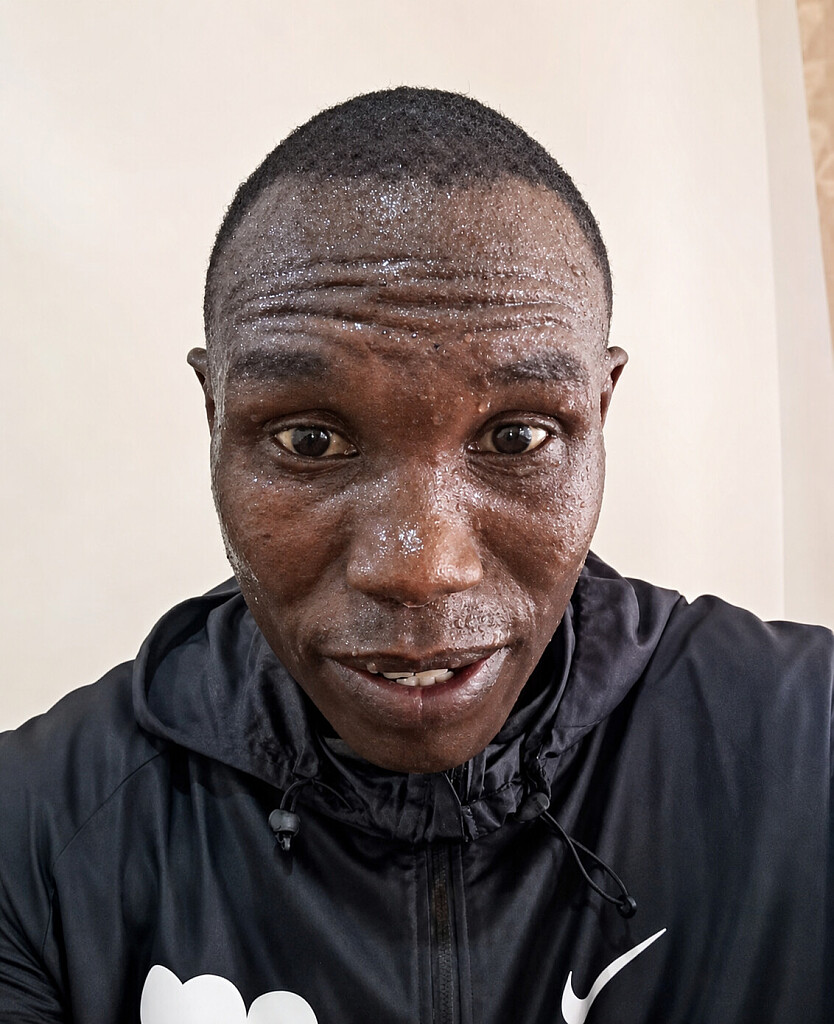
Geoffrey Kamworor Eyes New York Hat-Trick as Kenyan Star Chases Another Major Triumph
Two-time New York City Marathon champion Geoffrey Kamworor is set for another assault on the Big Apple, with the Kenyan distance-running star targeting a historic third victory when the Abbott World Marathon Majors race returns on November 1.
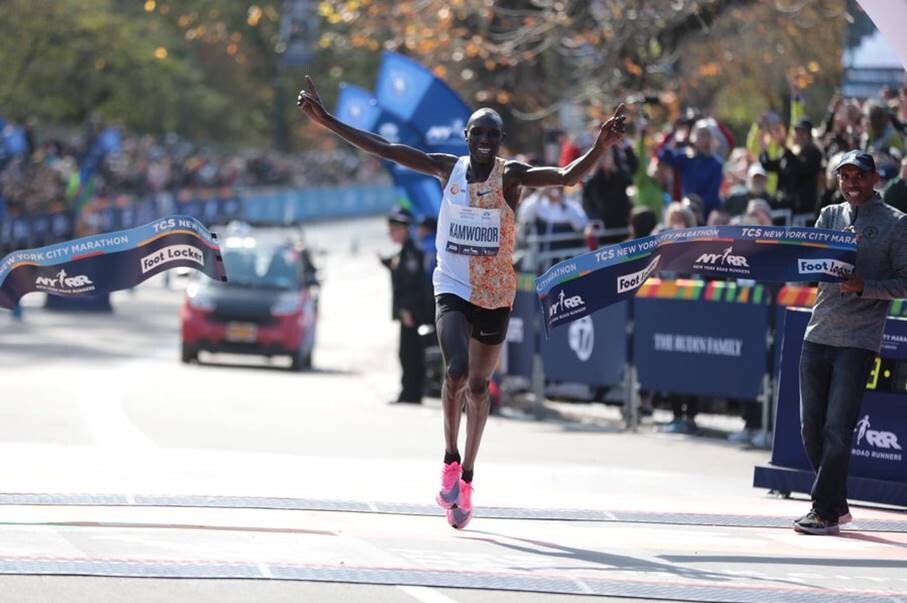
For Kamworor, New York represents much more than another marathon. It is a course where he has already enjoyed some of the defining moments of his illustrious career, and where he will now seek to add another prestigious title to a remarkable collection of achievements.
The 33-year-old has developed a special relationship with the New York course since making his debut there in 2015. On that occasion, he finished runner-up in 2:10:48 behind compatriot Stanley Biwott, who won in 2:10:34.
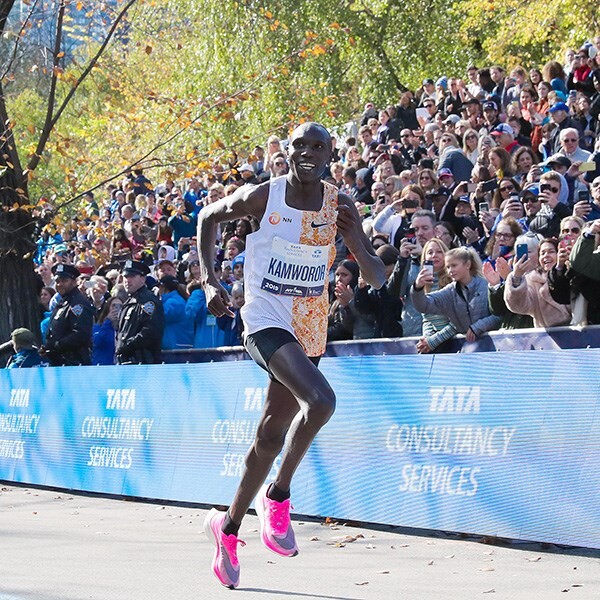
Two years later, Kamworor went one step further.
In 2017, he produced a composed performance to claim his first New York Marathon crown, crossing the finish line in 2:10:53. He held off fellow Kenyan and former world record-holder Wilson Kipsang, who finished just three seconds behind in 2:10:56, while Ethiopia's Lelisa Desisa took third in 2:11:32.

Kamworor returned the following year hoping to defend his title but had to settle for third place. Desisa triumphed in 2:05:59, ahead of Shura Kitata in 2:06:01, while Kamworor clocked 2:06:26.
But the Kenyan refused to stay away from the top for long.
In 2019, he reclaimed the New York crown in emphatic fashion, winning in 2:08:13. Albert Korir followed in second in 2:08:36, with Ethiopia's Girma Bekele completing the podium in 2:08:38.
Those two victories remain Kamworor's only Abbott World Marathon Majors titles, making New York a particularly significant venue in his career.
His latest appearance in the race, however, ended without another podium finish. Returning in 2024, Kamworor placed fifth in 2:08:50 as the Netherlands' Abdi Nageeye won in 2:07:39. Kenya's Evans Chebet was second in 2:07:45, while Albert Korir took third in 2:08:00.
Now, Kamworor is eager to return to the city where he has already tasted victory twice.
“I am very excited to be going back to New York,” Kamworor said, expressing his anticipation ahead of another demanding battle through the streets of the world's most famous city.
For the Kenyan star, the race offers a unique combination of sporting pressure and an atmosphere unlike any other.
“It's always an incredible experience to run the biggest marathon in the world. I'm really looking forward to feeling the energy of the crowd again,” he added.
Kamworor's challenge will be to arrive in New York at his best after a mixed campaign in 2026.
He began the year in spectacular fashion, winning the Ras Al Khaimah Half Marathon on February 14. The Kenyan clocked an impressive 58:14, finishing ahead of Bahrain's Birhanu Balew, who ran 58:23, and compatriot Gideon Rono, who crossed the line in 58:38.
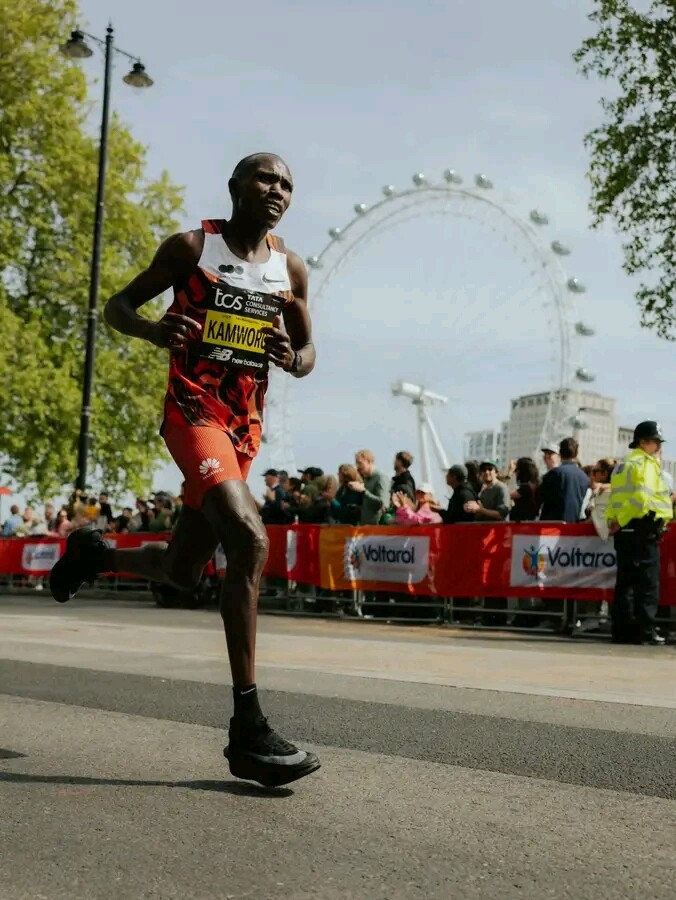
His London Marathon campaign on April 26 proved considerably tougher. Kamworor finished eighth in 2:05:38 in a historic race dominated by Sebastian Sawe, who produced a sensational 1:59:30 to become the first man to break the two-hour barrier in a marathon. Ethiopia's Yomif Kejelcha was second in 1:59:41, while Uganda's Jacob Kiplimo finished third in 2:00:28.
Kamworor will therefore arrive in New York with both experience and motivation on his side. He knows exactly what the course demands, having already navigated its hills, turns and relentless closing stages on multiple occasions.
Beyond the marathon, his career is decorated with major international honours across several disciplines.
Kamworor is a three-time world half marathon champion, winning his first title in Copenhagen in 2014 before successfully defending his crown in Cardiff in 2016 and completing his remarkable hat-trick in Valencia in 2018.
He has also established himself as one of Kenya's finest cross-country runners. He won the world junior cross-country title in Punta Umbria in 2011 before becoming a senior world champion in Guiyang in 2015 and Kampala in 2017. He added a bronze medal at the 2019 World Cross Country Championships in Aarhus.
That versatility has long been one of Kamworor's greatest strengths. From cross country to the half marathon and now the marathon, he has repeatedly demonstrated the endurance, tactical intelligence and competitive resilience required to succeed at the highest level.
Yet New York remains unfinished business.
With two victories already secured and another opportunity waiting on November 1, Kamworor has a chance to strengthen his legacy on one of the sport's most iconic stages.
A third triumph would not only give him a coveted New York hat-trick but would further cement his status as one of Kenya's most accomplished distance runners of his generation.
The Big Apple has already given Kamworor some of the proudest moments of his career. Now, the Kenyan star is returning with one clear ambition — to conquer New York once again.
by Erick Cheruiyot for My Best Runs.
Login to leave a comment

TCS New York City Marathon
The first New York City Marathon, organized in 1970 by Fred Lebow and Vince Chiappetta, was held entirely in Central Park. Of 127 entrants, only 55 men finished; the sole female entrant dropped out due to illness. Winners were given inexpensive wristwatches and recycled baseball and bowling trophies. The entry fee was $1 and the total event budget...
more...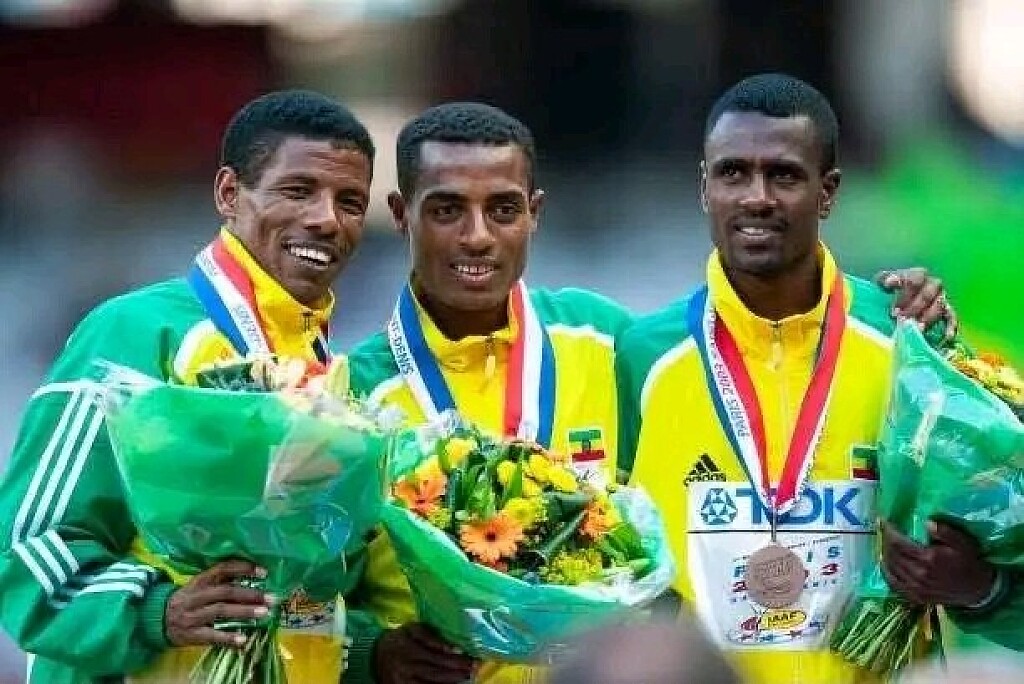
Kenenisa Bekele’s Paris Coronation: The Night Ethiopia’s Distance Running Dynasty Changed Forever
Paris, France — August 24, 2003.
The Stade de France witnessed far more than a World Championship 10,000m final that night. It witnessed the beginning of a new era.
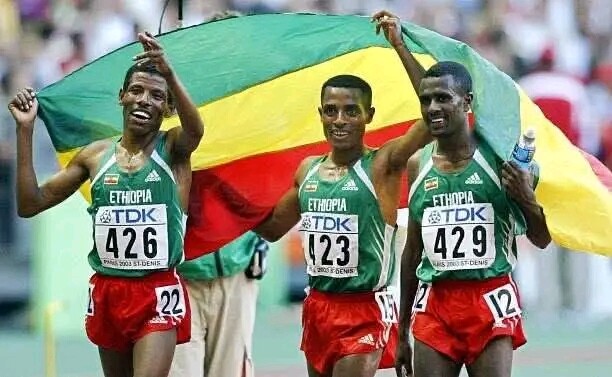
For years, Haile Gebrselassie of Ethiopia had stood virtually untouchable at the summit of world distance running. He arrived in Paris as a two-time Olympic champion and four-time World Champion over 10,000m, carrying the reputation of a man who had dominated the track for much of the previous decade.
But waiting in the same race was a 21-year-old Ethiopian whose running style looked remarkably familiar.
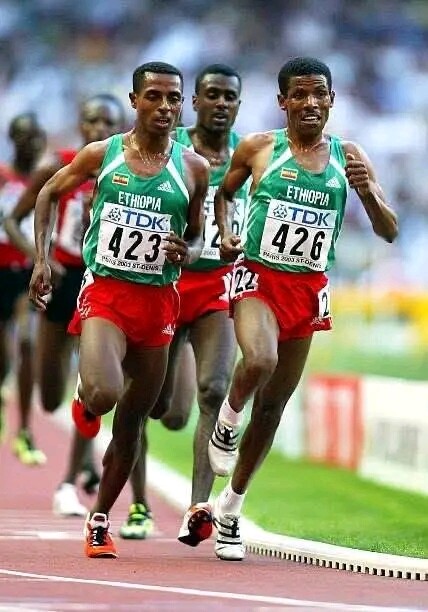
His name was Kenenisa Bekele.
The younger Ethiopian had already shown flashes of extraordinary potential, but Paris was where potential became reality.
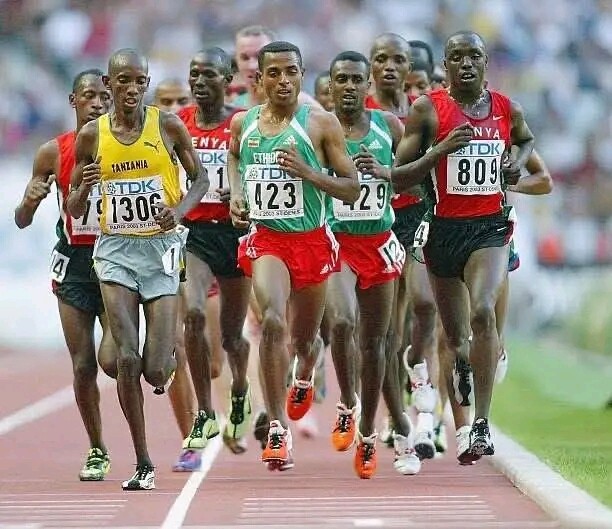
As the race unfolded, Gebrselassie ran aggressively, repeatedly applying pressure in an attempt to break the field and shake off his young compatriot. One by one, the world's best distance runners were dropped, including a strong Kenyan contingent.
Yet Bekele refused to disappear.
He stayed glued to Gebrselassie's shoulder, matching every surge and every change of pace. Behind them, Sileshi Sihine of Ethiopia remained in contention, setting the stage for what would ultimately become a historic Ethiopian sweep.
Then came the decisive moment.
With only 200 metres remaining, Bekele made his move.
Gebrselassie, famous for his devastating finishing speed, tried to respond. But this time, there was no answer. Bekele powered away down the final straight, creating daylight between himself and his legendary compatriot.
The changing of the guard had arrived.
Bekele crossed the finish line in 26:49.57, becoming the first athlete to break 27 minutes at these World Championships and setting a championship record.
Behind him, Gebrselassie finished second in 26:50.77, while Sihine completed an extraordinary Ethiopian clean sweep with 27:01.44.
It was not simply a victory for Bekele.
It was the moment the young star announced that he was ready to inherit the throne.
Paris 2003 — Men's 10,000m Final
1. Kenenisa Bekele — Ethiopia — 26:49.57 CR
2. Haile Gebrselassie — Ethiopia — 26:50.77
3. Sileshi Sihine — Ethiopia — 27:01.44
4. Ahmad Hassan Abdullah — Qatar — 27:18.28
5. John Cheruiyot Korir — Kenya — 27:19.94
6. Wilberforce Talel — Kenya — 27:33.60
7. Charles Kamathi — Kenya — 27:45.05
8. Kamiel Maase — Netherlands — 27:45.46
9. Karl Keska — Great Britain — 27:47.89
10. Ismail Sghyr — France — 27:54.87
11. David Galván — Mexico — 27:55.31
12. John Yuda Msuri — Tanzania — 27:56.21
13. Fabiano Joseph Naasi — Tanzania — 28:06.36
14. Alan Culpepper — United States — 28:14.92
15. Teodoro Vega — Mexico — 28:31.71
16. Mebrahtom Keflezighi — United States — 28:35.08
17. Cathal Lombard — Ireland — 28:36.43
18. Tomoo Tsubota — Japan — 28:37.10
19. Dan Browne — United States — 29:01.60
Bekele's Paris triumph proved to be the beginning of something much bigger. He went on to win Olympic 10,000m gold in Athens the following year and established himself as the dominant track distance runner of his generation.
At the 2008 Beijing Olympics, he completed the extraordinary 5,000m and 10,000m double, cementing his place among the greatest distance runners in history.
Gebrselassie, meanwhile, successfully reinvented himself beyond the track. He turned increasingly toward the 10km, half marathon and marathon, where he continued rewriting the record books and building another extraordinary chapter of his career.
But Paris remains special.
On August 24, 2003, one Ethiopian legend was still fighting to protect his kingdom while another was stepping forward to claim it.
Kenenisa Bekele didn't simply win a World Championship gold medal that night. He announced the arrival of a new era in distance running.
by Erick Cheruiyot for My Best Runs.
Login to leave a comment
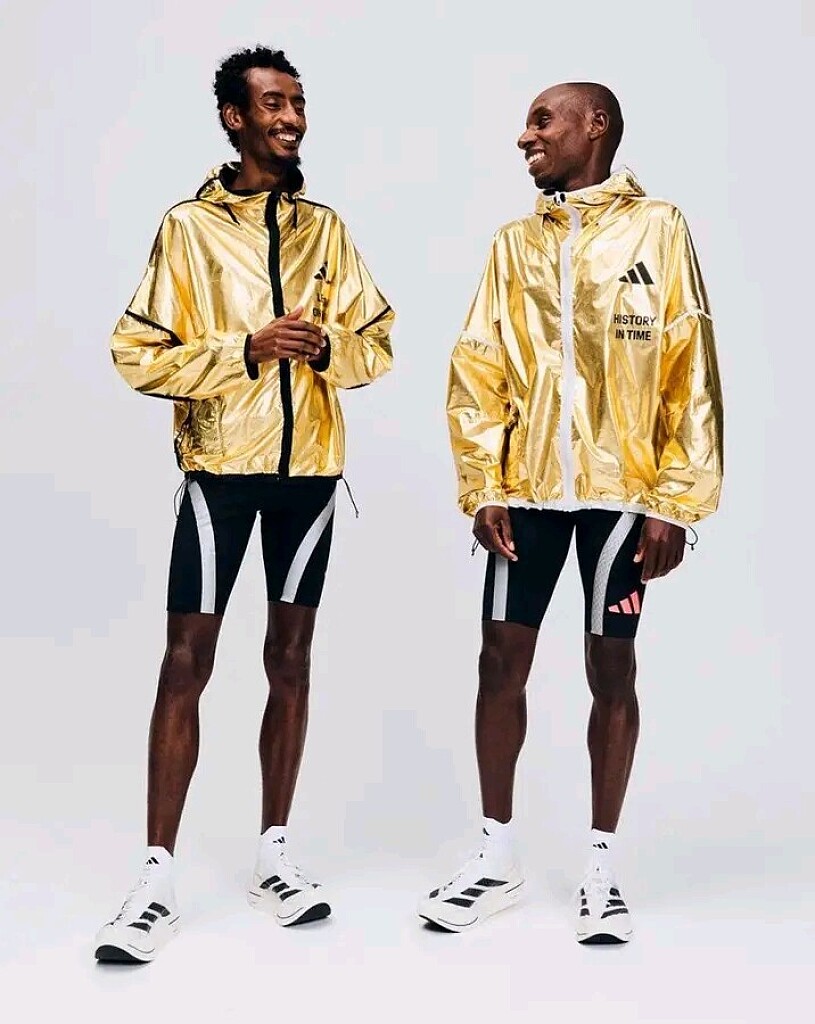
Kejelcha and Sawe: Two Men Driving Road Running Into a New Era
Men's road running is moving into extraordinary territory, and two athletes are increasingly at the heart of its breathtaking evolution: Yomif Kejelcha of Ethiopia and Sabastian Sawe of Kenya.
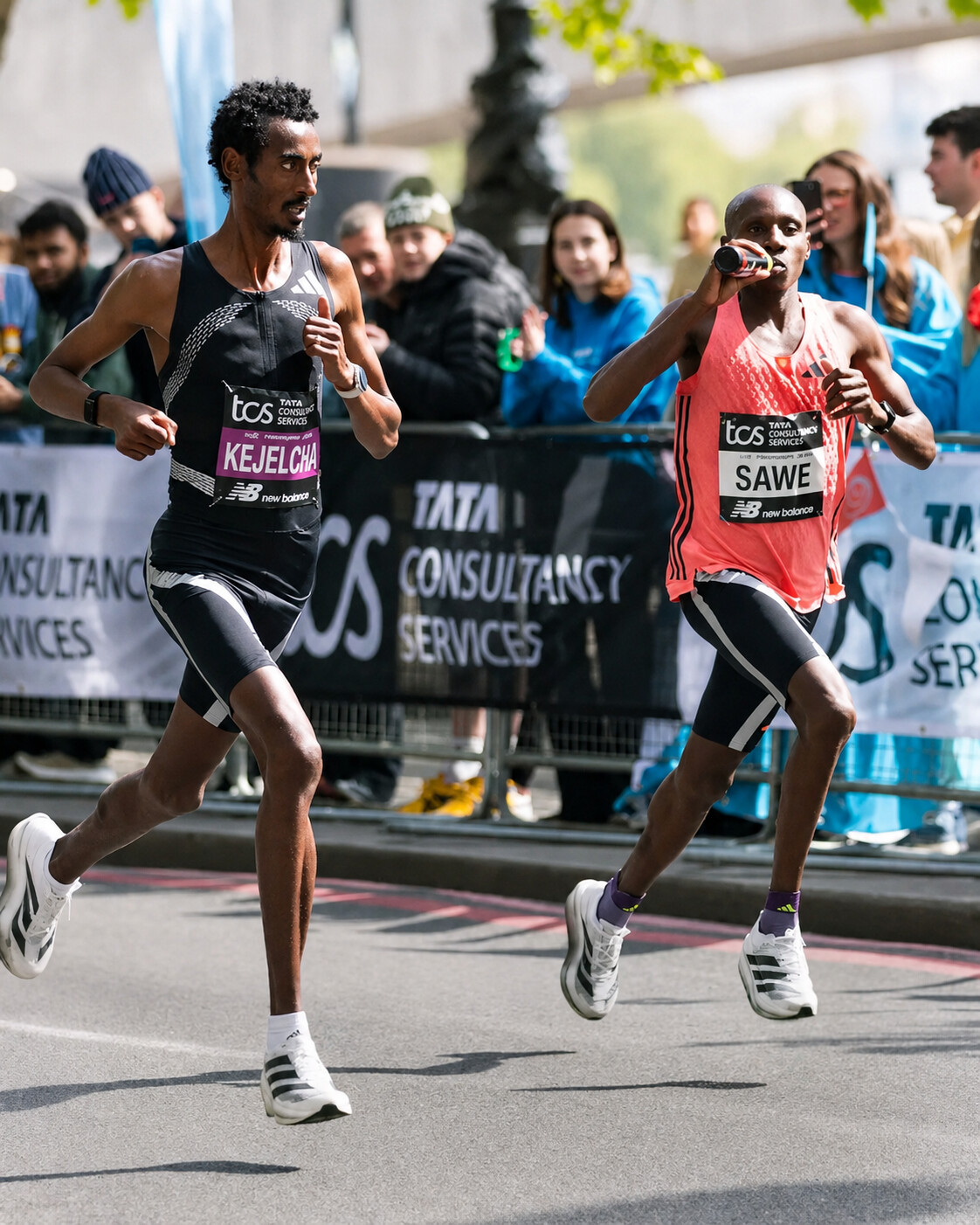
The pair represent the remarkable depth of modern East African distance running, but they are also doing something even more significant: pushing the boundaries of marathon and half-marathon performance to levels that once seemed almost unimaginable. Through their exceptional speed, endurance and ability to perform at the highest level, Kejelcha and Sawe are helping to redefine what is possible on the roads.
Sawe has established himself as one of the most formidable marathon runners in the world. His astonishing 1:59:30 marathon performance at TCS London Marathon on April 26, 2026, marked as a world record, African record and Kenyan record, demonstrated the extraordinary level the marathon has now reached. It also underlined his position at the very top of the men's marathon world rankings.
Kejelcha has been equally sensational, although his journey has highlighted a different kind of versatility. The Ethiopian, whose background includes world-class performances on the track and across shorter road distances, ran 1:59:41 for the marathon debut also at the TCS London Marathon on April 26, 2026, a performance marked as a national record. Just four months later, he delivered another stunning display by clocking 56:51 for the half marathon at the Argentina's capital, Buenos Aires on August 23, 2026, with the performance marked as a pending world record, African record and Ethiopian national record.
That combination of performances illustrates just how exceptional this new generation has become. Kejelcha's ability to threaten the absolute limits over the half marathon while also producing a sub-two-hour marathon performance speaks to his extraordinary range. Sawe, meanwhile, has continued to establish himself as a dominant force over the classic 42.195km distance, combining remarkable efficiency with the strength and speed required to compete at the very highest level.
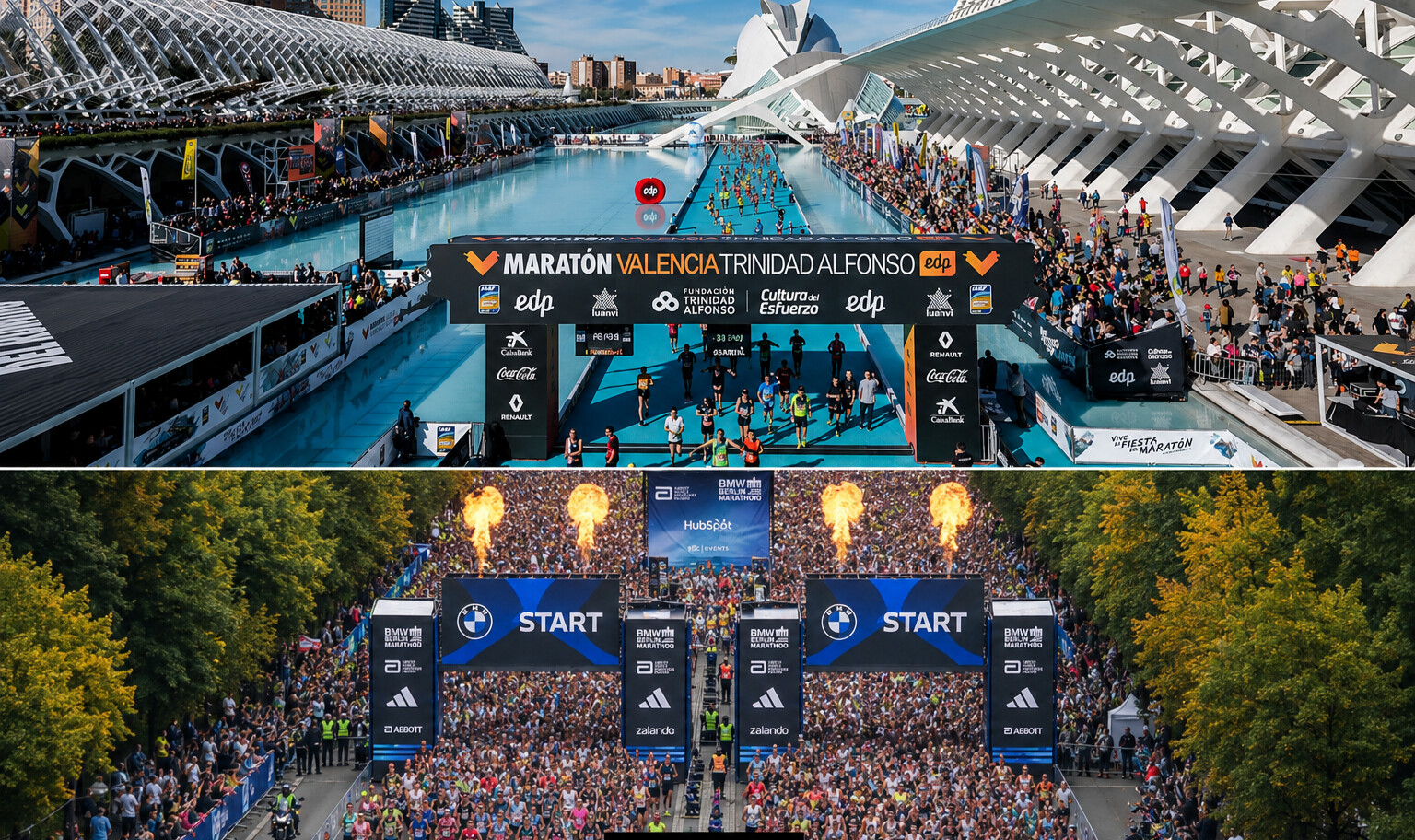
The two stars are now preparing to take their talents to different stages of the road-running calendar. Kejelcha's next focus is the Valencia Marathon on December 6, where he will once again turn his attention to the marathon distance and look to build on his remarkable breakthrough over 42.195km. Sawe, meanwhile, is set to race the BMW Berlin Marathon on September 27, giving the Kenyan another major opportunity to showcase his extraordinary marathon strength on one of the world's fastest and most prestigious courses.
Those upcoming races add another fascinating dimension to their respective journeys. While Kejelcha heads to Valencia carrying exceptional speed and versatility into another marathon challenge, Sawe will arrive in Berlin with his sights firmly fixed on maintaining his dominance at the highest level of the sport.
What makes their rise particularly exciting is the wider message it sends to athletics. The marathon is no longer progressing only through small margins. The standards at the top are being pushed relentlessly forward, and performances that once appeared impossible are becoming increasingly realistic.
The official sub-two-hour marathon remains one of athletics' ultimate frontiers. Achieving it under standard race conditions would represent one of the greatest endurance breakthroughs in sporting history. Yet with athletes such as Sawe already breaking the two-hour barrier and Kejelcha running only seconds above it while also producing unprecedented half-marathon speed, that frontier appears closer than ever.
Their careers are different, and their strengths are not identical. Sawe has rapidly become a dominant marathon specialist, while Kejelcha brings exceptional versatility from the track to the roads and across multiple distances. But together, they symbolize the relentless progression of men's road running.
Yomif Kejelcha and Sabastian Sawe are not merely among the fastest men of their generation. They are helping to drive the sport toward a future that once seemed unthinkable. With Valencia and Berlin now on their horizons, the next chapter of this remarkable road-running revolution is already waiting to be written.
by Erick Cheruiyot for My Best Runs.
Login to leave a comment
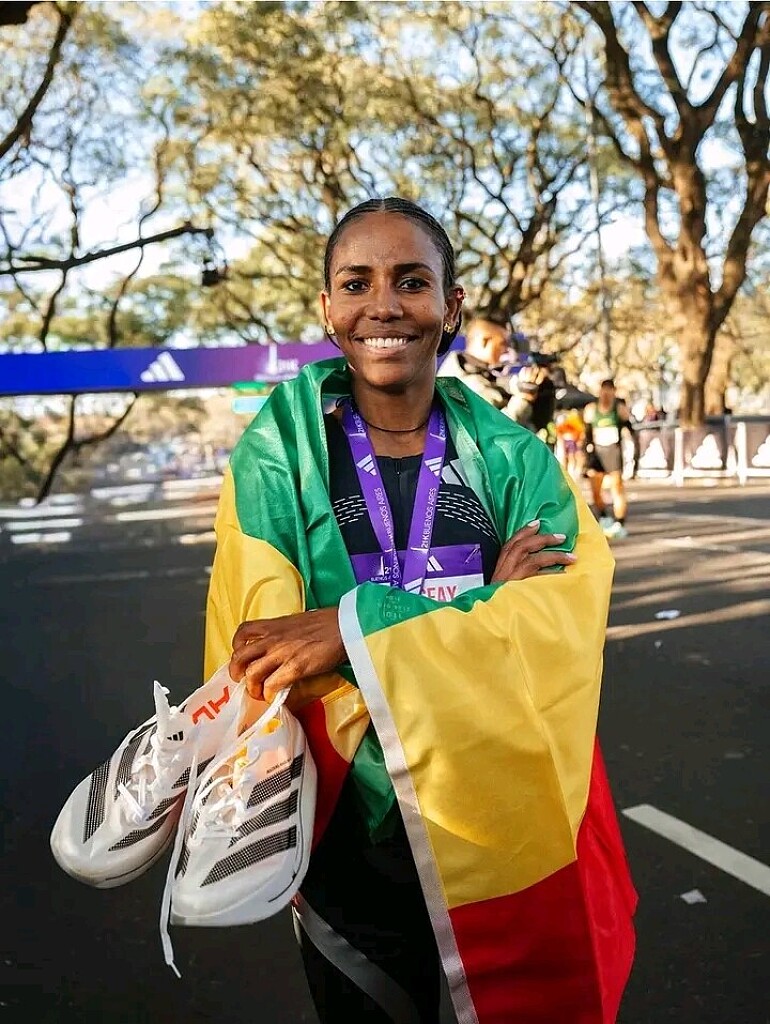
Fotyen Tesfay Haylu Smashes Buenos Aires Half Marathon Record with Historic 1:03:57 Performance
Ethiopia’s Fotyеn Tesfay Haylu delivered one of the most remarkable women’s half-marathon performances ever seen on American soil on Sunday, powering to a commanding victory at the 2026 Buenos Aires Half Marathon in Argentina in 1:03:57.
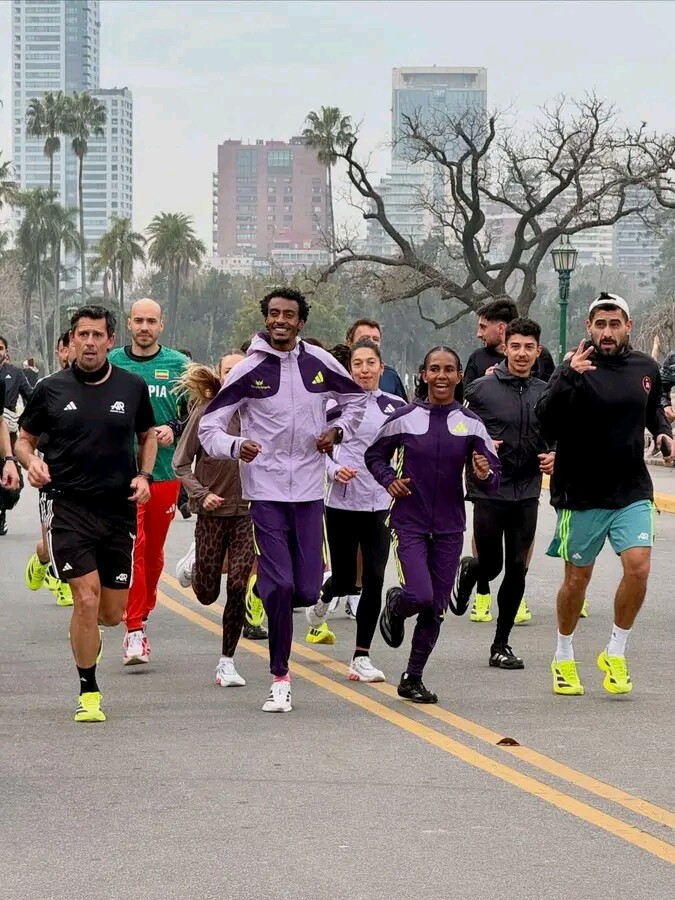
Running with exceptional confidence and strength, Tesfay took control of the race and produced a superb solo performance to rewrite the event record. Her breathtaking run also carried historic significance, as she became the first woman to break the 64-minute barrier for the half marathon in the Americas, producing what is being celebrated as the fastest women’s half-marathon performance ever recorded on the continent.
The Ethiopian star was in a class of her own, crossing the finish line more than a minute clear of Turkey’s Nevin Can, who finished second in 1:05:06. Another Turkish athlete, Selin Can, completed the podium in third place with 1:05:11, as the leading trio all produced strong performances on the fast streets of Buenos Aires.
Kenya also featured prominently in the top positions, with Irene Jepchumba Kimais taking fourth in 1:06:04, followed by Sheila Chepkirui in fifth with 1:06:13. Magaret Akidor Ngathike finished sixth in 1:06:46, while fellow Kenyan Deborah Samum claimed seventh place in 1:08:32.
Brazil’s Nubia de Oliveira Silva was eighth in 1:11:13, while Argentina’s Sofia Luna and Dahyana Juarez rounded out the top 10 with times of 1:11:21 and 1:11:28, respectively.
Top 10 Women – 2026 Buenos Aires Half Marathon
1. Fotyеn Tesfay Haylu (Ethiopia) – 1:03:57
2. Nevin Can (Turkey) – 1:05:06
3. Selin Can (Turkey) – 1:05:11
4. Irene Jepchumba Kimais (Kenya) – 1:06:04
5. Sheila Chepkirui (Kenya) – 1:06:13
6. Magaret Akidor Ngathike (Kenya) – 1:06:46
7. Deborah Samum (Kenya) – 1:08:32
8. Nubia de Oliveira Silva (Brazil) – 1:11:13
9. Sofia Luna (Argentina) – 1:11:21
10. Dahyana Juarez (Argentina) – 1:11:28
For Tesfay, it was far more than a race victory. Her 1:03:57 performance was a statement of extraordinary quality, combining speed, endurance and remarkable solo running to produce a landmark result in Buenos Aires. In a race that will be remembered for years to come, the Ethiopian did not simply win—she redefined what was thought possible for women’s half-marathon running in the Americas.
by Erick Cheruiyot for My Best Runs.
Login to leave a comment

Buenos Aires Half Marathon
The Buenos Aires Half Marathon is one of the most important in Latin America and attracted more than 25,000 runners from all over the world. Dare to run the fastest half marathon in Latin America....
more...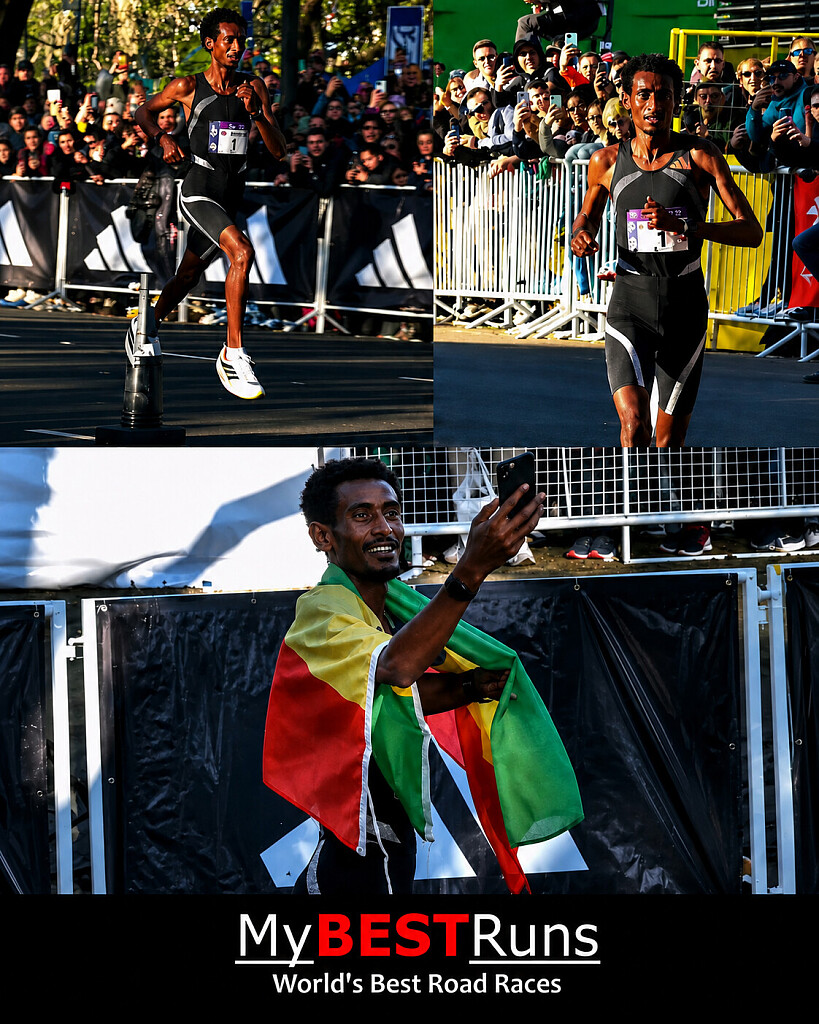
Yomif Kejelcha Smashes Half Marathon World Record with Sensational 56:51 in Buenos Aires
Ethiopia’s Yomif Kejelcha produced one of the most extraordinary performances in road racing history on the streets of Buenos Aires, Argentina, reclaiming the half marathon world record with a sensational 56:51 performance at the 2026 Buenos Aires Half Marathon.
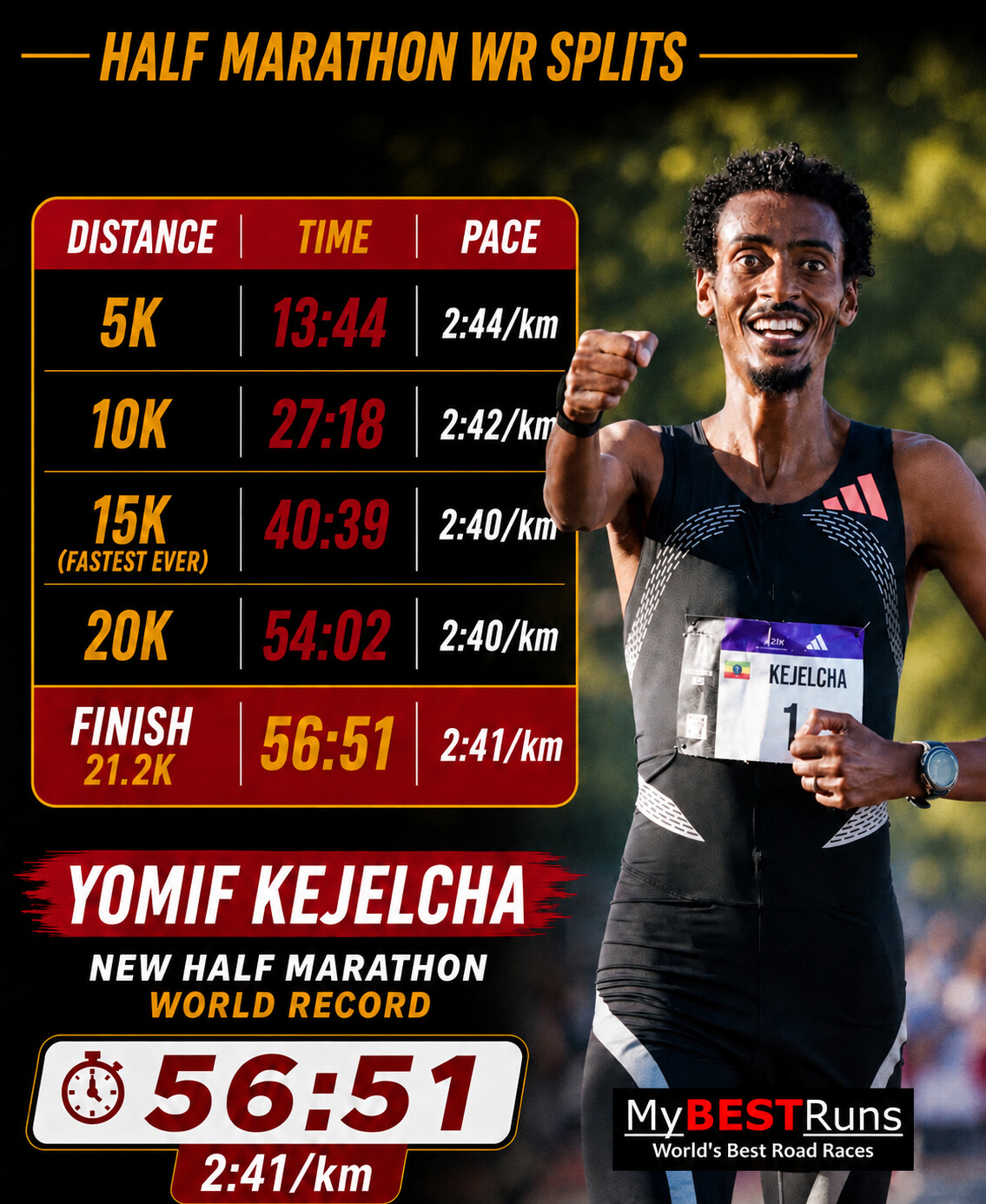
The former world record-holder delivered a breathtaking exhibition of speed and endurance to take 29 seconds off the previous pending mark of 57:20, set by Uganda’s Jacob Kiplimo and takes a huge chunk from his own former official world record. Kejelcha's new performance is pending the standard ratification procedures, but if officially ratified, it will return the world record to the Ethiopian star and mark another remarkable chapter in the evolution of the event.
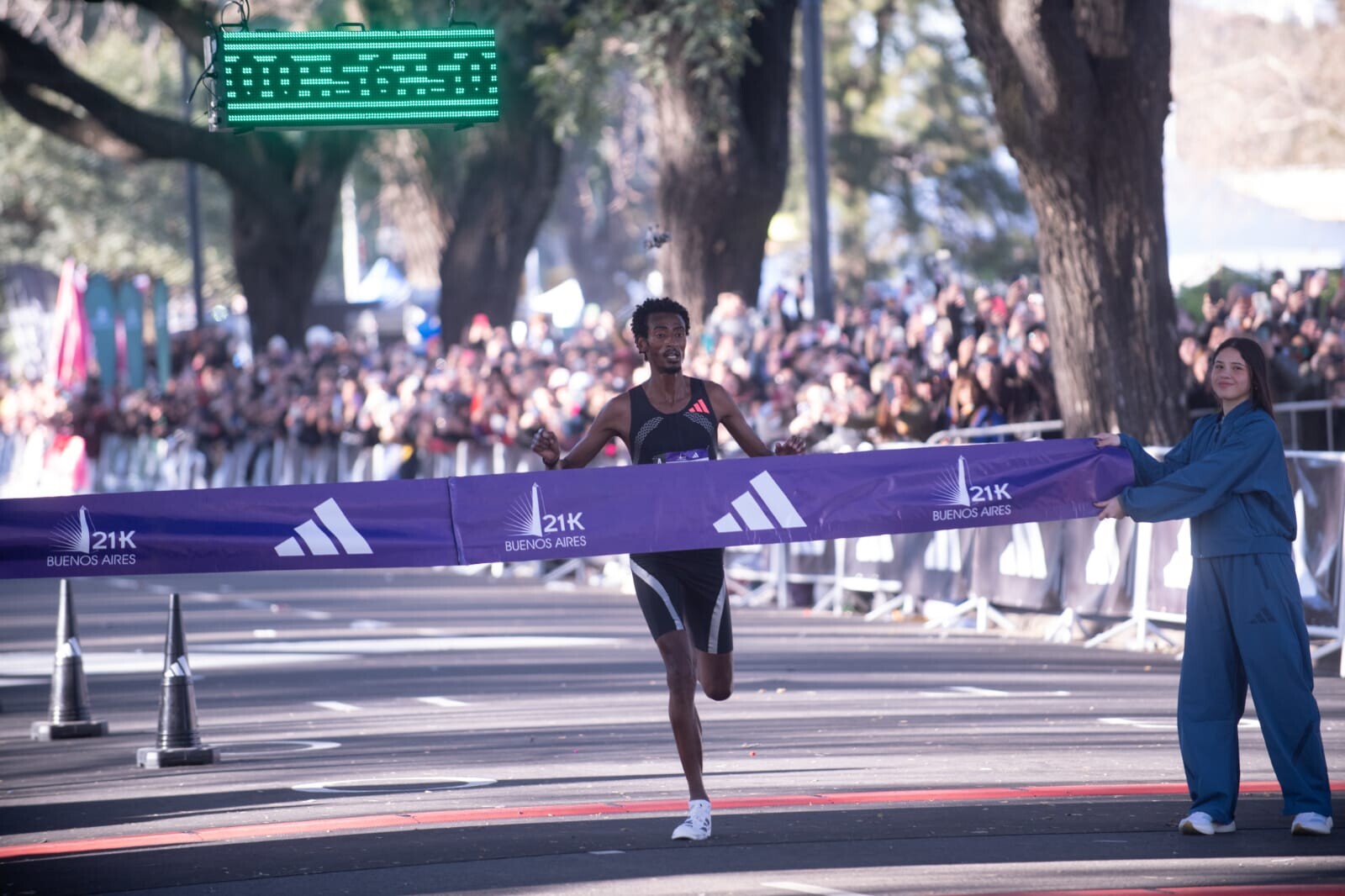
Kejelcha's achievement is particularly significant because the 57-minute barrier had already been broken before. Jacob Kiplimo had previously run under 57 minutes, clocking 56:42 that was not ratified demonstrating that the once-unthinkable barrier was possible. Kejelcha, however, has become the second man to run under 57-minute barrier who now returns to the top of the all-time rankings with another historic performance in Buenos Aires.
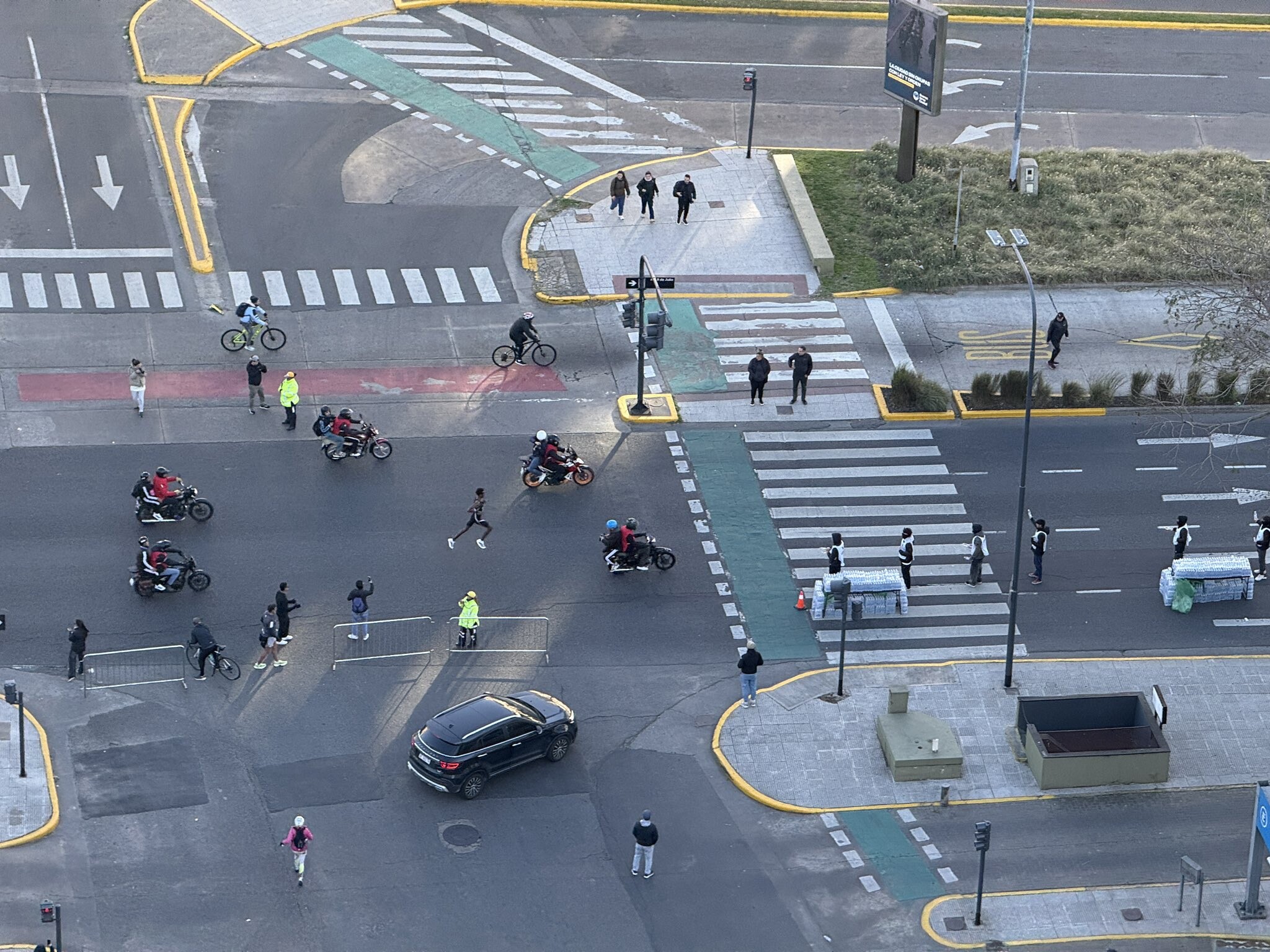
The Ethiopian's race was remarkable not only for the final time but also for the way he built his performance. He covered the opening five kilometres in 13:44 before reaching 10km in 27:18. Rather than slowing, Kejelcha accelerated through the middle stages, passing 15km in 40:39 and 20km in 54:02 as he continued to push the limits of elite road racing.
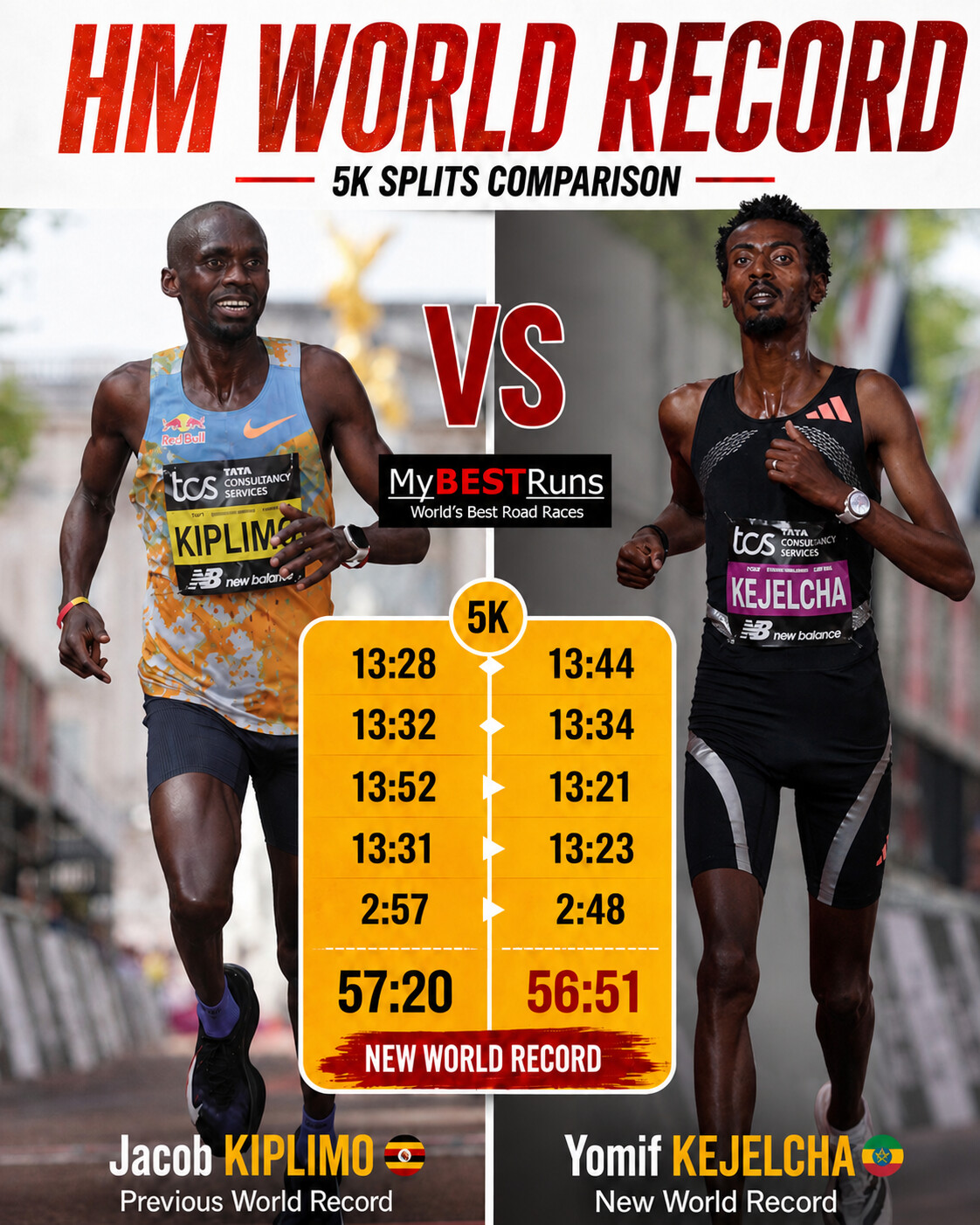
By the time he reached the finish line, Kejelcha had completed the race at an extraordinary average pace of approximately 2:42 per kilometre, producing one of the most astonishing sustained efforts ever witnessed in distance running. His stunning run sent a powerful message to the athletics world and further strengthened his status as one of the most formidable distance runners of his generation.
Behind the record-breaking champion, Ethiopia completed a dominant clean sweep of the men's podium. Tadese Worku Gebresilase claimed second place in 59:18, while Bereket Nega Batebo secured third in 1:00:17, giving Ethiopia a memorable one-two-three finish in the Argentine capital.
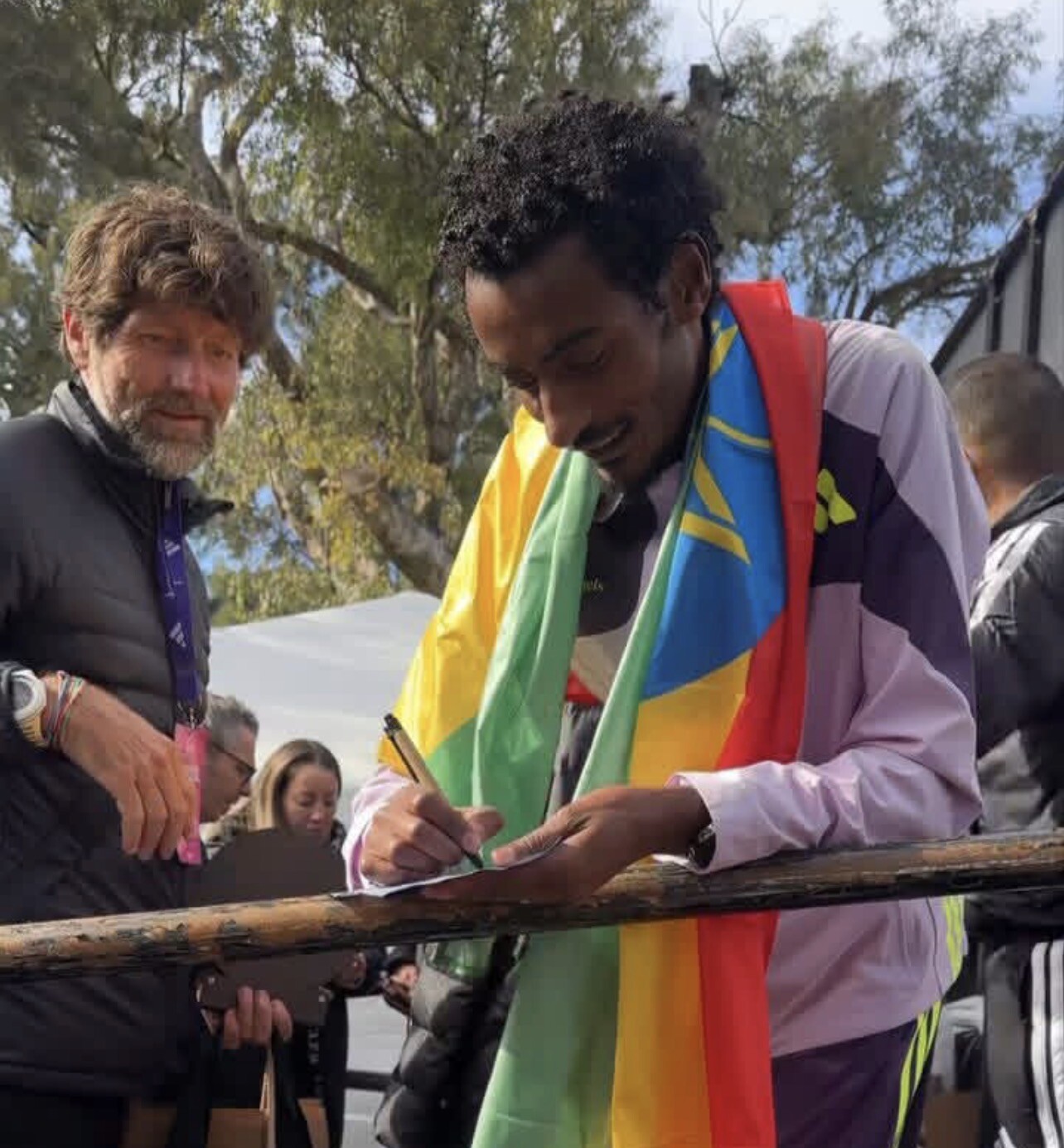
Kenya’s Jonathan Kipkoech Kamosong finished fourth in 1:00:20, followed by compatriot Simon Maywa in fifth with 1:00:55. Argentina’s Ignacio Erario gave the home supporters plenty to celebrate with an impressive sixth-place finish in 1:00:57, breaking the one-hour barrier in front of an enthusiastic local crowd.
Dillon Kipyeko of Kenya finished seventh in 1:01:07, with Robert Kiprop Koech eighth in 1:02:01. Mexico’s Julio Ortiz Ponce took ninth place in 1:03:17, while Colombia’s Jimmy Gómez completed the top 10 in 1:03:34.
The Buenos Aires Half Marathon will now take its place in the history books as the scene of a truly extraordinary breakthrough. For Kejelcha, this was more than just another victory. It was a spectacular return to the top, reclaiming a world record he had previously held and once again rewriting the limits of the half marathon.
The 56:51 performance remains pending ratification, but Yomif Kejelcha's run has already delivered one of the defining moments in the history of road racing.
by Erick Cheruiyot for My Best Runs.
Login to leave a comment

Buenos Aires Half Marathon
The Buenos Aires Half Marathon is one of the most important in Latin America and attracted more than 25,000 runners from all over the world. Dare to run the fastest half marathon in Latin America....
more...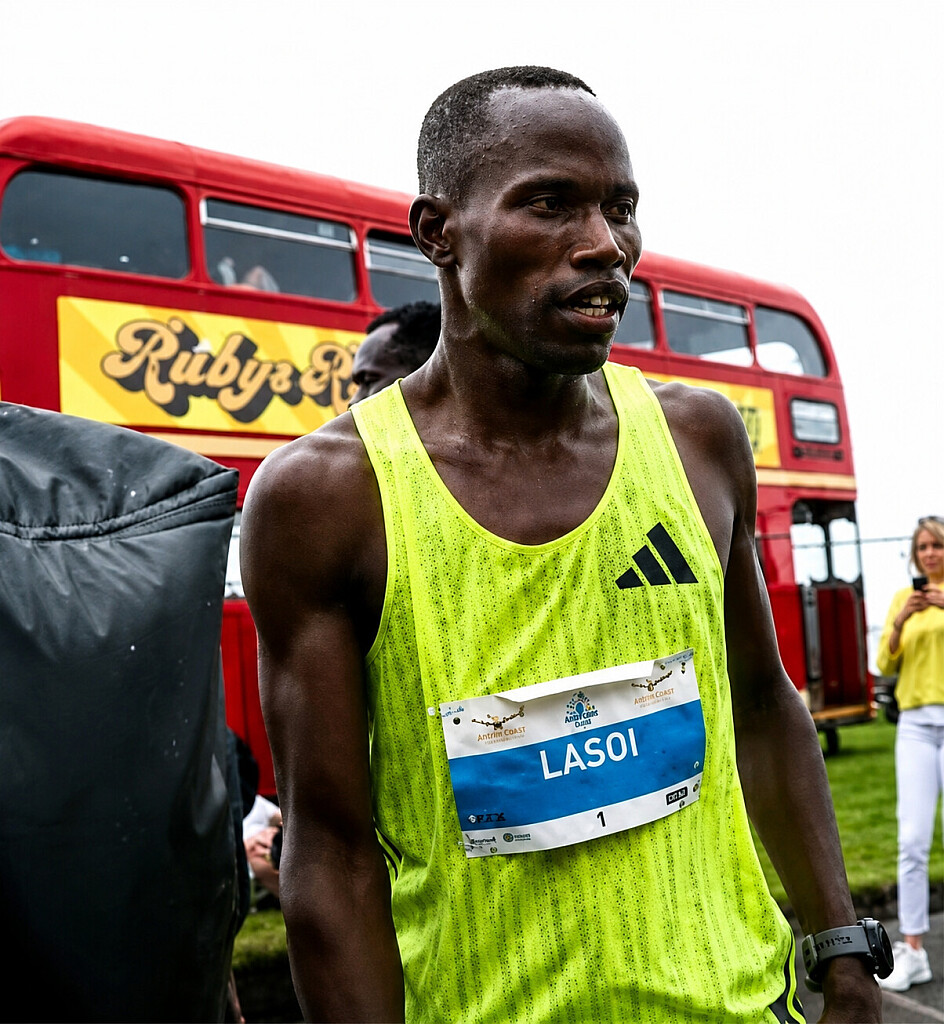
Isaia Lasoi Leads Kenyan Podium Sweep at Antrim Coast Half Marathon
Kenya delivered another commanding display of distance-running excellence at the Antrim Coast Half Marathon, with Isaia Lasoi leading a memorable Kenyan clean sweep of the men's podium in a race packed with world-class performances.
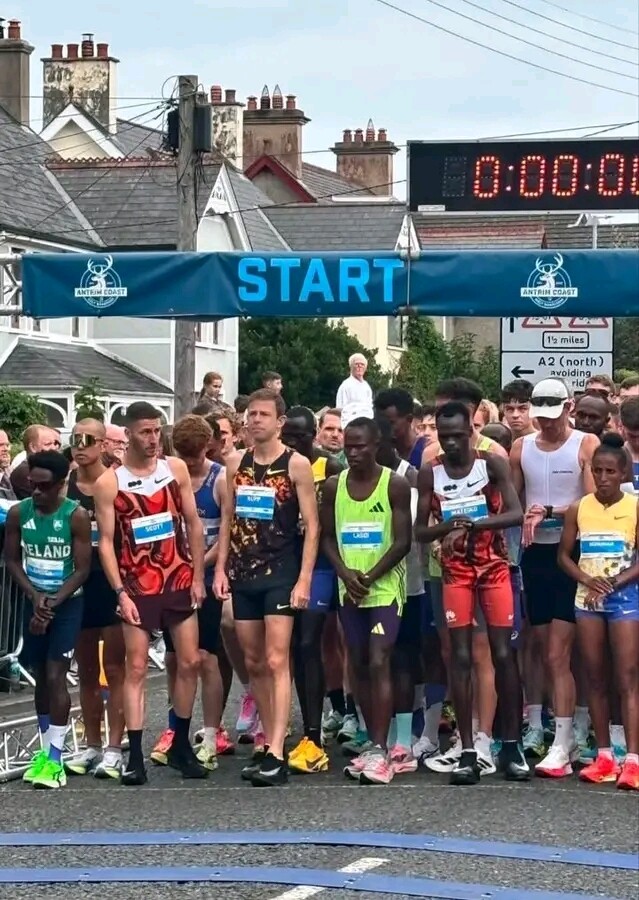
Lasoi emerged victorious after a thrilling battle at the front, crossing the finish line in a superb 58:26 setting a new course record. His winning performance underlined his strength and speed over the half-marathon distance, but he was made to work all the way by fellow Kenyan Daniel Mateiko, who finished just three seconds behind in 58:29 after an electrifying duel for the title.
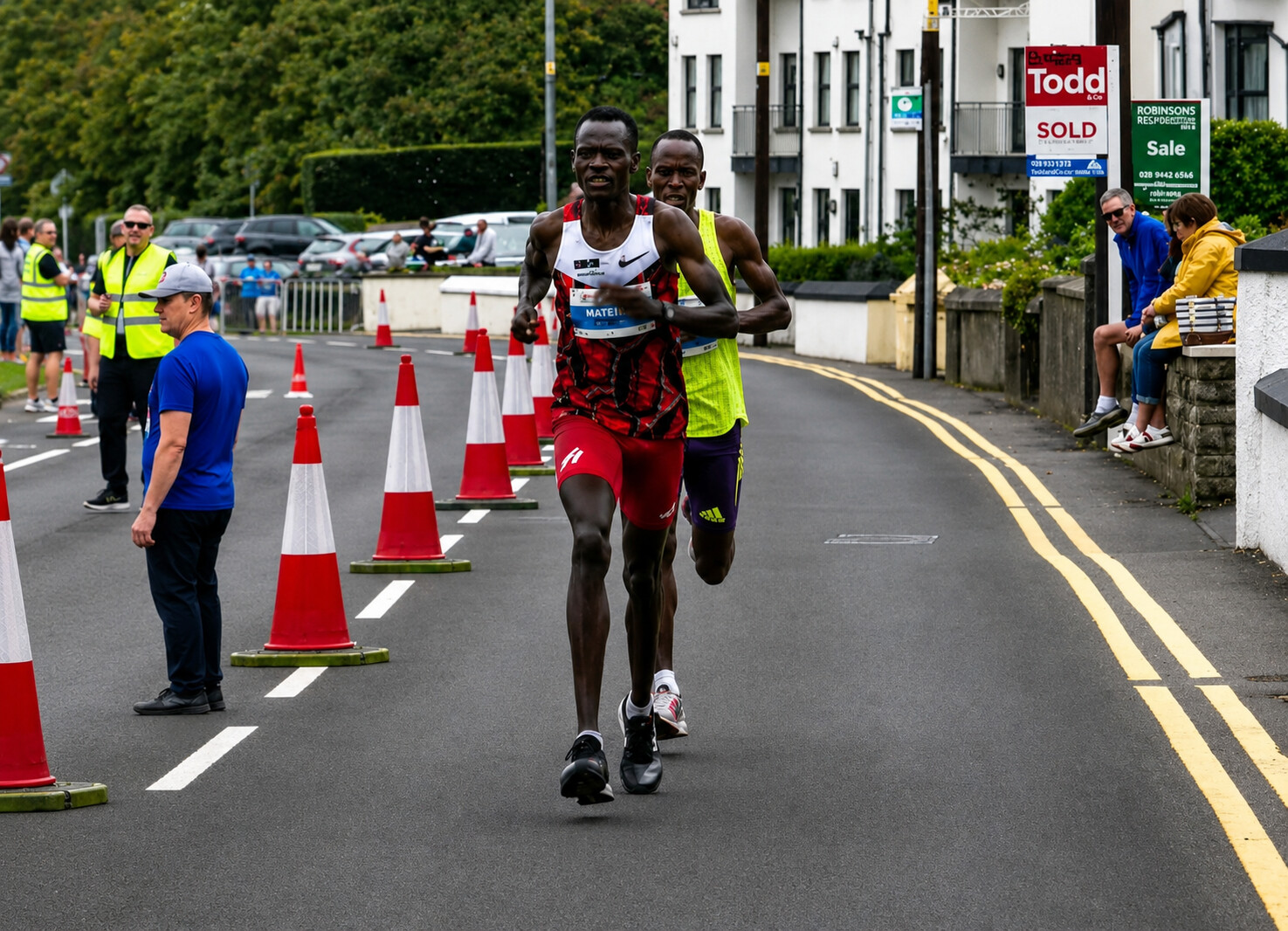
The contest between the two leaders produced one of the standout moments of the race, with both athletes pushing deep into elite territory as they fought for victory. In the end, Lasoi found just enough to secure the win, while Mateiko's narrow defeat highlighted the remarkable depth and quality of Kenya's leading distance runners.
Vincent Kipkorir completed the Kenyan sweep, taking third place in 1:00:38 to ensure that all three places on the podium belonged to Kenyan athletes. Samwel Chebolei added further Kenyan strength to the results, finishing fourth in 1:01:01, while Amos Langat was also among the leading finishers.
The international field featured several prominent names. Australia's Jimmy Whelan produced a strong run, while Ethiopia's Yismaw Dillu featured among the front group. American marathon star Galen Rupp also delivered a notable performance, clocking 1:01:29 in another competitive outing for the experienced distance runner. Former world-class track and road athlete Edward Cheserek was also among the top finishers.
Lasoi's 58:26 victory, however, was the defining performance of the day. Together with Mateiko and Kipkorir, he gave Kenya a perfect podium and another emphatic reminder of the country's extraordinary strength in elite road running.
The Antrim Coast Half Marathon once again provided a fast, competitive stage for some of the world's finest distance runners, but when the decisive moments arrived, it was Kenya that owned the podium.
by Erick Cheruiyot for My Best Runs.
Login to leave a comment
MEA ANTRIM COAST HALF MARATHON
The MEA Antrim Coast Half Marathon 2022 has been approved by World Athletics as an Elite Event. The World Athletics certified course takes in some of the most stunning scenery in Europe, combined with some famous landmarks along the route. With it's flat and fast course, the race is one of the fastest half marathons in the world. Starting...
more...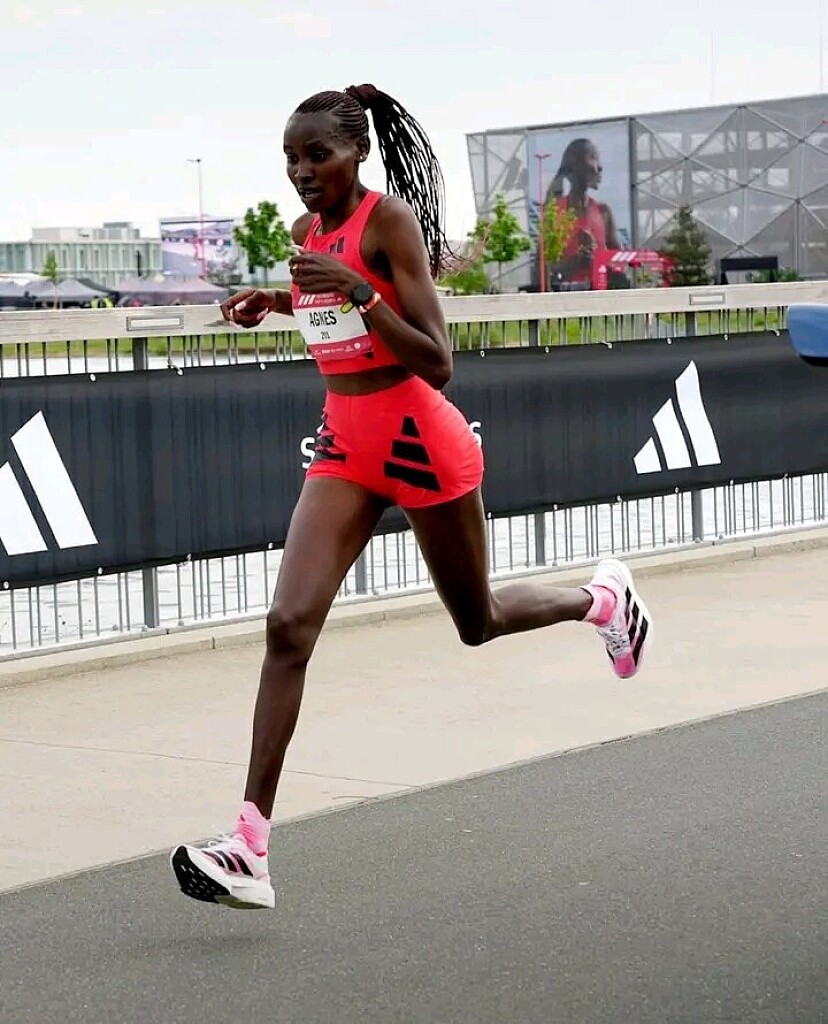
Kenya Unveils Strong Squad for 2026 World Athletics Road Running Championships in Copenhage
Kenya has unveiled a formidable squad for the 2026 World Athletics Road Running Championships, with some of the country’s leading distance-running talents selected to represent the nation in Copenhagen, Denmark, on September 19–20.
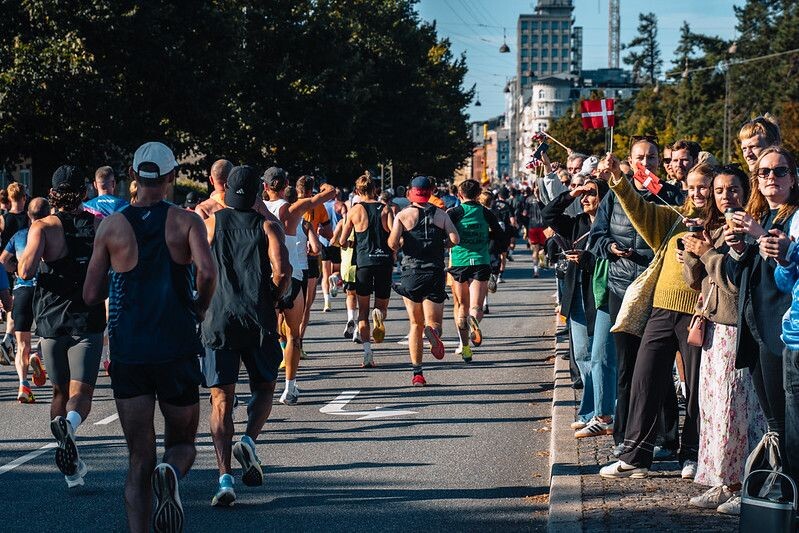
The team features a blend of established international performers and emerging stars, underlining Kenya’s ambition to make a strong impact across the half marathon, 5km and one-mile races.
Leading the women’s half marathon team is Agnes Jebet Ngetich, one of the most accomplished young distance runners in the world. She will be joined by Daisilah Jerono, Veronica Loleo and Lilian Kasait Rengeruk as Kenya looks to challenge for the women’s team and individual honours.
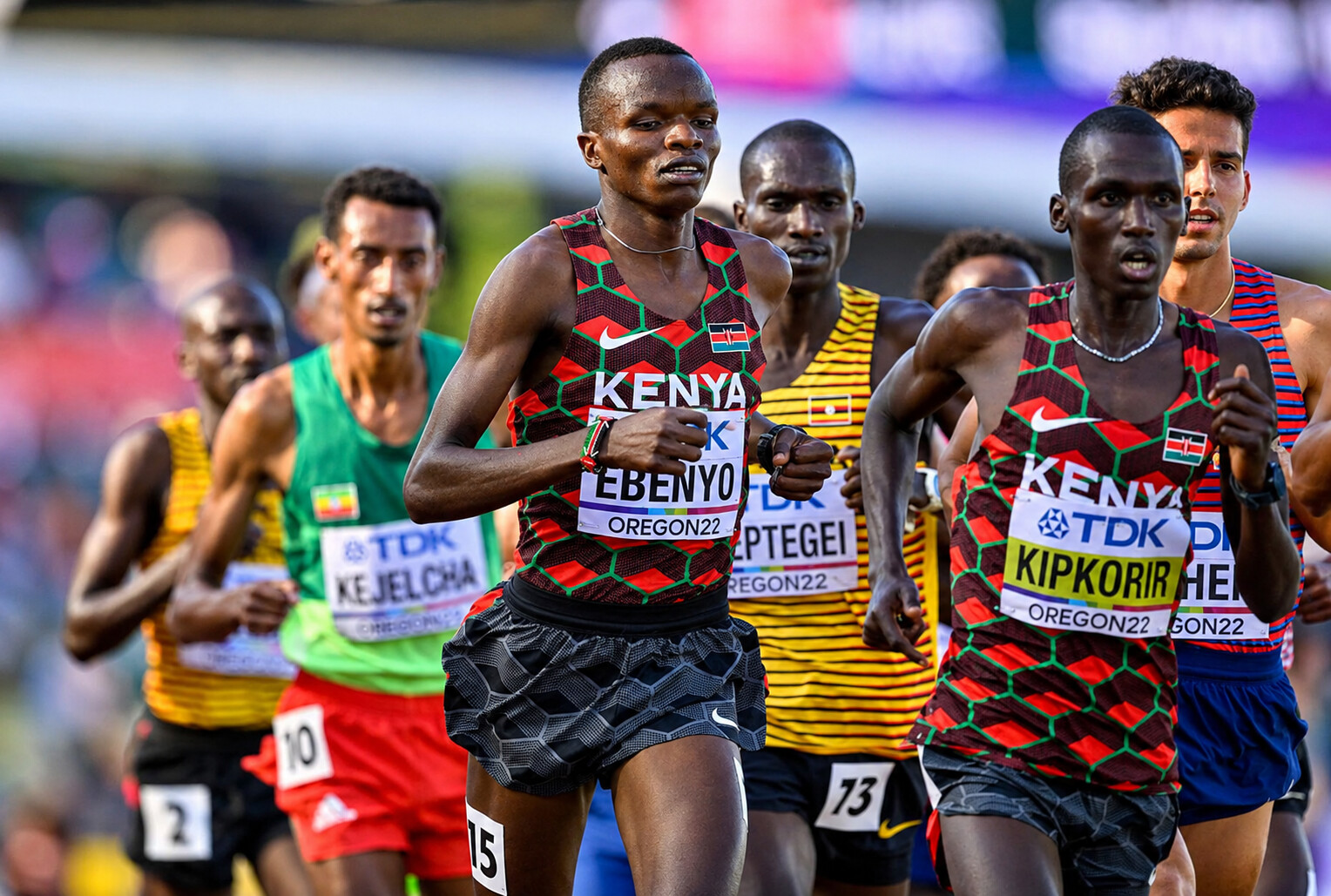
The men’s half marathon squad is equally impressive, headlined by Daniel Simiu Ebenyo. The experienced Kenyan will line up alongside Michael Kiplagat Temoi, Nicholas Kipkorir Kimeli and Gideon Kipkertich Rono, giving Kenya a powerful quartet capable of competing at the front of a championship field.
Kenya will also field two athletes in each of the 5km races. Charles Kiboino and Mathew Kipchumba Kipsang have been selected for the men’s event, while Caroline Makandi Gitonga and Caroline Nyaguthii Nyaga will carry Kenya’s hopes in the women’s race.
The one-mile races will provide another opportunity for Kenyan athletes to showcase the country’s renowned middle- and long-distance strength. Brian Komen and Daniel Kyumbe Munguti will represent Kenya in the men’s race, with Miriam Cherop and Naomi Korir selected for the women’s event.
With representation across all six individual races, Kenya heads to Copenhagen with a well-balanced squad and plenty of international experience. The championships will bring together the world’s leading road runners for two days of high-level competition, with Kenya once again expected to be among the nations fighting for medals.
For a country with such a rich tradition in distance running, the 2026 World Athletics Road Running Championships present another major stage for Kenyan athletes to demonstrate their speed, strength and championship racing ability on the streets of Copenhagen.
Team Kenya
Half Marathon – Men: Michael Kiplagat Temoi, Nicholas Kipkorir Kimeli, Gideon Kipkertich Rono, Daniel Simiu Ebenyo
Half Marathon – Women: Agnes Jebet Ngetich, Daisilah Jerono, Veronica Loleo, Lilian Kasait Rengeruk
5km – Men: Charles Kiboino, Mathew Kipchumba Kipsang
5km – Women: Caroline Makandi Gitonga, Caroline Nyaguthii Nyaga
One Mile – Men: Brian Komen, Daniel Kyumbe Munguti
One Mile – Women: Miriam Cherop, Naomi Korir
Kenya’s road-running stars now have their sights firmly set on Copenhagen, where they will look to turn the strength of the squad into medals and memorable performances on the world championship stage.
by Erick Cheruiyot for My Best Runs.
Login to leave a comment
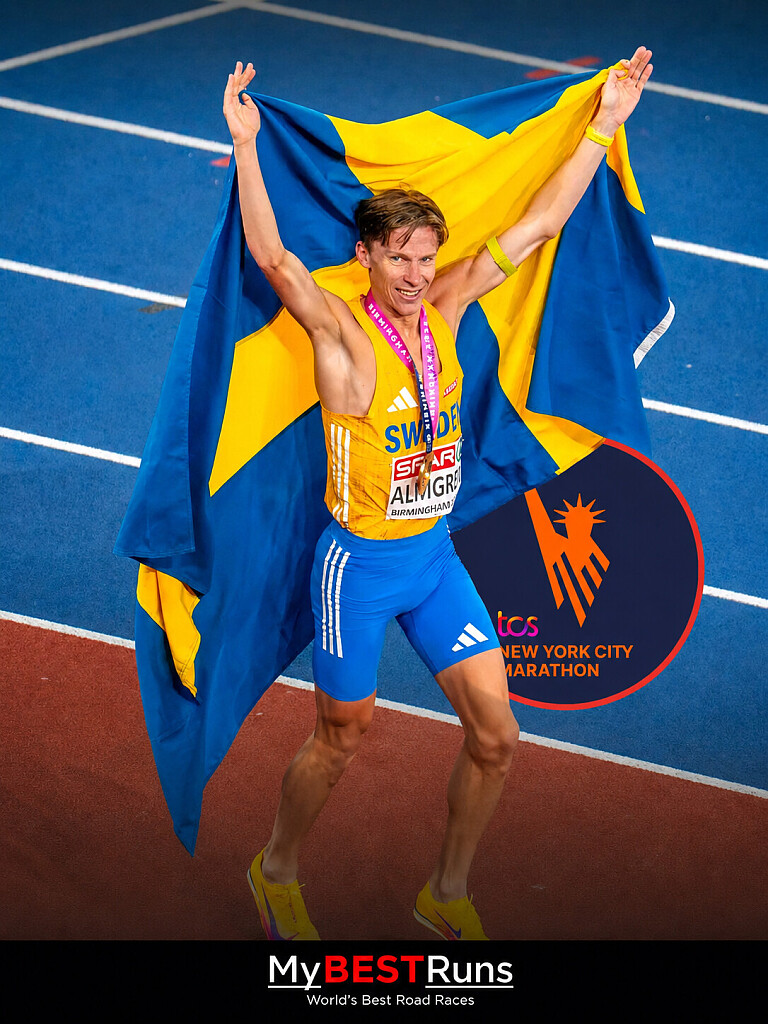
From European Records to 42.195km: Andreas Almgren Takes on New York
Andreas Almgren has spent the past two seasons transforming himself into one of Europe’s most formidable distance runners. Now, the Swedish star is ready to take on an entirely new challenge — the marathon.
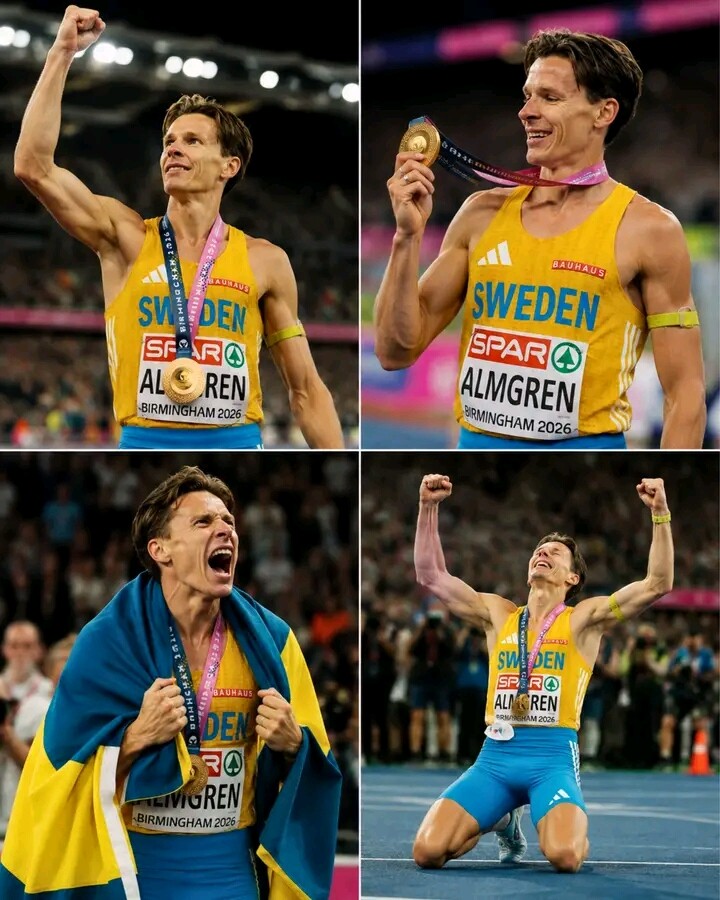
Fresh from a commanding European 10,000m triumph in Birmingham, Almgren has confirmed that he will make his marathon debut at the TCS New York City Marathon on November 1. The decision adds another intriguing chapter to a remarkable rise that has seen him repeatedly rewrite the European record books.
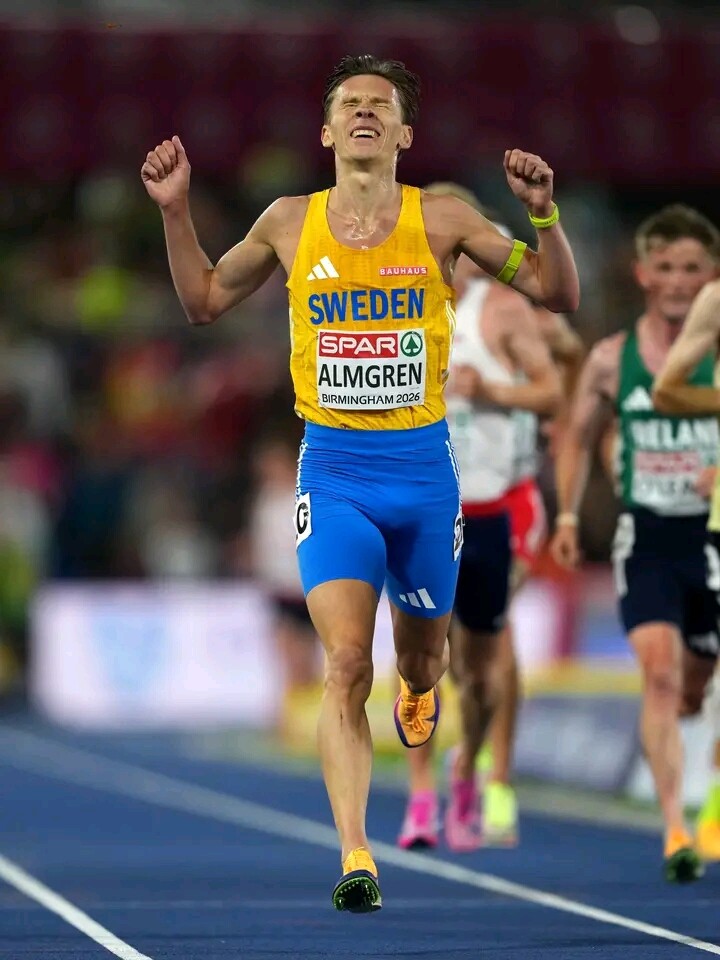
The 31-year-old owns European records of 12:44.27 for 5,000m, 26:45 for 10km on the road and 58:41 for the half marathon — extraordinary marks that underline both his speed and his growing endurance. His 26:45 in Valencia in January 2026 lowered his own European 10km record, while his 58:41 in Valencia last October made him the first European athlete to break the 59-minute barrier for the half marathon.
His latest achievement came in Birmingham, where Almgren produced one of the most dominant performances of the European Championships. He stormed to the 10,000m title in 27:23.44, setting a championship record and adding a major senior title to the World Championships bronze medal he won over the same distance in Tokyo last year.
Yet his choice of New York for his first marathon is what makes the announcement particularly fascinating.
Rather than selecting a traditionally fast, flat course where a debutant can concentrate almost exclusively on the clock, Almgren has chosen one of the most demanding and tactically complex marathons on the calendar. The New York course takes runners through all five boroughs and across five bridges before the finish in Central Park, combining repeated climbs, descents, turns and constantly changing race dynamics.
It is a course that rewards patience, strength and tactical intelligence as much as raw speed. For Almgren, whose career has been built around racing at the highest level rather than simply accumulating fast times, the setting could provide a fascinating test of how his exceptional track and road credentials translate to 42.195 kilometres.
And he will not be entering a quiet debut race. The 2026 field features defending men's champion Benson Kipruto, former champion Geoffrey Kamworor, Dutch star Abdi Nageeye, American contenders Conner Mantz and Zouhair Talbi, as well as several other elite marathoners. Almgren is one of a small group of high-profile athletes making their marathon debuts in New York.
The race will also mark the 50th anniversary of the modern five-borough New York City Marathon course, adding even greater significance to an already prestigious occasion. With Almgren bringing European-record credentials, a fresh continental title and the confidence of a breakthrough period behind him, his first encounter with the marathon promises to be one of the most closely watched stories of the autumn road-racing season.
For a runner who has already conquered the track and rewritten the European road-running record books, New York represents the beginning of another journey.
On November 1, the question will no longer be how fast Andreas Almgren can run 5,000m, 10km or a half marathon.
It will be how far that extraordinary speed and endurance can carry him over 42.195 kilometres through the streets of New York.
by Erick Cheruiyot for My Best Runs.
Login to leave a comment
TCS New York City Marathon
The first New York City Marathon, organized in 1970 by Fred Lebow and Vince Chiappetta, was held entirely in Central Park. Of 127 entrants, only 55 men finished; the sole female entrant dropped out due to illness. Winners were given inexpensive wristwatches and recycled baseball and bowling trophies. The entry fee was $1 and the total event budget...
more...
Yomif Kejelcha and Fotyen Tesfay Arrive in Buenos Aires as the Fastest 21K Beckons
Buenos Aires is ready for a spectacular day of road racing, with Ethiopian stars Yomif Kejelcha and Fotyen Tesfay already in the Argentine capital ahead of Sunday’s Buenos Aires Half Marathon, also known as the 21K Buenos Aires.
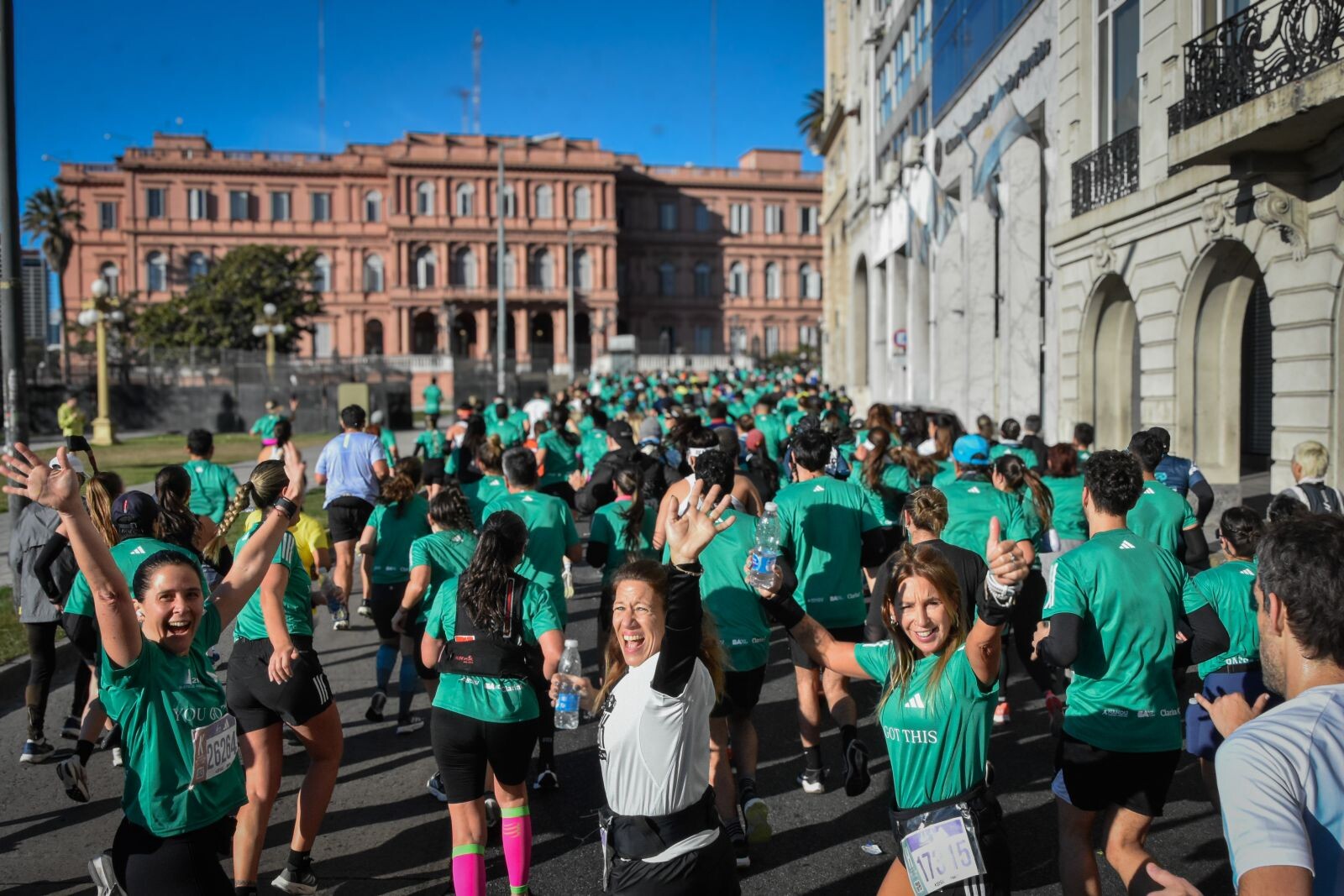
The race takes place on Sunday, August 23, 2026, bringing together a record field of 31,500 runners after entries sold out. Alongside the mass field, some of the world’s leading distance athletes will take centre stage, with the spotlight firmly on the elite races as they chase victory and potentially exceptional times over 21.097 kilometres.
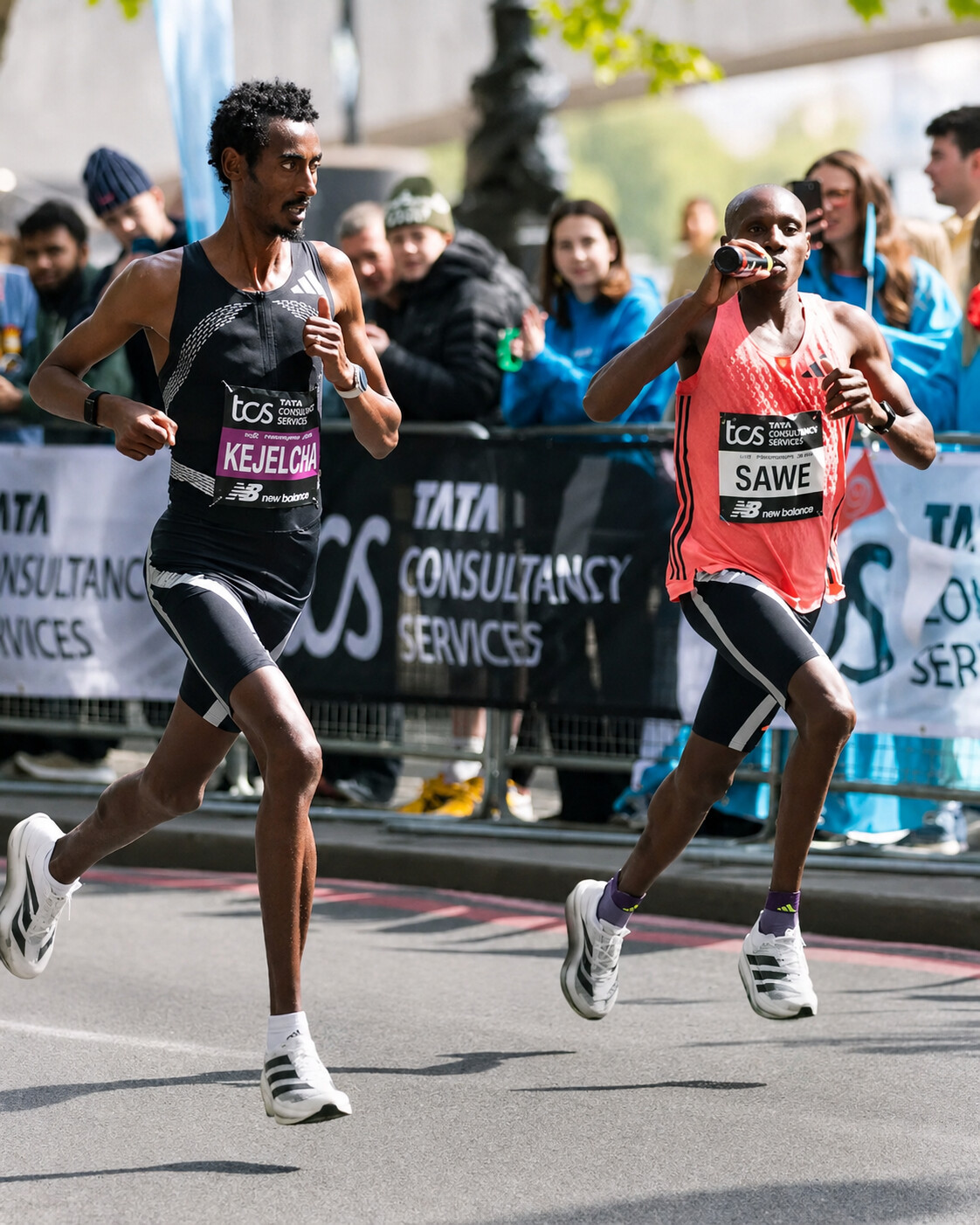
The race starts and finishes in Palermo, at Av. Figueroa Alcorta and Av. Dorrego, before taking runners onto a fast, flat 21.097-kilometre course through the Argentine capital. The route winds past some of Buenos Aires’ most iconic landmarks, including the Obelisco, Teatro Colón and Casa Rosada, providing a spectacular setting for one of the region’s premier road races.
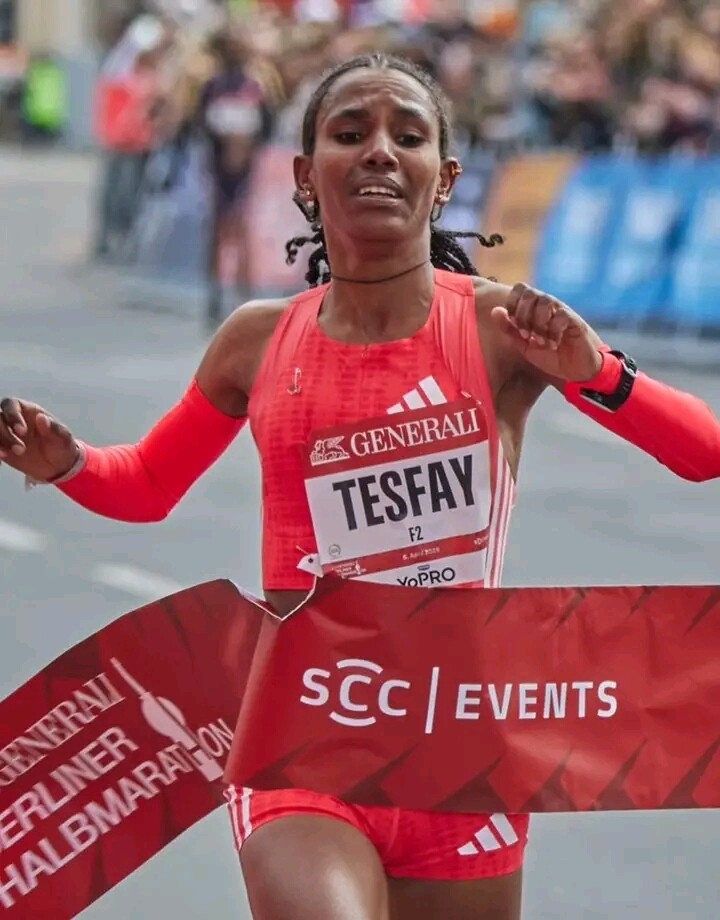
Kejelcha arrives as one of the most formidable names in modern distance running. The 29-year-old Ethiopian is the reigning world-record holder for the half marathon, having clocked 57:30 in Valencia in October 2024. He has also established himself as an exceptional marathoner, running 1:59:41 on his debut at the 2026 London Marathon — the fastest marathon debut ever recorded and the second-fastest official marathon performance in history.
His presence adds enormous prestige to a Buenos Aires race that has become synonymous with fast running. In 2025, Uganda’s Jacob Kiplimo ran 58:29 in Buenos Aires, producing one of the fastest half-marathon performances ever recorded in the Americas and further cementing the event’s reputation as a venue capable of delivering extraordinary times.
Tesfay brings equally impressive credentials to the women’s race. The 28-year-old Ethiopian owns a half-marathon personal best of 1:03:21, achieved in Valencia in 2024. Her progression over the marathon distance has been equally striking, highlighted by her 2:10:51 national record set in March 2026.
The conditions could further enhance the prospects of fast racing. Buenos Aires typically experiences cool temperatures around race time, with conditions commonly ranging between 9°C and 14°C — favourable weather for elite distance running when combined with the course’s flat profile.
For Kejelcha and Tesfay, the mission is clear: compete for the titles, test themselves against a strong international field and take advantage of one of the fastest half-marathon stages in the Americas.
With thousands of runners preparing to flood the streets and two Ethiopian stars already in position, anticipation is reaching its peak.
The stars have arrived. The course is ready. On Sunday, Buenos Aires waits for the fireworks.
by Erick Cheruiyot for My Best Runs.
Login to leave a comment
Buenos Aires Half Marathon
The Buenos Aires Half Marathon is one of the most important in Latin America and attracted more than 25,000 runners from all over the world. Dare to run the fastest half marathon in Latin America....
more...
Three Rising Distance Stars Ready to Make Their Marathon Debuts at the 2026 New York City Marathon
The next generation of marathon talent will take centre stage on the streets of New York this November, with Weini Kelati of the United States, Andreas Almgren of Sweden and Kenya’s Patrick Kiprop all set to make their marathon debuts at the 2026 TCS New York City Marathon on November 1.
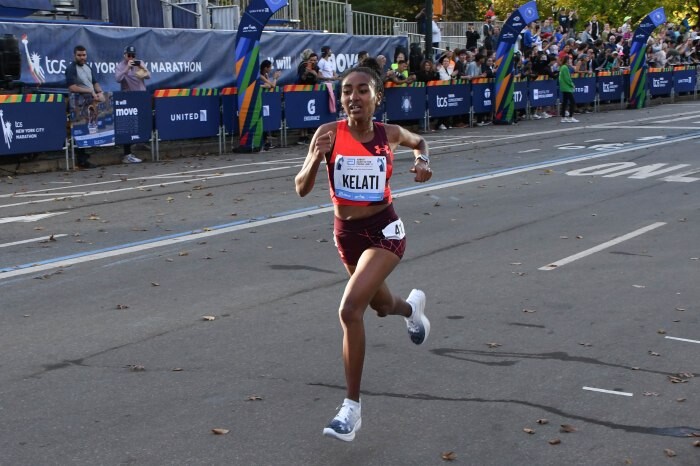
All three arrive in New York with impressive credentials built across track, cross country and shorter road races, creating one of the most intriguing groups of marathon debutants in this year’s field.
Kelati will enter the 26.2-mile challenge after establishing herself as one of America’s leading distance runners. The U.S. Olympian owns a 1:06:04 half-marathon personal best, an American record, and has already demonstrated the combination of endurance and speed required to compete at the highest level. Her transition to the marathon will be closely watched as she begins a new chapter in her career on one of the sport’s biggest stages.

Almgren brings perhaps even more explosive speed to his first marathon. The Swedish star owns a remarkable 58:41 half-marathon personal best, a national and European record at the time it was achieved, while his track résumé includes world-class performances over 3,000m and 5,000m. His ability to sustain that extraordinary speed over 42.195 kilometres will be one of the central questions surrounding his New York debut.
Then there is Patrick Kiprop, who will carry Kenya’s hopes into his first marathon after building an impressive reputation during a decorated collegiate career in the United States.
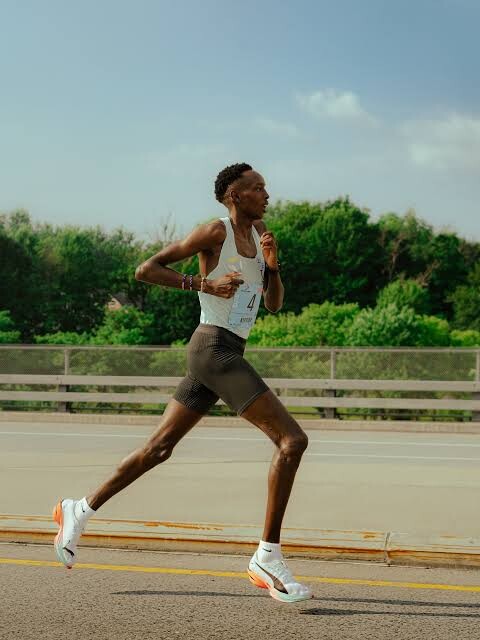
Kiprop enjoyed a standout spell with the Arkansas Razorbacks, collecting five First-Team NCAA All-America honours across cross country, indoor and outdoor track. He became a two-time NCAA South Central Region Cross Country champion in 2022 and 2023 before adding an SEC Outdoor 5,000m title in 2024 and a silver medal in the 10,000m.
He also etched his name into Arkansas history by breaking the university’s 5,000m school record. His American collegiate journey began at Fresno Pacific University, where he was named the Sunbird Male Newcomer of the Year in 2021 before transferring to Arkansas.
Following his collegiate success, Kiprop made the transition to professional running and joined the On Athletics Club Global, placing himself within one of the sport’s leading international training environments. His attention has increasingly shifted toward road racing, with the half marathon becoming an important bridge toward the marathon.
Kiprop has already shown that his speed can translate successfully to the roads, winning the professional division at the prestigious Bolder Boulder 10K. Now, New York presents a considerably bigger challenge and an opportunity to discover how his considerable distance-running ability translates to the full marathon.
For Kelati, Almgren and Kiprop, November 1 will represent more than simply another race. It will be the beginning of their marathon careers.
The New York City Marathon is notoriously demanding, combining multiple bridges, relentless changes in rhythm and a difficult closing stretch through Manhattan. Add enormous crowds and the pressure of a global audience, and the course provides an unforgiving introduction to 42.195 kilometres.
Yet that is precisely what makes these three debuts so fascinating.
Kelati arrives with American-record speed. Almgren brings European-record-level half-marathon credentials and extraordinary track ability. Kiprop brings a decorated NCAA background, Kenyan distance-running pedigree and growing experience on the roads.
None of them needs to prove that they possess speed. New York will determine whether they can transform that speed into marathon strength.
With an already star-studded 2026 field, the arrival of these three rising stars adds another compelling storyline to race day.
The future of marathon running is coming to New York—and on November 1, Kelati, Almgren and Kiprop will discover what they can do over 26.2 miles.
by Erick Cheruiyot for My Best Runs.
Login to leave a comment
TCS New York City Marathon
The first New York City Marathon, organized in 1970 by Fred Lebow and Vince Chiappetta, was held entirely in Central Park. Of 127 entrants, only 55 men finished; the sole female entrant dropped out due to illness. Winners were given inexpensive wristwatches and recycled baseball and bowling trophies. The entry fee was $1 and the total event budget...
more...
About 5,000 Runners Turn San Diego Into A Sea Of Energy At The 49th America’s Finest City Half Marathon
San Diego came alive on Sunday, August 16, 2026, as approximately 5,000 runners from across the region and beyond took to the streets for the 49th annual America’s Finest City Half Marathon & 5K, bringing together competitive athletes, recreational runners, families, running clubs and spectators for one of the city’s longest-running road racing traditions.
Established in 1978, the America’s Finest City Half Marathon has become a signature event on San Diego’s running calendar, with the 2026 edition once again showcasing the city’s spectacular coastline, historic landmarks and vibrant urban landscape. The event also featured a 5K, giving runners of different abilities an opportunity to take part in the morning’s festivities.

The 13.1-mile half marathon followed a scenic point-to-point course that began at the historic Cabrillo National Monument. With panoramic views of the Pacific Ocean and San Diego Bay setting the tone, runners embarked on a journey through some of San Diego’s most recognizable locations.
From the starting point, the course moved through historic Fort Rosecrans and Point Loma before continuing along San Diego Bay and Harbor Island. Participants then travelled through downtown San Diego before making their way to the finish at iconic Balboa Park, where cheering spectators, live music and celebrations greeted runners as they completed their journey.
At the front of the race, Edward Buck produced the fastest performance of the day, winning the men’s half marathon in 1:04:39. The 25-year-old from Newark, United Kingdom, held off a closely packed group at the finish, with San Diego’s Lars Dewall finishing just five seconds behind in 1:04:44.
Jaquavious, 29, from Orem, Utah, secured third place in 1:05:04, while Phoenix’s Aron Orar finished fourth in 1:05:19. The first four men were separated by just 40 seconds, underlining the competitive nature of the race.
Morgan Jensen claimed the women’s title in 1:13:12, with the 24-year-old from Sandy, Utah, producing a commanding performance over the 13.1-mile course. Melissa Berry, 26, of Flagstaff, Arizona, finished second in 1:16:26, while Katelyn Yunker, 24, of Carlsbad, California, completed the women’s podium in 1:18:41.
Hope Stark, 22, of Colorado Springs, Colorado, followed in fourth with 1:19:23. Jensen’s winning margin was 3 minutes and 14 seconds, while only 42 seconds separated Yunker and Stark in the battle for third and fourth.
The accompanying 5K offered a shorter, fast and flat route through the heart of Balboa Park, providing an accessible option for runners of all levels while adding to the lively atmosphere surrounding the main event.
The 49th edition also carried special significance as it marked the conclusion of the 2026 SoCal Triple Crown, giving participants an additional reason to celebrate after completing the Southern California race series.
With thousands of runners filling San Diego’s streets and spectators supporting them along the way, the America’s Finest City Half Marathon & 5K once again proved that the appeal of road racing extends far beyond competition. From the breathtaking views at Cabrillo National Monument to the historic streets of Point Loma, the waterfront, downtown and the finish in Balboa Park, the event offered runners a memorable journey through the heart of San Diego.
The 2026 edition ultimately brought together speed, scenery and community, reinforcing the America’s Finest City Half Marathon’s place as one of San Diego’s most distinctive and enduring running celebrations.
by Erick Cheruiyot for My Best Runs.
Login to leave a comment

America's Finest City
America's Finest City Half Marathon is run on a fast, scenic, point-to-point course. The race starts at the historic Cabrillo National Monument at the tip of Point Loma with its world-renowned vistas of San Diego Bay and the Pacific Ocean, follows scenic San Diego Bay and Harbor Island along the Embarcadero to the Star of India, winds through downtown San...
more...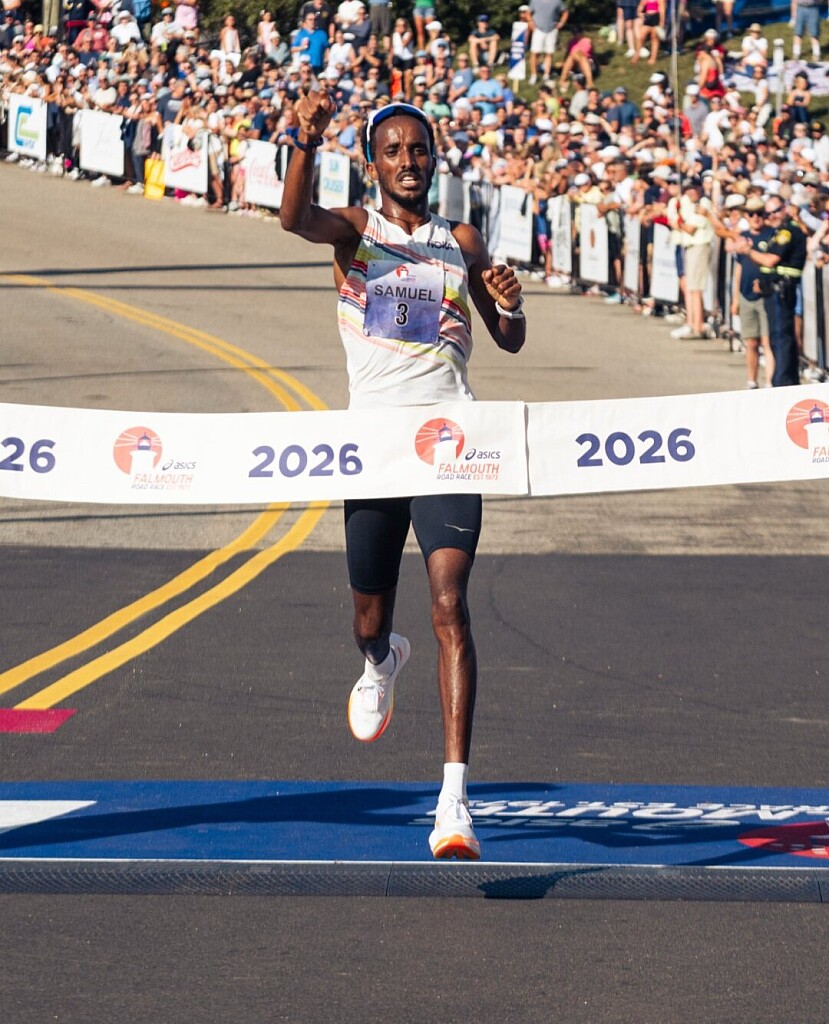
Habtom Samuel Makes Falmouth History With A Record-Breaking Sub-31-Minute Victory
History was made on Sunday morning, August 16, 2026, as Eritrea’s Habtom Samuel produced a breathtaking performance at the Falmouth Road Race, becoming the first athlete in the event’s history to break the 31-minute barrier.
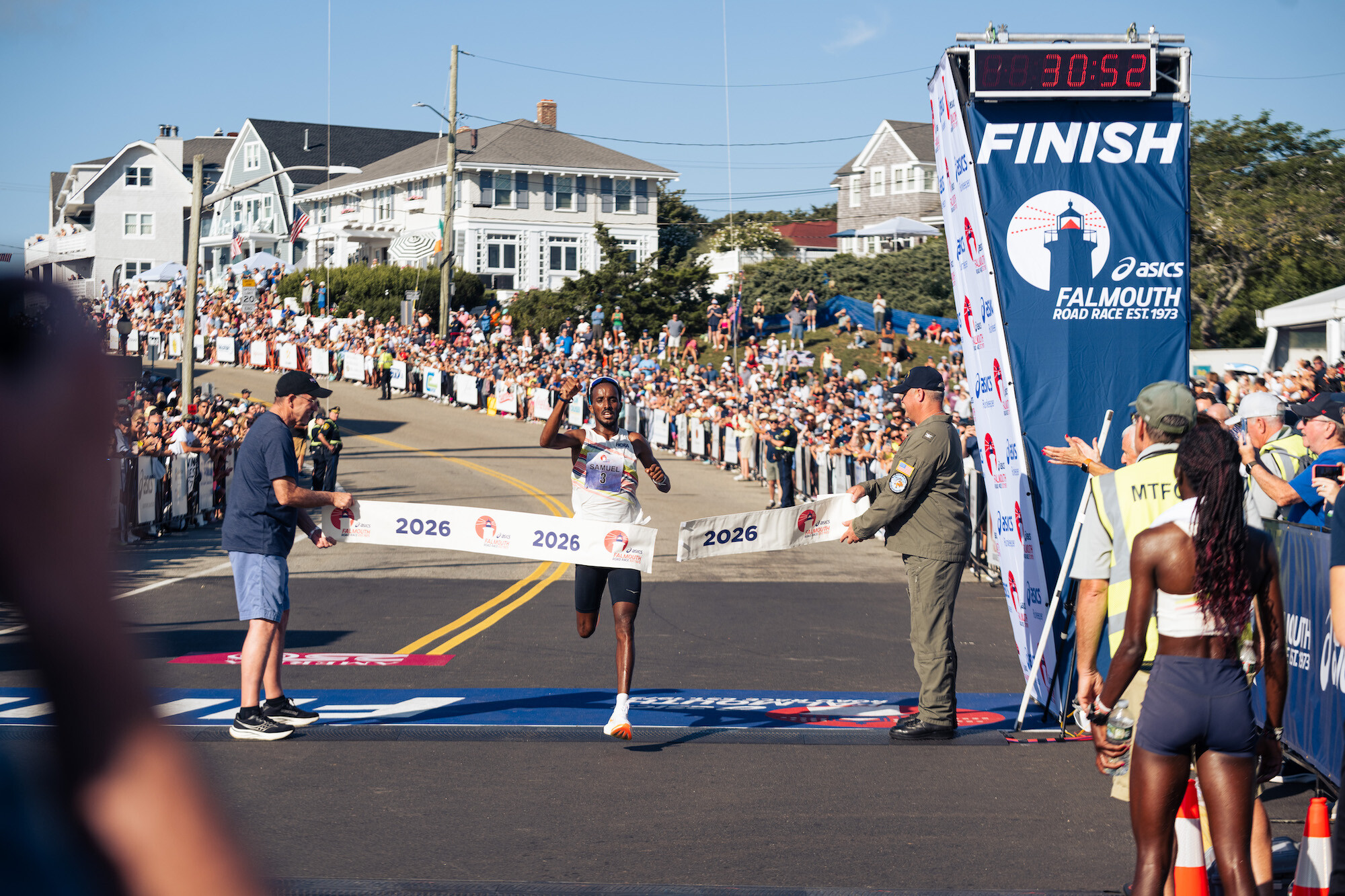
The 22-year-old Samuel, competing in his first Falmouth Road Race and only his second professional road race, turned an already remarkable debut into a piece of history. The former University of New Mexico standout completed his transition to the professional ranks following an undefeated collegiate season and has now opened his professional career with two victories.
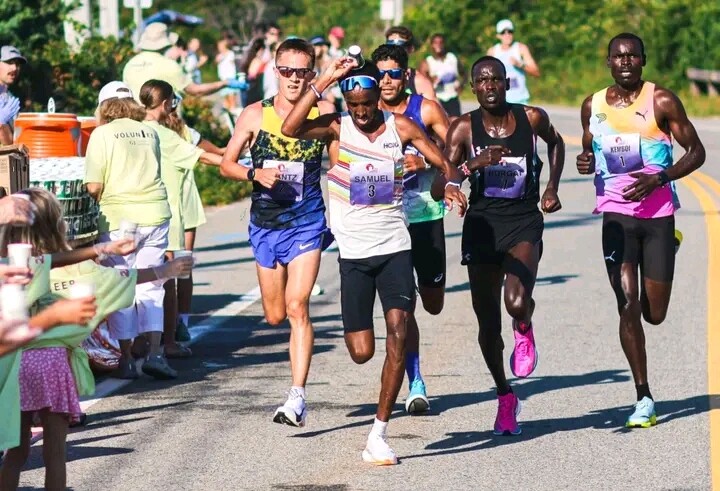
The men’s race unfolded at a ferocious pace from the opening miles, with the leaders threatening the long-standing course record almost immediately. By the fifth mile, the contest had narrowed to a two-man duel between Samuel and Kenya’s Edwin Kurgat.
The pair remained together from the end of Surf Drive until around the turn onto Falmouth Heights Road, matching each other stride for stride as the race entered its decisive stages.
Then Samuel found another gear.
With roughly a mile remaining, the Eritrean surged decisively away from Kurgat and never looked back. He powered toward the finish with authority, creating an 11-second winning margin and stopping the clock in 30:54.
His performance shattered the previous course record of 31:08 and made him the first athlete ever to dip under 31 minutes at Falmouth.
The record had stood for more than two decades. Kenya’s Gilbert Okari first established the 31:08 mark in 2004, while compatriot Wesley Kiptoo equalled it in 2023. Samuel’s extraordinary run finally moved the benchmark into a new era.
“Breaking this course record in this amazing historical road race is awesome,” Samuel said. “I’m so proud of myself and I’m glad to be the first person able to run under 31 minutes.”
Samuel’s victory also continues a remarkable start to his professional career. After completing an undefeated campaign at the University of New Mexico, he made his road-racing debut at the Beach to Beacon 10K in Maine in July, where he immediately claimed victory. His Falmouth triumph now makes it two wins from two professional road races.
Kurgat, meanwhile, produced a performance that would have been enough to win every previous edition of the Falmouth Road Race. The 2019 champion crossed the line in a remarkable 31:04, finishing comfortably inside the former course-record mark despite being unable to match Samuel’s decisive late surge.
The American men also delivered a memorable battle behind the leading pair.
Zouhair Talbi, the American course-record holder at the Boston Marathon, and Conner Mantz, the American record holder in both the half marathon and marathon, spent much of the race locked together as they battled for the top American position.
Talbi ultimately prevailed, finishing third overall in 31:17 and setting a new American course record for the Falmouth course. It marked his best finish at the race, improving on last year’s fifth-place result.
Mantz followed closely in 31:19, also running faster than the previous American course record.
The result was a spectacular morning on Cape Cod, with the race producing a new overall course record, a historic first sub-31-minute performance and four men finishing faster than the previous 31:08 benchmark.
But above them all stood Samuel, whose remarkable surge in the final stages transformed a closely fought road race into one of the defining performances in Falmouth Road Race history.
by Erick Cheruiyot for My Best Runs.
Login to leave a comment

Falmouth Road Race
The Falmouth Road Race was established in 1973 and has become one of the premier running events of the summer season. Each year the race draws an international field of Olympians, elite runners and recreational runners out to enjoy the scenic 7-mile seaside course. The non-profit Falmouth Road Race organization is dedicated to promoting health and fitness for all in...
more...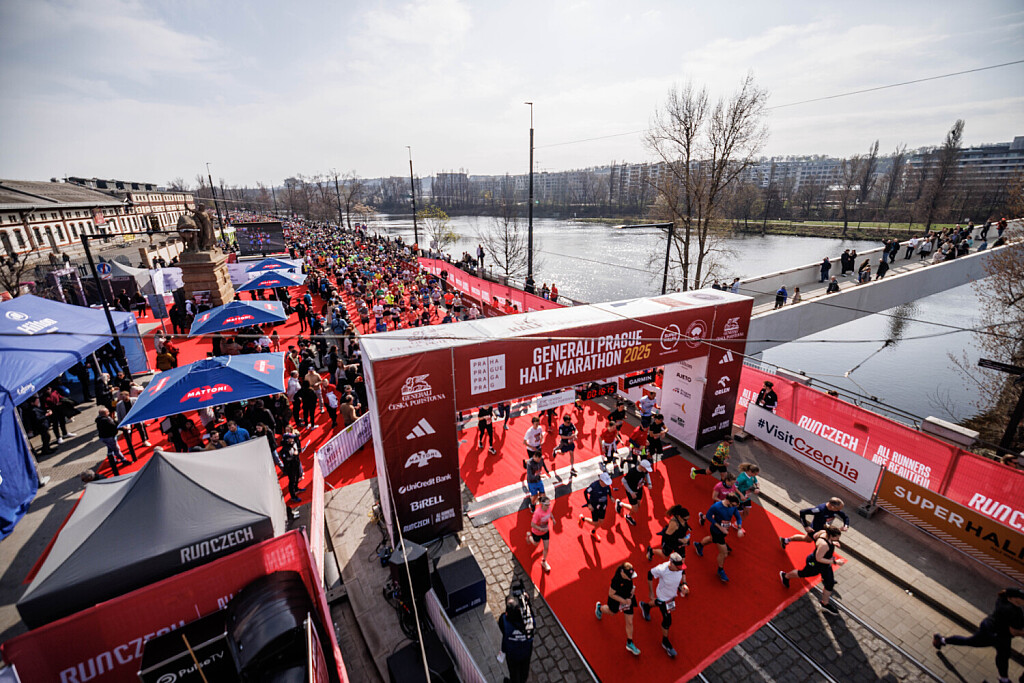
Prague Half Marathon’s First Ballot Draws More Than 70,000 Applications
The Generali Prague Half Marathon has entered a new era of unprecedented demand, with more than 70,000 runners reportedly applying for places in the race’s first-ever ballot for the 2027 edition.
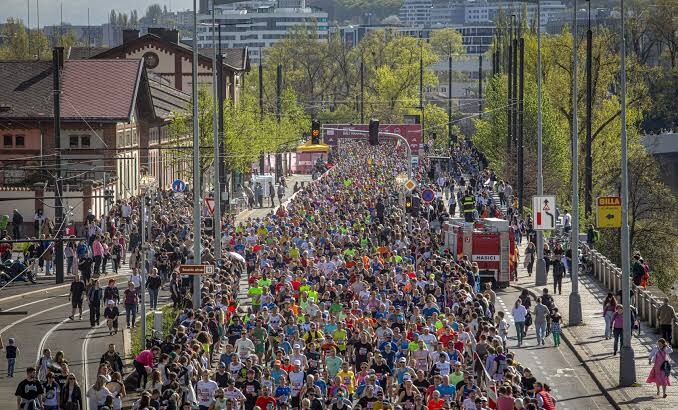
The remarkable response underlines the extraordinary international appeal of one of Europe’s most celebrated half marathons. With the race limited to 17,000 participants, the number of applications means demand exceeded available places by more than four times. RunCzech confirmed that the ballot attracted more than six times the race capacity in applications.
The move to a random draw marks a significant change from the previous registration system. In 2026, the 17,000-place field disappeared within just 2 hours and 23 minutes of registration opening, demonstrating how fiercely contested entry had become. Rather than rewarding those who happened to be quickest online, the new system gives applicants an equal opportunity through a random selection process.
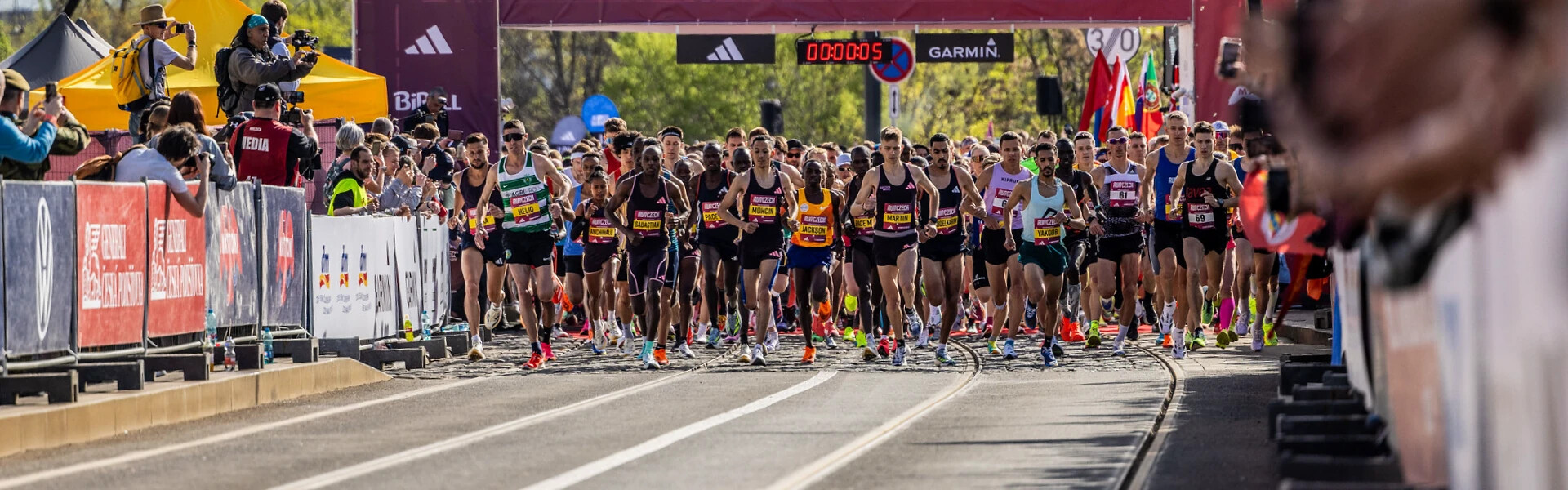
Applications opened on July 21 and closed at midnight heading into August 12, bringing three weeks of intense anticipation to an end. The draw is scheduled to take place this week, with every applicant due to receive the outcome by email no later than August 21. Those fortunate enough to secure a place will then have seven days to complete their registration before any unclaimed entries are returned to the pool.
The scale of the international interest is particularly striking. Applicants came from 161 countries, with 77 per cent of all applications submitted from outside the Czech Republic. The United Kingdom and Germany provided the largest overseas applicant groups, while Spain, Poland, Portugal, Italy and France were also strongly represented. Almost 1,300 applications came from Brazil and more than 700 from the United States.
For runners chasing the prestigious SuperHalfs series, Prague carries even greater significance. The race is one of the six founding members of the European half-marathon series, alongside Berlin, Copenhagen, Lisbon, Valencia and Cardiff, making a place on the start line highly coveted among runners pursuing the full collection. Around 45 per cent of ballot applicants already hold a SuperHalfs passport.
The 27th Generali Prague Half Marathon will take place on Saturday, April 3, 2027, taking runners through the historic heart of the Czech capital. The event also holds World Athletics Elite Label status, reinforcing its reputation not only as a mass-participation spectacular but also as a race capable of attracting world-class athletes and producing elite performances.
The huge ballot has transformed the meaning of simply getting to the start line in Prague. For thousands of runners, preparation has already begun, but their next step is not a training session or a race-plan decision—it is an email. This time, the fastest internet connection cannot guarantee a place; chance will decide who gets to experience the roar of the crowds, the historic streets and the unmistakable atmosphere of Prague at 21.1 kilometres.
The first ballot has therefore delivered a message that is impossible to ignore: Prague is no longer merely a race runners want to run—it is a race runners are competing to enter. With more than 70,000 applications chasing 17,000 places, the 2027 edition is already shaping up to be one of the most sought-after starts on the European road-racing calendar.
by Erick Cheruiyot for My Best Runs.
Login to leave a comment

Prague Half Marathon
Start the RunCzech season with one of the biggest running events in the Central Europe! Every year the Sportisimo Prague Half Marathon excites spectators with performances of elite athletes breaking records. Enjoy a course with incomparable scenery in the heart of historic Prague that follows along the Vltava river and crisscrosses five beautiful bridges. Take in majestic views of the...
more...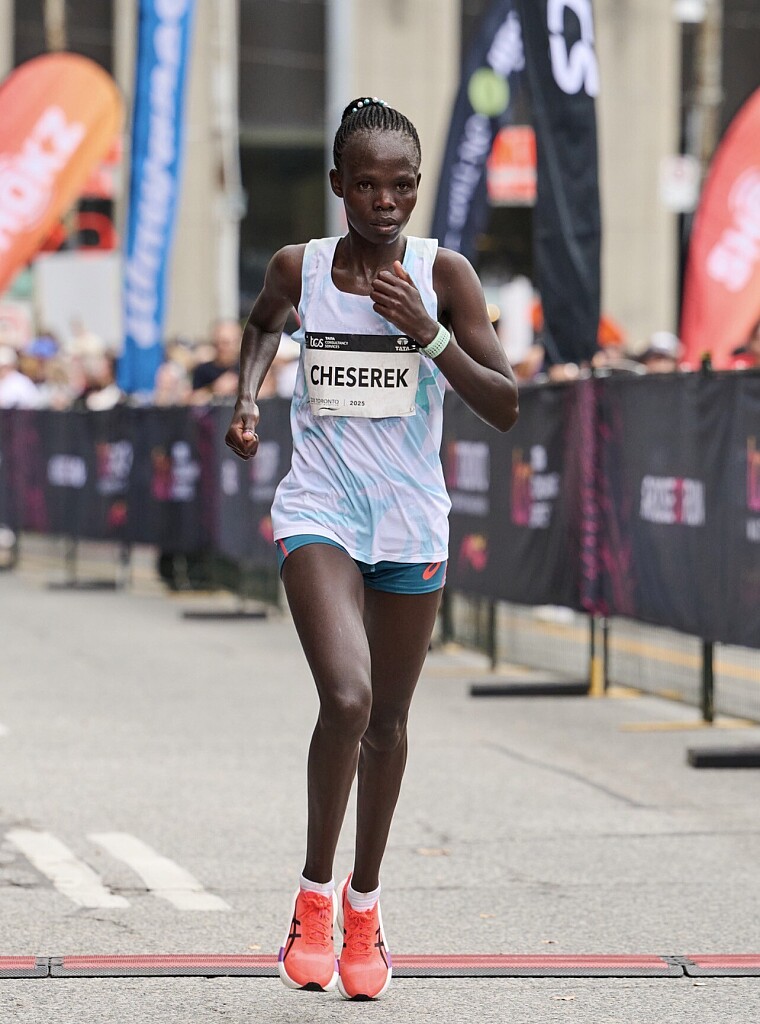
Kenya’s Beatrice Cheserek Returns to TCS Toronto Waterfront Marathon
A year after choosing the TCS Toronto Waterfront Marathon to make her debut at the 42.2km distance Kenya’s Beatrice Cheserek will return to the 2026 edition of the race October 18 with great ambition.
The now 27-year-old could manage just 5th place in 2:30:25 last year. Four months later she finished second in the Seville Marathon (February 15) with a time of 2:21:56. There is a simple explanation for such a dramatic improvement.
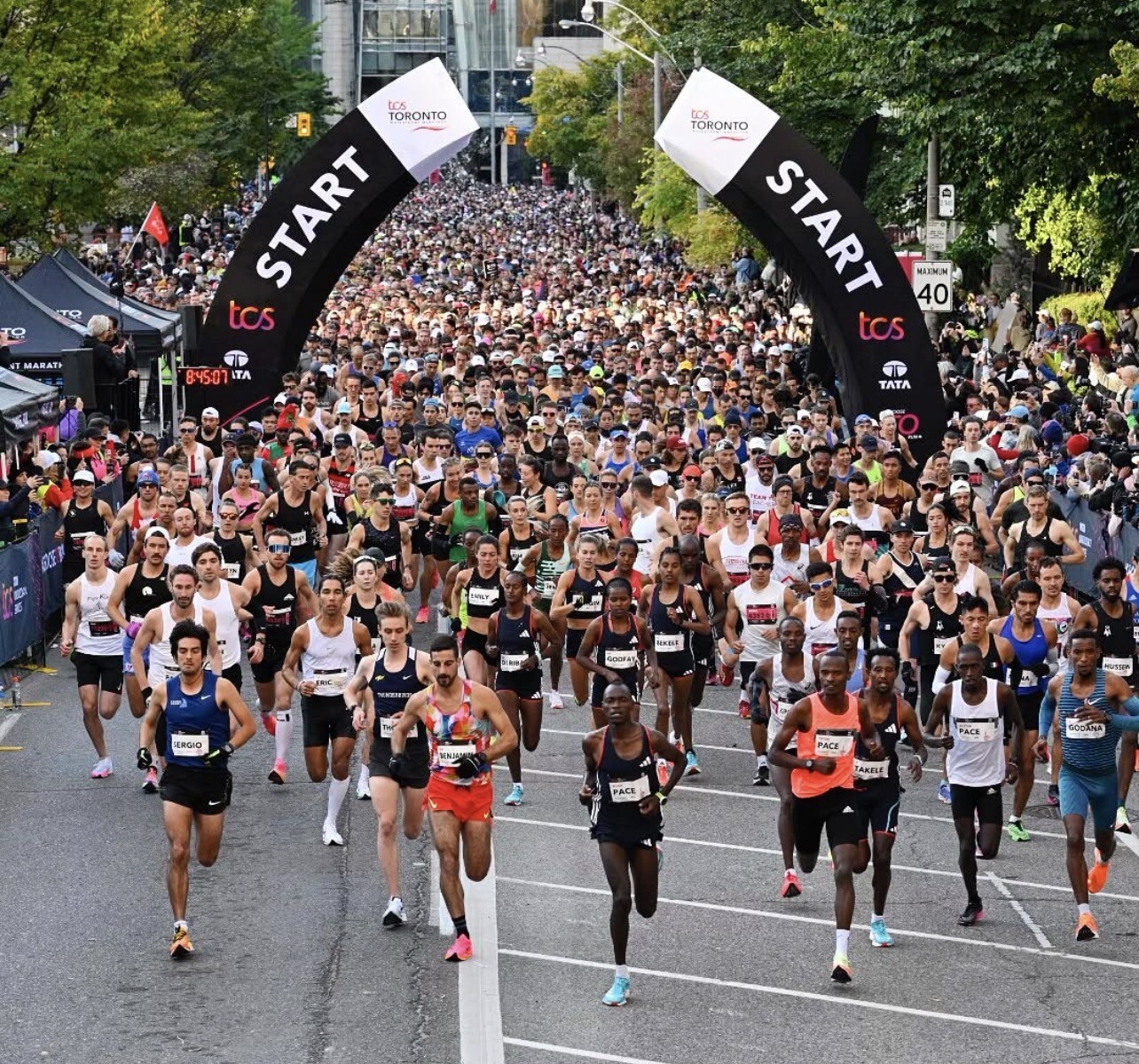
“This year my training is stronger than last year because then (2025) I was coming from maternity,” she explains from her hotel room in Bogota, Colombia where she had finished 4th in the Bogota Half Marathon a few days earlier.
“So it’s more training than last year. I have done a lot of mileage. This time around a lot of mileage, speed work and strength so now I can run better.”
Cheserek’s husband Cyrus Kiplagat is her main training partnerand she is now running up to 150 kilometres a week in preparation for TCS Toronto Waterfront Marathon, which is a World Athletics Elite Label race.
In 2024 the couple welcomed a son into the world. They named him Fabian and she proudly announces: “He is doing good. He is almost three years old now.” While she is away training and competing her sister-in-law serves as a nanny.
"Toronto last year, it’s a good place but it was my first time running a marathon,” she recalls. “I was doubting myself because it was my debut. I was doubting whether I could finish or if I would drop out. Then afterwards I raced Seville and I was happy there. I am thinking I will do something there in Toronto.”
‘Something' refers to a new personal best and, if conditions are suitable there could be an assault on the Toronto WaterfrontMarathon course record which was set in 2024 by Ethiopia’s Waganesh Mekasha (2:20:44). And she will not be alone in her quest. While the team at Canada Running Series always hires pacemakers for the elite athletes this time Cyrus will accompany her to Toronto to be one of the two pacers for the lead women’s group.
Cheserek has an excellent personal best of 1:06:48 for the half marathon which led to speculation among running experts that her step up to the full marathon distance would be noteworthy. And her talent led to her being selected as the designated pacemaker for fellow Kenyan Rosemary Wanjiru when she won the 2023 Tokyo Marathon. She performed similar duties for the 2025 London Marathon elite women’s field. Having Cyrus in Toronto she expects will help tremendously.
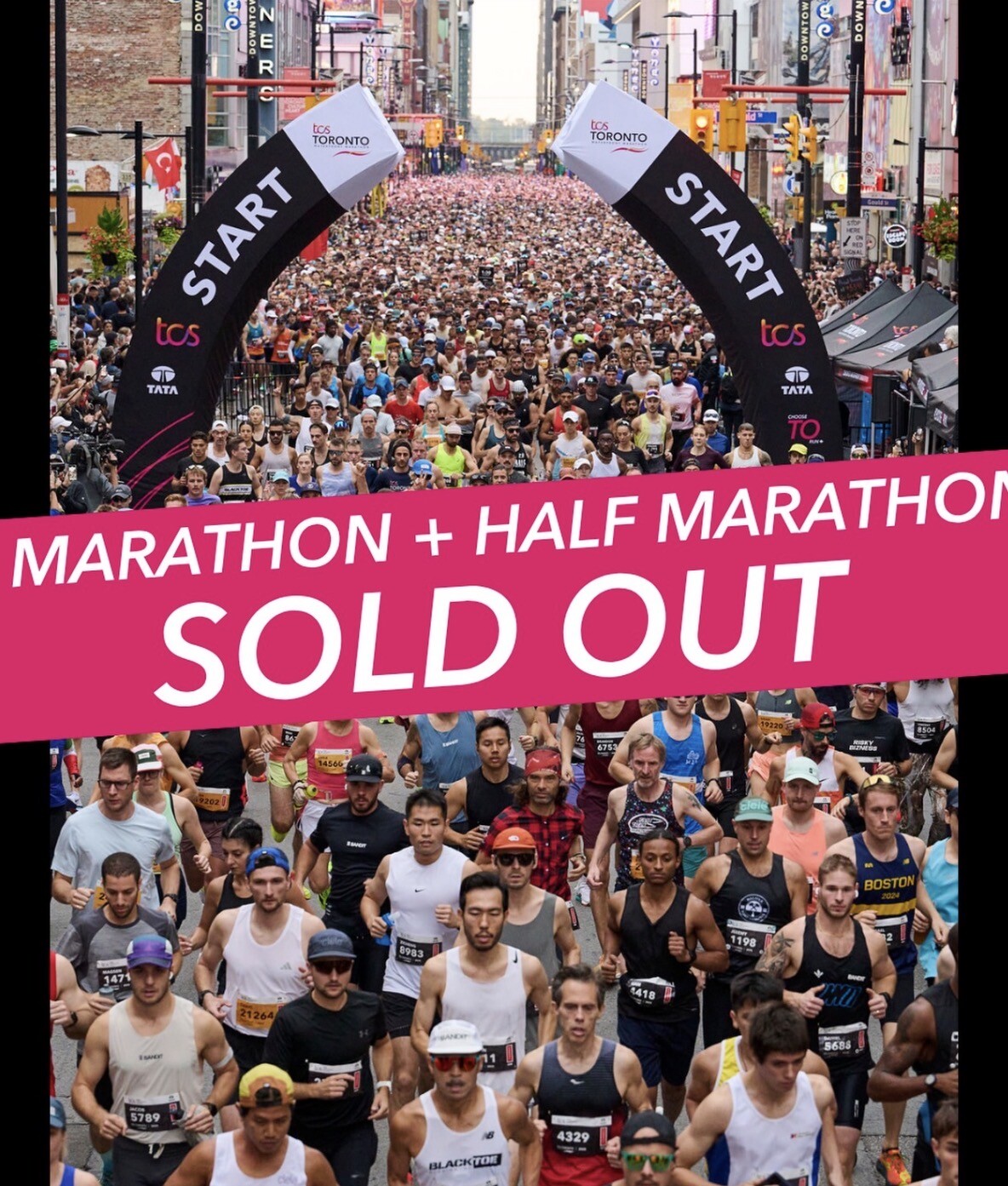
“Even before I went to Seville I was with him training and he was the one pushing me,” Cheserek adds. “It is good for me (that Cyrus will be in Toronto) to try to lower the course record. All the marathon races before I was pacing so he never came with me. It was just me and the other people. And, he was not in Seville.”
Beatrice and her family live in Iten, ‘The Home of Champions’ as it is known in Kenya at around 2,400m above sea level. Bogota sits at a slightly higher elevation. So the two weeks away from her home training ground has not interrupted her preparation for Toronto Waterfront Marathon in any way.
“I am spending two weeks in Colombia; this is my first time to be here,” she offers. “Colombia is a very good place for training. It is (also) a good place to race in hot conditions. I have my fellow colleagues from Kenya here.”
Cheserek finished 4th in the Bogota Half Marathon on July 26 in 1:12:42 just 13 seconds behind the winner. As expected, the field was dominated by athletes from high altitude countries including Ethiopia and Kenya who are best suited to Bogota’s 2,600m elevation.
Then, on August 9th, she finished 4th in the Cali 10k (32:57) the day before an earthquake measuring 7.4 on the Richter scale, struck. She and her compatriots were at the Cali airport checking in when panic ensued. They returned to their hotel as the airport was temporarily closed.
The TCS Toronto Waterfront Marathon organizers (Canada Running Series) will be wishing for ideal conditions to allow athletes such as Beatrice Cheserek to challenge the course records. Clearly, all her preparation is focused on the race.
by Paul Gains
Login to leave a comment
TCS Toronto Waterfront Marathon
The Scotiabank Toronto Waterfront Marathon, Half-Marathon & 5k Run / Walk is organized by Canada Running Series Inc., organizers of the Canada Running Series, "A selection of Canada's best runs!" Canada Running Series annually organizes eight events in Montreal, Toronto and Vancouver that vary in distance from the 5k to the marathon. The Scotiabank Toronto Waterfront Marathon and Half-Marathon are...
more...
Tokyo Marathon 2027 Entry Is Open: Why Getting A Place Is The Real Race
For thousands of marathoners around the world, the Tokyo Marathon is a dream race. But while entering the lottery costs nothing, actually securing a place is another story altogether.
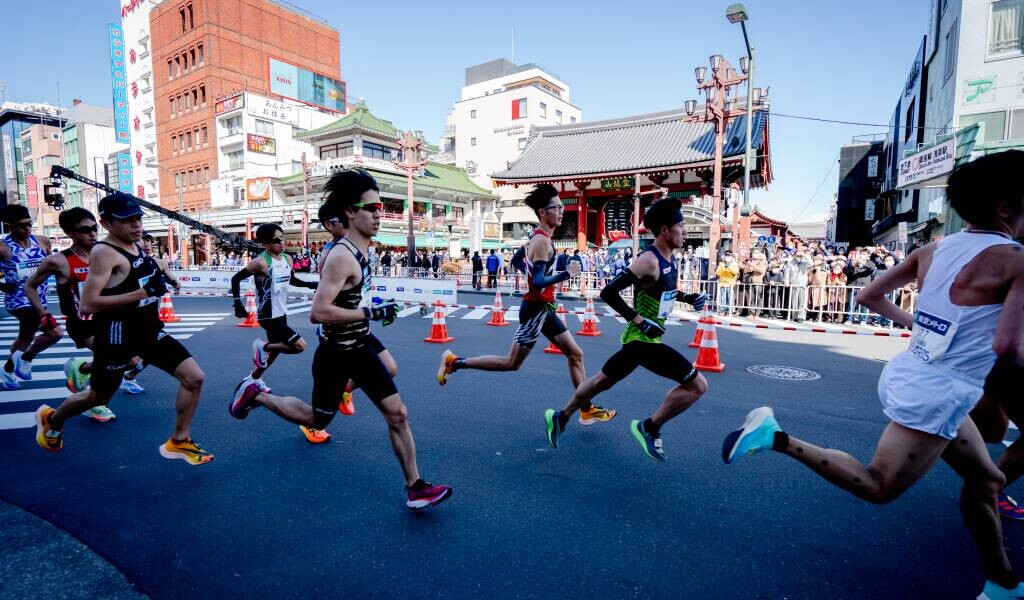
The general-entry window for the Tokyo Marathon 2027 opens today, Friday, August 14, and will remain open until 5 p.m. Japan Standard Time on August 28. The 20th-anniversary edition of the race will take place on Sunday, March 7, 2027, with a record 40,000 marathon places available.
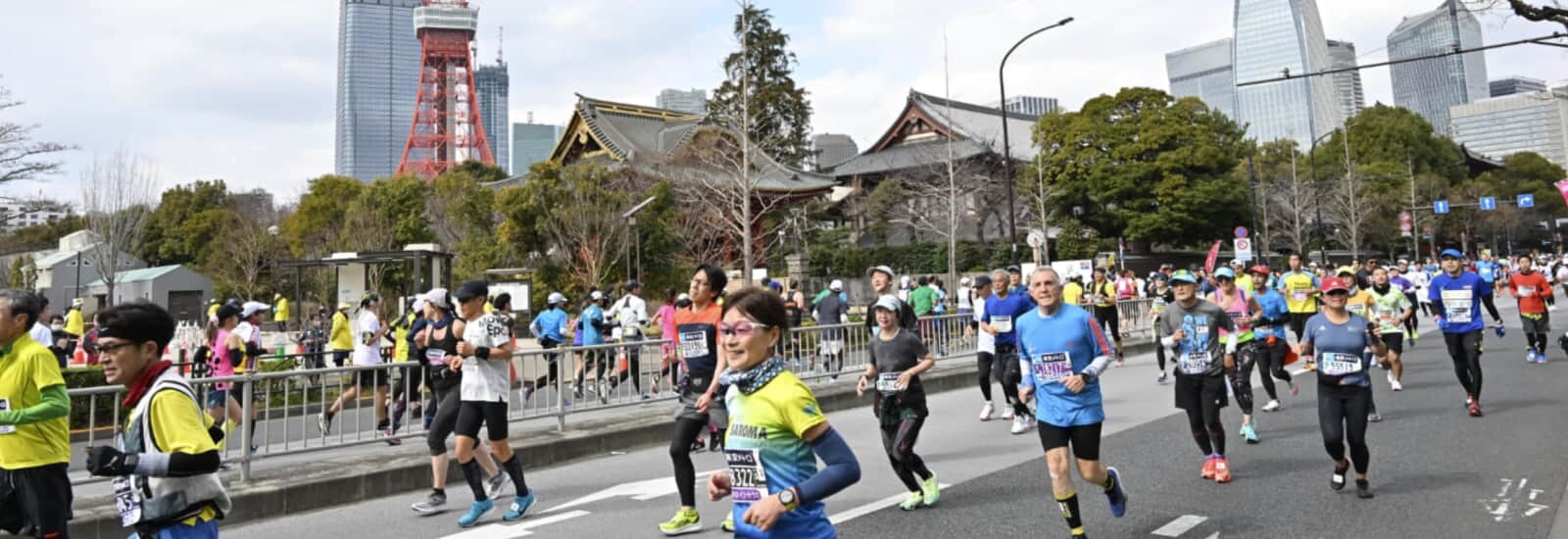
Applicants will learn their fate on September 18, with successful runners required to complete payment between September 18 and 5 p.m. on September 30. Those who fail to pay by the deadline will lose their places. The entry fee is ¥19,800 for runners living in Japan and US$230 for international entrants.
At first glance, Tokyo's famous lottery can look like a straightforward numbers game: hundreds of thousands of runners competing for roughly tens of thousands of places. But the reality is considerably more complicated.
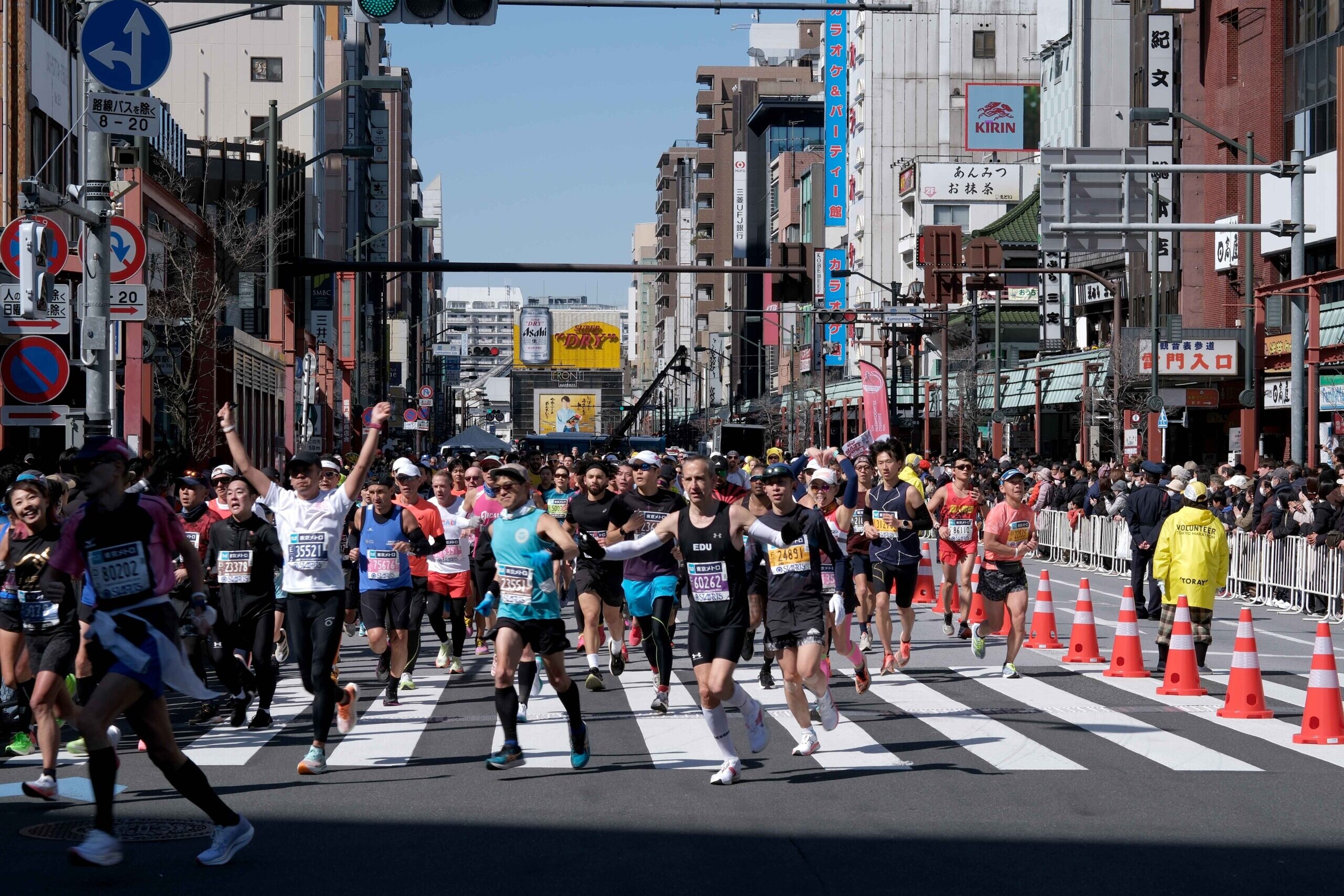
The headline figure of a roughly 10 percent acceptance rate should not be interpreted as meaning every applicant is competing equally for every one of the 40,000 places. The Tokyo Marathon divides its field among several entry routes before the remaining places reach the general lottery.
For 2027, 4,000 places are allocated to the ONE TOKYO three-consecutive-lottery-loss challenge, reserved for eligible ONE TOKYO members who entered the 2024, 2025 and 2026 editions and missed out in all three. Another 1,000 places are reserved for the Tokyo Resident Entry. The general draw also includes dedicated allocations of 500 places for people with disabilities, 15 wheelchair places and up to five Duo Teams.
That makes the phrase "one in 10" a useful shorthand, but not the whole story. For a first-time applicant, particularly one applying from overseas, the effective odds can be much tougher because several places have already been allocated through other categories.
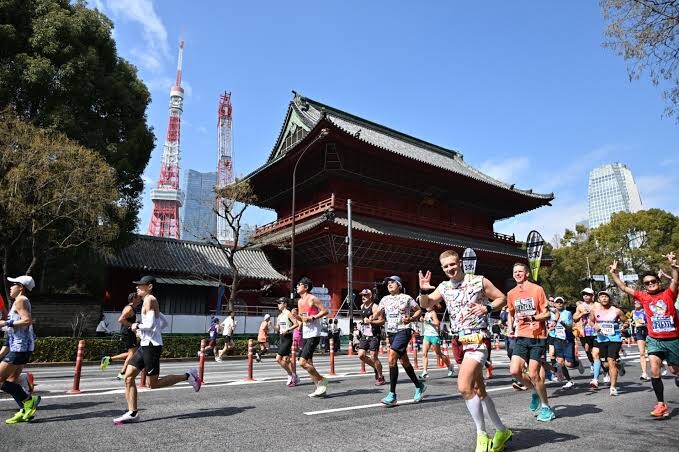
There is also an important requirement for faster runners.
Anyone declaring an expected finishing time of 3:00:00 or faster must provide official evidence of having achieved either a marathon in 3:00:00 or faster or a half marathon in 1:25:00 or faster at an event held between July 1, 2024 and June 30, 2026. Results recorded only by a GPS watch or running application do not qualify. Official certificates or records are required.
Tokyo's remarkable rise makes today's lottery particularly striking.
When the inaugural Tokyo Marathon was held in 2007, the race attracted 95,044 total applicants, including 77,521 for the marathon, with 25,000 marathon places available. The race has since evolved into one of the world's most sought-after major marathons and became an Abbott World Marathon Majors event in 2013.
The demand has grown dramatically over the years. By the 2010 and 2011 editions, total applications had already climbed beyond 300,000, demonstrating how quickly Tokyo became one of the hardest city marathons in the world to enter.
Now, two decades after that first race, Tokyo is preparing for its 20th anniversary edition with the biggest marathon field in the event's history. The capacity has been increased from 39,000 to 40,000 runners, giving more athletes a chance to experience one of the most iconic courses in global road running.
But increased capacity does not necessarily mean an easy ticket.
For many runners, Tokyo is more than another marathon. It is the Asian representative in the Abbott World Marathon Majors and one of the six races required to complete the coveted Six Star journey. That status, combined with Tokyo's reputation for exceptional organisation, a fast course and an unforgettable passage through the heart of the Japanese capital, keeps demand extraordinarily high.
And for those who miss the general lottery, the dream does not necessarily end there. Tokyo offers alternative pathways, including charity entries and official entry programmes, although these routes come with their own requirements and, in some cases, additional financial commitments.
For everyone entering the general lottery this month, however, the immediate challenge is simple: submit the application, wait for the draw and hope your name appears when the results are released on September 18.
The Tokyo Marathon may offer 40,000 runners the opportunity to line up in 2027.
Getting one of those places remains the real race.
Entry window: August 14–28, 2026
Lottery results: September 18, 2026
Payment deadline: September 30, 2026
Race day: March 7, 2027
Field size: 40,000
Domestic entry fee: ¥19,800
International entry fee: US$230
by Erick Cheruiyot for My Best Runs.
Login to leave a comment

Tokyo Marathon
The Tokyo Marathon is a world-renowned annual marathon held in Tokyo, Japan. As one of the prestigious Abbott World Marathon Majors, it attracts elite and amateur runners from around the globe. The race holds World Athletics Platinum Label status, recognizing its high competitive standards, top-tier organization, and international appeal. Sponsored by Tokyo Metro, the Tokyo Marathon has grown into one...
more...
David Rush Sets Guinness World Record After Running Marathon in 125 T-Shirts
David Rush has turned one of the world’s most unusual running challenges into another Guinness World Record, completing a full marathon in Boise, Idaho, while wearing an astonishing 125 T-shirts.

Rush achieved the feat at the YMCA Famous Idaho Potato Marathon on May 16, 2026, finishing the 26.2-mile race in 5:54:50. Guinness World Records officially recognized the performance as the new record for the most T-shirts worn during a marathon, surpassing the previous mark of 100 shirts.
What appeared to be a bizarre running challenge quickly became a serious test of endurance and heat management. As the race progressed, the enormous number of layers trapped heat around Rush's body while restricting his movement. His arms became increasingly difficult to move, forcing his support team to help him with hydration, nutrition and cooling throughout the race.
The weight of the clothing also increased dramatically during the marathon. By the finish, the 125 T-shirts had absorbed enough sweat to weigh 43.4 pounds (19.7 kilograms). Rush also suffered severe chafing, painful blisters and swollen hands as the layers continued pressing against his body for hours.

The most alarming moment came when Rush began overheating after his supply of ice ran out. His support crew became concerned that the situation could deteriorate to the point where he would require medical attention. One of his support runners, Patrick, reportedly rushed into a nearby golf-course pro shop to obtain emergency ice.
Rush later said the additional ice was crucial in preventing what could have become a hospital visit. His team repeatedly used ice and cool water to help bring his body temperature down as he continued toward the finish.
Despite the physical toll, Rush refused to abandon the attempt. He eventually crossed the finish line in 5:54:50, leaving only five minutes and 10 seconds before the marathon's six-hour cutoff.
The achievement was the latest in a remarkable collection of Guinness World Records for Rush, who has built a reputation for pursuing highly unusual endurance and skill challenges. He had already set the men's record for the most T-shirts worn during a half marathon, completing the 2025 Famous Idaho Potato Half Marathon in 137 T-shirts.
This time, however, the challenge demanded far more than simply putting on layer after layer. It required Rush to endure nearly six hours of increasing heat, restricted movement, additional weight and severe physical discomfort while maintaining enough momentum to beat the clock.
In the end, the strange sight of a marathon runner buried beneath 125 T-shirts became a record-breaking achievement — but one that pushed the limits of endurance to an extraordinary degree.
David Rush is now officially the first man to complete a marathon wearing 125 T-shirts, securing a Guinness World Record in one of the most unconventional marathon challenges ever attempted.
by Erick Cheruiyot for My Best Runs.
Login to leave a comment
Berlin’s Women’s Marathon Field Brimming With Elite Talent as Star-Studded Line-Up Takes Shape
The women’s field for the 2026 BMW BERLIN-MARATHON is rapidly developing into one of the most intriguing marathon line-ups of the year, bringing together world-class champions, established contenders and an exciting collection of athletes determined to make their mark on one of the sport’s fastest stages.
At the forefront is Ethiopia’s Tigst Assefa, whose extraordinary marathon career has already placed her among the all-time greats. Assefa is the current women-only marathon world-record holder, having improved her own mark to 2:15:41 at the 2026 TCS London Marathon, where she successfully defended her title.
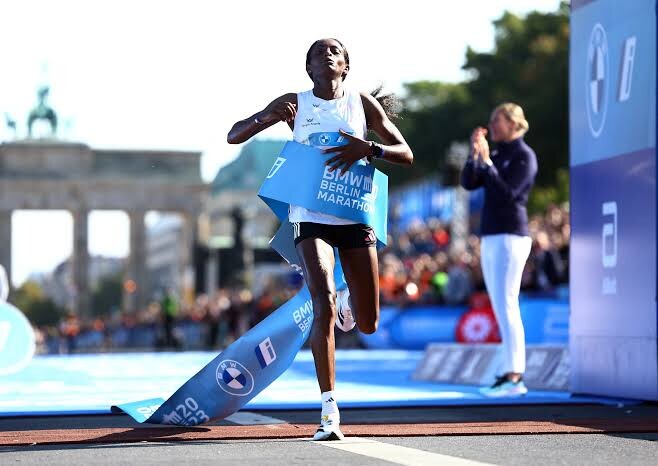
Her place in marathon history was secured even earlier in Berlin. At the 2023 BMW BERLIN-MARATHON, Assefa stormed to 2:11:53, smashing the then women’s world record by more than two minutes. The performance was subsequently ratified by World Athletics and remains among the fastest women’s marathon ever recorded in a mixed-gender race.
Kenya’s Rosemary Wanjiru, with a 2:16:14 personal best, provides another formidable presence at the sharp end of the race, while Ethiopia’s Bedatu Hirpa adds yet another major threat to an already exceptional field.
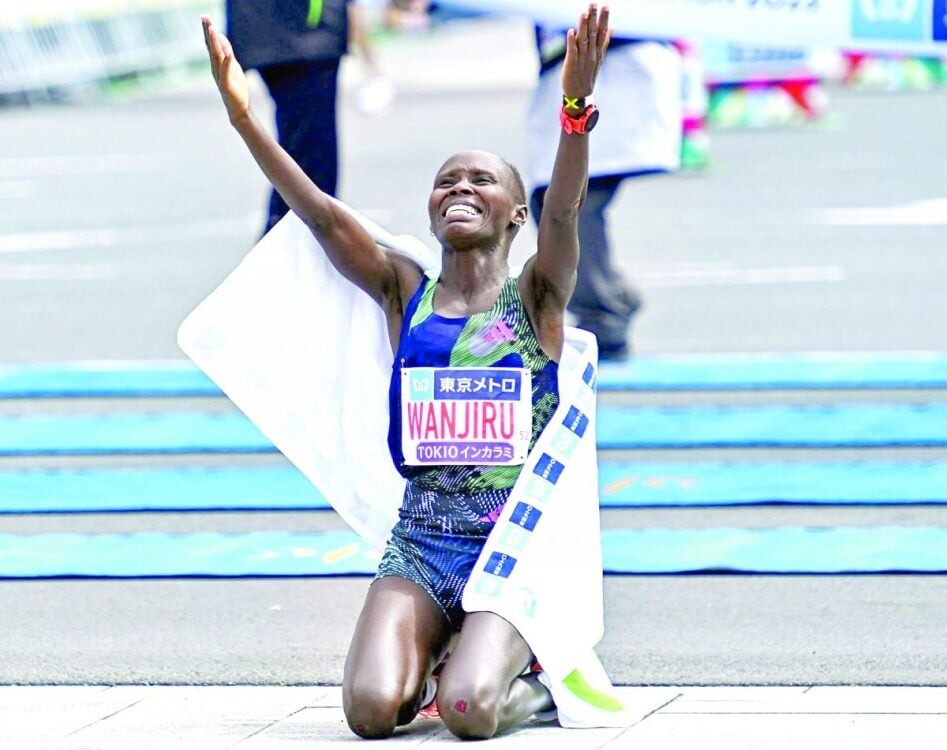
The 27-year-old Hirpa has built an impressive marathon résumé in a remarkably short period. She owns a 2:18:27 personal best, achieved when she won the Dubai Marathon, before continuing her winning momentum with victory at the Paris Marathon just months later. She also underlined her consistency this year with a second-place finish at the Osaka Marathon in 2:19:54. With her combination of speed, confidence and major-marathon experience, Hirpa could be one of the athletes capable of challenging the leading names in Berlin.
The Ethiopian challenge does not end there. Dera Dida (2:18:32), Zeineba Yimer (2:18:47), Bosena Mulatie (2:19:00), Misgane Alemayehu (2:19:08), Bekelech Gudeta (2:19:39), Gadise Mulu (2:20:59), Eebbisee Addunya (2:21:13) and Aminet Ahmed (2:21:24) give Ethiopia extraordinary depth, with every one of them boasting a personal best inside 2:22.
Kenya will also have strong representation through Evaline Chirchir (2:20:33) and Pascaline Jelagat (2:22:44), adding further firepower to a nation renowned for producing world-class marathon talent. China’s Deshun Zhang (2:20:53) also brings a sub-2:21 credential to the starting line.
Japan arrives with a deep group of proven marathoners. Rika Kaseda (2:21:55), Mao Uesugi (2:22:11), Natsuki Omori (2:23:45) and Rino Goshima (2:24:44) all possess impressive personal bests and could play an important role as the race develops. Morocco’s Fatima Gardadi (2:24:06) adds another strong international presence, while France’s Manon Trapp (2:23:38), the United States’ Jacqueline Gaughan (2:24:40) and Kodi Kleven (2:24:48), and Great Britain’s Lucy Reid (2:26:37) further strengthen the international depth.
Germany will have plenty to cheer for on home soil, with a sizeable contingent led by Kristina Hendel (2:27:29), who will be looking to rediscover the form that made her one of the country’s leading marathoners. After injury setbacks interrupted her progress, Hendel returns with the ambition of rebuilding her momentum on one of the biggest stages in the sport.
Anna Langerwisch is another German athlete attracting considerable interest. The 24-year-old has emerged rapidly among the country’s promising marathoners, winning the Hanover Half Marathon in 70:53 before improving her marathon personal best to 2:32:13 in Prague, remarkably in only her second marathon. Her recent 32:17 over 10 kilometres at the adidas Runners City Night in early August has added further intrigue around what she might produce over the full marathon distance.
Germany’s depth extends further, with Thea Heim (2:33:25), Cara Zollenkopf (2:36:05), Esther Pfeiffer (2:37:00), Katja Fischer (2:40:13), Sophia Wunsch (2:40:49) and Jule Vetter (2:42:18) also listed for the race. Their presence gives the home nation a broad representation across the field and adds another layer to an already fascinating international contest.
With Assefa’s extraordinary pedigree, Wanjiru’s proven class, Hirpa’s growing reputation and a supporting cast filled with athletes boasting sub-2:25 credentials, Berlin is shaping up for a women’s race packed with possibilities.
For Assefa, the return to Berlin carries an added historical dimension. It was on these very streets in 2023 that she produced the 2:11:53 performance that changed the landscape of women’s marathon running. Now, after lowering the women-only world record to 2:15:41 in London, she returns with another opportunity to write a new chapter in her remarkable career.
For the established stars, Berlin will be a chance to reaffirm their place among the marathon elite; for the emerging contenders, it could be the moment they announce themselves on one of the sport’s grandest stages.
The BMW BERLIN-MARATHON is renowned for fast racing and ambitious performances, and with such remarkable depth already assembled, the 2026 edition promises to deliver a captivating battle from the opening kilometres to the iconic finish on the Straße des 17. Juni.
by Erick Cheruiyot for My Best Runs.
Login to leave a comment

BMW Berlin Marathon
The story of the BERLIN-MARATHON is a story of the development of road running. When the first BERLIN-MARATHON was started on 13th October 1974 on a minor road next to the stadium of the organisers‘ club SC Charlottenburg Berlin 286 athletes had entered. The first winners were runners from Berlin: Günter Hallas (2:44:53), who still runs the BERLIN-MARATHON today, and...
more...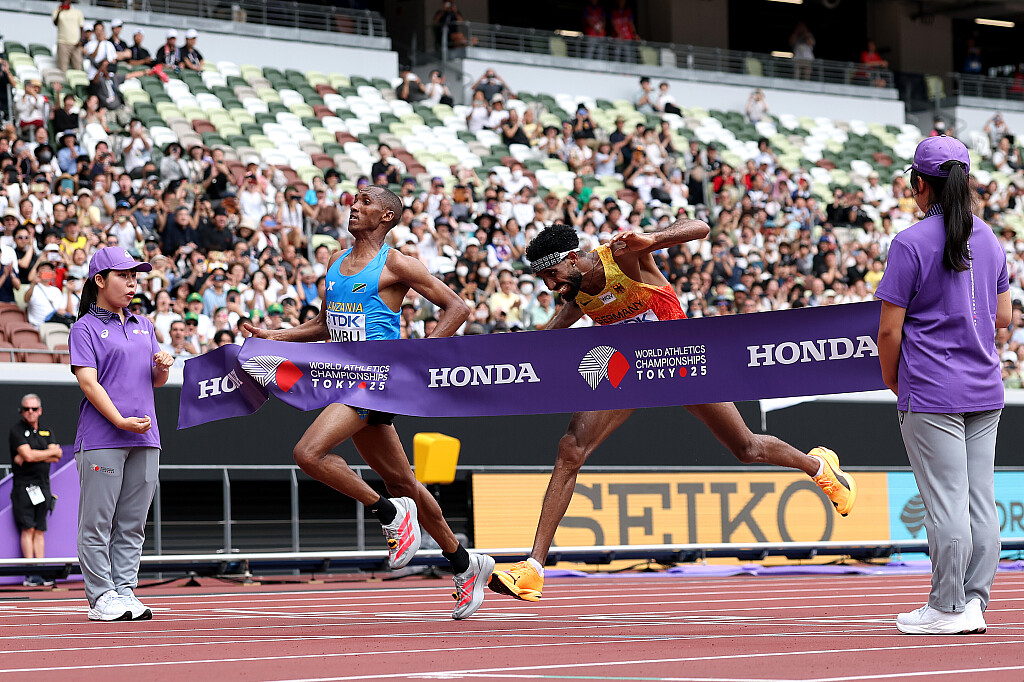
Can Amanal Petros Finally Turn Heartbreak into European Gold in Birmingham?
All eyes will be on Amanal Petros when the men’s marathon takes centre stage at the 2026 European Athletics Championships in Birmingham, with the German star chasing the major championship title that has repeatedly slipped through his fingers.
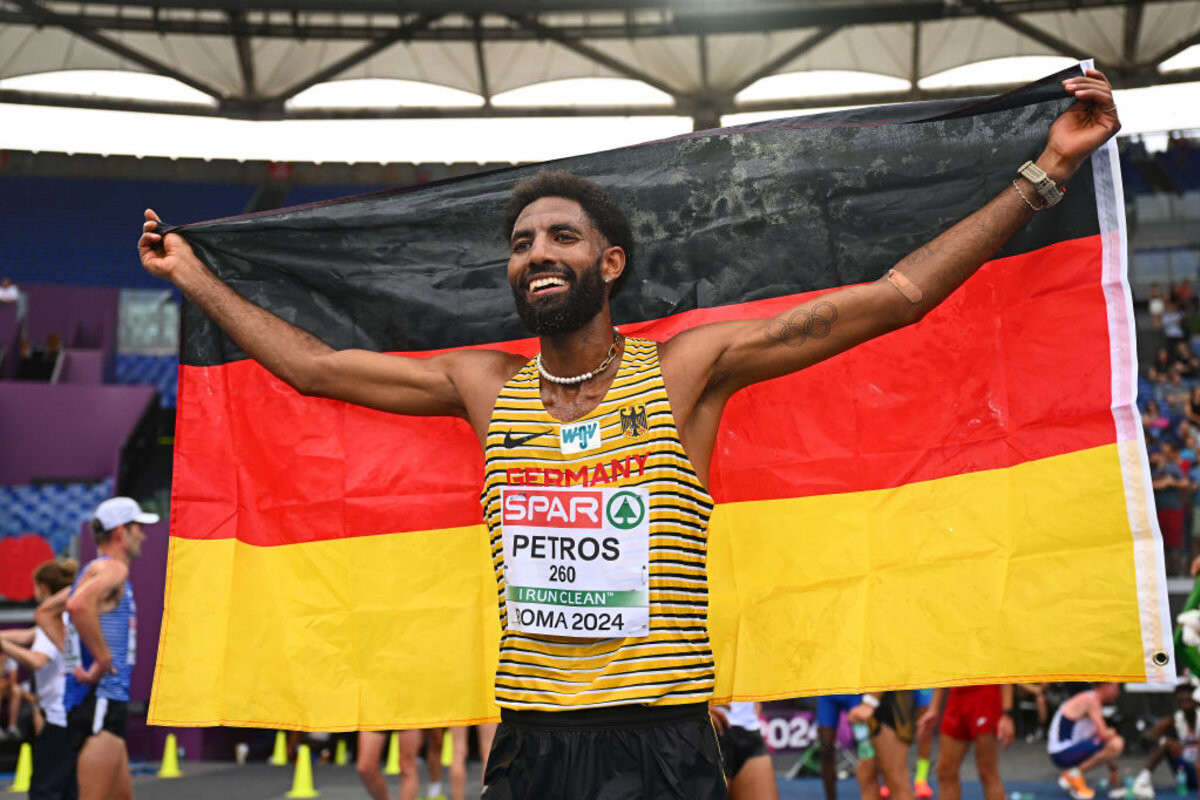
Petros arrives with one of the strongest résumés in the field and the credentials to challenge for gold. At 2:04:03, he is the third-fastest European marathoner of all time, behind Belgium’s Bashir Abdi (2:03:36) and France’s Morhad Amdouni (2:03:47). That level of performance underlines Petros’ ability to compete with the very best, although his career has also been marked by agonisingly narrow defeats on the biggest stages.
His most recent heartbreak came at the 2025 World Athletics Championships in Tokyo, where Tanzania’s Alphonce Simbu edged him out by just 0.03 seconds in one of the closest finishes in championship history. That defeat underlined both Petros’ quality and the fine margins that have prevented him from claiming an individual global title.
The European Championships have also brought frustration. At the 2024 European Athletics Championships, Petros took bronze in the half marathon after being beaten in a three-way finish by Italy’s Yemaneberhan Crippa. Two years earlier in Munich, he was unable to stay with the medal contenders during the decisive stages of the marathon.
Now Birmingham presents another opportunity—and Petros has every reason to believe this could finally be his moment.
His season-best of 2:08:31 does not tell the full story. At the London Marathon, Petros passed halfway in a blistering 61:16, initially targeting Bashir Abdi’s European record of 2:03:36, before easing during the latter stages. His 2:04:03 runner-up performance at the Valencia Marathon last December is arguably a much better indication of his true potential.
Standing in his way will be a strong German contingent, led alongside Petros by defending European champion Richard Ringer. Ringer produced one of the most memorable performances of the 2022 championships in Munich, unleashing a dramatic late surge during the final kilometre to overtake three athletes—including Petros—and snatch a remarkable victory.
At 37, Ringer continues to compete at an exceptional level. He produced the fastest marathon of his career in April, running 2:04:47 at the Boston Marathon to finish eighth overall while recording the fastest European time in the race.
Germany’s strength does not end there. Samuel Fitwi has been even faster in 2026, recording a personal best of 2:04:45 when finishing second at the Hamburg Marathon. That performance makes him the fastest athlete on the Birmingham entry list based on season’s bests.
With Petros, Ringer and Fitwi forming a formidable German trio, the team will have serious ambitions of collecting individual medals while also challenging for the team title. Their depth could prove particularly valuable in a championship marathon, where tactical racing and team strength can be just as important as raw personal-best times.
France’s Emmanuel Roudolff is among the principal threats to the German challenge. He established a personal best of 2:05:58 when finishing sixth at the Paris Marathon and has the speed to remain in contention if the race develops into a fast affair.
Veteran Kaan Kigen Özbilen will also bring considerable experience to the starting line. The Kenyan-born Turkish athlete, who once held the European record with 2:04:16, remains capable of competing at the highest level. He ran 2:05:59 for fifth in Barcelona earlier this year.
Israel will also arrive with a strong team, having won the marathon team title in Munich four years ago. Maru Teferi and Gashau Ayale, who claimed silver and bronze respectively in Munich, return with valuable championship experience and will hope to challenge for more medals in Birmingham.
Italy’s hopes will centre on Pietro Riva. With Crippa focusing on the 10,000m and Iliass Aouani sidelined by shin problems, Riva becomes Italy’s leading marathon contender. He finished second behind Crippa and ahead of Petros in the half marathon at the 2024 European Championships, giving him another opportunity to challenge the German favourite on the European stage.
For the home crowd, one of the most intriguing stories will be Mahamed Mahamed, who could give Britain a realistic shot at its first men’s European marathon medal in decades.
Great Britain has not won a men’s marathon medal at these championships since Ian Thompson claimed gold in Rome in 1974. Mahamed has emerged as a genuine contender after producing a lifetime best of 2:06:14 at the London Marathon in April. That performance made him the second-fastest British marathoner in history behind Mo Farah, while also placing him fourth among the Birmingham entrants based on 2026 season’s bests.
With a home crowd behind him and confidence gained from his breakthrough performance in London, Mahamed could become one of the most dangerous outsiders in the field.
Birmingham therefore promises a fascinating battle between proven championship performers, emerging German strength and a collection of experienced international challengers. Petros, however, remains the man at the centre of the story.
He has already come agonisingly close to major championship glory. He possesses the speed, experience and proven ability to run under 2:05. What remains is to produce the decisive performance when the medals are on the line.
After years of near misses, Birmingham could finally be the stage where Amanal Petros turns silver and heartbreak into European gold.
by Erick Cheruiyot for My Best Runs.
Login to leave a comment

European Athletics Champioships
The27thEuropean Athletics Championshipswill be held from 10 to 16 August 2026 at theAlexander StadiuminBirmingham, United Kingdom.[1] This is the first time that a British city will have staged the European Athletics Championships although Birmingham has hosted many high-profile events, including the2007 European Athletics Indoor Championships, the2003and2018 IAAF World Indoor Championshipsand the2022 Commonwealth Games. Alexander Stadium was renovated between 2019 and...
more...
4:17 With A Stroller: Stephen Biebelhausen Chases Down Potential World Record
Stephen Biebelhausen has taken stroller running to an extraordinary level after reportedly running a mile in roughly 4:17 while pushing his child at the Guardian Mile in Cleveland.
The former college distance runner produced the remarkable performance on the Hope Memorial Bridge, covering the road-mile course at a pace that, if officially ratified, would dramatically rewrite the men's Guinness World Record for the fastest mile while pushing a stroller.
Biebelhausen's reported time is approximately nine seconds faster than the current men's record of 4:26.29, set by Silas Frantz in Arroyo Grande, California, in June 2025. For a record that is barely more than a year old, an improvement of that magnitude would be extraordinary.
And Biebelhausen had the running credentials to make such a performance possible.
During his college career with the Miami RedHawks, Biebelhausen established himself as a highly accomplished middle-distance runner. He owns a 1500m personal best of 3:48.11, a mark that places him among the fastest athletes in Miami University's history, while he also recorded a 4:06.68 indoor mile.
That background in competitive distance running makes the 4:17 stroller mile even more fascinating. Maintaining a pace of roughly 4:17 per mile is demanding under normal circumstances; doing it while pushing a stroller and a child throughout the race adds an entirely different physical challenge.
Biebelhausen was not the only athlete taking on the unusual challenge at the Guardian Mile. Another runner, also pushing his child, completed the race in an impressive 4:32.
Stroller racing has steadily developed into a genuine record category, with runners testing themselves over everything from the mile to the half marathon. On the women's side, Kaitlin Donner recorded a 5:11 stroller mile in 2024, while longer-distance attempts have also produced remarkable performances, including a 1:08:04 half marathon.
Yet Biebelhausen's reported 4:17 could prove to be the most eye-catching mark of them all.
There is one important catch: the performance is not officially a world record yet.
Guinness World Records must review the documentation and verify that the attempt complied with all of its requirements, including the specifications for the stroller and the minimum weight of the child being carried throughout the distance.
Until that verification is completed, Frantz's 4:26.29 remains the official men's record.
But if Biebelhausen's time is confirmed, the record will fall by a huge margin.
A 4:17 mile is already an exceptional performance. A 4:17 mile while pushing a stroller and a child is something altogether different.
If Biebelhausen's 4:17 is officially confirmed, the Guardian Mile will have produced far more than an impressive road race. It could have witnessed the setting of a remarkable new benchmark in one of running's most unusual and rapidly growing record categories — proving once again that the limits of speed can sometimes be pushed in the most unexpected ways.
by Erick Cheruiyot for My Best Runs.
Login to leave a comment
Eilish McColgan Eyes Historic Big Half Hat-Trick After Injury Setback
British distance-running star Eilish McColgan is set to make her highly anticipated return to The Big Half in London, where she will chase a record-extending third women's title after being confirmed for this year's race.
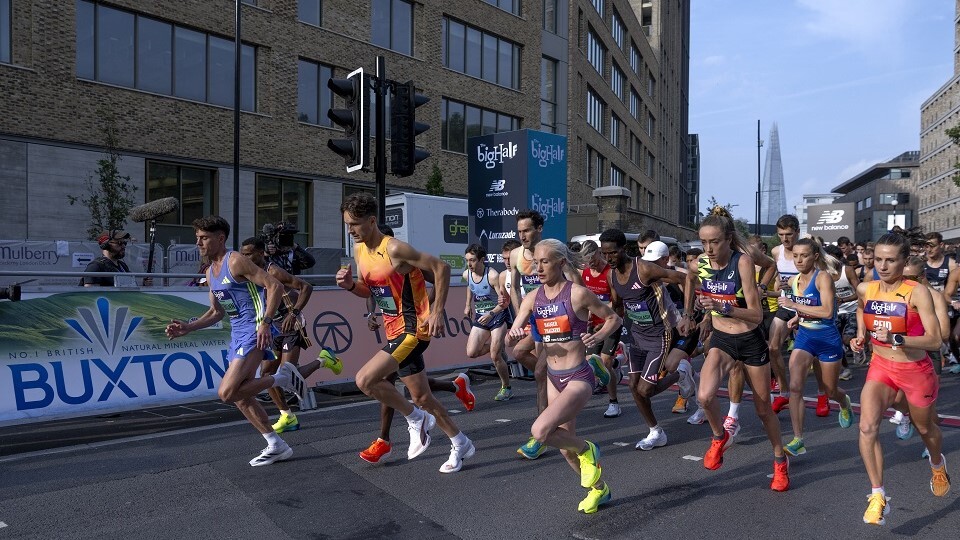
The British half marathon record holder heads back to one of her favourite events with unfinished business, determined to reignite her season following a frustrating spell on the sidelines. Having already lifted the Big Half crown in 2022 and 2024, McColgan now has the opportunity to add a third title to her impressive résumé and further cement her legacy as one of Britain's greatest road runners.
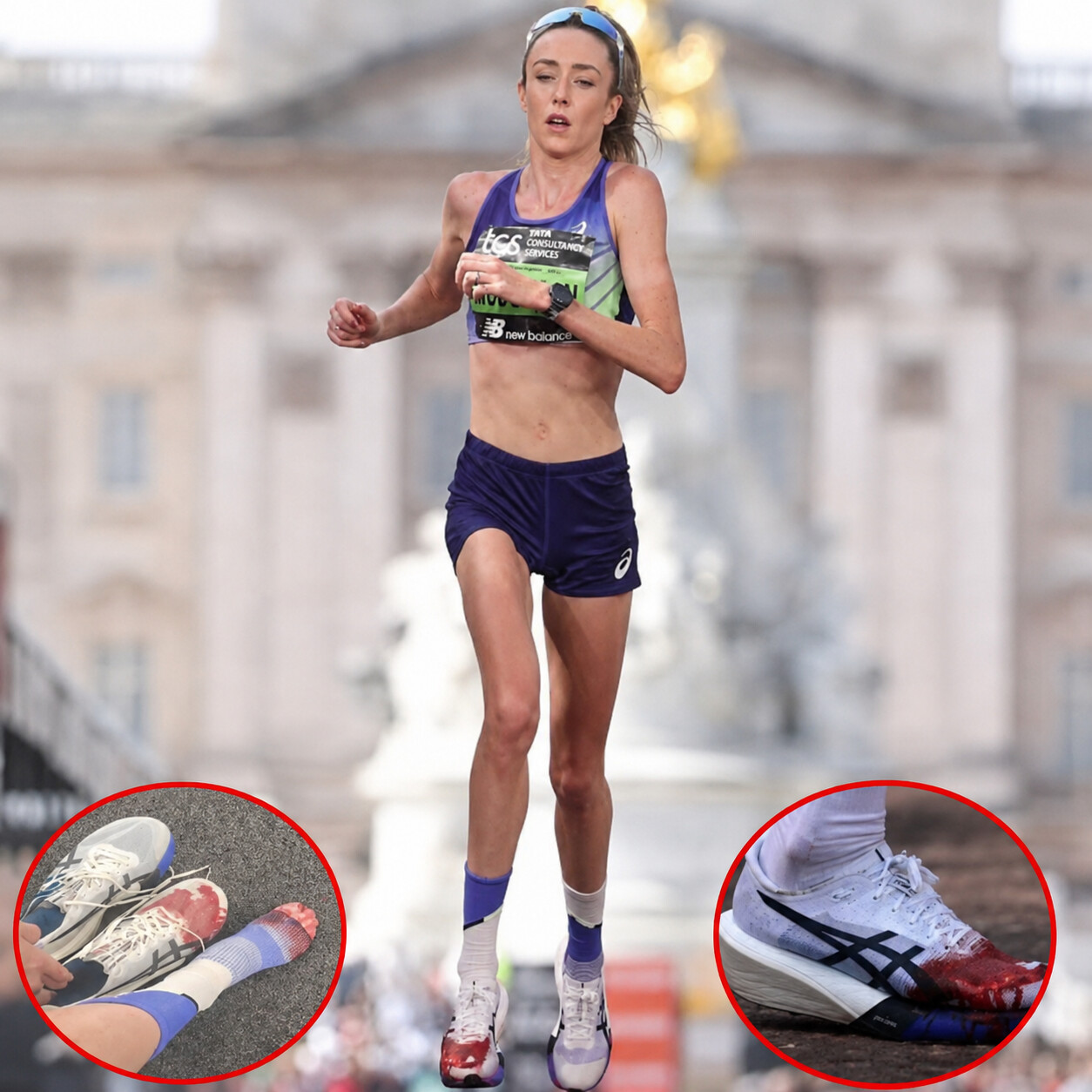
Her return comes after a difficult few months that tested both her resilience and patience. McColgan sustained a toe injury during the London Marathon in April, an issue that disrupted her training and ultimately forced her to withdraw from the Glasgow 2026 Commonwealth Games. As the defending 10,000m champion, she admitted she had not been given enough time to recover and reach the level of fitness required to defend her title.
Now fully focused on the road season, the Scottish star will be eager to put those setbacks behind her. The Big Half presents an ideal opportunity for McColgan to showcase the progress she has made since returning from injury. A strong performance would not only boost her confidence but also reaffirm her status as one of Britain's premier distance runners as she builds momentum for the races ahead.
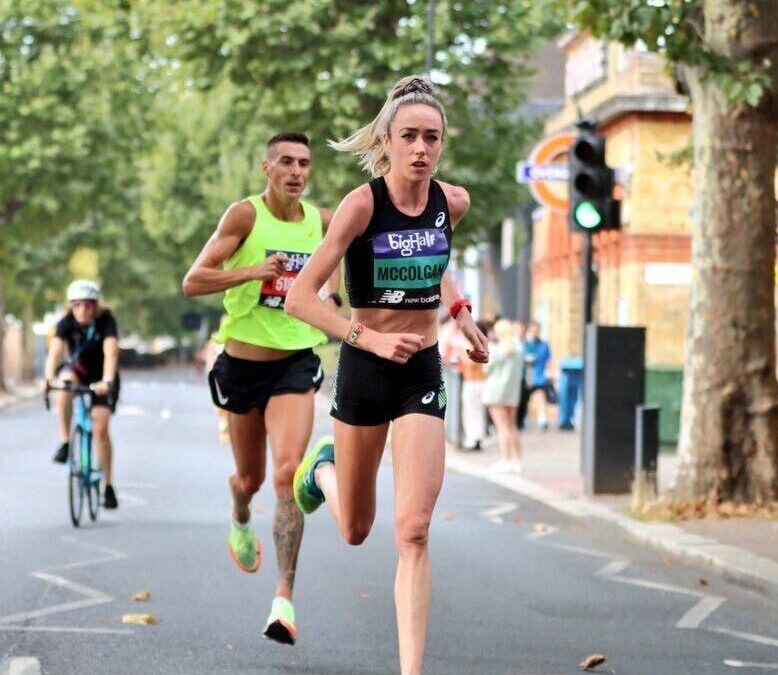
Beyond the race for another title, McColgan's appearance marks an important step in her comeback journey. After months of rehabilitation and carefully rebuilding her fitness, the event will provide a valuable measure of her progress against a world-class field. A commanding performance would reaffirm her place among Britain's and Europe's elite distance runners while strengthening her confidence for the major road races and championships still to come.
The men's elite race is also shaping up to be one of the strongest in the event's history. British marathon standout Jack Rowe has been confirmed for the race and will be chasing a remarkable fourth consecutive Big Half title. Should he triumph once again, Rowe would surpass Sir Mo Farah's record to become the most successful elite men's champion in the history of the event.
With history on the line in both elite races, this year's Big Half promises to be one of the most captivating editions yet. Thousands of runners will take to the streets of London alongside some of Britain's finest distance athletes, creating a spectacular celebration of road running. McColgan's pursuit of a historic third women's crown and Rowe's bid to establish a new men's record ensure that fans can look forward to a thrilling day of competition filled with ambition, resilience, and memorable performances.
For fans of distance running, all eyes will be on London's streets as two British stars attempt to add another memorable chapter to their careers. Whether it is McColgan completing her remarkable comeback with another victory or Rowe rewriting the history books, this year's Big Half is perfectly poised to deliver another unforgettable showcase of British distance running at its finest.
by Erick Cheruiyot for My Best Runs.
Login to leave a comment

Back To Where It All Began: Agnes Ngetich Returns To Her Primary School As A World Record Holder
Success has a way of bringing people back to where their journey first began, and for Kenya's Agnes Jebet Ngetich, that journey started in the classrooms of Werep Primary School.
The world champion and world record holder recently made an emotional return to her former school, where she once sat as a young girl with dreams that seemed almost impossible to achieve. In a touching tribute to her humble beginnings, Ngetich briefly wore the Werep Primary School uniform once again, creating a powerful moment that reminded every learner that greatness can emerge from even the most difficult circumstances.
The visit was far more than a nostalgic homecoming. It was an opportunity to give back to the community that shaped her early years. Agnes donated brand-new school uniforms to many pupils, ensuring they can attend school with confidence and pride. More than 200 learners shared a nutritious meal, while schoolgirls received sanitary pads to help them stay in school with dignity and without interruption to their education.

For the children who welcomed one of Kenya's greatest distance runners, the visit transformed dreams into something tangible. Standing before them was someone who had once walked the same paths, studied in the same classrooms, and worn the very same uniform they wear today.
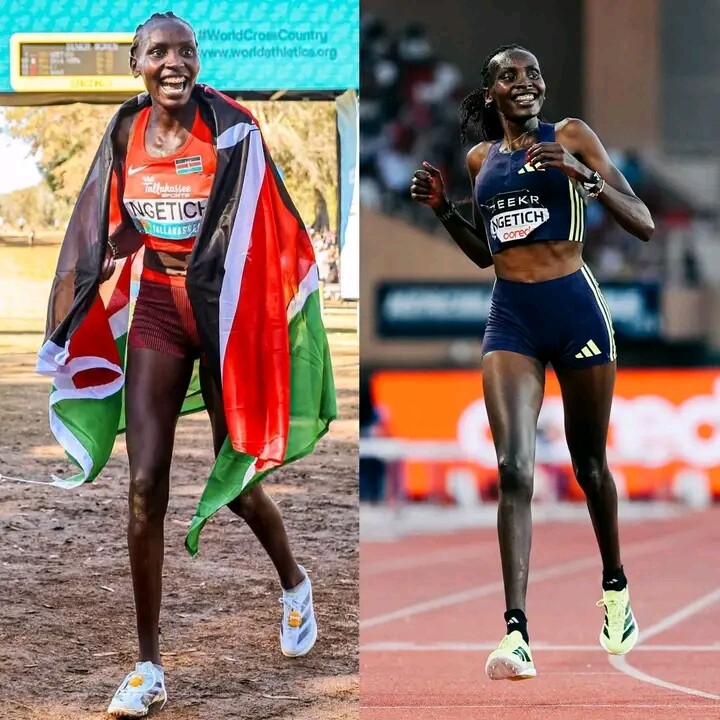
Yet behind the smile of a world champion lies a story of extraordinary hardship.
Born on January 23, 2001, in Elgeyo Marakwet County, Agnes lost her father when she was only 12 years old. His death plunged the family into severe financial hardship, forcing her to leave school on several occasions to help her mother earn a living. She spent countless days burning charcoal and working on local farms so her family could survive.
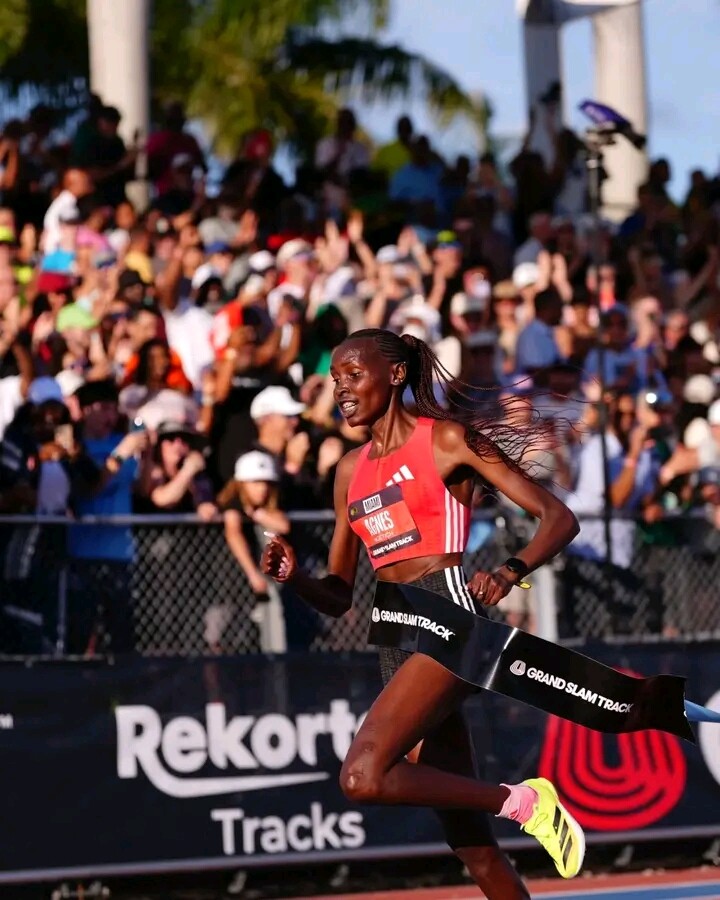
Running was never part of a carefully planned career. At first, it simply offered something many children take for granted—a meal through school competitions. Often racing barefoot and on an empty stomach, Agnes refused to let poverty define her future. In one regional race, she pushed herself so hard that she collapsed from hunger after crossing the finish line, a powerful illustration of the sacrifices she endured in pursuit of a better life.
Her destiny changed when coach Ruth Jepchumba Bundotich noticed her remarkable talent while she was working on a farm. Recognizing a rare gift, she gave the young runner an opportunity to train and develop her potential. That single act of belief opened the door to a future few could have imagined.
Today, Agnes Ngetich stands among the greatest distance runners in history. She became the first woman ever to break the 29-minute barrier for 10 kilometres on the road with an astonishing world record of 28:46. She also holds the women's-only 10km world record of 29:27, captured the 2026 World Cross Country title with a remarkable winning margin of 42 seconds, claimed victory at the 2026 New York Mini 10K while setting a course record, and is the Kenyan half marathon record holder with an outstanding time of 1:03:04.
Despite these extraordinary accomplishments, perhaps her greatest achievement cannot be measured by medals, trophies, or world records.
The success she earned through running transformed her family's future. Agnes has helped her siblings return to school after poverty forced them to drop out, while also giving her mother the security and comfort she had long dreamed of. Her journey has become a testament to how talent, resilience, and opportunity can change not only one life but an entire family.
Today, Agnes trains under head coach Julien Di Maria, widely known as Kip Evans, while continuing to work closely with her long-time mentor, Ruth Jepchumba Bundotich—the coach who first recognized her potential and helped guide her path to international success.
Her return to Werep Primary School was therefore much more than a celebration of athletic achievement. It was a full-circle moment that showed every child in attendance that humble beginnings do not determine one's destiny.
From carrying bags of charcoal to carrying the hopes of a nation, Agnes Jebet Ngetich has become one of Kenya's brightest sporting icons. Her remarkable story reminds the world that champions are not simply born—they are forged through hardship, sacrifice, unwavering determination, and the courage to keep believing when life offers every reason to give up.
For every pupil who watched her proudly wear the school uniform once again, the message was unmistakable: the classroom they sit in today could become the starting point of a journey that one day inspires the entire world.
by Erick Cheruiyot for My Best Runs.
Login to leave a comment
Erick Sang Smashes Bogotá Half Marathon Course Record in a Brilliant Display of Speed and Endurance
The streets of Colombia's capital witnessed a truly unforgettable performance on Sunday as Kenya's Erick Sang produced a breathtaking run to win the 2026 Bogotá Half Marathon, rewriting the event's history in spectacular fashion. Delivering a masterclass of strength, composure, and relentless pace, Sang stormed across the finish line in an official gun time of 1:01:59, becoming the new course record holder and etching his name into the race's history.
From the opening kilometers, Sang looked determined to produce something extraordinary. Running with remarkable confidence and rhythm despite Bogotá's demanding high-altitude conditions, he gradually pulled away from his closest challengers before unleashing a powerful finishing surge. With every stride, he moved closer to history, eventually shattering the previous course record in emphatic fashion. His landmark performance was a perfect blend of endurance, tactical intelligence, and unwavering determination, transforming an already prestigious race into a historic occasion.
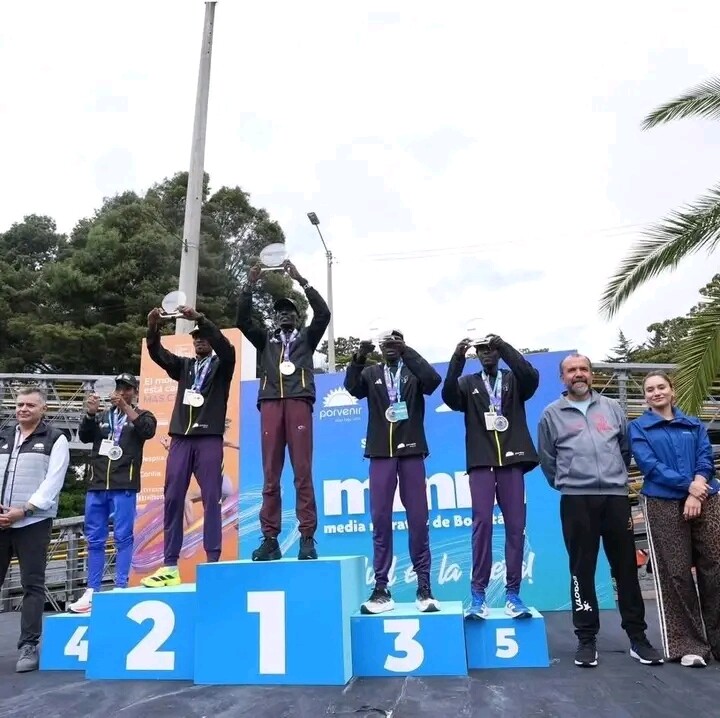
Ethiopia's Bereket Nega finished second in 1:03:42, delivering a strong performance to secure the runner-up spot, while Kenya's Philemon Kiplimo completed the podium in 1:03:53 after an impressive and consistent race. Kenya's dominance continued with Gideon Kiprop finishing fourth in 1:04:23, just one second ahead of Ecuador's Luis Masabanda, who delighted the home-region supporters by claiming fifth place in 1:04:24.
Men's Elite Top Five Results
1. Erick Sang (Kenya) – 1:01:59
2. Bereket Nega (Ethiopia) – 1:03:42
3. Philemon Kiplimo (Kenya) – 1:03:53
4. Gideon Kiprop (Kenya) – 1:04:23
5. Luis Masabanda (Ecuador) – 1:04:24
The 2026 Bogotá Half Marathon once again reinforced its reputation as one of South America's premier road racing events, attracting a world-class field eager to conquer its challenging high-altitude course. Amid fierce international competition, Erick Sang rose to the occasion with a performance of exceptional quality, combining patience, precision, and explosive finishing strength. His record-breaking victory not only secured the biggest title of the day but also raised the standard of the event, inspiring future generations of athletes to chase greatness on the historic streets of Bogotá.
Sang's magnificent triumph was far more than a race victory—it was a defining moment in the history of the Bogotá Half Marathon. By dismantling the course record with such authority, he delivered a performance that will be remembered for years to come. His electrifying finish, fearless pursuit of excellence, and unforgettable display of resilience captivated spectators from start to finish, proving that true champions are those who dare to push beyond limits and leave a lasting legacy.
by Erick Cheruiyot for My Best Runs.
Login to leave a comment

Bogota Half Marathon
The Bogotá International Half Marathon, or mmB as it is traditionally known, is an annual road running competition over a half marathon distance 21.0975 kilometres (13.1094 mi) taking place in Bogotá, Colombia in late July or early August. Established in 2000, it holds IAAF Gold Label Road Race status, making it the first and thus far only South American race...
more...
Adrian Wildschutt Set for Long-Awaited Marathon Debut at the Chicago Marathon
South African distance-running star Adrian Wildschutt has officially announced that he will make his highly anticipated marathon debut at the 2026 Chicago Marathon, taking on the iconic 26.2-mile distance for the first time on October 11.
The announcement, shared on his social media channels, marks the beginning of an exciting new chapter for one of the world's most accomplished track and road racers. After building an impressive career over distances ranging from 3,000 metres to the half marathon, Wildschutt has decided the time is right to test himself in one of the sport's ultimate challenges.
The move has been eagerly anticipated by fans and athletics followers, who have watched the South African steadily develop into one of the strongest endurance athletes on the international circuit. His combination of speed, strength and racing intelligence has long suggested that the marathon could become another stage on which he excels.
Wildschutt expressed both excitement and gratitude as he revealed the news, emphasizing that preparations are already well underway. His focus is now fully fixed on Chicago, where he hopes to translate years of experience over shorter distances into a successful marathon debut against one of the strongest fields in the world.
The Chicago Marathon has earned a reputation as one of the fastest marathon courses on the planet, producing numerous world records and unforgettable performances. It provides an ideal setting for elite athletes looking to make an immediate impact over the classic distance, making it a fitting choice for Wildschutt's first attempt.
Although marathon debuts are always unpredictable, Wildschutt arrives with an outstanding résumé that includes world-class performances on the track and road. His proven endurance, tactical racing ability and impressive half marathon credentials have already sparked excitement about what he might achieve over 42.195 kilometres.
With months of preparation still ahead, anticipation will continue to build as Wildschutt embarks on his journey toward one of the biggest milestones of his career. On October 11, all eyes will be on the streets of Chicago as the South African takes his first steps into marathon racing, aiming to announce himself on the global stage in spectacular fashion.
by Erick Cheruiyot for My Best Runs.
Login to leave a comment

Bank of America Chicago
Running the Bank of America Chicago Marathon is the pinnacle of achievement for elite athletes and everyday runners alike. On race day, runners from all 50 states and more than 100 countries will set out to accomplish a personal dream by reaching the finish line in Grant Park. The Bank of America Chicago Marathon is known for its flat and...
more...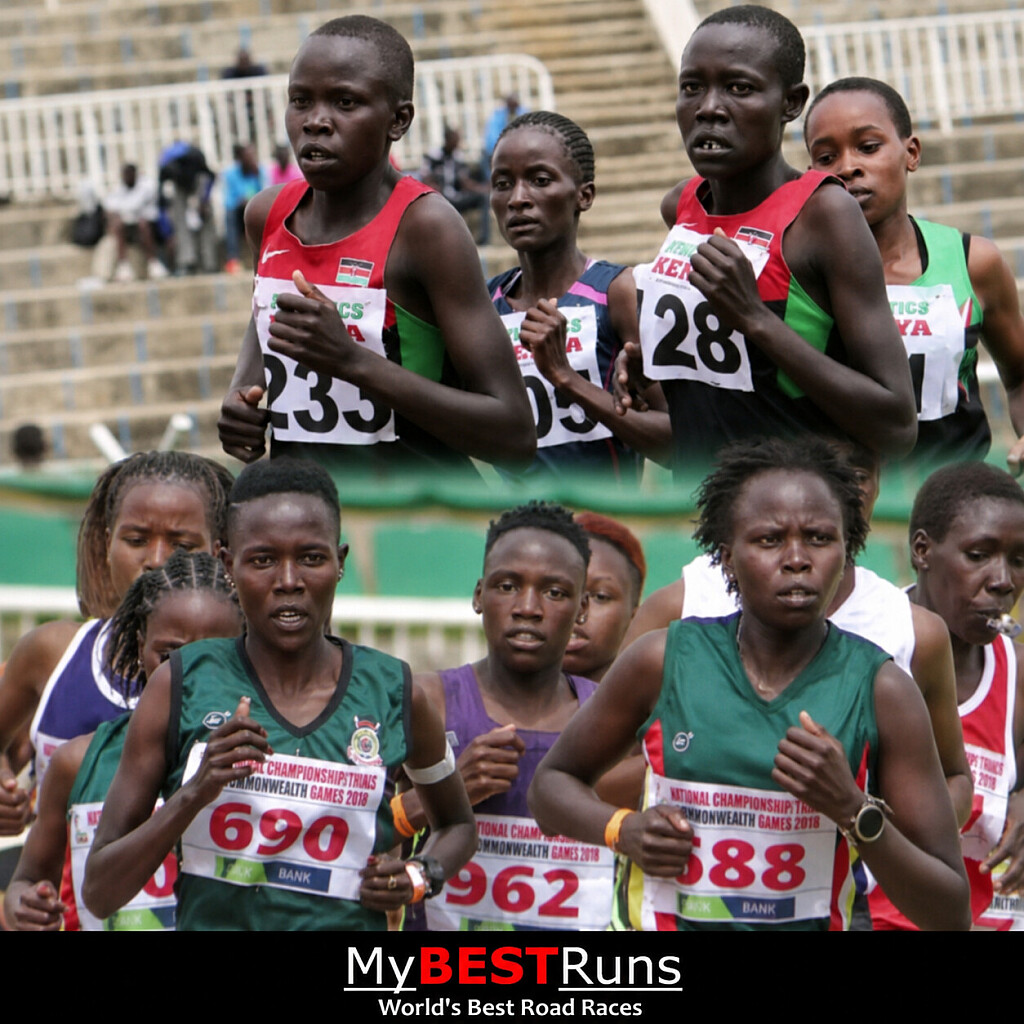
From Eugene To Global Greatness: How Lilian Kasait Rengeruk And Loice Chemnung Turned Teenage Promise Into World-Class Success
Twelve years can transform careers, but for Lilian Kasait Rengeruk and Loice Chemnung, they have transformed youthful potential into enduring excellence. Their remarkable rise from promising teenagers on the global junior stage to two of Kenya's finest distance runners stands as a testament to resilience, patience, and unwavering commitment.
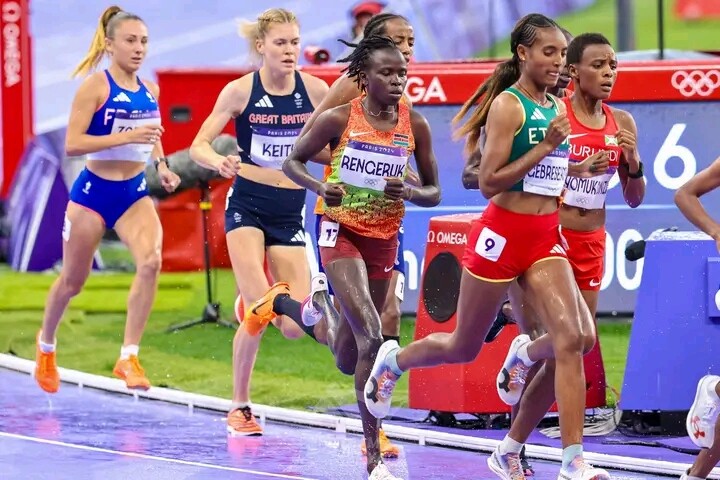
The story began in July 2014 at the World Under-20 Championships in Eugene, Oregon, where two 17-year-old Kenyan athletes stepped onto the famous Hayward Field with dreams far bigger than their years. Although their paths on the track differed, both displayed the talent and determination that would eventually propel them to the highest level of international distance running.
Rengeruk delivered one of the championship's most memorable performances in the women's 3,000 metres. Running with fearless confidence, she dictated much of the race before a thrilling final-lap battle saw American star Mary Cain surge past in the closing metres. Despite narrowly missing gold, Rengeruk secured a well-deserved silver medal in 9:00.53, announcing herself as one of the brightest young talents in global athletics.
Chemnung, meanwhile, contested the fiercely competitive women's 5,000 metres, where Ethiopia dominated the medals. She battled courageously throughout the race and finished fifth, gaining invaluable experience against some of the world's finest junior distance runners.
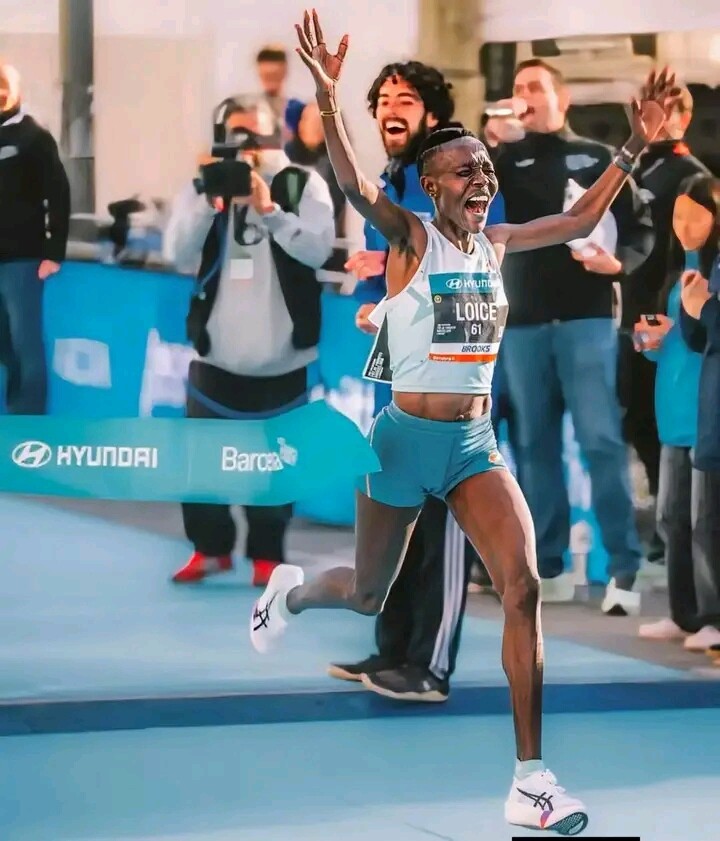
That championship proved to be only the beginning.
Over the past decade, both athletes have steadily evolved from accomplished track runners into elite performers over longer distances, earning recognition on some of the world's biggest roads while continuing to showcase Kenya's rich tradition of distance running.
Rengeruk has enjoyed an extraordinary transition. She stunned the athletics world by winning the Daegu Marathon on her debut in 2:19:33, overcoming a dramatic fall in the closing stages to still reach the finish line first. Her impressive résumé also includes a superb half marathon personal best of 1:03:32—among the fastest performances ever recorded—and a world-class 10,000-metre best of 29:26.89.
Chemnung's progression has been equally impressive. She has established herself as one of Kenya's premier long-distance runners by winning consecutive national 10,000-metre titles before making a spectacular impact on the roads. Her course-record victory at the Barcelona Half Marathon in 1:04:01 elevated her among the fastest women in history over the distance, while her outstanding marathon debut of 2:18:24 in Chicago confirmed her credentials as one of Kenya's brightest marathon prospects. Her commitment to the marathon was further demonstrated when she chose to focus on the event instead of pursuing a place at the Commonwealth Games.
Their achievements underline a truth often overlooked in modern sport: greatness is rarely built overnight. It is forged through years of disciplined training, perseverance during setbacks, and the courage to embrace new challenges.
Twelve years after sharing the world junior stage in Eugene, Lilian Kasait Rengeruk and Loice Chemnung continue to inspire a new generation of athletes. Their journey from talented teenagers to internationally acclaimed distance stars is more than a story of medals and records—it is proof that sustained hard work, belief, and consistency can transform youthful promise into a legacy of excellence.
by Erick Cheruiyot for My Best Runs.
Login to leave a comment
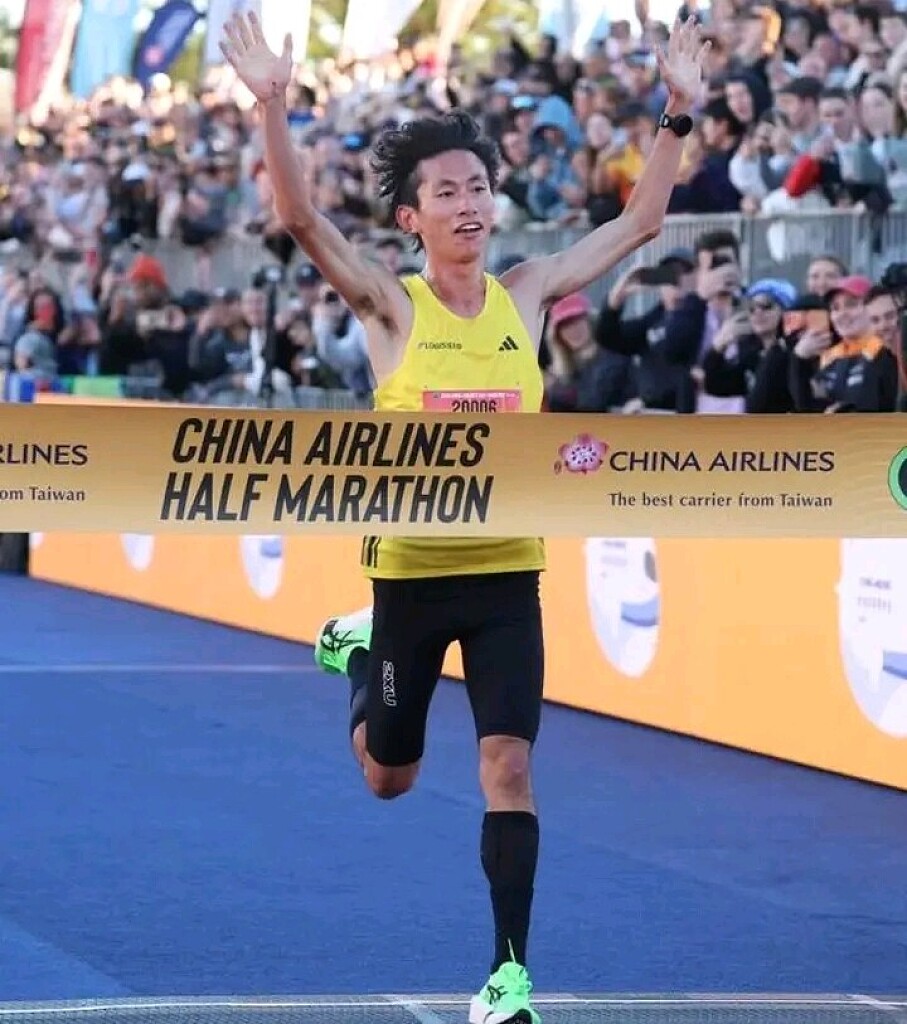
Gold Coast Half Marathon Delivers Course Record and Elite Performances
The Gold Coast Half Marathon produced a thrilling morning of world-class distance running, with elite athletes delivering exceptional performances across both the men's and women's races on one of Australia's fastest and most prestigious road-running courses.

The men's race belonged to Japan's Shumpei Tomita, who produced a sensational performance to storm to victory in a new course record of 1:00:52. Tomita's historic run rewrote the event's record books as he held off a fierce late challenge from Great Britain's Edward Marks, who finished just five seconds behind in 1:00:57. Fellow Japanese runner Kazuto Kawabata completed the podium in 1:01:16, highlighting Japan's impressive depth in elite road racing.
The women's race was equally captivating as Great Britain's Izzi Batt-Doyle delivered a composed and commanding performance to take the title in 1:07:29. Japan's Rino Goshima claimed second place in 1:08:50, while another British athlete, Caitlin Scott, rounded out the podium after crossing the finish line in 1:09:09.
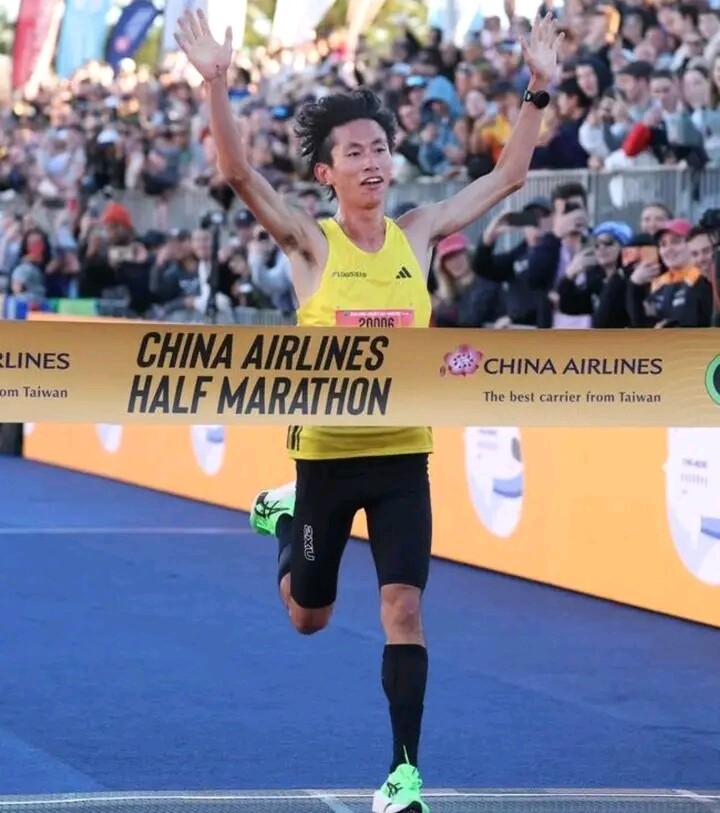
Among the standout performances of the day, Tomita's course record stole the spotlight, while Batt-Doyle's convincing victory reaffirmed her status as one of Britain's leading distance runners. Together, British and Japanese athletes dominated the event, sweeping all six podium positions and showcasing the remarkable strength and depth of their distance running programs.
The impressive performances on the Gold Coast also provide a timely confidence boost for many athletes as the international road racing season gathers momentum. With personal bests, national pride, and major championship ambitions driving the world's top competitors, the high-quality racing in Australia once again demonstrated why the Gold Coast Half Marathon remains one of the premier events on the global road racing calendar.
With a course record, thrilling finishes, and outstanding performances from an international field, this year's Gold Coast Half Marathon delivered another memorable chapter in the race's rich history, offering fans an unforgettable showcase of speed, endurance, and world-class competition.
by Erick Cheruiyot for My Best Runs.
Login to leave a comment

Gold Coast Airport Marathon
The Gold Coast Airport Marathon is held annually in one of the most popular holiday destinations in the world. It is Australia’s premier road race and was the first marathon in the country to hold an International Association of Athletics Federations (IAAF) Road Race Gold Label. The event is held on the first weekend of July and attracts more than...
more...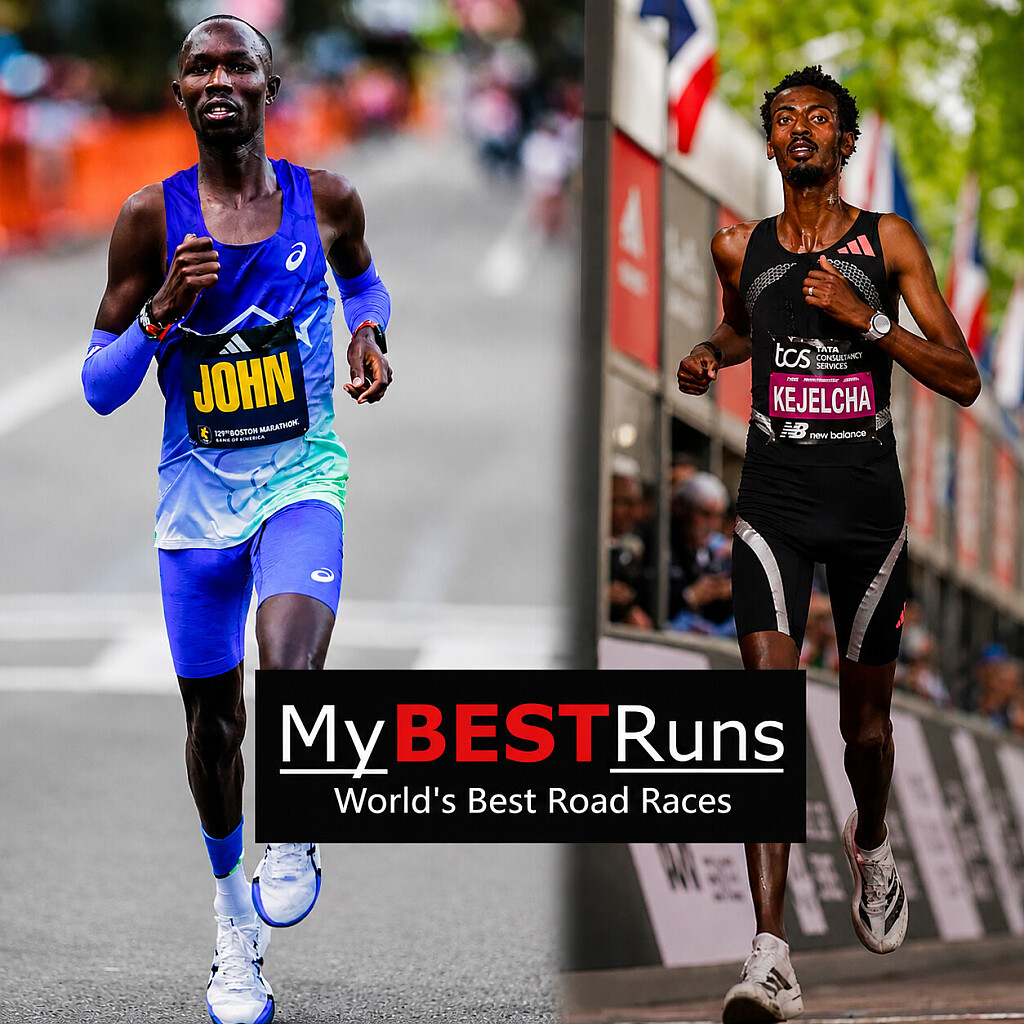
Valencia Marathon 2026: Can John Korir Challenge the Two-Hour Barrier?
The 2026 Valencia Marathon is already shaping up to be one of the most eagerly anticipated races of the year, with an exceptional men's field confirmed for 6 December. As the countdown begins, one question is capturing the imagination of athletics fans worldwide: Can John Korir become the next man to break the two-hour barrier in an official marathon?
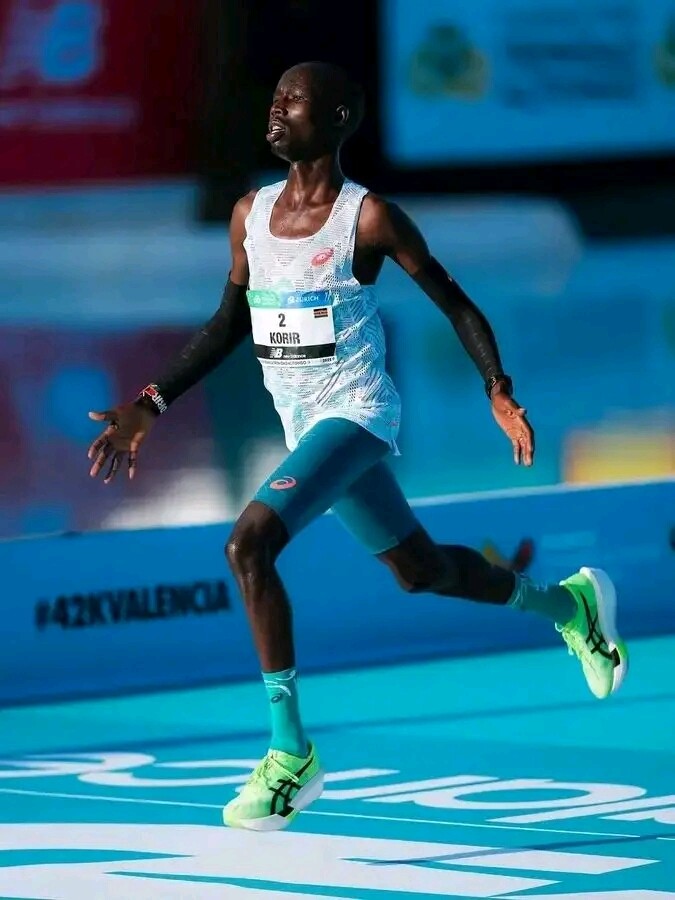
Korir returns to Valencia as the defending champion, having stormed to victory in 2025 with a then-personal best of 2:02:24. Since that triumph, the Kenyan has elevated his career to another level. On 20 April 2026, he delivered a sensational performance at the Boston Marathon, smashing the course record and lowering his lifetime best to 2:01:52. That remarkable run confirmed his status as one of the fastest and most dangerous marathoners in the world.
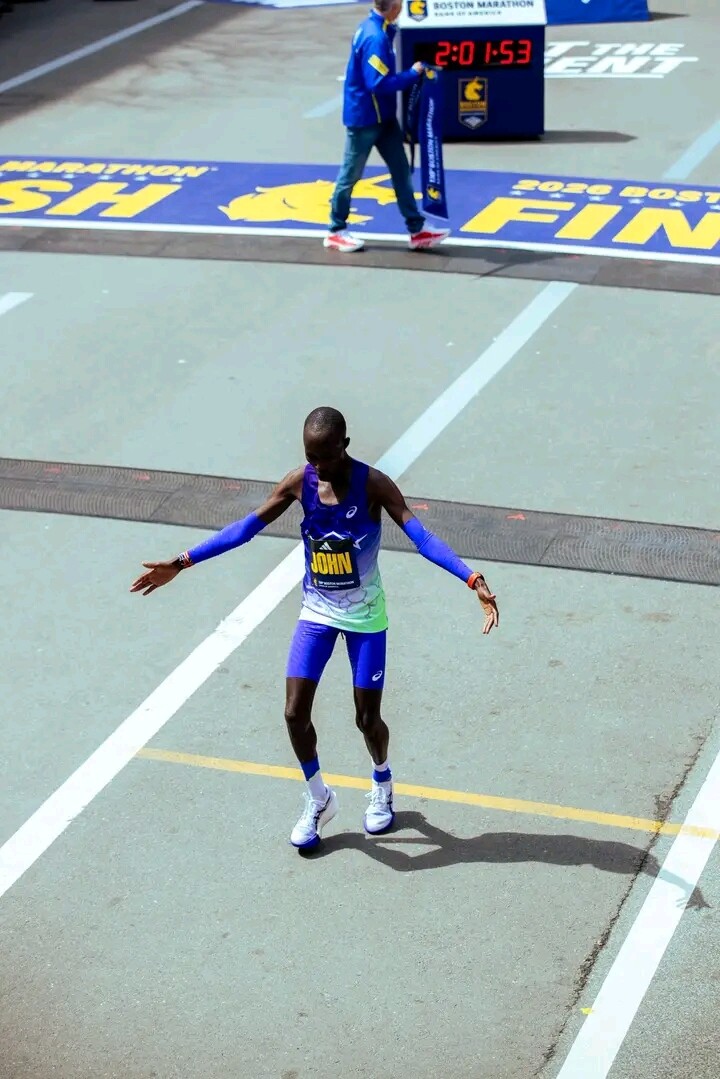
With his confidence soaring and his form peaking, Korir now heads back to the Spanish city where he first announced himself as a Valencia champion. The course's flat profile, cool December conditions and reputation for producing exceptionally fast times make it an ideal venue for another historic performance.
Standing in his way is Ethiopia's Yomif Kejelcha, whose marathon career has begun in spectacular fashion. In April, Kejelcha stunned the athletics world by clocking 1:59:41 on his 26.2-mile debut in London, becoming only the second athlete in history to cover the marathon distance in under two hours. His arrival in Valencia immediately raises the prospect of another record-breaking performance.
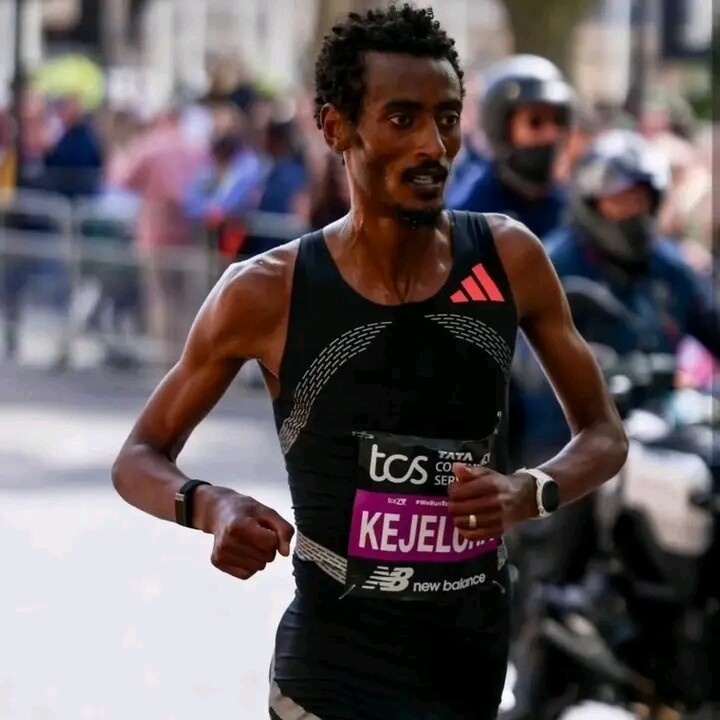
Kejelcha is no stranger to success on Valencia's streets. In 2024, he produced a then-world-record 57:30 to win the Valencia Half Marathon, demonstrating just how perfectly the course suits his aggressive racing style. That previous success makes him one of the leading contenders for marathon victory.
Adding even greater quality to the field is fellow Kenyan Alexander Mutiso, the 2024 London Marathon champion, who owns a personal best of 2:03:11. With three proven world-class athletes lining up, the men's race promises to be one of the strongest marathon contests of the season.
While breaking the two-hour barrier in an official marathon remains one of the greatest challenges in athletics, Valencia has built a reputation as a stage where extraordinary performances become reality. If the pace is relentless and the weather cooperates, fans could witness one of the fastest marathons ever run.
On 6 December, the streets of Valencia will host far more than a battle for victory. They will provide the stage for a fascinating showdown between defending champion John Korir, the explosive Yomif Kejelcha, and Alexander Mutiso—a clash that could redefine the limits of marathon running.
by Erick Cheruiyot for My Best Runs.
Login to leave a comment
VALENCIA TRINIDAD ALFONSO
The Trinidad Alfonso EDP Valencia Marathon is held annually in the historic city of Valencia which, with its entirely flat circuit and perfect November temperature, averaging between 12-17 degrees, represents the ideal setting for hosting such a long-distance sporting challenge. This, coupled with the most incomparable of settings, makes the Valencia Marathon, Valencia, one of the most important events in...
more...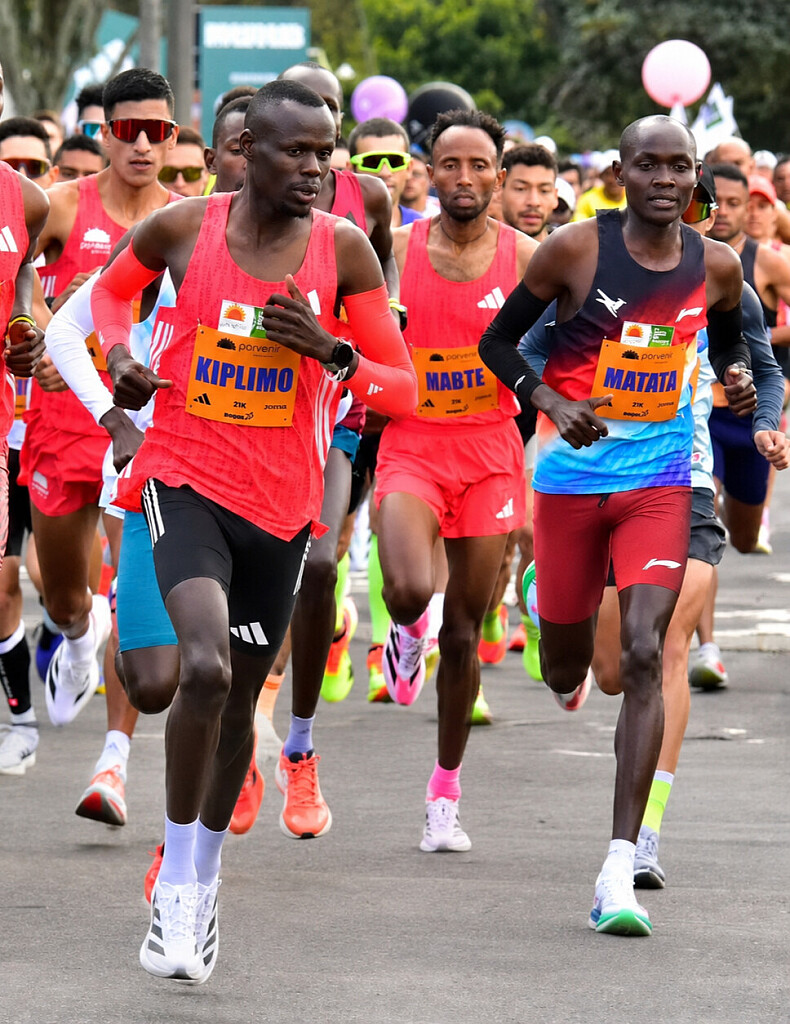
Elite International Field Confirmed for 2026 Bogotá Half Marathon
The stage is set for another thrilling edition of the Bogotá Half Marathon, with race organisers unveiling a world-class elite field for the 2026 event, scheduled for 26 July in Bogotá, Colombia.
Athletes from across the globe are expected to converge on the Colombian capital for one of South America's most prestigious road races, setting the scene for an intense battle on Bogotá's challenging high-altitude course.
Among the standout names in the men's field is Philemon Kiplimo, whose exceptional personal best of 58:11 makes him one of the fastest athletes confirmed for the race. He is joined by Charles Matata (59:15), Gideon Kiprop (59:20) and Erick Sang (59:38), adding further quality to an already stacked international lineup.
While the Kenyan quartet arrives with impressive credentials, they will face strong opposition from elite runners representing other nations, ensuring the race is far from a one-country contest. The diverse field promises a fascinating clash of styles, experience and tactics as athletes chase victory through the streets of Bogotá.
Renowned for its altitude of more than 2,600 metres above sea level, the Bogotá Half Marathon has long been regarded as one of the most demanding races on the international road-running calendar. Success on this course requires not only speed but also exceptional endurance, patience and race management.
With proven performers and emerging talents from around the world set to take their places on the start line, the 2026 Bogotá Half Marathon is shaping up to deliver another memorable chapter in the event's rich history. Fans can look forward to a captivating contest as some of the world's finest distance runners battle for top honours in Colombia.
by Erick Cheruiyot for My Best Runs.
Login to leave a comment
Bogota Half Marathon
The Bogotá International Half Marathon, or mmB as it is traditionally known, is an annual road running competition over a half marathon distance 21.0975 kilometres (13.1094 mi) taking place in Bogotá, Colombia in late July or early August. Established in 2000, it holds IAAF Gold Label Road Race status, making it the first and thus far only South American race...
more...