

Running News Daily
Running News Daily is edited by Bob Anderson and team. Send your news items to bob@mybestruns.com Advertising opportunities available.
Index to Daily Posts · Sign Up For Updates · Run The World Feed
Articles tagged #California International Marathon
Today's Running News
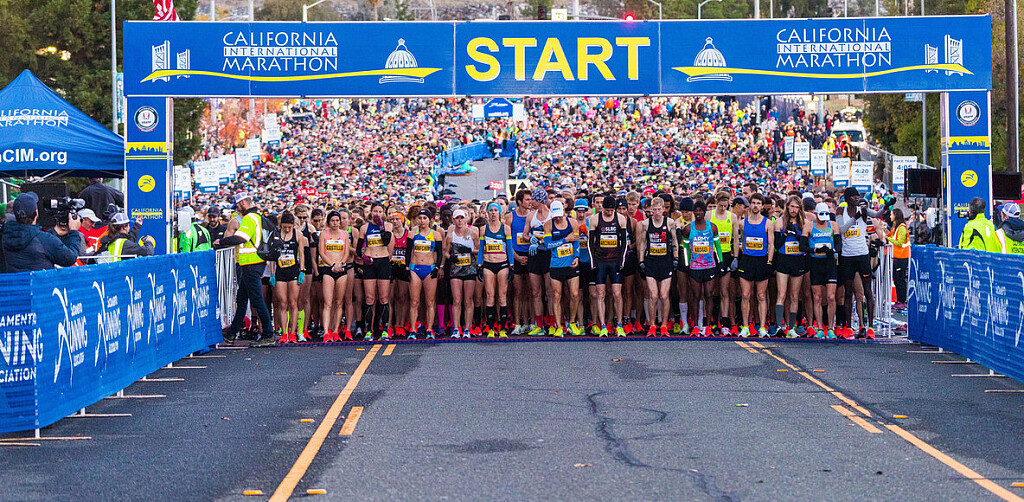


California International Marathon Announces Historic Growth, Bigger Field and Longer Finish Window for 2027
The California International Marathon is preparing for one of the most significant transformations in its history, with organizers confirming plans to dramatically expand the race beginning in 2027. Long regarded as one of America's premier marathon courses, CIM will nearly double its capacity while giving runners more time to reach the finish line, opening the door for thousands of additional participants.
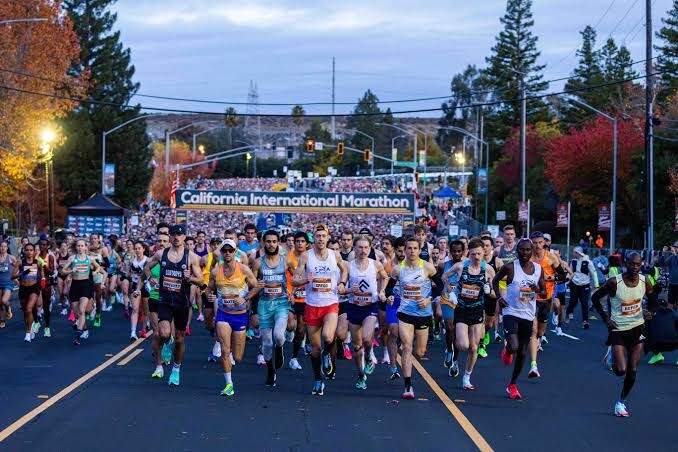
The announcement follows a new agreement involving Union Pacific, whose freight rail operations have historically influenced race-day logistics along the course. Under the new arrangement, trains will be held for a longer period, allowing organizers to extend road closures and accommodate a much larger field than ever before.
As a result, participation is expected to grow from approximately 10,000 runners to nearly 20,000 through the introduction of a second starting wave. The expansion marks a major milestone for a race that has steadily increased in popularity among both elite competitors and recreational marathoners.
Perhaps the most welcome change for many runners is the extension of the race cutoff time. For years, CIM enforced a strict six-hour limit, largely because the course needed to reopen before scheduled rail operations resumed. Beginning in 2027, that deadline will be extended to at least six hours and 45 minutes, with race organizers gaining an additional 45 minutes to an hour of road-closure time.
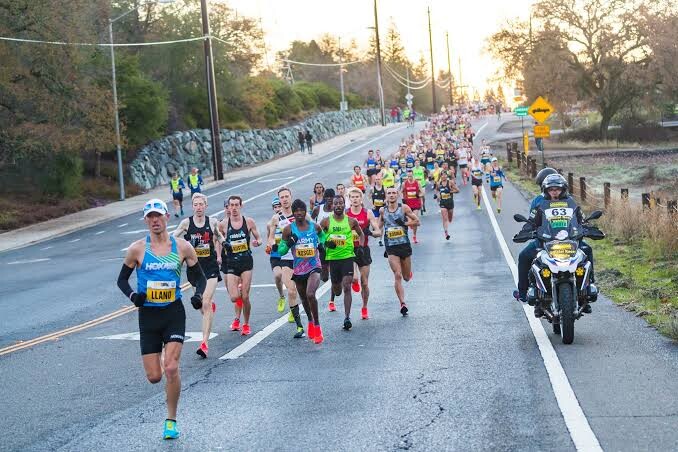
The revised cutoff creates new opportunities for participants who may have previously struggled to finish within the existing time restriction. More runners will now be able to complete the marathon experience without the pressure of an unusually demanding cutoff clock.
Despite the expansion, the California International Marathon will retain the characteristics that have made it one of the world's most respected marathon courses. The point-to-point route from Folsom to downtown Sacramento remains unchanged, featuring a net elevation drop of 366 feet while staying comfortably within Boston Marathon qualifying standards for downhill courses.
Combined with Northern California's typically cool early-December conditions, the course has earned a reputation as one of the fastest and most reliable venues for athletes chasing personal bests and Boston Marathon qualification marks.
That reputation is supported by impressive numbers. In 2025, more than 30 percent of CIM finishers achieved Boston-qualifying times, an extraordinary statistic that highlights the race's appeal among serious marathoners. With Boston Marathon qualifying standards becoming five minutes faster for most age groups beginning in 2026, fast and athlete-friendly courses such as CIM are expected to become even more sought after.
For runners planning their next marathon, there is no immediate change. The 2026 edition will operate under the same format that has defined the event for more than four decades. The landmark expansion—including the larger field and extended cutoff time—will officially debut in 2027.
As the California International Marathon enters a new era, organizers are balancing growth with tradition, ensuring that one of America's most celebrated road races remains both accessible and competitive. For thousands of future participants, the message is clear: there will soon be more room on the start line and more opportunity at the finish.
by Erick Cheruiyot for My Best Runs.
Login to leave a comment

California International Marathon
The California International Marathon (CIM) is a marathon organized by runners, for runners! CIM was founded in 1983 by the Sacramento Running Association (SRA), a 501(c)(3) non-profit organization. The SRA Board of Directors is comprised of runners with a combined total of 150+ years of service to the CIM. The same route SRA management created for the 1983 inaugural CIM...
more...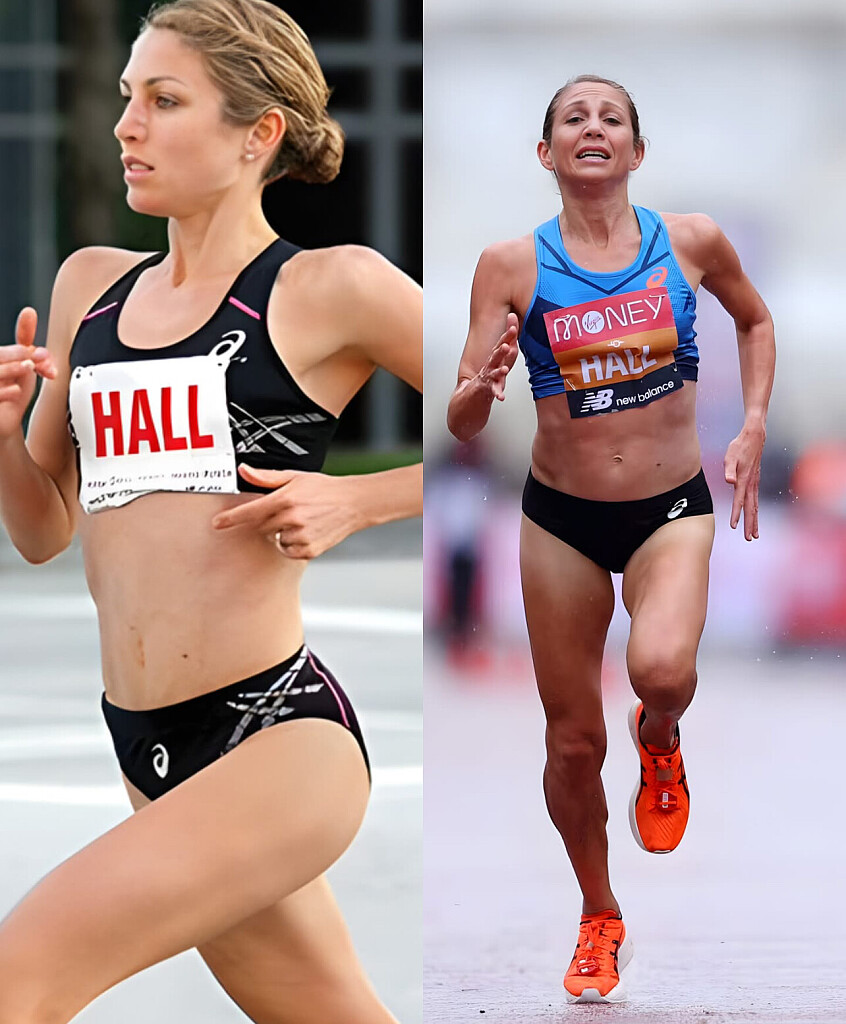
Sara Hall’s Brilliant California Marathon Run Upstaged by Molly Born’s Historic Debut in Sacramento
At 42 years old, Sara Hall produced one of the finest races of her storied career on Sunday at the California International Marathon — yet even her record-breaking brilliance wasn’t enough to stop the emergence of a new U.S. marathon star.
In a sensational debut that electrified the net-downhill course, 26-year-old Molly Born stormed to victory in 2:24:09, slicing 19 seconds off the women’s course record and claiming the 2025 USATF Marathon Championship title. The Oklahoma State alumna and Chapel Hill resident seized control at mile 19 and powered home with a fearless negative split, averaging a searing 5:30 per mile despite nearly stumbling on the homestretch.
Hall, the pre-race favorite and 2017 CIM champion, ran one of the greatest masters performances in U.S. history. Her 2:24:36 not only marked her fastest marathon since 2020, but also obliterated the American masters record for women over 40 and erased the sting of last month’s DNF in New York.
Megan Sailor completed the podium with a strong 2:25:16, but the day belonged to two runners at opposite ends of their careers: Hall, the enduring veteran proving she can still rise to championship form, and Born, whose fearless debut announces her as a rising force in U.S. distance running.
At a race known for breakthroughs, Sunday’s showdown delivered a generational moment — the established legend running one of her finest marathons, and the newcomer running into history.
by Boris Baron
Login to leave a comment
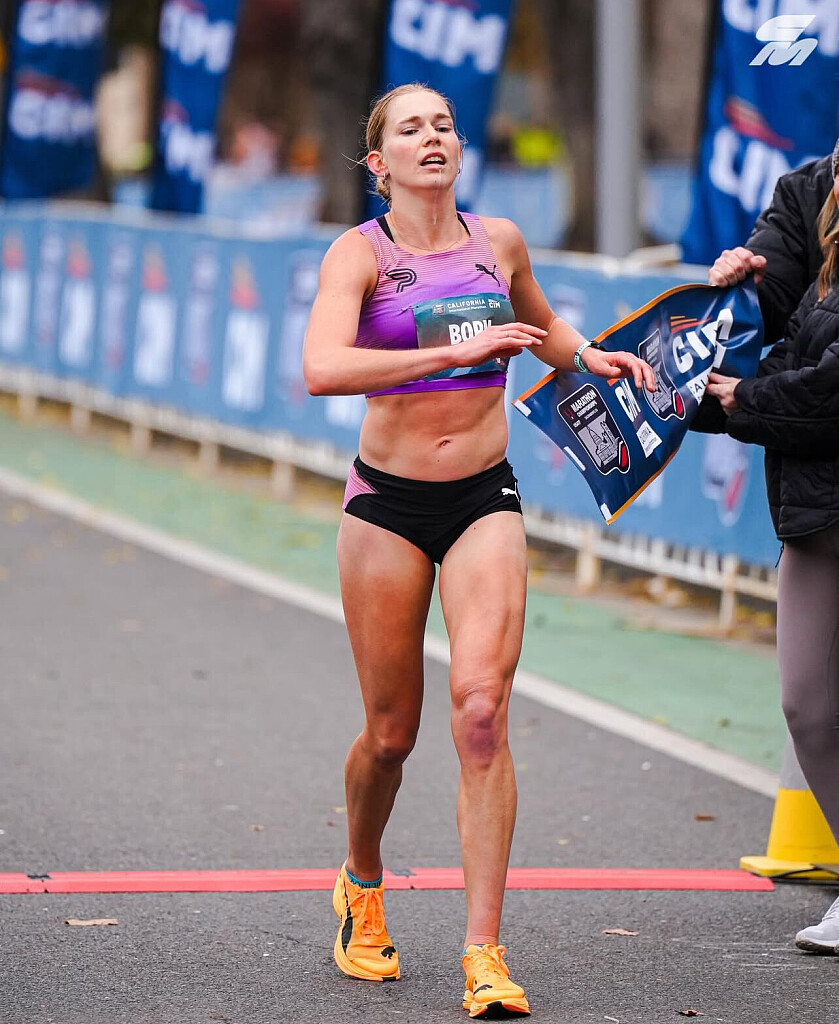
Molly Born Smashes Course Record in Marathon Debut; Futsum Zienasellassie Returns to the Top at CIM 2025
SACRAMENTO, California — December 7, 2025 The California International Marathon once again lived up to its reputation as America’s fastest championship course, producing breakout performances and reaffirming elite talent at the 2025 USATF Marathon Championships. Two standout athletes—Molly Born and Futsum Zienasellassie—delivered the signature performances of the day.
Born’s Brilliant Debut: 2:24:09 Course Record
In her first-ever marathon, 26-year-old Molly Born ran with the poise and confidence of a seasoned veteran. The Oklahoma State alumna powered through the rolling downhills from Folsom to Sacramento to claim the 2025 USATF Marathon Championship in 2:24:09, breaking the women’s course record and announcing herself as a major new force in American distance running.
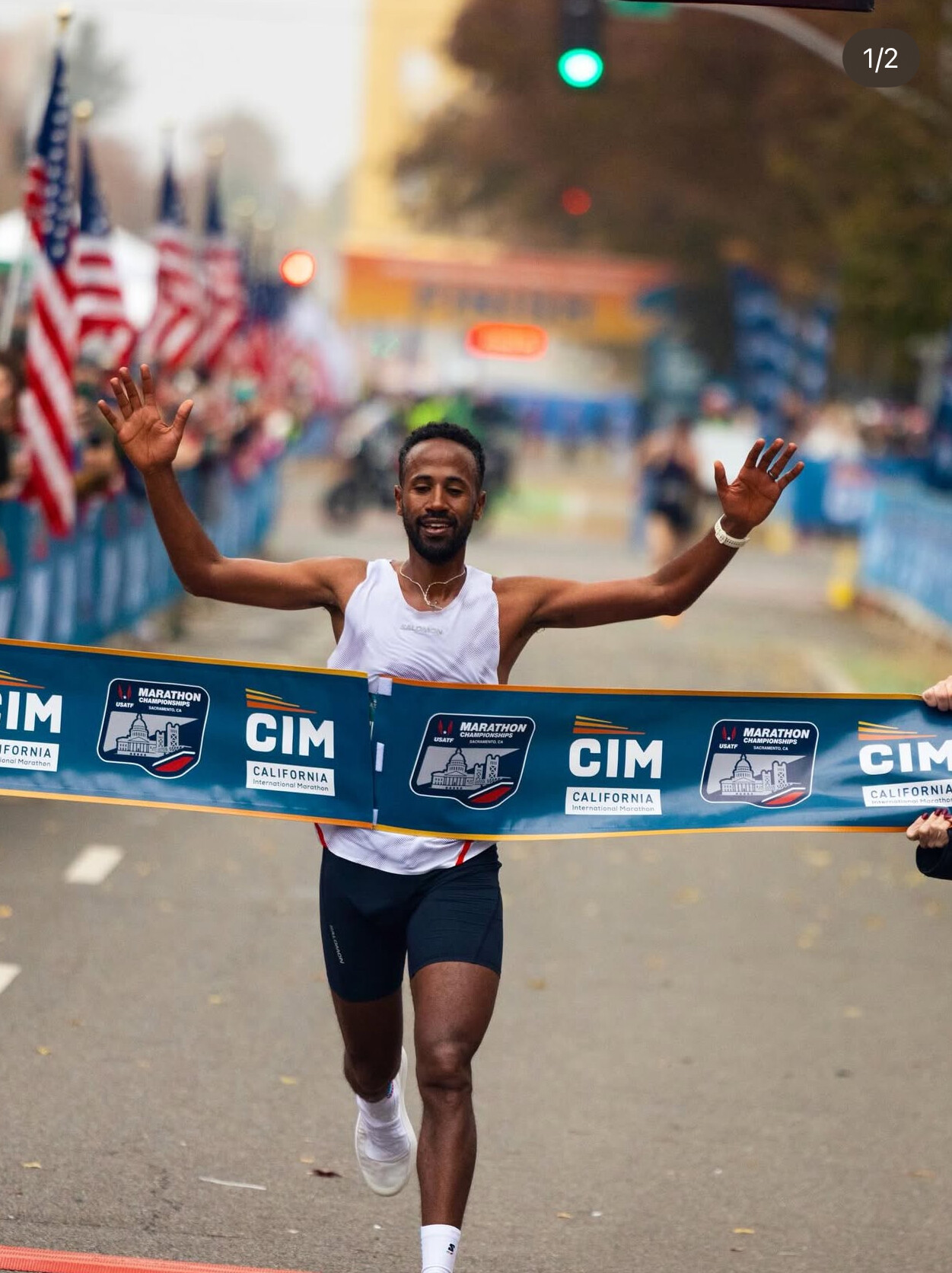
Born excelled at 1,500m through 10,000m during her collegiate career, but never attempted the marathon until today. Her debut suggests she has found her event.
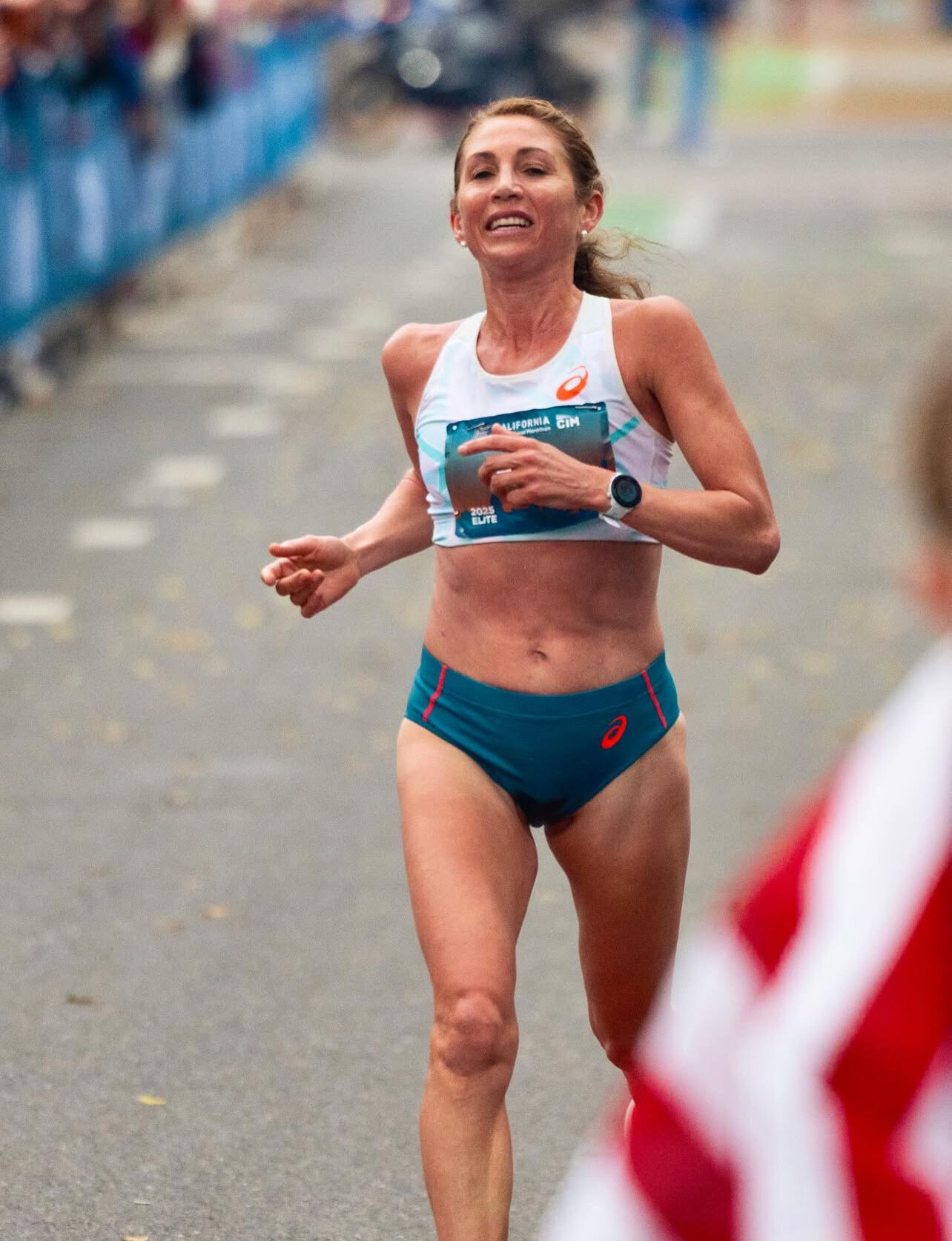
“I knew it was a possibility, but I wasn’t expecting all this,” Born said after winning.
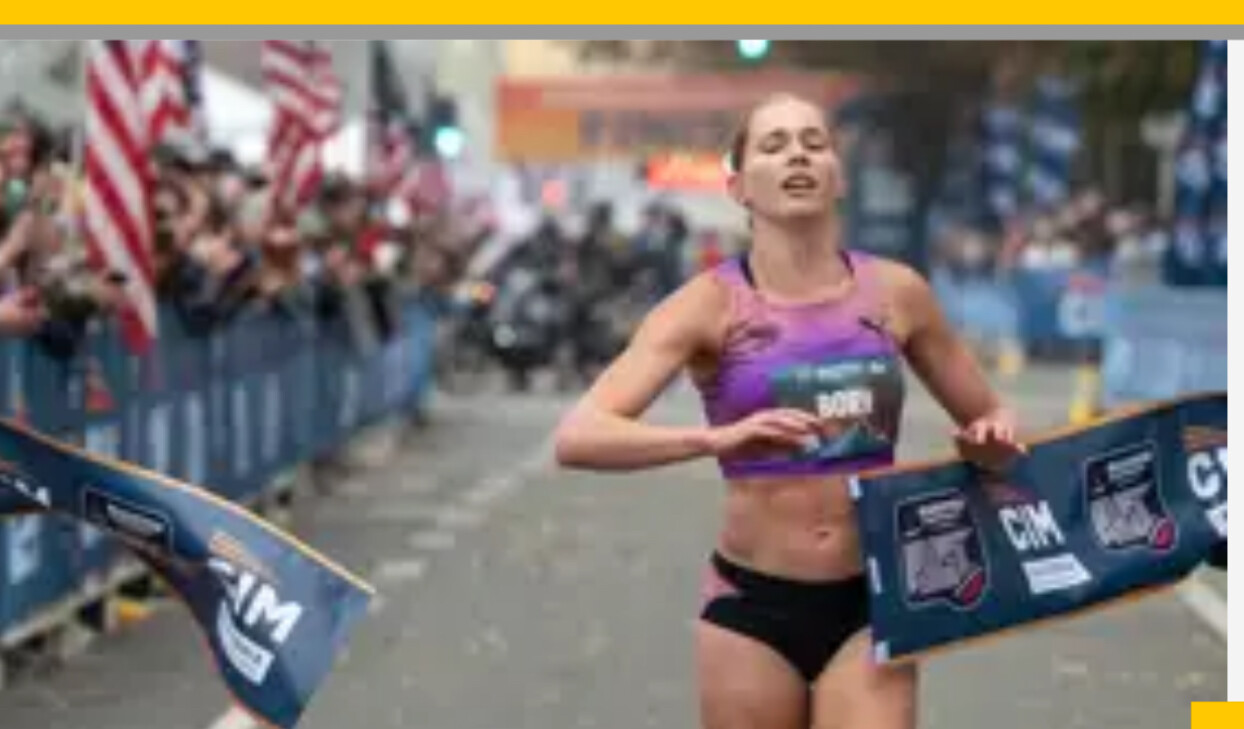
“It feels really good. I think I’ve found my event—going forward, it’s going to be the marathon.”
Women’s Top Five — CIM 2025
1. Molly Born — 2:24:09 (Course Record)
2. Sara Hall — 2:24:36
3. Megan Sailor — 2:25:16
4. Lindsey Bradley — 2:28:41
5. Maya Weigel — 2:28:44
Hall and Sailor also broke 2:26, marking one of the deepest women’s fields ever at CIM.
Zienasellassie Reclaims the CIM Crown
On the men’s side, Futsum Zienasellassie reclaimed the title he first won in 2022, crossing the finish in 2:09:29 to earn his second CIM victory. Smooth, controlled pacing and a strong final 10K separated him from the pack in a deep men’s field.
Zienasellassie famously grew up in Eritrea before starring at Northern Arizona University. His win today continues his rise as one of the most consistent American marathoners.
Men’s Top Five — CIM 2025
1. Futsum Zienasellassie — 2:09:29
2. Joseph Whelan — 2:09:41
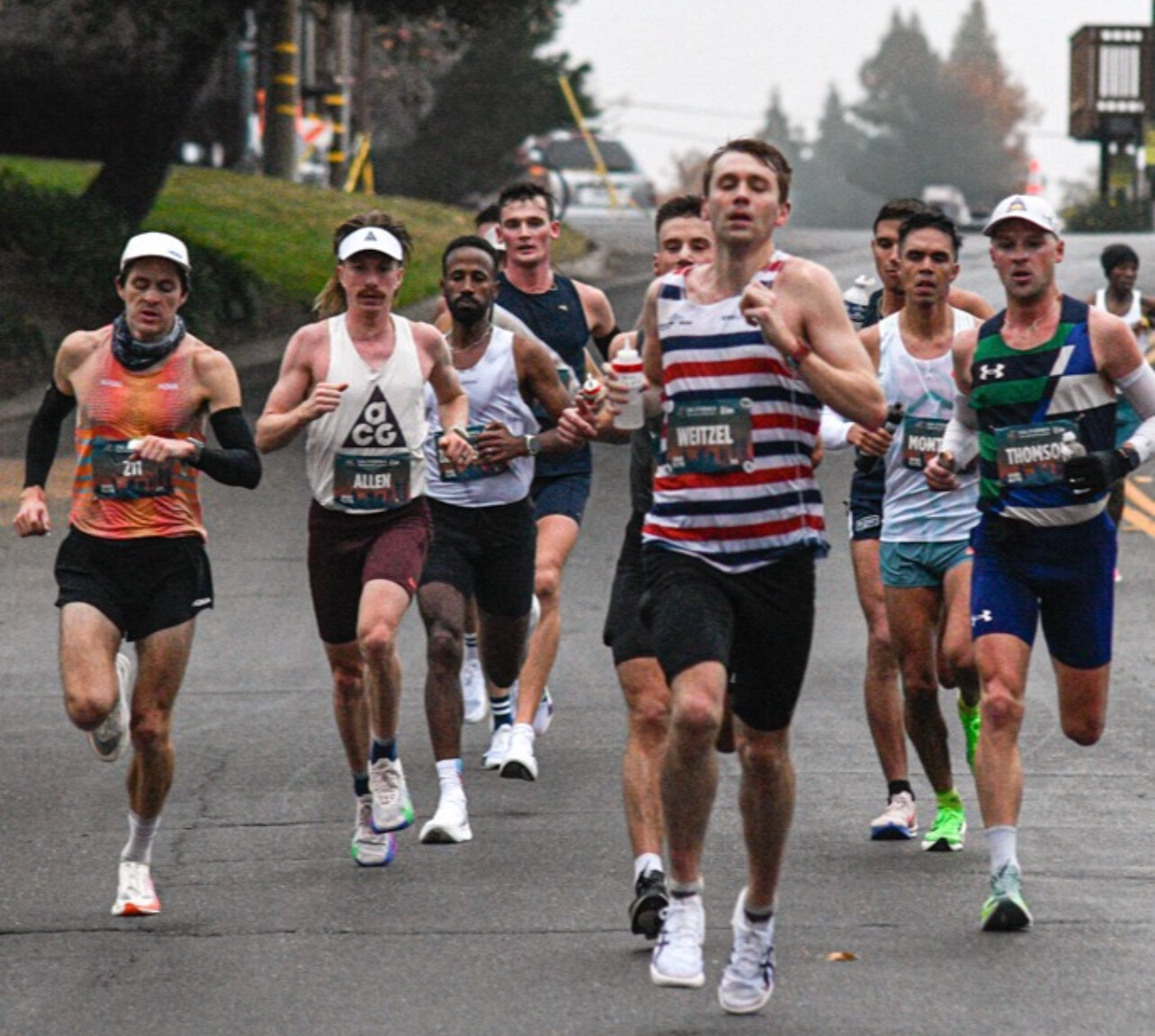
3. Christian Allen — 2:09:57
4. Joseph Trojan — 2:10:38
5. Chris Maxon — 2:10:54
Three men breaking 2:10 on the CIM course underscores why this race remains a cornerstone of American distance running.
A Historic Day in Sacramento
Ideal racing conditions and CIM’s fast net-downhill profile helped produce one of the strongest editions in race history:
• A course record in the women’s race
• Three men under 2:10
• A national title decided in dramatic fashion
• An electrifying debut from one of America’s newest marathon stars
The 2025 California International Marathon once again proved why so many U.S. runners come to Sacramento seeking breakthroughs—and today, the event delivered exactly that.
by Boris Baron
Login to leave a comment
California International Marathon
The California International Marathon (CIM) is a marathon organized by runners, for runners! CIM was founded in 1983 by the Sacramento Running Association (SRA), a 501(c)(3) non-profit organization. The SRA Board of Directors is comprised of runners with a combined total of 150+ years of service to the CIM. The same route SRA management created for the 1983 inaugural CIM...
more...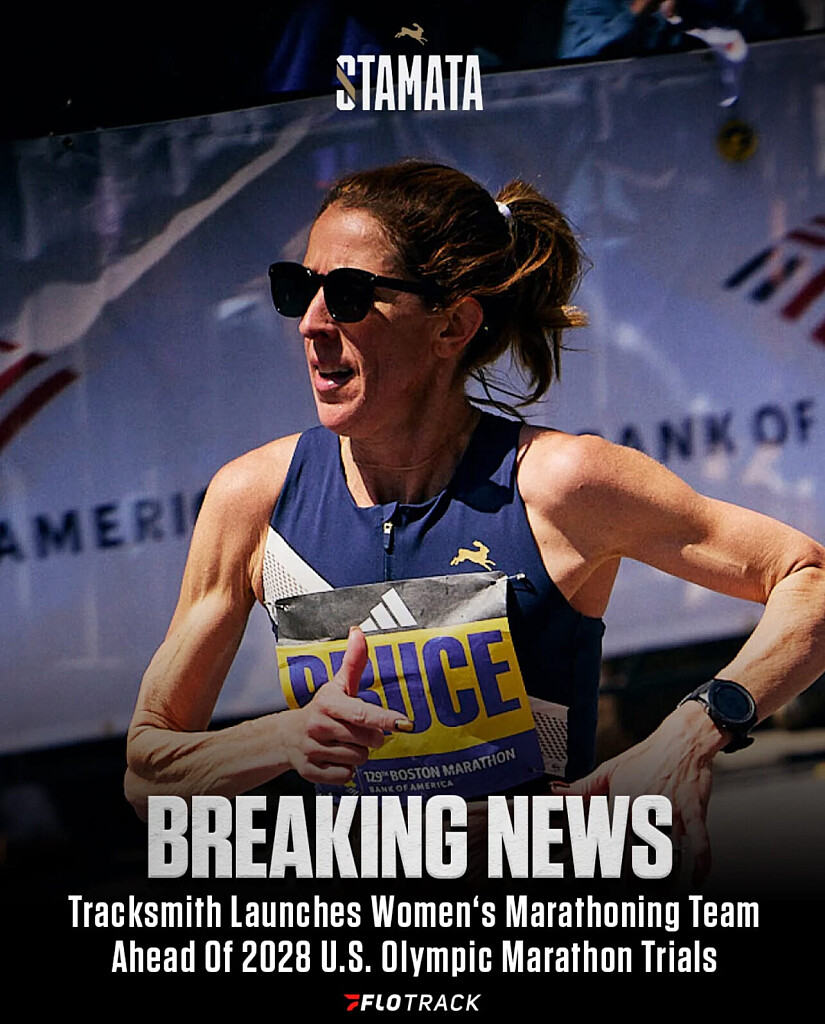
Tracksmith Launches “Stamata” — A New Women’s Marathon Team Aiming for the 2028 U.S. Olympic Trials
In a bold and inspiring move to uplift women’s distance running in the United States, Tracksmith has announced the formation of Tracksmith Stamata, a dedicated women’s marathon team. The initiative is led by elite marathoner and long-time advocate for female athletes, Stephanie Bruce, and is aimed squarely at helping women qualify for the 2028 U.S. Olympic Marathon Trials.
With a surge of momentum building in the U.S. women’s distance scene, the timing couldn’t be more ideal.
Supporting Women on the Olympic Path
The team’s mission is clear: identify and support talented women with the potential to reach the Olympic Trials, and ultimately, the Olympic Games. Named “Stamata” — Greek for “to stop,” perhaps symbolizing the end of outdated barriers and the start of something powerful — the team brings a structured, fully backed approach to marathon preparation.
Tracksmith will provide:
• Training camps
• Targeted marathon attempts
• Financial stipends
• Performance gear
• Access to sports professionals, including coaches, nutritionists, and medical experts
This comprehensive support structure is designed to level the playing field, especially for emerging or overlooked athletes who may not yet have major sponsorship deals.
California International Marathon to Host Team Debut
The California International Marathon (CIM) — long known for its fast course and Trials-qualifying potential — will be the official debut race for Tracksmith Stamata. The selection of CIM reflects the team’s pragmatic focus on real results and meaningful opportunities. In recent years, CIM has been a launchpad for many Olympic Trials qualifiers, and it’s the perfect stage for Stamata’s debut.
Stephanie Bruce at the Helm
Stephanie Bruce, who recently concluded her own professional racing career, brings not only elite experience but also deep empathy and advocacy for working mothers, aging athletes, and under-supported competitors. Her leadership signals that Stamata isn’t just a racing team — it’s a movement.
“This isn’t just about fast times. It’s about building an environment where women can thrive, be seen, and be supported in their pursuit of excellence,” Bruce said in a recent interview.
Let’s make it happen
The women’s marathon scene in the U.S. is more competitive than ever. As the road to Los Angeles 2028 heats up, initiatives like Tracksmith Stamata play a critical role in widening the access point and reinforcing the pipeline of elite female marathoners.
Whether you’re chasing a Trials standard or cheering from the sidelines, there’s no doubt: Stamata is a name to remember on the road to 2028.
by Boris Baron
Login to leave a comment
Houston chases new American records elite fields include Yehaulaw and Kiptoo
The 2025 road racing year will open with an exciting chase for American records at the Aramco Houston Half Marathon and course records at the Chevron Houston Marathon on Sunday, January 19.
The Houston Marathon Committee announced the professional fields for both races today, featuring returning champions and all-time top performers.
The women’s half marathon field is led by the fifth fastest woman in history, Yalemzerf Yehaulaw of Ethiopia who will race in North America for the first time. Yehaulaw, 25, holds two of the top ten all-time half marathon performances including her personal best of 1:03:51 from Valencia in 2021. In 2024, Yehaulaw set a new personal best time in the marathon, winning the Amsterdam Marathon in 2:16:52, a course record.
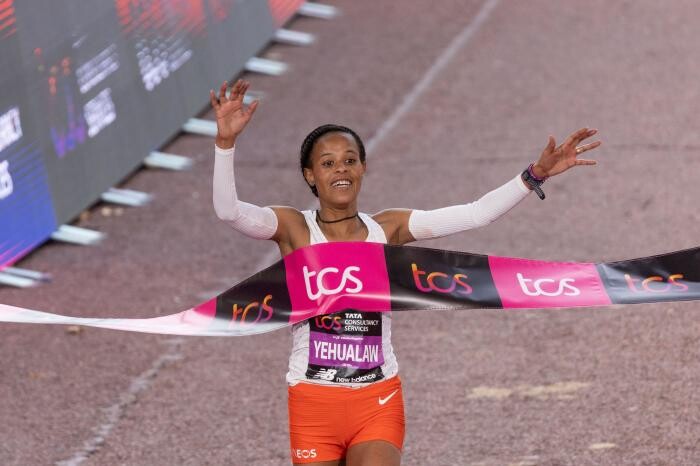
“It has always been my ambition to race in the United States and now the opportunity has finally come,” said Yehaulaw, the 2022 TCS London Marathon winner. “Running an early race means I get a chance to focus fully on the half marathon to go for a fast time. I am eager to win.”
The Aramco Houston Half Marathon women’s race also features the follow-up half marathon for the American record holder Weini Kelati. Kelati set the record of 1:06:25 in her debut half marathon here last year. She has not raced the distance since, instead focusing on the 10,000m in which she represented the United States at the 2024 Paris Games.
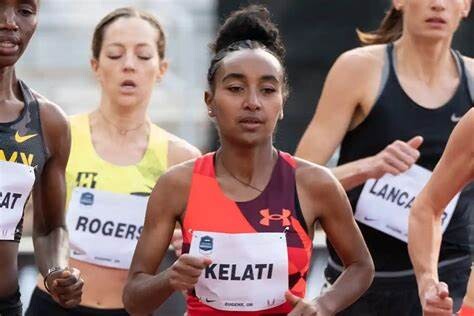
“I’m really excited to come back to Houston and run my second half marathon,” said Kelati, who finished fourth here in 2024. “Last year was great and I hope this year’s race will be even better. My training has been going well and I know the competition will be very good.”
The women’s professional field features 15 women who have run faster than 1:10 in the half marathon. Other top contenders include last year’s third place finisher Buze Diriba of Ethiopia; the third fastest British half marathoner in history, Jessica Warner-Judd, and fellow Brit and 2024 Olympic marathoner, Calli Hauger-Thackery. Hauger-Thackery won the California International Marathon last month.
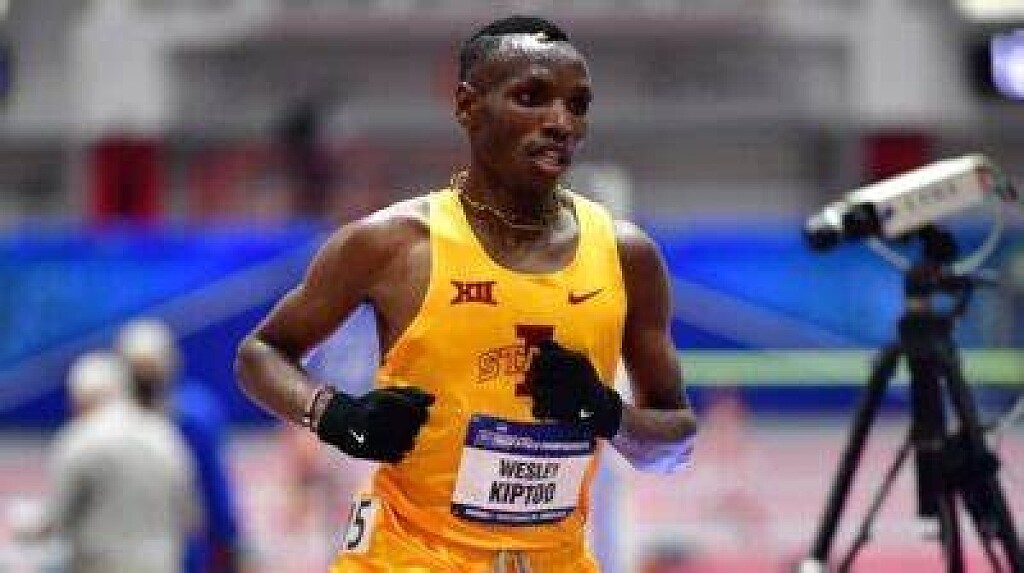
The men’s competition will see a rematch of last year’s thrilling Aramco Houston Half Marathon. Wesley Kiptoo of Kenya who has been runner-up here for the past two years will again face off against Jemal Yimer of Ethiopia. Yimer outsprinted Kiptoo in 2024, beating him by just one second.
“I can’t wait to return to Houston to try to defend my 2024 title,” said Yimer, who also won here in 2020. “It’s a special place for me to kick off my 2025 road season.”
The pair will be joined by Tanzania Olympian and former Boston Marathon runner-up Gabriel Gaey who has a personal best of 59:42 from his seventh place finish here in 2020.
The men’s race will also see an attempt to finally topple the American half marathon record of 59:43 set here by Ryan Hall in 2007. Leading the chase on the 18-year-old record will be 2024 Olympic marathoners Conner Mantz and Clayton Young. Mantz and Young, who finished eighth and ninth in Paris, train together in Provo, Utah. In November, they were the top two American finishers in the TCS New York City Marathon with Mantz breaking the American course record. This will be Young’s Houston debut. Mantz last ran here in 2023, finishing in sixth place.
“I want to race the Aramco Houston Half Marathon because there are other fast Americans going for the American Record,” said Mantz, who also set the American record in the 10 mile last October. “The opportunities to race in a field like this, on a fast and record-eligible course are rare.”
Mantz and Young will face competition for a spot in the record books from Diego Estrada, the ninth fastest American in history and 2015 Houston champion who had a career-best performance here last year when he finished fifth in 1:00:49. Joe Klecker, an Olympian in the 10,000m, will look to play a factor in his half marathon debut along with his training partner Morgan Pearson, a two-time Olympic silver medalist in the triathlon with a personal best of 1:01:08. Klecker comes to Houston with family history. His mother Janis Klecker is the 1992 Houston Marathon champion.
The Chevron Houston Marathon features the return of two-time champion Dominic Ondoro of Kenya. Ondoro, who won here in 2017 and 2023, will be part of a field that includes two men who have run under Zouhair Talbi’s course record of 2:06:39 set in 2024: Haimro Alame (Israel, 2:06:04) and Ande Filmon (Eritrea, 2:06:38). The field also includes last year’s third place finisher, Hendrik Pfeiffer of Germany. Pfeiffer led nearly 22 miles of last year’s race and finished with a personal best of 2:07:14.
“Houston was the best marathon race in my career so far. I have great memories of the fast course and the impressive city,” said Pfeiffer, whose wife Esther is in the women’s half marathon elite field. “I have already experienced how it feels to lead the race for more than 35 kilometers and I‘m hungry for more. I will definitely try to chase a fast time again.“
A new winner will be crowned in the Chevron Houston Marathon women’s race. After making her half marathon debut here in 2023, Anna Dibaba will return to Houston to run just the second marathon of her career. The sister of Ethiopian legends Tirunesh, Ejegayehu and Genzebe, Dibaba ran 2:23:56 in her debut in Amsterdam last October.
“As I race in more marathons I am sure that I will understand better what I am capable of,” said Dibaba who placed fourth in the 2023 Aramco Houston Half Marathon. “You have to respect the distance of the marathon and it is not enough to be in shape. You must know how to interpret each race, the various courses and conditions. I am looking forward to seeing what I am now able to do in my next race in Houston."
There are two Ethiopian women who have run faster than Dibaba entered in the race. Tsigie Hailesale who has run 2:22:10 and has marathon victories in Stockholm and Cape Town is the fastest and Sifan Melaku, also a past winner in Stockholm with a 2:23:49 personal best.
American Erika Kemp will line up for only her second career marathon in Houston. Kemp, a two-time U.S. champion will look to build on her experience from the Boston Marathon last spring.
“In 2023 I learned what it was like to be out there competing for over two hours,” said Kemp, who runs for Brooks, the footwear and apparel sponsor of the Houston Marathon Weekend of Events. “I’m hoping to utilize the course karma I’ve built up in Houston to have a great marathon.”
“We are excited to see so many top runners kick off their 2025 racing season with us in Houston,” said Wade Morehead, Executive Director of the Houston Marathon Committee. “We are expecting a historic day that will add to this event’s reputation as one of the best races in the world.”
More than USD 190,000 in prize money and bonuses will be awarded to the top finishers of the Chevron Houston Marathon and USD 70,000 plus time bonuses for the top finishers in the Aramco Houston Half Marathon. The races will be broadcast live on ABC13 and feature commentary from Olympic Marathoner and Boston Marathon champion Des Linden.
by AIMS
Login to leave a comment

Chevron Houston Marathon
The Chevron Houston Marathon offers participants a unique running experience in America's fourth largest city. The fast, flat, scenic single-loop course has been ranked as the "fastest winter marathon" and "second fastest marathon overall" by Ultimate Guide To Marathons. Additionally, with more than 200,000 spectators annually, the Chevron Houston Marathon enjoys tremendous crowd support. Established in 1972, the Houston Marathon...
more...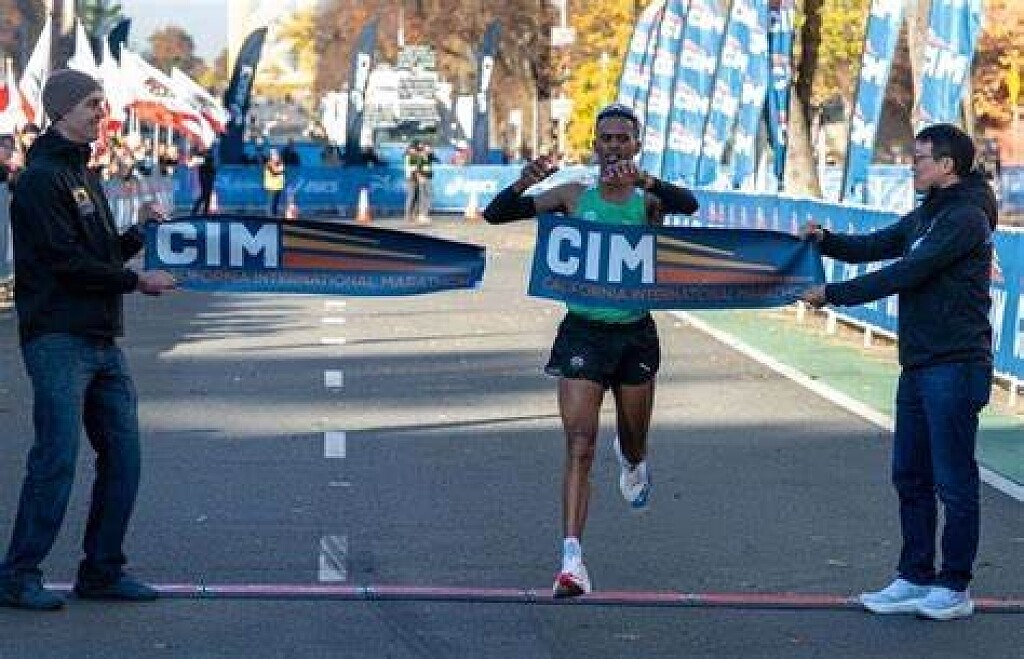
Records fall again as world’s best runners shine at California International Marathon
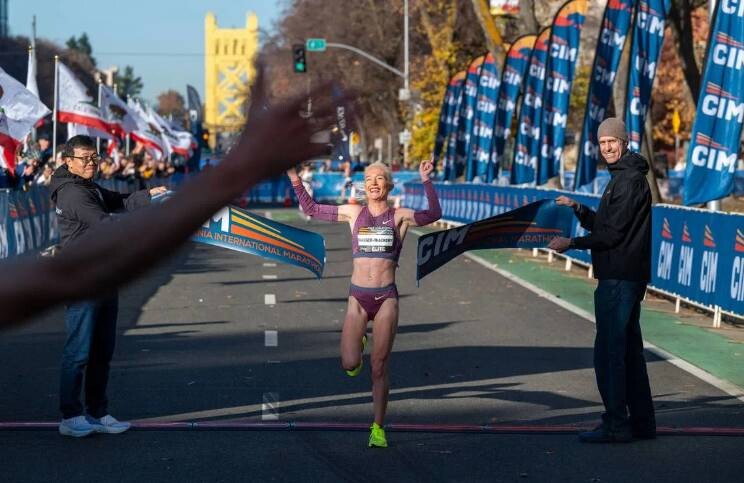
Tsegay Weldlibanos demolished a men’s course record that stood for more than 30 years en route to victory in his first-ever California International Marathon. British Olympian Callie Hauger-Thackery’s record-smashing pace was just enough to edge Jacqueline Gaughan and take home the women’s CIM title Sunday in Sacramento.
It was a day to celebrate, as is so often the case on one of the fastest marathon courses in the country. Sunny, dry conditions, temperatures a crisp but comfortable high 40s, and a world-class field in peak form led to another record-setting Sunday in the state capital.
Weldlibanos, of Eritrea, who lives and trains in high country Flagstaff, Arizona, turned the notoriously fast Folsom-to-Capitol course into a personal playground Sunday, crossing the finish line at two hours, seven minutes and 35 seconds — three seconds faster than the previous course best set by Jerry Lawlor in 1993.
CJ Albertson, the “Fresno Kid” and come-from-behind men’s winner in 2023, missed out on back-to-back wins, taking home a second-place finish and a trip to the podium.
Hauger-Thackery set a blistering pace and needed every bit, her 2:24:28 beating Gaughan’s 2:24:40 by .12 of a second. Stephanie Bruce finished third. One of the fastest British marathoners ever, Haugher-Thackery burst onto the scene in 2023 and earned a spot to represent Great Britain in the 2024 Paris Olympics.
Husband and coach Nick Hauger, who finished third on the men’s side moments earlier, met the women’s winner at the finish in an emotional moment. Hauger was draped in the Stars and Stripes; the Union Jack adorned Haugher-Thackery’s shoulders as the couple embraced in victory.
Fifth-place women’s finisher Brittney Feivor’s cheering section hugged the rail at the finish. Susan Kessler, Feivor’s mother-in-law, traveled from Kenosha, Wisconsin, to watch the former Marquette University standout’s run Sunday.
“It’s exhilarating. We know how much work she puts in,” said Kessler. Feivor logs 50 to 90 miles or more a week in training. “It’s cheering and giving her the support she needs.”
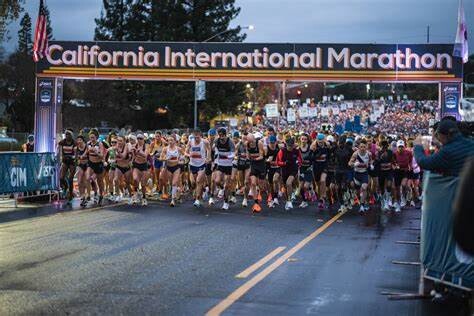
The day didn’t just belong to the elites. As many as 10,000 runners and another 1,000 relay runners were expected to cross the finish line on race day, traveling from across the country and Northern California for the chance to notch a personal best or qualify for marathons on the 2025 calendar.
The California International Marathon is a qualifying race for the Boston Marathon. The 129th running is April 21. It’s a short walk — or jog — from the finish line at Ninth Street and Capitol Mall to a bell at the state Capitol’s west steps. Runners here know what the bell’s peal means: Someone’s going to Boston next year.
On Sunday, that someone was Alex Mills, 23, of Tacoma, Washington, shaking the bell nearly off its moorings as proud family — 10 in all — watched on from the Capitol steps.
Mills, who graduated this year from George Fox College in Oregon, wasted no time. Sacramento was the first marathon for the collegiate cross-country runner.
Mills’ mother, Shelly, and entourage planned their vacation around the Sacramento trip. Now, she said, they’ll have to schedule a second in Boston.
“I’m just happy to get it over with,” said Mills, still draped in his warming blanket.
Sometimes the run is about redemption. Andy Holstrom came down to Sacramento from Portland for this year’s marathon. Holstrom, bib 115, was on the course, wife Rebecca and parents Bob and Marla Mion of Newcastle cheering on from the mall. Andy and Rebecca, expecting a child in April, ran Boston last year, but after a disappointing run in the Bay State, Andy was looking for a personal best in California.
Rebecca, who recently ran an ultramarathon, carried a placard with its own bit of cheeky motivation: “Don’t embarrass our unborn son,” it read. “Run fast.”
Dad-to-be Andy delivered, cracking the 2:40 barrier with a 2:39:12.
Brandon Moran of Boston took the trip west, breaking into the coveted 2:30s, relishing the CIM’s fast downhill after running on Boston’s grueling hills. “It’s been two years since I ran this fast. I’m very, very happy with the result. It’s just the smoothest course I’ve ever run.”
by Darrell Smith
Login to leave a comment
California International Marathon
The California International Marathon (CIM) is a marathon organized by runners, for runners! CIM was founded in 1983 by the Sacramento Running Association (SRA), a 501(c)(3) non-profit organization. The SRA Board of Directors is comprised of runners with a combined total of 150+ years of service to the CIM. The same route SRA management created for the 1983 inaugural CIM...
more...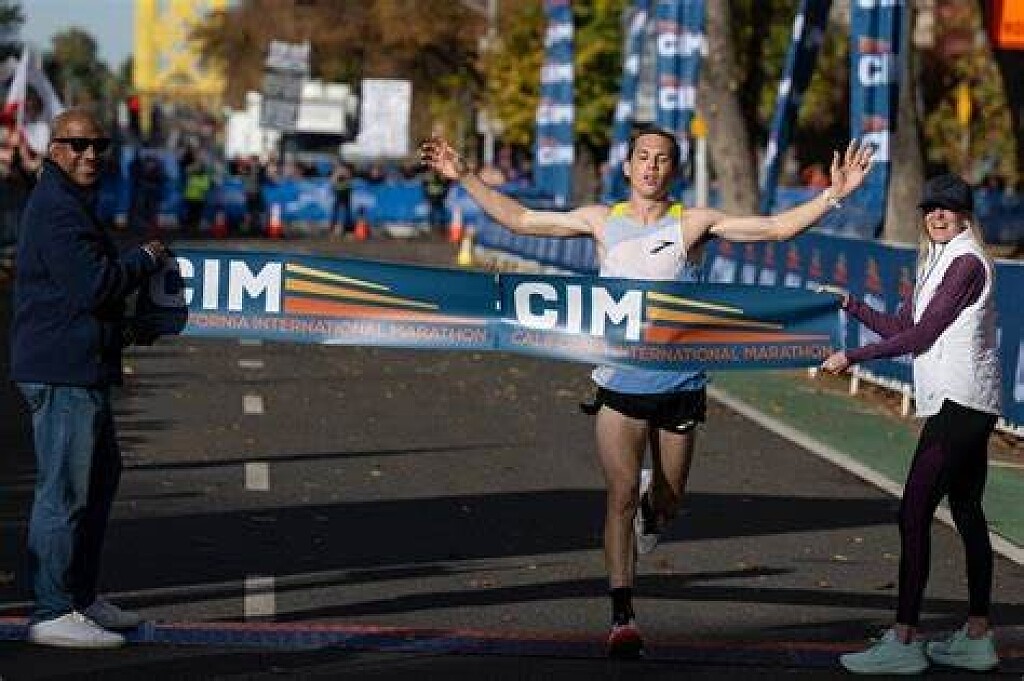
California International Marathon is this weekend and defending champion CJ Albertson and Calli Hauger-Thackery headline the elite field
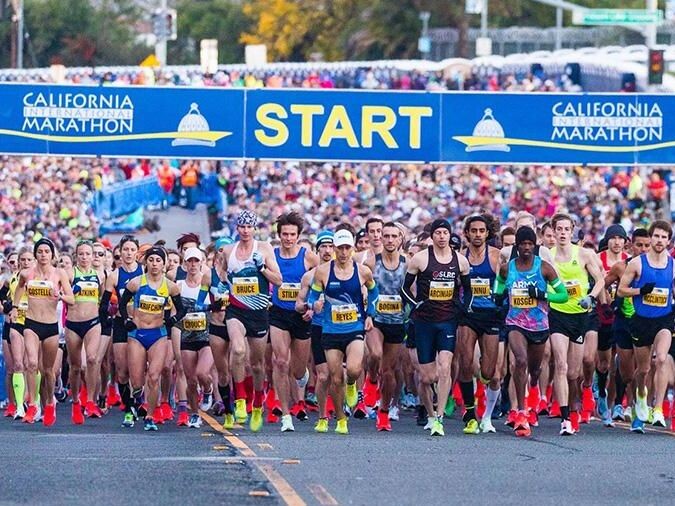
The 41st annual California International Marathon is this Sunday, Dec. 8 bringing some 10,000 runners and spectators to Folsom and the Sacramento region. Along with the many participants comes a number of road closures the day of the event.
The marathon begins at the intersection of Folsom Auburn Road and Folsom Lake Crossing at 7 a.m.The course continues through Orangevale, Citrus Heights, Fair Oaks, Carmichael, and Sacramento, and concludes at the State Capitol. Road closures include Folsom-Auburn Road from Folsom Dam Road to Greenback Lane, Folsom Lake Crossing Road from East Natoma Street to Folsom-Auburn Road, and Oak Avenue Parkway from Folsom-Auburn Road to Santa Juanita Avenue. Closures begin at 3 a.m. and roads are planned to reopen at 10 a.m. Detours will be clearly marked.
The CIM was founded in 1983 by the Sacramento Running Association, a 501(c)(3) nonprofit organization. The event brings an estimated 10 million dollar to the Sacramento County economy each year.The event is certified and sanctioned by USATF and is a Boston Marathon and U.S. Olympic Trials Marathon qualifier. Learn more at runsra.org. For a complete listing of road closures, schedules, and courses, visit the CIM website or see a summary at the conclusion of this article.
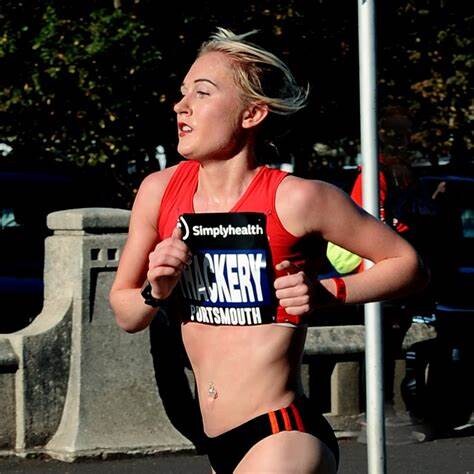
With good weather in the forecast, participants and organizers are excited about this year’s event and according to the Sacramento Running Association the event will feature 2024 Paris Olympian Calli Hauger-Thackery and defending 2023 CIM champion CJ Albertson, alongside a mix of returning veterans and first-time participants, setting the stage for potentially record-breaking performances.
The elite men’s and women’s fields will compete for a combined $100,000 prize purse, with additional bonuses for breaking course records. The current records stand at 2:10:27 for men, set in 1993 by Jerry Lawson, and 2:26:02 for women, set in 2022 by Paige (Stoner) Wood.
Hauger-Thackery, representing Great Britain at the 2024 Paris Olympics, holds the fastest personal best in the women’s field—2:21:24, achieved at the 2024 Berlin Marathon earlier this fall. She will make her CIM debut, joining her husband, 2:12 marathoner Nick Hauger, who is also competing.
“I’m excited to do this race for many reasons,” Hauger-Thackery said. “The main one being that my husband has had only fond experiences here over the past two years. I’m also excited because my dad raced CIM in the ’90s, and California is my favorite place! CIM has been on my radar for quite some time now.”
Hauger-Thackery will face stiff competition from four other women who have run sub-2:30 marathons: Laura Thweatt of Superior, Colo., with a personal best of 2:25:38; Jackie Gaughan of Boston, 2:27:08; Stephanie Bruce of Flagstaff, Ariz., 2:27:47; and Allie Kieffer of Austin, 2:28:12, who was the 2023 CIM runner-up.
Bruce returns to CIM with a strong record, having placed second in both the 2016 (2:32:36) and 2018 (2:29:21) editions. Since then, she has achieved milestones such as running her personal best of 2:27:47 at the 2019 Chicago Marathon and placing sixth at the 2020 U.S. Marathon Olympic Trials.
“Returning to CIM feels like an awesome homecoming because it was the first marathon I ran postpartum with my two boys in 2016,” Bruce said. “Now, eight years later, I’m coming back after giving birth to my third baby. I love the city, the energy, and the people who make this race so special.”
The men’s field includes three notable returners: defending champion CJ Albertson (Fresno, Calif.), 2023 runner-up Milton Rotich, and 2019 champion Elisha Barno. Joining them is CIM newcomer Tsegay Tuemay Weldlibanos, a 2:09:07 marathoner currently training in Flagstaff, Ariz., who is expected to push the pace.
“To race at CIM is very special for me,” Weldlibanos said. “Many of my teammates have found success here, and I hope to do the same. I want to make my family, team, and coach proud.”
Albertson has enjoyed a standout year, placing fifth at the 2024 U.S. Olympic Marathon Trials (2:10:07), seventh at the Boston Marathon (2:09:53) and Chicago Marathon (2:08:17), and tenth at the New York City Marathon (2:10:57). Another CIM victory will likely require a course record performance.
Barno, who won the 2019 CIM, has a personal best of 2:09:14. Rotich, last year’s runner-up, boasts a 2:08:55 personal best. Both are strong contenders to challenge Albertson and Weldlibanos for the win and the 2:10:27 course record.
“We’re thrilled about the 2024 elite field at CIM,” said Scott Abbott, executive director of the Sacramento Running Association. “This year has a unique homecoming feel, with so many ‘CIM alumni’ returning. It’s further evidence that CIM is a favorite among elite runners. We expect a strategic race between these battle-tested veterans, and we hope to see both course records fall.”
The Sacramento Running Association, a nonprofit organization, is dedicated to encouraging people of all ages and abilities to run. The SRA focuses on developing quality running events that appeal to a wide range of participants.
by Alan Inderkane
Login to leave a comment
California International Marathon
The California International Marathon (CIM) is a marathon organized by runners, for runners! CIM was founded in 1983 by the Sacramento Running Association (SRA), a 501(c)(3) non-profit organization. The SRA Board of Directors is comprised of runners with a combined total of 150+ years of service to the CIM. The same route SRA management created for the 1983 inaugural CIM...
more...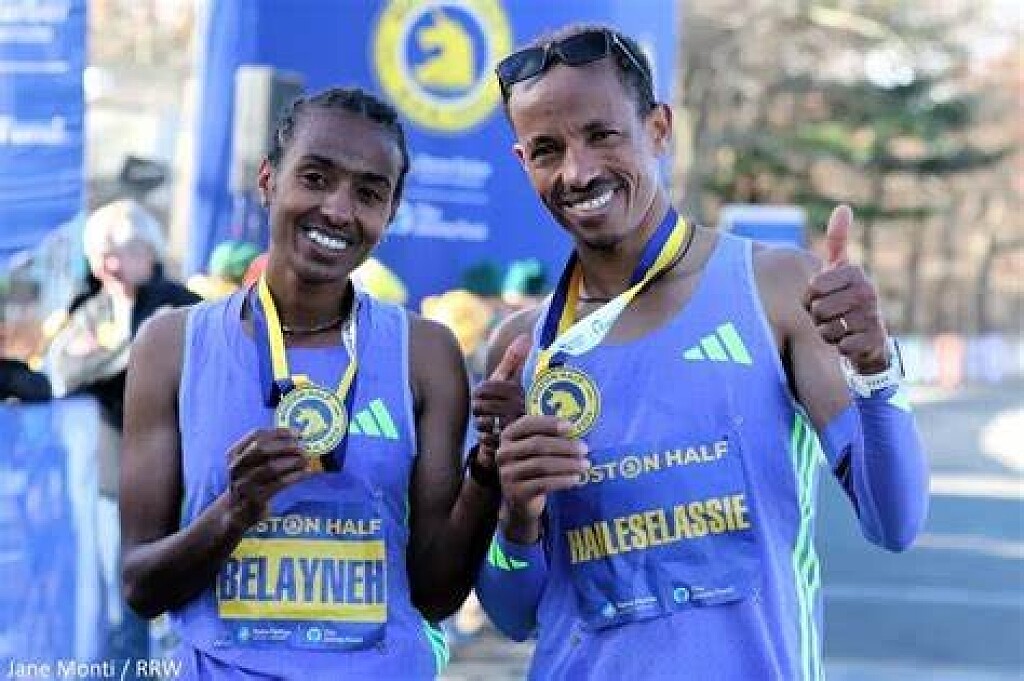
Yemane Haileselassie And Fentaye Belayneh Win Chilly Boston Half-Marathon
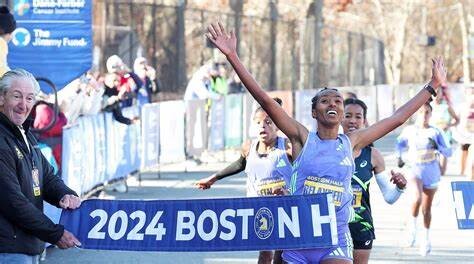
Fentaye Belayneh of Ethiopia and Yemane Haileselassie of Eritrea won this morning’s 22nd Boston Half-Marathon on a sunny and near-freezing morning here. Employing completely different tactics, Belayneh won in a pack-sprint to the finish in Franklin Park where the first three women finished in a span of just one second. Haileselassie won in a solo breakaway, dominating the final miles and winning by 15 seconds. Both athletes won $12,000 in prize money.
The women’s race got out slowly, and the first mile was completed in just 5:41, a comfortable training pace for athletes at this level. Britain’s Calli Hauger-Thackery was at the front. She said that she felt good taking the lead and wanted to work on some of her racing skills.
“I felt good doing that,” Hauger-Thackery told Race Results Weekly. “I was practicing not being set in a set pace. I’ve got to practice surging… not be afraid to put in a five minute mile here and there.”
The first real move happened just before 5-K where Ethiopia’s Mestawut Fikir, who was fifth at this race last year, put in a surge. The field responded immediately, and Kenyan’s Veronica Loleo and Daisy Jepkemei, and Ethiopians Melknat Wudu and Mebrat Gidey followed her single file. They passed through 5-K in 17:17 and four miles in 21:45. The downhill fourth mile was passed in a fast 5:05.
Fikir’s mini-surge only brought the lead pack down to 12. Although the second, five-kilometer segment was faster (16:27) it wasn’t enough to dwindle the field further. Fikir decided to go again just after the 10-K mark, and that move sent Hauger-Thackery and Australia’s Lauren Ryan several steps back. Kenya’s Mercy Chelangat was also having trouble holding on. Mile-8 went into the books at 5:10, and the serious racing had begun.
But after that, none of the women were keen to open up the race further, and the pace slowed enough that Chelangat managed to catch up. Remarkably, eight women were still together as they ran back to Franklin Park for the finish. Indeed, the race would not be decided until the final 200 meters when Belayneh, who had not led one step of the race, jumped the field and broke for the tape. She was ready for that kind of move.
“I prepared very well and I knew Boston was a good course,” Belayneh said with the help of a translator. “I prepared very well.”
Fikir and Senayet Getachew, another Ethiopian, were right on Belayneh’s heels as she bolted for the tape, but they just couldn’t catch their speedier rival. She broke the tape, arms raised with a huge smile, in 1:10:26. Fikir was given the same time, and Getachew was just one second back. Loleo got fourth in 1:10:29, and Wudu was fifth in 1:10:30. The first seven women finished in just a six-second span.
“At the end, I decided at the end,” Belayneh said when asked when she knew that the time was right for her final move. “It was a rough race, but I knew I could hold on and push. I had some little (energy) left over. I used that.”
Farther behind, Chelangat finished eighth in 1:10:43 and Hauger-Thackery was ninth in 1:10:49. The two women, both former NCAA stars who know each other from training in Flagstaff, embraced at the finish line.
“It was fun, it was good,” said Hauger-Thackery, who plans to run the California International Marathon in December with her husband, Nick. She added: “This was a good race to go for it, get the blood flowing.”
Unlike Belayneh, Haileselassie did not want to wait for the final sprint. In the ninth mile, he and Isaac Kipkemboi of Kenya and Haimro Alame of Israel pulled away from the field. Haileselassie was on the front, and kept pressing.
“Actually, when I lead in mile-nine I give them a little bit gap,” Haileselassie told Race Results Weekly. “I looked over my back, I had little bit gap. I know they can’t touch me.”
The Eritrean crossed to the finish line alone in 1:01:46. Kipkemboi was a clear second in 1:02:01, but Alame faded in the final miles and only finished sixth in 1:02:12. Taking the final podium position was Canadian miler Kieran Lumb, who was making his half-marathon debut. Lumb, who made the Paris Olympic 1500m semi-finals, was timed in 1:02:03. He was happy with his race, a good fitness test before the Canadian Cross Country Championships later this month, even if it hurt a little.
“It was hard,” said Lumb. “Honestly, it was pretty hard early on. I would say, like 20 minutes in, I didn’t feel amazing. I did not sleep well last night, either. I slept like four hours.”
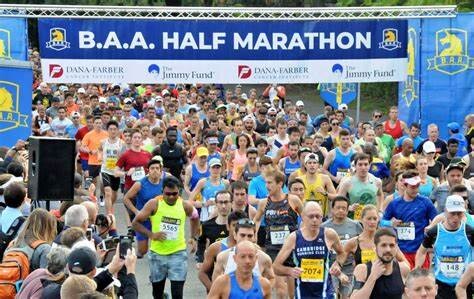
Today’s event was the third and final race in the 2024 Boston Athletic Association’s Distance Medley which included the Boston 5-K on April 13 and the Boston 10-K on June 23. About 6500 runners finished today’s race.
by David Monti ,
Login to leave a comment
B.A.A. Half Marathon
Dana-Farber and the Jimmy Fund have partnered with the B.A.A. in the Half Marathon for 13 years as the race’s presenting sponsor. Through this relationship, team members have collectively raised more than $5 million to support groundbreaking cancer research, and enabled Dana-Farber scientists and clinicians to positively impact the lives of cancer patients around the world. Dana-Farber runners often participate...
more...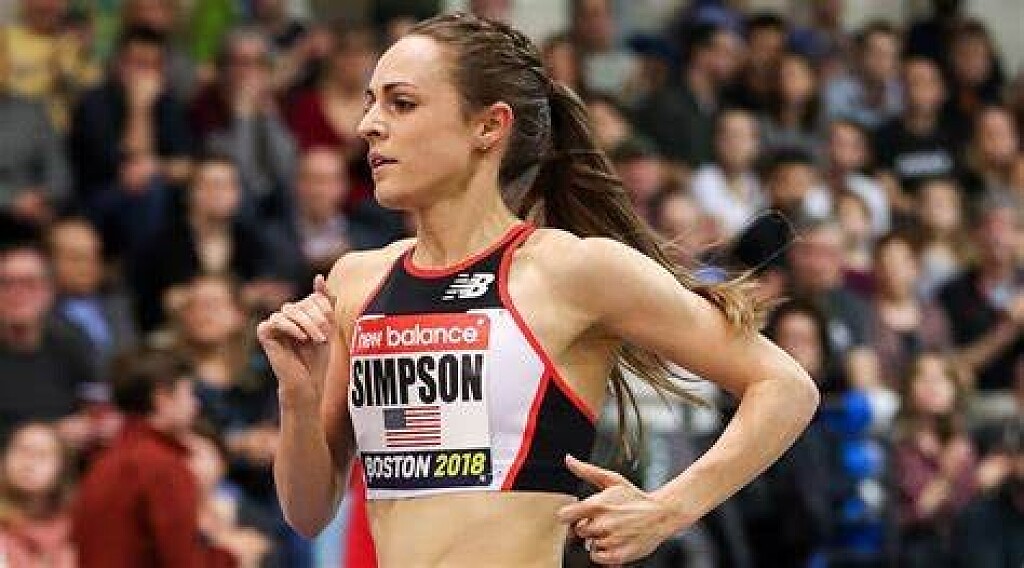
Jenny Simpson is Retiring after the New York City Marathon and Starting a New Adventure
After concluding a stellar, 20-year career, the Olympic bronze medalist will embark on a 50-state running-infused van-life tour of the U.S. with her husband, Jason, in 2025
Jenny Simpson will go down in the annals of American running as one of the greatest of all time. No question about it.
So as she approaches what is likely the last elite-level race of her long and storied career at the November 3 New York City Marathon, she has nothing to prove, no one to impress, and no specific performance goal that she needs to attain to secure her legacy.
As a four-time global championship medalist in the 1500 meters—including a victory in the 2011 World Championships in Daegu, South Korea, Diamond League title in 2014, and bronze medal at the 2016 Rio Olympics—Simpson has long been destined to go down as one of the best runners in U.S. history.
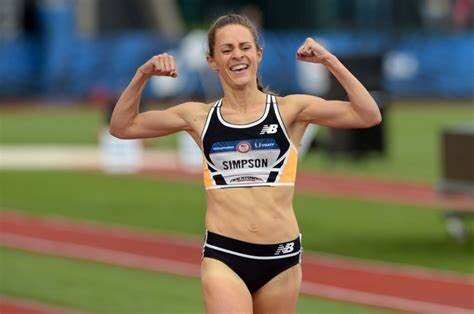
Add to that three Olympic appearances, 11 U.S. titles, three NCAA championships, eight top-10 finishes in international championships, eight Fifth Avenue Mile victories, six NCAA records (in six different events), and two American records (in the 3,000-meter steeplechase), and Simpson will rank among American legends for decades to come.
The fact that she’s been earnestly training to finish her career with a strong marathon performance in New York City epitomizes much of what the 38-year-old runner from Boulder, Colorado, has been about during her 20-year career. She’s not necessarily going out on top—that, she says, would have entailed making the U.S. Olympic team in the marathon for the Paris Olympic Games. But she is going out on her terms: focused, tenacious, and relentless to the end. It’s an opportunity afforded to few athletes, and even fewer distance runners.
“When I say I’m feeling good, it’s that I’m really excited for New York and I feel like I have a really, really good sense about my ability to run well,” she says. “I’m not going into it saying I’m gonna set the world on fire and be the top American or run 2:25 on that course. But I just know as good as I feel and as good as the training has gone, I know I’m capable of having a good day, and, most importantly, I have peace about it all.”
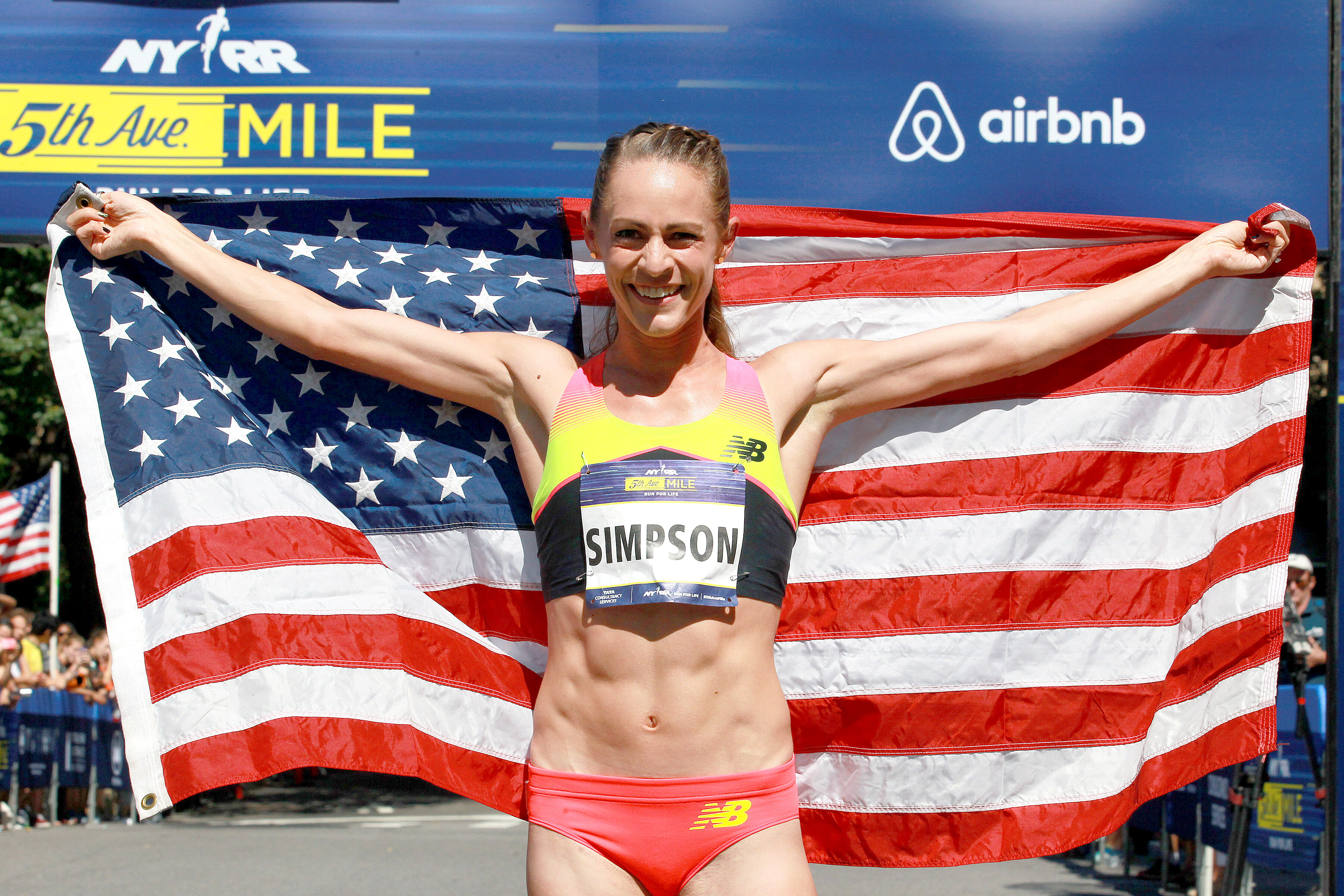
But as this chapter of life closes for Simpson, another very exciting one is about to begin, and that one will include quite a bit of running, too. She and her husband, Jason, are planning to embark on a year-long tour of the U.S. in 2025 that will take them—and their two Jack Russell Terriers, Truman and Barkley—to all 50 states while living out a van-life adventure focused on immersing in America’s thriving running culture.
From participating in races and visiting national parks to running iconic routes like Rim to Rim across the Grand Canyon and discovering hidden trails, Jenny and Jason have said their goal is to capture the heartwarming and inspiring essence of the country through the eyes of runners.
“We want to experience the beauty of this country firsthand, meet the incredible people who call it home, and celebrate everything that makes the U.S. so special,” says Jenny Simpson, who has represented the U.S. on the world stage for nearly two decades. “Through this journey, we hope to show that America’s beauty is not just in its landmarks, but in its people and the unique places they live, run, and explore.”
Out of the Ashes
In December of 2021, a devastating wildfire ripped through the south end of Boulder County—including the communities of Marshall, Louisville, and Superior, where it burned more than 1,084 homes and killed two residents and more than 900 pets. Miraculously, it didn’t burn the Simpson’s house—a restored circa-1900 schoolhouse they bought several years ago that was less than a half mile from the fire’s origin—but the house did incur significant smoke damage that needed mitigating.
The Simpsons were displaced and spent several months living in an apartment with little furniture, which forced them to live a rather spartan lifestyle. While Jason was still able to work as a creative director for a design firm, Jenny’s contract hadn’t been renewed by New Balance, and she wasn’t sure what the future held.
During that time, she had been doing a weekly call with her sister, Emily, and Jason’s sister, Annie, to discuss the book Designing Your Life: How to Build a Well-Lived, Joyful Life, a guide aimed at helping people to reimagine their professional and personal lives. It was through those discussions that Jenny came up with an idea of buying a Winnebago so she and Jason could drive around the country with Truman, who they rescued in 2020 just before the Covid lockdown. (They got Barkley about three years later.)
“My idea was that we can just drive around America and see the place that I’ve had stamped across my chest on my Team USA gear all these years,” she says. “I have been on Team USA, but I really want to know what that means. I’ve raced in some amazing places all around the world, but I really haven’t seen much of our own country. I want to go see the places and the people that I haven’t seen. And then I had this idea of doing a 50 states, 50 weeks tour.”
Jenny told Jason about the idea and he was interested from the start, but it was initially just a fun distraction while Jenny was battling injuries. Jason was so intrigued, though, that he started searching for information about vans online and indulging in YouTube content from a variety of van-life influencers. Eventually, Jenny was healthy and racing on the roads for Puma, ultimately with a quest to qualify for the 2024 U.S. Olympic Trials Marathon.
A year later, they were still casually talking about the enticing “what if” possibilities of owning a van.
“So by 2023, we were like, ‘What do these vans look like? What do they cost? What kind of different layouts are best?” says Jason, 40, a 20-time marathoner with a 2:18:44 personal best. “And then I got really into the travel influencer YouTube videos and at some point told Jenny, ‘Hey, let’s just go look at them.’ And that led to looking at the timelines of: if we were to do this in 2024 or 2025, what would it take? It takes like a long time to build out the vans, and we are definitely not build-it-yourself van people.”
On Her Own Terms
Perhaps the most impressive aspect of Simpson’s career has been her consistency. She qualified for every U.S. national team on the track between 2007 and 2019. Not only did she put in the work and remain virtually injury-free during that time, but she also raced fiercely and rose to the occasion every single time without a single hiccup in any of her preliminary races. (She also made it to the 1500-meter final of the Covid-delayed U.S. Olympic Trials in 2021 at age 35 after what she admitted was a rough gap in competition during the pandemic.)
For most of that time, she was coached by her University of Colorado coaches Mark Wetmore and Heather Burroughs. They continued coaching her as she transitioned to road running over the past three years and ultimately to the build-up to the 2024 U.S. Olympic Trials Marathon in Orlando, Florida. Although she had brief moments of success on the roads—finishing second in the U.S. 10-mile championship in 2021 and turning in a solid ninth-place, 1:10:35 effort in the Houston Half Marathon in 2023—the first injuries of her career disrupted her training and delayed her debut at 26.2 miles until the Olympic Trials.
Over the past three years, continuing to adhere to the rigid lifestyle needed to keep racing competitively was increasingly met at an internal crossroads of wondering when it would feel OK to retire and move on in life and what that would look like.
“Running the Olympics Trials and then running Boston, I would say those were not successful outings,” Simpson says. “I did the best that I could and I got as prepared as I could, but they weren’t what I had hoped for, neither of them were what I’m capable of. I’m really proud of how I ran in Boston because I ran entirely alone after mile 3, but that’s not how I wanted to end my career.”
After Boston, Jenny still wasn’t ready to retire. But she’d heard the chatter that suggested she could give up the ghost and not try to remain competitive on the roads, knowing her legacy was already secure. After she took some time off to recover and reflect, she knew she wanted to get back into training and target one more race on the biggest stage and settled on the New York City Marathon.
She parted ways with Wetmore and Burroughs in the spring and decided to train on her own, although she’s continually received subtle guidance from Jason, who qualified for and raced in the 2020 U.S. Olympic Trials in Atlanta. Although he has imparted bits of knowledge to help keep her balanced, Simpson has been following a training plan in her marathon buildup that she designed.
From Best in the U.S. to Across the U.S.
Casual interest in buying a van led to more in-depth investigation and, after what was an otherwise random training run on the dirt roads north of Denver last year, they passed an RV sales lot and decided to take a look. One thing led to another and they put down a small, refundable deposit that would hold a fully appointed 23-foot Winnebago Ekko during what was expected to be nearly a year-long wait until it was built and delivered.
Fast forward to 2024 and Jenny made her marathon debut on February 3 in Orlando, but it didn’t go at all as she had hoped. She had been running among the top 20 early in the race but eventually dropped out at mile 18. She returned 10 weeks later to run a respectable Boston Marathon in mid-April (she placed 18th overall in 2:31:39 and was the fourth American finisher), and although her effort was commensurate with her inner drive—and some degree of success felt good—she still wasn’t ready to call it a career.
Finally, in April, several days before they were going to travel to Boston, the RV dealership called and told them the van had arrived and they had a week to consider buying it. At that point, Jenny was eager to run Boston to make amends for her Olympic Trials experience, but she was also physically and emotionally fried.
“And I was like, we’re doing it,” she says. “It was the perfect time in the perfect year. Because I was like, ‘I’ve got to get out of here. I’ve got to be done.’ It was killing me. I actually might perish in the middle of the Boston Marathon. I just was so burnt out, and so it was the perfect time for them to call and essentially say, ‘Do you want to drive away into the sunset?’ And I was like, ‘Yes, I do. I really do.’”
Two days after the Boston Marathon, they paid the remainder of the balance on the van and picked it up, immediately sending them into daydreaming mode about where they wanted to go.
Although their plans are still being formulated, they intend to rent their house and hit the road with the charming dogs in January, officially starting their “Jenny and Jason Run USA” tour in Florida. Along the way, they plan to see numerous sights, host or join at least one fun run in every state, promote dog adoptions by publicizing local humane societies, and create a wide range of engaging social media content on their Instagram, Facebook, and YouTube accounts along the way. Given that their longest stint in the van so far was the six-day trip they took to the Grand Tetons and Yellowstone National Park in Wyoming early last summer, they know they’re going to have to learn on the fly and continually adapt. But that’s what an adventure is all about.
“I’ve been nothing but focused on running New York, but I am excited about what’s next,” Jenny said this week. “As I have been tiptoeing toward the idea of being retired from professional running, I don’t know that I’m going to be really great at it or that it’s going to come easily for me. That’s why it’s so wonderful to have a partner in life like Jason because I think he sees that, too. So our goal is to create a lot of time and space to figure that out. I think the year will be kind of interesting and fun and wild and I really don’t know how it’ll end up, and I think that’s really good.”
Approaching the End … and a Beginning
Simpson admits her post-Boston malaise contributed to her having an inconsistent summer of training, in part because she was listening to voices that suggested she should relax and not be so rigid in her approach. When she showed up to run the Beach to Beacon 10K in Cape Elizabeth, Maine, on August 3, she admits she wasn’t very fit, and, as a result, finished a distant 12th in 34:30.
“My Beach to Beacon race was just so bad that it was like validation to me that caring less and trying less doesn’t work for me ever in anything,” she said. “I’m just not that person. It works for some people, but that’s not who I am. I used to joke that when you show up to the track and someone asks, ‘How do you feel?’ I always thought to myself it doesn’t matter how I feel. It’s about doing the work. I always feel like it’s execution over emotion for me all the time and that I have a job to do. I know who I am and I know how I operate, and how I operate is great.”
Simpson got back to work immediately after that race, ramping up her weekly mileage to the 100-mile range in the high altitude environs of Colorado. She says she’s done more than half of her long runs between 8,500 and 10,500 feet, including runs on Magnolia Road above Boulder, Golden Gate Canyon State Park near Golden, and even a loop around the paved Mineral Belt Trail in Leadville.
Her return to rigidity and improved fitness helped bring mental clarity that not only convinced her that she’d be ready to run a strong marathon in New York City, but also brought the revelation that she was ready to admit it was her last race knowing it would allow her to retire on her own terms.
Two months after feeling flat in the 10K, she won the Wineglass Half Marathon on October 5 in Corning, New York, running a near-PR of 1:10:50 (5:24 per-mile pace) as she ran stride-for-stride to the finish line with Jason. (She broke the women’s finisher’s tape for the win, while he ran slightly to the side as the 12th-place men’s finisher and 13th overall.) Now she’s likely in sub-2:30 marathon shape, even though the hilly New York City Marathon course is as equally challenging as Boston in its own way. Jason, meanwhile, will race in the Abbott Dash to the Finish Line 5K the day before the marathon, not only so he can track Jenny on Sunday and meet her at the finish line, but also because he’s running the California International Marathon on December 8.
2025 and Beyond
Simpson arrived in New York City on October 30 healthy, happy, and ready to run hard—definitely not the feeling of holding on for dear life that she felt going into the Olympic Trials and the Boston Marathon. She says she couldn’t be more excited to run through the city’s five boroughs to the finish line in Central Park that she hopes will come with a satisfying result, as well as the beginning of closure to her star-spangled career.
Who knows what’s next after that—Coaching? Law school? A corporate career with a shoe brand? The world seems to be her oyster, but for the time being the cross-country tour might be just what she needs most. She’s excited to detach a bit from the rigid schedule and identity she’s clung to for the past 20 years and enjoy the freedom of the open road. She knows it will be a complete departure from the essence of what she’s all about, and to that point, she’ll likely dig into planning and scheduling early next week even before she recovers from the marathon.
Although she admits she was intrigued while watching some of the top runners finish the Leadville Trail 100 this summer, she says she’s decidedly not interested in running ultras. (However, Jason might be, and Jenny says she’s been keen to pace and crew him.) She might get more into trail running, something she did a little bit early in her University of Colorado career. Or she might even return to road running, but she’s not thinking that far ahead. For now, she’s focused on racing in New York and then continuing to run in 2025—on the magical mystery tour that awaits—and beyond.
“I feel a lot of peace about it, but it’s not like I’m over running. I want to retire so I can do more running and to explore the beautiful country I raced for,” she says. “I wanted to be world class at the marathon, and I’m not. I gave it a good try, and now it’s time to try something else, and I just feel really good about it.”
by Brian Metzler
Login to leave a comment

TCS New York City Marathon
The first New York City Marathon, organized in 1970 by Fred Lebow and Vince Chiappetta, was held entirely in Central Park. Of 127 entrants, only 55 men finished; the sole female entrant dropped out due to illness. Winners were given inexpensive wristwatches and recycled baseball and bowling trophies. The entry fee was $1 and the total event budget...
more...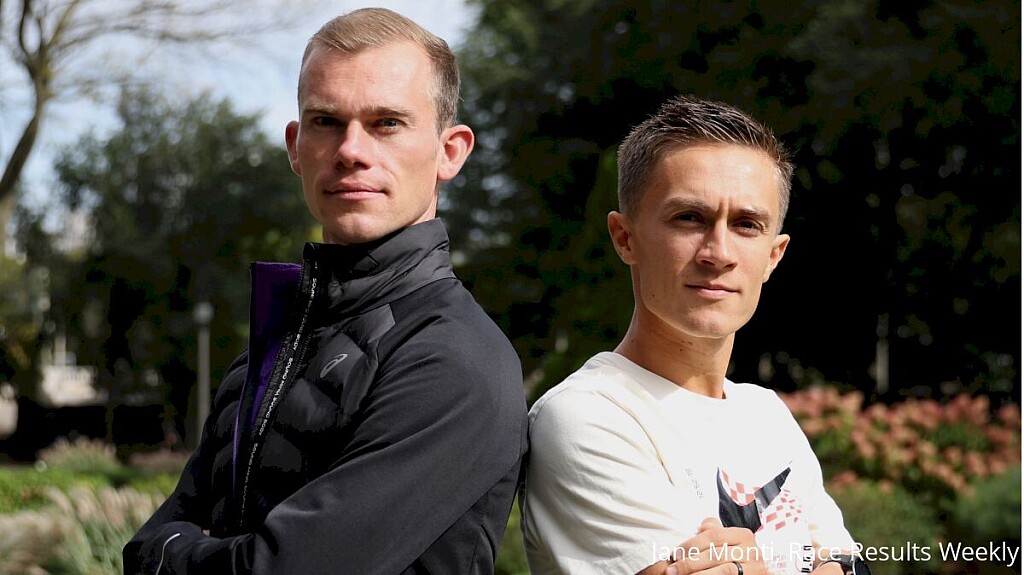
Conner Mantz And Clayton Young Lead Charge At U.S. Olympic Marathon Trials
The months leading up to the U.S. Olympic Marathon Trials have been anxiety-inducing, but race day is nearly upon us.
From the intense back-and-forth exchanges between the Athlete Advisory Board and the Greater Orlando Sports Commission, to the uncertainty on exactly how many American men will be toeing the line this summer in Paris, the build-up to the trials has been nothing short of newsworthy.
That being said, we are just a few days out of the Trials, and there are certainly a few storylines at play.
The Young Guns
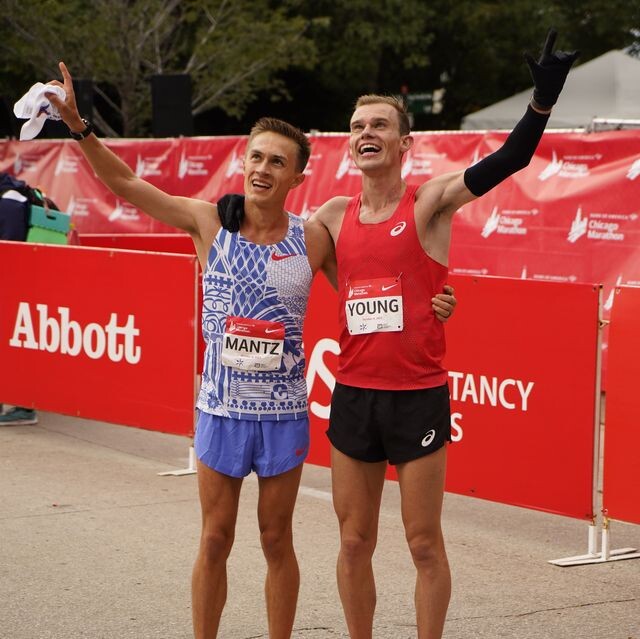
Conner Mantz, 27, and Clayton Young, 30, will step to the line on Saturday as the two fastest men in the field during the qualifying window. Mantz, a two-time national champion while at Brigham Young University, finished sixth at the Bank of America Chicago Marathon back in October. He was the top American and crossed in 2:07:47, which is tied for fourth on the all-time U.S. list.
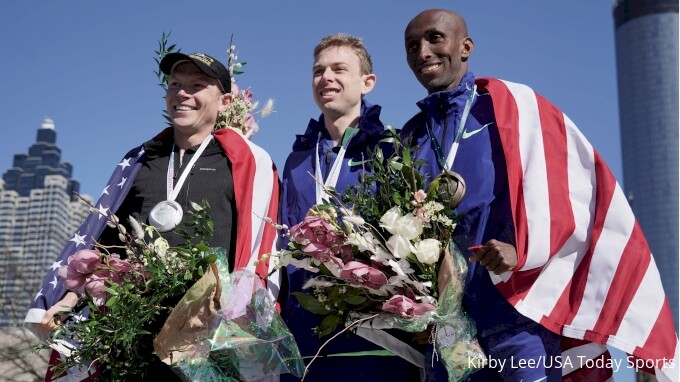
Young, an NCAA champion himself while also attending BYU, was just a few spots behind his former college teammate and training partner, finishing seventh in 2:08:00, which was good enough for a U.S. No. 7 standing all-time among American men.
Both of Ed Eyestone's former studs left the 'Windy City' with lifetime bests, and most importantly, unlocked two American spots for Paris 2024.
Following superb performances in Chicago just months ago, the Provo-based training partners would love nothing more than to claim the spots they earned on Saturday and officially punch their ticket to the Olympics.
However, they are both well-aware that nothing is earned in the sport, especially when the marathon is the distance of choice. Both are looking more than prepared, just check out the workout video:
The Veterans
While some of the field is preparing for their first-ever U.S. Olympic Trials, there are more than a few experienced marathoners that have been here before and are accustomed to the pressure.
One of those men is none-other than Galen Rupp, the two-time Olympic medalist and current/former American record holder.
Rupp has run his fair share of marathons, with the 2024 Trials marking his 15th attempt on the brutal race.
Not only is he a veteran at the distance, but he's also qualified for two Olympic marathons -- Rio 2016 and Tokyo 2020 -- and competed at the 2022 World Athletics Championship.
After battling a nagging back injury, Rupp returned to the marathon in October, was one of four Americans under 2:09 and ran 2:08:48 in his return.
Rupp will see some familiar faces in Orlando, as fellow marathon veterans Sam Chelanga, Scott Fauble and CJ Albertson are all jockeying for a spot as well.
The 38-year-old Chelanga is coming off a 2:08:50 from the 2023 Chicago Marathon, which shaved over six minutes off of his previous best along the way.
Fauble's most recent marathon unfortunately ended with a 'DNF', but a seventh-place finish at Boston last year paired with a 2:08:52 personal best from 2020 says he's in the mix as well.
For Albertson, this will be his fourth marathon since April. After finishing 12th in Boston, he ran and won both the California International Marathon (CIM) and the Baja California California on back-to-back weekends in December, running 2:11:09 and 2:11:08, respectively.
Any of these four men could see themselves in the final three come Saturday, but despite none of them having the Olympic Standard, they could still snag one of two guaranteed spots thanks to their sub-2:11:30 performances during the qualifying window. And a third auto-spot could get unlocked if an athlete runs 2:08.10 or faster on the day.
A few of the many notable names to keep an eye out include Elkanah Kibet, Zach Panning, Leonard Korir, and Futsum Zienasellassie.
The gun goes off for the men at 10:10 a.m. EST on Saturday, with the women following close behind at 10:20 a.m. EST.
You can tune in live on Peacock, with coverage starting at 10:00 a.m. EST, and NBC will begin broadcasting at noon.
by Maxx Bradley
Login to leave a comment

2028 US Olympic Trials Marathon
Most countries around the world use a selection committee to choose their Olympic Team Members, but not the USA. Prior to 1968, a series of races were used to select the USA Olympic Marathon team, but beginning in 1968 the format was changed to a single race on a single day with the top three finishers selected to be part...
more...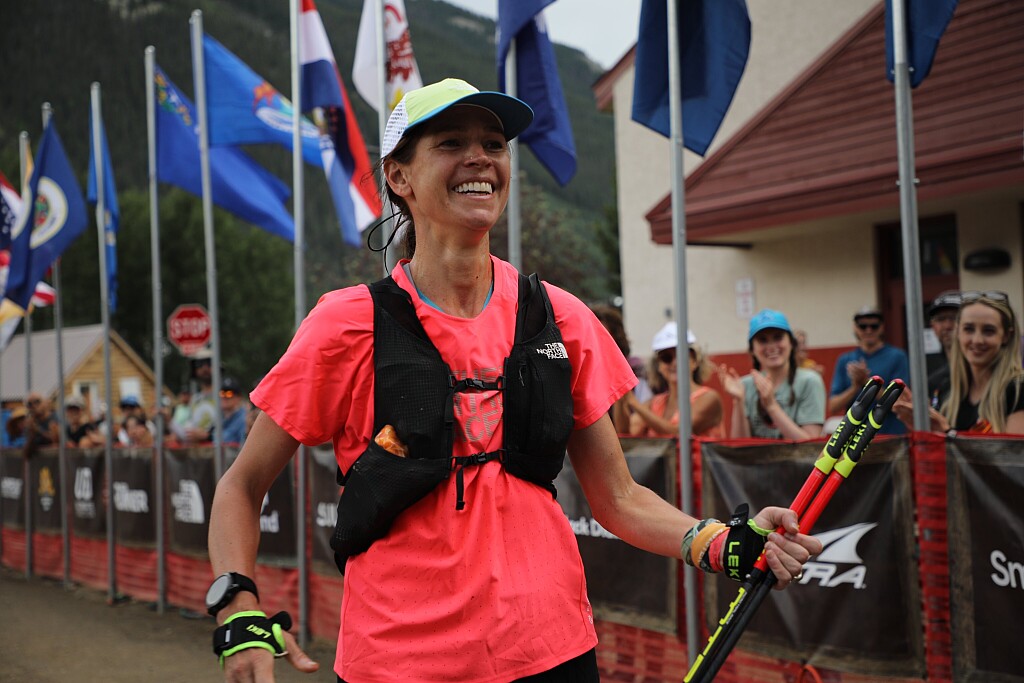
Canadian road and trail champ Anne-Marie Madden shares her wisdom
Canadian distance runner Anne-Marie Madden has been shining on both road and trails for years, most recently winning the masters division at the 2023 California International Marathon (CIM). Madden was third at Arizona’s Black Canyon 100K in 2022, earning her entry into the 2022 edition of the legendary Western States 100, where she took 11th place.
Madden, who works as a doctor in Vancouver, shared the secrets to her success in seamlessly transitioning between road and trail running with Canadian Running.
Early morning trail training

Balancing a thriving medical career with elite training demands a strategic training schedule. Madden’s weekdays are often dictated by long work hours, so she utilizes non-technical trails for pre-dawn runs with her dog, Tucker. Her days off become an opportunity for long, trail-focused runs.
“During this most recent marathon build, I made a concerted effort to do some long runs on the road,” says Madden. “My coach gave me a few workouts within a long run. This was useful on weeks when I had limited time off to do other workouts and it also built up my confidence running faster road paces again.”
Fuelling for both styles
Madden’s fuelling strategy adapts to the demands of each terrain. For shorter, more intense road workouts, she opts for liquid nutrition and gels, finding bars challenging to consume when running at a higher intensity. She uses different methods of staying hydrated during training: on trails, she uses a filter flask to refill water from natural sources, contrasting the convenience of refilling at water fountains on urban road runs.
Tips for runners hoping to shift between terrain
“One of the biggest mental shifts for road runners moving into the trail space is to let go of pace goals,” says Madden. “The terrain often dictates the pace. Running on trails is a great opportunity to hone in on perceived effort and to tune into our body’s cues.” Madden says this skill carries over to road racing.
“For readers with a road running background looking to do more trail racing, I recommend they introduce trail runs into their program on their easy days or for a portion of their long run,” says Madden. “They can eventually work in trail workouts such as hill repeats or speed work on gravel paths.”
Vert and alpine views
Madden’s social media posts highlight the beautiful B.C. trails where she runs with her exuberant dog. “The alpine views here are spectacular and the high numbers of park visitors means the trails are well maintained and great for running,” she says. She does the bulk of her long runs on the mountain bike trails in Pemberton and Squamish.
Madden says that while there are lots of great runs in B.C. with tons of vert., the snow pack can make it hard to find long sustained climbs to train on can be challenging in early spring: “something to keep in mind if you’re signing up for a big race with lots of vertical early in the race season.”
With that in mind, Madden will next be lining up at Black Canyon 100K on Feb. 10th, “a relatively low vert trail race which is easier to train for during the Canadian winter when a lot of the higher elevation trails are snow covered,” she says.
by Keeley Milne
Login to leave a comment

Black Canyon Ultras
The Black Canyon Ultrasoffer runners an immersive experience along Arizona's historic Black Canyon National Recreation Trail. This event features two point-to-point races: a 100K on Saturday and a 50K on Sunday, both traversing the rugged and scenic Sonoran Desert. The 100K race begins at Mayer High School in Spring Valley and concludes at the Emery Henderson Trailhead near New River....
more...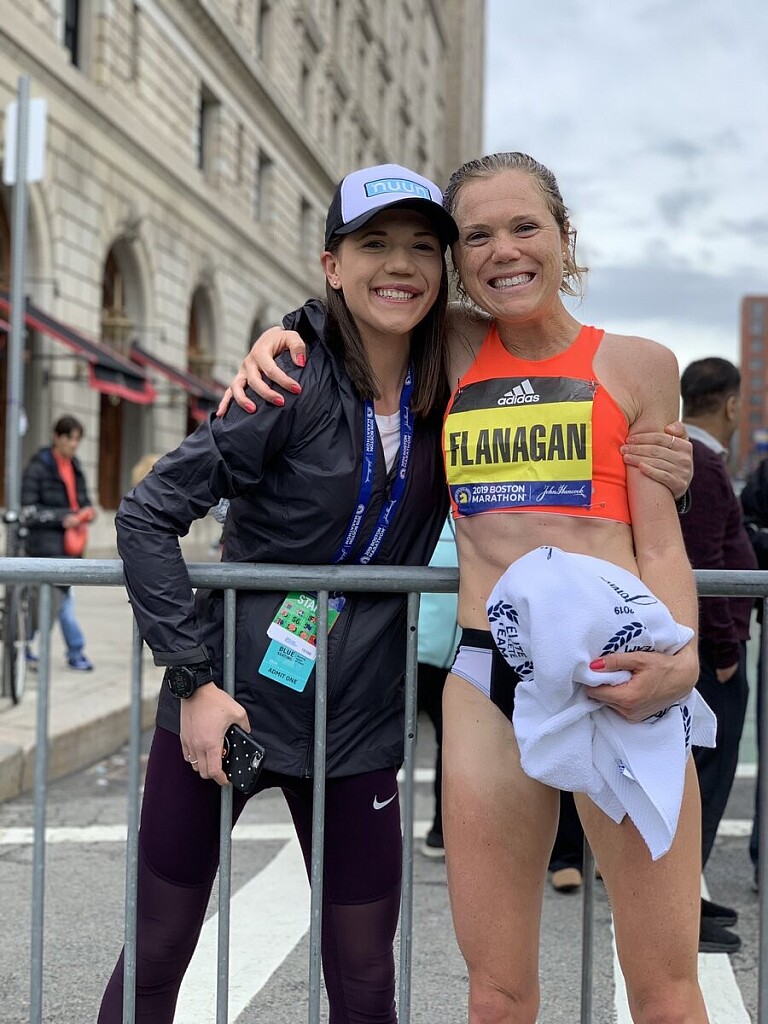
Lindsay Flanagan And Her Younger Sister Kaylee Are Both Racing The Marathon Trials
In the past 20 months, veteran marathoner Lindsay Flanagan has cut her personal best by 2 minutes, twice. She won the 2022 Gold Coast Marathon in Australia in a course record of 2:24:43. In August, her 2:27:47 run placed her ninth overall, and first American, at the World Championships marathon in Budapest.
But one of her proudest moments came in the wee hours of December 3. Huddled over her phone in Adelaide, Australia—where she’d traveled for a few months to prepare for the upcoming Olympic Marathon Trials—Flanagan repeatedly refreshed the results of the California International Marathon.
Not long after 4 a.m. Lindsay’s time, her younger sister, Kaylee, crossed the finish line in 2:35:24—a nearly five-minute PR and her first Trials qualifying time. “I did not sleep at all that night,” Lindsay said. As both Kaylee’s sibling and her coach, “I was so invested.”
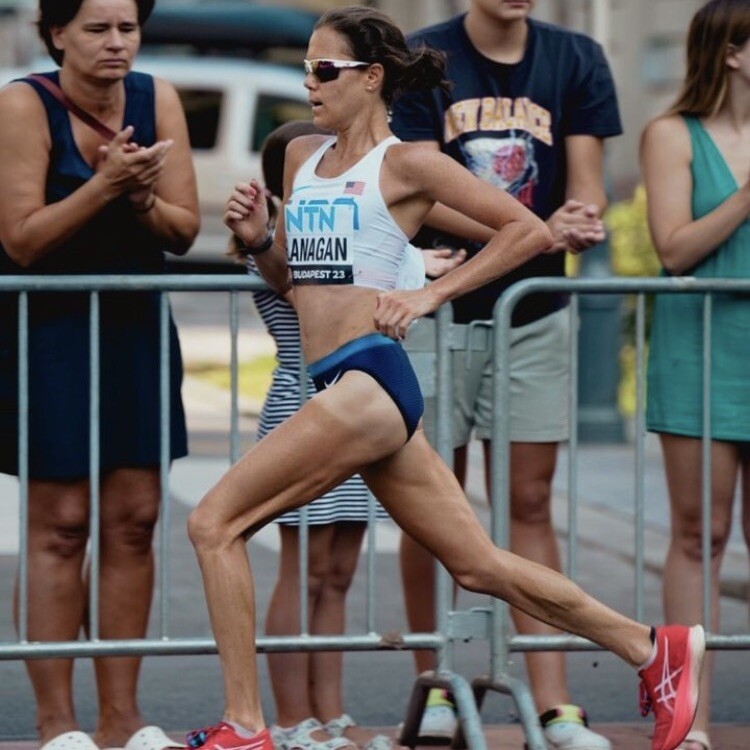
After promising high school running careers in Illinois, both Flanagans (no relation to Shalane) ran at the University of Washington, overlapping for a year. Now, they live across the street from each other in Boulder, Colorado, where they typically share miles at least once if not twice daily. Kaylee cheered Lindsay on in Budapest; afterward, they vacationed in Croatia.
They’ve spent the past few months, uncharacteristically, half a world apart, though Kaylee frequently pops by Lindsay’s house to water plants and make sure the pipes don’t freeze. But they’re reuniting in Florida, lining up together at the Trials.
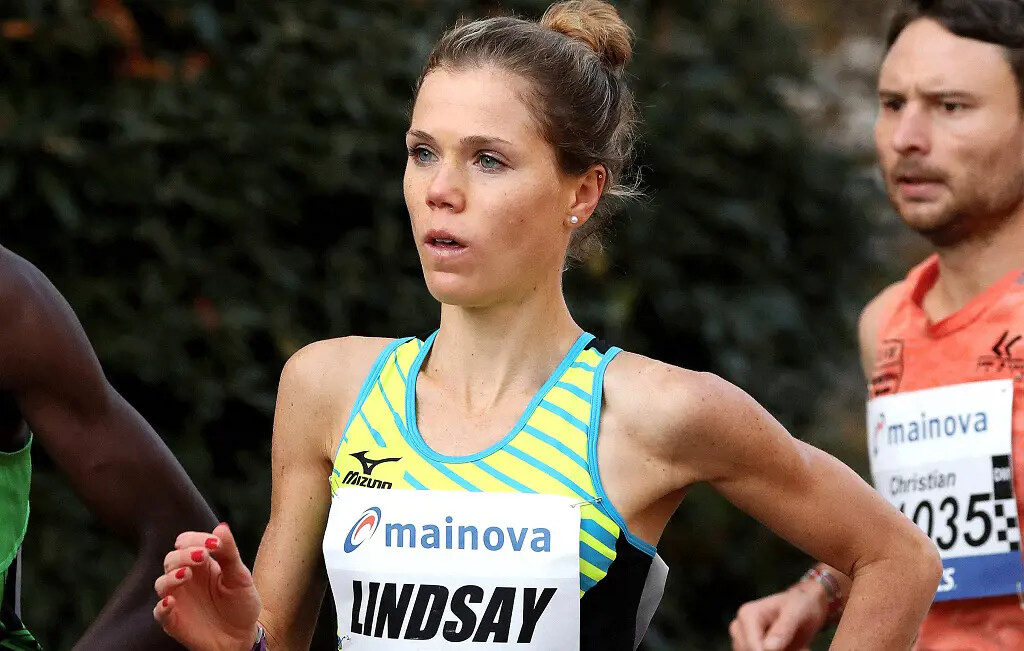
The Flanagans aren’t the only siblings competing in Orlando on February 3; the field also includes brother and sister Kaylee and Austin Bogina and twins Isabel and Monica Hebner. But they’re unique in also being athlete and coach—Lindsay has guided Kaylee’s training for about two years.
And in her third Trials, Lindsay stands out as a top, if under-the-radar, pick to make the U.S. Team.
The Asics-sponsored runner, 33, does most of her workouts alone. Her coach is remote, and she has no training group or partner capturing evidence for Instagram. Yet out of the limelight, Lindsay has spent nearly a decade preparing for a moment just like this one. “Every workout, every season, every race cycle has been meticulously chosen,” Kaylee, 28, said of her sister. “Trust me, she will be one to watch out for in Orlando.”
A steady ascent
As close as they are, the two sisters forged different paths from college to the Trials. Lindsay made her marathon debut the January after graduating. At the 2015 Houston Marathon, she ran 2:33:12, good for ninth place and a slot in the 2016 Trials. On a hot day in Los Angeles the following February, she paused to vomit around the 21-mile mark, then finished 14th in 2:39:42.
Through 20-some marathons since—so many she’s lost count—she’s gradually, if quietly, established herself. Her next breakthrough came at the 2016 Frankfurt Marathon, where she finished fourth in 2:29:28. She notched top-10 finishes in Boston and Chicago in 2019, and headed into the 2020 Trials ranked 12th. That’s exactly where she finished, running 2:32:05.
Post-pandemic, she was coaching herself but seeking mentorship. Her agent connected her with Benita Willis, a four-time Olympian for Australia and gold medalist at the 2004 World Cross Country Championships. After an hour-long conversation, Lindsay realized she wanted Willis to fully take the reins of her training.
The pair became fast friends, and under Willis’s guidance, Lindsay is now even faster. She first lowered her personal best to 2:26:54 in April 2022 at the Paris Marathon. Next, Willis suggested Lindsay make her first Australian trip to run Gold Coast in July.
The race would give the pair the chance to meet in person for the first time, and with her victory, Lindsay had an opportunity that her coach, a 2:22:36 marathoner, had missed. “I ran big races, but I never won a marathon or broke a course record,” Willis said. “I wanted Lindsay to have that sort of experience well before the Olympic Trials.”
by Cindy Kuzma
Login to leave a comment
2028 US Olympic Trials Marathon
Most countries around the world use a selection committee to choose their Olympic Team Members, but not the USA. Prior to 1968, a series of races were used to select the USA Olympic Marathon team, but beginning in 1968 the format was changed to a single race on a single day with the top three finishers selected to be part...
more...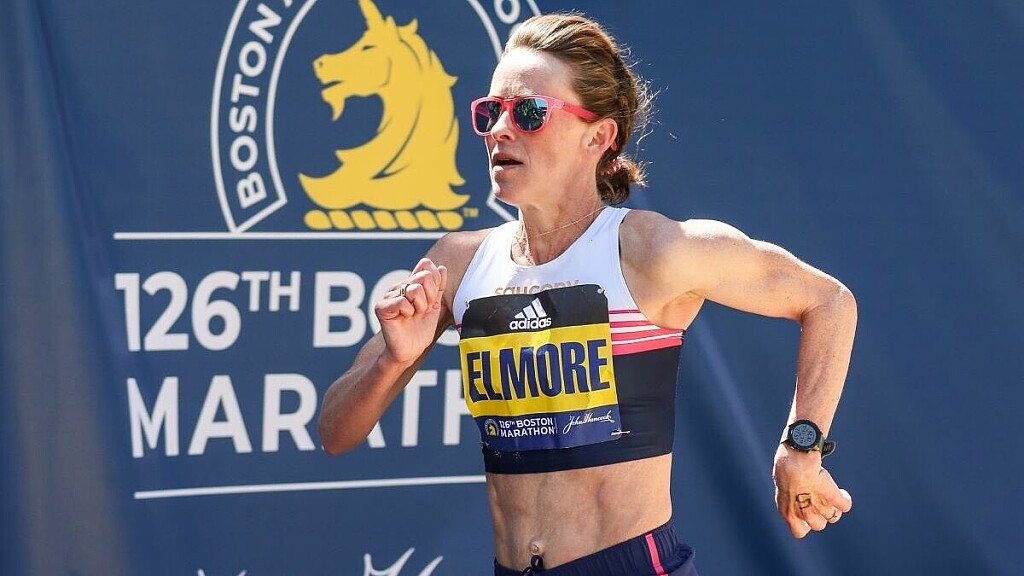
Malindi Elmore set to race 2024 Boston Marathon
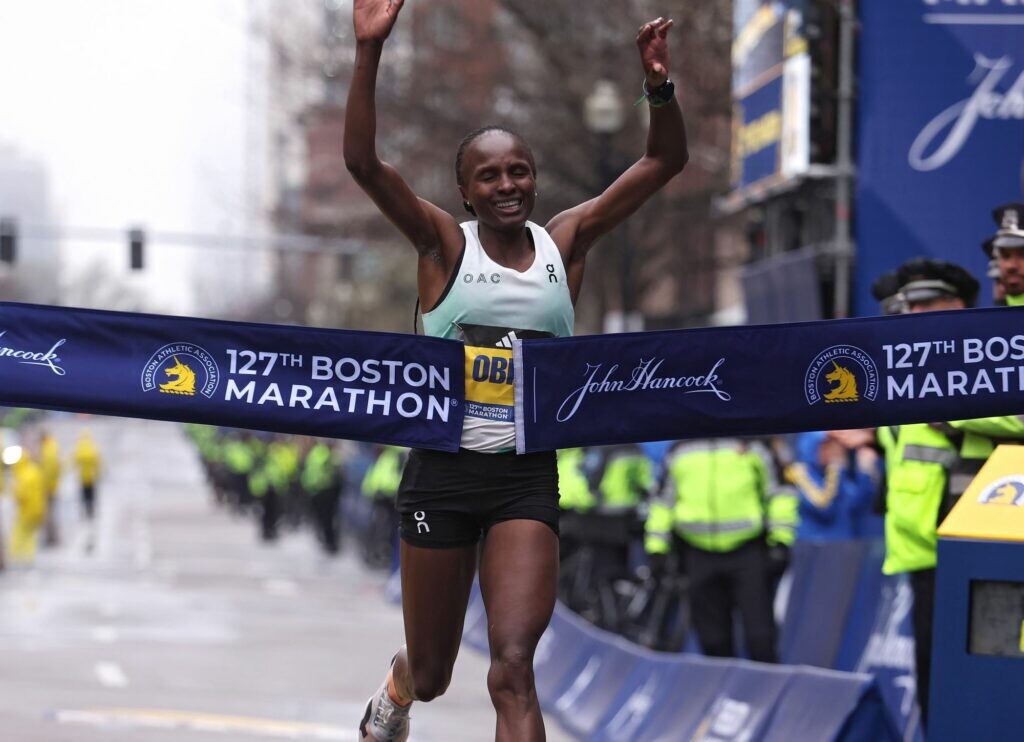
Two-time Olympian Malindi Elmore of Kelowna, B.C., is on the women’s elite list for the 128th Boston Marathon on April 15. Elmore is featured in a strong field with reigning champion Hellen Obiri and 2022 New York Marathon champion Sharon Lokedi; she will also be one of three Canadian women running in Boston.
This will be Elmore’s second time running the Boston Marathon. In 2022, she ran to an impressive 11th-place finish, posting a time of 2:27:58, which is the fastest-ever time in Boston by a Canadian woman. She left Boston wanting to return, saying, “It’s a blast to run the crowd-lined streets, where there is always someone cheering you on and shouting your name.”
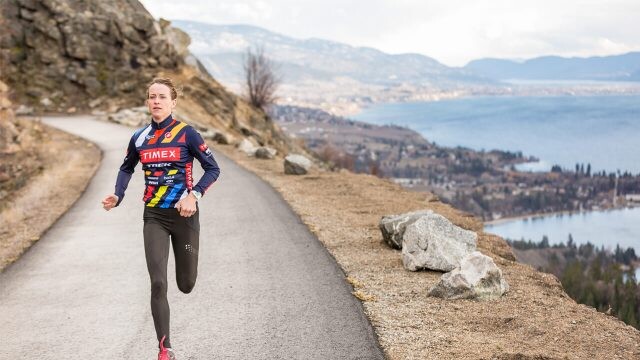
Elmore, who ran the second-fastest Canadian women’s marathon time at the 2023 Berlin Marathon, achieved the Olympic qualifying mark of 2:26:50. She is currently the only woman who has solidified her spot on Team Canada for the marathon in Paris. The 43-year-old told Canadian Running that she plans to use Boston as a prep race for the Olympic marathon in August.
“Racing Boston is part of the Paris 2024 plan,” says Elmore on her decision to race Boston. “The course in Paris is reported to be twice the elevation gain of Boston, so I want the opportunity to train and race on hills through the winter and hopefully be a hill beast by August!”
The Boston and New York marathons are two of the tougher Abbott World Marathon Major courses. The Boston is a net downhill, but features a lot of hills in the second half of the race, including the famous Heartbreak Hill at 32 kilometres. The Paris Olympic marathon is touted to be the hilliest Olympic marathon to date, featuring more than 400 metres in elevation gain on an out-and-back loop to the Palace of Versailles.
Elmore will be one of three Canadian marathoners on the women’s elite list. Joining Elmore in Boston are two up-and-coming marathoners from Thunder Bay, Ont., Michelle and Kim Krezonoski. The Krezonoski sisters ran their personal bests of 2:36:39 (Michelle) and 2:37:20 (Kim) at the 2022 California International Marathon.
Michelle said it’s been an exciting and emotional journey to get to this point after partially tearing her Achilles tendon in her build-up to the 2023 Toronto Waterfront Marathon (which she did not race). “I am grateful to have this opportunity to run alongside the world’s best with my twin sister,” Michelle told Canadian Running. “Boston is historic, and it’s a course that challenges your strength.”
Obiri returns for glory
The most dominant women’s marathoner in the world right now, Hellen Obiri, returns to Boston to defend her title. Last year, Obiri unleashed a perfectly-timed sprint in the final mile to earn her first Boston Marathon title, in only her second career marathon. Boston marked one of her two marathon wins in 2023. She became only the second women’s marathoner in history to win both Boston and New York in the same year.
“I am excited to return to the 2024 Boston Marathon to try to defend my title,” shared Obiri, who won last year’s race in 2:21:38. “Boston is a historic race, and I would like to add my name further to its history on April 15. Winning such a historic marathon with my family waiting at the finish line was an experience I’ll never forget.”
The 2024 Boston Marathon will also see a trio of Ethiopian runners with personal bests under 2:18:00. Worknesh Degefa, the 2019 Boston Marathon champion, is set to return. Tadu Teshome, with a marathon best of 2:17:36 from the 2022 Valencia Marathon, will make her Boston debut, and Senbere Teferi, a world championship silver medallist over 5,000m, will also compete after winning the B.A.A. 5K in a course record time of 14:49 in 2022.
by Marley Dickinson
Login to leave a comment

Boston Marathon
Among the nation’s oldest athletic clubs, the B.A.A. was established in 1887, and, in 1896, more than half of the U.S. Olympic Team at the first modern games was composed of B.A.A. club members. The Olympic Games provided the inspiration for the first Boston Marathon, which culminated the B.A.A. Games on April 19, 1897. John J. McDermott emerged from a...
more...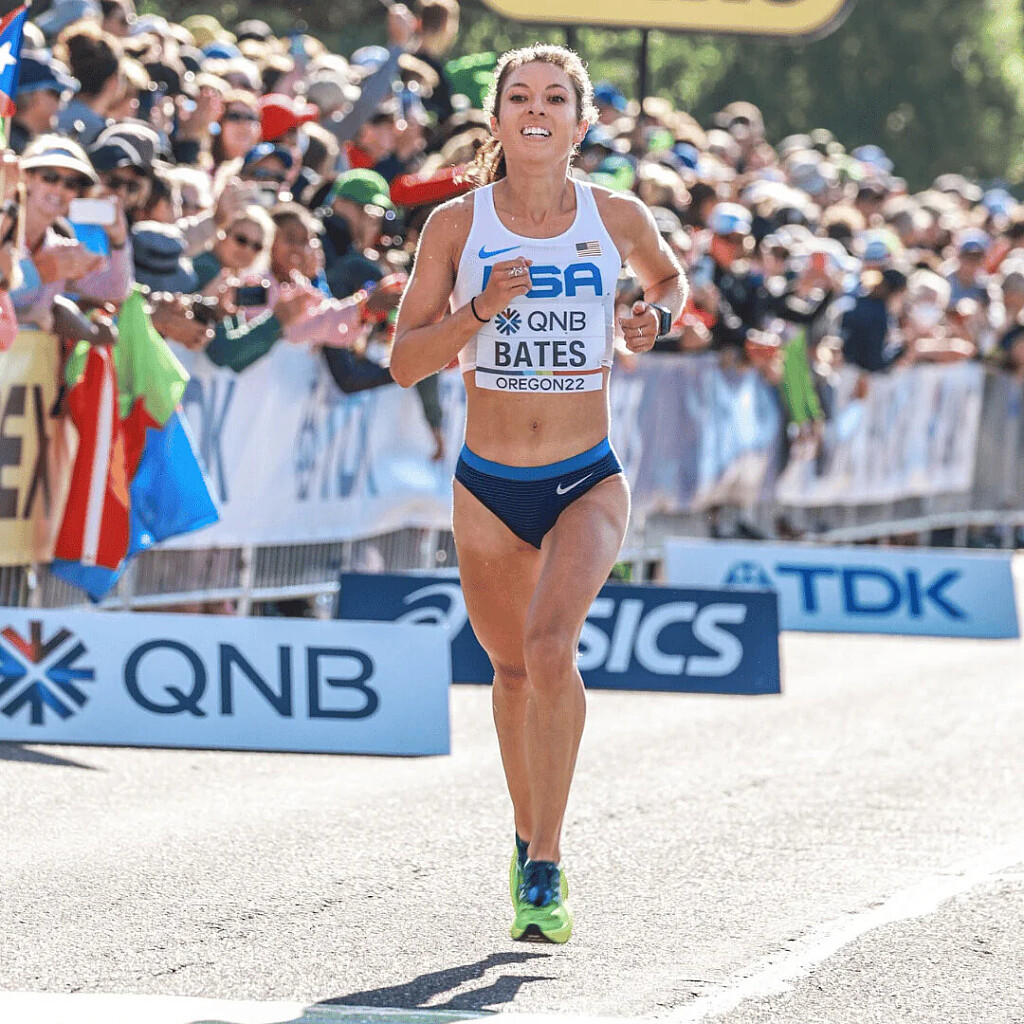
Emma Bates Withdraws from Olympic Marathon Trials 2024
Emma Bates was widely considered a top contender to make the U.S. Olympic team in the marathon this year. But over the weekend, she announced she won’t be lining up at the Olympic Marathon Trials in Orlando, Florida, on February 3.
Bates, 31, tore her plantar fascia during October’s Chicago Marathon. On December 12, she posted that she had been healing well and was back to running on the ground for an hour at a time when she developed another injury, posterior tibial tendonitis.
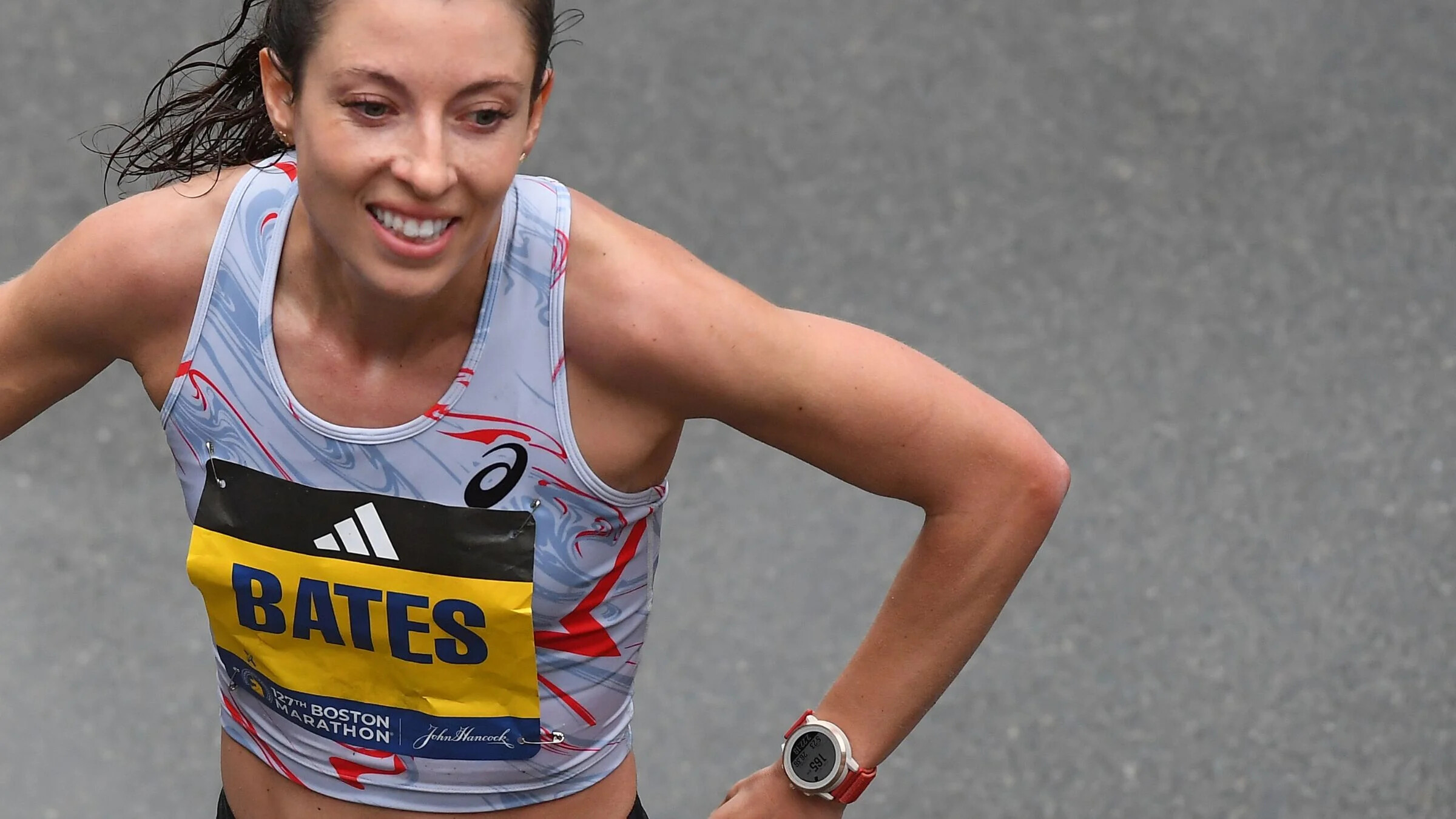
And in a tearful Instagram video posted Saturday night, Bates said that while she had returned to workouts with her Boulder-based training group, Team Boss, “we just know that there’s not enough time to be where I need to be.”
Bates’ personal best of 2:22:10 at the 2023 Boston Marathon, where she placed fifth, was the third-fastest time by an American last year.
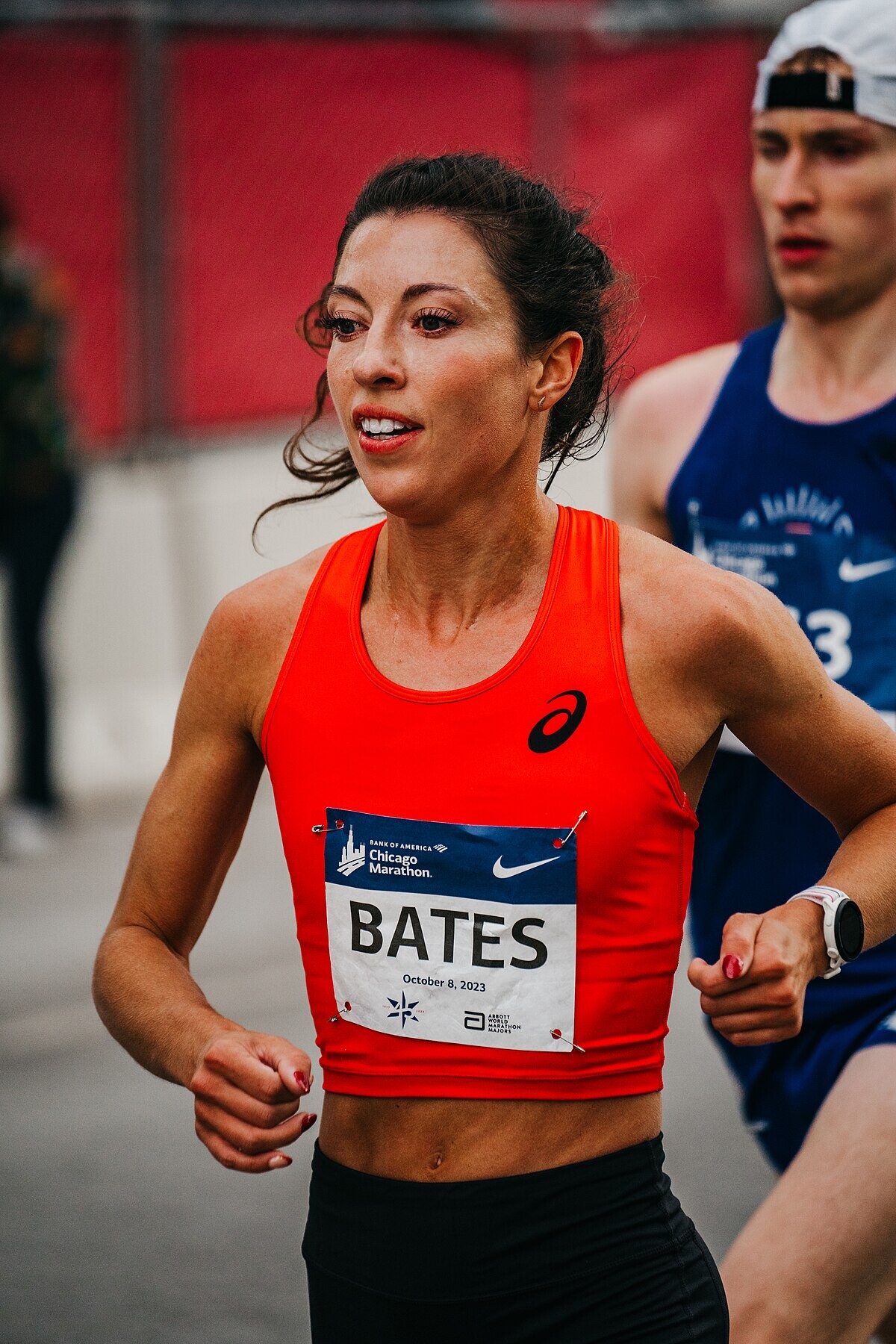
She headed into Chicago in the fall with high hopes—saying she was in shape to run 2:18 to 2:19 pace—but stepped in a pothole around mile 14. She finished 13th in 2:25:04 and left the finish line in a wheelchair. A week after the race, an MRI revealed a torn plantar fascia.
She put on a boot and began cross-training on the bike, knowing the buildup to the Trials wouldn’t be easy. With the new setback last month, she and coach Joe Bosshard decided it simply wouldn’t be possible.
Bates, a 2014 NCAA champion in the 10,000 meters at Boise State University, won her marathon debut and the USATF Marathon Championships with a 2:28:18 at the 2018 California International Marathon and has steadily improved since. In her second marathon, the 2019 Chicago Marathon, she finished fourth in 2:25:27.
Those performances made her a contender for the 2020 Olympic Marathon Trials, where she ran 2:29:35 to place seventh. But her next big breakthrough was around the corner. On a hot, humid day at the 2021 Chicago Marathon, she ran a personal-best 2:24:20 to place second.
And in 2022, she was part of a trio of Americans who produced top-10 finishes at the World Athletics Championships in Eugene, Oregon—she was seventh in 2:23:18, between Sara Hall (fifth in 2:22:10) and Keira D’Amato (eighth in 2:23:34).
Bates was clearly disappointed not to line up with the likes of Hall and D’Amato again in Orlando; “this one hurts a lot,” she wrote.
“It’s another four years to wait for another Olympic team,” she said in the accompanying video. “I’ll be OK. I’ll be OK.”
by Cindy Kuzma
Login to leave a comment
2028 US Olympic Trials Marathon
Most countries around the world use a selection committee to choose their Olympic Team Members, but not the USA. Prior to 1968, a series of races were used to select the USA Olympic Marathon team, but beginning in 1968 the format was changed to a single race on a single day with the top three finishers selected to be part...
more...
Running May Have Saved My Life
Nearly 50 years ago I fell in love with running. I was far from a natural. When I was 8 years old, I was struck by an illness that left me with pneumonia in both lungs with one lung being collapsed. I survived that but was left with asthma that persists to this day. This was unfortunate as I loved sports. Asthma more or less disqualified me from participating in “running sports, " leaving me only with baseball as something I could do relatively comfortably.
In high school, I wanted to try wrestling. I figured that I could handle three 2-minute periods. However, I would soon learn that a lot of the training involved running and I struggled mightily to keep up with the other kids early in the season. The next season I hit upon the idea to ask our cross-country coach if I could train with that team, though not be part of the team. In this way, I could be conditioned before the start of wrestling season. And during wrestling season, I would show up two hours before the match to check my weight and run 2-4 miles before weigh-in.
I graduated high school, but the running never stopped. I ran every weekend (4-10 miles each day) for decades. Running was so important to me that when setting up one of my company offices in Japan, I purposely chose a location in a place with a suitable place to run, near the Emperor’s Palace near Tokyo Station. The palace is surrounded by a circular (3km) moat that is a popular running destination. My ritual was that after a week of business, I would do four laps around the palace and then fly home to San Francisco.
Though I loved running I was never interested in racing until about age 50. In 2010, my new son-in-law invited me to join him in a 5K fun run in Lafayette. Passing all those 20-year-olds was all I needed to get the “bug.” I went on to run many dozens of races over the next years, mostly marathons, an ultra, and a triathlon. I was in the best shape of my life, rarely got sick, and was at the top of the world. That would change dramatically.
In 2013, I started noticing that on some days I would experience a strange fatigue that required me to take a walking break. I remember one day that I cut one of my runs short because I was disgusted with my performance. I kept my running clothes on and decided that I would try again later that day. That was the time I set a new PR for that training course. Something was not right, and these episodes of fatigue were increasing in frequency.
The last marathon I ran was in April 2016, a miserable affair clocking in a 4:53. By September, I couldn’t run a mile without a break. I complained to every doctor I met that “something was wrong”, but the standard response was that I was just getting older and I needed to lower my expectations. Even a cardiologist I had seen 10 years earlier told me that there was nothing wrong with me and even quipped “Guys like you are bad for business.” I wasn’t amused.
Finally, in 2019, my asthma doctor recommended a private practice cardiologist in Los Altos who might be willing to work with me. She spent two hours examining me, including an EKG and blood work. She found no problems but listened to my story about my newfound exercise intolerance. She said the only way to get to the bottom of it was to put me under a cardiac stress test.
I showed up at the hospital and they were ready for me. My doctor was there along with two technicians: one to operate the treadmill and monitor the EKG, and one with an echocardiogram scanner for a pre- and post-test scan of my heart. About 15 minutes into the test, about the same interval that I would experience fatigue during a run, the EKG technician exclaimed “Doctor!” and ran out of the room. The doctor told me to stop, asked me if I was OK, and asked me to lie down and have the other technician scan me.
The EKG technician quickly reappeared with defibrillating paddles and was stunned that I was calmly talking to the doctor. The cause of my fatigue was now clear– I was having a heart attack. A very deadly one at that, called Ventricular Tachycardia (VT) in which the top and bottom chambers beat at different rates causing your heart to stop pumping.
Now that the mystery was solved (I was not “fine”), we needed to identify the cause of this electrical misfiring. I was then directed to a cardiac electrophysiologist (EP) that specializes in this sort of disorder. He also took several hours to explain that there are nearly a dozen potential causes of this, and nearly all of them treatable. There was one (the least likely) however, that was not so easily treatable.
As it turns out, the least likely one Cardiac Sarcoidosis, was the one. This is a rare auto-immune disease that typically attacks the lungs but in even rarer cases can attack the heart. Lucky me. These “attacks” leave scar tissue on the heart that disrupts the normal electrical activity of the heart. My EP regretted telling me that this was out of his skill area and needed to refer me to Stanford where they have a cardiologist that specializes in this.
My experience at Stanford was great where a team of cardiologists took care of me. The first step was to see if the VT response to exercise was repeatable (it was). The second step was to confirm that sarcoidosis auto-immune cells were present in my body. The result of that test was positive. The cells were present, but the good news was that they were no longer in my heart and were “dormant.” But the damage was done. The final step was to install an implantable cardiac defibrillator (ICD) in my chest that has two wires screwed into the side of my heart. In case of a sustained VT episode, the ICD would automatically shock me back into rhythm.
My ICD was installed on February 12, 2020 shortly before the Covid lockdown. I cleared to begin running after about six weeks which I gleefully did after eight months of no running and four years of poor running. I am happy to report that I have had zero VT episodes, nor any other serious arrhythmias since the ICD was installed.
But my story is not quite over. Despite the lack of arrhythmias, my running performance has not returned to pre-sarcoidosis levels. I’ve worked with the Stanford cardiology team who have reiterated that my heart is working perfectly. With that ruled out, I asked for a referral to their pulmonary team to see whether there might be some lung function issues that are interfering with my return to normalcy. Like with my heart, I undertook a battery of tests looking for anything unusual.
The results of all these tests were that my lungs, despite a lifetime of asthma are working quite well. The penultimate step in this battery was a cardiopulmonary exercise test (CPET) that is most commonly used to test professional athletes. Despite my running complaints, the tests showed that my body was responding fairly well to exercise as I posted a 12.2 MET (Metaboloic Equivalent of Task).
I studied the voluminous data from the CPET and was struck by one thing– max heart rate. No, not the calculated 220-<age> that most runners are familiar with, but rather seeing that my heart rate levels off at 149 bpm and can go no higher no matter the stress. This is Father Time making his presence known. The reason I can no longer run as fast as I used to is because my heart can’t pump fast enough to generate the required oxygen to propel my body at those speeds. It's basic physics, so simple.
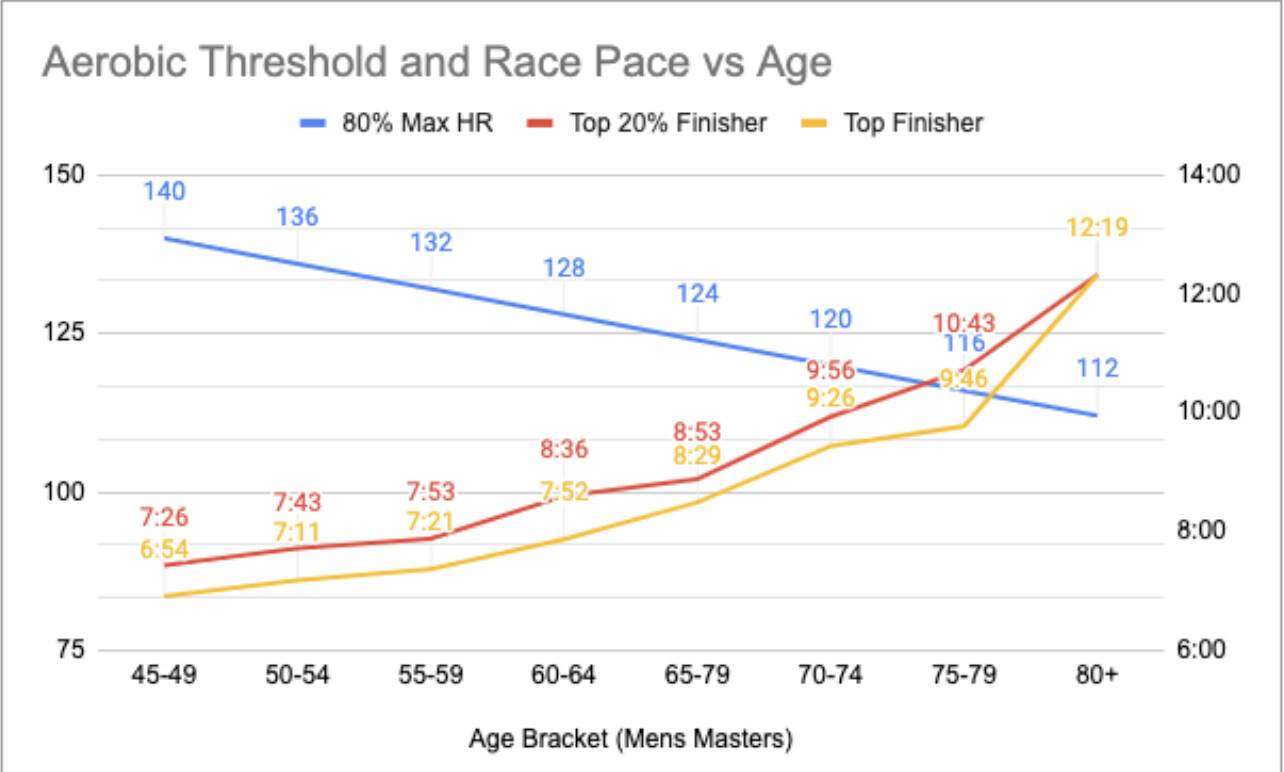
I decided to investigate this briefly and look at some representative races to see if I could see this in actual race data. I looked at the data from the California International Marathonfrom 2022 curious to see an age-related pattern. During my short racing career, I would typically place in the top 20% of my age bracket. I extracted data for Mens Masters into a chart to show Max HR vs. the top finisher and the top 20% finisher. This has given me some consolation that the slowdown is natural and will continue.
One more thing I’d like to share, especially with older runners. Since the ICD, I have found it hard to rebuild my aerobic base. I’ve concluded that the reason for this is that I was still trying to train like when I was a teenager back when my Max HR was 200! Somewhere in my memory banks, I recalled something about low heart rate training and quickly found the MAF methodby Dr. Phil Maffetone. In a nutshell, Maffetone advises training at ultra-low heart rates (180-<age>) to develop a core aerobic base. The process can take 3-6 months and involves running at an agonizingly slow pace (at first.) I am happy to report that this is the one thing that is working for me and for the first time in a long time I am again running with joy.
This has been a very personal story but one that I thought I should share with our running community. I feel that running may have saved my life. If I hadn’t challenged my doctors that I was not “fine” the worst could have happened. We runners know our bodies better than anyone and when something doesn’t feel right, it’s probably not. Don’t be afraid to aggressively advocate for yourself. Your life might depend on it.
by Warren Savage
Login to leave a comment
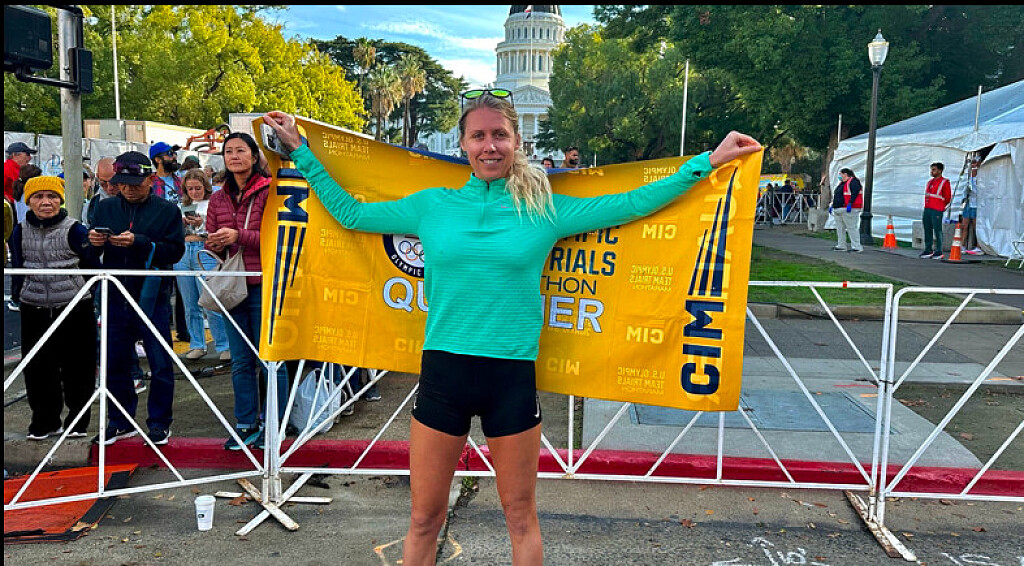
A Marathon Where Victory Isn’t Reserved for the Winners
CJ Albertson and Grace Kahura-Malang won the California International Marathon while dozens more fulfilled lifelong dreams to qualify for the U.S. Olympic Trials in their last chance
If there’s one race where the adage ‘To the victor go the spoils” does not ring entirely true, it’s the California International Marathon (CIM). The commanding wins of CJ Albertson and Grace Kahura-Malang were certainly deserving of celebration. But they shared in the sweet taste of victory with dozens more high-level runners on last Sunday morning.
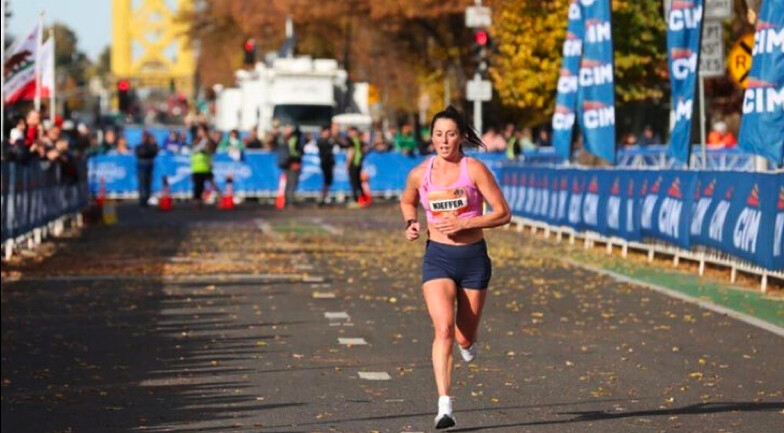
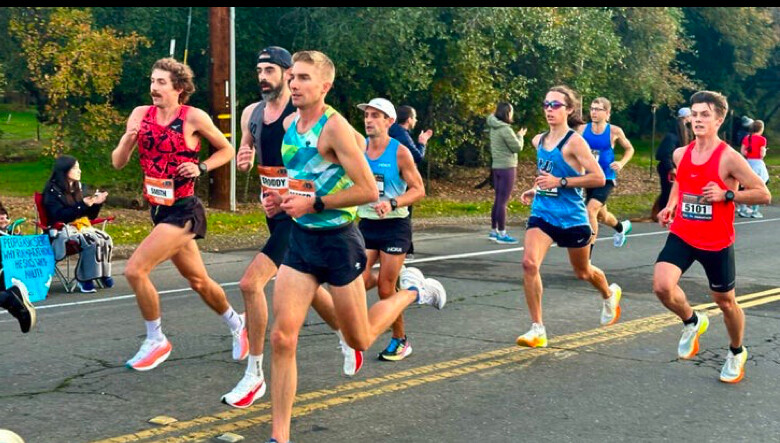
For several minutes after Albertson stormed from behind to take the men’s race in 2:11:09 and Kahura broke the tape in the women’s race with a personal best of 2:29:00, the finish line exhilaration continued to build as numerous runners sprinted their way to the finish line on M Street, adjacent to the California Capitol Mall in downtown Sacramento.
That’s because the winning prizes extended far beyond the $10,000 to something money can’t buy. American runners who could get to the finish line in time earned a qualifying berth for the 2024 U.S. Olympic Trials Marathon on February 3 in Orlando, Florida. That event will determine the six U.S. runners who will compete in next summer’s Paris Olympics, but it’s also a quadrennial benchmark of domestic distance running excellence, and the chance to run in it—especially for those who have no chance at making the Olympic team—is a badge of honor that lasts a lifetime.
Sunday’s CIM was the last opportunity to grab that proverbial brass ring, and as the time ticked down to the cutoffs—2:18 for men and 2:37 for women—41 runners realized dreams that had been several years in the making. That’s a considerably smaller number than the 109 runners who qualified four years ago, but the Olympic Trials are four weeks earlier this time around and many runners opted for earlier races.
To reach the lofty Olympic Trials qualifying (OTQ) standards, many runners had to face their inner demons as they accepted the physical, mental, and emotional challenge of running 26.2 miles faster than they ever have.
“It was very hard-fought,” said Mary Denholm, a Colorado runner who lowered her personal best by more than four and half minutes to finish in 2:36:28 and earned the OTQ time. “During the race, I tried to think as little as possible, but you know those little negative thoughts creep in. I kept saying to myself, Well, you’d be happy with a 2:37 or a 2:38, which is true, but I had to not allow myself to accept that and slow down. Marathoning is so hard. It’s a process. You really have to love the journey.”
Celebrating its 40th year, CIM has developed a reputation as one of the best domestic races for elite and age-group runners seeking personal best efforts, whether that’s chasing an OTQ or Boston Marathon-qualifying time. The race’s point-to-point, net-downhill 26.2-mile course from Folsom to Sacramento amid Northern California’s typically favorably cool, dry early December weather is ideal for running fast for any of the 10,000 participants. But what makes fast times more likely is the communal effort of the large packs of runners at nearly every pace group.
With the Trials-qualifying deadline of December 5 looming, about 200 American runners lined up at CIM to specifically chase the 2024 OTQ marks. While a few have been training with the aid of sponsorships or trying to become professional runners, the majority were amateur runners who work full-time jobs.
For some—like first-time marathoners and twenty-somethings Charlie Sweeney, Christian Allen, Ava Nuttall, and Abbie McNulty—it was the initial opportunity to meet the mark. But it wasn’t the first rodeo for many others who were back after coming up short in previous years, including thirty-somethings Denholm, Noah Droddy, Allie Kiefer, and Chad Beyer. For some who are slowing with age, or on the verge of hanging up their racing shoes for bigger career pursuits, CIM might have been the final shot of their competitive running careers.
In the moments before the race in Folsom, the nervous energy of every elite runner was palpable as they did their final pre-race strides and stretches, each one carrying with them their own long backstory that brought them to the brink of their dreams. After a brief moment of calm on the starting line, the gun went off and the enticing challenge began.
“This was my shot,” said Droddy, a 33-year-old Salomon-sponsored pro from Boulder, Colorado, who had a breakthrough 2:09:09 runner-up performance at The Marathon Project in 2020 but, because of a variety of injuries, hadn’t finished a marathon since. “I qualified on the last day in 2016, and so this was another full-circle moment to try to do it on the last day again.”
For the next two-plus hours, every runner locked into the silent rhythm of their race pace—each with their own goal in mind—holding onto the cadence of the random runners nearby. This is all the while knowing that consistent effort would gradually transition from being smooth and tolerable to eventually becoming extremely difficult by the later miles of the race.
Allen, a marathon rookie from Salt Lake City eager to make his mark, boldly opted to run off the front from the start with New Zealand’s Matt Baxter and Kenyan Milton Rotich, while Albertson, a Fresno-based runner who has been one of the most consistent elite-level marathoners in the U.S. for the past several years, looked calm and content as he ran just off the lead near the front pack.
While many OTQ-seeking American women grouped together in the quest for a 2:33 to 2:37 finish, Kahura-Malang, a 30-year-old Kenyan runner who lives near Boulder, started quickly and tagged along with a much-faster group of men with hopes of breaking 2:30 for the first time.
“I really didn’t know how far I was from the other women, but I didn’t want to focus on that,” she said. “I just wanted to keep running fast.”
Achieving success in a marathon can be a fickle task—one that relies on equal parts sufficient training, optimal fueling, and mental tenacity. But the magic of an elite-level marathon, especially CIM during a pre-Olympic Trials year, can be tied to finding confidence running amid the collective rhythm of a pack of like-minded runners, at least until things get difficult at the crux of the race somewhere near mile 20.
Maintaining race pace and grinding through the final miles is something every runner experiences, each one to varying success. That’s where inspirational mantras, acknowledging motivational words written on an arm, or a variety of other mental tricks come into play.
“We had a great group for a while, and then about 20 miles, it started to thin out,” said Jacob Shiohira, 27, from Bentonville, Arkansas. He sliced seven minutes off his personal best with his 13th-place, 2:16:34 finish to make the OTQ cut. “The last three miles turned into a grind, but everyone’s in the same boat, and that’s what makes it special.”
The 26-year-old Allen, fresh off finishing an All-American track and cross country collegiate career at Brigham Young University, spent the summer racing shorter distances on roads and trails. He stuck with his gutsy strategy to lead the race until his legs began to tighten up at the 23-mile mark. Albertson had let Allen and Rotich get ahead of him on a few of the later hills in the race but patiently stayed within himself and seized the lead late in the race to open up a two-minute advantage before the finish.
Rotich finished two minutes after Albertson in 2:13:04 for second, followed by Charlie Sweeney, a 24-year-old runner from Boulder, who completed a stunning debut marathon with a third-place, 2:13:41 finish to earn the Olympic Trials-qualifying standard. After that, Baxter, a Kiwi runner who runs for NAZ Elite, put down a new personal best of 2:14:08, followed by Eritrea’s Amanuel Mesel (2:14:11). From there, Robert Miranda (2:14:43), Jerod Broadbooks (2:14:58) and Allen (2:15:01) led a parade of 27 American men who celebrated securing their OTQ times.
Droddy made it too, finishing 17th in 2:16:56, to earn one of the celebratory golden OTQ flags CIM handed out to each of the qualifiers.
“I didn’t care about the time at all, just as long as it was under 2:18,” said Droddy, who also qualified in 2016 and 2020. “I was just happy to get it done. It means a lot because now I know I can join my teammates at the Olympic Trials.”
More than four minutes after Kahura-Malang ran away with the women’s title, Kiefer (2:33:26) led the charge of a long string of American women who cruised in under the OTQ cutoff. Once a top American runner, the 36-year-old from Austin, Texas, hadn’t finished a marathon since she placed seventh in New York in 2018. Like a lot of runners, she’s been through a lot of challenges in recent years, including injuries, races she’s dropped out of (including the 2020 U.S. Olympic Trials in Atlanta), relocating to new cities, changing coaches, and general motivation.
“I’m back to the basics of having fun with it,” Kiefer said. “There’s no pressure right now. I just wanted to have a good experience, and it was a great experience. It feels validating to get back to the Trials. It’s just nice to go out there and do the part you love.”
Nuttall, 22, was perhaps one of the positive surprises of the day. A senior at Miami University in Ohio, where she was the top cross country runner for the Redhawks this fall, she finished her debut marathon in third place in 2:35:09. After that it was Kaylee Flanagan, 28 who earned her first OTQ with a strong 2:35:24 effort to join her older sister and Asics pro Lindsay Flanagan in Orlando. After that it was professional trail runners Rachel Drake (2:35:28) and Peyton Thomas (2:35:42), who finished fifth, and sixth, respectively. (Drake is also the mother to 14-month-old son, Lewis.)
Nine more women earned the OTQ time—14 total—including Denholm, who finished 13th in 2:36:28.
But amid the joy of dreams coming true, there was also the heartbreak of near-misses. Tammy Hsieh sprinted to the finish just in the nick of time, crossing in exactly 2:37:00 to make the women’s cut, but moments later Gina Rouse (2:37:10) and Jennifer Sandoval (2:37:11) narrowly missed it and went home disappointed.
On the men’s side, Duriel Hardy dashed across the line in 2:17:56 to become the final men’s OTQ’er, but then Alexander Helmuth came across the line two seconds too late in 2:18:02.
After a record 511 women qualified for the 2020 U.S. Olympic Trials Marathon in Atlanta—nearly double the number of male qualifiers—the women’s standard was lowered by eight minutes, down from 2:45 to 2:37. The new mark equates to a hefty 18 seconds per mile faster, down from 6:18 minute mile pace to 6 minutes flat. Denholm, who qualified in 2020 with a 2:42:02 effort at the 2019 CIM, was one of hundreds of women who spent the past several years trying to make that big leap.
After running a personal best of 2:40:59 at the 2022 Boston Marathon, Denholm hoped to continue her progression and earn her qualifying time months ago. But the marathon is a fickle event because training never goes perfectly and something—injuries, work, life—always gets in the way. And sometimes everything goes right and it’s just not your day on race day.
After dealing with a torn labrum and then going through a divorce, career changes, and a move from California to Colorado, the 36-year-old running coach targeted last summer’s Grandma’s Marathon in Duluth, Minnesota—another domestic race on par with CIM when it comes to providing a competitive platform for elite and sub-elite runners to excel.
But despite a good training block, Denholm struggled in that race and finished in 2:43:19. After that, she refocused her training with the help of coach and three-time OTQer Neely Gracey and set her sights on the September 24 Berlin Marathon, only to come down with COVID after she arrived in Germany. Not wanting to give up, she retooled her training one more time and registered for CIM as a last-ditch effort.
She was on 2:36 pace the entire way, running near-identical 13.1-mile splits of 1:18:17 and 1:18:11, but needed the encouragement of friend, Sofie Schunk, to get her through the final miles. Schunk, 31, of Albuquerque, finished six seconds ahead of her in 2:36:22.
“I went to a really dark place out there and had to fight through that,” she said. “It was awesome to have other women out there to go for it with and encourage along the way. I split some of my faster miles near the end, and I’ve never been able to do that, so that was a huge victory for me. I hope this can be encouraging to other women because I really think everyone is limitless. I’ve just worked really hard to get where I am and I just want others to feel encouraged.”
by Outside Online
Login to leave a comment
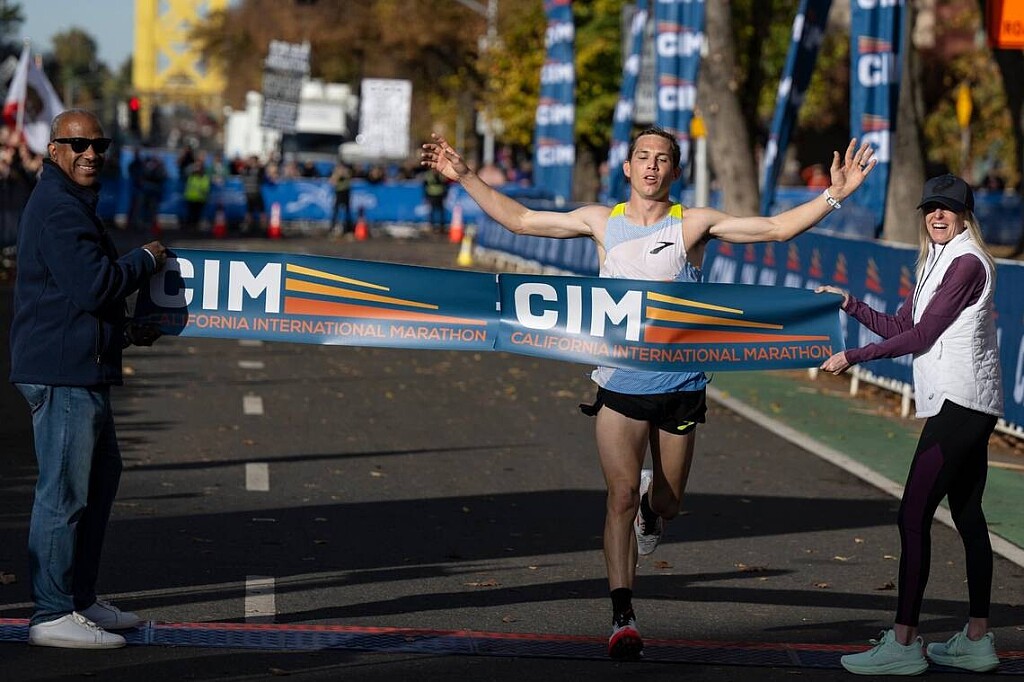
Fresno Kid CJ Albertson rallies to take California International Marathon title in Sacramento
CJ Albertson of Fresno came from behind and Kenyan runner Grace Kahura logged a personal best, each defeating a deep, fast field Sunday to win the 40th annual California International Marathon in Sacramento. The course, unchanged in its 40-year history, a Boston Marathon and U.S. Olympic Trials qualifier dubbed by marathon watchers as the fastest in the West, did not disappoint.
More than 9,600 runners took to the 26-mile downhill course from Folsom to the streets of downtown Sacramento on a cool, dry day under ideal conditions. But it was Fresno’s Albertson, 30, and Kahura, 30, of Longmont, Colorado, who emerged victorious.
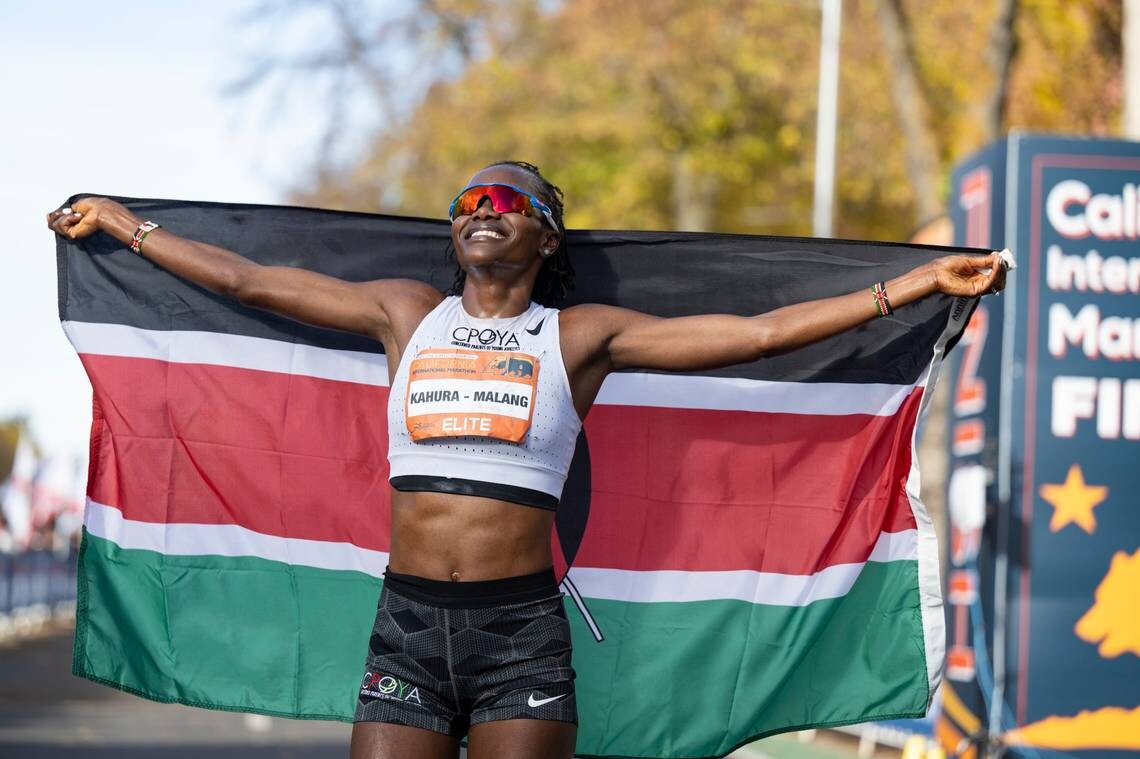
Albertson clocked in at 2:11:09, flirting with CIM course record territory; followed by Milton Rotich, of Duluth, Minnesota, at 2:13:04; and Charlie Sweeney, of Boulder, Colorado, at 2:13:41, in a near-photo finish for second and third. Kahura’s finish at 2:29 flat outpaced Austin, Texas’ Allie Kieffer’s 2:33:26 and Ava Nuttall, of Rochester, Minnesota, who finished third in 2:35:09.
The Kenyan runner’s 2:29 also beat her personal best of 2:30.14, posted in June at the Grandma’s Marathon in Duluth. Kahura’s time led a deep and fast women’s field in 2023 that featured 43 runners ahead of the 2:37 Olympic trial qualifying pace at the marathon’s halfway mark.
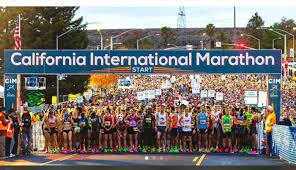
Kahura exulted in triumph at the finish, stretching her nation’s banner wide behind her. Albertson is among the country’s elite marathon runners. A cross-country and track standout at Arizona State University who ran seventh in the marathon at the 2020 Olympic Games in Tokyo, and set an indoor marathon world record in 2019, Albertson finished eighth at last year’s California International Marathon and was a near-miss second-place finisher in Sacramento in 2019.
Albertson lurked for miles as Christian Allen of Orem, Utah, and Amanuel Mesel, of Flagstaff, Arizona, dueled in tandem for the top spot. But Albertson made his move as the race pushed into Sacramento.
He overtook a fading Mesel for second at the 35K mark, then set his sights on the frontrunning Allen. By Mile 23, Albertson had overtaken Allen for a lead he would never relinquish.
by Darrell Smith
Login to leave a comment
California International Marathon
The California International Marathon (CIM) is a marathon organized by runners, for runners! CIM was founded in 1983 by the Sacramento Running Association (SRA), a 501(c)(3) non-profit organization. The SRA Board of Directors is comprised of runners with a combined total of 150+ years of service to the CIM. The same route SRA management created for the 1983 inaugural CIM...
more...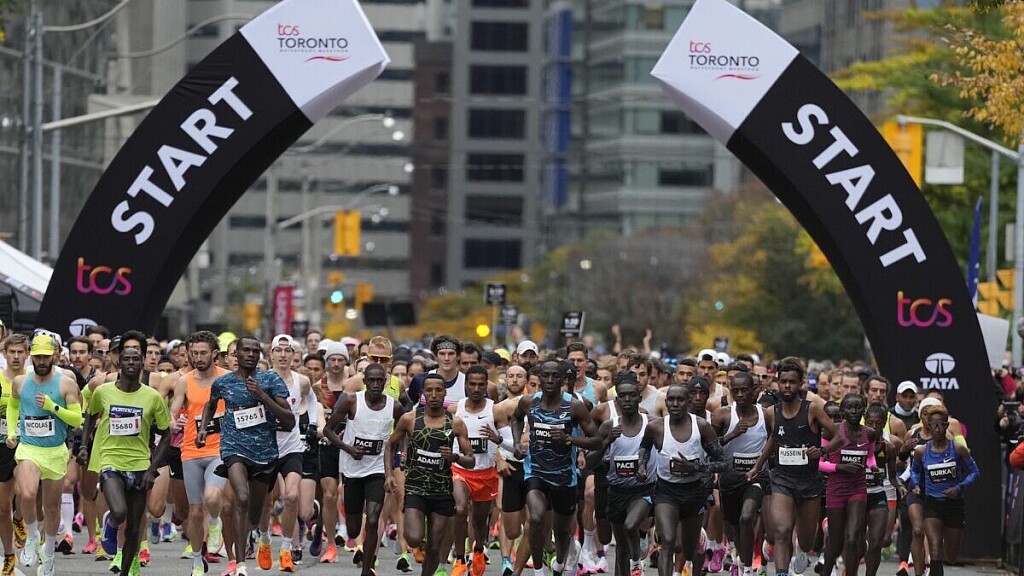
TCS Toronto Waterfront Marathon: elite women’s and men’s preview
For the first time in the 34-year history of the TCS Toronto Waterfront Marathon, the race has reached over 25,000 runners. Toronto has established itself as Canada’s premier marathon and has set a precedent in the global running community, with participants coming from 78 countries around the world for the marathon on Sunday, Oct. 15.
The elite field at the 2023 edition of the marathon looks significantly different from last year, and two new champions will be crowned on the men’s and women’s sides, as Ethiopia’s Yihunilign Adane and Kenya’s Antonina Kwamboi will not be returning. The 2023 elite field features up-and-coming stars, along with several American women aiming to achieve the Olympic standard of 2:26:50 ahead of the upcoming U.S. Olympic Trials in February.
The race will also determine two new Canadian marathon champions, with compelling storylines on both the men’s and women’s sides.
Women’s race
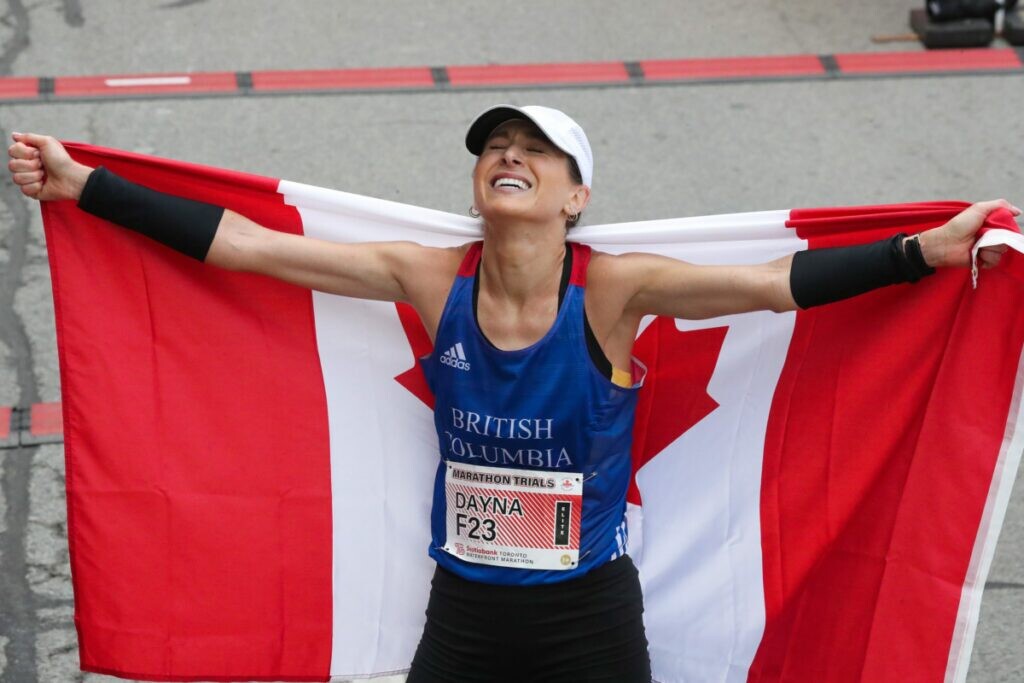
Will we see an American winner?
It has been 22 years since an American woman last won the TCS Toronto Waterfront Marathon (Leslie Gold in 2001) but in this year’s field, two American elites could possibly end the drought. One of them, Emily Durgin, a road racing specialist based out of Flagstaff, Ariz. came to Toronto looking for redemption after a less-than-ideal marathon debut in NYC last year.
Durgin said during Friday’s elite press conference that she felt the pressure to hit times and perform during her debut and ended up dropping out of the race before 30 km. “I learned a lot from New York and my build for Toronto has been different,” said Durgin. “As for a goal time, I want to run in the low 2:20s and be competitive.” The 29-year-old marathoner hopes to use Toronto as a stepping stone for the U.S. Olympic Marathon Trials in February 2024 in Orlando. Durgin was able to qualify for the trials from her time at the 2022 Houston Half Marathon where she finished 6th overall, clocking the seventh-fastest half-marathon in U.S. history with 67:54. “I came to Toronto to be competitive and contend for the the podium, as that’s what it will take to qualify at trials come February,” she said.
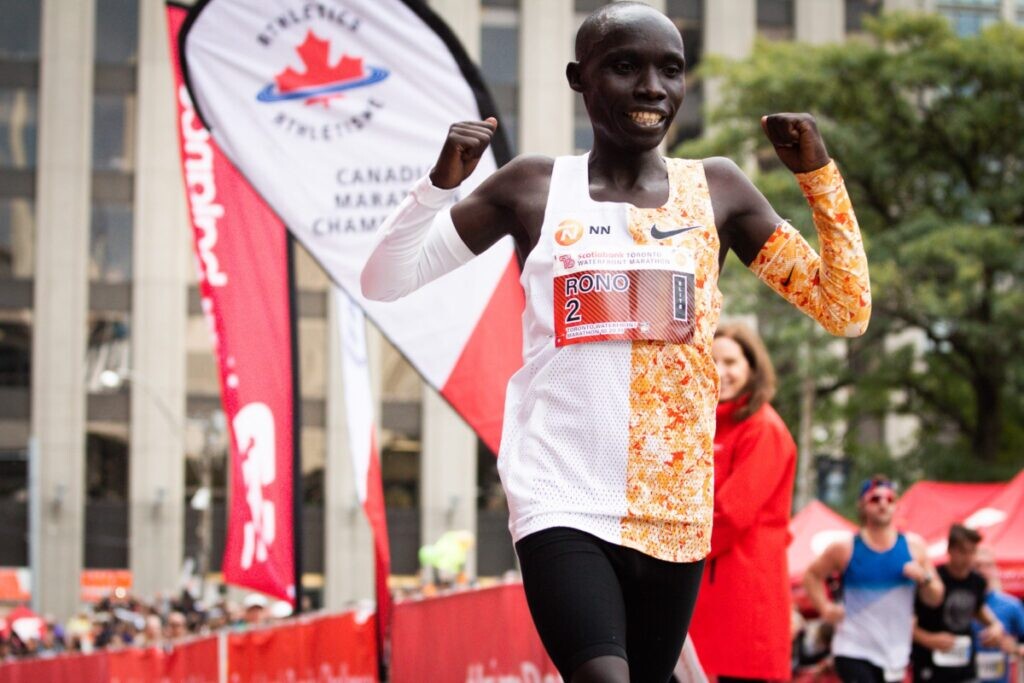
Another U.S. name in the women’s elite field to watch is Molly Grabill, who is running her sixth career marathon in Toronto on Sunday. Grabill told the media that she has similar plans to her compatriot Durgin and hopes to bounce back after, in her words, falling short of her goals in her last marathon in Hamburg earlier this year. Although Grabill ran the second-fastest marathon time of her career in Hamburg, she said she was disappointed as she took a swing and missed, struggling in the second half. “The goal in Toronto is to control the second half of the race better and gain strong momentum heading into the U.S. Olympic Marathon Trials,” said Grabill. The 31-year-old from Boulder, Colo., is coming off a top-15 finish in 69:53 at the inaugural World Athletics Road Running Championships in Riga, Latvia, earlier this month, which she says has given her a lot of confidence for Sunday.
Eyes on the course record?
Outside of the American duo, two other international athletes to watch are the Ethiopian duo of Afera Godfay and 2023 Ottawa Marathon champion Waganesh Mekasha. For Godfay, Toronto is her first marathon in three years after giving birth to her daughter. Her last marathon came in 2020 when she ran 2:26:43 to place third overall at the Xiamen Marathon in China. In her first two races back since becoming a mother, Godfay has run respectable half marathon times of 70 and 71 minutes but has not yet returned to her previous form. She said at Friday’s press conference that she hopes to come through the half mark in 1:11 and feels well-prepared for her marathon return. A glimpse of hope for Godfay is that she currently trains alongside the new women’s world record holder Tigist Assefa in Ethiopia. So, who knows what she is capable of?
The favourite in the women’s race is Mekasha, who is coming off a win in the scorching heat at the 2023 Ottawa Marathon in May. Mekasha is targeting the Canadian all-comers’ women’s marathon record on Sunday of 2:22:16, set four years ago by Kenya’s Magdalyne Masai at this race. Mekasha holds a personal best of 2:22:45 from the 2019 Dubai Marathon and said that she expects around a similar time on Sunday. “If the pacemaker runs a good pace, I hope to break the course record,” says Mekasha.
The Canadian contingent
Two of the top three Canadians from last year’s race have returned to the 2023 field, with Malindi Elmore, the reigning Canadian marathon champion, opting to run Berlin, where she clocked the second-fastest time in Canadian history (2:23:30). Returning are second and third place Canadian finishers Dayna Pidhoresky and Toronto’s own Sasha Gollish. Pidhoresky had an iconic moment here in 2019, when she raced just under the Olympic standard at the Canadian trials, winning in 2:29:03–qualifying her for the marathon at the 2020 Tokyo Olympics. Although the Olympic marathon didn’t go as planned for Pidhoresky, she was able to bounce back at this event last year to place seventh overall (second Canadian) in 2:30:58.
“Growing up in Windsor, Ont., I came to Toronto for so many races,” said Pidhoresky on tackling on her fourth Toronto Waterfront Marathon. “I feel I know the course very well, which is helpful in a marathon, and it’s great to have a high-quality field that’s close to home.” Pidhoresky told the media that this build has not been smooth but she is still confident she can run a personal best Sunday. “This course is advantageous, and I need to be smart and just run my race,” she said.
It is a similar story for Gollish, who is running in her second consecutive TCS Toronto Waterfront Marathon, less than eight weeks after her last marathon at the 2023 World Championships in August. Gollish told Canadian Running at the press conference that she wants to go into this race with a similar mindset that she had in Budapest. “It feels like a privilege to be here, and I am not putting any pressure of a personal best on myself,” says Gollish. “For the longest time, I avoided this race because I felt there would be pressure to perform, but why not run something in your backyard fuelled by a community that has done so much for me?” Last year, Gollish surprised herself with a personal best time of 2:31:40 after a short marathon build. Could she do the same on Sunday?
A few other Canadian marathoners to watch are Emily Setlack, Toronto’s Liza Howard and Kim Krezonoski of Thunder Bay, Ont. It has been four years since Setlack has last touched the marathon, but with a personal best of 2:29:48 from the 2019 edition of this race, her potential to finish as the top Canadian should not be ignored. Setlack has had a quiet 2023 season but has strung together solid performances, winning Toronto’s historic Sporting Life 10K and placing eighth overall at the Canadian 10K Championships in May.
Howard has a personal best of 2:35:29 (Chicago 2022) and was the top Canadian finisher at the 2023 Boston Marathon (37th overall) in cold, wet and windy conditions. Krezonoski moved to Toronto within the last year and has been studying the course thoroughly in the hope of crushing her marathon personal best come Sunday. She ran her personal best of 2:37 at the California International Marathon last year but has dropped her half-marathon PB by nearly four minutes since. The spots on the domestic podium are up for grabs, and each of these three women could break through.
Men’s race
The rise of Elvis
The absence of Adane opens the door for several East African men hoping to establish their marathon careers in Toronto. One of these men is Kenya’s Elvis Kipchoge, who may already lay claim to the title of the best running name. This Kipchoge is a little less well-known than the former world record holder but boasts a faster half marathon personal best of 59:15, which earned him third place at the 2022 Barcelona Half Marathon. However, this Kipchoge has not had much luck in the marathon. At the young age of 27, he ran 2:10:21 at the Vienna Marathon earlier this year. He hopes to turn things around on a fast and flat Toronto course. Kipchoge has ties to the race, training alongside women’s course record holder Magdalyne Masai in Iten, Kenya.
While there is no relation between Elvis and Eliud Kipchoge, besides sharing the same last name and initials, Ethiopian athlete Adugna Bikila hopes to follow in the footsteps of his uncle, Worku Bikila. Worku was a world-class 5,000m runner who finished sixth in the 1992 Olympic 5,000m final in Barcelona and took fourth place at the World Championships the following year. Bikila enters Toronto with the fastest time in the field, holding a personal best of 2:05:52 from the 2022 Seville Marathon, where he finished fourth.
All the East African men will be aiming to break the Canadian all-comers record and course record of 2:05:00, held by Kenya’s Philemon Rono, set in 2019. The weather forecast for Sunday indicates cool and favourable conditions for both the men’s and women’s fields, which should make both course records vulnerable.
Who’s next for Canada?
A new men’s Canadian champion will be crowned Sunday, and for the first time since 2016, their last name will not be Levins or Hofbauer. The 2023 men’s field is full of up-and-coming Canadian talent on the precipice of breaking into the elite scene. Mississauga’s Sergio Raez Villanueva returns to Toronto after a stunning 2:18:04 debut last year, which earned him top-five Canadian honours. Challenging Raez Villanueva is Ottawa’s Blair Morgan, who was the second Canadian at the hot and humid Ottawa Marathon in May, running 2:19:50. Morgan ran his personal best of 2:18:29 at the 2018 Toronto Waterfront Marathon but is looking for a sub-2:18 result this time around.
Challenging Raez Villanueva and Morgan are debutants Thomas Broatch of Vancouver and 4:01 miler Kyle Grieve. Broatch is coming off a win at the Vancouver Eastside 10K where he beat three-time Toronto champion Trevor Hofbauer. “Winning the Eastside 10K was a huge confidence booster for me,” says Broatch. “Whenever you take the start line the objective is to win and run fast.” The 24-year-old software engineer told Canadian Running that he has ambitious goals to run under 2:15 on Sunday and that his marathon build has gone near perfect.
For Grieve, who grew up and still resides in Toronto, this marathon has always been on his bucket list. “I’ve been wanting to try a marathon for a few years and have just kept putting it off,” says Grieve, who got married in the summer. “Canada Running Series is a big reason I am still competing today, so it was never a question of where I wanted to run my first marathon.” His goal is to be competitive against a strong Canadian field and let the time come along with it.
How to watch?
Marathon fans from around the world will have the opportunity to watch the 2023 TCS Toronto Waterfront Marathon live on Sunday, Oct. 15, 2023, beginning at 8:00 a.m. ET with a pre-race introduction followed by the introduction of the elite field. The gun for the men’s and women’s elite field fires at 8:45 a.m. ET. All race action can be followed on torontowaterfrontmarathon.com or CBCsports.ca /CBC Gem or AthleticsCanada.tv.
by Marley Dickinson
Login to leave a comment
TCS Toronto Waterfront Marathon
The Scotiabank Toronto Waterfront Marathon, Half-Marathon & 5k Run / Walk is organized by Canada Running Series Inc., organizers of the Canada Running Series, "A selection of Canada's best runs!" Canada Running Series annually organizes eight events in Montreal, Toronto and Vancouver that vary in distance from the 5k to the marathon. The Scotiabank Toronto Waterfront Marathon and Half-Marathon are...
more...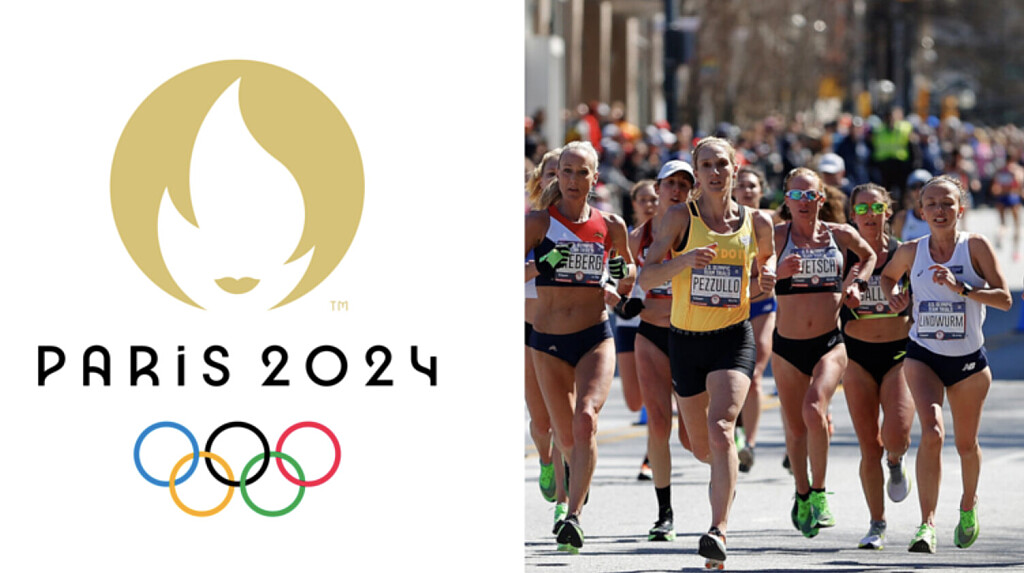
The Road to the Paris Olympics and here is What You Need to Know.
American runners are about to begin training for the U.S. Olympic Trials Marathon
It’s early October, which means it’s the peak marathon season for many runners. But with an Olympic year on the horizon, it also means America’s top marathoners are about to hit the road to Paris.
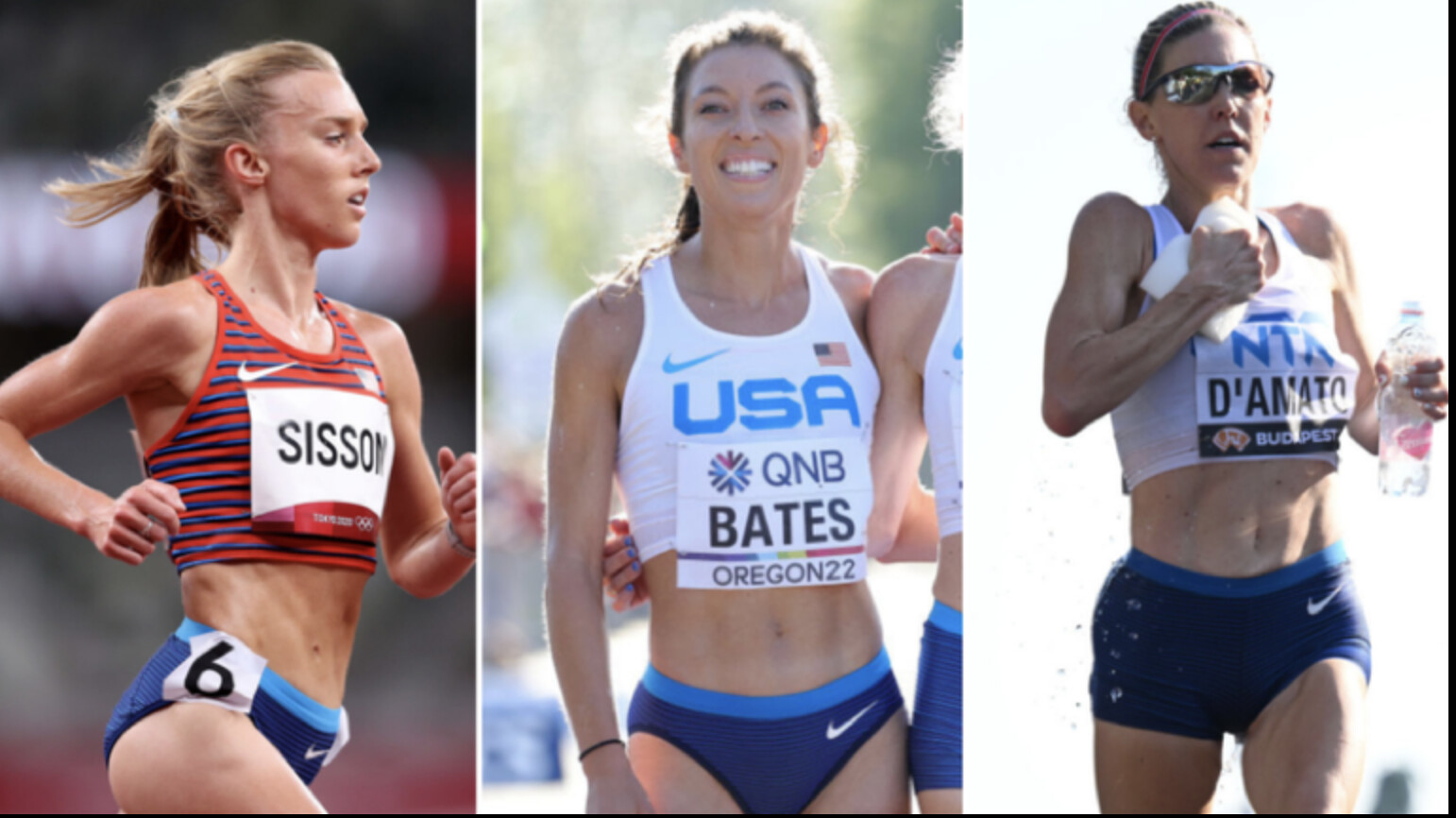
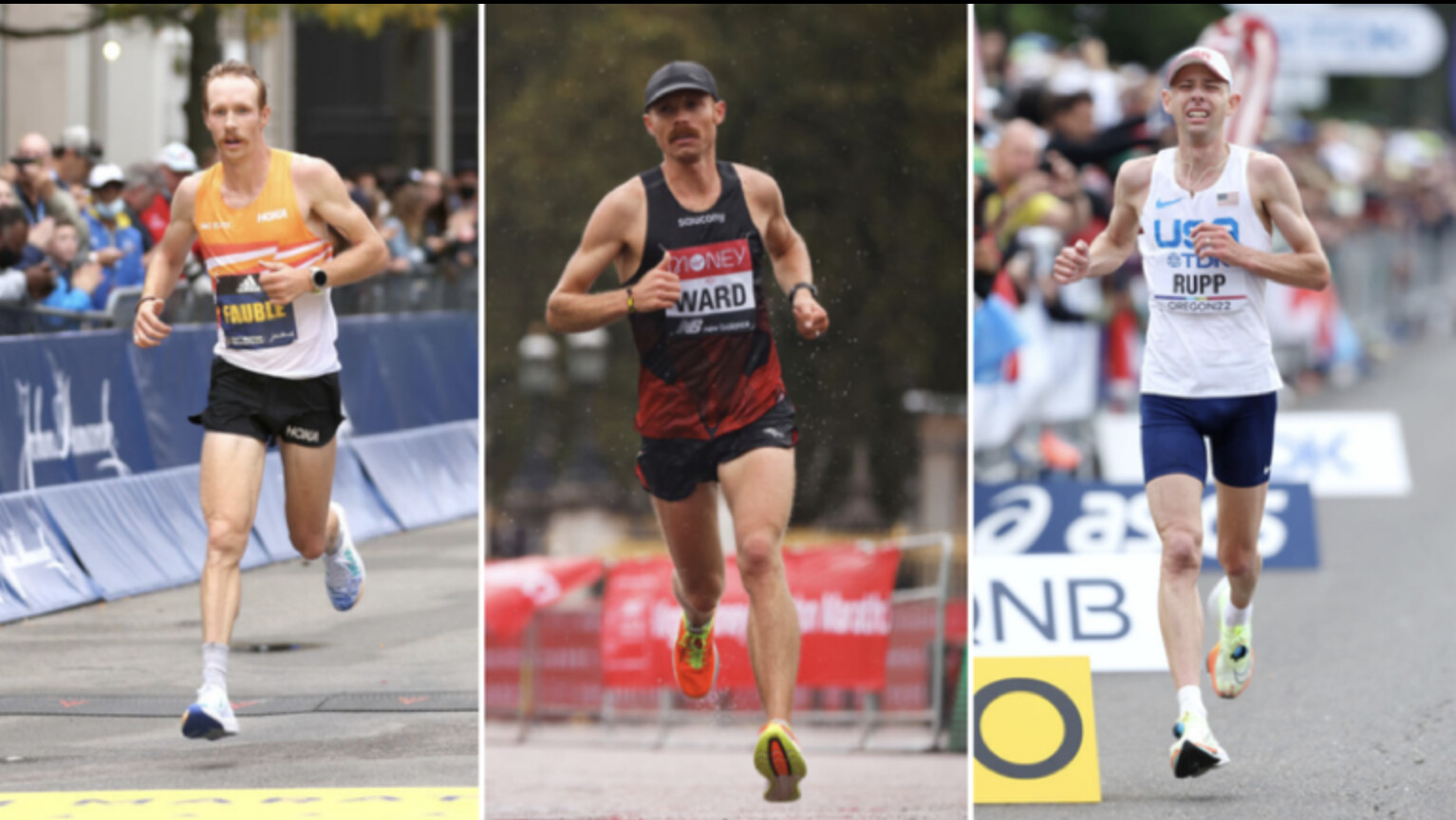
More specifically, the men’s and women’s 2024 U.S. Olympic Trials Marathon races—scheduled for February 3 in Orlando, Florida—are just four months away. And that means the top U.S. runners hoping to represent their country at next summer’s Olympics are about to begin preparing for the all-or-nothing qualifying race that decides which six runners will represent Team USA next summer on the streets of Paris.
Although several top American runners are racing the Chicago Marathon on October 8, even they have their eyes on a much bigger prize next February.
“There’s nothing in my mind that compares with being an Olympian and being in the Olympic Games,” says 26-year-old Utah-based Nike pro Conner Mantz, who returns to Chicago after finishing seventh last year in 2:08:16 in his debut at the distance. “So putting that first has been the plan for a long time. We’re just putting that first and we’re working backwards through the season with other races.”
Registration will open for the U.S. Olympic Trials Marathon in early November for runners who have surpassed the qualifying times in the marathon (2:18:00 for men, 2:37:00 for women) or half marathon (1:03:00 for men, 1:12:00 for women). The qualifying window extends through December 3—the race date of the last-chance California International Marathon, which for decades has been one of the most popular Olympic Trials qualifying races.
In 2020, a record 708 runners—465 women and 243 men—qualified for the U.S. Olympic Trials Marathon in Atlanta just before the onset of the Covid-19 pandemic. But USA Track & Field lowered the women’s qualifying standard by eight minutes from the more attainable 2:45:00 plateau, which means there will most likely be a much smaller women’s field this year.
But even so, amid the handful of runners who have a legitimate shot at making the Olympic team, there will also be dozens of dreamers, wannabes, and just-happy-to-be-there elite amateurs who have worked hard, put in the miles, and earned the chance to be on the start line of the deepest and most competitive U.S. distance-running races that only happen once every four years.
The men’s and women’s races will run simultaneously with the men beginning at 12:10 P.M. EST. and the women starting 10 minutes later. Runners have complained that a high noon start means they will be forced to race in hot, humid conditions. Over the past decade, the average temperature on February 3 in Orlando has been 69.6 degrees Fahrenheit at noon, rising to 73.3 at 4 PM. But actual temperatures have varied drastically, from 81 degrees Fahrenheit at 2 P.M. last year to 56 at the same time the year before. USATF officials have responded by saying that the start times are to accommodate live coverage on NBC and to match the expected conditions in Paris.
Here’s an update and overview of what’s next, who the top contenders are, the course, and what to expect in the next four months.
The 26.2-mile U.S. Olympic Trials course runs through downtown Orlando and consists of one 2.2-mile loop and three eight-mile loops. The marathon course will run through several neighborhoods, main streets, and business districts in Orlando, including Central Business District, City District, South Eola, Lake Eola Heights Historic District, Lake Cherokee Historic District, Lake Davis Greenwood, Lake Como, North Quarter, Lawsona/Fern Creek, SoDo District, and the Thornton Park neighborhood. It will then head east to and around The Milk District neighborhood and Main Street. (Notably, the course will come close to Disney World, which is about 15 miles to the southwest.)
Unlike the Olympic Marathon course in Paris, which will challenge runners with significant hills in the middle, the Orlando course is mostly flat. Each loop has a few minor variations in pitch, but only 38 feet separate the high and low points on the course. Ultimately, though, it’s a spectator-friendly route with chances for family, friends, and fans of runners to see the action several times.
The top women—based on personal best times and recent race results—are Emily Sisson, Emma Bates, Keira D’Amato, Betsy Saina, and Lindsay Flanagan. But the U.S. Olympic Trials races almost always produce surprises with a few great runners having off days and a few good runners having exceptional days, so there is reason to expect the unexpected.
Sisson lowered the American record to 2:18:29 last year when she finished second in the Chicago Marathon. She’s running Chicago again on October 8 along with Bates, who has said she’s hoping to break the American record. In January, Sisson, 31, chopped her own American record in the half marathon in Houston with a 1:06:52 effort, and most recently won the U.S. 20K Championships (1:06:09) on September 4 in New Haven, Connecticut. Bates, also 31, hasn’t raced at all since her sterling fifth-place effort at the Boston Marathon in April, when she slashed her personal best to 2:22:10.
While Chicago will be another good place to test themselves, both have unfinished business after Bates was seventh at the 2020 Trials and Sisson dropped out near the 21-mile mark.
The same goes for Flanagan, 32, who has been one of America’s best and most consistent marathoners for the past five years. She placed 12th at the trials in 2020. She had a breakthrough win (2:24:43) at the Gold Coast Marathon in 2022 followed by a strong, eighth-place finish (2:26:08) at the Tokyo Marathon earlier this year. In August, she ran perhaps the best race of her career, when she finished ninth (2:27:47) at the world championships in Budapest amid hot, humid conditions.
The 38-year-old D’Amato, meanwhile, just capped off another strong season with a 17th-place showing (2:31:35) at the World Athletics Championships in Budapest, a year after finishing eighth in the world championships and setting an American record 2:19:12 at the 2022 Houston Marathon. She was 15th at the Trials in 2020 in 2:34:24, just two years into her competitive return to the sport after having two kids and starting a career in real estate in her early 20s.
“It’s such a huge goal of mine to become an Olympian,” says D’Amato, who lowered Sisson’s U.S. record in the half marathon with a 1:06:39 effort at the Gold Coast Half Marathon on July 1 in Australia. “It’s really hard for me to put words into this because my whole life, wearing a Team USA jersey has been like a huge dream. And when I left the sport (temporarily), I felt like I said goodbye to that dream and I kind of mourned the loss of being able to represent my country. I feel like it’s the greatest honor in our sport to be able to wear our flag and race as hard as possible.”
Saina, a 35-year-old Kenya-born runner who ran collegiately for Iowa State University, became a U.S. citizen in late 2021. She placed fifth in the 10,000-meters at the 2016 Olympics in Rio de Janeiro while competing for Kenya. She’s spent the past several years splitting time between Kenya and Nashville, Tennessee, where she gave birth to a son, Kalya, in December 2021.
She’s returned with a strong fourth-place 1:11:40 result at the Tokyo Half Marathon last October and a fifth-place 2:21:40 showing at the Tokyo Marathon in February. In May, Saina won the U.S. 25K Championships in Michigan. Two weeks ago she broke the tape at the Blackmores Sydney Marathon in Australia in 2:26:47.
Other top contenders include but are not limited to Tokyo Olympics bronze medalist Molly Seidel (who’s personal best is 2:24:42), 2022 U.S. Olympic Trials champion Aliphine Tuliamuk (2:24:37, 11th in Boston this year), Susanna Sullivan (2:24:27 personal best, 10th in London this year), two-time Olympian and 2018 Boston Marathon winner Des Linden (2:22:38), and Sara Hall (2:20:32, fifth at last year’s world championships), plus Kellyn Taylor (2:24:29), Nell Rojas (2:24:51), Sarah Sellers (2:25:43), Lauren Paquette (2:25:56), Dakotah Lindwurm (2:25:01), Annie Frisbie (2:26:18), Sara Vaughn (2:26:23), Tristin Van Ord (2:27:07), and Jacqueline Gaughan (2:27:08).
The list of potential men’s top contenders isn’t as clear-cut, partially because there are so many sub-2:11 runners and several fast runners who are relatively new to the marathon. But all that suggests a wide-open men’s race where more than a dozen runners are legitimately in the mix for the three Olympic team spots. That said, the top runners on paper, based on both time and consistent results over the past few years, are Scott Fauble, Jared Ward, Galen Rupp, Conner Mantz, Leonard Korir, Matt McDonald, and C.J. Albertson.
The 31-year-old Fauble, who was 12th in the Olympic Trials in 2020 and owns a 2:08:52 personal best, has finished seventh in the Boston Marathon three times since 2019 and also finished seventh in the New York City Marathon in 2018. Ward is a 2016 U.S. Olympian and has three top-10 finishes at the New York City Marathon and a 2:09:25 personal best from Boston in 2019. He’s 35, but he just ran a 2:11:44 (27th place) at the Berlin Marathon in late September.
Rupp, who won the past two U.S. Olympic Trials Marathons and earned the bronze medal in the marathon at the 2016 Olympics, is nearing the end of his competitive career. He boasts a 2:06:07 personal best and has run under 2:10 more than any American in history, including when he finished 19th at the world championships (2:09:36) last year. He’s a bit of a wild card because he’s 37 and hasn’t raced since his lackluster 17th-place showing at the NYC Half Marathon (1:04:57) in March, but the world will get a glimpse of his fitness in Chicago this weekend.
Mantz followed up his solid debut in Chicago last fall with a good Boston Marathon in April (11th, 2:10:25) and solid racing on the track and roads all year, including his recent runner-up showings at the Beach to Beacon 10K in August and the U.S. 20K Championships in September.
McDonald, 30, who was 10th in the 2020 U.S. Olympic Trials, has quietly become one of the best marathoners in the U.S. while serving as a postdoctoral associate in chemical engineering at M.I.T. His last three races have clocked in at 2:10:35 (Boston 2022), 2:09:49 (Chicago 2022), and 2:10:17 (Boston 2023). The only other runner who rivals that kind of consistency is Albertson, 29, who has run 2:10:23 (Boston 2022), 2:10:52 (Grandma’s Marathon 2022) and 2:10:33 (Boston 2022) in his past three marathons and was seventh in the U.S. Olympic Trials in 2020 (2:11:49).
The men’s race will likely have a mix of veteran runners and newcomers who have run in the 2:09 to 2:10 range since 2022. Among those are 2020 U.S. Olympic Trials runner-up Jake Riley (2:10:02 personal best), who is returning from double Achilles surgery; 2016 U.S. 10,000-meter Olympian Leonard Korir (2:07:56), who ran a 2:09:31 in Paris in April; Zach Panning (2:09:28, plus 13th at the world championships in August); U.S. 25K record-holder Parker Stinson (2:10.53); Futsum Zienasellassie who won the California International Marathon last December in his debut (2:11:01) and then doubled-back with a new personal best (2:09:40) at the Rotterdam Marathon in the spring; Abbabiya Simbassa, who ran a solid debut marathon (2:10:34) in Prague this spring; and Eritrean-born Daniel Mesfun (2:10:06) and Ethiopian-born Teshome Mekonen (2:10:16), who both received U.S. citizenship within the past year; and solid veterans Nico Montanez (2:09:55), Elkanah Kibet (2:10:43) and Nathan Martin (2:10:45).
Additional sub-2:12 runners who will be in the mix are Andrew Colley (2:11:26), Clayton Young (2:11:51), Brendan Gregg (2:11:21), Josh Izewski (2:11:26), Jacob Thompson (2:11:40), and Kevin Salvano (2:11:49).
As noted previously, some top contenders will season their marathon legs one final time at the flat and fast Chicago Marathon on October 8. An even more select few will opt for the New York City Marathon on November 5. After that, nearly every American with eyes set on an Olympic berth will double-down over the holiday season for that one final, critical marathon training cycle. Expect to see a wide range in heat training, from sauna protocols, to warm weather training trips, to simply an adjusted race day strategy.
Of course, with the Olympic Marathon falling under the purview of World Athletics, qualifying for the U.S. Olympic Marathon team is not quite as simple as finishing on the podium in Orlando. Any American looking to have a breakout performance and finish within the top three at the U.S. Olympic Trials Marathon will need to have run under 2:11:30 for men and 2:29:30 for women within the qualification window, which spans from November 1, 2022 to April 30, 2024. Given the possibility of oppressively hot and humid temps on February 3 in Orlando, they’re best bet is to secure that time now.
These qualification standards are in accordance with a new rule from World Athletics, which allows national Olympic committees to circumvent the typical Olympic qualification process of running under 2:08:10 for men and 2:26:50 for women, or being ranked among the top 65 in the world on a filtered list of the top three athletes from each country. The catch, though, is that three other runners from said country must have met one of these two standards. If this sounds complicated, that’s because it is.
For the hundreds of elite amateurs on the cusp of hitting that coveted U.S. Olympic Trials qualifying time, it’s do or die mode. While a few made the cut at the Berlin Marathon on September 24, one of those opportunities was lost when the Twin Cities Marathon was canceled on October 1 because of excessive heat. Temperatures are shaping up for an auspicious day in Chicago this weekend, and many more will give it a final shot at the Columbus Marathon on October 15; Indianapolis Monumental Marathon on October 28; the Philadelphia Marathon on November 18; and the last-call California International Marathon, a point-to-point race ending in Sacramento, California on December 3.
Ultimately, only six American runners will likely continue on along the road to Paris and earn the chance to run in the men’s and women’s Olympic marathons next August 10-11. For a handful of younger runners, the 2024 U.S. Olympic Trials will be a motivation to reinvigorate the Olympic dream or keep a faint hope alive, at least until the 2028 U.S. Olympic Trials that will determine the team for the Los Angeles Olympics. But for many runners, the journey to the U.S. Olympic Trials in Orlando will lead to the end of their competitive road running careers as new jobs, young families, a switch to trail running, and other priorities will take hold.
“I think the Olympic Trials is an important part of American distance running,” says Kurt Roeser, 36, a two-time U.S. Olympic Trials Marathon qualifier who works full-time as a physical therapist in Boulder, Colorado. “I’m glad that they kept it the same event for this cycle and hopefully for future cycles because it gives people like me a reason to keep training. I’m older now and I’m not going to actually have a chance to make an Olympic team, but for somebody that’s fresh out out of college and maybe they just barely squeak in under the qualifying time, maybe that’s the catalyst they need to start training more seriously through the next cycle. And maybe four years from now, they are a serious factor for making the team.”
by Outside Online
Login to leave a comment
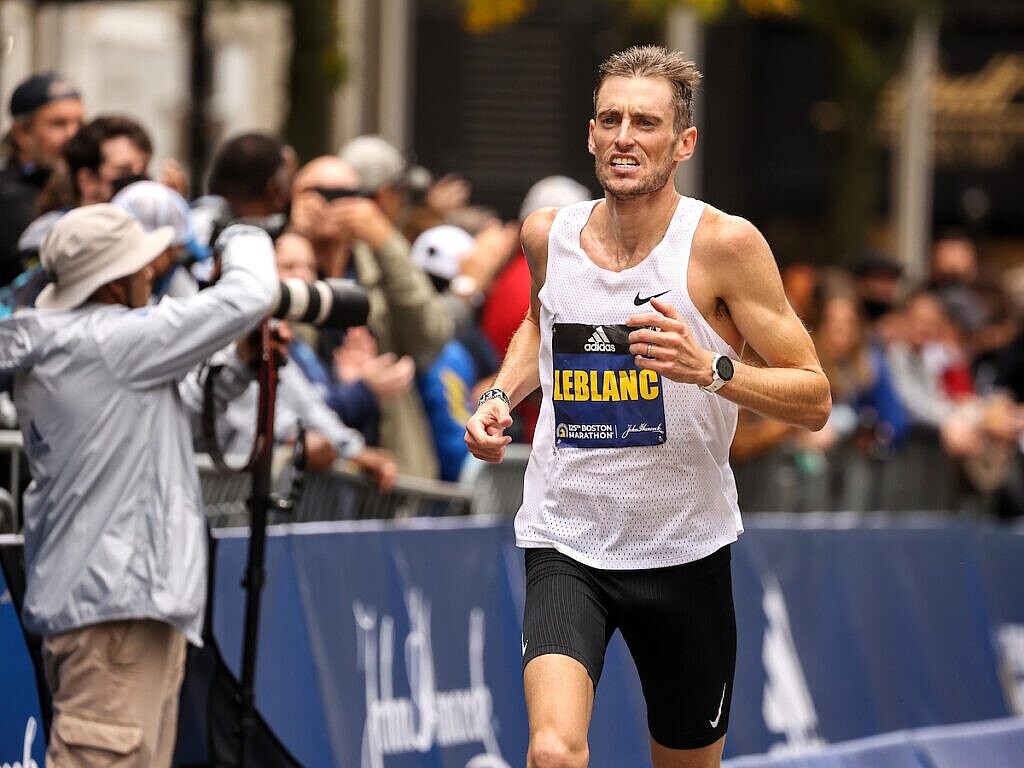
Louisiana man Jarrett Leblanc runs 62-minute half-marathon on a treadmill
On Sunday, a Louisiana man took to the treadmill at his local gym in Lafayette, La., attempting to break the Guinness World Record for a treadmill half-marathon. Jarrett Leblanc, a 2020 U.S. Olympic marathon trials qualifier, clocked a time of 62:50 over 21.1 kilometers, breaking the old mark of 63:08 from 2020 and raising money for a non-profit organization that provides camps and programs for children with heart defects.
Leblanc had the speed on the treadmill set at a ridiculous 12.5 mph for nearly the whole challenge. According to local news, Leblanc was six seconds ahead of the record through his first 5K split (14:54) and built a 13-second cushion, hitting 29:46 through 10K. He ended up breaking the previous mark by 18 seconds. The previous treadmill record was held by U.S. 2:12-marathoner John Raneri, who placed fourth at the California International Marathon in 2022.

The 32-year-old told local news that his inspiration behind targeting the record came from a friend who broke this same record while running on a treadmill at altitude. “He broke the record at an altitude, so with me doing it at sea level, I knew I already had an advantage,” he said. “The thought of having a World Record attempt would not only bring the community together but also the entire world to get behind a great cause to help the children.”
Leblanc works full-time as a registered diagnostic cardiac sonographer at the Lafayette General Medical Center, and wanted to use his platform and passion to raise money for Camp Bon Coeur, a camp for children with hearts that have needed mending. Leblanc has so far reached nearly $10,000 of his $25,000 goal.
This world-record feat isn’t Leblanc’s first running accomplishment. In 2015, he became the first Louisiana native to run a sub-four-minute mile on Louisiana soil, clocking 3:59.95 in front of his friends and family in Lafayette. His success has also led him to qualify for the 2016 and 2020 U.S. Olympic Marathon Trials.
by Running Magazine
Login to leave a comment
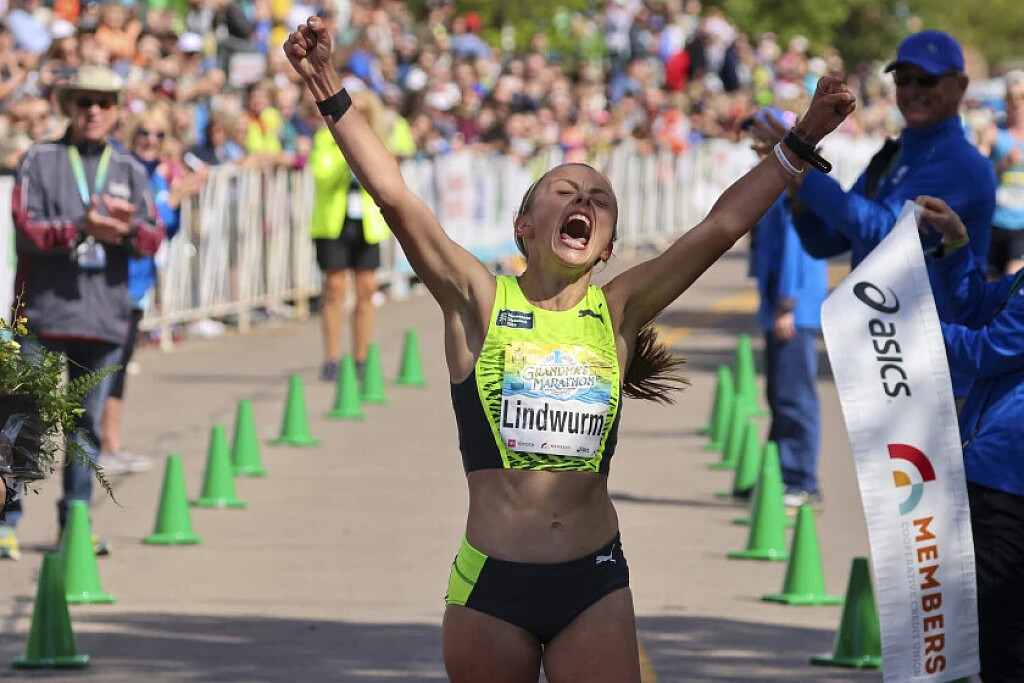
Five elite women to watch in 2023 Grandma's Marathon
Back-to-back defending Grandma’s Marathon champion Dakotah Lindwurm will attempt to become the third woman to ever win the race three times this week, and the first to three-peat since Mary Akor in 2009.
Lindwurm, the former hockey goaltender out of Eagan, Minnesota, is the favorite again in the elite women’s field for the 47th Grandma’s Marathon, which gets underway at 7:45 a.m. on Saturday in Two Harbors. The winner is estimated to arrive at the finish line at Canal Park in Duluth around 10:10 a.m.
Akor, of the U.S., went back-to-back-to-back in 2007, 2008 and 2009, while Lorraine Moller of New Zealand was the first woman to three-peat from 1979-1981.
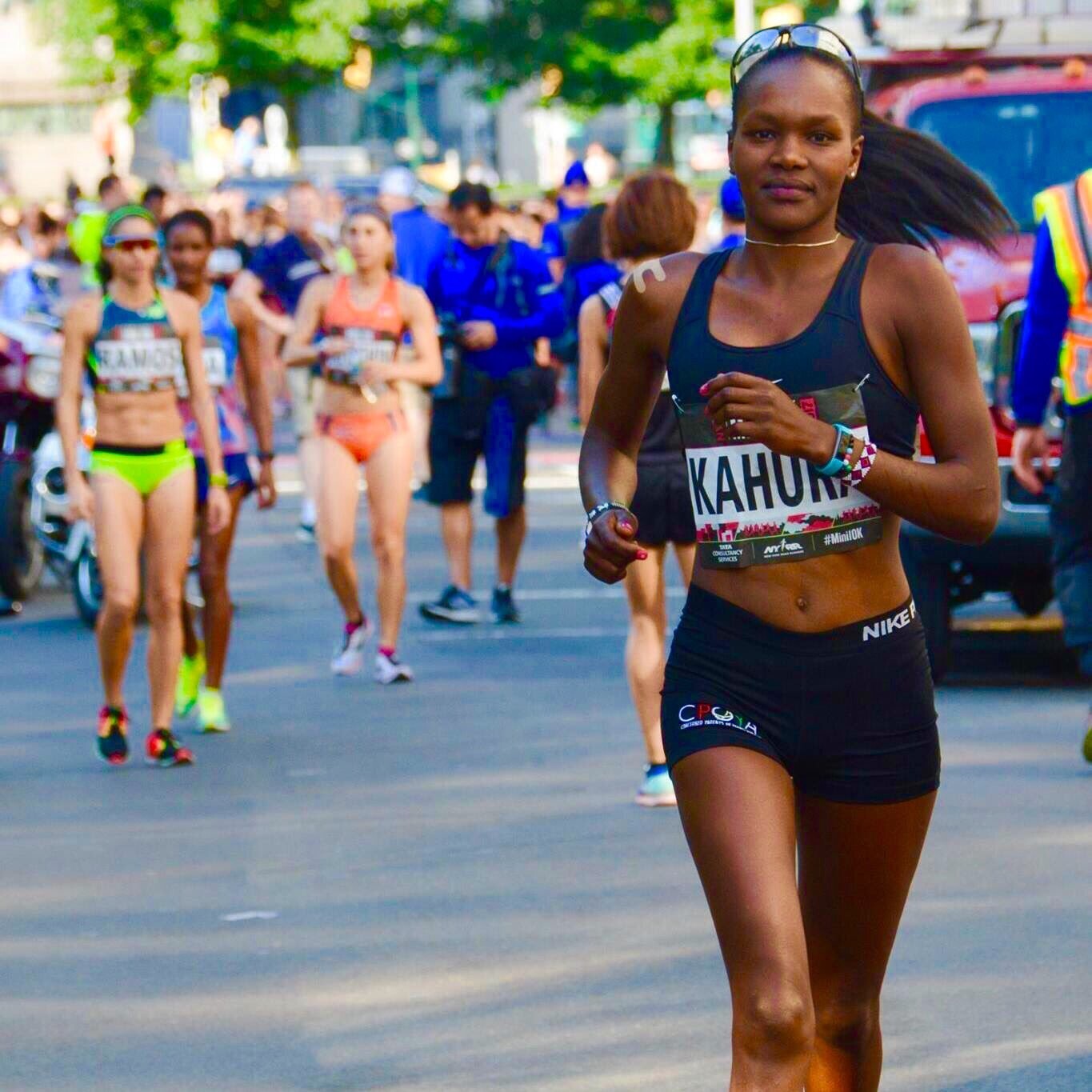
Here’s a look at the top contenders from the women’s elite field that are vying for the $10,000 first-place prize:
Five elite women to watch at 2023 Grandma’s Marathon
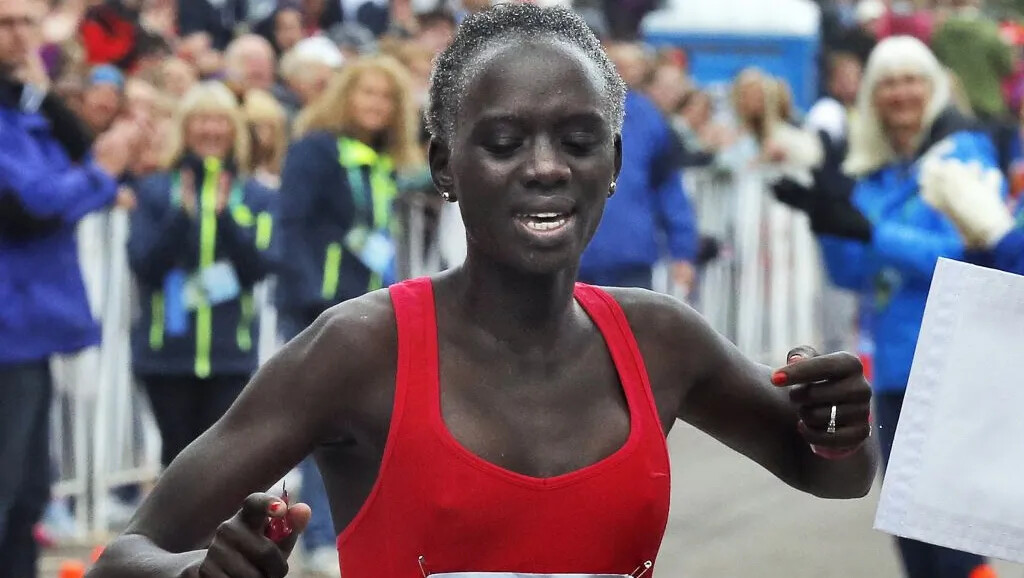
The Defending Champ
Dakotah Lindwurm, 28, United StatesPersonal record: 2:25:01 (2022 Grandma’s Marathon).
Two of Lindwurm’s fastest marathon times have come at Grandma’s, with her winning time last year being the second-fastest time in Grandma’s Marathon history — 33 seconds behind Kellyn Taylor’s record of 2:24:28 set in 2018. Lindwurm, who won in 2021 in 2:29:04, became the first Minnesotan to win Grandma’s Marathon that year since Janis Klecker in 1987. Lindwurm recently finished 26th at the Boston Marathon in 2:33:53.
The Past Champion
Pasca (Myers) Jerno, 36, United StatesPR: 2:33:43 (2014 Grandma’s Marathon)
Jerno is a 2014 Grandma’s Marathon champion, having posted a PR that still stands for her today. The Kenyan-born American beat out then-race record-holder Sarah Kiptoo (whose 2013 time still ranks fourth) for the title that year. Jerno has posted two top-10 finishes since winning in 2014, taking eighth in 2019 (2:36:13) and sixth in 2021 (2:36:48). In 2021, she also posted a seventh-place finish in the Chicago Marathon (2:32:51).
The Contender
Grace Kahura, 30, KenyaPR: 2:30:32 (2021 New York City Marathon)
Whether it’s been Grandma’s Marathon or Garry Bjorklund Half Marathon, Kahura has challenged for the podium, but only landed on it once. That was her Duluth debut in 2017 when she finished third in the half. Since then she’s finished fourth in her last three visits — Grandma’s in 2018 and 2021 and the Bjorklund a year ago. She ran Grandma’s in 2:33:34 back in 2021. That same year she set her PR in New York, finishing ninth.
The Up and Comer
Gabriella Rooker, 35, United StatesPR: 2:29:44 (2022 California International Marathon)
Like Lindwurm, Rooker wasn’t always a runner. Rooker is a three-time NCAA Division III individual and team gymnastics champion from Wisconsin-La Crosse. Grandma’s Marathon in 2021 was her running debut. She finished 26th with a time of 2:56:27, but came in 10th last year in 2:34:59. Her PR in California last year is the second best PR in the field behind Lindwurm, but still 4:43 back.
The Sleeper
Anne-Marie Blaney, 29, United StatesPR: 2:31:32 (2023 Boston Marathon)
Blaney bested Lindwurm back in April at the Boston Marathon, finishing two places higher in 24th and 2:21 faster. This will be Blaney’s first time in Duluth running Grandma’s Marathon, where she will need to shave another 6:31 to match Lindwurm’s winning time last year. Recent marathon results for Blaney include a fourth-place finish at the Ottawa International Marathon in 2022 (2:34:38) and 22nd place in the Chicago Marathon in 2021 (2:40:24).
by Matt Wellens
Login to leave a comment

Grandmas Marathon
Grandma's Marathon began in 1977 when a group of local runners planned a scenic road race from Two Harbors to Duluth, Minnesota. There were just 150 participants that year, but organizers knew they had discovered something special. The marathon received its name from the Duluth-based group of famous Grandma's restaurants, its first major sponsor. The level of sponsorship with the...
more...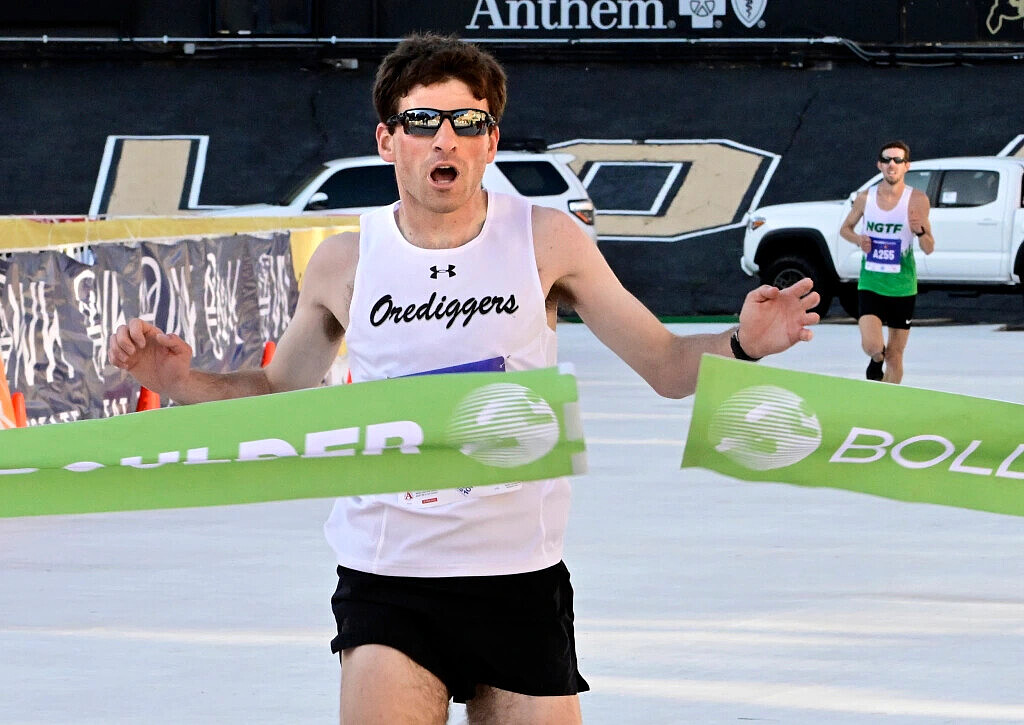
Ben Schneiderman wins men’s citizen race title at 43rd Bolder Boulder
Leading up to the 43rd running of the Bolder Boulder, Ben Schneiderman didn’t feel great about a lot of his workouts.
He felt great on race day, however.
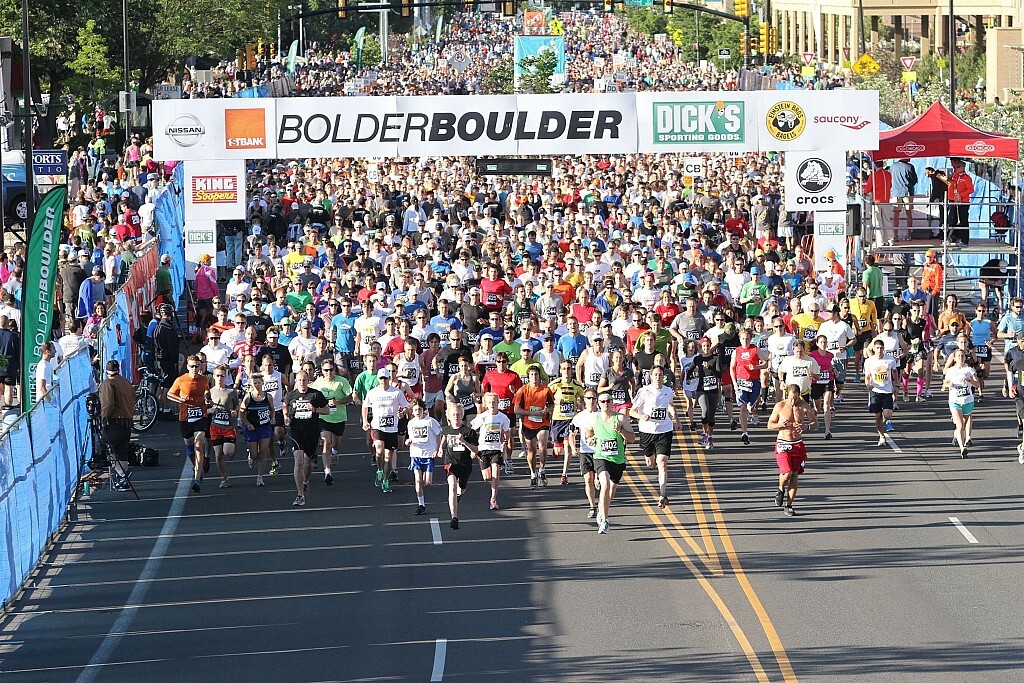
On Monday, Schneiderman won the men’s citizen’s race at the Bolder Boulder, using a strong final push to finish in 31 minutes, 1.88 seconds.
“It’s pretty exciting,” Schneiderman said. “I qualified for the Olympic trials in the marathon in December at the California International Marathon, so I kind of decided to take a break from the full marathon and run a couple of shorter races after that before the fall. So I kind of picked out Bolder Boulder because it’s local and it’s a great race. It feels good.”
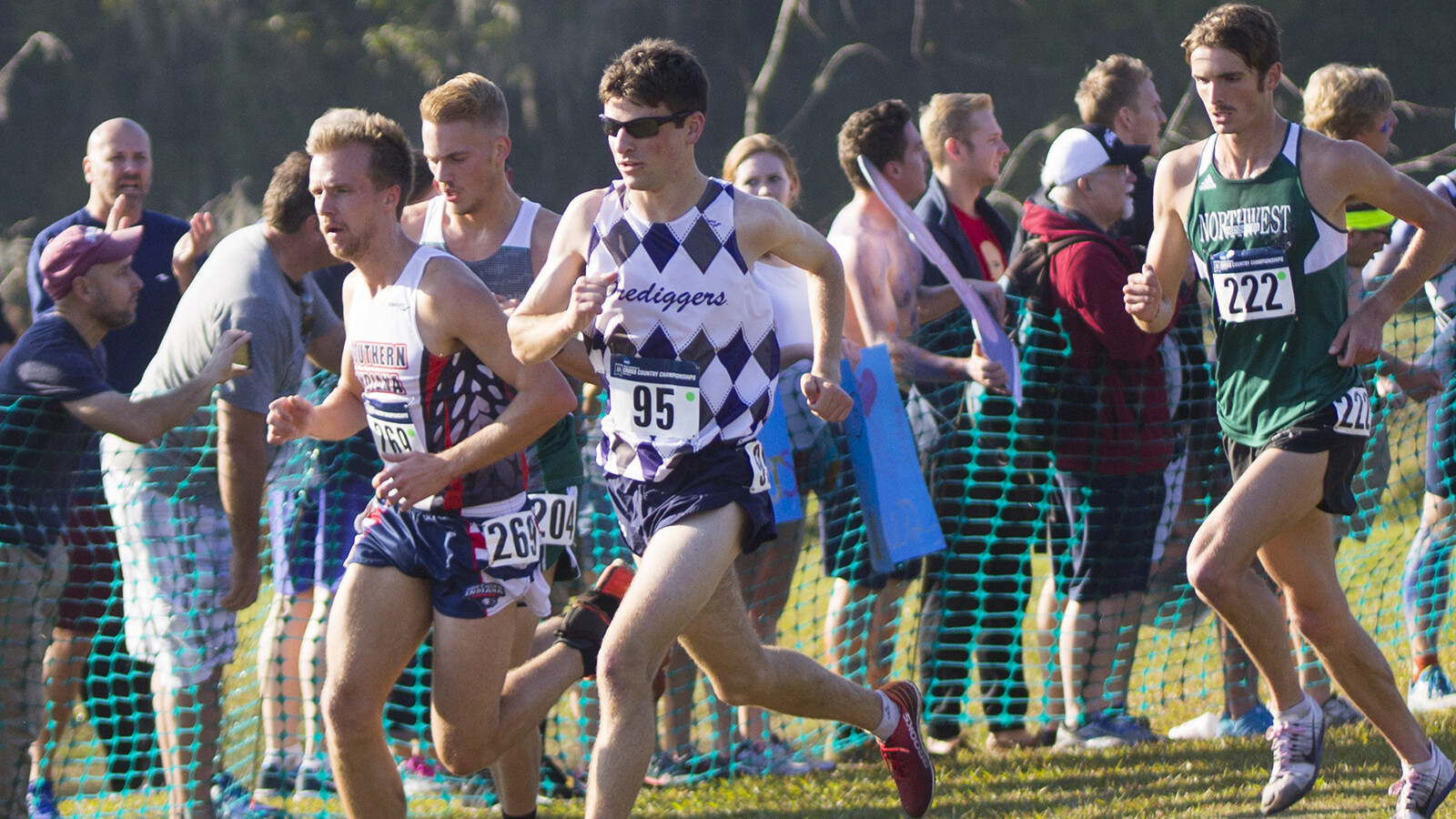
Josh Romine was second, in 31:06.98, while Max Sannes was third, in 31:17.50.
Schneiderman was in third for much of the race, but surged past Romine and Sannes on the final uphill stretch.
“I wanted to kind of go after those front two,” he said. “They were ahead of me for most of the race, but I thought I could maybe get them on the hill there at the end, which is how it played out.
“I’m strong on hills. The uphill final mile definitely helped me. Usually on those downhill stretches is where it seemed like they would pull away a little bit and then I would get back on the uphill a little bit.”
Schneiderman grew up in Colorado Springs and graduated from Liberty High School in 2014, lettering all four years in track and cross country. He then ran at Colorado School of Mines, where he earned several All-RMAC honors.
Schneiderman, who graduated from Mines with his PhD in December, had run in the Bolder Boulder a couple of times before, but this was his first time since 2015.
“It was fun,” he said. “I never finished that far up before. When I was in high school, I was (around 40th place) usually. It was a good race. Good day for it.”
Also running Monday was Schneiderman’s brother, Noah, who finished in 35:23, as well as former Mines teammate Jake Mitchem, who was fourth (31:20.16).
“He just told me he was going to do it like a couple weeks ago, so I was like it would be cool to work together, which we did for like the first half of the race or so,” Schneiderman said.
In the second half, his training paid off as he claimed his first win.
“This is encouraging,” said Schneiderman, who will compete in the Olympic trials in February. “I wasn’t really sure how fit I was coming into this because I just had a lot of sort of flat-feeling workouts during this training block, but it felt really nice to come out here and feel good and feel like I could put myself in it.”
by Brian Howell
Login to leave a comment

BOLDER BOULDER
In 1979 we dreamt of attracting a few hundred of our friends to race though the streets of Boulder, Colorado to celebrate Memorial Day with our families. Fast forward almost 40 years and the Bolder BOULDER has grown to become one of the largest and most highly acclaimed 10K’s in the world. Almost 1.2 million runners, joggers, walkers and spectators...
more...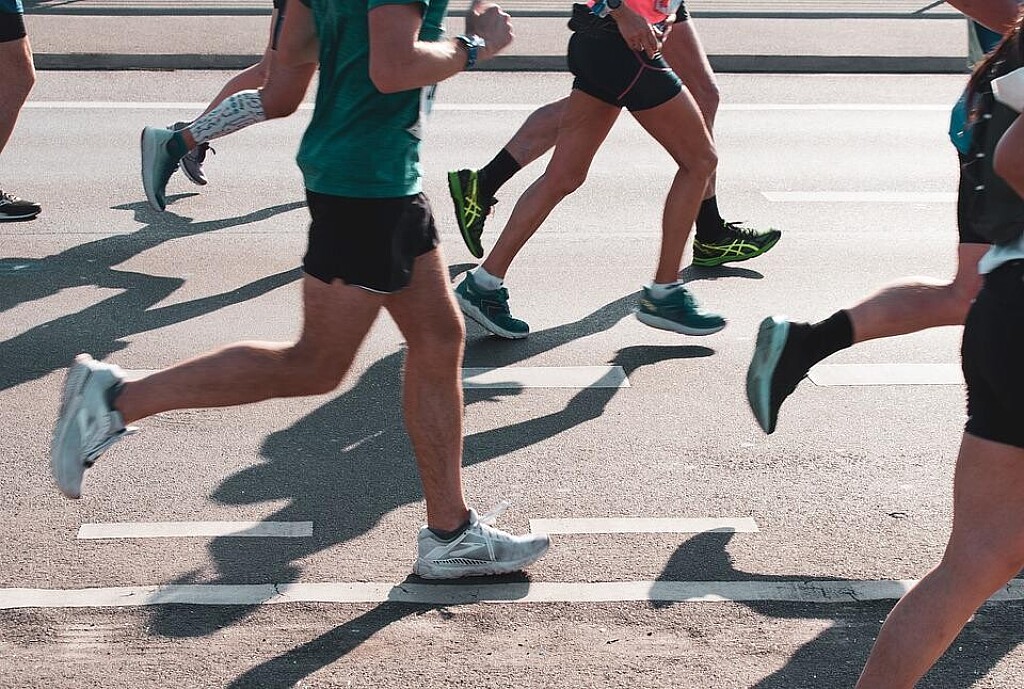
Now nonbinary runners can compete at Boston Marathon
For nonbinary runners, this year’s Boston Marathon isn’t just a running event. It’s a major milestone in the race for inclusion.
The 2023 race will include a nonbinary division for the first time in the marathon’s storied 127-year history. While other major marathons, including New York City and Chicago, also have nonbinary divisions, Boston remains one of the most prestigious events on the marathon calendar.
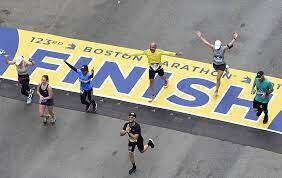
It’s considered a bucket-list marathon because the race requires most runners, including those in the new nonbinary division, to earn their way onto the course by meeting strict qualifying time standards.
“Hopefully this has ripples across the country and across the world — in the running world to begin and then hopefully beyond the running world,” said Cal Calamia, a 26-year-old inclusivity activist from San Francisco who will be one of 27 runners competing in the nonbinary division at Boston on April 17.
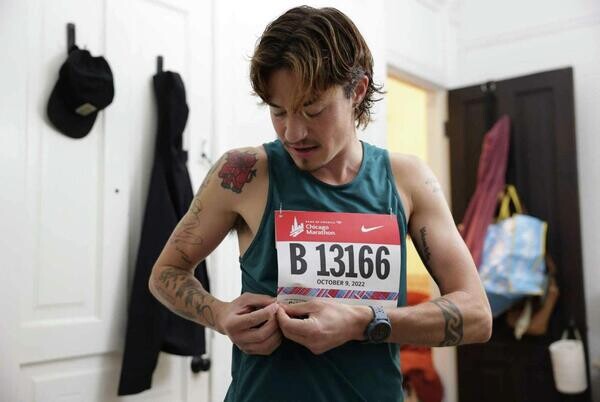
The London Marathon will also debut a nonbinary division at its race this year on April 23.
Setting nonbinary qualifying times
Calamia, who identifies as nonbinary transmasculine, had qualified to run the 2021 Boston Marathon in the women’s division but then tore their ACL playing soccer. The first thought that went through Calamia’s head was anguish at not being able to run Boston. But the delay offered a silver lining.
“I like to look back on it and just think I’m actually really grateful that things happened the way they did,” Calamia said. “Because I was gonna go in there as a nonbinary person in the female category, and it didn’t feel right.”
Now, Calamia says they don’t have to choose between running Boston and their gender identity. “I don’t have to deal with essentially choosing between two things that aren’t really true and trying to pretend that one of them fits when it doesn’t,” they said.
Calamia has run the Chicago Marathon, California International Marathon and San Francisco Marathon. Their personal best is 2:58:50 from last year’s Chicago Marathon. But to Calamia, Boston is special.
“When I started thinking about running marathons, I was thinking about Boston,” they said.
A big reason for the race’s mythical status is its strict qualifying standards. Qualifying times are now broken down by age groups, and qualifying for Boston — or “BQ” in running vernacular — has become a badge of honor for amateur runners around the world.
One of the challenges of adding a nonbinary division was figuring out the qualifying standards. Race organizers decided that the nonbinary time standards for this year would match those for the women’s division, said Jack Fleming, the chief executive and president of the Boston Athletic Association, which hosts the Boston Marathon.
This year, runners in the women’s and nonbinary divisions ages 18 to 34 needed to run a marathon at 3:30 or faster to qualify. The men in that age range were required to run three hours or faster.
“We landed on having the nonbinary qualifications match the female qualifications, because it was the most inclusive,” said Susie Cleary, the BAA director of athlete services.
The BAA said on its website that the organization does not yet have enough data to establish nonbinary qualifying times and that this first year will be used as an “opportunity to learn and grow together.”
Jake Fedorowski, a 27-year-old from Seattle who wrote a guide for nonbinary inclusion in running, called the decision a “good move.” “You’re doing this to start to collect data so that over time you can start to really tailor what those times need to be,” they said.
Awards but no prize money
Along with Calamia, Fedorowski will run in the nonbinary division. Both will be among the 30,000 runners competing at Boston this year. Of the 27 runners in the nonbinary division, 25 qualified through time standards, Cleary said. Two nonbinary runners applied through the marathon’s charity program, which waives time restrictions in exchange for raising at least $5,000 for a designated charity.
But unlike participants in other divisions, nonbinary runners will not receive prize money. The top three runners in the nonbinary division will be awarded trophies, similar to runners who place top three in their age groups. The winner in the nonbinary division at the NYC Marathon last year took home $5,000, while the Chicago Marathon did not give prize money for the nonbinary division.
The BAA didn’t explain why the nonbinary division won’t include prize money this year. “We will continue to listen to our participants, review our events and continue to strive for the best experience possible for all our athletes,” Fleming, the BAA chief executive, said in a statement.
The first-place finishers in the open division will receive $150,000, winners of the wheelchair division get $25,000, masters division winners get $5,000 and winners of the para divisions, for athletes with disabilities, get $1,500, according to the marathon website.
Login to leave a comment
Boston Marathon
Among the nation’s oldest athletic clubs, the B.A.A. was established in 1887, and, in 1896, more than half of the U.S. Olympic Team at the first modern games was composed of B.A.A. club members. The Olympic Games provided the inspiration for the first Boston Marathon, which culminated the B.A.A. Games on April 19, 1897. John J. McDermott emerged from a...
more...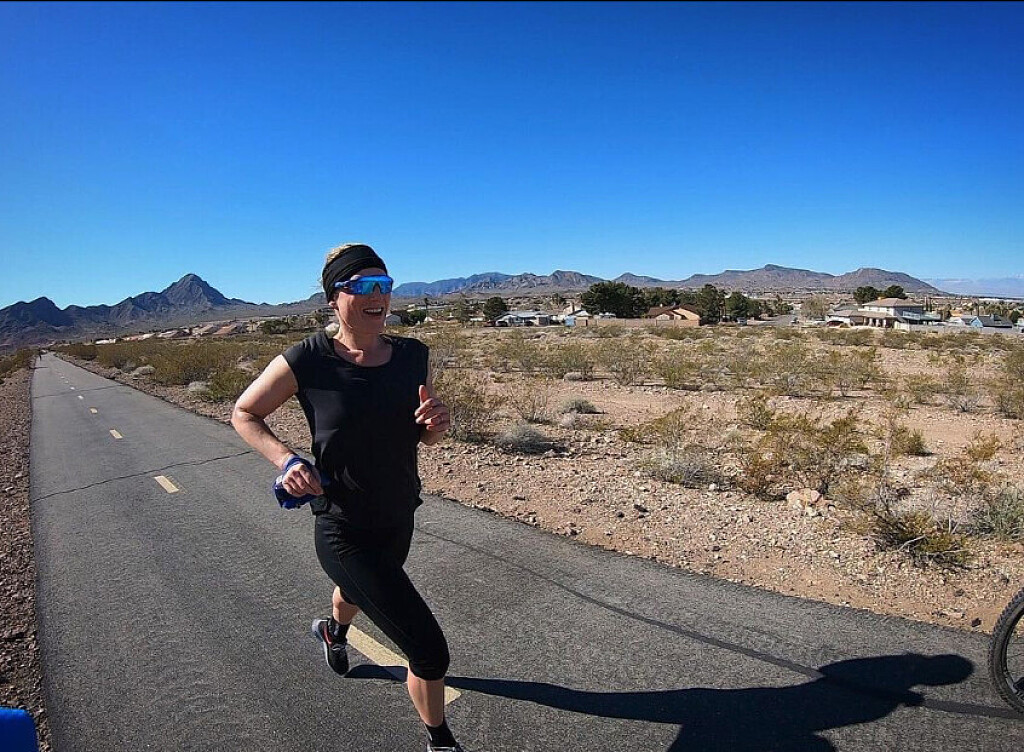
Pennsylvania woman rips fast 40 miles for her 40th birthday
Some runners celebrate reaching a new age category by heading out for their new number in minutes or covering it in kilometres; Holly Benner of Macungie, Penn. took it to the next level, ripping a speedy 40-mile trail run to celebrate her becoming a quadragenarian.
Benner covered 40 miles (64 kilometres) in just over five hours, averaging a pace of five minutes per kilometre.
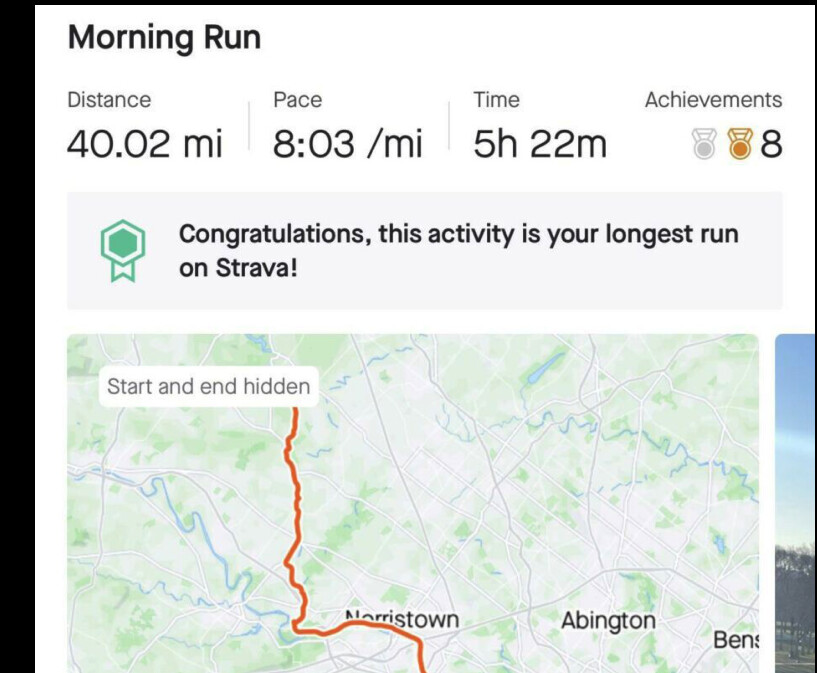
Going in, Benner intended to cover 40 miles but had no particular time goal. “I just went with the flow,” she says. “I felt great at 20 kilometres and never looked back. It’s so cool to see what our bodies are capable of.”
Benner knew she wanted to spend her birthday doing something she loved, which is how running 40 birthday miles came into her mind. “It was so much fun—it’s cool to challenge yourself,” says Benner. “I didn’t do this to prove anything.”
Benner comes from an athletic background. She was the team captain of her NCAA collegiate swim team and went on to race triathlon at an elite level before taking up trail running in 2010. She has run ultra-trail races from 50K to eight hours, reaching the podium in her last two of three races.
In December, she hit her long-time goal of a sub-three-hour marathon at the 2022 California International Marathon, finishing in 2:53:55. Benner considers herself primarily a road marathoner, but intends to get more into ultra-trail racing eventually. “My immediate goal is sub-1:20 for the half and then attempt a sub-2:45 marathon in the fall,” she says.
“There’s a few 50K’s in Canada that I have my eye on,” she laughs.
When we asked Benner what she was most excited about in turning 40, like a true masters runner, she said, “the new age category.”
by Running Magazine
Login to leave a comment
How 51-year-old Ken Rideout Runs Sub-2:30 Marathons
Relentless dedication and strength training are some of the keys to his success
Ken Rideout insists he’s just an average guy who likes to run marathons as fast as he possibly can.
He admits he’s never been a great athlete, but, at the same time, his commitment to training and his results are extraordinary. The 51-year-old resident of Nashville, Tennessee, has blossomed into one of the world’s top masters runners with a fierce competitiveness that has helped to consistently run some astonishingly fast times at World Marathon Majors races over the past several years.
He won the 50-and-over division at the New York City Marathon (2:33:31) in 2021 and the Boston Marathon (2:30:21) in 2022 and he has come in second in that age division in London (2:29:54), Chicago (2:29:53) and Berlin (2:35:48). He also won the 2021 Myrtle Beach Marathon outright in 2:30:58 just before turning 50.
On March 5, he’ll toe the starting line at the Tokyo Marathon in an attempt to once again compete for a podium finish in his age division. He ran 2:29:14 to win his division in Tokyo.
At 5-foot-10, with a muscular physique, Rideout breaks the mold of both typical elite runners and faster recreational runners. It’s his relentlessness to being the best he can be — including and especially his strength training — that sets him apart as an age-group runner and not any inherent talent as an endurance athlete.
“When I am in a race, my mindset gets to the point that I’m gonna run until I collapse,” Rideout says unapologetically about his steadfast approach. “I’m gonna give every ounce of energy until there’s nothing left to give. Win or die trying, that’s the message. If you have that mindset, you can’t lose.”
Growing up in a troubled family in a rough suburb of Boston and taking up boxing at an early age, Rideout has applied a fighter’s mentality and a notorious work ethic to every challenge he’s faced in life, sometimes to his own demise.
As a teen, he took a job as a prison guard where his dad and brother were incarcerated. He worked his way through college, eventually earning a sociology degree from Framingham State University. Although he became a self-made, overachiever as a financial services sales executive, he admitted he suffered from imposter’s syndrome working alongside many Ivy League colleagues and eventually struggled with burn-out, and was diagnosed with substance use disorder tied to his excessive opioid use.
After working through a recovery program, Rideout found a more balanced path in life, channeling his energy into endurance sports, following a mostly vegan diet and the joy he shares with his wife and their four young children.
Rideout first applied his intensity to triathlon and qualified for the Ironman World Championships three times and won the 40-44 age division at Ironman Wisconsin in 2015 with a 9:36:15 effort. But that sport took too much time away from his family, so he turned his focus to marathons in 2019.
So how does someone who started running in his late 30s and didn’t really focus on it until his 40s become fast enough to run 5:45 pace for a marathon after turning 50? Being unabated in his approach every single day.
“I’ve heard some people say I’m lucky to be able to do this at my age, and I’m like, ‘I’m not lucky,’ I work my ass off every day,” he says. “I eat a perfect diet during the week. I work out twice a day. I’m a freaking lunatic with this stuff. I live this full-time.”
Despite his exuberance and intensity, Rideout says he’s grateful that most of his running brings a Zen-like calm to him. He admits he doesn’t want his energy to lead him to a dark place again. When he can, he listens to podcasts or audiobooks while he’s running because he wants to be able to maximize his time to train and learn something at the same time.
“This is just my outlet,” he says. “Running is one of the things that makes me feel good about myself.”
When Rideout turned his focus to running five years ago, his training initially consisted of a 10-mile out-and-back run with 1,200 feet of vertical gain six days a in the Pacific Palisades neighborhood of Los Angeles. The other day of the week he’d typically run 20 miles as hard as possible. While that helped continue to build his aerobic base and led him to a 2:40 effort at the Los Angeles Marathon, it only got him so far.
In 2019, he hired coach Mario Frailoli, who added structure to his training by increasing the length and adding specificity to his long runs, implementing speedier workouts into his routine and also encouraging him to slow down on his easy days that help optimize recovery. He also makes sure that he stays between 70 and 80 miles per week. Since then, he’s run 2:36 or faster six times, including a 2:28:25 personal best at the age of 48 at the 2019 California International Marathon.
In addition to his run training, he works on strength in his home gym four days a week with a circuit that includes pull-ups, squats, bench press and numerous core exercises, as well as boxing drills — including punching a heavy bag. His functional strength and athleticism are among his biggest assets, something that many recreational runners lack, Fraioli says.
Plus, because he’s not burdened by having 35 years of running in his legs, he still has considerable elastic recoil in his legs. (And yes, his carbon-fiber plated Reebok Floatride Energy X shoes also help, Rideout says.)
“He’s doing it right, and honestly, he has been doing it all long,” Fraioli says. “He has more than 10 years of aerobic development under his belt and a lot of that came on a bike and in the pool. And I think the strength training really just helps to keep him in one piece. It’s giving him that structure and that guidance and honestly just keeping him from, you know, completely running himself into the ground.”
Although he still works in the financial world, Rideout has also helped train mixed martial arts fighters and boxers, and is the co-host of the combat sports podcast, “The Fight with Teddy Atlas.” Because of his success and notoriety, he has been all over the media in recent years, including appearances on high-level podcasts with Rich Roll, Joe Rogan, Samantha Nivens, Dr. Andrew Huberman and Fraioli’s “The Morning Shakeout” weekly running show a couple of times.
Rideout has been eager to share his story — and fans and followers seem to appreciate his vulnerability — but insists he’s not special or extraordinary, especially as an athlete.
“Everyone has what I have. I’m an average guy” says Rideout, who played hockey and football in college. “The only thing I do that other people don’t do is I try as hard as I can, I dedicate myself to being the best I can be. And I would say that if there’s one metric that matters above everything — and you don’t need to be a rocket scientist to know this — it’s that consistency is the most important thing. Show up every day.”
by Outside
Login to leave a comment

Here's Why It Feels Like Every Elite Runner Is Changing Sponsors Right Now
Tim Tollefson celebrated the new year shoveling a lot of snow, dreaming about a summer of possibility, and changing his shoes.
After six years with Hoka, Tollefson, 37, the well-known elite American ultrarunner from Mammoth Lakes, California, signed a new multi-year sponsorship deal with Craft. It might seem like a curious move this time of the year, but, in reality, most athlete sponsorship contracts in running are one-year partnerships that end on December 31. That typically gives brands the upper hand in these situations because they can have an easy out whenever an athlete doesn't have a great year of results, or they no longer fit with their marketing goals. It always comes down to the money, though sometimes it's in the athlete's best interests to start fresh, to leverage their recent results and social media platform to find a better deal with a brand that better fits their racing goals.

Because there are more brands partnering runners than ever before, and presumably more sponsorship money available, top-tier distance runners who are still at the top of their game-like Tim Tollefson, Allie McLaughlin, Josette Norris, Paige Stoner, David Ribich, Dani Moreno, Erin Clark, Natosha Rogers, Colin Bennie, Dillon Maggard, Camille Herron, and others-have been able to seek out new opportunities to continue their careers with the necessary support.
The terms of the newly signed deals haven't been disclosed, but there is a huge range in pay for professional distance runners-roughly $15,000 on the low end for a partially sponsored trail runner without significant international results, to $300,000 at the high end for a top-tier marathoner with Marathon Majors podium results. Certainly that means some live a life of luxury, while others are forced to work part-time jobs and pinch pennies to get by.
But there are also often signing bonuses, as well as premiums paid for earning appearance fees, major victories, global medals, podium finishes, breaking records, and other incentives, so running faster can be a fast track to a boost in income. However, most athletes are considered independent contractors, and many have to pay for their own healthcare, body work, and travel, depending on the details of their brand partnership.
"You start getting an idea of who's going to be available, for one reason or other, in the last few months of the year, and that's when brands and athletes start talking," said Mike McManus, Hoka's global sports marketing director. "As an athlete, you're as valuable as whatever money anyone wants to give you, but it's a process and all about negotiating. Sometimes you can match the money being offered; sometimes it just doesn't make sense for the partnership."
What Tollefson liked about Craft was similar to what he liked about Hoka six years ago-an upstart brand ready to make an impact in trail racing, its new line of trail shoes, and the trail community overall. Craft sees Tollefson as a runner with name recognition and several significant race wins in the past three years, not to mention a leader in the sport who started the Mammoth Trail Fest last year.
"This [new partnership with Craft] has reignited my deep passion for the sport and has reminded me of the things I want to accomplish," he said. "It's almost like a start-up situation led by passionate people who are excited to make an impact and want to support the people who are along for the journey. Curiosity drives me and I like a challenge. I know I am going to have some lifetime achievements ahead."
More Big Moves in Trail and Ultra
After an extraordinary year of racing on the trails, Allie McLaughlin changed from On to Hoka as her primary sponsor. The charismatic 32-year-old from Colorado Springs won the daunting Mount Marathon race in Alaska, placed among the top five in several Golden Trail Series races, and won both gold and bronze medals in the inaugural World Mountain and Trail Running World Championships in Thailand. She'll be representing the U.S. in this year's World Championships in Austria, in June, while also returning to the OCC 54K race, as part of the Ultra-Trail du Mont-Blanc (UTMB) festival in Chamonix, in August.
"It was really interesting to see how much trail means to them [Hoka], not only with their sponsorship of UTMB, but in general how they're helping push the sport forward," said McLaughlin, who had been with On since 2021. "There are a lot of reasons I like what Hoka is doing, but ultimately, the emphasis they're putting on the team and their athletes is really exciting."
Other trail and ultrarunners who have switched brands include Erin Clark, who finished 7th at last year's CCC, who left Hoka to sign with Nike, even though her partner, Adam Peterman, the 2022 Western States 100 champion and ultrarunning world champion, re-signed with Hoka.
Spanish trail runner Sara Alonso has changed from Salomon to ASICS, while Craft also signed Arlen Glick, a prolific 100-mile specialist from Ohio, and Mimmi Kotka, a Swedish runner with numerous podium finishes in Europe, to its team. Meanwhile, previously unsponsored American trail runners Tabor Hemming (Salomon) and Dan Curts (Brooks) are among those who have signed new deals.
Meanwhile, Dani Moreno, a world-class mountain runner from Mammoth Lakes, California, and Camille Herron, a record-setting ultrarunner from Warr Acres, Oklahoma, are both also leaving Hoka for yet-to-be-announced brands that offered better deals.
Bigger Transitions for Road and Track Runners
For track athletes and marathon runners, a change of shoe brands is often a more involved change, mostly because it often means changing training groups and coaches, too.
For example, Josette Norris, the fifth-place finisher in the 1,500m at the 2022 World Athletics Indoor Championships, not only switched from Reebok to On, but she left Reebok's Virginia-based Boston Track Club, and coach Chris Fox, and moved west to Boulder, Colorado, to join the On Athletics Club under Dathan Ritzenhein.
Similarly, David Ribich, one of the best American mile runners on the track last year, switched from the Seattle-based Brooks Beasts track club to the Nike-backed Union Athletics Club under Pete Julian.
Colin Bennie, the top American finisher in the Boston Marathon in 2021-previously with Reebok but unsponsored last year-signed with the Brooks Beasts but will be training on his own in San Francisco. Dillon Maggard, who was second at the U.S. cross country championships and ninth in 3,000m at the indoor world championships in 2022, is returning to Seattle to train with the Brooks Beasts, after being unsponsored last year. Natosha Rogers, who was a finalist in the 10,000m at last summer's World Athletics Championships in Eugene, Oregon, has changed from Brooks to Puma, but will continue to train on her own in Colorado. Middle-distance runner Cruz Culpepper, after short stints at the University of Washington and the University of Mississippi, gave up his remaining college eligibility to sign with Hoka and its NAZ Elite (NAZ) team.
Last summer, Paige Stoner left the Virginia-based Reebok group and Fox, her longtime coach, to train in Flagstaff, Arizona, partially because she didn't have other marathoners to train with on a regular basis in Charlottesville. She increased her volume last fall training with Sarah Pagano and Emily Durgin and won the U.S. championship at the California International Marathon in December with a course record of 2:26:02, her debut at the distance.
In January, Stoner parlayed that into a new deal with Hoka, as she also joined the Flagstaff-based Northern Arizona Elite and will be training with a group of strong marathoners-including Aliphine Tuliamuk, Alice Wright, Kellyn Taylor, and the recently unretired Stephanie Bruce-under the guidance of coaches Alan Culpepper, Ben Rosario, and Jenna Wreiden.
"I was especially drawn to NAZ because they have proven to be a powerhouse in the marathon, which will likely be my primary focus in the years to come," Stoner said. "I believe the team has all of the tools it takes to compete at the highest level in the sport, and I am eager to begin this new chapter."
Learning the Ropes
For track and road running, the path to success for elite-level, post-collegiate athletes typically includes earning a sponsorship right after the track season in June and joining a sponsored training group and coach. From there, it's all about improving times and placing high in U.S. championship races, with hopes of becoming fast enough to earn a spot in elite track meets in Europe or one of the World Marathon Majors.
But most road and track runners have agents to help smooth out those transitions, whereas most trail runners do not. Plus, trail running is considerably more unstructured, with a greater range of race distances and a lot more unknown variables. That means the challenge of figuring out what opportunities exist on the trails-what races to run, how to train on trails, what gear is needed, how to race considerably longer distances, and how to attract sponsors-often requires them to learn on the fly.
Those are all reasons professional trail runner Andy Wacker recently formed The Trail Team, a non-profit organization that will help guide young runners along the path becoming successful, potentially sponsored trail runners, while also playing a role in boosting the level of competitive trail running in the U.S.
The Trail Team put out a call for candidates to become one of six inaugural team members in 2023. Once selected this spring, those athletes will go through a training camp, receive a stipend, get continued mentorship from Wacker, McLaughlin, Adam Peterman, and Grayson Murphy, and prepare for a variety of U.S. races.
"I've reached out to a lot of young athletes and the main thing I found is they need a mentor," said Wacker, a Salomon-sponsored athlete. "They don't necessarily need a coach-a lot of them have a college coach that they might continue working with-but they need someone who is going to help them with all of their questions and translate everything to trail running.
"It's still really hard to be an individually sponsored athlete, and I think it's hard for a young athlete to get recognition and build their brand, so we're hoping to help with that," he added. "There are more participants and more excitement than ever in trail running, but there are also growing pains. So there are a lot of ways we think we can help so they don't have to figure it out on their own."
Like Wacker, Tollefson is one of those athletes who did have to figure it out on his own. He was a good runner in high school and college, but he never qualified for the state meet and never earned All-American honors. But, with a relentless work ethic, he's become one of the most successful American trail runners of the past decade, having placed second at the CCC 100K in Chamonix, in 2015, and twice placed third in the Ultra-Trail du Mont-Blanc 171K in 2016 and 2017.
Although his personal race plans aren't finalized yet, those deals are allowing him to step away from his career as a physical therapist and become fully immersed in running for the first time in his career.
"All of us athletes are multidimensional; we're more than just a pretty face rocking a bib," Tollefson said. "Everyone has a unique story. I think there are more brands interested in telling those stories, and Craft is definitely one of them. Some people have written me off, but I'm confident my best races are ahead of me. Craft believes in me, and I feel like I need that belief to get the best out of myself."
by Trail Runner Magazine
Login to leave a comment
Run to redemption: Austin marathoner Mitch Ammons has won the race of life, too
When Austin’s Mitch Ammons qualified for the 2024 Olympic Marathon Trials at the California International Marathon on Dec. 4 in Sacramento people asked him what college he had run for. His answer was, “I didn’t.”
“Qualifying for the Olympic trials marathon without a collegiate running background? Almost unheard of,” said Ammons' coach, Jeff Cunningham.
Ammons, 33, played football and ran track as a high school freshman at Dallas Bishop Lynch, even popping a speedy 4-minute, 50-second mile. But then he quit sports. He pretty much quit everything.
“That’s when drugs kicked in,” said Ammons. “I was hanging out with the wrong crowd.”
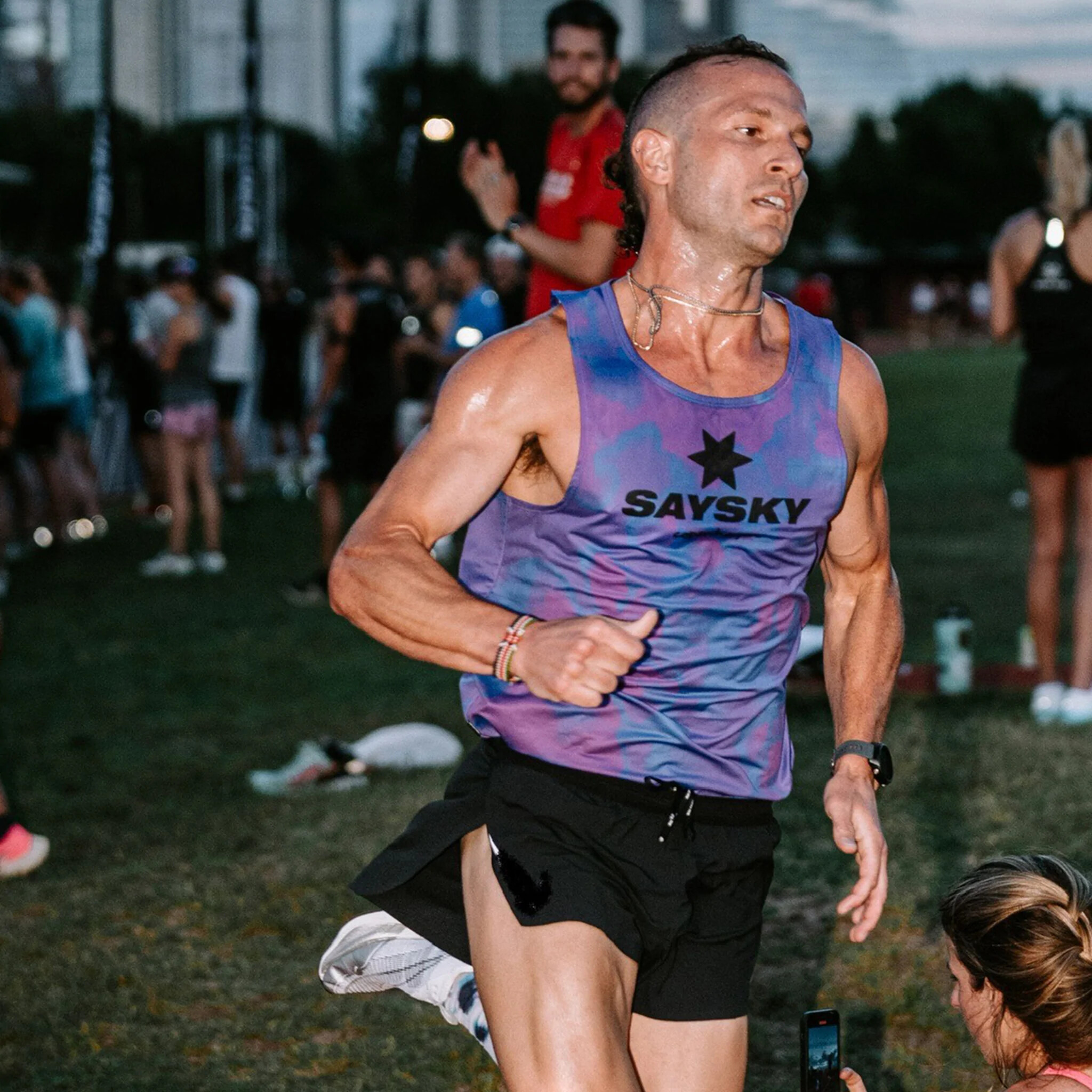
Ironically, Ammons went on to attend the University of Arkansas in the fall of 2008, an NCAA Division I distance running powerhouse. But he never thought about making the track or cross-country team, not even as a walk-on. Instead he partied, he said, escalating his marijuana habit to opioids.
“It was a slow progression,” Ammons said. “I went to the University of Arkansas to party. I started using Oxycontin my freshman year there and I loved it. It quickly became an addiction.
“I clearly remember the first time I had withdrawals,” he said. “I thought I had the flu, and of course took more Oxycontin and that fixed it. At that point I understood I was addicted. Oxycontin turned to heroin along with meth, because heroin was cheaper. I switched from pills and smoking it and started shooting up as a sophomore.”
Like many addicts, Ammons was in out and out of rehab — in his case, six times. He’d always relapse, sometimes the same day he got out. “I’d even try to smuggle drugs in to rehab,” Ammons said. “It’s amazing how much it takes over the survival part of the brain.”
But something finally clicked that sixth time at a rehab center in Kerrville, and when Ammons moved to Austin in 2015, that marked the beginning of his sobriety. Still, he wasn’t exactly in good shape. “I was a two-pack a day smoker and ate junk food and didn’t exercise at all,” he said.
But in January 2018, he joined Gilbert’s Gazelles, a local running program coached by nationally renowned Gilbert Tuhabonye. The long-lost spark of a budding high school miler — all but extinguished — caught fire. His path to redemption was clear.
“That was the beginning of my running journey,” said Ammons, who is an Austin real estate agent. “Gilbert said, ‘I don’t think you realize how good you are.’ He believed in me.”
Ammons got serious about his running a year later, and sought out Cunningham, who coaches a group of top-tier runners in Austin. It didn’t take long before he began hitting notable times, starting with a time of 1 hour, 7 minutes, 38 seconds at the 2019 Garry Bjorklund Half Marathon in Duluth, Minn.
“You can measure an athlete’s metrics in a lab and make predictions regarding their potential. But that does not tell the whole story,” Cunningham said. “Mitch has the ability to work through discomfort and to endure pain — the essence of distance running. He’s as tough as they come.”
In Oct. 2021 Ammons ran the Bank of America Chicago Marathon in 2:23:56 — placing 24th in a world major race. He followed that with a win at the 2021 BMW Dallas Half Marathon in 1:06:42 and lowered his half-marathon time still further a few months later, posting a 1:05:28 at the Aramco Houston Half Marathon in January of this year.
“That showed me I could probably break 2:20 (in the marathon),” said Ammons, who by then had his eye on an Olympic marathon qualifying time.
“It turned out Mitch had a fever during the Aramco Half,” Cunningham said. “He had appendicitis, and a few days later was in the hospital having an emergency appendectomy. That epitomizes everything he is as a competitor. His ability to endure pain is off the charts. I was concerned about his health but impressed nonetheless.”
Under the watchful eye of Cunningham, Ammons built up to running 110 miles a week, training with top area runners David Fuentes and Ronan O’Shea. The 2024 Olympic marathon trials qualifying time is 2:18:00 or better, a one-minute drop from the 2020 standard of 2:19:00. But Ammons was ready.
“As a runner you don’t really know your potential until a race clicks, and then the confidence starts to compound,” said Fuentes, a two-time Olympic marathon trials runner and the 2022 Statesman Capitol 10,000 champ. “Mitch has been training with some of the best runners in Austin, and he’s flourished as a result. It’s been a remarkable progression.”
“My coach gave me a very different buildup from previous ones, focusing on tempo runs,” Ammons said. “I nailed every workout. On one 21-mile training run, I averaged 5:08 per mile for the second half of it. Headed into CIM, I was confident I could run a good race.”
At the California International Marathon, Ammons made it through the halfway mark in 1:08.30 and then he said he picked it up. "It hurt, but I tired to get every bit out of my legs that I could," he said.
And that’s exactly what he did. Seven years after going sober, Ammons crossed the finish line at CIM in 2:16:48, qualifying for the Olympic trials in Orlando that are scheduled for Feb. 3, 2024. To date, only 106 men have met the standard, including another area runner Will Nation, former Cedar Park High School runner Parker Stinson and former Vista Ridge High runner Zachary Ornelas.
“It took a couple of days for it to really sink in," Ammons said. "It was pretty emotional to think of where I was seven years ago and where I am now. I’m living a life beyond my wildest dreams. I never, ever thought I’d be where I am today.
"I attribute running to all the positive changes in my life: my friends, my job, everything," he continued. “Running has taught me so much. You could say I wasted a large amount of my young adult life. But I have no regrets. I probably wouldn’t be who I am today without those struggles.”
by Brom Hoban
Login to leave a comment
California International Marathon
The California International Marathon (CIM) is a marathon organized by runners, for runners! CIM was founded in 1983 by the Sacramento Running Association (SRA), a 501(c)(3) non-profit organization. The SRA Board of Directors is comprised of runners with a combined total of 150+ years of service to the CIM. The same route SRA management created for the 1983 inaugural CIM...
more...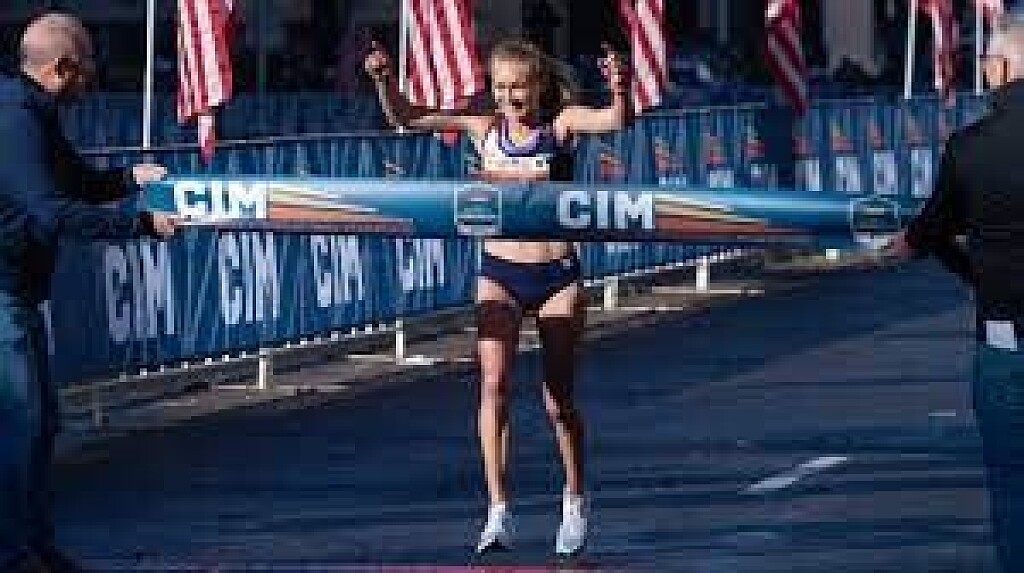
2022 marks record-breaking year for the California International Marathon
During the 2022 California International Marathon Paige Stoner clinched the women’s course record, finishing the full 26.2 miles in 2 hours, 26 minutes and 2 seconds.
Race officials announced over the intercom as she finished, “national champion on the women’s side Paige Stoner sets a new course record.”
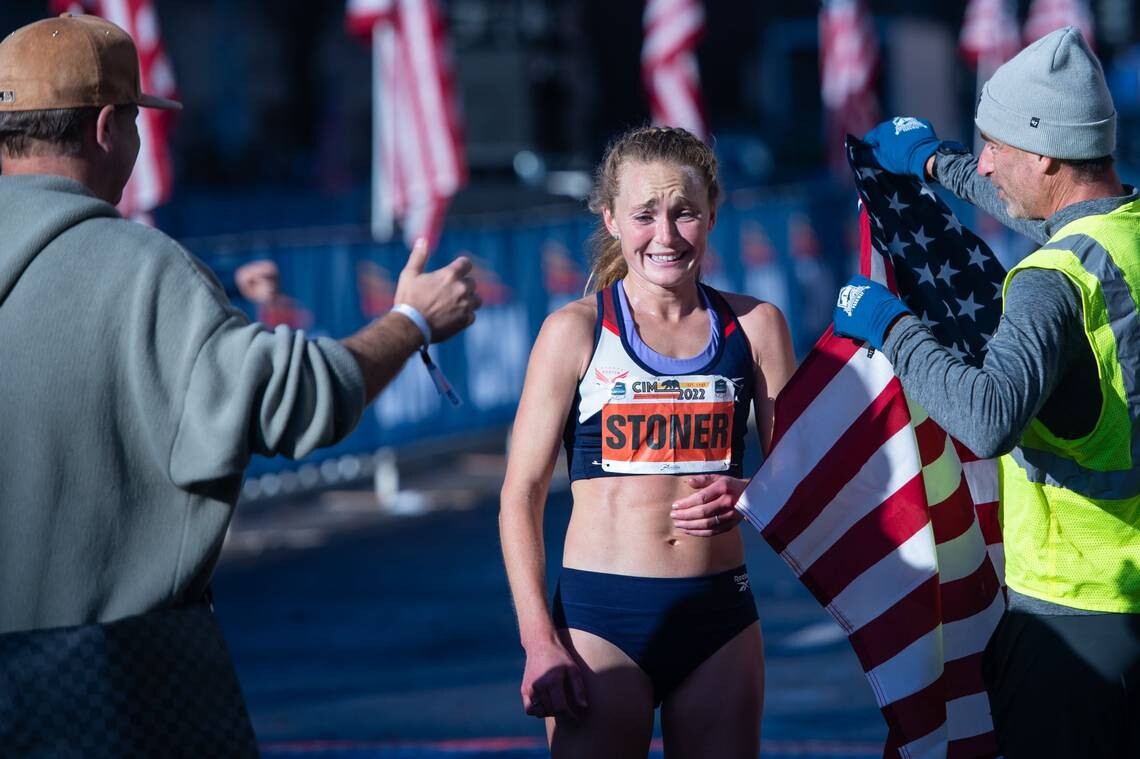
Stoner shattered the women’s course record by 51 seconds.
On the men’s side, Futsum Zienasellassie finished first, in his debut marathon with 2 hours, 11 minutes, and 1 second, the third-fastest mark ever run at CIM.
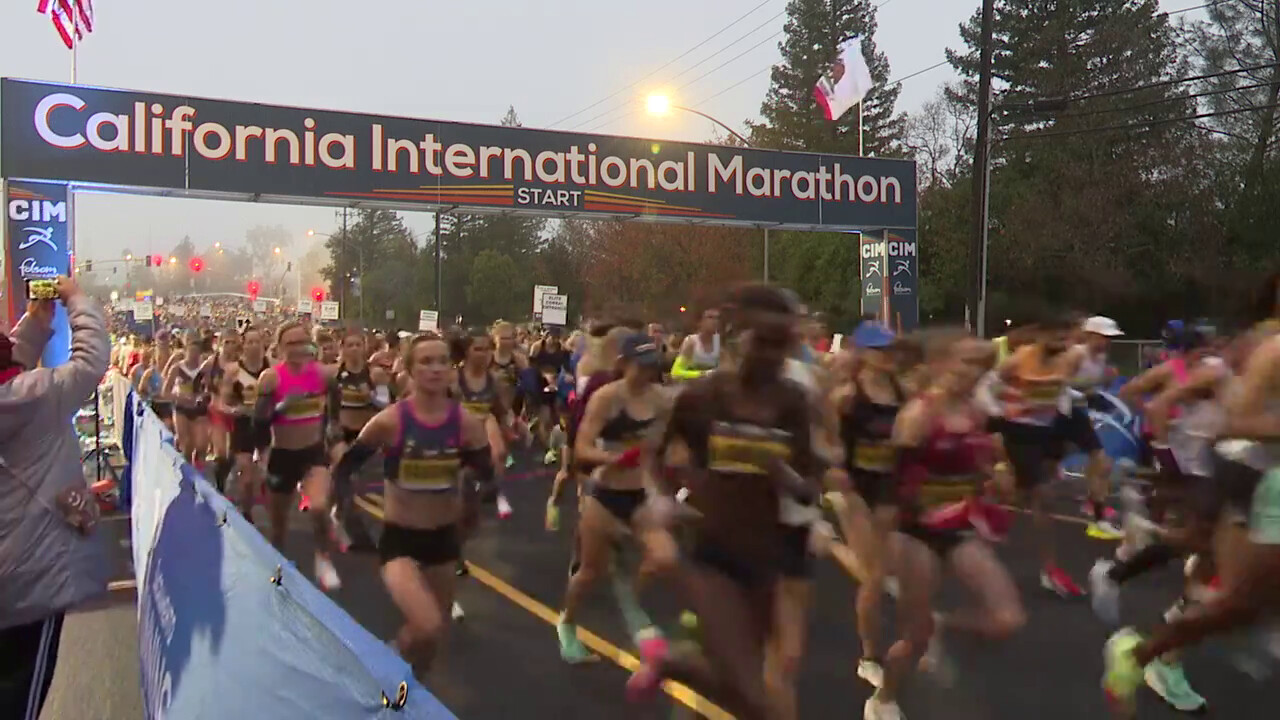
Both Stoner and Zeinasellassie achieved USA Titles.
2022 marked the 39th CIM, with over 10,000 total runners, including more than 9,000 marathoners and close to 1,000 relay participants.
Attracting top runners from around the world, CIM, known as the "fastest race in the West" is the #1 Boston Qualifier, with many who’ve set their sights on Olympic goals.
Appealing to athletes of many levels, thousands of families stood on the sidelines to cheer on their loved ones.
Finisher, Heather Graves, while holding her 8-month-old baby boy beamed as she told KCRA 3 she not only set a personal record but also qualified for the Boston Marathon.
“Having a baby was probably the worst pain and this was nothing compared to that,” Graves said while laughing.
by Erin Heft
Login to leave a comment
California International Marathon
The California International Marathon (CIM) is a marathon organized by runners, for runners! CIM was founded in 1983 by the Sacramento Running Association (SRA), a 501(c)(3) non-profit organization. The SRA Board of Directors is comprised of runners with a combined total of 150+ years of service to the CIM. The same route SRA management created for the 1983 inaugural CIM...
more...
Pro runner's short film navigates huge success and crushing failure
“I have failed many, many times,” pro runner Noah Droddy shared in a social media post about his documentary We Are All Droddy, released Tuesday. “But there have been blindingly special moments between those failures where I got it right,” the runner adds. “The kind of highs that make the dark days a little harder to remember.”
Droddy’s story, encapsulated in a short film made with the athlete’s sponsor Salomon, is one we can all connect with. Whether you’re a professional athlete or training for your first 5K, you’ve undoubtedly experienced the highs and lows life can bring. Droddy’s appeal lies in his relatability, which shines through the film–he’s a regular guy, just trying his best. His self-deprecating sense of humour and attitude of acceptance make him seem like someone you could share a few miles or a cup of coffee with.
“When I graduated to the marathon, the decision was where can I go to run fast and legitimize myself as a marathoner. I went to Chicago, failed. I went to Rotterdam, failed,” Droddy says in the film. “When you’re on the track running shorter distances, next week you can try again. In the marathon you really have to live in that place of success or failure for a long time.”
Droddy, who ran to second place and a PB at The Marathon Project in 2020 (an elite-only marathon held in Chandler, Ariz., created when many world majors were cancelled due to COVID-19) also found himself without a professional contract almost immediately afterward. “A super high point, followed by a super low point,” he says.
Droddy explains how he has bounced from success to failure, success to failure, and that his running career is about learning how to respond to both. “Nobody has this linear path to success,” he says.
Even if you weren’t familiar with him before watching the film, by the final moments of We Are All Droddy, you’ll know who you’re cheering for at this weekend’s California International Marathon.
by Running Magazine
Login to leave a comment
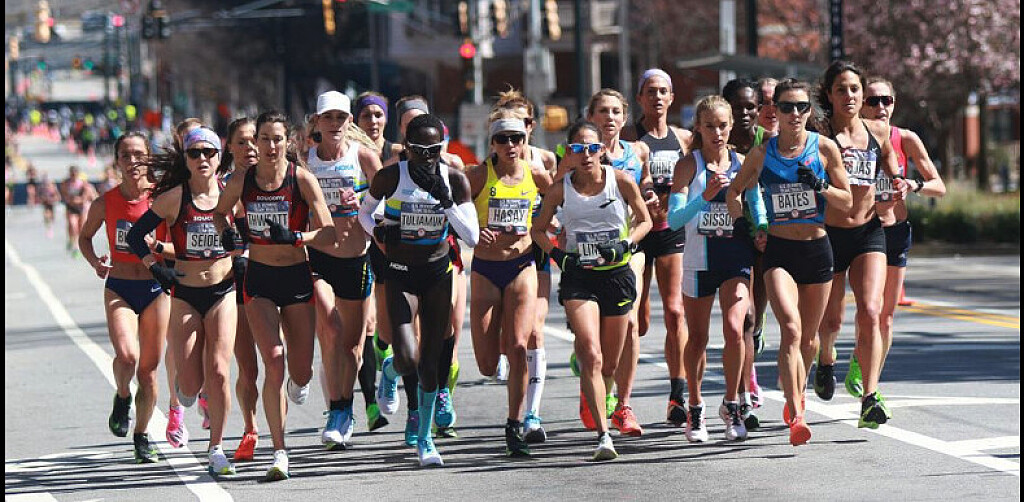
After Much Anticipation, Orlando Announced as Host of the Olympic Marathon Trials
The race will take place on February 3, 2024.
USA Track & Field (USATF) has named a host city for the 2024 Olympic Marathon Trials, and it’s Orlando, Florida.
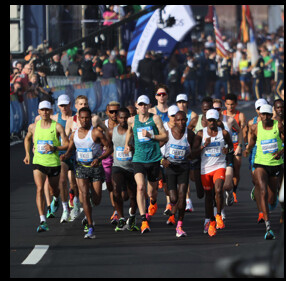
The Trials will take place on February 3, 2024, giving the local organizing committee on the ground only 15 months to prepare for the high-profile event.
The top three finishers in the men’s and women’s races will represent Team USA at the 2024 Olympic Games in Paris (provided they have met the ever-evolving standards set by World Athletics, the sport’s worldwide governing body, to run at the Games).
USATF was slow in naming a host city for the event. By contrast, when the Atlanta Track Club hosted the 2020 Olympic Trials, those organizers had 22 months to put together a race for about 700 men and women.
The fields for the race in Orlando will likely be smaller, however, because the qualifying standards to get into the Trials are tougher than they were to get into the 2020 race. In December 2021, USATF announced that women had to run a marathon faster than 2:37 in order to qualify. (For the 2020 Trials, that time was 2:45.) Or, they need to run a half marathon faster than 1:12.
Following Sunday’s NYC Marathon, only 60 women have run a marathon qualifying time. The window for half marathon qualifying opens on January 1, 2023. Men wanting to qualify for the 2024 Trials have to run 2:18 or faster (last time, the standard was 2:19) or 1:03 in the half marathon. As of mid-October, which was the last time USATF updated its list, 68 men had qualified for the Trials.
The California International Marathon, to be run this year on December 4, typically yields several Trials qualifiers.
Orlando is the first Florida city to be awarded the event.
The 2020 Olympic Marathon Trials were one of the last elite races held before the COVID pandemic shut down the world for more than a year and postponed the Olympics. At the 2021 Olympic marathon, held in Sapporo, Japan, American Molly Seidel won a bronze medal. The 2024 Olympic marathons in Paris will be held in August of that year.
Login to leave a comment
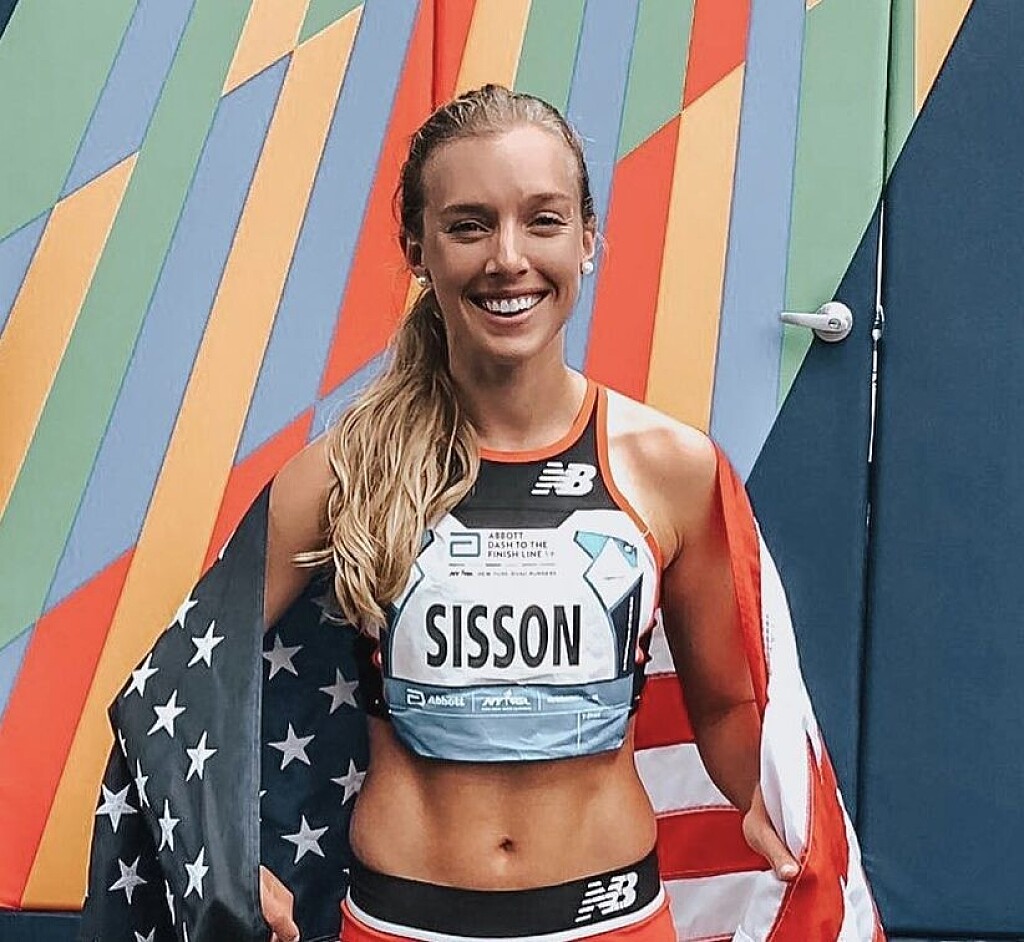
Defending Champions Set to Return to the 2022 Bank of America Chicago Marathon
The Bank of America Chicago Marathon announced today the return of its defending champions as the event continues to build on its comeback to global racing. Ruth Chepngetich (KEN), Seifu Tura (ETH), Tatyana McFadden (USA) and Daniel Romanchuk (USA) will be at the helm of this year’s elite field with a strong contingency of the world’s best athletes vying to dethrone them. The stage will be set for a fierce competition up front, highlighting Chicago’s long tradition of record chases, fast times, and gripping finishes.
“We’re thrilled to welcome our defending champions back to Grant Park this fall,” said Carey Pinkowski, Executive Race Director of the Bank of America Chicago Marathon. “Chicago has a storied history of head-to-head competitions, world records and some of the best elite racing in marathon running. This year’s competition, which also includes American half marathon record holder Emily Sisson and American half marathon champion Conner Mantz making his debut, is going to bring much energy and enthusiasm to fans and spectators. We are ready for October 9.”
Defending Champions Return
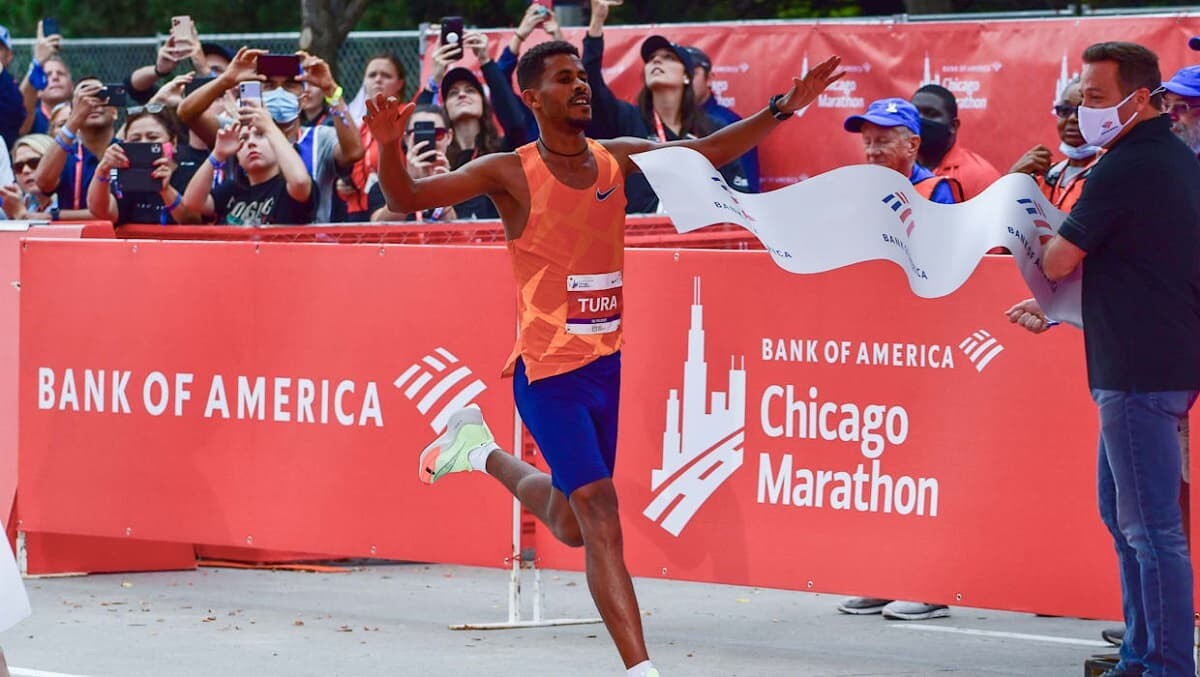
Chepngetich, the 2019 World Marathon champion and the fourth fastest woman in the history of marathon running, started on a world record pace at the 2021 Bank of America Chicago Marathon, dropping her pacer eight miles in while racing against the clock. She decelerated over the second half of the course but had enough to take the crown in 2:22:31. Chepngetich, who is self-coached, kicked off her 2022 season with a win and a course record at the Nagoya Marathon (2:17:18). She recently dropped out the of the World Championships Women’s Marathon due to health issues but is ready to take to the streets of Chicago and defend her title.
Unlike the fast pace set by Chepngetich, Tura ran a controlled strategic race last fall in the elite men’s race, waiting until 38K to pull ahead and win the biggest race of his career so far. Tura, who holds a 2:04:29 personal best, clocked 2:06:12 to win last year. His 2022 season includes a personal best in the half marathon, 58:36, and a second place finish in the Paris Marathon. Following last year’s victory, Tura noted that he was not prepared for warm weather, but that he was “determined to fight to the very end.” Tura’s determination may make him just the fifth man in Chicago’s history to win twice in a row.
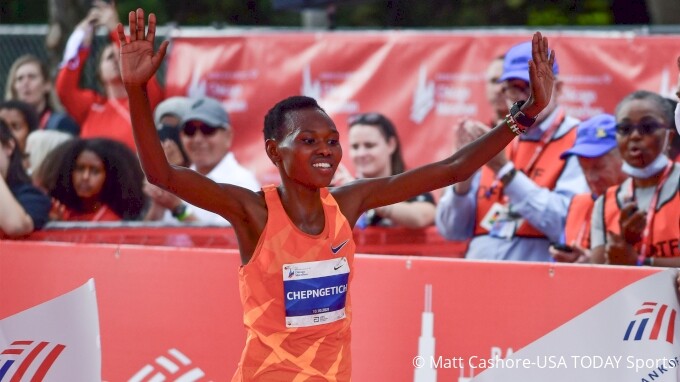
In the wheelchair competition, McFadden, whose nine titles make her the most decorated athlete in Bank of America Chicago Marathon history, returns to contend for her 10th win. McFadden boasts 20 Paralympic medals, including eight gold medals, 24 World Marathon Major wins, including four consecutive Grand Slams (first place in Boston, Chicago, New York City and London in the same year) and has broken six world records in track and field.
Romanchuk, a two-time Paralympian, completed the Bank of America Chicago Marathon hat trick with a victory last fall and returns to pursue a fourth title. Romanchuk rose to the top of road racing in 2018 and his campaign continues today. At the 2020 Paralympic Games, he took home a gold on the track and a bronze in the marathon.
Sisson and Mantz Headline Strong American Field
The Bank of America Chicago Marathon has a long history of welcoming America’s best runners across its finish line, stretching back to Joan Benoit Samuelson setting the American record en route to her victory in 1985. Khalid Khannouchi dominated at the turn of the century with four victories, including both world and American records, Deena Kastor clutched the win in 2005, and Galen Rupp stole the show in 2017. Last October saw five American men and seven American women finish in the top 10, a feat that highlights the strength of U.S. distance running. This year’s field includes several top American runners, including Emily Sisson and Conner Mantz.
Sisson, a six-time national champion and the American half marathon record holder (1:07:11), could put the American Marathon record (2:19:12) in jeopardy as she races to break the tape in Chicago. Sisson stands out as one of the most dominant American women on the track and the roads, making her Olympic debut in the 10,000m at the Tokyo Olympics and her marathon debut in 2019 in London. Sisson ran the fastest ever marathon debut by an American on a record eligible course (2:23:08), and she set an Olympic trials record in the 10,000m on the track (31:09) in 2021, breaking a record that stood for 17 years. This October marks Sisson’s first appearance in the Bank of America Chicago Marathon.
Mantz, known for his front-running style and capacity to handle pain (referred to as the “Mantz pain chamber”), made a splash on the collegiate level, winning the NCAA Division I Cross Country championships in 2020 and 2021, and earning his first U.S. title in the half marathon in 2021. Mantz’s time in the half marathon, 1:00:55, ranks him ninth on the all-time American list of half marathon performances. Mantz, an exciting newcomer to welcome to the marathon distance, could conquer the American marathon debut record, 2:07:56, set in 2019. Mantz is coached by 1994 Chicago Marathon runner-up, Ed Eyestone.
The Elite Fields
In addition to Sisson, Celestine Chepchirchir (KEN), Vivian Kiplagat (KEN) and Haven Hailu (ETH) are among some of this year’s elite women hoping to prevent a repeat victory from Chepngetich. Chepchirchir, winner of the 2019 Sanlam Cape Town Marathon, enters this year’s race fresh off a personal best, 2:20:10, set at the Seoul International Marathon. The Bank of America Chicago Marathon marks her Abbott World Marathon Major (AbbottWMM) debut. Kiplagat, winner of the 2022 Milan Marathon in a personal best, 2:20:18, ran valiantly in Chicago last year, attempting to stay on Chepngetich’s heels before fading to fifth place. Like Chepchirchir, Hailu will be making her first appearance in an AbbottWMM. Hailu made her marathon debut in 2020, set a personal best, 2:20:19, in 2021 to take third in Amsterdam, and claimed her first marathon victory in Rotterdam this past April.
Laura Thweatt (USA), Sarah Sellers (USA) and Sara Vaughn (USA) lead a strong delegation of American women. Thweatt holds a marathon personal best of 2:25:38, and finished eighth in both Chicago (2019) and New York (2021). Sellers initially turned heads in 2018 when she finished second in the Boston Marathon while running from the open field. Sellers smashed her PR to finish second at this spring’s Grandma’s Marathon in 2:25:43. Vaughn, a versatile runner who started her career on the track as a 1500m runner, made her marathon debut in 2021, winning the California International Marathon in 2:26:53. Vaughn’s time stands out as the fifth fastest debut ever by an American woman.
The women’s field also includes Diane Nukuri (USA), Ursula Sanchez (MEX), Carrie Verdon (USA) and local favorite Kristen Heckert (USA).
In the men’s competition, Tura will be chased to the line by compatriots Herpasa Negasa (ETH), Dawit Wolde (ETH), Asrar Abderehman (ETH), Ugandan Olympian Stephen Kissa and Kenyan Benson Kipruto.
Negasa had a career breakthrough in 2019 when he subtracted nearly six minutes from his marathon PR in Dubai to run 2:03:40. He comes to Chicago after a strong second place performance in Seoul, clocking 2:04:49. Wolde initially made a name for himself as a junior competitor on the track. His transition to the roads started in 2014, and he boasts a marathon personal best of 2:04:27, set in 2021 to finish third in Rotterdam. Abderehman made headlines in February when he broke the course record at the Zurich Seville Marathon, taking three minutes off his PR to run 2:04:43. Chicago marks his first appearance in an AbbottWMM.
Kissa, a 2020 Olympian in the 10,000m, stands out as an exciting athlete to watch. He brings years of track speed to the road, recently debuting in the marathon in 2:04:48. In addition to the Olympic Games, he also represented Uganda at the World Championships Half Marathon. The Chicago Marathon marks his first time racing in the United States and his first time racing in an AbbottWMM. Kipruto’s 2:05:13 personal best may not be the fastest in the field, but he has performed well at the marathon distance, winning the Boston and Prague Marathons in 2021 and finishing third in Boston this April. He also finished seventh in London in 2020 and won the Toronto Marathon in 2018.
The men’s field also includes sixth place finisher in 2021 and local elite Colin Mickow, Hiroto Fujimagari (JPN), John Korir (KEN), Frank Lara (USA) and making his debut, Patrick Tiernan (AUS).
by Running USA
Login to leave a comment

Bank of America Chicago
Running the Bank of America Chicago Marathon is the pinnacle of achievement for elite athletes and everyday runners alike. On race day, runners from all 50 states and more than 100 countries will set out to accomplish a personal dream by reaching the finish line in Grant Park. The Bank of America Chicago Marathon is known for its flat and...
more...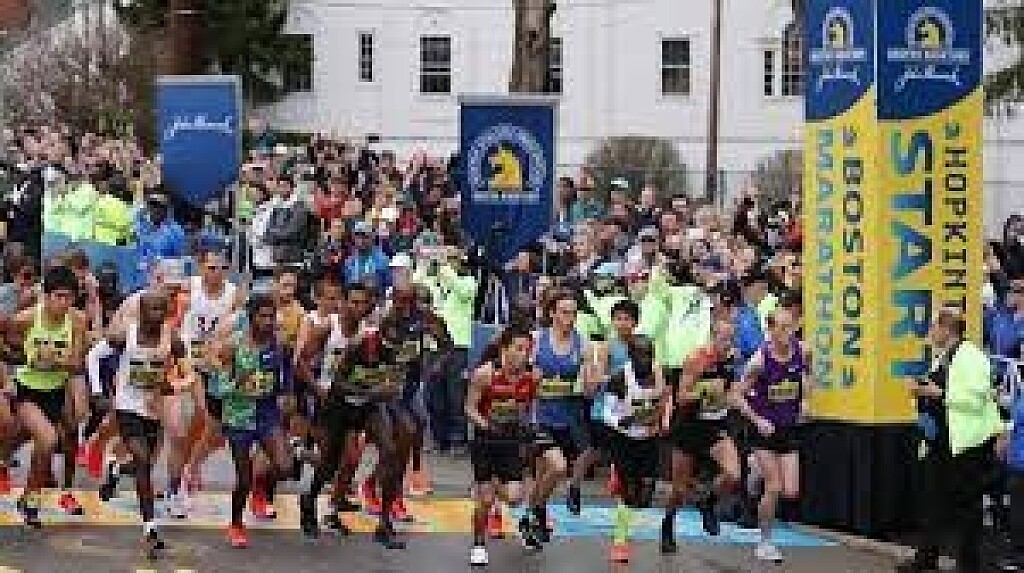
How to Qualify for the Boston Marathon
So you want to qualify for the Boston Marathon? You’re not alone. As an age-group or recreational runner, it’s one of the noblest (and most common) goals to set your sights on.
The history and prestige of the Boston Marathon are unparalleled in the world of running, which is why getting the opportunity to run the famed 26.2-mile route from the start in Hopkinton to the finish line on Boylston Street in downtown Boston is a top-shelf bucket list goal for many runners.
And rightly so. With the challenge it requires to qualify, the experience of running Boston is all that and more.
6 Tips on Qualifying for Boston
For most age-group runners, qualifying for Boston isn’t a simple task. Every athlete’s journey to trying to earn a Boston-qualifying time (BQ) is unique, and your approach needs to be specifically catered to who you are as a runner. And, like with all things running, there are no shortcuts for earning a BQ—but there are some key points to consider on your quest.
1. State Your Intention.
If you’re truly interested in qualifying for Boston, it’s a good idea to make it one of your primary goals (both in running and in life) so you can focus as much energy as possible toward it and take a smart and healthy approach to achieving it. That doesn’t mean you have to post it on Instagram, but it’s something you should share with your significant other, family members, and running buddies to generate long-term excitement and support as well as keeping you accountable on your journey.
Every age group has a different qualifying time that needs to be attained in a two-year window prior to registration opening in the fall prior to the next race the following April. For women, the age groups and times are:
18–34: 3:30.00 (3 hours, 30 minutes, and zero seconds)
35–39: 3:35.00
40–44: 3:40.00
45–49: 3:50.00
50–54: 3:55.00
55–59: 4:05.00
60–64: 4:20.00
65–69: 4:35.00
70–74: 4:50.00
75–79: 5:05.00
80 and over: 5:20.00
Men
18-34: 3 hrs 00 min 00 sec
35-39: 3 hrs 5 min 00 sec
40-44: 3 hrs 10 min 00 sec
45-49: 3 hrs 20 min 00 sec
50-54: 3 hrs 25 min 00 sec
55-59: 3 hrs 35 min 00 sec
60-64: 3 hrs 50 min 00 sec
65-69: 4 hrs 5 min 00 sec
70-74: 4 hrs 20 min 00 sec
75-79: 4 hrs 35 min 00 sec
80 & over: 4 hrs 50 min 00 sec
There’s also the added complication that just hitting the time doesn’t guarantee entry to the race. Runners typically need to also meet faster cut-off times if registration exceeds the race capacity (see tip #6).
“It’s a great goal and a very relevant goal for a lot of a marathoners,” says New York City–based running coach Elizabeth Corkum. “When it’s your first Boston, it’s a big deal and definitely something you should be excited about.”
2. Set a Realistic Goal
For many runners, it takes a full year or two—or maybe even five or more—to develop the aerobic strength and overall fitness to be in position to reach the qualifying time in your age group.
The first step: Understand that the path to running fast enough to earn a BQ standard isn’t a quick process of instant gratification.
“A lot of runners will come to me and say I want to qualify for Boston this year because a lot of runners are always eager to do it now, but the reality is that it might take a few years,” says Chicago-area coach Jenny Spangler, who won the 1996 U.S. Olympic Trials Marathon. “It’s a great goal for many people, but it’s a commitment and you have to be realistic about where you are and where you need to get. For some runners, it will take a while. Sometimes I’ll have runners aim for running a fast half marathon first and then next year start to focus on a fast marathon.”
If you’re serious about qualifying for Boston, it’s best to connect with a coach or local training group that has a history of helping runners achieve a BQ. You’ll want to find a coach who will take into consideration both your history as a runner and as an athlete as well as your current fitness level, previous races, monthly mileage volume, injury history, and, perhaps most important, your ability to commit to a complicated training program amid your work-life balance.
“You don’t like to discourage anyone, but a Boston qualifying time is hard,” Spangler says. “So for people who can’t commit the time for training or maybe just don’t enjoy running or don’t want to put in the mileage, it might not be possible. It’s a commitment and it’s just not for everybody.”
3. Pick a Qualifying Race
One of the keys to qualifying for Boston is running a fast, USATF-certified course with a high probability of running your goal time. Typically, the races with the most qualifiers are the New York City Marathon and the Chicago Marathon, and, of course, Boston itself, but that’s largely based on the volume of runners in those races. However, those marathons can be hard to get into, so unless you already secured an entry, you should plan on another race with a high propensity of Boston-qualifying times.
One of the best options is the California International Marathon (CIM), where 25 to 35 percent of the field typically earns a BQ. The only challenge about qualifying at CIM is that it’s held the first Sunday in December, so you’ll have to wait and enter for the next Boston Marathon 16 months later.
Another great option among mid-sized races is the mid-June Grandma’s Marathon in Duluth, Minnesota, which typically has both a large number of qualifiers and a relatively high percentage of BQers. In 2019, 1,108 of its finishers (18.2 percent) earned BQ qualifiers. From 2010-2021, an average of 15.8 percent of Grandma’s finishers earned BQ times.
“Usually when people come to me, they already know which race they want to run,” says Nell Rojas, a Boulder, Colorado–based professional runner for Adidas who also coaches age-group runners. “But if not, I usually recommend California International Marathon or Grandma’s Marathon, which are fast marathons that are easy to get into with a lot of people that will be running their same speed. And that’s key because that means there will be people to run with at the pace you want to run the whole way.”
Since 2017, some of most prevalent qualifying races have been “last chance” races designed to get runners qualified right before the opening of Boston registration in mid-September. The Last Chance BQ.2 race in Grand Rapids, Michigan, has had an average of about 60 percent BQ’ers every year since 2015, while its sister event, Last Chance BQ.2 race in Geneva, Illinois, has typically had at least 50 percent of its field qualify. But both of those races are small, usually 350 runners, and registration fills up fast every spring. (The Geneva race added a spring race in 2018 and it has also typically had a 50 percent qualifying rate.)
Other small, early September races with high BQ percentages include the Erie Marathon at Presque Isle (Erie, Pennsylvania), Via Marathon (Allentown, Pennsylvania), and Tunnel Light Marathon (North Bend, Washington). A few key marathons with downhill profiles and high qualifying percentages are the St. George Marathon (St. George, Utah), Revel Big Bear Marathon (Big Bear, California), and Mountains 2 Beach Marathon (Ojai, California). Cities with mid-sized marathons that are known to have good courses for qualifying: Philadelphia; Indianapolis; Houston; Eugene, Oregon; and Santa Rosa, California.
4. Get Some Super Shoes
If you’re interested in maximizing your race-day performance, then you should consider investing in a pair of shoes enhanced with carbon-fiber plates. Yes, they’re expensive, ranging in price from $180 to $275, but the technology works—and can give you 3 to 6 percent advantage over shoes with typical foam midsoles. Nike, Adidas, Skechers, ASICS, On Brooks, HOKA, New Balance, and Saucony all make super shoes, and some of their models are among the best. But each fits and feels slightly different, so visit a local running store, if possible, and try on several pairs before buying.
“Super shoes definitely allow you to run faster,” says ASICS-sponsored pro Emma Bates, who was second at the 2021 Chicago Marathon in 2:24:20 wearing a pair of ASICS Metaspeed Sky. “I love them because they’re so comfortable, but the biggest thing is that I feel that I can recover so much quicker after a workout or a race. After Chicago, I felt like I could do a workout the next weekend. That’s insane. I love the shoes and would never imagine running in anything else ever again.”
5. Train Methodically and Consistently
Going through significant training adaptations is a key part of the process for most runners, especially if they’re new to the sport or don’t have a lot of experience with the various types of workouts in most marathon build-ups. Progress occurs based on how well you handle training volume, how much you recover, and how much time and focus you put toward non-running elements like strength work, nutrition, and rest.
“All of those things factor into how you’re going to direct someone to get to that goal, and it’s different for everyone, for sure,” Corkum says. “Some people have all the time in the world to train and that’s fantastic because we can probably stress their bodies a little bit more with training, knowing that they can rebound. But someone who is only able to sleep four hours a night and has a newborn at home, they already have that additional stress so they have to be careful about adding training stimulus so they don’t get injured or burn out.”
Most coaches recommend going through a 16-week training plan to build up to a marathon, though it could be shorter if you’re already pretty fit or longer if you need more time to get used to the rigors of high-mileage running. A good plan will include periodized segments that include two to three weeks of gradual building of aerobic fitness followed by a slightly relaxed week to allow for recovery and the training adaptations to take place.
Depending on your background and fitness, you’re likely going to be running between 50 and 80 miles per week during the peak weeks of your training plan, Rojas says. While pro runners run between 100 and 120 miles per week, she warns that excessive running volume for age-group runners can lead to fatigue, burnout, and injuries.
A training plan should include a once-a-week long run, one or two faster workouts like a tempo run or an interval session, and several recovery runs. As the training plan progresses, there will be a greater emphasis on up-tempo workouts and your long runs will approach 18 to 22 miles and start getting faster.
But even if you’re following a plan that’s the same or very similar to your running partner’s, your quest to reach a Boston qualifying time will be an individual one.
“Runners come from all different levels of fitness,” Rojas says. “It all depends on what a runner can handle, what their strengths are, what their weaknesses are.”
Spangler says most age-group runners who come to her for help in achieving a Boston qualifier typically need more mileage than intensity in their training, but sometimes it’s both. In addition to ramping up mileage gradually, she’ll sprinkle in spicier workouts like fartlek intervals or hill repeat sessions—as much as she thinks an athlete can handle.
She’ll also prescribe periodic longer tempo runs of 8 to 10 miles at marathon race pace and often have them race a half marathon midway through their training program as a way to gauge a runner’s fitness and boost confidence.
“You can just kind of see how they’re starting to handle workload hitting the paces of the workouts they’re doing and feeling good doing it,” Spangler says. “That’s when you start to get a sense that they’re going to be ready, and that’s when I start getting confident they’re ready to handle the marathon at that pace.”
6. Don’t Get Discouraged
Even if you’re well trained and in the best shape of your life, you need everything to go right on a race day to run your best. Achieving a Boston Marathon–qualifying time can take several years and, if you miss it once or twice, it can start to feel like a never-ending process. Unfortunately, even when you achieve the time, you still might not be able to run the race. Because of field size limitations and increased interest, runners usually need to also meet faster cut-off times than the time listed in tip #1 to get in.
While every runner who applied for the 2022 race was granted entry—likely because of a downturn in interest because of the still-lingering COVID-19 pandemic—in the previous 10 years runners needed to be 1 minute, 2 seconds to 7 minutes, 47 seconds faster than their qualifying time to get in. Depending on the year and the volume of qualified runners, that’s meant that the BAA has had to reject between 1,947 and 9,215 qualified runners.
“It’s such a tough thing and to recreational runners, I think it’s a bit jarring because they’re not used to that,” Corkum says. “One of the beautiful things about Boston is that it’s one of those few marathons where you can’t just send in your credit card number and know that you have it on your calendar. You have to earn it. But the other side of that is the emotional investment and highs and lows that you’re accepting along with it.”
Developing an indefatigable sense of optimism and a love for running will be helpful in your quest to qualify for the Boston Marathon and eventually running it. There will be plenty of hiccups along the way (missed workouts, injuries, life events) so it’s best to make it part of the fabric of your life and not merely a box to check off, Corkum says.
“Running is a patient person’s sport and I think that’s why you really have to love it,” Corkum says. “I think some people might not necessarily love running but they love the idea of achieving ‘that thing,’ and you have to realize there are so many hours and steps that go into making it a lifelong thing, and for a lot of us it becomes that.”
by Brian Metzler
Login to leave a comment
Boston Marathon
Among the nation’s oldest athletic clubs, the B.A.A. was established in 1887, and, in 1896, more than half of the U.S. Olympic Team at the first modern games was composed of B.A.A. club members. The Olympic Games provided the inspiration for the first Boston Marathon, which culminated the B.A.A. Games on April 19, 1897. John J. McDermott emerged from a...
more...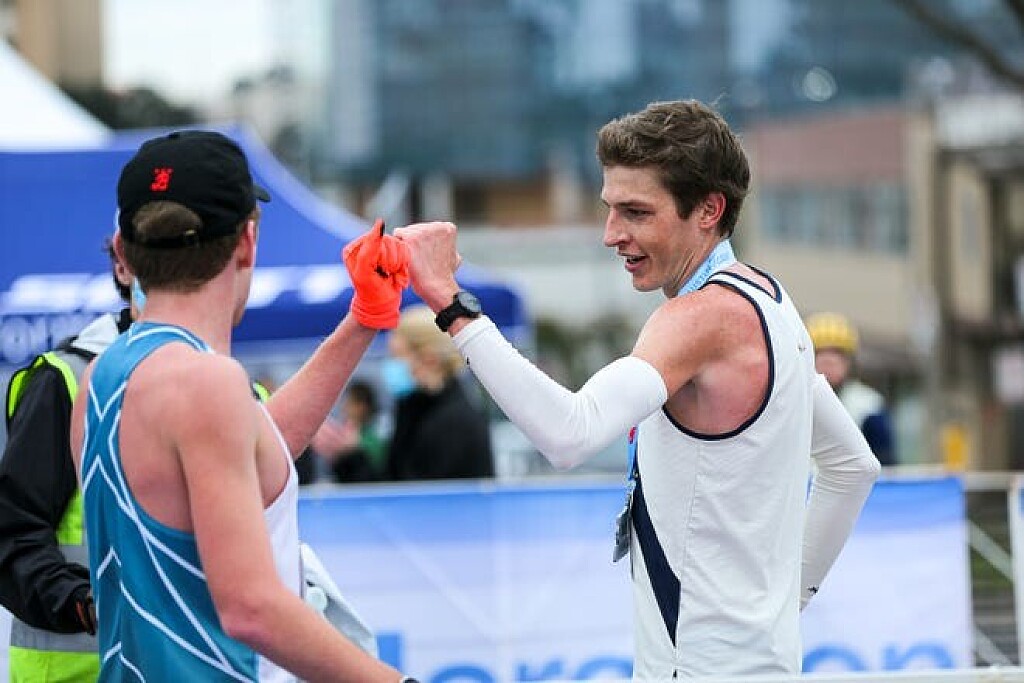
Will Nation and Sarah Jackson claim 3M Half Marathon titles
“The 3M Half Marathon has been good to me,” Will Nation said after crossing the finish line downtown Sunday in first place.
Nation and fellow Austin runner Sarah Jackson notched solid victories on the point-to-point downhill course, besting a field of some 6,000 runners.
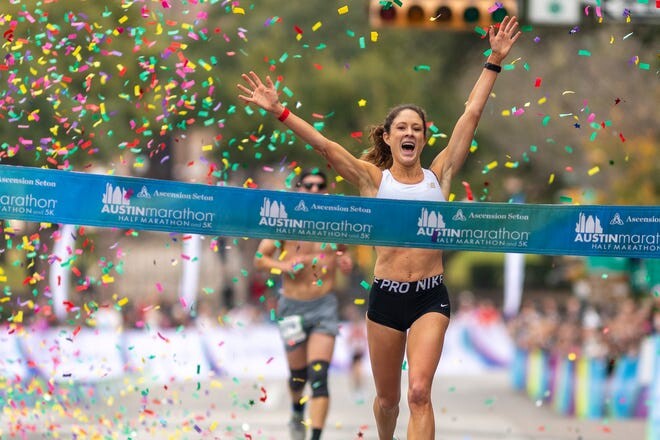
Nation, a former Texas track and cross-country standout, first won the Half Marathon back in 2015, just after graduating.
“That was my first road race and first half-marathon,” Nation said of his 2015 win. “So it was my introduction into road racing. Today was the first time I’ve run 3M since then.”
Nation and Samuel Doud took it out fast from the start on Stonegate Boulevard at Gateway Shopping Center, flying through the first mile in 4 minutes, 50 seconds. The pair quickly broke away from the chase pack, which included Longhorns runner Kobe Yepez and John Liddell of Wauwatosa, Wis., and hit the 5-kilometer mark in 15:25.
When they passed the 10K mark on Great Northern Boulevard in 30:51, it was clear that it was a two-man race, as Nation and Doud had nearly a minute on the rest of the field. Just before the 8-mile mark on Shoal Creek Boulevard, Nation put the hammer down, and by the ninth mile he had a 30-second lead on Doud.
“We ran together for around 7 or 8 miles,” Nation said. “I was feeling good, so I decided to test my legs, and I pulled away.”
Nation averaged 4:56 a mile, breaking the tape in 1:04:36, while Doud cruised home second in 1:05:40. John Rice, a recent UT graduate and a two-time track and cross-country All-American, took third in 1:06:34, ahead of Yepez, who clocked 1:06:52. Liddell rounded out the top five in 1:07:54.
“I came here to run a fast time.” said Doud, who ran for American University in Washington. “I’ll be running the Ascension Seton Austin Marathon on Feb. 20, and I’m hoping for an Olympic qualifying time.”
Nation, who ran a personal best of 2:13:24 at the California International Marathon in December, also has his sights set on the Austin Marathon. “It’s good to get a race effort like this in before the marathon, because it’s really kind of a short window between now and then,” he said. “I’d love to win the hometown marathon.”
Jackson was a last-minute entry in the women’s race but wasted no time establishing a big gap on the rest of the field. The 2020 Austin Marathon champion moved into the lead right from the start and passed the 5K mark in 17:54, more than a minute ahead of Jaclyn Range of Ohio. Taking advantage of the cool weather, Jackson averaged 5:47 a mile in what amounted to a solo effort. By the 10K mark (35:42), she was nearly two minutes up on Range.
Jackson, who like Nation was coming off a fast time at the California International Marathon (2:42:27), finished in 1:15:47, a personal best for the half-marathon distance. Range took second in 1:18:37, ahead of Diane Fisher of Ohio, who posted a 1:19:13. Mary Reiser of Baltimore was fourth in 1:20:24, and Austin’s Katy Cranfill took fifth in 1:20:54.
“I went out a little fast and just tried to hang on. I was really in the zone today and felt really smooth,” Jackson said. “I’ve run 3M every year since high school, but this is my first win. You can just cruise on the downhills on this course and use them to your advantage. That’s why I love this race so much.”
The 3M race is known nationwide as one of the fastest half-marathon courses in the country, attracting runners from all over the nation in search of speedy times.
“I ran my best half-marathon yet today,” Range said. “My teammate Diane Fisher and I are both from Ohio. We’ve been running in the snow and cold, so this was a chance to come here and run. Conditions couldn’t have been more perfect."
by Brom Hoban
Login to leave a comment

3M Half Marathon
Welcome to the 3M Half Marathon! This year join over 7,000 fellow runners in Austin, Texas to run a personal best at the 3M Half Marathon. 3M Half is a fun and fast stand-alone half marathon boasting one of the fastest half marathon courses in the country. You’ll enjoy a point-to-point course with mostly downhill running that takes you past...
more...
Rory Linkletter breaks the Canadian half-marathon record at Houston, Linkletter ran 1:01:08 for eighth place
The Houston Half-Marathon took place Sunday morning as part of the Houston Marathon weekend, and Rory Linkletter lowered Jeff Schiebler’s 23-year-old Canadian half-marathon record of 61:28, crossing the finish line in 61:08 for eighth place. His compatriot, Ben Flanagan, was only half a minute behind him, finishing 12th in 61:38.
Going into the race, both athletes had their eyes on Schiebler’s record, which hasn’t been touched in more than two decades. Linkletter recently left the NAZ Elite track club to train with American Marathon record-holder, Ryan Hall, citing stagnation in training as his reason for making the change. His decision seems to have paid off, and he ran a huge PB Sunday morning to become the new Canadian record-holder. The 25-year-old’s previous record of 61:44 was also run on the Houston course just last year.
Linkletter has enjoyed plenty of success lately, and his most recent result was a second-place finish at the California International Marathon in a new personal best time of 2:12:52.
Flanagan was also on the hunt for the Canadian record this Sunday, and came agonizingly close, running just 10 seconds behind Schiebler’s time. The 27-year-old has also had a lot of success recently, winning the Canadian 10K championships in Toronto in October and taking the title in the Manchester Road Race in November. “I am looking forward to competing,” he told Canadian Running ahead of the race. “The plan is to run conservatively to tackle the Canadian record. It’s engraved in my head.”
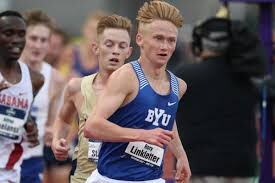
While he didn’t achieve his goal, Flanagan ran a very strong race and we will have plenty more opportunities to watch Flanagan on the roads. He will be running a few 5,000m and 10,000m races this spring to secure a spot on Team Canada at the 2022 World Championships in Eugene, Ore., but tells us that he will be stepping up to the marathon in hopes of qualifying for the Paris 2022 Olympics.
Ethiopia’s Milkesa Tolosa won the race in 1:00:24, followed by Kenya’s John Korir in second in 1:00:27 and Wilfred Kimitei of the U.K. in third in 1:00:44.
by Brittany Hambleton
Login to leave a comment

Aramco Houston Half Marathon
The Chevron Houston Marathon provides runners with a one-of-a-kind experience in the vibrant and dynamic setting of America's fourth-largest city. Renowned for its fast, flat, and scenic single-loop course, the race has earned accolades as the "fastest winter marathon" and the "second fastest marathon overall," according to the Ultimate Guide to Marathons. It’s a perfect opportunity for both elite athletes...
more...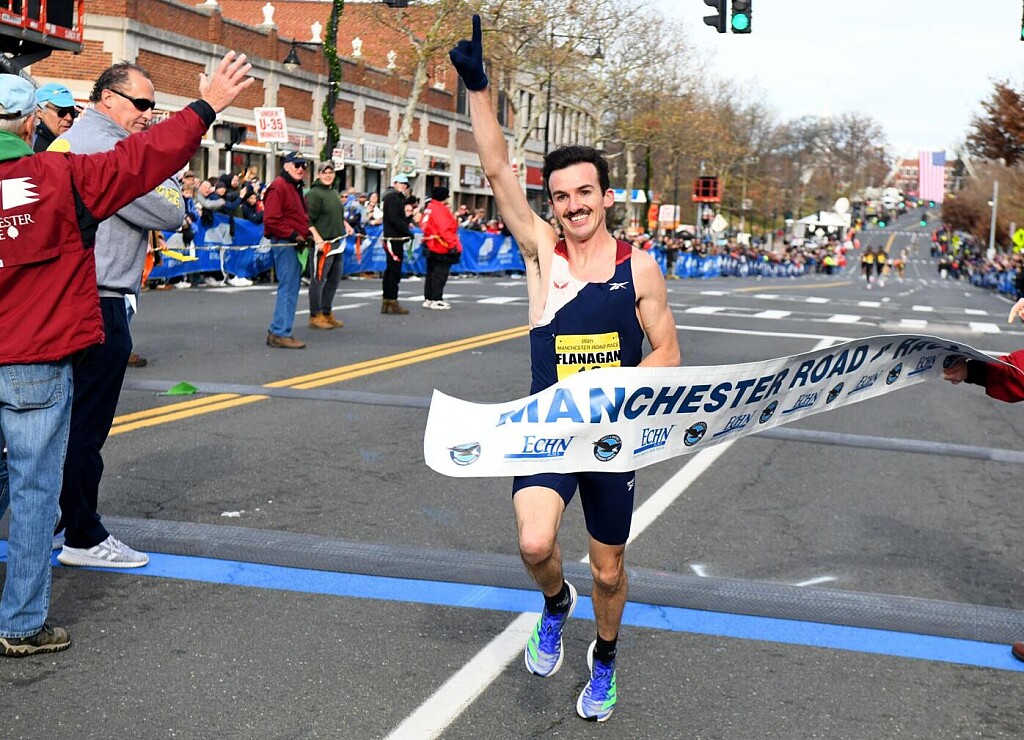
Canadian Ben Flanagan is after one thing at the Houston Half Marathon, I have my eye on the Canadian half-marathon record of 61:28, he says
The 2022 Houston Half Marathon is set to take place this Sunday, drawing many of the world’s top elite to the event. In the field is Kitchener, Ont’s., Ben Flanagan, who ended his 2021 season on a winning note, looking to continue his string of solid performances into the new year. He is heading to this weekend’s half marathon with one thing on his mind: Jeff Schiebler’s 23-year-old Canadian half-marathon record of 61:28.
“I am looking forward to competing,” Flanagan says. “The plan is to run conservatively to tackle the Canadian record. It’s engraved in my head.” The 21.1 km distance isn’t foreign for the former NCAA 10,000m champion. In 2020, he ran 1:03:19 to win his half-marathon debut in South Carolina. His debut time was the 10th fastest ever by a Canadian male, and on Sunday he has the chance to better his result on one of the fastest courses in North America.
“My results at the Scotiabank Waterfront 10K and Manchester Road Race gave me a lot of confidence in the fall,” Flanagan says. He won both races skillfully, breaking away from his competition in the mid-stages of the race and not looking back.
Flanagan made his decision to run Houston in late November. “The timing of this race fit in perfectly in my training,” Flanagan says. “I had a lot of strength built up after Manchester, so we focused on building endurance over the past month and a half.”
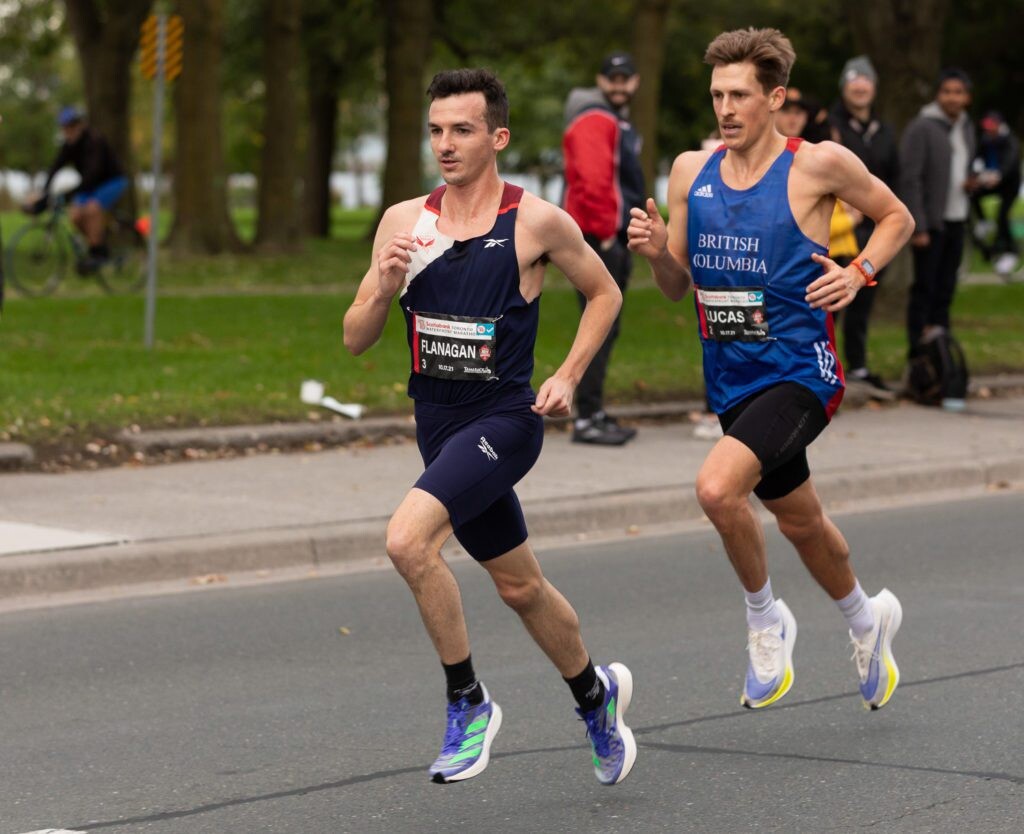
Although Flanagan has shown a lot of success on the roads, he isn’t quite done with the track yet. He will be running a few 5,000m and 10,000m races this spring to secure a spot on Team Canada at the 2022 World Championships in Eugene, Ore.
When asked about when he was going to step up to the marathon, Flanagan mentioned he would love the opportunity to represent Canada in the marathon at the Paris Olympics. “Stepping up to the marathon this year might be a stretch, but I want to give myself a chance to qualify for Paris.”
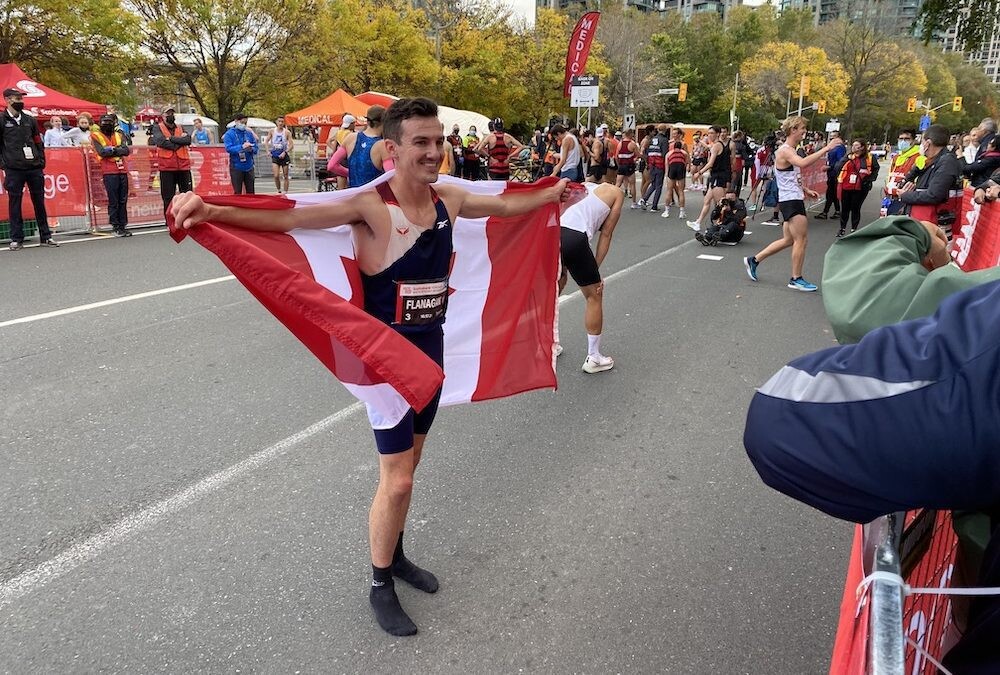
Flanagan won’t be the only Canadian elite in the race Sunday. Alberta native Rory Linkletter, who was second at the California International Marathon a month ago, is in search of another personal best in Houston. In 2020, Linkletter ran 61:44, only 16 seconds off the Canadian record.
In the women’s elite field, Calgary’s Emily Setlack returns to Houston following the 1:11:40 PB she ran in 2020.
by Marley Dickinson
Login to leave a comment
Aramco Houston Half Marathon
The Chevron Houston Marathon provides runners with a one-of-a-kind experience in the vibrant and dynamic setting of America's fourth-largest city. Renowned for its fast, flat, and scenic single-loop course, the race has earned accolades as the "fastest winter marathon" and the "second fastest marathon overall," according to the Ultimate Guide to Marathons. It’s a perfect opportunity for both elite athletes...
more...
U.S. marathon record holder Scott Fauble announced as Rory Linkletter’s new coach
It has been a busy few weeks for Canada’s Rory Linkletter, as he ran a marathon personal best at the California International Marathon (2:12:52) and left the NAZ Elite track club. Now Linkletter is joining forces with American marathon record holder Ryan Hall as his coach.
In an interview with The Lap Count, Linkletter gave some insight on what’s next for Canada’s up-and-coming marathoner.
“I have fallen in love with Flagstaff, my wife and I bought a home earlier this year, so ideally I will stay here for the remainder of my career,” says Linkletter. “As for coaching, I’ve decided to work with Ryan Hall.”
This announcement comes days after his departure from HOKA and Ben Rosario’s NAZ Elite. Linkletter is now left unsponsored but believes that Hall’s philosophy will suit his talents and career goals. “I trust that if I perform how I know I can that won’t last forever,” says Linkletter.
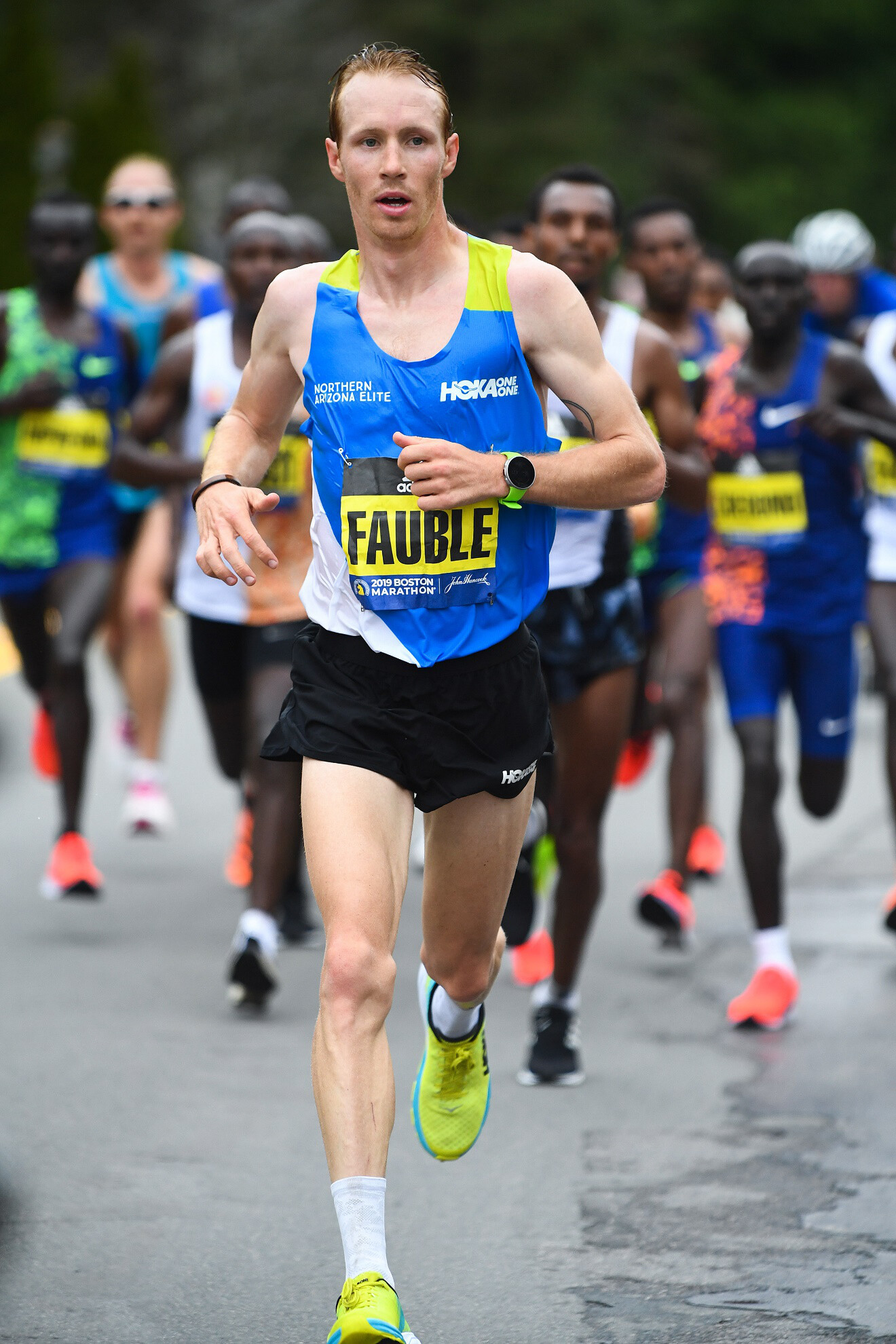
Hall currently coaches his wife Sara Hall, the second-fastest U.S. marathoner, clocking 2:20:32 at The Marathon Project in Chandler, Ariz. Ryan holds the fastest time ever by an American and is the only North-American man to run under 2:05 (Boston 2011). Although Ryan has retired from professional running, he remains as a coach for post-colligate athletes and marathoners in Flagstaff, Ariz.
Linkletter’s previous NAZ Elite teammate, Scott Fauble, also revealed that he will be remaining in Flagstaff. The top American at the 2019 Boston Marathon will be coached virtually by Joe Bosshard, who resides in Colorado and currently coaches Emma Coburn, Emma Bates and Cory McGee.
by Marley Dickinson
Login to leave a comment
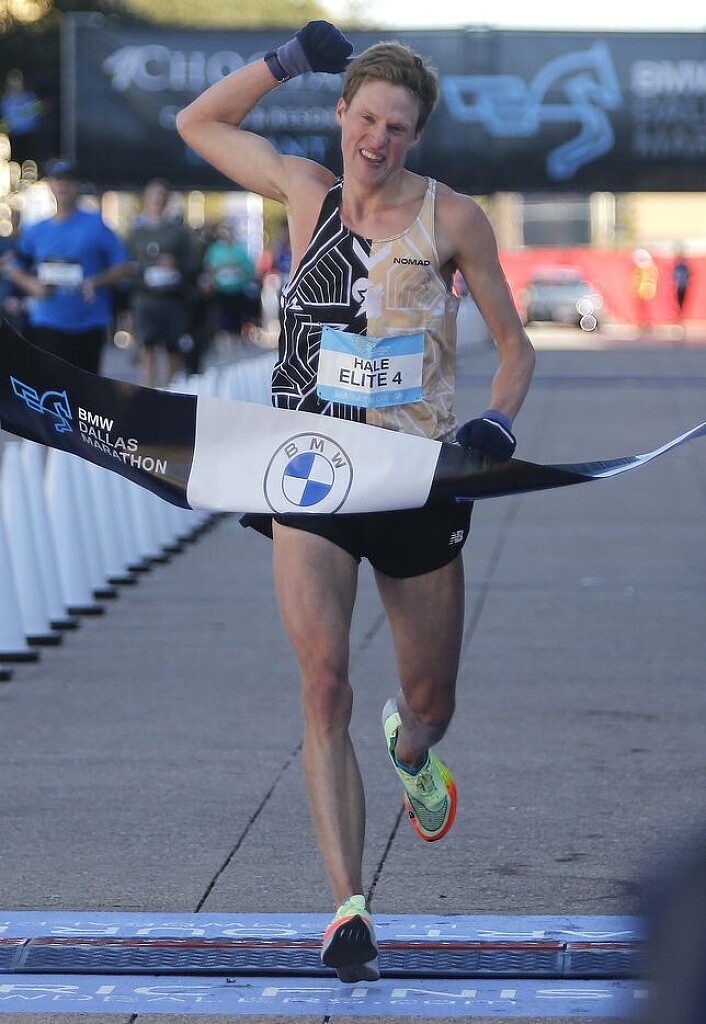
Joseph Hale and Yanet Castro Aguilar won the men’s and women’s marathons, respectively
Most of Sunday’s runners at the BMW Dallas Marathon had been waiting two years to feel the euphoria of crossing the finish line in front of city hall.
Joseph Hale had three years of waiting under his belt after finishing fourth in 2018 and not running the race in 2019.
So when the Dallas resident crossed the finish line to win the 50th Dallas Marathon with a time of 2:28:42, he pumped his fist and let out a celebratory yell.
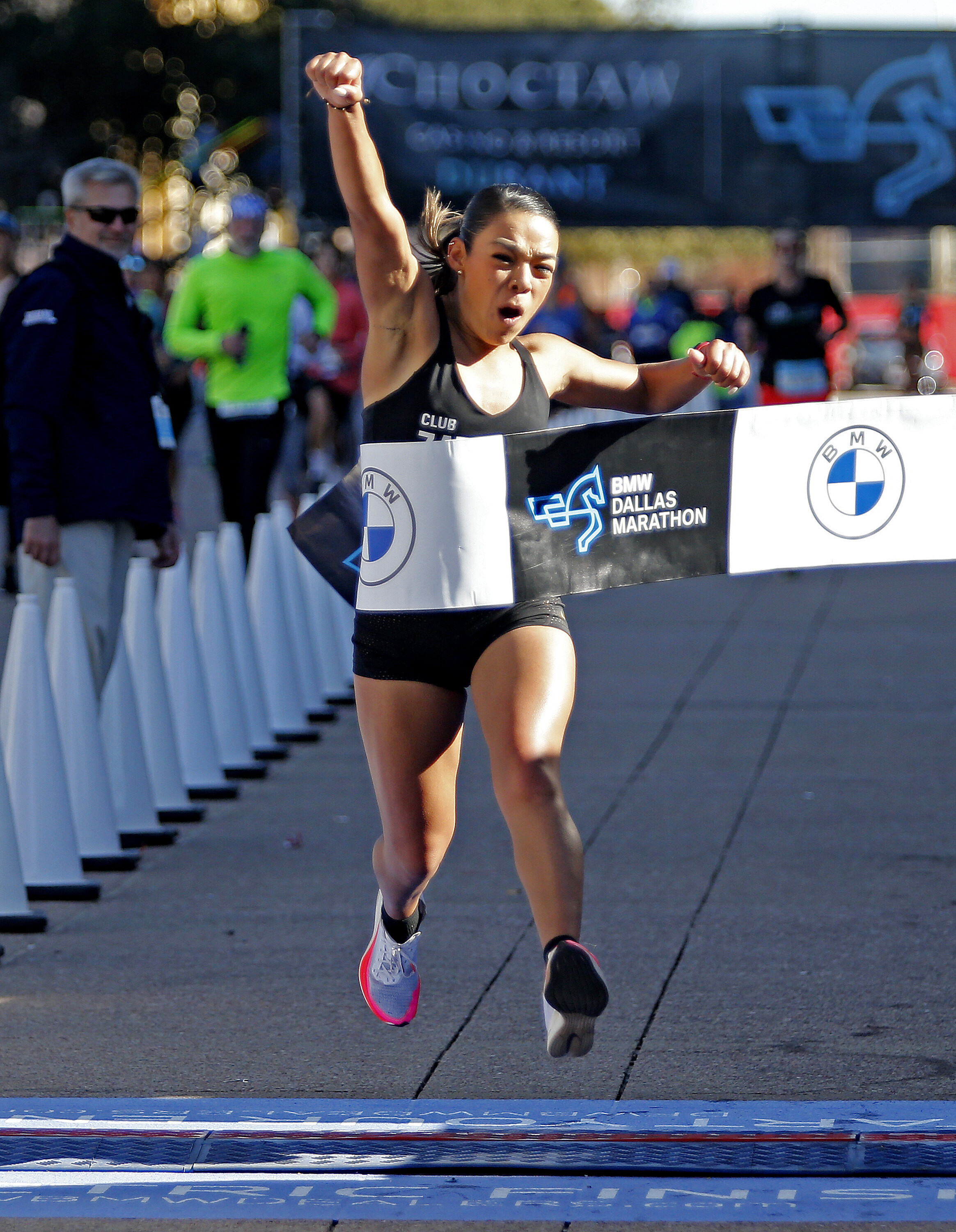
“It’s literally more than a life goal,” Hale said. “I don’t get emotional very often, but I’m going to get emotional about this.”
Joseph Hale crossing the finish line with a time of 2:28:42 to become the winner of the 50th Dallas Marathon.“I’ve literally dreamed of running that corridor for the last three years,” he said.
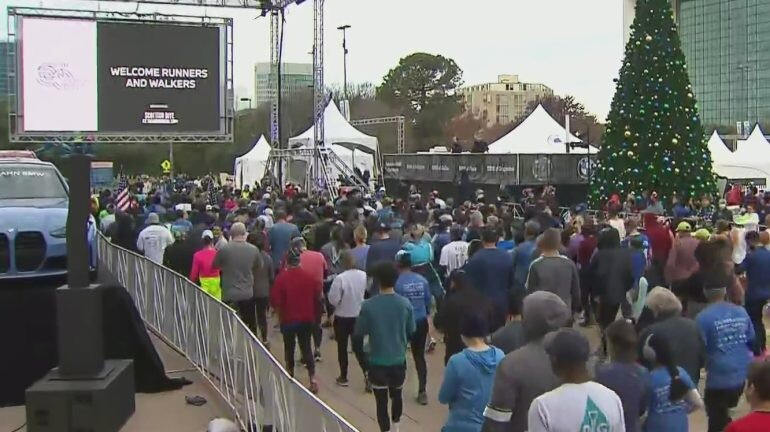
He just edged runner-up Joseph Darda of Fort Worth, who was about 20 to 30 seconds behind for the last 12 miles of the race. Darda crossed the finish line with a time of 2 hours, 29 minutes, 14 seconds.
Hale said having someone right behind pushed him to go harder but also forced him to be strategic.
This was the second straight weekend Hale finished a marathon.
He ran the California International Marathon the previous Sunday in Sacramento, Calif., finishing with a time of 2:26:44. He said he felt the mileage in his legs by the 10th or 11th mile.
“I wasn’t going for time; that’s what my race last week was about,” Hale said. “I actually don’t really know my time. I don’t really care. I won.”
More than 17,500 runners competed in Sunday’s races, and over 26,000 people competed over the entire weekend, which set a record.
The women’s winner was Solyenetzitl Selene Yanet Castro Aguilar of Zacatecas, Mexico, who finished with a time of 2:52:20.
She spent the first part of the race pacing with another competitor but, unbeknownst to her, the other runner was running the half marathon and soon split off in a different direction.
Castro Aguilar said she has been dealing with injuries over the past few years. She has spent the past three months training very hard for Sunday, and she took full advantage of the opportunity.
“I’ve been waiting three years to run this,” she said through a translator. “I was very happy and smiling all the way.”
It was the first marathon for Bradley. She ran at Baylor and was an NCAA cross country championship individual qualifier in 2017.
“This is kind of a full-circle moment because I went through some injuries that at the time I thought were career ending,” Bradley said. “To be able to run a marathon, it’s like all my dreams coming true.”
It was a banner year for first-time competitors. Both half marathon winners, Mitch Ammons and Kelsey Bruce, and women’s ultra marathon winner Megan Smyth were running at the event for the first time.
Bruce and Hale are best friends, meeting each other when they were both runners at Dallas Baptist from 2011-15.
They even ran the first few miles of Sunday’s race together before embarking on their own separate, winning journeys.
Bruce won the half marathon with a time of 1:14:35. She moved to Wichita Falls earlier this year after being hired as the head coach of Midwestern State’s cross country and track teams. Being able to come back to her hometown of 10 years and win the half marathon in front of her friends, family and coach was special.
“It’s always fun to hear your name on the course from people you love,” Bruce said.
So with her friend still on the road, Bruce stuck around after receiving her medal and award, joining the cheering brigade for Hale.
And as Hale entered the final length of his winning run, one voice stood out amid the crowd cheering him on.
“With 600 to go, she was there telling me that you got it,” Hale said. “She knows how I finish. She knows I can finish terribly. So when she said that I had it, I knew I had it.”
by Peter Warren
Login to leave a comment

BMW Dallas Marathon
The BMW Dallas Marathon is the result of the efforts of a pioneering group of brave Dallas runners, who had the foresight to establish an annual 26.2-mile race more than 40 years ago. In 1971, Tal Morrison – the official founding father of the marathon – placed a $25 ad in Runner’s World beckoning runners from around the country to...
more...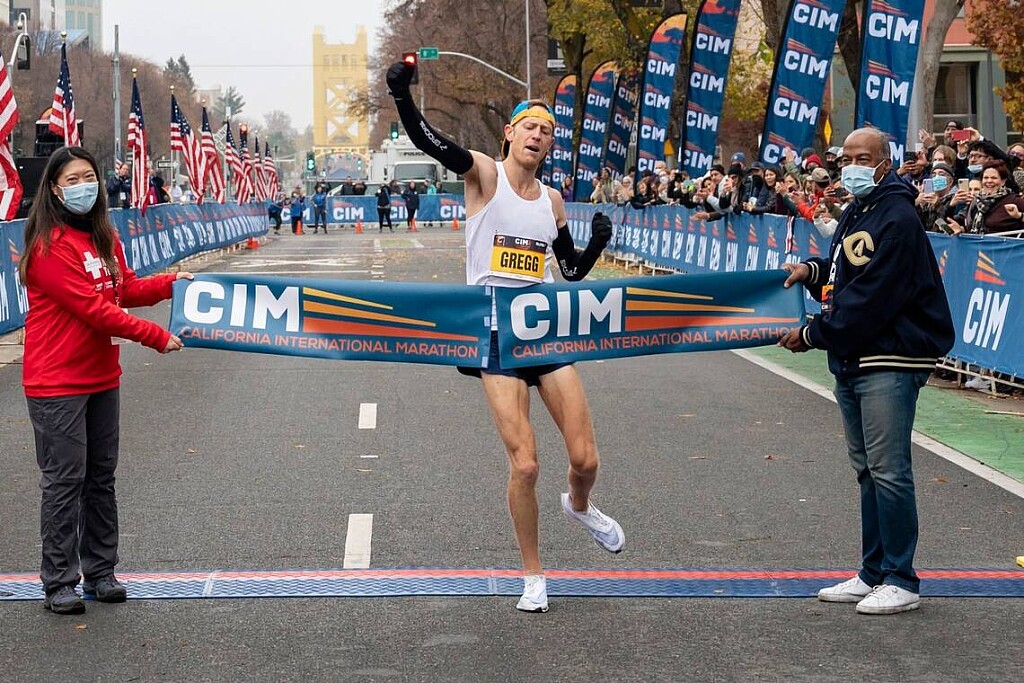
Bredan Gregg and Sara Vaughn won the Comeback California International Marathon
Davis native Brendan Gregg won the 2021 California International Marathon alongside Sarah Vaughn, a debut marathoner.
A graduate of Davis High School and Stanford University, Gregg finished the race with a personal best time of 2 hours, 11 minutes, and 21 seconds.
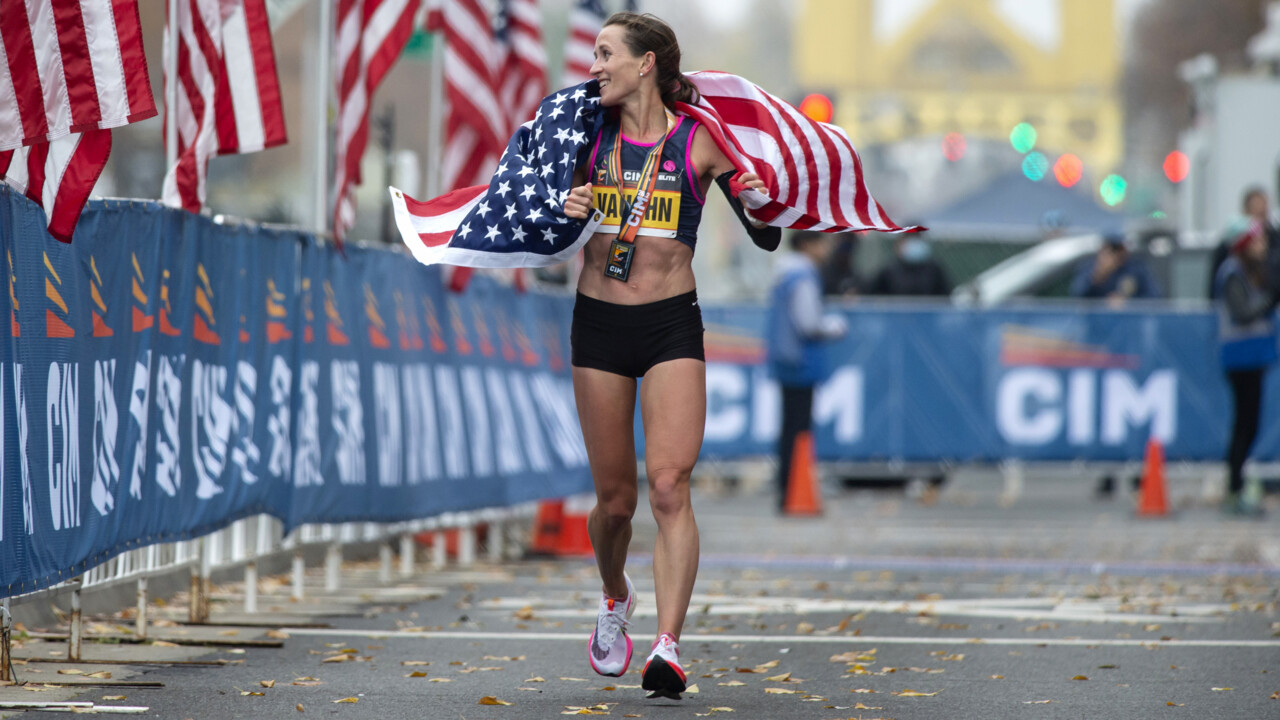
“I love coming back here,” Gregg said in a statement. “I’ve done other marathons, but I always want to come back and do it at home at the people’s marathon.”
Gregg's pace was about 5:01 minutes per mile, according to the CIM event results.
Sara Vaughn, of Boulder, Colorado, won with a time of two hours, 26 minutes and 53 seconds.
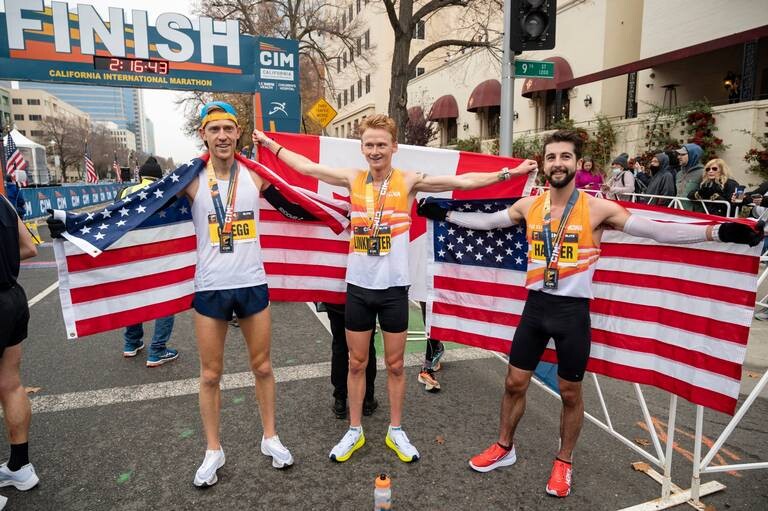
Vaughn attempted her first marathon just 12 weeks ago, according to a press release.
“Sacramento has always been wonderful to me in my running career,” Vaughn said in a statement. “I made my first Team USA here at Sac State, and last time I was here, I won a race. I had to keep the streak going.”
Gregg and Vaughn, will both take home $10,000 in prize money, plus any performance bonuses.
The competition was cancelled in 2020 due to the pandemic. 9,000 people were registered for the marathon this year.
by Lauren Walike
Login to leave a comment
California International Marathon
The California International Marathon (CIM) is a marathon organized by runners, for runners! CIM was founded in 1983 by the Sacramento Running Association (SRA), a 501(c)(3) non-profit organization. The SRA Board of Directors is comprised of runners with a combined total of 150+ years of service to the CIM. The same route SRA management created for the 1983 inaugural CIM...
more...
2021 California International Marathon is looking for more volunteers
Thousands of runners are preparing for the California International Marathon, which takes place in less than two weeks. This year there’s a shortage of volunteers to pull off the massive event, race organizers said.
More than 10,000 runners from across the state and country participate in CIM. For the past 38 years, the event has relied on volunteers to power the race.
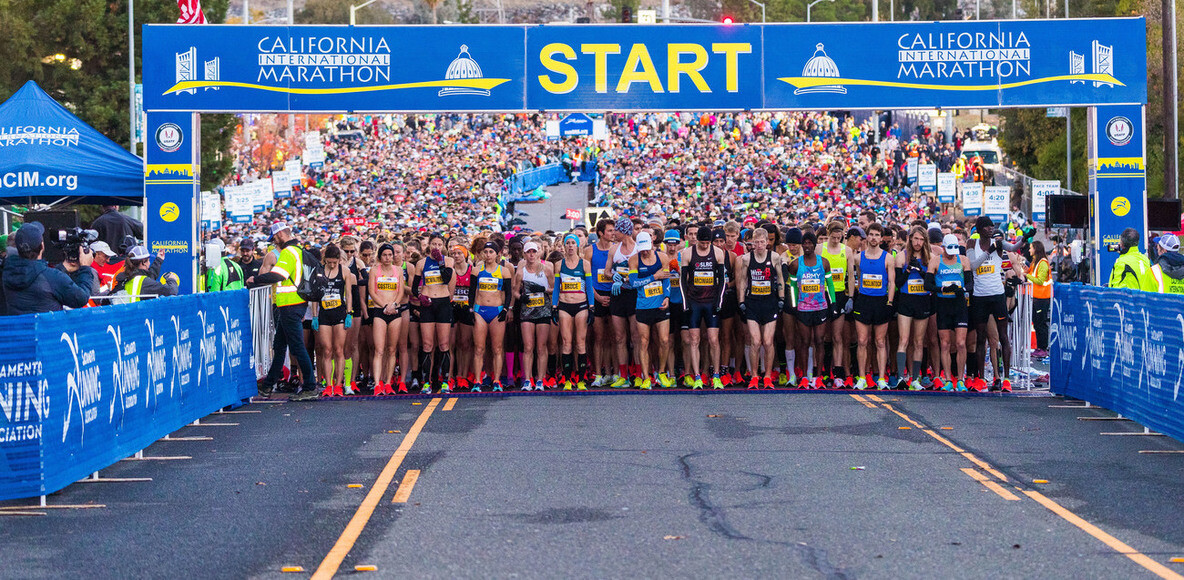
The Sacramento Running Association needs about 2,500 volunteers to fill all the necessary tasks on race day. Some school groups and clubs have had to pass due to their own COVID-19 safety guidelines.
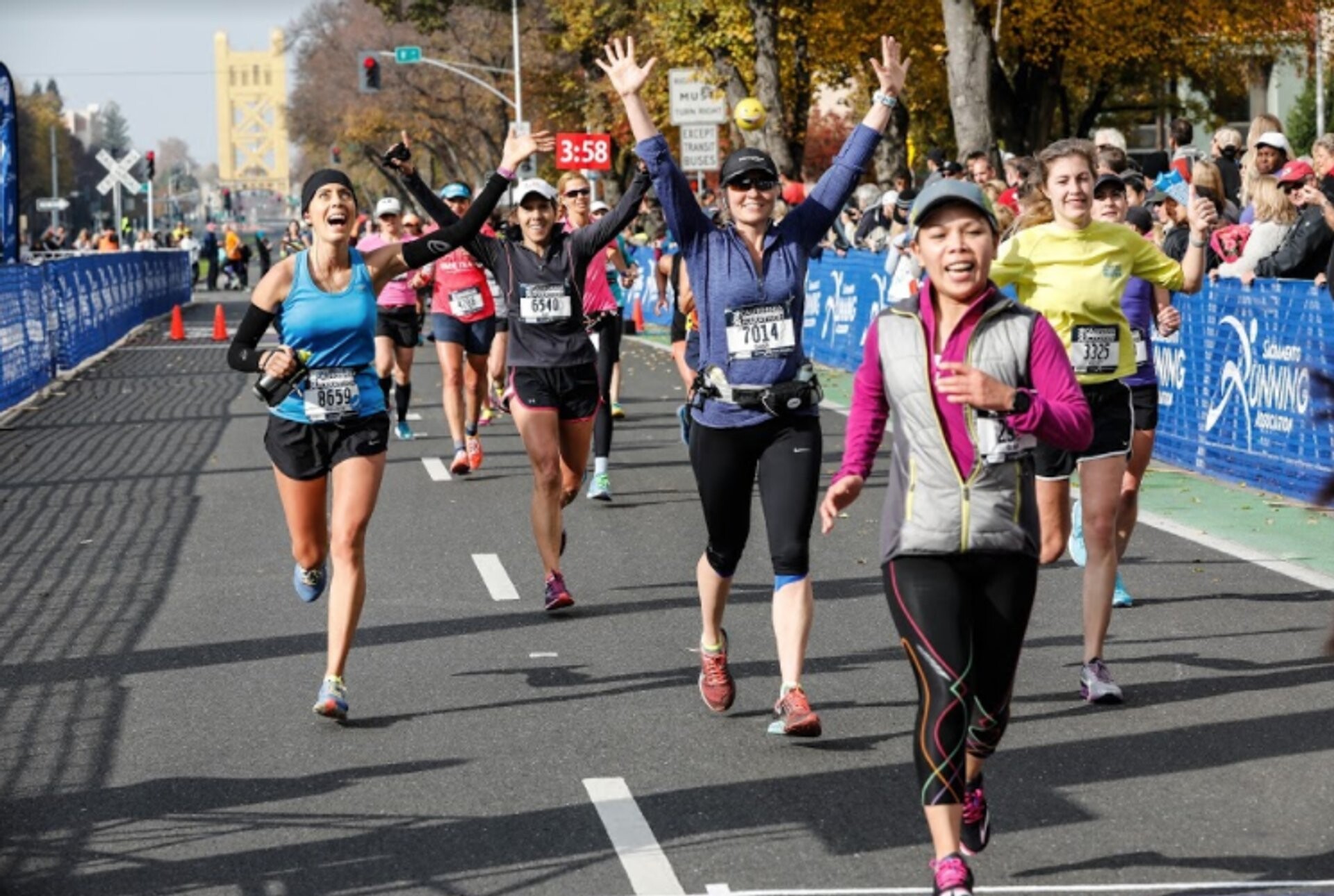
Scott Abbott with the Sacramento Running Association said the race may be early in the morning but it’s “real exciting.”
“Whether it's working outdoors, doing aid stations, being a course monitor, helping load buses, even working out at the expo on Friday and Saturday — there are so many opportunities to get involved and be part of this event,” Abbott said.
by KCRA Staff
Login to leave a comment
California International Marathon
The California International Marathon (CIM) is a marathon organized by runners, for runners! CIM was founded in 1983 by the Sacramento Running Association (SRA), a 501(c)(3) non-profit organization. The SRA Board of Directors is comprised of runners with a combined total of 150+ years of service to the CIM. The same route SRA management created for the 1983 inaugural CIM...
more...
Negative Splits Might Be the Epitome of a Successful Run, But They Are Sometimes Overrated
It might be the epitome of a successful run, but negative splits are sometimes overrated. Enter: the controlled fade.
The idea of running negative splits has been so ingrained in us, it’s as rudimentary of a skill for runners as tying your shoes. At some point, every runner needs to learn how to run negative splits or figuratively die trying.
By definition, a negative split is when the second half of your run or race is faster than your first half. The ability to run negative splits teaches you how to manage your energy and pace yourself properly throughout a race or training run. This is ideal because you learn how hard you can push early so you won’t blow up during the second half.
But just as every coin has two sides, so does pacing. On the flip side of negative splits are positive splits. This is where you go out faster and slow down as the run or race goes on. Considered taboo, prevailing wisdom warns against intentionally running positive splits. Positive splits are thought to be associated with pain, embarrassment, and bad outcomes.
However, I think most gamblers would agree that sometimes a calculated move against the prevailing odds can pay out big time. And as certified run coach and runner myself, I think when executed properly, the positive split can be a powerful pacing strategy. One that might just get you that personal record or Boston qualifying time you’ve been working so hard to finally snag. But here's what to know before you start your next run or race on the faster side of your goal pace.
Should you ditch a negative split goal?
The elusive negative split is perhaps as much of a goal in running as setting a personal best. We see the elites do it all the time and it has been well documented that most world records are set with negative splits. But what about the rest of us who aren’t breaking world records? Are there scenarios where one should ditch a negative split? I would say yes.
Justin Ross, Psy.D., a clinical psychologist specializing in health and wellness psychology, human performance, and sports psychology agrees. A runner himself, Dr. Ross explains, “elites are really good at running 26 miles because they've been running 100 plus miles a week for a long time, versus amateurs who just can't maintain that pace for that long of a period because we don't have the training or maybe even the physiological capacity.”
This brings up the question: If we amateurs aren’t running 100 plus miles a week and may not have a superior physiological capacity, should we be mimicking the elites’ negative split pacing strategy? While I do believe the more experienced runners should seek to follow their faster counterparts, I want to offer an alternative for the non-elites. That is, something I call the “controlled fade.”
What is a controlled fade?The controlled fade is a deliberate, positive-split pacing strategy—one that is calculated and won’t lead to blowing up or hitting the wall. It’s a slow, gradual fade in pace. “I don't think we need to fear the positive split if it's done with intention and reason and that the slow fade is really close—like within relatively even splits,” explains Dr. Ross.
Note Dr. Ross’ words “done with intention and reason.” For a controlled fade to be successful, it needs to be a calculated strategy. Dr. Ross warns, “I don’t think we need to be afraid of the positive split, but I do think we need to be careful of it.” This is because the margin for a blowup is much greater than with a negative split strategy. If you’re too ambitious during the first half, a controlled fade will result in a disastrous second half, potentially one that leaves you dragging or walking or just straight up miserable for those latter miles. On the other hand, if executed properly, it can be highly successful.
What’s the benefit of skipping a negative split?
“I think a big part of this is a mindset shift that you don't have to negative split to run a PR,” says Dr. Ross, who set his marathon personal record of 2:57:36 at the 2019 California International Marathon by running 86 seconds faster in the first half of his race—coincidently a positive split.
Mentally, there is a very different mindset between having to pick up the pace at mile 20 to reach your goal when you're already tired versus having time in the bank to fade a little. With the latter, you've met your goal and it's yours to lose and with the former, you don't have the goal and need to chase it when you're already tired. People are more likely to fight to hold onto something they already have than something they never had in the first place.
So that benefit to a controlled fade? It comes down to a pretty positive mental approach to those latter miles—and of course, it could also pay off with a faster finish time.
How do you properly execute the controlled fade?Being honest about your current fitness is crucial for the successful execution of the controlled fade. The best way to get an honest assessment of your capabilities over all race distances is to plug a recent race result into a running pace calculator that projects what an equivalent performance would be across other distances. This will give you an idea of what you are capable of if all things go perfectly on race day.
In most cases, a more realistic goal is to add two to five minutes to what calculators tell you, especially if you’re using race times further away from the marathon such as a 5k time. If your goal falls within that two- to five-minute window, it’s likely to be attainable and suitable for the controlled fade strategy.
A controlled fade works best when you run the first half of your race between a total of 30 seconds and three minutes faster than the second half. This equates to five to ten seconds per mile for the marathon. When pacing the first half of a marathon, aim for five seconds per mile faster than the goal finishing time pace with an absolute speed limit of 10 seconds per mile faster. For example, if you’re trying to break 3:30 for the marathon or run an average 8:00/mile, aim to run the first half at a 7:55/mile pace, never to exceed a 7:50/mile.
The goal is to maintain this pace for as long as you can, expecting you’ll fade at some point. The deeper into the race you hold the pace, the more of a buffer you’ll build against your goal finishing time.
Keep in mind, it’s still important to ease into that faster pace. So starting 10 seconds slower than the goal pace for the first mile may be a good option for some who need a warmup mile. You’ll make up that time by mile four or five if you settle into your planned controlled fade pace by mile two.
When should you use a controlled fade?A controlled fade works best for longer races, such as the marathon, and when there’s a lot of internal pressure to beat a very specific time.
To determine when to use a controlled fade, it comes down to your goals. Dr. Ross points out the difference between outcome goals and performance standards. Outcome goals are a specific outcome you’re pursuing, such as breaking your personal record or qualifying for the Boston Marathon, whereas performance standards are “more about the approach you take to showing up.” For outcome goals, there is a clear delineation between success and failure. You either hit your goal, or you don’t.
“Often what will happen in the course of a race is we recognize that our outcome goals are out the window for whatever reason—the weather isn't cooperating or it's just not our day. At that moment in time, often runners get really defeated and they get frustrated,” Dr. Ross says. Without having a performance standard to fall back on, some runners might give up and completely abandon their goal.
That’s where the controlled fade comes in: Building a small cushion of time to fall back on late in the race allows runners who place a heavy emphasis on outcome goals some room for error, alleviating some of the pressure.
So think about what you want to achieve in your run or if you have that specific goal to chase in your race and whether the controlled fade would work for you.
What do other coaches say?Terry Howell, owner of Blue Collar Running, has coached seven runners to the 2020 Olympic Trials. He agrees the controlled fade is a viable plan for some runners and often builds in a cushion, even for his elite runners. “Depending on the caliber of the athlete, and the condition they’re in, I'm okay with a two-minute cushion on the backside, meaning going slower in the second half.” In an ideal situation, Howell likes to see his athletes somewhere between 30 seconds slower and 30 seconds faster than their goal marathon pace at the halfway point.
On the other hand, Karen Dunn, owner of Strengthen Your Stride and VDOT certified distance coach and RRCA level two run coach, says “it really comes down to knowing your athlete, knowing their history, goals, and mental strength and tenacity.” She believes that an even pace, or slightly negative is the best strategy, but does acknowledge if it’s the right person, a positive split may help some gain confidence.
Is a controlled fade the right approach for you?
At the end of the day, it’s important to steer clear of absolutes. When it comes to a negative-, positive-, or even-split pacing strategy one isn’t always better than the other. It all boils down to the individual runner, race course, and what feels comfortable in a given situation.
However, the only way to find out if one pacing strategy is better for your particular situation is to try it out. If you’re like most runners who have been wired to believe positive splits are synonymous with poor performances, give the controlled fade a try. It could pay off even more than you expect.
by Runner’s World
Login to leave a comment
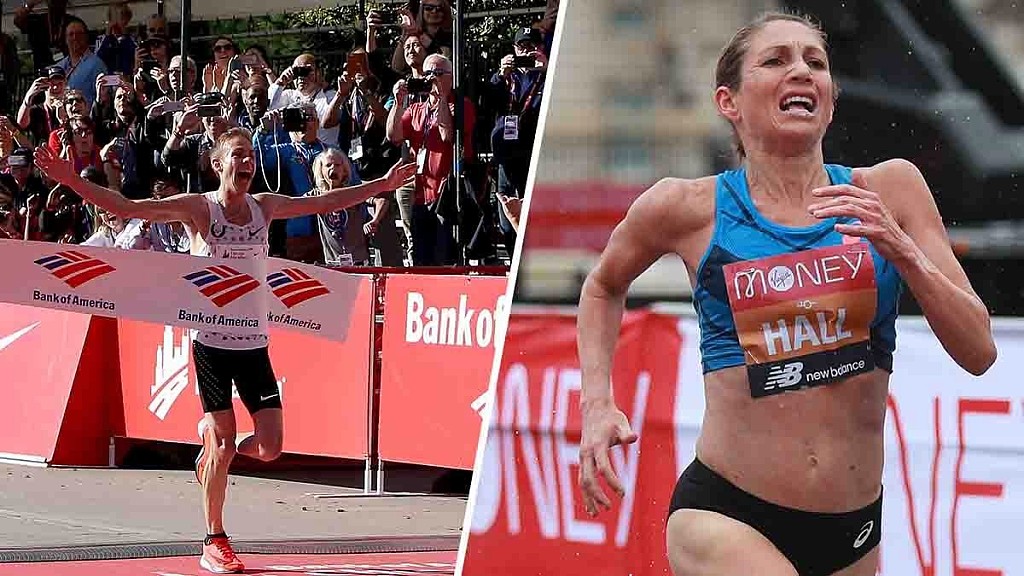
Galen Rupp and Sara Hall will headline the 43rd annual Bank of America Chicago Marathon elite field
The Bank of America Chicago Marathon announced today that two-time Olympic medalist Galen Rupp and America’s second fastest female marathon runner ever, Sara Hall, will be at the helm of this year’s elite field, a year that marks a global comeback for the road racing industry. Rupp stands out as one of the most decorated runners on the track and in the marathon, winning the 2016 and 2020 U.S. Olympic Marathon trials and the 2017 Chicago Marathon; he is a five-time U.S. record holder, and eight-time U.S. 10,000 meter champion. Hall, a seven-time Olympic trials qualifier with ten national titles from the mile to the marathon, to her name, hopes to rewrite history by breaking the American marathon record, 2:19:36, set in 2006 by Deena Kastor.
“We are thrilled to welcome Galen and Sara, two of the most talented runners in U.S. history, to our start line this fall,” said Bank of America Chicago Marathon Executive Race Director Carey Pinkowski. “This is a celebratory moment not only for U.S. running, but for the global running community. The resilience and determination that Galen and Sara have shown throughout their careers is the same kind of resilience and determination that lives within every runner showing up in Grant Park this fall.”
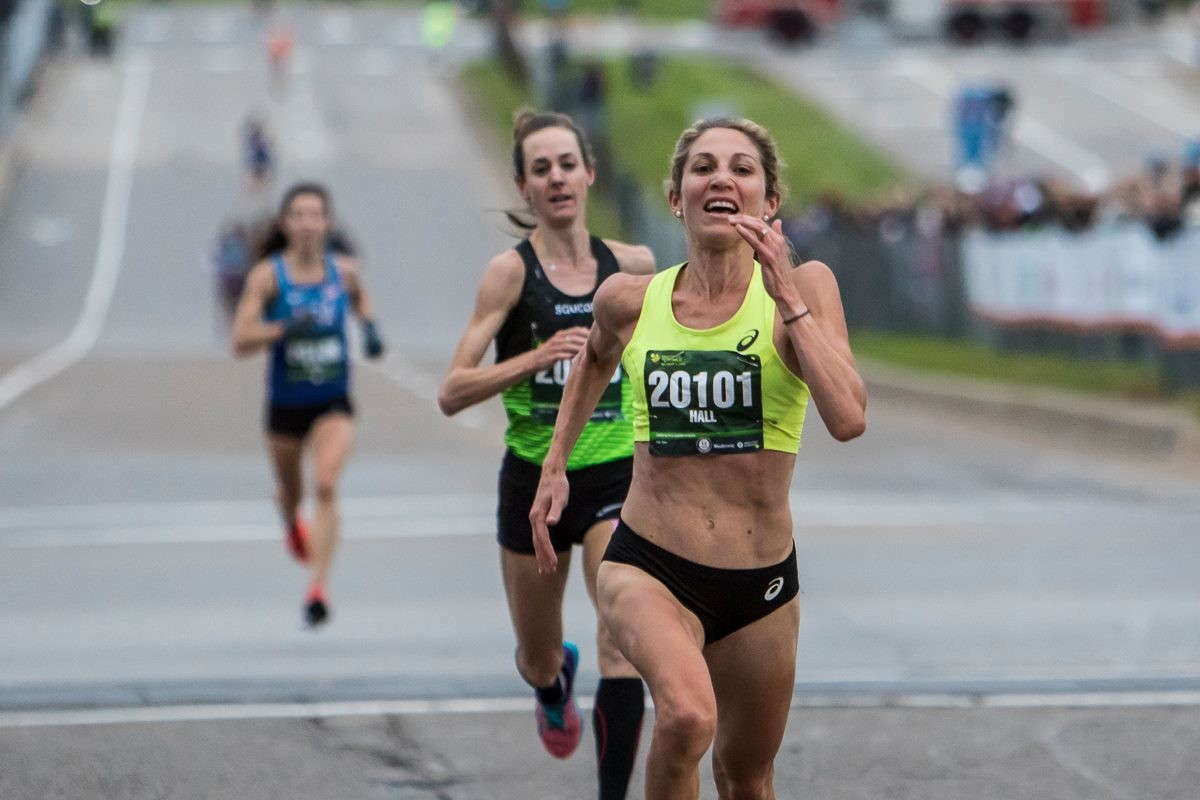
Rupp, a four-time Olympian with a bronze medal in the marathon and a silver medal in the 10,000m, will make a quick turn-around to Chicago after going for gold in Tokyo. Rupp put on a show during his first appearance in Chicago in 2017 when he became the first American male since Khalid Khannouchi to stand on top of the podium. He returned in 2018, finishing fifth in 2:06:21, the fifth fastest time in American history on a record eligible course (he also owns the third fastest time ever run, 2:06:07). Shortly after his performance in 2018, he underwent surgery to correct Haglund’s Deformity. Rupp used his 2019 and 2020 seasons to announce his comeback to the top of elite running.
On an unrelenting hilly course in Atlanta, Rupp showcased his dominance at the 2020 U.S. Olympic Marathon trials, swiftly winning the race while making his fourth Olympic team. Since then, he has continued to run well, setting an American record for 10 miles in 2020 (en route to a half marathon victory), and running in the Olympic Trials in the 10,000m. In addition to his accolades on the track and in the marathon, he is the second fastest American ever over the half marathon distance (59:47). If Rupp breaks the tape first this fall, he will be only the seventh man in Bank of America Chicago Marathon history to claim victory twice.
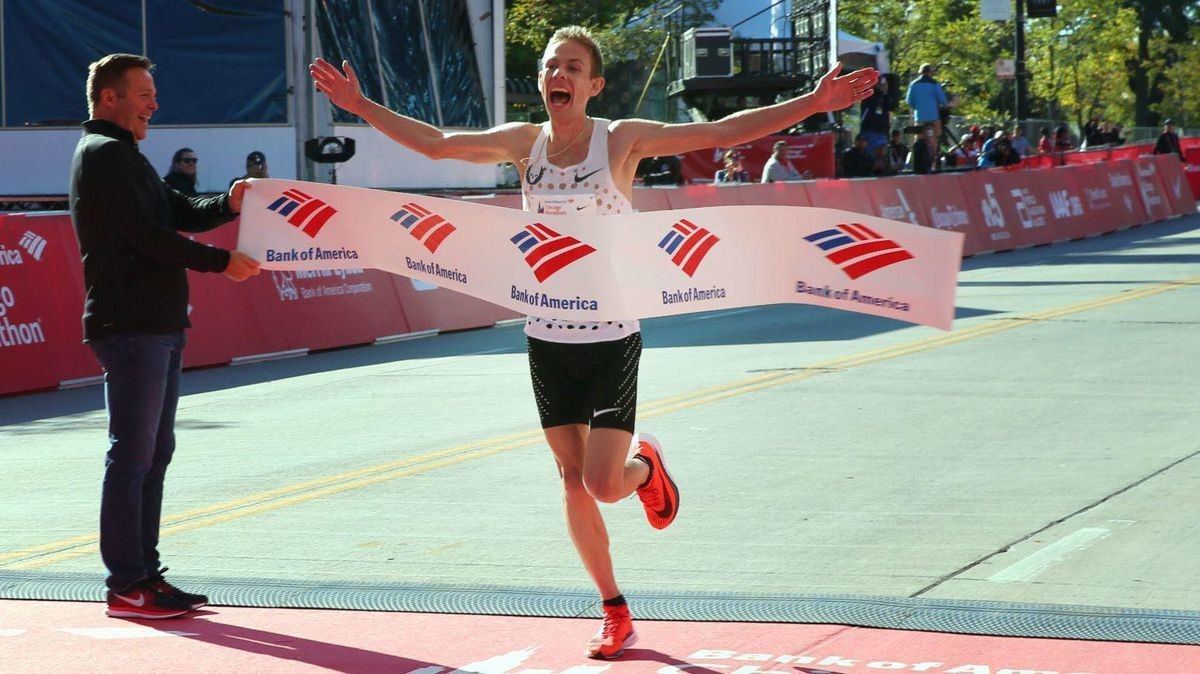
“Chicago is a special city and I’m excited to be coming back after so long,” said Rupp. “I have a personal connection to the city, and the 2021 Bank of America Chicago Marathon is going to be an awesome celebration.
“My goal is winning,” Rupp continued. “I want to come back and win. 2019 left a sour taste in my mouth. I didn’t finish that race so I cannot wait to get back out there and come back stronger than ever. It has been a wild ride since then. I’m healthy, I’m happy, and it’s going to be tremendous to come back.”
Like Rupp, Hall stands out as one of the most versatile athletes in any elite field. She launched her professional career as a middle-distance specialist and steeplechaser while slowly migrating to the roads and, in 2015, to the marathon. She finished 10th in Chicago in 2015, ninth in New York in 2016, sixth in Tokyo in 2017, first in the California International Marathon in 2017 (her first U.S. title in the marathon), and third in Ottawa in 2018. But those achievements pale in comparison to what came next.
In 2020, Hall picked herself up from a disappointing DNF at the U.S. Olympic Marathon Trials, refocused, and commenced her campaign to make history. She finished as the runner-up in 2:22:01 at the London Marathon last October (one of the only elite events in 2020), becoming the first American to finish in the top three in 14 years. Eleven weeks later - unconventional timing for a marathon runner - she competed in the Marathon Project, winning in a personal best, 2:20:32, while also inching closer to Kastor’s American record. Hall enters this year’s Chicago Marathon with a goal written on her bathroom mirror: “American Marathon record-holder.”
“I am excited to run the Bank of America Chicago Marathon again,” said Hall. “It has been too long since I’ve been back, and when I thought about where I wanted to chase the American Record, I thought it would be more exciting to do it at home, in the U.S., and Chicago is such an epic race. I’m really excited to have my best marathon yet on U.S. soil.”
American marathon record holder and 2005 Chicago Marathon champion, Deena Kastor, is eager to watch Hall chase history.
“It’s exciting to see Sara go after the American record again,” said Kastor. “Her incredible fitness and joy of running makes this an opportunity worth fighting for. Chicago is certainly a great choice to be your best, so spectators can expect to witness some exciting performances on race day.”
The 43rd annual Bank of America Chicago Marathon will take place on Sunday, October 10.
by Business wire
Login to leave a comment
Bank of America Chicago
Running the Bank of America Chicago Marathon is the pinnacle of achievement for elite athletes and everyday runners alike. On race day, runners from all 50 states and more than 100 countries will set out to accomplish a personal dream by reaching the finish line in Grant Park. The Bank of America Chicago Marathon is known for its flat and...
more...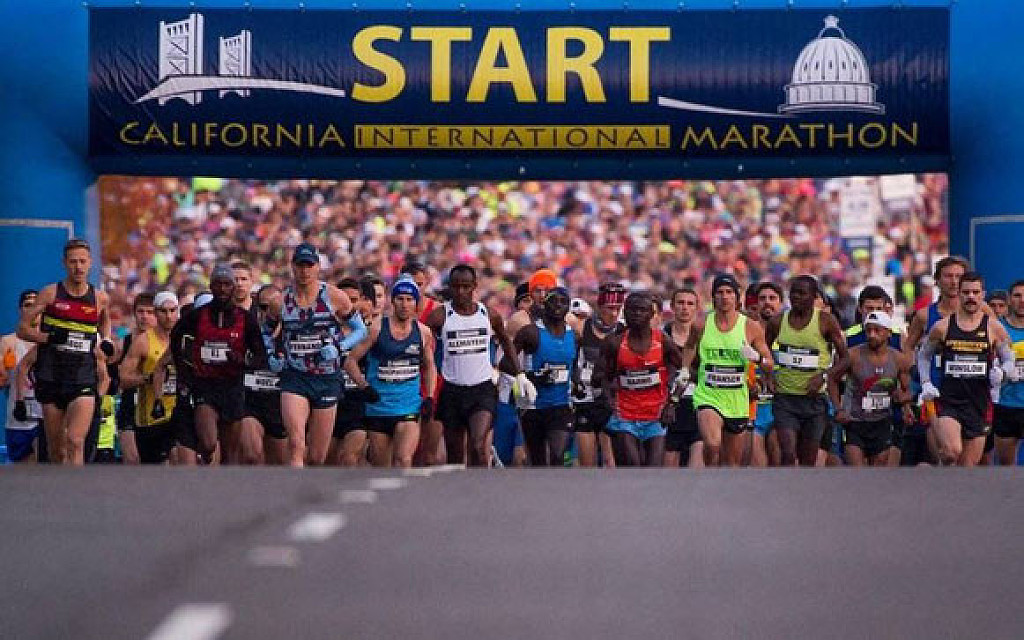
California International Marathon registration opens April 6
After being cancelled due to the pandemic in 2020, it appears the California International Marathon is on track to return this year. Registration opens at 9 a.m. Tuesday for the marathon, which travels from Folsom to Downtown Sacramento. This year's race is scheduled for Dec. 5.
An announcement from the Sacramento Running Association, which organizes the marathon, says "certain event details and amenities are still being determined due to changing health guidelines."
In a social media post, event organizers said the "participant cap is still somewhat uncertain," and registrations will be accepted on a first-come, first-served basis.
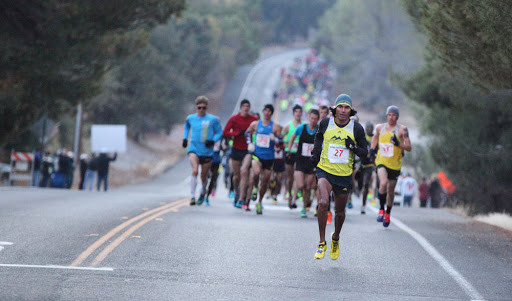
People who were registered for last year's marathon received a voucher for entry into a future California International Marathon through 2023. If you plan to use your voucher, you still need to formally register for this year's race. Additional information is available online.
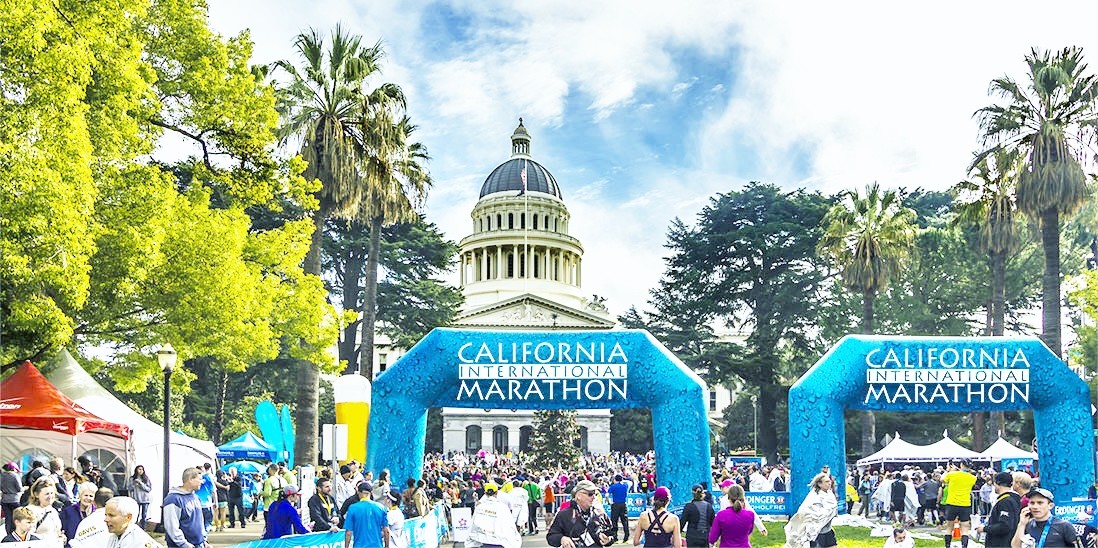
The event has attracted thousands of participants and spectators in the past.
Indoor events to resume
Marathon registration isn't the only sign of a slight return to normalcy. Most of California will be allowed to reopen indoor venues for performances, conferences and other events by April 15, state officials announced Friday. Indoor events were among the first activities to be closed as the Covid-19 pandemic touched down in California last year.
As larger parts of the population become vaccinated, California is ready to loosen its restrictions around events, state public health officials stated.
by Sonya Sorich
Login to leave a comment
California International Marathon
The California International Marathon (CIM) is a marathon organized by runners, for runners! CIM was founded in 1983 by the Sacramento Running Association (SRA), a 501(c)(3) non-profit organization. The SRA Board of Directors is comprised of runners with a combined total of 150+ years of service to the CIM. The same route SRA management created for the 1983 inaugural CIM...
more...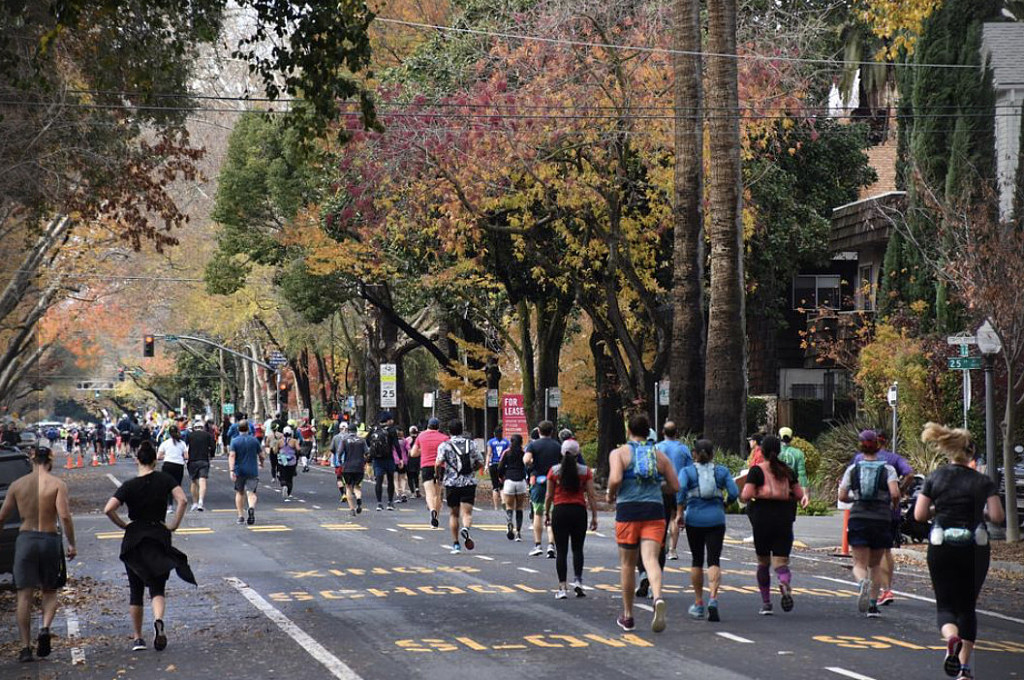
Dec. 6th’s 2020 California International Marathon Canceled Due to COVID-19
The 38th annual California International Marathon, organized by the Sacramento Running Association and scheduled to run Sunday, Dec. 6 2020, has been canceled due to health and safety guidelines associated with the COVID-19 pandemic. All 2020 CIM registrants will receive a voucher for free registration into either the 2021, 2022, or 2023 CIM.
“After 37 years of world class production, the CIM has established itself as a Sacramento institution, a valuable civic amenity, and an important cornerstone event on the annual national running scene. Because of this, the CIM cancellation is a devastating blow to the Sacramento region and to the larger running community,” said Sacramento Running Association Executive Director Scott Abbott.
The CIM annually hosts over 15,000 participants, 75,000 spectators, and 4,000 volunteers over the course of marathon weekend, while filling nearly 10,000 hotel room nights and adding an estimated $11 million economic impact to the Sacramento region.
In addition to the impact on local hotels, restaurants and retailers, the event historically raises over $500,000 for local charities and community organizations through leveraged fundraising and direct giving every year.
“Local, regional, and state health officials worked very hard over the past few months to help us find a way for the event to happen, and we appreciate their efforts and their commitment to helping us fulfill our duty to our participants and stakeholders. Ultimately, there were too many uncertain variables in play that prevented our ability to put on this year’s CIM,” added Abbott. “Through this process, however, we are encouraged that we have identified safe policies and protocols for bringing in-person running events back to our community very soon, and we are looking forward to providing leadership in this space for Sacramento.”
Associated canceled events include November’s Run The Parkway, The Capitol 5k, and UC Davis Children’s Hospital maraFUNrun.
For runners still planning to train for a marathon this fall, the CIM has launched “Project 26.20” a virtual platform with training incentives and a race day virtual experience. More information can be found at runsra.org/project-26-20
The Sacramento Running Association is a non-profit organization dedicated to finding ways to encourage people of all ages and abilities to run. The SRA is committed to developing new, quality running events that appeal to a broad variety of runners.
Other SRA events include the Super Sunday Run, the Credit Union SACTOWN Run, the Gold Country Half, the Capital Cross Challenge, and Youth XC Series.
Login to leave a comment
California International Marathon
The California International Marathon (CIM) is a marathon organized by runners, for runners! CIM was founded in 1983 by the Sacramento Running Association (SRA), a 501(c)(3) non-profit organization. The SRA Board of Directors is comprised of runners with a combined total of 150+ years of service to the CIM. The same route SRA management created for the 1983 inaugural CIM...
more...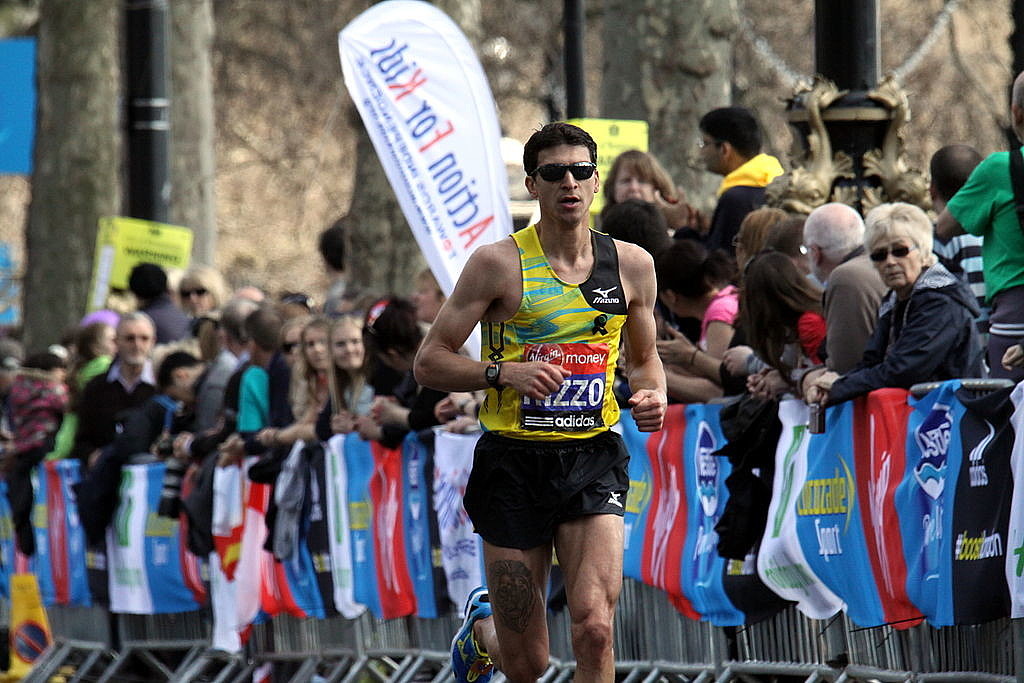
Four-time Olympic Trials Marathon qualifier Patrick Rizzo, will run his last race tomorrow in Atlanta
It will all come to an end next Saturday, Leap Day. Patrick Rizzo, one of the most decorated and versatile distance runners in the United States, will run his last professional race at the Olympic Marathon Trials in Atlanta. A testament to his longevity, it will be Rizzo’s 4th Olympic Trials race (NYC 2008, Houston 2012, LA 2016, and now Atlanta); a remarkable achievement which solidifies his running legacy.
Over his stellar 15-year pro career, the 36-year-old Rizzo notched numerous top 10 finishes at U.S. Championship distances from 8K to the marathon. He earned victories in the half-marathon in major races throughout the U.S. including Denver, Seattle, and his native Chicago. Internationally, he’s had top finishes in London (11th), the Ohme 30K in Tokyo (3rd), and in representing the USA at the Pan American Games in Guadalajara, Mexico (8th).
He set his marathon personal best of 2:13:42 at the U.S. Olympic Trials in Houston, finishing 13th.
As recently as this past November, Rizzo finished on the podium at the Rock ‘N Roll Half Marathon in Las Vegas and followed that up in December by running 2:17:53 at the California International Marathon in Sacramento. During his career, Rizzo was sponsored by Brooks, Mizuno, and Skechers.
“I’ve had the privilege of being Patrick’s agent for the past 3 years and we have been friends since he started his career here in Michigan with the Hansons – Brooks Distance Project back in 2006,” said Chris Mengel of Elite Runner Management. “Coming from North Central College, an NCAA Division 3 school in his native Illinois, Patrick was a fearless runner who was never afraid to compete against the best athletes in the country and the world on the biggest stages. He loved being a pro runner and undoubtedly, will miss it. Frankly, I think we will miss him even more. The sport needs more Rizzos.”
Rizzo recently took a job as an account compliance manager with VF Corporation and moved from Colorado Springs to Nashville, Tennessee. He resides there with his wife, Emily, and their children Judah and Bonnie.
Login to leave a comment
2028 US Olympic Trials Marathon
Most countries around the world use a selection committee to choose their Olympic Team Members, but not the USA. Prior to 1968, a series of races were used to select the USA Olympic Marathon team, but beginning in 1968 the format was changed to a single race on a single day with the top three finishers selected to be part...
more...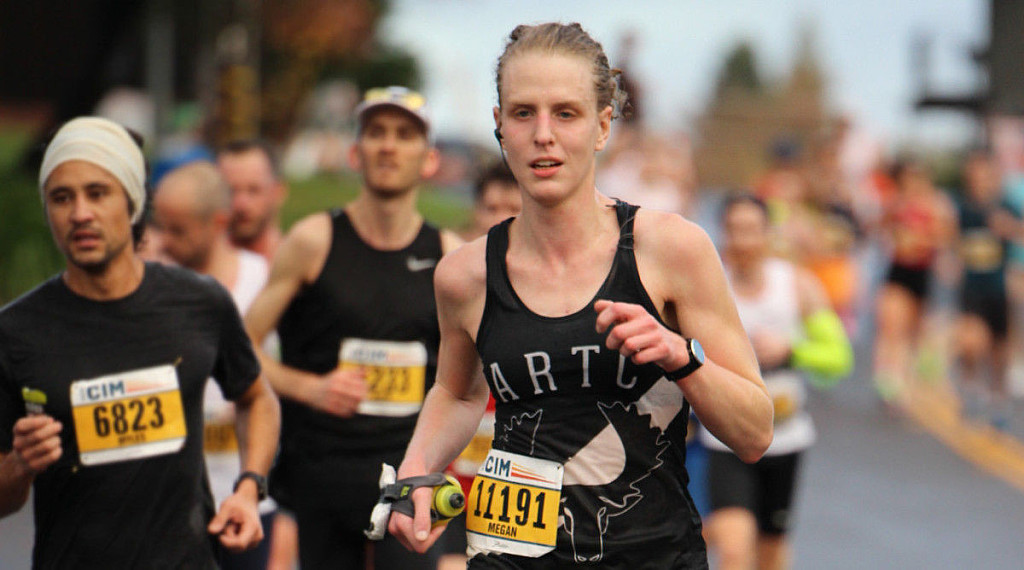
28-year-old Megan Youngren will be the First Openly Transgender Athlete to Compete at the U.S. Olympic Marathon Trials
Megan Youngren became one of 63 women at the California International Marathon to officially qualify for the 2020 U.S. Olympic marathon trials, the race that will determine the team for Tokyo. Her 40th-place finish in 2:43:52 came as both a relief and a reward, after four months of intense training. But it also marked another significant moment: With her qualification, Youngren is set to make history on Feb. 29 as the first openly transgender athlete to compete at the U.S. Olympic marathon trials.
“I’m open to talking about it to people because that’s the only way you make progress on stuff like this,” says Youngren, who first started taking hormone medication as a college student in 2011. She came out publicly as transgender in ’12 and finalized paperwork for her transition in ’19.
“To my knowledge, and that of other staff who have been with USATF for many years, we do not recall a trans competitor at our Marathon Trials,” spokesperson Susan Hazzard says. Just last month, Chris Mosier was interviewed by The New York Times as the first transgender athlete to qualify for and participate in an Olympic trials in the gender with which he identifies. Mosier is the first trans man to compete with cisgender men at the 50-kilometer race walk in Santee, Calif. “For me, it’s all about making a pathway for all the trans athletes that come after me,” he told the Times.
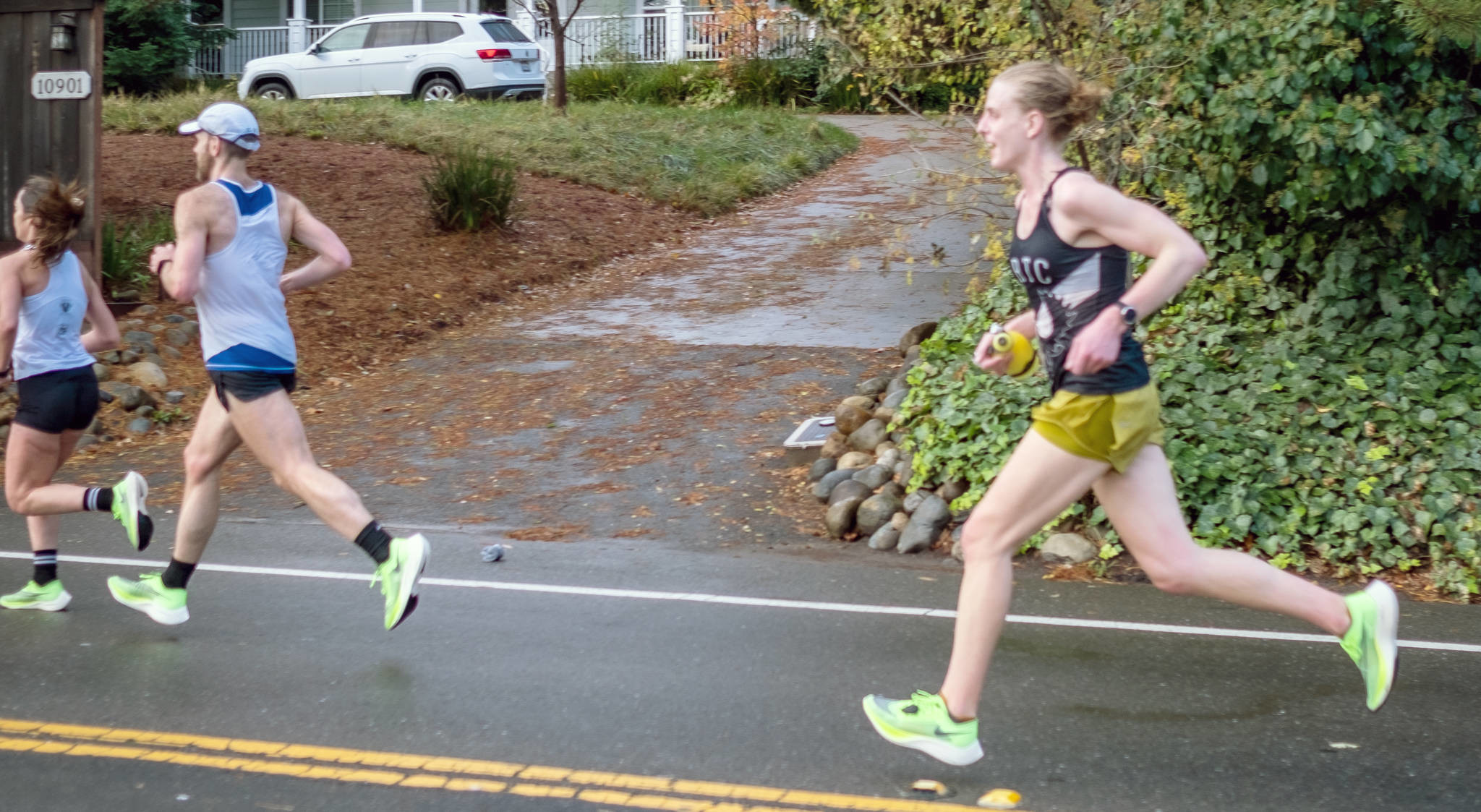
In 2013, Youngren started running to lose weight and boost her health after transitioning, and now she primarily races on trails and runs up and down mountains for fun. Youngren says that running helped alleviate any lingering symptoms from a case of shingles. By 2014, she was running consistently, but with little structure to her training. An Alaska native, Youngren ran her first marathon at the 2017 Equinox Marathon in Fairbanks in 4:48, on a course with an unforgiving 3,285 feet of elevation gain and loss. Despite the difficulty and cramping, she credits that race as the one that got her hooked on the 26.2-mile distance.
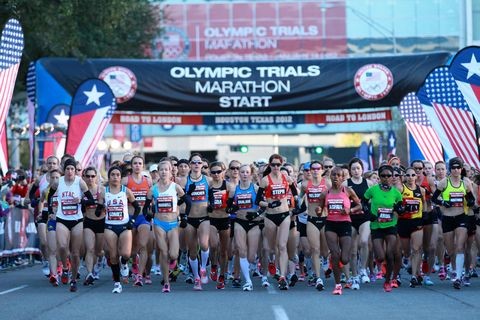
At the 2019 Los Angeles Marathon, Youngren managed to get her time down to 3:06:42, which propelled her to seek out a sub-three-hour goal for the first time. At the time, she was working at a bakery and her job required a lot of manual labor, but she still managed to fit in runs after work. When the bakery closed in September, it freed up some time in her day to run more, and Youngren’s mileage eventually reached 85 per week, with the majority on trails.
“I thought that if I worked incredibly hard and took some huge risks that I could run a 2:45,” Youngren says. “People will try to put it down by saying, ‘That’s too easy because you’re trans.’ But what about the 500 other women who will qualify? There’s probably someone with the exact same story. I trained hard. I got lucky. I dodged injuries. I raced a lot, and it worked out for me. That’s the story for a lot of other people, too.”
Before the California International Marathon, Youngren’s previous PR was a 2:52:33 set in August at the Anchorage RunFest’s Humpy’s Marathon, where she battled heavy winds and was on qualifying pace through 18 miles.
“I’ve had multiple times this year when I thought I was going to hit that time but then fell apart,” Youngren says. “This time, it was really hard but I made it through. The race itself broke me mentally.”
by Chris Chavez
Login to leave a comment
2028 US Olympic Trials Marathon
Most countries around the world use a selection committee to choose their Olympic Team Members, but not the USA. Prior to 1968, a series of races were used to select the USA Olympic Marathon team, but beginning in 1968 the format was changed to a single race on a single day with the top three finishers selected to be part...
more...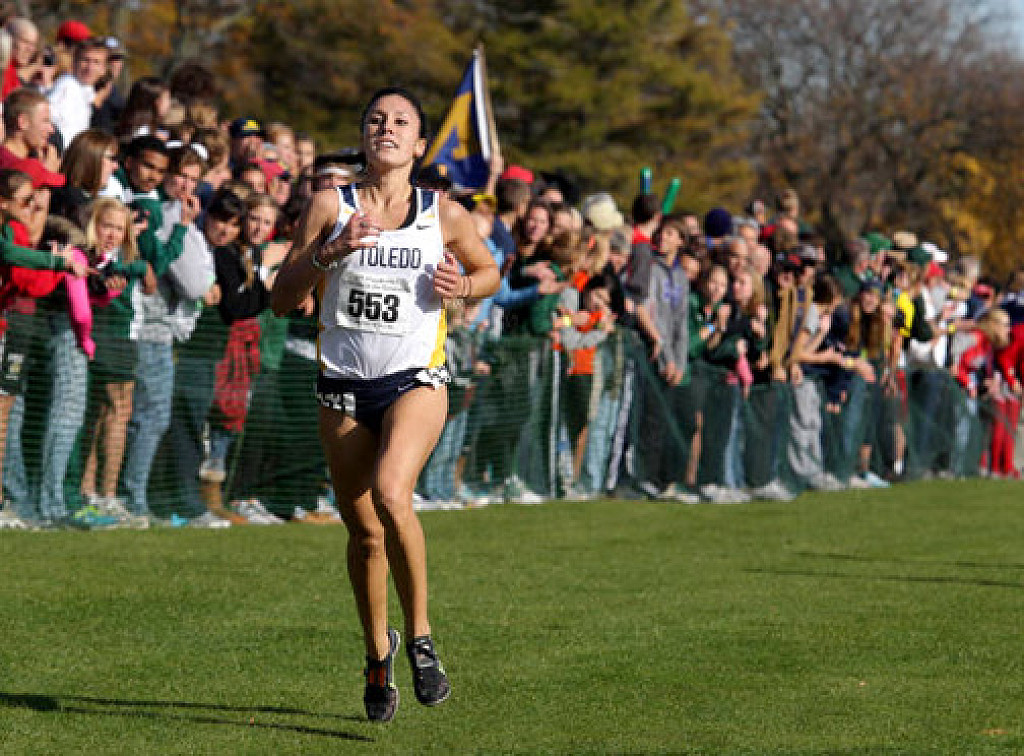
Emma Kertesz will be running the 2020 US Olympic Marathon Trials at the end of the month
Emma Kertesz returns to the 2020 United States Olympic Team Trials in the Marathon later this month in Atlanta.
Kertesz is a graduate of Central Catholic High School and a former University of Toledo runner. She competed four years ago in the same event in Los Angeles where she finished 39th.
Returning to the trials for the second straight cycle was painful.
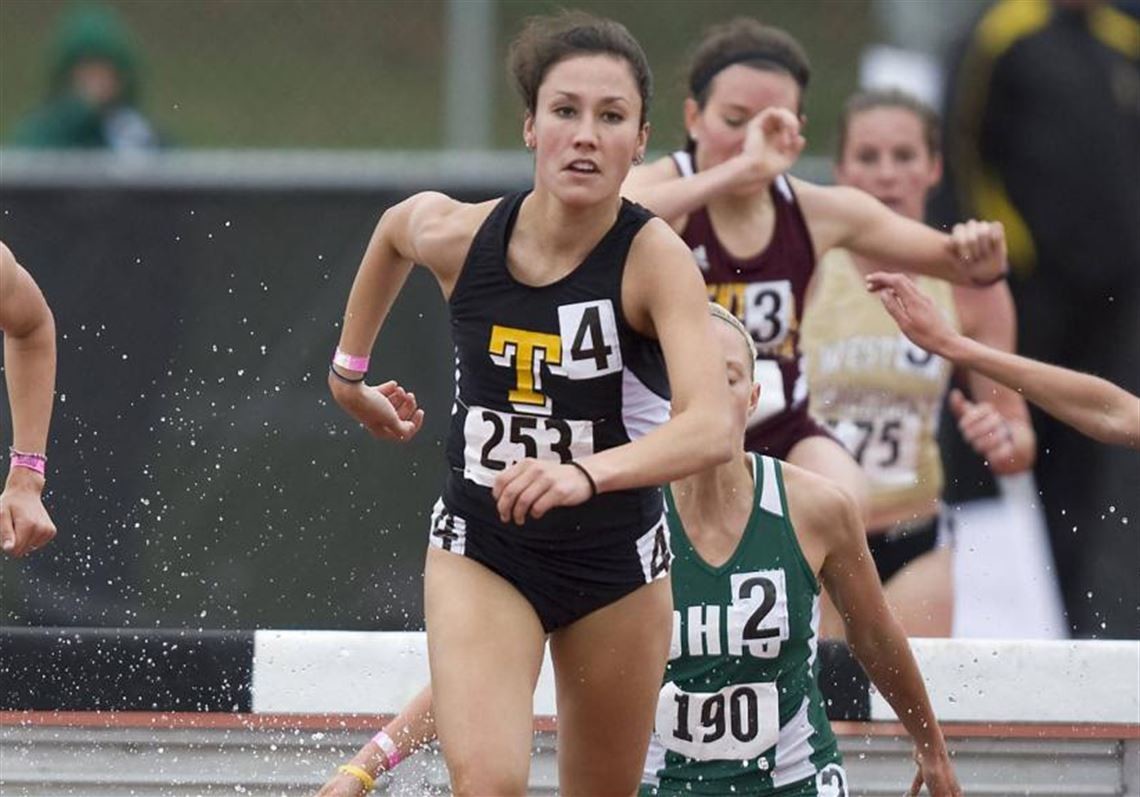
"I tore my hamstring," Kertesz said. "I ran the California International Marathon to qualify for the trials, and then I've been dealing with what I thought was some high hamstring tendinitis. I'm pretty sure on even 80 percent training I'll be able to hit the qualifying standard and then I'll deal with my hamstring after.
"And then I got an MRI and found out that I actually had a tear in my hamstring. So I ended up take off almost three months."
But Kertesz still had a spot in the U.S. Olympic Team Trials Marathon. She recently took a leave from her teaching job to focus on applying for doctoral programs; she would ultimately like to work at the local or state level with education curriculum or research.
The doctoral program starts in the coming months, all while running an average of 85 miles per week over the last several weeks while training for the trials.
"Now that the field is doubled in size than it was in 2016 where I was 39th," Kertesz said. "But I think that I have a good shot of placing in the top 40. I'd like to be competitive and maybe I eke out a personal best that would be great, especially on that kind of course."
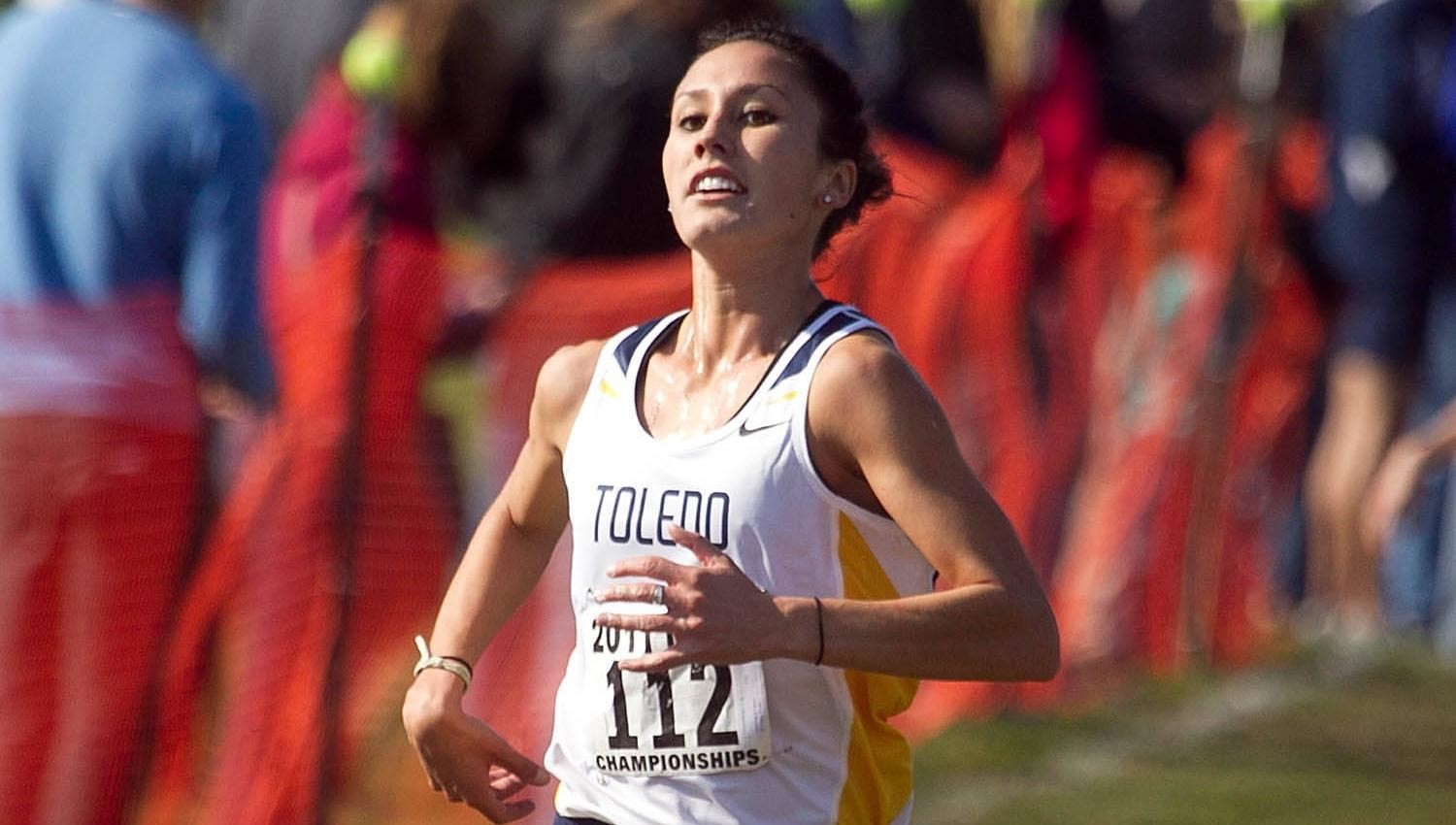
If Kertesz is not busy enough, she still has a side project she is working on related to her family's ancestry -- specifically her father David. At 18-years-old, he found out he was adopted and is a Navajo Native American.
"It's emotional but it's cathartic for both of us," Kertesz said. "Ultimately, it's brought us closer together and given me a chance to reflect on my dad more as a person more than just being my dad."
This project also has influence in her running life.
"I have a greater appreciation for diversity in this sport," Kertesz said. "(Watching videos of Billy Mills win the gold medal) that's really awesome that a Native American who came out of nowhere really if you watch that race to win a gold medal that was just so great."
Mills won the gold medal at the 1964 Olympics in the 10,000-meter race. At the time, Mills set a world record in the 10,000-meter event and is still the only American to ever win gold in the 10,000-meter race.
"You don't really see in terms of American distance runners a lot of Native Americans being represented," Kertesz said. "It feels really special to be a part of that and to represent my ethnicity on this stage."
One strategy she will carry with her to this stage in Atlanta is something she learned from Dave Carpenter, her coach at Central Catholic, is to make sure to stay competitive in the race and not worry about setting a personal record.
When Kertesz competed for the Rockets, she was an All-American in the 10,000-meters at the 2012 NCAA Outdoor Track and Field Championships.
Kertesz currently lives and trains in Boulder, Colo.
by Steve Slivka
Login to leave a comment
2028 US Olympic Trials Marathon
Most countries around the world use a selection committee to choose their Olympic Team Members, but not the USA. Prior to 1968, a series of races were used to select the USA Olympic Marathon team, but beginning in 1968 the format was changed to a single race on a single day with the top three finishers selected to be part...
more...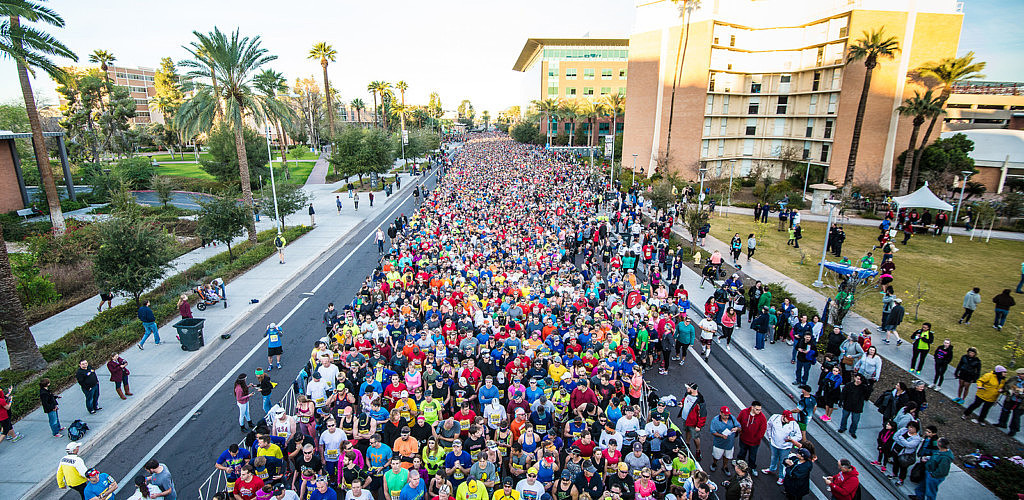
The 2020 Humana Rock ‘n’ Roll® Arizona Marathon and half will feature a World Class Field
The 2020 Humana Rock ‘n’ Roll® Arizona Marathon & ½ Marathon will feature a world-class group of elite men and women going toe to toe on Sunday, Jan. 19 throughout Phoenix, Scottsdale and Tempe, Arizona. With over 120 elite-runners registered, the field will be one of the largest in the event’s history and offer an $18,500 prize purse. Given the depth of the elite field, both the marathon and half marathon races will showcase one of the year’s first and most competitive races in the Rock ‘n’ Roll Marathon Series®.
Many of the elite athletes will be using the Humana Rock ‘n’ Roll Marathon and ½ Marathon to qualify for the 2020 U.S. Olympic Team, while others that have already qualified will be utilizing the race as a tune-up before the U.S. Olympic Team Trials taking place on February 29 in Atlanta, Ga.
Highlighting the men’s field of Olympic hopefuls is top American runner from the 2019 Boston Marathon, Scott Fauble (Flagstaff, Ariz.). Throughout 2019, Fauble was labeled the 2nd fastest U.S. Marathoner and a favorite to make the U.S. Olympic team. Alongside him on race day will be Scott Smith (Flagstaff, Ariz.), previous winner of the 2016 Rock ‘n’ Roll San Diego Half Marathon.
In addition, 2019 Humana Rock ‘n’ Roll Arizona Half Marathon Champion Daniel Mesfun (Eritrea) returns to defend his title in 2020. Other men to watch include Steve Hallman (Des Moines, Iowa), fresh off a personal best marathon time of 2:22:03 at the 2019 Berlin Marathon; Jimmy Stevenson (Lansdale, Penn.), who set his personal best time of 2:23:17 at the 2018 California International Marathon; and Brendan Sage (St. Michael, Minn.), winner of the 2019 Fargo Half Marathon will look to qualify for the Olympic Trials in his first marathon attempt in Arizona on Sunday.
Leading the women’s field at this year’s event will be 2019 U.S. Half Marathon Champion Steph Bruce (Flagstaff, Ariz.). Bruce is an endurance athlete well-known around the country, as she’s also the 2018 10K Road National Champion and finished 6th in the 2019 Chicago Marathon. Kellyn Taylor (Flagstaff, Ariz.) will also be in attendance, representing the women’s field at this year’s event.
Taylor was the winner of the 2018 Rock ‘n’ Roll Las Vegas Half Marathon with a time of 1:10:14. Other women to watch include: Samantha Diaz, Boise (Boise, Idaho) set a personal best at the 2019 Chicago Marathon with a time of 2:40: 59 and Bridget Belyeu (Newman, Ga.), whose pedigree includes a 2:31:00 at the 2018 California International Marathon, has already qualified for the Olympic Trials, but look to use the Humana Rock ‘n’ Roll Arizona Half Marathon to tune-up for the upcoming trials.
Login to leave a comment

Rock N Roll Arizona Marathon
The Marathon and Half-Marathon courses or the new Mini- Marathon or Bike Tour courses take you through the three host cities of Phoenix, Scottsdale and Tempe! The Marathon and Bike Tour start at CityScape in downtown Phoenix, while the Half-Marathon and Mini-Marathon are loop courses launching from downtown Tempe. All the courses end in Tempe at ASU’s Sun Devil and...
more...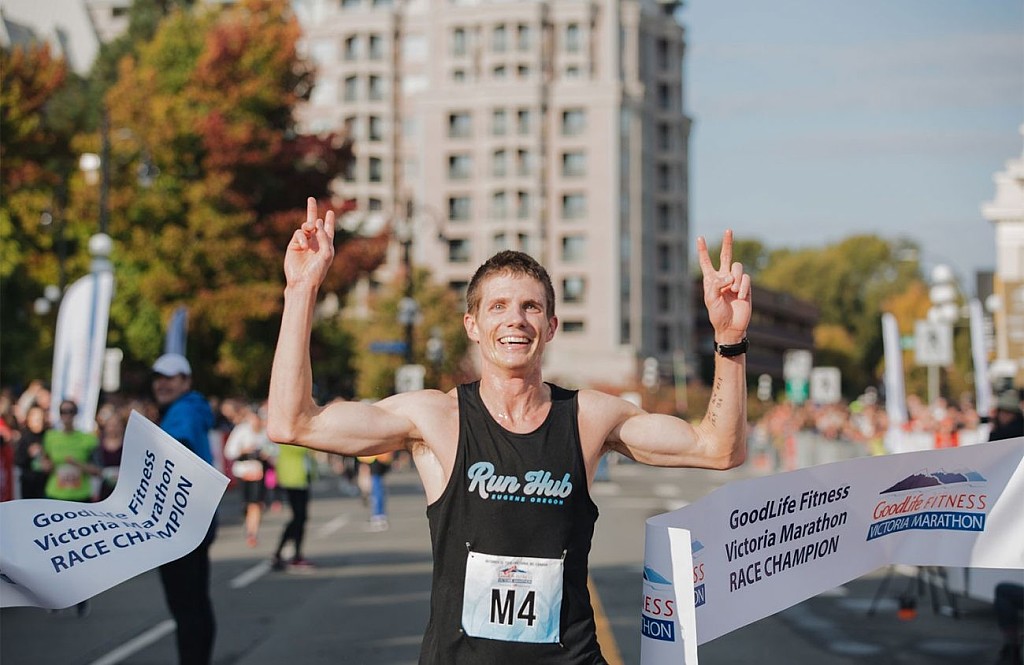
Eric Finan is dealing with a broken toe, heading for the 2020 Olympic trials
The injury is the result of a mountain bike incident, but it sounds like only a minor setback for his training to run the marathon in the 2020 Olympic trials in Atlanta, Georgia, on Feb. 29. He’s optimistic that he’ll soon be running 100 miles a week again.
Finan has made many major life decisions based on running, and when he runs at the trials on Leap Day, he’s accomplishing a goal that he once thought had disappeared years ago.
Before moving to Eugene in 2015, Finan attended University of Cincinnati because he wanted to pursue engineering while also running in a competitive collegiate conference. After graduating in 2012, he wanted to run in a post-collegiate group, but because he was injured during the last part of his fifth season, he says those running groups didn’t want him.
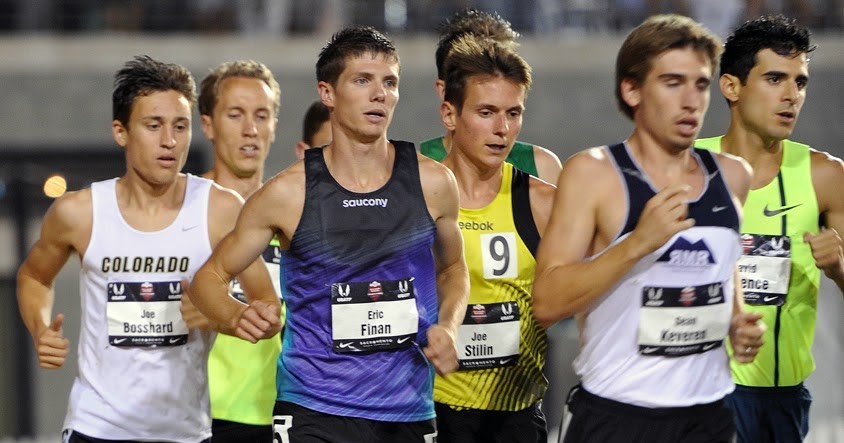
He worked in Cincinnati for a year and got healthy. In 2013, he ran the U.S. Half Marathon Championships in Minnesota, finishing in 1:04:42. He attracted the attention of Team USA Minnesota, so he moved to Minneapolis to run with the group.
But after again suffering some injuries from the higher-intensity philosophy of the coach there, Finan says he decided to run with Team Run Eugene, so he looked for work in the area.
Today, Finan is coached by Tim Sykes, who was a volunteer assistant coach at the University of Oregon before moving to Western Kentucky University for a full-time coaching job.
A self-described realist, Finan says he’s not expecting to make it in the top three on the U.S. team that would compete in Tokyo. Judging by the results from the 2012 Olympic trials in Houston, to make the team he’d need to finish under 2:10 — meaning he’d have to run a 5-minute pace.
He’s setting the bar at a top-25 finish, but he’s not necessarily running the trials to make the team. It’s about completing promises he made to himself while in high school.
He set two life goals then: to run a 4-minute mile and run in the Olympic trials. He completed the first goal, but missed the second goal in 2016 by seven seconds and didn’t make the trials for the 5k event.
Finan says he was devastated that he didn’t make the trials. He didn’t run for a few months and drank and ate to excess.
“I had my mind set on the trials. I had my heart set, my body, my soul to compete in the Olympic trials,” he says. “I believed it in my entire being that this thing was going to be true.”
He adds that he took it as a given that he would be running in the trials and was already thinking about preparing himself for the actual race. “I was crushed, and I was definitely depressed,” he says about missing the cutoff time. “I felt like I had worked so hard — for what?”
After taking a few months off from running — the longest non-injury break he’d ever taken — he talked with some friends and hit the pavement running again. It was a rough first month back because he hadn’t treated his body well during that break, he says.
About 12 weeks of training later, thanks to a dedication to weight training and years of high-volume running, he made his marathon debut at California International Marathon in Sacramento, finishing at 2:17:51.
The result meant that he could — after missing trials in the 5k — satisfy that other running goal he established for himself. He returned to Sacramento in 2017, finishing the race at 2:16:42, qualifying to compete in the U.S. Olympic Trials.
by Henry Houston
Login to leave a comment
2028 US Olympic Trials Marathon
Most countries around the world use a selection committee to choose their Olympic Team Members, but not the USA. Prior to 1968, a series of races were used to select the USA Olympic Marathon team, but beginning in 1968 the format was changed to a single race on a single day with the top three finishers selected to be part...
more...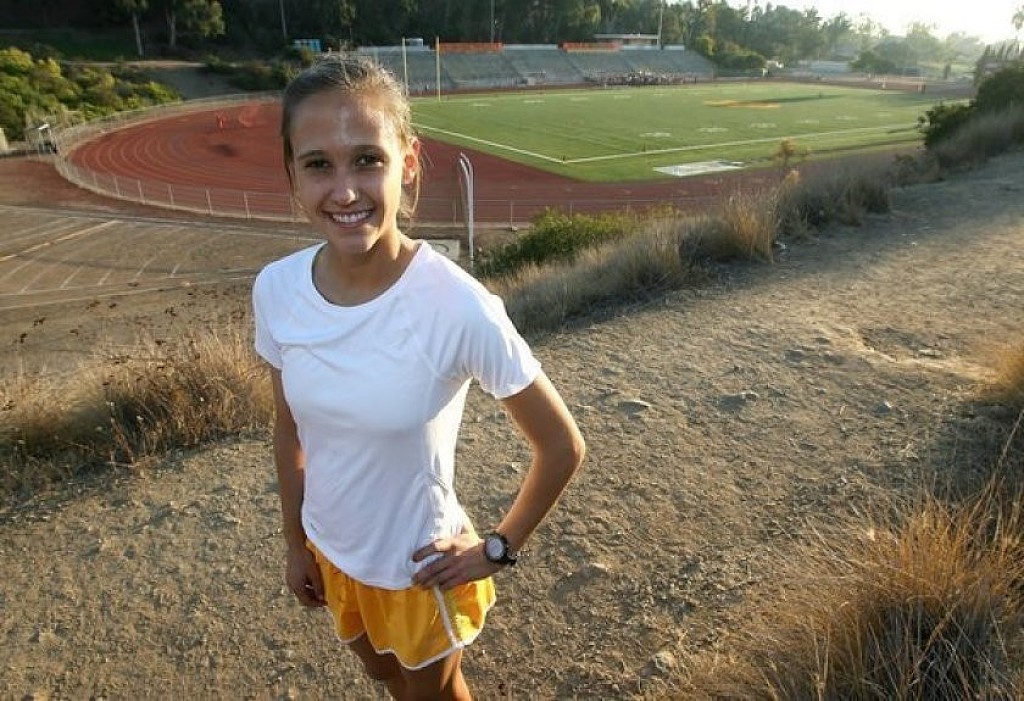
After have had Open Heart Surgery, Erin Menefee Qualifies for Olympic Trials
Two and a half years ago, Erin Menefee didn’t know if she’d be able to run competitively again after having open heart surgery. But on December 8, the 27-year-old physical therapist realized her dream when she qualified for the 2020 U.S. Olympic Marathon Trials at the California International Marathon (CIM) in Sacramento with a time of 2:43:10.
Surrounded by dozens of other women who qualified for the first time, Menefee basked in the accomplishment of a goal that motivated her throughout the long recovery. For the first time since she underwent surgery for a rare congenital heart defect in July 2017, she ran a personal best by more than eight minutes.
Setting a lifetime PR that beat the Trials standard by almost two minutes wasn’t just a running milestone for the San Diego native—it was a turning point in her life.
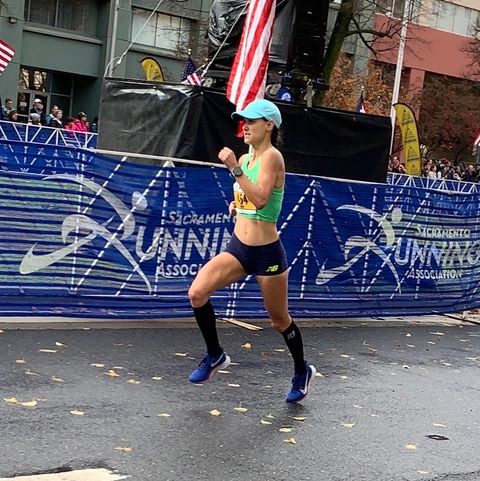
“Not having the definition of ‘post-heart surgery PR’ for this one just feels like a big weight [has been] lifted,” Menefee told Runner’s World. “I’m finally back to who I was before.”
Menefee was nearing the end of a long run in December 2015 when her heart started beating at an alarmingly fast pace and pain shot down her left arm. At just 24 years old, the former collegiate runner for the University of Arizona thought she was having a heart attack. Menefee could barely breathe, but she managed to get herself to the emergency room.
After a series of tests, her cardiologist discovered that she had partial anomalous pulmonary venous return, a condition where the veins that are supposed to carry blood to the heart’s upper left chamber instead carry it to the heart’s upper right chamber, or to other blood vessels. When this happens, poorly-oxygenated blood mixes with oxygen-rich blood, thus robbing the body of oxygen. The diagnosis meant that Menefee was only getting about 60 percent of the oxygen needed from her lungs to her body.
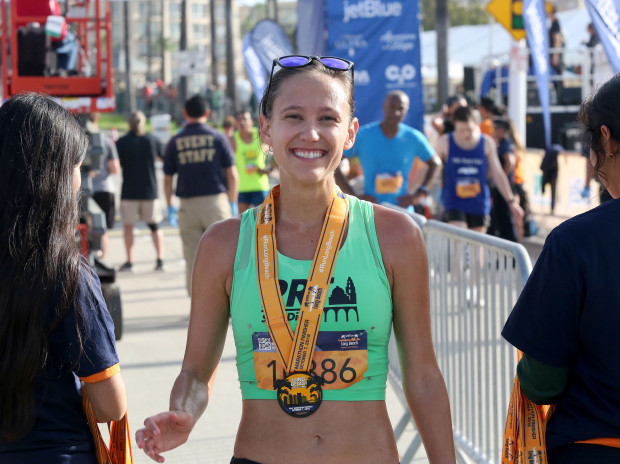
Because she was a healthy, young runner competing at a high level, the doctors decided to forgo the surgery option for periodic check-ups on the size of her heart. Eight months later, Menefee was getting lightheaded standing up from a chair and the tips of her fingers turned blue from the lack of oxygen traveling to the rest of her body. When she went in for more tests, they discovered that her heart was so enlarged that it required surgery.
On July 26, 2017—after she graduated from San Diego State University’s doctor of physical therapy program and days after she took her board exams—Menefee went in for surgery at Ronald Reagan UCLA Medical Center. During the nine-hour procedure, doctors built a stent and moved her vein into its proper place from her heart to her lung. In order to reach her organs, they had to saw open her sternum.
The surgery was a success, and six weeks later, Menefee was cleared to go on her first run: an 8:49 mile.
Just five months before her surgery, Menefee had made her 26.2 debut at the 2017 Los Angeles Marathon, finishing in 2:51:31—within striking distance of 2:45:00, the 2020 Trials time standard. She trained for the marathon with the San Diego-based Prado Racing Team under Paul Wellman.
by Taylor Dutch
Login to leave a comment
2028 US Olympic Trials Marathon
Most countries around the world use a selection committee to choose their Olympic Team Members, but not the USA. Prior to 1968, a series of races were used to select the USA Olympic Marathon team, but beginning in 1968 the format was changed to a single race on a single day with the top three finishers selected to be part...
more...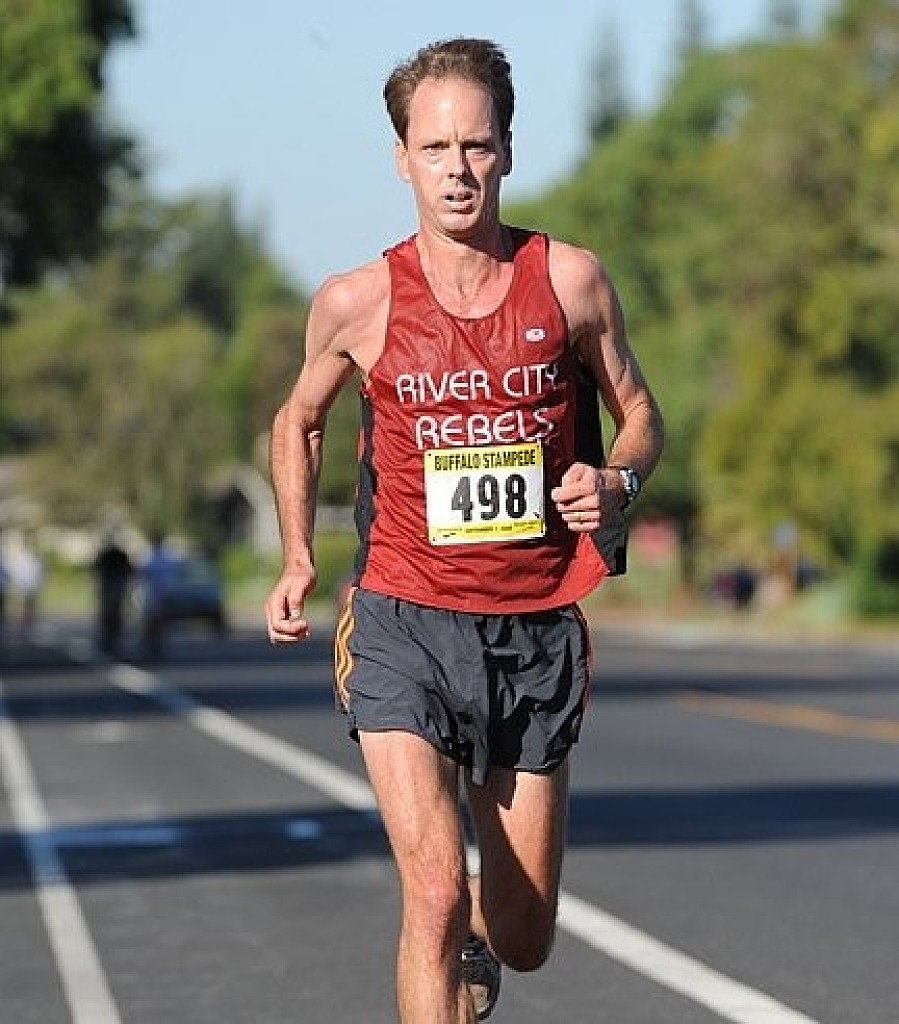
Iain Mickle of Sacramento turned 59 three days before this year’s California International Marathon and finished in an impressive 2:42:57
Californian Iain Mickle of Sacramento takes the record for most time elapsed between sub-3 finishes. Even more impressive is that the first time he ran a sub-3 was a staggering 42 years, 151 days previously, when he was a junior in high school.
That’s a world record–for the longest elapsed time between two sub-3 marathon finishes, according to the Association of Road Racing Statisticians.
According to 1968 Boston Marathon champion Amby Burfoot’s entertaining story in Podium Runner, Mickle’s first sub-3 was at the San Francisco Marathon in July 1977, where he finished in about 2:50, 10 minutes ahead of his father, who ran the same race. It was also Mickle’s first marathon.
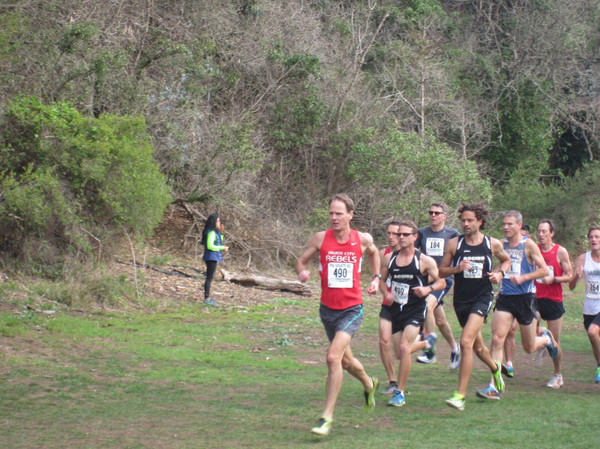
But Mickle didn’t run competitively very much for the next several years, so he doesn’t earn any kudos for sub-3 finishes across multiple decades or anything like that. Still, his comeback, which started about 10 years ago, is impressive.
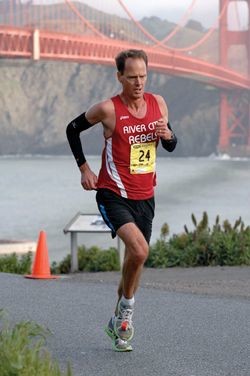
He ran a PB of 2:38 at the 2014 Boston Marathon, and was #3 on the list of longest time elapsed between sub-3s, with 40 years, 146 days between sub-3s, before CIM put him on top.
Mickle’s record could be in danger, though. He took it from Antonio Arreola, 60, who is hoping to take it back again at Houston on January 19.
If Arreola does go sub-3 in January, he will have sub-3 finishes spanning 43 years and 45 days, and it would also make him one of the first runners in history to achieve sub-3 finishes spanning six decades.
Arreola’s last marathon was last year’s CIM, where he ran 2:54:48. Since then he has been dealing with non-Hodgkin’s lymphoma, but managed to race two half-marathons this fall, finishing both in 1:22 high. Arreola set his PB of 2:46:17 in 2001.
by Anne Francis
Login to leave a comment
California International Marathon
The California International Marathon (CIM) is a marathon organized by runners, for runners! CIM was founded in 1983 by the Sacramento Running Association (SRA), a 501(c)(3) non-profit organization. The SRA Board of Directors is comprised of runners with a combined total of 150+ years of service to the CIM. The same route SRA management created for the 1983 inaugural CIM...
more...