

Running News Daily
Running News Daily is edited by Bob Anderson and team. Send your news items to bob@mybestruns.com Advertising opportunities available.
Index to Daily Posts · Sign Up For Updates · Run The World Feed
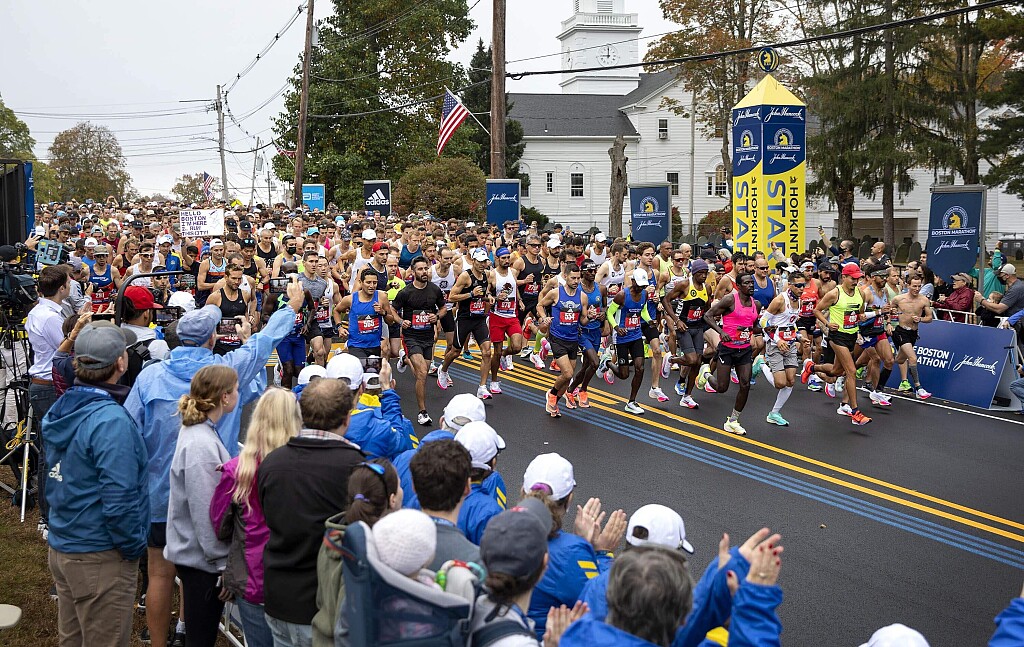


Boston Marathon Opens 2027 Registration With New Lifeline For Runners Who Miss The Cut-Off
Registration for the 2027 Boston Marathon opened today, September 14, giving thousands of runners who have achieved the official qualifying standards their chance to apply for one of the most coveted places in road racing. The registration window will remain open through Friday, September 18, at 5:00 p.m. Eastern Time.
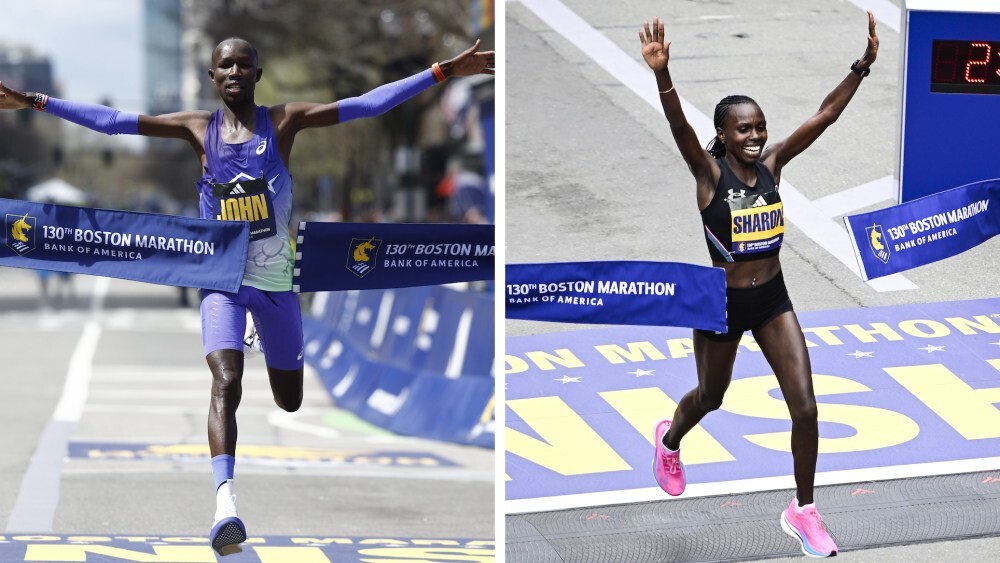
The 2027 edition of the Boston Marathon will bring a major change to the qualification process. For the first time, runners who meet their age-group qualifying standard but finish outside the eventual cut-off will have an additional opportunity to gain entry through a new Boston Qualifier Selection.
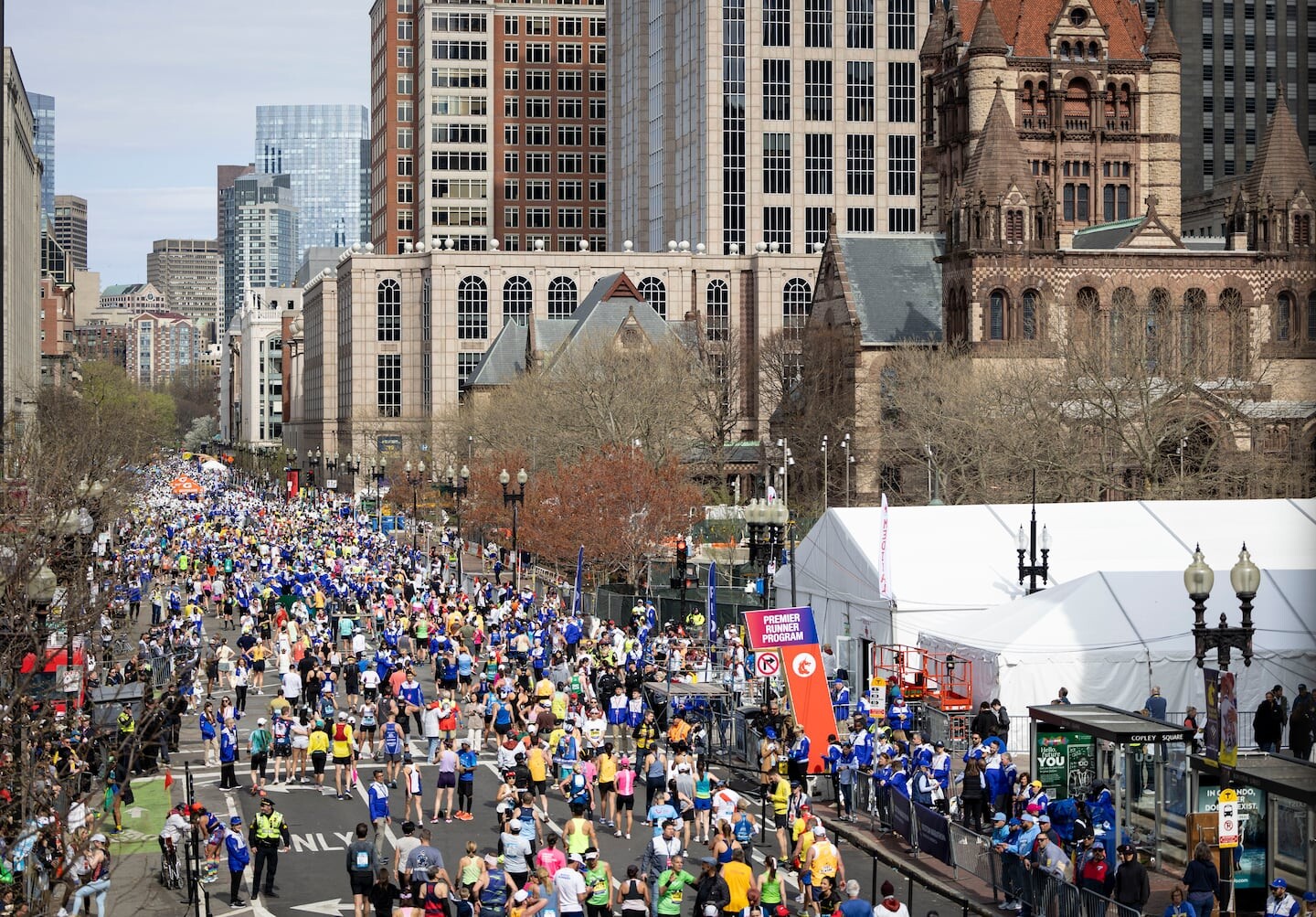
After registration closes, the Boston Athletic Association (B.A.A.) will verify performances and rank applicants according to how far they finished under their respective qualifying standards. The fastest qualifiers will be accepted first, with their performances determining the cut-off for each age and gender group.
But this time, missing that cut-off will not necessarily mean the end of the dream. Approximately 1,000 runners whose qualifying performances are not fast enough to secure automatic entry will be randomly selected through the Boston Qualifier Selection. Those athletes will automatically be included in the pool for the additional draw.
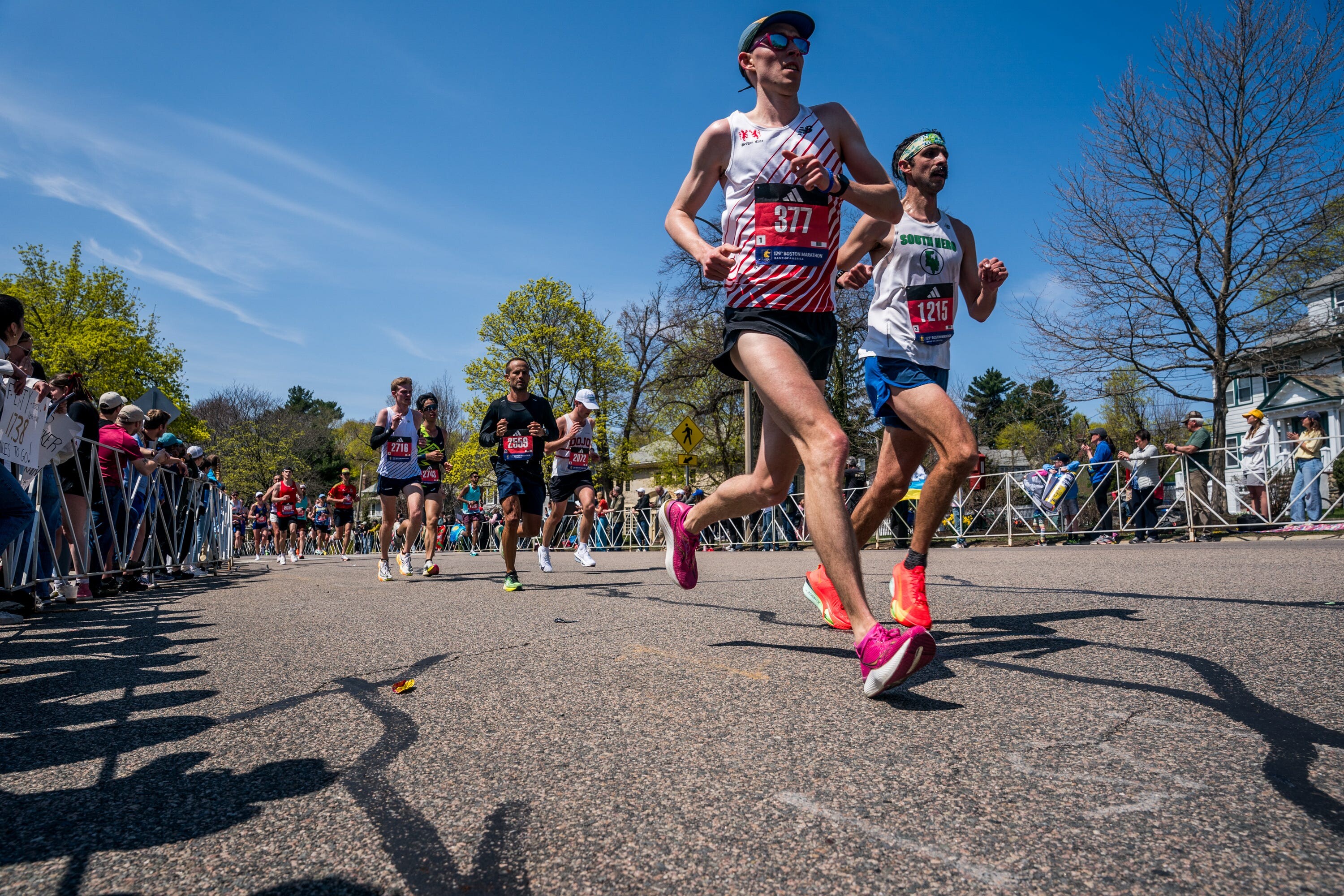
The new system comes as demand for Boston continues to outpace the number of available qualifying places. In recent years, simply achieving the published standard has increasingly failed to guarantee entry. For the 2025 Boston Marathon, 12,324 qualified applicants were not accepted, while another 8,887 missed out for the 2026 race after the qualifying field produced a cut-off of 4 minutes and 34 seconds faster than the applicable standard.
That reality has transformed Boston qualification into a race within the race. A runner may finish under the official standard and still need to be several minutes faster to secure a place, depending on the strength and size of the applicant pool.
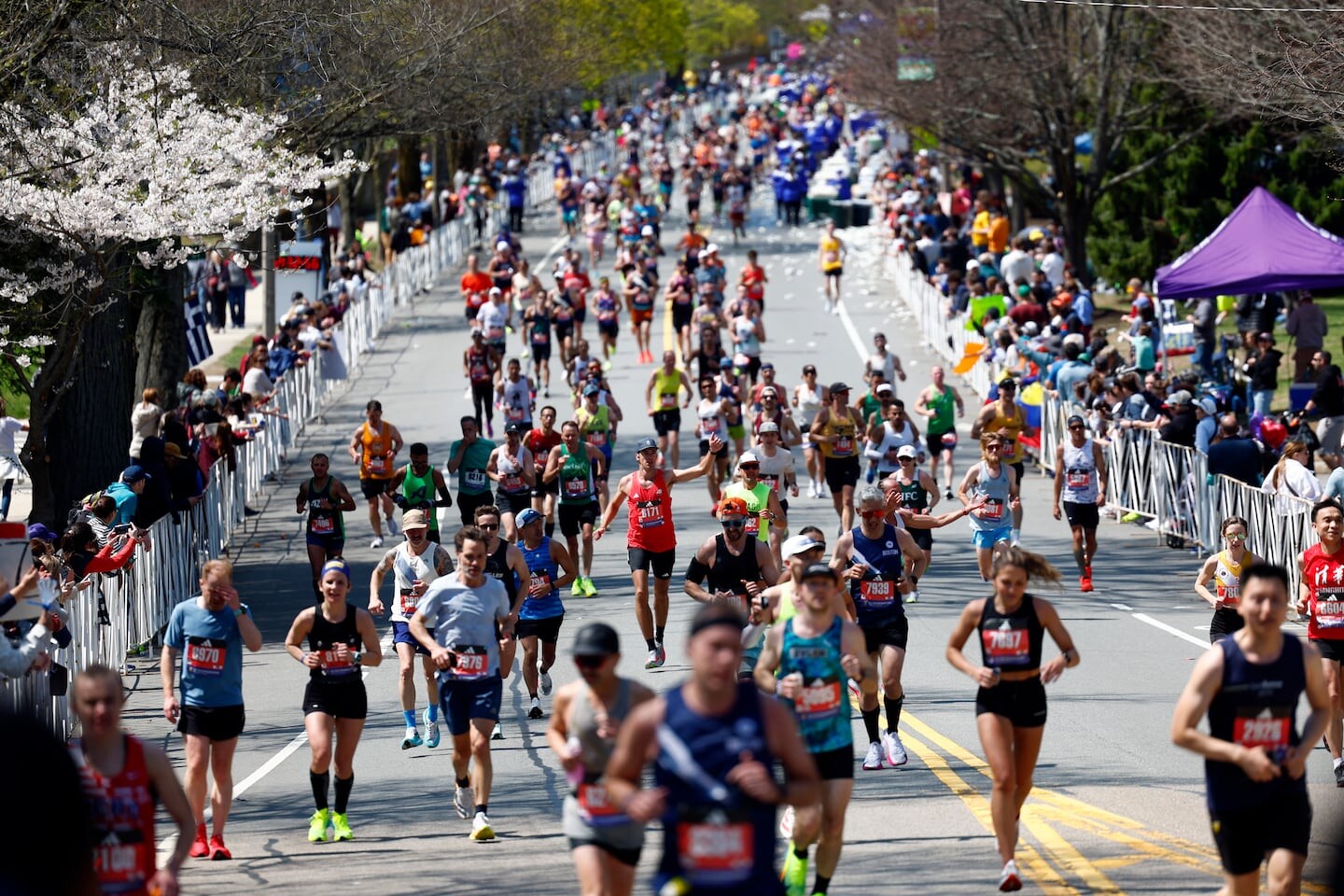
The new random-selection component therefore offers a small but significant second chance to runners who have already done what Boston asks of them: beat the qualifying standard for their age and gender. The B.A.A. says the change reflects the increasingly fast pace of marathon running and the growing global demand for places in the historic race.
There is another important change for the 2027 registration cycle, and it could have a major impact on runners choosing where to chase their qualifying times.
The B.A.A. has introduced a net-downhill adjustment for qualifying performances. Any verified qualifying time recorded on a course with a net elevation drop of at least 1,500 feet will receive an adjustment when submitted for Boston consideration. Courses with a net drop of 1,500 to 2,999 feet will receive a five-minute addition, while courses dropping 3,000 to 5,999 feet will receive a 10-minute addition. A course with a net downhill of 6,000 feet or more will not be accepted as a Boston qualifying course.
The rule means a runner's official finishing time may not necessarily be the time ultimately used by Boston for qualification purposes. For example, a 2:45:30 performance on a course with a 2,000-foot net descent would be assessed as 2:50:30 after the five-minute adjustment.
The B.A.A. says the policy is intended to account for the significant advantage provided by courses with substantial net elevation loss and to create a more consistent standard for athletes qualifying around the world.
Despite the changes, the published 2027 qualifying standards remain unchanged. Men aged 18–34 must run 2:55:00, while women and non-binary runners in the same age group must run 3:25:00. The standards gradually increase across the older age groups, with runners aged 80 and above required to run 4:50:00 for men and 5:20:00 for women and non-binary athletes.
Importantly, qualifying standards are based on a runner's age on race day, April 19, 2027, and qualifying times must be official net times from eligible certified marathon courses. Meeting the standard still does not guarantee entry because the size of the qualifying field remains limited.
For runners chasing Boston, the message is clear: running under the standard remains the first hurdle, but running significantly faster can still make the difference between receiving a bib and watching from home. The new Boston Qualifier Selection, however, gives approximately 1,000 additional qualifiers a chance that did not previously exist.
The 131st Boston Marathon, will be held on Monday, April 19, 2027. Qualifier applicants are expected to receive their acceptance or non-acceptance notifications by early October.
Boston, long regarded as one of the hardest major marathons to enter through qualification, is changing with the times. As runners get faster and the global appetite for the race continues to grow, the road to Boylston Street is becoming more competitive—but for around 1,000 runners who fall just short of the cut-off, the dream will now remain alive a little longer.
by Erick Cheruiyot for My Best Runs.
Login to leave a comment

Boston Marathon
Among the nation’s oldest athletic clubs, the B.A.A. was established in 1887, and, in 1896, more than half of the U.S. Olympic Team at the first modern games was composed of B.A.A. club members. The Olympic Games provided the inspiration for the first Boston Marathon, which culminated the B.A.A. Games on April 19, 1897. John J. McDermott emerged from a...
more...
The Boston Marathon Trap: Why A “BQ” May Still Not Be Enough
For thousands of marathon runners around the world, qualifying for the Boston Marathon is more than a race goal — it is a badge of honour, a symbol that months and sometimes years of disciplined training have finally paid off.
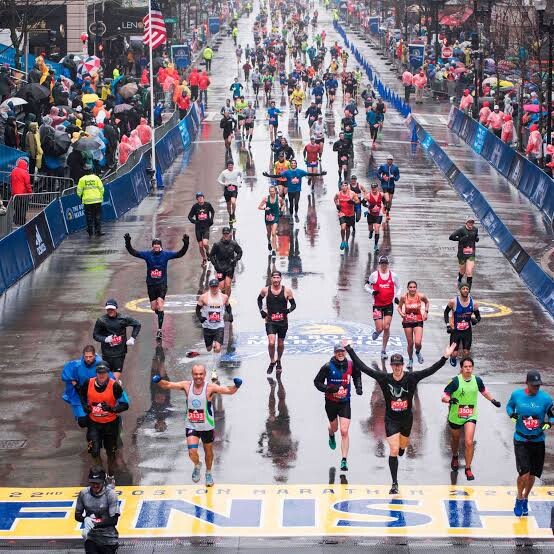
But there is an important distinction every aspiring Boston runner needs to understand: running under the official Boston qualifying standard does not automatically guarantee a place on the starting line.
That reality has caught out countless runners who believed that crossing the finish line a few seconds inside their qualifying mark meant their Boston dream was secured.
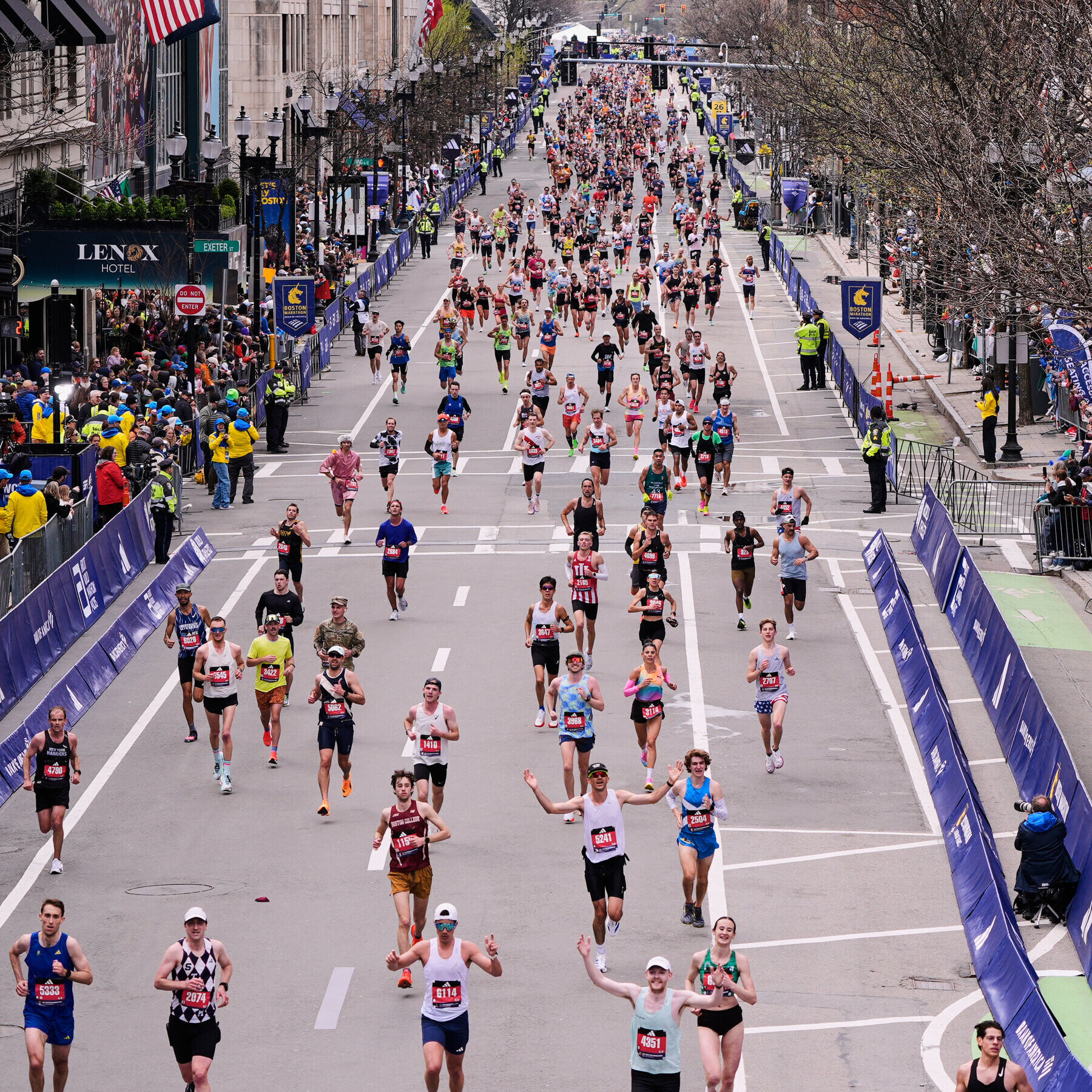
It does not.
The Boston Athletic Association (B.A.A.) sets qualifying standards according to age and gender, but the race also has a limit on the number of participants. When the number of qualified applicants exceeds the available places, the fastest runners within the qualifying pool are given priority. In other words, simply achieving the published standard gives you the opportunity to apply — it does not guarantee acceptance.
The Cutoff Is The Number That Really Matters
This is where the famous Boston “cutoff” comes into play.
The cutoff represents how much faster than the official qualifying standard a runner needed to be in order to gain entry that particular year. And it can change significantly depending on how many runners apply and how fast the qualifying field is.
The numbers tell the story.
For the 2024 Boston Marathon, the cutoff was 5:29. For 2025, it climbed sharply to 6:51. For the 2026 race, the cutoff settled at 4:34, meaning accepted qualifiers needed to be at least four minutes and 34 seconds faster than their applicable age- and gender-based standard.
That means a runner who finishes a marathon just 30 seconds under the published qualifying standard can technically be a Boston qualifier — yet still miss out on an actual place.
And that is where the heartbreak begins.
Imagine spending months building mileage, sacrificing weekends, surviving brutal workouts and finally producing the race of your life. You cross the line, look at your watch and discover that you have beaten the Boston standard.
For a moment, you believe you are going to Boston.
Then registration closes.
And you discover that the field was faster than expected.
Don't Train For The Bare Minimum
For runners serious about making the journey to Hopkinton, Massachusetts, the lesson is straightforward: don't make the official qualifying standard your ultimate target.
Make it your starting point.
If your age-group standard is 3:00:00, for example, training specifically to run 2:59:59 may leave almost no margin for the realities of Boston qualification. A stronger strategy is to set a substantially faster personal target, giving yourself a buffer against an unpredictable cutoff.
A five-minute cushion is often discussed among Boston hopefuls as a sensible ambition, but runners should understand that there is no guaranteed “safe” buffer. The cutoff is determined after registration based on the qualifying pool, and even a five-minute margin cannot promise entry in every year.
The smartest approach is therefore to aim as far under your standard as your training and ability realistically allow.
Boston Is Getting Faster
The growing difficulty of earning a place reflects the popularity and competitiveness of the marathon.
The B.A.A. has acknowledged that demand for Boston has increased while marathoners have continued to get faster. For the 2026 race, the organisation tightened qualifying standards by five minutes for runners aged 18–59, yet the race still received far more qualifying applications than available places.
For the 2026 Boston Marathon, the B.A.A. received 33,249 qualifier applications. Of those, 8,887 applicants were ultimately not accepted, despite having achieved the official qualifying standard.
Those numbers provide a powerful reminder: Boston qualification is no longer simply about beating a published time. It is about beating it by enough.
And There Is Another Detail Runners Must Watch
For the 2027 Boston Marathon, the B.A.A. has also introduced time-index adjustments for qualifying performances on courses with more than 1,500 feet of net elevation drop.
Depending on the amount of net downhill, a qualifying performance can receive a five- or ten-minute adjustment during the registration review process. That makes course selection an increasingly important part of the Boston qualification strategy.
So runners chasing Boston should not only ask, “Can I run the qualifying time?”
They should also ask:
“Can I run significantly faster than it — on a course that meets Boston's qualification rules?”
The Dream Is Boston. The Goal Should Be Faster Than Boston.
Qualifying for Boston remains one of the most prestigious achievements in recreational marathon running. But the difference between qualifying and getting accepted is now more important than ever.
The official standard gets you into the conversation.
Your margin gets you closer to the starting line.
So if Boston is the dream, don't build your entire training cycle around scraping under the qualifying mark by a few seconds. Give yourself room. Chase a faster marathon. Choose your qualifying race carefully. Prepare for the possibility that the cutoff may move.
Because the ultimate goal isn't simply to say:
“I qualified for Boston.”
It is to wake up on Patriots' Day, make your way to Hopkinton, and finally hear the words every Boston hopeful has dreamed about:
“You're going to Boston.”
by Erick Cheruiyot for My Best Runs.
Login to leave a comment
Boston Marathon
Among the nation’s oldest athletic clubs, the B.A.A. was established in 1887, and, in 1896, more than half of the U.S. Olympic Team at the first modern games was composed of B.A.A. club members. The Olympic Games provided the inspiration for the first Boston Marathon, which culminated the B.A.A. Games on April 19, 1897. John J. McDermott emerged from a...
more...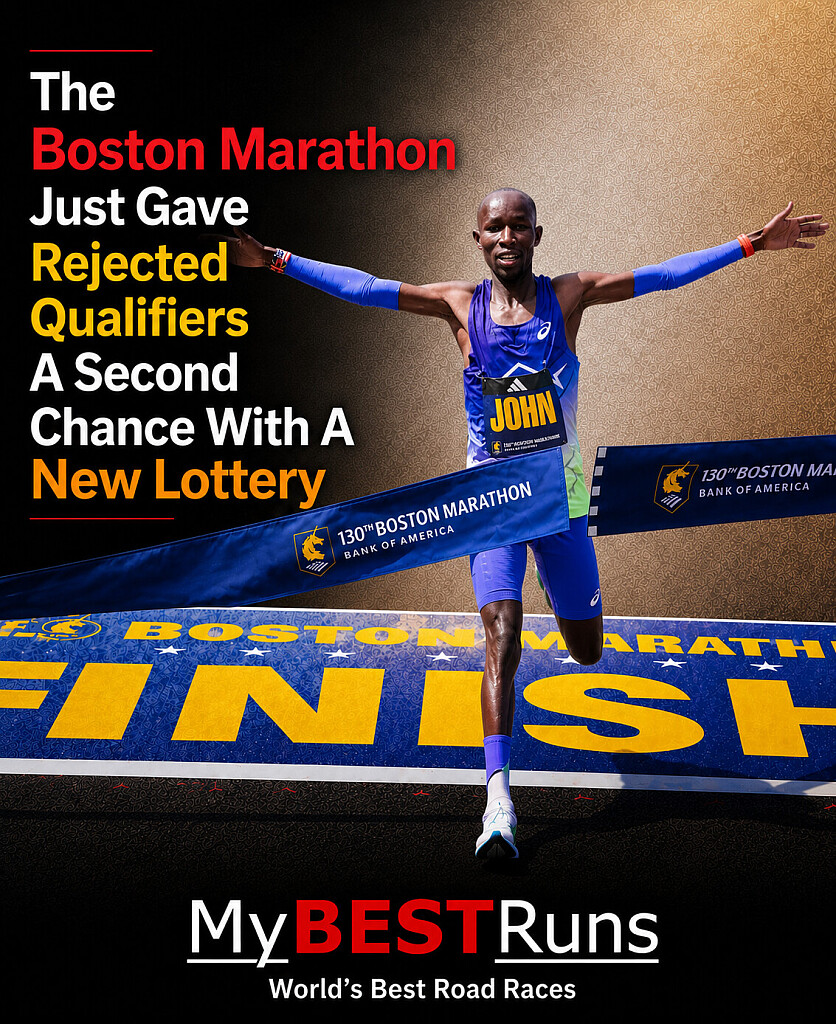
Boston Marathon Opens a New Door: Historic Lottery Gives Rejected Qualifiers a Second Chance in 2027
For generations, earning a place at the Boston Marathon has been one of the toughest achievements in distance running. Unlike most of the world's major marathons, Boston has always stood by one uncompromising principle: meet the qualifying standard—and beat everyone else who qualified—or miss out. That long-standing tradition is now evolving.
In a landmark announcement, the Boston Athletic Association (B.A.A.) has confirmed that the 2027 Boston Marathon will introduce a new lottery system, giving approximately 1,000 runners who achieve a Boston qualifying time—but narrowly miss the annual entry cut-off—a second opportunity to reach the iconic starting line in Hopkinton.
The move marks one of the most significant changes to Boston's qualification process in decades, while preserving the race's elite qualifying standards.
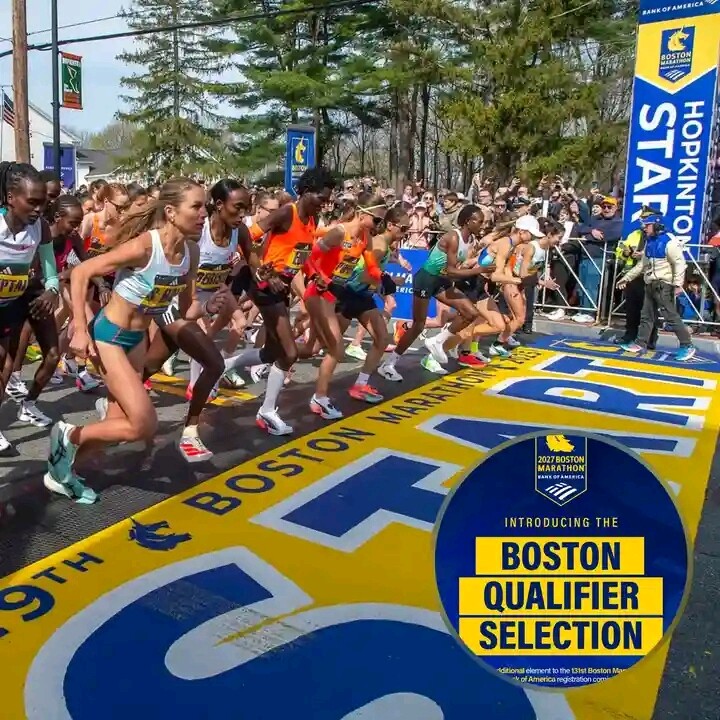
The new system will not replace Boston's traditional selection process. Instead, all applicants will continue to be ranked according to how much they exceeded the official qualifying standard for their respective age group and gender. After race times are verified, the fastest qualifiers will receive guaranteed entry until the field reaches capacity, establishing the annual cut-off time.
What changes in 2027 is what happens next.
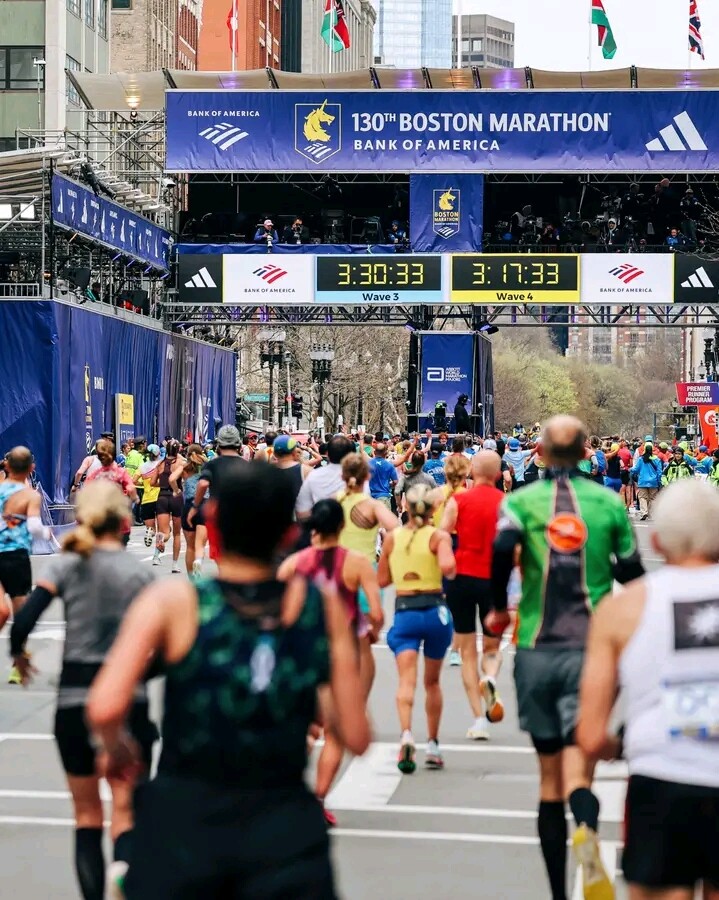
Rather than ending the process there, the B.A.A. will randomly select around 1,000 additional runners from the pool of qualified athletes who fell below the cut-off. Any runner who meets the qualifying standard but is not initially accepted will automatically be entered into the draw, with no separate application required.
The announcement comes after several years of record-breaking demand.
More than 11,000 qualified runners were denied entry for both the 2024 and 2025 editions despite posting official qualifying performances. In 2024, 11,039 qualifiers missed out, while that number climbed to a record 12,324 for the 2025 race. Even for the 2026 Boston Marathon, approximately 8,900 qualified applicants were left disappointed after 33,249 runners applied for just 24,362 available places.
Under the new format, the additional 1,000 lottery entries would have provided an opportunity to roughly one in every nine to twelve rejected qualifiers based on recent registration figures.
B.A.A. President and Chief Executive Officer Jack Fleming said the initiative reflects the increasingly competitive nature of marathon running.
"With the increasingly fast times in our sport, our random Boston Qualifier Selection gives all those who have met the standard for their age group a chance to run Boston," Fleming said.
The decision also brings Boston closer to the registration models used by its fellow Abbott World Marathon Majors. While Boston has traditionally relied almost exclusively on qualifying performances, races such as London, New York City, and Chicago have long allocated significant portions of their fields through public lotteries.
Alongside the lottery announcement, the B.A.A. also confirmed another notable update for the 2027 qualifying process. For the first time, qualifying performances achieved on courses with more than 1,500 feet (457 metres) of net elevation loss will be adjusted through a downhill indexing system, ensuring a more consistent comparison of performances across different marathon courses.
Registration for qualified runners will take place from September 14–18, 2026, with all applicants expected to receive their acceptance status in early October.
While Boston's qualifying standards remain among the most demanding in the sport, the introduction of a lottery offers hope to thousands of runners whose dreams have previously been decided by mere seconds. For the first time in the race's storied history, qualifying alone may no longer guarantee disappointment for those who narrowly miss the cut—because chance will now have a place alongside speed on the road to Boston.
by Erick Cheruiyot for My Best Runs.
Login to leave a comment
Boston Marathon
Among the nation’s oldest athletic clubs, the B.A.A. was established in 1887, and, in 1896, more than half of the U.S. Olympic Team at the first modern games was composed of B.A.A. club members. The Olympic Games provided the inspiration for the first Boston Marathon, which culminated the B.A.A. Games on April 19, 1897. John J. McDermott emerged from a...
more...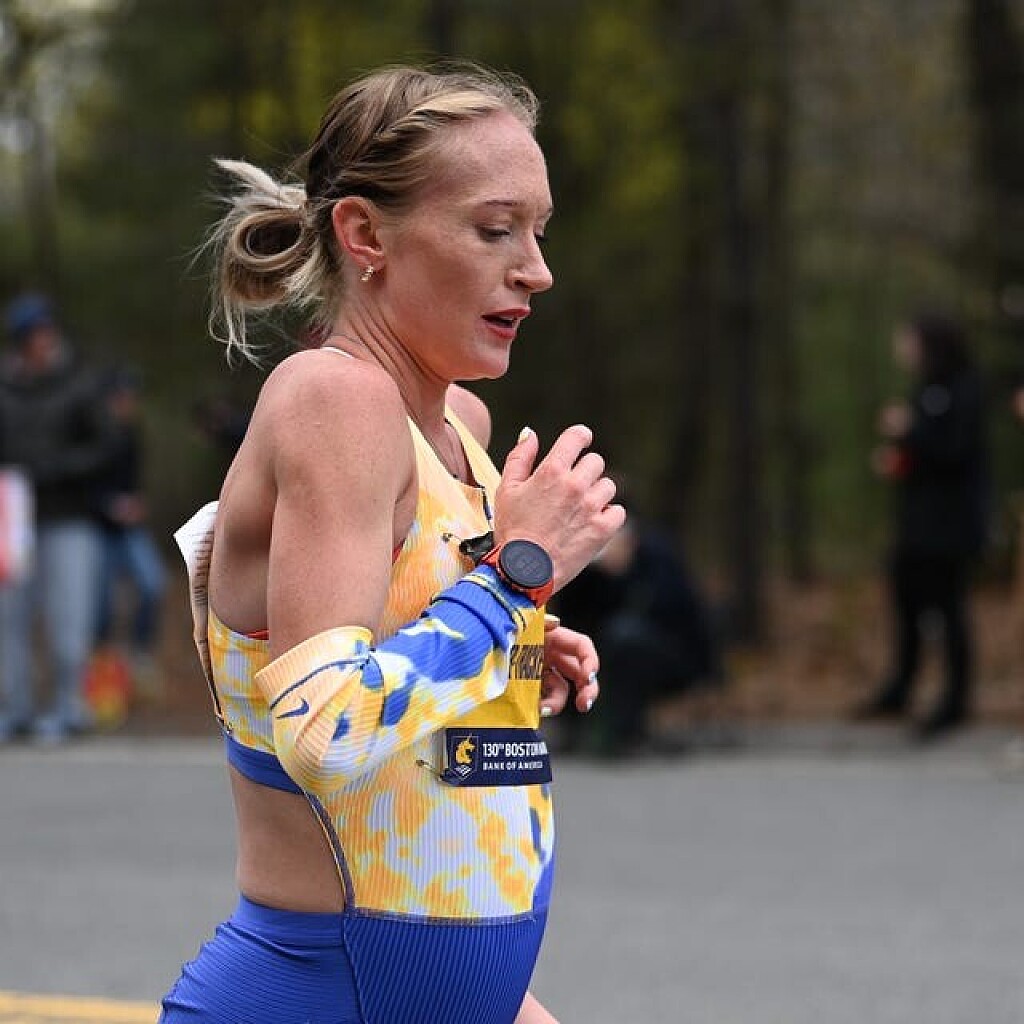
Running Beyond Limits: Calli Hauger-Thackery’s Remarkable Boston Marathon While Expecting
In a sport defined by endurance, discipline, and the relentless pursuit of limits, few stories capture the imagination quite like that of Calli Hauger-Thackery at the Boston Marathon. On a day when the world’s finest distance runners converged on the historic course, the British athlete delivered a performance that transcended competition itself.
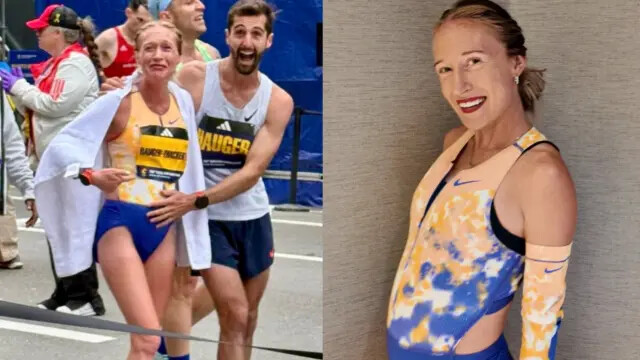
At 22 weeks pregnant and expecting her first child—a baby boy due later this August—Hauger-Thackery stepped onto the start line with a different kind of strength. While many would understandably step back from elite racing under such circumstances, she chose to lean in, embracing both the physical and emotional demands of the moment.
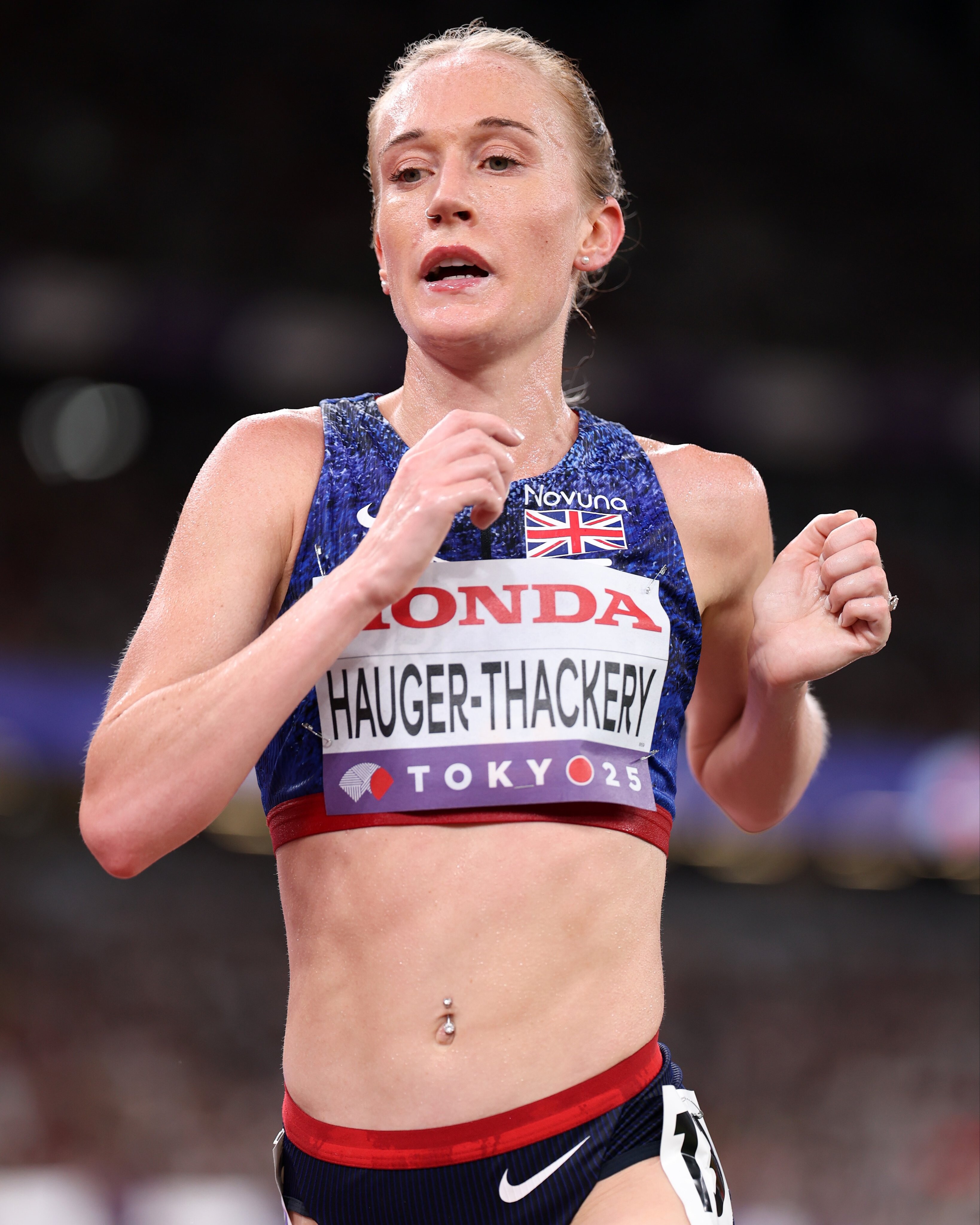
What followed was nothing short of extraordinary.
Navigating the famously challenging Boston course, she crossed the finish line in 2:43:58, securing 65th place in a highly competitive field. It was not just the time that stood out, but the context—running at a sustained pace of approximately 3:53 per kilometre while balancing the physiological demands of pregnancy.
Her performance speaks to a broader narrative within modern athletics: one where motherhood and elite sport are no longer seen as mutually exclusive. In recent years, more athletes have redefined what is possible during and after pregnancy, but Hauger-Thackery’s Boston run adds a powerful new chapter to that evolving story.
Beyond the statistics lies something more compelling—the quiet resilience required to train, prepare, and ultimately compete at such a level while carrying new life. It is a reminder that elite athletes are not only competitors, but individuals navigating complex, deeply personal journeys alongside their professional ambitions.
For Hauger-Thackery, this was not about chasing podiums or headlines. It was about showing up, testing her limits responsibly, and proving—both to herself and to the wider sporting world—that strength can take many forms.
As she now turns her focus toward motherhood, her Boston Marathon performance will linger as a defining moment—not just of athletic achievement, but of courage, balance, and redefining possibility.
by Erick Cheruiyot for My Best Runs.
Login to leave a comment
Boston Marathon
Among the nation’s oldest athletic clubs, the B.A.A. was established in 1887, and, in 1896, more than half of the U.S. Olympic Team at the first modern games was composed of B.A.A. club members. The Olympic Games provided the inspiration for the first Boston Marathon, which culminated the B.A.A. Games on April 19, 1897. John J. McDermott emerged from a...
more...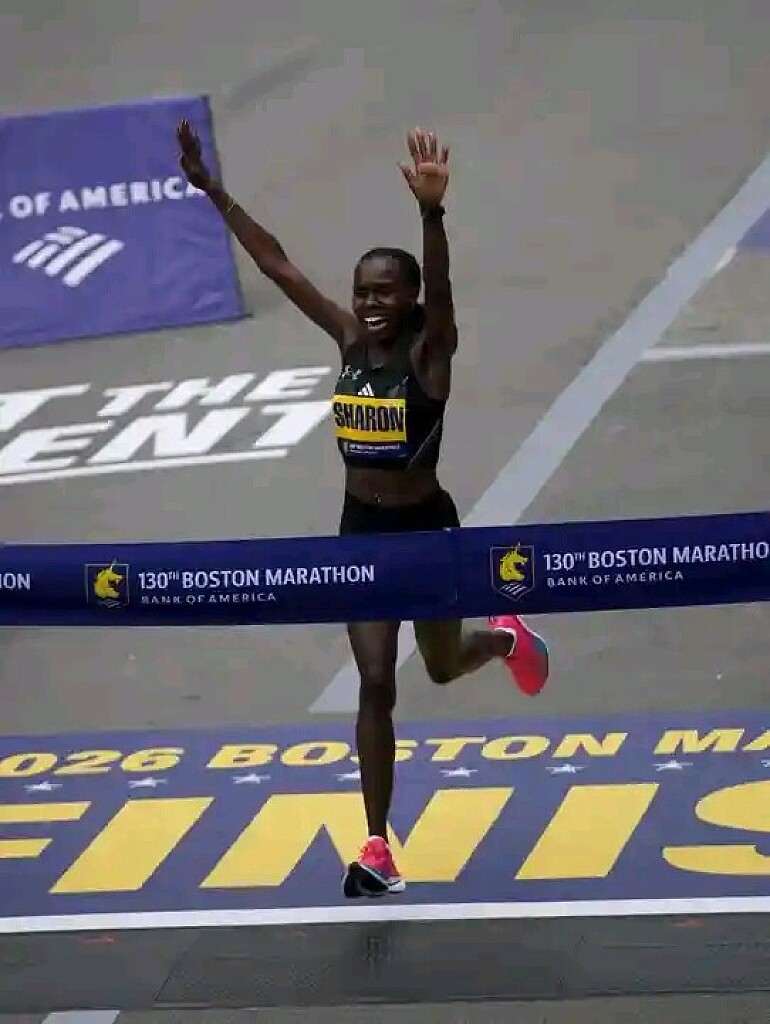
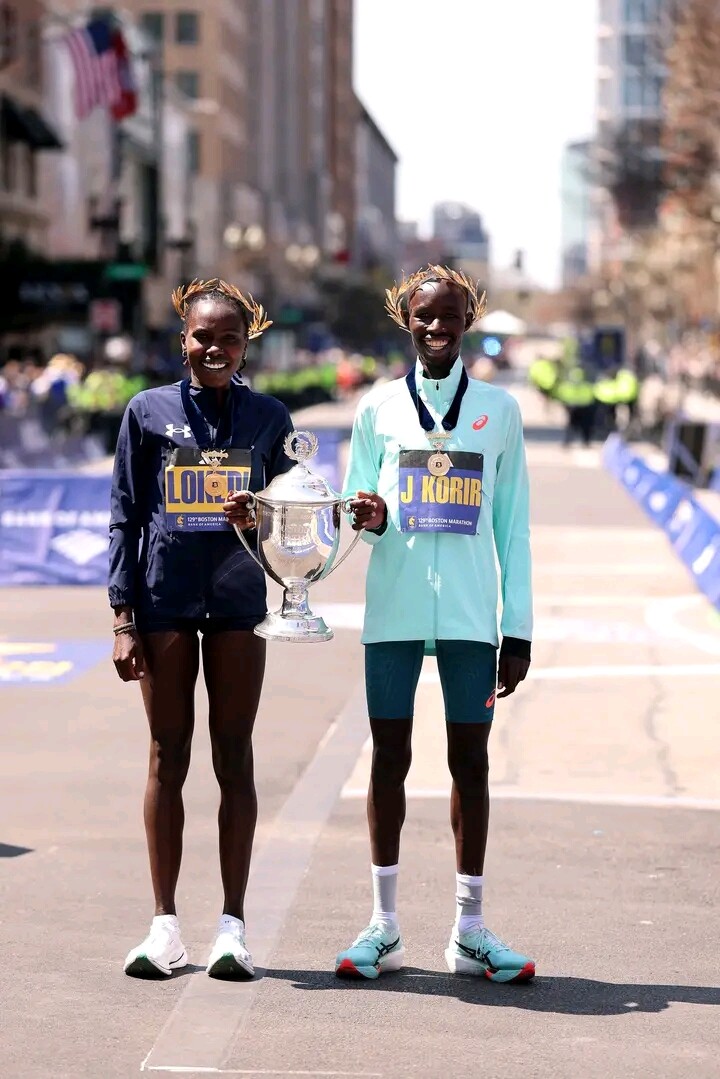
Lokedi Reigns Again as Kenya Completes Historic Boston Domination
Kenya delivered a masterclass in marathon excellence at the 2026 Boston Marathon as Sharon Lokedi successfully defended her title, leading an extraordinary clean sweep in the women’s race and reaffirming the nation’s unmatched pedigree in distance running.
With calm authority and flawless execution, Lokedi surged to victory in 2:18:51, retaining her crown in one of the world’s most prestigious road races. Under the pressure of expectation, the Kenyan star rose magnificently, proving once again that champions are defined not only by winning once, but by returning to win again.
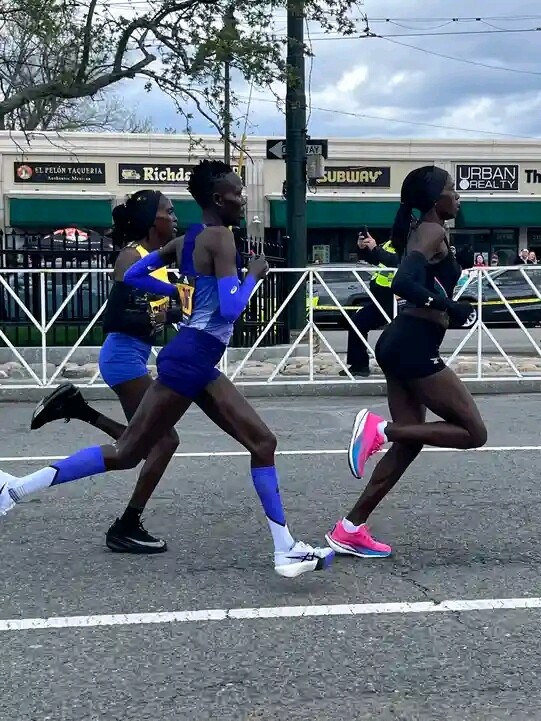
The defending champion successfully retained her title in 2:18:51, the second-fastest winning time ever recorded in Boston. Running with poise and authority, Lokedi controlled the decisive stages before unleashing a powerful late surge that left her rivals behind. It was a victory carved out through strength, tactical intelligence, and elite composure—another magnificent chapter in her growing legacy.
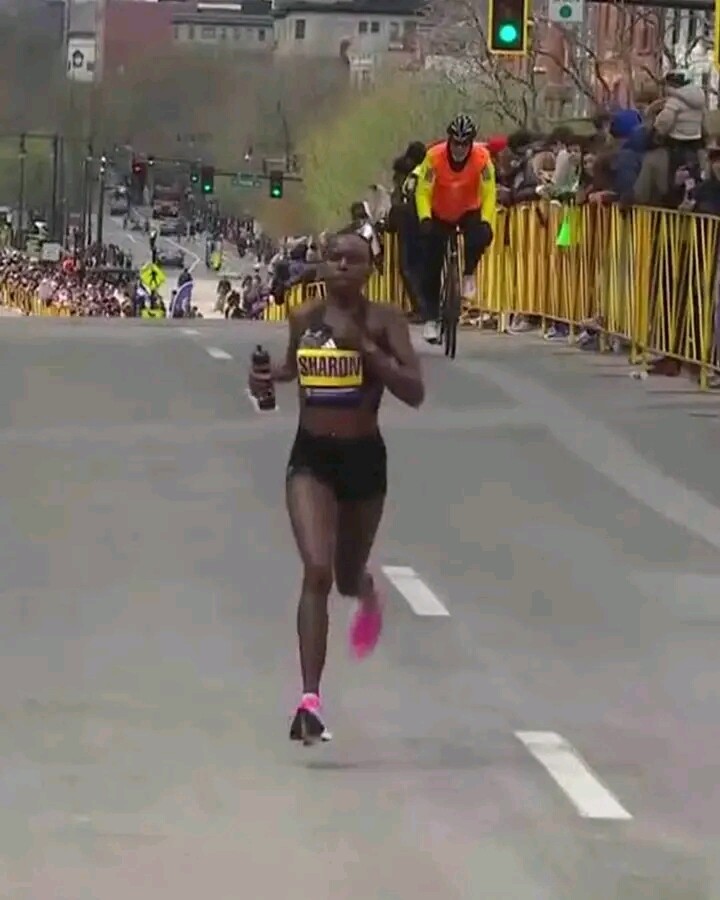
Her triumph was only the beginning of a remarkable Kenyan celebration. Loice Chemnung produced the performance of her career to secure second place in 2:19:35, running with courage and composure from start to finish. Close behind, the experienced Mary Ngugi-Cooper claimed third in 2:20:07, adding yet another major achievement to her distinguished journey in the sport.
Mercy Chelagat completed the stunning display by finishing fourth, ensuring that Kenya dominated the front of the field in emphatic fashion. It was more than just a victory—it was a statement of depth, class, and sustained excellence from a nation that continues to shape the history of long-distance running.
From the early pace battles to the decisive closing miles, the streets of Boston belonged to Kenya. Every stride reflected discipline, resilience, and the relentless spirit that has made Kenyan athletes icons across the globe.
Women’s Professional – Top 10
1. Sharon Lokedi (KEN) – 2:18:51
2. Loice Chemnung (KEN) – 2:19:35
3. Mary Ngugi-Cooper (KEN) – 2:20:07
4. Mercy Chelangat (KEN) – 2:20:30
5. Jess McClain (USA) – 2:20:49
6. Irine Cheptai (KEN) – 2:20:54
7. Workenesh Edesa (ETH) – 2:21:52
8. Annie Frisbie (USA) – 2:22:00
9. Emily Sisson (USA) – 2:22:39
10. Carrie Ellwood (USA) – 2:22:53
At the heart of it all stood Sharon Lokedi—composed, powerful, and untouchable when it mattered most. Her successful title defence now becomes another golden chapter in Boston Marathon history, while Kenya’s clean sweep will be remembered as one of the finest collective performances the race has ever witnessed.
by Erick Cheruiyot for My Best Runs.
Login to leave a comment
Boston Marathon
Among the nation’s oldest athletic clubs, the B.A.A. was established in 1887, and, in 1896, more than half of the U.S. Olympic Team at the first modern games was composed of B.A.A. club members. The Olympic Games provided the inspiration for the first Boston Marathon, which culminated the B.A.A. Games on April 19, 1897. John J. McDermott emerged from a...
more...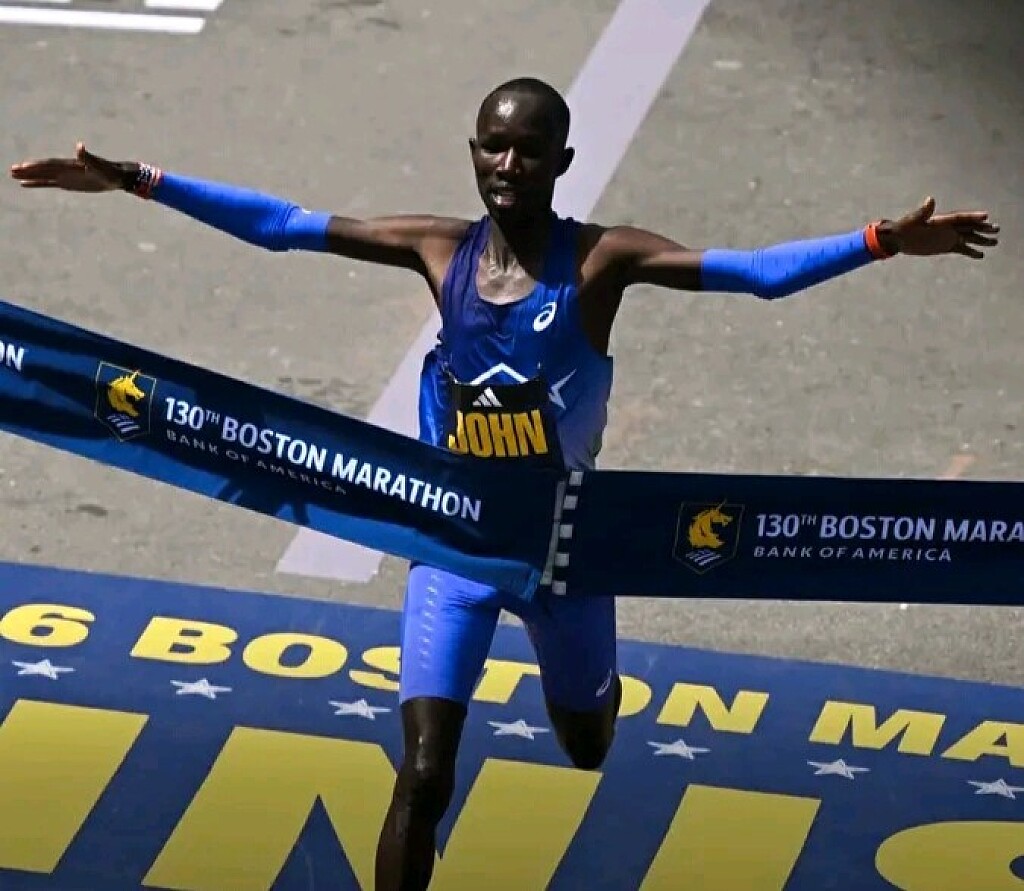
Korir Conquers Boston: Kenyan Star Rewrites Marathon History with Stunning Course Record
John Korir delivered a performance for the ages as he stormed to victory at the Boston Marathon, producing one of the fastest marathon runs ever recorded and etching his name into the sport’s history books.
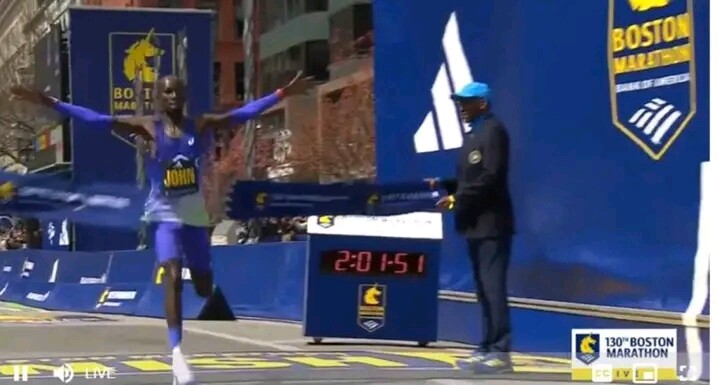
The Kenyan distance star crossed the finish line in a breathtaking 2:01:52, securing the title in emphatic fashion. That sensational mark not only shattered the previous Boston course record of 2:03:02, set by fellow Kenyan Geoffrey Mutai in 2011, but also stands as the fifth-fastest marathon time in history.
Boston is widely regarded as one of the most demanding marathons in the world. Its rolling hills, unpredictable weather, and punishing late-race climbs have tested generations of elite runners. Yet Korir turned the iconic route into his personal stage, blending tactical patience, relentless strength, and devastating speed to deliver a masterclass in endurance.
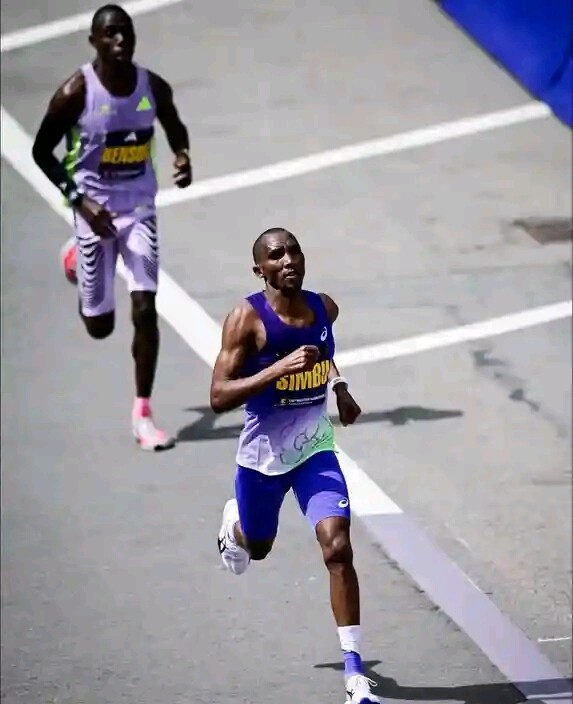
From the opening miles, the pace signaled something extraordinary. Korir remained calm within the lead group, carefully measuring his effort while others searched for an advantage. When the defining moment arrived, he surged decisively, broke clear of his challengers, and powered toward a historic finish.
Behind him, the battle for the podium was equally intense. Alphonse Simbu, the world championship medalist, produced a superb run to claim second place in 2:02:47, while former champion Benson Kipruto completed a high-quality podium in third with 2:02:50.
Korir’s triumph was about more than victory alone. By lowering one of the most respected records in road racing and defeating a world-class field, he confirmed his status as one of the defining marathoners of this generation. His brilliance was also rewarded financially, with a $50,000 course record bonus in addition to the winner’s prize.
What made the achievement even more remarkable was the extraordinary quality of the field behind him. Boston’s demanding course rarely produces such depth, yet this year’s race unfolded at a relentless tempo as elite contenders chased history from start to finish. Korir’s decisive surge after 25 kilometers broke the contest open, but the battle for the remaining podium places remained fierce, with multiple athletes producing lifetime-caliber performances. The 2026 edition will be remembered not only for a record-breaking champion, but for one of the fastest and most competitive races ever witnessed on the streets of Boston.
Men’s Professional – Top 10
1. John Korir (Kenya) – 2:01:52
2. Alphonce Felix Simbu (Tanzania) – 2:02:47
3. Benson Kipruto (Kenya) – 2:02:50
4. Hailemaryam Kiros (Ethiopia) – 2:03:42
5. Zouhair Talbi (United States) – 2:03:45
6. Tebello Ramakongoana (Lesotho) – 2:04:18
7. Charles Hicks (USA) – 2:04:35
8. Richard Ringer (GER) – 2:04:47
9. Alex Masai (KEN) – 2:05:32
10. Milkesa Mengesha (ETH) – 2:05:35
For the crowds lining the streets and the millions watching around the globe, it was a race of rare quality. For John Korir, it was the day he rose from champion to legend. In Boston, the standard has been raised—and the fastest name now belongs to Korir.
by Erick Cheruiyot for My Best Runs.
Login to leave a comment
Boston Marathon
Among the nation’s oldest athletic clubs, the B.A.A. was established in 1887, and, in 1896, more than half of the U.S. Olympic Team at the first modern games was composed of B.A.A. club members. The Olympic Games provided the inspiration for the first Boston Marathon, which culminated the B.A.A. Games on April 19, 1897. John J. McDermott emerged from a...
more...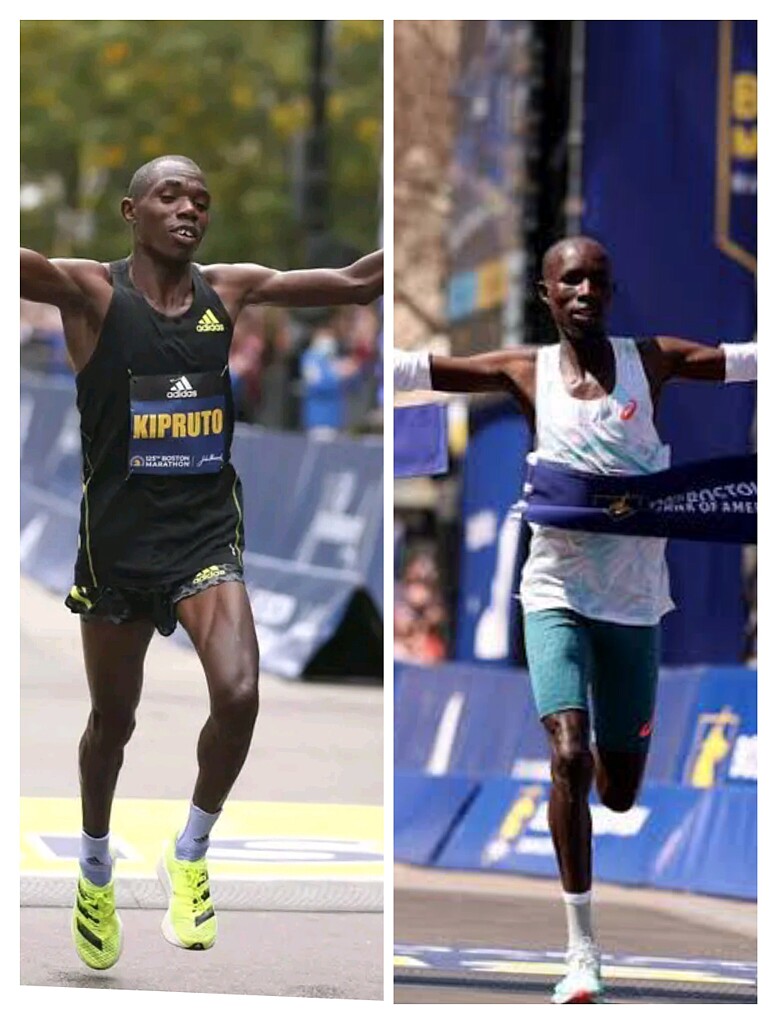
Boston Collision Course: John Korir and Benson Kipruto Ready to Ignite a Marathon Classic
The streets of Boston are bracing for a contest worthy of marathon history as two of Kenya’s finest distance stars prepare to clash in one of the most anticipated races of the season. Defending champion John Korir will return to the iconic course with unfinished ambition, but standing in his path is a man who knows exactly how to win here—former champion Benson Kipruto.
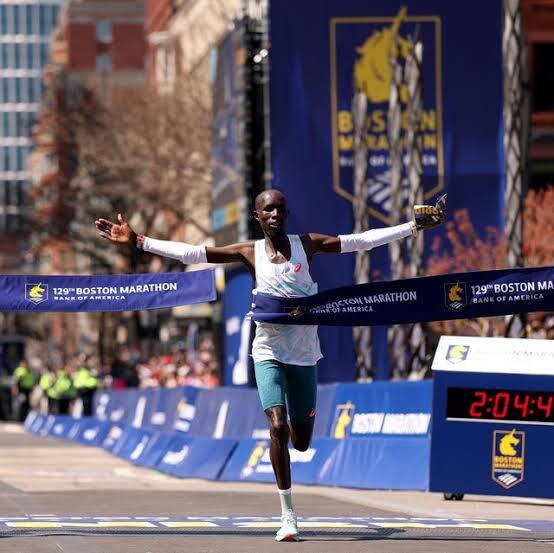
On paper, the matchup could hardly be closer. Their personal bests are separated by only eight seconds, a razor-thin margin at the highest level of marathon racing. Korir owns a lifetime best of 2:02:24, while Kipruto has gone even faster with 2:02:16. In a race measured over 42.195 kilometers, such a difference is almost invisible.
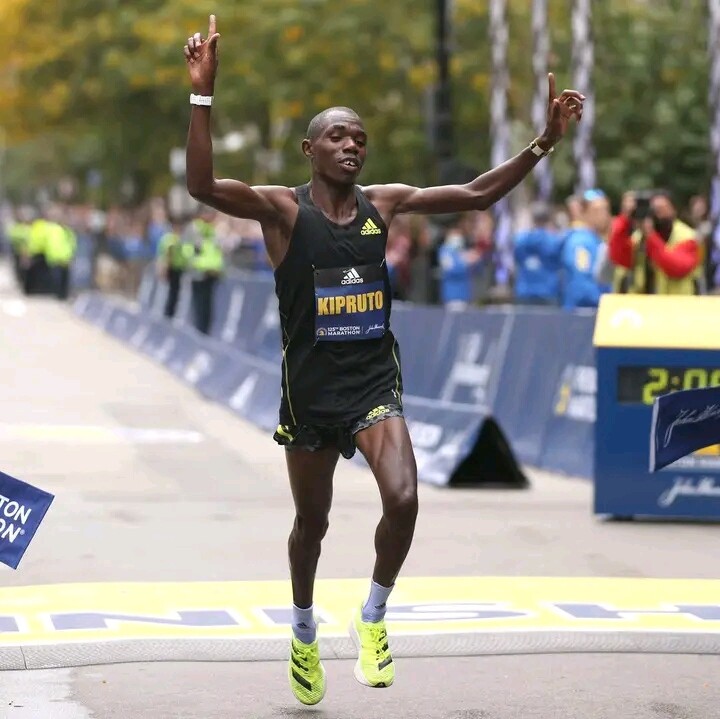
Yet statistics only tell part of the story.
Korir arrives in Boston carrying the momentum of a remarkable run of form. His recent victories in Valencia 2025, Boston 2025, and Chicago 2024 have elevated him into the sport’s elite bracket. Powerful, composed, and tactically sharp, he has become one of the most dangerous men in championship-style racing. Returning as defending champion adds another layer of pressure—but also confidence.
Kipruto, however, is no stranger to the grandest stages. His résumé speaks with authority: triumphs in New York 2025, Tokyo 2024, Chicago 2022, and, most importantly for this occasion, Boston 2021. That previous success on the demanding Boston course could prove invaluable. He understands its rhythm, its unpredictability, and the moment when patience must give way to attack.
This is more than a race between two fast men. It is a collision of momentum versus experience, title defense versus redemption, present dominance versus proven mastery.
Boston has never been a course that rewards numbers alone. Its rolling terrain, shifting weather, and legendary late-race challenges often crown the athlete with the sharpest instincts rather than the quickest personal best. Strength, courage, and timing will matter just as much as speed.
When the leaders reach the decisive miles, reputations will mean nothing. One athlete will fight to defend his throne. The other will chase a second crown. And somewhere between the opening stride and the finish line on Boylston Street, a new chapter of Boston Marathon drama will be written.
by Erick Cheruiyot for My Best Runs.
Login to leave a comment
Boston Marathon
Among the nation’s oldest athletic clubs, the B.A.A. was established in 1887, and, in 1896, more than half of the U.S. Olympic Team at the first modern games was composed of B.A.A. club members. The Olympic Games provided the inspiration for the first Boston Marathon, which culminated the B.A.A. Games on April 19, 1897. John J. McDermott emerged from a...
more...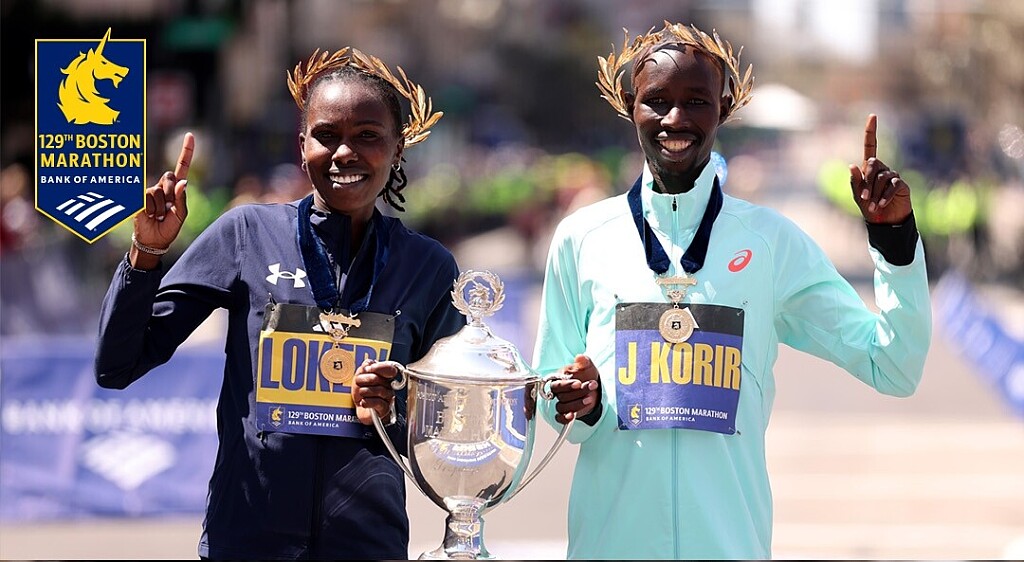
Champions Return: Korir and Lokedi Set the Tone Ahead of Boston Marathon Showdown
Anticipation is steadily building in Boston as defending champions John Korir and Sharon Lokedi have already arrived in the historic city ahead of the 2026 Boston Marathon, scheduled for Monday, April 20.
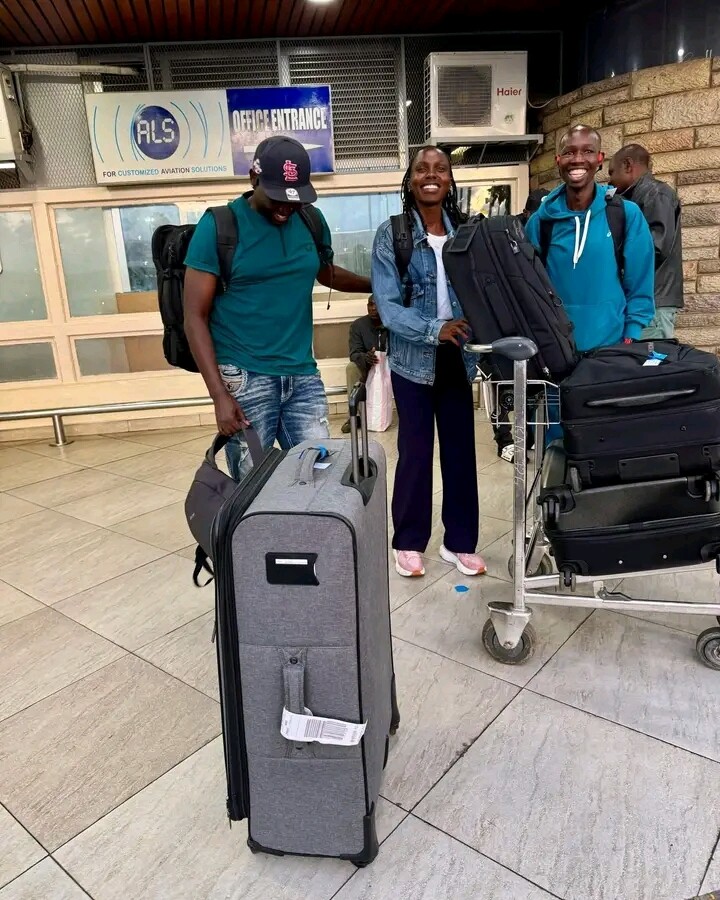
The early arrival of both athletes signals not only intent, but quiet confidence. Boston is no ordinary race—it is a course steeped in tradition, unpredictability, and prestige. For Korir and Lokedi, returning as reigning champions brings a unique blend of expectation and opportunity.
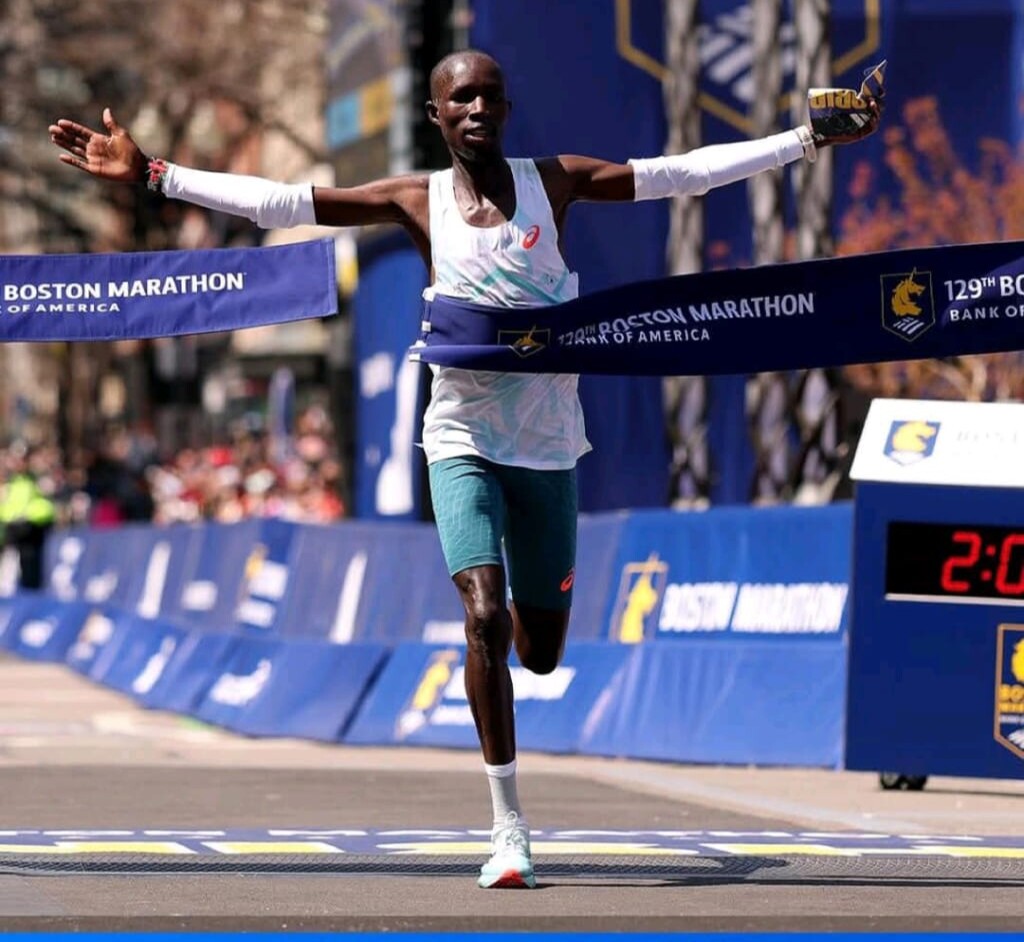
Korir, known for his strength and tactical discipline, will be aiming to defend his crown against a field that is certain to test every ounce of his endurance. The men’s race in Boston often rewards patience and resilience over pure speed, qualities the Kenyan star has consistently demonstrated on the global stage.
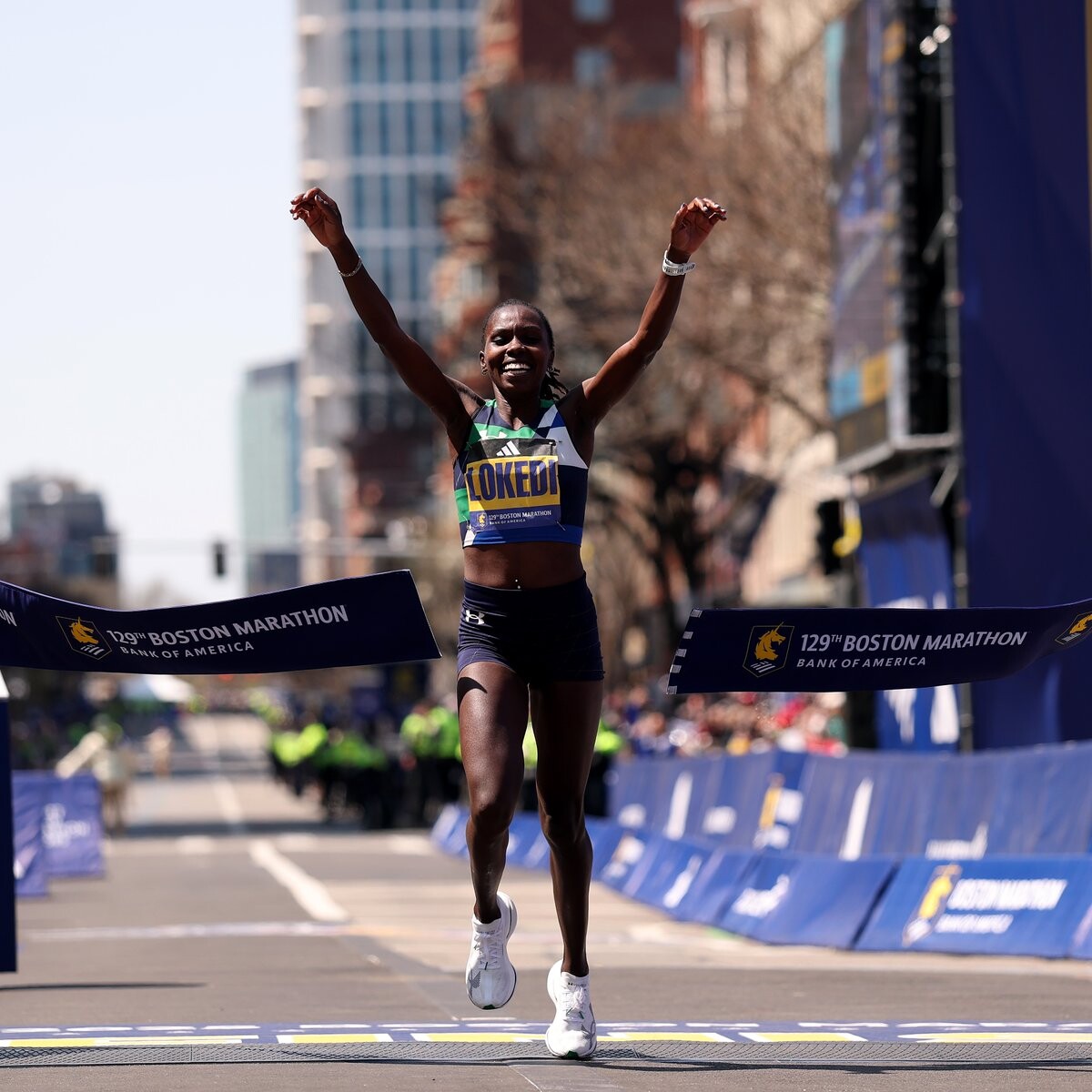
On the women’s side, Lokedi returns to a course where she has already etched her name into history. Her composure, combined with a powerful finishing kick, makes her one of the most formidable contenders once again. With the spotlight firmly on her, she will be looking to reaffirm her dominance against an elite international lineup.
Their presence in Boston days before race day reflects a deliberate approach—fine-tuning preparations, adapting to the course, and embracing the atmosphere of one of the world’s most iconic marathons. From the rolling hills to the legendary Heartbreak Hill, every detail matters.
As race day approaches, the narrative is already taking shape: can the defending champions rise again, or will new challengers seize the moment? One thing is certain—the stage is set for a compelling chapter in Boston Marathon history, and Korir and Lokedi are right at the heart of it.
by Erick Cheruiyot for My Best Runs.
Login to leave a comment
Boston Marathon
Among the nation’s oldest athletic clubs, the B.A.A. was established in 1887, and, in 1896, more than half of the U.S. Olympic Team at the first modern games was composed of B.A.A. club members. The Olympic Games provided the inspiration for the first Boston Marathon, which culminated the B.A.A. Games on April 19, 1897. John J. McDermott emerged from a...
more...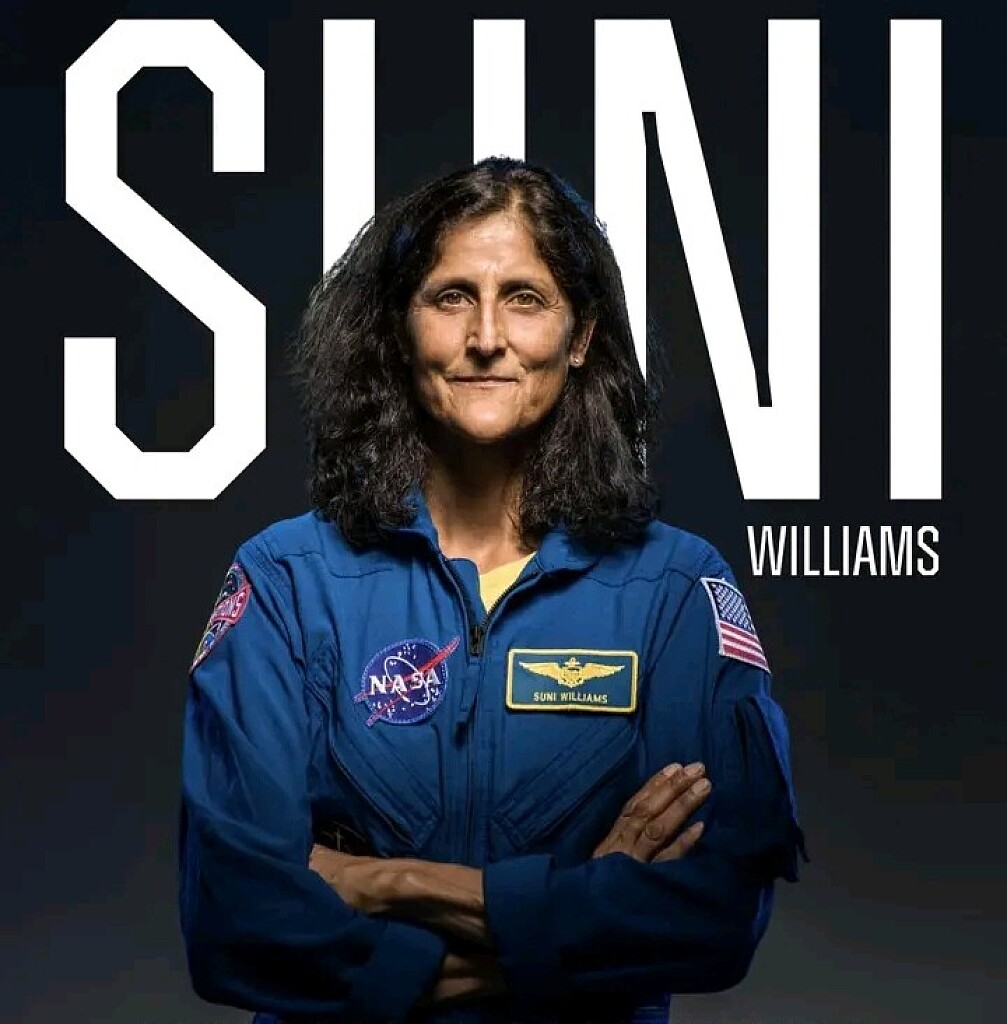
From Orbit to Asphalt: Suni Williams Prepares for a Historic Boston Marathon Return
There are countless remarkable stories woven into the legacy of the Boston Marathon, but none quite like that of Suni Williams—the only person in history to have run the race from space. Now, nearly two decades after that extraordinary feat, she is set to experience the marathon in its purest form—on the ground, surrounded by the roar of the crowd and the rhythm of pounding footsteps through Boston’s streets.

Back in 2007, while orbiting Earth aboard the International Space Station, Williams took on the Boston Marathon in a way no one else ever has. Secured to a treadmill in microgravity, she completed the 26.2-mile distance in 4:23:46, all while traveling at approximately 17,500 miles per hour as the station circled the planet. It was a surreal fusion of endurance and exploration—her race unfolding high above the very course where thousands of runners pushed forward in the traditional way from Hopkinton to Boston.
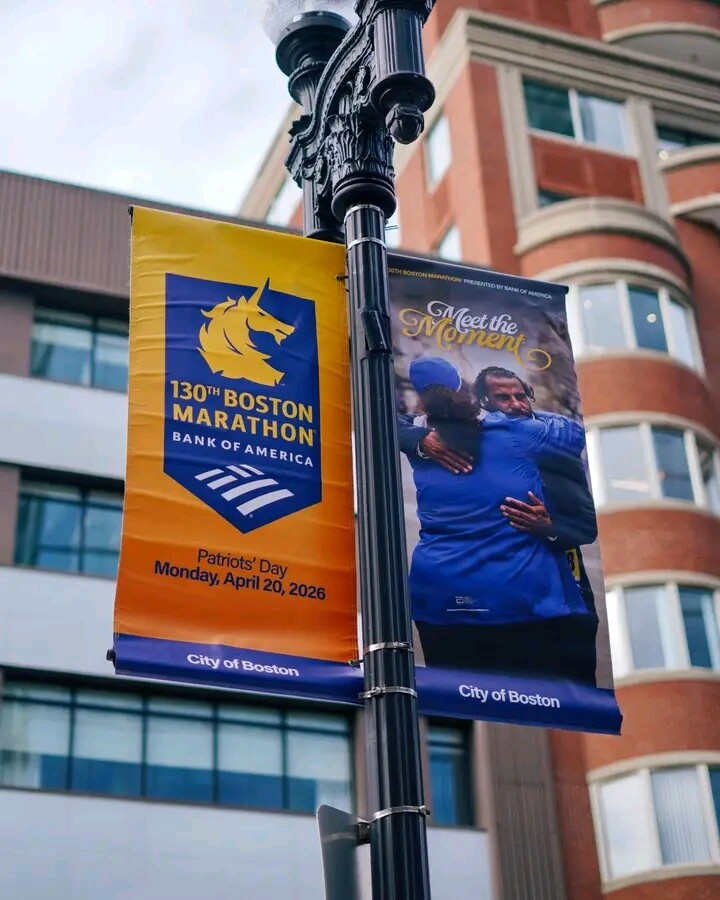
Now, on April 20, Williams will trade the silence of space for the electric atmosphere of race day. For someone who has spent years gazing down at Earth from orbit, this moment represents more than just a marathon—it is a deeply human experience, grounded in connection, community, and the shared pursuit of challenge.
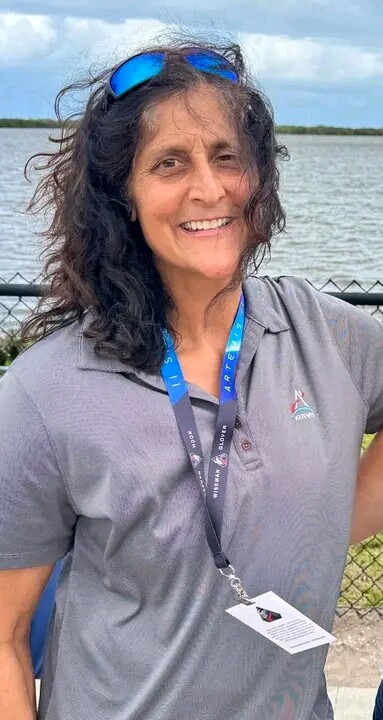
Her journey to this start line carries even greater weight following her retirement from NASA in January 2026, after an extraordinary 27-year career. During her time as an astronaut, she amassed one of the longest cumulative durations in space among NASA personnel and set the benchmark for spacewalking hours by a woman—achievements that underscore her resilience, discipline, and pioneering spirit.
In recognition of those qualities, the Boston Athletic Association has named Williams the recipient of the 2026 Patriots’ Award. The honor celebrates individuals who embody perseverance, service, and curiosity—values that have defined her career both beyond Earth and back on it. For Williams, a native of Needham, Massachusetts, this race is also a homecoming, a return not just to Boston, but to her roots.
As she prepares to toe the line, one intriguing question lingers: does her 2007 orbital run count as a personal best? Technically, the time stands. But this time, the challenge will be different—gravity, terrain, and the raw, unfiltered energy of race day. No harness. No orbit. Just the road ahead.
And perhaps that is what makes this moment so compelling. After conquering the marathon in space, Suni Williams now embraces the simplicity—and the beauty—of running it on Earth.
by Erick Cheruiyot for My Best Runs.
Login to leave a comment
Boston Marathon
Among the nation’s oldest athletic clubs, the B.A.A. was established in 1887, and, in 1896, more than half of the U.S. Olympic Team at the first modern games was composed of B.A.A. club members. The Olympic Games provided the inspiration for the first Boston Marathon, which culminated the B.A.A. Games on April 19, 1897. John J. McDermott emerged from a...
more...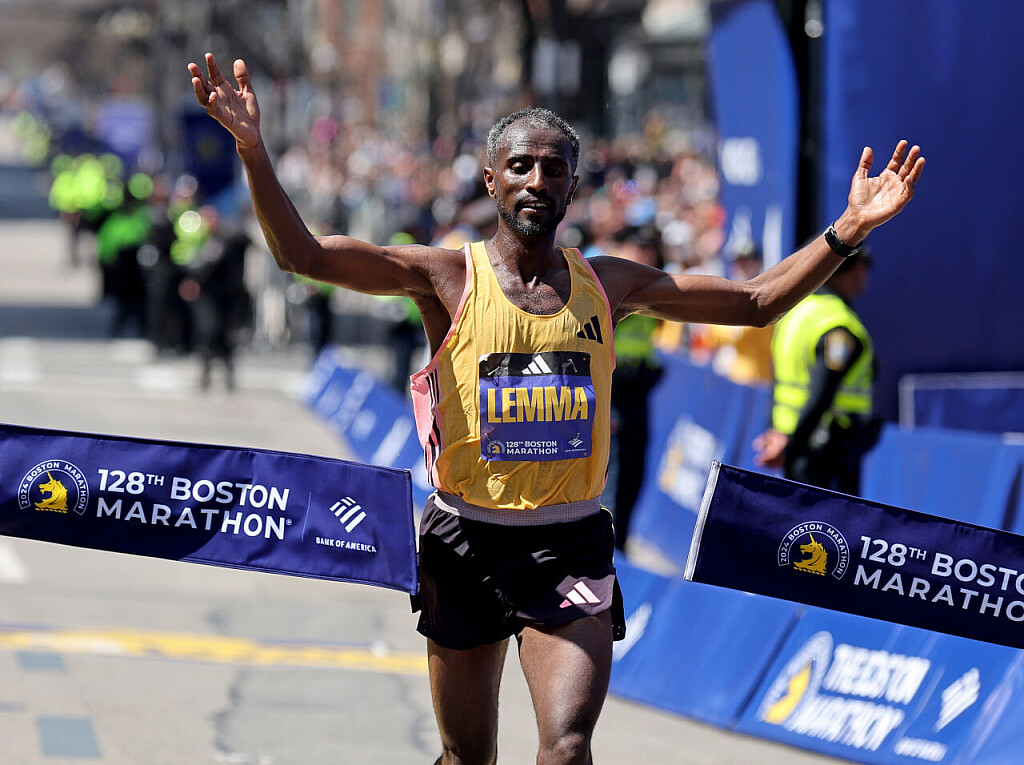
Elite Shake-Up in Boston—But the Firepower Remains Intact
With just three weeks remaining until the iconic Boston Marathon 2026 takes center stage on April 20, the race narrative has already been dramatically rewritten. What once appeared to be a deep and stable elite lineup is now shifting rapidly, as a wave of high-profile withdrawals reshapes both the men’s and women’s fields.
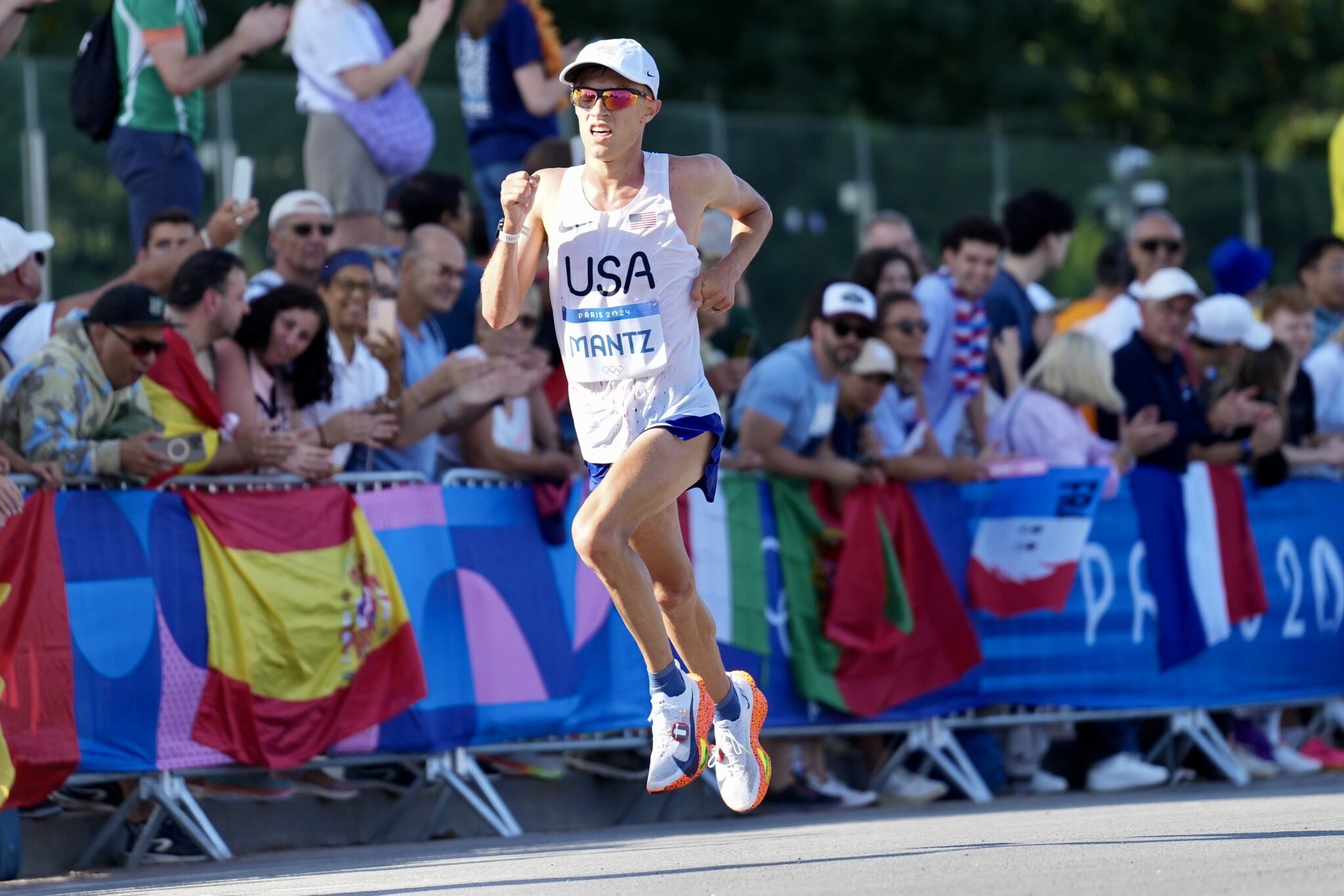
The most notable development is the withdrawal of American record holder Conner Mantz. Once considered a leading home contender, Mantz confirmed he will not compete after struggling to regain full fitness following a sacral stress fracture and other setbacks. His decision reflects a long-term focus—choosing patience over risking a return before peak condition.
The shake-up does not end there. Kenyan legend Vivian Cheruiyot has also officially pulled out, dealing a significant blow to the women’s race. She is joined on the withdrawal list by American marathon star Keira D'Amato, Tanzania’s Magdalena Shauri, and U.S. distance runner Biya Simbassa.
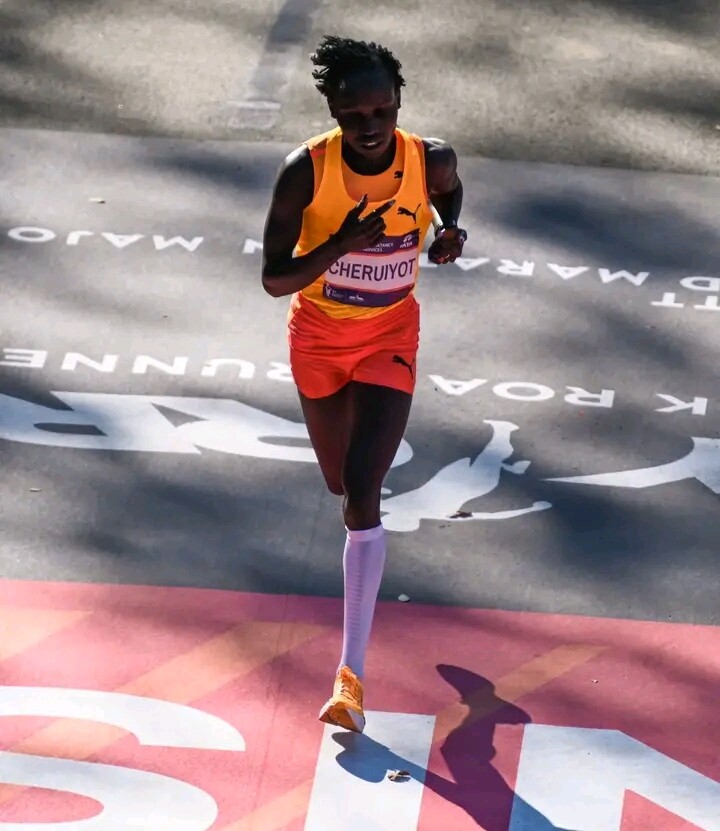
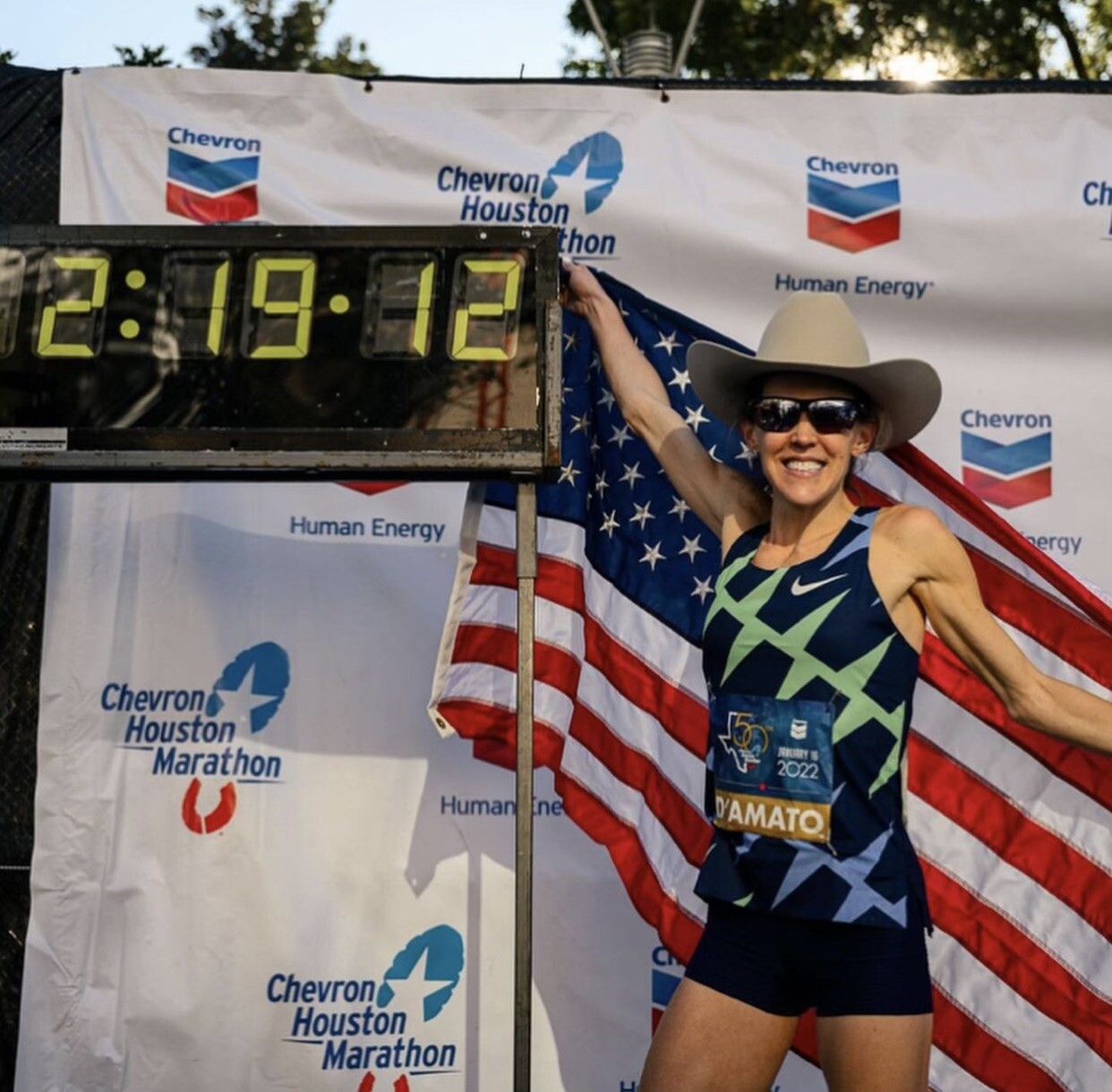
This cluster of late exits has thinned the field’s depth and removed several experienced contenders, leaving both races more open and tactically unpredictable.
Yet amid the withdrawals, a new force has emerged. Ethiopia’s Milkesa Mengesha has been added late to the men’s field, bringing with him a formidable personal best of 2:03:17. His inclusion injects fresh intensity into the race and positions him as a serious contender capable of disrupting the established order.
With Mantz no longer in the picture, the men’s race now leans heavily on proven champions. Kenya’s Benson Kipruto—the 2021 Boston winner and reigning New York City Marathon champion—returns with confidence and experience. Standing opposite him is Ethiopia’s Sisay Lemma, the defending champion determined to hold onto his title on Boston’s demanding course.
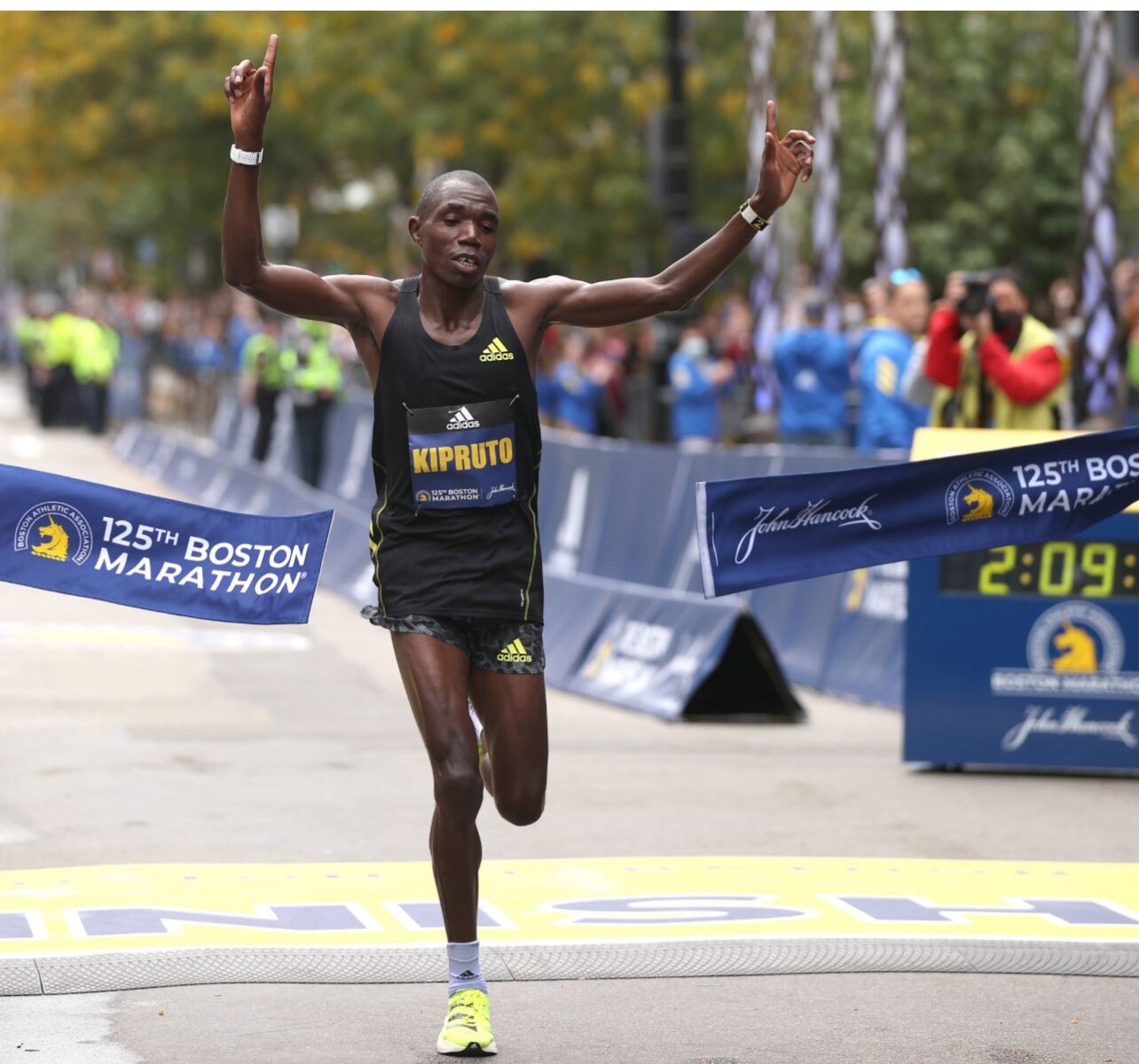
What once seemed like a straightforward clash of elite names has evolved into something far more compelling. The withdrawals have not diminished the race—they have transformed it. With gaps to fill and opportunities emerging, the 2026 edition now promises a battle defined by resilience, tactics, and the unexpected.
As Boston prepares for another unforgettable Patriots’ Day, anticipation continues to build. The script has changed—but the stakes may be higher than ever.
by Erick Cheruiyot for My Best Runs.
Login to leave a comment
Boston Marathon
Among the nation’s oldest athletic clubs, the B.A.A. was established in 1887, and, in 1896, more than half of the U.S. Olympic Team at the first modern games was composed of B.A.A. club members. The Olympic Games provided the inspiration for the first Boston Marathon, which culminated the B.A.A. Games on April 19, 1897. John J. McDermott emerged from a...
more...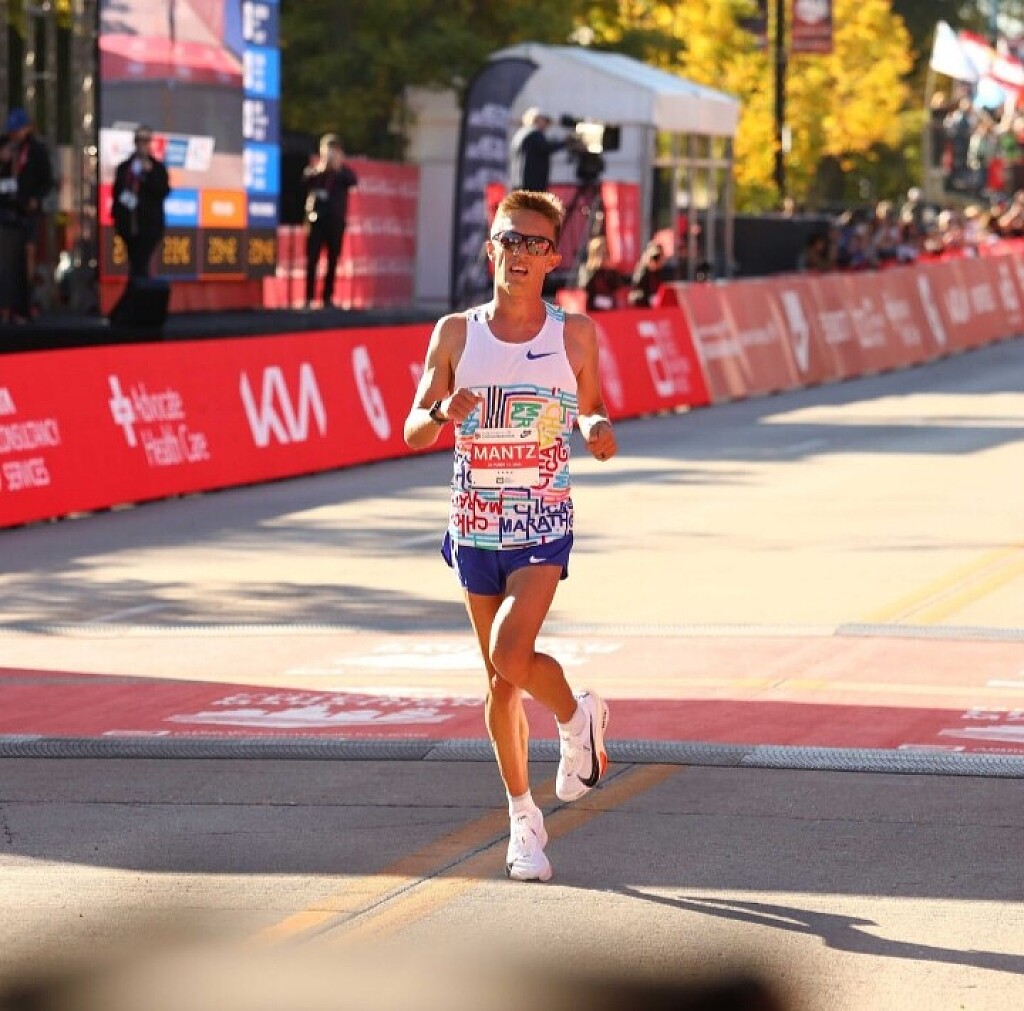
Mantz Withdraws from Boston Marathon, Leaving Elite Field Reshaped
In a significant development ahead of one of the world’s most prestigious road races, American distance star Conner Mantz has officially withdrawn from the 130th edition of the Boston Marathon, scheduled for this April. The announcement comes as a disappointment not only to Mantz himself, but also to fans and analysts who had anticipated a strong showing from the rising marathon force.
Mantz, who holds a personal best of 2:04:42 and has rapidly established himself as a central figure in American distance running, cited concerns over his current fitness as the primary reason behind his decision. In a candid statement, he acknowledged that his preparation had not reached the level required to compete at his best on Boston’s demanding course.
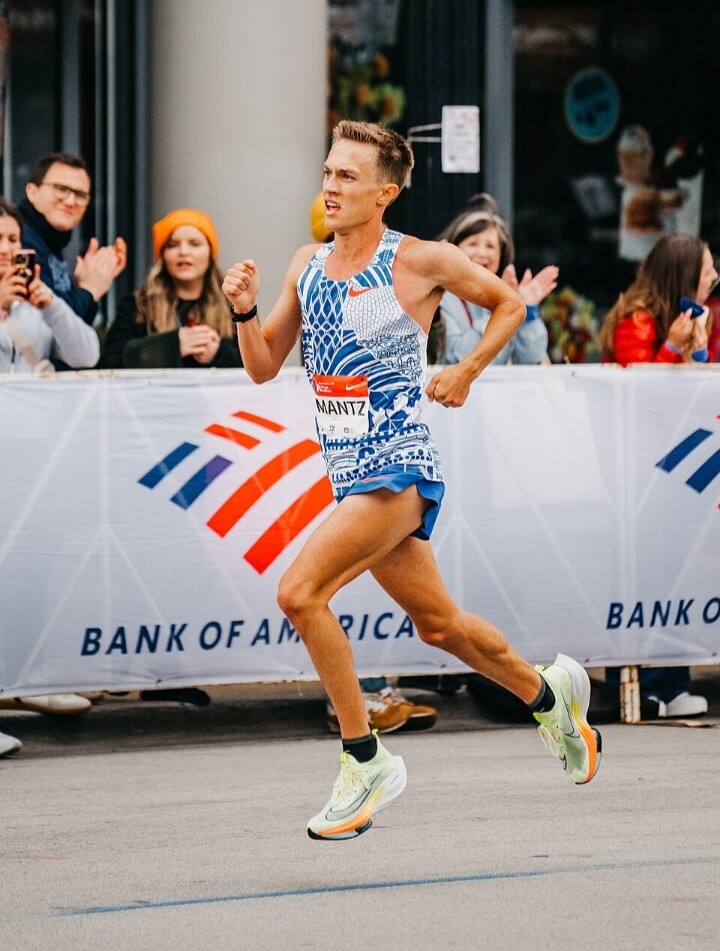
“Unfortunately, my fitness has not progressed well enough for me to be able to race the upcoming Boston Marathon at my best,” Mantz shared. “I am very disappointed, but I look forward to being back racing soon.”
His withdrawal reshapes the competitive dynamics of this year’s race, removing one of the key contenders from the elite men’s field. Known for his aggressive racing style and steady progression on the global stage, Mantz was widely expected to challenge both domestic and international rivals in Boston—a race renowned for its tactical complexity and unforgiving terrain.
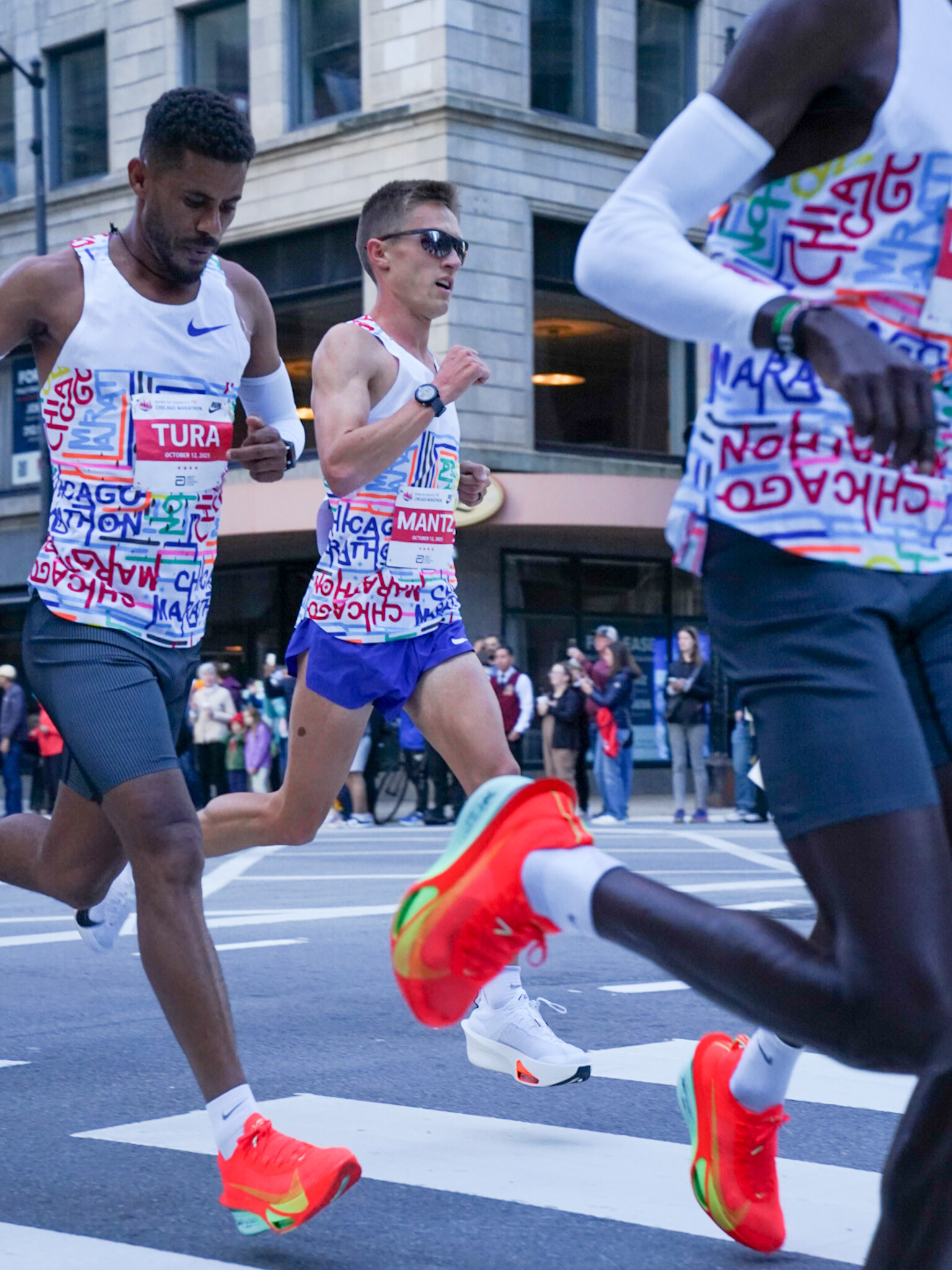
The decision, however, reflects a growing trend among elite athletes prioritizing long-term performance over short-term participation. By stepping back now, Mantz preserves the opportunity to return at full strength later in the season, rather than risking an underwhelming performance or potential injury.
While his absence will undoubtedly be felt, it also opens the door for other contenders to seize the spotlight in Boston. The marathon remains a cornerstone of the global athletics calendar, and this year’s edition promises to deliver compelling narratives despite the late change in the lineup.
For Mantz, the focus now shifts to recovery, recalibration, and a return to racing form. If his trajectory thus far is any indication, this setback may prove only a brief pause in what is shaping up to be a remarkable career.
by Erick Cheruiyot for My Best Runs.
Login to leave a comment
Boston Marathon
Among the nation’s oldest athletic clubs, the B.A.A. was established in 1887, and, in 1896, more than half of the U.S. Olympic Team at the first modern games was composed of B.A.A. club members. The Olympic Games provided the inspiration for the first Boston Marathon, which culminated the B.A.A. Games on April 19, 1897. John J. McDermott emerged from a...
more...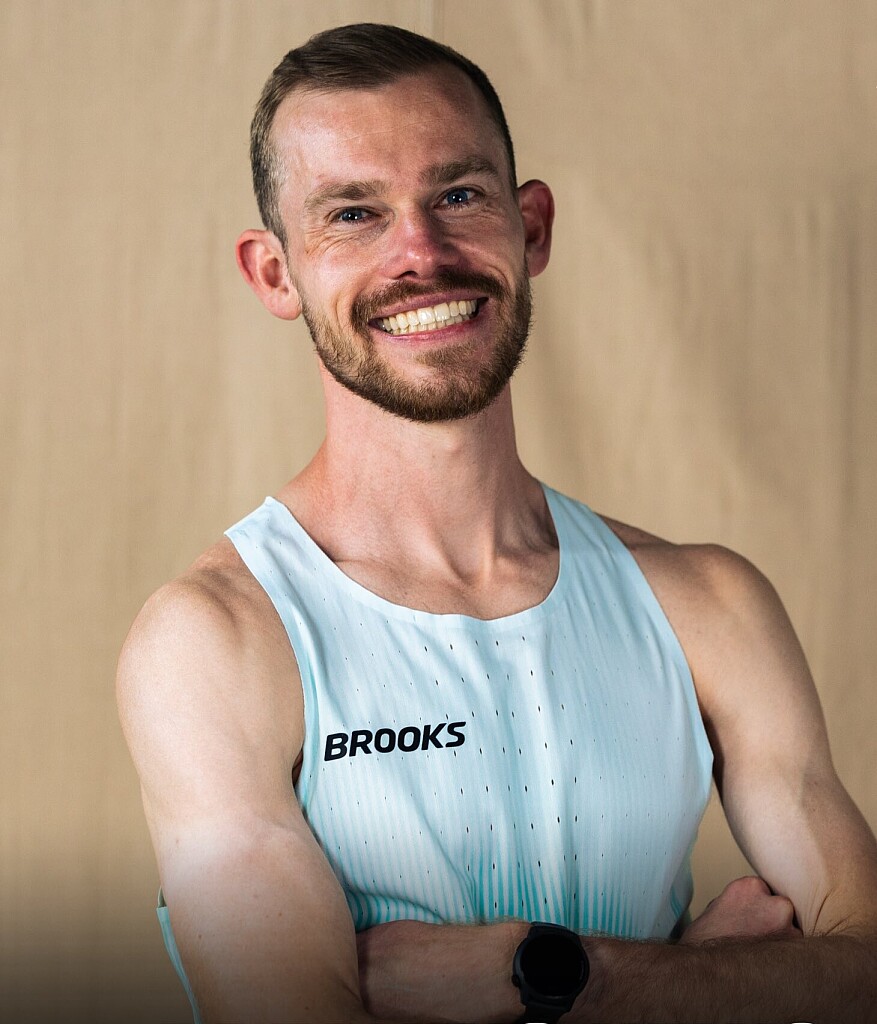
A Bold New Stride: Clayton Young Embraces Brooks Era Ahead of Boston Showdown
After weeks of swirling speculation, American distance star Clayton Young has finally lifted the curtain on his future, officially announcing his partnership with Brooks Running just weeks before the iconic Boston Marathon. The revelation, shared through his social platforms, signals more than just a sponsorship change—it marks the beginning of a deeply personal and carefully orchestrated new chapter, closing the door on his long-standing relationship with ASICS.

What sets this transition apart is not just the timing, but the manner in which it was handled. In an era where agents often dominate contract negotiations, Young chose a different path—representing himself throughout the entire process. It was a bold, calculated decision that reflects both his confidence and his desire for complete ownership of his career. This was no hurried leap; rather, it was the culmination of years of quiet evaluation, with his previous deal steadily approaching its natural conclusion at the end of 2025.
Behind the scenes, Young immersed himself in a meticulous selection process. He engaged with multiple brands, tested a range of footwear, and scrutinized every detail with a singular focus—performance. Central to his final choice was Brooks’ innovation in racing shoe technology. From trialing prototype models to assessing their responsiveness under controlled conditions, every step pointed toward a partnership grounded in trust and competitive edge. Coming off an 18-week ankle injury, the stakes were even higher. Stability, comfort, and speed were not luxuries—they were necessities. Brooks, it seems, delivered on all fronts.
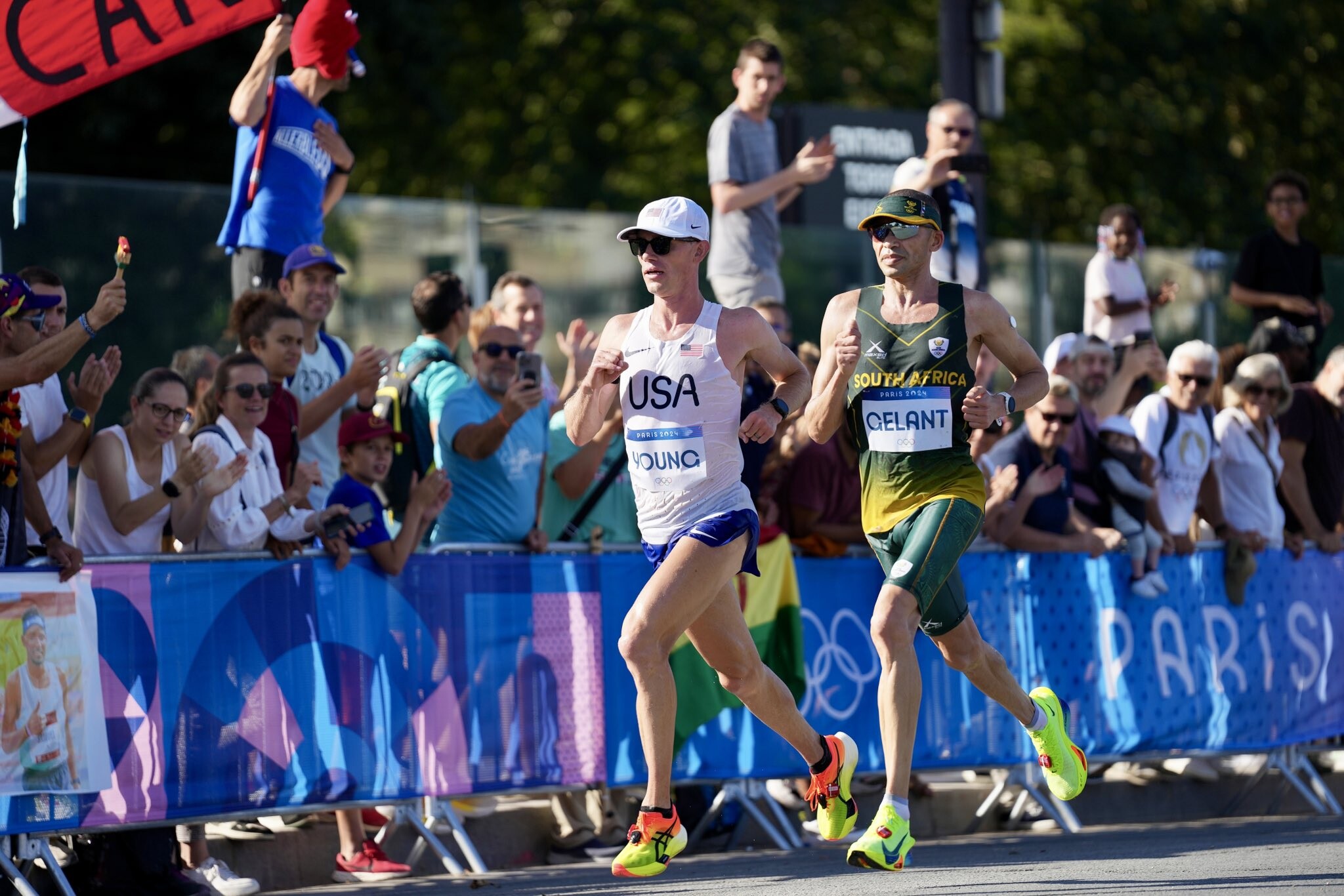
Now, the narrative shifts to the roads of Boston. As the countdown to the Boston Marathon intensifies, Young finds himself in a delicate yet determined phase of rebuilding. His training, once disrupted, is steadily regaining rhythm—each mile a testament to resilience, each session a step closer to peak form. While he has openly acknowledged the uncertainties surrounding his fitness, this announcement carries an unmistakable undertone of belief—belief in his recovery, and belief in the partnership he has chosen.
Boston will represent more than just a race. It will be his first appearance in Brooks colours, and it has set the stage for a powerful test of this new alliance. As he steps onto one of the sport’s most historic courses, Clayton Young has not only turned a new page—he has begun writing a story defined by resilience, independence, and renewed ambition.
by Erick Cheruiyot for My Best Runs.
Login to leave a comment
Boston Marathon
Among the nation’s oldest athletic clubs, the B.A.A. was established in 1887, and, in 1896, more than half of the U.S. Olympic Team at the first modern games was composed of B.A.A. club members. The Olympic Games provided the inspiration for the first Boston Marathon, which culminated the B.A.A. Games on April 19, 1897. John J. McDermott emerged from a...
more...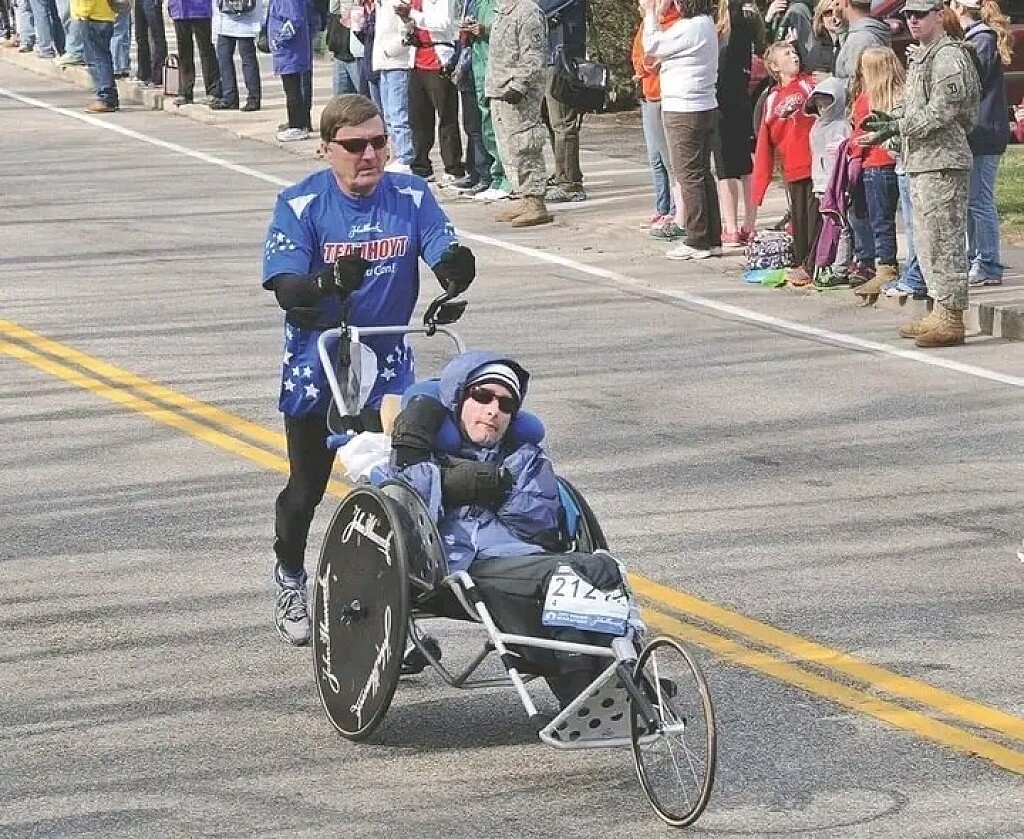
“Carrying a Dream: The Timeless Legacy of Dick Hoyt and His Son Rick”
On March 17, the running world paused to remember a man who redefined the true meaning of endurance, love, and partnership—Dick Hoyt. He passed away at the age of 80, leaving behind not just records and races, but a story that continues to move hearts across generations.
Their journey began in 1977 with a simple, yet powerful request. Rick Hoyt, born with cerebral palsy and unable to speak, expressed a desire to take part in a local five-mile race. For most, it would have seemed impossible. But for Dick, a father with no running background, there was only one answer—yes.
Pushing his son in a wheelchair, Dick lined up at the start. They crossed the finish line near the back of the field, but what they achieved that day went far beyond placement. After the race, Rick communicated something that would change everything: when he ran, he didn’t feel disabled.
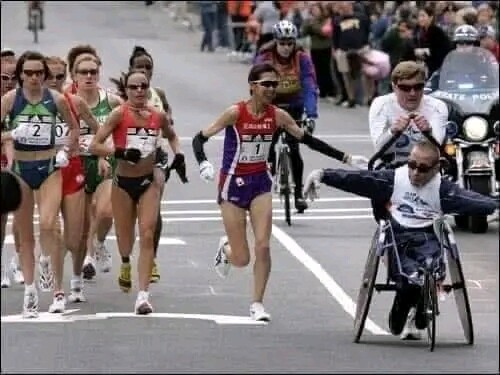
That single moment ignited a lifelong mission.
From then on, father and son became inseparable on the roads. They ran, cycled, and even competed in triathlons—covering thousands of miles together. Their bond grew stronger with every race, every mile, and every challenge conquered side by side.
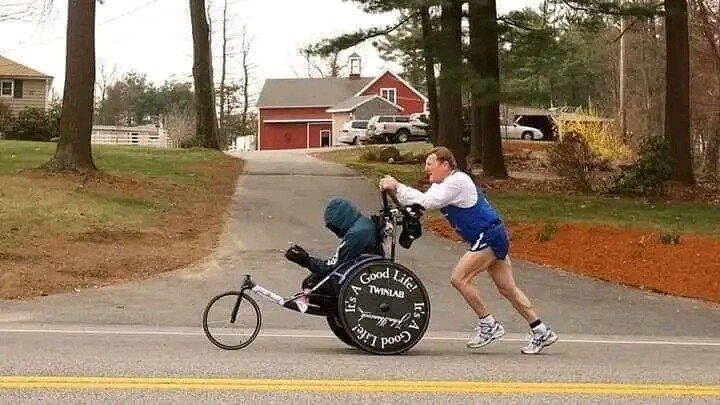
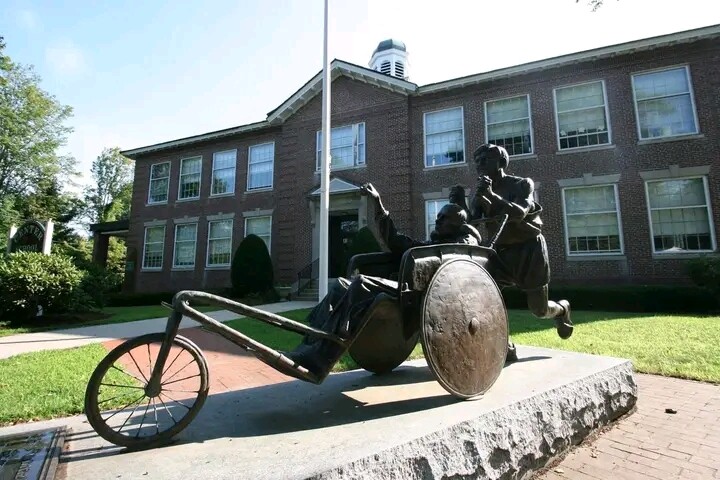
Their story reached its peak at the legendary Boston Marathon, where they competed an astonishing 32 times. It wasn’t just about finishing races—it was about proving that limits are often defined by perception, not reality. In 2013, their extraordinary journey was immortalized when a statue was dedicated to them at the marathon’s starting line, a lasting tribute to their impact on sport and humanity.
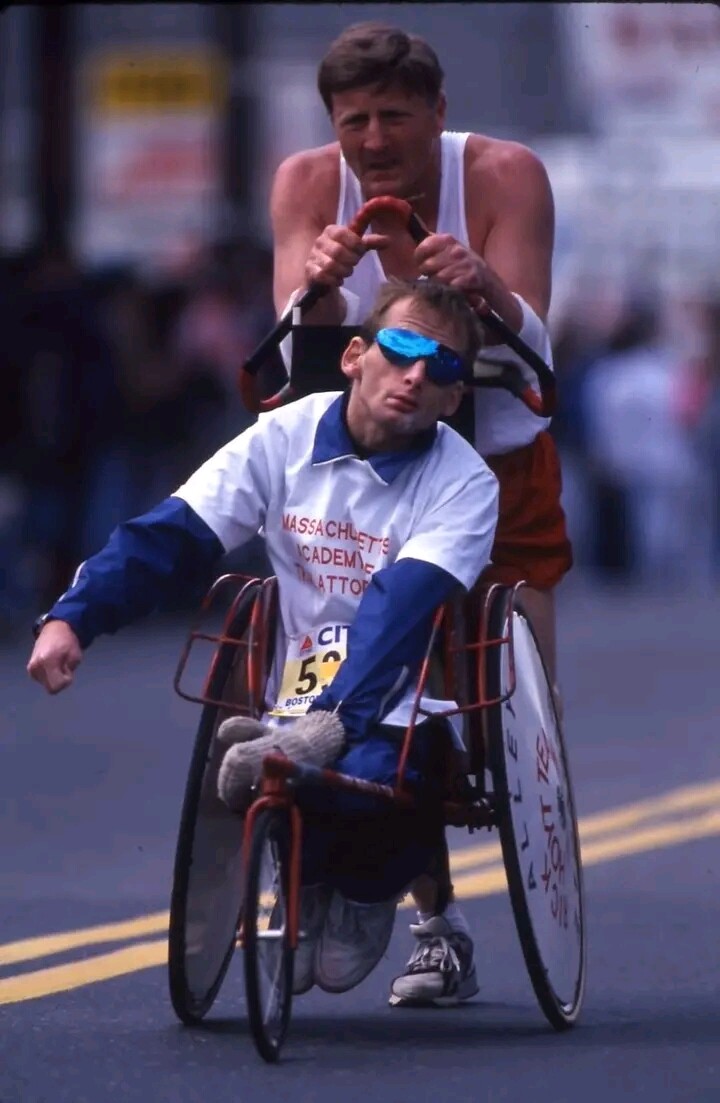
What made Team Hoyt remarkable wasn’t speed or medals—it was purpose. Dick didn’t just push a wheelchair; he carried his son’s dreams, turning them into a global symbol of resilience and unconditional love.
Today, as the world reflects on his passing, the legacy of Dick and Rick Hoyt lives on far beyond the finish lines they crossed. Their story reminds us that the strongest force in sport—and in life—is not physical strength, but the power of the human spirit, fueled by love.
And perhaps their greatest victory was never recorded on a clock—it was in showing the world that no obstacle is too great when you refuse to leave someone behind.
by Erick Cheruiyot for My Best Runs.
Login to leave a comment
Boston Marathon
Among the nation’s oldest athletic clubs, the B.A.A. was established in 1887, and, in 1896, more than half of the U.S. Olympic Team at the first modern games was composed of B.A.A. club members. The Olympic Games provided the inspiration for the first Boston Marathon, which culminated the B.A.A. Games on April 19, 1897. John J. McDermott emerged from a...
more...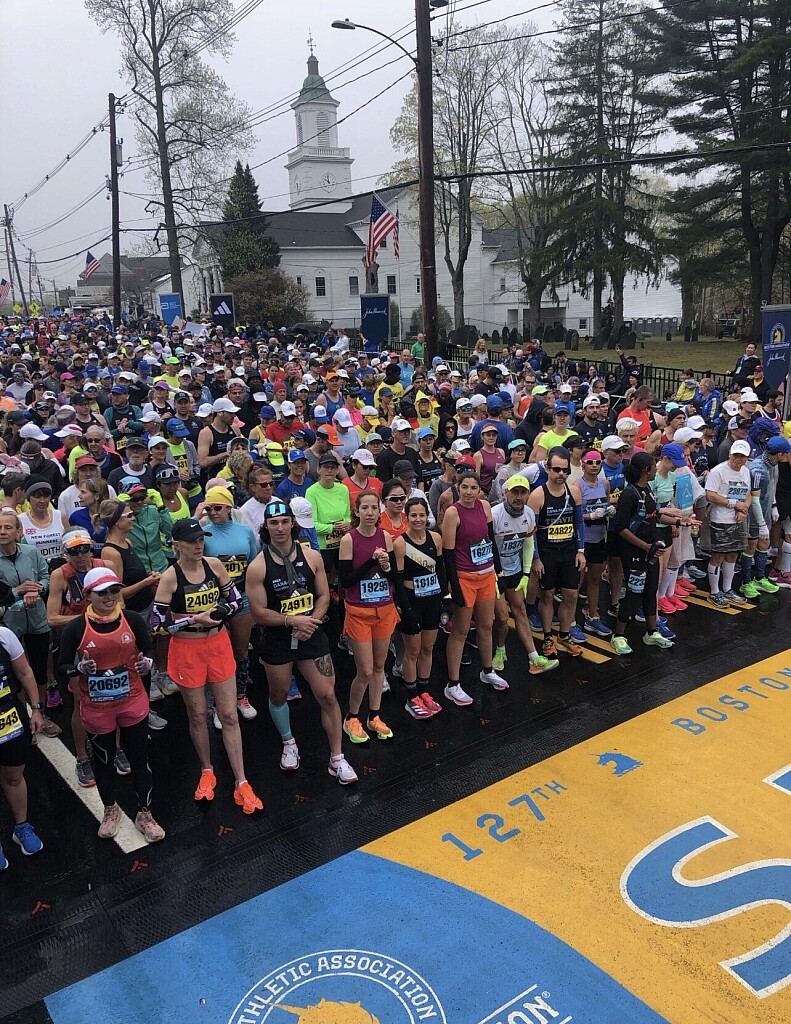
Boston Marathon Expands to Six Start Waves Beginning in 2026 to Ease Crowding
If you’ve ever run one of the marathon majors, you know how crowded the start lines can be. Thousands of runners are all trying to find enough road space to settle in. It can be chaotic, and the Boston Athletic Association (B.A.A.) has recognized that by introducing two new start waves for the 2026 race and beyond.
In a recent press release, the B.A.A. confirmed that the Boston Marathon will move from four start waves to six. The overall field size will remain at 30,000 runners, but the additional waves are designed to improve the flow of athletes from the start in Hopkinton to the finish near the Boston Public Library.
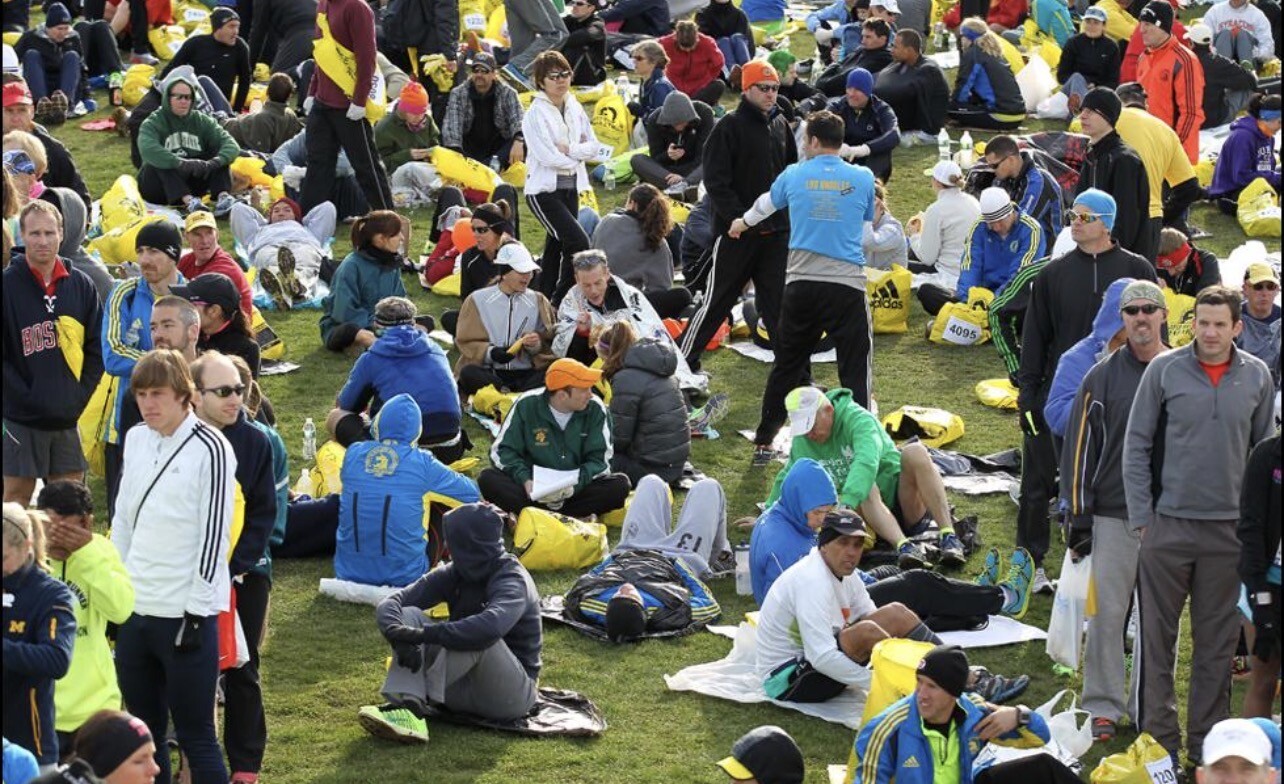
For years, Boston runners have been required to arrive three to four hours before their start time at the southwest corner of Boston Common. From there, they board school buses—often packed with 50 runners each—for the ride to a schoolyard in Hopkinton. With only four waves in the past, the system could feel congested, with overlapping groups of runners creating long lines for buses, gear check, and pre-race porta-potties.
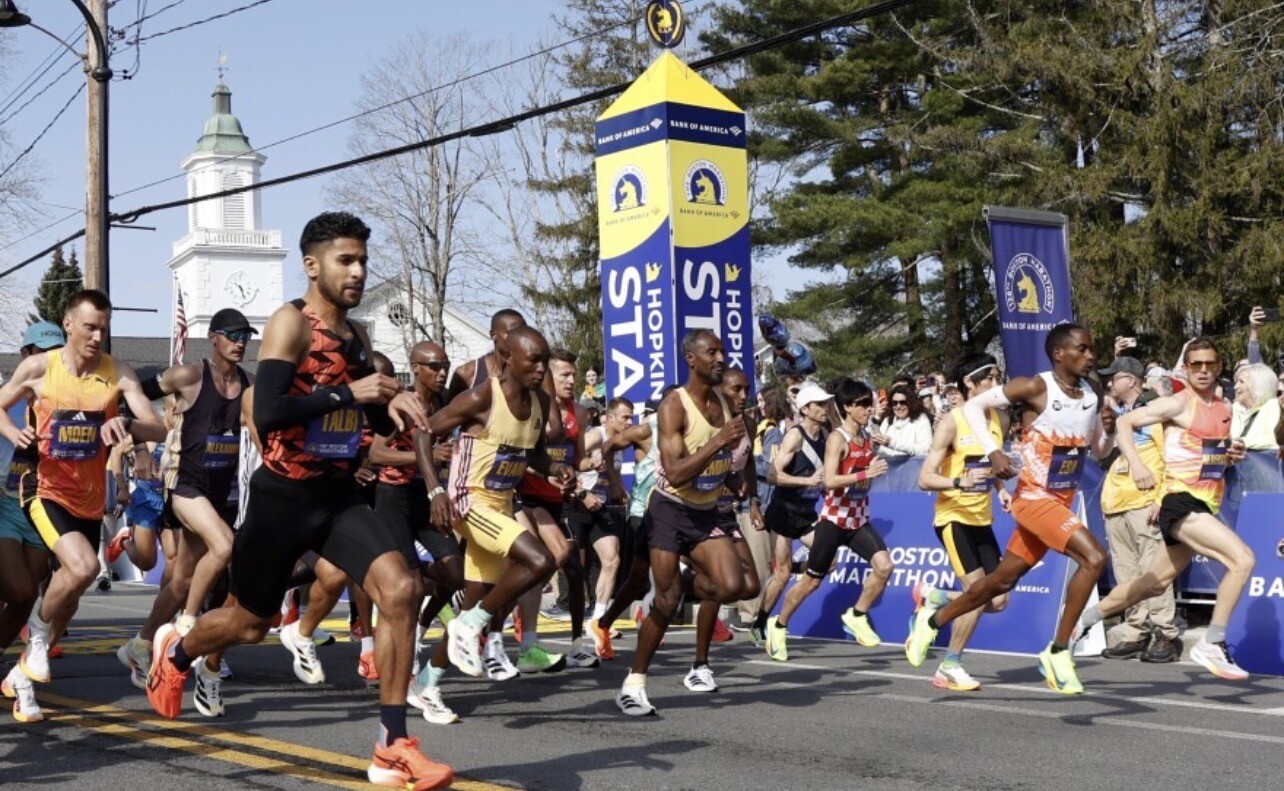
With two additional waves, organizers hope to reduce congestion and create a smoother race-day experience. Runners should encounter shorter lines and a more relaxed buildup before the race—leaving more time to focus on preparation and fueling.
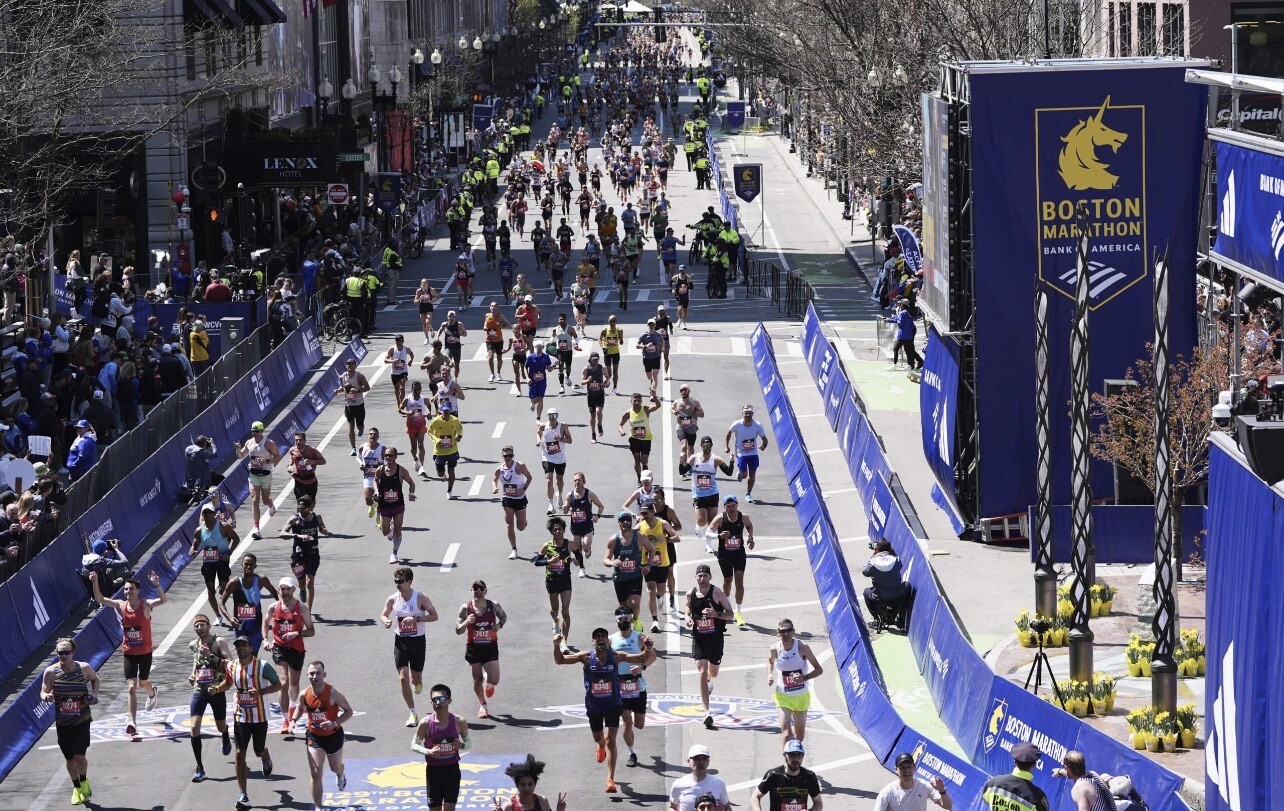
According to the B.A.A., the change follows an extensive review of race-day logistics. Crowd scientists studied athlete density throughout last year’s race and concluded that the entire start process—from gear check and bus loading to the athletes’ village and the Hopkinton starting line—would benefit from a more continuous flow of athletes.
Under the new system, wave sizes will range from approximately 3,200 to 7,100 runners, depending on qualifying times and projected finish times. In recent years, each of the four waves typically included around 7,500 runners, which contributed to the congestion.
“The new six-wave start system is aimed at enhancing each participant’s experience,” said Lauren Proshan, the B.A.A.’s Chief of Operations. “All athletes are anticipated to be across the starting line before 11:30 a.m., like previous years, and will have the same amount of time to complete the course as in 2025, with the finish line closing at 5:30 p.m. in Boston.”
The B.A.A. also announced that bib numbers, corral assignments, and start times for the 130th Boston Marathon will be released later. The race will take place on Patriots’ Day, April 20, 2026.
For many runners, the Boston Marathon start has always been part of the experience—long bus rides, crowded staging areas, and thousands of athletes waiting together in Hopkinton. With the addition of two more start waves, the B.A.A. hopes the journey from Hopkinton to Boston will begin a little more smoothly for everyone.
by Boris Baron
Login to leave a comment
Boston Marathon
Among the nation’s oldest athletic clubs, the B.A.A. was established in 1887, and, in 1896, more than half of the U.S. Olympic Team at the first modern games was composed of B.A.A. club members. The Olympic Games provided the inspiration for the first Boston Marathon, which culminated the B.A.A. Games on April 19, 1897. John J. McDermott emerged from a...
more...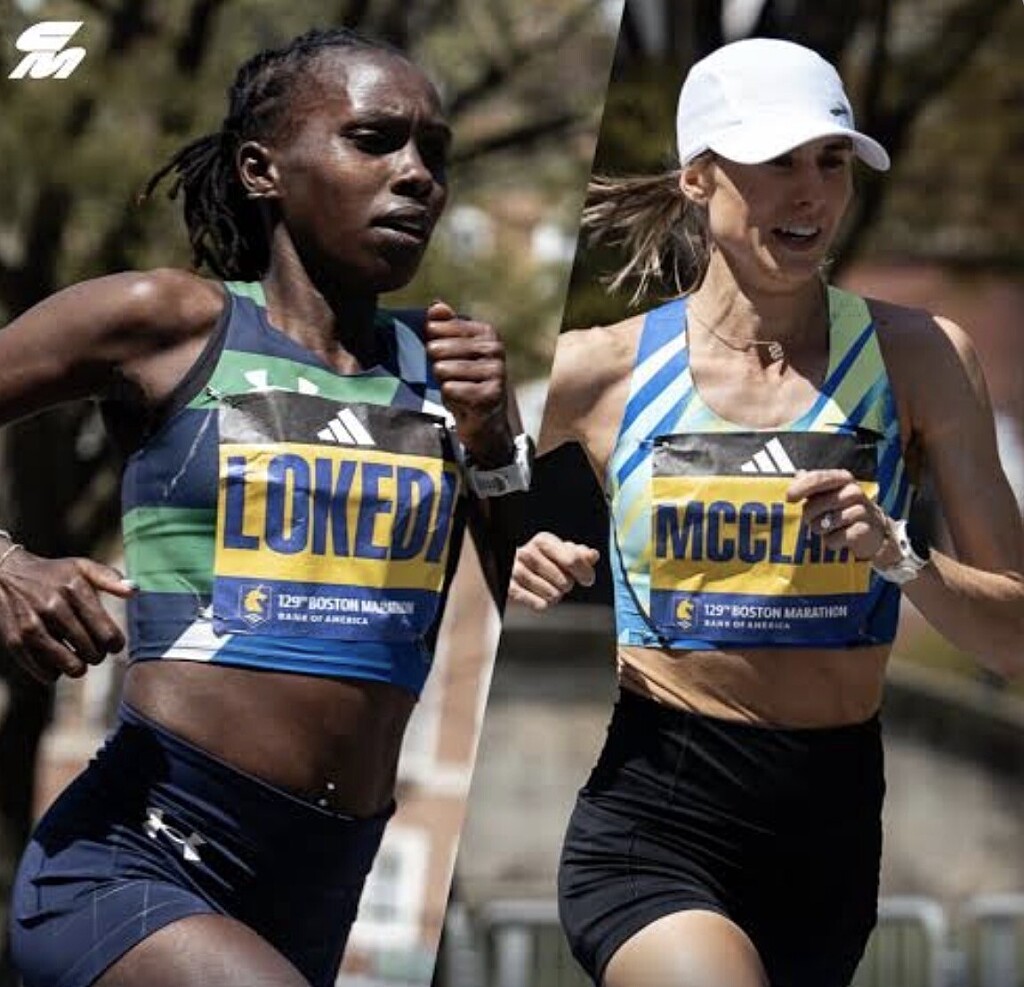
American Depth Meets Global Firepower in Women’s Field for 130th Boston Marathon
The Boston Athletic Association (B.A.A.) has unveiled the women’s professional field for the 130th Boston Marathon presented by Bank of America, and the lineup signals one of the most competitive women’s races in event history. Athletes representing 18 countries will take the start, led by what may be the deepest American contingent ever assembled in Boston.
Thirteen U.S. women in the field have broken 2:26 for the marathon, setting the stage for aggressive racing on a course where experience and tactics often matter as much as raw speed.
“The 130th edition of the Boston Marathon presented by Bank of America will feature unrivaled depth and head-to-head racing,” said Mary Kate Shea, Chief Operating Officer of the B.A.A. “The strength of the American field combined with the international experience sets the stage for a thrilling race on Boylston Street.
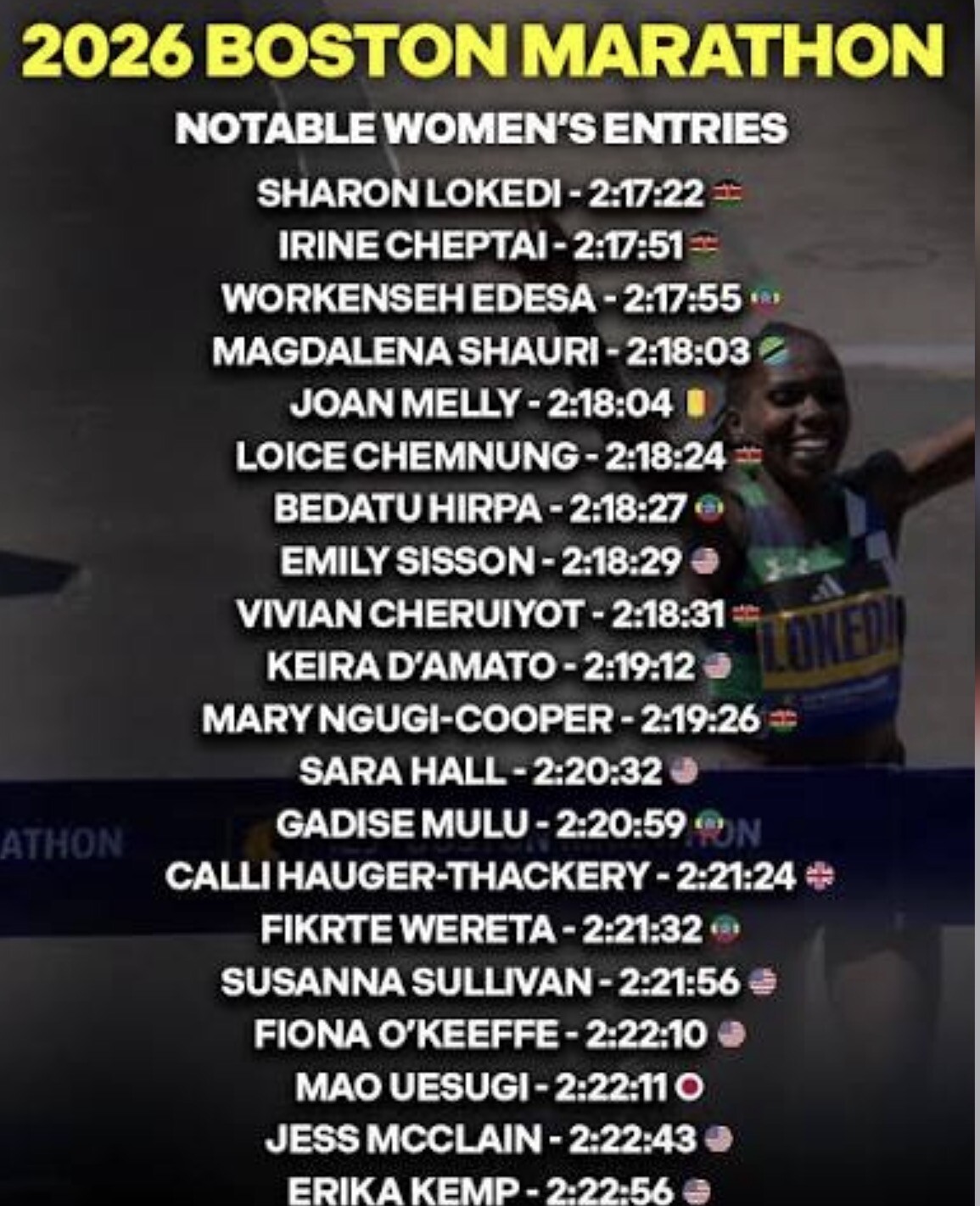
Headlining the U.S. squad is the full 2024 Olympic Marathon team: Emily Sisson, Fiona O’Keeffe, and Dakotah Popehn. Sisson enters as the American record holder at 2:18:29, while O’Keeffe is coming off a strong fourth-place finish at the 2025 New York City Marathon. Popehn posted a lifetime best of 2:24:21 at Chicago last fall.
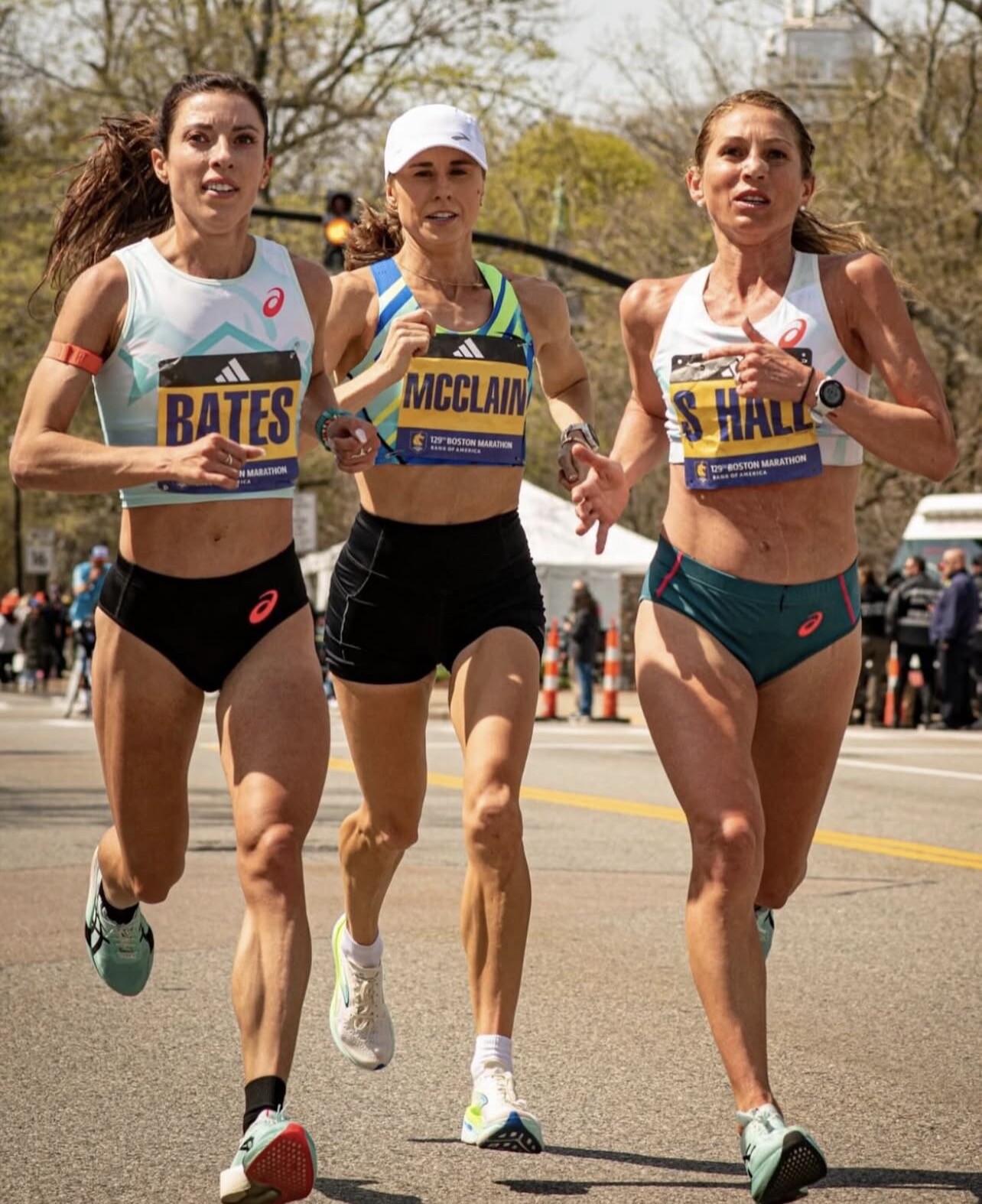
Joining them is the entire U.S. team from the World Championships Marathon in Tokyo: Susanna Sullivan, Jess McClain, and Erika Kemp. McClain was the top American at Boston last year, finishing seventh in 2:22:43, while Kemp owns a personal best of 2:22:56, the fastest marathon ever run by a U.S.-born Black woman.
Annie Frisbie, eighth in Boston last year, returns after a fifth-place finish in New York, and Keira D’Amato, the former American record holder, will make her third Boston appearance. Veteran Sara Hallalso returns after a runner-up finish at the Houston Marathon in January.
Several Americans will make their Boston debuts, including Megan Sailor, Natosha Rogers, and Amanda Vestri, underscoring the breadth of U.S. talent now entering the marathon ranks.
Internationally, the challenge remains formidable. Defending champion Sharon Lokedi returns after her course-record 2:17:22 victory last year, joined by fellow Kenyans Irine Cheptai and Vivian Cheruiyot. Ethiopia is represented by Workenesh Edesa and Bedatu Hirpa, both proven winners on the global circuit.
Experience on Boston’s unforgiving course will be key for Calli Hauger-Thackery, who enjoyed a breakout 2025 season, and Kenya’s Mary Ngugi-Cooper, a five-time Boston top-ten finisher with a personal best of 2:19:25.
In the women’s wheelchair division, defending champion Susannah Scaroni leads the field after a dominant 2025 season that included victories in Boston, Chicago, New York, and Sydney. Switzerland’s Catherine Debrunner and Manuela Schär return as top challengers, with Schär holding the course record.
With elite depth across disciplines and generations, the women’s race at the 130th Boston Marathon is shaping up as one of the most compelling editions in recent memory—where tactics, experience, and courage will once again decide who claims glory on Boylston Street.
by Boris Baron
Login to leave a comment
Boston Marathon
Among the nation’s oldest athletic clubs, the B.A.A. was established in 1887, and, in 1896, more than half of the U.S. Olympic Team at the first modern games was composed of B.A.A. club members. The Olympic Games provided the inspiration for the first Boston Marathon, which culminated the B.A.A. Games on April 19, 1897. John J. McDermott emerged from a...
more...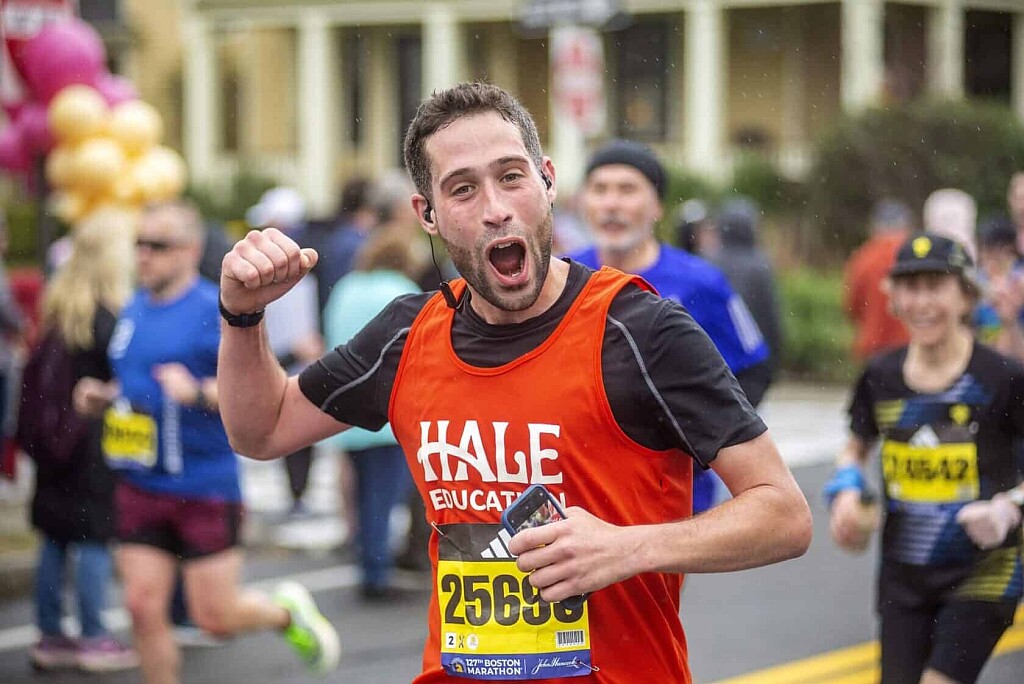
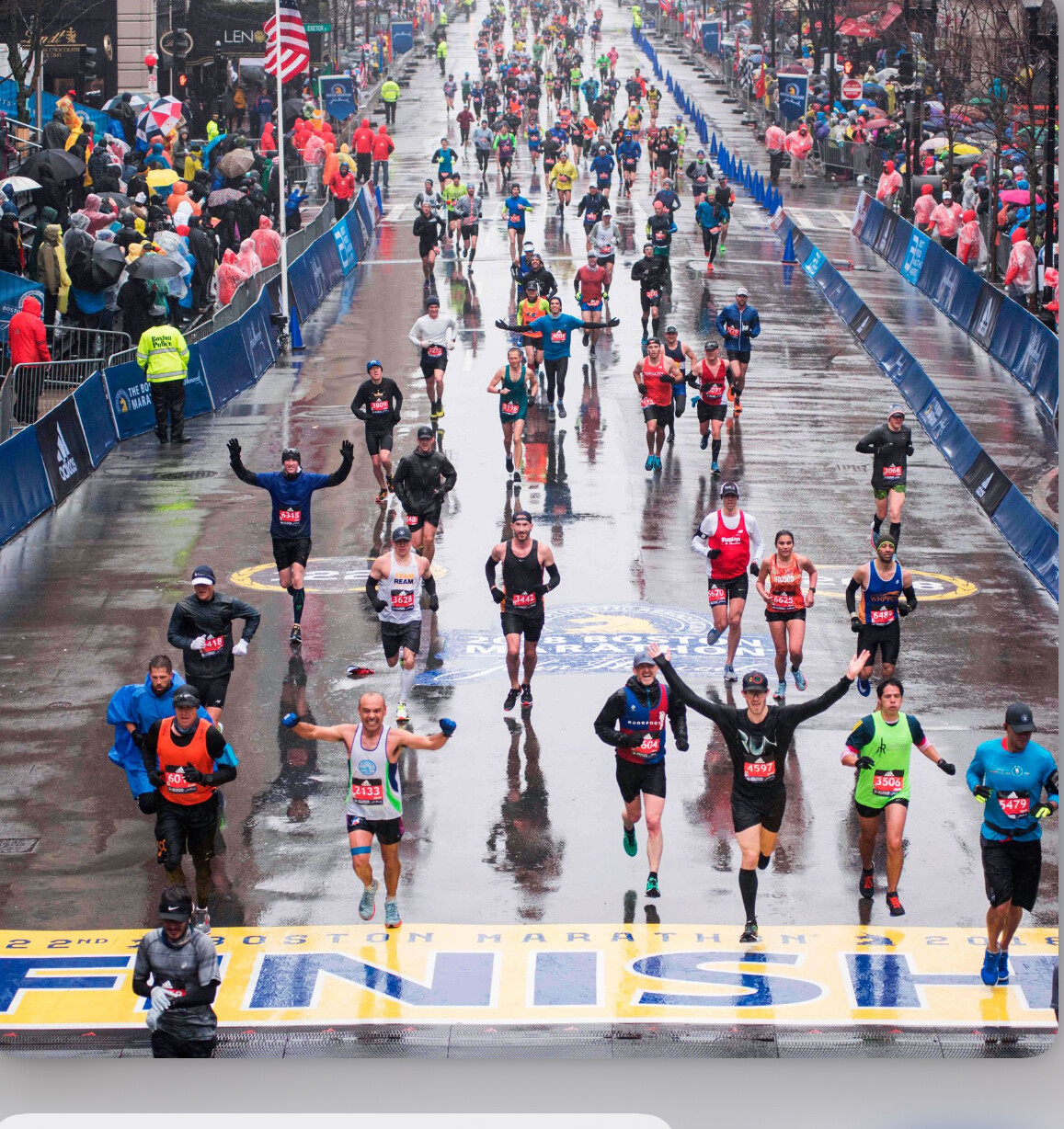
2026 Boston Marathon Qualifying Standards Among the Most Demanding Ever Issued
The Boston Athletic Association (B.A.A.) has confirmed new qualifying standards for the 2026 Boston Marathon, scheduled for April 20, 2026, and they are among the most demanding ever issued in the event’s 130-year history. For runners aged 18 to 59, the time standards have been made five minutes faster than those used for the 2025 race — a reflection of both the extraordinary growth in marathon participation and the deepening field of competitive age-group runners.
These updates reinforce the B.A.A.’s commitment to maintaining the Boston Marathon as the pinnacle of achievement for amateur and professional runners alike. With more applicants qualifying each year than the race can accept, meeting the standard no longer guarantees entry — runners must often exceed the qualifying mark by several minutes to secure a bib.
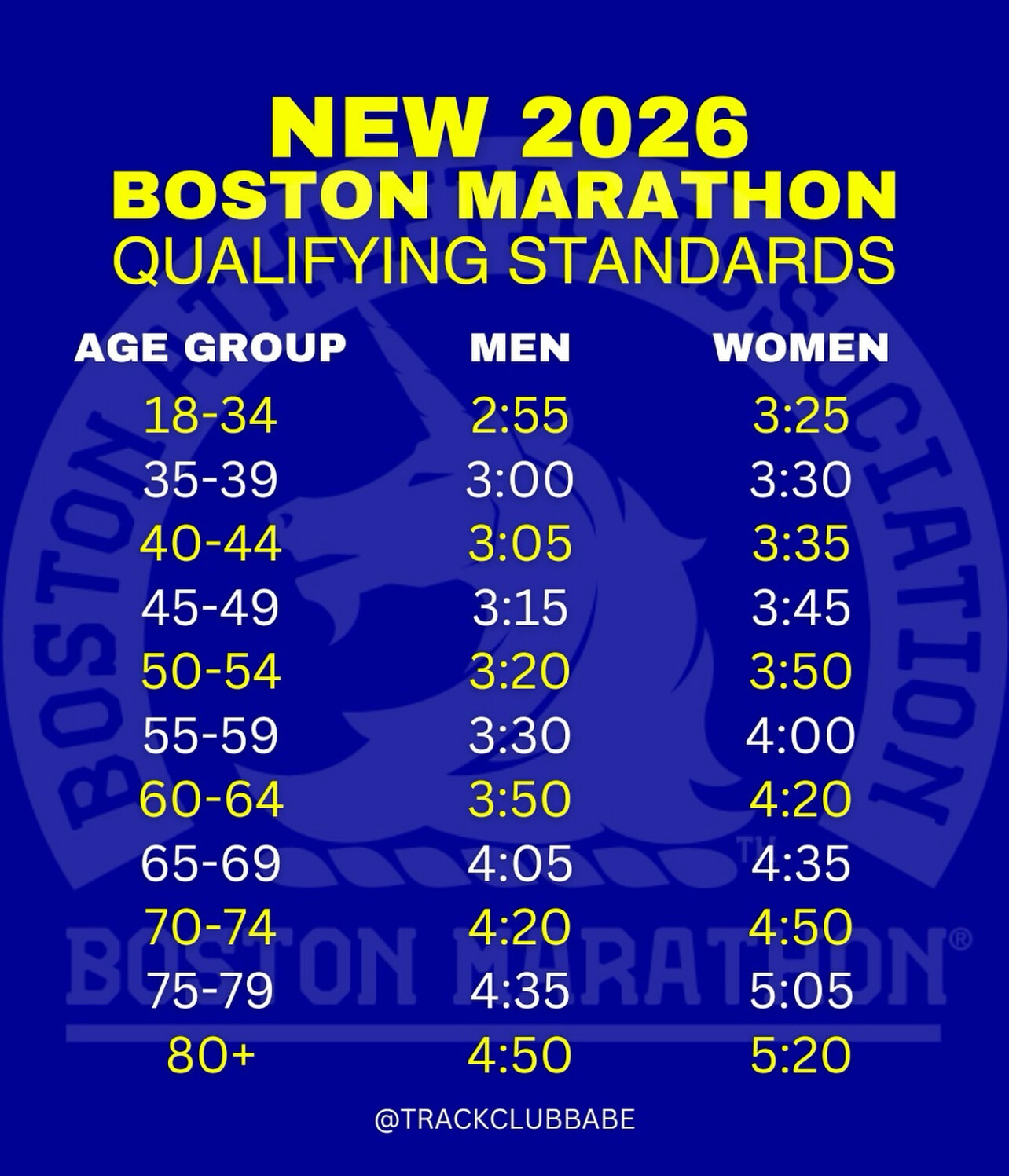
2026 Boston Marathon Qualifying Standards
Age Group – Men – Women
18–34 – 2:55:00 – 3:25:00
35–39 – 3:00:00 – 3:30:00
40–44 – 3:05:00 – 3:35:00
45–49 – 3:15:00 – 3:45:00
50–54 – 3:20:00 – 3:50:00
55–59 – 3:30:00 – 4:00:00
60–64 – 3:50:00 – 4:20:00
65–69 – 4:05:00 – 4:35:00
70–74 – 4:20:00 – 4:50:00
75–79 – 4:35:00 – 5:05:00
80+ – 4:50:00 – 5:20:00
These standards closely match the official 2026 qualifying table published by the B.A.A. Standards for runners aged 60 and above have changed little or remained consistent with prior years, while younger age divisions (18–59) now face significantly faster requirements.
Meeting these times makes a runner eligible to apply for registration, but acceptance depends on the number of applicants. For the 2025 Boston Marathon, runners needed to be 6 minutes and 51 seconds faster than the posted standard to gain entry. For the 2026 edition, the cutoff narrowed but remained steep — 4 minutes and 34 seconds faster than the standard.
Elite Field Entry
The B.A.A. does not publicly post official qualifying times for elite athletes. Instead, entries are extended by invitation to runners who have recently achieved world-class performances. While not formalized, typical benchmarks for consideration are around sub-2:20 for men and sub-2:45 for women, depending on the depth of the field and prior race results.
Course Adjustments Coming for 2027
Beginning with the 2027 Boston Marathon, new rules will redefine which marathon courses count toward qualification. Races with net-downhill profiles will face time “indexing” to ensure fairness:
• Courses dropping 1,500–2,999 feet: +5 minutes added to finishing time
• Courses dropping 3,000–5,999 feet: +10 minutes added
• Courses dropping 6,000 feet or more: will no longer count as qualifiers
These adjustments, already confirmed by the B.A.A., are designed to standardize qualifying efforts across all marathon courses and eliminate advantages from steep downhill profiles.
What This Means for Runners
For competitive marathoners worldwide, the 2026 standards mark one of the most significant tightening periods in recent memory. The message from the B.A.A. is clear:
• Run faster than ever before.
• Choose a certified, fair course.
• Don’t aim to meet the standard — aim to beat it decisively.
The Boston Marathon remains the benchmark for excellence in distance running. With the 2026 standards now in place and additional adjustments ahead for 2027, the pursuit of a Boston Qualifier (BQ) remains one of the most respected — and challenging — achievements in the sport.
by Boris Baron
Login to leave a comment
Boston Marathon
Among the nation’s oldest athletic clubs, the B.A.A. was established in 1887, and, in 1896, more than half of the U.S. Olympic Team at the first modern games was composed of B.A.A. club members. The Olympic Games provided the inspiration for the first Boston Marathon, which culminated the B.A.A. Games on April 19, 1897. John J. McDermott emerged from a...
more...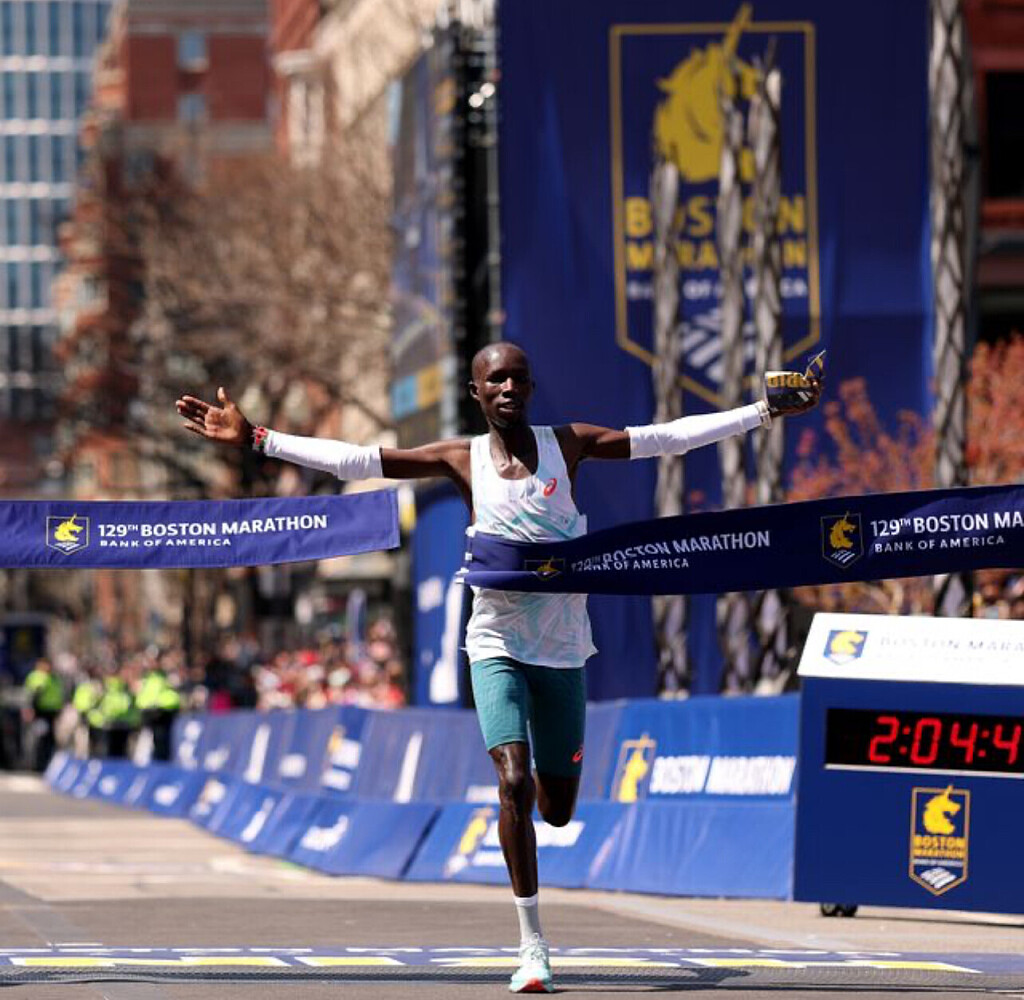
A Day for the History Books: Korir and Lokedi Shine at the 2025 Boston Marathon
The 129th edition of the Boston Marathon, held Monday, April 21, 2025, delivered unforgettable drama and record-setting performances on the iconic route from Hopkinton to Boylston Street. Under near-perfect running conditions—mid-50s temperatures, low humidity, and a light tailwind—elite runners took full advantage, producing some of the fastest times in race history.
John Korir Claims His Crown and Continues a Family Legacy
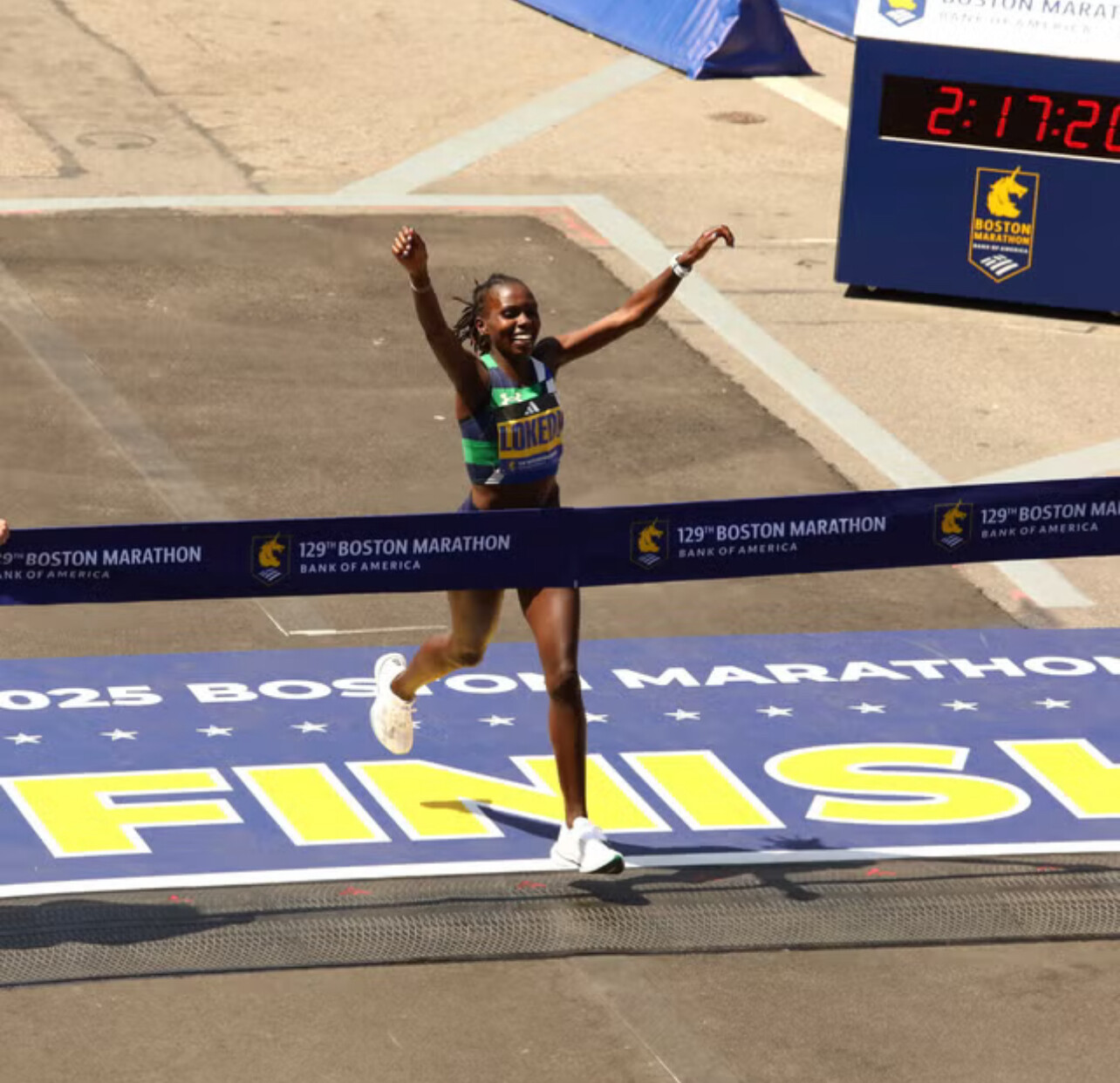
Kenya’s John Korir won the men’s race in a sensational 2:04:45, the second-fastest time ever run on the Boston course. The younger brother of 2012 Boston champion Wesley Korir, John added another chapter to his family’s Boston legacy by not only conquering the challenging course but doing so in dominant fashion.
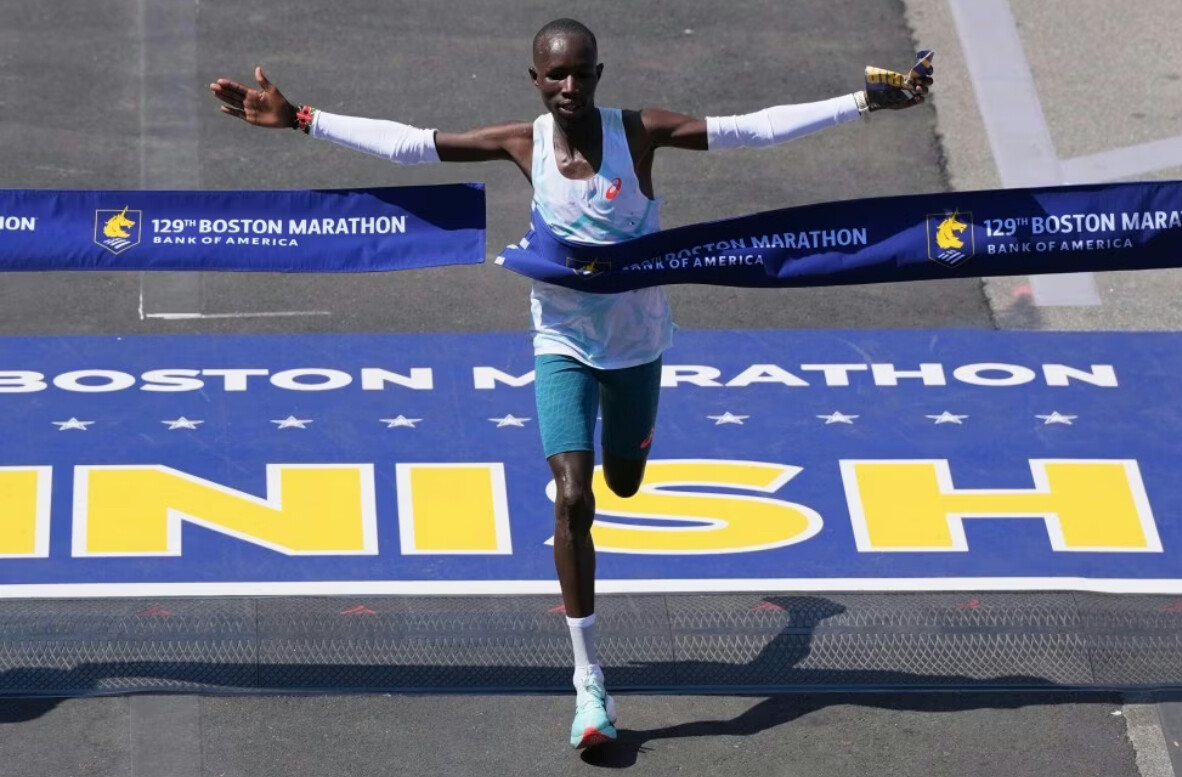
Despite a minor fall early in the race, Korir surged away from a deep international field after 20 miles, building a gap that no one could close. His finishing time was just over a minute shy of Geoffrey Mutai’s legendary 2:03:02 from 2011—the fastest time ever run in Boston but not eligible as a world record due to the course layout.
“I knew I was ready for something big,” Korir said post-race. “To follow in my brother’s footsteps and win Boston means everything.”
American hopes were high coming into the race, and Conner Mantz did not disappoint. Running a massive personal best of 2:05:08, he placed fourth overall and became the second-fastest American ever on the Boston course, behind only Ryan Hall’s 2:04:58 (set in 2011).
Sharon Lokedi Breaks the Tape—and the Record
The women’s race was equally historic. Sharon Lokedi, who won the 2022 New York City Marathon, delivered the performance of her life to win in 2:17:22, a new Boston Marathon course record, smashing the previous mark of 2:19:59 set by Buzunesh Deba in 2014.
Lokedi ran a smart, strategic race. She stayed tucked in a lead pack through the Newton Hills and then launched a powerful surge at mile 24, dropping two-time Boston champion Hellen Obiri and the rest of the field. Obiri finished second in a personal best 2:18:10, making it a Kenyan 1-2 sweep on the women’s podium.
“This course is tough, but I felt strong the whole way,” Lokedi said. “To run a course record here—it’s just unbelievable.”
Top 10 Elite Men – 2025 Boston Marathon
1. John Korir (Kenya) – 2:04:45
2. Alphonce Simbu (Tanzania) – 2:05:04
3. Cybrian Kotut (Kenya) – 2:05:04
4. Conner Mantz (USA) – 2:05:08
5. Muktar Edris (Ethiopia) – 2:05:59
6. Rory Linkletter (Canada) – 2:07:02
7. Clayton Young (USA) – 2:07:04
8. Tebello Ramakongoana (Lesotho) – 2:07:19
9. Daniel Mateiko (Kenya) – 2:07:52
10. Ryan Ford (USA) – 2:08:00
Top 10 Elite Women – 2025 Boston Marathon
1. Sharon Lokedi (Kenya) – 2:17:22 (Course Record)
2. Hellen Obiri (Kenya) – 2:17:41
3. Yalemzerf Yehualaw (Ethiopia) – 2:18:06
4. Irine Cheptai (Kenya) – 2:21:32
5. Amane Beriso (Ethiopia) – 2:21:58
6. Calli Thackery (Great Britain) – 2:22:38
7. Jess McClain (USA) – 2:22:43
8. Annie Frisbie (USA) – 2:23:21
9. Stacy Ndiwa (Kenya) – 2:23:29
10. Tsige Haileslase (Ethiopia) – 2:23:43
Notable American Performances
• Emma Bates finished 13th with a time of 2:25:10.
• Dakotah Popehn secured 16th place in 2:26:09.
• Des Linden completed her 28th and final professional marathon, finishing 17th in 2:26:19.
• Sara Hall placed 18th with a time of 2:26:32.
Looking Ahead
The 2025 Boston Marathon reaffirmed its place as one of the world’s premier races—not just for its history and prestige, but for its ability to showcase incredible athletic achievement. With deep American performances and Kenyan dominance at the front, it sets the stage for an exciting year.
For fans, runners, and historians, this year’s Boston will go down as one of the most memorable ever.
My Best Runs
Your front row seat to the world of running
by Boris Baron
Login to leave a comment
Boston Marathon
Among the nation’s oldest athletic clubs, the B.A.A. was established in 1887, and, in 1896, more than half of the U.S. Olympic Team at the first modern games was composed of B.A.A. club members. The Olympic Games provided the inspiration for the first Boston Marathon, which culminated the B.A.A. Games on April 19, 1897. John J. McDermott emerged from a...
more...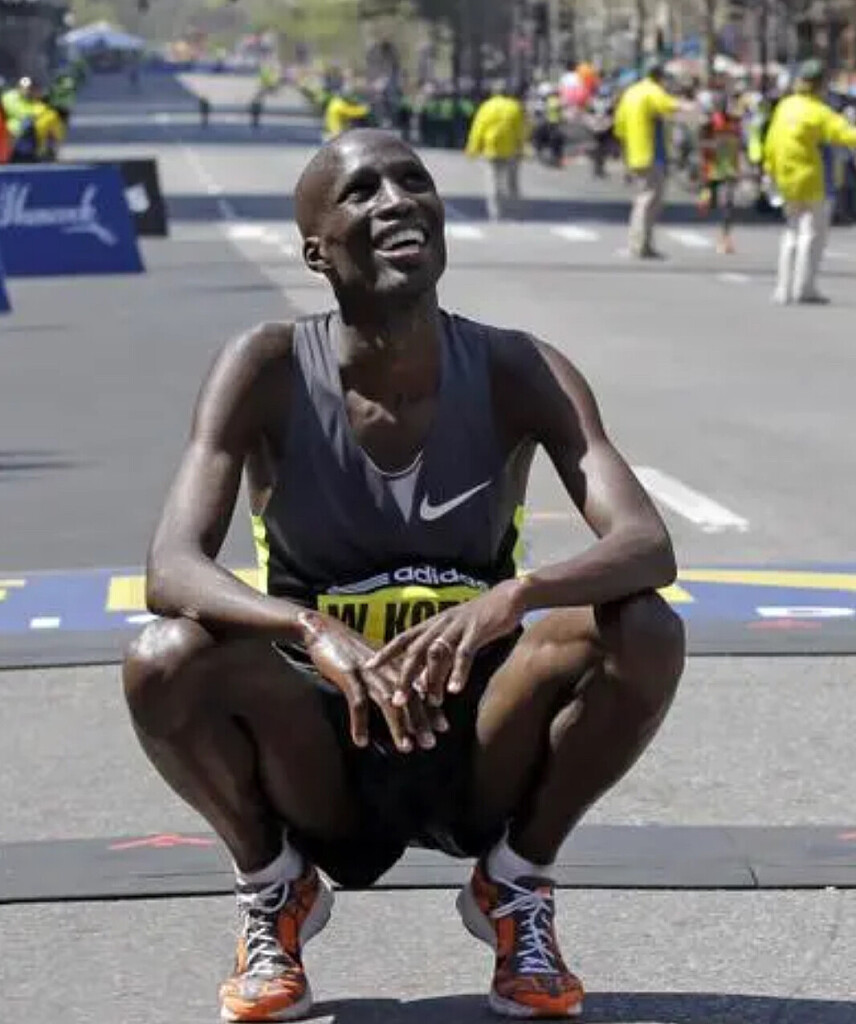
BROTHERHOOD ON BOYLSTON: JOHN KORIR LOOKS TO EMULATE WESLEY AS BOSTON MARATHON CHAMPION
By Toni Reavis
There have been many historic firsts in the long history of the Boston Marathon. This coming Monday, 21 April, 2025, 28-year-old John Korir of Kitale, Kenya, will attempt to become the first brother of a Boston champion to match his sibling on the Boylston Street winner‘s platform. Older brother Wesley won Boston in the notoriously hot year of 2012.
History To Write
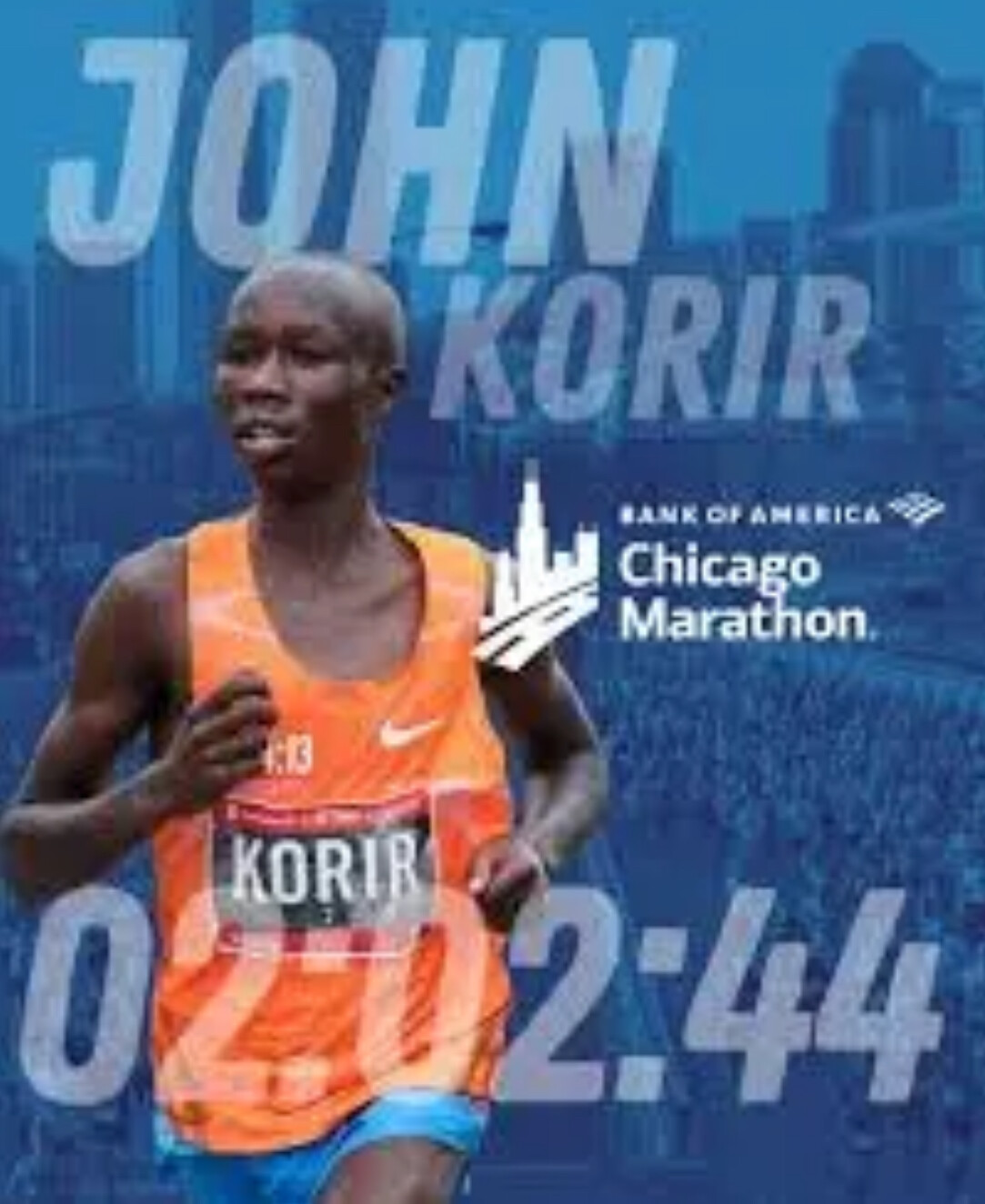
The Korir brothers have already written their first chapter of running history when John won the BofA Chicago Marathon last fall in 2:02:44. That gave each brother one World Marathon Major on their ledger. And both have won twice the Los Angeles Marathon, too, Wesley in 2009 & 2010, John in 2021 & 2022. Now John looks to join Wesley as a Boston champion.
STRONG FIELD
But it won’t be easy as John will have, among others, two former Boston champions to contend with, defender Sisay Lemma of Ethiopia and 2022-2023 champ, Evans Chebet of Kenya.
All three competed last year, so there won’t be any surprises like we saw in 2024 when Lemma struck out early, opened a commanding lead—posting the fastest first half in Boston history, 60:19—and then hung on to win.
BOSTON TACTICS
So accustomed are today’s runners to pacesetters, that a tactic like hard early front running can catch competitors off guard. Remember Meb Keflezighi in 2014? It worked again ten years later.
Despite Lemma slowing to a near 66-minute second half, his cushion was substantial enough for a relatively easy win in 2:06:17. Chebet finished third, Korir fourth.
1. Sisay Lemma: 2:06:17 (Ethiopia)
2. Mohamed Esa: 2:06:58 (Ethiopia)
3. Evans Chebet: 2:07:22 (Kenya)
4. John Korir: 2:07:40 (Kenya)
Odds are that Lemma won’t employ the same strategy this Patriots’ Day. And if he does, the others won’t be caught on their back foot.
FAITH IN & FROM COACH MANN
I spoke with John Korir‘s coach, Ron Mann, two days ago after he finished nine holes of golf at his home course in Louisville, Kentucky. We discussed both John and brother Wesley, who Ron also coached at the University of Louisville and then throughout his professional running career.
I pointed out to Coach Mann that Boston 2025 will be the 12th marathon of John’s career. He began with two late race falters in his first three marathon attempts, Ottawa 2018 and Los Angeles in 2019. On both occasions, he moved hard at 20 miles and opened what looked to be winning margins.
EARLY HARD LESSONS
But in Ottawa, course record holder Yemane Tsegay of Ethiopia caught him at 40k, and won by 22 seconds. In Los Angeles, it was even more cruel, as John faded significantly on Ocean Avenue in sight of the finish line in Santa Monica. With less than 30 seconds of running left, Elisha Barno flew by the exhausted Korir to snatch the win by 7 seconds.
“Early in his career, when he was running well, but not great, he was only running about 70 miles a week,” explained Coach Mann. “He didn’t have a bottom under him. Gradually, over a period of four years, we are now at the point where he is running big mileage. He first did it before Chicago last fall and now even a little bit more for Boston. I don’t know how well the others are prepared, but John is all ready to go.”
This will be John‘s third attempt at Boston. In 2023 he finished ninth in 2:10:04. Last year he was fourth in 2:07:40.
“So he knows the course,” confirmed Coach Mann. “And if we go back to Geoffrey Mutai’s record in 2011 (2:03:02), everything happens at Heartbreak Hill. Two years ago, John charged up Heartbreak Hill with Eliud Kipchoge. They ended up eighth and ninth. So you gotta ask if that’s the wise thing to do.”
BOSTON SPECIFIC PREP
John has prepared on a variety of terrains back home for Boston’s tricky route.
“Like golf, you try to look at the course you’re playing,” explained Mann, who visited John in Kenya in January. “If the last hole is over water, then you practice that. So the last 4 miles in Boston are downgrade with big crowds. So you have to be ready for that.
“I told him, ‘you have as much speed as anyone. You’ve run a 58:50 for the half-marathon. So if you feel like you wanna go, go. But if you feel like you wanna wait, then wait.”
There is a 14-year gap between Wesley and John. And their attributes as runners are different as well.
2012 Boston Marathon champion Wesley Korir (third photo)
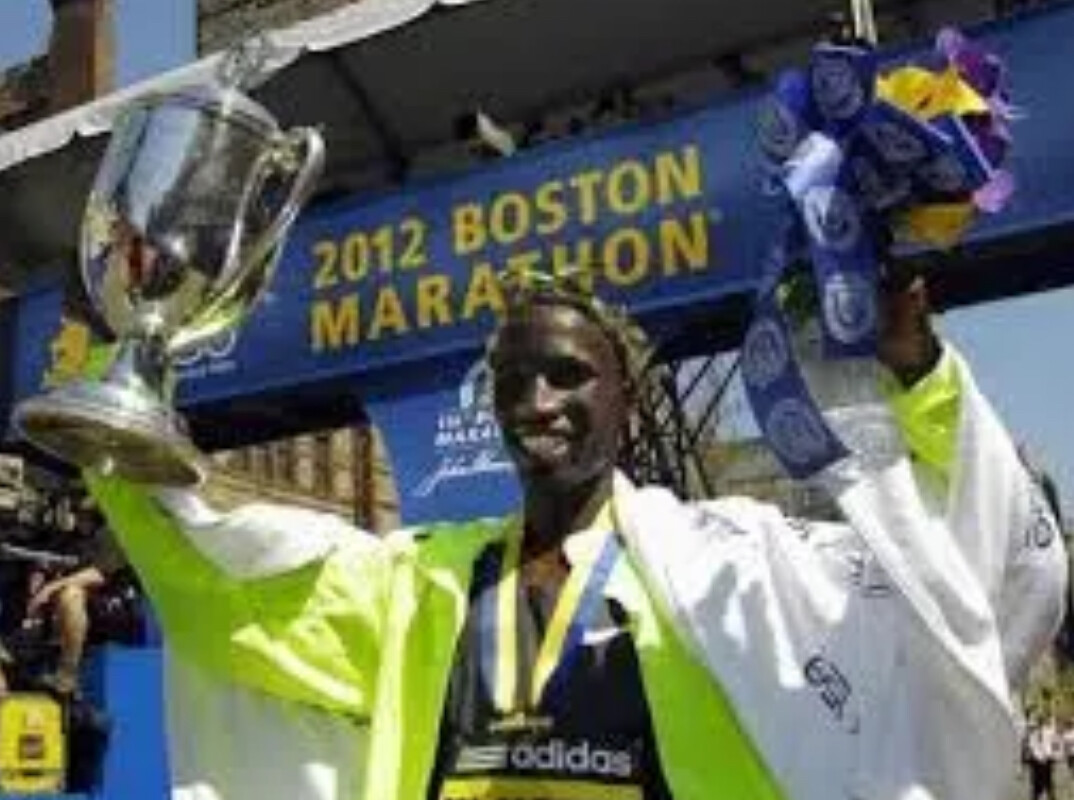
“John has more speed,” said their coach. “But Wesley had more endurance. He was able to withstand more early on in his career. But we needed to put speed on to his endurance. But when he decided to campaign for and won his seat for parliament in 2013 (as he simultaneously prepared to defend his Boston title), we never got a chance to do that. So we never saw the end of his career where he could’ve maximized his speed. John already has the speed. We just needed to put endurance beneath it.”
LEARNING HOW TO WIN
Another of Korir’s opponents will be American Olympian, Connor Mantz. Like John, Connor is 28-years-old, and just entering his prime. While still dangerous, Sisay Lemma (34) and Evans Chebet (35) are on the back nine of their careers.
Though Connor Mantz has a half marathon PR close to Korir’s—59:15 to 58:50—he has yet to finish on the podium of a major marathon, much less tasted victory.
“John has learned how to win,” said Coach Mann. “That’s why the wins in the Boilermaker 15k (Utica, N.Y.), Falmouth Road Race, and Chicago Marathon in 2024 were so important. Now he is expecting to win.
“He already has two marathon victories in Los Angeles and one in Chicago. He also has a world class personal best (2:02:44). Now it’s consistency over a long period of time. Boston is one step along that route. Will he win this year? I don’t know. But he will win Boston in his career. I tell him, you’re as prepared as you can be, and I’ve never trained an athlete to your level before. So, it’s yours to take now.”
CONSTRUCTING YOUR FITNESS
Runners know that reaching peak form is a slow building process. People refer to building your aerobic house. I liken it to constructing a house of cards. You can build a very strong house, but you must build it assiduously, and gradually, or the whole thing will come tumbling down.
“Between Boston last spring and Chicago last fall, John’s stride tempo went up by five per minute,” explained Coach Mann. “And his average heart rate went from 184bpm in Boston to 173 in Chicago. That tells me he’s even fitter that he was.”
HOME IN THE CHERANGANY HILLS
John lives and trains in the Cherangany Hills about 40 minutes northwest of Eldoret, Kenya in the famed Central Highlands. It’s 15 minutes from Kitale, where the Transcend Academy is located.
Transcend Academy is a non-profit school sponsored by the Kenyan Kids Foundation USA that provides full scholarships to talented students from needy backgrounds. Its mission is to leverage running to develop holistic individuals for the progress of Kenya. It’s an offshoot of Wesley Korir’s political sensibilities.
The school was founded by Wesley and his wife, Tarah, who met while both were students at the University of Louisville. John also contributes financially to Transcend.
While John lives and trains in Kitale, his wife and three girls moved to Eldoret because that’s where his kids go to school. But John built a second home in Kitale with his Chicago winnings, so his family can come stay with him on weekends. John and Wesley’s mom and dad live about 600m from the school, too.
“We have a very close-knit, well-oiled family around him,” said Coach Mann, “to make sure that he gets it right.”
The field for Monday’s marathon is very strong and experienced. The weather forecast suggests benign conditions, so it will be the athletes, alone, who decide the outcome.
IN THE HANDS OF GOD
“I tell John, ‘the gift is your responsibility to use," said Coach Mann. "So use it well and give the glory to God’. He did that in Chicago. He crossed himself after he crossed the line.”
Maybe another cross in Hopkinton might not be a bad idea come Monday morning. Brother Wesley will be waiting with Coach Mann at the finish line on Boylston Street, praying like mad, one would assume.
Believing the Boston!
by Toni Reavis
Login to leave a comment
Boston Marathon
Among the nation’s oldest athletic clubs, the B.A.A. was established in 1887, and, in 1896, more than half of the U.S. Olympic Team at the first modern games was composed of B.A.A. club members. The Olympic Games provided the inspiration for the first Boston Marathon, which culminated the B.A.A. Games on April 19, 1897. John J. McDermott emerged from a...
more...
American Stars Ready to Shine at the 2025 Boston Marathon
The 129th Boston Marathon, set for Monday, April 21, 2025, promises to be a historic showdown between international champions and a formidable field of elite American runners. With defending champions Hellen Obiri and Sisay Lemma returning to defend their titles, the depth of competition will be among the strongest in recent memory.
Elite American Men
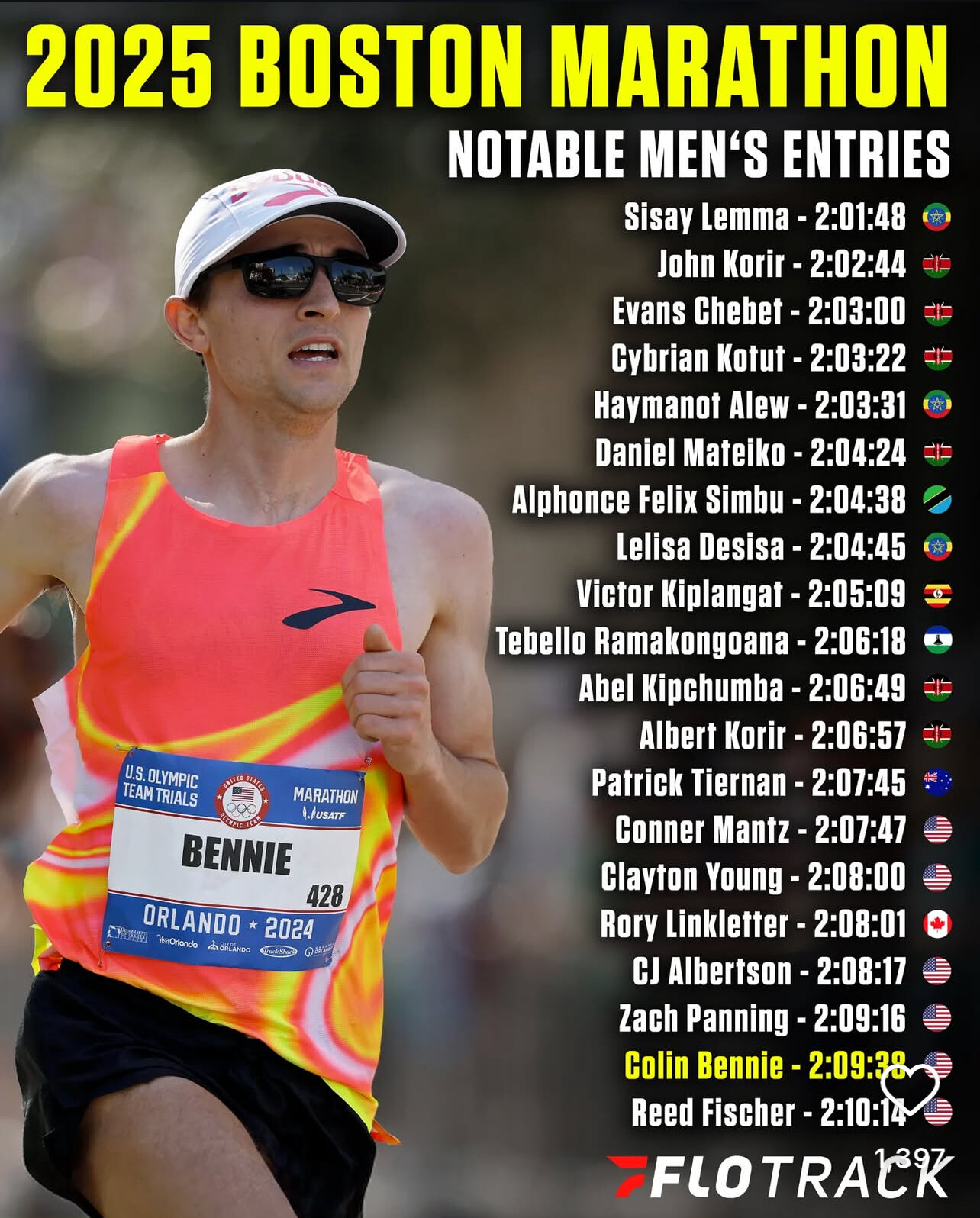
• Conner Mantz – PB: 2:07:47
Mantz enters Boston as one of the top American hopes, fresh off an 8th-place finish at the Paris Olympics and 6th in New York City.
• Clayton Young – PB: 2:08:00
Training alongside Mantz, Young placed 9th in Paris and 7th in NYC, and continues to close the gap with the world’s best.
• CJ Albertson – PB: 2:08:17
Known for his fearless tactics and high mileage, Albertson ran his personal best at the 2024 Chicago Marathon.
• Zach Panning – PB: 2:09:16
The 5th-place finisher at the U.S. Olympic Trials, Panning brings aggressive racing and consistent progress to Boston.
• Colin Bennie – PB: 2:09:38
The Massachusetts native and 2021 top American finisher returns with home course advantage and renewed focus.
Elite American Women
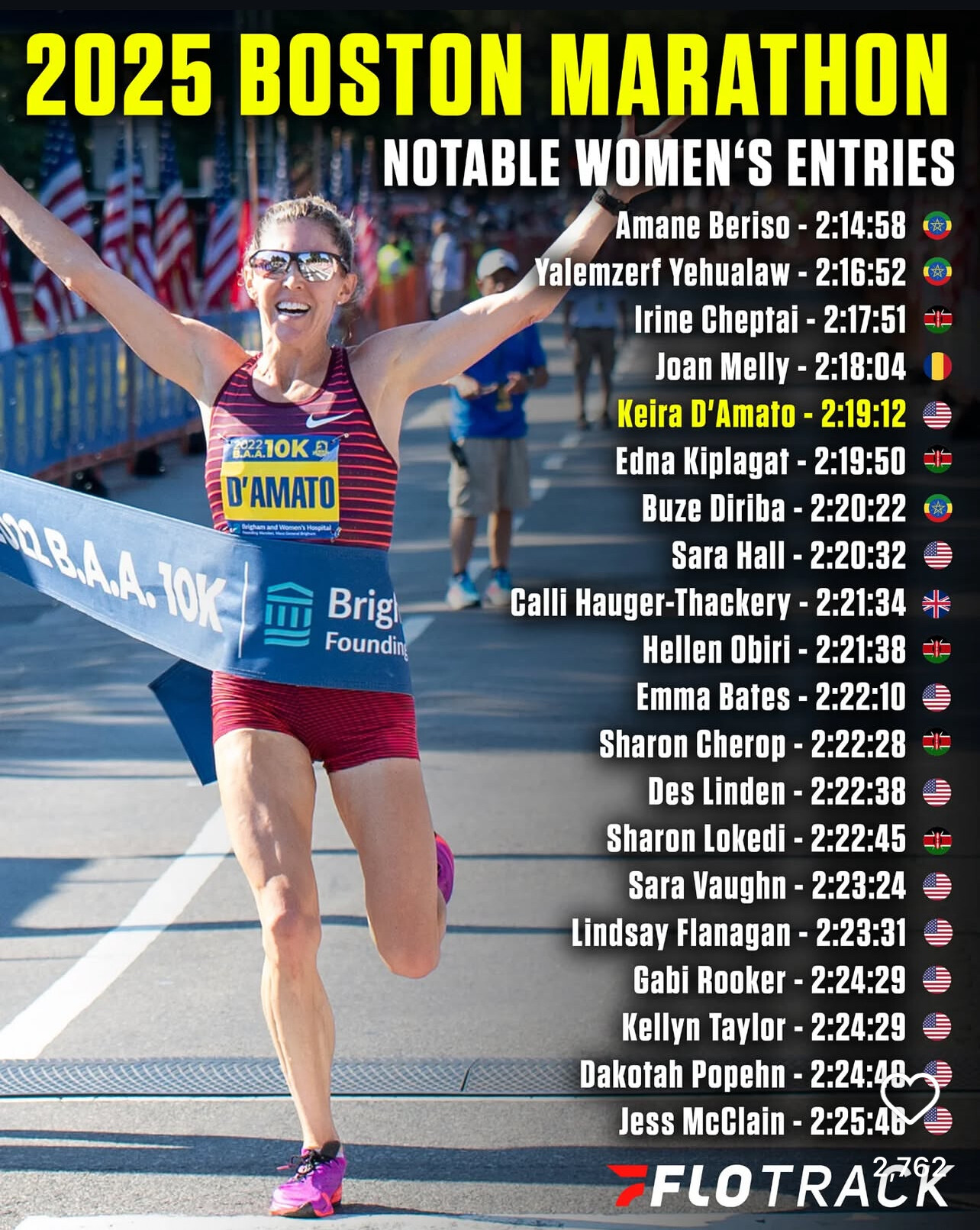
• Keira D’Amato – PB: 2:19:12
The former American record holder returns from injury with momentum and the experience to contend.
• Emma Bates – PB: 2:22:10
Bates was the top American at the 2024 Boston Marathon and continues to improve with every outing.
• Sara Hall – PB: 2:20:32
One of the most experienced American marathoners, Hall posted a 2:23:45 in Berlin last fall.
• Desiree Linden – PB: 2:22:38
The 2018 Boston champion returns for her 12th Boston start, a fan favorite with unmatched experience.
• Dakotah Popehn – PB: 2:24:40
Popehn was the top American finisher at the Paris Olympics and brings strong international credentials.
• Jess McClain – PB: 2:25:46
McClain placed fourth at the U.S. Trials and will be making her Boston debut as a rising star.
International Elite Field
Men’s Division:
• Sisay Lemma (ETH) – PB: 2:01:48
The defending champion and one of the fastest marathoners in history, Lemma seeks to repeat in Boston.
• John Korir (KEN) – PB: 2:02:44
The 2024 Chicago Marathon champion is a serious threat in any race he enters.
• Evans Chebet (KEN) – PB: 2:03:00
Boston champion in 2022 and 2023, Chebet looks to reclaim his title and join the three-time winners’ club.
Women’s Division:
• Amane Beriso (ETH) – PB: 2:14:58
The fifth-fastest woman in history is making her Boston debut.
• Yalemzerf Yehualaw (ETH) – PB: 2:16:52
Still just 25, Yehualaw adds tremendous firepower to the field.
• Hellen Obiri (KEN) – PB: 2:21:38
The two-time defending champion is chasing history with a potential third straight victory on Boylston Street.
Race Day Details
• Date: Monday, April 21, 2025
• Start Times:
• Wheelchair Division – 9:02 AM
• Handcycle & Duo Participants – 9:05 AM
• Elite Women – 9:32 AM
• Elite Men & Wave 1 – 10:00 AM
• Wave 2 – 10:25 AM
• Wave 3 – 10:50 AM
• Wave 4 – 11:15 AM
• Tracking & Coverage: Available through the B.A.A. Racing App with live updates, leaderboards, and interactive course maps.
“I’ve run over a thousand races in my life, and nothing compares to Boston,” says My Best Runs editor Bob Anderson. “When I ran 3:32:17 here at age 65, I felt like a rock star the entire way. The crowd was unbelievable—cheering, encouraging, lifting every runner forward. Boston isn’t just about the elites—it’s about the thousands of others out there chasing their dreams on the same course.”
With a deep American field and some of the fastest runners on the planet, the 2025 Boston Marathon is shaping up to be one of the most competitive in history. Whether it’s a breakout run or a hard-fought defense, fans can expect something unforgettable from this year’s race.
by Boris Baron
Login to leave a comment
Boston Marathon
Among the nation’s oldest athletic clubs, the B.A.A. was established in 1887, and, in 1896, more than half of the U.S. Olympic Team at the first modern games was composed of B.A.A. club members. The Olympic Games provided the inspiration for the first Boston Marathon, which culminated the B.A.A. Games on April 19, 1897. John J. McDermott emerged from a...
more...
Boston Marathon Eliminates Qualifying Times for 2027-2028
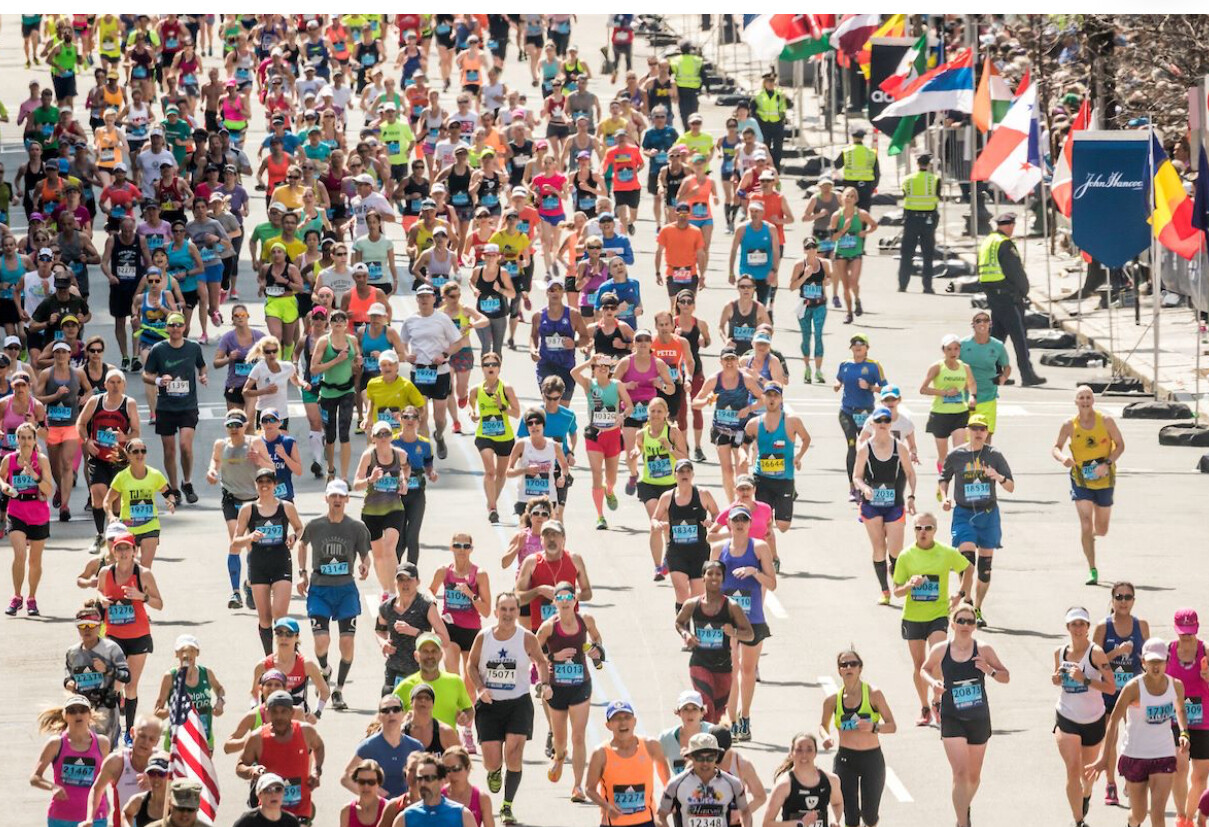
If you’ve ever dreamed of running the Boston Marathon but felt shut out by strict qualifying standards, there’s exciting news on the horizon. In a sweeping and historic change, the Boston Athletic Association (B.A.A.) announced Tuesday morning that qualifying times will be eliminated for the 2027 and 2028 races—ushering in a new era of inclusivity for one of the world’s most iconic marathons.
For decades, qualifying times have been the cornerstone of the Boston Marathon. Introduced in 1970 to manage growing participation and maintain a high level of competition, these benchmarks have pushed runners to achieve excellence. Yet while they have inspired elite performances, they have also left countless passionate runners on the outside looking in.
The decision to remove qualifying times comes on the heels of a record-breaking applicant pool for the 2025 race. In a candid statement, B.A.A. officials explained that the change is driven not only by a commitment to making the event accessible to a broader audience but also by the undeniable demand from the running community. By opening the race to a wider field, the organization aims to celebrate the diverse spirit of marathon running and redefine what it means to be part of this legendary event.

Under the current system, prospective runners must meet stringent time standards based on their age group. For instance, the current qualifying benchmarks for the upcoming race season are as follows:
Men
• Ages 18–34: 2 hours 55 minutes
• Ages 35–39: 3 hours 00 minutes
• Ages 40–44: 3 hours 05 minutes
• Ages 45–49: 3 hours 15 minutes
• Ages 50–54: 3 hours 20 minutes
• Ages 55–59: 3 hours 35 minutes
• Ages 60–64: 3 hours 50 minutes
• Ages 65–69: 4 hours 05 minutes
• Ages 70–74: 4 hours 20 minutes
• Ages 75–79: 4 hours 35 minutes
• Ages 80 and over: 4 hours 50 minutes
Women
• Ages 18–34: 3 hours 25 minutes
• Ages 35–39: 3 hours 30 minutes
• Ages 40–44: 3 hours 35 minutes
• Ages 45–49: 3 hours 45 minutes
• Ages 50–54: 3 hours 50 minutes
• Ages 55–59: 4 hours 05 minutes
• Ages 60–64: 4 hours 20 minutes
• Ages 65–69: 4 hours 35 minutes
• Ages 70–74: 4 hours 50 minutes
• Ages 75–79: 5 hours 05 minutes
• Ages 80 and over: 5 hours 20 minutes
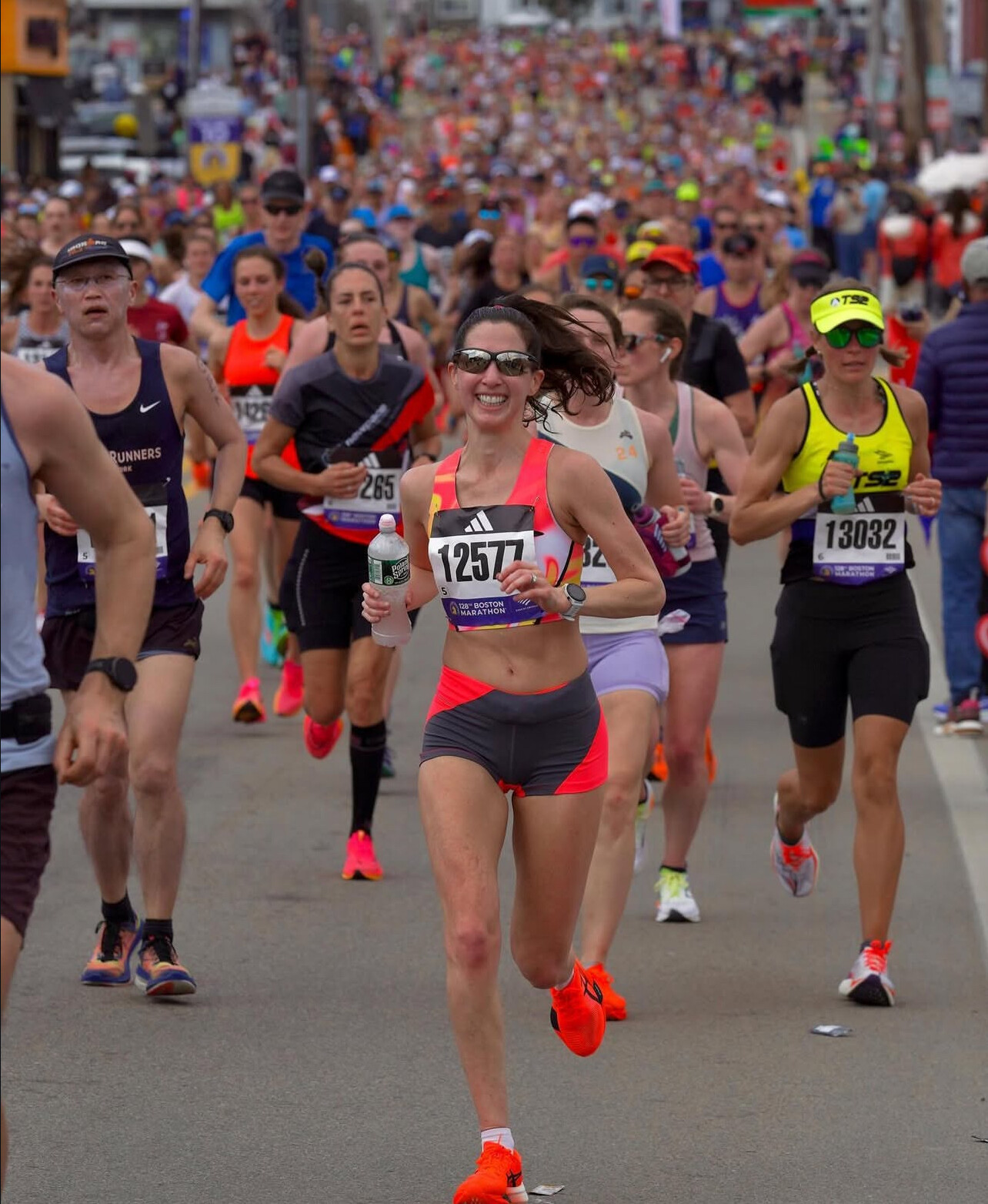
For many runners, these time cutoffs have represented nearly insurmountable hurdles, forcing them to either settle for smaller local races or abandon the dream entirely. With the new open-entry format, the Boston Marathon will no longer serve as an exclusive club for the fastest runners; instead, it will become a celebration of perseverance, community, and the sheer joy of running.
Critics have argued that removing qualifying times might dilute the race’s competitive legacy, while supporters contend that it will invigorate the event by welcoming a richer diversity of participants. The B.A.A. remains confident that this transformative change will not only boost participation but also cement the Boston Marathon’s status as a truly inclusive sporting event.
For runners who have long trained in vain to meet the rigid standards, this decision is a game changer—a symbolic moment that recognizes passion and perseverance over arbitrary numbers. As the running community braces for the upcoming races under this new model, one thing is clear: the Boston Marathon is set to redefine itself, embracing the idea that the spirit of competition can coexist with a commitment to accessibility.
Stay tuned to My Best Runs for further updates and in-depth coverage as we track the unfolding impact of this bold new chapter in marathon history.
by Boris Baron
Login to leave a comment
Boston Marathon
Among the nation’s oldest athletic clubs, the B.A.A. was established in 1887, and, in 1896, more than half of the U.S. Olympic Team at the first modern games was composed of B.A.A. club members. The Olympic Games provided the inspiration for the first Boston Marathon, which culminated the B.A.A. Games on April 19, 1897. John J. McDermott emerged from a...
more...
Boston Marathon 2025 Race Preview and Predictions - Can one of the Americans pull off an upset?
The 129th Boston Marathon is set for Monday, April 21, 2025 in just over a month, once again taking place on Patriots’ Day in Massachusetts. This year’s edition marks the first under the sponsorship of Bank of America, signaling a new chapter for the world’s oldest annual marathon. With an elite field packed with world-class runners and unpredictable spring weather, the race promises another thrilling showdown from Hopkinton to Boston.
Race Details & Course Overview
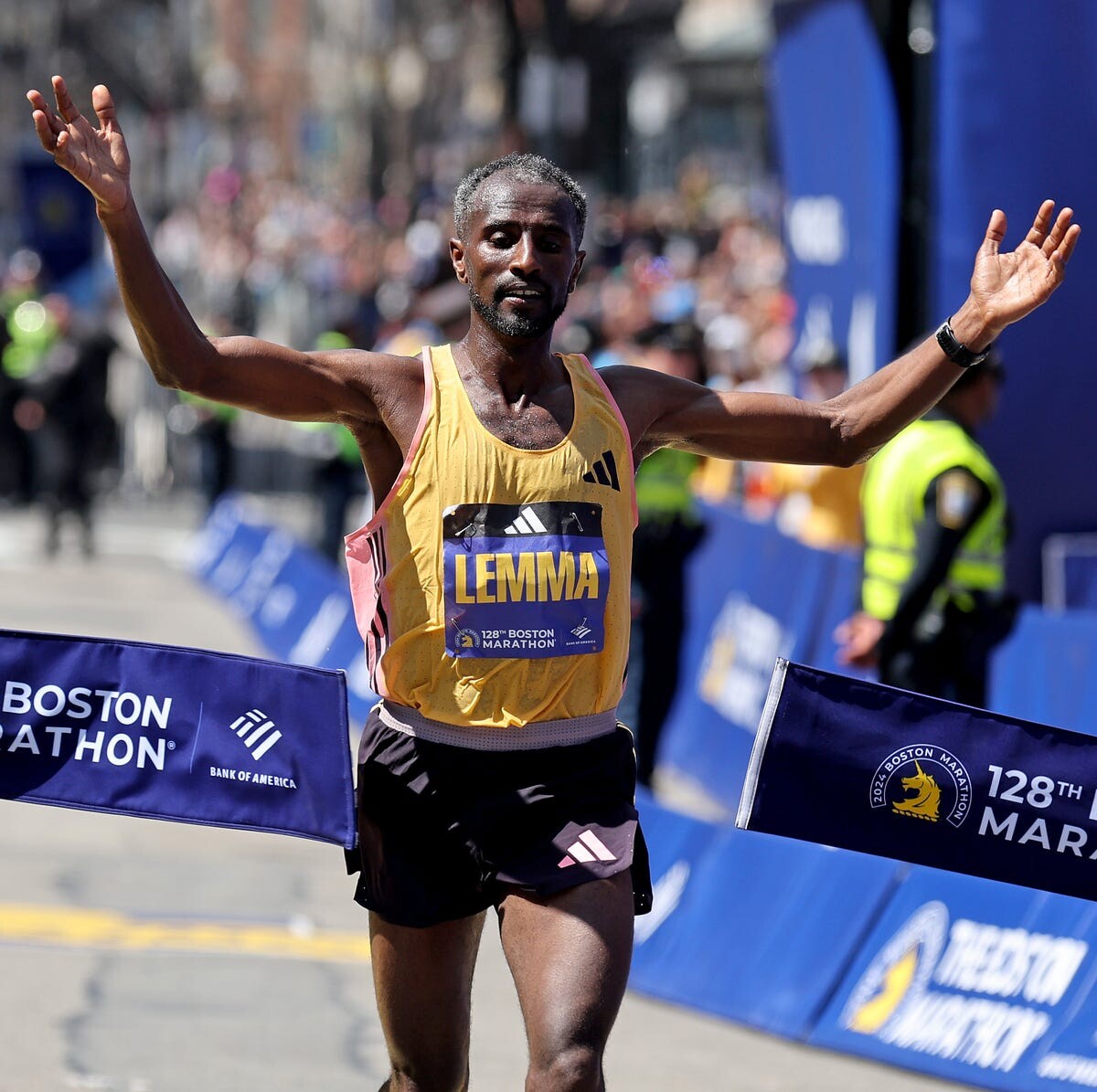
The Boston Marathon’s iconic point-to-point course spans 26.2 miles, starting in Hopkinton and ending on Boylston Street in Boston’s Copley Square. Runners will navigate rolling hills, including the challenging Newton Hills and the infamous Heartbreak Hill at mile 21. The course favors experienced runners who can manage both the early downhill sections and the later climbs.
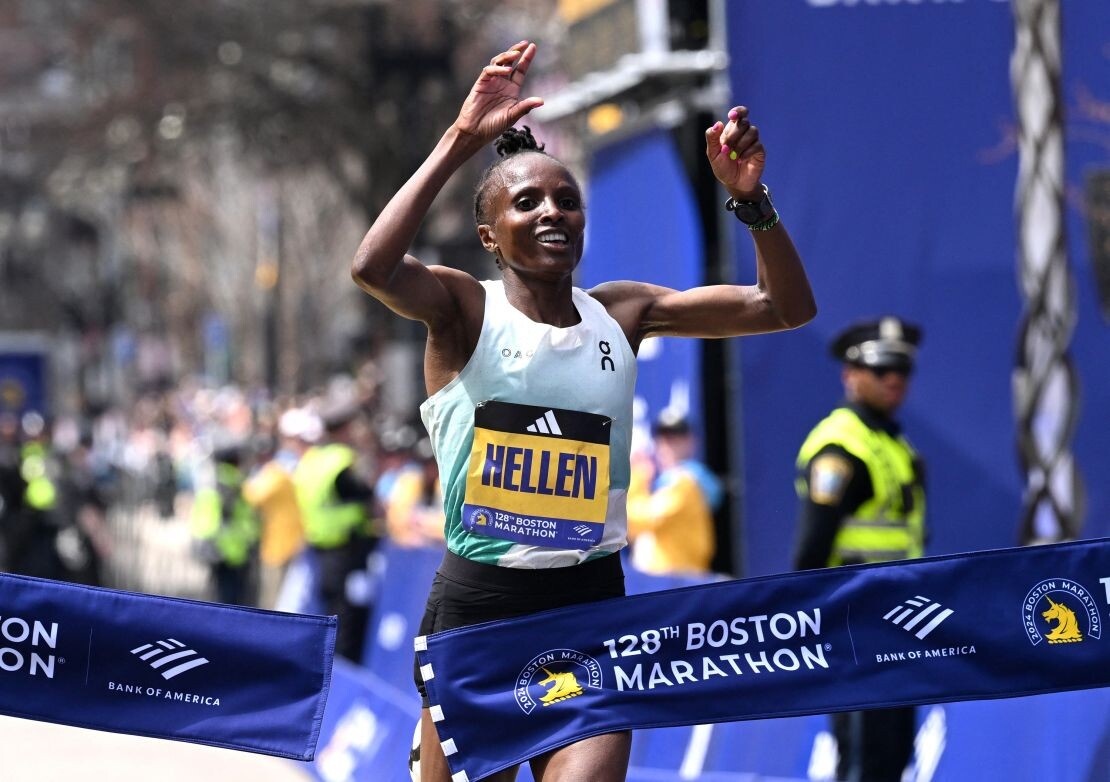
Weather will be a key factor, as New England’s spring climate is unpredictable. Ideal conditions for runners would be cool temperatures around 45–50°F with overcast skies and a tailwind, but past races have seen everything from heatwaves to freezing rain. Early forecasts suggest favorable conditions, but as always, runners must be prepared for anything.
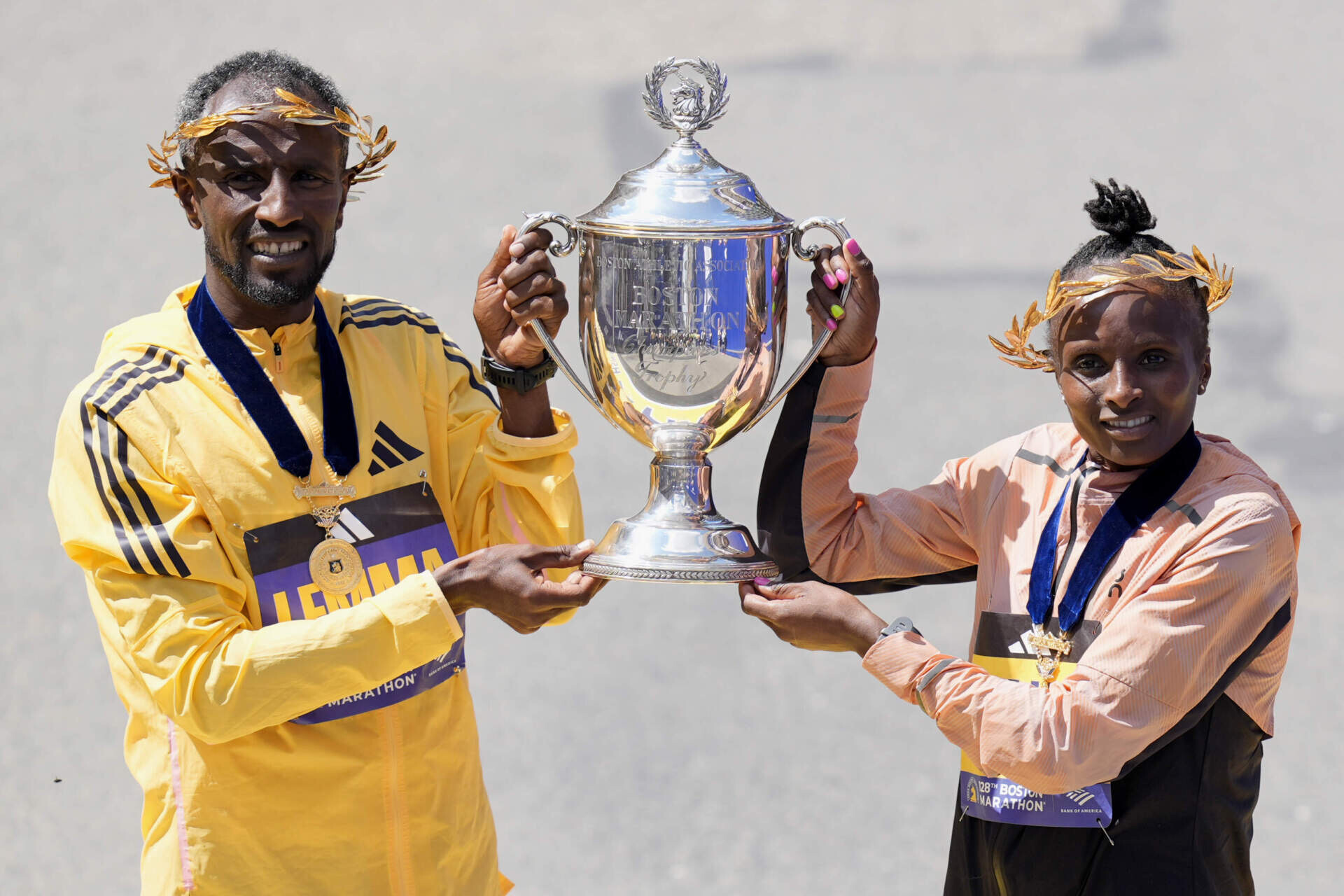
Men’s Elite Field
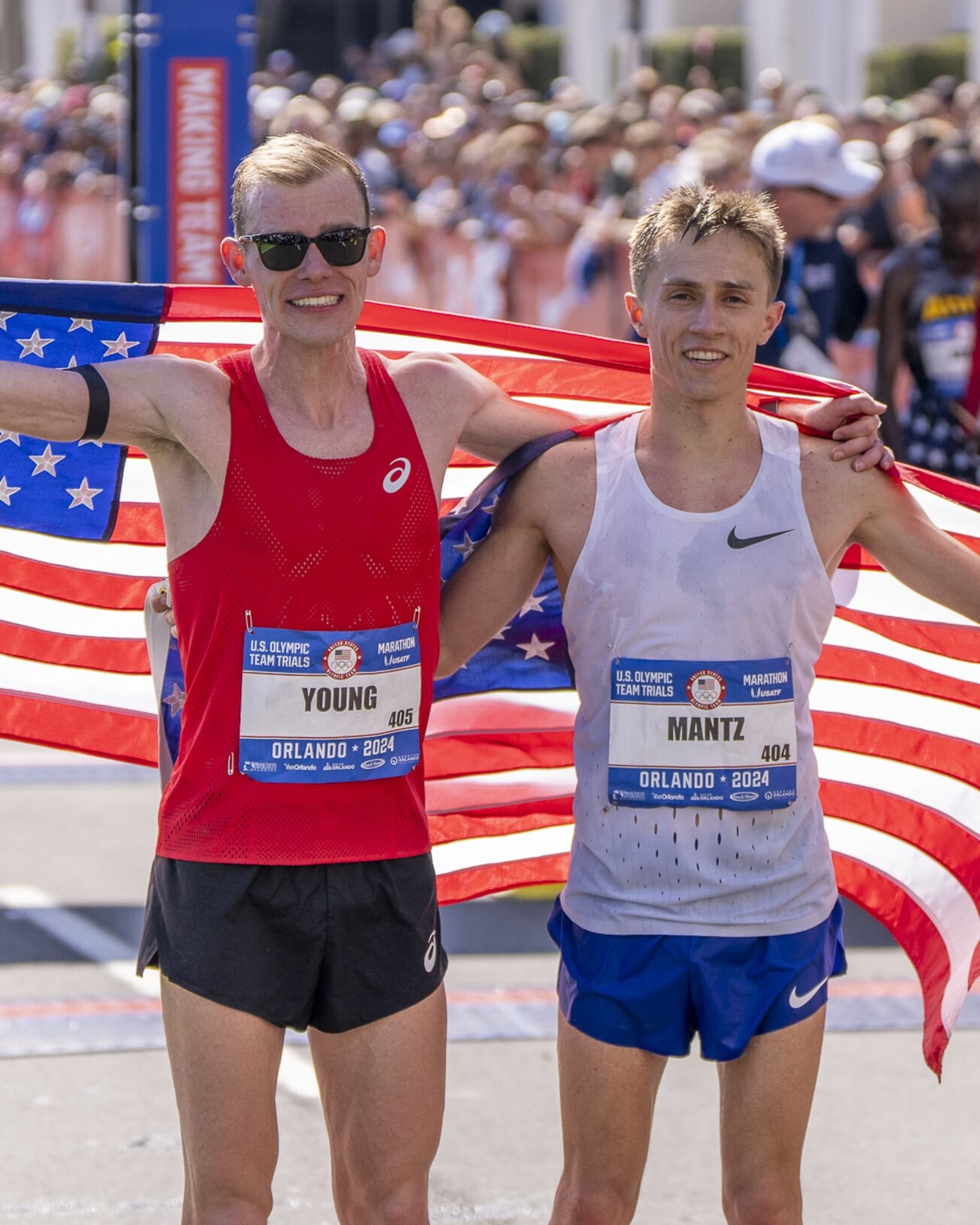
The men’s race features defending champion Sisay Lemma, who is aiming to retain his title after a dominant performance last year. Evans Chebet, the 2022 and 2023 champion, returns hungry to reclaim the crown. John Korir, fresh off a victory at the Chicago Marathon, brings world-class speed that could shake up the competition.
A strong American contingent is headlined by Conner Mantz and Clayton Young, both of whom finished in the top ten at the Olympic marathon. Mantz, in particular, has shown outstanding form, recently breaking the American half marathon record. CJ Albertson, a familiar name in Boston for his bold racing tactics, will also be in the mix, potentially pushing the early pace.
The race is expected to be tactical, with the Newton Hills playing a decisive role. If the pack remains tight through Heartbreak Hill, it could come down to a late-race battle along Boylston Street.
Women’s Elite Field
Hellen Obiri returns seeking a historic third consecutive Boston Marathon title, a feat not accomplished in over two decades. Known for her lethal finishing speed, Obiri has mastered the Boston course and will be the woman to beat.
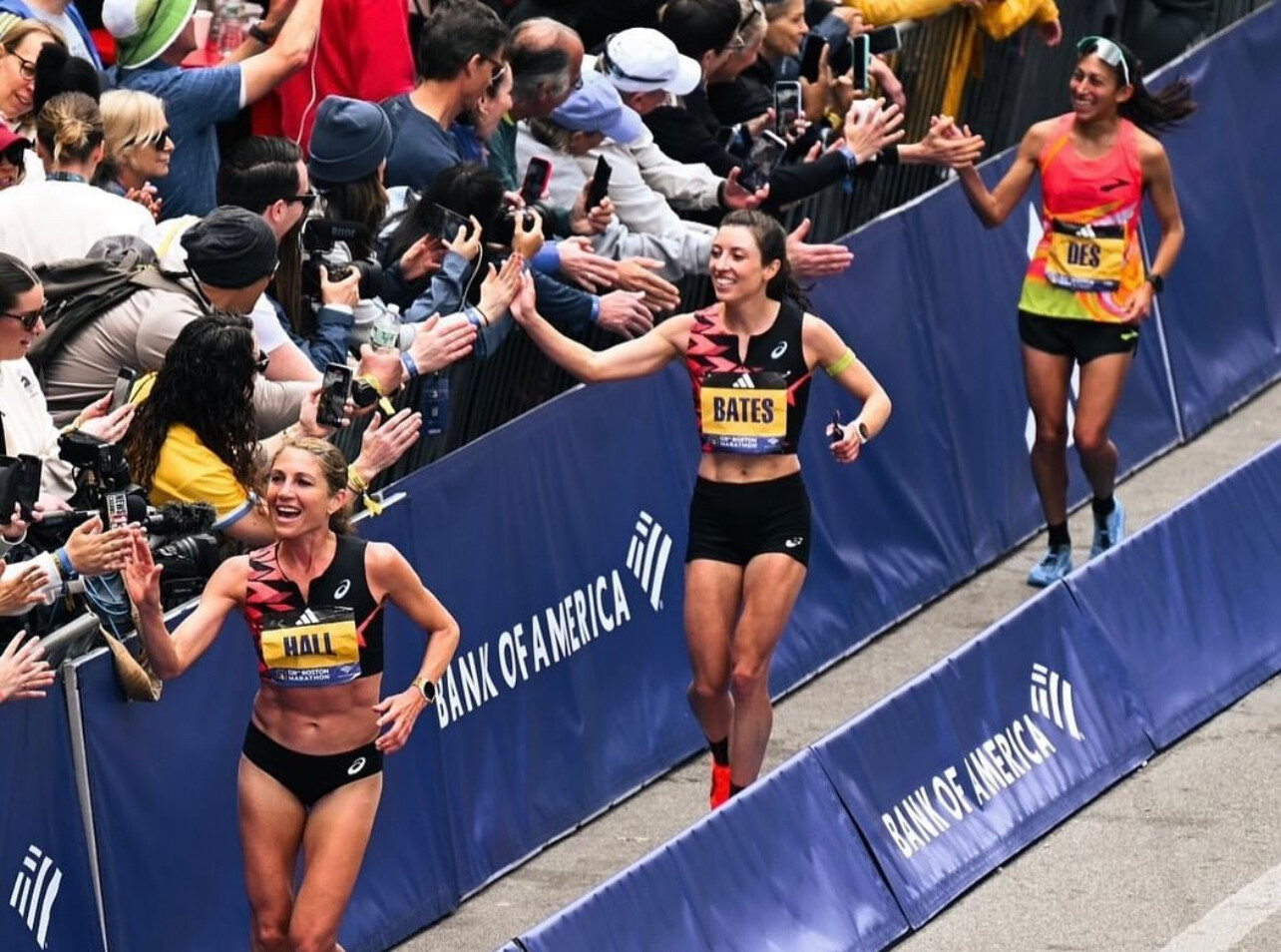
Challenging her will be Amane Beriso, the reigning world marathon champion, and Yalemzerf Yehualaw, a former London Marathon winner with sub-2:17 speed. Sharon Lokedi, last year’s runner-up, will also be in contention, having nearly edged out Obiri in a dramatic finish.
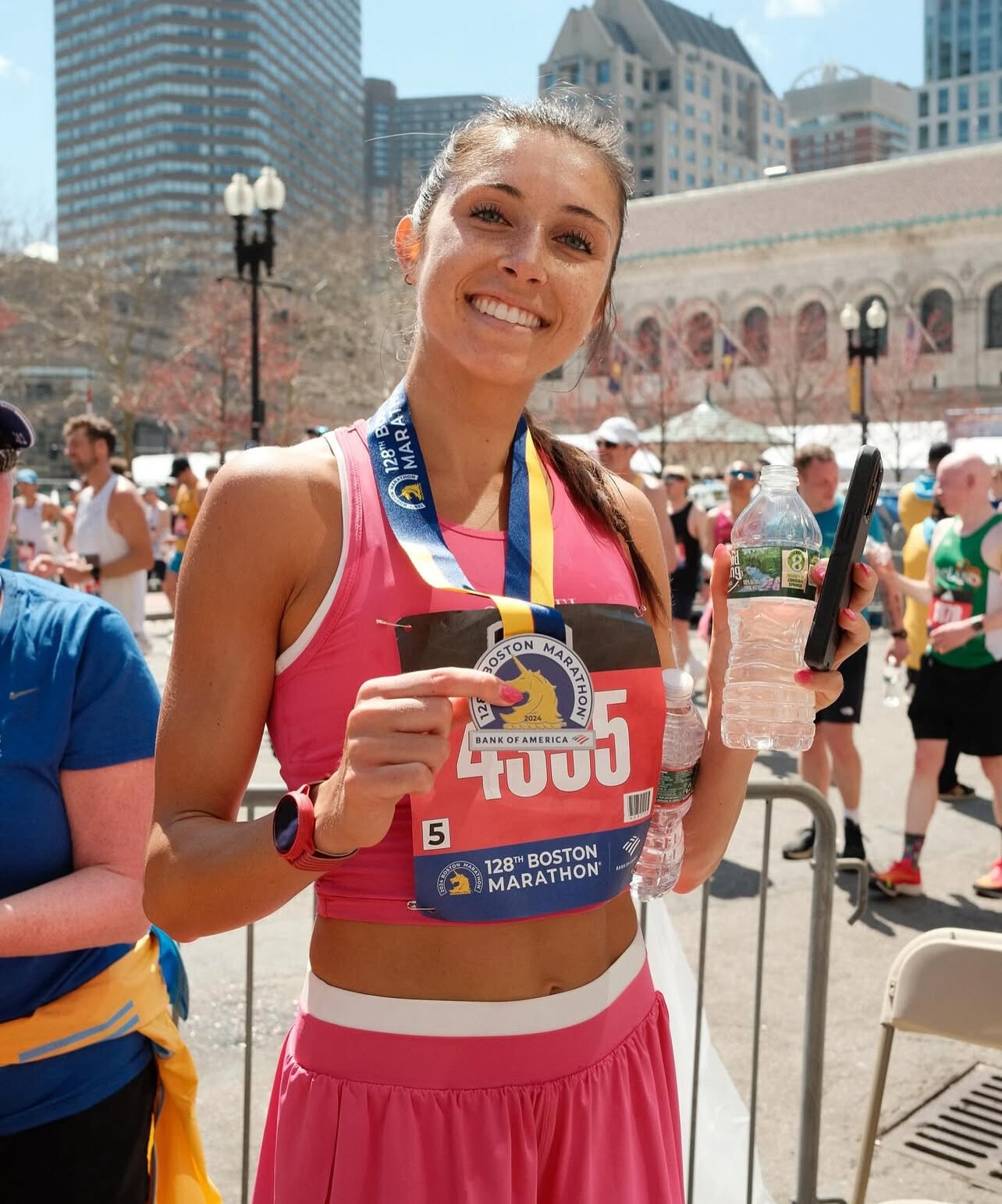
The American field is deep, with contenders including Sara Hall, Keira D’Amato, Emma Bates, and former champion Des Linden. While breaking into the top three will be a challenge, a top-five finish is within reach for the top U.S. women.
Predictions & Final Thoughts
The men’s race is expected to be a battle between the experienced champions and rising American stars. If the race is fast from the start, runners like Korir and Lemma may have the edge. However, if it becomes a strategic affair, Mantz and Young could position themselves for a breakthrough performance.
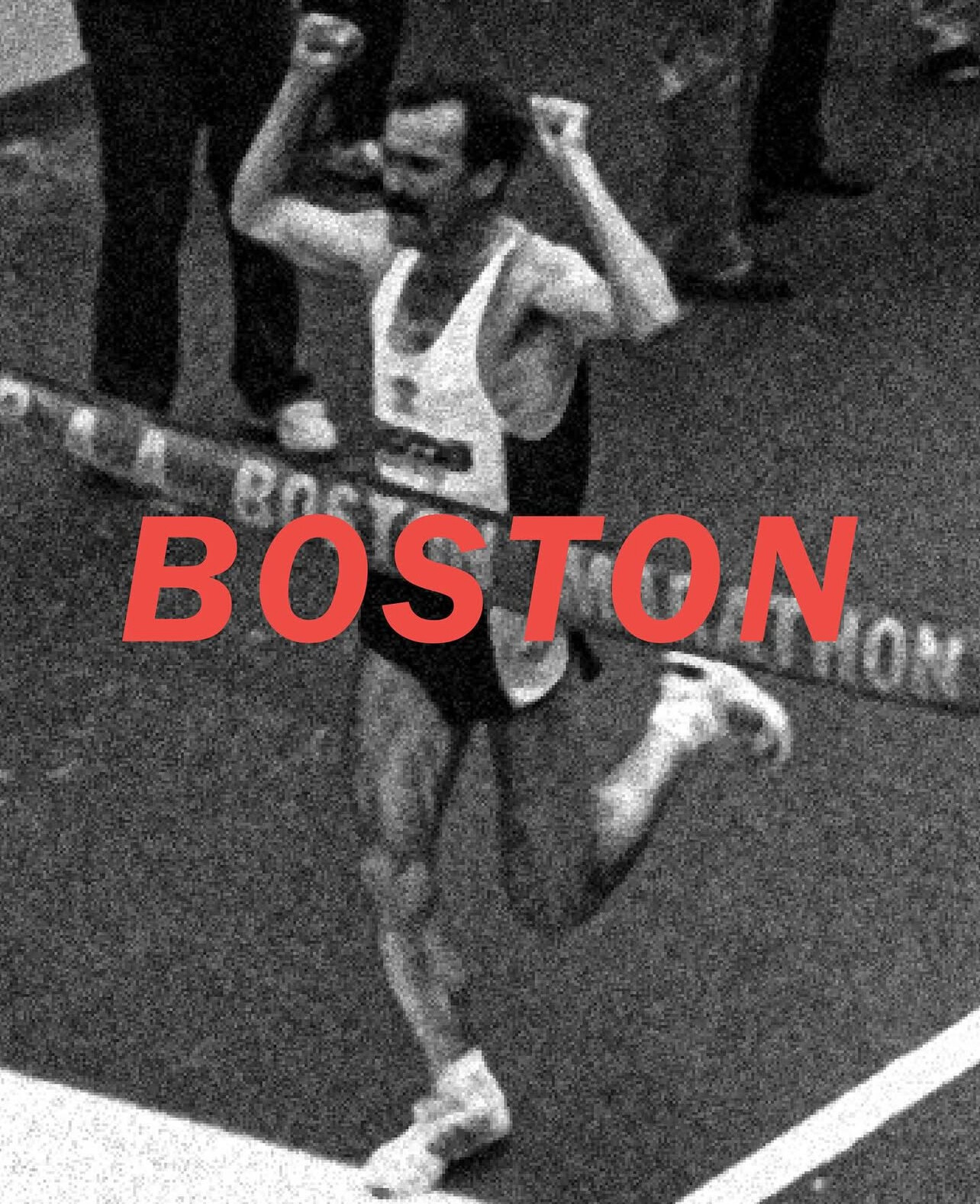
On the women’s side, Obiri’s experience and closing speed make her the favorite, but the depth of the field suggests another closely contested race. If Beriso or Yehualaw can push the pace early, it could disrupt Obiri’s plans for a late kick.
With a historic Patriots’ Day celebration and an elite field ready to compete, the 2025 Boston Marathon is shaping up to be an unforgettable race. Whether defending champions hold their ground or new winners emerge, all eyes will be on Boylston Street this April.
by Boris Baron
Login to leave a comment
Boston Marathon
Among the nation’s oldest athletic clubs, the B.A.A. was established in 1887, and, in 1896, more than half of the U.S. Olympic Team at the first modern games was composed of B.A.A. club members. The Olympic Games provided the inspiration for the first Boston Marathon, which culminated the B.A.A. Games on April 19, 1897. John J. McDermott emerged from a...
more...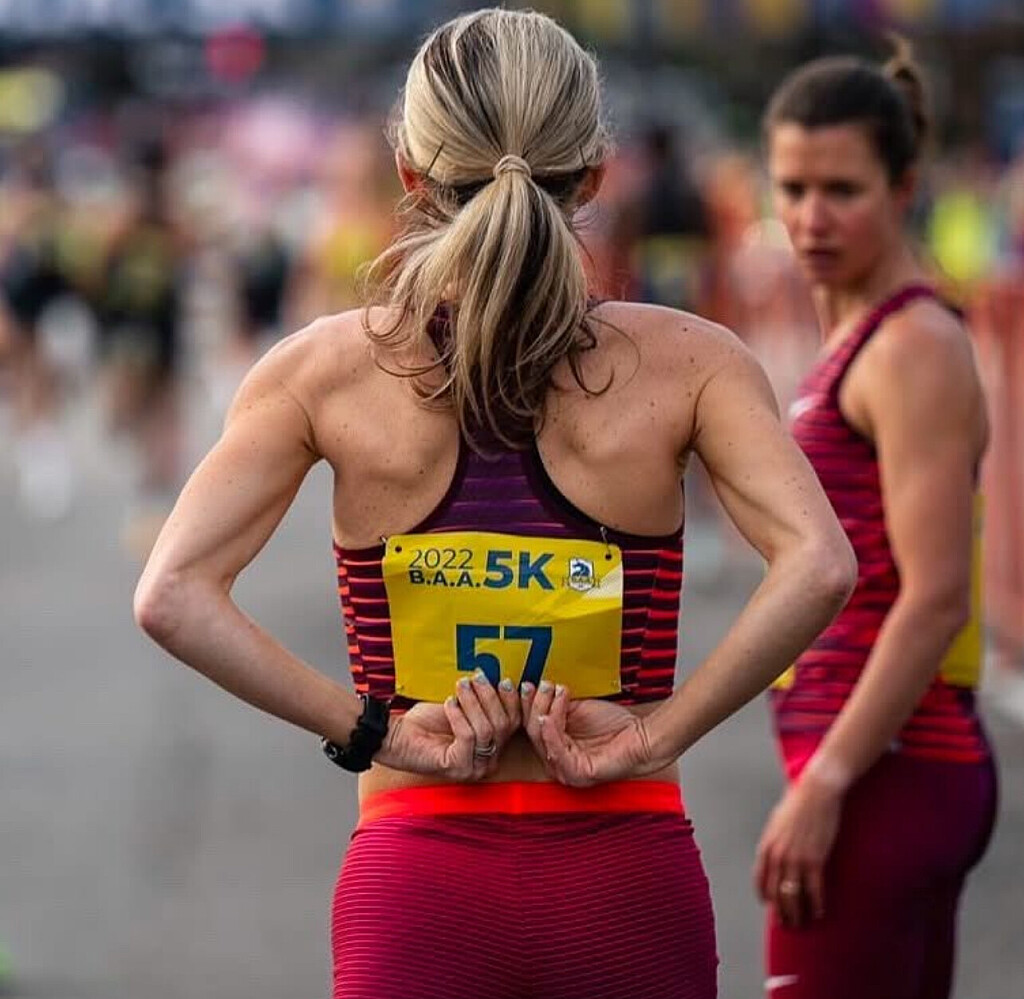
Keira D’Amato Announces Her Return to the Boston Marathon with Passion and Purpose
Keira D’Amato is the American half marathon record holder with a time of 1:06:39 at the 2023 Gold Coast Half marathon on July 1, 2023. She held the American women's record in the marathon with her time of 2:19:12 at the 2022 Houston Marathon, until Emily Sisson set a new record time on October 9, 2022.
Krira, one of the most electrifying american athletes in distance running, has officially announced her return to the Boston Marathon in 2025. In a heartfelt post on Facebook, D’Amato reflected on her lifelong connection to the iconic race, sharing her journey from being a Boston Marathon spectator to an elite competitor, and now, a returning champion with “unfinished business.”
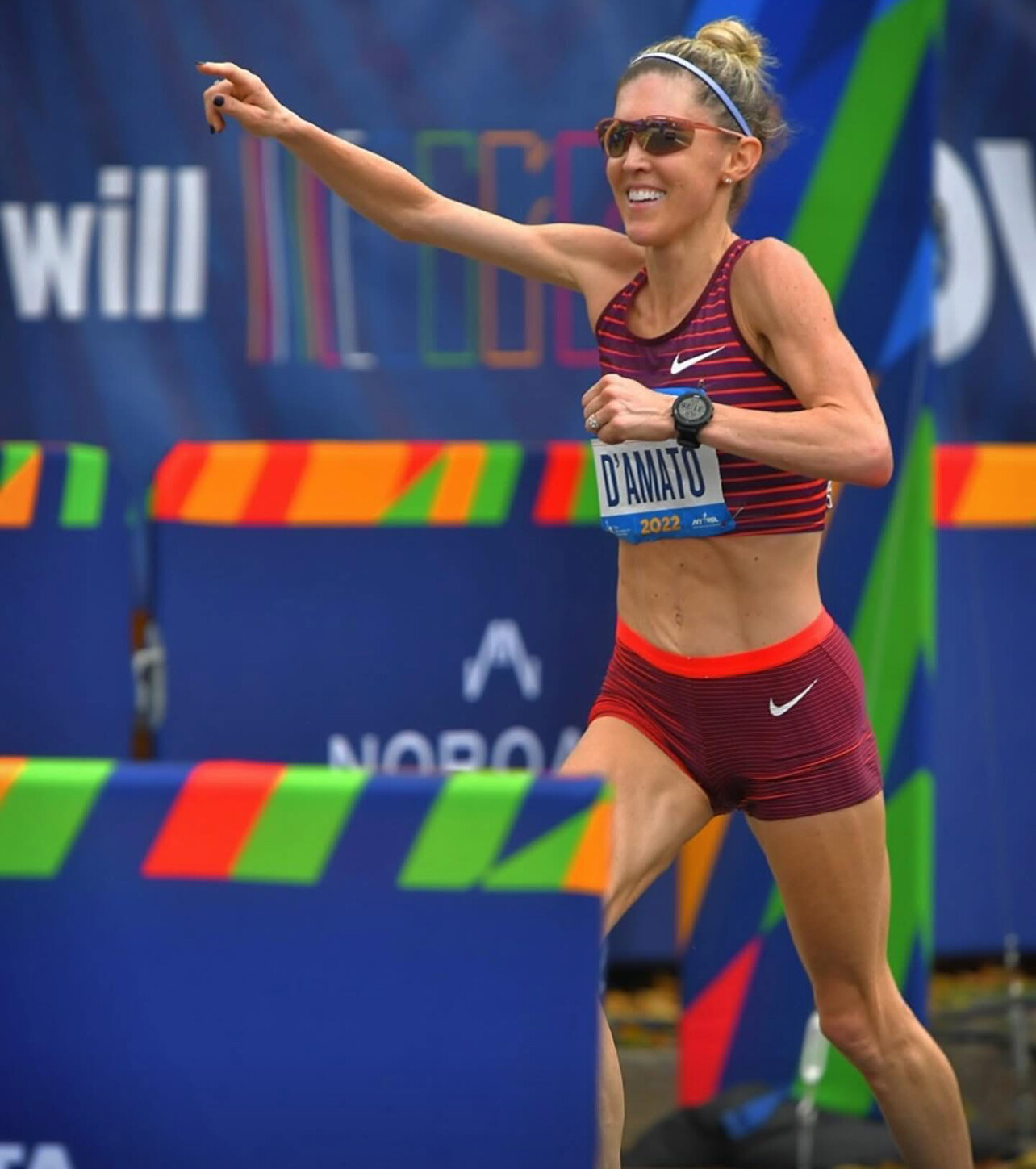
A Lifelong Fan Turned Competitor
D’Amato’s relationship with the Boston Marathon began long before she donned an elite bib. In her post, she reminisced about being a devoted fan of the race, watching the action unfold on TV countless times and cheering passionately along the famed streets of Wellesley. Her early admiration for the event sparked a personal goal—to qualify for Boston, a feat that became a challenging yet transformative chapter in her running career.
“I’ve chased the BQ [Boston Qualifier] dream and come up short,” D’Amato shared. “I built up the courage and strength, and I went after it again and finally dipped under the qualifying standard.”
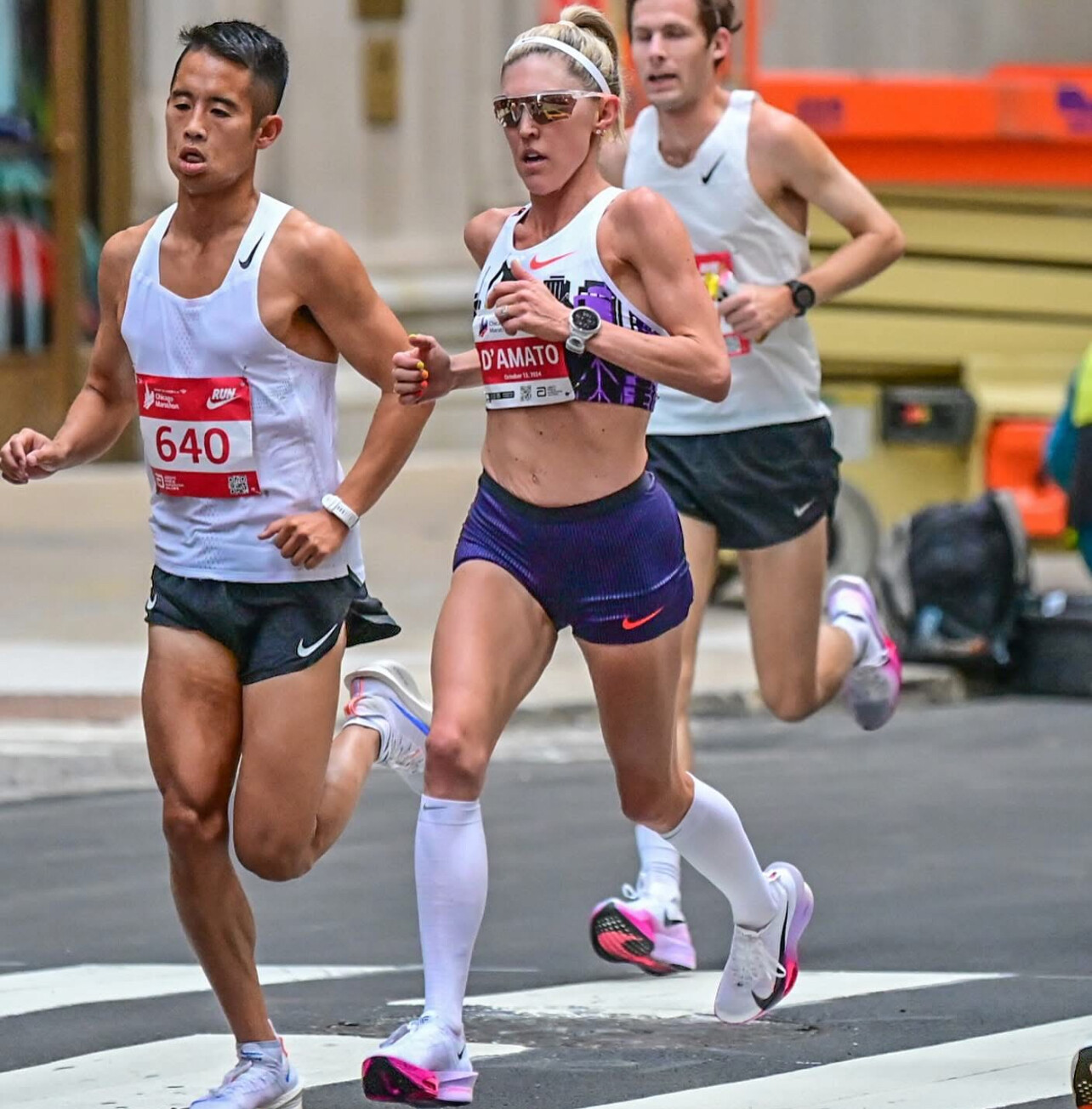
That perseverance paid off in 2018 when she not only achieved her goal but found herself racing in Boston as part of the prestigious elite women’s field.
A Return with “Unfinished Business”
Fast forward to 2025, and D’Amato’s Boston story is far from over. After breaking the American marathon record in 2022 and solidifying her place among the world’s best, D’Amato is now returning to the storied streets of Boston with new goals, fierce determination, and a deep appreciation for what the race means to her.
“Now, in 2025, I’m coming back to Boston with unfinished business,” she declared. “Boston, I’m back.”
The phrase “unfinished business” hints at D’Amato’s competitive fire and her aspiration to leave an even greater mark on the historic course. Whether it’s contending for a podium finish or chasing personal milestones, her return is sure to electrify this year’s race.
A Personal and Historic Connection
The Boston Marathon, steeped in tradition and known for its challenging course and unpredictable conditions, resonates deeply with D’Amato’s own story of resilience and reinvention. Her journey from a recreational runner and working mom to breaking records and competing at the highest levels is a testament to her grit and passion—a perfect reflection of Boston’s spirit.
As she counts down the days to Patriot’s Day, her excitement is palpable, and her story continues to inspire runners of all levels to dream big, face setbacks, and keep striving for their personal bests.
The Countdown to Patriot’s Day
D’Amato’s announcement has sparked anticipation among fans and the running community as the Boston Marathon, slated for Monday, April 21, 2025, promises to be another unforgettable chapter in marathon history. With D’Amato in the mix, the race is sure to deliver thrilling moments and inspire runners worldwide.
Whether she’s racing for victory or personal redemption, one thing is certain: Keira D’Amato’s return to Boston is one to watch.
by Boris Baron
Login to leave a comment
Boston Marathon
Among the nation’s oldest athletic clubs, the B.A.A. was established in 1887, and, in 1896, more than half of the U.S. Olympic Team at the first modern games was composed of B.A.A. club members. The Olympic Games provided the inspiration for the first Boston Marathon, which culminated the B.A.A. Games on April 19, 1897. John J. McDermott emerged from a...
more...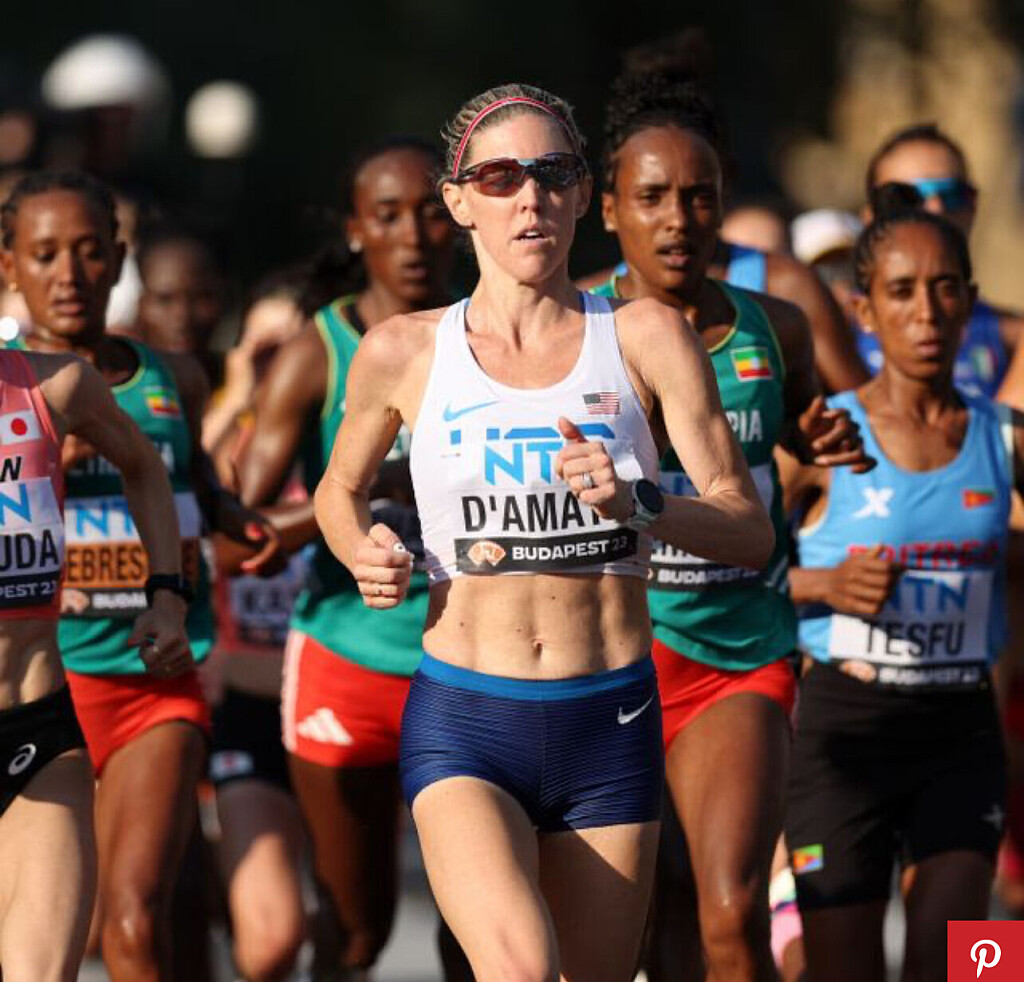
Hellen Obiri of Kenya will return to the Boston Marathon in April and attempt to win for the third time in a row.
In the race’s history, only four other women (Bobbi Gibb, Sara Mae Berman, Uta Pippig, and Fatuma Roba) have won three times a row, according to race organizers, who released the elite field today. The race is set for April 21.
Last year, Obiri broke the race open by covering the 24th mile in 4:41 and won in 2:22:37, 8 seconds ahead of her countrywoman Sharon Lokedi, who will also return to Boston.
Obiri, 35, trains in Boulder, Colorado, with the On Athletics Club, and she has been on the podium in five of the six marathons she has run. In addition to her two Boston titles, she won the New York City Marathon in 2023, finished second there in 2024, and won the Olympic bronze medal in Paris. (The only blemish on her marathon record was her sixth-place finish at her debut in New York in 2022.)
Obiri and Lokedi will be challenged by Amane Beriso and Yalemzerf Yehualaw of Ethiopia. Beriso has a personal best of 2:14:58 from the Valencia Marathon in 2022. She’s currently the fifth-fastest woman of all time.
Sisay Lemma of Ethiopia, the defending men’s champion, will also return to Boston. Lemma’s 2:01:48 from Valencia in 2023 makes him the fourth-fastest man in history.
Last year in Boston, Lemma got out to a large early lead, and the course record seemed almost certain to fall. But by the Newton hills, Lemma was feeling his hot early pace and slowed considerably. He held on to win in 2:06:17.
His challengers at the 2025 race will include Evans Chebet of Kenya, who has won the race twice (2022 and 2023) and was third in 2024. John Korir of Kenya, who won the 2024 Chicago Marathon in a fast 2:02:44, will also be back to race in Boston. He was fourth last year.
A Strong American Field
Many top Americans are entered into Boston. On the women’s side, they include Keira D’Amato, who briefly held the American record of 2:19:12 in 2022, and Sara Hall, who had a strong race at last fall’s Berlin Marathon, where she ran 2:23:45. She’ll turn 42 the week before the race.
D’Amato told Runner’s World in a text message that she is recovering from the injury in her left foot—stress reactions in her calcaneus and talus—that caused her to drop out of Chicago. “Hoping all the cross training has made me Boston Strong,” she wrote. “I’m building up conservatively to have a killer 2025.”
Olympians Dakotah Popehn and Des Lindenwill run (Linden for the 12th time), as will Emma Bates, the top American at Boston last year, Olympic Marathon Trials fourth-place finisher Jess McClain, and notables Sara Vaughn, Kellyn Taylor, and Lindsay Flanagan.
On the men’s side, Olympians and training partners Conner Mantz and Clayton Young, who finished eighth and ninth at the Games, respectively, will run Boston. They’ll be joined by CJ Albertson, who runs several fast marathons each year (five in 2024, including his PR of 2:08:17 in Chicago) and Zach Panning, who was fifth at the Olympic Marathon Trials.
by Runner’s World
Login to leave a comment
Boston Marathon
Among the nation’s oldest athletic clubs, the B.A.A. was established in 1887, and, in 1896, more than half of the U.S. Olympic Team at the first modern games was composed of B.A.A. club members. The Olympic Games provided the inspiration for the first Boston Marathon, which culminated the B.A.A. Games on April 19, 1897. John J. McDermott emerged from a...
more...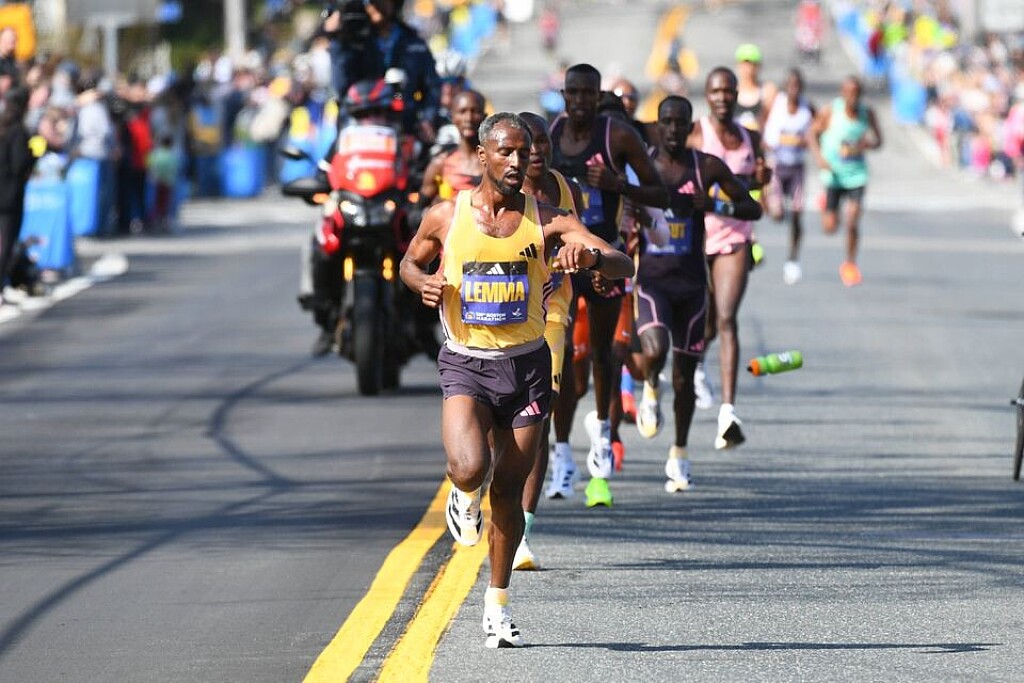
Ethiopian Sisay Lemma eyes successful Boston Marathon title defence against Kenyans John Korir, Cybrian Kotut & Co
Sisay Lemma is looking to replicate his 2024 success at this year's Boston Marathon but Kenyans John Korir and Cybrian Kotut are among those standing in his way.
Ethiopian marathon star Sisay Lemma is gearing up to defend his title at the 2025 Boston Marathon, set to take place on April 21.
Fresh off his thrilling victory in 2024, Lemma will look to replicate his success and conquer the demanding course once again.
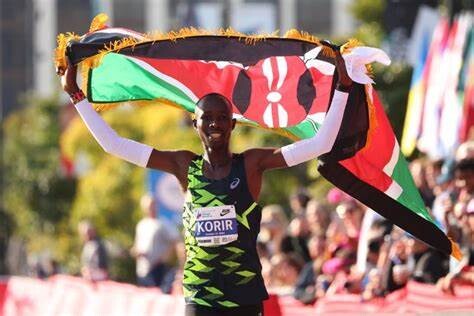
In the 2024 edition, Lemma surged ahead of a fierce field that included his fellow Ethiopian Mohamed Esa, as well as Kenyan marathon giants Evans Chebet and John Korir, who finished second, third, and fourth, respectively.
Lemma's winning time of 2:06:17 was a testament to his impressive form, but he remains aware of the heightened challenge awaiting him this year.
“I was very happy after winning the Boston Marathon last year, and in 2025 I know it will be an even bigger challenge to win again,” Lemma said via World Athletics, acknowledging the difficulty of repeating such a remarkable performance.
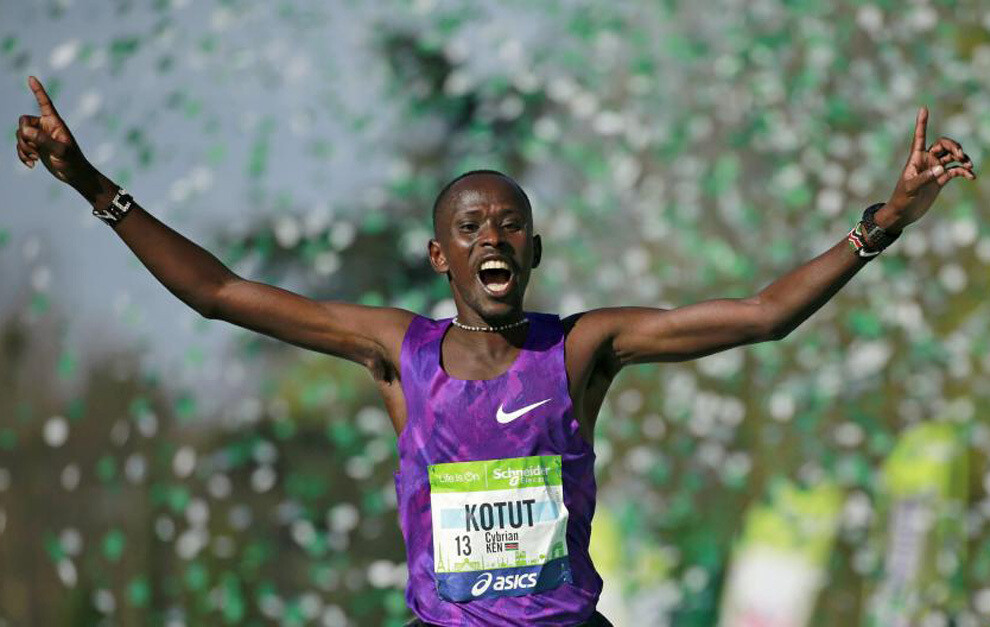
While the Boston Marathon holds a special place in his heart, Lemma’s 2024 season was marred by injury setbacks.
The Ethiopian was hoping to redeem his Olympic performance after a disappointing debut at the 2020 Tokyo Olympics, where he failed to finish the race.
Unfortunately, injury prevented him from competing in Paris in 2024, further hindering his plans for an Olympic comeback.
His struggles continued as he missed a podium finish at the Valencia Marathon that same December due to a lack of full fitness.
“I was unlucky, because of an injury, not to be able to participate at the 2024 Olympic Games in Paris and I was not completely ready at the Valencia Marathon last December,” Lemma confessed.
Now, with the Olympics behind him, Lemma has set his sights firmly on the Boston Marathon. Despite the challenges of the past year, he remains confident in his preparation.
“I will be 100% ready in April because the Boston Marathon is a special event,” Lemma asserted, emphasizing the importance of the race in his career.
However, Lemma will face stiff competition. Among the challengers is last year’s bronze medalist, Kenyan marathon star Evans Chebet, who clocked 2:07:22, just behind Lemma’s winning time.
Chebet, who has proven his endurance and speed on the Boston course, will be looking to outpace the Ethiopian this time around.
He will be joined by a strong Kenyan contingent, including John Korir, who finished fourth last year, as well as Cybrian Kotut, Daniel Mateiko, Abel Kipchumba, and Albert Korir.
With a fierce field and his sights set on history, Lemma’s journey toward a successful title defense will undoubtedly be one of the highlights of the 2025 marathon season.
by Stephen Awino
Login to leave a comment
Boston Marathon
Among the nation’s oldest athletic clubs, the B.A.A. was established in 1887, and, in 1896, more than half of the U.S. Olympic Team at the first modern games was composed of B.A.A. club members. The Olympic Games provided the inspiration for the first Boston Marathon, which culminated the B.A.A. Games on April 19, 1897. John J. McDermott emerged from a...
more...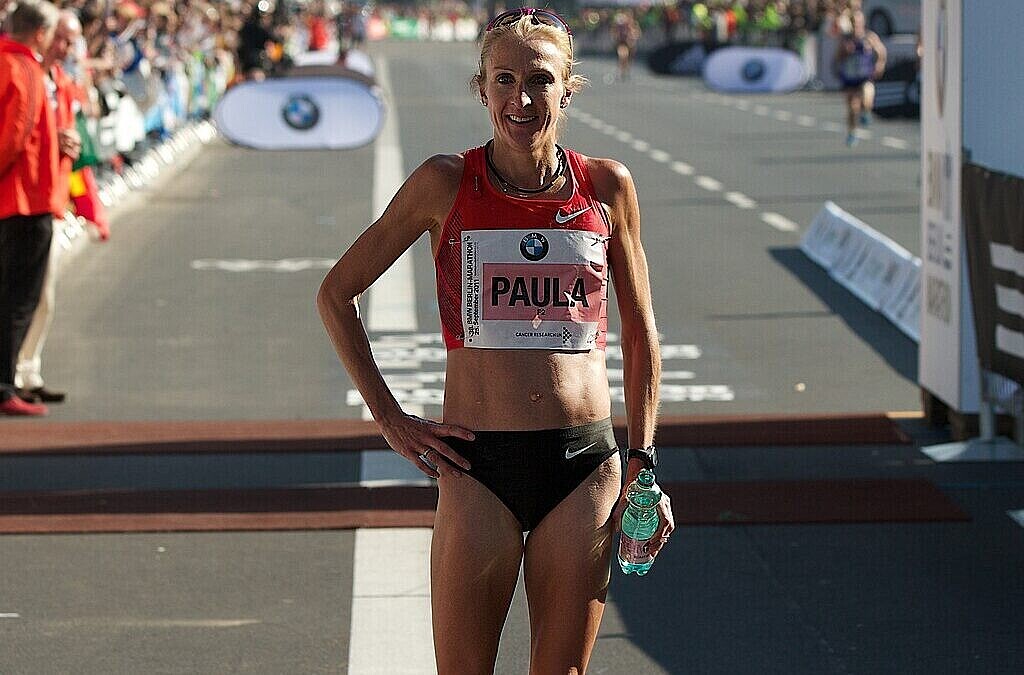
Former world record holder coming out of retirement to run Boston Marathon
It’s been over a decade since former women’s marathon world record holder Paula Radcliffe ran her last marathon, but the 51-year-old says she’s ready to make her awaited return. Radcliffe says she intends to run the 2025 Tokyo Marathon and the 2025 Boston Marathon seven weeks later.
On Monday, Radcliffe announced her comeback on her newest podcast, Paula’s Marathon Run Club, which she co-hosts with two-time British Olympic marathoner Chris Thompson.
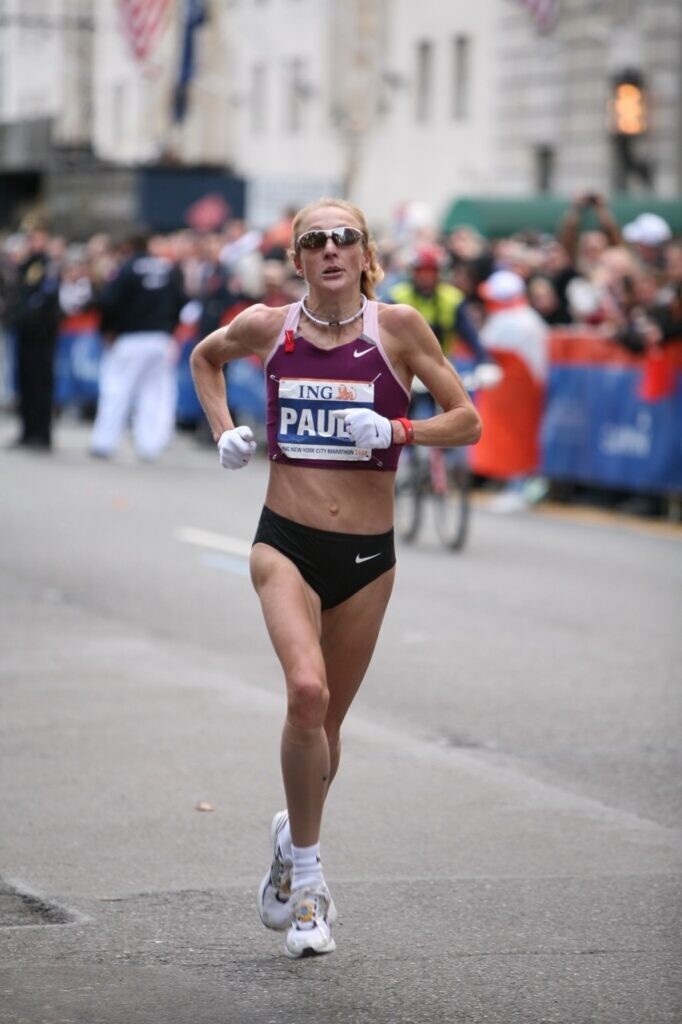
Radcliffe is the most decorated British female marathoner in history, having won both the London and New York marathons three times in her career. She is a seven-time Abbott World Marathon Major champion, and her 2:15:25 from the 2003 London Marathon still stands as the British marathon record. She held the world record for 16 years until Kenya’s Brigid Kosgei broke the mark in 2019.
The 51-year-old hasn’t announced her specific goals for either race yet, but it will be interesting to see if she still has the speed in her legs. Her last marathon came in 2015 in London, where she ran 2:36:55, winning her W40-44 age category and the masters division at the time. Despite it being 10 years ago, it will be intriguing to see if she can still run fast and challenge the British W50+ masters record of 2:47:44.
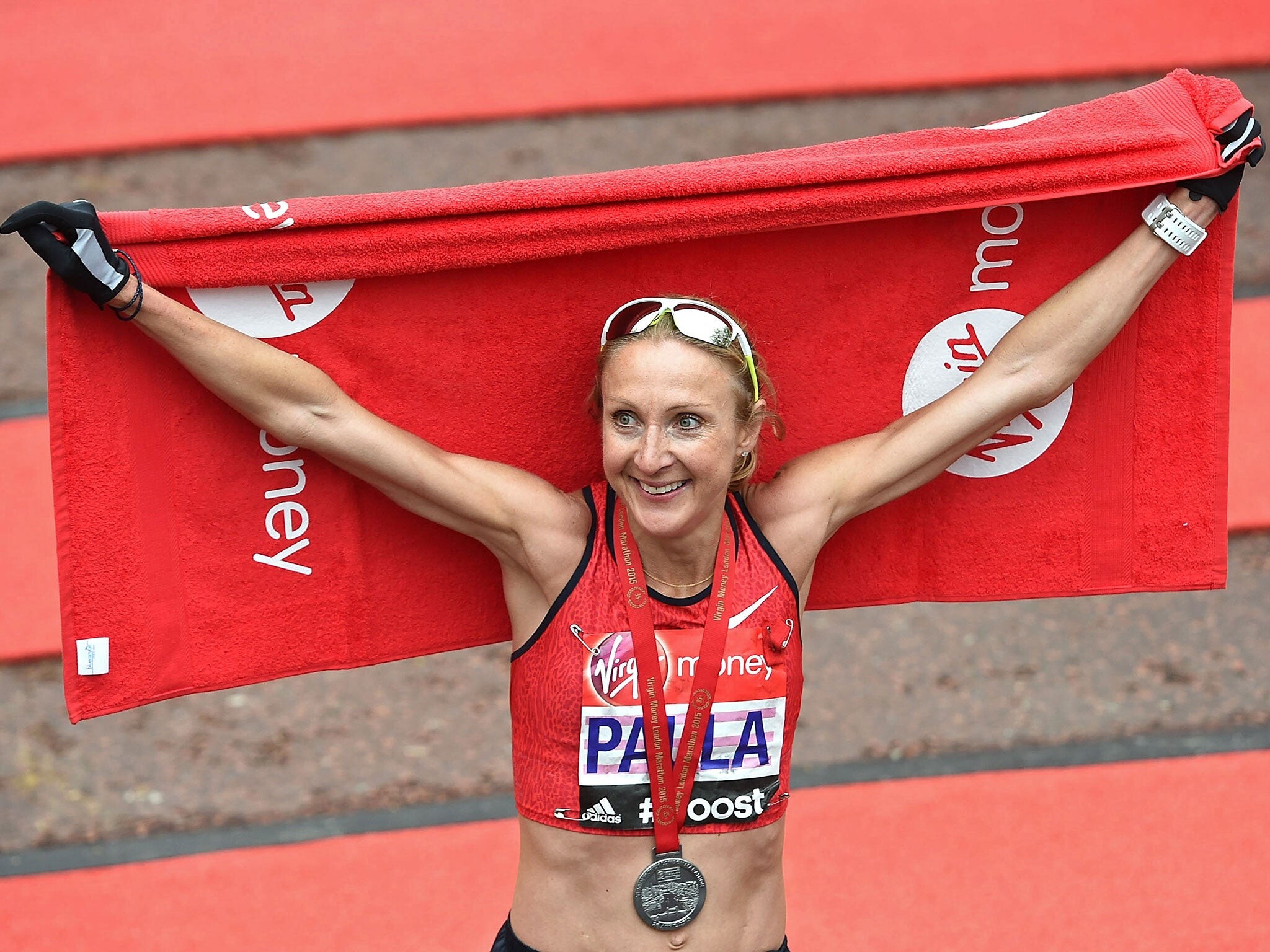
The 2025 Tokyo Marathon is scheduled for March 2, and the 2025 Boston Marathon is seven weeks later on Monday, April 21.
The weekend after Boston, Radcliffe revealed she will be heading to London to cheer on her daughter Isla as she makes her marathon debut. Isla will be running the race for charity, raising funds for Children with Cancer UK, which supported her family after she was diagnosed with cancer at age 13.
by Marley Dickinson
Login to leave a comment
Boston Marathon
Among the nation’s oldest athletic clubs, the B.A.A. was established in 1887, and, in 1896, more than half of the U.S. Olympic Team at the first modern games was composed of B.A.A. club members. The Olympic Games provided the inspiration for the first Boston Marathon, which culminated the B.A.A. Games on April 19, 1897. John J. McDermott emerged from a...
more...
Internet reacts to 2025 Boston Marathon celebration jacket
The Boston Athletic Association took a gamble with their design for the 2025 marathon jacket.
The Boston Marathon celebration jacket from Adidas has been a cherished tradition at the race since 1991, becoming a symbol of accomplishment for runners who conquer the course each year. This year’s jacket, however, has the running world up in arms after the Boston Athletic Association (B.A.A.) decided to move away from the iconic stitched B.A.A. logo to a printed Bank of America-centric crest on the front and back.

While the jacket boasts sustainable credentials as the first made entirely from recycled polyester material, many runners are more focused on the design. Bank of America, which became the race’s presenting sponsor in 2023 after nearly four decades under insurance company John Hancock, is being criticized for its branding. The jacket’s “Lucid Blue” design, paired with the B.A.A.’s traditional royal blue base, has also drawn mixed reviews. Some see it as a vibrant refresh, while others seem to have wanted a more timeless esthetic.
Reactions to the jacket have been making their circles on social media. “I have been extremely disappointed in the branding since Bank of America came into play,” wrote one user on Facebook. “First messing with the unicorn, now barfing corporate branding all over everything,” Another commenter wrote, “For 2026, are we going to see how many Bank of America logos we can fit on people? Nothing says tradition and prestige like Bank of America.”

The 2024 Boston Marathon celebration jacket was the first edition in which Bank of America was featured, with the bank’s logo screen printed below the traditional B.A.A. crest. In addition to the jacket’s sustainable footprint, the logos on the front and back are entirely reflective, along with the three stripes on the sleeve and the “Boston is my victory” idiom on the left cuff.
Despite the backlash, the 2025 Boston Marathon jacket remains a hot commodity. For runners eager to get their hands on one, it’s available online for CAD $160. Whether you love it or hate it, the jacket remains a badge of honour for thousands.
Login to leave a comment
Boston Marathon
Among the nation’s oldest athletic clubs, the B.A.A. was established in 1887, and, in 1896, more than half of the U.S. Olympic Team at the first modern games was composed of B.A.A. club members. The Olympic Games provided the inspiration for the first Boston Marathon, which culminated the B.A.A. Games on April 19, 1897. John J. McDermott emerged from a...
more...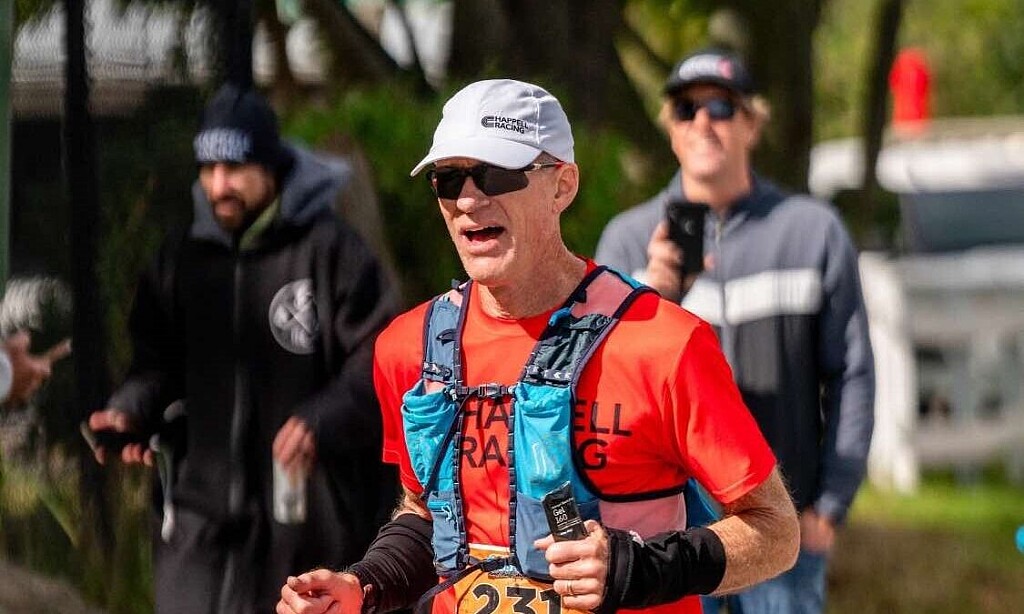
66-year-old marathoner qualifies for Boston with Stage 4 cancer
A year after being told he had less than a year to live, Dana Fox of Waterloo, Ont., ran a Boston Marathon qualifying time at the 2024 Georgina Marathon.
The story of 66-year-old Canadian marathoner Dana Fox is one of extraordinary perseverance. Diagnosed with Stage 4 cholangiocarcinoma less than a year ago, Fox completed Ontario’s Georgina Marathon on Sept. 8, in 3:56:50, likely securing a spot for the 2025 Boston Marathon.
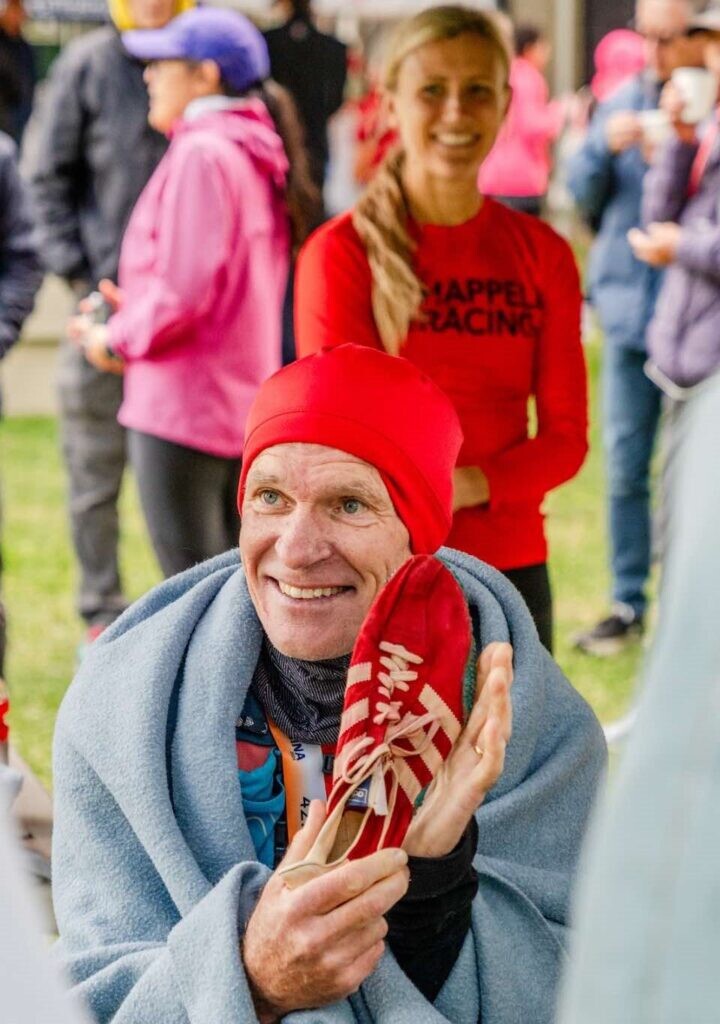
In October 2023, Fox and his coach, Joe Chappell, met to discuss Fox’s future marathon goals, but just a week later, he was diagnosed with cancer. Despite a grim prognosis and being given less than a year to live, Fox remained determined. “Dana said almost right away he wanted to treat this like a running injury,” Chappell told Canadian Running. “At one point, he was in so much pain that bending over to tie his shoes was almost impossible.”
Chappell said they kept in touch during Fox’s chemotherapy. Within a few months, he was able to start slowly walking and indoor riding. In May, Fox reached out to Chappell with ambitions to return to running, as his energy was returning. His goal: the 2024 Georgina Marathon, a last-chance qualifier for the 2025 Boston Marathon.

Against his doctors’ recommendations, Fox began training for the marathon with less than eight weeks until race day—half the typical time most marathoners devote to training. His family and friends from Waterloo and beyond supported him during the race. The men’s 65-69 qualifying time was 4:05:00, but Chappell said they aimed to beat last year’s cut-off of five minutes and 29 seconds.
Fox’s finishing time of 3:56:50 put him eight minutes and 10 seconds under the mark. Canadian marathoner Rachel Hannah paced him for the second half of the race, with family and friends cheering and offering support throughout. He carried a pair of red Adidas spikes gifted by his father in 1971, a symbol of resilience during his journey.
Fox is confident he will be among the few who defeat the cancer. He credits the experience of finishing the Georgina Marathon with his running club as a crucial psychological boost, fuelling his journey to recovery.
On Sept. 15, Fox spoke at the Terry Fox Run in Saugeen Shores, Ont. (He is not related to Canadian athlete and humanitarian Terry Fox.) “We made it for all those people who have cancer and were told they’re not going to make it; this run’s for them. Don’t ever quit,” Fox told Georgina Post. “The hotel’s already booked [for Boston]. I’m in, baby. We’re going. I’m going to live. I’m getting back on the bus. I’m not leaving.”
by Marley Dickinson
Login to leave a comment
Boston Marathon
Among the nation’s oldest athletic clubs, the B.A.A. was established in 1887, and, in 1896, more than half of the U.S. Olympic Team at the first modern games was composed of B.A.A. club members. The Olympic Games provided the inspiration for the first Boston Marathon, which culminated the B.A.A. Games on April 19, 1897. John J. McDermott emerged from a...
more...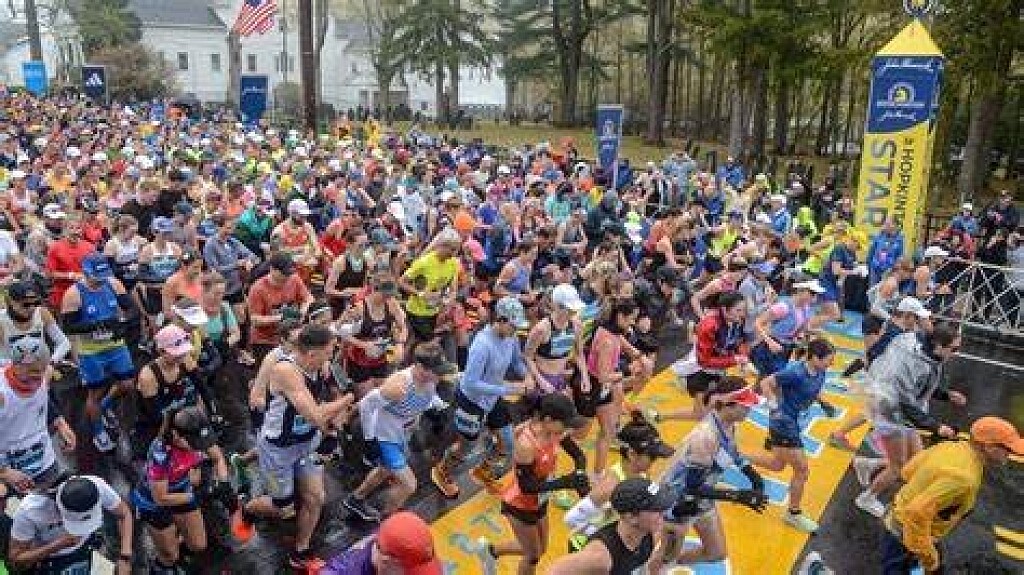
Hoping to qualify for the 2026 Boston Marathon? You'll have to run even faster
All age groups under 60 will have to run five minutes faster as demand to participate grows.
Runners hoping to qualify for the 2026 Boston Marathon are going to have to pick up the pace.
The Boston Athletic Association has updated its qualifying times for the world's oldest annual marathon, asking most prospective competitors to run a 42.195 kilometre race five minutes faster than in recent years to earn a starting number.
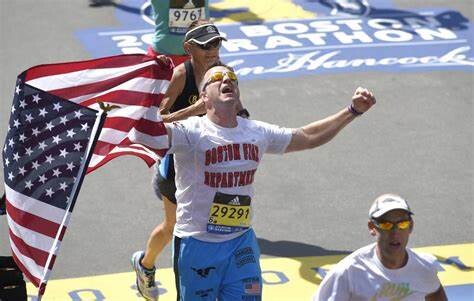
"Every time the BAA has adjusted qualifying standards — most recently in 2019 — we've seen athletes continue to raise the bar and elevate to new levels," Jack Fleming, president and CEO of the BAA, said in a statement posted Monday.
"In recent years we've turned away athletes in this age range (18-59) at the highest rate, and the adjustment reflects both the depth of participation and speed at which athletes are running."
The BAA introduced qualifying times in 1970 and has expanded and adjusted the requirements through the decades.
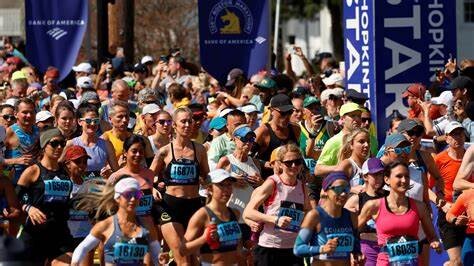
Runners participating in the event to raise money for charity do not have to meet the qualifying standards.
All age groups up to age 60 will be required to run five minutes faster than in previous years. This means men between the ages of 18 and 34 will have to run a marathon during the qualification window in two hours, 55 minutes or faster to earn a spot in the 2026 race.
Women and nonbinary applicants age 18-34 need to complete the distance in three hours, 25 minutes.
The BAA said it decided to tighten its times after turning away "thousands of runners" in the past who met the qualifying time. In his statement, Fleming said athletes have gotten faster, the sport of marathon running is growing and so is demand to participate in the Boston Marathon.
Athletes are getting faster
The qualifying times for runners age 60 to 80-plus didn't change. The slowest competitors that can earn qualification are in the 80 and over age group. The men in that category must complete a marathon in four hours, 50 minutes, while women and nonbinary competitors must finish in five hours, 20 minutes.
The BAA said it had 36,406 qualifier entry applications for next year's race, more than ever before.
"The record number of applicants indicates the growing trend of our sport and shows that athletes are continuously getting faster and faster," Fleming said.
The qualifying window for the 2026 race began on Sept. 1 and will run through the conclusion of the registration period of that race next September.
Next year's Boston Marathon will take place on April 21.
by The Associated Press
Login to leave a comment
Boston Marathon
Among the nation’s oldest athletic clubs, the B.A.A. was established in 1887, and, in 1896, more than half of the U.S. Olympic Team at the first modern games was composed of B.A.A. club members. The Olympic Games provided the inspiration for the first Boston Marathon, which culminated the B.A.A. Games on April 19, 1897. John J. McDermott emerged from a...
more...
Boston Marathon's logo refresh leaves some unhappy
Back in 1890, the Boston Athletic Association chose the mythical unicorn to be its symbol. Later named Spike, that unicorn saw several redesigns in the ensuing century, before eventually finding its way to prominent placement on the Boston Marathon medal. For years, Spike faced leftward, its horn jutting into the banner type of Boston Athletic Association (B.A.A.). Then in early June, Spike changed course.
The B.A.A. unveiled a new logo for the Boston Marathon, and people are not happy about it.
On its face, the redesign is small: Spike’s orientation is flipped, and he’s made a bit more menacing. The marathon logo, along with the new Spike, sports a fresh Bank of America sponsorship tag. Despite the small tweaks, the community response has been staggering: a recent Boston.com reader poll found 55% not liking the new logo, compared to just 14% loving it and 32% expressing indifference.
Why the backlash? The B.A.A. proves just how hard it is to stay fresh (and funded) while maintaining a sprawling, legacy-minded audience. Change, for some proud marathoners, is hard.
SMALL CHANGES, BIG REACTIONS
The most obvious change in Spike’s design is his orientation. Where the unicorn mascot used to look left, now he looks right. The B.A.A. calls this looking “forward,” pointing towards the miles ahead.
“We are looking forward, looking towards the future of the Boston Marathon, looking towards the future of running in general,” says Scott Stover, chief marketing officer at B.A.A. “Turning Spike around seemed natural as we were entering this next era.”
More controversial is Spike’s “athletic jawline,” which curves into the chin where it previously ran smooth. It creates the brief illusion of muscles—which the B.A.A. says represents the “athletic and gritty nature of Boston.” Coupled with a more “determined eye,” the unicorn may just be a fiercer version of his former self. Alex Cyr, a sports journalist covering marathons, finds this change laughable.
“The unicorn looks like it went from Pony[ta] to Rapidash,” Cyr says, referencing the Pokemon evolution. “You just see a unicorn that’s gotten a lot meaner.”
Stover contests the claim that Spike has gotten meaner, instead noting that they instituted these design changes to make Spike “serious and intentional.”
THE QUESTION OF CORPORATE BRANDING
Alongside the redesigned Spike, the new Boston Marathon logo also features a stamp of corporate marketing: the big “Bank of America” subtext, as well as the bank’s logo. While the fiercer appearance has some runners confused, the corporate branding has incited more anger.
Back in 1890, the Boston Athletic Association chose the mythical unicorn to be its symbol. Later named Spike, that unicorn saw several redesigns in the ensuing century, before eventually finding its way to prominent placement on the Boston Marathon medal. For years, Spike faced leftward, its horn jutting into the banner type of Boston Athletic Association (B.A.A.). Then in early June, Spike changed course.
The B.A.A. unveiled a new logo for the Boston Marathon, and people are not happy about it.
On its face, the redesign is small: Spike’s orientation is flipped, and he’s made a bit more menacing. The marathon logo, along with the new Spike, sports a fresh Bank of America sponsorship tag. Despite the small tweaks, the community response has been staggering: a recent Boston.com reader poll found 55% not liking the new logo, compared to just 14% loving it and 32% expressing indifference.
Why the backlash? The B.A.A. proves just how hard it is to stay fresh (and funded) while maintaining a sprawling, legacy-minded audience. Change, for some proud marathoners, is hard.
Alongside the redesigned Spike, the new Boston Marathon logo also features a stamp of corporate marketing: the big “Bank of America” subtext, as well as the bank’s logo. While the fiercer appearance has some runners confused, the corporate branding has incited more anger.
Just look at the Instagram comments under the announcement: “The big difference is adding Bank of America to the logo which clearly no one likes,” comments one marathoner. “Makes me less likely to bank with BoA,” comments another. Clearly, there is some ire for this emblazoned corporate sponsorship.
“Bank of America is invested in helping us continue to make the Boston Marathon and all of our events greater and greater every year,” Stover says. “So we’re proud of that partnership, and it is also very standard in sports marketing for brands to be included.”
This isn’t the first time the B.A.A. found themselves in hot water for the Bank of America branding. Back in April, the Boston Marathon debuted a new medal, featuring the bank’s logo on each and every medallion. The criticism was immediate.
Cyr was in Boston for the new medal’s premiere, and notes that there were “a few complaints.” He chalks this up to the race’s legacy: “[When] a race that’s been around for a long time, comes out with a rebrand, it is met with a bit of resistance by the traditionalists.”
The challenge that comes with rebranding an institution as beloved as the Boston Marathon is. balancing pride with progress. Marathoners complain of Spike’s fiercer look not because of any apparent flaw, but because they’ll have outdated tattoos. They complain of the Bank of America-themed logo not because they want to run the B.A.A. dry, but because they want to keep it pure. Eventually, the redesigned logo will become a piece of the Boston Marathon’s legacy; until then, the B.A.A. might have to endure some angry comments.
by henry Chandonnet
Login to leave a comment
Boston Marathon
Among the nation’s oldest athletic clubs, the B.A.A. was established in 1887, and, in 1896, more than half of the U.S. Olympic Team at the first modern games was composed of B.A.A. club members. The Olympic Games provided the inspiration for the first Boston Marathon, which culminated the B.A.A. Games on April 19, 1897. John J. McDermott emerged from a...
more...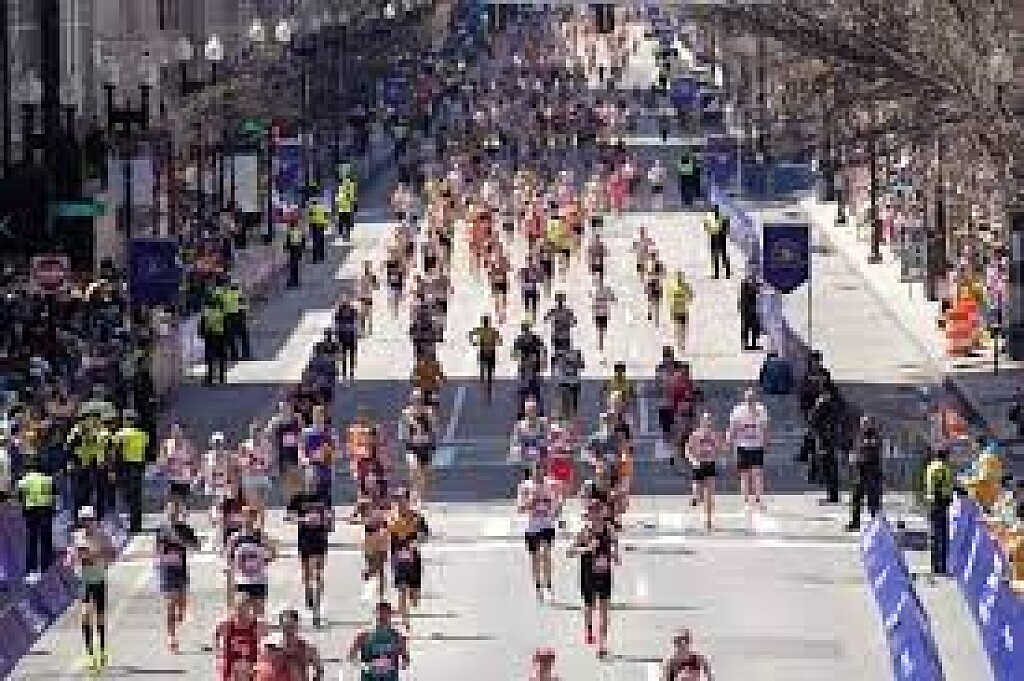
Boston Marathon qualifying standards to remain the same for 2025
After much speculation, the Boston Athletic Association (B.A.A.) says marathon qualifying times will not change.
On Monday, the Boston Athletic Association (B.A.A.) announced that it will not raise the entry standards for the 2025 Boston Marathon. This news will be a sigh of relief for many runners who have already achieved a Boston qualifying time for next year.
According to the B.A.A., the qualifying standards across all age brackets will remain the same as they were for the 2024 Boston Marathon. However, achieving a qualifying standard does not guarantee entry into the marathon. If applications exceed capacity, those applicants who exceed their qualifying time standards by the smallest margins may not be accepted.
At the 2024 Boston Marathon, there was a cutoff time of five minutes and 29 seconds per age group, one of the largest since time cutoffs were introduced in 2012. There were more than 33,000 applicants last year, with more than 11,000 athletes turned down despite hitting qualifying times.
Due to the large number of athletes being turned down in 2024, there was much speculation about whether the B.A.A. would raise the entry standards for 2025. The field size for the 129th Boston Marathon will remain at 30,000 participants and the race will take place on Monday, April 21, 2025.
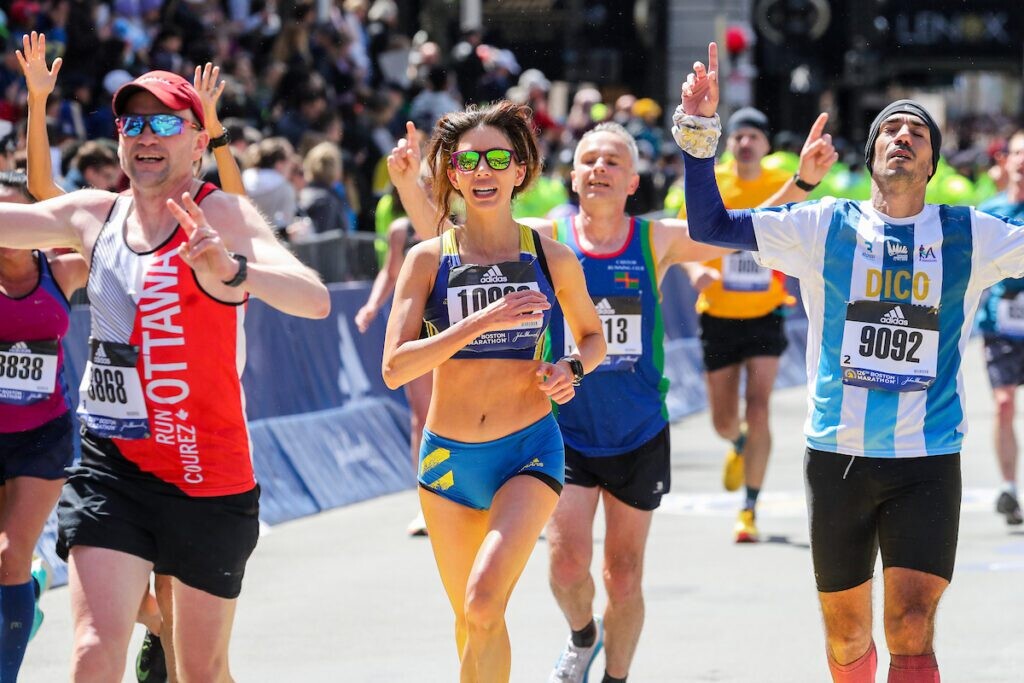
For those who have hit a qualifying time for 2025, mark your calendars and set a reminder. Registration will open on Monday, Sept. 9, 2024 at 10:00 a.m. ET, and will close on Friday, Sept. 13, 2024 at 5:00 p.m. ET. The 2025 Boston Marathon qualifying window opened on Sept. 1, 2023, and will close at 5:00 p.m. ET on Friday, Sept. 13, 2024. Any athlete who has achieved a qualifying time in this window may submit a registration application.
The qualifying window for the 130th Boston Marathon, scheduled for April 20, 2026, will open on Sept. 1, 2024. Registration details for the 2026 race will be announced following the 2025 Boston Marathon.
by Marley Dickinson
Login to leave a comment
Boston Marathon
Among the nation’s oldest athletic clubs, the B.A.A. was established in 1887, and, in 1896, more than half of the U.S. Olympic Team at the first modern games was composed of B.A.A. club members. The Olympic Games provided the inspiration for the first Boston Marathon, which culminated the B.A.A. Games on April 19, 1897. John J. McDermott emerged from a...
more...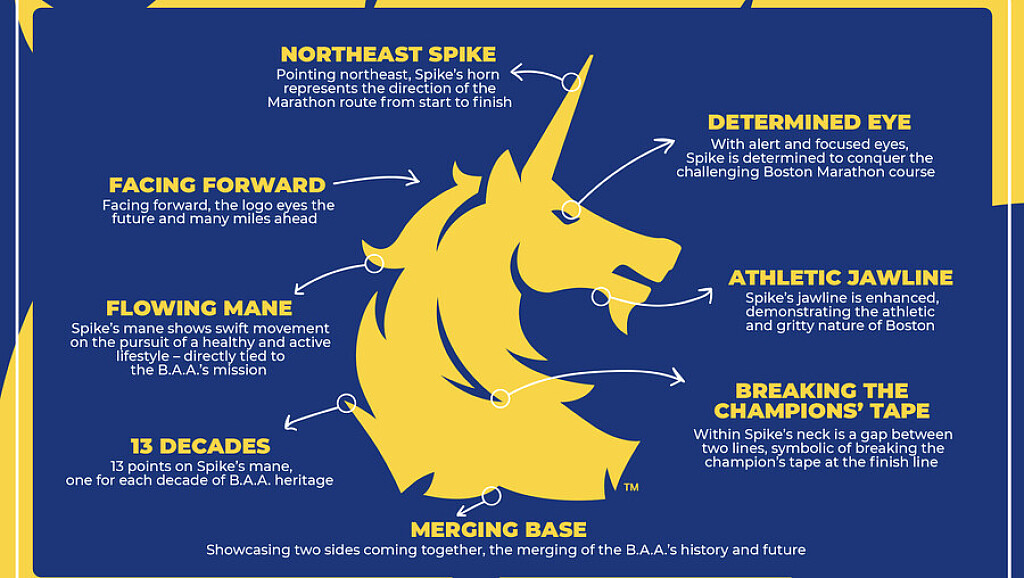
Boston Athletic Association unveils revised unicorn logo for Boston Marathon
On the occasion of Global Running Day, the Boston Athletic Association is unveiling a revised version of its iconic unicorn logo.
B.A.A. officials said the new logo is intended to be a forward-facing and athletic symbol of the organization's future.
"Between our mass participatory events and our support of philanthropic organizations, we aim to spearhead continued growth and enthusiasm around the sport of running while supporting those around us," said Jack Fleming, B.A.A. President and CEO.
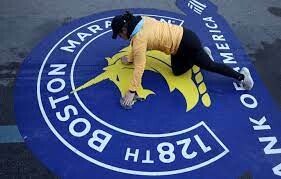
Elements of the new logo include:
Facing forward, the emblem eyes the future and many miles ahead.

Spike’s jawline is enhanced, demonstrating the athletic and gritty nature of Boston.
With alert and focused eyes, Spike is determined to conquer the challenging Boston Marathon course.
Pointing northeast, Spike’s horn represents the direction of the Marathon route on a compass from start to finish.
The flowing mane shows swift movement on the pursuit of a healthy and active lifestyle – directly tied to the B.A.A.’s mission.
The new base of the unicorn showcases two sides coming together, the merging of the B.A.A.’s history and future.
Within Spike’s neck is a gap between two lines, symbolic of breaking the champion’s tape at the finish line.
13 points are on the mane, one for each decade of B.A.A. heritage.
B.A.A. officials said the finish line on Boylston Street is being repainted Wednesday to feature the updated logo.
WCVB is the official broadcast partner of the B.A.A. and the Boston Marathon.
by Phil Tenser
Login to leave a comment
Boston Marathon
Among the nation’s oldest athletic clubs, the B.A.A. was established in 1887, and, in 1896, more than half of the U.S. Olympic Team at the first modern games was composed of B.A.A. club members. The Olympic Games provided the inspiration for the first Boston Marathon, which culminated the B.A.A. Games on April 19, 1897. John J. McDermott emerged from a...
more...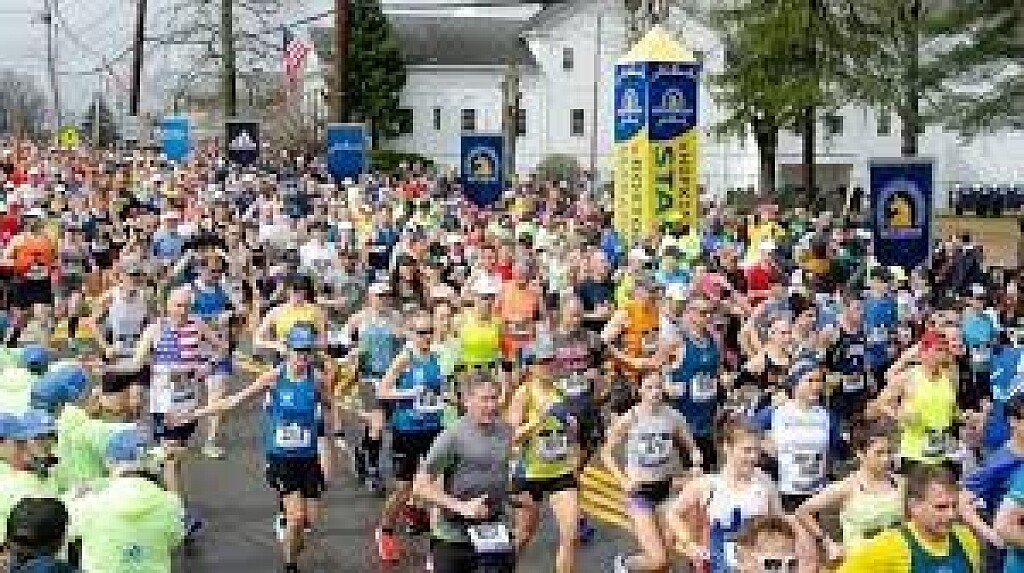
Registration dates for the 129th Boston Marathon announced
The Boston Athletic Association (B.A.A.) announced Monday that registration for the 129th Boston Marathon will take place over five days, from Sept. 9–13 at www.baa.org
The field size for the 129th Boston Marathon, to be run on Monday, April 21, 2025, will be 30,000 participants.
Qualifier registration will open on Sept. 9 at 10 a.m. and will close on Sept. 13, at 5 p.m. Any athlete who has achieved a currently valid Boston Marathon qualifying time may submit a registration application during registration week.

Applications will be accepted until 5 p.m. on Sept. 13. The 2025 Boston Marathon qualifying window began on Sept. 1, 2023, and will close at 5 p.m. on Friday, Sept. 13. If space is still available after the conclusion of registration week, registration will re-open on Sept. 16.
Qualifying standards across all divisions will remain the same as they were for the 2024 Boston Marathon.
by Andrew Clark
Login to leave a comment
Boston Marathon
Among the nation’s oldest athletic clubs, the B.A.A. was established in 1887, and, in 1896, more than half of the U.S. Olympic Team at the first modern games was composed of B.A.A. club members. The Olympic Games provided the inspiration for the first Boston Marathon, which culminated the B.A.A. Games on April 19, 1897. John J. McDermott emerged from a...
more...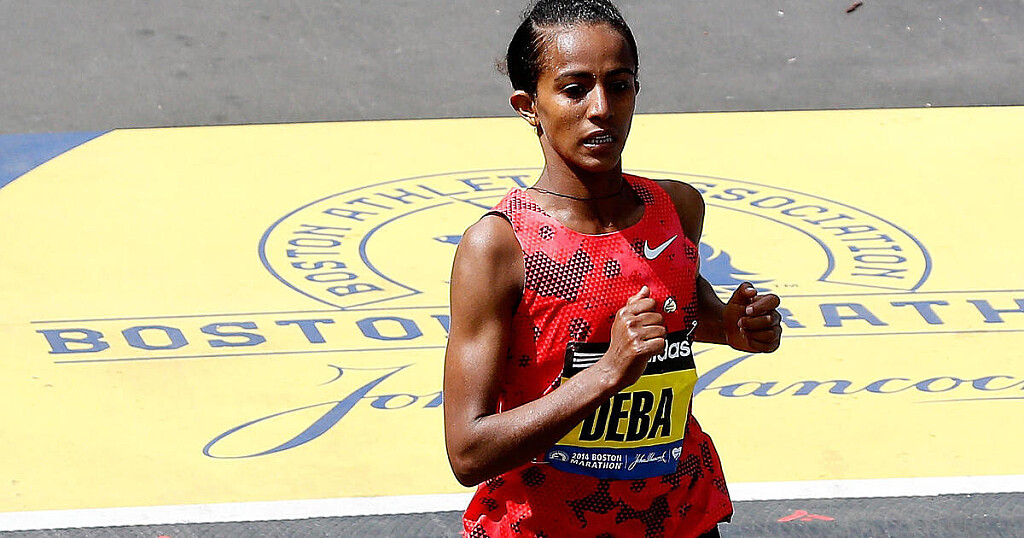
Former Boston Marathon champion finally receives prize money from a stranger after 10-year wait
The 2014 Boston Marathon winner Buzunesh Deba has finally her received prize money from a stranger after waiting for 10 years following Kenyan Rita Jeptoo's doping ban.
At the 2014 Boston Marathon, Ethiopian distance runner Buzunesh Deba gave her all and settled for second place with Rita Jeptoo wining the race in style.
However, in 2016, Jeptoo, the winner of the marathon, was disqualified by the Athletics Integrity Unit over a doping offense and Deba was now crowned champion but without being paid the prize money she deserved.
She has waited for 10 years, patiently, to receive her money and it was finally given to her, not by the race organizers, but by a stranger.

The race organizers insisted that they gave Jeptoo all the money, the $75,000 for winning the race and an extra $25,000 for setting the course record, an amount they never got back from her following her doping offense.
"She took my chance. I lose so many things. I thought everything is to change after I hear the news, but nothing,” Deba lamented last month, as quoted by CBS News.
However, someone, whom she claims to not know, decided to heal her wound and grant her the prize money. As reported by CBS News, Doug Guyer, a Boston College graduate and a businessman in the Philadelphia area, read about Deba's story in the Wall Street Journal and decided to offer her the money.
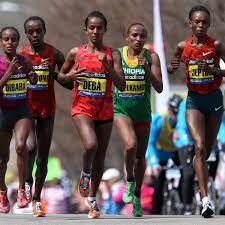
The Boston Marathon fan decided he would pay her out of his own pocket and he actually did it by sending Deba a cheque for $75,000 as he also considered paying her the remaining $25,000.
Following the news, the Boston Athletic Association explained that they are still in the process of recovering the prize money from Jeptoo.
In a statement, they said: “The Boston Athletic Association stands for clean sport and fair competition. Following the ruling by the Court of Arbitration for Sport, the B.A.A. began pursuit of reclaiming prize money awards from Rita Jeptoo.
“As the matter is still ongoing, we are unable to comment further at this time. We are in the process of attempting to recover the prize money awarded to Ms Jeptoo, so that it can be repaid to Ms Deba.
“While we believe that Ms Deba is due the prize money as she is the rightful winner of the 2014 women's race, there are policies held by World Athletics and supported by World Marathon Majors that we, along with the other members of the organization, follow.
“The B.A.A is still pursuing Ms Jeptoo to recover the prize money for Ms Deba, which the B.A.A. believes would be a just and fair result for her and all runners who follow the rules. As this matter is still ongoing, we are not able to comment further at this time.”
by Abigael Wuafula
Login to leave a comment
Boston Marathon
Among the nation’s oldest athletic clubs, the B.A.A. was established in 1887, and, in 1896, more than half of the U.S. Olympic Team at the first modern games was composed of B.A.A. club members. The Olympic Games provided the inspiration for the first Boston Marathon, which culminated the B.A.A. Games on April 19, 1897. John J. McDermott emerged from a...
more...
Canadian Boston Marathon age-grouper shares tips for running as we age
The Halifax runner took up running in his early 60s, and ran his fourth Boston Marathon on Monday.
Sandy Rutledge began running in his early 60s; he has run the Boston Marathon four times. The Nova Scotian clocked an impressive 3:31:38 at Monday’s 128th running of the famous race, earning him second place for his division and top Canadian in that age bracket.
“It was a slower than normal Boston, with the heat,” Rutledge told Canadian Running after his race. “I backed it off and went a little slower than last year, because I didn’t want to push it and not finish.”
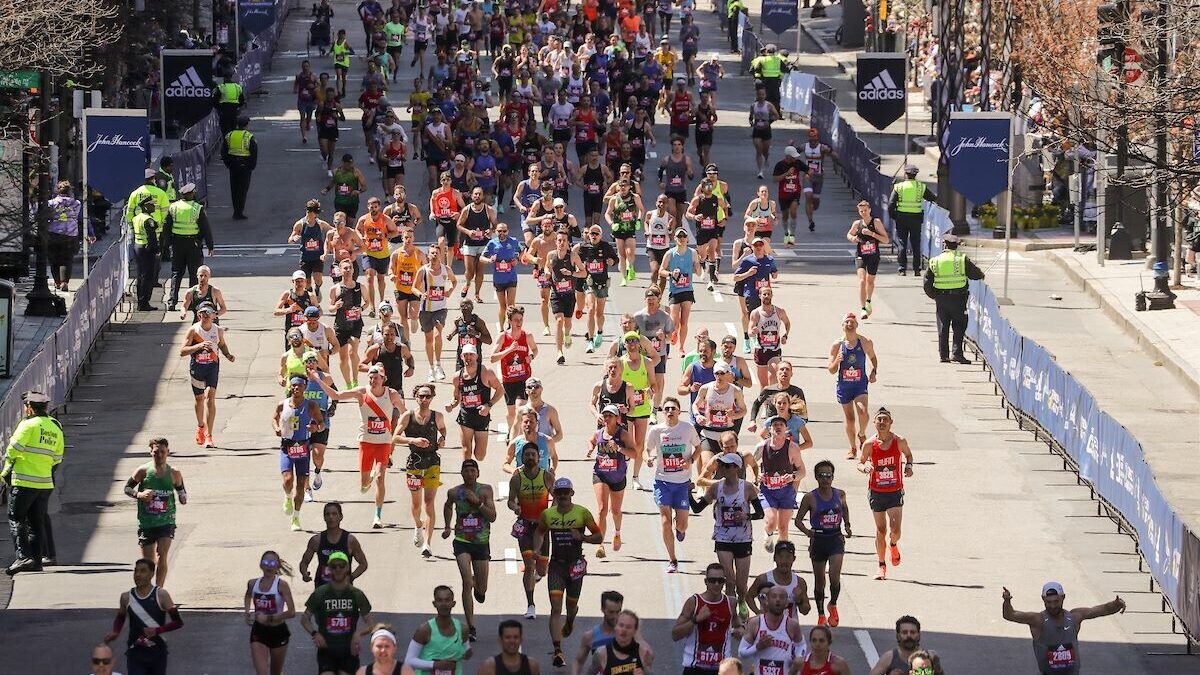
After a decade of running, Rutledge knows what he needs to do to stay competitive, but above all else, he’s looking at his longevity in the sport. “My goal is to run as long as I can,” he says. “In my 60s, I could run seven days a week and over 100 kilometres per week, but I’ve now backed that off to five days a week and lower volume,” he adds.
Rutledge has completed around 19 marathons and several shorter-distance races. And he has stayed relatively injury-free, thanks to a couple of key regimens that anchor his weekly training.

“I take Tuesdays entirely off running, and I do strength training,” he says, acknowledging that the consistency of these sessions has helped his healthy running streak. “I focus on the core in these… as we age, many people tend to develop back issues, and I’m no exception.”
Rutledge also shared that 20 to 30 minutes of daily stretching, often before his runs, has also played a big role in injury prevention.
As his career in real estate has wound down, Rutledge is grateful to running for helping him keep a daily routine, and a sense of purpose. “I wake up at 5 a.m.–I’m a morning person,” he says. “Running has brought me a sense of youth. I have continued doing most of the things I could do when I was younger, and I think running has done that for me.”
Having taken up running later in life than many other runners, Rutledge encourages anyone to give it a try if they’re curious, no matter their age. “I started really slow,” he says. “It began with walking and then adding in some running slowly… maybe a kilometre to start, and building up from there.”
Rutledge has no plans to slow down. “I’ve heard that most people have a 15-year life cycle in the marathon, and I’m 10 years in,” he says. “I’d like to keep running marathons into my 80s, but as long as I can keeping running five days a week, I’ll adjust the speed and the distances of my races, if I need to.”
Rutledge is looking forward to, hopefully, running the Athens Marathon later this year or next.
“That’s where it all began,” he says of the marathon. “I think we all owe it to the running gods to do that one at least once.”
by Claire Haines
Login to leave a comment
Boston Marathon
Among the nation’s oldest athletic clubs, the B.A.A. was established in 1887, and, in 1896, more than half of the U.S. Olympic Team at the first modern games was composed of B.A.A. club members. The Olympic Games provided the inspiration for the first Boston Marathon, which culminated the B.A.A. Games on April 19, 1897. John J. McDermott emerged from a...
more...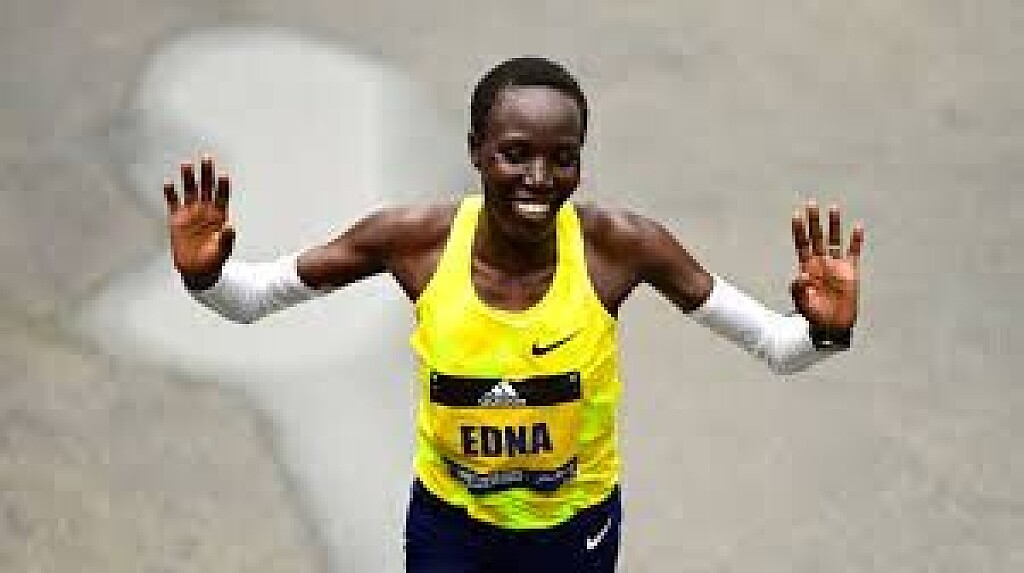
Edna Kiplagat opens up on how she managed to seal a podium finish in Boston
Kiplagat is still flying high at 44 years of age and is not showing signs of slowing down.
At 44, many athletes would be winding down their careers or already retired. However, for Edna Kiplagat, the journey continues.
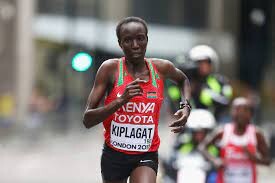
The Kenyan distance running icon continues to defy age and expectations, delivering a stellar performance at the Boston Marathon on Monday that left spectators in awe.
Returning in the iconic streets of Boston, Kiplagat crossed the finish line in a remarkable 2:23:21, clinching a well-deserved third-place finish. What makes her achievement even more impressive is the fact that she was competing against athletes nearly half her age.
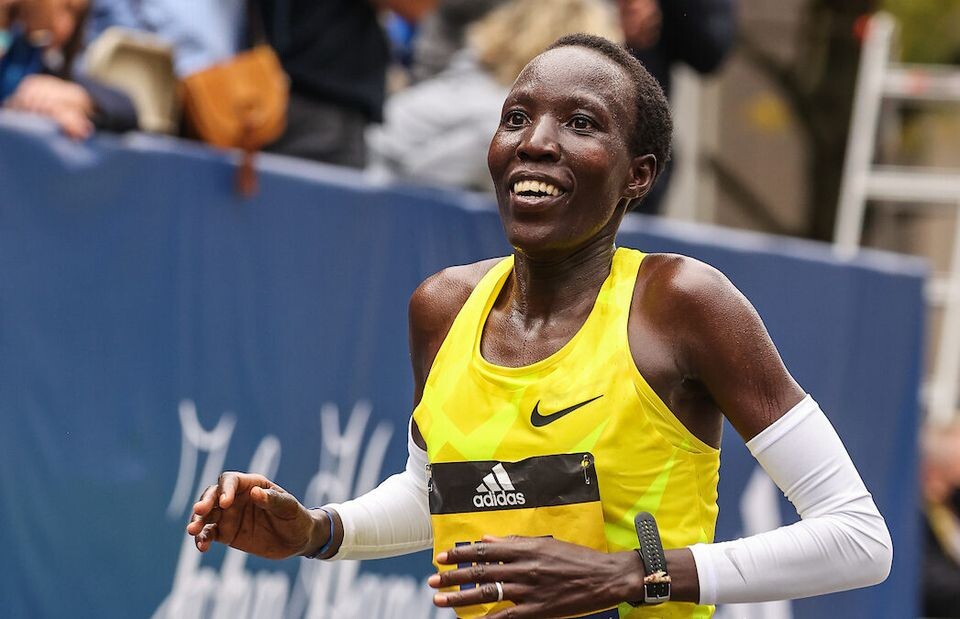
Like a vintage wine that only improves with time, Kiplagat's career trajectory showcases that age is merely a number. Her unwavering passion for the sport and relentless work ethic have enabled her to remain at the forefront of distance running, challenging and even outperforming her younger counterparts.
In a recent interview with KTN News, Kiplagat shared her reflections on the Boston Marathon and the challenges she encountered during the race.
"It was an exhilarating race, and I am delighted that we achieved a Kenyan podium sweep," Kiplagat remarked. "The competition was intense, with many athletes at their peak. I knew I had to be at my absolute best to remain competitive."
Expressing her gratitude for her podium finish, Kiplagat acknowledged the rigorous training that prepared her for the demanding race. "Standing on the podium is a testament to hard work, dedication, and ultimately, God's grace," she added.
Kiplagat's journey in the world of marathon running is nothing short of inspirational. She first burst onto the big city marathon scene by winning the New York Marathon io her debut 14 years ago. Since then, her career has been a fairytale journey across continents and championships.
With two World Marathon Majors trophies to her name and two World Championship marathon titles, Kiplagat's accolades speak volumes about her prowess as a distance runner. Her personal best of 2:19:50, achieved at the 2012 London Marathon, stands as a testament to her exceptional talent.
While many athletes might find it challenging to maintain peak performance over the years, Kiplagat continues to defy expectations. Known for her late-race surges, she has a knack for dramatically overtaking her opponents in the latter stages of a race, leaving them trailing in her wake.
As the world continues to marvel at her achievements, Edna Kiplagat remains a timeless legend in the world of distance running, inspiring generations of athletes with her resilience, determination, and unyielding spirit.
by Mark Kinyanjui
Login to leave a comment
Boston Marathon
Among the nation’s oldest athletic clubs, the B.A.A. was established in 1887, and, in 1896, more than half of the U.S. Olympic Team at the first modern games was composed of B.A.A. club members. The Olympic Games provided the inspiration for the first Boston Marathon, which culminated the B.A.A. Games on April 19, 1897. John J. McDermott emerged from a...
more...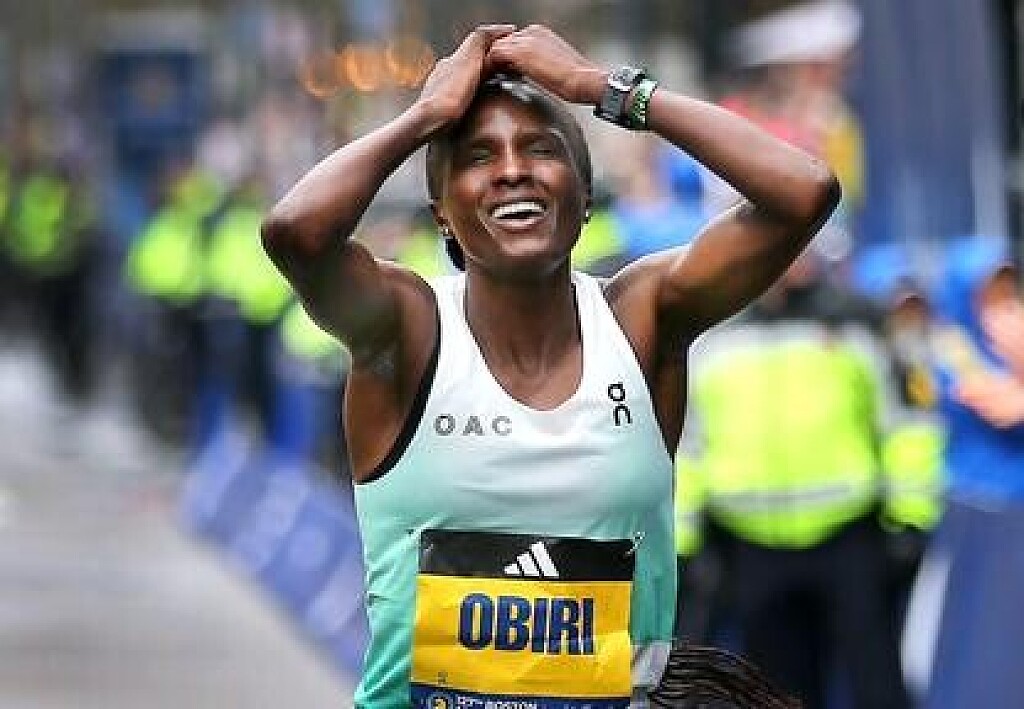
Hellen Obiri executes proper strategy to defend her Boston Marathon crown as Kenyan women sweep race
Hellen Obiri made it back-to-back titles at Boston Marathon with fellow Kenyans Sharon Lokedi and Edna Kiplagat completing a podium sweep.
Kenya’s Hellen Obiri defended her Boston Marathon title after running a tactical race to fend off the challenge of compatriot Sharon Lokedi on Monday April 15.
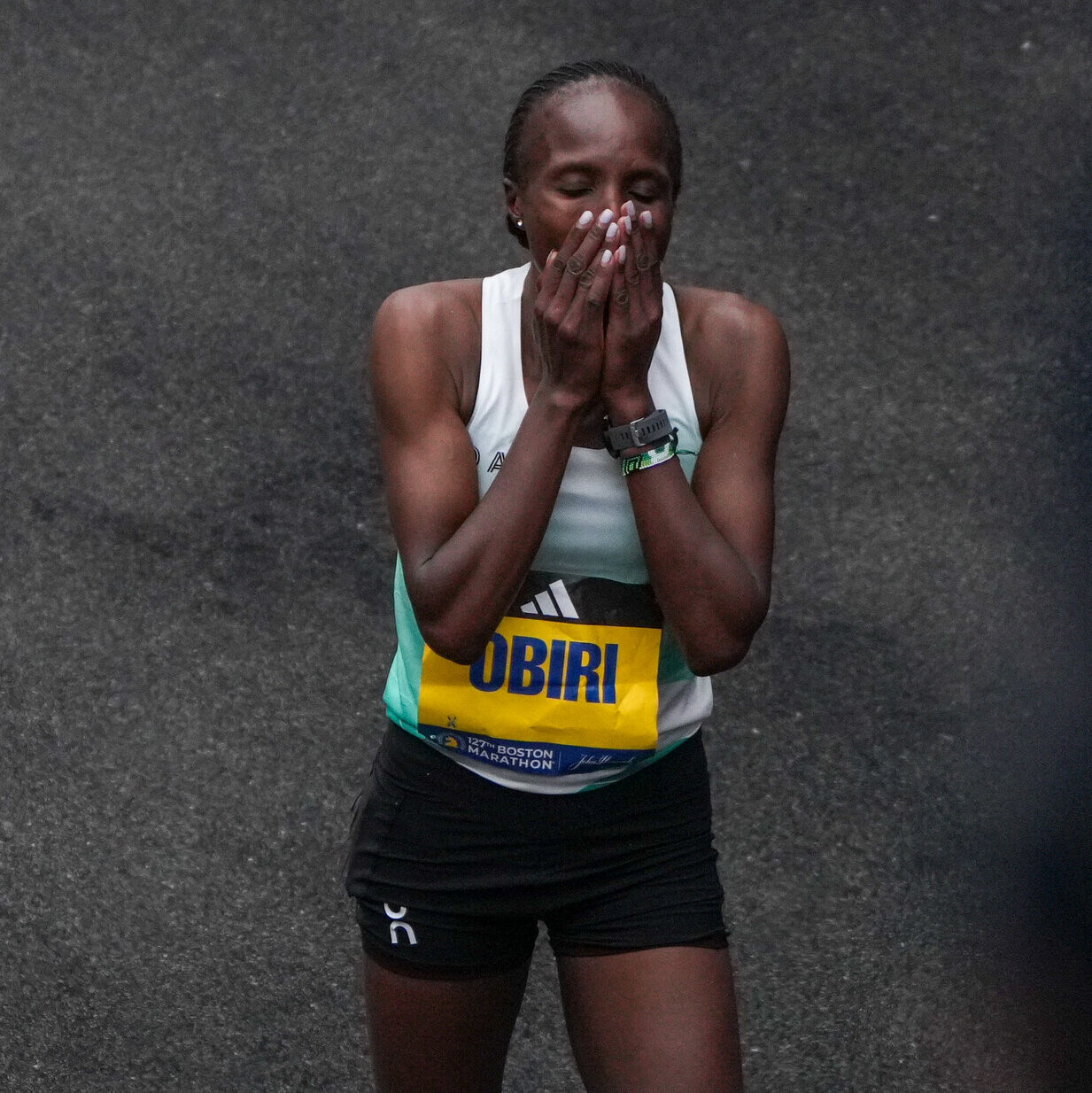
It was an all Kenyan affair as Obiri led a 1-2-3 for the country with Lokedi finishing second while veteran Edna Kiplagat managed an impressive third place but the three waited until late before showing their claws.
Obiri, Lokedi and Kiplagat would exchange leads but stayed close to each other in the final stretch.
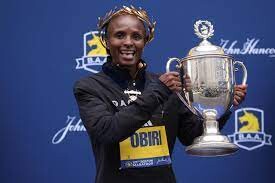
The 44-year-old Kiplagat appeared set to pull an upset, and perhaps win her third title in Boston, but she ran out of gas when Obiri and Lokedi pulled away.
Obiri then waited until the tail end to sprint away from Lokedi to win her second straight title in a time of 2:22:37 and defend her crown.
Obiri became the sixth woman to make it back-to-back titles in Boston in what is now becoming her favorite course after her maiden marathon victory last year.
The New York Marathon champion has effectively sealed her place in Team Kenya to the Paris Olympics after being named in the final team of six over a week ago.
by Joel Omotto
Login to leave a comment
Boston Marathon
Among the nation’s oldest athletic clubs, the B.A.A. was established in 1887, and, in 1896, more than half of the U.S. Olympic Team at the first modern games was composed of B.A.A. club members. The Olympic Games provided the inspiration for the first Boston Marathon, which culminated the B.A.A. Games on April 19, 1897. John J. McDermott emerged from a...
more...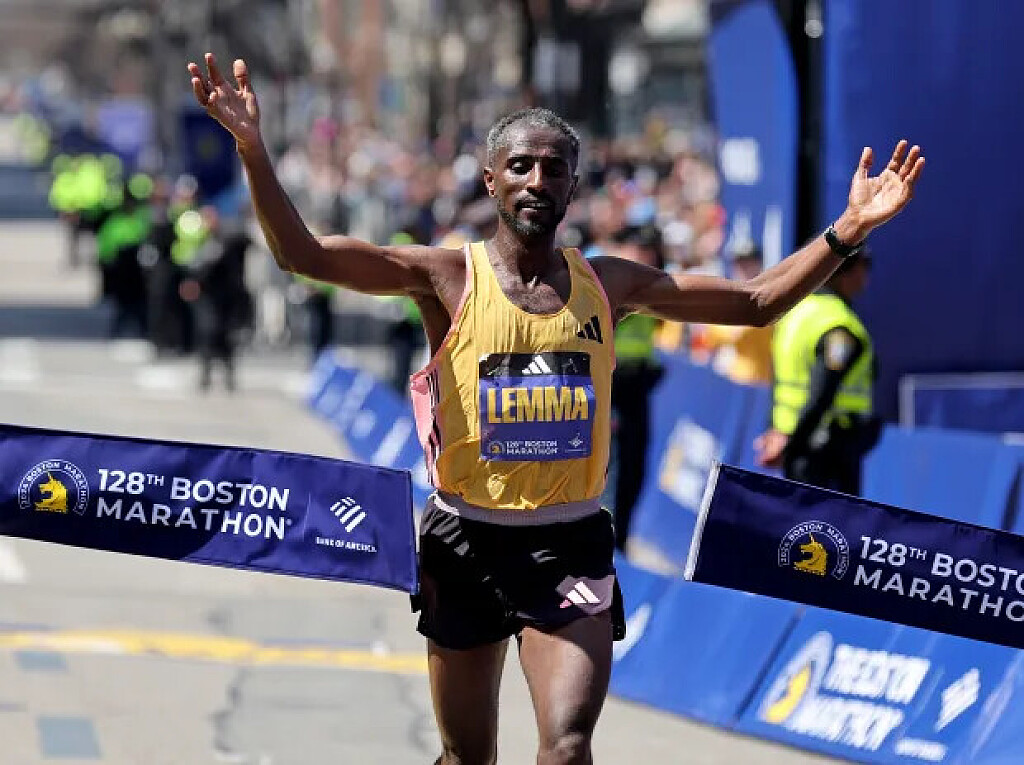
Who is Sisay Lemma, the winner of the 2024 Boston Marathon?
Sisay Lemma was born in 1990 in the Oromia Region of Ethiopia. He is the winner of the 2024 Boston Marathon, with a time of 2:06:17.
Sisay Lemma is an Ethiopian long-distance runner who specializes in the marathon. He is the winner of the 2024 Boston Marathon, with a time of 2:06:17.
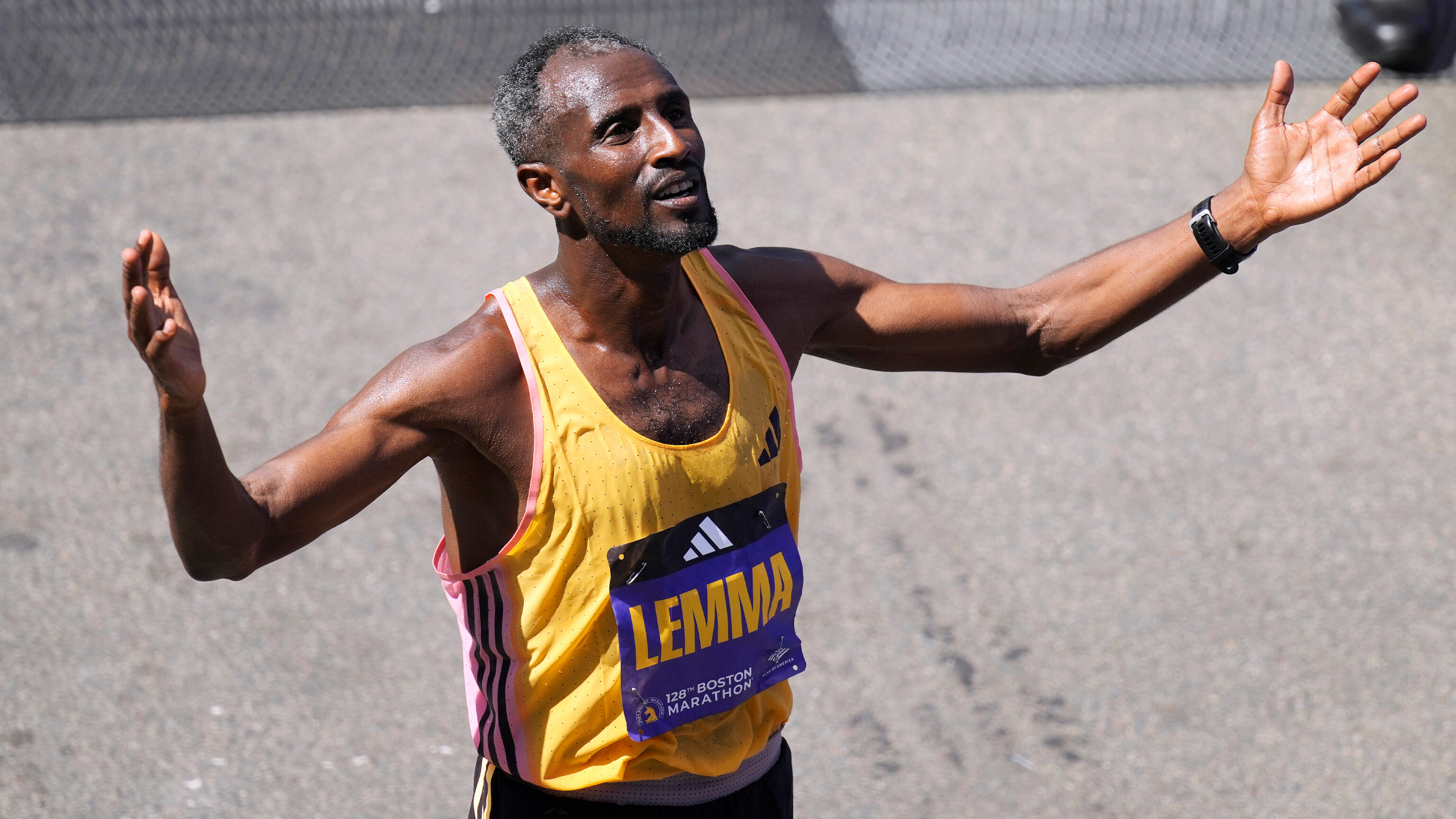
This was his first victory at the Boston Marathon, but he has previously won other major marathons, including the 2021 London Marathon and the 2023 Valencia Marathon. Lemma is also a three-time bronze medalist at the World Athletics Championships.
Lemma was born in 1990 in the Oromia Region of Ethiopia. He began running at a young age, and quickly showed promise. He made his international debut in 2013, and won his first major marathon in 2018, when he won the Rotterdam Marathon.
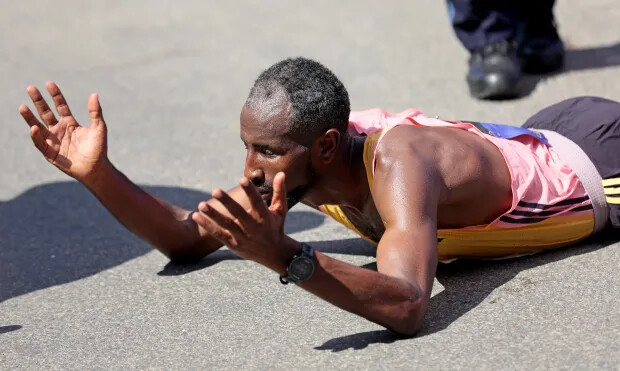
Lemma is known for his strong finishing kick. He has often won races by coming from behind in the final stages. He is also a very consistent runner, and has never finished a marathon outside of the top 10.
Lemma is a rising star in the world of marathon running. He is still relatively young, and has many years of good running ahead of him. He is a strong contender for medals at the major marathons, and the Olympic Games.
Here are some of Sisay Lemma’s career highlights:
Winner of the 2024 Boston Marathon
Winner of the 2021 London Marathon
Winner of the 2023 Valencia Marathon
Three-time bronze medalist at the World Athletics Championships
Winner of the 2018 Rotterdam Marathon
Personal best of 2:01:48 for the marathon
The Boston Marathon: The King of Marathons
The Boston Marathon is an annual foot race held in Boston, Massachusetts, United States. It is considered to be the most prestigious marathon in the world, and is one of the world’s oldest continuously run sporting events. The race is traditionally held on the third Monday in April, and it follows a 26.2-mile (42.2 km) route through the streets of Boston and the surrounding towns.
The Boston Marathon was first held in 1897, and it was inspired by the success of the marathon race at the 1896 Summer Olympics in Athens, Greece. The race was originally intended to be a qualifier for the 1897 Summer Olympics, but it quickly became a popular event in its own right. The Boston Marathon has been held every year since 1918, with the only exceptions being in 1918 due to World War I, and in 2020 due to the COVID-19 pandemic.
The Boston Marathon is known for its challenging course, which features several hills, including the infamous Heartbreak Hill at mile 20. The race is also known for its large and enthusiastic crowds, which line the streets throughout the course to cheer on the runners.
The Boston Marathon has been won by some of the greatest marathon runners in history, including Dick Hoyt, Bill Rodgers, Joan Benoit Samuelson, and Kathrine Switzer. The race has also been the site of several world records, including the first sub-2:00 marathon in 1978 by Geoffrey Hirt.
The Boston Marathon is more than just a race; it is a tradition and an institution. The race is a symbol of Boston’s resilience and spirit, and it is a source of pride for the city’s residents. The Boston Marathon is also a major fundraiser for charity, and it has raised millions of dollars for local charities over the years.
by Laura Islas
Login to leave a comment
Boston Marathon
Among the nation’s oldest athletic clubs, the B.A.A. was established in 1887, and, in 1896, more than half of the U.S. Olympic Team at the first modern games was composed of B.A.A. club members. The Olympic Games provided the inspiration for the first Boston Marathon, which culminated the B.A.A. Games on April 19, 1897. John J. McDermott emerged from a...
more...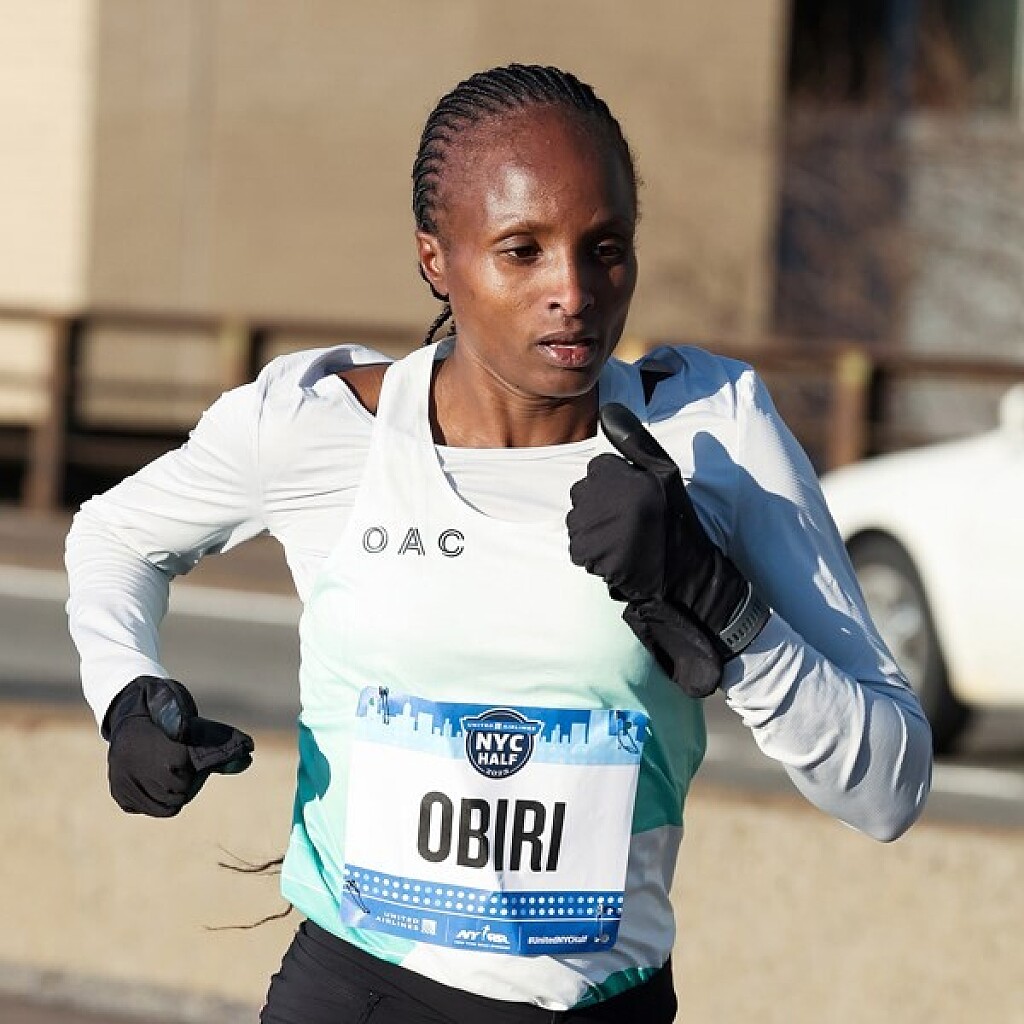
Hellen Obiri in her best shape ever heading into the Boston Marathon
Hellen Obiri is bubbling with confidence ahead of the Boston Marathon and feels like she is in her best marathon running shape ever.
Reigning New York City Marathon champion Hellen Obiri is ready to rumble at the Boston Marathon after enjoying her training and working on some of her major undoings.
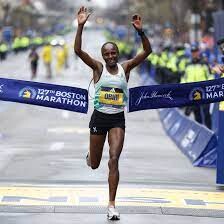
Speaking to Citius Mag, the defending champion feels like she in her best shape and is ready for the challenge as she eyes a slot in the Olympic team ahead of the Paris 2024 Olympic Games.
The two-time World 5000m champion disclosed that she has also worked on her bottle-handling technique, an issue that has affected her a lot since she tends to miss taking water at certain points of the race.
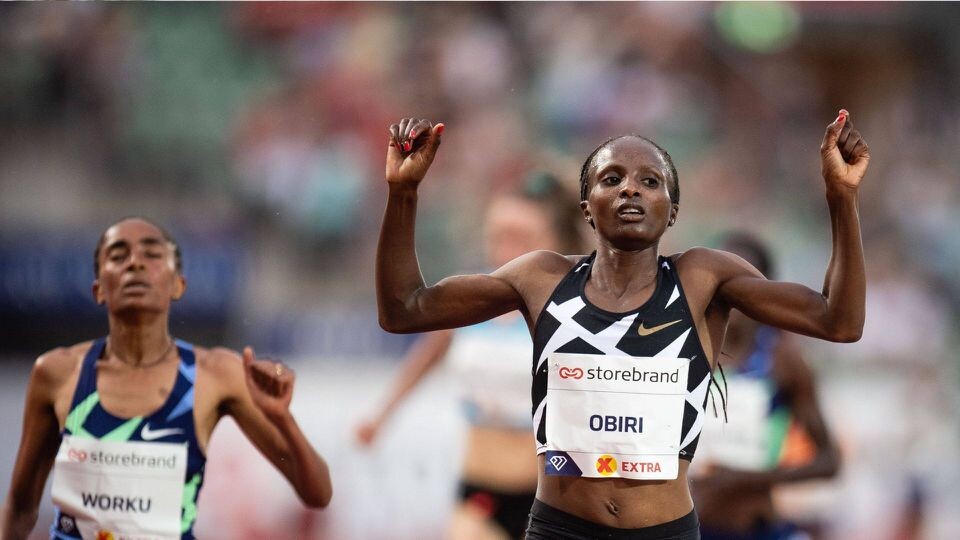
“I feel so excited and nothing has changed…I’m so healthy and I’m ready for Monday. I’ve been doing the bottle handling and I am now much better.
“I think I’m in the best marathon shape and we normally compare my training from last year and now I can say I’ve been running so fast and I feel good,” Obiri said.
The former World 10,000m silver medalist also admitted that there is a lot of pressure coming from her fans and friends since she is the defending champion.
She noted that, however, going to the race, she will embrace a strong mindset and give her all since she is also competing against very strong women. Obiri also explained that it would be a great thing if she wins the race because it would place her in a better position to be selected in the Olympic team.
“This year I have a lot of pressure since I’m the defending champion and everyone will be looking at me to see what I’m going to do. I have a big task and I know we have strong ladies here but I will give my best and stay mentally focused.
“Nowadays I’m a bit nervous when starting because I have never raced with some ladies before but I’m trying to do my best to avoid that.
“I think it would be best if I win but I’m sure they will observe how the race will be…this is a marathon and it’s Boston, the course being the same as the Paris 2024 Olympics. However, I want to win,” Obiri said.
by Abigael Wuafula
Login to leave a comment
Boston Marathon
Among the nation’s oldest athletic clubs, the B.A.A. was established in 1887, and, in 1896, more than half of the U.S. Olympic Team at the first modern games was composed of B.A.A. club members. The Olympic Games provided the inspiration for the first Boston Marathon, which culminated the B.A.A. Games on April 19, 1897. John J. McDermott emerged from a...
more...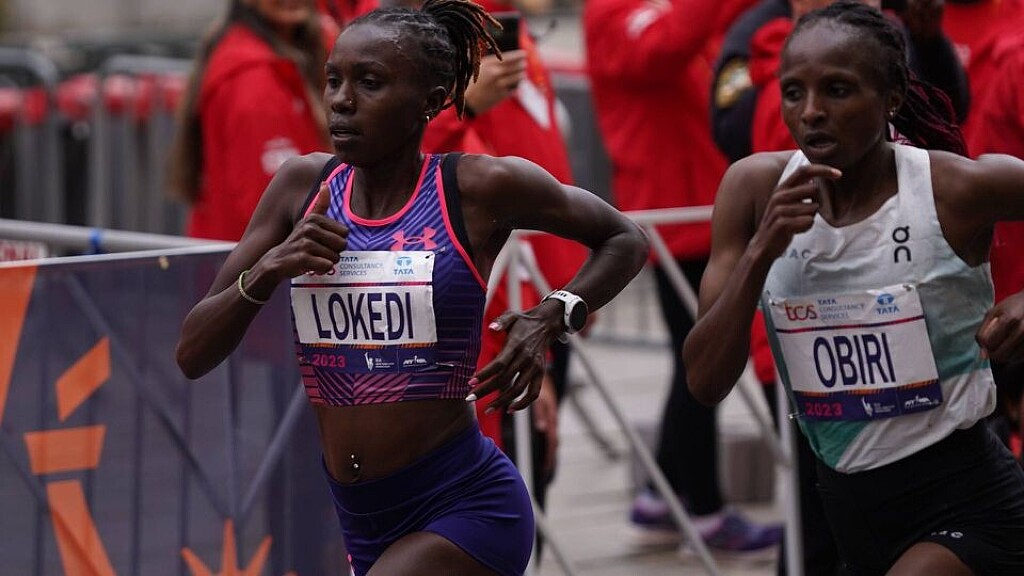
Sharon Lokedi: How the Kenyan marathon star is sketching her strategy for victory at Boston Marathon
Sharon Lokedi is aiming for victory at the Boston Marathon where she will be facing elite rivals.
2022 New York City Marathon champion Sharon Lokedi has rapidly ascended to the pinnacle of long-distance running with her sights firmly set on the 128th Boston Marathon.
Amidst a field brimming with talent, Lokedi's journey from her marathon debut to becoming a favorite in Boston illustrates not only her athletic prowess but also her unique approach to managing the pressures of elite competition.
"Before I get to a race, there’s so much tension and anxiety. I try to remain present," Lokedi shared as per Run.
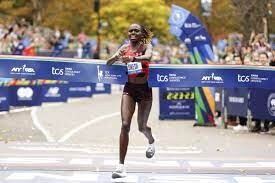
This practice, recommended by her sports psychologist in July 2023, has helped her maintain calm and focus, vital for someone whose career in running has been anything but typical.
Surprising herself and the athletic world, she clinched victory at her first marathon attempt in New York in 2022 with a time of 2:23:23, joining the ranks of debut winners in the storied race.
Despite facing an injury that sidelined her from the Boston Marathon last April she returned to the global marathon scene last November, securing a third-place finish in New York, a testament to her resilience and tenacity.
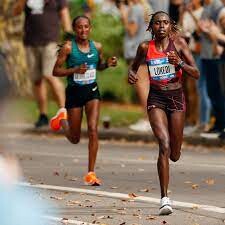
The 30-year-old Kenyan runner's story is a blend of innate talent and serendipity having never envisioned a professional career in athletics.
From her humble beginnings running at age 12 to training alongside Olympic champions in Kaptagat, Kenya, Lokedi's ascent in the sport is, by her own admission, "a miracle."
Training at altitudes close to 8,000 feet, Lokedi has pushed her limits, clocking upwards of 140 miles a week in preparation for Boston.
Under the guidance of her coach Haas, she has emphasized hill training, a crucial component for tackling the notoriously challenging Boston course.
"I think she’ll be in the mix," said Haas, highlighting Lokedi's diligent preparation and positive mindset.
Lokedi's connection to the running community, both in Kenya and her second home in Flagstaff, Arizona, has been a source of strength and inspiration.
The camaraderie she shares with competitors, including close friend and fellow Kenyan Hellen Obiri underscores a spirit of mutual respect and friendship that transcends rivalry.
"Racing with Sharon, it’s really good for me," Obiri remarked.
The Boston Marathon promises a historic showdown in the women's elite field, featuring luminaries such as Obiri, Tadu Teshome, Hiwot Gebremariam, and Edna Kiplagat, alongside promising American contenders like Emma Bates and Sara Hall.
"Sharon has been my good friend since 2019. She’s a lovely girl," Obiri added, highlighting the deep bonds formed between athletes at the highest levels of competition.
For Lokedi and Obiri, the Boston Marathon is not just another race, it is an opportunity to showcase their skills, support each other, and celebrate their friendship, irrespective of the outcome.
As she prepares to toe the line in Boston, her message is clear: "I know I’m strong. I want to come into the race knowing that anything is possible."
by Festus Chuma
Login to leave a comment
Boston Marathon
Among the nation’s oldest athletic clubs, the B.A.A. was established in 1887, and, in 1896, more than half of the U.S. Olympic Team at the first modern games was composed of B.A.A. club members. The Olympic Games provided the inspiration for the first Boston Marathon, which culminated the B.A.A. Games on April 19, 1897. John J. McDermott emerged from a...
more...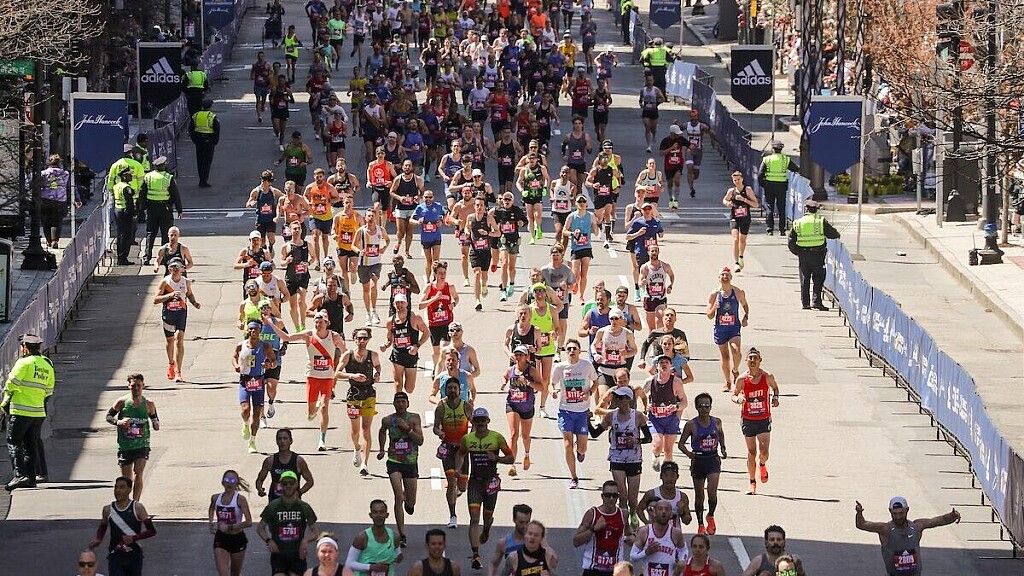
Your first Boston Marathon: what runners wish they’d known
Experienced runners share what surprised them most in their introduction to Boston.
We are just days away from the Boston Marathon. Whether it’s your first time, you’re headed back for redemption or you’re still working toward your first BQ, you likely have questions about this famous race. We asked the running community what surprised them about the marathon after their first experience. Here’s what they had to say.
Plan appropriately for race morning
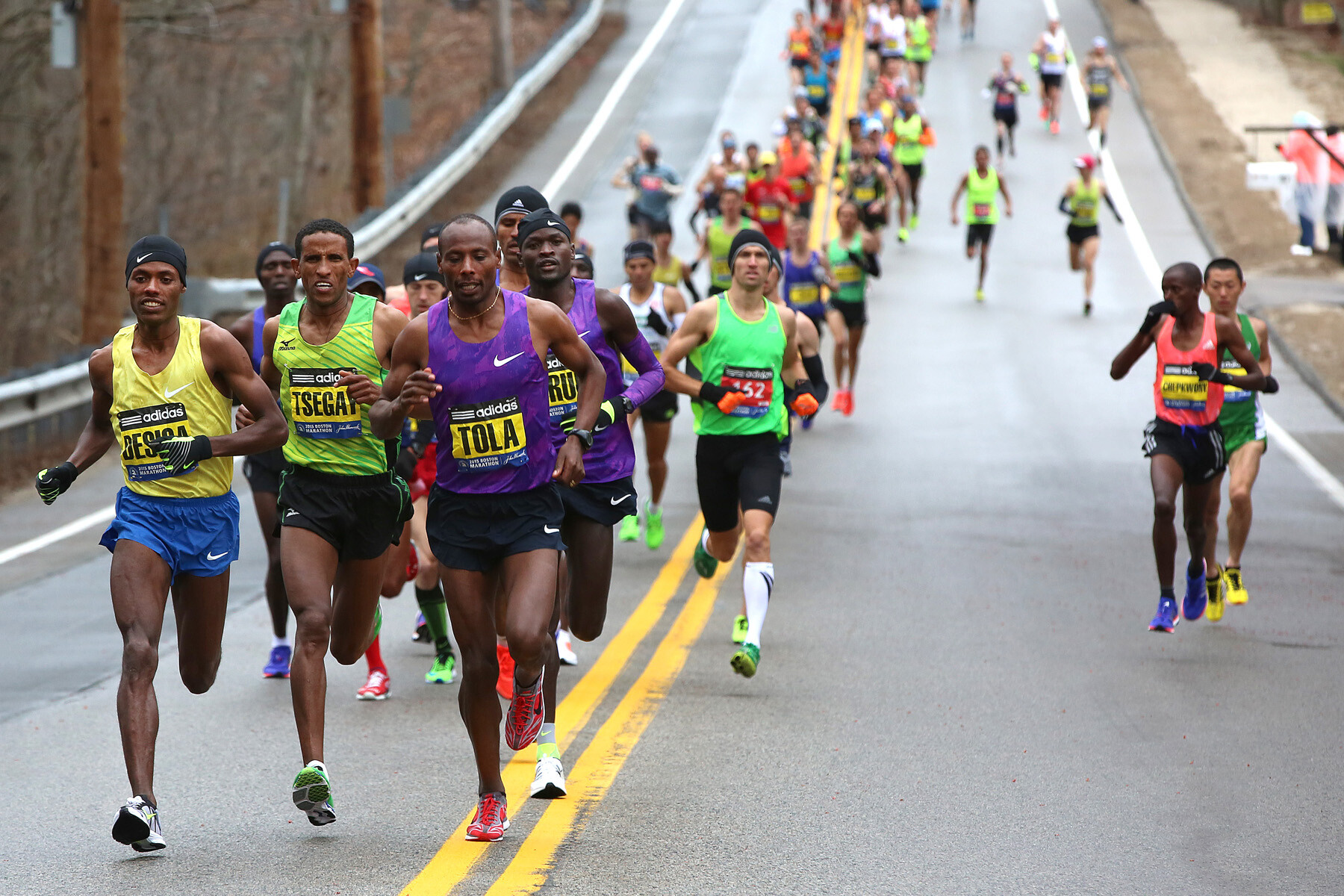
Runners should consider the time from wake-up to actually starting their run. At huge races like Boston, where the race organization logistics must allow for thousands and thousands of participants, this can involve a lot of pre-race walking and waiting around for runners. After you get to the start at the appropriate time, you’ll have lots of time before your wave takes off. Many first-time Boston runners wished they had packed more pre-race fuel, disposable layers (check the weather forecast, of course!) and accounted for how they would spend the time waiting for their race to start.
Pacing is tricky
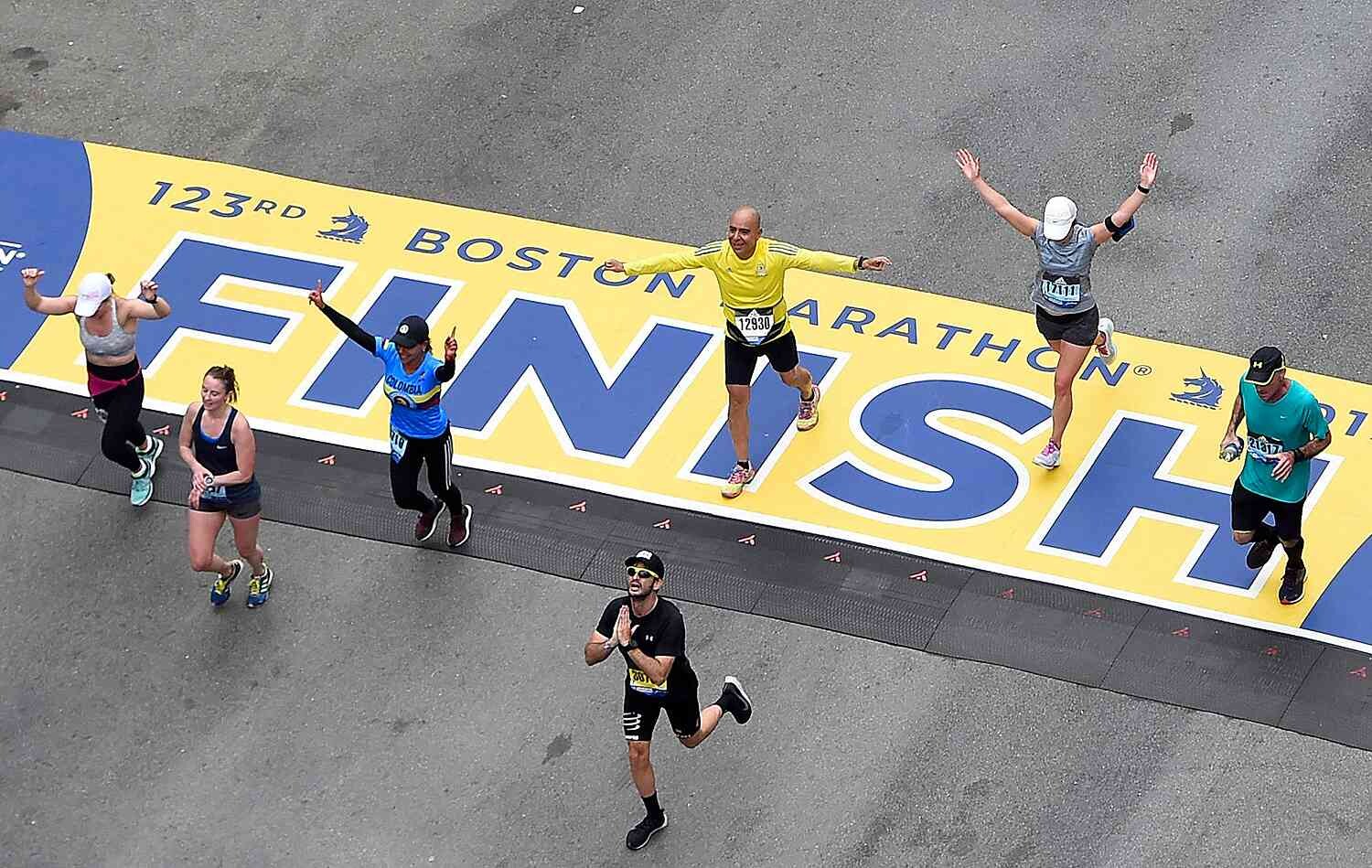
Running coach and marathoner Donna Mader of Fredericton says the biggest challenge at Boston is pacing: “The adrenalin at the start, combined with the course profile [the first approximately 10 km are downhill] makes it challenging to hold back the pace,” she says. “Conserving a bit of energy in the first half is not only smart, but it’s much more enjoyable to be passing runners in the later stages of a marathon than to be struggling and being passed by others.”
“The downhills are harder than the uphills, and your quads are smashed at the end of the race from them,” says running coach, former professional track runner and marathoner Lauren Goss of Boulder, Co. Goss has coached many runners across North America to success in their first Boston Marathon.
You’ll experience a Boston like no other
Not all the unexpected things about Boston are negative. Co-founder of Early Bird Run Club in Hamilton Kavit Puri says the energy in Boston on race day was his favorite aspect of the race. “As I walked from the finish line to Tracksmith for my poster and back to my hotel with my medal on and my bib, I was cheered and congratulated by strangers, like I was a pro runner,” he says. “It felt so validating, and made me feel so welcome in the city. I have never experienced a city that embraces the marathon like Boston did on that day.”
Recreational marathoner and nutritionist Tara Postnikoff of Toronto says that she wasn’t expecting to feel quite so much emotion during her first Boston Marathon. “There were so many things (that surprised me),” she says, “but I really had this sense of being part of something super meaningful and historic.”
by Claire Haines
Login to leave a comment
Boston Marathon
Among the nation’s oldest athletic clubs, the B.A.A. was established in 1887, and, in 1896, more than half of the U.S. Olympic Team at the first modern games was composed of B.A.A. club members. The Olympic Games provided the inspiration for the first Boston Marathon, which culminated the B.A.A. Games on April 19, 1897. John J. McDermott emerged from a...
more...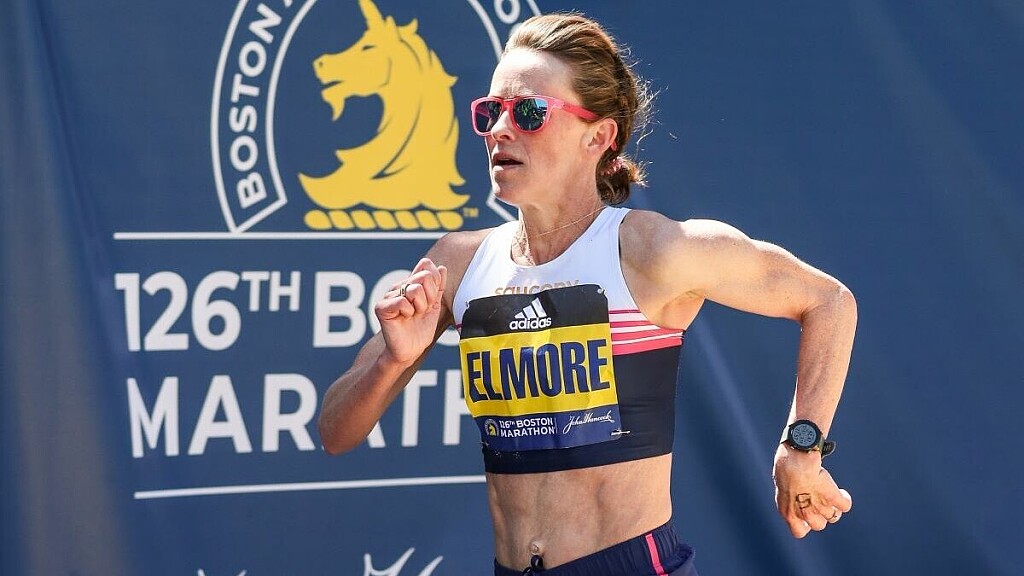
Canadian Olympic marathoner Malindi Elmore pulls out of Boston Marathon due to hamstring injury
Canadian Olympic marathoner Malindi Elmore will not be racing at the Boston Marathon on April 15, she announced on Instagram on Tuesday. Elmore, of Kelowna, B.C., has been dealing with hamstring tendinopathy, a condition in which the tendon that connects the hamstring muscles to the pelvis becomes irritated, resulting in pain and limited function.
While Elmore had hoped to feature in a strong field (including reigning champion Hellen Obiri and 2022 New York Marathon champion Sharon Lokedi), she is focused on the Paris 2024 Olympics. “Boston on hold for another year, all eyes towards being FIT and HEALTHY for Paris on August 11,” she wrote.
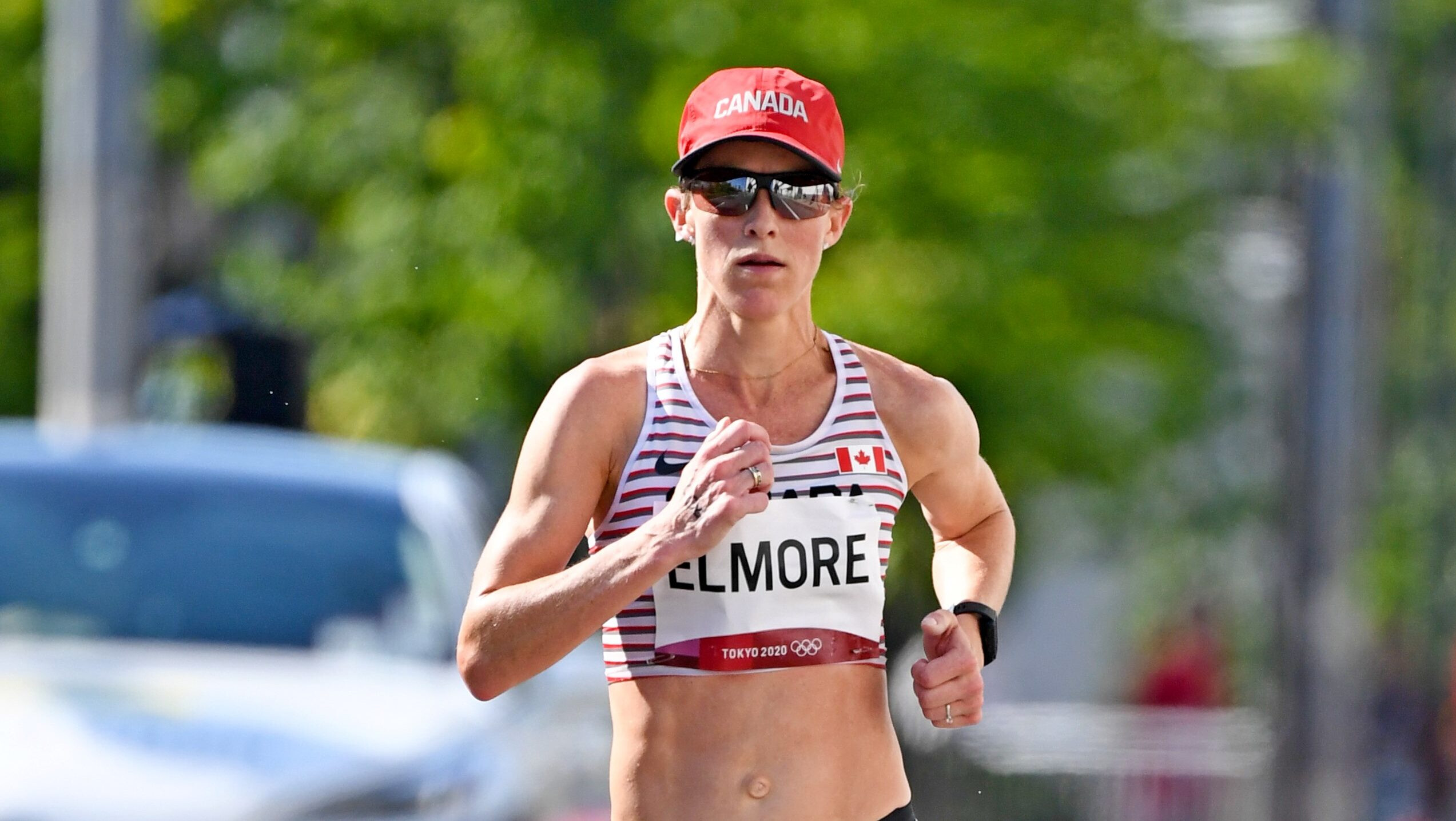
This would have been Elmore’s second time lining up in Boston; in 2022, she ran to an impressive 11th-place finish, posting a time of 2:27:58—the fastest-ever time in Boston by a Canadian woman. She left Boston wanting to return, saying, “It’s a blast to run the crowd-lined streets, where there is always someone cheering you on and shouting your name.”
In February, Elmore (along with national marathon record holder Cam Levins) received a nomination from Athletics Canada and the Canadian Olympic Committee to represent Team Canada in the marathon at the 2024 Paris Olympics. This will be both athletes’ third Olympic appearance for Team Canada.
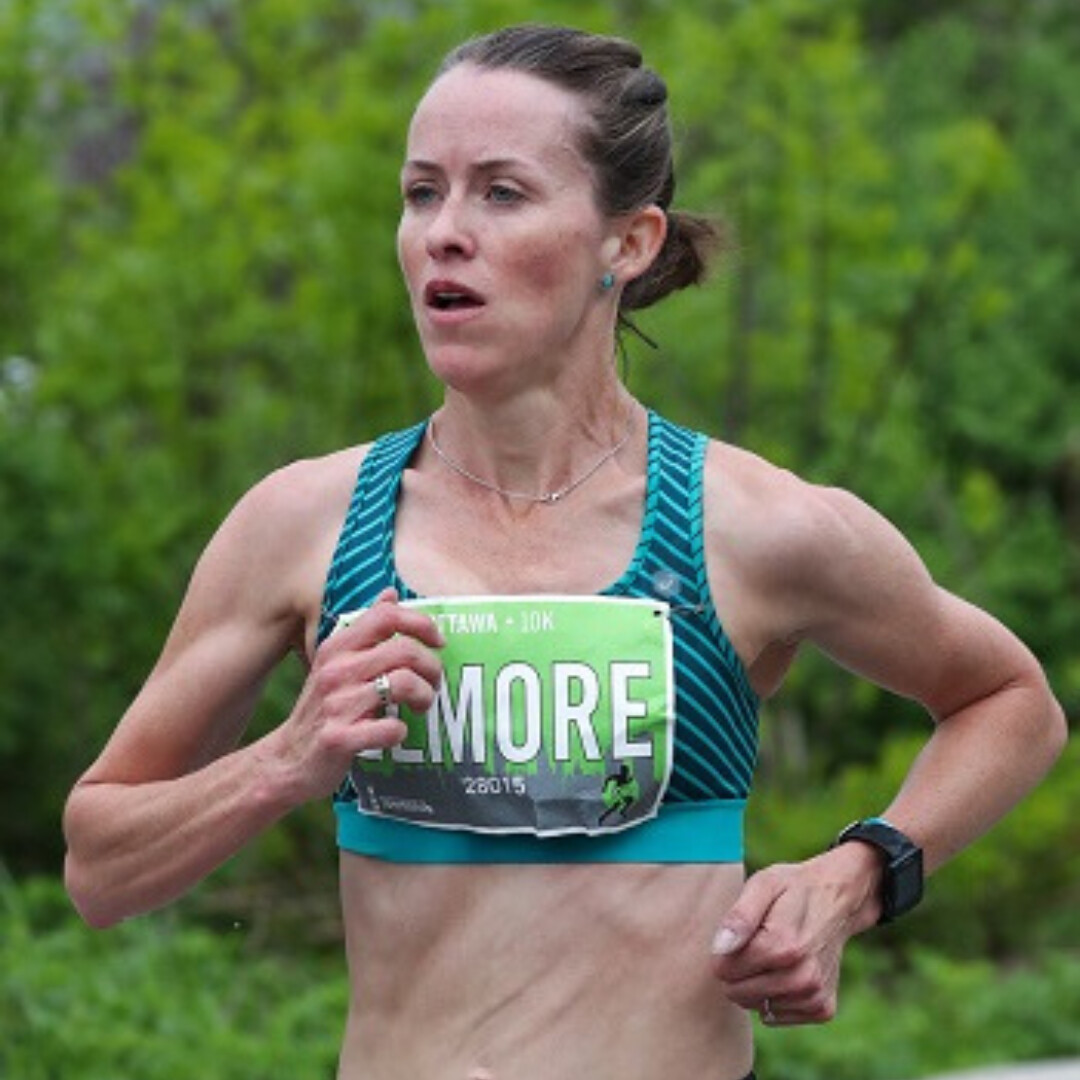
Elmore made her Olympic debut at Athens 2004 in the women’s 1,500 meters. Though she initially retired in 2012, she returned to the sport in 2019 to compete at the Houston Marathon. She ran the Houston Marathon again in 2020 and qualified for the Tokyo Olympics with her Canadian record-setting performance of 2:24:50. In her Olympic return, Elmore placed ninth overall–the second-best finish by a Canadian in the women’s marathon.
While Elmore isn’t able to race this month, she is still training.”After experimenting with more miles, hills and weights this winter to prepare for a hilly and challenging Paris course, my hamstring tendinopathy reared its ugly head again and told me to back off,” she explained on Instagram.”I listened, so here we are, running my favorite easy long runs but holding off intensity and hills until it returns to 100 per cent again. Thankfully (due to my easy paces shuffle) easy running is no problem as I basically have no hamstring extension at this pace so I can still hit my favorite long runs.”
by Claire Haines
Login to leave a comment
Boston Marathon
Among the nation’s oldest athletic clubs, the B.A.A. was established in 1887, and, in 1896, more than half of the U.S. Olympic Team at the first modern games was composed of B.A.A. club members. The Olympic Games provided the inspiration for the first Boston Marathon, which culminated the B.A.A. Games on April 19, 1897. John J. McDermott emerged from a...
more...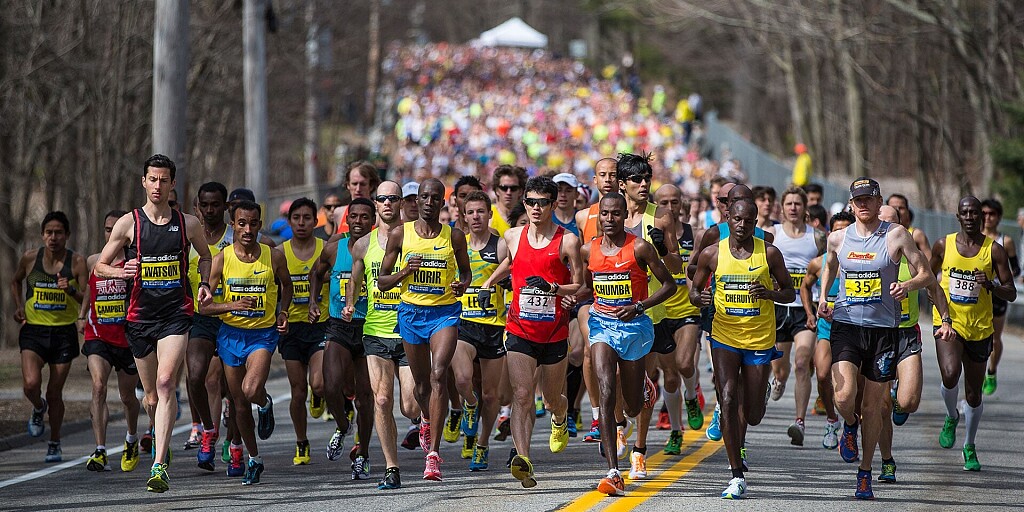
2 weeks to Boston: tips to prepare
You've started your taper. Here are some things to keep in mind.
April 1 means it’s officially race month for those headed to the Boston Marathon on April 15. If you’ve spent your winter training for the 2024 edition of this storied race, you’re probably starting to think about the final preparations you can make to set yourself up for success on April 15. Here are five tips to consider:
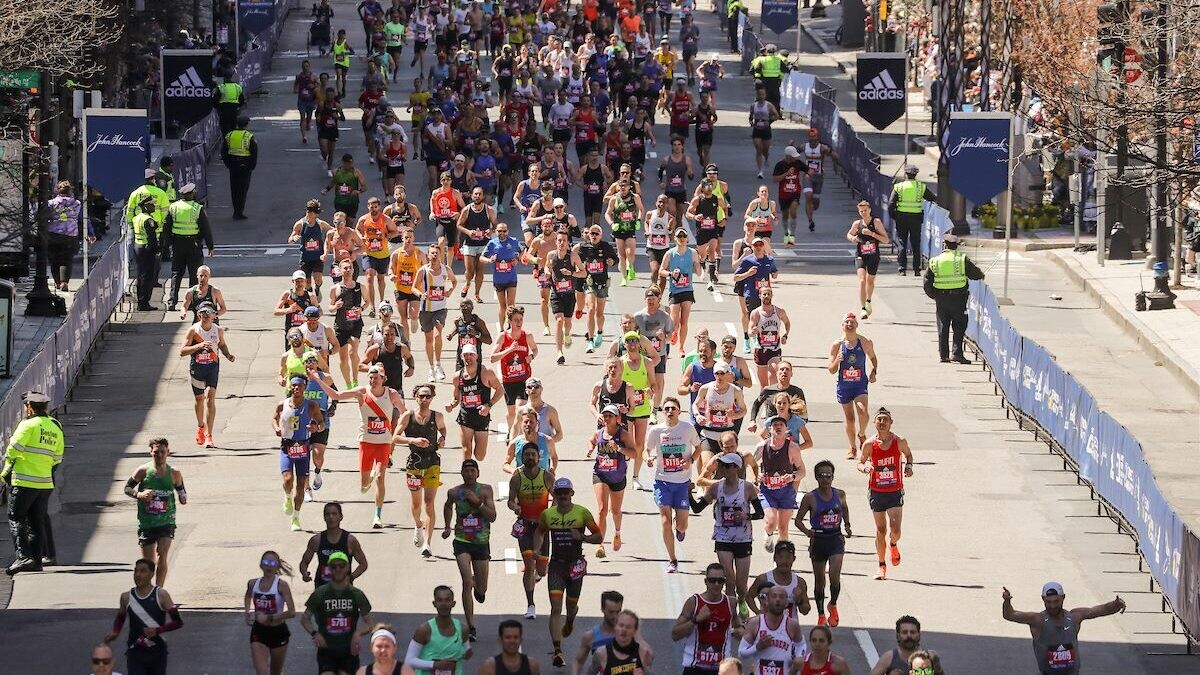
Weather
It’s not too early to start checking the forecast and thinking about how the weather will factor into your race day plans–from what you’ll wear on the bus to Hopkinton to what you’ll run in. Boston in April can bring all types of weather, as we’ve seen on race day many times. As of today, race-day conditions are predicted to be a lovely 15 C, mainly sunny with a low chance of precipitation. While this could change, it appears we can look forward to a near-perfect day for running. However, packing for all conditions is still advised!

The right mindset
With more time (and energy) on their hands (thank you, taper!), runners often experience feelings of excitement but also stress, doubt and anxiety. This is normal. Reading how the elites handle these emotions can really help. Check out this summary of running mindset tips from some of the greats.
Make a race weekend checklist
Now is the time to locate your registration information, review travel plans, make that pre-race dinner reservation and start to pack. Many runners prefer to travel with their race-day nutrition with them, so ensuring you’ve got the right supplies and some backups will reduce the risk of forgetting anything in the final days.
Prep for the hills
The hard work is done. As runners enter their taper, it’s a good time to start thinking about the unique nature of the Boston course. You’ve probably done lots hill reps in training. As you head into the last two weeks of easier training, now’s a good time to continue practicing some downhill running so the legs get used to what’s coming on April 15.
by Claire Haines
Login to leave a comment
Boston Marathon
Among the nation’s oldest athletic clubs, the B.A.A. was established in 1887, and, in 1896, more than half of the U.S. Olympic Team at the first modern games was composed of B.A.A. club members. The Olympic Games provided the inspiration for the first Boston Marathon, which culminated the B.A.A. Games on April 19, 1897. John J. McDermott emerged from a...
more...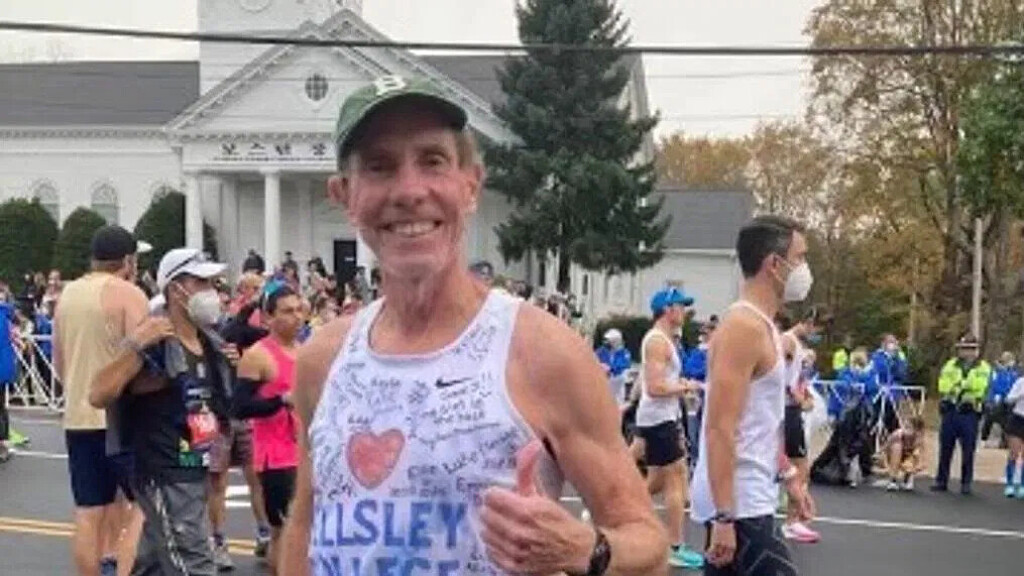
Longtime New Hampshire resident Mike Beeman, set to running in his 47th consecutive Boston Marathon this year
When it comes to running the Boston Marathon, any runner who has done it for at least the last 25 straight years is part of the “Quarter-Century Club.”
There are 121 people in that club right now, including longtime New Hampshire resident Mike Beeman, who is set to run his 47th consecutive Boston Marathon in April.
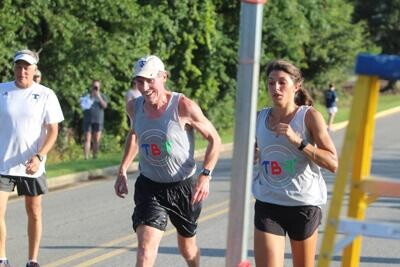
Beeman is a Pinkerton graduate and a former teacher and coach at Salem High School and Londonderry High School.
He lives in Georgia now and he is fifth on the list of quarter-century runners.
“I’ve run just about everywhere. Boston is just so special. The fanbase, the knowledge of the people out there on the course, it is great. The people change, but the cheering and the excitement, especially towards the end, never changes,” Beeman said.
Beeman said he would like to get to 50 straight Boston Marathons, which would put him in the even-more-exclusive “Half-Century Club” of Boston Marathon runners.
by Jamie Staton
Login to leave a comment
Boston Marathon
Among the nation’s oldest athletic clubs, the B.A.A. was established in 1887, and, in 1896, more than half of the U.S. Olympic Team at the first modern games was composed of B.A.A. club members. The Olympic Games provided the inspiration for the first Boston Marathon, which culminated the B.A.A. Games on April 19, 1897. John J. McDermott emerged from a...
more...
Rob Gronkowski named grand marshal for 2024 Boston Marathon
New England Patriots great Rob Gronkowski has been named grand marshal for the 2024 Boston Marathon, the Boston Athletic Association announced Tuesday.
Gronkowski will also receive the 2024 Patriots' Award, presented to a person or organization who is "patriotic, philanthropic, and inspirational, and fosters goodwill and sponsorship." In addition to his athletic achievements, Gronkowski founded the Gronk Nation Youth Foundation, which donated the funds to build Gronk Playground on the Charles River Esplanade.

"Giving back has always been a priority in my life," Gronkowski said in a statement. "When I first got to New England, Mr. Kraft and the Patriots Foundation ingrained in the team the importance of giving back to the community that gives back to us. And this community has supported me throughout my entire career. Now it's time for me to give back to help set others up for their own journey, especially the youth. This is why the Gronk Playground project is close to my heart. My family and I are honored to be able to give kids an awesome new space to play in the city.”
“We are honored to have Rob Gronkowski as part of our Boston Athletic Association's long-standing traditions and celebrations this year. The work that he has done and continues to do for the Boston Community exemplifies what we look to recognize with our Patriots’ Award," B.A.A. Director of Development Nicole Juri said in a statement. “Having him also serve as Grand Marshal on race day will bring a lot of added joy and excitement for the thousands of spectators who will be lining the streets from Hopkinton to Boston.”

Gronkowski will be honored at the B.A.A. Gives Back Celebration on April 13. In his role as grand marshal, he will be driven along the marathon course from Hopkinton to Boston, delivering the tropy to the finish line ahead of the athletes on race day on April 15.
Past recipients of the Patriots' Award include Robert and Myra Kraft and the New England Patriots, Red Auerbach and hte Red Auerbach Youth Foundation, the Boston Red Sox Foundation, Rick and Dick Hoyt, Joan Benoit Samuelson, David Ortiz, Tim Wakefield, Tedi Bruschi, Adrianne Haslet, Marty Walsh.
Login to leave a comment
Boston Marathon
Among the nation’s oldest athletic clubs, the B.A.A. was established in 1887, and, in 1896, more than half of the U.S. Olympic Team at the first modern games was composed of B.A.A. club members. The Olympic Games provided the inspiration for the first Boston Marathon, which culminated the B.A.A. Games on April 19, 1897. John J. McDermott emerged from a...
more...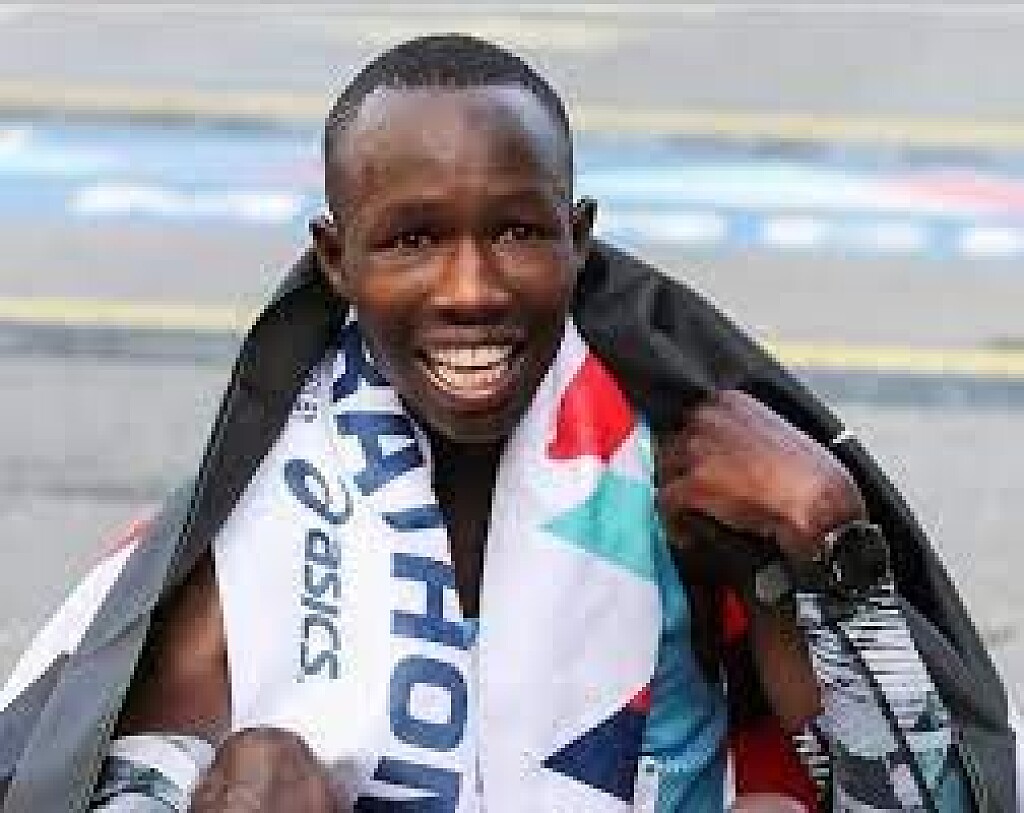
John Korir is going to run the Boston Marathon
Two-time Los Angeles Marathon champion John Korir is targeting a podium finish in the Boston Marathon after falling short last year.
Korir said he aims to win the race scheduled for April 8 if not finish on the podium.
Korir, who finished 9th last year, said he believes his last year's experience will help him run away with the title.
Korir is fresh from finishing second in the Ras Al Khaimah (RAK) Half Marathon, where he clocked 58:50 minutes behind the champion Daniel Mateiko (58:45). Isaiah Lasoi (58:55) ensured an all-Kenyan podium sweep.
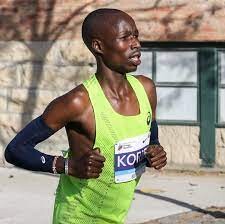
“As we speak, I am more than ready to battle for the Boston title or finish on the podium. Last year, I miscalculated and ended up in the wrong position,” said Korir.
Korir, a younger brother to former Boston Marathon champion Wesley Korir, will be seeking redemption on the course where he clocked 2:10.04 last year.
“My training is going well and I hope to secure a top position with a great time,” he said. He said RAK was a good experience for him considering he is not a half marathon runner.
“I used RAK as part of my speed work and build-up ahead of the big task in Boston and it was a great experience finishing second,” said Korir
Korir finished fourth in the Chicago Marathon, where he clocked 2:05:09. The late Kelvin Kiptum won the race in a world marathon record time of 2:00.35 followed by Benson Kipruto (2:04:02), and Dutch runner Bashir Abdi (2:04:32).
Korir will be making his third appearance at the Boston Marathon after debuting in 2022 when he finished third in 2:05.01 behind Benson Kipruto (2:04.24) and Ethiopia's Seif Tura (2:04.49).
“Last year, the Boston Marathon was too tough but I want to try my luck this year,” he said.
Korir, just like his brother Wesley, is remembered for winning the LA Marathon twice in a row. Wesley won in 2009 and retained the title in 2010 while the junior Korir won in 2021 before defending the title in 2022.
by Emmanuel Sabuni
Login to leave a comment
Boston Marathon
Among the nation’s oldest athletic clubs, the B.A.A. was established in 1887, and, in 1896, more than half of the U.S. Olympic Team at the first modern games was composed of B.A.A. club members. The Olympic Games provided the inspiration for the first Boston Marathon, which culminated the B.A.A. Games on April 19, 1897. John J. McDermott emerged from a...
more...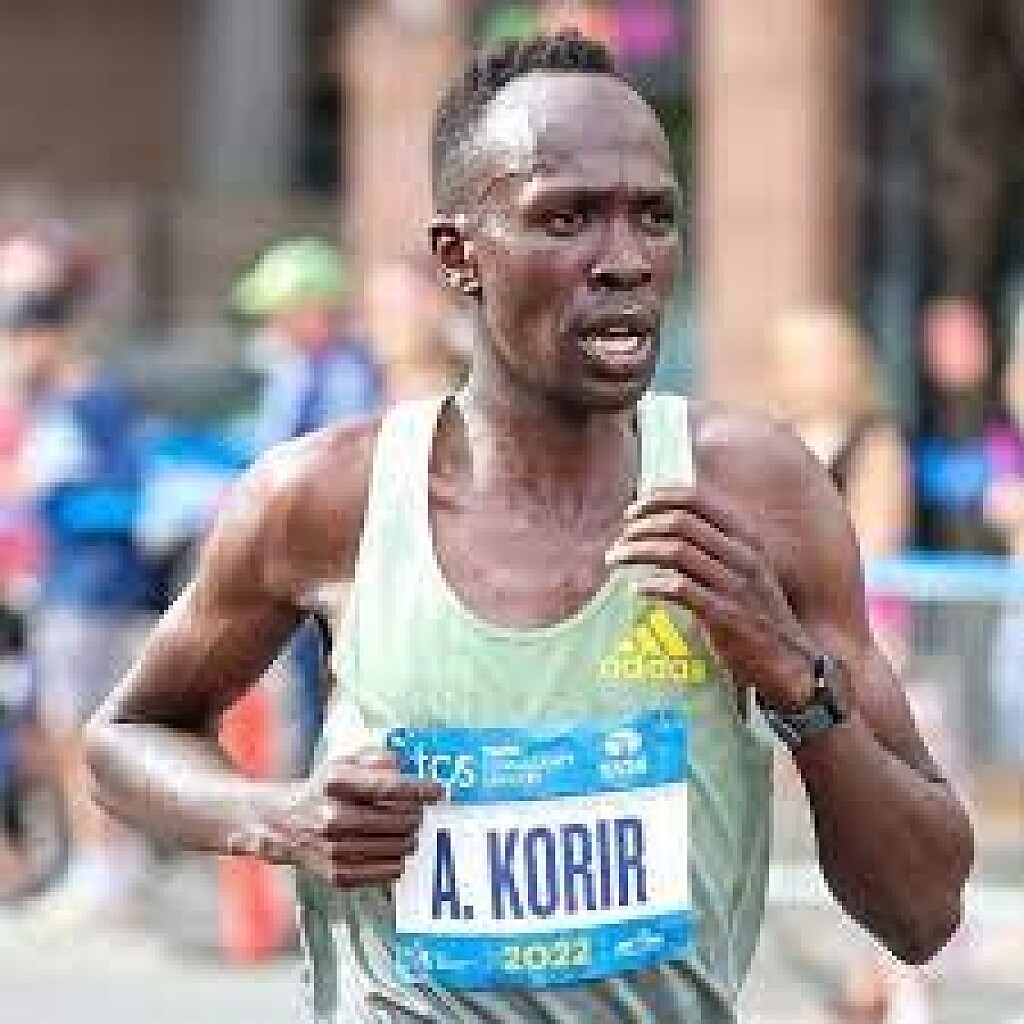
Albert Korir bubbling with excitement ahead of the 2024 Boston Marathon
Albert Korir has already began the build-up to the 2024 Boston Marathon as he seeks to improve on his fourth-place finish.
In the world of marathon running, the countdown has began for the 2024 Boston Marathon, and the excitement is palpable.
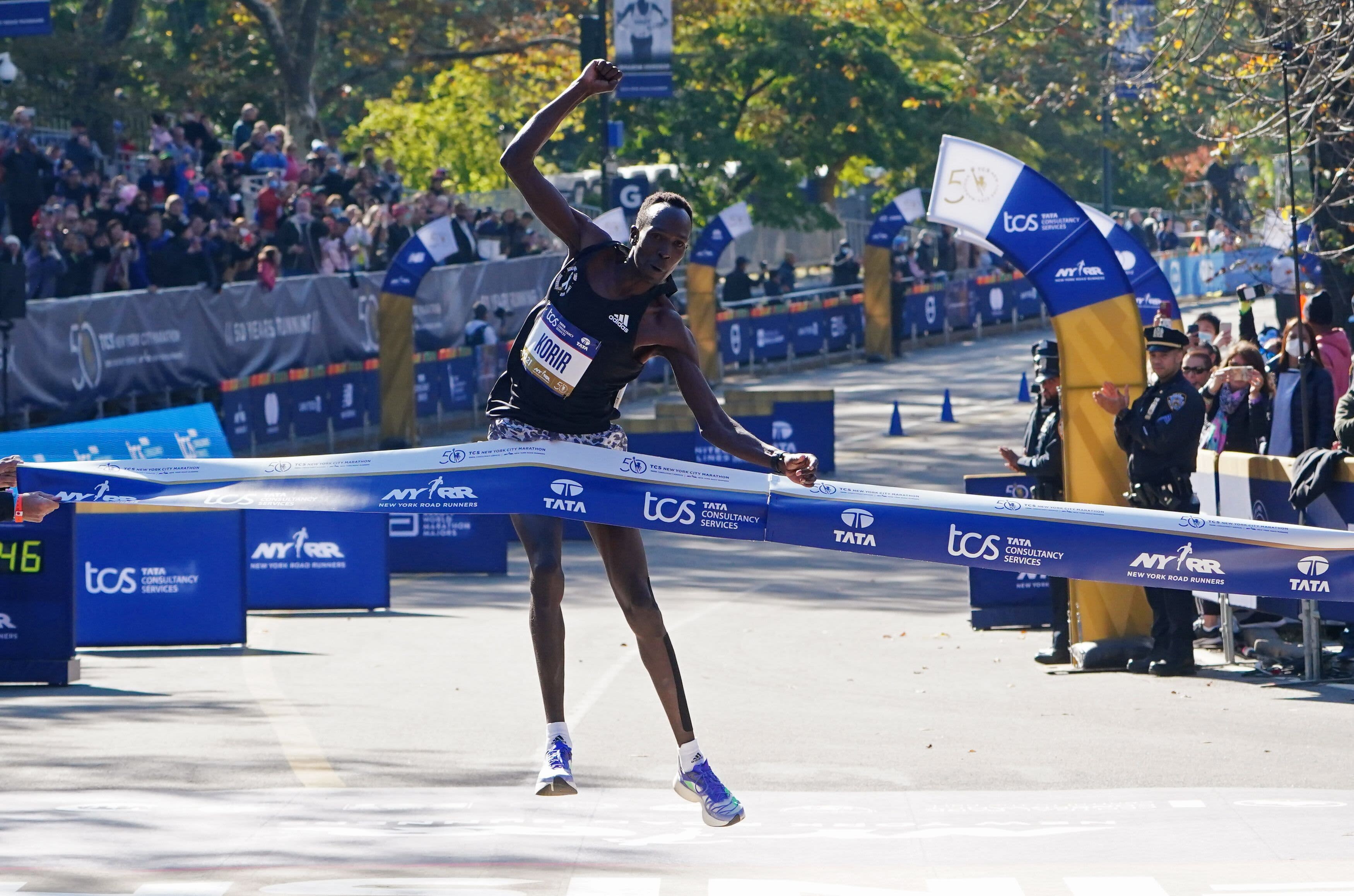
Albert Korir has been confirmed for the event and he is eagerly anticipating the challenge that lies ahead. Korir, a seasoned marathon runner, has set his sights on conquering the historic course once again, and his journey has already began.
For Korir, the Boston Marathon is not just a race; it's a passion, a relentless pursuit of excellence. As he laces up his running shoes and hits the roads for training, the anticipation is building.
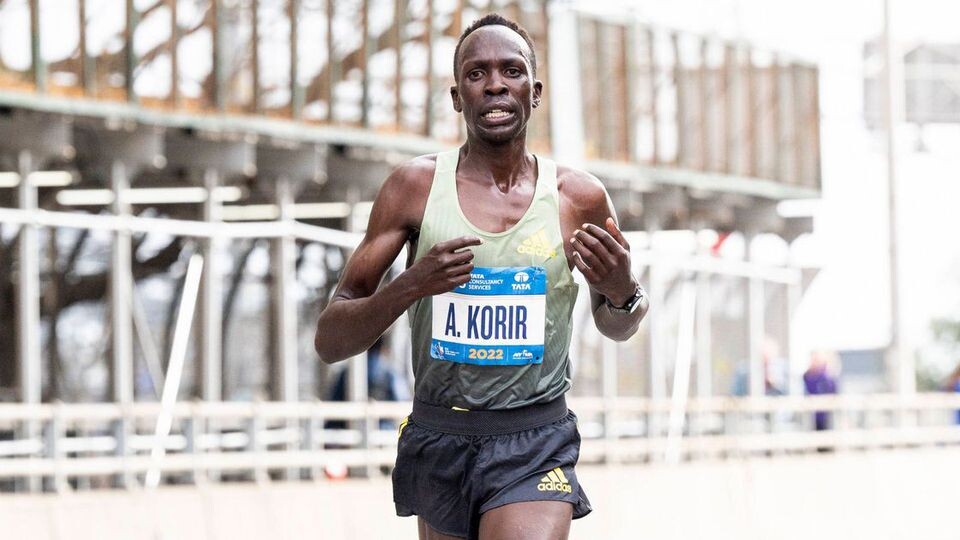
In a post on his Instagram page, Korir said: "The countdown has begun, the work has started. Preparing for another Boston Marathon, and I just can't wait.”
His words reflect the eagerness that echoes through the hearts of all dedicated marathoners. The journey to the starting line is as crucial as the race itself, and for Korir, every step in training is a step closer to realizing his marathon dreams.
Korir, having almost tasted success on this hallowed ground before, understands the significance of the challenge that awaits him.
He finished fourth at last year’s edition of the race and will be keen to go one place better this year. The 2021 New York City Marathon champion immerses himself in a meticulous preparation routine.
Long runs through scenic landscapes, interval training to build speed, and strength workouts to endure the course's demands – each element is a crucial piece of the puzzle. His dedication to the sport and the Boston Marathon, in particular, is evident in every stride he takes.
As the world eagerly awaits the 2024 Boston Marathon, Korir stands at the intersection of anticipation and preparation. The countdown continues, and with each passing day, his commitment to the journey becomes more apparent.
by Abigael Wuafula
Login to leave a comment
Boston Marathon
Among the nation’s oldest athletic clubs, the B.A.A. was established in 1887, and, in 1896, more than half of the U.S. Olympic Team at the first modern games was composed of B.A.A. club members. The Olympic Games provided the inspiration for the first Boston Marathon, which culminated the B.A.A. Games on April 19, 1897. John J. McDermott emerged from a...
more...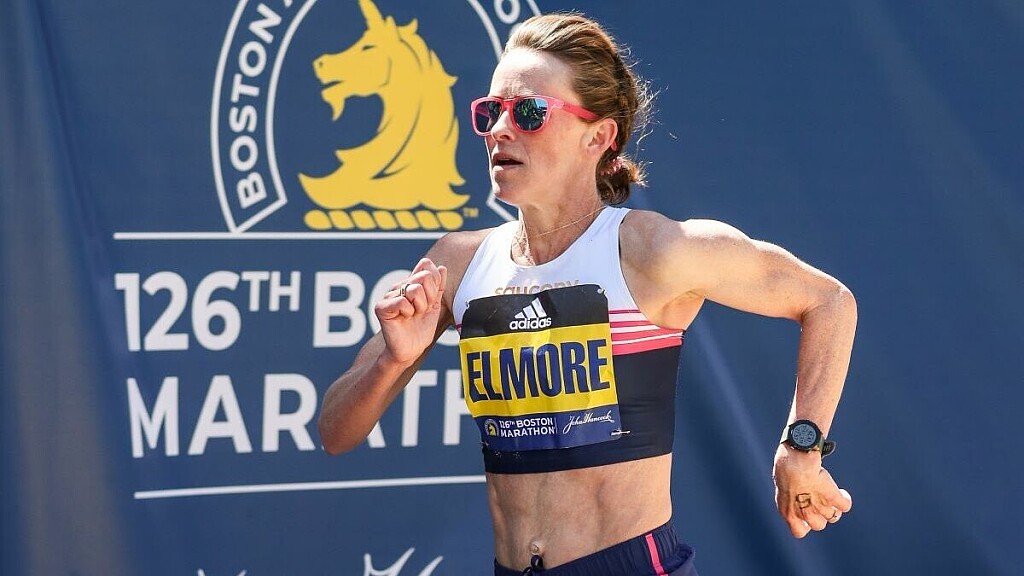
Malindi Elmore set to race 2024 Boston Marathon
Two-time Olympian Malindi Elmore of Kelowna, B.C., is on the women’s elite list for the 128th Boston Marathon on April 15. Elmore is featured in a strong field with reigning champion Hellen Obiri and 2022 New York Marathon champion Sharon Lokedi; she will also be one of three Canadian women running in Boston.
This will be Elmore’s second time running the Boston Marathon. In 2022, she ran to an impressive 11th-place finish, posting a time of 2:27:58, which is the fastest-ever time in Boston by a Canadian woman. She left Boston wanting to return, saying, “It’s a blast to run the crowd-lined streets, where there is always someone cheering you on and shouting your name.”

Elmore, who ran the second-fastest Canadian women’s marathon time at the 2023 Berlin Marathon, achieved the Olympic qualifying mark of 2:26:50. She is currently the only woman who has solidified her spot on Team Canada for the marathon in Paris. The 43-year-old told Canadian Running that she plans to use Boston as a prep race for the Olympic marathon in August.
“Racing Boston is part of the Paris 2024 plan,” says Elmore on her decision to race Boston. “The course in Paris is reported to be twice the elevation gain of Boston, so I want the opportunity to train and race on hills through the winter and hopefully be a hill beast by August!”
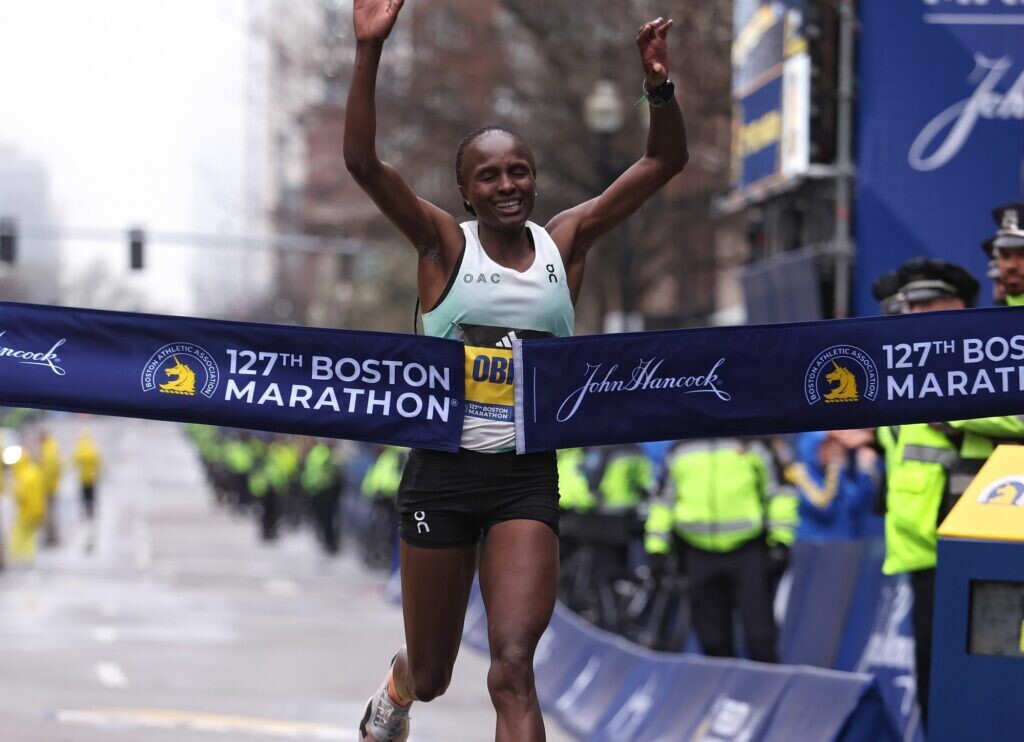
The Boston and New York marathons are two of the tougher Abbott World Marathon Major courses. The Boston is a net downhill, but features a lot of hills in the second half of the race, including the famous Heartbreak Hill at 32 kilometres. The Paris Olympic marathon is touted to be the hilliest Olympic marathon to date, featuring more than 400 metres in elevation gain on an out-and-back loop to the Palace of Versailles.
Elmore will be one of three Canadian marathoners on the women’s elite list. Joining Elmore in Boston are two up-and-coming marathoners from Thunder Bay, Ont., Michelle and Kim Krezonoski. The Krezonoski sisters ran their personal bests of 2:36:39 (Michelle) and 2:37:20 (Kim) at the 2022 California International Marathon.
Michelle said it’s been an exciting and emotional journey to get to this point after partially tearing her Achilles tendon in her build-up to the 2023 Toronto Waterfront Marathon (which she did not race). “I am grateful to have this opportunity to run alongside the world’s best with my twin sister,” Michelle told Canadian Running. “Boston is historic, and it’s a course that challenges your strength.”
Obiri returns for glory
The most dominant women’s marathoner in the world right now, Hellen Obiri, returns to Boston to defend her title. Last year, Obiri unleashed a perfectly-timed sprint in the final mile to earn her first Boston Marathon title, in only her second career marathon. Boston marked one of her two marathon wins in 2023. She became only the second women’s marathoner in history to win both Boston and New York in the same year.
“I am excited to return to the 2024 Boston Marathon to try to defend my title,” shared Obiri, who won last year’s race in 2:21:38. “Boston is a historic race, and I would like to add my name further to its history on April 15. Winning such a historic marathon with my family waiting at the finish line was an experience I’ll never forget.”
The 2024 Boston Marathon will also see a trio of Ethiopian runners with personal bests under 2:18:00. Worknesh Degefa, the 2019 Boston Marathon champion, is set to return. Tadu Teshome, with a marathon best of 2:17:36 from the 2022 Valencia Marathon, will make her Boston debut, and Senbere Teferi, a world championship silver medallist over 5,000m, will also compete after winning the B.A.A. 5K in a course record time of 14:49 in 2022.
by Marley Dickinson
Login to leave a comment
Boston Marathon
Among the nation’s oldest athletic clubs, the B.A.A. was established in 1887, and, in 1896, more than half of the U.S. Olympic Team at the first modern games was composed of B.A.A. club members. The Olympic Games provided the inspiration for the first Boston Marathon, which culminated the B.A.A. Games on April 19, 1897. John J. McDermott emerged from a...
more...
Suguru Osako to skip Tokyo Marathon in order to compete in Boston Marathon
Paris Olympic hopeful Suguru Osako revealed Thursday he will skip the March 3 Tokyo Marathon in favor of competing in the Boston Marathon the following month.
Osako, who was sixth at the Tokyo Olympics in 2021, is currently on track to claim the third and final Japanese men's marathon slot for Paris by virtue of his third-place finish in October's Marathon Grand Championship.
Another Japanese runner must clock 2 hours, 5 minutes, 50 seconds or faster, the time set by the Japan Association of Athletics Federations, at either February's Osaka Marathon or the Tokyo Marathon to move ahead of Osako in the Olympic qualification standings.
In a video message posted to Instagram, Osako indicated he wanted to avoid the intense focus in Japan on qualifying for the games and said his heart was set on running in Boston.
"The bigger the fuss being made around me, the less enthusiasm I tend to feel," the 32-year-old Tokyo native said. "The race that I really felt like I wanted to run was the Boston Marathon."
"Of course, the Olympics are important, but I don't think it's necessary to obsess about them as much as some people do."
Two Japanese runners, Naoki Koyama and Akira Akasaki, have already earned their Olympic berths by finishing first and second, respectively, in the MGC.
by The Japan Times
Login to leave a comment
Boston Marathon
Among the nation’s oldest athletic clubs, the B.A.A. was established in 1887, and, in 1896, more than half of the U.S. Olympic Team at the first modern games was composed of B.A.A. club members. The Olympic Games provided the inspiration for the first Boston Marathon, which culminated the B.A.A. Games on April 19, 1897. John J. McDermott emerged from a...
more...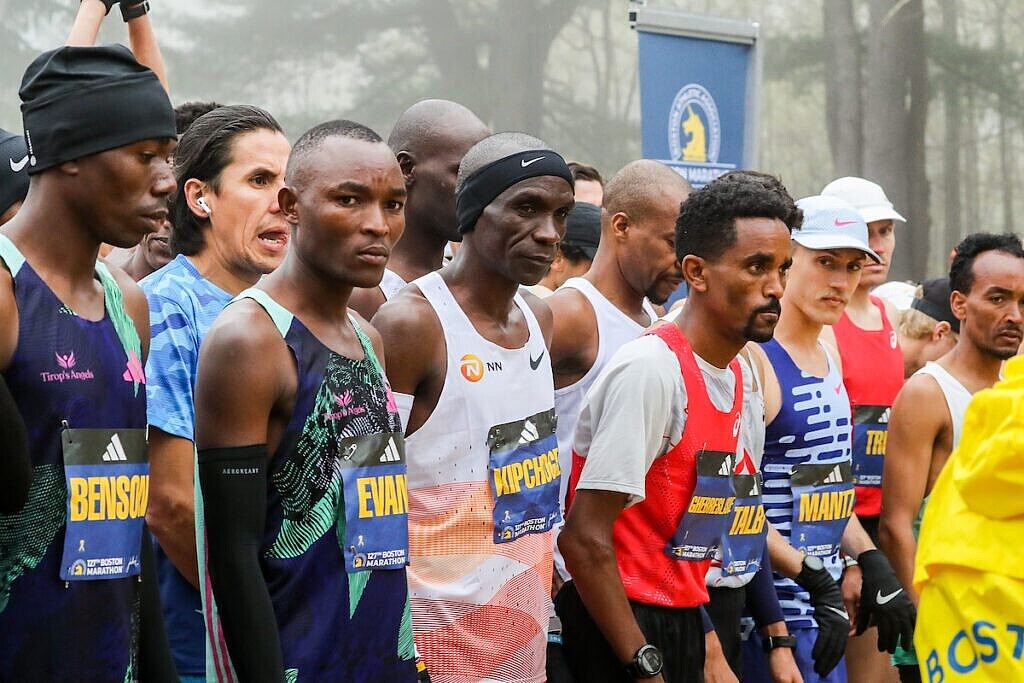
Chebet, Lemma and Geay to clash at Boston Marathon
Evans Chebet and Gabriel Geay, the top two finishers at last year’s BAA Boston Marathon, will return to the World Athletics Platinum Label road race on April 15, to take on recent Valencia Marathon winner Sisay Lemma.
Chebet successfully defended his Boston title last year in 2:05:54. In fact, the Kenyan has won six of his past seven marathons.
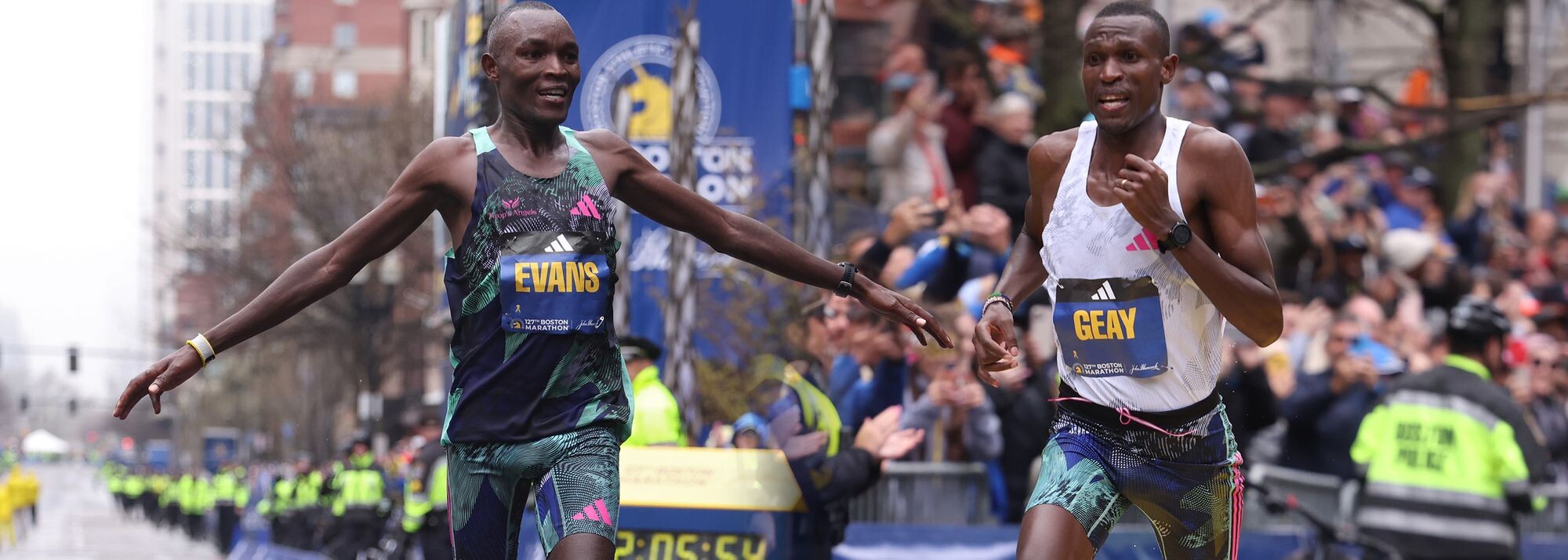
Lemma won in Valencia last month in 2:01:48, making him the fourth-fastest man in history. The Ethiopian, who also won the 2021 London Marathon, is the fastest man in this year’s Boston Marathon field, which features 20 men with sub-2:10 PBs.
Tanzania’s Geay, runner-up in Boston last year, has an identical PB to Chebet – 2:03:00 – and, like Chebet, it was also set in Valencia.
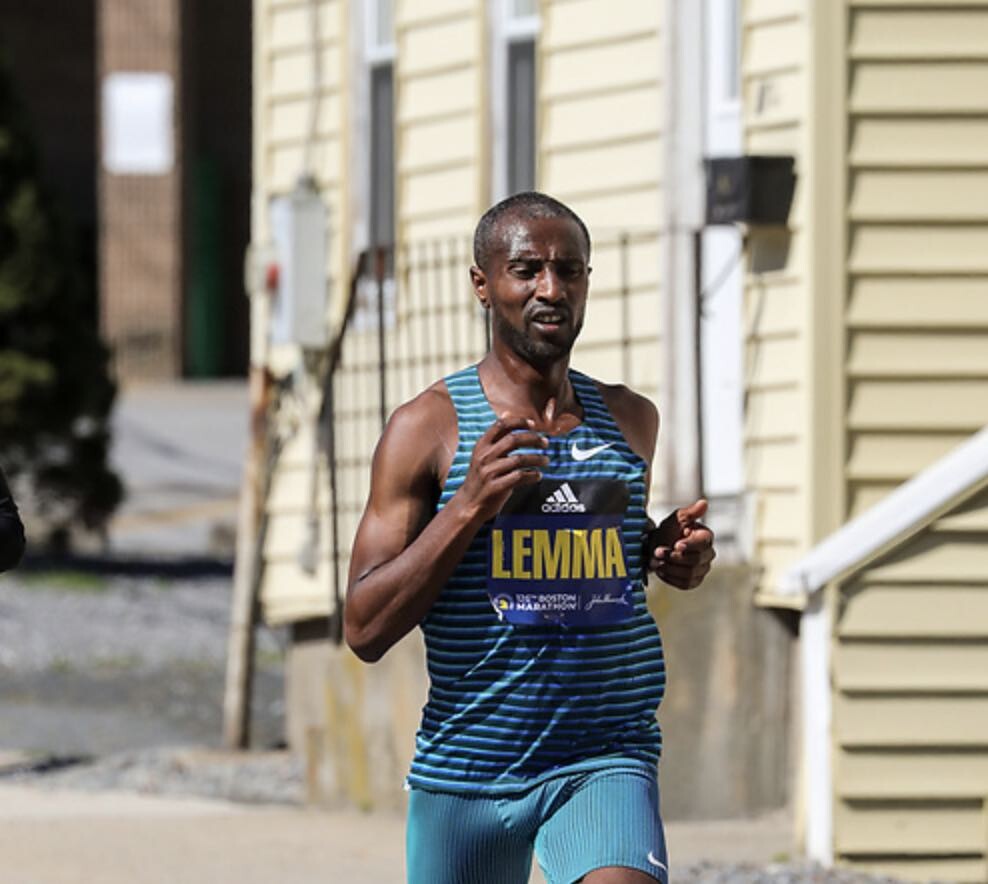
Other men in the field with sub-2:05 PBs are Kenya’s Joshua Belet (2:04:18), Ronald Korir (2:04:22), and Cyprian Kotut (2:04:34), as well as Ethiopians Haftu Teklu (2:04:43) and London and New York City runner-up Shura Kitata (2:04:49).
New York Marathon champion Albert Korir, former Japanese record-holder Suguru Osako, and Norwegian record-holder Sondre Moen are also in the field, as are Morocco’s Zouhair Talbi, winner of last week’s Houston Marathon in a course record 2:06:39, and multiple NCAA champion Edward Cheserek.
Elite field
Sisay Lemma (ETH) 2:01:48
Evans Chebet (KEN) 2:03:00
Gabriel Geay (TAN) 2:03:00
Joshua Belet (KEN) 2:04:18
Ronald Korir (KEN) 2:04:22
Cyprian Kotut (KEN) 2:04:34
Haftu Teklu (ETH) 2:04:43
Shura Kitata (ETH) 2:04:49
John Korir (KEN) 2:05:01
Mohamed Esa (ETH) 2:05:05
Suguru Osako (JPN) 2:05:29
Sondre Moen (NOR) 2:05:48
Filmon Ande (ERI) 2:06:38
Zouhair Talbi (MAR) 2:06:39
Isaac Mpofu (ZIM) 2:06:48
Albert Korir (KEN) 2:06:57
Kento Otsu (JPN) 2:08:15
Ryoma Takeuchi (JPN) 2:08:40
Segundo Jami (ECU) 2:09:05
Tsegay Tuemay (ERI) 2:09:07
Matt McDonald (USA) 2:09:49
David Nilsson (SWE) 2:10:09
Tristan Woodfine (CAN) 2:10:39
CJ Albertson (USA) 2:10:52
Chris Thompson (GBR) 2:10:52
Edward Cheserek (KEN) 2:11:07
Yemane Haileselassie (ERI) debut
by World Athletics
Login to leave a comment
Boston Marathon
Among the nation’s oldest athletic clubs, the B.A.A. was established in 1887, and, in 1896, more than half of the U.S. Olympic Team at the first modern games was composed of B.A.A. club members. The Olympic Games provided the inspiration for the first Boston Marathon, which culminated the B.A.A. Games on April 19, 1897. John J. McDermott emerged from a...
more...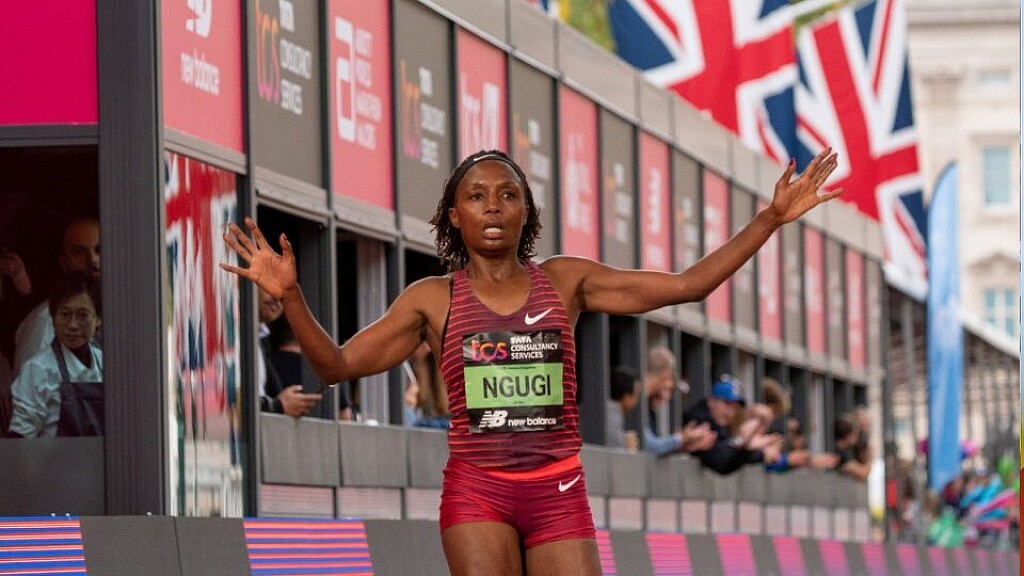
Why Mary Ngugi-Cooper is always eager to return to sentimental Boston Marathon
Mary Ngugi-Cooper has opened up on why the streets of Boston hold a special place in her heart.
Mary Ngugi-Cooper will once again line up for the Boston Marathon scheduled for Monday, April 15.
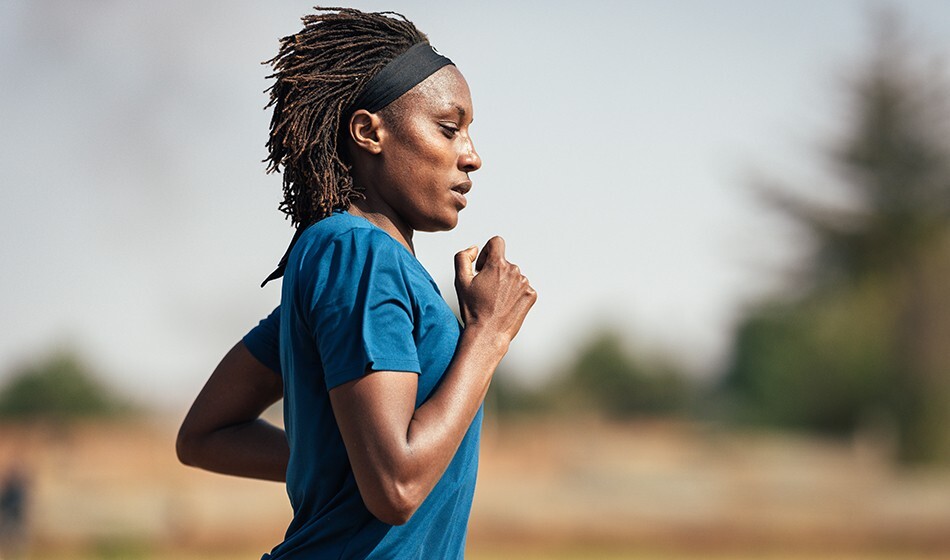
Ngugi expressed her elation upon returning to the streets of Boston which she considers one of her favorite courses, citing various reasons.
Ngugi has made several appearances at the Boston Marathon and has managed to finish among the top ten athletes five times. She was also in action last year, where she managed to finish ninth before ending her season with a fifth-place finish at the New York City Marathon.
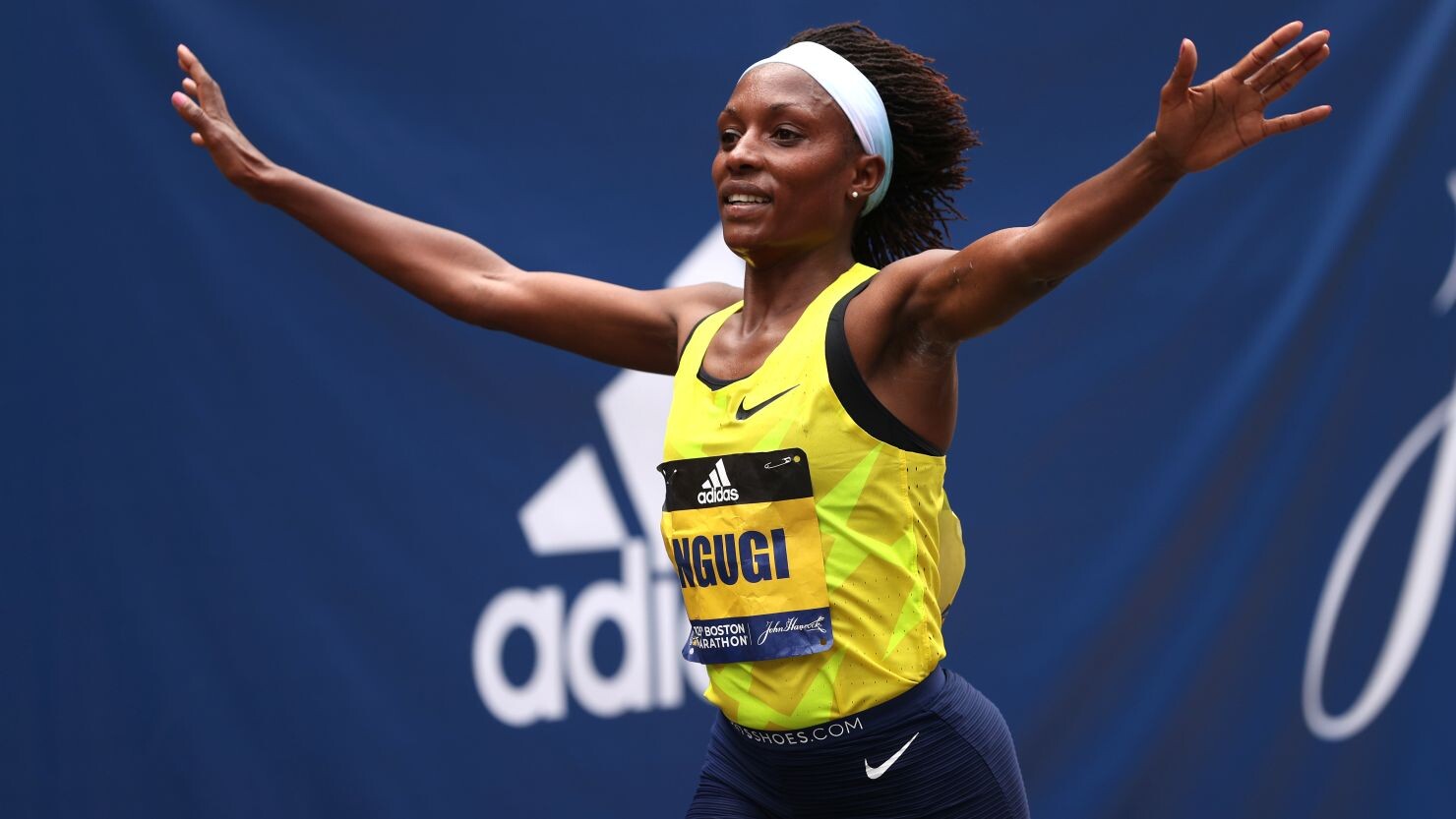
“Back to Boston… I’m really excited to announce that in April I will be running the Boston Marathon. Boston holds a special place in my heart, not only for having two podium finishes in the last few years, but getting married there too!
"The streets are always amazing, crowds loud and I can’t wait to hit Heartbreak Hill once again with a ridiculously strong field of talented women. See you there," she said in a post on her Facebook page.
The Kenyan will be up against some of the greatest female marathon runners including defending champion Hellen Obiri who has already exuded confidence ahead of the assignment.
The Kenyan charge also includes former World Marathon silver medallist Judith Korir, two-time Boston Marathon champion Edna Kiplagat, and the 2022 New York City Marathon champion Sharon Lokedi.
The Kenyans will face an acid test from Ethiopians who have confirmed participation in large numbers. Worknesh Degefa, the 2019 Boston Marathon champion, will make a return and she will enjoy the company of Tadu Teshome who will make her Boston debut.
Hiwot Gebremaryam will be aiming to improve upon her eighth-place finish last year while Senbere Teferi will also be in the mix.
Experienced marathoner Ababel Yeshaneh –second in 2022 and fourth in 2023— will try to become the seventh woman from Ethiopia to win the olive wreath in Boston.
by Abigael Wuafula
Login to leave a comment
Boston Marathon
Among the nation’s oldest athletic clubs, the B.A.A. was established in 1887, and, in 1896, more than half of the U.S. Olympic Team at the first modern games was composed of B.A.A. club members. The Olympic Games provided the inspiration for the first Boston Marathon, which culminated the B.A.A. Games on April 19, 1897. John J. McDermott emerged from a...
more...