

Running News Daily
Running News Daily is edited by Bob Anderson and team. Send your news items to bob@mybestruns.com Advertising opportunities available.
Index to Daily Posts · Sign Up For Updates · Run The World Feed
Articles tagged #Javelina Jundred
Today's Running News
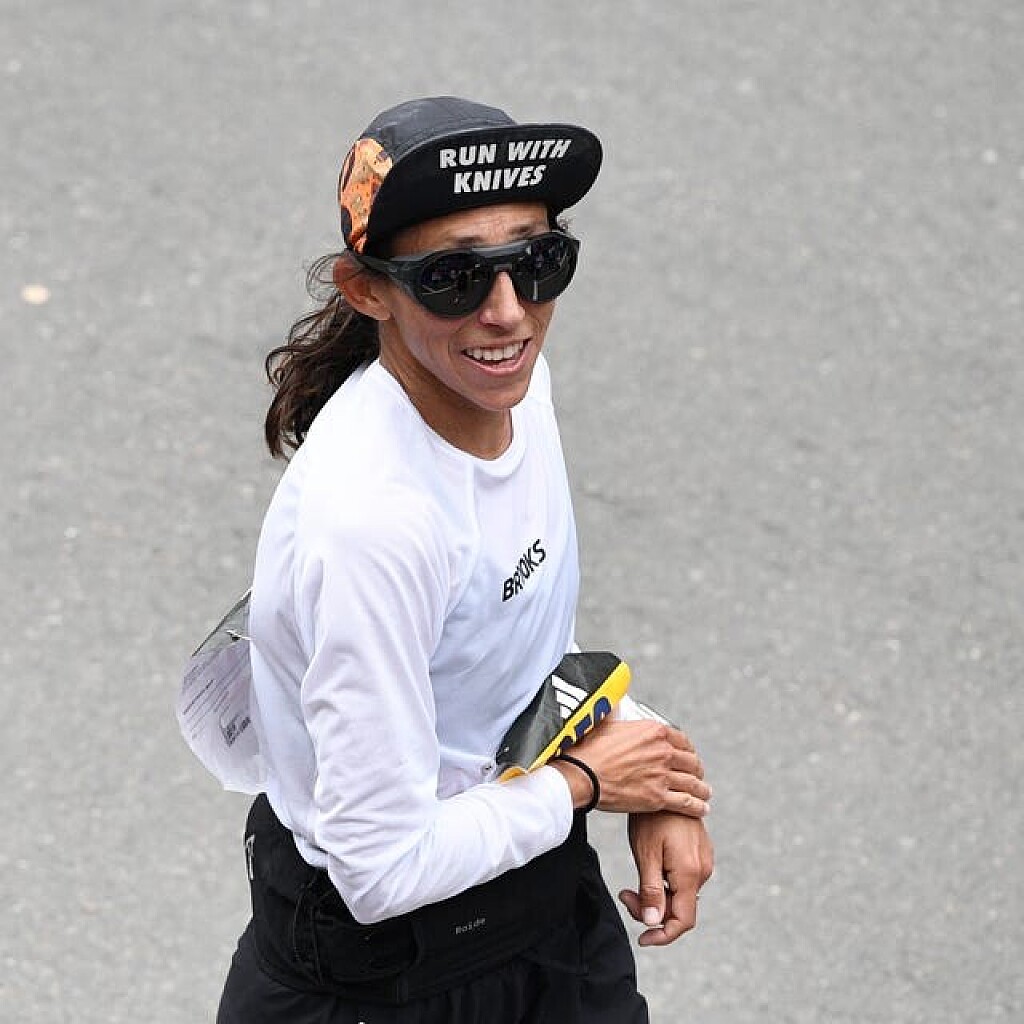


Des Linden Goes the Distance: Boston Champion Conquers Her First 100-Mile
Des Linden has officially gone where the marathon can no longer take her.
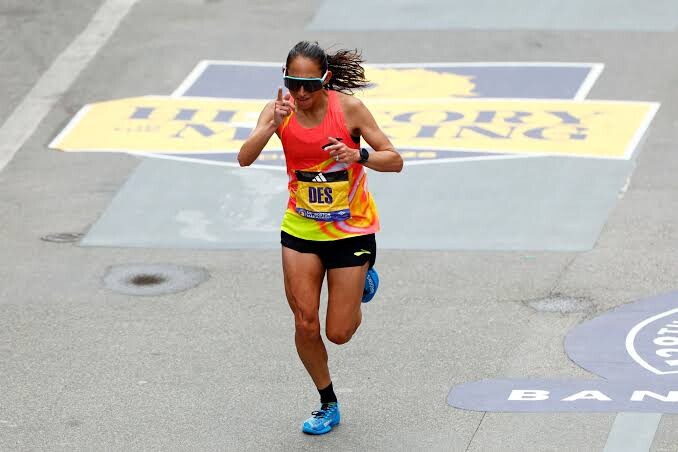
The 2018 Boston Marathon champion completed her first 100-mile race at the Javelina Jundred in Arizona on Saturday, finishing in 16:58:00 to place ninth among the women and 39th overall. It was a demanding debut over 100 miles of desert trail, but for Linden, simply reaching the finish line was another remarkable chapter in a career that continues to evolve beyond the roads.
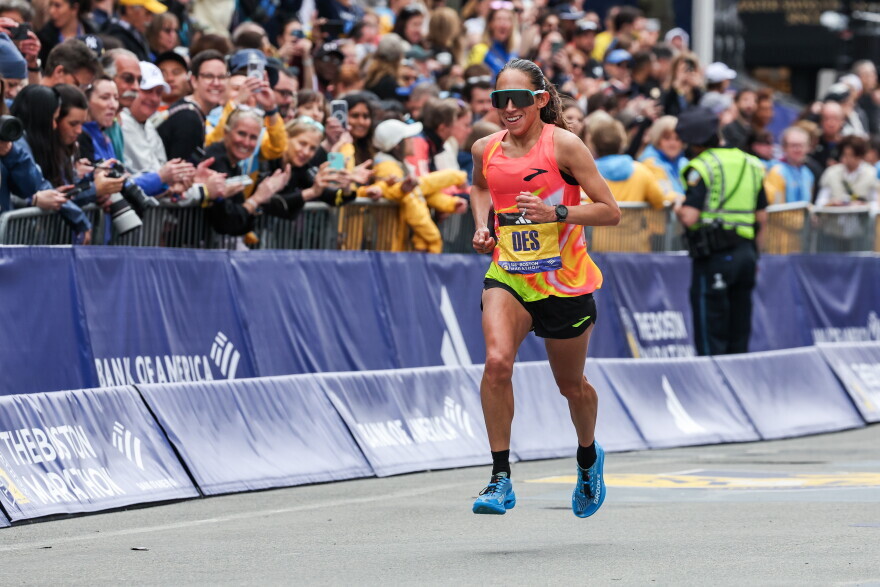
For much of the race, however, Linden looked capable of something far more ambitious than simply finishing.
She began cautiously, gradually working her way through the field before moving from fifth place into the women's lead. By mile 45.3, she was out front in 5:53:12, and she continued to extend her advantage. At mile 56.9, Linden was still leading, carrying a gap of roughly five minutes over Katie Asmuth.
Then came the moment when 100 miles began to feel very different from 26.2.
Linden completed 60.3 miles in 8:01:12, maintaining a remarkably strong pace deep into the race. But after reaching the aid station, she needed significant assistance from her crew, including a shoe change, and the momentum that had carried her into the lead began to disappear.
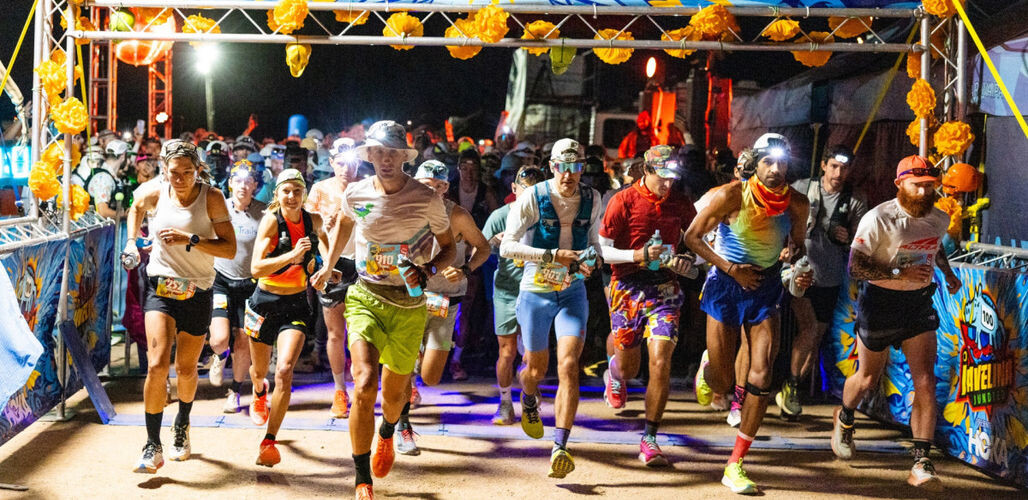
The change was dramatic.
The 4.3 miles from the 60.3-mile mark to Coyote Camp took Linden 1:22:37. By mile 64.6, she had surrendered the lead and slipped back through the women's field. What had looked like a potential victory challenge had become a battle of survival, patience and determination.
Yet Linden refused to stop.
Her final 39.7 miles took 8:56:48 — nearly an hour longer than the time she needed to cover her opening 60.3 miles. The difference illustrated just how brutally the final stages of a 100-mile race can punish even an experienced marathoner.
And the conditions offered little mercy.
Rain had already affected the course, leaving muddy sections and washouts, while further storms and heavy rain made the later stages particularly difficult. As darkness settled over the Arizona desert, Linden kept moving, adding another layer of difficulty to an already punishing first attempt at the distance.
Heather Jackson ultimately won the women's race in 13:48:29, edging Carla Molinaro by just 55 seconds, with Katie Asmuth third in 14:06:34. Jackson and Molinaro secured the two women's Golden Tickets to the 2027 Western States 100.
Linden's ninth-place finish left her outside those qualifying positions, but the result hardly diminishes what she accomplished. She came to Arizona to discover what 100 miles would demand from her — and she found out the hard way.
The distance was the part that had made her most nervous before the race.
In the end, it was exactly what she feared.
But she faced it anyway.
From winning Boston in 2018 to stepping away from professional road racing and embracing the world of ultrarunning, Linden has continued to challenge herself in ways that few athletes at her level would dare. Earlier this year, she finished third at the Marathon des Sables, a brutal multi-stage desert ultra that included a 100-kilometre long stage.
Now she can add another achievement to that growing trail résumé: 100 miles completed.
It was not the victory she may have glimpsed halfway through the night. It was not the Golden Ticket she might have dreamed about.
It was something perhaps more valuable for a first attempt — a hard-earned lesson in just how unforgiving 100 miles can be, and the satisfaction of knowing she kept going when the race stopped going according to plan.
For Des Linden, the marathon may have been the distance that made her famous.
But 100 miles may be where her next chapter truly begins.
by Erick Cheruiyot for My Best Runs.
Login to leave a comment
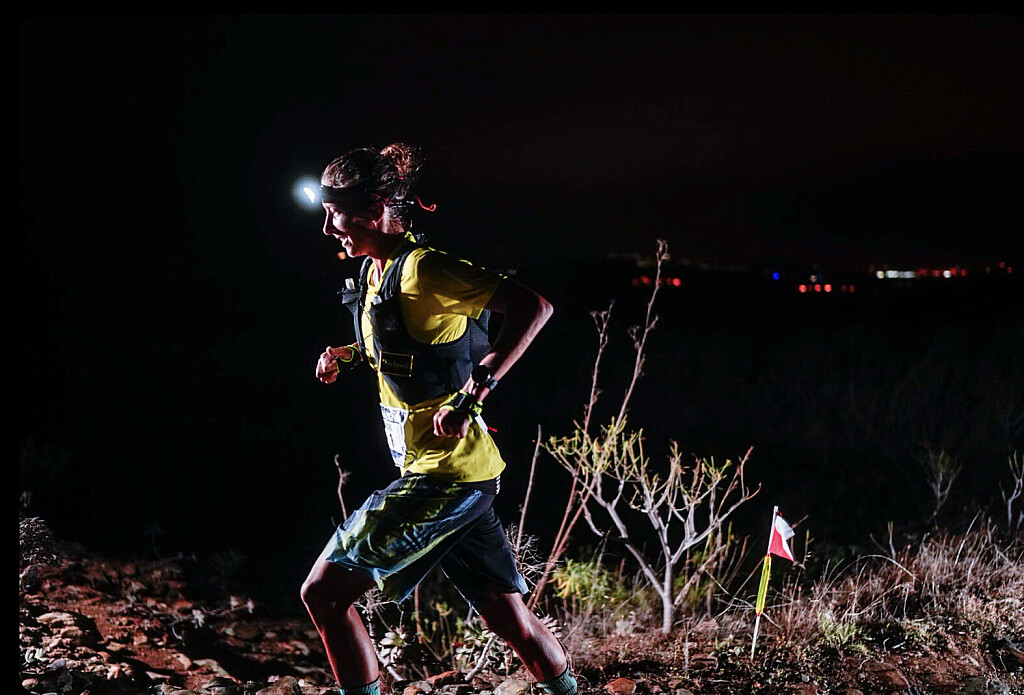
How Did Courtney Dauwalter Get So Damn Good?
If Courtney Dauwalter could travel back in time, this is what she would do: She’d join a wagon train crossing the American continent, Oregon Trail-style, for a week, maybe more, just to see if she could swing it. It would be hard, and also pretty smelly, but Dauwalter wonders what type of person she’d be if she deliberately decided to take that journey. Would she stop in the plains and build a farm? Could she make it to the Rocky Mountains? How much suffering could she take, and how daunted might she be by the terrain ahead of her?
“If you get to Denver and this huge mountain range is coming out of the earth, are you the type of person who stops and thinks, ‘This is good’?” she wonders. “Or are you the person who’s like, ‘What’s on the other side?’ ”
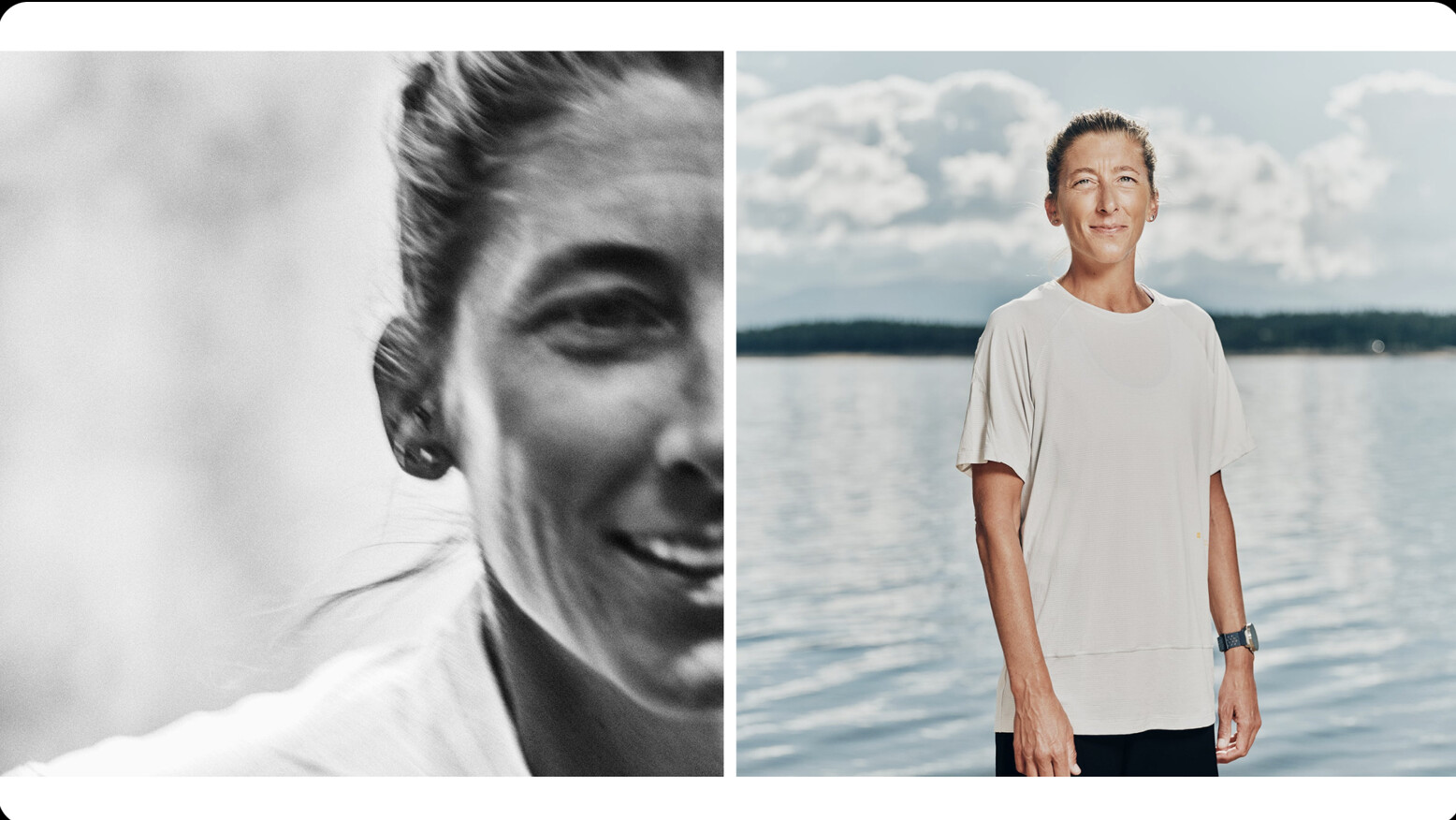
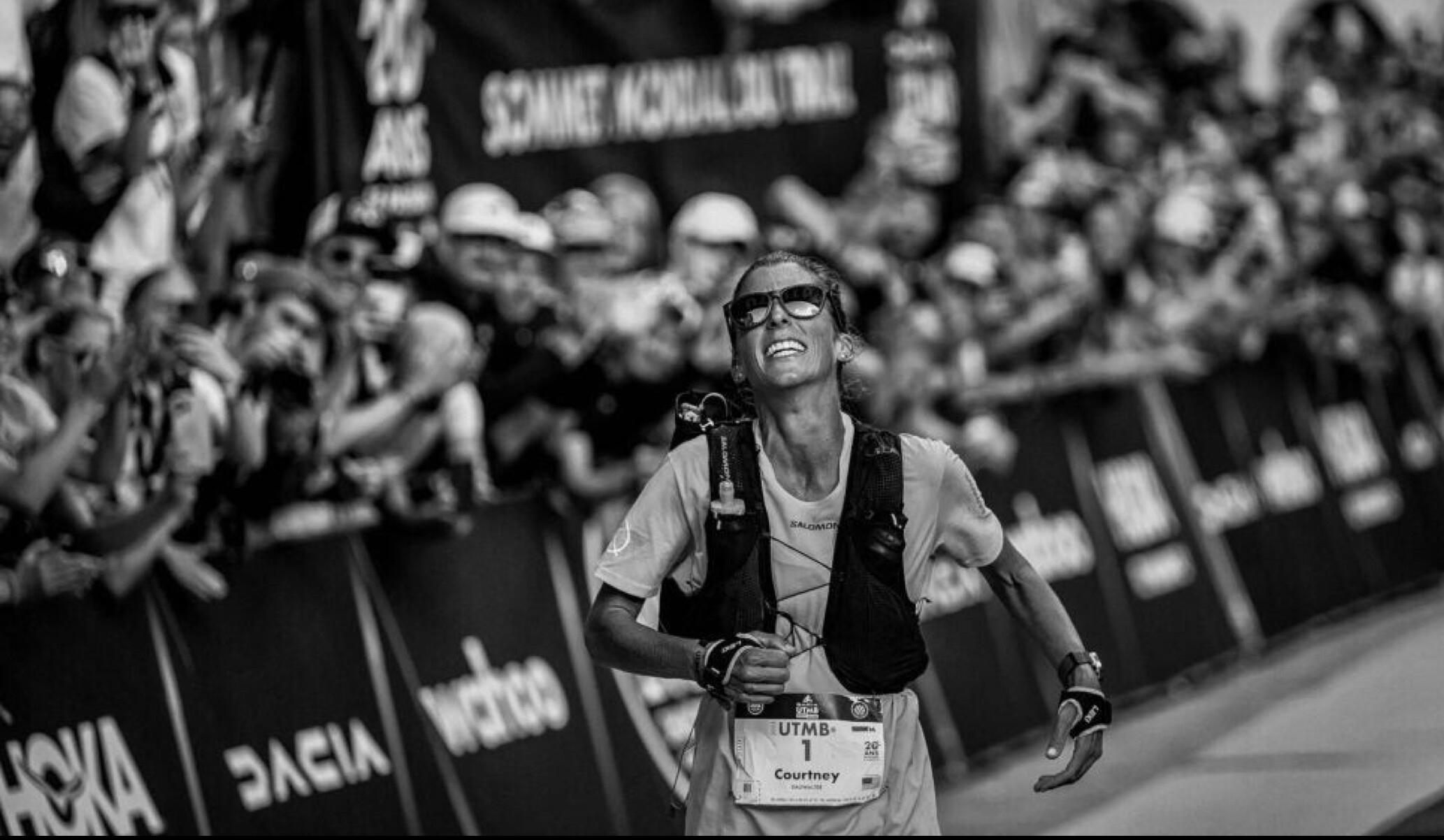
Dauwalter is probably (definitely) the best female trail runner in the world—a once-in-a-generation athlete. She’s hard to miss at the sport’s most famous races, and not just because of the nineties-style basketball shorts she prefers. (Her explanation: she just likes them.) It’s because she’s often running among the leading men in the sport, smiling beneath her mirrored sunglasses. The 39-year-old is five foot seven and lean, with smile lines and hair streaked with highlights from abundant time spent in high-altitude sun.
Dauwalter shared her historical daydream with me while sipping a pink sparkling water at her house in Leadville, Colorado, after a four-hour morning training run. Her cross-country wagon musings get at why she’s the best female ultrarunner ever to live: Dauwalter is curious. She’s curious about pain, about limits, about possibility. This quality is fundamental to what makes her so good.
Over the past eight years, Dauwalter has won almost everything she’s entered. In 2016, she set a course record at the Javelina Jundred—an exposed, looped route through the Sonoran Desert of Arizona. That same year she won the Run Rabbit Run 100-miler in Steamboat Springs, Colorado, by a margin of 75 minutes, despite experiencing temporary blindness for the last 12 miles (she could only see a foggy sliver of her own feet). Because of ultrarunning’s huge distances, it’s not unheard of to beat the competition by so much, but it doesn’t happen with the frequency that Dauwalter manages.
In 2018, she won the extremely competitive Western States 100 in California; it was her first time on the course. A year later, she set a new course record while winning the prestigious Ultra-Trail du Mont-Blanc (UTMB), besting the second-place finisher by just under an hour. In 2022, she set the fastest known time on the 166.9-mile Collegiate Loop Trail in her backyard in Colorado, and she won (and set a new course record at) the Hardrock 100, a grueling high-altitude loop through the state’s San Juan Mountains.
Dauwalter is also one of the few runners of her caliber to seriously dabble in the really long distance races. In 2017, she won the Moab 240—yes, that’s 240 miles—in two days, nine hours, and fifty-five minutes, ten hours ahead of the second-place finisher. She ran even farther at Big’s Backyard Ultra in 2020, a quirky test of wills where athletes complete a 4.167-mile course every hour on the hour until only one runner is left. Dauwalter set a women’s course record of just over 283 miles.
Given everything she’s accomplished, it’s hard to believe that the past two summers have been her most successful yet. In 2023, she returned to Western States, where she smashed the women’s course record by more than an hour and finished sixth overall. When she passed Jeff Colt, who finished ninth, he remembers how calm and collected she looked, running all alone. “My pacer looked back at me and said, ‘Jeff, I can’t even keep up with her right now,’ ” he says. Less than three weeks later, she won Hardrock again, taking fourth place overall and setting a new women’s course record. The race changes direction on the looped course each year, and she now holds both the clockwise and counterclockwise records.
In the interest of testing herself one more time, in late August she traveled to France to run UTMB again. She won that race too, becoming the first person in history to win all three races in a single summer. “She’s one of those humans who defy even the concept of an outlier,” says Clare Gallagher, a former Western States winner who has raced against Dauwalter. “I look at her summer and I have no words. It’s truly hard to conceptualize.”
Dauwalter led UTMB from the start, and she finished more than an hour ahead of the woman in second place. As she descended the final stretch of trail, she was followed by a barrage of cameras and a handful of people who looked like they just wanted a bit of her magic to rub off on them. As crowds roared on either side of the finish line in Chamonix, she looked back at the spectators and clapped in their direction, never raising her hands above her head or pumping her fists in the air. After hugging her parents and her husband, 39-year-old Kevin Schmidt, she jogged back in the direction she’d just come to high-five hundreds of fans.
Dauwalter grew up in the suburbs of Minneapolis, in a tight-knit family that was always active. The kids all played soccer, and when they weren’t at practice they were busy building tree forts or making up games at the local park. In seventh grade, she started running cross-country, and in eighth grade she joined the nordic ski team. She claims to have spent the first years just trying to stay upright, but in high school she went on to be a four-time state nordic ski champion and attended the University of Denver on a cross-country-skiing scholarship. She says that her parents, who now frequently crew and support her at races, led by example. “You work hard, you give everything you’ve got, you don’t forget to have fun,” she says.
Minnesota winters are notoriously cold, and she credits her ability to dig deep within herself to the unforgiving conditions. “Growing up there, you just learn to do stuff, regardless of the weather,” she says. She also points to a cross-country coach who taught her to think differently about pain. “He laid the groundwork for understanding that our bodies are capable of so much,” she says. “We can push past those initial signals saying that’s all I have and turn the knob, and there’s always one more gear.”
After college, Dauwalter taught middle and high school science in Denver, which is where she met Schmidt. “A woman I worked with and a guy he worked with were married, and they just kept putting us in the same places,” she says. “I didn’t know they were meddling!” Schmidt, who works as a software engineer, is also a competitive runner. He and Dauwalter train together—sometimes he’ll join in for her second run of the day—and they trade off supporting each other during races. When I met up with them in Leadville, Dauwalter had just finished crewing for Schmidt at a 100-miler in Switzerland. During her races, he maps her splits, takes care of her aid-station needs, and serves as crew captain. He’s the “spreadsheet brain” to her “tie-dye brain,” as he puts it, and he provides emotional support too.
“Its clear to me when she has taken up residence in the pain cave, so I try my best to fill it with snacks and encouragement,” says Schmidt. One time, while driving to an aid station during a race, Schmidt got a flat tire while carrying everything Dauwalter needed for the night. He wound up sprinting the final three miles to catch her in time.
When Dauwalter started racing more competitively and winning, she and Schmidt had a series of discussions about what they wanted their lives to look like. Ultimately, they decided that she should try to give professional running a shot. In 2017, without a sponsor and with a lot of unknowns still ahead, she left teaching to run full-time. “What we wanted was to look back when we were 90 years old and not wonder what if? about anything,” she says.
Mike Ambrose, the former team manager at Salomon, offered Dauwalter her first sponsorship as a trail runner that same year. She was still new on the scene, but Ambrose could see that she was driven, and the talent was there. “She’s super curious about pushing herself,” he says. “She had this huge engine coming from nordic skiing, and her 24-hour time was really crazy. I thought, well, if she just figures it out and gets more trail experience, she obviously has the mental and physical capacity.”
Despite her nearly superhuman athleticism and mental fortitude, Dauwalter is also very normal. She likes nachos, candy, and beer. She watches sports (the Vikings are her NFL team, even though she’s been in Broncos territory for years), and she wants to spend time with the people she loves, including her parents, and the friends who often crew for her.
Ultrarunning frequently sees short-lived stars, runners who dominate for a couple of years before burning out or slowing down, either from overtraining or simply from the passage of time and the wear on their bodies. Dauwalter, however, seems to have a rare capacity to push against her own limits without tipping over the edge. She’s been running long distances at an elite level for seven years now. Gallagher wonders how she’s managed to avoid injury, given Dauwalter’s volume of physically demanding races.
Login to leave a comment
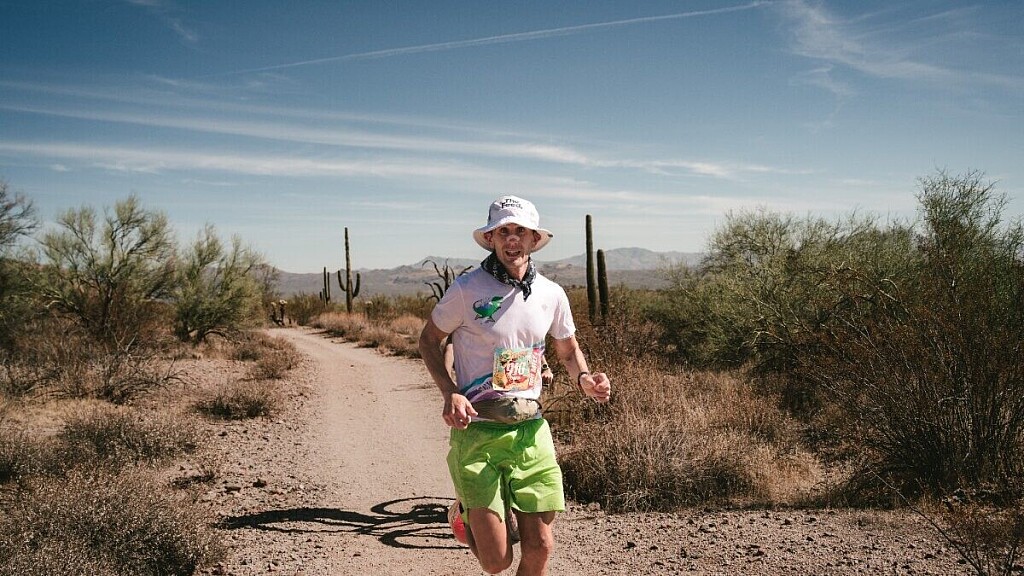
Three workouts from record-breaking trail runner and coach David Roche
David Roche is no stranger to running greatness. As a record-breaking trail runner and sought-after coach, Roche has helped countless athletes reach new heights with his balanced, science-backed approach to training. We have some of his favourite workouts to share with you.
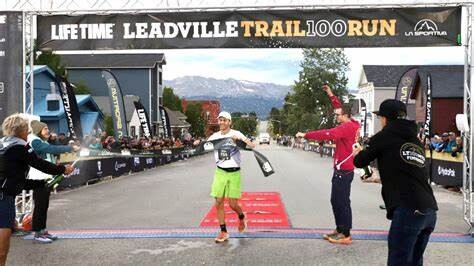
In August, Roche broke a long-standing record at Leadville 100 (in his 100-mile debut) and followed that with a winning performance at Javelina Jundred; despite it being a scorching hot day, Roche ran the second-fastest time ever on the course. His philosophy? Workouts should build fitness while keeping runners healthy and motivated. Here are three of his favourite sessions that deliver big results without overcomplicating your routine. For each workout, add a 10 (or more)-minute easy running warmup; follow the intervals with a 10 (or more)-minute cooldown.
1.- 16 x 1 minute fast, 1 minute easy
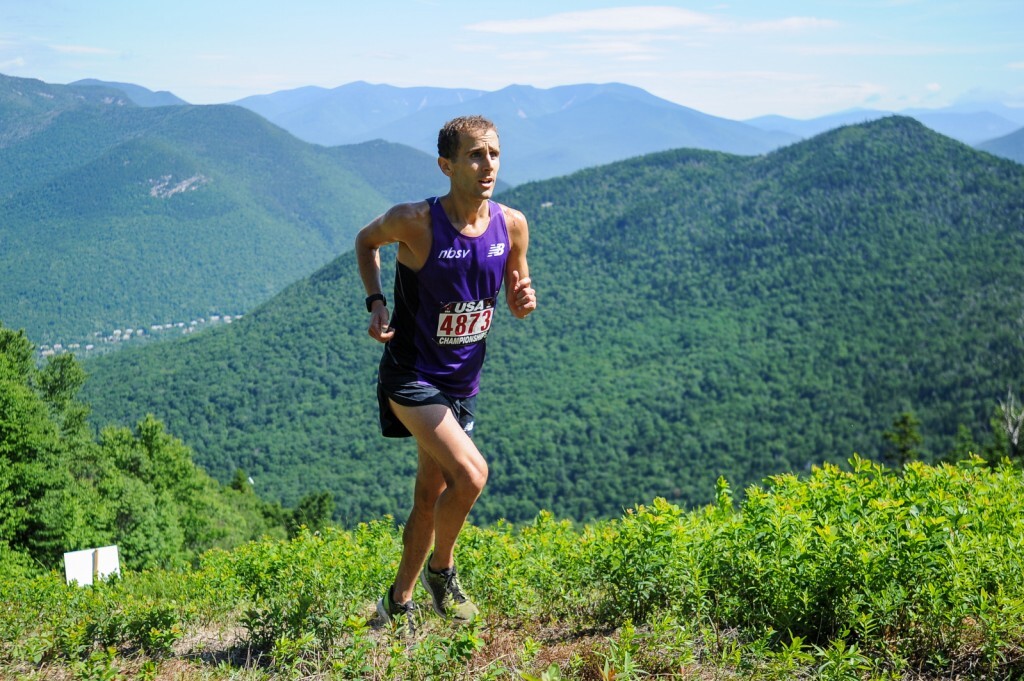
This workout is Roche’s year-round staple for developing speed and efficiency. The fast segments are run at your velocity at VO2 max (vVO2)—a controlled but challenging pace. Early in the training season, Roche suggests keeping the recovery portions of the run very easy, they can evolve into a quicker “float” as your fitness improves.
What it’s good for: Speed, efficiency and adaptability. Roche loves its versatility, noting it’s an ideal way to boost your running economy at any fitness level.
2.- 5-minute uphill intervals (treadmill)
Perfect for winter or when you want to reduce impact, this treadmill hill session is a powerhouse for building aerobic capacity. Start with 4 x 5 minutes at a moderate effort, with 1-2 minutes of easy recovery, on a 10 per cent incline (adjust between 4 per cent and 15 per cent based on comfort). More advanced runners can increase to 8-12 intervals.
What it’s good for: Aerobic development and strengthening muscles without overloading joints. Roche calls it a low-impact way to tackle big fitness gains.
3.- 5 x 3-minute hill repeats + tempo run
For aerobic power, Roche swears by hill repeats on gentle inclines. Run uphill for 3 minutes at a hard but sustainable effort, recover with an easy jog back down, and follow it up with a few miles of steady tempo running.
What it’s good for: Builds aerobic power and transitioning strength gains into endurance. Roche highlights the combo of hill work and tempo as a game-changer for all-around fitness.
Bonus: strides for all seasons
Though flashy workouts steal the spotlight, Roche insists strides—short bursts of 20-30 seconds at a quick but relaxed pace—are indispensable. Hill or flat, 4-8 strides after an easy run are his go-to for sharpening form and staying injury-free.
by Keeley Milne
Login to leave a comment
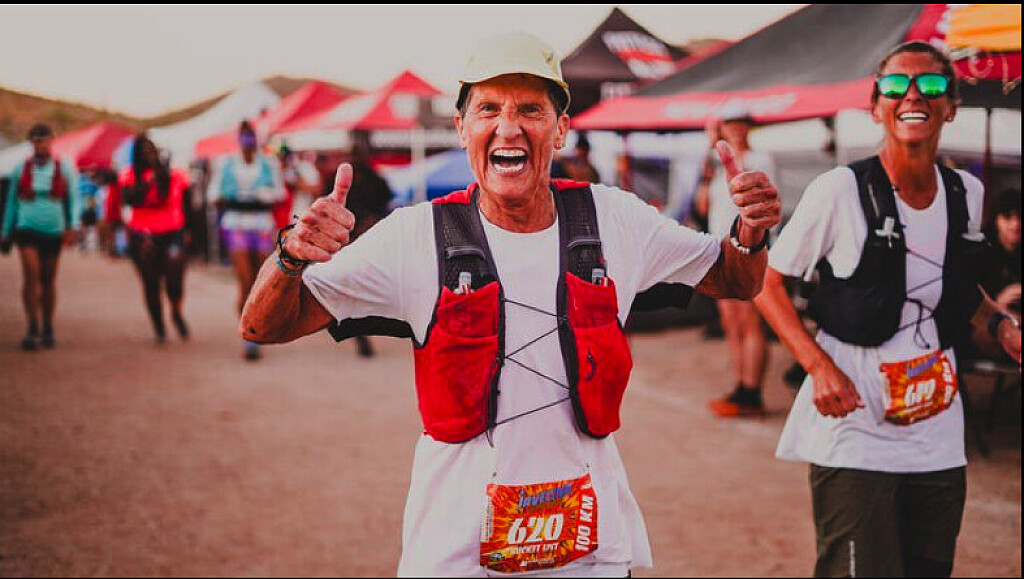
Who Is Courtney Dauwalter’s New Ultramarathon Partner? It’s Her Mom.
Here‘s how the Dauwalter duo completed a dream of crossing a finish line together
The last loop was quiet beneath the full moon. Their shuffling feet on the packed, pebble-tossed singletrack punctuated the sleeping Sonoran Desert as the duo moved through shadows of saguaro cactus and prickly pear. Millions of white pinpoints began to appear in the dark sky.
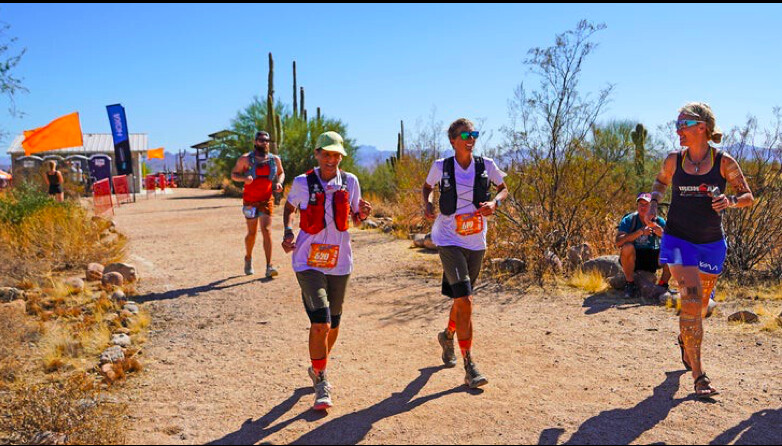
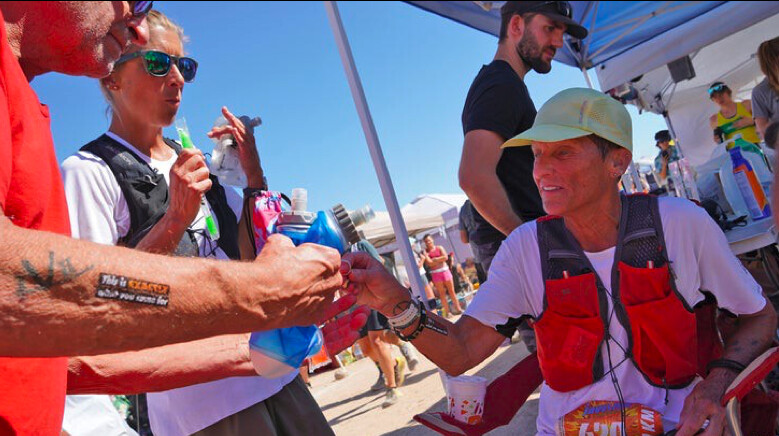
That’s when 66-year-old Tracy Dauwalter, mother of ultrarunner Courtney Dauwalter—who was coming off of historic back-to-back-to-back 100-mile wins of the 2023 Western States 100, Hardrock 100, and UTMB, including two course records—started resharing doubts with her daughter, who kindly reminded Tracy many times throughout the last 13 hours, “that’s not useful thinking, so let’s not think it.”
Occasionally, Courtney would redirect their attention, pointing out this unique section of the course that they’d been past twice before. This time, she built a 60-second container to stuff all those fears inside.
“Tell me all of your doubts and frustrations. You have one minute,” Courtney told her mom. “Once you finish, you can’t complain out loud anymore. It’s not serving us to get to this finish line.”
Tracy spewed all of her negative thoughts, from her rolling stomach to her aching muscles, which was an important reset to get out of the whirlpool of heavy thoughts. I signed up for this, Tracy humbly reminded herself. Nobody’s making me do this.
A dedicated team, the pair was running three loops side-by-side in matching long running shorts, white baggy tees, Salomon hydration vests, and cactus-themed socks, at the Halloween-themed Javelina Jundred 100K race. The ultrarunning event is held the closing weekend of October in the McDowell Mountain Regional Park, an hour northeast of Phoenix, Arizona. Temperatures can climb into the 90s by mid-morning and dip into the low 50s once daylight disappears behind the McDowell Mountain Range.
Now 38 years old and living in Leadville, Colorado, Courtney had participated in the event once before, in 2016, when she was the race’s outright winner. She set the then-course record for the 100K, one of several performances that drew national attention to her astonishing endurance and athleticism.
Tracy, who’d just recently started trail running, had covered ultra-distances at 12- and 24-hour events across flat gravel, but had never before run this far on a trail. They selected Javelina’s rolling 100K with 3,924 feet of vertical gain. The majority of the climbing is packed into the gradual ascent from the Javelina “Jeadquarters” aid station, which serves as the start and finish of the race and basecamp, to the far side of the loop, Jackass Junction.
It was exactly here, at this midway point, after slogging up the final climb over rolling hardened granite and sandy washes, where Tracy had a sticking point. Fortunately, Courtney was there to fill up her water bottles and point out all the tasty options when they reached the runner’s buffet.
“Please keep eating,” she said, as the electronic dance music bumped. A few hours earlier, they enjoyed a surprise pick-me-up of McDonald’s cheeseburgers, delivered by crew masters Dick Dauwalter, Courtney’s dad, and Kevin Schmidt, her husband. But one of the biggest highlights during the race for Tracy was watching Courtney interact and commune with so many people in the trail running community.
“Courtney does this amazing sport, but even more, I adore the person she is. It’s one of my favorite things to watch the love that’s out there for Courtney, and the way she responds. To be in that world with her was really special,” Tracy said. “She was also really kind to me, even when I was frumping and I’d fall down, she’d help pick me up.” Courtney let out a laugh.
“Mom, you only fell one time!” said Courtney, laughing.
“I know, but it was embarrassing,” Tracy said.
While Javelina was the mother-daughter’s debut trail ultra finish, side-by-side, the experience wasn’t their first race together. When Courtney was in high school, the duo finished a rollerblade marathon together in St. Paul. (Rollerblading is a major pastime in Minnesota, where Tracy grew up and still lives today.) Here, she met Dick and raised Courtney, a middle-child to two brothers.
While growing up, Tracy played softball and badminton. In college, she ran cross-country and track. “I’ve always been interested in sports and done them at a level that I could make the team. I was never a star. Being on a team is social and taxes your body while working up a sweat,” she said.
When the kids were interested in soccer, she and Dick organized an adult co-ed squad. Now, she jogs, plays volleyball, and golfs. She and Dick enjoy motorcycle tours, too, like venturing through the Elk Mountains in Colorado. “I’m not great at anything, but I can hold my own, and it’s super fun—I’m willing to do any sport,” she said. The motto was much the same for the kids.
"I thought that it would be so cool to share this sport that I love so much with this person I love so much. I knew she could do it.”
“They could try any activity. But once they committed, they had to see that season through—whether they enjoyed it or not, we were committed. We didn’t miss practices or games. We made sure those were a high priority for them and us. That drove our lives for many years with lots of fun times, but boy, that schedule was crazy—we’d slam-dunk dinner at 4 P.M. so that everybody could get to practice,” Tracy said.
An accountability mindset is one that leads to showing up in other areas of life from work to class to chores, following through on responsibilities and gritting out less desirable tasks. “When things get hard, like college classes, your option is not to quit,” Tracy said. “You dig in a little deeper, get help, and get it done, which is the same with any sport.”
But perhaps their most special ingredient is that the Dauwalters know how to have fun. “Having fun while doing those things is just as important,” Courtney said. “Our family always worked hard, but we play hard, too. All of that combined is what makes life special. Having that be deeply ingrained in who I am helps me in everyday life, but also, for sure, in ultrarunning.”
While watching Courtney grow up, Tracy noticed her daughter had a deep motivation as a person and athlete. One of her earliest memories was two-year-old Courtney, who could barely walk, repeatedly riding a Big Wheel tricycle downhill with a group of kids and insisting she’d wrestle the bike up the hill by herself. As a kid, Courtney and her siblings played soccer, often on the same teams. Later, they ran high school cross-country and track. To fill the winter months, she tried basketball, but she had a propensity to quickly foul out, taking the bench for the remainder of the game.
One day, she came home with a bright idea to Nordic ski instead, which was foreign for a family full of downhillers. They picked up the equipment, Courtney joined a competitive team, and she practiced in nearby school fields. “All she did was wipe out. All the time. Dick and I are thinking, ‘I wonder what this is going to look like?’” said Tracy.
During those foundational years, Courtney would rush home after a Nordic race to report the number of crashes she’d had. “In a 5K, I would be psyched if I only crashed nine times—tripping, planting my poles, tumbling the entire time. I was so bad,” she said.
But Tracy bought a beat-up pair of cross-country skis and started to practice alongside Courtney. “We learned together,” Tracy said. “It was more fun to crash with somebody than to crash by yourself.”
By the time Courtney graduated, she was an all-state runner and had earned All-American honors as a Nordic skier three times. She was a four-time state champion, and her team acquired two national championships. In 2003, Courtney moved west to Colorado, where she raced collegiately on the Nordic ski team at the University of Denver. Three years in, her DU team won 11 meets and the 2005 NCAA Championship.
“Courtney was really good at everything she did, and it wasn’t because she was a natural,” Tracy said. “Anytime she tried a sport, she didn’t have an immediate knack for it, but she hung in there to develop it. She was a hard worker and determined.”
Years later, in 2015, any remaining questions of physical stamina were laid aside—for both Tracy and Courtney, who proved to have a serious knack for endurance. Courtney broke the ribbon at her inaugural ultra race, the 2011 Prickly Pear 50K in San Antonio, Texas, and her curiosity about wanting to run longer continued to grow. The following year, she dropped out of the Colorado’s Run Rabbit Run 100 Mile race at mile 60 with throbbing legs, questioning her ability to cover that much ground in a single push.
Frustrated by not meeting her goal, Courtney registered for her first 24-hour race, the 2013 FANS Ultra Races, a more manageable format than an ultra on singletrack. Her family joined to crew and run laps, providing entertainment and support, including Tracy. They didn’t have much of a background in ultras and were green to any strategy.
Regardless, Courtney wrapped a total of 105 miles on that two-mile gravel loop around Lake Normandale Park in Bloomington, Minnesota, completing her first non-trail century-distance, and gaining confidence. Two months later, she crossed the finish line of the Superior Fall Trail Race 100 Miler in Lutsen, Minnesota, her first 100-mile distance on trail, and stood on the podium for second place.
Moving forward, the FANS Ultra Races became a family tradition. Courtney returned to the 2014 event, besting her first summer with 123.6 miles. Tracy decided, if she was going to crew and run laps with Courtney, she might as well sign up herself.
“She was like, ‘Heck, I’m going to spend the whole day out there anyways. Why not put some time on my feet?’” Courtney recalled.
In 2015, she tallied 109.2 miles while her mom, then 57 years old, covered 66.8 miles. Their annual pilgrimage continued in the 24- or 12-hour format, over the next several summers, coinciding with Courtney’s ultrarunning career picking up steam. She won the 2016 Run Rabbit Run 100 Mile with a 75-minute lead, and along with the title, the world’s largest ultra purse: $12,000.
By the summer of 2017, she retired from her position at the Girls Athletic Leadership School in Denver where she taught science and coached cross-country. “In an interview a few years ago,” Courtney said. “I was asked if I could run an ultramarathon with anyone in the world, who would it be? ‘My mom,’ I said. I thought that it would be so cool to share this sport that I love so much with this person I love so much. I knew she could do it.”
In an interview a few years ago, she was asked, if she could run an ultramarathon with anyone in the world, who would it be? “My mom,” she said. “I thought that it would be so cool to share this sport that I love so much with this person I love so much. I knew she could do it.”
Tracy heard the recording and, despite having never run on trails, she immediately called her daughter. “Let’s do it. I heard you want to run an ultra, so let’s sign up for something,” she said to Courtney. “If someone puts a challenge in front of me, it can even be pretty insane, and I’m a sucker for trying to rise to that challenge.” In addition to the competitive spark, the invitation felt sentimental.
Committed to doing an ultra together, they accepted that it might be a winding road to get there. The two picked the 2022 50-mile Superior Fall Trail Race in Lutsen. Mid-route, they missed the cut-off. Tracy shrugged and shook her head recounting the unfinished event. Courtney refused to let the DNF be a negative thing. “You learned so much in that first summer, mom,” she told her. “Dialing in all of those pieces helped immensely this year. And we decided, we’re not done. We still need a finish line together.”
As soon as registration opened in January, the duo signed up for the 2023 Javelina Jundred 100K. “I was nervous coming into this race because I was bouncing off of that epic fail of the first 50-miler we tried, which was a wake-up call. You have to prepare yourself,” said Tracy.
“It was not an epic fail,” Courtney countered.
That winter, Tracy clocked workouts on a treadmill. From April onward, she ran outside four or five days a week for 10 to 20 miles. Courtney researched singletrack trails around Lone Lake, which her mom became excited to explore. One of the biggest challenges of learning to run on trails is her tendency to shuffle and trip, Tracy confessed. Building confidence, she finished the Willow 20 Miler in May and Afton Trail Run 50K in July. Like her daughter, Tracy didn’t keep a close log of her mileage, and her training was not systematic.
Courtney’s advice, true and simple, rang in her mind: Spend time on your feet.
“People asked me if I coached her. Absolutely not,” Courtney said. “I did try to be helpful—harping on testing nutrition, wearing a pack so that her body gets used to one, and hiking uphills—so her race day could be much better. She was the one putting in the work and figuring out routes where she could do laps or get on hills. I admired from afar.”
“It helped that Courtney kept reminding me, ‘This was our run together, our race, and it could look however we could make it.’ If I crawled, that wouldn’t be disgusting. It got ugly, then it got not ugly,” Tracy added.
Staying lighthearted, Courtney countered, “It never got ugly. There was never a doubt that we would make it to the finish.”
Fortunately, the elation did come around. Next to her daughter, Tracy crossed the finish line of Javelina Jundred 100K in 17 hours and 38 minutes with a smile in the glowing lights, after staying up into the night running, eating, and sharing pain—but mostly, laughing—with her daughter. They’d gone full circle together, both on the circuit they’d traveled in the desert as well as in life.
“I think you beat me by, like, a half-second, mom,” Courtney said.
“I know,” Tracy bantered back. “I think I was really needing to be done, so I rushed with a half-second sprint.”
by Outside Online
Login to leave a comment
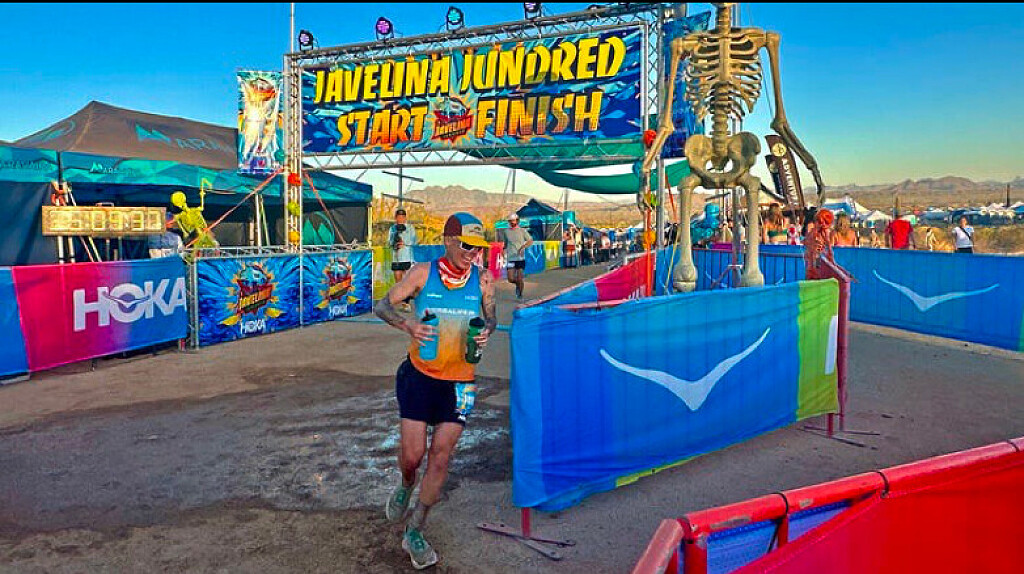
30 Hours at Javelina Jundred, the Burning Man of Trail Running
Inside the spectacle of ultrarunning’s most festive top-tier 100-mile race
It’s a hot, sunny Saturday afternoon in the desert northeast of Phoenix, and Lindsay DesRochers is being chased by a dinosaur—as if 85-degree heat, a creaky left knee, and a hot spot on her right big toe aren’t enough to worry about during her first attempt at running 100 miles.
The 44-year-old senior creative recruiter from Scottsdale is 41 miles into the Javelina Jundred, and she also has to contend with a Tyrannosaurus rex who’s making her giggle. The dinosaur is, in fact, local trail running legend, Jerry Bloom, who is sweating and gasping for air inside an inflatable costume that’s kept afloat with a tiny battery-operated fan. He is dressed up as the dino-in-residence and runs alongside DesRochers briefly as she finishes the second loop of the five-lap course before sitting down to refuel and rehydrate in her crew tent.
“The problem with this thing isn’t the heat. It’s just that there’s no oxygen in here. If you run very far, you get oxygen deprivation,” says Bloom, 70, a three-time Western States and Hardrock 100 finisher who’s also run Javelina twice. “For me it’s all in good fun to support Lindsay. I’ve given up trying to be fast a long time ago. But what I’ve learned is that it’s not how far you go and it’s not how fast you go, it’s how you look while you’re doing it.”
Welcome to the Javelina Jundred—the biggest, wildest party in the trail running world.
It’s pretty obvious that the Javelina Jundred is the zaniest event in trail running and, to be frank, nothing even comes close to this dusty desert cavalcade of curiosities. It’s not quite the Burning Man of running, but it might just be better because, first and foremost, it’s a legit ultrarunning event.
More than 850 enthusiastic runners toed the starting line at 6 A.M. to begin the five-lap 100-miler, and about 400 more began the three-lap 100K an hour later. There’s also a single-loop, 19-mile nighttime race called the Jackass Night Trail for about 200 runners that includes a wild DJ’ed party at the Jackass Junction aid station and finishes as the Saturday night revelry is still going strong back at the race compound.
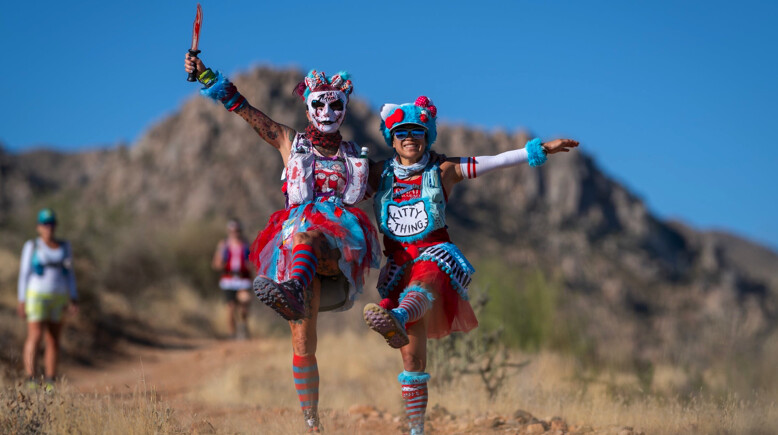
But because Javelina always happens on the weekend before Halloween, there’s a natural party vibe and a non-mandatory-yet-compelling reason for runners, pacers, and support crew to wear costumes. And, let’s face it, Halloween gives everyone license to fly their freak flag, so when you mix that with ultrarunning, just about anything goes. Only here it’s known as Jalloween.
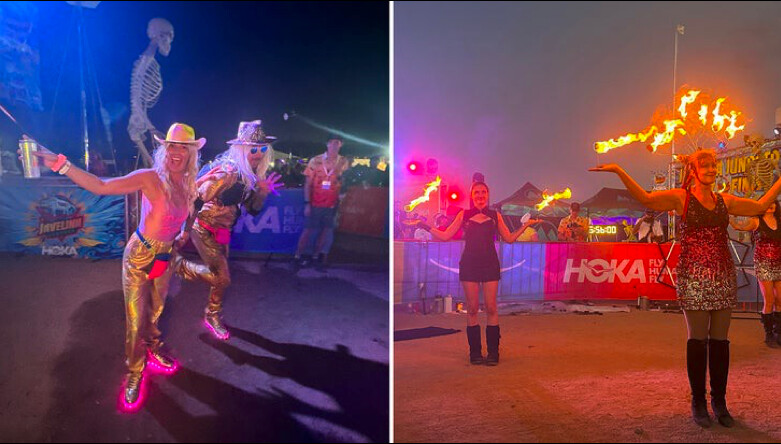
This year’s most popular dress-up themes seem to be tropical and western, but, almost predictably, there are quite a few Barbie and Taylor Swift cosplayers, as well as a few heavy metal rock stars, glow-in-the-dark skeletons, and several very creepy clowns. Dozens more runners race through the desert wearing bunny ears, fox tails, and devil horns.
“This is a safe space for everyone to have fun in their own unique way,” adds Dan Gampon, a Hoka sports marketing representative from Hawaii. “It’s a fun way to give the people a chance to be weird and bring a part of themselves that they might have been wanting to bring out, and give them the opportunity just to have fun anyway they want to.”
Some crew tents are decorated with accouterments to match a particular theme, but most feature colorful holiday twinkle lights, camping chairs, sleeping bags, and coolers full of adult beverages. While there’s a stash of fancy engineered nutrition supplements and electrolyte drinks in every tent, there’s also the widest range of healthy and not-so-healthy snack food you can imagine. (I’m looking at you, guy simultaneously drinking a Red Bull and eating a handful of marshmallow Peeps.)
The Javelina staff and volunteers are fully into the Jalloween theme, too, especially race director Jubilee Paige, who dons several costumes during the 30-hour event—including getups she calls Race Director Barbie, Weird Barbie, The Dude, Cousin Eddie, Chef’s Kiss, and A Macaroni Penguin. She once again ends the event dressed as the Pope—a.k.a., “her Joliness”—because she considers Sunday “Jallelujah Javelina,” a day of celebration.
The Javelina Jundred was founded in 2003 by Phoenix ultrarunner Geri Kilgariff as an irreverent, party-oriented run on a multi-loop course, and gradually gained regional and then national popularity as word spread through the ultrarunning community about how much fun it was. Local ultrarunner Jamil Coury took over as race director in 2008. The next year he started Aravaipa Running, a Phoenix-based company that bought and now owns 75 other running events in Arizona, Colorado, Utah, Nevada, and New Hampshire.
Despite increased popularity and significant growth, Coury, Paige, and the rest of the Aravaipa crew have been able to maintain Javelina’s grassroots experience while growing it to about 1,500 runners in three events with at least that many pacers, crew, and family members hanging around the race compound. In many ways, it represents the best of both where trail running has been, but also where it could be heading.
“The race was born from a fun spirit of running with friends and looping in the desert—shout-out to Geri Kilgariff for her creation of the event in 2003,” Paige says. “But as it’s evolved, we saw opportunities to elevate the race to an ‘event’ experience for runners and crews—an ultra festival—the music and lights and entertainment just enhances that experience. However you experience Javelina, I just want you to have fun!”
As the sun begins to set, several top competitors in the 100-miler are scattered out on the remote sections of the course in hot pursuit of four Golden Ticket entries into next summer’s Western States 100. (Two tickets each for the men’s and women’s races.) That includes Boulder, Colorado, runner Jonathan Rea, who is back after a second-place finish a year ago, and—with newfound confidence from a fourth-place finish at the CCC 100K in Chamonix, France—is tearing up the desert trails on course-record pace. Triathlete-turned-ultrarunner Heather Jackson, who splits time between Bend, Oregon, and Tucson, Arizona, also takes it out hot, hoping to make up for a frustrating fifth-lap fade last year after unbearable quad pain reduced her to a walk and forced her to settle for a fifth-place finish in her 100-mile debut.
Earlier in the day, Denver’s Rajpaul Pannu and San Francisco’s Anna Kacius made quick work of the less-competitive, three-lap 100K race, finishing first and second overall, respectively, and setting new men’s (7:15:53) and women’s (8:13:07) course records in the process, while winning by more than an hour over their nearest competitors.
Ultrarunning GOAT Courtney Dauwalter from Leadville, Colorado, is out there, too, but she’s not racing for the win. She’s running the 100K with her mom, Tracy, a 66-year-old avid trail runner from Edina, Minnesota. They attempted a 50-miler in Minnesota last fall, but were timed out before the finish, so this year they chose the big party race in the desert where Courtney set a course record in 2016 before she became a household name. They’re not in costumes, but they’re running as Team Bucket List and wearing matching white shirts, cactus-themed socks, and olive-green-and-black shorts.
Because runners constantly revolve through the turnaround point at the start/finish area, everyone else is always on the move throughout the race compound. Some are drinking craft beers and mingling as they wait for their runners, while others are watching the race livestream on their phones or from the jumbotron in the Javelina Jeadquarters circus tent. Still others are devouring freshly cooked artisan pizzas made to order in the Freak Brothers Pizza mobile brick wood-fired oven.
Rousing cheers and applause catch everyone’s attention every few moments as an elite runner arrives—including the ever-smiling Jackson, who quickly heads out on her fifth and final lap with a 30-minute lead in the women’s 100-miler.
“Heather is just amazing,” says Troy Brown, 48, a trail runner from Coto de Caza, California. “She’s always smiling. I’m just a fanboy, but I like anyone who can smile that much through pain.”
After Jackson runs out of sight, Brown quickly shifts his focus to getting his feet into an inflatable T-Rex costume so he can participate in the costume contest, an informal event that brings out a sheriff riding an inflatable rooster, Minnie Mouse, a foursome of Teletubbies and, of course, several dinosaurs. There’s also a guy dressed as Aladdin wearing a large golden lamp around his waist who is joined by a scantily clad Jasmine character who not-so-discreetly rubs the lamp in a Not Suitable for Work (NSFW) scene that draws both raucous laughs and shocked gasps from the crowd.
One of the best dressed-up groups of the event is a foursome of women from California’s Healdsburg Running Company: Dominique Chevalier (“Western Barbie”), Krista Kappus (“Alien Barbie”), Saddie Alloway (“Rootin’ Tootin’ Diva Barbie”), and Susan Oh (“Disco Bob Ross”). But the costume contest winners are the Montana Mermaids, a bikini-and-grass-skirt trio from Bozeman—Lena Romeo, Kara Haskell, and Liv Bleskin—who were there to crew and support elite runners Rachael Norfleet of Montana in the 100K and Utah’s Ryan Montgomery in the 100-miler.
The sun begins to set, but the party’s just getting started as DJ Colter Stillwell pumps tracks through the sound system as a full moon rises in the eastern sky. One of the rowdiest dancers is Brendan O’Hara, a Colorado trail runner who’s dressed up in a red-and-white mouse outfit with flashing lights similar to what popular Canadian electronic musician Deadmau5 wears on stage. As lots of energized runners entered in the Jackass race are about to head out into the night, two professional fire dancers perform a mesmerizing routine adjacent to the start line.
Just after dark, Rea comes flying into the finish area, stopping just short of the finish line to pantomime deadlifting a colossal barbell before crossing the line in a new course record of 12:43:10. Seattle runner Blake Slattengren stopped the clock next in 12:58:07 to claim the second Golden Ticket, while Montgomery ran another strong race to take the final podium spot in 13:01:14.
Redeeming herself from last year, Jackson finishes strong to win the women’s race and finish sixth overall, thanks in part to the aggressive pacing of Devon Yanko. Jackson’s time of 14:24:47 is the second-fastest women’s time ever behind Camille Herron’s 14:03:23 course record from 2021. Spain’s Ragna Debats (14:55:27) outran Riley Brady (15:29:17) to earn the second women’s Golden Ticket.
Not long after midnight, the Dauwalters finish, too. Covered in dust, sweat, and even a little bit of blood—Tracy took a tumble on the first lap early the previous morning—they cross the finish line after 17 hours of running with big smiles and hug in a classic mother-daughter moment. Late Sunday morning, DesRochers makes it to the finish line, too, in 27:31:41, battling hard to overcome dehydration, an upset stomach, and nagging hip flexor pain at various points during the race.
“I was prepared for it to be hard, and I knew I was going to hurt. At some point, I was like, Oh, right, this is what running 100 miles feels like,” DesRochers says. “It was difficult, but I kept my positive mental attitude the whole way. I have a buddy who has a saying, ‘Forward is a pace,’ so I kept repeating that and kept putting one foot in front of the other and I didn’t quit.”
Something that’s especially apparent at Javelina is that everyone is celebrated as an equal, regardless of finishing times, trail running experience, athletic ability, age, or any other dissimilar details. The event goes out of its way to create an environment that promotes visibility and inclusion for everyone, and the community of participants seems to embrace it by cheering and encouraging for everyone the same.
It has partnered with Native Women Running, Latinos Run, and Black Men Run each of the past several years to bring their runners to the race, and it was also one of the first ultra events to offer a non-binary category. This year there were six non-binary runners racing over its three races, led by Willow Dolde in the 100-miler (20:01:29), Andreas Anderson in the 100K (13:54:30), and Tasha Hartwig in the Jackass 31K (6:42:07). (Although Brady, a non-binary runner from Boulder, was competing in the women’s division because they were racing for a Golden Ticket, they were also, unofficially, the top non-binary runner in the race.)
As the golden hour comes and goes early Sunday afternoon—and final finishers Holly Sitzmann, Jim Buckley, Brittany Edmiston, and Leslie Astle squeeze under the 30-hour cutoff with help from their pacers and crew—it’s clear that everyone at Javelina is celebrated equally and enthusiastically. That also includes two unofficial finishers—Rayna Rodriguez and Tatiana Orozco—who complete the 100-mile course just outside of the time cutoff, but are welcomed by a scream tunnel of remaining spectators and the adulation of Paige even though neither will receive a finisher’s buckle.
“Javelina is a celebration, and the invitation to run and participate at Javelina extends to everyone,” Paige says. “I want to ultimately show how amazing the community is and that this sport is for everybody and every body—the spirit of ultra is diverse and should be celebrated.”
by Outside online
Login to leave a comment
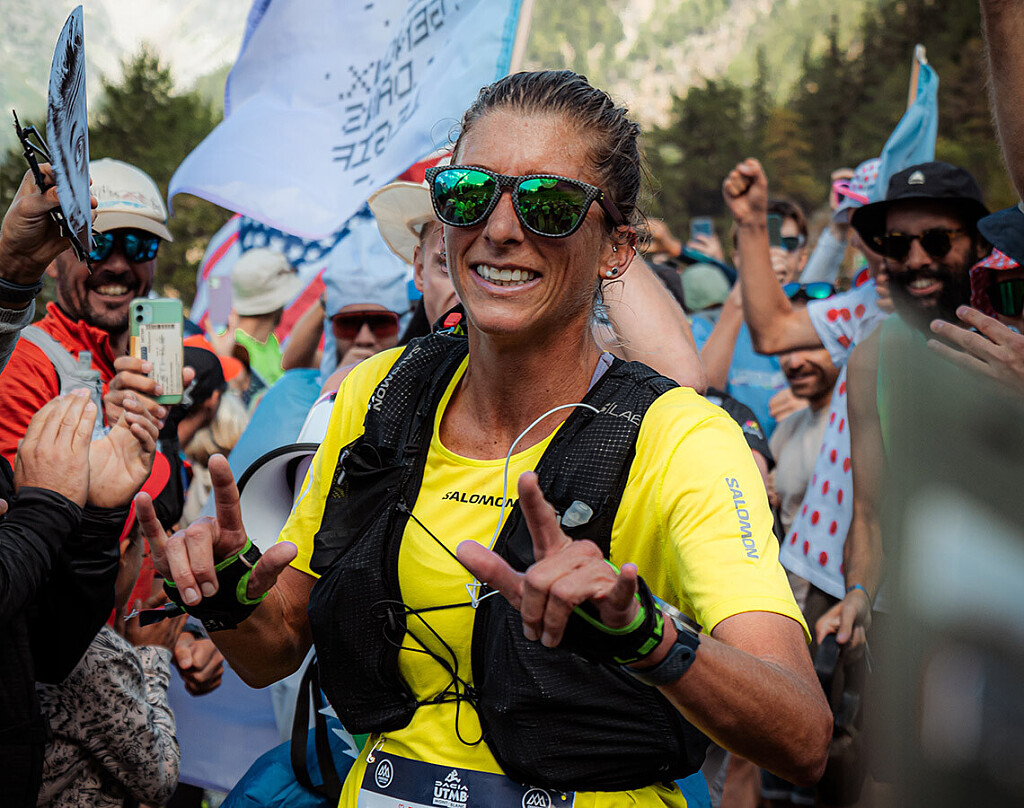
Courtney Dauwalter completes 100K race with her mom
After her historic year in ultra-trail, how could Courtney Dauwalter possibly squeeze in another success this season? The answer, it seems, was to add another Dauwalter.
The American trail-running legend, who in 2023 became the first athlete to win Western States, Hardrock 100 and UTMB in the same season, realized her long-held goal of completing an ultramarathon with her mother, as she and Tracy Dauwalter crossed the finish line of the 100K course at Arizona’s Javelina Jundred this weekend.
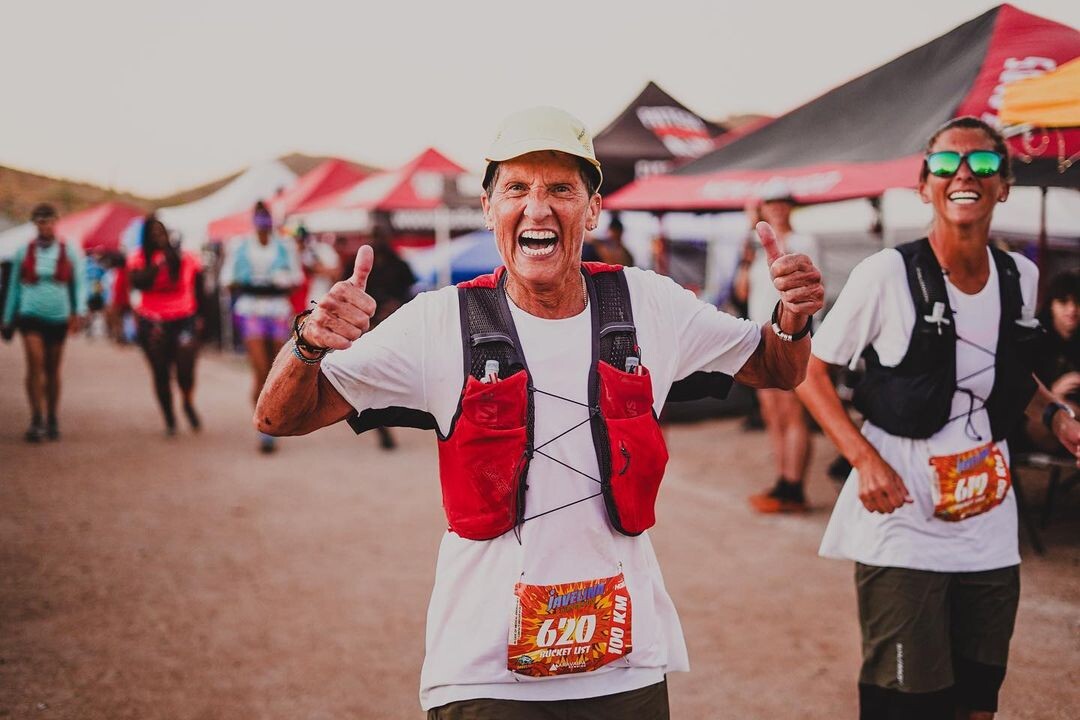
The Javelina 100K course consists of three loops that take runners through trails northeast of Phoenix. The route features rolling singletrack through the Sonoran Desert, leading past giant saguaro cactus and granite boulders in and around McDowell Mountain Regional Park.
The elder Dauwalter crossed the finish line in 17 hours, 38 minutes and 33 seconds, one second ahead of Courtney. The Dauwalter duo just cracked the top 100 in the 100K women’s division, landing in 98th and 99th place. They finished in 180th and 181st place overall among the 100K’s 301 finishers.
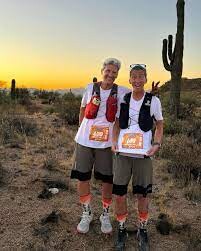
Before the pair toed the start line Saturday, Courtney shared in an Instagram post that it has been a “dream” of hers to run an ultramarathon with her mother.
“Last year we tried a 50 mile race together in Minnesota but got cut off for time. We decided that was just one part of our story together and are now back trying to get that sweet, sweet finish line,” she wrote.
While crossing the finish line was a triumph for the mother-daughter team, the overall effort was a fuller family affair, with Courtney’s husband, Kevin Schmidt, and her father, Dick Dauwalter, crewing the duo.
“Kevin and my dad are back on crew duty so I have no doubt we’ll be plenty taken care of,” wrote Courtney.
A subsequent Instagram post showing the mother and daughter celebrating their accomplishment drew a long list of commenters sharing their congratulations—and more than a few remarks about where the younger got her famously winning smile.
“It’s not hard to see where @courtneydauwalter gets her awesome smile from,” wrote one wellwisher. Added another: “Who the heck is their dentist?”
It was also an unforgettable race for the 100K’s top finishers. Topping the men’s podium in the 100K race in 7:15:53 was Rajpaul Pannu, who broke the course record set last year by Scott Traer (7:31:46). Anna Kacius, the top women’s finisher, placed second overall in 8:13:07, beating the course record set last year by Lotti Brinks (8:36:01).
Jonathan Rea ran 12:43:10 to break the 100-mile course record set last year by Dakota Jones (12:58:02). Heather Jackson won the women’s 100-miler in 14:24:47.
by Paul Baswick
Login to leave a comment
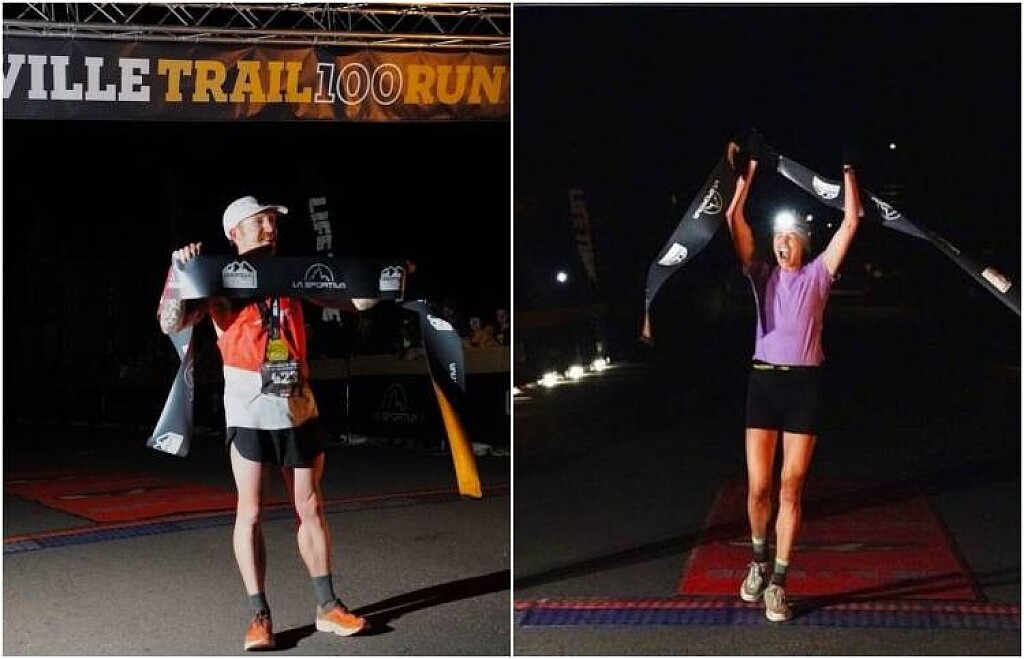
Jacquie Mannhard, JP Giblin take the honors at Leadville 100
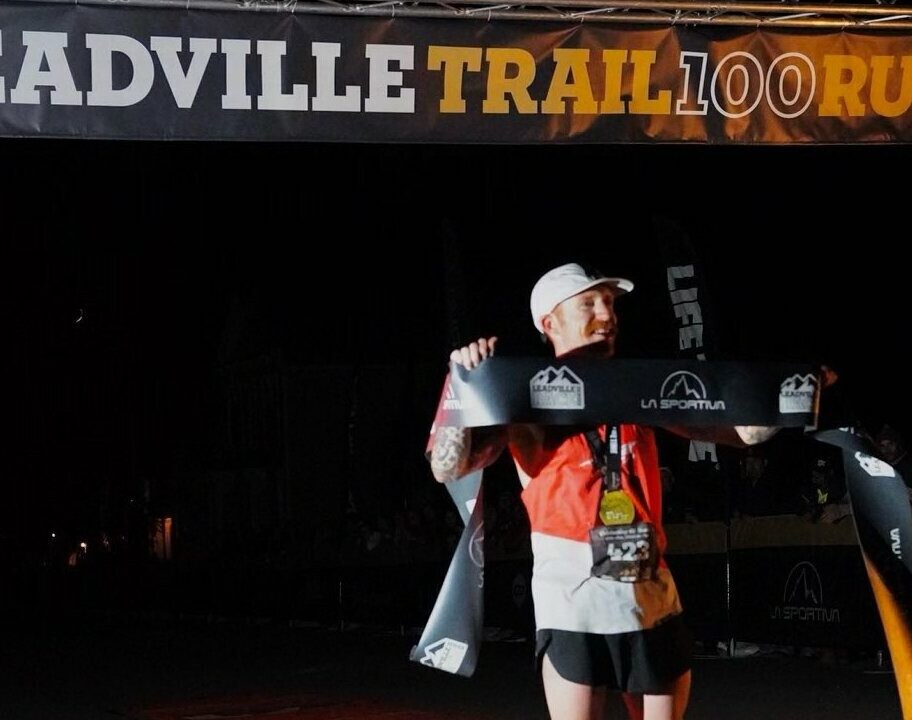
Americans Jacquie Mannhard and JP Giblin took the spoils at the Leadville 100 with two exhilarating performances at the race in Colorado, USA. The pair dominated the women’s and men’s races respectively – each winning by a comfortable distance.
Mannhard completed the 100-mile out and back course in a time of 21:24:55, finishing almost two hours ahead of her nearest rival. Giblin, runner-up in 2022, crossed the line first overall in a time of 17:07:25, over 40 minutes ahead of Luke Paulson in second.
Both victors were some way off the course record times set by Matt Carpenter (2005, 15:42:59) and Ann Trason (1994, 18:06:24).
Magnificent Mannhard
The Boulder-based ultra runner, who is at home in the Colorado mountains having won the Kessel Run Ultra (60KM) in November, 2022, produced a strong performance to set a time of 21:24:55 – the slowest women’s time since 2010. Despite that fact, she was the class of the field taking the win by one hour, 51 minutes and 56 seconds.
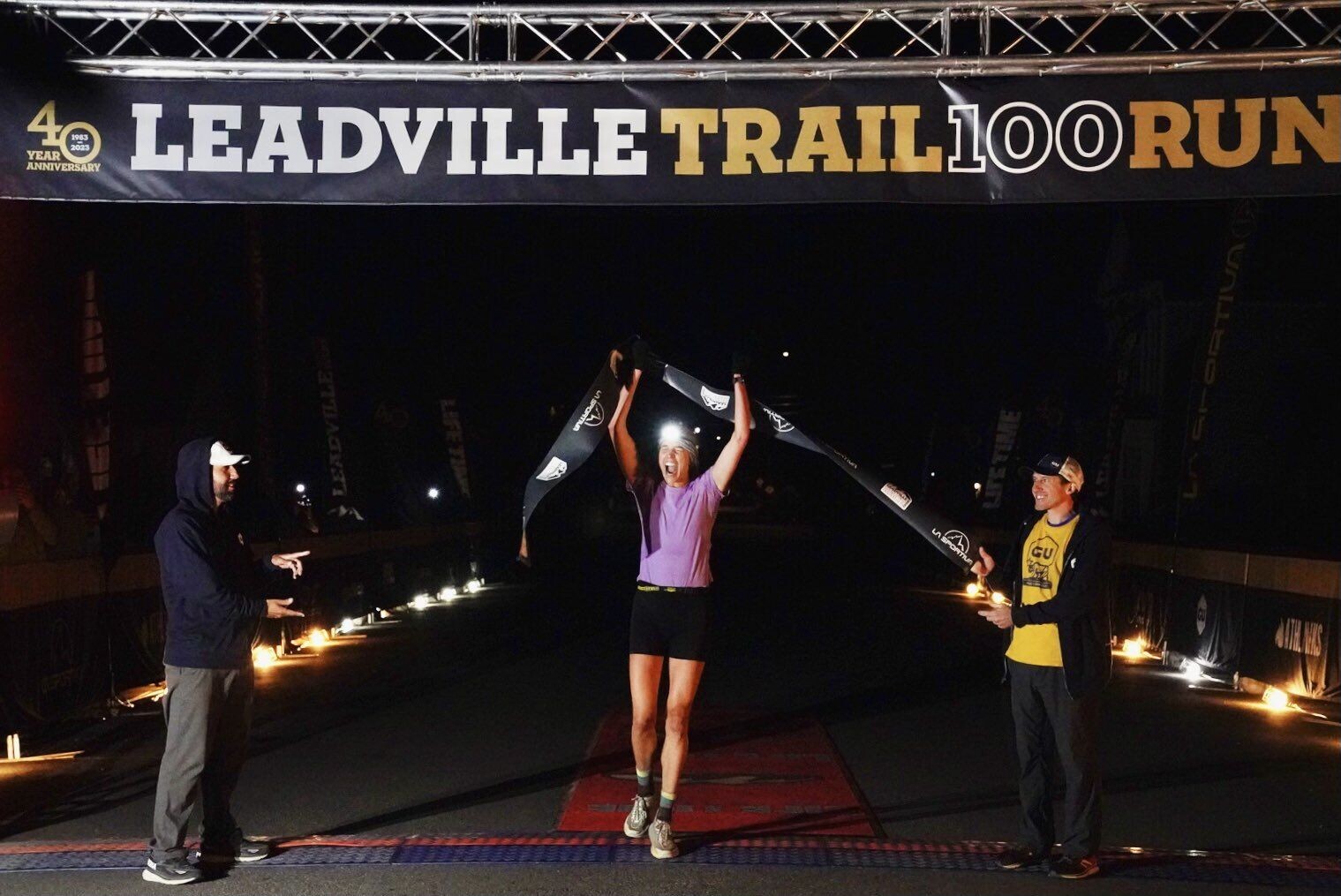
Second over the line was fellow American Lucie Haines. Haines had enjoyed a pair of victories in Colorado Spings in May and June winning the Valkyrie Trail Race (50K) and Ring the Springs (100K). But at Leadville she was unable to keep apace with Mannhard as she finished in a time of 23:16:51.
Canada’s Madeline Wighardt denied the Americans a clean sweep on the women’s and men’s podium by finishing third in a time of 23:32:57. The 22-year-old finished second in the Quebec Mega Trail (QC) 110K race in 2022 as she starts he fledgling career.
Colleen Noonan was next over the line – another who has enjoyed 2023 success in the state. The American won the North Fork 50 Mile/50K at Buffalo Creak and Chase the Moon 12-hour Solo. Noonan had to settle for bronze at Leadville, however, as she finished over two hours behind Mannhard in a time of 23:33:57. Carrie Stafford (23:48:50) was fifth over the line just under the 24-hour mark.
Glorious Giblin
Another Colorado-native took the victory in the men’s race as Giblin topped the podium. The 29-year-old, who finished 18th at Western States in June as well as second at Bandera 100K in January, finished in a time of 17:07:25.
He was followed over the line by Luke Paulson (17:47:55). The 31-year-old, who won the Yamacraw 50K in Kentucky in May, was 40 minutes and 30 seconds off the pace.
Scott Tarer was third over the line in a time of 17:54:12, just six minutes, 17 second further back. The 42-year-old won the Crown King Scramble 50K in May and finished 15th at Western States in June. He is a previous winner of the Javelina Jundred, the Hennepin Hundred and the Vermont 100.
Great Britain’s Ry Webb finished fourth in a time of 18:38:13 – an hour and a half behind the race winner. Webb has +800 rating on the UTMB Index won the 2021 Lakes in a Day 50 miler, Patrick Cabe (19:34:54) rounded off the top five.
by Stuart Dick
Login to leave a comment

Leadville Trail 100 Run
The legendary “Race Across The Sky” 100-mile run is where it all started back in 1983. This is it. The race where legends are created and limits are tested. One hundred miles of extreme Colorado Rockies terrain — from elevations of 9,200 to 12,600 feet. You will give the mountain respect, and earn respect from all. ...
more...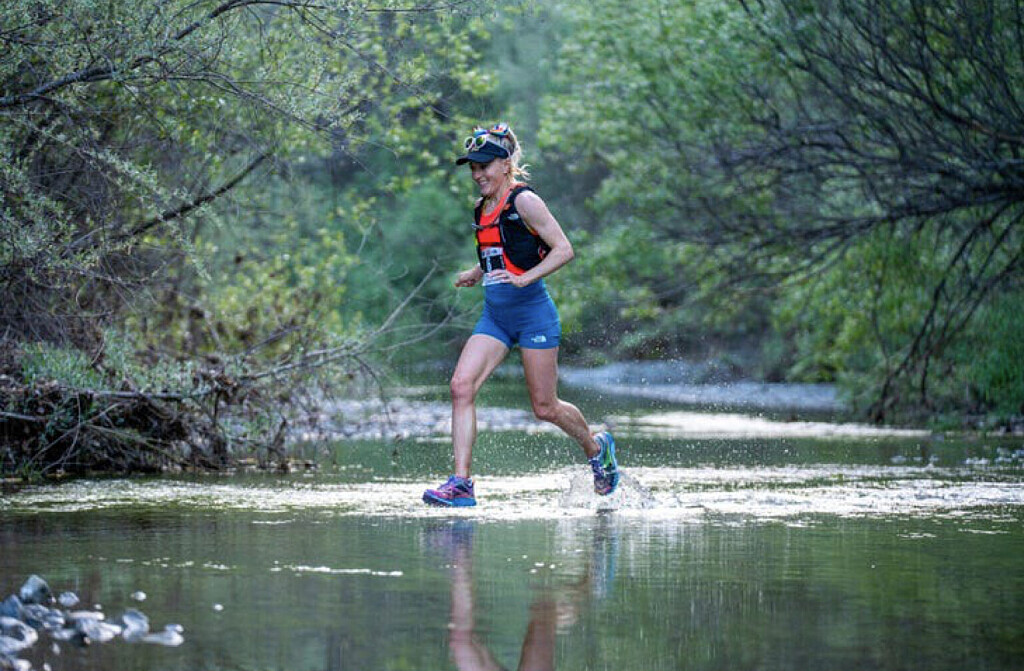
Competition Is Stacked at This Year's Lake Sonoma 50
The Lake Sonoma 50 is one of the fastest and most competitive 50-milers in the U.S., and it's turning up the notch on competition in its 16th year.
Set in the rolling foothills near Healdsburg, California, the hilly course is known for its smooth singletrack and more than a dozen creek crossings. For the first time, Lake Sonoma will be the 50-mile selection race for Team USA, and all runners who race their way onto the podium will get an automatic invitation to run for Team USA in the long-format race in this year's World Mountain and Trail Running Championships set for June 6-10 in Innsbruck-Stubai, Austria.
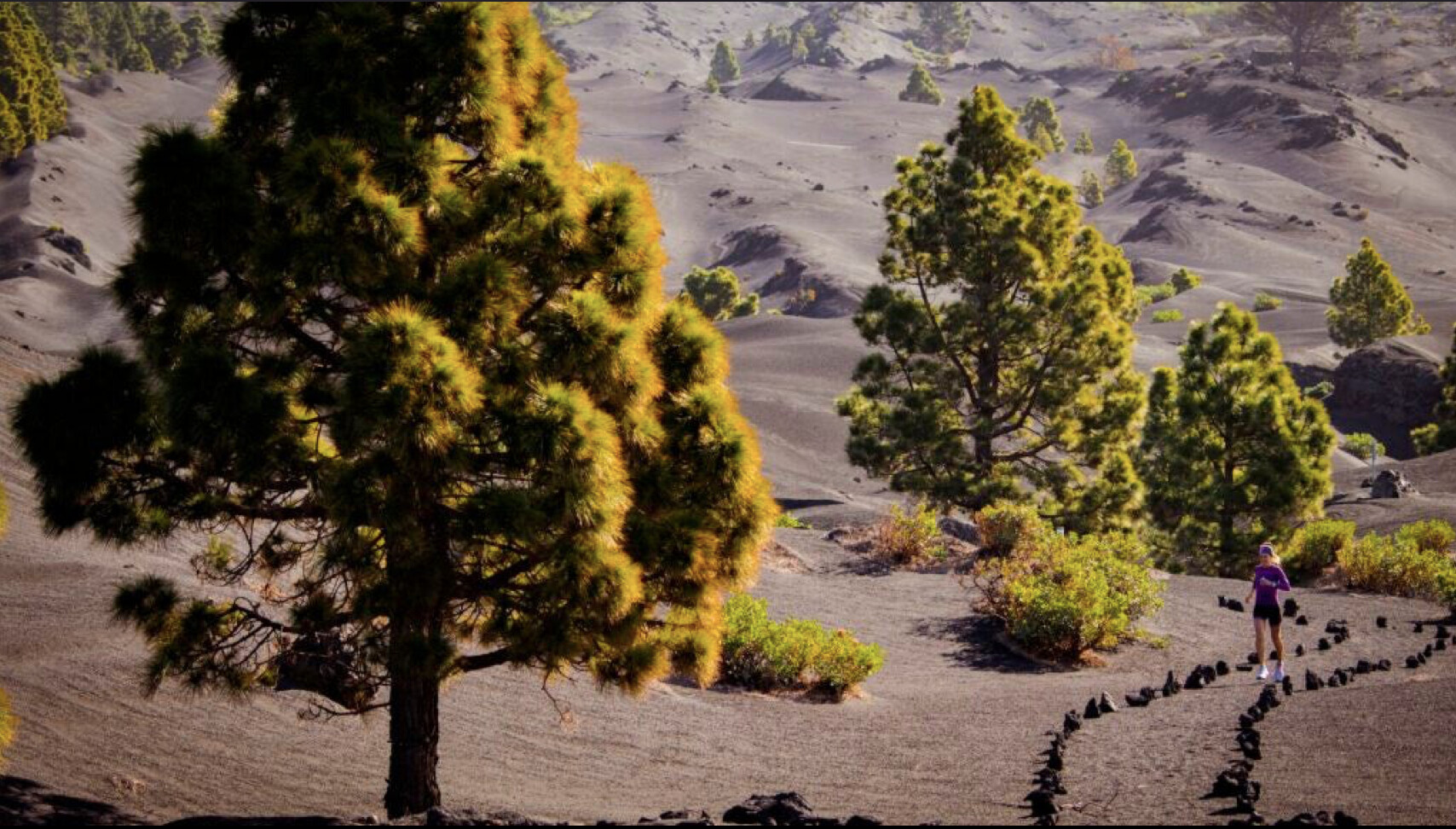
While Lake Sonoma has always been a competitive event (previously a Golden Ticket Race), that invitation has certainly encouraged a high level of competition.
"I'm super psyched for Lake Sonoma to be a USA Selection Race," says Gina Lucrezi, race director and founder of Trail Sisters, a non-profit that supports women in the trail space. "This event has been a top 50-mile race in the U.S. since its inception. John Medinger, Lisa Henson, and Skip and Holly Brand have created a sought-after course and event, and I'm proud to continue their legacy of keeping it a barn burner event, pulling in top talent to test their fitness and abilities." Lucrezi represented the U.S. at several USATF MUT Championship events, and she's excited that her event will extend that opportunity to a new generation of ultra athletes. "It's both an honor and privilege to host this opportunity for runners vying to represent the USA," says Lucrezi.
The event is Trail Sisters certified, which means there will be equal podium spots, awards, women's specific race swag, menstrual products at aid stations, and equal space for women on the start line. Lake Sonoma races are held within the Native lands of the Southern Pomo. The Southern Pomo are part of the Federated Indians of Graton Rancheria, a federally recognized tribe. The race has also partnered with a local charity, The Children of Vineyard Workers Scholarship, which provides education funding to the kids of agricultural workers in the area.
"In terms of diversity, equity, and inclusion, when hosting the lottery, we split the field 50/50 male/female. (Non-binary folks were grouped in the field that they noted as their gender assigned at birth). We then utilized gender-specific waitlists if participants cancel or defer, but we extinguished our waitlists and then allowed for open registration to fill our vacant spots. In the lottery form, we requested race and ethnicity information," Luzrezi told Trail Runner in an interview. "This provided insight into the diversity of signups and helped us make sure the starting line could be as diverse as possible."
Sweet Sixteen
In its 16th year, Lake Sonoma has ushered a generation of ultrarunners onto the scene, and many are returning to reconnect with those fond memories at an event that epitomizes the grassroots appeal of trail races, with an internationally competitive field.
Ultrarunner Devon Yanko is competing in the marathon after her win and earning a Hoka Golden Ticket at Javelina Jundred, says she feels a deep connection to the race after winning it early on in 2010. Building up to Western States in June, Yanko says her primary objective is to feel healthy and enjoy the race.
"I have been a part of Lake Sonoma almost since its inception and have been a spectator/crew for most of its biggest years," says Yanko, who formerly lived in San Anselmo, California. "It was an extension of my local community and always had the best vibes. I'm mostly looking forward to seeing friends, supporting the race, and helping keep the tradition of Lake Sonoma alive."
Many runners have long histories with the buttery, grass-lined trails. Lake Sonoma was one of the first ultras OCR athlete and ultrarunner Amelia Boone ever knew about more than a decade ago. But, a broken femur derailed her initial attempts at the 50-mile event, and she's been looking for an opportunity to get back to Lake Sonoma's start line ever since. She says the high level of competition and community vibe were big draws as well.
"I'm looking to run strong in a competitive field. It's been a while since I've run a race with a super deep field, so I'm looking to put the ego aside and have some faith in myself. My ultimate reach goal would clearly be top 3 to qualify for the U.S. World team, but that'd just be a bonus," says Boone. "Oh, and give as many high fives on the trails as possible."
Brett Hornig, a coach and athlete from Ashland, Oregon, hopes that the third time's the charm. He's run the race twice, and hasn't had the day he wanted.
"LS50 was one of the premier 50-mile races in the world when I was first introduced to trail and ultrarunning around 2014, so the allure of competing against the best has always been there for me," says Hornig. "That initially drew me to the race, and the competition is still there, but it is the community who puts on the race that keeps me coming back. The race directors (both past and current), the volunteers, sponsors, and fans of the sport put on an incredible event that everyone should check out for themselves at least once."
Ryan Miller, the winner of the 2022 Gorge Waterfalls 50k and Bandera 100k, from Vero Beach, Florida, says he's excited by the fast and smooth Sonoma trails.
"The primary allure of Lake Sonoma 50 has to be the trails themselves. Have you seen the videos and pictures of this place?! It's absolutely stunning. I'm most looking forward to the competitive racing with big stakes as it tends to bring the best out of everyone," says Miller.
The proximity to wine country doesn't hurt either.
"Throw in a deep competitive field, prize money, my wife's excitement to go to California wine country, and an opportunity to earn a spot on the World Championship team, and it's a no-brainer for an athlete like me focusing on the 50K-100K distances."
Miller, like others, is gunning for a podium finish that would earn an invitation to race for Team USA at the World championship.
The race field is chock full of talented runners, including the women's field with Abby Levene, Anne-Marie Madden, Allison Baca, Tara Fraga, Sarah Keys, Megan Drake, Sarah Biehl, Erin Clark, Natalie Sandoval, Erin Viehl, Amelia Boone, Anna Kakis, Catrin Jones, Mercedes Siegle-Gaither, Sarah Cummings, Kristina Randrup, Jackie Merrit and Hannah Osowski.
The men's race includes Miller, Hornig, Drew Holmen, Seth Ruhling, David Kilgore, Drew Macomber, Preston Cates, Terence Copeland, Reed Breuer, Aubrey Myjer, Charlie Ware, Ryan Sullivan, Caleb Olsen, Chris Myers, Jason Schlarb, Erik Sorenson, Matthew Seidel, Morgan Elliot, Addison Smith, and Travis Lavin.
"The overall Lake Sonoma race event is focused and centered on community," says Lucrezi. "I'm really excited about our new start and finish location and the celebration vibe we are creating. No matter your pace, experience, or what place you finish, Lake Sonoma is an event that welcomes all runners and fosters friendships made through the event and on the trails."
Login to leave a comment

Lake Sonoma 50
The race is held on the rugged trails at Lake Sonoma, about 10 miles northwest of Healdsburg. The course is 86% single track and 9% dirt roads, with the first 2.4 miles on a paved country road.The race starts at 6:30 a.m. and has a 14-hour time limit. ...
more...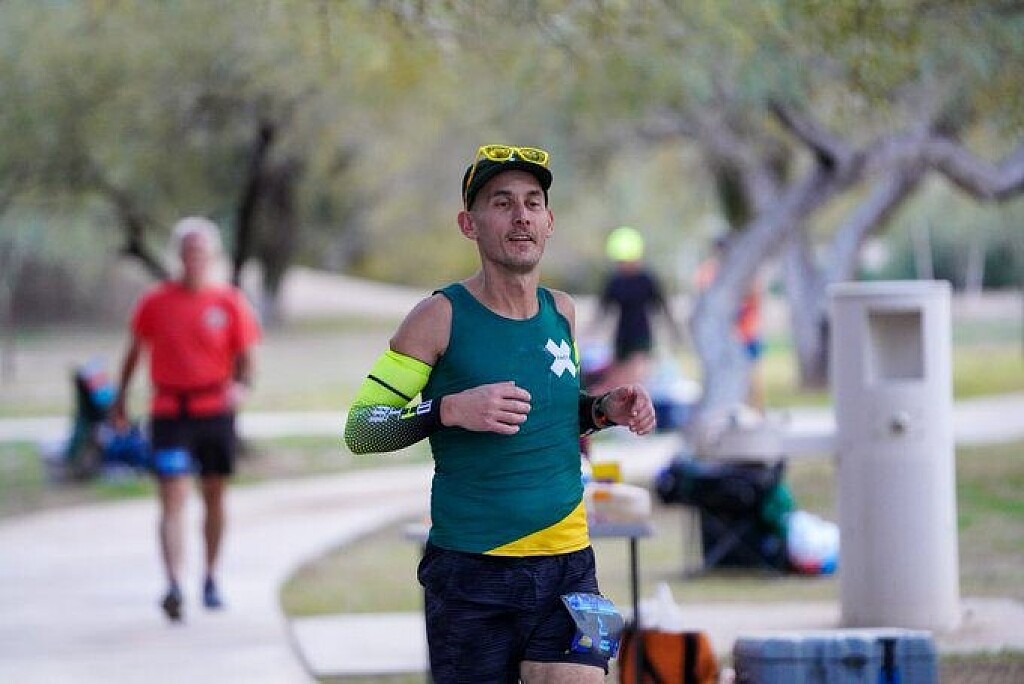
Jerry Hughes smashes Canadian 48-hour record
Victoria, B.C.’s Jerry Hughes set a new Canadian 48-hour record early Sunday morning at the Fat Ox Endurance Run in Arizona, running 368.031 kilometers (228.684 miles). Hughes boasts an extensive ultrarunning resume, but this is his first Canadian record, besting Dave Proctor’s 2018 record of 358.163 km (222 miles). Hughes headed into the event with a goal of qualifying for the Canadian 24hr team, a goal he nailed along the way. Hughes ran 221.01 km (137.33 miles) in 24 hours, more than any Canadian in 2022.
The Fat Ox Endurance Run (hosted by Aravaipa Running, known for endurance events like Javelina Jundred and Across the Years) was “originally founded as a research study on fat oxidation utilization for ultra runners,” ultrarunner and race director Jamil Coury explains. The race was in a new location this year, held on a 1590.3-meter concrete loop on an eight-foot-wide sidewalk winding through Estrella Mountain Regional Park, just outside of Phoenix, Ariz.
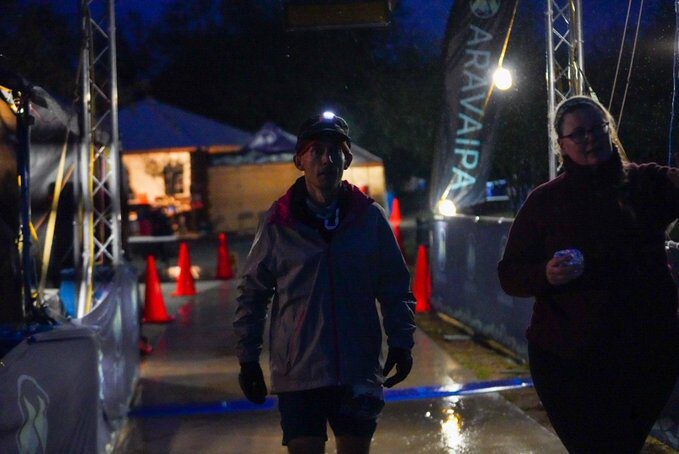
In its third year as a fixed-time race with multiple distances, the 48-hour event began Friday in ideal running conditions–cool and overcast skies. Saturday, however, was another story, with an increasing chance of rain evolving into a significant rainstorm that Coury says “parked itself across much of the state of Arizona and recorded a rainfall record for Sky Harbor airport.”
Despite the conditions, Hughes kept on moving. “Runners persisted throughout, including Jerry Hughes who really dug deep the last night running through off-and-on rain to not only set a new Canadian 48-hour record not only overtaking Dave Proctor but also landing on the top 10 all-time in North America,” says Coury.
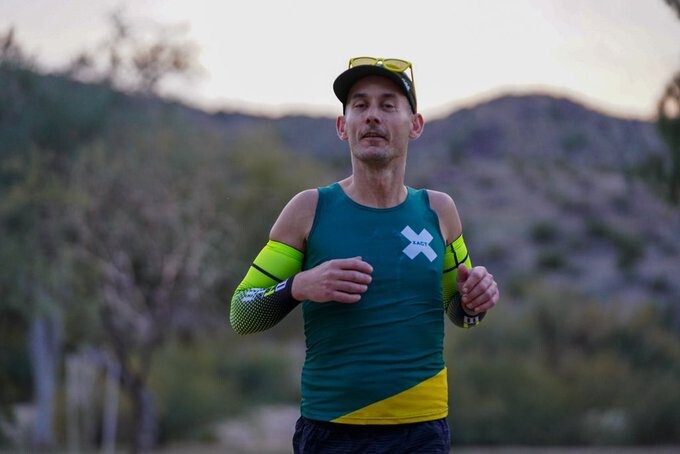
Hughes’s journey of resilience
Hughes started running in 2014 with a 10K race and says he was hooked after that. “A month later, I did my first half-marathon in 1:40,” he says. In 2015, he ran his first marathon in 3:11, and decided to make the leap to ultras, tackling the Squamish 50-miler in 2016. He upped his distance with his first 100-miler in California, where he bested his goal of running under 24 hours by a large margin, finishing in sixth place in a little over 18 hours.
“It was at this point that I realized I had a bit of a gift for this,” Hughes says. Since then, Hughes has been a regular on the ultra scene, racing everything from 100-milers to multi-day events. When COVID-19 shut down events, he reached out to friends Lisa Large and Josh Heath to organize the One Track Mind Ultra, a fundraiser for the Help Fill a Dream Foundation. The charity supported Hughes and his siblings (all of whom live with Gardner’s syndrome, a rare genetic disorder that can lead to colon cancer) when they were younger.
Hughes, a busy father of four young children, is known for being a positive force in the running community in Victoria and beyond, and for taking every opportunity he can find to give back. Fellow Canadian ultrarunner Matt Shepard ran with Hughes at One Track Mind Ultra, and says he was impressed by his resilience. “After hearing his story and the challenges that he has faced, I was blown away,” says Shepard.
“After realizing that he didn’t have to let his challenges define him, he started chasing these big goals to show others that they can also overcome seemingly impossible obstacles. Jerry shares so much love and inspiration,” said Shepard. “I am incredibly proud of him for his efforts and the lessons he is sharing with the world.”
While Hughes described the rainy, middle-of-the-night laps toward the end of his 48-hour run as “pure misery,” he was in great spirits Monday morning as he prepared to head back to Canada, joking that while he felt pretty good, he might need some assistance getting into the plane.
by Keeley Milne
Login to leave a comment
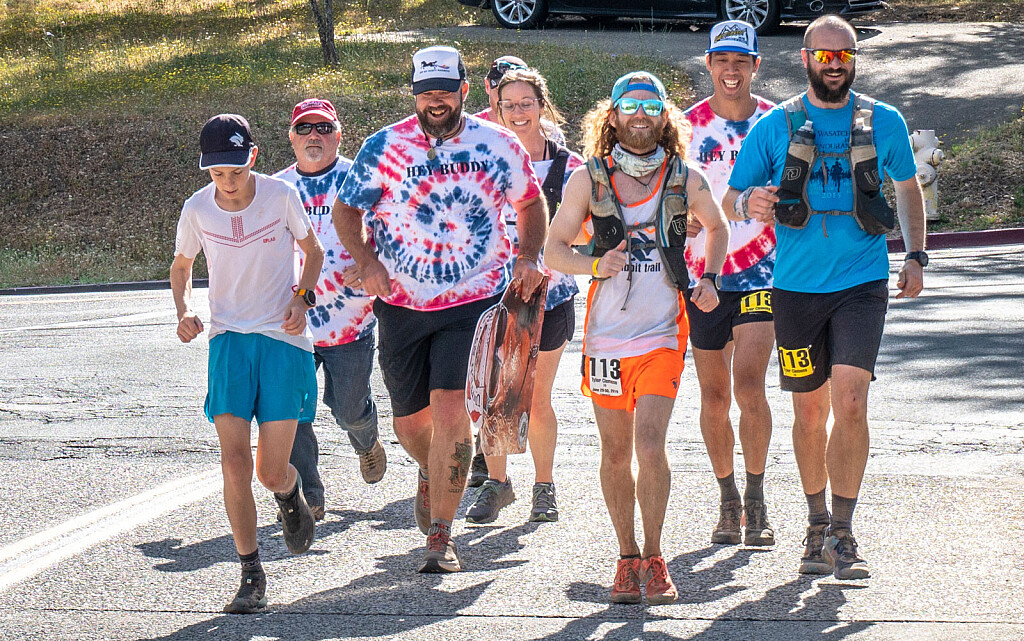
Western States 100 aims for inclusivity in updated policies for transgender, non-binary, and pregnant athletes
One of the oldest and most respected ultratrail races in the world has taken a further step at making their race more inclusive. On Wednesday morning, the board of Western States Endurance Run (WSER) released policy updates around transgender and non-binary entrants, as well as an updated pregnancy deferral policy.
WSER says that these new rules align with their “goal of ensuring fair and inclusive practices that respect the personal rights and dignity of transgender and nonbinary entrants while preserving the integrity of competition for awards and records.”
In October, Riley Brady became the first ever non-binary athlete to secure a golden ticket to WSER, finishing second at Javelina Jundred 100-mile race. While Ultrasigup allows runners to choose from three gender categories, it was the first time that Javelina Jundred organizers had included a non-binary division. An already urgent and important conversation about the need to expand inclusivity in ultrarunning–and inclusivity in general in the sport–became heightened after Brady’s remarkable performance.
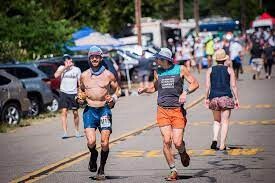
In an article Brady coauthored with coach David Roche in trailrunnermag, Brady explains: “Leading up to Javelina, I had emailed the race directors to inform them that I was seeking a Golden Ticket, which the race organization asks you to do. On my Ultrasignup page, I have indicated my gender as ‘nonbinary’ and my division as ‘female.’
As this was the first year Javelina had a non-binary division, the live results updates defaulted to the gender category. “As I understand it now, that misunderstanding may have contributed to some confusion online after the race, even as I emailed them in advance and followed the rules at every step,” shared Brady.
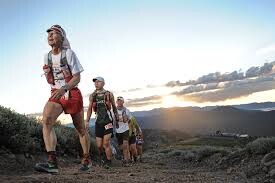
While WSER already had policies in place for transgender athletes, they have now clarified and updated those regulations, as well as added clear rules for non-binary entrants and an updated and more inclusive pregnancy deferral policy.
Updates for transgender athletes
Transgender women can register to compete in the female category, provided they have been undergoing continuous, medically supervised hormone treatment for gender transition for at least one year prior to the race, or in the male category with no restrictions.
Transgender men can register to compete in the male or female category, unless they are undergoing hormone treatment related to gender transition that includes testosterone or any other banned substance in which case they must register in the male category.
Policy for non-binary athletes
During registration all entrants will have the opportunity to select their gender category–male, female, or non-binary. Entrants who select nonbinary will also need to choose a category (male or female) for results and awards.
Non-binary entrants who are male-assigned at birth must select male as their category for results and awards, unless they meet the requirements for transgender women to compete in the female category under this policy.
Non-binary entrants who are female-assigned at birth can choose the female or male category for results and awards, unless they are undergoing hormone treatment related to gender transition that includes testosterone or any other banned substance, in which case they must select the male category.
Pregnancy deferral policy update
In order to defer a race entry due to pregnancy, entrants must submit a pregnancy entry deferral request in writing to the race director no later than one pm on the Friday before the race, as well as provide written confirmation of the pregnancy signed by a physician or medical professional.
The pregnancy deferral policy applies to anyone with a race entry who is pregnant at the time they enter the lottery and gets selected, becomes pregnant after the lottery and prior to race day regardless of how they obtained their race entry (lottery, sponsor etc.), or is an automatic entrant (top ten, golden ticket, etc.) and becomes pregnant or gives birth after obtaining their race entry and prior to race day.
by Keeley Milne
Login to leave a comment

Western States 100
The Western States ® 100-Mile Endurance Run is the world’s oldest and most prestigious 100-mile trail race. Starting in Squaw Valley, California near the site of the 1960 Winter Olympics and ending 100.2 miles later in Auburn, California, Western States, in the decades since its inception in 1974, has come to represent one of the ultimate endurance tests in the...
more...
Ultrarunner Tim Tollefson shares mental health challenges in new film
Tim Tollefson is a celebrated American ultratrail runner with wins at big races like the Javelina Jundred, Lavaredo Ultra Trail 120K and Ultra Trail Australia 100K; in 2017 he was third overall at Ultra Trail du Mont Blanc (UTMB), finishing well under 20 hours.
But then followed a string of failures, including at this year’s UTMB, which went badly from the start, forcing him to drop out about four hours in. (Tollefson went into the race with a positive COVID result.) A new film, What Goes Unsaid, reveals something only those closest to Tollefson knew previously–alongside his many successes and the admiration of his fans, for years Tollefson has been dealing with poor mental health and an eating disorder.
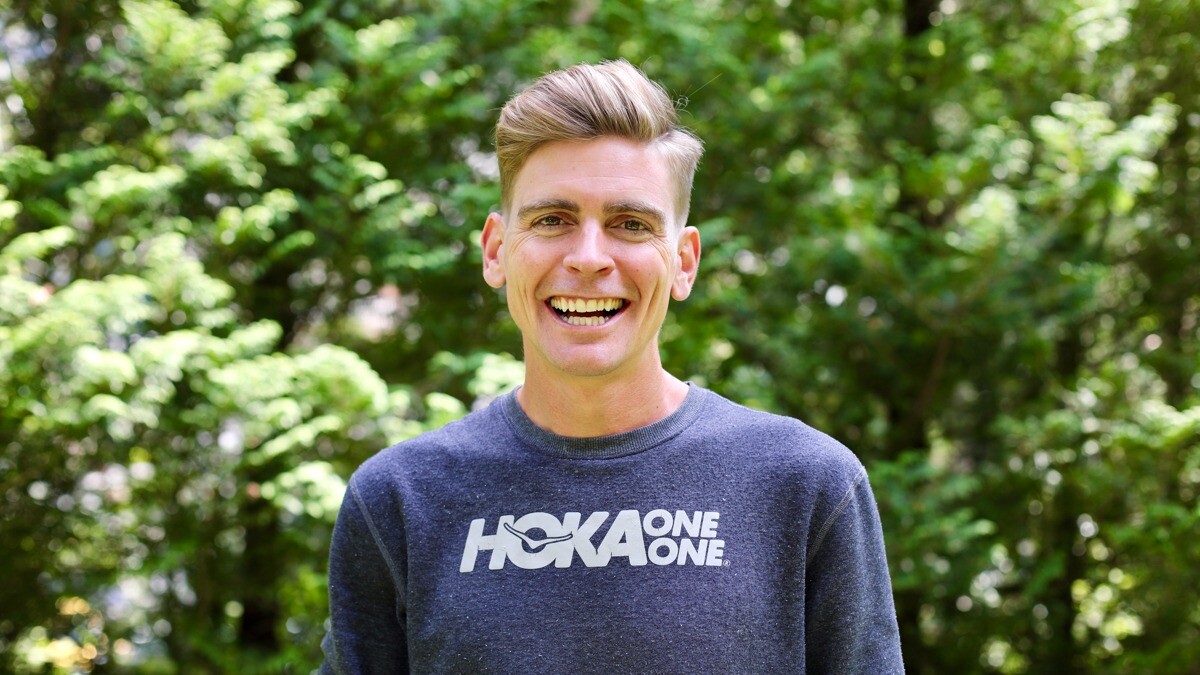
Tollefson, who is sponsored by Coros, had a tough adjustment when his family moved from rural Minnesota to the Auburn, Calif. (the sight of the iconic Western States 100 finish) when he was 10, and he was bullied– for wearing glasses, for his accent and his haircut. He started running in middle school, which helped him feel more accepted.
But it also made him want to be leaner, and more like the other runners’ body types he observed on the team; and since he wasn’t the only one trying to eat less to force his body to conform to an “ideal” body weight, he didn’t realize how insidious and dangerous it could be.
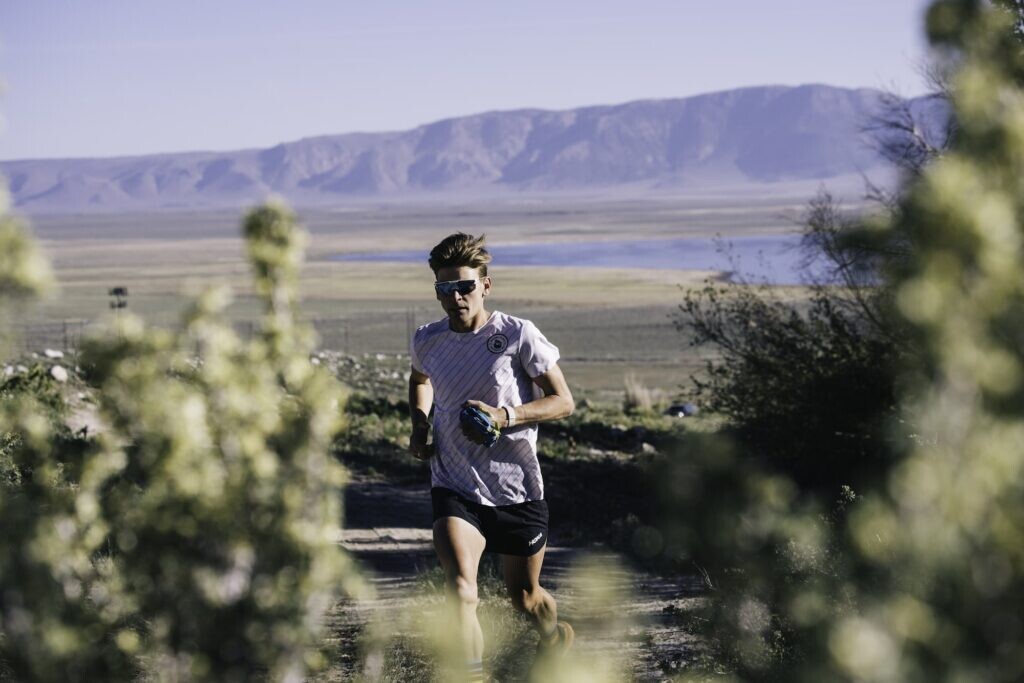
Tollefson qualified for the 2012 Olympic Marathon trials, but struggled in his brief marathon career, ultimately switching to trail running, which he hoped would bring greater success (and therefore self-acceptance). UTMB represented, in his mind, the acme of achievement in the ultratrail world–and he describes his 2017 podium finish, where he broke 20 hours (along with winner François D’Haene and runner-up Kilian Jornet) as the best race of his career. (He finished third in 2016 also.)
But the euphoria was short-lived. In 2018, he returned to UTMB and DNF’d–and again in 2019 and 2021. In the flim, he reveals that, even during the good years, he would almost be paralyzed with anxiety over being seen by others, and by perfectionism, severe body dysmorphia and obsessive-compulsive disorder (OCD).
Interestingly, this is one of the reasons he was attracted to UTMB: it starts in the evening, and much of the first half of the race takes place in darkness. By the time the sun rises, he has run long enough to feel slightly less bad about being seen. “I feel thin again, because I’ve run for 12 hours,” says Tollefson.
Tollefson says it’s not the running, or the altitude, that strikes fear into his heart–it’s being seen by other runners. He says he has been counting calories since 2003, and he only sought therapy recently. He now recognizes that what he sees when he looks in the mirror is distorted and not real.
Having grown up in the area and competed at Placer High (where Western States runners finish), Tollefson avoided it until 2021. He admits he was always critical of the race, whose course is not as technical or as spectacular as UTMB’s. Ultimately, he realized he was holding it to an unfair standard–much as he had always done to himself and his body. And he decided to run it.
He finished fifth last year, and as his fans already know, this year he finished, but not without struggling mightily–against dehydration and a powerful urge to quit. He placed 33rd overall, with a time of 20:41:28. “I decided that I wasn’t going to give up on myself,” Tollefson told filmmaker Billy Yang, who was commentating, after finishing. He also felt he owed it to his crew the volunteers and the runners who didn’t make it off the waitlist, to finish.
He shares his story now in the hope that it will encourage others to do the same. Several female athletes (including Olympic bronze medallist Molly Seidel, trail runner Amelia Boone and steeplchaser Allie Ostrander) have shared their stories, but as Tollefson’s makes clear, eating disorders are not limited to female athletes. (Canadian beer miler Corey Bellemore opened up about his own experience during the pandemic.)
“When other people share things publicly, and I relate or emphathize, it makes me feel less alone,” he says. “I’ve never had the confidence to reach out to those people and say thank you, but I know it has an impact.”
by Anne Francis
Login to leave a comment
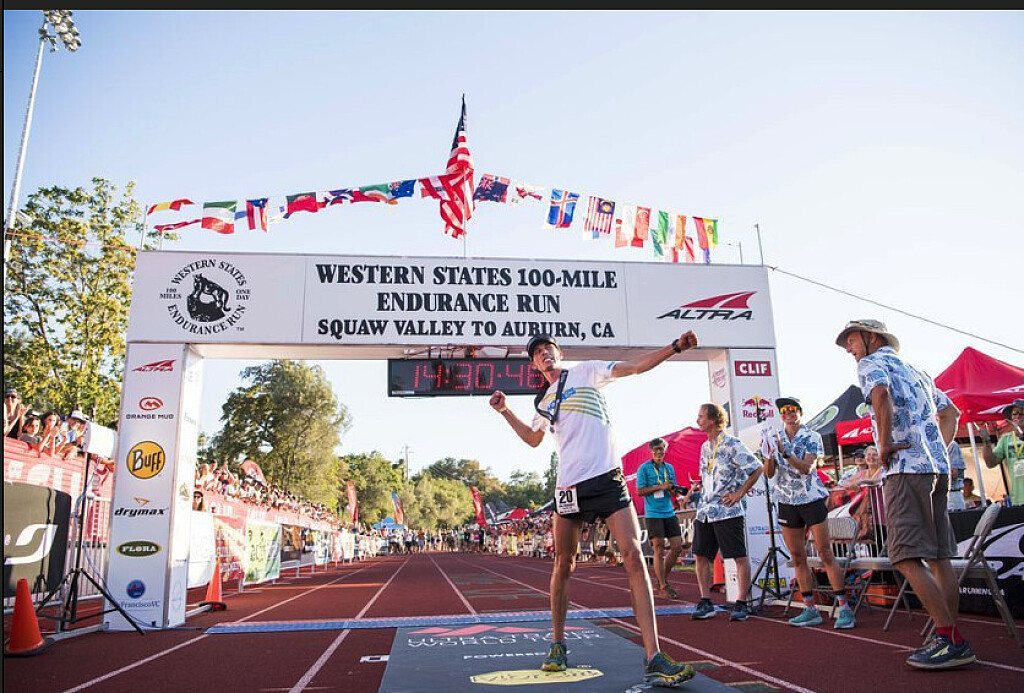
Western States Endurance Run Announces This Year's Golden Ticket Races
On August 9th, 2022, the Western States Endurance Run (WSER) updated its schedule and criteria for the 2022-2023 Golden Ticket races. For the second consecutive year, the lineup will include three international races, including UTMB, and the first-ever Golden Ticket event in Asia.
The Western States Endurance Run is the U.S.'s oldest and most competitive 100-mile race and has long depended on a lottery system to modulate the number of runners on the start line. Golden Ticket events give the top two runners automatic entry into the race, allowing them to bypass the competitive lottery. In this system, 28 spots are reserved for Golden Ticket winners in WSER. If the recipient of the Golden Ticket winner already has an entry (either through the lottery or another Golden Ticket event) the ticket rolls down to the next runner without entry. All runners who finish in the top ten at Western States also get automatic entry the next year.
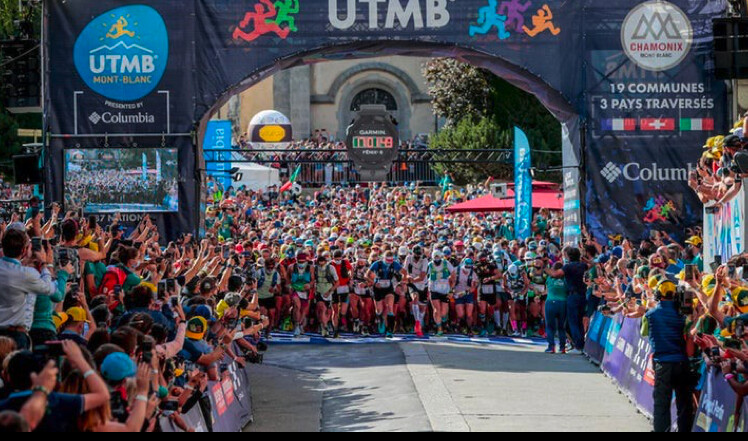
Like last year, the list includes Ultra Trail Mont Blanc (France, Italy and Switzerland) and Tarawera by UTMB (New Zealand). However, the Endurance Trail des Templiers (France) has been replaced with the Doi Inthanon Thailand by UTMB 100M. This is the second year that international races have been Golden Ticket events, and the first year that features an event in Asia, which spreads out and diversifies opportunities for international elites to gain entry to WSER.
There are still only four Golden Ticket races in the U.S., and each year these events get even more competitive. Historically, there have been five to six Golden Ticket events in the U.S. Notably, the Lake Sonoma 50 is no longer on the docket, which was the only sub-100k chance at a Golden Ticket. All the remaining events are now at least 100k, which is WSER's current qualifying distance. There are now three 100-mile qualifiers: UTMB, Doi Inthanon Thailand 100M, and Javelina Jundred (Arizona).
The inclusion of four UTMB-branded events signals the coalescing of trail running's most competitive events under a single UTMB banner. Additionally, if runners want to run at the UTMB main event in Chamonix, France, they need to first run a UTMB-branded race to collect sufficient running stones to qualify.
by Trail Runner Magazine
Login to leave a comment
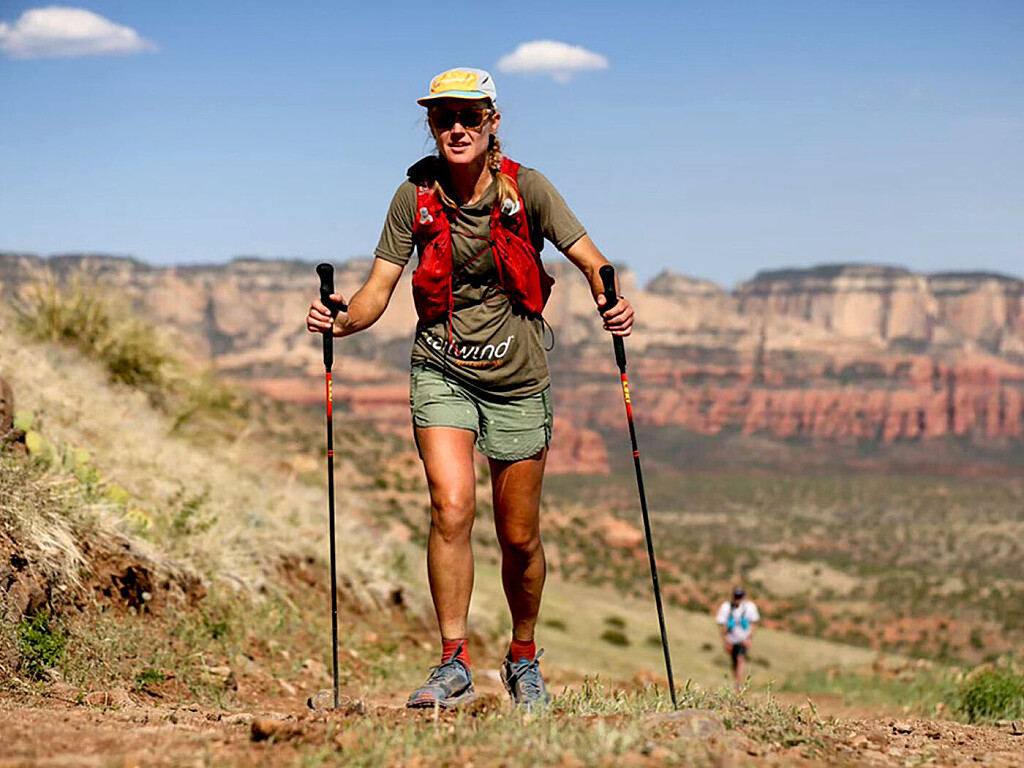
The second-ever Cocodona 250 will kick off on Monday, May 2nd, with an alternate course beginning in Prescott, Arizona, and ending in downtown Flagstaff
Over 200 runners will have roughly five days to cover over two hundred miles of some of the Southwest's most beautiful and challenging terrain.
The race takes place on the current and historic homelands of many Indigenous groups, including the Jumanos, Yagapaiv Apache, Hopitutskwa, Pueblo, Zuni, Hualapai, Hopitutskwa Hualapai, and Hohokam.

Here's what you need to know about the 2022 Cocodona 250, which athletes to watch for, and how to follow along.
Course Changes for 2022
Due to the Crooks Fire, which started on April 18, race officials rerouted nearly a quarter of the course after the Prescott National Forest was placed under an emergency closure through May 3, for ease of firefighting efforts. As of April 26, the Crooks Fire was 16% contained and burning around 6,400 acres south of Prescott in the Bradshaw mountains.
The new course will start in Prescott, Arizona, rather than Black Canyon City.
"[The fire] basically broke out less than a mile from the mile 63 aid station," said Jamil Coury, owner of Aravaipa Running and one of the Cocodona organizers. "We've been able to do a reroute of the first 70 miles of the race courseand we're going to be running about 60 miles and then we'll merge back with the course and we'll make up the rest of the miles later on in the race."
As a relatively new race, Coury says there are still some challenges to work through with an event as long as Cocodona. The last-minute course changes proved particularly challenging, but he hopes the event will continue to settle into a routine over the coming years.
"We're trying to work out the kinks for sure. You know, a lot can happen in this length of race," he says. "Everything else is mostly kind of like last year. We're looking to do a livestream of the event again on our YouTube channel until at least the top female podium comes in and we'll see from there, we might try and do some bonus broadcasts with some of our finishers in the last couple of days. It's more like we're trying to test a couple more ideas for the course. We'll get feedback from those and then maybe settle into a more long term route."
Runners to Watch
In its first-ever running last year, Cocodona featured 176 runners, 108 of whom finished. This year the field is considerably larger, with 234 registered runners. Twenty-one of those are finishers from last year's inaugural event: 17 men and four women.
Those 17 men include 2021 champion Michael Versteeg and three other top-10 finishers (Joshua Locke, Tod Bachman, and Mark Vogel). The women's field includes only two returners from last year's top 10, fifth place finisher Sarah Ostaszewski and ninth place finisher Jodi Semonell.
But alongside those returners comes a strong contingency of newcomers who will look to challenge both the men's and women's course records of 72:50:25 and 85:30:38, respectively.
"For the women, I think the biggest name on the list would be Annie Hughes from Leadville. She won the Moab 240 last year, Leadville 100 last year, and then Coldwater this January," says Coury. "Briana Grigsby from Tucson was fifth at the Black Canyon 100K this year and second at the Javelina 100K last year. And then Sarah Ostaszewski. She finished last year, and she'll be returning."
Hughes, at just 24, will seek to remain undefeated at the 200+ mile distance. She's been training for Cocodona with shorter ultras since winning the Moab 240 in October. She won the Coldwater Rumble 100 in January and the Staunton Rocks Running Up For Air 12-hour event in February. At that race, she racked up 56 miles in just under 11 hours and beat all the other competitors, regardless of gender. She then celebrated her 24th birthday on March 13 by running for 24 hours around her home in Leadville, Colorado, covering nearly 120 miles.
"I feel like with 200s, there's just so much time to go through highs and lows, and you just kind of have to ride the highs when you're feeling good and just go with it," said Hughes. "You can't really plan for these things, so I'm just kind of going into it looking at it as an adventure."
After Cocodona, she will continue a full racing schedule through the summer with three 100s: High Lonesome in July, Run Rabbit Run in September, and Javelina in October, back in Arizona. For Cocodona, she'll focus on carefully scheduling sleep and nutrition, seeing the experience as an opportunity for adventure.
"I think it's really cool that [200s] are becoming more popular and that a brand new race as amazing as this one is now available for runners," said Hughes. "I'm really excited to be a part of this race in one of the first years it's ever been run, because I think it's going to become really big."
On the men's side, Coury will be watching for 200+ veteran Michael McKnight, who DNF-ed last year's race due to heat struggles, and last year's winner Michael Versteeg, as well as backcountry guide, coach, and pro Brooks athlete Joe McConaughy, who will take his first crack at the 200+ mile distance. McConaughy currently holds the fastest known times (FKTs) for the Arizona Trail (supported), Long Trail in Vermont (self-supported), and Appalachian Trail (northbound, self-supported).
"[McConaughy has a] strong thru-hiking, kind of FKT background," says Coury. "Also really fast at short distance and then even at like the 100-mile distance, he's got some really fast times. He has this interesting mix of super long and short and fast."
McConaughy also brings recent experience with running fast in the area where Cocodona takes place.
"I'm stoked. It's an awesome route. [Aravaipa is] an awesome race organization. There's lots of great runners. So it's kind of like everything you want from an effort," says McConaughy. "I did the Arizona Trail last year and I did it right around the same timeSo it's really cool thinking I did the Arizona Trail and now coming back for another big section of trail. And adventuring in Arizona is really exciting. I just love the desert and the vibes and the whole area. It's just a very, very lovely, fun state."
MEN
Michael McKnight (32, Smithfield, UT): two-time champion of the Triple Crown of 200s (which includes the Moab 240, Tahoe 200, and Bigfoot 200), his record on those three combined races is the fastest ever by nearly 45 hours (162:00:51). He has multiple wins at both Bigfoot and Moab.
Michael Versteeg (Prescott, AZ): Last year's winner, also won the 2020 Fuego y Agua 100K and was fourth at the 2019 Run Rabbit Run 100 Mile
Chad Trumbo (39, Columbus, OH): Won the Fuzzy Fandango 50K in November, sixth at the Mohican 100 Miler in 2021.
Joe McConaughy (30, Seattle, WA): Third at Gorge Waterfalls 100K earlier this month, fourth at the 2021 Javelina Jundred, holds numerous thru-hiking FKTs.
Cole Crosby (33, Cranston, RI): Fifth at the USATF 50K championships in 2020, recent wins at the Manchester to Monadnock 55 Miler and MCW Westfield Ultra 9 Hour.
Eric Senseman (33, Flagstaff, AZ): 2017 JFK 50 Mile winner, with top-three finishes at the 2019 and 2021 Black Canyon 100K.
WOMEN
Annie Hughes (24, Leadville, CO): Recent wins at the Leadville 100, Coldwater Rumble 100, and Moab 240.
Rhoda Smoker (35, Elverson, PA): Recent wins at the Conquer the Wall Endurance Challenge 47 hour run, Dogwood Ultras 12 hour, and Green Monster Trail Challenge 50K.
Brianna Grigsby (34, Tucson, AZ): Recent wins at the Sinister Night Runs 54K and McDowell Mountain Frenzy 50K, plus top-five finishes at the Black Canyon 100K and Bandera 100K earlier this year.
Lee Conner (49, Cleveland, OH): Top-five finishes at the Forget the PR Mohican 50K, Run Lovit 100 Miler, Outlaw 100, and Cloudsplitter 100 - all in the last 8 months!
Jodi Semonell (49, Omaha, NE): Second at the 2020 Moab 240, ninth last year at the inaugural Cocodona 250, recent wins at the Dizzy GOAT 12 hour run and Hitchcock Experience Endurance Runs 100 Miler.
Sarah Ostaszewski (30, Beaverton, OR): Fifth at last year's Cocodona, with recent wins at the Bristow 24 hour run, Mogollon Monster 100 Miler, and Across the Years Marathon, plus a top-10 finish at the Javelina Jundred in October.
by Trail Runner Magazine
Login to leave a comment
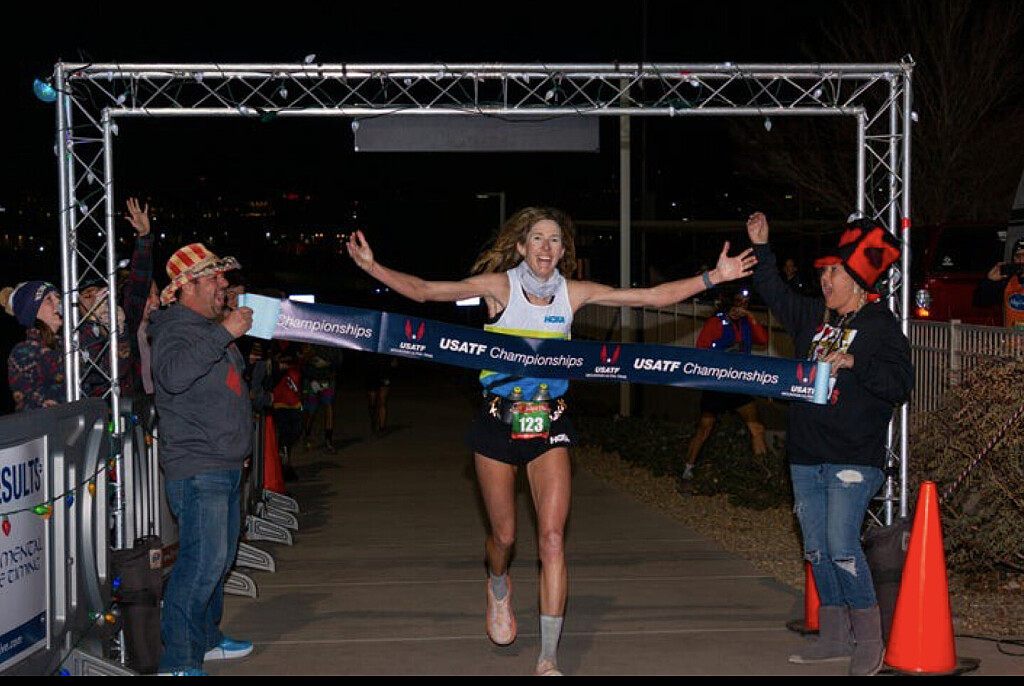
Camille Herron Breaks Her Own 100-Mile World Record- And Then Some
"What a difference a year makes."
That was the first thing Camille Herron had to say when she reflected on her latest record-breaking run at the Jackpot Ultra Running Festival on February 19. Herron, a new addition to the master's division (as of December 2021), opened her 2022 campaign with a commanding performance.
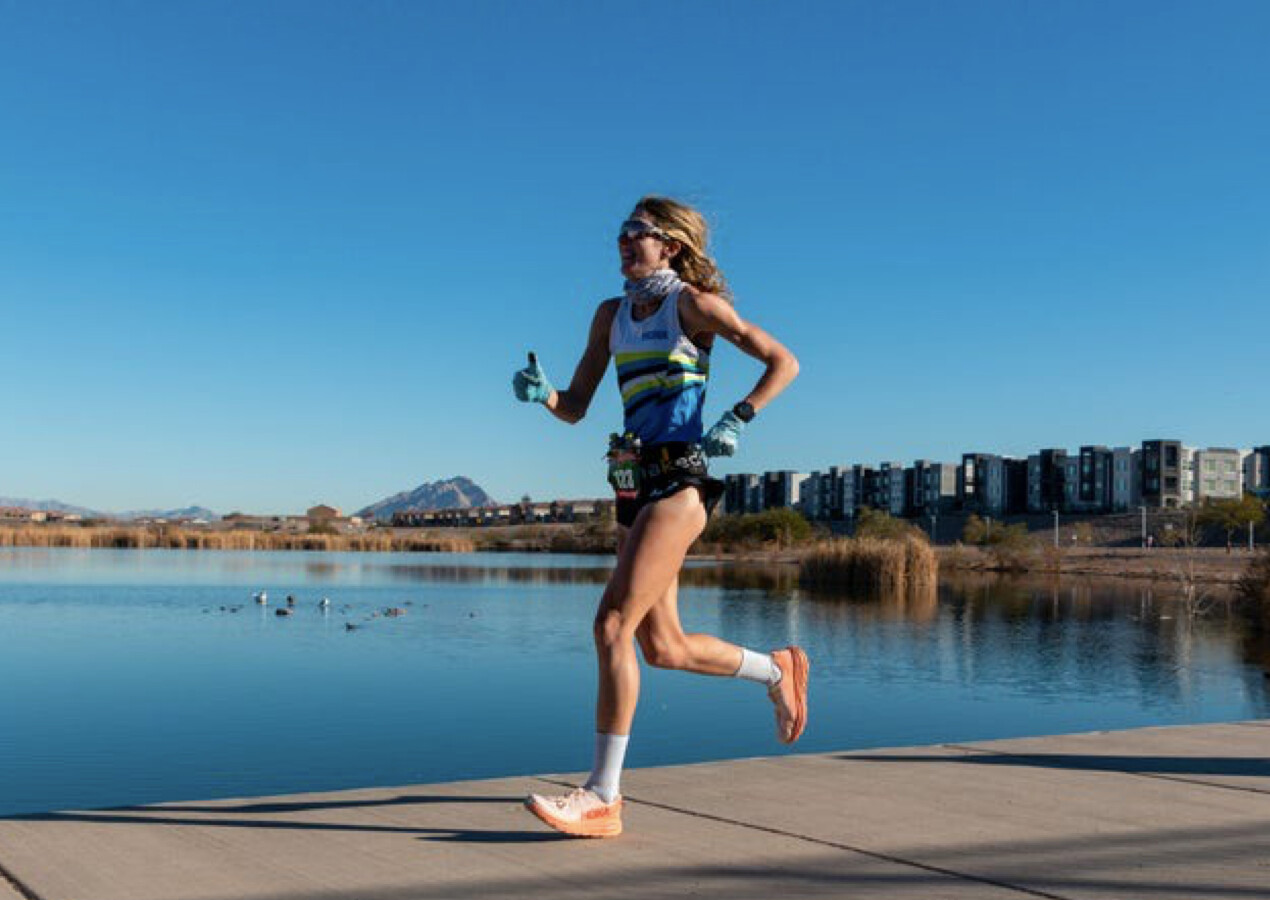
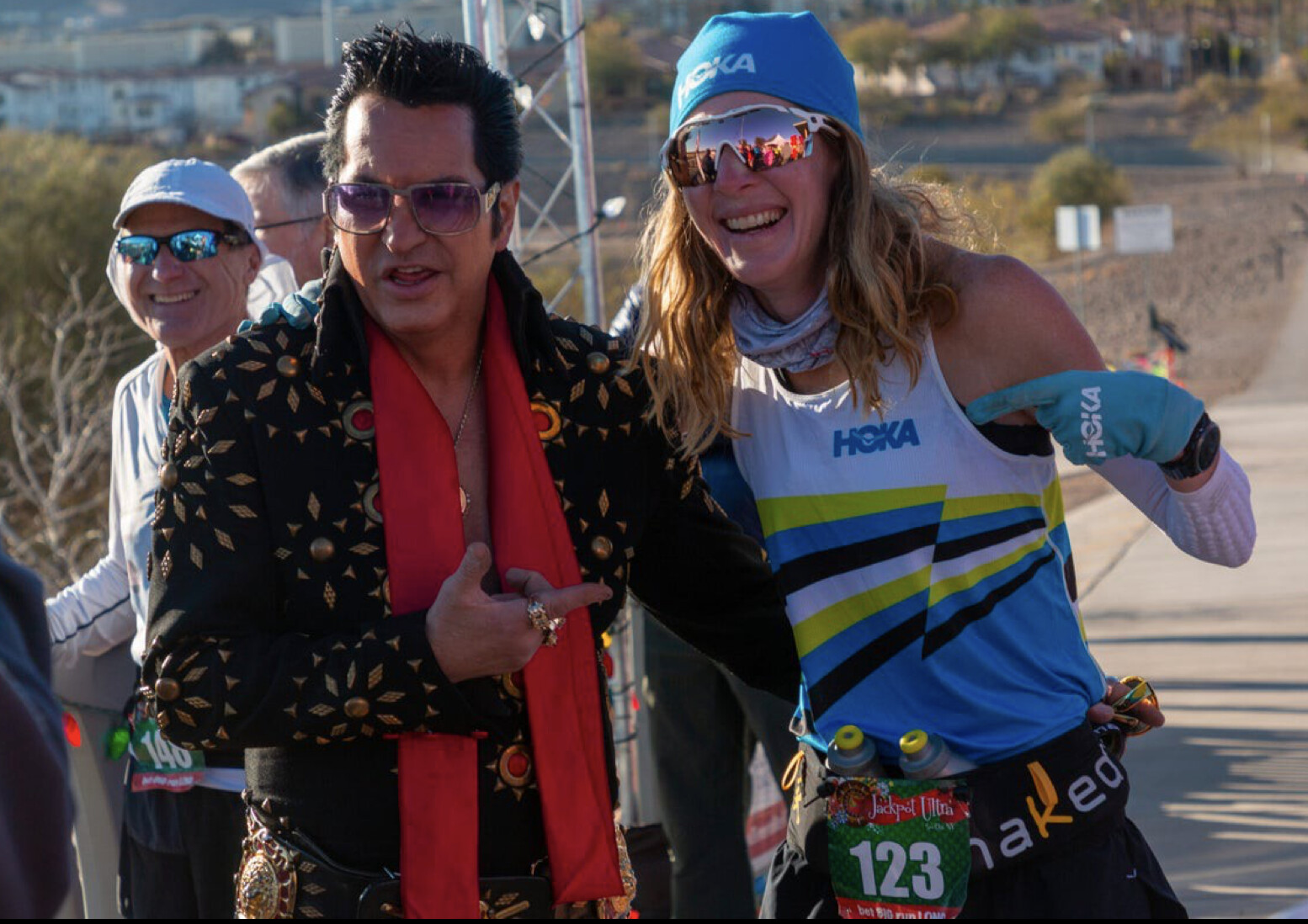
She was the outright winner of the 100-mile race and the USATF 100-mile national champion; she set a 50-mile age group world record (6:08:24), a 12-hour world record (94.5 miles), and a 100-mile world record (12:41:11, breaking her own previous record of 12:42:40 from the 2017 Tunnel Hill 100).
For Herron, this performance, coupled with dominant wins last fall at the Javelina Jundred and Desert Solstice, is just what the doctor ordered after a tough 2021.
"I ran the Jackpot 100 last year and I just didn't feel good during that race," Herron says. "It was the fourth race that I just didn't feel right. I'd hit 40 miles and want to lie down and sleep. That followed me to Western States."
That tired feeling turned out to be a result of high iron levels and low levels of magnesium and vitamin B12. The iron overload was the main culprit, which she learned from InsideTracker data. Most endurance athletes commonly have low iron levels. The result of Herron's iron excess was anemia-like symptoms.
"I was feeling so bad. My breathing was heavy, I was extremely tired, and it wasn't normal race fatigue," Herron says. "It was pretty scary."
To normalize her iron, Herron worked with her longtime friend and dietitian, Jackie Dikos. Together, they mapped out a plan starting in July. By mid-August, Herron "had [her] mojo back and was feeling energized."The jumpstart catapulted Herron back into training, hitting paces she hadn't seen in years. That's when she got the bug to go after her 2017 100-mile record.
The record was something she'd contemplated for 2020 before the pandemic hit. She nearly went for it after feeling better in 2021 at a race in Hungary, but food poisoning pulled her from the start. That was after a hip flexor injury cost her a six-day race in Germany.
Fast forward to Javelina Jundred and Desert Solstice, Herron was looking for redemption.
"Going into Javelina, I was fired up," Herron says. "I was overdue for a good race. I broke the course record by like 49 minutes. I wanted to keep that fire going."Hitting the Jackpot
A week and a half after moving home to Oklahoma after three years in Arizona, Herron was on a plane with her husband and coach, Conor Holt, to Las Vegas for the Jackpot 100. Most of all, she wanted redemption from her 2021 outing there. Breaking 13 hours sounded good, but if her record was in reach, she wanted it.
That's where she found herself at the 50-mile mark. Her 6:08:24 split was enough for the 40-44 age group world record, and that had her on pace for the 100-mile record. She kept her foot on the pedal.
"Between the elevation gain and the heat, it was much more fatigue than I felt in previous world records," Herron says. "I was trying to assess how my body felt at 50, and I was feeling quite a bit of fatigue. I had to wrap my head around having to endure the second half of the race."
Battling minor issues from the heat and a nosebleed, Herron troubleshot everything the race threw at her. Around mile 75, she caught race leader Arlen Glick.
Herron saved time by only stopping once during the entire race. That lone,15-second break came around mile 70, when she shotgunned a non-alcoholic beer: an Upside Dawn Golden from Athletic Brewing."You know when you do long runs and you have a craving for a beer? Because of the iron overload, I've had to cut out alcohol. So, I've been hooked on non-alcoholic beer," Herron says. "I've never done a beer mile, but I guzzled it pretty fast."
With three laps to go of the 85 total, Herron had already secured the 12-hour record. Doing the math, she realized she was 20 seconds under her 100-mile world-record pace. There was no margin for error. With three miles to go, Herron dropped the hammer.
"I went into beast mode," she says. "I thought about Keira D'Amato chasing down Deena Kastor's marathon record. [Keira] powered through those last miles. I channeled that and thought back to what my high school track coach would say, 'Lift your knees. Drive your arms.'"
Holt cheered Herron on until she came across the line in 12:41:11 for the new world record and the outright win. In the final three miles, she went from a 20-second cushion to break the record by almost 90 seconds. Her final mile was 7:08, and her average pace over the full 100 was 7:37.
"As a woman, you can't be afraid that you could win the race," Herron says. "I've done it a few times now. It was added motivation as I was going after [eventual men's winner] Arlen Glick. Everything worked out. Pretty much, every goal I had, I achieved. I was overjoyed."Eyes on the Prize
Herron is back to the top of the 100-mile ranks as she enters her Western States training block. At 40, she's more fired up than ever to deliver the best performances of her career.
"I can remember hitting my 30s and thinking I'm on some downward slope," Herron says. "We need to shift that mindset. When I look at my training logs from 10 years ago, it's crazy. I used to do long runs every Sunday. As I've gotten older, I've taken better care of myself. If I do one or two long runs a month, that's good enough for me. I've said, women ultrarunners age like fine wine. What I may not have in leg speed anymore, I make up in physical and mental strength to keep going."
Herron credits changes in her diet and training, and the addition of a squat rack, for her continued strength as she enters into the master's ranks. These are the tools she plans to use in preparation for Western States. If all goes to plan, she will be a force to be reckoned with come June.
"I just feel like I have to keep going back and try to have a magical day there," Herron says. "Now that I've run the entire course, it's gonna be fun to go back and push my human limits. I'm hoping to have that dream day."
by Trail Runner Magazine
Login to leave a comment
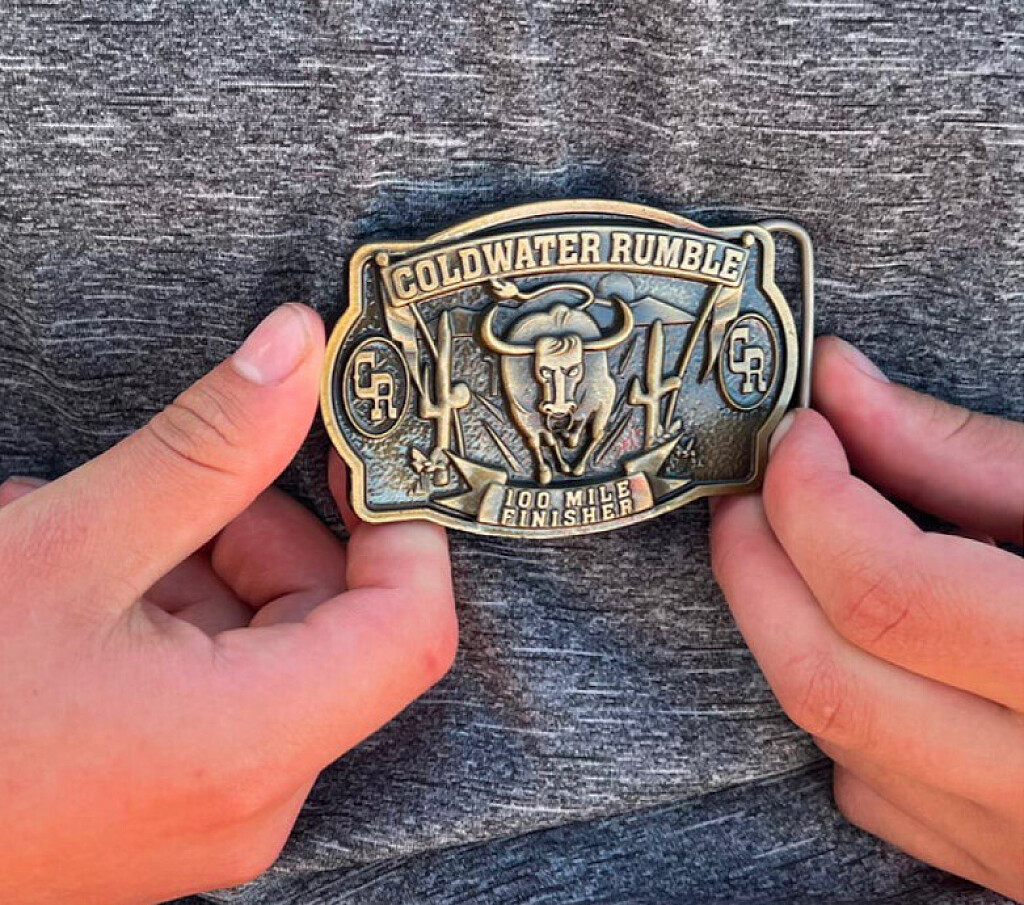
Zach Bates' 100 Mile Dream
Zach Bates loves statistics. Ever since he was a kid, he's scoured Guinness world records for longest, shortest, fastest, coldest or hottest. He could recite the Scoville rating for every hot pepper. Being autistic, that's how his mind has always worked. He loved to focus on specific topics, and the numbers called to him.
That might be why he fell for running. He joined the cross country and track teams his junior year of high school, memorizing his teammates' PRs and paces. Eventually, his sights turned to the pros. From Usain Bolt to Zach Bitter, he studied all of their career numbers. He also got the itch.
"He didn't want to just know these times, he wanted to do it, too," says Rana Bates, Zach's mother. "He begged me to sign him up for a marathon during his senior year. He was really interested in the longer stuff in track. He wanted to go even farther."
Because of the pandemic, most marathons during his senior year had been cancelled. So the 19-year-old waited patiently until graduation day in May 2021. That day, he turned to his mom and said, "I want to do a 100 miler before I turn 20."
Rana was thrown off by the request. No one in their family ran. Not his father, his mother, his sister or his twin brother. Now Zach wanted to run triple-digits in less than 10 months. She let the idea sit for a few days before Zach followed up. "Did you sign me up for a 100-mile race yet?"
"He's really mild tempered and doesn't ask for much," Rana said. "When he does ask for something, he really means it and we take him seriously. So, I bought some books."
A Crash Course
Rana found herself whisked into the world of her son's dreams, researching and formulating a plan for Zach to be able to run 100 miles in a safe and healthy way. With Zach unable to plan himself, Rana had to take a broader approach, acting as his coach and instructing him on every logistical necessity for training.
"All of the thinking end stuff, I do," Rana said. "Zach does the running."
Rana's crash course worked smoothly for the first few months, but books only went so far. One of the first things she learned about distance running was the generosity of the community. The more she mentioned the goal to people, the more people came into Zach's life.
First, there was John Hendrix, a local ultrarunner. He offered knowledge about injury prevention, gear and nutrition for ultradistance running. But more than anything, he shared knowledge of the local trail systems and became an occasional running partner for Zach.
When it came to training, Zach and Rana had a process for each new trail. First, they had to hike it together so Zach could familiarize himself with the route and what landmarks to look for. Then, Rana would tag along in the car, driving between trailheads to meet Zach and field calls in case he got lost.
It's a lot of work, but Rana wants to live out the message she and Zach want to share.
"There's a list of things you do when you find out your child has autism," Rana said. "But we need to be careful not to let those things become the priority of what our children want. We need to listen to them, hear their dreams. Zach wanted to run so badly, he just didn't have the resources to find routes, sign up for a race, or things like that. You can't just say, it's too hard for us. We need to respect them as individuals and help them reach their dreams."
As Zach started to race, more and more people noticed him. By October, he'd finished the High Mountain Half, the Beaver Canyon Marathon, and the Do-Wacka-Do Trail Run 50 miler. He made friends everywhere he went, astonished at someone his age running the distances he was. At races, autism wasn't the defining feature of who he was.
The Rumble
There's an infinite number of variables in a 100-mile race; often, things simply go well until they don't. For Zach, the first roughly 80 miles went smoothly. He was far way ahead of the cutoff when he picked up de la Rosa as a pacer for the final 20 miles. But he started to get quiet, only occasionally breaking the silence.
"If my legs could talk, they would say, 'Whyyyyyyy!" de la Rosa recalls Zach saying.
Then a problem arose at mile 88. A hip flexor tweak forced Zach into a limp. They tried stretching, but that only worked momentarily. The limp lingered, but they pressed on.
De la Rosa could see the teenager doing calculations in his head, watching his time goals get further and further away. It was a place de la Rosa had been many times since he started running ultras in 2008. In that moment, captured on video, de la Rosa thought of what he would've wanted to hear if it were his teenage self.
In the next miles, Zach slowed to a painful trudge, about 45-minutes per half mile. Finally, a stroke of luck found them at mile 94: a runner with two Tylenol. The pain wasn't gone, but Zach started running again, dropping three straight 12-minute miles. With that, finishing under the 32-hour cutoff was assured.
"That's called a comeback!" de la Rosa hoots in the video. "That's called rallying! Woohoo!"
Runners treated him like anyone else. For one 40-mile training run, Zach was supposed to pace Hendrix for the Javelina Jundred. Hendrix dropped out at mile 60, but word got around in the crew area that Zach was willing to pace.
"There was such an openness and willingness from runners," Rana said. "He paced one guy from Boulder, Colorado, and the guy came back stoked, saying this was the most fun he had with a pacer. Another guy from California picked him at mile 80 and Zach paced him to a sub-24 finish. It's the coolest thing ever to have a support system like this. These runners have stayed in touch with us and offered help. It's amazing."
After finishing the 50, Zach signed up for the Coldwater Rumble 100 in January and started TikTok and Instagram accounts (@running.farther) to share his progress. That left three months to prepare, but Zach was feeling burned out. Rana was out of her depth for guiding him, so they sought a professional coach. With a reference from Run Flagstaff, they connected with Nickademus de la Rosa.
"You can always tell if there is a deep, intrinsic reason someone does a 100 miler, and that often proves if they will do whatever it takes," said de la Rosa. "Zach had a deep reason to be there. You see it in his eyes when he talks."
They dropped Zach's mileage down to get him healthy, mentally and physically, then began ramping it slowly back up. The biggest week came four weeks before race day: 10, 20, and 30 mile runs back to back to back.True to form, Zach hit all his splits on the dot.
At the finish line, the Bates family waited. Zach's watch had died in the night, leaving them reliant on texts from de la Rosa to track his progress. Finally, the final text came in. Zach was moving slower again, but they were a mile away.
Rana rallied a friend who rallied the entire 250-yard string of tents along the final stretch. When Zach arrived, a massive cheer tunnel awaited him. Zach looked at de la Rosa, as if to ask permission to run through it.
"You've got this," de la Rosa said.
Alone, beneath the roaring crowd, Zach ran. He stopped when he crossed the finish and embraced his family. His time was 28:06:36, good for 38th overall.
'I'll cherish that moment forever," Rana said. "Our family will never be the same."
Zach's royal entrance was completed with a camping-chair throne and a parade of well-wishers. Unable to stand when it was time to leave, Zach was lifted by his father and uncles over the crowd and carried like a king to the car.
The limited mobility lasted a few days. After a long postrace nap, Zach eventually made it to the bath, an endeavor so challenging he made a TikTok of himself easing up the stairs set to the "Mission Impossible" theme song.
By a week later, he was moving better, already eyeing what's next. He's got the Canyons 100K and Javelina Jundred on the calendar for 2022, but it doesn't stop there. He also wants to do the Cocodona 250, but that's for down the road. For now, he's back to running and chasing his dream.
"Even if Zach never ran again, the last eight months have changed us as a family," Rana said. "The outpouring of love from everyone, everywhere, for this kid chasing his dreams and making them come true. Not everyone is able to. Because of everyone, Zach did."
by Trail Runner Magazine
Login to leave a comment
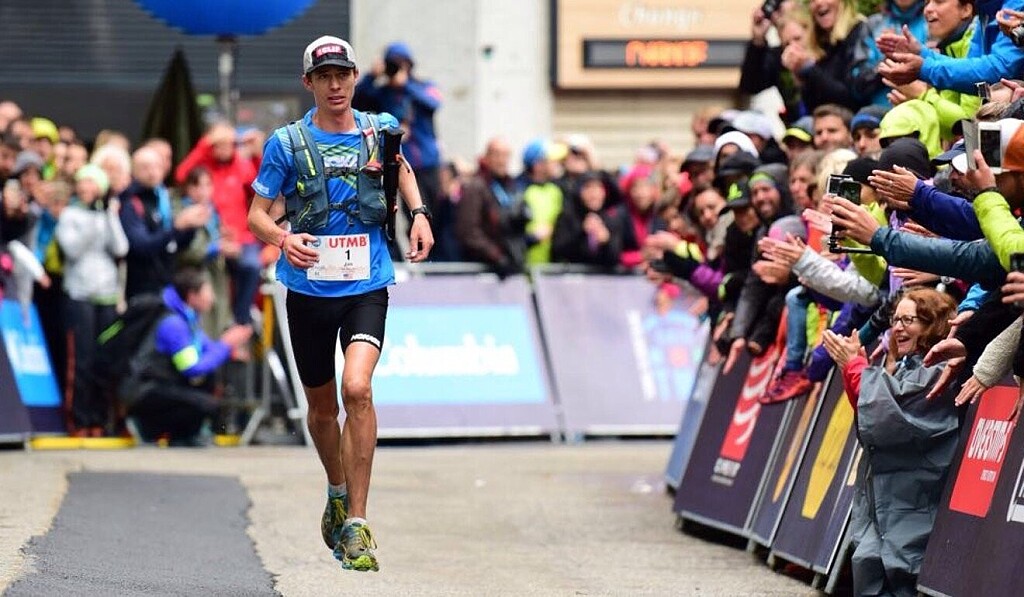
American Jim Walmsley will be taking another stab at UTMB
The 2022 edition of the Ultra-Trail du Mont-Blanc (UTMB) is seven months away, but the elite fields have been made official. Although he has never done better than fifth (and that was back in 2017), American Jim Walmsley will be gunning for a podium finish again on Aug. 28, along with seven of Canada’s top ultrarunners, including last year’s third-place finisher, Mathieu Blanchard. Check out the top athletes who will be racing this year.
UTMB — men
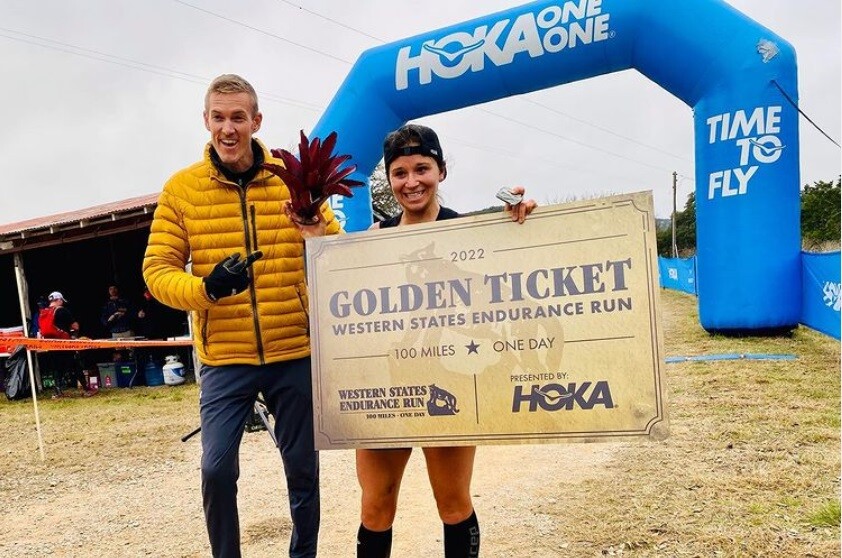
Blanchard, who is from France but lives and trains in Montreal, is among the top men who will be competing this year. Going into the race, Blanchard says his goal is to win the race, and he’ll have two main focuses for his training: “the first will be to prepare myself mentally, to visualize, to accept this possibility of a big goal because I still have trouble believing it today,” he says. “The second will be to build a logical race path to prepare for this race, choices of reason rather than choices of the heart.”
Last year’s second-place finisher, Aurélien Dunand-Pallaz of France will be returning, along with 2019 UTMB winner, Pau Capell of Spain. Walmsley, whose top finish was fifth in 2017 but who has won the Western States 100 for three consecutive years (2021, 2019, 2018) will also be challenging for a podium spot, as will France’s Xavier Thévenard, who has won UTMB three times (2018, 2015, 2013) and placed second in 2019. Nine other recent top-five finishers will also be joining them on the start line.
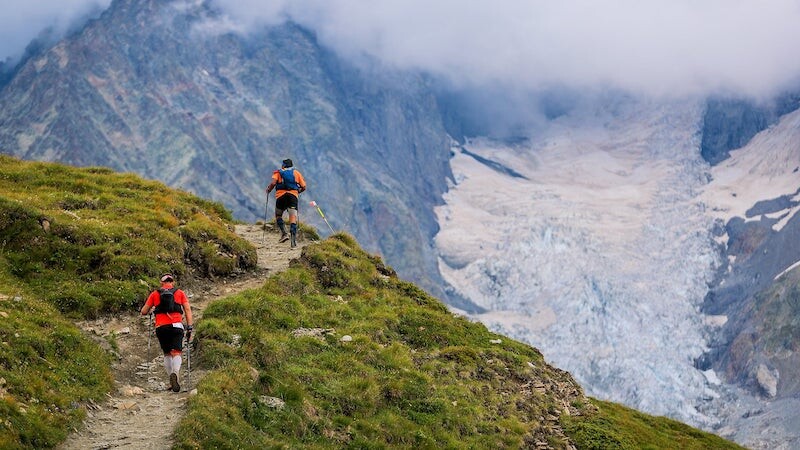
Notably absent from the start list is last year’s winner, François D’Haene and three-time UTMB champion, Kilian Jornet.
UTMB – women
Canadian ultrarunning fans will have plenty to cheer about in the women’s race in August. Three top Canadians will be on the start line, including Montreal’s Marianne Hogan, who won the 2022 Bandera 100K and placed second at the Ultra-Trail Cape Town 100k. Toronto’s Claire Heslop, Canada’s top finisher in 2021, will be joining Hogan, along with Alissa St. Laurent of Moutain View, Alta., who placed fifth in the 2018 UTMB TDS 145K in 2018 and sixth at UTMB in 2017.
“My dream result would be a top 10 at UTMB,” says Hogan, “so I will definitely shoot for that. A lot can happen come race day, so I will make sure to show up to the start line as ready as possible.”
Other top contenders on the women’s side include Camille Herron, who won the 2021 Javelina Jundred Mile (and broke the course record) in 2021 and set the 24-hour world record in 2019, Anna Troup, who won the 2021 Lakeland 100 Mile and the 2021 Spine Race Summer Edition 268 Mile, Sabrina Stanley, two-time winner of the Hardrock 100 and Beth Pascal, winner of last year’s Western States and two-time top-five finisher at UTMB.
There will be five other recent top-five finishers on the start line as well, but running fans will be disappointed to hear the two-time winner Courtney Dauwalter, 2019 third-place finisher Maite Maiora, among several other past winners, will not be in Chamonix on August 28.
CCC — women
There will be three elite Canadian women in the 100K CCC, including Victoria’s Catrin Jones, who placed in the top-10 at the 2019 Comrades Marathon 90k and holds the Canadian 50-mile and six-hour records. She will be joined by Ailsa MacDonald of St. Albert, Alta., who won the 2020 Tarawera 100 Mile and the Hoka One One Bandera 100K, and placed sixth in the CCC in 2019. Rounding out the Canadian squad will be Vancouver’s Kat Drew, who was third at the 2019 Bandera 100K, first at the Canyons 100K and eighth at Western States in 2019.
Other notable runners in the CCC include New Zealand’s Ruth Croft, who won the 2021 Grand Trail des Templiers 80k, placed second at the 2021 Western States 100 and won the UTMB 55K OCC in 2018 and 2019. France’s Blandine L’hirondel will also be looking to land on the podium after winning the OCC last year.
by Brittany Hambleton
Login to leave a comment
North Face Ultra Trail du Tour du Mont-Blanc
Mountain race, with numerous passages in high altitude (>2500m), in difficult weather conditions (night, wind, cold, rain or snow), that needs a very good training, adapted equipment and a real capacity of personal autonomy. It is 6:00pm and we are more or less 2300 people sharing the same dream carefully prepared over many months. Despite the incredible difficulty, we feel...
more...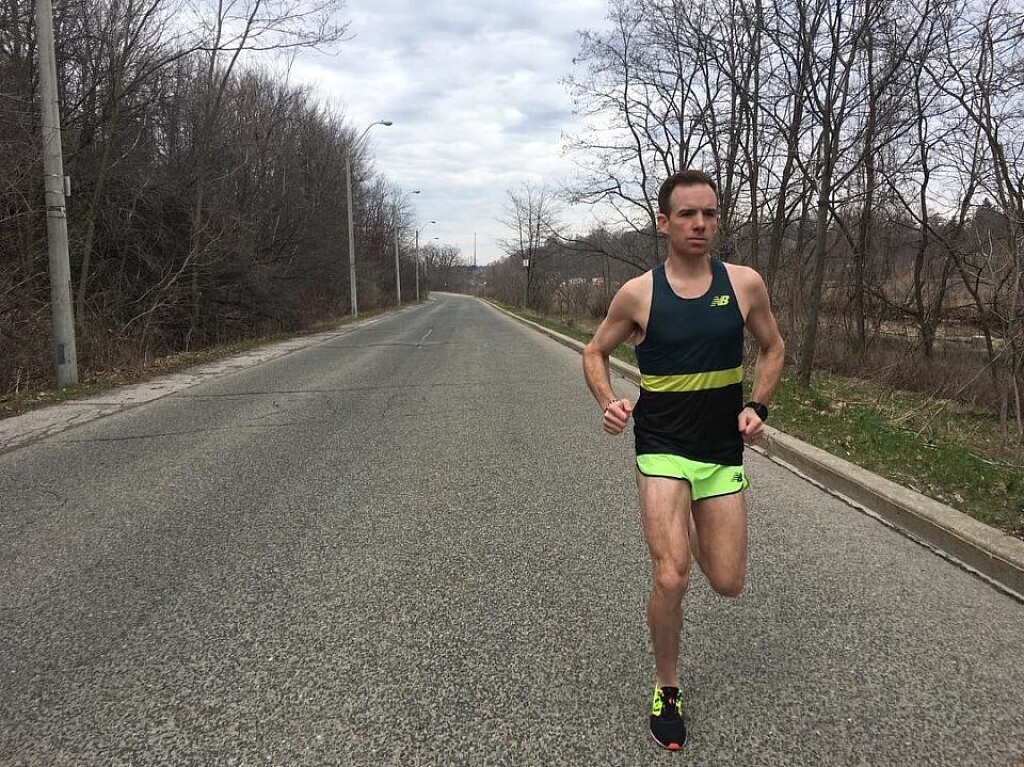
Canadian Reid Coolsaet set to run the 2022 Western States 100
The lotteries for the 2022 Western States 100 and Hardrock 100 took place this weekend, and Canadian Olympian Reid Coolsaet got his name on the Western States list. With over 8,000 applicants vying for only 340 lottery spots (221 for Western States and 119 for Hardrock), runners without automatic entry have a slim chance of having their names pulled, but 34 lucky Canadians got a spot on the start lines.
Western States
Of the top 10 male finishers at last year’s race, eight will be making their return to Olympic Valley, Calif., including second- and third-place finishers Tyler Green and Drew Holmen. Jim Walmsley, who won the race in 2018, 2019 and 2021 (the race was canceled in 2020 due to COVID-19), has not elected to return for the 2022 race. The top three podium finishers from last year’s race, Beth Pascall of the UK, Ruth Croft of New Zealand and Ragna Debats of the Netherlands, will all be returning, as will six more of the top 10 women from 2021.
Canada’s Ailsa MacDonald received automatic entry, thanks to her 13th-place finish at the 2019 Western States and first-place finish at the 2020 Tarawera 100 Mile. Other fast runners who have received automatic entry include Sébastien Spehler (second at Ultra Trail Cape Town this year), Tom Owens (fourth at UTMB in 2019), Cole Watson (third at the Javelina Jundred), Stephanie Auston (third at the 2020 Black Canyon 100K and second at the 2019 Tarawera 100K) and Zoë Rom (third at the 2021 Rio del Lago 100 Mile and third at the 2021 Tillamook Burn 50 Mile), among others.
Coolsaet will be one of the top Canadians in the race, despite being relatively new to the ultramarathon scene. In August, he won his first-ever ultra, the Quebec Ultra Trail 110K, despite missing a turn and having to run an extra 10 kilometres. He will be joined by several other Canadians, including:
Leo Fung, Calgary
Jesse Hulley, Calgary
Mike Jollie, Calgary
Kevin Jansen, Calgary
Rohan Aurora, Vancouver
Steve Day, North Vancouver
Adam Harris, Squamish, B.C.
Patrick Humenny, Kimberly, B.C.
Ricardo Tortini, Port Moody, B.C.
Dawson Mossman, New Maryland, NB
Aytug Celikbas, Oakville, Ont.
Matt Lowe, Hamilton
Derek Mulhall, Tecumseh, Ont.
Norman Nadan, Orangeville, Ont.
James Swartz, Toronto
Vincent Gauthier, St-Zotique, Que.
Fanny Barrette, Calgary
Tara Chahl, Edmonton
Chelsey Topping, Lethbridge, Alta.
Kelly Haston, Toronto
Karen Holland, Kimberly, Ont.
Hardrock 100
Hardrock is particularly difficult to get into, because the only way to gain automatic entry into the race is by winning it the previous year. A unique addition to this year’s lottery: entrants who were chosen for last year’s race but were unable to travel because of COVID-19 were given automatic entry for 2022, which included 16 men and two women.
There are some big names on the 2022 start list, including Courtney Dauwalter, Sabrina Stanley, Magie Guterl, François D’Haene, Kilian Jornet, John Kelly, Luke Nelson and Jeff Browning. Canada’s Stephanie Case, who was the first woman (and third overall) at the 450km Tor des Glaciers race in Italy, will also be on the start line.
Other Canadians who received entry into Hardrock include:
Suzanne Johnson, North Vancouver
Dana Samis, North Vancouver
Joanna Ford, Calgary
Larry Kundrik, Lethbridge, Alta.
Ken Legg, Powell River, BC
Randy Duncan, Victoria, BC
Christopher Aubrey, Sherwood Park, Alta.
Nathaniel Couture, Fredericton, NB
Matthew Fortuna, Oyama, BC
Leo Fung, Calgary
by Brittany Hambleton
Login to leave a comment
Western States 100
The Western States ® 100-Mile Endurance Run is the world’s oldest and most prestigious 100-mile trail race. Starting in Squaw Valley, California near the site of the 1960 Winter Olympics and ending 100.2 miles later in Auburn, California, Western States, in the decades since its inception in 1974, has come to represent one of the ultimate endurance tests in the...
more...
The Fine Art of Balancing Running and Parenting
By now, just about everyone has seen the videos on TikTok or Instagram with a hiker in the backcountry using the same audio clip. All their friends are getting married and having kids, but not them - they're adventurers. The obvious flaw with these videos is that those inspired by the outdoors can still have kids, get outside and have epic days.
Do you have less time and other constraints? Sure, but getting out there could be more important than ever for parents. The benefits of the outdoors and exercise are proven to have a positive impact on anyone's life. With the new stresses of becoming a mom or dad and everything that goes into parenting, it can be even more of a necessity.
"I feel like trail running has been so beneficial because I like being in the outdoors. I am a type of person that likes to be alone to run, I think because I have four kids, which can be chaotic so it's kind of like my peace," says Verna Volker, a trail runner, mother, and advocate whose work with her own indigenous community has helped elevate her voice. "I feel like it's helped me get outside and just to be a better parent, a better mom to my kids and kind of release all my stress, and it feels like coming home."
Volker just completed her first ultra race, the 100K at the Javelina Jundred in Arizona. More than 60 miles is a challenge for anyone, but can be even trickier while raising four children.
"I was excited to accomplish the 100K, but at the same time, it was like the drive and the motivation behind it was just very spiritual for me," says Volker. "I think in that way it's been really beneficial. It also keeps me goal-oriented, because as a mom we oftentimes put our kids before ourselves. And so it really has driven me. This is my time, this is my goal."
Volker isn't alone in feeling that way. The science supports that running can help parents better navigate their lives.
"We say a lot that running makes you a more patient parent for sure. It makes you a more productive worker. It makes you a more loving spouse," says Dimity McDowell, the co-founder of Another Mother Runner, an online running group aimed at mothers and women, in general, to help provide resources for runners of all levels. "Basically, when you run you get out and do the thing that brings you joy and makes you feel competent and powerful."
McDowell's organization has created a community through social media and podcasts to reaffirm the benefits of running and how it can dovetail with all the challenges of parenting.
Keep Moving
Lack of sleep, poor eating habits and a host of other issues can impact new and longtime parents. It's easy to see how these lifestyle changes and demands can stifle an active lifestyle.
It also creates a new contradiction of being exhausted even though they haven't even stepped outside. A University of Pittsburgh study highlighted this paradox, following different groups of people to see how life changes led to lower levels of activity. The study found that single and married people more or less kept the same level of activity, but once people became parents, their activity level slowed.
Analysts found that many parents had an all-or-nothing approach, so if they couldn't be all in on their activities, they would opt for skipping them altogether. However, research shows that even a little bit of exercise can be beneficial, even if it's not as much as you hope to get.
"Running is obviously one of the most efficient forms of exercise. You can get out for a 20-minute run and feel great and you can leave from your front door. There's minimal equipment," says McDowell. "It gives you time to process things that may have happened, as far as trying to figure out a situation with your partner or with your kid. I mean, kids can be really challenging, right?"
The good news is that going for a run is more than just a healthy activity for a parent; it also provides an opportunity to be a role model for your children. Multiple studies show that more active parents raise more active children and instill a passion for getting into the outdoors that will make any outdoor-loving parent proud.
Getting Out There
With any lifestyle change there are new stress factors. Facing that stress is necessary to staying mentally healthy. Most of us have experienced the stress relief brought about by a great run, and that's not just in your head. The pandemic led to a surge in people getting outdoors for comfort and created plenty of data to back this up.
Outside Magazine highlighted one study that showed how nature positively impacts your body's chemicals, reduces stress hormones and lowers blood pressure. In the long term, it helps decrease the anxiety associated with significant life changes.
While not every runner has quick access to trails, those who can make time for it can benefit from being in nature.
"If it's available to you, go in without headphones and just really tune into the powerful being that you are and what you're feeling," says McDowell. "I think it's so grounding and so helpful and mind-clearing. I also think it's good for beginning runners. It can be really beneficial because you have to be focused on the trail in front of you."
Preparing for Uphill Challenges
When it comes to being an active parent, simplicity is key. Whether that's running down the road or training for an ultra, time can be one of the biggest challenges. And for many, that means early mornings, working with their partners to find time or even hiring a babysitter.
"It can be hard if you have a partner or a spouse who does not understand your need to run or your interest in running," says McDowell. "Running is more time away from family, so it's important to sit down and have a family meeting and say these are my workouts for the week. It's especially important if you are training for something that requires more time."
"My husband's really great about taking the kids. When they were younger, he would come home at lunch for me to run," says Volker. "Also, when they were younger, I would wake up early, like 4:00 a.m. Now, I still like waking up early and having time to run for me. Then I can get home in time for anything else."
As a parent, time spent running may be more exclusive, but at the same time, you get to enjoy new trail days with a small companion who's seeing the epicness of the outdoors for the first time.
"I think that it's just really fun when your kids start to join you and start running," says Volker. "Just give yourself grace. I always tell people I started running in the midst of motherhood, and I had three little boys, so you're tired, but somehow you make it through."
by Trail Runner Magazine
Login to leave a comment
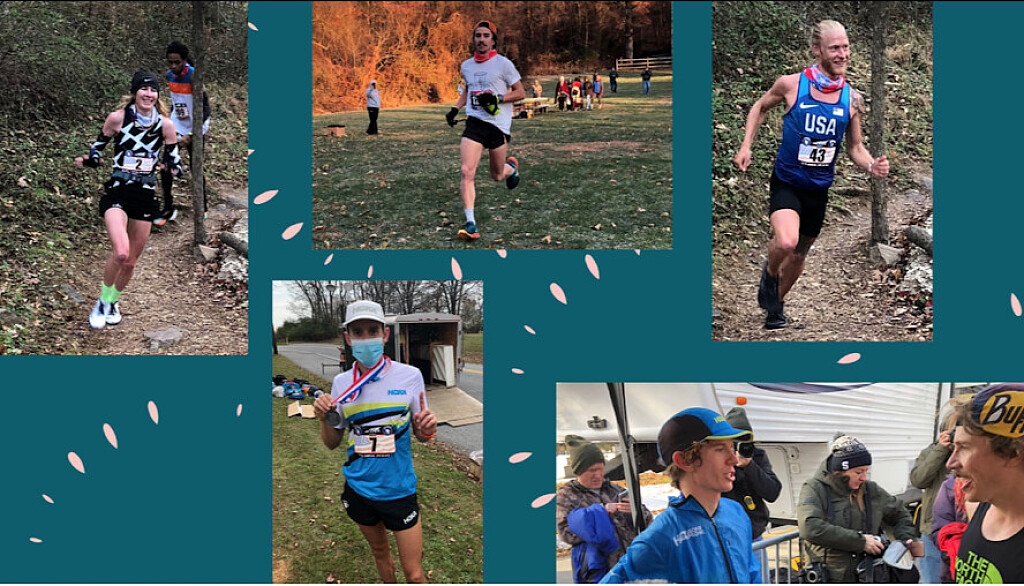
New and familiar faces vie for JFK 50-Mile Titles This Weekend
This weekend's JFK 50-Mile in Hagerstown, Maryland, will see Thanksgiving-like temperatures between the 20s and 40s, in keeping with many past editions of the race. But that's where the similarities between the 2021 JFK and previous races end.
Over 1,000 athletes will descend upon Hagerstown on Saturday with every possibility that a new champion will be crowned in both the men's and women's races.
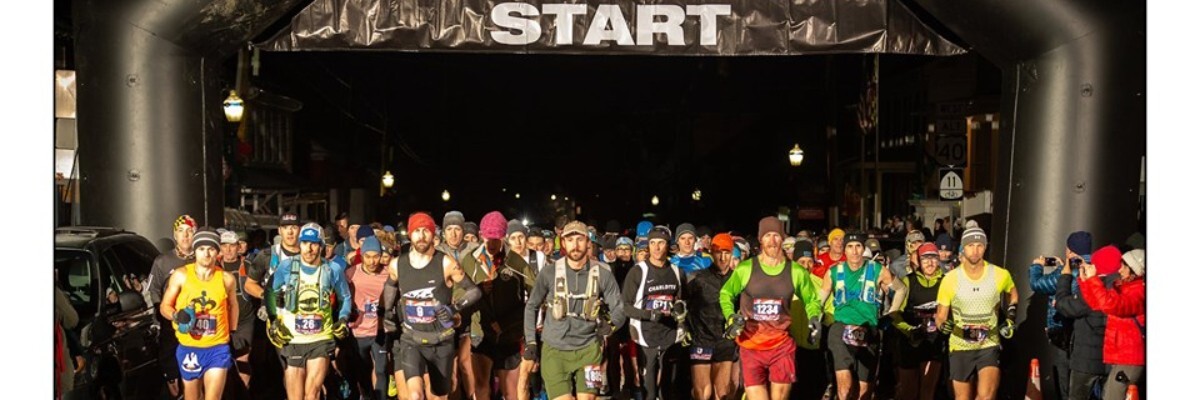
On the men's side, the most recent champion to return to JFK is David Riddle, who won in 2011. It might be 10 years since his victory, but he's fresh off a win at the Super Bull Trail Championships 50K in Wooster, Ohio and has won Alabama's Mountain Mist 50K a whopping nine times, most recently this January.
JFK has a brand-new course record set last year by Hayden Hawks (a blistering 5:18:40), and a stacked field of lesser-known names will see how close they can come. Ultra newcomer Adam Peterman, who was second at this year's Pike's Peak Marathon and won the Speedgoat 50K in July, will look to make his mark on the men's field. The top returner is Anthony Kunkel, who was fourth last year. Other names to watch include Ben Quatromoni, who won the Kilkenny Ridge 50-miler in September and the Algonquin 50K in February; Jared Bassett, who won the Rogue Gorge 50K in October; and Sean Van Horn, fresh off a second-place finish at the Grand Traverse 40-miler and third at the 2020 Javelina Jundred 100-mile.
But it's on the women's side where things get really interesting. Like the men, the women have only one of the past two decades' champions returning in the form of Devon Yanko, who claimed the crown in 2009. Yanko is also one of nine women in the field to have raced in the U.S. Olympic Marathon Trials back in February 2020. Others from that road marathon include Sarah Cummings, Anna Kacius, Sarah Biehl, Starla Garcia, Jeanne Mack, Rachel Viger, Karen Dunn and Caitlyn Tateishi.
nna Mae Flynn will make her JFK debut this year. The 2019 champ at both the Speedgoat 50K and the Lake Sonoma 50-Mile will be one of a slew of athletes chasing Ellie Greenwood's course record from 2012 of 6:12:00. Also watch for Kimber Mattox and Kristina Randrup. Mattox won the 15-mile Smith Rock Ascent in Oregon in May (where she was 5th outright) as well as the 2020 Way Too Cool 50K. Randrup won the American River 50 Mile in California in May by nearly an hour, and was third at the Lake Sonoma 50 Mile in September.
And the stories at JFK won't end with those vying for the win. Watch for Carolyn Showalter, who will be looking to extend her record of 34 JFK finishes. The 67-year-old also holds two other JFK records: she's tied for most wins by a woman with six AND most consecutive finishes with 22, a streak she held from 1982-2003.
No matter what, one thing is for sure: this year's JFK will be one of a kind.
Login to leave a comment
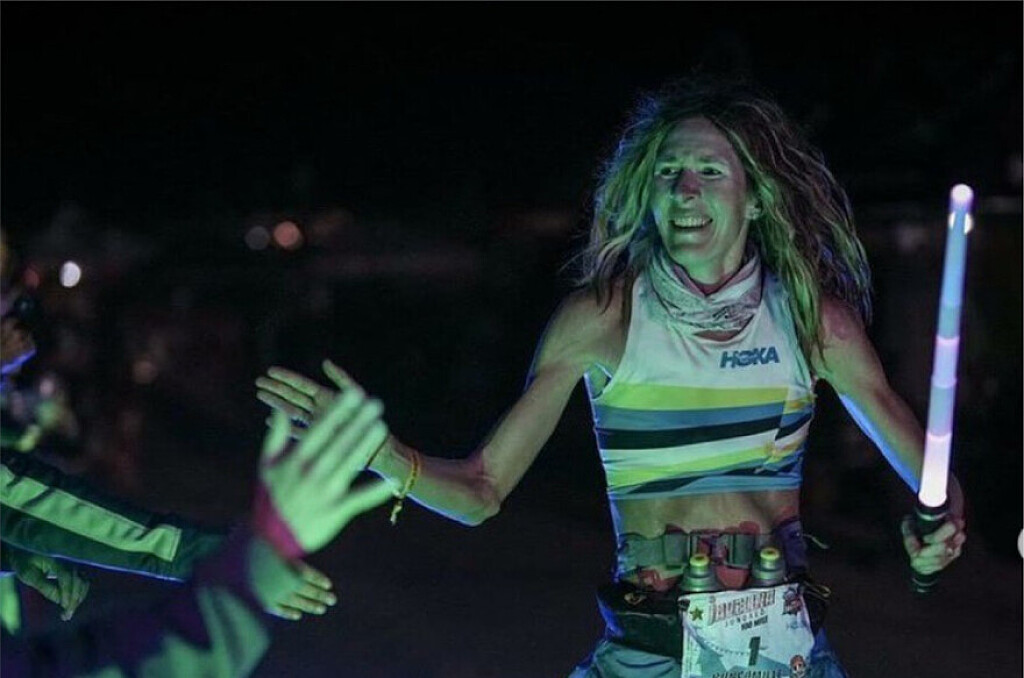
Camille Herron breaks course record at Javelina Jundred 100-miler
The 19th annual Javelina Jundred took place this weekend in Arizona’s McDowell Mountain Regional Park, and Camille Herron won the women’s race and placed fourth overall, setting a new course record in the process of 14:03:23. Arlen Glick of Ohio won the men’s race in 13:14:51, his ninth win at the 100-mile distance since his first one in 2018.
The 100-mile course is made up of five loops run on the Shallmo, Pemberton and Cinch trails and features rolling single track through the Sonoran Desert. There is also a 100 km event in which runners complete three loops, as well as a single loop race, called the Jackass 31K. Each loop climbs slowly from the start to the finish, for a total elevation gain of about 1,580 feet (457m) for each loop.
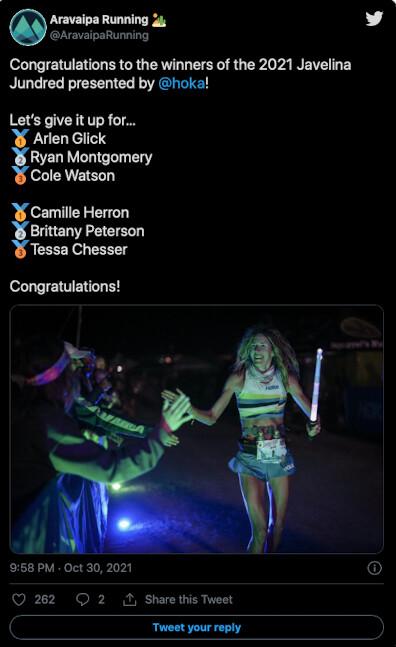
Herron set a strong pace right from the start line and didn’t let up for the entire race, creating a nearly 10-minute lead by the 22-mile mark. She crossed the finish line fourth overall, more than 90 minutes ahead of the next-best woman, in 14:03:23. This time smashes the previous course record of 14:52:14, set by Devon Yanko in 2015. Idaho’s Brittany Peterson, who was the fourth woman at Western States in June, managed to stay within 30 minutes of Herron for more than half of the race, but was not able to keep up that pace all the way to the finish, taking second place and eighth overall in 15:47:23. Tessa Chesser of Arizona rounded out the women’s podium in 10th overall in 16:25:05.
by Running Magazine
Login to leave a comment
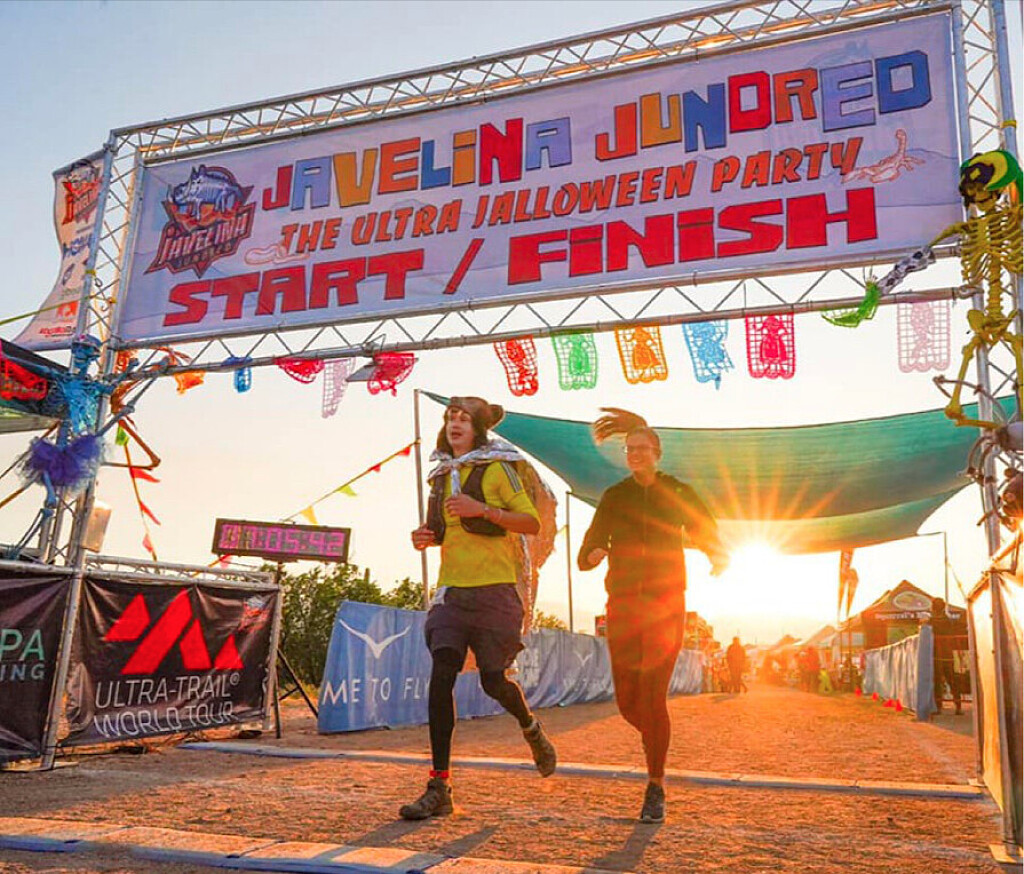
Javelina Jundred is the Ultimate 'Jalloween' Party
There's going to be one hell of a Halloween party held on the outskirts of the Phoenix metro area this weekend.
Part authentic endurance running race and part freak show with costumed trail runners constantly in need of rehydrating, the Javelina Jundred trail running races and post-race party are the stuff of legend. As the race producers at Aravaipa Running proclaim from the start, "it will test your endurance and challenge your sanity."
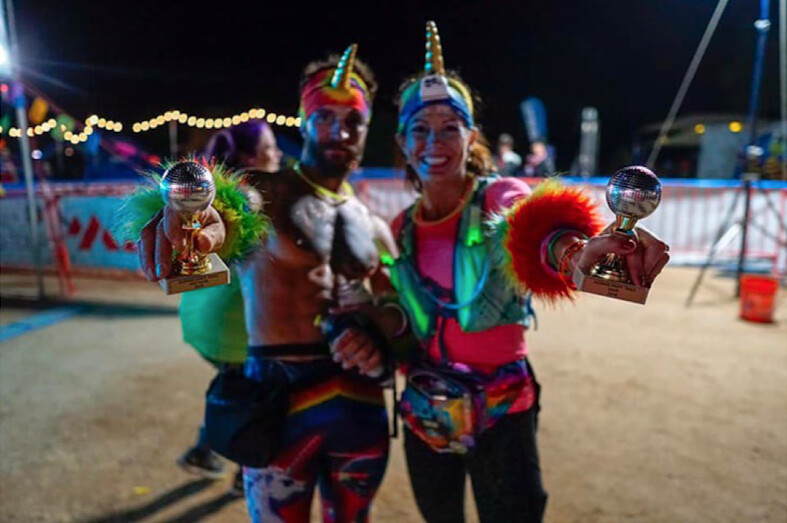
The 19th annual Javelina 100-mile and 100km races begin Saturday at 6 a.m. and send runners out on a mostly flat and fast multiple- loop course through the desert terrain of McDowell Mountain Regional Park. And while fast running isn't discouraged - the women's 100-mile winner usually finishers under 16 hours and the men under 14 hours - costumers definitely are encouraged. There's also a nighttime race called the single-loop Jackass Night Trail 31km that finishes as the Saturday night party is starting to rev into high gear.
Javelina is a trail running party that really wants to be an all-night rave. As much as it offers great fall racing opportunities (with 2022 Western States 100 Golden Ticket qualifying spots for the first time), it's really more about being a massive Ultra Jalloween Party for the ultrarunning community. The races draw both elite pros, middle-of-the-packers and novice runners alike, but it's the colorful costumes, free candy at aid stations, all-night music, spontaneous dance parties, fire dancing, misfit parade for waitlisted runners and other festive craziness that runners remember the most.
The race was started in 2003 by Phoenix ultrarunner Geri Kilgariff as an irreverent, party-oriented fun run on a multi-loop course and eventually later taken over by Aravaipa Running in 2008.
"She created this event to basically troll everyone, and thought that it would be funny," Matt Feldhake said during the race's video preview released this week. "And it's turned out to be this incredible, fun event in the desert. She created something great and we've been grateful to continue to put it on since 2008."
How wild is it? Put it this way, no other race has an aid station with the nickname of Boner. (It's a skeleton figure you'll encounter at the Jackass Junction aid station.) There's also a "Best Ass Award" at this desert party, which coincides with the adult-themed "R" rating Aravaipa brandishes on its website.
As for the racing, there are plenty of talented runners among the 588 entrants in the 100-mile field. That includes Devon Yanko (39, San Anselmo, California), Camille Heron (39, Oro Valley, Arizona), Brittany Peterson (35, Pocatello, Idaho), Meredith Edwards (37, Durango, Colorado), Lisa Robert (42, Tucson), Tessa Chesser (34, Flagstaff, Arizona) and Lotti Zeiler (25, Austin, Texas) on the women's side and Dave Stevens (39, Canada), Adam Dalton (27, San Diego), Michael Demarco (34, Baton Rogue, Louisiana), Zach Merrin (36, North Canton, Ohio), Charlie Ware (36, Tucson) and Joe "String Bean" McConaughey (30, Seattle) among the top men.
Also in the field are 13-time finisher Susan Donnelly (58, Oak Ridge, Tennessee) and 11-time finisher Fred Roberts (61, Tucson). And then there's Ed Ettinghausen (59, Murietta, California), a six-time Javelina finisher who has made a name for himself by taking on the Javelina Jundred in a full suit and heavy jester hat.
In the 100K, Tyler Andrews (41, Concord, Massachusetts) leads a strong men's field, while Cat Bradley (29, Boulder, Colorado) is one of the top entrants among the women's field.
"It's definitely a one-of-a-kind race," says Phoenix trail runner John Byrne. "But even if you don't run fast or well or very long, it's an amazing party."
by Trail Runner Magazine
Login to leave a comment
So You Want To Run UTMB. Here's How To Qualify.
The trail and ultra world was rocked this spring when the Ultra-Trail du Mont-Blanc announced a partnership with Ironman, the global triathlon brand. Aside from the inevitable financial questions that pop up with such an acquisition, many trail runners were left wondering how am I going to get into UTMB?
To compete at the UTMB World Series Finals in Chamonix, runners must compete in at least one of the 30 UTMB World Series Events or one of the three UTMB World Series Majors, where they can collect Running Stones for use in the lottery or be rewarded for their performance with direct access. Men's and women's champions will be crowned for each of the three key distances of the UTMB race week in Chamonix: the OCC (50K), CCC (100K) and UTMB (100 miles).
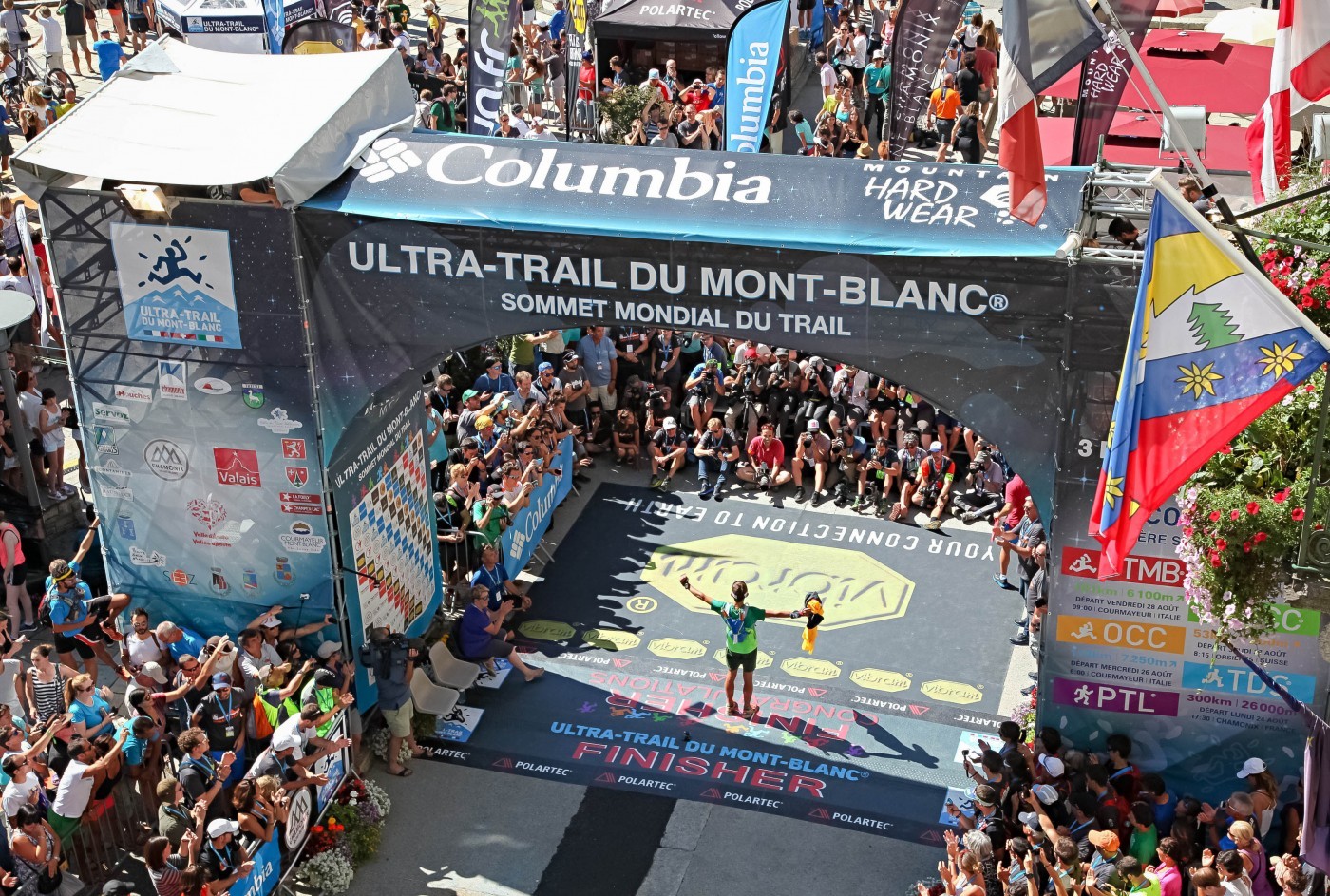
The full UTMB World Series calendar will be announced sometime this fall, including several UTMB World Series Events and one UTMB World Series Major in the U.S.
"Trail running was born in the USA [but] it's not easy for a French company to develop something [there]," said UTMB Co-Founder and Co-Owner Michel Poletti, in an interview with Trail Runner columnist Doug Mayer. "That's part of our decision to partner with Ironman, is that it will be easier for them to develop the sport in the U.S. than for us in France." Poletti noted they are talking with "many other races in the world, including the United States."
What The Heck Is A Running Stone?
A Running Stone is like a lottery ticket. It's your entry into the lottery to compete at UTMB, CCC, TDS and OCC. If you have seven stones, that means your name is in the lottery seven times, giving you a higher chance of being selected than someone with only three stones.
You can earn stones by competing in UTMB associated races. For example, competing in a 50k+ race "by UTMB" will earn you nine stones. Competing in an Ultra-Trail World Tour (UTWT) race over 50k will earn three stones. Western States Endurance Run finishers and Javelina Jundred runners can earn three stones. UTMB is now a Western States Golden Ticket Race, as is Javelina. You can see the full list of qualifying races here.
UTMB, CCC, TDS and OCC do not earn runners Running Stones.
UTMB Qualifying Points
Runners who haven't collected Running Stones can enter the lottery if they have the required number of qualifying points from no more than two races.
Elite Runners
UTMB races save spots for elite runners according to the number of ITRA points a runner has. For men, anyone with an ITRA score over 880 can skip the lottery and entry fee. Elite men with scores between 800-880 can skip the line but still pay an entry fee. Women with an ITRA score over 760 get free entry and no lottery, while women with a score between 760 and 675 skip the lottery, but pay the entry fee. The top three runners from any given country get in free. Easy!
All Roads End In Chamonix
UTMB is calling its new global race series the "UTMB World Series," which breaks down into four categories of races: World Series Qualifiers, Events, Majors and Finals. Qualifier races, whose numbers will apparently be in the thousands, give "privileged access" to World Series Events and World Series Majors, both of which feature 50K, 100K and 100-mile distances. Each World Series race gives a participant one lottery entry (UTMB calls them "stones") to the finals in Chamonix. The World Series Majors are the flagship races on each continent, with two entries to the Chamonix lottery. Between the Majors and Events categories, UTMB expects to have 30 to 40 races take part.
Everything points toward Chamonix and the World Series Finals-and the only way to get there will be through the new race series. To get to Chamonix, runners will also need to finish a race of comparable difficulty in one of the other UTMB race series.
by Trail Runner Magazine
Login to leave a comment
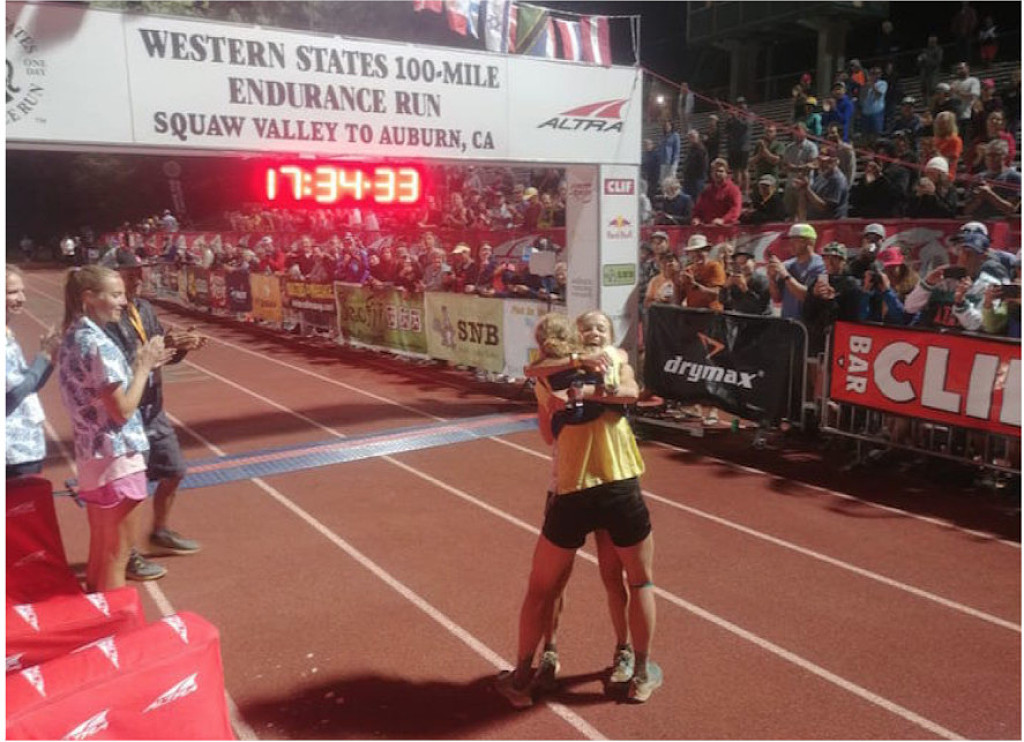
Western States 100 preview: pre-race favourites
Women’s field - There are three former WSER champions entered in this year’s race: Gallagher, who won in 2019, 2016 winner (and 2019 third-place finisher) Kaci Lickteig and 2015 champ Magdalena Boulet. All three women are American, and they’ll be joined on the WSER start line by several of their high-profile compatriots. Brittany Peterson, the second-place finisher from 2019, will be in the race for just the second time in her career, along with Nicole Bitter, the seventh-place woman in 2019, which was also her WSER debut.
Pascall and Drew headline the international entries in the women’s field. Pascall, who hails from Great Britain, finished fourth in 2019, and she is a serious threat to take the win this year. Earlier in 2021, she won the Canyons 100K in California, and in 2020, she broke the Bob Graham Round FKT in her home country. She has also recorded two top-five finishes at the past two editions of the famed Ultra-Trail du Mont-Blanc. Pascall is in incredible form, and she’s a threat to run away with this year’s race, which would make her the first non-American woman to win the WSER title since Ellie Greenwood (who is British but lives in Canada) in 2012.
This will be Drew’s second WSER appearance, and she, too, has what it takes to improve on her result from 2019. She has several big wins to her name, including top finishes at the Chuckanut 50K and Canyons 100K in 2019. She has also represented Canada at the IAU Trail World Championships. B.C.’s Sarah Seads will also race in California, making her first WSER appearance.
When it comes to debut WSER runs, there are several big names to watch. New Zealand’s Ruth Croft is having a tremendous season, with a pair of big wins. Her first came at the Tarawera Ultra in Rotorua, New Zealand, where she won the overall title in the 102K race. A few months later, she was in action in Australia, where she won a 50K race in Katoomba, a town west of Sydney, at Ultra-Trail Australia.
France’s Audrey Tanguy is also running WSER for the first time. Tanguy has had a great year so far, first winning the Hoka One One Project Carbon X 2 100K event in Arizona in January and then following it up with a third-place finish at the Canyons 100K in April. She is also a two-time UTMB TDS winner (2018 and 2019).
Finally, there’s American ultrarunning star Camille Herron. The owner of multiple American and world records, Herron is another threat for the win at WSER. She has won the Comrades Marathon, multiple world championships and many other races around the world, and it shouldn’t be a surprise if she adds a top WSER finish to her resume.
Men’s field - The only WSER champion in the 2021 field is Walmsley, who has won the past two editions of the race. In 2018, he won in 14:30:04, and a year later, he set the course record with an incredible 14:09:28 run. This year, he has raced one ultramarathon, Hoka’s Project Carbon X 2, which he won in 6:09:26, coming extremely close to breaking the 100K world record of 6:09:14. That was several months ago, but if his fitness is anywhere close to where it was at that race, he should be able to lay down another historic WSER run.
Walmsley’s fellow American Jared Hazen, the 2019 runner-up, is also set to race this year. In 2019, Hazen ran a remarkable time of 14:26:46, which would have easily won him the WSER title if Walmsley hadn’t been in the race. He’ll be looking to take that final step onto the top of the podium this year.
A pair of Americans making their WSER debuts are Tollefson and Hayden Hawks. Tollefson has several big wins to his name in the past year alone, including titles at the 2020 Javelina Jundred 100 Miler and USATF 50-Mile Trail Championships. He has also recorded victories at the 120K Lavaredo Ultra-Trail race in Italy in 2019 and the 100K Ultra-Trail Australia in 2017, along with a pair of third-place finishes at UTMB in 2016 and 2017.
Hawks has won many races throughout his career, including the JFK 50-Miler in 2020. He set the course record of 5:18:40 at that race, beating Walmsley’s mark of 5:21:28 from 2016. The WSER course is twice as long as the JFK 50, but Hawks has proven he can match or better Walmsley’s efforts, so it will be interesting to see how he fares in California.
by Running Magazine
Login to leave a comment
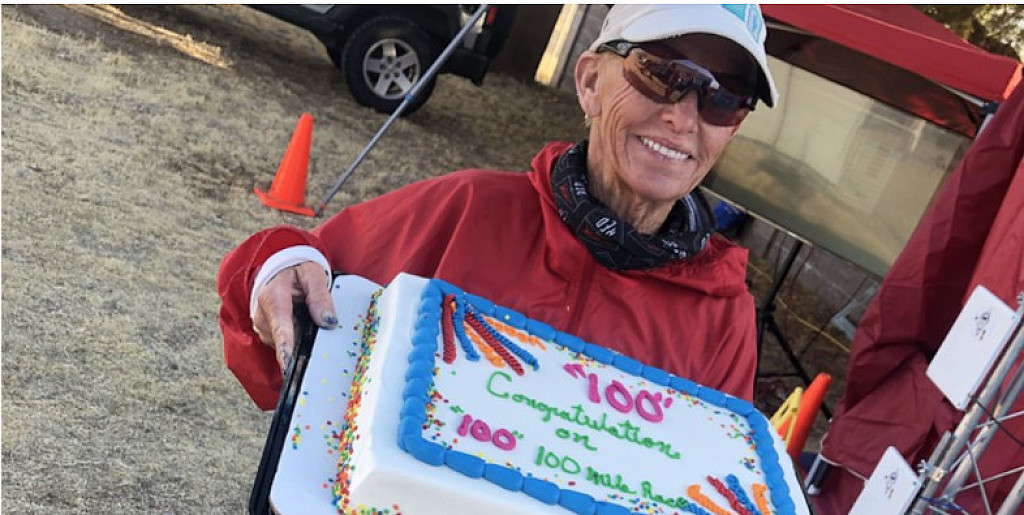
Pam Reed Becomes the 17th Person to Finish 100 100-Mile Races. And She Has Some Advice for You
The ultrarunning legend shares wisdom gleaned from nearly three decades of running 100-milers.
Ultrarunning legend Pam Reed just celebrated her 60th birthday as part of one of the most exclusive clubs in running: the group of runners who have finished 100 official races of at least 100 miles.
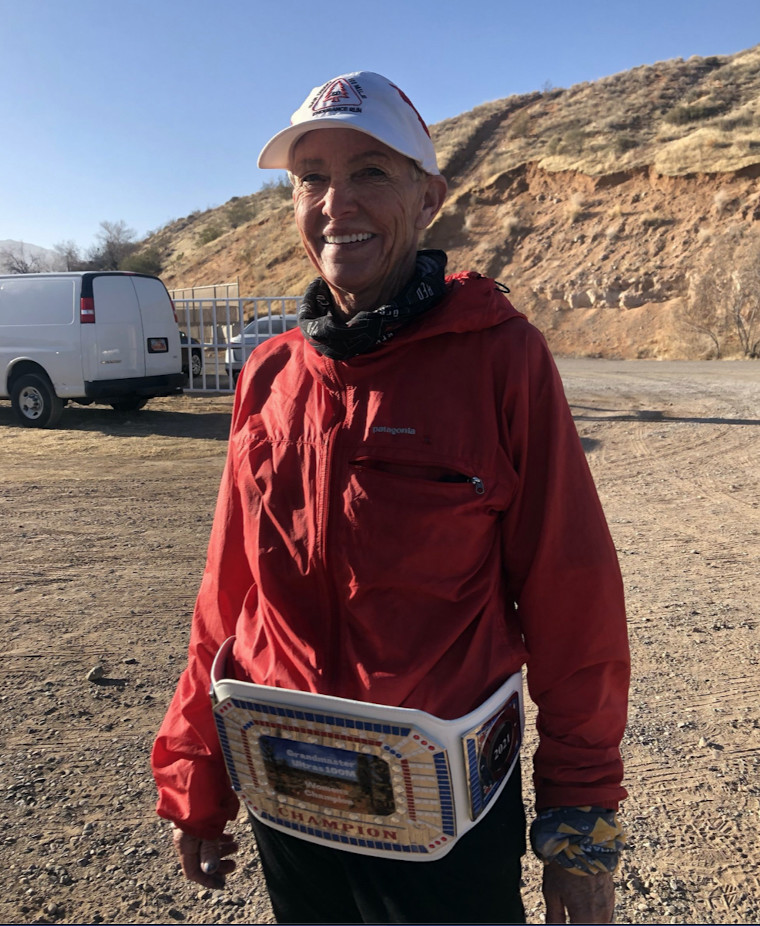
According to ultrarunning historian Davy Crockett, Reed is the 17th person in recorded history to have completed 100 100-milers in their lifetime (it was recently discovered that Frederick Davis III also reached this mark in December 2019, making him the 18th member of this group). Reed achieved the impressive mark at the Grandmaster Ultras in Littlefield, Arizona, on February 6, where she finished the 100-miler in 25:02:54—first woman, and third overall.
To clarify, this honor is the completion of 100 official races that were at least 100 miles. This means that even if Reed completed 491 miles at an event, like she did at the 2009 Self-Transcendence Six-Day Race, she was only credited with a single 100-miler. Though you may think Reed wishes that the extra mileage had added up to reaching her title sooner, she wouldn’t trade away any parts of her storied career.
Reed has run ultras, ranging from 50K to multi-day races, for three decades. Among her many accolades, she was the first woman to outright win the Badwater 135—a feat she achieved in 2002 and repeated in 2003.
In 2019, Crockett mentioned to Reed that she was at 89 total 100-mile finishes. That surprised her, because she assumed she had already hit that mark.
“In my mind, the way I counted, I thought I had done it,” Reed told Runner’s World. “But I counted 220 miles that I ran at a 48-hour race as two [100-milers] or my six-day race as four. But they didn’t count, and when I found out I was 11 away from something only a handful of people had done before, I decided to go for it.”
So Reed set the goal of reaching the 100 mark before her 60th birthday in February 2021, and decided to do 10 100-milers in 2020. In addition to a handful of 50Ks, a 60K, a 100K, and a half Ironman, this was going to be her biggest year ever. Previously, the most she had done five or six in a year, with other distances sprinkled in as well.
As you can imagine, Reed’s year was turned upside-down as the pandemic wiped away many of the races she wanted to do. Having to adapt, she signed up for virtual races, running courses she and her friends mapped out near in Jackson, Wyoming, where she’s based. She ran from her home to the Grand Tetons for races like Hardrock Hundred and Wasatch 100. She also did 100-mile races, such as Bryce Canyon Ultras and the Javelina Jundred, in-person when she could.
“I don’t really plan that much,” Reed said. “I’m not a great planner. It just kind of happens, and if a race happens, I go for it. I made courses if I had to, calling my friend who made a five-loop course climbing up a mountain five times. I don’t want to do this five times. I can be a whiner, but I did it and 100-milers are hard no matter what way you do them.”
For her century race, she planned to do Arrowhead 135, a challenging winter race in northern Minnesota in February. However, that was canceled because of the pandemic, so she opted for the Grandmasters Ultra for her 100 crown.
And Reed had a chance to win the race—she was leading after 39 miles, but a few runners took a wrong turn on a 5.5-mile loop, and the course was adjusted after Reed had already completed the section. She was passed and took third overall, but that didn’t spoil her big day. When she came across the line, she received not only her belt buckle, but also a plaque and a cake commemorating her 100th 100-miler.
“I’m so blessed to have the body that can keep doing this,” Reed said. “It’s cool that only so many people have ever done this. I’m really proud of it. My goal in life is to be able to run until I die and I am 100-percent serious when I say that. I just want to live my life to the absolute fullest, and, in my opinion, that is being able to run, skate ski, swim, bike, and get outside as long as I can.”
As the 60-year-old looks back on fondly on her race resume and the different challenges that each race presented, we also asked her what wisdom she might have for budding or experienced ultrarunners who dream of reaching the heights that Reed has in her career.
Here is what she had to say.
Energy powers her: I’m Finnish, a quarter Swedish, and a quarter Norwegian—I think there’s something to that. I know a lot of Finnish people, and they are hardcore. Living in Jackson, I’m surrounded by hardcore people. I just have a lot of energy, so I always want to be doing things. That really helps me do what I do.
Do a lot of modalities: I do a lot of hot yoga, often twice a day. I do acupuncture, I get massages regularly, and when things are hurting, I work on them immediately. I used to be a gymnast, and I could put my chest on the floor between my legs. Now, I don’t need to do that. I adjust my yoga to fit what I want to do as a runner. I’m intuitive about what I do and do not do.
Don’t wear so many clothes: I can’t tell you how many times I start with more clothes than I needed. I’ve learned from winter races that you can’t sweat or you’ll get colder, and I needed to find a happy place. Turns out in the summer, that’s a cotton shirt, arm sleeves, and men’s nylon socks.
Learn to fuel properly: I learned that I’m best running with Tailwind, nut butter, and Justin’s Almond Butter. I use GU gels when I race Ironmans, but I usually can’t get those down in a 100-miler. Except for one time at Leadville, I started throwing up eight hours into the race, and I didn’t stop until I took a GU with about 13 miles to go.
Listen to your body above anything else: Okay, don’t necessarily try this at home, but I don’t always listen to what experts tell me. I listen to my body. That’s not to say I ignore experts. But it’s also okay, in my opinion, to investigate. You should do that. Everyone is different, and you have to figure out what works for you. Don’t hurt yourself, but try things like massages or hyperbaric chambers. Do your research first, of course.
Fail and learn: Failing is learning. No one race is the same and not all races will be perfect. We all have to learn again and again.
by Runner’s World
Login to leave a comment
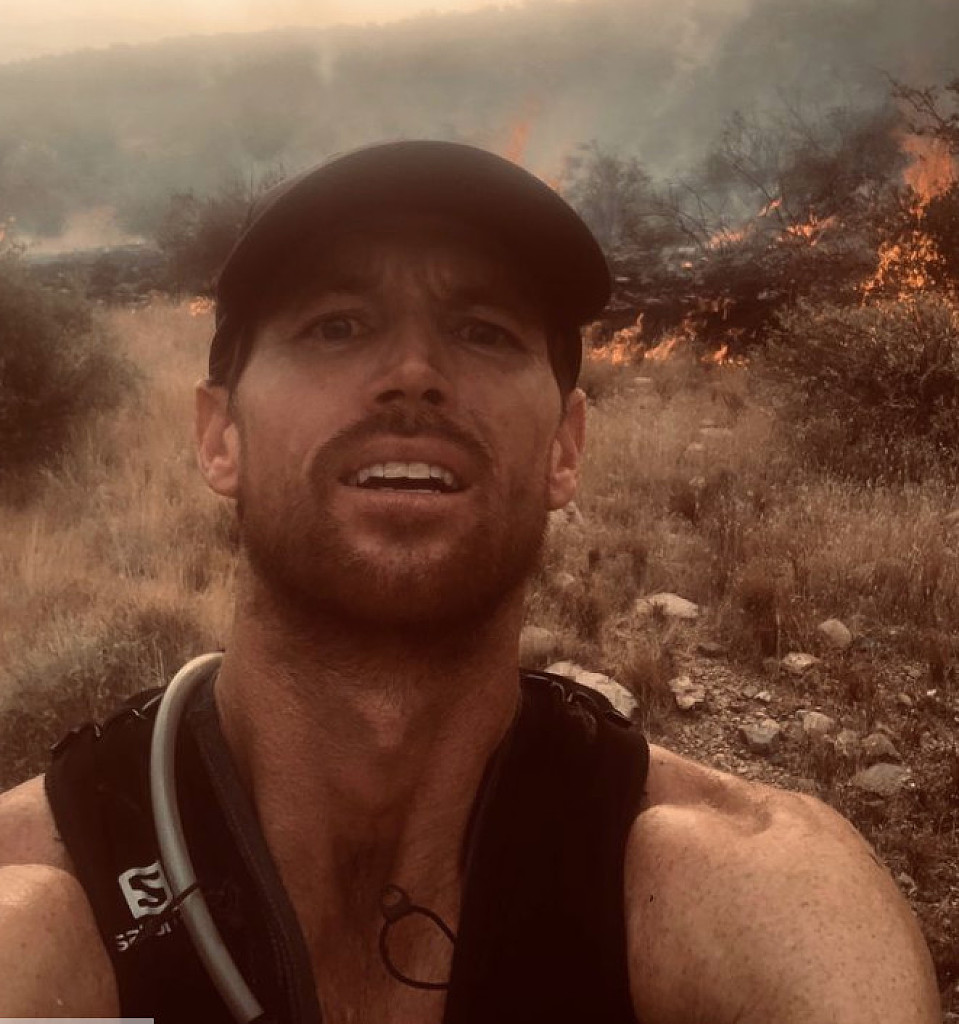
Why a Trail Runner Was Trying to Help With a Wildfire in Arizona
Don’t fight fires with running gear. Let the pros handle it.
Trevor Murphy rolled out of bed for his run around 8 a.m. on August 22. His first 100 miler, the Javelina Jundred, was nearing, so he got up for some early morning miles in the McDowell Mountains of Arizona.
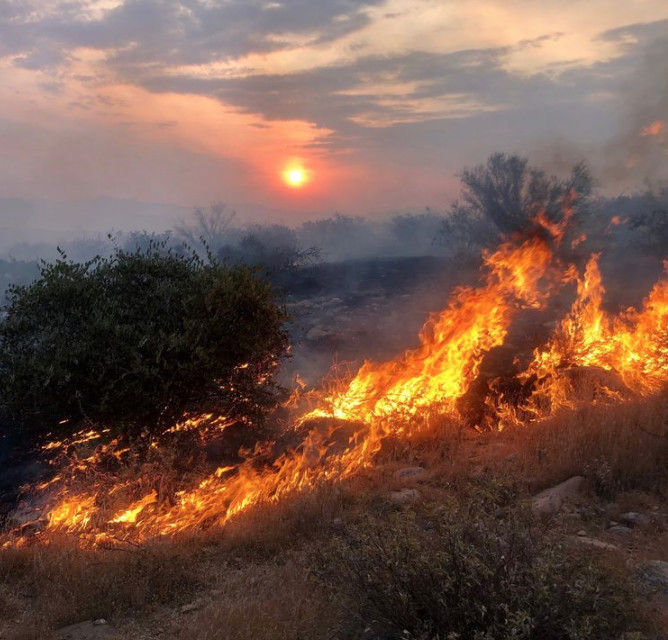
When driving there, he hadn’t heard on the news that a series of lightning strikes had ignited a few wildfires during the night. When he arrived to a closed gate at the trailhead, he assumed it was because of the park still being closed in the morning.
He parked before the gate on the side of the road, and took off for 20 miles. About two miles in, he saw a glow in the distance that made it clear a fire had started. At five miles, he was right on top of a small section of brush that was on fire, burning in the morning air. He immediately called 911.
The fire was burning on one side of the trail, having stopped because of the fire line the trail created. Still, Murphy feared it might cross and enter the nature preserve on the other side. He decided to act.
“The trail was the only thing stopping the fire from moving to the nature preserve; it was the only chance of stopping it,” Murphy told Runner’s World. “It would’ve been pointless to try and stop the fire if there wasn’t already a fire break built-in. I was just trying to make sure it held. I was working on the trail for hours at first, trying to widen it.”
Doing what he could with only the his running gear on him, he slowly chipped away.
“I stayed on the perimeter of the fire and I worked on stomping out the flames that were small enough to do that with my feet,’” Murphy said. “I started doing that hours before the TV helicopter arrived. I was out there maybe two to two and half hours before that.”
When he figured he could do no more, Murphy ran out of Fort McDowell Mountain Regional Park and went home. That wasn’t without achieving minor internet fame when a live TV chopper captured him stomping out smaller fires. His actions in the viral video have received mixed review since it happened and has spread around the internet.
“Honestly, I didn’t think twice about it,” Murphy said. “My adrenaline was going, and I never felt like my life was in danger. A lot of people think I went up there with the intention of fighting the fire. I just happened to run into it on my run.”
The fire itself in the McDowell Mountains has remained, but is 90 percent contained at this point thanks to local fire-rescue efforts. The fire has burned more than 615 acres.
Though this will be a run that Murphy will likely never forget, Arizona Department of Forestry and Fire Management Officer John Truett recommends a different approach if you ever encounter a similar situation.
“This was careless behavior and frankly, not logical,” Truett told Runner’s World. “Most people who would find themselves in a situation like this would have turned around. Fire managers on the McDowell fire were actively monitoring the fire and had strategies and tactics in place on how to suppress the fire safely. His actions simply put his life and those who would be required to save him in peril. His actions were irresponsible and so is promoting this type of behavior.”
In addition, Truett warned that aircraft could’ve been doing bucket work or retardant drops, and the fire could’ve increased in size, putting anyone nearby in potential danger.
by Runner’s World
Login to leave a comment
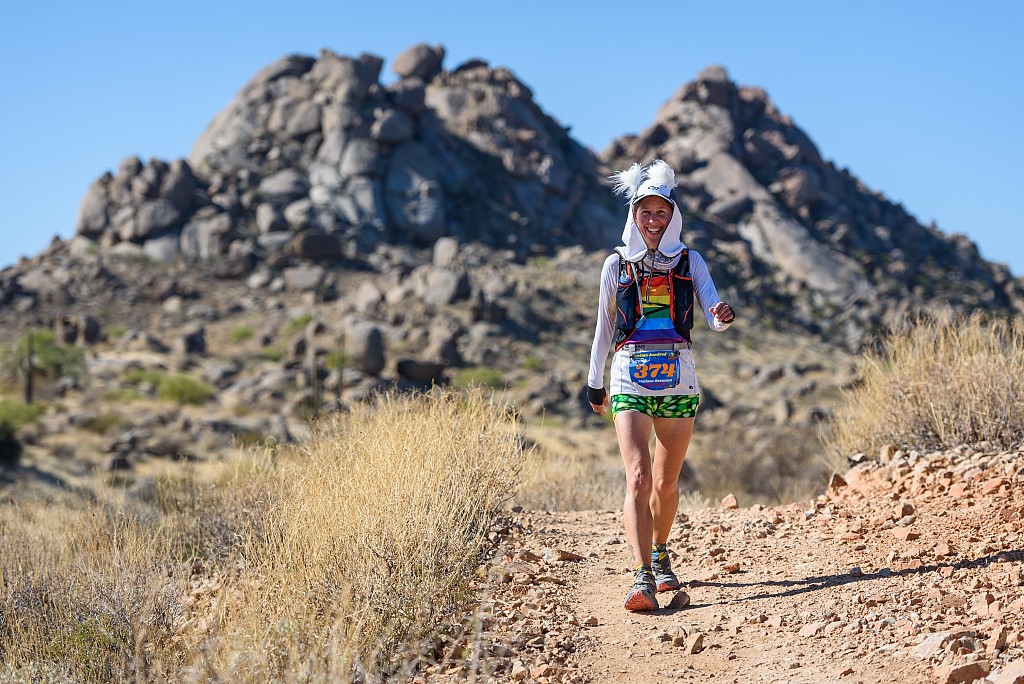
Maine Woman with MS is running the grand slam of Ultra Running - Marathon Man Gary Allen File 4
Melissa Ossanna, of Bar Harbor, Maine, has big plans for 2019. Not only will she be turning 50, she has registered for the “Grand Slam of Ultrarunning” (fondly called ‘The Slam’ by those who participate). This involves running four of the fiveoldest 100-mile footraces in the US, scheduled from June through September.
This is a laudable and often daunting goal for every runner who attempts it, but Ossanna has another challenge, she has Multiple Sclerosis. She was diagnosed with the condition in her mid-20’s and struggled quite a bit with temporary blindness, weakness and numbness in her limbs, and severe fatigue, among other issues.
In 2009, she was unable to stay awake all day at work and was forced to go on intermittent disability. She thought this might be the beginning of the end of her ability to earn a living, and most importantly, to be able to stay active with her husband and young son.
Ultimately, she learned that the fatigue was a result of MS-related sleep apnea, which is treatable. As she started to sleep better, she got some energy back, and was able to return to work full time. She also decided to take the advice of her neurologist and use this bit of extra vigor to start exercising. For years, she had been too tired to even consider adding an exercise program to her schedule.
Where many people would start with a couch to 5K program, an introduction to fitness at the YMCA or something else reasonable, Ossanna happened into town the day before the Mount Desert Island marathon in 2011, had a moment of regret that she wasn’t a marathon runner, and then decided she would become one. She registered for the MDI marathon 2012 before she even owned running shoes.
The year of training was a long one, starting with not even beingable to run 0.8 miles (the length of the road she lived on). However, once marathon day arrived in October 2012, Ossanna was ready and had learned to love running.
That one marathon led to another, which then led to a 50K, then a trail 50K, then a 50-mile trail race, and then a 100-mile race. Ever since she started running, Ossanna has not had any notable MS exacerbations. She attributes her continued health to her running habit, and she never plans to slow down if she can help it.
With her decision to run the Grand Slam this year, Ossanna decided she wanted to raise money for a charity that meant something to her. She had raised money for the National MS Society in the past, and had considered doing that again, until she ran the Vermont 100 in 2018 and became familiar with Vermont Adaptive. Vermont Adaptive helps people with disabilities get outside and do active things.
Becoming active in the outdoors gave Ossanna her life back, and has prevented any permanent disability for her, and she wants to help others to “get outside and play”, regardless of any challenges they face.
If you want to support Melissa and Vermont Adaptive click on the link.
Top photo: Melissa at the Javelina Jundred 100 miler in AZ
(Marathon Man Gary Allen is an exclusive My Best Runs column. Gary is one of only a few who have run a sub three hour marathon over five decades and hopes to make it six soon.)
by Gary Allen
Login to leave a comment
