

Running News Daily
Running News Daily is edited by Bob Anderson and team. Send your news items to bob@mybestruns.com Advertising opportunities available.
Index to Daily Posts · Sign Up For Updates · Run The World Feed
Search Results for Ultra
Today's Running News



The New Apple Watch Ultra Might Replace Your Garmin, Sleep-Tracker, and Drive Computer All at Once
The Ultra gets a titanium case, sapphire face, significantly better battery life, and better GPS and off-grid route-tracking features, making it a much more robust backcountry tool
I’ve switched between my Apple Watch and a Garmin Fenix watch for several years, depending on the day. The Apple Watch has been my go-to for daily life because it’s great at motivating me to get out for a run, keeps me up to date on notifications, stores a ton of music, and works seamlessly with my iPhone and AirPods.

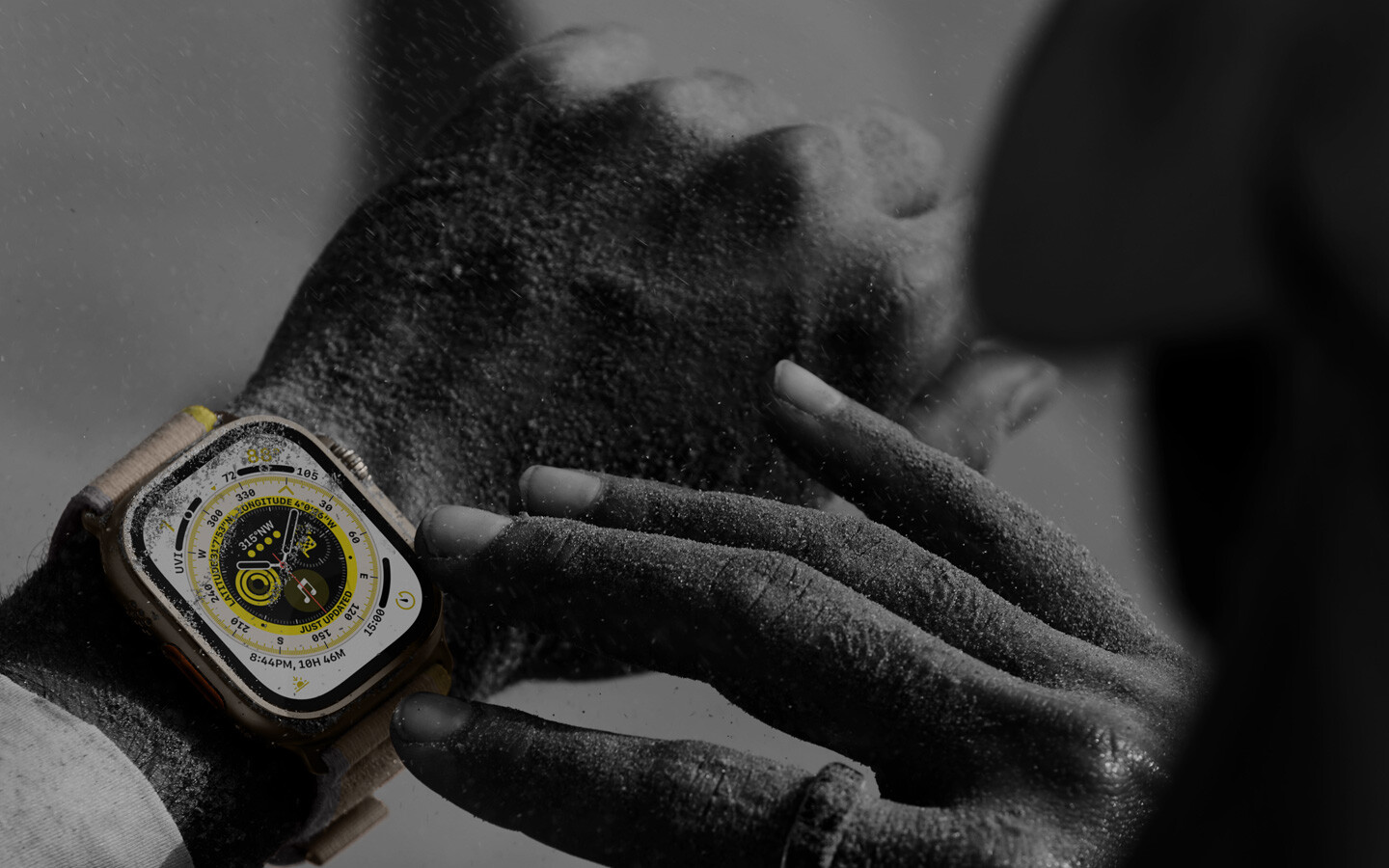
Out in the backcountry, I needed the Fenix because the battery lasts for weeks, it comes with a genuinely robust GPS and great tracking features, and you’d need a hammer to break the thing. On days when I was adventuring—backpacking, skiing, out on a bikepacking trip—I would always swap the Apple Watch for my Garmin because we all know that the regular Apple Watch isn’t very robust. The battery lasts a day at most, and the face tends to shatter if you bang the watch around.
This announcement from Apple, however, changes everything. I was in the Steve Jobs Theater at Apple Headquarters in Cupertino, California, today to hear that the brand will be launching the Apple Watch Ultra ($800) for those of us who need more than just a daily driver.
The Ultra is a significant upgrade because it goes a long way toward solving all three problems I mentioned above. The battery now lasts up to 36 hours, so you’ll be able to take it on multi-day adventures and not worry about dying. The outside is made of lightweight and robust titanium, and the watch face is made from sapphire (similar to what you’d find on some other high-end adventure watches), so if you go over the handlebars on your bike or yard sale on your skis, the watch should be fine. The Ultra now has an enhanced GPS feature where you can use the Compass app to leave waypoints while you’re out, and the watch can guide you back along them if you get lost—something that’s extremely useful while exploring any new backcountry area. Apple says their GPS is also optimized to connect even when next to tall trees and high-rise buildings.
Other adventure features I’m excited to test include:
Based on these stats, the Apple Watch Ultra is still not as robust as a top-end adventure watch like the Garmin Fenix 7X Solar (which I’ve been testing for the past year), so there will still be core users out there that prefer their Garmin, Suunto, or Coros watch. But for those who adventure and love the usability of the Apple Watch and other Apple Products, the Ultra finds an excellent middle ground. Watch this space for further testing of the Apple Watch Ultra, available to order now and arrives on Sept. 23.
(09/10/2022) ⚡AMPby Outside
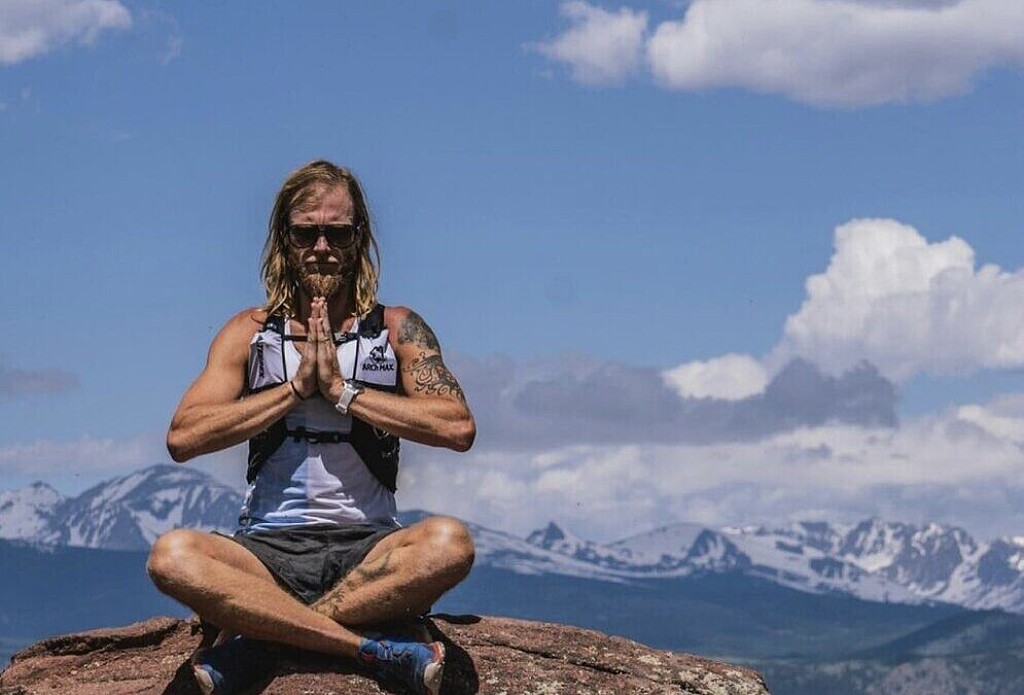
Find your zen: fix focus and form with this running meditation
Practicing a simple running meditation on easy runs can help you tap into that much-desired flow state–where running feels effortless. Mackenzie L. Havey, author of Mindful Running, explains that adding mindfulness practice to your training has the potential to amplify the already brain-boosting effects of aerobic exercise, increase running performance, and lower anxiety and stress.
Accomplished ultrarunner Timothy Olson emphasizes how much being mindful has impacted his running.”Bringing mindfulness into anything you’re passionate about ignites your overall enjoyment of the whole experience. You become more skilled by becoming engaged in and focused on what you’re doing in the moment. The more you enjoy running, the better you are.”

Having the ability to calm your mind in a physically challenging or pressure-laden time is an enviable skill. Read through this simple meditation several times, and then try it while on your next few easy runs. You’ll find it gets easier over time, and you’ll have one more tool to pull out during your next hard race.
Basic running meditation
Choose something as an anchor for your attention–this could be your breath or your footfall.
Start an easy run, ideally on a trail or somewhere where there isn’t a lot of traffic. Make sure to be aware of your surroundings at all times.
Give yourself five to ten minutes to relax and settle into your run.
If you chose your breath as an anchor, follow each inhale to the end and then follow each exhale. If you chose your footfall, count each step up to ten and repeat. Pay attention to where your foot lands and how it feels when it pushes off.
When you notice your mind wandering, gently redirect it back to your anchor. Continually bringing your attention back to your breath or footfall will strengthen new neural pathways over time, enhancing your ability to concentrate.
With practice and when things line up, you will find that refocusing your attention on your breath or footfall can eventually lead you to flow state.
(09/08/2022) ⚡AMPby Running Magazine
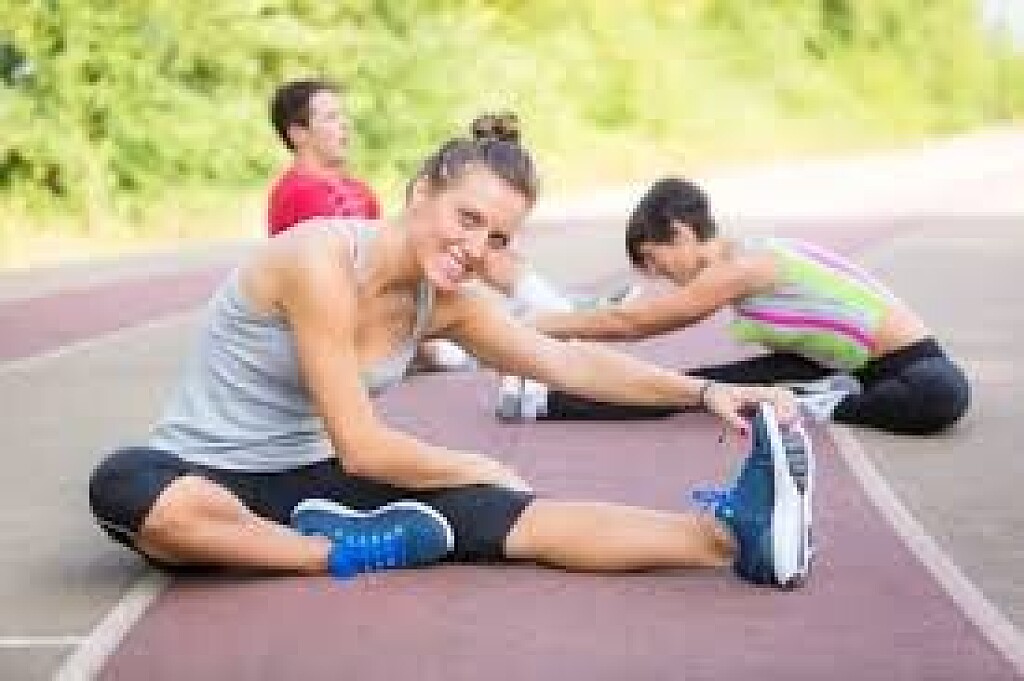
Boost recovery time to become a stronger runner
Paying attention to rest and recovery now will help you build strength and stay injury-free.
If you prioritize rest and recovery all of the time, you won’t need so much of it: or so research suggests. Some runners have a strict off-season, where they only cross-train or go on easy runs during the late fall and winter months. Others run straight through the winter, interspersing their diverse training with dialed-in recovery and rest throughout the year. Here are a few tips on how to maximize rest and recovery throughout racing season, so that you don’t have to take a prolonged break from your sport.
Always take one rest day (minimum) per week
All runners are different, and your rest and recovery needs will vary depending on how much general life stress you have going on. Our bodies don’t log mileage or care about our Strava data–they accumulate stress. This includes mental and emotional stress, so if you have a lot going on in your life, you may need more recovery time. Coach and ultrarunner David Roche advocates for a minimum of one rest day per week, two for athletes with stressful life situations.

Rest for three days at the sign of a potential injury
“It’s better to be 99 per cent too overprotective than one per cent too underprotective,” says Roche. When in doubt, rest. If the signs of potential injury persist after three days, seek a medical opinion. Inserting three days in a row of rest at any point in your training when you’re feeling over-taxed in life or well-being can be an efficient, simple training boost.
You won’t lose fitness in such a short period, and three days is often enough time to catch up on rest or deal with other life issues. By the third day, you’ll probably be itching to pull on your shoes.
Lots of rest after hard efforts and big races
In a tough race, we push our bodies into supercompensation mode. This can be a fantastic way to reach the higher echelons of fitness, but an extraordinary effort involves appropriately matched recovery.
When we run much harder than usual, our bodies get a bit of a shock: supercompensation training is the act of dramatically increasing your training load for a short period of time and then compensating by going very easy and maximizing recovery. Make sure to take full days off, eat a lot of nutritious food (your body needs fuel to recover), and to ease back into training with gentle activities or easy runs.
(09/07/2022) ⚡AMPby Keeley Milne
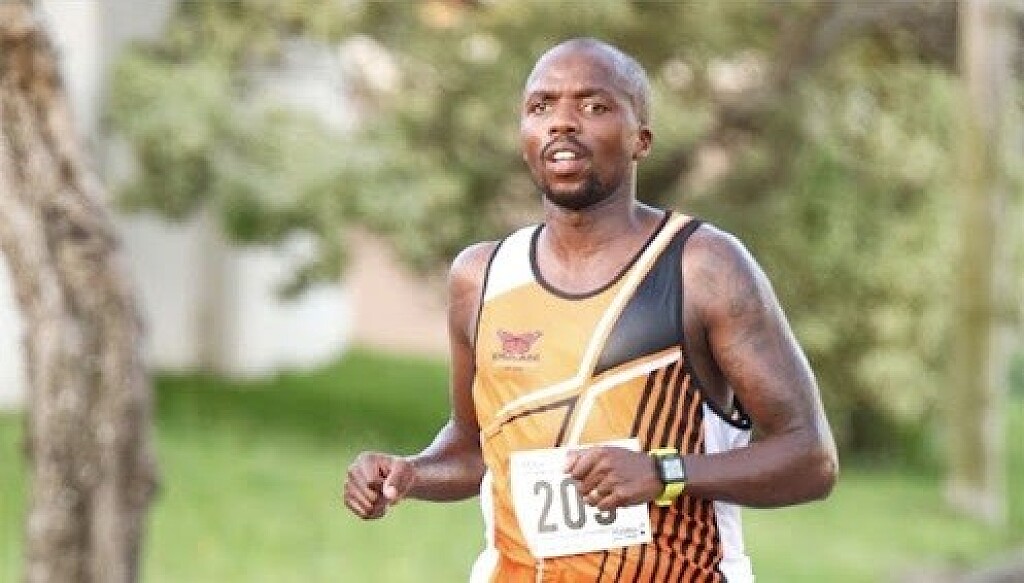
Former boxing champ Sinyabi now targets Cape Town Marathon after he finished his debut Comrades Marathon
Retired two-weight SA champion Mabhuti “Mcman” Sinyabi is now targeting Sanlam Marathon which takes place in Cape Town next month.
This follows after he finished his debut Comrades Marathon inside nine hours.
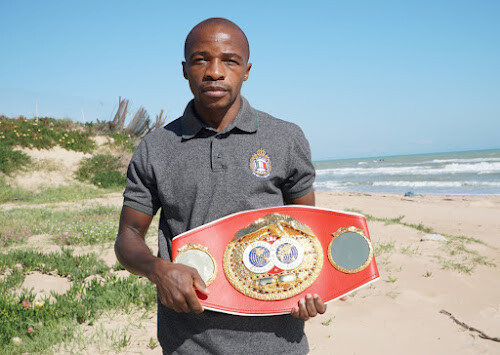
Sinyabi – who recoded nine defenses of the SA junior-featherweight belt – was awarded with the Bill Rowan medal for his achievement in the 90km ultramarathon in KZN. Bill Rowan won the first Comrades Marathon in 1921, in 8 hours and 59 seconds. This sparked the idea for the medal in his honor, introduced 2000 to recognize runners who finish the Comrades between 7:30:00 and 8:59:59.
“I went there and executed my game plan well; everything just went well,” said Sinyabi.
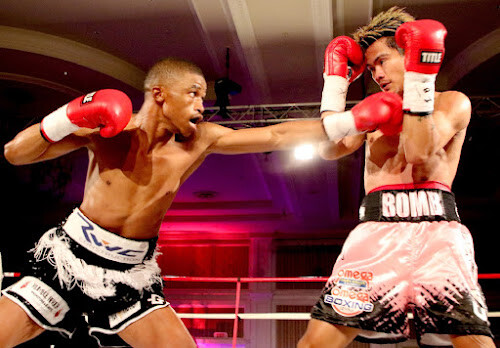
By the time he retired from boxing in 2016, Sinyabi had added the national featherweight title in his collection in 2015. His pro career record is 29 wins and five losses.
“Mentally and physically I was fit,” said the knockout artist who left 20 of his 29 victims in boxing gasping for air.
“I have got four titles as a boxer; so if I can have five medals in the Comrades Marathon, consistently winning the Bill Rowan medal I will retire. My focus is now on the Cape Town Marathon which takes place next month.”
If Sinyabi does not get the Bill Rowan medal again, he can run to finish and claim the Vic Clapham medal at the Comrades.
Known as the cut-off medal for those who finish after 11 hours but ahead of the 12th hour cut-off, the medal was named after Clapham. It is is said the Englishman who fought in World War I started the Comrades Marathon in 1921 by running between Pietermaritzburg and Durban.
(09/06/2022) ⚡AMPby Bongani Magasela
Cape Town Marathon
The Sanlam Cape Town Marathon is a City Marathon held in Cape Town, South Africa, which is sponsored by Sanlam, the City of Cape Town and Vital Health Foods. The marathon is held on a fast and flat course, starting and finishing in Green Point, near the Cape Town Stadium. Prior to existing in its current format, the Cape Town...
more...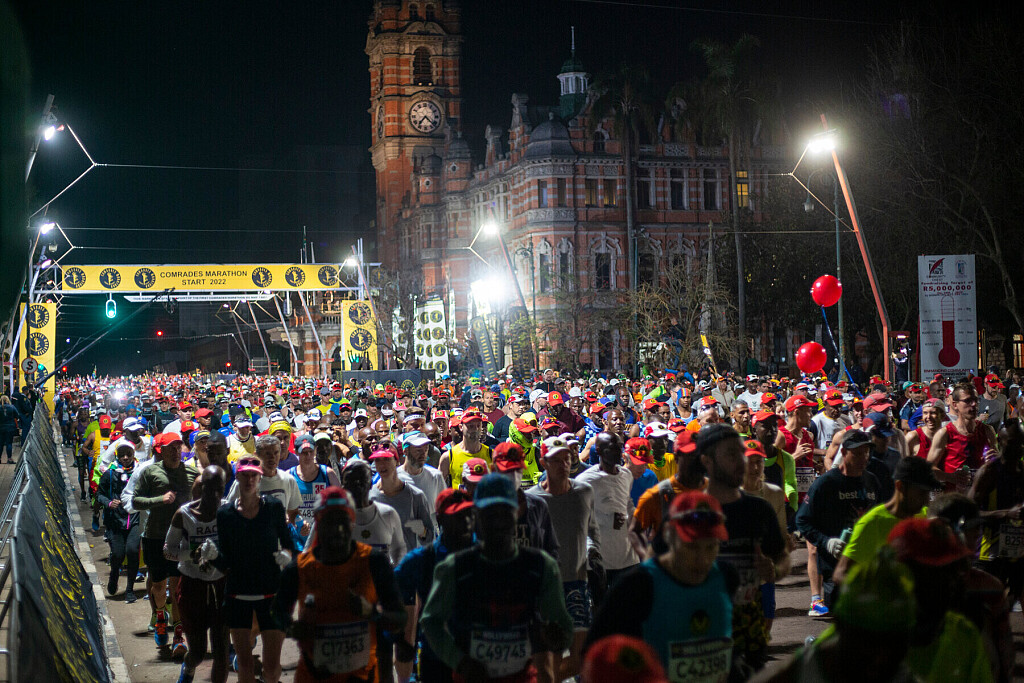
‘We Are Here Because of Him’: The Runner Who Defied Apartheid
In the dying days of South Africa’s apartheid regime, pioneering Black runners helped transform the Comrades Marathon into the race it is today, one that reflects the country around it.
On a balmy Sunday morning in late August, Kgadimonyane Hoseah Tjale stood below a stadium full of roaring fans on the finish line of the Comrades ultramarathon, clutching a small air horn.
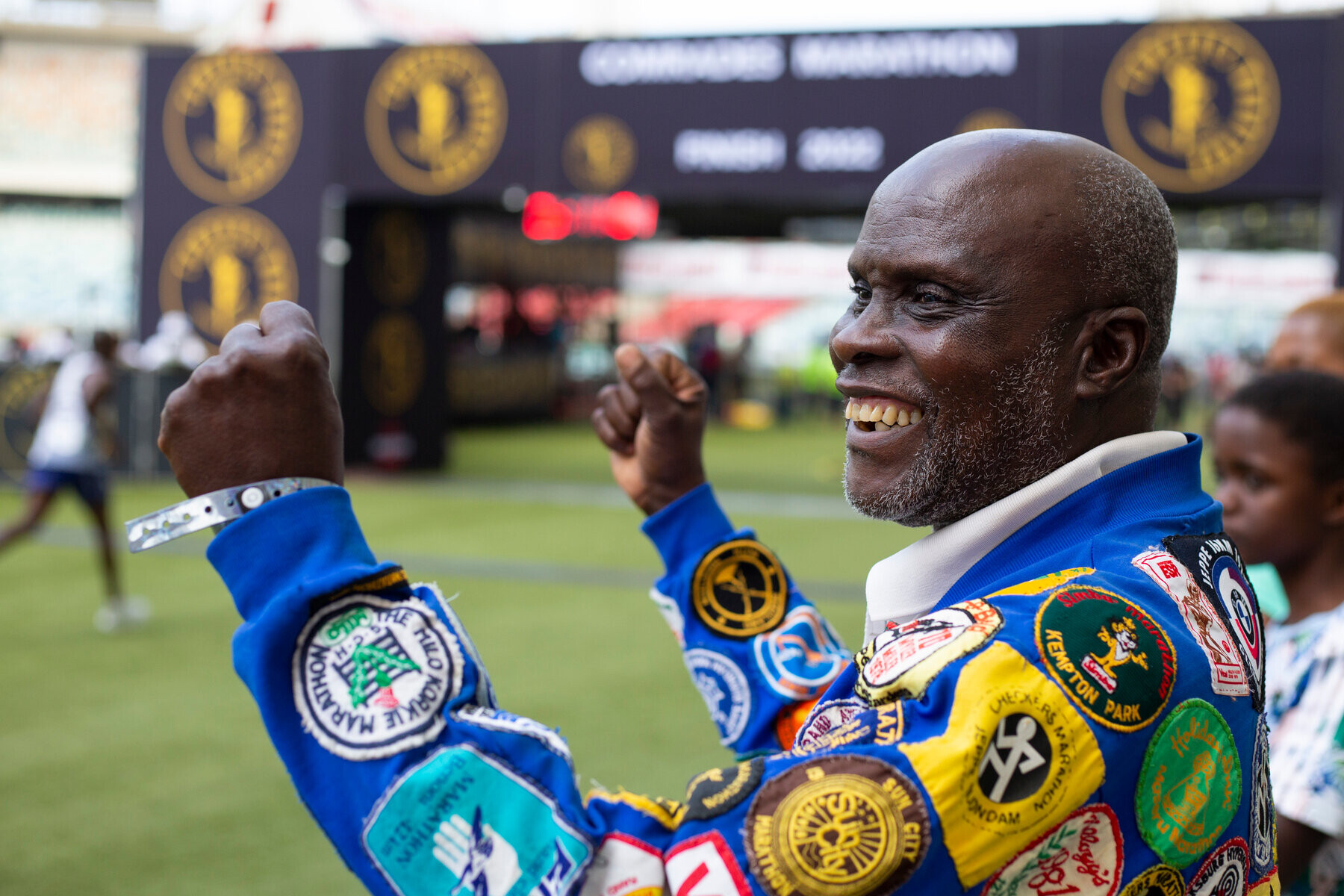
He had been here before. In the 1980s and early 1990s, Tjale racked up four podium finishes at the Comrades, a 56-mile race between the South African cities of Pietermaritzburg and Durban. Today, it is the largest ultramarathon in the world, attracting a field of up to 20,000 runners, throngs of spectators and millions of live television viewers.
The story of how the Comrades became the race it is today is bound up in the story of Tjale and other pioneering Black runners of his generation. In the dying days of South Africa’s apartheid regime, they helped transform the race from a poky, amateur affair into an enormous event that looks much like the country around it.
They did so from one of the most uneven playing fields in the modern world.
Back at the race for the first time in 29 years, Tjale marveled as the top finishers sprinted past him. In his days, nearly every top runner was white. Now, all the top men were Black, wearing the jerseys of big corporate running clubs that paid for them to attend training camps. The 2022 men’s race winner, a university security guard named Tete Dijana, earned around $42,000 in prize money and bonuses. It was equivalent to about a decade of his salary.
“There was none of that in our times,” said Tjale, a retired delivery driver who was living in a shack north of Johannesburg when he ran his final Comrades race in 1993, when the race did not offer a cash prize.
(First photo) The start of the Comrades Marathon at the Pietermaritzburg City Hall. Credit...Rogan Ward for The New York Times
Tjale had been invited back by the Comrades’ organizers to sound a horn marking the cutoff for a special medal given to runners who finish in less than six hours. In the car from the airport two days before, Tjale asked one of them why they had invited him.
Tjale had been invited back by the Comrades’ organizers to sound a horn marking the cutoff for a special medal given to runners who finish in less than six hours. In the car from the airport two days before, Tjale asked one of them why they had invited him. He’d never won the race, after all.
But for Comrades runners, the reason was obvious.
“We are here because of him,” said Freddie Wilson, a runner from Johannesburg, as he waited to take a photograph with Tjale at the race expo. His voice shook with emotion.
Like many Black South Africans, Wilson grew up watching Tjale on TV. His family didn’t have a television, but on Comrades Sunday they would crowd with others in their neighborhood into the lounge of a family who did and spend the entire day watching the race.
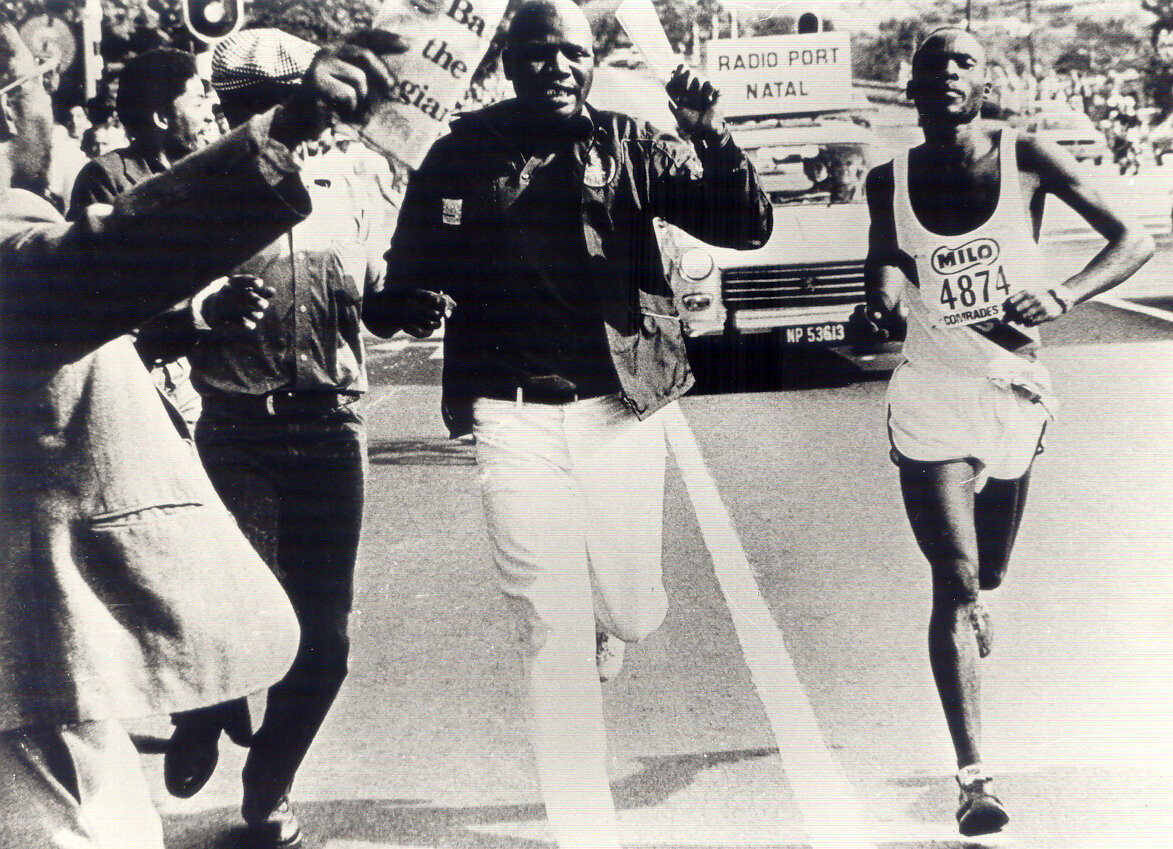
Wearing a bucket hat and running with a distinctive, lopsided gait, Tjale was a revelation in the front pack. From inside a country whose government was purpose-built to stifle the ambitions of Black South Africans, here was a Black man doing something audaciously ambitious, for the whole country to see.
(Third photo) Spectators running with Tjale in a Comrades Marathon during the 1980s.Credit...The Comrades Marathon Association
“He was our great,” Sello Mokone, who has run the Comrades 18 times, said. “The moment we saw a Black guy doing this, we knew we could do it too.”
At his peak, Tjale could run 56 miles at a pace of just over six minutes a mile. He racked up dozens of wins at ultramarathons, including at South Africa’s other famous ultra, the 35-mile Two Oceans. Twice, he almost defeated the Comrades’ white folk hero, a floppy-haired blond man named Bruce Fordyce, who won the race nine times between 1981 and 1990.
Bob de la Motte, a white runner who finished second to Fordyce three times, said that Tjale “was the better athlete.”
But while Fordyce focused full-time on the Comrades, living off money from speaking gigs and corporate sponsorships, Tjale worked as a delivery driver, running 15 miles from the crowded workers’ hostel where he lived to his job. On weekends, he ran every local race he could find, from 10 kilometers to 100 kilometers (6.2 miles to 62.1 miles), for prize money to supplement his income.
“He was lucky,” Tjale said of their rivalry.
Tjale grew up in the 1960s in a rural area near the city of Polokwane, formerly known as Pietersburg. He dropped out of school after eighth grade. A few years later, he moved to Johannesburg to work as a live-in gardener for a white family. There, he clipped hedges during the day and washed the family’s dishes after dinner. In between, sometimes, he went for a jog.
In the late 1970s, his running caught the attention of his employer, who helped him buy a pair of sneakers and join a running club. He began entering races, and soon, winning.
It was an auspicious moment to take up distance running. At the time, South Africa was subject to widespread international sports boycotts, which kept the country out of most major events. The nation was desperate to get back in, and in the mid-1970s, the apartheid government announced it would desegregate a minor sport, running.
Amid a global boom in running, entries at races like the Comrades began to tick upward. And South Africa’s single state-run TV station began broadcasting the Comrades live in the early 1980s. Millions watched Black runners like Tjale and white competitors like Fordyce share bottles of water and sling their arms over one another at the finish line.
“In the Comrades, everyone needed help at some point, and people always gave it,” said Poobie Naidoo, another elite South African distance runner from the 1980s, who is of Indian heritage.
But the moment runners like Tjale and Naidoo stepped off the course, they returned to an apartheid reality. In 1979, not long after his first Comrades, Tjale was arrested on his way to work for not having documents showing he was allowed to be in a white part of the city. He spent a night in jail.
“On the road was the only place I sometimes felt like apartheid wasn’t there,” Tjale said.
In 1989, both Tjale and Fordyce participated in a 100-kilometer world championship. Because of the timing, Fordyce skipped the Comrades, and Tjale ran it on tired legs. Another runner, Sam Tshabalala, became the race’s first Black champion. Tjale, meanwhile, ran his final Comrades in 1993, quietly finishing 51st.
In 2016, Tjale, a reserved man with an easy laugh, retired to a 20-acre farm he bought near Polokwane. It was one of the first times since he married in the 1970s that he and his wife had been able to live together, and they spent quiet evenings on their couch cracking jokes and watching soap operas.
He didn’t think much more of the Comrades, besides occasionally turning down invites to events the race hosted. “I was done with that thing,” he said simply.
But this year, a Comrades Marathon Association board member named Isaac Ngwenya called with a plea. Would Tjale come and let himself be honored. He agreed and last weekend boarded a plane for Durban.
Tjale arrived to a race radically transformed from the one he left. At the Comrades expo, thousands of runners — most of them Black — milled around, trading training stories. The night before the race, more than 300 people slept in the Pietermaritzburg Y.M.C.A., where race organizers put up entrants who could not afford accommodation.
“It’s something I can show my son, and myself — that I did this thing,” said Cynthia Smith, a security guard, as she stretched out on her foam mattress.
On the start line at Pietermaritzburg City Hall the next morning, more than 13,000 runners sang an old migrant laborers’ song called Shosholoza, whose title means “go forward.” The gun popped, and they surged into the winter morning.
“It’s like living your entire life in a single day,” Tommy Neitski, a 42-time finisher, said of the race’s mass appeal. It’s also like seeing all of South Africa in a day, on a course that winds its way past shacks and boutique hotels, sugar cane fields and gritty industrial towns.
Tjale arrived at the finish line at Durban’s Moses Mabhida Stadium to sound the six-hour horn. Waiting in a V.I.P. lounge, he ran into Jetman Msuthu-Siyephu, winner of the 1992 race. They spent the morning trading memories.
As the day wore on, the two men watched the salt-streaked runners pour in by the thousands, dissolving in joy and exhaustion as they stumbled over the finish line. Tjale couldn’t stop smiling.
“When we go,” he said to Msuthu-Siyephu, “we will have left something for this world.”
(09/04/2022) ⚡AMPby Ryan Lenora Brown (New York Times)

Comrades Marathon
Arguably the greatest ultra marathon in the world where athletes come from all over the world to combine muscle and mental strength to conquer the approx 90kilometers between the cities of Pietermaritzburg and Durban, the event owes its beginnings to the vision of one man, World War I veteran Vic Clapham. A soldier, a dreamer, who had campaigned in East...
more...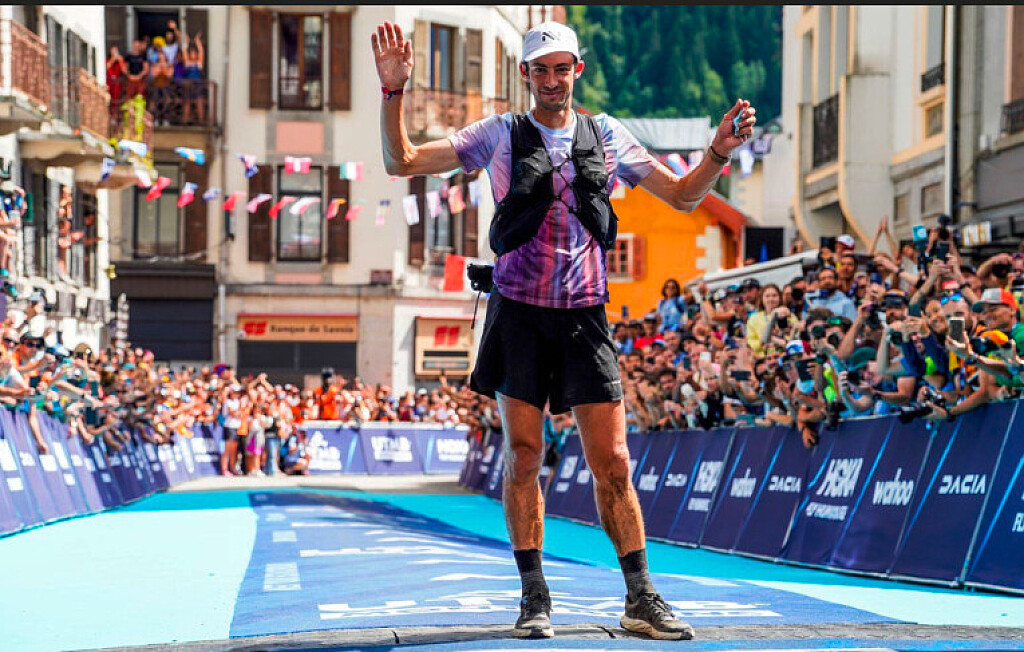
Kilian Jornet Isn't The G.O.A.T. of Trail Running Just Because He Wins Big Races
After Kilian Jornet won the Ultra-Trail du Mont-Blanc (UTMB) for a record-tying fourth time on August 27, it was easy to assume that running 100 miles is something that comes easy to him.
It doesn't, but it would be easy to think that because, well, it sure looked that way.
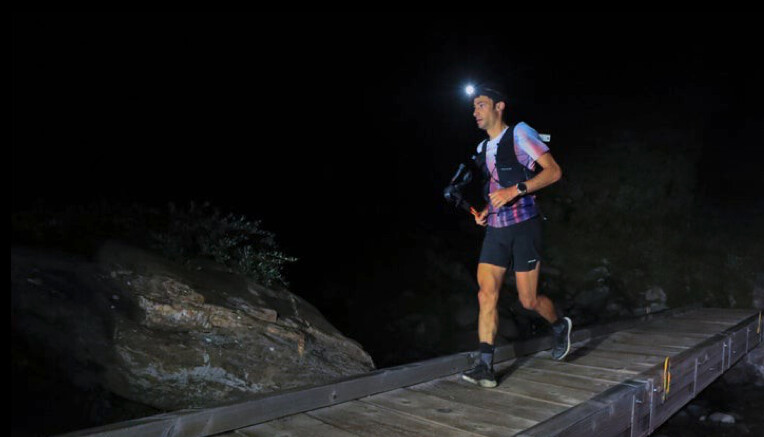
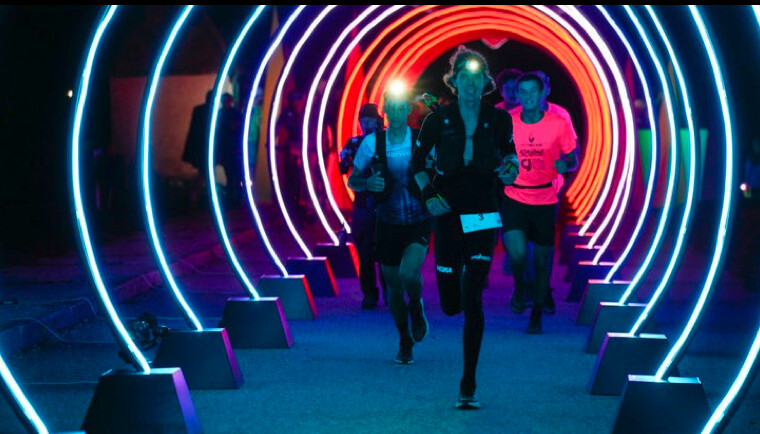
While the 34-year-old who hails from the Catalan region of Spain has long ago established himself as the G.O.A.T. of ultra-distance trail running in the mountains, he's as human as each of the other 2,300 runners who toed the line at this year's UTMB. Like his fellow competitors, Jornet felt fatigue in his legs from grinding through the 171.5km (106.5-mile) course and its 33,000 feet of elevation gain. He said he had difficulty breathing when he ran too fast or climbed too abruptly, likely the lingering effects of having just overcome Covid-19 earlier in the month.
And, like everyone else, he had to fight off low moments of mental torment, and maybe even a tiny trace of self-doubt-remember, he's human-as American rival Jim Walmsley opened up a big lead on him over the Grand Col Ferret as the course passed from Italy to Switzerland.
But what sets Jornet apart, and what has always distinguished him as an athlete, is a unique combination of physical ability, smart racing strategy and a deep connection to the mountains that allows him to move joyfully, patiently and, at times, seemingly with relative ease amid the physical anguish that comes with running such a grueling race.
But make no mistake, he suffered enroute to winning UTMB in a course-record 19 hours, 49 minutes, even if he made it look easy overcoming Walmsley and dispatching competent French contender Mathieu Blanchard.
"Since the start there has not been a single moment in which I didn't suffer," Jornet said after the race. "I knew that I needed to keep my intensity under a certain threshold where it can be heavy for the lungs, but it was no problem. But muscularly it was very hard from the start of the race."
Jornet is human, even if it took a debilitating illness to show it. But as he turned in yet another masterwork performance on the world's biggest stage, Jornet gave glimpses of what has made him so otherworldly for so long. Perhaps surprisingly, superior physicality is only a small part of it.Patience and Respect
Having already won UTMB three times and Hardrock a record-tying five times-most recently just six weeks earlier-Jornet had nothing to prove in Chamonix. In fact, if he had never toed the line or for that matter retires from competition, his legacy of epic race victories and Fastest Known Time (FKT) records on some of the most difficult trails and biggest mountains around the world would stand the test of time.
But that brings up another element that makes Jornet great is that he has always run as if he had nothing to prove. Sure, he's a competitive athlete, but his focus seems to be more about immersing in the zest of competition and the life-affirming bliss he's always felt in the mountains.
For Jornet, the destination truly is the journey, not the outcome. That adventure-oriented focus was something he learned in his youth growing up in the high-alpine environment of the Cap de Rec mountain refuge in the Spanish Pyrenees, where his dad was a mountain guide and his mom was a ski instructor. He climbed his first peak at age 3 and started competing in ski mountaineering races at 12.
Along the way, he developed a grounded sense of presence in the mountains that has allowed him to remain calm and bide his time in ultra-distance races-especially more rugged mountain races like UTMB and Hardrock. Instead of going all-out from the front, he typically follows a more fluid strategy of just staying in contact with the lead group and letting the race play out a bit as the terrain dictates before becoming hyper-competitive.
Contrast that to Walmsley, who has been hellbent on becoming the first American man to win the race with a front-running mentality, countryman Zach Miller, who returned after injuries and Covid-19 kept him away from continuing the same pursuit for three years, and the hard-charging Blanchard, who was eager to steal the show and make a name for himself in front of a supportive mostly French crowd after a robust third-place finish in 2021.
Even when Jornet was younger, he ran with maturity and wisdom beyond his years, always earnestly clinging to the premise that the experience of racing-and sharing it with his competitors, not to mention spectators and volunteers when possible-is always more important than the actual race itself.
When Walmsley built a big lead with a strong power-hiking surge up the Grand Col Ferret, Jornet was seemingly content, at that moment, to ease through the highest point of the course, chatting at times with volunteers, fans and videographers in French, Spanish or English as he had done at times earlier in the race. In previous UTMB races, he's burst ahead on the switchbacks up Grand Col Ferret and other steep climbs on that course, only to stop on top and wait for his competitors to catch up while gazing at the stars or picking mushrooms with children.
"At Hardrock this year, when I saw him on top of Grant Swamp Pass, he stopped in the middle of the race just to chat with me because we hadn't seen each other in a while," Miller says. "That's just the way Kilian is."A Versatile Mountain Athlete
Jornet has a much more diverse set of athletic skills and abilities than most ultrarunners. In addition to winning ultras, Jornet was a multiple world champion in ski mountaineering and SkyRunning in his twenties. He also set a host of new speed ascent marks and roundtrips on Mt. Kilimanjaro (Tanzania), Aconcagua (Argentina), Mont Blanc (France) and the Matterhorn (Switzerland). Although he missed in his attempt to set a new FKT on 29,032-foot Mt. Everest in 2017, he actually summited the world's highest mountain twice in six days without supplemental oxygen.
When he was a few years younger, he set a new record on the 171-mile Tahoe Rim Trail in California and Nevada and posted the fastest-ever time up the steep, rocky 1.3-mile Mt. Sanitas Trail in Boulder, Colorado.
"Kilian is a beast," says Francois D'Haene, the other four-time UTMB winner who last year became the first to win Hardrock and UTMB in the same summer. "When it comes to Vertical K races and distances from 40K to 100K, I think there is no competition between us. He's faster than me and stronger than me, especially on technical terrain."
Aside from long-and-rugged Hardrock and UTMB, Jornet won the shorter and much faster 42km Zegama Alpine Marathon in Spain and placed fourth in the 31km Sierre-Zinal village-to-village race in Switzerland in August. A lot of it has to do with the fact that he still trains in much of the same fashion as he did as a kid, often focusing more on fun, hard, playful days of adventure on foot or on skis as much as he does structured high-performance workouts.
"Kilian is unique in the range that he can cover," Miller says. "As a runner, his ability to switch back and forth from something like Zegama to Hardrock to Sierre-Zinal to UTMB is just incredible. And because of that ability, I think he's a bit of a mad scientist when it comes to training. He kind of turns himself into a guinea pig and trains in ways other guys might not be willing to for fear of overtraining."
All of that translated into Jornet's ability to win this year's UTMB despite trailing Walmsley by about 15 minutes at the 126km aid station at Champex. When the surging Blanchard caught him and quickly left the aid station, Jornet's competitiveness and mountain practicality started to fire up. They passed Walmsley and gapped him and then ran stride for stride over the ensuing 2,300-foot climb from the village of Trient down into the ski town of Valloricine.
Finally, after leaving the 153km aid station at the same moment as Blanchard, Jornet surged on a gently sloped 4km section of trail to the base of the final 2,600-foot climb up Tte aux Vents. Blanchard got a first-hand view of the master at work and all he could do was watch him run away to victory and hold on for second place.
"Running from Champex with Mathieu, I knew I was stronger going up but that he was catching on the downhills," said Jornet, who has lived in Norway for the past several years with his wife, Emelie Forsberg, and their two young children. "Once we got to Valloricine, the strategy was to push very hard up the final climb to Tte aux Vents and then manage the lead. I had about an 8-minute lead and I was feeling comfortable with it, but in a ultra race you never know, many things can happen."A Transcendent Athlete
At some point a conversation about Jornet should transcend trail running and include the similarities he shares with other great athletes who have had a similarly dominant presence in other sports. And yes, that means Tom Brady, Michael Jordan, Lindsay Vonn, Eddie Merckx, Michael Phelps, Ann Trason, Lynn Hill, Kelly Slater and Eliud Kipchoge.
Why not? Like each of those all-time athletes, Jornet has consistently risen to the occasion at the biggest moments of his career, not only because he physically outclasses the competition, but also because his intellectual prowess as an athlete and his ability to outthink, outwit and outlast them. It's not that he wins everything-although he's won the vast majority of his races since winning UTMB as a 20-year-old in 2008-it's more that he's been competing at the highest level for 15 years and hasn't regressed and has rarely had bad days.
In 2017, he had a rough go of it in the UTMB and finished second to D'Haene and in 2018 he dropped out after inflammation and pain caused by a pre-race bee sting made it difficult to keep running.
"Even his bad races he performs well, and I think that's what makes Kilian special," says Walmsley, who finished fourth at UTMB this year. "Whether it's a bad moment or a bad race, he's always still competing at a really high level. I have raced him twice at UTMB and both times I have thought I have found a crack, but I haven't been able to hold onto it."
Until recently, Jornet might have been viewed solely for his athletic. But with his bold move this year to break away from longtime sponsor Salomon and begin a new environmentally friendly trail running shoe brand called NNormal (with Spanish footwear brand Camper), he's not only begun to hone his entrepreneurial spirit in the world of business but also to make an impact as the environmental steward he's always been.
It's a path only a handful of high-level outdoor athletes achieved success at after making their mark in their sport disciplines, most notably Yvon Chouinard, a climber, surfer and kayaker who founded Patagonia in 1970.
Jornet ran all of his races this year in the same model of NNormal shoes that will be available at running shops and online this fall. It's a uniquely designed shoe that's balanced under the midfoot to promote midfoot and forefoot running gaits, but with enough cushioning to run with a heel-striking stride, especially on downhill sections of a trail. A thin polyurethane plate provides protection from rocks and some energy return, while a proprietary version of a Vibram Litebase Megagrip outsole serves up secure traction.
That all might sound pretty standard, but Jornet really wants his NNormal shoes to stand out for their durability. He and his colleagues have gone to great lengths to source long-lasting components, but they've also designed the shoe to be deconstructed so it will be easy to re-sole, repair or recycle it after hundreds of miles of wear and tear. It's all part of NNormal's No Trace philosophy that is all aimed at transparently designing gear with the smallest carbon footprint possible.
"There are a lot of good guys in the sport, but in [my] mind, Kilian is the king of the sport," says Miller, who was the fifth finisher at UTMB this year. "He sets the tone for the entire sport and [is] a great representative of the sport."
(09/03/2022) ⚡AMPby Trail Runner Magazine
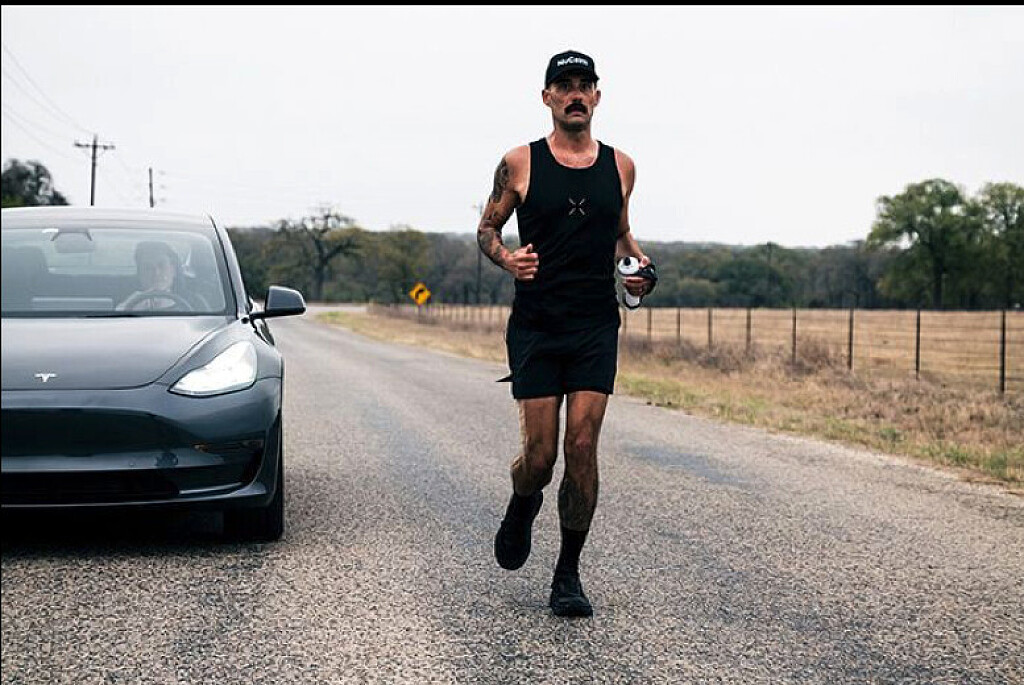
This Ultrarunner Outlasted a Fully Charged Tesla
Bobbie Balenger ran a staggering 242 miles in three days, covering more distance than an electric vehicle on a single charge.
Endurance runner Robbie Balenger set a world record last year when he completed 16 laps of the Central Park Loop Challenge, running a total of 100 miles in the course of a single day. His most recent ultrarunning accomplishment—attempting to run further than a Tesla electric car on a single charge—is the subject of a new documentary from Ten Thousand, as part of their ongoing Feats of Strength series.
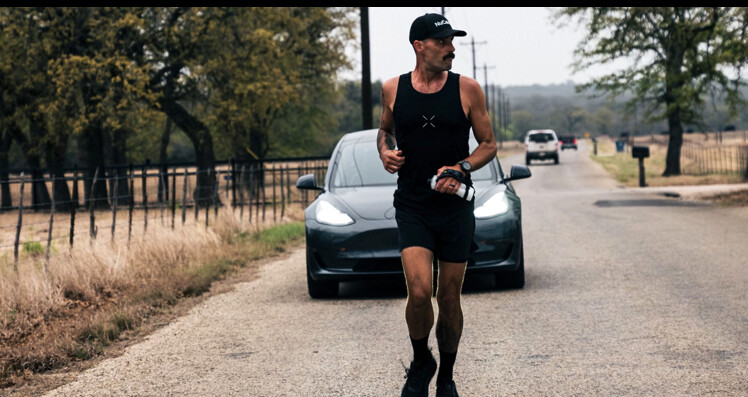
Firstly, the Tesla sets off from the same starting point where Balenger will begin his run, and is driven across the state of Texas until its battery is depleted, which occurs after 242 miles. Balenger then assigns himself 72 hours to surpass that distance on foot, a feat which he expects to be as challenging mentally as it will be physically.
It's just between my two ears, that battle," he says. "And that battle can get pretty lonely." However, he embraces the unpleasant aspects of the experience, like the physical discomfort, fatigue, and soreness which persist and only get worse as he covers more distance.
"I say that running is the inverse of a drug," he continues. "With drugs, you feel really good while you're doing it, then you feel like shit afterwards. With running, especially when you get into it, you feel like shit while you're doing it then you get to feel great afterwards."
At the halfway mark of 121 miles, Balenger pauses for an hour and 50 minutes of rest. He is then joined for the second stretch by a number of other endurance athletes, including Ironman triathlete Nick Bare and distance runner Hellah Sidibe, who run alongside him while offering encouragement.
46 hours in, at 5:30 a.m., Balenger takes another 50-minute nap before heading into his third and final day of running. "One of the things that draws me to these things is you are so aware of yourself and being alive while doing it," he says. "Through the pain, all of it, every sense is heightened."
After 76 hours 54 minutes, Balenger has run a total distance of 242.01 miles, outlasting the Tesla in terms of distance even if he went over his original time target of 72 hours. Ultimately, he says he is grateful to all of the people who helped him on his journey, and proud of himself and what he has accomplished.
"The bigger picture in life is just follow-through," he says. "You break through these versions of yourself, and tear it away and come out a new person, which I think happens for everyone as we evolve through chapters in life, but what's interesting is ones that happen so quickly... There's very few experiences in life where you look back three days later and you're like, I do not recognize that person."
(09/03/2022) ⚡AMP
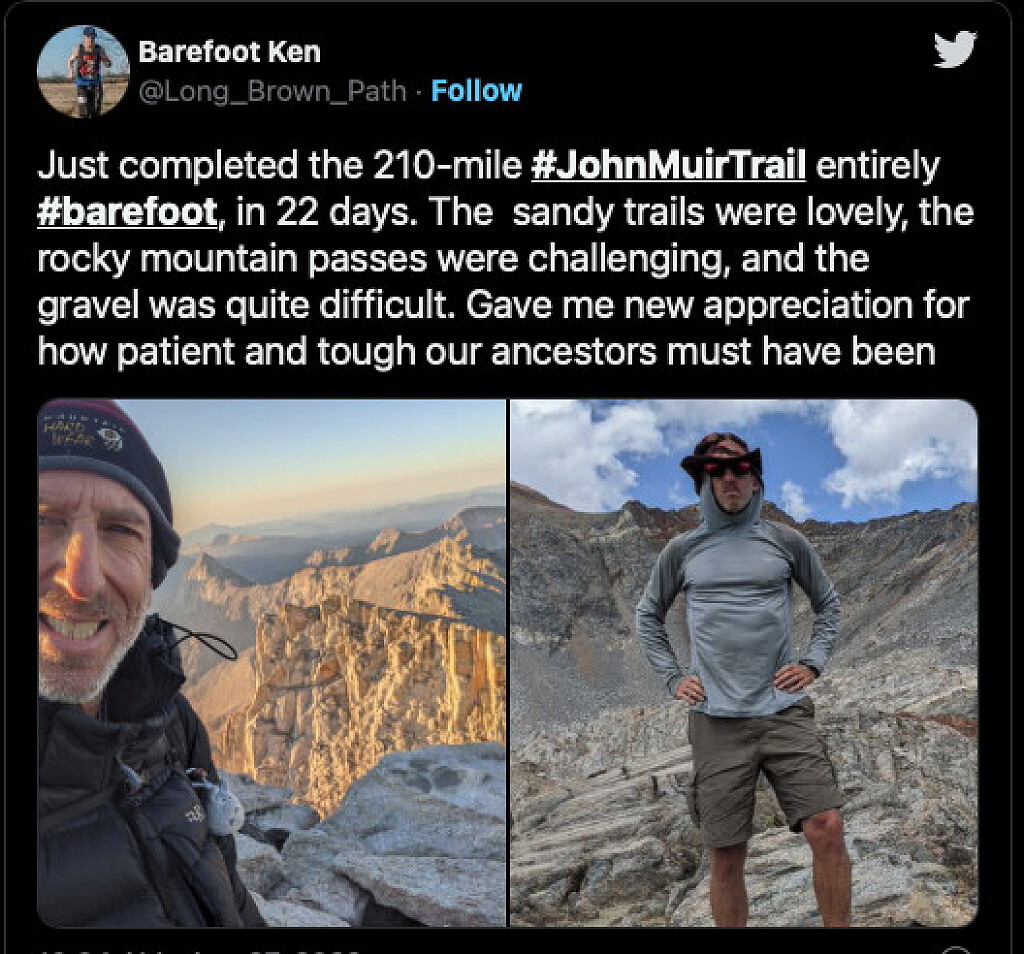
American ultrarunner completes barefoot trek of California's John Muir Trail
American ultrarunner Kenneth Posner completed a 22-day trek along California’s 210-mile (337K) John Muir Trail (JMT) on Saturday. While Posner didn’t run the route, he is an avid trail runner and ultrarunner, and he almost exclusively runs barefoot. He didn’t take to the JMT to break any official records (the various fastest known time records for the JMT hover around two to four days), but rather for a personal challenge: to hike the entire trail without shoes.
Completing a trail completely barefoot may seem like a random goal to many people, but for Posner, it has been a years-long battle. As he explains in his blog, he made his first barefoot JMT attempt in 2020. “Barefoot is simple,” he writes. “Natural. Intense. Every step is an adventure.” That initial shot at the JMT resulted in Posner completing about 240K of it without any footwear. For the other 100 or so kilometres, he was forced to don shoes. “The terrain [on the JMT] was more difficult than I expected.”
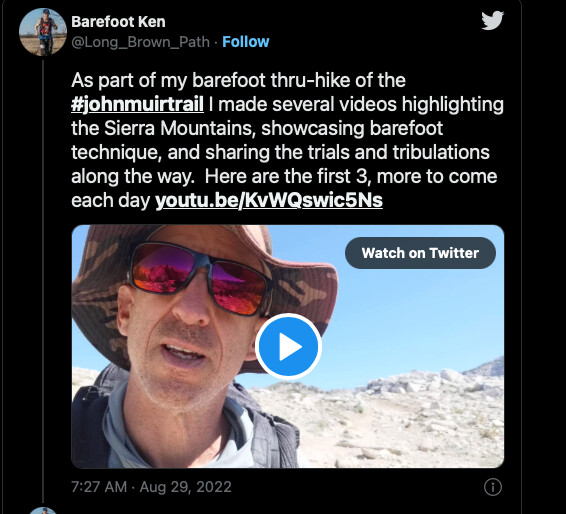
In 2021, he returned to the California trail, certain that he could finish the whole thing without resorting to shoes. Once again, though, he succumbed to the difficult terrain of the JMT, and he had to give in and put on shoes. Since then, he has been working toward the same goal, and this year, he managed to pull it off.
He set off on the JMT in early August, heading south from Yosemite National Park. The trek took him through mountainous terrain all the way to Kings Canyon National Park, where he finally reached the end of the JMT.
“Just completed the 210-mile #JohnMuirTrail entirely #barefoot, in 22 days,” Posner tweeted. “The sandy trails were lovely, the rocky mountain passes were challenging, and the gravel was quite difficult. Gave me new appreciation for how patient and tough our ancestors must have been.”
(09/03/2022) ⚡AMPby Running Magazine
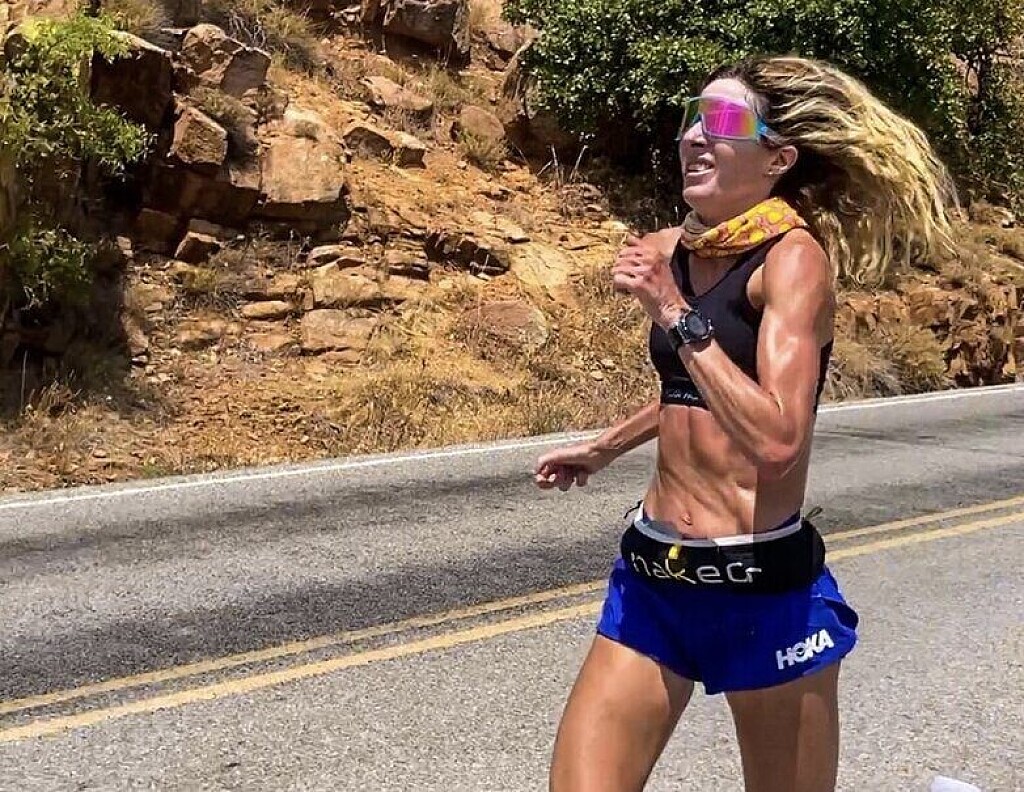
Camille Herron’s breakfast of champions, Fuel up and go chase a world record (or maybe a PB)
I’ll try any running (or eating!) advice Camille Herron has to offer. The multiple world-record holder continuously levels up, finding new ways to improve her running and racing. Herron is in South Africa running the downhill course of the legendary Comrades Marathon this weekend, an 89K ultra that she won (on the uphill course) in 2017.
She shared with us the pre-run breakfast she swears by. If you haven’t heard of teff, you aren’t alone; while Westerners are still learning about the tiny, protein-rich grain, it’s been a staple in Ethiopian cooking for thousands of years. Teff has a mild, nutty flavor. Herron substitutes it for oatmeal, and says it’s been a “game-changer.”
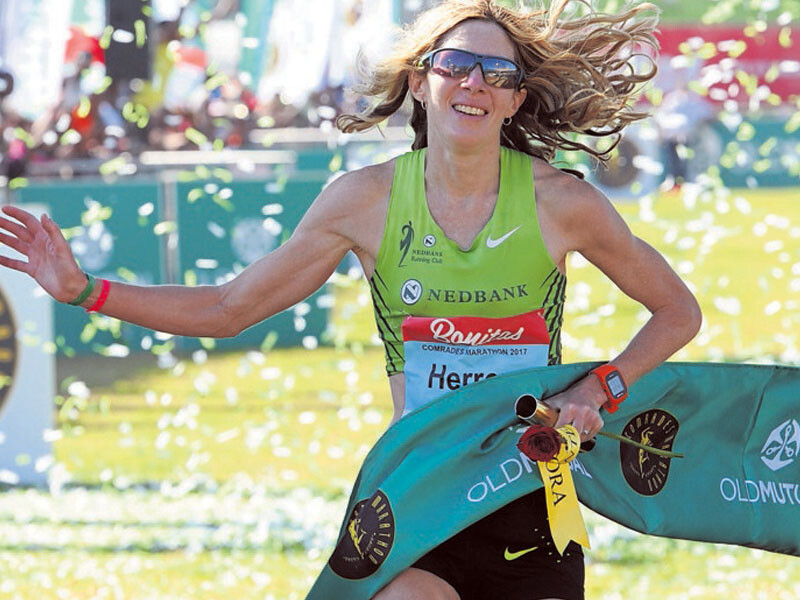
Camille Herron’s breakfast of champions
Ingredients
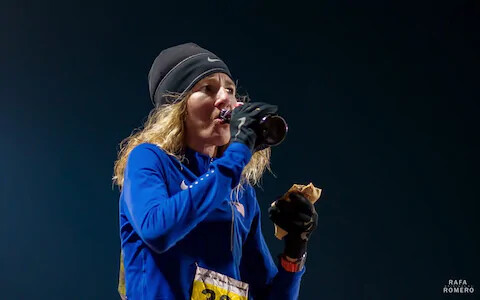
4 Tbsp of teff
1 Tbsp ground flax seed
1 Tbsp chia seeds
Handful of cut walnuts
Handful of blueberries
1 tsp camu powder
1 tsp bee pollen
1 Tbsp non-fortified nutritional yeast
1 to 2 Tbsp honey
Pinch of salt
Directions
Add hot water, stir, and let sit for 10 to 15 minutes. Add or substitute any nuts or fruit that you enjoy. Herron says teff has been a pre-run fuel revelation for her: “it doesn’t retain as much water as oats, so it doesn’t feel heavy on the gut pre-run.” She adds, “it feels like it stabilizes blood sugar for a long time.”
1 Tbsp wheat germ
(09/01/2022) ⚡AMPby Running Magazine

British ultrarunner completes 2,850 km run along Europe’s Danube River
Kieran Alger ran the length of the second-longest river in Europe in 67 days.
If you’ve travelled to Budapest, Vienna or a number of other European cities, you might have run along the Danube River. That’s what British ultrarunner Kieran Alger just finished doing on Tuesday, but unlike what was likely a chill mid-vacation run for you, he did it for 67 days.
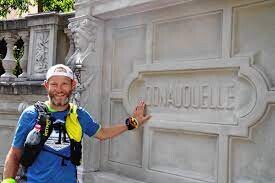
The Danube is the second-longest river in Europe, passing through 10 countries and spanning 2,850 kilometres, and Alger covered it from point to point. He called this challenge Danube Sea to Source and used it to raise money for five different charities, all of which fight child poverty.
Alger started his run on June 25 on the coast of the Black Sea in Romania. From there, he simply followed the Danube, taking every twist and turn the river makes. This challenge was almost completely unsupported, meaning Alger didn’t have a crew following along and meeting up with him at every pitstop. He carried his own supplies (a 22-pound bag) and camped most nights.
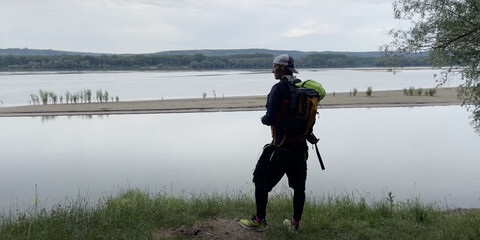
As Alger told the BBC after finishing his journey, he believes he is the first person to complete this running challenge along the Danube. As one would imagine, the Sea to Source was hardly an easy endeavour, but Alger said he had to fight more than just fatigue.
“In Romania, I battled lots and lots of wild dogs,” he said. “I suffered a couple of dog attacks … and I had to run quite a lot of those stretches on high alert.”
While this made the run even more difficult, Alger said he found that “the struggles made the highlights even better.” After crossing his finish line in Donauschingen, Germany, on Tuesday, Alger stopped the clock on his challenge after 67 days of running. That works out to more than a marathon every day for more than two months.
(08/31/2022) ⚡AMP
by Ben Snider-McGrath

America’s Camille Herron finished sixth at the Comrades Marathon on August 27
"Oh Comrades Marathon you were magical! Thank you everyone for making us feel like rockstars out there. I’m proud to finish 6th this time and another top 10 finish. It was an honor to be here again and share the road with you all. Enjoy the moment for all your hard work," posted Camille Herron.
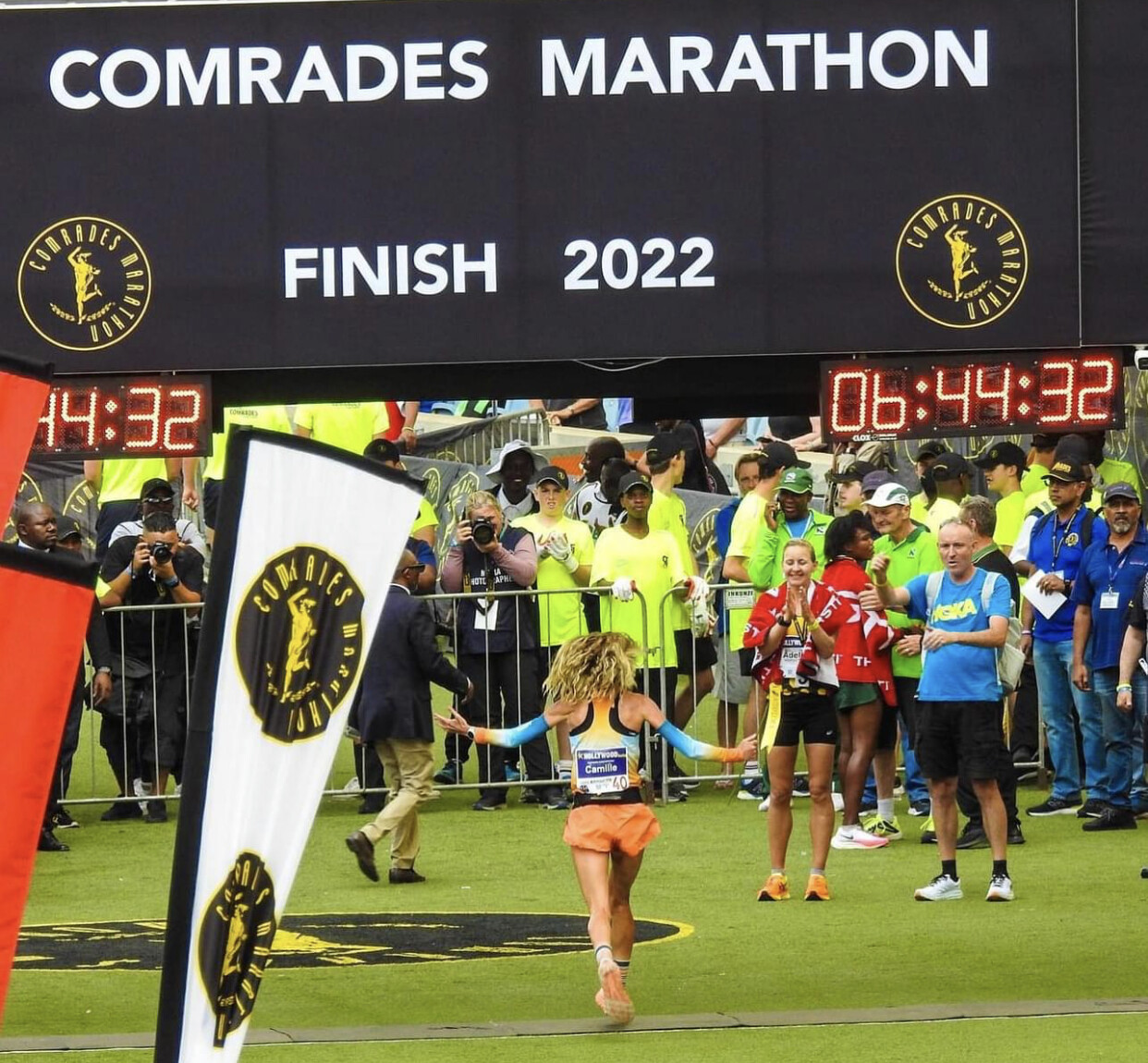
Camille Herron is an American ultramarathon runner. She is the first and only athlete to win all three of the International Association of Ultrarunners' 50K, 100K, and 24 Hour World Championships.
She won the 2017 Comrades Marathon and holds several World Record times at ultramarathon distances, along with the Guinness World Record for the fastest marathon in a superhero costume.
In November 2017, she broke Ann Trason's 100-mile Road World Record by over an hour in 12:42:40. She broke her 12-Hour and 100 Mile World Records in February 2022 at the Jackpot 100/US Championship, winning the race outright and beating all of the men.
In April 2022, she became the youngest woman to reach 100,000 lifetime miles. She is the first and only woman to run under 13 hours for 100 miles, exceed 150 km for 12-Hours, and to reach 270 km for 24Hrs.
(08/29/2022) ⚡AMP
Comrades Marathon
Arguably the greatest ultra marathon in the world where athletes come from all over the world to combine muscle and mental strength to conquer the approx 90kilometers between the cities of Pietermaritzburg and Durban, the event owes its beginnings to the vision of one man, World War I veteran Vic Clapham. A soldier, a dreamer, who had campaigned in East...
more...
Benefits and limits of speed training for endurance runners
Interval training, repetitions or speed work are terms many people taking up athletics will often hear but what do they mean, where should it fit within your training and what are the potential pitfalls you should avoid when introducing it into your plan?
This guide will help provide some fundamentals.
For the sake of this article, intervals, repetitions and speed work will all be seen as the same general type of training, though in reality some coaches will have slight variances in their interpretations of those different terms.
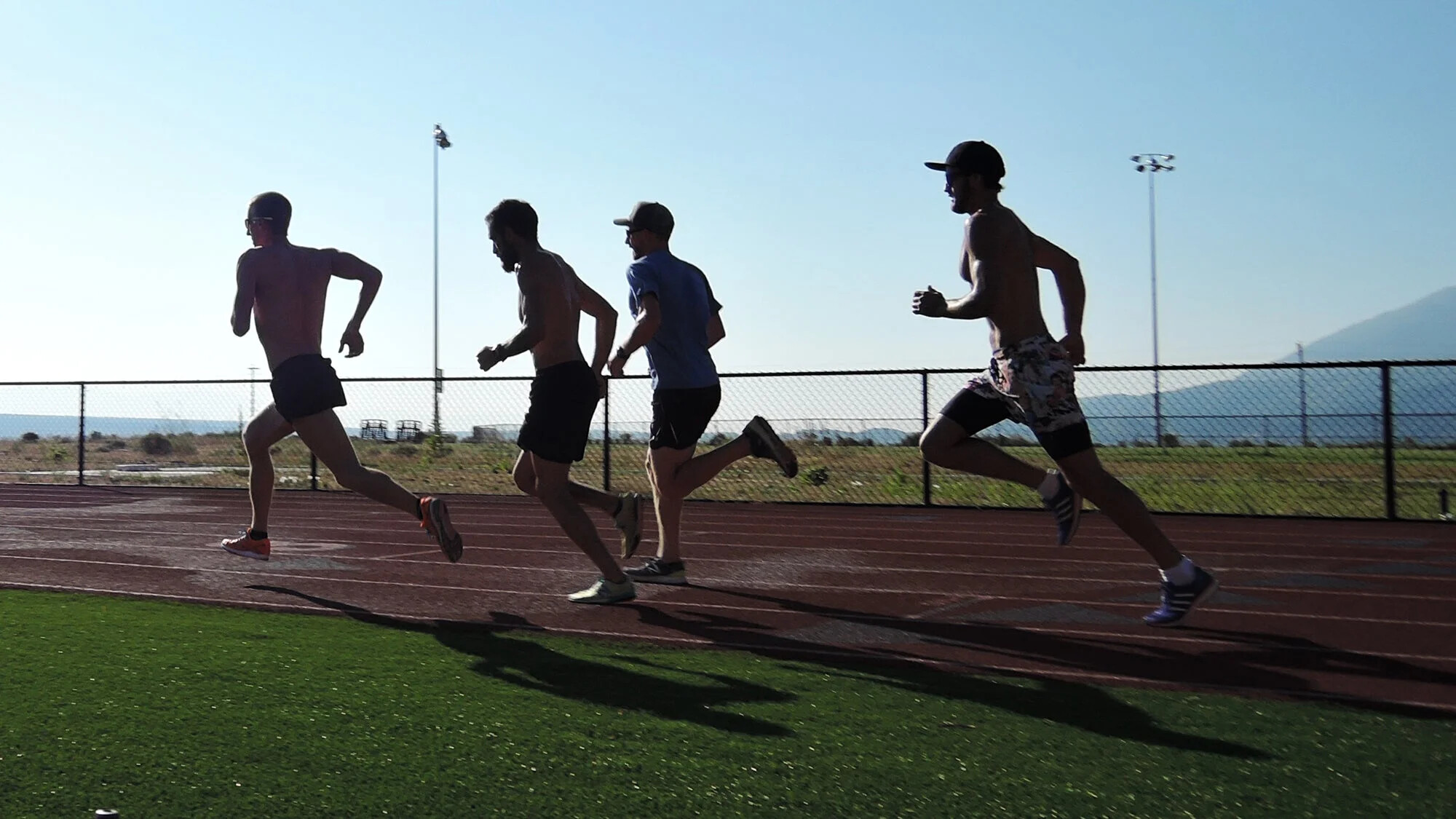
The theory behind speed training
When aiming to lower a personal best time, many coaches believe that running at paces quicker than or around your goal pace is important. This is for a variety of reasons not limited to:
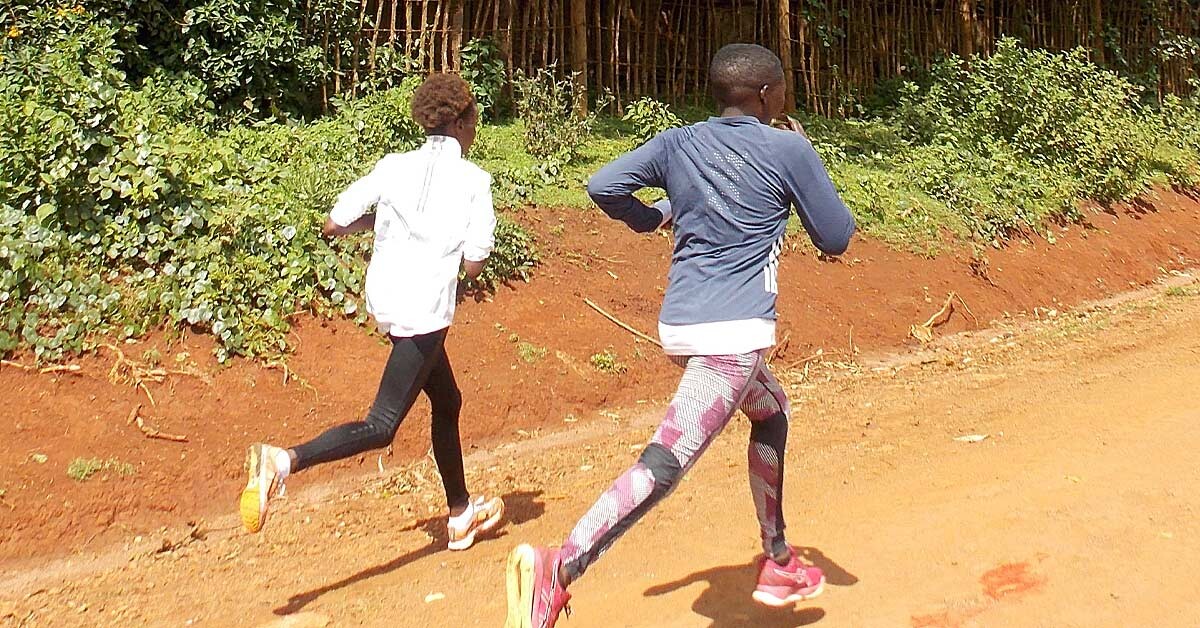
Preparing yourself mentally to run at those speeds and learning what it feels like physically
Stimulating the recruitment of fast-twitch muscles fibres
Fast-twitch muscle fibres are used for short, explosive movements as opposed to slow-twitch muscle fibres, which are less powerful but fatigue slower.
A higher proportion of fast-twitch muscle fibres will increase your top-end running speed while a higher proportion of slow-twitch muscles may increase your overall endurance. Striking a balance will be important to most runners, competing in all but the most extreme ultra-marathon distances.
Improving your running economy (how efficient you are in terms of the way you run) both at top speeds and at slower paces
Slower running will likely improve your aerobic fitness but will not stimulate the body to produce fast-twitch muscle fibres in the same way speed training does. This is because the body does not require as many fast-twitch muscles fibres to run at slower speeds.
How important speed training is for you will be depend on the races you are planning to partake in, though most distances will benefit from it to some degree.
Are you aiming to complete an ultra-marathon or is the 1500m your goal race?
What does speed training look like?
In the same way that the importance of speed training will depend on what events you are planning for, your speed training will look different based on your planned event.
Runners aiming to run the 1500m may well do fewer shorter reps at higher speeds, with 10,000m runners increasing the length of repetitions and sometimes the volume too.
Please note the sessions detailed below are not introductory sessions and should be worked up to over a period of months not weeks.
- Two typical 1500m sessions
3 to 4 x 500m with two to three minutes recovery between repetitions. These may be done at your target 1500m pace
3 x (800m, 200m, 200m) – three minutes between sets (after completing all the efforts within the brackets), 90 seconds between the repetitions (those within brackets)
- Two typical 10,000m sessions
8 x 1000m with two minutes recovery between efforts. All run at 10,000m goal pace.
1600m, 1200m, 800m, 800m, 1200m, 1600m. Two to three minutes between efforts. These would ideally be run slightly outside 10,000m goal pace for the longer efforts, and slightly inside for the shorter efforts. The idea is to keep the paces reasonably even, with a marginal increase in speed for the shorter efforts if possible.
How speed training fits with your overall training programme
It is impossible to sustain these types of sessions day after day, due to the significant impact each session has on your body.
Many runners choose to incorporate some kind of speed training once a week with some experienced and elite-level runners increasing this where they have more time to recover.
It is important to see how your body responds to these sessions, be honest with the impact they have and be conservative where they may cause a risk of injury.
In order to get the maximum benefit from these sessions, allow your body to recover by running slower than you normally would on the day or two following the session.
The dangers associated with speed training
Runners should be patient and build up to any speed training they do. If you try it too early without preparing your body through some easier running, muscle injuries can be more likely.
Alongside lighter running, strength and conditioning exercises for your calves, quads and hamstrings can help ensure that you are better prepared when you first start speed training.
As mentioned, these sessions will tire you out significantly more than most slower running, so be sure to watch out for the signs of overtraining, such as increased fatigue, excess soreness and an elevated heart rate when resting.
If you experience any of these, it may indicate it is time to back off your training, and be sure to speak to a qualified professional where possible to provide you the best advice.
Finally running at increased speeds may bring with it the temptation of lighter, faster shoes. These can be useful but the less cushioning can cause greater strain on your leg muscles.
Be sure to slowly introduce these to your sessions so that your legs have time to adapt.
Enjoy the training.
Think about how important speed is to your running goals.
(08/29/2022) ⚡AMPby George Mallett (World Athletics)

How Dani Moreno Became the First-Ever American Woman to Podium at the OCC Race at UTMB
"How far is the podium?!" Dani Moreno yelled to her French friend as she crested a high point in the race at this week's hyper-competitive OCC race, based in Chamonix, France.
"Too far!" her friend responded.
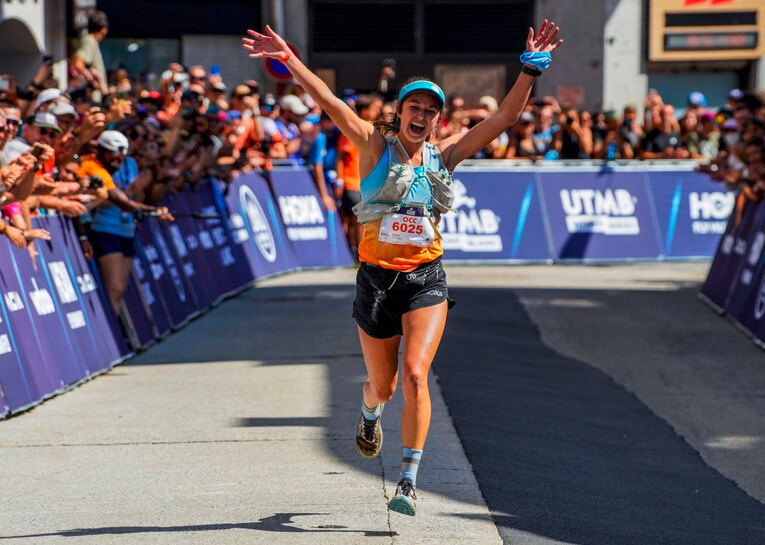
He would later regret saying that. Why? Because 6 hours and 17 minutes after starting, Dani Moreno, 30, from the Mammoth Lakes, California, secured her spot on the podium to finish in third place, the first-ever American woman to reach this level at OCC.
The OCC (Orsieres-Champex-Chamonix) race is a 56km (35 mile) option with 3500 m (11,500 feet) of elevation gain. Unlike the UTMB 100-mile race that circumnavigates Mount Blanc, starting and finishing in Chamonix, France, the OCC option begins in Switzerland and stays in the Valais region, until the finish, where it drops into the Chamonix valley. Winners expect to arrive at the finish in under six hours, while the cutoff is 14 hours, 30 minutes.
Weeks prior to OCC, Moreno experienced an unusually difficult race at Sierre-Zinal, in Switzerland. Before the race, she lost someone close to her back at home and a funeral service was the week of the race. She thinks the emotion caught up with her.
"I went into that race realizing I hadn't fully grieved," said Moreno. "I didn't represent myself and all this work I'd done." But after overwhelming support from friends and family, she recalibrated for OCC and showed up ready to compete. Her fiance traveled to Chamonix to help crew, along with a couple of friends.
Early in the race, Moreno would pass competitors on the ups and get passed on the downs, and yet she kept saying to herself: trust, trust, trust. Trusting in her strengths and pacing was critical, and it paid off halfway into the race.
"I passed five girls and moved into fourth at the halfway point," she said. "I could see the third-place woman but didn't know what was happening in front of them. Then third place and I were battling it out."
"You are As Strong As You Think You Are"
Moreno's secret weapon? Having fun-no matter what.
"It was fun the whole time," said Moreno. "Well, maybe the last downhill was agonizing because I was really trying to see if I could catch second place." She would make airplane arms, pretending to fly, while high-fiving spectators, always with a smile. "It felt like a fun day out with my friends."
Before the last descent, she received a huge boost after seeing her ultrarunning hero, Ruth Croft, who offered her words of encouragement. And at one of the last spots along the course, she remembers her fiance yelling to her: "You are as strong as you think you are!"
"Those last 90 minutes I sort of blacked out," said Moreno, digging deep to try and catch up to the second place woman. A few hundred yards from the finishing chute, she knew she'd done it, and the joy of her last few hundred yards was palpable. "It was a lot. First, I was like, I did it, but then I was like we did it. My coach, my family, everyone that believed in me."
Moreno finished in 6 hours and 17 minutes, only 7 minutes off the winning woman, Sheila Aviles, from Spain. The second-place woman, Nria Gil, finished only one minute ahead. Other American women in the top ten were Kimber Maddox (4th) and Allie McLaughlin (6th).
Running As Expression, Running As Order.
Dani Moreno moved to the eastern slope of California's Sierra Nevada Mountains after living and attending university at UCSB, where she ran cross country. Moreno is a four-time member of Team USA and a two-time USA champion. In addition to competing at the highest levels of the sport, Moreno maintains a full-time job at a construction firm, working in mergers and acquisitions.
"First, I was like, I did it, but then I was like we did it."
OCC was the longest race-both time and distance-that Moreno had ever pursued. But on her website, she writes that her goal is "to solidify myself as one of the best mountain runners in the world at the sub-ultra-distances." Refreshingly, she appears content with fine-tuning her performances in shorter trail races. So often in this sport, athletes feel pressure to level up to increasingly longer distances. For the next couple years, Moreno hopes to focus on marathon trail distances. However, more ultras are very much on the horizon.
"My plan is to do a 100K in the next year and a half, nestled between other shorter races, and keep inching my way up," she said. Moreno mentioned not wanting to do the CCC yet, the 101K option at UTMB. Yet.
"I'd like to do OCC again, and go about a little more aggressively this time." She plans to finish the Golden Trail Series, too, which she did last year.
Want to Run a UTMB Race? Here are Moreno's Three Rules:
Respect the weather. The weather in this dramatic region can change in an instant. Be ready for anything. "Practicing with your equipment is key," she says.
Learn how to move and fuel. Moreno is strict about practicing eating and drinking while training. During her OCC race she mixed up sports drinks and foods, things she was familiar with. The best place to learn what works-and what doesn't-is during training. "It's okay to fail during training," she said. Better to fail in training than in a race.
Be prepared for undulations. Constant ups and downs. "The undulations. Sometimes in the U.S. we tend to only go up and then down, and that's it. Here, there are multiple [big] ups and downs."
Beyond the competition, Moreno seeks trails not only as an elite athlete, but as a way of becoming a whole person, of building order and resiliency into her life.
"It helps me get through a lot of stuff," said Moreno. "It helps me organize and compartmentalize stuff in my life. Sometimes in life I can get overwhelmed by my emotions, Running provides important guidelines for that."
(08/28/2022) ⚡AMP

North Face Ultra Trail du Tour du Mont-Blanc
Mountain race, with numerous passages in high altitude (>2500m), in difficult weather conditions (night, wind, cold, rain or snow), that needs a very good training, adapted equipment and a real capacity of personal autonomy. It is 6:00pm and we are more or less 2300 people sharing the same dream carefully prepared over many months. Despite the incredible difficulty, we feel...
more...
ADHD and runners: can diet help with management?
As a sports nutritionist, I commonly counsel runners and other athletes who have Attention Deficit Hyperactivity Disorder—generally referred to as ADHD (or ADD). ADHD is characterized by hyperactivity, impulsivity, and/or inattention. It affects 4-10% of all American children and an estimated 4.4% of adults (ages 18-44 years). ADHD usually peaks when kids are 7 or 8 years old. Some of the ADHD symptoms diminish with maturation but 65-85% of the kids with AHDH go on to become adults with ADHD.
Ideally, runners with ADHD get the help they need to learn how to manage their time and impulsiveness. Unfortunately, many youth athletes with ADHD just receive a lot of negative feedback because they have difficulty learning rules and strategies. This frustrates teammates and coaches. Older athletes with ADHD often run to reduce their excess energy, calm their anxiety, and help them focus on the task at hand. This article offers nutrition suggestions that might help coaches, friends, and parents, as well as runners with ADHD, learn how to calm the annoying ADHD behaviors.
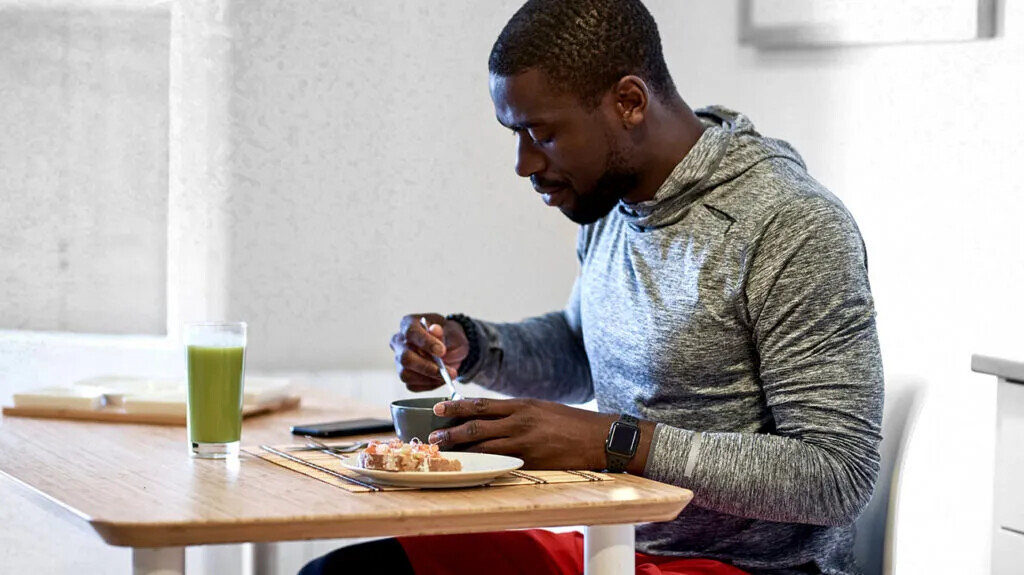
• To date, no clear scientific evidence indicates ADHD is caused by diet, and no specific dietary regime has been identified that resolves ADHD. High quality ADHD research is hard to do because the added attention given to research subjects with ADHD (as opposed to the special diet) can encourage positive behavior changes. But we do know that when & what a person eats plays a significant role in ADHD management and is an important complimentary treatment in combination with medication.
• ADHD treatment commonly includes medications such as Concerta, Ritalin & Adderall. These medications may enhance sports performance by improving concentration, creating a sense of euphoria, and decreasing pain. These meds are banned by the World Anti-Doping Agency (WADA) and the International Olympic Committee (IOC). Hence, runners who hope to compete at a high level are discouraged from taking ADHD medications

• To the detriment of ADHD runners, their meds quickly blunt the appetite. Hence, they (like all athletes) should eat a good breakfast before taking the medication.
• The medication-induced lack of appetite can thwart the scrawny teen runner who wants to gain weight and add muscle. Teens should be followed by their pediatricians, to be sure they stay on their expected growth path. If they fall behind, they could meet with a registered dietitian (RD) with knowledge of sports nutritionist (CSSD) to help them reach their weight goals.
• An easy way for “too thin” runners to boost calories is to swap water for milk (apart from during exercise). The ADHD athlete who does not feel hungry might find it easier to drink a beverage with calories than eat solid food. Milk (or milk-based protein shake or fruit smoothie) provides the fluid the athlete needs for hydration and simultaneously offers protein to help build muscles and stabilize blood glucose.
• A well-balanced diet is important for all runners, including those with ADHD. Everyone’s brain and body need nutrients to function well. No amount of vitamin pills can compensate for a lousy diet. Minimizing excess sugar, food additives, and artificial food dyes is good for everyone.
• Eating on a regular schedule is very important. All too often, high school runners with ADHD fall into the trap of eating too little at breakfast and lunch (due to meds), and then try to perform well during afterschool sports. An underfed brain gets restless, inattentive, and is less able to make good decisions. This can really undermine an athlete’s sports career
• Adults with ADHD can also fall into the same pattern of under-fueling by day, “forgetting” to eat lunch, then by late afternoon are hangry and in starvation mode. We all know what happens when any runner gets too hungry – impulsiveness, sugar cravings, too many treats, and fewer quality calories. This is a bad cycle for anyone and everyone.
• All runners should eat at least every four hours. The body needs fuel, even if the ADHD meds curb the desire to eat. ADHD runners can set a timer: breakfast at 7:00, first lunch at 11:00, second lunch at 3:00 (renaming snack as second lunch leads to higher-quality food), dinner at 7:00.
•For high school runners with ADHD, the second lunch can be split into fueling up pre-practice and refueling afterwards. This reduces the risk of arriving home starving and looking for (ultra-processed) foods that are crunchy, salty, and/or sweet.
• (Adult) runners with ADHD are often picky eaters and tend to prefer unhealthy snacks. For guidance on how to manage picky eating, click here for adults and here for kids.
• Fiber-rich fruits, vegetables, and whole grains can be lacking on an ADHD runner’s food list. Their low fiber diet can lead to constipation. Fiber also feeds the zillions of microbes in their digestive tract that produce chemicals that can positively impact brain function and behavior. Everyone with ADHD should eat more fiber-rich foods like beans (hummus, refried beans in a burrito), seeds (chia, pumpkin, sunflower, sesame), and whole grains (oatmeal, brown rice, popcorn). They offer not only fiber but also magnesium, known to calm nerves.
• With more research, we’ll learn if omega-3 fish oil supplements help manage the symptoms of ADHD. At least, eat salmon, tuna, and oily fish as often as possible, preferably twice a week, if not more.
• Picky eaters who do not eat red meats, beans, or dark leafy greens can easily become iron deficient. Iron deficiency symptoms include interrupted sleep, fatigue, inattention, and poor learning and can aggravate ADHD. Iron deficiency is common among runners, especially females, and needs to be corrected with iron supplements.
• While sugar has the reputation of “ramping kids up”, the research is not conclusive about whether sugar itself triggers hyperactivity. The current thinking is the excitement of a party ramps kids up, more so than the sugary frosted cake. Yes, some runners are sugar-sensitive and know that sugar causes highs and crashes in their bodies. They should choose to limit their sugar intake and at least enjoy protein along with sweets, such as a glass of milk with the cookie, or eggs with a glazed donut. Moderation of sugar intake is likely more sustainable than elimination of all sugar-containing foods.
(08/27/2022) ⚡AMPby Colorado Runner

Brazilian Runner Dies After Fall During UTMB Team Event
A Brazilian runner, 40, was fatally injured at the Petite Trotte à Léon, part of the UTMB ultra, earlier this week.
The unidentified man fell 30-50 feet around 1:30 a.m., only 23 miles into the race.
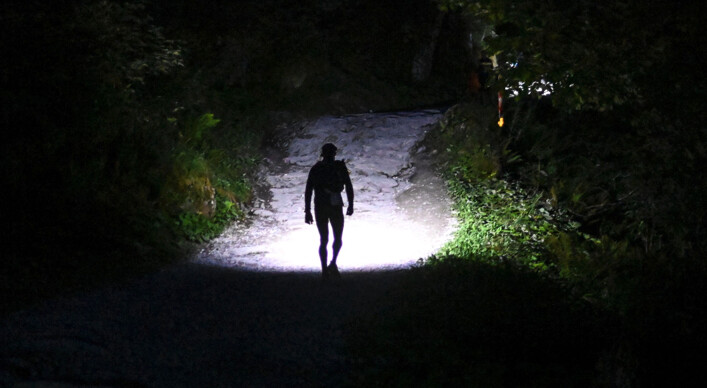
The Ultra Trail du Mont Blanc (UTMB) got off to a tragic start following the death of a Brazilian runner earlier this week. The 40-year-old runner, whose identity remains anonymous, was fatally injured on the first night of the 300K (186-mile) Petite Trotte à Léon (PTL) team event.
“The runner was with his team on an official trail, which is secured for the PTL and marked throughout the year, between the Col de Tricot and the Refuge de Plan Glacier,” UTMB officials said about the accident, which occurred about 23 miles into the race.
At around 1:30 a.m. CET, the two-person Brazilian team was in a remote portion of the course with loose stones. It was there, above the French village of Les Contamines, that the victim fell an estimated 30 to 50 feet.
An Italian team, which was pacing behind the Brazilians, reported the incident after discovering the victim’s teammate safe, but in shock. A helicopter team responded shortly after and pronounced the runner dead before flying his body and teammate to a local hospital.
“It’s so very sad, but it was an accident,” Catherine Poletti, cofounder of the UTMB and president of the UTMB Group, told Outside. “When you go into nature for adventure—it may be the mountains, it may be the sea—but all the time there is a risk. We cannot provide something with zero risk. It’s impossible. I think that’s a good thing because when you want to have an experience or adventure, you absolutely need to know where the limits are, what your experience is.”
The remaining 104 teams could choose whether they wanted to finish the race—all decided to keep running.
Approximately 240 participants began this year’s PTL in Chamonix, France, on August 22. They will cover 82,000 feet of elevation gain within the Mont Blanc massif, traversing France, Switzerland and Italy.
To enhance runner safety, the race has instituted specific protocols, like selecting athletes based on criteria meant to ensure their successful completion. Runners are required to possess sound knowledge of the mountain environment, since they will likely encounter precarious weather conditions while also navigating steep slopes, falling stones, narrow paths, and glaciers. Due to a lack of marked trails, participants must be able to read a map and use a compass and altimeter, too.
While the PTL must be completed in autonomy, there are aid stations where participants can sleep and eat by cashing in one of their four meal tickets. While on course, runners are tracked with GPS beacon and required to carry mountaineering helmets—which the Brazilian victim was not wearing at the time of his death.
This is not the first time a runner has died during the UTMB since the event was founded in 2003. In August 2021, a 35-year-old Czech runner fell to his death during the Sur les Traces des Ducs de Savoie (TDS) race.
Despite the inherent risk involved, approximately 10,000 runners are expected to compete in one of this year’s eight UTMB races, held from August 22-28.
(08/27/2022) ⚡AMPby Runner’s World

Two Promising Updates on Heart Health in Endurance Athletes
There’s encouraging new evidence on artery stiffening and the risks of too much exercise
Reporting on emerging science can sometimes feel like watching live coverage of an ultramarathon. Sure, there’s the occasional dramatic move, but for long stretches of time it feels like nothing is happening. Beneath the surface, though, the action continues. Fatigue mounts, blisters begin to form, an aid station is missed… the evidence gradually accumulates, and only later do we realize when the outcome was settled.
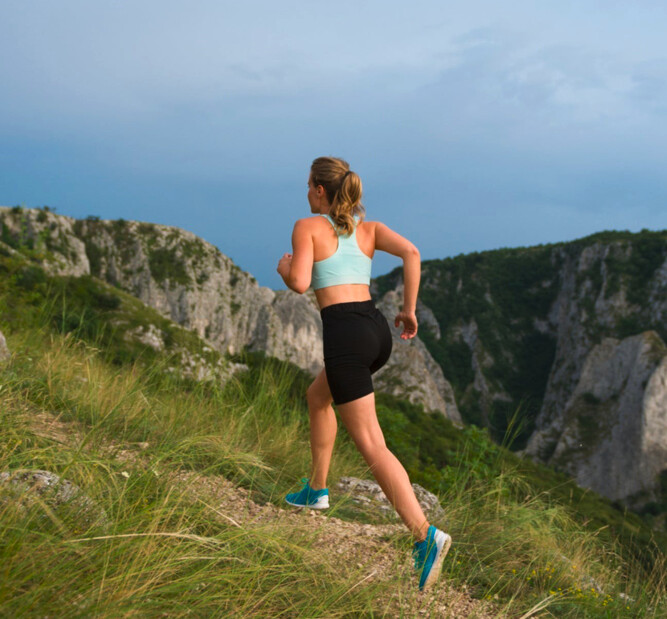
In that spirit, I have a couple of mid-race updates on a topic of longstanding interest: the potential deleterious effects of too much endurance exercise. I’ve been reporting on this controversy for more than a decade now, and summed up the current state of evidence most recently last summer. It would be nice, of course, if we now had final evidence about whether training for marathons or ultramarathons might damage the heart. Instead, it’s become clear that the perfect study is almost impossible to design, because you simply can’t randomize people to spend a few decades either running marathons or lying on the couch. Still, the steady drip of incremental evidence continues, and two new studies fill in some important gaps.
The first one, published in the British Journal of Sports Medicine, explores the links between exercise and atherosclerosis, the build-up of plaques that narrow and stiffen your arteries. One way to test for atherosclerosis is to get a coronary artery calcium (CAC) score, which uses a CT scan to assess how much calcium is present in your heart’s arteries. Recent evidence suggests that masters endurance athletes tend to have higher CAC scores than non-athletes, perhaps because of wear and tear from years of pumping all that blood during exercise. That’s not good, because high CAC scores reliably predict an elevated risk of serious and potentially fatal heart problems in the general population.
The good news is that endurance athletes tend to have different plaques compared to non-athletes. The athletes have plaques that are smooth, hard, and unlikely to rupture; the non-athletes have softer plaques that are more likely to break off from the artery wall and block the flow of blood. So there’s a theoretical argument that high CAC scores shouldn’t be considered as much of a problem in athletes as they are in others. But no one has demonstrated that this is how it pans out in the real world.
This is where the new study comes in. A group led by Pin-Ming Liu of Sun Yat-sen University in China analyzed data from a long-running study whose subjects got a baseline CAC test back in 2000 or 2001, a follow-up CAC test five or ten years later, and filled out questionnaires on their exercise habits on at least three different occasions during the study. These repeated measures are crucial, because it can distinguish between those whose CAC scores are high (perhaps simply because of genetic bad luck) and those whose scores are increasing (presumably due to some lifestyle factor such as exercise).
They looked at three groups with a total of about 2,500 subjects: those who consistently did less than the recommended amount of exercise; those who consistently hit or slightly exceeded the recommendations; and those who averaged at least three times the recommendations. In this case, the recommended amount of exercise, based on public health advice, is 150 minutes a week of moderate exercise or 75 minutes a week of vigorous exercise, with activities like running counting as vigorous.
There were two key conclusions. First, the group doing the most exercise was indeed more likely to have an increase in CAC score on their second test, consistent with previous studies. Second, despite their increased CAC scores, the high-exercise group was not more likely to suffer adverse cardiac events during the study’s follow-up. This, too, is consistent with the idea that exercise promotes the formation of plaques, but those plaques don’t carry the same risks as plaques in sedentary people.
This is far from the final word on this topic, in part because only a handful of subjects had exercise levels comparable to those of an elite endurance athlete. But it’s an encouraging sign that CAC scores mean something different in exercisers than they do in non-exercisers.
Debates about CAC scores and other risk factors sometimes feel a bit abstract. The study many of us crave is much simpler: take a bunch of people, find out how much they exercise, and wait to see who dies first. Many such studies have been done, but their results are difficult to interpret because there are so many other differences, beyond exercise habits, between those who choose to run 100 miles a week and those who choose not to run at all.
Despite those caveats, there were two such studies, one from the Cooper Clinic in Texas and the other from Copenhagen, that claimed to see a “reverse J-curve” in the relationship between exercise amount and mortality risk. Doing a little exercise produced a dramatic decrease in your chances of dying early; doing more produced a modest further increase; but doing too much bent the curve back upward and began increasing your risk again.
Numerous other studies have tested the same idea and failed to find evidence that more exercise, beyond a certain point, raises your risk of premature death. But given the imprecisions inherent in this kind of observational data, it’s hard to know which study to trust (especially when you really want a particular conclusion), so I normally wouldn’t report on yet another study finding that too much exercise isn’t bad for you after all.
This one has an interesting twist, though. It’s published in Circulation, by a group led by Dong Hoon Lee of Harvard’s T.H. Chan School of Public Health, and it follows 116,221 adults from the Nurses’ Health Study and the Health Professionals Follow-up Study, beginning in the 1980s. Over the course of 30 years, there were more than 47,000 deaths among the subjects, which means you’re not drawing conclusions on the basis of small numbers. (The Copenhagen study I mentioned above famously suggested that ”strenuous” running raises your risk of premature death on the basis of just two deaths in that group.)
The crucial detail is that subjects in the new study were asked about their exercise habits every two years, instead of just once at the beginning of the study. This allowed the researchers to divide subjects into groups based on their average exercise levels over the course of the study, rather than relying on a single snapshot of exercise habits to deduce someone’s health as much as 30 years later.
The headline result is that those doing 150 to 300 minutes a week of vigorous exercise such as running (or, somewhat equivalently, 300 to 600 minutes a week of moderate exercise such as walking) were about half as likely to die during the study. Even after adjusting for other secondary benefits of exercise like lower body mass index, their risk was still about a quarter less. Note that 300 minutes a week is five hours of running—not a heavy-duty ultramarathon training program, but still a substantial amount of exercise.
As for those doing more than five hours a week, the benefits stayed about the same. At least, they did if you use the average physical activity levels over the course of the study. When the researchers reran the analysis using just the first exercise questionnaire from the 1980s, the reverse J-curve reappeared. There are several problems with relying on a single measure of exercise habits, the researchers point out, including the risk of reverse causation: declining health before the baseline assessment might spur you to do more exercise, leading to the false impression that exercise causes bad health. This is the way nearly all the previous studies of exercise and mortality have been conducted, so the new results may finally explain why a few studies have observed that reverse J.
It’s still too early to declare that years of serious endurance training have no effect on the heart. In fact, it’s clear that training does change the heart—that’s kind of the point—and it wouldn’t be surprising if those changes sometimes end up having negative effects. But the epidemiological evidence continues to accumulate that the overall effects on longevity are either positive or, at worst, neutral. And that doesn’t even take into account how much fun it is.
(08/27/2022) ⚡AMPby Outside

Here’s how kindness will make you a better runner
Renowned ultrarunner, coach and co-author (with his wife, Megan Roche) of The Happy Runner, David Roche has some suggestions about how we can practice kindness and positivity toward others in our running and racing, and he explains why science backs this up.
“Lifting others up can lift you up too,” says Roche. “It’s not just psychological, but in how physiology responds to stress. Uplifting emotions may improve running economy. Affirmations reduce cortisol and stress. Even adaptation processes on the cellular level may be improved by a positive neurophysical context,” he adds.
If that’s not enough for you, know that you’ll also have way more fun; whatever the end result of your race, you’ll look back on the experience with more joy.
Celebrate shared experience
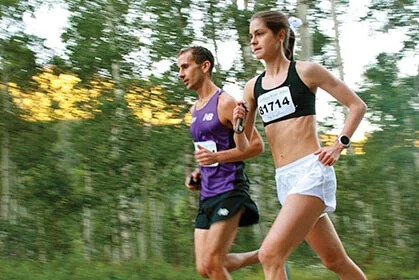
While the running community still has a long way to go in supporting diversity and inclusivity, trails do tend to tear down barriers and bond people. Most of us feel far more comfortable talking to strangers on a trail than we would on a street. If you see someone struggling a little out there, you’ve probably been in that situation yourself, and you have some empathy for them.
That person you stopped to give a salt tablet to mid-race when you noticed them struggling hits the finish-line all smiles and tears, and you’ll feel their success like its you’re own. Roche explains that by building your running community, you will tend to be more process-focused and less results-focused (which was actually, in turn, help you run faster).
Thank every single volunteer and encourage every other runner
If you’ve ever had challenging race, you’ve probably experienced some moments of suffering. Mine, in ultrarunning, often involve struggling to keep enough nutrition in and combat nausea; I find it hard to carry on conversations when I feel that unwell. A much more experienced ultrarunner (who has also combated GI distress) once commented to me that the worse she felt, the more appreciative of the volunteers she tried to be. At first, that seemed unfathomable to me. Be extra thankful when I all I really want to do is cry or throw up?
I set out to test this theory when I ran a backyard ultra earlier in 2022. I dedicated myself to asking questions about others when my brain started to spiral into lowness, and to express my gratitude toward my crew and the race volunteers. That day was a certain kind of magic unlike any other I’ve had, and while I’m sure I can’t chalk it up entirely to practicing being nice, it certainly helped.
Roche sums up the concept of being a beacon of cheer when he says: “Spread the freaking love because life is too short and uncertain and scary to spend it alone, withholding affection.” I can’t argue with that. Even if you’re an introvert like me, up your kindness-game next race. You have absolutely nothing to lose by giving it a try.
You don’t have to be perfect at this–no one is. “The goal isn’t to exude an infallible aura of kindness, but to accept yourself and others as much as you can given the constraints of your background, brain chemistry, and perspective,” says Roche.
(08/25/2022) ⚡AMPby Running Magazine

One simple trick to master fuelling on the run, Practice, practice, practice: here's how
Practice. If you’re used to simply lacing up your shoes and heading out the door, it can seem like a nuisance to have to consider your meals, snacks, and what nutrients you should be taking in every single time you run. Becoming better at this key skill for any longer-distance race means incorporating it into your training as often as possible. Here’s why, and how to get started.
Experiment with gels and real food
If you’re training for a marathon distance or longer, you should be taking in some form of calories once your weekly long runs are longer than an hour. Regardless of what nutrition plan you follow in your life outside of running, you’ll probably turn to carbohydrates during a race, and for good reason. Simple carbohydrates, often in the form of glucose, are the easiest to digest and will give you an energy boost quickly.
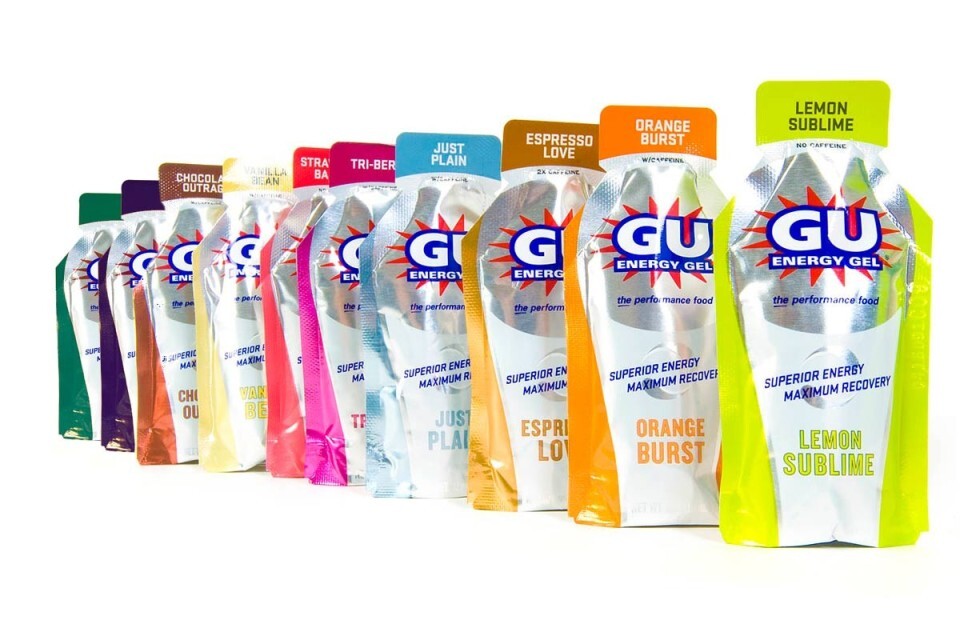
If you’re training for an ultra, depending on the distance, you need to co-ordinate consuming thousands of calories. Gels can be an easy form of simple carbs to take in, but when you’re logging many hours, you may want to turn to real food.
If you have tackled a few long runs, you’ll know that while you might feel hungry, not every type of food will satisfy or sit well in your stomach. Experiment on long runs with foods that appeal to you, and see if you can manage to eat and digest them while running without GI distress. Some runners have no issue eating a sandwich while logging mileage, others will feel sick trying to digest anything of substance. The good news is that you can actually train your gut to handle digesting food better while running; it just takes (you guessed it) practice.
Practice the actual act of managing to eat while running
If you’ve ever volunteered at a marathon or ultra aid station, you have probably noticed people struggling to open gels, drink from little cups, or unscrew the lids on their hydration packs. While some very experienced athletes have their fueling down to a fine art, the vast majority of runners aren’t at their most dextrous during a hard run.
When most of the calories you are consuming are being used to keep your legs moving, your body temperature regulated and your brain functioning enough to keep you on the course, you lose fine motor skills. Practicing eating and drinking on long runs can make a vast difference when it comes to race day.
Learn how your body responds to salt and caffeine
Caffeine can be a very effective stimulant for athletes, but knowing how much and how to use it is unique to each runner. A large body of research has shown that caffeine enhances mental alertness and delays physical fatigue, but it can be tricky to determine how much is ideal for your body and how you prefer to ingest it. Test out gels or drink mixes that contain caffeine, caffeine pills and caffeine chewables to see if you find them effective.
We know that sodium is an essential electrolyte, and salt is one of the thing things the body becomes depleted of most quickly during hard efforts. Salt also contains electrolytes like magnesium, calcium and potassium, so it’s good for more than just sodium replenishment. Experiment with salt pills, chewable salt tablets, or simply add a pinch of salt to some water.
Drink mixes have varying amounts of electrolytes, so be sure to keep track of what you try and what seems effective–hotter days will require more salt to keep your body running smoothly.
While it can seem like one more thing to juggle when you head out to train, making sure you’re keeping track of fuel and experimenting at every opportunity will make you a more wise, prepared and strong athlete. When it comes to fuelling, practice really does make perfect.
(08/24/2022) ⚡AMPby Keeley Milne

How to run every street in your town
Is your training lacking a bit of motivation? Try finding and exploring places you've never run before with CityStrides.
The #RunEveryStreet challenge started organically for runners like Vancouver’s David Papineau, who set out with a pen and paper to run all 1,090 streets in the Vancouver area in 2014. It wasn’t until 2018 that renowned ultrarunner Rickey Gates ran every street in San Francisco over 46 days, which put CityStrides on the map and opened the realm of possibilities for runners like Toronto’s Stephen Peck, who recently did the same thing on his city’s 11,000 streets.
In case you do not know what CityStrides is (i.e. me, six months ago), it’s an Internet open street map software that syncs with MapMyRun, Garmin and Strava, creating a heatmap which shows you how much of a city you’ve run. CityStrides uses the GPS data from the third-party apps and throws all the runs or walks you’ve ever done on a map, giving you a super precise detail of the streets you’ve covered and when you’ve covered them.
When Papineau first uploaded his runs to CityStrides in 2018, he was shocked at how much of Vancouver he still had to cover. “I used to print a map on paper and bring it with me on my run,” says Papineau. “Trying to run every street is like building a house: most runners have covered the main streets and parks (the foundation), and running every street is just filling in the gaps between.”
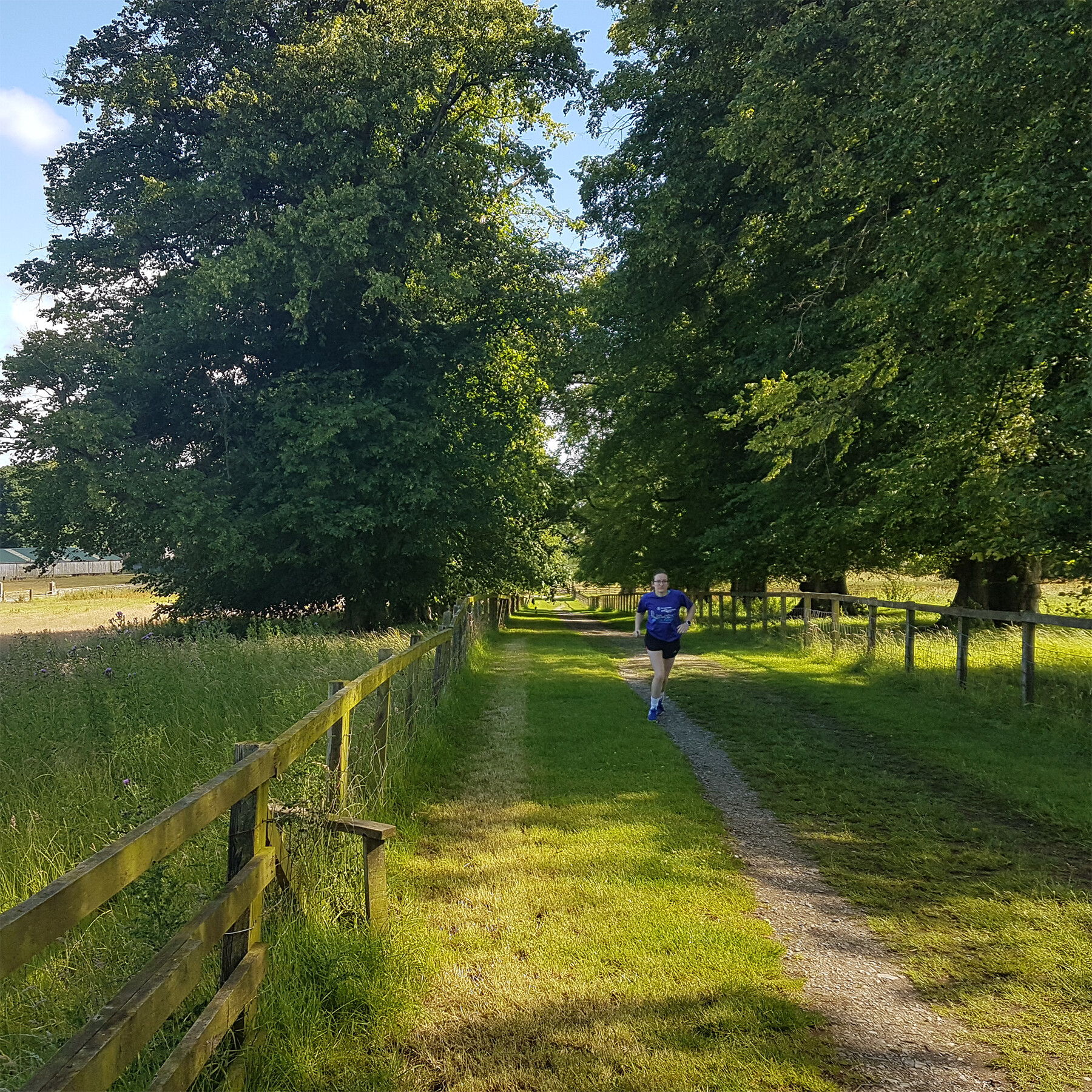
How to get started?
If you use a third-party app like Strava or Garmin Connect for your training, getting started on CityStrides is easy. Visit the CityStrides website and connect to the third-party app to create your profile within seconds.
The application will automatically create a profile for you and connect all your previous runs and all runs moving forward.
If you are just starting with running, using CityStrides is an easy way to keep yourself motivated. Use your progress as motivation to run every street in your neighbourhood or town. “One of the rewarding things about CityStrides is that you will often see places you would often never go to,” says Papineau.
Papineau said the best way to get started is to get out and do it! “Start with the short runs around your immediate neighbourhood on streets you have not run down, and branch out from there.”
Some techniques Papineau used while completing Vancouver were pre-setting his route on his GPS watch, plus graphing out runs in areas he’s never been. “In grid cities or towns, it’s easy to tackle running every street in a particular neighbourhood since the roads are restricted to parallel and perpendicular directions.”
“I’d travel to an area and write down the streets I needed, then run them,” says Papineau.
“When you start seeing your total completion percentage go up, you almost get this endorphin rush for completing new streets,” he says. “It’s rewarding to see all your hard work documented.”
CityStrides may become an obsession, or you may not like it at all, but at least you get to see and experience new places you’d never see in your own backyard.
(08/24/2022) ⚡AMPby Marley Dickinson

Kilian Jornet and NNormal launch their first trail shoe
Kilian Jornet calls the Kjerag "a shoe that can be used for everything from a VK to a 100-mile race”
The Kjerag [pronounced: sche-rak], a trail running shoe and the first product launched by ultrarunning phenom Killan Jornet’s brand NNormal. The Kjerag is named for a 1,100-metre-high mountain in Norway, which can be conquered by running up challenging trails or tackled via some moderate hiking.
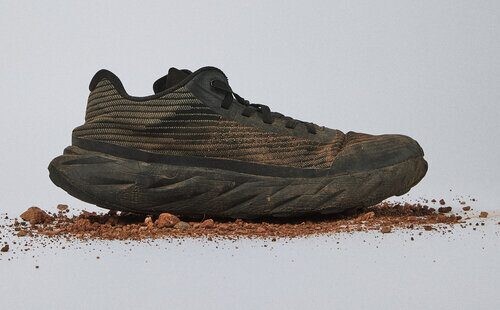
The made-for-everyone versatility of the mountain inspired the name of the shoe, touted as being made for every runner at every level. At 200 g, the Kjerag is a lightweight shoe boasting unique shock absorption and stability, with a stack height of 23.5 mm and a heel-to-toe offset/drop of 6 mm.
The design team at NNormal worked with Jornet to create a shoe that’s made to be versatile enough to switch between road running and scrambling up technical trails.
Jornet explained in a press release on Monday: “Our goal with Kjerag was to find the highest-quality materials, cutting-edge technologies, planet-friendly production processes–the best of everything. Then to bring them together in a shoe that can be used for everything from a VK (vertical kilometer) to a 100-mile race.”
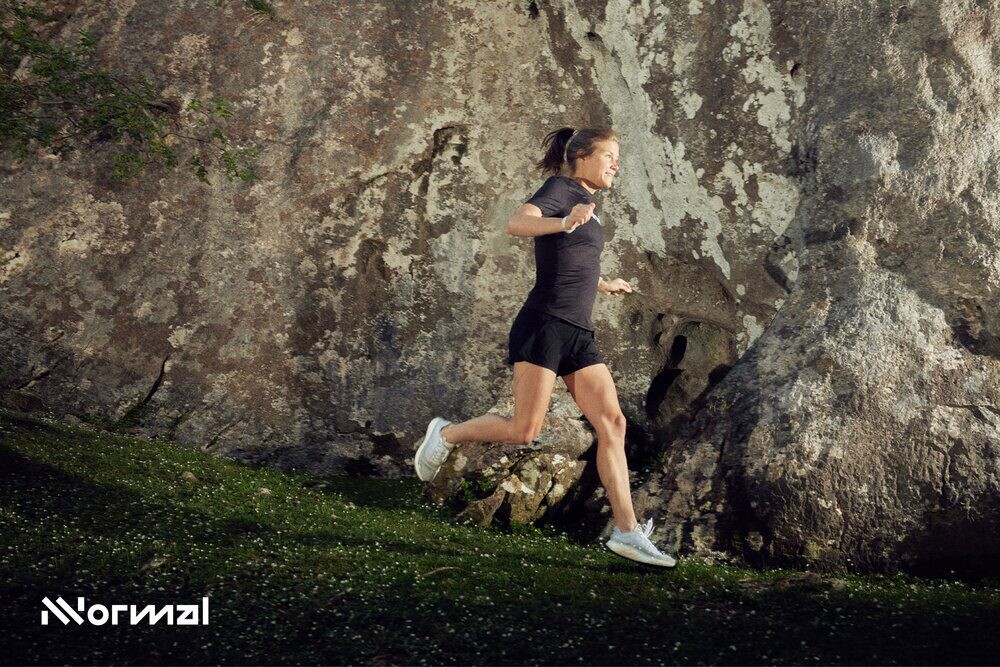
The Kjerag has a generous front volume to provide comfort for runners tackling long races or trekking through hot days. Jornet has been test-driving the shoe throughout the 2022 season. “You forget about them when you run,” he reports. “They follow the natural movement of the foot, which helps prevent muscle fatigue and blisters. The shoes adapt to you.”
The Kjerag has a super-sticky, extra durable Megagrip Vibram sole, with 3.5 mm lugs intended to prioritize speed and allow sensitivity to the terrain. The shoe boasts a “new generation of foam” with its EExpure midsole, sitting in direct contact with your feet via a very thin membrane. “No inner sole means best-possible propulsion and compression, less slippage and fewer blisters,” explains NNormal.
NNormal will be launching a range of apparel and accessories alongside the Kjerag that align with the same principles: lightweight and breathable attire made for both intense and less strenuous activities at every level. All the clothing designs are intended to be both timeless and durable.
A shoe as all-encompassing as the Kjerag is hard to imagine, and it will be interesting to see if regular runners find the trail runner as versatile as NNormal claims it to be.
(08/23/2022) ⚡AMPby Running Magazine
This Siberian Yupik Ultrarunner Is Ready To Take On Leadville
Just 170 miles from Russia, Nome, Alaska is perhaps best known as the finish line for the Iditarod Trail Sled Dog Race. Nome's population is near 3,500, but grows in the summer with an influx of gold dredgers and panners.
Crystal Toolie is a Siberian Yupik ultrarunner from Nome, and is one of five Indigenous runners in this weekend's Life Time Leadville Trail 100 Run presented by La Sportiva. In Nome, Siberian Yupik peoples are from the villages of Gampbell and Savoonga on Saint Lawrence Island (164 miles west), off the coast of Alaska. Even here, they're a relatively small community compared to other Alaska Natives.
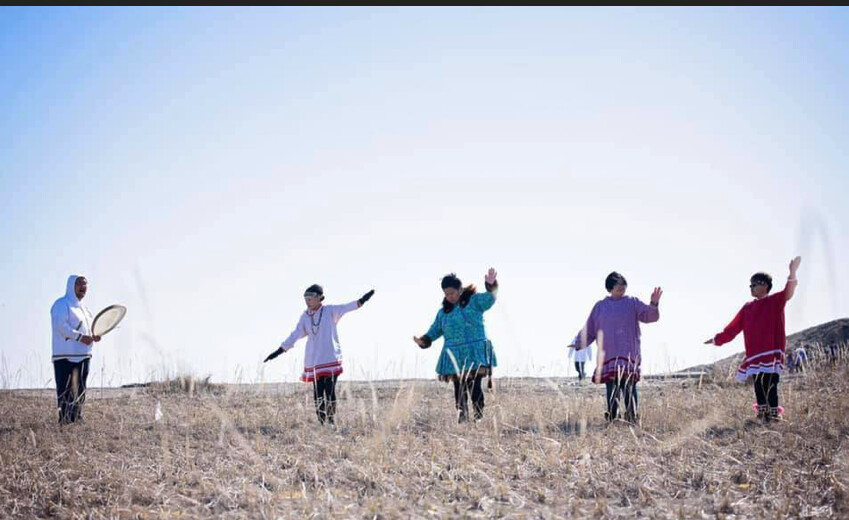
Training in Nome harbors unique challenges that develop spades of endurance and strength.
Training in Muskox Country
"It's a very isolated town. This year, we've had a lot more [brown] bears. And we have [musk oxen]," said Toolie. "So if you're a runner and you train outside, you have to be aware of your surroundings." The small but supportive running community in Nome leans on social media to update each other on bear and other wildlife sightings.
"There was one winter when I strictly just ran on the treadmill. It was torturous," said Toolie. "There are other years that no matter what the temperature or if there's a blizzard out, I made sure to get outside and run."
Blizzard conditions are commonplace in remote Alaska, making appropriate gear mandatory. "I would wear regular running shoes but double up on socks and wear cleats, so I don't slip," said Toolie. "Layers, if it's a blizzard. I would wear snow pants and a winter coat. My inner layer will be something that's sweat-wicking, something to cover up my face and hood. Sometimes goggles, sometimes not. And then wear really good gloves."
In addition to layering, Toolie sticks to Nome's limited road system as a safety measure, making it a priority to be visible during runs. Looking to Leadville, she incorporated hiking local mountains into her training.
"This year, I've been able to get out of the road system and get into the mountains, which is great for training for Leadville," said Toolie.
Running Under the Lights
During winter runs, Toolie has nature's headlamp guiding her way. Best seen just outside of the city, the Northern Lights present colorful bands of greens and whites that illuminate the sky. The lights are generated from electrically-charged particles in the earth's magnetosphere colliding with gases, creating energy in the form of light.
Though beautiful, the lights were sometimes frightening to Toolie as a child.
"Our elders would tell us if you're outside late, when you know you're not supposed to be, making noise, the Northern Lights would come down and steal you up," said Toolie. "And so if you whistle or make loud noises, the Northern Lights dance and become more vibrant. It looks like it's coming down."
Nome-St. Lawrence Island Dance Group
Beyond ultrarunning, Toolie is dedicated to preserving the movements of her culture. Several years ago, Toolie reinstated the Indigenous dance group in the area. Toolie's great grandfather, Nick Wongittillin, was the leader of the first Nome dance group, when he passed away, they stopped. "We all wanted our children to be able to learn about our culture, to be able to pass down that tradition," said Toolie.
Composers set the tone on drums (Saguyak) - constructed from tightly stretched walrus stomach linings from the Bering Sea - based on how they're feeling at that moment. The zen-like movements are reminiscent of Qigong from southeast Asia. Toolie and her relatives even have a particular song dedicated by an elder to their running pursuits.
The women wear regalia that is distinguishable from other Alaska Natives in the region. Traditionally, their dress-like garments have three to four red lines sewn at the bottom, symbolic of the Russian Orthodox influence on the culture. The women wear their hair in two braids with beads sewn into them.
The group performs at local events of celebration and mourning, a way to bring the community together. The elders ensure the dances are appropriately conducted so that the integrity of the movements is consistent over time.
Climate Threats and Commercialism
The Town of Nome sits mainly on permafrost (permanently frozen ground). Permafrost is particularly sensitive to increases in air temperature and changes in snow cover, making it especially vulnerable to climate change. Permafrost stores carbon from life buried years ago. As the permafrost thaws, carbon is converted to carbon dioxide and methane, which hasten climate warming. Generally, climate scientists are finding that the Arctic is warming four times as fast as the rest of the world.
"Climate change is a huge topic when you live in our region. We have generations of hunters that know the land like the back of their hand. When scientists study the Arctic in our area, they will seek out the trained hunters and ask them questions because they know that they are observers of that area," Toolie said.
The hunters and families have noticed changing behavior patterns in the region's polar bears.
"We used to see them more frequently. One would always come up to the East End beach, and it would have to be redirected out of town," said Toolie. "I haven't heard of a polar bear going to Nome for years now."
Lately, commercial fishing and cruise liners have affected the lifelines of local families, too. The cruise industry disrupts the area's food system in the waters and creates challenges for the local fishing industry. In some instances, cruise ships have even dumped human waste on Alaska beaches, Toolie explained.
Moreover, commercial fishing overseen by state governments often harms subsistence family fishers in Nome. These residents store fish and other seafood for the winter to feed their families, not to make a profit.
"Subsistence living is rooted in our culture. We have big families that live in one home. To feed them, you need to hunt, fish, and berry pick for survival," said Toolie. Whaling is also part of that equation.
"I think it's just because people don't understand, don't have an understanding that this feeds communities. It's not done in a way that is disrespectful to animals or the earth. In Native culture, we're taught not to over-hunt or over-pick, and we use everything," said Toolie. "We don't waste what we get. And so I think that's something that would be nice for people who are unfamiliar with our culture to learn about."
This year, at Leadville, she will be paced by fellow Native skier and ultrarunner Connor Ryan. Since this is Toolie's first time taking on Leadville, her approach to the race will be to take it easy. "I'm going to take it slow," said Toolie. "And if I feel comfortable, I'm going to take it slower."
(08/20/2022) ⚡AMPby Trail Runner Magazine
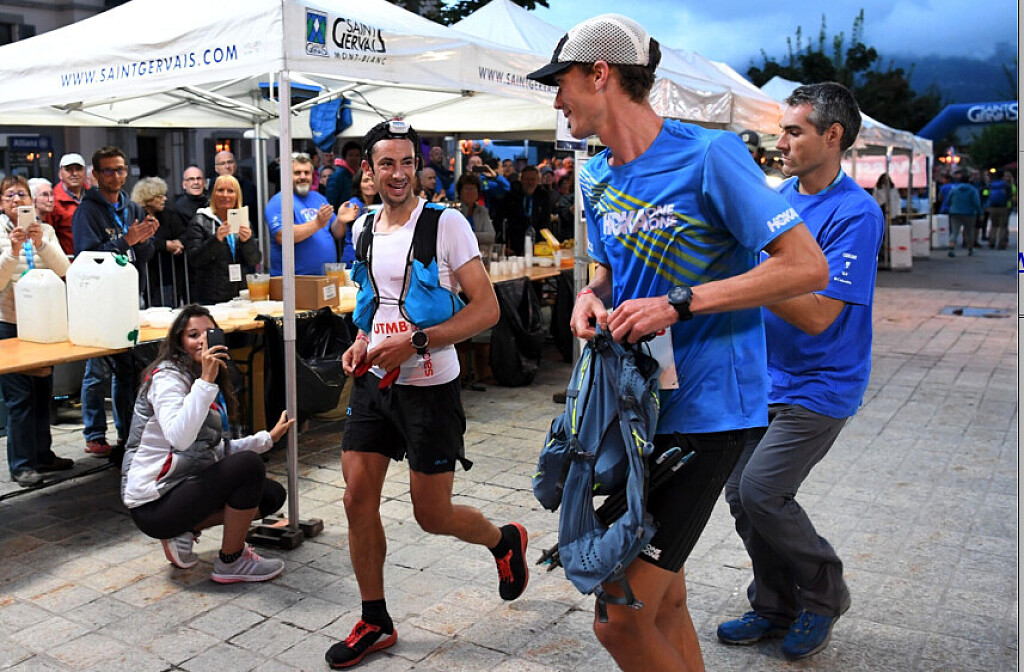
Will Jim Walmsley Be the First American Man to Win UTMB?
Jim Walmsley has always been an outlier among American trail runners.
Not only is he as fast and talented as any ultrarunner the U.S. has ever produced, but he's also been bold and even a little brash about his intentions. His off-the-front racing style is something to be revered-and respected if you're one of his competitors -because the lanky 32-year-old Hoka-sponsored runner from Flagstaff, Arizona, has proven time and time again that it works for him.
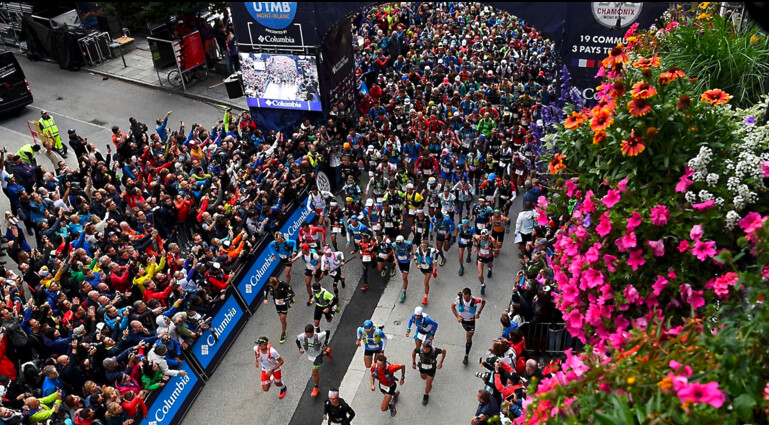
On August 26 in Chamonix, France, Walmsley will embark on his latest and most prodigious quest yet: to win Ultra-Trail du Mont-Blanc (UTMB). It's his fourth attempt at trying to follow up on his stated intention of becoming the first American man to win the race, but he's gone to extra lengths this year to prepare for it. It would certainly add to what has already been a great year, given that he and longtime girlfriend Jessica Brazeau got married on May 4 in Silverton, Colorado.
But if Walmsley is going to pull it off this year, he will have to fend off three-time UTMB winner and 2022 Hardrock champion Kilian Jornet, of Spain, among other strong runners in the talent-loaded field.
UTMB has been one of the pinnacle events in the sport of trail running since its inception in 2003. Not only does the course send runners on a grueling 171.5K loop (106.5 miles) around the Mont Blanc massif with nearly 33,000 feet of vertical gain, it also brings together the deepest international field of the year and more hype and media attention-including epic coverage and commentary via livestream-than any other event in the world by far.
One of several top-tier Americans in this year's UTMB field, Walmsley skipped the Western States 100 this year and since June has been living and training in the mountains of the Rhne Alpes region of France near Beaufort, not far from good friend Franois D'Haene, who knows a thing or two about training for big mountain ultras.
Last year, D'Haene not only became the first male runner to win UTMB for a fourth time, but he also became the first runner to win both Colorado's Hardrock 100 and UTMB in the same year.
The Frenchman was crewed and paced by Walmsley at Hardrock in 2021 and was one of the first people to suggest that Walmsley spend a summer training in the French Alps in order to best prepare for UTMB, rather than showing up in Chamonix 7-10 days before as he-and many other American men-have in the past.
Aside from Jornet, who won this year's Hardrock 100 for the fifth time on July 16, the top international runners include Frenchman Aurelien Dunand-Pallaz, the runner-up at UTMB last year; Germany's Hannes Namberger; New Zealand's Scott Hawker; and Spain's Pau Capell, who won the race in 2019.
D'Haene certainly thinks Walmsley is capable of winning UTMB, but points out that there are always numerous capable runners who are contenders and it all depends on how the race plays out. The idea of Walmsley stating his intent out front-that he wants to win UTMB-is more of a bold American approach, D'Haene says, as opposed to a more subtle European style he prefers.
"Just to explain to people, 'I am here to be the first American to win the UTMB,' puts a lot of pressure on him," D'Haene says. "He thinks UTMB, he sleeps UTMB, he eats UTMB, so it's a lot of pressure. If you take the approach that I just want to smash that course and win that race, then it's a lot of pressure. I'm not sure if he'll win or not win, but at least he's training well in the Alps and his confidence is up."
Walmsley has raced UTMB three times already-taking fifth in 2017 but DNF-ing in 2018 and 2021. The fact that no American man has ever won UTMB is irrelevant in the scope of this year's race, but it certainly adds a heightened focus in Walmsley's quest and a brighter spotlight on him before and during the race.
Whereas four American women have won the women's UTMB race a total of seven times-including the 2019 and 2021 champion Courtney Dauwalter-only a handful of U.S. men have made it to the UTMB podium. The highest finish came when when Topher Gaylord and Bradon Sybrowsky tied for second in the inaugural race in 2003.
While Walmsley appears to be the top American this year, it would be foolish to focus on him as the only American capable of winning. Other U.S. runners with momentum and motivation heading into UTMB include Tim Tollefson, who finished second at CCC in 2015 and third in UTMB in 2016 and 2017; Tyler Green, fourth at Western States 100 this year and 10th in the TDS 145K in Chamonix last year; Zach Miller, winner of the CCC 100K in 2015 and sixth and ninth, respectively, in UTMB in 2016 and 2017.
Miller went for broke trying to win UTMB in 2016 and held a 35-minute lead beyond the halfway point. He still led at the 100K mark, only to struggle over the final 50K and wind up sixth. What makes UTMB different, he says, is that the endless string of long climbs and descents demands a more moderate rhythm and effort over the first half of the course so you don't blow up before the race really begins.
"I don't think there's a super-secret code to crack. We've had a number of really good American men run there, it's just we have to have one of them have a good day all day one of these years," Miller says. "It's not anything we can't figure out or accommodate for. I think we've done it in other European-style races. It's just this one has kind of eluded us. I think it's possible that someone is going to have that 'right' day, but you almost have to have to get a little lucky, too."
Tollfeson is coming off three DNFs at UTMB in 2018, 2019, and 2021, and had a tough Western States this year (21st). Miller also DNF'ed at UTMB in 2018 and 2019 and then was away from racing because of injuries. He finished his first long ultra in several years in late June, winning the Andorra 100K to earn his place in Chamonix.
Other Americans in the field include David Laney (third at UTMB in 2015), Jason Schlarb (fourth in 2014), Seth Swanson (fourth in 2015 and seventh at TDS last year) and Sage Canaday (48th at UTMB in 2017), who is back after suffering a pulmonary embolism and a devastating house fire in 2021.
As for Walmsley, his front-running style has helped him snag three Western States 100 titles, three JFK 50 wins, a 50-mile world-best time, a 100K American record and the Fastest Known Time running across the Grand Canyon and back. It also helped him produce a solid 2:15:05, 22nd-place effort at the 2020 U.S. Olympic Marathon Trials.
Most recently, he tore up the trails (and the competition) at the rough and rugged Madeira Island Ultra Trail 115K in Portugal in April. Otherwise is been running in the Beaufortain Mountains with D'Haene and training a lot on a Wahoo bike trainer in France. Two weeks ago, he completed the arduous 114K (71-mile) Ultra Tour du Beaufortain loop with 7,300 meters (25,000 feet) of vertical gain as one of his last big training days.
"I hope Jim can change it this year," D'Haene says. "I hope he will be OK and can run a good race, of course, but it's UTMB and, of course, it's always difficult."
(08/20/2022) ⚡AMPby Trail Runner Magazine
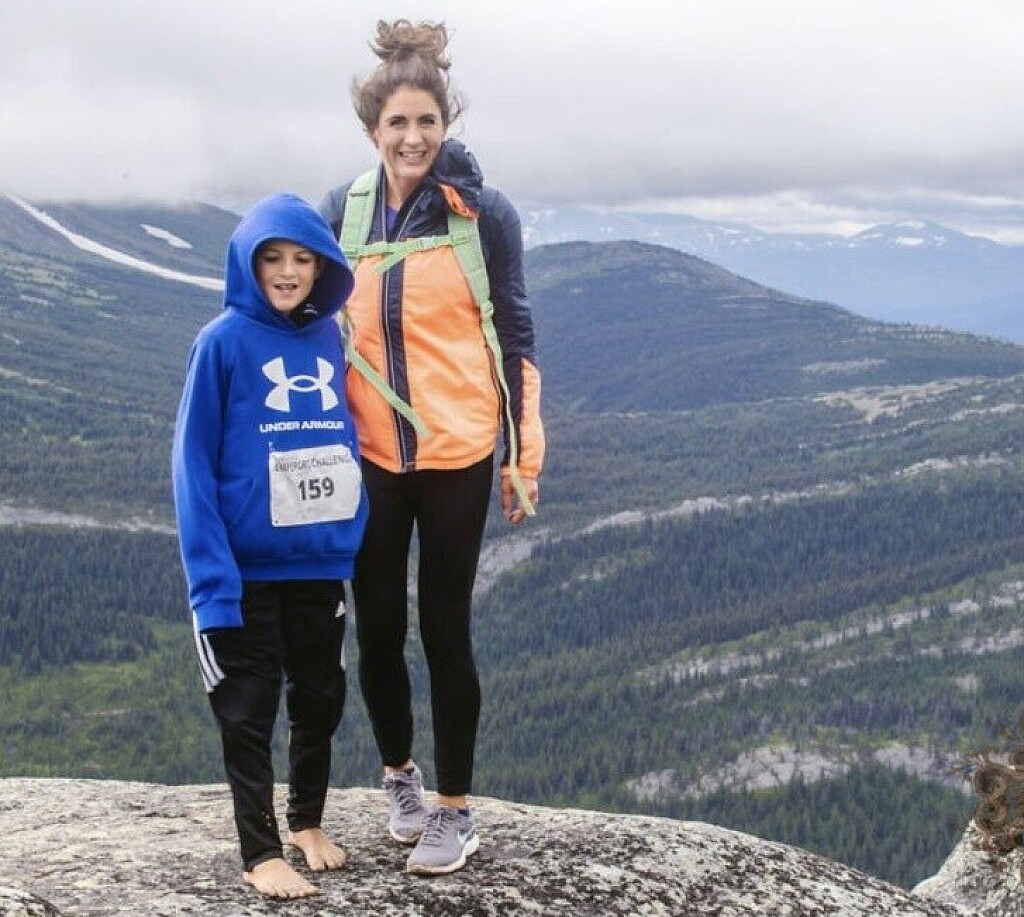
9-year-old runs a mountain half-marathon barefoot
The Emperor’s Challenge is a 20 km race up and down Babcock Mountain in the Tumbler Ridge UNESCO Global Geopark in northeastern British Columbia. After being cancelled for two years during the pandemic, the race was back in person this year on Aug. 6, with a new, more technical route offering more scenic views. According to the Alaska Highway News, Jacob Funk, who is only nine, completed the race–not the 2K or 4K kids’ race, but the whole 20 km–and he did it in bare feet.
This was Funk’s first half-marathon, and he received a trophy for being the race’s youngest finisher. He doesn’t get to keep it, but it will have his name engraved on it.
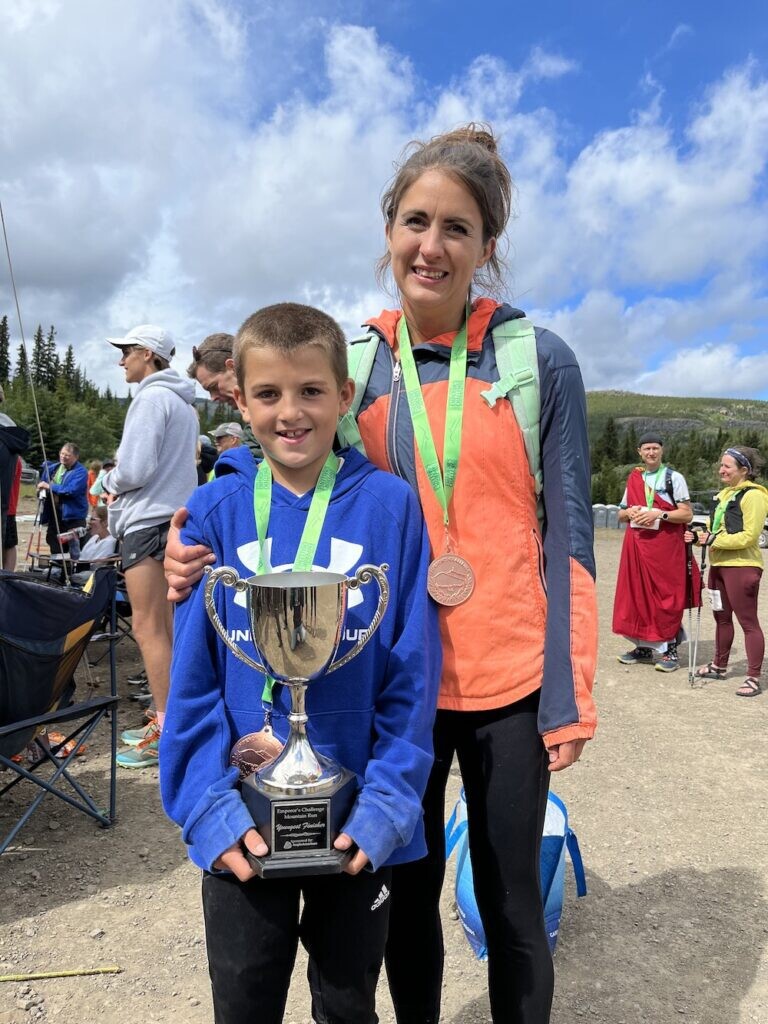
We reached Jacob and his mom, Cara, on a family trip to Newfoundland (they live in Swan Lake, about an hour and a half from Tumbler Ridge). Cara has run the Emperor’s Challenge twice before. She explained that her family are not necessarily proponents of barefoot running; Jacob simply prefers going shoeless (and sockless) most of the time, indoors and out, year-round. “He just really likes the feel of the ground under his feet,” she says.
Jacob told us there was an 8 km section of the course that was loose gravel, which, despite the thick calluses he has built up from going barefoot, was uncomfortable and slowed him down a lot. He plans to return to the race next year, but run it in shoes (at least the gravel parts), to try and improve his time. (He finished in 3:29.) “I did get some times where I was a little bit tired,” says Jacob, “but I never wanted to quit.” For his next race, Jacob is considering That Dam Run, a 16 km race in the mountains at Hudson’s Hope, B.C. on Sept. 25.
Jacob wasn’t the only competitor who achieved something unusual and significant at the race; Rose O’Neill ran it on a running prosthesis. O’Neill, who lives in Quesnel, B.C., took up running as a way to cope with domestic abuse before finally leaving her situation a few years ago. In 2019 she lost her lower right leg to amputation, due to nerve damage resulting from back surgery related to her abuse. This was her first successful race finish using the blade.
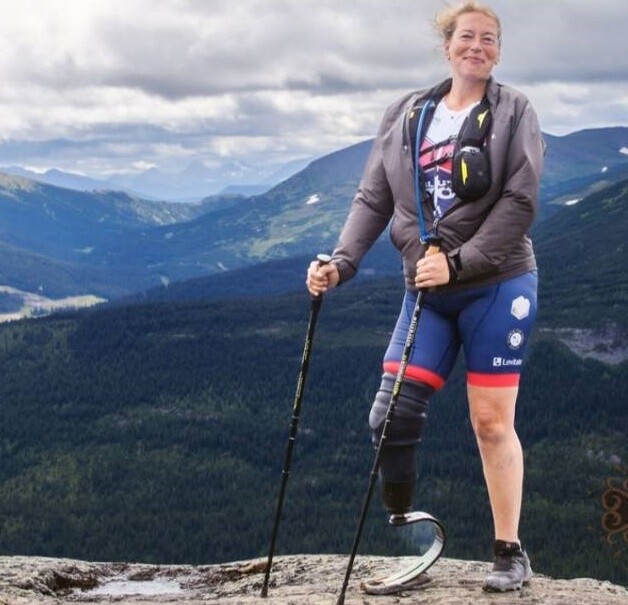
Earlier this year, she made it 30 km into a 50K ultra before her prosthesis broke, forcing her to pull out. At the Emperor’s Challenge, she had to stop and change the sock on her stump six times, due to sweat issues. She had run four times previously–as an able-bodied athlete, before she lost her leg. “Each time I stop, I have to take my leg off, dry it off, change my sock, and put everything back on,” she said, adding that when she races, she carries a pack with a first aid kit and dry socks. She finished about 20 minutes past the five-hour cutoff, but she was still elated with the accomplishment of finishing.
O’Neill, like Funk, hopes to improve her time next year; she says she’s sure she can finish the race 45 minutes faster, once she gets more accustomed to running with the blade. But she has another goal–to get more runners with disabilities to try challenges like this one. “No other adaptive athletes have run that race,” she says. “There’s a reason—it’s tough! But I want other people to see that they can do it, as well.”
The race was won by Kristopher Swanson of Tumbler Ridge in 1:31:47 and Carly Madge of Smithers, B.C., in 1:54:31. (Swanson has won the race every year since 1999, except in 2007, when he finished second, and has represented Canada at multiple World Mountain Running championships.)
(08/16/2022) ⚡AMPby Anne Francis
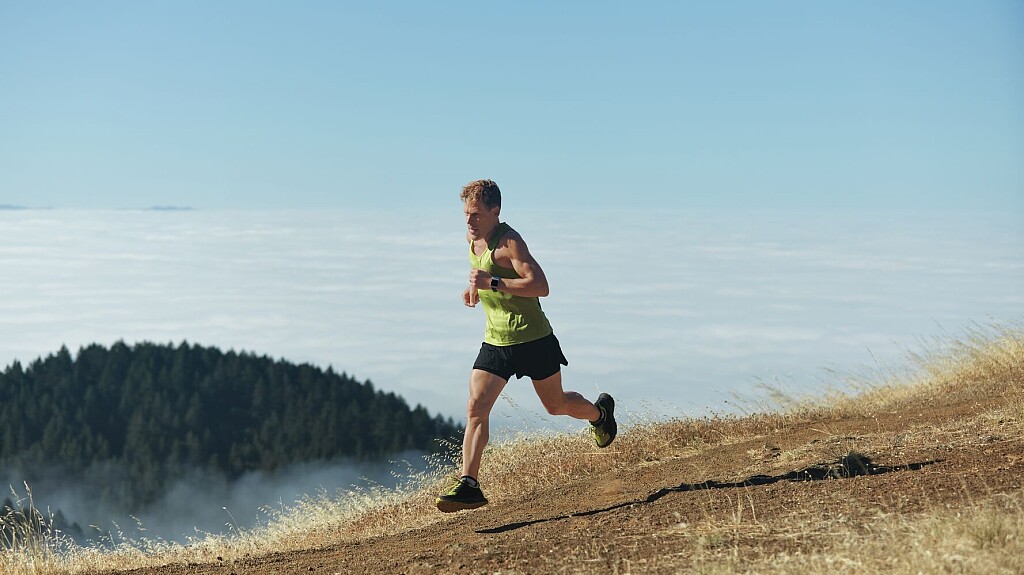
Ultramarathon man Dean Karnazes attacked by coyote during 150-mile race
Acclaimed ultrarunner and author Dean Karnazes, 59, can boast some of the wildest accomplishments in endurance sports, but a coyote attack mid-race was a first for him.
The California-based athlete has raced (and won) some of the most legendary ultras in the world, run to the South Pole, and completed 50 marathons in 50 consecutive days in 50 different states. He’s even been attacked by a shark–but never a coyote. The athlete shared his experience mid-race on Instagram on Friday, calling it “terrifying.”
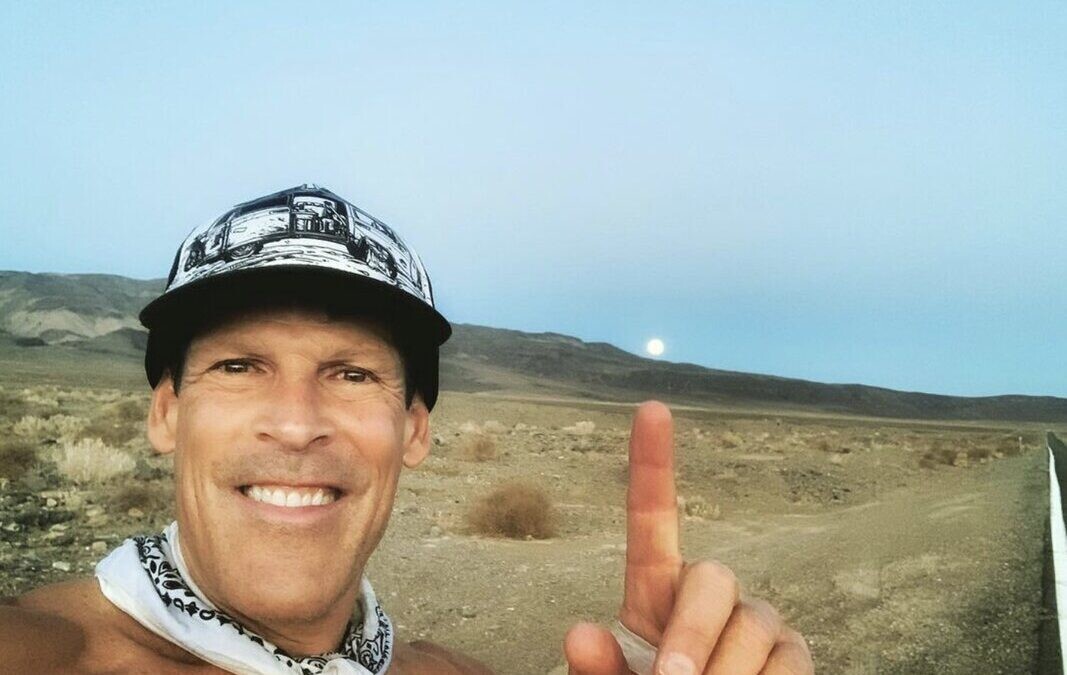
Karnazes was running Headlands 150-mile Endurance Run, a race held in Sausalito, Cali. It’s an event he has returned to over the years of his lengthy career. Headlands Endurance Run hosts everything from a marathon distance trail-race to the 150-miler.
Prior to the animal attack, Karnazes shared a video to Instagram of the night lights along the Golden Gate Strait and San Francisco Bay area. “I’m running the Headlands 150-mile foot-race in Marin County, and if you’re wondering why anyone would do such a thing, maybe this view this will give you part of the answer,” Karnazes said.
Shortly afterward, a bloodied and clearly shocked Karnazes shared his coyote debacle. “I was attacked by a coyote, that was a first,” Karnazes said. “It knocked me over; I was running with poles, thankfully, and I whacked it and it ran away.”
Karnazes said he wasn’t sure what he was going to do, but that he thought he had better keep going or “it might come back for me.”
Karnazes posted to his Instagram story a few hours later explaining that the coyote won the battle. With no result for his race on Ultrasignup, it appears the accomplished athlete may have had to drop out. If there’s ever a valid excuse for a DNF, a coyote attack is undoubtedly it.
(08/15/2022) ⚡AMPby Keeley Milne
Elite Runners and Coaches Bust Six Major Training Myths
Let's be honest. There's a ton of bad training advice out there. Heck, there's just unchecked advice flung here and there and everywhere these days, on all topics of living and being.
So how do you best navigate these thickets of often dubious recommendations? How do you validate what's solid, and what's not? At Trail Runner, we turn to the experts. We turn to well-respected coaches and the most consistent and high-performing elites in the business. We turn to science.
From bro science to outdated training methods, here are eight stubborn training myths that just won't go away, and some proactive solutions to keep you tacking in the right direction.
Myth #1: Always Run High Mileage
It's tempting to think the only way to improve is to run more and more and to keep piling on the miles. But, high-volume training can have diminishing returns for many athletes.
"Running more miles isn't always the answer and comes with a laundry list of disclaimers: injury, sickness, burnout. Instead of adding more miles, fold in a form of cross-training. This helps keep training fresh, the body happy, and it's still stoking that aerobic engine," says coach and elite mountain runner Tabor Hemming.
However, it's also not never the answer. Less isn't always more.
"Adapting over many training cycles usually requires alterations in stress across years, so the best volume an athlete can do is often the least they can do while still adapting consistently, as long the total is within the general range that is needed to spur high-performance in their events for their physiology and load capacity," says coach and Trail Runner columnist David Roche.
"The long-term approach to volume increases leaves room for growth, prevents stagnation, and limits breakdown that can stop an athlete in their tracks long before they figure out where their true ceiling is."
To advance and adapt, you do, in fact, need additional training stress as you progress. Just don't jump into triple-digit miles right off the bat.
Remember that running is different from other sports like cycling because repeated impact leaves athletes more injury-prone. Build up your volume over time, and back off (here's a handy guide) if you're feeling excessively fatigued or if soft tissue injuries occur. Myth #2: Always Give 110%
Elite mountain runner and coach Mason Coppi was hard on himself, always pushing his body to the limit in training and racing.
"No matter what races I won or what times I ran, it was never enough. In my mind, there was always something I could have done differently. I could have always just given a little more effort. Every race and workout I ran I tried to give 110% effort. But here's the thing about 110% effort: it doesn't exist," says Coppi.
Coppi tried to just work harder, to effort more in an attempt to reach his potential. But his performance in races declined steadily as Coppi ignored the signs his body was giving him to loosen up and rest. The more tired he felt, the harder he tried. The harder he tried, the more tired he felt. That feedback loop led to burnout, and Coppi is now taking a temporary step back from running. "You can only give what you have on that day, nothing more," says Coppi. Now, he's working to destigmatize the concept of taking easy days really easy. He works with other runners to help them understand that mental toughness is learning to listen to your body, to assess what your mental and physical needs are on a particular day and respond accordingly.
"Once I realized my best on a given day was my best, a weight was lifted off me," says Coppi. "I knew my all-out effort was enough whether I was limited by something physical or mental."
Now, he no longer chases PRs and fast times on every run and instead works on flexing his adaptability muscle in training. To quote Coach Ted Lasso, "I want 60% effort, 1000% of the time."
Consistency beats intensity when it comes to reaching your athletic potential, and enjoying the process.
Myth #3: Don't Worry About Speedwork
Speedwork is a trail runner's best friend.
"It's a myth that you have to train for ultras very slow, via many, many miles. High-intensity work is an ultrarunner's friend and diminishes the need to run 100+ mile weeks," says Jessica Riojas Schnier of Smiles and Miles Coaching. Use high and moderate-intensity workouts to train smarter and more efficiently. You'll reduce your risk of injury and burnout if you are more efficient with your training, which then makes us happier runners, for longer!"
Start by integrating 15-30 second strides at the fastest pace you can go without straining with one to two minutes of easy, recovery-effort running in between. Do four to eight sets, two to three times a week throughout your runs.
Then, you can start integrating more structured workouts into your training. We recommend beginners start with these looser, more relaxed trail workouts. More advanced runners can skip right to these race-oriented workouts, or even get into some fun, combo workouts.
Don't be afraid of a little speedwork. It'll help you train smarter, faster - and maybe you'll even have more fun. Myth #4: You Must Move to Boulder
While many top trail runners live in mountain Meccas like Boulder or Flagstaff, there are plenty of folks who live and train far from the Rocky Mountains and still compete at a high level. Take Ohio-native Arlen Glick, for example, who finished third at this year's Western States Endurance Run.
"There is still a myth that if you do not live near mountains, you can't do well or complete mountainous races. I have seen numerous athletes repeatedly train in the prairies (flat flat flat lands) of Canada and crush some of the most technical trails and races with incredible vertical gain and loss," says coach Jenny Quilty.
There's plenty you can do to prepare for steep races, even if you don't live in Chamonix. Functional leg strength, like Mountain Legs, can help build strength and resilience through specific movement patterns. Improving your running economy through speedwork and hill strides is also key for mountain adventures and competition.
Also, don't fear the dread-mill. Treadmills can help you practice power hiking, and just a few concentrated sessions are enough for some mega-mountain adaptations. Uphill treadhill doubles are also a great way of getting some vert in, all while reducing impact. Don't overlook the eccentric strength required to rock downhills, though, as many runners' legs are more affected by descents than the climbing.
Myth #5: Run a Metric-Ton of Vert
While you'll want to do some vert-specific work to get better at climbing, overdoing it can lead to slow-downs and stagnation.
"You don't have to run a ton of vert to get better at climbing," says Nike pro athlete Matt Daniels. "I have seen with many athletes that the ones who have developed more speed and better running economy without hundreds of miles in the mountains are the ones who end up handling the vert better on race day. There has to be a fine balance between vert-heavy runs and economy build-in training to be a good climber on race day."
Work on improving overall fitness without overemphasizing vert. According to coach and columnist David Roche, "The best climber is usually the best runner with just enough specific training on climbs." Focus on improving your running in training, while mixing in strength work (like mountain legs) and incorporating more vert as you get closer to your goal event.
Try to get out on trails with race-similar terrain on the weekends leading up to your event, and mix in some mid-week vert during workouts and easy runs, too. Try to run the downhills with intention to get your legs ready for the muscle breakdown they'll incur on race day.
Myth #6: Don't Race Until Perfectly Trained
Curious about diving into your first trail race? Don't wait!
"It's a myth that you have to already be an accomplished trail runner to register for a trail race. Most trail races are not that much different than road races (except if you're racing in the mountains, of course) in terms of their footing," says Denver-based Strength Running Coach Jason Fitzgerald. "Get a good pair of trail running shoes, get comfortable on all kinds of surfaces, and you'll have a blast at your first trail race!"
If you're curious about jumping into a trail race, reaching out to the race director can help determine if you're ready for and interested in a particular event. Researching past participants' race reports can help, too. (Remember to always take race reports with a grain of salt, since it's just one person's experience and perspective.) It doesn't hurt to have a friend sign up for the event with you for moral support and training accountability.
Our advice? Start small. Find an event that's short enough that it sounds fun, rather than a huge stretch for your first race.
Also, make sure you have a solid, consistent base of miles and you're not jumping into something that's hugely above your pay grade. We recommend at least six hours a week of training before jumping into a 50K, and closer to nine hours a week when you're looking at the 50-mile distances and up. If you're not sure where to start, check out our full catalog of training plans here.
(08/15/2022) ⚡AMPby Trail Runner Magazine
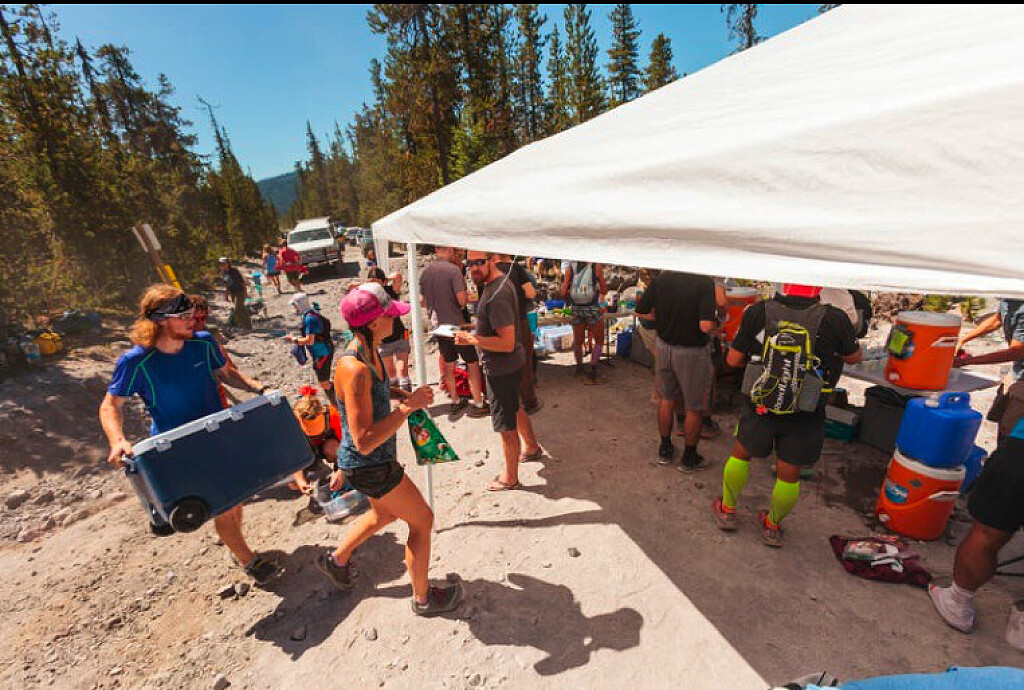
The Dos and Don'ts of Pacing and Crewing an Ultra
Although trail running - especially ultramarathons - is often framed as a solo sport, ask any veteran of the 50-mile-and-above distances and they will tell you it most certainly is not.
There are dozens of people who help runners get from the start line to the finish, sometimes hundreds of miles later. Long before the race, those folks might look like physical therapists, coaches, nutritionists, and others. But during a race, the two most important types of people upon whom a runner depends: crew and their pacers.
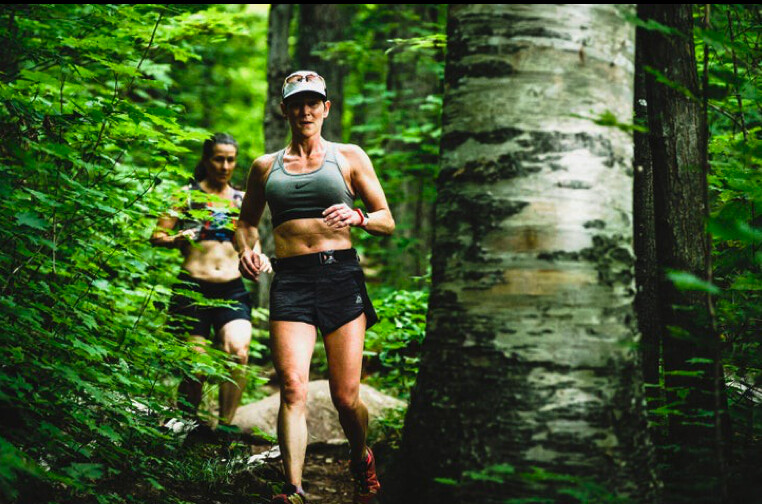
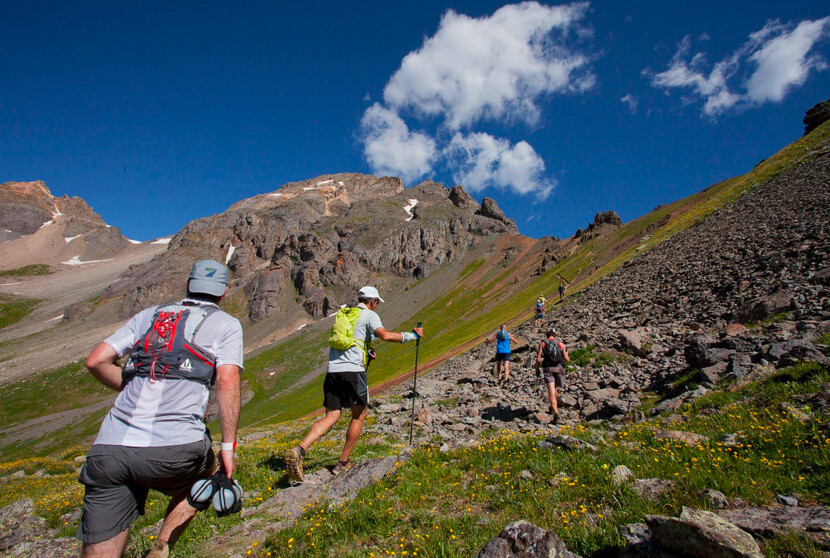
Each role comes with challenges and requires preparation to best help the athlete.
Crewing
Crew members are the pit crew of ultrarunning. They stand ready at aid stations and checkpoints prepared to dole out food, water, basic first aid, dry socks, and new shoes. Maybe even a quick massage for tight muscles. Crew members must work efficiently as a unit to help their runner move through aid stations and get the support they need in a timely fashion.
Boise, Idaho-based Alexandria Otter had already crewed both a 50K and 100-miler before completing her first ultramarathon. Now, Otter primarily crews for her husband, noting they have their method "dialed in."
"I have individual plastic bags packed for each aid station to be as efficient as possible," said Otter. "When my husband comes into the aid station, he drops his pack, I unload all the garbage in his pockets, put one of those bags into his pack, and he heads out."
Before the race, crew members are given an info sheet that lists all the aid stations, a range of ETAs based on performance, current mileage, and elevation change.
Crew members should arrive before the race starts and be ready and willing to help their athlete from the very first moments of their day. That might mean providing or taking clothing layers, getting any pre-race water or nutrition, or even just being a smiling face among the nervous energy.
It's important that crew members arrive at each aid station as early as possible. The sooner a crew arrives at an aid station, the better the parking and spots to set up camp, and the less anxiety there will be among the crew.
Prime parking spots at aid stations are highly coveted because they allow for ease of access to supplies for your runner, as well as a convenient place for you to rest between traveling to the next aid station. A good parking spot also makes it easy to load up your supplies and head to the next station.
Arriving early at each aid station also gives you the opportunity to set up your runner's supplies in an optimal location, as close to the trail as is permitted. The last thing a runner wants, miles into their race, is to weave through others' setups to try to find their crew.
Crew members will often help each other out when it comes to setting up aid stations. It's typically a family atmosphere, not one of icy aloofness.
It's not uncommon to find crew members for a variety of runners helping each other set up chairs and tables, fill up water bottles, and lay out food for each runner. Likewise, the spirit around most aid stations is one of plenty. If a crew member forgot something like sunscreen, Bandaids, or salt tabs, most other crews will be more than happy to share their supplies.
Once the race is underway, crews may end up with a lot of time on their hands as runners traverse the course in between aid stations. And sometimes, the runner's plan doesn't shake out the way they hope it will.
"When I'm in between servicing our aid stations, I'll make sure to feed myself, find a bathroom; sometimes I'll even go for a hike or run from the aid station," said Otter. "I've met a lot of awesome people - and dogs! - just by hanging out near the aid stations, too."
The hardest part usually is post-race, when the runner, pacers, and crew are tired from a day(s) of getting the athlete from point A to point B. But someone still needs to collect the food and supplies from each aid station. Staying organized by managing the athlete's equipment in drop bags at each aid station makes things much easier when it's time to depart from each station or from the race as a whole.
Alyssa Godesky holds the Fastest Known Time (FKT) for the Long Trail in Vermont, the High Peaks in Adirondacks, and the High Peaks in New Hampshire. For each of her FKT attempts, she relied heavily on a stellar crew.
"The best crews are made up of people who know how to be both leaders and good teammates," said Godesky. "So many things can shift rapidly during a race or FKT and you need to trust your crew will adjust."
For example, maybe one of the crew's cars will break down and the other crew members will need to figure out a different way to get to the next aid station. Or maybe the athlete is taking longer - or going faster - than previously expected and aid station arrival times have changed. A crew needs to be flexible and ready to change plans at a moment's notice.
The most important thing a crew can have, according to Godesky? Endless optimism.
There will be points during an ultramarathon where a runner may lose their motivation to continue the race. The crew needs to remain relentlessly positive and solutions-oriented to remind the athlete of their "why" and get them excited to head back on the trail and keep going.
"If pacers and crew members were a family," said Godesky. "The crew members would definitely be the parents - nurturing, organized, and always ready to help."
Pacing
Pacers are an ultrarunner's eyes, ears, and sanity. Pacers generally come in in the later stages of a race when a runner may be too exhausted (or too loopy) to safely continue on their own. For 50 milers, that might be around the 30- or 35-mile mark. For 100-miles or longer, pacers may be required from the 50-mile mark on. They're also helpful when a runner is gunning for a certain time goal and may be struggling to hold that pace on their own. A pacer must be patient, encouraging, and be able to run, walk or shuffle alongside their athlete. It's not unheard of for pacers to be dropped by an athlete that's having the race of their life!
Ally Gregory got her start in ultras by volunteering more than 10 years ago - she had a firsthand view of trail and ultrarunning before she even ran a race. Today, the Chicago-based ultrarunner is a race director for trail events in Illinois and frequently serves as a pacer for her friends.
"The purpose of a pacer is to provide the runner with mental support and to literally keep them moving forward," said Gregory. "This entails knowing the race course - the route, elevation, distance between aid stations - monitoring the runner's well-being, and knowing when to push the runner and when to let them rest."
Pacing is like being a therapist, coach, and friend all wrapped up in one. It is not an easy job, especially during races that are 100 miles or longer. Gregory noted that a key part of being a top-notch pacer is understanding your athlete's communication style, their expectations and motivations for the race they're running, and most importantly, how to make them laugh, even at mile 80.
Godesky thinks of her requirements for pacers in two parts: physical traits and mental traits.
"I know I'm going to be in the best shape of my life when I attempt an FKT," said Godesky. "I need my pacer to not only be able to match my speed, but do so while potentially carrying my equipment, keeping track of nutrition and hydration schedules, and pushing me to go faster if necessary."
The most critical part of pacing is being able to match your athlete's fitness. You need to be able to navigate the pacing segment (which could be 20+ miles) without slowing your athlete. On the flipside, if your athlete is having a tough day, be prepared to shuffle or walk alongside your athlete, too. It helps to have previous trail running experience and confidence in your mental and physical tenacity. As tempting as it might be to immediately say "yes!" to pacing someone, it's OK to ask to give it some thought, too.
From a mental characteristics perspective, Godesky looks for pacers who have high levels of self-awareness and emotional intelligence and who are direct, concise communicators. These traits tend to yield folks who know when to push Godesky to press on and when to respect if she needs to slow up or pause.
"Basically, I look for people I can get along with for many hours in the middle of the woods," joked Godesky.
Not everyone you would love to have as a pacer should be a pacer. Taking into account both the physical and mental strengths of your pacers is paramount over asking close friends or family to be part of your pacing team.
Unlike crewing, pacing does not require you to be at the race start, and in fact, it's best to get the rest you need and wait to show up until it's time to roll. Pacers are called upon later in a race, so do your part to get enough rest, nutrition, and hydration in the hours before meeting up with your athlete.
Ultrarunning and trail running are solo sports with a big asterisk next to solo. There are loads of people who help a runner reach the start and end lines of not just a race, but their journey leading up to the race, as well.
The best way to learn about crewing and pacing is to immerse yourself in an ultramarathon or local trail race. Aside from pacers and crew members, trail races also need volunteers to assist with everything from aid stations to race day check in. Signing up to volunteer can give you a first-hand look at the ups and downs each runner faces across the race and how pacers and crew members react to best support their athlete.
"There's no better way to learn about the sport than jumping into the ultrarunning community," said Godesky. "Whether that's volunteering at a race, joining a local run club, or taking the plunge and running a race yourself, you will learn how to best pace and crew by being open to learning from experience."
Pacing and crewing are skill sets in and of themselves. Not being afraid to ask questions, volunteer, and hone your skills by joining the ultra community are key to becoming an invaluable pacer and crew member. You can find a run club (trail and/or road) by finding them through Facebook groups, asking your local run shop, or searching for nearby trail races to help you get started in the ultrarunning community.
(08/14/2022) ⚡AMPby Trail Runner Magazine
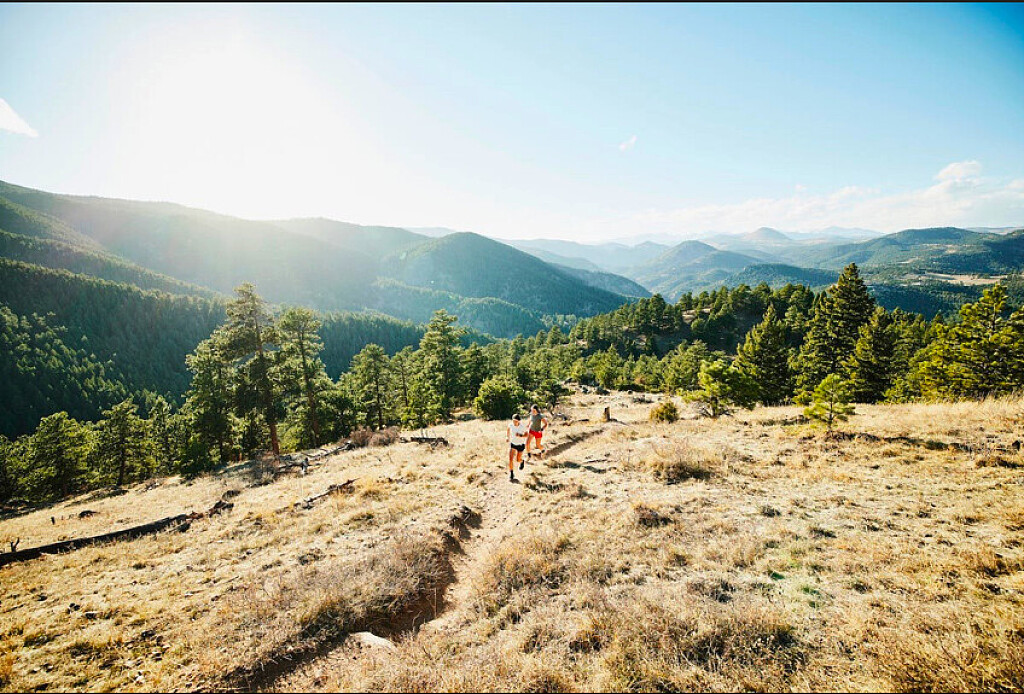
VO2 Max Output As A High-Performance, Anti-Aging Superweapon
This article is purely theoretical. Some readers will think that the theory is obvious on its face, and others will think that it's wrong. The joy of talking about training theory at the intersection of science and anecdote is that there are too many physiological metrics to track, and too many variable responses to interventions, so the resulting conclusions fall somewhere on the spectrum between fundamental truth and biased bullshit. Throughout, I'll try to check my biases and acknowledge the unknowns.
You know I'm nervous about writing an article when the first paragraph is undercutting myself with disclaimers. To be fully real with you: I am unsure on this one.
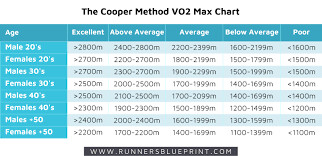
This article tries to articulate an unexpected observation that now forms a cornerstone of my coaching approach, but I have too much self-doubt to ignore my biases. It's like looking at a diagram of constellations in the night sky. The diagram might say: "This is the mighty hunter, pursuing the courageous bear."
So remember, as I try to break this down, I'm describing a scene with a mighty hunter, but I'm painfully aware it might just be dots and a phallus.
Here it is, distilled down to 3 sentences:
Output at VO2 max while climbing (measured via grade-adjusted pace) may have a high predictive value for athlete progression and regression over time, particularly with age.
The metric likely is a proxy variable for limitations of mechanical output that are faced by some athletes from the start of their running journeys, and confronted by all athletes with age.
Constant reinforcement of the metric may improve performance at all effort levels, including long ultras, and can seem to reverse the athletic decline process in some cases.
That's it. To paraphrase The Lion King: Simba, let me tell you something that my father told me. Look at the stars. YOU SEE WHATEVER YOU WANT TO SEE.
Observations From Athlete Training
Let's have some fun with training theory, reverse-engineering why I think this conclusion is significant and may be overlooked. When my co-coach/wife Megan and I started coaching (we talk about this topic more on episode 114 of our podcast), we began as acolytes to coaches like Renato Canova and Jack Daniels who excelled with Olympic-level athletes on the road and track.
We added some wrinkles here and there based on data we saw along the way, which seemed to especially manifest themselves with athletes that might not have Olympic-level VO2 maxes, whether due to genetics or age (VO2 max measures peak oxygen utilization during exercise, has a strong genetic component, declines with age, and is not highly trainable). You have probably seen me write about a lot of those wrinkles: plenty of fast strides, a higher proportion of short yet controlled intervals, and the heavy use of hill intervals year-round.
But Megan and I both kept hitting the same stumbling block: athletes over age 40 just didn't respond as well as we would like.
So we tried something new. With sub-ultra trail runner Mark Tatum and a few other athletes, we moved almost every workout into the hills, with an astounding number of power hill strides, and at least one session most weeks with short hill intervals. Mark and some others had breakthroughs, seemingly giving a big middle finger to the aging process. For Mark, a few years of training later, it led to an overall win at the Dipsea Race.
That made sense with aging athletes. Hills reduce impact forces and may increase muscle recruitment/mechanical demand (2017 review article in Sports Medicine), and short intervals may counteract natural VO2 max reductions, so they are great for the aging athlete. I've written about that before, as have others. It was nothing new, although maybe the approach was more committed to the bit.
But then something fascinating happened. A few younger athletes that we coached also seemed to have issues where traditional speedwork didn't lead to the expected adaptations. Maybe it was repeated injury cycles without clear explanations, or maybe it was just an unexplained performance reduction. So we tried a similar intervention. While results varied, the hill emphasis had a substantial effect size on results in our team, including preceding a couple national championships.
Now we were intrigued. Is it just the specificity of hills for trail running? Possibly, but we saw similar improvements in some road runners. Could it be an improvement in the VO2 max variable? That's doubtful, since there's little evidence that it can increase much in trained athletes. Lower injury rates? That likely plays a big role, but later we started to see similar results in athletes who rarely got injured. Or, to summarize: The hunter, or a random association of dots?
As we started to incorporate short hills more for all of our athletes, with all different backgrounds, we started to hone in on one primary explanation: the unique neuromuscular and biomechanical demands of mechanical output in running.
Here, mechanical output is shorthand for how aerobic processes interact with the musculoskeletal, biomechanical, and neuromuscular systems to create speed. A thorough explanation of mechanical power output is in this 2018 article in the Journal of Biomechanics, but just think of it as how each stride transmits force, rather than as conveying everything that goes with the technical term. For our purposes, effort level at VO2 max does not refer to the specific physiological measure, but is a general shorthand for high-yet-controlled outputs.
We have seen that if an athlete can improve their output around VO2 max on hills, they can counteract - even reverse - part of the athletic aging process at all distances. The reason that the short hills should lead to more broad-ranging development is that athletes accumulate lots of aerobic work over time, and those lower-level aerobic gains accumulate.
There is nothing new about this concept. For example, Norwegian training principles are so hot right now. Most of the focus is on the high volume of threshold work. But if you look closely at some of the sample weeks, you'll sometimes see a day full of short, fast hills (and that's for young, immensely talented athletes). Similar concepts were rumored to be included in the training of Jake Wightman, World Champion in the 1500 meters. Whether it's Lydiard-based systems from the 1960s and 1970s, Canova-inspired hill sprints, or hybrid approaches, once you start looking, you'll see these elements all over, even for athletes that seem to have almost no genetic or age limitations.
Possible Physiological Explanation
Okay, let's go back to first principles. VO2 max peaks at a young age, and it isn't highly trainable. So how do athletes keep getting faster if their peak oxygen intake is staying flat or declining?
The answer is that their output at VO2 max improves, usually measured as velocity at VO2 max, even as the denominator doesn't improve. The prototypical example is Paula Radcliffe (see this 2006 study in the International Journal of Sports Science & Coaching), whose VO2 max actually decreased from when she was a champion junior athlete, but her running economy (the amount of energy she used to run fast) improved by 15 percent. Those running economy improvements likely come from some mix of lower-level aerobic development leading to more efficient cellular processes of fatigue management, neuromuscular/biomechanical efficiency, and mechanical output. I'm not concerned with how much oxygen an athlete can consume, but what they do with the oxygen they have.
Running economy can be measured across multiple intensity levels. At the intense end of the spectrum, you have velocity at VO2 max (think 10ish minute effort, with variance). More toward the middle is critical velocity or velocity at lactate threshold (~30- to 60-minute effort). At the easier end of the spectrum is velocity at aerobic threshold (2-3+ hours, depending on the athlete). With age, vVO2 goes down first (often in an athlete's mid-20s), followed by vLT (30s or later), then vAeT (which can stay higher for a long time due to the aerobic component). That makes intuitive sense-athletes move up in distance with age by necessity as VO2 max and mechanical output go down, while long-term aerobic development is ongoing.
Side note: there are 10 statements in the preceding paragraphs that are controversial in exercise physiology. Sorry about that. If there's anything I learned from eating a lot of cereal as a kid, it's that if you spot them all and mail proof of purchase to General Mills, they might send a free toy!
Back to it. Our theory is that focusing too heavily on the aerobic side of the running economy equations misses out on the mechanical power side. Yes, VO2 max will decrease with time. But based on what we have seen, the mechanical output associated with VO2 max doesn't need to decrease much at all. And it can even go up very far into an athletic journey!
Mechanical Limitations
Why is that significant for an athlete competing in longer races? Think back to the experienced 60-year old athlete who progresses a bunch with short hill intervals. Their VO2 max number likely can't change much at that point of their athletic journeys, but we think that their mechanical output can. And because mechanical power is a strong performance indicator at all efforts in aging athletes, it doesn't matter that the short hills are non-specific to their race distances. It's the highest-yield stimulus for output, and it pushes back the strongest against the inertia of aging, so they get faster at everything.
If you're 50+, I think that you can take that to the bank. Focus on mechanical output/strength alongside aerobic development, and you'll be rich as hell. Now, let's dive into a more speculative investment.
The hardest logical leap is to take these principles and apply them to younger athletes. Why might they progress even when they aren't limited by mechanical output in the same way?
Our theory: they are limited in that same way, just to a less clear extent. In fact, most of us have some mechanical limitations that are semi-independent of traditional aerobic development.
Talented, elite athletes are the origin point for many training theories, and most of those athletes have few limits associated with vVO2-that's why they're elite in the first place. So they can focus more heavily on the aerobic-input components of speed, plus specific training for their events. But for most of us, mechanical power at the top-end of aerobic capacity is a limiter from when we are young, and it only gets worse with time.
That's one reason we strongly encourage athletes to eat enough, always. Running is a power sport, even if it doesn't always feel that way. And that may add another explanation of why athletes who restrict food almost never improve over time.
Theoretical Implications
Since mechanical output is the true theorized limiter, it may be better to do many of the sessions targeting it on uphills. Flat intervals are fantastic and important at times, but many athletes end up not having the biomechanical and neuromuscular efficiency to translate their aerobic ability into the same output. In our data, an athlete who is not extremely fast (in a road/track sense) will often have a faster grade-adjusted pace on a 2-minute hill interval than pace on a 2-minute flat interval, often by 20-30 seconds per mile. Combined with the higher muscular demand and lower injury risk, output around VO2 max seems to be optimized on hills.
A quick disclaimer: we could easily be confusing cause-and-effect here. Perhaps it's all driven by reduced injury rates and lower soreness levels, creating more consistency over time (or any other explanation you can think of). Going backwards from outcome to mechanism is problematic for 99 reasons, and for the strength of this theory, each and every one of them is a bitch.
But the practical takeaway is this: we have seen that if an athlete can improve their output around VO2 max on hills, they can counteract - even reverse - part of the athletic aging process at all distances. The reason that the short hills should lead to more broad-ranging development is that athletes accumulate lots of aerobic work over time, and those lower-level aerobic gains accumulate.
The aerobic system can continue to improve, but for many athletes, it runs into a ceiling that we think is often set by mechanical output. If you raise that ceiling, there can be a positive feedback cycle where improved mechanical output allows the improving aerobic system to translate to better running economy, which improves mechanical output more, and so on.
The Big Takeaway
Don't let your mechanical output be too strong of a limiter, no matter what training approach you use. For us, that involves three main elements.
First, athletes do hill strides year-round to encourage max power development. That can be as simple as 2 sessions of 4-6 by 20-30 second fast hills in the 2nd half of runs each week, or adding hill strides after a flat workout. Or it can be bigger, dedicated sessions like in the Norwegian training sample weeks. Flat strides can also work for this purpose, particularly for advanced athletes.
Second, athletes periodically do moderately hard hill intervals, as often as weekly for aging or injury-prone athletes, and as little as every 6 weeks in durable track or road athletes (with other sessions being on flat or rolling terrain). Our usual guideline is 12-20 minutes of total intervals, with each interval being 3 minutes or less with run down recovery between them. Simple go-to examples are 16-20 x 45 seconds, 8 x 90 seconds, 6 x 2 minutes, or 5 x 3 minutes, though you can get creative with it based on what's the most fun for you. Mix up the gradient, with the sweet spot being 8%, but it's cool to have fun with steeper or shallower grades, too.
Third, do strength work. We are partial to Mountain Legs and Speed Legs, but anything that improves your strength can work. Just avoid overdoing it.
And remember: this is just one element of our training theory, and our training theory is a grain of sand on the beach of training theories that are out there for free on the internet. Even for us, it interacts with hundreds of other concepts. Listen to your body and do what works for you. Ignore this if you disagree. Send all of your complaints to General Mills.
But don't accept that getting weaker is a foregone conclusion. Aging is inevitable. If you zoom out far enough, slowing down is inevitable, too. But slowing down is not inevitable tomorrow or next year. And I think there's a strong argument that it's not inevitable 5 or 10 years from now either. What do we say to
(08/14/2022) ⚡AMPby Trail Runner Magazine
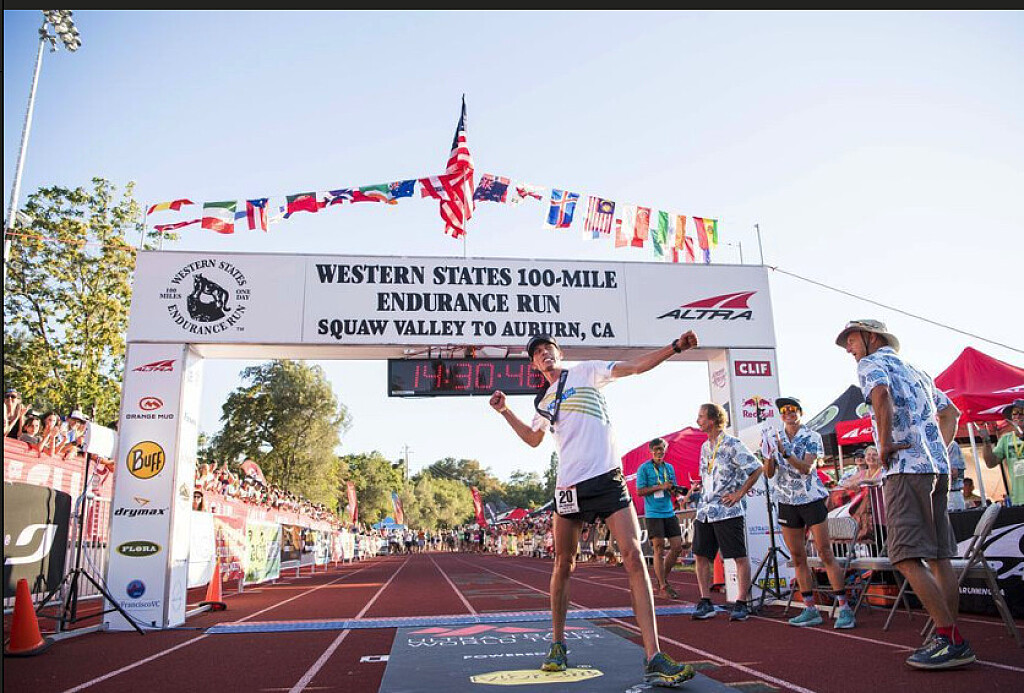
Western States Endurance Run Announces This Year's Golden Ticket Races
On August 9th, 2022, the Western States Endurance Run (WSER) updated its schedule and criteria for the 2022-2023 Golden Ticket races. For the second consecutive year, the lineup will include three international races, including UTMB, and the first-ever Golden Ticket event in Asia.
The Western States Endurance Run is the U.S.'s oldest and most competitive 100-mile race and has long depended on a lottery system to modulate the number of runners on the start line. Golden Ticket events give the top two runners automatic entry into the race, allowing them to bypass the competitive lottery. In this system, 28 spots are reserved for Golden Ticket winners in WSER. If the recipient of the Golden Ticket winner already has an entry (either through the lottery or another Golden Ticket event) the ticket rolls down to the next runner without entry. All runners who finish in the top ten at Western States also get automatic entry the next year.
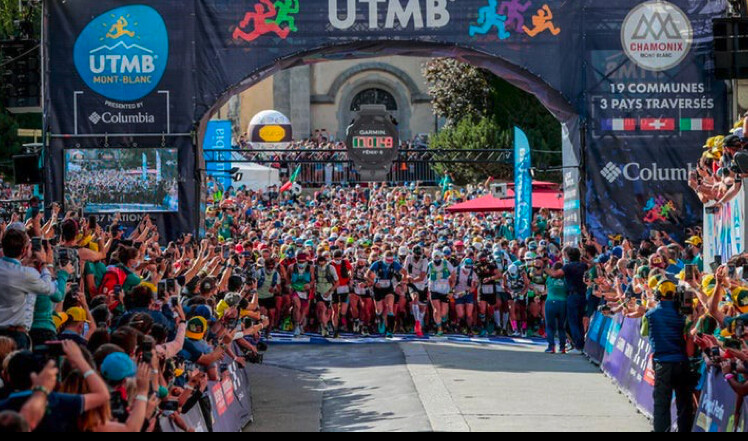
Like last year, the list includes Ultra Trail Mont Blanc (France, Italy and Switzerland) and Tarawera by UTMB (New Zealand). However, the Endurance Trail des Templiers (France) has been replaced with the Doi Inthanon Thailand by UTMB 100M. This is the second year that international races have been Golden Ticket events, and the first year that features an event in Asia, which spreads out and diversifies opportunities for international elites to gain entry to WSER.
There are still only four Golden Ticket races in the U.S., and each year these events get even more competitive. Historically, there have been five to six Golden Ticket events in the U.S. Notably, the Lake Sonoma 50 is no longer on the docket, which was the only sub-100k chance at a Golden Ticket. All the remaining events are now at least 100k, which is WSER's current qualifying distance. There are now three 100-mile qualifiers: UTMB, Doi Inthanon Thailand 100M, and Javelina Jundred (Arizona).
The inclusion of four UTMB-branded events signals the coalescing of trail running's most competitive events under a single UTMB banner. Additionally, if runners want to run at the UTMB main event in Chamonix, France, they need to first run a UTMB-branded race to collect sufficient running stones to qualify.
(08/14/2022) ⚡AMPby Trail Runner Magazine
How to talk to a runner
Talking to runners can be intimidating. I have been running for decades and I still find myself occasionally searching up terms I overhear fellow-athletes use in casual conversation.
We’ve defined some commonly used acronyms so that you can throw around your running lingo like you’re the GOAT.
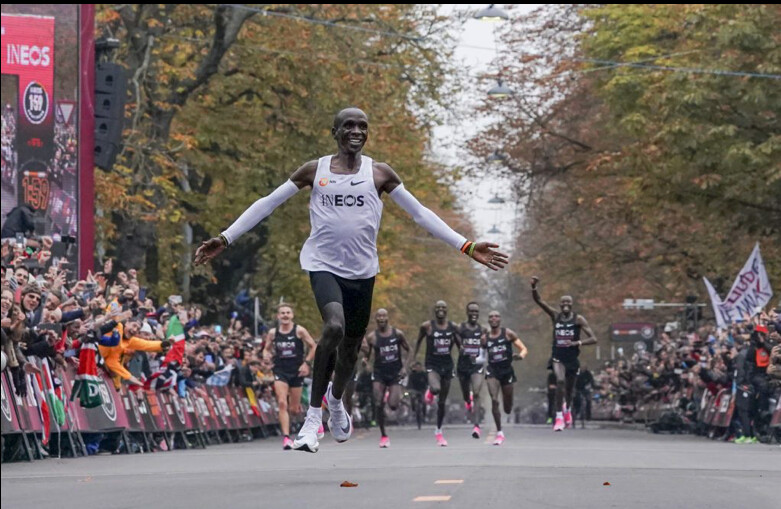
Running basics: I was wearing my HRM, but my HR was wonky for my entire LSD
HMP: half-marathon pace HR: heart rate HRM: heart rate monitor HRV: heart rate variability (the fluctuation in the time intervals between adjacent heartbeats) KOM/QOM: king of the mountain/queen of the mountain (a badge on Strava) LR: long run ER: easy run LSD: long slow distance MP: marathon pace FOMO: fear of missing out (if I’m an IPSOS I have to miss all the races and I’ll be stuck at home with FOMO) XT: cross train XC: cross country VO2 max: the maximum (max) rate (V) of oxygen (O₂) your body is able to use during exercise FKT: fastest known time
Racing terms: “You had better start training for WSER or you’ll finish DFL”
BQ: Boston qualifier (or Boston qualified) CR: course record (or Canadian record) DFL: dead f*cking last DMR: distance medley relay (a four-person event on the track, consisting of a 1,200m leg, a 400m leg, an 800m leg and a 1,600m leg) DNF: did not finish DNS: did not start GOAT: greatest of all time NR: national record OCR: obstacle course race PB: personal best (used in Canada) PR: personal record (used in the U.S.) PW: personal worst
RD: race director SB: season’s best SC: steeplechase UTMB: Ultra-Trail du Mont-Blanc (one of the most challenging ultratrail races, held in Chamonix, France) WL: world lead WR: world record WSER: Western States Endurance Run (as in ‘see you at states’ aka one of the most challenging ultratrail races, held in Auburn, Cali.)
Reovery and injuries: “I went out too hard in my BQ attempt, ran a PW, and now I’m an IPOS with FOMO”
DOMS: delayed onset muscle soreness (why an easy run the day after a hard workout doesn’t hurt as much as expected) IPOS: injured piece of sh*t IT band: iliotibial band (the band of tissue that starts at the hip and runs down the outside of the thigh) ITBS: iliotibial band syndrome LEA: low energy availability RED-S: relative energy deficiency in sport RICE: rest, ice, compression, elevation (common injury-treatment advice) IYNYN: If you know, you know (sometimes only those who have been there can truly understand)
(08/13/2022) ⚡AMPby Running Magazine
What is a stress reaction, and how can you prevent one?
Molly Seidel missed world championships because of a stress reaction; how can the rest of us stay injury-free?
Avoiding injury is the goal of every runner, and that includes preventing a season-ending (and painful) stress reaction. Olympians Molly Seidel and Gabriela DeBues-Stafford have both been sidelined this year with stress reactions; ultrarunner Gary Robbins had to pull out of his 2019 Barkley attempt due to one. So what is a stress reaction, and how can a regular runner prevent it?
Stress injuries: the basics
Readers may be more familiar with the term “stress fracture,” which is further along the stress injury spectrum. (In other words, a stress reaction may lead to a stress fracture if left untreated.) The cause of the initial reaction (and subsequent possible fracture) is usually overuse, as opposed to more serious traumatic types and of fractures from falls or other accidents.
Stress injuries are classified upon diagnosis: early (stress reaction) or late (stress fracture). A stress reaction can be considered similar to a deep bone bruise. A stress fracture is a small hairline crack in the bone.
Stress reactions are usually diagnosed through an MRI, and we see pro athletes catch their injury at this early stage because they’re more likely to have quick access to medical technology. Regular runners often don’t realize they have a serious injury until an X-ray shows a stress fracture.
Why are runners vulnerable?
Runners tend to get stress injuries in their leg bones, feet and hips due to the repetitive nature of our sport. DeBues-Stafford’s and Seidel’s stress reactions were in their sacrums (the triangular bone at the base of the spine, just above the tailbone); Robbins‘ was located at the head of his femur (thigh bone), close to the sacrum.

The pain from this injury is often barely noticeable at first, but progresses over time until you can even feel it at rest. Runners may be used to running through niggling pain and soreness and will ignore the symptoms of a stress injury until it’s past the reaction stage.
Proactive steps
Overtraining and underfuelling are major contributing factors to stress injuries.
A paper in the Journal of Orthopaedic and Sports Physical Therapy reported that while micro-damage to tissues and bones is essential to athletic improvement, stress reactions occur when the strain caused during accumulated activities is disproportionate to the body’s ability to recover.
What does that mean for the regular runner? Be mindful of nutrition, recovery and training load. Running a big marathon build, but not fuelling appropriately for your body to actually repair the incremental damage done by that build, is a recipe for disaster.
Allowing appropriate recovery time (including sleeping 8-9 hours per night) after hard sessions or training blocks and eating enough nutritious food to fuel that recovery are essential to avoiding stress injuries. (They’re also key to becoming a faster, stronger runner.)
(08/12/2022) ⚡AMPby Keeley Milne
One minute mastery: boost speed and endurance in sixty seconds
Get faster, recruit more fast-twitch muscle fibres, and build stronger legs. This simple speed session is a great workout one minute at a time.
Most of us (even pros) run easy most days, with a few days per week working on speed or running long. While both long and short intervals have their place in our speedwork sessions, it can be hard to know what is most effective. This versatile one-minute interval session should have a spot in every runner’s schedule.
The short intervals mean you can run them at a quick pace, but the number of repetitions (increase if you’re training for a marathon or ultra) improve endurance and fatigue resistance as you persevere even after you start feeling tired. You can do anything for one minute, right?
The key to optimizing this workout is managing your speed in the early intervals so that you can pick up the pace as you near the end. It can be tempting to run all-out during those first, short intervals: aim for a 5K-10K pace, and work on keeping pace steady. Run the last few intervals as fast as you can.
The workout
Warmup
10-15 minutes of easy running, followed by strides or drills
Intervals
10-12 x one minute hard, one minute easy; adjust as necessary
Cooldown
10 minutes of easy running
Don’t feel daunted if you’re a beginner and running one minute at top speed seems too hard. Try shortening the minute intervals to 30 seconds.
If you have a strong base, begin with 12 sets, but if you’re training for a longer distance, you can build up to 15-20 (or more!) sets. Remember that you’re aiming to keep your pace smooth and strong throughout, and to pick it up at the end.
Hydrate well, and make sure to make the day following a hard running session an easy or recovery day.
(08/11/2022) ⚡AMPby Running Magazine
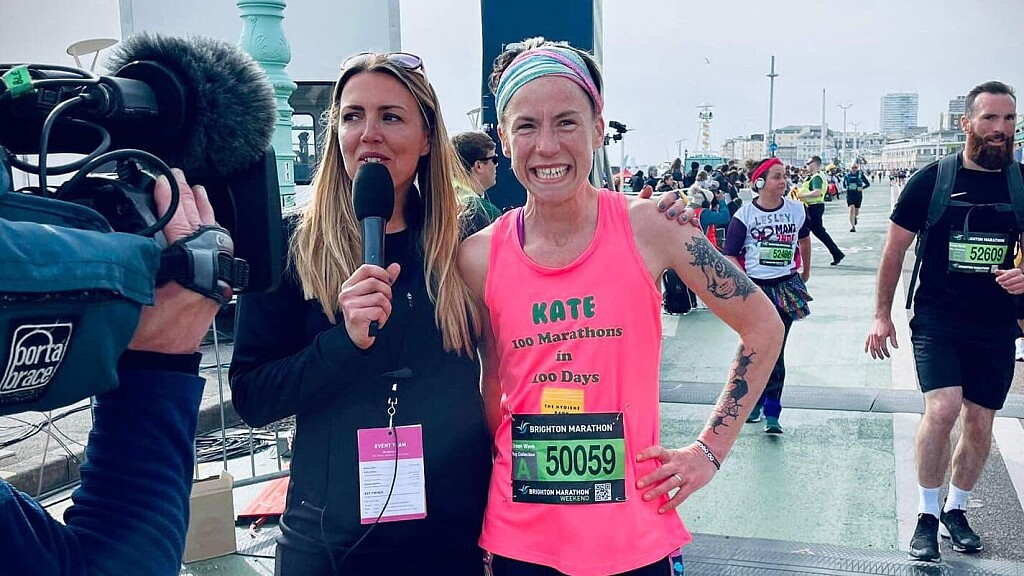
Ultra-runner Kate Jayden set astonishing marathon world record with broken knee
Kate Jayden of Derbyshire, U.K., who set the world record of 106 marathons in 106 days, completed in April 2022, has had her record verified by Guinness World Records. Although 106 straight days of running a marathon is an incredible feat in itself, Jayden revealed on her social media that she ran her last 60 marathons on a fractured knee.
Jayden began to feel discomfort in her knee after her 46th marathon, when she struggled to put weight on it and thought she had developed an injury. But the 35-year-old carried on for the last 60 marathons.
She started her challenge for charity on Dec. 31, 2021, and finished on April 15, 2022. Jayden got an MRI on her knee soon after finishing, and a scan revealed she had fractured her knee and may not be able to run again.
“I did not realize that day 106 was going to be my last long run,” Jayden told the BBC. “But if you could have planned it to be, it was an excellent way to go out.”
Jayden plans to have surgery on her knee and hopefully take up cycling in the future.
She initially set out to beat American runner Alyssa Clark’s record of 95 marathons in 95 days, which was set in November 2021. Several runners have since been inspired by Clark’s and Jayden’s records, and have set out on their own.
During her challenge, Jayden raised over CAD $50,000 for three charities: the Refugee Council, Trussell Trust and The Hygiene Bank.
(08/09/2022) ⚡AMPby Running Magazine
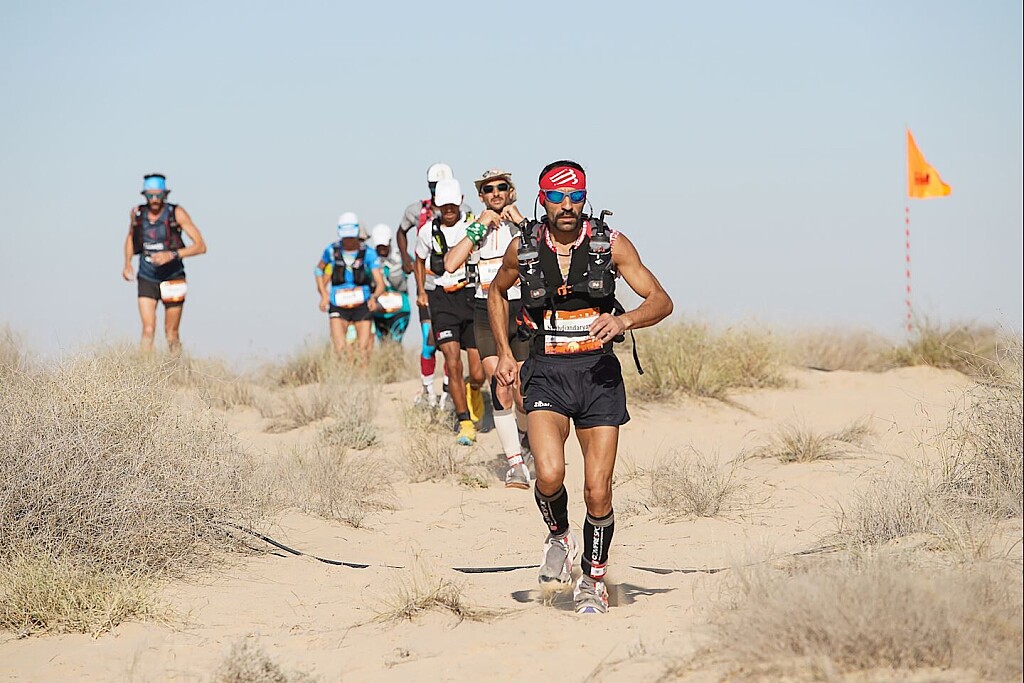
Ultra running is exploding in popularity around the world, but what actually is an ultramarathon?
The term Ultra covers a broad range of races, from mountains to road
Ultra running is fast becoming a mainstream sport. Once, it was the realm of a few crazy runners, and not the pastime of everyone from your boss to your neighbour. But what actually is an ultramarathon?
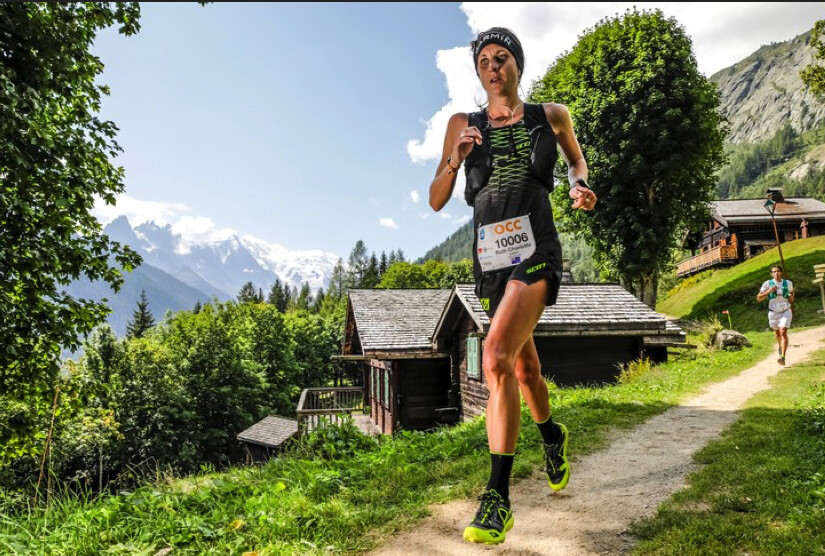
How long is an ultramarathon?
An ultramarathon is anything longer than a marathon, which is 26.2 miles (42.195km). So, you could complete a marathon and run back to your car and you’ve technically run an ultra distance.
Typically, ultramarathons start at 50km and go up from there. Standard distances are 50km, 100km and 161km (100 miles), the latter often being referred to as a “miler”.
While a marathon is never longer than 26.2 miles, ultras tend to vary a bit. For example, the Hong Kong 100 is in fact 103km. And the Ultra Marathon du Mont Blanc, a miler, is in fact 171km. Others are a bit shorter than advertised, too.
Aside from the above three types, there are ultra races of all sorts of distances and formats. As long as it’s more than a marathon, the distances and formats can be limitless.
An increasingly popular format is 250km split over stages, such as the Marathon Des Sables. Runners complete different distances each day, some less than an ultra, and sleep at night.
As the sport continues to grow, others try to push the boundaries – such as the 298km Hong Kong Four Trails Ultra Challenge, which is non-stop and has no support on the trails. Runners finish the distance in between around 48 and 70 hours.
The formats are becoming increasingly imaginative. A backyard ultra, for example, is around a 6.7km loop. The runners start on the hour every hour until there is just one runner left, so the distance is not set. It keeps going and going. Runners have gone on for more than 80 hours.
Outside organised events, runners often complete ultramarathons just for fun, to set a personal best or a Fastest Known Time (FKT), which is ultra terminology for a specific course record. This can be anything from the 44km Hong Kong Trail, which takes a few hours, to the 4,172km Pacific Crest Trail, which has an FKT of almost two months.
What terrain is an ultramarathon on?
With an infinite range of distances come infinite terrains. An ultramarathon can be road, flat, track, pavement, mountain, trail, snow and more. As long as you can run on it, you can run an ultramarathon on it.
A famous road ultramarathon is the 246km Spartathlon. It follows the legendary route run by Pheidippides, who ran from Athens to Sparta before the Battle of Marathon in Ancient Greece, thus inventing the marathon.
The most high-profile mountain ultra is the Ultra Marathon du Mont Blanc, which has a total of 10,040 metres accumulative elevation gain in the Alps.
Track ultras often take the format of a set time rather than distance. For example, how far you can travel in 24 hours, round and round the same athletics track.
When Zach Bitter set the 100-mile world record, which has since been broken again, he ran it around a 443m track by doing 363 laps.
The distances and terrains are so varied race to race they are essentially different sports. Kilian Jornet is considered one of the best ultra-mountain runners ever, but comparing him with Yiannis Kouros, considered one of the best ultra road runners ever, is like asking who is better at football: Tom Brady or Lionel Messi.
Is an ultra harder than a marathon?
The word ultra refers to the distance, not difficulty. An ultramarathon is inherently hard, but not inherently harder than a marathon or any other distance for that matter.
If you have a specific and demanding finishing time in mind for your marathon, you will have to stick to a specific split, keep your legs spinning and spinning, all the time concentrating on your pace and pushing your body.
Is that easier or harder than a 24-hour 100km over mountains, with variation in terrain and elevation, when you walk some parts and rest at check points?
What about a 5km? If you want to run a fast 5km, you will be at your absolute limit for the entire time and collapse over the finish line.
Non-runners often think an ultramarathon is the “next step” for runners looking for a new challenge. Searching for a faster time is just as challenging as searching for a longer distance.
Either can be harder than the other – it’s down to the runner.
The same is true within ultra running. Ruth Croft, one of the best runners, dominates races around 50km. She was repeatedly asked when she would do a 100 miler once she had “completed” a 50km. Croft resisted the urge to cave to the pressure to run further until she was ready, understanding that fast and far are two often incomparable metrics.
When you consider all of the above, the simple definition of “longer than a marathon” does not quite do justice to the massive range of events encapsulated by the term ultramarathon.
(08/08/2022) ⚡AMP
The Real-Life Diet of Ultramarathoner François D'Haene, Who Makes Dominating 100-Mile Races Sound Low-Key
France’s François D’haene is one of the best ultrarunners in the world. He’s won some of the hardest 100-mile foot races out there like the Ultra Trail du Mont Blanc in Chamonix (3-time winner) and the Hardrock 100 in Silverton, Colorado (he's the 2021 champion and course record holder). But he’s not a one-dimensional athlete, he’s stood atop over 50 podiums in both running and ski mountaineering. And in addition to being a freakishly good athlete, he’s also a wine producer in Beaujolais.
But the father of three children and takes a refreshingly chill approach to his success: there’s no rules, no training plans, no strict diet. We chatted with D’Haene as he was gearing up for the 2022 Hardrock this weekend.
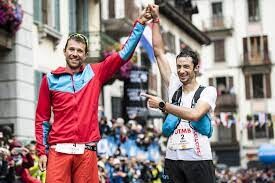
For Real-Life Diet, GQ talks to athletes, celebrities, and other high performers about their diet, exercise routines, and pursuit of wellness. Keep in mind that what works for them might not necessarily be healthy for you.
GQ: When you’re training for a big event, like the Hardrock 100, what time do you usually wake up? What’s the first thing you do?
François D'Haene: When I’m training for a big event, what time I wake up is different every day because I have to adapt every day—I also have a job and a family. I don’t have a regular plan!
Can you walk us through what a typical day looks like?
There is no typical day for me, but I always have something to do. This week I was cycling on Saturday (a casual 230-mile bike ride that took nearly 19 hours), with my children on Sunday, and wasn’t able to train on Monday because I had to deliver some wine to a few huts in the mountains by foot. Each day is totally different.
How do you balance training, raising three kids, and your wine business? Is it difficult to do all those things well?
It’s hard to manage it and get everything done, but I don’t want to make any compromises so I try to do as good as possible. I train when I can. I try to get some long days in the mountains and keep some moments for training, some moments for the business, and some for family. I work on my calendar with my wife. Of course, I don’t have so many moments for rest but I have to make room for the things I love.
What kind of workouts are you doing each week? How much mileage or how many hours do you spend training? How much vert are you getting in? Are you self-coached? Has your training in physiotherapy helped you develop your training plan?
I don’t have any regular training and I don’t want to have any regular training or workouts. I really just try to adapt myself and be happy with that and play in the mountains when I can. Because of my schedule, I don’t have a coach. I discuss my race calendar a lot with my team manager and we try to make it as good as possible. I just have to adapt.
Do you remember when you first fell in love with trail running or racing ultramarathons? Was there a specific moment?
It’s something that built up slowly over many years. I remember when I was a kid I always loved being in the mountains. For me it was a dream to understand what happened between the earth and the top of a mountain. I started to build my relationship with the mountain and adventure and trail running. When I was finally able to go by myself with friends (at around 16 or 17 years old when we had a car) I was so happy. The adventures became longer and longer and I fell in love with trail running. That was in 2002, so 20 years ago, and I’m still passionate about it.
What’s the most fun race or run that you’ve ever done? Why?
There are many many racing projects that are very fun. I like to do official races with bib numbers but I also like to do my own projects. I think that’s really cool and interesting. Doing the 211-mile John Muir Trail with friends was a nice experience and I think it’s one of the best memories I have in my trail running experience.
You say on your website that you are careful about keeping a healthy lifestyle. Can you expand on that? What does that mean for you, and what does it look like in your daily life?
For it’s more about longevity, about practicing activities that I love and being okay socially and with my job. This is my way to stay healthy: I ski a lot during winter, I try to do cycling too and not only running. I try to figure out my body and reset my body. When I have pain, I try not to run. Of course, you have some pain every day and every time, but it’s important to make the good choice sometimes and rest a bit. My way to stay healthy is to try to live a normal and well-balanced life and to think about it in terms of longevity. If it’s too stressful for you you won’t be able to do it for long, but if it’s okay in your life you can do it as long as you want.
Can you walk us through what you typically eat for each meal?
I think I won’t tell you because you will get afraid! No, I just try to eat normal. I mainly just eat by feel. I have some children and try to educate them about eating seasonally and locally. I like food and I like fat and I like to play with my food. I try to eat what I want and just try to think about what’s good for my body and for my children and the planet.
What do you eat and drink while running and what’s your strategy with that? How often do you eat or drink while training and racing?
There’s not one right strategy for this so it’s important that people figure out what works for their body. It is crucial to test everything out before the race. For me, I never drink water. I only drink nutrition drinks and I always drink the same one. For food, every hour I eat some sort of gel.
You’re a wine lover—do you drink wine at night during training periods or no?
During training, no! I try not to drink wine or beer. I’m not just a wine lover, I drink anything. I have a normal social life and I’m so happy to share beer with my friends, or a glass of wine. If you run 10 hours with friends then you are so happy to share beer or coffee or wine with them after. Do what you want—take pleasure in that. I think my best advice is to make sure you have longevity and continue to perform.
Can you talk to us about your work as a wine producer? How did you get started doing that and what kind of wine do you make?
It was a project with my wife so we could be together more and spend more time together. We were interested to spend some time in nature. Wine is something very interesting in France and all over the world because it’s always different from area to area, with the taste, the production, and the history. It’s a very interesting thing and to be a wine producer is a very complex job. You have many things to do. Of course we like the taste of wine and the moment when you drink wine. The kind of wine that we did in Beaujolais is a Gamay wine, 100%. It’s very social and fruity so I'm sure you should enjoy it.
Why do you want to go back to the Hardrock 100? What do you like about that race and what are your goals this year?
Just because I won last year and got the opportunity to come back! No, what I like about the race is it’s an interesting race and an iconic race. It’s 160 people and a very strong and deep community. It’s a very nice place and the mountains are amazing. It’s a mix between the altitude and technical trail and easy trail, and it’s just a perfect mix of everything for me to combine strategic training. I have very nice memories from the race and I hope we can build some new good memories this year.
(08/07/2022) ⚡AMP
The Joys of Small Local Races
But what it lacks in high-falutin' swag, it more than makes up for in community and character. While there are speedsters at the front of the pack, pushing each year to lower the course record (now a mind-boggling 4:07:48), some runners take well over nine to complete the course, marshaled by regional runners and the Ouachita Amateur Radio Association.
The race is capped at around 90 runners and remains small enough to fit all entrants in an annual start line group photo. The race is the destination, not a waypoint en route to some larger, shinier thing.
"I think that ABF has always been special because it is one of those events that feels like a big family reunion," says Stacey Shaver, who's been the race director for ABF for the past five years. "It's also just a cool corner of the state, where you can forget that modern (in)conveniences like smartphones and email exist for a few hours. We have runners come back year after year and from across several states. Even for runners new to our event, it feels like going to grandma's house. Grandma's house means fun, games, laughter, and leaving well fed. That is exactly what our runners get."
In addition to the homey feel of Grandma's house, the past few year's awards for first place finishers have included hand-harvested local honey, hand-soldered fork statuettes, and a charming cross-stitched winner's plaque.
Community Roots
As more races are becoming consolidated under increasingly large banners, company sponsors, and race series, many runners are looking to smaller, home-grown events with a family feel. Few things top the feeling of seeing friends and run family out along the course and feeling supported by your home community.
Runner Justin Grigg recommends Missoula, Montana's Double Dip race for just that reason.
"You'll usually see friends racing, but also working aid stations, spectating along the course or gathered at the start/finish area. With the two out-and-back sections, you more than likely will see friends who are racing ahead of or behind you, and people who aren't racing will run up University and Sentinel to watch," says Grigg.
Many runners appreciate being able to share their race-day experience with the larger community and enjoy being cheered on while they're competing. Live music, food, and adult beverages don't hurt either when it comes to incentivizing community members to come and bask in the finish line stoke. Some events can almost feel at odds with the communities they happen in, and it's a breath of fresh air when everyone feels included in race day festivities.
Close to Home
The International Trail Running Association (ITRA) estimates there are around 3,600 trail races every year, and approximately 1,400 of those are in the U.S. While big events garner the most press and social media attention, there are hundreds, if not thousands of smaller, local races that are providing the bulk of opportunities for runners to lace up their shoes and hit the trails.
Aside from the accessibility, there are economic and environmental reasons that racing closer to home is more appealing.
Sam Robinson, from Oakland, California, loves the local Woodmonster Trail Race because it's practically in his backyard.
"I've run over every trail in the park numerous times. The main climb in the race is a spicy 0.9-mile ascent with a 14% grade-one of my favorite hills to run up in California. I know and love almost every inch of those trails and that makes the race joyous to me."
Traveling is a hassle. Trying to make sad hotel-room oatmeal in a tiny coffee maker from the 1990s at three a.m. before having a blow-out fight with my phone's GPS system to find the start line in the pitch dark of rural Nowhere is never fun. You know what's even better? Sleeping in your own bed, eating your own properly-cooked oatmeal, and navigating your own self to the start line.
Race locally. If not for the community or environmental plusses, then for the extra 20-90 minutes of sleep.
It's Not About Speed
"I love when a race director focuses more attention on the experience than the results of the race itself," says pro athlete Jeff Colt. "it makes the event fulfilling for the entire field instead of just some of the top runners. Jemez Mountain Trail Runs is another good example of this - instead of making grandiose prizes for the top three or some fancy sweatshirt included with registration. It makes the event fulfilling for the entire field instead of just some of the top runners." Colt's favorite small race is the Randolph Ramble, based in Randolph, New Hampshire.
Many RD's are subbing out swaggy grab bags filled with gear and gels no one wants with bespoke items and experiences instead. "The Jemez Mountain Runs offer breakfast before the race, amazing aid stations, a live band at the finish, and a full dinner after the race," says Colt.
Registration for the Ramble? Just $45. Many big ticket races cost hundreds of dollars to enter, before even forking over cash for housing and meals, making smaller, local races an affordable alternative. Washington State's Capitol Peak 50 only costs $50. At a dollar a mile, you'd be breaking even, even if you didn't have a lick of fun. Additionally, many smaller races like ABF invest in their home communities. Every cent raised at ABF goes directly to the Big Fork Community Center.
The community created by the races is important, too. While many larger races inspire buy-in from the community they happen in (I was recently blown away by the volunteers at the Western States Endurance Run, many of whom abandoned their weekend running plans to stand in a river or hand out flat coke), many volunteers at smaller races aren't trying to up their chances in a lottery or waitlist. They're simply there because they want to be. Whether it's operating a HAM radio or flipping pancakes at the finish, a race that's stacked with community-run aid stations feels extra special.
"I want to meet people at races and the ones that foster community are the ones that attract me the most. The Randolph Ramble welcomes runners in and makes them feel like a neighbor. I'd be surprised if you didn't end up with a new running buddy after running the Ramble," says Colt.
The worse the website the better the race.
The worse the website the better the race. For years, the race existed only as a Facebook page, with no website or online registration, a testament to the "if you build it they will come" spirit nascent in the true grassroots of trail running.
"At the Ramble, expect lumberjacks to be out there in their leather hiking boots, elite trail runners who prefer to stay out of the limelight, mountain wanderers who descend from above the clouds only to resupply for food and to run the Ramble, and other local north country neighbors who want a good morning workout," says Colt.
Race Director Doug Mayer (also a columnist for this magazine) says that the community feel is very much by design.
"We turn to our community for everything we need, from food courtesy of the local pub and cafe to handmade finisher awards. There's a strong sense of community and self-reliance in the White Mountains, so we're used to thinking this way. If you just stop and look for a moment, you'll discover all kinds of talents and services practically at your feet. And when the community is powering the event, almost by default it will have a great local vibe," says Mayer.
Are Small Races on the Rise?
"The big races grab the headlines, but under the surface, every day and all around the country, local trail runners are coming together to create authentic, unique, and wonderful events," says Mayer. "Most of us got our start that way. I'm deep in the world of marquee races now, but it's still true that nothing makes me happier than seeing 100 runners head up Mount Crescent at the start of every Ramble."
"Trail running as a whole is growing, and people who can't get into those events but still want the challenge of a mountain race will find that and much more at Athens Big Fork Trail Marathon but without the big race fees," says ABF RD, Stacey Shaver.
"We simply ask people to pay what they can. We don't want money to be the reason someone misses out on experiencing our races or feeling connected to the club and community. I also think it's really special to help people see the fantastic beauty that we have here in our backyard. I always feel such a sense of local pride when I see the beauty here, and I'm so grateful that we get to enjoy it in this special way."
Because local races are often directed by, well, locals, they can be more responsive and receptive to the community's needs, whether that's access or affordability. At ABF, it's not uncommon to see competitors hiking in full hunting get-ups. I've seen makeshift garbage bag ponchos, blue jeans, and an actual, hand-carved wooden hiking staff. And maximizing points of entry to the sport via affordable local events is a great way to grow the sport.
But what happens when races become victims of their own success? As a younger runner, sometimes it's hard not to feel nostalgic for a trail running world I never experienced but hear frequently about - one without waitlists or golden tickets, a utopic vision where you could register for marquee ultras day of, at the start line. The way these stories are passed down from my older trail buds, it seemed as though at every race you might see Scott Jurek flipping finish line pancakes, or that running Western States wasn't a matter of "if" but "when." It's hard not to pine for the trail running days of yore, even if they frequently involved non-technical fabrics and carrying your water in a Gatorade hockey bottle a la Matt Carpenter. It's not "Make Trail Running Great Again" nostalgia, but the ability to connect with the running community stripped of the pretenses of needing something flashier than the simple appeal to come and run.
Even so, I'm glad trail running is growing. And I'm glad it's getting more competitive. I'm especially glad that more folks every day might have the opportunity to race, wherever they are, and fall more in love with this wonderful, heart-breaking, silly sport.
Should I be more worried about people "discovering" my favorite local race? Will gushing about its unique charms be the very thing that causes it to become a big box event?
"I'm not worried about sharing how great this event is with a national publication, because the beauty of this event is that it can be recreated with little effort, and SHOULD BE recreated in your little pocket of the country," says Colt. "It's a local race, but it is a great example of what is needed to replicate this in your own backyard. You need an idea, a desire to gather some runners together, and maybe some local sponsors who dig what you're trying to doHave a fun, local event on the 10K of trails nearby your house and build that community where you are. We all have the tools to make something special."
There's nothing wrong with big races either. Getting to compete with the world's best athletes in amazing locations with well-trained aid station attendees is amazing - but it's no replacement for the local rotary club dishing out Fireball and pie on a 30-degree drizzly morning in the Ozarks.
Meanwhile, Back at Big Fork
I'll keep signing up for big races. I'll keep accepting swag bags full of expired lube samples and discount massage flyers. I'll keep setting alarms for the crack of dawn to register for races and I'll keep refreshing my browser to see if my name is moving up the waitlist.
But, I'll also still keep rolling up to the Big Fork Community Center on the second Saturday in January to subject my ligaments to the indifference of Ozark trails. I'll keep showing up to run a course that's only marked by comically sporadic blazes to get a result that will never show up on UltraSignup, or affect my ITRA score whatsoever.
I'll keep running ABF because I like that you can't upload the race to Strava for hours due to a lack of cell service. By the time you have enough bars to post a recap on Instagram, the urge to seek validation via screen has faded into a warm glow of post-run beer and real-life high fives.
I'll keep doing it because sometimes my legs and my heart need a reminder of why I trail run: not for accolades, recognition, or points, but for community and homemade chili. In lieu of a finishing chute, there's a chalk line etched onto the highway, a lone man clad in his warmest hunting wear with a clipboard marking down finishing times. Finish line IPAs and fresh biscuits are a bigger reward than any kudo, and time spent running in the woods with close friends will always be my favorite way to spend a Saturday.
here's no gun.
No timing mat. No official start line.
The Athens Big Fork Trail Marathon starts at the Big Fork Community Center, the barn-quilted hub of an unincorporated community in southern Arkansas boasting 179 residents, at last count. Nestled in the Polk County region of the Ouachita Mountains, the trail itself was constructed by the U. S. Postal Service 125 years ago along pre-established Choctaw and Caddo trade routes and game trails and was partially restored in 1986. Summits along the course, which boast (according to my GPS, though the thick foliage can fool even the highest of tech) almost 8,000 feet of climbing, are charmingly named Brushy, Big Tom, Brusheap, and Hurricane Knob. The average grade is 12%.
I was drawn to this race after reading about it in this very magazine, a story called The Toughest Trail Marathon You've Never Heard Of. After seeing how close this southern trail test-piece was to the Ozark hills, where I spent my childhood, I was drawn by the allure of something that felt comfortably familiar, and familiarly uncomfortable. There's a warning on the race's website meant to deter beginners. Below that, a secondary deterrent should the original warning have the opposite of its intended effect.
"Please do not be enticed into trying this run because of the difficulty warning-it is merely an honest attempt at preventing the run organizers from having to find and rescue someone ill-equipped for the event."
For the uninitiated, the trails of the southeast are punishingly steep and Dantean in nature - where the trail exists at all. For much of ABF (what locals lovingly call the marathon) the "trail" is in fact, a dried-out ol' crick. Mossy "baby-heads" (aptly named rolly-polly rocks approximately the size of a baby's head) and slick roots cackle at the futility of rubber outsoles and lugs. Forest Service literature euphemistically refers to it as "unsurfaced".
There's no entry fee. No timing chip. No YouTube stream.
(08/07/2022) ⚡AMP
Amputee ultrarunner Jacky Hunt-Broersma is running 50K a day
Bladerunner and Jacky Hunt-Broersma is celebrating being alive with her latest running challenge. Arizona-based athlete and coach Hunt-Broersma will be running 50 km a day until August 14, her birthday, when she will run 47 km to toast her age. Aug. 1 is both the athlete’s amputee anniversary and marks 20 years of being cancer-free, she shared on Instagram.
Hunt-Broersma lost her lower left leg to Ewing sarcoma, a rare form of cancer that affects the tissue around bones, in 2002. While she always lived a healthy lifestyle, she didn’t start running until 2016, when she signed up for a 5K race and rapidly progressed from there.
The athlete quickly progressed to marathons, trail races and ultras and is currently training for her second attempt at the Moab 240 ultratrail race.
Hunt-Broersma has continuously set the bar high in her running career–remarkable not only because of the hurdles she overcomes to compete but also because she used to hate running. She ran 104 marathons in 104 days earlier this year, breaking the record (at that time) for most consecutive marathons.
While her record has also since been beaten, the achievement raised close to $200,000 for other amputee bladerunners, helping them access expensive prosthetics. Hunt-Broersma’s own running prosthetic costs $20,000.
While 104 consecutive marathons, or several weeks of daily 50 km runs, is more than most endurance athletes will ever tackle, for Hunt-Broersma these are perfect training runs for Moab 240 on Oct. 7.
Hunt-Broersma says that her motivation comes from her desire to not be defined by her appearance. “There’s a drive in me, because I’m not disabled, and I don’t want to be labeled as someone with a disability,” she says. “I want to show the world what I can do.”
(08/01/2022) ⚡AMPby Keeley Milne
Why It’s Smart to Run With Your Glasses
Yes, you can look stylish and still be speedy with glasses.
If you wear glasses and you run, then you’ve probably been guilty of chasing miles without your glasses, at least at some point. Maybe you’ve been pinched for time and didn’t want to make the effort to put in your contacts. Or maybe you just don’t think it’s a big deal to ditch your glasses when running. But the truth: You could be putting yourself at risk if you don’t run with clear sight.
“It’s important to wear your glasses not only to see clearer and further, but to also decrease your risk for injury. A runner with a mild prescription may be able to run safely and comfortably without glasses, but the majority of people would benefit from prescription eyewear when running,” says Scott Huggler, O.D., opthamologist of Nazareth Eye Associates in Nazareth, Pennsylvania.
If a runner cannot see clearly, they miss the small rock, curb, or subtle changes in terrain that can cause injuries, from a mild sprain to a torn meniscus, he says. So, is it worth ditching your glasses and risking forced time off?
Gary Martin, 18-year-old recent high school graduate who’s running at the University of Virginia in the fall and a sub-4:00 miler, says he doesn’t notice his glasses when he’s running unless it’s pouring rain. “I train in [glasses] all the time. Cross-country made me want to wear them, because there’s a lot more to worry about, like sticks and rocks. So I had to wear them for that or else I’d probably trip on something.”
Martin, who typically wears Rudy Project Step 1 Ophthalmic frames, says glasses were necessary during his track meets as well, so he could determine who to grab the baton from, considering all the teams were wearing black uniforms.
So how do you find a pair of glasses that work for you and don’t disrupt your miles? We spoke to experts and put eyewear designed for activity to the test to help you find your best match.

What should you look for in running glasses?
While both dress glasses and running glasses will give you clear vision, Huggler says running glasses offer different features. Here’s what he says to look for:
Frames that are ultralight and durable
Aim for a wrapped-frame design to maximize protection and allow for the greatest field of vision
A snug fit, as this will decrease frame movement
Frames with no-slip silicone nose pads and rubber grips (on the temple) to help prevent slippage from sweat
Lenses made from lightweight material (such as Trivex and polycarbonate), because they’re lighter and more impact-resistant than plastic
Lenses with UV protection to decrease effects of UV exposure such as corneal damage, cataracts, and macular degenerations
Should you wear bifocals to run?
The good news is that bifocals are generally not needed for running. “The distortion from the bifocal in downward gaze can be problematic, especially over surfaces not perfectly smooth,” Huggler says.
“The biggest complaint we hear from our runners is not being able to see their watch to check time and pace, but new technology has solved this problem with watches that wirelessly connect to earphones, giving the runner valuable information on pace, splits, distance, and time,” Huggler adds.
If you don’t want to wear earbuds, Huggler recommends a bifocal purposefully set lower than your traditional glasses. This will allow you to take a quick downward glance to read your watch, but not compromise your distant view.
Also, if you just wear reading glasses, consider a large-faced watch with a bold backlit face and large numbers in lieu of glasses, Huggler says. If that doesn’t seem to work you could opt for that earbud bluetooth connection for stat announcements.
The bottom line on running with glasses
You can still look stylish in today’s running glasses, and feel confident knowing that your eyes are protected and your sight is clear. It’s always best to try on several frames and find what’s right for you.
(07/31/2022) ⚡AMP
by Runner’s World

Why Elite Athletes Are Getting Serious About Mental Coaching
When his athletes describe the ways that stress has impacted their performance, clinical psychologist Justin Ross likes to tell them: "Welcome to having a mind." Ross specializes in mental performance coaching, a growing discipline aimed at helping athletes strengthen their competitive minds just like their bodies. "This stuff is pervasive," Ross says, from the amateur level all the way up to the elite echelons of sport. "The majority of things we may be struggling with are deeply human."
Athletes and coaches have long known that a sharp mental game can be the deciding factor in competition, and mental techniques like visualization and self-talk are often part of their preparation. But in recent years, there's been an uptick in awareness of formal mental skills training designed to develop and hone those techniques, as well as in the number of experts entering the field. In 2018, the Association for Applied Sport Psychology (AASP) certified 29 new mental coaches; in 2021, the number was 100. This has also coincided with a growing chorus of high-profile athletes, including Mikaela Shiffrin, Simone Biles, Chloe Kim, Naomi Osaka, and Nathan Chen, starting frank, public conversations about their mental health and the pressure to perform.
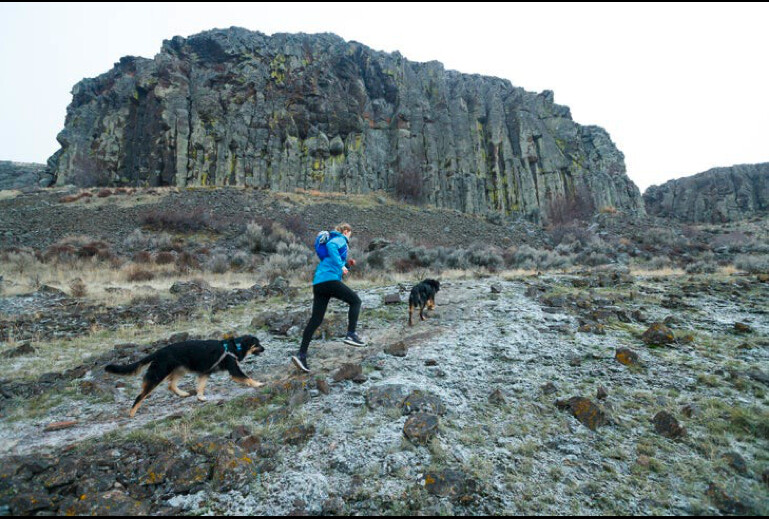
A few decades ago, the discussion around mental health and performance "didn't occupy the same space in sport that it does now," says Ben Rosario, the executive director and former head coach of Hoka Northern Arizona Elite (NAZ Elite), a Flagstaff-based professional running team.
That's beginning to change. In 2017, NAZ Elite began working with a mental performance consultant named Shannon Thompson. These days, most of the team meets weekly with Thompson for 30-minute group "focus sessions," which Rosario compared to short lectures, each with a lesson plan. One week, Thompson might discuss goal-setting; the next, how to handle the crux of a race. Often, the sessions end with a brief guided meditation. "There's a huge push in sports around mindfulness-based strategies," the performance psychologist and researcher Kevin Alschuler told me.
Still, unlike clinical therapeutic practice, which has certain legal restrictions around who can call themselves a psychologist, mental performance consulting is largely unregulated. Anyone can use the term mental coach. "I think the coaching world in general is sort of the Wild, Wild West," says Jon Metzler, who chairs the AASP's Certified Mental Performance Consultant council. The CMPC designation designation is intended as a bulwark against that: it requires applicants to have completed graduate-level coursework in subjects including sport psychology, ethics, and statistics and hours of practical experience under an approved mentor. A version of this certification was first established in 1992, and in 2020 it was accredited by the National Commission for Certifying Agencies, an organization that sets professional standards for certificates in many areas, including sports and healthcare. There are 644 CMPCs practicing today, although the number of mental coaches likely eclipses that. There's no official tally; in some ways, it remains a nebulous discipline.
In the summer of 2018, runner Danielle Shanahan turned pro and joined NAZ Elite. (She has since moved to the Mckirdy Trained High Performance team, with her fiance, Jack Polerecky, as her coach.) But she struggled to adjust to the training load and the altitude, and having come from a small college without the most pedigreed track program, she had a hard time convincing herself she was good enough.
"You can train as hard as you want, but if you get to the line and don't believe you belong there, it makes it really hard to perform," she says. In 2020, she started working one-on-one with Thompson. They developed a plan-including listing words, like "gritty" and "scrappy," that identified the athlete and person Shanahan wanted to be, and coming up with mantras-and it started to work. During one arduous workout that October, which was faster and longer than anything she'd done before, she felt the hurt set in. She began talking directly to her pain in her head: "Hi, pain, I'm acknowledging that you're here, and I'm going to harness this," she remembers telling herself. "I'm the one steering this ship."
That winter, she ran stronger than she ever thought possible. In one 10,000-meter race, she shaved a full minute off her personal best-even though she fell about halfway through. "It was probably the most badass thing that I've ever done in my life," she says. "I went into that race with an odd sense of calm."
The consultants I spoke with emphasize that mental coaching looks different for each person, but they typically start with an assessment of an athlete's goals and what's already working, or not, in their mindset. This allows them to come up with a plan tailored to the individual and their objectives. Mental coach and psychologist Jim Taylor, who works with a number of pro skiers, typically prepares notes and exercises for his clients to practice each week; sometimes, he joins them out in the field or even travels with them as part of their coaching staff.
In addition to visualization and self-talk, mental coaches often help athletes work on activation control, which is the ability to become calm or energized on command. Climber Kyra Condie started working with a mental performance expert in the lead-up to the Olympic qualifying events in late 2019. She found that listening to opera (Mozart's "The Magic Flute"; Prokofiev's "The Love for Three Oranges") could help her relax before bouldering and lead-climbing competitions. Other common mental coaching practices include simulation training, or replicating the mental and physical pressure of a competitive environment in practice, and handling social media. (Taylor advises his athletes to simply turn off their notifications before and during competitions, which may be easier said than done.)
And as with physical training, an athlete's mental training plan requires constant refining. Inevitably, there are setbacks. In early 2021, buoyed by her performance in the fall, Shanahan was still running with attack and determination. But she found there was a catch to her "I am going to crush everything and I am not going to fail at anything" attitude, she says. It didn't leave much room to cope with anything less than narrowly defined success. And it caught up with her when an injury that spring forced her to withdraw from the Olympic Trials. Shanahan didn't race for eight months-she returned in November for the USATF 5K championship in New York. The night before, she wrote in a journal entry: "I know in my gut that I can make the right decisions and put myself in the right positions to succeed to the best of my ability. After I can do that, the result will be what it will be."
The boundary between the therapeutic and performance applications of sport psychology is a blurry one; mental health and mental performance are often conflated, says veteran mental skills coach Colleen Hacker, who has served as a consultant to athletes at six Olympics. "Mental coaching is really about helping athletes perform better. Sport psychology is much more wide-ranging-in terms of personal development, mental health, and mental illness," Taylor says. "It's really one part of a bigger picture of the role that the mind plays in sport."
And for some, that boundary can feel especially porous. The mental performance consultant and ultrarunner Addie Bracy says that outdoor and endurance athletes often have a hard time separating their sense of self-worth from their performance in competition, in part because sports like skiing, climbing, or running have a strong lifestyle component.
At the Tokyo Olympics last summer, the United States delegation included four separate mental health experts for the first time-a psychologist, two psychiatrists, and a licensed counselor-which Bracy says reflects a new commitment to both mental health and mental performance. Some coaches, like the one Kyra Condie worked with, have a clinical background, but often they simply have enough education in psychology to know when they're out of their depth. That way, they can refer their athletes to the right kind of expert. (Peak mental performance and mental illness occupy different points on the same spectrum of mental health. Welcome to having a mind.)
In 2018, the downhill skier Breezy Johnson suffered a knee injury that ended her season. As she worked towards recovering physically, she started experiencing anxiety and depression, occasionally lashing out at her trainer and physical therapist. They recommended she start working with a sport psychologist-one with a background in mental performance coaching.
She approached her first appointment with skepticism. "I literally walked in and said, 'I don't need someone to mansplain to me how to visualize,'" she says. But as she returned to racing, she continued working with him as a mental coach. She found that her thoughts occasionally became preoccupied by the thought of crashing. "When you're doing a dangerous sport it's like, 'But also what if we die?'" she says.
She focused on acknowledging and setting aside that fear-a technique drawn from mindfulness. "When you fight those thoughts, you spend a lot of time doing this tug of war," Johnson says. "Instead, you can be like, 'OK, yes, you're not wrong, we all might die, we might crash, but the best way to move on is to return to the task at hand.'"
In December 2020, she raced to her first podium finish, placing third at Val d'Isere. She began the 2021/2022 season in Lake Louise with her first second-place finish. During that season, "I had several moments where I was like, this is it," she says. Mentally, she was in a good place, and she was skiing really, really fast. (Shortly before the Winter Olympics in Beijing, Johnson injured her knee during a training run and pulled out of the competition. She's planning to return to the snow in September and hopes to race this season. "It's been a long road," she wrote in an email in July. "I can't say that work with a sports psychologist or anything I have tried ever fixes that pain entirely," she continued, "but I know how to keep going to reach my end goal, both mentally and physically.")
Taylor says that athletes often seek mental coaching because of some specific performance block, but he wants to see more athletes proactively add it to their training routines. He compared mental skills training to physical preparation: "You wouldn't wait to get injured before you start getting conditioning," he says. "You wouldn't wait to have a technical flaw before you get a coach."
Several mental coaches cite the whiff of stigma that's still attached to discussions of mental health and, by association, mental skills training in sports. But the window of acceptable discourse is widening, in part because teens and twenty-somethings, including more athletes, are talking more plainly about mental health. "A few years ago, it almost felt shameful in certain respects for people to reach out," Ross says. "I think the conversation is really shifting-that mind and body need to be in alignment in order to perform well."
(07/30/2022) ⚡AMPby Trail Runner Magazine
TCS London Marathon extends pregnancy deferral for up to 3 years
The 2022 TCS London Marathon has announced that they will now allow pregnant and postpartum women to defer their racing spot for up to three years. Along with the updated pregnancy deferral terms, the marathon has made several other substantial policy changes to enhance the inclusivity of their race.
Pregnancy deferrals were previously allowed at London Marathon, but only for one year, and participants weren’t able to retain the category they had qualified for the race in. If a runner qualified into a Championship or Good For Age category, they had to defer to a general entry or re-qualify.
Last year, ultrarunner Sophie Power campaigned for this policy. After a photo of the athlete breastfeeding during Ultra-Trail du Mont-Blanc (UTMB) went viral, the runner was inspired to advocate for more fair race policies for pregnant and postpartum women through her initiative SheRACES.
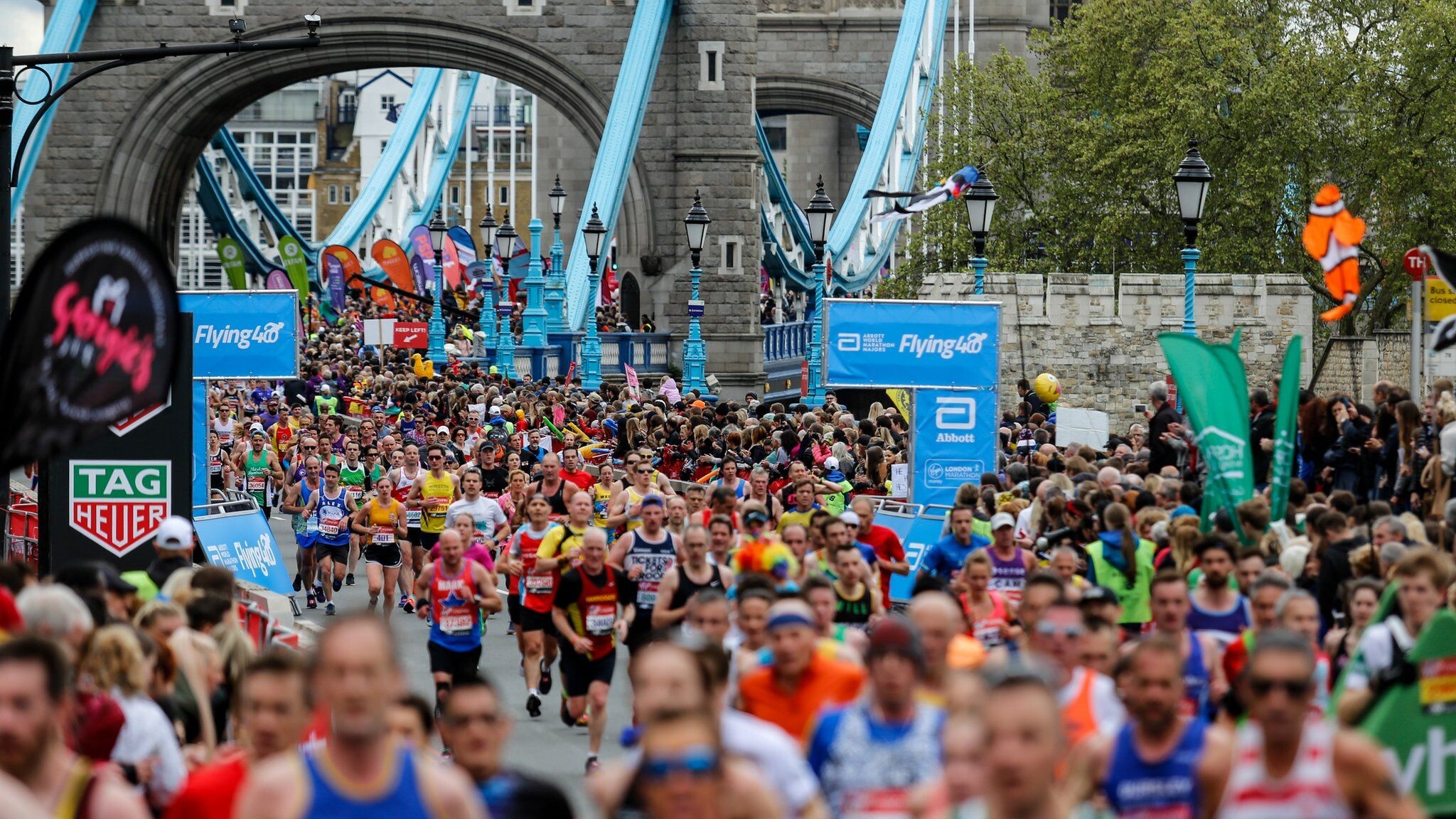
Powers explains on the SheRACES website: “I was famously photographed racing the UTMB, a 106-mile mountain race whilst breastfeeding my 3-month-old baby. I wanted to defer my place until I was fully fit but whilst the organization will defer places for injury, for them pregnancy is seen as a choice. Completing the UTMB was a dream for me, and having already lost a hard-won place whilst pregnant with my first son I chose to race. Many women lose out on that opportunity.”
Entries for assisted participants
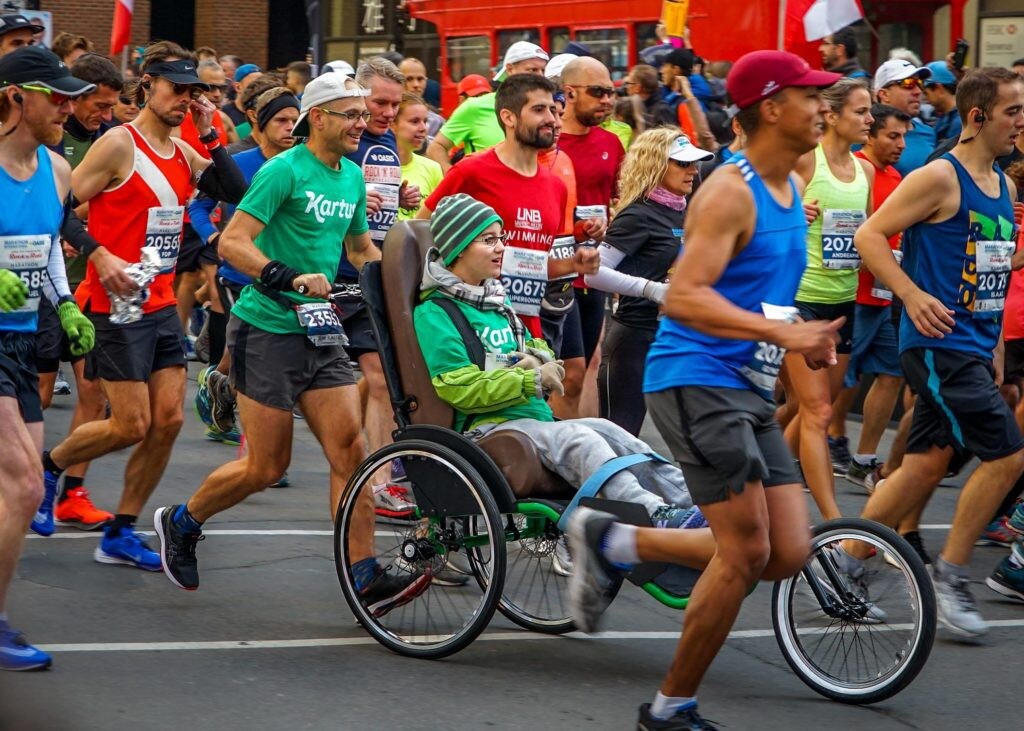
Until 2022, wheelchair participants had to be complete the marathon by themselves: no assistance was allowed. Wheelchair racers who need to be assisted or pushed by others will be allowed to enter the London Marathon.
Virtual London Marathon special considerations
Runners who opt for the virtual London Marathon are currently required to run the 42.2 kilometres on race day (within 24 hours). As of 2022, those who cannot run on marathon day for religious reasons can run their race on the next appropriate day. Participants with a disability that prevents them from completing the virtual race within the time limit have now been given special dispensation to finish their run taking any time that they need.
These changes follow in the footsteps of other races: Western States Endurance Run, a 100-mile ultra, changed its race policies to include a three-year deferral for pregnant runners last year.
London Marathon event director Hugh Drasher says the new policies are part of a series that will be expanded in the future, with the objective of making the race: “the most diverse, equitable and inclusive marathon in the world.”
(07/28/2022) ⚡AMPby Keeley Milne

TCS London Marathon
The London Marathon was first run on March 29, 1981 and has been held in the spring of every year since 2010. It is sponsored by Virgin Money and was founded by the former Olympic champion and journalist Chris Brasher and Welsh athlete John Disley. It is organized by Hugh Brasher (son of Chris) as Race Director and Nick Bitel...
more...
Will racing flats help you crush that PB?
Do you want the minimal, feather-light shoes, the carbon-plated ones, or the shoes with a little extra cushioning on race day? With the seemingly endless array of styles and recommendations out there, it can be hard to know what choice will bring you the best results, and experts say it hinges on a few factors.
If you were a young person in the 1970s, you may have worn racing flats as a casual shoe: the running boom during that decade made racing flats everyday wear. When Canadian legend Terry Fox attempted to run across Canada, he wore a very minimal Adidas Orien flat; the shoe subsequently became incredibly popular, and a re-release was rapidly sold out.
We spoke to Lethbridge-based coach, ultrarunner and race director Dean Johnson to gain some insight into your race-day choice of shoe.
“‘It depends’ is always a good start,” he says. The question simply doesn’t have a one-size-fits-all answer. “Before ‘super shoes’ (like the Nike Vaporfly), my opinion based on biomechanical researchers’ opinions was to wear the least amount of shoe possible. That refers to stack height (the amount of material between your foot and the ground) and weight,” Johnson adds.
“Up to 10K, most everyone can/should have some ‘fast’ shoes that they use for a serious tempo workout and races. They will have just enough padding to get you through the race. After the race, your feet will be a bit sore,” says Johnson. Racing flats are credited with encouraging less ground-contact time, creating a more economical, efficient stride. However, the elites who wear them are used to them; their foot muscles will have gained strength through practice.
Johnson also suggests taking your running habits into consideration for longer races. “For the half and full marathon, it really depends on your pace, feet and gait. A person with a quick cadence who is likely a mid-foot striker can use a thinner shoe. If you are a hard heel-striker, you are going to need some cushioning,” he says. “If your feet are strong (you walk barefoot a lot or have minimally structured shoes), you can get away with very little padding and support in a racing shoe.”
Johnson recommends wearing your race-day shoes during practice sessions to see what feels best, and adjusting as needed. “All this should be tested out in your training, especially those tune-up races and race-pace long runs. If your feet get too sore during the run, you will compensate, slow down, and suffer more than you need,” he says.
There may be no perfect shoe for everyone, but there will be a shoe that you’ll feel and run your fastest in. Keep in mind that racing flats will wear out sooner than your other, more firmly constructed shoes: they have less support and less cushioning so they break down faster. Make sure you visit a store that specializes in running, try on a wide variety of shoes, and have some awareness of your own running style.
(07/25/2022) ⚡AMPby Running Magazine
Meet the Deaf Ultra Racer Fueled By Music
Runner Tim Stones can't hear a starting gun, but absolutely loves the Chariots of Fire theme.
South African runner Tim Stones has been deaf since birth, and yet Stones learned to play the piano and sing in choir when he was a child. Today, with the help of hearing aids and a cochlear implant, he composes music and can play by ear. He has also completed 25 marathons and 25 ultras, all without being able to hear the starting gun, the crowds, or the runners around him.
That might seem to make for a bleak race, but Stones insists that it gives him room to hear his own thoughts, and that he runs to a never-ending stream of internal tunes. Here, Stones, 42, discusses how music became one of the greatest forces for good in his running life.
Why did you start running?
TS: I went for my first proper run at the age of 11 or 12, on the spur of the moment, initially to stamp the anger I felt through my feet. I was on my high school cross-country team. In 1999, when I was 20, I ran my first marathon, quickly followed by my first 100-kilometer race. Recently, I completed my 50th marathon or ultra race. Running has become my primary form of emotional release. It is how I process life, and make peace with it.
How do you experience your runs?
TS: I run without my hearing devices on, as I find the cacophony of sounds overwhelming when I am feeling the rhythm of my feet. Silence helps me keep my rhythm and find my pace. As my vision is also compromised [Stones’s vision deteriorated in recent years to the point that he can’t drive], I have to focus intensely on the actual act of running, to avoid obstructions and potential mishaps the best I can.
Are there differences in the way you compete?
TS: I cannot hear the gun, so usually the starter holds a flag or drops an arm, and off I go. It’s not ideal, and in shorter distances it is a definite disadvantage. But in longer races my deafness can be an advantage in a way, as I am not distracted by noise. Deafness forces me into myself. I am especially fond of multiday circuit racing: I have competed in events ranging from 24 hours through to 10 days. A highlight was breaking the South African age-group record for the latter, with 886 kilometers in 2017.
What can you hear with and without your hearing aids?
TS: When I was 5 years old, I received my first pair of hearing aids and learned to read and to speak clearly with my voice. Over the years my hearing has further deteriorated. I received a cochlear implant for my left ear and wear a super-power hearing aid in my other ear. Without them, I hear nothing in my left ear, and in my right ear I can pick up some sound, but rely on lip-reading to communicate. With my devices on, I can pick up a wide range of sounds, but still need to see someone’s face for speech.
How does that impact your musical experience?
TS: I cannot grasp music without my devices on. But it may surprise readers to know that there are many deaf and deaf-blind musicians who have found ways to feel the music and understand rhythm despite having no hearing at all. Some, like Beethoven, even composed songs. With the cochlear implant, music sounds a bit different, clearer, to me. The best part has been being able to hear the actual lyrics to songs for the first time. I was shocked to discover I had been singing completely alternative lyrics to my favorite songs since childhood!
When did you develop your passion for music?
TS: I was introduced to music at the age of 6, starting piano lessons soon after acquiring my first pair of hearing aids. My mom hoped that by learning to understand the rhythm of music I would be able to grasp the nuances of speech more quickly. Now I play piano and sing. Being able to enjoy music with my sons is food for the soul.
How has your musical life impacted your running?
TS: Music plays a crucial part in my running journey. Even though I can’t hear or listen to music when I run, I hear music within. When I find myself getting tired, especially in the longer ultras, I find I can push through by thinking of a song that speaks to me in that moment, and I sing it, sometimes silently, sometimes out loud. It gets me back into a rhythm, and my feet respond to the sustained beat. More broadly, music helps me navigate the myriad experiences of a complex life. Running does exactly the same.
Are there certain songs you come back to again and again?
TS: My heart goes into overdrive whenever I hear “Chariots of Fire.” Sometimes I ask my sons to play it just before I go out for a longer training run. It gets me into the groove like nothing else can. I am also a huge fan of ’60s music. Mostly, though, I opt for songs of faith that uplift and inspire me to keep on keeping on.
(07/24/2022) ⚡AMPby Runner’s World
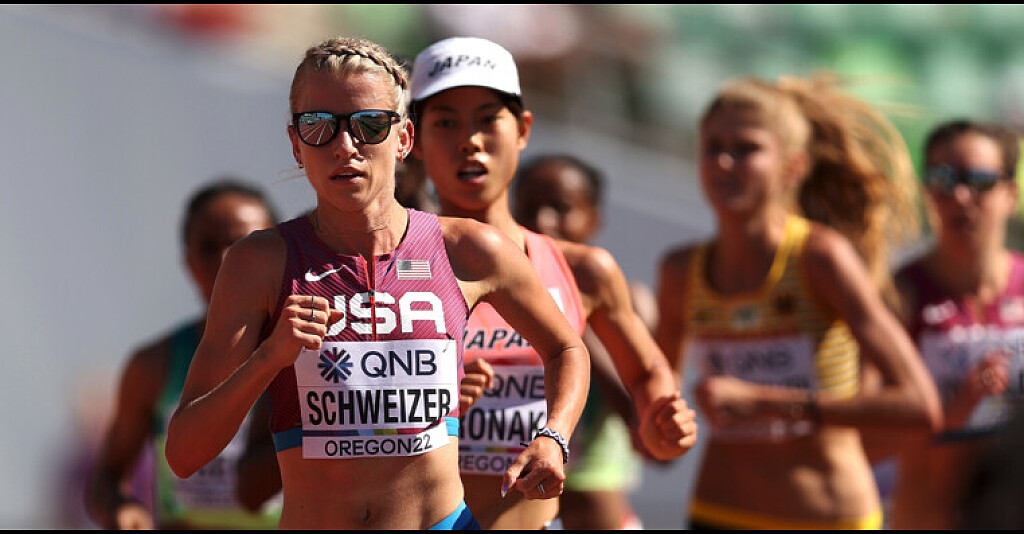
Here’s How the U.S.’s 5,000-Meter World Finalists Handle Excessive Heat on Race Day
Racing in hot weather can be daunting. Utilize these pro tips from Elise Cranny, Karissa Schweizer, and Emily Infeld to better prepare yourself for the next scorcher.
If you’ve ever raced in the summer, then you know how difficult it is to be underneath the beating sun for too long. Heat stroke, sunburn, and dehydration are legitimate dangers from overexposure. But maybe you signed up for a race that starts in the middle of a summer day. Maybe you’re running a destination marathon in a hotter climate. Perhaps you’re even attempting an ultramarathon, like Badwater 135, which takes place in Death Valley. You want to race, but you also want to be safe.
Professional runners sympathize. On July 20 at the World Athletics Championships in Eugene, Oregon, the women’s 5,000 meters took to the track for their preliminary races in searing 90-degree heat.
Yet despite the scalding temperatures, Elise Cranny, Karissa Schweizer, and Emily Infeld of the U.S. all qualified for the 5,000-meter final without any problems from the temperature. Schweizer and Infeld even ran season bests. Here are their tips for handling the heat so next time you’re faced with a race on hot day, you can be prepared.
Gradually adapt to hotter temperatures
Before the prelim, Infeld hadn’t run much in hot weather. She trains part-time in Flagstaff, Arizona, whose average summer high hover around 80 degrees, and has spent the last few months in Eugene, which hadn’t experienced 90-degree days yet.
“We were trying as best we could to go at the hottest part of the day, which is around 4 to 6, to do workouts,” said Infeld. “Some days that was 80 degrees, some days that was 60. So, I was trying to do sauna, and do things that I could to prepare in case it was hot.”
Infeld owns a portable sauna tent that goes up to 140 degrees. She would go for a run, and if it wasn’t hot enough for her body to learn to adapt, she’d hydrate well and sit in the sauna for 20 minutes to simulate heat training. A review published in Frontiers looked at numerous studies that confirmed that passive heat acclimation strategies, such as sauna, have a measurable effect on athletic performance and heat tolerance. If you don’t have access to a sauna, a study from Temperature recommends overdressing to simulate hotter temperatures, though admits this method isn’t as effective.
Infeld’s preparations paid off with a season best time of 15:00.98 and a time qualifier for the 5,000-meter final.
Stay as cool as possible before racing
Schweizer already had one race under her belt before the 5,000-meter prelims —the championship 10,000 when she placed ninth in a personal best of 30:18.05. Because the weather was temperate for the 10,000, Schweizer found the heat during the 5,000 jarring.
Not only does Schweizer train to adapt to the heat—such as working out in the Salt Lake City, Utah sun during altitude camp with the Bowerman Track Club or using a sauna like Infeld—but she also takes precautions before race to stay cool.
She spends much of her pre-race time in the shade, wears an ice vest to warm up, and even stuffs ice in her uniform on the starting line: “It was to the point where I had chills, so I was pretty cold going into the race.”
While utilizing shade and ice may sound like too simple of a solution, it’s actually very effective. The same Temperature study previously mentioned reveals that pre-cooling your body optimizes endurance performance and mitigates the effects of heat strain during extreme temperatures. Some techniques mentioned include ice baths, ice vests, cold towels, and drinking very cold drinks or frozen beverages (called “ice-slurries” in the text) before the race. The study recommends trying out a few techniques to see what works best for you on race day.
Wear sunglasses to prevent extra strain
Cranny credits her races last year at the Olympic Trials and Olympics as practice for racing in the heat, and also has similar pre-race cooling procedures as her teammate, Schweizer. But Cranny also found that wearing sunglasses during races makes a huge difference.
According to Cranny, many of the Bowerman Track Club athletes wear sunglasses in practice. But until the USATF Championships in June, she had never worn them in a race before. Shalane Flanagan, who coaches the club alongside Jerry Schumacher, highly recommended it, telling Cranny that it prevents squinting in direct sunlight, which relaxes the face. By relaxing her face, Cranny felt she prevented other parts of her body from tensing up, such as her shoulders.
Expect to see Cranny, Schweizer, and Infeld all wear sunglasses for Friday’s final like they did in the prelims, in addition to using pre-cooling techniques. They’ll fight for medals against key competitors like double Olympic champion Sifan Hassan, world 10,000-meter champions Letesenbet Gidey, and world 1500-meter silver medalist Gudaf Tsegay on Saturday, July 23.
Schweizer is ready to put herself in the race, no matter the conditions or pace: “I feel like at a U.S. level, I’m pretty good at running with that confidence. But going into a world level, there’s a lot of really big names and a lot of them have run some pretty crazy times. So I think it’s hard sometimes to really trust yourself and trust your fitness but I know I can hang with the best of them.”
Cranny will focus on staying mentally tough, as Schumacher advised her and Schweizer that a 15-minute 5,000 might feel like a 14:30 effort in the heat. “You kind of just have to prepare yourself… If you panic 6 laps in cause it feels horrible, even if you’re not running a PR pace… being prepared for that and talking yourself through it is a big part.”
Infeld caught COVID-19 at the USATF Championships but isn’t letting that or the temperatures hold her back: “I always want to compete against the best and see where that lands me,” she said immediately post-race, before knowing she qualified on time. “Today it was sixth in that heat, but I hope that’s enough to get in the final and mix it up with the women out there.”
(07/24/2022) ⚡AMPby Runner’s World
Yoshihiko Ishikawa wins Badwater 135 for the 2nd time
The male course record holder celebrated his second victory, while American Ashley Paulson's new female course record raised a few eyebrows
The 45th anniversary of the Badwater 135 race wrapped up Wednesday, with no shortage of both heat and excitement. Yoshihiko Ishikawa of Japan took his second victory at the race, running negative splits to finish in 23:08:20. Ishikawa previously set the course record at Badwater 135 in 2019, in 21:33:01. He famously followed his win by proposing to his then-girlfriend, and the couple has since married.
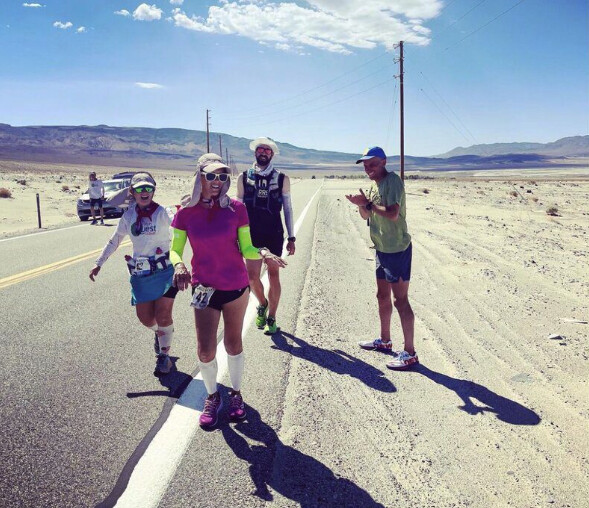
The famously gruelling Badwater 135 starts at Badwater in California’s Death Valley at 85 metres below sea level (the lowest elevation in North America), taking runners 135 miles (216 km) through Death Valley and up Mount Whitney, reaching 2,548m of altitude at its highest point. Temperatures have been known to soar well above 100 F (37 C). The cutoff time is 48 hours, and the average finishing time is 40 hours. As at the Western States Endurance Run, finishers receive a much-coveted belt buckle. There is no prize money for winners. The race is invitational, and 94 athletes started the event this year, with 77 finishing.
Fan favourite and last year’s winner Harvey Lewis, of Cincinnati, finished his 11th Badwater in fourth place with 27:16:05, while his partner, Kelly O’Dell, completed her first Badwater with just over an hour to spare, in 46:57:33.Ultrarunner and race director Bob Becker, 77, of Fort Lauderdale, attempted to become the race’s oldest finisher. In a heroic effort, Becker made it across the line just over the 48-hour cutoff. The athlete made an attempt at the same title last year, but had to drop at mile 50. His dedication won the hearts of fellow athletes and supporters as he struggled to complete the last few steps of the race.
Two Canadians competed in Badwater 135 this year. Norma Roberts, 63, of Calgary, finished in 37:00:13 and was the 11th female, while Rich Peers, 51, of Kitchener, Ont. finished in 44:13:01.
(07/23/2022) ⚡AMP

Badwater 135
Recognized globally as "the world’s toughest foot race," this legendary event pits up to 90 of the world’s toughest athletes runners, triathletes, adventure racers, and mountaineers against one another and the elements. Badwater 135 is the most demanding and extreme running race offered anywhere on the planet. Covering 135 miles (217km) non-stop from Death Valley to Mt. Whitney, CA, the...
more...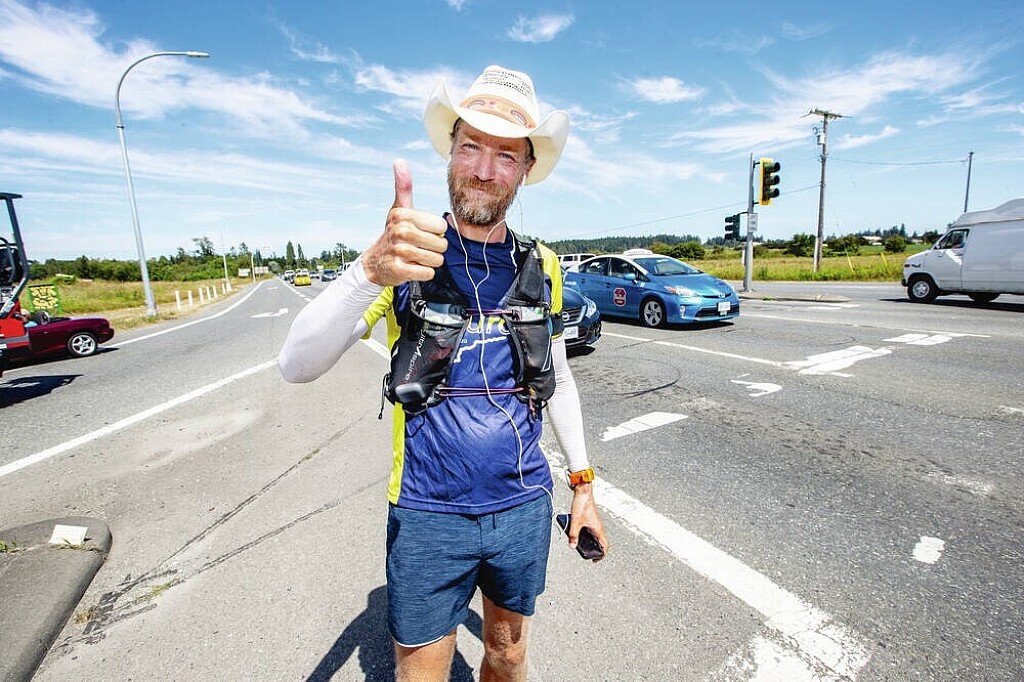
Dave Proctor ends his cross-Canada run in Victoria after 67 days
Right on schedule, Dave Proctor of Okotoks, Alta. wrapped up his cross-Canada record quest in Victoria late Thursday afternoon. Proctor completed his 7,159km run after 67 straight days of running, and (pending verification) will have topped Al Howie’s cross-Canada speed record of 72 days, 10 hours, set in 1991. Proctor began this record attempt with a hat dip in St. John’s, and has been steadily running around 105 kilometers a day across the country, bumping that distance up to 107 km over the last few days to be certain of hitting the target.
This was not Proctor’s first attempt at the record; in 2018, running in the other direction, he was beset by a back injury and forced to quit in Manitoba after 32 days on the road. He then had to put off making his record attempt due to COVID. He shared gratitude for the journey in a social media post Thursday evening, calling the experience “priceless.”
Proctor is one of Canada’s most accomplished and best known ultrarunners. He holds course records at races including Lethbridge, Alta.’s Lost Soul Ultra (where he ran the 100-miler in 2021 in 19:05:00, beating his own previous course record of 19:27:00); he set the 48-hour Canadian record at 6 Days in the Dome in 2018 (358.163 km); in addition, he holds Canadian records over 24 hours (257.093 km) and 72 hours (500.077 km).
Proctor shared daily posts on Instagram that included his mileage, a ‘ditch find’ of the day, and his daily progress. In a recent post thanking the watch brand Coros for their sponsorship, he mentioned that he would be making his COROS data available post-run, but warned, “they’ll be big files.”
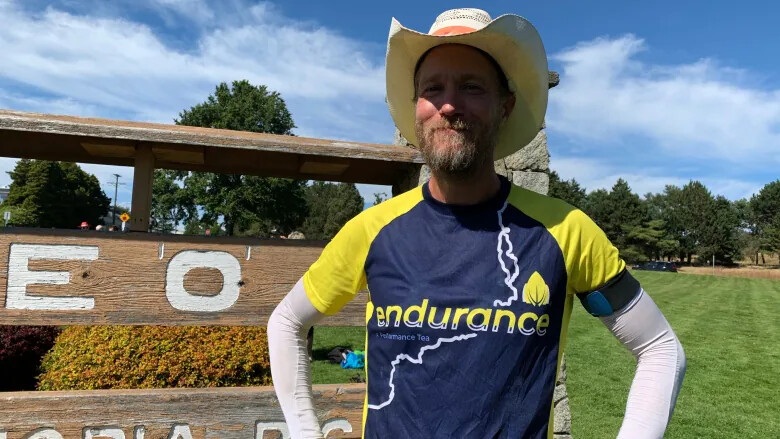
American ultrarunner Pete Kostelnick is familiar with a journey like Proctor’s: he holds the trans-American speed record of 42 days, 6 hours, 30 minutes. Kostelnick spoke to Proctor on Thursday during the final leg of his run, and shared some insight into how he is probably feeling right now.
“It’s bittersweet, but mostly sweet. After over two months, Dave’s new normal is very simple–eat, run, rest, repeat. Soon he’ll be back to ‘normal’ life, which, quite honestly, is a shock to the body and mind. In something like this, I think also a lot of the reward comes while you’re doing it,” Kostelnick said. “It’s a powerful feeling to know you just ran another 105 km yesterday, today and will keep doing it day after day. Once you’ve done it, you have so much to celebrate and be thankful for, but part of you is also thinking “well, what now?” My best advice to him today was to spend some time running alone and reflecting on the whole experience as he nears the finish line.”
Proctor was joined across the country by various friends, family members and fellow ultrarunners, who crewed and logged kilometres with him for anywhere from six days to over two weeks. Calgary-based ultrarunner Joel Campbell spent nine days with him, and has also paced him at local races. He feels Proctor’s strongest ability is his mental stamina.
“[It] is what puts him on the shortlist of elite multi-day runners out there,” Campbell says. “A lot of it has to do with his courage and the willingness to put himself on the line for failure, and high-profile public failure at that. Scrolling through the comments on his social media posts, I’m struck by how many people mention their own running triumphs, but more often, their missed attempts. Most of us have bonked in a race at some point, and to see him be willing to try again and now achieve his goal, seems to inspire others in whatever pursuits they’re facing.”
Kostelnick agrees: “He’s stubborn! This accomplishment for him has been in the making for years, and there were so many times when almost anyone but Dave would have said ‘well, maybe it’s not for me. Time to move on.'” Proctor faced both mental and physical challenges on the road and shared some of them with his fans on social media, including his struggle with not seeing his kids for so long and the physically painful start to each day.
Proctor touted both Howie and Terry Fox as inspiration on the road, sharing his thoughts on day 39 as he ran on the stretch of highway where Fox was forced to end his own trans-Canada run: “On this road, on this day I was schooled in the lessons of courage, determination, and belief that I thought I understood prior to this run but now know that I knew nothing.”
Proctor’s partner, Lana Ledene, shared her perspective on social media Wednesday evening. She wrote about watching Proctor log miles seemingly without effort, and the immense suffering and exhaustion she witnessed at the end of each day. Ledene asked Proctor how he managed to keep going: “He said he doesn’t think about the pain, he blocks it out and does not allow it to occupy any space in his thoughts.” She adds: “Without a doubt, Dave’s superpower is not his legs, it’s his mind.”
Post-run Thursday, Proctor shared that he was looking forward to coffee in bed, and added: “I’ll be taking tomorrow off running.”
(07/22/2022) ⚡AMPby Keeley Milne
100-Year-Old Marathon Runner Shares His Secret To Longevity
100-year-old marathon runner, Mike Fremont, set the fastest time for a marathon ever finished by a 91-year-old. He recently shared what he believes to be his secret to longevity in a podcast with Rich Roll.
“These, believe it or not, are the best years of my life.” You might not expect to hear that phrase out of the mouth of a centenarian, but that’s exactly what marathon runner Mike Fremont recently told author and podcaster Rich Roll.
Fremont, who was diagnosed with colorectal cancer at the age of 69, and reportedly given three months to live, turned to a plant-based diet in an attempt to help shrink the cancer. According to Runner’s World, Fremont reckons he shrunk the tumour with his new diet, before having surgery in 1994 to remove what was left of it.
“The tumor shrank over the next two years and finally I killed it by diet alone,” Fremont said, according to Runner’s World.
Speaking to Rich Roll in a video recently posted to Instagram, Fremont says: “No question in my mind – it is diet that has determined my existence, my continual existence and my beautiful health.”
He added: “I don’t think I ever became competitive until I was 88. For my age, I’m practically number 1.”
Fremont’s elite ultramarathoner buddy Harvey Lewis has also posted about the amazing 100-year-old recently, sharing some interesting insights. He posted a photo of Fremont doing pull ups with the caption: “5 miles with my 100 year young friend Mike Fremont. Mike also did 10 pull-ups at one go!”
“Mike’s mindset is strong. He fell this past spring in Florida and hurt his hip. He was reduced to a wheel chair for a month. That was really tough especially for Mike whose always on the go. When he restarted he could only do 1 pull up. Mike credited his Plant Based nutrition with his speedy recovery even as a centenarian in getting back his distance and reps of pull-ups.”
What does Fremont’s diet look like? As he once claimed, according to Runner’s World in 2013: “No meat, no dairy products, no toxins.” Fremont’s diet mainly comprises veggies, fruit, whole grains, nuts and soups, plus a bit of vitamin D in winter. In that same 2013 article, Fremont said since he started eating this way he hasn’t had a cold and maintains the same weight as his university wrestling years.
(07/21/2022) ⚡AMPby James Booth
These back-to-back sessions (a.k.a. doubles) will make you powerful, take your running to the next level with this training technique
Back-to-back sessions (also known as doubling) can be the tool that elevates your running from good to great, increasing endurance and overall fitness; but they have an appropriate time and place for every runner. Most athletes follow the general rule of completing easy runs most days in order to develop a strong aerobic base and to avoid injury.
A couple of runs per week are fast or long, to improve speed and endurance, with hard days followed by rest or easy runs. The double is the exception: two stacked workouts, either on subsequent days or spaced out on the same day.
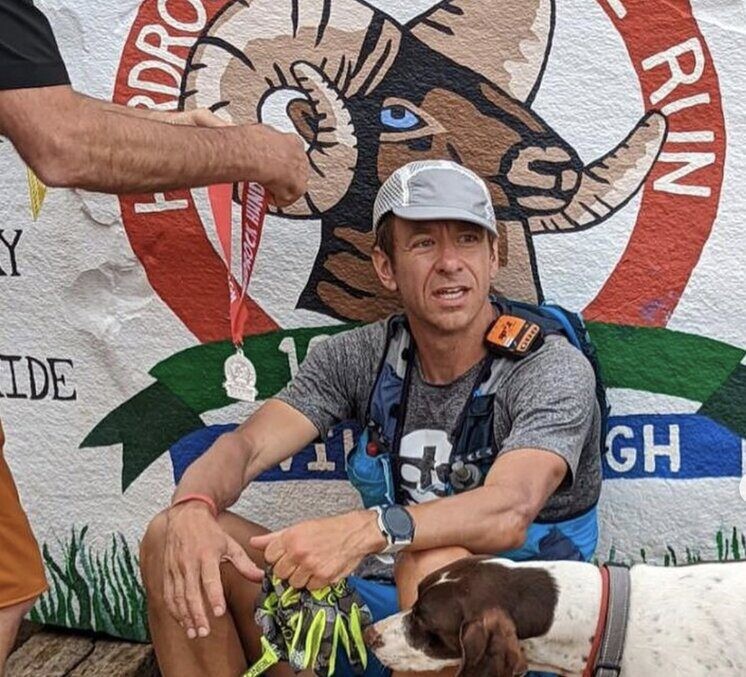
This training method has made headlines recently due to its popularity among Norwegian pros like Jakob Ingebrigtsen, but has been used by athletes and coaches, like the well known Jason Koop, for years. Back-to-back sessions add extra stress, causing your body to respond to new stimuli, rebound and become stronger. If you’ve been running consistently for at least a year and you’re struggling to improve, back-to-back sessions may be just the thing your body needs.
Here are a couple of back-to-back sessions to try. If you’re not under the supervision of a coach, stick to running your double workouts on subsequent days: the stress load of two challenging workouts in a single day carries too much injury risk for most recreational runners.
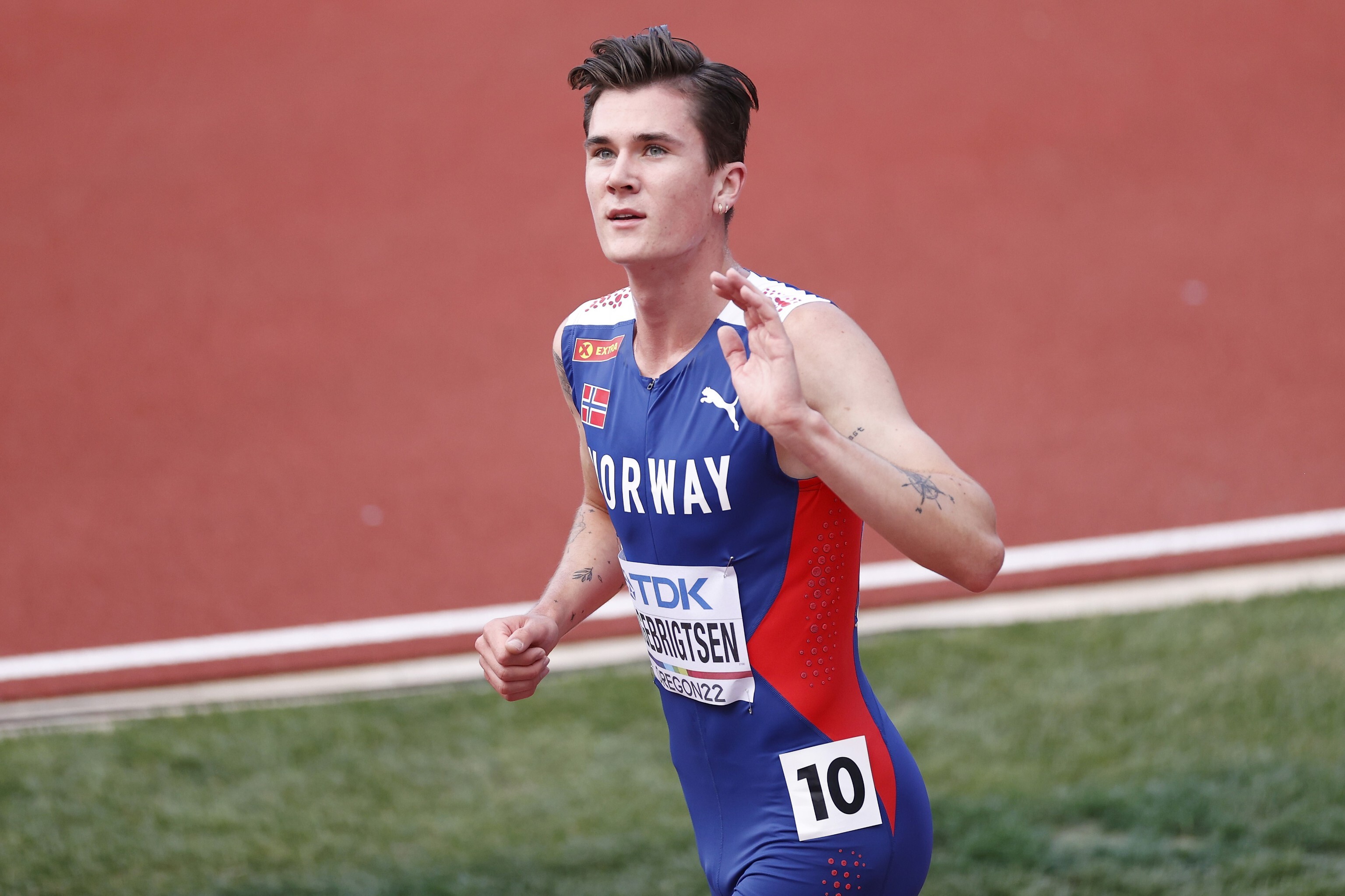
Short and fast
For newer runners, this one can be a challenge, but the workouts can be modified for ability, and the benefits will pay off. There’s a lot of fitness involved in maintaining higher speeds on subsequent days, so running one slightly faster interval session followed by a still tough but slightly less intense tempo session is ideal.
Try it: hit the track for some intervals the first day. 5-8 x 800m at 10K pace, with a short and easy warmup and cooldown, is perfect. If you’re new to this, tweak it by running fewer intervals.
Follow that session with a fartlek workout on the second day, running two sets of 1-2-3 minutes at 5K pace, with an easy warmup and cooldown. Fartlek is a Swedish word that translates to speed play, and simply means workouts involving changes in speed and effort.
Long and longer
If you’re training for a half-marathon, marathon or ultra, your long runs are probably adding up to a fair bit of mileage. Take this a step further by stacking two long runs.
Try it: follow up your longest run of the week (25-32K) with a medium-long run (15-20K) at a slow, easy pace the next day.
If you are training for a shorter race, you probably still have one day of the week where you fit in a longer run; simply adjust the distances of your two long runs to reflect the distances you’re working with.
Make recovery a priority
Trying new and challenging things in training will also require you to level up your recovery game: make sure you follow these workouts with two rest or easy running days. Fuel and hydrate lots between and after workouts to help your body recover.
(07/21/2022) ⚡AMPby Keeley Milne
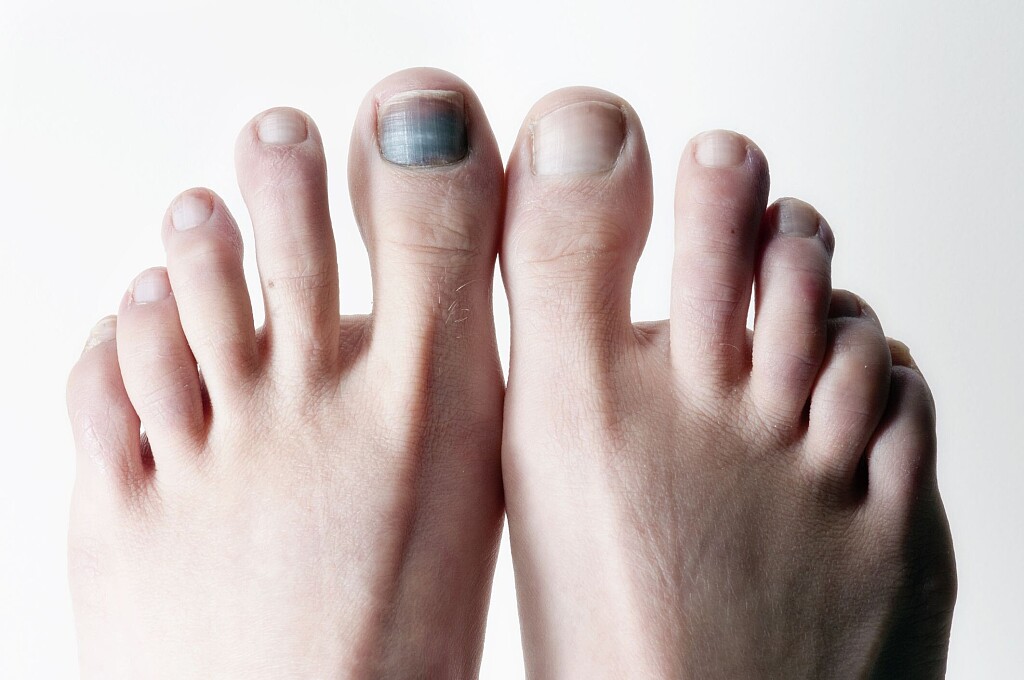
Banish black toenails with these tips
If you’ve ever lost a toenail, had people look at your bare feet and visibly flinch, or struggle with keeping your feet healthy and smooth during peak training months, consider yourself a runner. Most of us have dealt with a foot issue, especially during high-volume training periods. Foot problems can be painful: I’ve heard several of the toughest ultrarunners I know actually scream when they had a blister treated.
Legendary ultrarunner Krissy Moehl (who has certainly spent some time on her feet), sums up the importance of foot care in her book Running Your First Ultra. She writes: “our feet start the chain and are the most important link is successful training and racing. From the skin to the ligaments, it’s important to give our feet detailed attention.” Here, we give you some tips to keep those feet healthy and strong all summer.
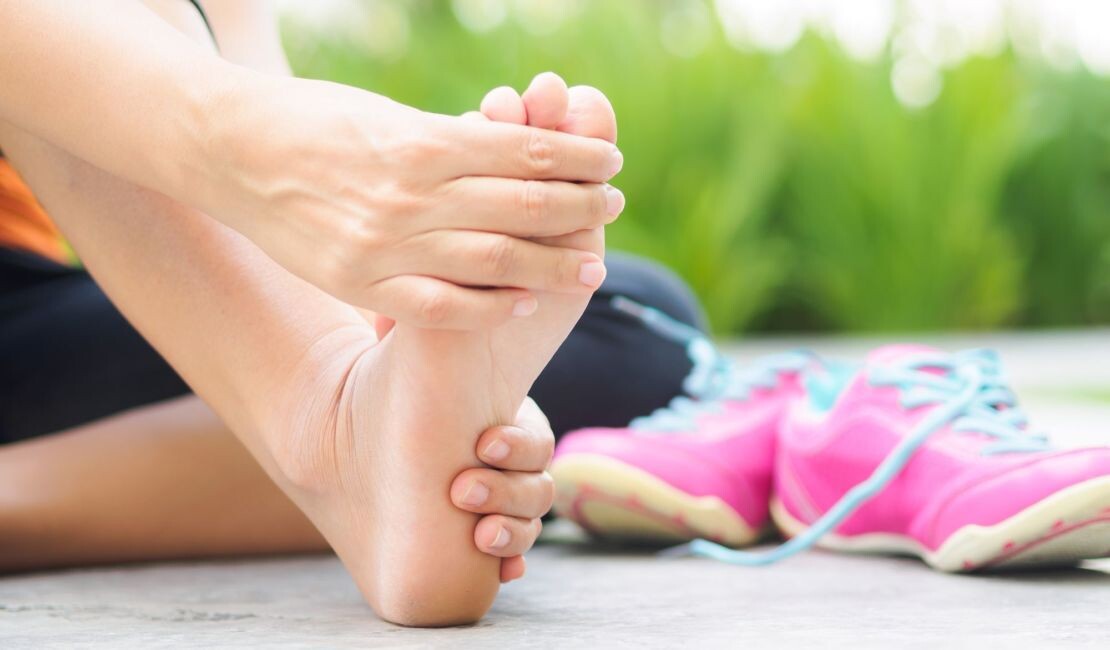
Make sure your shoes fit, and get rid of old shoes
It’s important to buy your running shoes at a store that specializes in running. The staff there will often have you put the shoes on and run in them to assess what type of shoe might be best for you, and they can properly measure you to see what size shoes you need. If you’re consistently having foot problems, it may simply be a shoe-size issue.
Moehl suggests lacing up the shoe as you would to run, and bending and flexing your foot through heel-strike and toe-off. Notice if there is any stitching inside the shoe or spots that have the potential to rub on your foot. Once your shoes are old and visibly worn out, stop wearing them, even around the house. Foot size changes over time and shoes actually shrink, so it’s worthwhile to visit a running store and speak to the experts. Running shoes can be expensive, so spend the time making a wise purchase.
Keep an eye on your toenails, and do at-home-pedicures to remove calluses
Ingrown toenails are a common foot problem for runners. Although they may seem like minor annoyances at first, an untreated ingrown toenail can become very painful and infected in a matter of a couple of days. You can often avoid painful ingrown or fungal toenails by keeping your nails short (but not too short), cutting them straight across, and then using a file to smooth out any sharp edges. If you have a black toenail, or your toenail starts to lift off, it can be tempting to pull the toenail right off; don’t. Pulling the nail off can cause your nailbed to tear, and your new toenail will grow in strangely. Let the nail fall off on its own, and the new one will emerge slowly.
Moehl is a firm believer in pedicures for everyone. “The soaking, scrubbing, de-callusing, moisturizing and massaging aspects of a pedicure are the most beneficial.” She adds: “Calluses are feedback relating to where the most stresses are being placed on your feet.” I had always leaned toward the belief that a callus on my foot was hard-earned, and protected my feet when I logged high mileage. When I entered a multi-day event that poured rain and soaked my feet continuously, I learned the hard way that calluses are also like sponges. The dead skin becomes saturated with water and takes days to dry out, and can cause further damage, including the dreaded foot maceration, often called trench foot. I can personally attest that running in such a condition felt like someone had scraped the bottoms of my feet off; I now make sure calluses are removed.
Moisturize, moisturize, moisturize (and lube up)
If you’re prone to dry skin, your heels crack and hurt easily. The best time to apply moisturizer to your feet is right after the shower, and you’re able to retain some of the moisture from your shower as well. If you’re prone to blisters, there’s a wide variety of skin lubricants specifically for athletes. You’ve probably seen them most often advertised to prevent chafing, but try slathering it on the areas of your feet that blister easily. You can also put skin lubricant on the outside of your sock on top of these same areas to further reduce any friction.
Like pianists’ hands, runners’ feet are invaluable. Treat them like gold, and you’ll be running pain-free all year long.
(07/20/2022) ⚡AMP
by Running Magazine
Elite runners are taking proactive breaks; should you?
Recently, some notable professional runners have made the choice to step back from competition temporarily, for a variety of reasons, most of them precautionary or preventative, including to prevent injury, to recover properly from training or to protect their mental health and overall well-being. Instead of pushing until or past injury to keep competing, athletes are prioritizing their health, and non-elite runners can learn from this and implement it in their own lives.
A Canadian favorite is notably missing from the World Athletics Championships this year: Sage Watson. In early June, the athlete from Medicine Hat, Alta., shared that she had decided to step back from racing “so that [she] can fully recover and give [her] body the break it needs and deserves.”
Watson said that she had been competing almost continuously since 2015, and had trained and raced through multiple injuries. After injuring her back, Watson struggled to perform at the Tokyo Olympics. “I went into this year like always, giving it my all, wanting to do better than I did last year, but my injury has seemed to still linger/come back,” said Watson.
In April, Canadian Olympian and women’s 3,000m steeple record holder Gen Lalonde of Moncton took to social media to share that she, too, was taking a break. Lalonde wrote that she’ll be missing the summer track season in order to “improve her mental well-being and physical health to be fully prepared for the 2024 Olympic Games in Paris.” Lalonde expressed similar sentiments to Watson, in that she had been training and competing almost continuously since a young age. “This has left only small, discrete windows of time for my mental and physical development or recovery,” Lalonde said. “I want to be the best version of myself, and to do so, I am stepping off the track for a few months.” Lalonde thanked Athletics Canada for supporting her in her choices, and mentioned that while she was taking time off from competition, she would still be running for the joy of it.
While fans are missing watching Watson and Lalonde race, most people can understand and even relate to a need to step back. Society is starting to recognize that burnout is a very real problem, and instead of judging those who retreat from sport, empathizing with them. Former elite marathoner for Great Britain, Tina Muir, has written and spoken often about the importance of taking breaks, for amateur runners as well as elites. Muir is now based in St. Louis, Mo. and hosts a podcast, and competes in ultras. As a professional athlete, she took a hiatus from competition due to ongoing amenorrhea (loss of her period), Muir realized she wanted to stop racing altogether. She became well known for speaking out about the health challenges athletes face.
Muir advocates for periods of absolutely no running within a training season, after races, and for longer periods if the desire to train isn’t there. She explains on her website, Running for Real: “it gives you that time to focus on other aspects of your life, to be reminded that running isn’t everything good in the world (nor should it be) and that your desire to run will come in ebbs and flows (even for elite runners), and there is nothing to be ashamed of in that.”
Muir gives suggestions for athletes considering how much time to take off and what to do during that time, adding that when the itch to train returns, you should consider ignoring it, in favour of a longer break. She advocates that it’s also OK to not miss running during a break, and to simply enjoy using free time in other ways. Muir emphasizes the benefits of a self-initiated break: deep rest, less chance of injury in the future, and time for the body to fully heal in order to train more efficiently in the next training cycle. She also touts the mental benefits of time off, and says that not only will seasons of training and racing have taken a physical toll on your body, but that “you will also be emotionally exhausted from the intensity and energy you used to focus on your goals.”
With professional athletes making the hard choice to put their competition on pause in order to take care of their mental and physical health, regular runners will see the benefits of being proactive and be inspired to follow suit. Regardless of whether you’ve been training hard since your youth, your running career–and your health in general–will be stronger and more balanced if you consider taking occasional periods of time off.
(07/18/2022) ⚡AMPby Keeley Milne
2022 Hardrock 100 Women’s Race
The 2022 Hardrock 100 start list included 27 women, the most the race has ever had. As anticipated, Courtney Dauwalter (pre-race interview) scored a decisive victory, setting a new clockwise and overall women’s course record. Diana Finkel previously held the clockwise record of 28:32 (2010) and overall record of 27:18:24 (2009). Further back in the field, the top ten of the field was much more closely packed this year than we’ve seen previously at Hardrock, including last year’s second- and third-place finishers Darcy Piceu (pre-race interview) and Meghan Hicks, late entrant off the waitlist Hannah Green, and 450k Tor des Glaciers winner Stephanie Case (pre-race interview). Here’s how the race unfolded.
Dauwalter was off to an early lead, but started conservatively enough without trying to gap the course record pace immediately. She got through the Chapman aid station at mile 18 with 4:16 on the clock. Darcy Piceu and Maggie Guterl (pre-race interview) followed in second and third, some 37 minutes back, in jovial humor, waiting for each other at the aid station. They were followed 10 minutes later by Hannah Green in fourth, with Stephanie Case another two minutes back in fifth.
Through Telluride at mile 28, Dauwalter had extended her lead on second place, Guterl, to 67 minutes, with Piceu coming in a close third and leaving the aid station alongside Guterl. Hannah Green followed in fourth, with Stephanie Case in fifth, who was already recovering from some early stomach issues.
Past mile 33 at Kroger’s Canteen, as Dauwalter barreled ahead, the chasing women had paired off and were working together — with Piceu and Guterl still in second and third and all smiles, while Hannah Green and Stephanie Case had joined forces 22 minutes back from that duo.
Dauwalter arrived at the Engineer aid station, just past the halfway point, in sixth-place overall with 12:10 on the clock, still looking strong and in control. The effort was starting to show by Sherman at mile 73, but she was still eating well and focused.
Stephanie Case, who had crept up the women’s field, arrived into Sherman as second woman. Hannah Green followed in third at mile 73 — looking tired, but calm and collected as she had done all race — with Darcy Piceu and Meghan Hicks nipping at her heels in fourth and fifth.
By this point, Duawalter was more than five hours clear of her nearest women’s competitor, and thoughts were starting to turn to Diana Finkel’s longstanding course records. After a relatively conservative beginning, Dauwalter finally took the lid off of course record pace by mile 93 at Cunningham Gulch, coming in with 24:16 on the clock. She seemed to grow in strength and resolve as the finish line approached, and eventually stormed home in a time of 26:44:38, to add Hardrock 100 to her litany of wins, course records, and other ultrarunning achievements.Case ran strong to the ending, finish her first Hardrock 100 in second place in 32:52:46. The town of Silverton came out to celebrate local resident Hannah Green’s third-place finish in a time of 34:26:39, taking nearly two full hours offer her time from 2017.For the first time in her nine starts, Darcy Picue finished lower than second, but she worked through endless to finish fourth in 35:08:06.
(07/17/2022) ⚡AMPby Bryon Powell and Sarah Brady I run far

Hardrock 100
100-mile run with 33,050 feet of climb and 33,050 feet of descent for a total elevation change of 66,100 feet with an average elevation of 11,186 feet - low point 7,680 feet (Ouray) and high point 14,048 feet (Handies Peak). The run starts and ends in Silverton, Colorado and travels through the towns of Telluride, Ouray, and the ghost town...
more...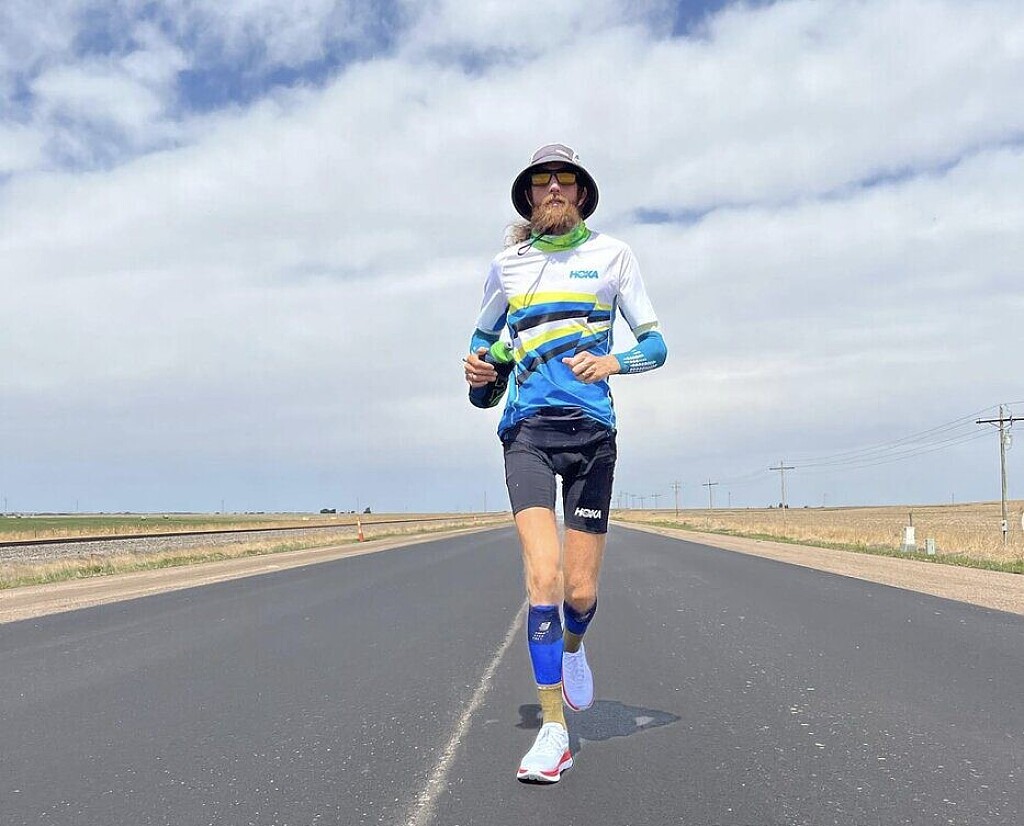
Mike Wardian talks about his transcontinental run, "I want to run across all the continents, and then also run on the Moon"
Mike Wardian wrapped up his transcontinental run across the U.S. just over a week ago, running 107 miles on his last day to finish in Rehoboth Beach, Delaware. The renowned endurance athlete lives in Arlington, Va., and had been dreaming of this adventure for decades. Partially inspired by the fictional character Forrest Gump, Wardian ran with the support of a crew chief, Erik Belz, who had previously helped ultrarunner Karl Meltzer run a record time on the Appalachian Trail.
He was joined along the way by people who came out to cheer him on and run with him for some portion of the journey, and he managed to raise over $100,000 dollars for the organization World Vision, which helps families access clean drinking water.
Wardian is known for his many extreme accomplishments, including setting the World record for the fastest time to run seven marathons on seven continents in seven days. Throughout his run, Wardian posted daily highlights on Instagram, including what audiobook he’d listened to that day, a favorite quote-of-the-day, and notable observations or memorable moments. We caught up with Wardian to chat about his journey and to see where he’s headed next.
Congrats on the amazing journey! Who made up the stellar crew that helped you?
So my crew was Belz, my dad (Dick Wardian), and a friend named Henry.
What was the absolute best day of the whole run?
The best day of the whole trip was the last day, of course. Seeing my family and finishing on the beach with the sun rising, just being with all the friends and the completion of the journey made it really special.
Worst day?
The worst day was when someone threw a hamburger at us in Ohio. It hit my friend, a vegan, in the stomach. Just so rude and mean.
What was the most useful advice you received going into this journey? What advice would you give anyone thinking about trying a transcontinental run?
I think the best advice I received was just to be consistent. Don’t overreach–I think I would give that same advice to somebody else.
What state had the safest roads for running?
Surprisingly the best roads were Delaware and Utah because I was running on the highway.
You did an incredible job raising so much money for World Vision USA! What inspired you to choose that charity for your fundraiser?
I was inspired to choose World Vision USA as a fundraiser because I work with them regularly sorting out humanitarian food and shipments. I know what good work they do and that they were a worthwhile charity.
What’s next for you?
I have so many things I want to tackle next! I want to row across the Atlantic and I want to run the Appalachian Trail. I want to do the Pacific Crest Trail, run across all the continents and then also run on the Moon.
(07/12/2022) ⚡AMPby Keeley Milne
