

Running News Daily
Running News Daily is edited by Bob Anderson and team. Send your news items to bob@mybestruns.com Advertising opportunities available.
Index to Daily Posts · Sign Up For Updates · Run The World Feed
Search Results for Ultra
Today's Running News
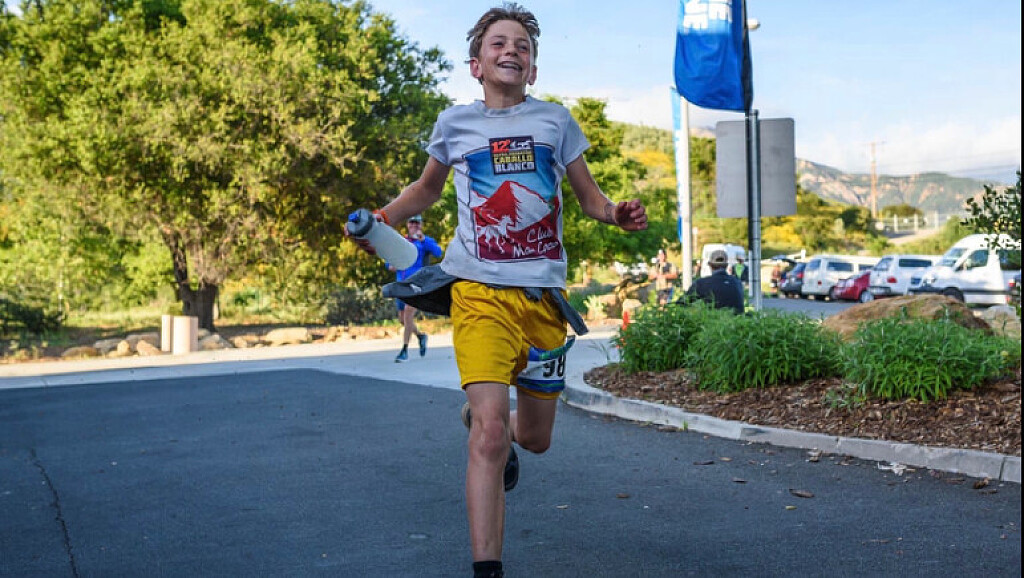


This Teen Ultrarunner Wants to Take on the World's Most Prestigious Races
Last November, 17-year-old Sebastian Salsbury received an email reminder. He had 13 days to decide about entering the race lottery for the 2024 Western States 100 Mile Endurance Run, regarded as one of the most prestigious trail events in the world.
Rules stipulate that each lottery applicant must be at least 18 years old on race day. On January 20, Salsbury will finally meet the age requirement, five years after he technically ran a qualifying time to enter the lottery for the first time.
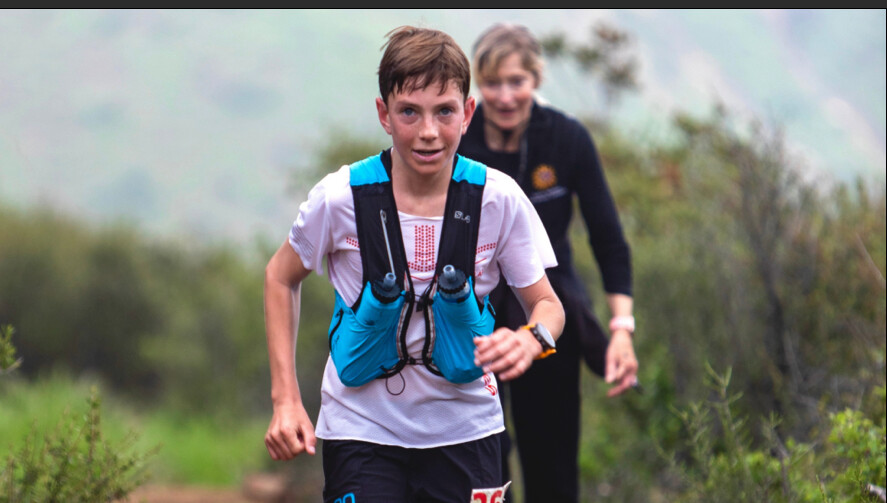
It's been a goal he's been progressing toward for years. In 2020, when Salsbury was 13, he completed the Black Canyon 100K in Arizona in 15 hours 49 minutes and 32 seconds, well within the 17-hour time limit necessary to qualify for the Western States lottery.
"It's hard to put that experience into words," Salsbury says. "It was one of the most beautiful courses I've ever been on. That race made me feel like I was doing the right thing in my life."
Starting Young
Salsbury, who grew up in Santa Barbara, California, was attracted to the trails at a young age. Throughout his childhood, his parents often brought him to nearby trails to hike. The hikes gradually transitioned into jogs, and Salsbury's relationship with the outdoors continued to grow. The mountains, he says, were a playground.
Though Salsbury played basketball, football, and soccer growing up, his love for running took over. He quit the other sports after junior high school to minimize risk for injury, he says, and to dedicate more time to running.
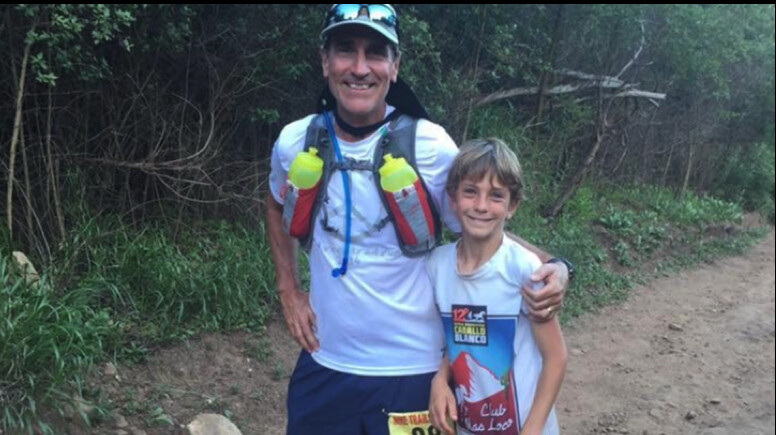
A few years after Salsbury's entry into racing-his first was a local 5K on the road when he was four-he ran the Santa Barbara Red Rock Trail Run. Despite being just nine, he kept up with his father for all 28 miles. The following year, for the Santa Barbara Nine Trails, Salsbury traversed 35 miles with nearly 12,000 feet of vertical gain from the Jesusita trailhead to Romero Canyon trailhead and back, again alongside his father, a road marathoner.
Next, Salsbury entered the Black Canyon 100K in Arizona. He recalled the point-to-point race as one of his most difficult running experiences to date.
"I was basically crying," Salsbury remembers, adding that his hydration vest kept digging into his ribs. "I loved the feeling of working hard and going through really low moments and overcoming them. I crave it."
Supported for the last 20 miles by his coach at the time, Tyler Hansen, Salsbury crossed the finish feeling both defeated and uplifted. The Black Canyon race gave him the confidence to continue challenging himself in ultrarunning.
"My best friends don't understand," Salsbury says about the pursuit of ultras, which he envisions including some of the most technically demanding and prestigious races in the world: the Western States 100 in California, Ultra-Trail du Mont-Blanc through the French Alps, as well as the Hardrock Hundred Mile Endurance Run in Colorado. Salsbury admits that running disrupts his social life, and also that he doesn't mind the solitude the sport necessitates. In fact, he welcomes it.
"I like the feeling of being alone in the mountains," Salsbury says. "It's a great way to free your mind."
Given that he is still a teen-the average age of trail runners is in the mid-30s-Salsbury has not been immune to negative comments over the years. "It's not cool at all to hate, but I can still see where someone would be coming from, seeing a kid doing all that stuff," Salsbury says. "There are going to be people that troll and hate for no reason. That's just life."
A Purposeful Progression
The training required to undertake ultras is out of this world for a typical high school runner. To ensure he's programming himself with sufficient miles without overloading his still-developing body, Salsbury sought the guidance of his longtime role model, pro trail runner Hayden Hawks. The two met when Salsbury was 14, and their camaraderie clicked naturally.
"I had lots of mentors help me at a young age in my running journey, and I felt the responsibility to do the same with Sebastian," says Hawks, 32. "We have taken a patient and gradual approach, developing strength, speed, and a foundation that will help him build into the longer distance races at an older age."
Hawks has coached Salsbury for the past two years, carefully mapping out a plan that tallies 50 miles weekly spread across six days. Salisbury complements the mileage with a combination of hiking, mountain biking, and intervals on an indoor bike as part of his cross training. Three days a week, he does strength exercises at Varient Training Lab in Santa Barbara. To fit it all in so he could have ample opportunity to train and compete, prior to the Covid-19 pandemic, Salsbury enrolled in West River Academy, an online private school program.
"I have zero regrets," Salsbury says. "The opportunity that it's given me to travel with my family and run and be able to guide my days how I want and learn at my own pace, I'm grateful for that."
The online program lasts up to three hours a day, which is "a lot less than standard high school," Salsbury chuckles. In 2022, he researched computer engineering and built a computer from scratch. This year, as part of the online curriculum, he's learning to speak German in addition to researching for a project about coffee and sustainability, which he is especially interested in as a part-time certified barista. Salisbury works at a local coffee shop twice a week.
So far, he's enjoying the unique balance of online learning and ultrarunning. "I like to keep myself busy," he says. "I've always had this next-level energy. Obviously it goes into running, but it's who I am as a person."
His days are hardly routine compared to the average high schooler. On a recent Thursday, Salsbury started the day with a three-minute cold plunge before he spent the remainder of the morning packing running shoes, thermal layers, his COROS watch, and a heart rate monitor ahead of a four-day trip to Boulder, Colorado, to train with a friend at altitude.
Living at sea level in Santa Barbara, Salsbury doesn't often have the opportunity to run at altitude beyond twice a year, mostly "just a vacation with my family where I get to do some running," he says.
As much as he has run over the years, Salsbury says he's been fortunate to never have had any serious injuries. This year, a growth spurt of eight inches led to severe shin splints, and Salsbury, who is now 6-foot-4 and 162 pounds, took four months off from running.
Now, life is back to business as usual. Salsbury is planning ahead. His next race is the La Cuesta Ranch 25K in San Luis Obispo, California, in late January. After he graduates from high school in June 2024, he wants to pursue a running career ideally full-time, though he hasn't stated when he aims to turn professional.
"I've always had the intention to be one of the greatest ultrarunners in the world one day. That will continue to be my goal," Salsbury says. "I want to leave a positive impact on the sport and be an inspiration to other athletes of any age, but obviously the youth because that's how I grew up. People can judge and say whatever they want, but I do want to be the best of all time."
(03/16/2024) ⚡AMPby Trail Runner Magazine
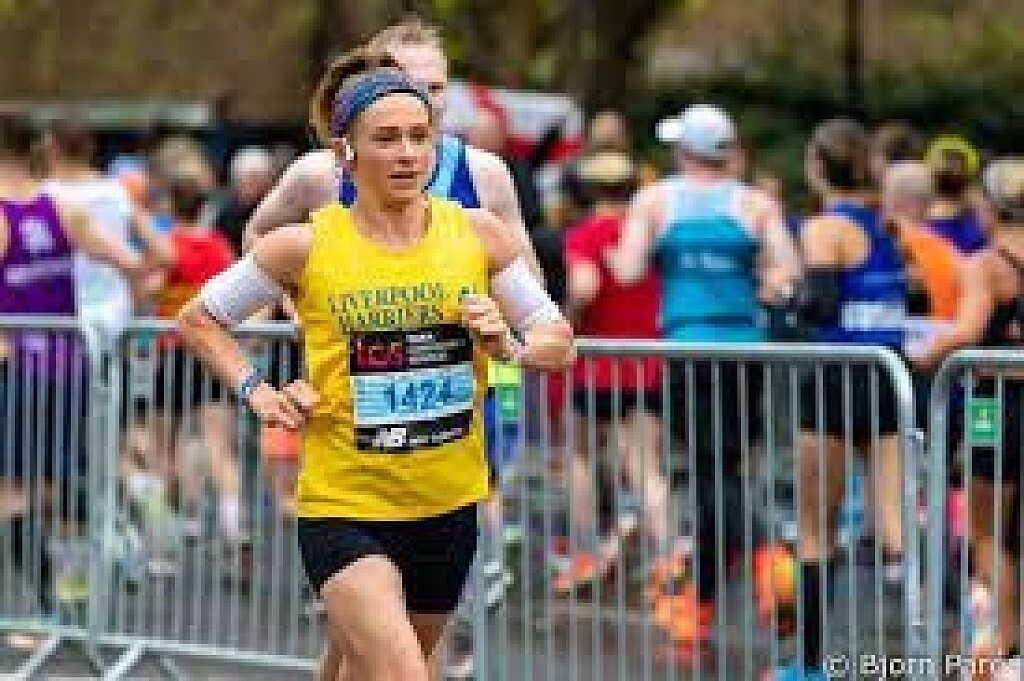
London Marathon: Rachel Hodgkinson nervous ahead of first elite start
Distance runner Rachel Hodgkinson says being able to compete in next month's London Marathon as an elite athlete has made her nervous.
The 31-year-old was the second fastest British woman in last year's London Marathon having not started as part of the elite athlete's cohort.
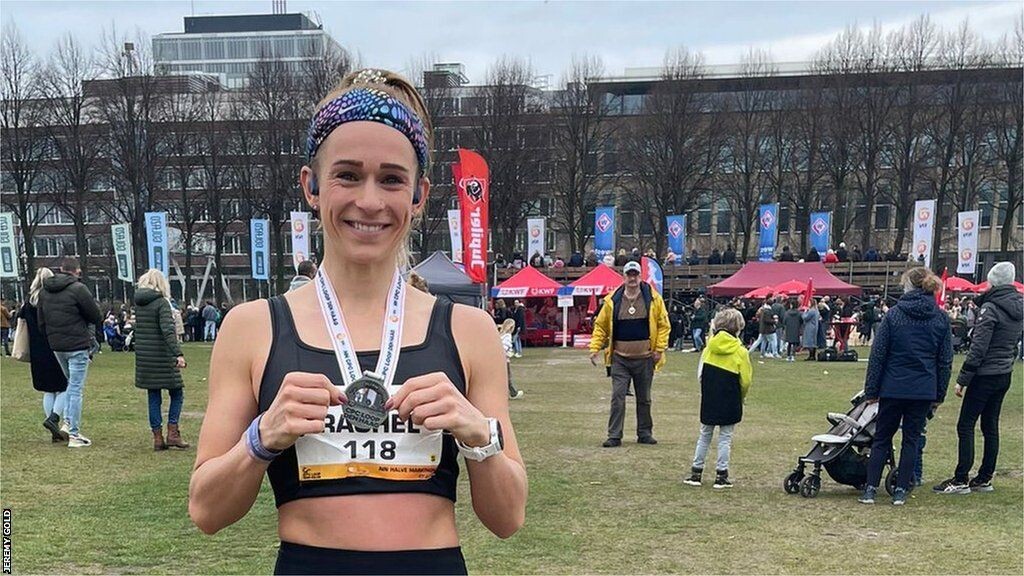
She has since won gold at the Tokyo Marathon and finished fifth in the IAU 50km World Championship.
"Just getting there is an achievement," she told BBC Radio Merseyside.
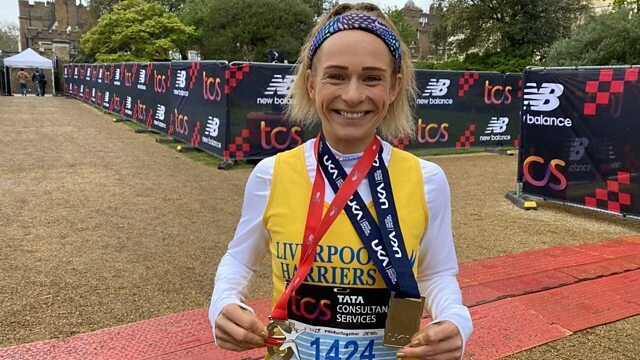
"I'm excited and also quite nervous.
"Last year I came second for the British women, so I already knew at that point that I probably wouldn't be able to run with the masses and with the men again. So I knew I'd be making that step up into the women's only race.
"It was a shock last year when I came in second because I didn't start with the elite women. I didn't know I was in second, I only found out when I crossed the line that some of the elite women had dropped out."
With Olympic qualification for this summer's Games out of reach and question marks over the future of the Commonwealth Games, Hodgkinson's competitive aims have been pushed to the distant future.
"I'm not going to make the Olympics this year but they come around every four years so why not go again and have a shot?" she added.
"The Commonwealth Games is in question at the minute and may or may not happen. I'd like to represent England as I haven't done that, but that's generally some shorter distance stuff and speed is not necessarily my strength. I'm an endurance runner but we'll see.
"I could easily go down the ultra running line and step up to 50km or 100-milers."
(03/15/2024) ⚡AMP
TCS London Marathon
The London Marathon was first run on March 29, 1981 and has been held in the spring of every year since 2010. It is sponsored by Virgin Money and was founded by the former Olympic champion and journalist Chris Brasher and Welsh athlete John Disley. It is organized by Hugh Brasher (son of Chris) as Race Director and Nick Bitel...
more...
Conquer Your Longest Distance Yet With These 9 Tips
Ultrarunners and coaches share their best advice for building mileage without getting injured.
Whether you want to progress from a 5K to a half marathon or a marathon to an ultra, a few general rules on how to run longer can help you get there.

While building mileage and time on your feet is paramount, the key to doing it successfully involves patience and persistence. “As much as volume matters—volume is king—too much volume too soon can get you on the sidelines,” Bertrand Newson, RRCA-certified run coach and founder and team captain of Too Legit Fitness, based in San Jose, California, tells Runner’s World.
Follow these tips from Newson and other coaches and ultramarathoners to successfully increase your mileage, avoid injuries, and crush your longest distances.
1. Build a Base, Then Keep It Consistent
“I steadily built up to running 250-mile races over many years, but I started by running one mile at a time,” says Sarah Ostaszewski, pro ultrarunner with Tailwind Nutrition who won the 2023 Ouray 100-Mile Endurance Run. “Build a strong base and try to keep a consistent running routine, so then adding a little extra here and there won’t seem so daunting.”
Base training typically requires about four to eight weeks (before following a race training schedule) to strengthen your cardiovascular system and your muscles, but the longer you can regularly run and set a foundation, the better. Your base work should involve mostly easy runs, low mileage, and maybe low-key speedwork (depending on your fitness level), like ending a run with strides. This part of your training is all about consistency, rather than actually building mileage.
Ultrarunner Mirna Valerio stays consistent by focusing on time on her feet, rather than distance. “This has been mentally freeing,” the author of A Beautiful Work in Progress tells Runner’s World.
“I have a standing appointment with my treadmill a couple times a week,” says Valerio, who will aim to run a minimum of 12 hours a day over six days at the Lululemon Further event, an ultramarathon for women in March. “I just get it done, which incidentally is one of my mantras.”
2. Find Your Best Approach to Building Volume
If you’re new to running and want to run longer, add another day of a short, easy run to your schedule, suggests Stefanie Flippin, an ultrarunner, Lululemon ambassador, and doctor of podiatric medicine, who has earned a first-place finish at several 100-milers.
Maxed out on available days of the week? Add to your long-run mileage, which is what Leah Yingling, ultrarunner and biochemical engineer who will see how far she can run in 24 hours at Lululemon Further, does first when aiming to build volume. The general rule is to increase your weekly mileage by about 10 percent each week, adding to that long run. For example, if you currently clock 17 miles per week with three four-mile runs during the week and a long run of five miles on the weekend, you would keep your midweek mileage the same, but kick up your long run to about seven miles next weekend.
Yingling, and many other pros, also do two runs a day. While this won’t work for everyone, if you don’t have a significant single block of time, clocking some miles in the morning and again in the evening and resting between can help you clock more mileage. One must-do to make it work: Tame the intensity on at least one of those runs.
Charlie Lawrence, 50-mile world record holder, views his second run of the day as a sort of active recovery. He often goes for double digits in the mornings, then runs for about four miles (at minimum) in the evening, keeping the effort light.
No matter what, testing out strategies to see what works for your schedule is the best way to run longer. “That might be adding a walk a few days a week in addition to your daily runs, or maybe you’re adding back-to-back long runs,” says Yingling. “Whatever you do, find something that is sustainable.”
3. Follow a Progressive Training Plan
A good training plan will slowly build mileage to decrease your risk of getting sidelined, as research shows taking on too many miles too soon is one of the biggest risk factors for overuse injuries.
When choosing your training plan, you have to be realistic about the time you have to build up to the distance you want to conquer—and where you’re at now, says Newson. For example, if you have your sights set on a half or full marathon, think about what you can comfortably run today. Then, following the loose rule of adding 10 percent more miles each week, how long do you need to train? If you currently run five miles without stopping and feel good after, and can comfortably clock 12 miles per week, you can probably conquer a 10-week half marathon plan.
Another important factor to look for when it comes to mileage on a training plan: recovery weeks. Newson explains you’ll typically see this as three weeks of building, then a week in which you back off mileage a little to give your body time to recover and actually make gains from all the work you put into your plan. This will also keep your body strong and help you sidestep aches and pains, he adds.
4. Keep Easy Runs Easy
You’ve heard it before but it’s especially true when trying to run longer: Don’t overdo your low-effort days.
“It’s important for me to always run my easy runs, short or long, at a conversational, aerobic rate of perceived exertion. This means that I can easily chat with a training partner for the duration of my runs without becoming out of breath,” Flippin says, who also clocks her heart rate to make sure she’s in an easy zone.
Don’t worry about what shows on Strava, either. “I think a lot of runners run their easy runs too hard and that is because of ego and they don’t want people to think they are slow,” says Devon Yanko, ultrarunner who’s placed first in several 100-mile races and will aim to conquer her longest distance over six days at the Lululemon Further event. “I delight in the idea that people may look at my Strava and think I am too slow, because on race day that won’t be the case!”
More generally, applying the 80/20 rule to your training overall can also help you record more low-intensity runs, Newson says, as it means 80 percent of your workouts should happen at a low intensity, and 20 percent at a hard effort.
It’s these easy runs that will help keep you running consistently—the key that unlocks higher mileage. “A B+ average of consistent runs, strength work, and recovery measures stacked over weeks, months, and years will always trump sporadic A+ weeks followed by a total drop-off,” Flippin says.
5. Master the Long Run
For most people, the long run will make up the bulk of your weekly mileage, but it doesn’t just help you clock more time on your feet. It also teaches you mental stamina, how to deal with fatigue, and it can help you get comfortable with being uncomfortable. With years of practice, this is what many pros say pulls them through farther distances.
Even though Lawrence can deal with being uncomfortable for long periods of time, he still turns to mind games to mentally check off miles. For example, he often breaks a race down into small, manageable chunks, often focusing on the next fuel stop (typically about every four miles) as a check point. If he’s struggling to get to the next four-mile marker, he may tell himself he’ll feel better in 10 to 15 minutes and checks in again then.
In addition to breaking your long run up into segments, Newson also suggests dedicating each mile to someone else, which takes it outside of yourself and gives you another reason to keep going, and says to focus on the mile you’re in, simply putting one foot in front of the other.
Finally, the long run is the perfect time to practice your fueling and fluid intake, Newson says, considering you need energy to clock longer miles. Aim to take in carbs when going for 90 minutes or longer, and go for about 30 to 60 grams per hour after the first hour.
6. Schedule a Few Harder Workouts
To build endurance, you want to run long, but you can also add intervals and speed work into your schedule.
Lawrence gets on the track for VO2 max-specific workouts at least once a week. VO2 max is the amount of oxygen you can take in while running and is a major marker of fitness—the better this metric, the easier running will feel, which will help you go longer with less effort. Focusing on VO2 max intensities on runs means going for about 90 to 100 percent of your max heart rate or about 5K pace, and it could involve intervals like 400-meter repeats.
You could also focus on lactate threshold training. Your lactate threshold is the point at which your body produces lactate at a rate you can no longer clear, leading to fatigue. To help you prolong that side effect—helping you go faster for longer—practice running at your threshold pace. (Here’s how to calculate your running speed at lactate threshold).
To do this, Ostaszewski prefers longer interval workouts with work periods ranging from six to 10 minutes near aerobic threshold. But tempo runs at your threshold speed are also smart.
7. Supplement Your Runs With Mobility and Strength
Before you jump into high mileage, you need a solid warmup. Lawrence has been doing the same activation drills before runs for a long time. He starts with foam rolling most of the lower body, then does a series of exercises, like:
Leg swings
Down dog to lunge rotation
Ankle mobility moves
Banded work, like glute bridges
This go-to routine wakes him up and gets him in run mode, even when he’s not feeling it.
Cross-training workouts are also key. Valerio mixes strength training, mobility workouts, Pilates, and rowing into her training schedule, which she says helps her avoid overuse injuries. Meanwhile, Flippin points to strength training in particular as crucial to running longer. She suggests starting with one day a week to build consistency, then adding on days from there.
Lawrence focuses specifically on doing core workouts every day (one of his go-to moves: the ab roll out), along with dedicated gym time for lifting, in which he conquers moves like hex bar deadlifts.
8. Make Recovery a Priority
Many pro runners turn to a solid nutrition practice to jumpstart recovery and fuel future performances. “I ensure I’m always getting in carbohydrates and protein within 30 minutes of finishing a key workout or long run,” Yingling says.
Finding time for other recovery practices, like mobility work, foam rolling, even meditating, can also support your training and get you prepped for the next round of mileage, Newson says. Full rest days are also important, especially if you’re feeling any aches and pains.
And you can’t forget about sleep for recovery—striving for at least the recommended seven to nine hours—especially for those looking to push their mileage.
9. Don’t Rely on Motivation Alone
Running your longest distance takes dedication and determination, but don’t expect to feel motivated every day. “People often wait to do things until they are motivated, when instead, they should have been focused on completing their plan or working toward their goal,” says Yanko. “I don’t jump out of bed every morning peppy and excited to run, but I am committed to doing the work and thus, I simply get the work done.”
Yanko also suggests tapping into curiosity to keep you going longer. “That is, instead of being intimidated by a workout or long run, I allow myself the opportunity to be curious about what might happen if I simply begin the session,” she says. “I do not believe that one workout or one long run ‘proves’ anything about my fitness or ability to race, so having curiosity means I can get into a session and allow it to unfold with confidence that if I just continue to show up and do the work, I will build my fitness brick by brick.”
Newson also suggests a running group to keep you accountable and consistent, and to elevate the fun of your workouts.
“On the mental side, I always try to see the big picture and remember that all the miles I’m running are for fun and for my own personal enjoyment,” Ostaszewski adds. “I’m always aiming to enjoy the process and recognize growth in the journey.”
(03/10/2024) ⚡AMPby Runner’s World
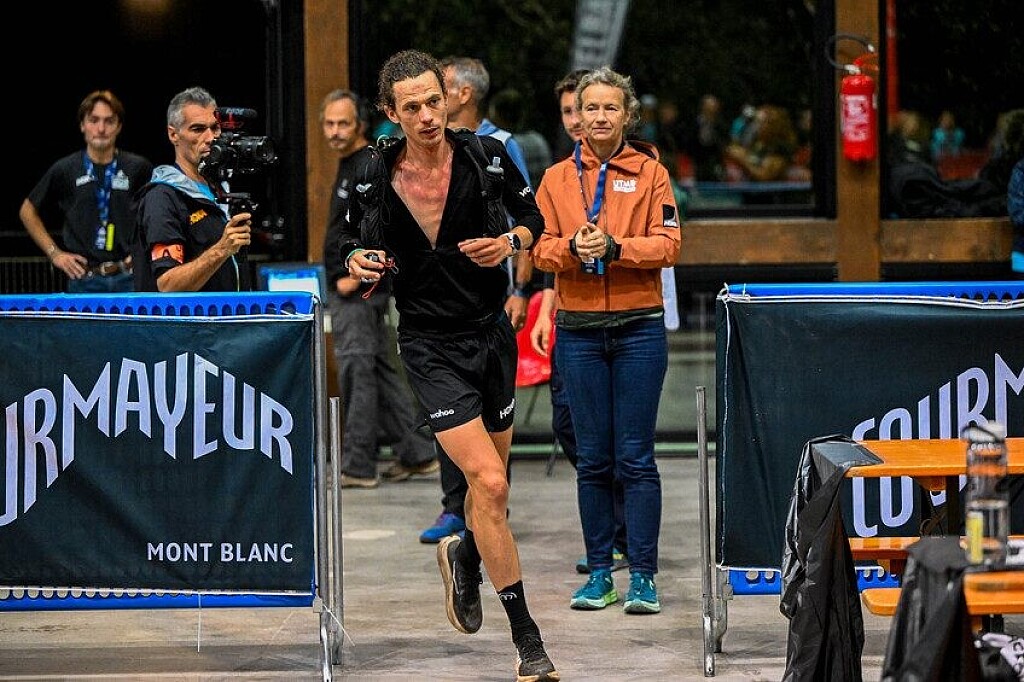
Jim Walmsley, Mathieu Blanchard will return to UTMB in 2024
2023 UTMB champion Jim Walmsley and 2022 second-place finisher Mathieu Blanchard have confirmed they will appear at this year’s Ultra-Trail du Mont-Blanc (UTMB) final, which takes place in Chamonix, France on Aug. 30, according to a report by iRunFar. A number of other ultratrail elites have also been announced, including the U.K.’s Tom Evans, who finished third in 2022 and who won Western States 100 in 2023, and Canada’s Christian Meier, the former pro cyclist who won the 145-km TDS race last year.
On the women’s side, Canada’s Marianne Hogan (who finished second in 2022) is confirmed, as are 2022 champion Katie Schide of the U.S., France’s Claire Bannwarth and New Zealand’s Ruth Croft (who won Western States in 2022). (Three-time UTMB champion and course record holder Courtney Dauwalter does not appear on the list.)
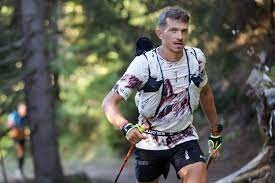
Four-time champion Kilian Jornet and 2023 second-place finisher Zach Miller will also not be returning. After the October, 2023 announcement by UTMB and its minority partner, the Ironman Group, of a new race in Whistler, B.C. in 2024, and the Dec. 1 announcement that UTMB livestream announcer Corrine Malcolm had been fired, the two publicly questioned the organization’s decisions and its treatment of athletes. There was talk of a boycott, though Jornet and Miller dispute this; in the wake of all of this, regular discussions between UTMB and the Pro Trail Runners Association (PTRA), of which Jornet is a founding member, became more frequent, with a view to smoothing relations between athletes and the race.
Walmsley moved to France for two years to hone his mountain-running skills before finally winning UTMB on his fifth try in 2023 (he Walmsley first ran UTMB in 2017, finishing fifth; he DNF’d in 2018 and again in 2021, then finished fourth in 2022). Blanchard, who has returned to France after living in Montreal for a few years (and taking out Canadian citizenship), finished fourth last year after following Jornet onto the podium in 2022. Hogan has been dealing with injuries for much of the last year and a half since her podium finish in 2022.
by Anne Francis

North Face Ultra Trail du Tour du Mont-Blanc
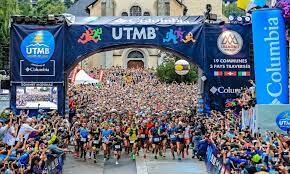
Mountain race, with numerous passages in high altitude (>2500m), in difficult weather conditions (night, wind, cold, rain or snow), that needs a very good training, adapted equipment and a real capacity of personal autonomy. It is 6:00pm and we are more or less 2300 people sharing the same dream carefully prepared over many months. Despite the incredible difficulty, we feel...
more...
Runners Are Racing More than Ever
Strava’s year-end report shows that more runners are turning to competition and how different generations compete differently
This month, Strava released its annual Year in Sport, with fascinating insights about where running might be headed. Running was the most-uploaded sport in 2023. (Hear that? That’s the sound of job security!) Most runners log their miles solo, 9 percent are in groups of three or more people, and an additional 9 percent are logged running in a pair.
Trail running, specifically, continues its trend upwards, with the share of athletes running off-road up 6 percent year over year. Almost half (47 percent!) of runners took at least one trail run. Friends, welcome to the club. We have jackets! (Haha, no we don’t.)
Many runners use competition as motivation and inspiration. Plus, athletes who race are 5.3 times more likely to set a distance PR. While men are currently more likely to compete than women, the rate at which men and women are participating is increasing at the same speed.
When life after the COVID lockdowns stabilized for many folks, the Strava Year in Sport review shows that they laced up their running shoes to compete. Twenty-one percent of runners on Strava ran at least one race in 2023, a 24 percent increase over 2022.
Racing was equally split across genders, with 21 percent of men and women competing at least once. Runners from Gen X (born between 1965 and 1980) were the most likely to race, with 26 percent logging at least one competition on Strava. Twenty-two percent of millennials (born between 1981 and 1996) raced, and 24 percent of boomers (born before 1965) pinned on a bib in 2023.
Ultramarathons, while still less popular than shorter distances, are steadily becoming more popular, too, according to statistics. While just 2 percent of runners on Strava completed an ultra in 2023, that’s still up 11 percent from 2022.
Out of all ultrarunners on the app, two-thirds completed at least one 50K, meaning plenty of runners double-dipped on super long-distance runs in 2023. Women were 43 percent less likely to have run an ultra of any distance (so, yeah, we might have a problem). Participation in ultras may be growing at the same rate among men and women, but there is still plenty of work to be done—for instance, addressing childcare disparities that leave women with three to four fewer hours per week to train—in order to reach equity. The longer the distance, the greater the gender gap tends to be, with half marathons having the smallest disparity—7 percent of women completing a half and 8 percent of men.
Longer races are less popular this year, sure, but participation is growing by about 10 to 15 percent. Less than 1 percent of runners on Strava completed an ultra over 50K, though this distance remains the most popular to run. Participation in 50 miles is roughly half that of 50Ks, and 100K participation is roughly half that. So, if you ran a 100K this year, pat yourself on the back, as you’re part of the 1 percent (.0025 percent, to be exact).
Marathons remain a popular distance for runners. Five percent of runners on Strava ran a 26.2-mile race in 2023, up 20 percent from last year. Again, women were 32 percent less likely to have run a marathon than men (4 percent of women on Strava ran a marathon versus. 5 percent of men), but both groups saw participation jump 20 percent compared to last year.
Gen Zers are not running as much as previous generations did at their age. Running, while less cost-prohibitive than, say, surfing, skiing, or mountain biking, still requires some financial investment. A 2020 survey by the Running Shoes Guru pinned the “average” run budget to between $937 and $1,132 annually. I guess those gels really do add up!
And when you consider that 60 percent of young adults don’t feel their basic needs are met, a decline in participation makes sense. According to Running USA, an independent group that produces industry surveys, the number of runners in the 35-44 and 45-54 age groups has dropped significantly since 2015, while participation in the 25-34 age group only increased slightly. According to the report, Gen Z runners prefer to run for experiential benefits like socializing, fun, and mental health.
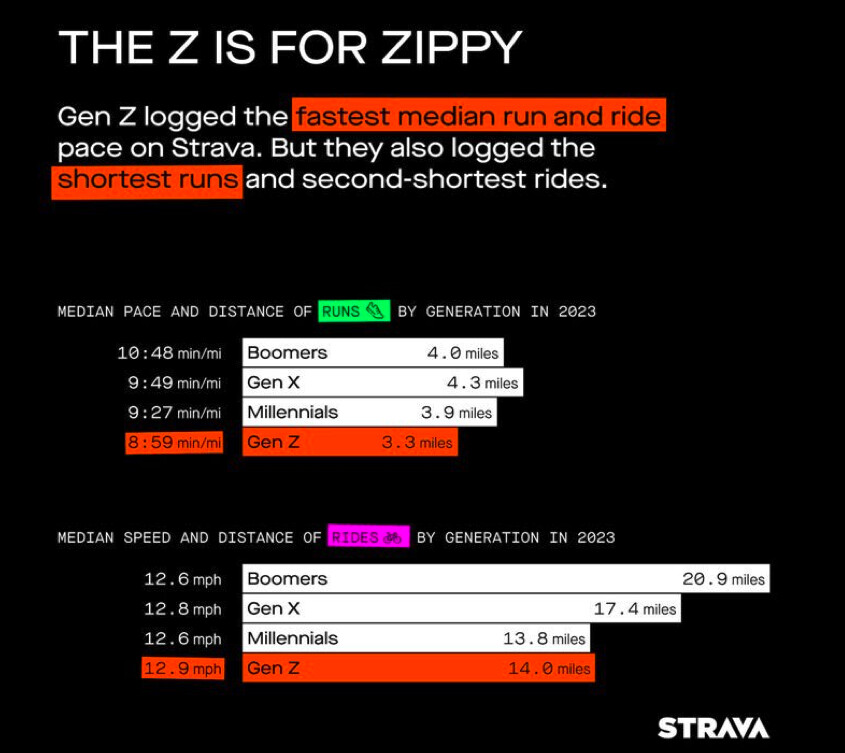
Interestingly, data about Gen Z runners on the Strava Year in Sport says the opposite, reporting that this generation is 31 percent less likely to exercise primarily for their health compared to millennial and Gen X counterparts. The difference could be that runners committed enough to sign up for an activity tracking app are already a self-select group. Zoomers on Strava report that their primary motivation for exercise is athletic performance. This is echoed by the speed of their training runs, which average out to be a pace of 8:59 a mile. Zoinks!
Interestingly, data about Gen Z runners on the Strava Year in Sport says the opposite, reporting that this generation is 31 percent less likely to exercise primarily for their health compared to millennial and Gen X counterparts. The difference could be that runners committed enough to sign up for an activity tracking app are already a self-select group. Zoomers on Strava report that their primary motivation for exercise is athletic performance. This is echoed by the speed of their training runs, which average out to be a pace of 8:59 a mile. Zoinks!
Gen Z runners are also more run-dominant than other generations. Seventy percent of the generation’s Strava users uploaded runs onto the app versus 52 percent of Gen X, a 35 percent higher likelihood (this might as well be the likelihood to Google “What is a Zendaya?”) Gen Z runners saw the greatest percentage of growth in race participation this year, with a 60 percent jump in attendance at the marathon distance and a 68 percent increase at 13.1. (My mind would fully melt if I lined up against someone born in 2004, but also, welcome! Please be gentle.) According to Running USA, Gen Z runners gravitate towards races with a compelling theme or cause that resonates with their values.
Trends are different across training habits, too. Gen Z runners are twice as likely as boomers to have weekday activity after 4 P.M. and are 31 percent less likely to exercise before 10 A.M.. Fascinatingly, 39 percent of Gen Z Strava athletes started a new job, and a third of the cohort reported relocating in 2023, which could speak to flexibility or economic instability for younger runners.
Over the year, Gen Z runners logged 17 percent less mileage than Gen X athletes, explained primarily with a shorter average run length. Plus, Gen Z athletes have slightly fewer running weeks in a year. (Maybe if they weren’t so busy eating all that avocado toast, they could run more!) JK, as the kids on TikTok say. In truth, Gen Z runners might train less because they are shooting for shorter distances, or the other way around—it’s impossible to disentangle causation here.
It’s not only a fun pastime to browse the year-in-review data, poking fun at the generations before or after us like they’re siblings (“No, I run more!” “Well, I run faster!”), but it’s also a way to see where the industry is lacking.
The Strava Year in Sport data shows that the running industry will have to work to bring in more Gen Z athletes. This might mean that race directors and event organizers will have to continue tailoring their offerings to speak to a younger, more experience-driven demographic. Numbers also prove that, while the female section of the running pie has grown overall, more changes need to be made to reach gender equity. The statistics tell us a lot, but one of the biggest, if not the biggest, takeaways is that people are running more now than ever. And that? Well, that’s pretty rad.
(03/02/2024) ⚡AMP

Try these tough race-prep workouts for unstoppable stamina on road and trail
While most of your training should be easy mileage, it’s important to have some speedwork and harder efforts in there if you want to perform your best on race day—and occasionally, an extremely challenging workout. Renowned coach and ultrarunner David Roche explains that, inserted once in a while, an epically tough session will pay off in a variety of ways. “Your brain and body can essentially have their light-bulb moments: ‘Oh! I see! I will not die the next time I push this hard? Good to know, you can carry on.’ ”
While these workouts are designed with trail runners in mind, they can be very effective for runners training for road and track races as well. “These workouts are designed to suck,” Roche jokes. “That way, future workouts and races will suck less.” Make sure that you are well-trained with a strong base before tackling these in order to prevent burnout and injuries, and do them after a few recovery days (and followed by a few recovery days as well).
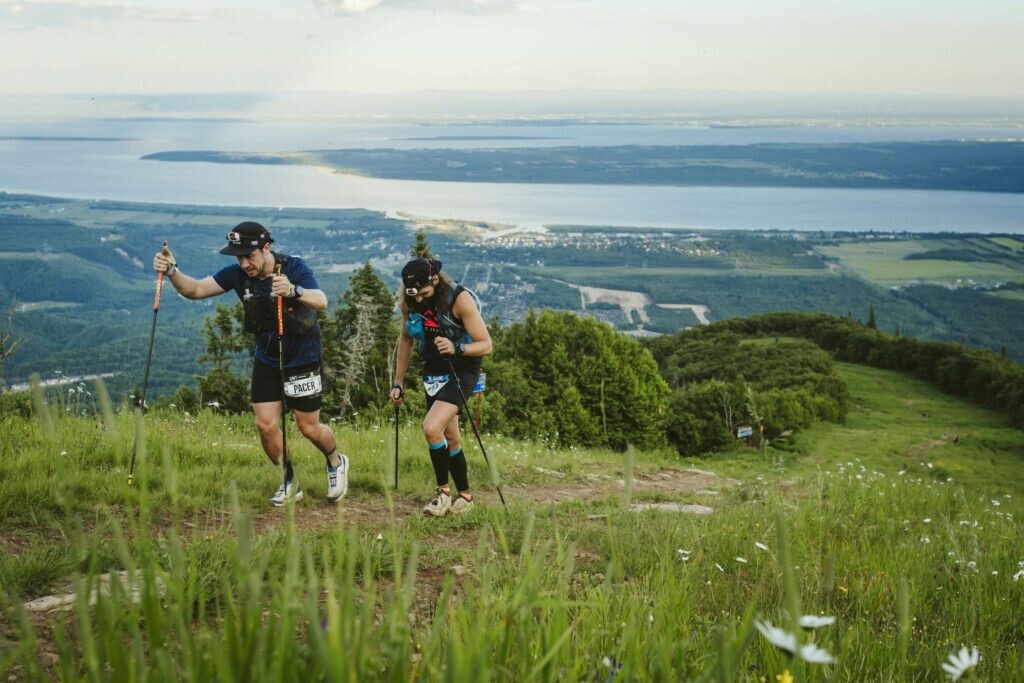
Hill and tempo leg-crushing combo
Warm up with 15-30 minutes of easy running. If you’re prepping for shorter races, feel free to tweak the warmup, but make sure your muscles are warm and your legs are ready to work before kicking it into high gear.

Run 5 x 3-minute on hills at a hard effort, and run down the hill for recovery between reps.
After the final hill interval, run 15-30 minutes with a moderate effort to simulate tired, race-day legs.
Roche suggests aiming for an average grade of six to eight per cent on the hills—a moderate incline that will allow you to maintain form while pushing hard. “At the top, you can put your hands on your knees for a second before running down normally,” Roche says, and suggests giving an extra-hard push to the final two repeats. When you wrap up the final interval, run down the hill and ease into a relaxed tempo, pushing to a moderate effort.
Cool down with 10 minutes of easy running.
Roche suggests trying this one 10-17 days before your goal event.
Three-minute hill hell
Warm up with 15-30 minutes of easy running (adjust if you’re running a shorter race).
Run 8-10 x 3 minutes at roughly a 10K effort uphill, with one to two minutes of easy recovery between hills and three minutes of very easy recovery after your final rep.
Next, run 6 x 30 seconds of hard effort (Roche says aim to “feel and accept discomfort” in these) on semi-steep hills with 90 seconds of easy recovery between hills.
Cool down with 10 minutes of very easy running.
Roche says this workout can be used in almost any training cycle, even for road races, and suggests fitting it in once you have a strong mileage base to avoid injury.
Remember, Roche recommends several rest and recovery days before and after each super-tough workout that you do to prep your legs for race day.
(02/29/2024) ⚡AMPby Keeley Milne
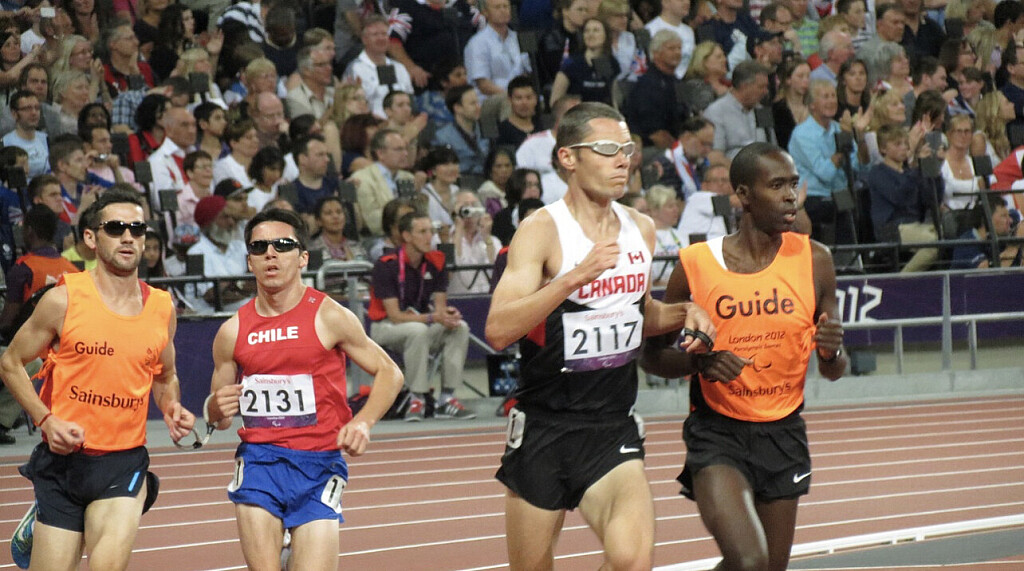
Chase the Sun - Running in Sunglasses
Running is more than just a workout; it's an exhilarating adventure that lets you embrace the great outdoors, break a sweat, and feel the wind in your hair.
It’s not just about you and the pavement anymore - as any seasoned runner knows, the right accessories can make all the difference. This might be a new pair of running trainers, are some additional kit, anything from some bone-conducting headphones to a belt for your phone, keys, and a drink. You might have a Garmin running watch to track your times and fingerless gloves for those chilly mornings out on the road.
Among popular accessories, sunglasses emerge not just as a style statement but as a game-changer for your run. Picture this: you, pounding the pavement with a steady rhythm, the sun casting a warm glow on your path. Without sunglasses, you get momentarily blinded and stumble….
Now picture this – the same scene, but on your face is a sleek pair of shades adding that extra cool factor to your stride. Glare? No such thing as you power forward on your way to a personal best. Let's delve into why these are not just fashion whims but essential gear for every runner.
Why You Need Sunglasses for Running
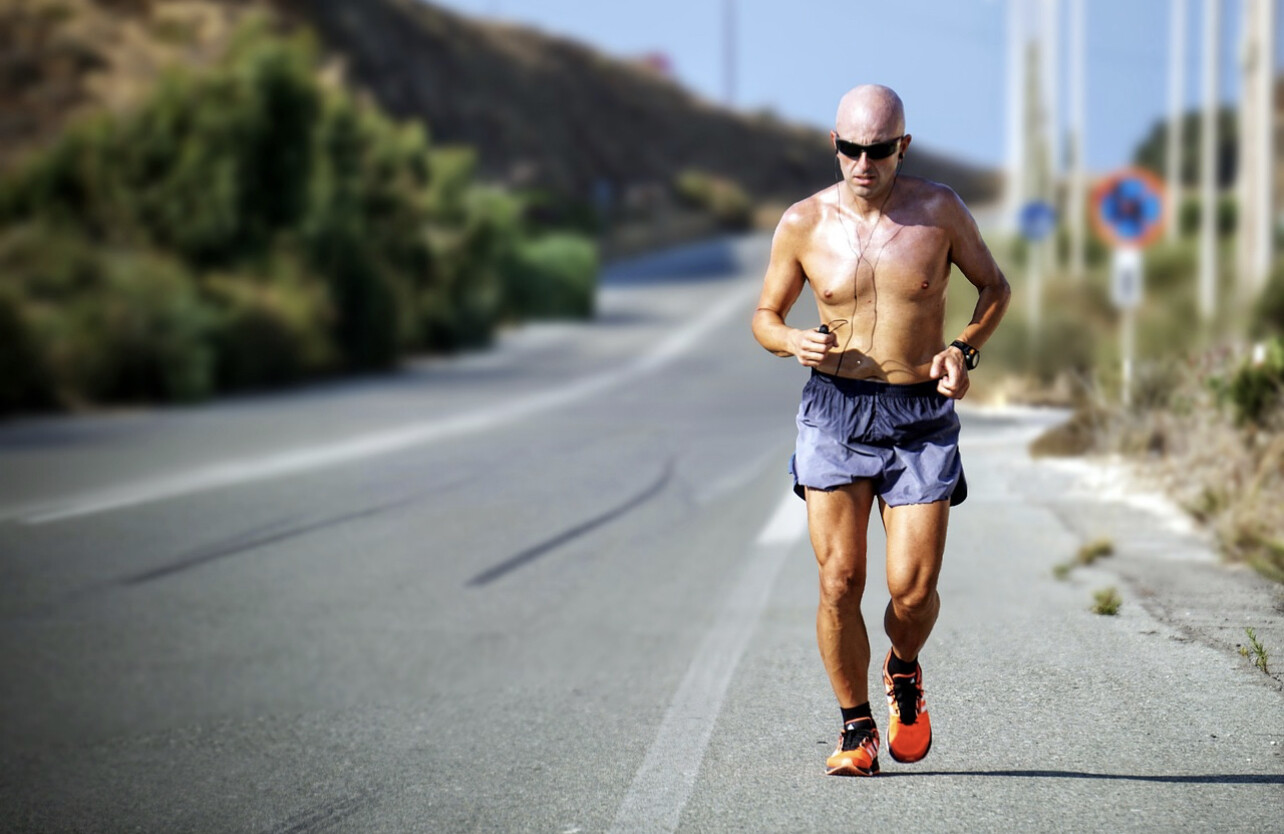
Running under the open sky is invigorating, but it comes with its challenges. The sun can be a relentless adversary to your eyes, causing a multitude of problems. That's where sunglasses come in. Beyond being a trendy accessory, they are your shield against the sun's potent UV rays. Prolonged exposure to these rays can lead to eye strain, fatigue, and even long-term damage. Imagine squinting through your entire run, your eyes battling the glare –not exactly the calming jog you envisioned.
However, running involves constant movement, and that can mean sunglasses are uncomfortable. You have to balance that with the effects of the environment - anyone who's ever tried running against the breeze knows the struggle of keeping their eyes wide open. Sunglasses act as a barrier, keeping wind, dust, and other airborne nuisances at bay. Ever felt a speck of dust or a stray insect in your eye mid-stride? Sunglasses make sure your focus stays on the path ahead, not on clearing debris from your eyes.
Also, the importance of glare reduction cannot be understated. Whether you're running on a beach boardwalk, a city street, or a forest trail, reflective surfaces are everywhere. The sun bounces off cars, water, or even fellow runners! A good pair of running sunglasses with polarized lenses protects you from glare, ensuring you maintain optimal visibility and reducing the risk of accidents.
There are considerations – you can’t just grab any old pair of sunnies. If they’re not the right fit, you’ll be constantly adjusting ill-fitting sunglasses mid-run. With that in mind, here are the main considerations when identifying a pair of running sunglasses to add to your kit.
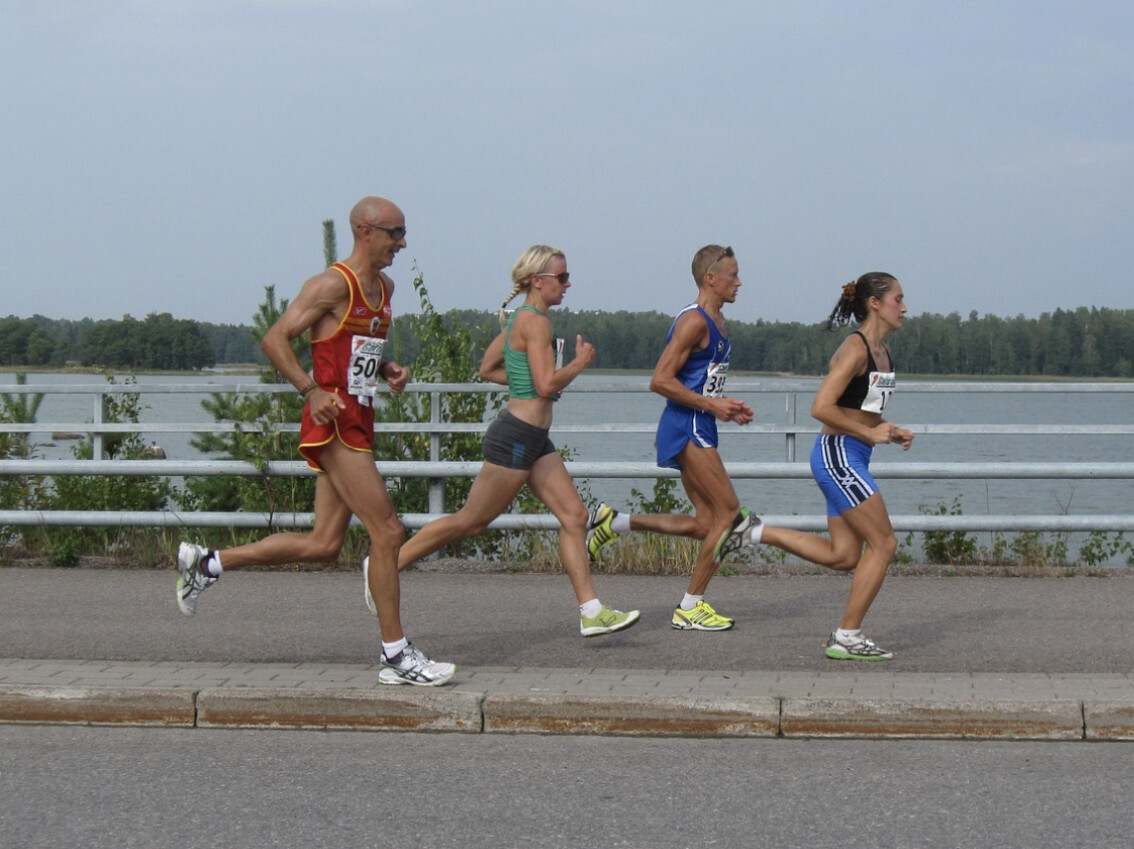
Recommended Sunglasses for Running
First and foremost, UV protection is non-negotiable, so you should look for sunglasses that offer 100% UVA and UVB protection. However, you need to pair those with something comfortable. Lightweight frames and adjustable features ensure a snug fit without causing discomfort. Remember, the last thing you want is for your sunglasses to become a distraction rather than an asset.
Lightweight doesn’t seem to fit with durability, but you’ll need a strong pair, just in case they fall off. Opt for frames made from robust materials that can withstand the occasional bump, sweat, or accidental drop. Running is an adventure, and your sunglasses should be up for the ride.
Also, the lenses are important. We’ve mentioned polarized already, and that’s important in reducing glare. However, you should also pay serious consideration to the lens color. While personal preference plays a role, certain tints can enhance visibility in specific conditions. Gray lenses maintain color accuracy in bright sunlight, brown lenses enhance contrast in varying light conditions, and yellow lenses are great for low-light settings.
There are a couple of brands which come highly recommended. One manufacturer with a reputation for making running sunglasses is Oakley. Their BXTR model boasts plant-based BiO-Matter®* frame material that provides lightweight comfort and durability whilst running, but they’re also durable – they’re designed and undergo high-velocity tests to ensure they’re fit for high-octane situations.
Bolle also has a reputation within the sports eyewear sector, and they’re another option. They have the C-Shifter among their popular running models, with polycarbonate shatterproof and impact-resistant lenses. There’s also a half-rim shield lens that provides excellent airflow for particularly demanding runs.
Finally, CEBE offers a budget-friendly range for those runners who might hang up their trainers after they’ve got fit. They have the Outline model, which comes with an ultra-lightweight frame and shatterproof lenses. They tend to be more multi-use rather than for running, but at the lower end of the scale, they’re certainly a budget option.
Conclusion
Sunglasses - they're not just a finishing touch to your running ensemble; they're your armor against the elements, your shield against UV rays, and your style statement on the go. Running is about freedom, and with the right sunglasses, you're chasing miles, but you don’t have to run away from the sun.
(02/18/2024) ⚡AMP

Buddy the Elf Shatters Guinness Record with Help from Pro Ultramarathoner
Jason Homorody was gunning for the fastest half marathon as a movie character when he ran into Harvey Lewis.A modern-day staple of road running is unexpectedly coming across people running in costume either for a charity or in the hopes of setting a Guinness World Record, but sometimes, these costumed individuals discover the unexpected themselves.
On Sunday, Jason Homorody, 50, was beginning his quest to break the record for the fastest half marathon time while dressed as a movie character—Buddy the Elf from Elf in his case—at the Warm Up Columbus Half Marathon when he received some surprising support from a fellow runner. While attempting to break the previous 1:30:42 record, Homorody, who—obviously—loves Elf and regularly wears the costume around to “cheer people up,” was joined by Harvey Lewis, the current backyard ultramarathon record holder and well-decorated ultrarunner, who has won the likes of the Badwater 135 and USATF 24-Hour National Championships.
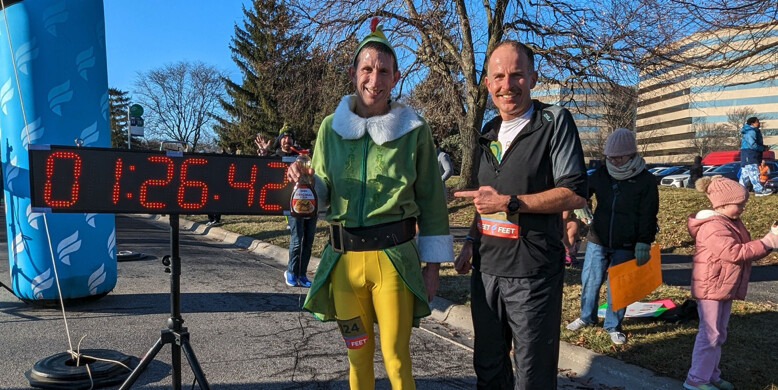
“[He] came up on my shoulder and asked me what pace I was going for,” Homorody told Runner’s World. “Once I answered some questions, he asked if he could run with me. Honestly, at first, I had no idea who he was. But he ran with me the entire race.”Homorody also said Lewis helped him with hydration during the race. “When we would pass the water stop on the course, he was asking if he could get me anything. He kept encouraging me to get water because I think he was concerned about me overheating in my costume,” Homorody said, adding that the two talked about Lewis’ upcoming races during the event.“I was picking his brain about ultramarathoning,” Homorody said. “I knew he recently had a crazy backyard ultra world record, and I was asking if he was almost falling asleep at any point while running, and he said yes.”
So, did the support of an ultramarathoner ultimately push Homorody to his goal? It seems like it, as Buddy the Elf crossed the finish line in 1:25:44, besting the previous record by more than 5 minutes.
“[Lewis] was just a very down-to-earth guy, and he seemed genuinely excited to help pace me to my world record attempt,” Homorody said.
(02/11/2024) ⚡AMPby Runner’s World

Burnout Is Complicated
Kieran Abbotts is a PhD student at the University of Oregon, studying human physiology. He earned his master's degree in Metabolism and Exercise Physiology at Colorado State University. The lab that he works at now studies exercise and environment and stressors on physiology. In other words, he's an expert on how the chemicals in the body work during exercise, and what happens when things get out of whack.
"Essentially, there are two kinds of training. There's functional overreaching, which means you stress the body with hard workouts and long runs. Then you provide adequate time to recover, and you induce adaptations," Abbotts said. This kind of training is ideal-your body is getting stronger. "You want to be functionally overreaching as an elite athlete-so that you're making progress and becoming a better runner, but also giving yourself adequate recovery."
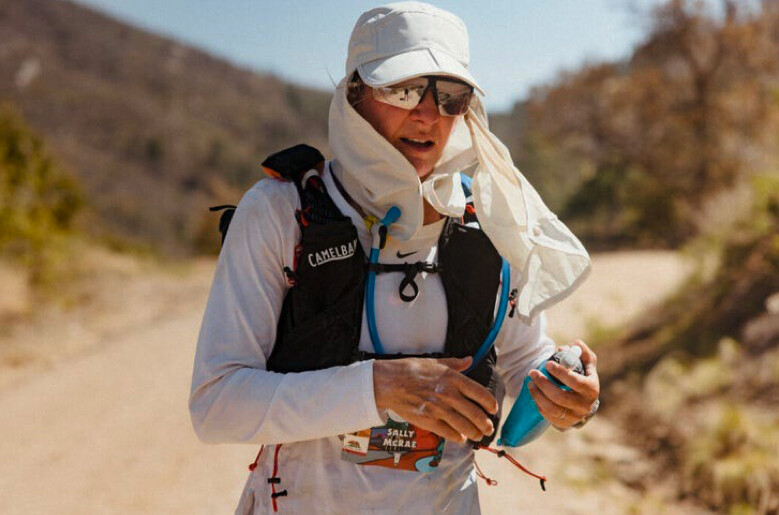
And then there's non-functional overreaching, which can feel the same to many athletes, but it's very different.
"With non-functional overreaching you're essentially doing the same thing-big workouts, stressing the body-but not giving yourself enough time to recover. And so you start doing damage." That damage might take a long time to show itself, Abbots said, but it eventually will.
This might be the most important thing to know about being an athlete at any level. Non-functional overreaching is exactly the same as very healthy training, except without enough rest. And rest is different for everyone, which makes it exceptionally easy to slip from functional overreaching into damaging non-functional overreaching without realizing it. Without adequate rest, the body begins to break down instead of build stronger.
Stress Is Stress
Professional ultrarunner Cat Bradley, 31, living in Hawaii, has experienced fatigue and burnout in various forms, including just after she won Western States in 2017.
Winning a big race is great, but it also means all eyes are on you-the pressure is high to stay on top. "After winning Western States, I took a month off, but I was still running at a high level. And for lack of a better term, I felt like I had a gun to my back," Bradley said. "I wanted Western States so badly, and after I won, so many things happened and I never shook that gun-to-the-back feeling. After a while, it led to burnout. I had to take a mental break."
For many athletes, finding success can be the stress that makes non-functional overreaching feel necessary. How can you take an extended break when you're winning and signing new sponsor contracts?
A second version of burnout for Bradley came when she went through an especially stressful situation outside of running. She was dealing with such extreme daily emotional stress in her personal life that everything else was affected, including running and training. When the body is enduring stress, it doesn't know (or care) what the cause is. We can't put our life into silos. If there's stress in one's life, everything else needs to be adjusted. It doesn't matter if that stress is "just work" or illness, or relationships.
When you're overtraining, or chronically overstressed, your body is creating higher levels of "catecholamines" hormones released by your adrenal glands during times of stress like epinephrine, norepinephrine, or adrenaline. "Having those chronically high levels of overstimulation and not enough recovery, you wind up with a desensitization," Abbotts said. "Overstimulation also causes decreased levels of plasma cortisol. Cortisol is the stress hormone, and it plays a very important role in your physiology."
When you're exercising or stressing the body, cortisol will go up, to help the body deal with the stress. But if you're constantly requiring lots of cortisol, your body will eventually down-regulate. It will adapt and then you'll have low levels of cortisol. This means trouble dealing with physical and mental stress.
In February, Bradley experienced her most recent version of burnout, and it happened mid-race. Bradley was running the Tarawera 100-miler in New Zealand. Besides training for such a big race, she was also working full-time and planning and preparing for her wedding, which was just days after the race. On top of everything, travel to the event was incredibly stressful.
"I was in fourth place, I could see third, and at mile 85, I passed out and hit my head on a rock," Bradley said. "We can talk about the reasons that I fainted, but I really think my brain just shut down-it was too much."
For Bradley, reaching burnout has a lot more to do with outside stressors than the actual running. But now she's aware of that-she continues to work on not reaching the gun-to-the-back feeling. The need to please others. The fear of losing fitness in order to take care of her body. It's an ongoing process, but an important one.
Overdoing Is the American Way
Professional ultrarunner Sally McRae said, based on her observations, Americans are really bad at taking time off. "I've traveled the world and Americans are really bad at resting," she said. "It's part of our work system. You go anywhere in Europe and everyone takes a month-long holiday. You have a kid and you take a year off. We're not conditioned like that in America. It's like you get one week and then after you work a decade, you get two weeks of vacation."
For McRae, avoiding burnout and overtraining has a lot to do with creating a life that's sustainable. She started working when she was 15-years-old, so she realized earlier than most that life couldn't just be working as hard as possible to count down to retirement.
"Perspective is massive when it comes to burnout. My goal every year is to find the wonder and the beauty and the joy in what I do. Because it's my job, but it's also my life," McRae said. "And I really believe we're supposed to rest-it should be a normal part of our life. Whether that's taking a vacation or taking an off-season. I take a two-month offseason and I have for a long time."
One of the most important parts about rest and not overstressing the body is that everyone is different. An overstressed body can lead to hormonal imbalances, which in turn affects everything.
"When you're overtraining, you tend to get mood changes and have trouble sleeping," Abbotts said. "Two of the big things that stand out are you're exhausted but you can't sleep. And the other is irritability-mood swings, and depression." When you get to the point that you've overstressed your body for so long that the chemicals are changing, pretty much everything starts falling apart.
And even though everyone is different, you'd never know that from looking at social media. "I know social media makes it seem like ultrarunners are running 40 miles a day, doing a 100-mile race every other weekend," McRae said. "And that's insane. You've got to be in touch with yourself. It's very different to wake up and feel sore or tired, but if you wake up and feel like you have no joy in the thing you're doing, you need a real break from it."
How Can the Running Community Do Better?
Elite ultrarunner and running coach Sandi Nypaver wants runners to get more in touch with how they're feeling and less concerned about numbers or what anyone else is doing.
"I have to have honest talks with people I'm coaching. I need them to feel like they can tell me how they feel, because sometimes they think they have to stick to the training plan for the week no matter what," she said. "But the plan is never set in stone. It's meant to be adjusted based on how you're feeling. Some weeks we might feel great and not need to change anything, while other weeks we might have to totally crash the plan and do something else."
It's easy to judge ourselves against everyone else, especially when results and reactions are so public and available.
"It's easy to say, 'if that person only took three days off after a big race, and now they're already back to training, that must be what you're supposed to do,'" she said. "But even at the highest level, training is different for everyone. Resting is different for everyone."
"Something that's really, really hard for many runners to understand is that once you're not sore anymore, that you're still not recovered," Nypaver said. "A lot of research says that things are still going on in your body for up to four weeks after, for certain races, depending on the distance."
Sometimes it's difficult to be aware of subtle signs when the soreness is gone. "Convincing people that they need to chill out for a while, even past the soreness, can be really difficult." But after a huge effort, and before the next, people rarely end up saying things like, "I really wish I hadn't rested so thoroughly." Part of it is actually having a recovery plan. Putting rest days on the calendar, focusing on foam rolling and mobility on days that you're not "doing."
"And, actually just relaxing. Taking it easy. It's not just a running model, we live in a culture where we're always being asked to do more," Nypaver said. "I wish instead of always thinking about doing more, we'd focus on how we want to be more. A lot of us want to be more relaxed and less stressed and happier and enjoy our lives. We need to put our attention on that instead of trying to do so much. It's something I struggle with all the time."
We don't get validation for resting, relaxing, and being present because there's no tangible thing to show for it. There's no "be really calm often" challenge on Strava. But the bigger rewards are great. You just have to trade in immediate dopamine hits for a much more balanced, happier life.
Simple, right?
"One thing I'm doing, and asking my athletes to do, is to write down your intentions," Nypaver said. "One of my intentions is to chill out more this summer and enjoy it. I grew up thinking it's all about running, and I have to go all-in on running. But having other outlets, other things that I like to do, is so important."
When you've reached burnout-an extended period of non-functional overreaching, prolonged rest is the only way to let the body fix itself.
"Once you are overtrained, you need to stop training," Abbotts said. "It's just kind of the bottom line. Maybe some people can get away with greatly reducing their training load, but most of the time you need to stop. You need an extended amount of time off."
There's nothing glamorous about rest. There's no prize money in relaxing. But it's the absolute key ingredient in extended performance, and in a much healthier, happier life.
(02/10/2024) ⚡AMPby Trail Runner Magazine
Try the Spine Race champion’s bonkers treadmill workout
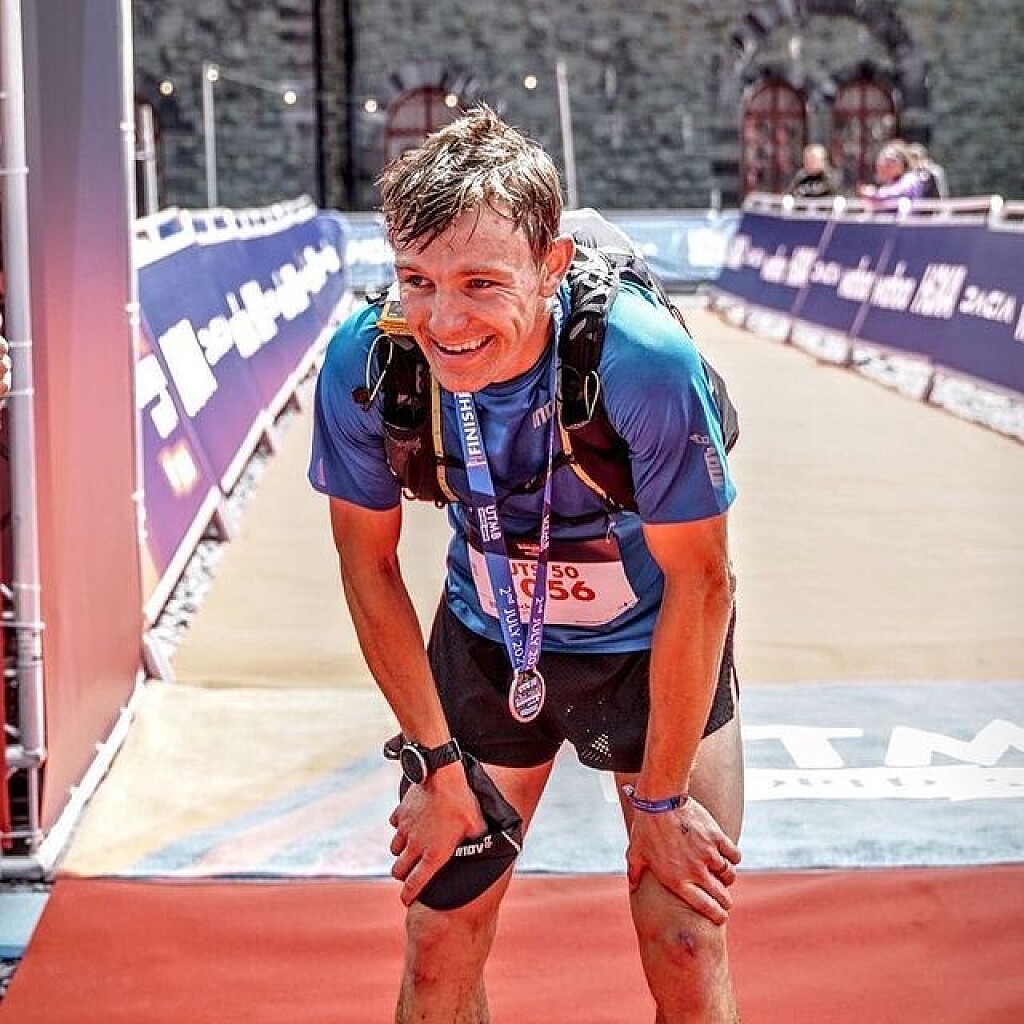
In January, Great Britain’s Jack Scott, 29, clinched a record-breaking victory on the grueling 432-km Pennine Way, winning the Montane Winter Spine Race in 72 hours, 55 minutes and five seconds. After facing setbacks and physical challenges in the lead-up to the race, Scott was forced to go beyond conventional training methods to keep his body healthy and strong, and he shared his training secrets in a blog post with his sponsor, Inov8—revealing a bonkers treadmill workout that played a pivotal role in his success.
Scott’s extraordinary achievement not only eclipsed fellow Brit Damian Hall’s previous men’s record of 84 hours, 36 minutes, and 24 seconds; it also surpassed the overall best set by Jasmin Paris in 2019 (by more than 10 hours), a record considered by many to be unbeatable. Here’s how the ultra runner achieved the impossible.
Training challenges
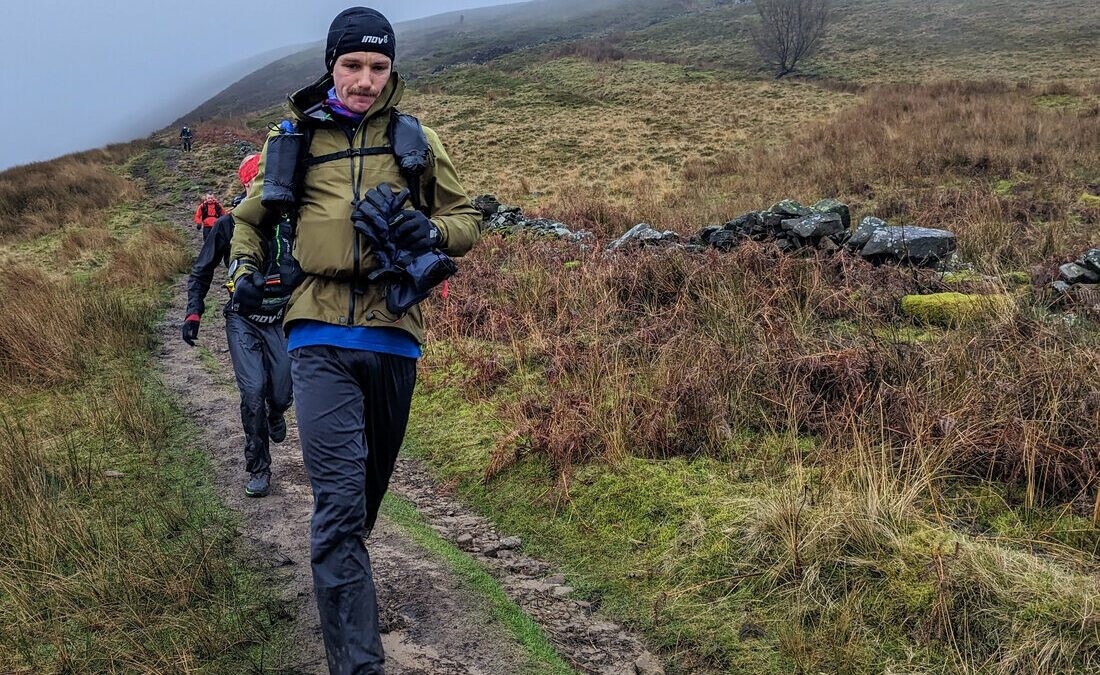
Scott encountered unexpected obstacles during his final preparations for the 2024 Spine Race. Battling fatigue, IT band issues and a series of daily discomforts, he found himself unable to execute his training plan as desired. Scott strategically adapted his approach, incorporating longer days out on the course with a structured gym program and a distinctive treadmill workout.
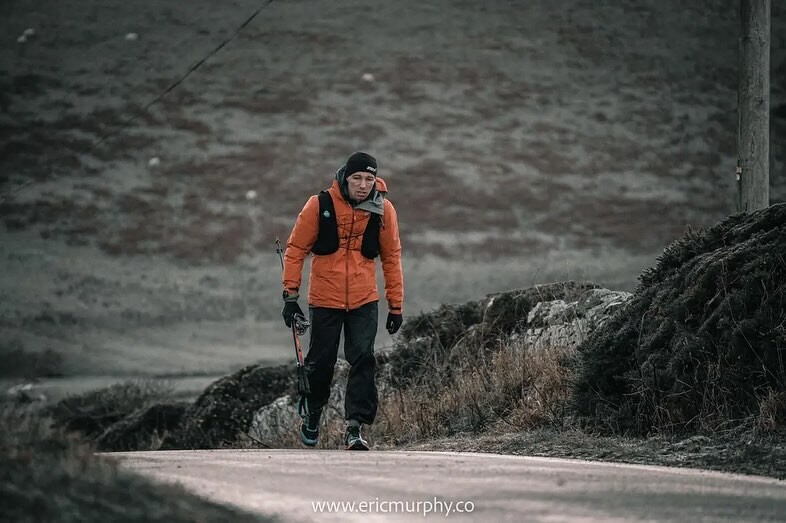
Scott’s treadmill routine, aptly named “The Uphill Treadmill Power Hour,” proved to be a game-changer. With a short warm-up preceding an hour-long ascent on the treadmill set at a staggering 25 per cent incline, Scott gained between 1,375 and 1,525m of elevation. During this intense session, he varied his pace, ranging from 5.4 kph to 7.2 kph, and covering a distance of no more than 6 km total. The average pace across all of Scott’s sessions remained around 10 minutes per kilometer.
Maximum effect with minimal mileage
The uniqueness of this workout lies in its efficiency. “What I was doing here was working at Spine Race pace but also exploring a very high-intensity session for my heart and lungs (my heart rate would easily be above 175 [bpm] for 50 minutes during a session like this),” said Scott. This approach allowed him to maintain fitness and train race-specifically, all while keeping the mileage low and manageable.
Scott emphasized the session’s effectiveness in maximizing elevation gains without placing undue stress on his body. The treadmill power hours became a crucial component of his preparation, enabling him to adapt to the challenges of the Spine Race course and the unpredictable conditions he would face.
Try it at home
While most of us aren’t training for a challenge quite as tough as the Spine Race, we can still adapt Scott’s approach to help us crush our race goals. Try tweaking the workout to fit the length of time you have available, and your ability.
Warm up with a 10-minute brisk walk or easy jog.
Crank up the incline on your treadmill, adjusting it until you find a sweet spot—you should feel as though you are putting out a hard, leg-burning effort, but you should still feel comfortable and safe on the treadmill, and as though you can sustain your output for at least fifteen minutes.
Cool down with 10 minutes of very easy running or walking.
For regular runners seeking to inject innovation into their training routines, Scott’s power hour offers a fresh perspective, combining elevation-focused workouts with interval training to enhance race-specific fitness without overloading with excessive mileage.
(02/08/2024) ⚡AMPby Keeley Milne
Five tips from top Canadian ultrarunner Jazmine Lowther
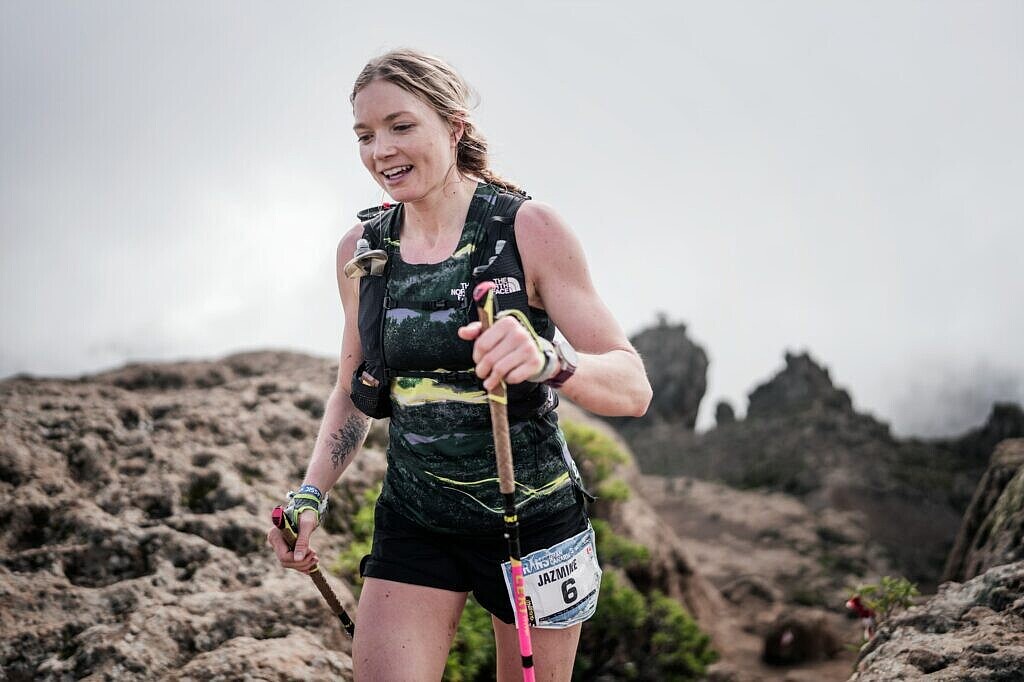
Canadian ultrarunning star Jazmine Lowther has worked through some epic highs and challenging lows since she turned pro in 2022. Lowther took the top spot at the 2022 Canyons Endurance Runs by UTMB, followed by a fourth-place finish in the 2022 CCC race at Ultra-Trail du Mont Blanc (UTMB).
While she managed to speed to second at Transgrancanaria 128K in Spain in 2023, she has also struggled with injuries and biomechanics issues. Lowther recently shared five things she wishes she had embraced when she first dove into ultrarunning; newbies and seasoned athletes alike can learn from her wisdom and suggestions.
1.- Befriend your heart rate

Lowther says she mostly runs by RPE (rate of perceived exertion), but adopting an approach that leans more toward heart-rate-based training has allowed her to “understand my own physiology much deeper, recover properly, and respect pacing.”
Becoming familiar with your heart rate zones can be a valuable skill, and paying attention to your performance metrics, such as pace and endurance, in relation to your zones will help you become a more responsive, tuned-in, healthy athlete. You’ll also be better able to notice if your body needs more rest and recovery time.
2.- Start a training log
While many runners count on apps like Strava to capture their running data, spending time logging more in-depth information about your training is worthwhile, as it provides unique insights over time. “Strava is great (it has most of my training),” says Lowther, “but it doesn’t include how I felt, what workouts I completed, what I ate before/after, caffeinated, fatigue, etc.”
3.- Wear sunscreen
This one is as simple as it sounds. “Protect thy skin,” says Lowther. “Ultrarunning takes you out there for mega-long hours! Slather up!” While most of us know that prolonged sun exposure during outdoor running can increase the risk of skin damage, including sunburn, premature aging and an elevated risk of skin cancer, it can be easy to forget to reapply after hours on the trails. Wearing sunscreen helps to create a protective barrier, reducing the absorption of UV rays and minimizing the potential harm to the skin, and, as Lowther notes, is an essential precautionary measure (in all kinds of weather) for maintaining skin health.
4.- Find your baseline
Lowther suggests integrating benchmark training runs into your routine to establish an initial baseline. The process involves finishing a predetermined course or distance to use as a reference tool and provides a basis for assessing your performance and comparing it to others in terms of time, pace, or other relevant metrics. “I suppose I’ve done this in an unstructured way (Strava segments anyone?) but seriously, repeating workouts in the same location/distance is great for checking in on things,” she says.
5.- Have patience in the process
Focus on consistency and long-term goals and gains. Consider each run and workout as an investment in your fitness and training bank, even if it didn’t go exactly as planned. “One day at a time, year over year,” says Lowther. “Consistency, is that you?”
(02/08/2024) ⚡AMPby Keeley Milne

How Little Strength Training Can You Get Away With?
To be a maximalist, you must first be a minimalist. That's an aphorism I first heard from Michael Joyner, the Mayo Clinic physiologist and human performance expert, and it resonates. To truly reach your potential in one or a few areas, you have to be disciplined about all the other ways in which you could fritter away your valuable time and energy. Excellence requires tough choices.
All this is to say that when it comes to strength training, I'm not ashamed to admit that my number one question is "How little can I get away with?" I'm fully convinced that strength training has important benefits for health and performance, and I recognize that lifting heavy things can be a source of meaning and self-mastery. But I've got miles to run before I sleep and, metaphorically, a bunch of errands to run before my kids get home, so a recent review in Sports Medicine caught my eye. An international group of researchers, led by David Behm of Memorial University of Newfoundland and Andreas Konrad of Graz University in Austria, sum up the existing research on minimalist resistance training: how low can you go and still get meaningful gains in strength and fitness?

For starters, let's acknowledge that making meaningful gains is not the same as optimizing or maximizing your gains. There's a general pattern in the dose-response functions of various types of exercise: doing a little bit gives you the biggest bang for your buck, but adding more training leads to steadily diminishing returns (and eventually, for reasons that aren't as obvious as you might think, a plateau). Those diminishing returns are worth chasing if you're trying to maximize your performance. But if your goal is health, more is not necessarily better, as we'll see below.
In a perfect world, you'd like to see a systematic meta-analysis of all the literature on minimalist strength training, meaning that you'd pool the results of all the different studies into one big dataset and extract the magic training formula. Unfortunately, the resistance training literature is all over the map: different types of strength training, study subjects with different characteristics and levels of experience, different ways of measuring the outcome. That makes it impossible to meaningfully combine them in one dataset. Instead, Behm and Kramer settled for a narrative review, which basically means reading everything you can find and trying to sum it up.
Their key conclusion is that "resistance training-hesitant individuals" can get significant gains from one workout a week consisting of just one set of 6 to 15 reps, with a weight somewhere between 30 and 80 percent of one-rep max, preferably with multi-joint movements like squats, deadlifts, and bench press. That's strikingly similar to a minimalist program I wrote about a couple of years ago: that one involved a single weekly set of 4 to 6 reps, but the lifting motions were ultra-slow, which heightens the stimulus. You don't even necessarily have to lift to failure, though you probably need to get within a couple of reps of it.
The data that Behm and Kramer looked at came from studies that typically lasted 8 to 12 weeks. One of the unanswered questions is whether such a minimalist program would keep producing gains on a longer timeframe. You'd clearly need to continue increasing the weight you lift to ensure that you're still pushing your body to adapt. But do you reach a point where further progress requires you to increase the number of sets, or the number of workouts per week? Maybe-but it's worth recalling that we're not trying to maximize gains here, we're just trying to achieve some hazily defined minimum stimulus. For those purposes, the evidence suggests running through a rigorous full-body workout once a week is enough to maintain a minimum level of muscular fitness.
There's another, less obvious angle to minimalist strength training that researchers continue to grapple with. Duck-Chul Lee of Iowa State and I-Min Lee of Harvard, both prominent epidemiologists, published a recent review in Current Cardiology Reports called "Optimum Dose of Resistance Exercise for Cardiovascular Health and Longevity: Is More Better?"
The question echoes a debate that flared up a decade or so ago about whether too much running is bad for you, in which Duck-Chul Lee played a key role. Back in 2018, he also published a study of 12,500 patients from the Cooper Clinic in Dallas which found that those who did resistance training were healthier-but that the benefits maxed out at two workouts a week, and were reversed beyond about four workouts a week. At the time, I assumed the result was a fluke. But the new article collects a larger body of evidence to bolster the case. The newer data suggests that about an hour of strength training a week maximizes the benefits, and beyond two hours a week reverses them. Lee and Lee hypothesize that too much strength training might lead to stiffer arteries, or perhaps to chronic inflammation.
Now, when Duck-Chul Lee and others produced data suggesting that running more than 20 miles a week is bad for your health, I was brimming with skepticism and went over the data with a fine-tooth comb. I'm similarly cautious about these new results, and have trouble believing that there's anything unhealthy about doing three weekly strength workouts. But they do put the idea of minimalist strength training in a different light. Maybe you're not maximizing strength or muscle gains, but it's possible that you're optimizing long-term health-especially if the reason you only hit the gym once or twice a week is that you're too busy hitting the trails.
(02/03/2024) ⚡AMPby Trail Runner Magazine
Four runners share their mental health stories
Many runners find their sport is not only a way to gain physical resilience, but also a powerful ally in the path toward mental well-being. The road to mental health isn’t solitary, and witnessing others share their challenges and successes can be uplifting and inspiring.
From pros to amateurs, athletes are speaking out about their struggles and triumphs with mental health. Here are four runners to follow who are also mental health advocates.
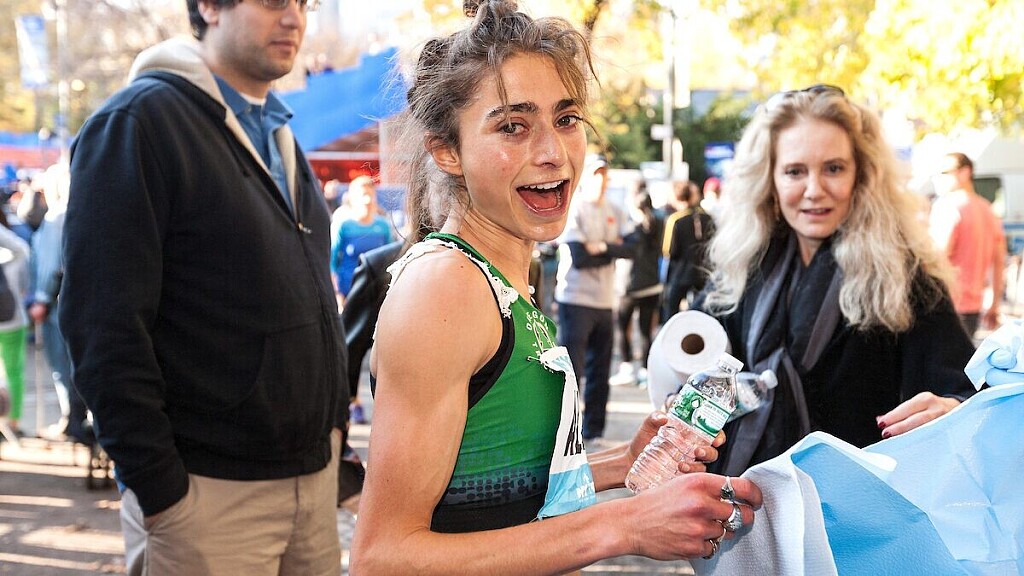
1.- Alexi Pappas
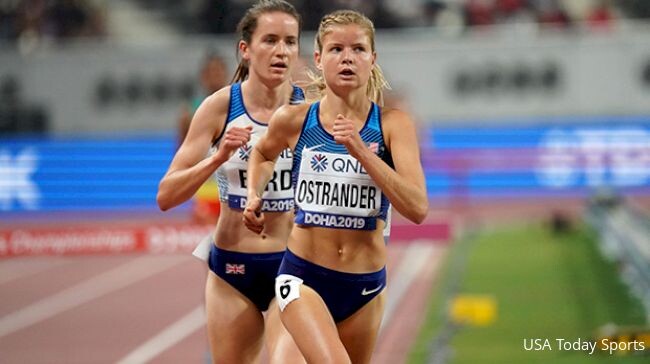
Pappas is known for being a remarkable athlete (she ran the 10,000m for Greece at the 2016 Olympics in Rio de Janeiro), but she also boasts credentials as a renowned author, filmmaker, and mental health advocate. Pappas opened up about mental health in 2020: after working toward and achieving her Olympic dreams, her mental health spiralled, and she was eventually diagnosed with severe clinical depression, which was compounded by injuries, a lack of sleep and her own reluctance to take a break from training.
Pappas authored her first book in 2021: Bravey: Chasing Dreams, Befriending Pain, and Other Big Ideas, highlighting her triumphs and challenges in sports and life, and encouraging readers to be “braveys” in pursuing their passions. She continues to advocate and be a source of hope to others on social media.”What if we athletes approached our mental health the same way we approach our physical health?” Pappas asks.
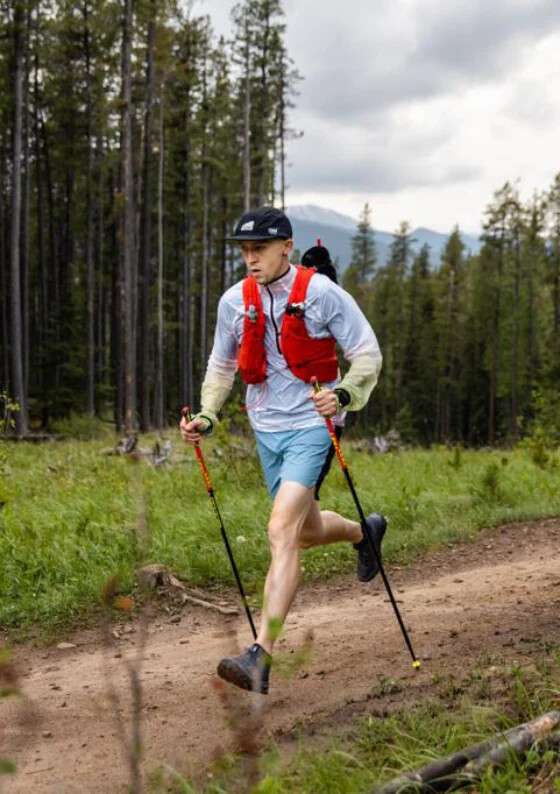
Former American steeplechaser turned elite trail runner, Ostrander uses her Instagram platform to share mental health and eating disorder awareness and advocacy.
In 2021, Ostrander returned to professional competition after being sidelined with multiple injuries for the previous 18 months. During this time, she was hospitalized for treatment of an eating disorder. Ostrander qualified for the U.S. Olympic Trials, where she ran a personal best of 9:26.96 in the 3,000m steeplechase, before deciding to take a year-long break from professional running to prioritize her own mental health.
Ostrander returned to racing in 2023, and made a shift to the trails, running to ninth place at the Mammoth 26K in California in September.
3.- Evan Birch
Canadian ultrarunner and mental health advocate Evan Birch shares an unflinching look at his mental health journey on social media as he works to destigmatize the conversation around mental wellness. Birch is a former 911 dispatcher from Calgary who has been running on trails for more than a decade, and who most recently conquered Western Canada’s first 200-mile race, The Divide 200, in September 2023.
A busy father to young children, Birch recently collaborated with filmmaker Dylan Leeder to create Running Forward, a documentary illuminating the intersection between running and mental health.”It is more important to me now that I meet the truth within me, than it is to make other people comfortable with how I am,” Birch says on social media. “The gifts I have received from allowing myself to be sad are so plentiful.”
4.- Denoja Uthayakumar
From Scarborough, Ont., Uthayakumar is no stranger to hardship, but she has taken her experiences and built a social platform where she can advocate for individuals from similar backgrounds. Uthayakmar is a cancer survivor, body positivity and mental health advocate and was Canadian Running’s pick for our 2023 Community Builder of the Year award.
Uthayakumar was born into a Tamil family, and was diagnosed with thyroid cancer at age five; she shares her physical and mental health challenges alongside the joy that running and the community around it bring to her. “This year pushed me. It broke me down. It challenged me to no end,” Uthayakumar says on Instagram. “It was hard, but I rose higher with my running journey, and was able to share more of my story during my healing while being a survivor.”
(01/31/2024) ⚡AMPby Keeley Milne

This ultrarunning champ’s 5K workout will make you faster
No matter what distance you're training for, you'll boost speed and running economy with this fun, fast session.
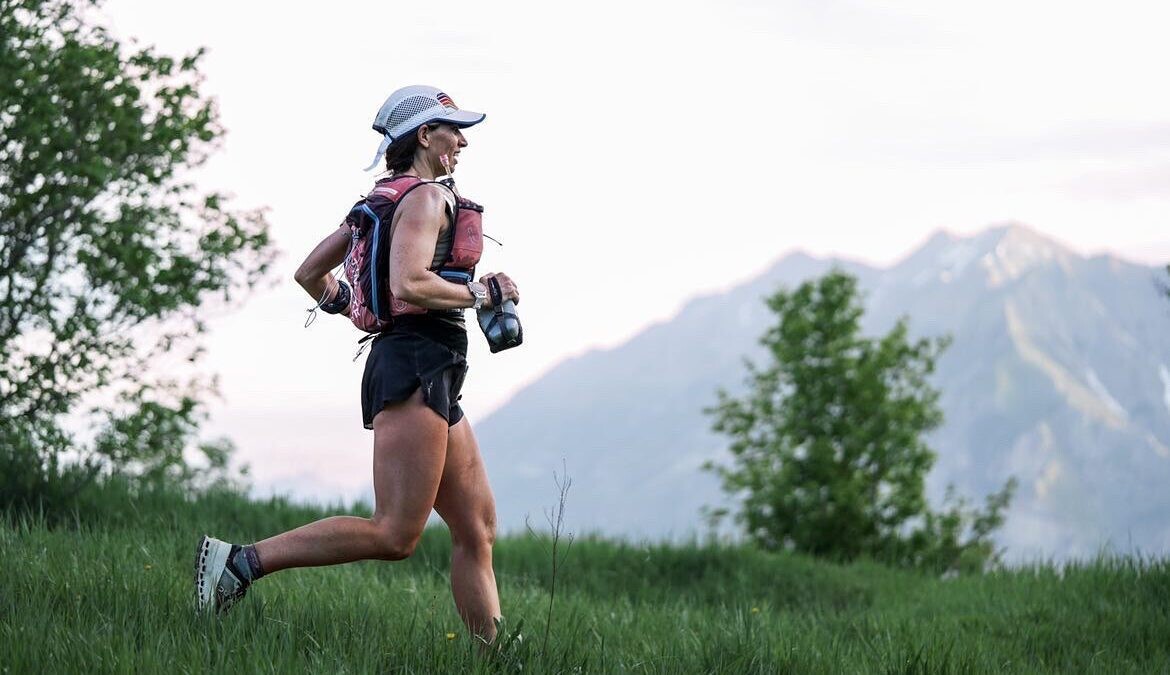
Whether you are training for a 10K PB this season or hoping to run your first ultra, you’ll benefit from adding a speedwork session (like this one) to your training toolbox. Utah-based running coach, personal trainer and ultrarunning champ Rhandi Orme has a workout that she likes to prescribe to her athletes, as well as using herself (and she suggests modifications for all levels of runners).
“This is a workout that long-distance athletes can benefit from,” she told Canadian Running. “Having top-end speed on the shorter distances improves runners’ VO2 max and running economy, which helps us run faster and stronger at longer distances, too.
The workout
Warm up with 15-20 minutes of easy running, followed by dynamic drills or stretches.
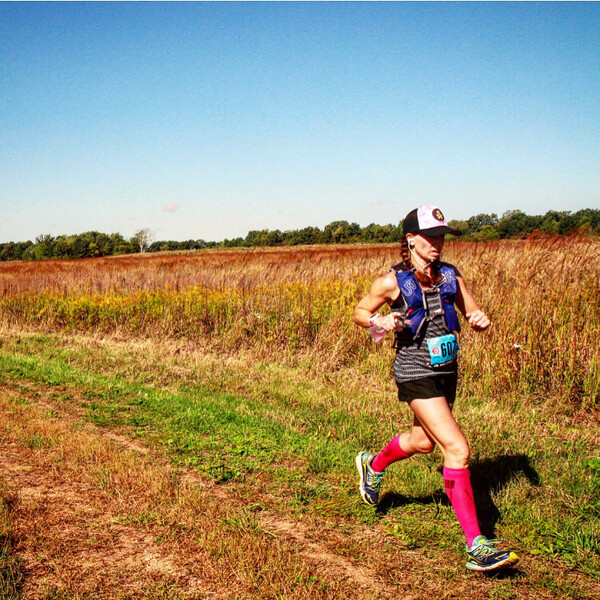
Run 5 x 2 minutes at 5K goal pace, with two minutes of recovery jogging between intervals.
Run 4 x 2 minutes at 5K goal pace with a minute’s recovery jog between intervals.
Finish your speedwork with a fast mile, to see what you can do on tired legs (all effort-based for this final interval). “Don’t look at your watch. Pretend you are running the last mile of your next 5K race,” says Orme.
Cool down with 10-20 minutes of easy running.
*Bonus: any time after this hard effort (but on the same day) is ideal for your leg-strength training session.
Modifications
Shorten or extend intervals based on your current level of fitness. Orme suggests that beginners start with 4 x 30 seconds (at goal pace) and then 2 x 60 seconds. “You can also increase the recovery time between intervals,” says Orme. For newer runners, reducing the “fast-finish” mile to a “fast-finish” half-mile is a great option, and Orme suggests playing with the recovery time and the number of intervals based on your current fitness.
“Once the workout begins to get more comfortable, you can increase the intervals and reduce the recovery, working your way up to the full workout,” says Orme. “I would recommend doing this workout every other week, until you see a noticeable improvement.” For experienced runners hoping to add more volume, she suggests extending the warmup and cooldown.
Remember to follow a harder training day like this one with a rest day or easy-run day.
(01/31/2024) ⚡AMPby Keeley Milne

7 Legit Benefits of Running At Night—And How To Do It Safely
It was around mile two of the Joshua Tree Half Marathon that I started to hear animals I couldn’t see. Was that a horse? I wondered (and hoped). The daylight was officially gone.
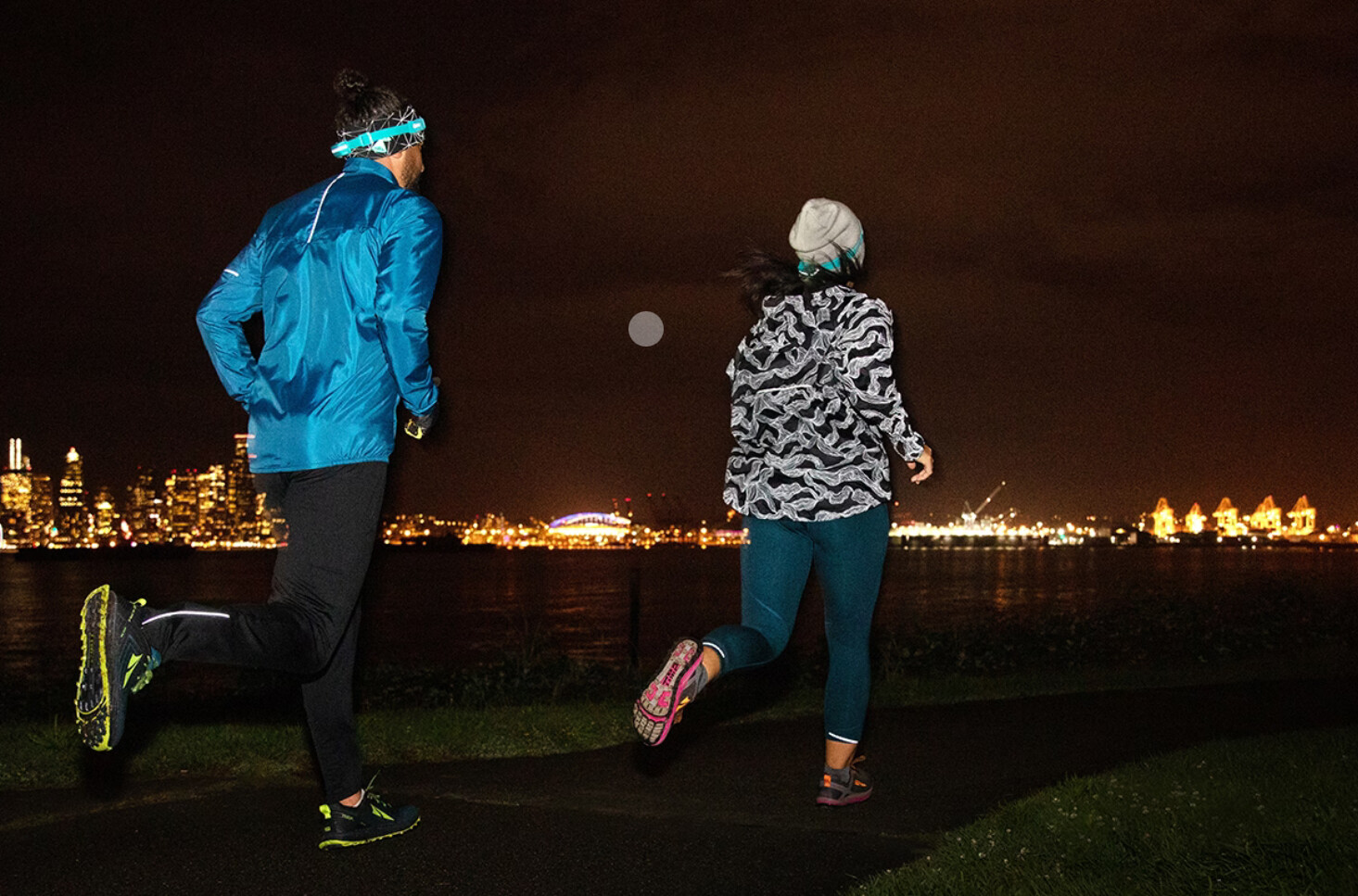
But I realized that as spooky as night running might be, it also creates an eerie kind of magic. Lights twinkled in the valley below the hilly path I was climbing, but all around me it was pitch black, aside from the few feet of sandy trail that each runner’s headlamp illuminated. With nothing else to see, all I had to focus on were my own footsteps and my breath—and how I could race through the desert as quickly as possible.
Amie Dworecki, B.S., M.A., MBA, Amie Dworecki, B.S., M.A., MBA, is a running coach and founder of Running With Life.
Brad Whitley, DPT, physical therapist at Bespoke Treatments in Seattle
Marnie Kunz, CPT2, USATF- and RRCA-certified running coach
Most long-distance races take place in the morning, but this half marathon starts right around sunset. Because the scenery of the course is a tad monotonous, the race organizers embrace the adrenaline rush you can get from running under the stars.
I joined as part of a press trip sponsored by Nathan Sports, Skechers, and Swiftwick. The experience reminded me that even when the days are short during the winter and pushing your pace after the sun goes down becomes the norm, night running can be its own unique adventure.
The more I looked into running at night, the more advantages I found—even if you need to take a few extra safety precautions when you’re lacing up.
The perks of running at night
What are the main benefits of night running? Here are a few of the top reasons to get in a nocturnal workout.
1. The temperature is cooler
Earlier in the day before the Joshua Tree race, I’d been cowering from the heat anytime the sun touched my skin. But once it was dark out, the desert air got so cool that my sweat-wicking T-shirt barely had any work to do.
As it turns out, temperatures around 40° Fahrenheit are ideal for long-distance running, largely because our hearts don’t have to work quite as hard to pump our blood to cool us down, according to a May 2012 study in PLOS One.
Even if the mercury doesn’t get quite that low after dark in a hot or humid climate, night running after sunset (or, alternatively, heading out before sunrise) is clearly the way to go to nab those cooler running temperatures.
2. Your body’s more ready to run
Running shortly after rolling out of bed can sometimes feel like wading through molasses. It’s no surprise why: You’ve just been lying stationary for hours, so your body temperature and mobility aren’t exactly ideal.
3. It might feel easier
The dark can be a secret weapon for runners. One August 2012 study in the Journal of Sport & Exercise Psychology on optic flow (our perception of our movement in relation to our surroundings) suggested that because we can’t see as far in the dark, we feel like we’re going faster because close objects seem to pass by more quickly than those in the distance.
Even though your watch might not record any speedier miles, running in the dark can be a helpful confidence boost when you get the sense that you’re zooming along.
4. Night running can help you sleep
How can running at night affect your sleep quality? Despite rumors to the contrary, there’s some evidence to suggest evening runs might actually help you get deeper zzzs.
An October 2018 meta-analysis in Sports Medicine found that as long as you finish running more than an hour before your bedtime, it most likely won’t mess with your sleep quality. Instead, it could actually help you spend slightly longer in those restorative deep sleep stages.
Anecdotally, some people say they also seem to fall asleep faster.
That’s something to experiment with, according to certified running coach Amie Dworecki, CPT. Everybody’s different, so you might need to find out what works best for your own circadian rhythm.
5. You’re likely better fueled
Eating can be tricky for morning runners—you’ll run better with some food in your stomach, but if you don’t give yourself enough time to digest, you might run into GI issues.
At night, though, you should be fairly well-fueled from noshing all day, Dworecki says. Just be sure to have a snack to top off your carbohydrate stores before heading out the door, says certified running coach Marnie Kunz, CPT.
6. It’s more peaceful
Depending on where you run, during the day you might feel like you’re playing Frogger with traffic and pedestrians, dogs, and baby strollers. At night, most of those hurdles typically fade away.
“It's really almost a meditative experience because of the quiet and solitude,” Dworecki says. “It can really add relaxation to your running.”
7. You have more options
Because you’re less likely to have a certain time you need to be back by at night than you would in the morning, it’s easier to choose your own adventure based on how you’re feeling. You can add a couple extra miles if you feel like it, or end early and walk home instead.
Running at night vs. morning: How to choose
Many runners swear by their morning miles. But obviously, the a.m. hours aren’t the only time to run. How do you know whether night or morning runs will serve you best?
For some people, it’s purely logistical: The best time to get in a run is whenever you can run. But if you have a choice, it might help to pay attention to the natural ups and downs in your energy levels.
“If you're a night person, you can actually feel better or more energetic if you're running in the evenings,” Dworecki says. Or, she adds, you might be able to use running to give yourself an energy boost at a time when it would typically dip.
If you’re someone who needs camaraderie to lace up, one of the benefits of night running is you’re more likely to find a group run to join after the work day, or convince a friend to join you for a few social miles.
Even if you’re alone, night running can also give you more of a thrill than the chore-like approach you might take to morning runs.
“It's kind of an adrenaline rush running at night sometimes,” Kunz says.
On the other hand, running in the morning can be safer because there’s typically more people on the street, and more daylight means you’re more visible to cars.
Running first thing in the morning can also make you more consistent—even if you get stuck working late hours or friends convince you to head out for a happy hour, your workout will already be done.
Safety precautions for night running
1. Make sure you have enough light
Unless you know you’ll be running in a well-lit area, you’ll need to bring or wear your own running lights, Dworeck says.
I ran the Joshua Tree Half Marathon with the lightweight Nathan Sports Neutron Fire RX 2.0 Runner’s Headlamp, which securely attached to my forehead, and gave me 250 lumens of light in any direction I turned. Although it took me a little while to find the right spot on my forehead so it didn’t slip or bounce, once I did, I forgot it was even there.
If the thought of wearing a light on your head doesn’t sound appealing, you can also opt for a chest lamp or carry your own small flashlight. There are even have lights you can put on your shoes or your gloves, Dworecki says.
2. Stay visible to cars
Before the race, I was sent Nathan’s Laser Light 3 Liter Hydration Pack, which has a genius double-duty design that gives you a place to stash water as well as lights on the back in case you’re running anywhere there might be cars.
If you don’t have actual lights on your body, at least be sure to wear bright reflective gear so drivers can easily see you. Light-up reflective vests aren’t your only option—these days, many pieces of running gear stylishly incorporate reflective details, and there are even several reflective running shoes.
3. Consider leaving your headphones at home
Night running probably isn’t the right time to zone out to a podcast. Because you won’t be able to see as well, it helps to keep your other senses sharp.
“Watch your use of headphones just to be aware of what's around you,” Dworecki says.
4. Let someone know where you are
Although running when the streets are quiet can feel less stressful than during busier, noisier parts of the day, empty roads or trails can also be dangerous.
“Let someone know where you're going or share your run so they can track you,” Kunz says.
Apps like Strava let you proactively send your location to select contacts in real time. Alternatively, you can choose to stick to sidewalks or a track where you know other people will be out and about.
How to motivate yourself to run at night
After a long day, forcing yourself to get off of your warm couch and out into the dark doesn’t always sound super appealing. Kunz suggests making a promise to yourself to simply run 10 minutes—it’s just a little exercise snack that doesn’t feel like too much pressure.
“You know you can turn back, but once you're out the door, usually you'll feel okay and just keep running,” she says.
Dworecki adds that for some people, it’s easier to run right from their workplace. When I was training for an ultramarathon, for instance, I used to run home four miles from my office every night so that I didn’t waste half an hour commuting on the subway—my commute was my run (and it only took slightly longer). Then, once I stepped in the door, I could just relax without having to convince myself to leave again.
It can also be helpful to make night running more social by joining a group run or turning it into a date with a friend to catch up after work.
“[It] makes your run more fun and it gives you some accountability,” Kunz says. Even running with a dog can help a night run feel less lonely.
FAQ
1. Do I need a light to run at night?
If you’re going on trails or areas without ample street lamps, you’ll want to bring your own light source with you to make sure you can see where you’re going and what you’re about to step on. The most popular option among runners is a headlamp.
2. Can running at night help in managing stress?
Running is always a good stress release—the extra blood flow to our brain triggers a release of dopamine and endorphins, sometimes leading to the famous “runner’s high.” These benefits might be especially welcome at night.
“It's a great way to kind of blow off steam at the end of the day, and help unwind and relax before going to sleep,” Kunz says.
3. Is it bad to run at 10 p.m.?
Sometimes the only chance you have to fit in a workout is after many people go to bed. Dworecki says that sometimes when she’s struggling with insomnia, she might head out for a run around 1 a.m.
Just know that working up a sweat with intense exercise, like running vs. walking, for instance, will raise your heart rate pretty high, so be sure to give yourself enough time (at least an hour) to wind down after you're finished so it doesn’t mess with your sleep.
No matter when you get back home, do a cooldown, take a hot shower, eat some food, and settle in for the night knowing you’ve gotten all those longevity benefits and health perks.
(01/28/2024) ⚡AMP
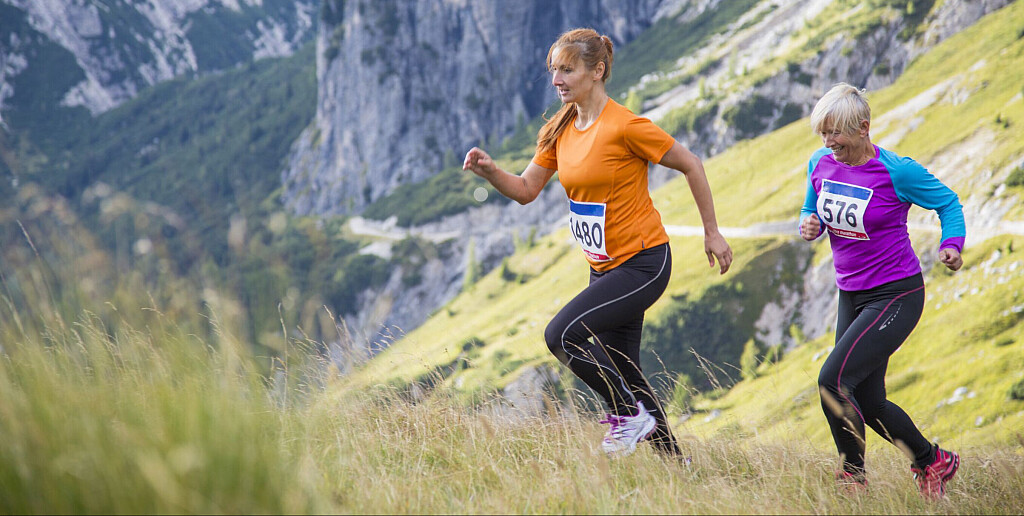
How to Use the Run/Walk Method for Faster Times and Longer Distances
Adding walk breaks to your training runs and races just might provide your ticket to faster finishes or longer distances.
Many runners have a few dirty little secrets, like not quite making it to the bathroom or chafing in unmentionable spots. But one thing many runners also won’t admit to... walking. That is, unless you embrace the run/walk method, which involves adding precisely planned walk intervals to your runs.
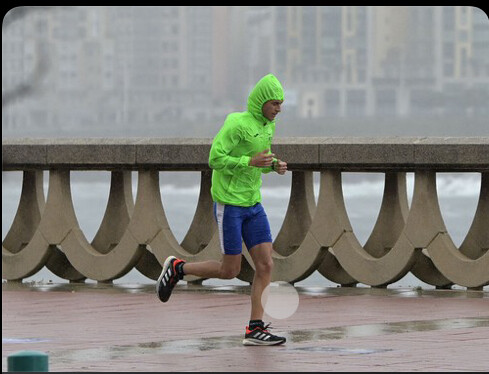
The run/walk method can offer runners many benefits, including helping to fight off fatigue. It can even help you clock faster finish times and maybe even win a race that you thought was out of reach. Just look to Marc Burget for evidence. A ultramarathon run/walker, Burget, 50, won the 2016 Daytona 100 (miles) in 14 hours and 14 minutes which, at the time, was a course record.
“The idea that you should move from walking to running is the wrong framework,” Burget, director of operations at Bailey’s Health and Fitness in Jacksonville, Florida tells Runner’s World. “Instead, putting walks in my race plans allows me to go the whole 100 miles without becoming tired.”
Research supports Burget’s experience. According to a 2016 study published in the Journal of Science and Medicine in Sports, of the 42 runners studied, those who used the run/walk method in a marathon reported less muscle pain and fatigue and finished with similar times, compared to those who only ran.
So, while it’s true that runners typically move faster than walkers, it’s also true that during long races or training runs, taking well-timed walk breaks can help you reach your goals. To understand the run/walk method, here are common myths and truths about the training and racing strategy, plus how to test out the system for yourself.
Myth: Only Slow Runners Use the Run/Walk Method
Truth: Slow Walks Support Faster Finishes
In recent years, more runners and experts have learned that zone 2 running (that is, lower effort runs), improves many elements of fitness and supports your ability to run both long- and short-distance races without fatiguing as quickly.
Whatever distance you race, it’s important to manage your energy levels from the start, so you can make it to the finish without bonking. While fuel plays a role in maintaining energy, how you pace a race is also crucial.
“There’s a myth that a lot of runners perpetuate about banking time,” Chris Twiggs, chief training officer at Galloway Training Programs tells Runner’s World. “The time bank doesn’t exist. The bank that does exist is the bank of energy. When you walk during your run, you are investing in the bank of energy.”
Burget agrees. The first time he ran 100 miles, he planned to run the whole way, but because of exhaustion, he ended up walking about 20 miles. Once he started to train with the run/walk method, he cut his walking down to 10 to 15 miles thanks to 30-second walk intervals. Now, with experience, most of his ultras include eight to 10 miles of walking and he either alternates three minutes of running and 30 seconds of walking, or 0.3 miles of running and 30 seconds of walking, depending on his race strategy and goals.
How to use the run/walk method to get faster:
If you have your mind on a PR, the run/walk method could help you get there. You just have to practice.
“Your walk should be brisk, but not work,” says Burget. “You want your heart rate to drop down.” You also want to give your muscles a break from the intense effort to allow for a midrun recovery.
Because you’re walking, you also need to make your run intervals faster than if you’re going for a steady-state run. For example, let’s say you want to average an 8-minute per mile pace for a marathon. Try running a 7:40 pace for nine-tenths of a mile, then walk for 30 seconds, so that you finish a mile in eight minutes. “You’re not losing 30 seconds,” Burget explains. “You’re moving forward, but part of your pace is a walk.” Likewise, if you want to maintain an 11-minute pace, you could do a 40-second walk every three minutes of running at around a 10:20 pace per mile.
If you have been running for a bit but you don’t know where to start with your interval ratios and paces, do a “magic mile” run, both experts say. This will help set your goal pace for a race. With that magic mile time in mind, set your interval ratios, keeping in mind that generally, the faster your average pace, the longer your run intervals. For example, if you’re aiming for an 8-minute mile average pace, you may run three minutes and walk 30 seconds. But if you’re aiming for a 10-minute mile average pace, you may run 90 seconds and walk 30 seconds.
If you’re a beginner, Twiggs suggests starting your workouts by running for 30 seconds and walking for 30 seconds. If that seems too easy or you can feel yourself wanting to run more keep the 30-second walk, but run slightly longer between walks, he says.
You can keep track of your ratio using time or distance. Twiggs uses time, while Burget often pays attention to the mile markers in his races, walking for the last tenth of each mile. Play around with what works best for you.
“It took me a few months to figure out the ratio that works for me,” says Burget, who has also run a 2:50 marathon by alternating six-minute runs and 15-second walks.
When you want to actually increase your average pace per mile, do another magic mile to see how much faster you can go, and then either increase the speed of your run intervals, add more time to the run intervals, or cut down on the time of your walk breaks.
Myth: Only Beginners Take Walk Breaks
Truth: The Run/Walk Method Can Work for Everyone
While there are no statistics on how many runners use walks in their training or in their races, how long they’ve been running, or how “tired” any runner is when they walk, we can confidently say that runners who strive to incorporate walks into their runs are all ages and all levels of fitness.
Both Burget and Twiggs run ultras, something less than 1 percent of Americans did in 2023, and ultrarunners typically aren’t new to the running game.
In fact, planning your run/walk strategy for races can take practice so many experienced runners and walkers may turn to it. For example, Burget has learned to time his walks to match the location of hydration stops and elevation gain in his ultras so he can maximize his running potential. But that came with lots of practice using the run/walk method.
How to use the run/walk method to advance your race results:
Always study the details of your upcoming race and consider creating a strategy to match walks with water stations and hills. “Looking at the landscape when planning your run/walk is important,” says Burget.
“Walking hills is smart because we want to do what we can to conserve our energy so that when we expend our energy we get the most bang for our buck,” says Twiggs.
Running up hills during training will help you build leg strength, but in a race it could decrease your pace (and finish time) because it takes so much effort, adds Twiggs. Without planning, you might find yourself running up a hill (wasted effort) and then walking a descent as you recover. Planning ahead can help you flip that to maximize your energy and increase your speed.
The point: Go into your race with a clear plan that has specifically planned walk breaks so you’re not just slowing it down when you feel like it, which could be a detriment to performance, Twiggs explains. Playing around with your run/walk ratios during training will also help you set this in stone come race day.
Myth: Being a Run/Walker Will Limit Your Race Opportunities
Truth: Walks Can Help You Participate in Longer, Harder Races
The reason running is defined as “high” intensity while walking is considered “low to moderate” intensity is because it takes more energy to run than to walk. Typically, your heart beats more frequently when you run than when you walk in order for your body to produce that extra effort.
Break up those runs with walks, though, and you are giving your heart, muscles, bones, and joints a break. It’s helps with the deposit into your energy bank, as Twiggs says. The benefit of those deposits? You may be able to add to your race schedule, say by running a half marathon instead of a 10K, if that has seemed out of reach. If you think you can’t run a marathon, could you run/walk one?
To prove the point that adding walks into long runs can cut down on fatigue and help you go longer (or even run more frequently), take another example from Burget: In 2023, he ran seven marathons in seven consecutive days, aiming for a sub-three-hour finish for each race. While he ran just over three hours in two of the races, his other times ranged from 2:52:15 to 2:58:57. “I used the same interval for each race,” Burget says, “a 20-second walk during each mile.”
How to use the run/walk method to run longer:
While you experiment with run/walk intervals, try to notice how you feel in comparison to runs that don’t include walks. Do you feel like you can increase your typical run distance or duration by a half-mile or 10 minutes?
To progress to longer distances, you have a variety of options: You can increase the pace of your runs or shorten the walk breaks you take, says Twiggs, while still running for the same overall amount of time. (This will increase your average pace.) Or you can maintain your pace and your ratio, but add more rounds of intervals, so you run for a longer duration and therefore, distance, which may come easier than only running because of the added recovery element. Do what feels best for you.
In addition to helping you conquer longer distances, the run/walk method might increase your race options by also allowing you to take part in multi-day events, such as runDisney weekends or Philadelphia’s Marathon Weekend, which includes an 8K, half, and marathon.
While some runners, of course, take part in these events without using the run/walk method, “we’ve seen anecdotally that for millions of runners, this allows them to run races they would not have otherwise considered,” says Twiggs, because it can allow for that quicker recovery.
(01/28/2024) ⚡AMP

A Guide to Effective Goal Setting
While some folks might navigate life with less of a plan, athletes, particularly runners with competitive ambition, need structure to their goals. Goal setting is as natural to you as accidentally clicking "Sign Up" on Ultrasignup; before you know it, your goals are on paper!
However, even for goal-oriented individuals like yourself, there's always room to refine your goal-setting approach to maximize your potential. And that starts with a proper perspective. A mentor once phrased it as follows: "It's not solely about achieving the goal,l but rather about the person you must become to attain it."
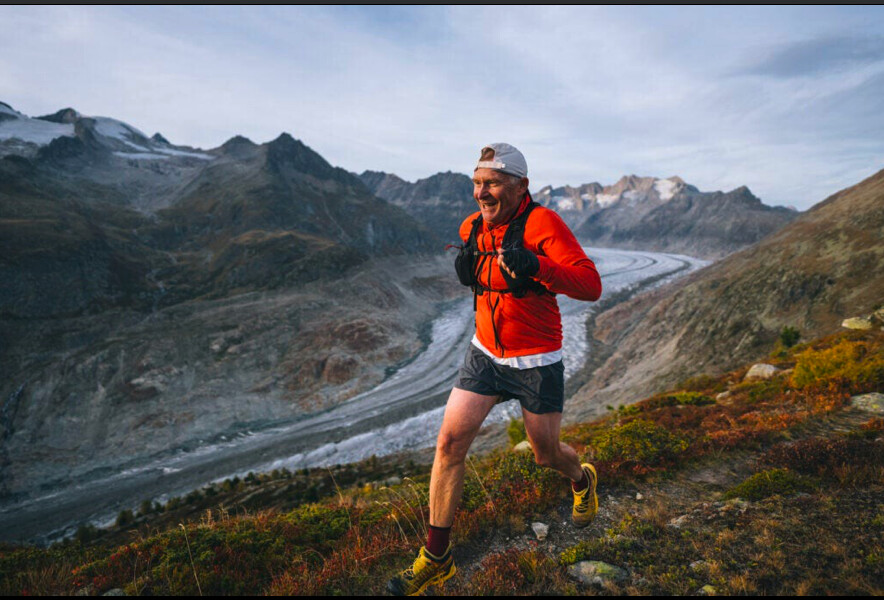
This perspective emphasizes the growth process, with the goal as a guiding target. It liberates us from negative thinking and self-blame if we miss our target. Many successes remain if we do the work and grow in our attempts. The only true failure occurs when we fail to put in the effort or set the wrong initial goal. Effective goal setting can help you avoid both.
As we immerse into the new year, lottery selections, and the process of finalizing race schedules and objectives for 2024, I aim to share my guide on effective goal setting that I apply myself, teach our coaches at CTS, and work with many of my athletes through. As a coach, imparting the skill of effective goal setting to my athletes is among the most invaluable contributions I can make. It is the foundation for a year or a lifelong pursuit, marked by personal growth and self-discovery.
Setting the Stage: Your Trail Running Vision
A good starting place for any goal is to reflect on your long-term vision as a person and athlete. What are your ultimate aspirations in the sport? This could include completing specific races, achieving certain performance milestones, or simply experiencing personal growth through running. Consider what truly motivates you. Is it the joy of running on scenic trails, the desire to push your physical and psychological limits, the thrill of competition, the sense of belonging in a community, the means of coping with life's pressures, or the person you're becoming in the process? Understanding the answers to these questions will help you set meaningful goals.
After gaining clarity, put your vision into writing and make it a habit to revisit it frequently. Keep this vision statement in front of you by putting it in places you will see on a regular basis, such as your bathroom mirror, phone screen saver, or calendar reminders that alert you throughout the day or week. Remember that your vision may evolve as you continue to grow and develop. Having a well-articulated statement of purpose is a powerful tool that can assist you in refocusing when necessary. We've all faced challenging seasons, and reconnecting with the motivations behind our involvement in the demands of trail and ultrarunning can help us maintain a positive outlook and a strong sense of direction. In fact, it's not uncommon for my athletes to revisit these purpose statements even during the midst of a challenging ultra event.
Types of Goals
Before we get to the how-to's, let's define some terms and build a good framework. There are various types of goals that trail and ultrarunners commonly pursue. One prevalent category of goals is outcome goals, which involve specific race-related achievements such as finishing a race within a designated time or securing a particular placement. Outcome goals provide a clear target and can be highly motivating, often presenting a binary pass-or-fail outcome. For instance, an outcome goal might be, "I want to complete a 100-mile race in under 24 hours."
Another common type of goal relevant to all endurance athletes is performance goals. These goals revolve around quantifiable metrics that assess speed, skills, or endurance. Performance goals are frequently integrated into training programs aimed at achieving outcome goals. An example of a performance goal is, "I want to maintain a sub-10-minute mile pace during my endurance runs on my local trail."
Process goals, on the other hand, concentrate on the specific actions and steps required for success. A process goal should accompany every outcome or performance goal. For instance, if the outcome goal is to complete a 100-mile race in under 24 hours, a suitable process goal might be to maintain consistent daily training for a six-month period. While this process goal may lack detailed specifics, it is arguably an athlete's most crucial goal. It demands hard work, discipline, and a smart training approach to sustain consistency. Even if the athlete falls short of their target, the process can be a success if it has made them a better athlete and individual throughout the journey. Ultimately, progress and growth matter more than the final result. The result is typically a celebration of the process.
Intertwining Motivations
In addition to outcome, performance, and process goals, intrinsic and extrinsic motivations are intertwined. Intrinsic motivations are internal and revolve around the sheer joy and satisfaction derived from running. Many trail and ultrarunners find intrinsic motivation in "exploring new trails in the natural surroundings," reflecting their love for trail running.
External motivations are driven by outward factors like race medals, winning, Ultrasignup rankings, and recognition from others. While these external factors can motivate in the short term, they may lack long-term commitment. Balancing extrinsic and intrinsic motivations for a sustainable and fulfilling running experience is crucial.
Understanding the motivations behind our goals plays a critical role in enhancing and complementing our pursuit of these goals.
SMART Goal Framework
The SMART goal framework is a widely recognized and effective approach to goal setting that provides a structured and systematic way to define and achieve objectives. This framework is particularly valuable for trail and ultrarunners looking to set clear and attainable goals in their training and racing endeavors. Let's break down what SMART stands for and how it can be applied to running goals:
S - Specific: The first step in setting a SMART goal is to make it specific. A specific goal is well-defined and leaves no room for ambiguity. For trail and ultrarunners, specificity might involve clarifying the race distance, terrain type (e.g., mountainous trails), and location. Instead of a vague goal like "I want to run a trail race," a specific goal would be "I will complete the Silver Rush 50 Mile race in the Rocky Mountains."
M - Measurable: Goals should be measurable, allowing you to track your progress and determine when you've achieved them. In trail running, measurability can be related to time, distance, pace, or elevation gain. For example, "I plan to finish a 100K trail race in under 12 hours" is a measurable goal because it provides a clear benchmark for success.
A - Achievable: An achievable goal is realistic and attainable within your capabilities and resources. While aiming high is admirable, setting unrealistic goals can lead to frustration and inconsistent efforts in your pursuit. Assess your fitness level, available training time, support network, and other commitments to ensure your goal is achievable. For instance, "I will complete a 100-mile ultramarathon within one year, given my current training routine and available time" is achievable if it aligns with your abilities.
R - Relevant: Your goal should reflect your broader objectives and aspirations. It should align with your values, interests, and long-term plans. In trail running, a relevant goal might involve selecting races that match your passion for rugged terrain or adventure. For instance, "I want to compete in challenging mountain trail races because I'm passionate about conquering steep ascents and descents" is a relevant goal for a mountain-loving trail runner.
T - Time-Bound: Lastly, every goal should have a timeframe for completion. A time-bound goal creates urgency and helps you focus on your training and racing schedule. For example, "I intend to run a marathon-distance trail race within six months" sets a clear timeframe for your goal.
Trail and ultrarunners can transform vague aspirations into well-defined and achievable objectives by applying the SMART goal framework. This structured approach enhances motivation and improves the likelihood of success in training and racing pursuits. Whether you aim to complete a big race, achieve a personal best, or explore new trails, SMART goals can guide your process.
Define Your Goals
Now that you have a framework and clarity around your vision and motivation, you can outline your long-term goals. These should be ambitious and inspiring, representing your ultimate objectives in trail running, ultimately defining your future self. Long-term goals typically span several years. However, life moves fast, and so do your growth and interests! So, even if you take your long-term goals year by year, that's fine. The important thing is that you zoom out and look somewhat into the future, defining who you want to become.
Ensure your long-term goals are specific, measurable, achievable, relevant, and time-bound (SMART). For example, "Complete a 100-mile ultramarathon within the next three years" is a SMART long-term goal. While the goal should be achievable, it should also stretch you. The purpose of a goal is to direct and facilitate growth. Therefore, a long-term goal should be achievable in the future but out of reach today. This goal requires something of you. This goal requires work and growth.
Breaking It Down: Short-Term Goals
To work toward your long-term goals, break them down into short-term goals. This is the how-to process for making progress. Short-term goals should be achievable within weeks or months and contribute to your long-term vision.
Focus on areas that need improvement or skills you want to develop. For instance, if your long-term goal is to complete a 100-mile race, short-term goals might be to hire a coach and start building your support network while simultaneously building your running frequency and volume.
Short-term goals keep you focused and on the correct path toward your long-term goals. Remember the SMART goal approach as you set these short-term goals, being specific and measurable. Avoid vague goals here, such as "run more," as I did in the above paragraph. Instead, specify the skill, duration, or frequency required.
Remember that it's about achieving the goals and the person you become along the way. Your pursuit of goals is a testament to your growth and perseverance. The process of growth itself is the real destination.
Always keep your long-term vision in mind. Understand your intrinsic and extrinsic motivations, and find the perfect balance between the two. The SMART goal framework provides you a structured path to success.
Set your goals with ambition and precision, both in the long term and in the short term. Break them into manageable steps, ensuring each goal is Specific, Measurable, Achievable, Relevant, and Time-Bound. These goals will be the stepping stones to achieving your ultimate aspirations.
Happy trails to a SMART 2024 and beyond!
(01/21/2024) ⚡AMPby Trail Runner magazine

Run Before or After Workout to Maximize Gains
Strength training is an essential component of a well-rounded running training program, but for busy runners, it can be tricky to fit it into your program without jeopardizing your running workouts. Emma Vaillancourt, a registered physiotherapist and running coach in Thunder Bay, Ont., explains how to effectively incorporate strength training into your running routine to maximize gains and minimize burnout.
Should you strength train before or after running?
Vaillancourt explains that the order of strength training and running depends on your goals and where you’re at in your racing season. During the off-season, when running is less of a priority, you may choose to strength train first. In contrast, during the in-season, when your focus is on building running volume or intensity, running should usually come first.
If you plan to do strength training on days when you have intervals or speedwork, it’s generally better to do strength work after your run. This helps avoid fatigue and a possible negative impact on your workout. Vaillancourt also notes that running immediately before lifting can moderately impair lower-body strength gains. “If your goal is to improve strength, lift before the run,” she says. “If you aim to enhance endurance adaptations like aerobic capacity, the order doesn’t matter as much.”

Is it better to leave space sessions or can you do them back-to-back?
“It is recommended to allow at least three hours after high-intensity running before engaging in strength training,” says Vaillancourt. “During this recovery window, it’s important to refuel with a high-carb and protein meal to replenish your energy stores.”
Vaillancourt recommends at least 24 hours’ recovery after strength training before engaging in high-intensity running, but if you’re pairing strength training with easy runs, you can reduce the time between them.
Of course, most of us can’t plan our day around our strength training and running plans, so if scheduling becomes an issue, doing one activity right after the other is still beneficial. “Something is often better than nothing!” says Vaillancourt.
Alternatively, she suggests splitting your strength training into smaller blocks, focusing on shorter, more frequent sessions throughout your week. This approach causes less fatigue and can be more manageable for some runners. “The idea here would be to do 10 to 20 minutes of strength work (maybe two or three exercises) but more frequently in your week, compared to the traditional 30 to 60 minutes done two or three times per week,” she says.
How often should runners strength train?
The frequency of strength training depends on several factors, including your experience level, the point in the season, and the time you can commit to training in a week.
In the off-season and early season, Vaillancourt recommends strength training two to three times a week, focusing on higher volumes of training. “If you’re training for a single race, such as a half-marathon or marathon, you will likely want to drop down to one to two times per week as your mileage peaks,” she says. “As you get closer to your race and are entering your taper, you can drop to once a week for maintenance.”
Running before or after workouts has a drastic effect on training effectiveness. Running before a strength workout can compromise strength training gains or cause injury. On the other hand, doing a strength workout before running could cause running form to deteriorate, which can also lead to injury or compromise strength training gains.
Athletes only have so much time. Sometimes that means doing cardio workouts (like running) and strength workouts (like lifting weights or bodyweight workouts) on the same day. Find out if it’s better to run before or after workouts and how to maximize same-day training benefits.
The Interference Effect
Running Before or After Workouts Depends on Workout Goals
Run Before or After Workout as a Strength-Focused Athlete
Running Before or After Workout as a Runner
Running Before or After a Workout if the goal is to Lose Weight
Running Before or After a Workout if the Goal is to Improve Overall Fitness
THE INTERFERENCE EFFECT
The interference effect is a physiological phenomenon that states that cardio or endurance exercise (like running and cycling) interferes with the cellular adaptions elicited via strength training (namely, muscle size and overall strength). However, it also states that strength training does not appear to necessarily adversely affect endurance adaptations.
The keyword here is: necessarily. More on that later on.
RUNNING BEFORE OR AFTER WORKOUTS DEPENDS ON WORKOUT GOALS
Athletes engaging in concurrent strength training and running need to prioritize goals. This should happen on an individual workout basis as well as overall athletic goals. For example, someone looking to build muscle mass and overall strength must concede that cardio training will–to some extent–inhibit strength gains. On the other hand, a runner is unlikely to be a very successful bodybuilder.
Athletes considering strength training and cardio training need to decide which is more important for their athletic development: muscle mass or endurance. This is not to say that strength-based athletes should stop all cardio. Likewise, endurance athletes like runners should do some strength training.
The careful blending of strength and endurance training is what is known as concurrent training. Strength training–such as with weights or bodyweight–is an important component of endurance performance. Sports like running and cycling do not stress all the necessary muscles in the body. For example, simply running or cycling can leave one with hip, lower back pain and upper body issues due to underdeveloped muscles.
In short, most athletes should do a bit of strength training and a bit of cardio. The ideal blend of each will depend on the athlete’s goals: muscle mass or endurance.
RUN BEFORE OR AFTER WORKOUT AS A STRENGTH-FOCUSED ATHLETE
Athletes whose primary goal is to build muscle and overall strength should try to avoid doing cardio and strength training on the same day. If this cannot be avoided, strength-focused athletes should do their cardio workouts after strength training. This will help minimize the interference effect (i.e., the body will prioritize strength adaptations over endurance adaptations).
How long should cardio workouts take place after strength workouts? The longer the better. At least six to nine hours is ideal. Spacing strength and cardio workouts as far apart as possible will help maximize strength adaptations. Again, if pure strength is the primary goal, strongly consider doing cardio and strength workouts on entirely different days. Don’t do a hard strength workout and a hard (e.g., HIIT) running workout on the same day.
ALTERNATING LOWER-BODY AND UPPER-BODY SAME DAY WORKOUTS
Cardio exercises like running and cycling are lower-body dominant. Performing upper-body workouts on the same day as running will have no meaningful effect on the strength workout. However, performing lower-body strength workouts shortly after a running workout will likely lead to diminished strength gains.
It follows that doing lower-body strength workouts should then only take place on non-running days.
Alternating workouts with upper-body strength days during running days and lower-body strength workouts on non-running days will help minimize or even eliminate the interference effect. The only caveat to this is if the athlete can handle the higher training load. This means having an optimized nutrition plan (here’s the 9 best foods for runners and the 9 best foods to build muscle), resting and being sensitive to their body’s injury or overtraining signals.
RUNNING BEFORE OR AFTER WORKOUT AS A RUNNER
Strength training could be a key component to unlocking running performance. It may be the only way advanced runners can even achieve further progress. Beginner runners benefit from strength training by working muscles that help promote running economy and efficiency, which will ward off injury and promote total body fitness.
If running (or any endurance activity, such as cycling) is a primary goal, do cardio after strength training. However, if the cardio session will be shorter and low intensity (like a simple endurance run of 30-90 minutes), doing high-repetition, low-weight or bodyweight strength training AFTER running can help build muscular endurance and improve running stamina.
Muscular endurance is different than absolute strength. Whereas pure strength is about how much force one can produce quickly (e.g., during a squat), muscular endurance is about training muscles to resist fatigue over long periods of time. One can easily see how muscular endurance is beneficial to runners: running longer distances like half-marathons, marathons and even ultramarathons. Muscular endurance will allow runners to retain their running form longer, which means not only maintaining running economy for longer but also decreasing the risk of running-related injuries.
Sound worth it? Here’s how to do it:
Do an easy run. Try to avoid running hills. Don’t do intervals. Just do a basic endurance-paced run anywhere from 20 to 90 minutes. It should feel almost boring.
After the run and while the body is still warmed up, do a strength training session that focuses on high repetitions and low (if any) weight. Repetition ranges should be 20 to 30 per set. Cool down with light jogging.
Combining running and strength training back to back is a serious session. Make sure to fuel properly before, during and after (like with a hot cocoa recovery drink). Don’t finish the workout starving. The recovery demands from this type of training are huge–but so are the benefits. Don’t do these big sessions every day–twice a week is plenty and should likely be followed by a full recovery day or an easy run (for advanced athletes).
RUNNING BEFORE OR AFTER A WORKOUT IF THE GOAL IS TO LOSE WEIGHT
It is often recommended to do strength training before running to empty carbohydrate stores. The idea is to force the body to get its energy primarily from fat rather than carbs during the run. However, the problem with this strategy is that it is very difficult to finish a long-distance run on empty carbohydrate stores. While it is true that a much higher percentage of fat is burned for energy, the calorie burn, on the other hand, is relatively low because of the low intensity or low duration of the workout.
On top of that, perceived exertion of the workout will be much greater when continuing to workout with depleted glycogen stores. This can cause athletes to prematurely quit the workout; therefore, reducing maximal calorie expenditure. Additionally, athletes who choose to work out this way will finish workouts extremely hungry. This can lead athletes to massively overeat after a very tough workout, which will likely result in weight gain and developing unhealthy nutrition habits.
If weight loss is a goal, a negative energy balance is key: If one burns more calories than they consume, they will lose weight. In the end, what matters is how many calories are burned in total through the workout. Spread your workouts out over several days. That way one can train at a high intensity and burn a lot of calories, and at the same time give the body the time it needs to recover properly before the next workout.
RUNNING BEFORE OR AFTER A WORKOUT IF THE GOAL IS TO IMPROVE OVERALL FITNESS
In this case, basically do cardio and strength training in whichever order. Still define a specific training goal for each session. Just be careful about doing too much and getting injured. Start slow, add a little bit of training each week, take a day off if aches and pains start to creep up. Once the gains stop coming, consider reexamining training structure to focus on more specific goals. Try this workout after a run for a great cardio and strength session.
This workout focuses on neglected leg muscles and glute strength (i.e., a firmer butt). It’ll also help improve posture. Learn and do the following movements: Curtsy lunge, kneel & stand, side lunges, single-leg deadlift and wall sits.
In general, avoid doing two workouts back-to-back. Spacing running and strength workouts far apart will allow the body sufficient time to adapt and recover before the next session. If running before or after a workout is the only option, follow the training schedule recommendations above to elicit maximal adaptations. If all of that is too complicated and the goal is to just get fit, do whatever is most convenient.
(01/19/2024) ⚡AMPby Morgan Cole

The Wild, Uncertain Science of Post-Exercise Ketones
A new review study points toward post-exercise ketone supplementation as a way to improve adaptation and performance. What does the uncertain science mean for endurance athletes?
I heard about athletes supplementing with ketones sometime in the mid-2010s. A company reached out, promising the next big breakthrough in endurance performance from this liquid supplement composed of a molecule naturally produced in the body from the breakdown of free fatty acids. They told me that the top cyclists in the world were already using ketones and that it was destined to take over running, too. They sent a few boxes…and they collected dust in the pantry. It felt like a biohack, and I wasn’t comfortable with it.

Over the years, more studies on ketone ingestion emerged, and I started to get more and more intrigued. Rumors came out that about 70 percent of the cycling peloton used the stuff. But they cost a ton, and it was hard to discern what was actual practice and what was just marketing.
It wasn’t until 2023, though, that I embraced that ketones were here to stay, whether I liked it or not. A 2023 study in the American Journal of Physiology-Endocrine and Metabolism had nine men complete two cycling trials, both with one hour consisting of two minutes at 90 percent of aerobic capacity (moderately hard), followed by two minutes at 50 percent of aerobic capacity (very easy). In both trials, the cyclists consumed a carb-protein drink immediately after exercise and at one, two, and three hours later. Here’s the study intervention: in just one trial, participants ingested 0.29 g/kg ketone monoester immediately after exercise and at one and two hours later.
The ketone trial led to 20 percent higher levels of natural erythropoietin (EPO) in the bloodstream.
For comparison, a 2005 study in the British Journal of Sports Medicine found that the initial exposure to altitude training increased EPO by an average of around 50 percent in swimmers, with large individual variability (returning to baseline after a couple of weeks of altitude training), with lots of variation across studies. Given that our bodies produce EPO to increase red blood cell production, and red blood cells transport oxygen that power endurance performance, the ketone study indicated that we could be seeing a supplement that supercharges adaptation and performance.
Context for Ketones
To be 100 percent honest, I was sad when I saw this study. I love performance physiology, but I don’t want to think about a new biohack. Maybe it’s a sign that I’m getting old when a study on cutting-edge science just makes me tired. Get these research protocols off my lawn!
But I also couldn’t bury my head in the sand (though that would probably increase EPO concentrations via hypoxia). Instead of giving into my old-coach fatigue, maybe I can help publicize the emerging science so fewer athletes have an information disadvantage. My final push was last week when a fantastic review article was published in the American Journal of Physiology-Cell Physiology by Ruben Robberechts and Chiel Poffé. If ketone supplementation has the potential that some think it may, the article could be a key step in the future of exercise physiology.
Before getting to the science, I think it’s important to lay out the stakes. Based on the articles (mixed with a heaping dose of gossip), I can see three different scenarios unfolding over the next 10 years.
One, post-exercise ketones don’t live up to their promise, and this is all a nothingburger. That outcome would please me the most, and we all know that what’s most important in science is my pleasure. If researchers did this type of theoretical analysis on other interventions (i.e. heat training, Vitamin D, lifting, ashwagandha, strides, beta-alanine, doubles, creatine), they could come back with similar findings. We are only talking about a few intervention studies and lots of theory, and future research could have different results. Plus, some critics would already be confident making their judgments as the Supreme Court of Nothingburgerland.
Two, ketones could become a more commonly used supplement with benefits for performance and health (like iron). They are expensive, which isn’t great, but maybe they will help athletes be healthier and faster, with limited side effects. On the flip side, maybe more research indicates tradeoffs that lead to benefit:risk calculations with performance or health. Over email, Dr. Poffé–an author of the review study and a key researcher in this field–says that “studies have shown divergent effects on performance depending on the exercise context and whether you take them before, during or after exercise.” Even if they are beneficial in some contexts, it’s not a simple equation of take ketones = get faster.
The third possibility is that they are banned as an illegal performance enhancer. I have no inside info on whether that’s a possibility, and at first blush, it doesn’t seem likely without some health risks. Dr. Poffé says “I honestly don’t see much of a reason to ban ketones while allowing other ergogenic supplements.”
So, yeah, we’re talking about a wide range of possibilities, which makes sense given the uncertain mechanisms and effects at play. Let’s dig in. (We got even deeper into the nuance on our podcast this week, which you can listen to here.)
Introduction to Ketones
As stated by the review study, ketone bodies “are molecules that are continuously produced from the breakdown of free fatty acids,” primarily in the liver. Ketone body production is upregulated during periods of low carbohydrate availability—that’s why you have heard “ketosis” thrown around for ultrarunners who practice low carbohydrate, high-fat nutrition, aiming to improve fat oxidation and avoid bonking. Ketosis via nutritional interventions comes with way too many downsides for endurance athletes, though, including everything from reduced bone density to diminished high-intensity performance. That makes sense intuitively because low carbohydrate availability is extremely stressful on most body functions, especially the endocrine system.
Ketone esters, enter stage left. Researchers figured out how to create an ester bond between a ketone body precursor and a ketone body (first in 1978 in rats, but not undergoing human testing until 2012). These ketone esters cause a “rapid and transient increase in ketone bodies,” possibly inducing ketosis. It was as if this evolutionary mechanism honed over millions of years now had a dimmer switch. For the chemistry nerds out there, you can probably guess what oral ingestion of an ester is like—not fun. Companies like HVMN honed the taste over time, and now I’d say that ketone esters taste like a robot’s ass. We can only imagine what they tasted like before.
Ketones have mostly been marketed as a before-and-during-exercise supplement, at least in the podcast ads I have heard. Take ketones, burn more fat at higher intensities, win the Tour de France, etc. However, a bunch of studies have shown limited to no acute benefit. For example, a 2017 study in Frontiers of Physiology found that pre-exercise ketone supplementation caused around a two percent performance decrease in 10 male professional cyclists doing a 50-minute time trial.
Perhaps there’s some protocol being used in the cycling peloton that improves acute performance, as the marketing claims indicate. Heck, Tom Evans reportedly took ketone esters on his way to winning Western States, so there must be some benefit for some athletes (or at least neutral impacts), possibly related to perceived effort. Anecdotally, when I tried ketones on a fatigued long run, the lights went out. Thankfully, I had my phone to call the Wuber (when my wife Megan drives to pick me up).
So perhaps it’s something else. Maybe all this ketone hype is because taking them improves recovery and hematological variables, confounding variables that are actually the driving force behind their use (maybe that even explains some of the success stories behind low carb, high fat nutrition approaches. I’d love to see the blood work!).
According to the review, after exercise, circulating ketone bodies are increased. However, any benefits athletes may see from a sustained increase are blunted in advanced athletes practicing good recovery nutrition. Ketone esters “may induce a unique physiological milieu to enhance post-exercise recovery and exercise adaptation as it allows to benefit from the potential beneficial effect of post-exercise ketosis in combination with other nutritional exercise recovery strategies (e.g., carbohydrate-protein recovery drink).” They had me at physiological milieu. Dr. Poffé says that his lab started ketone work in 2016 when “there was already some preliminary data showing that it could help riders during the Tour de France as a recovery aid.”
Mechanisms of Post-Exercise Ketones
I can’t emphasize enough how great this review article is, summarizing extremely uncertain science and studies. Before getting to the EPO mechanisms, let’s briefly touch on a bunch of other considerations. First, ketone bodies may cause epigenetic changes. For example, histone lysine β-hydroxybutylation could increase with ketone body increases, which may “increase transcription of genes involved in the adaptive response to exercise.” Across several different epigenetic mechanisms, it’s possible that ketone bodies could be a signal to the body to adapt to stimuli (which makes sense given their evolutionary role in exercise in energy-limited environments).
Second, ketones could “enhance the restoration of cellular energy status after exercise” while also blunting AMPK phosphorylation, which could enhance recovery due to its role in cellular stress or decrease adaptation due to its role in mitochondrial biogenesis. I love this one because that maybe-good, maybe-bad uncertainty regarding downregulation of AMPK points out just how little is known about the long-term consequences of post-exercise ketones, particularly in conjunction with other impacts.
Third, ketones alter g-receptor signaling, which “mediate cellular responses to a wide variety of external agents.” Fourth, ketones show anti-inflammation and anti-oxidation properties, which seems good at first glance but could theoretically cause long-term reductions in training adaptations since the inflammation response can spur adaptation. Fifth, ketones may influence neurotransmitter concentrations in the brain, which could profoundly impact perceived exertion (and possibly even mental health, though that’s a topic for another day).
The next cohort of potential adaptations are at the cutting edge of science but still theoretical. Ketones could increase muscle glycogen resynthesis, reduce protein degradation and enhance protein synthesis, spur angiogenesis that leads to more capillaries to supply blood to working muscles, induce favorable changes in muscle mitochondria, and improve sleep quality in athletes who are training hard. You can put those variables together with a 2019 study in the Journal of Physiology, where male athletes completed a three-week overload training block with six days a week of two-a-day training sessions, with one group having post-exercise ketones. That study found higher tolerated training load in the ketone group and improved performance. (The study was the subject of a Letter to the Editor disputing some of the conclusions.)
A 2023 study looked at a similar three-week overload block, validating the findings. They had 18 male athletes complete 10 training sessions per week, with one group taking post-exercise and pre-sleep ketones and the other taking a placebo. The ketone group “increased the number of capillary contacts and the capillary-to-fibre perimeter exchange index by 44 percent and 42 percent,” plus “substantially increased vascular endothelial growth factor and endothelial nitric oxide synthase expression both at the protein and at the mRNA level.” And the money finding: EPO concentrations in the ketone group increased by 26 percent. That study was eye-opening for the possible recovery and adaptation benefits of ketones, and it brings us back to the elephant in the room: potential hematological changes from increased EPO production.
Hematological Changes
In 2018, a study in the Diabetes Care journal found increasing levels of EPO after a ketone body infusion. The authors of the 2023 study that started this article cited this study as part of the impetus for their investigation (read their amazing summary here). We’re seeing similar findings in athletes in the 2023 studies, which found 20 percent and 26 percent increases in EPO production in the ketone groups relative to controls. But the science is not there to make a definitive conclusion.
In the title of this article, I promised uncertain science, and now we are deep in it. First, we don’t know how much this EPO change may impact performance. “Currently,” the review says, “it has not been identified if the observed changes in EPO post-exercise are indeed sufficient to induce an improvement in hemoglobin mass and oxygen transport capacity in humans, and whether these effects are additive to stimuli that are frequently used by athletes to increases EPO such as hypoxia.” It’s possible that these changes don’t correspond to performance benefits.
And get a load of this: “The precise physiological mechanism underlying ketone body-induced upregulation of EPO is currently unknown.” However, based on mouse models, the researchers theorize that it relates to H39K acetylation in kidney cells.
Are Ketones the Future?
There are tons of unanswered questions. How do these types of adaptations change over time? The longest study right now is a few weeks.
Do the processes change in female athletes? That’s one of my big concerns in making any recommendations since metabolic processes can vary based on gender. While more research is needed, Dr. Poffé indicates that past studies likely show that the results can be extrapolated to female athletes. “In a recent, unpublished study,” he says, “we observed that some effects are even more pronounced in females.”
How about aging athletes? Athletes of different levels, with different goals and backgrounds? What’s the right dosage and timing? Would the same responses happen at altitude? Should consumption be periodized? With similar studies, would other interventions lead to similar findings? Should ketones be banned altogether?
I don’t know the answers to those questions, and a lot more studies are needed before I make coaching recommendations other than “be careful” and “keep it simple.”
“Similar to most nutritional supplements,” Dr. Poffé says, “the long term effects (e.g. what occurs if you supplement for multiple years) are not known.” When athletes take ketones, he says instead of taking them chronically, to supplement “during periods of limited recovery opportunities,” like training camps. From a performance perspective, he advises to consider ketones when everything else is sorted out around training, nutrition, and recovery. They are “the final step,” not the first one.
In September, after reading the research, I dusted off that old package of ketones and opened up a serving for myself. Then I threw it in the trash because it seemed like a health hazard after all those years. I ordered a new package and started experimenting with them a couple days a week post-exercise. In October, at the Blue Sky Marathon, I closed the final four miles two minutes faster than last year to set a course record.
That probably had nothing to do with ketones, right? I’m no Olympian, but I train hard. And when looking back on the race and why I could finish so fast while feeling so good, I would be burying my head in the sand not to consider one of the only variables that changed.
I’m not sure what the future holds with post-exercise ketone supplementation. Maybe it’s all snake oil and placebo, with some studies that find physiological anomalies without a demonstration that it fundamentally alters performance trajectories, destined to be covering dust in the pantry of exercise physiology history.
Or maybe we’re seeing the dawn of a revolution in endurance training and performance.
(01/14/2024) ⚡AMP
by David Roche (Trail Runner Magazine)

Courtney Dauwalter and Jim Walmsley win 2023 Trail Runner of the Year
Trail running media community Freetrail have announced the winners of the Trail Runner of the Year (TROY), and the epic champions weren’t really a surprise: Americans Courtney Dauwalter and Jim Walmsley, both winners of the 2023 edition of UTMB.
TROY is a global award intended to recognize pro athletes within the sport by ranking their performances during the 2023 racing season. “It’s our hope that TROY will become an annual capstone, celebrating the year in competition,” Freetrail said when they created TROY in 2022.
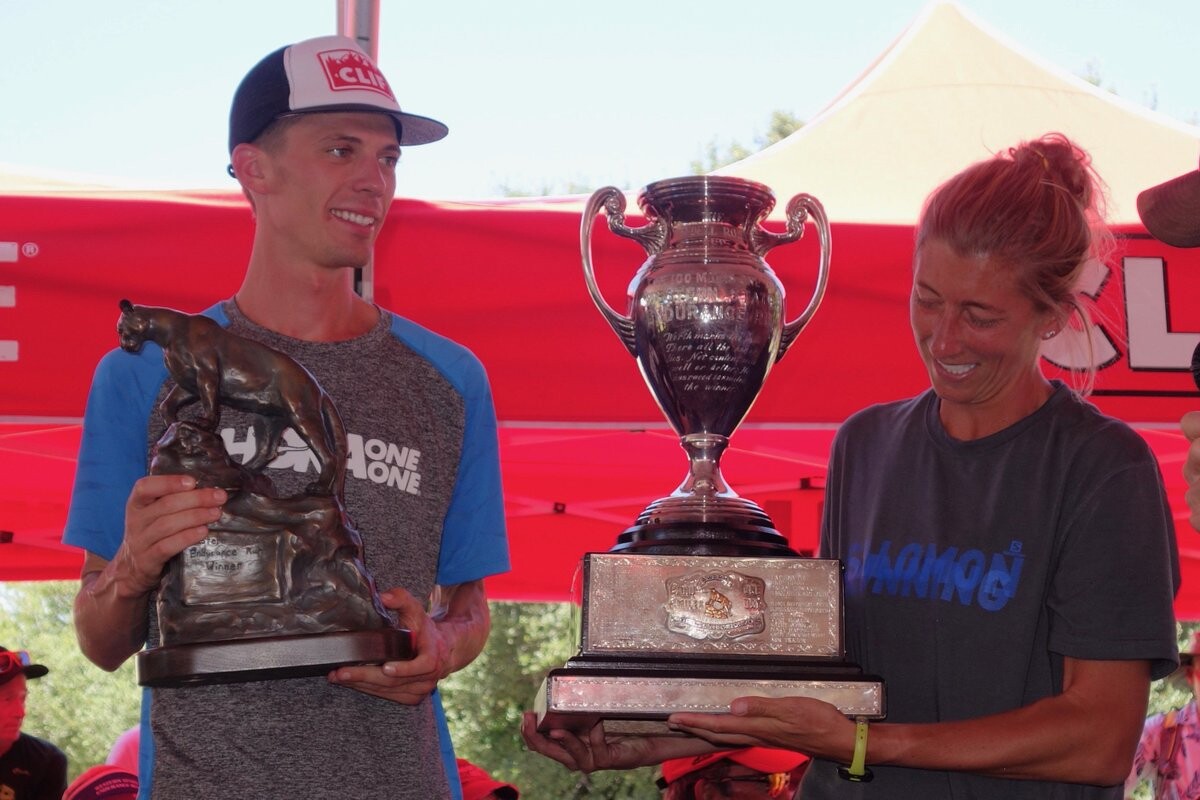
Traditionally, contests like this one have been country-based, so Freetrail is taking a step toward inclusivity by making the competition international. “TROY is an extension of Freetrail’s mission to elevate the profile of the professional athletes in our sport while helping casual observers and the general public feel connected to their stories – hopefully creating diehard fans in the process,” Freetrail shares on its website.
We had some stellar Canadian athletes on the list, including Ailsa MacDonald of Cochrane, Alta., Edmonton’s Priscilla Forgie, Chilliwack’s Ihor Verys and Montreal’s Marianne Hogan. Americans took the lead, however, after remarkable performances in 2023.
Courtney Dauwalter
Ultrarunner and coach Corinne Malcolm says in the Freetrail announcement that “we are living in the Courtney Era and we aren’t mad about it.” The trail and ultrarunning community witnessed a historic chapter in 2023 as Dauwalter conquered the elusive triple crown of 100-mile races (Western States 100, Hardrock 100 and UTMB 171K) becoming the first person to win all three in one season.
Malcolm captures the essence of Dauwalter’s remarkable journey in 2023 when she says, “We’ve reached peak Courtney.” Before the triple was even an idea, Dauwalter kicked off her season with wins (setting new course records) at Bandera 100K, Transgrancanaria 128K classic, and a record-breaking performance at Western States 100 (WSER).
auwalter’s 2023 season unfolded as an extraordinary narrative of triumphs. Fans watched in awe when she ran to victory at WSER, breaking Canadian Ellie Greenwood‘s long-standing record by 77 minutes, and three weeks later, dominated the Hardrock 100, setting yet another course record.
The unexpected revelation of Dauwalter’s pursuit of the triple crown at UTMB adds a surreal dimension to her already illustrious season. “While she would go on to convincingly win her third world-class 100-mile of the season, completing a triple that will likely never happen ever again, she would also show us she was human, gritting through the final 50 km of the course… Leaving us absolutely speechless in the process,” Malcolm writes.
Jim Walmsley
Walmsley is a beloved fixture in the trail community, known for his immense talent and dedicated work ethic. Fans have followed the evolution of his ultrarunning career. Walsmsley’s journey is one of continuous growth, from three consecutive wins at WSER to a strategic move to Arêches, France, to learn from the likes of Francois D’Haene how to conquer UTMB.
“Just like for many of his mountain colleagues, that would also mean coming into the first spring race of the season off of largely ski fitness,” Malcolm says. “To qualify for the UTMB Finals Jim ran, won, and set the course record at the Istria by UTMB 100-mile race—in the process winning his first 100-mile race that wasn’t WSER.”
While temporarily sidelined with an ankle injury, Walmsley’s determination prevailed as he clinched victory at Trail La Frison Roche and, ultimately, UTMB. Fans watched a nail-biting race, with some doubts as to whether Walmsley would best compatriot Zach Miller, but “a switch flipped at Champex Lac,” and Walmsley secured his win in under 20 hours. Jim’s subsequent triumph at Nice Côte d’Azur by UTMB 100K not only cements his legacy but also earned him a golden ticket to WSER 2024, leaving the ultrarunning community in eager anticipation.
(01/12/2024) ⚡AMPby Keeley Milne
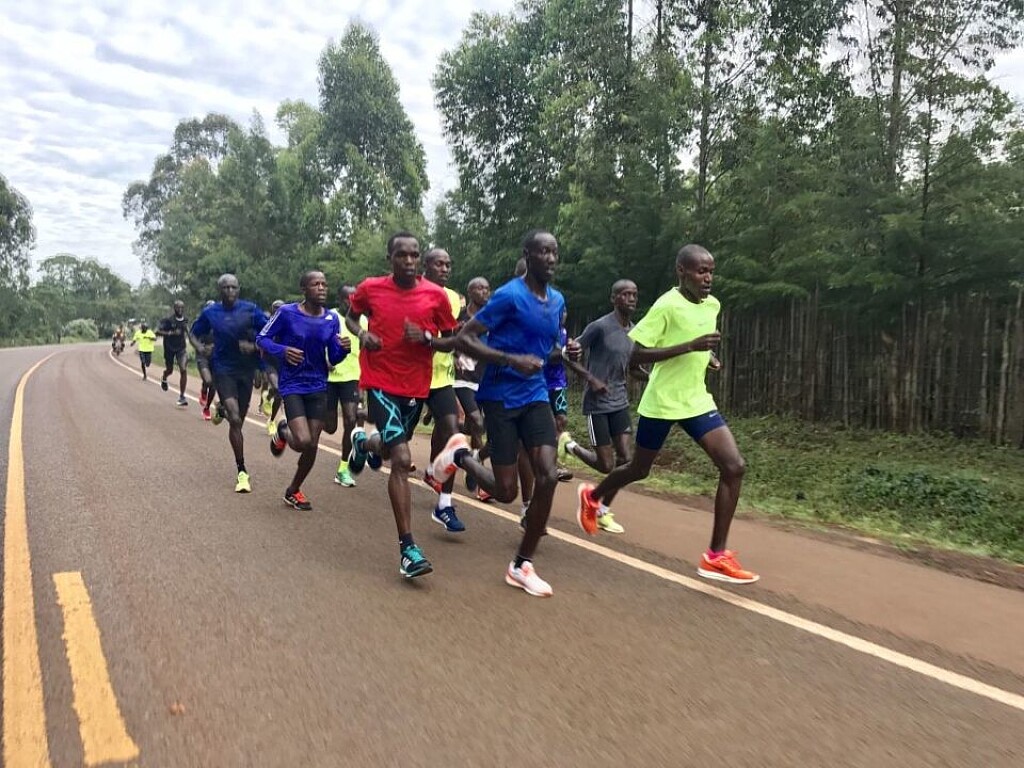
The top five questions from experienced runners in 2024
No matter how long you’ve been running, there’s always something new to learn. As our knowledge of effective training practices and proper nutrition improves and new technologies are introduced, even experienced runners will have questions. From how to bust through a fitness plateau to fuelling tips for long runs, here are experienced runners’ top questions for 2024.
1.-How do you overcome a fitness plateau?
If you’re putting in the work but the time on the clock isn’t budging, the first step is to assess your training. Are you going too fast on your easy runs? Are you recovering properly (i.e., getting enough sleep and nutrition) between workouts? If you don’t already have a training log, start filling one out after each run, and look for patterns.
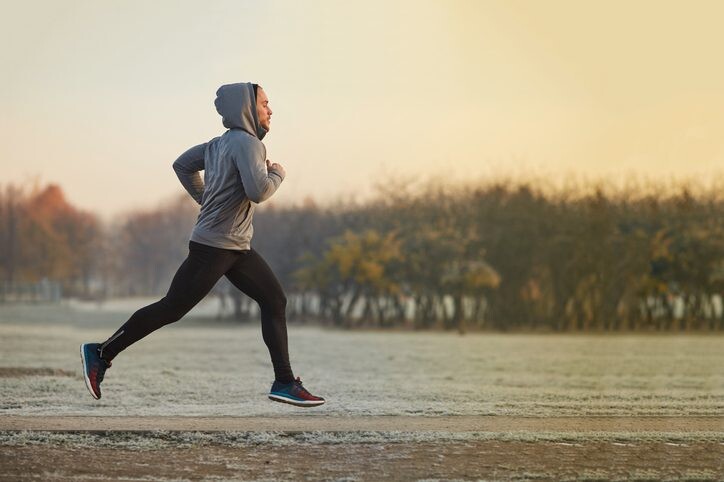
Other ways to bust through a fitness plateau include:
Adding speed work, like intervals, tempo runs and hill workouts into your training plan
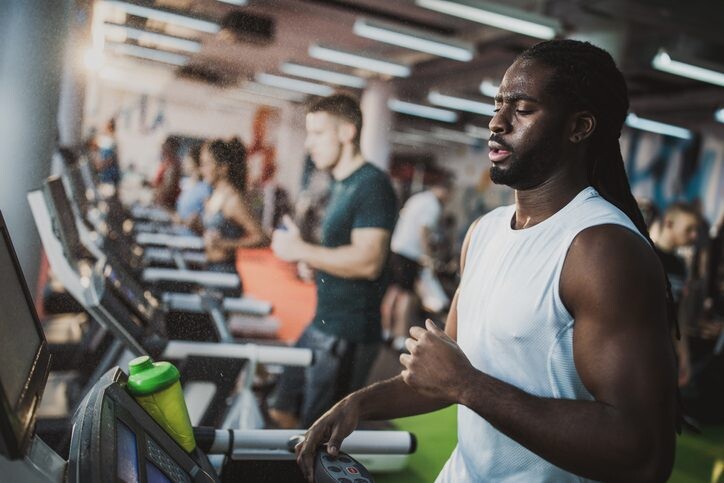
Adding two short, weekly strength training sessions to improve your power and efficiency
Starting training with a group to help you stay on track
Considering getting a coach to help you create a training plan that’s specific to your goals
2.- How can I avoid injuries as I increase mileage and intensity?
As you increase mileage and intensity, proper recovery and nutrition become even more important. Make sure you’re getting at least seven to nine hours of sleep each night, and always eat well to replenish calories burned after your runs. (Treats are OK!)
Other ways to prevent injuries include:
Get assessed by a physiotherapist to find out where your weak points are, to prevent injuries before they happen
Talk to a dietitian to figure out what (and how much) to eat before and after workouts
Add strength training
Consider getting a coach to help you periodize your training properly so you don’t do too much too soon
Include a stretching and mobility practice in your weekly routine to keep your joints and muscles moving well
3.- What are some advanced fuelling tips for long runs?
If you’re training for a longer race such as a half-marathon or marathon, you must practice your fuelling strategy ahead of time during your long runs. For most runners, it takes time for your body to get used to taking in fuel during a run, and trying that for the first time on race day can send you running for the porta potty. Other fuelling tips include:
Carbohydrate loading: In the days leading up to a race, it can be beneficial to increase your carbohydrate intake to maximize glycogen stores. Aim to consume around two to four grams of carbohydrates per kilogram of body weight per day before the race.
Pre-race meal: Consume a carbohydrate-rich meal two to four hours before the race starts. Aim for around one to four grams of carbohydrates per kilogram of body weight for this meal. Try different things (oatmeal, toast, cereal, etc.) to find out what works for you.
During the race: For longer races (e.g. marathons, ultras), aim to consume 30 to 60 grams of carbohydrates per hour, using energy gels, sports drinks, chews or easily digestible foods such as bananas or dates.
4.- Is there a difference between running outside and on the treadmill?
While many runners will argue that running outside is more fun, the treadmill is a great option when the outdoor conditions are dangerous or simply unpleasant. If you’re training for a race, though, it’s important to do most of your runs on the same surface you’ll be racing on–so unless you’re training for a treadmill race, do your best to get outside whenever possible.
5.- What other running gear would you recommend for someone who already has the basics?
If you already have the basics covered, consider investing in the following:
a smartwatch for data tracking
an extra pair of shoes to alternate between in training, to extend the life of your shoes
specific-use shoes, like a pair of racing shoes, winter running shoes if necessary, or trail shoes
a fuel belt or hydration vest for longer runs
(01/08/2024) ⚡AMPby Brittany Hambleton
5 creative ways to unlock your running potential
Every runner seeks the elusive formula for peak performance, and while traditional strategies play a vital role, exploring unconventional avenues can unearth untapped potential. Performance coaches, authors and the hosts of a new podcast called Farewell, Brad Stulberg and Steve Magness, recently shared some innovative ways to tap into your best performance.
These methods, adapted from the training of legendary ultrarunner Courtney Dauwalter, Kona Ironman champ Chelsea Sodaro, and Canadian Olympic champ decathlete Damian Warner, can help you build an arsenal of tools that will allow you to become your best running self, whatever your goals may be. Look Embrace curiosity over fear
In the premiere episode of Farewell, Stulberg interviews ultrarunning GOAT Dauwaulter, whose 2023 season saw her winning the triple crown of ultramarathons (UTMB, Western States 100 and Hardrock 100). Dauwaulter is known for her curiosity-based approach to racing and says that whenever she works her way through a unique challenge, she puts it into her “filing cabinet” of experiences built through more than a decade of running ultras.Consider approaching challenges with curiosity rather than fear.
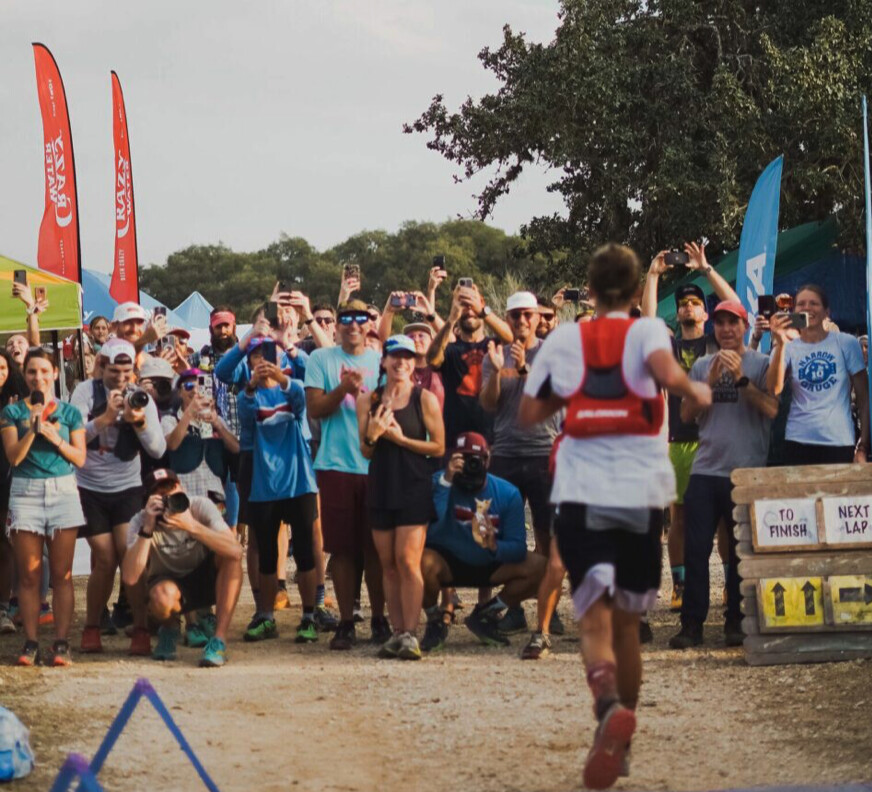
Dauwaulter’s journey started with curiosity-driven road marathons, leading her to conquer ultramarathons and achieve astonishing feats. When faced with a daunting task, adopt a mindset of exploration, saying to yourself: “let’s just see what happens,” rather than feeling like you must succeed at all costs. The unexpected outcomes might surprise you and expand your perceived limits.Use the power of “yes”
Chelsea Sodaro, the Kona Ironman world champ winner, draws inspiration from a mantra the athlete and her husband taught their daughter when she was going through a “no” phase—“yes, yes, yes.” This simple yet potent affirmation becomes a guiding force during challenging moments. Applying this mantra encourages a commitment to embrace difficulties and lean into the hard aspects of training. The next time you encounter a tough run or race, channel the spirit of “yes, yes, yes” to shift from resistance to resilience.Less is more: subtract to succeed
Stulberg suggests challenging the instinct to add more when faced with a hurdle. Research shows that humans tend to be “adders,” inclined to incorporate new strategies, rather than simply subtracting impediments. When striving for behaviour change, consider subtracting obstacles instead of seeking additional solutions. Reflect on what you can eliminate or modify to clear the path to success, allowing simplicity to fuel progress.Consistency trumps perfect practice
Through several decades of elite competition, Canadian Olympic champion decathlete Damian Warner has learned the importance of consistency over perfection. His coach’s mantra—that there’s no such thing as a bad practice—highlights the importance of routine, unexceptional training days. Warner’s gold medal-winning experience underscores the power of sustained, consistent effort, even when conditions are less than ideal. Recognize that excellence is often built through everyday dedication rather than sporadic extraordinary performances.You are not your thoughts
In overcoming mental health challenges like OCD and anxiety, Sodaro shares a unique strategy—naming her brain (she calls hers Regina, after the character in the movie Mean Girls). By personifying intrusive thoughts, she creates distance between herself and her mental struggles. Runners grappling with mental hurdles can apply this concept, acknowledging that their thoughts don’t define them. Naming and dismissing unwanted thoughts can provide mental clarity and resilience during demanding runs.Ultrarunner Adam Campbell’s tips to master your mid-race mindset” — Canadian Running Magazine
View on the original site.
In your pursuit of optimal running performance, integrating these unconventional approaches can inject a fresh perspective, foster growth, and aid in unlocking your true potential. Remember, innovation often lies in the willingness to explore the uncharted paths of curiosity, affirmation, simplicity, consistency and mental resilience.
(01/07/2024) ⚡AMPby Running Magazine

Five creative ways to unlock your running potential
Every runner seeks the elusive formula for peak performance, and while traditional strategies play a vital role, exploring unconventional avenues can unearth untapped potential. Performance coaches, authors and the hosts of a new podcast called Farewell, Brad Stulberg and Steve Magness, recently shared some innovative ways to tap into your best performance.
These methods, adapted from the training of legendary ultrarunner Courtney Dauwalter, Kona Ironman champ Chelsea Sodaro, and Canadian Olympic champ decathlete Damian Warner, can help you build an arsenal of tools that will allow you to become your best running self, whatever your goals may be.
1.- Embrace curiosity over fear
In the premiere episode of Farewell, Stulberg interviews ultrarunning GOAT Dauwaulter, whose 2023 season saw her winning the triple crown of ultramarathons (UTMB, Western States 100 and Hardrock 100). Dauwaulter is known for her curiosity-based approach to racing and says that whenever she works her way through a unique challenge, she puts it into her “filing cabinet” of experiences built through more than a decade of running ultras.
Consider approaching challenges with curiosity rather than fear. Dauwaulter’s journey started with curiosity-driven road marathons, leading her to conquer ultramarathons and achieve astonishing feats. When faced with a daunting task, adopt a mindset of exploration, saying to yourself: “let’s just see what happens,” rather than feeling like you must succeed at all costs. The unexpected outcomes might surprise you and expand your perceived limits.
2.- Use the power of “yes”
Chelsea Sodaro, the Kona Ironman world champ winner, draws inspiration from a mantra the athlete and her husband taught their daughter when she was going through a “no” phase—“yes, yes, yes.” This simple yet potent affirmation becomes a guiding force during challenging moments. Applying this mantra encourages a commitment to embrace difficulties and lean into the hard aspects of training. The next time you encounter a tough run or race, channel the spirit of “yes, yes, yes” to shift from resistance to resilience.
3.- Less is more: subtract to succeed
Stulberg suggests challenging the instinct to add more when faced with a hurdle. Research shows that humans tend to be “adders,” inclined to incorporate new strategies, rather than simply subtracting impediments. When striving for behaviour change, consider subtracting obstacles instead of seeking additional solutions. Reflect on what you can eliminate or modify to clear the path to success, allowing simplicity to fuel progress.
4.- Consistency trumps perfect practice
Through several decades of elite competition, Canadian Olympic champion decathlete Damian Warner has learned the importance of consistency over perfection. His coach’s mantra—that there’s no such thing as a bad practice—highlights the importance of routine, unexceptional training days. Warner’s gold medal-winning experience underscores the power of sustained, consistent effort, even when conditions are less than ideal. Recognize that excellence is often built through everyday dedication rather than sporadic extraordinary performances.
5.- You are not your thoughts
In overcoming mental health challenges like OCD and anxiety, Sodaro shares a unique strategy—naming her brain (she calls hers Regina, after the character in the movie Mean Girls). By personifying intrusive thoughts, she creates distance between herself and her mental struggles. Runners grappling with mental hurdles can apply this concept, acknowledging that their thoughts don’t define them. Naming and dismissing unwanted thoughts can provide mental clarity and resilience during demanding runs.
In your pursuit of optimal running performance, integrating these unconventional approaches can inject a fresh perspective, foster growth, and aid in unlocking your true potential. Remember, innovation often lies in the willingness to explore the uncharted paths of curiosity, affirmation, simplicity, consistency and mental resilience.
(01/05/2024) ⚡AMPby Keeley Milne
British trail runner found dead after going missing on run
A 40-year-old British ultrarunner was found dead on Tuesday morning following a two-day search. Edward Catmur of London went missing on a run in Cumbria, U.K., on New Year’s Eve.
According to the BBC and Cumbria police, Catmur travelled to Cumbria intending to run through the North Pennines from Dufton, near Appleby, to Cross Fell and Hartside Cross. He was reported missing on New Year’s Day after not being heard from after 10 a.m. on Dec. 31.
The local police sent out a rescue team on Jan. 1, following Catmur’s planned route on Monday. A police helicopter found his body on a snow-covered trail on Monday night in the Cross Fell area, just north of Penrith. There was a large snowfall in the area, according to the police.
This was not Catmur’s first time visiting or running in the Lake District National Park area; he previously ran the Bob Graham Round with a few friends in 2021, completing the 110 km loop in just under 24 hours.
Catmur was a software engineer living in Chicago but was back in the U.K. for the holidays. He was an avid runner. On the day before he went missing (Dec. 30), he participated in Penrith parkrun, where he ran an 18-minute 5K. He also competed at the 2023 Comrades Marathon, where he finished 254th. He also won the challenger race at the Montane Spine Race in 2015.
Fell running is the sport of running and racing off-road, over upland country where the gradient climbed is a significant component of the difficulty. The name arises from the origins of the English sport on the fells of northern Britain, especially those in the Lake District.
(01/02/2024) ⚡AMPby Marley Dickinson
Running May Have Saved My Life
Nearly 50 years ago I fell in love with running. I was far from a natural. When I was 8 years old, I was struck by an illness that left me with pneumonia in both lungs with one lung being collapsed. I survived that but was left with asthma that persists to this day. This was unfortunate as I loved sports. Asthma more or less disqualified me from participating in “running sports, " leaving me only with baseball as something I could do relatively comfortably.
In high school, I wanted to try wrestling. I figured that I could handle three 2-minute periods. However, I would soon learn that a lot of the training involved running and I struggled mightily to keep up with the other kids early in the season. The next season I hit upon the idea to ask our cross-country coach if I could train with that team, though not be part of the team. In this way, I could be conditioned before the start of wrestling season. And during wrestling season, I would show up two hours before the match to check my weight and run 2-4 miles before weigh-in.
I graduated high school, but the running never stopped. I ran every weekend (4-10 miles each day) for decades. Running was so important to me that when setting up one of my company offices in Japan, I purposely chose a location in a place with a suitable place to run, near the Emperor’s Palace near Tokyo Station. The palace is surrounded by a circular (3km) moat that is a popular running destination. My ritual was that after a week of business, I would do four laps around the palace and then fly home to San Francisco.
Though I loved running I was never interested in racing until about age 50. In 2010, my new son-in-law invited me to join him in a 5K fun run in Lafayette. Passing all those 20-year-olds was all I needed to get the “bug.” I went on to run many dozens of races over the next years, mostly marathons, an ultra, and a triathlon. I was in the best shape of my life, rarely got sick, and was at the top of the world. That would change dramatically.
In 2013, I started noticing that on some days I would experience a strange fatigue that required me to take a walking break. I remember one day that I cut one of my runs short because I was disgusted with my performance. I kept my running clothes on and decided that I would try again later that day. That was the time I set a new PR for that training course. Something was not right, and these episodes of fatigue were increasing in frequency.
The last marathon I ran was in April 2016, a miserable affair clocking in a 4:53. By September, I couldn’t run a mile without a break. I complained to every doctor I met that “something was wrong”, but the standard response was that I was just getting older and I needed to lower my expectations. Even a cardiologist I had seen 10 years earlier told me that there was nothing wrong with me and even quipped “Guys like you are bad for business.” I wasn’t amused.
Finally, in 2019, my asthma doctor recommended a private practice cardiologist in Los Altos who might be willing to work with me. She spent two hours examining me, including an EKG and blood work. She found no problems but listened to my story about my newfound exercise intolerance. She said the only way to get to the bottom of it was to put me under a cardiac stress test.
I showed up at the hospital and they were ready for me. My doctor was there along with two technicians: one to operate the treadmill and monitor the EKG, and one with an echocardiogram scanner for a pre- and post-test scan of my heart. About 15 minutes into the test, about the same interval that I would experience fatigue during a run, the EKG technician exclaimed “Doctor!” and ran out of the room. The doctor told me to stop, asked me if I was OK, and asked me to lie down and have the other technician scan me.
The EKG technician quickly reappeared with defibrillating paddles and was stunned that I was calmly talking to the doctor. The cause of my fatigue was now clear– I was having a heart attack. A very deadly one at that, called Ventricular Tachycardia (VT) in which the top and bottom chambers beat at different rates causing your heart to stop pumping.
Now that the mystery was solved (I was not “fine”), we needed to identify the cause of this electrical misfiring. I was then directed to a cardiac electrophysiologist (EP) that specializes in this sort of disorder. He also took several hours to explain that there are nearly a dozen potential causes of this, and nearly all of them treatable. There was one (the least likely) however, that was not so easily treatable.
As it turns out, the least likely one Cardiac Sarcoidosis, was the one. This is a rare auto-immune disease that typically attacks the lungs but in even rarer cases can attack the heart. Lucky me. These “attacks” leave scar tissue on the heart that disrupts the normal electrical activity of the heart. My EP regretted telling me that this was out of his skill area and needed to refer me to Stanford where they have a cardiologist that specializes in this.
My experience at Stanford was great where a team of cardiologists took care of me. The first step was to see if the VT response to exercise was repeatable (it was). The second step was to confirm that sarcoidosis auto-immune cells were present in my body. The result of that test was positive. The cells were present, but the good news was that they were no longer in my heart and were “dormant.” But the damage was done. The final step was to install an implantable cardiac defibrillator (ICD) in my chest that has two wires screwed into the side of my heart. In case of a sustained VT episode, the ICD would automatically shock me back into rhythm.
My ICD was installed on February 12, 2020 shortly before the Covid lockdown. I cleared to begin running after about six weeks which I gleefully did after eight months of no running and four years of poor running. I am happy to report that I have had zero VT episodes, nor any other serious arrhythmias since the ICD was installed.
But my story is not quite over. Despite the lack of arrhythmias, my running performance has not returned to pre-sarcoidosis levels. I’ve worked with the Stanford cardiology team who have reiterated that my heart is working perfectly. With that ruled out, I asked for a referral to their pulmonary team to see whether there might be some lung function issues that are interfering with my return to normalcy. Like with my heart, I undertook a battery of tests looking for anything unusual.
The results of all these tests were that my lungs, despite a lifetime of asthma are working quite well. The penultimate step in this battery was a cardiopulmonary exercise test (CPET) that is most commonly used to test professional athletes. Despite my running complaints, the tests showed that my body was responding fairly well to exercise as I posted a 12.2 MET (Metaboloic Equivalent of Task).
I studied the voluminous data from the CPET and was struck by one thing– max heart rate. No, not the calculated 220-<age> that most runners are familiar with, but rather seeing that my heart rate levels off at 149 bpm and can go no higher no matter the stress. This is Father Time making his presence known. The reason I can no longer run as fast as I used to is because my heart can’t pump fast enough to generate the required oxygen to propel my body at those speeds. It's basic physics, so simple.
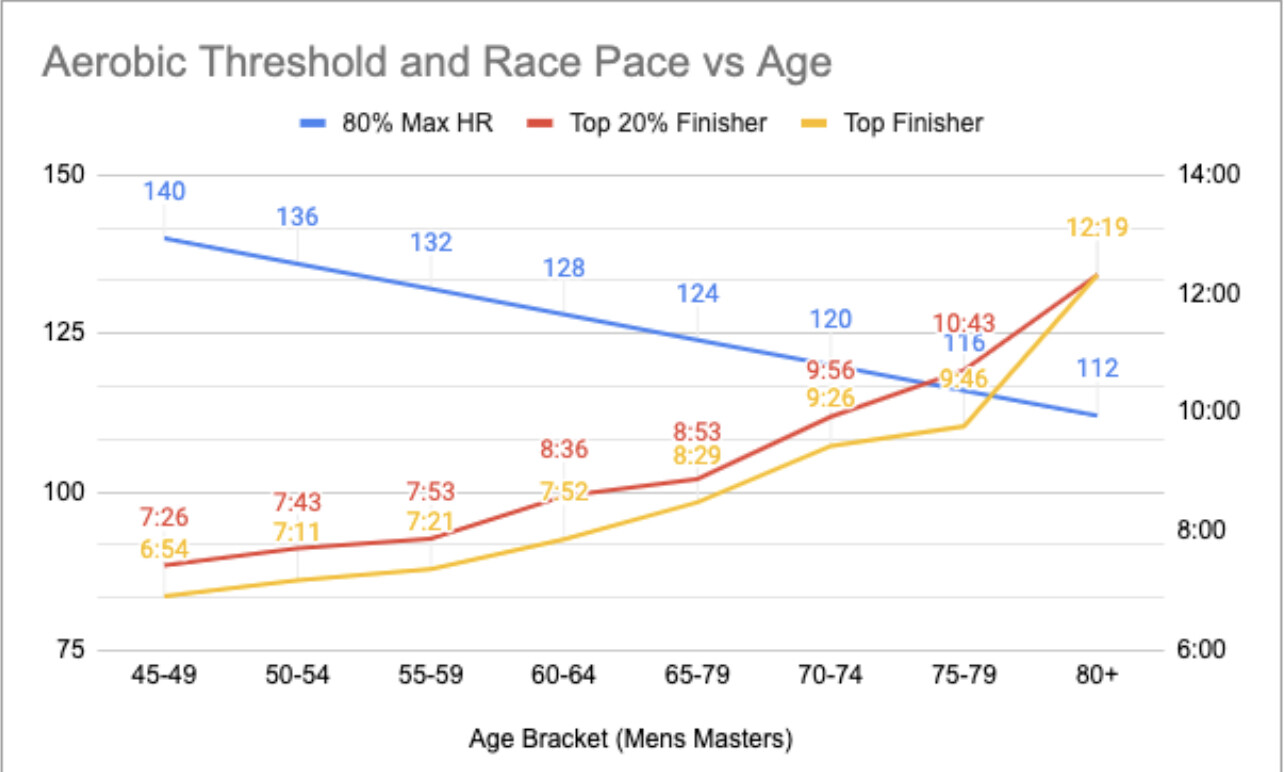
I decided to investigate this briefly and look at some representative races to see if I could see this in actual race data. I looked at the data from the California International Marathonfrom 2022 curious to see an age-related pattern. During my short racing career, I would typically place in the top 20% of my age bracket. I extracted data for Mens Masters into a chart to show Max HR vs. the top finisher and the top 20% finisher. This has given me some consolation that the slowdown is natural and will continue.
One more thing I’d like to share, especially with older runners. Since the ICD, I have found it hard to rebuild my aerobic base. I’ve concluded that the reason for this is that I was still trying to train like when I was a teenager back when my Max HR was 200! Somewhere in my memory banks, I recalled something about low heart rate training and quickly found the MAF methodby Dr. Phil Maffetone. In a nutshell, Maffetone advises training at ultra-low heart rates (180-<age>) to develop a core aerobic base. The process can take 3-6 months and involves running at an agonizingly slow pace (at first.) I am happy to report that this is the one thing that is working for me and for the first time in a long time I am again running with joy.
This has been a very personal story but one that I thought I should share with our running community. I feel that running may have saved my life. If I hadn’t challenged my doctors that I was not “fine” the worst could have happened. We runners know our bodies better than anyone and when something doesn’t feel right, it’s probably not. Don’t be afraid to aggressively advocate for yourself. Your life might depend on it.
(01/01/2024) ⚡AMPby Warren Savage
What Will Health and Fitness Look Like in 2024? We Asked Some Experts.
Adults will take recreational cues from their children, “unprocessed” will become a marketing asset, and rodents will show us the way to eternal life.
It’s almost a wrap for 2023, which means it’s time for our annual list of fitness predictions for the coming year. As in the past, we reached out to several experts to ask what we should expect for 2024. Beyond forecasting a specific food fad or workout craze, these predictions are often about identifying a subtle shift in the zeitgeist when it comes to how we think about what it means to live well.
Over the years, a consistent theme has emerged: How do we embrace advances in science and technology without losing sight of the tried-and-true, or letting them corrupt an essential humanist element? This question has probably never been more urgent than in our era of accelerated machine learning. When I recently spoke to my friend Scott Lachut, a longtime veteran of the trend forecasting industry, he told me that he’d come across a few examples of gyms that offer AI-based trainers with different “personalities.” Depending on whether you wanted to be coddled or subjected to dominatrix-style abasement, your virtual coach would be able to accommodate your needs.
“I personally think that generative AI being able to offer personalization at scale is going to be pretty interesting, if a bit Big Brother-y,” Scott told me. This reminded me of that frequently cited proverb of uncertain origin, “May you live in interesting times.” Depending on your source, the line is either meant as a blessing, or a curse.
My guess is that “ultra-processed” will be the food term of the year as everyone who cares about what they eat realizes that they need to cut down on foods that are industrially produced, use industrially extracted ingredients, and are designed to replace real foods and be “addictive.”
Much evidence associates these foods with overweight and obesity-related chronic diseases (heart disease, type 2 diabetes, etc), and overall mortality. One clinical trial supports the addiction hypothesis; it demonstrates that people who eat ultra-processed diets as opposed to matched diets based on minimally processed foods take in many more calories. I would not be surprised to see non-ultra-processed products starting to be advertised as such.
—Marion Nestle, professor emerita at New York University and author of the Food Politics blog
Sometime in 2024, we will learn of an epochal breakthrough in the quest for longevity. There will be a molecule that, when given in sufficient quantities to certain transgenic rodents, extends life by an amount that, when extrapolated from rodent-years to human-years, is statistically significant. Human trials will be planned; venture capital will flow like red wine; extremely long podcasts will be recorded. Obscure herbs that contain molecules distantly related to the breakthrough will flood the Internet. The global wellness market will reach a projected size of $6.6 trillion. Life expectancy in the United States will continue its decade-long decline.
–Alex Hutchinson, Outside Sweat Science columnist and author of Endure: Mind, Body, and the Curiously Elastic Limits of Human Performance
For too long, runners at the back of the pack have felt left behind by the larger running community. Few running clubs provided support for the 12-minute (or more) mile crowd, and many race organizers packed up water stations or ran out of medals before the slowest runners crossed the finish line. Thankfully, this is beginning to change, largely due to the work of slow-running activists like Martinus Evans, founder of the Slow AF Run Club, who published a book by the same name last summer. As Evans’s star has risen, so has support for his cause: The virtual club is now more than 18,000 members strong, and runners around the world have been inspired by his calls for greater inclusivity in fitness. The past few years have also seen the launch of several in-person pace-inclusive running groups.
As more slow runners feel welcome at running events, the average course time for many major races, including the New York City Marathon, is slowing down. “The stigma of being a back-of-the-pack runner is slowly going away,” the marathon’s race director, Ted Metellus, recently told The Washington Post. Most of us face plenty of barriers to simply lacing up sneakers and finding the time to move. I’m hopeful that, for growing numbers, speed will no longer be one of them.
—Danielle Friedman, journalist and author of Let’s Get Physical: How Women Discovered Exercise and Reshaped the World
Amidst the increasing chaos and tumult of everyday life, people will crave stability and simplicity from their health and fitness routines. There will never be a shortage of those who are into the latest fad or bro-science gimmick, but it seems more and more people are becoming tired of this. There is already so much noise in the world, and one’s health and fitness approach need not contribute to it.
I suspect it’ll increasingly be back to basics—because not only do basics work, but they aren’t so exhausting. Out with the social media hype speeches from $8,000 cold plunges at five in the morning, in with a morning pot of coffee or tea, reading a book, and 30 to 60 minutes of movement that you can do consistently. The former sounds cool. The latter is the path to actual health and well-being.
—Brad Stulberg, executive coach and author of Master of Change: How to Excel When Everything is Changing, Including You
Social media can have an unfortunate flattening effect—it can feel like every person on your feed wants the exact same thing. Angels Landing is the only hike worth doing, Yosemite the only public land worth visiting, and the six big-city marathon “majors”—New York, Boston, Chicago, London, Berlin, and Tokyo—are the only footraces worth contending. Interest in these races has boomed (Boston qualification keeps getting harder, lottery applications to Chicago have more than doubled over the last decade) even as smaller marathons stagnate or even decline. Something has to give, just as a matter of pure arithmetic, so perhaps this will be the year of flexing on your followers with a PR in your local grassroots 10K.
–Chris Cohen, deputy site editor and wellness editor at GQ.com
Everyone is lonely. We are starved for human connection and contact. We are starved for reasons to go outside. We are all withering and calcifying, physically. The natural answer is, of course, stay with me, PvP zones. What is a PvP zone, you ask? PvP zones, in open-world video games, are designated areas where players are able to directly interface with—OK, attack—one another. I do not mean for there to be actual violence, obviously. But a place for adults to engage in relatively unstructured play? We need it, now more than ever.
I see you shaking your head, but that only proves how badly you need to engage with your fellow humans in a PvP zone. You may think I’m joking, but I am entirely serious. I take my dog to the dog park, and then I sit there roiling with jealousy for 45 minutes. How is it that we have a place for her, a dog, to get up to shenanigans with her fellows, while the only acceptable thing for me to do outside is sit on a bench? It’s preposterous.
I, we, have basically all the same needs as a dog for play and exercise and, most importantly, fun with others. We are grown adults. We should, theoretically, be allowed to do whatever we want. Why is “goofing around in parks” the provenance of only dogs and children? Why are we not allowed to do some good old-fashioned light roughhousing, to chase one another in and out of trees, just because it’s fun and funny only if you, very crucially, don’t think about why or what for at all? If you are thinking “You’re just describing jiu jitsu class, or recreational softball”: sort of. But the most crucial aspect of the PvP zone is that it’s structureless, a place where no one loses and skill doesn’t matter.
I don’t think anyone would argue that many of us think entirely too much now. Perhaps the solution to all of our ills is to just designate an area of our parks where it is acceptable to go up to another person you don’t know and say “tag, you are it” and then run away. PvP zones. It could, and should, and by my estimation will, happen.
—Casey Johnston, creator of the She’s a Beast newsletter
A combination of sustainable lifestyle changes and personalized solutions will reimagine sick care. I think health spending will shift from reactive to proactive care in the coming decades. More movement and healthy food should be the first line of defense. Building on that foundation, health trackers, preventative diagnostics, and coaching/care platforms will help save the U.S. healthcare system trillions of dollars in the long run.
—Anthony Vennare, co-founder of the Fitt Insider newsletter
People have come around to the fact that shorter workouts still have benefits (see exercise snacks!) and that high intensity workouts do not have to be long. What we are going to see next is the swell of lower intensity workouts having a lap in the spotlight. More men taking Pilates, people walking, lower intensity steady state exercise (Zone 2 and otherwise), and wanting to feel better instead of just being fitter.
As millennials’ life responsibilities start to pile-up as this cohort of individuals who were born into the wellness boom continue to age, the wear and tear that intense workouts have on the body will rear its head. Additionally, people are starting to understand more of the science behind benefits of lower intensity steady state work, especially for the heart. The “soft life” mindset will show up in the gym.
—Joe Holder, founder of The Ocho System and GQ wellness columnist
We’re at a point where I think we’re going to have to redefine how we see health and wellness in a number of ways. On the one hand, we’re going to have to reckon with the environment we’ve created. There’s an increasing acknowledgement that having phones everywhere, at all times, is causing some disastrous mental health in teens and young adults. And for the rest of us, the impact of neglecting green space, parks, walkable areas, and so much more in our day-to-day living is setting us up to fail.
On the other hand, the promise of medical discoveries like GLP-1 drugs bring much needed avenues for meaningful change. The first legitimate drug for obesity will force us to wrestle with how we see health, from both a personal and medicalized approach. My hope is that we find ourselves wrestling with the nuance in the middle, finding ways to utilize medical breakthroughs, while creating an avenue for long-term sustainability by making our environment invite healthier actions.
—Steve Magness, track and field coach at the University of Houston, coauthor of The Passion Paradox and Peak Performance, and cofounder of The Growth Equation
Growing up in an Asian-American family, the greatest compliment anyone in my family could give about a dessert was, “it’s not too sweet.” This aversion to cloying sweetness, which was hard coded into my palate from a young age, has caught on with the mainstream. Starting with long overdue realignment of the soda industry toward sparkling water as the hero, to the continued rise in popularity of Asian food with its greater emphasis on savory over sweet, to the all-too-common experience of asking your server for a wine recommendation that’s “on the drier side,” sweetness continues to be marginalized.
But while sugar has been demonized for decades from a nutritional standpoint, eaters are now reducing sugar intake for purely taste reasons, not just health ones. Even people who aren’t militant about avoiding sugar are moderating it because they want to actually taste their food, not have their taste buds smothered in a wave of sweetness. And with rising negative sentiment around the healthfulness of artificial sweeteners and the general affinity for more unadulterated foods, diets in 2024 and beyond might not only continue to reduce sugar levels, but whatever small amounts of sugar they do eat will come from natural sources, not synthetic ones.
—Mike Lee, Founder of The Future Market, a trend forecasting company for the food industry
You used to have to go to a sterile clinic to get a longevity boost with Vitamin IV drips and stem cell therapy but resorts are now partnering with longevity centers to offer onsite treatments. Guests at Four Seasons Resort Maui at Wailea can get a poolside NAD+ IV drip. Katikies Kirini in Santorini now has an outpost of a ZOE Bio Regenerative Wellness Clinic where guests can get live blood analysis. And Six Senses Ibiza has partnered with biotech company RoseBar to offer guests full diagnostic testing that can inform biohack treatments like localized cryotherapy.
—Jen Murphy, Outside contributor and longtime fitness columnist for the Wall Street Journal
I think in 2024 sotol will take over from mezcal as the “it” cocktail. Cheers!
(12/25/2023) ⚡AMPby Outside Online

Kilian Jornet’s 4 secrets to winter training
For iconic trail runner and mountaineer Kilian Jornet, the colder months aren’t a pause in training but rather call for a strategic shift that all runners can learn from.
Nestled in the Romsdalen mountains of Norway, Jornet’s off-season training offers a masterclass in balance, recovery, and preparation for the upcoming challenges of spring and summer racing. In a recent blog post with COROS, Jornet shared his off-season regime, and how you can apply it to your training.
1.- Diversify your training arsenal
Jornet’s usual running playground is snow-covered during winter, prompting a shift from high-mileage running to ski mountaineering and ice climbing. This diversification serves as a reset for both body and mind. While running is an impact activity that can cause some repetitive strain, winter activities like skiing offer endurance benefits without mechanical stress.
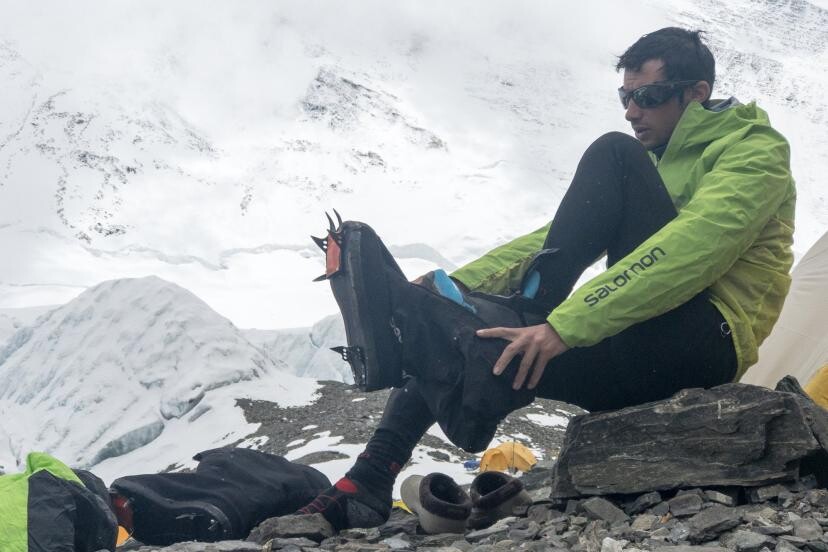
Embracing variety in your training will allow you to build and maintain a robust aerobic base, while minimizing the risk of injury. Trying new things this season, like a cross-country ski lesson, strapping on some snowshoes or spending some time on an indoor bike will have long-term benefits, and you may find a new sport you love.
2.- Focus on the downhill
For Jornet, downhill speed and strength are paramount for ultrarunning success. Instead of relying solely on running for quad strengthening, he incorporates downhill skiing during the winter. This deliberate strategy ensures that his legs are accustomed to intense eccentric loads without the constant impact on muscles and bones. The muscle memory cultivated during cross-training seamlessly integrates into running when the season shifts. Try a downhill workouts to get used to (down) hilly fun.
3.- Prevent injuries for the long-term
By embracing activities with different mechanical loads than running, Jornet not only aids short-term recovery but also secures long-term benefits. Jornet’s temporary departure from a running focus in the summer of 2023, due to injuries, emphasized the importance of cross-training. Make a strategic choice to switch it up so that you can run for as many years as you want.
4.- Enjoy a mental break
While the winter training regimen is robust, Jornet acknowledges the necessity of a mental break. The off-season becomes a time to recharge mentally, allowing a return to spring training with renewed confidence and positivity. Jornet emphasizes the value of a balanced mental state during the winter training grind and recognizes the importance of mood in adaptation. Focus on recovery days and practice fuelling well during the off-season. Try one of the recipes Jornet and his partner, Emelie Forsberg, love to make.
Jornet’s winter training philosophy isn’t just for elite athletes— it holds lessons for all who seek to balance intensity, recovery, and a focus on mental health and a connection with the changing seasons. His training regime can be used as inspiration for regular runners to explore the transformative power of a well-crafted off-season strategy.
(12/23/2023) ⚡AMPby Keeley Milne
The ‘Taco Bell 50K’ Requires Strong Legs—and a Stronger Stomach
Every fall, a group of Denver runners celebrates National Taco Day by running 31 miles using the fast food Mexican chain as aid stations
Imagine you’re 12 miles into a running race and you arrive at an aid station, where, instead of refueling with energy gels, you’re required to eat a 540-calorie Taco Bell Crunchwrap Supreme.
Yes, that’s one of the mid-race snacks you’ll need to consume if you want to be an official finisher of a bizarre and spirited, 31-mile run through the greater Denver area.
Welcome, if you dare, to the annual Taco Bell 50K Ultramarathon.
What started as an offhand suggestion on a Saturday morning training run has now become a stupid and fun gastro-intensive ultra-distance event with 10 “aid station” stops at various Taco Bell restaurants. But, as silly as it seems, it’s all about sharing the community of running, says founder Dan Zolnikov.
Held every October for the past six years, and loosely coinciding with National Taco Day (yes, that’s a thing), it’s an unconventional and entirely unsanctioned fun run that has several ridiculous rules—a.k.a. the semi-optional Taco Bell 50K Commandments that are printed on the back of the event’s race bibs—including the need to eat something from the Taco Bell menu at every stop.
While that could mean consuming something small at most of the restaurant visits—like, say, an order of Nacho Fries or Cinnamon Twists—the fourth and eighth aid stations demand a higher level of gastrointestinal fortitude. At those stops, participants must opt for one of the larger and more calorie-intensive “Supreme” menu items, such as a Crunchwrap Supreme, Burrito Supreme, or Nacho Cheese Doritos Locos Tacos Supreme.
“I always tell people it’s fun until the fourth stop,” says Zolnikov, a Denver lawyer and avid ultrarunner who started the event in 2018. “Most of those that are new to it are like, ‘Wait, I’ve gotta eat a Chalupa Supreme or a Crunchwrap Supreme and then keep running for almost 20 more miles?’ And we laugh and say, ‘Yep! That’s what we do.’ Honestly, that’s when a lot of people are like, ‘I think I’m just going to go home.’”
Running the Taco Bell 50K is what many ultrarunners call out-of-the-ordinary Type 2 fun—something that conceptually sounds fun before and afterwards, but in actuality is not quite that fun while it’s happening. But word has gotten out and it’s been compelling enough to have grown to a record 40 participants this year. There’s no entry fee, but each runner is expected to pay for their own food.
While the Taco Bell chain of 7,000 Mexican-themed fast food restaurants isn’t a sponsor of the event—and the event organizers explicitly remind participants of that—a Denver-based Taco Bell franchise group agreed to open one of its locations early this year to accommodate the 7 A.M. start and welcome runners with free breakfast burritos, thanks, in part, to the persistent prodding of Jason Romero, one of the event’s original instigators.
Not just a zany group run, the Taco Bell 50K is rooted in ultrarunning lore and takes cues from some of the country’s most famous races. Not only does the course alternate between clockwise and counterclockwise every other year—a la Colorado’s Hardrock 100—it also requires runners to keep their Taco Bell food wrappers as an ode to how runners need to tear a page out of hidden books on the Barkleys Marathon course.
While Leadville 100 luminary Ken Chlouber has famously motivated runners for 40 years by saying “You’re better than you think you are, you can do more than you think you can,” Romero says the motto of the Taco Bell 50K is that “you’re hungrier than you think you are, and you can eat more than you think you can.”
How does a convoluted event like the Taco Bell 50K get started in the first place? At a farmer’s market, of course.
During long Saturday morning training runs in the spring of 2016, Zolnikov and running buddy Mike Oliva developed a habit of refueling by eating fresh, Colorado-grown or locally crafted food at Denver farmer’s markets. On one run, Oliva randomly stopped to use a bathroom at a Taco Bell and suggested to Zolnikov they should consider changing their route the next weekend and make Taco Bells their impromptu aid stations.
“As soon as he said it, we laughed but then there was this awkward, five-minute silence between the two of us,” Zolnikov recalls. “We were just kind of jogging along and not really saying anything, but he said it so it was out there. I think we realized it was a stupid idea, but, as ultrarunners, we kind of wanted to do it. So I asked him, ‘Do you want to do that next week?’ And he was like, ‘No dude, just forget I said anything. Let’s just forget it.’”
Although the idea never conjured up mouth-watering excitement, the odd craving to do it never went away. The banter about the idea continued on their Denver running Facebook group, as well as at weekly training runs of the Denver chapter of Achilles International, a running club in which runners with disabilities are guided on weekly training runs and weekend races.
Oliva started that group in 2013, and it has met for weekly runs at Denver’s Washington Park every Monday night for the past 10 years, developing an easy-going camaraderie between guides and runners.
“This talk about running to Taco Bells went on for about two years, and finally I got sick of hearing the trash talk, and just said, ‘That’s it, we’re doing it,” says Romero, 53, a regular Achilles runner who is legally blind. “And as soon as I said it, it kind of got silent. But I’m not about talking, I’m about doing. So I said, ‘You put together a course and we’re going to do this.”
Within a few days Zolnikov had plotted out a course using Google Maps and Strava, connecting nine Taco Bells in the Denver metropolitan area in a 31.52-mile loop. (To make it an even 10 aid stations, the event starts and finishes at the same Taco Bell on the southwest side of the city.) And then, a few weeks later, in October 2018, seven courageous runners gave it a go and five finished in about seven and a half hours. (The other two tapped out, waving the white napkin of surrender midway through the route.)
Although it was mostly a celebratory season-ending fun run among a core group of friends for the first few years, it has garnered more interest as word of mouth spread. A few of the Achilles runners have joined in the fun every year.
“It’s not a glamorous route,” says Ben Garrett, who took over as race director after running the Taco Bell 50K for the first time in 2022. “It’s kind of what you’d call an urban ultra through the ‘scenic’ parts of Denver.”
Garrett, a 25-year-old structural engineer, was training for his first marathon when he was cajoled into joining the Taco Bell 50K—despite never having run more than 16 miles. He joined willingly and finished, giving him a boost of confidence heading into the Disney World Marathon three months later.
“It was great to know I could run that far before my marathon, especially knowing I had a stomach of steel after that,” Garrett says with a laugh. “But it also inspired me to run more. After my first marathon, I did another marathon and then a couple of 50Ks. Now I’m hooked for life.”
There are no winners, and there are no prizes. Instead over the years, runners have piled on extra gastrointestinal challenges for extra satiation.
There’s the Baja Blast Challenge, which entails only imbibing two liters of Mountain Dew Baja Blast during the run, and then there’s the Diablo Challenge, which consists of oozing a packet of Taco Bell’s next-level hot and spicy Diablo Sauce on every single food item throughout the run. (By the way, two of the more precarious event rules state that no Pepto Bismal, Alka Seltzer, Pepcid AC or Mylanta will be allowed on the course, and the bathroom stops are only allowed at the Taco Bell restaurants.)
As if consuming 1,500 calories during the run wasn’t enough, some runners have added their own challenges—such as devouring a Voodoo Doughnut during the middle of it—and many runners engage in the Diablo Shooter Challenge, which is simply sucking down a packet of the restaurant’s fiery hot sauce to conclude the run. But to be fair, one of the forgiving commandments is the notion that every runner can take a mulligan and skip eating at one of the stops.
“It’s just meant to be a fun run,” says Denver runner Bill Garner, who has participated in five of the six Taco Bell 50Ks. “It’s the one ultra where you’re just really out there for the camaraderie. I don’t really feel like anybody’s racing, although I’m sure somebody’s going to show up one year and try to run it all-out. But for most of us, it’s a big camaraderie run.”
It is mostly about the community spirit that pervades running, but for Garner, the Taco Bell 50K inspired him to run farther and pursue new running goals. Prior to participating in the first event in 2018, the 53-year-old cybersecurity technology specialist and strict vegetarian primarily ran marathons and half marathons on the roads. Since then, his focus has become ultra-distance races on trails, and believe it or not, he typically relies on cold Taco Bell bean-and-cheese burritos in his aid station resupplies.
“It’s the perfect ultra fuel,” says Garner, who consumed numerous Taco Bell delicacies enroute to finishing the Kansas Rails to Trails 100-miler in 2019.
“I thought these ultrarunners were crazy, and I jumped into this because it was crazy, but then it changed my life,” he says. “I had never run an ultramarathon before I did the Taco Bell run, and I definitely learned that, if you just keep eating, you can keep going. That’s what ultras are all about.”
A few years ago, Portland, Oregon, runner Bobi Jo Ousnamer befriended several Colorado runners in an online forum while training for the Pikes Peak Marathon. They told her about the Taco Bell 50K and asked her to come out and run it in 2019, but she couldn’t fit it into her schedule because she was training for her first 100-miler.
However, she made it out for the 2020 edition, amid the Covid-19 pandemic. (That year, a small group of runners ran through Taco Bell drive-thrus to order their food because the inside dining areas weren’t open.) During the run, she admitted she had devised her own Taco Bell 50K course in Portland. That immediately sparked interest in doing Denver and Portland events on back-to-back days, which they finally pulled off in 2022 on the day of the Portland Marathon.
That event included stops at seven Taco Bells and a marathon aid station a friend organized on her front lawn, where they devoured homemade breakfast tacos. Calling it the Double Deuce Challenge, it included 62 miles and 18 taco stops in two cities in less than 36 hours.
“I made the mistake of mentioning to Jason Romero that I had created a Portland course and he was like, ‘Oh my God, we’re doing a double!’” says Ousnamer, 34, who works as a juvenile public defender in Portland. “So for the fifth anniversary, he announced that we’d be doing this double. I think we all thought he was kind of joking, but as the months went on, he was like, ‘All right, I’ve got a plane ticket so we’re doing this.’ The Taco Bells are not as close together as the Denver ones and it’s hillier in Portland, so it was a bit of a bigger challenge. We were definitely feeling it on day two.”
Although the Taco Bell 50K has always meant to have been a low-key, end-of-the-season celebration for local runners, it’s continued to gain notoriety and to push the envelope of what’s possible. Runners in Texas and New Jersey have reached out about developing something similar, as have a couple of running clubs in Europe. Although the event details were typically only posted on Facebook when Zolnikov managed it, Garrett upped its visibility and inclusivity by developing an informational website with a link to the Strava map of the course.
Will the Taco Bell 50K continue to grow?
“Honestly, I never wanted to see it start to begin with, but it’s kind of turned into this force of nature that’s bigger than me and bigger than Jason, and it’s become its own thing now,” Zolnikov says. “People can use it for whatever they want it to be, and if someone wants to get bragging rights for racing through it as fast as they can, go for it. My thing has always been about getting together and running, and, OK, ‘Let’s do this kind of dumb thing, and let’s have fun doing it.”
(12/23/2023) ⚡AMPby Outside Online
Four lessons to learn from back-of-the-pack runners
Let’s be honest–most of us won’t find ourselves standing on a podium anytime soon. While much of our attention is directed toward the feats of race leaders, their training regimens and the hurdles they overcome, we regular runners have accumulated invaluable experiences and insights that might escape those tearing up the front of the race course.
Back-of-the-pack runners merit acknowledgment. Spending more time traversing a race or event should not diminish one’s status as a runner. Here are three noteworthy skills that those bringing up the rear excel at–and that all runners can derive wisdom from.
1.- Resilience and tenacity for the long haul
Back-of-the-pack runners demonstrate unmatched resilience, confronting identical course challenges and distances as their swifter counterparts but enduring for more minutes, hours, and, in the case of ultras, sometimes even days. The commitment to persevere and triumph over long periods of time underscores a special tenacity. While those on the podium may appear impressive as they swiftly navigate the course, enduring for extended hours to systematically navigate the same obstacles represents a distinctive and courageous achievement.
2.- A special spirit of camaraderie
In the rear of the pack, a unique camaraderie flourishes. This isn’t to diminish the incredible sense of community among front-runners, but the nature of swift racing often limits interactions like talking or cheering on fellow runners. When the goal is completing the distance rather than setting a record pace, runners find themselves more able to provide support, encouragement and understanding – a connection that often extends well beyond race day. The camaraderie shared among back-of-the-pack runners captures the essence of the running community. After all, it’s during these moments, not when pursuing a personal best, that you truly get to know your fellow runners.
3.- Appreciation for the journey
For runners at the back of the pack, the significance of the journey often surpasses that of the finish line–a sentiment that might sound cliché, but that resonates profoundly with those who’ve experienced it. Prioritizing a distance goal grants the freedom to immerse oneself in the process, enabling you to savour special race moments, relish the scenic beauty and appreciate the sheer joy of moving forward. This approach to running underscores the beauty of the journey, imparting a valuable lesson for everyone to seek fulfillment in the ongoing experience itself.
4.- Golden hour is the best hour
Many ultras celebrate something known as the golden hour–the race’s final hour, when back-of-the-pack runners are pushing themselves to cross the finish line. By this time, the leading runners have often returned to lend their support, and the crowds that gather are often larger than at any other point in the race. Witnessing these athletes harness every ounce of remaining strength to complete the race is a poignant experience, bringing tears to the eyes of everyone involved–from race directors and commentators to fans. The golden hour is a celebration of the unique skills and wisdom that the last runners have drawn upon to endure long hours and reach the finish line.
(12/13/2023) ⚡AMPby Keeley Milne
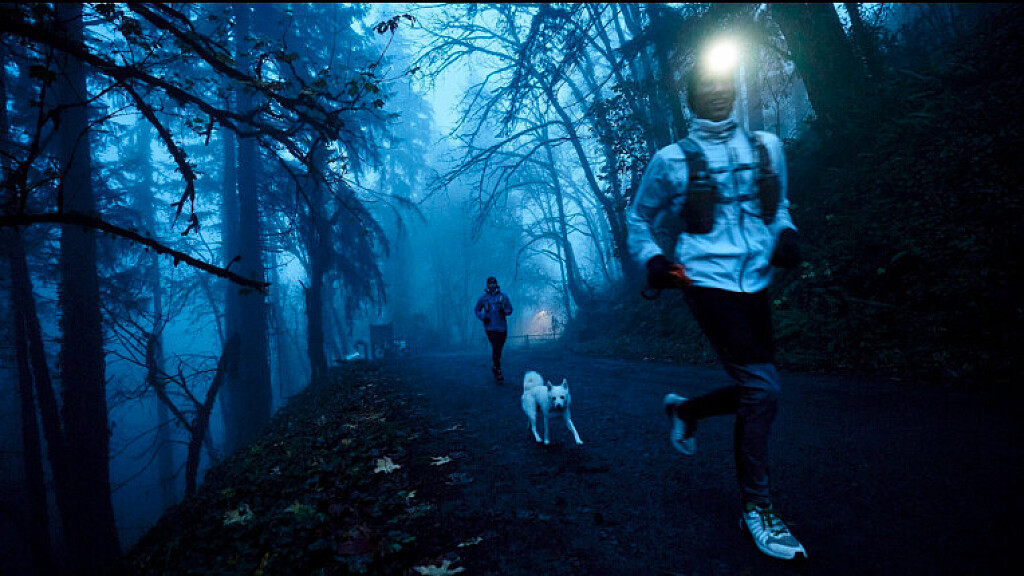
Running Through the Night to Confront the Darkness of Substance Addiction
Ultrarunner Yassine Diboun found his own unique way to help those in recovery move through darkness together. It’s working.
Since 2020, Yassine Diboun has made it a point each year to black out one square on his calendar with a Sharpie.

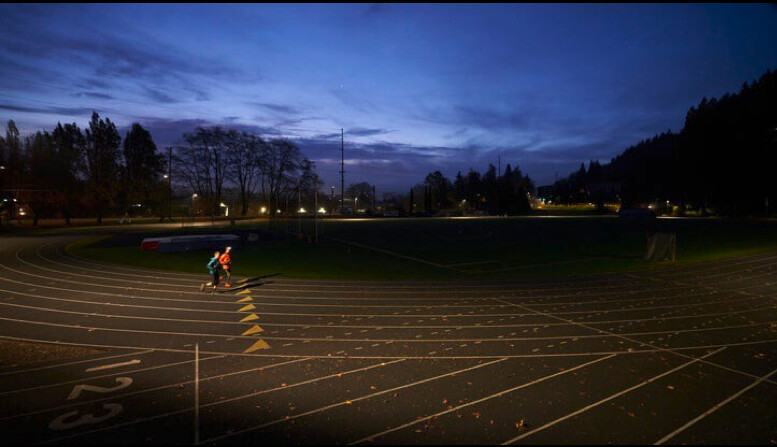
It’s a gesture to signify that on this day, typically set around the winter solstice, this 45-year-old ultrarunner and coach from Portland, Oregon, won’t run during the day, as he does most every other day of the year. Instead, he’ll watch a movie with his daughter, Farah, or cook a meal with his wife, Erica, eagerly waiting for night to fall. Because that is when the action starts.
Diboun has become a fixture in Portland’s trail running scene, a Columbia-sponsored runner and one of the most electric and positive forces in the U.S. ultrarunning scene today. He is also an athlete in active substance addiction recovery since 2004.
And here, at the confluence of endurance and recovery, is where Diboun enacts an annual tradition in Portland called Move Through Darkness. From sundown to sunup, Diboun runs through the evening, covering a route that connects city streets with trails in Forest Park while accompanied by dozens of other runners.
On December 9, Diboun will start his fourth-annual Move Through Darkness run. It may exceed 70 miles. It may not. That’s not really the point, though in some sense it is, for the more miles he runs, the more pledge-per-mile dollars he gains to funnel into future recovery programs, the very support structures that saved his own life two decades prior.
In 2009, Diboun and his wife moved to Portland, where he pursued a career in coaching. One of the first things Diboun did upon arrival was to connect with the recovery community, which led him to The Alano Club of Portland, the largest recovery support center in the United States.
Diboun’s personal history of substance addiction is circuitous and complicated—documented extensively in Trail Runner, The New York Times, Ginger Runner interviews, and others—but what’s most important to know is that it led him down a path that wasn’t his own. Alcoholics Anonymous (A.A.) and the 12-step program threw him a lifeline and he white-knuckled it to shore, reinforced by commitments to a plant-based diet and a healthy dose of body movement. (That’s code for running a ton of miles.)
Such discipline brought him to the highest levels of ultrarunning. He’s a four-time finisher of the Western States 100 Mile Endurance Run (once in the top 10), a three-time finisher of the H.U.R.T. 100, in Hawaii, and he represented the U.S. at the IAU Trail World Championships in 2015. These accolades sit beside countless ultra wins and podiums.
His success story prompted Brent Canode, executive director of the Alano Club or Portland, to reach out to Diboun in 2018 with a proposition. Diboun had, by then, teamed up with mountain athlete Willie McBride, to start Wy’East Wolfpack in 2012. The business offers group functional fitness programs, youth programs, and personal guidance to get people outdoors and on trails.
Under Canode’s leadership, the Alano Club just launched The Recovery Gym (TRG)—a CrossFit-style facility offering courses for those in recovery, and Canode saw running as a natural extension of this program. He asked Diboun to spearhead a new running portion of the gym. For Canode, though models like the 12-step program were widely available and proven effective, he found the diversity of options for community lacking beyond that.
“What we learned was that a lot of folks don’t attend 12-step programs,” Canode says. “They haven’t found a connection anywhere else, and that’s a matter of life or death for a person in recovery.”
Together, the two started regular informal runs called the Recovery Trail Running Series, which evolved into a more formalized wing of the gym: Run TRG. This program quickly took off, offering evening group runs, outings that would often end in post-run dinners and fun gatherings. The groups grew bigger each week.
“We cultivated this community for anybody in or seeking recovery from substance addiction, and it really picked up some good momentum,” Diboun says.
When the pandemic shut everything down in March 2020, including The Recovery Gym and its new Run program, regulars instantly lost the group’s connection. Many relapsed and started using substances again. A few turned to suicide, including a prospective coaching client for Diboun who had met with him just one week prior.
“I know from personal experience that life can get too overwhelming at times and you get too stressed or overwhelmed and you can’t see anything,” Diboun says. “You can’t see any hope, so you just live recklessly, helplessly. In extreme cases, life can feel not worth living anymore.”
While running one evening by headlamp, Diboun thought about the fragility of hope, the pandemic, the recent suicides, and the ever-increasing need for community. The combination of isolation and mental health decline, paired with an uptick in running popularity during the pandemic (Run TRG, once relaunched, tripled in size), created an opportunity for Diboun to leverage his visibility as both a decorated ultrarunner and someone vocal about his addiction history.
An idea was born: Move Through Darkness.
For one night, sundown to sunrise, he would organize a run to crisscross the city, connecting various trail systems and raising visibility of the mental health challenges entangled with isolation and addiction. It would take place around the winter solstice, the longest night of the year.
The initiative would serve three main purposes: First, it would be a personal pilgrimage for Diboun, a reminder of his own ongoing relationship with sobriety. Second, it would offer another way for those in recovery to come closer during difficult times. And third, the event would raise financial support for the Alano Club of Portland, which serves more than 10,000 people in recovery each year through mutual support groups like A.A., peer mentoring services, art programs, harm reduction services, and fitness-based initiatives like The Recovery Gym and Peak Recovery, Alano’s newest program, which provides free courses in split boarding, rock climbing, and mountaineering. Over the last eight years Alano has won four national awards for innovation in the behavioral health field.
December 2020 was the first-ever Move Through Darkness event. About 30 runners participated throughout the night, joining Diboun in various sections of his sinuous route. Given that the invitation was to run upwards of 100K through the night in some of the worst weather of the year, the turnout was impressive. The group eventually made their way to Portland’s Duniway Track to complete a few hours of loops, encouraged onward by music.
One of those runners that first year was Mike Grant, 47, a licensed clinical social worker from Portland. Grant has been in long-term recovery with substance addiction and understands the initial hurdles of getting out there. During the event, Grant completed his first ultra-distance run by covering 50 miles. He hasn’t missed a Move Through Darkness run since.
This year, he’ll be joining again, in large because of Diboun.
“You hang out with Yassine for any length of time, and the next thing you know you’re running further than you ever have before,” Grant says. “He’s one of those people you just feel better when you’re around.”
The Move Through Darkness route is roughly the same every year, but it always starts and ends at the Alano Club, located in Portland’s Northwest neighborhood. This first year, his daughter, Farah, ran with him from Duniway to the Alano Club, which was a particularly special moment to share.
The fundraising component is a pledge-per-mile model, where you can pay a certain dollar amount for every mile Diboun will cover. All funds go to support the Alano Club, specifically the Recovery Toolkit Series. Other recovery-focused gyms are increasingly available nationwide, but The Recovery Gym is the only CrossFit affiliate in the U.S. designed from the ground up, exclusively for individuals in recovery.
Each week, TRG offers six to eight classes free of charge to anyone in recovery. Every coach holds credentials in both CrossFit instruction and peer mentoring for substance use and mental health disorders. An original inspiration for Run TRG was the Boston Bulldog Running Club, a nonprofit established in 2015 to provide running community reinforcement for those affected by addiction and substance addiction.
According to national statistics released earlier this year, 29 percent of U.S. adults have been diagnosed with depression at some point in their lives—the highest rate since such data was measured. Suicides in the U.S. reached all-time highs in 2022, at nearly 50,000 lives—about 135 people per day lost to self-inflicted death. In 2022, 20.4 million people in the U.S. were diagnosed with substance abuse disorder (SUD).
Oregon, specifically, is rated number one in the country for illicit drug use. In 2020, Oregon had the second-highest alcohol and drug addiction rates in the country, while ranking last in treatment options.
Canode says that, after 40 years of researching addiction and effective recovery, the single most important aspect of recovery success is authentic connection to a like-minded community. That’s why both Canode and Diboun are building an all-hands-on-deck approach to recovery through running, to strengthen connections through movement.
“In recovery, we know how to grind,” he says. “We are naturally great endurance athletes. We also know how to consistently move through darkness, which is especially true in the beginning of someone’s recovery journey. It’s often not rainbows and unicorns and lots of positivity. It’s a grind. It’s grueling.”
Annalou Vincent, 42, a senior production manager at Nike, is one of the many people who have reached out to Diboun from all over the Portland community.
“Finding Yassine and Run TRG saved my life,” she says. After starting a running practice in her thirties, she started feeling better and decided to question decisions like drinking alcohol. She eventually dropped booze and became a regular at the Run TRG. Vincent has worked closely with Yassine to develop and promote Run TRG, and has joined Diboun for various legs of Move Through Darkness over the years.
“I can’t imagine my life or my sobriety without running and this program, says Vincent. “Over the years I’ve seen it change the lives of many others. Move Through Darkness is an extension of that. This program and others like it are saving lives.”
Willie McBride, Diboun’s business partner, supports Move Through Darkness each year and has witnessed its evolution and impact.
“I think people really connect with this project because they understand those dark parts of life, and how challenging they can be. Darkness comes in all different forms,” he says. “But also the very tangible act of running all night, literally putting their body out there—coming together as a group sheds light right into that darkness.”
Diboun is reminded daily of his life’s work, to remain sober and offer his endurance as a gift to others, even when it gets difficult.
“I’m coming up on 20 years sober, but I’m not cured of this,” he says. “This is something I need to keep doing and stay on the frontlines.”
With record rainfall aiming for Oregon in December, this Saturday night calls for a 58 percent chance of rain showers, with the last light at 5 P.M. and the first light around 7 A.M. That’s potentially 14 soggy hours of night running. But this forecast doesn’t cause Diboun any concern. He’s used to it, used to running for hours in the dark, used to being drenched. He’s faced that long tunnel and knows that there’s always light at the end, as long as you keep trudging forward, and best when together.
“You keep passing it on,” he says. “You keep giving it away, in order to keep it. Gratitude is a verb.”
(12/10/2023) ⚡AMPby Outside Online
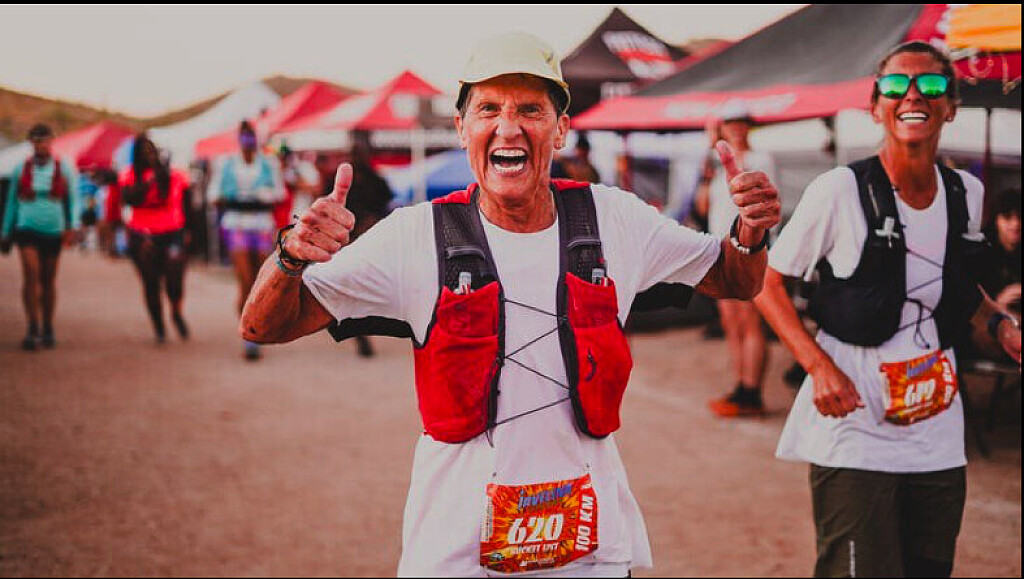
Who Is Courtney Dauwalter’s New Ultramarathon Partner? It’s Her Mom.
Here‘s how the Dauwalter duo completed a dream of crossing a finish line together
The last loop was quiet beneath the full moon. Their shuffling feet on the packed, pebble-tossed singletrack punctuated the sleeping Sonoran Desert as the duo moved through shadows of saguaro cactus and prickly pear. Millions of white pinpoints began to appear in the dark sky.
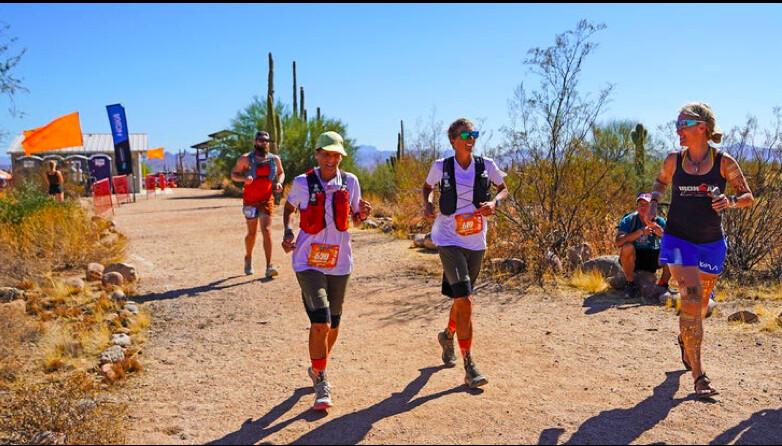
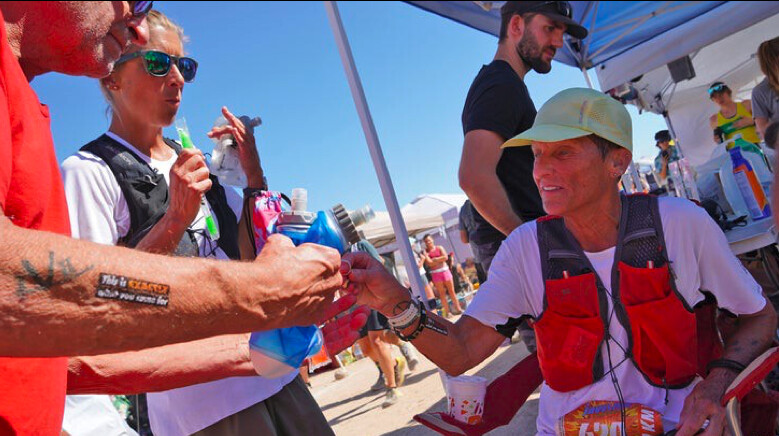
That’s when 66-year-old Tracy Dauwalter, mother of ultrarunner Courtney Dauwalter—who was coming off of historic back-to-back-to-back 100-mile wins of the 2023 Western States 100, Hardrock 100, and UTMB, including two course records—started resharing doubts with her daughter, who kindly reminded Tracy many times throughout the last 13 hours, “that’s not useful thinking, so let’s not think it.”
Occasionally, Courtney would redirect their attention, pointing out this unique section of the course that they’d been past twice before. This time, she built a 60-second container to stuff all those fears inside.
“Tell me all of your doubts and frustrations. You have one minute,” Courtney told her mom. “Once you finish, you can’t complain out loud anymore. It’s not serving us to get to this finish line.”
Tracy spewed all of her negative thoughts, from her rolling stomach to her aching muscles, which was an important reset to get out of the whirlpool of heavy thoughts. I signed up for this, Tracy humbly reminded herself. Nobody’s making me do this.
A dedicated team, the pair was running three loops side-by-side in matching long running shorts, white baggy tees, Salomon hydration vests, and cactus-themed socks, at the Halloween-themed Javelina Jundred 100K race. The ultrarunning event is held the closing weekend of October in the McDowell Mountain Regional Park, an hour northeast of Phoenix, Arizona. Temperatures can climb into the 90s by mid-morning and dip into the low 50s once daylight disappears behind the McDowell Mountain Range.
Now 38 years old and living in Leadville, Colorado, Courtney had participated in the event once before, in 2016, when she was the race’s outright winner. She set the then-course record for the 100K, one of several performances that drew national attention to her astonishing endurance and athleticism.
Tracy, who’d just recently started trail running, had covered ultra-distances at 12- and 24-hour events across flat gravel, but had never before run this far on a trail. They selected Javelina’s rolling 100K with 3,924 feet of vertical gain. The majority of the climbing is packed into the gradual ascent from the Javelina “Jeadquarters” aid station, which serves as the start and finish of the race and basecamp, to the far side of the loop, Jackass Junction.
It was exactly here, at this midway point, after slogging up the final climb over rolling hardened granite and sandy washes, where Tracy had a sticking point. Fortunately, Courtney was there to fill up her water bottles and point out all the tasty options when they reached the runner’s buffet.
“Please keep eating,” she said, as the electronic dance music bumped. A few hours earlier, they enjoyed a surprise pick-me-up of McDonald’s cheeseburgers, delivered by crew masters Dick Dauwalter, Courtney’s dad, and Kevin Schmidt, her husband. But one of the biggest highlights during the race for Tracy was watching Courtney interact and commune with so many people in the trail running community.
“Courtney does this amazing sport, but even more, I adore the person she is. It’s one of my favorite things to watch the love that’s out there for Courtney, and the way she responds. To be in that world with her was really special,” Tracy said. “She was also really kind to me, even when I was frumping and I’d fall down, she’d help pick me up.” Courtney let out a laugh.
“Mom, you only fell one time!” said Courtney, laughing.
“I know, but it was embarrassing,” Tracy said.
While Javelina was the mother-daughter’s debut trail ultra finish, side-by-side, the experience wasn’t their first race together. When Courtney was in high school, the duo finished a rollerblade marathon together in St. Paul. (Rollerblading is a major pastime in Minnesota, where Tracy grew up and still lives today.) Here, she met Dick and raised Courtney, a middle-child to two brothers.
While growing up, Tracy played softball and badminton. In college, she ran cross-country and track. “I’ve always been interested in sports and done them at a level that I could make the team. I was never a star. Being on a team is social and taxes your body while working up a sweat,” she said.
When the kids were interested in soccer, she and Dick organized an adult co-ed squad. Now, she jogs, plays volleyball, and golfs. She and Dick enjoy motorcycle tours, too, like venturing through the Elk Mountains in Colorado. “I’m not great at anything, but I can hold my own, and it’s super fun—I’m willing to do any sport,” she said. The motto was much the same for the kids.
"I thought that it would be so cool to share this sport that I love so much with this person I love so much. I knew she could do it.”
“They could try any activity. But once they committed, they had to see that season through—whether they enjoyed it or not, we were committed. We didn’t miss practices or games. We made sure those were a high priority for them and us. That drove our lives for many years with lots of fun times, but boy, that schedule was crazy—we’d slam-dunk dinner at 4 P.M. so that everybody could get to practice,” Tracy said.
An accountability mindset is one that leads to showing up in other areas of life from work to class to chores, following through on responsibilities and gritting out less desirable tasks. “When things get hard, like college classes, your option is not to quit,” Tracy said. “You dig in a little deeper, get help, and get it done, which is the same with any sport.”
But perhaps their most special ingredient is that the Dauwalters know how to have fun. “Having fun while doing those things is just as important,” Courtney said. “Our family always worked hard, but we play hard, too. All of that combined is what makes life special. Having that be deeply ingrained in who I am helps me in everyday life, but also, for sure, in ultrarunning.”
While watching Courtney grow up, Tracy noticed her daughter had a deep motivation as a person and athlete. One of her earliest memories was two-year-old Courtney, who could barely walk, repeatedly riding a Big Wheel tricycle downhill with a group of kids and insisting she’d wrestle the bike up the hill by herself. As a kid, Courtney and her siblings played soccer, often on the same teams. Later, they ran high school cross-country and track. To fill the winter months, she tried basketball, but she had a propensity to quickly foul out, taking the bench for the remainder of the game.
One day, she came home with a bright idea to Nordic ski instead, which was foreign for a family full of downhillers. They picked up the equipment, Courtney joined a competitive team, and she practiced in nearby school fields. “All she did was wipe out. All the time. Dick and I are thinking, ‘I wonder what this is going to look like?’” said Tracy.
During those foundational years, Courtney would rush home after a Nordic race to report the number of crashes she’d had. “In a 5K, I would be psyched if I only crashed nine times—tripping, planting my poles, tumbling the entire time. I was so bad,” she said.
But Tracy bought a beat-up pair of cross-country skis and started to practice alongside Courtney. “We learned together,” Tracy said. “It was more fun to crash with somebody than to crash by yourself.”
By the time Courtney graduated, she was an all-state runner and had earned All-American honors as a Nordic skier three times. She was a four-time state champion, and her team acquired two national championships. In 2003, Courtney moved west to Colorado, where she raced collegiately on the Nordic ski team at the University of Denver. Three years in, her DU team won 11 meets and the 2005 NCAA Championship.
“Courtney was really good at everything she did, and it wasn’t because she was a natural,” Tracy said. “Anytime she tried a sport, she didn’t have an immediate knack for it, but she hung in there to develop it. She was a hard worker and determined.”
Years later, in 2015, any remaining questions of physical stamina were laid aside—for both Tracy and Courtney, who proved to have a serious knack for endurance. Courtney broke the ribbon at her inaugural ultra race, the 2011 Prickly Pear 50K in San Antonio, Texas, and her curiosity about wanting to run longer continued to grow. The following year, she dropped out of the Colorado’s Run Rabbit Run 100 Mile race at mile 60 with throbbing legs, questioning her ability to cover that much ground in a single push.
Frustrated by not meeting her goal, Courtney registered for her first 24-hour race, the 2013 FANS Ultra Races, a more manageable format than an ultra on singletrack. Her family joined to crew and run laps, providing entertainment and support, including Tracy. They didn’t have much of a background in ultras and were green to any strategy.
Regardless, Courtney wrapped a total of 105 miles on that two-mile gravel loop around Lake Normandale Park in Bloomington, Minnesota, completing her first non-trail century-distance, and gaining confidence. Two months later, she crossed the finish line of the Superior Fall Trail Race 100 Miler in Lutsen, Minnesota, her first 100-mile distance on trail, and stood on the podium for second place.
Moving forward, the FANS Ultra Races became a family tradition. Courtney returned to the 2014 event, besting her first summer with 123.6 miles. Tracy decided, if she was going to crew and run laps with Courtney, she might as well sign up herself.
“She was like, ‘Heck, I’m going to spend the whole day out there anyways. Why not put some time on my feet?’” Courtney recalled.
In 2015, she tallied 109.2 miles while her mom, then 57 years old, covered 66.8 miles. Their annual pilgrimage continued in the 24- or 12-hour format, over the next several summers, coinciding with Courtney’s ultrarunning career picking up steam. She won the 2016 Run Rabbit Run 100 Mile with a 75-minute lead, and along with the title, the world’s largest ultra purse: $12,000.
By the summer of 2017, she retired from her position at the Girls Athletic Leadership School in Denver where she taught science and coached cross-country. “In an interview a few years ago,” Courtney said. “I was asked if I could run an ultramarathon with anyone in the world, who would it be? ‘My mom,’ I said. I thought that it would be so cool to share this sport that I love so much with this person I love so much. I knew she could do it.”
In an interview a few years ago, she was asked, if she could run an ultramarathon with anyone in the world, who would it be? “My mom,” she said. “I thought that it would be so cool to share this sport that I love so much with this person I love so much. I knew she could do it.”
Tracy heard the recording and, despite having never run on trails, she immediately called her daughter. “Let’s do it. I heard you want to run an ultra, so let’s sign up for something,” she said to Courtney. “If someone puts a challenge in front of me, it can even be pretty insane, and I’m a sucker for trying to rise to that challenge.” In addition to the competitive spark, the invitation felt sentimental.
Committed to doing an ultra together, they accepted that it might be a winding road to get there. The two picked the 2022 50-mile Superior Fall Trail Race in Lutsen. Mid-route, they missed the cut-off. Tracy shrugged and shook her head recounting the unfinished event. Courtney refused to let the DNF be a negative thing. “You learned so much in that first summer, mom,” she told her. “Dialing in all of those pieces helped immensely this year. And we decided, we’re not done. We still need a finish line together.”
As soon as registration opened in January, the duo signed up for the 2023 Javelina Jundred 100K. “I was nervous coming into this race because I was bouncing off of that epic fail of the first 50-miler we tried, which was a wake-up call. You have to prepare yourself,” said Tracy.
“It was not an epic fail,” Courtney countered.
That winter, Tracy clocked workouts on a treadmill. From April onward, she ran outside four or five days a week for 10 to 20 miles. Courtney researched singletrack trails around Lone Lake, which her mom became excited to explore. One of the biggest challenges of learning to run on trails is her tendency to shuffle and trip, Tracy confessed. Building confidence, she finished the Willow 20 Miler in May and Afton Trail Run 50K in July. Like her daughter, Tracy didn’t keep a close log of her mileage, and her training was not systematic.
Courtney’s advice, true and simple, rang in her mind: Spend time on your feet.
“People asked me if I coached her. Absolutely not,” Courtney said. “I did try to be helpful—harping on testing nutrition, wearing a pack so that her body gets used to one, and hiking uphills—so her race day could be much better. She was the one putting in the work and figuring out routes where she could do laps or get on hills. I admired from afar.”
“It helped that Courtney kept reminding me, ‘This was our run together, our race, and it could look however we could make it.’ If I crawled, that wouldn’t be disgusting. It got ugly, then it got not ugly,” Tracy added.
Staying lighthearted, Courtney countered, “It never got ugly. There was never a doubt that we would make it to the finish.”
Fortunately, the elation did come around. Next to her daughter, Tracy crossed the finish line of Javelina Jundred 100K in 17 hours and 38 minutes with a smile in the glowing lights, after staying up into the night running, eating, and sharing pain—but mostly, laughing—with her daughter. They’d gone full circle together, both on the circuit they’d traveled in the desert as well as in life.
“I think you beat me by, like, a half-second, mom,” Courtney said.
“I know,” Tracy bantered back. “I think I was really needing to be done, so I rushed with a half-second sprint.”
(12/03/2023) ⚡AMPby Outside Online
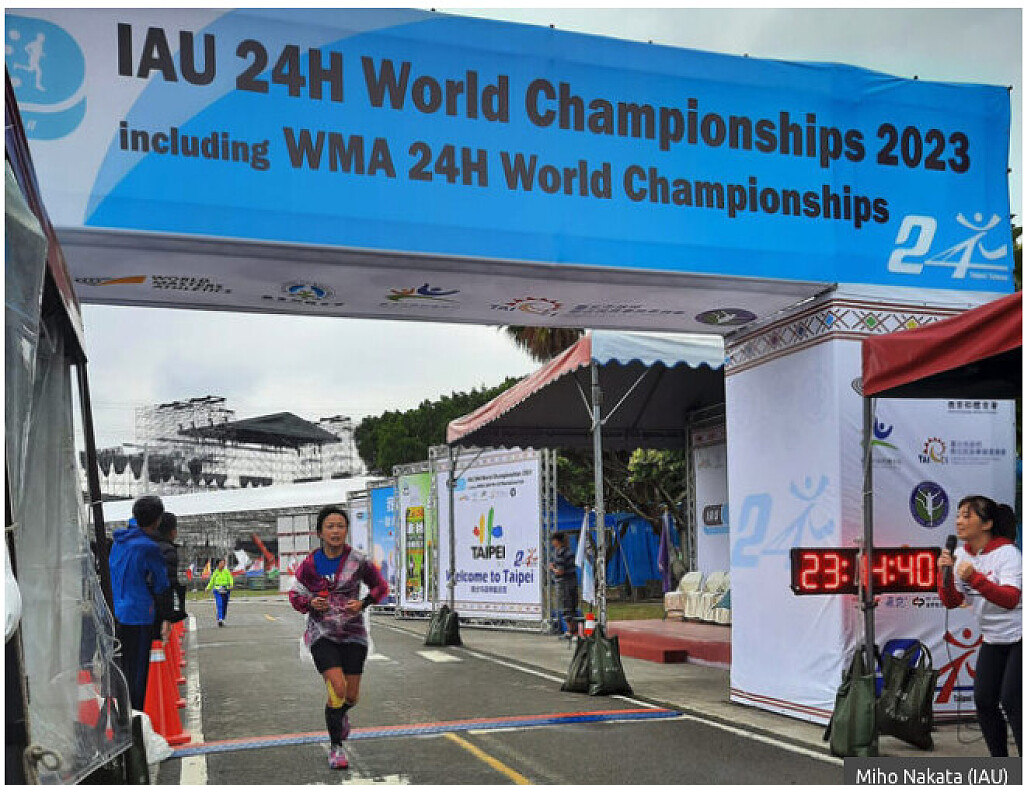
World 24-hour record for Miho Nakata
Japanese ultra-runner sets women’s all-time best by slim margin as Aleksandr Sorokin takes men’s title at the IAU World 24-hour Championships in Taipei
Japan’s Miho Nakata set a women’s world record when winning the IAU World 24-hour Championships in Taipei on Saturday (Dec 2) while Lithuania’s Aleksandr Sorokin retained his world crown and the British team won bronze in the men’s race, Adrian Stott reports.
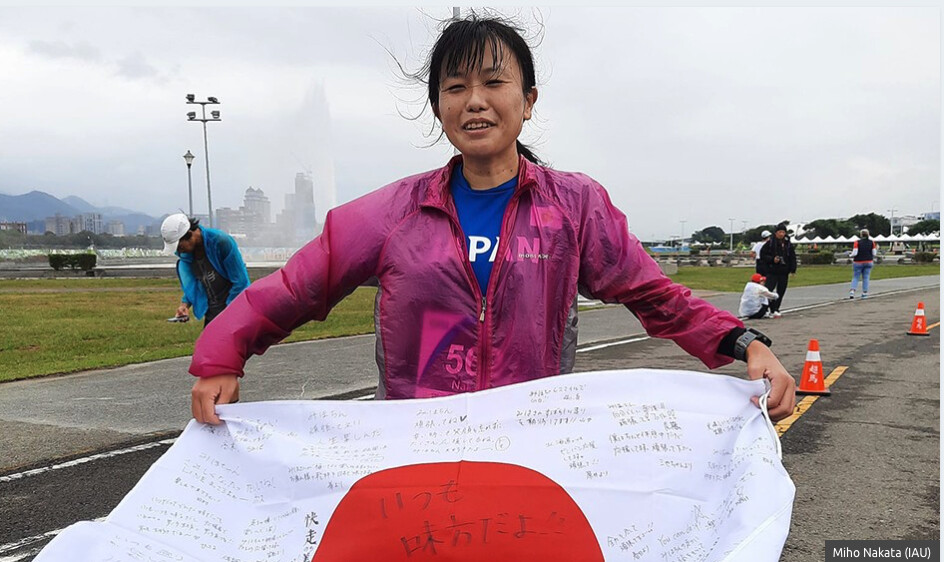
With final results still to be confirmed, organisers are reporting a distance of 270.363km (167.995 miles) which, if confirmed, will surpass the distance set by Camille Heron of 270.116km (167.842 miles) at the last edition of the championship in 2019 by a mere 246 metres.
Nakata had been the early leader and at six hours had reached 78km, with Finland’s Noora Honkala and Herron in second and third. She reached 100km in around 7hr 50min, a total of 10 minutes up on Herron’s split from her world record run in 2019.
At halfway, Nakata had accumulated 146km, on par with Herron’s record split at the 2019 event in Albi. Herron was lying second with 142km, Norway’s Line Caliskaner was on 140km with Spain’s Carmen Maria Perez and Honkala also on 140km.
Herron seemed to encounter difficulties and retired at this point, leaving Nakata to power on and reach 100 miles in approximately 13hr 25min with Spain’s Perez at about 13:45 and Honkala at 14.00.
By 20 hours, Nakata had reached 228.00km. Although still moving well it looked like she was falling slightly behind record schedule despite being 12km ahead of Perez, as Ukraine’s Olena Shevchenko moved up to third.
A strong final three hours by Nakata took her past Herron’s mark, seemingly in the final minutes of the race. Shevchenko took the silver, while previous champion and world record holder Patrycja Bereznowska of Poland took bronze.
Putting Nakata’s run in perspective, her distance was only beaten by four of the men in the championship and increased her 24-hour PB by 14km from 256.024km. She also has a 100km best of 7:19:12 when finishing at the 2023 World 100km Championships in Berlin.
Positions changed a lot in the last couple of hours, with the likelihood of several national records yet to be confirmed in both the women’s and men’s races.
In the team competition, the experienced Polish team paced well to take the gold medals. Japan claimed silver and Czech Republic the bronze.
Sorokin retains global title
Aleksandr Sorokin had a similarly emphatic victory in the men’s race, although falling short of his current world record.
At six hours he led Brazil’s Denison Da Silva by 2km, with Greece’s Fotios Zisimopoulos in third. Reaching the first landmark of 100k in just over seven hours, he was slowly stretching his lead out.
Sorokin hit 100 miles in approximately 11hr 35min and totalled 166km at halfway. This compared with a 170.9km split when he set his exceptional world record of 319.614km in Verona last year. Zisimopoulos reached halfway in 158km, with Ukrainian Andrii Tkachuk now third.
Sorokin maintained a strong pace in the second half of the race to take the victory, surpassing 300km for the third time in his career to retain his title. Zisimopoulos, who had broken the record in the 245km Spartathlon race in September, cemented his place in the world ultra standings, taking second place with over 290km to gain his first ultra championship medal. Tkachuk took the bronze.
Lithuania took the gold medals in the team competition, with Poland taking silver.
Superb pacing from the Great Britain and Northern Ireland men’s team saw them earn well-deserved bronze medals.
Daniel Hawkins led the British men home in 10th, Former European 24-hour champions Dan Lawson was 17th and British record-holder Robbie Britton was the third counter in 22nd place.
(12/03/2023) ⚡AMPby Jason Henderson (Athletics Weekly)

Visualization Techniques Provide a Powerful Tool for Performance—Here’s How
Research points to the importance of training your mind for the best race-day results.
If you’ve seen another runner with their eyes shut, focusing intently before a race, they may very well be practicing visualization.
The practice of visualization is essentially imagining how a certain event, like a race, is going to unfold in as much detail as possible. It involves mentally planning out how you’ll feel when you start running, how you’ll react to obstacles along the way, and how you’ll push through the temptation to give up so you make it across the line.
“The ability to persevere and summon the grit within is a vital skill for runners,” says sports psychiatrist Ulrich Vieux, D.O., director of child and adolescent psychiatry education and training at Hackensack University Medical Center in Hackensack, New Jersey. “Visualization is the ability to have a pre-performance rehearsal in which a player pictures the events unfolding in their imagination.”
This, in turn, can be a strong complement to physical training that gives runners an edge. Here’s what you need to know about visualization techniques, including the benefits and how to get started.
4 Ways Visualization Techniques Can Improve Your Running
In a small 2021 study published in the Journal of Imagery Research in Sport and Physical Activity, non-runners who followed a functional imagery training routine—meaning they visualized how it would feel to achieve their goal—were five times more likely to complete an ultramarathon than those who spoke to a counselor about their motivation and didn’t visualize their success.
While this study had a small population size, it builds upon other research illustrating the link between mental techniques, including visualization, and high-performing athletes. For example, a study published in Frontiers in Psychology, competitive athletes with a minimum of five years of training in the sport showed higher scores on mental imagery skills than non-athletes. Meanwhile, a research article in Frontiers in Public Health points to evidence that cognitive (mental) processes coincide with motor (physical) processes—and that the two have a dynamic, bidirectional influence on each other.
When it comes to visualization, you don’t need to limit yourself to just one goal, either: In a 2016 study of 65 tennis players, published in the journal Basic and Applied Social Psychology, those who used an imagery exercise to pursue two achievement goals performed better than those who used it to pursue just one goal.
Here are four more benefits of visualization for runners, according to experts in the field of sports psychology and psychiatry.
1. It Builds Your Confidence
When you’ve seen yourself take on a race and move through obstacles that come your way, even if it’s through visualization, that feeling of accomplishment will translate into your physical training and racing.
“Visualization can help runners to build confidence by imagining yourself running well with good, smooth form and a positive attitude,” says Shira Oretzky, Ph.D., a clinical and sport psychologist in Del Mar, California, and a sport psychology independent contractor for University of San Diego Athletics.
Whether your goal is improving speed, running a longer distance, or achieving a new personal record, seeing yourself do so ahead of time in your mind helps you believe that it’s possible.
“With visualization, the runner has ‘run the course,’ so to speak, several times in their mind, reducing the likelihood of anxiety and helping them stay confident,” says Vieux. “Mental preparation that complements the physical preparation when training for an event or in pursuit of improving ability will help achieve the zenith of your potential.”
2. It Helps You Mentally Prepare for Obstacles
Visualization isn’t just about seeing yourself win. It’s about watching yourself confidently navigate anything the race may throw your way and shaping a game plan for getting through it. For example, if you might face harsh weather during your marathon, you can visualize yourself running in a pack when facing headwinds or dealing with rain, and pushing through with speed and strength.
“The runner imagines the undesirable situation, then ‘sees’ themselves overcoming it,” says Vieux. “When such moments arise, they’re not surprised or thrown off because they’re mentally prepared for it and are better able to maintain focus.”
That said, in practicing visualization, it’s important not to hyperfocus on negative imagery. Thinking too much about potential mistakes or less desirable outcomes can cause worry and tension in your body (and decrease your confidence).
“If you notice yourself doing this as a runner, it’s important not to judge yourself for it, but to instead use it as an opportunity to mentally prepare for how you would want to recover from setbacks,” says Oretzky. “It can be an opportunity to visualize yourself practicing resilience.”
3. It Keeps You Calm Under Pressure
When you incorporate visualization into your training or racing routine, you may find it helps you find calm before you start running.
“It can really help runners manage nerves under pressure, give them a place to focus the mind, and provide a way of getting centered beforehand,” says Oretzky.
You can practice visualization in the morning to set a positive tone for the day, before you start a training session or race, or even in the evening as a way to relax, unwind, and prepare for the next day’s event.
“It can begin to integrate into the body as well,” says Oretzky. “Visualization can help runners to feel more at ease, to have a relaxed, smooth form, and to decrease tension in the body.”
4. It Can Help You Train (Even When You Physically Can’t)
If an injury is keeping you on the couch, visualization allows you to continue preparing for the race.
“It gives you the ability to continue training mentally when training physically may not be possible because of injury or another impediment,” says Vieux.
Although it may not feel like you’re truly “training,” keep in mind that this mental component is what differentiates the best athletes from the rest.
“As a sports psychiatrist who has worked with professional athletes, one of the most memorable remarks I have heard came from a mentor, who said that the key difference between a baseball player stuck in the minor leagues and a major league baseball player was how they prepared mentally,” adds Vieux. “Many of our most admired athletes have remarkable mental strength and an ability to overcome obstacles.”
How to Incorporate Visualization Techniques Into Your Training and Racing
Start with the basics when you begin your visualization practice (say, imagine yourself running a course), then gradually add more details to your imagery.
“See and hear the spectators cheering each step of the way, imagine yourself keeping a certain pace and form, and see yourself reaching the final stretch,” says Vieux. “Add details like different types of weather, including heat and humidity or rain, and see yourself forging ahead while staying focused on your performance.”
To practice this, get comfortable in a quiet place (you can also listen to relaxing or pump-up music, if you’d like)—and hone in more on the process of your training or race, rather than just the outcome (which can add unneeded pressure).
The frequency and duration of your visualization will be individualized, just like physical training, but you can begin by practicing daily for five to 10 minutes. You can start at any point during your training, but keep in mind that consistent practice will increase the effectiveness.
“Visualization is a skill that can be practiced and honed just like anything else,” says Oretzky. “Just as runners train their bodies for a race, they can train their minds for success as well.”
Here are three specific visualization techniques Oretzky recommends to get started.
1. Imagine the Race in Detail
Visualize the race course of your next competition and see yourself running through it. Studying the course map beforehand and looking at photos or videos of the area can be helpful for this.
This technique can help you feel more comfortable with the route, strategizing how you’ll approach different components of the race, like hills, and preparing mentally for how you’ll manage challenges that may come up, like when you start to feel fatigued toward the end.
2. Replay a Best Performance
Recall or replay your PR in as much detail as possible. This will involve engaging your senses: What did you see? What sounds did you hear? What did your body feel like? How did it feel to cross the finish line?
Imagine playing a highlight reel to get pumped up and excited about your performance. This visualization technique can help you feel energized for the next challenge you take on.
3. Practice a Centering Visualization
This technique incorporates deep breathing to decrease tension in the body and helps to anchor the mind. As you slowly inhale and exhale, imagine yourself running with a relaxed posture, smooth strides, and controlled breathing.
Next, integrate performance cue statements to center your mind, such as “stay strong,” “trust your preparation,” or “you’ve got this.”
If you have a disappointing training session or race after visualizing, continue with both your mental and physical training, adds Vieux. Tell yourself: “This is not how I wanted it to turn out, but I have experienced similar situations in the past and have excelled.”
With practice and patience, you’ll find your visualization muscles strengthening.
(12/02/2023) ⚡AMPby Runner’s World
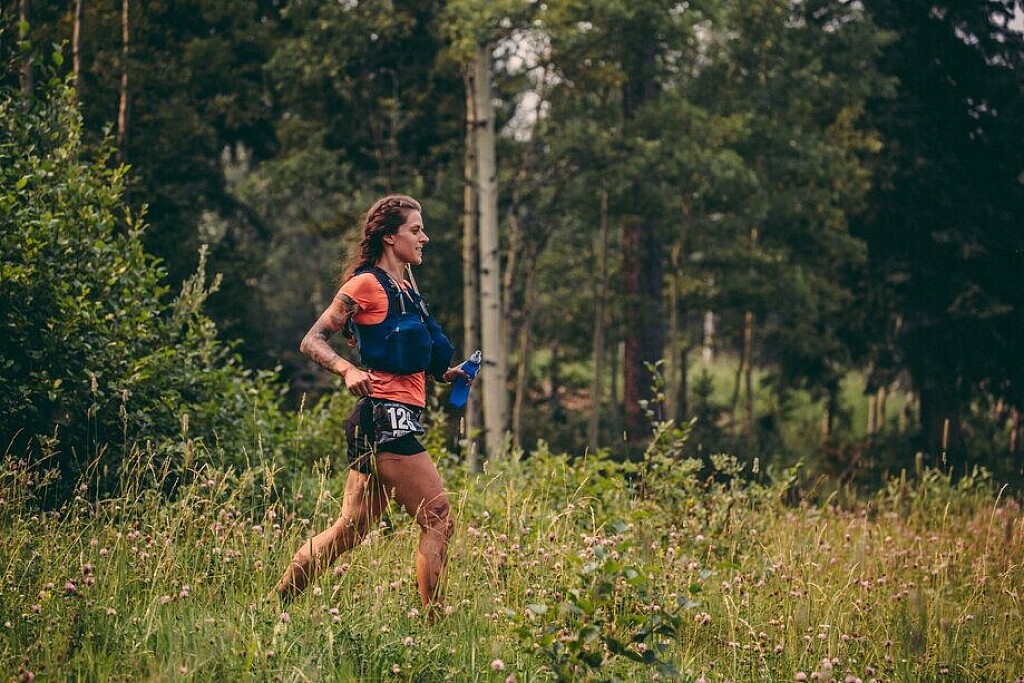
Canadian ultrarunner Priscilla Forgie loves this super-quick soup
It can be tricky to fit both healthy eating and regular running into an already jam-packed schedule, especially during the holiday season. This lightning-quick soup recipe, a favorite of Canadian ultrarunner Priscilla Forgie, is full of nutritious vegetables (easily tailored to your taste), with a lentil protein boost and lasagna noodles to up your carbohydrate game. It’s the perfect meal-in-a-pot to cook up in mere minutes after a nippy winter training session.
Forgie, an Edmonton-based ultrarunner, is coming off a stellar 2023 season, with a top-ten finish at Western States 100, and 12th place at CCC (100K) by UTMB. She enjoys experimenting with plant-based recipes (Forgie is vegan) to fuel her adventures, and for this soup, notes: “I always add extra nutritional yeast for added cheesiness.” While the recipe comes together in moments in an Instant Pot (or other pressure cooker), it can easily be made on the stovetop and left to simmer (leave the noodles out until shortly before you are ready to eat).

Instant Pot Lasagna Soup
(adapted from Vegan Richa)
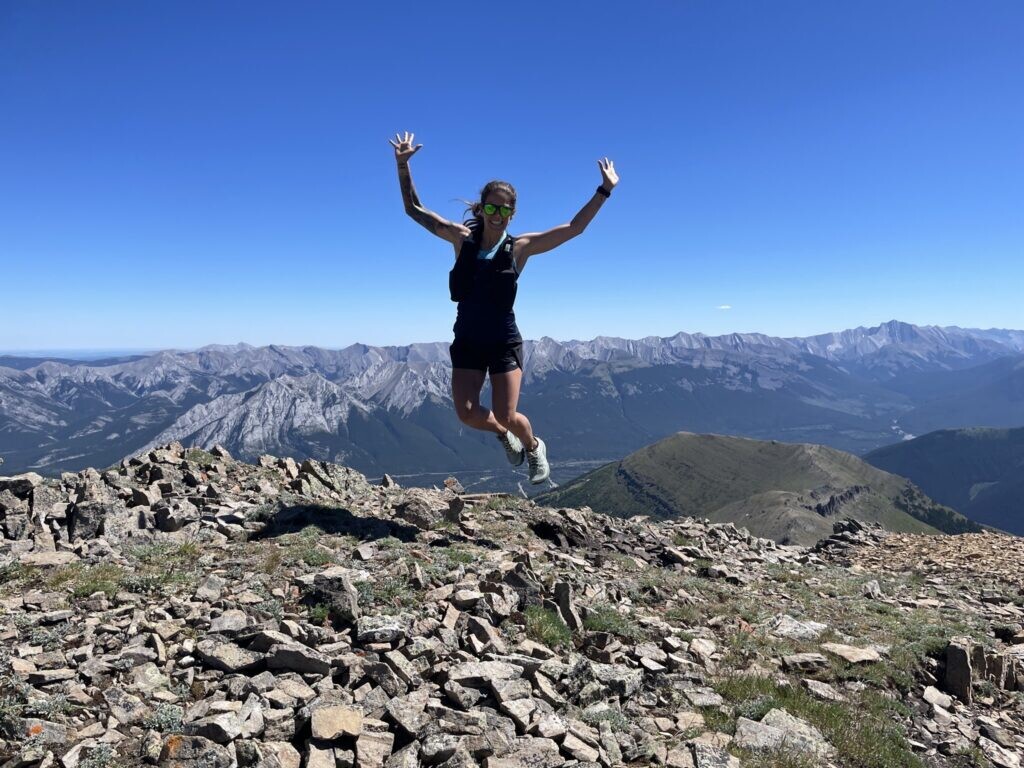
Ingredients
1 tsp oil
1/2 onion chopped
1 cup chopped veggies (can be a combo of peppers, carrots, zucchini or whatever you prefer)
1/4 cup red lentils (uncooked)
1 cup tomato puree (or marinara or tomato sauce)
1-1.5 cups diced tomato
2 tsp Italian seasoning (1 tsp basil, 1/2 tsp oregano and parsley, with a generous dash of thyme/sage and rosemary)
1/4 tsp each onion powder, garlic powder
1/2 to 3/4 tsp salt (use less if there is salt in the tomato sauce)
2 cups water or veggie broth
5 oz lasagna sheets, broken into small pieces (or pasta of choice)
Black pepper and red pepper flakes to taste
1 Tbsp nutritional yeast
1 cup packed spinach (optional)
Directions
Heat oil in Instant Pot on sauté mode. When hot, add onion, garlic and a pinch of salt. Cook for two minutes, stirring occasionally.
Add veggies and stir in. Add red lentils, tomato purée, tomato, salt, Italian seasoning, onion powder and garlic powder and mix in. Add lasagna sheets and water or broth, mix in well (use smaller pieces for the Instant Pot).
Close the lid and pressure cook on manual high for three minutes. Let the pressure slow-release for 10 minutes, and if there is still pressure left in the pot, manually release it carefully to open.
Mix in the black pepper, pepper flakes and nutritional yeast. Taste and adjust salt and flavor if needed.
Fold in the spinach if using. Let sit for a few minutes before serving, and add vegan cheese (or regular cheese, if you prefer) for a more lasagna-like flavor. Enjoy!
(11/27/2023) ⚡AMPby Keeley Milne

Canadian ultrarunner Adam Campbell’s tips for returning to running after injury
Alberta’s Adam Campbell has been a professional endurance athlete for more than 25 years. These days Campbell enjoys exploring his limits in beautiful places. Over his decades of experience, Campbell has dealt with numerous injuries, from overuse niggles to life-threatening trauma.
During periods of injury, Campbell says he shifts his focus to trying to get back to doing the things he loves as quickly as possible, without compromising the recovery process. Here are his tips for returning to running after an injury.

Don’t “test” the injury
Make sure you are in fact OK to run, rather than heading out to see if your injury has healed yet. “The best bit of advice I’ve heard was from the legendary [triathlete] Mark Allen: ‘When you feel better, wait a day.’ It is sound, long-term advice.”
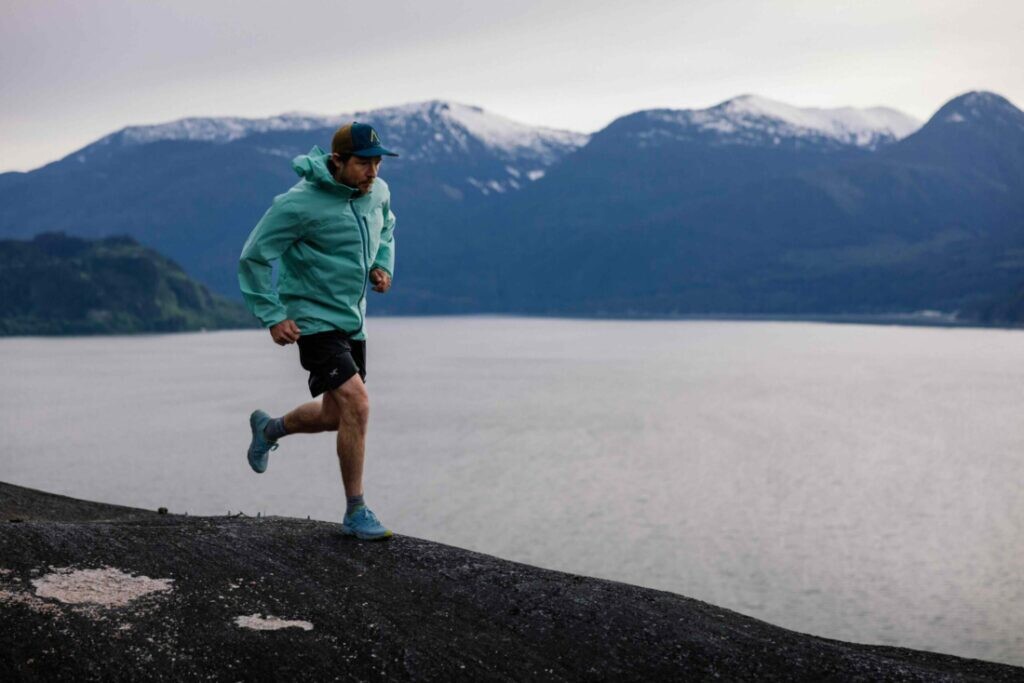
Have a return-to-run plan, and stick to it
Follow your return-to-run plan, even if you’re tempted to add more to your training schedule. Campbell suggests supplementing with complementary non/low impact aerobic work, if you must. The point here is not to build fitness, it’s to regain your ability to run pain-free, correct imbalances and avoid compensation injuries. From that you can build back your ability to train.
Do your first few runs back in a controlled environment (and solo)
A treadmill, a track or a grass field are great options so that you can stop or return home immediately if things start to act up. “Don’t run with a group, where you may feel pressure to run at a certain pace or distance,” suggests Campbell. A coach or physiotherapist watching you is fine.
Don’t run with ear pods
Running with no distractions helps you to tune in to your body, which is important when you have taken some time off. Campbell explains that running may feel weird at first. “Try to visualize good form, and run that way,” he suggests. “At the same time, don’t analyze your body into a state of creating or holding onto injuries. Bad neural connections can form when we are afraid of getting injured again.” Campbell suggests filming yourself running, and analyzing the video with your support network.
Warm up properly
Campbell suggests some easy running paired with active mobility to make sure your body is limbered up before you start your run. “Think about good form, and stick to your plan,” he says. Walk breaks are a good option if needed. “Walk/runs are great ways of getting back into running,” Campbell says.
Post-run, be honest with yourself about how it went. “If things still feel off, take more time off running,” Cambell suggests. If things do go well, Campbell recommends building back progressively. “Don’t jump back into your pre-injury miles or paces; work your way back up to them.”
Stay diligent with a rehab and prehab routine
“Don’t get lazy with that, just because things feel better,” Campbell says. Keep doing what helped you heal your injury as you move forward through the return-to-run process.
(11/21/2023) ⚡AMPby Keeley Milne
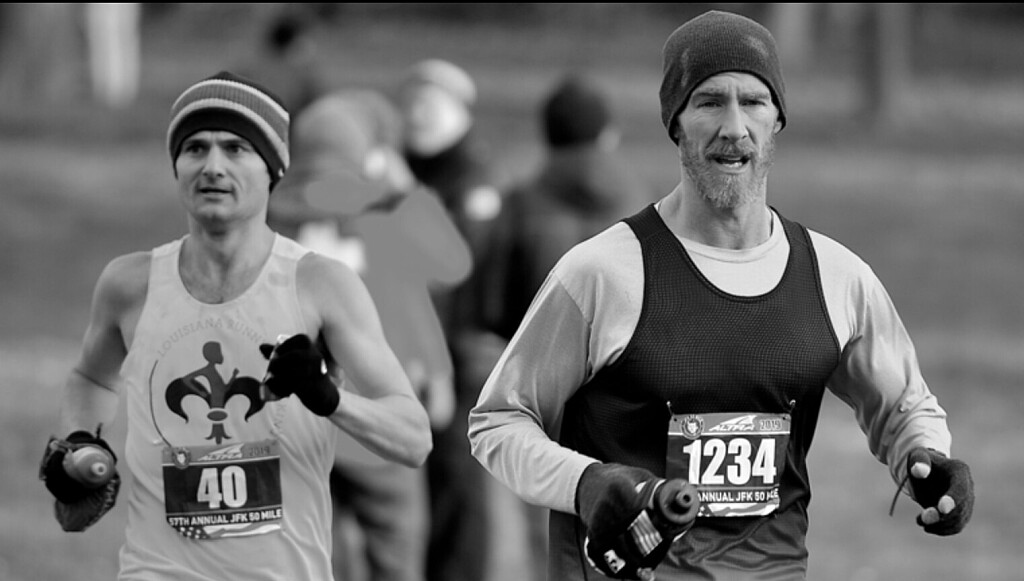
America’s Oldest Continuously-Held Ultramarathon Is Only Looking Forward
After 60 years, the JFK 50 Mile Race is sticking to its community-centered approach, and people keep showing up
Mike Spinnler cries nearly every time he recounts memories as a runner and long-time race director of the JFK 50, the oldest continuously run ultra in the country.
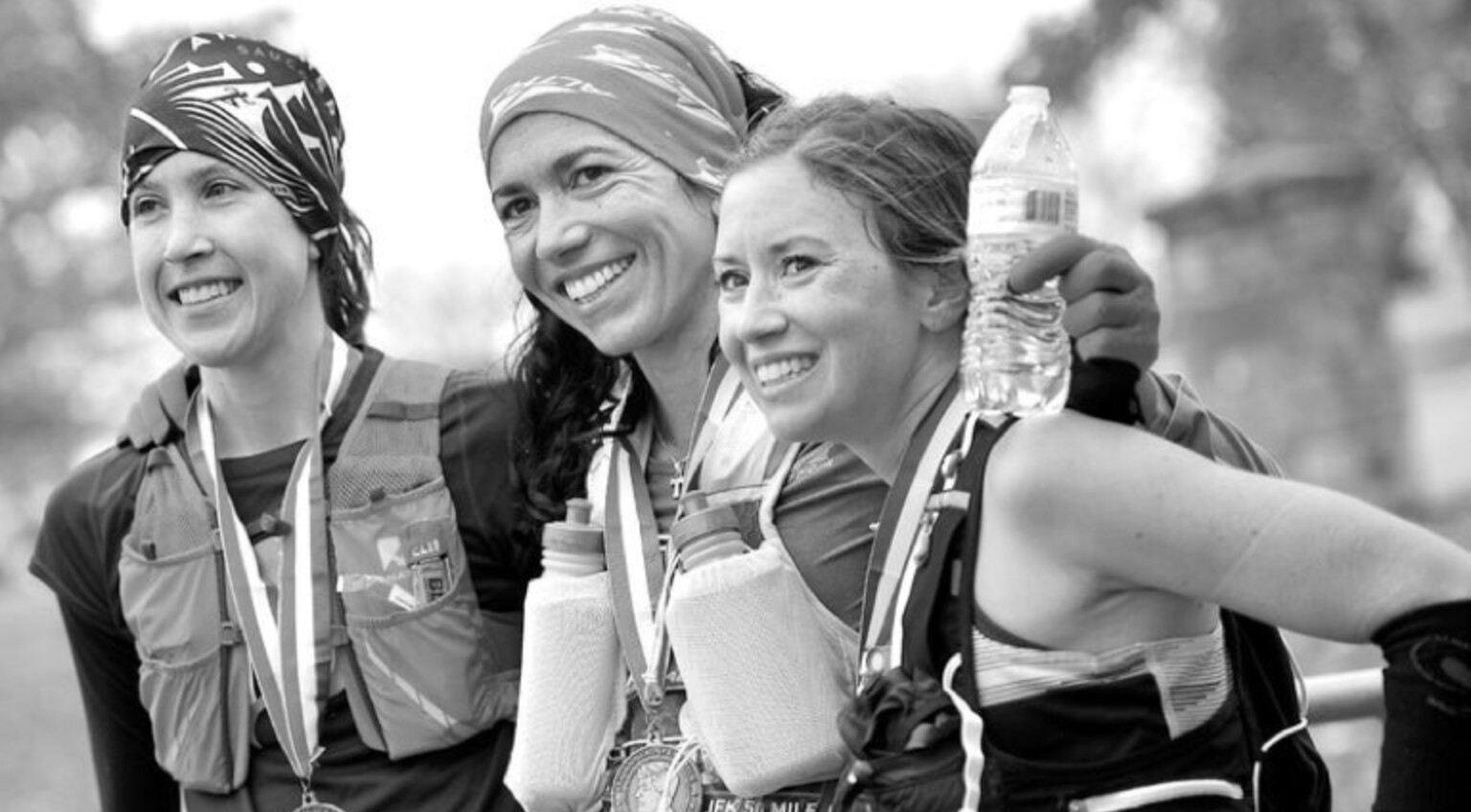
Such memories include the time he first ran the iconic Maryland race when he was 12 years old, or the year he cheered on his 60-year-old wife as she crossed the finish, or memories of watching his two sons racing. For him, this race is a member of the family.
In 1993, five years after his tenth JFK finish, Spinnler became the race’s second race director, where he’s been ever since. By then, he’d set the course record (5:53:05) in 1982, and added another win in 1983, for a total of five top-five and six top-ten finishes.
Thirty years later, it’s still his pride and joy. He’ll immerse in the magic of the event again on Saturday, November 18, as more than 1,000 runners take the journey through the historic route that’s so dear to his heart.
“It just keeps growing in its prestige,” he says.
The JFK 50 started in 1963, the same year President John F. Kennedy was assassinated. The president had instituted a public health program to improve the nation’s fitness, supporting the launch of a series of 50-mile races around the country. But as years went on, the only one that stuck around was the JFK 50.
“Kennedy’s mission was this: Improve your physical fitness, improve your lifestyle, improve your country,” says Spinnler. “We heeded his call and have been doing it for 60-plus years.”
The JFK 50 course is located about an hour northwest of Washington D.C., covering traditional lands of the Indigenous Massawomek and Shawandassee Tule (Shawanaki/Shawnee). One of the race’s primary appeals is that it’s a horseshoe-shaped, point-to-point course with three distinct sections: The Appalachian Trail (miles 0-15), the Canal/Tow Path (miles 15-42), and the rolling finish (miles 42-50).
The race starts in Boonsboro, Maryland, follows a few miles of paved roads before connecting with the Appalachian Trail (AT), where the course climbs more than 1,000 vertical feet in five miles, crests to the high point, and follows rocky singletrack before dropping 1,000 vertical feet halfway into the race (mile 14.5), to connect with a flat marathon distance along the C&O Canal Tow Path. The last several miles are rolling country roads, where it finishes at Springfield Middle School in Williamsport.
In 2019, Seth Ruhling, an unsponsored athlete, showed up to the JFK 50, slept in his car the night before, and won the race in a blistering 5:38:11, his debut 50-miler. Within hours of winning, he sealed a sponsorship with The North Face.
Ruhling, 29, now lives and trains in Boulder, Colorado, and he’ll be returning for his second JFK 50. Since Ruhling’s 2019 win, he has made a name for himself with a sixth place finish at the Pikes Peak Marathon in 2021, second place at Montana’s Rut 50K, first place at the Broken Arrow Skyrace 46K, and most recently, sixth at CCC 100K during the week of UTMB in Chamonix, France.
In 2020, JFK 50 was one of the only races in the country that didn’t shut down with the pandemic. Ruhling had planned on racing, but got injured. “I always wanted to go back,” he says.
Ruhling was particularly drawn into this year’s race because of its deep field of registered elites, which had at one point included 2023 Western States winner Tom Evans, Matt Daniels, Adam Merry, and Sean Van Horn—all of whom have since dropped.
His strategy for the mixed course, which requires technical trail chops as well as fast road turnover, is to attack every single section. He says that, while the JFK 50 is known more as a “track race,” it’s a mistake to discount the early trail miles. “The record is going to happen on the towpath, sure, but only if it’s set up with efficient running on the AT section,” he says.
(11/19/2023) ⚡AMPby Outside Online
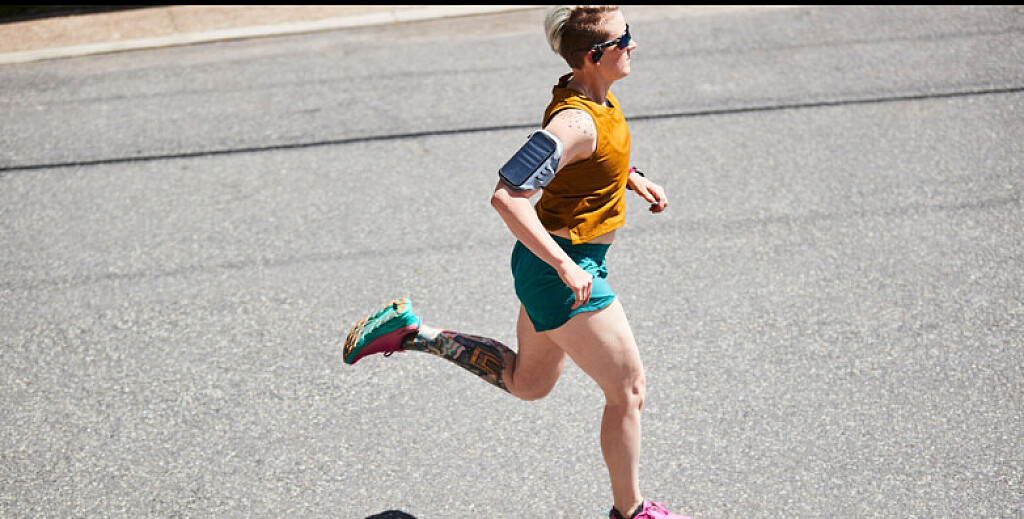
6 Nutrition Podcasts to Help Fuel Your Next Run or Race
Nutrition can be the toughest part of training for many runners. These podcasts offer advice you can listen to on the run.
If you’re the type who likes to listen to podcasts on your runs (or while working or performing everyday tasks), you’ve probably turned to a running podcast or two. These days, you can find podcasts that cover the sport from a range of views, including interviews with pro athletes, everyday runners, or experts dishing out advice, making it hard to narrow down your selection.

Health and wellness, specifically nutrition is no exception, as virtually every running podcast out there will touch on it in some form or another. Nutrition advice can be key to training, though, as it’s often an overlooked aspect that can help you get to the start and finish line of a race with energy.
Here, we’ve rounded up six nutrition podcasts that not only offer fueling advice for runners, but provide the info in an entertaining and easy-to-understand format.
1. If you’re looking for specific, expert-backed fueling advice...
Eat for Endurance
The Eat for Endurance podcast is not only hosted by a board-certified sports dietitian, but registered dietitians also make up the majority of the show’s guest list. Host Claire Shorenstein covers how athletes can fuel themselves for longevity in their chosen sport both by interviewing fellow experts, profiling high-performing athletes, and imparting relevant advice in solo episodes.
The show covers everything from fueling for road races, triathlons, and ultra distances to navigating peri- and post-menopause.
2. If you’re looking for nutrition advice geared toward women...
Female Athlete Nutrition
Hosted by sports dietitian Lindsey Elizabeth Cortes, whose clients include NCAA, professional, and recreational athletes, Female Athlete Nutrition caters to the needs of female athletes, as the name of the show implies.
Because nutrition needs for male and female athletes can vary drastically, especially if a female athlete has dealt with issues like low iron or an eating disorder, it can often be a game-changer for female runners to turn to an expert who is well-versed in those needs. The podcast covers all aspects of fueling for performance, as well as how things like body image and mindset can come into play.
3. If you want more entertainment with your nutrition tips...
The Run Eat Sleep Show
It’s safe to say content creator and influencer Tommie Runz has his nutrition down pat, having brought his marathon PR down to 2:46 at this year’s Boston Marathon from his first marathon, which he clocked in 3:13:30 in 2019 and after only starting to run in 2018, a year after getting sober.
As the name of his podcast implies, eating habits are a core aspect of any runner’s progress. In addition to being very open about his vegan lifestyle, he frequently interviews experts like registered dietitians in addition to professional athletes about their fueling.
4. If you want solid nutrition advice, as well as other topics...
The Running Explained Podcast
The Running Explained Podcast, hosted by RRCA Level 1-, UESCA-, and USATF Level 1-certified coach Elisabeth Scott, covers a wide variety of info about a healthy running lifestyle for athletes of all abilities and training levels. This includes nutrition—from how to fuel your overall training to preventing bone injuries—with advice coming straight from experts like registered dietitians and physical therapists.
5. If you want to focus on injury prevention...
The Injured Athletes Club
The “injured athletes club” is a club no runner wants to be a part of, but one nearly every runner can relate to at some point in their journey. This show, hosted by health and fitness journalist (and Runner’s World contributor) Cindy Kuzma and mental performance consultant Carrie Jackson, covers resources and personal stories from athletes on how to physically and mentally navigate and overcome injuries. But they also answer athlete questions and interview relevant experts to cover related topics, including how one’s nutrition can play into their injury prevention.
6. If you want a longer wellness deep dive...
The Rich Roll Podcast
With most episodes lasting around two hours long, it’s safe to say Rich Roll’s show dives deep into the wellness topic at hand, which frequently includes nutrition.
Roll, a vegan ultra-endurance athlete in his own right, knows a thing or two about sports nutrition himself, but his show serves as an extended opportunity for experts and fellow athletes alike to educate and inspire listeners through their perspectives on health and wellness topics, including nutrition.
(11/18/2023) ⚡AMPby Runner’s World
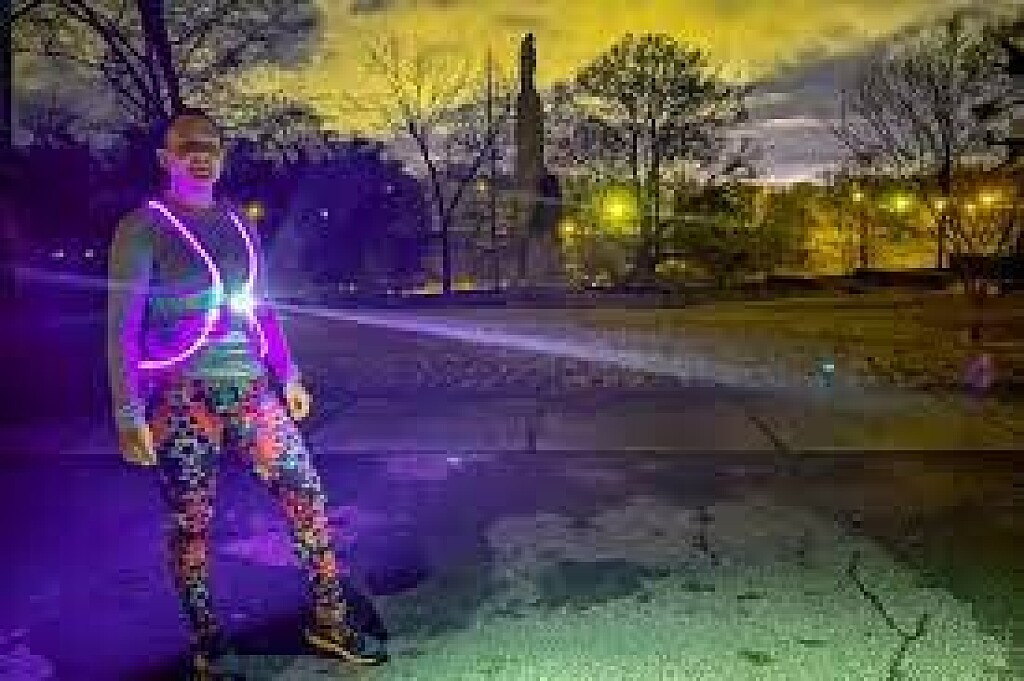
Shorter Days Often Equals More Night Running—Here’s How to Do It Safely and Successfully
Dial in your nutrition, gear, and more with this expert-approved advice. With the sun setting earlier and the shortest day of the year quickly approaching, there’s not much time left after work to get in a run. To make matters more complicated, if you’re not a morning runner or have too many pressing responsibilities first thing in the day, you might be left with little to no light at the end of the day to squeeze in some miles.
In fact, many runners opt to take their workout inside on the treadmill this time of year, and that’s understandable. In a recent Runner’s World Instagram survey of 5,200 runners, 38 percent of runners avoid running outside if it’s dark because of safety concerns or the risk of injury.
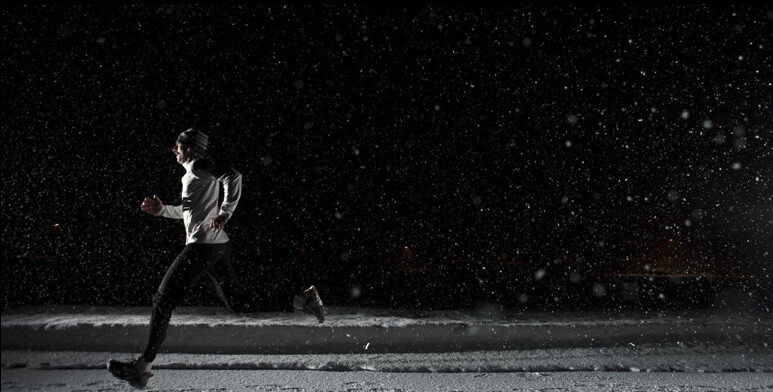

However, with the right preparation and gear, you can still get in those miles after work. And with this advice from seasoned run experts who frequently run at night and in the dark, along with a dietitian, we have all the info you need on how to make night running enjoyable, safe, and effective.5 Tips to Make Night Running Successful
1. Start With the Right Gear
Perhaps most important to successfully running at night is having the gear for it. Much like you wouldn’t go out on the hottest day without sunglasses, sunscreen, and extra hydration, there’s important gear to make night running more comfortable and safe.
“The most important thing is to be seen—any kind of light or reflective gear is useful,” says USATF level II coach, Jamie Brusa who has been leading a weekly Tuesday evening run in Bozeman, Montana since 2017.
Brusa prefers running with a lighted belt around the waist, like the Ultraspire LED waist light, and recommends to wear a headlamp so you can see (and it helps others spot you too), Brusa tells Runner’s World.
Ewen North, director and head coach of Revolution Running who leads an evening run group in Boulder, Colorado echoes the importance of gear that makes you visible and suggests a lighted vest that illuminates around the chest and back. North also suggests looking for reflective gloves—the more points you can have visible, the better, he says.Keep in mind that you could be more prone to slippery conditions like black ice when running at night, because it’s colder this time of year and obviously more difficult to see in the dark. For that reason, it’s smart to opt for a trail shoe for added grip in snowy or icy conditions. If you’re dealing with potential ice though, North recommends hobnails, which are short nails attached into the soles of shoes that increase the traction of the shoe. North also recommends the brands La Sportiva and Icebug for trail shoes.
“I use ⅜-inch flat head sheet metal screws and just drill them into the bottom of the shoes,” says Rachel Topf, UESCA Certified ultrarunning coach at The Mountain Project in Bozeman, Montana, who has always studded her shoes herself to easily adapt them for different terrain.
2. Plan Out Your NutritionYour fueling may change a bit if you’re getting your miles in at night as opposed to first thing in the morning. To make sure you’re fueled for your night run, without getting an upset stomach, pay closer attention to what you’re eating during the day.
“Eating enough at lunch time is essential for evening runners’ energy, blood sugar, and ability to complete training runs or workouts,” says Starla Garcia RDN, a registered dietitian and owner of The Healthy Shine in Houston. “The biggest concern I hear for evening runners is having enough energy for their training and avoiding stomach issues. I always recommend creating structure and choosing items that are easy to eat and take little time to heat.”
While you want to make sure you have enough to eat at lunch, avoid foods that can cause or lead to stomach issues like cramping, urgent bowel movements, and gas, Garcia says. This includes big salads, lentils, legumes, hummus, broccoli, cauliflower, kale, cabbage, and brussels sprouts. Instead, opt for foods like arugula, carrots, tofu, lean animal proteins, or go for avocado as a dip instead of hummus.
If you like fruit as a mid-afternoon snack, Garcia says to avoid apples (as they can be harder to digest and cause more gas and cramping) before your run, and instead opt for more easily digestible fruits like kiwis, berries, bananas, or an orange.
When you’re running later in the day it’s important to feel satiated before you head out so you’re not running on empty, but you also don’t want to eat too close to your run time. With that in mind, if you’re running within the hour and need a quick snack, aim for an easy-to-digest option with about 15 to 30 grams of carbs like fruit snacks, a cup of juice, two graham cracker sheets, or a sports drink.
If you have a little more time—like over an hour to 90 minutes—pair the carb with protein, like peanut butter. If your run isn’t for another two hours, you can pair up to 45 grams of carbs with protein. That might look like oats with nut butter, cereal with milk and nuts mixed in, or half a turkey sandwich, Garcia says.
Finally, you should also pay attention to your postrun nutrition. If you’re running in the evening and eating dinner late that doesn’t mean you should be eating less. “I do not necessarily recommend a smaller meal, but rather a meal that is easier to digest,” Garcia says.
Her dinner suggestions for after a night run:
Veggie soup with beans mixed in and avocado toast
An omelet with veggies and cheese, plus fruit and yogurt
A protein smoothie and turkey sandwich
Tuna or chicken salad with crackers and fruit
Chicken or tofu spring rolls and a cup of soup
Two chicken quesadillas and fruit or canned refried beans on the side
3. Find a Safe Space to Run and Have a Plan
If you’re running in the dark by yourself, Brusa recommends finding a well-lit parking lot or track to run, if you don’t feel safe on the streets or sidewalks. She typically takes her group to a parking lot on a nearby college campus (running laps makes intervals easy!), and running with a group is always a good option when clocking miles at night, too.
Also, consider driving the route you plan to run at night during the day to get a feel for your surroundings, and determine if it feels safe for you.
If you don’t have any of these options, let someone know where you’re planning to run before you head out. Many running watches also have safety features that can offer some confidence on the run, including LiveTrack and Incident Detection on Garmin and Fall Detection on Apple Watch. Strava subscription users can also use the Beacon feature, which sends your location via text to trusted friends and family so they can keep tabs on your location (they don’t need a subscription to access your whereabouts).You can also consider carrying something to protect yourself, like the Birdie Safety Alarm or pepper spray.
4. Reframe Your Expectations
When you’re heading out for a run in the dark it’s important to remember you may not be quite as speedy as you are in the daytime. Keeping an eye on your footing, especially if you’re running on trails, can slow you down, Topf says.
Brusa agrees, saying many runners notice, in general, that the first half of their run might feel slower as the body is warming up, compared to the second half, which is often even more pronounced in the winter. Regardless of temperature, though, running in the dark requires adjusting to your surroundings and you may not see quite as clearly, which can also affect pace, she adds.
If you’re not accustomed to running in the dark at night, and the cold too, remember to give yourself grace. North says just acknowledging that it’s going to be cold and dark and maybe not the best run ever takes the pressure off so you can just chase those miles.
Brusa adds that you should focus on how you feel and not if you’re running a few seconds slower per mile than you normally do in daylight. Embracing effort-based training is the way to go in this case.
5. Lean Into the Fun
Once you’ve made the decision to get out there at night, remember to have fun! Enjoy the colorful lights that are often on display this time of year, and take pleasure in seeing your neighborhood from a different perspective.
“In the winter, we try to have more fun with running, rather than it being hard and fast and serious,” North says of his running group, which averages about four to six miles on an evening run. That can mean letting go of pace, distance, and just being more mindful of enjoying the moment, and certainly being proud of yourself for braving the dark.
If you’re running with friends make a plan to grab a bite to eat after you run, and who knows, that might help you start a new routine that keeps you going out for more miles throughout winter.
“Especially in the winter, I think it can be really nice to have those dark evening runs and to see the snowy trails in a different way than during the daytime,” Topf says of the unexpected perks of night running.
(11/18/2023) ⚡AMPby Runner’s World
Leading ultra-marathon runner banned for using car in 50-mile race
A leading British ultra-marathon runner has been banned for 12 months by a UK Athletics disciplinary panel for using a car during a 50-mile race and then accepting a trophy for third place.
Joasia Zakrzewski admitted that she had jumped into her friend’s vehicle during the 2023 GB Ultras Manchester to Liverpool race on 7 April, but claimed she only did so after telling marshalls that she was injured and was no longer competing.
The 47-year-old, who finished 14th in the 2014 Commonwealth Games marathon and set a new world 48-hour distance record of 255.668 miles in February, had also denied deliberately cheating. Instead, she said that arriving from Australia the night before had left her unable to think straight, and had led to her wrongly accepting a trophy at the end of the race.
However, that explanation was rejected by a UKA disciplinary panel who have now banned Zakrzewski from competing in any UKA licensed races, representing Great Britain, or coaching or managing for a year, after finding her guilty of breaching the UKA code of conduct for senior athletes.
In a written decision, the panel said that Zakrzewski’s claims were “contrary to the evidence of the marshals, evidence which the respondent did not seek to challenge or contest, by way of cross-examination at the hearing”.
Evidence showed that Zakrzewski – who has competed for GB numerous times in ultra-distance events, won multiple world 100km medals, and managed GB teams – had travelled around 2.5 miles in a car. According to GPS data, one of those miles was covered in one minute and 40 seconds.
In a letter to the panel, Zakrzewski wrote: “I accept my actions on the day that I did travel in a car and then later completed the run, crossing the finish line and inappropriately receiving a medal and trophy, which I did not return immediately as I should have done”.
However, she continued to insist that she had told the marshalls that she was injured and had decided to keep going on a non-competitive basis. The marshalls, however, told the panel a different story.
They said that while Zakrzewski had talked to them about withdrawing, she had been persuaded to continue “and when doing so … this was on a competitive basis”. They also denied that she had informed them that she had completed part of the course in a car.
The panel also noted that Zakrzewski had only disclosed using the vehicle when challenged by the race organiser. “The respondent sought to defend this by claiming she was embarrassed, but ultimately she chose not to disclose what had happened rather than embarrass herself,” it said.
“Further the claimant had collected the trophy at the end of the race, something which she should have not done if she was completing the race on a non-competitive basis.”
The panel said it had taken Zakrzewski’s claims about her state of mind into account, but pointed out that she “had ample opportunity to remedy the situation which she failed to do”.
“Even if she was suffering from brain fog on the day of the race, she had a week following the race to realise her actions and return the trophy, which she did not do,” it said.
“Finally, she posted about the race on social media, and this did not disclose that she had completed the race on a non-competitive basis.”
(11/15/2023) ⚡AMPby Sean Ingle
Harvard physics professor destroys transamerica speed record
Harvard physics professor Jenny Hoffman just crushed the cross transamerican speed record, running from San Francisco to New York in 47 days, 12 hours and 35 seconds, more than a week under the previous record (54d 16h 24m, set by Sandra Villines in 2017).
Cambridge, Mass. based Hoffman, 45, kicked off her nearly 3,000-mile (4,828 km) run in September, aiming to average just over 60 miles (100 km) per day. Hoffman had her sights set on the transamerican record and the women’s transcontinental Guinness World Record. Pending verification, she’s nailed those goals with time to spare.
The Trans American FKT (fastest known time) has a long and storied history. Before Villines broke the women’s record (by more than two weeks), it had not budged since 1978, with South African runner Mavis Hutchinson claiming a record 69d 2h 40m. Ultrarunner (and friend to Hoffman) Pete Kostelnick holds the men’s record of 42d 6h 30m, set in 2016.
“This morning I walked from New York City Hall to the Atlantic Ocean at Coney Island,” Hoffman posted on Strava on Friday. “My daughter and I took off our shoes and waded in. Total mileage from sea to shining sea is 3,048 miles.”
Hoffman rowed on the varsity crew team as an undergraduate student at Harvard, and began to run marathons in her senior year. From there she progressed to triathlons and ultras. She won the national title in the USA Track and Field National Championship 24-hour run in 2014, 2015 and 2016, and was selected as the USATF athlete of the week in Sept. 2016. She also competed on the gold medal-winning team at the IAU 24-Hour world championships in Belfast in 2017.
The runner’s accomplishment is a redemption of sorts: she also made an attempt at securing the transamerica record in 2019, before ending her run prematurely in Cleveland, Ohio, after she injured her knee. In that attempt, Hoffman ran 2,560 miles in 42 days, averaging 61 miles per day (six days under world record pace). “Through surgery and rehab and pandemic and work and family life, I have dreamed every single day for 4 years about redoing and completing this run,” Hoffman wrote on her blog.
Hoffman shared parts of her journey on her blog, titled Run, Jenny, Run–a nod to the fictional Forrest Gump and its main character, who also made a cross-country run. Her run was also documented on the FKT website, and she shared a daily journal on Strava.
“It’s a beautiful country filled with beautiful people,” Hoffman said post-run.”God Bless America.”
(11/12/2023) ⚡AMPby Running Magazine
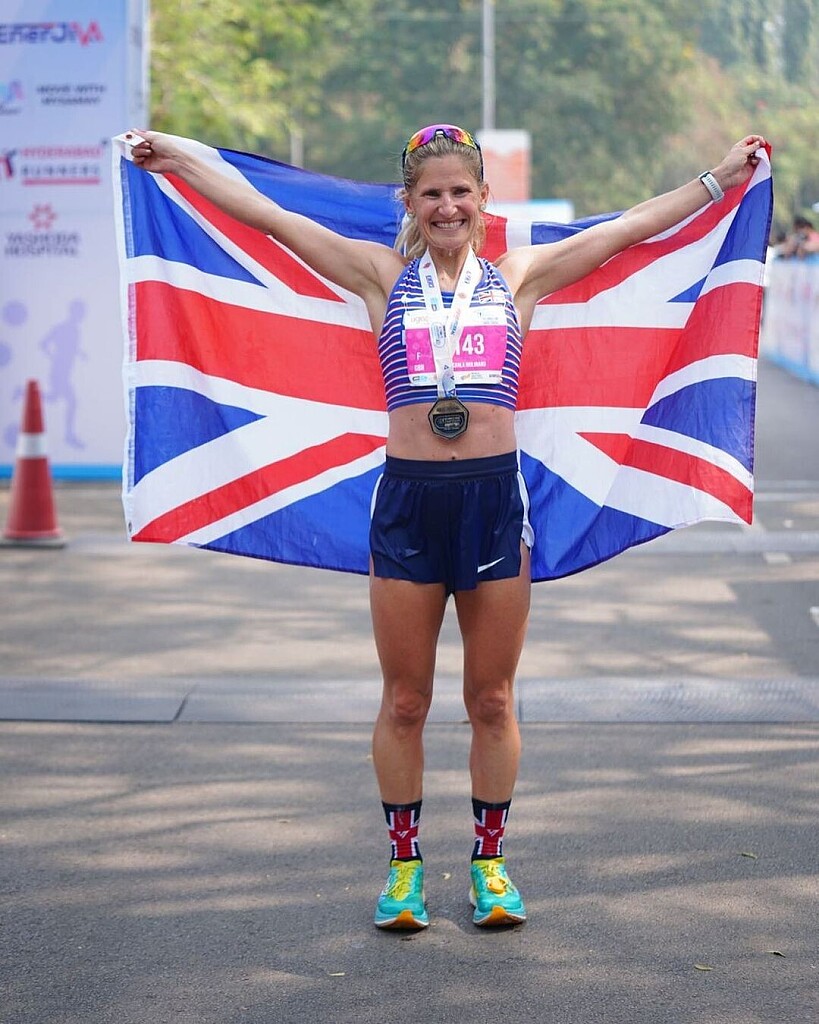
British ultra runner Carla Molinaro wins world 50km title
British ultra runner strikes individual gold and leads to GB squad to team title at the IAU World 50km Championship in India
Great Britain’s Carla Molinaro took gold at the IAU World 50km Championship in Hyderabad early on Sunday morning (Nov 5) in a time of 3:18:22, Adrian Stott reports.
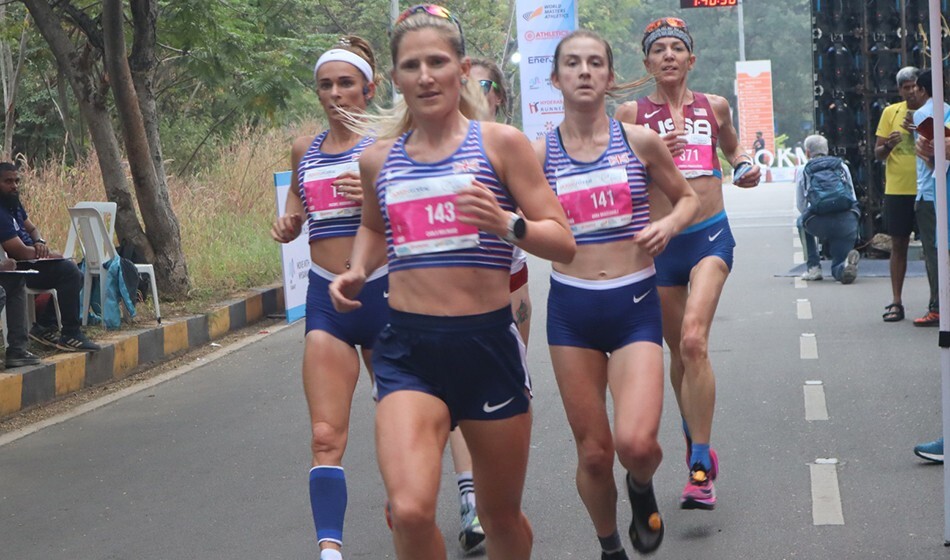
She finished just over 40 seconds ahead of Andrea Pomaranski of the United States, who recorded 3:19:05.
British 100km champion Sarah Webster took the bronze medal in 3:20:05.
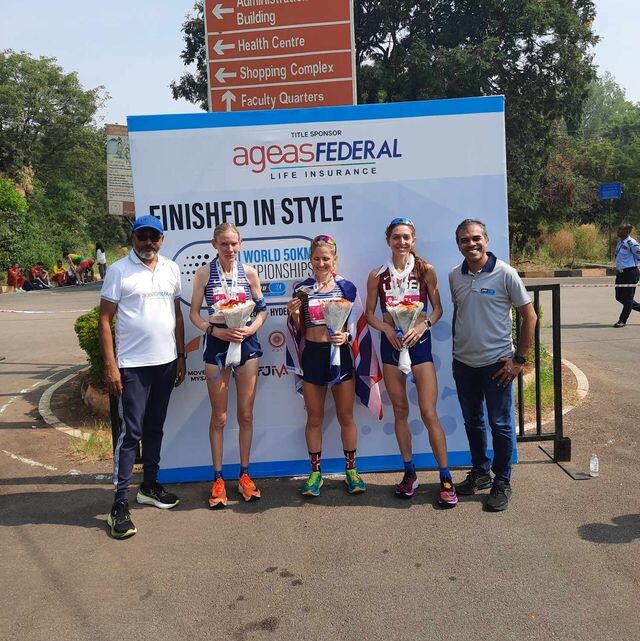
With Anna Bracegirdle fourth in 3:20:37 and Rachel Hodgkinson fifth in 3:20:47, GB & NI were clear winners of the team medals ahead of the United States and Croatia.
For Molinaro, the 39-year-old Clapham Chaser who splits her time between London and South Africa, it capped a successful year, having placed third in the 56km Two Oceans Marathon and the 56-mile Comrades Marathon in South Africa.
Webster, who broke Carolyn Hunter-Rowe’s long-standing British 100km record when winning the GB title earlier in the year, was always in contention and her 100km strength paid dividends in the final kilometers.
Hodgkinson and Bracegirdle were both running their first 50km races, selected on the back of good marathon performances earlier in the year.
Clean sweep for Spain in men’s race
Spain dominated the men’s race, taking all three podium places as Chakib Lachgar claimed the gold medal in 2:48:18.
His compatriots Alejandro Vicente and Jesus-Angel Pascual took the silver and bronze medals, clocking 2:49:28 and 2:50:10 respectively.
Lachgar, 34, who boasts a marathon best of 2:11:11 and a half-marathon of 1:01:45, again confirmed at a global level that 50km is continuing to be the domain of competent marathon runners moving up in distance. His time, subject to confirmation, puts him fourth on the all-time European 50km rankings.
Will Mycroft was Great Britain & Northern Ireland’s first finisher in ninth with 2:55:58, leading the men’s team to the bronze medals. He was backed up by Andrew Davies in 13th. The bronze medalist from the 2022 European 50km championships recorded 2:57:14.
(11/06/2023) ⚡AMPby Athletics Weekly

IAU 50km world championships
The IAU 50km World Championship is a prestigious ultramarathon race organized by the International Association of Ultrarunners (IAU) first time in India.The 50km distance is a popular choice for ultrarunners, offering a unique challenge that falls between a marathon and longer ultramarathon distances. Participation in the IAU 50km World Championship is typically based on qualification standards established by each country's...
more...
30 Hours at Javelina Jundred, the Burning Man of Trail Running
Inside the spectacle of ultrarunning’s most festive top-tier 100-mile race
It’s a hot, sunny Saturday afternoon in the desert northeast of Phoenix, and Lindsay DesRochers is being chased by a dinosaur—as if 85-degree heat, a creaky left knee, and a hot spot on her right big toe aren’t enough to worry about during her first attempt at running 100 miles.
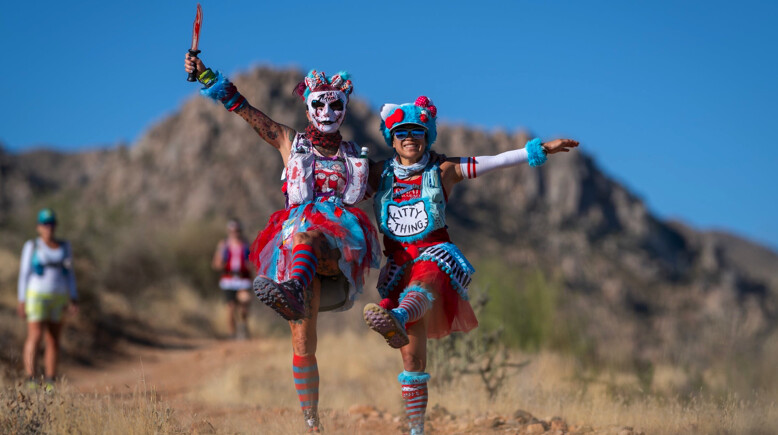
The 44-year-old senior creative recruiter from Scottsdale is 41 miles into the Javelina Jundred, and she also has to contend with a Tyrannosaurus rex who’s making her giggle. The dinosaur is, in fact, local trail running legend, Jerry Bloom, who is sweating and gasping for air inside an inflatable costume that’s kept afloat with a tiny battery-operated fan. He is dressed up as the dino-in-residence and runs alongside DesRochers briefly as she finishes the second loop of the five-lap course before sitting down to refuel and rehydrate in her crew tent.
“The problem with this thing isn’t the heat. It’s just that there’s no oxygen in here. If you run very far, you get oxygen deprivation,” says Bloom, 70, a three-time Western States and Hardrock 100 finisher who’s also run Javelina twice. “For me it’s all in good fun to support Lindsay. I’ve given up trying to be fast a long time ago. But what I’ve learned is that it’s not how far you go and it’s not how fast you go, it’s how you look while you’re doing it.”
Welcome to the Javelina Jundred—the biggest, wildest party in the trail running world.
It’s pretty obvious that the Javelina Jundred is the zaniest event in trail running and, to be frank, nothing even comes close to this dusty desert cavalcade of curiosities. It’s not quite the Burning Man of running, but it might just be better because, first and foremost, it’s a legit ultrarunning event.
More than 850 enthusiastic runners toed the starting line at 6 A.M. to begin the five-lap 100-miler, and about 400 more began the three-lap 100K an hour later. There’s also a single-loop, 19-mile nighttime race called the Jackass Night Trail for about 200 runners that includes a wild DJ’ed party at the Jackass Junction aid station and finishes as the Saturday night revelry is still going strong back at the race compound.
But because Javelina always happens on the weekend before Halloween, there’s a natural party vibe and a non-mandatory-yet-compelling reason for runners, pacers, and support crew to wear costumes. And, let’s face it, Halloween gives everyone license to fly their freak flag, so when you mix that with ultrarunning, just about anything goes. Only here it’s known as Jalloween.
This year’s most popular dress-up themes seem to be tropical and western, but, almost predictably, there are quite a few Barbie and Taylor Swift cosplayers, as well as a few heavy metal rock stars, glow-in-the-dark skeletons, and several very creepy clowns. Dozens more runners race through the desert wearing bunny ears, fox tails, and devil horns.
“This is a safe space for everyone to have fun in their own unique way,” adds Dan Gampon, a Hoka sports marketing representative from Hawaii. “It’s a fun way to give the people a chance to be weird and bring a part of themselves that they might have been wanting to bring out, and give them the opportunity just to have fun anyway they want to.”
Some crew tents are decorated with accouterments to match a particular theme, but most feature colorful holiday twinkle lights, camping chairs, sleeping bags, and coolers full of adult beverages. While there’s a stash of fancy engineered nutrition supplements and electrolyte drinks in every tent, there’s also the widest range of healthy and not-so-healthy snack food you can imagine. (I’m looking at you, guy simultaneously drinking a Red Bull and eating a handful of marshmallow Peeps.)
The Javelina staff and volunteers are fully into the Jalloween theme, too, especially race director Jubilee Paige, who dons several costumes during the 30-hour event—including getups she calls Race Director Barbie, Weird Barbie, The Dude, Cousin Eddie, Chef’s Kiss, and A Macaroni Penguin. She once again ends the event dressed as the Pope—a.k.a., “her Joliness”—because she considers Sunday “Jallelujah Javelina,” a day of celebration.
The Javelina Jundred was founded in 2003 by Phoenix ultrarunner Geri Kilgariff as an irreverent, party-oriented run on a multi-loop course, and gradually gained regional and then national popularity as word spread through the ultrarunning community about how much fun it was. Local ultrarunner Jamil Coury took over as race director in 2008. The next year he started Aravaipa Running, a Phoenix-based company that bought and now owns 75 other running events in Arizona, Colorado, Utah, Nevada, and New Hampshire.
Despite increased popularity and significant growth, Coury, Paige, and the rest of the Aravaipa crew have been able to maintain Javelina’s grassroots experience while growing it to about 1,500 runners in three events with at least that many pacers, crew, and family members hanging around the race compound. In many ways, it represents the best of both where trail running has been, but also where it could be heading.
“The race was born from a fun spirit of running with friends and looping in the desert—shout-out to Geri Kilgariff for her creation of the event in 2003,” Paige says. “But as it’s evolved, we saw opportunities to elevate the race to an ‘event’ experience for runners and crews—an ultra festival—the music and lights and entertainment just enhances that experience. However you experience Javelina, I just want you to have fun!”
As the sun begins to set, several top competitors in the 100-miler are scattered out on the remote sections of the course in hot pursuit of four Golden Ticket entries into next summer’s Western States 100. (Two tickets each for the men’s and women’s races.) That includes Boulder, Colorado, runner Jonathan Rea, who is back after a second-place finish a year ago, and—with newfound confidence from a fourth-place finish at the CCC 100K in Chamonix, France—is tearing up the desert trails on course-record pace. Triathlete-turned-ultrarunner Heather Jackson, who splits time between Bend, Oregon, and Tucson, Arizona, also takes it out hot, hoping to make up for a frustrating fifth-lap fade last year after unbearable quad pain reduced her to a walk and forced her to settle for a fifth-place finish in her 100-mile debut.
Earlier in the day, Denver’s Rajpaul Pannu and San Francisco’s Anna Kacius made quick work of the less-competitive, three-lap 100K race, finishing first and second overall, respectively, and setting new men’s (7:15:53) and women’s (8:13:07) course records in the process, while winning by more than an hour over their nearest competitors.
Ultrarunning GOAT Courtney Dauwalter from Leadville, Colorado, is out there, too, but she’s not racing for the win. She’s running the 100K with her mom, Tracy, a 66-year-old avid trail runner from Edina, Minnesota. They attempted a 50-miler in Minnesota last fall, but were timed out before the finish, so this year they chose the big party race in the desert where Courtney set a course record in 2016 before she became a household name. They’re not in costumes, but they’re running as Team Bucket List and wearing matching white shirts, cactus-themed socks, and olive-green-and-black shorts.
Because runners constantly revolve through the turnaround point at the start/finish area, everyone else is always on the move throughout the race compound. Some are drinking craft beers and mingling as they wait for their runners, while others are watching the race livestream on their phones or from the jumbotron in the Javelina Jeadquarters circus tent. Still others are devouring freshly cooked artisan pizzas made to order in the Freak Brothers Pizza mobile brick wood-fired oven.
Rousing cheers and applause catch everyone’s attention every few moments as an elite runner arrives—including the ever-smiling Jackson, who quickly heads out on her fifth and final lap with a 30-minute lead in the women’s 100-miler.
“Heather is just amazing,” says Troy Brown, 48, a trail runner from Coto de Caza, California. “She’s always smiling. I’m just a fanboy, but I like anyone who can smile that much through pain.”
After Jackson runs out of sight, Brown quickly shifts his focus to getting his feet into an inflatable T-Rex costume so he can participate in the costume contest, an informal event that brings out a sheriff riding an inflatable rooster, Minnie Mouse, a foursome of Teletubbies and, of course, several dinosaurs. There’s also a guy dressed as Aladdin wearing a large golden lamp around his waist who is joined by a scantily clad Jasmine character who not-so-discreetly rubs the lamp in a Not Suitable for Work (NSFW) scene that draws both raucous laughs and shocked gasps from the crowd.
One of the best dressed-up groups of the event is a foursome of women from California’s Healdsburg Running Company: Dominique Chevalier (“Western Barbie”), Krista Kappus (“Alien Barbie”), Saddie Alloway (“Rootin’ Tootin’ Diva Barbie”), and Susan Oh (“Disco Bob Ross”). But the costume contest winners are the Montana Mermaids, a bikini-and-grass-skirt trio from Bozeman—Lena Romeo, Kara Haskell, and Liv Bleskin—who were there to crew and support elite runners Rachael Norfleet of Montana in the 100K and Utah’s Ryan Montgomery in the 100-miler.
The sun begins to set, but the party’s just getting started as DJ Colter Stillwell pumps tracks through the sound system as a full moon rises in the eastern sky. One of the rowdiest dancers is Brendan O’Hara, a Colorado trail runner who’s dressed up in a red-and-white mouse outfit with flashing lights similar to what popular Canadian electronic musician Deadmau5 wears on stage. As lots of energized runners entered in the Jackass race are about to head out into the night, two professional fire dancers perform a mesmerizing routine adjacent to the start line.
Just after dark, Rea comes flying into the finish area, stopping just short of the finish line to pantomime deadlifting a colossal barbell before crossing the line in a new course record of 12:43:10. Seattle runner Blake Slattengren stopped the clock next in 12:58:07 to claim the second Golden Ticket, while Montgomery ran another strong race to take the final podium spot in 13:01:14.
Redeeming herself from last year, Jackson finishes strong to win the women’s race and finish sixth overall, thanks in part to the aggressive pacing of Devon Yanko. Jackson’s time of 14:24:47 is the second-fastest women’s time ever behind Camille Herron’s 14:03:23 course record from 2021. Spain’s Ragna Debats (14:55:27) outran Riley Brady (15:29:17) to earn the second women’s Golden Ticket.
Not long after midnight, the Dauwalters finish, too. Covered in dust, sweat, and even a little bit of blood—Tracy took a tumble on the first lap early the previous morning—they cross the finish line after 17 hours of running with big smiles and hug in a classic mother-daughter moment. Late Sunday morning, DesRochers makes it to the finish line, too, in 27:31:41, battling hard to overcome dehydration, an upset stomach, and nagging hip flexor pain at various points during the race.
“I was prepared for it to be hard, and I knew I was going to hurt. At some point, I was like, Oh, right, this is what running 100 miles feels like,” DesRochers says. “It was difficult, but I kept my positive mental attitude the whole way. I have a buddy who has a saying, ‘Forward is a pace,’ so I kept repeating that and kept putting one foot in front of the other and I didn’t quit.”
Something that’s especially apparent at Javelina is that everyone is celebrated as an equal, regardless of finishing times, trail running experience, athletic ability, age, or any other dissimilar details. The event goes out of its way to create an environment that promotes visibility and inclusion for everyone, and the community of participants seems to embrace it by cheering and encouraging for everyone the same.
It has partnered with Native Women Running, Latinos Run, and Black Men Run each of the past several years to bring their runners to the race, and it was also one of the first ultra events to offer a non-binary category. This year there were six non-binary runners racing over its three races, led by Willow Dolde in the 100-miler (20:01:29), Andreas Anderson in the 100K (13:54:30), and Tasha Hartwig in the Jackass 31K (6:42:07). (Although Brady, a non-binary runner from Boulder, was competing in the women’s division because they were racing for a Golden Ticket, they were also, unofficially, the top non-binary runner in the race.)
As the golden hour comes and goes early Sunday afternoon—and final finishers Holly Sitzmann, Jim Buckley, Brittany Edmiston, and Leslie Astle squeeze under the 30-hour cutoff with help from their pacers and crew—it’s clear that everyone at Javelina is celebrated equally and enthusiastically. That also includes two unofficial finishers—Rayna Rodriguez and Tatiana Orozco—who complete the 100-mile course just outside of the time cutoff, but are welcomed by a scream tunnel of remaining spectators and the adulation of Paige even though neither will receive a finisher’s buckle.
“Javelina is a celebration, and the invitation to run and participate at Javelina extends to everyone,” Paige says. “I want to ultimately show how amazing the community is and that this sport is for everybody and every body—the spirit of ultra is diverse and should be celebrated.”
(11/05/2023) ⚡AMPby Outside online
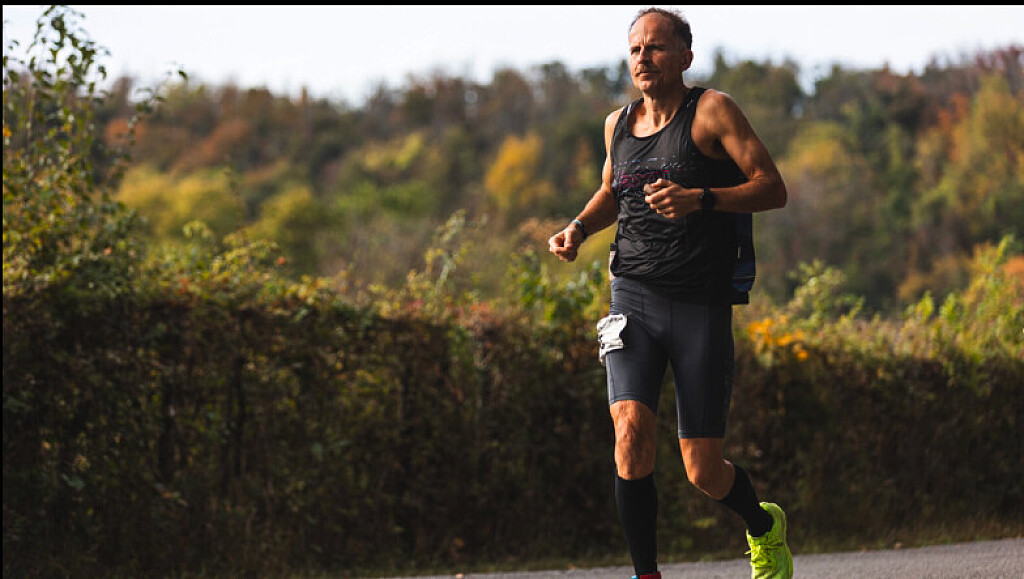
Want to Win a Race With No End? Work on Your Poker Face.
Harvey Lewis, who recently ran 450 miles to win Big’s Backyard Ultra, discusses the mental trickery that goes on during ultrarunning’s hardest race
Not many people can run 400 consecutive miles and still stand upright—fewer can complete this athletic feat and continue running. I think there’s just one person alive who could do it and then unleash a sprint that would make Usain Bolt proud. That’s Harvey Lewis, the newly crowned world champion for the niche sport of Backyard Ultrarunning.
Lewis, 47, won his title at the October 21 Big Dog’s Backyard Ultra in Tennessee—the race known simply as “Big’s” in ultrarunning parlance—by running 450 miles over the course of 108 hours. Lewis is also the star of the hilarious video below (credit to UltraRunning.com) which made the rounds on social media as the race was still going on. Give it a watch.
Some quick context: the clip was captured a the race’s 400-mile mark (yes, 400!), and the eight runners in it have been jogging around a 4.1667-mile loop every hour for four consecutive days. When the starting bell sounds, seven of the eight shuffle onto the course looking like extras from The Walking Dead. And then there’s Lewis, who cracks a grin, kicks up his heels, and Usain Bolts away. He looks like he’s having a blast.
As it turns out, he was. “I’m really fired up in that video,” Lewis recently told me. “There are times during races when I have to hype myself up, but not there. I am already so hyped up, just mentally and physically. That’s what you have to do to keep yourself in the game.”
The game that Lewis is referring to is the strategy—nay, the psychological warfare—that goes on during one of these grueling races. At Big’s and other backyard ultras, participants run around a 4.167-mile loop every hour, hour after hour, for days on end (the distance means they complete 100 miles every day). They start and finish in the same location, and can rest or eat or use the toilet in the time between each lap, which is never long enough for them to sleep for more than a minute or two. As the event goes on, participants drop out due to sleep deprivation or blisters or diarrhea or because their brains simply cannot fathom any more running. The winner is the final person left standing.
This twisted format was dreamed up by Gary Cantrell—known as “Lazarus Lake”—the designer of the infamous Barkley Marathons. Backyard ultras foster some unorthodox head games amongst the handful of elite runners. At some point, they become hardcore body-language analysts, eyeing each for signs of injury or exhaustion. Simultaneously, they mask their own ailments in an attempt to convince their peers that they are feeling just fine and dandy—even thought every one of their muscles throbs with pain.
“There’s a lot of poker faces out there,” Lewis says “If one of the competitors starts to show weakness, it just adds thunder to everyone else. Part of the game is showing that you’re strong.”
There are plenty of telltale signs that a runner is nearing the end: limping, wincing, sitting down. Some athletes, after running hundreds of miles, begin to list to one side like a torpedoed warship. Oftentimes, runners nearing the limit will finish each lap just a few seconds before the next one is to begin—the countdown is marked by three whistles and then a bell.
There are also all manners of tricks for covering up the pain. Lewis said that his toughest competitor at Big’s, Ihor Verys of Ukraine, maintained a stoic and expressionless demeanor—think Ivan Drago from Rocky IV—right until the moment he dropped out at mile 445. Dutch ultrarunner Merijn Geerts, who dropped at mile 417, told the Bad Boy Running podcast that he will purposely start a race looking disheveled so that competitors cannot notice a meaningful change in his appearance as the event goes on. “If someone looks very fresh from the beginning, and suddenly he doesn’t look fresh anymore, you know there is a problem,” Geerts said. “If you don’t look very [fresh] all the time, then your opponent doesn’t know you are suffering.”
Fibbing is another formidable tactic. As Big’s stretched past the two-day mark, Lewis heard some competitors respond truthfully to a familiar question that runners ask one another on the trail: how are you feeling? “I was surprised to hear people saying ‘I was hallucinating’ or ‘I have a blister on my foot,‘” Lewis said. “Loose lips sink ships.” Lewis, who teaches U.S. government at a high school in Cinncinatti, Ohio, told me that he’d never divulge his aches and pains to a competitor.
“I don’t know why anyone would ask me how I feel during a race,” he says. “I could have blood pouring out of my head and I’d still say, ‘I feel amazing!’”
And then there’s the whole sprinting thing. Running fast is absolutely a psychological flex—a way to show the competition that you are supremely confident and also feeling fantastic. Think of it as the backyard ultra version of Steph Curry’s highly-intimidating pregame warmup. Lewis’s mad dashes were an integral weapon in his psychological war chest, he said, and he sprinted out of the gate again and again during Big’s.
“It’s like here we are at mile 400 and I can just go man,” Lewis says.
Here he is starting mile 300.
Here he goes at mile 425, looking considerably less spry.
But the sprinting tactic can also backfire, because a sprint puts more strain on leg muscles than a steady jog. In June, Lewis participated in Australia’s Dead Cow Gulley Backyard Ultra, and after two days of racing he employed the sprinting tactic. But the maneuver began to wear his body down, and he dropped out at mile 375 with two competitors remaining.
“I did it way too much and got carried away feeling invincible and not reigning myself in,” Lewis admits. “Because the counter to it is to just run your own race.”
At Big’s, Lewis only sprinted at the start—he actually didn’t complete the loops fastest, and during many laps he finished several minutes behind Bartosz Fudali of Poland, who exited the race after completing 429 miles. For all of the psychological gamesmanship that goes on in a backyard ultra, Lewis said there’s really no way to overcome a runner who has a steady rhythm, an expert nutrition plan, and the steely attitude to keep going—no matter what. Lewis said his winning tactic was more about mindset than about mind games.
“I don’t care what distance anyone else goes—I’m just going to commit to going further,” he says.
(11/05/2023) ⚡AMPby Outside Online
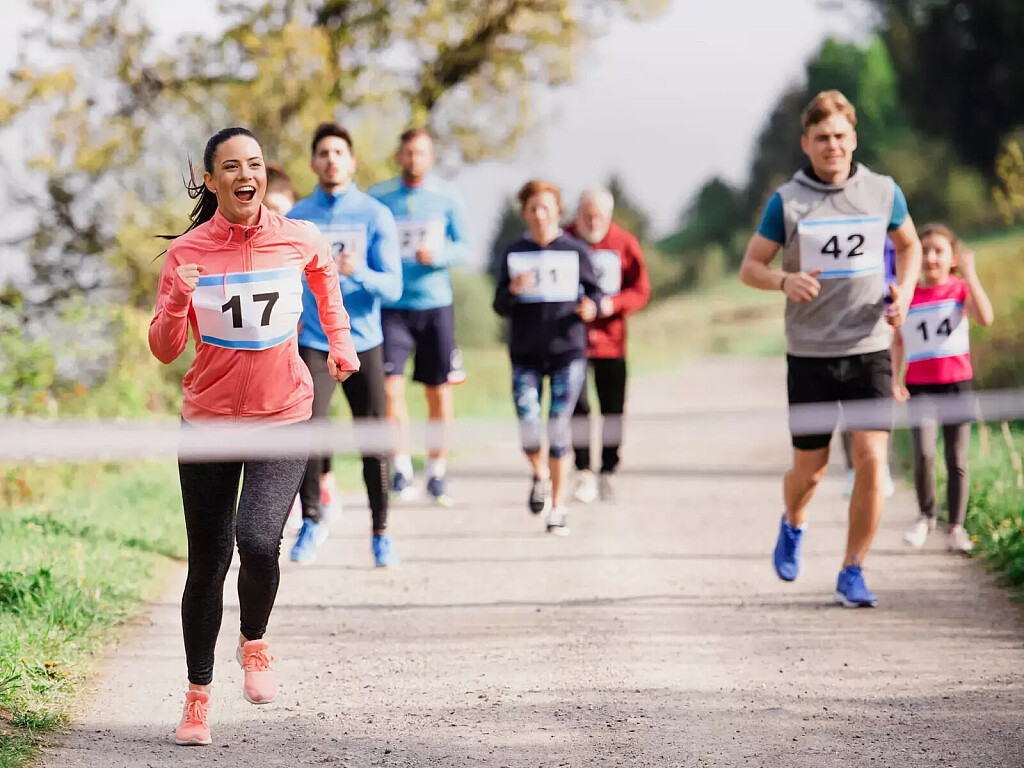
Marathon runners use brain tissue as fuel, new study finds
Many runners rely on gels and sports drinks to help them power through a taxing marathon or ultra, but a new study suggests we may be using our brains to fuel us as well. Researchers discovered that marathon runners rely on myelin, the fatty tissue bundled around nerve fibres, for energy while racing. Here’s the rundown on the fascinating new findings.
The study
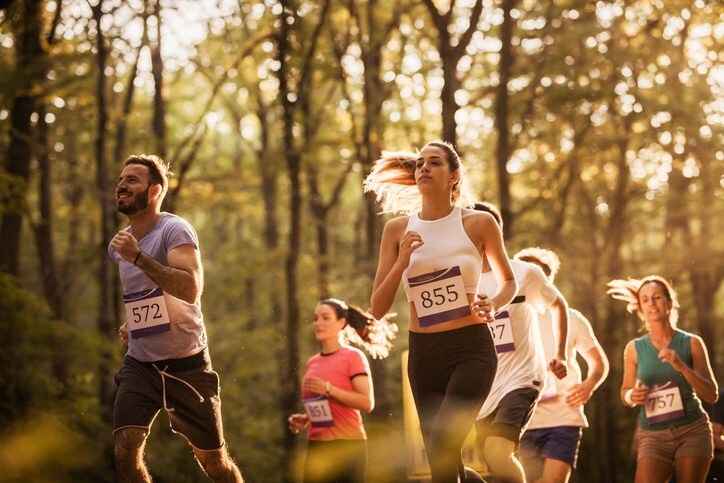
Researchers from the Center for Co-operative Research in Biomaterials in San Sebastián, Spain, studied myelin levels in a group of city and mountain runners using MRI (magnetic resonance imaging) scans. They created maps of the myelin in participants’ brains before their races, within four hours of their marathon effort, and two weeks following their race, for comparison.
Directly after a marathon, the brain scans revealed that this brain tissue seemed to dwindle drastically. Within two weeks post-race, the brain fat bounces back to nearly pre-race levels. While carbohydrate is the still the main fuel source for athletes, the study suggested that brain tissue may also contribute: myelin use is a previously unknown form of “metabolic plasticity” that seems to maintain brain function during extreme conditions.

The takeaway
Runners working hard in a marathon will initially use all of their carbohydrate stores and then begin to use fat as fuel, eventually progressing to tapping into brain fat (myelin).
The work could have therapeutic implications, Sciencenews.org reported. An understanding of how runners’ myelin recovers so rapidly might offer clues for developing new treatments, potentially for people who’ve lost myelin due to aging or neurodegenerative disease. The team is now following the thread of their findings; they want to see if the runners’ myelin dip alters brain function, and how long it takes to recover completely.
The researchers are quick to point out that the results don’t mean that running is bad for the brain, and say that it’s possible that using and replenishing energy reserves is actually beneficial because it exercises the brain’s metabolic machinery. In other words, running long distances may be giving both your legs and your brain a workout.
(11/04/2023) ⚡AMP
This Ultramarathoner Runs With Her 5 Golden Retrievers and Shares Her Tips for Clocking Miles With Canines
With five golden retrievers of her own, Golbeck is the dog whisperer you didn’t know you needed.
I am not one of those people who has a love/hate relationship with running. I love it purely and wholly. It feels like my body was made to do it. I love being outside and moving, and the rush of endorphins is great. If I could run all day, I would.


I started running ultramarathons to give myself permission to run forever, and found that even after running 100 miles or for 31 hours, I love it.
Like all runners, though, I have days when it’s hard to get out the door. Sometimes I’m tired, and I waste hours procrastinating when it’s cold and rainy out. Fortunately, though, I have five golden retrievers and they always need walks. Even in bad weather, one will run over with enthusiasm and joy, stretching their neck toward the collar. In those cases, to delay my run would be to deny them happiness, so suddenly it’s easy to go outside.
While I can walk five dogs at once—that’s me in the top picture with Swizzle, Venkman, Hopper, Guacamole, and Chief Brody—I never run with them all together nor do I do ultra distances with them!
While I have run with two dogs at once, it’s safest to run with just one, because when I do take two, we stop more often, and they inevitably get tangled. Then my focus becomes more on dog management than running.
In The Purest Bond: Understanding the Human-Canine Connection, Stacey Colino and I explore the science behind how relationships with dogs make human lives better. Certainly, dogs help humans move more and form better relationships in their communities. Science also shows that dogs enjoy running with us, both because of how it makes them feel physically and because they get to spend time with us.
One of my favorite workouts is to take each dog out for one or two miles until everyone who wants a run has had a chance to go out.
I’ve learned a lot about running with dogs over the years, so I’m sharing my tips for how to run safely and successfully with your own four-legged friends.
5 Tips to Better Running With Your Dog
If you want to start running with your dog, start by telling your veterinarian how far and fast you run, so they can give you specific information about your dog’s ability. Once you have the go ahead, follow these five tips to make your runs more enjoyable and safe—for both you and your pup.
1. Learn Leash Skills
When I was a graduate student, I tried to take my two golden retrievers, Pi and K, for a run. Suddenly, K spotted something exciting across the street, bolted, and pulled me off the sidewalk. I hobbled home with a sprained ankle.
To avoid unexpected accidents, work on your leash skills before you start running with your dog. Sure, a dog who pulls makes uphill runs easier, but a dog who bolts for squirrels or in traffic is a risk.
You’ll know your dog has solid leash skills if they run calmly alongside you with a loose leash, and you don’t have to pull to control them. They also should have enough self control to not dart out at animals or jump at sounds.
Your dog should also respond to commands such as “stop” or “wait,” and be able to respond to your speed, rather than you having to keep up or wait for them, especially if you want to run at a consistent pace.
If you have a scent dog, you may need to separate your runs from walks where they are able to follow their nose and go at their own pace. Habits like stopping to sniff can be managed with leash training.
My dog, Guacamole, a notorious stop-and-sniff dog, knows the difference between walks and runs, based on the way I hold the leash and, obviously, my speed. It’s like a form of non-verbal communication between the two of us. Guacamole understands that he is supposed to match my pace, whether I’m running or walking and he is able to adjust himself.
Good leash discipline is also useful when you encounter others on a trail.
2. Start With Short Runs
You won’t be surprised to learn that dogs are wired to run, according to research. Aside from having four legs, research shows that dogs also have an increase in endocannabinoids (eCBs) after a run. This is one of the main neurotransmitters believed to play a role in the runner’s high.
Of course, human runs and dog runs are very different. For example, while small dogs can be good running partners, toy breeds have to take a lot of steps to keep up with humans. Dedicated runners with dogs who may not be right for running can always consider using a jogging stroller to bring their pal along with them!
Some dogs may also be better walking partners. For example, dogs with smooshed faces (“brachycephalic”) or with short limbs, such as bulldogs and corgis, can have difficulty running and be at higher risk for injury. Again, check in with your dog’s vet for advice about how far, how fast, and how frequently your dog should run.
Natural runners, such as hounds, can still vary in the distances they prefer. My golden retrievers are comfortable with around three miles, but they are not built to be long-distance runners. Huskies, herding dogs (Australian shepherd, border collies, and others), and Vizslas are all good at going for distance.
All runners should follow the 10-percent rule for increasing their distance or intensity (an increase of no more than 10 percent each week) and this rule applies to dogs, too.
Remember, though, dogs can get the same overuse injuries as people. Be on the lookout for new limps, tenderness, or hesitation, which may indicate your dog is exceeding their abilities.
3. Learn Your Dog‘s Fuel and Hydration Needs
You need water on a run that’s over a couple of miles, and your dog does, too. Consider hydration for them, too, which means carrying at least a collapsible bowl and adding enough water to your supply to share.
If you have a breed that runs long distances, bring food, such as biscuits or treats, so they can stay fueled, too. If you’re going for a long run and don’t feel like carrying your dog’s supplies, you can find harnesses with pockets so your dog can carry their own food and water (and poop bags!), which will lighten your load.
Just like humans, my dogs are often hungrier on days that they run, so I take cues from them if they need more food. It can be a little tough to tease out when they are actually hungry because of the extra activity versus their normal habit of begging for extra food, but with attention, I have learned to tell the difference. When my dogs go to the kitchen after dinner looking for snacks or extra food or if the beg more aggressively for my food, it suggests to me that I need to feed them more.
If your dog pants hard for a very long time with a bit elongated tongue or they are more lethargic than usual after a run, it may be a sign that you went too far. Watch their recovery just as you should pay attention to your own.
4. Understand the Way Weather Affects Animals
Your dog may not need as much gear as you do, but it’s important to prepare for different weather conditions.
In hot weather, be sure to check the heat of the pavement. If it feels hot to your touch, it can burn your dog’s paws. In the Florida Keys where I live, I only take my dogs for nighttime runs during hot months.
If you live somewhere cold, your dog’s paws could literally freeze to the pavement. Plus, snow may form ice balls inside their paws, and the salt used to prevent icing on sidewalks can irritate their pads. An affordable and effective solution for snow and trail running are sled dog booties, used by mushers and their dog sled teams. For road running, you can also find options with a tougher sole.
Also, pay attention to your dog’s response to the weather. Even in mild weather, dogs can get overheated on a run. Usually, they will show this with excessive panting or by simply lying down and refusing to continue. It is crucial to give them a break in these situations, even if it means gently walking home and cutting your run short.
5. Get Them Safety Gear
In 2022, we fostered a dog named Nacho for six months. He was a very energetic 18-month-old golden retriever who needed a lot of exercise. I earned two visits to the orthopedic surgeon—once for a sprained shoulder and one for a damaged finger tendon—from those runs.
Not only had we not mastered leash skills, but I also had the wrong equipment. After those doctor visits, I switched to a waist leash so I could use my whole bodyweight to control him. You will typically weigh more than your dog, so these leashes may help you control their movement. However, some dogs are stronger than their owners, and it can be hard to balance when they pull you by the waist. So test out a waist leash on a shorter distance before you go long and see how it feels.
The scariest moments I have had with dogs is when they pulled the leash out of my hands and got away from me in the dark. In addition to the waist leash, which you can’t drop, I use LED collars at night.
You can buy plastic loops and collars with embedded rechargeable LEDs, or flashing tags for their normal collars. All of these gadgets give you a visual cue about where your dog is. They also make your dog—and you!—visible to traffic and to other people.
(11/04/2023) ⚡AMPby Runner’s World
Montreal runner Anthony Battah completes 4,500-km trek to Mexico along monarch butterfly migration path
After three months of meeting fierce challenges and even fiercer supporters while running in three countries, Anthony Battah on Wednesday completed his 4,500-kilometer trek from his hometown of Montreal to central Mexico, a journey mapped out along the migratory path of the monarch butterfly that helped bring attention to the endangered pollinators’ plight.
Battah, a 39-year-old ultrarunner and a lawyer by trade, is celebrating the end of his journey in Mexico’s Michoacán region, home to the Monarch Butterfly Biosphere Reserve where the insects spend the winter after migrating from Canada along the eastern United States.

Setting out from Montreal’s Insectarium on July 29, Battah covered an average of 50 km a day to successfully reach his goal of arriving at his planned destination by Nov. 1. He was supported in his effort—which he dubbed the Ultra-Trail Monarch (UTM) project—by his wife, Nancy Lapointe, and their daughter Laurance, who followed Battah in an RV.
Safely meeting his mileage target and destination meant the family had to revise the route of the Mexico portion of his run, however. In an Instagram post from St. Antonio, near the Mexican border, on Oct. 14, Battah wrote that, in recent weeks, he and his wife had “been waved too many red flags. Our initial plan to run from the US-Mexican border to Michoacán is currently too risky for our family’s safety. These warnings are coming from all sides, most notably from people & organizations in or closely related to Mexico.
“With regret, and immense respect for the Mexican people, we have cooked up a plan B that will allow us to accomplish our objective: run crazy distances, in all 3 North American countries, in order to attract attention and in turn raise awareness to the importance of protecting our planet and its biodiversity,” he added.
“Plan B” saw the family fly to Mexico City, where Battah continued to run daily ultra distances for two weeks before making the final four-day push into the Michoacán region.
In addition to receiving warm welcomes from local well-wishers in the final kilometers of his journey, Battah also received fierce support from local law enforcement during the run’s home stretch. On the eve of his finish, Battah posted a video on Instagram showing two armed officers running alongside him, and police vehicle escorts clearing their way.
“I was expecting some assistance, but this is next level,” he wrote. “The communities are so generous, making sure the UTM finishes on a high note! Muchas Gracias.” Chimed one commenter: “They take the protection of monarchs in Mexico seriously!”
During his 96-day run , Battah planted milkweed and flowers rich in nectar to create “aid stations” for future generations of monarch butterflies, and encouraged supporters to do the same. Through the Ultra-Trail Monarch project, he hopes to raise $4.5 million—or $1 per meter he ran—to “help serious organizations dedicated to protecting the monarch and biodiversity.”
“I want us to do something significant to protect biodiversity and the environment,” Battah told the Montreal Gazette before beginning his journey. “If I’m capable of running 4,500 kilometers to reach the center of Mexico, surely everyone has the capacity to join forces and do a little bit more.”
The monarch butterfly is now classified as an endangered species by the Committee on the Status of Endangered Wildlife in Canada. According to The Nature Conservancy, the insect is an important pollinator that plays a vital role in the health of many ecosystems across North America.
(11/03/2023) ⚡AMPby Paul Baswick
Reigning Olympic marathon champion Peres Jepchirchir will be eyeing her second win in the streets of New York and she will be banking on her super shoes to propel her to victory
Peres Jepchirchir is banking on her Ksh 75,275 super shoes to propel her to victory at the New York City Marathon.
Reigning Olympic marathon champion Peres Jepchirchir is one of the key headliners at Sunday’s New York City Marathon.
Jepchirchir will be eyeing her second win in the streets of New York and she will be banking on her super shoes to propel her to victory.
The 2022 Boston Marathon champion clinched her first victory in the streets of New York in 2021 and intended to defend her title last year but an injury setback saw her postpone her title defense to this year.
She hopes her super shoes will work wonders for her like they did for Tigst Assefa who broke the women’s world record at the Berlin Marathon. The super shoes also worked for Kelvin Kiptum on his way to victory at the Chicago Marathon where he also broke the world record.
Because she’s sponsored by Adidas, she had preliminary access to the recently-released Adizero Adios Pro Evo 1—the ultralight but expensive, Ksh 75,275, the latest player in the super shoe game. She used the shoes while winning at the World Road Running Championships in Riga, Latvia.
“I was one of the early testers for the shoe when Adidas was first developing it. I was impressed by how much technology was in the shoe, despite it being so light.
I expect (the shoe) to continue to help me achieve my peak performance I am confident these shoes give me the best possible chance of winning in New York,” she told Runner’s World.
Jepchirchir also explained that the streets of New York are one of her favorite places to run and she will be keen to record her second win.
She opened her season with a third-place finish at the London Marathon before winning the Half Marathon in Riga.
More imminently, Jepchirchir has her sights set on earning her second New York City Marathon title. She says she’s excited to do some people-watching and take in the views of the city, but above all, she’ll look to capitalize on her fitness.
Coming out of an injury setback, she wants to test her prowess one more time against a strong field.
“I am finally feeling like my strongest self again. I am eager to show what I can achieve in one of my favorite races in the world,” she said.
(11/01/2023) ⚡AMPby Abigael Wuafula

TCS New York City Marathon
The first New York City Marathon, organized in 1970 by Fred Lebow and Vince Chiappetta, was held entirely in Central Park. Of 127 entrants, only 55 men finished; the sole female entrant dropped out due to illness. Winners were given inexpensive wristwatches and recycled baseball and bowling trophies. The entry fee was $1 and the total event budget...
more...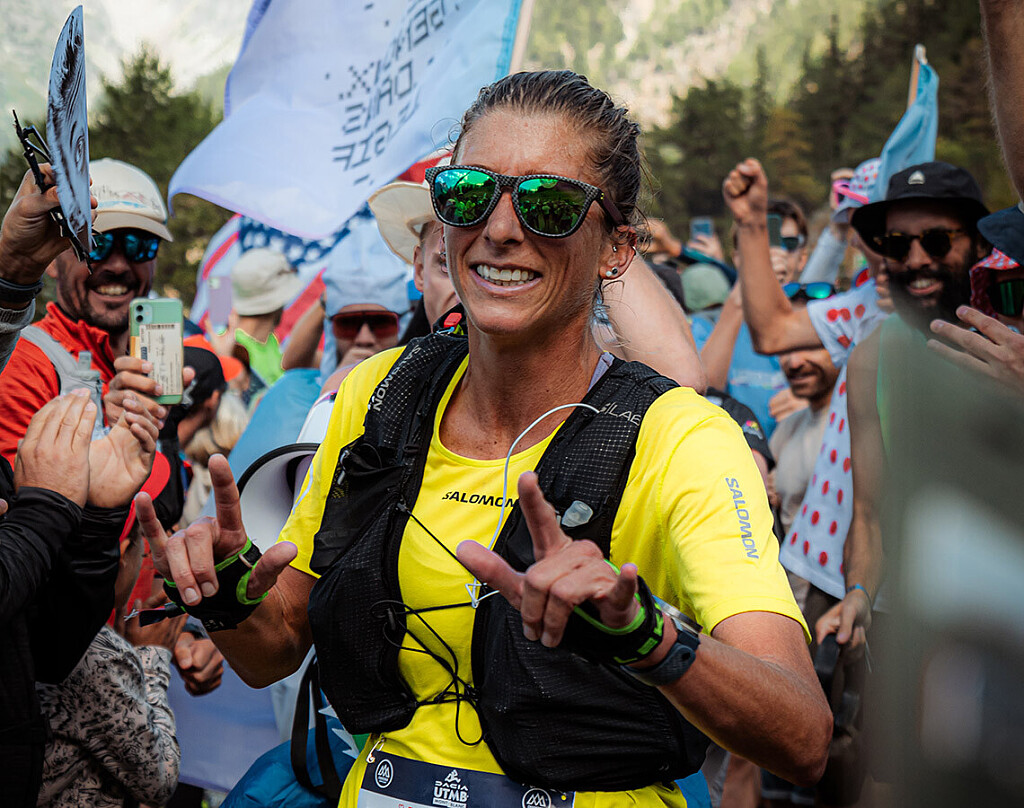
Courtney Dauwalter completes 100K race with her mom
After her historic year in ultra-trail, how could Courtney Dauwalter possibly squeeze in another success this season? The answer, it seems, was to add another Dauwalter.
The American trail-running legend, who in 2023 became the first athlete to win Western States, Hardrock 100 and UTMB in the same season, realized her long-held goal of completing an ultramarathon with her mother, as she and Tracy Dauwalter crossed the finish line of the 100K course at Arizona’s Javelina Jundred this weekend.
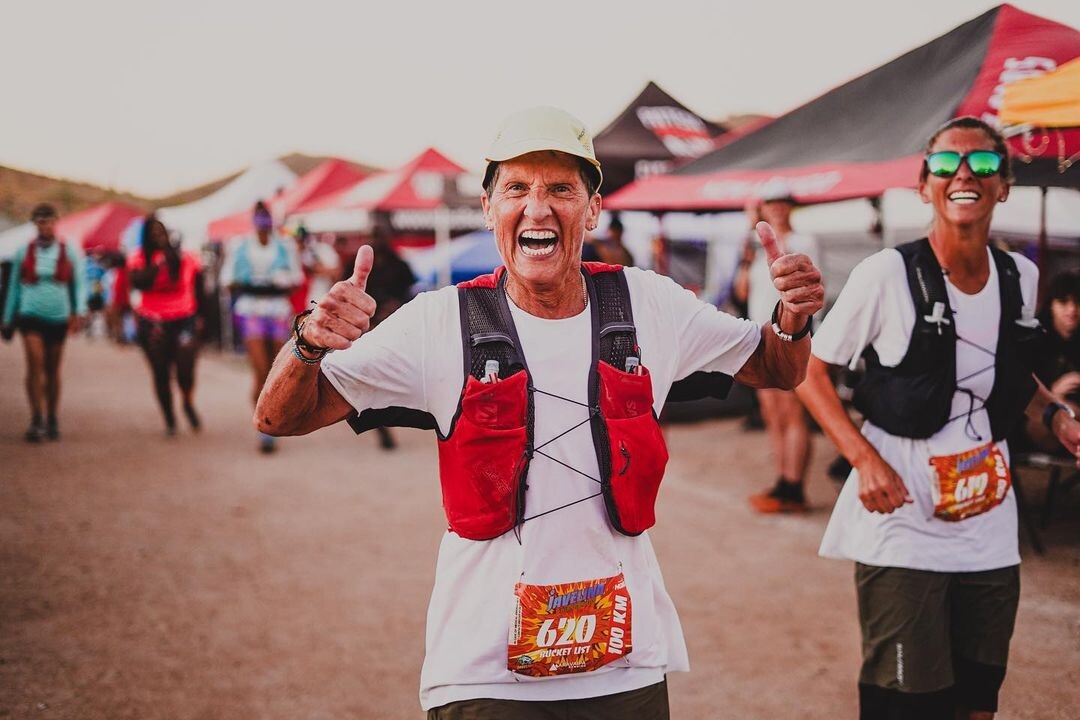
The Javelina 100K course consists of three loops that take runners through trails northeast of Phoenix. The route features rolling singletrack through the Sonoran Desert, leading past giant saguaro cactus and granite boulders in and around McDowell Mountain Regional Park.
The elder Dauwalter crossed the finish line in 17 hours, 38 minutes and 33 seconds, one second ahead of Courtney. The Dauwalter duo just cracked the top 100 in the 100K women’s division, landing in 98th and 99th place. They finished in 180th and 181st place overall among the 100K’s 301 finishers.
Before the pair toed the start line Saturday, Courtney shared in an Instagram post that it has been a “dream” of hers to run an ultramarathon with her mother.
“Last year we tried a 50 mile race together in Minnesota but got cut off for time. We decided that was just one part of our story together and are now back trying to get that sweet, sweet finish line,” she wrote.
While crossing the finish line was a triumph for the mother-daughter team, the overall effort was a fuller family affair, with Courtney’s husband, Kevin Schmidt, and her father, Dick Dauwalter, crewing the duo.
“Kevin and my dad are back on crew duty so I have no doubt we’ll be plenty taken care of,” wrote Courtney.
A subsequent Instagram post showing the mother and daughter celebrating their accomplishment drew a long list of commenters sharing their congratulations—and more than a few remarks about where the younger got her famously winning smile.
“It’s not hard to see where @courtneydauwalter gets her awesome smile from,” wrote one wellwisher. Added another: “Who the heck is their dentist?”
It was also an unforgettable race for the 100K’s top finishers. Topping the men’s podium in the 100K race in 7:15:53 was Rajpaul Pannu, who broke the course record set last year by Scott Traer (7:31:46). Anna Kacius, the top women’s finisher, placed second overall in 8:13:07, beating the course record set last year by Lotti Brinks (8:36:01).
Jonathan Rea ran 12:43:10 to break the 100-mile course record set last year by Dakota Jones (12:58:02). Heather Jackson won the women’s 100-miler in 14:24:47.
(11/01/2023) ⚡AMP
by Paul Baswick
Foot Pain When You’re Running? This Issue May Be to Blame
These mysterious bumps can cause discomfort and pain, but prevention and early treatment can help you stick to your training schedule.
Picture this: You’re blissfully clocking your miles on a Saturday morning until you feel a small but growing pressure on top of your foot. It’s slight, so you ignore it, but over time that discomfort starts to become more noticeable—and once you take your running shoes off at home, you notice a bulb-like bump on your foot.

What gives? You could have what’s known as a ganglion cyst. These sometimes painful bumps aren’t often talked about in the running community, but they’re one of the most common soft tissue masses found in the foot and ankle, per a 2023 review in the Journal of Clinical Orthopaedics and Trauma. Plus, they can derail your training if not addressed.
Here’s everything you need to know about ganglion cysts as a runner, including how to prevent and treat them.
How might a ganglion cyst show up in runners?
A ganglion cyst develops slowly over weeks or months, but it may grab your attention during a run.
“There will be some soreness associated with a ganglion during a run due to shoe pressure against it,” says Karen A. Langone, D.P.M., a Southampton, New York-based spokesperson for the American Podiatric Medical Association and podiatrist who specializes in sports and fitness medicine. “You might notice a lump on the foot, which can worsen during the run.”
That lump on your foot can be easy to confuse with a number of other conditions. Found along a tendon or near a tendon, a ganglion cyst can be mistaken for an exostosis, for example, which is a benign (noncancerous) bone tumor, per the Cleveland Clinic.
“It might also be confused with a stress fracture of a metatarsal bone,” says Alex Kor, D.P.M., a spokesperson for the American Podiatric Medical Association, a podiatrist at Hendricks Regional Health in Danville, Indiana and team podiatrist for the athletic programs at Butler University. A metatarsal stress fracture is a break in the bone from repeated injury or stress, which can be caused by running.
What is a ganglion cyst?
On the other hand, ganglion cysts are noncancerous bumps that usually appear along your tendons or the joints of the wrists or hands, but they can also occur in ankles and feet, according to the Mayo Clinic. They’re filled with a jellylike fluid.
“A ganglion cyst, like any mass, makes the runner’s foot feel tight,” says Kor. “The pain can be characterized as dull or sharp if mileage is extended or there is increased shoe pressure.”
This cyst is usually caused by a bony point that’s exacerbated by shoe pressure (and possibly by your foot swelling at the end of a run), a tendon that gets overused (which may be the result of tendonitis), or from acute trauma. The fluid in the tendon sheath can “leak out” after overuse or trauma to form the ganglion cyst, adds Kor.
Once one of these things occurs, the inflammation within the tendon sheath accumulates in one area and worsens, forming the ganglion cyst.
Although they’re filled with fluid, they can feel firm to the touch, per Yale Medicine. They can be as small as a pea or as large as an inch in diameter. Sometimes, they can affect joint movement and cause pain if they press against a nerve.
The majority of ganglion cysts occur on the top of the foot or the front of your ankle, says Kor. They are rare on the bottom of the foot.
Risk factors for these cysts include sex and age (most often, ganglion cysts occur in women between the ages of 20 and 40) and osteoarthritis (particularly when they occur in the hands), per the Mayo Clinic.
Should you run with a cyst?
You can continue to run with a ganglion cyst, especially if there is no pain. Even if there is some pain, your level of discomfort will determine the best steps for treatment.
“This is not a condition that will significantly worsen [if you run on it],” says Kor. “In other words, it is not like a stress fracture that can ‘break’ to the point that surgery is needed.”
However, it’s important to check with a doctor to make sure the bump is a ganglion cyst and not something more serious, and to determine ways to avoid discomfort.
Being a runner alone does not increase your risk of ganglion cysts, but your foot shape may play a role. “They are a little more common in very high arched feet and very flat feet,” says Kor.
How can runners treat ganglion cysts?
First, visit your doctor, who may conduct imaging tests like an X-ray and ultrasound to confirm that it is a ganglion cyst (and not something else).
Once the bump has been identified as a ganglion cyst, there are a few treatment options, starting with these less invasive methods:
Padding
This can be placed around (not on) the ganglion cyst to avoid pressure from a running shoe. “A pad or blister bandage directly over the ganglion cyst may worsen the pain,” says Kor. “Typically, a horseshoe pad or donut pad is applied to offload the cyst.”
Icing
You can also ice your foot after a run and on a daily basis for 20 to 30 minutes. Place a towel between your foot and the ice pack to avoid skin irritation. “Ice can cause vasoconstriction to reduce inflammation, swelling, and pain,” says Kor.
Changing Shoes
A supportive shoe has the potential to reduce overuse, which may help in the initial stages of a ganglion cyst, says Kor. A supportive shoe should not bend at the sole (typically, this has nothing to do with the brand name or price of the shoe).
Taking Breaks from Footwear
When you’re not running, avoid shoes that exacerbate the ganglion cyst area. For instance, skip the one-strap sandal that directly rubs the cyst area. Unsupportive footwear, like flip-flops with a flexible sole, can also worsen the cyst.
Adjusting Your Shoe Laces
If the ganglion is on the top of the foot, your shoelace pattern can be changed to avoid direct pressure on the ganglion. For instance, your podiatrist might recommend a lacing pattern often used for patients with high instep (the bony structure on top of your foot).
In this case, cross your laces as usual toward the bottom of the tongue, skip crossing them over in the middle (and instead create a line along each side of the tongue), then finish lacing near the top of the tongue. This offloads the top of the foot that may be affected by the cyst. See an example of how to do it here.
Take Anti-Inflammatory Medication
If approved by your doctor, you can take over-the-counter anti-inflammatory medications to ease the discomfort of a ganglion cyst.
If you’re in pain, it’s worth speaking with your doctor about longer-term solutions for treating the cysts. Kor notes that many runners may see little to no improvement with these conservative options.
If these steps don’t help, your podiatrist might suggest an in-office procedure in which the fluid is withdrawn and sometimes injected with a small amount of cortisone to shrink the remaining cyst—or complete surgical removal of the cyst.
Even surgery isn’t a magic bullet: The recurrence of ganglion cysts after surgical removal ranges from 4 to 40 percent, according to a 2021 study in The Archives of Bone and Joint Surgery.
Clearly, it’s important to speak with your doctor transparently about your pain levels to determine the pros and cons of each treatment. Fifty percent of the time, ganglion cysts resolve on their own, according to a historic study in Current Reviews in Musculoskeletal Medicine.
How can runners prevent ganglion cysts?
Some of the methods described above for treating an early-stage cyst can also be used to prevent one in the first place, starting with your running shoe.
“Ganglions are often found over areas where the bone is prominent and there is aggravation from shoe pressure,” says Langone. “A well-fitting running shoe is an important part of avoiding ganglions, as is altering lacing patterns to avoid painful pressure.”
If your doctor has already aspirated your ganglion cyst and you want to prevent recurrence, a well-fitting shoe and altering lacing patterns may still help—along with icing after runs.
“Over-the-counter or custom-made orthotics can also indirectly help with a ganglion cyst,” says Kor. “There is some indication that increasing support within the shoe can reduce the overuse on a tendon, which may in turn reduce the irritation that contributes to a cyst.”
Your podiatrist can prescribe custom orthotics based on your foot’s specific shape. That said, if a ganglion cyst is already significantly symptomatic, an over-the-counter orthotic will typically not help.
As with most things, prevention and early detection are key. If you start to notice discomfort or an unusual bump, make an appointment with your doctor to discuss treatment options—so you can get back to pain-free miles.
(10/29/2023) ⚡AMPby Runner’s World
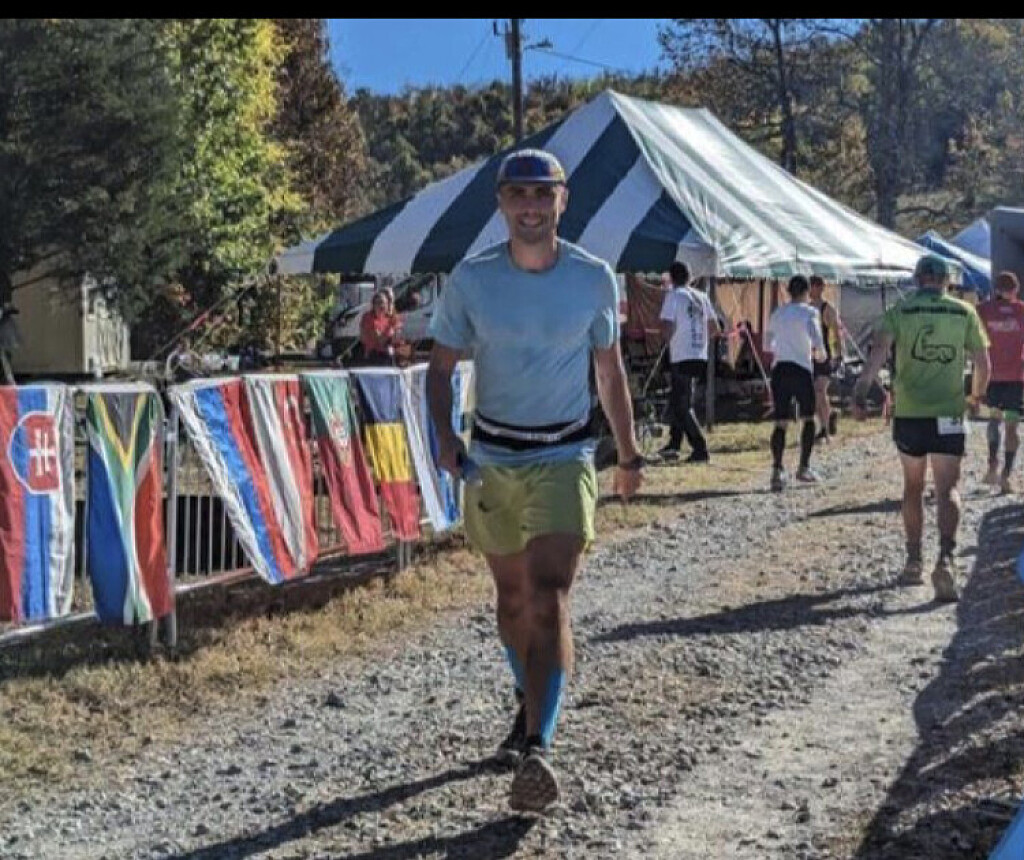
Ihor Verys's surprising secret weapon: nose breathing
Chilliwack, B.C.’s Ihor Verys just ran more than 718 km in 107 continuous hours, claiming the assist to winner Harvey Lewis at Big’s Backyard Ultra in Tennessee on Wednesday evening. Beyond his remarkable fitness and mental stamina, the ultrarunner has a secret weapon: his breath. The athlete swears by nose-breathing, and has perfected his technique while running.
Verys has only been competing for three years, yet has already racked up an incredible list of accomplishments that include wins at B.C.’s gruelling Fat Dog 120 and Alberta’s Canadian Death Race (where he also faced off against Lewis, beating him by more than two hours).
The athlete says that trail running wasn’t always as easy as he makes it appear, and after a 50 km run between two Brandon and Shilo, Man., he discovered his biggest challenge was being out of breath.
The breathing issue had nothing to do with how fast Verys was going. “I was slow like a snail,” he explains. “My chest muscles were incredibly sore. I started looking into it, and came across the book called The Oxygen Advantage by Patrick McKeown.” Verys now calls the book one of his ultrarunning bibles.
In the book, McKeown explains that physiologically, our mouths aren’t created for breathing. “Our mouth serves very different purposes, and our nose is the only organ that should used for breathing,” says Verys. “Interestingly, the entire book was based on the research and lifework of one Ukrainian doctor, who worked and practised in what was then the USSR.” Verys, who moved from Ukraine to Canada in his early 20s, was so fascinated, he read the entire dissertation in its original Russian. “The doctor was able to cure over 500 children from asthma just by getting them to do simple breathing exercises and changing the way they breathe,” he says.
Inspired, Verys set out to change his own breathing technique. “I made sure I was always using my nose to breathe, and I started doing breathing exercises religiously every day,” he says. “I’d take a five to 10-minute break at work to do the exercises, and I’ve been doing them ever since.” Verys was also taping his mouth shut at night to make sure he used his nose to breathe while he slept. “I’ve noticed a huge improvement, and I’ve never had the same issues again. I’ve done a few ultras now and I’ve never had issues with breathing,” he says. “My sleep improved, too. Pretty much all my training runs are done while nose-breathing. I mouth-breathe only very rarely while doing intense speed workouts.”
Verys says the neatest thing about it is that he’s able to pace himself during races using his breathing. “I don’t care about HR or the grade of a climb,” he explains. “If I need to open my mouth to breathe, it means I’m going too fast and I need to slow down.” Unless Verys needs to make a move or attack a hill, he remains at nose-breathing speed. As a result, his lungs and breathing muscles never get overworked, and there is an unanticipated bonus: nose-breathing is stealthy and silent, appearing effortless. “There’s nothing more demoralizing for your competitor when he or she can’t hear you breathe 100+km into the race,” he says.
Curious to try it yourself? Verys says the exercises are fairly basic, and it’s easy to make your own variations. He suggests trying multiple repeats of holding your breath, after exhaling everything in your lungs. According to the research, there’s an anatomical basis for getting your body used to the build-up of CO2 while holding breath, and the result is efficient breathing and the benefits that carries. “The more you do it, the longer you can hold your breath,” Verys says. “At the beginning, I could barely hold my breath for 20 seconds, but now I can comfortably do it for more than 60.”
(10/29/2023) ⚡AMPby Running Magazine
