

Running News Daily
Running News Daily is edited by Bob Anderson and team. Send your news items to bob@mybestruns.com Advertising opportunities available.
Index to Daily Posts · Sign Up For Updates · Run The World Feed
Search Results for Ultra
Today's Running News
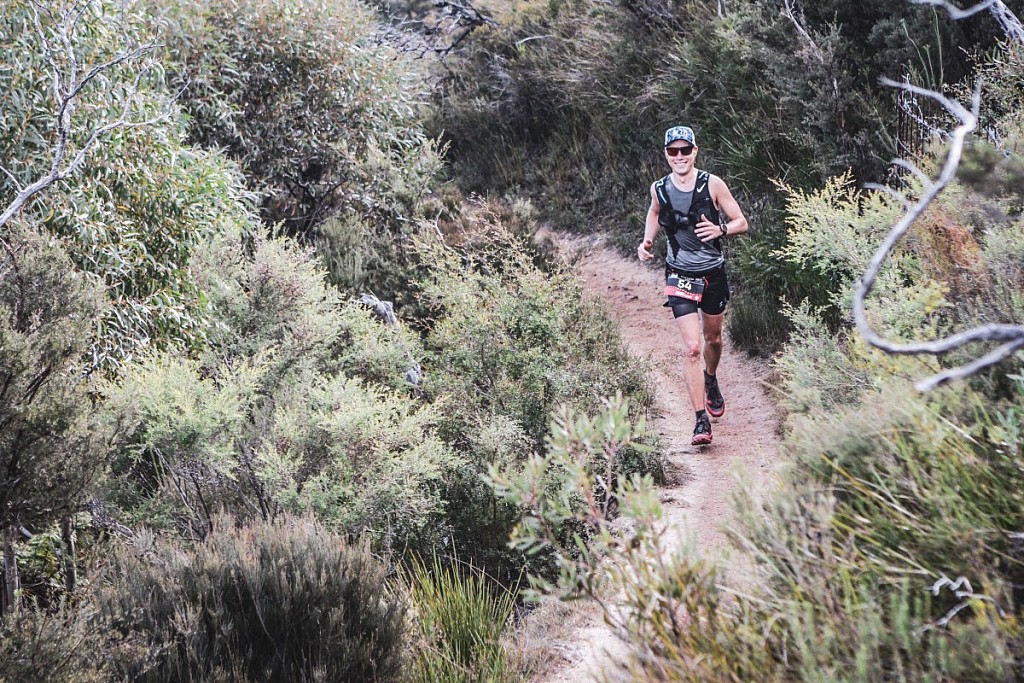


Henri Lehkonen is more prepared than ever for the Western States 100 Mile Endurance Run
The Hong Kong-based Australian Henri Lehmonrn will run the Western States 100 with a power monitor attached to his shoe and will stick religiously to a predetermined wattage.
“It’s been a revelation. If I lost the thing, I’d buy another tomorrow,” he said. “It’s a miracle way to control yourself in racing.”
Lehkonen believes it is better than other similar metrics, like heart rate, because it removes variables like excitement or altitude.
“I’ve done enough races now when I’ve not followed the watch and I’ve blown up, and when I’ve followed the watch and I’m tearing past people at the end,” he said. “I follow it for the first third – that’s where the damage is done if you over exert yourself. Then you get the adrenaline from passing people.”
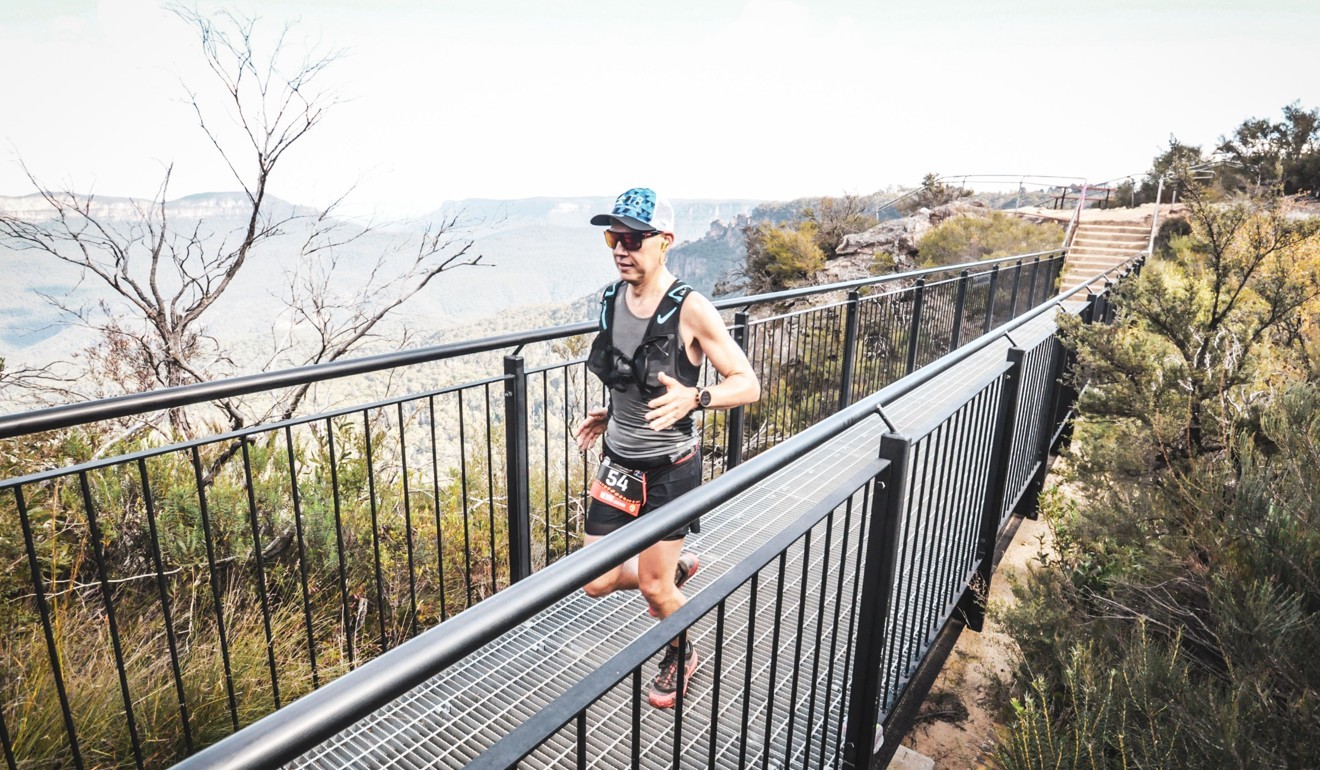
And it is working. In March, he ran the 100km Ultra Trail Australia (UTA). He was 69th after 1km, but finished 11th in a highly competitive field.
Power meters are common in sports like cycling, but are yet to be taken up widespread in trail running. Lehkonen was introduced to the meter by his coach Andy Dubois, who crunches the data to give him an accurate power curve for his races.
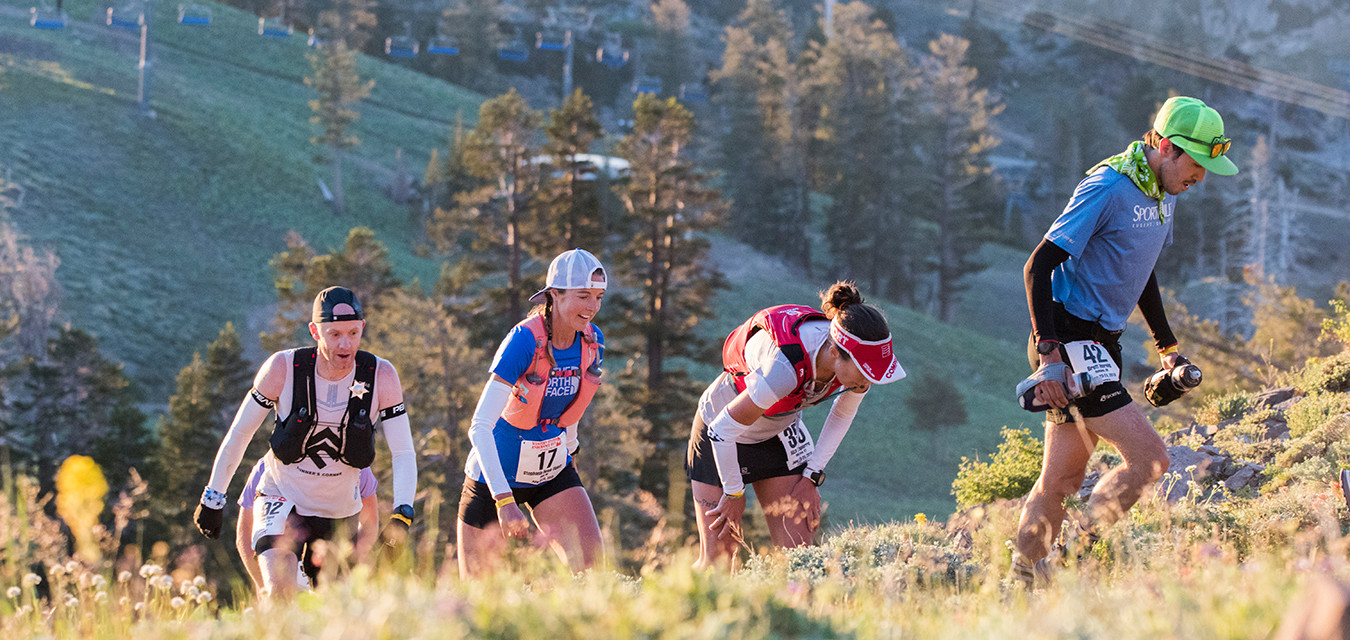
Aside from the gadgets, Lehkonen is leaving no stone unturned. It is notoriously hard to win a place at WSER100. Hopefuls enter a lottery, and improve their chances by entering the lottery multiple years in a row. This was Lehkonen’s third year submitting an application, which is relatively quick.
“It’s Western States. It’s that big and it’s hard to get into, so I’m viewing it as all in,” he said.
He flew to California for a weekend to look at the course. The race directors organised a three-day event where runners could do the last 112km of the course, with some of the checkpoints set up.
(06/21/2019) ⚡AMP

Western States 100
The Western States ® 100-Mile Endurance Run is the world’s oldest and most prestigious 100-mile trail race. Starting in Squaw Valley, California near the site of the 1960 Winter Olympics and ending 100.2 miles later in Auburn, California, Western States, in the decades since its inception in 1974, has come to represent one of the ultimate endurance tests in the...
more...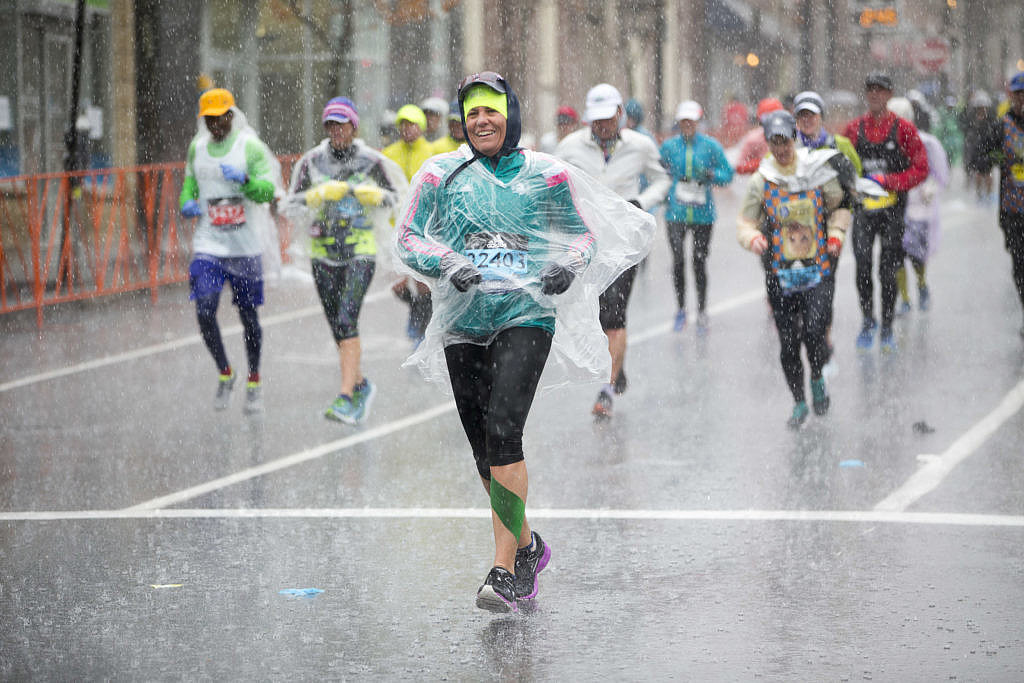
Two Words That Can Really Help Your Marathon Training
Believe it or not, there is a method to those runs in a marathon program and these words can make that effort count!
Put simply, those two words are “slow down." This may sound strange but let’s break down why this is so important!
I have run almost 60 marathons/ultra marathons over the past 12 years and it took me that long to finally reach a goal that I had had from the beginning – to run a sub-3 hour and 30 minute marathon. Part of that reason had to do with the fact that probably 80% of those marathons were not serious efforts and more for the location.
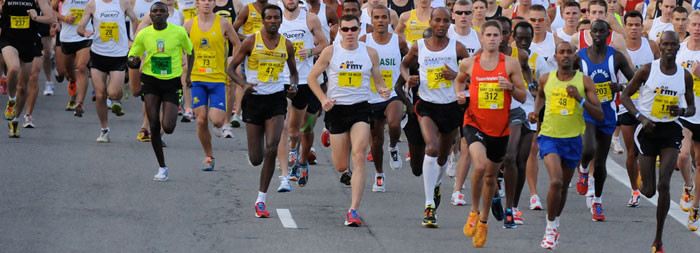
But, I firmly believe that another reason had to do with the training program I was using (Hansons Marathon Program) and the focus on the off-day runs being run at slower paces.
A marathon training program will typically have a few elements – the easy run, the long run, and the speed/tempo runs. The speed runs will include things like tempo runs and repeats.
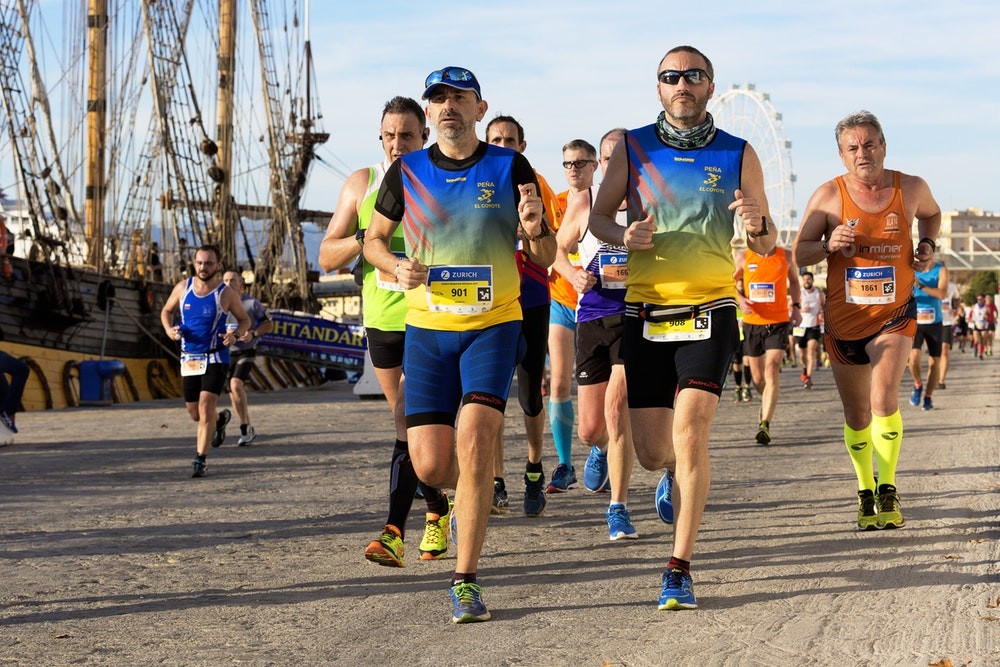
The long run will get your body conditioned to staying on your feet for longer periods as you prepare for the 26.2 mile distance. Finally, the easy run. These runs are typically to help you get your miles in and to help you aerobically.
Many times, runners attack these slow days as if they need to turn in quality performance runs every time they hit the roads. This means running these slower runs at paces that are between what they should be and the speed workout paces.
This actually does not help in your body recovering between workouts and instead treats these miles and runs as workouts, instead of slow and comfortable paces to help your body and muscles recover while still covering the miles.
There are even a couple of programs that recommend not even doing those slow runs but instead doing cross-training on those days and only running for tempo runs, repeat workouts, and long runs. This is again because those slower runs are meant to help in recovery while still helping your heart and blood flow.
So, while it may seem that running slow on slow days is not very beneficial, it can actually be one of the most important parts of a training program! It allows you to continue to get the benefits of a workout and the mileage while not taxing your body more than it should be for the “easy” day of the program.
I do know this – my last training program was more fun and more productive than any program I had ever used before and I feel that I owe a lot of that to the fact that I actually forced myself to slow down on slow days to a pace that was much slower than I had ever run before on slow days.
Remember – while each run can have a purpose, every run does not have to be fast. Slow down on those easy days and trust your body and the program.
(06/18/2019) ⚡AMPby Charlie
Catra was addicted to drugs and now she is addicted to running
At age 27 Catra was arrested and spent the night in a prison cell. That was the worst experience of my life and scared me into getting clean.
“I fell into a bad crowd in high school and started partying hard. I soon got into a relationship with a guy who was doing methamphetamine and I got addicted pretty quickly. Eventually, we got arrested. I was put on a six-month rehab programme where I had to go to a Narcotics Anonymous meeting every day. After six months, I was clean,” says Catra.
“Now I’ve been clean for 25 years. I started running because I was searching for something to take the place of drugs. I ran a 10k on a whim after seeing a flyer for it and, three months later, I ran my first marathon. Ultras followed soon after.
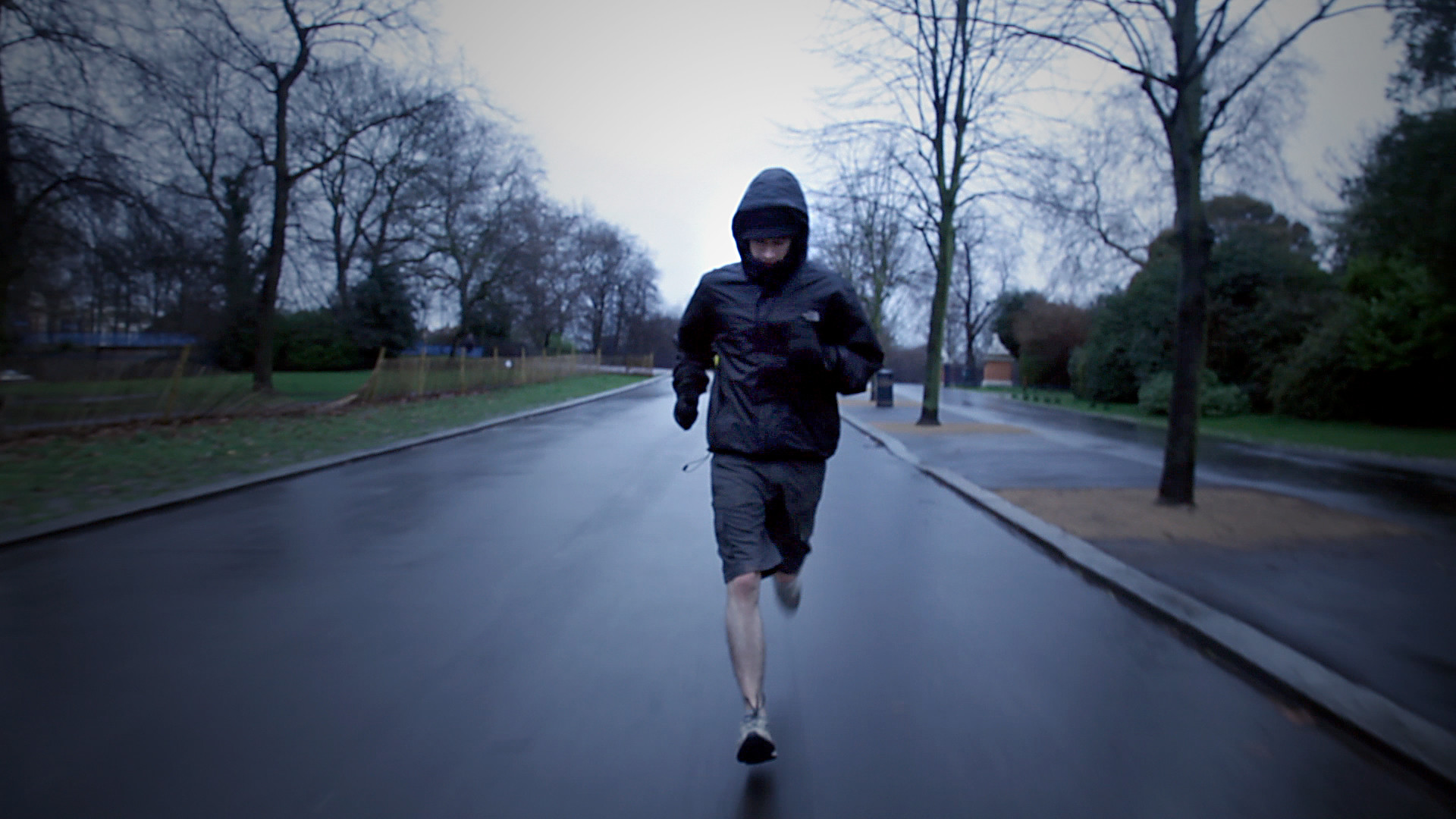
“I’ve run 100, 200 and 300-mile races. When you finally stop running after that long, it feels great. You’ve accomplished something huge and it’s like, 'Wow!' I definitely get a kind of high. I’m one of about only a dozen people in the world who has run 100 miles (161km) more than 100 times. You could definitely say that I’m addicted to running,” she says with a smile on her face.
(06/17/2019) ⚡AMP
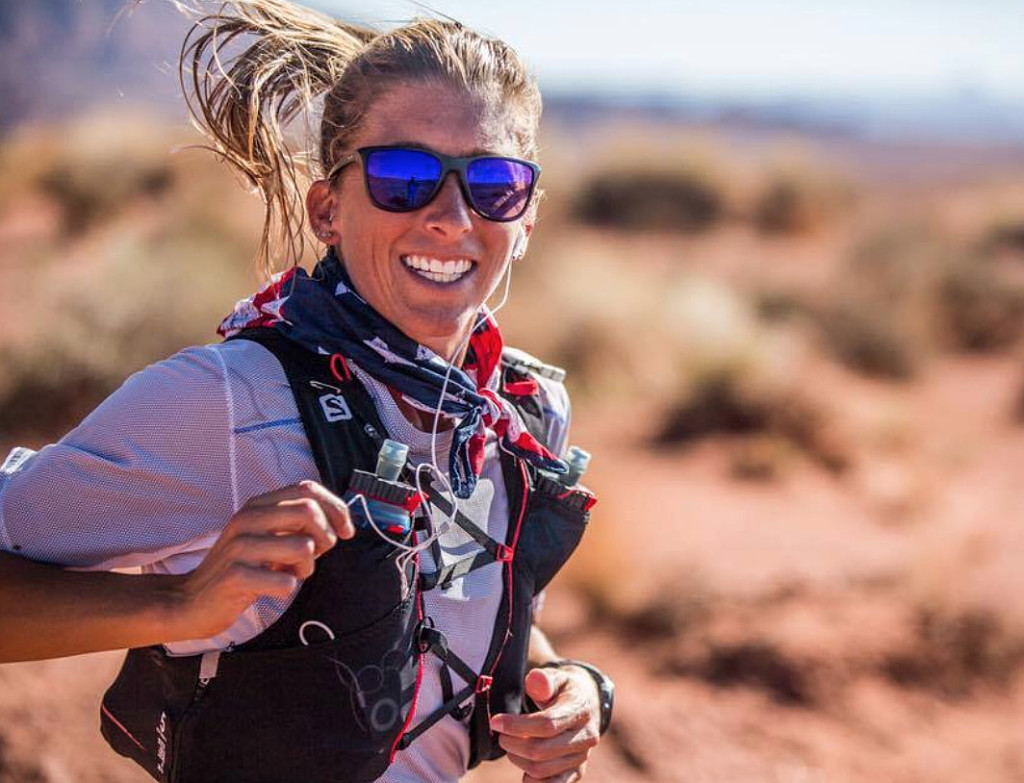
Four runners from India are eyeing a place in the 2019 IAU 24-Hour World Ultra Marathon Championship to be held in France in October
Rajasthan's Lallu Lal Meena and Yamini Kothari and Odisha's Pranaya Mohanty are attempting this feat during the 24 Hour Stadium Run at the Mumbai University track, which began at 6pm Saturday and will finish at the same time Sunday.
Sikkim's Shiva Hang Limboo too will aim to make it to the 24-Hour World Ultra Marathon Championship in the 12-Hour category.
The top men will cover close to 200 kilometres (124 miles) during this period while the women should hit 170 km (105 miles).
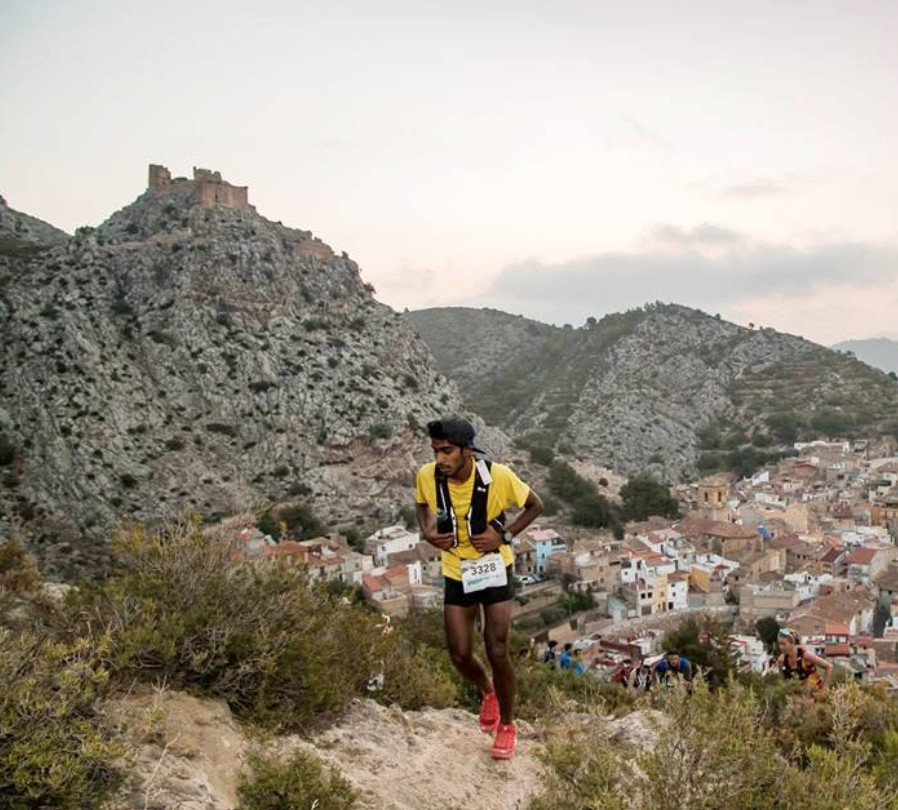
The 24-hour Stadium Run tests the endurance as well as mental and physical abilities of athletes.
"I have a great chance of qualifying for the worlds," said Meena.
"I have done it in the past and I am quite confident of making it there once. The criteria for qualification is 205 kilometres and I have come with a target of 220 kilometres.
I'm also attempting to run for 23 hours straight and if my body permits I will do 24 hours without any break," Meena was quoted as saying in a release issued Saturday.
(06/15/2019) ⚡AMP
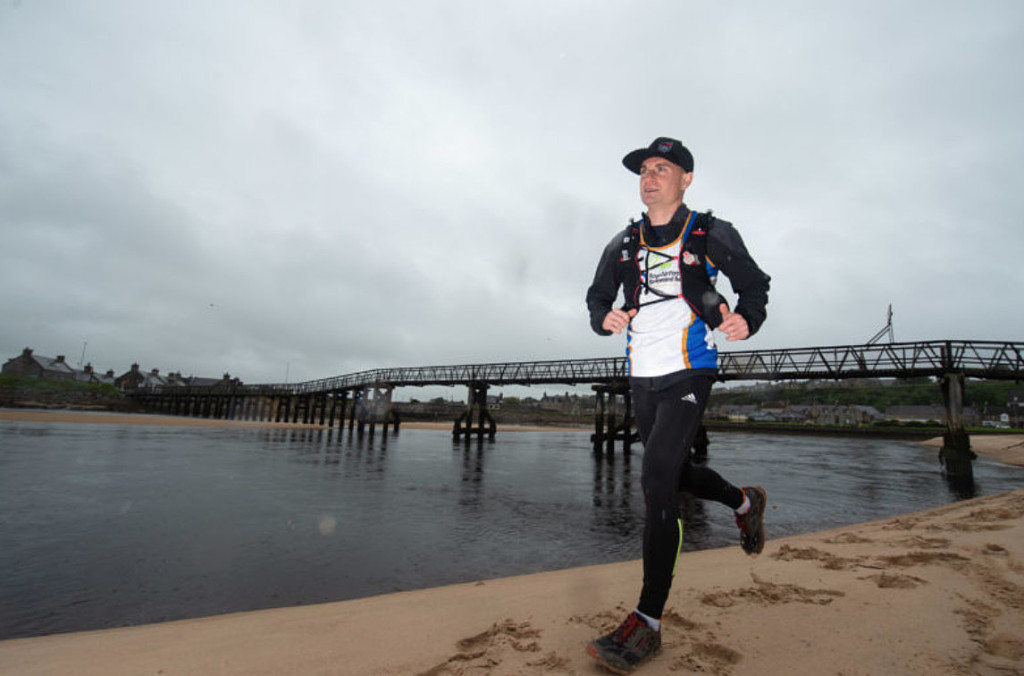
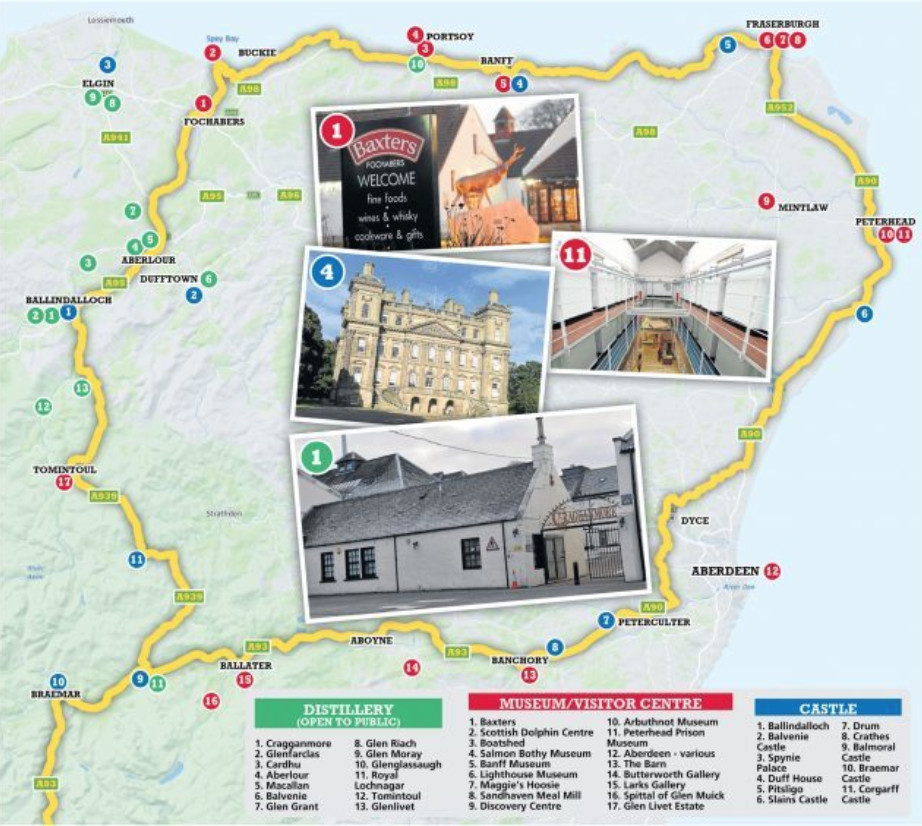
Jon Ward is embarking on an expedition to become the first person to run the entire North East 250 tourist trail in Scotland
Corporal Jon Ward, who is posted at RAF Lossiemouth, expects to cover the arduous route in just six days.
The 33-year-old ultra-marathoner has previously tested his body to the limit on a 216-mile endurance challenge spanning the east and west of Scotland in less than 100 hours.
The serviceman, who is originally from Hereford, set himself the target of becoming the first to run the NE250 to help share his love for the north-east which has developed since he was posted to the region two years ago.
Jon Ward said: “I didn’t really sleep when I did the 216-mile run. When you stop your body goes into a recovery mode – your legs start throbbing and your body just feels less active.
“I’m not really thinking about a fast time for the NE250, I just want to do it. That might make it harder because every day I have to prepare myself for the run, which might be tough if the weather is not nice.”
Over the next six days the runner will scale peaks in the Cairngorms before following the River Spey to the sea and spanning the Aberdeenshire coast before turning towards Deeside ahead of finishing in Braemar on Wednesday.
Along the way, he hopes to stop at the numerous attractions along the route to share his new-found love of the north-east with a wider audience.
(06/15/2019) ⚡AMP
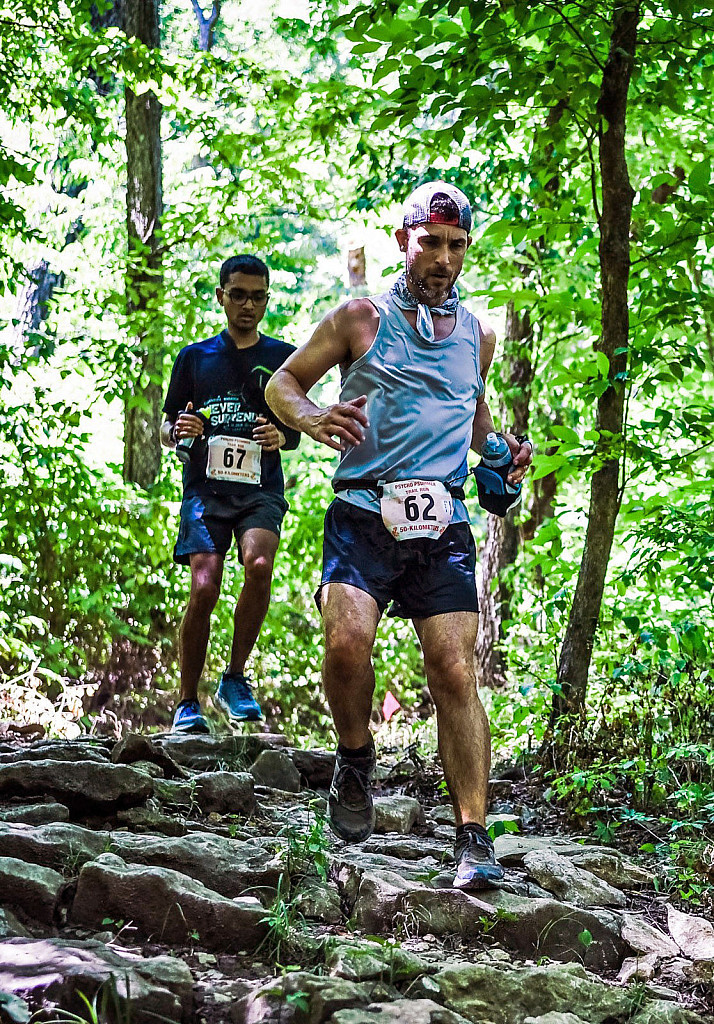
Keith Roberts, who has run a marathon in every state, last month he was stalked by a bear
Just six miles north of Harrisburg in Raleigh, When 42-year-old Keith Roberts isn’t spending time with his wife and kids, he’s running marathons or working as a manager in fiber optic installation at Clearwave Communications.
As many have too, Roberts has completes a marathon in all 50 states.
“I have a long-term vision for my health,” said Roberts. “Since I started running all of my back pain has gone away. Physically, I was heading towards a path of diabetes and really poor health, but the diet of running has corrected that.”
Roberts has 56 career marathons under his belt since running his first in 2016 at the Shiprock Marathon in New Mexico. On March 17, Roberts ran in his 50th state when he completed the Big Island International Marathon (Hilo Marathon) in Hawaii.
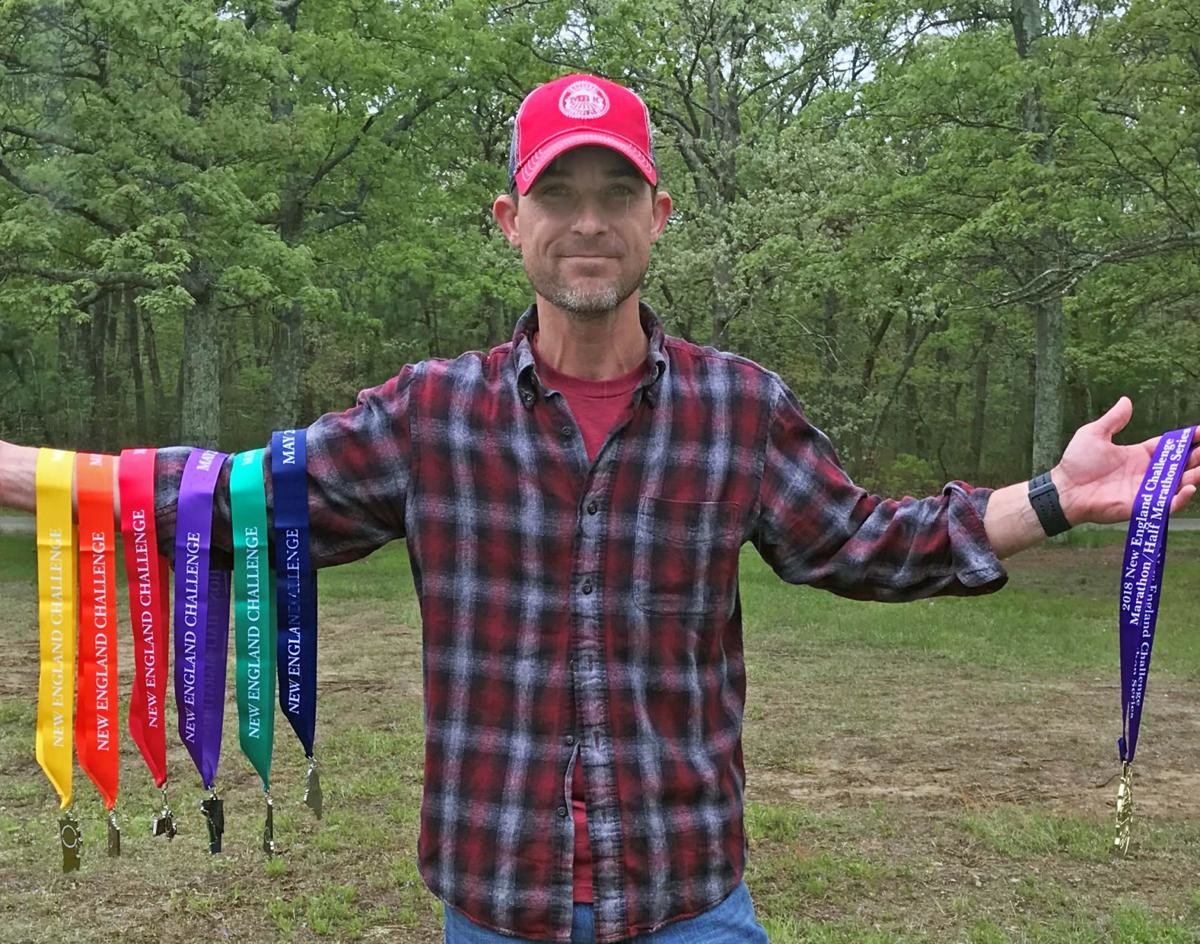
What comes next after you’ve run around the entire United States map?
“My goal for next year is to run in four 100-milers,” said Roberts. “I definitely see myself running or staying active for the rest of my life, that’s one part of it. The other part is sort of our human nature. I’ve come this far, how far can I go?”
Perhaps Roberts' encounter with a black bear in the mountains of Virginia in a 100K race is the reason he’d like to stay in shape.
“Last month I was stalked by a bear,” said Roberts. "Getting stalked by animals because they’re curious happens all the time to runners, but all I had was a trekking pole in one hand and a water bottle in the other when I looked over my shoulder and saw a little black bear 30 feet behind me.”
“When I started running I couldn’t even run a quarter of a mile,” said Roberts. “I worked up a little bit, ran a 5K or two, and decided that I wanted to try running further.”
Roberts has since gone on to run nearly 1500 miles in his marathons alone. That doesn’t include his half marathons, ultramarathons, or any of the miles he has poured into his training. He once ran eight marathons on eight consecutive days.
Roberts' body has held up for the most part outside of some shin splints, but he says recovery is different than most people would think.
“The recovery is more mental than it is physical,” said Roberts. “After a while your body learns to deal with the aches and the pains, and you can run a marathon on Saturday, a marathon on Sunday, be a little sore when you’re back at work on Monday, and by Tuesday you don’t feel it.”
Roberts' love of running has motivated both of his sons to run cross-country.
“I’m definitely not as disciplined as great runners are,” said Roberts. “As things go I generally finish in the back half of the race. I run a marathon in about 4 hours and 45 minutes, which is probably a good average.
“I will tell you from personal experience that there’s about 15 percent of people who care about speed and everybody else just cares about getting it done.”
The majority of people will never run a marathon, but in three years Roberts has done just that in every single state and doesn’t plan on stopping anytime soon.
(06/14/2019) ⚡AMP

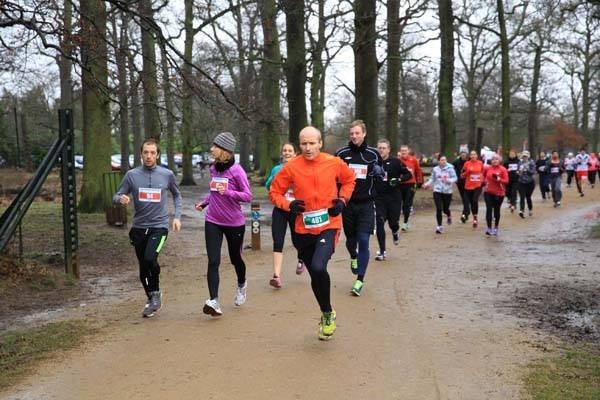
A brand new urban ultra marathon challenge is going to take place in the heart of London
Ultra London, a brand new urban ultra-marathon event, is set to take place on Saturday October5. The multi-distance event will be held on an innovative course, that aims to showcase some of London’s finest viewpoints, whilst crossing many of its lesser known open spaces, nature reserves and Sites of Specific Scientific Interest.
The 55km ultra course starts in Woolwich and finishes in Richmond upon Thames, with participants following large parts of the Capital Ring Walk route across south London. The challenging yet accessible event also includes a 27.5km run or walk starting at Crystal Palace, also finishing in Richmond.
The course, a mix of trails, footpaths, parks, disused railway lines, woodland and more will provide a challenge for participants who will also need to ensure they navigate the correct paths through parts of Falconwood, Grove Park, Crystal Palace, Streatham, Wimbledon and onto Richmond.
Andy Graffin, Director of Product Development at The Great Run Company who are staging the event, said: “We’re excited to be trying something new in the growing area of ultra running. Many of London’s landmarks are world famous of course, yet the Capital Ring is a comparatively little-known gem and we hope this event will provide participants with a suitable challenge and perhaps some surprises along the way, they will pass numerous landmarks and enjoy some breath-taking views of the Capital.

“Being in London, the event is accessible for participants and also for friends, family and supporters who can plan a route using public transport that will allow them to see their runner at numerous points along the course.”
Whilst the inaugural event this year uses the southern half of the Capital Ring there are plans to include the northern half of the route in 2020, where the ultimate challenge for ultra-runners will be to complete the entire 125km circular route in the Ultra London 125.
(06/14/2019) ⚡AMP

168 mile Al Marmoom Ultramarathon is one of the world’s longest desert ultras
Set in a rugged national conservation area, the Al Marmoom Ultramarathon claims to be one of the longest desert ultra in the world. The 270km (168 mile) route was run over five days in December in temperatures as high as 35C (95F),.
In its inaugural year, 19 runners (15 men and four women) completed the race, with 36-year-old Moroccan Rachid El Morabity -- a six-time Marathon des Sables winner -- crossing the finish line first in 31 hours and 17 minutes. Eleven runners didn't make it, as well as many others in the shorter 100 km and 50 km versions of the race.
Race manager Ole Brom oversaw of the health and wellbeing of the runners. Running these distances across energy-sapping sand amounts to an extreme sport, the Norwegian told CNN, and "not something that is taken on lightly."
"On the first day after about 40 km, about 12 km from the end, (one athlete) collapsed unconscious," says Brom. "He ignored the signs of dehydration and he suffered the consequences."
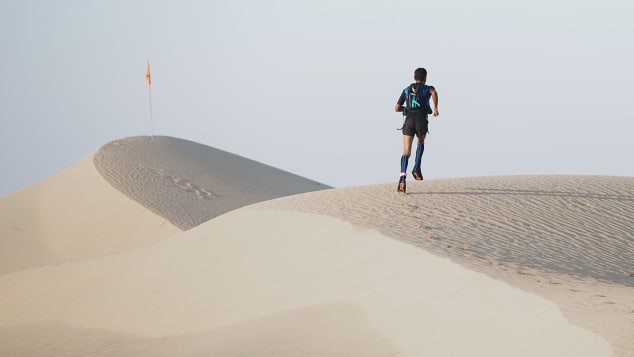
Stretches of the race, including one 100-kilometer leg, were only accessible by air for first responders, explained event director Ruth Dickinson. Athletes wore tracking devices and distress beacons and carried anti-venom pumps in case of snake bites.
Running across the dunes was not without its rewards. "(It's) really peaceful," says 45-year-old female race winner Magdalena Boulet, "(you) can't really see anything for miles and miles."
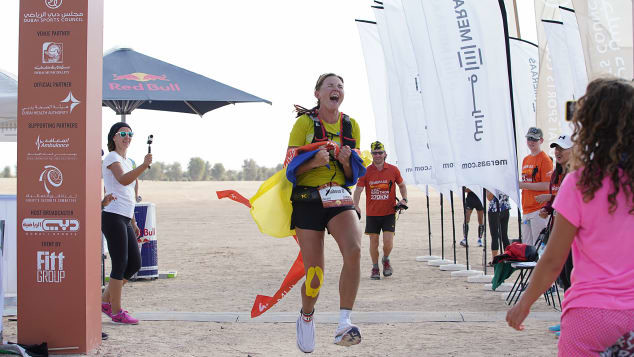
"It's mesmerizing," Brom adds. "On certain routes there were Oryx, there were sand gazelle, mountain gazelles. We saw eagles (and) a lot of different migrating birds." (As a designated conservation area, runners were penalized for dropping trash and required to bury human waste, should nature call.)
There were still smatterings of luxury, with racers provided hot water, tents and massages between stages. Brom says some athletes told him they'd return for the toilets alone.
The Al Marmoom Ultramarathon will join 400-plus local sporting events ranked by the Dubai Sports Council. Acting director of events Ghazi Al Madani says planning for 2019's race is already underway.
Brom believes transit hub Dubai could become a nexus for desert ultra runners, playing host to regular events in its "backyard." "Ten percent of the landmass of Dubai is sand," he adds, "so it makes perfect sense."
(06/13/2019) ⚡AMPby Tom Page

Al Marmoom Ultra Marathon
Launched under the initiative of UAE Vice President and Prime Minister and Ruler of DubaiHis Highness Sheikh Mohammed bin Rashid Al Maktoum, Al Marmoom Desert Conservation Reserve will host the world's longest desert ultra-run Meraas Al Marmoom Ultramarathon. Meraas Al Marmoom Ultramarathon is a 300km, 100km and 50km race across desert terrain and will be held 9th to 11th December...
more...
South African Gerda Steyn shattered the course record at Comrades as Camille had to drop out due to hamstring issues
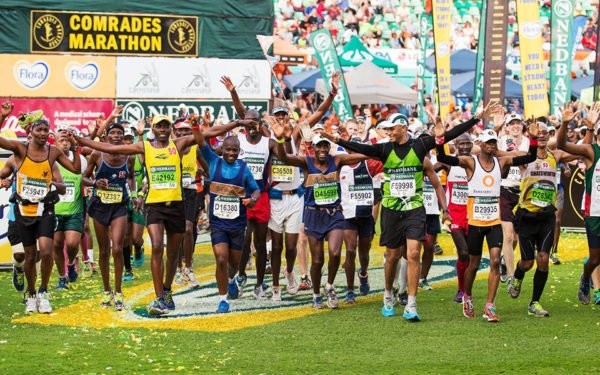
The 94th running of South Africa’s premier Ultra marathon, the Comrades got underway at 5:30am Sunday June 9.
South African runners Edward Mothibi and Gerda Steyn ended up the 2019 Comrades Marathon champions. Gerda broke the course record winning one million R ($66,849US) in the process.
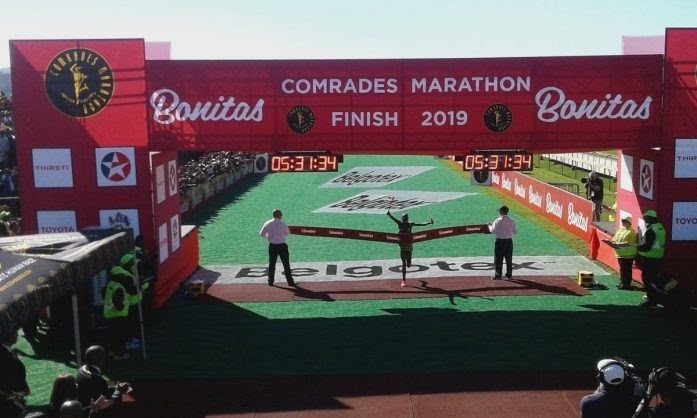
Edward Mothibi won the race after a fourth placed finish in his Comrades debut last year, beating defending champion Bongmusa Mthembu by just 25 seconds.
Local favourite Gerda Steyn stole the show on Sunday as she shattered the women’s record leading the charge with South African athletes produced sterling performances in KwaZulu-Natal.
After breaking clear of the rest of the women’s field shortly before the halfway mark, Steyn gradually extended her lead throughout the second half, crossing the line in 5:58:53 to secure her maiden victory in the 87km race between Durban and Pietermaritzburg.
This shattered the up-run record, held by Russian runner Elena Nurgalieva, by more than ten minutes. Steyn became the first woman to run the Comrades up run in less than six hours. Her time was the fourth fastest of all-time for women, the only faster times were notched in down-runs.
The race is run ‘gun to gun’ meaning that contestants have 12 hours in total to complete the course.
This year’s race is an “UP RUN” starting at the City Hall in Durban and finished at the Scottsville Racecourse in Pietermaritzburg. The race distance is approximately 87km.
28-year-old Gerda Steyn has enjoyed a meteoric rise from amateur to professional in the space of just five years. After finishing as runner-up last year, Steyn took a six-week break from the sport before preparing to tackle the New York Marathon, finishing 13th in a PR of 2:31. The 2018 and 2019 Two Oceans winner made it clear in advance that her goal this year was to win and that is what she did this morning.
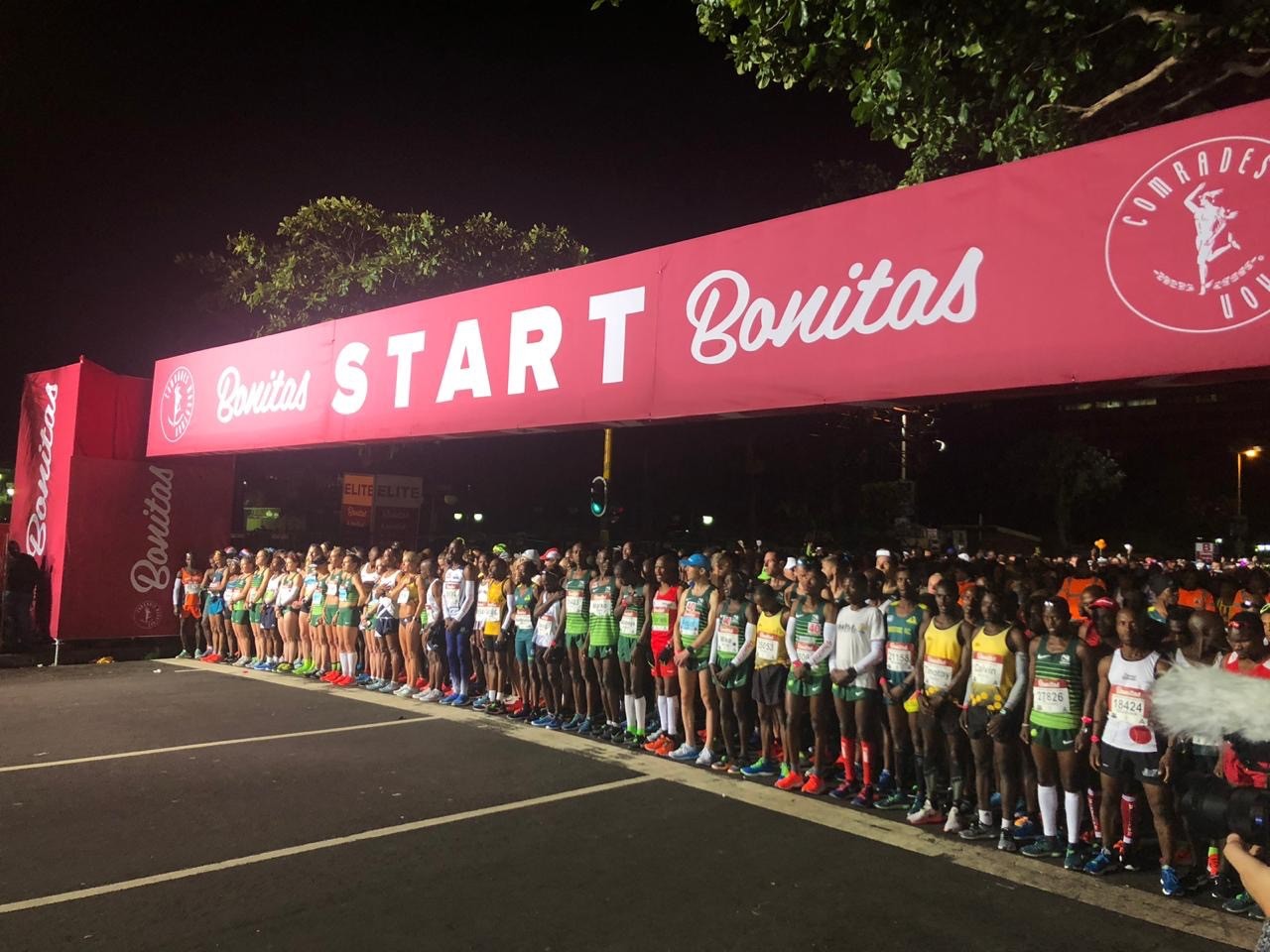
America’s Camille Herron was not able to finished and dropped out.
Camille’s brother Jack posted this on Facebook. “My sister Camille Herron ended up dropping out from Comrades due too hamstring issues she’s been dealing with. I’m heart broken for her because this is just such a special event for her and our entire family.
“I understand the whole mentality of getting to race another day... but she trains so hard and we wait all year for her to defend this title she’s earned. I mean, just her single win is enough, but she goes out every time for a win, so when it doesn’t happen... it’s tough.”
Steyn now will shifts her focus away from Ultra marathons in a bid to qualify for the Olympic marathon in Tokyo next year. The Olympic marathon is expected to be run in blistering heat, with the start moved to 06:00 to mitigate potentially dangerous temperatures. Steyn’s ultra experience could make her a real contender for the Olympic crown.
(06/09/2019) ⚡AMP

Comrades Marathon
Arguably the greatest ultra marathon in the world where athletes come from all over the world to combine muscle and mental strength to conquer the approx 90kilometers between the cities of Pietermaritzburg and Durban, the event owes its beginnings to the vision of one man, World War I veteran Vic Clapham. A soldier, a dreamer, who had campaigned in East...
more...
A Response from a Proud “Lazy Parasite†Trail Runner
Marc Peruzzi’s recent Ouside magazine column about trail work clearly touched a nerve in the running community. Part of his argument is fair criticism, but he got some important things wrong.
I’ve been a competitive trail runner for over a decade; I’ve participated in some of the most well-known and competitive ultras around the world, including the Barkley Marathons, the Ultra-Trail du Mont Blanc, and the Western States Endurance Run.
I’ve also been a human rights lawyer for about the same period of time, and I take a deep interest in how we in the trail and ultrarunning community contribute to broader society. I know I’m not alone in this—as trail runners, many of us pride ourselves on being responsible stewards of our environment and contributing members in the outdoor sports community. We pick up trash left behind on the trails by inconsiderate urbanites. We don’t cut switchbacks, and we know how deep a hole to dig to bury our own poop (minimum: six inches).
We see ourselves as the “good ones”—runners who lightly tiptoe along mountain and forest paths, leaving no trace. Our intimate connection with the outdoors makes us protective of the wilderness that we enjoy, and that is something we hold tightly as part of our culture and identity as runners.
Given all that, it’s no surprise that when Outside published an article on May 22 calling trail runners “lazy parasites” and “deadbeats,” the reaction from the trail and ultrarunning community was swift and fierce. The writer, Marc Peruzzi, claimed that we simply aren’t pulling our weight when it comes to trail work. “When compared to mountain bikers and hikers, trail runners are the least likely to volunteer to build and maintain trails,” Peruzzi wrote. Leaning heavily on anecdotal evidence to back up his views, Peruzzi tried to hit us right where he knew it would hurt—and it did.
Candice Burt, an elite ultrarunner and the race director of the Triple Crown 200 mile series, wrote in a response on her website that she was shocked when she read the article. “I have no issue with asking user groups to do more to give back,” she wrote. “However, this article was not so much a call to action as it was a full on insulting diatribe aimed at my community.” For her part, Burt wrote about how she organizes an annual volunteer work party to maintain trails that would otherwise cease to exist, and how her company donates over $20,000 to the Tahoe Rim Trail Association for building and maintaining trails. “Trail running and stewardship are my life,” she wrote, “[It] has always been an important part of the trail running culture.” Many others in the trail community echoed her reaction.
A number of prominent ultramarathon races in North America in addition to Fat Dog and Burt’s 200 mile race series, require volunteer service from entrants, typically in the form of eight hours of trail maintenance. (Peruzzi briefly acknowledged this in his story.) These races include the Western States Endurance Run, the Vermont 100 Endurance Race, Angeles Crest 100 miler, and the Wasatch Front 100 Mile Endurance Run.
In short, we in the trail running community know that we aren’t the lazy parasites and deadbeats Peruzzi claims we are. So why does he have this impression? And are we taking his criticism so personally because there is a kernel of truth to it? Could we be doing more?
The short answer is yes, we could be doing more. Adam Chase, the President of the American Trail Running Association (ATRA), responded to Peruzzi’s article on Facebook by saying: “I must confess. We are guilty as charged…we need [to do] more. A lot more.” Indeed, as trail running continues to increase in popularity, it will become even more important that we expand our volunteer and conservation efforts.
Clare Gallagher, an elite ultrarunner and environmental activist, has not been shy in calling us out on this and urging us to do more, long before Peruzzi’s story was published. “If we are not engaging with the politics of public land protections, we are freeloading,” she wrote in September 2017.
While I’m more than willing to admit that we need to do more as a community, I refuse to accept the suggestion that we are lazy deadbeats who “are the least likely to volunteer to build and maintain trails,” as Peruzzi claims.
Does that mean that we aren’t deeply involved at a grassroots level or that we don’t care? Hell no. We may be a ragtag bunch, but we are compassionate and committed. From the moment I joined this community, I understood that the expectation was to give back, whether through trail work, guided running for visually impaired athletes, or simply picking up garbage left behind by others. Advertising these good deeds was certainly not required, and it was maybe even discouraged.
But rather than engage in a pissing contest with our fellow athletes over who is doing more to protect our common lands, I’d prefer to join forces to make us all more effective.
The definition of a parasite is something that exists by taking from or depending on something else. In that sense, I will happily embrace Peruzzi’s label. I am a trail running parasite: I truly rely on the trails to exist. For that reason, I see it as my duty to ensure that the trails I run on—and all the ones I haven’t yet—are protected. I will do this by working alongside my trail running companions, and learning from my mountain biking colleagues. The only way to make progress on these issues is to band together, not drive each other apart. As for the rest of Peruzzi’s article? Well, it’s going in a six-inch hole, where it belongs. See you out on the trail.
(Editor’s note: this is a condensed version of Stephanie’s article. Click on the link to read her entire article.).
(06/09/2019) ⚡AMPby Stephanie Case for Outside Online
America’s Camille Herron has a real shot at winning the Comrades marathon for the second time
The 94th running of the world-famous Comrades Marathon is scheduled to begin at 5:30am (8:30pm Pacific time Saturday) on Sunday, taking place from Durban to Pietermaritzburg.
“The Comrades Marathon attracts the very best ultra-runners in the world and this year will be no different. This year’s up-run already promises to be an epic race,” said Cheryl Winn, CMA chairperson.
In the women’s race, America’s Camilla Herron has a real shot of winning for the second time but her competition is top notch.
Here are the top five female contenders:
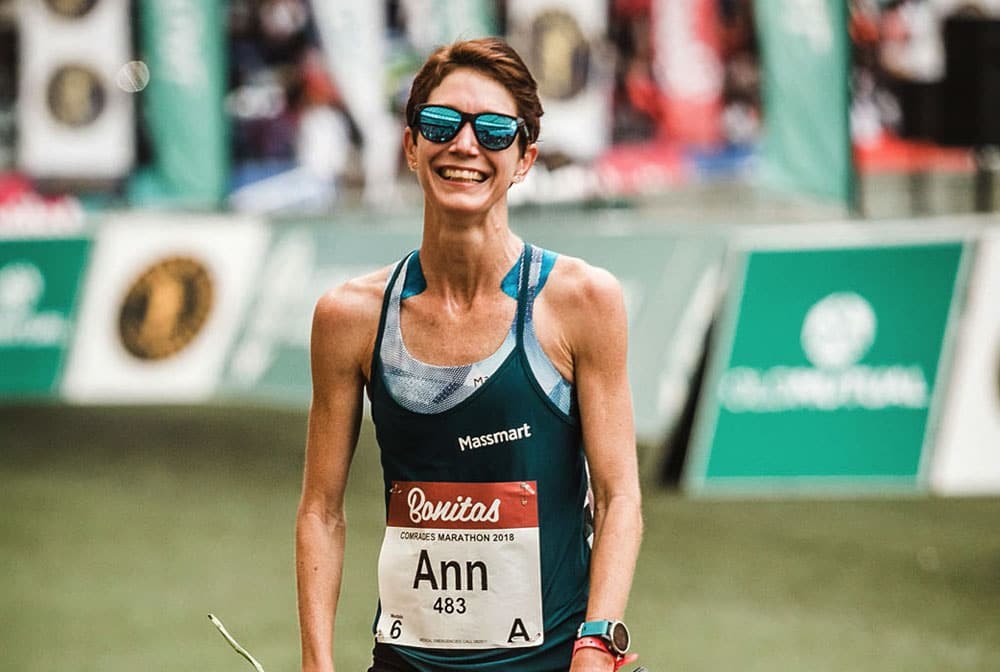
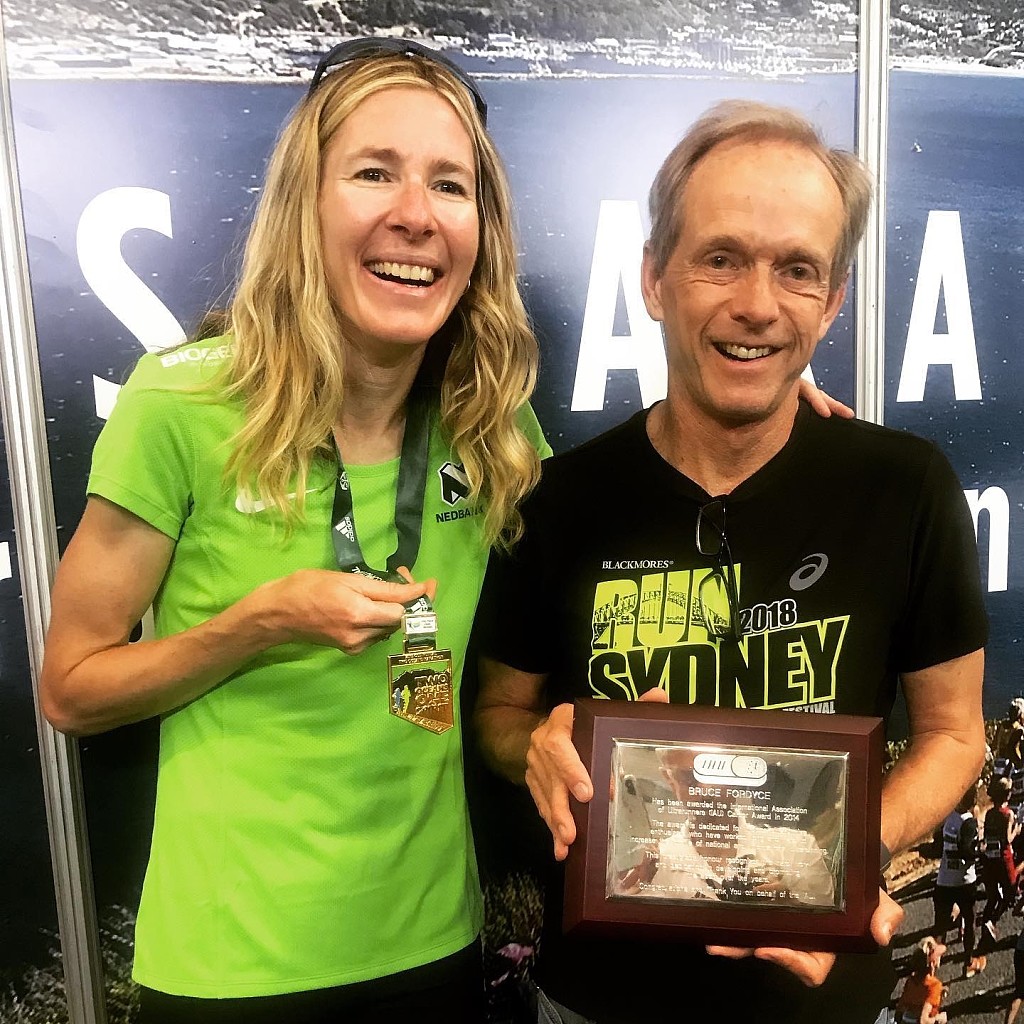
1. Ann Ashworth (second photo) shocked the field to win the 2018 race with a tactical and composed performance. She subsequently left her career as an advocate to run full time ahead of the 2019 race. Ashworth is in good form and achieved a marathon PB of 2:35 at the Valencia Marathon in December. A genuine contender to become the first female to win back-to-back races since Elena Nurgalieva.
2. Gerda Steyn The 28-year-old has enjoyed a meteoric rise from amateur to professional in the space of just five years. After finishing as runner-up last year, Steyn took a six-week break from the sport before preparing to tackle the New York Marathon, finishing 13th in a PB of 2:31. The 2018 and 2019 Two Oceans winner has made it clear, her goal this year is to claim a maiden Comrades Marathon title.
3. Camille Herron (first photo) was left gutted just weeks before last year’s race as injury robbed her of a chance to claim back-to-back victories. It has been two years since her big win but the raging crowds and electric atmosphere which greeted her at the finish at Scottsville Racecourse will serve as a huge motivating factor as she prepares for a comeback. She set a new 100-mile record at the Desert Solstice Track Invitational in December. As the reigning up-run champion, the 37-year-old is a genuine title contender.
4. Charne Bosman The 2016 down-run winner has proved to be one of South Africa’s most consistent athletes in recent years. She has five gold medals from six starts at Comrades. She is now 43 but there are no signs of her powers waning. She won the Johnson Crane Hire Marathon in January and the Om Die Dam Marathon in March. Bosman is in red hot form and is a genuine contender to win the race.
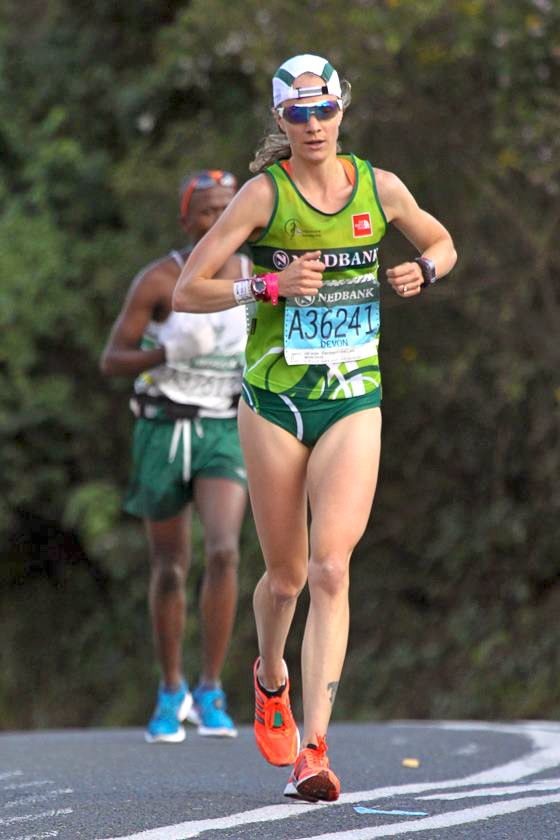
5. American Devon Yanko’s (third photo) Comrades journey began back in 2012 when she came fifth on debut. She then took a four-year break from the race but returned over the last two years to earn another two gold medals. She won the Oaklands Marathon in a time of 2:43 in March. An accomplished runner who knows what it takes push for a win.
Should the winner in either the Men’s or Women’s races in this year’s Comrades break the ‘Up Run’ Best Times of Russia’s Leonid Shvetsov (2008 – 5:24:49) or Elena Nurgalieva (2006 – 6:09:24) respectively, he or she will take home a minimum of R1-million ($66,849US) in Comrades prize money, comprised of a first prize of R500,000 plus a R500,000 incentive for breaking the Best Time; in addition to prizes for First South African (R200,000) and First KZN Man and Woman (R45,000).
(06/08/2019) ⚡AMP
Comrades Marathon
Arguably the greatest ultra marathon in the world where athletes come from all over the world to combine muscle and mental strength to conquer the approx 90kilometers between the cities of Pietermaritzburg and Durban, the event owes its beginnings to the vision of one man, World War I veteran Vic Clapham. A soldier, a dreamer, who had campaigned in East...
more...
Gene Dykes did it again by setting new US 100-mile and 24-hour M70 records in Pennsylvania
Gene Dykes, aka the #Ultrageezer, is a modest fellow, not given to trumpeting his achievements (especially after discovering that his takedown of Ed Whitlock’s M70 marathon world record at Jacksonville in December 2018 would not be ratified due to the race not being a USATF-sanctioned event).
This could be why we only just learned that last month at the Dawn 2 Dusk 2 Dawn 24-hour ultramarathon in Sharon Hill, Pennsylvania (not far from where he lives), in the pouring rain, Dykes quietly broke the M70 100-mile and 24-hour track records.
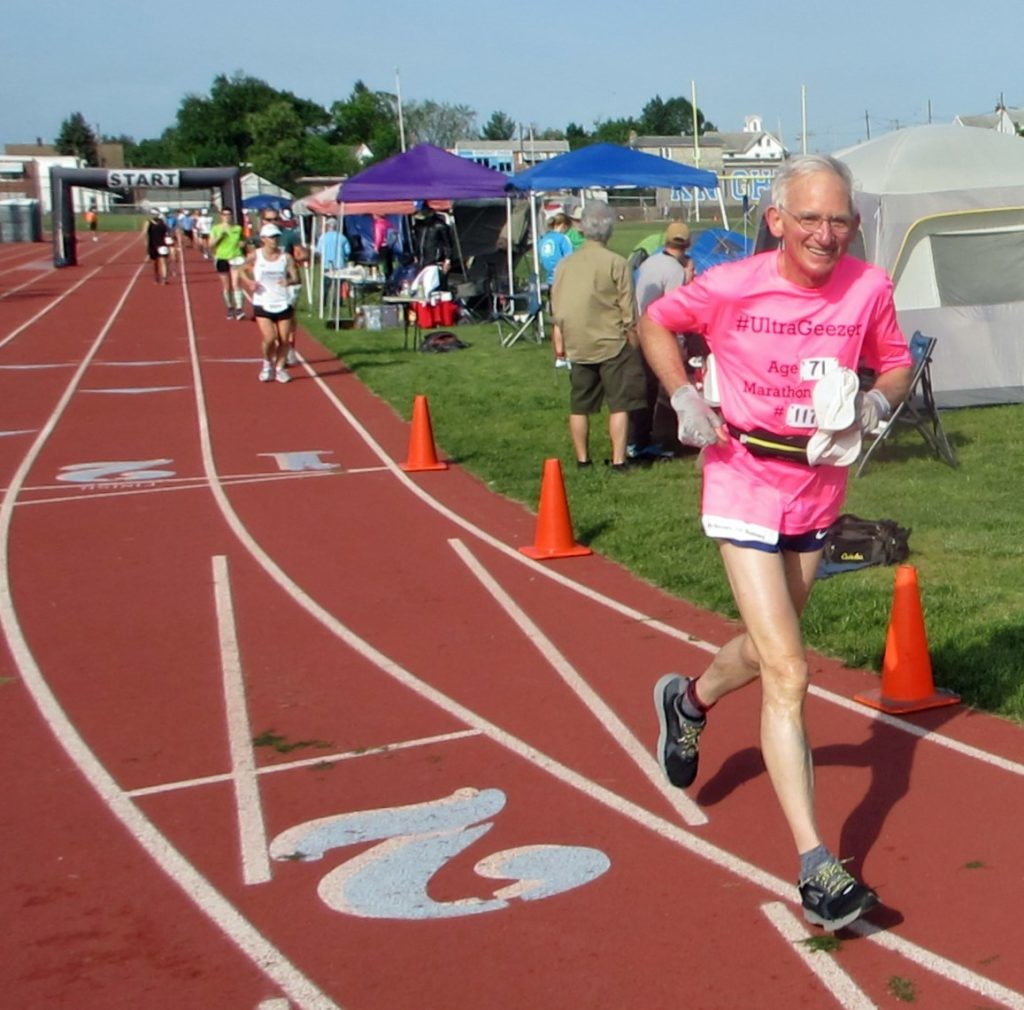
Dykes ran 100 miles in 21:06:07 and 111.79 miles (179.98K) over 24 hours. Records are ratified by the American Ultrarunning Association, though Dykes’ latest records have not been updated on the site. The previous records were both held by Edson Sower, 72, of Arizona, at 22:01:34 and 172.80K.
However, if you take a look, you’ll see that Dykes already holds the US age-group records in the 50K, 50-mile, 12-hour, and 100K categories. He set those last year at the same race.
“I am starting a 24-hour race,” Dykes posted on Facebook beforehand. “By 7:03, I will have seen the entire course!”
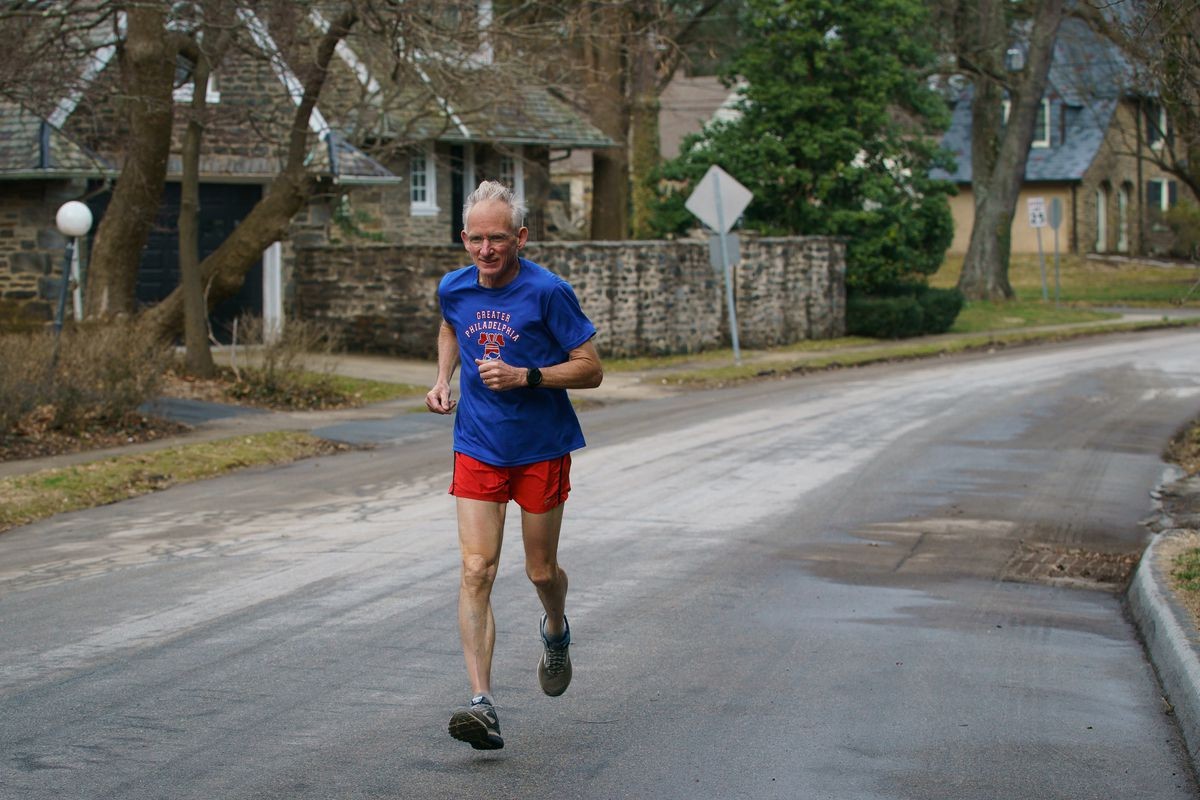
“I really have mixed feelings about fixed-time races,” Dykes goes on, “but the main feeling is, ‘I should really have my head examined!’ …The main reason I occasionally do them… is that I like to get out of my comfort zone now and then, but this race was WAY out of my comfort zone!”
As so often happens at long races, the weather changed drastically over the course of the day, and never conformed to what was forecast. “The forecast was promising–cloudy during the day with a high in the upper 60’s and showers at night–but what we got was something altogether different. Brilliant sunshine all day, and, not being prepared for that, I got some nasty sunburn on my calves.
At night it was cold, rainy, and windy–not the light rain I expected. Fortunately, I brought along a down jacket, which I wore under my raincoat, and heavy wool gloves.”
(06/06/2019) ⚡AMPby Anne Francis
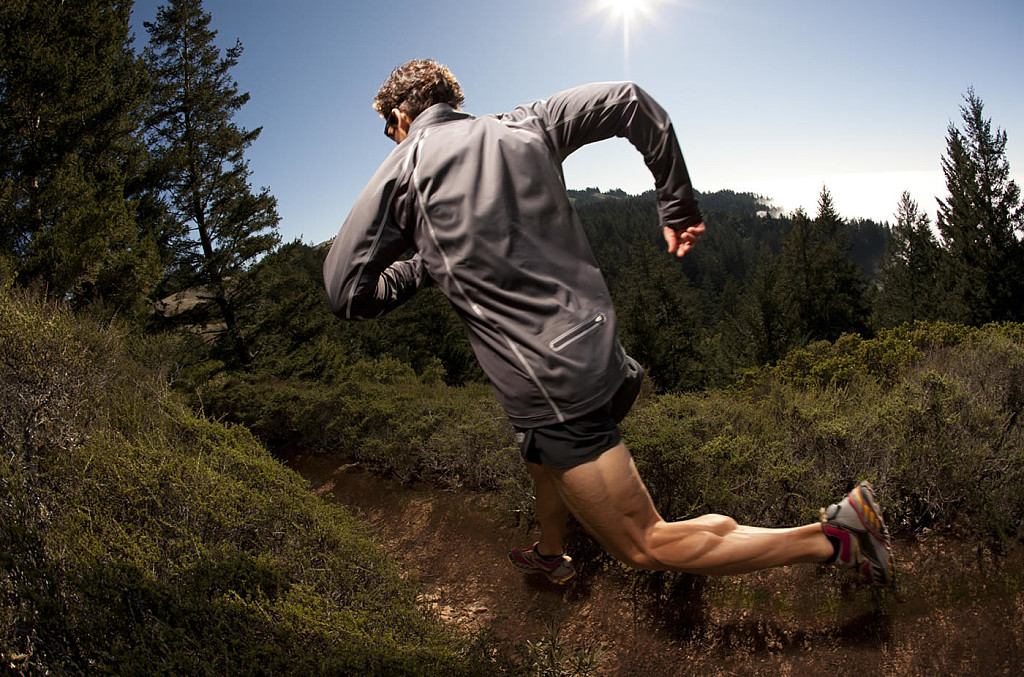
The mission of Dean Karnazes is to help all of us get off the couch and on our feet
Dean Karnazes is one of the most famous runners in the world.He's known for running 50 marathons in all 50 states over 50 consecutive days and was named one of Time Magazines "100 Most Influential People in the World." Karnazes also won the world's toughest footrace, the Badwater Ultramarathon. He ran 135 miles nonstop across Death Valley during the middle of the summer.
What is his secret to success? Good genes. Karnazes says he has his parents to thank for his runners body and ability to run without injuries.
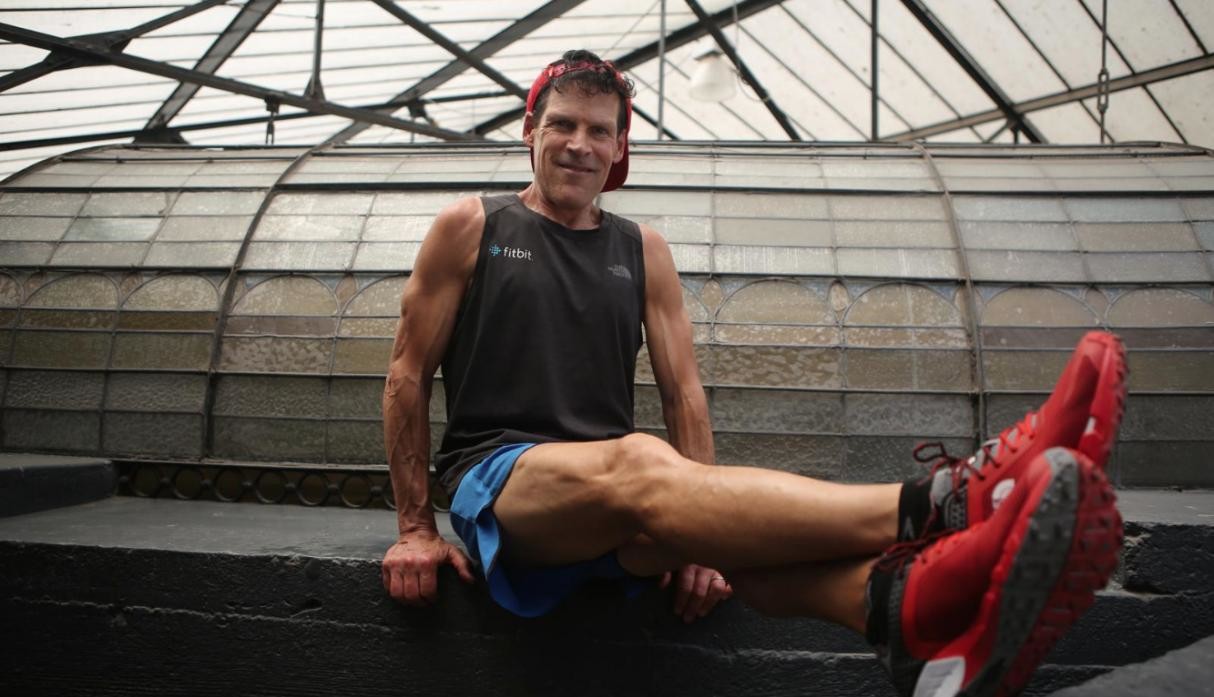
That's right, after years of running Karnazes has never had to take time off because of an injury.One of Dean's missions is to help all of us get off the couch and on our feet.
Dean's tips:1. All you need is a pair of sneakers to get started
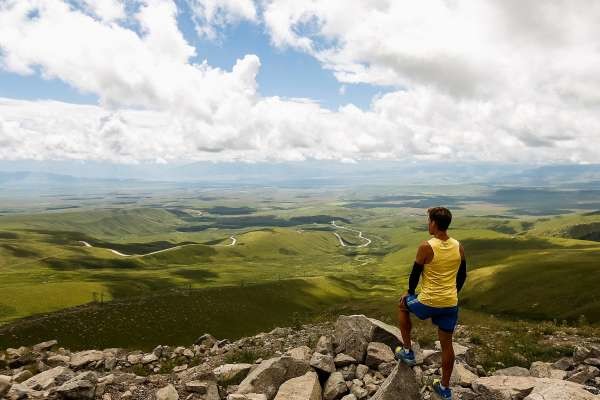
2. Start small - try running to the end of your street for the first couple of days. Slowly extend the run to a couple of blocks. Before you know it you will have your fist mile under your belt. Then sign up for a 5K
3. You can do it alone-just you and your music or audiobooks-- or you can do it with family or friends. Start a walking club in your community. Make new friends, or new bonds with family members.
4. A great path to physical and mental fitness
5. It doesn't matter if you're running or walking. Either way you're out there enjoying the same benefits.
(06/05/2019) ⚡AMP

Romanian firefighter Iulian Rotariu returned home after winning 522-km ultra-marathon in Australia
Romanian firefighter Iulian Rotariu returned home on June 1 after winning one of the toughest ultra-marathons in the world – The Track, which took place in Australia between May 15 and May 24.
The Romanian completed the 522-km race in 57 hours, 6 minutes and 20 seconds, beating the 2017 winner’s time by seven hours, the Romanian General Inspectorate for Emergency Situations (IGSU) announced on Facebook. Another Romanian, Andrei Gligor, placed second with a time of 59 hours, 2 minutes and 35 seconds, while Belgian Guy Goossens ended the race in third place with a time of 59 hours, 30 minutes and 11 seconds.
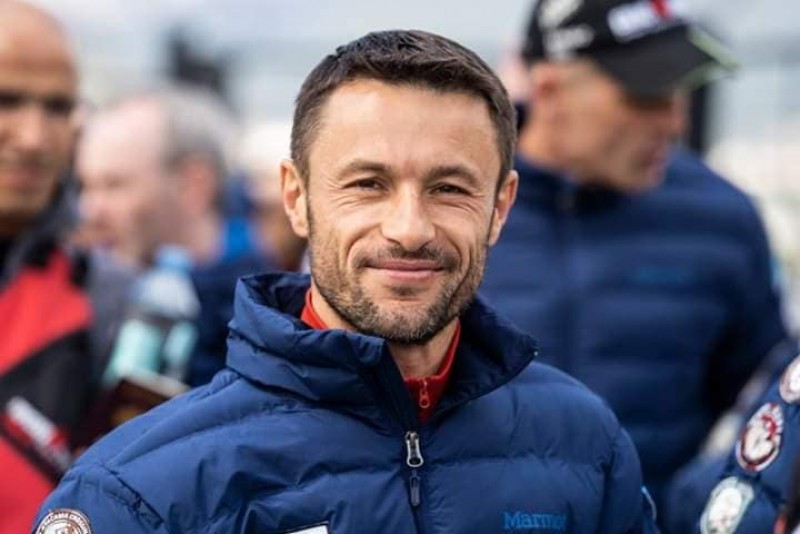
The Track takes place in the Northern Territory of Australia, in the hottest desert in the area. The participants had to cover 522 km in nine stages, and each of them had to carry his/her own backpack containing food, mandatory equipment and personal equipment. The distance the competitors had to cover increased with every stage, and so did the altitude. If on the first day they had to run 30 km at an altitude of 700 m, on the last day the distance increased to 137 km and the altitude was 1,700 m. Only 18 of the 38 competitors who started the race managed to cross the finish line, four of them quitting right from the start, IGSU said.
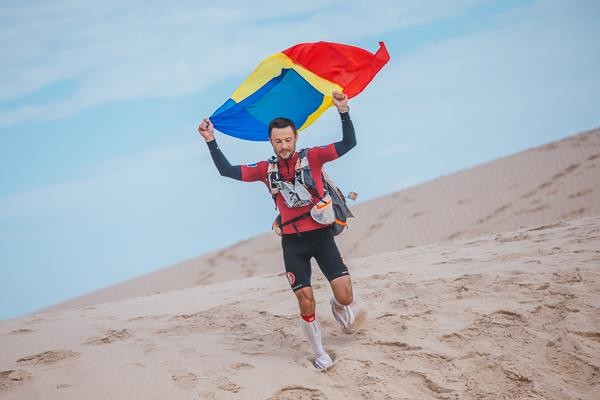
“The victory obtained at The Track ultra-marathon is the best result achieved by Iulian Rotariu in endurance competitions, and the success in Australia was prefigured by another phenomenal race last year in Antarctica, when the Romanian firefighter ranked second, entering the “4 Deserts” global top,” IGSU said in its Facebook post.
Iulian Rotariu participates in such events for a good cause, aiming to support the children with autism from Botosani, his home city.
(06/04/2019) ⚡AMP4261

Gerda Steyn is focused to take the title at the 94th Comrades Marathon Sunday
After narrowly missing the record in last month’s Two Oceans Marathon, Steyn has enjoyed a trouble-free training camp in the mountains of France, together with third place finisher from last year, Steve Way, and Anthony Clark, both running this year’s race in the colours of Nedbank Running Club.
“A lot of people asked me if I am disappointed at just missing the record in Two Oceans,” laughed Steyn.
“Looking back at it now it was a little bit sad to be so close but even with 8km to go, I told myself to save the legs because Comrades is my main focus of the year and I didn’t want to do too much damage.” It’s a decision that Steyn hopes will pay dividends in this year’s event.
Last year’s winner Ann Ashworth comes into this race much faster than before, but it is the Up-run defending champion, Nedbank Running Club’s Camille Herron, who is hoping to defend her title.
A strong athlete with multiple world records, Herron is well known for her awkward running style that took her to victory in 2017.
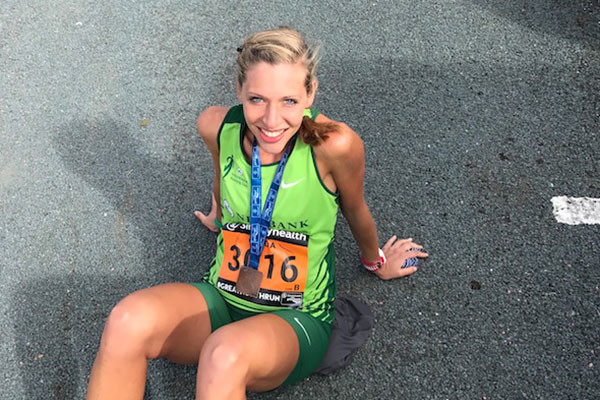
Teaming up with her club mate Steyn, the two make a dangerous combination.
Throw in stalwart Fikile Mbuthuma and OMTOM gold medalist Ntombesintu Mfunzi who will be one to watch on her Comrades debut, the ‘Green Dream Team’ ladies will be a force on the route.
Adding to Nedbank’s Comrades debuts this year is Poland's Dominika Stelmach who had an unfortunate injury that forced her out of starting last year’s race.
After her fourth-place finish at this year’s Two Oceans, Stelmach is hungry to make an impression.
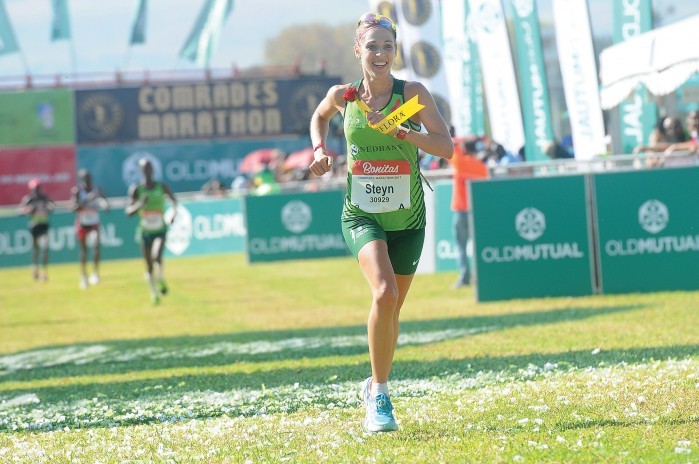
Also making a debut will be four-time World Ironman champion Chrissie Wellington. The 42-year-old English athlete ran 2 hours 51 minutes in this year’s London Marathon to qualify for Comrades which puts her in with a chance of a top 10 finish.
Carla Molinaro who represented Great Britain last year in the World 100km championships, but now has South African citizenship, will be another athlete looking for a top 10 finish after finishing ninth last year.
South African Deanne Horn is a newcomer in the ultra-marathon scene. She finished 42nd in her debut in 2017 and finished 15th last year and has represented South Africa in the World 100km championships. Together with team-mates Steyn, Mfunzi, Molinaro and Mbuthuma, the Nedbank ladies will be looking to take the team prize in this year’s race.
(06/04/2019) ⚡AMP
Comrades Marathon
Arguably the greatest ultra marathon in the world where athletes come from all over the world to combine muscle and mental strength to conquer the approx 90kilometers between the cities of Pietermaritzburg and Durban, the event owes its beginnings to the vision of one man, World War I veteran Vic Clapham. A soldier, a dreamer, who had campaigned in East...
more...
Canadians Catrin Jones and Calum Neff head to Comrades Marathon
Catrin Jones and Calum Neff, two of Canada’s strongest ultrarunners, are heading to South Africa this week to tackle the 94th running of South Africa’s most famous and historic ultramarathon, the Comrades, next Saturday, June 8.
Neff ran it for the first time last year, finishing in 31st position overall, in 6:08:06. Jones will be racing Comrades for the first time.
Jones is a veteran of the BC trail and road scenes who has eased back into racing since having her daughter, Elodie, who is now two.
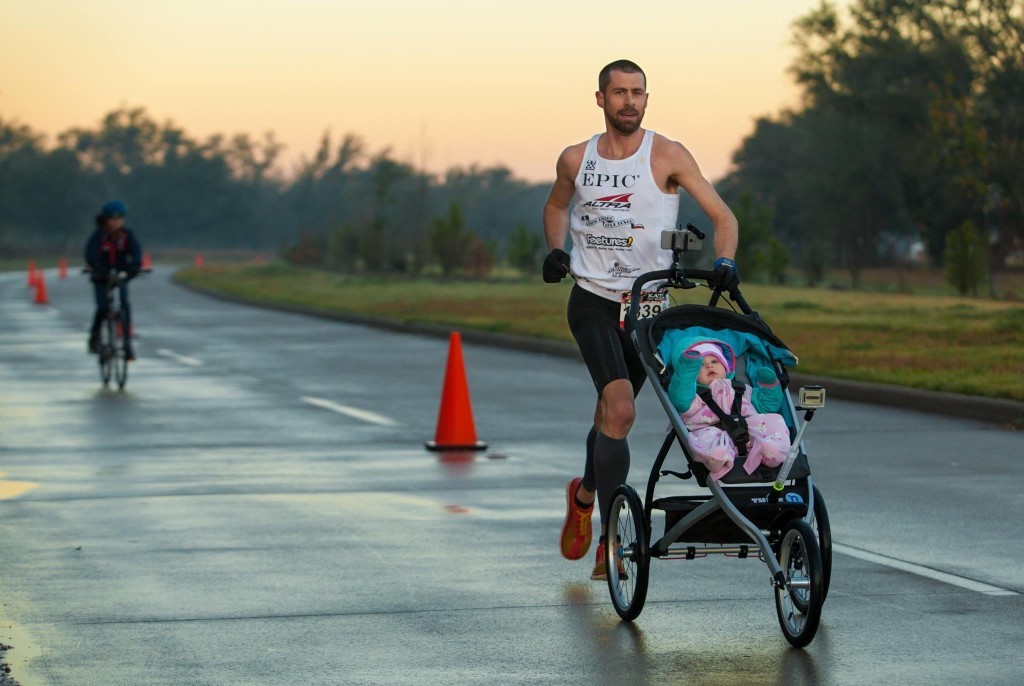
“I’ve been wanting to go for years and thought about it many times,” says Jones, inspired by her friend, the much-decorated ultrarunner Ellie Greenwood, who won Comrades in 2014.
Jones won last year’s Squamish 50K and Whistler 30K, and finished third at the 2018 BMO Vancouver Marathon.
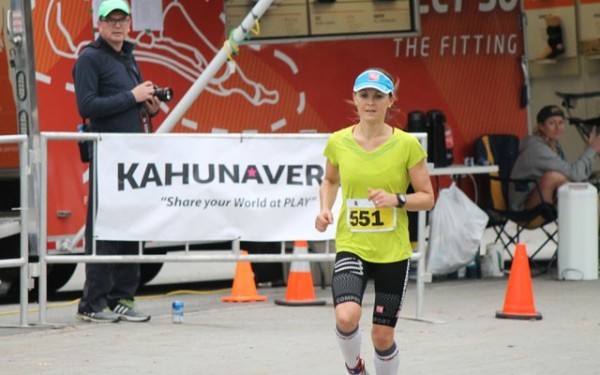
Neff holds the Guinness World Record for fastest marathon while pushing a stroller (2:21:22), set with his daughter Alessandra at the 2016 Scotiabank Toronto Waterfront Marathon.
(Neff also held the half-marathon stroller record for a time, but his 1:11:27 from 2016 was eclipsed in 2017.) Neff is from Ontario but lives and trains in Houston, Texas.
(06/03/2019) ⚡AMP
Comrades Marathon
Arguably the greatest ultra marathon in the world where athletes come from all over the world to combine muscle and mental strength to conquer the approx 90kilometers between the cities of Pietermaritzburg and Durban, the event owes its beginnings to the vision of one man, World War I veteran Vic Clapham. A soldier, a dreamer, who had campaigned in East...
more...
Nicky Spinks will lead the way at Trail Skills for Ultrarunners
Scotland-based women’s guided trail running company, Girls on Hills Ltd, have just announced that they will be hosting a ‘Trail Skills for Ultrarunners’ course in Glencoe October 11-13, with the legendary ultrarunner Nicky Spinks the star tutor.
Spinks will be sharing her experiences and coaching women in the essential skills of ultrarunning, including training advice and running with poles. She will be joining an otherwise all-Scottish line-up of other providers, with experts covering areas such as yoga, nutrition, foot-care and self-massage.
For female ultrarunners, there can be no better teacher than Spinks. The inspirational Inov-8 athlete just became the first person to complete double rounds of Britain’s three classic 24-hour mountain running challenges: the Bob Graham Round in England; the Charlie Ramsay Round in Scotland; and now the Paddy Buckley Round in Wales.
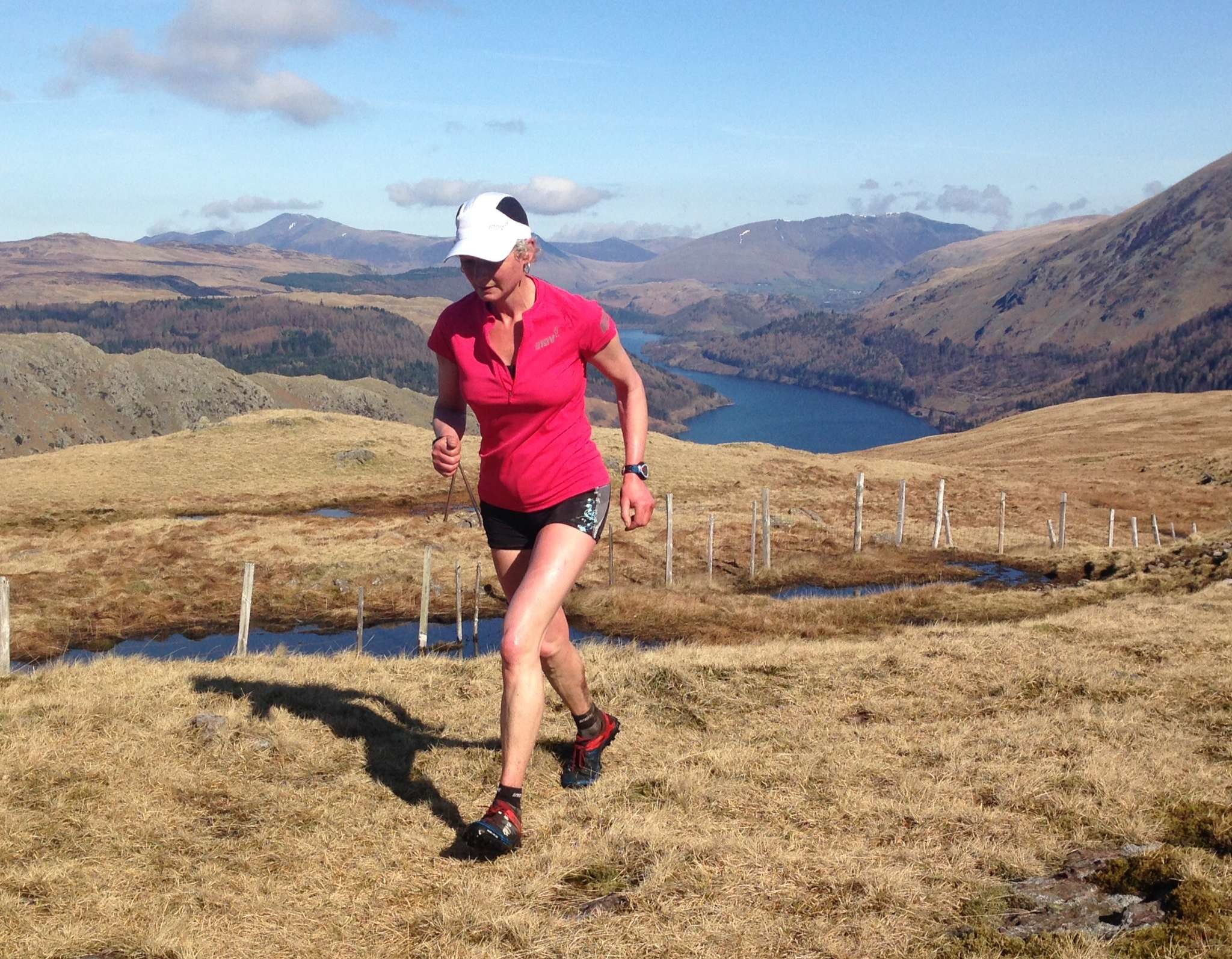
On her two laps of the Paddy Buckley Round circuit last month, Spinks ran 94 peaks and 56,000ft of height gain (almost two times Mount Everest), in 57hrs 27mins to complete the ‘doubles’ and make fell-running history.
Girls on Hills Ddirector Keri Wallace told runABC Scotland online: “Nicky is an incredible woman and an inspiration to so many people, runners and non-runners alike. As a 51-year old, a woman, a farmer and a cancer-survivor, she breaks so many trail-running stereotypes! Who better to join us at Girls on Hills and help coach women in the skills they need to get outside and explore their limits through ultrarunning!”
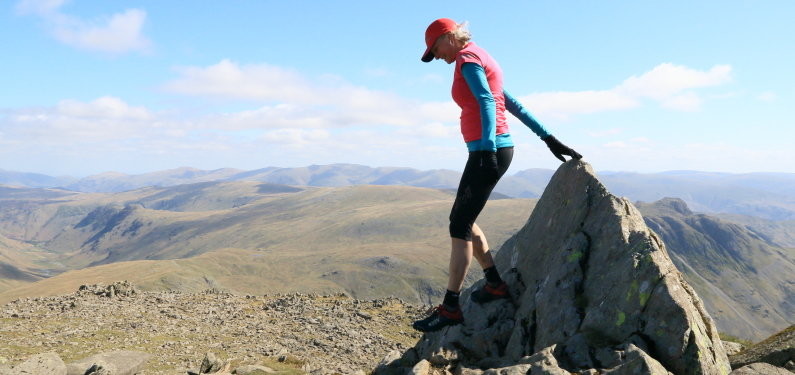
As a company, Girls on Hills Ltd, who are sponsored by Ellis Brigham Mountain Sports and are partnered with Inov-8 clothing, seeks to address the gender gap in participation that exists in trail, fell and skyrunning by increasing the accessibility of off-road running disciplines.
“There are no actual barriers stopping women from running long distances in remote places or exploring the mountains – there are only perceived barriers. We welcome women of all ages and from all walks of life, and surprise them with how much they can achieve!”
(06/03/2019) ⚡AMP

Kenyan athletes have never been big on tackling the 90km race between Pietermaritzburg and Durban South Africa
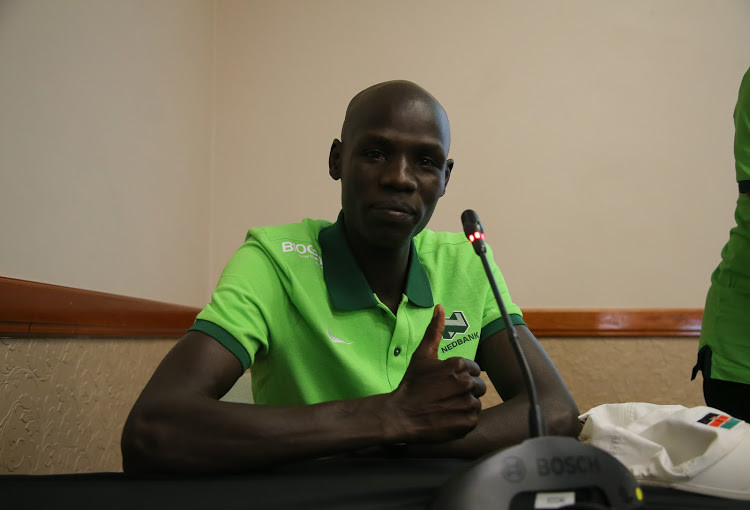
The Comrades Marathon hasn't been a hit with Kenyan long distance athletes‚ but the entries of Justin Chesire Kemboi and Melly Kennedy will lend the long needed East African flavour the race has needed.
Kenyan athletes have long been considered as the toast of African distance running with their Ethiopian competitors close behind them.
However‚ they've never been big on tackling the 90km race between Pietermaritzburg and Durban.
In the race's roll of honour‚ that's showed but they've made an impression on the shorter and less taxing Two Oceans Marathon (56km).
Cheshire and Kennedy will be running for the Nedbank Running Club with the former having won the Two Oceans Marathon last year in a time of 3.09.21.
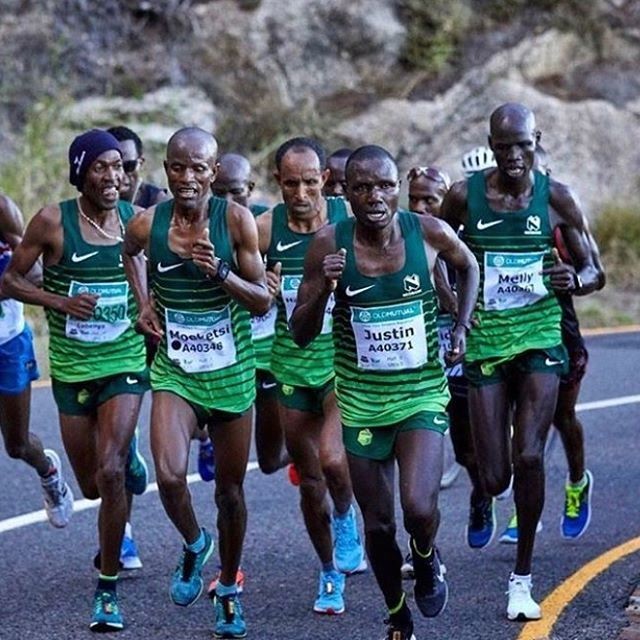
Kennedy came fourth in the same race. This year‚ Kemboi was third behind Bong'musa Mthembu and David Gatebe.
Nick Bester‚ a former Comrades Marathon winner and team manager of the Nedbank Running Club‚ said there's enough financial incentive in the world's oldest and largest ultra-marathon for them to take it serious.
Elite Kenyan marathon runners are often seen dominating blue chip races like the New York‚ London and Boston Marathons.
The winner of the respective Comrades races will win R500,000 ($34,000US) each with the runner's up winning R250,000 ($17,000US).
“Which professional athlete will run a long distance for free? It makes no sense.
"Why would you waste your legs and body on a long distance and not get paid for it. It's a professional thing and guys have to be paid for their efforts‚” Bester said.
“Their mindset isn't shaped by ultra-marathons as they are pretty fast.
"They grow up in environments where track and shorter marathons dominated their thinking. The Comrades has always been a great race but it's become very popular now with international athletes.
"One must remember that Comrades isn't about pace or speed. It's a lot about the mental battle.”
It will be interesting to see how these Kenyans will do in this year's Comrades Marathon.
(05/30/2019) ⚡AMP
Comrades Marathon
Arguably the greatest ultra marathon in the world where athletes come from all over the world to combine muscle and mental strength to conquer the approx 90kilometers between the cities of Pietermaritzburg and Durban, the event owes its beginnings to the vision of one man, World War I veteran Vic Clapham. A soldier, a dreamer, who had campaigned in East...
more...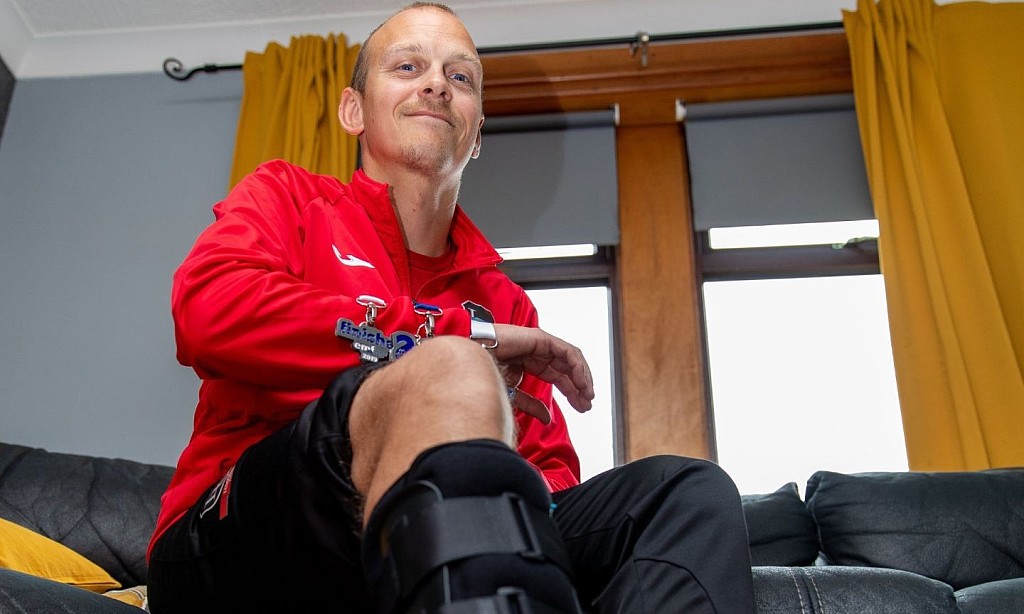
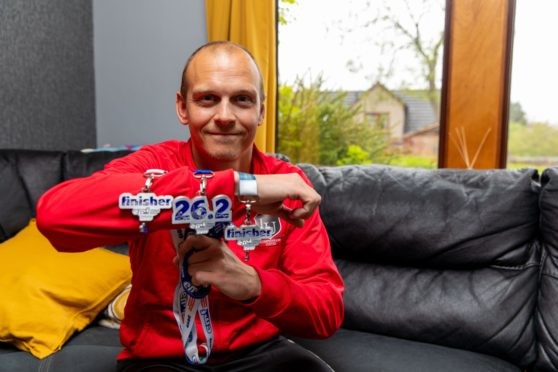
Mike Lewis-Copeland finished the Edinburgh Marathon despite a broken leg
Despite searing pain for 10 miles an intrepid runner discovered he had completed the Edinburgh Marathon with a broken leg.
Mike Lewis-Copeland, 39 felt a twinge at mile 16, near Prestonpans, but rode the wave of adrenaline, and his own determination, to finish the race in 4 hours 30 seconds.
It was only after a cautionary trip to minor injuries that Mike was told he had fractured his fibula.
“The nurse asked me if I’d fallen in a pothole or if there had been an impact but nothing had happened,” Mike explained. “Obviously I didn’t thing it was a fracture. I just kept focussing on finishing it, and would worry about the pain after it.
“I had been joking on the train over how stupid it would be to keep going with a break and now here I am. I thought it was maybe a tendon but had no idea I had fractured it.
It did get to the stage that I was limping a lot and at times having to drag my leg but I just kept counting down the miles."
After suffering a minor muscular injury during the London Marathon in April, Mike knew it would be harder to stop and start again so just "grizzed it out".
"I was like Dory singing 'just keep swimming' in the Finding Nemo film. I kept saying to myself 'just keep running, just keep running'.
"I was thinking that I only had 10 miles to go, then 9 miles, then 8 miles and I counted all the way down knowing that after I had crossed the finish line I could sit down and deal with the problem. The pain was totally different to injuries I had experienced before.
After resting at home in Kelty on Sunday, Mike knew on Monday he would need to get proper treatment to treat what he thought was a tendon problem.
"Running is a big thing for me and I was really looking forward to taking part in my first ultramarathon in July," Mike said. "So I knew I needed to have someone take a look at it and after some poking and prodding from the nurse and an x-ray I was told it was a fracture, likely the result of an early stress fracture.
"I have no idea how I managed to keep going - a mix of determination and adrenaline I reckon. It must have dulled the pain because I tried to make the kids beds and that was harder and more painful than running the marathon!"
(05/30/2019) ⚡AMP

EDINBURGH MARATHON
The Edinburgh Marathon is an annual marathon event, run in Scotland over the traditional distance of 42.195kilometers (26.219 mi). The first marathon event in Edinburgh was in 1982 and since 2003 the Edinburgh Marathon Festival has been held each year, usually in May. The current route begins in the city center, then moves out of Edinburgh into East Lothian, finishing...
more...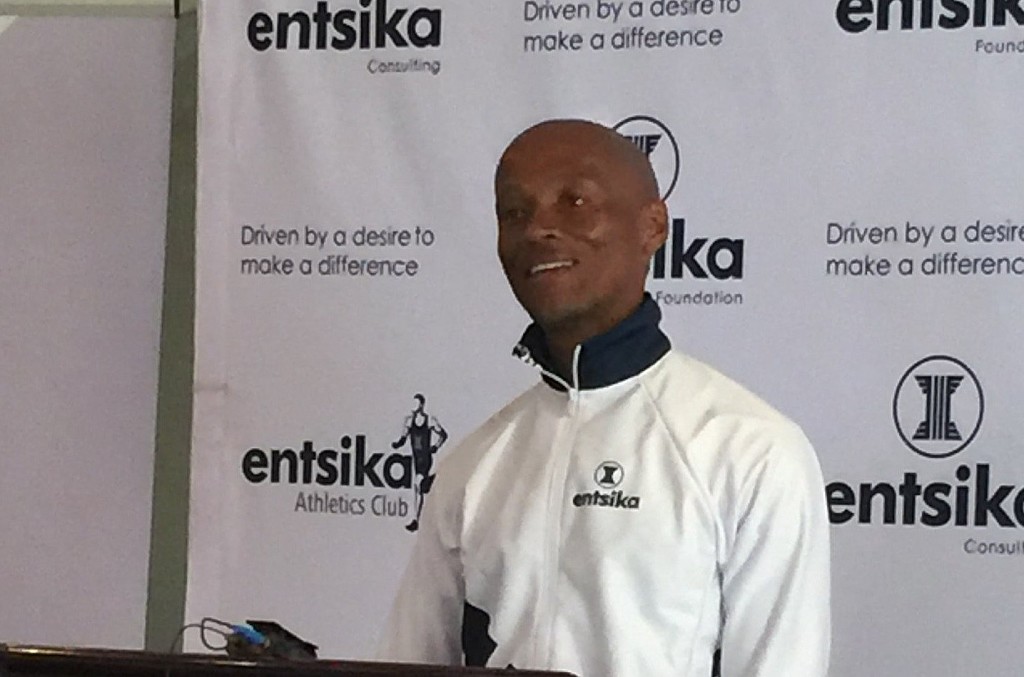
Siya Mqambeli could win the Comrades Marathon June 9
Granted, Siya Mqambeli is not yet in the class of a Bongmusa Mthembu or David Gatebe, but to win The Ultimate Human Race takes way more than talent. An athlete needs to have the will and self-belief that he can conquer one of the world’s most difficult ultra-marathons.
Mqambeli has both in abundance and those around him are in no doubt that the runner from Mount Frere in the Eastern Cape, South Africa will back his words with action come June 9.
Given his great runs at the Eastern Cape’s Buffs and Legends Marathons this year, you could not argue that he is one to watch.
Mqambeli finished third in both races, running 2hr 26min in the standard marathon and 4:12 in the 68km Legends event.
But it was at Entsika's camp in Dullstroom where he gave the clearest indication yet that he is going for Comrades gold.
During an easy one-hour run with five of his teammates and yours truly, Mqambeli was poetry in motion and hardly looked like he got out of first gear. He exchanged friendly banter with teammate Gordon Lesetedi and his face told the story of a contented man.
This was in stark contrast to last year when he resembled an adopted kid struggling to be at home in his new environment, reserved and conspicuous by his silence.
He ran an impressive 6:09.10 for 32md place in the Down Run last year to take home his sixth silver medal in seven attempts.
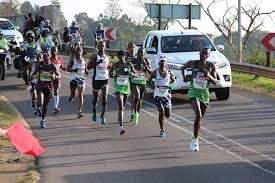
Next weekend, he is on no doubt he will bring home gold.
“So far my training has gone well,” he said with a broad smile. “I’m going to make things happen. I am confident that something great is going to happen come June 9.”
That Mqambeli is a new man has to do with the impact made by Entsika, the company that took coach John Hamlett and his athletes under their wing when their previous backers pulled out.
(05/29/2019) ⚡AMP
Comrades Marathon
Arguably the greatest ultra marathon in the world where athletes come from all over the world to combine muscle and mental strength to conquer the approx 90kilometers between the cities of Pietermaritzburg and Durban, the event owes its beginnings to the vision of one man, World War I veteran Vic Clapham. A soldier, a dreamer, who had campaigned in East...
more...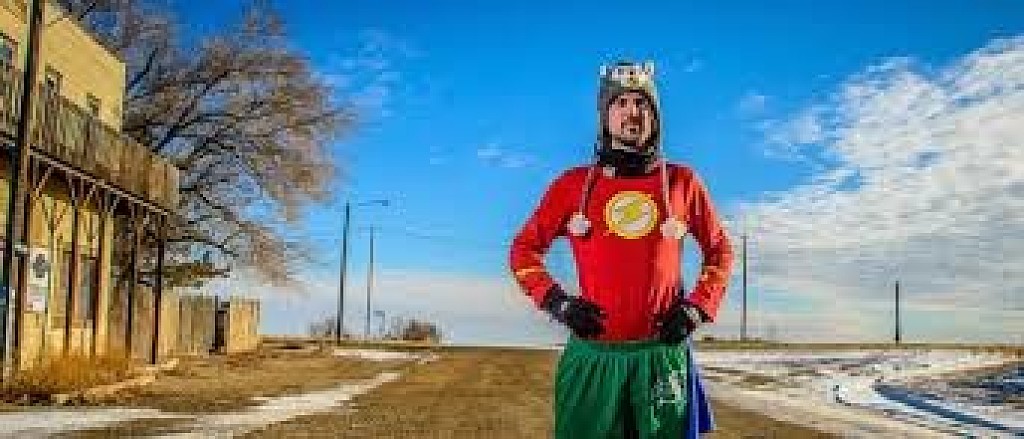
British ultrarunner Jamie McDonald has successfully smashed 7-day treadmill record
British ultrarunner Jamie McDonald has successfully decimated the seven-day treadmill running record in Gloucester, UK by running 521 miles (833.6K) in seven days.
The existing record was 513.97 miles (822K), set in 2015 by Marcio Villar of Brazil.
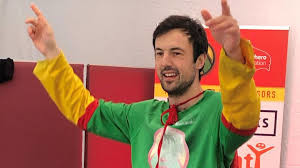
Decked out in his Adventureman superhero costume for the start and the end of the run, McDonald ran in a large tent set up for the purpose in an outdoor mall, where people could come to watch and encourage him, and even run alongside him on an adjacent treadmill.
He slept only two or three hours a night while logging an average of 73 miles (116.8K) per day.
The treadmill run is only the latest in a string of astoundingly ambitious quests for McDonald, who had only been back in the UK for a few weeks after running across the US unsupported.
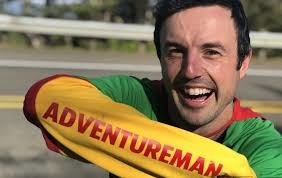
McDonald was very ill as a child with syringomyelia, a rare disease of the spine, that had him in and out of hospitals for the first nine years of his life. He eventually recovered, regained some mobility and gradually became more active, eventually taking up running.
As an adult, McDonald was so grateful to the hospitals where he received treatment that he has mounted a steady stream of quests and records to raise funds for them.
His Superhero Foundation has raised hundreds of thousands of dollars for children’s hospitals around the world.
(05/08/2019) ⚡AMPby Anne Francis
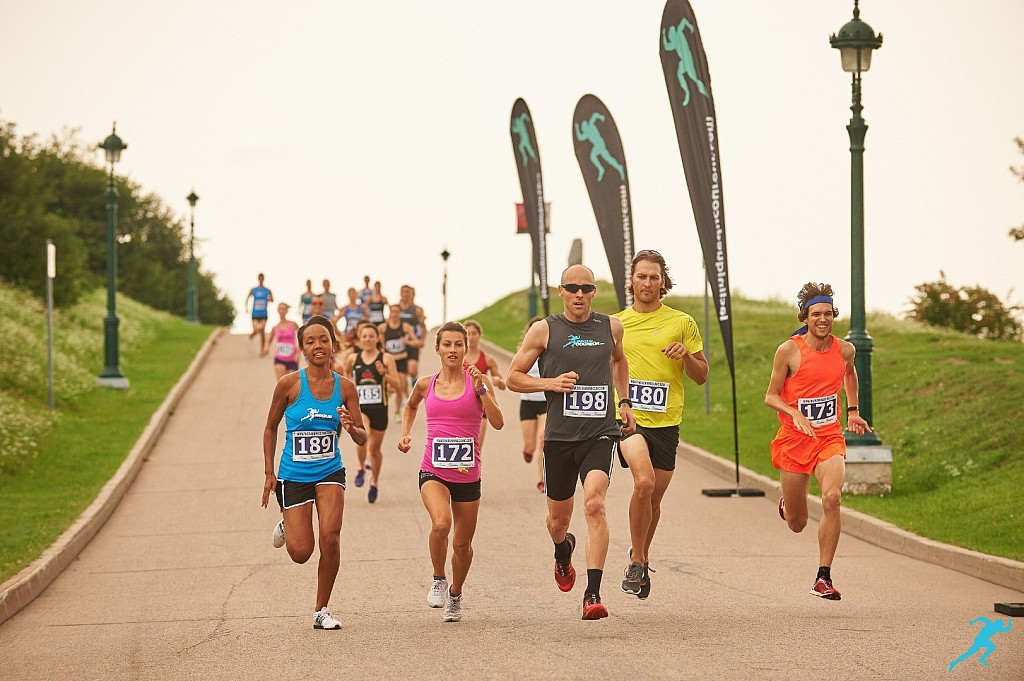
Does the step rate for runners really matter? Not as much as previously thought
Since the 1980s, when running coach Jack Daniels noted that the step rate for runners in the 1984 Olympics was about 180 per minute, it’s been widely touted as a means to reduce injury or improve speed, said Geoff Burns, an elite marathoner and University of Michigan doctoral student in kinesiology.
“It’s one of the few biomechanical measures we have that is a gross system-level output for running,” he said.
To find out what determines cadence and how much cadence really matters, Burns had the top 20 elite male and female runners record their cadence during the 100K International Association of Ultrarunners World Championship in 2016.
While the average number of steps per minute was 182, the number of steps per minute per mile varied enormously by individual.
“Some ran at 160 steps per minutes and others ran at 210 steps per minute, and it wasn’t related at all to how good they were or how fast they were,” Burns said. “Height influenced it a little bit, but even people who were the same height had an enormous amount of variability.”
The main takeaway for runners is that cadence is highly individual, and your body knows what’s optimal, said Burns, a third-year Ph.D. student in Professor Ronald Zernicke’s lab. This means runners shouldn’t necessarily try to manipulate cadence to reach the 180 steps, but rather, monitor cadence as their running progresses.
“It’s a barometer and not a governor,” he said. “There’s no magical number that’s dogmatically right for everybody.”

For years, many coaches and practitioners thought that cadence should remain constant as speed increases, which required longer steps. Burns says longer steps takes more energy, and his study found that cadence naturally increased four to five steps per minute per mile as runners ran faster.
Other findings surprised Burns, as well. First, step cadence was preserved through the race, even during the torturous “ultra shuffle” near the end–when racers shuffle across the finish line, barely lifting their feet.
Burns assumed that exhausted runners would take shorter, choppier steps. But surprisingly, when researchers controlled for speed, cadence stayed constant.
Another unexpected finding is that by the end of a race, cadence varied much less per minute, as if the fatigued runner’s body had locked into an optimal steps-per-minute turnover. It’s unclear why, Burns said, but this deserves further study.
An ultramarathon is anything longer than a traditional marathon of 26 miles. As a semi-pro ultramarathoner, Burns spends about two hours a day running and another two hours a day on conditioning–in addition to his doctoral work.
“It’s a really unique symbiotic relationship,” he said. “My running informs my research and helps me not just ask novel questions and gain insight and perspective into the craft, but also helps me refine how I prepare for races.”
In summary: To go faster, either one or the other has to increase. But, for elite runners, one of those two rarely changes. Top-level distance runners typically run at a high number of steps per minute – between 180-200 – no matter what speed they're going; simply varying the length of their stride to run faster or slower.
(05/07/2019) ⚡AMP
by Geoff Burns
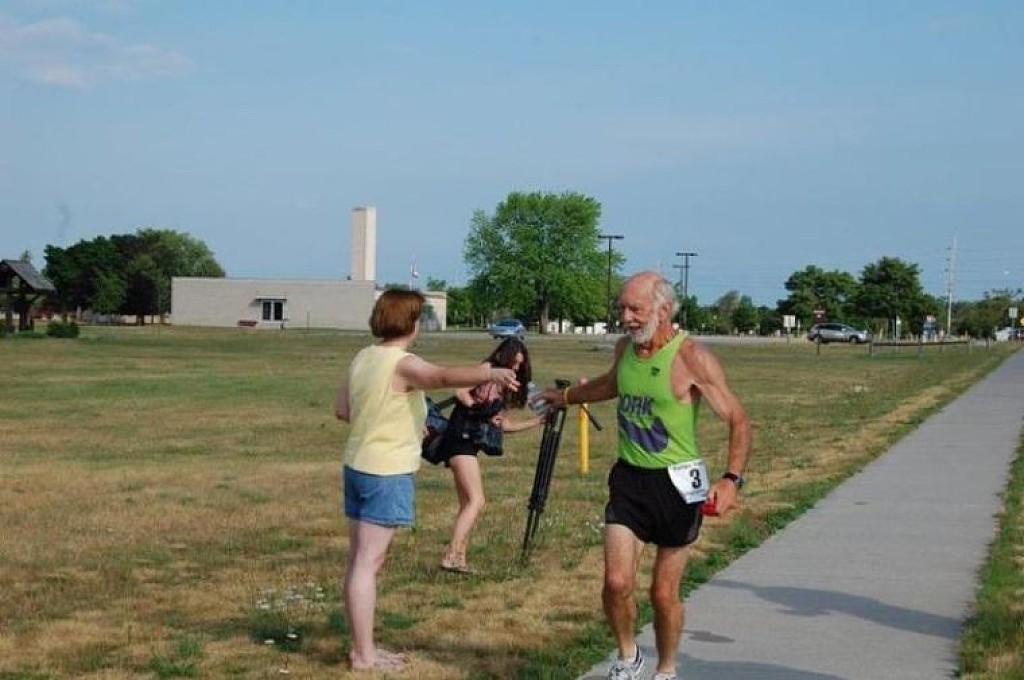
Wayne Christopherson was the first Michigan runner to complete a renowned series of grueling 100-mile races
With his induction into the Alpena Sports Hall of Fame, Christopherson will become the first marathoner to be enshrined. He’ll be inducted as part of the Hall of Fame’s Class of 2018.
“I’m thankful that the sport of running is being recognized in and of itself. I’m not a multi-sport kind of a person; I run and I’m glad that’s being recognized,”Christopherson said. “I’m proud and honored to be recognized by peers and the community for the accomplishments I’ve had.”
Though he prefers to keep a low profile, Christopherson has gained a reputation as one of Alpena’s best distance runners during his long career.
He was the first Alpena (Michigan) runner to compete in the Boston Marathon and was the first Michigander to complete a renowned series of grueling 100-mile races.
Over the course of his career, Christopherson has completed 259 marathons and ultra-marathons.
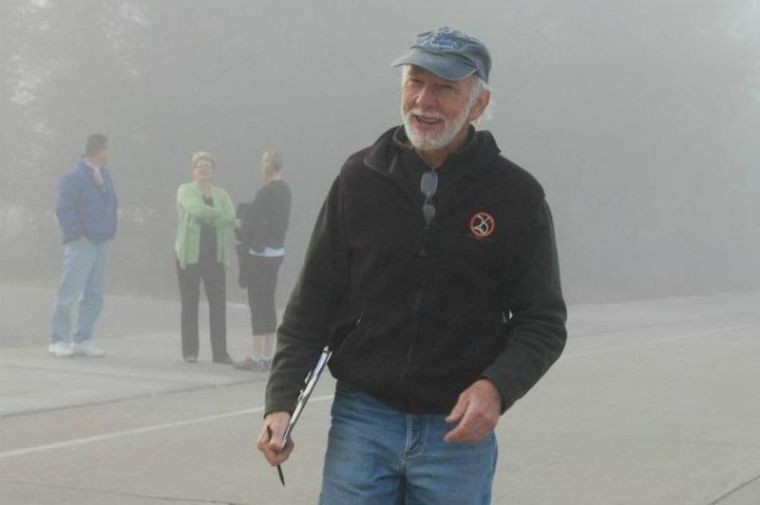
“Running, to me, has always been personal, and it was only to test myself and what limits I might have,” he said.
While many athletes develop a passion for different sports at an early age, Christopherson’s love of running was born of inspiration. He watched Frank Shorter win the gold medal in the marathon at the 1972 Summer Olympics, a moment that’s credited with igniting the running boom in the U.S.
Christopherson and other Alpena runners also followed the career of marathoner Bill Rogers, who became a Superman-like figure in the running world in the 1970s. Between 1976 and 1980, Rogers won three consecutive Boston Marathons and four straight New York City Marathons.
What stuck out to Christopherson about Rogers and Shorter, aside from their accomplishments, was that they seemed like everyday people who just happened to be good at running.
“They’re not a whole lot different than us. They’re little, skinny guys and they can run,” Wayne said. “I latched on to, ‘Wow, that’s quite a distance. I wonder if I could.’ The next thing I knew, I was running longer distances and finding out what it was all about.”
It’s something that still drives Christopherson today as he continues to compete at age 70.
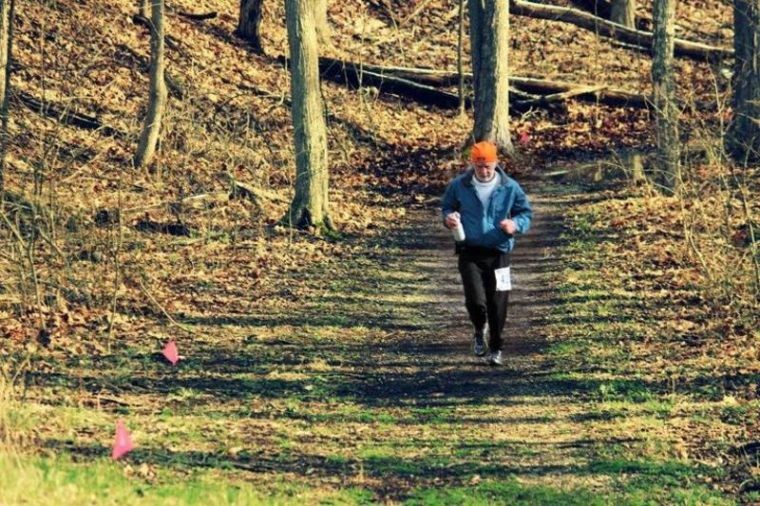
In 1986, Christopherson became Alpena’s first runner to compete in the Western States 100 in California, finishing in 23 hours, 17 minutes in his first attempt.
He completed the other three legs of the Big 4 in subsequent years–the Wasatch 100 (in Utah), the Old Dominion 100 (in Virginia) and the Leadville 100 (in Colorado). Christopherson was the first Michigander to complete all four.
Christopherson has never been afraid to challenge himself and his resume includes several other ultra-marathons, 33 Detroit Free Press Marathons, and more than 30 Bayshore Marathons in Traverse City. The Bayshore Marathon is a personal favorite, in part because it’s the site of his personal best time in a marathon: 2:45:13.
(05/07/2019) ⚡AMPby James Andersen

Bayshore Marathon
The Bayshore Marathon has become a “must run” for runners throughout the Midwest and beyond. Many runners return year after year to enjoy the scenic courses which run along the shores of beautiful Grand Traverse Bay. Hosted by Traverse City Track Club, Bayshore features a 10K, half marathon and full marathon. The number of runners in all three races is...
more...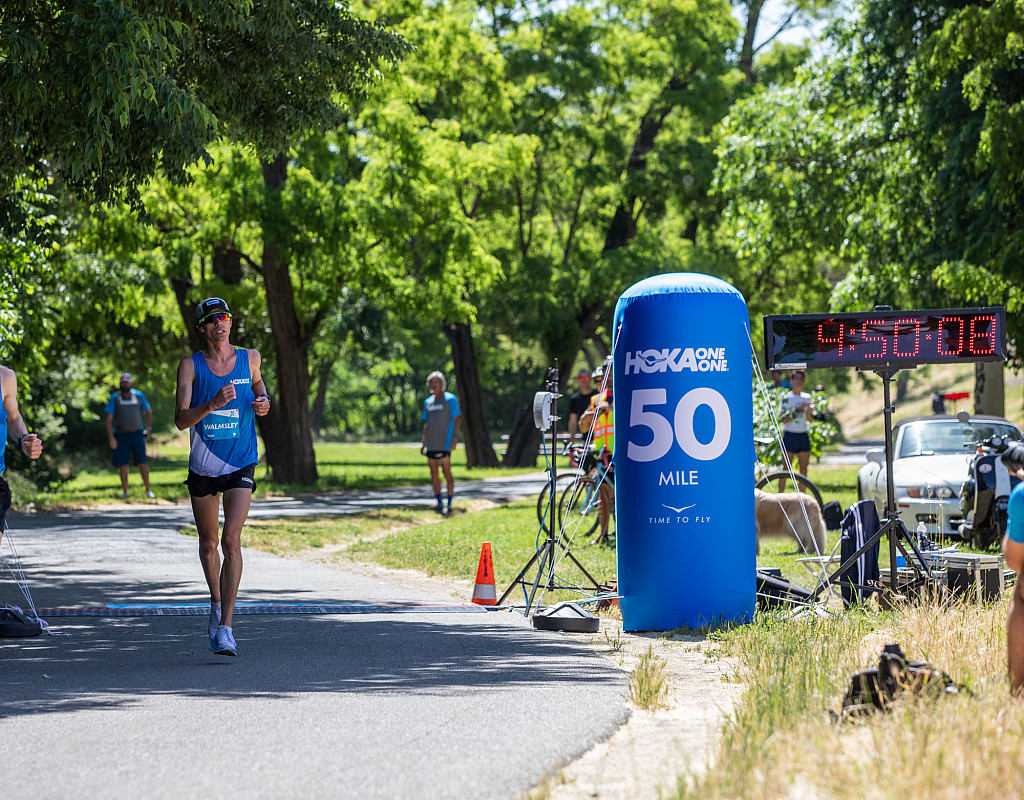
Jim Walmsley Runs Faster Than Anyone Ever for 50 Miles, Yet World Champ Hideaki Yamauchi Wins 100k
Prior to Saturday’s HOKA ONE ONE Project Carbon X 100k race in Sacramento, California American ultramarathon star Jim Walmsley said anything can happen in an ultra.
Saturday’s race proved that.
Walmsley broke the world best and American record by going through 50 miles in 4:50:08 (old world best was 4:50:51 by Bruce Fordyce in 1984; Barney Klecker’s American record of 4:51:25 was the oldest American road record on the books) and less than three minutes later he was sitting on a table on the side of the course. Soon after, he was walking. Walmsley was reduced to high-fiving two-time defending world 100km champion Hideaki Yamauchi as Yamauchi ran by en route to victory in the 100km race in 6:19:54, over 10 minutes outside the 6:09:14 world record.
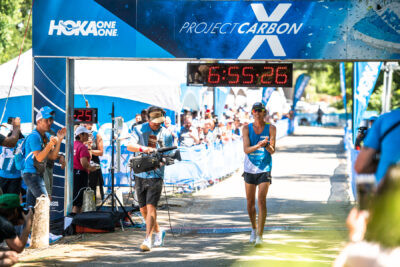
American Patrick Reagan ended up second in a personal best of 6:33:50 and Walmsley, who had to work hard not to get lapped by Yamauchi (each lap was almost 4.7 miles long), finished 4th in 7:05:24 on a day where the race started in near-perfect 51-degree conditions at 6 a.m. and ended in a blazing sun and 70+ degree heat.
American Sabrina Little was the only female finisher in 7:49:28.
The race was billed as a world record attempt at 100k, but Walmsley was also trying to break the 50-mile world best en route, and for the first 10k, the front three runners — Walmsley, Yamauchi, and Tyler Andrews, running his first race longer than 50k and also targeting the 50-mile world best — surprisingly ran within striking distance of one another on roughly 6-hour 100k pace. Yamauchi had talked about going out at a more modest pace, but afterwards said the downhill opening miles felt fine, so he ran faster than expected as he hit 15k in 54:06 (6:00:40 pace).
No human being has ever run faster for 50 miles than Jim Walmsley did today.
However, the fastest 50 miles in the history of the world had taken its toll and Walsmley immediately was reduced to a shuffle as he started jogging down the course after crossing 50 miles.
He told race commentator and training partner EricSenseman, who was in a car right in front of him, “I’m F’d.”
Any shot at the 100k world record was now out of Walmsley’s mind.
But there was a problem. To be given the official world best and American record for 50 miles, he would have to finish the 100k race (for some unknown reason, there is a rule that interim splits only count as records if the full race distance is finished).
A little more than two and a half minutes after breaking the record, Walmsley was walking on a bridge on the course. He then sat down on a drink station table and dumped water over his head and took gels. After a couple of minutes’ rest, Walmsley started walking again on the course.
Just a tad more than 10 minutes after he had run faster than anyone ever for 50 miles, Yamauchi went by Walmsley as Walmsley gave him a high five.
Now the questions that remained were how fast would Yamauchi run to the finish and could Walmsley make it to the finish.Yamauchi had gone through halfway well ahead of world record pace (he was at 3:00:34, the world record is 6:09:14), but just before 50 miles he slowed noticeably, going from just around 6:00 mile pace to over 6:30 for the two miles to 50 miles.
The world record shot was gone, but Yamauchi was still was on pace for a PR (previous PR of 6:18:22). However, on the final lap, the heat and early pace really took its toll on one of the most accomplished 100km runners in the world, as Yamauchi ran over 7:00 mile pace and had to settle for the victory in 6:19:54.
Meanwhile, Walmsley realized he might be lapped by Yamauchi and upped the pace of his jogging to hold off getting lapped by 22 seconds.
The one guy able to get a PR was Patrick Reagan, who ran the first 50km nearly exactly how he planned, going out in 3:09:11 and hanging on to a 6:33:50 PR.
In the women’s race, Japan’s Aiko Kanematsu dropped out between 43 and 48 miles, which meant Sabrina Little was the only finisher and winner in 7:49:28.
Results below.
Men - Hideaki Yamauchi JPN (6:19:542) Patrick Reagan USA (6:33:50 PB3) Yoshiki Takada JPN 6:52:024) Jim Walmsley USA (7:05:24) Mike Wardian USA (7:29:126) Tyler Andrews USA DNF
Walmsley’s time at 50 miles was a new pending world best/American record of 4:50:08 (old record 4:50:51 by Bruce Fordyce).
Women) Sabrina Little 7:49:282) Aiko Kanematsu DNF
(05/05/2019) ⚡AMP
by Let's Run
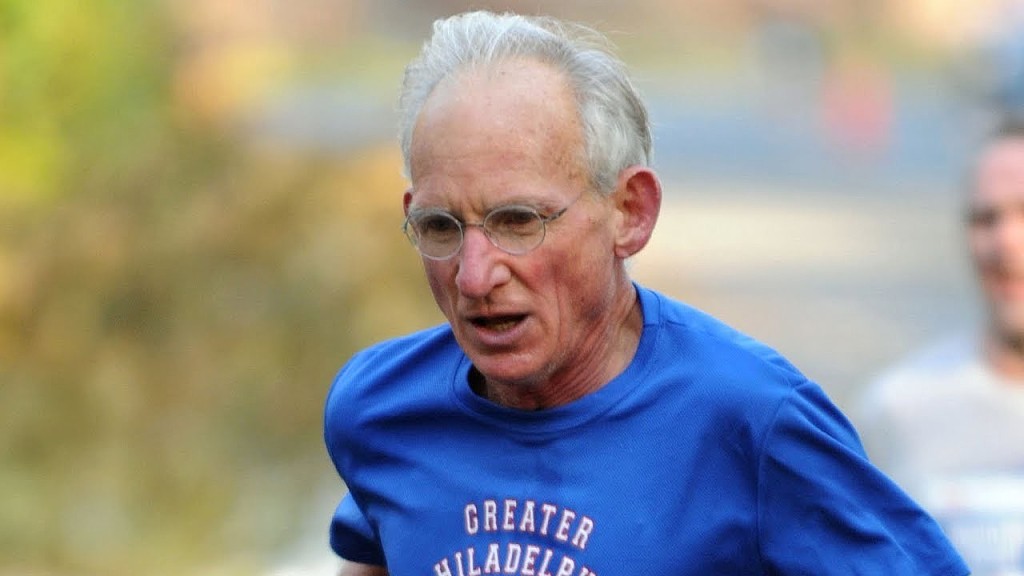
Gene Dykes, 71, is looking to break the Big Sur International Marathon record for his age group this weekend
For someone who has done two marathons 24 hours apart, two weeks between Boston and Big Sur may seem like an eternity for Gene Dykes.
Unlike others that have challenged themselves by doing the two marathons in a short time span, it’s not the reason Dykes is running in Sunday’s 34th Big Sur International Marathon.
Instead, the Philadelphia resident is calling it unfinished business from his last trip out west to run the world-renowned course.
“They took my record away when I was 65,” Dykes said. “I owned the course record in my age class for about two months. Then it was discovered on paper that someone ran faster years earlier.”
Ray Piva set the record in the 65-69 age division in 1992 at 3 hours, 10 minutes. Dykes ran 3:26.44 in 2013.
Dykes, 71, can’t get that record back. But he’s looked at the record in the 70-older division — 3:46.36 by Heinrich Gutbier in 1997. His eyes are set on rewriting the mark, adding to his mantel of record-setting accomplishments of late.
“I shouldn’t have trouble beating that mark,” said Dykes, who broke the Boston Marathon record in his age group on April 15, clocking 2 hours, 58 minutes, 50 seconds. “It’s how fast do I want to go.”
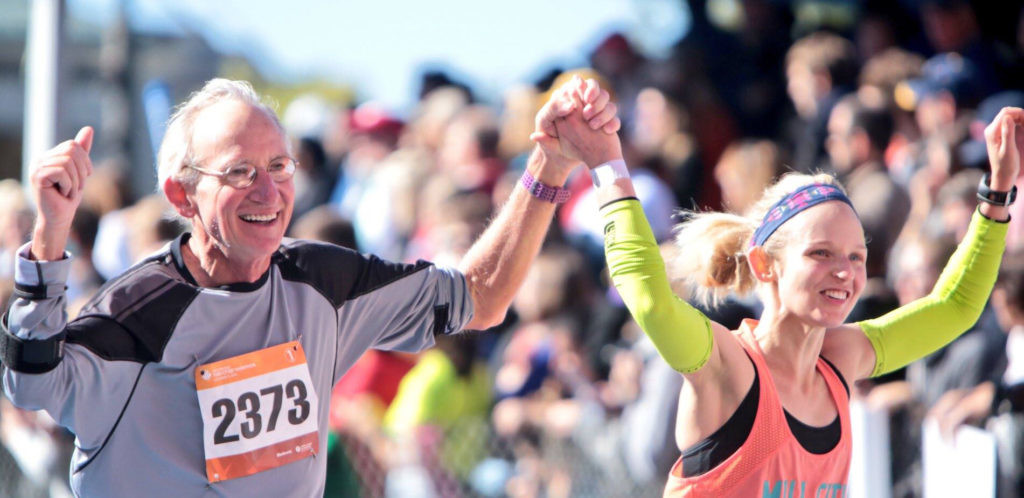
What could derail Dykes from shattering the record is he will run the race with his daughter, who is roughly 30 minutes slower than him in a marathon.
“It will depend on how long we run together,” Dykes said. “I’m going to try and get her to run a little harder in the first half. Then I’ll do a negative split the last half of the race.”
While Dykes is six years older than during his last appearance on the Monterey Peninsula, he’s gotten faster covering marathons of all kinds. Most of his personal bests have come in the last year.
“I hired a coach a few years back,” Dykes said. “I just keep dropping time. It’s more of a retirement achievement.”
This will be Dykes’ third crack at Big Sur, but the first time he’s running it after tackling Boston in the same year.
“I guess I’ve always wanted to do Boston-Big Sur,” Dykes said. “Running marathons close together is nothing new to me. It seemed like a good time to do it. Two weeks is plenty of time to recover.”
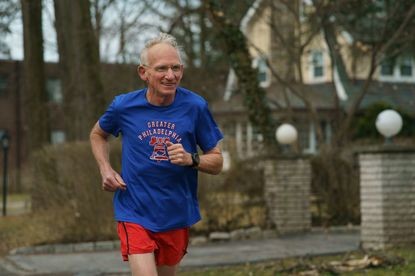
Dykes’ accomplishments as an ultra distance runner have gained nationwide attention. Last year, the Wall Street Journal labeled him “Earth’s fastest 70-year-old distance runner.”
After setting the record at Boston, men’s winner Meb Keflezighi tweeted “Special shout out to 71-year-old Gene Dykes, who ran an outstanding 2:58.50.”
For someone who didn’t run his first road race until 12 years ago, Dykes has become one of the top ultramarathon runners in his age class in the world.
“I was a jogger my whole life,” Dykes said. “I wasn’t very good in track in high school or college. I was a mediocre runner at best. So I golfed and bowled a lot. I jogged for fun.”
That is until Dykes got in with what he now jokes as a bad crowd — a group of runners, who talked him into his first road race, a half marathon in 2006.
From that point, running became an addiction. Dykes ran well enough that his time allowed him to bypass the lottery for the New York Marathon.
“I could not pass that up,” Dykes said. “So I ran my first marathon. I ended up earning a qualifying time for Boston. So I had to do that.”
By his estimation, Dykes will do 10 to 20 road races a year ranging from 200 miles to the regular 26-mile, 385-yard marathon.
“I race longer and more frequent,” Dykes said. “I’ve done five 200 milers. It’s an endurance race. The clock is running. You run when you can and sleep when you have to. I’ve done them in four days.”
Six weeks before Boston, Dykes completed a 200-mile race, a 100-mile event and two 50-mile races in 2019.
“Every year I try and stretch the boundaries,” Dykes said. “I don’t know if I can do it. So there’s only one way to find out. The hardest part is finding time to sleep. Four hours over four days isn’t much.”
Dykes comes into each race with a plan. After completing his ultra road races — totaling 400 miles — he began preparing for Boston with the mindset of breaking the record in his age division.
“I told my coach you’ve got six weeks to get me under three hours at Boston,” Dykes said
(04/27/2019) ⚡AMPby John Devine

Big Sur Marathon
The Big Sur Marathon follows the most beautiful coastline in the world and, for runners, one of the most challenging. The athletes who participate may draw inspiration from the spectacular views, but it takes major discipline to conquer the hills of Highway One on the way to the finish line. Named "Best Marathon in North America" by The Ultimate Guide...
more...
William Sichel has become the first person to run the 500 plus miles of Scotland’s answer to America’s Route 66
An exhausted former cancer patient from Orkney, Scotland has become the first person to run the 500 plus miles of Scotland’s answer to America’s Route 66.
Pensioner William Sichel completed the circular North Coast 500 mile tourist route in northern Scotland when he ran into Inverness at around 2am on Monday.
The route has been hailed as one of the greatest drives in the world but has never been run before.
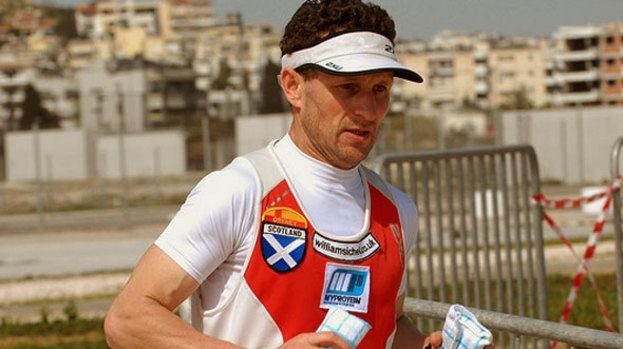
William started at Inverness Castle in Scotland on April 13, with the goal of finishing the iconic route, solo, in eight days. His official time was 8 days, 19 hours, 7 minutes and 7 seconds.
It took him to the west coast, up to Cape Wrath, through Caithness, through Tain and then down the east coast, to finally complete the loop in Inverness.
“I completed a recce run on the whole course in November last year when I was driven around the whole route, which is actually 518.7 miles and ran for up to three hours a day to get a feel for the area," William said.
“Following that experience I decided to have a go at running the whole thing.”
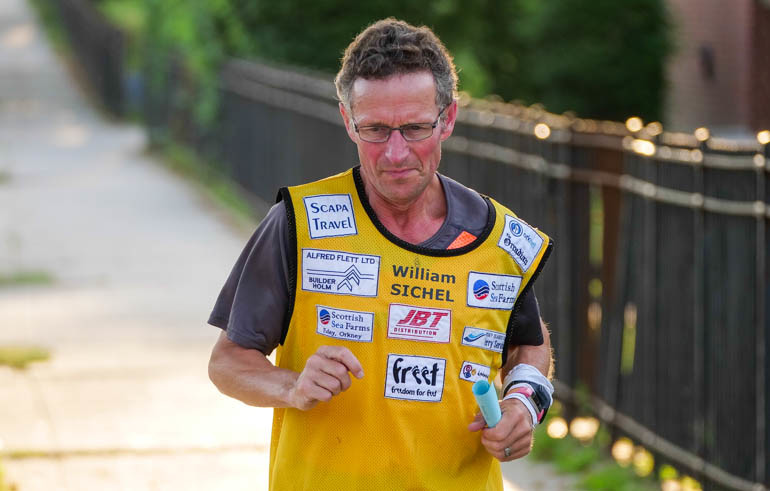
“I am completely drained. I haven’t slept for 21 hours but I made it in under nine days,” said William at the end of the run.
“It was incredibly demanding in every sense – mentally and physically. We made it – thanks to the team, it was a team effort. I’m now just looking forward to my bed.
“I was running into head winds at times but overall I got lucky with the weather. I had a lot of support. I was amazed how it caught on with people as I went round. I hadn’t expected that at all.”
William has completed 107 ultra marathons since 1994. Last summer he ran the Self Transcendence 3,100 Mile race in New York – the world’s longest certified footrace.
No one had previously run the North Coast 500 route although cyclist James McCallum, completed the route in 31 hours in 2016.
(04/23/2019) ⚡AMP
3100 Mile Race
The Self-Transcendence 3100 Mile Race. Called 'The Mount Everest of ultramarathons' by The New York Times, is the longest certified footrace in the world. Athletes are able to test themselves in a format unlike any other ultra-marathon event. In order to meet their goal of 3100 miles in 52 days, they must log an average of 59.6 miles per day....
more...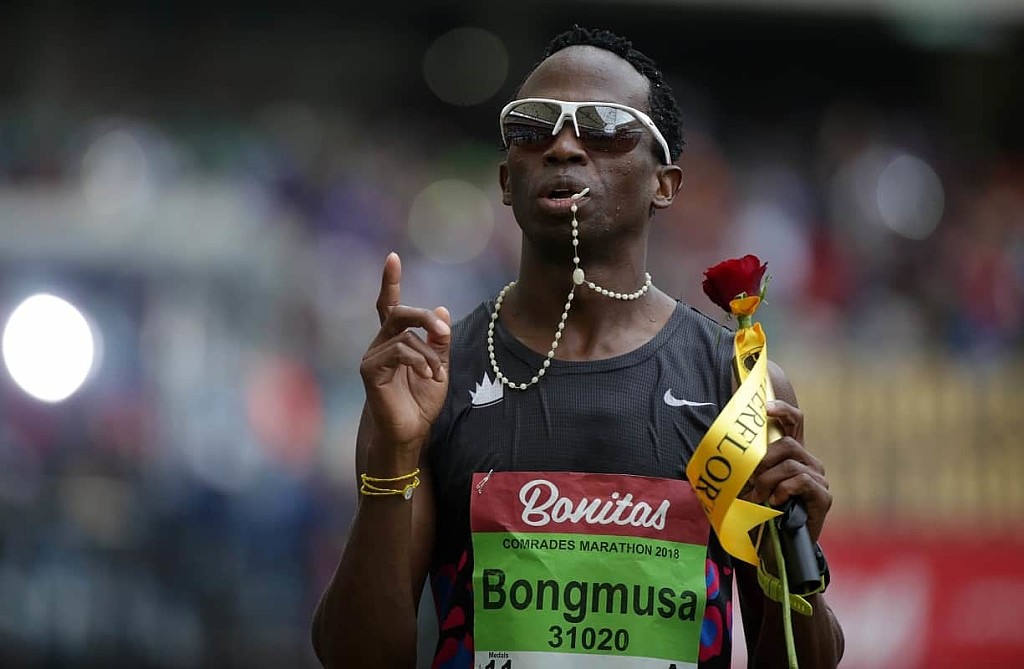
Three-time Comrades Marathon winner Bongumuza Mthembu won the men's race at the 50th edition of the Two Oceans Marathon
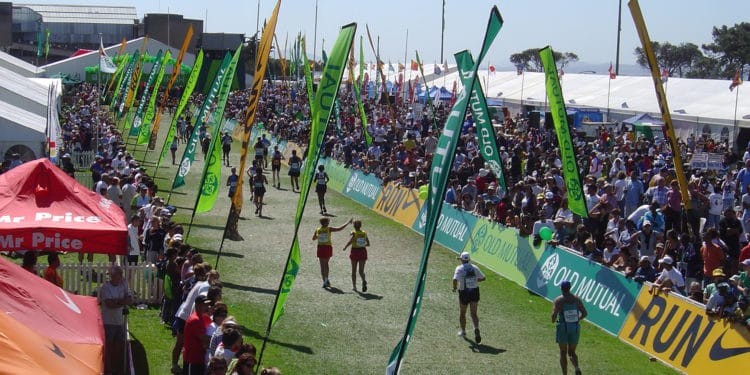
South Africans dominated the 50th edition of the Two Oceans Marathon.
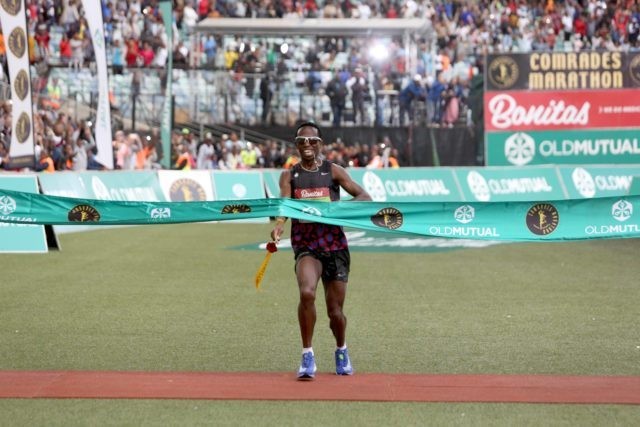
Three-time Comrades Marathon winner Bongumusa Mthembu and Gerda Steyn finished first in the ultra-marathon in Cape Town on Saturday.
Mthembu completed the race in just over three hours clocking 3:08:40.
Gerda Steyn successfully defended her Two Oceans Marathon title with a time of 3:31:29.
(04/22/2019) ⚡AMP
Two Oceans Marathon
Cape Town’s most prestigious race, the 56km Old Mutual Two Oceans Ultra Marathon, takes athletes on a spectacular course around the Cape Peninsula. It is often voted the most breathtaking course in the world. The event is run under the auspices of the IAAF, Athletics South Africa (ASA) and Western Province Athletics (WPA). ...
more...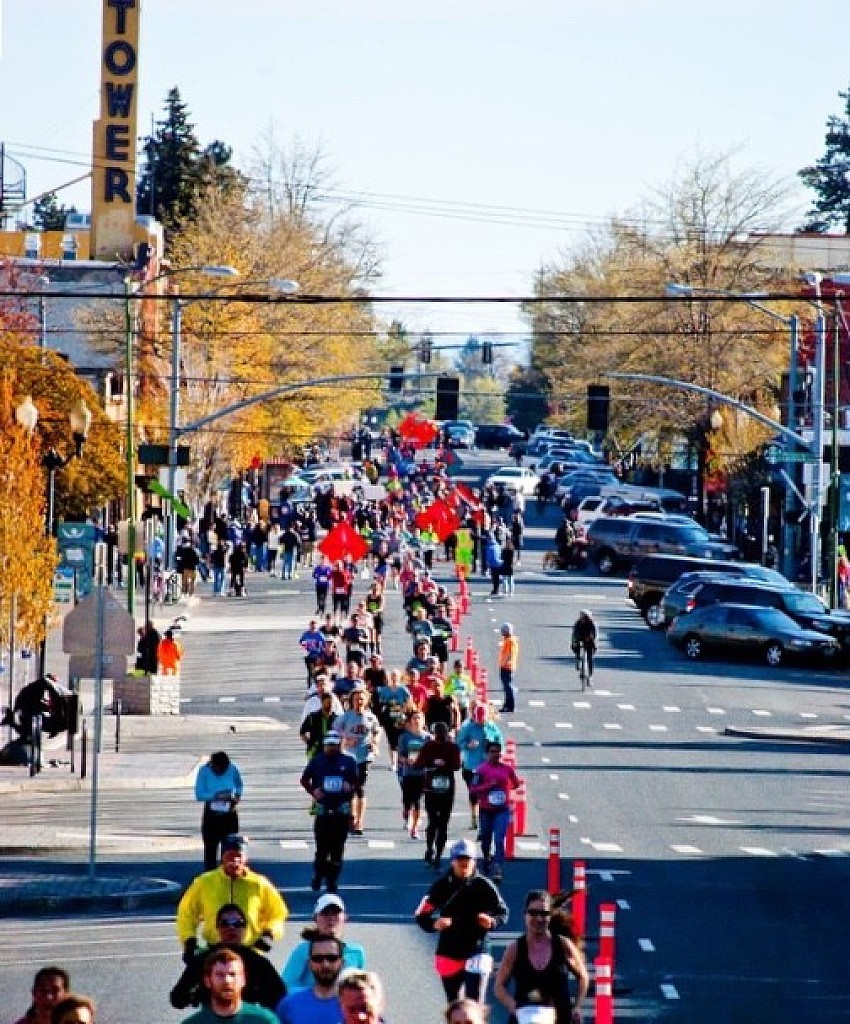
Zachary Boyd-Helm running his first marathon wins in Bend Oregon
Zachary Boyd-Helm, a former distance runner at West Linn High and then Southern Oregon University, said he just wanted to see what a marathon felt like.
The 26-year-old did much more, winning the marathon portion of the Bend Marathon and Half Saturday morning in 2:42:58.
“I completely exceeded my goal, which I’m super excited about,” said Boyd-Helm, who wanted to break 2:45 but would have settled for anything under three hours.
A steady rain fell as marathoners started the race at 7 a.m. behind the Les Schwab Amphitheater stage, which also served as the finish line for the event’s four races.
But the rain stopped by the time Boyd-Helm, now a graduate student at SOU, crossed the finish line.
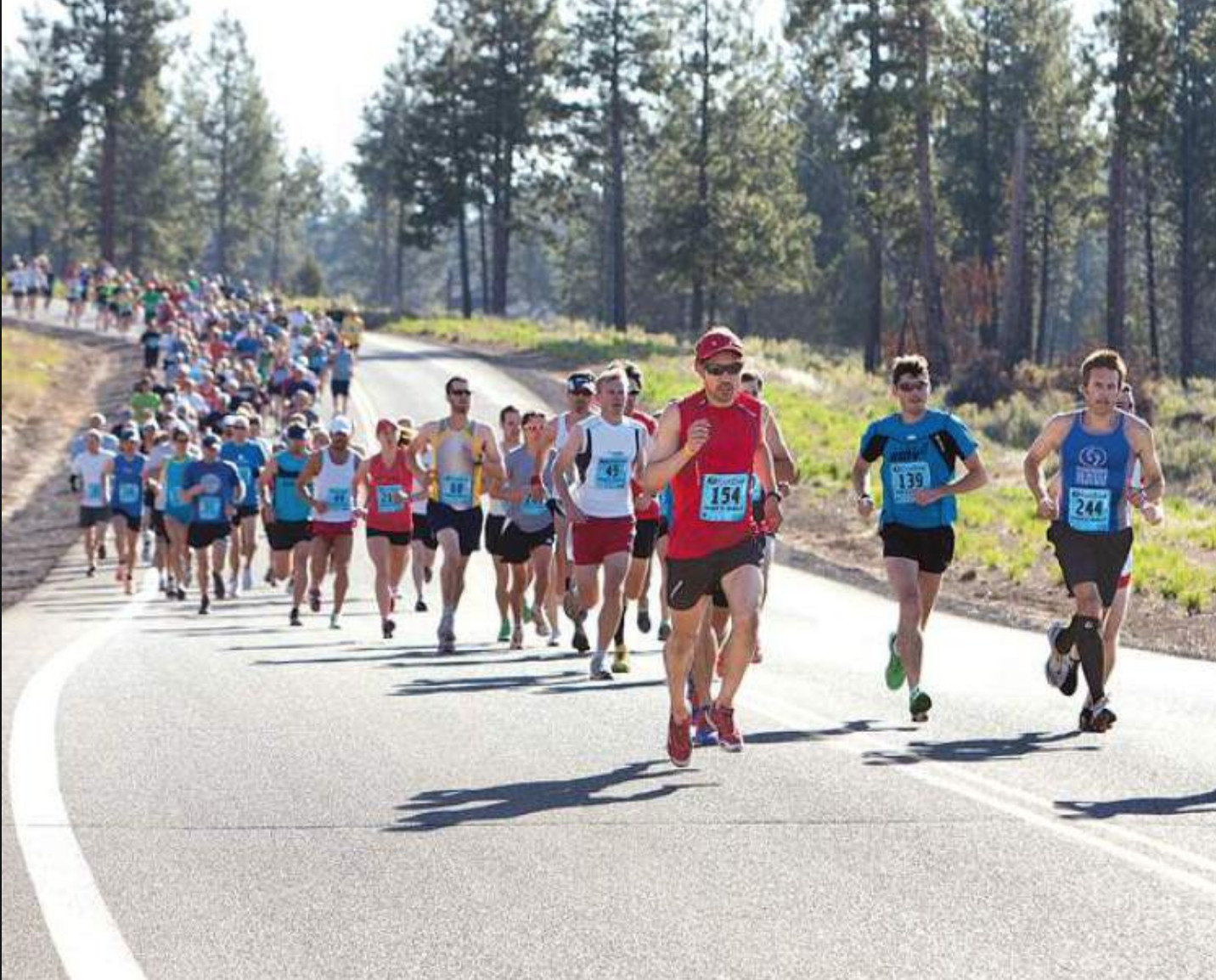
“It’s such a beautiful course with all the rolling hills,” he said. “There’s people at every single point so I never felt like I was completely by myself. This was a really fun marathon. It definitely makes me want to do more.”
William Miles, of Happy Valley, finished second in the marathon in 2:46:15, and Jordan Tait, of Kuna, Idaho, placed third in 2:51.59.
Bend’s Lindsey Hagen, 35, was the top female, finishing fourth overall in 2:57.33.
Originally from Santa Cruz, California, Hagen said she has completed about 30 marathons in her life, but it was her first time running the Bend Marathon after moving to Central Oregon more than three years ago to work at Rebound Physical Therapy, a sponsor of the marathon.
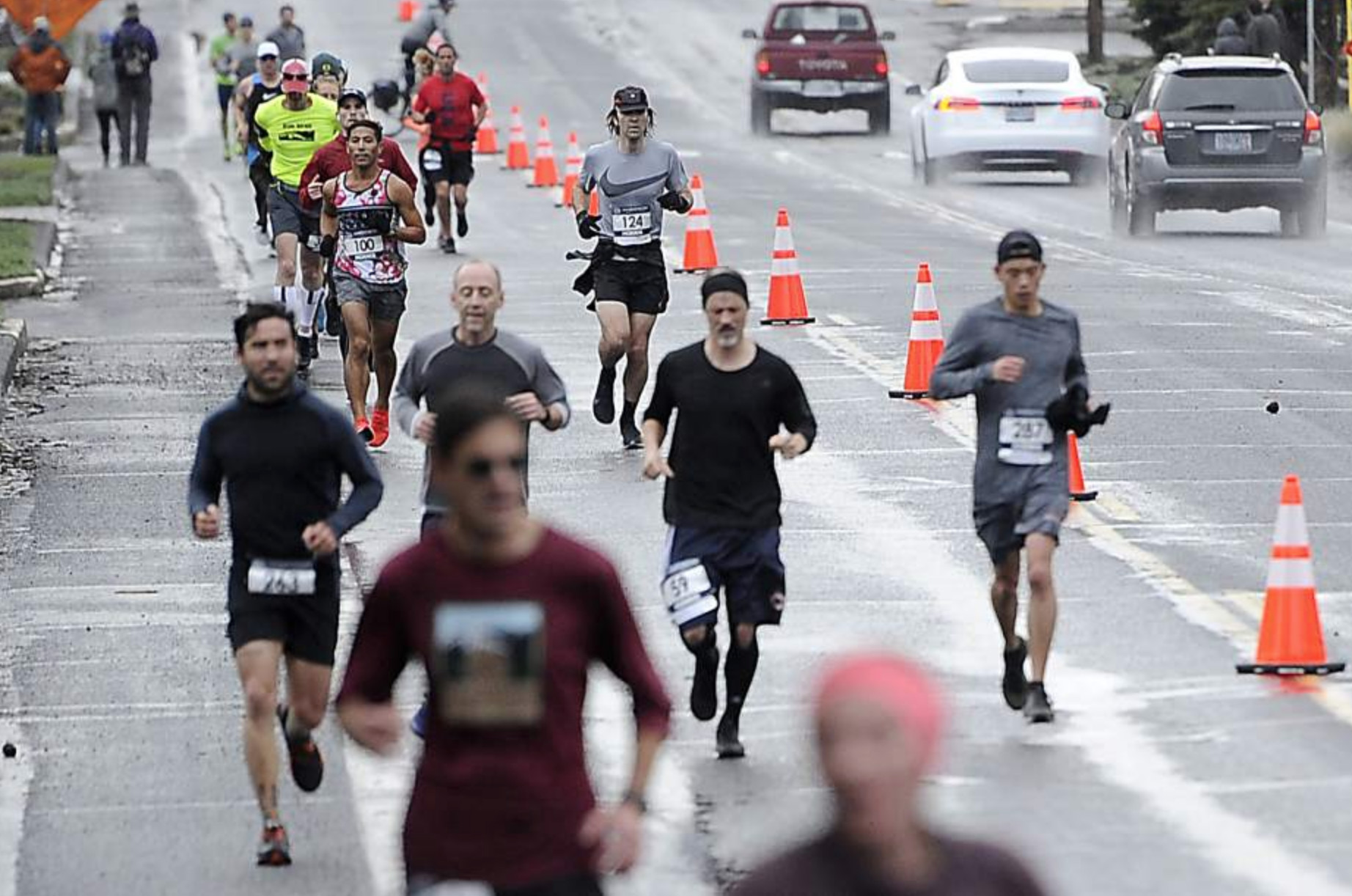
Hagen, an ultra runner, said she used the marathon to train for next month’s Smith Rock 50K. She also plans to do 100K and 100-mile races this summer.
“It was probably slower than I could do normally because of the hills but I felt good and raced hard,” Hagen said of the Bend Marathon.
Alaini Ritsch, of Fort Collins, Colorado, was the second female to finish the marathon, placing sixth overall in 3:02.30.
Ryan Lok, of Oakland, California, won the half marathon in 1:12.09. Brett Holts (Lake Oswego) and Adrian Shipley (Forest Grove) took second and third in 1:14.03 and 1:18.20, respectively.
The top female in the half marathon was Forest Grove’s Laura Lewis, who finished 18th overall in 1:29.49.
Portland’s David Hamilton won the 10K in 35.58. Stephen Bauer, of San Francisco, placed second in 38.03.
Portland’s Angharad Porteous, the top female, finished third overall in 39:18. Bend’s Katie Grissen was the second female to cross the finish line, placing fourth overall in 40:15.
Hunter Hurl, a 10-year-old from McMinnville, finished fifth in 40:18.
Bend runners dominated the 5K. Jason Colquhoun and Ron Deems, both of Bend, placed first and second in 18:26 and 19:29, respectively.
Bend 10-year-old Lauren Willard finished third in 19:42. She was followed by 12-year-old Kyle Kirsch in 20:20 and 10-year-old Skye Knox in 20:39.
More than 2,400 runners and walkers participated in the fifth annual event, which also included a kids’ run.
(04/21/2019) ⚡AMP

Bend Marathon and Half
Welcome to the Bend Marathon, Half, 10k and 5k. We're excited that you're considering running with us. You'll cruise around neighborhood parks, through Ponderosa Pine forests, along the mighty Deschutes River and finish in a beautiful iconic Bend location to a hoppin' afterparty where the kombucha and craft beer are flowing, food carts are waiting, and you can relax because...
more...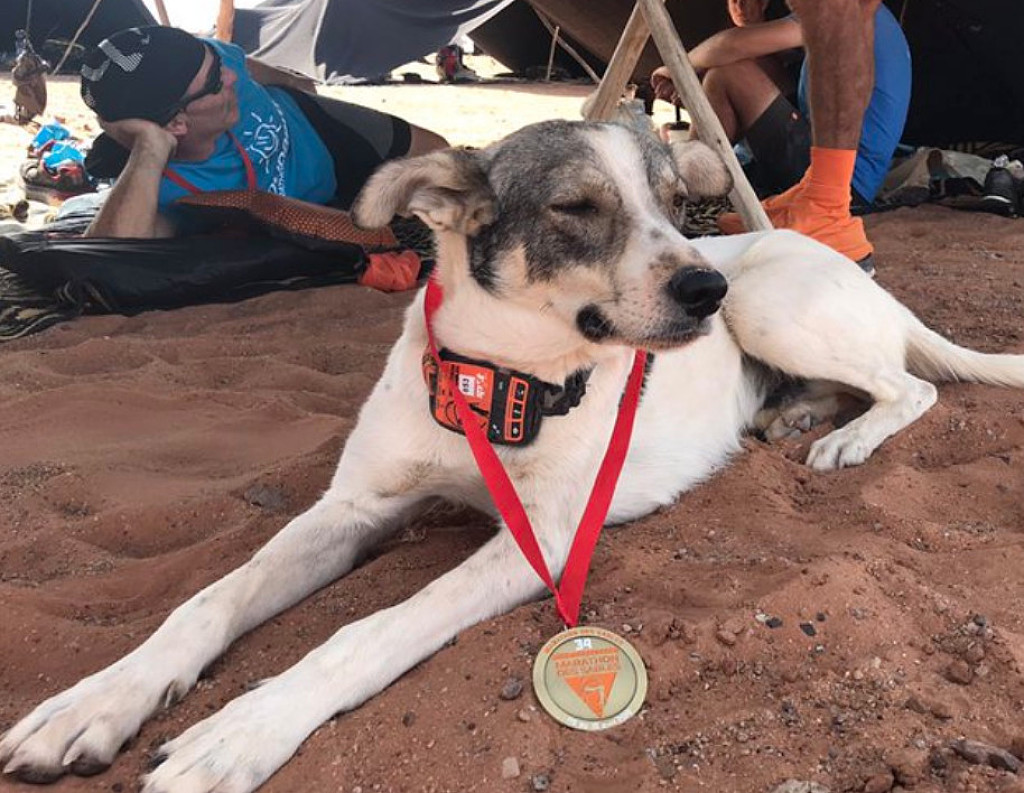
Meet Cactus the dog who just ran one of the world’s toughest races, the Marathon des Sables
A dog has become the first canine to cross the finishing line at one of the world’s toughest ultra marathons.
The hound, nicknamed Cactus, wandered onto the course on day two of the Marathon des Sables in Morocco.

He began following competitors in the 251-kilometre, six-day endurance race in the sweltering Sahara Desert.
‘Cactus’ finished the second stage, then the third and fourth. Organisers tweeted on Friday to say he had crossed the finishing line.
Runners welcomed their four-legged competitor and cheered him on as he trudged with them on his self-inflicted jaunt. He also rested with them and ate and drank in their company.
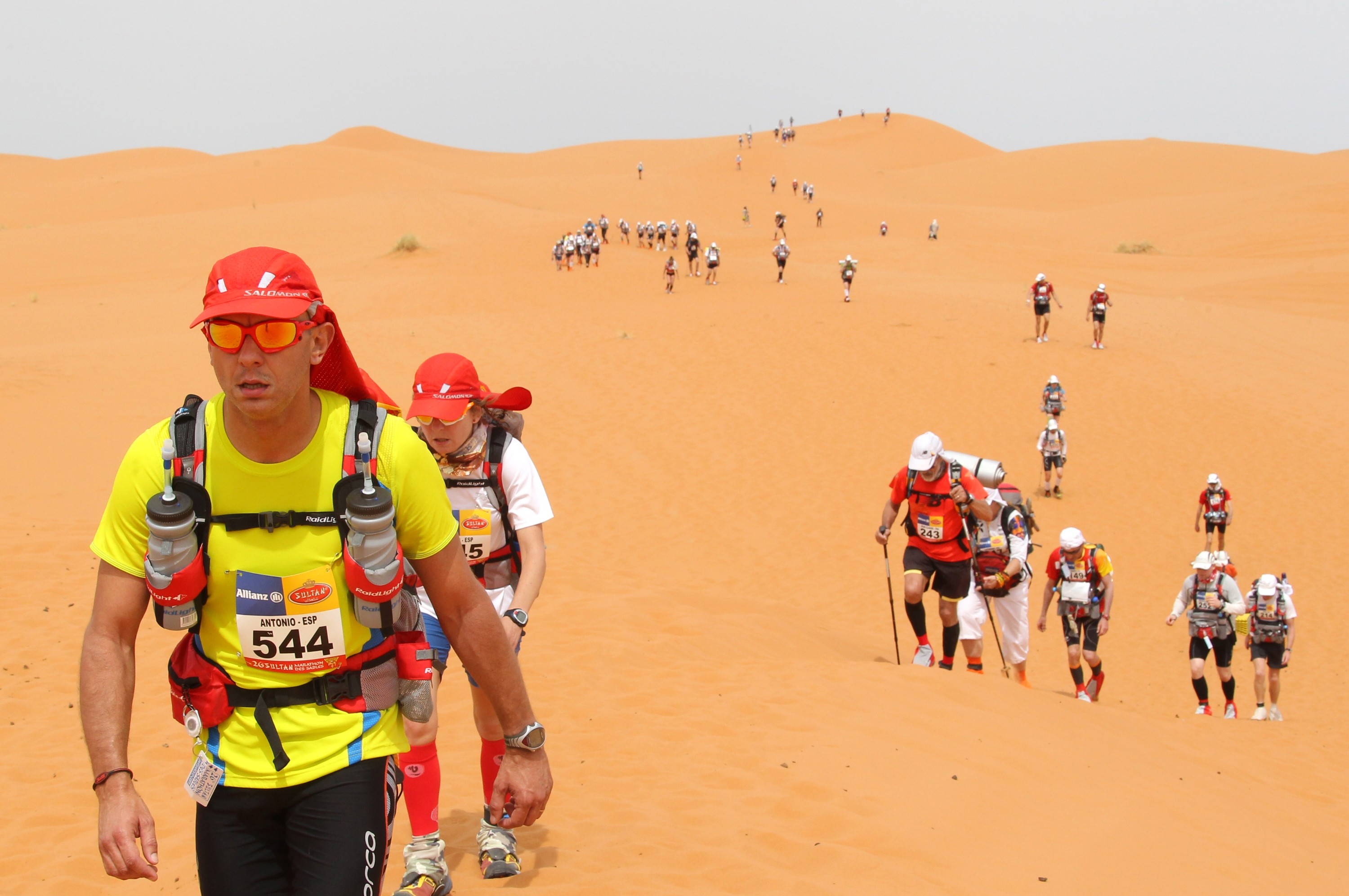
Owner Karen Hadfield took to social media to say that he is a nomad dog and regularly runs 40-km a day in the area.
Pictures emerged on Saturday of organisers and competitors bidding ‘Cactus’ farewell as Karen came to collect him.
(04/14/2019) ⚡AMP

Marathon Des Sables
The Marathon des Sables is ranked by the Discovery Channel as the toughest footrace on earth. Seven days 250k Known simply as the MdS, the race is a gruelling multi-stage adventure through a formidable landscape in one of the world’s most inhospitable climates - the Sahara desert. The rules require you to be self-sufficient, to carry with you on your...
more...
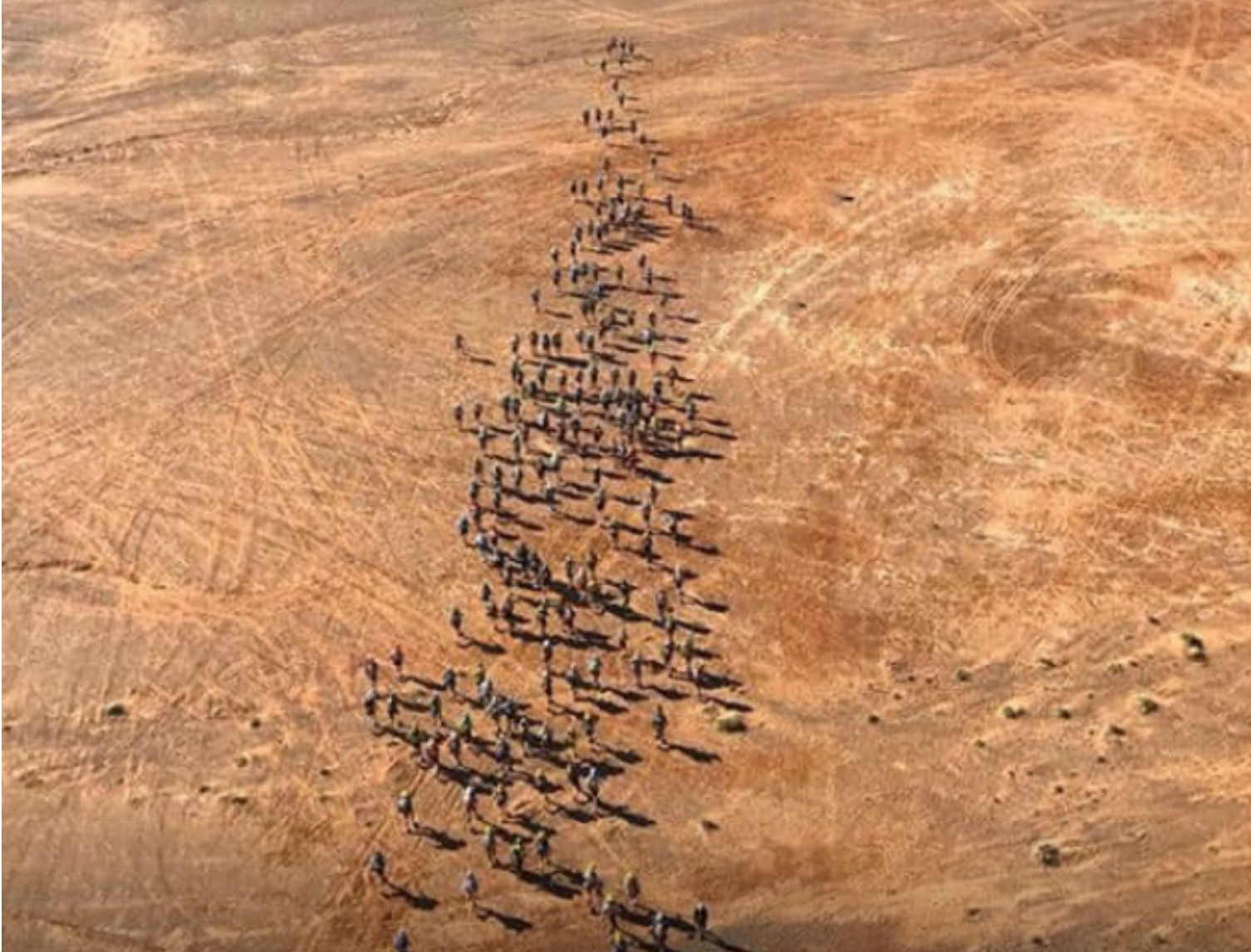
16-year-old Canadian to tackle 251K Marathon des Sables
Though not old enough to compete at many Canadian marathons, 16-year-old Jack Davison of Fort Langley, BC is about to start one of the world's most gruelling ultras
Though many Canadian marathons would not permit a 16-year-old to register, Jack Davison, of Fort Langley, BC is about to start not just a marathon, but six in a row, in the Sahara desert. He is one of 10 Canadians registered in the 251K Marathon des Sables in the Moroccan Sahara, which starts tomorrow. Jack is there with his father,
Long distance running is not even Jack’s main sport. He is a provincially-ranked tennis player who was eighth among U16 players in BC last year. He hopes to secure a scholarship at a US university and eventually to turn pro.
(04/07/2019) ⚡AMP
Marathon Des Sables
The Marathon des Sables is ranked by the Discovery Channel as the toughest footrace on earth. Seven days 250k Known simply as the MdS, the race is a gruelling multi-stage adventure through a formidable landscape in one of the world’s most inhospitable climates - the Sahara desert. The rules require you to be self-sufficient, to carry with you on your...
more...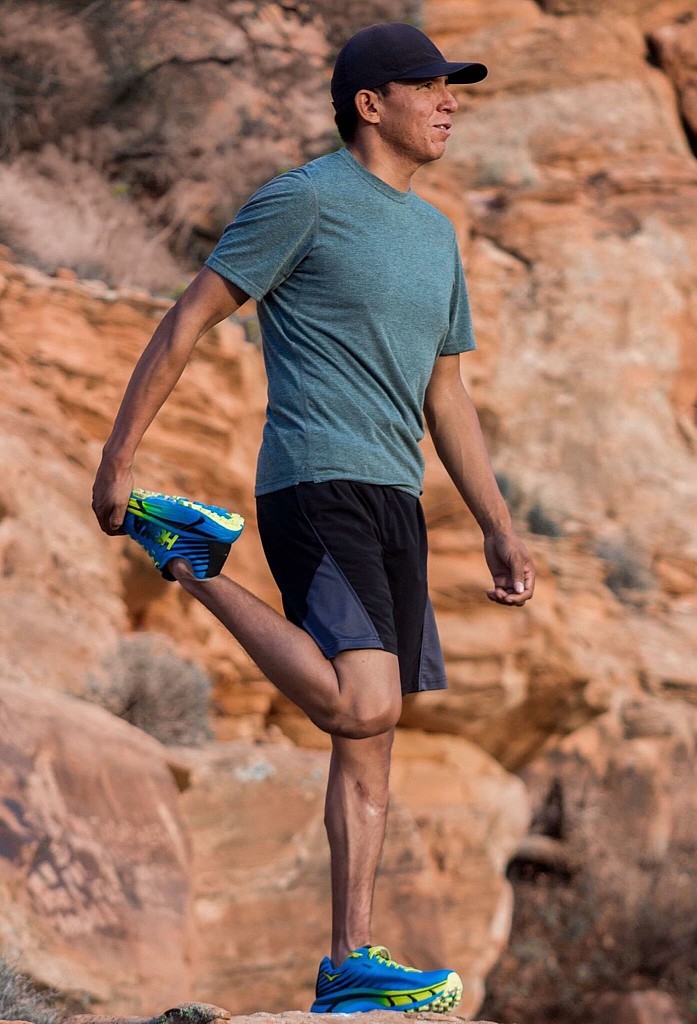
The More You Run The Stronger You Become says ultra runner and rancher Eli Neztsosie
Featured Video: As a rancher growing up in the rugged northeast corner of the Navajo Nation with no electricity or running water, Eli Neztsosie learned through years of work what it meant to rely on discipline and endurance. Now he relies on these same skills, running long distances— striving every day, in his words, to be better than he was the day before.
(04/06/2019) ⚡AMP

Defending champions Kenyan Justin Kemboi Chesire and local favorite Gerda Steyn are hoping to successfully defend their titles at Two Oceans
A quality field of top local and international elite athletes will take part in this year's Old Mutual Two Oceans Marathon in Cape Town on Saturday April 20.
Defending champions Kenyan Justin Kemboi Chesire (3:09:22) and local favourite Gerda Steyn (3:39:32), both from Nedbank Running Club, will be hoping to successfully defend their titles.
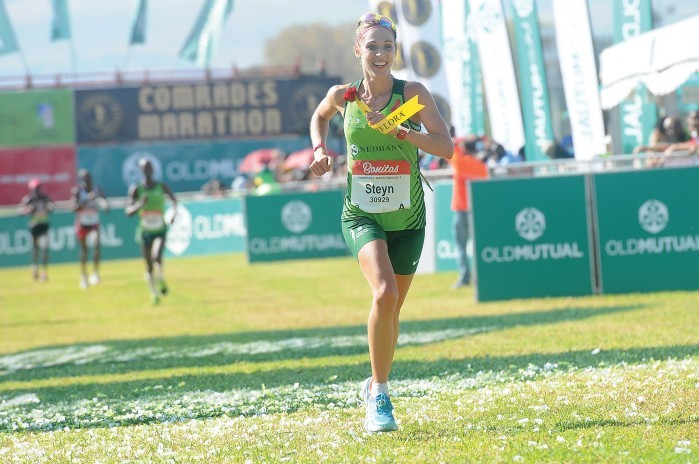
Steyn is training with an end goal of Comrades in mind, and with the Easter weekend being that much later this year, it might be a tough task to pull off both wins.
Chesire's training has been going according to plan but he can expect some tough competition from a quality field of ultra runners who have all been training to win.
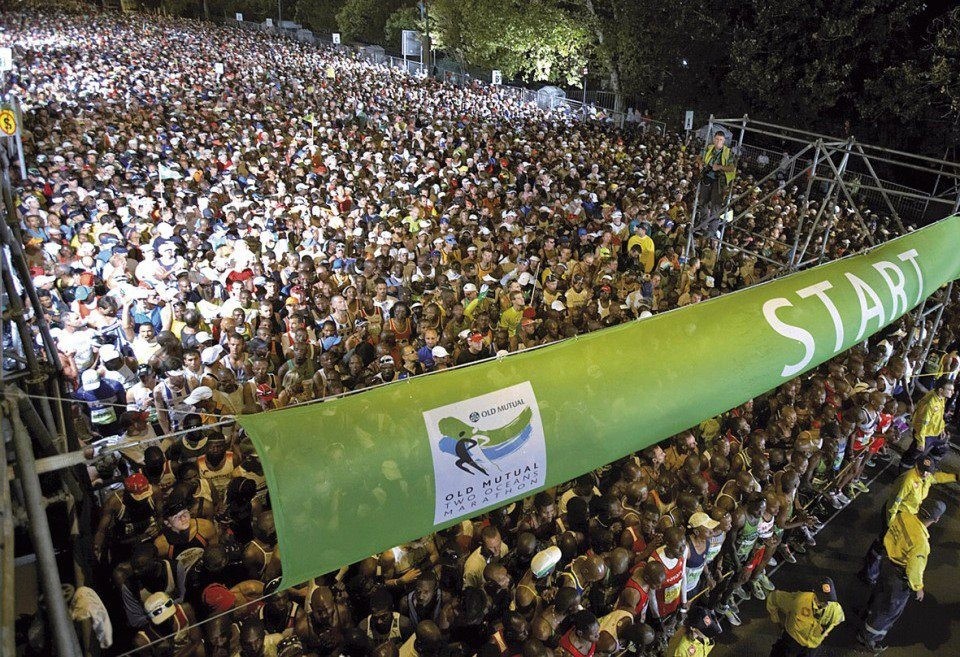
His fellow countryman Abraham Kiprotich, who boasts the fastest marathon of the entire field (2:10 at the Istanbul Marathon late last year), will be running his first ultra marathon and it will be an interesting test to see how he fares over the last 14km with the Constantia Nek climb part of this last section.
Another popular Maxed Elite runner, Zimbabwean Prodigal Khumalo, is back running after a foot injury had him sidelined since December last year. Khumalo has chosen to run the 24km trail event.
Joining this strong field of male runners is local trail legend Ryan Sandes. He has switched from running the trail event for this year, to running his first 56km ultra event. Sandes is hoping to add the Old Mutual Two Oceans Ultra Marathon to his illustrious list of achievements.
(04/03/2019) ⚡AMP
Two Oceans Marathon
Cape Town’s most prestigious race, the 56km Old Mutual Two Oceans Ultra Marathon, takes athletes on a spectacular course around the Cape Peninsula. It is often voted the most breathtaking course in the world. The event is run under the auspices of the IAAF, Athletics South Africa (ASA) and Western Province Athletics (WPA). ...
more...
Ultramarathon runner Jonathan Van Dyke is the First Ultramarathon Athlete to Sign Hemp Oil Endorsement
Van Dyke will serve as a brand ambassador for Functional Remedies and their many hemp oil products. Jonathan and many distance runners utilize Functional Remedies hemp oil products to enhance their rigorous training regimens and support recovery.

“We are excited to have Jonathan Van Dyke join team Functional Remedies as the first ultramarathon athlete to sign a hemp oil endorsement,” stated Functional Remedies CMO Tony Tomassini. “Such an intense sport requires a well-balanced and effective recovery process. We’re proud Van Dyke added our incredibly efficacious hemp oil into his training routine, and we look forward to watching him go after national records.”

“I use EndoSport hemp oil for two reasons; one is to enhance my ability to train and the other is to recover from my training and competitions,” said Van Dyke. “Running long distance is no joke. It takes a lot of mental and physical endurance. My body has to be in top shape.”
Van Dyke started running ultramarathon races in 2015 and has consistently improved to be among the upper echelon competitors. Jonathan is currently preparing for the upcoming Quad Rock 50, a 50-mile run, at Fort Collins, Colorado on May 11, 2019.
(04/02/2019) ⚡AMP
2019 Barkley Marathons is 'love and puppies' for Laz
Some of the world's best runners are in Morgan County for this weekend's Barkley Marathons, a brutal 100-mile race that only 15 people have finished in 33 years.
Elite ultra-marathoners from six continents packed the campsite at Frozen Head State Park on Friday in Wartburg, Tenn. Now they patiently wait for the unpredictable start of the Barkley Marathons, a sinister 100-mile race filled with obstacles that pester routine-loving runners.
"There is nothing out there but love and puppies," laughed Gary Cantrell as he read the text on this year's shirt. "I think we'll have a higher finish-rate because of the positive wholesome attitude this year. Aren't there little hearts up in this corner [of my shirt]?"
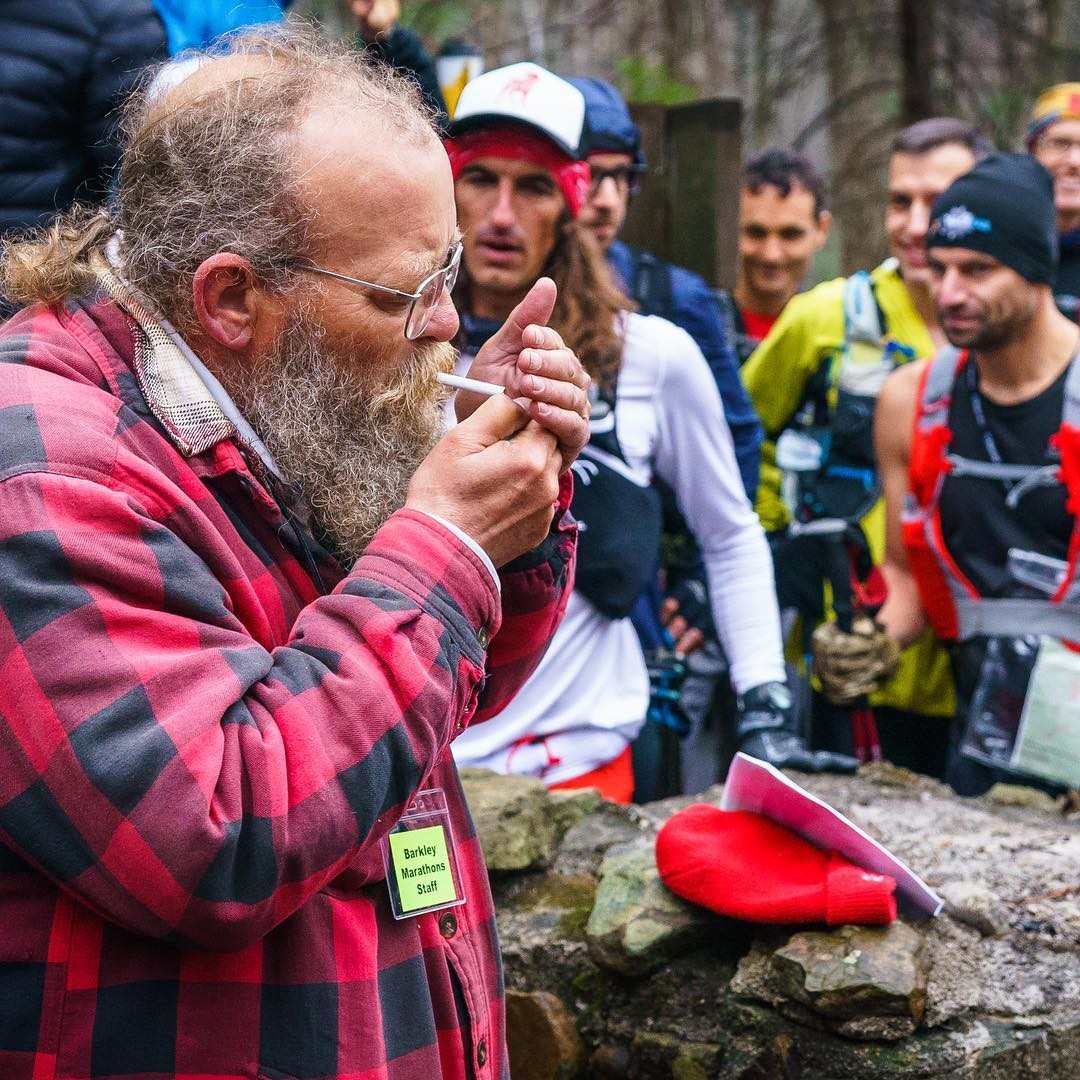
Cantrell, also known as Lazarus Lake or Laz, helped concoct the ridiculous race that only 15 people have finished in 33 years. Some runners are repeat-finishers, making a total of 18 times someone has completed the 100-mile race within the 60-hour time limit.
If you have missed WBIR's many reports on the Barkley Marathons in previous years, here is a brief synopsis of the event: Runners write an essay and apply for entry in the Barkley Marathons. 40 runners are chosen each year from around the world.
Runners have 60 hours to complete five loops of 20+ miles through Frozen Head State Park. The course is unmarked and changes every year.
Runners get a map (poorly-drawn) of the course before the race begins. The start time is unknown, other than sometime between midnight and noon on Saturday.
A conch shell is blown to signal one hour until the start. Laz lights a cigarette to begin the race.
The yellow gate at the campsite and Brushy Mountain prison are always part of the route. Keeping with Laz's positive attitude, there has technically been a winner every year of the Barkley: a runner or the mountain.
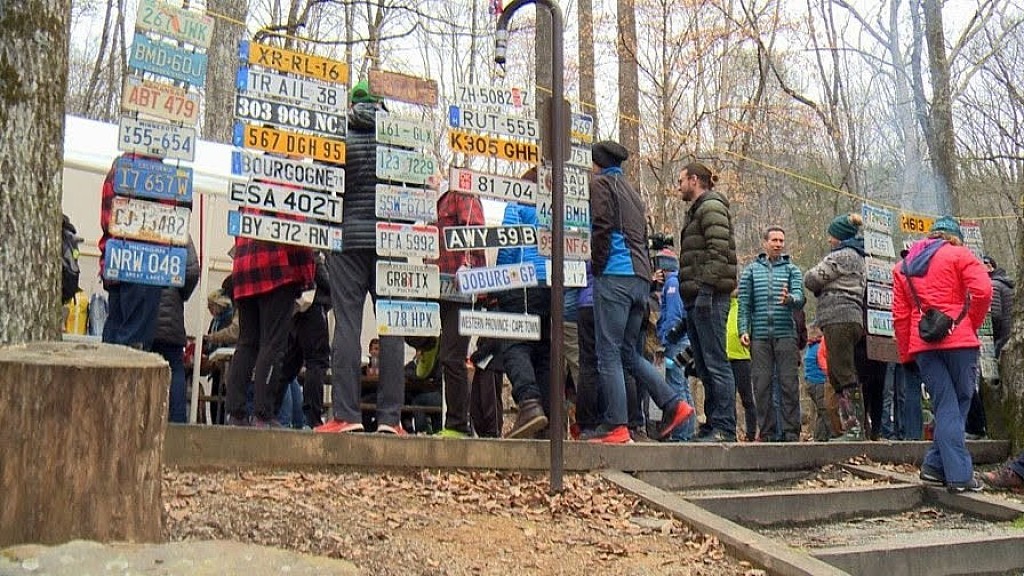
"The mountain has been winning a lot more often than the runners. I think it has won 1,302 and been beaten 18 times," said Cantrell.
(03/30/2019) ⚡AMP
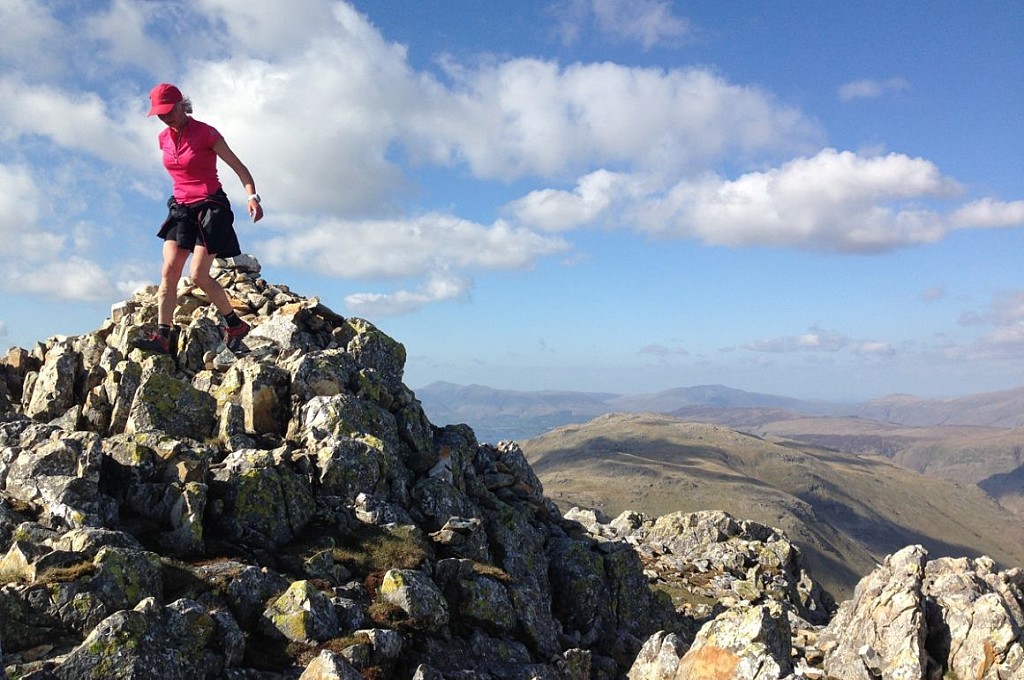
Nicky Spinks is hoping to be the first woman to finish the Barkley marathons
The Barkley Marathons, which is “rumoured” to take place this weekend, is surrounded by folklore about prison escapes and encounters with wild boar. If you’ve never been to Frozen Head, you might think of it as a mysterious, forbidding place whose only reason for existence is as the site of Laz Lake’sinfamous 100-miler.
But Jamil Coury who is returning to the Barkley for the fifth time this year, you’ll see that it’s just a state park like any other, with trails and campgrounds where families go to relax a little later in the season, just like they do in state, national and provincial parks across North America.
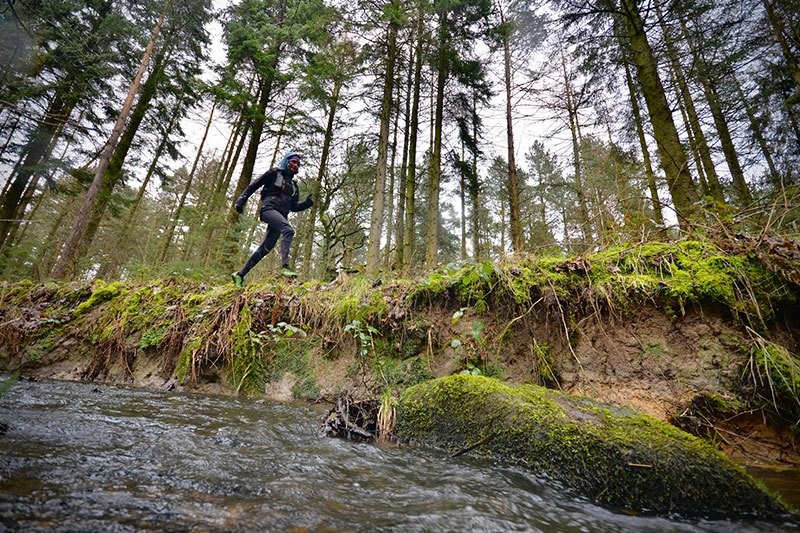
Coury and another Barkley veteran, Guillaume Calmettes of France, spent a few days together last month, running the trails in Frozen Head to get in shape for this year’s race. They make Frozen Head look positively benign.
Last year there were no finishers, thanks largely to terrible weather. Spring weather can be unpredictable anywhere, and last year Frozen Head got walloped with a massive rainstorm, dense fog and cold temperatures on race weekend.
Running five 20-mile loops in 60 hours with no course markings and no organized aid stations is hard enough–add bad weather to the mix, and any hopes of finishing were dashed for most people after a loop or two. Gary Robbins completed a “fun run,” three loops in under 40 hours.
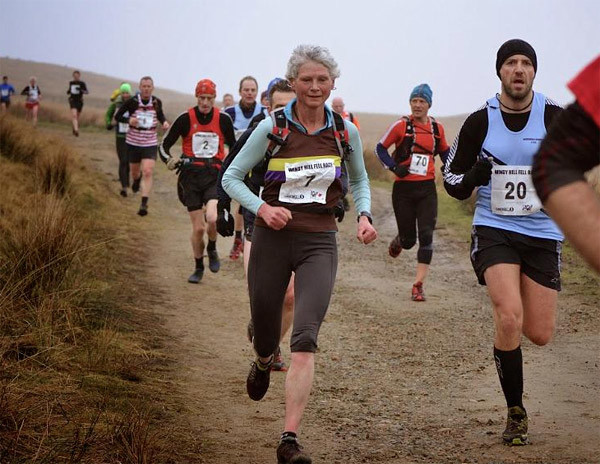
This year could be a different story. The forecast for Frozen Head is for temperatures of between 50 F (10 C) and 68 F (20 C), with thunderstorms possible on Saturday.
We’ve also just learned that Nicky Spinks is among the starters. The British ultrarunner ran a double Ramsay Round last year, has also run a double Bob Graham Round, and crewed for Damian Hall at UTMB last year.
Let’s hope the will be some finishers this year.
(03/29/2019) ⚡AMP

Dave Chamberlain is running the Two Oceans ultra marathon 50 times in 50 days that's 2800km
As if running the Two Oceans Ultra Marathon isn’t an astonishing enough feat, one man has taken on an epic challenge to run it 50 times in the 50 days leading up to the race.
Dave Chamberlain is celebrating the Two Oceans’ 50th anniversary by running the race 50 times over - totalling a mind-blowing 2800km.
He's already clocked up 25 of the 50 runs, putting more than 1400km behind him. Determination keeps him going.
“I think it’s just pigheaded stubbornness,” Chamberlain said.
“I have a belief that this project is within the realm of most people, so I feel I have to prove it. I’d be disappointed in myself if I didn’t.”
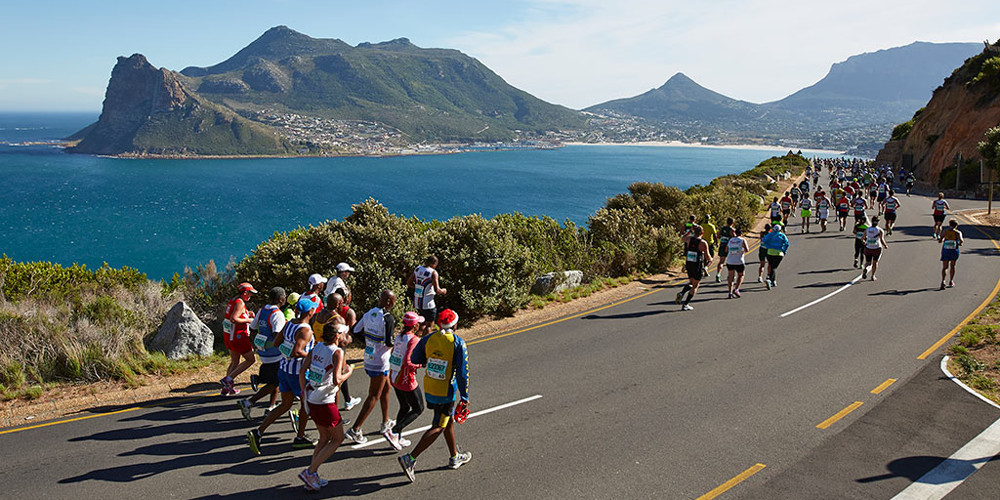
He’s doing the 50-50-50 challenge in aid of BirdLife South Africa, raising funds for the African Penguin Relocation Project.
It is not Chamberlain’s first crazy long-distance challenge. The Pretoria-born athlete has run the length of Argentina, crossed Canada and run through the Namibian desert to Port Elizabeth.
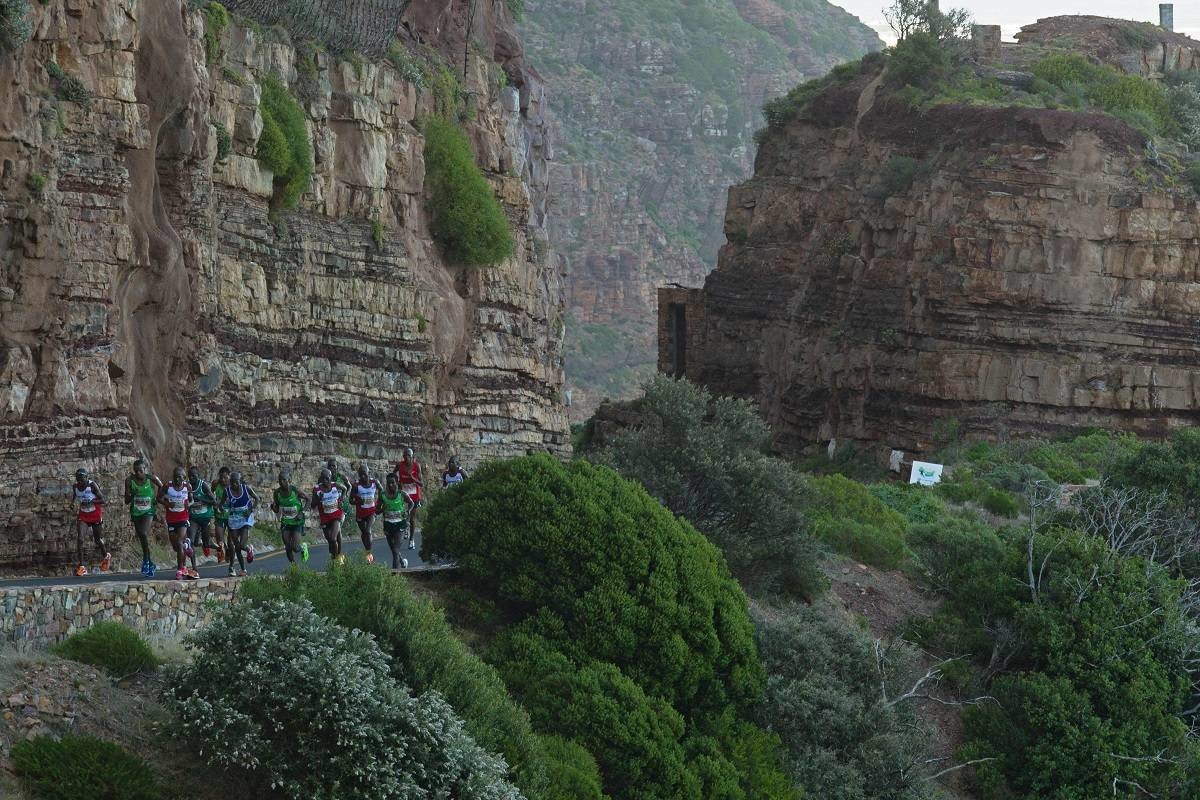
To tackle this latest endurance adventure, he wakes up every morning at 4.30am, and focuses on eating a carb-rich breakfast before getting his run started at 6am in Newlands.
“I don’t worry about tomorrow or day 30, otherwise I’d do my head in,” he said. “Days 4, 5 and 6 are awful, as your body is getting used to it. Everything is inflamed, and your tendons feel like they want to snap.
“Then the body learns how to adapt and ups its efficiency at dealing with all the waste products.” Once your body gets used to the demands of running an ultra marathon over and over, he said that each day’s run becomes active recovery from the day before.
“The body actually heals itself while you’re running,” he said. Approaching the halfway mark this week, Chamberlain said he was feeling physically strong, but running the same loop every day was taking its toll psychologically.
“I feel like my body has adapted to the distance, it’s holding up much better than anticipated,” he said.
“It’s going to be a test of the mind. The boredom is going to be my biggest threat.”
(03/28/2019) ⚡AMP
Two Oceans Marathon
Cape Town’s most prestigious race, the 56km Old Mutual Two Oceans Ultra Marathon, takes athletes on a spectacular course around the Cape Peninsula. It is often voted the most breathtaking course in the world. The event is run under the auspices of the IAAF, Athletics South Africa (ASA) and Western Province Athletics (WPA). ...
more...
Michael Wardian has finished his 10-day 631-mile journey smashing the Fastest Known Time on the Israel National Trail by several days
Ultra superstar Michael Wardian set a new Fastest Known Time (FKT) for the Israel National Trail, covering the 631-mile journey (south to north) in 10 days, 16 hours and 36 minutes (unofficially) March 22 in Israel.
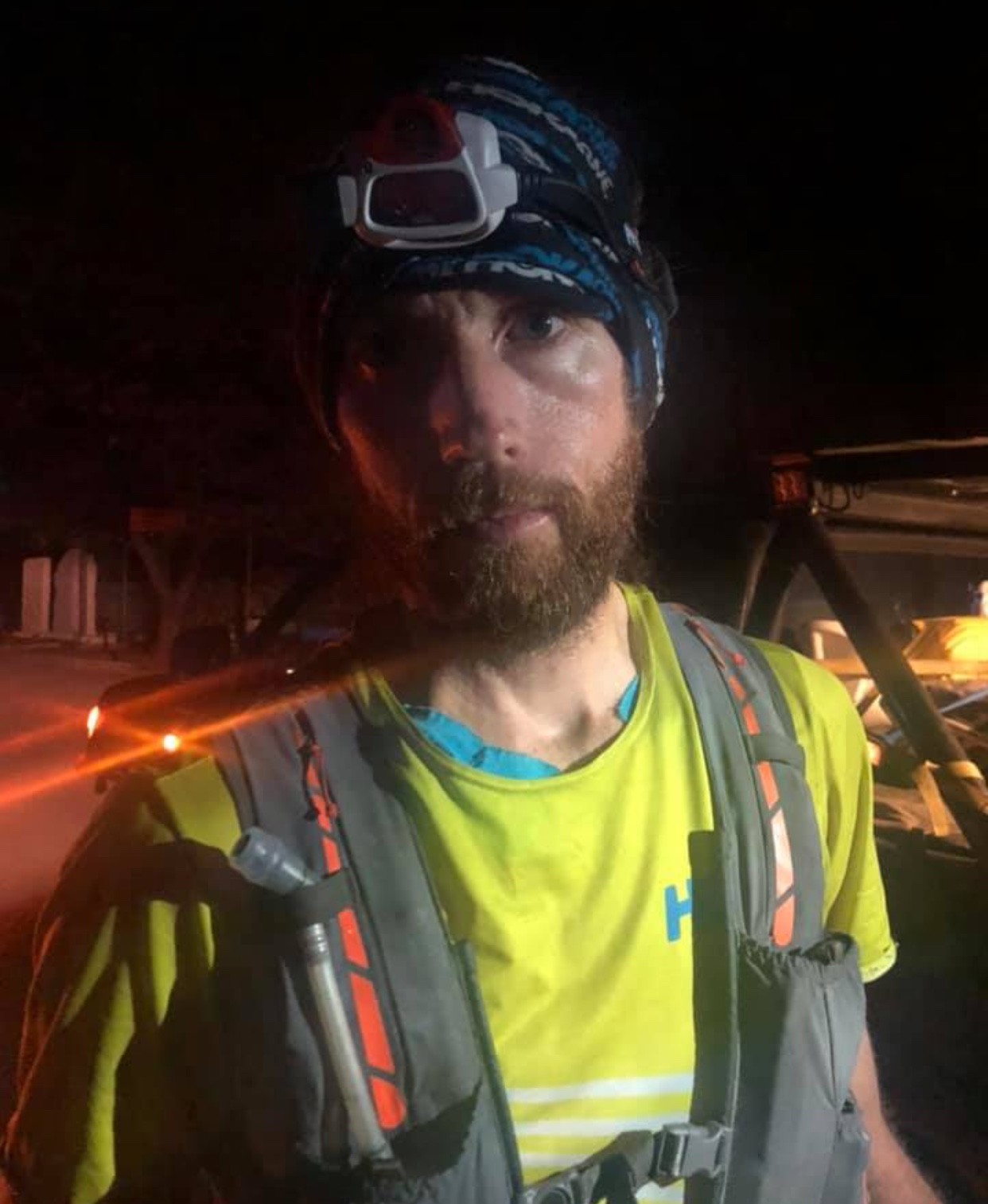
Event organizer Ian Corless wrote, “it’s difficult to put into words a 10-day journey of 631-miles. Especially when someone has run the whole distance. I have to say, mine was one of relief.
“Mike had done it. He had achieved his target of running the INT in 10-days and to be part of the journey is beyond rewarding. I witnessed intense highs and lows. So, to finally watch Mike touch ‘home’ and finally be able to stop, I had relief and immense satisfaction of a job well done.
“I truly believe Mike, and maybe us all will need more than a few hours to comprehend the new record, for now though, Michael Wardian is the new record holder of the FKT for the Israel National Trail.“
Others have covered this many miles in 10 days but no one has covered this many miles in this amount of time on such a challenging course.
Michael’s goal was to complete this journey in 10 days and he did it smashing the FKT by several days. This may be a record that will never be broken.

Ian shared this personal note:
"This record has been more than a running adventure. It has been an incredible journey that not only allowed us to cross from one end of a country to another, but it has opened our eyes to the beauty of Israel.
"It’s a diverse landscape all compressed into a very small area. The deserts of the south were truly mind-blowing, the best deserts I have witnessed. The green and stoney trails of the north provided a stunning contrast to the red of the south. And throughout this journey, the people of Israel have welcomed us, supported us and helped Mike in a way that none of us could have predicted.
"But the help has not only come from trekkers or runners, the story of Mike’s journey has spread throughout Israel and made multiple news channels and in doing so has created awareness. People have come out to offer best wishes and even offer a place to sleep or provide food.
This journey has stirred an awareness and challenged people to ask themselves, ‘What can I do to challenge myself?’
(03/22/2019) ⚡AMP
The Crescent City Fitness Foundation announced a goal of raising $1 million for local nonprofits at this year’s Crescent City Classic 10k
With the 41st run of the Allstate Sugar Bowl Crescent City Classic just a little over six weeks away, officials with the Crescent City Fitness Foundation announced a goal of raising $1 million for local nonprofits.
“The New Orleans community never ceases to amaze us with their generosity when it comes to charitable giving and supporting those in need throughout the area,” said Crescent City Classic Charity Director Hilary Landry. “All we can hope is to continue to outdo ourselves year after year.”
The nonprofit partners recruit and organize teams of 100, 75, 50, or 25 runners and walkers who commit to raising a minimum of $200 for their charity by race day.
Official charity runners receive various perks and incentives as part of the “RUN FOR IT” program including private party tent access, starting position in the charity corral and personal online fundraising page.
The Allstate Sugar Bowl Crescent City Classic 10k road race, expected to attract almost 25,000 runners and walkers, for its 41st running, will be held Saturday, April 20. The 6.2 mile course begins outside the Mercedes Benz Superdome and runs through the historic French Quarter to City Park where the popular Michelob Ultra Post Race Fest is held. This year’s after party will feature the Phunky Monkeys playing in concert as festival-goers enjoy 227 kegs of draft beer and 43,000 servings of red beans and jambalaya.
(03/22/2019) ⚡AMP

Crescent City Classic 10k
The Crescent City Classic isannual 10-kilometer race held in New Orleans, Louisiana,United States. Mac DeVaughn founded the Classic and held the first race in 1979. The race was originally held in the Fall, but the race is now held the Saturday before Easter. The Classic is New Orleans’ (and the region’s) premier 10k road race, and one of the oldest...
more...
Some ultra runners have completed 631 miles or more within 10 days but have any done so on a trail as tough as the one Michael Wardian is running in Israel?
The Israel National Trail (INT) is an approximately 1015km / 631mi hiking trail that crosses Israel from its southern to northern border, traversing a wide range of landscapes, a rich variety of flora and fauna, and a diversity of cultures.
The trail stretches from Eilat on the Gulf of Aqaba to the Dan Kibbutz near the Lebanese border, and was named by National Geographic as one of the 20 best "epic hiking trails" in the world.
We believe the most likely Fastest Known Time on the INT to be set at 15 days in 2013 by Australian Richard Bowles.
On March 12th, 2019, Michael Wardian began his attempt to complete the trail in 10 days.
Wardian is a prodigious American marathoner and ultra-marathoner with a lengthy list of podium finishes at distances from half marathon to 100 miles, with world records such as the fastest time for 7 marathons on 7 continents in 7 days, and the fastest 50k on a treadmill, and who has completed many of the worlds most challenging races. In September 2018 Wardian ran the 184.5 mile C&O Canal Towpath in an FKT of 36h36m, beating Park Barner's 1976 time by just 12 minutes!
Michael is eight days in and has covered 776k with 241k to go according to the website Fastest Known Time which tracks these types of events. Photos by Ian Corless.
(Editors note: Michael is also part of the Run The World4 Challenge team and all his miles are being logged there. He is currently in first place with 504.48 miles logged since March 1. His team Elite Men is currently in second place with 2159 miles. Team Kenya is leading with 2304 miles. This event ends March 30. Five teams of 14 are logging in as many miles as possible within 30 days.)
(03/19/2019) ⚡AMP
by Fastest Known Time

Run The World Global Challenge
Run The World Global Challenge (My Best Runs Running Log)is a world wide celebration of running. RYW Challenge 14 started Jan 1, 2026 and will go the entire year ending Dec 31, 2026. See how many miles you can log of running and walking. The continuing RTW1 Challenge started July 4, 2018. Participants run or walk and then log in...
more...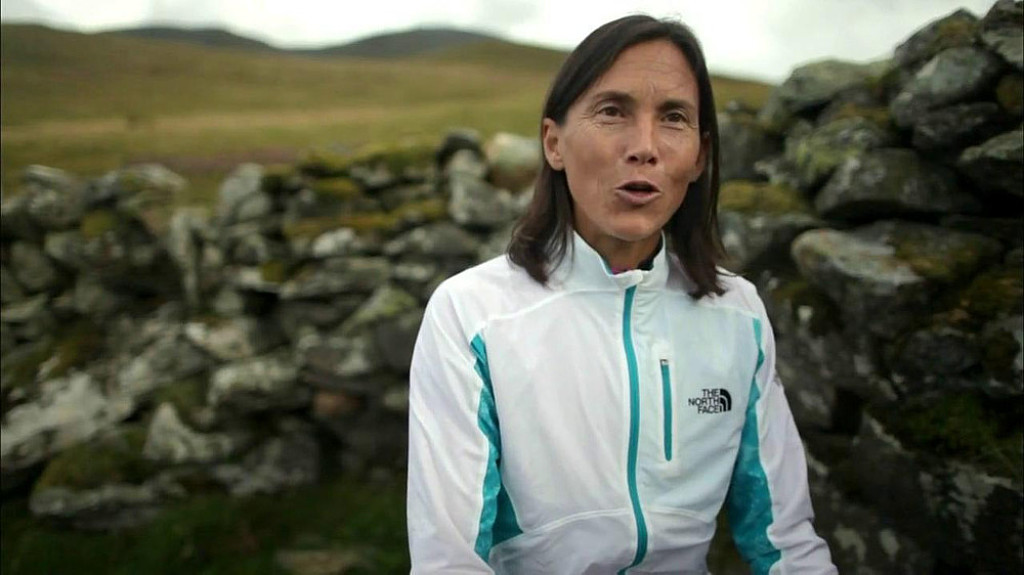
Kami Semick won every Ultra race she entered in 2009 and now is making a comeback
A decade ago, at 42, Kami Semick reached the pinnacle of ultrarunning. She won every race she entered in 2009, including two world championship events in the 100k and 50k, and earned UltraRunning’s Ultrarunner of the Year title for the second year in a row.
But five years later, she called it quits and disappeared from the sport.

Her breaking point came at The North Face Endurance Championship 50-miler in San Francisco, a race she’d won in 2008. At that event in December 2014 where she finished 17th female, “It felt like I was dragging a load of bricks around,” says Semick, now 52 and living in Bend, Oregon. “The only reason I finished is because I promised myself this was the last time I was going to run 50 miles. I wasn’t coming back because I felt so horrible. I shook hands with my sponsor The North Face and said, ‘Nice knowing you, but I gotta stop.’”
Fast forward another five years to now, and suddenly, Semick’s name is popping up again. Eschewing attention-seeking social media posts, she quietly and cautiously began running longer distances again in 2017. She finished two 50-milers and a 100k in her home state last year, then won a 40-miler and 50k in California. Now she’s getting ready to line up at the hyper-competitive Lake Sonoma 50 in April, and the Lavaredo Ultra 120K in Italy in June.
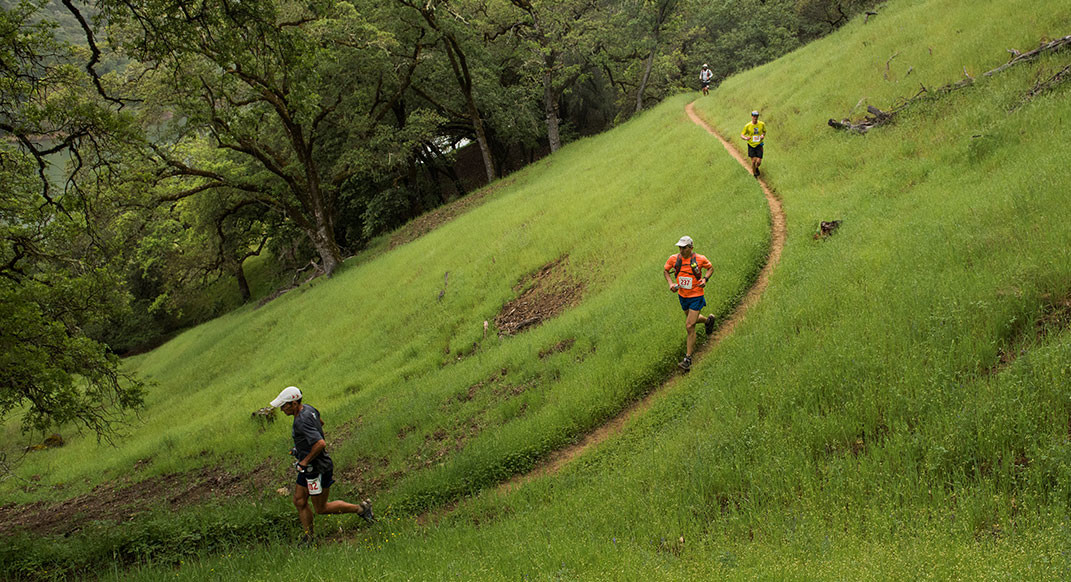
While those newer to the sport might not even recognize Semick, those of us who began ultrarunning in the mid-2000s probably share my excitement at seeing her return. Personally, I’ll never forget The North Face ad campaign from 2006 that showed Semick trail running with her then-4-year-old daughter strapped onto her back. Semick’s muscly physique, fast times at races, and gutsy combination of running and parenting gave female ultrarunners a powerful role model.
I reached out to Semick to find out what happened, and what it’s like to return to the scene and get ready to race again after a long break after turning 50. She agreed to talk, but with some reluctance as part of her looked forward to showing up to Lake Sonoma without being recognized.
“If nobody knows I’m there at a starting line, I’m so happy about that, because then there’s no expectations,” she says. “I’m trying not to be attached to my history as a runner, and I don’t love the spotlight, but the reason I wanted to talk is because I’m curious about other women’s experiences. If I can share my story, then maybe we can join together as women in our 50s and say, ‘Yes, it’s hard.’ … I feel like we have to band together for support.”
(03/19/2019) ⚡AMPby Sarah Lavender Smith (Ultra Running Magazine)

Lake Sonoma 50
The race is held on the rugged trails at Lake Sonoma, about 10 miles northwest of Healdsburg. The course is 86% single track and 9% dirt roads, with the first 2.4 miles on a paved country road.The race starts at 6:30 a.m. and has a 14-hour time limit. ...
more...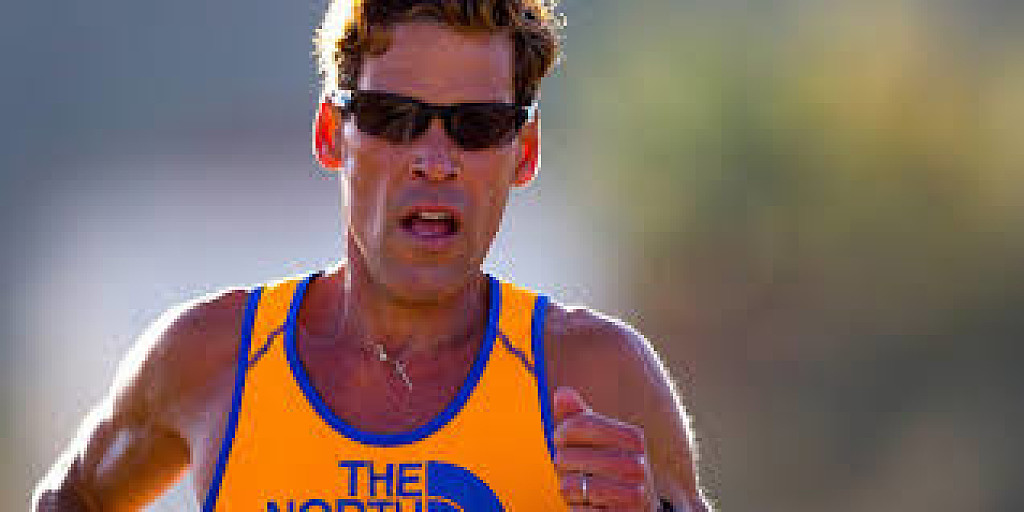
Renowned ultramarathoner and bestselling author, Dean Karnazes, is set to run the inaugural MCM50K on October 27
Renowned ultramarathoner and bestselling author, Dean Karnazes, is set to run the inaugural (Marine Corps Marathon) MCM50K on Oct. 27 in Arlington, VA. Karnazes, named by TIME magazine as one of the “100 Most Influential People in the World,” will also be the featured speaker at the MCM Carbo Dining In on Oct. 26, as part of MCM Weekend.
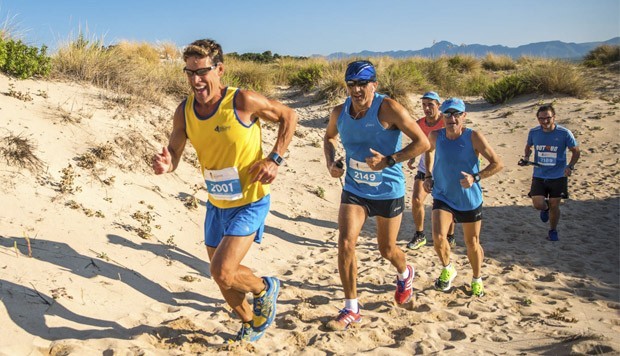
The MCM50K sold out in one hour and is set to be the largest ultra in the United States with nearly double the participants of the 2018 record. Karnazes will add running with the Marines to his impressive resume that includes running 50 marathons in all 50 states in 50 consecutive days; competing on all seven continents; winning the ESPN ESPY Award for Best Outdoor Athlete; and being a three-time winner of Competitor magazine’s Endurance Athlete of the Year.
The NY Times bestselling author has pushed his body and mind to inconceivable limits, such as running across the Sahara Desert and the South Pole; 350 continuous miles without sleep for three nights; and as a solo participant in ten different 200-mile relay races.
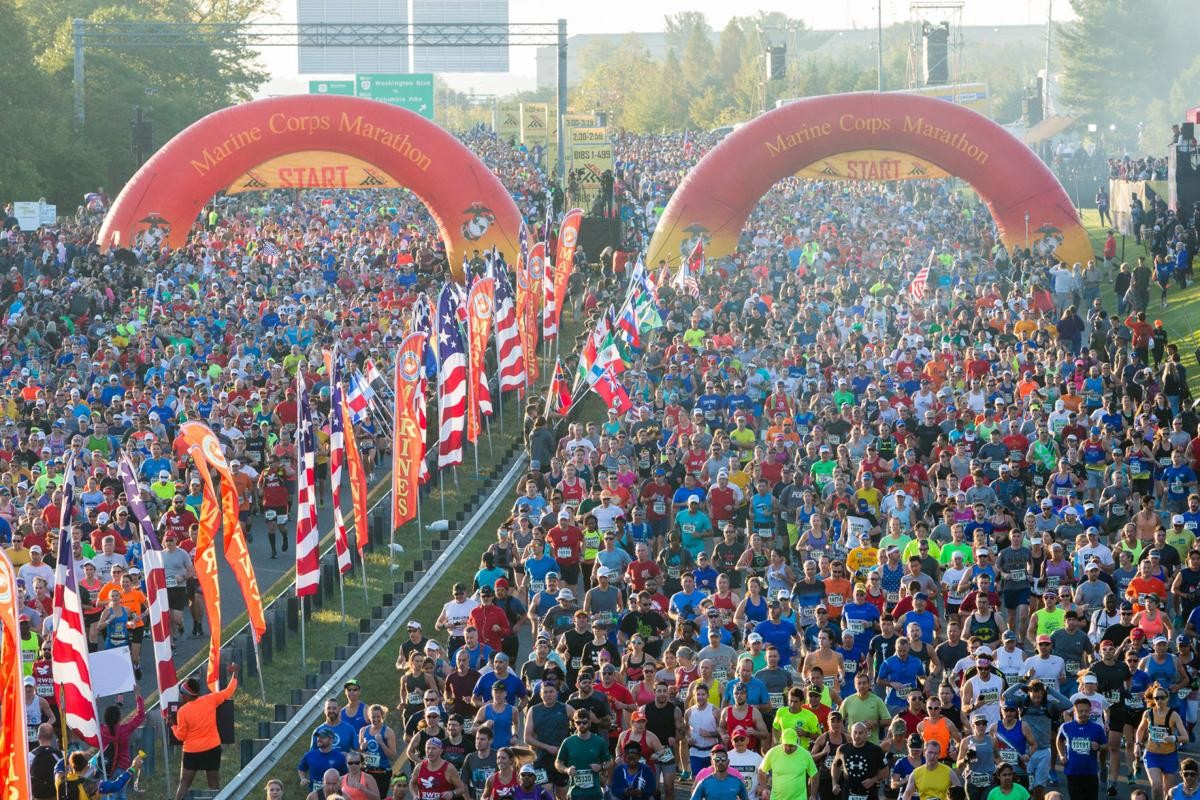
“I am thrilled and honored to be part of the inaugural MCM ultramarathon. Going beyond the marathon is the ultimate test of human endurance and I look forward to the challenge,” shares Karnazes.
(03/19/2019) ⚡AMP
Marine Corps Marathon
Recognized for impeccable organization on a scenic course managed by the US Marines in Arlington, VA and the nation's capital, the Marine Corps Marathon is one of the largest marathons in the US and the world. Known as 'the best marathon for beginners,' the MCM is largest marathon in the world that doesn't offer prize money, earning its nickname, “The...
more...
Did you know? Bone Broth Soup is packed with muscle boosting minerals and sodium for post-race recovery
There were stories about coconut oil and butter making a comeback. Now it’s soup. Long touted as a tool to help fight illness and inflammation, bone broth—a basic soup made with animal bones, among other ingredients—is trending among the smoothie-drinking, health-conscious crowd as a restorative miracle potion. But endurance athletes have been sipping stock for centuries.
“Homemade bone broth is an excellent source of minerals, like calcium, phosphorus, magnesium and potassium, in forms that your body can easily absorb. It’s also rich in amino acids, collagen and anti-inflammatory compounds, like chondroitin sulfate and glucosamine,” says sports nutritionist Melissa Hartwig.
“These nutrients improve digestion, aid in muscle repair and growth, reduce joint pain, promote a balanced nervous system, and strengthen the immune system.”

Granted, some nutritionists argue that many of the health claims surrounding bone broth aren’t backed by research, such as stock having anti-inflammatory properties or helping with GI issues; however, one undeniable benefit is the presence of extra minerals, such as calcium and magnesium, which are important for bone health and muscle function, and are not naturally bountiful in the dairy-free Paleo diet, says Leslie Bonci, director of sports nutrition at the University of Pittsburgh Medical Center’s Center for Sports Medicine.
Another nutritional bonus is its high sodium content—good for athletes training for or participating in a long-distance race.
“There’s a reason broth is served at aid stations during the run portion of an Ironman triathlon,” says sports dietitian Lauren Antonucci. “Toward the end of a race, you’ve lost a lot of salt from sweat and need to replace it in order to prevent muscle cramping and dizziness, but keeping up with your sodium intake is hard, especially because you’re sick of consuming so many sweet, sugary things, like gels and sports drinks. Sipping some broth at that point could play a role in maintaining your fluid balance,” Antonucci says, because sodium helps the body retain fluid.
One study found that athletes prefer savory over sweet tasting foods later on in an ultra-endurance running event, making broth a no-brainer choice for tired competitors. It doesn’t matter if it’s warm or cold, organic, veggie, chicken or beef—so long as it contains plenty of sodium, it will help you, Antonucci says.

Just remember that a little goes a long way: One four-ounce serving provides at least 200mg of sodium, on average, which is more than three times the amount in a packet of regular Gu. “Consuming just a sip or so at a time [every hour or so] is sufficient,” says Antonucci. “If you know you’re a salty sweater, you could take in a bit more, but in general, broth is something that you won’t need unless you’re going to be active for multiple hours at a time.”
And don’t forget to accompany it with additional fluids, foods, and electrolyte replacements, like sports drinks, water and gels, chews, or bars when you’re racing, says Bonci. “If broth was your only source of fuel during a prolonged activity, you wouldn’t be consuming adequate amounts of carbs or calories.”
Endurance athletes looking for broth’s sodium kick can buy boxed veggie, chicken, and beef stock at any grocery store, though some broth pundits would argue that the boxed stuff doesn’t impart the same health benefits as homemade stock. You can order homemade bone broth online or make your own with Hartwig’s easy recipe: system.”
The Ultimate Bone Broth Recipe for Athletes Ingredients: 4 quarts water, 1 teaspoon salt, 2 tablespoons apple cider vinegar, 2 large onions, unpeeled and coarsely chopped, 2 carrots, scrubbed and coarsely chopped, 3 celery stalks, coarsely chopped, 1 bunch fresh parsley, 2-3 garlic cloves, lightly smashed, 2-4 lbs. meat or poultry bones
Place all ingredients in a large pot on medium-high heat, or in a large slow cooker set on high. Bring to a boil, and then reduce the heat to low and simmer for 12 to 24 hours. Strain the stock through a fine mesh strainer into a large bowl and discard the waste. Let it cool, and then place the bowl (uncovered) in the fridge for several hours, until the fat rises to the top and hardens. Scrape off the fat with a spoon, reheat your broth and serve. (You can also add leeks, pepper, red pepper flakes, rosemary, thyme, sage and/or ginger.)
(03/18/2019) ⚡AMP
Vegan endurance athlete Robbie Balenger is set to run more than 3,000 miles across the United States
In partnership with dairy-free ice cream brand NadaMoo, Balenger is hoping his challenge will show the world that even ultramarathon runners do not need to eat animals to excel in their field.
In a post on Instagram, the plant-powered athlete wrote, “On Saturday (March 16th) at 7:30 AM, I will put my feet to the pavement and start to run across the country.”
He believes the run will last for 75 days, covering the 3,200 miles from Los Angeles to New York City. “Not only do I plan to survive running an average of 43 miles a day on a 100% plant-based diet, but I hope to show you how I will thrive,” he continued.
Balenger hasn’t always been an athlete; he used to operate restaurants across Austin, Texas. He needed a way of managing the stressful nature of his career path so six years ago, he began running, according to Lifelong Endurance, an endurance coaching website. He now works as an endurance athlete, coaching others in the field.

“By following my passions and dreams, I believe I can make an impact on those around me,” Balenger notes on the website. “My passions are innate and simple: food and running.”
He will use his 3,200-mile challenge to communicate his feelings about dietary choices, according to NadaMoo. The brand notes on its website that as Balenger makes his way across the country, students and members of the community “will be invited to engage in conversations about big goals and smart food choices.”
Balenger isn’t the only athlete showing that a plant-based diet can boost you to achieve major physical feats.
Last year, Mike Curtin, a 27-year-old vegan thru-hiker, hiked 118 miles along the Pacific Crest Trail. The journey — from Windigo Pass in Oregon to Big Lake Youth Camp in Willamette National Forest — took 38 hours and Curtin didn’t stop the whole way.
(03/14/2019) ⚡AMP
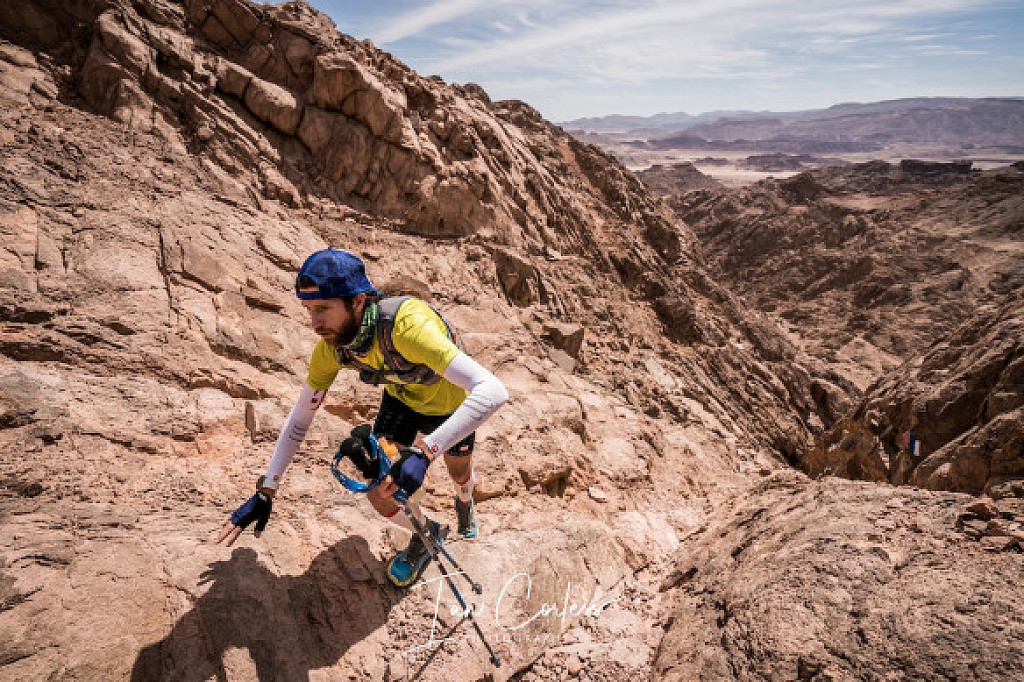
Ultra superstar Michael Wardian started his most challenging ultra ever today, the FKT Israel Project 631 miles in 10 days
Most people would think that running a marathon every day for ten days and averaging under three hours would be enough. But not for ultra superstar Michael Wardian. For his current challenge he will be averaging 63 miles daily for 10 days.
He is currently taking on the FKT Israel project. He plans on running 631 miles in 10 days on the National Israel Trail. He started today March 12.
Michael messaged me yesterday and said "I am really excited to attempt a Fastest Know Time on the 1000k Israel National Trail. I can't wait."
His wife, Jennifer, wrote me an hour ago saying "Tough Day I - Michael called out on the trail saying "I am lost in the dark and can't reach anyone, can you help." the call was a bit unsettling."
FKT Isreal Day 1 - (From Jennifer Wardian): "When I was talking with him this afternoon he said today took longer than expected because he got lost several times and missed trail bases. He said it was very technical and exposed at times otherwise felt great.
The Fastest Know Time Israel Project organizer Ian Corless wrote: "One year of planning finally came to fruition today when Michael departed Eilat, Isreal at 5:46am (March 12) to head south covering a total of 631 miles on the Israell National Trial in a target goal of 10-days,” Ian wrote this morning.
Later Ian wrote, "At the final feed point, Beer Matak at 61.5km he was notably looking tired and fatigued from the day’s efforts. He was also feeling the heat from the last big climb of the day. It was time to dig deep and push on for a final 18km.
It was here, as darkness came that disaster struck. Mike followed the marker of the ‘INT’ but unfortunately missed the turn to our bivouac which was off the INT route. He pushed on, following the markers and it was our support runner who notified us that he was ‘missing’ after hearing from another trekker that he passed some 30-minutes early.
“Our camp no cellular connection, so, we departed following the approximate route that Mike would take, It was here that technology took over. We managed to liaise with Mike via WhatsApp, we shared ‘live locations’ and we were able to navigate to him a long way down the ‘INT’ route. The route that he should have done on day-2!
“Mike was surprisingly in good spirits, but he had been out on the trail for almost 13-hours and 20-minutes, it was a tough first day! The only plus side coming that he had eaten in to tomorrow’s mileage.
“Back in camp, it was all about recovery. He hydrated, ate some snacks, wiped down and put on fresh clothes. He soon needed a nap. It had been a very long day, both physically and mentally. The priority was good rest, some quality food and then focus the mind for the challenges that day-2 would present.”
(03/12/2019) ⚡AMPby Bob Anderson
Ultrarunner Rickey Gates gained a new perspective on San Francisco by running every street
Gates, an accomplished mountain and trail runner, had an idea to run every street of his home city, San Francisco.
In a 49 square-mile area, that amounted to 1,100 miles of pavement. He did it in 46 days, averaging just over 28 miles a day, as he had to double up on some streets due to necessity or cul de sacs.
“There is really no way to prepare yourself for ‘this is going to take 36 miles and you’re going to be in this neighbourhood all day’ – and that is the point,” he said in a beautifully shot short film put together by his sponsors Salomon.

He later adds that the people he met along the way and confronting the challenge of being surrounded by people – and you see that he met as wide a demographic as you would imagine in a cosmopolitan city with a mammoth wealth division – “gave me a whole new depth of what empathy is, to try and treat everybody with the same importance”.
The cynic may say he was well looked after with gear, time and other resources by his sponsor – that his is a privileged view of the melting pot of city life.
But we could also see that Gates was touched by the people he met and things he saw. And that, you feel, was his point.
(03/12/2019) ⚡AMP
Brent Weigner heads the USA group for the Eastern Caribbean Challenge starting March 8, that is 7 marathons in 6 countries in 7 days
We are a few days away from the start of this epic 7 Marathons, 6 Countries, 7 Days cruise adventure called the Eastern Caribbean Challenge 2019. The group includes runners from around the world with exceptional running resumes. Nine of the 12 runners who have completed a marathon in 100+ countries will be part of this challenge. Combined, these runners have completed over 4,000 marathons in 180+ countries around the world.. 43 participants from 14 countries will touch down in Guadeloupe to start the challenge.
Here are three of the participants:
Dr. Brent Weigner (USA): Brent Weigner (second photo) is the king of Marathon Globetrotting. He holds multiple World Records in long-distance running. The 70-years old retired Geography teacher has run a marathon in 170 countries which is a World Record.
He also holds the World Record for completing a marathon on all 7 continents ten times. Moreover, Brent is the only runner in the world to have completed an ultramarathon at both North and South Pole. What makes his accomplishments even more amazing is due to the fact that he is a 3-times cancer survivor. Brent is also part of the Run The World 4 Challenge which started March 1 and will last 30 days.
Sidy Diallo (France): Sidy Diallo (third photo) is a 63-year-old French diplomat and barefoot runner, based in Paris. He was 55 when he ran his first marathon. To-date, he has completed 191 marathons in 73 countries, including 48 marathons in 2013. He is a seven continents marathon and ultramarathon finisher.
Sidy completed his first barefoot marathon on October 11, 2015, in Zagreb (Croatia), and has already run 42 barefoot marathons and one ultramarathon (90 km), in 21 countries. For more information, please visit his website: www.sidy42k.com.
Lichu Sloan (Taiwan): Lichu (first photo), at age 70, is the oldest female on the trip. She has completed 222 marathons in 81 countries across all 7 continents. She qualified for, and ran Boston Marathon, three times; ran 7 marathons on 7 continents in 7 weeks; completed all World Marathon Majors and a marathon in each of 50 US States and D.C., two times. Lichu started marathon running at age 52.
(03/06/2019) ⚡AMP
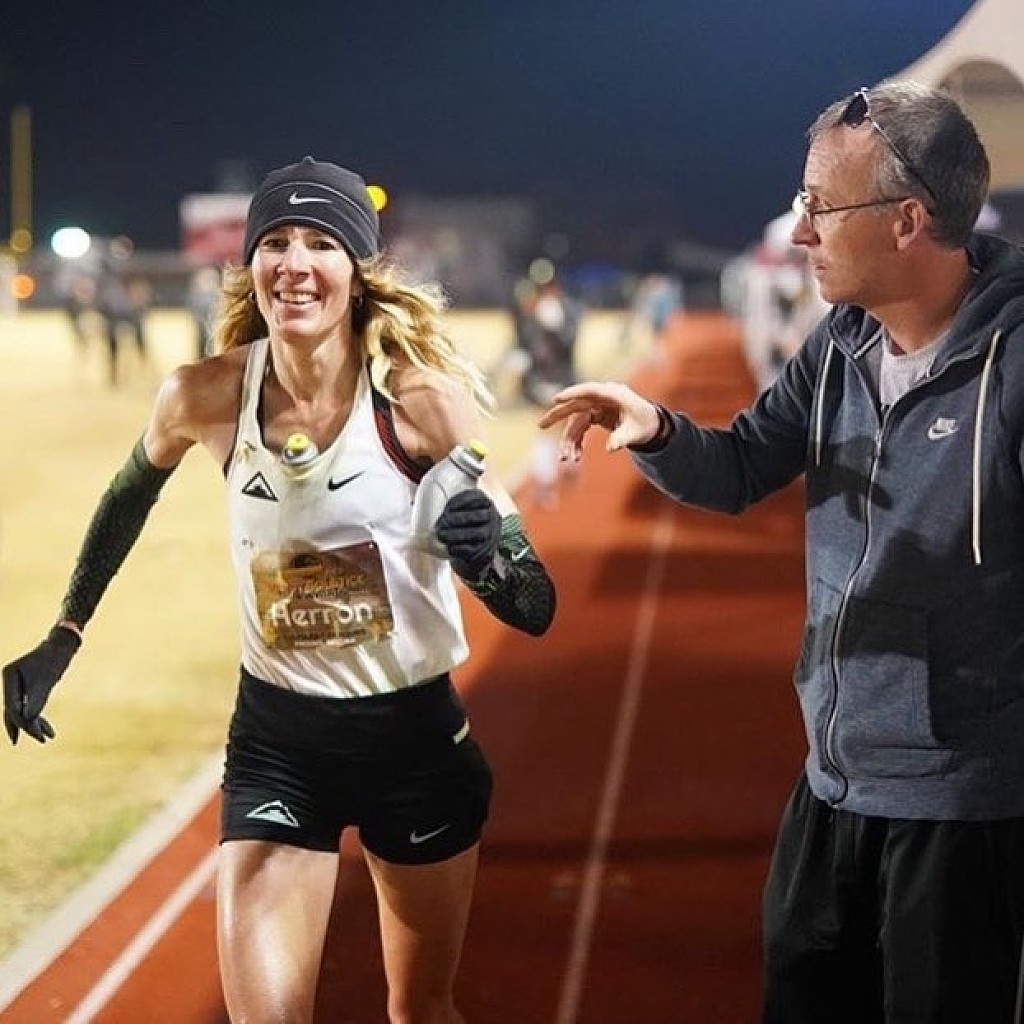
Camille Herron 24 Hour World Record has been ratified
It’s a great way to start the week finding out my 24Hr World Record was ratified by the International Association of Ultrarunners !
Thank you so much to everyone who made all this possible! It was the longest and most worthwhile day of my life. I’m blessed for what my body can do and the amazing team of support around me at Desert Solstice that kept me going and going.
I’m looking forward to representing our great country next Oct. at the World Championship!
(Camille Herron wrote this December 10 and posted this on FB.) Thank you everyone for all the messages and following along! We did it!
✅ 24 hr World Best- 162.919 mi at 8:50 per mi
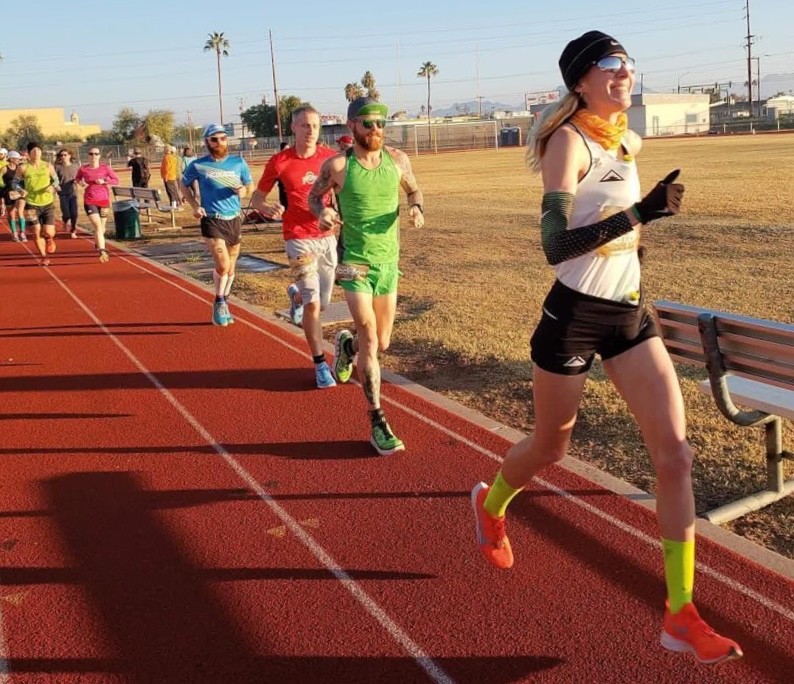
✅ 100 mi Track American Record- 13:25
✅ 200K Track AR- 17:07:27
It was really hard (to say the least hahaa)! 655.48 laps on a track was mind boggling. I mentally and physically prepared myself to work through any road blocks, hydrate and fuel well, maintain structural integrity, and keep moving.
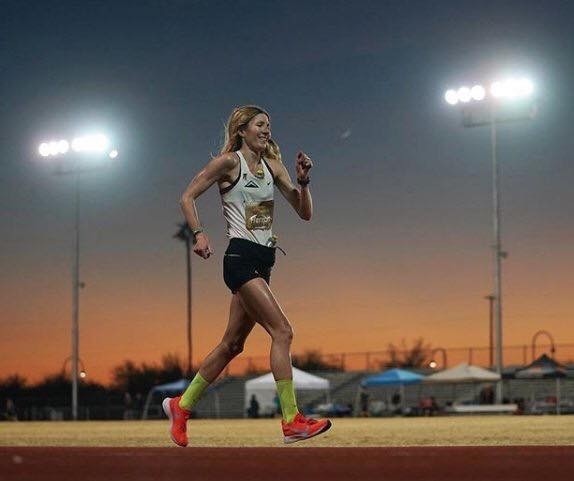
I changed my shoes twice to keep my feet happy. I had an amazing crew of Conor, Ron Foster, and my friend Gretchen Connelie from NYC keeping me going!
I hit a low point around 2-3am and had to get some Taco Bell and beer and walk a few laps. Slowly but surely I got going again. It was really fun to run through the night and then anticipate seeing the sunrise!
There was an overwhelming amount of support out there of people cheering us on throughout the 24 hrs- thank you very much for coming out. There’s a lot of great photos and moments, esp Howie Stern and Jubilee Paige.
Desert Solstice Invitational Track Meet - 100 Miles & 24 Hours is such a well run event, and I can’t say enough positive things about how much attention to detail Aravaipa Running w/ Hayley Pollack and Jamil Coury put into it and all the record keeping. It was incredible to share the track with so many talented athletes.
Now the record is official.
People like to ask me how I can smile when I’m running dozens of miles at a time. It’s because I’m prepared and I fuel myself so that I can enjoy both the run and the results! I love to eat potatoes - a complex carb - to fuel my workouts. And my races. Skin-on potatoes are a good source of potassium and Vitamin B.
(03/05/2019) ⚡AMPby Camille Herron
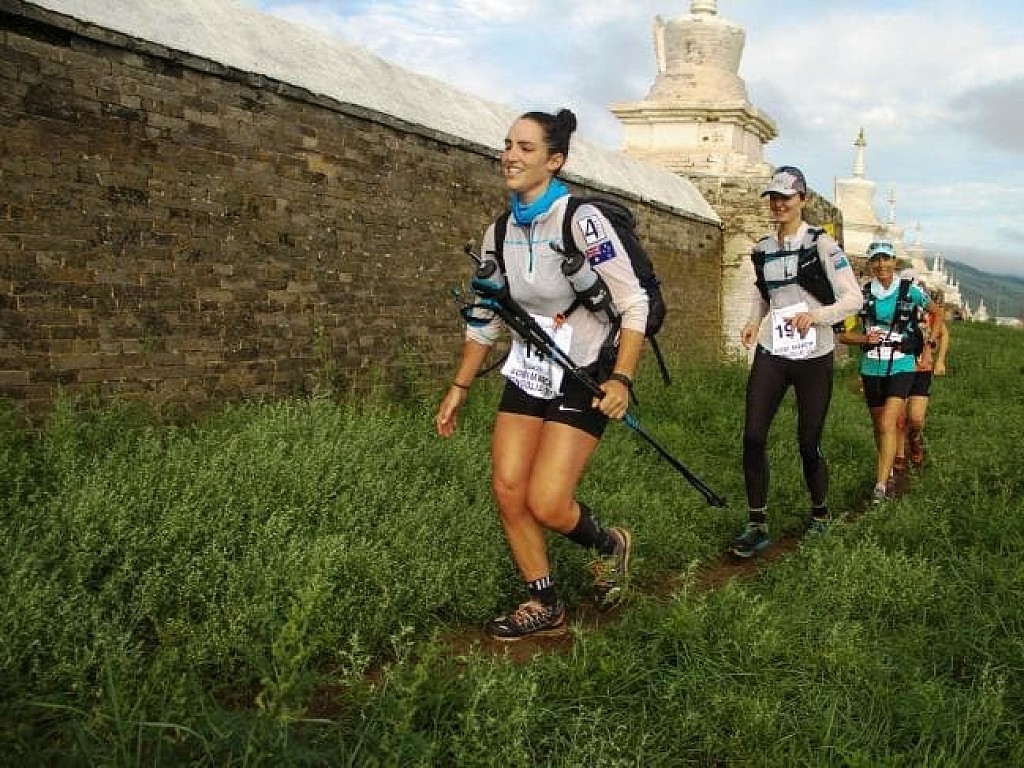
Australian’ 24-year-old Jacqui Bell is the youngest person lining up for the 323K Alps 2 Ocean Ultra in New Zealand
24-year-old Australian ultra-marathon runner Jacqui Bell is in New Zealand to tackle her longest ultra-marathon.
Bell is lining up in the Alps 2 Ocean Ultra on Sunday with 120 others from 14 countries to run 323 kilometers from Aoraki/Mt Cook to Oamaru in seven days mostly following the off road Alps 2 Ocean cycle trail.
Speaking from Christchurch New Zealand Airport on Wednesday, she told Stuff she expected the race to be "brutal". Completing it will bring her a step closer to being the youngest person in history to run an ultra-marathon on every continent in the world.
"I'm hoping the scenery makes up for the toughness of it. It's a lot of kms, and my body hasn't done any more than 250kms every.
"It's kind of like going into the unknown in that next 73km ... but I'll just try and enjoy it."
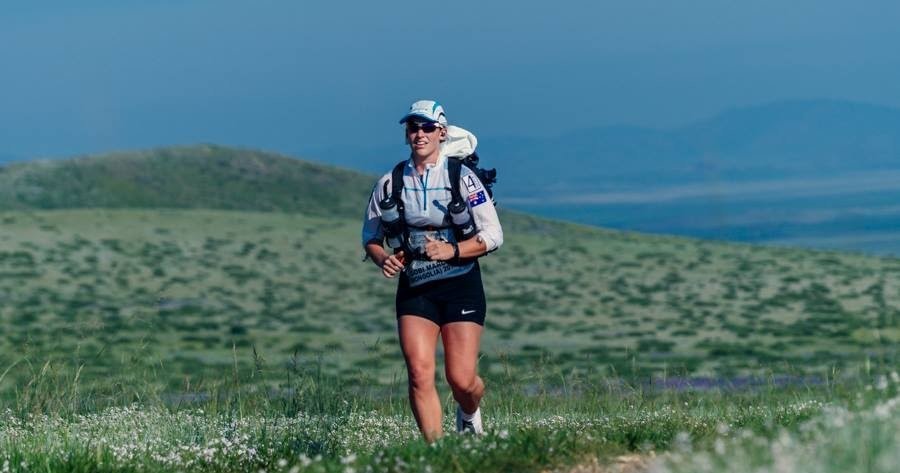
Bell said she was looking forward to the "beautiful landscape" in New Zealand.
"I can't wait to clock off from the everyday stresses of life and get to run every day in the mountains.
"I've never been to New Zealand ... I'm not sure what I'm in for."
Bell said she couldn't resist the idea of running 323km.
"It's going to be amazing," she said.
(02/20/2019) ⚡AMP

Alps 2 Ocean Ultra
New Zealand's First Ultra Staged Run. Starting at the base of New Zealand's highest mountain, travelling on foot 316 kms to the small harbour of Oamaru, located on the shores of the Pacific Ocean. The ultimate adventure race, Alps 2 Ocean Ultra, was a dream that quickly became a reality. And it’s now only weeks until the 126 entrants will...
more...
Western States 100 course record holder Jim Walmsley makes Hong Kong debut
Hong Kong is in peak trail-running season, and one of the world’s champion runners, Jim Walmsley, has flown in for a series of events that will test his legendary speed and stamina.
Walmsley has set records for running across the Grand Canyon, smashed the Western States record, earned back to back titles as Ultrarunner of the Year, and is the world’s top ranked runner on ITRA. Despite this, he sets new goals tirelessly.
He is visiting Hong Kong primarily to compete in the Fast 50 Miles Ultra trail run: a gruelling 80km dash along a single trail from Route Twisk to Shing Mun and around the Shing Mun Reservoir, with about 2,500 meters of elevation.

Michael Wardian finished running ten marathons in ten days on Saturday at a 2:55 avg pace and then Sunday ran a 17:01 5k race! Wow!
Michael Wardian is one of a kind. Most people would think that running seven marathons in seven days on seven continents would be enough. It was not enough for Michael.
On Saturday, Wardian set the pending world record for completing 10 marathons in 10 days, with a cumulative time of 29 hours, 12 minutes, and 46 seconds.
That is an average of 2:55:17 per marathon. And it’s more than 43 minutes faster than the previous record (29 hours, 54 minutes, and 56 seconds), set by Brit Rik Vercoe in 2013.
Before heading off to do the seven in seven in seven, he called a running friend. “I’d like to add three more. I think I can break the record,’” Michael told Chris Farley, owner of Pacers Running stores. So Farley mapped out an eight-loop, USATF-certified marathon course around Hains Point and invited D.C.’s enthusiastic running community to watch history in the making.
Wardian crossed a makeshift finish line on Hains Point on Saturday afternoon, completing his 10th marathon in as many days, with a time of 2 hours, 44 minutes, and 33 seconds (averaging 6:16 per mile). It was his fastest race of the entire journey.
“I’ve been trying to think of how to put it in context so that people can understand how difficult this is,” said Farley. “If you did a 30-mile week, that’s a strong week for most runners. Michael did close to that distance every day for 10 days straight. He ran more than 262 miles in the last 10 days. And he finished the last 5K of a marathon in under six-minute pace. That’s insane.”
Wardian did all of this on just 20 hours of sleep over the past 10 days. While most of that deprivation can be attributed to his rigorous travel to all seven continents, he slept in his own bed, at his home in Arlington the past three nights. Apparently, that isn’t enough to get a full night’s sleep.
“Too excited,” he explained after the race. “I’m just ready to go.”
This is perhaps what makes Wardian most impressive. He is absolutely relentless.
While elite marathoners tend to do one or two key races in a year, Wardian doesn't hit the brakes. In the distance running community, he’s well known for his punishing race schedule of ultramarathons and marathons.
To successfully tackle an odyssey like this, Wardian kept a rigorous training schedule, which included finishing the one of the most difficult 100-mile courses in the world—the HURT 100—just last month.
“The training for each event just builds on itself,” he explains. “I ran the HURT 100 back in January, which was 27 straight hours of running.”
But Wardian’s training was only part of the equation. There were plenty of other challenges he’d have to face, including hydration and nutrition, travel logistics, and weather.
“During the seven marathons in seven continents in seven days, the most challenging part was staying on top of my nutrition,” says Wardian. “You’re really at the mercy of where you are and what food is in front of you.”
“I just eat whatever my body will tolerate,” he adds, noting that he did get sick during his marathon in Santiago, Chile.
But with such a tight travel schedule, it was just a matter of pushing through the tough parts, get enough calories to fuel his next run. For a vegetarian like Wardian, this can be doubly challenging.
The weather also threw some curveballs at Wardian. “The temperature fluctuations were tough,” he says. “One day might be cold, and the next is hot. While usually your body gets the chance to acclimate to those conditions, this time it was just go-go-go.”
The very next day after finishing 10 marathons in ten days, Wardian didn't sleep in or take a day off from running. But instead, he competed in the Love The Run You're With 5K with his vizsla, Rosie, near his home.
Wardian finished ninth overall in 17:01 (a 5:28 per mile pace). The one-of-a-kind runner can!
(02/11/2019) ⚡AMP
