

Running News Daily
Running News Daily is edited by Bob Anderson and team. Send your news items to bob@mybestruns.com Advertising opportunities available.
Index to Daily Posts · Sign Up For Updates · Run The World Feed


How to create a race plan, want to achieve your race goal? Make sure you plan for it
Like most runners, you probably follow some kind of training plan when preparing for a goal race, but when race day arrives, what do you do? Do you simply show up on the start line and hope for the best, or do you go into the race with a plan? Here at Canadian Running, we believe the latter is a better strategy if you’re trying to achieve a goal. Not sure where to start? Follow this guide to ensure you arrive at your goal race with a plan for success.
Know your pace ahead of time
In the last couple of weeks before your race, take an honest look at how your training has been going to create a realistic goal. If you’re not sure how to translate your times in workouts to a realistic race goal, ask a more experienced friend or coach.
Many coaches suggest having more than one goal heading into a race: a best-case goal, a realistic goal and a backup goal in case things don’t quite come together on race day. That way, you won’t be constrained by your goal if things are going better than expected, and if they go worse, you still have something to aim for rather than just giving up.

Have a strategy
In most races, ticking off kilometres like a metronome is not realistic. A hilly section of the race will likely be slower, and you may find yourself running a bit ahead of your goal pace at the beginning thanks to nerves and excitement. Knowing how you’re going to tackle different parts of the race ahead of time can stop you from panicking when you don’t hit your splits perfectly.
For example, if you know you tend to start out fast, plan to run the first kilometre a bit ahead of your goal pace and then settle into something more realistic after that. If you know there’s a hill late in the race, plan to adjust your pace to get you to the top without burning you out for the rest of the race. Want to have a strong finish? Plan at what point in the race you’re going to start your finishing kick.
Plan your nutrition
Regardless of what distance you’re running, you should plan what you’re going to eat on race day morning in advance so you have everything you need. Make sure it’s something you’re used to eating before a run or workout, so you know it won’t cause tummy troubles during the race.
If your race is longer, like a half or full marathon, make sure you plan out when, how much and what type of fuel you will be taking in during the race. This should be planned and practiced well in advance of your race so you know what your stomach can tolerate.
Plan your clothing
The night before the race, set out everything you’re going to need on race day morning. This includes the clothes you’re going to be running in, your warmup clothes, your nutrition (if you need it), and anything else you may need. If you got your race bib ahead of time, attach it to your shirt so you don’t accidentally leave it at home. There is no such thing as being over-prepared the morning of your race.
Make a schedule
Finally, plan out your morning so you get to the start line with as little stress as possible. Write out a schedule, starting with what time you’re going to get up, when you’re going to eat breakfast, when you have to leave your house and when you’re going to start warming up. Remember to give yourself more time than you need, because having extra time is far better than rushing, which will only increase your pre-race anxiety, and consider setting alarms throughout your morning to keep yourself on track.
(02/09/2022) ⚡AMPby Brittany Hambleton
Here are four helpful ways to prepare yourself before your run
Running is one of the simplest activities on the planet, and with proper gear and preparation, anyone can do it. There are many helpful ways to prepare to get the most out of your run, but what’s the most important? If you mentally and physically prepare the night before, it can put you in the right space to have a good run and lower your risk of injury.
Here are four easy helpful tips to get ahead start on your next run.
1) Map out your route
If you know how much time you have or a certain distance planned on your training schedule, map your route ahead of time. Check the weather and make sure your route has plenty of shade if it’s warm, plus plowed roads or sidewalks in winter.
When you plan your route ahead of time, you are already aware of the time you have to run the distance. If you end up getting lost or making up the route as you go, the chances are your run will take longer than you expected.

2) Hydrate
Hydration is a hot topic for most runners during the summer, but when winter rolls around, the concern for staying hydrated tends to drop with the temperature. Although you do sweat less when it’s cold out, keeping up your fluids is still important if you want to feel and perform at your best.
A glass of water before you go to bed will optimize your performance for your run the next morning.
3) Prep your running clothes and shoes
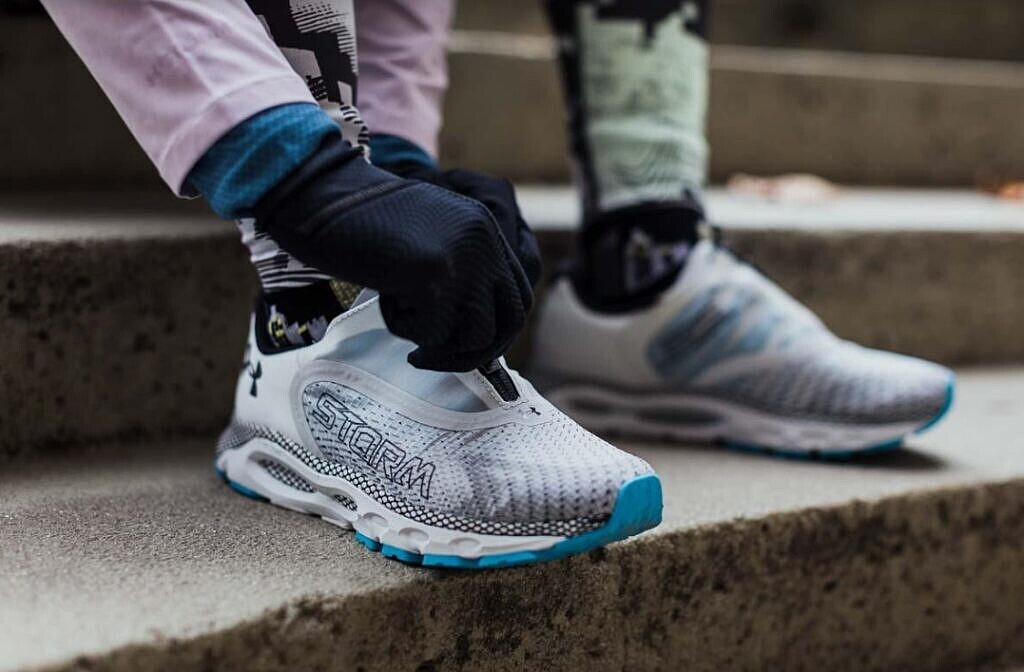
We know everyone did this as a kid before their first day of school… the same applies to running. Save time in the morning by picking out the running clothes and shoes you’ll wear the night before. Check the weather and make sure you have the proper gear according to the temperature outside.
The best way to dress is by following the 10-degree rule: dress for 10 degrees warmer than it is. In other words, once you get warmed up, if it’s 5 C outside, it will feel like 15 C, because your body temperature will rise as your run progresses. (This means you should feel cold when you start. If you feel comfortably warm before you start, you are probably overdressed and will soon have to shed layers.)
4) Morning meal prep
If you are running in the morning, then you may want fuel with a small snack before you head out. Prepare to have the snack first thing in the morning to let the food settle in your stomach before running. Some simple popular morning snacks for runners are bananas, oatmeal, cereal or toast with peanut butter.
These preparation tips are easy yet simple and will help you save time heading into your next morning run.
(02/09/2022) ⚡AMPby Marley Dickinson

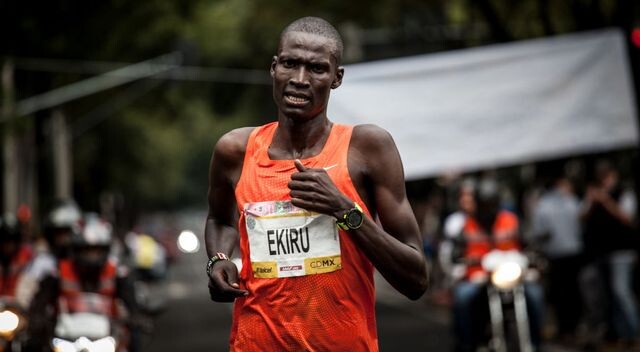
Kenyans Hellen Obiri and Titus Ekiru added to star-studded RAK Half Marathon list
Kenya's two-time world 5,000m champion Helen Obiri and Titus Ekiru have been added to the 2022 Ras Al Khaimah Half Marathon field slated for February 19.
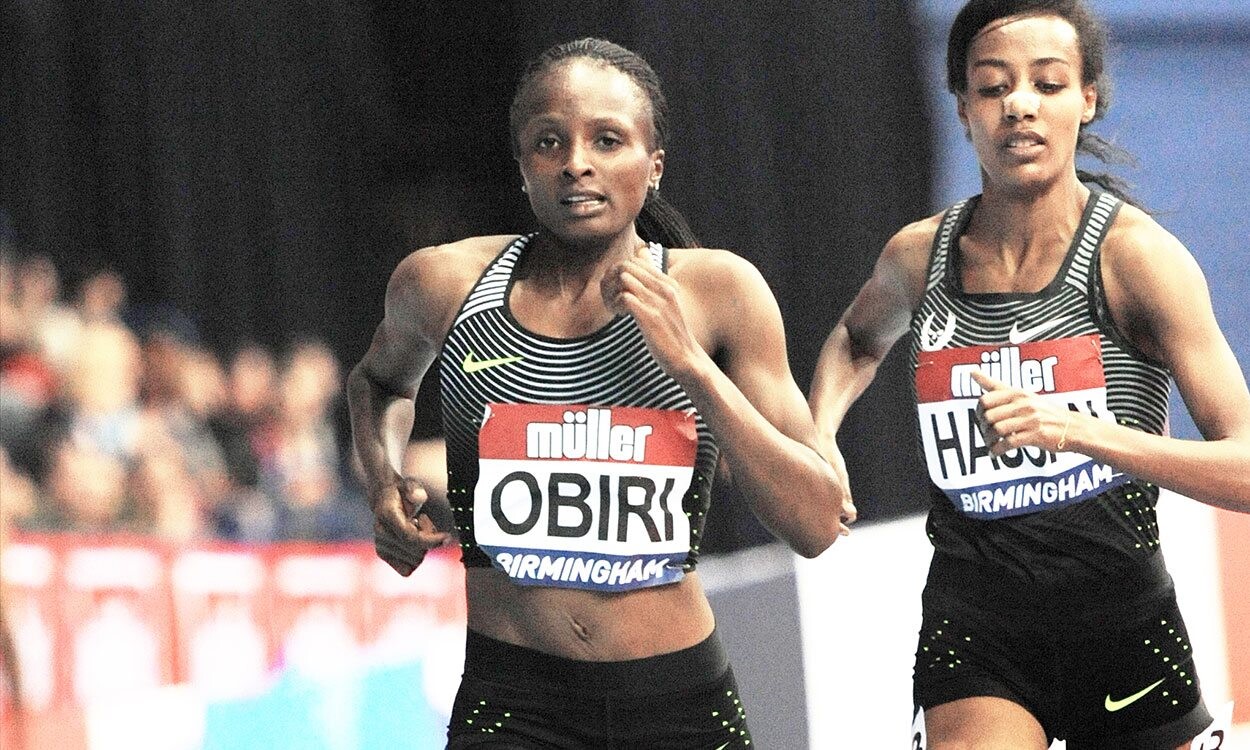
Obiri, who retired from the track after the Tokyo Olympics last year, has a personal best of 1:04.51 in the half marathon set in Istanbul in April last year. Obiri will have Olympic silver marathon medalist, Brigid Kosgei for company in what promises to be an entertaining race.
Kosgei is the world marathon record holder and a two-time London Marathon champion (2019 and 202). She was also runner up at the Ras Khaimah Marathon in the 2020 edition and has a personal best time of 1:04;49 in the 21km race.
Ekiru has fond memories of the UAE, having won the Abu Dhabi Marathon last year in 2:06:13.
Joining Ekiru in a competitive field will be Abel Kipchumba, who famously secured the second-fastest time in the 2021 Half Marathon distance category, with an incredible personal best of 58:07.
However, Jacob Kiplimo, who had a spectacular season, will be the man to beat. He completed the 2021 Lisbon Half Marathon in a record-breaking time of 57:31.
The world half marathon record holder is expected to set a quick pace and deliver fierce competition in the men’s category. Kiplimo won the World Half Marathon in Gdynia, Poland in 2020 and a bronze medal in 10,00om at the 2020 Tokyo Olympics.
(02/09/2022) ⚡AMPby William Njuguna
Rak Half Marathon
The Rak Al Khaimah Half Marathon is the 'world's fastest half marathon' because if you take the top 10 fastest times recorded in RAK for men (and the same for women) and find the average (for each) and then do the same with the top ten fastest recorded times across all races (you can reference the IAAF for this), the...
more...
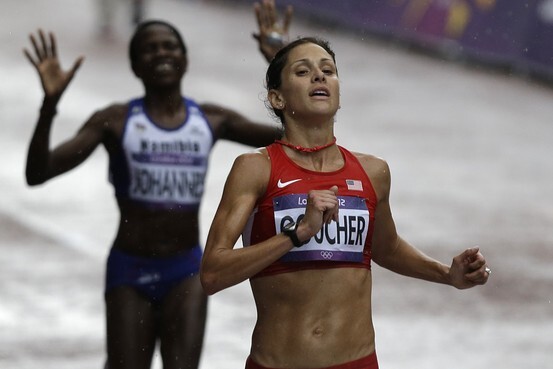
Kara Goucher has been diagnosed with neurological disorder
The running community was shocked on Tuesday when Kara Goucher, one of America’s most accomplished distance runners, announced that she will no longer be able to participate in the sport she loves. The two-time Olympian explained in an Instagram post that she had been diagnosed with repetitive exercise dystonia and that if she did not drastically cut back on her running, she’d not only risk losing her ability to run, but even to walk.
“This past week I was a patient in the neurology department at the Mayo Clinic,” Goucher said in her post. “The doctor confirmed repetitive exercise dystonia, and tried to tell me, as gently as possible, that the more I run the worse my symptoms will get. I have to drastically cut back or not only will I lose the ability to run at all, I will struggle to walk as well.”
A dystonia is a disorder characterized by involuntary muscle contractions, which can affect only one muscle, groups of muscles or muscles throughout the body. Although they are very rare, they can result from overuse or repetitive stress and tend to affect musicians and sometimes athletes.

Initially, symptoms (like a foot cramp or a tendency for one foot to turn or drag, a worsening in handwriting after writing several lines or difficulty speaking) may be very mild and only occur after prolonged exertion. Over time, they can get worse or more widespread, or not they may not progress at all.
Unfortunately, medical professionals don’t know exactly what causes dystonia and there is currently no cure, but there are some treatments available to help lessen some of the symptoms. Physiotherapy can also help affected individuals deal with or lessen their symptoms. Goucher said in her post that she had started on some medication that was helping with her symptoms.
Unfortunately, medical professionals don’t know exactly what causes dystonia and there is currently no cure, but there are some treatments available to help lessen some of the symptoms.
Physiotherapy can also help affected individuals deal with or lessen their symptoms. Goucher said in her post that she had started on some medication that was helping with her symptoms.
(02/09/2022) ⚡AMPby Brittany Hambleton

The truth about blood lactate, why lactic acid isn't the enemy you thought it was
Every runner is familiar with that burning sensation that builds up in your legs during a hard run. For years, a buildup of lactic acid was blamed for this unpleasant sensation, and coaches and sports scientists have tried to devise ways to rid your body of this so-called toxin as fast as possible. New research, however, is suggesting we’ve been wrong all along. So if lactic acid isn’t to blame, what is?
What is lactic acid?
When you’re engaging in intense physical activity, your body has to burn sugar (glucose) for energy. When you do this, there are two potential outcomes. If you’re exercising at an intensity that allows your cells to get enough oxygen (think walking, easy jogging or steady-state running), the end product of that sugar-burning is pyruvate. Because you’re working at a low intensity, pyruvate can easily be shuttled back through the same pathway to help produce more energy later on.

If you’re working at a high intensity (i.e.- sprinting), your body can’t get enough oxygen for that process to work. This is called anaerobic respiration (as opposed to aerobic respiration). In this case, your body converts pyruvate to lactate and hydrogen, collectively known as lactic acid.
The terms lactate and lactic acid are often used interchangeably, but they are not exactly the same thing. As we’ve learned, lactic acid is a combination of lactate and hydrogen. That hydrogen ion lowers the pH of your muscles and makes them more acidic, which is where the burning sensation comes from. This is where lactic acid got a bad rap. In reality, it actually helps your muscles.
Here’s how: when lactic acid leaves your muscles and enters the bloodstream, the hydrogen molecule detaches so you have lactate and hydrogen existing separately. That lactate can then be recycled and used as energy, which your body desperately needs in that moment. Lactate already exists in your body, even when you’re at rest, but most of the time your body clears it out about as fast as it’s created. As your exercise intensity increases and your oxygen needs exceed supply, lactate levels increase, which triggers your heart rate and respiratory rate to increase in order to supply the muscles with the energy they need.
How does this impact performance?
Contrary to what you may have been told, you don’t have to worry about lactic acid buildup. Why? Because your body simply will not allow you to exercise past the point that it can safely clear lactate and hydrogen from your blood. When you hit that limit, no amount of mind over matter will prevent you from slowing down. This is called your lactate threshold.
A very fit individual can only keep running at this intensity for two to three minutes. 800m runners, for example, will use this system primarily during their race and are thus very well-acquainted with hitting their lactic acid threshold (hence why the final 100m of an 800m race are often not pretty). The same goes for the world’s best 1,000m and 1,500m runners.
To recap so far: that burning sensation in your muscles is not caused by lactic acid, but by hydrogen ions (and other chemical byproducts that researchers are still investigating) that are causing your muscles to be more acidic. These ions attach to lactate and enter your bloodstream, ultimately forcing your body to slow down.
How can I reduce lactic acid?
When you exercise at a high intensity, lactate and hydrogen are going to build up in your blood and there’s nothing you can do to prevent that (as we’ve learned, that extra lactate is actually a good thing). What you can do is increase your fitness level so it takes you longer to reach your lactate threshold by improving how efficiently you use oxygen while exercising. This will allow you to train harder for longer before oxygen is no longer sufficiently supplied to your cells, and lactic acid is produced.
How quickly can you recover from lactic acid buildup?
Your body can clear lactic acid fairly quickly once you reduce your exercise intensity. That’s why you can do a series of 400m repeats at a high intensity as long as you rest in between. The harder you run, the longer you will need in between intervals in order to produce the same level of intensity again.
What about DOMS?
For a long time, lactic acid often got blamed for causing the delayed-onset muscle soreness (DOMS) that often follows a bout of intense exercise, but we know now that is not the case. That soreness you feel the day or two after a hard workout is a result of microscopic tears that form in your muscles during intense exercise. Within reason, these tears are a good thing because it’s the healing process that causes muscle growth.
This is why you may have sore legs the day after a long run or race. You likely weren’t running fast enough to reach your lactate threshold, but you sustained enough tiny tears in your muscles to cause some discomfort in the days after your run. As long as this does not persist for more than a few days, this is a sign that you’re building strength and endurance.
The bottom line
Lactate and lactic acid are not your enemies. In fact, they’re there to help you continue to produce energy so you can keep working at a higher intensity. If you train consistently and recover well between sessions, you’ll be able to increase your lactate threshold so you can run faster and farther.
(02/08/2022) ⚡AMPby Brittany Hambleton
Three stages of speed work for beginners, use these three stages as a framework to help you get faster
Speed can be intimidating for many new runners to implement into training. If your goal is to get quicker, the purpose of speedwork is to help you feel more relaxed and comfortable while running at a faster pace. If you’re new to running or have simply never done a speed session before, you can use these three stages as a tool for training.
You’ll find the inclusion of speedwork will complement your easy mileage, and you’ll see the results first hand.

Stage one – Making strides
If you’ve never done any kind of max speed training (or if it’s been a while), it’s important to start small. Stage 1 exercises are a good introduction, setting the stage for more explosive work. Begin by doing strides for 80 to 100m four times with walk-back recovery. Adding these to your training one day a week will make a huge difference. Eventually, these strides should be done after every recovery run.
Stage two – Hills and intervals
After doing two to three weeks of stage one workouts, you can start to add intervals or short hill sprints in stage two. Interval work, such as two minutes on, one minute off, helps you operate outside of your comfort zone. Interval work should be done once or twice a week mixed in with a few easy runs.
Stage three – Add intensity
Once you have gradually built up and conquered a few weeks of stage one and stage two workouts, you can start to incorporate higher-intensity intervals, for example, 10 reps of 400m with short jog recovery. Limiting these exercises to once or twice a week maintains the appropriate intensity without risking injury or causing too much training fatigue.
(02/08/2022) ⚡AMPby Marley Dickinson

Why can´t I lose those last few pound?
“I can’t lose weight like I used to. I must be eating too many carbs”
“Do you think a keto diet is a good way to drop a few pounds?”
Judging by the phone calls I get from potential clients, an increasing number of runners of all ages are complaining, “Why can’t I do something as simple as shed a few pounds???” They are frustrated and at a loss about what to do to lose undesired body fat.

Speaking at the annual meeting of the American College of Sports Medicine (June 2021; www.acsm.org), Kevin Hall PhD explained that fat loss is far from simple. Dr. Hall works at the National Institutes of Health. His laboratory investigates how metabolism and the brain respond to a variety of changes in diet and exercise. His research has helped identify the complex mechanisms that regulate weight.
Weight loss is not simple

You’ve likely heard, “A pound of fat equates to 3,500 stored calories. To lose one pound of body fat a week, you can simply knock off 500 calories a day—or burn off 500 calories more than usual, or some combination of the two.” Hall explained the “simple” approach to weight loss just doesn’t hold true. Runners who are chronic dieters would have shriveled up and disappeared by now. Not the case.
Weight loss is not simple because our bodies adapt to “famines” by conserving energy. When food is scarce, be it a famine or a diet, the body conserves energy (metabolism slows, spontaneous movement lessens) and simultaneously appetite increases. Hence, eating less (dieting) takes persistent effort. The greater the energy deficit and the greater the weight loss, the greater the increase in appetite. Losing weight becomes more and more challenging. Hence, most runners end up unwilling or unable to sustain for a long time a diet with a calorie reduction of 25%. For a typical female runner who maintains weight at about 2,400 calories, that’s an 1,800-calorie reducing diet. Based on my experience, runners inevitably self-imposed a 1,200 – 1,500 calorie reducing plan. No wonder their diets fail! The stricter the diet, the hungrier the dieter, the bigger the backlash. The runner ends up devouring way too much ice cream, too many cookies, chips…
The bottom line: Runners who diet commonly end up heavier. You want to learn how to eat competently by working with a registered dietitian (RD) who specializes in sports nutrition (CSSD).
Is keto the answer?
So often I hear frustrated runners ask, “What if I just do keto (or Paleo or another trendy diet) for a bit and then go back to eating “normally?” Ha! When runners have managed to successfully lose weight, they can’t go back to eating like they used to eat. These dieters need fewer calories to support their lighter body. For each kilogram (2.2 lb) of weight lost, a dieter requires about 25 fewer calories/kg per day. Hence, runners who lose 10 kg. (22 lbs.) need about 250 fewer calories per day to maintain their new reduced weight. Unfortunately, appetite-regulating hormones nudge them to want to eat more than that. This gets to be a tiring fight, and most folks lose the battle of the bulge.
The bottom line: Preventing weight gain in the first place might be simpler than trying to reclaim a former physique!
Are carbs the problem?
What if you could lose weight by cutting carbohydrates but not calories? Diet gurus have promised this for years, as do today’s keto supporters. Anti-carbers claim high-carb diets lead to excess insulin secretion, hunger, excessive eating, and fat gain. Low-carb/keto diets are touted to reduce insulin, hunger—and promote easy fat loss.
Not so simple. Despite popular belief, simply knocking off starches (bread, pasta, grains) and sugary foods does not guarantee fat loss—unless it creates an energy deficit. That is, eliminating a serving of rice from dinner can knock off 200 calories. But does the hungry dieter then indulge in a pint of sugar-free ice cream or a keto-bomb? The carb-free = calorie-free attitude can easily wipe out the deficit created by cutting out carbs.
Hall’s research does not support the carb-insulin theory that carbs are fattening. He closely monitored subjects in a metabolic ward who ate as much as they desired of high (75%) carb/high-glycemic diet designed to spike blood glucose and trigger high levels of insulin. The subjects did not gain body fat. In fact, every single subject eating the high carb/high insulin/low fat diet ate, on average, about 700 fewer calories/day less than when they ate the high fat/low carb/low insulin keto diet.
The bottom line: Carbs are NOT inherently fattening. (If carbs were fattening, then people in Asian countries who eat bowlfuls of rice would be obese. Not the case.)
If carbs aren’t fattening, what is?
The increase in obesity in the US correlates well with the increased intake of ultra-processed foods. Hall is pointing his finger at foods such as Oreos, soda, instant ramen noodles, chicken nuggets, etc. He has researched the impact of two weeks of an ultra-processed convenience food diet vs. two weeks of a homemade, natural foods diet. The menus were very carefully designed to be equally tasty. The subjects reported no differences in pleasantness between the two diets. They ate as much as desired.
With the ultra-processed diet, the subjects consumed about 500 more calories a day compared to the unprocessed diet. They gained weight during those two weeks—and lost weight (without trying to do so) with the unprocessed diet. Because both diets offered the same amount of sugar, carbs, and fat, those nutrients did not drive the weight change.
What’s going on? Hall is currently looking at why ultra-processed foods easily lead to weight gain.
The bottom line: Until we know more, your best bet is to limit ultra-processed foods. Fret less about sugar/carbs, and more about the processing. Somehow, find time to prepare meals. As a parent, please teach your kids to cook. Hopefully you’ll all enjoy the eat-well, stay lean diet!
(02/08/2022) ⚡AMPby Colorado Runner

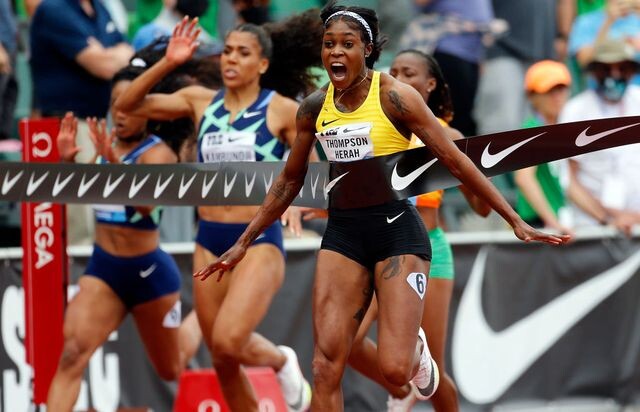
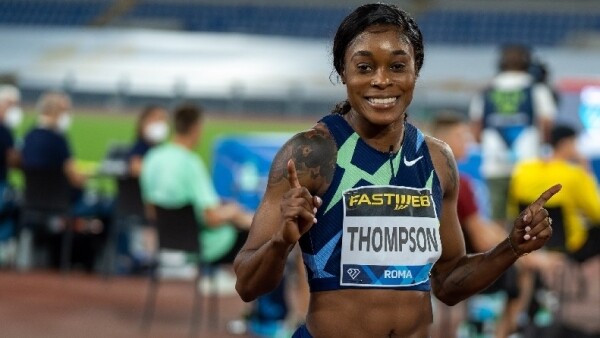
Olympic Champion Elaine Thompson-Herah, excited as she prepares to race over 60m in Birmingham
Multiple Olympic champion Elaine Thompson-Herah will race over 60m at the Müller Indoor Grand Prix – a World Athletics Indoor Tour Gold meeting – at the Utilita Arena in Birmingham on Saturday, February 19.
Thompson-Herah, gold medalist in the 100m, 200m and 4x100m relay at the Tokyo Olympics, is the Jamaican national record-holder and second-fastest woman of all time over 100m (10.54) and 200m (21.53). Her incredible CV includes five Olympic titles and one silver across two Games, in addition to a World Championships relay title and 200m silver in 2015. A World Indoor Championships bronze medalist over 60m, she has a personal best of 6.98.
“I’m so excited to race in Birmingham to start my 2022 campaign,” the 29-year-old told the British Athletics website. “I have enjoyed competing in the UK over the years and there is always a special atmosphere at this venue.
“I ran my PB at this arena in 2017 (6.98), so competing here means a lot to me. This year is a huge one. I have big goals for the World Athletics Championships later this summer, but first I’d like to give fans something to cheer about in Birmingham.”
The Müller Indoor Grand Prix is the fifth meeting of the 2022 World Athletics Indoor Tour (Gold). There are seven ‘Gold’ level meetings across the series, which started with Karlsruhe on January 28 and culminating in Madrid on March 2.
Throughout the series, each athlete’s best three results will count towards their overall point score. The athlete with the most points in each scoring discipline at the end of the tour will be declared the winner and will be awarded a USD$10,000 bonus along with a wild card entry for the World Athletics Indoor Championships Belgrade (March 2022).
(02/08/2022) ⚡AMP

Muller Indoor Grand Prix Birmingham
The Müller Indoor Grand Prix Birmingham is one of the leading indoor meetings in the world with world-class athletics as part of the World Indoor Tour Gold series. The event will be staged at its traditional home at Utilita Arena Birmingham setting the tone for what is set to be an incredible year of track & field. ...
more...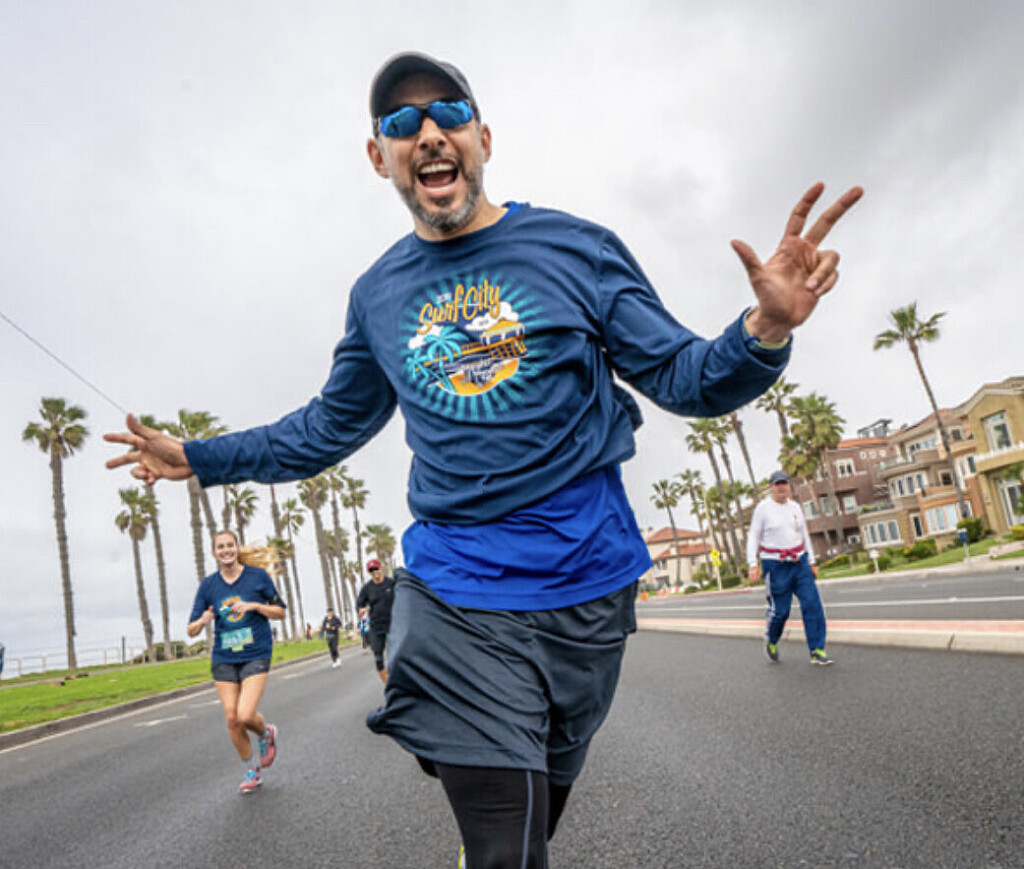
The Surf City USA Marathon in Huntington Beach returned its traditional first Sunday in February date for the first time since 2020
The Surf City USA Marathon in Huntington Beach had a field of approximately 2,000 people competing in the race’s 26th edition.
The 2021 race was delayed to Sept. 11 because of the coronavirus pandemic. It usually draws a capacity field of 2,500. The smaller field is likely due to the pandemic and the fact that this was the second running of the race in less than five months, race publicist Dan Cruz told City News Service.
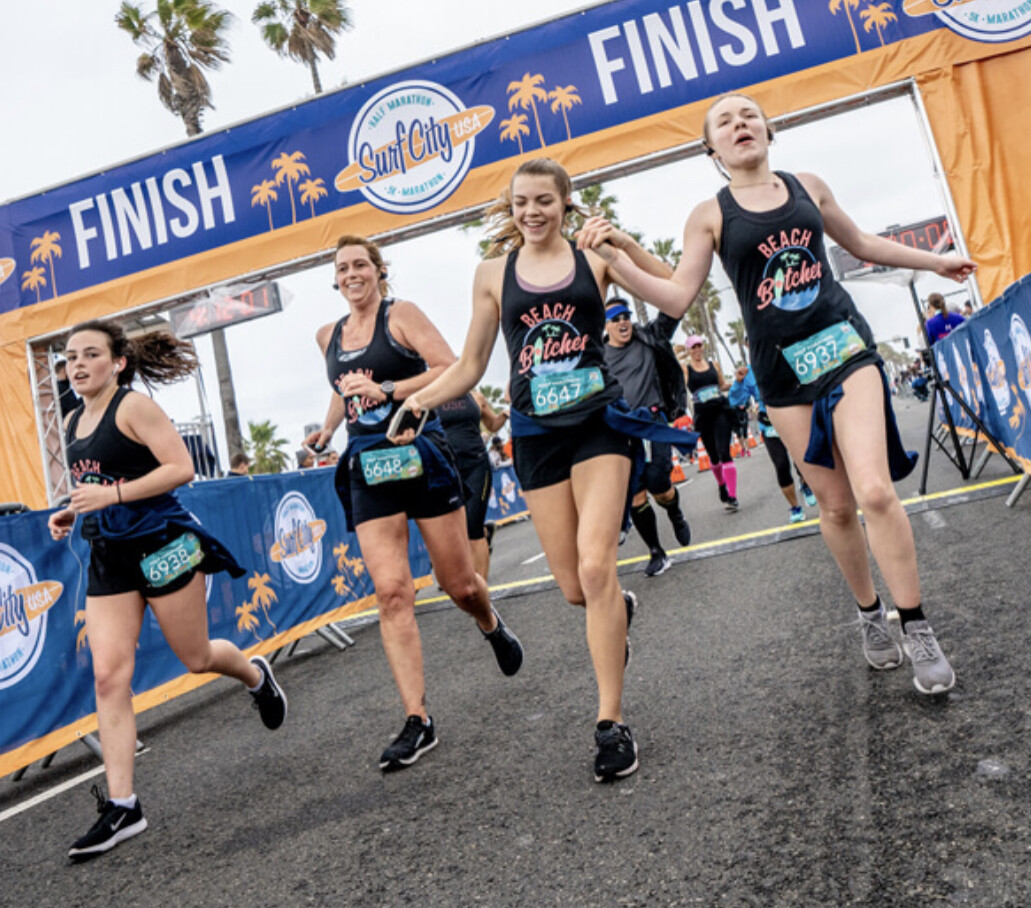
The marathon began at 6:30 a.m., 14 minutes before sunrise, on Pacific Coast Highway between the ocean and the Hilton Waterfront Beach Hotel.
The 26-mile, 385-yard course then quickly passed the Huntington Beach Pier. Miles two through nine went through Huntington Beach’s Central Park and miles 9 through 15 through the Bolsa Chica Ecological Reserve.
Miles 16 through 25 are on a beachfront running path paved over the sand. The final mile took runners along Pacific Coast Highway to the finish line, also near the Hilton Waterfront Beach Resort.
The marathon field was limited to 2,500 because the beachfront running path is not part of the race’s closed course and runners could encounter walkers, bicyclists and others not participating in the race. The path is only 8 feet wide for a few stretches, Cruz said.
Johanna Torgesen of Coronado won the women’s race with a time of 3:06:12.44.
Robert Mohr of New York won the men’s race with a time of 2:32:52.90.
The field also included Heather LeFriec, a physical education teacher from Spokane, Washington, who ran in the Surf City USA Marathon to fulfill her goal of completing 50 marathons by her 50th birthday in March.
LeFriec became a competitive runner as a senior at Oak Harbor High School about 65 miles north of Seattle after tennis was moved from fall to the spring. She wanted to stay active, compete in another sport, something that might help her lose weight. She wasn’t skilled at soccer and volleyball, so they were out.
Because she always liked running, she chose cross-country and finished 12th in the Washington state cross-country championships. After running one year at an Idaho community college, she was offered a scholarship at Gonzaga where she set a school record in the 10,000 meters that stood for more than a decade.
(02/07/2022) ⚡AMP
Surf City USA
The Surf City USA Marathon and Half-Marathon attracts more than 20,000 runners from around the world. The exclusive oceanfront course runs along the Pacific Coast Highway (which is more like a street than a highway in this area), past the Huntington Beach Pier and the famous Southern California surfing beaches. Weekend highlights include many Super Bowl parties, the three-day Active...
more...
Fitness Trackers: We Love the Data, But Are They Messing With Our Mental Health?
Some experts suggest they could heighten anxiety and lower motivation. But it all depends on how you use them.
Although I don’t remember when I put my fitness tracker into long-term storage, I certainly recall the reason: It made me doubt myself.
Like many people, I’d started wearing a tracker—in my case, a Fitbit Alta HR—as a way to track my daily steps as well as heart rate, sleep, and calorie burn.
For about 18 months, I loved digging into this data and looking at trends, but then I noticed a shift: I didn’t see the numbers as a way to work toward my health goals—they’d become a replacement for my own self-awareness.
For example, I’d wake up feeling alert and well rested, but my data suggested I’d had a terrible night of sleep. Suddenly, I wasn’t so bushy tailed and ready for the day anymore. I’d finish a run thinking I’d crushed it, but my heart rate and calorie burn data said otherwise, so that accomplishment would turn to disappointment.
Pretty soon, I started checking my numbers to determine how to feel, rather than the other way around. That’s not the fault of Fitbit, or any brand of tracker, but it was enough to make me ditch the device altogether. And it turns out I’m not alone.
The Trouble With Trackers
One survey of over 1,800 people on fitness tracker usage, habits, and stress found plenty of benefits from usage, including increased activity, but nearly half of the people feel anxiety or pressure as a result of tracker data. That led 45 percent of that group to wear the trackers less often—even though many of them felt guilty for not wearing the devices.
“Fitness trackers can measure inactivity, and some of the men and women I evaluate say that trackers exacerbate their feelings of anxiety and depression related to their body, which further demotivates them,” Leela Magavi, M.D., a psychiatrist and regional medical director for Mindpath Health, tells Runner’s World. “Some of these individuals hide their trackers as they begin to perceive them as reminders of their perceived failure.”
Those who already have anxiety disorders may feel this even more deeply, she adds, and that becomes problematic when this level of concern spikes their heart rates—which the trackers record. For those with obsessive compulsive disorders, trackers can also heighten compulsions, such as overtraining or engaging in disordered eating, says Magavi.
Even if you don’t have emotional health challenges, trackers could shift your perception in a negative direction, similar to what I’d experienced. That’s why it’s helpful to take a step back and build more awareness around their usage.
Signs It Might Be Time to Break Up With Your Tracker
Although I chose to stop using my tracker, it’s possible to take a less drastic step. You just have to acknowledge how you’re using the tracker and, especially, how it’s making you feel when you do.
“One red flag is focusing too much attention on the numbers,” Rocky Snyder, C.S.C.S., California-based trainer and author of strength training guide Return to Center, tells Runner’s World.
Of course it’s beneficial to have goals, he says, and trackers make it easy to create those and gauge progress toward them.
“The trouble starts when people many not take into consideration how their body is feeling,” he says. “For example, you’re focusing on heart rate but not keeping in mind that you might be under more stress or have muscle tension or a pain response, which can all affect that reading. You need to look at the bigger picture and not become so myopic on the numbers and stats.”
Another sign that your tracker is a mental-health hindrance is that you’re not enjoying your activity, Snyder adds. Despite the expression of nearly every runner in a photo taken at a race, this sport is actually supposed to be fun, remember?
“Don’t let your daily goal distract you from the true, underlying purpose of every program, which is to live a happier and healthier life,” he says. “If you find that you are mentally consumed by your fitness tracker, try leaving it behind and practice being in the moment of whatever adventure you’re guiding your body through.”
How to Make the Shift Toward Self-Compassion
Using trackers in a different way can not only help you make peace with their limitations, but actually benefit you in ways that support your emotional wellbeing, says Magavi.
“Trackers can help individuals create routines and transform healthy behaviors into positive habits,” she adds. “Every healthy behavior can be perceived as a win. For those who struggle with self-motivation, as we all do from time to time, accountability is key, and trackers can help you see how much you’ve achieved and practice self-compassion.”
In general, using them as part of a much larger strategy and staying aware of their effects could keep you from veering into the “obsessing over data” trap. That way, Magavi says, they’ll feel like supportive technology that keeps you motivated instead of defeated.
With this in mind, it’s likely I’ll rescue my tracker from the depths of the junk drawer—and I’ll use it in a much different way when I do.
(02/06/2022) ⚡AMPby Runner’s World
After the Beijing Olympics, This Biathlete Is Retiring and Returning to Her Running Roots
She’ll hang up her rifle and skis to be the new running director of the Craftsbury Outdoor Center in Vermont.
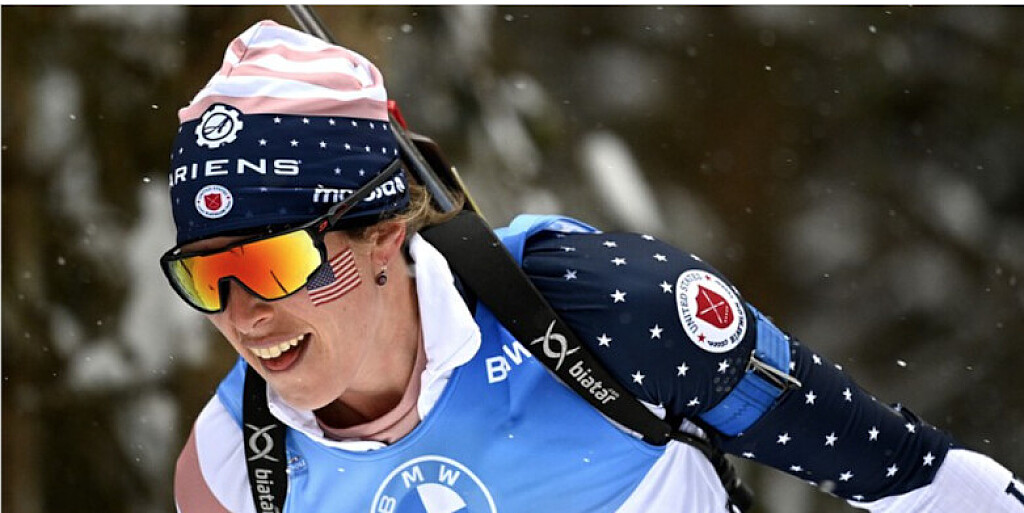
The 2022 Winter Games will be the last time three-time Olympian Susan Dunklee competes for Team USA; the 35-year-old professional biathlete has announced that she will retire after Beijing. But the end of her career, highlighted by two world championship medals and several World Cup podium finishes, marks the beginning of a new chapter that’s familiar territory for the Craftsbury, Vermont native.
This spring, Dunklee will hang up her rifle and skis to assume a full-time role as the running director for the Craftsbury Outdoor Center. She’ll be leading a program that’s supporting future generations of elite runners, while promoting sustainability in the same community that helped her develop into a dynamic athlete.
In an interview with Runner’s World, Dunklee shared how running continues to fuel her love for exploration and why she’s looking forward to supporting fellow athletes in their Olympic pursuits.
“I’ve been so immersed in biathlon for a long time, but running is really the place that I started out when I was younger and meant a lot to me for a very formative part of my life,” Dunklee said. “And I’m really excited to get back into it.”
Finding the Crossover Between Skiing and Running
While growing up in Barton, Vermont, Dunklee picked up skiing shortly after she learned how to walk, thanks to her family. Her dad, Stan Dunklee, competed in cross-country skiing at the 1976 and 1980 Olympic Games and now coaches cross-country skiing and track and field at the high school level.
At 5 years old, Dunklee started competing in cross-country ski races in Barton, which is known for producing top winter athletics talent, including Olympic cross-country skier Ida Sargent and Olympic biathlete Hannah Dreissigacker. Dunklee also thrived in that high level athletic environment.
“Sometimes you get these pockets of talent where kids are just doing something because it’s fun and it’s social, but you have enough of a group in one place that you have this threshold of momentum, and it just builds, you know?” Dunklee said. “You push each other, you train with each other, you have fun with it, you feel motivated, and it can take you places.”
When she was in first grade, Dunklee started tagging along on trail runs with her dad’s high school track team and loved the experience of exploring terrain on foot. “I remember the older high-school kids teaching me how to run down a mountain and just trying to learn how to bounce off the rocks and roll with gravity,” Dunklee recalled.
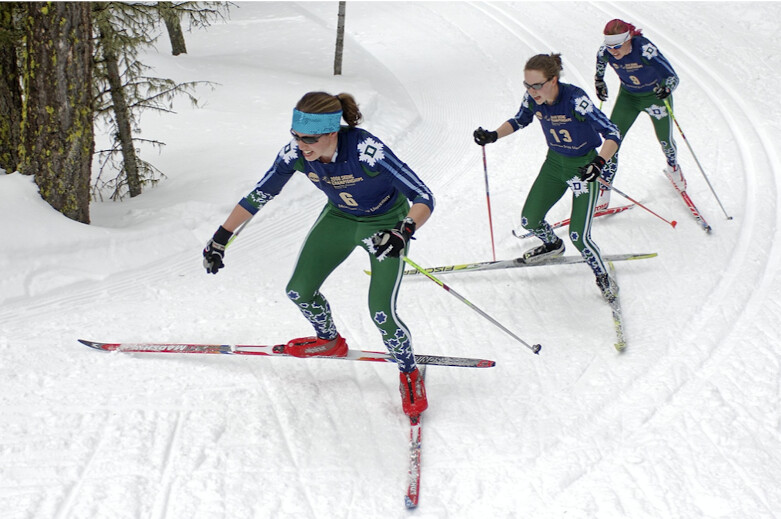
In high school, Dunklee shifted her primary athletic focus from skiing to running, because she enjoyed the traditions and atmosphere of running cross-country at the state level in Vermont. She appreciated how her St. Johnsbury Academy high-school coach worked to instill a level of commitment and consistency in the team’s training, and she felt that many of the cross-country courses where she races, which were “gnarly” and filled with hills, provided a unique “crossover between skiing and running.”
“Vermont cross-country really helped make me tough and resilient, so that was pretty cool,” she said.
In 2004, Dunklee was recruited to run for the cross country and track team at Dartmouth College. She embraced the opportunity because she wanted to compete in running and skiing at the NCAA level—and Dartmouth offers both athletic programs.
In the fall, she trained with the cross-country team in season, and would also jump into the ski team’s workouts once a week, which provided a unique cross-training dynamic. For example, she’d join the ski team on roller skis for an “over-distance” workout of 3-4 hours in the nearby Adirondacks or the White Mountains, a training session that remains her favorite form of exercise. In the winter, she trained full-time with the ski team in its NCAA season.
“It’s so empowering to feel like you could just keep going forever and to be up in these beautiful places, just really peaceful and nice,” she said.
Learning a New Sport
During her senior year, Dunklee received an email from U.S. Biathlon—the governing body for the sport that combines cross-country skiing and rifle shooting—in an attempt to recruit her. Her college ski teammate made the transition to biathlon after she graduated, so Dunklee was somewhat familiar with the sport, but she hadn’t participated in it before. The invitation also came at an ideal moment for the senior, who, like millions of other college students at the time, was facing the challenge of graduating during the Great Recession.
“It was hard to find jobs, and I still loved skiing and wasn’t quite ready to be done with it,” she said.
Growing up as the daughter of an Olympic cross-country skier, Dunklee also liked the idea of choosing her own journey in a new sport she could call her own. “There was something appealing about learning how to shoot and learning a new element that he had never done and had no experience with because I wasn’t just following in his footsteps,” she said. “I was going one step further and finding my own path.”
In the summer of 2008, she moved to Lake Placid, New York and jumped into U.S. Biathlon’s development program. However, learning a new sport that requires high levels of mental and physical focus wasn’t an easy task. Shooting was completely new to Dunklee and created a “fascinating challenge” that forced her to hone different strengths. She explained that athletes need to be disciplined with their pacing in order to have enough energy and focus to shoot accurately.
“I’ve always been one of those athletes who could just dig incredibly deep, push myself into the pain cave, and just fight through a race and gut it out. I’m scrappy, I’m tough, but with biathlon, to be able to shoot well, it’s a very different skillset,” she said. “I had to learn a little bit more discipline with that, but also the element of shooting itself requires this amazing ability to control your emotions.”
Dunklee has since become the most successful U.S. female biathlete in history, according to NBC Sports. She is the only American female biathlete with an individual world championships medal (silver in 2017 and 2020). So far at the Olympics, her best individual finish is 11th in the mass start at the 2014 Sochi Winter Games.
Returning to Running
Throughout her biathlon career, Dunklee kept running. During the height of the pandemic lockdowns in 2020, she ran every road in Craftsbury, where she’s been living and training since 2010, as a personal challenge. She still runs for an hour or two at a time three or four times a week, a routine that’s kept her balanced, she said.
“I see so many young athletes burning out, getting too specialized at too young of an age and investing too much of that identity just on one aspect of who they are,” Dunklee said. “And I'm just really glad that I didn't burn myself out as a young skier. And part of that was because I had this passion for running.”
In August 2021, after spending a decade as a member of Craftsbury’s Green Racing Project biathlon team, Dunklee was named running director of the Craftsbury Outdoor Center, an outdoor nonprofit organization and sportscenter for the local community with running, sculling, skiing, biathlon, and cycling programs.
Now she’s leading the running program, which includes annual camps, community running events, races, weekly track workouts, and fundraisers for local nonprofits, among other offerings. Recently, the organization formed a new team of elite runners for the Green Racing Project. In the remote-based club program, post-collegiate runners who compete in events ranging from the 800 meters to ultra races are provided with individualized coaching, gear, on-site training camps, and travel support, among other services, with Craftsbury as the primary sponsor.
“Now I get to stay at the outdoor center in a different role and also help really shape this new program we have … which is still very Craftsbury,” Dunklee said. “It has that same spirit of Craftsbury of being an athlete, reaching a high level, but also contributing to your community and promoting sustainability in lifelong sport.”
Looking ahead to Beijing as her final Olympics—the biathlon competition kicks off on February 5—Dunklee is at peace with closing this final chapter of her biathlon career in favor of starting the next phase of her life. After catching the flu upon arrival at the 2018 Pyeongchang Games and experiencing disappointment in her performances as a result, Dunklee said she realized that you can spend a lifetime preparing for a big moment, but there will always be factors outside of your control and it’s important to accept it in order to move forward.
“This time I just want to be able to go and try to stay focused on my process and take it all in, be flexible and see what happens,” she said. “I mean, I think I still have the capacity if I hit the peak fitness right, and I get a little bit lucky with how the wind is on the range when I come in and how other people do, I can still have a top result. But I don’t need to have that top result to validate my career.”
MORE FROM RUNNER'S WORLD ON APPLE NEWS
(02/06/2022) ⚡AMPby Runner’s World

Salomon announces return of North American Golden Trail National Series
After the success of its inaugural year, the North American Golden Trail National Series (GTNS) will be returning in 2022, sponsor Salomon has announced. Runners are invited to race any of the five U.S. and Canada-based races for a chance to compete in the GTNS Grand Final at Madeira Ocean Trails in Madeira, Portugal in October.
The series

The 2022 series is comprised of four qualifying races and a final, all of which will take place in either Canada or the U.S. The top two men and women from each GTNS race will be invited to race the final at Flagstaff Sky Peaks, and from there, the top three men and top three women will receive an invitation to race the Grand Final at Madeira Ocean Trails, which will feature the top athletes from each of the seven GTNS around the world.
The Broken Arrow 26K showcases some of Palisades Tahoe’s most famous terrain. From the valley floor at 6,200 feet, runners will ascend nearly 5,000 feet as they navigate the rugged terrain of one of North America’s most challenging ski resorts. The course is characterized by plenty of vertical gain over a technical and physically-demanding landscape that’s mostly above the tree line.
Quebec Mega Trail 50k — Quebec
The Broken Arrow 26K showcases some of Palisades Tahoe’s most famous terrain. From the valley floor at 6,200 feet, runners will ascend nearly 5,000 feet as they navigate the rugged terrain of one of North America’s most challenging ski resorts. The course is characterized by plenty of vertical gain over a technical and physically-demanding landscape that’s mostly above the tree line.
Quebec Mega Trail 50k — Quebec
Starting with one massive climb, the Whistler Alpine Meadows 50K is a full point-to-point race route that features 9,200 feet of elevation gain. Beginning at Whistler’s Cheakamus Canyon area, the course heads over the very top of Whistler Mountain to bring runners along Singing Pass and finishes up on the challenging windy single track of the Comfortably Numb trail system.
Pikes Peak Ascent — Manitou Springs, Colorado
The Pikes Peak Ascent is a half marathon distance to the summit of Pikes Peak with an elevation gain (start to summit) of 7,815 feet (2,382m).The course runs mostly on Barr Trail, which has an average grade of 11 per cent, is often narrow, winding, or steep along with sharp turns and abrupt changes in elevation or direction.
The Flagstaff Sky Peaks 26K will feature some of the top trail runners in the world going head-to-head on the volcanic edge of the San Francisco Peaks. Runners will climb for the first 6 miles from the base of Agassiz Peak to the slopes of Arizona Snowbowl Ski Resort. From there, runners will ascend nearly 2,000 feet (610m) in the next mile, topping out at just over 11,500 feet, before heading back down through winding single track onto the iconic Arizona Trail, which spans 800+ miles from Mexico to Utah.
Flagstaff Sky Peaks 26k GTNS Final — Flagstaff, Arizona
We are thrilled to bring the Golden Trail National Series back to North America this year after seeing so much involvement and support from the trail running community in 2021,” says Stephanie Gardner, sports marketing manager for Salomon USA. “By continuing this race series, we can help further invest in the North American trail running community and provide them opportunities to compete at a global level.”
(02/06/2022) ⚡AMPby Running Magazine

New study finds more nature exposure on a run improves the route
We know that the right running route can make or break your run, but new research published in The Journal of Urban Forestry suggests that greater nature exposure leads to greater perceived satisfaction and that runs with traffic lights are less satisfying.
Although it is no surprise to anyone that routes with too many traffic lights can ruin a run, previous research indicates that running in a natural environment can ignite feelings of revitalization, engagement and can decrease depression. The connections to nature are several reasons why the sport of trail running has gained popularity in the past 20 years.
The study
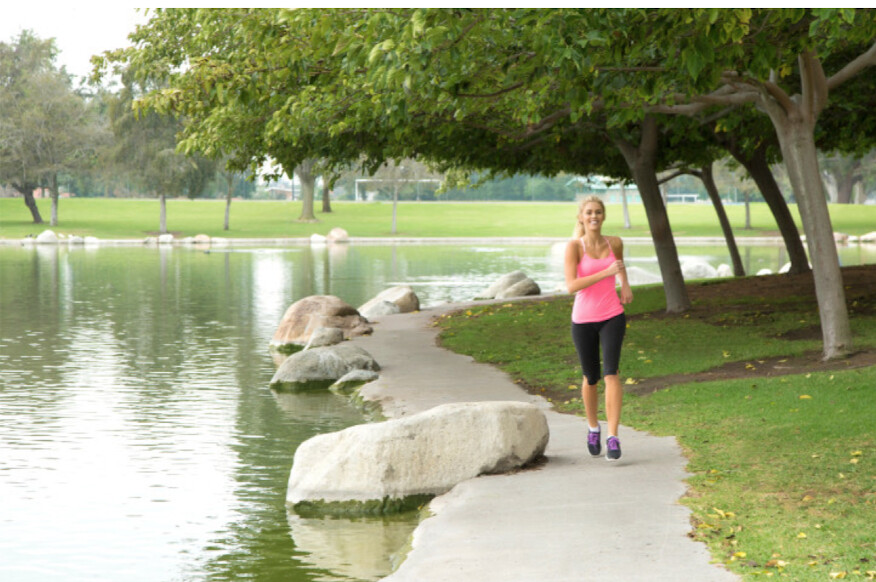
The data was collected from 249 runners in Helsinki, Finland, then was assessed in terms of the correlations between running satisfaction and nature exposure. The analysis revealed that runners prefer and are often more satisfied when exposed to or surrounded by nature. Runs with less nature and more traffic lights were found to break momentum and were inversely related to running satisfaction. The analysis also reported the participants experienced higher satisfaction running outdoors compared to indoors.
The positive impacts of nature exposure on running satisfaction further verify the connections between the environment and well-being.
(02/06/2022) ⚡AMPby Running Magazine
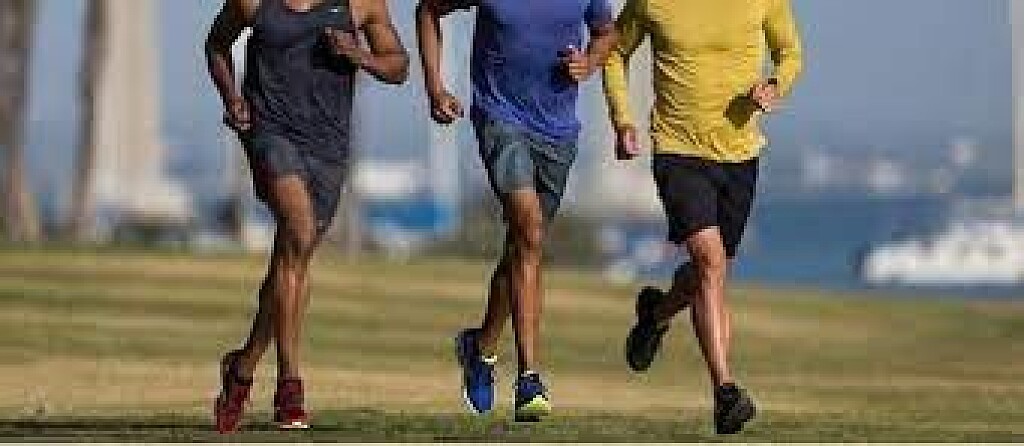
Are you a shuffler or a bouncer, and does that matter?
Do you tend to drive your knees up high and get a lot of air when you run, or do you prefer to keep your feet closer to the ground? We tend to focus a lot on the elements of good running form and which stride patterns are better than others, but in this case, there may not be one right answer. According to new research, whether you’re a bouncer or a shuffler doesn’t appear to have any effect on your overall running economy.
The study
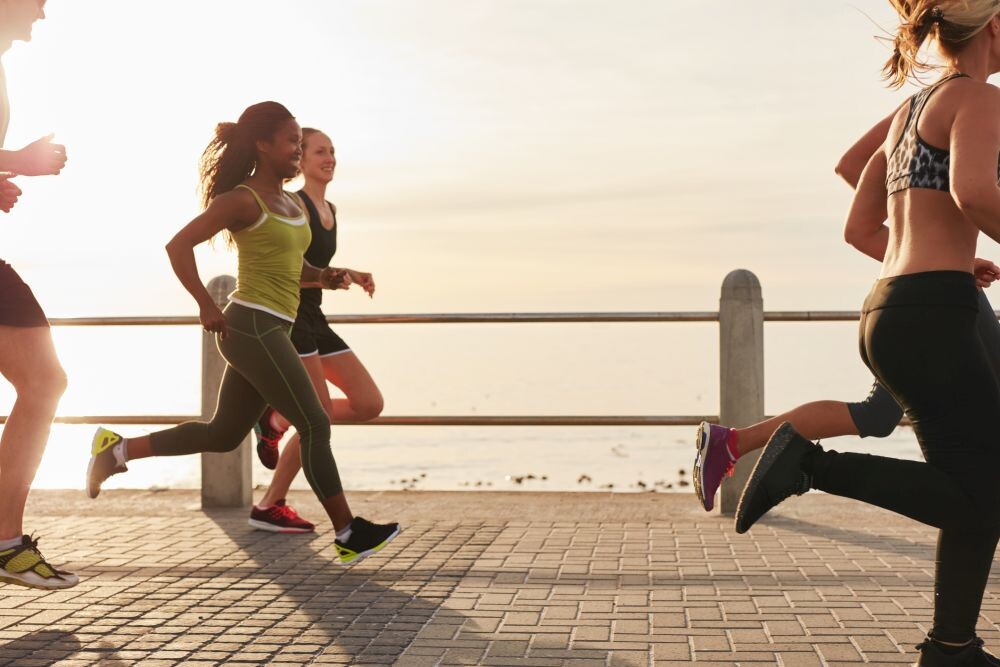
According to the authors of the paper, published in the International Journal of Sports Physiology and Performance, runners employ different strategies to lower their energy costs. Runners who keep their feet closer to the ground rely more heavily on strategies that propel them forward, while runners who get more air time focus on rebound strategies to get them to the finish line. We tend to think of runners who get more air time as stronger, more efficient runners, but is that truly the case?
The researchers recruited 52 trained runners (31 males and 21 females) to answer this question. Each participant completed a series of short treadmill runs at increasing speeds with two minutes of recovery between each. While they were running, the researchers measured their rate of oxygen consumption as a way to assess their overall running economy. A higher rate of oxygen consumption indicated a lower running economy. Markers were then placed on the participants so the researchers could assess their running kinematics in a separate series of tests to collect three-dimensional kinematic data for each participant.
Shuffling vs. bouncing
After analyzing their data, the researchers found that the amount of air time the participants had while running did not appear to affect their overall running economy. In other words, it didn’t matter whether they were shufflers or bouncers, or somewhere in-between. “Therefore, there is no advantage of choosing, favouring, or prescribing one specific global running pattern based on [these] metrics,” the researchers concluded.
The authors of the study continue to say their findings are consistent with work done by earlier researchers, which suggested that runners subconsciously adopt the ideal running biomechanics (stride length, stride frequency, contact time and leg stiffness) for them, a concept known as self-optimization.
These results lead the researchers to one final conclusion: “There is no advantage of choosing, favouring, or prescribing one specific global running pattern along a continuum based on [these] metrics. Therefore, coaches should not try to modify the spontaneous running pattern of runners at endurance running speed to improve RE (running economy).”
Should you ever try to change your stride?
This is not a straightforward question. As more research is done, it’s becoming increasingly evident that there is no one optimal way to run. Yes, there are certain characteristics of running form that are undesirable (like overstriding, pelvic drop or severe hunching of the shoulders), but generally, these issues cannot (and should not) be fixed by actively trying to change your running form. Instead, doing regular drills, stretches and a targeted strength training routine will help your body find its optimal running form on its own.
If you’re concerned about your running form, speak with a physiotherapist who specializes in running, or a coach who is trained in running biomechanics, to help you devise a stretching and strength-training routine to help you improve your running economy.
(02/05/2022) ⚡AMPby Brittany Hambleton
Muller Indoor Grand Prix Birmingham
The Müller Indoor Grand Prix Birmingham is one of the leading indoor meetings in the world with world-class athletics as part of the World Indoor Tour Gold series. The event will be staged at its traditional home at Utilita Arena Birmingham setting the tone for what is set to be an incredible year of track & field. ...
more...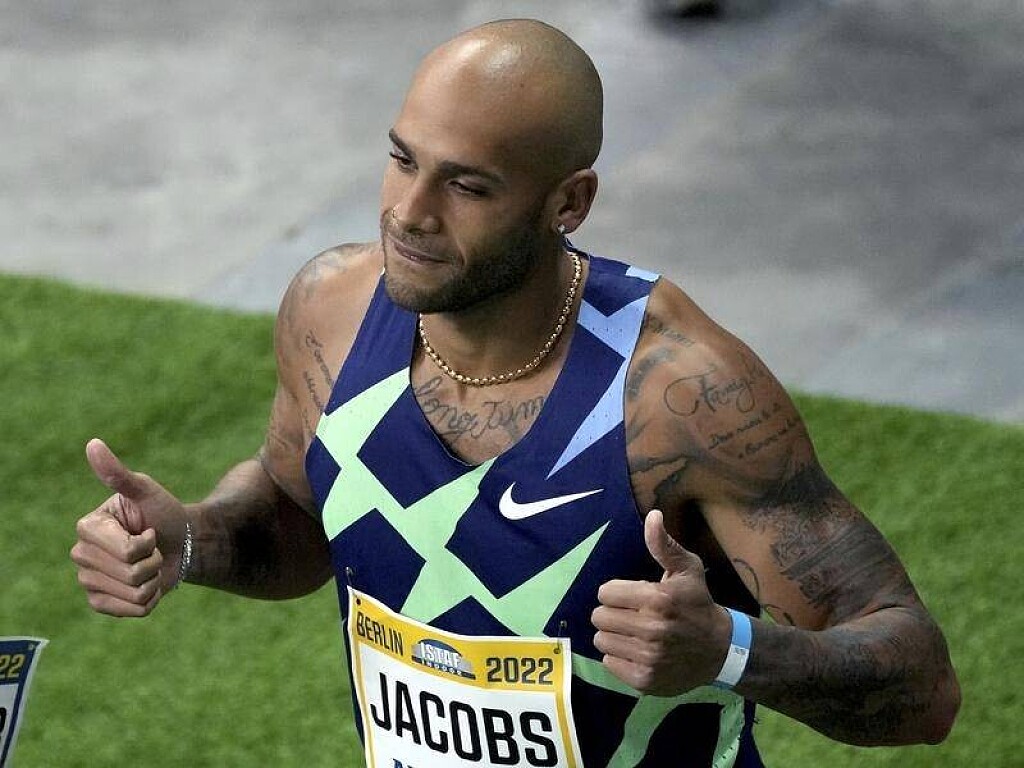
100m Olympic champion Marcell Lamont Jacobs wins his first race back since Olympics
The world’s fastest man, Marcell Lamont Jacobs, returned to the track in Germany on Friday to compete for the first time since his gold-medal-winning 100m performance in Tokyo. Jacobs ran an impressive 6.51 seconds over 60m to take the win at the ISTAF Indoor Meet in Berlin.
Jacobs had an ideal first race back, as he got out of the blocks well, using his power in his first few strides to separate himself from the field. His time of 6.51 seconds is only .04 seconds off the Italian national record he set in March of 2021. Arthur Cissé of the Ivory Coast was second in 6.60 and France’s Jimmy Vicaut was third in 6.61.
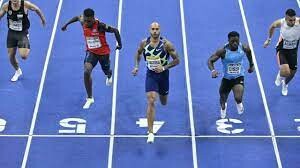
The reigning Olympic champion will have his eyes on the 60m title at the World Indoor Championships in Belgrade, Serbia, next month. Jacobs time is the fifth-fastest this year behind Christian Coleman and Treyvon Bromell of the U.S.

Coleman is the current 100m world champion, who just returned to competition last weekend at the NYC Millrose Games, after being suspended for a year due to missing a drug test in 2019.
Coleman ended up having to miss the Tokyo Olympics because of the suspension. All eyes will be on the 60m battle between Jacobs and Coleman at the World Indoor Championships.
(02/05/2022) ⚡AMPby Marley Dickinson
What's Better: Training By Time Or By Distance?
Many runners have a keen sense of distance. We know exactly how long our favorite loop trail is and might run laps to and from the driveway to finish out our mileage at an even number. Tracking your training in distance is one way to measure training load. Another way to measure volume is in time. What are the benefits and drawbacks to training in minutes versus training in miles?
TIME
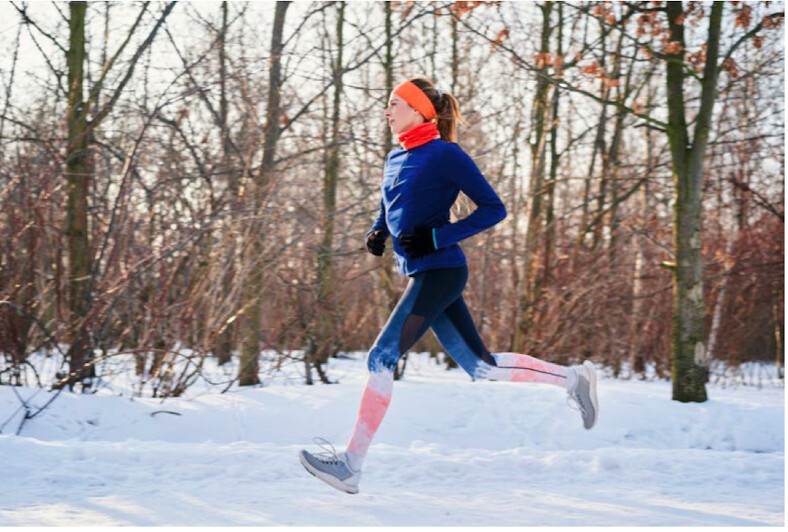

To mitigate environmental factors in your run.
At altitude, it takes longer to run a mile than at lower elevations. Mentally, it's tough to muscle through a run that should feel faster. Jason Fitzgerald, a coach and host of The Strength Running Podcast, suggests focusing on effort rather than pace for 45 minutes (or however long your 5-mile run might usually last) when the terrain is more challenging or you're training at altitude.
Switching from tracking distance to time places the focus on effort, rather than how far you go. That's consistent with our understanding that the body doesn't know miles, it knows stress. Capping time on feet for technical terrain or winter conditions is a good way to maintain a training load that's productive without over-stressing since uneven surfaces slow you down and add to effort. For altitude or challenging terrain, training by time can more effectively manage load, mentally and physically.
It's ideal for recovery runs.
Tracking recovery runs by time can help you slow down and home in on a relaxed effort. Some people will rush through a recovery run just to get the miles in, instead of focusing on exertion. Turning around when you've hit a certain time instead of a mile marker allows you to run at a pace that's well below aerobic threshold, rather than hitting a certain speed goal. Running for time can feel easier, like running out the clock rather than trying to score a basket at the buzzer, making it an ideal metric for recovery days. It allows you to focus on maintaining a true recovery effort , rather than how far you've gone. For recovery runs, you're aiming for 50-75 percent of your maximum heart rate, regardless of distance.
It can be less daunting.
For those that are new to running or getting back into it, running a specific distance can feel daunting. If you haven't established a predictable training pace (though this too will vary when you're training by effort), it's difficult to anticipate how long your run will take. Plus, a slower pace means your time on feet will be longer than someone with a faster pace, which adds up to greater training load.
For that reason, measuring how long you are putting in aerobic intensity matters more than how far you went. Corrine Malcolm, a running coach whose background is in nordic skiing, says, "Time is a natural metric to make training even across modalities." So if you're new to running, but also spend time doing other sports, like biking or skiing, you'll have a better idea of how your effort compares. Newer runners especially might be less tempted to compare miles if time is prioritized over distance.
DISTANCE
Build confidence for your race.
While upping how long you run can help you increase your feet-on-ground endurance, it doesn't necessarily help improve endurance associated with a hard effort. Having mileage runs on long days can be good for building confidence because on race day, you are going to be running for distance. If you're training for a long race, experimenting with further runs that approach race-distance can help boost your confidence in running a certain distance.
You're less likely to slow down.
If you are given a timed run, it's easy to slow down, way down. Malcolm says some athletes might think, "Why rush it?" That mentality could make athletes subconsciously decrease their effort, leading them to run less far, and falling short of their ideal training load. Having a specific distance goal is an objective way of ensuring you're getting in enough mileage to reach a certain goal. In order to improve, runners should run mostly easy, with a few runs at higher intensities. If timed runs lead you to only run slowly, it might not be your best approach. This applies specifically to runs with constant effort, not timed intervals, which conversely might help you run faster in short bursts.
Practicing the art of the kick.
When you have the finish line in sight, you'll likely pick up the pace to finish your run. If you're running for time, you might just jog it out. If a certain distance is your goal, once you're done, you're done. Having a set mileage can give you the freedom to practice your kick at the end of a run without losing nice, round numbers. If you want a good ending kick on race day, you'll need to practice it in training. Plus, psychologically, it's fun to push it when the end is nigh.
THE TAKEAWAY
All the information your watch gives you-pace, ground contact time, vertical oscillation-can be helpful, but only if you know how to use the information. Sometimes you may just want to stop looking at your watch and just run.
"I think a lot of people have lost the ability to run by feel," Fitzgerald says. If you become obsessive about the numbers and allow that to affect your mindset, you'll suffer. Running is about having fun while challenging yourself, and when it comes down to it, whatever training load is most sustainable for you is the one you should use.
"The most important thing," Malcolm says, "is to put in quality consistent training over hitting mega numbers or hitting huge volumes." So no matter how you track your run, as long as you set regular goals, you'll be building a solid running base.
(02/05/2022) ⚡AMPby Trail Runner Magazine

Brooklyn resident runs shirtless in a blizzard
It turns out Canadians aren’t the only ones who know a thing or two about braving the cold. When a big winter storm hit New York City this weekend, one Brooklyn runner laced up his shoes and stepped out for a 10-mile (16km) run, but he left his shirt at home. The runner, Tim Zhou, was interviewed by a local news station, where he revealed this has become an annual tradition.
Zhou told the reporter that he’s been doing this for a couple of years, saying that he prepares himself by doing ice baths and cold showers. “You get used to the cold,” he said. “So you go out on days like these and you don’t really feel it.”
This tradition puts Zhou among the ranks of barefoot winter runners and these guys, who ran shirtless after a blizzard in Whiterock, B.C., and while he’s certainly a brave runner, it’s possible he’s part of the 20 per cent of the population who’s genetically resilient to the cold.
(02/05/2022) ⚡AMP
by Running Magazine
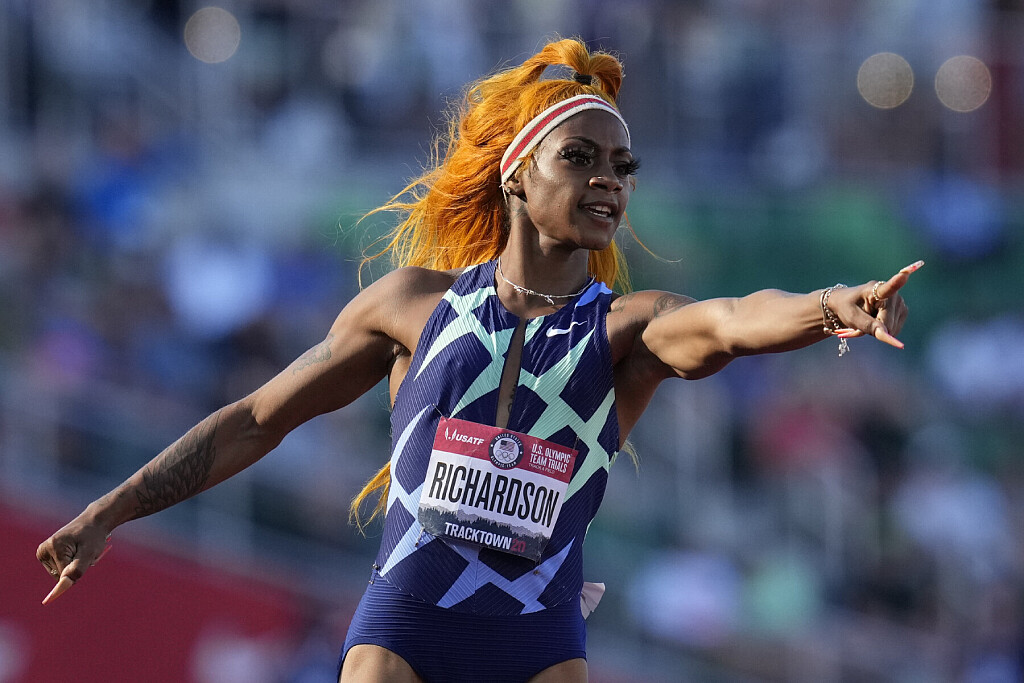
Sha'Carri Richardson documentary airs at Sundance Film Festival
One of the most polarizing figures in track and field throughout the past two years, Sha’Carri Richardson, has been featured in a documentary about her journey. The 24-minute film, entitled Sub Eleven Seconds, follows Richardson in the lead-up to the 2020 U.S. Olympic trials.
The documentary is produced by the late American fashion “OFF-WHITE” icon Virgil Abloh, who died in late 2021 from cancer. The film premiered online at Sundance 2022, which ran from Jan. 20-30.
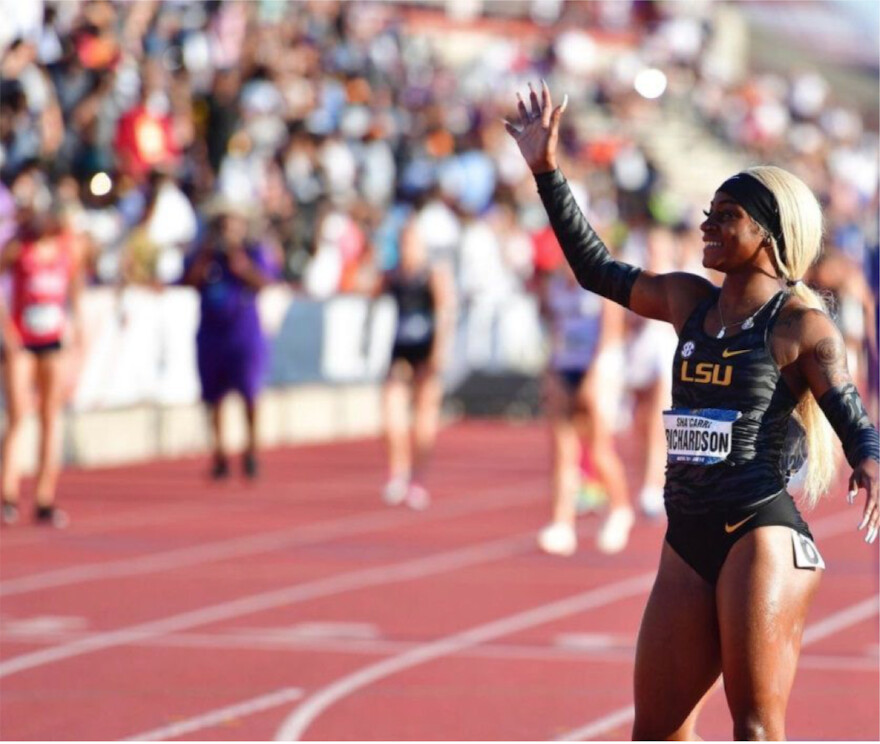
Richardson made headlines last summer after qualifying for the Olympic Games at U.S. trials, but was later disqualified when it was discovered she had used marijuana; the athlete said it wasn’t a regular habit, but that she had used it to cope with the recent passing of her mother. Her disqualification sparked plenty of debate and outrage among media outlets, athletes and celebrities.
The sprinter returned to Eugene to compete at the Diamond League after missing the Olympics due to her one-month ban. In a race that brought the second-fastest women’s 100m time ever by Jamaica’s Elaine Thompson-Herah, Richardson finished last.
Heading into a year with two major U.S. international competitions (the World Indoor Championships in March and the world championships in Eugene in July), Richardson has not announced when she will return in 2022.
(02/05/2022) ⚡AMP
by Running Magazine
The craziest active streaks in running
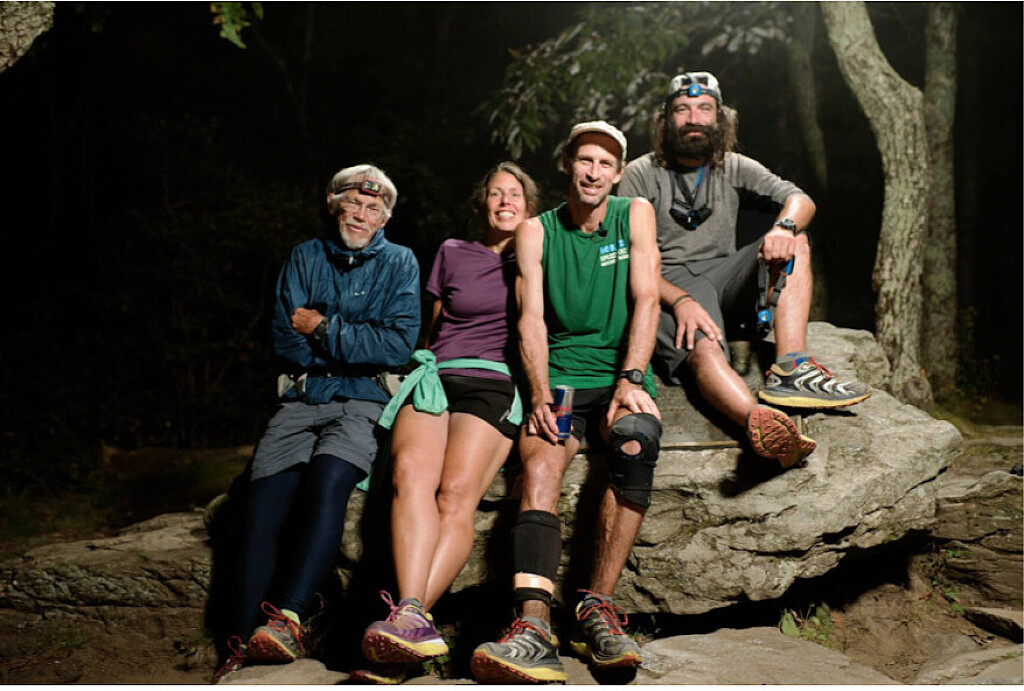
On Jan. 29, New Zealand’s Nick Willis ran another sub-4 minute mile at the NYC Millrose Games for the 20th consecutive year. This achievement is something only a few runners have come close to, which has sparked us to find the craziest active running streaks.
Nick Willis – 20 years of sub-4 minute miles
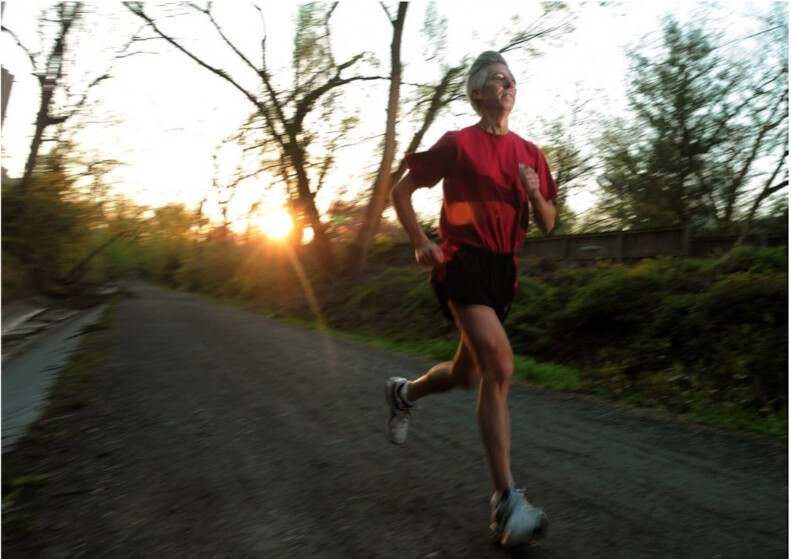
Willis first ran sub-4 during his undergrad at the University of Michigan in 2003 (3:58.15). At last weekend’s Millrose Games, Willis broke four minutes for the 63rd time in his career (3:59.71), which marked the 20th consecutive year he has run sub-4 miles. Willis is New Zealand’s only two-time Olympic medallist in the 1,500 metres, winning a silver medal in Beijing and bronze in Rio. In 2020, Willis passed his countryman, Sir John Walker, who previously held the consecutive sub-4 mile record of 18 years.
Simon Laporte – 46 years of running every day
At 46 years, the Notre-Dame des Prairies, Que. runner holds the longest active run streak in Canada. Laporte began his streak on Nov. 27, 1975, and hasn’t missed a day since. The 70-year-old run streaker has no plans to stop anytime soon, and he is planning for his streak to reach 50 in 2025. The longest active streak in the world is held by Jon Sutherland of Utah. Sutherland’s run streak of 52.7 years recently passed the legendary record set by Ron Hill (52.1) last year.
Streak Runners International (SRI) says for runs to qualify as a streak, they must cover at least one mile (1.61 kilometres) each day. The run may occur on the road, track, trails, or treadmill, but a minimum of one mile must be completed.
Lois Bastien – 41.8 years of running every day
Bastien holds the longest-standing women’s run streak record, at 42 years. She is now 79 and still runs every day in her home state of Florida.
Ben Beach – 54 consecutive Boston Marathons
Although Beach does not have the record for most Boston Marathon finishes (58), the 72-year-old marathoner does have the record for most consecutive Boston Marathons (54). Beach ran his first Boston in 1967 when he was 18. This year, Beach completed his 54th consecutive Boston Marathon, finishing in 5:47:27.
Allyson Felix – Five straight Olympic Games with a medal in track and field
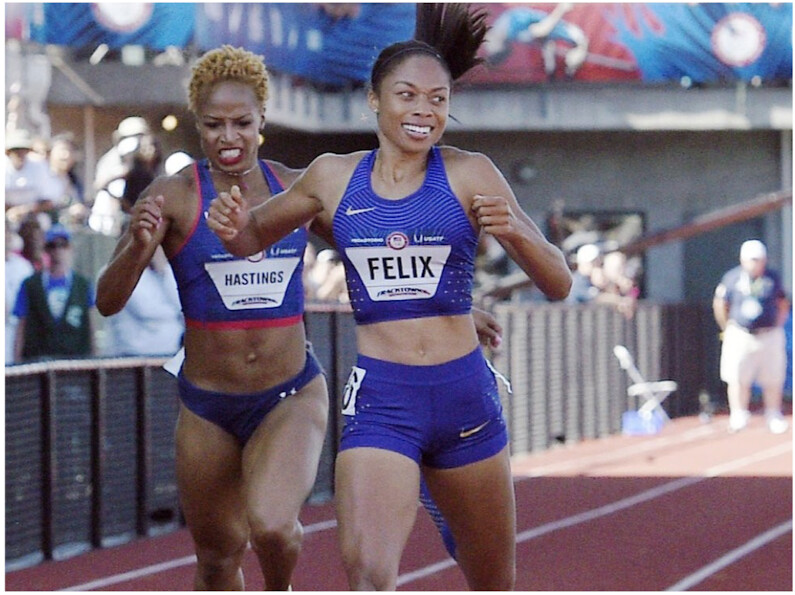
U.S. sprinter Allyson Felix is one of the greatest female Olympians ever. She has not only represented her country at five straight Olympic Games, but she has also medalled at all of them (seven gold, three silver and one bronze) – a feat that no other female athlete has accomplished in track and field. Although Felix intended that Tokyo would be her last Olympics, her streak will remain active until Paris 2024, where Jamaican sprinter Shelly-Ann Fraser-Pryce will get the chance to equal her at five consecutive Olympics with a medal.
Karl Meltzer – a 20-year streak of winning a 100-mile race
Meltzer, 54, has been on the elite ultramarathon scene for more than 20 years. With his most recent win this year at the Beast of the East 100-miler, he has won a 100-miler for 20 consecutive years, bringing his career total to 45 wins over 100 miles. This is an unprecedented number, and the only person who can top it (for now, at least) is Meltzer himself.
(02/05/2022) ⚡AMPby Running Magazine
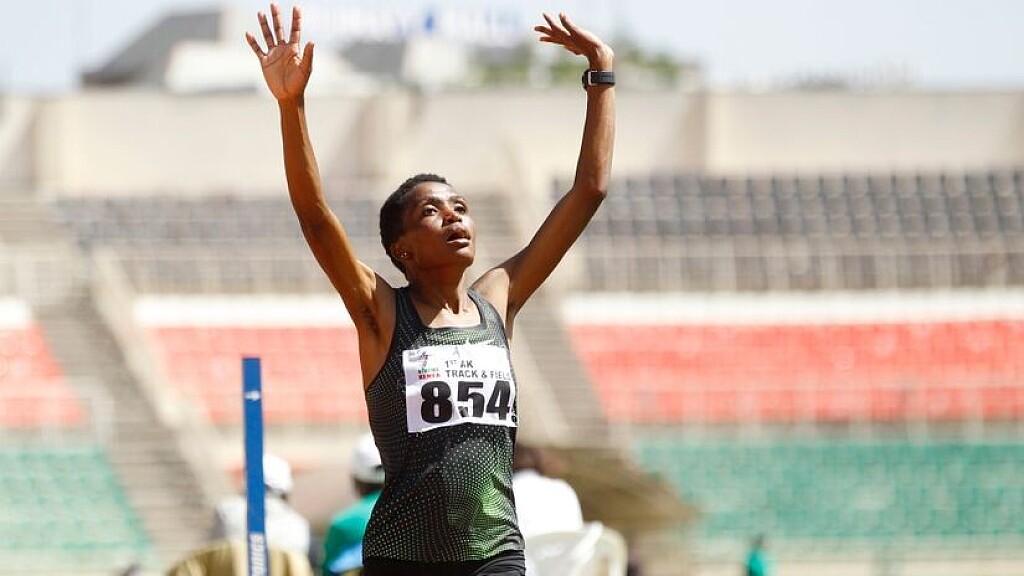
Kenyan Daisy Cherotich will be targeting personal best at RAK Half Marathon
Reigning Discovery Kenya cross country champion Daisy Cherotich hopes to lower her personal best when she lines up at the Ras Al Khaimah (RAK) Half Marathon to be held on February 19.
Cherotich has personal best of 66:15 clocked at the Lisbon Half Marathon while finishing second behind champion Tsehay Gemechu of Ethiopia.
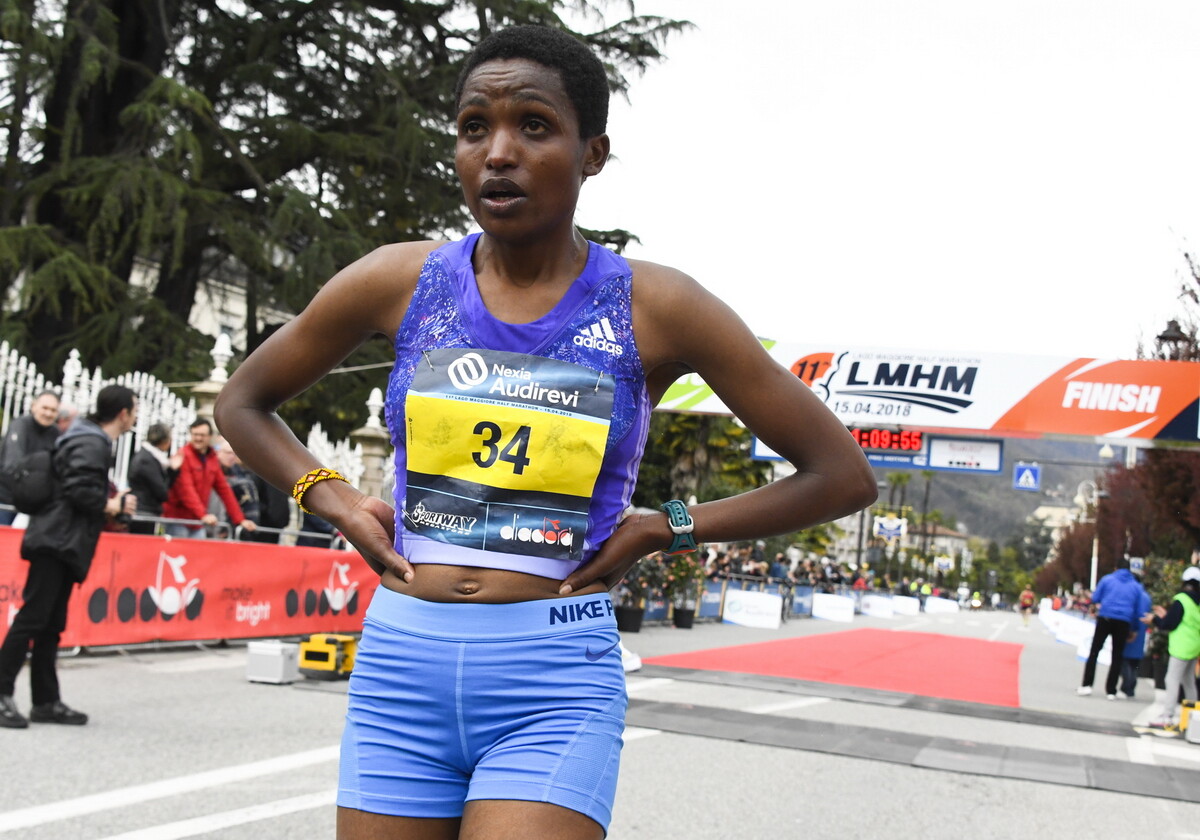
She said it will be a great achievement to win the RAK race with personal best.
“This has been in the pipeline for a long time and heading for the RAK Half Marathon, I want to make a difference in my career. I have not competed in many road races like my competitors but I believe I can pull a surprise,” said Cherotich.
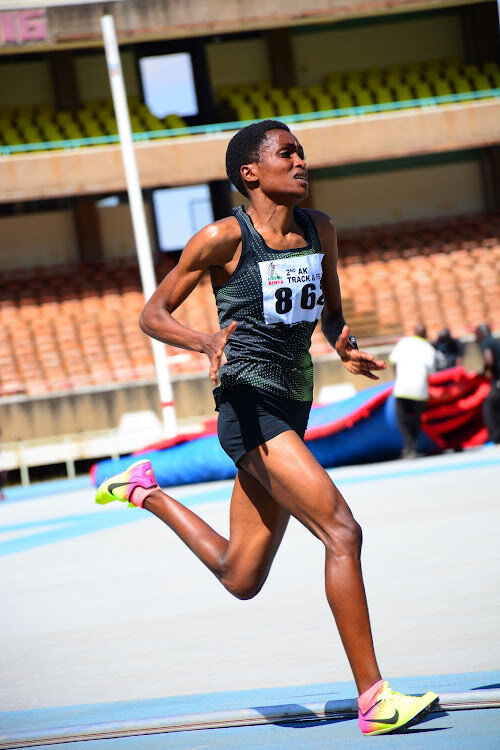
The Nandi-based runner, who trains alongside Eva Cherono, was a little-known athlete until she stunned top cream athletes to win the 2021 Discovery Kenya Cross Country championships held at the Eldoret Sports Club.
She made her half marathon debut at the Nexia Aidirevi Lake Maggiore Half Marathon timing 66:44 for the win after leading compatriot Leonida Mosop in a 1-2 podium finish.
“With my top-notch preparations, I am hoping to run a good race. As I expect good results and more so an improvement on my time because everybody,” she added.
RAK will be her fourth 21km and will be facing off with world marathon record holder Brigid Kosgei, Ethiopian Ababel Yeshane among others.
(02/04/2022) ⚡AMPby Emmanuel Sabuni
Three workout tips to make your execises more effective
Ever felt like you wanted to level up your workouts? No, not necessarily by logging more miles or doing more squats—we’re talking about incorporating smart, effective workout tips to get the most out of the moves or routines you’re already doing. In fact, these don’t have to be big changes: Small tweaks to your workout regimen can make a really substantial difference in helping you make the most out of every sweat session. Whether your aim is to build more muscle, improve your cardio fitness, increase your endurance, or just move about day-to-day life more easily and comfortably, incorporating these workout tips can help you hit the gym ready to crush your goals and get the most out of your time there.
SELF asked five top trainers for advice on how to get a super-effective workout every time. From easy mindset hacks, like hyping yourself with positive self-talk, to physical actions, like tapping your muscles for better activation, these workout tips can help you seriously up your fitness game.
1. Take a moment to just breathe.

The first step to an awesome workout is getting in the right mindset. Really! If you’re thinking about your to-do list or the drama on last night’s Bachelor, you might not be focusing on putting in 100%. “Before a workout, I focus on my breathing to reduce any stress from work or my commute that may be sitting with me, giving me negative feelings before hitting the gym,” Equinox trainer and martial artist Phoenix Carnevale tells SELF. You can even do a quick breathing video exercise on your phone—anything to bring you into the present moment.
2. Hype yourself up.

Once you’re feeling focused, remind yourself that you’ve got this. “I start with positive self-talk to prevent myself from giving up or being overly critical,” says Carnevale. “I tell myself, ‘It’s my time now.’” You can also take a few minutes before your workout to think or journal about something you love about your body and what it can accomplish, Angela Mader, trainer and founder of Fitlosophy, tells SELF. Maybe it’s that your strong legs are capable of excellent squatting form, or that your core has progressed to being able to do a push-up with your knees off the ground. Whether you jot it down by hand, type something in the Notes app on your phone, or just repeat it to yourself a few times as a motto, this kind of thinking will start your workout on a grateful, positive note. And thinking positive thoughts may actually help you do better in your workout: Some research has indicated that positive self-talk leads to improved athletic performance.
3. Put on pump-up music.
Positive self-talk isn’t the only way to get in the right mindset. “It always comes down to music for me,” Amelia DiDomenico, CPT, owner of Amrose Fitness, tells SELF. One of her top workout tips is to repeat her favorite tracks a few times during her training session. Making a soundtrack of your most-loved jams won’t just put you in a good mood; it may also improve your workout performance. Various small research efforts have found positive associations here, such as a 2020 Perceptual and Motor Skills study, which concluded that people who listened to “preferred music” (music they liked) during their warm-up had improved exercise performance compared with listening to no music—but listening to nonpreferred music (music they didn’t like) did not boost performance.
(02/04/2022) ⚡AMPby Colorado Runner
2022 Miami Marathon will celebrate 20 years this weekend
One of the largest running events in the world is celebrating decades in South Florida.
“We had our sights on being a big race,” said co-founder Frankie Ruiz. Twenty years later, the Miami Marathon is one of the biggest in the running world.
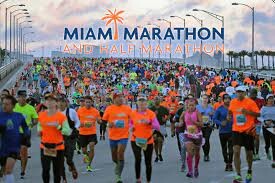
From its inaugural with only 3,400 runners to now having an average of 25,000, its become an international renowned running event.
“Ninety-nine point nine percent of the people that run this race aren’t doing it for a living or a profession,” said Ruiz. “The rest are just like me who are just having a good time sharing community, sharing a common goal that day.”

There have been some big names running some record times here in the magic city. The best time so far was just over two hours.
Like many other events, the Miami Marathon is returning for its 20th year after going virtual last year due to COVID-19.
They are seeing the demand from their participants as the race sold out back in November.
“Now, what I think we have is all this pent up demand,” Ruiz said. “We deferred a lot of those entries of people that were registered, because a whole lot of people registered for 2021. We pushed those over to 2022, and I think there’s definitely a greater sense of health and well-being and wellness and so forth and that’s why we’re seeing the demand in the sport right now.”
Twenty-six miles of roads across South Florida will transform into one the best courses in the country.
(02/04/2022) ⚡AMPby Alex Browning

The Miami Marathon
Over the past 16 years of the existence of the current Miami Marathon, there was only just over 90 athletes who had run every single event. Before the inception of the Miami Marathon as we know it now (est. 2003), the race was originally known as the Orange Bowl Marathon which began in the late 1970s. One of our very...
more...
This is why you should master distance before speed
If you are a new runner, it’s tempting to focus on building your speed from the get-go, but you may want to focus on improving your distance first. The best way to increase your aerobic capacity is to start building an endurance base. As you build up your endurance, your speed will naturally improve.
Once you have established some stamina over your goal distance, you can begin incorporating speed. Many runners will mix up their training routine by combining distance runs with shorter, faster workouts. The shorter workouts will help maintain your strong endurance base and ensure that you are getting the most out of your training.
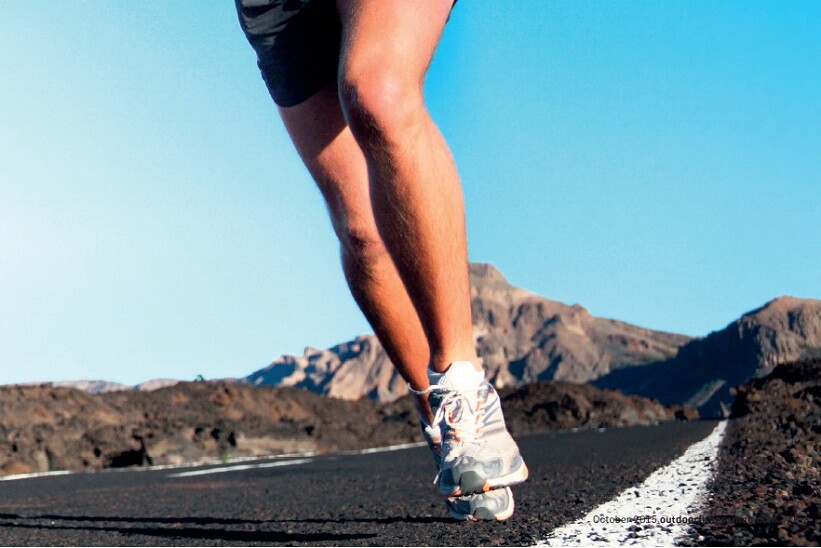
The risk that comes with starting speed before endurance is the potential for injury. If you are pushing your body to the maximum effort without any prior training, the chance of injury is relatively high.
When you are ready to begin speed training, start with a few high-intensity intervals. For example, five reps of one minute fast and one minute slow jogging. This workout will get your heart rate up and allow you to test out top-end speed over a short duration.
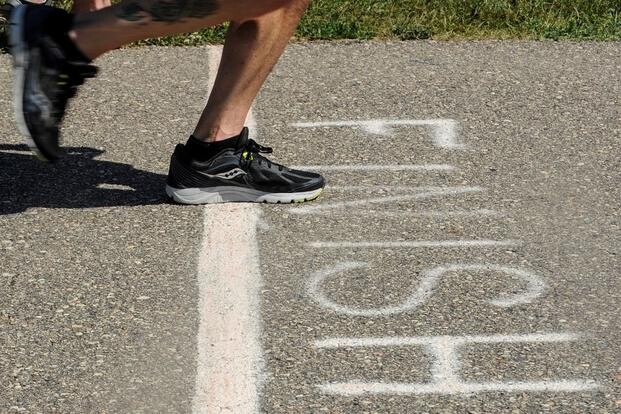
Another thing beginners can incorporate early is strides. Strides are short accelerations or sprints that last for a total of 15 to 20 seconds or 50 to 100m. The idea is to run strides at about 90 per cent of your maximum effort while focusing on keeping the body upright and relaxed.
The key to doing strides is to slightly push yourself outside of your comfort zone without tensing up. Most runners will start to incorporate strides on their easy runs after a few weeks of building endurance.
(02/04/2022) ⚡AMPby Marley Dickinson

New study finds more nature exposure on a run improves the route
We know that the right running route can make or break your run, but new research published in The Journal of Urban Forestry suggests that greater nature exposure leads to greater perceived satisfaction and that runs with traffic lights are less satisfying.
Although it is no surprise to anyone that routes with too many traffic lights can ruin a run, previous research indicates that running in a natural environment can ignite feelings of revitalization, engagement and can decrease depression.
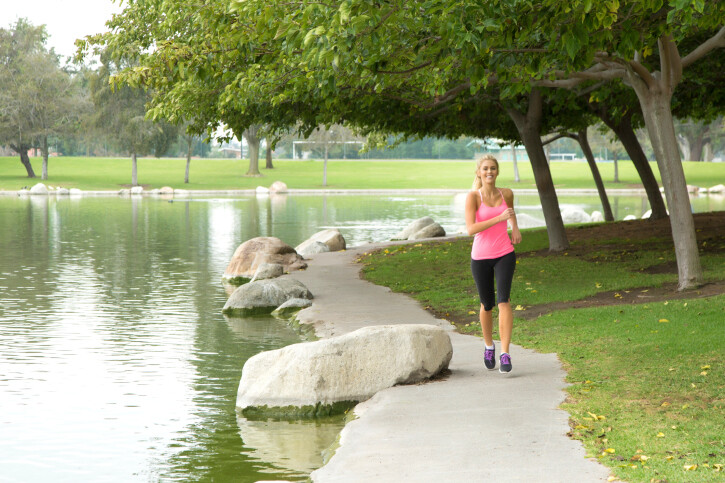
The connections to nature are several reasons why the sport of trail running has gained popularity in the past 20 years.
The study

The data was collected from 249 runners in Helsinki, Finland, then was assessed in terms of the correlations between running satisfaction and nature exposure. The analysis revealed that runners prefer and are often more satisfied when exposed to or surrounded by nature.
Runs with less nature and more traffic lights were found to break momentum and were inversely related to running satisfaction. The analysis also reported the participants experienced higher satisfaction running outdoors compared to indoors.
The positive impacts of nature exposure on running satisfaction further verify the connections between the environment and well-being.
(02/03/2022) ⚡AMPby Marley Dickinson
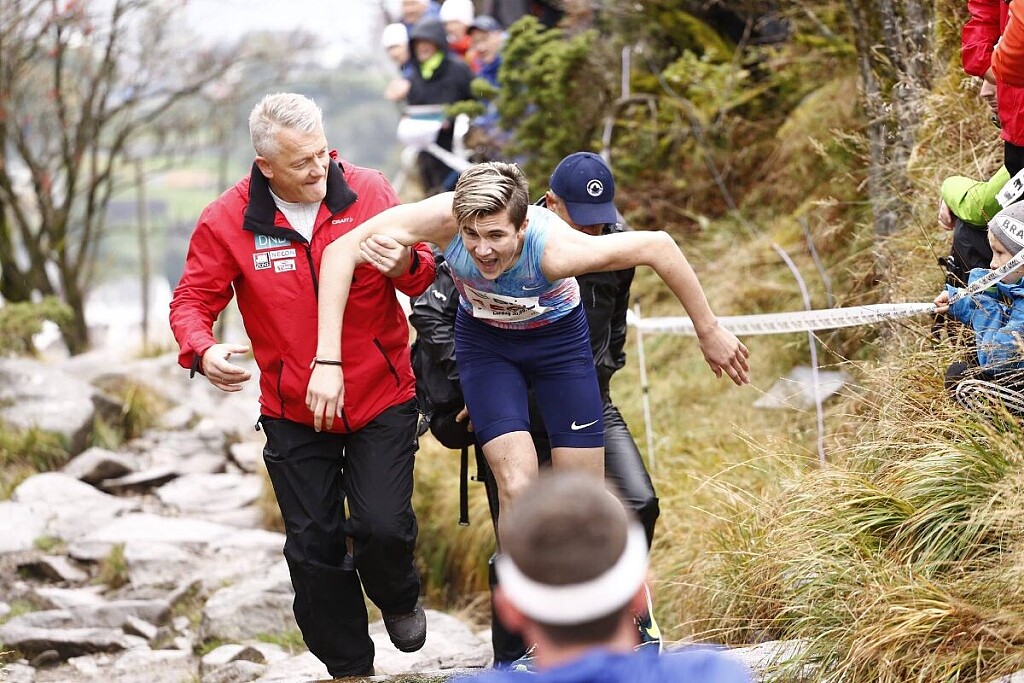
Team Ingebrigtsen head coach Gjert Ingebrigtsen steps down for health reasons
World-famous distance coach and father of 1,500m Olympic champion Jakob Ingebrigtsen, Gjert Ingebrigtsen is stepping down as his sons’ coach for health reasons, Norway’s Stavanger Aftenbladet reports. The Ingebrigtsens will continue coaching themselves as they prepare for the World Indoor Championships in March and World Championships later this year.
Over the years, Gjert has coached all seven of his kids through athletics, most notably, Jakob, who rose to become the Olympic 1,500m champion at age 20.
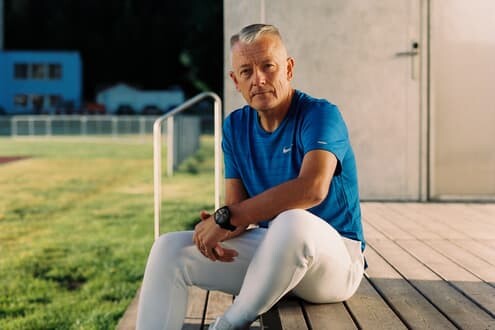
Gjert has famously coached three of his sons to three European 1,500m titles: Henrik Ingebrigtsen (2012 European gold), Filip Ingebrigtsen (2016 European gold), and Jakob (2018 European gold). The three boys all have personal bests for 1,500m under 3:32, with Jakob holding the Olympic record of 3:28.32, which he set in his gold-medal-winning performance at Tokyo 2020.
Gjert also helped lead Norway to European Cross Country gold at the 2021 European championships.
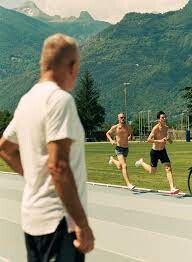
The Aftenbladet also reported that the brothers’ younger sister, Ingrid Ingebrigtsen, 15, who ran 4:42.04 over 1,500m, is taking a leave from athletics.
Jakob and Filip have both confirmed that they will be racing in the 1,500m at World Athletics Indoor Tour Gold meet in Lievin, France, on Feb. 17. Jakob will most likely have his eyes on the world indoor record of 3:31.04.
No further information on Gjert’s health has been released.
(02/03/2022) ⚡AMPby Marley Dickinson

Study says running can help ward off joint and muscle pain in later life
Want another reason to love running? A new study has shown that doing vigorous exercise such as running at least once a week helped to lower the risk of bone, muscle and joint pain in later life.
The University of Portsmouth study gathered data from 5,802 Brits aged 50 and above. It found that the key to staving off joint pain in ageing was vigorous activity as opposed to moderate exercise.
The study, ‘Associations Between Pain and Physical Activity Among Older Adults’, published in the Plos One journal, tracked participants over a 10-year period, and at the end of the research period around half said that they suffered with bone, joint or muscle pain.

Dr Nils Niederstrasser, who led the study, said that chronic pain is one of the most widespread and complex problems in the medical community. ‘It leads, for many who suffer with it, to a lower quality of life and poor wellbeing.
‘It’s well known that pain tends to be more common as we age, so it’s vital we look at what might help prevent and reduce it.’

The results found that any type of activity helped lower the chances of suffering from pain when compared to remaining sedentary, but high levels of physical activity in particular were linked to lower cases of musculoskeletal pain. ‘Activity needs to not only be vigorous, it needs to be done at least once a week,’ added Dr Niederstrasaser.
‘Vigorous’ can be classed as running, swimming or playing tennis, whereas dancing or walking was categorized as a moderate exercise and did not have the same results in terms of reducing joint pain.
(02/03/2022) ⚡AMPby Howard Calvert
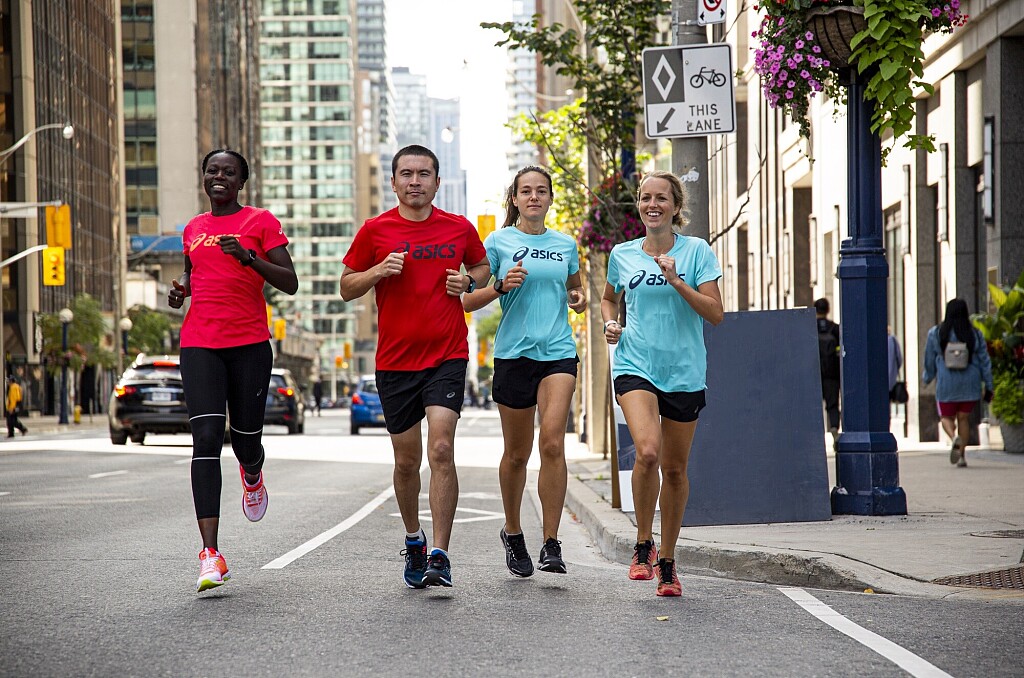
Asics has become new brand sponsor of TCS Toronto Waterfront Marathon
Canada Running Series announced on Feb. 2 that the Japanese footwear brand Asics will serve as the official partner for three Canada Running Series races: the TCS Toronto Waterfront Marathon, 21K de Montréal and Vancouver Half Marathon.
Asics will serve as the official merchandise brand and will support athletes with exclusive personalized training programs through the Asics Runkeeper app.
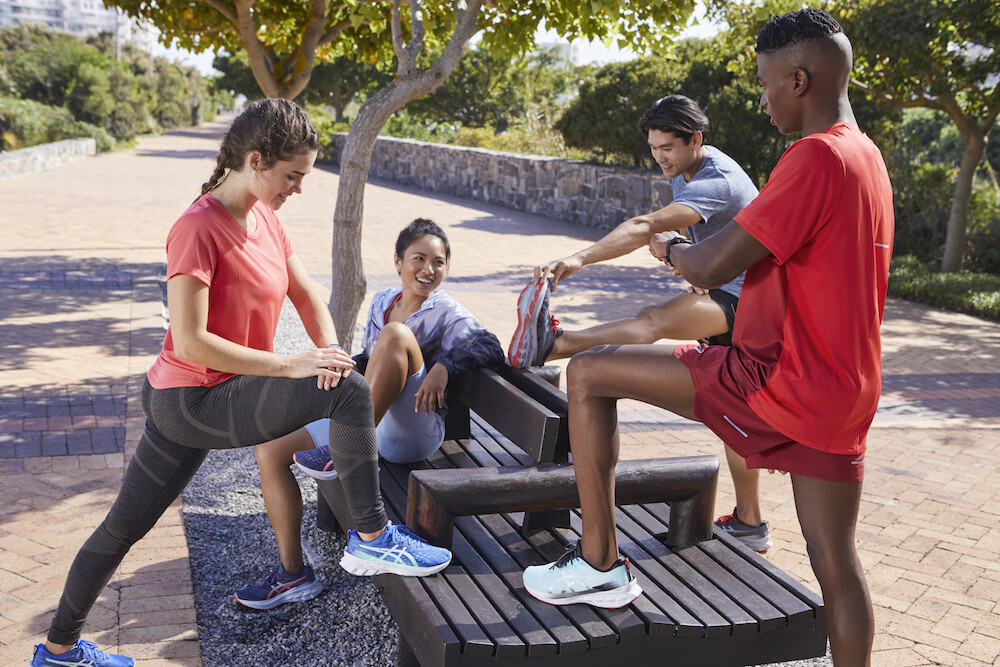
Canada Running Series will also continue using Race Roster, which is a world-leading race registration platform out of London, Ont. and a recent brand acquisition from Asics. Race Roster has been affiliated with hosting registration for CRS events since 2016 and was the title sponsor of Toronto’s High Park Spring Run-Off 8K between 2016 and 2019.
This five-year sponsorship deal will begin in 2022 and will see Asics expand the brand to various platforms and bring high-performance-running products to support each CRS race.

“We are immensely proud to partner once again with Asics and leverage their extensive knowledge of race technology to enhance race experience,” Charlotte Brookes, Canada Running Series’ national event director said in a press release. “The partnership between Asics and the Runkeeper app, plus Race Roster will allow us to continue driving positive change for both virtual and in-person racing.”
In-person and virtual registration is now open for all three Canada Running Series events. The 21K de Montréal will be held on April 23-24, 2022, while the Vancouver Half Marathon is set for June 26, 2022, and the TCS Toronto Waterfront Marathon will take place on October 16, 2022.
(02/03/2022) ⚡AMPby Marley Dickinson
TCS Toronto Waterfront Marathon
The Scotiabank Toronto Waterfront Marathon, Half-Marathon & 5k Run / Walk is organized by Canada Running Series Inc., organizers of the Canada Running Series, "A selection of Canada's best runs!" Canada Running Series annually organizes eight events in Montreal, Toronto and Vancouver that vary in distance from the 5k to the marathon. The Scotiabank Toronto Waterfront Marathon and Half-Marathon are...
more...
Asbel Kiprop seeks track comeback as doping ban ends
Kenya's former Olympic and three-time world 1500m champion Asbel Kiprop has vowed to make a successful return to the track after his four-year doping ban elapsed on Wednesday.
Kiprop, 32, was suspended in April 2019 for taking the blood-boosting drug EPO but he has always protested his innocence.
"I was falsely accused of doping. But I have accepted my fate, served my time and now I am ready to return to the track," he told AFP.
He said his main target was the World Championships at Hayward Field, Oregon in June.
Kiprop became the first Kenyan to win the 1500m gold at the world championships in Daegu, South Korea in 2011.
He went to win two more world titles in 2013 and 2015 to add to the 2008 Olympic gold medal he was awarded after the original winner, Rashid Ramzi of Bahrain, tested positive for doping.
Kiprop, a police chief inspector, said he will make his domestic return at the Kenyan police track and field championships in Nairobi on April 6, where he will seek selection for the national championships and the world athletics trials.
But he will skip the 1500m and instead compete in the 800m, which was his initial event as a junior athlete.
"I want to start small and win for my employers, the Kenya police, who diligently stood by me all the four years," said Kiprop.
"I want to begin like an amateur," he quipped. "It is going to be a hard time since I have to shed my weight by five kilogrammes (11 pounds). I want to post good times and progressively go up the ladder and qualify to represent Kenya again."
"I don't anticipate any opposition from the Kenyan athletics federation, which have in the past refused to accept athletes who have served major doping suspensions from competing for the country due to the negative publicity that accompanies them."
Kiprop said he has undergone four out-of-competition tests since December, and was happy to be back in the approved list of Anti-Doping Association of Kenya (ADAK) accredited athletes.
(02/02/2022) ⚡AMPby
Jake Wightman will lead strong 1500m line-up at Müller Indoor Grand Prix
Birmingham event on February 19 features Wightman, Neil Gourley, Piers Copeland, Charlie Da’Vall Grice and more
Olympic finalist Jake Wightman leads a strong British contingent in the men’s 1500m at the Müller Indoor Grand Prix – a World Athletics Indoor Tour Gold meeting – at the Utilita Arena in Birmingham on Saturday February 19.

The European and Commonwealth bronze medalist was 10th in Tokyo and is the Scottish indoor 1500m record-holder (3:34.48). The British record, held by Peter Elliott since 1990, is 3:34.20.
In what promises to be an enthralling domestic showdown, Wightman, who opened his season with a 7:50.97 3000m PB at the BMC Grand Prix in Sheffield on January 9, is joined by Piers Copeland, Archie Davis, Neil Gourley, Charlie Da’Vall Grice, George Mills and James West.
In-form Gourley, a World Championships finalist in Doha 2019, ran an outright 5000m PB (13:34.35) – the best indoor performance by a Scottish athlete over the distance – in Boston in December, and most recently clocked an impressive 7:48.94 3000m PB at the Razorback Invitational in Arizona on January 28. His 3:35.79 1500m best, which ranks him seventh on the Scottish all-time list, was achieved at the World Indoor Tour meeting in Toruń, Poland, 12 months ago.
Da’Vall Grice, Olympic 1500m finalist in Rio 2016, is the British indoor 1000m record-holder (2:17.20) with a 1500m PB indoors of 3:38.95, while Copeland is the Welsh indoor record-holder over 1500m (3:38.55). Both athletes are European Indoor Championships finalists, finishing fifth in 2015 and 2021 respectively.
West, who opened his season with a 7:59.96 3000m at the Millrose Games, has run 3:36.93; Mills is the reigning national indoor 1500m champion and has a best of 3:39.25; and Davis has an indoor 1500m best of 3:41.18.
“After running 3000m indoors, I’m looking forward to dropping back down to 1500m and hopefully challenging my Scottish record,” said 27-year-old Wightman.
“This is a special time for British endurance running and it’s a privilege to have the opportunity to compete against these guys in Birmingham. We’ve seen what’s possible by our athletes on the global stage and that provides us with inspiration every day to do even better. I hope we can deliver some fast times, possibly even a British record, and a great race for the home crowd.”
The Müller Indoor Grand Prix is the fifth meeting of the 2022 World Athletics Indoor Tour (Gold). There are seven ‘Gold’ level meetings across the series which started with Karlsruhe on 28 January and concludes in Madrid on 2 March.
Throughout the series, each athlete’s best three results will count towards their overall point score. The athlete with the most points in each scoring discipline at the end of the tour will be declared the winner and will be awarded a USD$10,000 bonus along with a wild card entry for the World Athletics Indoor Championships Belgrade (March 2022).
(02/02/2022) ⚡AMPby Athletics Weekly
Muller Indoor Grand Prix Birmingham
The Müller Indoor Grand Prix Birmingham is one of the leading indoor meetings in the world with world-class athletics as part of the World Indoor Tour Gold series. The event will be staged at its traditional home at Utilita Arena Birmingham setting the tone for what is set to be an incredible year of track & field. ...
more...
Joel Ibler Lillesø breaks Ingebrigtsen’s European indoor U20 3000m record in Sollentuna
Reigning European U20 5000m champion Joel Ibler Lillesø from Denmark bettered one of Jakob Ingebrigtsen’s many European U20 records in Sollentuna, Sweden on Saturday (29) afternoon.
Only 18, Lillesø shaved three seconds off Ingebrigtsen’s European indoor U20 3000m record with a 7:48.34 clocking to erase the Norwegian’s previous record of 7:51.20 which was set in the heats at the 2019 European Athletics Indoor Championships in Glasgow.
Lillesø was ably paced in the early laps by world class 1500m runner Kalle Berglund before embarking on a tough last six laps single-handedly. His winning time was a qualifier for the World Indoor Championships in Belgrade and also puts the national senior record of 7:44.76 into view.
Lillesø is part of an emerging group of Scandinavian distance runners who are following Ingebrigtsen through the age-group ranks. After winning U20 5000m gold in Tallinn, Lillesø won individual bronze in the U20 race at the SPAR European Cross Country Championships behind Danish teammate Axel Vang Christensen and Norway’s Abdullahi Rabi to ensure a Scandinavian clean sweep.
Lillesø's next race will be on the roads in the Monaco 5km on 13 February.
This was a particularly brilliant weekend for Danish athletics. As well as Lillesø’s European indoor U20 record, Benjamin Lobo Vedel set a Danish indoor 400m record of 45.95 in Baerum, Norway on Saturday and Ida Karstoft also clocked a Danish indoor 200m record of 23.36.
And two more Danish records were broken in Randers on Sunday (30). Kojo Musah shattered the Danish indoor 60m record on home soil with 6.56 to move to second on the 2022 European list and Mathilde Kramer also revised the Danish record in the women’s 60m with a 7.31 clocking.
Bekh-Romanchuk bounds out to 14.34m triple jump
Maryna Bekh-Romanchuk might be known first and foremost as a long jumper but the reigning European indoor champion made a hugely promising senior debut in the triple jump at the Ukrainian Indoor Team Championships in Sumy.
Contesting the event for the first time in nine years, Bekh-Romanchuk bounded out to a European leading mark of 14.34m off an abbreviated approach as well. Her winning effort was also accompanied by four more jumps in excess of the 14 meter-line.
At the Top Perche Plus pole vault meeting in Nevers on Saturday, Menno Vloon from the Netherlands cleared 5.86m before three attempts at 6.02m which would have equalled Mondo Duplantis' world lead from Karlsruhe on Friday evening. Belarus' Iryna Zhuk won the women's competition with a 4.60m clearance ahead of former world champion Yarisley Silva from Cuba with 4.52m.
Ahead of the DNA International match in Glasgow on Saturday, Molly Scott equalled her Irish 60m record with 7.27 before breaking it outright with 7.23 in Athlone on Saturday while European U23 cross country silver medallist Darragh McElhinney won the 1500m in 3:42.89.
In Apeldoorn on Saturday, Isayah Boers clocked a fast 46.36 in the 400m and Taymir Burnett won the 60m in 6.62.
(02/02/2022) ⚡AMPby European Athletics
Improve your balance, mobility and core with this Bosu ball workout, to put your body through strategic movements that complement your running and posture
In the January 2022 issue of Canadian Running, strength and conditioning coach Jon-Erik Kawamoto presents a challenging new workout focused on mobility and core for runners, using a BOSU Balance Trainer. This routine is designed to put your body through strategic movements that complement your running as well as the day-to-day sitting posture.
If you’ve ever been to a physiotherapy clinic, chances are you are familiar with the half-ball platform device commonly referred to as a Bosu, which is used to challenge your balance. The ball can provide good cushioning for core exercises and is useful as a prop for certain mobility exercises, such as split stance squats and single-leg balance exercises.
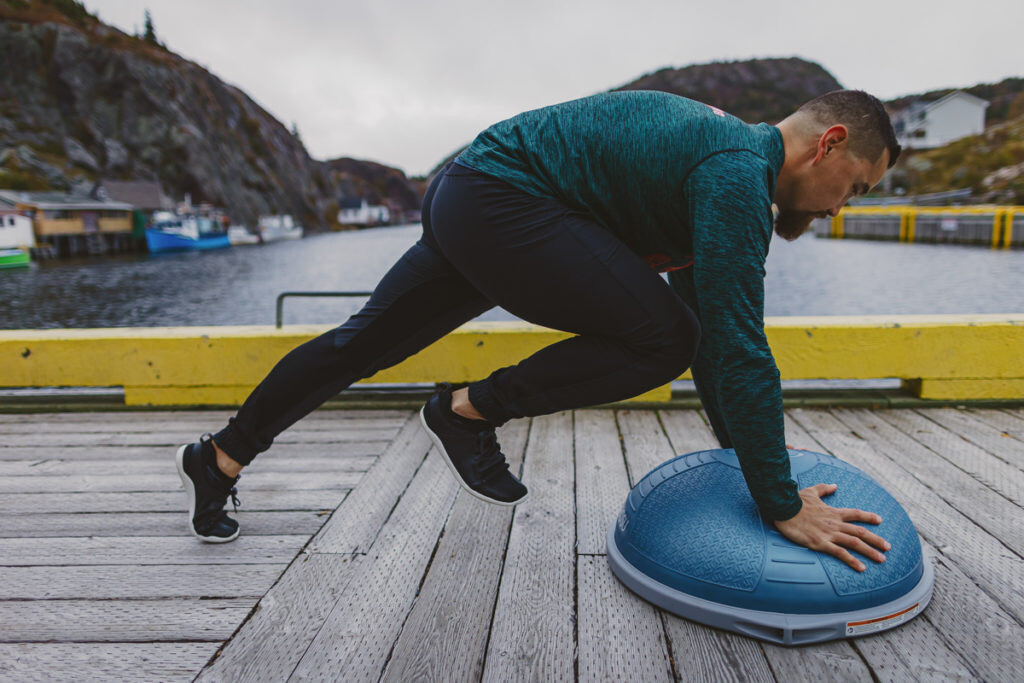
If you do not have a Bosu ball, you are likely to find one at your local gym, or you can find one at your local fitness shop or online.
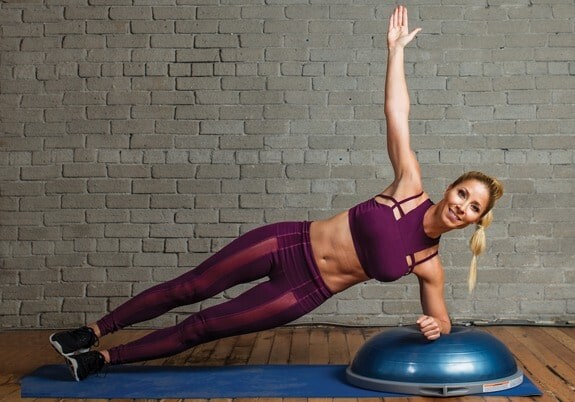
Training mobility, improving posture and performing movements outside the running pattern not only improve your body’s movement literacy (i.e., your athleticism) – they also create a more resilient body, allowing you to get through your running season with less risk of overuse injury.
Do this routine once or twice a week, completing two to four sets. Take minimal rest between exercises and a 90-second rest between sets.
(02/02/2022) ⚡AMPby Marley Dickinson

Try this 5K progression run to build your speed, add some variety to your training with this endurance focused speed workout
When training for a goal, we choose to do certain workouts to develop our top-end speed and long runs to help our endurance – but what if there is a workout that can do both? The progression run is a gradual workout that involves a mix of speed and endurance. Its purpose is to boost your aerobic system while still running at a high-intensity effort.
Progression runs tend to start at an easy pace and gradually build up to paces around your goal 5K pace or faster.
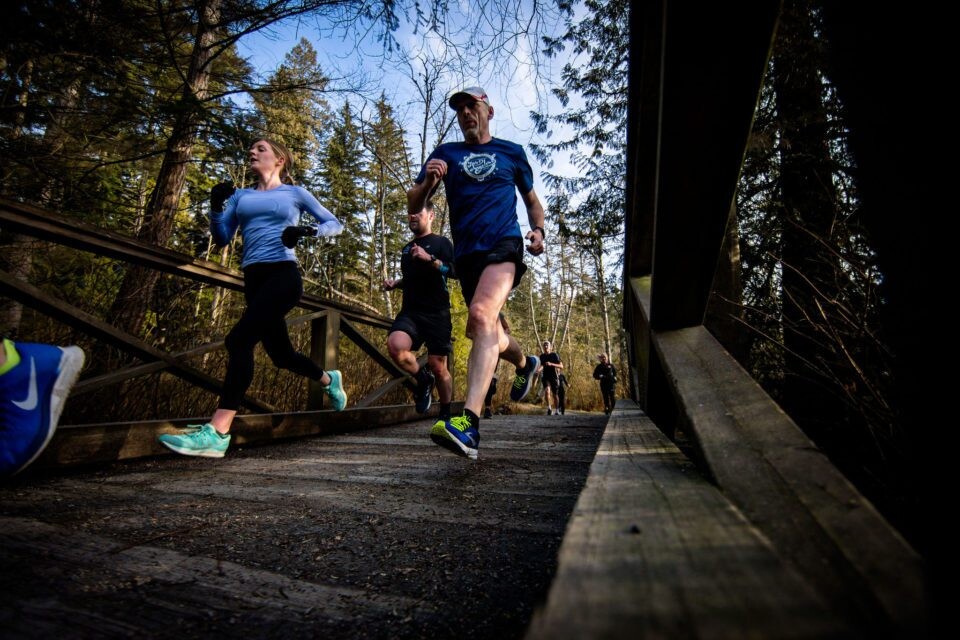
The 5K progression workout
To start, base the workout off your previous 5K time (if you have a 5K PB of 25:00 – you’ll want to start the first kilometer around 6:00 per/km).
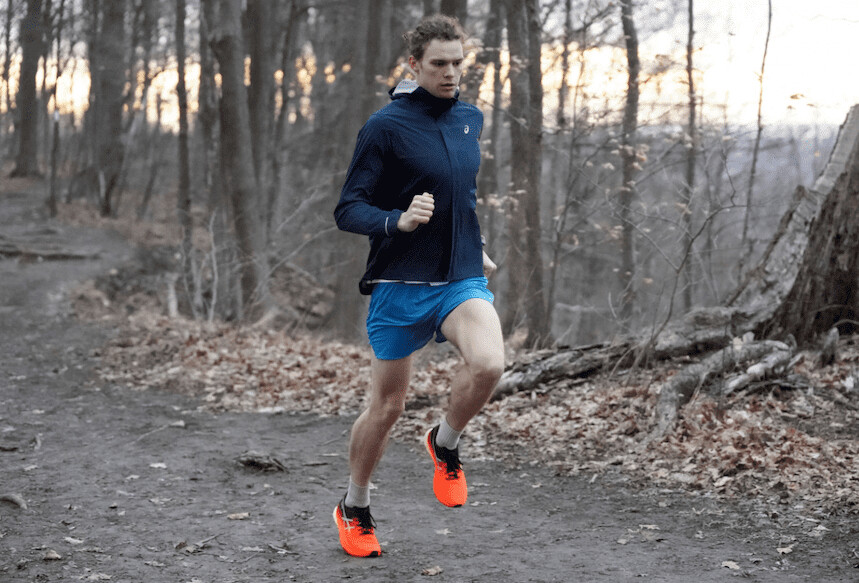
After the first kilometer, increase the pace by 15 seconds (using the 25-minute PB as an example, 5:45/km) for the second kilometer. Do the same for the third and fourth kilometers, until you eventually get down to your race pace on the fifth.
As the workout evolves your body will get tired, which will make it tougher to increase the pace. It is important to make sure that you hit the pace on the first two kilometers. If you start too fast or slow, it will be hard for your body to perform at your aerobic capacity on the fourth and fifth kilometers.
This workout can be a fun way to add some variety to your training and a confidence booster if you can hit your race pace heading into a 5 or 10K race.
(02/01/2022) ⚡AMPby Marley Dickinson
Bladerunner Jacky Hunt-Broersma, is aiming to complete 100 marathons in 100 days
This year, Jacky Hunt-Broersma is looking to add another record to her name. The multiple-time ultramarathon finisher and world record-holder has committed to running 100 marathons in 100 days, to break the Guinness World Record for most consecutive marathons.
Broersma got the idea after she saw Alyssa Clark of Vermont set the record last year at 95 days. Clark had been aiming to hit 100 marathons but was forced to cut her challenge short after contracting COVID-19. “This got me thinking, maybe this is something I could take on and it would be a great way to start the new year and help me build up a great base for The Moab 240 race in October,” says Broersma.
Being an experienced ultramarathoner, Broersma is well-equipped to handle a challenge of this magnitude. She finished a 100-mile race at the beginning of January, and although she says she hadn’t fully recovered by the time she started her marathon streak, she says this challenge is more mental than physical. For this reason, staying positive through each of her runs has been the most important key to her success thus far.
When we first spoke with Broersma, she had completed 10 marathons, and by the time of publishing that number had grown to 14. She tells us her biggest challenge is getting enough sleep to recover. “I am amazed at how incredible our bodies are,” she says. “The first five marathons were tough because my body was adjusting to the distance, but slowly my body started adapting.” She adds that her shin is hurting and her knee feels a bit sensitive, but her stump is holding out very well.
Broersma says she’s taking each day as it comes and trying her best to listen to her body. “Some marathons are slower than others and some are faster, it just depends on how my body feels in the morning,” she says. “I am making sure I use my massage gun every day on any tight muscles, eating well so I can recover and icing my stump if it is needed.”
Running for a reason
Aside from trying to break the Guinness World Record, Broersma is using her challenge to raise money for Amputee Blade Runners, an organization that provides running blades for amputees. She explains that running-specific blades can cost between $10,000 and $20,000, and in the United States they’re not always covered by health insurance so many amputees don’t have the opportunity to run the way she has.
“When I became an amputee one of the biggest challenges for me was accepting the way I looked and it can be a really tough journey,” says Broersma. “Running changed that for me, it gave me confidence in my body and confidence to be who I am. Running makes me feel strong and fearless and grateful for the body I have, even when part of it is missing. This is what I want for all amputees.”
So far, Broersma says she has had incredible support from around the world, with people sending messages of encouragement every day. She’s also received messages from people with disabilities who’ve been inspired by her to start running and hiking, which was her ultimate goal to begin with. “I hope by doing this that it will inspire people to get out of their comfort zones, even if it is to have the courage to take on their first 5k race,” she says. “We are always more capable than we think.”
If you’d like to support Broersma and follow along with her journey, you can keep up-to-date with her on her Instagram or Twitter pages where she posts daily updates, and you can donate to her cause on her GoFundMe page.
(02/01/2022) ⚡AMPby Brittany Hambleton
Boost running performance with plyometrics, adding jumping exercises into your strength training routine can improve your running performance
Incorporating plyometrics into your strength training routine is an effective way to improve running performance, but they aren’t for everyone. Curious to know if they’re right for you, and how they can benefit your running performance? Consider this “plyometrics 101 for distance runners.”
What are plyometrics?
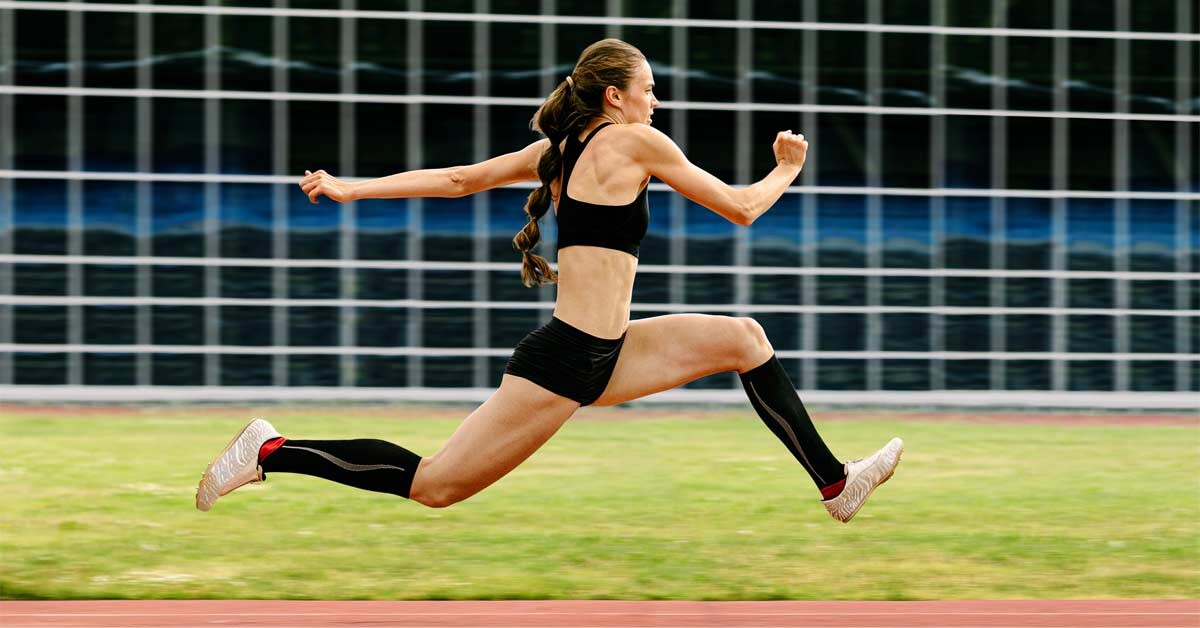
Another term for plyometrics is jump training. It’s a type of training that incorporated exercises in which your muscles have to exert maximum force for short periods of time. In other words, it’s a very fast, explosive style of strength training. Athletes of all different disciplines use plyometrics in their training to improve their power, strength, quickness and overall speed. Although distance running is a slower, less explosive sport than other track and field events like sprinting or jumping, endurance athletes can still gain a lot from doing plyometric training.
What are the benefits of plyometrics?
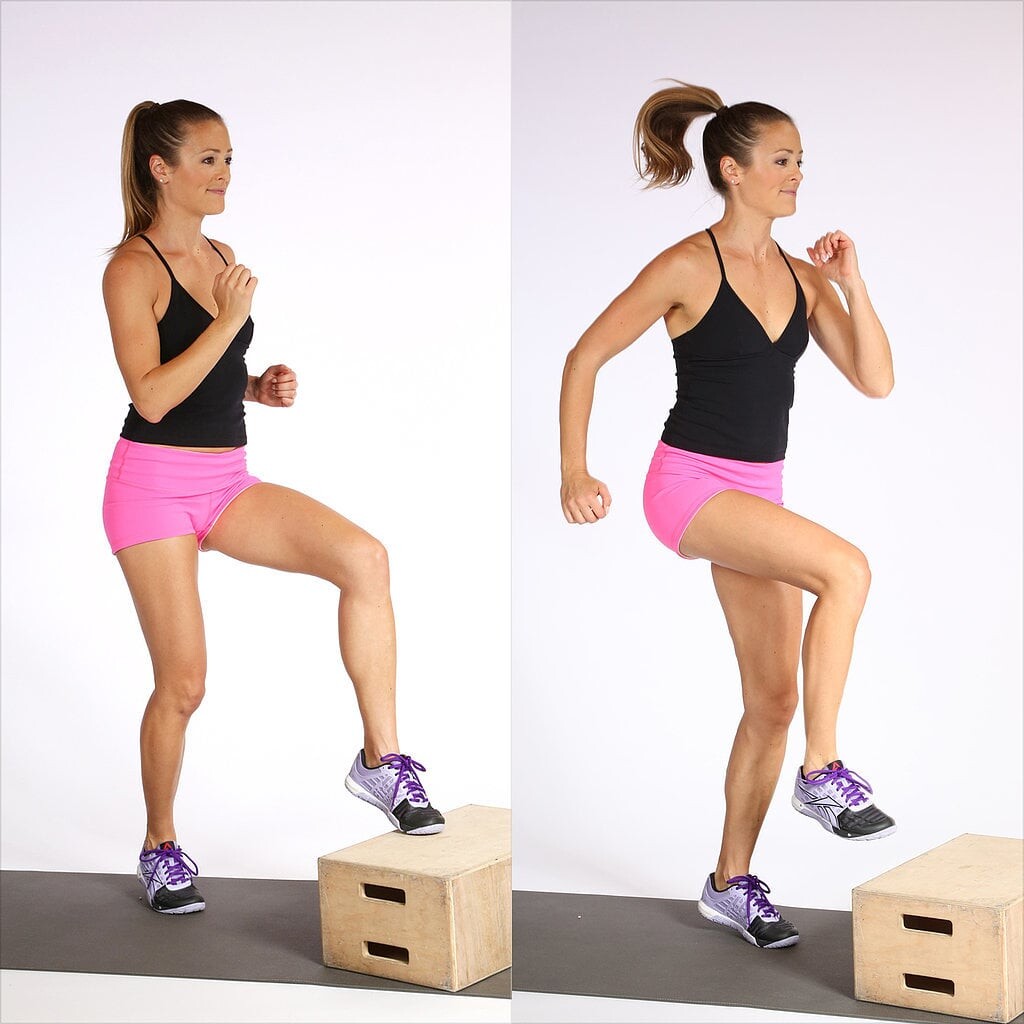
To answer that question, you first have to understand how you create propulsive energy when you run. To do this, your body absorbs and briefly stores energy from impact (like your foot striking the ground), then releases that energy to push you forward. You may hear this referred to as “elastic energy.”
By improving your muscles’ ability to store elastic energy, you can become a more efficient runner. Put differently, having more stored elastic energy allows you to maintain a faster pace for longer — sounds great, doesn’t it?
Various studies have also shown that plyometric training improves the VO2 max of beginner and recreational runners, which means your body will require less oxygen at the same effort level. Again, this will make you more efficient and therefore, faster. Interestingly, studies have not found plyometric training to increase the VO2 max of elite runners, presumably because they’re already training optimally and already have very high VO2 maxes. It does. however, still seem to improve their running efficiency from at the muscular level.
Are plyometrics right for me?
In theory, plyometrics are beneficial for every runner, but due to their high-impact, high-intensity nature, they’re not a good place to start for beginners. Most experts recommend following a lower-impact, basic strength training routine for eight to 10 weeks before adding plyometrics into their plan if you’re new to strength training. More experienced athletes may be able to shorten that timeframe to six weeks. It’s also very important that you perform plyometrics with proper form to prevent injuries.
Examples of plyometric exercises
The following list is just a few of the many different plyometric exercises you could incorporate into your strength training routine.
Keep your legs straight and use only your ankles to jump in the air, being careful not to bend your knees or hips. Do 10-20 hops.
Stand on one leg with the foot of your opposite leg resting behind you on something sturdy, like a bench. Lower yourself into a lunge, then jump up, driving your front knee into the air. Do your best to land softly after every jump, repeating 10-20 times on each leg.
Skips for height
Skip across the ground with the goal of getting as much height as you can. Try to land as softly as you can, and don’t worry about how far you’re getting with each skip. Do 10-20 skips.
Frog jumps
Unlike the high skips, frog jumps are more about distance than height. With both feet planted on the ground, lower yourself into a three-quarter squat position, then quickly jump forward. Try to land softly, and immediately jump again (there shouldn’t be any standing time between jumps). Repeat 10-20 times.
Box toe touches
Stand in front of a short box, about one foot away from it. Alternating your arms and legs, touch the top of the box with your toes as quickly as possible. Aim for 20-30 toe touches.
Single-leg bounding
This is a very advanced exercise. Standing on one leg, bend your knee slightly and jump, driving your knee into the air and landing back on that same foot, trying to land as softly as you can. See the video above for a modified version that can get you ready for full single-leg bounding.
(02/01/2022) ⚡AMPby Brittany Hambleton
The 2022 Rock ‘n’ Roll Running Series New Orleans Returns Feb. 5-6
The 2022 Rock ‘n’ Roll Running Series New Orleans returns to the Big Easy on Saturday, Feb. 5 and Sunday, Feb. 6. Race weekend kicks off on Friday, Feb. 4 with the Health & Fitness Expo at the New Orleans Morial Convention Center. On Saturday, Feb. 5 race day returns with the 5K and on Sunday, Feb. 6, the participants will take on the half marathon and 10K distances all starting and finishing at the University of New Orleans.
Elite runners from around the world will contest the Rock ‘n’ Roll Running Series New Orleans , Anne-Marie Blaney (USA), Megan O’Neil (USA) and Maura Tyrrell (USA) in the women’s field, and Wilkerson Given (USA), John Börjesson (SWE) and Mo’ath Alkhawaldeh (JOR), who most recently took the overall win at the 2021 Rock ‘n’ Roll Washington D.C. Half Marathon, in the men’s field.
Schedule:
Friday, Feb. 4
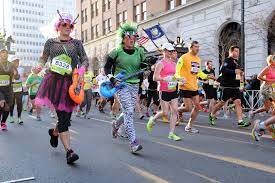
12:00 p.m. – 7:00 p.m. – Health & Fitness Expo – New Orleans Morial Convention Center
Saturday, Feb. 5 – Race Day
9:00 a.m. – 4:00 p.m. – Health & Fitness Expo – Phoenix Convention Center
7:40 a.m. – 5K – University of New Orleans
Sunday, Feb. 6 – Race Day
7:40 a.m. – 10K Start – University of New Orleans
7:40 a.m. – Half Marathon Start – University of New Orleans
9:00 a.m. – 1:00 p.m. – Encore Entertainment – James Martin Band – University of New Orleans
*All times listed are in CST
(02/01/2022) ⚡AMP

Rock N Roll New Orleans
Want a fun and brag-worthy way to burn off all that king cake and booze you’ll be consuming this Mardi Gras season? Rock ‘n’ Roll is a fun race for all levels, from the elite athlete to the tutu-wearing, beer-chugging walker. So, whether you’re doing it for the glory, for the medals, or for the free shots and mimosas along...
more...
Alberto Salazar’s permanent ban from SafeSport was for alleged sexual assault, new report finds
Just last month, former Nike Oregon Project coach Alberto Salazar had his permanent ban from the sport upheld by the U.S. Center for SafeSport. A new report from the New York Times on Monday revealed it was because an arbitrator found that he more likely than not had sexually assaulted an athlete on two different occasions.
The famed running coach Alberto Salazar, who helped top Americans be more competitive in track and field before he was suspended for doping violations, was barred from the sport for life last month after an arbitrator found that he more likely than not had sexually assaulted an athlete on two different occasions, according to a summary of the ruling reviewed by The New York Times.
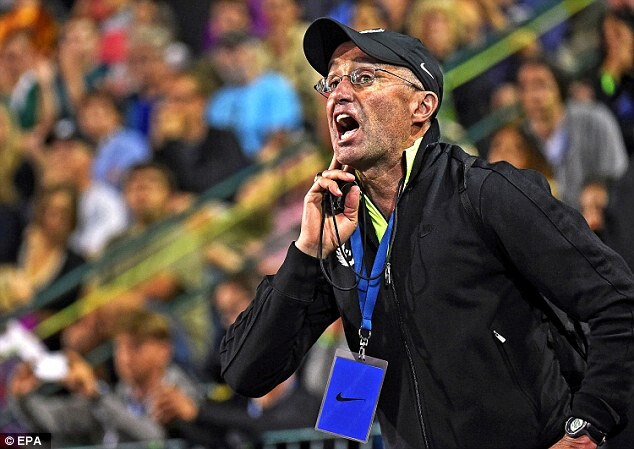
The case against Salazar was pursued by the United States Center for SafeSport, an organization that investigates reports of abuse within Olympic sports. SafeSport ruled Salazar permanently ineligible in July 2021, finding that he had committed four violations, which included two instances of penetrating a runner with a finger while giving an athletic massage.
Salazar asked for an arbitration hearing, where he denied the accusations and said he did not speak with or see the runner on the days in question. The arbitrator did not find Salazar’s explanation credible, and accepted his accuser’s version of events.
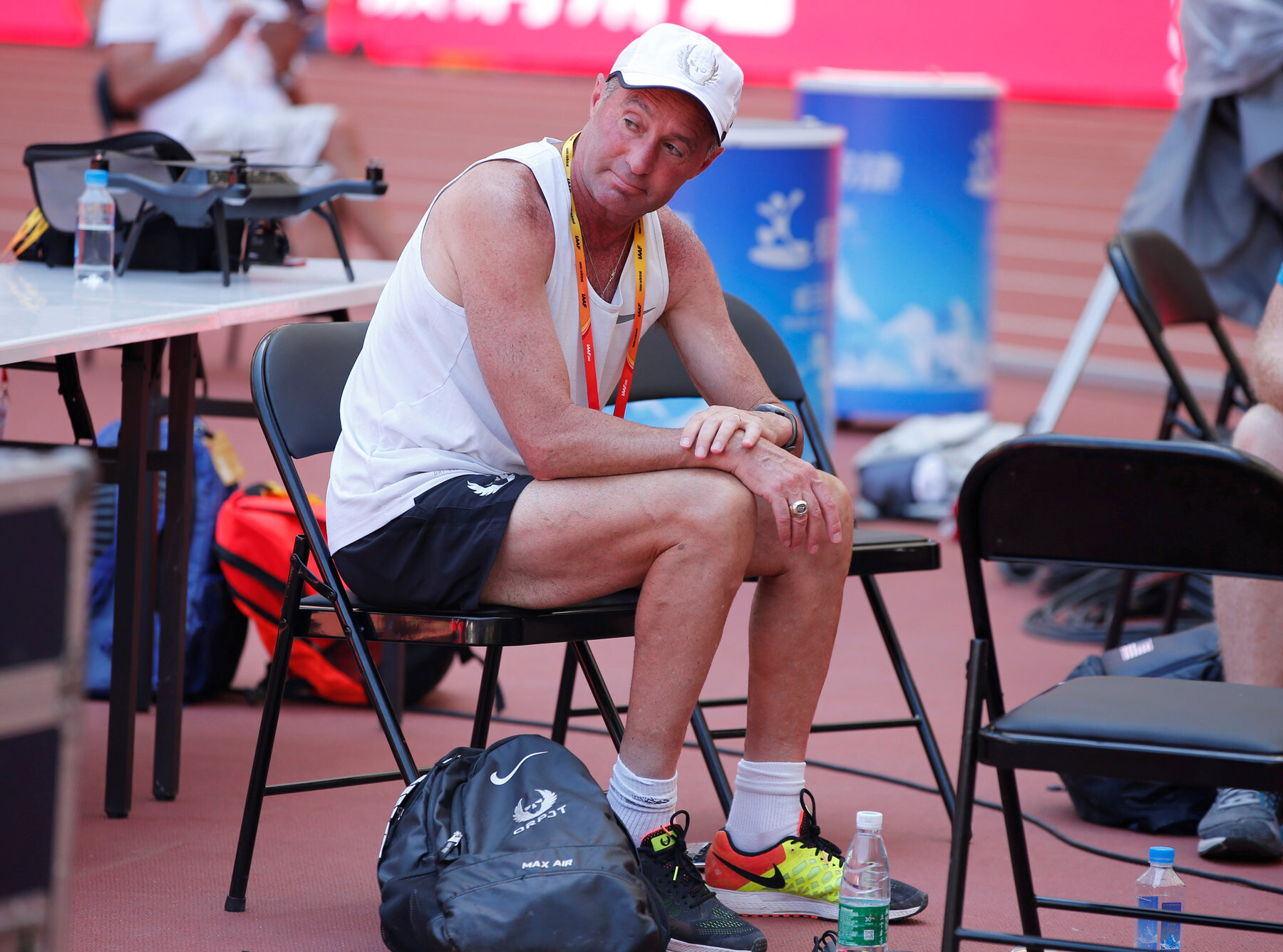
The details of the ruling, which have not been reported until now, shed new light on why Salazar, a powerful figure within elite running, was specifically barred from his sport. A number of runners have publicly accused him of bullying and behavior that was verbally and emotionally abusive, but the accusations of physical assault had not been publicly revealed. Salazar has never been criminally charged in connection with these allegations.
SafeSport, an independent nonprofit organization in Denver that responds to reports of misconduct within the U.S. Olympic and Paralympic sports, pursued action against Salazar and ruled him permanently ineligible in July 2021.
They currently list Salazar’s misconduct on their database as “sexual misconduct,” though the specific allegations against the coach were not known because they do not release details of its rulings. The report from The Times reveals new details on why the famed running coach Salazar was banned. Until now, the details were unknown.
Salazar has been accused of making comments about teammates’ bodies and weight in the past, but accusations of physical assault had not been publicly revealed. He has not been criminally charged with these allegations.
Numerous athletes have spoken out against Salazar for conduct against women. In November 2019, former high school star Mary Cain, who trained under Salazar from 2013 to 2015, spoke out about years of emotional abuse as a member of the Nike Oregon Project.
After Cain’s public comments, several other members of the project spoke out and shared their own experiences under Salazar.
Salazar, 63, has denied all allegations. In an email to The Times, he said he “never engaged in any sort of inappropriate sexual contact or sexual misconduct.”
Salazar also told The Times that the SafeSports process was “unfair” and “lacked due process protections.”
The United States Anti-Doping Agency also banned Salazar, along with Dr. Jeffrey Brown in September 2019 for four years. Although no athlete training under Salazar tested positive for a banned substance, the USADA determined Salazar tampered with the doping control process and trafficked banned performance-enhancing substances.
Salazar also denied those allegations and appealed that ban. His appeal was denied in September.
(01/31/2022) ⚡AMPby NY Times and OregonLive
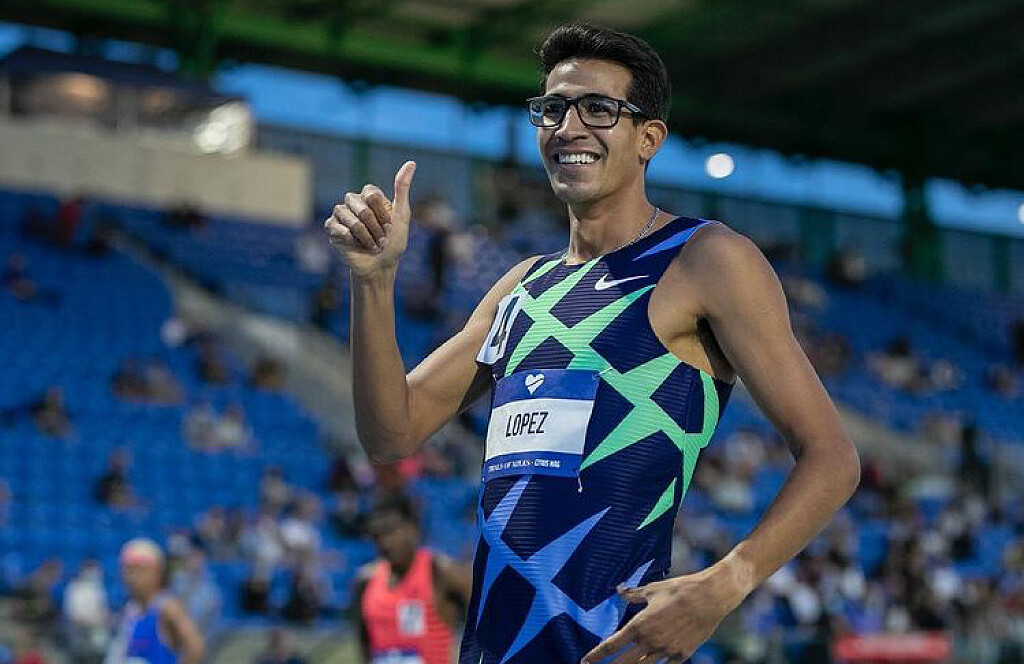
National record-holder Tonatiu Lopez, on track and making history for Mexico
For all its strength across the sporting spectrum, Mexico has had scant success of late on the track when it comes to major championships. At the Tokyo Olympics, the nation of 128 million fielded full teams across the marathons and race walks, but had just one male competitor on the track.
That athlete was Jesus Tonatiu Lopez, a 24-year-old whose Games came to an end in the semifinals of the 800m, a tactical mistake costing him precious fractions of a second and leaving him wondering what might have been. Lopez finished third, just 0.03 behind Emmanuel Korir of Kenya and 0.17 behind Patryk Dobek of Poland – who went on to win gold and bronze respectively.
“I cried,” says Lopez, who made his 2022 debut at the Millrose Games, a World Athletics Indoor Tour Gold meeting, on Saturday (29). “I felt very frustrated. I knew maybe I could be in that race.”
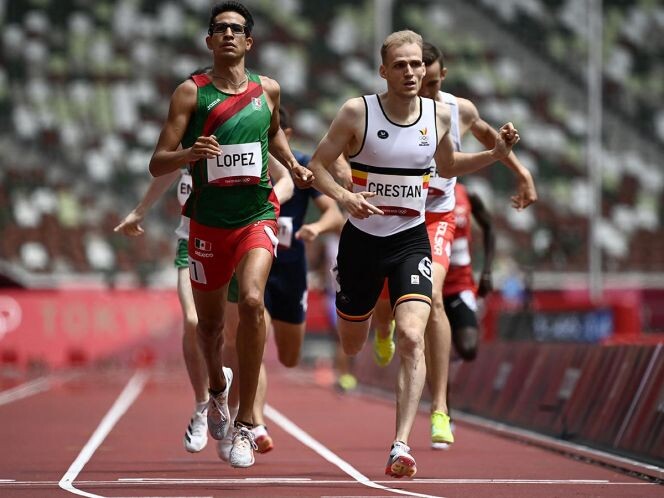
Over the coming months, he’ll have ample opportunity to make amends, with Lopez targeting the World Athletics Indoor Championships Belgrade 22 in March and the World Athletics Championships Eugene 22 in July.
“I’m not looking for a big achievement,” he says of Belgrade. “To compete with the best in the world is going to be helpful; I’ll get a lot of experience. In Eugene, I want to make the final. Obviously I want a medal, but I try to not stress myself with (such a) specific objective.”
On the build-up to Tokyo, the medal question was often put to him by Mexican journalists, and Lopez did his best to play down expectations.
“I don’t like to talk like that,” he says. “I just want to run the best I can. I’m going to do my best, but of course with my best race I can get a medal.”
The past 12 months have taught him as much.
Through 2020 and 2021 Lopez has taken many small steps that, ultimately, led to one giant leap into world-class territory. In May last year he lowered his national record to 1:44.40 and then two months later, he hacked almost a full second off that mark, clocking 1:43.44 in Marietta, USA.
It sounds strange, but Lopez was actually happier after the first race. The reason?
“When I ran 1:43, that same day was (the) Monaco (Diamond League meeting), and (Nijel) Amos ran 1:42.91,” he says. “I wanted to be there, so I was frustrated. I thought I could run faster.”
What led to his breakthrough? Lopez’s story is similar to many other athletes who had their worlds turned upside down in 2020, forced to reassess his approach, rebuild his fitness and return better than ever once racing resumed.
“I think the pandemic helped me,” he says.
In 2019 he set a Mexican record of 1:45.03 shortly before the Pan American Games in Lima, Peru, but he was struck down with injury in the heats at that championships and failed to finish.
“In 2020 our philosophy was to get better in the things we do well and fix the things we don’t do well,” he says. “It was to get better in our weaknesses. I was not giving it everything I had (before) and I felt I needed to give a little more to get better.”
Lopez is a full-time athlete these days and trains in Hermosillo, a city of 800,000 people, located in the state of Sonora in northwest Mexico. It’s also where he grew up, first finding athletics at the age of seven, brought to it by his parents, Claudia Alvarez and Ramon Enrique.
At the time, he was playing American football, putting his speed to good use as a running back, and in those early years he “didn’t really care so much” about athletics. His parents, though, made sure he stayed the course.
“They obligated me to train,” he says. “When I was a boy I wanted to (play) American football, soccer, but they were like, ‘no, you’re going to be a track and field athlete.’”
There was no athletics background in his family, but his coach knew talent when he saw it. In 2013 Lopez – then 15 – competed at the World U18 Championships in Donetsk, Ukraine, and it left an indelible mark.
“I realized: I want to do this all my life,” he says.
At 16 he lowered his best to 1:50.33, and competed at the World U20 Championships in Eugene, USA. At 17 he was running 1:48.13. At 18: 1:46.57.
In 2017 he made his first World Championships at senior level, competing in London before going on to win the World University Games title in Taipei. By then he was a student at the University of Sonora, studying physical culture and sports and training under Conrado Soto, who still coaches him today.
Lopez would rise early, training at 6am before his classes, steadily progressing each month, each year. The sporting and academic demands meant he wasn’t able to work on the side, but support from his parents – who started him out on this path – has never wavered.
“Even with not much money, they gave me what I needed to put me in the city where I need to compete,” he says. “The first years were very difficult but thanks to them I was able to be consistent from year to year. They were also always there for me for emotional support. All this, I owe to my parents.”
As he told his story, Lopez was sitting trackside in the Armory, New York City, ahead of the Millrose Games. He’d never raced on a 200m indoor track before but Lopez ran well to finish sixth in 1:48.60.
“It was a very fierce competition but I’m satisfied,” he said. “I can get better and I know what I need to do to be better next time.”
Given his pedigree as a teenager, he had a range of options available to study in the US but Lopez overlooked them in favor of staying at home. “My coach was great, I had my family, my home,” he says. “I don’t need to go to other places when I have everything in Hermosillo.”
Growing up, he had few compatriots to look up to who were mixing it at the top level in middle-distance events, but Lopez is hoping his presence on that stage – both now and in the future – will inspire many others to follow.
“I always wanted that,” he says. “Every competition, I want to have people by my side. It took me a long time to believe I could compete with the (world’s best), but one year ago I really believed. I can compete with them.”
(01/31/2022) ⚡AMPby World Athletics
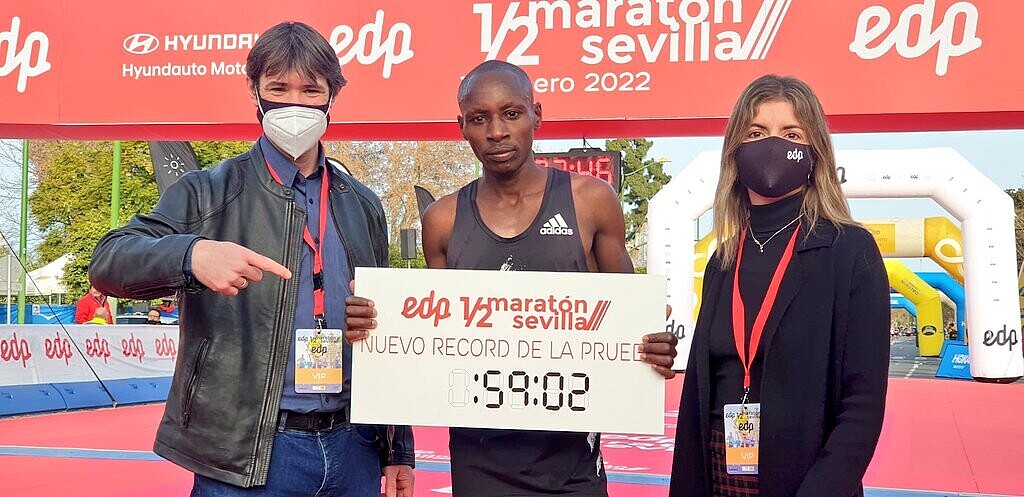
Kenyan Sebastian Kimaru crashes the Sevilla Half Marathon course record
Kenya’s Sebastian Kimaru made his Internationa debut memorable when he ran the fastest time ever at the 27th edition of the EDP Sevilla Half Marathon that was held on Sunday (30) in Sevilla, Spain.
Kimaru was the surprise winner as he was tasked to pace the race but after the 10km mark he decided to forge ahead and fight for the title as he crashed the previous record of 1:00.44 that was set in 2020 by Eyob Faniel from Italy.
Kimaru cut the tape in a personal best of 59:02 which is the sixth fastest time in history at the flattest half marathon in Europe as he led 1-2 Kenyan podium finish. David Ngure came home in second place 1:00.22 with Gebrie Erkihuna from Ethiopia closing the first three podium finishes in 1:00.27.
All the first three runners ran under the previous course record.
LEADING RESULTS
21KM MEN
Sebastian Kimaru (KEN) 59:02
David Ngure (KEN) 1:00.22
Gebrie Erkihuna (ETH) 1:00.27
(01/31/2022) ⚡AMPby John Vaselyne

EDP Seville Half Marathon
The EDP Marathon Half of Seville is one of greater participation of the south of Spain. AD Athletics San Pablo, with the collaboration of the Municipal Sports Institute of Seville and the sponsorship of EDP and Ibercaja, proposes to celebrate with us. The 27th edition will present improvements, such as the inclusion of the RFEA calendar test. A measure that...
more...
Ethiopian runner Yalemzerf Yehualaw plans to defend her title at Northern Ireland event in August
Ethiopian runner plans to defend her title at Northern Ireland event in August on a course which organizers promise will be accurate this time after the 2021 short-course issue.
Yalemzerf Yehualaw has not enjoyed much luck in road races lately. In the Antrim Coast Half-Marathon last September she set what appeared to be a world record of 63:43 before it transpired the course was 54 meters short. Then, in the Great Ethiopian Run this month, she seemingly clocked an African all-comers’ record of 30:14 at high altitude in Addis Ababa, only to see the time adjusted to 31:17 due to a timing error.
The 22-year-old hopes things will start going in her favor this year and on August 28 she competes again in the ‘Mid & East Antrim’ Antrim Coast Half-Marathon, a World Athletics Elite Label race which organizers this time are sure will see performances properly ratified.
Elite race director James McIlroy said: ‘The one name we wanted back after last year’s unratified world record was Yalemzerf – and to get this news at the beginning of the season means so much. She loves the course, the people and the support she got last year along the route really spurred her on, so to have her confirm that she’s returning to the province is very special.
“As it stands, she has run four of the seven fastest all-time half marathons and just last week she ran the fastest ever 10km at altitude in winning the Great Ethiopian Run against some of the best distance runners in the world. At 22 years old she’s got so much more to come.”
Yehualaw’s ratified half-marathon best is 63:51 set in Valencia last year and she has also won bronze at the World Half-Marathon Championships. Only one athlete has run quicker over the 13.1-mile distance – world record-holder Letesenbet Gidey with 62:52, which was also set in Valencia last year.
When asked about the course being found to be 54 meters short, he said: “It was very disappointing for everyone concerned; the event, the course measurers, who are two of the most experienced in the UK, but most of all the athlete. But we did follow the protocol to the letter, and the main issue was around not having both measurements done at the same time.
“This unfortunately wasn’t possible due to the travel restrictions in place at that time because of Covid. Moving forward in 2022, we will have the course measured, verified and a racing line put down ahead of the race in August.”
McIlroy, a former AW cover star himself during his 800m racing days, added he has a big announcement coming soon in the men’s race, even going as far as to say that it’s as exciting news as you can get when it comes to global distance running.
Also already set to race on August 28 are Great North Run winner Marc Scott and last year’s Antrim Coast runner-up Tesfahun Akalnew.
(01/31/2022) ⚡AMPby Jason Henderson
MEA ANTRIM COAST HALF MARATHON
The MEA Antrim Coast Half Marathon 2022 has been approved by World Athletics as an Elite Event. The World Athletics certified course takes in some of the most stunning scenery in Europe, combined with some famous landmarks along the route. With it's flat and fast course, the race is one of the fastest half marathons in the world. Starting...
more...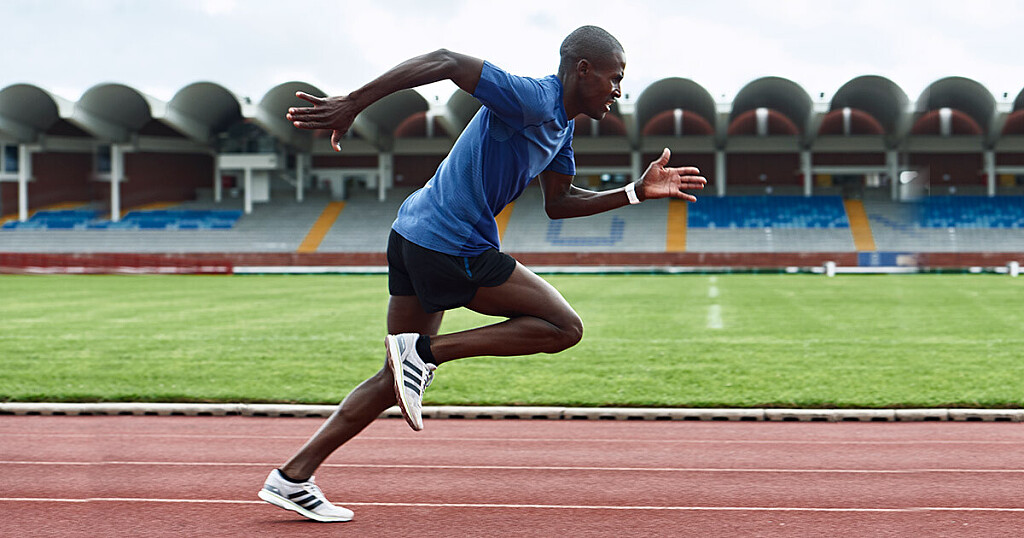
Try this Tabata HIIT workout for runners, combine speedwork with strength training in one fun, challenging workout
As runners, we know we need to strength train if we want to prevent injuries and see our times come down, but fitting it into our weekly schedule isn’t always easy. This workout combines some speedwork and strength training into one fun session to help you get fitter, faster and stronger, and is a great alternative to traditional speedwork during the off-season.
The workout

This session alternates between sprinting and explosive, plyometric-style exercises for a varied and intense workout. The ideal location for a workout like this is at your local track, but you can easily convert the running distances to times to do this on the road, or you could do it indoors on a treadmill as well. The strength portion does not require any equipment, making it easy to take to a variety of locations, and is all done Tabata-style, which means eight rounds of 20 seconds of work and 10 seconds of rest.
Warm-up: 10-15 minute easy jog, followed by mobility drills.

Workout:
2 x 200m/1 minute rest
Tabata: Alternate between Jumping squats (modify with regular squats) and pulsing squats
2 x 200m/1 minute rest
Tabata: Alternate between jumping lunges (modify with walking lunges) and pulsing lunges (switch legs each time)
2 x 200m/1 minute rest
Tabata: Alternate between plank (modify by dropping your knees to the ground) and mountain climbers
2 x 200m/1 minute rest
Cooldown: 10-15 minute jog, followed by light stretching
(01/31/2022) ⚡AMPby Brittany Hambleton

Study: watch out for these predictors of multiple injuries
Despite how common injuries are among runners, we still know relatively little about what specific factors cause them, or how to prevent them. We know even less about why some runners suffer multiple injuries in a season, while others seem to be able to run forever with next to no issues. Recently, researchers in South Africa tried to understand what causes some runners to experience multiple injuries, and their findings may surprise you.
The study
The study, which was published in the Journal of Sport and Health Science, collected running-related injury data from 75,401 race entrants across four years (2012-2015) at the annual Two Oceans 21.1 km and 56.0 km races in South Africa. The average number of injuries for each runner every year was calculated by taking a runner’s race entry history and injury history into account and categorizing entrants into four multiple injury risk (MIR) categories — high, intermediate, low and very low.
The researchers used odds ratios (multiple logistic regression modeling) to determine which factors predicted a high risk of multiple injuries. The factors they considered included demographics, training and racing, chronic-disease history and history of allergies.
The results
Interestingly, the results showed that less than 10 per cent of the runners surveyed experienced an injury over the four years, and only 0.4 per cent of them experienced multiple injuries during that time. This, the researchers admitted, is relatively low compared to other studies, which have previously reported between 19.4 per cent and 79.3 per cent of runners experiencing at least one injury every year, and warrants further investigation.
The study determined three independent risk factors that seemed to predict a higher instance of multiple injuries. These included older age (more than 40 years old), a longer history of recreational running (more than 20 years) and running longer distances, like ultramarathons. Counter to what you may think, neither weekly running mileage nor any other training-related risk factors were predictors of a high rate of multiple injuries.
Chronic disease and injuries
The researchers also identified two novel risk factors for multiple injuries: a history of chronic disease or a history of allergies. Nearly 19 per cent of all runners involved in the study reported at least one chronic disease, and these people accounted for 26 per cent of runners with multiple injuries. If the number of chronic diseases in a runner increased from one to two, their odds for having multiple injuries increased by a factor of 2.2 per cent. If they went from two to three, those odds went up another by a factor of 4.7.
The authors of the study note previous studies have shown that chronic diseases are common among endurance runners. They also point out that other studies have reported a link between chronic diseases like diabetes mellitus and hypercholesterolemia are associated with injury. They believe that one reason for this association is that runners with chronic diseases are likely on a number of medications, which could influence their risk for injuries. “There is also evidence that medications used to treat chronic diseases can be associated with increased risk of tendinopathies, ligament injuries and bone-stress injuries,” the researchers say.
Allergies and injuries
The study also found that runners with a history of any form of allergies had significantly higher odds of experiencing multiple injuries than those who didn’t. “Runners with allergies are likely to be taking antihistamines, especially because endurance running is an outdoor activity,” the researchers concluded. “One of the oral sedating H1 antihistamines, Promethazine, has been associated with severe tissue injury.”
The bottom line
Injuries are complicated and often multi-faceted, and scientists are still learning what causes some people to become injured more than others. This study has a few specific limitations, including the self-reported nature of the data, and the fact that none of the injuries were confirmed by healthcare professionals.
The results of this study were also correlations, not causations, and cause-effect relationships between the risk factors couldn’t be confirmed due to the cross-sectional design of the study. The researchers also didn’t address risk factors that could potentially play roles in multiple injuries among runners, like body mass index, specific medications, type of training/surface or biomechanics, among others, and they did not account for recurrent injuries in their data.
Still, runners with allergies or chronic diseases should take note of this study, and take extra precautions with their training. Particularly if you’re taking medications for your condition, you should talk to your doctor about the potential side effects and how you can lower your risk for injuries and train safely.
(01/30/2022) ⚡AMPby Running Magazine
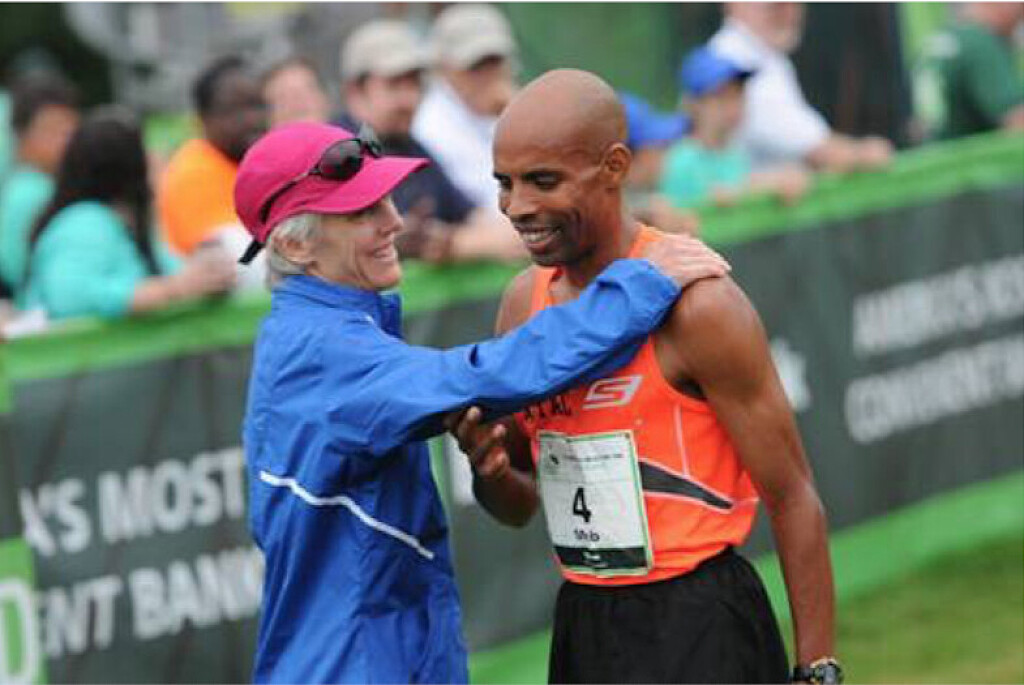
Joan Benoit Samuelson teaches a MasterClass on running
Your mind is just as important as your body when you’re running, but developing a healthy, strong mindset is not always easy. Just like it takes time, dedication and practice to train your body for a race, it requires equal amounts of effort to train your mind, and who better to coach you through that process than America’s running sweetheart, Joan Benoit-Samuelson?
Her class, Joan Benoit Samuelson Teaches the Runner’s Mindset, is available now as part of the popular MasterClass series, and will no doubt help you crush your goals in 2022.
“After 50+ years of running, I’m delighted to partner with @masterclass to share my lifelong passion for running,” Samuelson said on her Instagram. “I invite you to join me in this class and make your miles count, on the road and in life. Run on in good health and with fire in your belly.”
For the uninitiated, Benoit Samuelson is one of the most accomplished runners in history. She won the Boston Marathon twice, in 1979 and 1983, and was the winner of the first-ever Olympic women’s marathon in 1984.
Now in her mid-60s, she is also the only woman in the world to have run sub-3 hour marathons in five consecutive decades, her first in 1979 and her most recent in 2010. At the 2019 Berlin Marathon, she ran 3:02, nearly becoming the first woman to clock a sub-3 in six consecutive decades.
Her new MasterClass will cover a range of topics, including goal setting, balancing the runner’s mind, stretches and strength training, running your first marathon and navigating injury. She also shares interesting anecdotes about her early days of running. “When I first started to run, I ran inside the confines of an old abandoned Army post,” she says in the opening remarks. “And there wasn’t any vehicular traffic allowed in that area at the time, so I would walk from our house to the fort and I would run to my heart’s desire. And then I’d walk home, because I was embarrassed to be seen running on the roads.”
She talks about being the underdog at that first Olympic marathon, the pressure of being an Olympic champion, how running has shaped her life and her desire to give back to the sport. This MasterClass is a unique opportunity for runners to level up their training. For more information, visit the Masterclass website.
(01/30/2022) ⚡AMPby Running Magazine
Inaugural world 50km records ratified
Women’s world 50km record (mixed race)2:59:54 Desiree Linden (USA) Dorena Lake USA 13 April 2021Men’s world 50km record 2:42:07 Ketema Negasa (ETH) Port Elizabeth RSA 23 May 2021Women’s world 50km record (women-only race)3:04:24 Irvette van Zyl (RSA) Port Elizabeth RSA 23 May 2021The 50km performances achieved by Desiree Linden, Ketema Negasa and Irvette van Zyl in 2021 have been ratified as inaugural world 50km records.
Given the increasing popularity of 50km road races, the decision to add the distance to the list of events for which world records are recognised was made at the 225th World Athletics Council meeting in Tokyo in July.
The best legitimate performances as at 1 January 2022 – provided they met the minimum standards of 2:43:38 for men, 2:59:54 for women in a mixed race and 3:07:20 for a woman in a women-only race – were eligible for record ratification.
As a result, the 2:42:07 recorded by Ethiopia’s Negasa and the 3:04:24 run by South Africa’s Van Zyl, both in Port Elizabeth in May, plus the 2:59:54 achieved by the USA’s Linden in a mixed race in Oregon in April, have been ratified as world 50km records.
Linden’s performance came at the Brooks Running 50km & Marathon on 13 April 2021, when she became the first woman to run 50km in under three hours. To achieve it, the 2018 Boston Marathon champion averaged at a pace of 3:35 per kilometre, clocking 1:15:47 at the half-marathon mark.
The following month, on 23 May 2021, Negasa and Van Zyl both lined up for the Nedbank Runified Breaking Barriers 50K. Negasa went on to race at an average pace of 3:15 per kilometre to achieve his winning time of 2:42:07, while Van Zyl clocked 3:04:24 after averaging at a kilometre pace of 3:41.
(01/30/2022) ⚡AMPby World Athletics
Matsuda runs 2:20:52 to break Osaka Women's Marathon record
Mizuki Matsuda broke the race record at the Osaka Women’s Marathon on Sunday (30), improving her PB to 2:20:52 to win the World Athletics Elite Label event.
Her time beats the 2:21:11 event record which had been set by Mao Ichiyama last year and moves her to fifth on the Japanese all-time list. It is also the second-fastest time by a Japanese athlete in Japan, behind Ichiyama’s 2:20:29 set in Nagoya in 2020.
Matsuda was followed over the finish line by Mao Uesugi, Natsumi Matsushita and Mizuki Tanimoto, as the top four all dipped under 2:24.
Before the race, Matsuda had explained how her goal was to win the race with a performance that would help her to secure a spot on the team for the World Athletics Championships in Oregon later this year. After winning in Osaka in 2020 with 2:21:47, Matsuda had later missed out on a place at the Tokyo Olympics when Ichiyama ran faster in Nagoya.
“I could not attain my goal today,” she said after the race, with beating Ichiyama’s 2:20:29 a likely aim. “I am happy that my hard training paid off well.
“I think the result was good because I ran aggressively from the start. I just hope that I will be selected for the World Championships team. During the race, I was imagining myself running in Eugene, thinking: ‘How would the world-class runner run at this stage of the race?’”
Despite the pandemic, the event in Osaka was able to go ahead as planned, under good conditions with little of the expected wind.
Matsuda and Uesugi had run together behind the three male pacemakers until just after 25km, passing 10km in 33:02 and half way in 1:09:57 – a half marathon PB for Uesugi.
At 25km the clock read 1:22:47, but Uesugi started to drift back a short while later and by 30km – passed in 1:39:15 – Matsuda had built a 31-second lead.
She went through 35km in 1:56:04 and 40km in 2:13:23, with the pacemakers leaving the race as they entered Nagai Stadium park at around 41km.
Matsuda went on to cross the finish line in 2:20:52 to achieve her third Osaka Women’s Marathon win after her victories in 2018 and 2020, maintaining her unbeaten record in the event.
Although Uesugi’s pace began to slow as she was dropped, she held on to run a big PB of 2:22:29, while Matsushita was third in 2:23:05 and Tanimoto fourth in 2:23:11. Yukari Abe was fifth in 2:24:02 as the top five all set PBs, with Sayaka Sato sixth in 2:24:47. The top six all qualified for the Marathon Grand Championship, the 2024 Olympic trial race.
(01/30/2022) ⚡AMP

Osaka International Womens Marathon
The Osaka International Ladies Marathon is an annual marathon road race for women over the classic distance of 42.195 kilometres which is held on the 4th or 5th Sunday of January in the city of Osaka, Japan, and hosted by Japan Association of Athletics Federations, Kansai Telecasting Corporation, the Sankei Shimbun, Sankei Sports, Radio Osaka and Osaka City. The first...
more...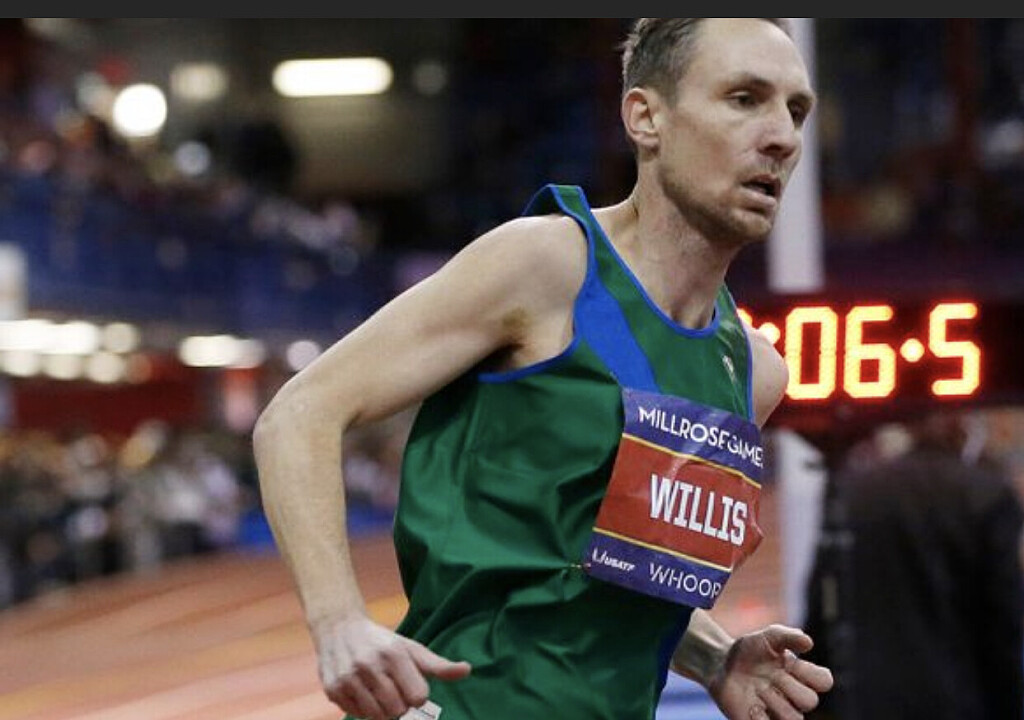
Nick Willis runs sub-four minute mile for 20th consecutive year
Nick Willis ran a sub-four minute mile at the Millrose Games in New York- 20 seasons after first breaking the barrier in 2003.
New Zealand track and field great Nick Willis has earned $25,000 for an athletics charity after completing 20 years of sub-four minute miles.
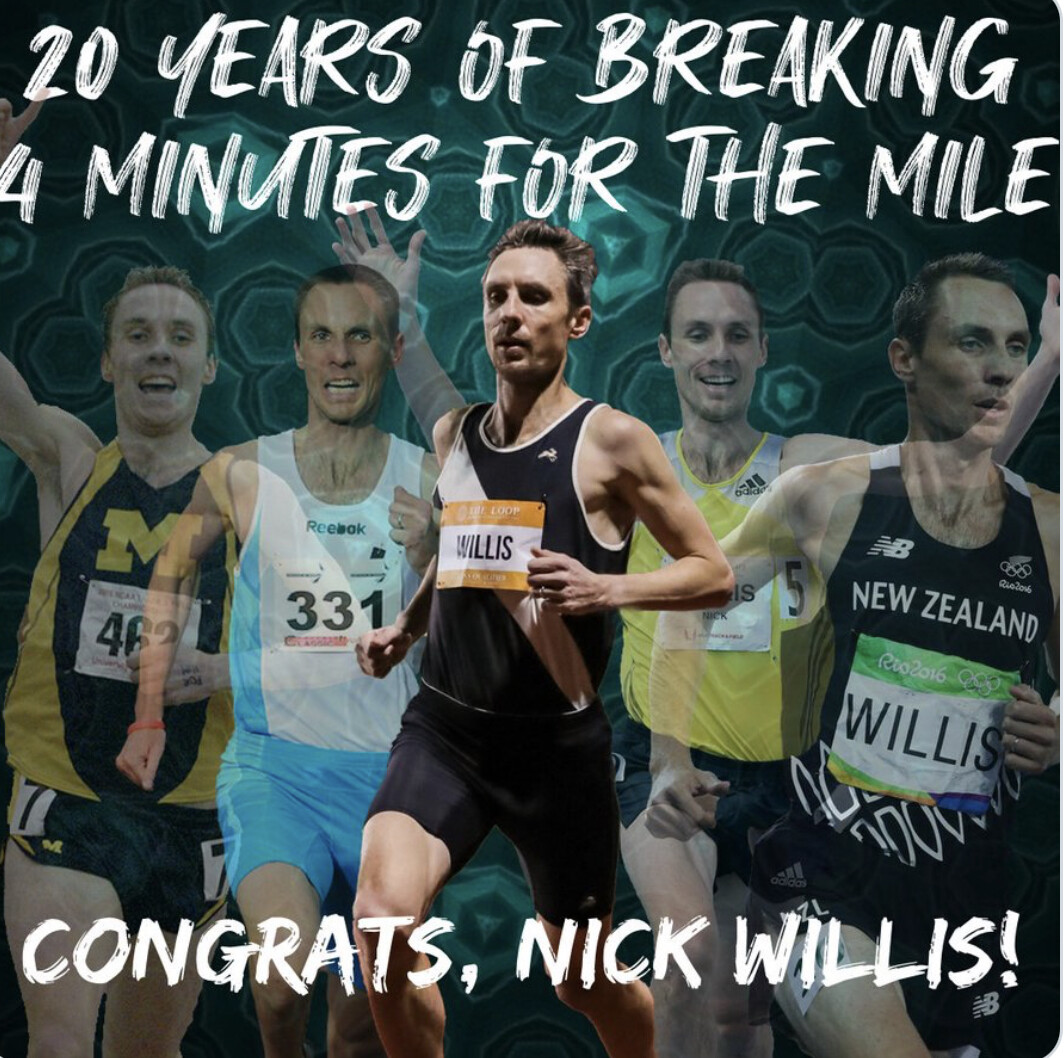
The 38-year-old finished ninth in the Wanamaker men’s mile at the Millrose Games indoor meet in New York City on Saturday January 29 in 3min 59.7sec.
It was in 2006 that Willis experienced international success for the first time, claiming 1500m gold at the Commonwealth Games in 3:38.49 ahead of Canada’s Nathan Brannen and Australia’s Mark Fountain. That same year, he lowered his mile personal best to 3:52.75.
In 2007, Willis made his first world 1500m final, placing 10th in Osaka in 3:36.13.
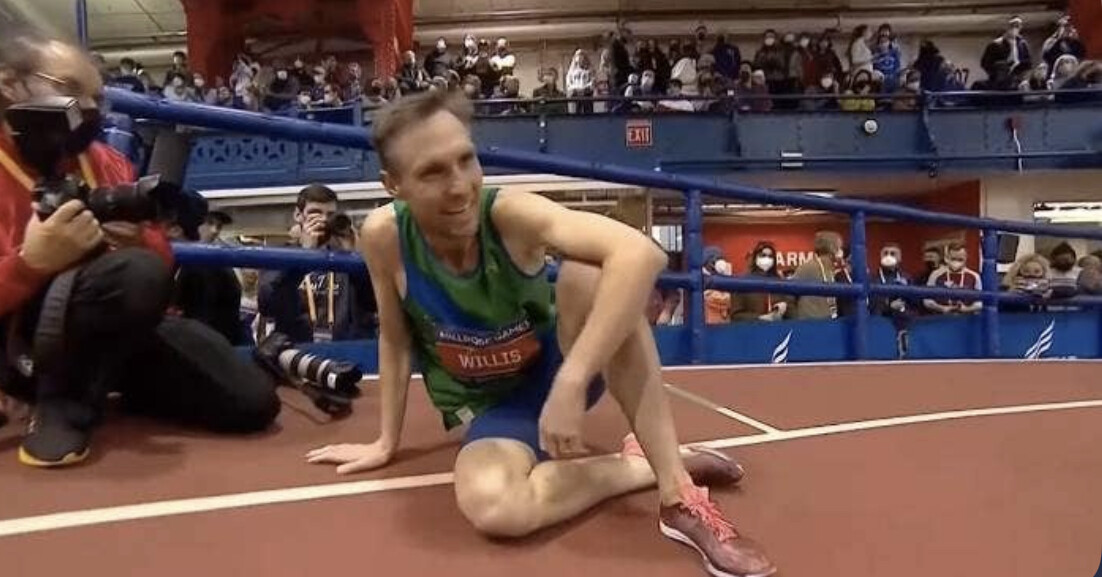
The following year, Willis ran what he considers one of his best races to improve his mile personal best to 3:50.66, finishing second behind Kenya’s Shadrack Korir at the Prefontaine Classic in Eugene, Oregon. Two months after that, he went on to claim 1500m silver at the Beijing Olympics in China.
At the following 2012 Olympic Games, Willis had the privilege of being his country’s flag bearer during the opening ceremony held at the London Stadium. He finished ninth in the Olympic 1500m final and had a season's best of 3:51.77 for the mile.
In 2014 at the Glasgow Commonwealth Games, Willis earned 1500m bronze, his third straight Commonwealth medal after the one he had taken in Delhi four years prior. It was also in 2014 that he set his lifetime best of 3:49.83 in the mile, which stood as the Oceanian record until July 2021.
In 2015, Willis clocked a still-standing Oceanian record of 3:51.46 for the indoor mile, and a national 1500m record of 3:29.66 at the Herculis Diamond League meeting in Monaco. That same year he finished sixth with 3:35.46 in the 1500m final at the World Championships in Beijing, his best placing in the competition.
The following year, Willis added two global medals to his tally with a 1500m bronze at the World Indoor Championships in Portland and an Olympic 1500m bronze in Rio.
At 38, Willis was the oldest athlete in the 1500m field at the Tokyo Olympics, where he placed ninth in his semifinal in a season’s best of 3:35.41.
Earlier in 2021, he had already broken the record of 19 consecutive years of sub-four-minute miles. And he finally went on to improve that record to 20 on 29 January 2022 with his 3:59.71 run.
(01/29/2022) ⚡AMPby World Athletics

NYRR Millrose Games
The Pinnacle of Indoor Track & Field The NYRR Millrose Games, first held in 1908, remains the premier indoor track and field competition in the United States. The 2025 edition will once again bring the world’s top professional, collegiate, and high school athletes to New York City for a day of thrilling competition. Hosted at the New Balance Track &...
more...
The mental side of running injuries a new research examines how injury-related psychological distress can impact recovery
While the physical pain that comes with a running injury can be tough to deal with, the emotional and mental anguish of having your training interrupted is often the hardest part. We are now realizing that working on your mental condition while injured doesn’t just make your time on the sidelines easier to handle, it can actually speed up recovery. In a recent study, researchers explored how psychological distress can actually make your injury worse, and delay your return to the roads.
Injury and fear
The “psychological distress” of runners is another way of saying fear. When you have a running injury preventing you from training, a significant part of your stress comes from fear of all the unknowns. Questions like “how severe is the injury?” “How long will it take to heal?” and “How much fitness will I lose?” keep you up at night, distract you from other priorities and consume a lot of your mental energy.
In this new study published in the Physical Therapy in Sport, researchers wanted to determine how much this psychological distress affected runners’ perceived running abilities. To do this, they collected data from runners at their first physiotherapy appointment, which included having them fill out an Athlete Fear Avoidance Questionnaire (AFAQ) for injury-related psychological distress and the University of Wisconsin Running and Recovery Index (UWRI) for perceived running ability.
The researchers found that most athletes experienced significant injury-related psychological distress at the beginning of their treatment, but this generally improved over time. Despite this, they found that athletic fear-avoidance may persist, and athletes with higher athletic fear-avoidance had a lower perceived running ability.
Mental condition and physical condition
While the main job of a physiotherapist is to help athletes improve their physical condition, the authors of the study conclude that therapists should also spend time working on their patient’s mental condition throughout the injury recovery process as well.
Runners should also do some of this work themselves. Injuries can seem like catastrophes when they happen, especially when they prevent you from running your goal race, but it’s important to keep things in perspective. Most injuries aren’t career-ending. You will get back to running again and while it may take a bit of time to re-build your fitness, you will achieve more of your running goals.
In the meantime, focus on doing whatever you can do, whether that’s some form of cross-training or simply staying on top of your physio exercises every day. Just as you’ve gotten through hard blocks of training and rough patches in races, you’ll get through this, too.
(01/29/2022) ⚡AMPby Brittany Hambleton

This weekend's Osaka International Women's Marathon will go ahead despide omicron wave
Despite Osaka being named to a preliminary state of emergency as Japan goes deeper into its omicron wave, this weekend's Osaka International Women's Marathon and Osaka Half Marathon are going ahead on their traditional public road courses. Osaka Women's is Japan's last remaining purely elite marathon, and with the mass-participation Osaka Marathon moving to the last weekend of February this year and targeting WA platinum label status the writing has to be on the wall for its future.
It just doesn't seem sustainable to have this race four weeks before the start of a three-week run of platinum label races, one in the same city, one in Tokyo and one in Nagoya.
But for this year, at least, Osaka Women's clearly has the support up top in the local government to keep moving, and that counts for something. Like the 2021 race, despite its name it's a Japanese-only field with male pacers, kind of inevitably on the first point given Japan's ongoing border fortification but a bit regrettably on the second. Take out the "International" and "Women's" and what have you got left?
The win looks almost definitely to be between Mizuki Matsuda (Daihatsu) and Sayaka Sato (Sekisui Kagaku). Matsuda has one of the best records in the sport, with three wins and a 5th-place in Berlin out of five marathon starts, all between 2:21:47 and 2:22:44. The only misfire she's had was a 2:29:51 for 4th in Japan's Olympic marathon trials that left her as alternate. How she would have done if she'd replaced one of the less-than-100% women who ran the Olympics is one of last year's biggest what-ifs. Sato was the 4th-fastest Japanese woman in 2020 and 2021 and set the 25 km NR en route in her marathon debut, a mark that Matsuda broke while winning Nagoya last year. Sato will need a big step up and/or another miss from Matsuda to compete, but it should be a good race.
The supporting cast includes 2019's fastest Japanese woman Reia Iwade (Adidas), and 2021's 3rd and 4th-placers Yukari Abe (Shimamura) and Mao Uesugi (Starts). Osaka Women's factors into the complex algorithms for making the Oregon World Championships team and Paris Olympics marathon trials, and with six other women in the field having run under the 2:27:00 B-standard for qualification for the Olympic trials the race to finish in the 4th-6th place B-standard bracket should be just as good as the one to make the 1st-3rd place A-standard bracket.
Alongside the marathon, the Osaka Half Marathon will also feature two-time Osaka International winner Kayoko Fukushi (Wacoal) in her final race. Fukushi's marathon debut in Osaka in 2008 was possibly the wildest elite-level marathon debut in history, and while she might not have another marathon in her it's great to see her bring her career to a close back where she had one of its most unforgettable highlights. Sub-61 half marathoner Kenta Murayama (Asahi Kasei) leads the men's field in the half in a tune-up for one of the big marathons a month away whose future is still up in the air.
Fuji TV is handling TV broadcasting duties starting at noon Sunday Japan time. Official streaming looks to be through the TVer subscription service, so get your VPNs now. You might have luck with mov3.co too, but use a popup blocker. JRN will also be covering the race on @JRNlive.
(01/29/2022) ⚡AMPby Brett Larner
Osaka International Womens Marathon
The Osaka International Ladies Marathon is an annual marathon road race for women over the classic distance of 42.195 kilometres which is held on the 4th or 5th Sunday of January in the city of Osaka, Japan, and hosted by Japan Association of Athletics Federations, Kansai Telecasting Corporation, the Sankei Shimbun, Sankei Sports, Radio Osaka and Osaka City. The first...
more...
Olympic medalist and champion marathoner Meb Keflezighi thought about dropping out of every marathon he ran—even the three he won.
So if you’ve had those thoughts, it’s certainly not just you. All runners have rough patches when pushing themselves, whether in a race, during a hard workout, or on a long run. Experts use the phrase “psychological crisis” to describe when your body’s signals dominate your attention and you think about slowing or stopping.
These moments often occur two-thirds to three-quarters of the way through a workout or race. Speaking about the Ursuline Academy runners she coaches in Dallas, elite runner Becky Wade says:

“They’re deep enough into the race that they’re hurting, but not close enough to the finish line yet to get excited or start kicking. It’s easy to doubt whether they’ll be able to hang on, and they back off a bit as a protective mechanism.”
What separates Keflezighi, Wade, and other successful runners from some of us is that they know these rough patches will come, and they have mental strength techniques for dealing with them.
These techniques are quite simple. Even better, they can be learned, and then honed, so that you persevere despite the internal voice telling you to back off or drop out. Here are six elite-endorsed ways to build mental strength when the going gets tough.

1. Know Why You’re Doing This
Good goals not only guide your training. They can also fortify you during difficult stretches.
Know the purpose of a given workout or race, and how it will help you meet a personally meaningful goal, says Olympian Roisin McGettigan, a sport psychology coach who holds the Irish record in the steeplechase.
For example, “if it was a long workout, I would remind myself that this is the time to work on my strength and endurance,” McGettigan says. “If it was an early-season race, the purpose might be ‘to see where I’m at’ or ‘blow off the cobwebs.’”
These why-am-I-doing-this thoughts can occur not just when you’re acutely suffering, but also when you’re bored or apathetic. McGettigan says to remind yourself why you’re out there in those situations as well. Think of how easy running will help you recover for your next key workout, or how an hour alone on the roads provides a calming antidote to the message-a-minute pace of modern life.
If thoughts alone don’t do the job for you, McGettigan recommends using visual cues. “I often drew a smiley face or heart on my hand to remind me that I really loved what I was doing and I was saying ‘yes’ to this experience,” she says.
2. Enlist Family and Friends
Telling a few key people about your race or hard workout adds accountability. When a moment of crisis occurs, picture yourself recounting the run to them. Will you be proud to tell them how you handled the challenge?
Meb Keflezighi was in 21st place halfway through the 2012 Olympic Marathon. Bothered by stomach and foot pain, he pondered dropping out. Then he thought about his family, who were waiting for him at the finish line. What kind of example would dropping out set for his daughters, he asked himself. He committed to finishing no matter what, and wound up crossing the line in fourth place.
You can also enlist others in practical terms. As McGettigan notes, most elite runners train with others, in part to be pulled through hard efforts when they’re struggling and might otherwise slack off. Wade tells the high schoolers she coaches to latch on to a teammate or competitor if their resolve falters during a race. Doing so can shift your attention from how much you’re hurting to the more straightforward task of maintaining contact.
3. Visualize Success
To reiterate: Successful racers know one or more psychological crises are likely to occur when they’re pushing themselves. One way they prepare for the challenge is to play the race through their head before they get to the starting line. As Wade, a 2:30 marathoner, puts it, “I envision myself in a race atmosphere, down to the course, competition, and atmosphere.”
A key benefit of doing so is that, when the urge to slow or stop strikes, you have a counter-narrative ready—that vision you implanted and watched several times of yourself rising to the challenge and continuing to run strong.
“I think having visualized the race going well in my head many times allowed me to stay engaged, because I had already told myself I was going to have a good race,” says Mark Coogan, whose long elite career was highlighted by a spot on the 1996 Olympic marathon team. “Knowing what I was going to do in the race allowed me to be more aware of how I was running physically, so I could stay loose and smooth.”
Coogan is now the coach of New Balance Boston, which includes on its roster Olympians Elle Purrier St. Pierre and Heather MacLean. He encourages his athletes to spend 10 to 15 minutes a day visualizing in the week leading up to a big race.
“I tell them to visualize seeing themselves running well,” Coogan says. “Visualize the race you want to happen.”
4. Focus on Your Body—But Not Excessively
Experts used to believe that experienced runners focus on bodily sensations (known as associating) and that less experienced runners focus on anything but their body (known as dissociating). Thanks in part to research by Noel Brick, Ph.D., a psychology professor at the University of Ulster and co-author of The Genius of Athletes, it’s now known that that old dichotomy is too simplistic.
Brick has shown that a Goldilocks-level of bodily awareness leads to lower perceived exertion. “Focusing excessively on bodily sensations, like breathing or feelings of discomfort, can be harmful to our performance,” Brick says.
Focusing solely on these sensations can negatively affect performance by increasing how hard the work feels and making the run feel more unpleasant. This then leads to slowing down.
(01/29/2022) ⚡AMPby Runner’s World

Craig Engels, Running’s Most Committed Party Animal, Returns to Nike—and Running Fast
Craig Engels explains what he can about his new four-year deal and heads to Millrose Games in good shape.
Craig Engels, the fun-loving 1500-meter runner who never misses a party, inked a new deal with Nike in the early days of 2022. It’s a four-year agreement, taking him through 2026.

But he went through a lot of soul-searching before he decided to return to running at a high level.
Engels, 27, finished fourth by half a second in the 1500 meters last June at the U.S. Olympic Track and Field Trials, just missing the team bound for Tokyo.
In the days afterward, he was adrift. “Everything I worked towards [was] over,” he told Runner’s World during one of several recent interviews. “I didn’t know what to do with myself. Which—I don’t know what emotion that is. It wasn’t sadness. More like, what do I do?”
He spent the rest of the summer racing on the track and road circuit in the U.S. He helped pace men who were trying to break 4:00 in the mile, and he encouraged facial hair growth. And still, he raced at a high level, although neither Engels nor his coach, Pete Julian, would say that his training resembled what it was before the Trials.
“We had to change things up,” Julian told Runner’s World last September, “had to piece together workouts in between to keep him so he could at least finish a mile. That’s what Craig needed at the moment.”
On August 14, he finished second at a mile in Falmouth, Massachusetts, clocking 3:53.97. Six days later he finished second again in the international mile at the Prefontaine Classic in Eugene, Oregon, in 3:55.41.
That runner-up finish at Pre came as a result of a premature celebration. He waved to the crowd at the top of the home stretch, but Geordie Beamish of New Zealand sailed by him with a few meters to go.
They hugged it out on the track and then took a victory lap.
“That’s Craig,” Julian said. “He makes mistakes along the way, it’s why he’s so damn popular. I’ve never seen anybody do something as dumb as wave to the crowd and then get beat and still get to take a victory lap. Pretty classic, right? There’s one guy in the world who can do that, and that’s Craig.”
After Pre, Engels shut down his season. In the fall, he returned to the University of Mississippi to finish the final semester of classes he needed to complete his MBA.
While Engels was in Oxford, Mississippi, he trained with Ole Miss cross-country coach Ryan Vanhoy, who had coached him in college, and the Ole Miss team. They logged high mileage and did a lot of long strength-based workouts. Meanwhile, Engels pondered his future.
Engels flirted with retirement, and Julian said Engels was sincere in his questioning, asking himself: “Is this something that I want to do?”
Running the Numbers
As Engels got back into shape and finished his classes, he began the process of negotiating a new contract. Initially, he tried to do it alone. He said he parted ways with his first agent, Ray Flynn, via email between rounds of the 1500 at the Olympic Trials.
Reached by text message, Flynn said, “It’s all good with Craig and I. Happy to see him doing well.”
Engels said he had long struggled with the role of agents in pro running and the fee they charge—15 percent of everything, including sponsorship deals, appearance fees, and prize money—for negotiating what often turns out to be a single contract with a shoe company.
“A lot of these agents were athletes,” Engels said. “I don’t know how they possibly sleep at night, taking 15 percent. NFL agents are capped out at three [percent].”
But as Engels talked to shoe company executives and weighed various offers and training situations, he realized he needed someone to review the contracts—“the lawyer jargon,” he calls it. “I was getting a little stressed,” he said.
So he hired Mark Wetmore as his agent, who also represents Engels’s teammate Donavan Brazier, among others. Wetmore immediately increased the value of the offers Engels had started negotiating on his own behalf.
Engels signed with Nike again. At the end of the four-year deal, he’ll have run professionally for 9 years, and he said it will be his last contract.
The terms of the deal are private—Engels had to sign a nondisclosure agreement, as most athletes do, which also limits the knowledge athletes have about their value in the market.
All he could say about it? “I definitely had some great offers on the table, which led to a very good contract for myself.”
Engels said if it were up to him, he’d post the details of his contract on Instagram to his 97,000 followers. Such knowledge would only help other runners, he says, while the current system benefits agents.
The Athlete Changes the Coach
Engels also returned to train with Julian and his team, recently named the Union Athletics Club (UAC). The club is headquartered in Portland, Oregon, but between altitude stints, training camps, and races, they’re rarely there for long.
He is now doing the bulk of his workouts with Charlie Hunter, who is on the UAC, and Craig Nowak, who trains with the group but isn’t officially on the roster. The group has been training in San Luis Obispo, California—team member Jordan Hasay’s hometown—and enjoying sunny skies and warm weather, and preparing to race the Millrose Games. Engels is entered in the mile.
“I’m in pretty good shape, yeah,” he said. “I don’t want to talk too much before it happens. I’m in pretty good shape.”
After Millrose, UAC hosts an indoor meet in Spokane, Washington, the Lilac Grand Prix, on February 11. The U.S. indoor championships are back in Spokane two weeks after that.
Julian, for one, is glad to count Engels on the roster. He told Runner’s World that Engels has “completely changed” the way he coaches.
“He’s made me realize that making [something] enjoyable and working hard don’t have to be separated, don’t have to be mutually exclusive,” Julian said. “The two things can exist. And we can be really great. But by being able to enjoy ourselves and being able to have some fun. To not take ourselves as seriously, but at the same time, take what we’re doing very seriously. You can do both.”
That’s a startling admission from Julian, who was a longtime assistant coach to Alberto Salazar. He was viewed as in relentless pursuit of every advantage for his athletes. Salazar is now banned from coaching Olympians permanently by SafeSport and serving a four-year ban for anti-doping offenses.
“[Engels has] made me realize that, hey, we can add some color to our lives,” Julian continued. “We’re not curing pediatric cancer here. We’re running around in half tights on a 400-meter circle. Coming from my own background, I’ve had to realize that, too, [with] my own coaching the last four or five years. You know what? Everyone needs to chill out a little bit. Let’s quit trying to eat our own and actually try to promote the sport and race really, really fast.”
One small way that Engels has changed the team? He prefers FaceTime to phone calls. Julian said Engels likes to see people, likes to smile at them. The FaceTime habit has spread throughout the group, so now, anytime anybody communicates on the team, it’s always by FaceTime. “That started from Craig,” he said.
Critics of Engels—who is an unabashed beer drinker, hot-tub soaker, RV driver, and mullet wearer—don’t see the work that he does, his coach says. And they don’t see how hard he tries.
“He did everything he could to make that Olympic team,” Julian said. “He’s done everything he can to make the sport better. He puts forth an amazing effort and he tries to win. But he’s not a robot, either.”
(01/29/2022) ⚡AMP
by Runner’s World

Florida dad breaks stroller mile world record
On Jan. 23, a Florida dad and his baby daughter set a new Guinness World record for the fastest mile while pushing a child in a stroller. Rob Holcomb covered four laps of a 400m track at Tampa’s Coleman Middle School in four minutes and 53 seconds, which broke the previous world mark of 4:57.
This was his third attempt at the stroller record, which he recently found out about in the fall of 2021. On his first two attempts, he came up just short running 4:58 and 5:03 but mentioned in an interview with Tampa’s local FOX59 that the weather was windy for stroller running.

The morning of Jan. 23 proved to be ideal racing conditions for him as he set the record surrounded by his family and friends cheering him on.
For a Guinness World Record like this, some rules have to be followed for it to count. There has to be a human inside the stroller and all four wheels must remain on the ground throughout the entire race.
The world’s fastest stroller dad, Holcomb holds personal bests of 15:23 for 5K and 34:26 for 10K, of which he both set in 2019. Now that record is out in the media, he anticipates another fast father will come along and shatter it.
Next for Holcomb is Tampa’s Publix Gasparilla Distance Classic Half Marathon on Feb. 26.
(01/29/2022) ⚡AMPby Running Magazine
