

Running News Daily
Running News Daily is edited by Bob Anderson and team. Send your news items to bob@mybestruns.com Advertising opportunities available.
Index to Daily Posts · Sign Up For Updates · Run The World Feed
Articles tagged #Kipchoge
Today's Running News
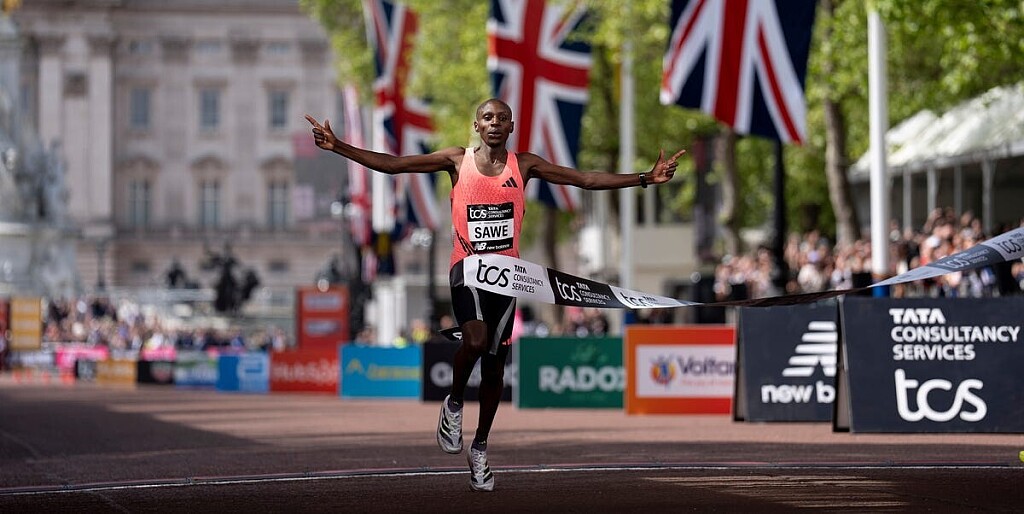


Marathon Majors Course Records: Where Speed, History And The Course Collide
The world’s biggest marathons are united by prestige, elite fields and unforgiving 26.2-mile battles, but their course records tell very different stories. From Tokyo to Sydney, each course has its own character, while London and Chicago have become synonymous with extraordinary speed.
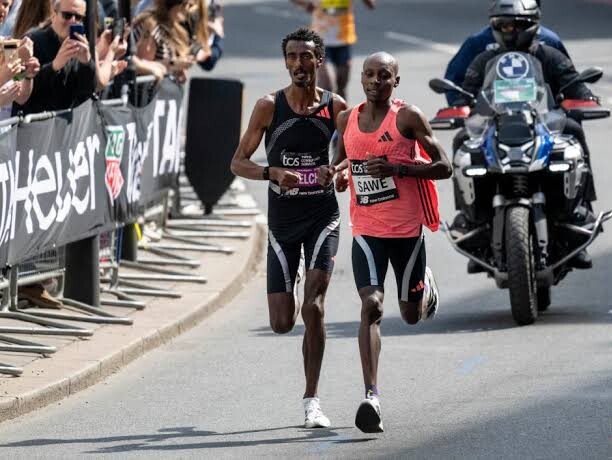
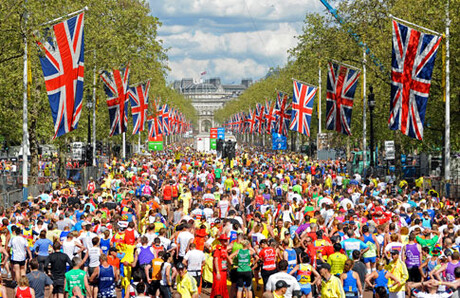
At the top of the men’s list stands the London Marathon, where Kenya’s Sabastian Sawe produced one of the greatest performances in road-running history. Sawe clocked 1:59:30 in April 2026, becoming the first athlete to officially break the two-hour barrier in a marathon. His performance also lowered the world record from Kelvin Kiptum’s previous mark of 2:00:35.
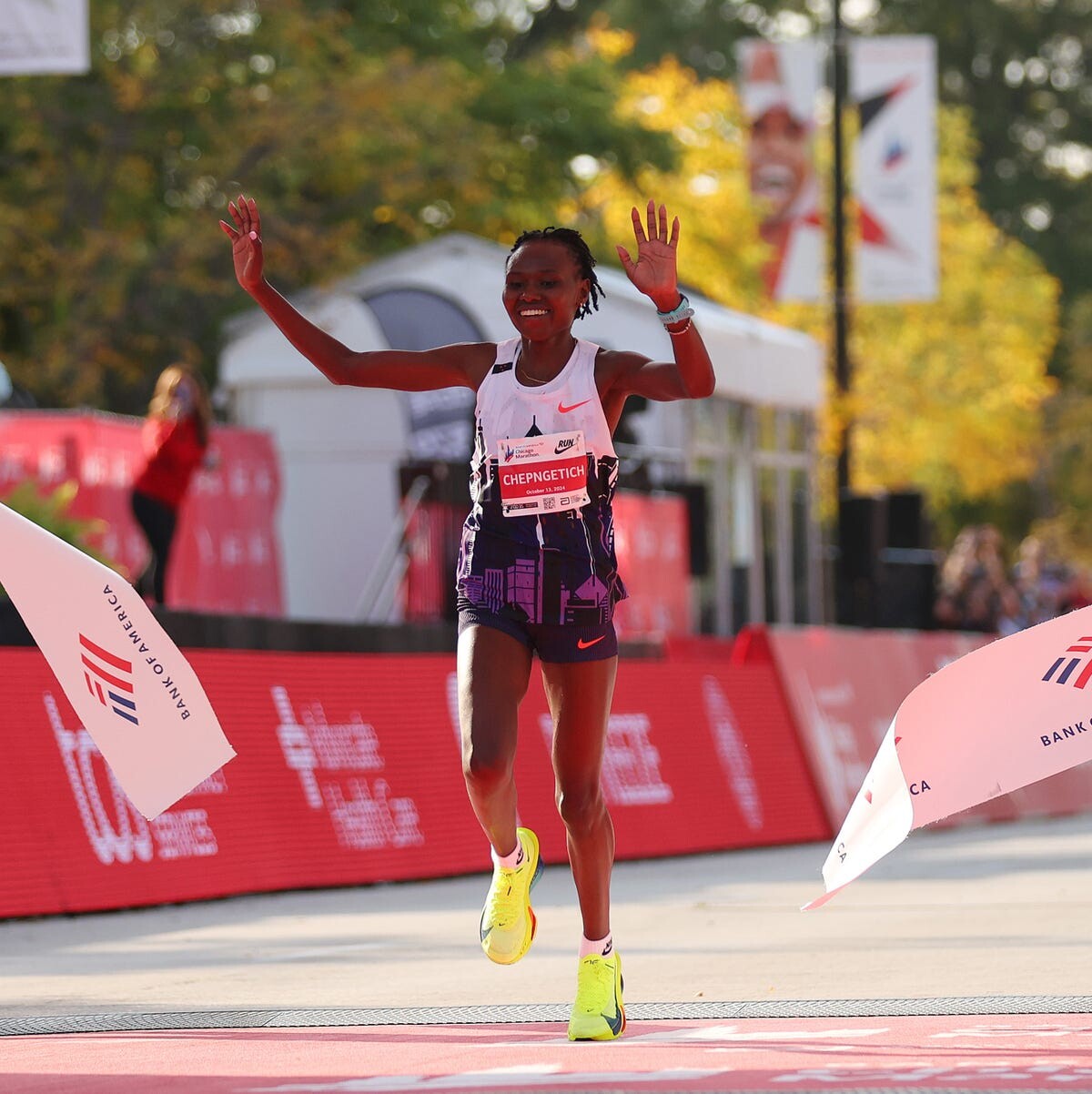
Chicago, meanwhile, owns one of the most remarkable records in women’s marathon history. Kenya’s Ruth Chepngetich ran 2:09:56 in 2024, becoming the first woman to break the 2:10 barrier. The performance remains a landmark in the event’s history and gives Chicago a special place among the fastest marathon courses in the world.
The men’s Chicago record is 2:00:35, set by the late Kelvin Kiptum in 2023. That performance stood as the world record until Sawe’s extraordinary 1:59:30 in London in 2026.
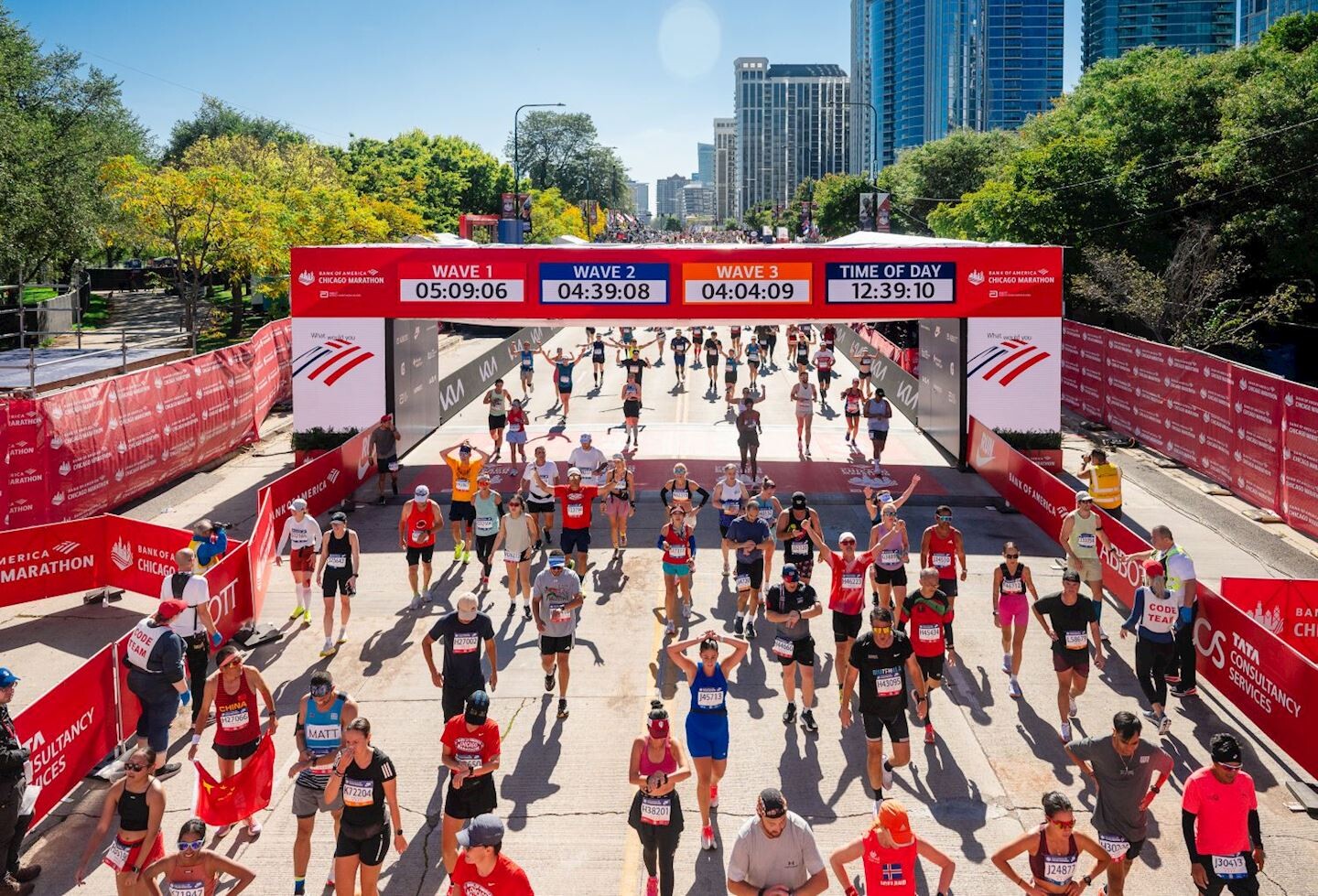
Then there is Berlin, perhaps the most celebrated world-record factory in marathon history. Kenya’s Eliud Kipchoge holds the men’s course record at 2:01:09, while Ethiopia’s Tigist Assefa owns the women’s mark at 2:11:53. Berlin has hosted numerous men’s world records over the years, underlining its reputation as one of the fastest marathon courses on the planet.
The elevation figures help explain why the courses produce such different performances. Berlin has relatively modest elevation changes, creating a fast and rhythm-friendly route. Other Majors present considerably greater challenges.
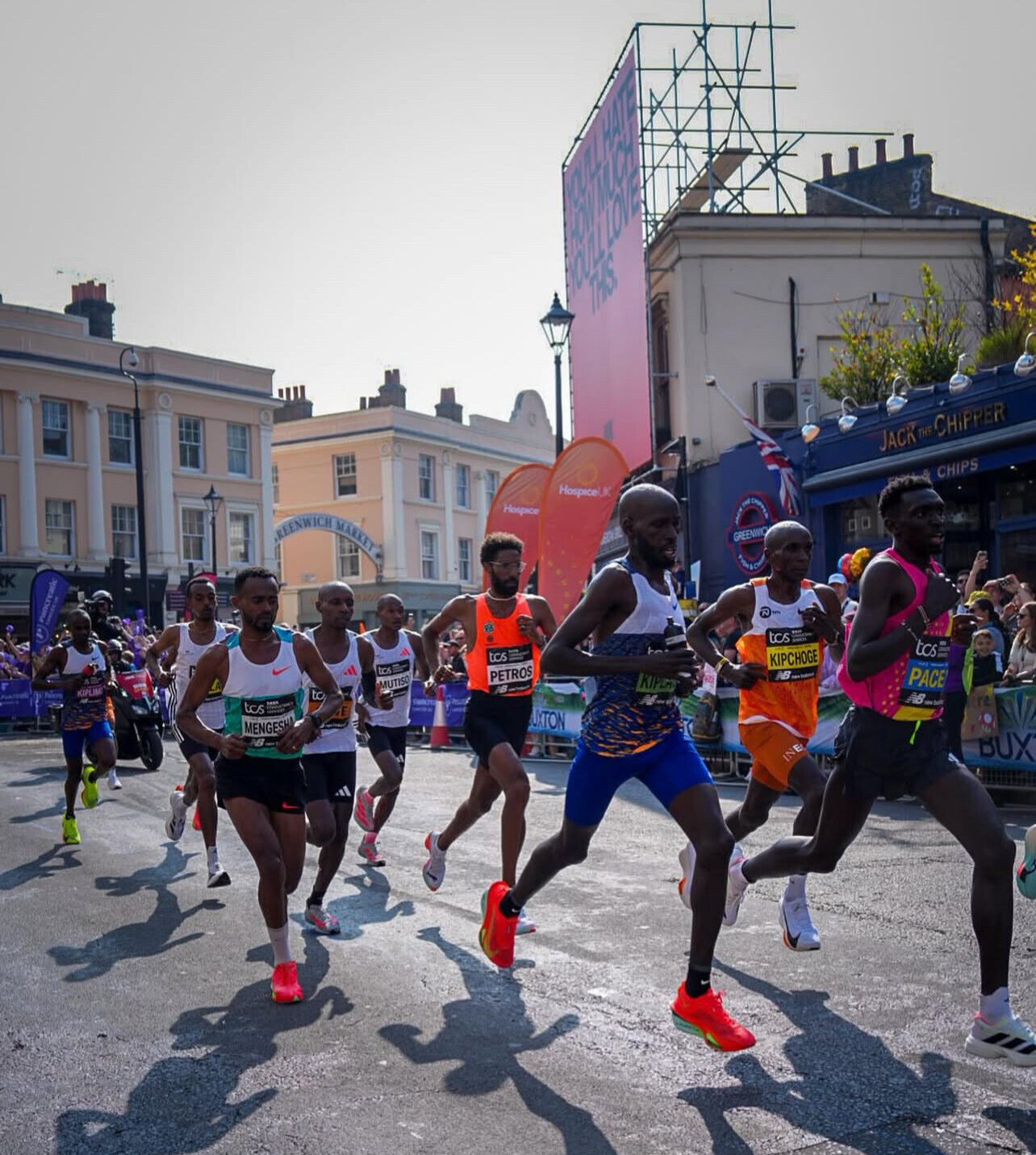
Boston, for example, climbs 248 metres but descends 388 metres. Its famous point-to-point layout and net downhill profile make it exceptionally fast in places, but its course does not qualify for official world-record purposes because the elevation drop exceeds the limit permitted by World Athletics.
New York City is a completely different proposition. With approximately 246 metres of climbing, it is among the toughest Major Marathon courses, demanding strength and tactical patience rather than simply raw speed. Its records therefore carry a different kind of significance, earned on a course that tests athletes through bridges, climbs and a demanding closing stretch into Central Park.
Tokyo offers another fast but distinctive challenge, with Benson Kipruto holding the men’s course record in 2:02:16. Brigid Kosgei’s 2:14:29 remains the women’s course record, illustrating the exceptional standard required to rewrite the record books in the Japanese capital.
And then there is Sydney, the newest addition to the Abbott World Marathon Majors family. Its course has already produced outstanding performances, with Addisu Gobena’s 2:04:42 listed as the men’s course record and Sifan Hassan’s 2:18:22 as the women’s mark in the graphic. With its demanding elevation profile, those performances underline just how quickly the Sydney course has established itself among the world’s major marathon stages.
What makes these records fascinating is that they cannot be judged by the clock alone. A 2:01 on a fast, record-legal course is a completely different achievement from a 2:04 on a demanding route, while Boston’s unique course rules mean that even exceptionally fast performances cannot enter the official world-record conversation.
For decades, marathon greatness was largely measured by who could run fastest. Today, the Majors show that where the time is run can be almost as important as the time itself. From Sawe’s historic sub-two-hour breakthrough in London to Chepngetich’s barrier-breaking run in Chicago and Berlin’s remarkable record history, these performances represent different chapters of marathon history—and the next chapter could be written at any Major.
by Erick Cheruiyot for My Best Runs.
Login to leave a comment
2026: The Year Distance Running’s Impossible Records Began to Fall
Distance running has witnessed extraordinary seasons before, but 2026 is producing something that feels almost unprecedented.
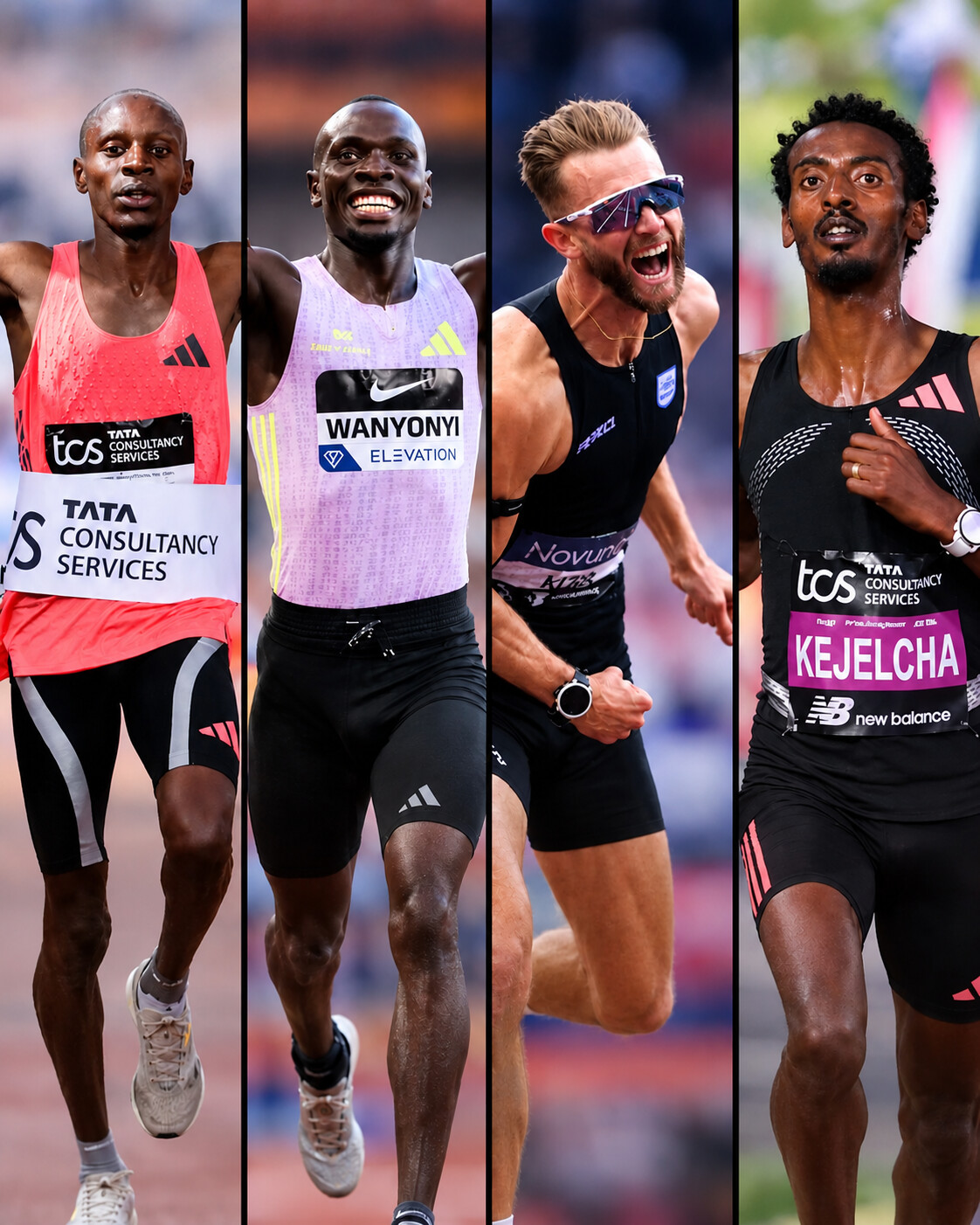
Records that had survived for decades, marks that appeared untouchable and performances that had defined entire generations of athletes are falling at a remarkable rate. In the space of just four months, four historic world records were rewritten, creating one of the most astonishing stretches the sport has ever seen.
And with four months still remaining in 2026, the question is no longer whether this has been an exceptional year.
It is just how much further the boundaries can be pushed.
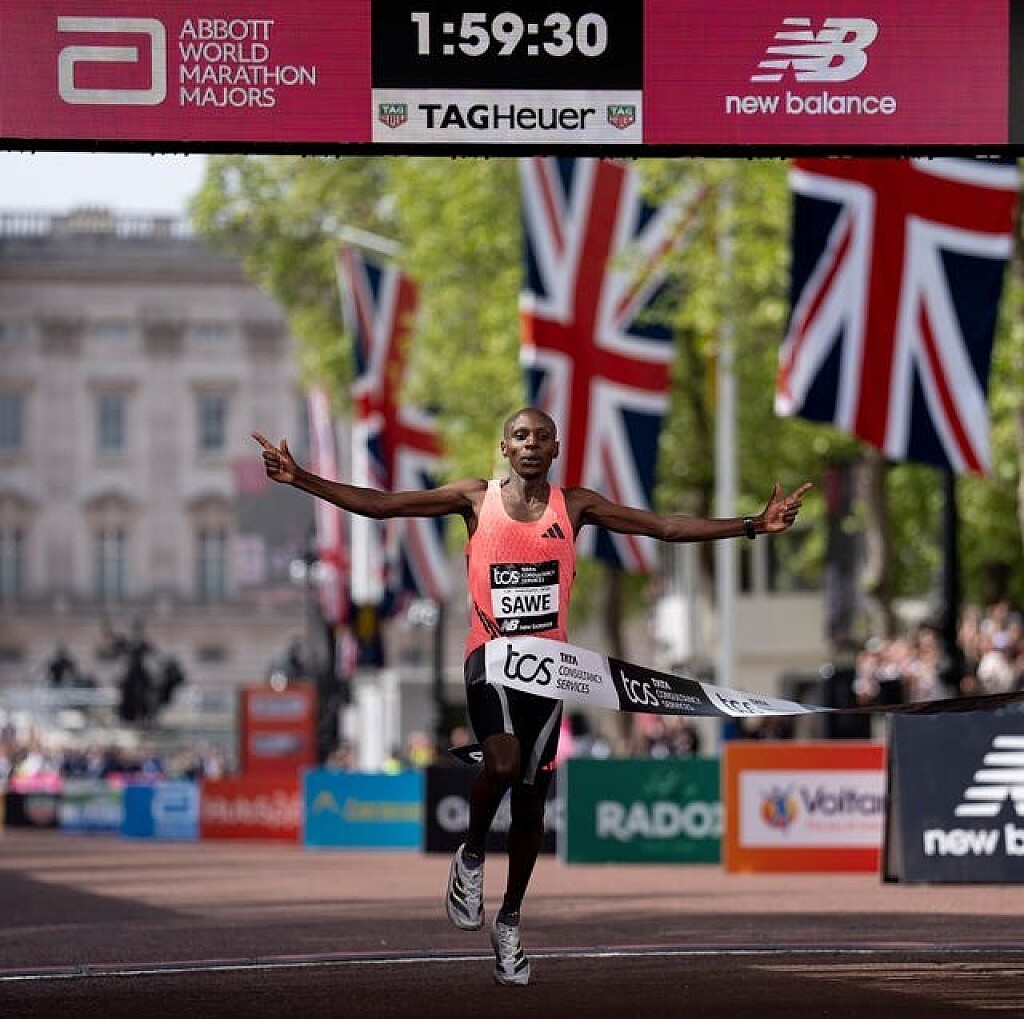
The extraordinary sequence began on April 26 at the London Marathon, where Sabastian Sawe delivered one of the defining performances in the history of the event. The Kenyan crossed the finish line in a breathtaking 1:59:30, becoming the first athlete to run a marathon under two hours in officially recognised, record-eligible conditions.
Eliud Kipchoge had famously broken the two-hour barrier in Vienna in 2019, proving that such a performance was humanly possible, but the specially organised conditions—including rotating pacemakers and a pace car—meant the time could not be recognised as an official world record.
Sawe's performance was different.
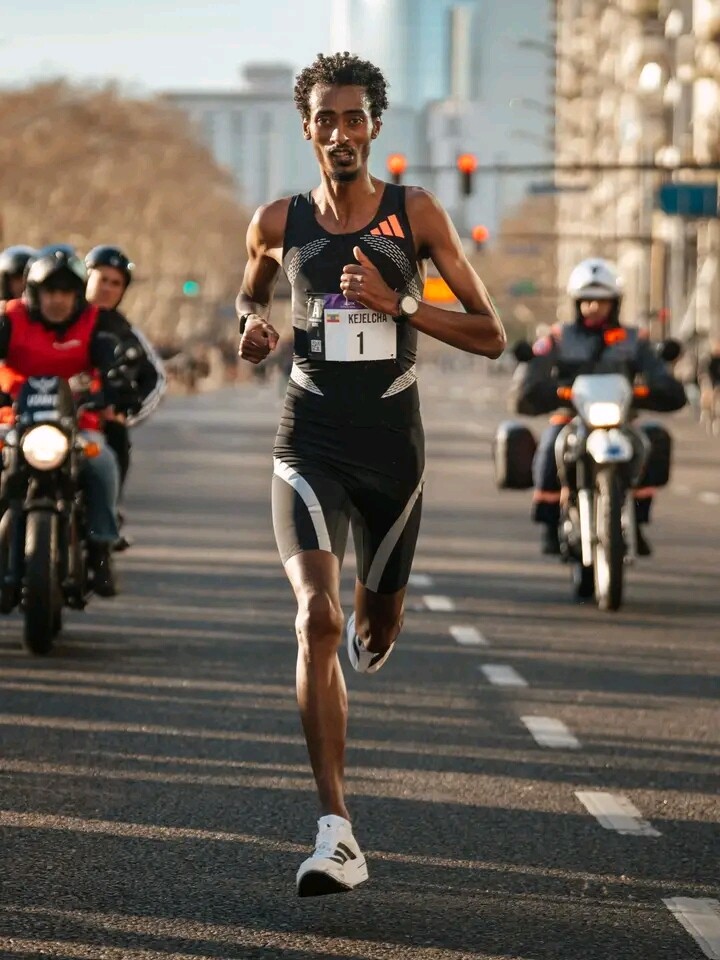
His 1:59:30 came in a conventional elite marathon race, and the historic morning became even more extraordinary as Ethiopia's Yomif Kejelcha finished in 1:59:41, while Uganda's Jacob Kiplimo clocked 2:00:28. In one astonishing race, three athletes went faster than the previous world-record standard.
Then came Monaco.
On July 10, Emmanuel Wanyonyi stepped into completely unfamiliar territory when he lined up for his first-ever 1000m race. What followed was nothing short of spectacular. The Kenyan middle-distance star stormed to 2:11.83, smashing a world record that had belonged to Noah Ngeny since 1999.
The previous mark had stood for 27 years, having been set four years before Wanyonyi was even born. Yet on his debut over the distance, Wanyonyi made history look effortless, while Britain's Jake Wightman also produced a superb performance to move into fifth place on the all-time list.
Just eight days later, London delivered another historic moment.
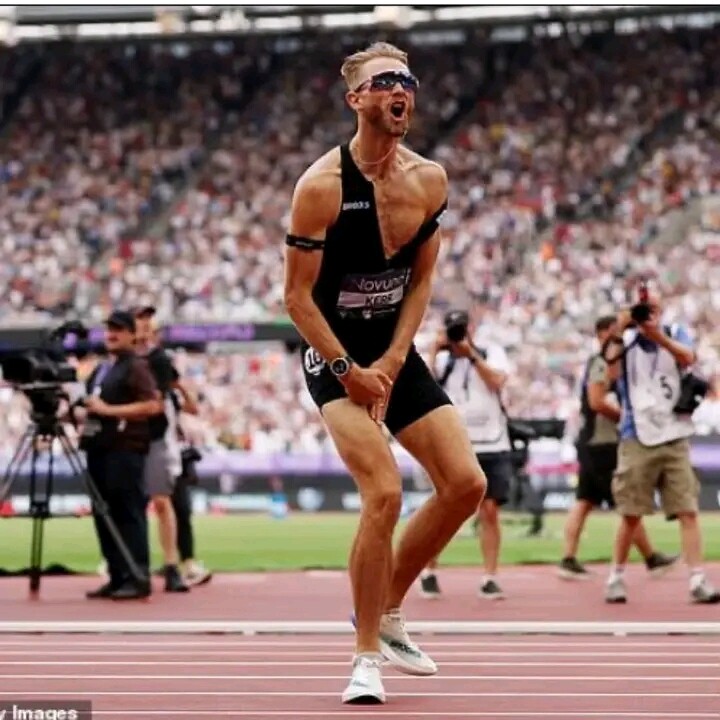
Josh Kerr had spoken openly about his ambitious mission, calling it “Project 222.” On the track, however, ambition turned into reality. The British star produced a stunning 3:42.66 for the mile, finally surpassing Hicham El Guerrouj's legendary 3:43.13 world record.
For decades, El Guerrouj's mark had stood as one of athletics' most iconic standards—a performance that appeared almost immune to the passing of time. Kerr changed that, producing a run that instantly secured its place among the greatest mile performances ever witnessed.
And then, in Buenos Aires on August 23, Yomif Kejelcha returned to the centre of the distance-running world.
Having already played a major role in London's historic marathon, the Ethiopian produced another extraordinary performance, this time over the half marathon. Kejelcha clocked 56:51, becoming the first man in history to break 57 minutes for the distance under valid record conditions.
What made the performance even more remarkable was the manner in which it unfolded. Kejelcha was running alone from around the 7km mark, with no rival beside him and no dramatic sprint finish required. He simply continued driving forward, producing one of the most dominant record-breaking performances ever seen on the roads.
Four historic records.
Four months.
A marathon barrier that had long been considered impossible in official competition. A 1000m record that had survived for 27 years. A mile record that had belonged to one of the greatest middle-distance runners in history. And a half-marathon performance that carried the event into completely new territory.
Distance running is living through a year unlike almost anything the sport has experienced before.
The most remarkable part?
2026 is not over yet.
With four months still remaining, the athletes of this extraordinary era may not be finished rewriting history.
by Erick Cheruiyot for My Best Runs.
Login to leave a comment
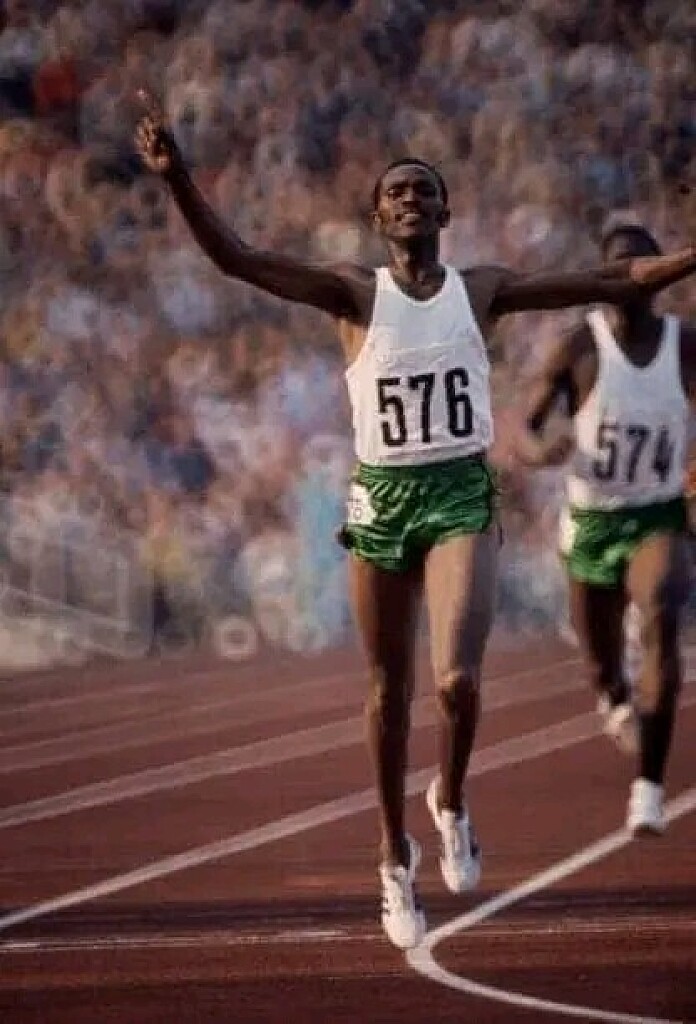
The Day Kip Keino And Ben Jipcho Put Kenya On Top In Munich
On 4 September 1972, Kenya once again announced its growing authority on the Olympic athletics stage as the country produced a spectacular one-two finish in the men’s 3,000m steeplechase at the Munich Olympic Games.
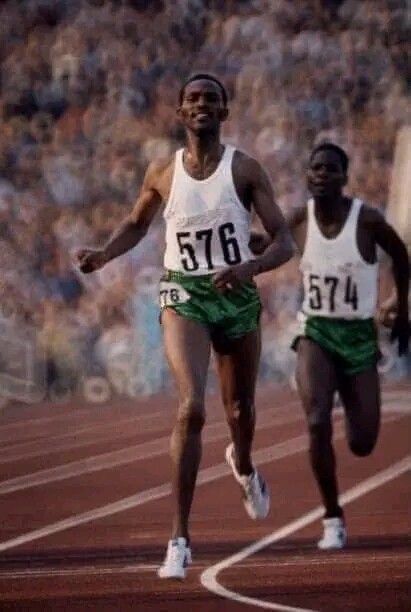
Kipchoge Keino delivered a commanding performance to capture the gold medal in 8:23.64, setting a new Olympic record in the process. His compatriot Benjamin Jipcho was equally impressive, crossing the line in 8:24.62 to take silver, while Finland’s Tapio Kantanen secured bronze in 8:24.66.
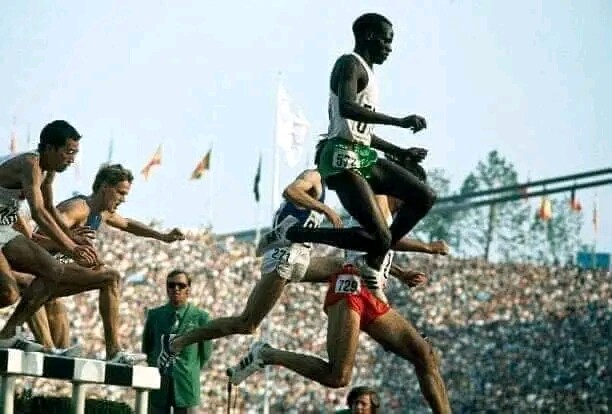
The final brought together a remarkable group of athletes, including Kenya’s defending Olympic champion Amos Biwott. Keino and Jipcho, however, proved too strong when the decisive moments arrived. As the race entered its closing stages, the leading group began to separate, with Keino positioning himself perfectly for the final charge.
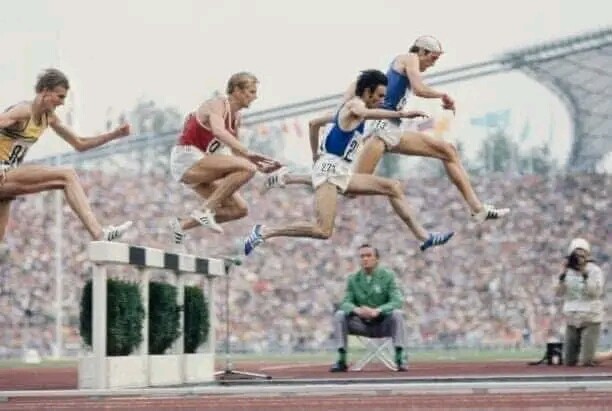
Keino then unleashed his finishing speed, pulling clear in the closing metres to secure another Olympic title. Jipcho fought his way into second, completing a memorable Kenyan one-two, while Kantanen held on for third. Biwott finished sixth in 8:33.48, giving Kenya three athletes among the top six finishers.
For Keino, the triumph added another remarkable chapter to an already extraordinary Olympic career. Four years earlier in Mexico City, he had won the 1,500m gold medal and taken silver in the 5,000m. In Munich, he demonstrated his versatility once again by conquering the demanding steeplechase, an event requiring not only endurance and speed but also exceptional rhythm and technique over the barriers and water jump.
Jipcho’s silver medal was equally significant. His performance confirmed that Kenya’s success in the steeplechase was no longer the achievement of a single exceptional athlete. A new generation of Kenyan runners was emerging, capable of challenging the very best on the world’s biggest stage.
The Munich final also carried a sense of continuity for Kenya. Biwott had won the Olympic steeplechase title at the 1968 Mexico City Games, and four years later his compatriots Keino and Jipcho ensured that the gold medal remained in Kenyan hands. It was becoming increasingly clear that the country had discovered a formidable formula for producing world-class steeplechasers.
Beyond the medals, the race helped strengthen Kenya’s growing reputation as a powerhouse in distance running. The combination of natural endurance, disciplined training and extraordinary competitive courage would continue to produce generations of Kenyan steeplechase champions, turning the event into one of the country's most celebrated Olympic disciplines.
The complete Munich 1972 final standings were:
1. Kipchoge Keino — Kenya — 8:23.64 — Olympic Record
2. Benjamin Jipcho — Kenya — 8:24.62
3. Tapio Kantanen — Finland — 8:24.66
4. Bronisław Malinowski — Poland — 8:27.92
5. Dušan Moravčík — Czechoslovakia — 8:29.06
6. Amos Biwott — Kenya — 8:33.48
7. Romualdas Bitė — Soviet Union — 8:34.64
8. Pekka Päivärinta — Finland — 8:37.17
9. Takaharu Koyama — Japan — 8:37.66
10. Mikko Ala-Leppilampi — Finland — 8:41.03
11. Jean-Paul Villain — France — 8:46.72
12. Mikhail Zhelev — Bulgaria — 9:02.59
More than five decades later, the Munich steeplechase remains a landmark moment in Kenyan athletics history. Keino’s golden run, Jipcho’s brilliant silver and Biwott’s determined sixth-place finish combined to create a performance that captured the depth of Kenya’s emerging distance-running strength.
It was not simply a victory for one athlete. It was a statement from a nation — and another unforgettable chapter in Kenya’s extraordinary Olympic athletics legacy.
by Erick Cheruiyot for My Best Runs.
Login to leave a comment
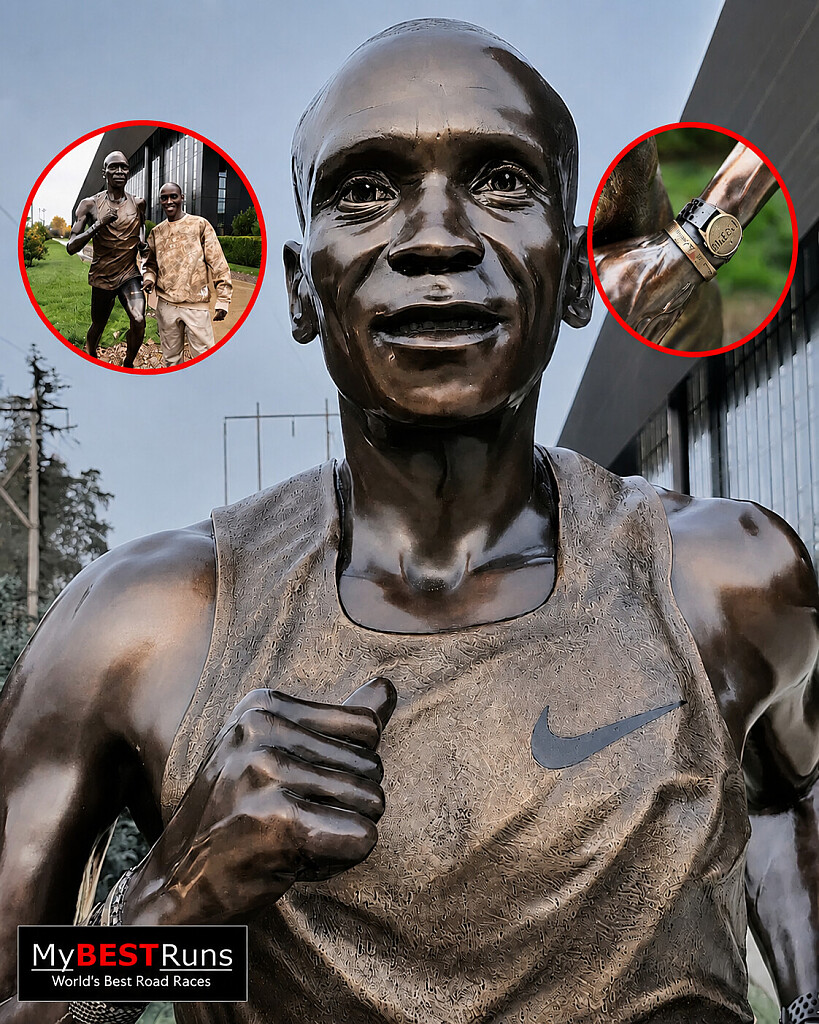
The Statue That Predicted History: How Kipchoge’s ‘No Human Is Limited’ Became Reality
Inside Nike’s World Headquarters in Beaverton, Oregon, a bronze figure stands frozen in motion.
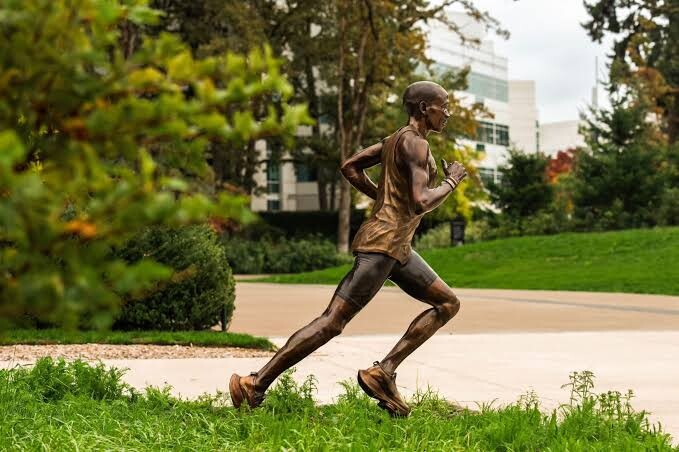
It is Eliud Kipchoge — captured in his unmistakable running posture, every detail carefully sculpted to resemble the Kenyan marathon legend at full stride. But this is more than a statue. It is a permanent reminder of a barrier that once seemed beyond human reach.
Created by Oregon artist Alison Caswell and commissioned by Nike, the life-size bronze sculpture was unveiled in October 2023 as part of the company’s celebration of its 20-year partnership with Kipchoge. Nike described the statue as a tribute to his signature gait and unique running style.
Look closely, however, and the sculpture tells an even deeper story.
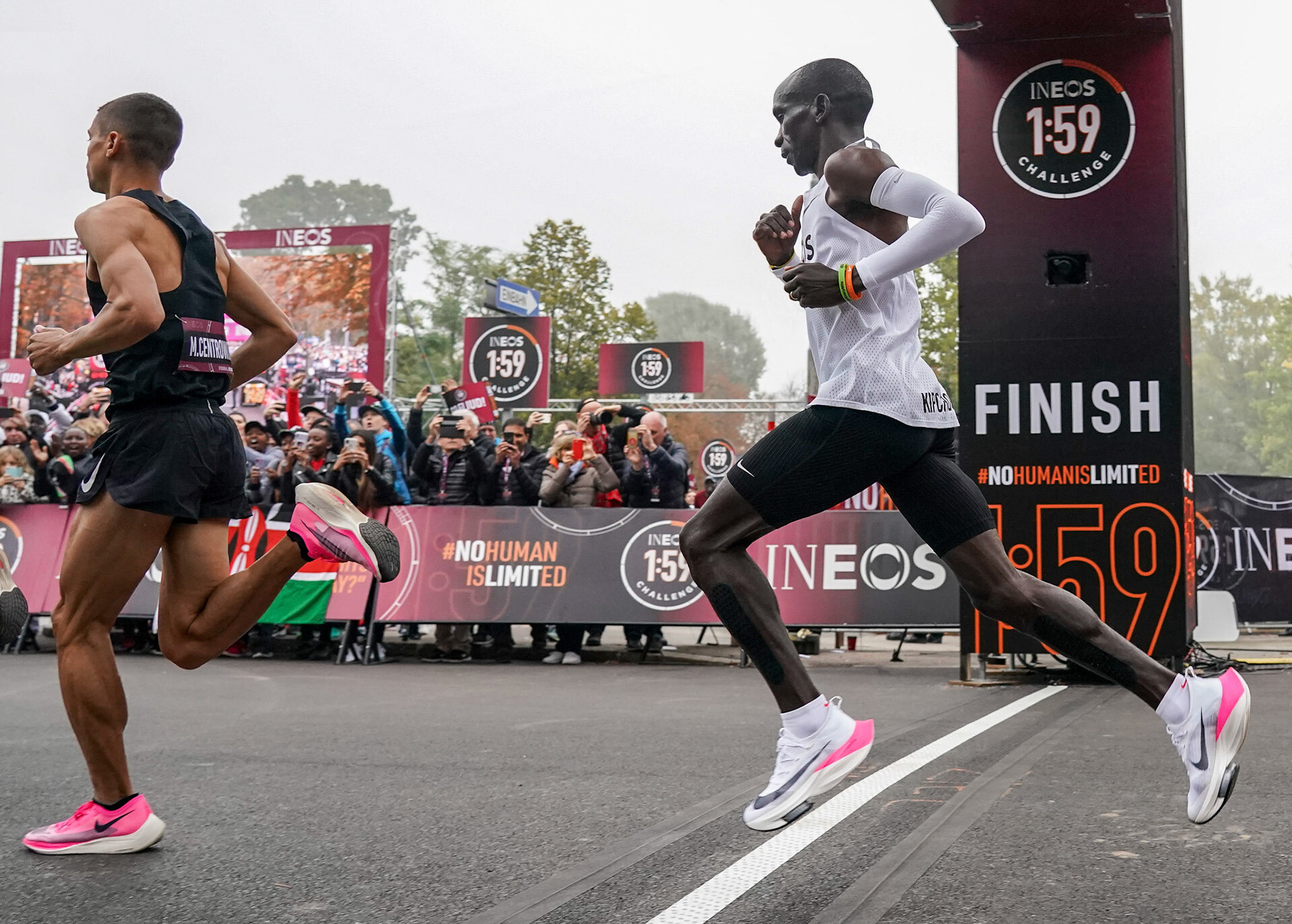
The watch on Kipchoge’s wrist displays 1:59:40, recalling the extraordinary morning of October 12, 2019, when he became the first person to run the marathon distance in under two hours during the INEOS 1:59 Challenge in Vienna.
His official recorded time was 1:59:40.2.
The achievement came under specially controlled conditions, with 41 pacemakers rotating in formations around him and extensive logistical support designed specifically for the attempt. Because it was not a standard record-eligible marathon, the performance was not recognized as an official world record. But its significance went far beyond the record books.
On the statue's left wrist is another detail that carries perhaps even greater meaning.
The wristband bears Kipchoge's famous philosophy:
“No human is limited.”
Those four words became synonymous with his pursuit of the impossible. In Vienna, they were no longer simply a slogan. Kipchoge had demonstrated that a boundary which had appeared almost untouchable could, under the right circumstances, be broken.
Four years later, the bronze figure remained in place at Nike's headquarters — but the marathon world had changed dramatically.
In October 2023, Kelvin Kiptum lowered the official men's marathon world record to 2:00:35 in Chicago, bringing the sport closer than ever to the barrier Kipchoge had already conquered unofficially in Vienna.
Then came April 26, 2026.
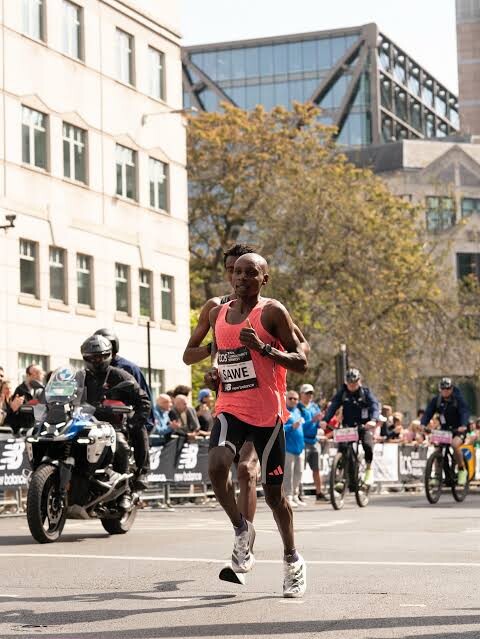
On the streets of London, Kenya's Sabastian Sawe entered territory that had previously belonged only to Kipchoge's extraordinary exhibition achievement.
Sawe won the London Marathon in 1:59:30, becoming the first man to officially complete a record-eligible marathon in under two hours. He also erased Kiptum's world record by 65 seconds. World Athletics subsequently ratified the performance as the official men's marathon world record.
And remarkably, Sawe did it in an ordinary competitive marathon — not on a specially designed course, not with rotating pacemakers, and not under the unique conditions of the 2019 INEOS challenge.
The symbolism is difficult to miss.
When Nike unveiled Kipchoge's statue in 2023, the 1:59:40 engraved on its wrist represented a moment when humanity had first stepped beyond the two-hour marathon barrier.
Today, that number represents something different.
It is no longer the fastest anyone has ever run 42.195 kilometres.
Instead, it has become part of the history that led to something even greater: the first officially recognized sub-two-hour marathon.
Kipchoge opened the door in Vienna.
Kiptum pushed the official world record closer.
And Sawe eventually walked — or rather, ran — through the door.
The bronze statue in Beaverton has not moved. Its watch still points to 1:59:40, and its wristband still carries the words “No human is limited.”
But the meaning of those words has grown.
What once looked like a statement of belief now reads like a prediction.
The statue was built to celebrate what Kipchoge had already achieved.
History has since given it another purpose: to remind the world that yesterday's impossible can become tomorrow's starting point.
by Erick Cheruiyot for My Best Runs.
Login to leave a comment

The Final 1:59 D-Max: Eliud Kipchoge Celebrates a Legacy of Breaking Limits
Eliud Kipchoge has marked another memorable chapter in his remarkable journey after receiving the 159th and final Isuzu D-Max 1:59 Limited Edition vehicle, completing a unique partnership that celebrates one of the greatest achievements in marathon history.
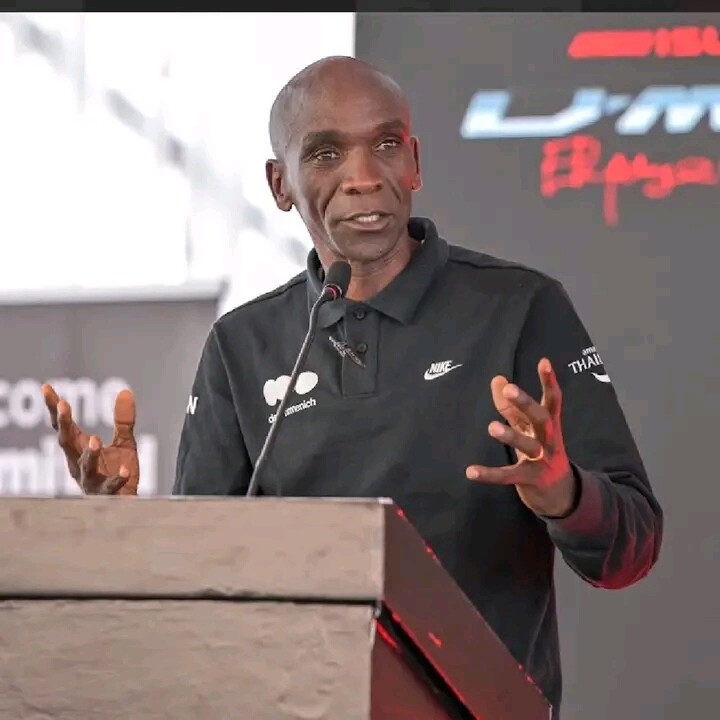
The legendary Kenyan marathoner expressed his appreciation to his Isuzu East Africa family after taking delivery of the final vehicle in a special series of just 159 units produced to commemorate his historic sub-two-hour marathon achievement.

Each of the limited-edition D-Max vehicles carries Kipchoge’s name and signature, transforming the collection into more than a series of exclusive vehicles. It represents a story built around ambition, discipline, perseverance and the belief that seemingly impossible goals can be achieved through commitment and trust in the process.
The inspiration for the special edition dates back to October 12, 2019, when Kipchoge made history in Vienna, Austria, becoming the first person to run a marathon distance in under two hours in a controlled event. He completed the 42.195-kilometre distance in 1:59:40.2, a landmark moment that redefined the boundaries of human endurance.
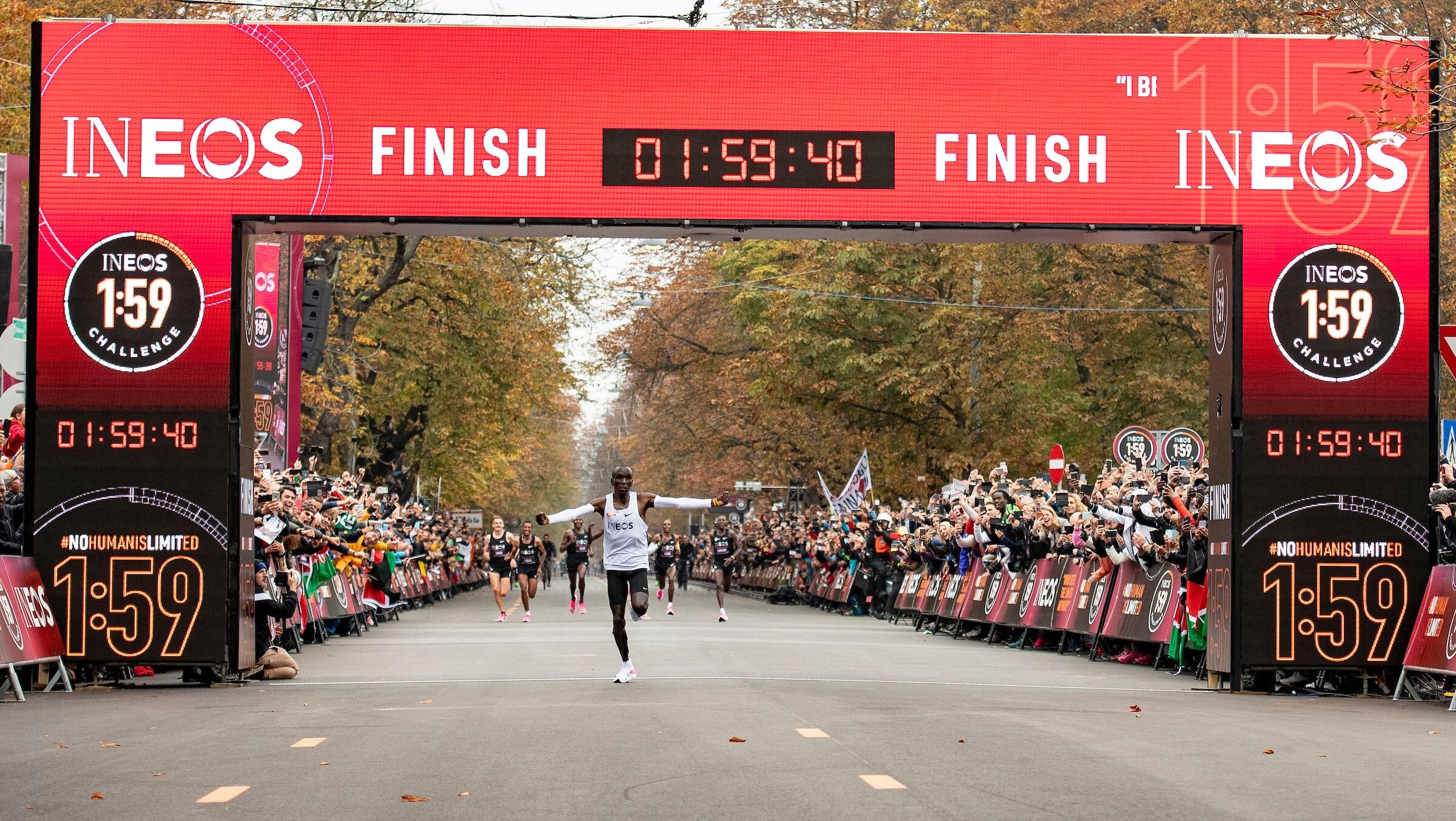
What began with that extraordinary morning in Vienna has since evolved into a lasting legacy on Kenyan roads, with 159 limited-edition vehicles now representing a shared connection between Kipchoge and their owners.
For Kipchoge, the final D-Max is therefore not simply the last vehicle to leave the production line. It is a symbolic conclusion to a story that connects his historic achievement with the values that have defined his career.
The number 159 carries particular significance, linking the limited production run to the historic 1:59 achievement while giving each owner a small piece of the story.
As he received the final unit, Kipchoge reflected on the journey from the streets of Vienna to the roads of Kenya, describing the 159 vehicles as a story shared by 159 owners who believe in the possibilities that emerge when people remain committed to their goals and trust the process.
The final D-Max consequently becomes another tangible reminder of a philosophy Kipchoge has carried throughout his career: no human is limited by the boundaries we initially believe exist.
From a historic morning in Vienna to a limited-edition collection spread across Kenya, the 1:59 legacy continues to inspire far beyond the marathon course.
by Erick Cheruiyot for My Best Runs.
Login to leave a comment
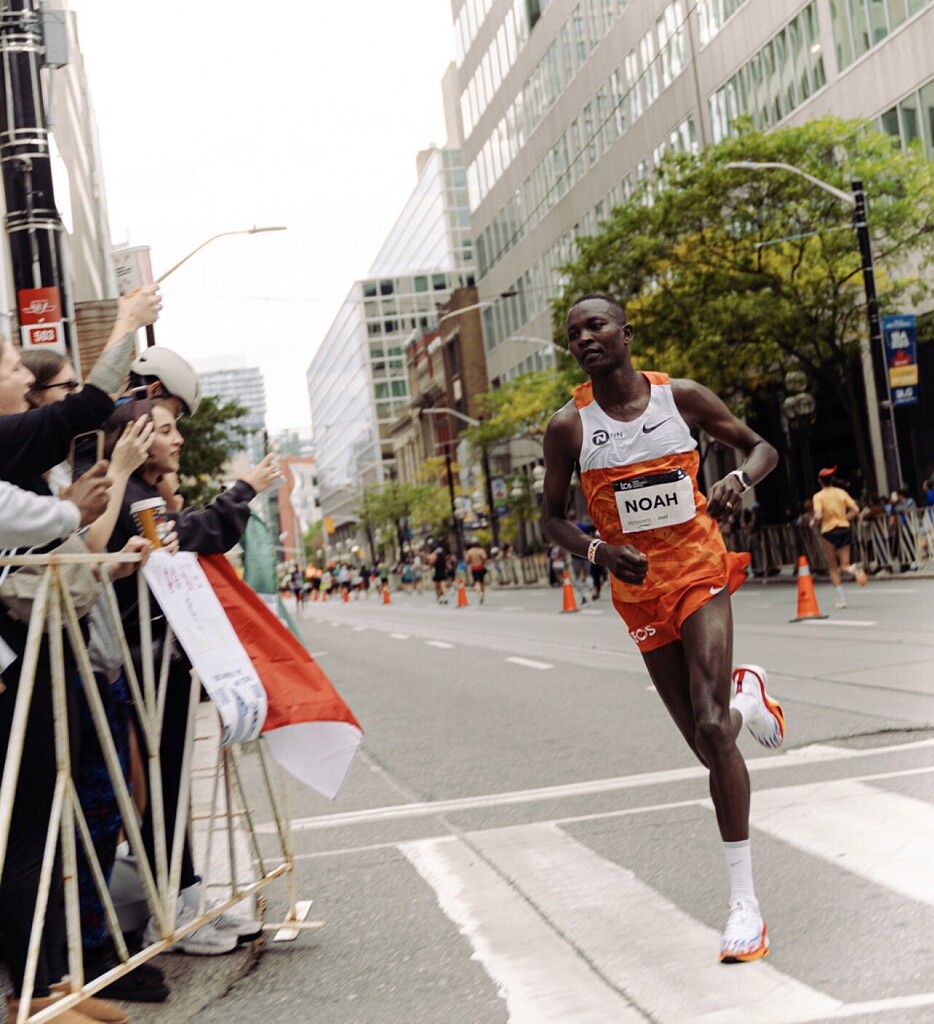
Noah Kipkemboi Hopes It Will Be Third Time Lucky in Toronto
Will it be a case of third time lucky at the TCS Toronto Waterfront Marathon for Noah Kipkemboi?
In his first appearance at the TCS Toronto Waterfront Marathon in 2024, the Kenyan star finished third. Last year, he moved up one place to finish second. Now, with the benefit of knowing the course intimately, he returns intent on reaching the top step of the podium.
“It’s really my hope to run well on the course again and to be on the podium,” he says of the October 18 race. “It is my pleasure if I come position one this time. Now I am in training and preparing for the race.”
Kipkemboi’s personal best remains the 2:07:31 he ran during his initial Toronto appearance, and improving on that time would be especially satisfying. Clearly, his two visits have endeared him to the event and the people he has met in Toronto. At the finish line and during the post-race press conference, he kindly served as an interpreter for 2025 winner Leonard Langat, who is more comfortable speaking Kiswahili than English.
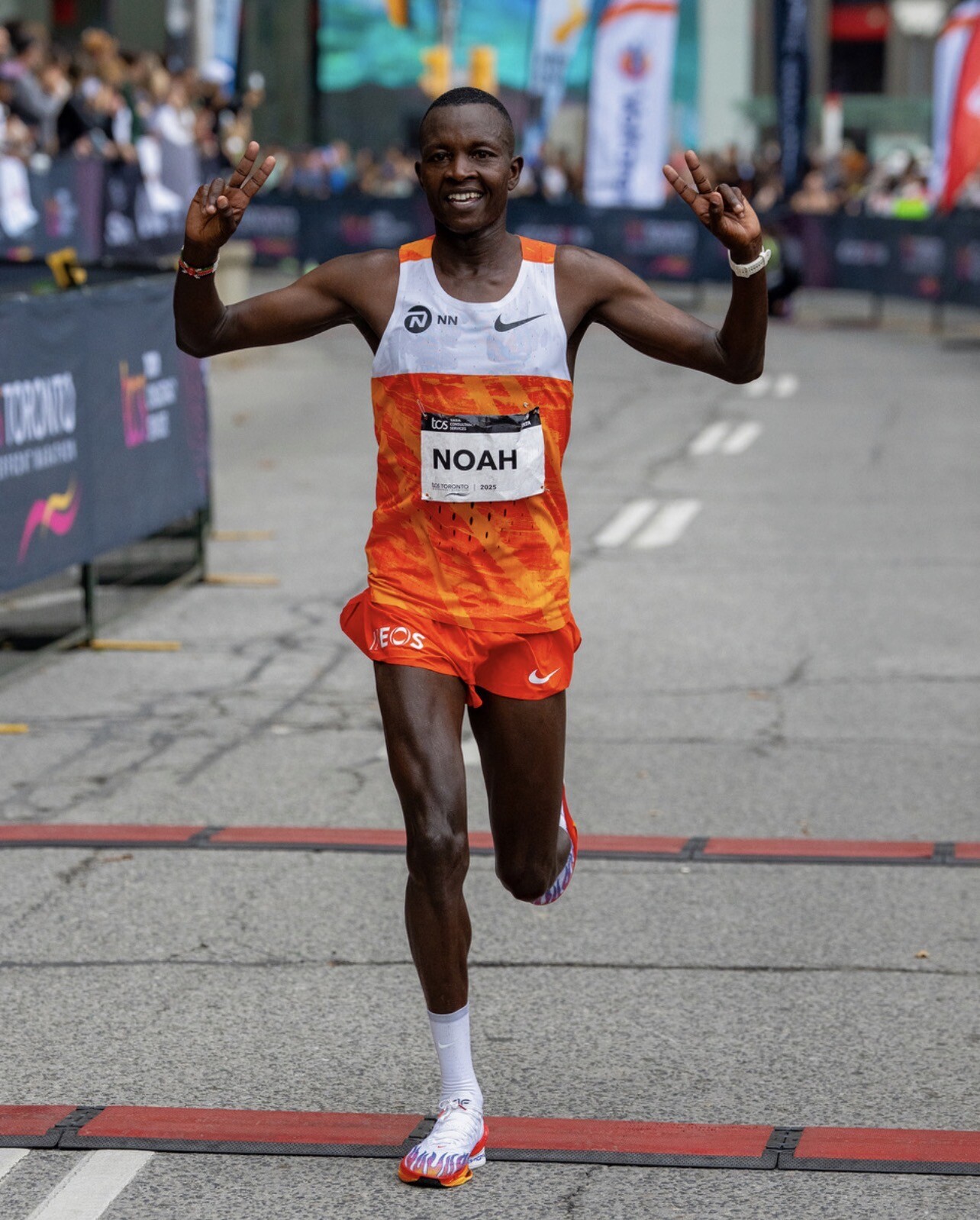
“Please say hello to everyone in Toronto,” he begins during a WhatsApp video interview. “It is a beautiful city, and thank you for inviting me back.
“I really like when people from the Toronto communities where we run through are happy and cheering us. Here, everyone is shouting ‘go,’ giving us motivation. Being cheered, you can get power and keep going better.
As a Christian, Kipkemboi has also been inspired by hearing the Canadian national anthem traditionally sung at the race start, especially the line “God keep our land glorious and free.” But it is the competition that initially attracts world-class runners.
The TCS Toronto Waterfront Marathon serves as both the official Athletics Canada Canadian Marathon Championship and a World Athletics Elite Label race. The $25,000 Canadian prize offered to each winner is especially meaningful to the runners. Kipkemboi has put his earnings to good use, raising three young children of his own while also contributing to the school fees of two other children in his village. There have also been medical expenses to consider.
“During the two times racing in Toronto, I have been having difficulty before the race,” he reveals. “The first Toronto race, my daughter Phoebe was not feeling comfortable, and after the 2025 race, she was having a second kidney operation.
“I was on the start line praying that I would win so my kids would be happy. Now she is okay. My happiness, if I come position one, it will be so beautiful, so my kids will be happy.”
Kipkemboi has been represented by the Dutch-based Global Sports Communication throughout his career. From Monday through Saturday, he lives and trains at the organization’s camp in Kaptagat, while his family remains at their home in Eldoret, 24 kilometres away. Such living arrangements are typical among Kenya’s world-class runners.
Among Kipkemboi’s training partners is the legendary Eliud Kipchoge, the former world marathon record holder and two-time Olympic marathon champion. Kipkemboi served as a pacer during Kipchoge’s 2022 world-record performance in Berlin.
Another close friend and former training partner, Philemon Rono, won the Toronto Waterfront Marathon three times and holds the course record of 2:05:00.
“He has gone to another management group, but we are still friends,” Kipkemboi says of his compatriot. “His camp is not far from our camp. Mostly, when we are training in the forest, we meet them and wave.
“He asked me, ‘Are you going back to Toronto? Can we go together this time?’ We were chatting about Toronto. He said, ‘You go this time and win that race!’”
These days, Kipkemboi is running as much as 200 kilometres a week in preparation for Toronto. Between training sessions, life at the camp consists of daily household chores divided among the runners, physiotherapy and massage sessions, and meals. For relaxation, the runners enjoy watching football together.
“Yes, we normally watch football. Me, I like Arsenal,” he says with a smile. “Most of us in the camp, most of the athletes, are fans of Arsenal. The Commonwealth Games steeplechase champion Edmund Serem likes Arsenal. When he won the gold medal, he did what Arsenal striker Viktor Gyökeres does in celebration.”
With that, Kipkemboi interlocks his fingers to form a mask below his eyes, as the Swedish footballer does after scoring—a reference to the Batman villain Bane in “The Dark Knight Rises.”
Like many successful Kenyan runners, Kipkemboi is planning for life after his competitive career comes to an end. With prize money from his first Toronto appearance, he opened a general store in Eldoret that sells everything from candy and flour to soap and perfume. He also farms a plot of land.
Victory at the TCS Toronto Waterfront Marathon will not come easily. But Kipkemboi feels at home on the streets of Toronto, and that could very well make it third time lucky.
by Paul Gains
Login to leave a comment
TCS Toronto Waterfront Marathon
The Scotiabank Toronto Waterfront Marathon, Half-Marathon & 5k Run / Walk is organized by Canada Running Series Inc., organizers of the Canada Running Series, "A selection of Canada's best runs!" Canada Running Series annually organizes eight events in Montreal, Toronto and Vancouver that vary in distance from the 5k to the marathon. The Scotiabank Toronto Waterfront Marathon and Half-Marathon are...
more...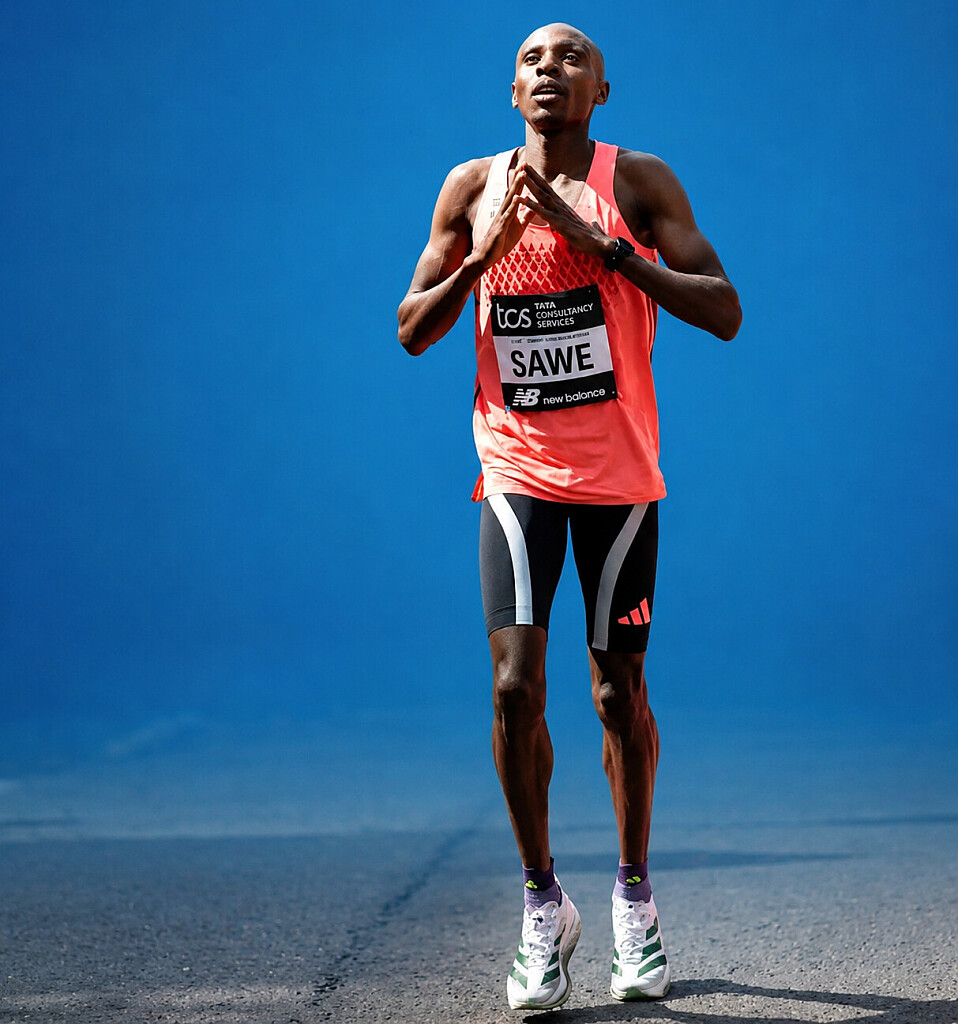
Sabastian Sawe Set for Another Historic Berlin Marathon as Elite Field Takes Shape
World record holder Sabastian Sawe is set to return to the BMW Berlin Marathon on September 27, where the Kenyan superstar will defend his title and attempt to add another remarkable chapter to his already extraordinary marathon career.
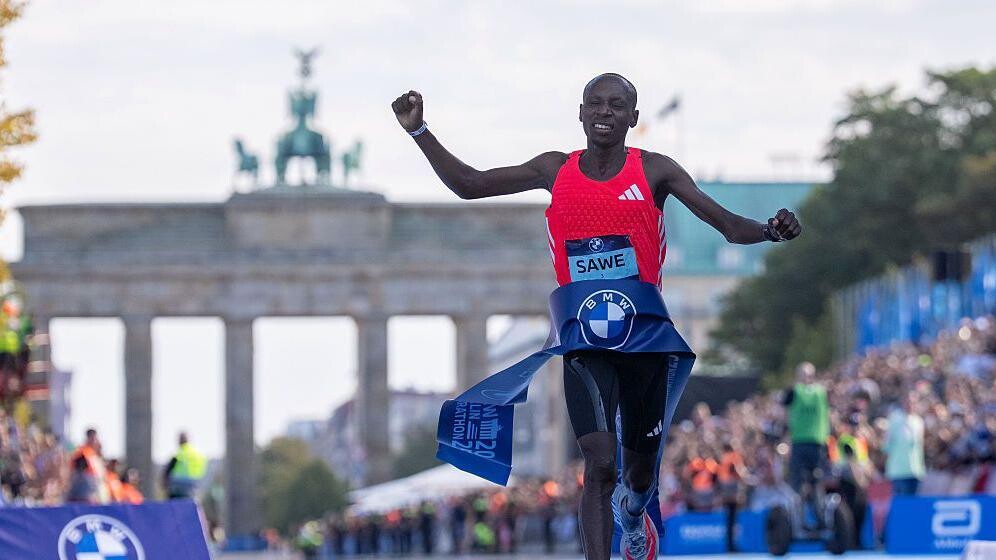
Sawe arrives in Berlin with unprecedented confidence after his sensational 1:59:30 performance in London, which made him the first athlete to officially break the two-hour barrier in the marathon. That landmark achievement has elevated expectations for his return to the German capital, where he will once again line up on one of the fastest marathon courses in the world.
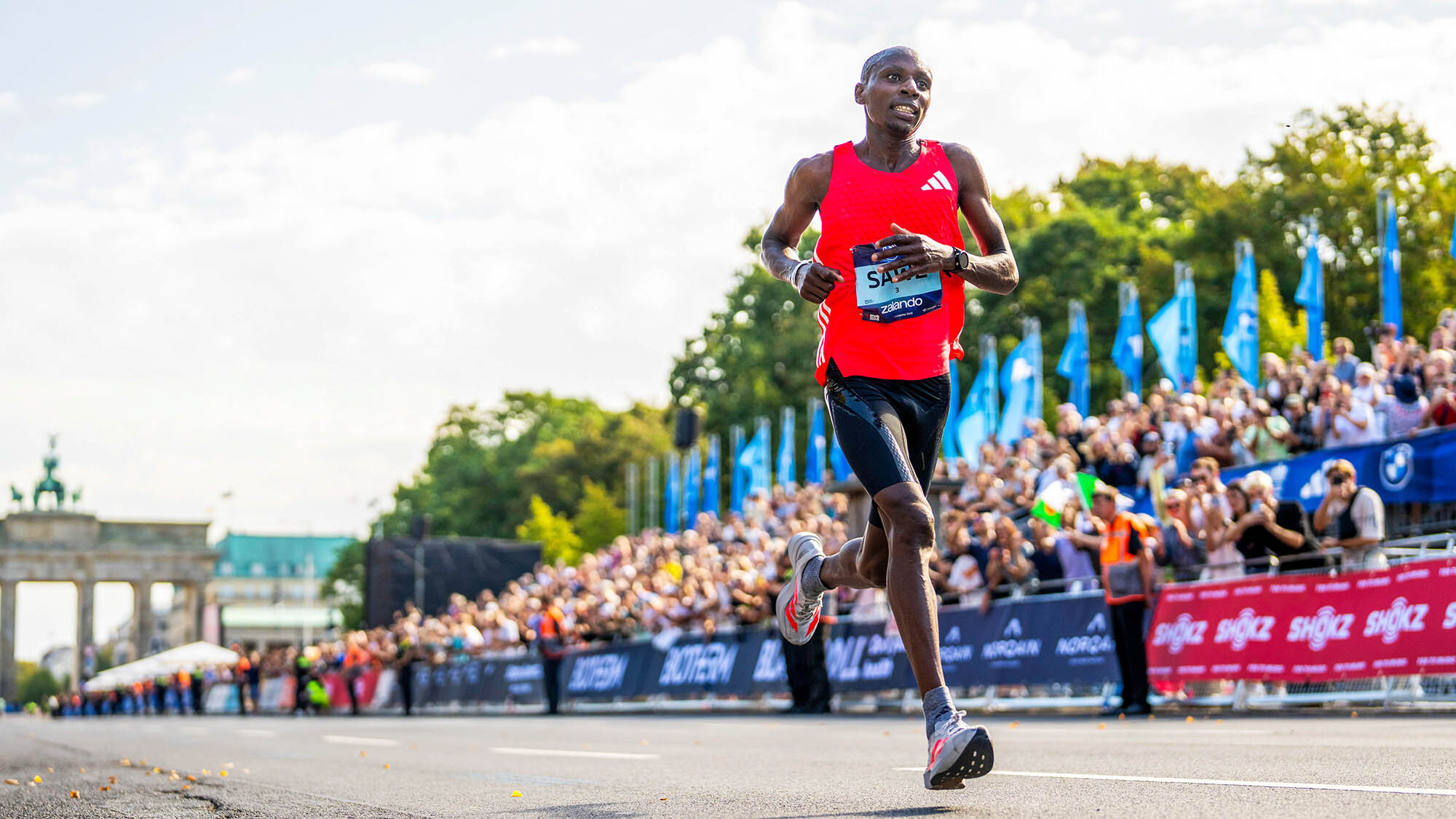
The Kenyan won the 2025 Berlin Marathon in 2:02:16 despite warm conditions, demonstrating his ability to produce a world-class performance even when circumstances are far from ideal. This time, he returns as the defending champion and world-record holder, with the famously flat Berlin course providing another opportunity to test the limits of what is possible over 42.195km.
Berlin has a remarkable history of producing record-breaking performances, and Sawe's presence immediately raises the possibility of another extraordinary race. The question now is whether the 31-year-old can go beyond his own 1:59:30 world record and take the marathon to an even higher level.
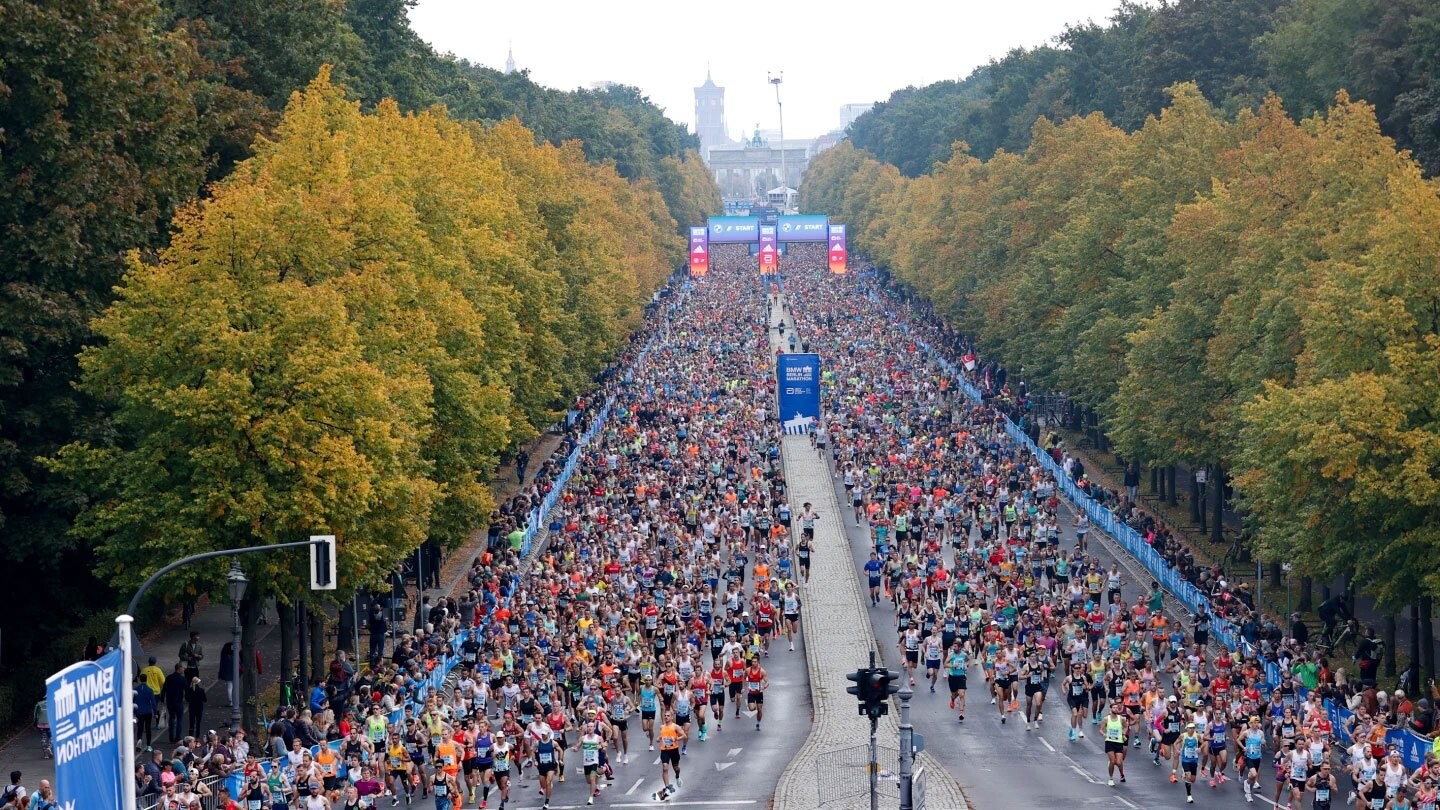
However, Sawe will face formidable opposition.
Tanzania’s Gabriel Geay has joined the elite field, bringing a personal best of 2:03:00 set in Valencia in 2022. The 29-year-old Tanzanian record holder established himself among the world’s leading marathoners with that performance and further underlined his credentials by finishing runner-up at the 2023 Boston Marathon.
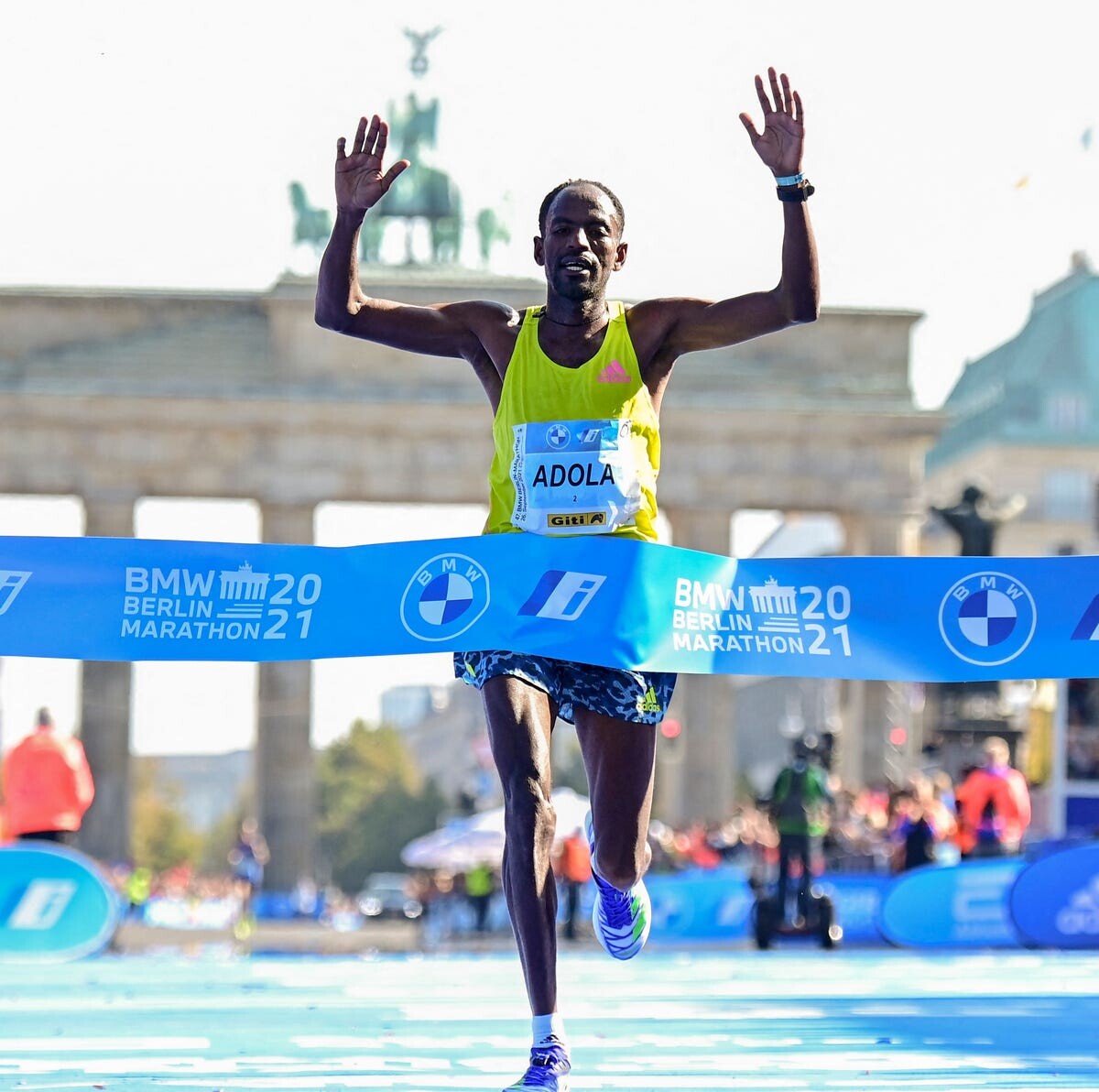
Ethiopia’s Guye Adola will also return to Berlin, the scene of some of the most memorable moments of his marathon career. In 2017, Adola stunned the athletics world on his marathon debut, pushing Eliud Kipchoge deep into the race before finishing second in a remarkable 2:03:46. Four years later, on September 26, 2021, Adola returned to Berlin and claimed victory in 2:05:45, adding another significant chapter to his association with the iconic German marathon. Now, after his recent return to top form, he will once again line up on the streets where he has already made history.
Now 35, Adola has endured injury setbacks in recent years, but his victory at the Rotterdam Marathon in 2:03:54 this spring proved that he remains a major force on the international marathon circuit.
The addition of Geay and Adola adds further quality to a field already packed with athletes capable of running at an extraordinary pace. With Sawe leading the charge, Berlin is shaping up to deliver another thrilling battle among some of the world's finest marathoners.
The depth of the field extends well beyond the leading contenders, with Ethiopia boasting an imposing group of marathoners. Getaneh Molla (2:03:34), Shura Kitata (2:03:59), Dejene Hailu (2:04:15), Selemon Barega (2:05:00), Taresa Tolosa (2:05:17), Tadu Abate (2:05:38), Asefa Boki (2:05:40) and Andamlak Belihu (2:06:40) will all bring proven credentials and the ambition to challenge for fast times in Berlin.
Japan, meanwhile, has assembled a particularly deep contingent, led by Kenya Sonota (2:05:59), Tsubasa Ichiyama (2:06:00), Kyoto Hirabayashi (2:06:14), Yuhei Urano (2:06:23), Hidekazu Hijikata (2:06:26), Yusuke Nishiyama (2:06:31), Naoki Koyama (2:06:33), Kazuya Nishiyama (2:06:45), Daisuke Uekado (2:06:54) and Shin Kimura (2:07:34). China’s Jie He (2:06:57) and Kenya’s Richard Yator (2:07:36) complete a remarkably deep field, setting the stage for a race where the battle for victory could be accompanied by a long list of outstanding personal performances.
For Sawe, though, the challenge goes beyond defending his Berlin crown. Having already broken the two-hour barrier, he now has an opportunity to chase an even more remarkable achievement on a course renowned for producing marathon history.
Can Sabastian Sawe lower his own 1:59:30 world record in Berlin on September 27?
The countdown is on, and if the conditions are right, the defending champion could once again have the marathon world watching every step.
by Erick Cheruiyot for My Best Runs.
Login to leave a comment
BMW Berlin Marathon
The story of the BERLIN-MARATHON is a story of the development of road running. When the first BERLIN-MARATHON was started on 13th October 1974 on a minor road next to the stadium of the organisers‘ club SC Charlottenburg Berlin 286 athletes had entered. The first winners were runners from Berlin: Günter Hallas (2:44:53), who still runs the BERLIN-MARATHON today, and...
more...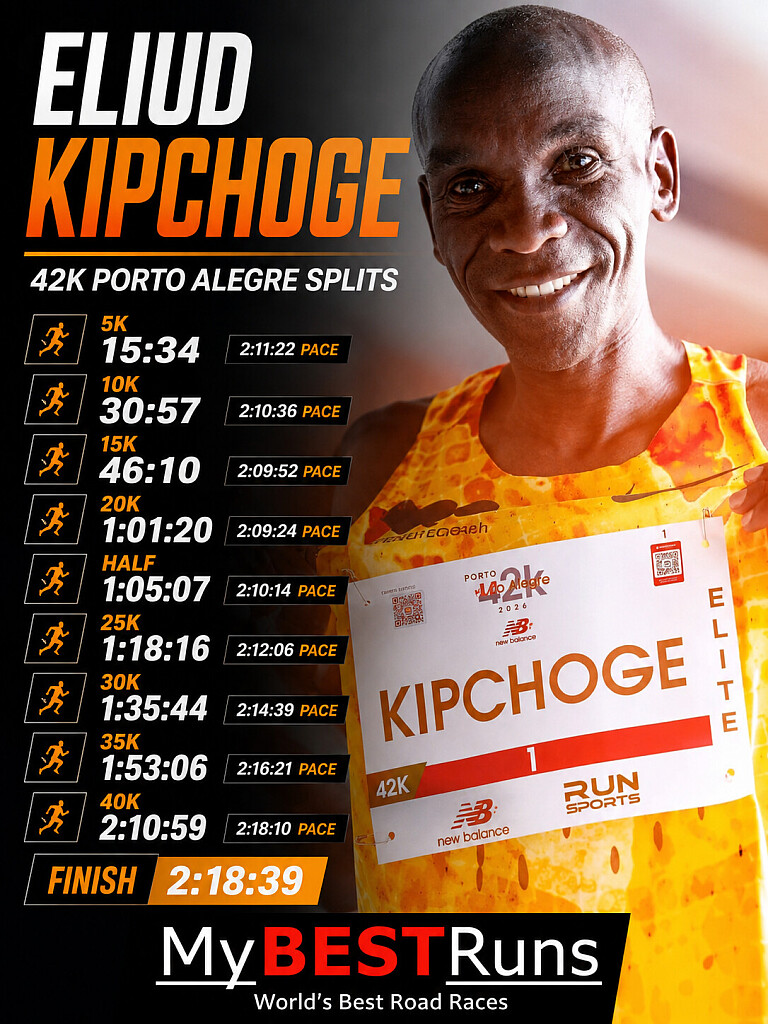
Beyond the Finish Line: Eliud Kipchoge's Journey Continues to Inspire the World
Eliud Kipchoge's remarkable World Tour continued on Brazilian soil as the Kenyan marathon icon completed the New Balance 42K Porto Alegre Marathon, crossing the finish line in 2:18:39 to place 12th overall during the second stop of his ambitious seven-continent global running tour.
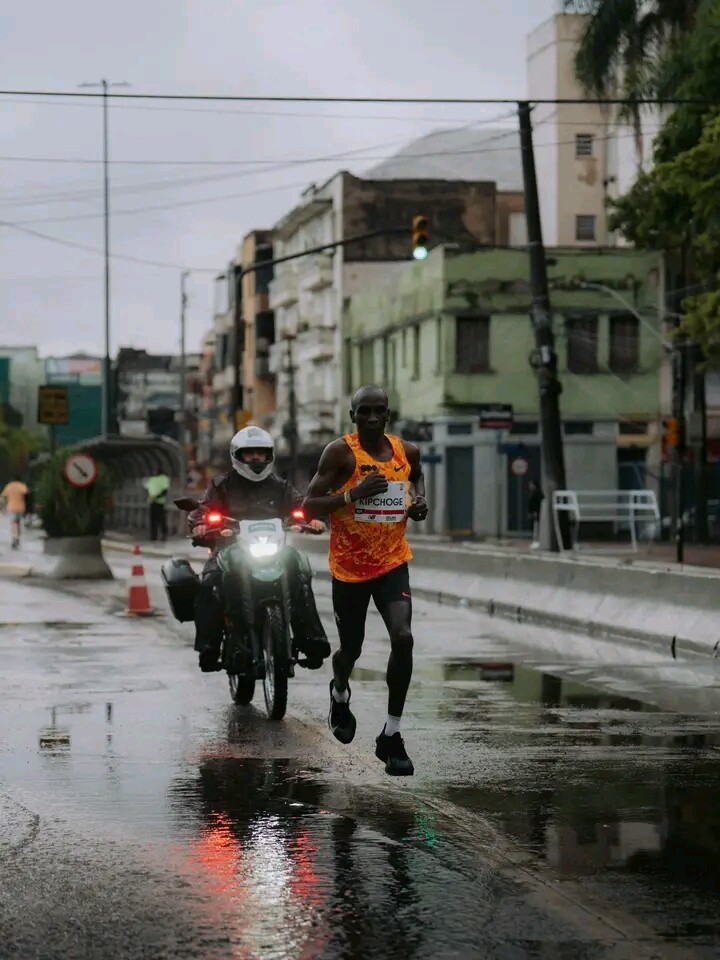
Competing against a strong international field, the two-time Olympic marathon champion displayed the resilience and determination that have defined his legendary career. While the result was not among the victories that have made him one of the greatest marathon runners in history, Kipchoge once again demonstrated the unwavering commitment that continues to inspire athletes and fans across the globe.
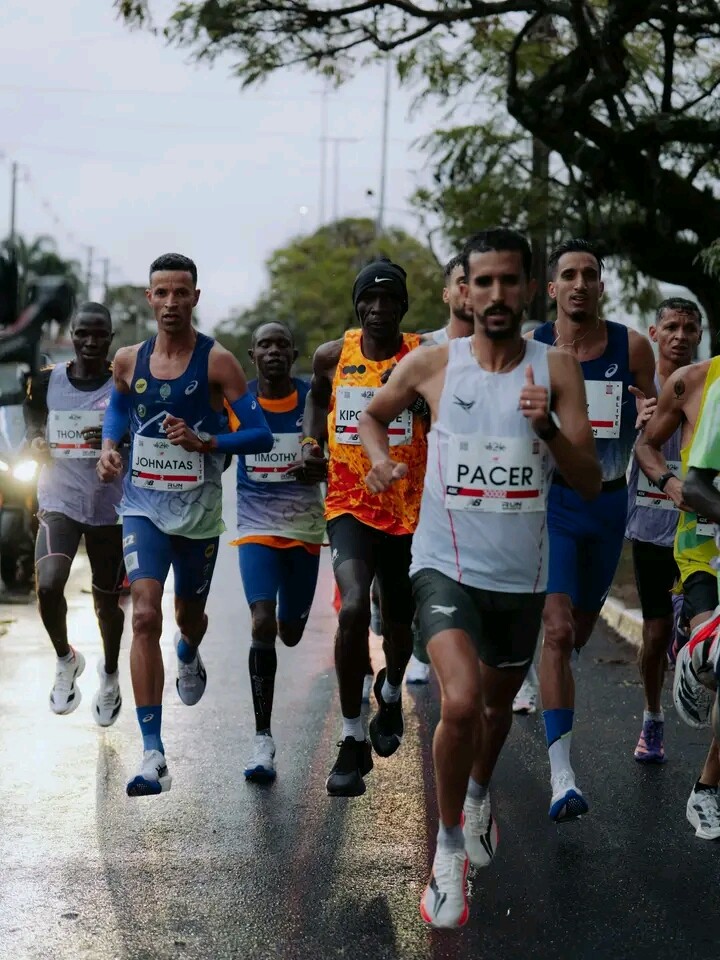
Morocco's Zineddine Ouria claimed victory in a superb 2:08:49, with Kipchoge finishing 9 minutes and 50 seconds behind the race winner after navigating the demanding course in Porto Alegre.
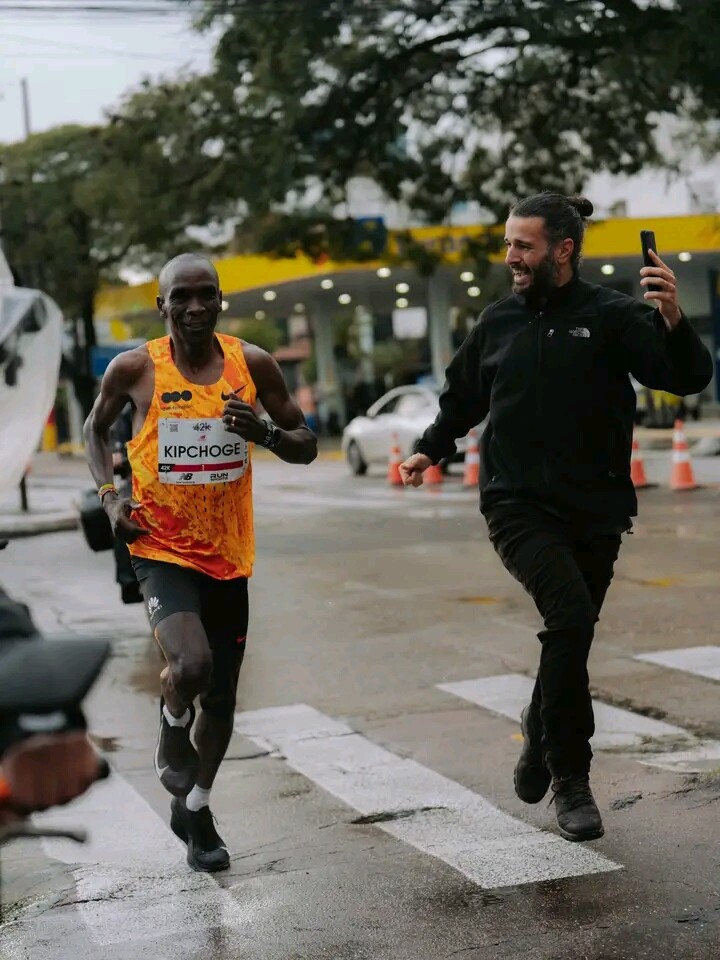
Kipchoge began the race with controlled and confident pacing, reaching 5km in 15:34 before passing the halfway mark in 1:05:07. As the race entered its decisive stages, the pace gradually slowed, but the veteran marathoner pressed on with characteristic determination, completing the 42.195-kilometre challenge in 2:18:39.
For many, the story will be told through the finishing position. But for those who truly understand greatness, this journey is about far more than medals, records, or podium finishes. Kipchoge's World Tour is a celebration of the sport itself—an opportunity to connect with runners across every continent, inspire the next generation, and continue living by the philosophy that has become synonymous with his career: "No Human Is Limited."
The Brazilian appearance also carried added significance, coming shortly after Kipchoge was permanently honoured in Porto Alegre with his footprints unveiled at the entrance of Parque Harmonia—a lasting tribute to his extraordinary impact on distance running and his enduring legacy in the sport.
Once a champion. Forever an inspiration. Legends do not stop inspiring when the victories become fewer; they inspire because they never stop showing up. Through every stride, every finish line, and every challenge embraced, Kipchoge continues to prove that true greatness is measured not only by what an athlete wins, but by the lives they touch along the way.
With the second stop of his World Tour now complete, Kipchoge will turn his attention to the next chapter of his global adventure when he lines up at the Melbourne Marathon in Australia this October. Wherever he races, millions will once again follow the journey of a man whose legacy extends far beyond the stopwatch.
by Erick Cheruiyot for My Best Runs.
Login to leave a comment
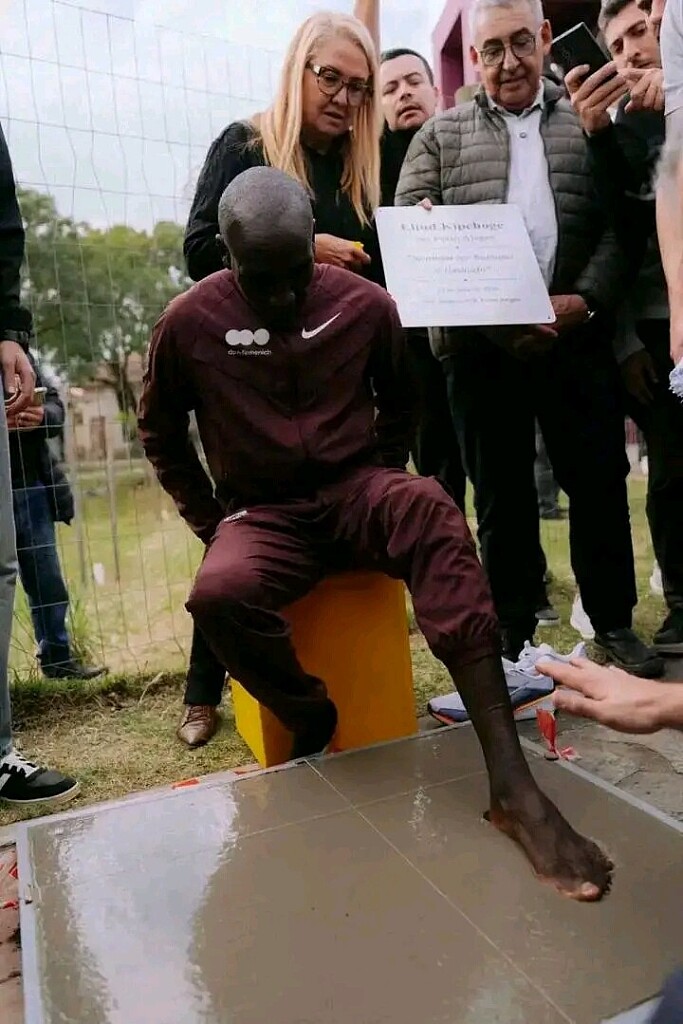
Eliud Kipchoge's Legacy Etched in Brazil as Marathon Icon Receives Permanent Honor
There are moments in sport that transcend records and victories, becoming lasting symbols of inspiration. One such moment has now been created in Brazil, where Kenyan marathon great Eliud Kipchoge has received one of the highest forms of recognition for his extraordinary contribution to athletics and global sport.

At the entrance of Parque Harmonia in Porto Alegre, Kipchoge has officially left his footprints, ensuring that his presence will remain a part of the city's sporting heritage for generations to come. Eliud Kipchoge has been permanently honored in Brazil with his footprints at the entrance of Parque Harmonia. The recognition celebrates far more than his remarkable achievements on the roads—it acknowledges the profound influence he has had on athletes, fans, and the global running community.

For millions around the world, Kipchoge represents the very definition of excellence. The two-time Olympic marathon champion has built one of the greatest careers in distance running history, winning multiple World Marathon Majors, setting world records, and becoming the first person to run a marathon in under two hours under controlled conditions. Yet beyond the medals and milestones, it is his humility, discipline, and unwavering belief that "No Human Is Limited" that have transformed him into a global symbol of perseverance and possibility.
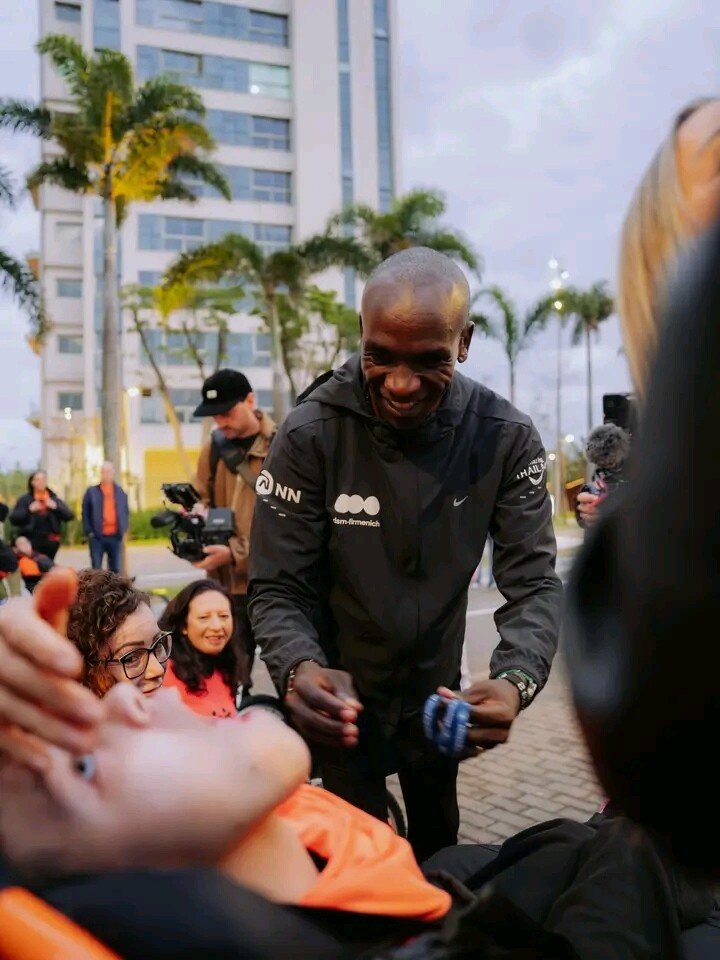
The permanent installation at Parque Harmonia stands as a powerful reminder that true greatness extends far beyond finish lines and podiums. Every visitor who walks past those footprints will be reminded of an athlete whose remarkable journey has inspired millions to dream bigger, work harder, and challenge the boundaries of human potential.
Few athletes earn recognition that becomes part of a city's landscape. Kipchoge has now joined that exclusive company, with his legacy literally etched into Brazilian soil—a fitting honor for a man whose influence reaches every corner of the running world.
As he continues to inspire both on and off the roads, Eliud Kipchoge's impact has already become timeless. His story is no longer defined solely by Olympic titles, world records, or marathon victories, but by the lives he has touched and the belief he has instilled in future generations.
His footprints in Porto Alegre symbolize far more than where he has been—they represent the path he has paved for countless others to follow. It is a legacy that will endure long after the final finish line, proving once again that true champions do not simply make history—they leave an everlasting mark on the world.
by Erick Cheruiyot for My Best Runs.
Login to leave a comment
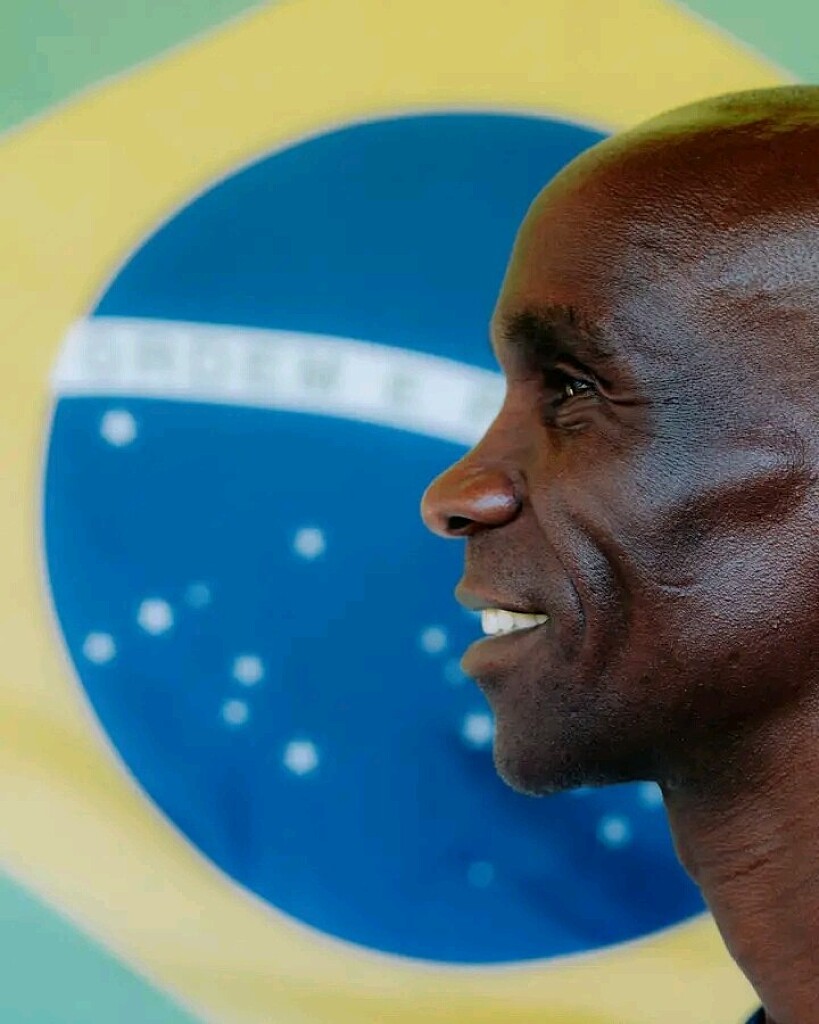
Kipchoge Headlines Star-Studded Elite Field for Porto Alegre Marathon
The countdown is on for what promises to be one of South America's most compelling marathon races of the year, as an exceptional men's elite field prepares to line up for the New Balance 42K Porto Alegre in Brazil on 12 July 2026.
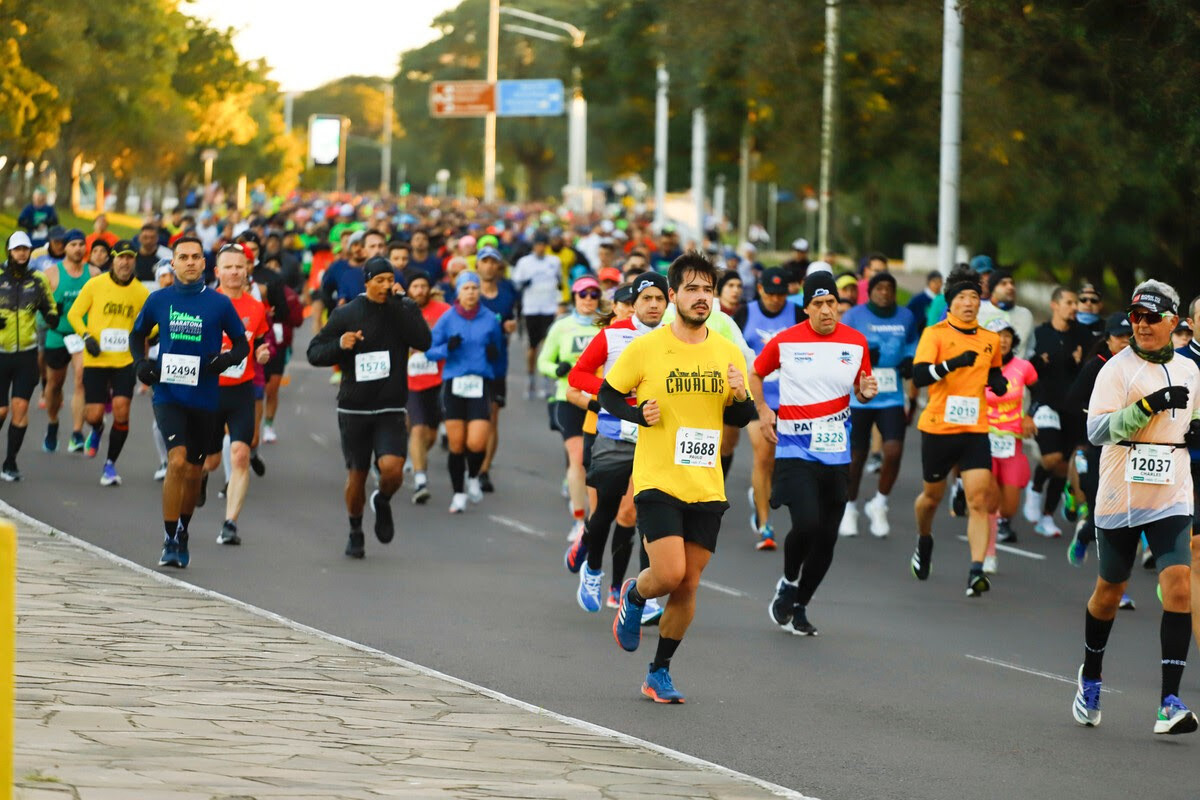
Leading the field is marathon legend Eliud Kipchoge of Kenya, whose remarkable personal best of 2:01:09 makes him the standout name on an entry list packed with proven international performers. The two-time Olympic marathon champion brings unrivalled experience and one of the greatest résumés in distance running, adding global prestige to the Porto Alegre event.
Just days before the race, Kipchoge shared an emotional message on social media, revealing the personal significance of his return to Brazil.
"The second part of my World Tour takes me to Porto Alegre, Brazil, a place that holds a very special meaning in my heart and in my career," he wrote.
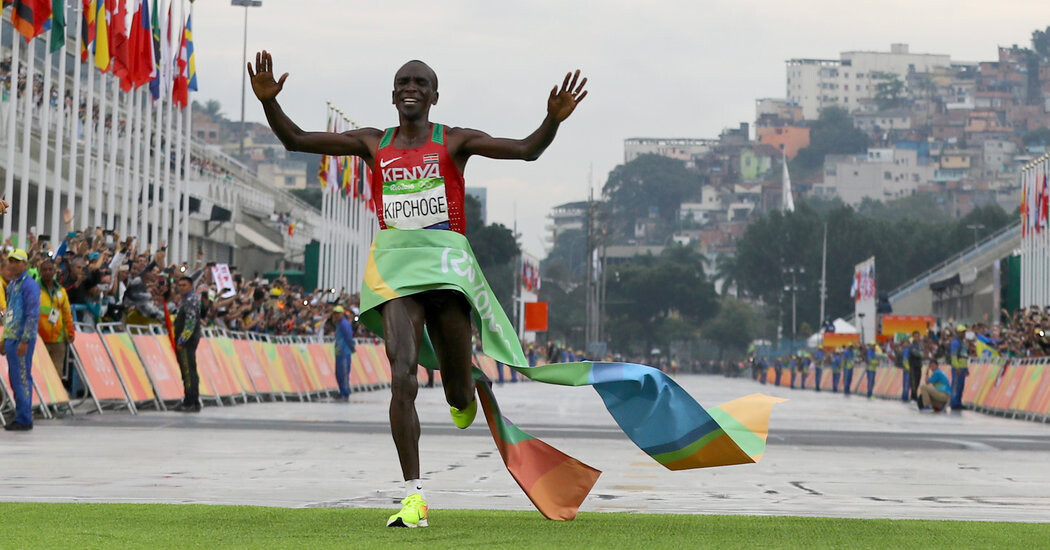
Kipchoge reflected on the memories that continue to inspire him, recalling that Brazil was where he captured his first Olympic marathon gold medal—a defining achievement that transformed both his career and his life.
"Going back to Brazil means a lot to me. This is where I won my first Olympic gold medal, a moment that changed my life forever and shaped the path I continue to walk today. The memories of that achievement will always stay with me, not as a finish line, but as a beginning. To return here carries deep meaning."
He concluded his message by inviting fans to be part of the occasion, saying: "Porto Alegre, let us run together and celebrate the spirit of Brazil and the energy of South America."
Kipchoge will face a formidable challenge from a deep and competitive field featuring Ethiopia's Shifera Tamru (2:05:18), Kebede Tulu Wami (2:05:19) and Derese Workneh (2:06:58), all capable of producing world-class performances on the right day.
Kenya will also be strongly represented by Philemon Kiptoo (2:05:35), Timothy Kipkorir Kattam (2:06:40), Thomas Kibet Maru (2:07:53) and Dominic Nyairo (2:09:13), ensuring another thrilling chapter in the long-standing Kenya-Ethiopia rivalry that has defined elite marathon racing for decades.
The international field is further strengthened by Brazil's José Márcio Leão and Paulo Roberto Paula, Chile's Hugo Catrileo, Morocco's Yakoub Labquira and Zineddine Ouria, and Paraguay's Derlys Ayala, giving the race a truly global flavour.
With a blend of marathon champions, rising contenders and experienced campaigners assembled on the start line, the streets of Porto Alegre are set to host a captivating battle over 42.195 kilometres. Beyond the pursuit of victory, Kipchoge's return adds an emotional dimension to the event, reconnecting him with a country where one of the defining chapters of his legendary career was written. As the world turns its attention to Brazil, fans can expect a fiercely contested race where tactical brilliance, endurance and resilience will determine who emerges victorious.
by Erick Cheruiyot for My Best Runs.
Login to leave a comment
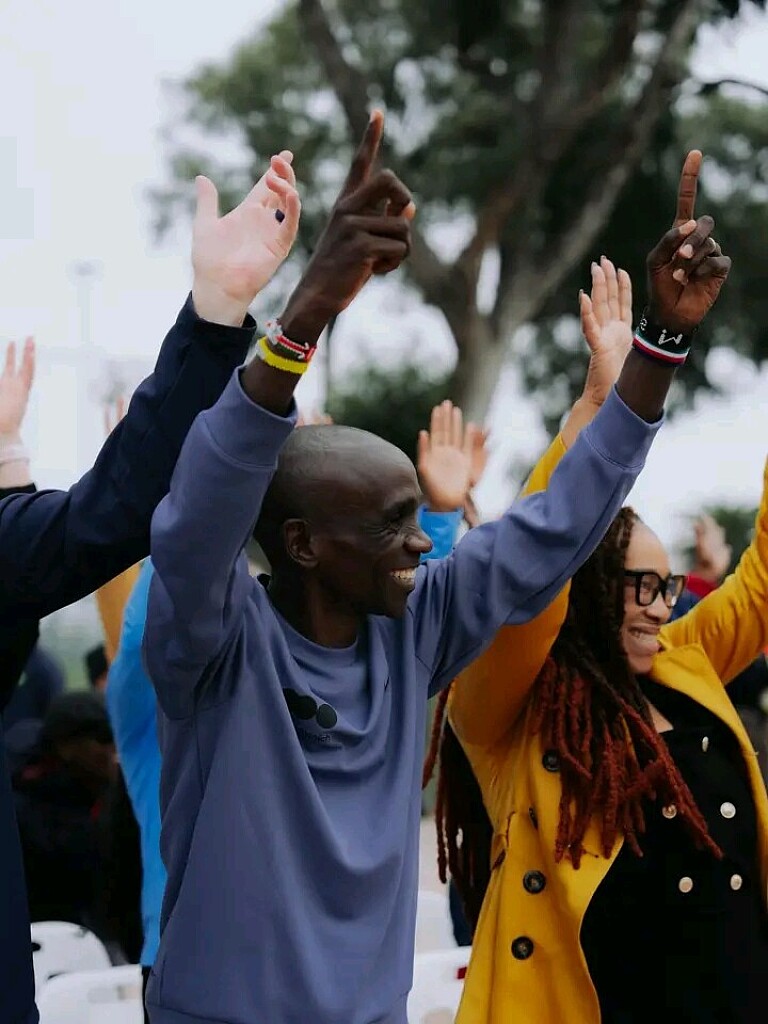
Eliud Kipchoge’s Legacy Beyond Running: Foundation Raises Over KSh 3.6 Million for Education and Environmental Projects
Eliud Kipchoge has spent years redefining what is possible on the roads of the world. From Olympic triumphs to historic marathon performances, the Kenyan icon has built a reputation as one of the greatest athletes of all time. Yet, his latest achievement has nothing to do with finish lines, records, or medals.
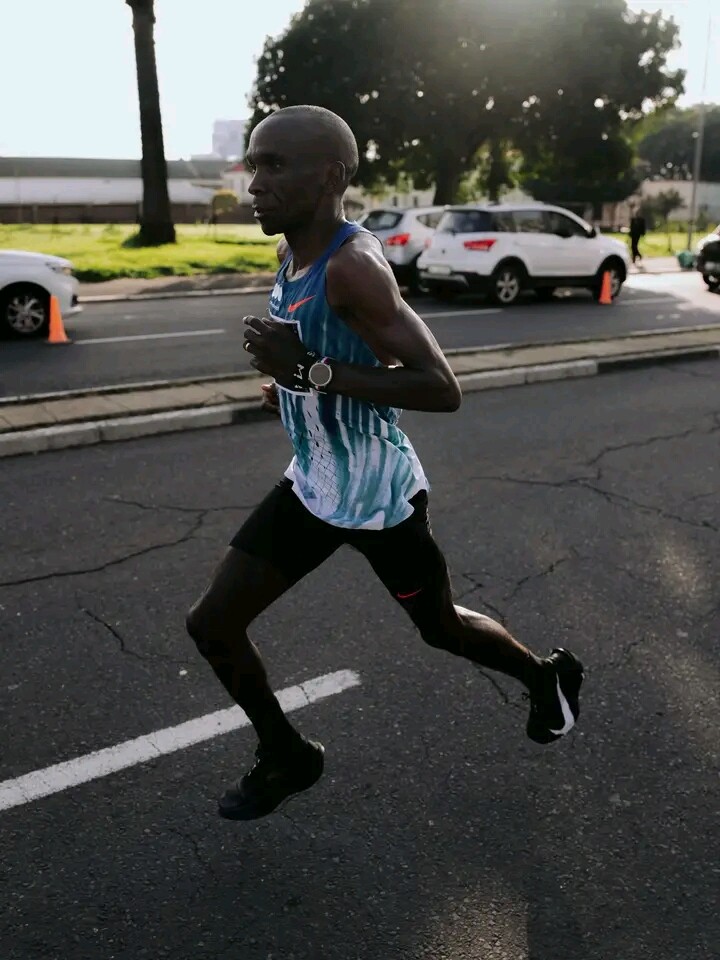
During the Cape Town Marathon weekend in South Africa, the Eliud Kipchoge Foundation successfully raised €24,591 (approximately KSh 3.68 million), with every shilling destined to support education and environmental initiatives across Africa.

The fundraising campaign attracted remarkable support from fans, partners, and well-wishers around the world. Contributions came through direct donations as well as a special charity auction featuring personal items associated with Kipchoge, highlighting the immense admiration and respect he continues to command both within and beyond the athletics community.
Expressing his gratitude, Kipchoge acknowledged the overwhelming generosity shown during the campaign.

"We are blown away by the generosity from all of you who have donated through our website or bid on Eliud’s items through the auction. All proceeds will support education and environment projects in Africa and beyond. We can’t wait to show you how your contributions positively impact the lives of others. Asante sana."
The funds will help advance the foundation’s mission of creating opportunities through education while promoting environmental sustainability—two causes Kipchoge has consistently championed throughout his career.
For many athletes, success is measured by trophies and records. For Kipchoge, however, true greatness extends far beyond personal accomplishments. His commitment to empowering communities and investing in future generations reflects a vision that reaches well beyond sport.
The Cape Town fundraising success serves as another reminder that Kipchoge’s influence is not confined to marathon courses. While millions admire him for his extraordinary performances, countless others are now benefiting from his determination to create lasting positive change.
From inspiring the world with his running to transforming lives through meaningful action, Eliud Kipchoge continues to embody the philosophy that has defined his journey for years: no human is limited.
And as this latest initiative demonstrates, the impact of his legacy may ultimately stretch far beyond the finish line.
by Erick Cheruiyot for My Best Runs.
Login to leave a comment
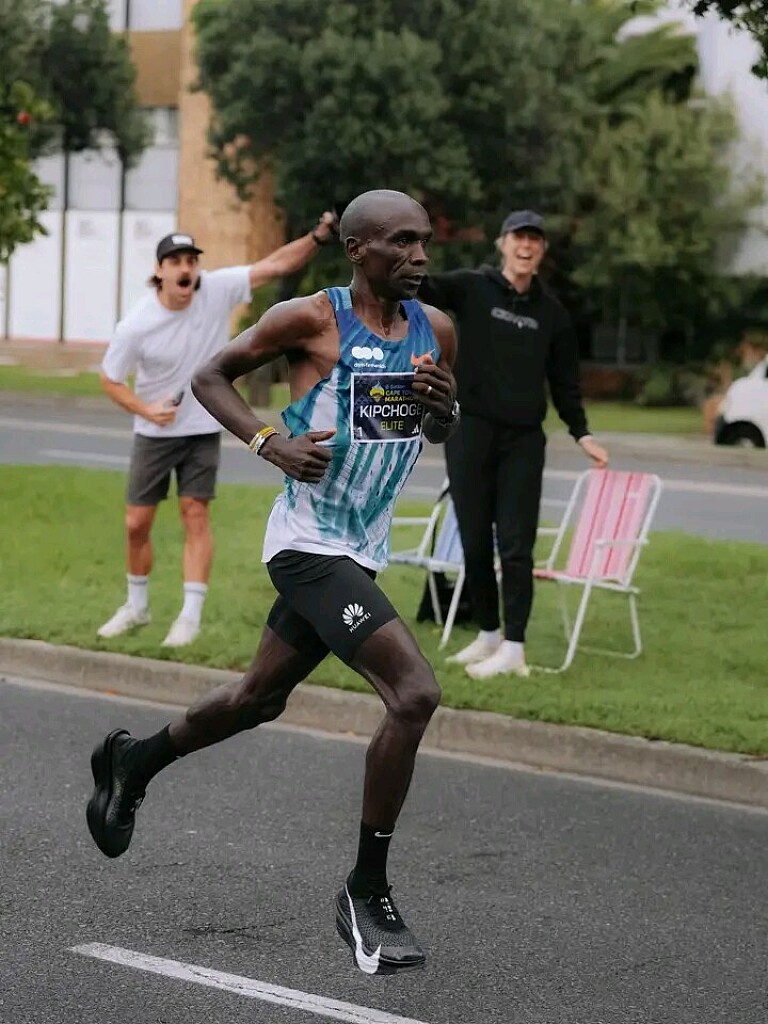
Kipchoge’s Global Journey Continues as Marathon Legend Targets Porto Alegre Glory
At 41 years old, marathon icon Eliud Kipchoge continues to defy time and redefine greatness. After opening his 2026 World Marathon Tour campaign at the Sanlam Cape Town Marathon in South Africa, the Kenyan legend is now preparing for the next stop of his global journey — the Porto Alegre Marathon in Brazil on Sunday, July 12.
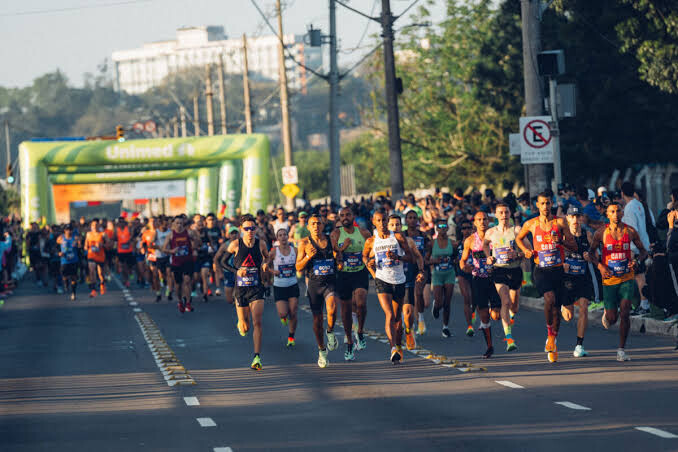
Kipchoge crossed the finish line in Cape Town in 2:13:29, placing 16th overall while maintaining an average pace of 3:09 per kilometre. Although the result may not reflect the dominance that defined many of his peak years, the performance once again highlighted the extraordinary longevity, discipline, and fighting spirit of one of the greatest marathon runners in history.
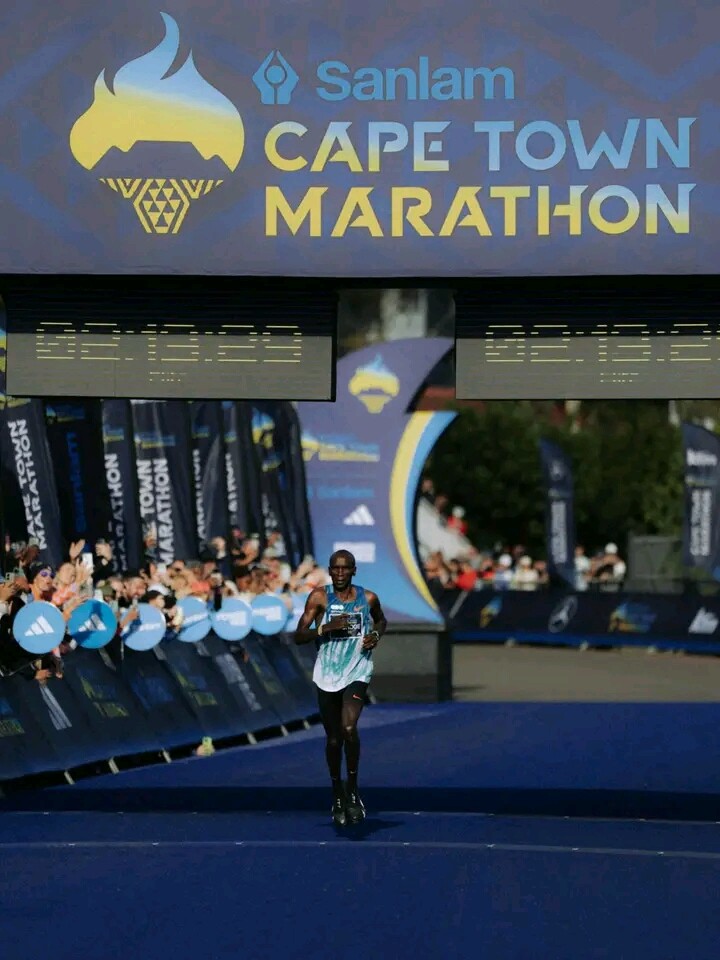
Even at 41, Kipchoge remains one of the most respected and influential figures in world athletics. His presence alone transforms races into global attractions, drawing attention from fans, athletes, and organizers across continents. From his historic unofficial sub-two-hour marathon achievement — a groundbreaking performance that changed the perception of human endurance forever to multiple Olympic and World Marathon Major triumphs, the Kenyan superstar has already secured a legacy few athletes will ever match.
Now, attention shifts to Brazil, where excitement is rapidly building ahead of his appearance at the Porto Alegre Marathon. The race is expected to attract massive international interest as South American fans prepare to witness one of the sport’s greatest icons compete live on their streets.
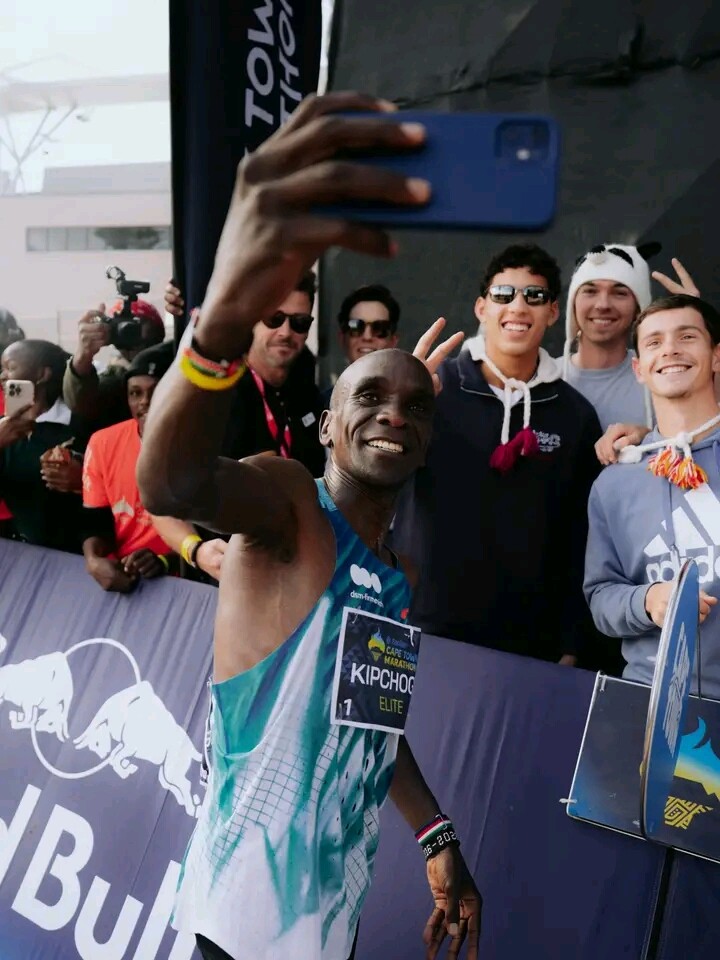
Kipchoge’s enduring philosophy, “No Human Is Limited,” continues to inspire millions around the world. More than a slogan, it has become a symbol of resilience, ambition, and the belief that barriers are meant to be challenged regardless of age or circumstance.
As he continues his 2026 campaign, Kipchoge is proving that greatness is not only measured by victories, but also by consistency, influence, and the courage to keep competing at the highest level. From Cape Town to Porto Alegre, the marathon king’s remarkable journey continues to captivate the athletics world.
by Erick Cheruiyot for My Best Runs.
Login to leave a comment
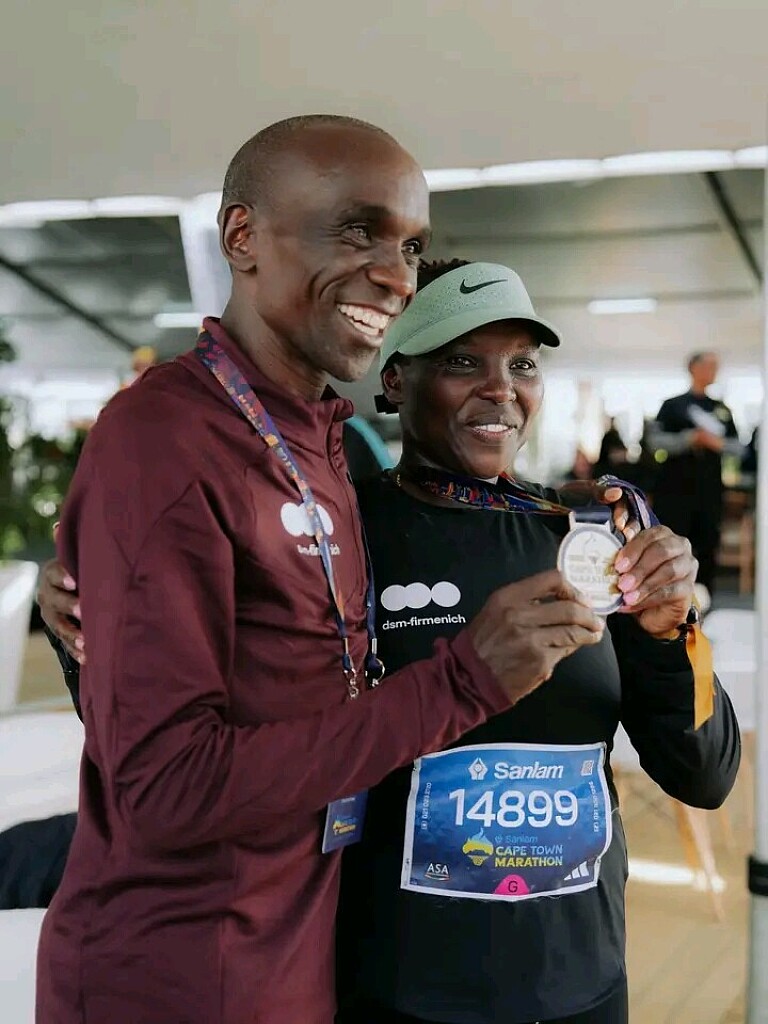
From Supporting a Legend to Running Her Own Race: Grace Sugut Conquers Cape Town Marathon
For more than two decades, the world has watched Eliud Kipchoge redefine the boundaries of endurance and greatness. At the 2026 Sanlam Cape Town Marathon, however, the spotlight belonged to someone whose strength has long existed away from the cameras — his wife, Grace Sugut.
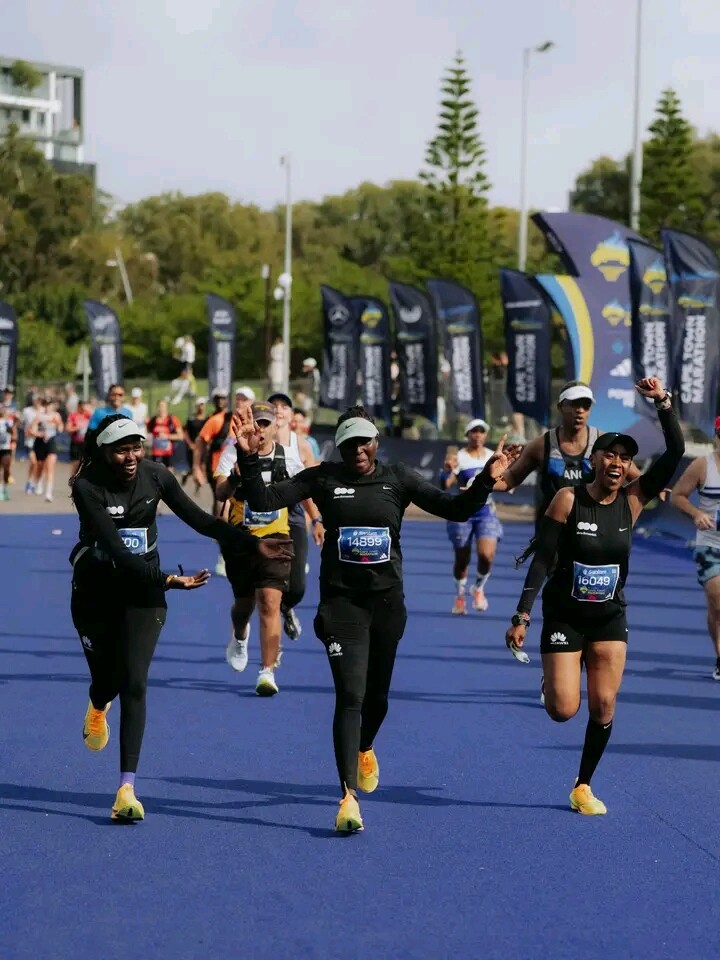
In one of the most emotional stories of the marathon weekend, Grace completed her very first 42.2-kilometre race in 4:29:59, transforming a personal milestone into a moment that resonated far beyond the finish line in Cape Town.
Her marathon journey unfolded exactly the way most first marathons do — honest, demanding, unpredictable, and deeply human. She opened with calm discipline, reaching 5K in 28:30 while maintaining a controlled rhythm. By halfway, she was still moving strongly through the streets of the Mother City in 2:02:47, showing patience and composure in the early stages of the race.
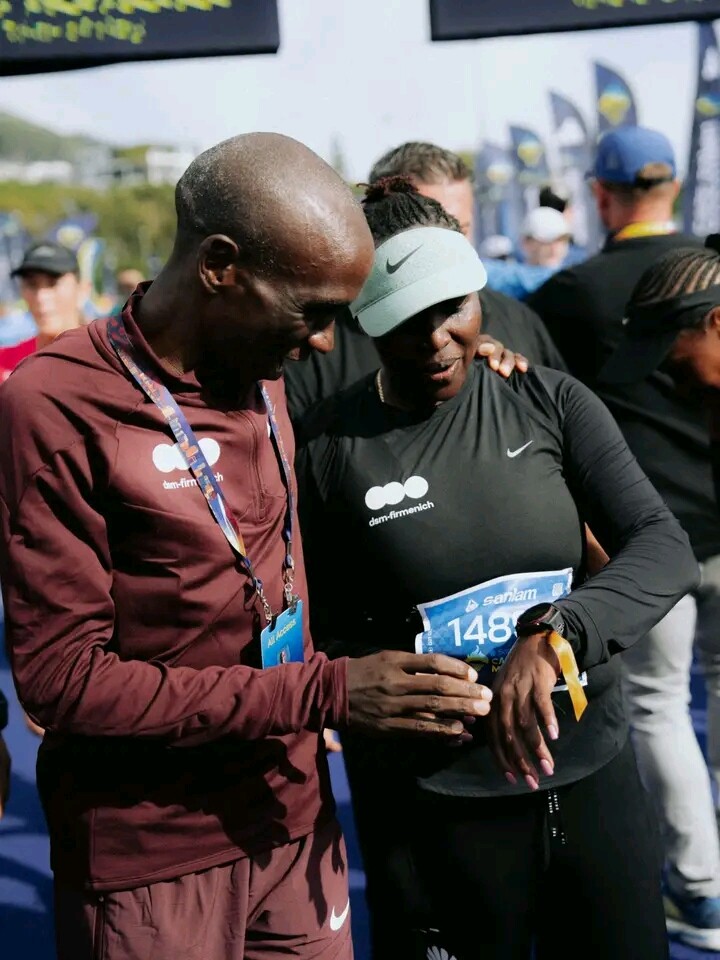
Then the marathon began asking harder questions.
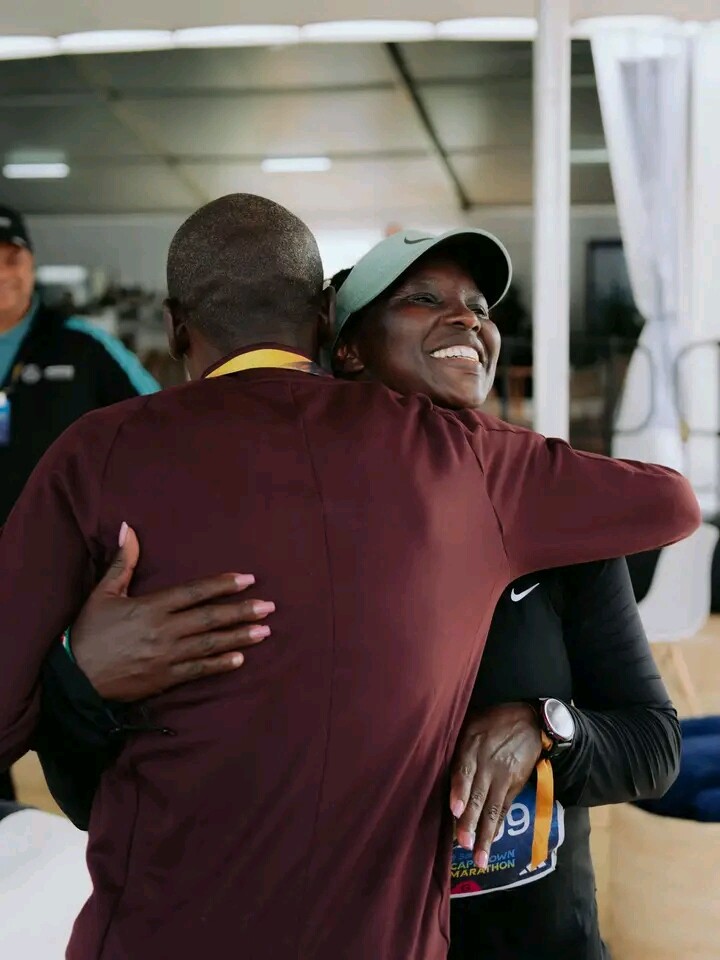
As the kilometres accumulated, the pace gradually slowed — the inevitable reality familiar to nearly every debut marathoner. By 30K, fatigue had started to take hold, and the final stretch became less about time and more about determination. Yet Grace kept pushing forward, kilometre after kilometre, refusing to surrender to the pain that defines the final chapter of every marathon.
And that perseverance carried special meaning.

Before the race, Eliud Kipchoge had spoken publicly about his wife’s challenge, encouraging her to embrace the suffering, trust the process, and simply finish the race. After she crossed the line, his words became even more powerful.
“I have run my first marathon 13 years ago. It has brought me to where I am today, but I could not do this without the support of many including my family,” Kipchoge shared. “My heart is filled with pride, for my wife Grace completing her first marathon in Cape Town.”
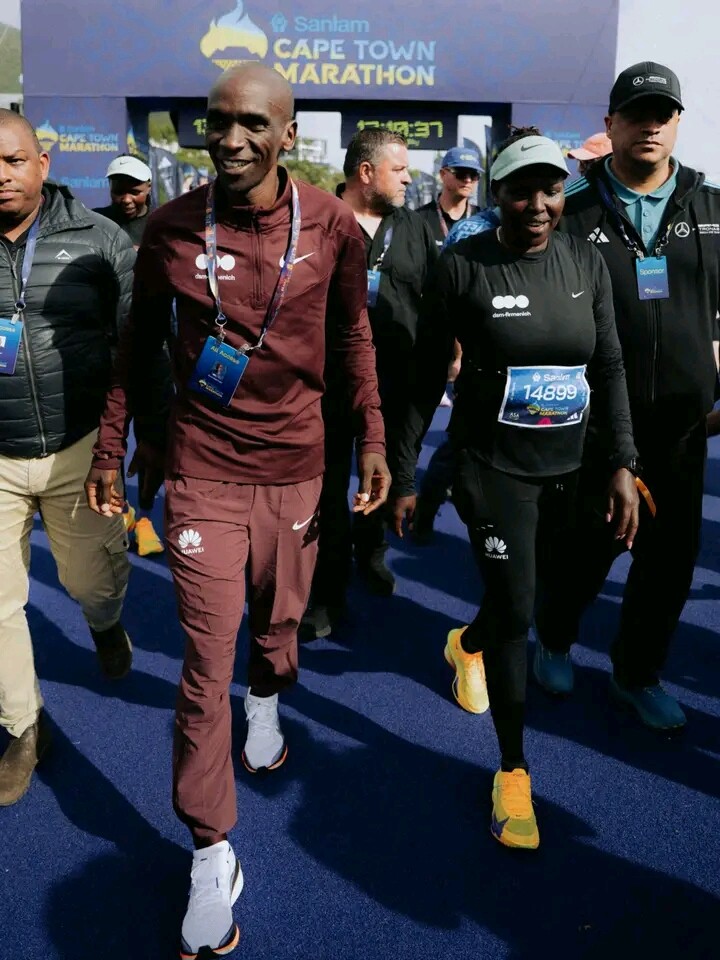
The message revealed a side of the marathon icon the world rarely sees — not the record-breaker or Olympic champion, but the grateful husband recognising the woman who has stood beside him throughout one of the greatest careers in sporting history.
While Eliud built a global legacy on the roads of Berlin, London, Tokyo, and Vienna, Grace quietly anchored the family behind the scenes in Eldoret, raising their children and managing family responsibilities far from international attention. For years, she supported marathon greatness from the sidelines. In Cape Town, she stepped into the arena herself.
That alone made her finish extraordinary.
Grace’s 4:29:59 will not enter record books, but its significance reaches somewhere deeper. It reflects the experience shared by countless runners around the world — the excitement of the start line, the physical battle through the closing kilometres, and the emotional reward that comes only after refusing to quit.
The final 12 kilometres tested her in every possible way. She answered every challenge with courage.
When Grace Sugut crossed the finish line in Cape Town, the crowd did not witness another world record performance. Instead, they witnessed something equally memorable: the beginning of a new running journey built on resilience, humility, and the quiet strength that has always existed behind one of athletics’ greatest champions.
by Erick Cheruiyot for My Best Runs.
Login to leave a comment
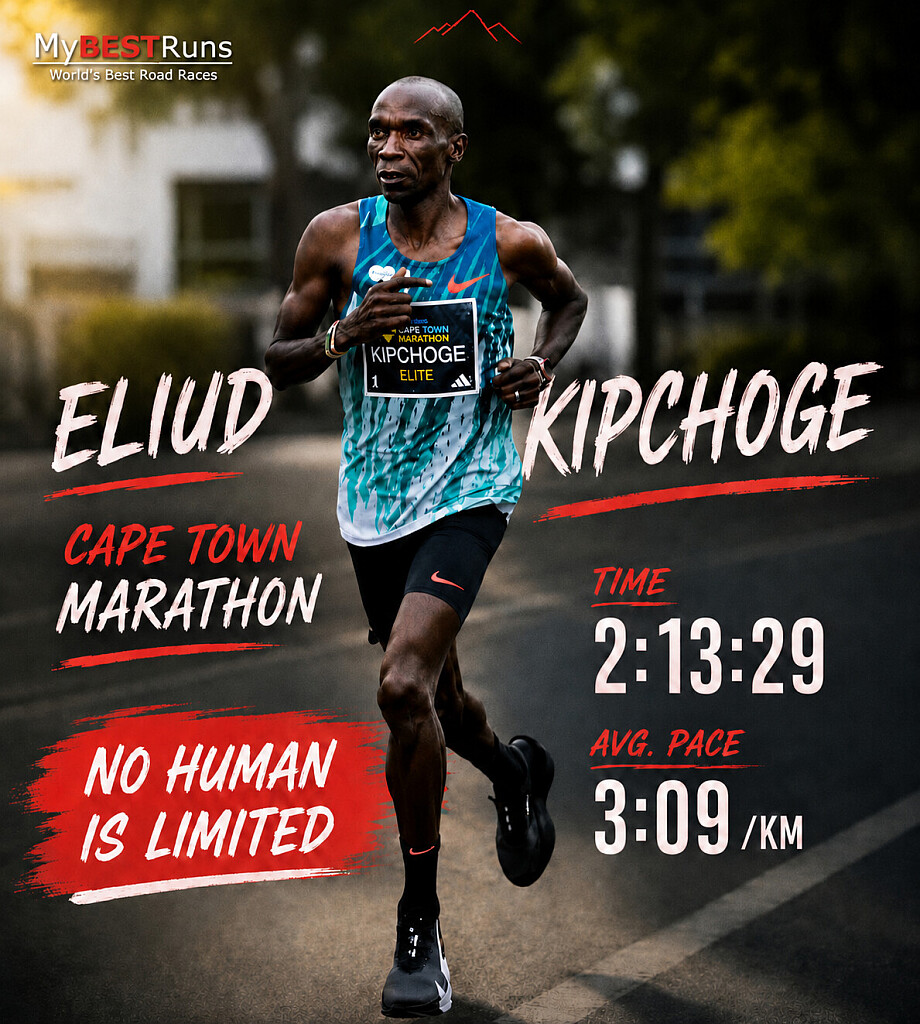
Kipchoge Opens Seven-Continent Challenge with Courageous Cape Town Effort
“The time has come.”
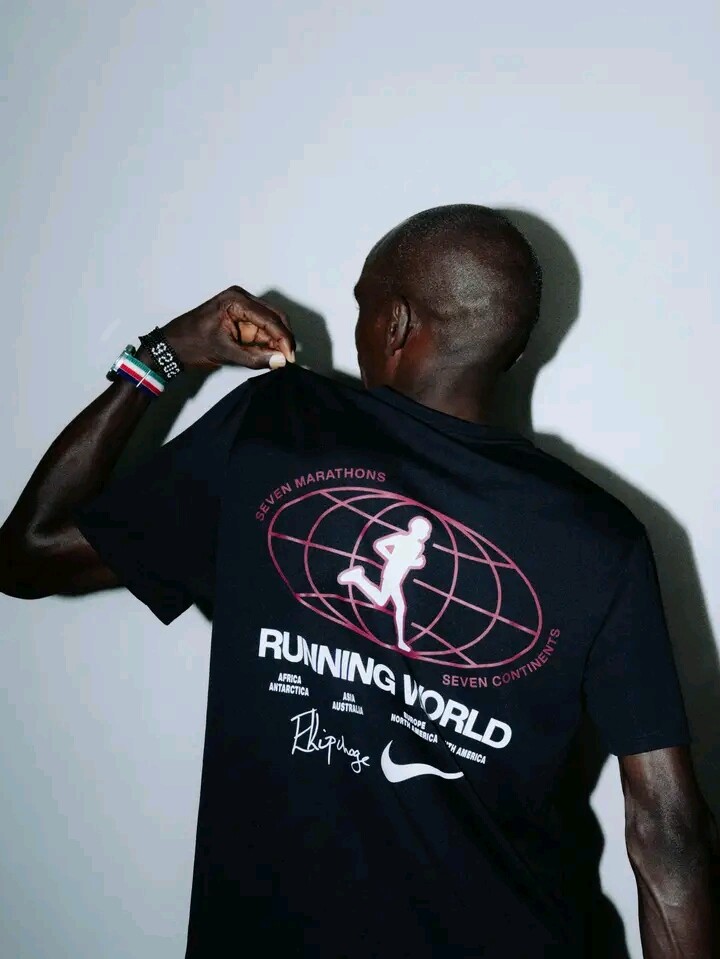
Those words carried enormous weight as marathon legend Eliud Kipchoge stepped onto the streets of South Africa for the Sanlam Cape Town Marathon, officially launching his ambitious quest to complete seven marathons across seven continents.
What followed was not the victory many fans anticipated, but another compelling chapter in the extraordinary career of one of athletics’ greatest icons.
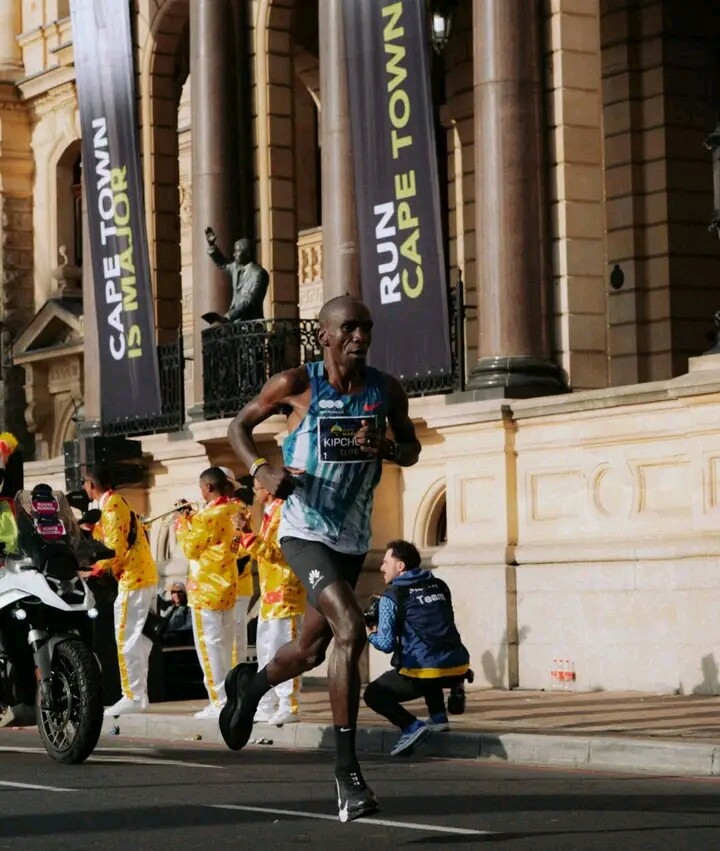
Kipchoge finished 16th in a time of 2:13:29 in Cape Town, enduring a difficult morning against a strong field and a demanding course. Yet despite the result, the race carried significance far beyond finishing position or stopwatch numbers.
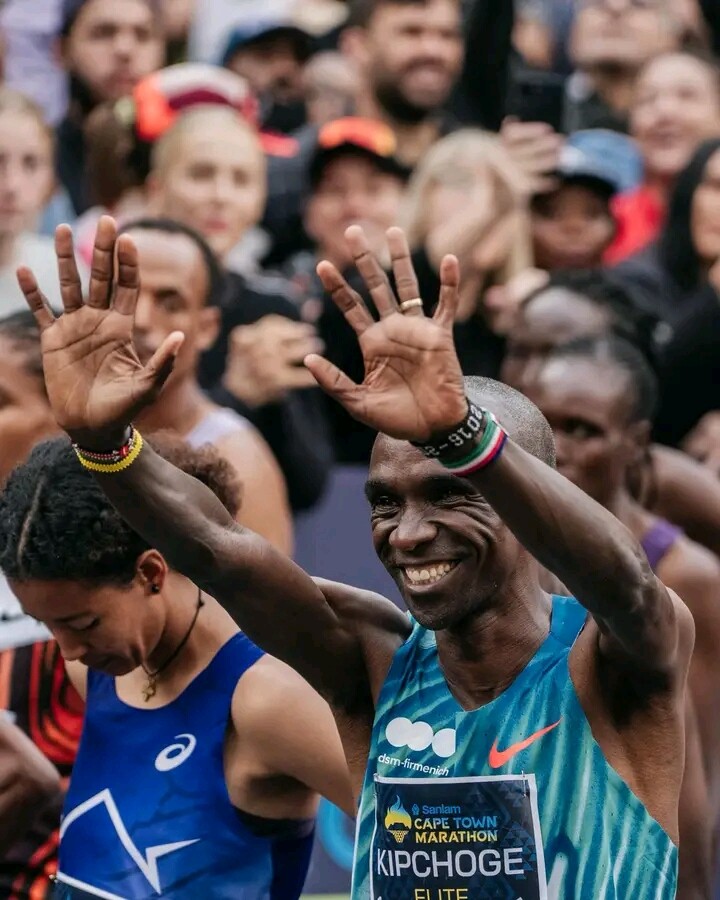
The Kenyan superstar arrived in Cape Town surrounded by global anticipation as supporters from around the world tuned in to witness the beginning of his newest challenge — a worldwide marathon journey designed to further inspire runners across every continent.
From the early stages, the pace was relentless as the lead pack surged through the scenic city streets beneath perfect marathon conditions. Kipchoge initially looked relaxed and controlled, moving comfortably among the contenders before the intensity of the race gradually began to show in the later kilometres.
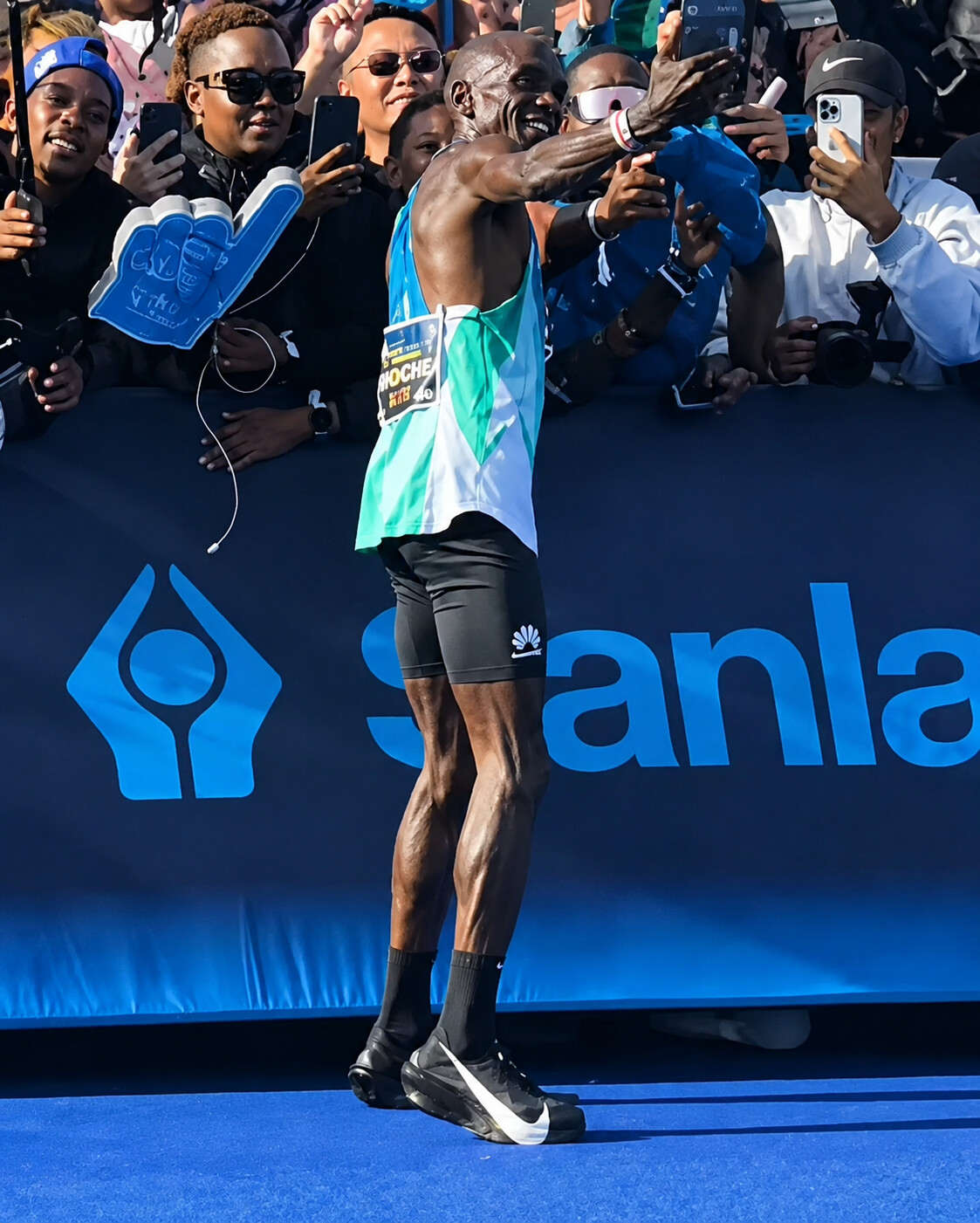
While the outcome may appear unusual for an athlete whose career has been built on dominance, discipline and record-breaking excellence, marathon running has always remained one of sport’s most unforgiving disciplines. Even legends are tested.
Still, Kipchoge’s presence transformed the Cape Town Marathon into a globally celebrated event. Thousands lined the course hoping to catch a glimpse of the man who famously broke the two-hour marathon barrier during the INEOS 1:59 Challenge — a performance that redefined perceptions of human endurance and long-distance running.
His latest mission — seven marathons on seven continents — adds yet another remarkable dimension to an already historic legacy. At 41, Kipchoge is using the challenge as a platform to inspire people across the world to embrace running, fitness and the limitless possibilities of human potential, further cementing his status as a global ambassador for the sport.
Although Cape Town did not deliver the triumphant opening many expected, the race symbolised something deeper: the beginning of another daring journey from a man who has spent his entire career proving that limits exist only to be challenged.
For many athletes, a 2:13 marathon would represent the performance of a lifetime. For Kipchoge, it simply becomes another moment in a career that has already changed the sport forever.
And as his seven-continent adventure now moves forward, the world will continue watching — not only for victories, but for the enduring spirit of a champion who keeps pushing beyond the imaginable.
by Erick Cheruiyot for My Best Runs.
Login to leave a comment
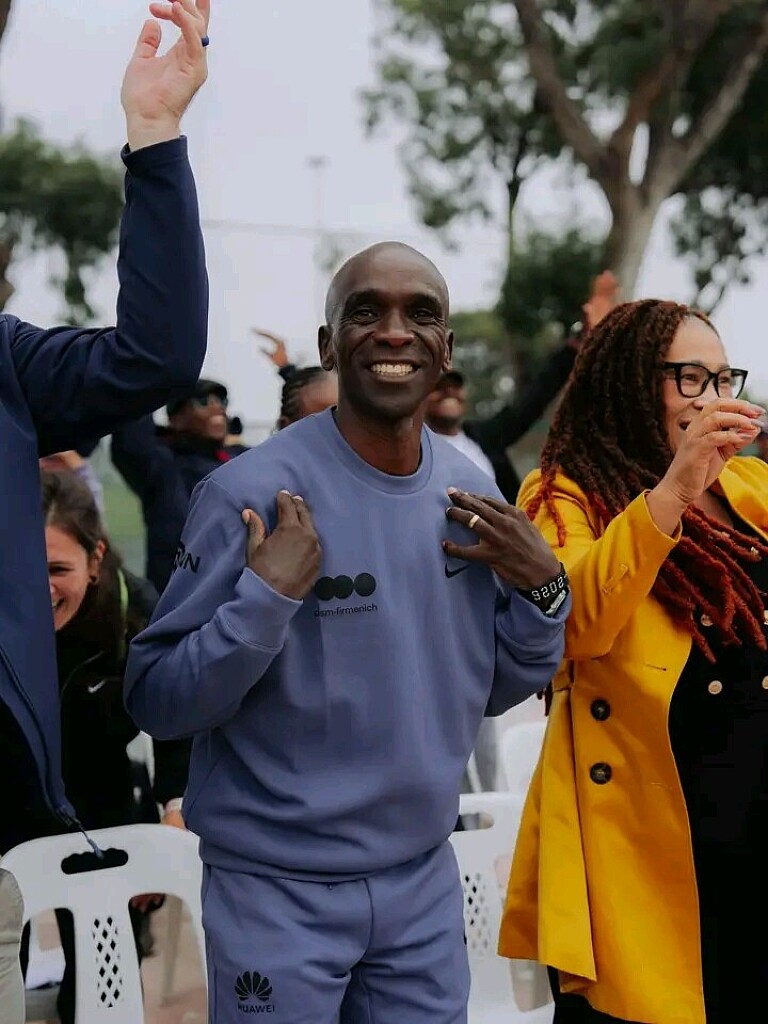
Kipchoge Headlines Star-Studded Field for 2026 Cape Town City Marathon
The countdown to the 2026 Cape Town City Marathon has intensified after organisers unveiled a powerful elite field headlined by marathon icon Eliud Kipchoge, setting the stage for one of the most anticipated road races on the African calendar.
Scheduled for Sunday, May 24, the race is expected to draw global attention as some of the world’s finest long-distance athletes converge in South Africa’s Mother City for a high-stakes battle over 42.195 kilometres.
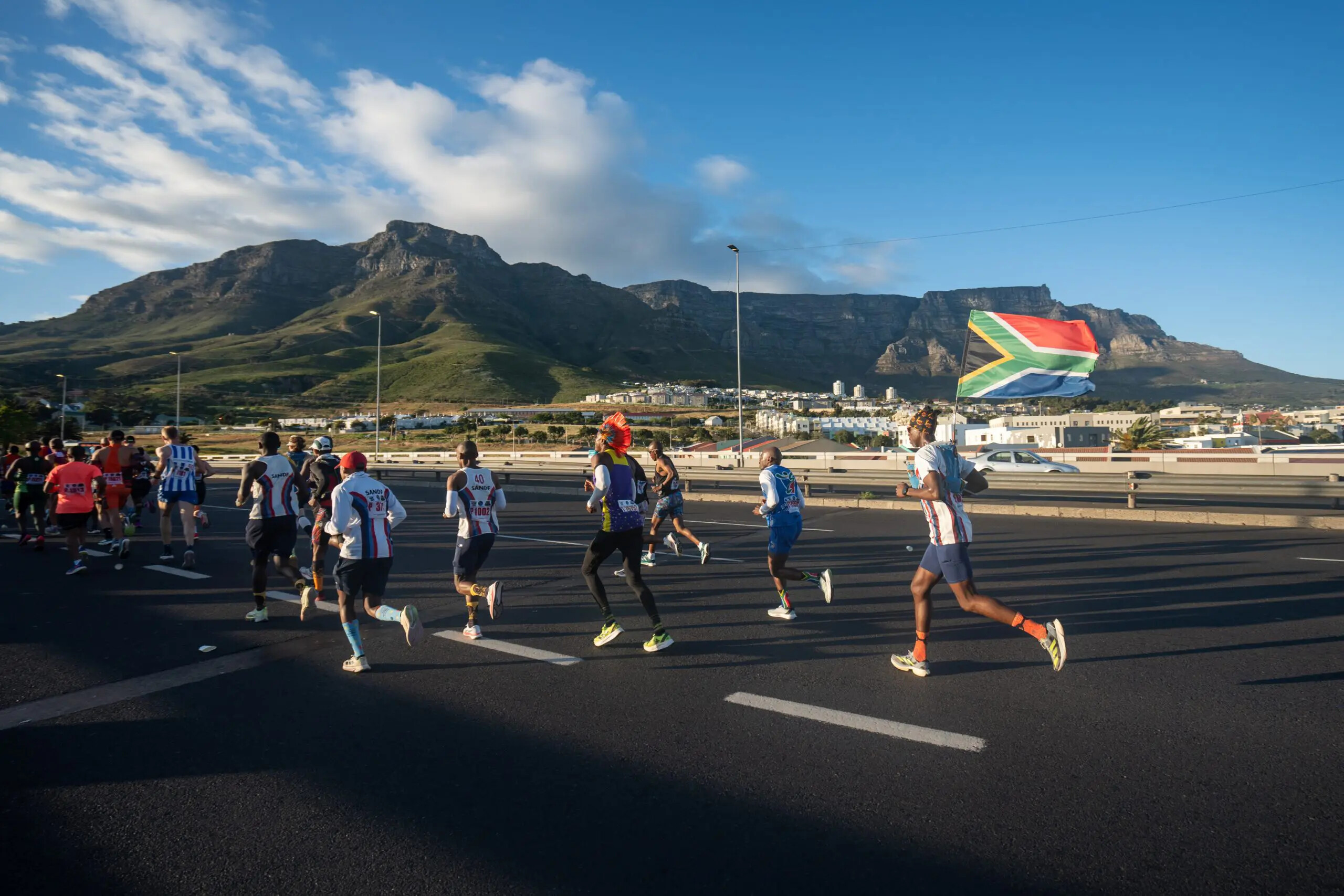
Kipchoge, widely regarded as the greatest marathon runner in history, arrives in Cape Town carrying an unmatched legacy that includes multiple Olympic titles and the fastest marathon performances ever recorded. The Kenyan superstar’s presence alone elevates the status of the event, adding further momentum to Cape Town’s ambition of becoming Africa’s first Abbott World Marathon Major.
But the race is far from a one-man affair.
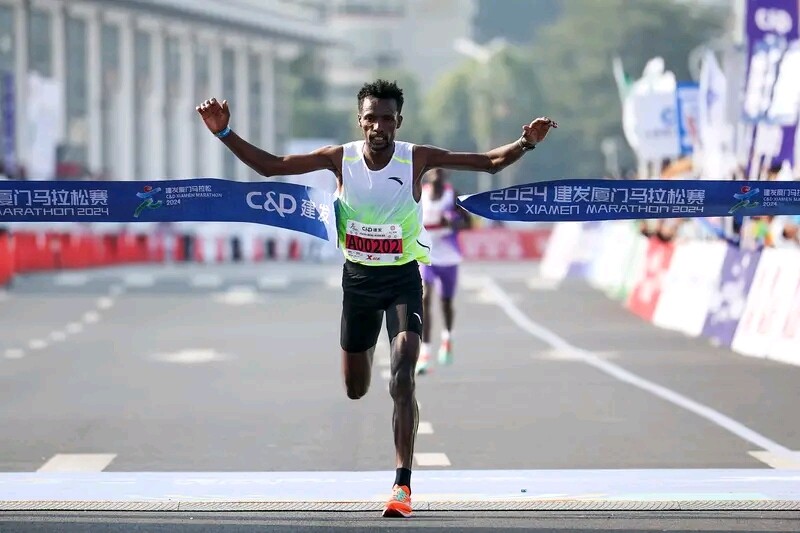
A deep and competitive field promises fierce competition from start to finish, with fellow Kenyan Stephen Kiprop among the leading challengers. Ethiopia will also bring significant firepower through athletes such as Mulugeta Uma, Yihunilign Adane, Boki Asefa, Jemal Mekonen and Adane Kebede — creating a strong East African rivalry that could produce a fast and tactical contest.
With several athletes in the field boasting personal bests close to the 2:05 barrier, expectations are growing for a relentless pace on Cape Town’s scenic course. The combination of elite depth, international attention and the city’s vibrant atmosphere has positioned this year’s edition as potentially the most competitive in the event’s history.
Beyond the race itself, the marathon represents another major moment for African road running. Cape Town has increasingly emerged as a global destination for distance racing, and attracting names of Kipchoge’s calibre signals the event’s growing influence on the world stage.
As anticipation builds ahead of Sunday’s showdown, fans across the continent and the world will be watching closely to see whether the marathon legend can add another memorable chapter to his remarkable career — or whether a new challenger will rise in one of Africa’s biggest marathon battles.
by Erick Cheruiyot for My Best Runs.
Login to leave a comment

Cape Town Marathon
The Sanlam Cape Town Marathon is a City Marathon held in Cape Town, South Africa, which is sponsored by Sanlam, the City of Cape Town and Vital Health Foods. The marathon is held on a fast and flat course, starting and finishing in Green Point, near the Cape Town Stadium. Prior to existing in its current format, the Cape Town...
more...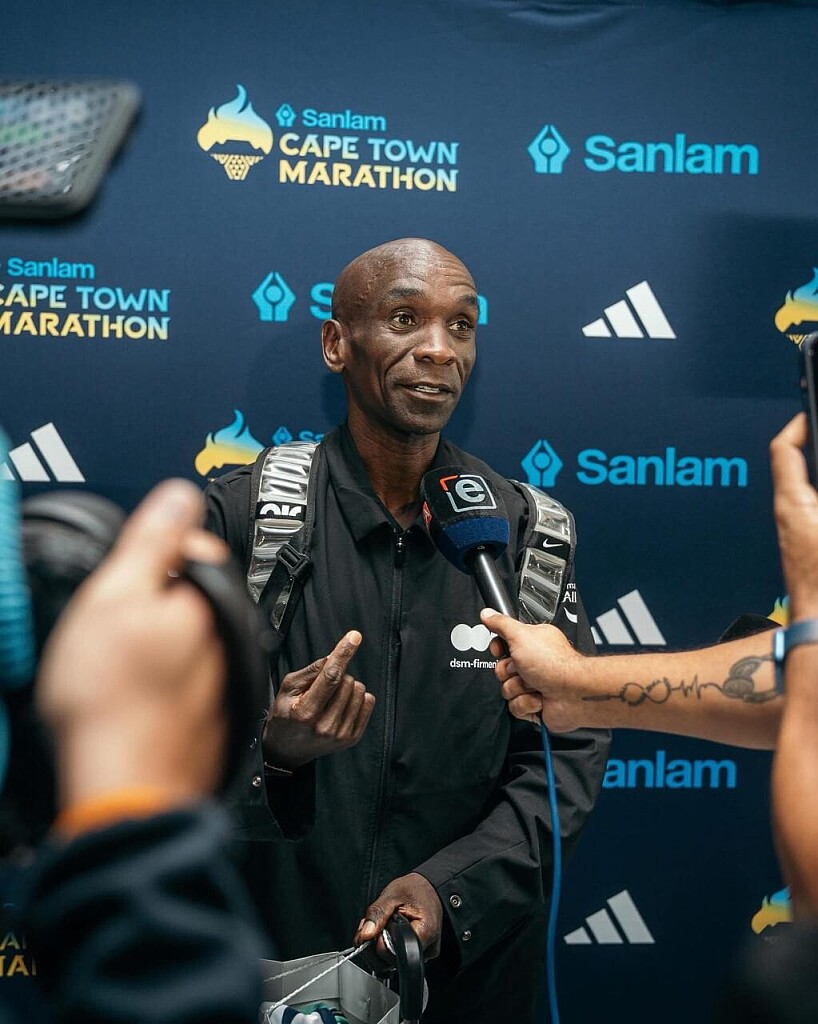
Kipchoge Backs Cape Town’s Historic Bid to Bring a World Marathon Major to Africa
Marathon icon Eliud Kipchoge has thrown his full support behind Cape Town’s ambitious campaign to become Africa’s first-ever Abbott World Marathon Major, describing the bid as a transformational moment for distance running across the continent. He is set to participate in Sanlam Cape Town marathon on May 24th, 2026.
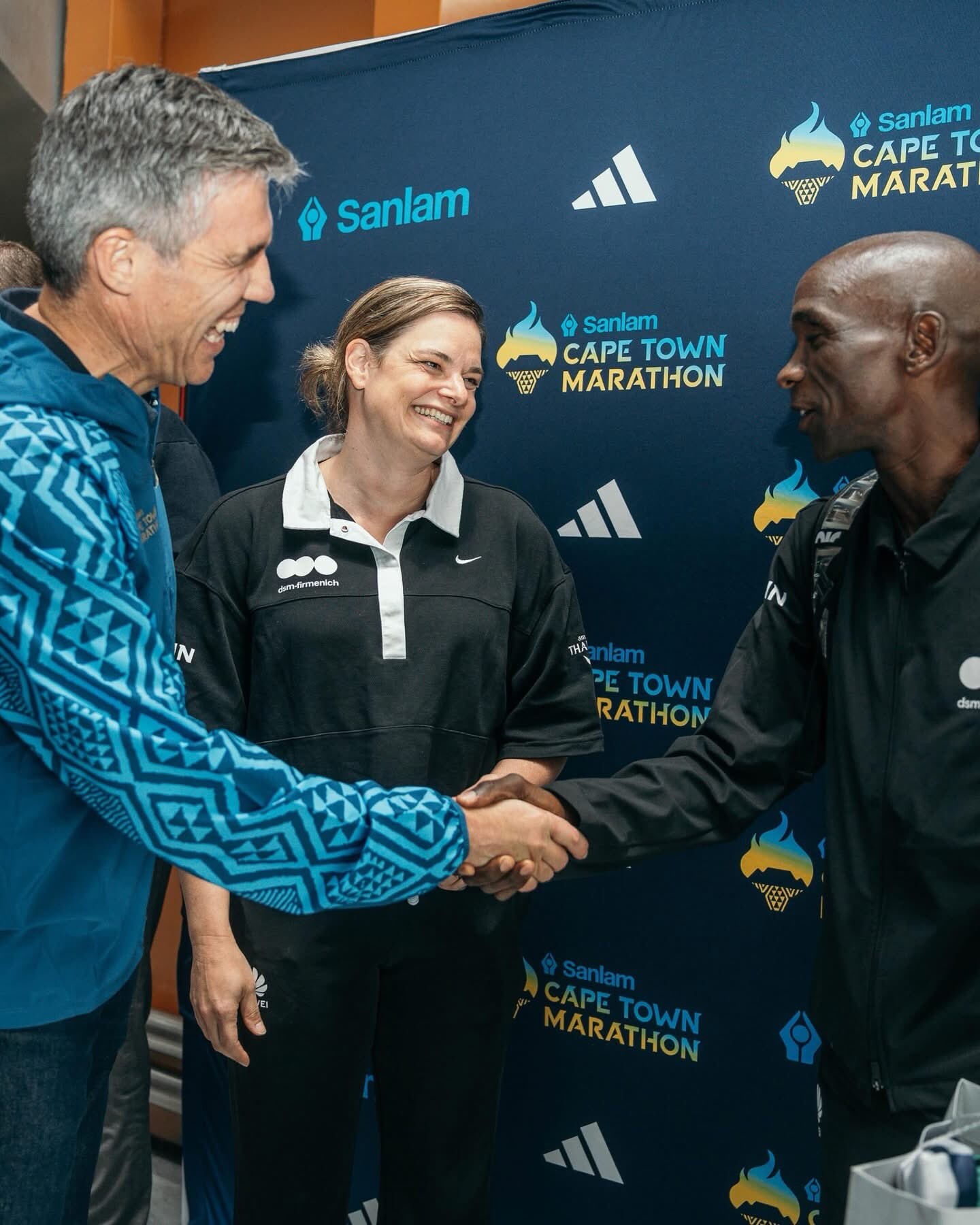
The two-time Olympic marathon champion arrived in Cape Town as part of his global marathon tour spanning seven continents, but his presence in South Africa carried far deeper significance than a ceremonial visit. For Kipchoge, the possibility of an African city joining the prestigious World Marathon Majors series represents a long-overdue recognition of the continent that has shaped the modern era of distance running.
Speaking passionately about the vision behind the bid, Kipchoge emphasized that Africa has supplied generations of world-class runners, inspired millions through athletics, and consistently dominated the marathon scene, yet has never hosted one of the sport’s most celebrated marathon events.
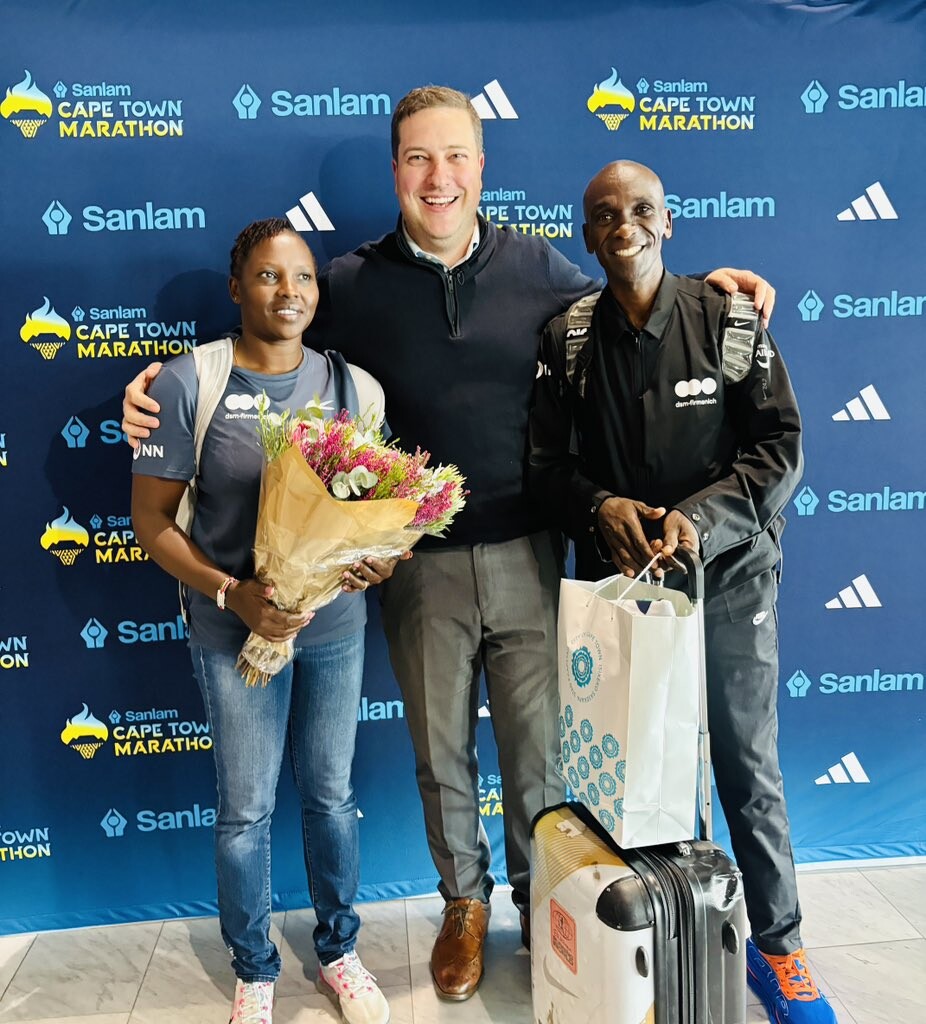
He believes Cape Town now has the opportunity to change that narrative forever.

The Abbott World Marathon Majors currently features some of the most iconic races in global athletics, including events in Tokyo, Boston, London, Berlin, Chicago, Sydney and New York City. Cape Town’s inclusion would mark a historic breakthrough, positioning Africa at the center of elite marathon racing while opening new pathways for athletes, tourism, investment, and sporting development across the continent.
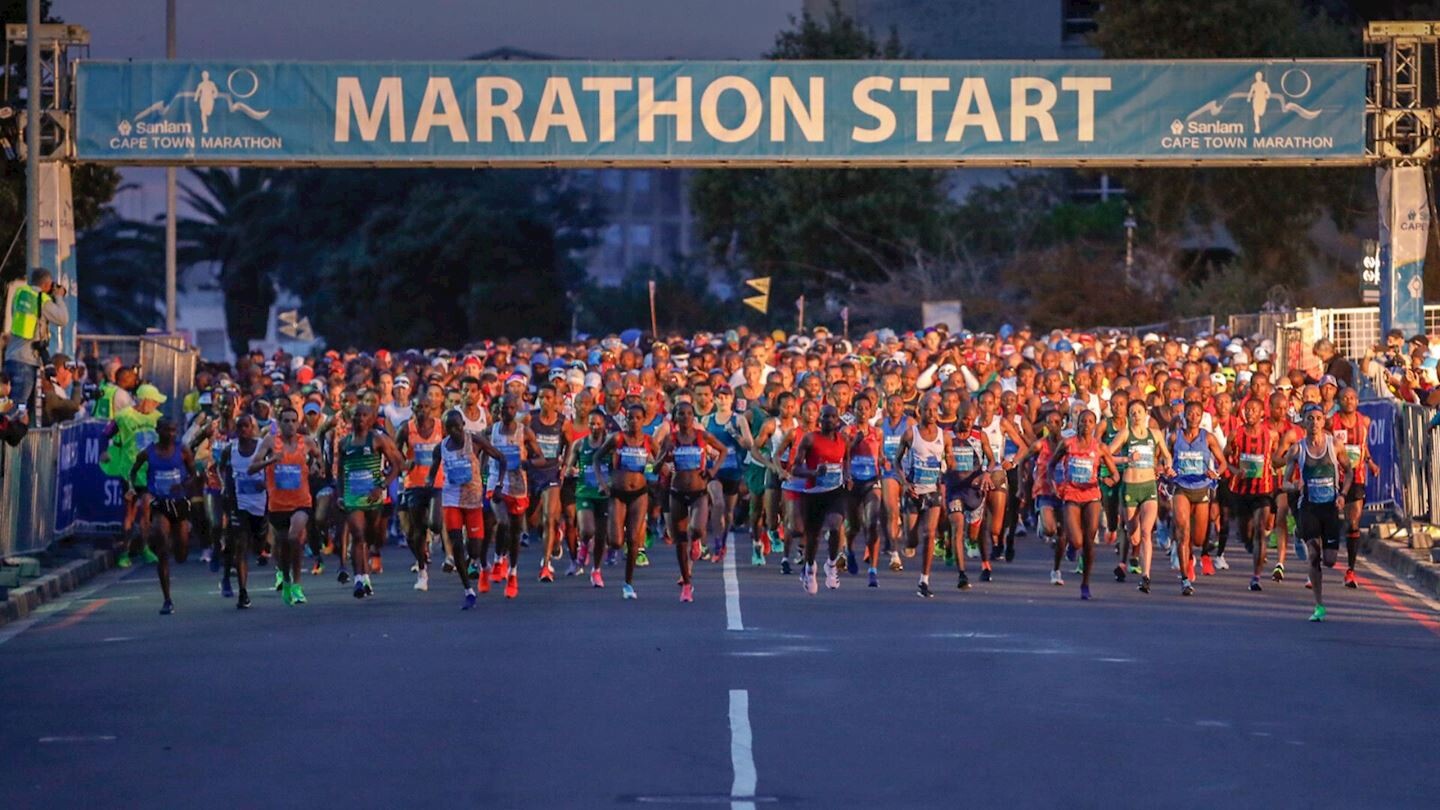
Kipchoge described the bid as more than just a race application, calling it a movement capable of inspiring an entirely new generation of African runners. According to the Kenyan legend, bringing a Major marathon to African soil would give young athletes tangible proof that the sport’s biggest stages are no longer distant dreams located overseas, but opportunities that can exist at home.
The marathon great also praised Cape Town’s scenery, culture, and growing international reputation as key strengths in the city’s campaign. With its breathtaking coastal routes, iconic landmarks, and passionate running community, Cape Town has increasingly emerged as one of the world’s most attractive long-distance racing destinations.
For many within global athletics, Kipchoge’s endorsement adds enormous credibility to the bid.
Few voices carry greater influence in marathon running than the Kenyan superstar, whose career has redefined human endurance. Beyond his Olympic triumphs and major marathon victories, Kipchoge became the first man in history to run a marathon in under two hours during the groundbreaking INEOS 1:59 Challenge — a feat that elevated him beyond sport and into global sporting folklore.
His support now places additional international attention on Cape Town’s push to make history.
Should the bid succeed, it would represent a monumental victory not only for South Africa, but for the entire African athletics community. It would finally bring one of marathon running’s highest honors to the continent that has produced countless champions and reshaped the global identity of endurance racing for decades.
As Kipchoge continues his journey across the seven continents, his message from Cape Town remains powerful and unmistakable: Africa’s time on marathon running’s grandest stage may finally have arrived.
by Erick Cheruiyot for My Best Runs.
Login to leave a comment
Cape Town Marathon
The Sanlam Cape Town Marathon is a City Marathon held in Cape Town, South Africa, which is sponsored by Sanlam, the City of Cape Town and Vital Health Foods. The marathon is held on a fast and flat course, starting and finishing in Green Point, near the Cape Town Stadium. Prior to existing in its current format, the Cape Town...
more...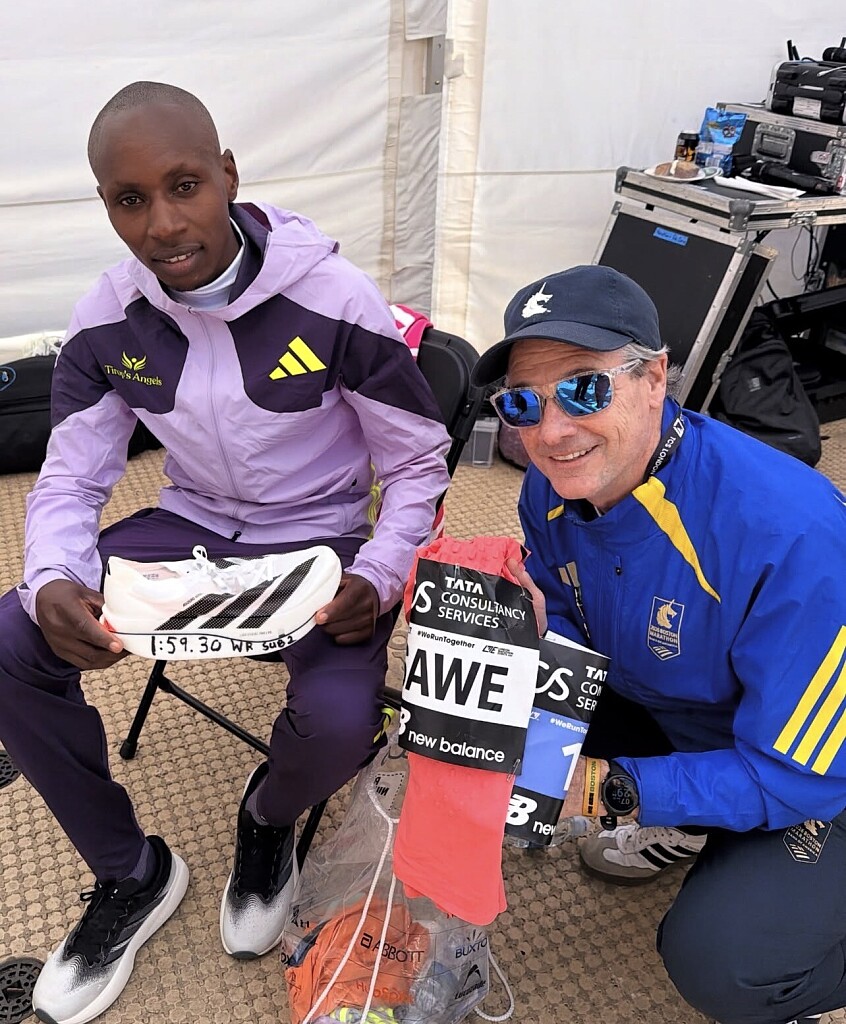
Berlin Marathon Lands the Fastest Marathoner in History as Sabastian Sawe Returns September 27
The 2026 Berlin Marathon already has its biggest headline. World record holder Sabastian Sawe has officially announced he will return to Berlin on September 27, setting the stage for another possible assault on marathon history.
Sawe stunned the running world in April when he won the London Marathon in a breathtaking 1:59:30, becoming the first athlete in history to officially run a marathon under two hours. Ethiopia’s Yomif Kejelcha followed closely behind in 1:59:41, making London the first marathon in history where two men officially broke the two-hour barrier. To date, Sawe and Kejelcha remain the only athletes ever to achieve the feat in official competition.
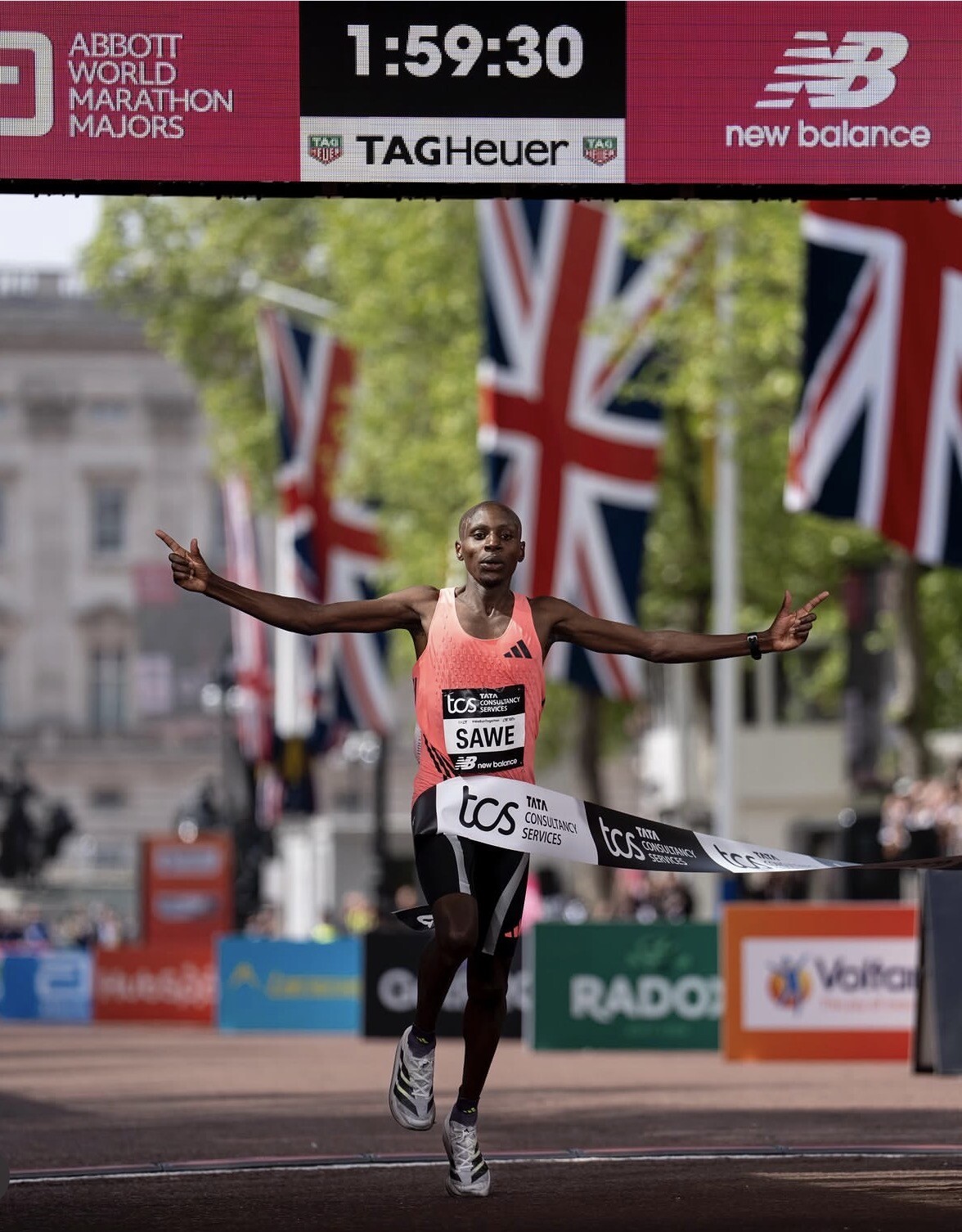
Now Sawe heads back to Berlin, widely regarded as the fastest marathon course in the world. The flat layout, cool September temperatures, and precision pacing have helped produce nine men’s marathon world records over the past quarter century. Legends including Eliud Kipchoge used Berlin as the stage for some of the greatest performances in distance running history.

“Berlin is a fast course with several world records set there. With perfect weather we could again see a sub-two-hour marathon,” says Bob Anderson, lifetime runner and editor of My Best RunsSawe is no stranger to success in Berlin. He captured the 2025 title in 2:02:16 despite unusually warm temperatures approaching 25C, a performance many viewed as one of the finest warm-weather marathons ever run. But after what happened in London, expectations are now on an entirely different level.
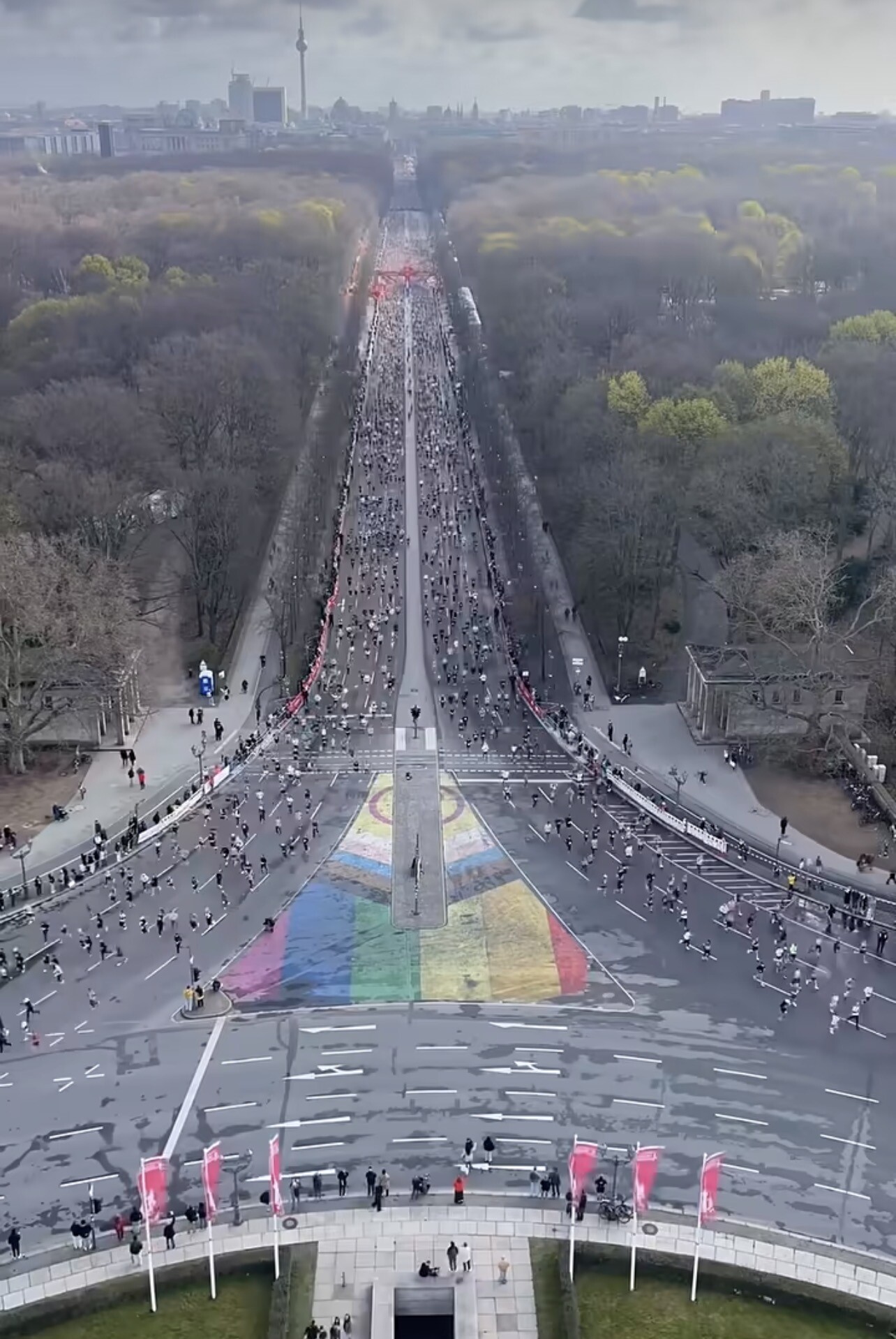
So far, Sawe is the only major elite men’s athlete officially confirmed for Berlin, though organizers are expected to announce additional top contenders in the coming weeks. The possibility of another historic showdown has already created enormous anticipation within the running world.
At the beginning of what could become one of the most remarkable marathon careers ever seen, Sawe has already changed the sport. Berlin may now offer the perfect stage for the next breakthrough.
by Boris Baron for My Best Runs
376
Login to leave a comment
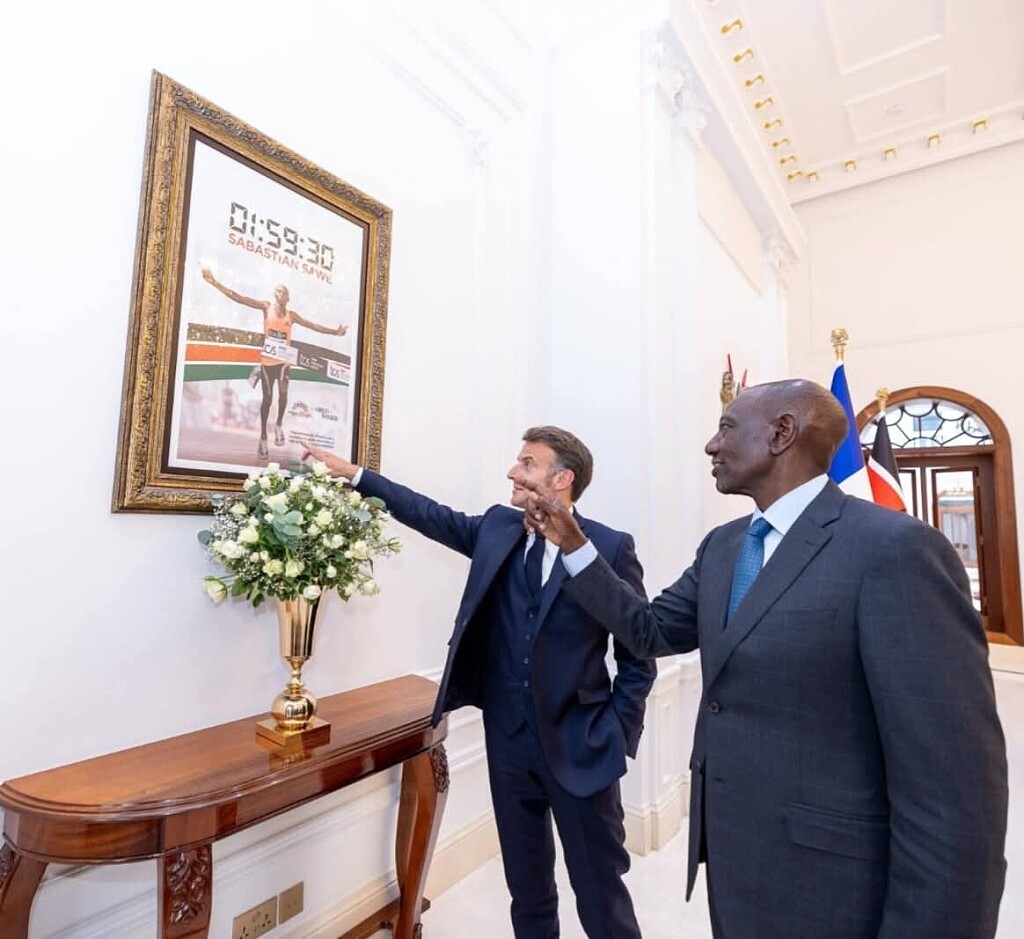
From Kenyan Roads to the Halls of Power: Macron Left in Awe of Sabastian Sawe as Kipchoge Shares Morning Run with French President
Kenya’s growing influence in global athletics was once again placed firmly in the international spotlight after French President Emmanuel Macron openly admired the iconic portrait of Kenyan marathon sensation Sabastian Sawe during an official engagement that blended sport, culture and diplomacy in remarkable fashion.
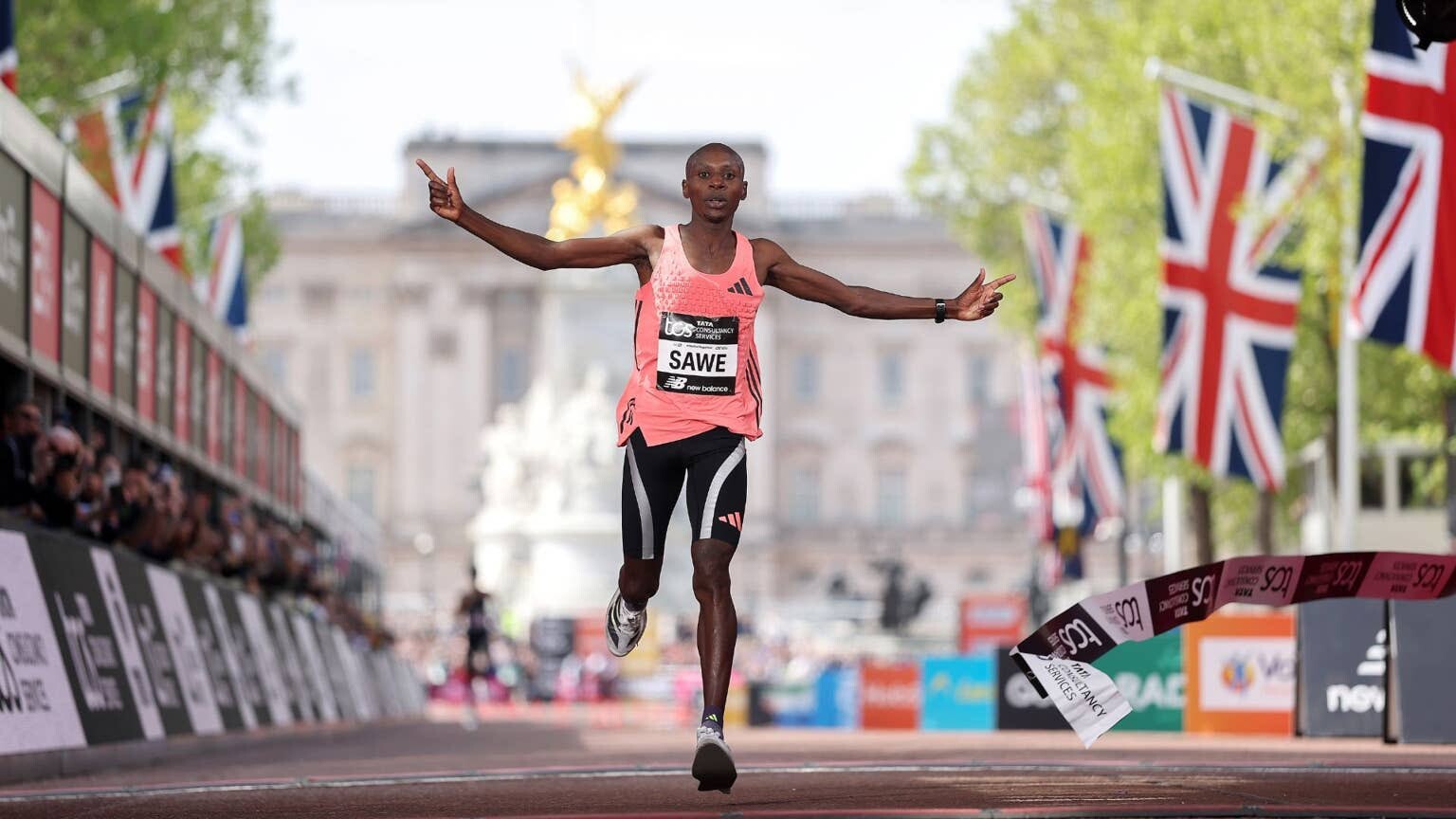
The powerful image of Sawe — a symbol of Kenya’s relentless distance-running excellence — stood proudly among the distinguished displays visited by Macron, offering yet another reminder of how deeply Kenyan athletics continues to resonate far beyond the finish line. From dusty training routes in the Rift Valley to recognition within the walls of high-level international leadership, Sawe’s rise represents more than personal success; it reflects the enduring prestige of Kenyan endurance running on the world stage.
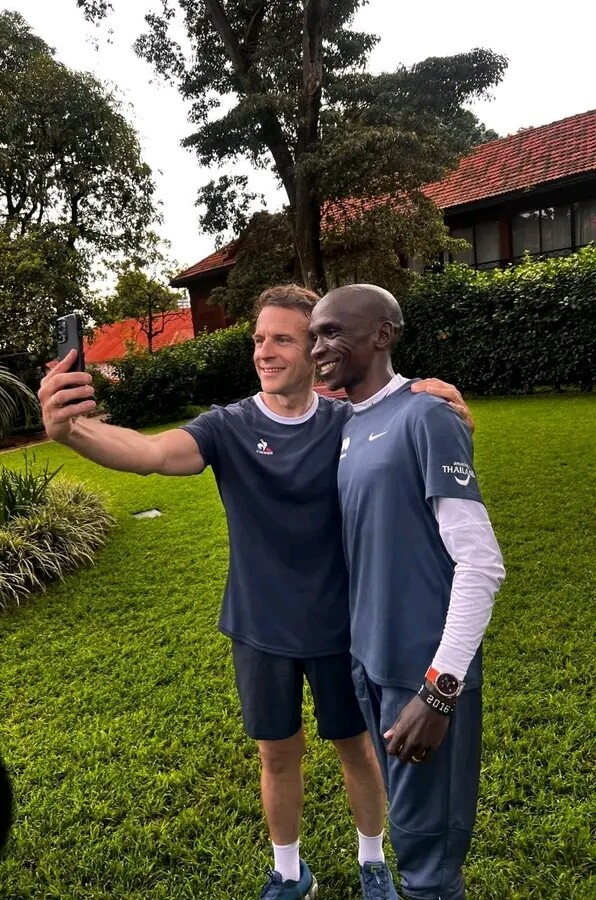
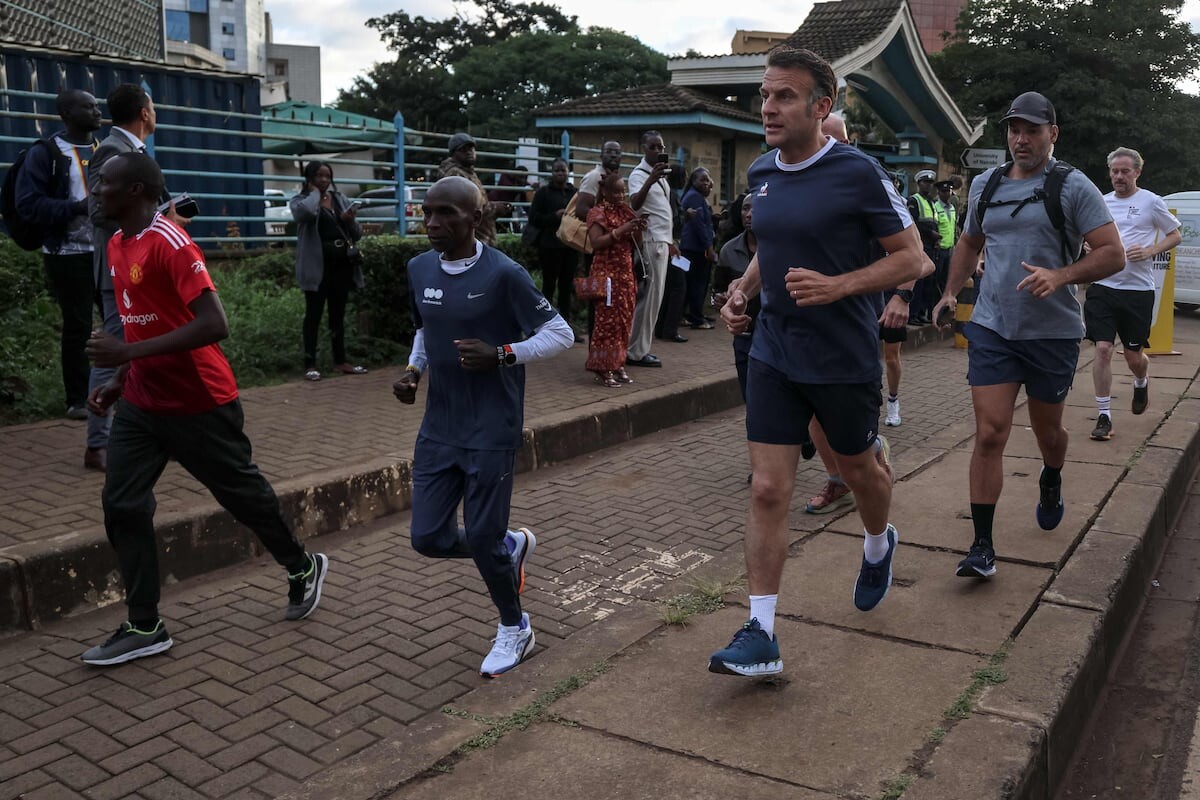
The moment became even more memorable as marathon legend Eliud Kipchoge joined President Macron for an early morning runon the streets of Nairobi, creating a symbolic meeting between political leadership and sporting greatness. Kipchoge, widely celebrated for redefining the limits of human endurance, once again carried the Kenyan flag with grace and humility as he shared the roads with the French Head of State.
For many athletics fans, the scenes represented far more than a ceremonial appearance. They highlighted the soft power of sport and the respect Kenyan athletes command internationally. Kenya’s runners have long dominated global road racing, but moments such as these demonstrate how their impact now stretches into culture, inspiration and diplomacy.
Sawe’s growing reputation has continued to capture attention across the athletics world following his impressive performances on the roads, where his fearless racing style and consistency have marked him as one of the sport’s rising forces. Seeing his portrait admired by one of Europe’s most influential leaders added another significant chapter to that journey.
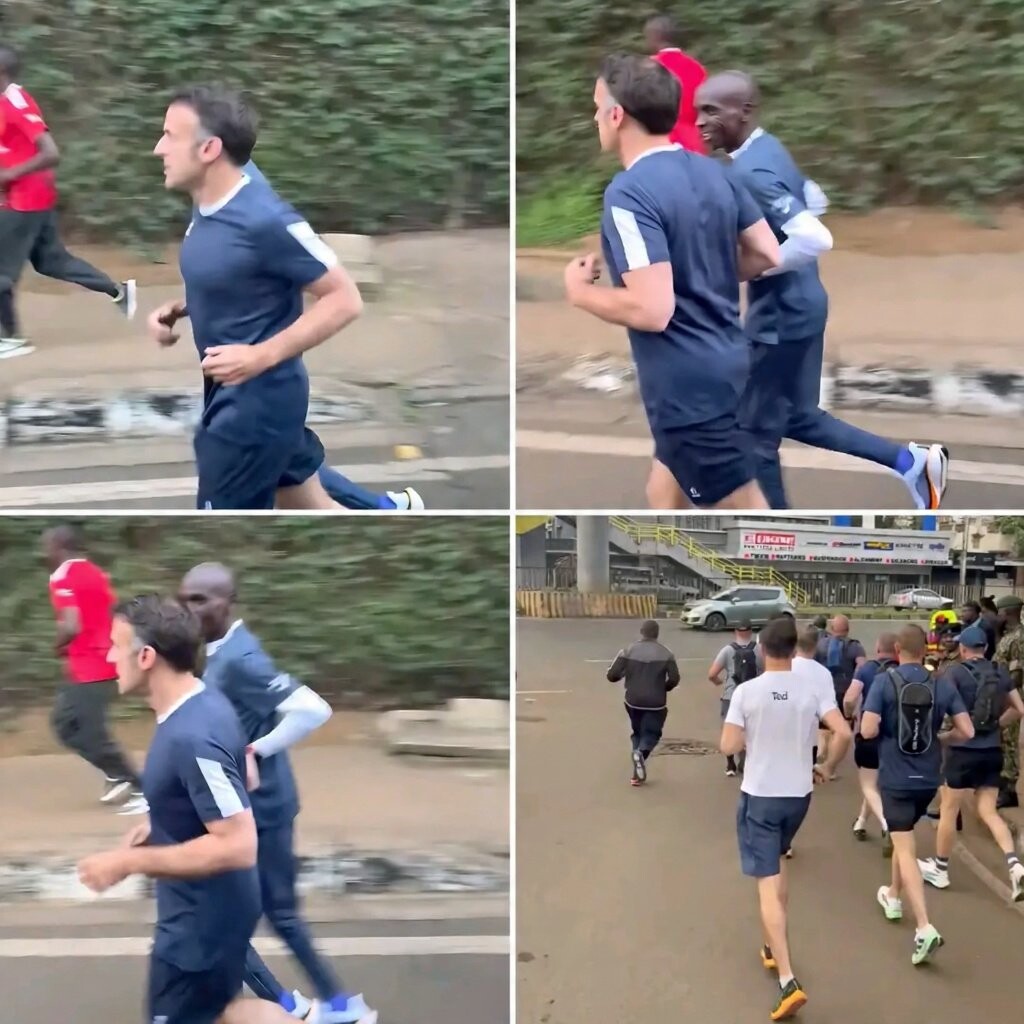
Meanwhile, Kipchoge’s presence brought his trademark aura of discipline and inspiration. The two-time Olympic marathon champion has become more than an athlete; he is now viewed globally as an ambassador of excellence, resilience and human potential. His morning run alongside Macron offered a striking image of unity through sport — a language that transcends borders, politics and culture.
As Kenyan athletics continues to produce stars capable of commanding admiration around the world, moments like these reinforce the nation’s unmatched legacy in distance running. From the rugged training grounds of Kenya to the corridors of international power, the country’s athletes are no longer only winning races — they are shaping global conversations and inspiring generations far beyond the track and the marathon course.
by Erick Cheruiyot for My Best Runs.
Login to leave a comment
Breaking2: The Day Nike and Eliud Kipchoge Changed Marathon History Forever
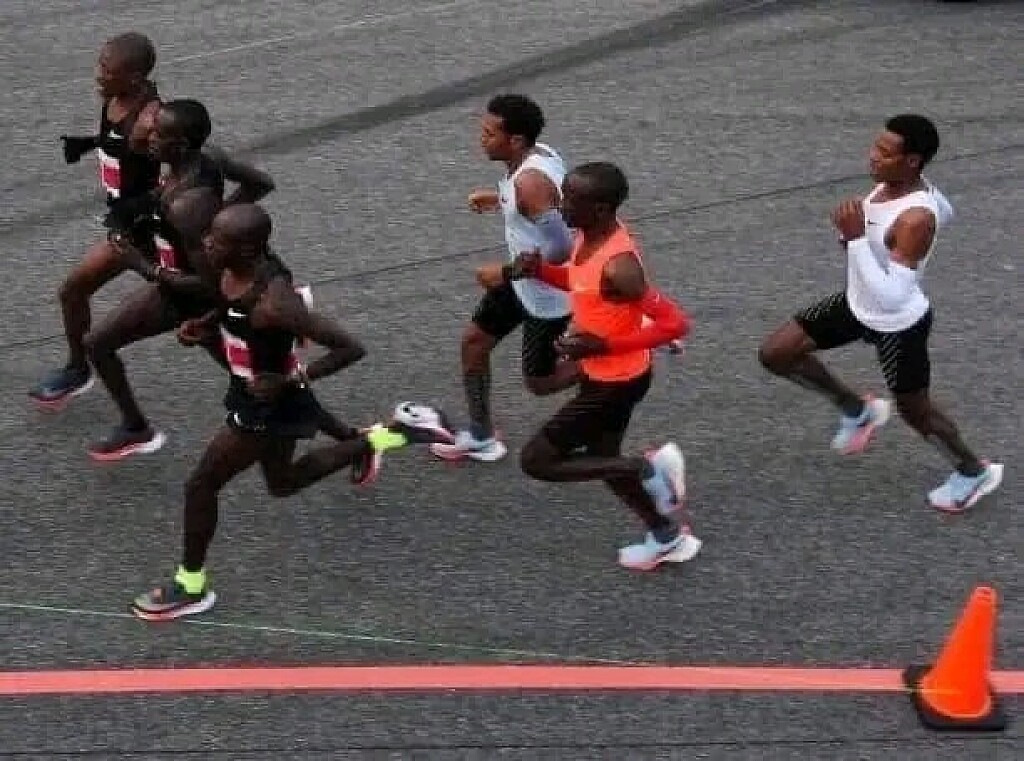
On May 6, 2017, the world witnessed one of the boldest and most revolutionary experiments ever attempted in distance running. Under the ambitious Nike Breaking2 project, three elite athletes lined up with a single mission that many believed was impossible — to run a marathon in under two hours.
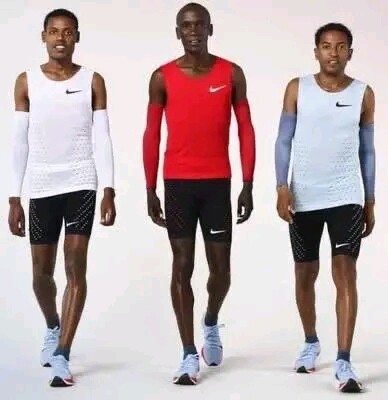
At the time, the official marathon world record stood at 2:02:57, and shaving nearly three minutes from that mark seemed beyond human limits. But Nike was not simply organizing a race. Breaking2 was designed as a complete scientific and athletic operation, bringing together advanced sports technology, physiology, pacing strategy, nutrition, and environmental optimization in pursuit of history.
The challenge took place at the Monza Formula One circuit in Italy, where conditions were carefully selected to maximize speed. Rotating pacemakers shielded the runners from wind resistance, hydration was delivered while moving, and every detail — from temperature and race rhythm to training models and recovery — was analyzed with precision.
Although the event was not recognized as an official world record attempt because of the rotating pacemakers and mobile aid delivery, it became one of the defining moments in modern athletics.
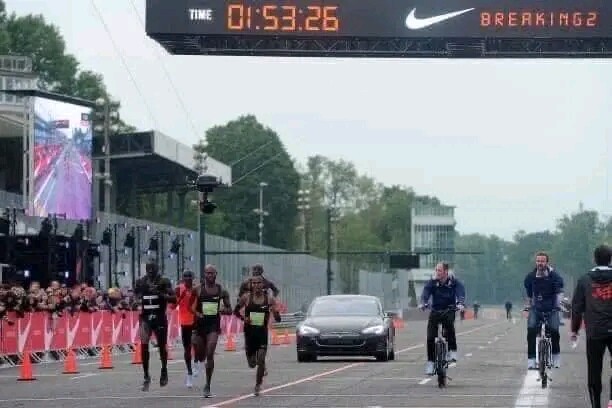
At the center of it all stood Eliud Kipchoge.
The Kenyan superstar produced a performance that stunned the sporting world, crossing the line in an astonishing 2:00:25 — just 25 seconds short of the mythical barrier. Remarkably, he missed the target by roughly one second per mile, proving just how close humanity had come to redefining endurance sport forever.
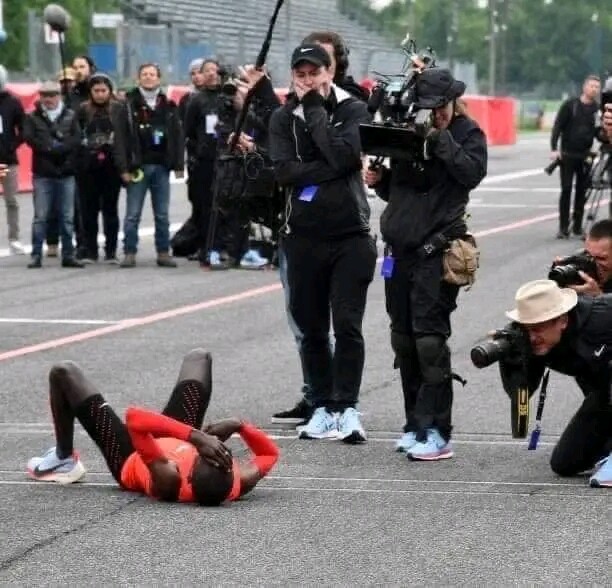
What made Kipchoge’s run even more extraordinary was the calmness and control he displayed throughout the attempt. While the pace demanded near perfection for two straight hours, he maintained remarkable composure, turning the final laps into an unforgettable moment of belief and resilience.
Years later, Kipchoge would finally complete the mission by running under two hours at the INEOS 1:59 Challenge in Vienna, cementing his legacy as the greatest marathon runner of all time. But Breaking2 was the foundation. It was the experiment that shifted human imagination.
The other two athletes in the challenge — Zersenay Tadese and Lelisa Desisa — also delivered courageous performances, though both finished outside the sub-two-hour mark despite all the optimizations provided.
Final Results
1. Eliud Kipchoge — 2:00:25
2. Zersenay Tadese — 2:06:51
3. Lelisa Desisa — 2:14:10
Beyond the stopwatch, Breaking2 transformed the entire sport. The project introduced the revolutionary Nike Zoom Vaporfly Elite, featuring a curved carbon-fiber plate combined with highly responsive Pebax foam cushioning. That innovation sparked the modern “super shoe” era that has since reshaped road racing and distance running worldwide.
For decades, marathon racing shoes were designed to be thin and lightweight with minimal cushioning. Breaking2 changed that philosophy completely. Suddenly, athletes could run with greater energy return, more protection, and increased efficiency without sacrificing speed. The impact has been so profound that marathon performances across the globe have entered an entirely new era.
More importantly, Breaking2 proved something deeper about sport itself: even with cutting-edge technology, ideal pacing, scientific preparation, and world-class talent, running a marathon at such extraordinary speeds remains one of the greatest physical achievements on Earth.
Nine years later, the images from Monza still feel iconic — the clock ticking toward two hours, the pacemakers rotating in formation, and Kipchoge surging toward the finish line with a smile that symbolized possibility itself.
Breaking2 was more than an event. It was the moment marathon running stepped into the future.
by Erick Cheruiyot for My Best Runs.
Login to leave a comment

A New Era for Sport in Kenya: Nike Opens Landmark Flagship Store in Nairobi
In a defining moment for Kenya’s sporting and retail landscape, global powerhouse Nike has officially unveiled its first-ever flagship store in Nairobi—a bold statement of intent that underscores the brand’s growing commitment to East Africa.
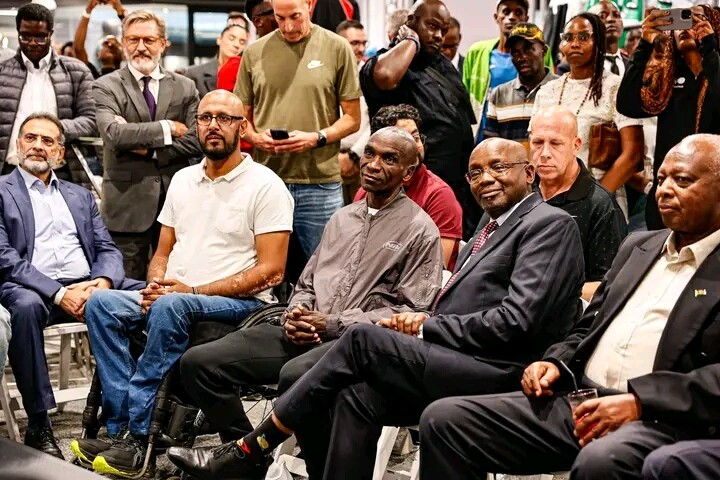
The grand opening was nothing short of symbolic. It brought together some of the most influential figures in Kenyan athletics, led by marathon icon Eliud Kipchoge, whose presence added both prestige and authenticity to the occasion. Also in attendance were Athletics Kenya President Lt. Gen (Rtd) Jackson Tuwei and Team Kenya’s First Deputy President Barnaba Korir—figures central to the country’s athletic success on the global stage.
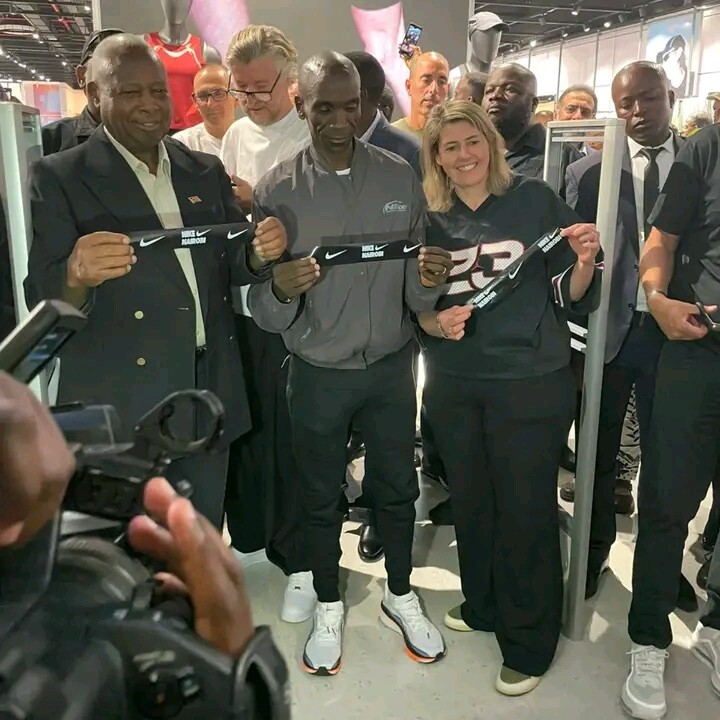
More than just a retail outlet, the new flagship store represents a strategic foothold for Nike in a region globally revered for its distance-running dominance. Nairobi, often regarded as the heartbeat of world-class endurance training, now hosts a space where elite performance meets everyday inspiration. The store is expected to serve not only professional athletes but also a rapidly growing community of fitness enthusiasts eager to align with world-class standards.

Nike’s move signals a deeper investment in Africa’s sporting ecosystem—one that goes beyond sponsorships and into infrastructure, accessibility, and brand presence. By planting its flag in Nairobi, the company is tapping into a rich well of talent, culture, and untapped commercial potential.
For Kenyan athletes and fans alike, this is more than a store opening—it is a powerful acknowledgment of the country’s enduring influence on global sport. And for Nike, it marks the beginning of a new chapter, written from the high-altitude roads and vibrant streets of Nairobi.
by Erick Cheruiyot for My Best Runs.
Login to leave a comment
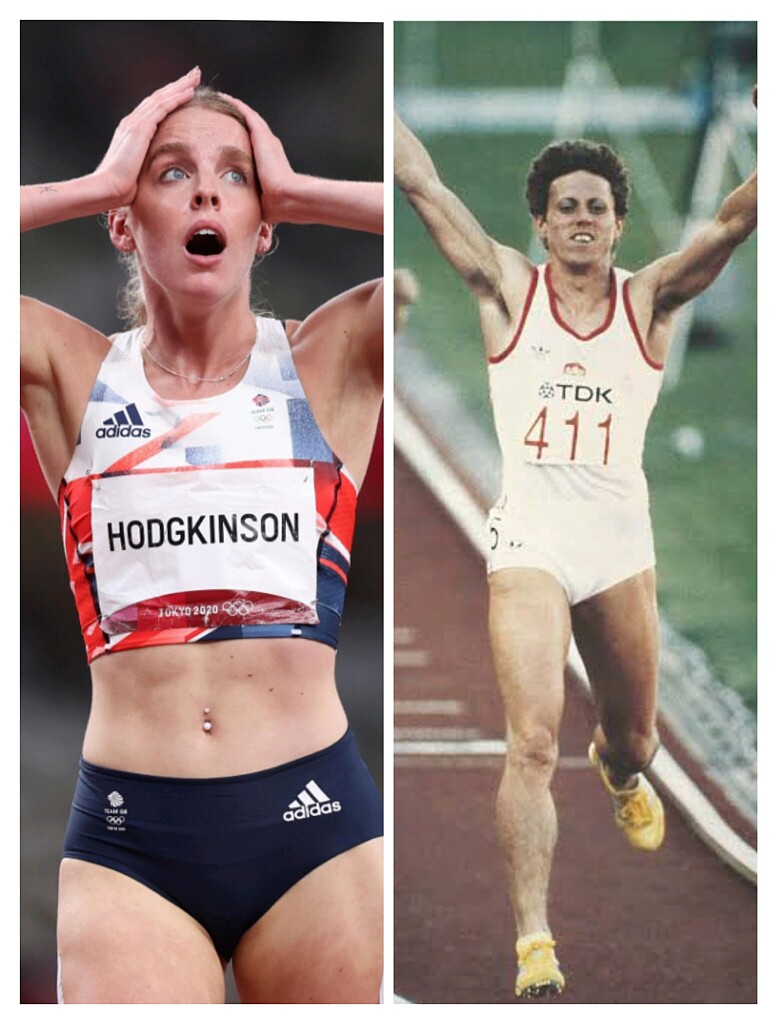
Beyond the Two-Hour Dream: Where Athletics’ Next Great Barriers Truly Lie
For generations, athletics has been defined not just by victories, but by the breaking of barriers that once seemed beyond human reach. From Roger Bannister redefining the limits of the mile to Eliud Kipchoge pushing the marathon into uncharted territory, the sport has thrived on moments where disbelief gives way to possibility.
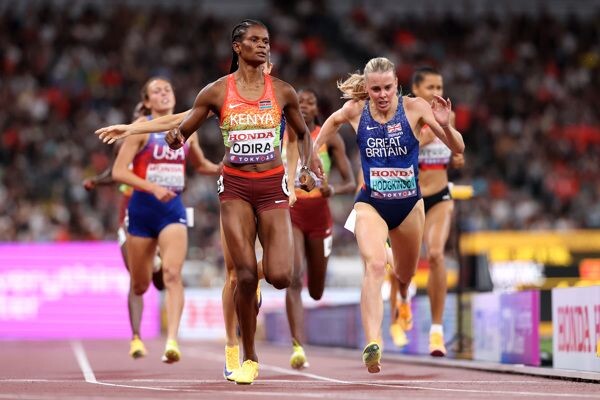
Now that the elusive sub-two-hour marathon has been conquered—albeit under controlled conditions—the question naturally arises: what “impossible” feats remain?
On the men’s side, the landscape feels markedly different. The mythical thresholds that once captured the public imagination have largely been crossed. What remains are performances of extraordinary refinement rather than revolution. A 10,000 metres run under 26 minutes, a 5,000 metres dipping to 12:30, or an 800 metres brushing against the 1:40 barrier—these are astonishing achievements by any standard. Yet they lack the simple, almost poetic clarity of a round-number milestone. They are understood best by insiders, appreciated deeply by purists, but perhaps less capable of gripping the wider world in the same way.
Take the legacy of David Rudisha, whose 1:40.91 in the 800 metres already borders on perfection. To go significantly beyond it would be monumental, but not necessarily transformative in the public imagination. It is progress, not paradigm shift.
The narrative shifts, however, when attention turns to the women’s side—where the sport’s next defining frontiers may well emerge.
Foremost among them is the tantalising prospect of a sub-four-minute mile. At present, it exists firmly in the realm of speculation, yet history cautions against dismissing such ambitions. Before Bannister, the four-minute mile was widely considered unattainable. Today, with athletes like Faith Kipyegon consistently redefining excellence in the 1500 metres and mile, the once-unthinkable begins to inch toward plausibility. Even a performance approaching 4:02 would shift the psychological landscape, transforming fantasy into a credible pursuit.
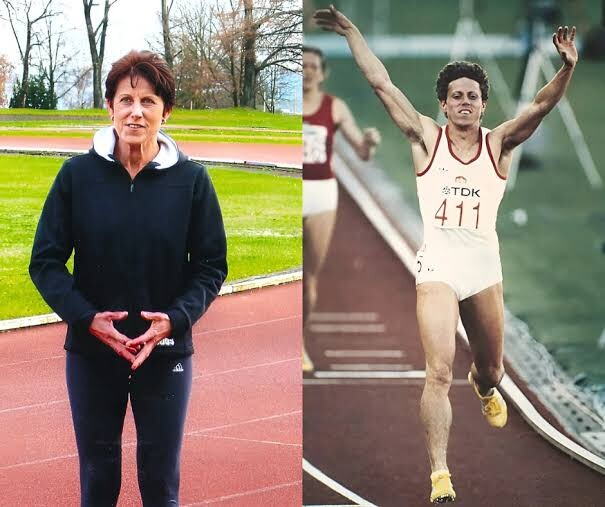
Then there is perhaps the most enigmatic mark in all of athletics: the women’s 800 metres world record. Set at 1:53.28 by Jarmila Kratochvílová in 1983, it stands as a relic of another era—unyielding, controversial, and seemingly immune to progress. While other events have evolved, this record has resisted even the closest of challenges. In fact, approaching within a second of it has become a rarity, elevating even a 1:54 performance into the realm of the extraordinary.
This enduring anomaly creates a paradox: in an age of rapid advancement, the women’s 800 metres has become one of the sport’s last true “barriers”—not defined by a round number, but by the sheer improbability of surpassing a time frozen in history.
Taken together, these realities suggest that athletics may be entering a new phase. The era of clean, universally understood milestones may be giving way to a subtler narrative—one where greatness is measured not only by breaking symbolic thresholds, but by pushing the limits of human performance in increasingly nuanced ways.
And yet, if history has taught us anything, it is that today’s impossibility often becomes tomorrow’s inevitability.
Perhaps the next moment that stops the world will not come from the familiar battlegrounds of men’s distance running, but from the evolving, unpredictable theatre of women’s middle-distance events. Somewhere between ambition and audacity, the next great barrier is waiting—not just to be broken, but to redefine what we believe the human body can achieve.
by Erick Cheruiyot for My Best Runs.
Login to leave a comment
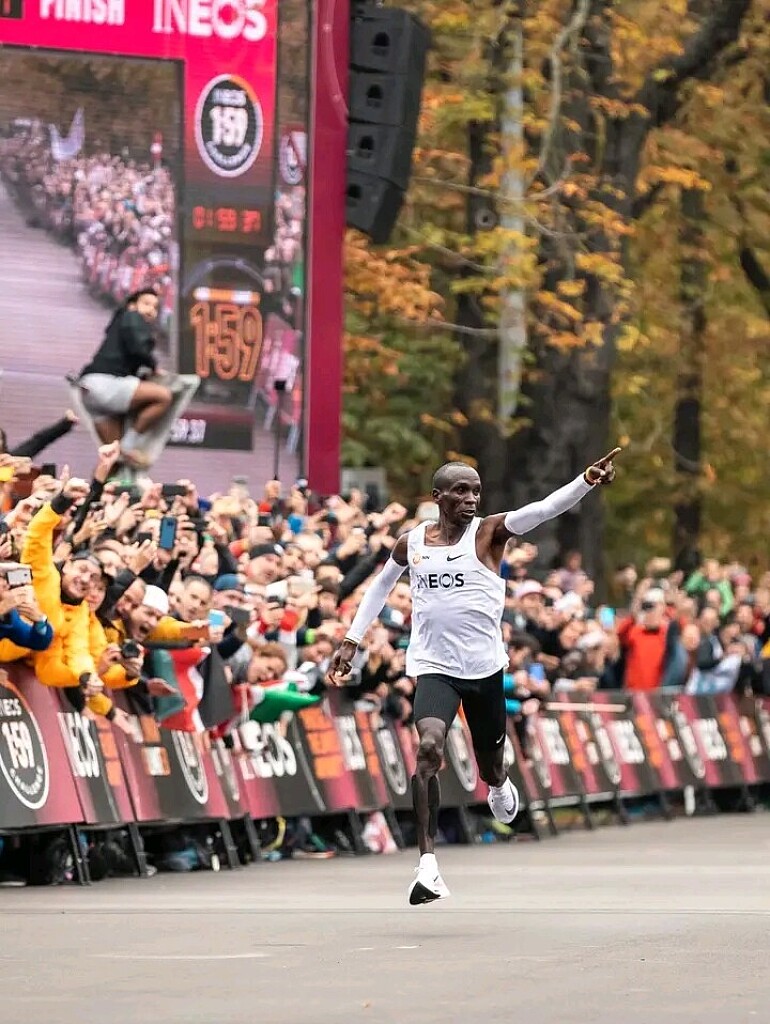
Kipchoge Hails Historic London Marathon as Sawe and Kejelcha Shatter the Two-Hour Barrier
Marathon legend Eliud Kipchoge has led the global athletics community in celebrating a landmark moment in distance running after Sabastian Sawe and Yomif Kejelcha both broke the once-unthinkable two-hour barrier at the London Marathon. Their astonishing performances transformed the streets of London into the stage for one of the greatest days the sport has ever witnessed.
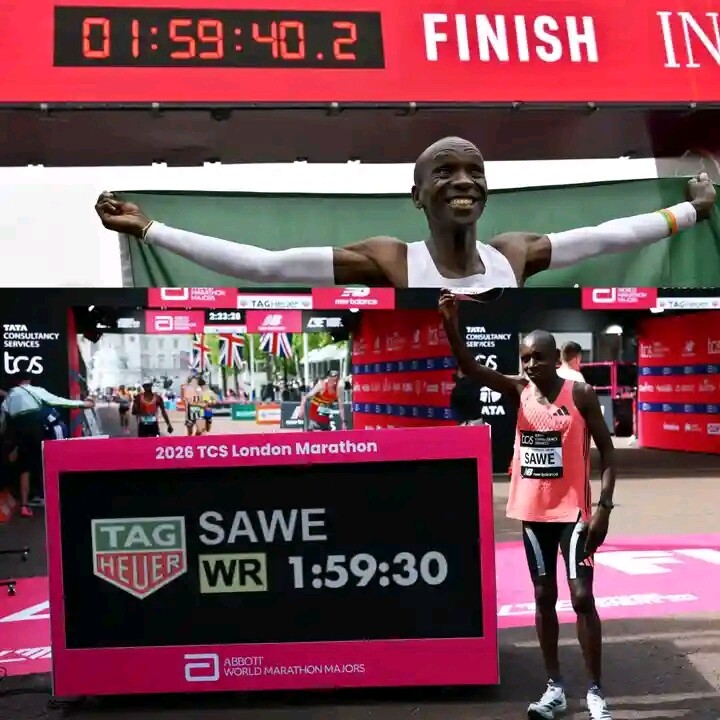
Reacting to the achievement, Kipchoge described the occasion as a defining chapter in marathon history, praising the pair for turning what was once considered impossible into reality. He noted that seeing two athletes dip under two hours in an official city marathon was powerful proof that the limits of human endurance continue to expand when extraordinary talent is matched with progress, preparation, and belief.
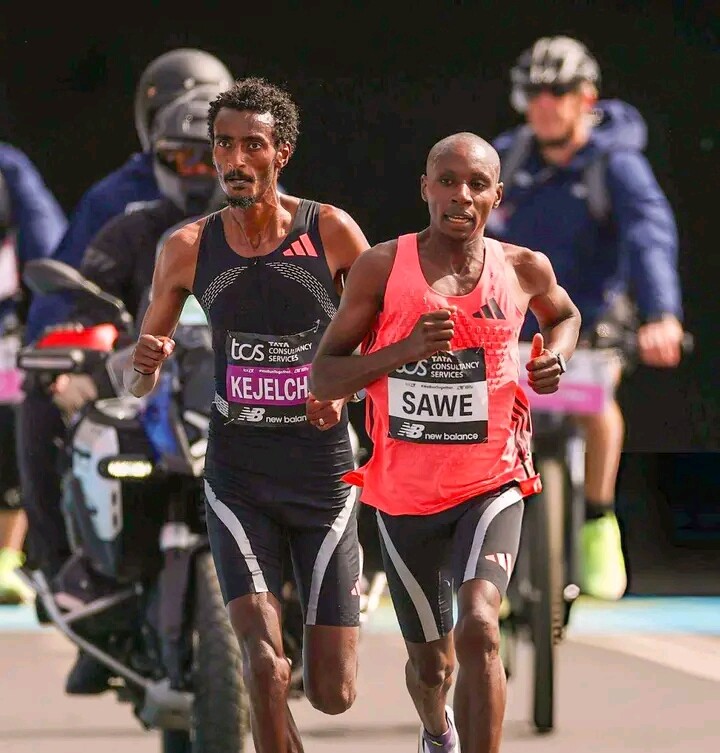
The Kenyan icon, who famously ran 1:59:40 during the INEOS 1:59 Challenge, said it had always been his hope that another athlete would one day carry that dream into a major city marathon and officially conquer the barrier. For Kipchoge, the London breakthrough was not the end of a journey, but the beginning of a new era for the marathon.
Sawe’s triumph and Kejelcha’s fearless run now stand as symbols of a sport entering uncharted territory. Their performances have redefined expectations and raised fresh excitement about how fast the marathon can become in the years ahead.
Kipchoge also used the moment to deliver the message that has inspired millions around the world: No Human Is Limited. With history now rewritten in London, the next generation of runners has been handed a new standard to chase—and a powerful reminder that impossible barriers are meant to fall.
by Erick Cheruiyot for My Best Runs.
Login to leave a comment
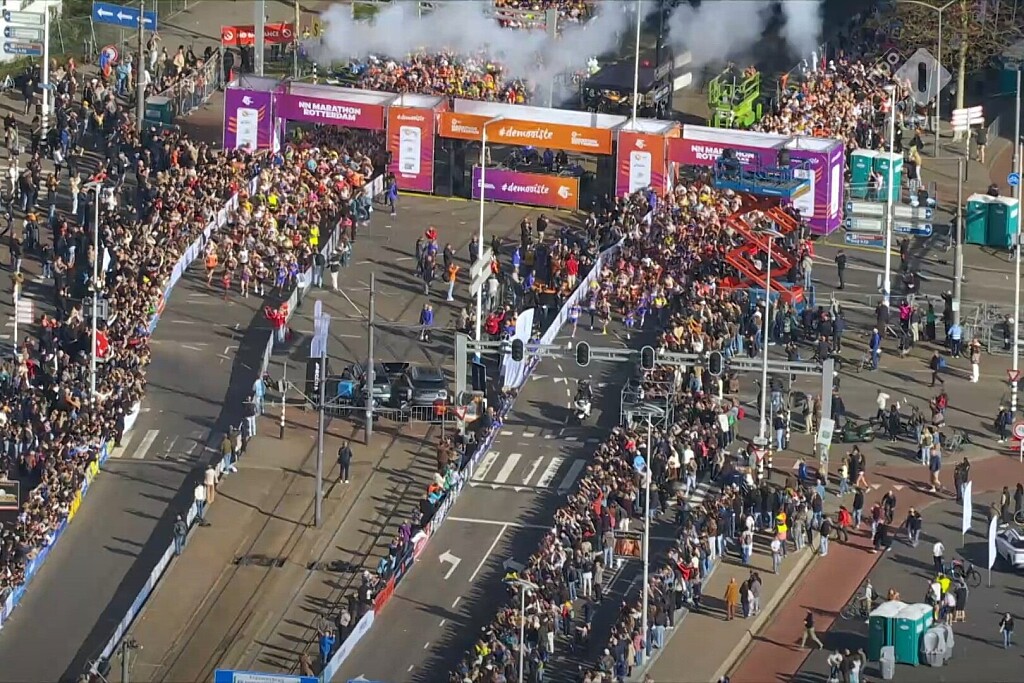
Guye Adola Turns Back the Clock as Rotterdam Marathon Delivers a Day of Brilliance
The 2026 Rotterdam Marathon produced a spectacular showcase of world-class distance running, headlined by a vintage performance from Guye Adola and a record-breaking run from Mekides Shimeles. On the fast streets of Rotterdam, elite athletes lit up one of the sport’s most respected stages with speed, drama, and unforgettable performances.
In the men’s race, Guye Adola reminded the world of his enduring quality by surging to victory in an outstanding 2:03:54. The Ethiopian star, who first rose to global prominence with his fearless battle against Eliud Kipchoge at the 2017 Berlin Marathon, returned to the spotlight with one of the finest victories of his career. It was his first performance under 2:04 since that famous breakthrough, making the triumph even more significant.
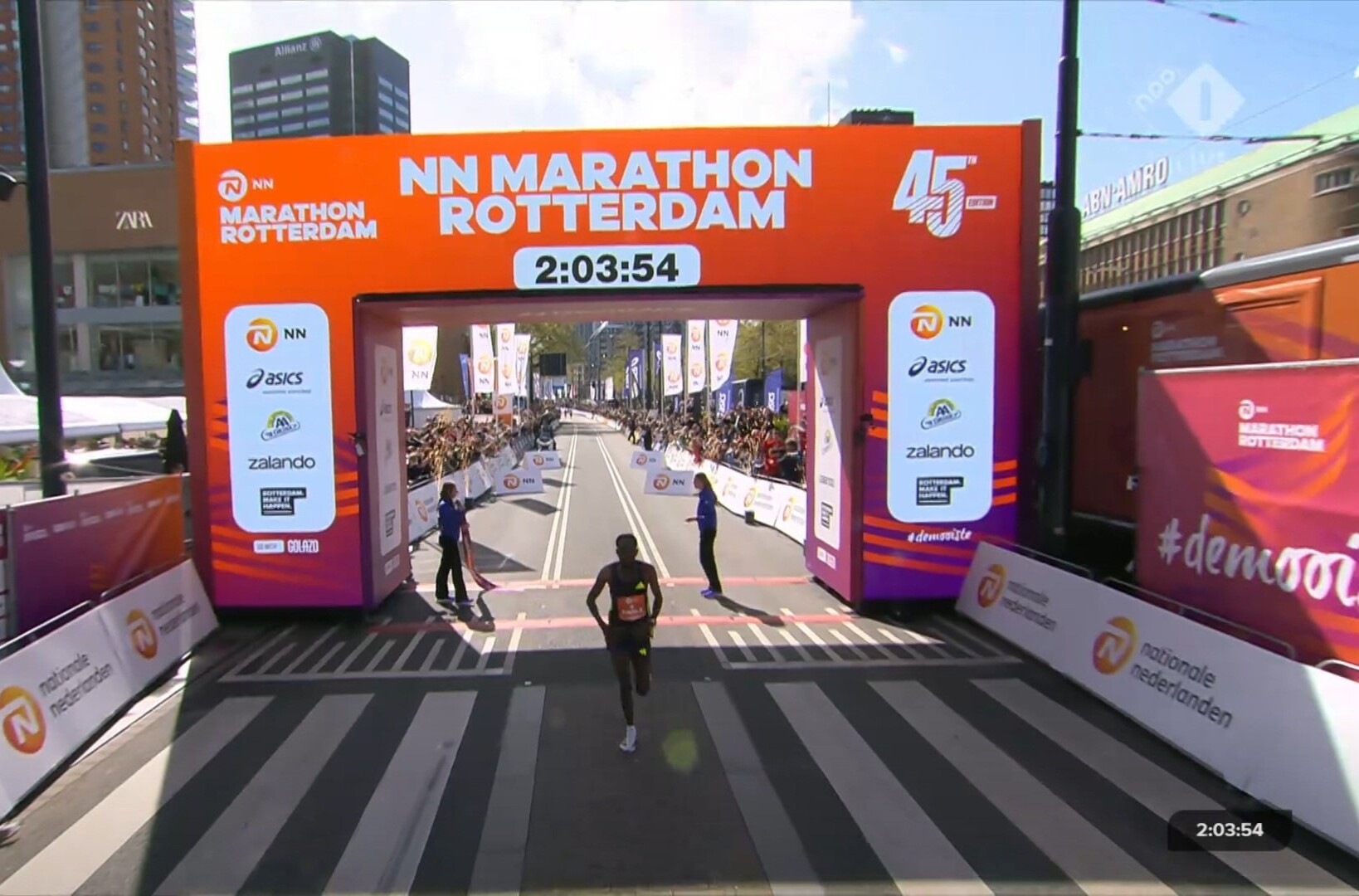
Adola ran with poise and intelligence, conserving energy before striking decisively in the closing stages to separate himself from a stacked field. His victory was not only fast, but symbolic a return to the very highest level of marathon racing.
The chase behind him was equally fierce. Fellow Ethiopian Tesfaye Deriba secured second place in 2:04:15, while Belgium’s Bashir Abdi finished a close third in 2:04:18. Kenya’s Kenneth Kemboi capped a remarkable men’s contest with fourth place in 2:04:21, underlining the depth of quality on display.
The women’s race brought its own moment of history as Mekides Shimeles produced a magnificent run to claim victory in 2:18:56, setting a new championship record. Her commanding performance placed her among the standout stars of the day and added another proud chapter to Ethiopia’s marathon legacy.
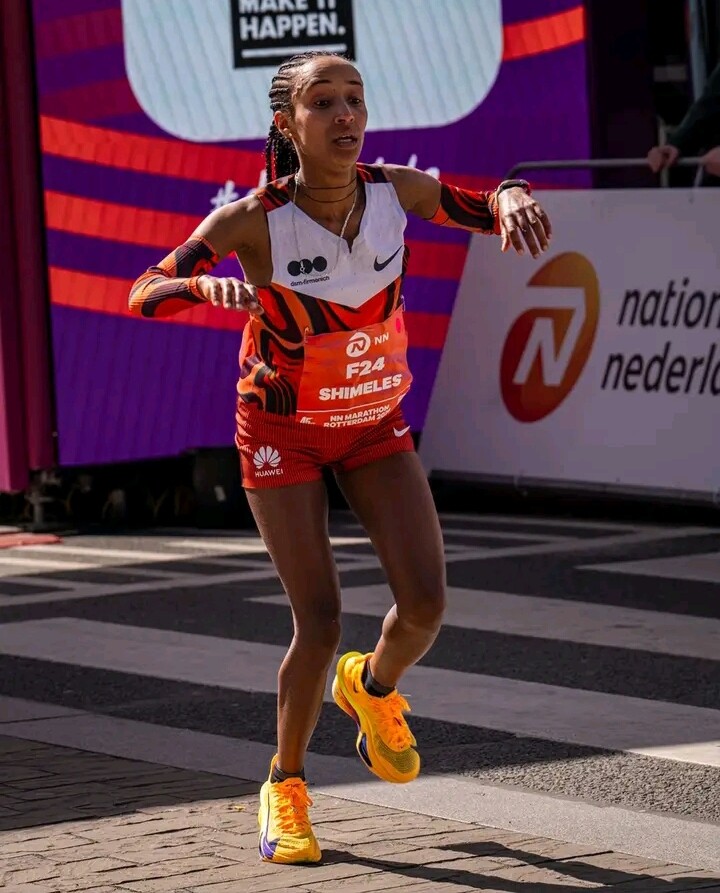
She was followed home by compatriot Aminet Ahmed, who ran 2:21:25 for second place. Bahrain’s Shitaye Eshete finished third in 2:23:22, while Pascalia Jepkogei made it two Bahraini athletes in the top four with a solid 2:24:34 for fourth.
2026 Rotterdam Marathon Results
Men – Top 4
1. Guye Adola (Ethiopia) – 2:03:54
2. Tesfaye Deriba (Ethiopia) – 2:04:15
3. Bashir Abdi (Belgium) – 2:04:18
4. Kenneth Kemboi (Kenya) – 2:04:21
Women – Top 4
1. Mekides Shimeles (Ethiopia) – 2:18:56 (CR)
2. Aminet Ahmed (Ethiopia) – 2:21:25
3. Shitaye Eshete (Bahrain) – 2:23:22
4. Pascalia Jepkogei (Bahrain) – 2:24:34
From Adola’s long-awaited return to major glory to Shimeles’ record-breaking masterclass, Rotterdam once again proved why it remains one of the premier marathon stages in the
by Erick Cheruiyot for My Best Runs.
Login to leave a comment

NN Rotterdam Marathon
The marathon has been the biggest one-day sporting event in the Netherlands for many years in a row with over 35000 athletes professionals inclusive. The world's top athletes will at the start on the bustling coolsingel, alongside thousands of other runners who will also triumph,each in their own way.The marathon weekend is a wonderful blend of top sport and festival. ...
more...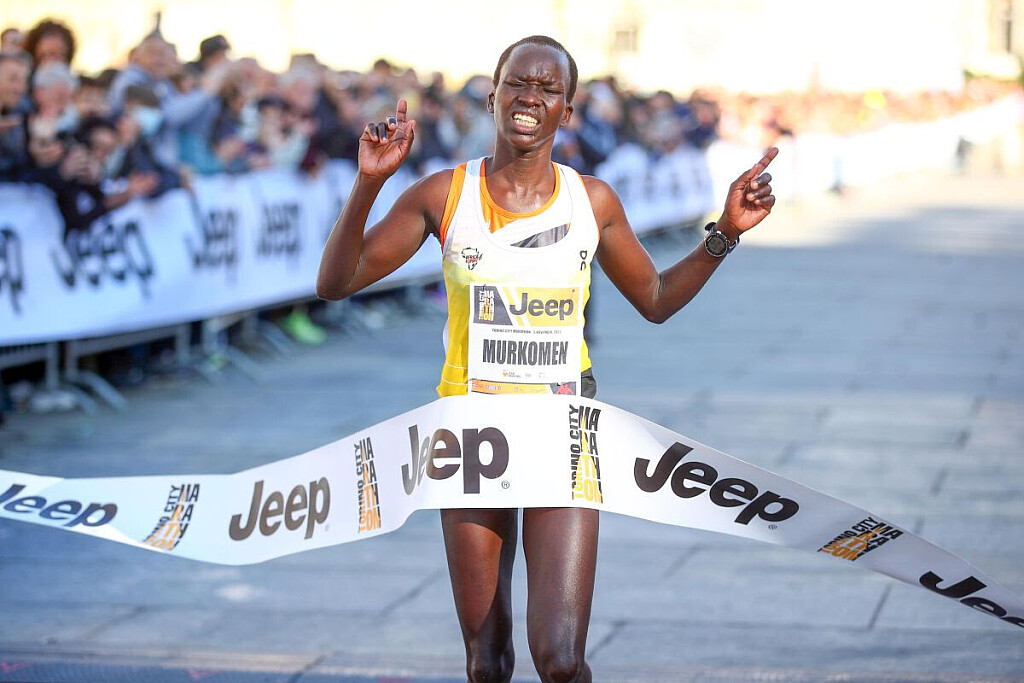
Enschede Set for a Marathon Masterclass as Elite Fields Target History
The historic streets of Enschede are once again preparing for a spectacle of endurance, speed, and legacy as the 2026 Enschede Marathon returns this Sunday, April 12. Revered as the oldest marathon in the Netherlands, the race blends tradition with world-class competition, and this year’s elite line-up promises nothing short of electrifying action.
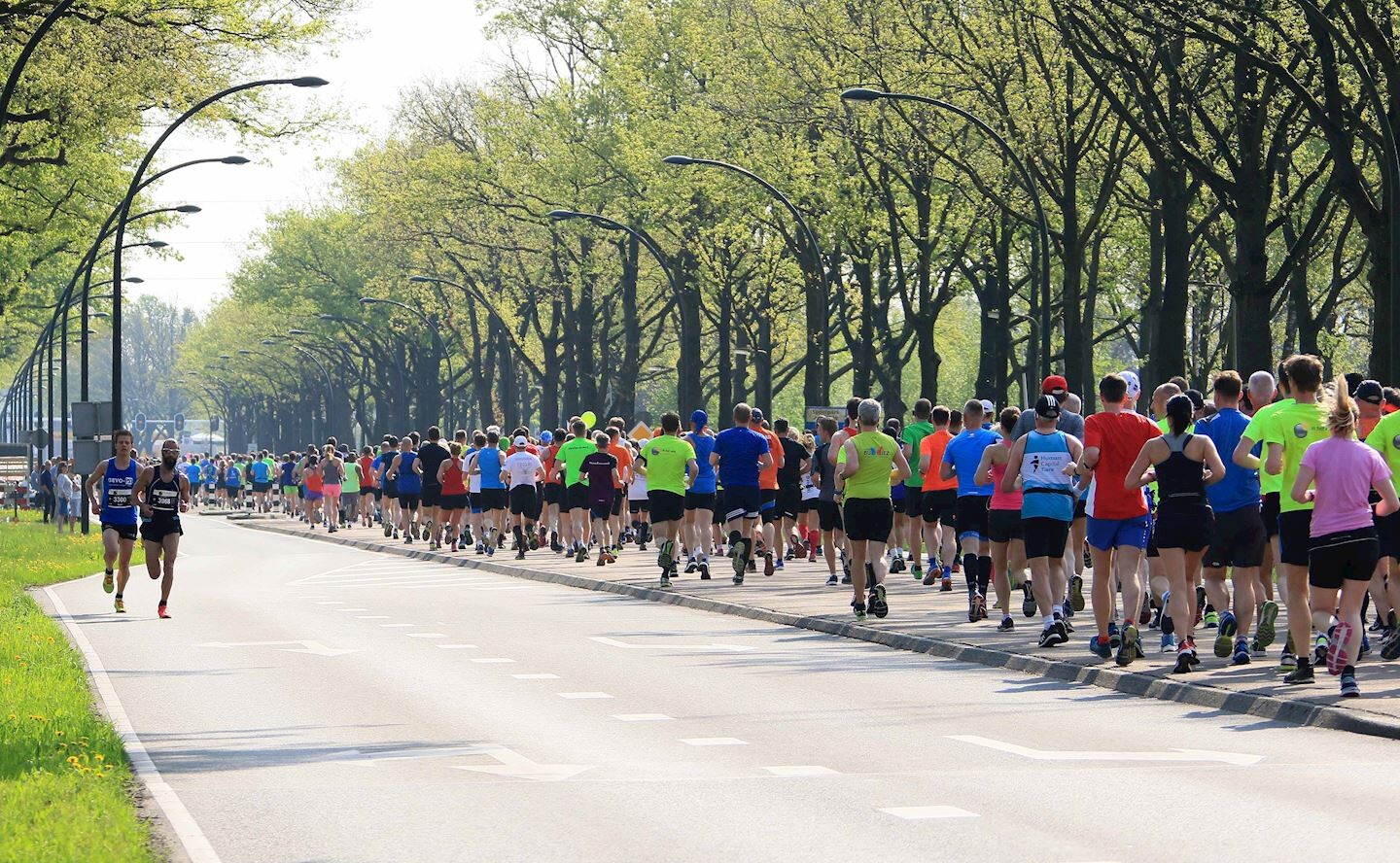
From the first stride, the men’s race is expected to ignite at a relentless tempo. Kenya headlines the field with remarkable depth, spearheaded by Gevin Kerich, whose personal best of 2:06:52 places him among the fastest entrants. Close behind are fellow Kenyans Bygeon Kiprono (2:07:22) and Kiprop Kimutai (2:08:03), forming a formidable trio capable of dictating the pace from the outset.
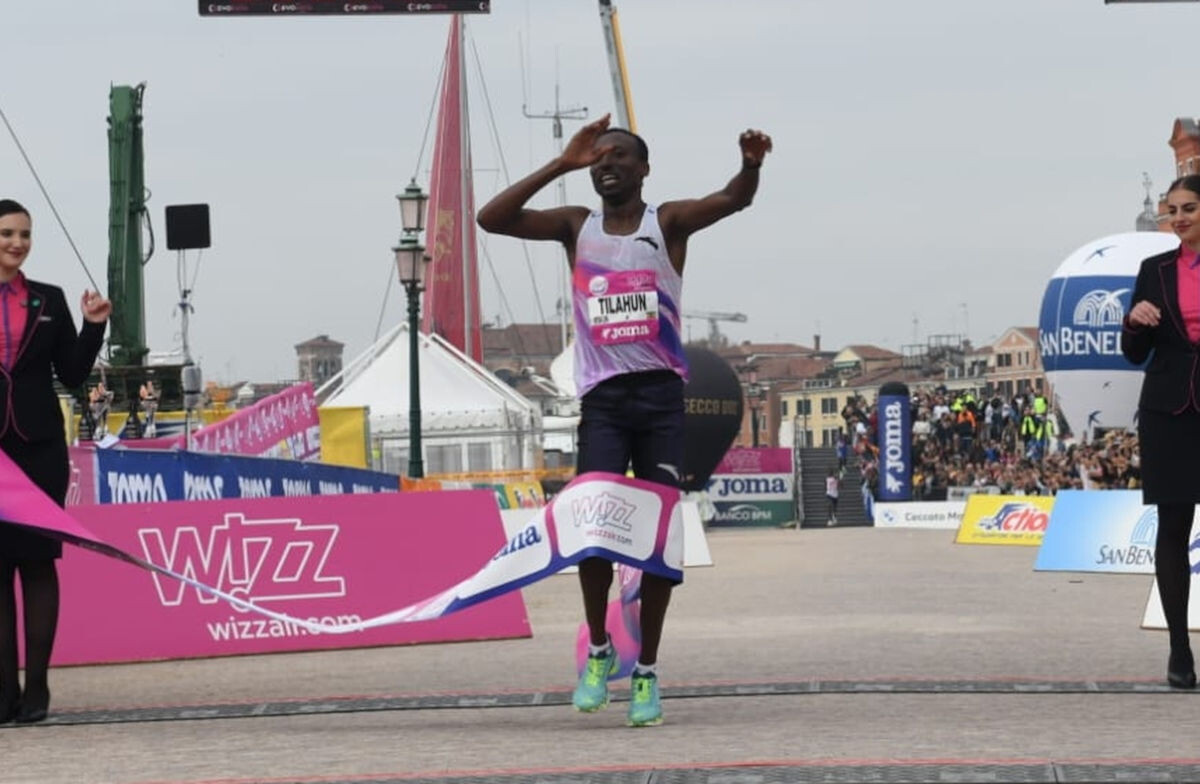
Yet, the challenge will not go unanswered. Ethiopia’s Abebe Tilahun enters the contest with a strong 2:07:50 credential, determined to disrupt Kenya’s anticipated dominance and inject tactical intrigue into the race.
Hovering over the men’s field is the towering benchmark of 2:04:30, the course record set in 2021 by marathon icon Eliud Kipchoge. While that mark remains daunting, the depth and quality assembled this year suggest a fearless pursuit of fast times.
The women’s race, meanwhile, shapes up as a finely balanced duel defined by precision and resilience. Kenya’s Dorine Murkomen leads the entries with a personal best of 2:27:09, but she is closely shadowed by Ethiopia’s Tsehay Gebre at 2:27:22—setting the stage for a compelling head-to-head battle.
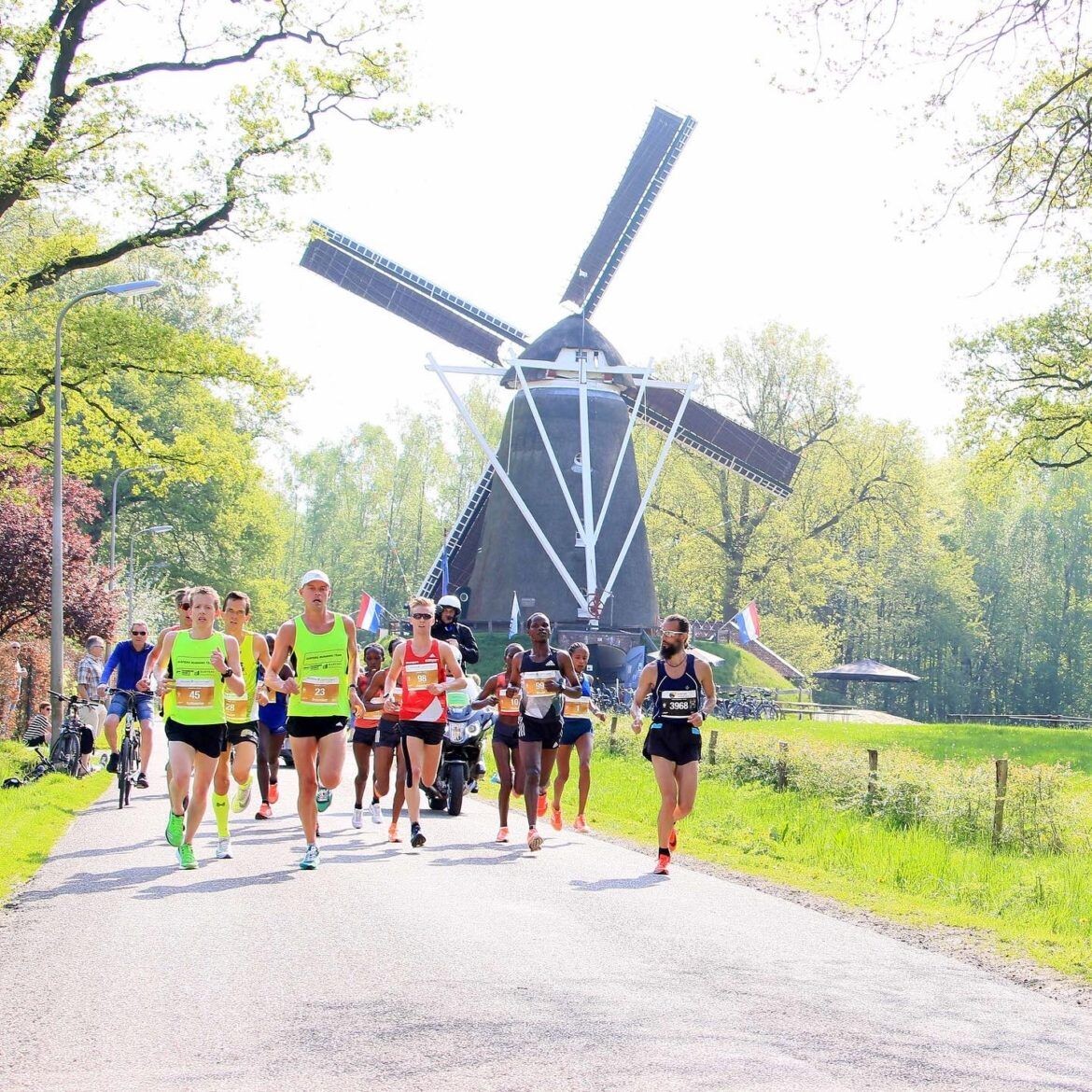
Adding further depth are Selam Fente (2:28:22) and Hilda Cheboi (2:28:31), both of whom possess the strength and racing intelligence to challenge for podium positions if the pace intensifies.
Standing as the ultimate target is the women’s course record of 2:21:10, set in 2022 by Maurine Chepkemoi—a mark that demands not only speed, but near-perfect execution.
With the race set to begin at 10:00 AM local time in Enschede, anticipation is building for a morning that could deliver both tactical drama and fast times. Whether the athletes can edge closer to the historic standards set by Kipchoge and Chepkemoi remains to be seen—but one thing is certain: Enschede is ready to witness another chapter in marathon excellence unfold.
by Erick Cheruiyot for My Best Runs.
Login to leave a comment

Enschede Marathon
Experience the oldest marathon in Western Europe! We write about August 1946. The European Athletics Championships were held in Olso and the I.A.A.F. conference had taken place. During that conference, an agreement was made to hold an athletics competition between the Netherlands and Czechoslovakia in Enschede in July 1947. Saturday July 12, 1947 was the big day: 51 participants took...
more...
Bridging Worlds Through Running: Eliud Kipchoge’s Journey Beyond the Finish Line
In a career defined by historic milestones and unmatched discipline, Eliud Kipchoge continues to prove that his influence stretches far beyond the finish line. His latest journey—this time to Shijiazhuang, China—offers a compelling reminder that running is more than competition; it is a universal language that unites people across cultures, continents, and ways of life.
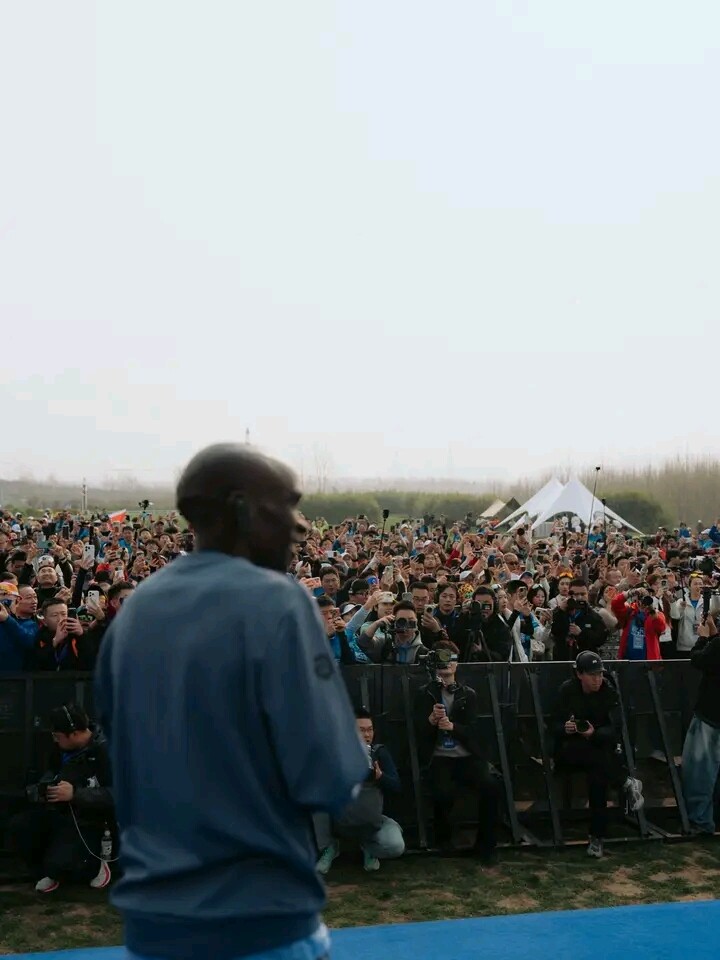
Throughout his remarkable journey, Kipchoge has traveled the world, immersing himself in diverse cultures and meeting individuals from all walks of life. Yet, it is these shared human experiences that leave the deepest mark. Each destination becomes more than a place—it becomes a story of connection, built through the simple yet powerful act of running.

His visit to Shijiazhuang marks the beginning of a meaningful partnership with Junlebao, one grounded not merely in business, but in shared philosophy. The roots of this collaboration trace back to an earlier meeting with Chairman Wei, shortly after he completed his six-star marathon journey. In that moment, a mutual understanding was formed—one shaped by the discipline, resilience, and humility that running demands.
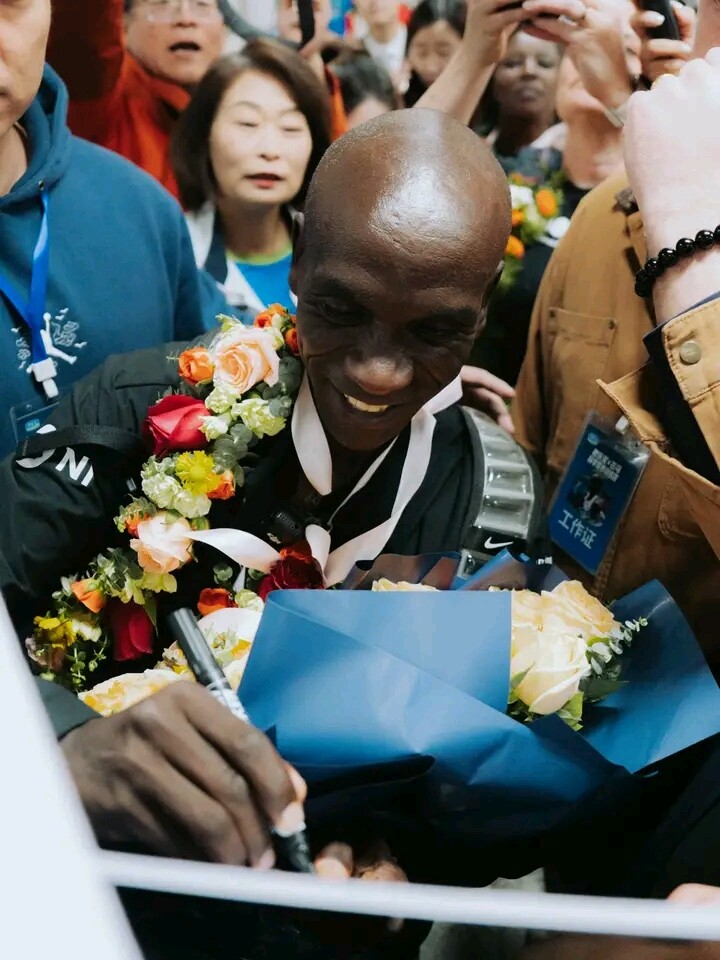
What followed in China was not just a formal engagement, but a genuine cultural exchange. Kipchoge was welcomed warmly—not simply as a global icon, but as a friend. Conversations flowed naturally, reflecting on how running shapes character, instilling patience, purpose, and respect for the process. These same principles, Kipchoge noted, are evident in Wei’s leadership, having guided Junlebao into becoming one of China’s leading dairy companies.


For Kipchoge, this alignment of values defines the true essence of the partnership. Running, in his philosophy, is a way of life—one that promotes health, consistency, and meaning. To stand alongside a partner who embodies these ideals strengthens his belief that greatness, whether in sport or business, is built on the same enduring foundations.
Looking ahead, Kipchoge sees this partnership as a journey that will grow steadily—connecting China and Africa step by step, guided by purpose and shared vision. It is a collaboration that extends beyond borders, aiming to inspire healthier lifestyles and deeper human connections.
In a world often divided by differences, Kipchoge’s message remains simple yet profound: through running, we find unity. And in that shared stride, we move forward—together.
by Erick Cheruiyot for My Best Runs.
Login to leave a comment
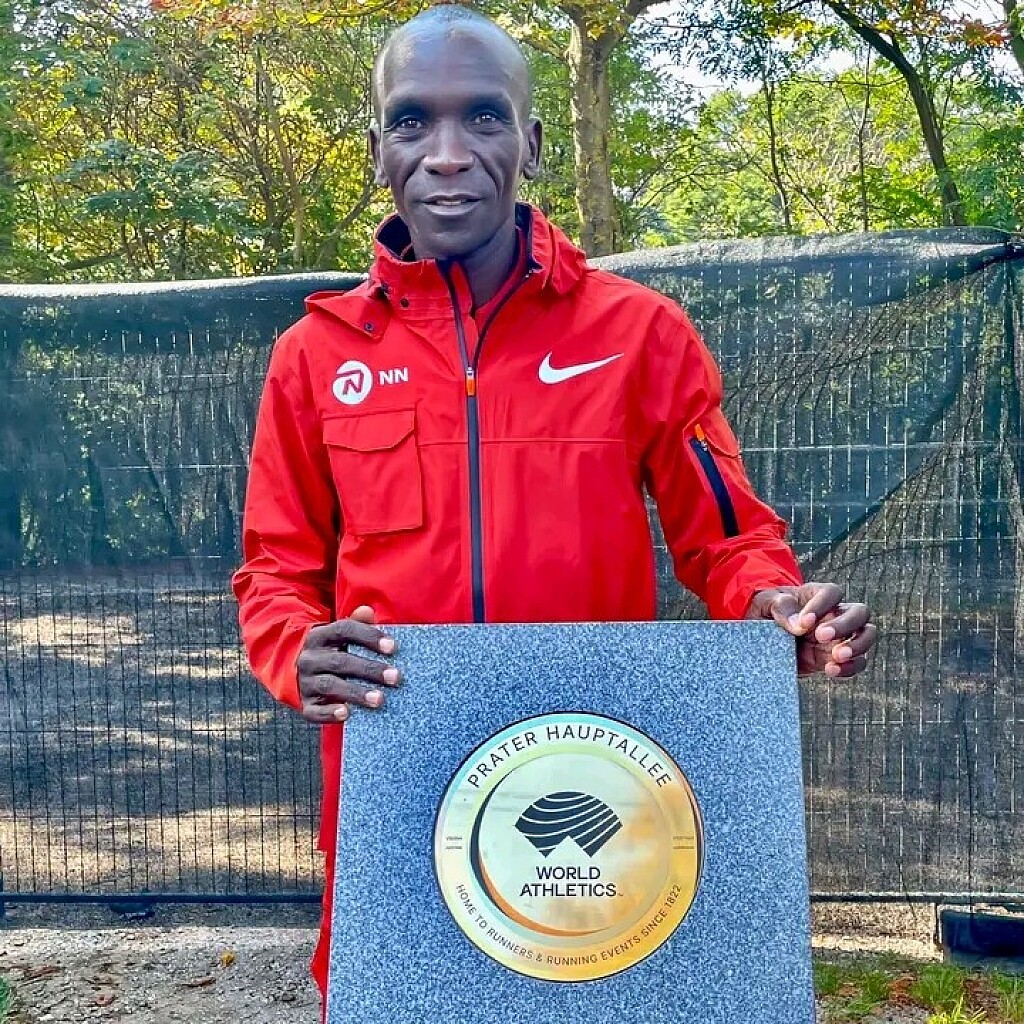
Where History Breathes: Kipchoge Returns to Vienna’s Sacred Road
In the quiet elegance of Vienna’s Prater, where chestnut trees line a road that has witnessed one of the greatest moments in human endurance, Eliud Kipchoge stood once again—this time not in motion, but in reflection. The Kenyan legend posed beside the World Athletics Heritage Plaque, a symbol that immortalizes the very ground where history was rewritten.
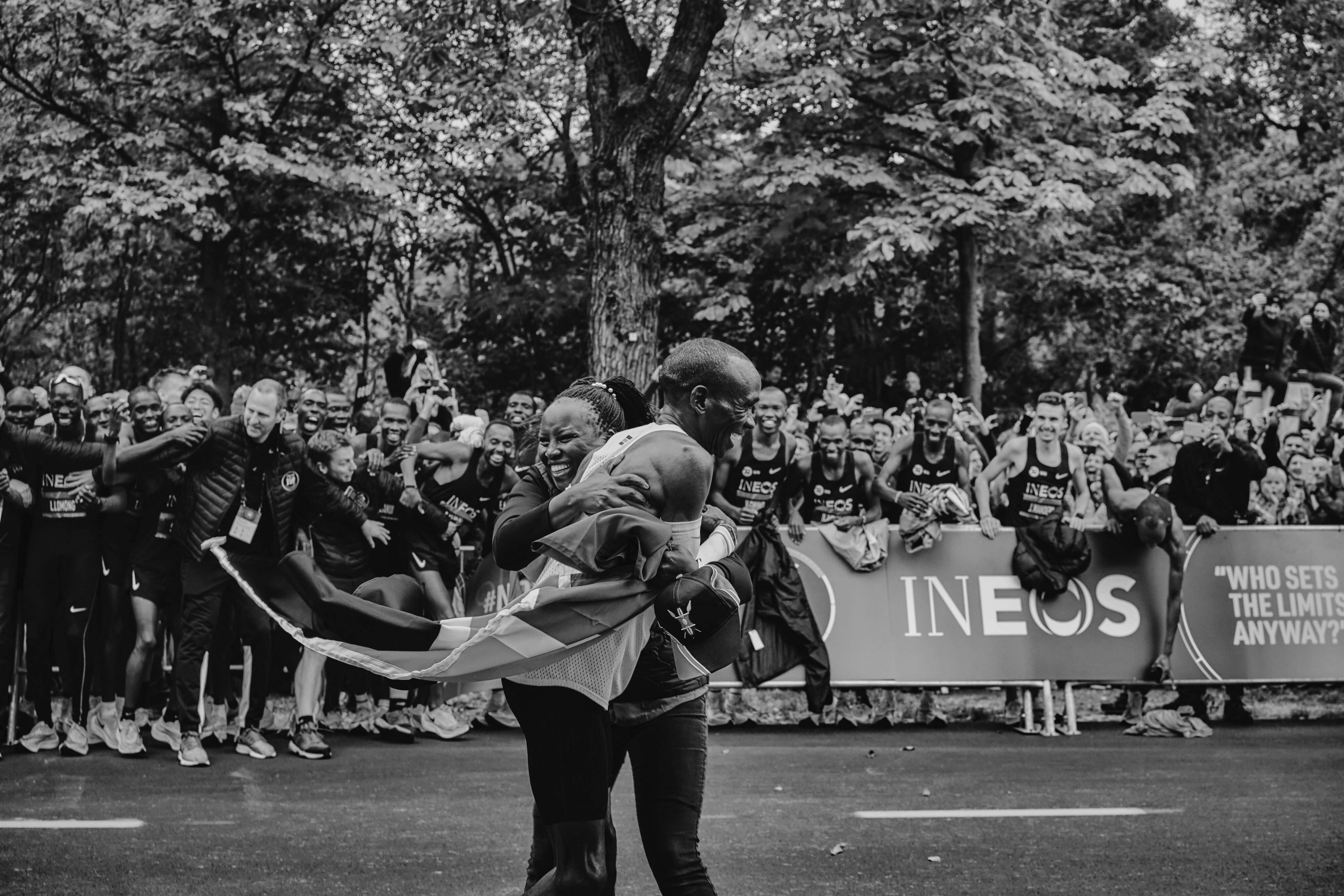
The Prater Hauptallee, a long, straight boulevard in Vienna, is no ordinary stretch of road. In 2019, it became the stage for the extraordinary during the INEOS 1:59 Challenge, when Kipchoge achieved what had long been considered beyond human limits—running a marathon in under two hours. Clocking an astonishing 1:59:40, he didn’t just break a barrier; he redefined possibility itself.
Though the performance was not ratified as an official world record due to controlled conditions, its significance transcended regulations. It was a moment that united science, precision, and human willpower in perfect harmony. The road beneath his feet that day has since been recognized as a site of global athletic importance.
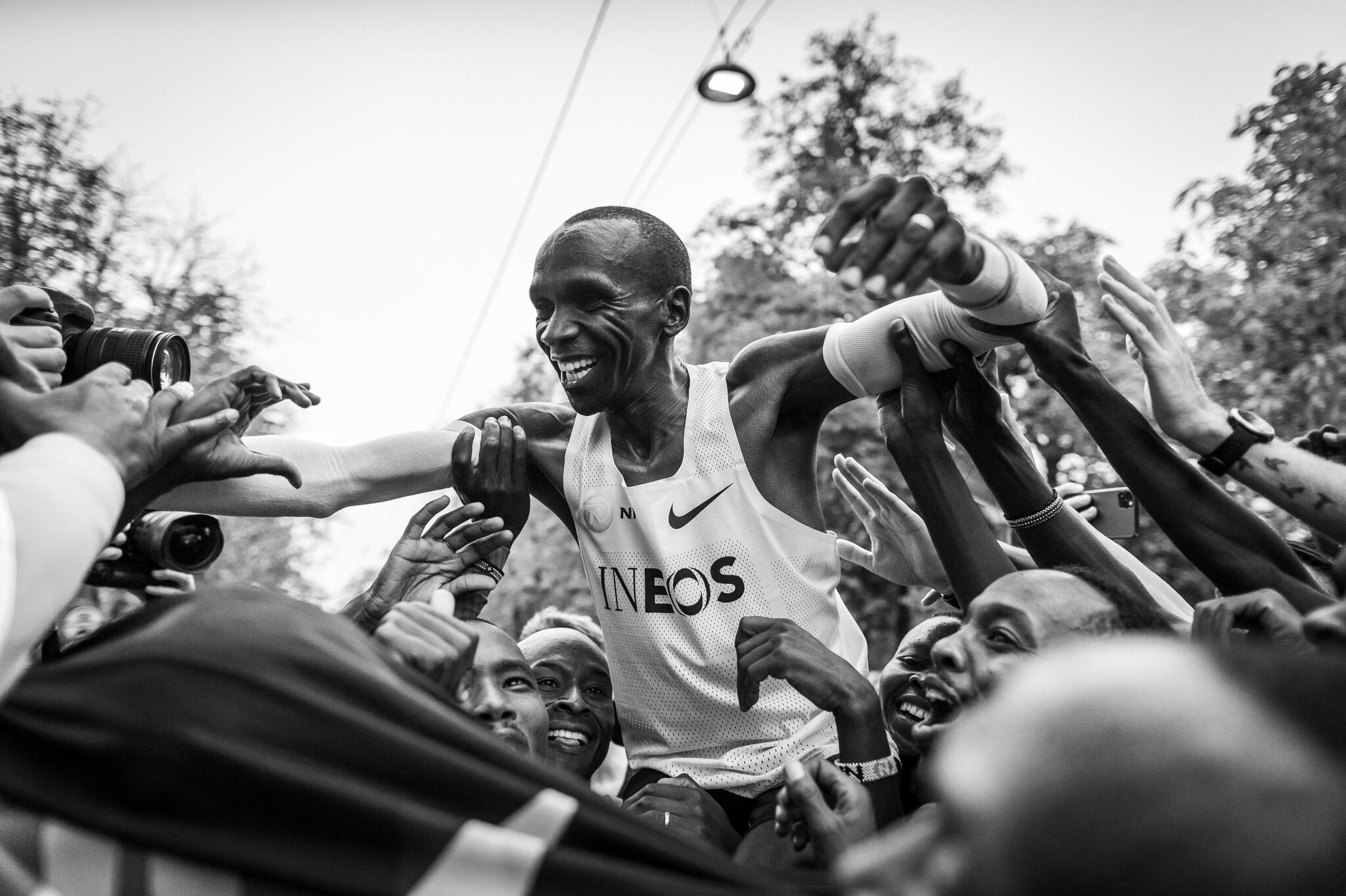
In 2022, World Athletics awarded the Prater Hauptallee its prestigious Heritage Plaque, officially acknowledging it as a landmark in the history of sport. And now, years later, Kipchoge’s return to that same location feels almost poetic—a reunion between a man and the path that carried him into immortality.
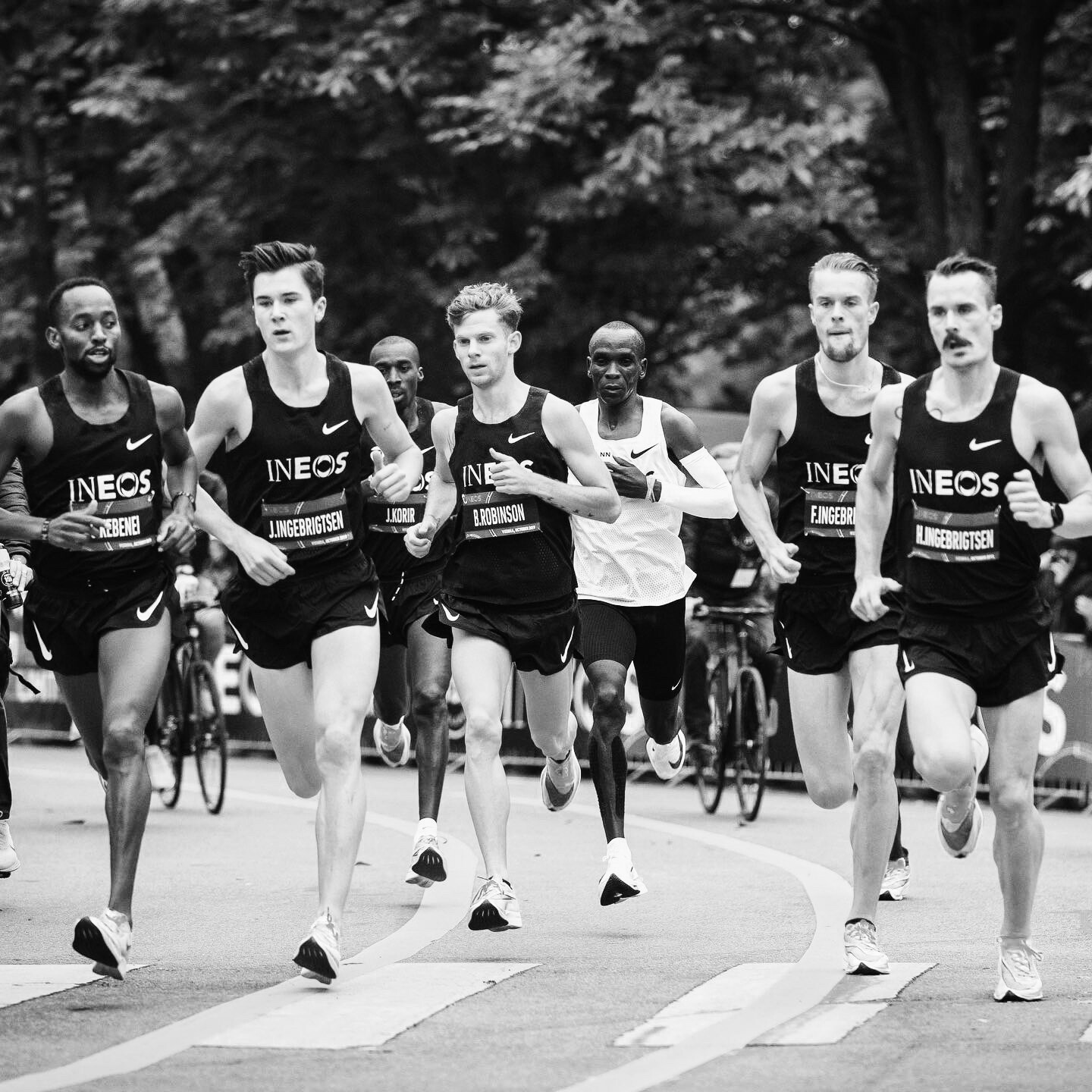
There is something deeply symbolic about the image: Kipchoge, calm and composed, standing still on the very ground where he once moved faster than any human ever had over 42.195 kilometers. It is a reminder that greatness is not only about speed, but also about legacy.
For Kipchoge, whose philosophy has always centered on discipline, humility, and mental strength, the moment is less about celebration and more about reflection. “No human is limited,” he famously said—a mantra that echoed across the world after that historic run. Today, that message feels just as powerful, etched not only in memory but now in the very soil of Vienna.
As athletes and dreamers continue to chase their own limits, the Prater stands as a quiet witness—a place where the impossible was made real. And at its heart remains Kipchoge, not just as a champion, but as a symbol of what humanity can achieve when belief meets relentless pursuit.
by Erick Cheruiyot for My Best Runs.
Login to leave a comment
Kipchoge Headlines a Star-Studded Field as Cape Town Marathon Sets Stage for Historic 2026 Edition
The 2026 Cape Town Sanlam Marathon is already shaping up to be one of the most compelling road races of the year, after organizers officially unveiled a formidable elite field for the May 24 showdown in South Africa’s iconic coastal city. With global attention fixed firmly on the event, the presence of marathon legend Eliud Kipchoge elevates this year’s race into a spectacle of rare magnitude.
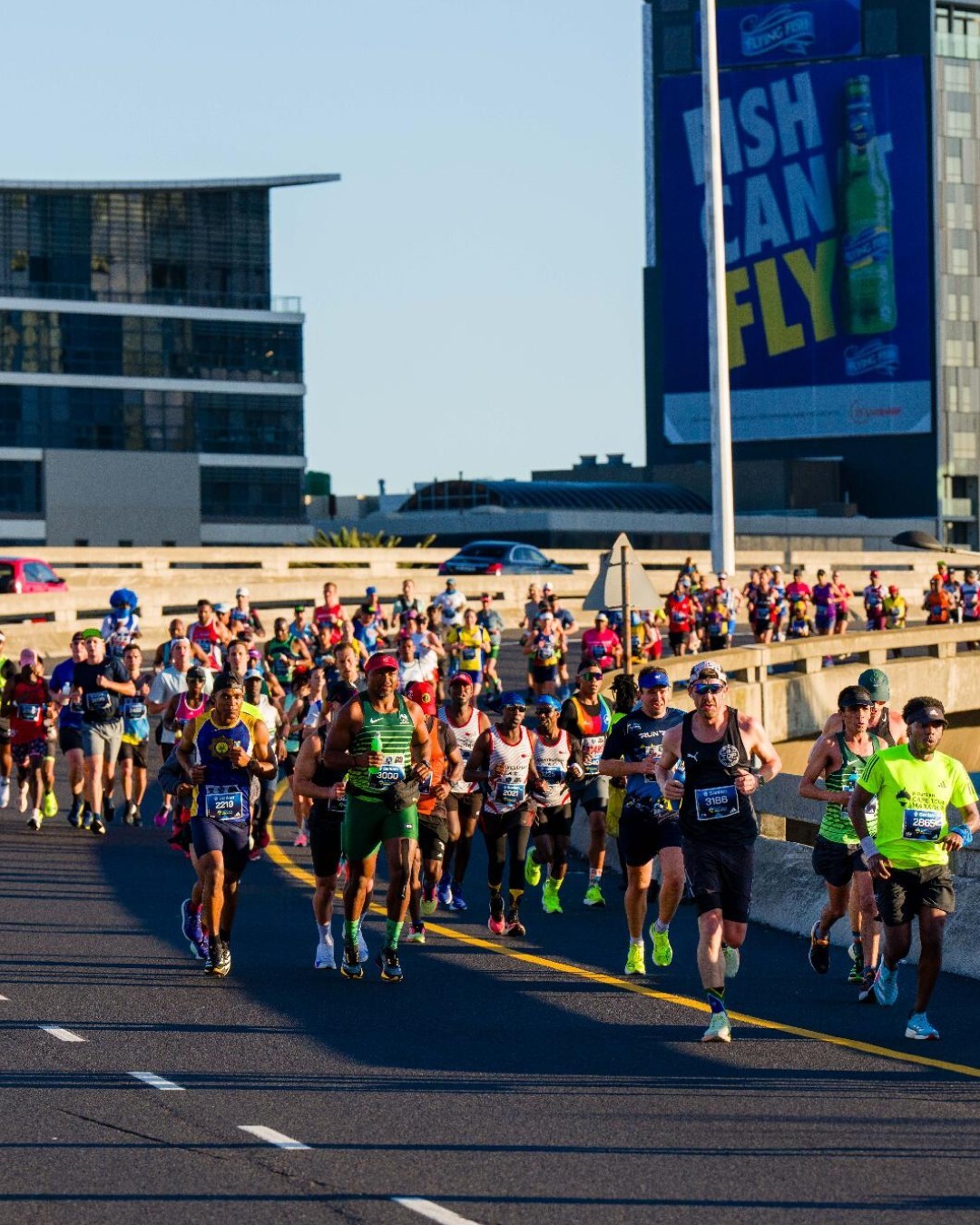
Widely regarded as the greatest marathoner in history, Kipchoge returns to African soil with a résumé that continues to redefine the boundaries of human endurance. The two-time Olympic champion and the first man to break the two-hour barrier for the marathon distance brings not only unmatched pedigree but also a magnetic presence that instantly transforms the race into a global attraction.
Yet, this will be no ceremonial run. The Kenyan icon will face a deep and dangerous field hungry for victory and, potentially, a course record. Among the leading contenders is Stephen Kiprop, a proven sub-2:08 performer whose consistency makes him a genuine threat over the classic distance. Israel’s Maru Teferi, a seasoned Olympian, arrives with tactical sharpness and championship experience, while Ethiopia’s Boki Kebede brings serious credentials, including a blistering 2:05:55 personal best that signals his intent to challenge for top honors.
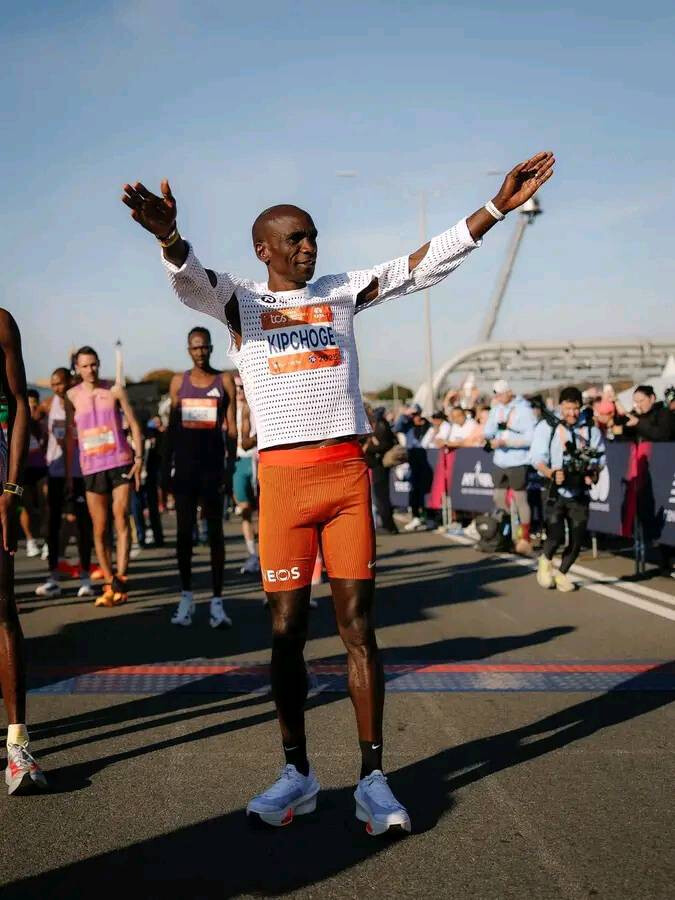
The Ethiopian contingent runs even deeper. Jemal Yimer Mekonen is renowned for his devastating finishing speed, capable of turning races in the closing kilometers, while Yihunilign Adane offers remarkable consistency, having built a reputation through sheer durability and experience across numerous marathon appearances. Adding further intrigue is Adane Gebre Kebede, the 2023 champion and 2024 runner-up, whose familiarity with the course could prove decisive. Meanwhile, Mulugeta Astra Uma enters as a dark horse with the raw speed to disrupt even the most carefully calculated race plans.
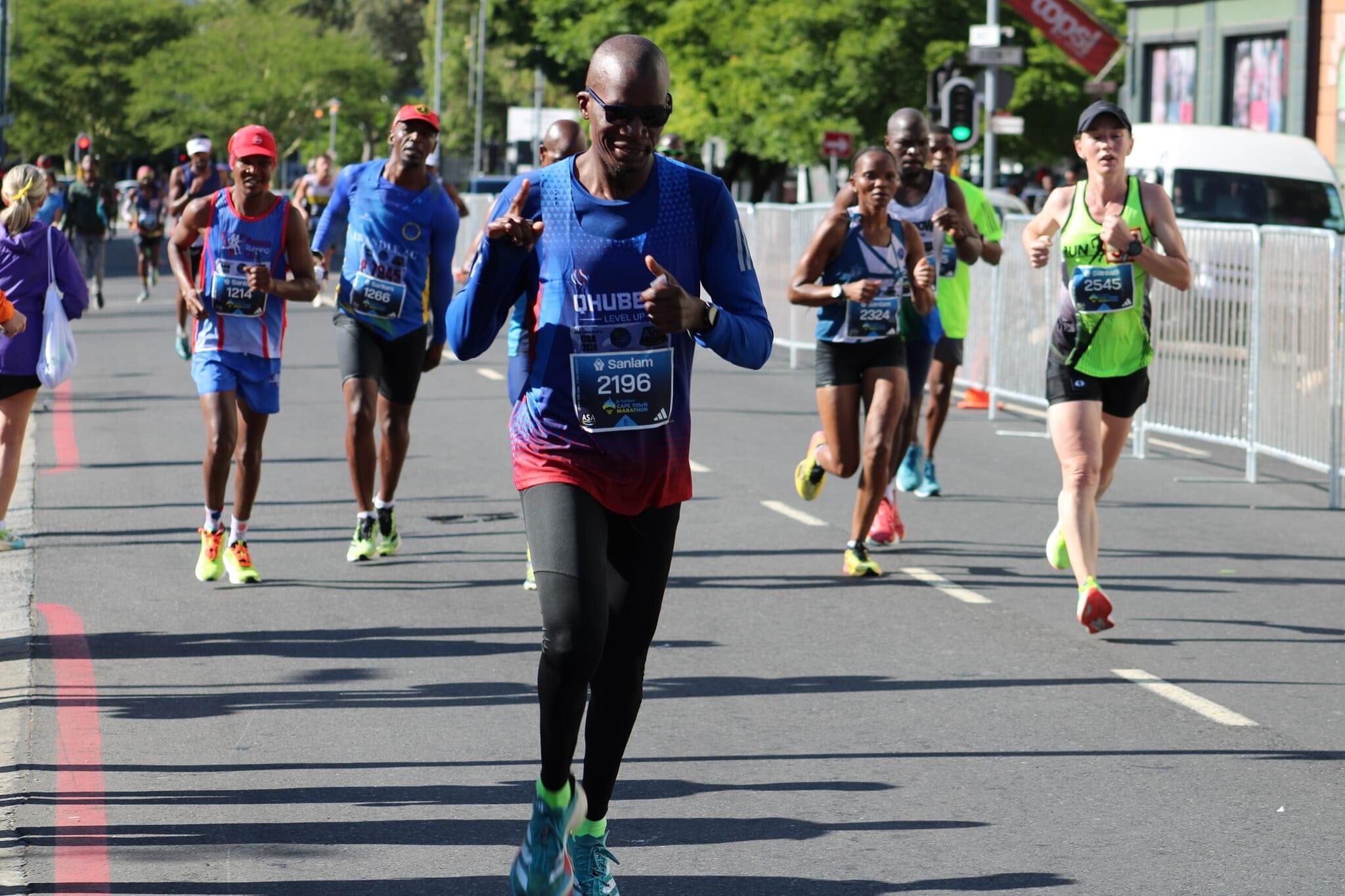
Beyond the individual names, the 2026 edition introduces a refined race structure, with a multi-wave start designed to ease congestion and enhance performance conditions for elite and mass participants alike. The elite men’s race is scheduled to begin at 08:00 local time in Cape Town, ensuring strong viewership across the world.
The Cape Town Marathon continues to push toward its ambition of becoming Africa’s first Abbott World Marathon Major, and this year’s elite line-up reinforces that vision. With a blend of legendary status, emerging firepower, and tactical brilliance, the race promises not just competition, but a narrative rich with possibility.
If the depth of the field is any indication, Cape Town may well witness something extraordinary—a race where history is not just chased, but potentially rewritten.
by Erick Cheruiyot for My Best Runs.
Login to leave a comment
Cape Town Marathon
The Sanlam Cape Town Marathon is a City Marathon held in Cape Town, South Africa, which is sponsored by Sanlam, the City of Cape Town and Vital Health Foods. The marathon is held on a fast and flat course, starting and finishing in Green Point, near the Cape Town Stadium. Prior to existing in its current format, the Cape Town...
more...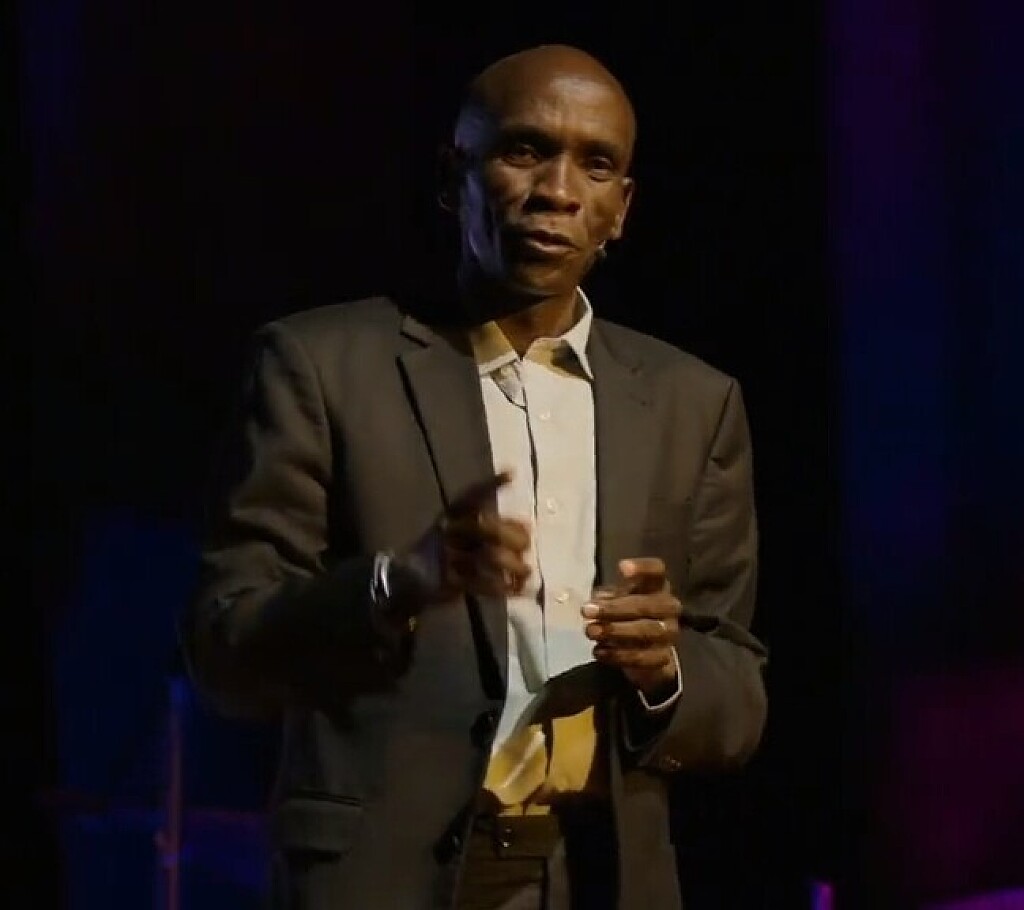
“I Was Down to My Knees” — Kipchoge Opens Up on Cruel Rumours After Kiptum’s Fatal Crash
The death of marathon world record holder Kelvin Kiptum sent shockwaves through the global athletics community in February 2024. Tributes poured in from across the world as athletes, officials and fans mourned the loss of one of distance running’s brightest talents.
But for fellow Kenyan legend Eliud Kipchoge, the tragedy was followed by an intensely painful personal ordeal — a wave of online rumours that falsely attempted to link him to the accident that claimed Kiptum’s life.
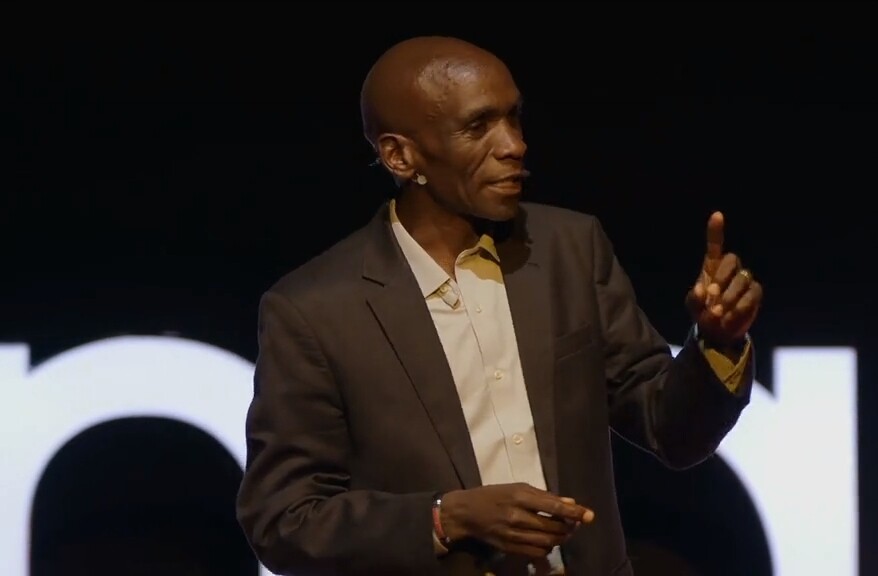
A tragic night in Elgeyo-Marakwet
Kiptum, who held the marathon world record at the time, died on February 11, 2024, following a road accident in the Kaptagat area of Elgeyo‑Marakwet County in western Kenya.
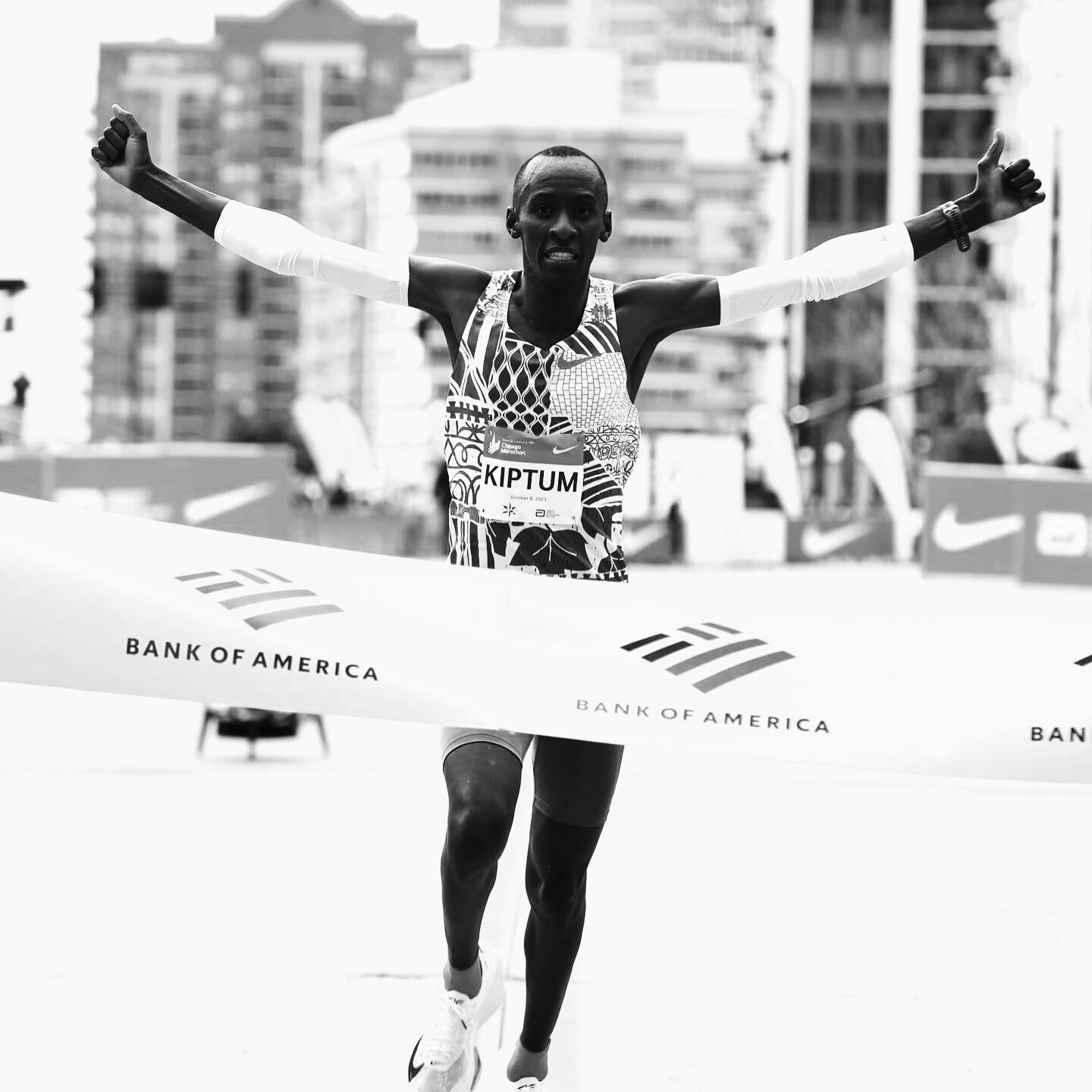
He was travelling with his Rwandan coach Gervais Hakizimana, who also lost his life in the crash. The devastating incident brought an abrupt end to a career that had risen at breathtaking speed.
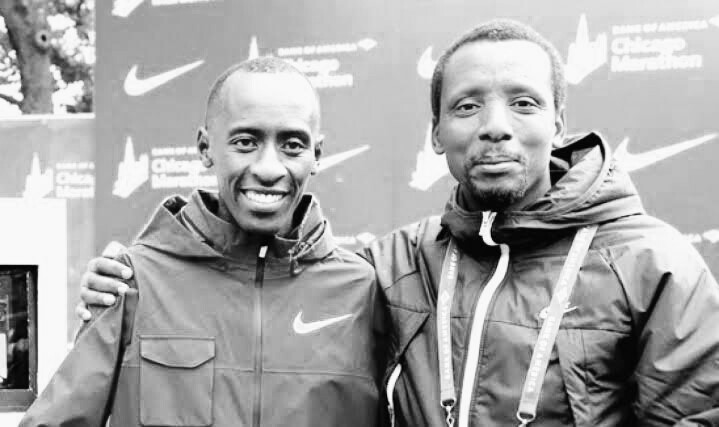
Only months earlier, Kiptum had stunned the athletics world at the Chicago Marathon, clocking a remarkable 2:00:35 to set a new marathon world record — a performance that cemented his status as one of the most extraordinary long-distance talents of his generation.
The moment Kipchoge heard the news
In a deeply emotional interview shared on the Engage Talk YouTube platform, Kipchoge recalled the moment he first learned of the tragedy.
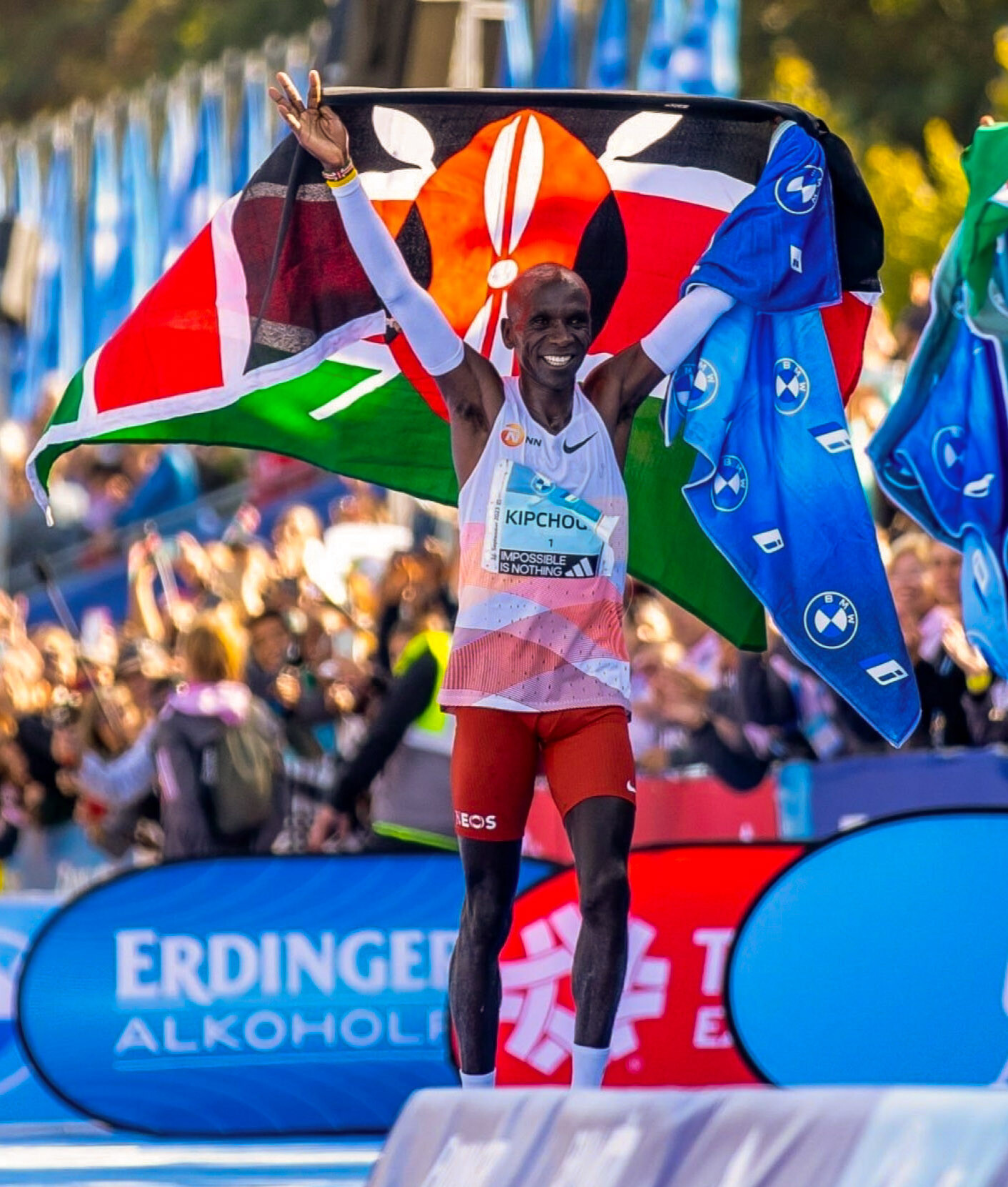
The two-time Olympic marathon champion explained that he had just returned home from a training session when someone at the gate informed him that Kiptum had died in a road accident. Shocked by the news, he immediately checked his phone — only to discover a different kind of storm unfolding online.
Within hours of the crash, social media had become flooded with baseless rumours accusing Kipchoge of being somehow connected to the incident.
The accusations, he said, left him devastated.
“Social media was everywhere saying Eliud killed Kiptum in a road accident. I was really down… down to my knees,” Kipchoge said during the interview.
Threats and fear for his family
The false claims quickly escalated into a wave of online hostility, with Kipchoge revealing that threats were directed not only at him but also at members of his family.
For safety reasons, the family was forced to change parts of their daily routine. Kipchoge explained that his sons had previously cycled to school, a normal routine in their community, but the arrangement had to be altered after the threats emerged.
He also expressed disappointment that some of the accusations circulating online took on an ethnic tone — something that deeply troubled the athlete, who has long spoken publicly about unity and national harmony in Kenya.
Silence from many, support from a few
The episode also revealed an unexpected reality for one of the most celebrated athletes in the world.
Despite having millions of followers across social media platforms, Kipchoge said only a small number of people reached out to check on him during the difficult period.
It was a stark reminder, he noted, that genuine support often comes from close relationships rather than public admiration.
A career defined by greatness
Kipchoge’s legacy in distance running remains unmatched. He won Olympic marathon gold medals at the 2016 Rio Olympics and the 2020 Tokyo Olympics, cementing his place among the greatest marathon runners in history.
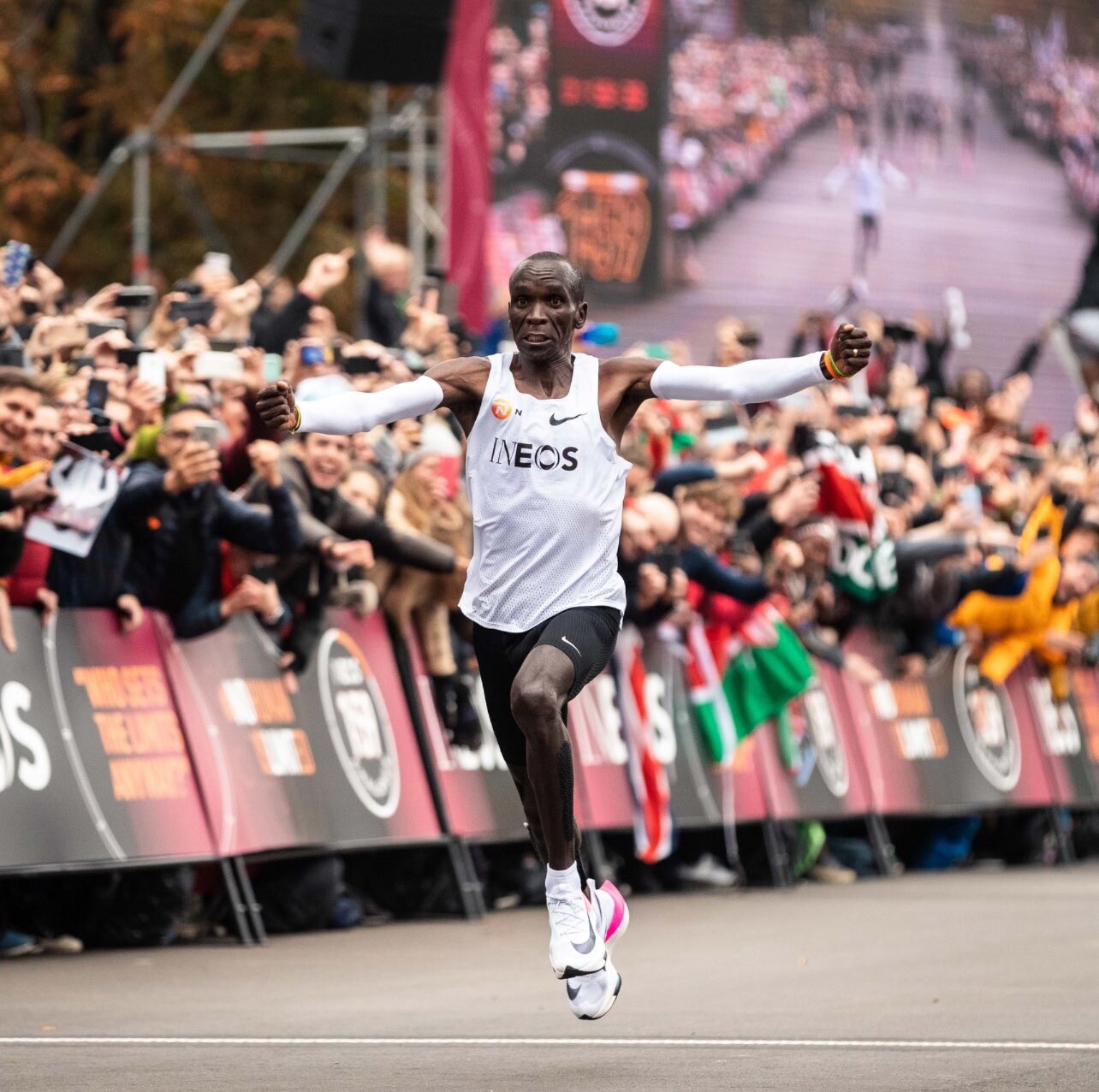
In 2019, he also achieved one of the most iconic moments in sport by becoming the first person to run a marathon distance in under two hours during the INEOS 1:59 Challenge in Vienna, completing the run in 1:59:40 during the special exhibition event.
A painful lesson in resilience
Looking back, Kipchoge described the aftermath of Kiptum’s death as one of the most emotionally testing moments of his life.
The experience, he said, reinforced the importance of resilience and the value of strong personal relationships when navigating moments of crisis.
While the loss of Kelvin Kiptum remains a deep wound for the athletics world, Kipchoge’s reflections reveal another side of the tragedy — the unseen emotional toll that misinformation and online hostility can inflict, even on the strongest of champions.
by Erick Cheruiyot for My Best Runs.
Login to leave a comment
Kipchoge’s World Tour Heads to Brazil with NB42K Porto Alegre Appearance
Marathon legend Eliud Kipchoge is set to continue his ambitious global running mission with a highly anticipated appearance at the NB42K Porto Alegre on July 12, 2026, in Porto Alegre, Brazil.

The South American race will form part of Kipchoge’s unique World Tour project — a challenge that will see the Kenyan great run seven marathons across all seven continents over the next two years. The initiative reflects his vision of using running as a universal platform to connect people and inspire communities around the world.
The visit to Brazil also carries deep personal significance for the two-time Olympic champion. It comes exactly ten years after his unforgettable victory in the 2016 Rio Olympic Marathon in Rio de Janeiro, where he captured the first of his Olympic gold medals and cemented his place among the sport’s all-time greats.
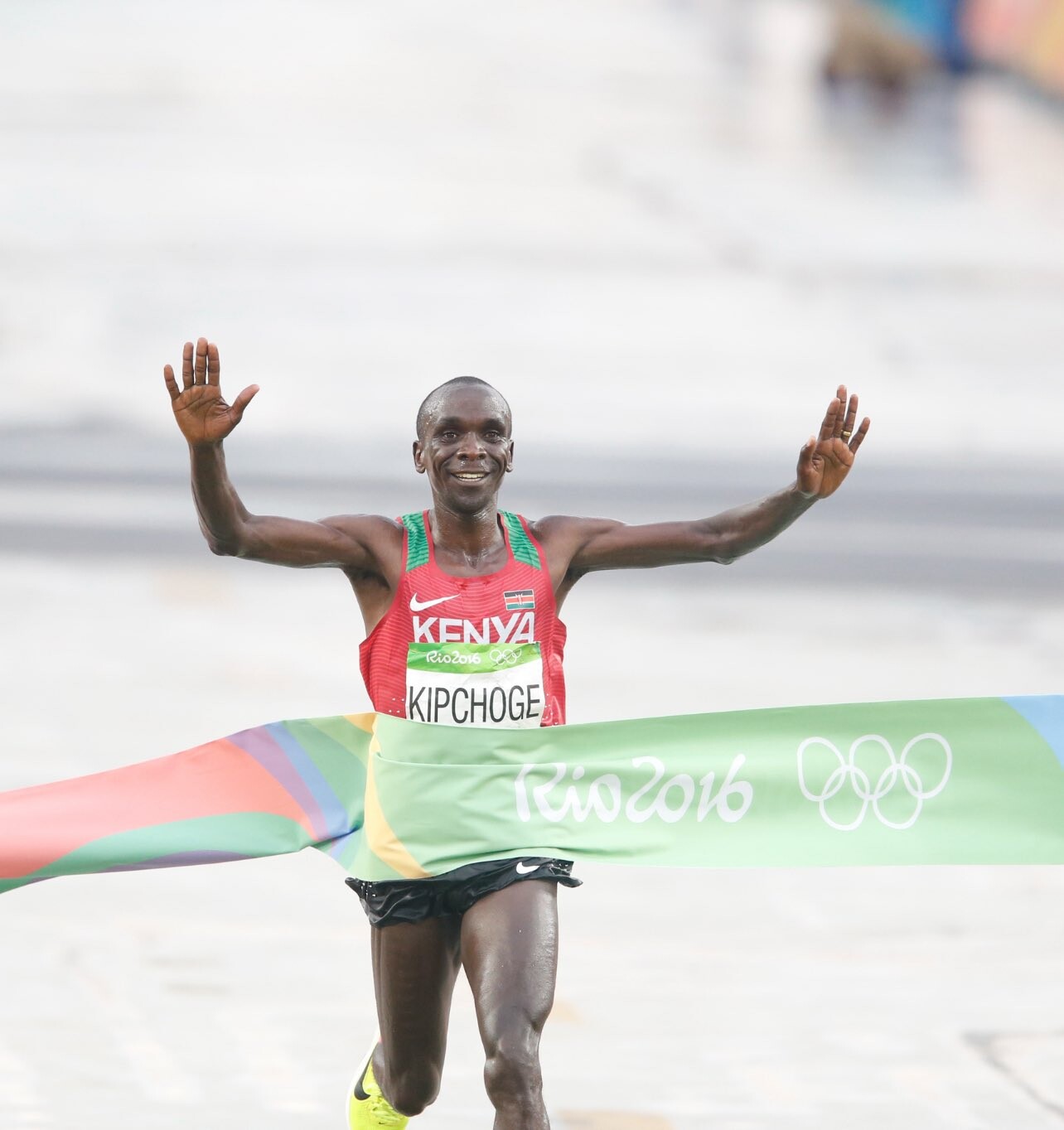
In a message shared on his social media platforms, Kipchoge expressed both excitement and nostalgia about returning to Brazil.
“Running is a universal language that speaks to hope, discipline, and unity. I am very excited to return to Brazil where I won my first Olympic Gold medal. Each continent has its own spirit, and I look forward to sharing this journey with South America while inspiring people to believe that No Human Is Limited. See you on the streets of Porto Alegre on 12 July at the NB42k!”
Kipchoge’s global journey will begin on African soil at the Cape Town Marathon in Cape Town, South Africa on May 24, before the legendary Kenyan heads to South America for the Brazilian stop.
As the world’s most celebrated marathoner continues to write new chapters in his remarkable career, his message remains clear — that running has the power to unite people across continents while reminding the world that no human is limited.
by Erick Cheruiyot for My Best Runs.
Login to leave a comment
Eliud Kipchoge Sets Sights on Cape Town as He Begins Ambitious Seven-Continent Marathon Quest
Marathon legend Eliud Kipchoge has confirmed that he will line up at the start of the Sanlam Cape Town Marathon on May 24, in Cape Town, South Africa marking the beginning of a remarkable new chapter in his storied career.
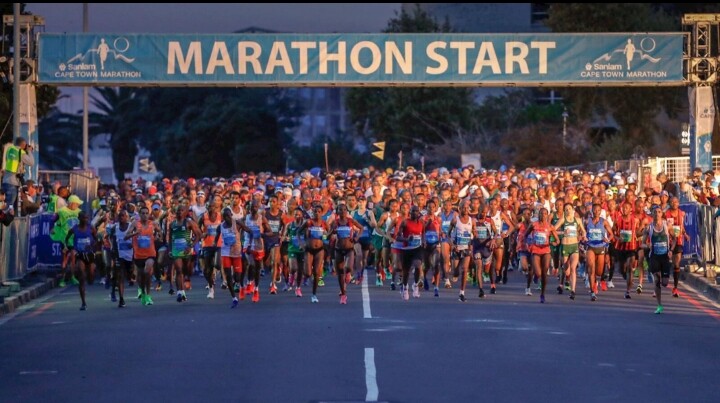
The Kenyan icon, widely regarded as one of the greatest marathon runners in history, revealed that the South African race will serve as the first step in an ambitious challenge: completing marathons on all seven continents within the next two years. The plan adds yet another dimension to the legacy of the 11-time champion across the Abbott World Marathon Majors, a circuit where Kipchoge has built an extraordinary reputation through consistency, discipline, and historic victories.
Cape Town’s rapidly rising marathon has been pushing for global recognition and possible inclusion among the World Marathon Majors, and Kipchoge’s participation immediately elevates the race’s international profile. His presence is expected to draw worldwide attention, deepen elite competition, and inspire thousands of runners who will gather along the scenic streets beneath Table Mountain.
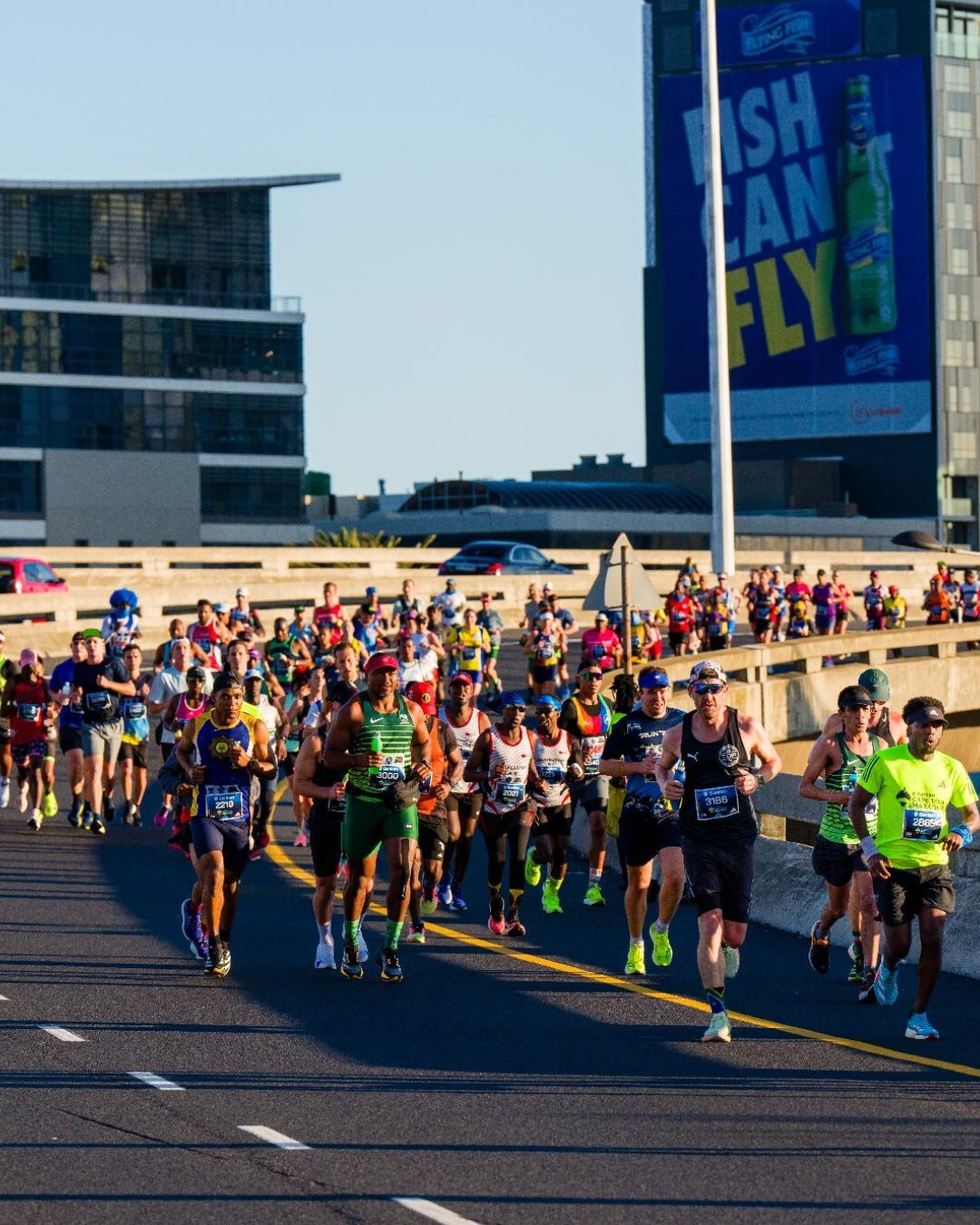
Sharing the news with his followers, Kipchoge also reflected on the emotional significance of beginning the journey on African soil. In a message posted on his social media page, he wrote:
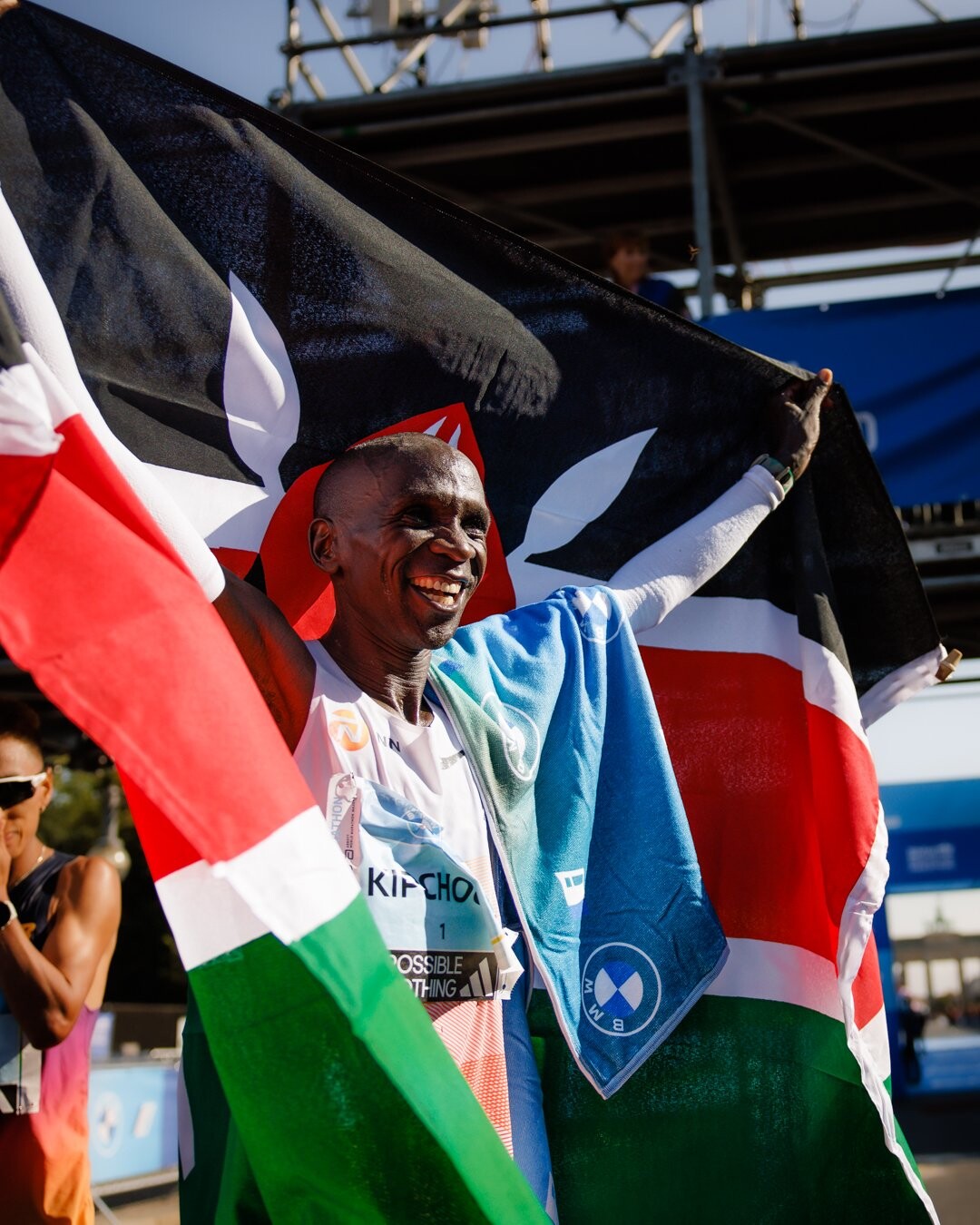
“Africa is where my journey as a runner began and where the foundation of my success is deeply rooted. To start this World Tour on my own continent is very special. It is about celebrating the strength of African running and inspiring the next generation. To run my first ever marathon in Africa is something that holds a lot of meaning for me. @capetownmarathon, I can’t wait.”
For Kipchoge, the moment carries more than competitive ambition—it represents a full-circle return to the continent that shaped his career and philosophy. After years of conquering the world’s biggest marathons, the Kenyan champion now begins a new global mission that blends competition with inspiration.
When the starting gun sounds in Cape Town on May 24, it will not simply mark another race for one of the sport’s greatest figures. Instead, it will signal the first stride of a bold seven-continent quest—one that continues to prove that even for Eliud Kipchoge, the journey of running is always moving forward.
by Erick Cheruiyot for My Best Runs.
Login to leave a comment
Cape Town Marathon
The Sanlam Cape Town Marathon is a City Marathon held in Cape Town, South Africa, which is sponsored by Sanlam, the City of Cape Town and Vital Health Foods. The marathon is held on a fast and flat course, starting and finishing in Green Point, near the Cape Town Stadium. Prior to existing in its current format, the Cape Town...
more...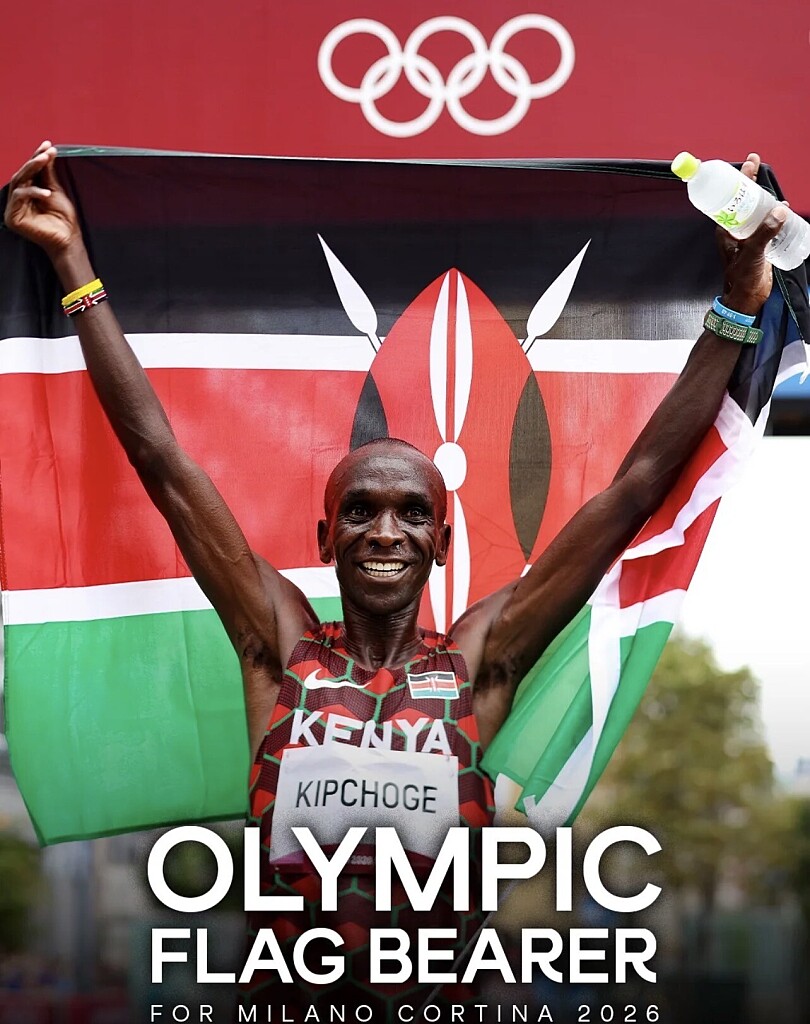
Eliud Kipchoge Honoured as Olympic Flagbearer as Milano Cortina 2026 Rings in Peace and Unity
As the opening ceremony unfolded at the iconic San Siro Olympic Stadium, the moment carried deep symbolism. The procession of the flagbearers of peace set the tone, and among them was Eliud Kipchoge, walking eighth, carrying the Olympic flag with quiet dignity as the Milano Cortina 2026 Winter Olympic Games were officially declared open. It was a ceremony rich in colour, culture, and meaning — a celebration of unity at the heart of the Olympic movement.

For Kipchoge, the moment reflected a lifelong dream shared by countless athletes around the world. In a post on his social media, he described the Olympic Games as the dream of children everywhere, born on playgrounds and local fields, where sport first teaches hope. Carrying the Olympic flag into the opening ceremony, he wrote, was a profound honour — one that connected his personal journey to a global story.
The ceremony itself echoed that message. Seeing the world’s greatest athletes gathered from different sports and every corner of the globe reinforced what makes the Olympics unique: diversity united by respect. Peace was not just a theme, but a living presence, embodied by those who carried the Olympic flag and by the voices that followed.
IOC President Kirsty Coventry highlighted the unifying power of sport and its responsibility to inspire understanding in a divided world. Giovanni Malagò, President of Fondazione Milano Cortina 2026, welcomed the global community to Italy, presenting the Games as a shared celebration built on harmony and cooperation. The message reached a powerful emotional peak when UN Peace Ambassador Charlize Theron delivered words inspired by Nelson Mandela — a reminder that hope, dignity, and peace can transcend generations and borders.
Kipchoge’s presence among the peace flagbearers gave the ceremony added depth. A former world marathon record holder and Olympic champion, his legacy extends beyond victories and records. His belief that sport can unite humanity resonated clearly as he wished athletes success in the days ahead, expressing hope that Olympic dreams would be realised on the world’s biggest stage.
As Milano Cortina 2026 began, the image of Eliud Kipchoge carrying the Olympic flag stands as a powerful symbol — of childhood dreams fulfilled, of peace carried forward, and of sport’s enduring ability to unite the world.
by Erick Cheruiyot for My Best Runs.
Login to leave a comment
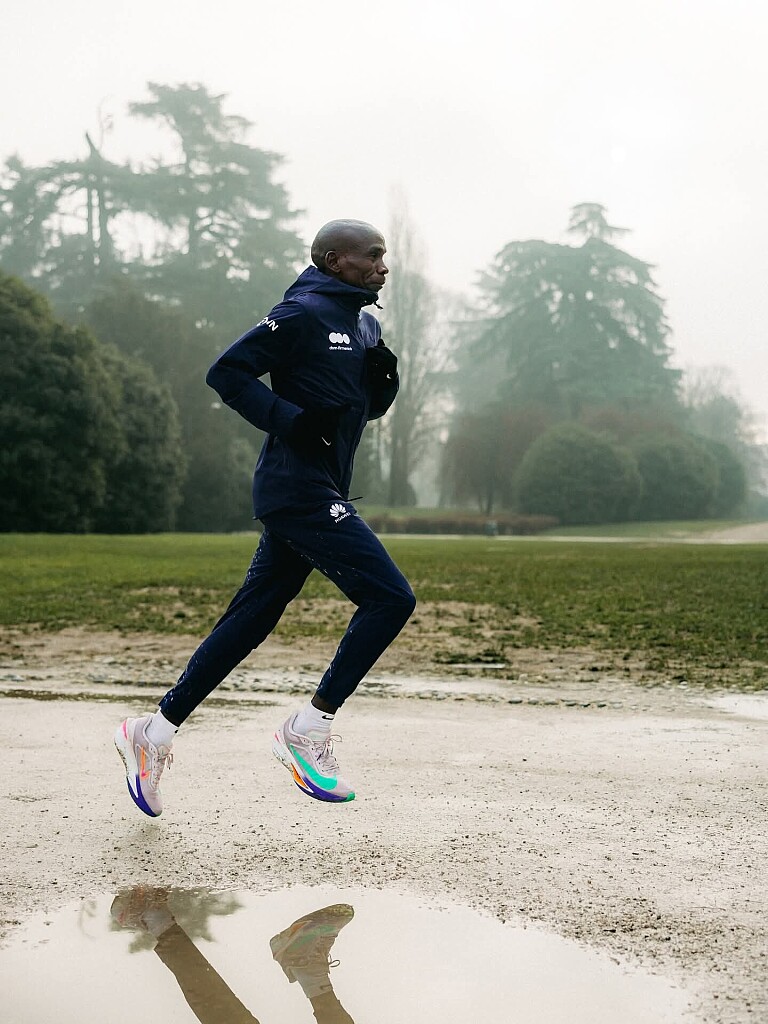
Eliud Kipchoge Arrives in Milan, Honoured as an Olympic Flagbearer at Milano Cortina 2026
Milan has welcomed one of the most respected figures in global sport. Eliud Kipchoge, Kenya’s legendary distance runner and as a former world marathon record holder, is in Italy ahead of the Milano Cortina 2026 Winter Olympic Games, where he has been selected for a prestigious ceremonial role as one of the distinguished Olympic flagbearers.
Kipchoge’s presence at the Winter Games is not linked to athletic competition, nor does it involve representing Kenya in a Winter Olympic sport. Instead, his selection was made by the International Olympic Committee (IOC) and the Milano Cortina 2026 Organising Committee in recognition of the values he represents in sport and in life — unity, peace, humility, discipline, and belief in human potential.
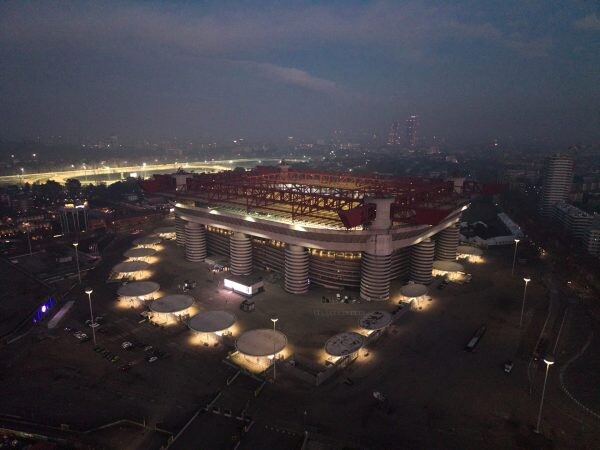
Globally celebrated for redefining marathon running, Kipchoge’s legacy includes Olympic titles, multiple major marathon victories, and as a former world marathon record holder. Yet his influence extends far beyond the stopwatch. His philosophy and consistent excellence have inspired athletes across generations, making him a universal symbol of sporting greatness.
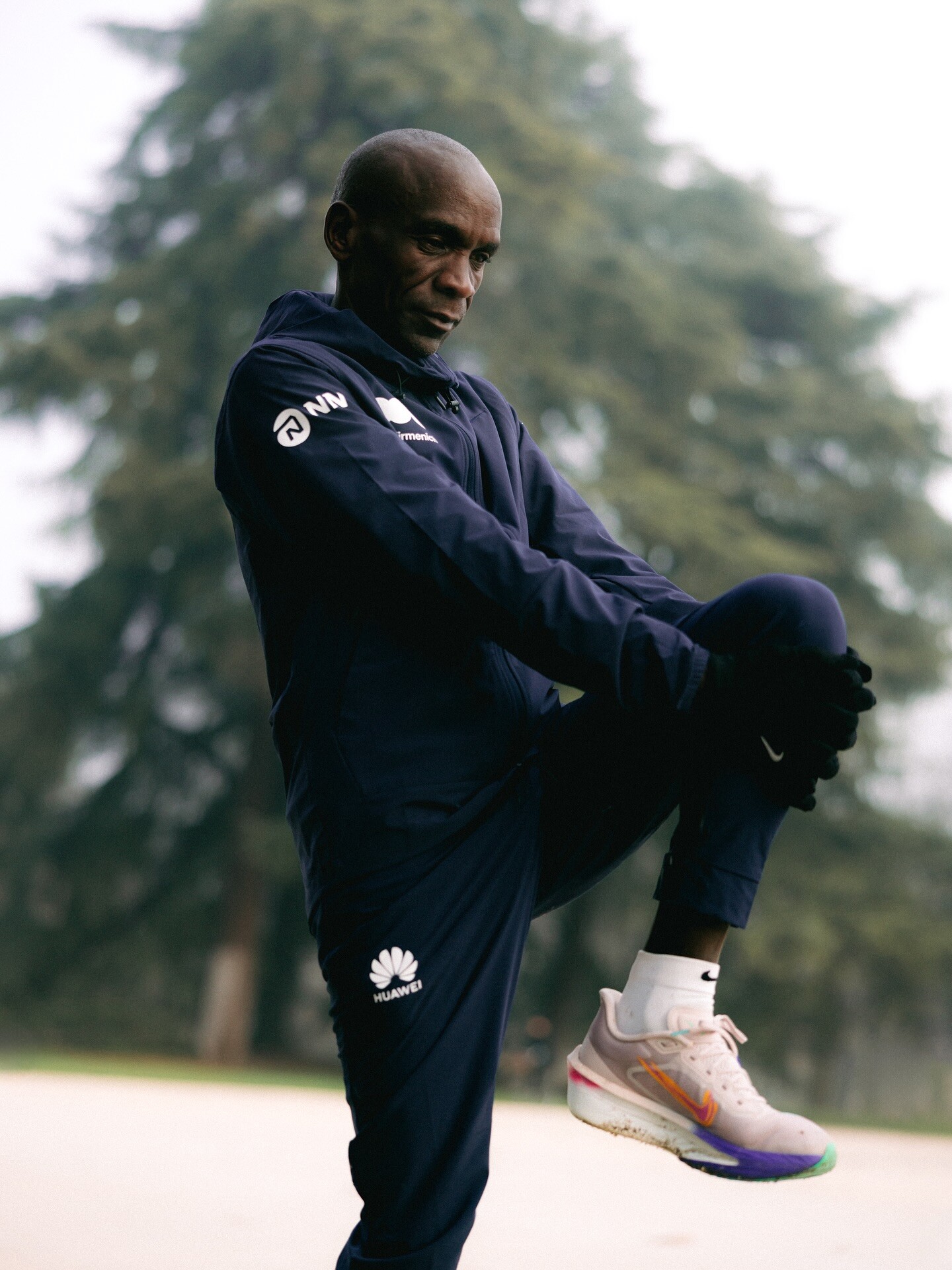
At the opening ceremony at San Siro Olympic Stadium, Kipchoge will be among a select group of distinguished flagbearers chosen to carry the Olympic flag, a role that highlights his global impact and the respect he commands within the Olympic movement. His participation is symbolic — a celebration of the Olympic ideals while proudly carrying his Kenyan identity onto one of sport’s grandest stages.
As the world turns its attention to Milan, Kipchoge’s calm authority and dignity add a special resonance to the Games. When he steps forward as a flagbearer, it will mark yet another defining moment in a career built not only on extraordinary achievement, but on enduring meaning.
Once again, Eliud Kipchoge proves that true greatness is measured not just in records, but in the impact one leaves on the world.
by Erick Cheruiyot for My Best Runs.
Login to leave a comment
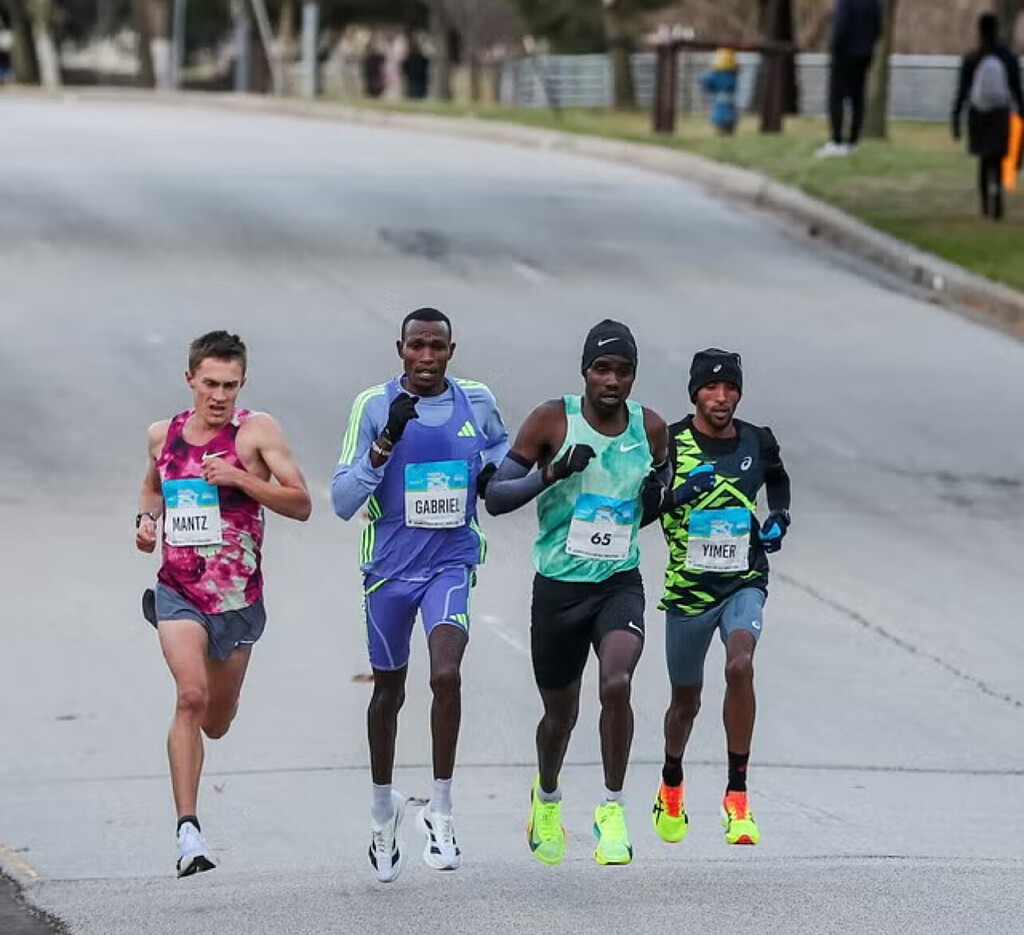
Houston Reloaded: Star-Studded Men’s Field Sets the Stage for a Wide-Open 2026 Half Marathon
With no defending champion, no American record holder, and a reshuffled elite lineup, the January 11, 2026, Houston Half Marathon is shaping up as one of the most open and unpredictable men’s races the event has seen in years.
A Reset Year in Houston
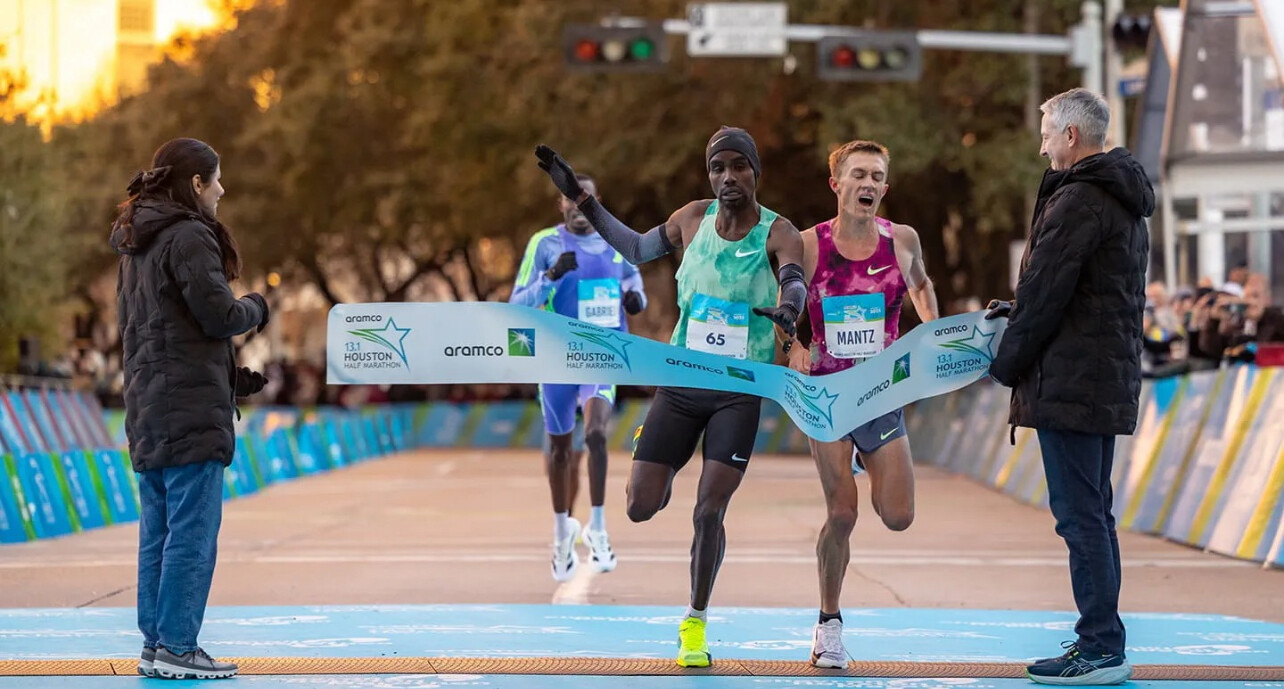
When the gun goes off on Sunday, Houston will once again showcase one of the fastest half-marathon courses in the world—but without the familiar faces that dominated the podium last year. None of the top five finishers from 2025 return, creating a rare reset for a race long associated with records, breakthroughs, and Olympic-cycle statements.
What remains is depth, intrigue, and a compelling blend of proven performers and ambitious newcomers ready to write a new chapter.
Vincent Ngetich: Speed Meets Staying Power
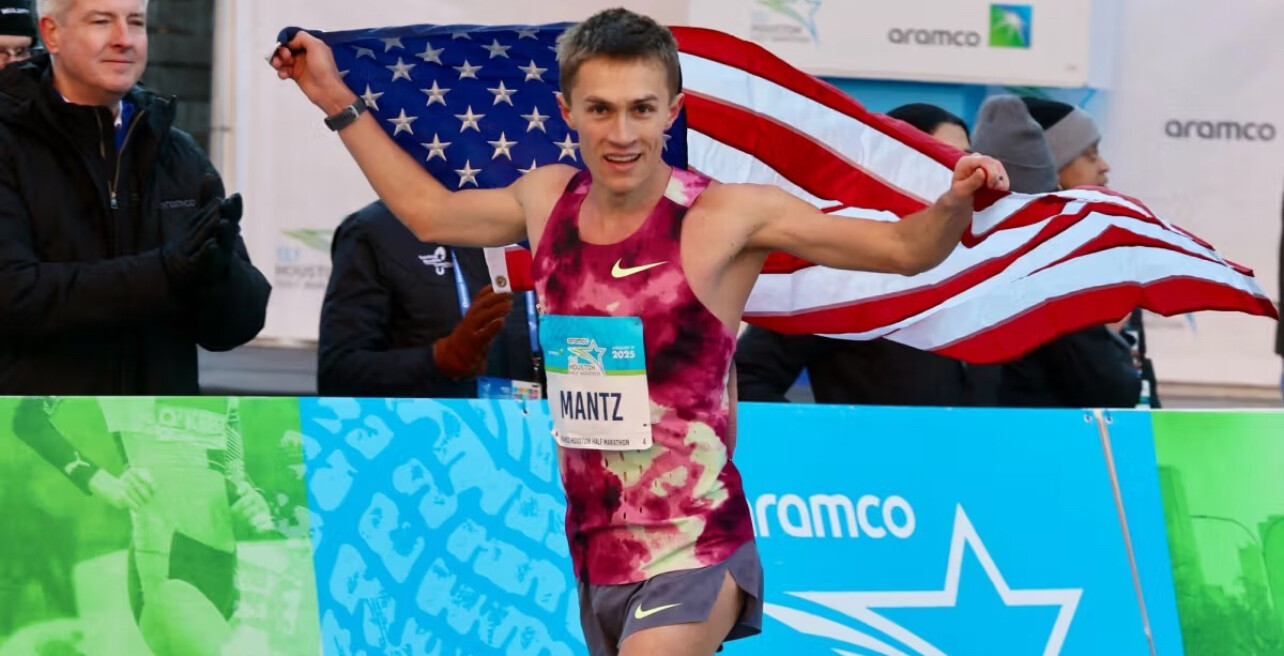
Kenya’s Vincent Ngetich enters as the fastest man in the field on paper, owning a 59:09 personal best from 2022. His half-marathon credentials are formidable, but his reputation soared after a stunning 2:03:13 runner-up finish at the 2023 Berlin Marathon, behind Eliud Kipchoge.
Houston offers Ngetich the opportunity to reassert himself over 21.1 km and test his speed against a deep American contingent on a course that rewards bold, aggressive racing.
Hillary Bor Leads the Returners
Kenyan-born American Hillary Bor is the top returner from last year’s race after finishing sixth in 1:00:20. His 59:55 personal best, set at the NYC Half Marathon, underscores his sub-60 capability—even if that performance came on a non-record-eligible course.
Bor arrives with consistency and experience on his side and will be keen to capitalize on a field without a clear dominant force.
Galen Rupp Back in the MiX
Few names carry the weight of Galen Rupp in American distance running. The two-time Olympian owns a 59:47 personal best from 2018 and returns to Houston after finishing 12th in 1:02:37 in 2024.
While Rupp is no longer chasing records, his race intelligence, experience, and ability to manage fast early pace could prove influential in a race likely to unfold aggressively from the start.
Rising Americans and International Depth
The American contingent is deep, with several sub-61 runners including Sam Chelanga, Biya Simbassa, Andrew Colley, Alex Maier, and Reed Fischer, all bringing strong recent road or cross-country form into the season.
International depth adds further intrigue, with athletes such as Cam Levins, Alex Masai, Patrick Kiprop, and Mohamed El Yousfi all capable of factoring into a fast-moving lead pack.
The Debutant to Watch: Habtom Samuel
One of the most compelling storylines belongs to Habtom Samuel, the 2025 NCAA cross country champion, who is set to make his half-marathon and road-racing debut. Samuel recently clocked 13:05.2 for 5000 meters at Boston University, signaling sharp fitness as he transitions from the track and cross country to the roads.
Houston has a long history of rewarding fearless debutants, and the University of New Mexico standout fits that mold perfectly.
A Race Built for Breakthroughs
With no defending champion, no American record holder, and a deep field eager to make a statement, the 2026 Houston Half Marathon promises fast early splits, tactical uncertainty, and genuine breakthrough potential.
On one of the world’s most trusted fast courses, opportunity—not reputation—may prove to be the real favorite.
2026 Houston Half Marathon – Men’s Elite Entrants (with Country)
1. Vincent Ngetich — Kenya (KEN)
2. Galen Rupp — United States (USA)
3. Hillary Bor — United States (USA)
4. Cam Levins — Canada (CAN)
5. Biya Simbassa — United States (USA)
6. Sam Chelanga — United States (USA)
7. Andrew Colley — United States (USA)
8. Alex Maier — United States (USA)
9. Marcelo Laguera — Mexico (MEX)
10. Reed Fischer — United States (USA)
11. Rory Linkletter — Canada (CAN)
12. Ryan Ford — United States (USA)
13. Alberto Mendez — Guatemala (GUA)
14. Alex Masai — Kenya (KEN)
15. Peter Lynch — Ireland (IRL)
16. Patrick Kiprop — Kenya (KEN)
17. Aaron Bienenfeld — Germany (GER)
18. Mohamed El Yousfi — Morocco (MAR)
19. Kengo Suzuki — Japan (JPN)
20. Haimro Alame — Israel (ISR)
21. William Amponsah — Ghana (GHA)
22. Daniel Michalski — United States (USA)
23. Bran Barraza — United States (USA)
24. Aaron Gruen — Austria (AUT)
25. Robert Warner-Judd — Great Britain (GBR)
26. Habtom Samuel — Eritrea (ERI) (half-marathon debut)
27. Casey Clinger — United States (USA) (debut)
28. Isai Rodriguez — United States (USA) (debut)
29. Graydon Morris — United States (USA) (debut)
30. Dylan Schubert — United States (USA) (debut)
31. Merga Gemeda — United States (USA) (debut)
32. Hunter Christopher — United States (USA) (debut)
by Robert Kibet
Login to leave a comment

Chevron Houston Marathon
The Chevron Houston Marathon offers participants a unique running experience in America's fourth largest city. The fast, flat, scenic single-loop course has been ranked as the "fastest winter marathon" and "second fastest marathon overall" by Ultimate Guide To Marathons. Additionally, with more than 200,000 spectators annually, the Chevron Houston Marathon enjoys tremendous crowd support. Established in 1972, the Houston Marathon...
more...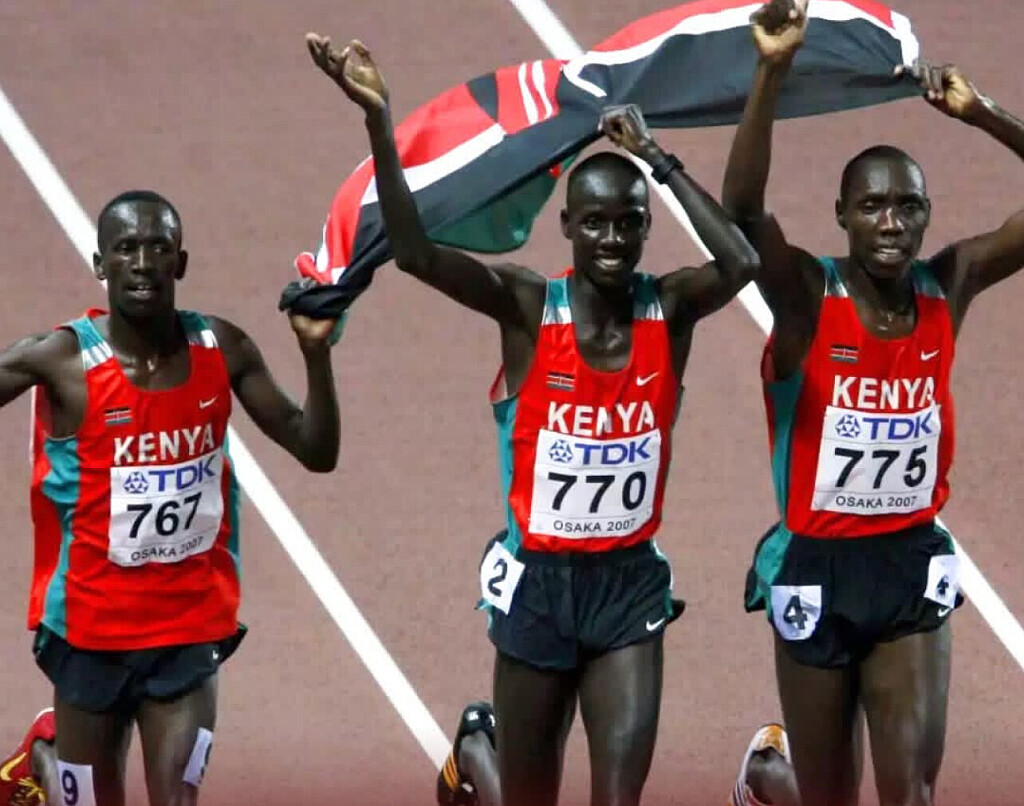
How One Tribe in Kenya Came to Dominate Global Distance Running
There may be no statistic in all of sports more astonishing than this one.
The Kalenjin, an ethnic group—often referred to as a tribe—in Kenya, make up about 13.4% of the country’s population, roughly 6.3 million people. On a global scale, they represent about one out of every 1,000 people worldwide.
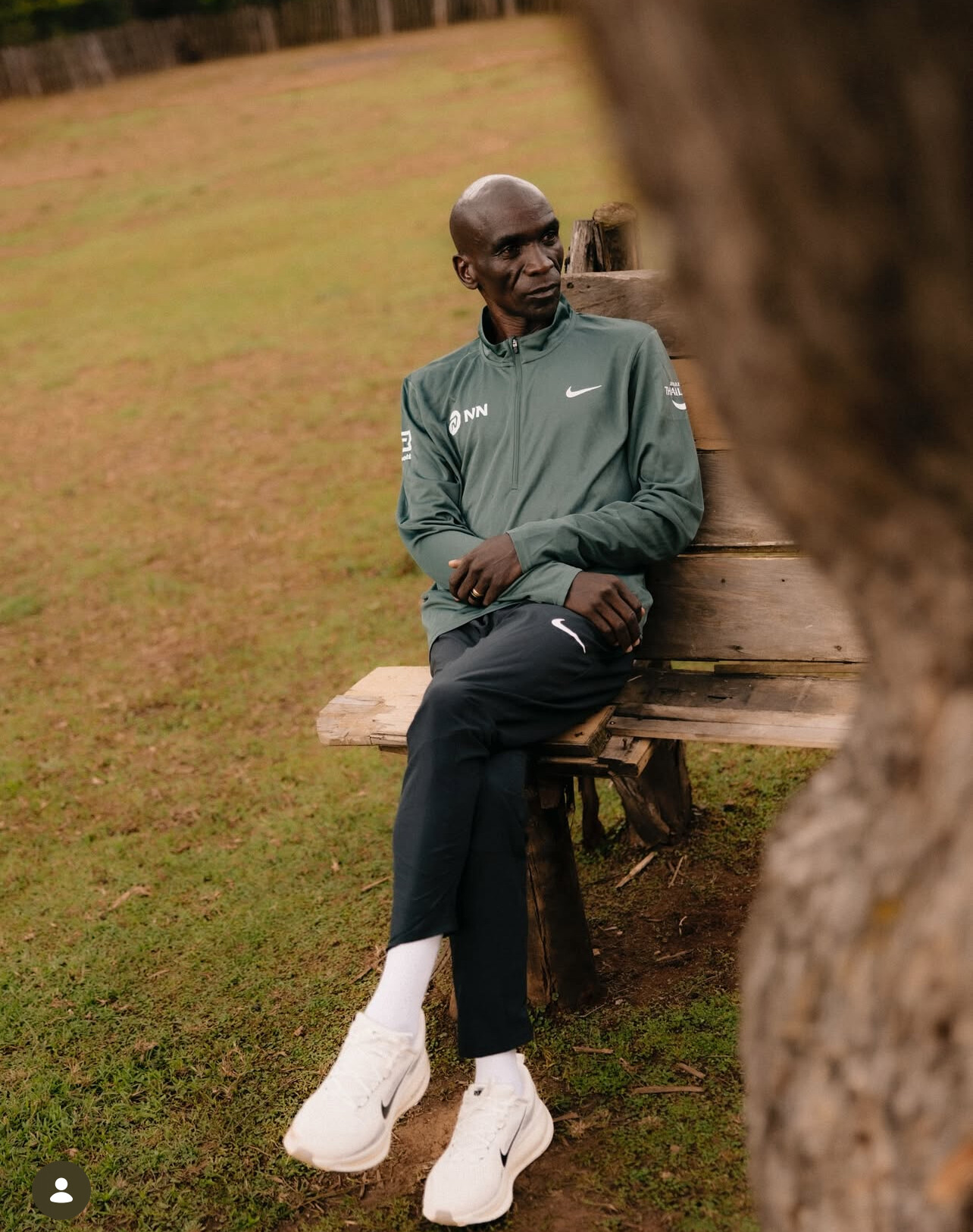
Yet this small community has produced an overwhelming share of the world’s greatest distance runners.

Their dominance has been so complete, and so sustained, that it has been described as “the greatest geographical concentration of achievement in the annals of sport.” And it is hard to argue otherwise.
From the Rift Valley to the World Stage
Most elite Kalenjin runners come from Kenya’s Rift Valley region, particularly areas such as Nandi, Elgeyo-Marakwet, Uasin Gishu, and Baringo, where elevations range from 2,000 to 2,400 meters (6,500–8,000 feet) above sea level.
Here, running is not a hobby—it is part of daily life.
Children grow up walking and running long distances, often on dirt roads. Training at altitude is the norm, not a strategy. And success stories are local and visible, creating a powerful cycle of belief and opportunity.
Champions Across Eras
The Kalenjin impact on global athletics stretches back more than half a century.
Kipchoge Keino, one of the pioneers of Kenyan distance running, won Olympic gold in the 1500 meters at the 1968 Mexico City Games and the 3000-meter steeplechase in 1972, helping place Kenyan runners on the world map.
Since then, Kenyan athletes—many of them Kalenjin—have dominated:
• The 3000-meter steeplechase, winning Olympic gold in nearly every Games since 1968
• The 5,000 meters and 10,000 meters at World Championships
• The marathon, particularly at the World Marathon Majors
Masters of the Marathon
Perhaps nowhere is this dominance more visible than in the marathon.
Kalenjin runners have repeatedly won and controlled races such as:
• Berlin Marathon
• London Marathon
• Chicago Marathon
• Boston Marathon
• New York City Marathon
These victories are not isolated moments—they are part of a long, uninterrupted pattern.
At the center of it all stands Eliud Kipchoge, widely regarded as the greatest marathon runner in history. A member of the Kalenjin community, Kipchoge has:
• Won two Olympic marathon gold medals (2016, 2021)
• Set a world record of 2:01:09 at the Berlin Marathon
• Become the first human to run 26.2 miles in under two hours
He is not an exception. He is the most refined expression of a system that has been producing champions for generations.
Why This One Tribe?
No single explanation tells the whole story, but several factors come together in the Rift Valley:
• Geography: High altitude, rolling terrain, and ideal training conditions
• Physiology: Exceptional running economy and efficient biomechanics
• Culture: Running as a respected path to success and opportunity
• Environment: Group training, competition, and long-term development from a young age
Together, these elements have created something unmatched in sport.
A Phenomenon Without Parallel
Great athletes come from everywhere. But nowhere else has such a small, specific populationproduced such sustained global dominance across events, generations, and decades.
Not sprinting.
Not swimming.
Not cycling.
Not soccer.
Only distance running.
From the highland paths of the Rift Valley to Olympic podiums and marathon finish lines around the world, the story of the Kalenjin remains one of the most extraordinary achievements in human performance.
And it is still being written.
by Boris Baron
Login to leave a comment
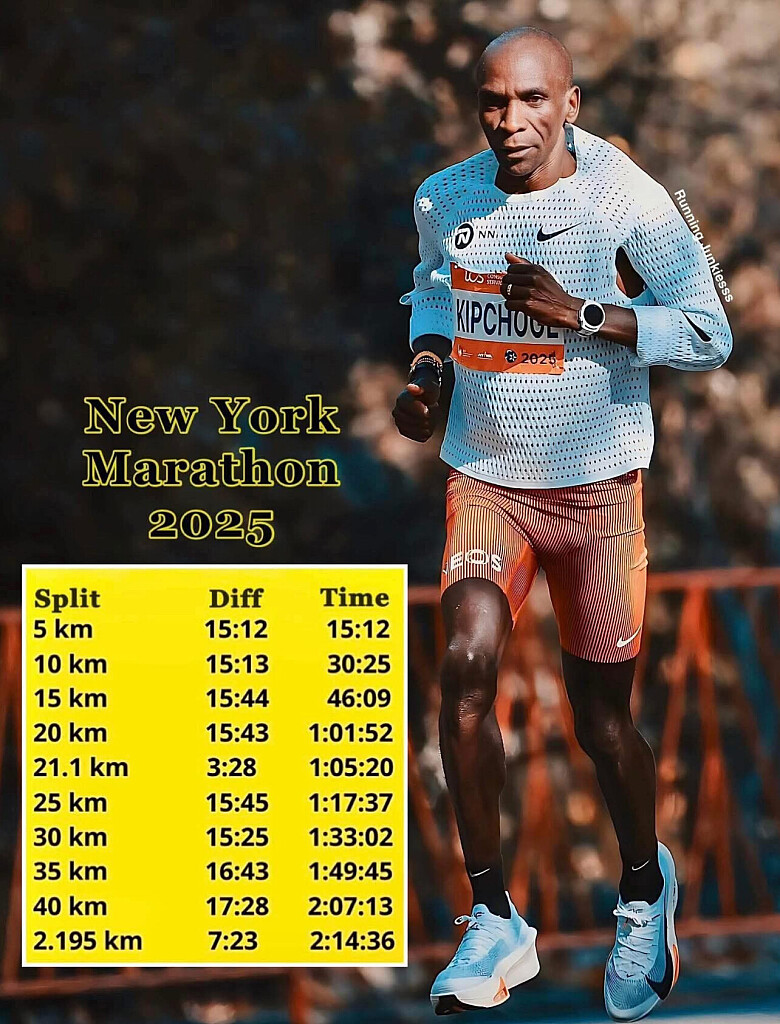
Eliud Kipchoge Finishes the 2025 New York City Marathon in 2:14:36
Eliud Kipchoge, the greatest marathoner of all time, took on the challenging streets of New York City for the first time — and finished strong in 2:14:36. Known for his smooth efficiency and calm composure, Kipchoge tackled the hilly and tactical course with trademark focus, staying consistent through the early stages before the pace slowed slightly in the latter half.
His early splits showed controlled aggression: 15:12 at 5K, 30:25 at 10K, and 1:05:20 at halfway. Through 30K, he was still moving well in 1:33:02, but the final 10 kilometers through Central Park tested even the marathon master, bringing him home in 2:14:36.
Though not among his fastest times, this was a run filled with purpose and legacy. For Kipchoge, New York was never about breaking records — it was about embracing one of the sport’s most iconic stages and completing his journey across all six World Marathon Majors.
At 40 years old, the Kenyan legend has now conquered every major marathon city, further solidifying his place as the face of modern distance running. "Many at age 40 have run much faster but this is still very respectable," says KATA founder Bob Anderson.
by Boris Baron
Login to leave a comment
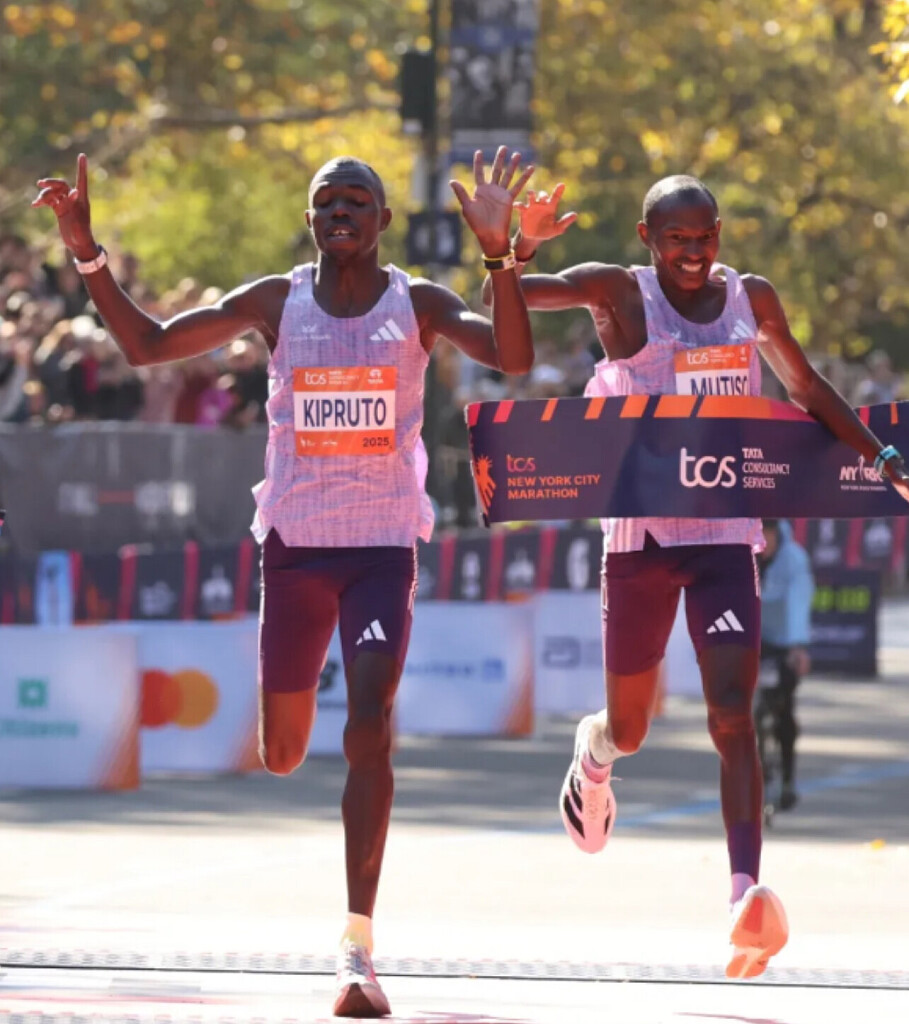
Benson Kipruto Wins a Thrilling 2025 New York City Marathon as Kipchoge and Bekele Fade
The streets of New York witnessed one of the most dramatic finishes in recent marathon history as Benson Kipruto of Kenya edged compatriot Alexander Mutiso by fractions of a second to win the 2025 TCS New York City Marathon. Both men were clocked at 2:08:09, with Kipruto leaning ahead in the final meters of Central Park to claim the title.
The victory marked a triumphant return to the top for Kipruto, who has previously won the Boston and Chicago Marathons. On a day when tactics mattered as much as fitness, he delivered a perfectly timed surge to secure the crown.
Alexander Mutiso finished a close second in 2:08:09, just 0.16 seconds behind, while 2021 New York champion Albert Korir completed the Kenyan sweep in third with a time of 2:08:57. Great Britain’s Patrick Dever ran a superb debut marathon to finish fourth in 2:08:58, and Swiss athlete Matthias Kyburz crossed the line fifth in 2:09:55.
All eyes were on Eliud Kipchoge, the two-time Olympic champion and marathon world record holder, making his long-awaited debut in New York. The legendary Kenyan started conservatively and remained in the lead pack through halfway, but the relentless climbs and bridges of the course eventually took their toll. Kipchoge finished 17th in 2:14:36, smiling as he crossed the line, suggesting this could be his final appearance at a World Marathon Major.
Ethiopian great Kenenisa Bekele also started among the favorites but faded after the 30-kilometer mark and did not finish the race. His withdrawal, along with Kipchoge’s struggles, highlighted the unique difficulty of New York’s course—one that tests strategy and strength more than sheer speed.
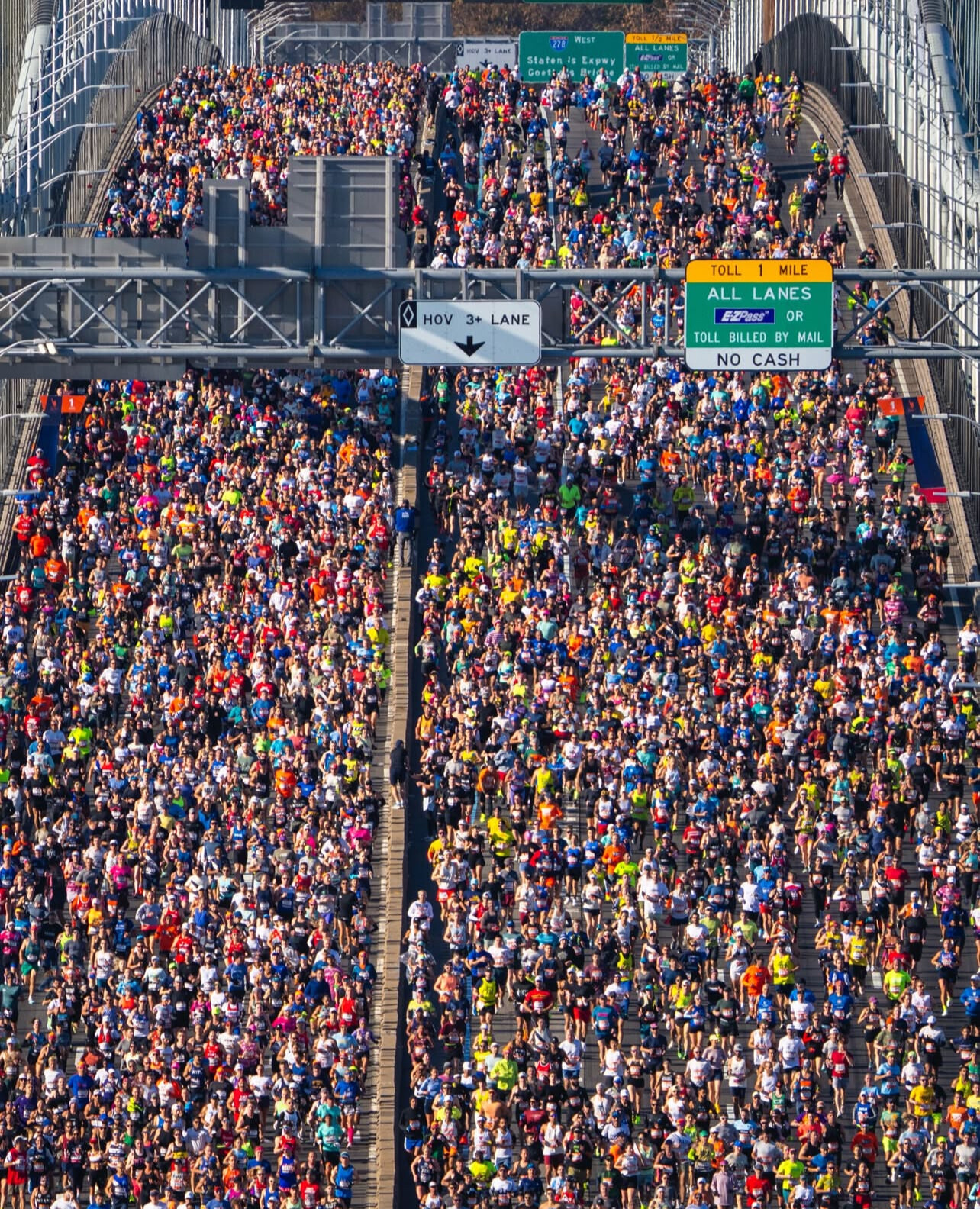
Despite the absence of a record-breaking time, the 2025 edition of the TCS New York City Marathon delivered unforgettable drama. The Kenyan trio’s podium sweep reaffirmed the country’s dominance in distance running, while thousands of runners from across the globe once again turned the streets of the five boroughs into a festival of endurance and inspiration.
Top 10 Men’s Results – 2025 TCS New York City Marathon:
1. Benson Kipruto (Kenya) – 2:08:09
2. Alexander Mutiso (Kenya) – 2:08:09
3. Albert Korir (Kenya) – 2:08:57
4. Patrick Dever (Great Britain) – 2:08:58
5. Matthias Kyburz (Switzerland) – 2:09:55
6. Joel Reichow (United States) – 2:09:56
7. Charles Hicks (United States) – 2:09:59
8. Sondre Moen (Norway) – 2:10:15
9. Tsegay Weldlibanos (Eritrea) – 2:10:36
10. Joe Klecker (United States) – 2:10:37
Eliud Kipchoge finished 17th in 2:14:36.
Kenenisa Bekele did not finish (DNF).
by Boris Baron
Login to leave a comment

Eliud Kipchoge’s Final Quest: Chasing Meaning, Not Medals in New York
When the sun rises over Staten Island this Sunday, the world will witness something special — Eliud Kipchoge, the greatest marathoner of all time, running the TCS New York City Marathon for the first time. At 40, the Kenyan legend isn’t chasing records. He’s chasing completeness — the final chapter of a career that redefined endurance and possibility.
With two Olympic golds, 11 major marathon victories, and the historic sub-two-hour run, Kipchoge already stands alone. Yet New York remains the one missing jewel in his Abbott World Marathon Majors crown. “If I don’t complete all of them,” he says, “I feel like I am halfway. My legacy will be complete when I have a sixth star.”
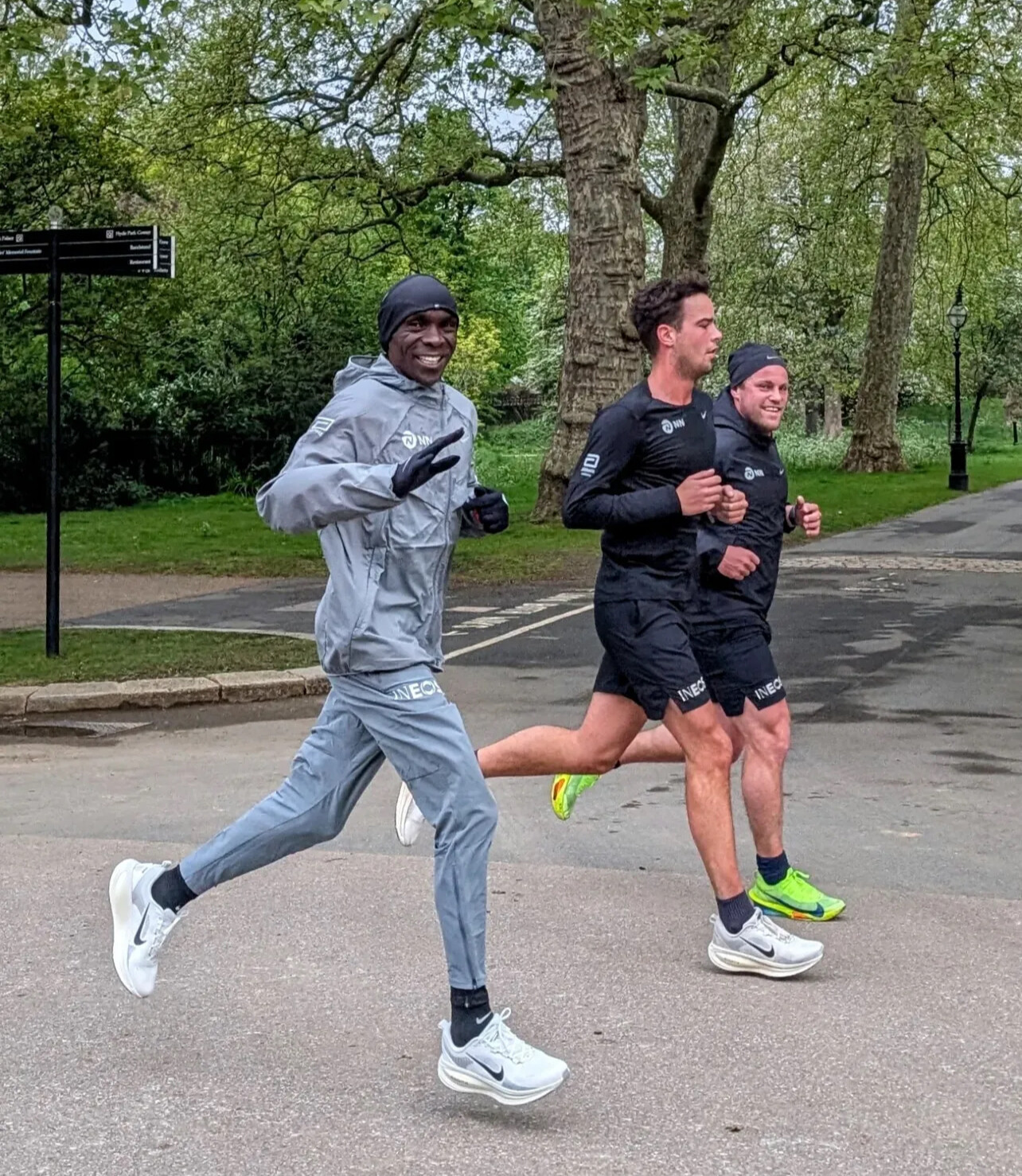
But New York is no Berlin. Its hills and bridges test rhythm and resolve. Kipchoge faces a tough field, led by his former training partner and defending champion Abdi Nageeye, along with Benson Kipruto, Alexander Mutiso, and Ethiopia’s Deresa Geleta. Nageeye, coming off a 2:04:20 in London, aims to defend his title and disrupt the legend’s farewell.
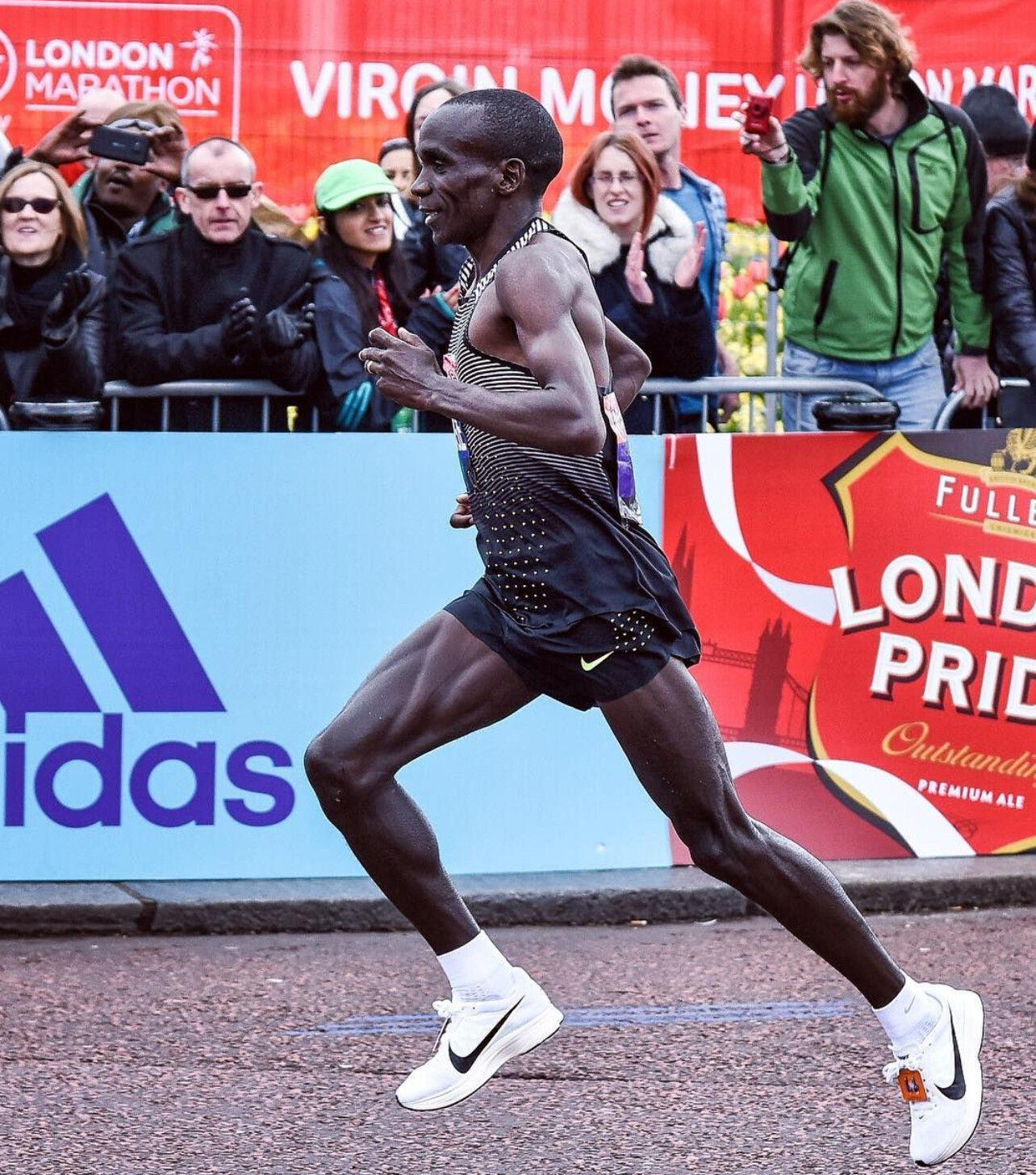
Still, for Kipchoge, this race is about purpose, not podiums. “My happiness is to see people getting interested in what I’m selling,” he says. “I’m selling the sport as a profession.” His mission now is to inspire — through running, mentorship, and his wellness platform Kotcha, which blends training, nutrition, and education. “We’re bringing knowledge to people’s fingertips,” he explains.
To him, running is a universal language. “All human beings are beautiful,” Kipchoge says. “The problem is ourselves — not using our knowledge.”
As 50,000 runners take on the five boroughs, Kipchoge’s presence turns the marathon into something larger — a meditation on effort, purpose, and legacy. His calm smile and relentless discipline remind the world that greatness isn’t about medals, but meaning.
On Sunday, as he strides through Central Park, Kipchoge won’t just be chasing a finish line. He’ll be closing a circle — running not for glory, but for the joy of fulfillment.
by Robert Kibet for My Best Runs
Login to leave a comment

Eliud Kipchoge Chases One Final Milestone as He Makes His New York City Marathon Debut This Sunday
One of the most anticipated starts in marathon history arrives this Sunday as Eliud Kipchoge, the two-time Olympic marathon champion and widely regarded as the greatest marathoner of all time, makes his debut at the TCS New York City Marathon (NYC Marathon).
The Big Picture
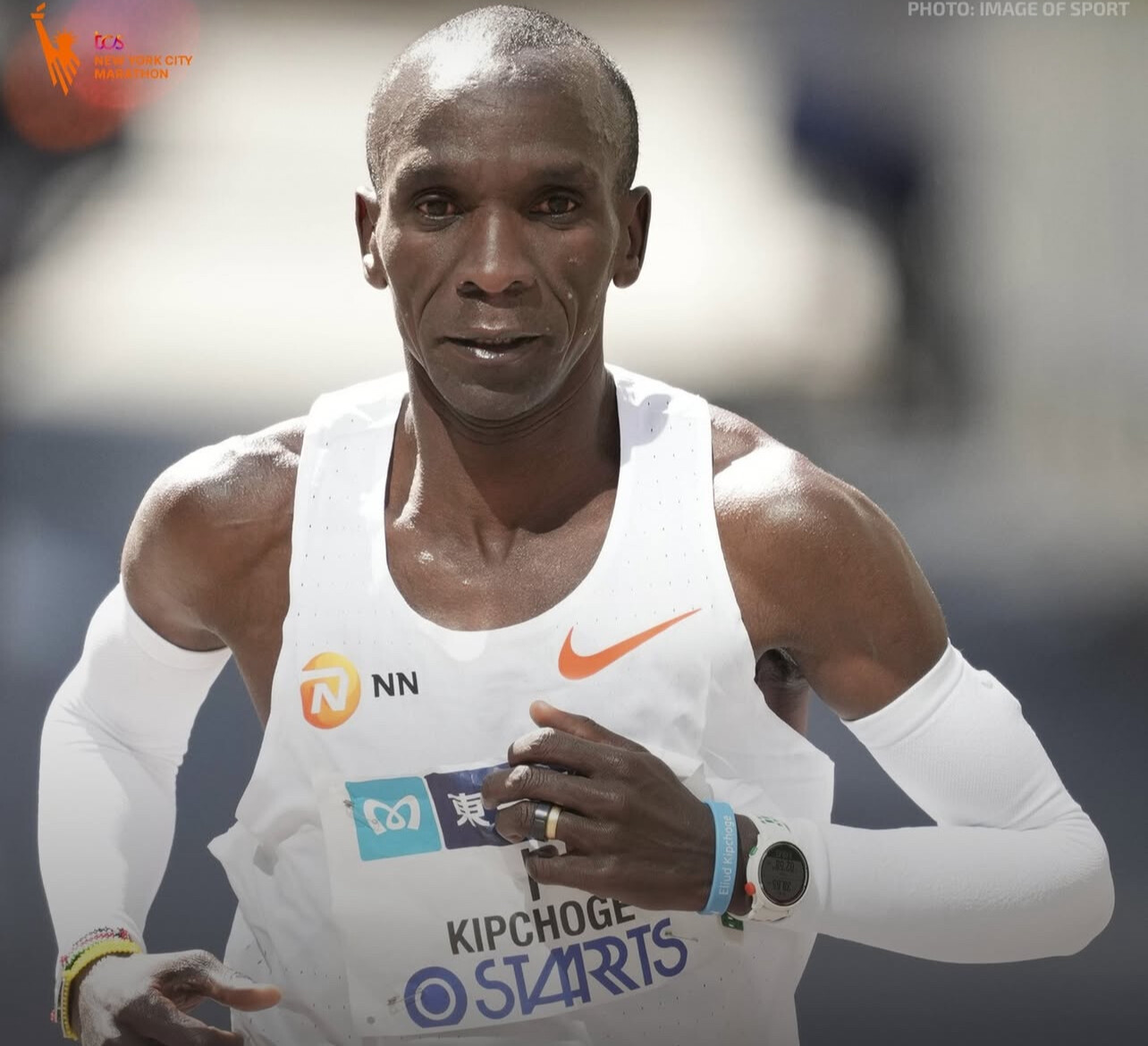
At 40 years old, Kipchoge has already built an extraordinary legacy: Olympic gold medals in 2016 (Rio) and 2020 (Tokyo), a world-record marathon time of 2:01:09 in Berlin 2022, and a historic sub-2-hour marathon effort in Vienna 2019 (1:59:40 – though not ratified).
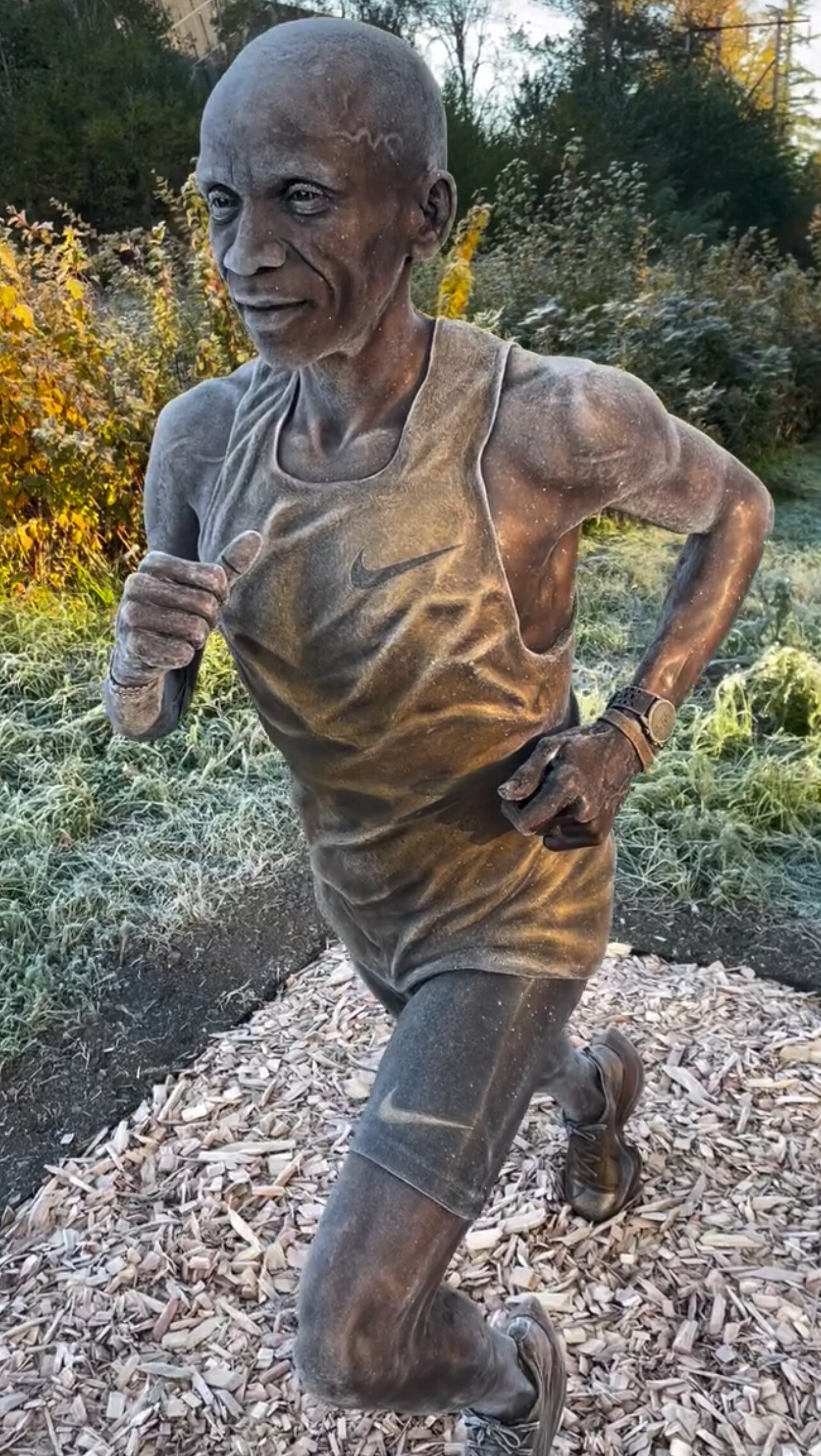
Yet until now, the NYC Marathon has been the elusive piece of the puzzle. By lining up this Sunday, Kipchoge will complete his set of the major Abbott World Marathon Majors (AWMM) if he crosses the finish line—it’s the only major marathon he has yet to run.
Why It Matters
• Legacy: Finishing NYC would give Kipchoge the coveted “six-star” AWMM medal for running all six of the premier majors.
• New challenge: The NYC course is markedly different from the flat, fast courses of Berlin or London. It’s undulating, uses bridges, and traverses the five boroughs—a true test of both physical and mental strength.
• Age and motivation: While Kipchoge remains in top shape, he acknowledges the impact of time and says this race is as much about meaning and experience as it is about finishing fast.
The Competition & Conditions
Kipchoge enters a stacked elite field. He’ll face defending champion Abdi Nageeye of the Netherlands, former NYC winners Evans Chebet and Albert Korir, and several rising stars with sub-2:04 personal bests.
What to Watch
• Will Kipchoge go for a bold win or focus on completing this final major?
• How will the unique challenges of NYC—bridges, hills, and roaring crowds—affect his pacing and strategy?
• Could this race mark the close of his competitive marathon career—or the beginning of a new chapter as ambassador and mentor?
Sunday’s race isn’t just another marathon for Eliud Kipchoge. It’s a long-awaited chapter in a legendary career—one that may see him conquer the final major, inspire millions, and reaffirm his enduring message: No human is limited.
by Boris Baron
Login to leave a comment
Kenenisa Bekele Joins 2025 New York City Marathon Elite Field
Ethiopian legend Kenenisa Bekele, the third-fastest marathoner in history with a 2:01:41 personal best from Berlin 2019, has officially been added to the 2025 TCS New York City Marathon elite men’s field — setting up yet another thrilling clash with Eliud Kipchoge.
Bekele, now 43, withdrew from April’s London Marathon due to recurring injuries that disrupted his buildup. His most recent marathon finish came at the Paris Olympic Marathon, where he placed 39th in 2:12:24. Despite the setback, Bekele’s experience and resilience continue to make him one of the sport’s most compelling figures.
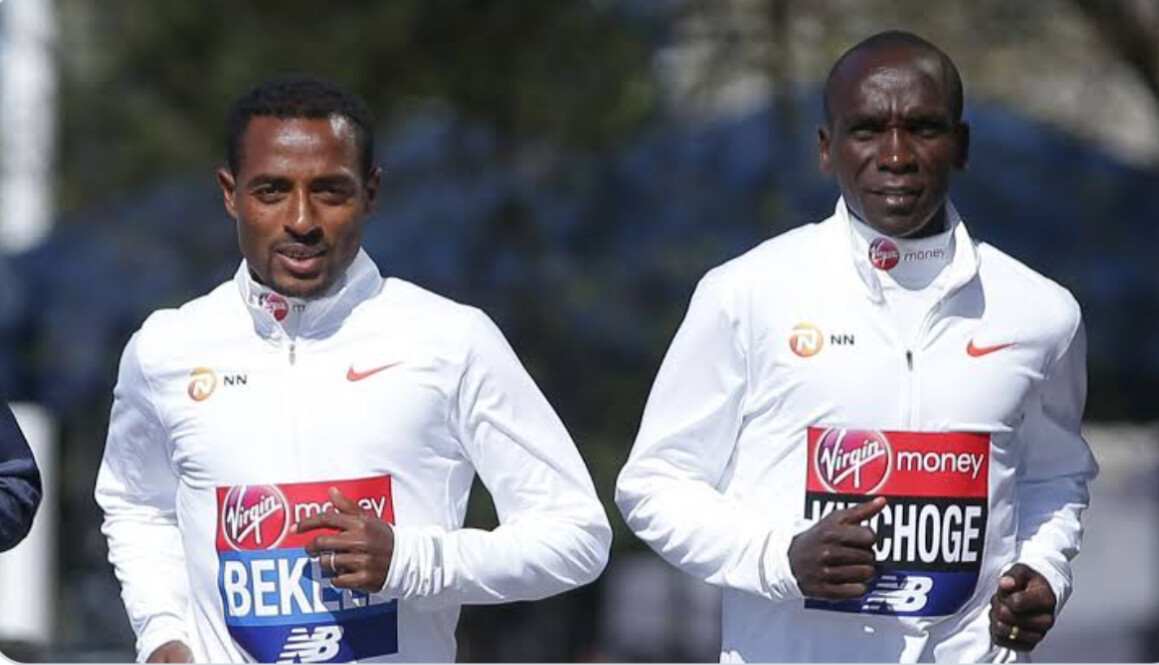
This year’s New York City Marathon will mark Bekele’s sixth career race against Kipchoge, the reigning Olympic champion and former world record holder. Bekele’s only “victory” in that rivalry came at the Paris Olympics, when Kipchoge dropped out mid-race.
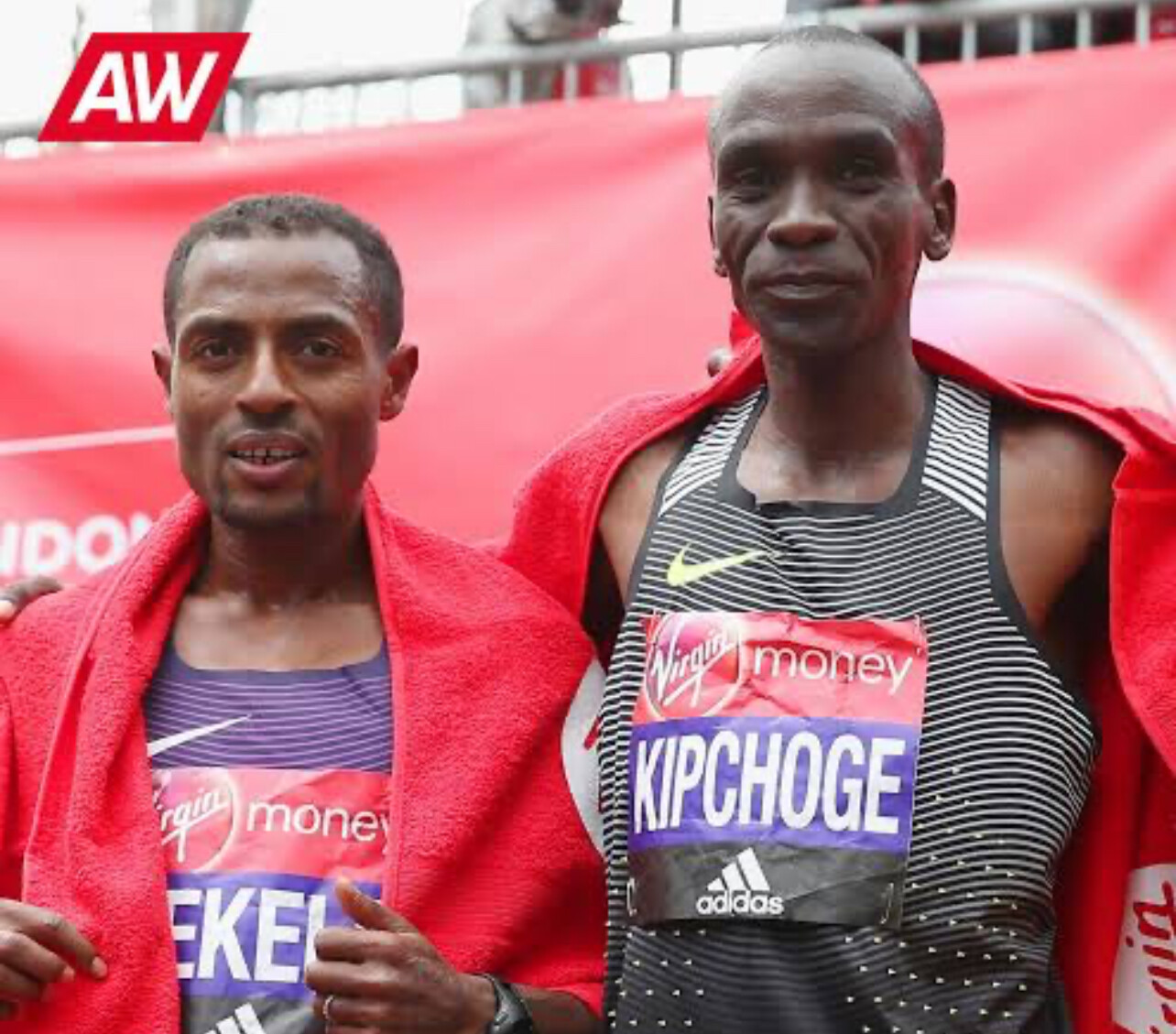
Bekele’s addition brings new intrigue to a field already rich in talent and storylines. While New York’s undulating course rarely produces record times, it remains one of the most prestigious and unpredictable races on the global marathon calendar — a true test of strategy and mental strength.
Notably absent from the 2025 lineup is Evans Chebet, the 2022 NYC Marathon champion and last year’s runner-up. Chebet has withdrawn from this year’s race after failing to finish at the Boston Marathon in April.
As the countdown begins, all eyes turn to Central Park, where two of the greatest marathoners of all time — Bekele and Kipchoge — are set to renew their rivalry on one of the world’s toughest stages.
Will Bekele’s comeback write a new chapter in marathon history, or will Kipchoge’s consistency once again define the day? On November 2, New York will have its answer.
by Boris Baron
Login to leave a comment
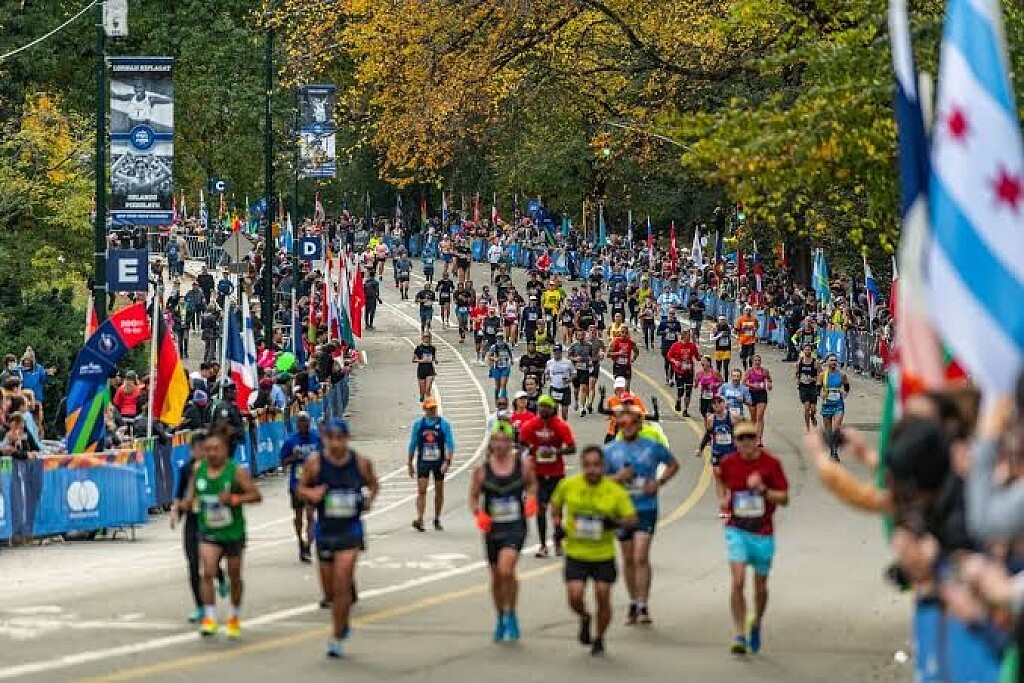
Running Through The City Of Dreams New York Marathon 2025
On Sunday, November 2, 2025, the five-borough spectacle of the New York City Marathon will unfold once again, offering more than 50,000 runners the chance to push 26.2 miles through the heart of New York. From the cannon blast on Staten Island to the triumphant finish in Central Park, this is a race that marries endurance, emotion and urban drama.
Kipchoge and Hassan Headline an Extraordinary Field
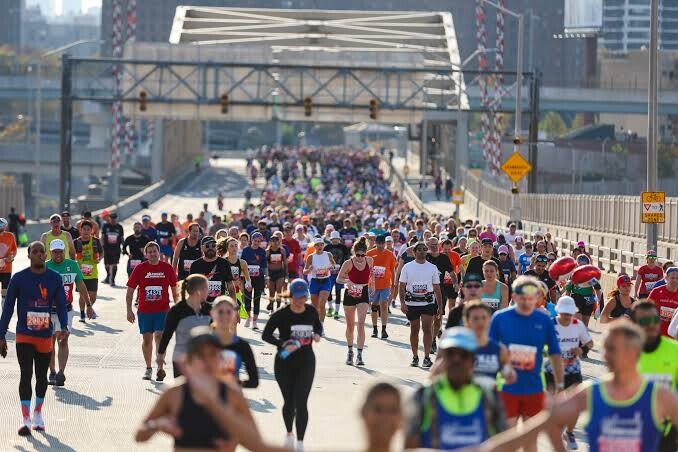
The biggest storyline heading into this year’s race is the presence of Eliud Kipchoge, the greatest marathoner in history, and Sifan Hassan, the double Olympic champion who stunned the world with marathon victories in both London and Chicago. For Kipchoge, New York completes his journey through all six Abbott World Marathon Majors — a crown that has eluded him until now.
Hassan, meanwhile, returns to the marathon distance after a string of world-class performances on both track and road, her fearless racing style perfectly suited to the unpredictable rhythm of New York’s streets.
They’ll face an elite field stacked with world-class names, including Benson Kipruto of Kenya (2:02:16 PB), Evans Chebet (two-time Boston champion, 2:03:00 PB), and defending champion Tamirat Tolaof Ethiopia (course record holder at 2:04:58). The women’s field is equally star-studded, featuring 2022 champion Sharon Lokedi, Tokyo winner Rosemary Wanjiru, and a host of East African contenders ready to test Hassan on one of the sport’s toughest stages.
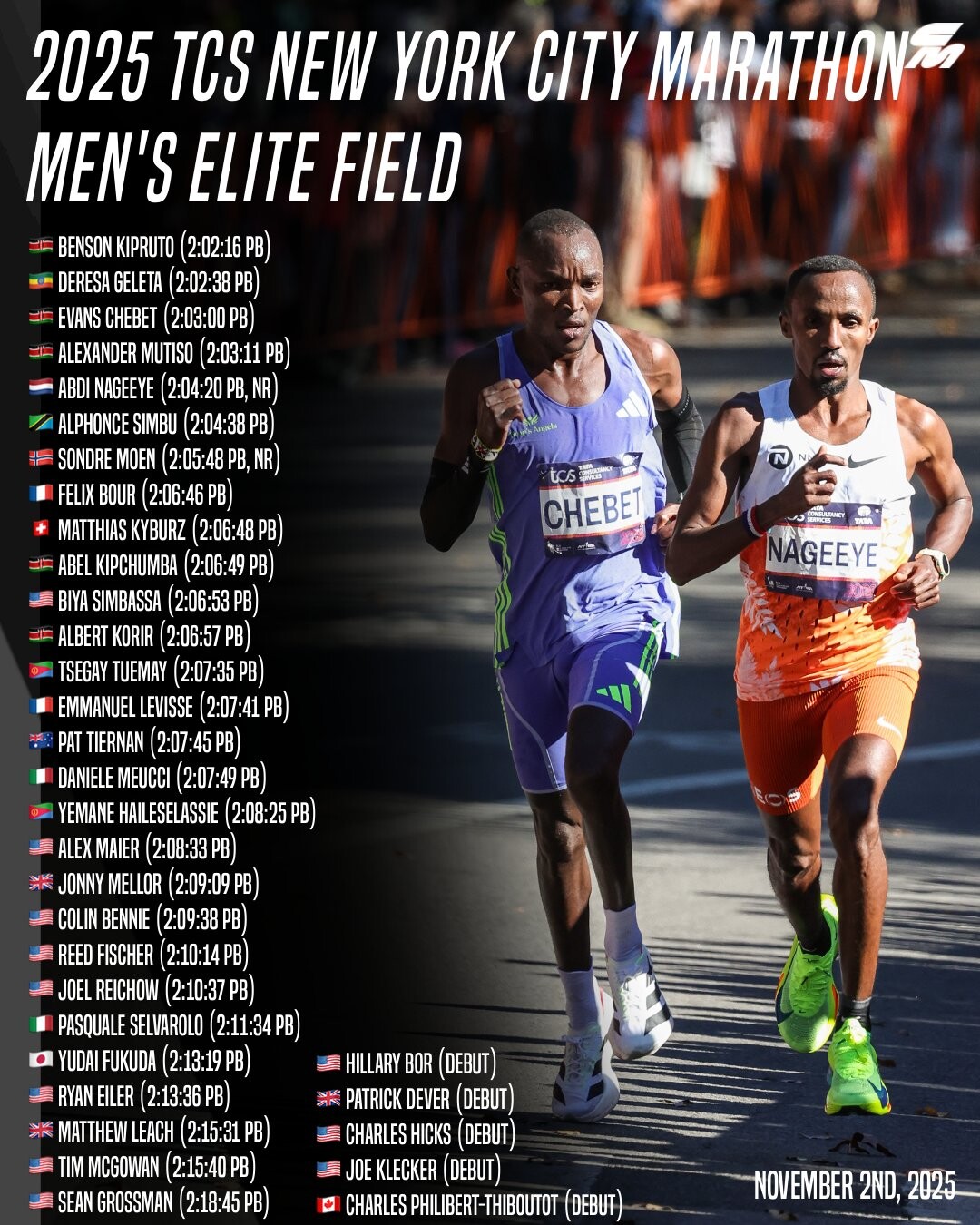
Among the American hopefuls, Emily Sisson, the U.S. record holder in the marathon, headlines the women’s field and will make her New York debut. On the men’s side, Biya Simbassa leads the U.S. charge, joined by a deep domestic field racing for top-American honors and prize bonuses.
Course Records
• Men: 2:04:58 — Tamirat Tola (ETH), 2023
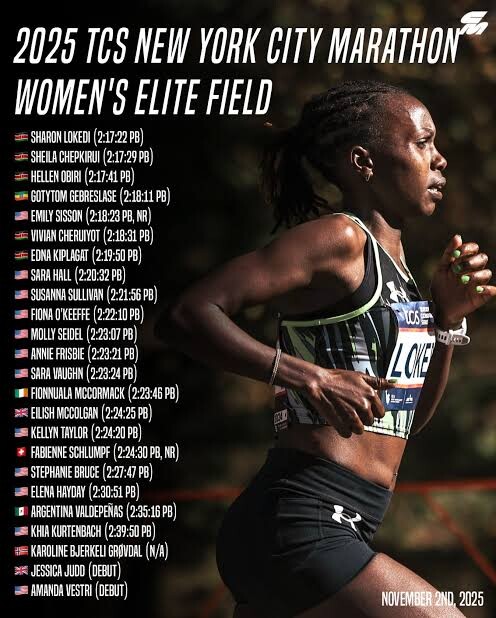
• Women: 2:22:31 — Margaret Okayo (KEN), 2003
These records reflect both top-tier performance and the challenging character of the course — rather than flat, pacer-assisted routes that routinely see world-record times.
Prize Purse
The stakes are high. Open-division winners stand to earn $100,000, with descending prizes through 10th place. The event also offers a $50,000 bonus for a winner who breaks the standing course record, plus separate prize pools for top U.S. finishers and wheelchair divisions. With total payouts approaching nearly a million dollars, the financial motivation is real — even if the course isn’t built for world-record thrills.
Why a World Record Isn’t Realistic
Make no mistake: the New York course is legendary for its toughness rather than its speed. Runners face five major bridge crossings, a long ascent up the Queensboro Bridge around mile 15–16, variable terrain, sharp turns and a final push up Fifth Avenue into Central Park. Unlike flat, pacemaker-led courses such as Berlin or Chicago, NYC emphasises tactical racing, rivalries and finish-line theatre. The organising body eliminated dedicated elite pacemakers years ago in favour of pure head-to-head competition.
While pace groups may support recreational waves, elite winners will race without the type of structured pacemaking that enables constant sub-2:03 splits. In short: this is a championship-style contest, not a time-trial.
What Makes NYC Unique
• Cityscape & crowd noise: From Staten Island’s Verrazzano Narrows Bridge to Brooklyn’s vibrant neighborhoods, the Queensboro Bridge, Manhattan’s First Avenue and the final loop in Central Park, the scenery is unmatched.
• Massive scale but elite depth: The global field, the tens of thousands of recreational runners, the international media — the race’s atmosphere is unmatched in road-racing.
• Legacy of racing over timing: Past editions have celebrated bold attacks and dramatic finishes more than normally smooth pacing. That makes this one of the world’s most storied and unpredictable marathons.
What to Watch on November 2
• How Kipchoge adapts his disciplined, flat-course style to a course that demands rhythm changes, hills and surges.
• Whether Hassan will leverage her track speed and tenacity to counter a course that rewards strength and race-tactics.
• Whether Sisson (and other U.S. entrants) can navigate the final tougher miles to claim top-American status or even an open podium spot.
• The weather and pacing strategy: any wind across the bridges or mis-timed surge could decide the race more than early splits.
• Whether someone dares to go after Tola’s 2:04 : 58 mark — unlikely but possible under perfect conditions.
The 2025 New York City Marathon is more than a race. It is a testament to endurance, to the city that hosts it and to runners who thrive in challenge rather than comfort. Kipchoge and Hassan bring star power. The U.S. challengers bring ambition. And the 50,000+ starters bring stories.
Whether you’re chasing a personal best, seeking a finish-line moment or just watching from the sidelines, November 2 will be unforgettable. The bridges, the boroughs, the final climb into Central Park — the city will judge your resolve. And with no pacemakers to pull you through, this year’s finishers will know they earned every step with heart.
by Boris Baron
Login to leave a comment
TCS New York City Marathon
The first New York City Marathon, organized in 1970 by Fred Lebow and Vince Chiappetta, was held entirely in Central Park. Of 127 entrants, only 55 men finished; the sole female entrant dropped out due to illness. Winners were given inexpensive wristwatches and recycled baseball and bowling trophies. The entry fee was $1 and the total event budget...
more...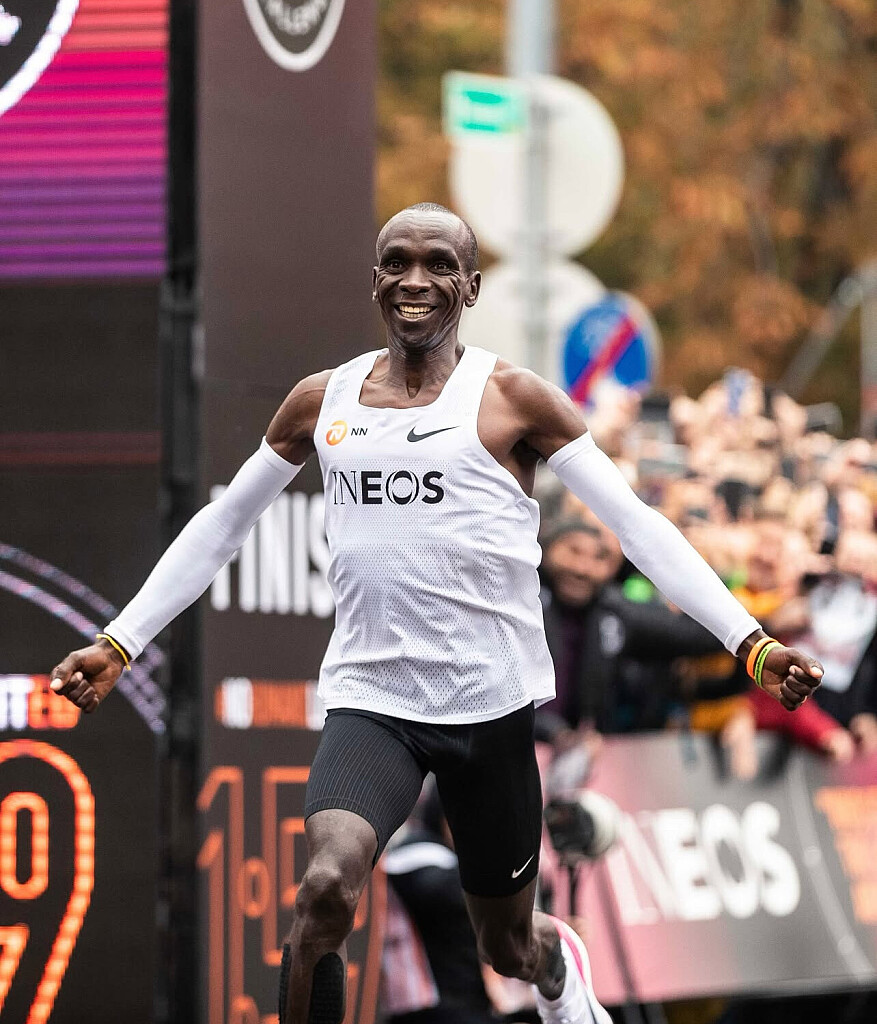
Eliud Kipchoge Launches “Kotcha Run” — Bringing His Training Secrets to Runners Worldwide
Eliud Kipchoge, the marathon icon and global ambassador of distance running, has officially launched a new app — Kotcha Run — designed to share his legendary training methods with runners everywhere.
Developed in partnership with the NN Running Team, the app provides athletes of all levels with access to the very strategies, tools, and insights that have powered Kipchoge’s record-breaking career and two Olympic gold medals.
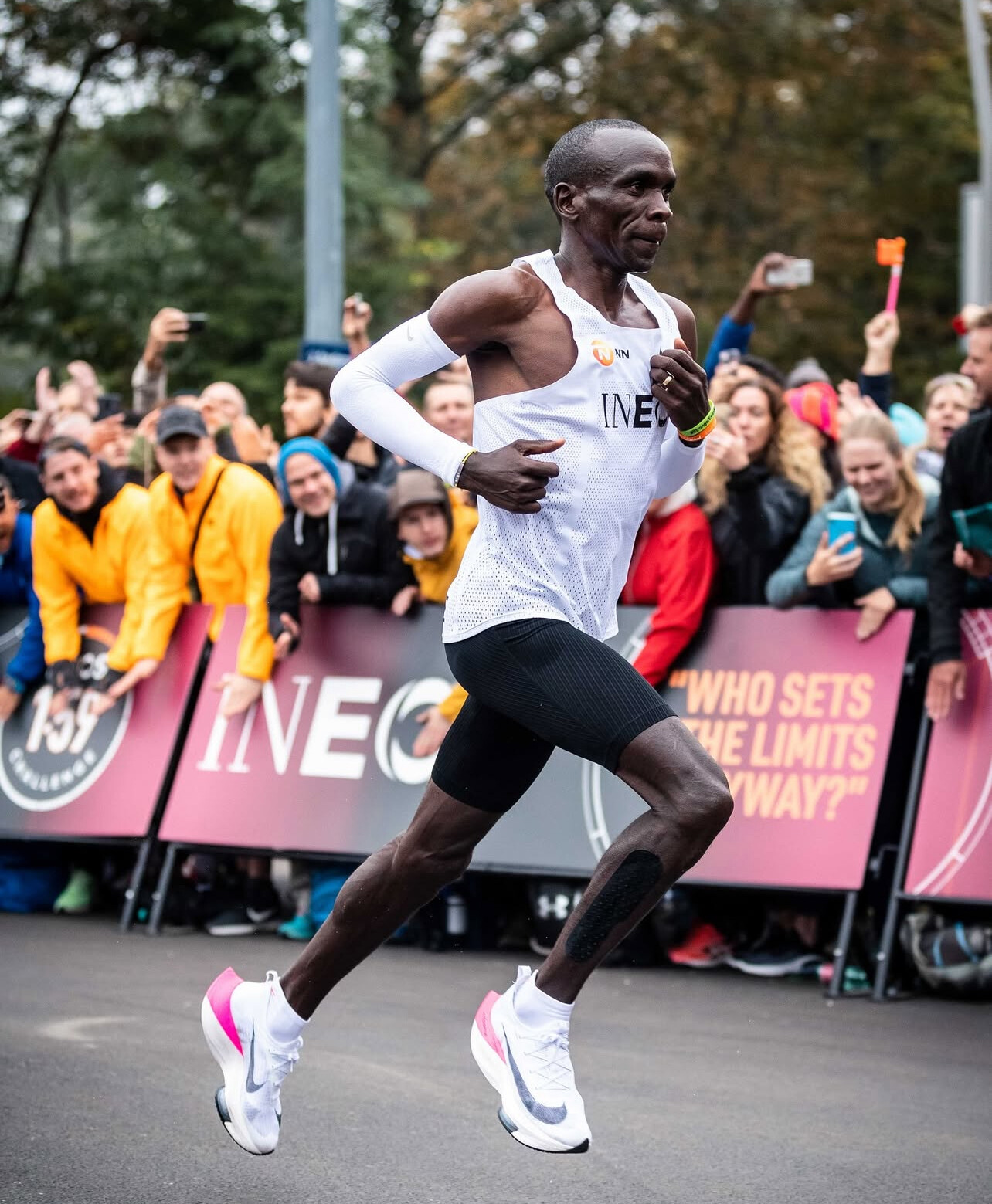
“People always ask me about my secret. Today, I’m offering a way to share it,” Kipchoge explained.
Through Kotcha Run, users can follow customized training programs, explore practical tips, and gain daily motivation directly inspired by the world’s greatest marathoner. Whether you’re preparing for your first 5K or your next marathon, the app helps runners apply Kipchoge’s disciplined yet philosophical approach — centered on patience, consistency, and belief.
Runners can now pre-register on the App Store to be among the first to experience it.
With this launch, Eliud Kipchoge once again proves his commitment to democratizing elite training, helping every runner — from beginner to professional — discover their own “No Human Is Limited” potential.
by Boris Baron
Login to leave a comment
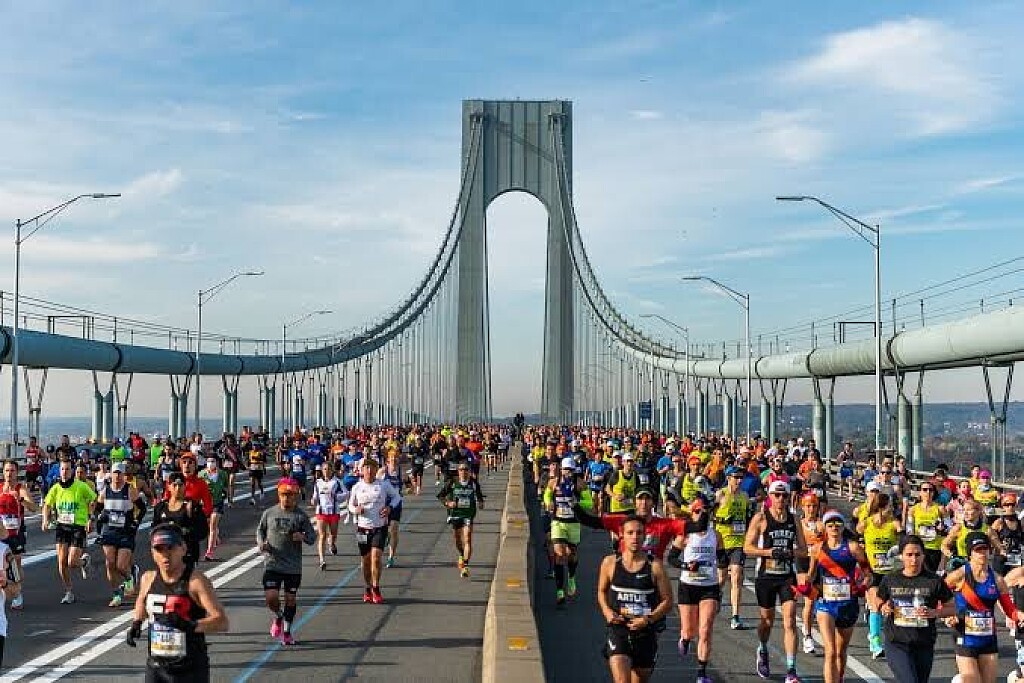
Chasing New York: What to Watch at the 2025 TCS New York City Marathon
Every November, the streets of New York City transform. Five boroughs become a stage. Dreams meet asphalt.
The 2025 TCS New York City Marathon is fast approaching — and for runners, coaches, and fans alike, it remains one of the most electric events on the global running calendar.
The Big Picture
• Date: Sunday, November 2, 2025
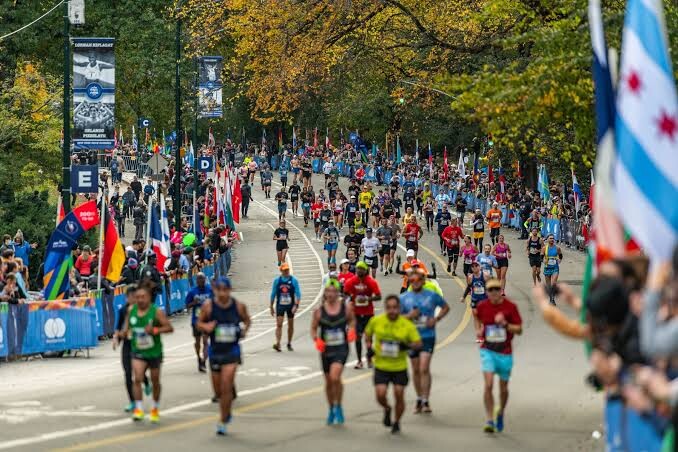
• Field size: More than 55,000 runners representing over 130 nations will take on the 26.2-mile journey from Staten Island to Central Park.
• Defending champions: Abdi Nageeye (Netherlands) and Sheila Chepkirui (Kenya) return to defend their crowns.
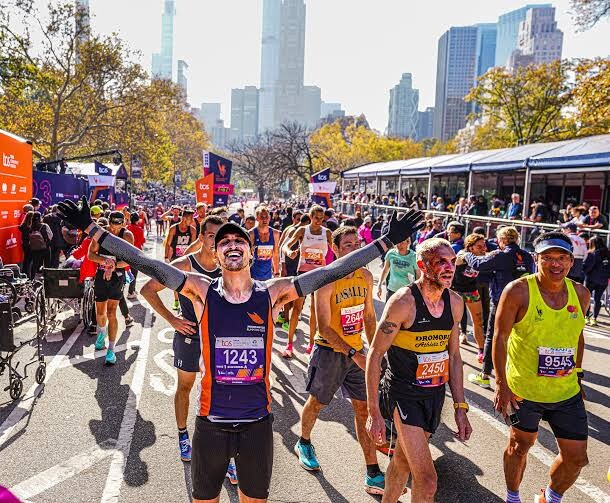
• Debut stars: Marathon legend Eliud Kipchoge and Olympic champion Sifan Hassan will make their long-awaited New York debuts — a storyline that has the running world buzzing.
• Classic route: The course again threads through all five boroughs, starting at Fort Wadsworth on Staten Island, crossing the Verrazzano-Narrows Bridge, and finishing in Central Park.
• Sustainability focus: Organizers at New York Road Runners (NYRR) continue to expand environmental initiatives, including recyclable aluminum water bottles and reduced single-use plastics.
Course Records
• Men’s Record: 2:04:58 – Tamirat Tola (2023)
• Women’s Record: 2:22:31 – Margaret Okayo (2003)
Both marks remain tough to challenge on New York’s rolling, bridge-laden course — but with Kipchoge, Chebet, and Nageeye in the men’s field, and Hassan, Obiri, and Lokedi among the women, the potential for history is very real.
Men’s Elite Highlights
• Eliud Kipchoge (Kenya) – two-time Olympic champion, 2:01:09 PB, running NYC for the first time.
• Abdi Nageeye (Netherlands) – defending champion and Olympic silver medalist.
• Evans Chebet (Kenya) – two-time Boston Marathon champion.
• Benson Kipruto (Kenya) – Chicago 2022 winner.
• Albert Korir (Kenya) – former NYC champion.
• Joe Klecker (USA) – U.S. Olympian making his marathon debut.
• Hillary Bor (USA) – U.S. steeplechase champion transitioning to the roads.
• Charles Hicks (USA) – NCAA cross-country champion now turning professional.
Women’s Elite Highlights
• Sifan Hassan (Netherlands) – Olympic champion, winner in London (2023) and Chicago (2024).
• Hellen Obiri (Kenya) – Boston 2023 and NYC 2023 champion.
• Sharon Lokedi (Kenya) – NYC 2022 winner, still a local favorite.
• Sheila Chepkirui (Kenya) – defending NYC champion.
• Emily Sisson (USA) – current American marathon record holder (2:18:29).
• Molly Seidel (USA) – Tokyo Olympic bronze medalist.
• Fiona O’Keeffe (USA) – 2024 U.S. Olympic Trials marathon champion.
• Susanna Sullivan (USA) – Top-10 finisher at Boston 2023, consistent national contender.
This year’s field features 49 Olympians and Paralympians, nine past major marathon winners, and 16 medalists from Olympic or World Championship events — arguably the deepest lineup in New York history.
What Makes New York Unique (and Brutal)
• Rolling terrain and bridges: The Verrazzano, Pulaski, Queensboro, and Willis bridges each sap rhythm and energy.
• Crowd power: Two million spectators line the course, creating unmatched atmosphere — and volume.
• Late-season unpredictability: Weather can swing from cold drizzle to crisp fall perfection.
• Tactical racing: With its uneven pacing demands, NYC rewards strategy over pure speed.
Storylines to Watch
• Kipchoge’s debut: The marathon GOAT takes on the sport’s loudest stage. Can he master New York’s relentless hills and twists?
• Hassan’s bold quest: Coming off London and Chicago wins, can she complete the trifecta in her first NYC appearance?
• Lokedi vs. Obiri: The Kenyan duo continue their fierce rivalry on familiar ground.
• Nageeye’s defense: Last year’s champion faces his toughest test yet with Chebet and Kipruto in pursuit.
• American charge: Sisson, Seidel, O’Keeffe, and Sullivan lead the most complete U.S. women’s team in years — while Klecker and Bor look to ignite the next chapter for American men’s marathoning.
• Record watch: Tola’s 2:04:58 may finally be tested, and Okayo’s 22-year-old mark could fall if conditions align.
For Runners and Coaches
• Train the bridges. Practice long tempo runs that mimic New York’s undulating rhythm.
• Respect the pace. The roar of Brooklyn can trick even the best into going out too fast.
• Fuel flexibly. NYRR’s eco-station setup may differ from other majors — plan accordingly.
• Stay mentally sharp. The final 10 K through Central Park can break anyone unprepared for its hills.
• Layer smartly. Start slightly chilled; the crowds and effort will warm you fast.
The Bottom Line
The 2025 TCS New York City Marathon blends star power, unpredictability, and history like no other race. From Kipchoge’s long-awaited debut to the fiercest women’s field ever assembled in New York, every mile promises drama.
For runners chasing personal bests, and for millions of spectators lining the streets or watching from afar, November 2 will again remind us why this marathon is more than a race — it’s a celebration of endurance, spirit, and the human story that unfolds across 26.2 miles of the world’s greatest city.
by Boris Baron
Login to leave a comment
TCS New York City Marathon
The first New York City Marathon, organized in 1970 by Fred Lebow and Vince Chiappetta, was held entirely in Central Park. Of 127 entrants, only 55 men finished; the sole female entrant dropped out due to illness. Winners were given inexpensive wristwatches and recycled baseball and bowling trophies. The entry fee was $1 and the total event budget...
more...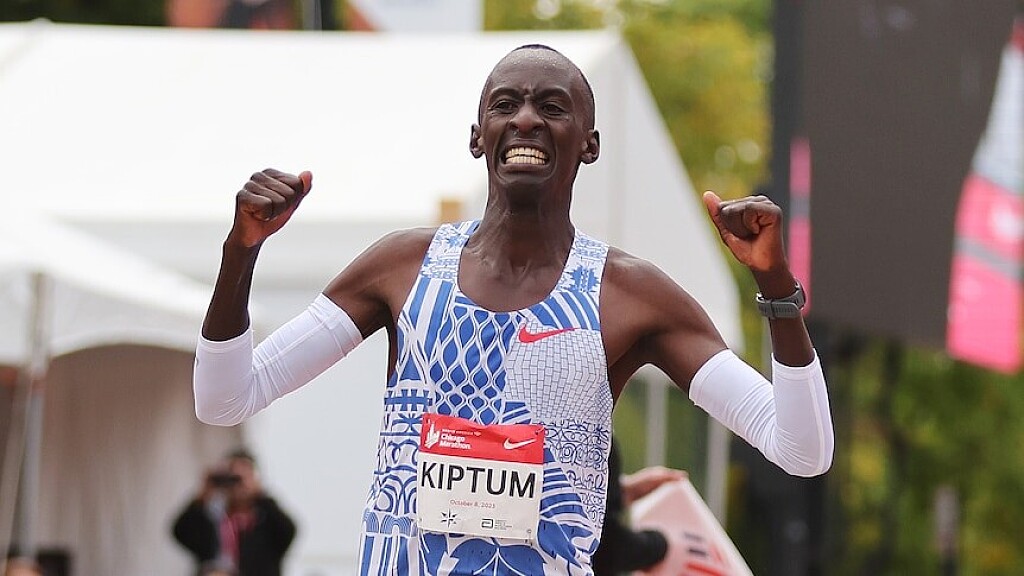
Chicago’s Marathon Legacy — From Kiptum’s Perfection to Kiplimo’s Power
Two years apart, on the same streets of Chicago, two East African greats delivered marathon performances that will be remembered for generations.
In 2023, Kenya’s Kelvin Kiptum stunned the world with his 2:00:35 world record, a run that redefined endurance and perfection.
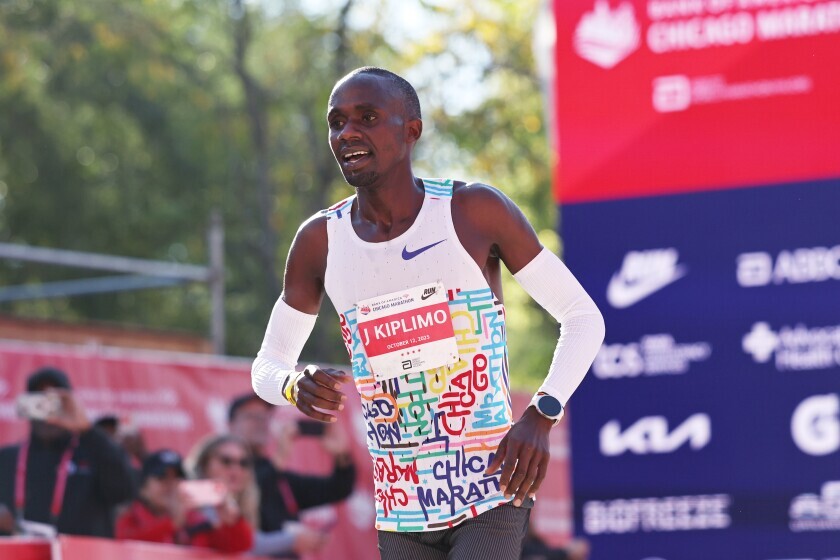
In 2025, Uganda’s Jacob Kiplimo, already the half marathon world record holder, returned to Chicago for his second career marathon and clocked 2:02:23 — his personal best and the seventh-fastest marathon ever run.
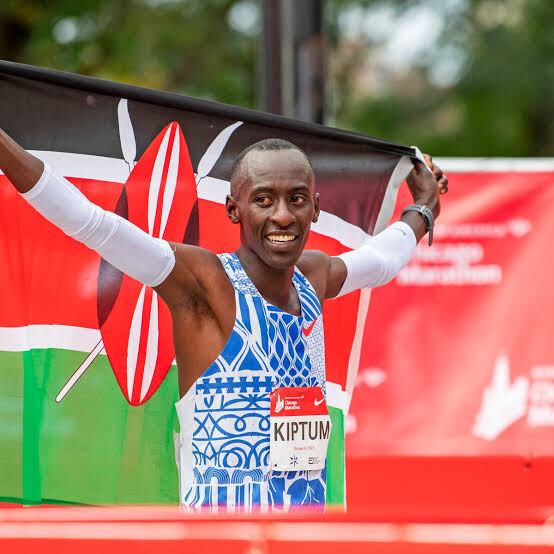
Split by Split — The Chicago Comparison
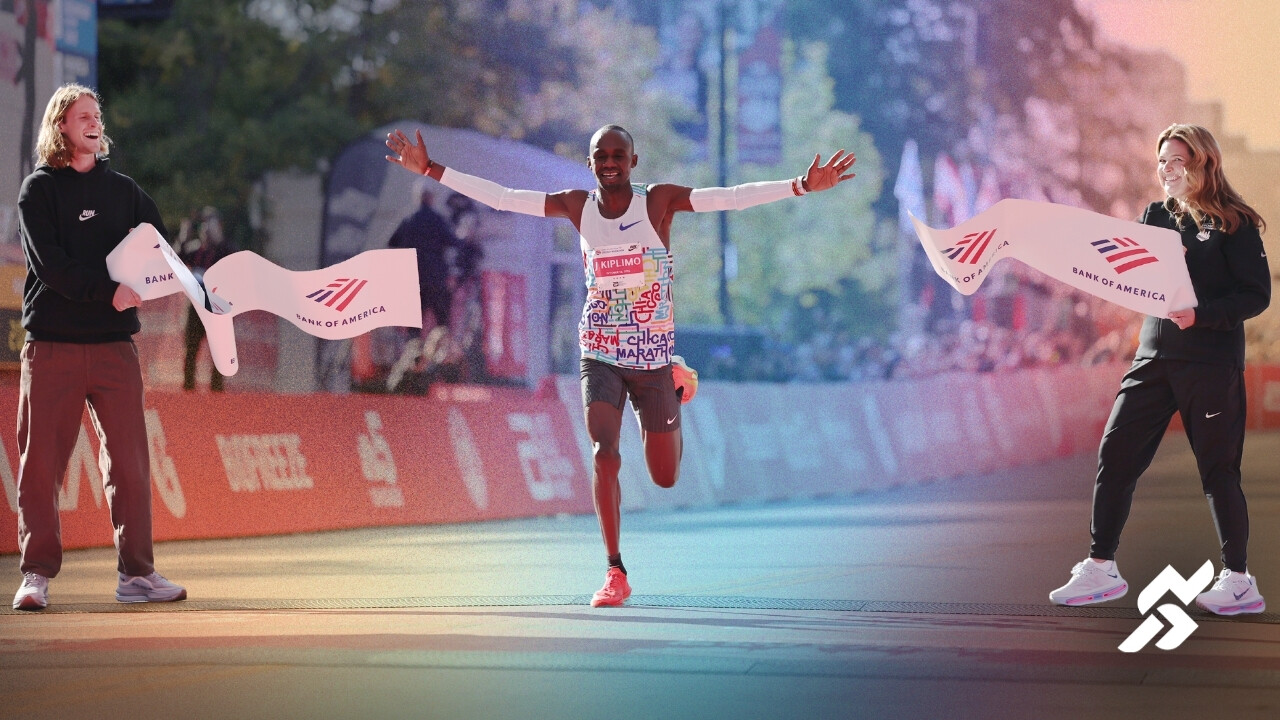
|
Distance |
Kiptum (2023) |
Kiplimo (2025) |
Difference |
|
5 km |
14:26 |
13:58 |
−28 sec |
|
10 km |
28:42 |
28:25 |
−17 sec |
|
15 km |
43:09 |
42:40 |
−29 sec |
|
20 km |
57:39 |
57:05 |
−34 sec |
|
Half |
1:00:48 |
1:00:16 |
−32 sec |
|
25 km |
1:12:04 |
1:11:12 |
−52 sec |
|
30 km |
1:26:31 |
1:25:31 |
−60 sec |
|
35 km |
1:40:22 |
1:39:52 |
−30 sec |
|
40 km |
1:54:23 |
1:55:10 |
+47 sec |
|
Finish |
2:00:35 (World Record) |
2:02:23 |
+1:48 |
How They Ran
Kelvin Kiptum (2023):
Kiptum ran one of the most perfectly executed marathons in history. After a steady opening half in 1:00:48, he unleashed a ferocious negative split of 59:47, the fastest second half ever recorded. His closing 10K in 27:52 sealed a new world record and forever changed how we think about the marathon.
Jacob Kiplimo (2025):
After finishing second in his marathon debut at the 2025 London Marathon, Kiplimo arrived in Chicago more prepared — and fearless. From the start, he attacked the course, opening in 13:58 for 5K, the fastest ever in Chicago. Through 30K, he was over a minute ahead of Kiptum’s world-record pace. Although he slowed slightly in the final 10K, his 2:02:23 finish was the fastest ever by an Ugandan and the 7th-fastest marathon in history.
âš–ï¸ The Contrast
• Strategy: Kiptum’s patience vs. Kiplimo’s aggression.
• Halfway: Kiplimo led by 32 seconds at 21.1K.
• Closing Power: Kiptum’s final 7K (13:51 split) remains unmatched.
• Outcome: Kiplimo’s performance wasn’t a world record, but it confirmed his place among the greatest marathoners of his generation.
Legacy and Continuation
Tragically, Kelvin Kiptum was killed in a car accident in Kenya in February 2024, just months after his world-record run. His passing shocked the running world and ended the career of a man many believed would one day break two hours on a record-eligible course.
When Jacob Kiplimo returned to Chicago in 2025, it felt like a continuation of that story — a symbolic passing of the torch. Running on the same course where Kiptum made history, Kiplimo carried forward the East African legacy of excellence, courage, and speed.
Final Thoughts
Kiptum’s 2:00:35 remains the marathon’s gold standard — calm, controlled, and utterly brilliant.
Kiplimo’s 2:02:23 showed fearless front-running and a promise of what’s still to come.
Two men. Two races. One city.
Chicago — where the modern marathon’s greatest chapters continue to be written.
- - -
The 9 Fastest Men’s Marathons of All Time (as of Oct 13, 2025)
|
Rank |
Name |
Time |
Venue |
|
1 |
Kelvin Kiptum (KEN) |
2:00:35 |
Chicago 2023 |
|
2 |
Eliud Kipchoge (KEN) |
2:01:09 |
Berlin 2022 |
|
3 |
Kenenisa Bekele (ETH) |
2:01:41 |
Berlin 2019 |
|
4 |
Sisay Lemma (ETH) |
2:01:48 |
Valencia 2023 |
|
5 |
Sebastian Sawe (KEN) |
2:02:05 |
Valencia 2024 |
|
6 |
Benson Kipruto (KEN) |
2:02:16 |
Tokyo 2024 |
by Bob Anderson
Login to leave a comment
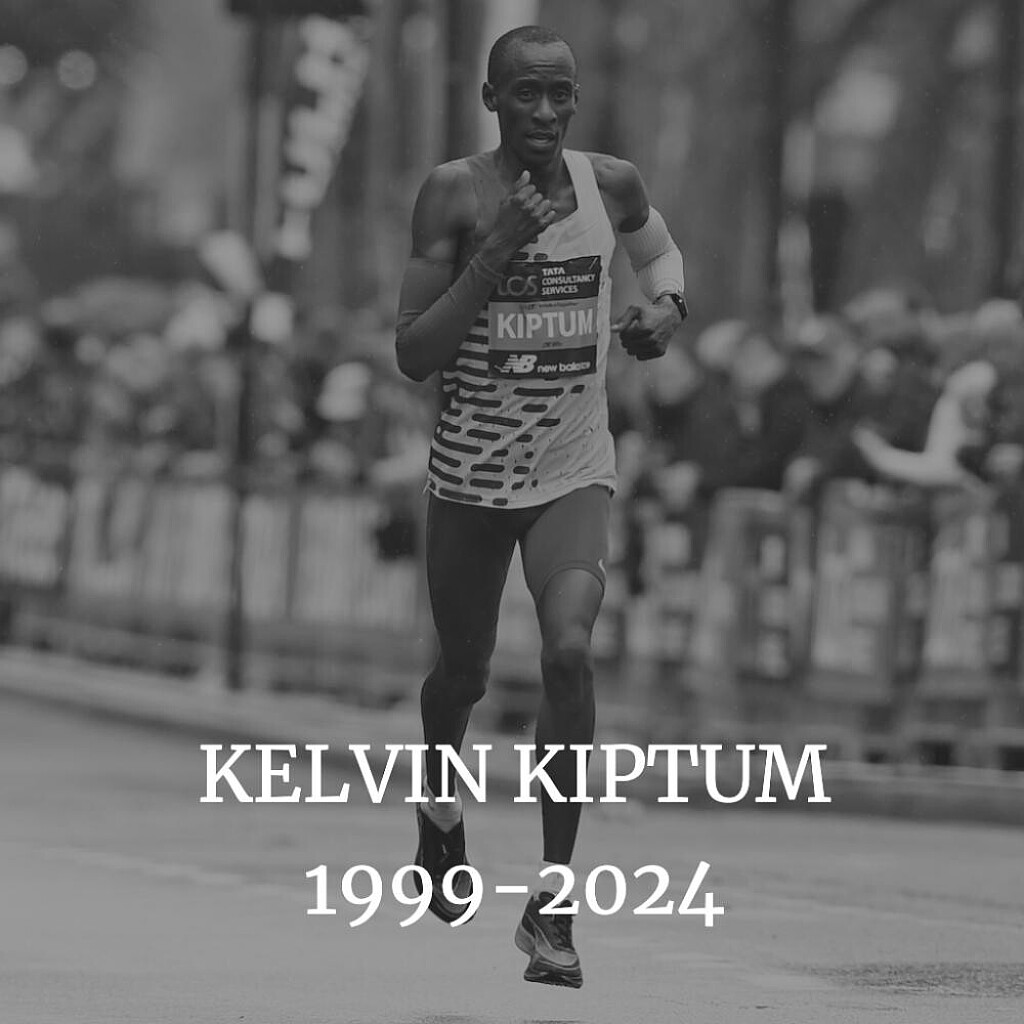
Kelvin Kiptum: The Man Who Ran Into History and Never Returned
It’s been exactly one year since Kelvin Kiptum did what many believed was impossible — he shattered the marathon world record in Chicago, stopping the clock at 2:00:35.
On October 8, 2023, the 23-year-old Kenyan didn’t just win a race — he redefined the limits of human endurance.
As the world prepares for this year’s Chicago Marathon, it’s impossible not to feel the silence he left behind.
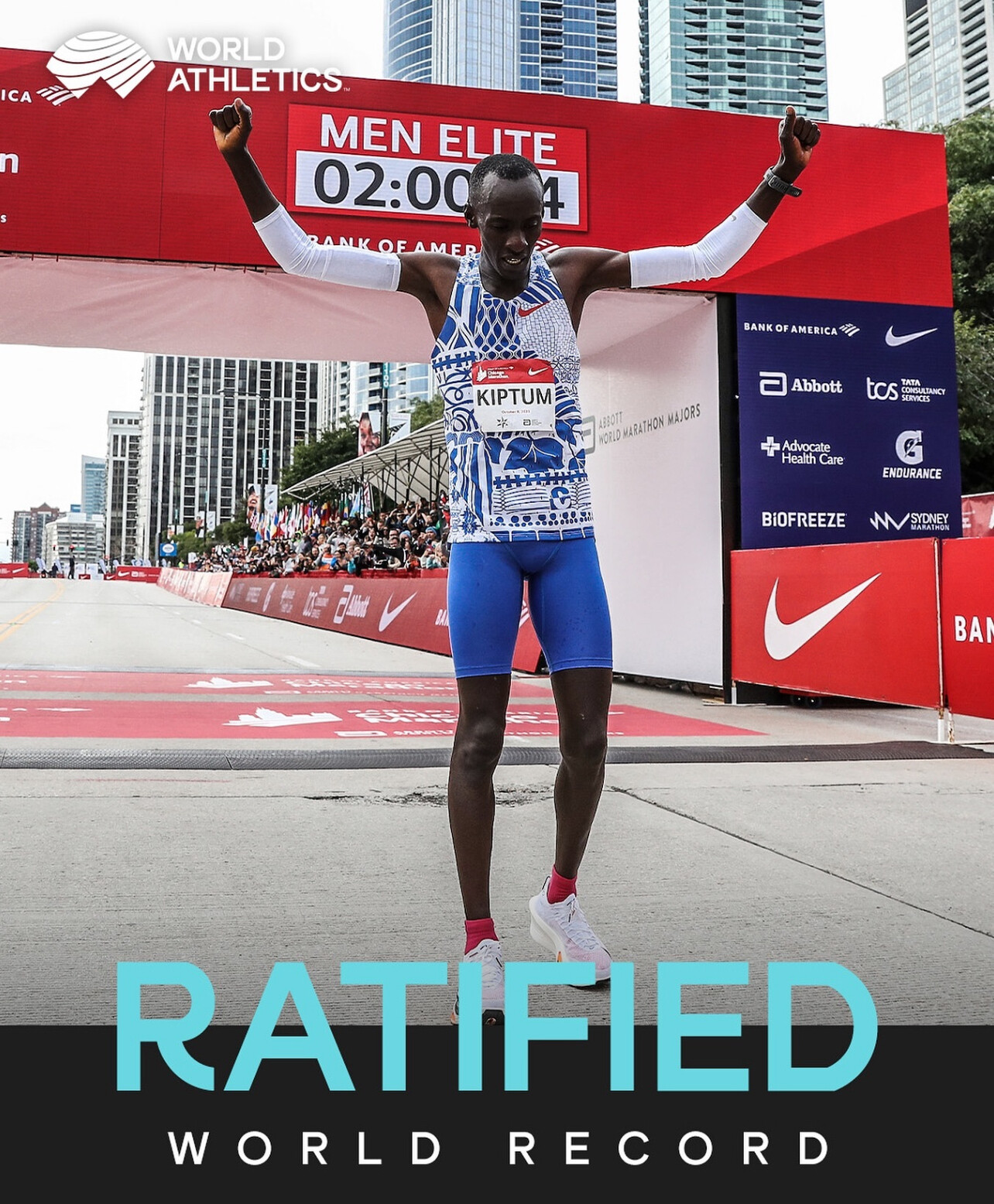
That crisp Sunday morning, Kiptum delivered a performance that stunned the running world. Gliding through Chicago’s streets with unrelenting rhythm, he dropped the field, surged mile after mile, and erased Eliud Kipchoge’s seemingly untouchable world record of 2:01:09 by 34 seconds.
It was only his third marathon. He had never lost one.
Chicago had seen greatness before — but never like this.
And then, just months later, he was gone.
In February 2024, Kiptum and his coach, Gervais Hakizimana, were killed in a car crash on a quiet road in Kenya. The sport lost more than a record-breaker; it lost a phenomenon — a man who seemed destined to become the first human to run under two hours in an official race.
That dream — carried in Kiptum’s quiet confidence and thunderous stride — vanished that night. His record, ratified only days before his death, stands as both a triumph and a tombstone.
But legends don’t end with tragedy — they echo.
As the 2025 Chicago Marathon approaches, the course remembers. Every stretch of asphalt, every cheer from the crowd, every runner chasing a personal best this weekend — they all run in the shadow of Kiptum’s greatness.
Because Kelvin Kiptum didn’t just run a race.
He ran into history — and never returned.
His Legacy Lives On
Across Kenya and beyond, his story continues to inspire a new generation of runners — from the dirt roads of the Rift Valley to the streets of Chicago, Boston, and Berlin. Athletes like Benson Kipruto, Evans Chebet, and countless others now carry his fire forward, chasing their own dreams with the same fearless rhythm that once shook the marathon world.
Kelvin Kiptum’s stride may have stopped, but his impact will keep moving — every time someone dares to believe that impossible is only a pace away.
by Boris Baron
Login to leave a comment
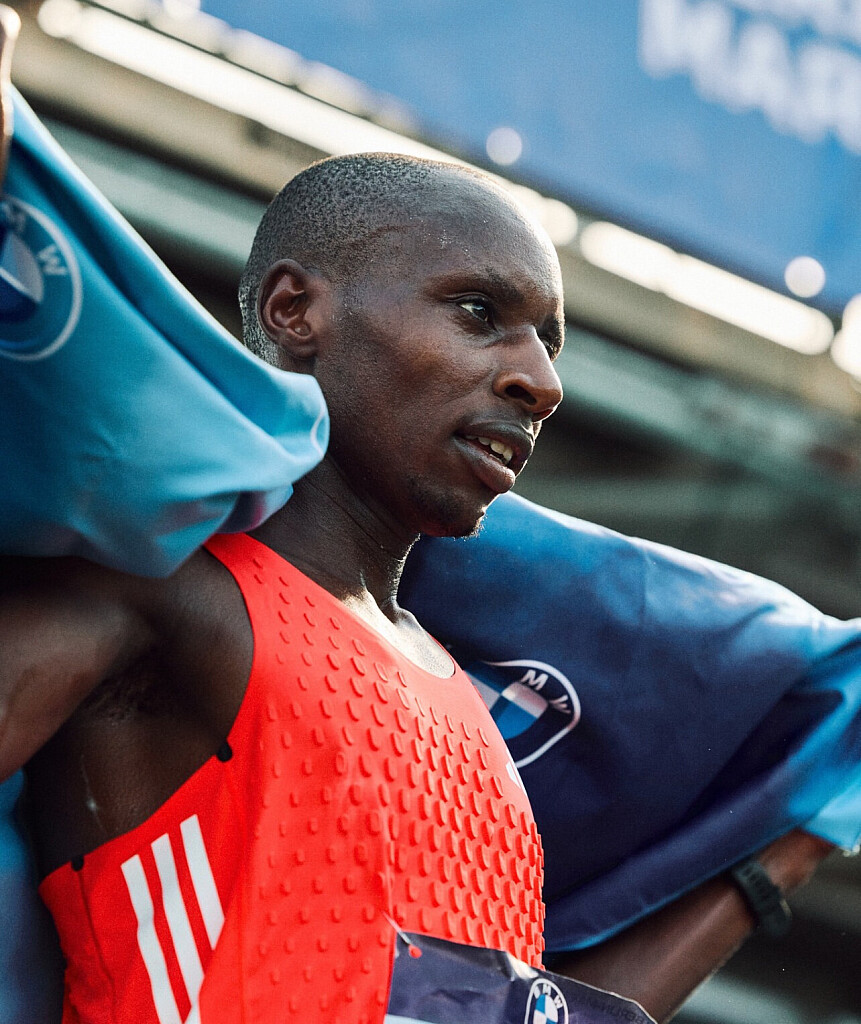
From Rain to Heat: Sabastian Sawe and the New Chapter of Berlin’s Weather-Tested Records
Fifteen years ago, Patrick Makau braved torrential rain and deep puddles on the streets of Berlin, chasing Haile Gebrselassie’s marathon world record. The conditions ruined his attempt, but Makau still managed 2:05:08—the fastest marathon ever run in such relentless rain. A year later, with fair weather, he returned and broke the world record with 2:03:38.
On Sunday in Berlin, history echoed in a new way. This time, it wasn’t rain but unseasonable heat that stood between a Kenyan and marathon immortality. Sabastian Sawe, the 30-year-old rising star, had his sights set on Eliud Kipchoge’s 2:00:35 mark. Instead, he delivered what can only be called a “warm-weather world record,” blazing through the 26.2 miles in 2:02:16. Despite being 101 seconds off the record, it was the fastest time ever achieved in such high temperatures.
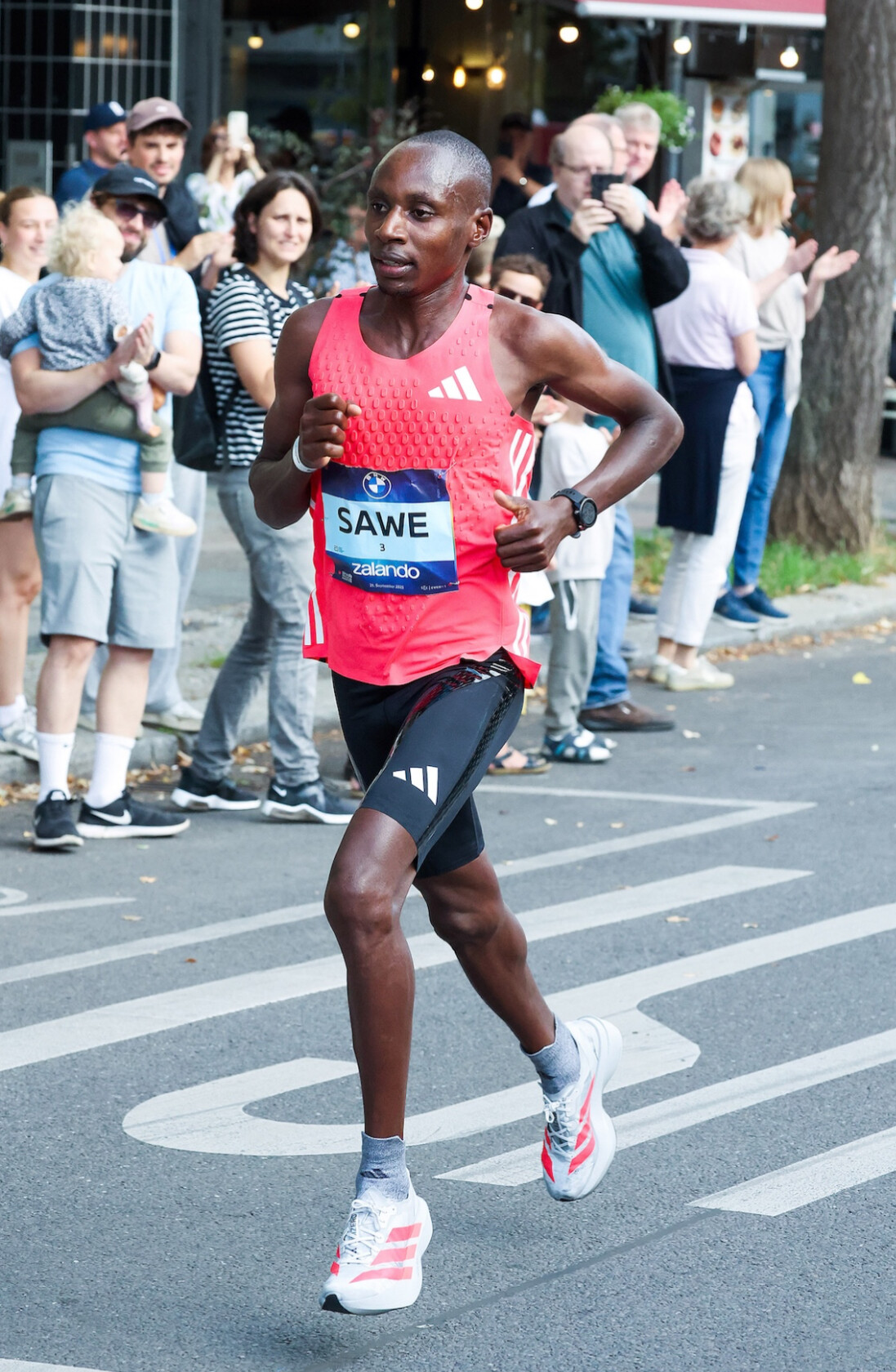
The What-Ifs of Berlin
Sawe, whose personal best stands at 2:02:05, was in career-best form. His coach, Italian veteran Claudio Berardelli, admitted the weather stripped away any chance of the extraordinary.

“I know he was in exceptionally good shape. But I do not know what would have been possible,” Berardelli reflected.
The what-if question will linger: how fast could Sawe have run under cooler skies?
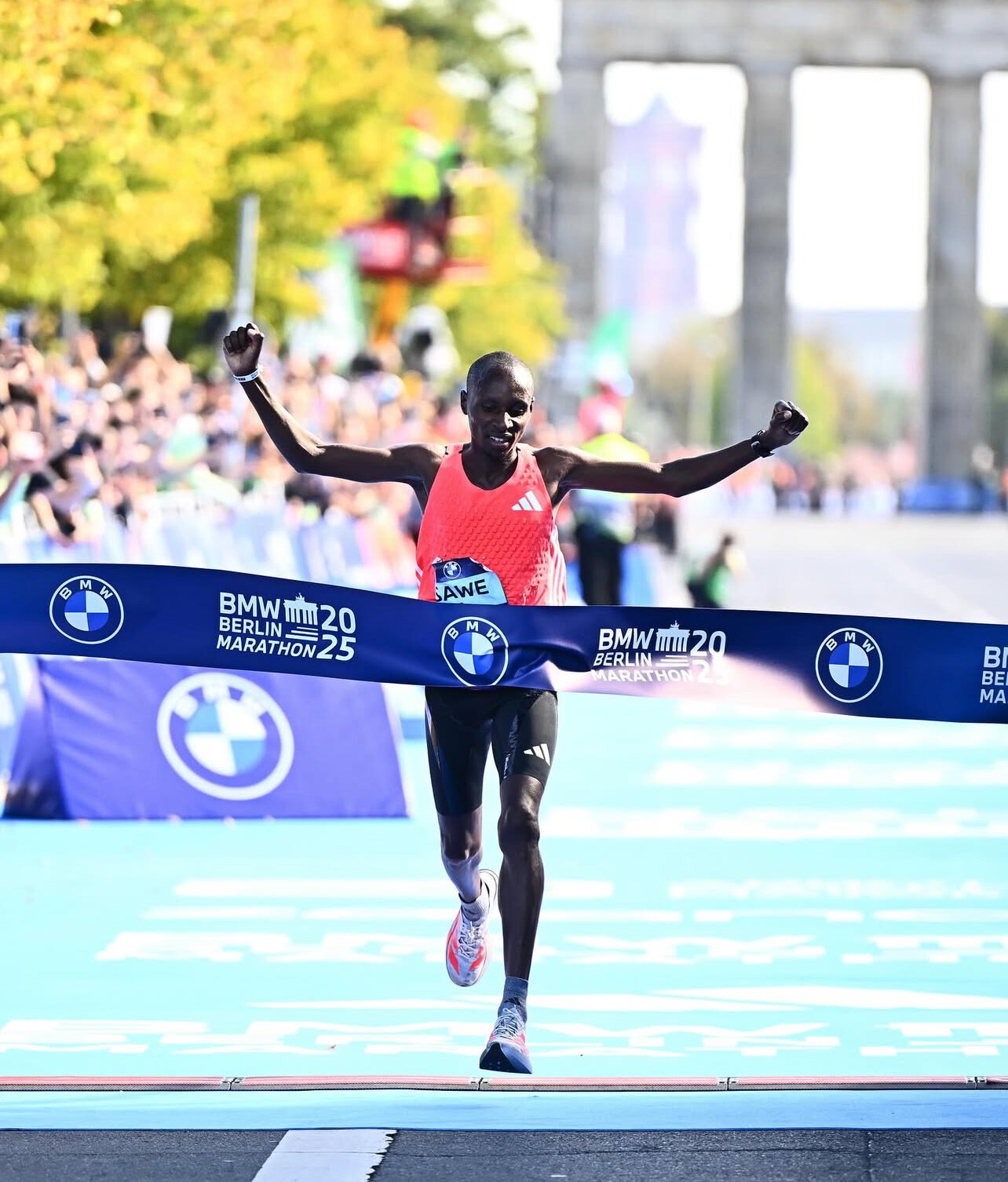
From Humble Beginnings to Global Stardom
Born in the village of Cheukta near Eldoret, Sawe’s story mirrors that of countless young talents in Kenya who struggle for recognition. Despite moving to Iten, the mecca of distance running, he was overlooked by managers and coaches. His breakthrough came only after turning to his uncle, Abraham Chepkirwok—Uganda’s 800m national record holder—and his neighbor Abel Mutai, the London 2012 Olympic steeplechase bronze medalist.
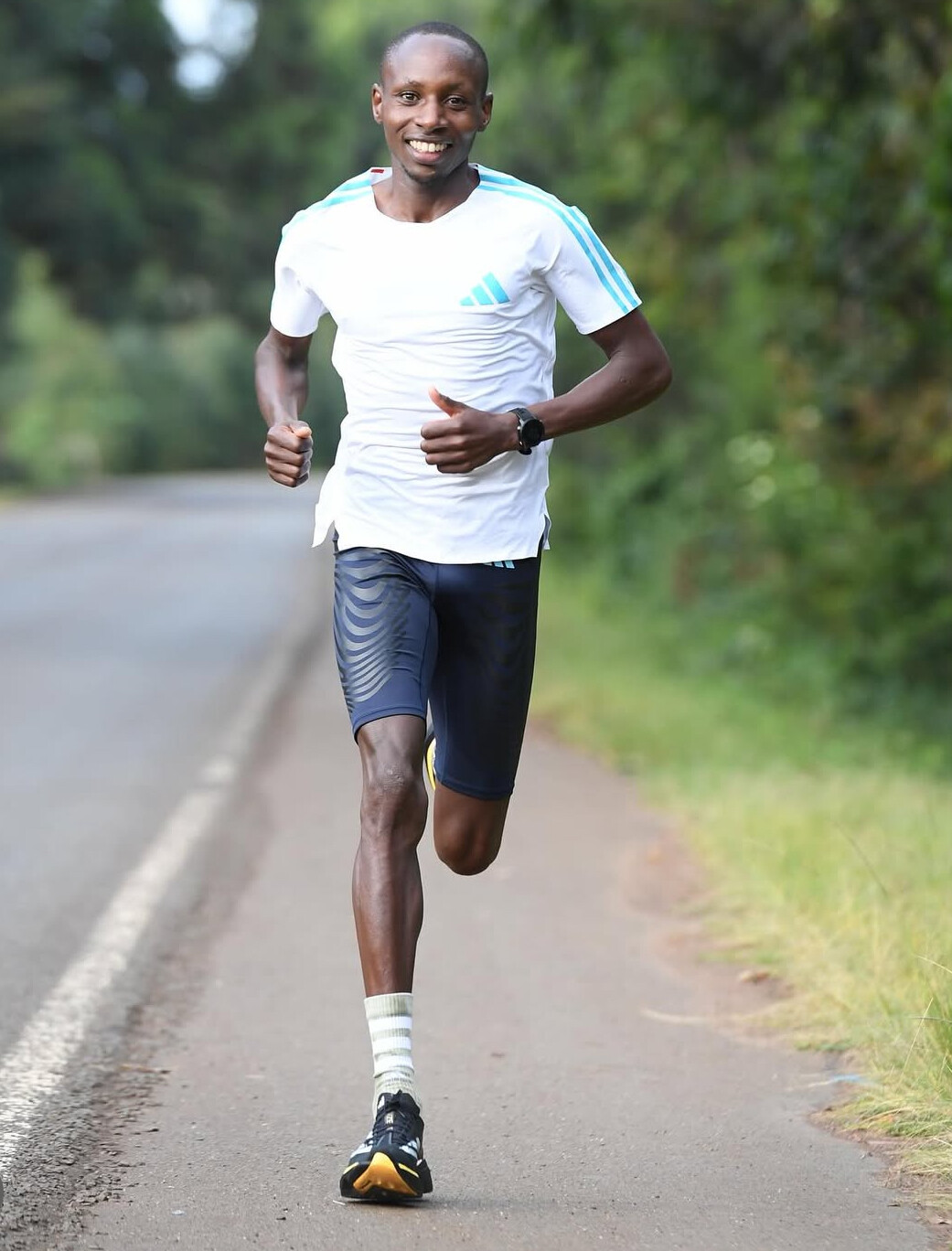
Mutai vouched for him with Berardelli, who placed Sawe in his Kapsabet camp. The rest unfolded quickly. Sawe stunned the field at the 2022 Seville Half Marathon, entering as a pacemaker but leaving with a victory and a world lead of 59:02.
A Gift of Talent and Humility
Berardelli is quick to highlight Sawe’s rare combination of physical and mental qualities:
“He has everything it takes—training ability, mental strength, and humility. I can’t predict what will be possible, but I’m looking forward to finding out.”
Sawe himself remained pragmatic after Berlin:
“I wanted to run really fast and gave it my best, but the weather was too hot. I hope I will have better weather next time. I liked the course, it is very good and fast.”
Berlin: Unfinished Business
Just as Makau returned after the rain to rewrite history, Sawe may yet come back to Berlin with the weather in his favor. With his trajectory and determination, the marathon world could witness a record chase for the ages in 2026.
Until then, Berlin 2025 will be remembered as the day Sabastian Sawe delivered a performance that stood not against the clock, but against the elements—proving once again why the city remains the crucible of marathon greatness.
by Race News Service
Login to leave a comment
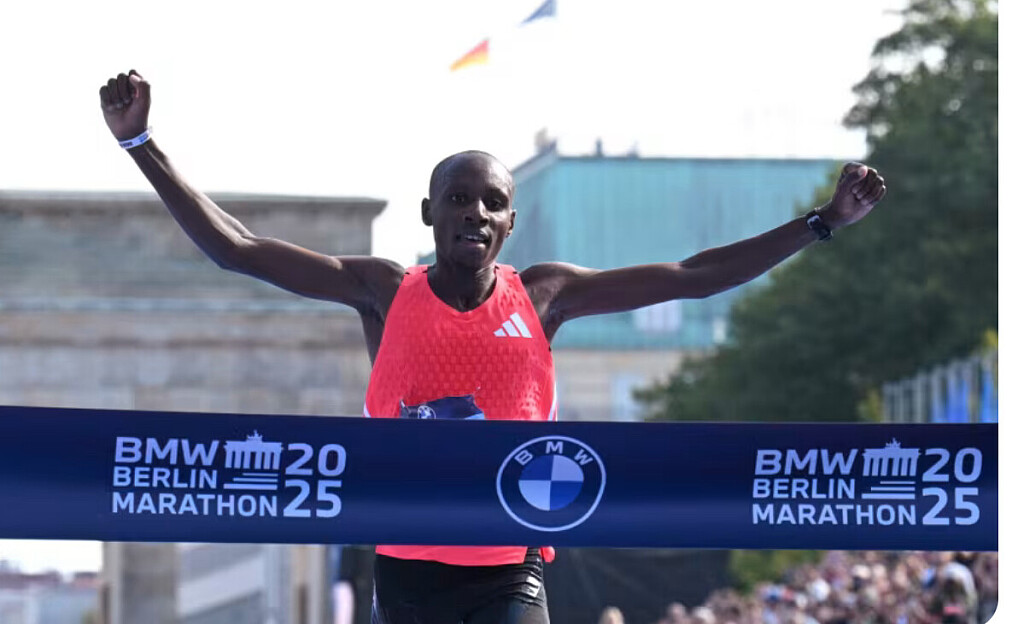
Sabastian Sawe Dominates in Berlin With 2:02:16 Victory
Berlin, September 21, 2025 — The Berlin Marathon once again lived up to its reputation as the world’s fastest stage for marathon running. Kenya’s Sabastian Sawe stormed to victory on Sunday, clocking 2:02:16, the fastest marathon time in the world this year and the fourth-fastest ever run on the streets of Berlin.
Sawe, already the reigning champion from Valencia (2024) and London (2025), extended his unbeaten record over the marathon distance. From the gun, he attacked with confidence, hitting 5km in 14:09and 10km in 28:26, well inside world-record pace. By halfway, his split of 60:16 electrified the Berlin crowds and suggested history might be on the cards.
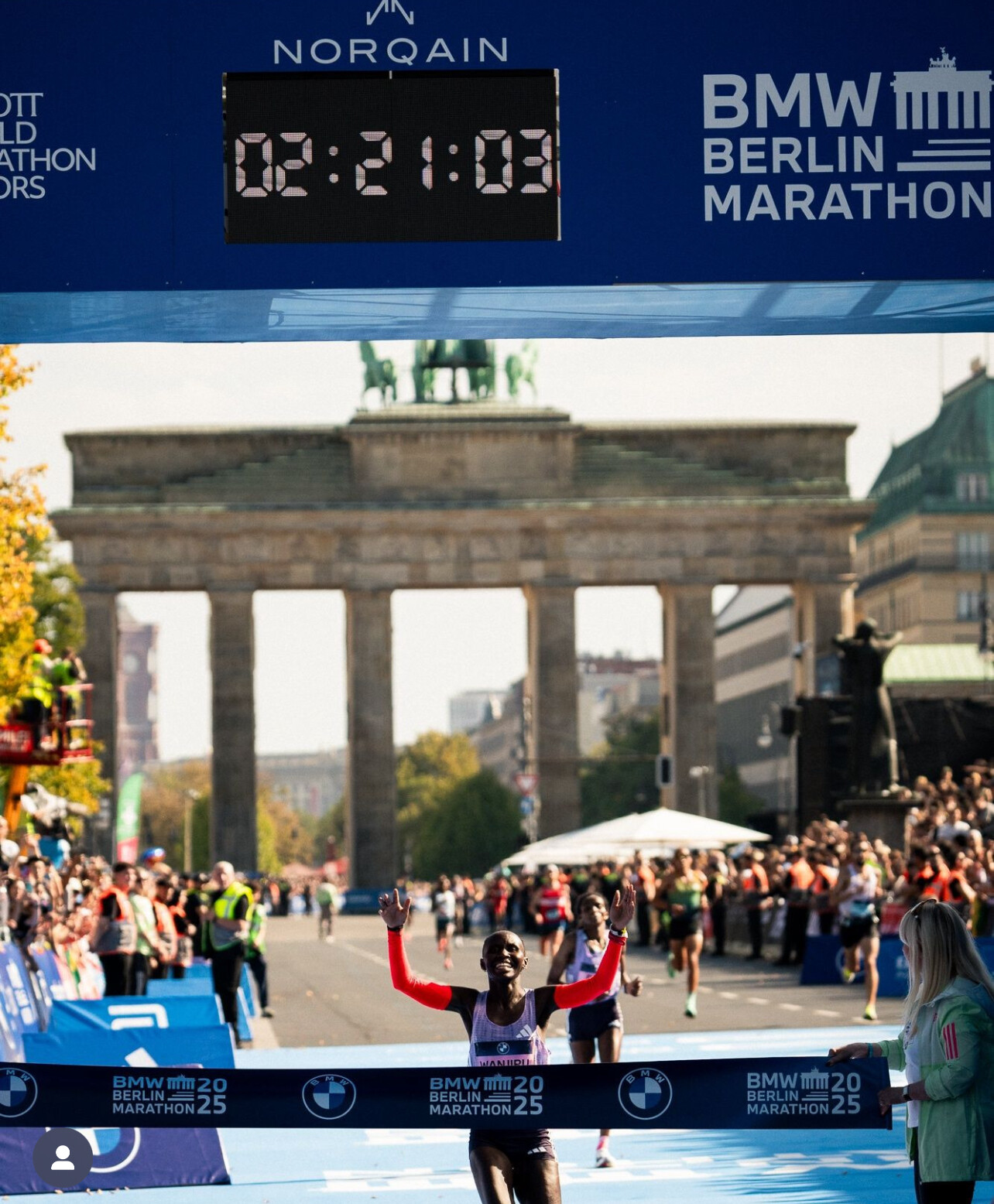
But conditions proved decisive. Unseasonably warm temperatures — climbing to 25°C (mid-70s°F) — and the loss of his pacemakers before the 23km mark forced Sawe to shoulder the workload alone. Though the second half slowed, he maintained control and powered down Unter den Linden to the Brandenburg Gate, finishing with a commanding lead.
Behind him, Akira Akasaki of Japan impressed with a breakthrough run, finishing second in 2:06:15, while Ethiopia’s Chimdessa Debele held on for third in 2:06:57.
Wanjiru Outkicks Dida in Women’s Duel
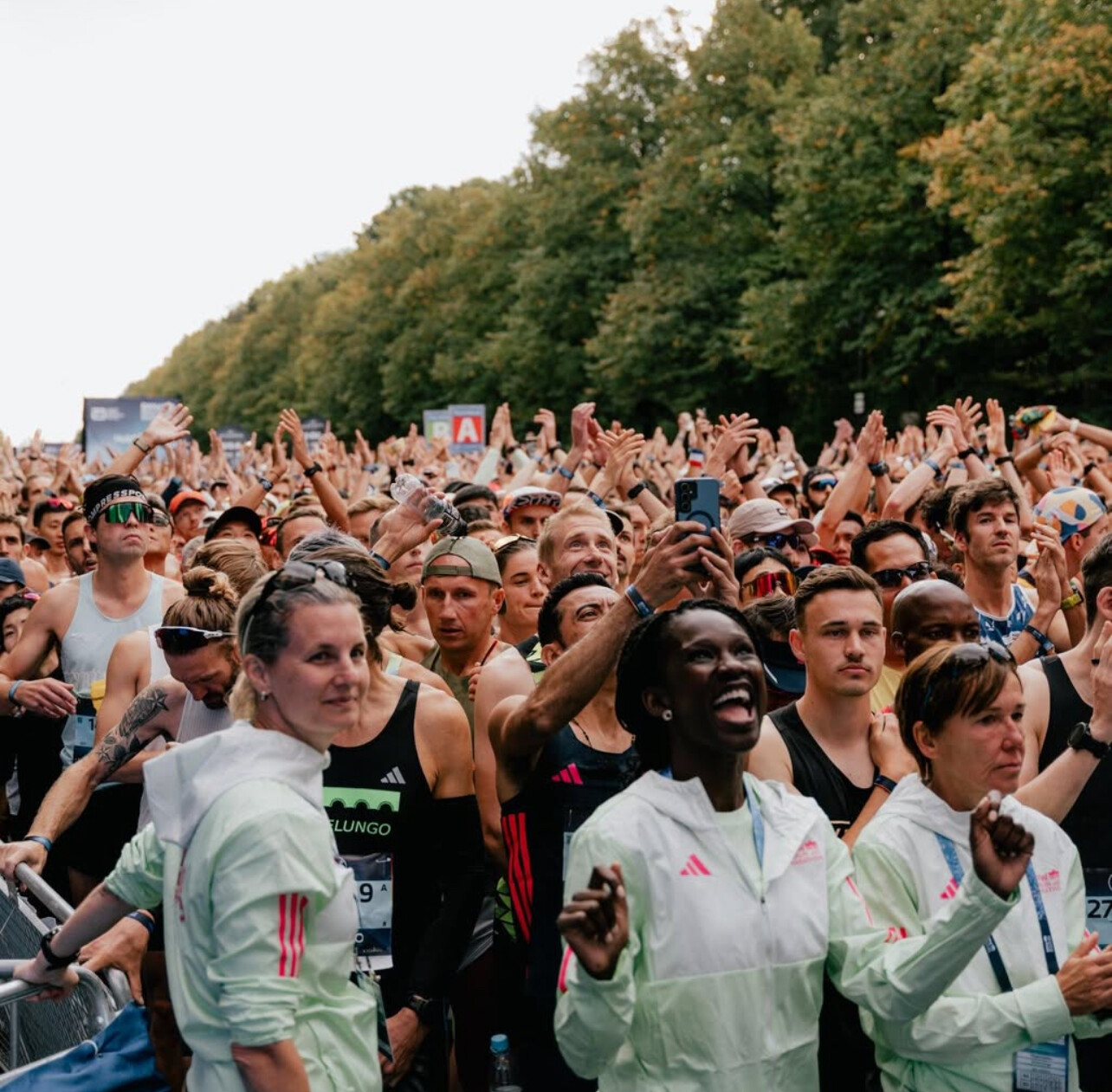
The women’s race produced its own drama, with Kenya’s Rosemary Wanjiru edging Ethiopia’s Dera Dida by just three seconds. Wanjiru clocked 2:21:05 after a decisive surge past the 25km mark. Dida followed in 2:21:08, while fellow Ethiopian Azmera Gebru completed the podium in 2:21:29.
“I knew it would come down to the final kilometers,” Wanjiru said afterward. “The crowd in Berlin gave me so much energy.”
Berlin’s Enduring Legacy
This year’s edition was the 51st running of the Berlin Marathon, and once again, the German capital showcased why it is considered the “world record course.” Since 2003, the men’s world record has been broken eight times in Berlin, most recently by Eliud Kipchoge’s 2:01:09 in 2022. On the women’s side, Tigst Assefa stunned the world here in 2023 with her record 2:11:53.
While Sawe fell short of rewriting those marks, his performance in the heat confirmed his status as the man to beat in global marathon running. With three straight victories in world-class fields, he has announced himself as the heir apparent to Kipchoge.
Results at a Glance
Men
1. Sabastian Sawe (Kenya) — 2:02:16
2. Akira Akasaki (Japan) — 2:06:15
3. Chimdessa Debele (Ethiopia) — 2:06:57
Women
1. Rosemary Wanjiru (Kenya) — 2:21:05
2. Dera Dida (Ethiopia) — 2:21:08
3. Azmera Gebru (Ethiopia) — 2:21:29
by Boris Baron
Login to leave a comment
BMW Berlin Marathon
The story of the BERLIN-MARATHON is a story of the development of road running. When the first BERLIN-MARATHON was started on 13th October 1974 on a minor road next to the stadium of the organisers‘ club SC Charlottenburg Berlin 286 athletes had entered. The first winners were runners from Berlin: Günter Hallas (2:44:53), who still runs the BERLIN-MARATHON today, and...
more...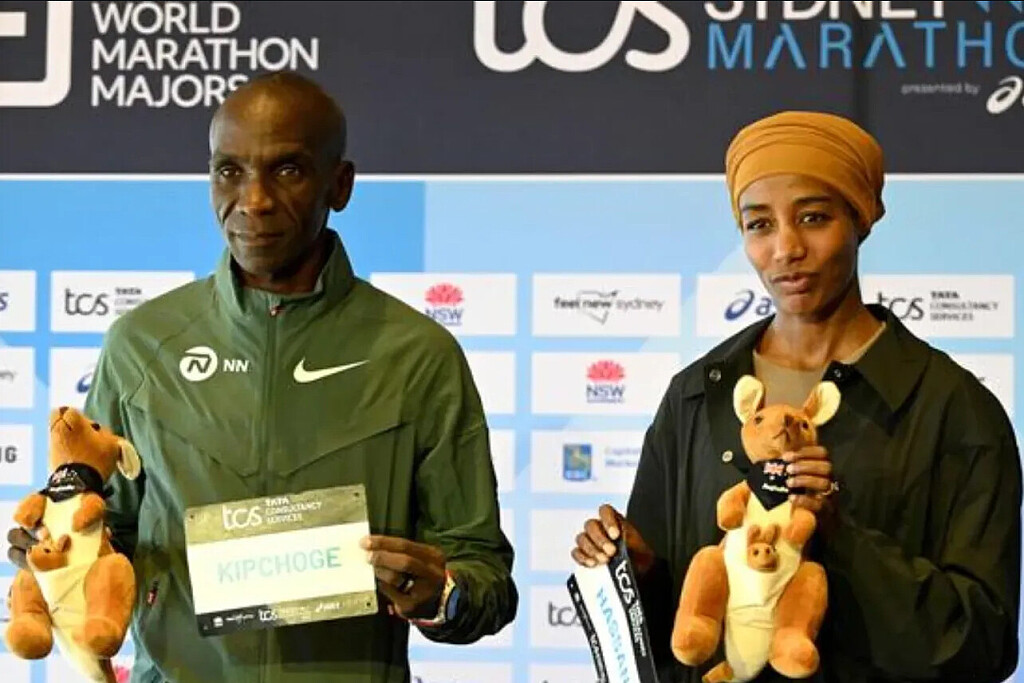
Kipchoge and Hassan Set for New York City Marathon Debuts
Eliud Kipchoge and Sifan Hassan, two of the biggest names in distance running, will make their New York City Marathon debuts on November 2 after both raced the Sydney Marathon on August 31.
Kipchoge, the 40-year-old Kenyan icon, is a two-time Olympic gold medalist and the second-fastest marathoner in history with his 2:01:09 from Berlin in 2022. His last victory over the 26.2-mile distance came at the 2023 Berlin Marathon. Since then, his results have been mixed: 10th at the 2024 Tokyo Marathon, a DNF at the Paris Olympic marathon, and sixth and ninth in London and Sydney this year. Remarkably, 2025 marks the first year of his marathon career in which he will line up for three marathons in a single calendar year.
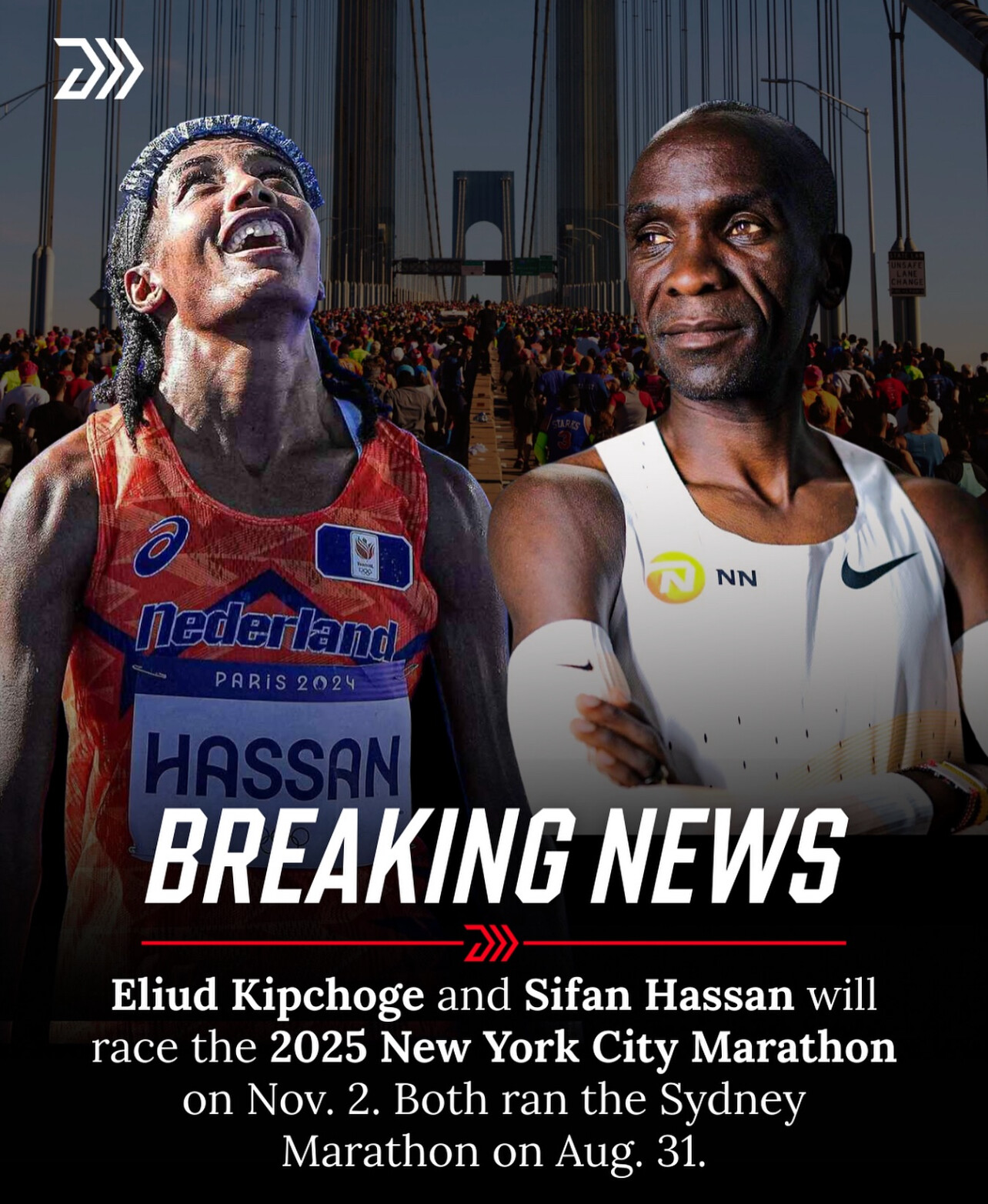
Despite recent setbacks, Kipchoge’s career remains unmatched. He has won four of thekoopoo six long-standing World Marathon Majors—Berlin, Chicago, London, and Tokyo—leaving only Boston and New York City without victoriesok. He finished sixth in Boston in 2023. New York now offers him another chance to etch his name deeper into the sport’s most prestigious stages.
Dutch star Sifan Hassan, already an Olympic champion and one of the most versatile distance runners in history, will also make her New York debut. Known for her ability to dominate from 1500m on the track to the marathon on the roads, Hassan’s presence adds another layer of intrigue to a race that consistently delivers drama.
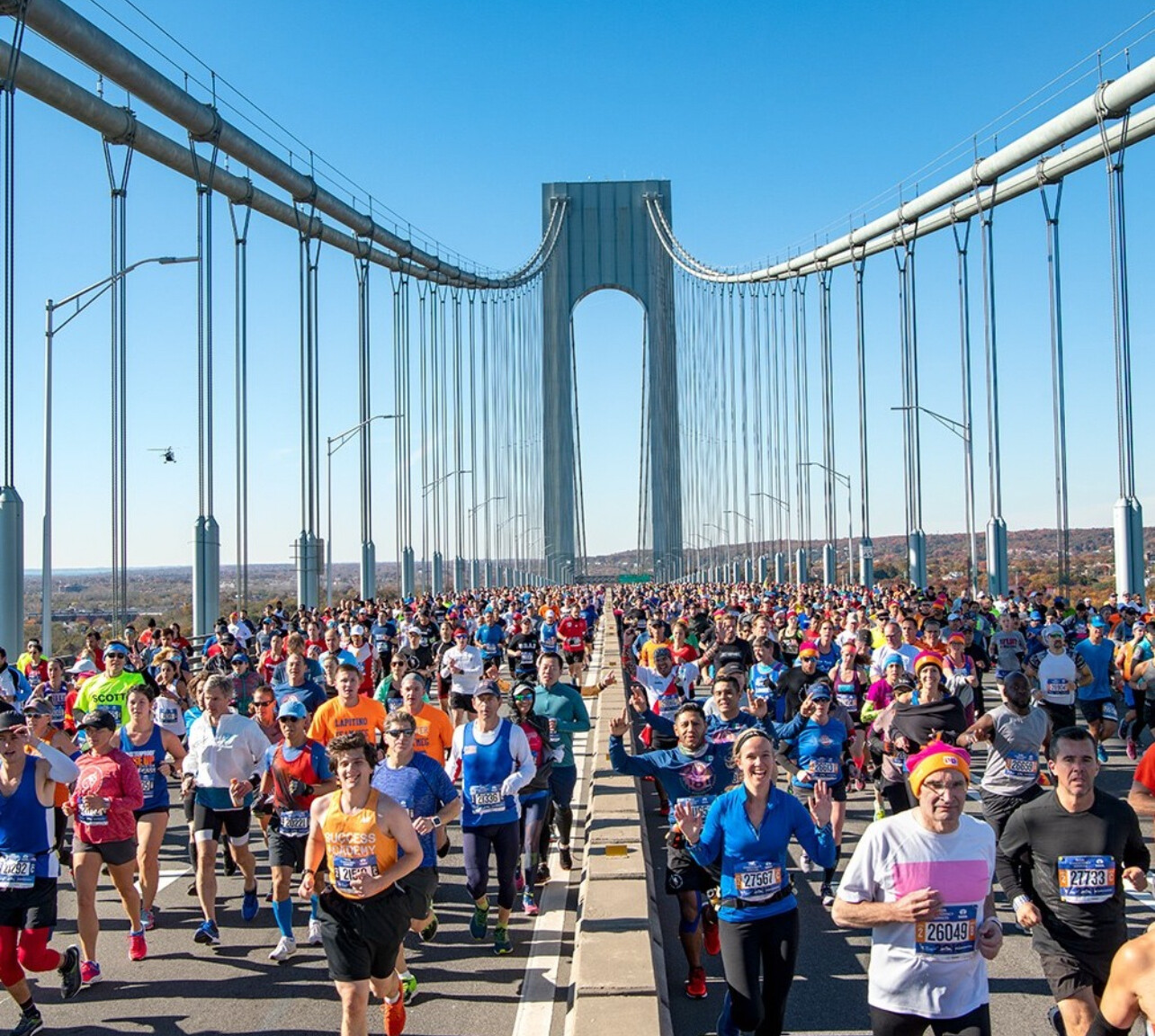
With both Kipchoge and Hassan in the field, the 2025 New York City Marathon promises to be one of the most anticipated races of the year, a true meeting of legends on one of the sport’s grandest stages.
by Boris Baron
Login to leave a comment
TCS New York City Marathon
The first New York City Marathon, organized in 1970 by Fred Lebow and Vince Chiappetta, was held entirely in Central Park. Of 127 entrants, only 55 men finished; the sole female entrant dropped out due to illness. Winners were given inexpensive wristwatches and recycled baseball and bowling trophies. The entry fee was $1 and the total event budget...
more...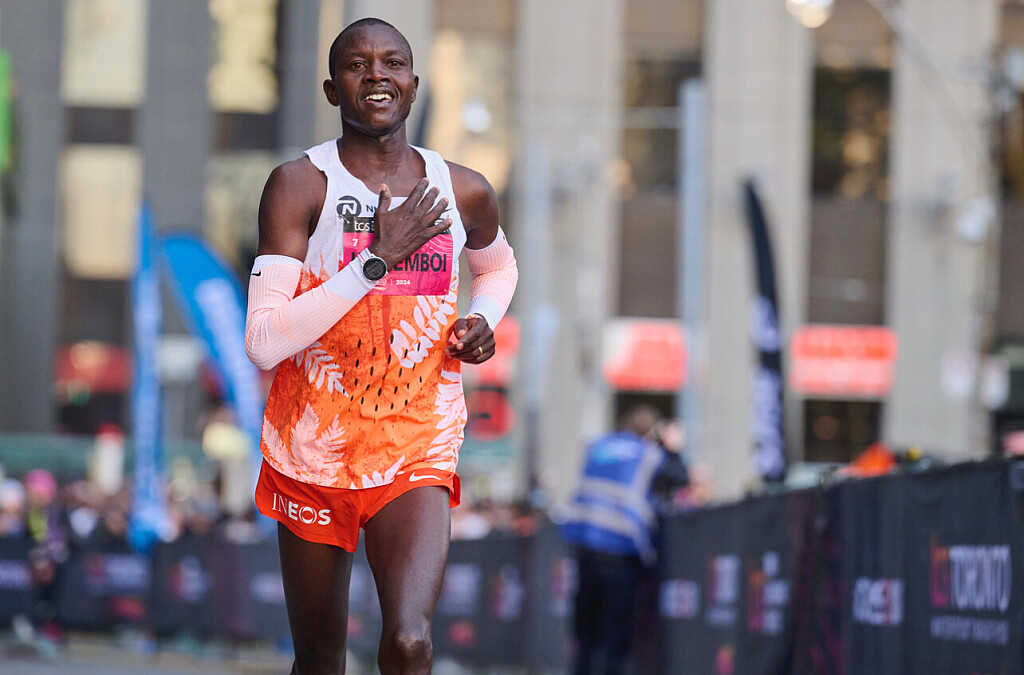
Noah Kipkemboi Has Victory in Mind at TCS Toronto Waterfront Marathon
Noah Kipkemboi returns to the TCS Toronto Waterfront Marathon on October 19 with one clear objective—victory at this World Athletics Elite Label race.
Last year, the 32-year-old Kenyan produced a personal best of 2:07:31 to finish third in Toronto. He now looks forward to another showdown with his compatriot Dominic Ngeno, who edged him by just eight seconds for second place.
“I hope to win,” Kipkemboi says with a smile. “Because he [Ngeno] challenged me last year with two kilometres to go. I think this time I will be able to catch up with him. For sure we are training well.”
Kipkemboi arrives in confident form, having recently finished third at the Klagenfurt Half Marathon in Austria (62:09). “Last year I went to that race and then had a good race in Toronto. I think I will run my best in Toronto,” he adds.
Training With the Best
Kipkemboi is represented by Global Sports Communications, the Netherlands-based management company that also manages marathon icon Eliud Kipchoge. Based at the Global Sports camp in Kaptagat, Kipkemboi has long been a trusted pacemaker for Kipchoge, including during the Kenyan legend’s 2022 Berlin Marathon world record of 2:01:09.
“I am in the same camp as Eliud—we train together and race together,” Kipkemboi reveals. “Most of the races I have been pacing have been for Eliud. When you are a pacemaker, you have to be ready to help push, but not to a time he doesn’t want. I know how to run with him.”
Under the guidance of Coach Patrick Sang, the group trains from Monday to Friday at the camp, going home only on weekends. For Kipkemboi, the commitment comes with sacrifice: he has a wife and three young children in Eldoret, where he also owns farmland and runs a small shop.
“Things I sell in the shop are things human beings use—like soap, flour, sweets, perfumes,” he explains. “It’s preparation for life after running.”
Giving Back to the Community
Like many Kenyan athletes, Kipkemboi is committed to helping those around him.
“I am supporting some people who are in need. Right now I’m supporting some students in my village,” he says. “It is an opportunity to help whoever needs help. I have some kids in my village who need support now and after five years.”
That support includes paying school fees and providing food—efforts made possible by his racing success.
Toronto, he adds, has also provided lasting memories: “We went to see Kenyan people while there last year. In Toronto we were like at home because there were Kenyan people living there who came to say hi to us. We were as happy as if we were at home.”
Eyes on Victory
Now, as he fine-tunes his preparation, Kipkemboi is clear about his goals.
“I am now preparing for a win. It is my hope to win the race this time,” he declares. “My objective is just to win and improve my time. I ran my personal best in Toronto (2:07:31), but I want to improve upon that.”
The Toronto Waterfront course record stands at 2:05:00, held by his training partner Philemon Rono. With strong pacemakers and good conditions, Kipkemboi knows that mark could be in sight.
by Paul Gains
Login to leave a comment
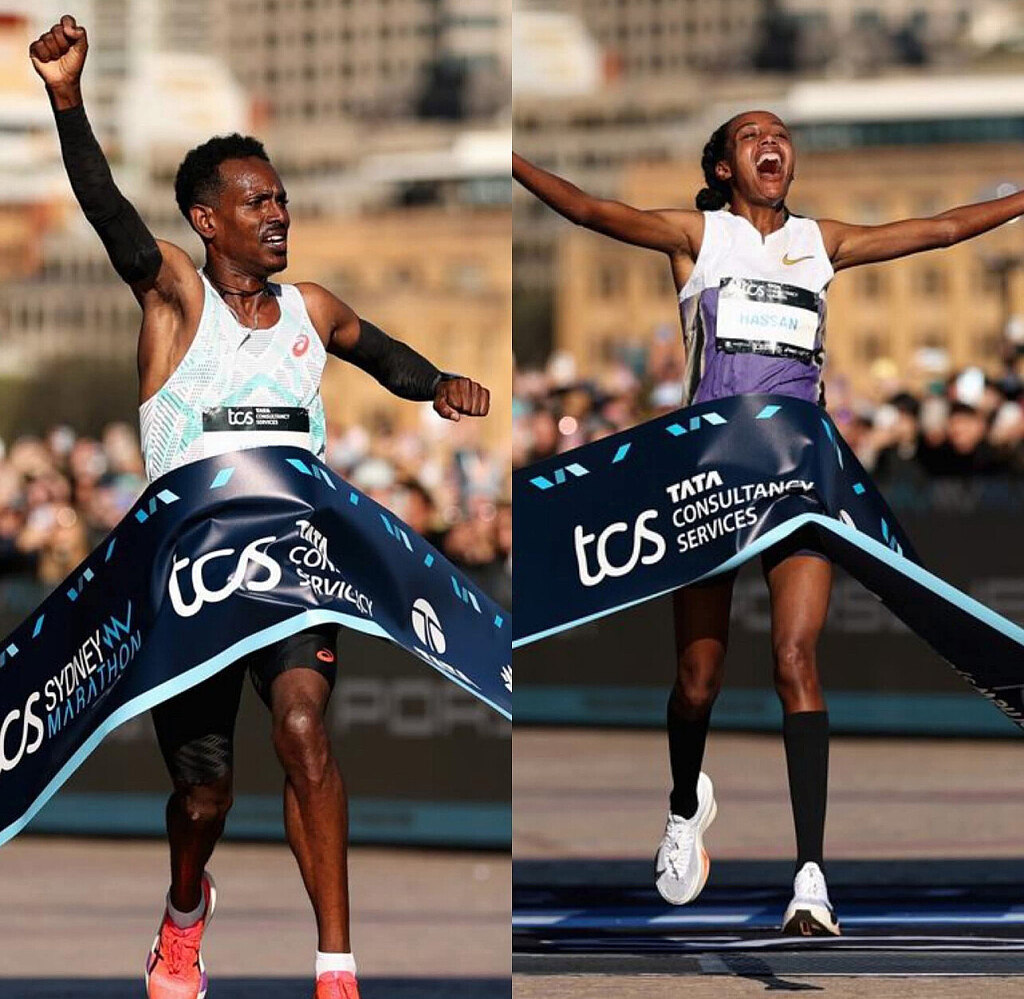
Sydney Marathon Makes History as Part of World Marathon Majors
Sydney, August 31, 2025 – The Sydney Marathon ushered in a new era today, joining the elite ranks of the Abbott World Marathon Majors with a race that delivered both record-breaking performances and unforgettable moments on the streets of Australia’s largest city.
Hassan Dominates the Women’s Race
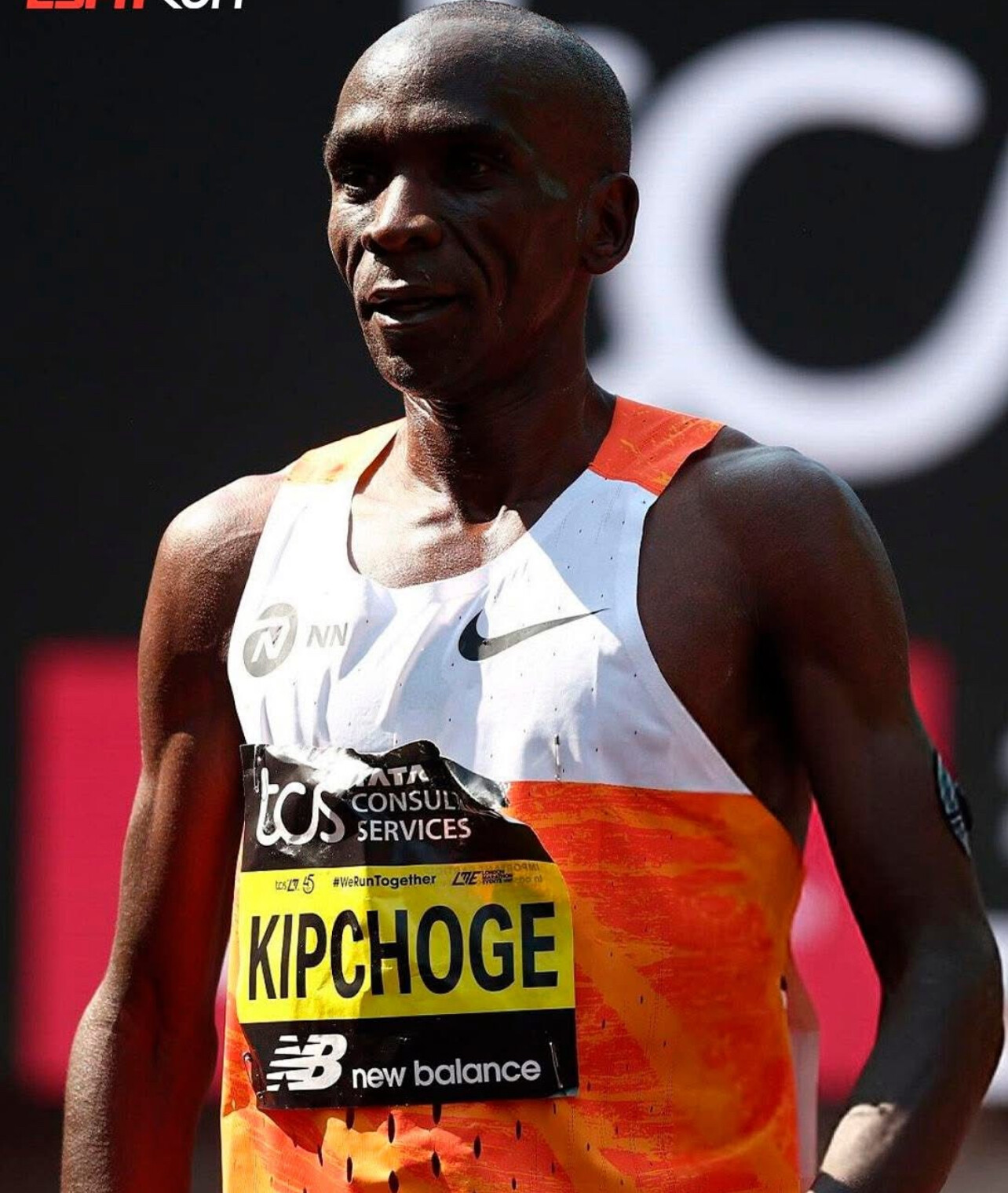
Olympic champion Sifan Hassan of the Netherlands continued her dominance in the marathon with a commanding victory. Hassan crossed the finish line at the Sydney Opera House in 2:18:22, smashing the course record and becoming the first woman to dip under 2:20 on Australian soil.
Former world record holder Brigid Kosgei of Kenya claimed second place, while last year’s Sydney champion Workenesh Edesa of Ethiopia secured third. Hassan’s winning margin reflected her superior class and endurance, reinforcing her reputation as one of the greatest all-around distance runners in history.
Kiros Breaks Men’s Course Record
The men’s race was equally electrifying. Ethiopia’s Hailemaryam Kiros surged clear at the 30km markalongside compatriot Addisu Gobena before unleashing a decisive kick in the final stages. Kiros broke the tape in 2:06:06, the fastest marathon ever run on Australian soil.
Gobena, just 20 years old and competing in his fourth marathon, impressed with a 2:06:16 for second place, while Tebello Ramakongoana of Lesotho clocked 2:06:47 to finish third.
“The competition was very tough, this was a strong, strong field,” said Kiros, who finished fifth at the Berlin Marathon earlier this year.
Kipchoge Inspires at 40
Marathon legend Eliud Kipchoge, celebrating his 40th birthday this year, showed his enduring spirit on the world stage. Although he was unable to keep pace when the Ethiopians surged, Kipchoge still battled through to finish ninth in 2:08:31.
For the man many consider the greatest marathoner of all time, the performance was a reminder that his mission extends beyond racing—to inspire, to unite, and to prove that running is a lifelong journey.
A Citywide Celebration
The marathon course highlighted Sydney’s most iconic landmarks, with the field of 35,000 runnersstreaming across the Sydney Harbour Bridge, winding through Centennial Park, and finishing against the stunning backdrop of the Opera House.
Perfect racing conditions—bright sunshine and cool temperatures—helped elevate performances and ensured Sydney made the most of its debut as a World Marathon Major, joining New York, London, Boston, Chicago, Tokyo, and Berlin in the sport’s most prestigious series.
Final Results at a Glance
Men
1. Hailemaryam Kiros (ETH) – 2:06:06 (course record)
2. Addisu Gobena (ETH) – 2:06:16
3. Tebello Ramakongoana (LES) – 2:06:47
Women
1. Sifan Hassan (NED) – 2:18:22 (course record)
2. Brigid Kosgei (KEN) – ~2:18:56
3. Workenesh Edesa (ETH) – ~2:22:05
A Defining Moment
With new course records, thrilling competition, and global attention, the 2025 Sydney Marathonestablished itself as not just a spectacular race but also a cornerstone of the global marathon calendar. For elite athletes and everyday runners alike, Sydney delivered a day to remember.
by Boris Baron
Login to leave a comment
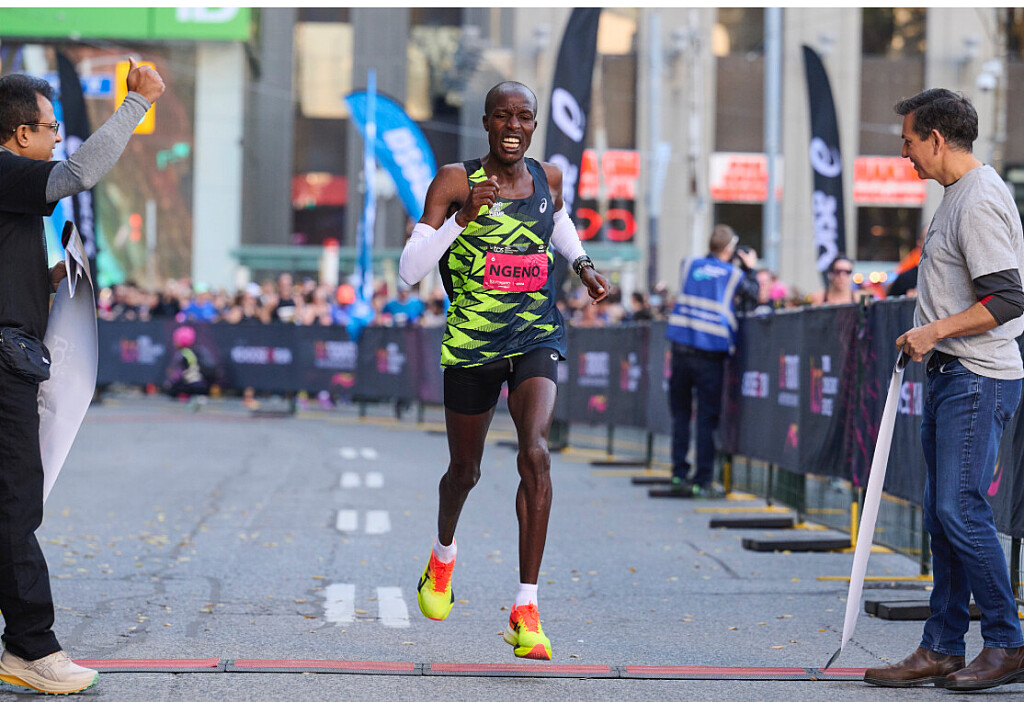
Kenya’s Dominic Ngeno Returning to TCS Toronto Waterfront Marathon
It speaks volumes about a marathon when podium finishers are eager to come back. Last year, Kenya’s Dominic Ngeno finished runner-up at the TCS Toronto Waterfront Marathon. Now, from his home in Iten, he confirms he will return for this year’s edition on October 19.
“It was an amazing race last year and I learned a lot,” he says with a grin. “The race was good. I am coming now to combat. I was so happy that the fans were cheering us all the way in the streets. It was so amazing.”
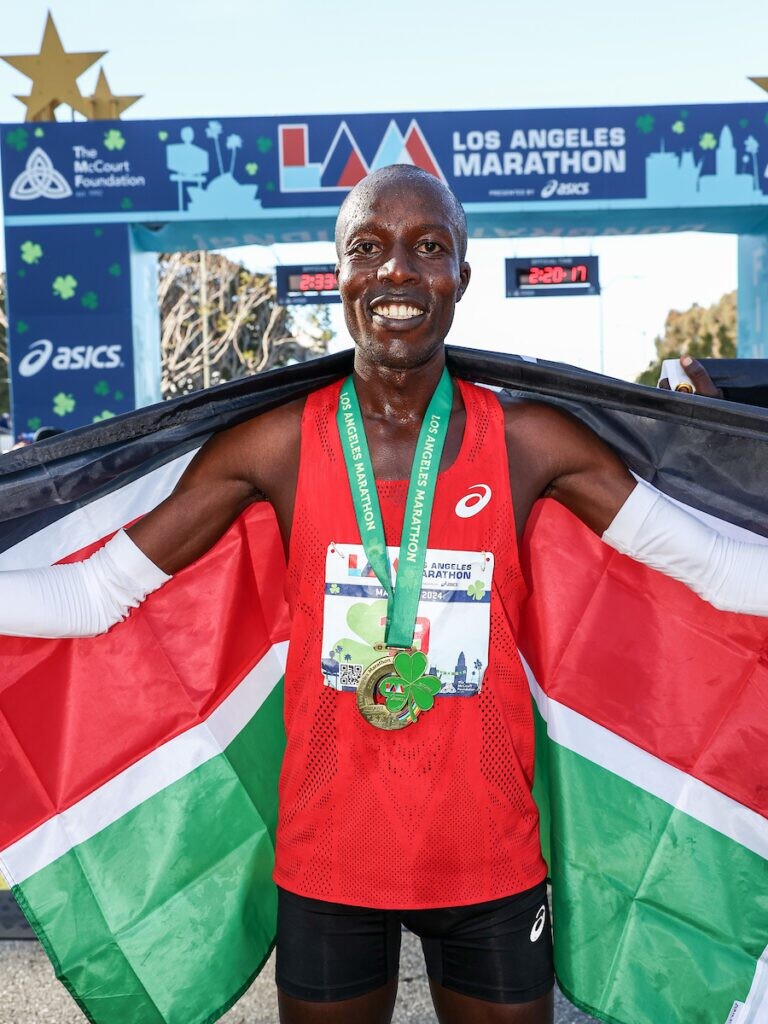
Finding his stride in Iten
In recent months, Ngeno has made some important changes. He left his training base in Kaptagat to return home to Iten, 2,400m above sea level — the famed “Home of Champions.” The switch has made him happier and, he believes, stronger. The proof came at the 2025 Paris Marathon, where he finished 5th in a new personal best of 2:06:37.
“I ran 2:06:37 in Paris and it is a hard course,” he explains. “It is not like Toronto. Last year I feared Toronto was tough because for a few years guys were running 2:09 or 2:10. But when I finished, I saw it was good. Paris compared to Toronto? Toronto is a nice course.”
Training with purpose
Speaking via WhatsApp video, he animatedly describes his training and credits his group of six training partners with pushing him forward. Just before the interview he had run 20km in the evening, then 10km the following morning, with a demanding session of 15 x 1km intervals planned later that day. Every couple of weeks he adds a 40km long run.
“When I am not training, I am resting in the compound — just sleeping,” he says with a smile. “Sleeping is part of the training program. After lunch I sleep, then go for training. When I come back, I take tea and wait for dinner.”
Like many Kenyan athletes, he still makes time to follow English Premier League football.
“Yeah, I am a big fan of Chelsea — the Blues,” he laughs. “My favourite player used to be Didier Drogba, but now it is Cole Palmer.”
A latecomer with big dreams
Ngeno turns 28 on September 3rd, still relatively new to the marathon. After high school he played soccer, then studied in Eldoret for two years, where he met some of Kenya’s top runners. But it was a chance encounter at a 2021 cross country meet with Amos Kipruto — the 2022 London Marathon champion and 2019 world bronze medalist — that shifted his focus.
“We had some small interactions,” Ngeno recalls. “He really inspired me because he didn’t run so many half marathons, and his dream came true after he started running marathons. That inspired me. I ran only two half marathons before deciding to be a marathoner full time.”
Building a future beyond running
Professional running offers him a chance to secure a brighter future. A contract with Asics helps, but he is also investing wisely.
“There is life after running so you need to invest whatever you get,” he says. “Now I have a small business — I have electronics stores and I am also farming. After running I will work with my family and grow that. I have shops and people who work for me. Whenever someone needs something like a television, they can go there.”
Looking ahead
Some of the greatest marathoners — Haile Gebrselassie, Kenenisa Bekele, Eliud Kipchoge — have thrived well into their late 30s. Ngeno believes he has another decade at the top and is motivated by the possibility of representing his country.
“First, I love running, and because I love running I want to run my best and change my life,” he declares. “I want to be the best. I have that dream of running for Kenya. This year when they were selecting the team I was not far from selection. I believe soon I will run for Team Kenya — maybe at the World Championships or Olympic Games.”
For now, his focus is firmly on the TCS Toronto Waterfront Marathon, where he aims to take on a world-class field and turn last year’s second place into victory.
by Paul Gains
Login to leave a comment
TCS Toronto Waterfront Marathon
The Scotiabank Toronto Waterfront Marathon, Half-Marathon & 5k Run / Walk is organized by Canada Running Series Inc., organizers of the Canada Running Series, "A selection of Canada's best runs!" Canada Running Series annually organizes eight events in Montreal, Toronto and Vancouver that vary in distance from the 5k to the marathon. The Scotiabank Toronto Waterfront Marathon and Half-Marathon are...
more...