

Running News Daily
Running News Daily is edited by Bob Anderson and team. Send your news items to bob@mybestruns.com Advertising opportunities available.
Index to Daily Posts · Sign Up For Updates · Run The World Feed
Articles tagged #Connecticut
Today's Running News
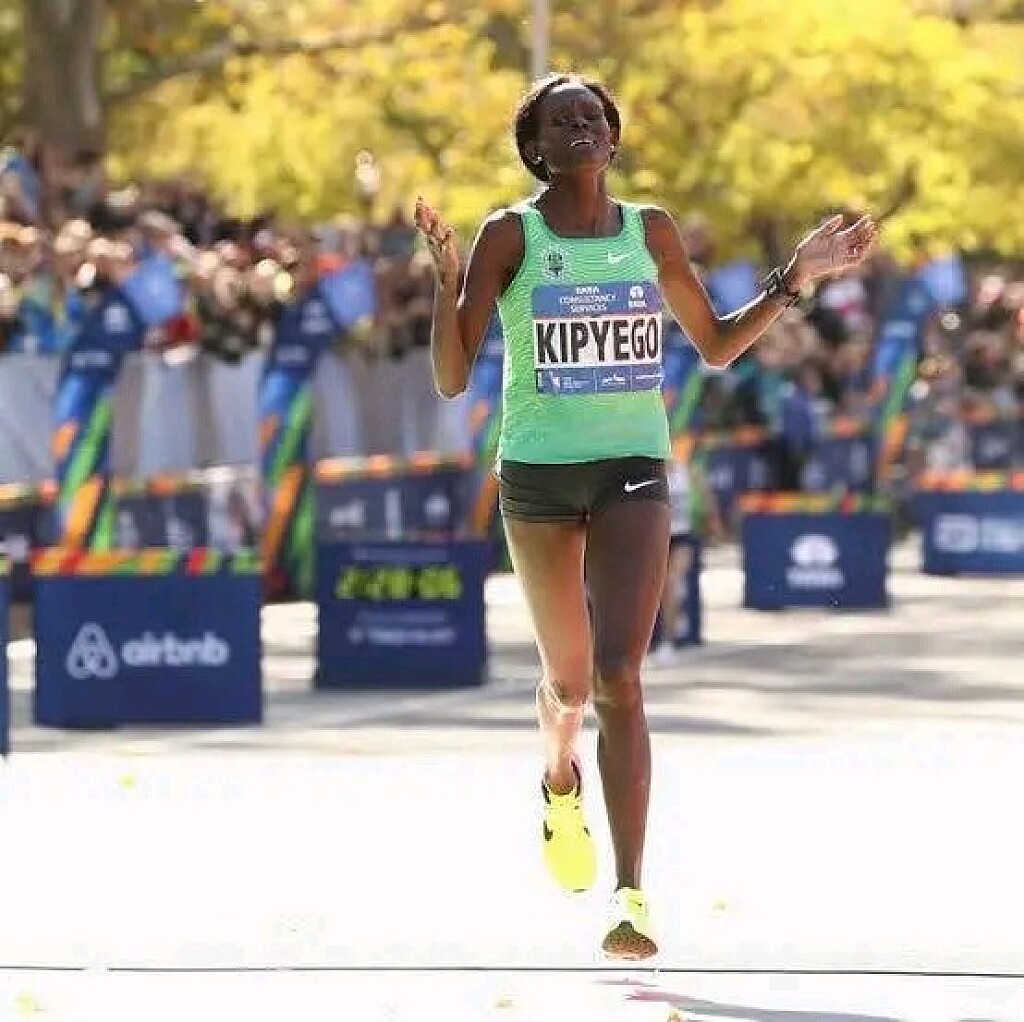


Sally Kipyego Headlines International Women’s Field As Manchester Road Race Marks 90th Anniversary
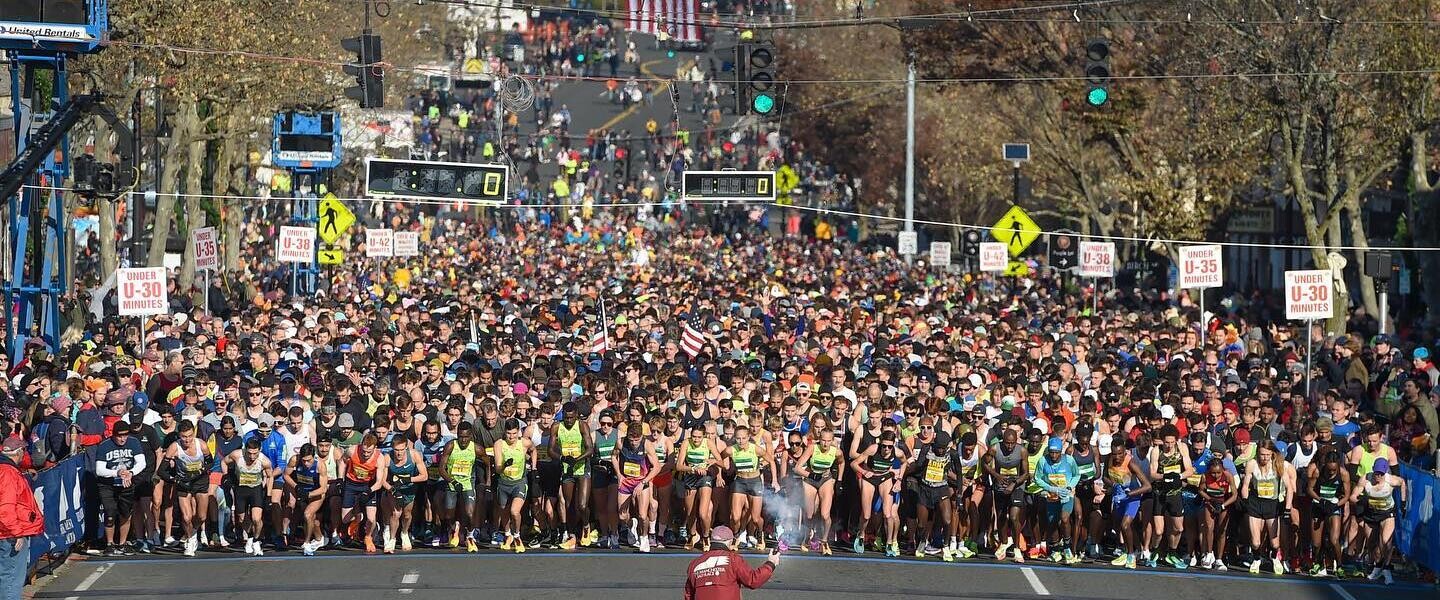
The historic Manchester Road Race is set for a special celebration as the prestigious 7.623km (4.75 miles) competition returns to Manchester, Connecticut, on Thursday, November 26, 2026, with an impressive international women's field assembled for its 90th edition.
Leading the entries is Kenya-born American distance-running star Sally Kipyego, a two-time Manchester Road Race champion and Olympic silver medallist, who will headline a strong lineup featuring accomplished athletes from several countries.
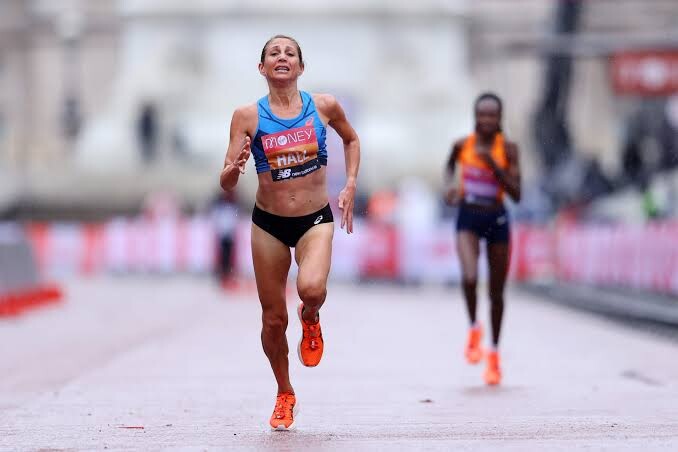
Kipyego will face stiff competition from American distance-running veteran Sarah Hall, the runner-up at the 2020 London Marathon, and two-time Olympian Molly Huddle, who finished second at the Manchester Road Race in 2017.
Great Britain's Hannah Nuttall will also be looking to improve on her runner-up finish from the 2025 edition, while American Annie Rodenfels enters the contest with considerable experience, having twice finished second at the celebrated Thanksgiving Day race.
The international flavour of the women's competition is further strengthened by Argentina's Florencia Borelli, Dutch distance runner Diane Van Es and Irish sisters Eilish and Roisin Flanagan, who will bring additional quality and depth to an already competitive lineup.
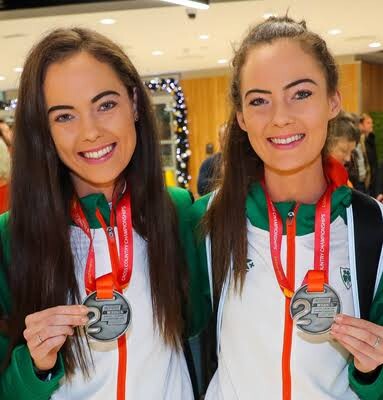
The Flanagan twins will be particularly interesting to watch as they compete alongside some of the world's established distance-running names, adding another international dimension to the historic Thanksgiving Day event.
With Olympic pedigree, experienced road-racing champions and returning podium finishers represented, the women's contest promises an intriguing battle over the 7.623km course. Kipyego's previous success in Manchester gives her an important connection to the race, but she will face several determined challengers eager to claim one of the most prestigious victories on the American road-running calendar.
The depth of the field also highlights the international appeal of the Manchester Road Race, which continues to attract accomplished competitors from across the world. With several athletes carrying previous podium experience and impressive credentials, the battle for the leading positions could be particularly exciting, making the women's contest one of the major attractions of this year's anniversary celebration.
Beyond the elite competition, the 90th edition represents a remarkable milestone for an event deeply rooted in American Thanksgiving traditions. First held in 1927, the Manchester Road Race has developed into one of the country's most recognised annual road-running celebrations, bringing together elite athletes, recreational runners and thousands of spectators.
As Manchester prepares to welcome another Thanksgiving Day gathering, attention will turn to Kipyego and her international challengers as they pursue victory in a race that combines sporting excellence with nearly a century of running tradition.
by Erick Cheruiyot for My Best Runs.
Login to leave a comment
Manchester Road Race
The Manchester Road race is one of New England’s oldest and most popular road races. The 86th Manchester Road Race will be held on Thanksgiving Day. It starts and finishes on Main Street, in front of St. James Church. The Connecticut Sports Writers’ Alliance recently honored the Manchester Road Race. The CSWA, which is comprised of sports journalists and broadcasters...
more...
World U20 Relay History Rewritten As Great Britain Breaks Fresh Record After Australia's Brief Reign
Records were rewritten twice within the space of a few unforgettable minutes as the inaugural World Athletics U20 Mixed 4x100m relay produced one of the most dramatic sessions of the World Athletics U20 Championships in Eugene, Oregon.

Australia ignited the excitement in the opening heat by storming to a world U20 record of 41.64 seconds, becoming the first team ever to reach that mark and briefly claiming a place in history. For five memorable minutes, the Australian quartet of Uwezo Lebenda, Maya Taber, Kelechi Ekwomadu and Thewbelle Philp stood as world record holders after a sensational performance that also secured their place in Saturday's final.
Their celebration, however, proved to be short-lived.
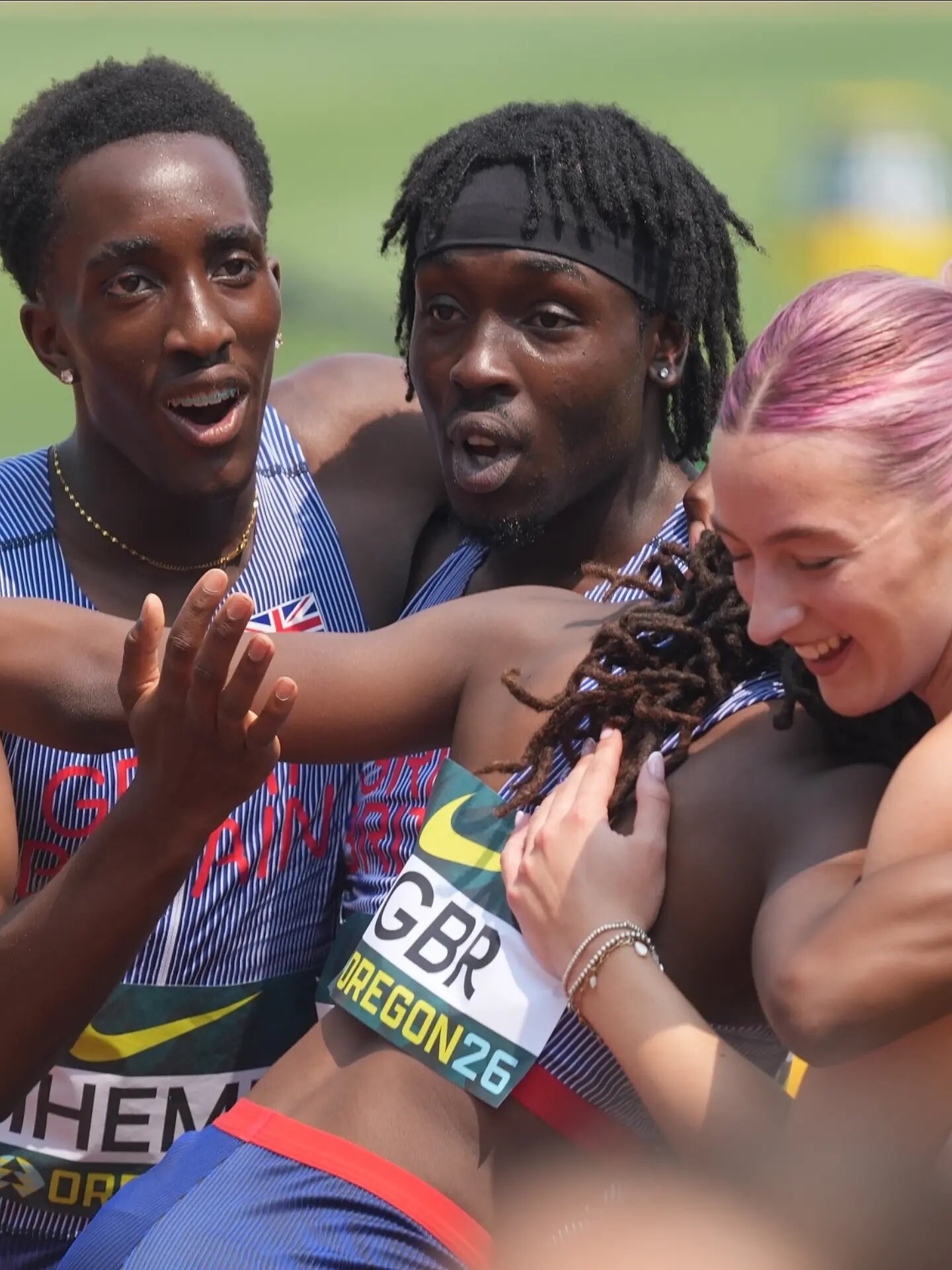
Moments later, Great Britain delivered an even more electrifying display in the second heat, clocking 41.60 to erase Australia's newly established mark and set a fresh World U20 record. It was a masterclass in speed, precision and flawless baton exchanges that propelled the British team into the history books.
The record-breaking quartet of Divine Iheme, Savannah McKenzie Morgan, Mathew Ajayi and Sophie Thomas combined brilliantly from start to finish to produce the fastest mixed U20 4x100m relay ever recorded. Sophie Thomas, who is set to compete for the University of Connecticut (UConn) this year, produced a composed anchor leg to seal the landmark performance.
The extraordinary back-to-back world records underlined the remarkable depth of sprint talent on display, with several other nations also producing outstanding performances to qualify for the final.
Italy impressed with a personal best of 41.74, while the United States advanced comfortably in 41.82. Nigeria also produced a personal best of 41.91 to secure qualification.
Jamaica (42.08 PB), Germany (42.12 PB), France (42.16 PB) and Poland (42.18 PB) completed the eight-team final after delivering strong performances in one of the fastest mixed relay qualifying rounds ever witnessed at the U20 Championships.
With two world records already falling in rapid succession, anticipation is now soaring ahead of Saturday's final. If the qualifying heats are any indication, the newly established global mark of 41.60 may once again come under serious threat as the world's best young sprinters chase another piece of athletics history.
by Erick Cheruiyot for My Best Runs.
Login to leave a comment
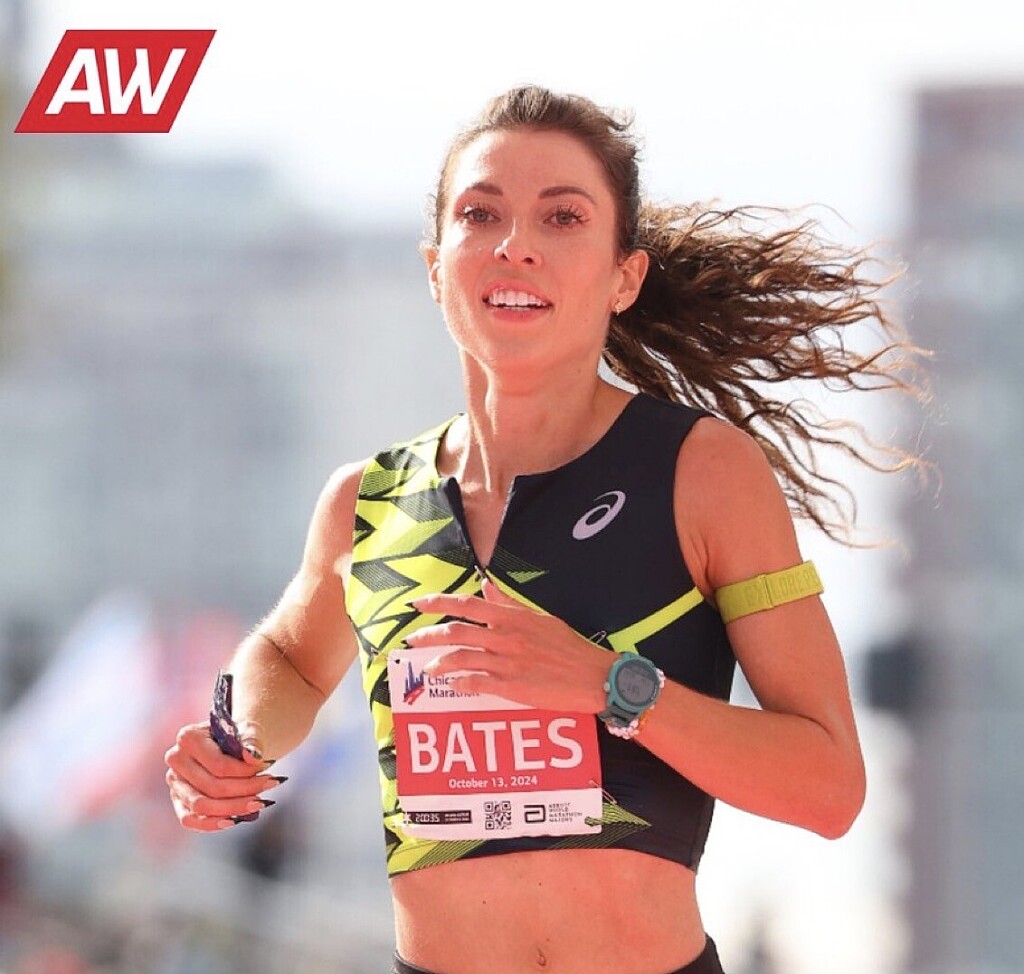
Emma Bates Says She Was Dropped by Sponsor During Pregnancy
American marathoner Emma Bates says she has been dropped by her longtime nutrition sponsor UCAN after revealing she is pregnant.
Bates, who owns a personal best of 2:23:18, had been with the Connecticut-based company for nearly four years. During that time, she delivered some of the strongest performances of her career, including a runner-up finish at the 2021 Chicago Marathon and multiple appearances as the top American woman at the Boston Marathon.
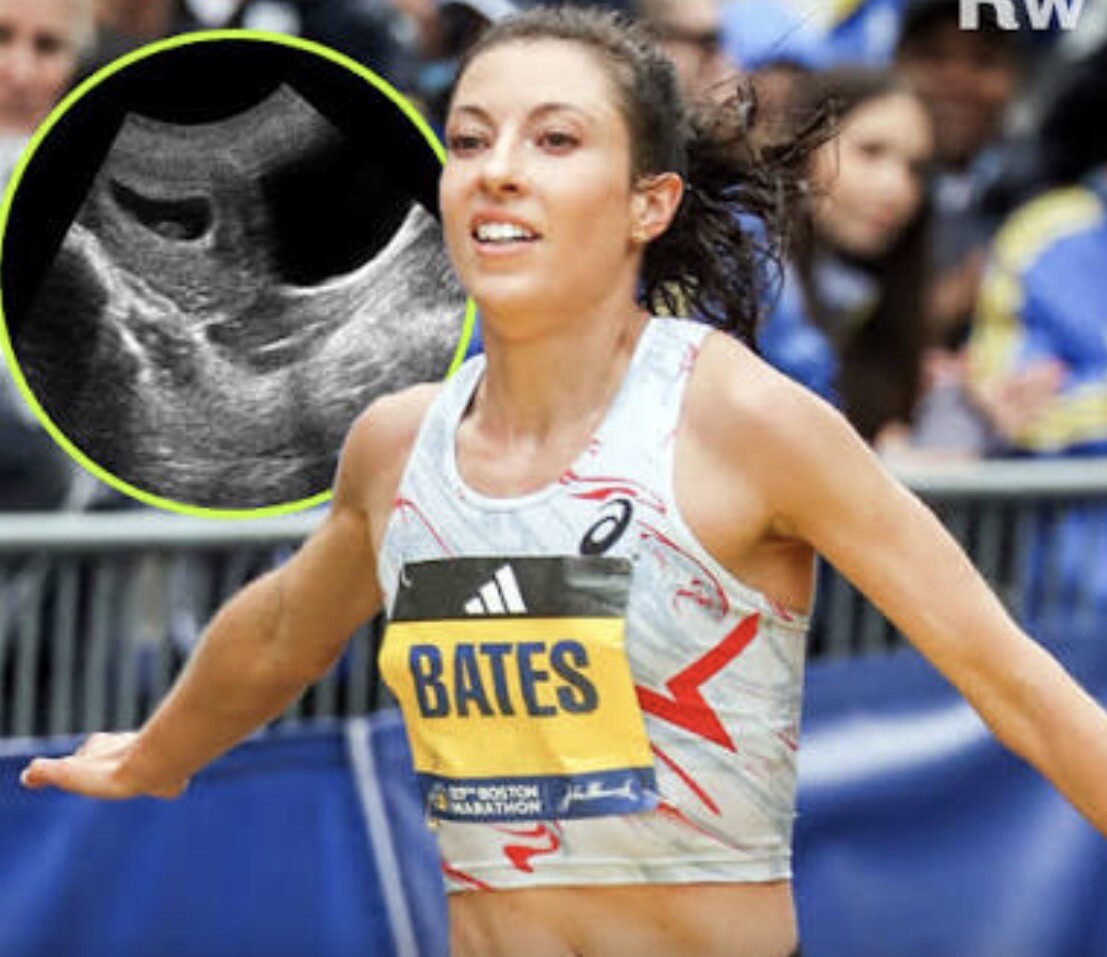
According to Bates, the sponsorship ended following news of her pregnancy—a situation that has once again raised questions about how female athletes are supported during one of the most important phases of their lives.
UCAN, however, tells a different story.
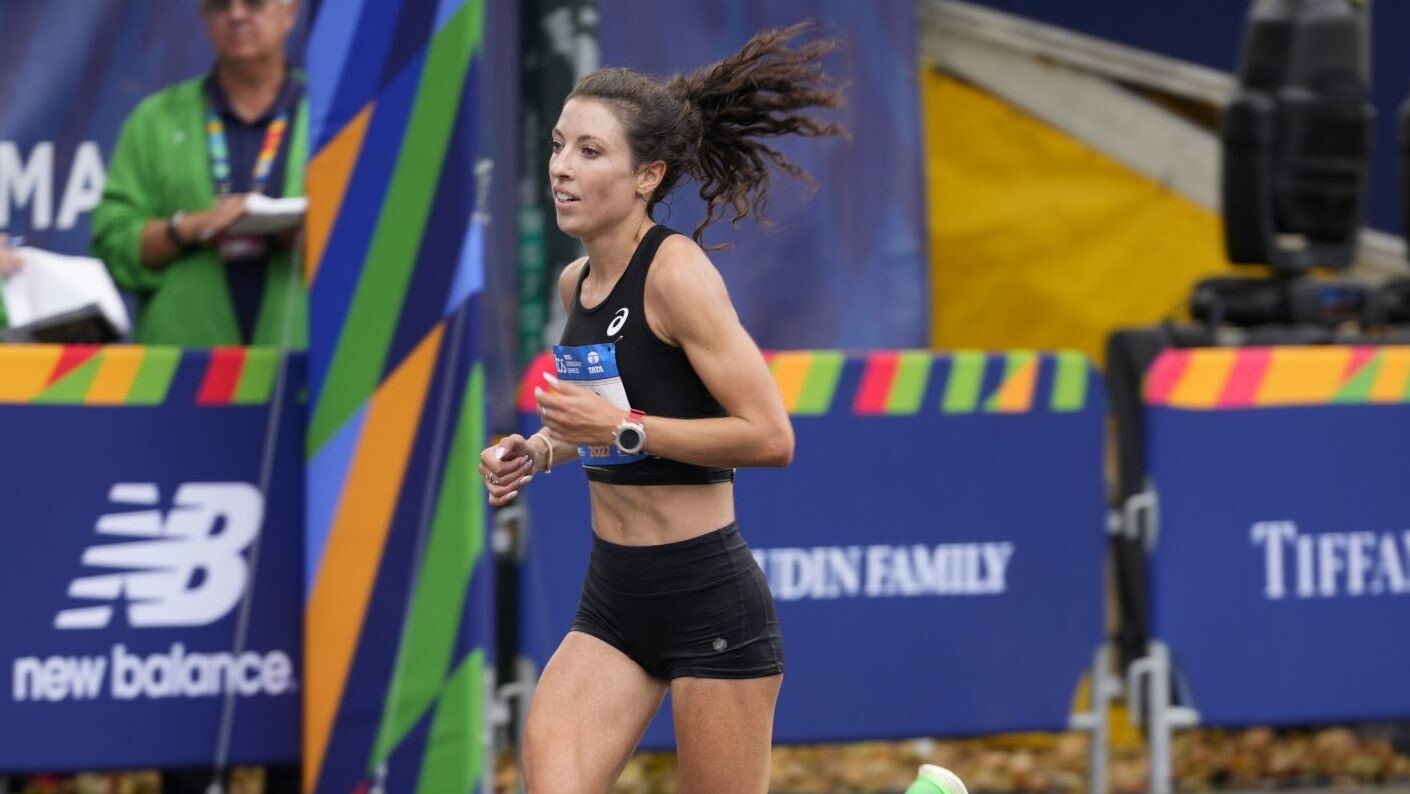
“We’re proud of the three-year partnership we had with Emma Bates and the many accomplishments we achieved together,” the company said in a statement. “The partnership decisions were made in September 2025 as part of regular business planning and prior to any knowledge of her pregnancy.
“We made an effort to continue working with Emma under a new agreement, but Emma ultimately chose not to move forward with that option. We’ve always supported—and will continue to support—athletes at all stages of life, including pregnancy and motherhood.”
The differing accounts leave open questions about what changed—and when.
In recent years, the issue of maternity protections in professional running has gained increased attention, with several high-profile athletes speaking out about contract terms, reduced pay, or lost sponsorship during pregnancy.
Bates, one of the most consistent American marathoners of her generation, now finds herself at the center of that ongoing conversation.
Her next chapter—both as an athlete and soon-to-be mother—will be closely followed across the sport.
by Boris Baron for My Best Runs
Login to leave a comment
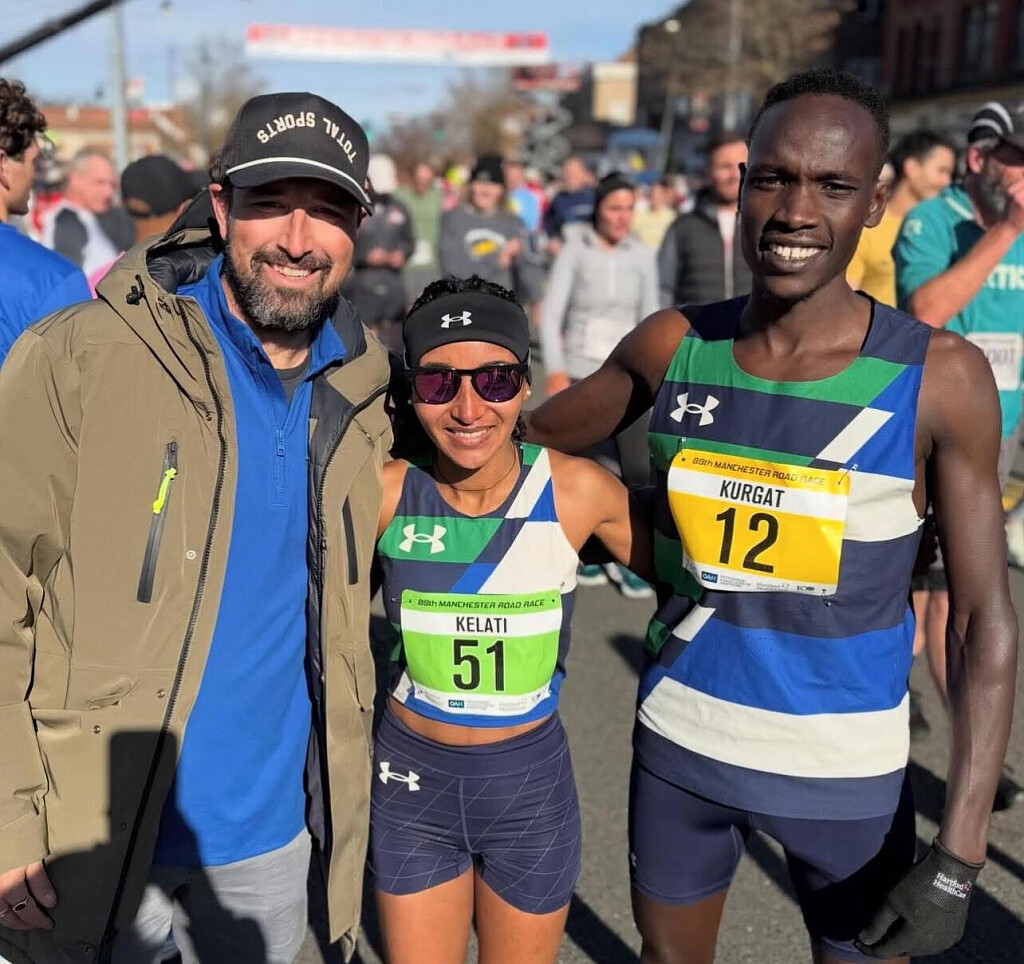
Edwin Kurgat and Weini Kelati Shine at the 89th Manchester Road Race
MANCHESTER, Connecticut — Edwin Kurgat and Weini Kelati delivered commanding performances on Thursday morning, claiming victory at the 89th edition of the storied Manchester Road Race. Clear, cool weather set the stage as the two Flagstaff-based athletes dominated the 4.737-mile loop through downtown Manchester—a Thanksgiving tradition that blends elite competition with a festive community atmosphere.
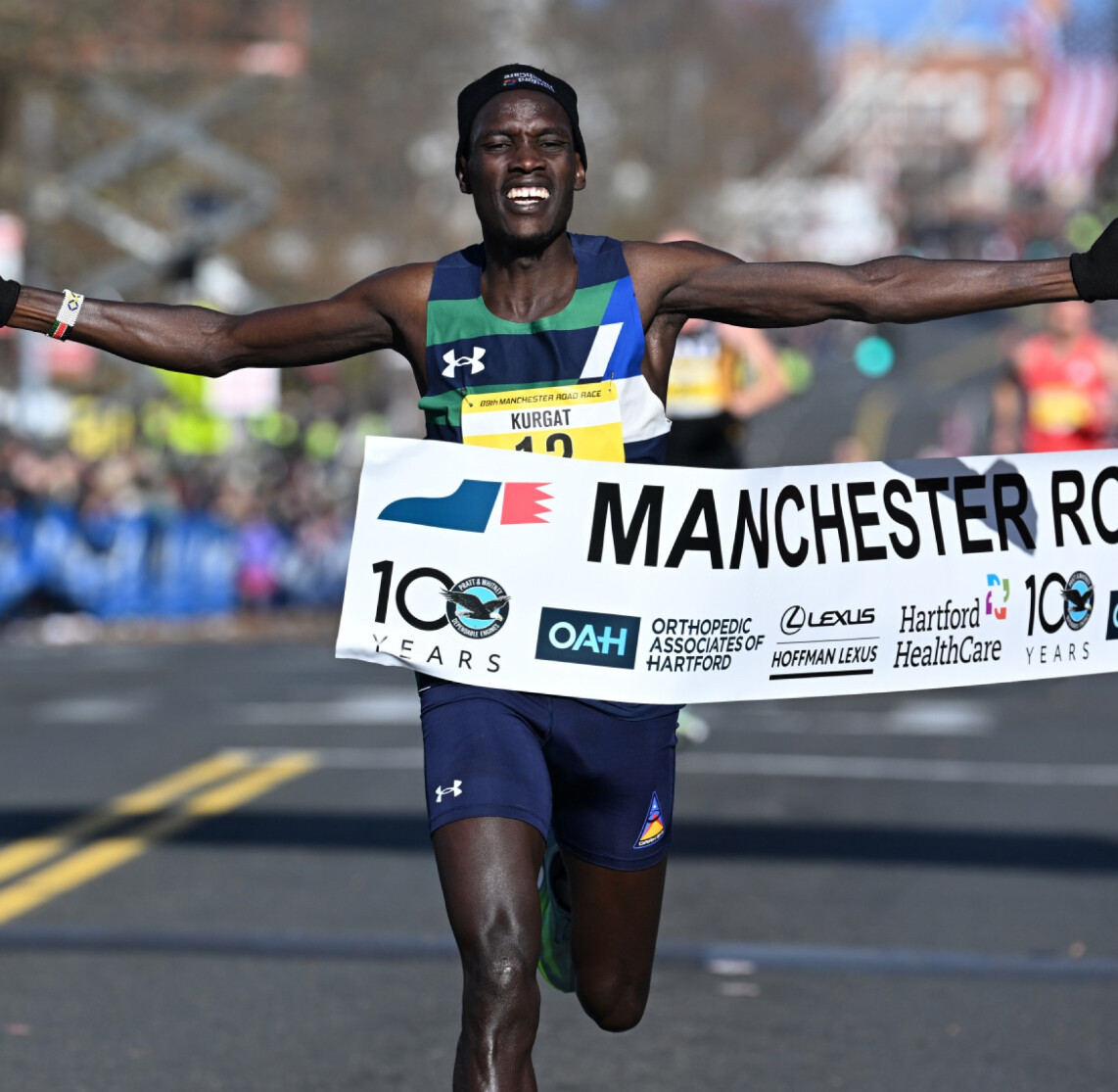
Kurgat stormed to the men’s title in a record-breaking 20:54, eclipsing the previous mark of 21:04 set by Conner Mantz in 2022. In the women’s race, Kelati secured an extraordinary five-peat, crossing the line in 23:18. While short of her own course record of 22:55 from 2021, her consistency and dominance reaffirmed her status as one of America’s top road runners.
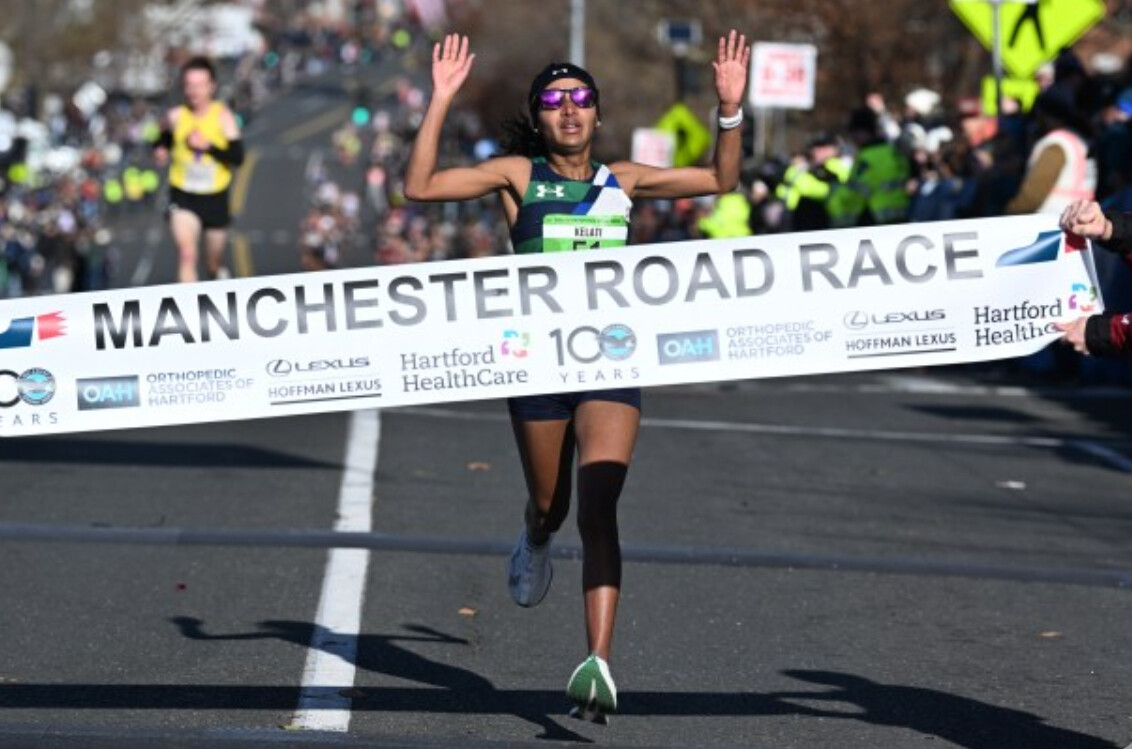
This year’s race attracted 12,386 registrants, continuing the event’s strong post-COVID resurgence. The “massive field,” as race officials described it, featured defending men’s champion Andrew Colley, 2023 champion Morgan Beadlescomb, Kelati, and world-class Kenyan standout Dorcus Ewoi—further cementing Manchester’s reputation as one of the premier road races in the United States.
by Boris Baron
Login to leave a comment
Manchester Road Race
The Manchester Road race is one of New England’s oldest and most popular road races. The 86th Manchester Road Race will be held on Thanksgiving Day. It starts and finishes on Main Street, in front of St. James Church. The Connecticut Sports Writers’ Alliance recently honored the Manchester Road Race. The CSWA, which is comprised of sports journalists and broadcasters...
more...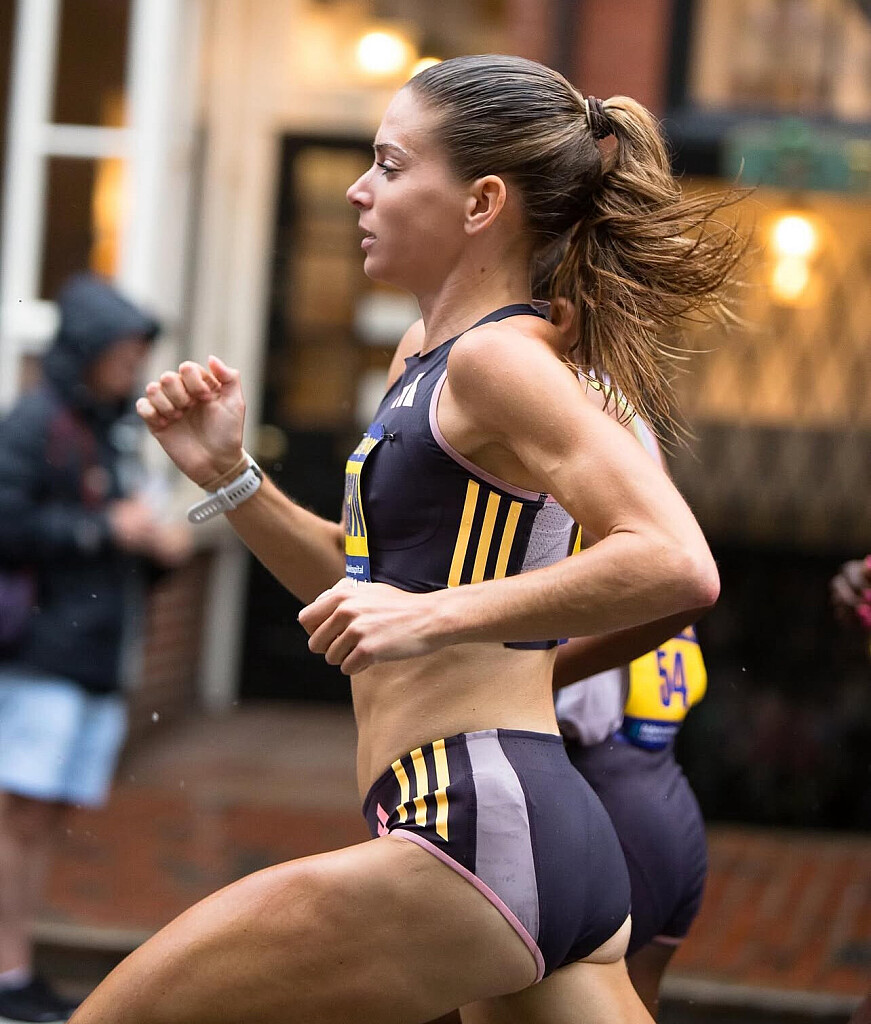
Emily Durgin Has the Tools to Be a Force in Distance Running
A Profile of Grit, Versatility, and Untapped Potential
Emily Durgin’s name may not yet be a household one in global distance running, but among those who follow American road racing closely, she has earned deep respect for her steady rise, racing range, and professionalism. With standout performances in the 10K, half marathon, and marathon, Durgin has shown she possesses the tools to become a lasting force in the sport.
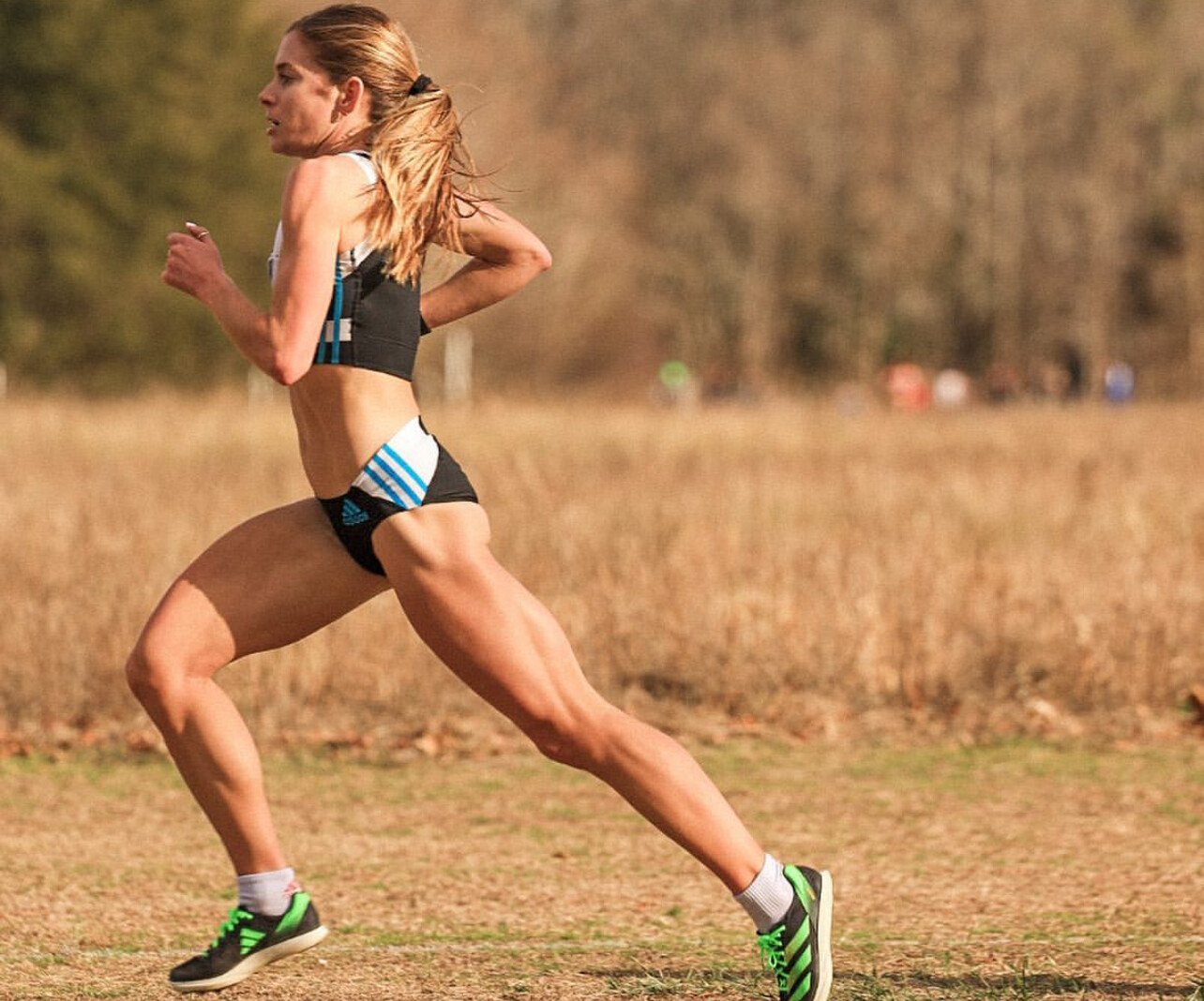
Originally from Maine, Durgin was a nine-time conference champion at the University of Connecticut before making a name for herself on the professional circuit. Her breakout year came in 2022, when she ran 1:07:54 for the half marathon in Houston — one of the fastest times ever by an American woman. She followed that up with a marathon personal best of 2:26:46 at the Toronto Waterfront Marathon in 2023, finishing as the top American.
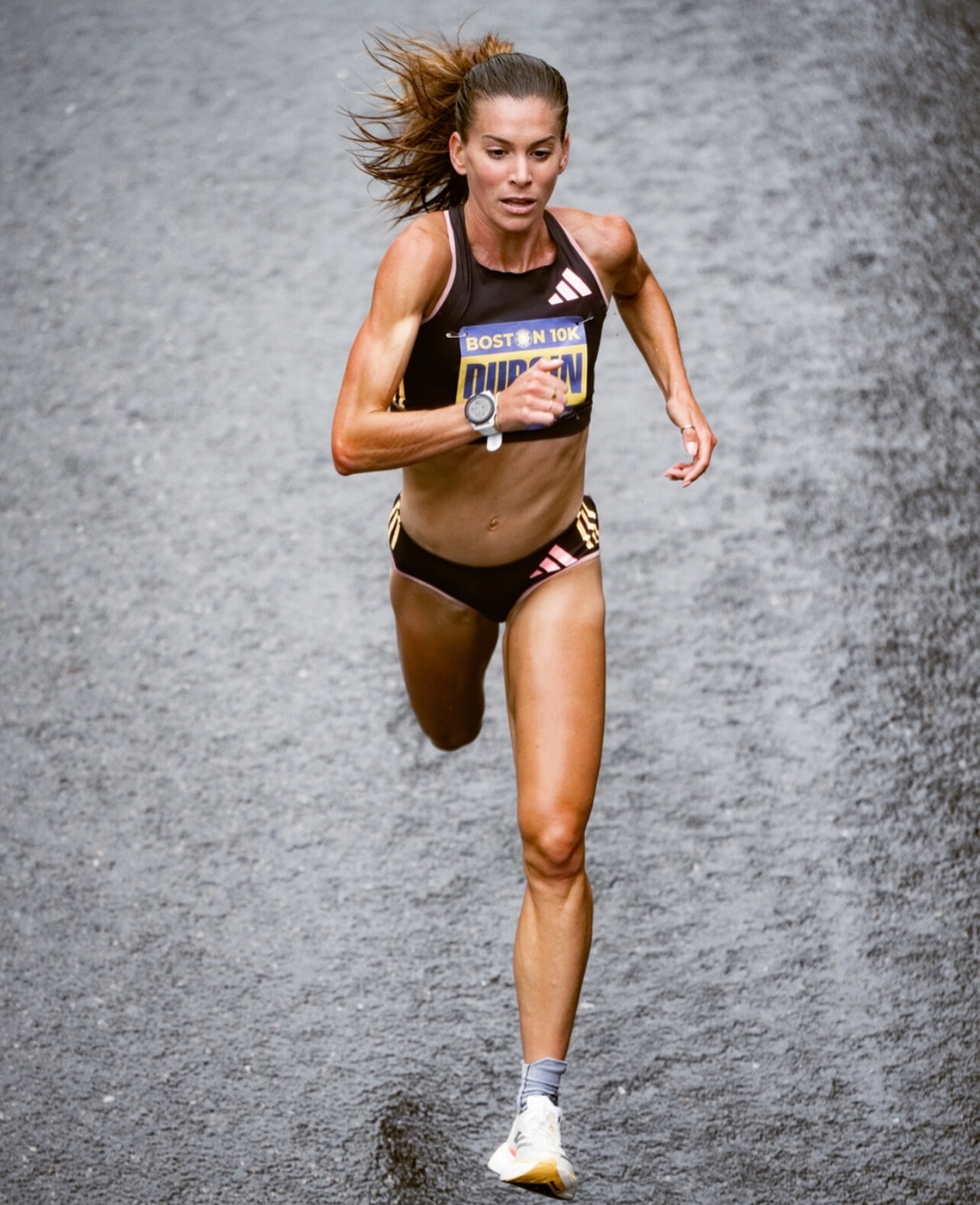
In early 2024, she placed ninth at the U.S. Olympic Marathon Trials and went on to win the USATF 10-Mile Championship in Washington, D.C., with a blazing 51:26 — the fastest time ever by an American in a women-only race at that distance.
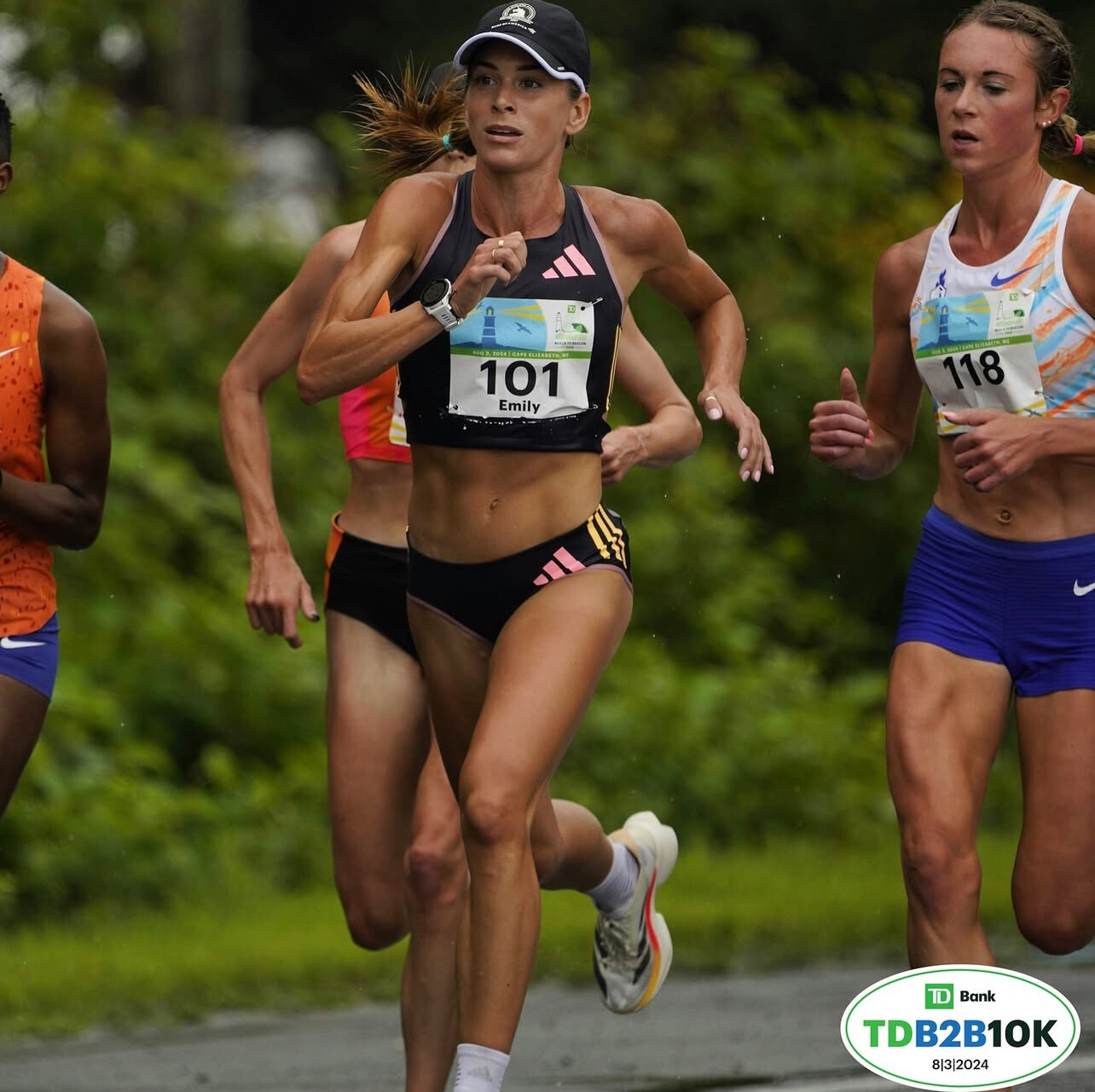
While she had planned to run the Valencia Marathon in December 2024, Durgin did not start the race due to a hamstring issue and a problem sleeping. In a recent social media post she feels she is putting these issues behind her and plan on racing again soon. But she says she is listening to her body and do not want to come back until her body is ready to race at the elite level.
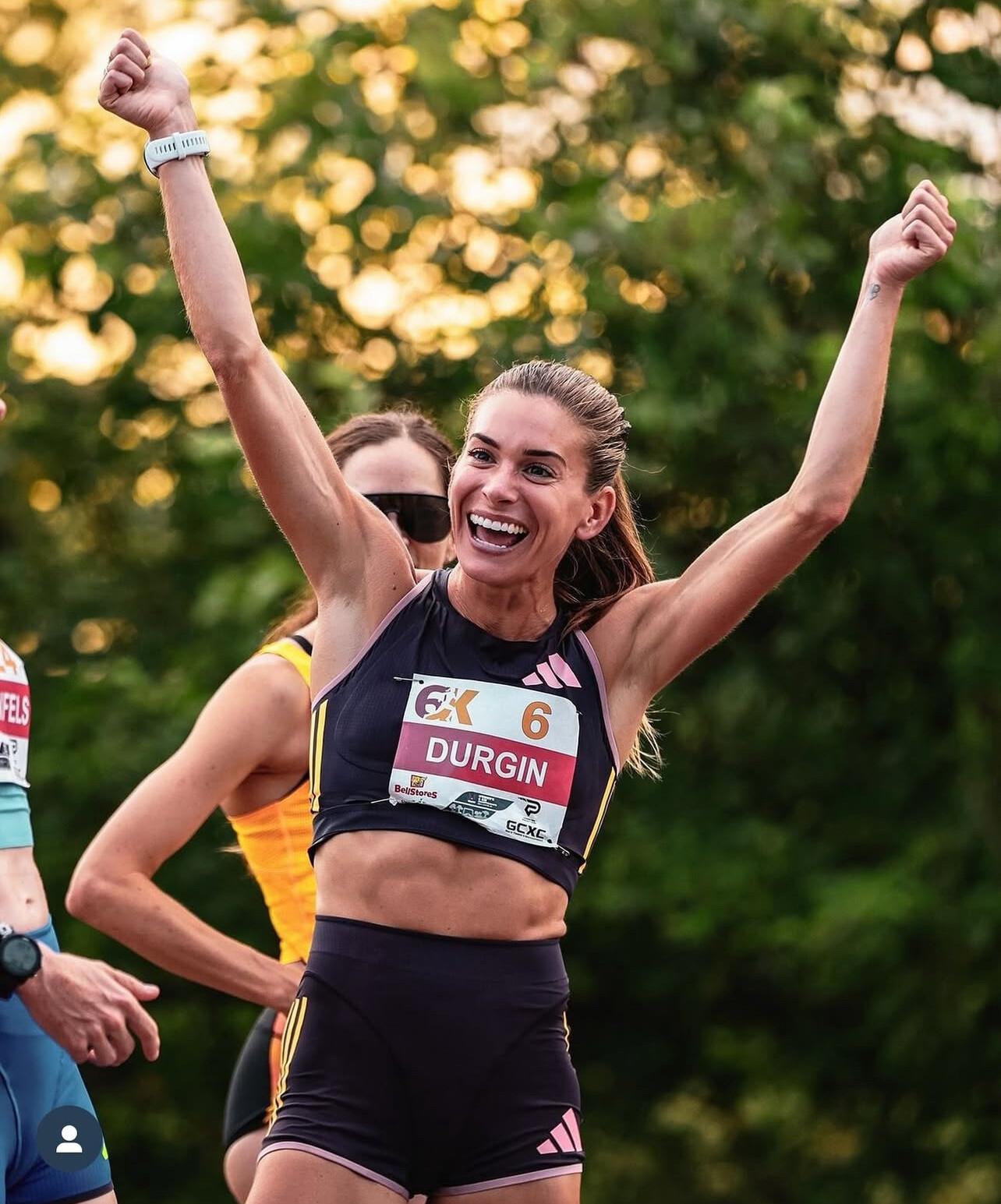
At age 30, she’s in the prime years for a distance runner — and with her ability across distances and proven toughness on the roads, Emily Durgin remains a name to watch.
by Boris Baron
Login to leave a comment
You Should Stop Showering Between Runs—and My 7 Other Running Rules for 2025
If you’ve been on social media lately, you might have seen your friends making in-and-out lists. It’s been a thing for a few years—maybe less-so now—but the idea is to come up with some trends that you think will be popular and unpopular.
The best ones are fun and off the top of the head. Some of the thought-out ones about culture are kind of annoying. (Yeah, everyone agrees that “being mean” is out in 2025.)
So I took the idea and applied it to my own running. Remember, these are specific to my experience. They’re not mandates or absolutes or even advice.
And at the end of the year, feel free to call me out if I was wrong. I probably was.
Out: Showering between runs
In a normal training week, I run twice a day on Wednesday and Thursday. Those are my recovery days, and I use them as a chance to get ahead on my weekly mileage. Usually, I run between 60 and 85 miles a week during marathon training, so to break it up, I’ll run once before work and then again during lunch or after work. Also known as “doubling.”
But that laundry piles up fast.
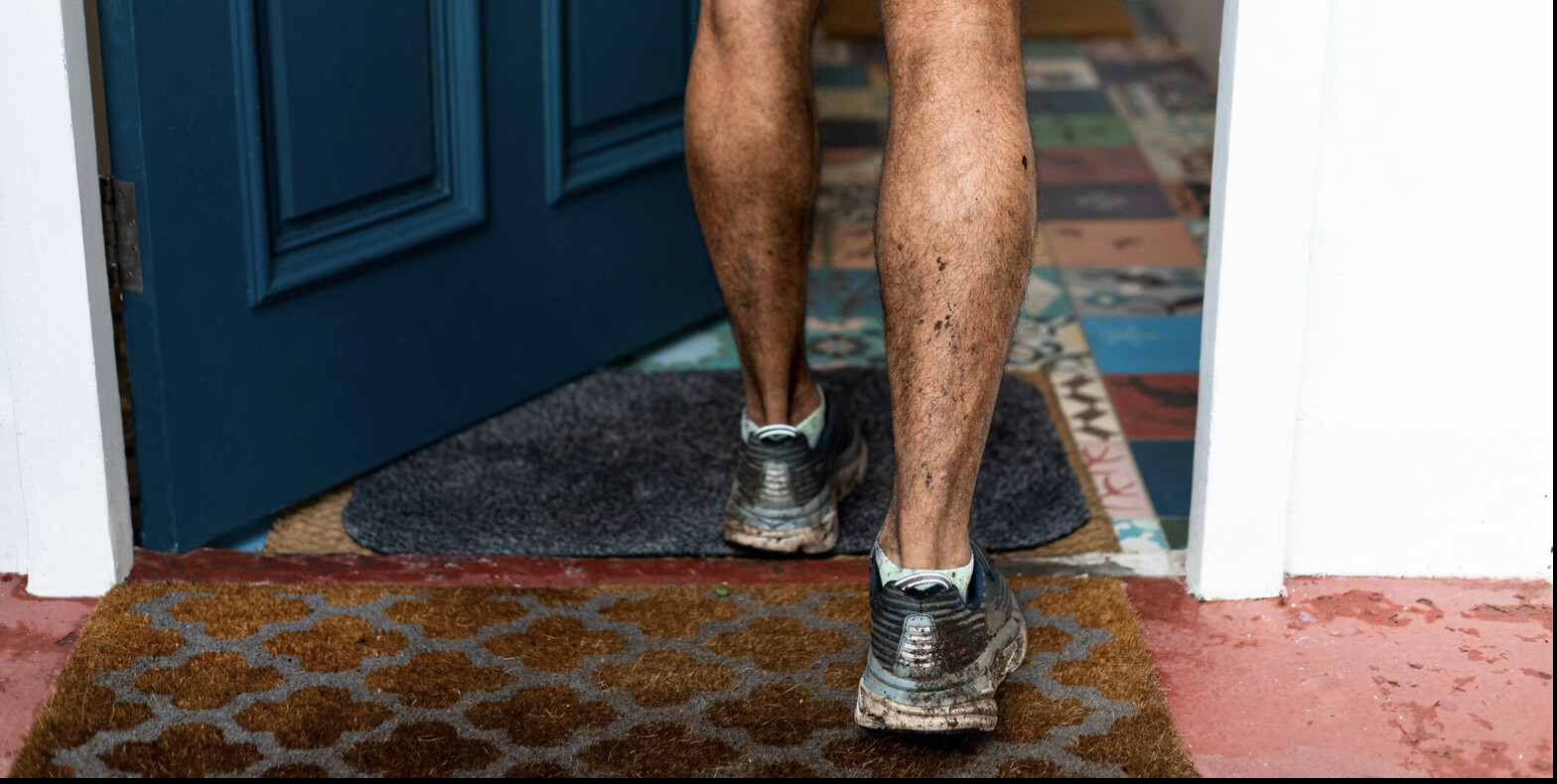
So on days when I work from home, sometimes I’ll put off my shower and stay in my workout clothes until my next run or weightlifting session. I live alone, so there’s no one to complain about my odor. (If you live with a roommate, partner, or family, use this strategy at your own risk.)
In: Wearing ugly race T-shirts
Remember the race T-shirts of the 2000s? The ones that looked like they were designed by a middle schooler and had no fewer than 1,000 ads on the back? I’ve gotten so many over the years, and most have gone straight to Goodwill or I’ve used them for yard work. But this year, I’d like to use my race T-shirts for their purpose—and run in them. There’s something fun about wearing an ill-fitting cotton tee with an ad for Jimbo’s Ford Dealership on the back.
Some races are pivoting away from shirts in favor of more environmentally friendly alternatives, but don’t expect them to completely disappear. According to Running USA, 58 percent of participants who took the 2024 Global Running Survey said that commemorative T-shirts are important to their race experience.
Out: Long runs
I’m planning on running Grandma’s Marathon in June, which means I’m building up my mileage now. But I’ve found that long runs are kind of overrated. Hear me out.
During my last marathon training block, I never ran more than 18 miles for my long run. Many programs call for 20 to 23-mile long runs, but my coach and I decided that 18-milers would get the job done. I’ve been running high mileage for close to a decade now, so I have a large aerobic base. The strategy worked, and I ran 2:27:07, hitting my goal of sub-2:28.
Right now, as I build, my coach and I are experimenting with the idea of downplaying the long run. Instead of using it as a key workout (for example, 10+ miles at marathon pace during the run), we’re focusing more on high-volume workouts twice a week, then using the long run just to get time on my feet. Similar to how Jakob Ingebrigtsen, who never runs more than 12.5 miles, trains.
A hard long run takes a large emotional and physical toll on my body, so I’ve found that I respond well when I keep the long run easy and focus on high-volume threshold sessions during the week. Of course, running on tired legs is key to running a good marathon. As I get closer to June, I’m sure there will be weeks where I use long runs as key workouts. But sometimes I need to remind myself that the other six days of the week are just as important.
In: Wearing a T-shirt over a long sleeve
For the past year, I’ve been mulling over buying a running vest. They look cool, but I keep telling myself that I don’t need to buy something that I’d probably only wear on a few runs each year. I live in eastern Pennsylvania, so I’m usually wearing something light in the fall or a full jacket in the winter. Enter, the working man’s vest: the T-shirt over the long sleeve shirt.
The sleeves keeps your arms warm while the T-shirt acts as a protectorate for your torso, insulating (not suffocating) you from the wind. Cooper Teare is a big fan.
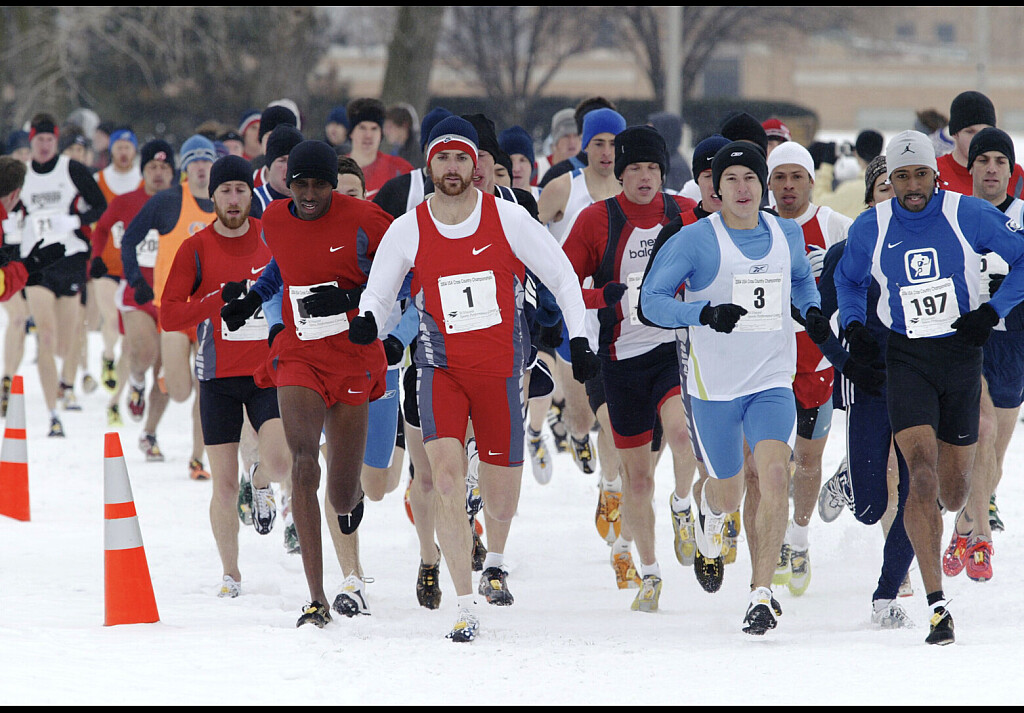
Bonus points if you pair the look with an ugly race T-shirt. And double bonus points if you rock the look in a snowy race, like seemingly everyone did at the 2004 USATF Cross-Country Championships in Indianapolis.
In: Sunscreen
Man, I’m bad at this. If I’m preparing to sit out at the beach or pool, I lather up thoroughly. But if I’m heading out for a 90-minute run, I rarely put on sunscreen, justifying to myself that the route is shady or 90 minutes isn’t that long in the sun.
I’ve gotten better at sun protection—I almost always wear a hat and sunglasses year-round now—but I need to get better at lathering up on a regular basis. If you see me jogging this summer, ask me if I have sunscreen on and, if I don’t, shame me until I turn around and go home.
Out: Marathon bottle service
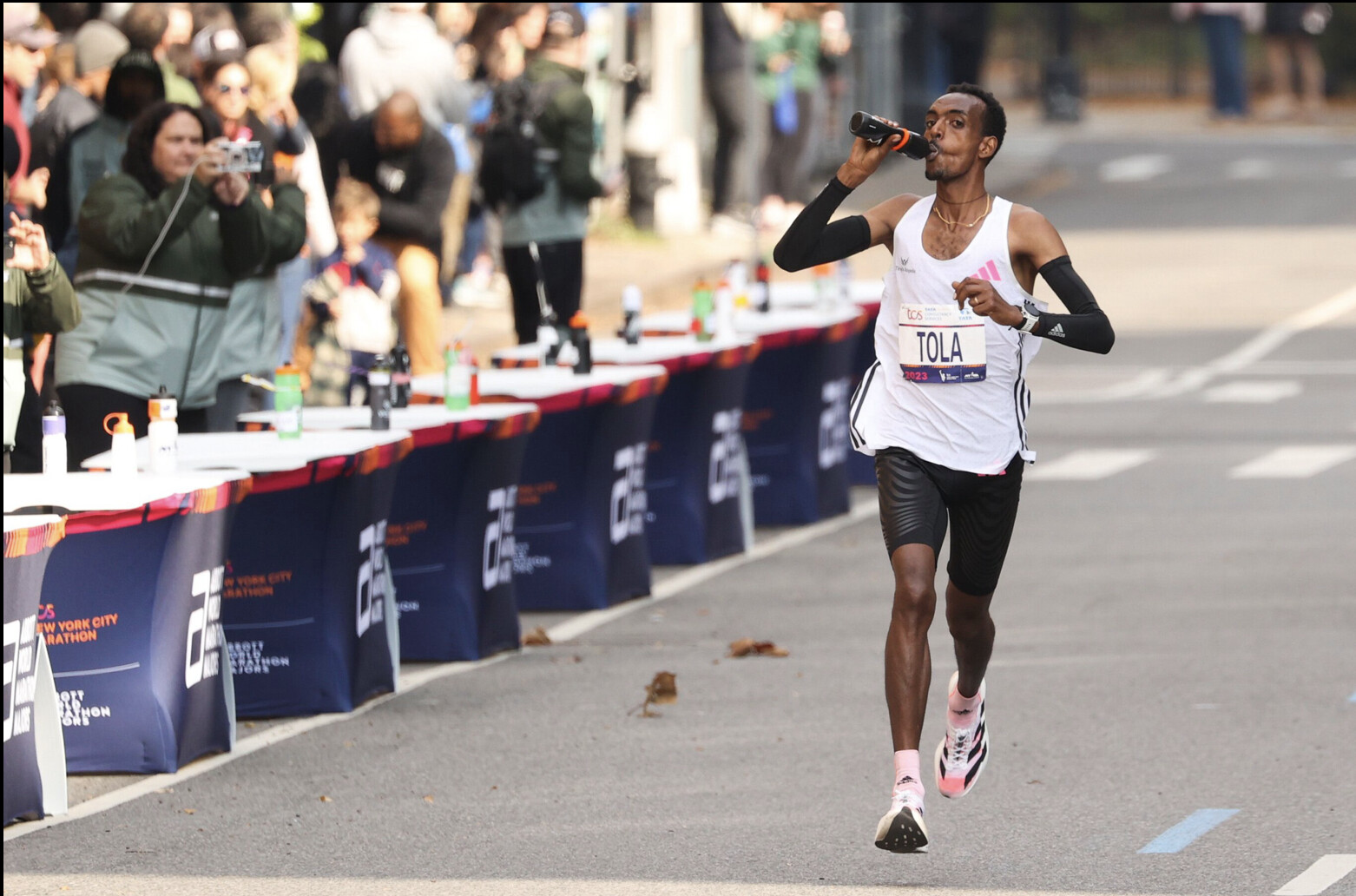
In my debut marathon at Indianapolis in November, I was lucky enough to qualify for the elite field, meaning I got perks like reserved restrooms, a separate warm-up area, and bottle service. For those unfamiliar, bottle service at a marathon is different from bottle service at a Las Vegas nightclub. Instead of access to marked-up Patrón, you get reserved spots on the course where you can stash your race fluid bottles.
Because there’s limited space, bottle stations are typically reserved for the fastest runners at a marathon. Instead of fumbling with the water or electrolyte-drink cups that the masses use, elites can consume whatever they trained with. In most cases, it’s some kind of carbohydrate mix.
At Indianapolis, there were three bottle stations: at miles 8, 14, and 20. I filled mine up with Maurten 160, but honestly, I didn’t feel like the perk was that necessary. I carried eight gels with me, taking them every 15 to 20 minutes, which was plenty. The bottles felt like more of a bonus or palate cleanser. They were cumbersome to hold and drink at race speed, and I found myself only taking a few sips then discarding them. Plus I had to pee the entire race, so I didn’t want to make the situation more dire.
Previously, I thought bottle service was non-negotiable to running a fast 26.2. But my mind has changed. If you envy the pros for their bottle access, don’t worry, you’re not missing out. Gels get the job done.
In: Off-distance races
I’m stealing this one from my 2024 in-and-out list. Off-distance races are events that diverge from traditional race distances (like the 5K, 10K, and marathon). Popular examples include the Bix 7 Road Race in Iowa (a 7-miler), the Boilermaker 15K in New York, and the Manchester Road Race in Connecticut (4.737 miles).
My favorite off-distance event is the Run for the Diamonds in Berwick, Pennsylvania. It’s a Thanksgiving day 9-miler that’s been going strong since 1908. The whole town comes out and cheers the runners up and down the massive hill that’s sandwiched in the middle of the route. Plus, the top seven men and women get real diamonds!
In: Short trail races
Speaking of race distances, let’s make short trail races a thing in 2025. Ultramarathons get most of the attention, but they’re not for everyone. At risk of contradicting myself against my previous “in,” there are plenty of trail options at the 5K, 10K, and half-marathon distance. Local state parks may host them, or sometimes there are running races tied in with mountain bike or cyclocross races. (Fifth Street ‘Cross in Pennsylvania does a great job of putting on both.)
I’d love to jump in a trail half marathon this summer between my two marathon training blocks. There won’t be any pressure to run a certain time, and let’s be real, running on the roads gets boring sometimes.
Login to leave a comment
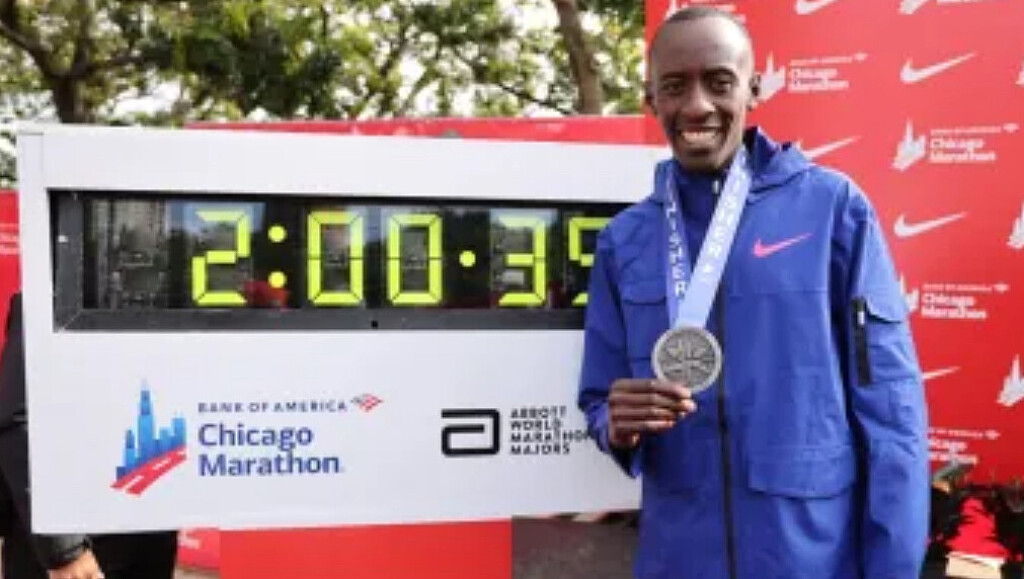
The Chicago Marathon has a strong history
First run in 1977, this Sunday, Chicago hosts its 46th marathon (it lost 2020 to the Covid-19 pandemic; 1987 to sponsorship issues). One of the six Abbott World Marathon Majors, the history of the BofA Chicago Marathon has been one of rising, falling, and rising again.
In 2023, it witnessed its third men’s marathon world record, 2:00:35, gloriously produced by the late Kenyan star, Kelvin Kiptum, who tragically died in a car accident on February 11, 2024 (age 24 years), in Kaptagat, Kenya.
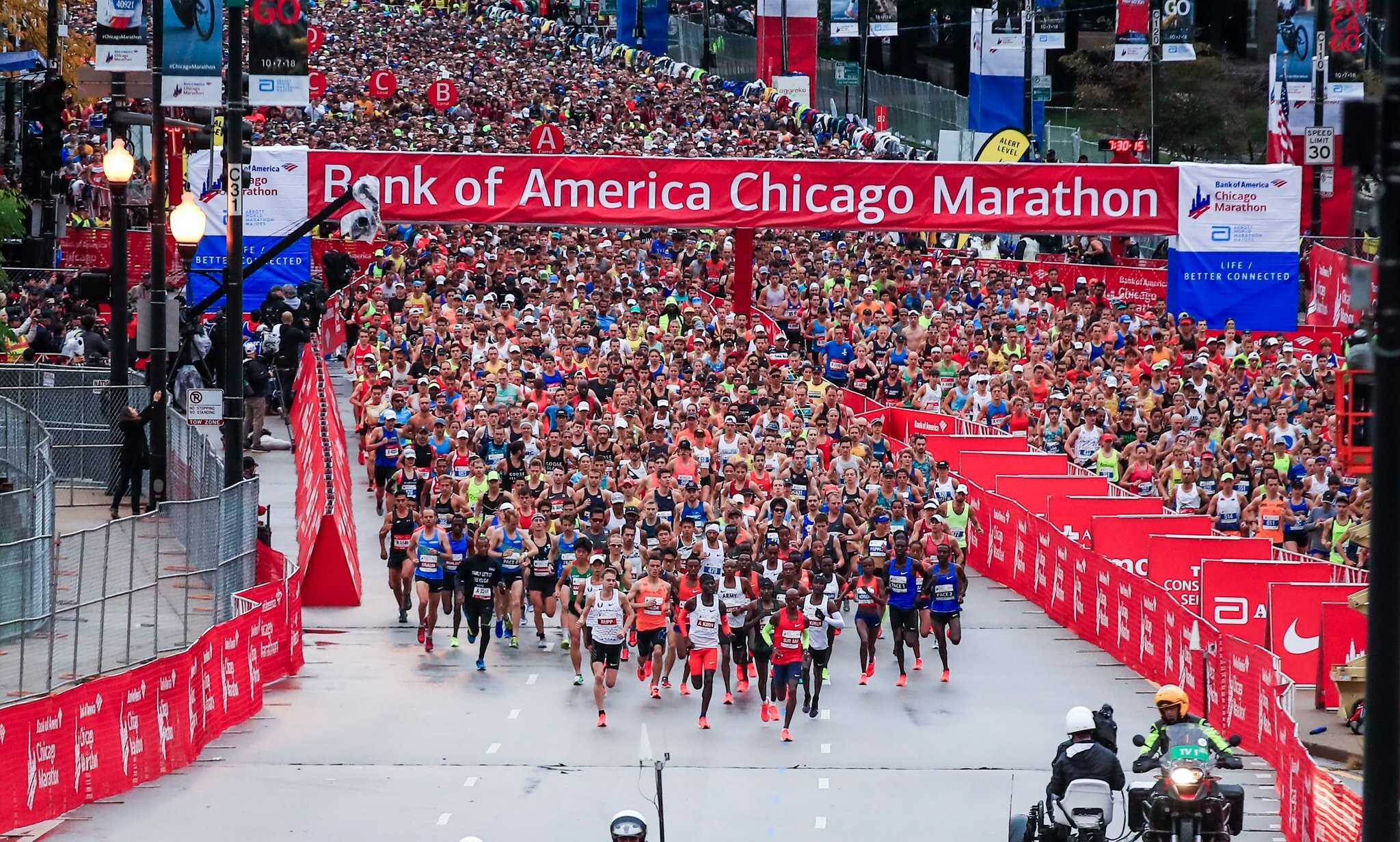
But the roots of the modern Bank of America Chicago Marathon traces back to 1982 when, in its sixth year, known as America’s Marathon/Chicago, the event rebooted, much as New York City 1976 was a reordering for the Big Apple 26-miler.
In America’s bicentennial year, the New York Road Runners expanded their event from four laps of Central Park to all five boroughs. It was a gamble. But in one fell swoop, the event grabbed the public’s attention, took on international importance, and ushered in a new era of urban marathons, even though they had run six previous marathons under the same banner.
In 1982, Chicago’s move from a regional marathon to the big time came about because of two things: one, the $600,000 budget put up by race sponsor, Beatrice Foods, and the hiring of one Robert Bright III of Far Hills, New Jersey to serve as athlete recruiter.
Bob Bright (left) at the Litchfield Hills Road Race in Connecticut with Nike east coast promo man, Todd Miller.
Recommended to the event by Olympians Frank Shorter and Garry Bjorlund, Bright had successfully elevated a modest 15K road race in Far Hills, New Jersey, called the Midland Run, to international prominence in 1980. So loaded was the Midland Run elite field, Sports Illustrated sent a reporter and photographer to cover the event.
What Bright brought to Chicago was zeal and a vision. Before Bright, there had been very little orchestration of competitive marathon racing. The Bright idea was simple: actively recruit a field of international athletes who came ready to run, so elite competition would become the hallmark of the event.
First, a brief history. For many decades, Boston dominated the marathon scene as essentially the only game in town. Yes, there was the Yonkers Marathonin New York, first contested in 1907; the Polytechnic Harriers’ Marathon for the Sporting Life trophy in England, which began in 1909. The Košice Peace Marathon in Slovakia joined the club in October 1924; Enschede and Fukuoka in 1947; Beppu in ’52.
But the Boston Athlettic Association’s attitude from its marathon’s inception in 1897 up to the mid-1980s remained, “We’re running our race on Patriots’ Day starting in Hopkinton, Massachusetts at noon. It will cost you three bucks to enter. See you at the bus line for the ride out to the start.” No bells, no whistles, no invitations.
When New York City debuted in 1970, it spun four laps of Central Park to total its 26.2 miles. But in 1976, with the city in a major financial difficulty amidst America’s Bicentennial, the New York Road Runners boldly took its marathon from the confines of Central Park and expanded it through all five boroughs hoping to attract more tourists.
Race Director Fred Lebow recruited a few big guns upfront to entice press coverage, Olympic gold and silver medalist Frank Shorter along with Shorter’s rival, American record holder from Boston 1975, fellow Olympian, Bill Rodgers. Everyone else filled in from behind, with the City of New York being the true star attraction.
First considered a onetime gimmick, the five-borough experience proved so successful, the NYRRs embraced it as the path forward. Still, the actual races in NYC were never very competitive. Rodgers won by three minutes over Shorter in ‘76, 2:10:10 to 2:13:12. Then dominated for the next three years, as well.
Chicago 1982 would be the first, full–blown, orchestrated marathon race, as Bright had a specific recruitment strategy.
“We wanted six guys who thought coming in that they had a chance to win,” said Bright. “Then we wanted six more behind them who figured they had a shot at the top 10. So, right away we didn’t go after a guy like Alberto Salazar (who was ranked number one in the world after wins in New York City in 1980, a short-course world record in ‘81, and a Boston title in 1982.)
“And if you figure that a top race has a main pack of 10 to 15 athletes, you’re going to double that number in invitations. That guarantees that even if two of every five don’t run well for one reason or another, you still have a big group ready to race.”
Redundancy was the key, the money, the magnet. The total amount taken home by runners from Chicago in 1982 was $130,000.
This was when Boston was still embracing its amateur roots, stiff-arming the new breed of runners looking to get paid for their craft. In New York, Lebow had to keep his payments under the table in order to avoid being billed for city services on race day.
Chicago put up $48,000 in prize money for the men in 1982, with $12,000 going to the winner, 600 for 15th place. The women’s split was $30,000, with $10,000 awarded for the win through $500 for 10th. The remaining $52,000 represented the grease in upfront, under-the-table appearance fees.
“We wanted the money to be respectable, but not overwhelming the first year,“ explained Bright, whose history as a dog sled racer and thoroughbred horse trainer made him one of the best judges of the running animal. “We didn’t want it to appear like the race was store-bought, like the Atlantic City pro race a few years ago, where the money was good, but no one took the race seriously.
“So, we put up $78,000 in prize money, which, to the public, doesn’t sound like all that much. But when you added on the appearance money, it represented as much as any other race handed out.“
For the money on offer, and the prestige of doing well against a field of that caliber – as good as the group assembled at the 1980 Moscow Olympics, according to Sweden’s Kjell Eric Stahl – what came down in Chicago 1982 was a new course record by University of Michigan grad Greg Meyer (2:10:59), along with 22 more sub -2:220s, and nine personal bests out of the first 11 finishers.
The top five women followed suit, led by Northampton, Massachusetts’s Nancy Conz, whose 2:33:33 also represented a new course record for Chicago, some 12 minutes faster than the old mark.
The event treated the athletes well; offered a new opportunity in the fall, competing with New York City; Chicago witnessed its first truly world-class marathon; the sponsor, Beatrice Foods, received enormous visibility for its dollars; and a new professionalism attended the art of marathon orchestration. Chicago was now the new kid on the block, with toys to match anyone’s.
But now the pressure was on, not just to maintain its pace, but to top itself in 1983. The story continues.
by Toni Reavis
Login to leave a comment
Bank of America Chicago
Running the Bank of America Chicago Marathon is the pinnacle of achievement for elite athletes and everyday runners alike. On race day, runners from all 50 states and more than 100 countries will set out to accomplish a personal dream by reaching the finish line in Grant Park. The Bank of America Chicago Marathon is known for its flat and...
more...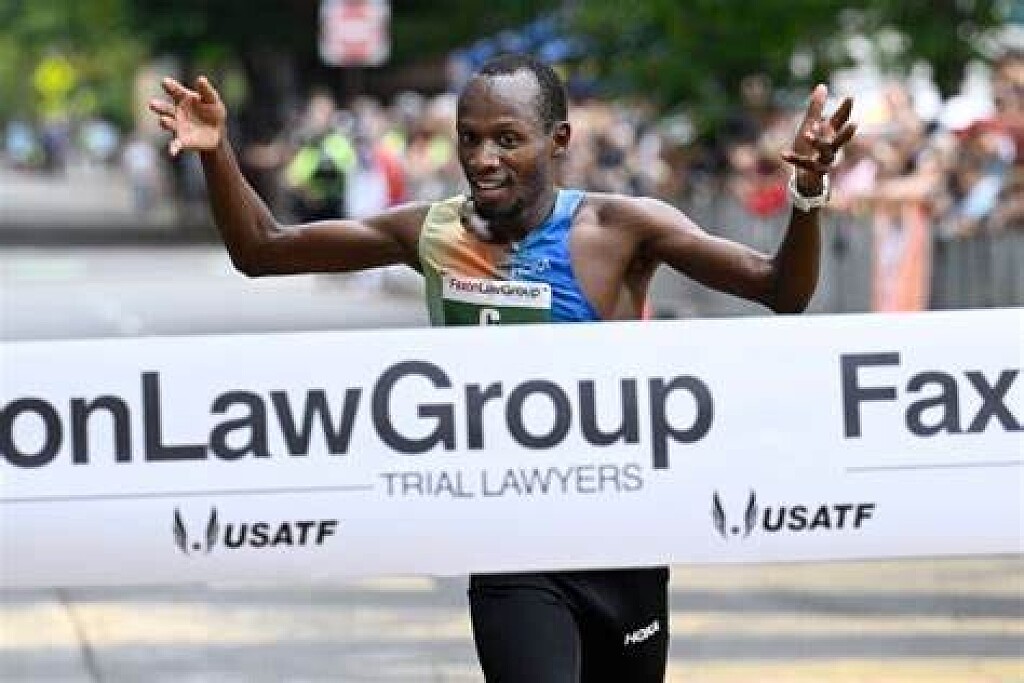
Hillary Bor sets national record at the New Haven 20K, Keira D’Amato wins women’s race
Two-time Olympian Hillary Bor fell in the U.S. Olympic Trials in the steeplechase and did not make it to Paris.
Neither did Keira D’Amato, who dropped out of the Olympic Marathon Trials after running with
Hilary Bor and Keira D'Amato won USATF national titles in the 20K Monday by winning the men's and women's races at the 47th Faxon Law New Haven Road Race.Bor finished the 20K (12.4 miles) race in 58 minutes, 9 seconds, while D'Amato crossed the finish line in 1:06:25.
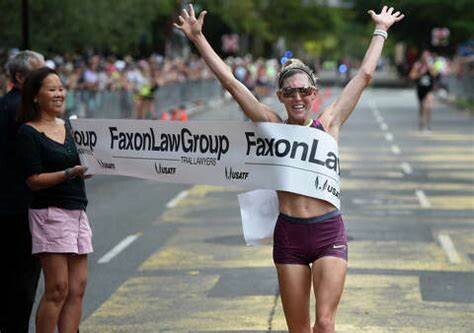
Bor's time set the national championship record. He pulled away from Nathan Martin (58:26), Biya Simbassa (59:29) and Aidan Reed (58:31).
Bor, from Colorado, was a member of the 2016 U.S. Olympic team and competed in the steeple chase.
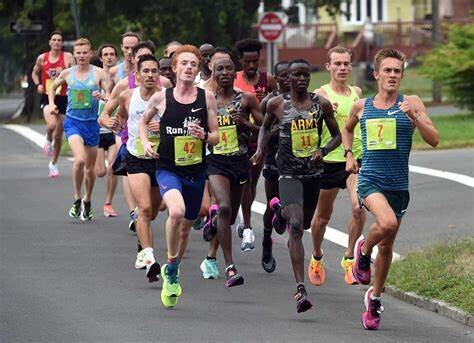
D’Amato, from Virginia, also won the Faxon Law New Haven 20K in 2022 when she set the course record. She held off Jess McClain (1:06.50), Savanah Berry (1:07:03) and Annie Frisbie (1:07:19).
Both earned the Ryan Shay Memorial Award, given annual in honor of the 2004 Faxon Law New Haven Road Race winner who died while participating in the 2007 Olympic Trials Marathon in New York City. The award is presented in recognition of Shay’s hard work and dedication to the sport, as well as longtime support of the New Haven Road Race, which he ran four times.
Connecticut's top finisher in the male division was West Hartford's Grant O'Connor, who placed 23rd in 1:02:54. The top state performer in the female division was Glastonbury's Alyssa Natario, whose time of 1:14:41 was 13th.
Other Connecticut residents to place in the top 25 in the female division were: Fairfield's Megan Connolly, Wallingford's Katie Overstrum, Woodbridge's Laura Pierce, Manchester's Olivia Mondo, Colchester's Alayna Bigalbal and East Lyme's Rebecca Snielson
The race, which drew more than 5,000 participants, also included a 5K, half marathon, half marathon relay and kid's fun run.
Benjamin MacDonald of Susbury, Mass. won the half marathon in 1:10:01, with Tabea Themann of Hamburg, Virginia winning the female division in 1:18:11. Westport's Clare Kutnick was second in the division in 1:21:48.
Prospect's Colin Slavin won the 5K title in 15:31 for the men, while Milford's Courtney Kitchen won the female division in 17:46.
by Lori Riley
Login to leave a comment

New Haven Road Race
The Faxon Law New Haven Road Race, renowned as the longest-running USATF 20K National Championship, is scheduled for Monday, September 1, 2025 (Labor Day), in New Haven, Connecticut. This event will once again host the Men's and Women's USATF 20K National Championships, attracting elite athletes, including past champions and U.S. Olympians. Participants can choose from various race options, including the...
more...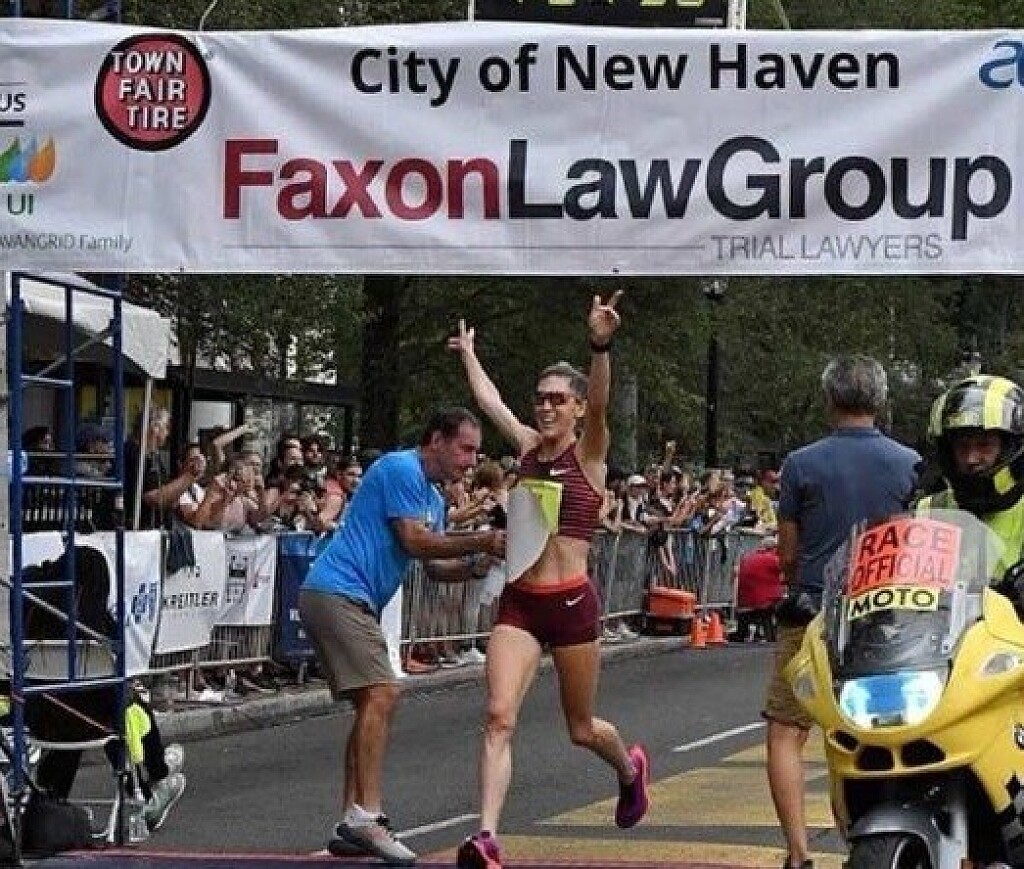
U.S. Olympians highlight field in 2024 Faxon Law New Haven Labor Day Road Race
Three U.S. Olympians highlight a competitive field set to run on Labor Day in the Faxon Law New Haven Road Race, the host of the USA Men's and Women's 20K Championship.
There's one Olympian competing in the women's field: Rachel Smith represented America at the Tokyo Olympics in the 5,000 meters and became this year's 15K National Champion.
Jess McClain finished fourth at this year's Olympic Trials Marathon.Virginia's Keira D'Amato leads the women's field. She set the course record when she won the race in 2022.
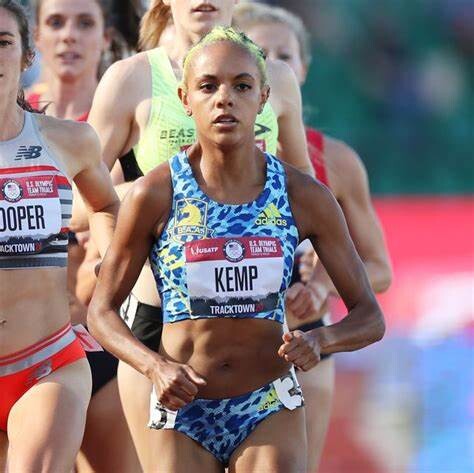
The 2021 race champion, Erika Kemp, will also be competing.
Moving over to the men's field, there are two runners with Olympic appearances. Woody Kincaid represented the U.S. in the last two Olympics. He ran the 10,000 meters in Paris and the 5,000 meters in Tokyo. This marks Kincaid's first 20K.
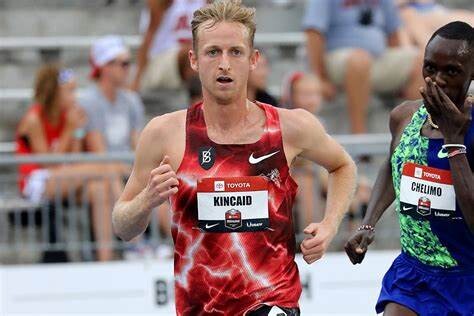
Hillary Bor is the other Olympian. He represented America in the 2016 Steeplechase. Another challenger will be Sam Chelanga, who has finished in the top three in five appearances in New Haven's 20K. Also competing is West Hartford's Ben Lanza, who is one of Connecticut's top distance runners.
The female and male 20K winners will receive the Ryan Shay Memorial Award. Shay passed away while participating in the 2007 Olympic Trials Marathon in New York City. The award is in recognition of Shay’s hard work and dedication to the sport, as well as longtime support of the New Haven Road Race.
"We're very excited about having many of the country's top runners compete in New Haven," said John Tolbert, Elite Athlete Coordinator in a release. "We have very deep Men’s and Women’s race fields. With a cool day, the men’s and women’s 20K American records could be in jeopardy.”
Labor Day is Sept. 2. The race will begin on the New Haven Green. The Kids Fun Run starts at 8:10 a.m. The 20K, Half Marathon and 5K all start at 8:30 a.m.
by Christine Butterfield
Login to leave a comment
New Haven Road Race
The Faxon Law New Haven Road Race, renowned as the longest-running USATF 20K National Championship, is scheduled for Monday, September 1, 2025 (Labor Day), in New Haven, Connecticut. This event will once again host the Men's and Women's USATF 20K National Championships, attracting elite athletes, including past champions and U.S. Olympians. Participants can choose from various race options, including the...
more...
Four reasons why you’re not getting faster
Hitting a running plateau can be a natural phase in the training journey, where progress can seem to stall for weeks or even months. But if you’ve been stuck in the same rut for over six months or have cycled through several training plans without noticeable gains, it might be time to re-evaluate your approach and make some changes.
Identifying factors that could stall your progress
It’s completely normal to hit periods where your performance seems stagnant, only to have a breakthrough and achieve new personal bests. “Your running, and your fitness, has a natural flow of peaks and valleys as you train for races, recover, go through base-building etc.,” says Elisabeth Scott, a Connecticut-based running coach and host of the Running Explained podcast. Embrace these ebbs and flows as part of your running journey.
When assessing whether you’ve hit a plateau, consider other factors that might be holding you back: warm weather, the need to slow down on easy runs while building volume, or external factors like feeling unwell or dealing with unexpected life stress. If none of these apply and you’re still not improving, it might be time to dig deeper and figure out what’s going on.

Running everything too hard
Scott says this is the number one training error she sees. We know we should run our easy runs easy, but it can be tempting to pick up the pace in practise. “Your easy runs should be very easy, probably much slower than you’ve been running them,” Scott adds. The key is to keep the effort level low and your heart rate down on those easy runs.
Not doing hard running, at all
“If you’ve plateaued and haven’t been doing any hard running in your training, it might be time to start,” says Scott. Many runners fall into the trap of running at a medium-hard effort—a pace that’s a bit faster than an easy run—without incorporating any truly intense workouts. “Most runners should include at least some hard running in almost every phase of training, from simple strides and hard uphills, to more structured speedwork, depending on the context of your training and your goals,” Scott explains. Shake up your routine with some high-intensity sessions to bust through that plateau and reach new heights.
Not running enough (volume and/or frequency), or repeating the same thing each cycle
Your training needs to get more challenging over time and should evolve with different workouts targeting various training zones.
Scott explains that many lower-volume runners, who only train a few times a week, can boost their performance simply by running more—though it’s crucial to increase volume safely. “Additionally, our training needs to change and progress over time to continue increasing our fitness,” she says. Keep your workouts dynamic and progressively more challenging to ensure continual improvement and peak performance.
Over-training or under-recovering
Scott points out several common culprits that can stall your progress: calorie deficits, lack of sleep, running too hard, overtraining with excessive fitness challenges, and extreme life stress from work, family or emotional issues. “These things all “count” as stress in your body’s way of understanding things,” she says.
To overcome a running plateau, it’s crucial to address these areas. Make sure you’re fueling your body adequately, getting enough rest and balancing your training intensity. Manage life stressors effectively and ensure your fitness routine is sustainable. By taking a holistic approach, you’ll be better equipped to break through barriers and reach your running goals.
by Keeley Milne
Login to leave a comment

How to Keep Tick Bites from Ruining Your Summer
More people in the U.S. are being diagnosed with tick-related diseases every year, but we don't have to let that stop us from getting outdoors.
At home in Brooklyn, New York, my wife and I have discovered ticks on our dog, a pit-boxer mix who lacks the wherewithal to notify us of such an intruder. A few weeks ago, I found a tick—luckily, before it bit—on my arm while visiting Oakland, California. Outside editors have been coming across the disgusting creatures in northern New Mexico, northern Virginia, and coastal Massachusetts.

A decade ago, my little sister contracted Lyme disease in high school, so I have always been paranoid about tick bites. And with growing tick populations, ever more tick-related diseases, and a flurry of headlines about both, I’m sure I’m not alone.

There are hundreds of species of ticks, but the one to be most concerned about in the United States is Ixodes scapularis. The hard-body tick, also known as the blacklegged tick or deer tick, is a vector for a handful of diseases, including Lyme. “It causes far and away the most trouble in terms of health,” says Dr. Peter Krause, a senior research scientist with a specialty in epidemiology and infectious diseases at Yale Medicine.
Ticks are experiencing a largely unwanted glow-up in our current times. The largest vector-borne disease today is still Lyme, says Alison Hinckley, epidemiologist with the Centers for Disease Control and Prevention’s (CDC) Division of Vector-Borne Diseases in Fort Collins, Colorado. She cites a 2021 estimate based on insurance records that shows 476,000 Americans are diagnosed and treated for Lyme disease each year, which can cause headaches, muscle aches, joint swelling, severe fatigue, and even neurological symptoms. (As a point of comparison, only about 2,000 cases of Rocky Mountain spotted fever are reported each year in the U.S.) The reasons for the rise in Lyme range from deer populations to climate change. It’s enough to make me consider trading my hiking boots for gym trainers.
But if we stay inside, the bugs win. So we spoke to some experts to learn why ticks are prospering, what we can do about it, and how to continue to exercise outside safely. The good news? You can take precautions no matter your outdoor sport of choice, and finding a tick doesn’t have to be a five-alarm emergency.
According to the CDC, there are ticks in every state, though different species (carrying different diseases) proliferate in different environments. For instance, the lone star tick, named for a white spot on its back, is often found in Texas, and the brown dog tick thrives in Arizona. Lyme hails from Krause’s home state of Connecticut—it was named for the town of Old Lyme, in the state—but he might also encounter wood ticks and brown dog ticks, which can both transmit Rocky Mountain spotted fever. It’s not very common, he says, but the disease can cause fever, nausea, muscle pain, and a host of other scary symptoms. Despite its name, the lone star tick can also be found in Connecticut (it’s prevalent elsewhere on the East Coast, too, and in the southeastern and south-central United States), and can transmit an infection that leads to Alpha-gal Syndrome, which sometimes causes a permanent allergy to red meat. And that’s just one state. Another tick-borne disease, Babeosis, used to be called “Nantucket fever,” because one of the first cases in America was found on the nearby Massachusetts island in 1969. The Gulf Coast, American dog, and winter ticks transmit different pathogens around the country. You can see what ticks live in your state on the CDC website.
Still, the majority of tick-borne illnesses in the United States are Lyme disease. Ticks have a three-stage life cycle, Krause explains. As larvae, ticks feed on small mammals like mice. If these mammals are carrying Lyme-causing Borrelia bacteria, the tick is now infected and can transmit the disease. The “bloodmeal” (yum!) allows the larvae to molt into its next stage, when it is known as a nymph. At this point, if a nymph feeds on a human, the human will become infected.
Climate change is a major factor in the rise in tick diseases. Ticks need temperate, moist climates—they’ll die if it’s too hot, cold, or dry. Global warming, Krause says, is increasing tick habitat, with more areas becoming warm and humid. Given the southern states are experiencing hot, dry weather, they might have a temporary decrease in tick populations, but that hasn’t yet been shown, he says.
As a point of proof, Krause points to our northern neighbor. Canada was not historically home to Lyme-carrying tick populations, but now sees many cases of Lyme each year, due to both climate change and tick migration. Deer ticks, predictably, travel on the backs of deer and other furry creatures, but they can also attach to birds, Krause says, allowing them to establish a new colony hundreds of miles away.
The second factor that might be fueling today’s tickflation is deer distribution. Adult ticks use deer as all-you-can-eat mating hotels, and a single deer can host hundreds of ticks, Krause explains. “Wherever deer are, there are a lot more ticks than there would be without deer,” he says.
There is some agreement from across the pond. Dr. Lucy Gilbert is a Senior Research Fellow at the University of Glasgow with a focus on ecology, environmental change, and infectious disease ecology, along with evolution and diversity. Her research strongly suggests that the boom in deer distribution and abundance is a greater factor in the proliferation of ticks (though not necessarily Lyme disease) than climate change.
Lyme disease cases surged by 69 percent in 2022, according to the CDC. But even as data collections gets more efficient, there are still likely many cases missed. As STAT News reports, “There are a lot more cases of Lyme disease in the country than are ever reported to the CDC.”
The increase in disease incidence, Gilbert says, may be related to deer and climate change. Additional factors could be better awareness from the public and doctors identifying tick-related diseases, paired with an increase in outdoor recreation.
The simple answer is that activities that put you in tick habitat—long grass or forests with dense shrubs—will be higher risk than sports that don’t. Hiking and running in the woods increase the likelihood that you’ll encounter a tick. Even short grass, like you’d find on a baseball field or soccer pitch, can carry ticks, Krause says. Something on a hard court, like basketball, would be very low-risk.
The CDC recommends staying away from thick vegetation, high grass, and leaf litter and to “walk in the center of trails when hiking,” to avoid brushing up against grass or other plants where ticks might be hanging out.
Riding a bike on a trail might be lower-risk than running it, says Krause, because ticks will have greater difficulty reaching you from the grass, and cyclists are more likely to stay in the center of the trail. Walking may also be safer than trail running, as you’re more likely to avoid brushing any grasses in places with sharp turns, Krause says.
Dr. Kevin DuPrey, a sports medicine specialist, wrote a 2015 article about Lyme disease in athletes for Current Sports Medicine Reports, and he also has firsthand experience. When running cross-country at University of Delaware, Duprey contracted Lyme disease. Before he was diagnosed and treated, he’d experienced mid-race fatigue—to the point of wanting to lie down and nap during the middle of a competition.
Today, as a precaution, DuPrey tries to avoid overgrown trails especially from mid-May through August, when the transmission rate is highest for Lyme and other tick-borne diseases. He’ll check himself for ticks after running, or even mid-run if he’s in an overgrown area.
He recommended bug spray with DEET to repel ticks, but also offered a clothing tip: light-colored threads can make it easier to spot ticks on your body.
The CDC also recommends using EPA-registered insect repellents (like OFF! Active Insect Repellent I), wearing loose-fitting clothing, and treating your gear with permethrin, an insecticide that should not be applied directly to your skin. The organization even has chat bots to help you find effective repellents (they recommend something with DEET, picaridin, IR3535, oil of lemon eucalyptus, para-menthane-diol, or 2-undecanone) and assessing tick bites.
“In general, DEET, if used as prescribed, is safe,” Krause says. You wouldn’t want to apply it to a small child if they’re going to lick their skin, he says, but considers it safe overall when used as directed. If ingested, it can cause serious side-effects including seizures, according to the National Pesticide Information Center. But aside from a chance of skin irritation, it’s safe to apply topically. Permethrin, which is only suitable for application to gear and clothing, has more safety concerns, says Krause.
When you head back inside, Hinckley recommends you check your clothing and gear for ticks. Then, using a mirror, check your entire body, particularly under your arms, in and around ears, inside your belly button, the backs of your knees, your hair, between your legs, and around your waist. Then, take a shower as soon as possible.
Hinckley also encourages good tick hygiene for pets. Preventative products like topicals, chews, and collars can help, and she advises manual pet-downs for ticks after time outside. This isn’t just for your pets sake—ticks can take a pitstop on your four-legged roommate before making their way to you.
It’s understandable that you might freak out if you find a tick, especially if it’s attached. But if you find it early—within 36 to 48 hours—DuPrey say, the chance of Lyme disease transmission is actually very low.
If you’re uncertain how long it’s been since you were bitten, he advises seeking professional medical advice, especially if you were bit during the summer months, find a circular rash, or experience flu-like symptoms. If caught early, both Krause and Duprey says, Lyme and other tick-borne diseases can be treated with antibiotics.
As an expert who’s closely studied ticks and tick-borne diseases, Gilbert praises the media’s coverage in highlighting tick awareness and Lyme disease. But she says there is sometimes “too much scare-mongering and exaggerating the outcomes of Lyme disease.” While noting that some people progress to chronic Lyme disease, which can be debilitating, the vast majority of people who contract Lyme do not develop a long-term illness.
Gilbert has heard about certain tick-removal techniques like applying Vaseline, olive oil, or burning them off your skin, but her advice is simple: “This is not a good idea!” Instead, she recommends gently plucking the tick off of your skin by its mouth, using fine tweezers or tick tools (available at veterinary clinics, pharmacies, and online) which won’t squash the tick. If you do find a tick, take a picture before you dispose of it, so you can show it to a doctor in the event you need to visit one.
For disposal, the CDC recommends putting the bug in alcohol, a sealed bag, tape, or a soon-to-be-flushed toilet. The CDC also has resources that can help you decide what to do after a tick bite.
People with immunocompromising conditions are at greater risk for tick-borne infection, Krause says, and should exercise additional caution. As a historical example, he notes when Babesia (the parasite that causes Babesiosis) took over Nantucket, an editorial in the New England Journal of Medicine advised people who didn’t have a spleen avoid buying land on Nantucket. (The spleen, which helps fight infection, is crucial in warding off Babesiosis.)
The best path forward might be to channel an anti-Robert Frost mentality. If you’re going to choose a path to hike, run, or a bike, choose a well-worn one, and stay in the center of it. And I’m not sure if Frost wrote a poem about this, but check your body, take a shower, and throw all your clothes in the dryer when you get back inside.
by Outside Online
Login to leave a comment
Research Confirms Rotating Running Shoes Could Save You From Injuries—Here’s How Your Body Benefits
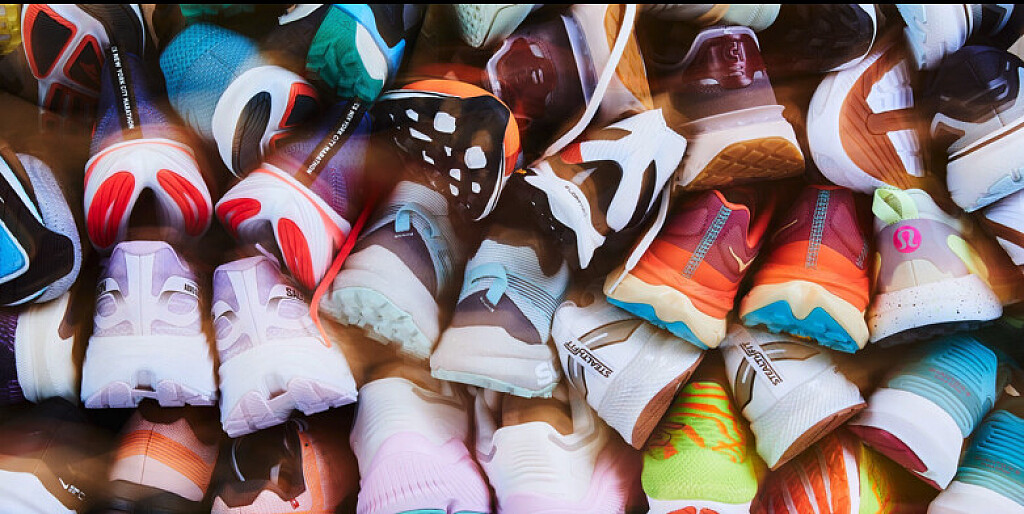
Having a shoe collection is not a frivolous obsession. Here’s how you could possibly benefit from having more than one pair of running shoes.
Once you’ve found yourself the perfect pair—you know the ones you want to spend every run in—it’s kind of hard to give them up. However, doing so could actually work to your advantage by keeping you healthy and strong for each run.
“These days, a lot of people use one shoe for everything, and that puts you at risk for injury,” says Priya Parthasarathy, D.P.M., spokesperson for the American Podiatric Medical Association and partner at USFAS in Silver Springs, Maryland. Running, walking, and weightlifting all require different demands of your feet, so you’ll want to wear different shoes for these activities, she says. Plus, wearing one shoe for all of your workouts can increase the wear on the shoe, so they won’t last as long as you want.
That’s where having a running shoe rotation becomes very helpful. Research and experts back up this idea, and it’s especially helpful to have a shoe rotation if you’re training for a long distance race like a marathon. Here’s what you need to know in order to build a running shoe rotation that meets all of your needs.
Why do you need a running shoe rotation?
Naturally, running places stress on multiple parts of the body, including muscles, bones, and tendons, which can be good for you provided the stress is not too large or frequent that you can’t recover fast enough, says Andrea Myers, D.P.T., who owns a sports performance practice located in Westport and Ridgefield, Connecticut.
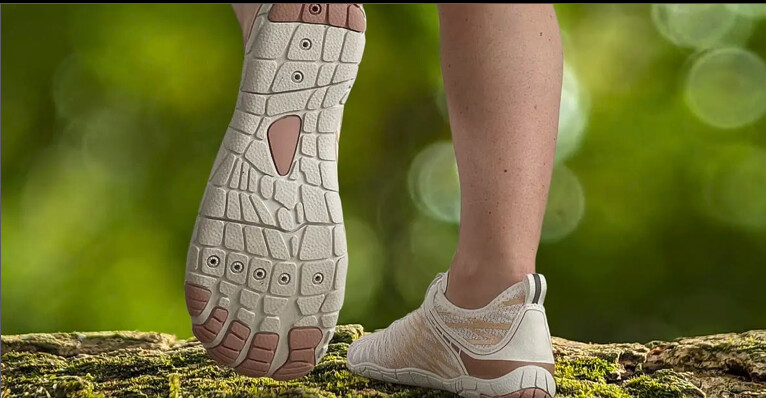
”We know from many research studies that different running shoe properties expose the body to different stressors,” Myers says. “We know that minimalist shoes—those with a low or zero drop, flexible sole, and minimal to no stability features—increase the demands on the ankle, foot, and calf muscles, as compared to shoes with a higher drop, which increase the demands at the knee but reduces the demands at the foot and ankle.”
A carefully crafted shoe rotation can possibly offset some of these demands.
To identify characteristics that might contribute to the development of running related injury, a 2013 research study published in the Scandinavian Journal of Medicine and Science in Sport followed 264 runners over the course of 22 weeks. The study found runners who used more than one shoe, a term which they coined “parallel use,” had a 39 percent lower risk of injury. This suggests having more than one pair of running shoes can help you ward off injury.
The reasoning behind it, if you have a cushioned shoe and you let a shoe sit for 24 to 48 hours, the foam in the shoe can de-compress before your next run, says Parthasarathy.
How many shoes do you need in your rotation?
If you’re just starting out, you don’t have to worry about rotating your running shoes, instead, invest in one good pair of running shoes. Parthasarathy recommends finding a shoe with a flexible toe box, firm heel cup, and removable insoles. The one shoe should overall be comfortable to you.
The seasoned recreational runner who runs three to four miles, three days per week, does not need a rotation of four different shoes either, says Myers. Instead, Myers recommends two pairs of shoes that you can rotate every run.
For marathon runners, racking up 35 to 60-plus miles a week with a variety of workouts (easy, long, and speed runs) on their calendars, Myers recommends keeping a shoe rotation of three to four pairs of shoes. This can include one to two pairs of shoes for easy runs and speed workouts, and one pair of shoes for long runs that can handle a variety of different paces. Your long run shoes can also double as a performance trainer, or a lightweight daily trainer, Myers says.
What types of running shoes can you add to your running shoe rotation?
Here are three different types of shoes you can consider adding to your collection, according to Myers:
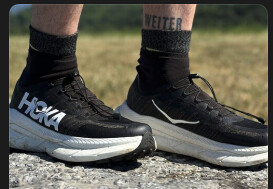
Daily Trainer: These shoes are primarily for easy running, but can also handle different paces. you can use them to run strides or up-tempo long runs. Good examples of daily trainers include: the Brooks Ghost 15, Saucony Ride 17 or Guide 17, Nike Vomero 17, or Hoka Clifton 9.
Performance Trainer: Best for speed workouts, performance trainers are lightweight shoes that perform best at faster paces and can double as daily trainers as long as you feel comfortable in wearing them for longer distances. Plus, they tend to be more affordable than top-end race performance shoes. A few styles to consider include: Saucony Endorphin Speed 4, Topo Cyclone 2, Mizuno Wave Rebellion Flash 2, and Brooks Hyperion Max.
Racing Shoes: Commonly referred to now as super shoes, racing shoes tend to be more expensive and less durable, considering some shoes have a life expectancy of about 100 to 150 miles. This is why you shouldn’t do the bulk of your training in super shoes, instead you should take them out for a test run or two to ensure they’ll meet all your comfort needs on race day. Saucony Kinvara Pro, Asics Superblast, Adidas Adizero Prime x 2 Strung, and On Cloudeclipse are a few super shoes to consider.
How to find the right shoe to add to your rotation?
Before adding any a shoe to your rotation, you should consider if the shoe is a good fit for your foot arch (flat arch, high arch, or medium arch), running gait (neutral, pronated, or supinated), shoe size, preferred comfort level, and the terrain (treadmill, pavement, or trail) you’ll run on.
“Building a running shoe rotation, especially if you run on different terrains, is important because the shoe wears in different ways,” says Parthasarathy. Meaning where you run will influence some of the characteristics you look for in a shoe. For example, running on hard pavement will require increased cushioning, whereas trail running calls for more stability and traction, she explains.
If you want to change the type of shoe you’re training in, then the recommendation is to ease into the number of miles you try in the new shoe (i.e., don’t go for a long run in a drastically different shoe).
You may experience some soreness if you transition to a different type of shoe, however, you shouldn't experience pain that lasts for days or interferes with your normal running gait pattern on subsequent runs, Myers adds.
Lastly, you’ll want to get rid of your running shoes every so often due to wear and tear that may go unnoticed. ”We recommend you replace your running shoes, especially if you’re doing long distance running every six months or 300 to 500 miles, depending on how hard you are on them,” says Parthasarathy. If you can fold or bend your shoes in half, it’s often an indication the structure of the shoe and cushioning has been broken down, and it’s time for a change, she adds. As mentioned, the new high performance racing shoes tend to have a shorter shelf life when it comes to mileage.
Who should avoid rotating running shoes?
There’s no need to rotate your running shoes if you’re only running a couple of times a week because you’re likely not racking up enough miles to overstress your tissues, says Myers.
Also, don’t rotate running shoes if you have specific biomechanical or orthopedic needs due to injury, foot structure or shape. For example, runners who have arthritis that affects the big toe, a.k.a, hallux limitus, should prioritize running in shoes that can address this condition, which there are few of, Myers says.
by Runner’s World
Login to leave a comment
Research Confirms Rotating Running Shoes Could Save You From Injuries—Here’s How Your Body Benefits
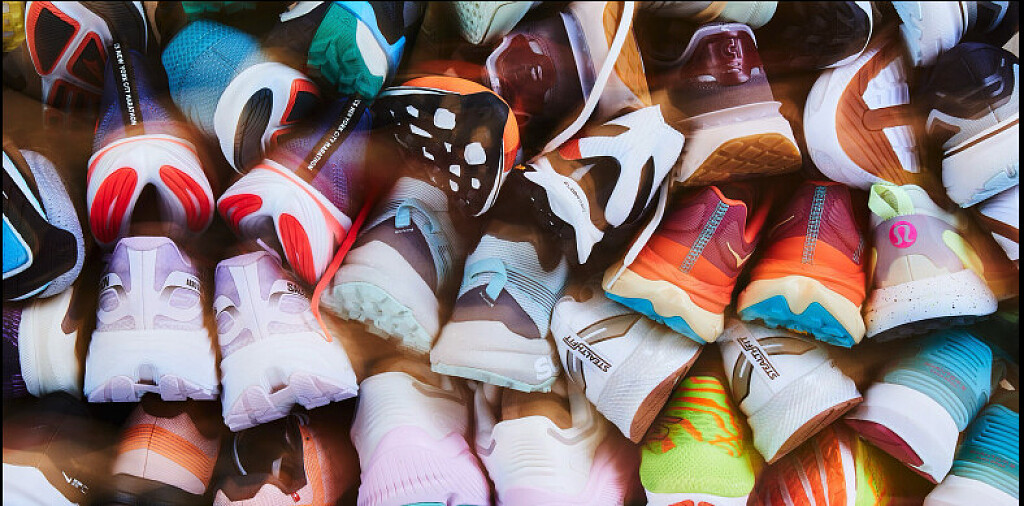
Having a shoe collection is not a frivolous obsession. Here’s how you could possibly benefit from having more than one pair of running shoes.
Once you’ve found yourself the perfect pair—you know the ones you want to spend every run in—it’s kind of hard to give them up. However, doing so could actually work to your advantage by keeping you healthy and strong for each run.
“These days, a lot of people use one shoe for everything, and that puts you at risk for injury,” says Priya Parthasarathy, D.P.M., spokesperson for the American Podiatric Medical Association and partner at USFAS in Silver Springs, Maryland. Running, walking, and weightlifting all require different demands of your feet, so you’ll want to wear different shoes for these activities, she says. Plus, wearing one shoe for all of your workouts can increase the wear on the shoe, so they won’t last as long as you want.
That’s where having a running shoe rotation becomes very helpful. Research and experts back up this idea, and it’s especially helpful to have a shoe rotation if you’re training for a long distance race like a marathon. Here’s what you need to know in order to build a running shoe rotation that meets all of your needs.
Why do you need a running shoe rotation?
Naturally, running places stress on multiple parts of the body, including muscles, bones, and tendons, which can be good for you provided the stress is not too large or frequent that you can’t recover fast enough, says Andrea Myers, D.P.T., who owns a sports performance practice located in Westport and Ridgefield, Connecticut.
”We know from many research studies that different running shoe properties expose the body to different stressors,” Myers says. “We know that minimalist shoes—those with a low or zero drop, flexible sole, and minimal to no stability features—increase the demands on the ankle, foot, and calf muscles, as compared to shoes with a higher drop, which increase the demands at the knee but reduces the demands at the foot and ankle.”
A carefully crafted shoe rotation can possibly offset some of these demands.
To identify characteristics that might contribute to the development of running related injury, a 2013 research study published in the Scandinavian Journal of Medicine and Science in Sport followed 264 runners over the course of 22 weeks. The study found runners who used more than one shoe, a term which they coined “parallel use,” had a 39 percent lower risk of injury. This suggests having more than one pair of running shoes can help you ward off injury.
The reasoning behind it, if you have a cushioned shoe and you let a shoe sit for 24 to 48 hours, the foam in the shoe can de-compress before your next run, says Parthasarathy.
How many shoes do you need in your rotation?
If you’re just starting out, you don’t have to worry about rotating your running shoes, instead, invest in one good pair of running shoes. Parthasarathy recommends finding a shoe with a flexible toe box, firm heel cup, and removable insoles. The one shoe should overall be comfortable to you.
The seasoned recreational runner who runs three to four miles, three days per week, does not need a rotation of four different shoes either, says Myers. Instead, Myers recommends two pairs of shoes that you can rotate every run.
For marathon runners, racking up 35 to 60-plus miles a week with a variety of workouts (easy, long, and speed runs) on their calendars, Myers recommends keeping a shoe rotation of three to four pairs of shoes. This can include one to two pairs of shoes for easy runs and speed workouts, and one pair of shoes for long runs that can handle a variety of different paces. Your long run shoes can also double as a performance trainer, or a lightweight daily trainer, Myers says.
What types of running shoes can you add to your running shoe rotation?
Here are three different types of shoes you can consider adding to your collection, according to Myers:
Daily Trainer: These shoes are primarily for easy running, but can also handle different paces. you can use them to run strides or up-tempo long runs. Good examples of daily trainers include: the Brooks Ghost 15, Saucony Ride 17 or Guide 17, Nike Vomero 17, or Hoka Clifton 9.
Performance Trainer: Best for speed workouts, performance trainers are lightweight shoes that perform best at faster paces and can double as daily trainers as long as you feel comfortable in wearing them for longer distances. Plus, they tend to be more affordable than top-end race performance shoes. A few styles to consider include: Saucony Endorphin Speed 4, Topo Cyclone 2, Mizuno Wave Rebellion Flash 2, and Brooks Hyperion Max.
Racing Shoes: Commonly referred to now as super shoes, racing shoes tend to be more expensive and less durable, considering some shoes have a life expectancy of about 100 to 150 miles. This is why you shouldn’t do the bulk of your training in super shoes, instead you should take them out for a test run or two to ensure they’ll meet all your comfort needs on race day. Saucony Kinvara Pro, Asics Superblast, Adidas Adizero Prime x 2 Strung, and On Cloudeclipse are a few super shoes to consider.
How to find the right shoe to add to your rotation?
Before adding any a shoe to your rotation, you should consider if the shoe is a good fit for your foot arch (flat arch, high arch, or medium arch), running gait (neutral, pronated, or supinated), shoe size, preferred comfort level, and the terrain (treadmill, pavement, or trail) you’ll run on.
“Building a running shoe rotation, especially if you run on different terrains, is important because the shoe wears in different ways,” says Parthasarathy. Meaning where you run will influence some of the characteristics you look for in a shoe. For example, running on hard pavement will require increased cushioning, whereas trail running calls for more stability and traction, she explains.
If you want to change the type of shoe you’re training in, then the recommendation is to ease into the number of miles you try in the new shoe (i.e., don’t go for a long run in a drastically different shoe).
You may experience some soreness if you transition to a different type of shoe, however, you shouldn't experience pain that lasts for days or interferes with your normal running gait pattern on subsequent runs, Myers adds.
Lastly, you’ll want to get rid of your running shoes every so often due to wear and tear that may go unnoticed. ”We recommend you replace your running shoes, especially if you’re doing long distance running every six months or 300 to 500 miles, depending on how hard you are on them,” says Parthasarathy. If you can fold or bend your shoes in half, it’s often an indication the structure of the shoe and cushioning has been broken down, and it’s time for a change, she adds. As mentioned, the new high performance racing shoes tend to have a shorter shelf life when it comes to mileage.
Who should avoid rotating running shoes?
There’s no need to rotate your running shoes if you’re only running a couple of times a week because you’re likely not racking up enough miles to overstress your tissues, says Myers.
Also, don’t rotate running shoes if you have specific biomechanical or orthopedic needs due to injury, foot structure or shape. For example, runners who have arthritis that affects the big toe, a.k.a, hallux limitus, should prioritize running in shoes that can address this condition, which there are few of, Myers says.
Login to leave a comment
Treadmill desks are becoming more popular—but do they help your running performance?
We all know that exercise has a multitude of benefits, and sitting at a desk all day can take a toll on our mental and physical health. It can be hard to get out for a run sometimes, let alone get in our daily step count. Could a treadmill desk be the answer?
Prolonged inactivity is known to increase the risk of heart disease, Type 2 diabetes and other health issues, with the adage “sitting is the new smoking” underscoring the dangers of a sedentary lifestyle. Conversely, walking as few as 4,000 steps a day has been shown to benefit both mind and body. Treadmill desks, which combine a standing desk with a treadmill, offer a potential solution to counteract sedentary office environments, The New York Times recently reported. But are they a worthwhile investment for runners?
Are they effective?
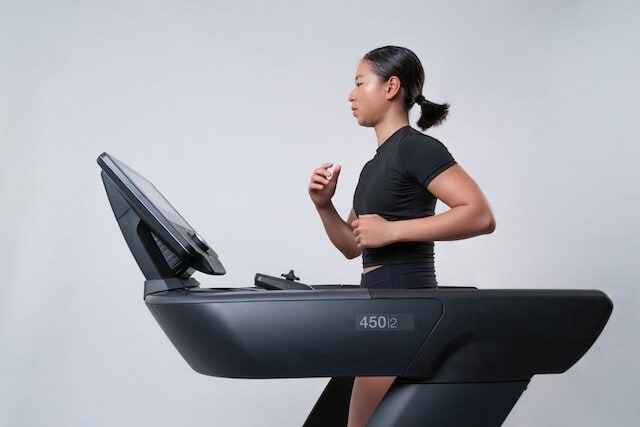
As treadmill desks become more popular, researchers are examining their efficacy. Studies, though sometimes limited in scope, indicate that treadmill desks can help people stay active, potentially adding an average of two extra miles of walking per day. A 2023 study even found that regular use of treadmill desks increased energy levels, improved mood, and in some cases, enhanced job productivity.
Akinkunle Oye-Somefun, a doctoral candidate at Toronto’s York University and lead author of a recent meta-analysis on treadmill-desk research, says that adding small amounts of activity throughout the day can accumulate. He cautions: “walking on a treadmill desk is a supplement, not a replacement for your regular exercise routine.” In other words—while a treadmill desk may boost training by enhancing your mood and adding to time spent on your feet, it’s not a replacement for your regular running routine.
Be mindful of cost
While treadmill desks can increase daily movement, they come with potential drawbacks. Noise is a significant issue, especially with standard running treadmills—the motor and the sound of footsteps can make it difficult to concentrate, both for the user and their co-workers. Quieter models tend to be more expensive, with treadmills and walking pads running from $280 to $1,400.
Taking those Zoom meetings can be a little challenging if you’re trying to speedwalk, and fine motor skills take a hit: Jenna Scisco, an associate professor of psychology at Eastern Connecticut State University and lead author of a 2023 study on treadmill desks, found that typing becomes more challenging while walking. Despite this, she noted that the health benefits often outweigh these drawbacks.
Build a consistent routine
Let’s face it—a walking desk won’t help you race to your next PB… directly. However, building a daily routine of getting more consistent exercise will make you fitter, and you may find yourself pushing through distance and effort barriers with more ease. While adding a lunchtime walk is still a good option if you’re limited by cost or office dynamics, establishing a regular routine on a treadmill desk can be an effective way to add more movement to your day. Experts suggest starting small, with 30-minute increments, before spending longer periods of your work day moving your legs.
by Keeley Milne
Login to leave a comment
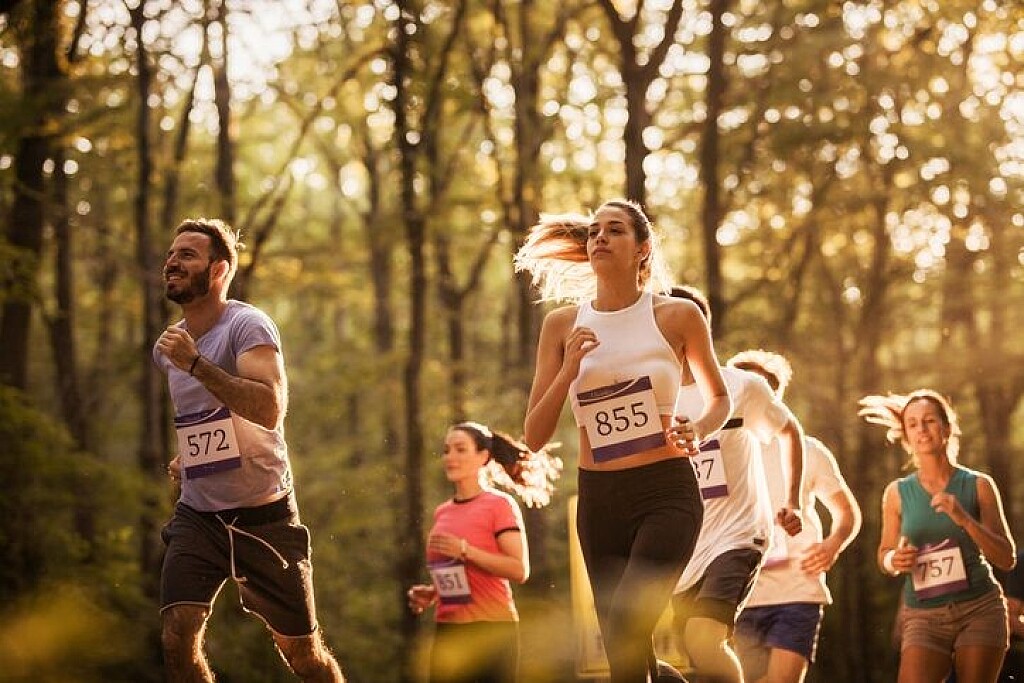
Three ways to run a tune-up race
There’s a fine balance between challenging your legs and ensuring ample recovery time when you’re building up to a big race. Some runners schedule a tune-up race into their training plan—a race that is included as part of their training. If you decide to include a practice race in the lead-up to your main event, there are a few ways you can consider running it.
Elisabeth Scott, a Connecticut-based running coach and host of the Running Explained podcast, shares how runners should approach a tune-up session—a race that does not require a full taper or recovery time afterward.
What is a tune-up race?
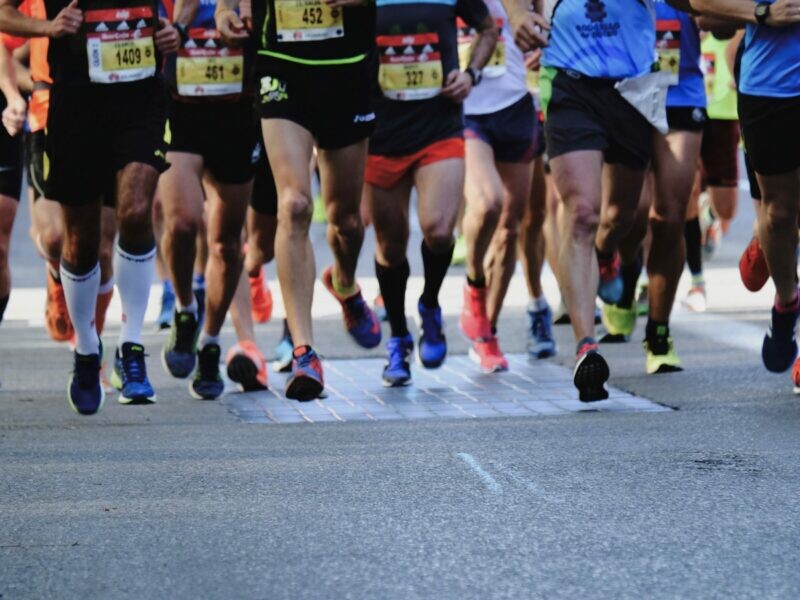
“Tune-up races are almost always a shorter distance than your goal race distance; this means a half marathon is a tune-up for a marathon, a 10K is a tune-up for a half marathon, etc.,” Scott explains. A tune-up race should be slotted in ideally between four and eight weeks before your goal race, though this may be adjusted depending on your goal.
“A tune-up race will help you practise your race-day routine, strategy, fuelling, hydration and other skills you’ll need for your goal race,” Scott says. She explains that a tune-up race can be done in a few ways—as an all-out effort for that specific race distance, at a target goal-pace effort for your goal race, or something else as designated by your goals, your training plan or your coach.
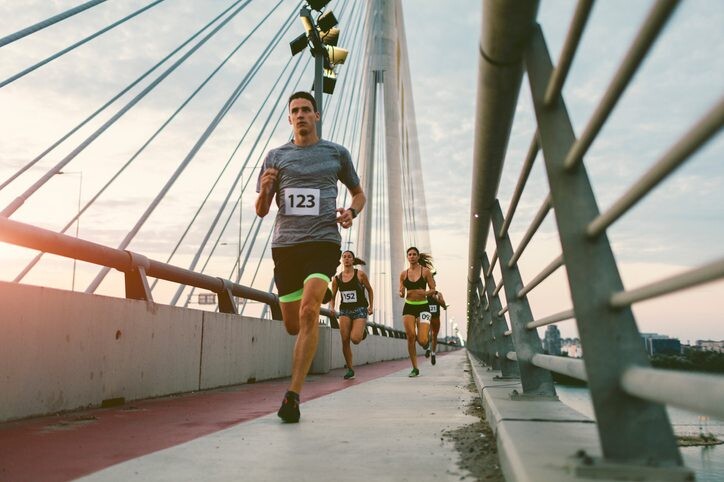
“Don’t get discouraged if your tune-up race isn’t as fast as you think it should be; you’re racing on tired legs in the middle of your training cycle,” says Scott. “While a tune-up race can help benchmark your current fitness, it’s OK if you don’t PR or hit your exact goal paces; you are not losing fitness, you’re just fatigued.” Here’s how to figure out what you should aim for in that race-before-the-race.
1.- An easy effort
If you’re new (or returning) to racing and want to shake off some of those pre-race jitters, a tune-up event can be ideal. Scott also suggests this option for runners who need to work on performance anxiety or are looking to participate in a particular event (for example, your co-workers have all signed up for a 5K fundraiser) without it taking a huge toll on their legs. “Great for getting the race-day experience without the fatigue” she says.
If you’re a runner with an intensely competitive spirit and a strong temptation to go hard, this option might be one to skip.
2.- A workout with a goal pace
Want to finesse your ability to run at your goal pace, or make sure your fuelling plan allows you to stay strong until you hit that finish line? This one is for you—running a shorter distance than your goal race as a practice event at goal pace.
Scott says this option is “great for runners who can handle long-run workouts with significant chunks of goal-race pace (for example, executing a marathon-pace workout in a half-marathon) and want to practise their pacing skills, gear and fuelling strategies.”
3.- As a race
If you’re feeling the need to go all-out and see where you stand, you can plan a harder effort before your goal race—just make sure to schedule it well before you plan to taper, and make sure the distance is short enough that it won’t make you overly fatigued.
Scott says this choice is perfect for runners “looking to practise the skill of racing (pushing yourself to the edge of your ability for a specific distance) and for benchmarking your current fitness to help with goal-setting for your A race.”
by Keeley Milne
Login to leave a comment

Runner’s knee requires more tailored treatment, new study shows
Patellofemoral pain, also known as runner’s knee, is common among runners. Not only is it painful, but it can be difficult to get rid of, and in many cases, it can become a recurring problem. Reasons why runner’s knee is so difficult to cure permanently have remained a mystery, but new research has shed some light on where we might be going wrong. According to a new study from the University of Connecticut, traditional rehabilitation methods for chronic knee pain may not be targeting the right muscles. This research highlights the need for personalized rehabilitation to effectively address patellofemoral pain.
The study
The study, published in Physical Therapy in Sport, aimed to identify the commonly weaker muscles in patients with chronic patellofemoral pain. Previous research indicated that the glute and quad muscles were the main targets for treatment, so the researchers expected those muscles to be smaller in size in injured runners compared to healthy runners.
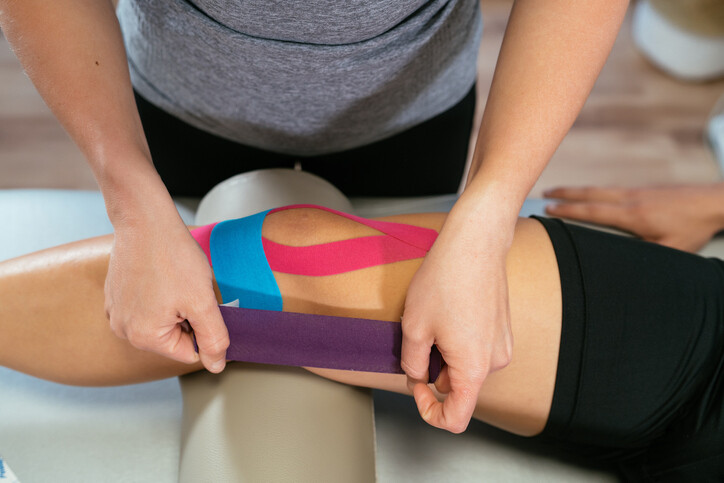
Surprisingly, the researchers found no significant differences in the size of these muscles between patients with patellofemoral pain and patients without. Instead, they discovered that the muscles at the front of the hips, the deep external hip rotators and hamstrings were smaller. They also found that not all patients had impairments in the same muscles.
What does this mean for runners?
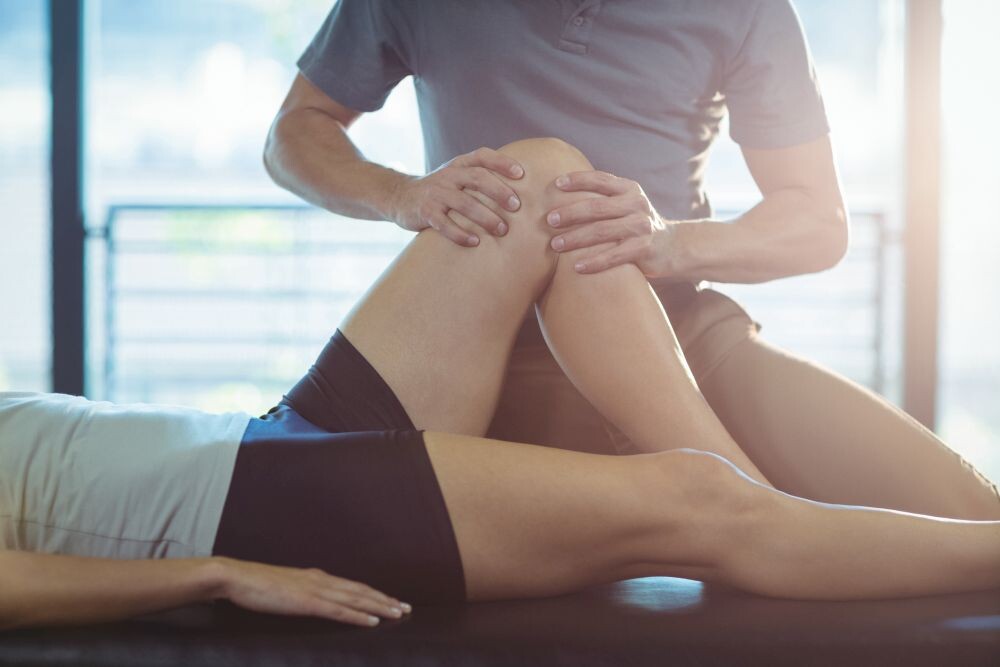
These findings have important implications for runners dealing with knee pain. The traditional approach of targeting the quads and hip muscles may not be sufficient for all individuals.
“I think it demonstrates the need to individualize patients’ treatment,” says lead researcher Neal Glaviano. “We, as clinicians and researchers, need to quantify which muscles have impairment and target those in a patient’s treatment.”
Glaviano’s next step will be to investigate how therapists and sports medicine practitioners can better tailor rehab programs to individuals, so they target the specific muscles that are causing the injury.
The takeaways
While the need to tailor rehab programs to the individual isn’t groundbreaking information, this study highlights that the current approach to treating patellofemoral pain in runners isn’t being tailored enough, and in many cases, may not be focusing on the right muscles. The traditional focus on the quads and hip muscles may only be effective for some individuals.
By identifying and targeting the specific muscles that are weaker in each patient, rehabilitation interventions can be better tailored, potentially improving long-term outcomes and the overall quality of life for those experiencing chronic knee pain.
by Brittany Hambleton
Login to leave a comment
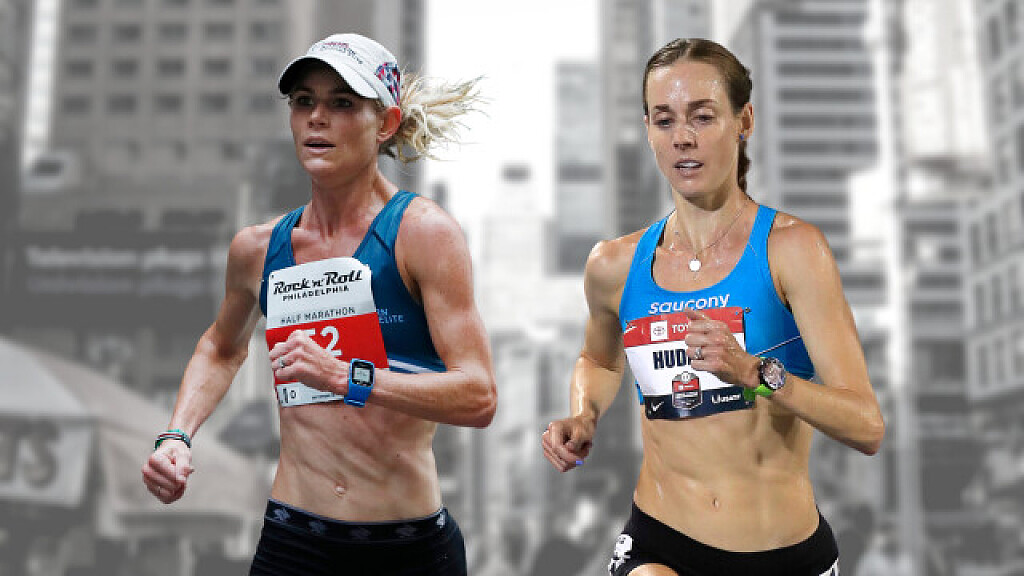
Americans Kellyn Taylor and Molly Huddle Are Ready to Race the New York City Marathon
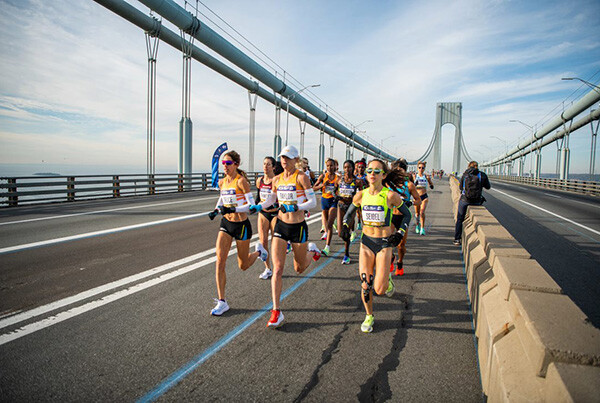
The women's professional lineup for the 2023 New York City Marathon on November 5 packs a wallop. Barring any late withdrawals, we can look forward to a showdown among a defending champion, an Olympic champion, a former marathon world record holder, the current half marathon world record holder, and the 2023 Boston Marathon champion.
While fast times aren't usually the main objective in New York, a race that traditionally favors tactics and competition over pace on an undulating 26.2-miles through the city's five boroughs, we just may see the course record--2:22:31, set all the way back in 2003--go down.
Last year's surprise winner Sharon Lokedi of Kenya is returning to defend her title. The 2022 race was her debut at the distance and she aced her first test in 2:23:23, though since then, she's coped with a foot injury that kept her out of the Boston Marathon in April. Hellen Obiri, also of Kenya, is back, too--her first attempt at the marathon was also last year in New York, finishing sixth (2:25:49). Obiri went on to win the 2023 Boston Marathon in April, lowering her personal best to 2:21:38.
Kenyan Brigid Kosgei, who broke the marathon world record in 2019, finishing Chicago in 2:14:04 (since bettered in September at the Berlin Marathon by Ethiopian Tigst Assefa in 2:11:53) is also returning from injury after dropping out of the 2023 London Marathon in the first mile.
Joining these top contenders are 2021 Olympic marathon champion Peres Jepchirchir, also of Kenya, who won the 2021 New York City and 2022 Boston marathons and owns a 2:17:16 personal best, and Ethiopia's Letesenbet Gidey, the 2022 world champion in the 10,000 meters, ran the fastest marathon debut in history at the 2022 Valencia Marathon with a 2:16:49 effort.
The American women's field this year is small, because most athletes opted for earlier fall races, like the Chicago Marathon, to allow for more recovery time before training begins for the U.S. Olympic Trials, scheduled for February 3, 2024, in Orlando, Florida. But Molly Huddle and Kellyn Taylor are each making their return to the distance on Sunday after giving birth to their daughters in 2022--Huddle welcomed Josephine in April and Taylor welcomed Keagan in December (in addition to their eldest daughter, who is 13 years old, the Taylor family adopted a five-year-old son and almost-two-year-old daughter, growing the family to four children in the past 13 months).
Huddle, 39, and Taylor, 37, both said it was important to them to get in a healthy marathon training cycle and race experience prior to the U.S. Olympic Trials, to get back in the routine and fitness they'll utilize in preparation for 2024.
"Obviously you want to be able to finish 26.2 miles and have that fresh in your mind, but also the buildup, the marathon work--I've gotten pretty far away from that just with the pregnancy and postpartum," said Huddle, a two-time Olympian in the 5,000 and 10,000 meters, who placed third at the 2016 New York City Marathon (2:28:13) in her debut at the distance. "This is supposed to be a building block toward the workload that you need for the Trials--I'm going to have to try and inch my way back a little closer to what I'd ideally do for a marathon buildup."
Huddle hasn't started a marathon since the 2020 Trials in Atlanta, which she dropped out of at the 21-mile mark. She hasn't finished a marathon since April 2019, when she lowered her personal best to 2:26:33 with a 12th-place finish at the London Marathon. However, she did run two relatively fast half marathons this year, including a fifth-place, 1:10:01 effort at the Houston Half Marathon in January.
Taylor's last marathon was two years ago in New York, where she placed sixth in 2:26:10. In September, she finished seventh in the U.S. 20K Championships in New Haven, Connecticut, in 1:08:04.
Going into the 2023 New York City Marathon, here's what the two top Americans had to say as they reflected on their postpartum experiences and goals for their first 26.2-mile race back:
They would have preferred to race the Chicago Marathon because of the timing.
Huddle, who is the former American record holder in the half marathon, 5,000 meters, and 10,000 meters, was hoping to make her postpartum comeback on a flatter, faster course like the October 8 Chicago Marathon, which would have also afforded an additional three weeks of time until the U.S. Olympic Trials. Taylor, who placed eighth at the 2020 Trials in Atlanta and owns three top-10 finishes in New York, agreed that Chicago's timing would've been more ideal. Neither of them were accepted into the professional field, however.
"We birthed humans. We were still running--it's not like we've been sitting on the couch eating Cheetos for a year," Taylor said. "It didn't work out and that's fine. I'll go where I'm wanted, so it doesn't really bother me that much--we'll still have 11 weeks until the Trials, and New York's my favorite marathon, hands down. I love the course. I love the people."
Huddle is also looking forward to racing in New York.
"They've always been happy to have me and that was important. I love racing through the city," she said. "My only concern was it's a very challenging course and there probably won't be any PRs happening, so I'll have to chase that later in the next year and a half."
A spokesperson for the Chicago Marathon said in an email message, in part, that the race officials "weigh many factors including performance standards, athlete interest, event resources, and operational considerations," when choosing athletes to accept into the professional race each year. "While our goal is to host as many athletes as possible, there are years where demand to participate exceeds the resources available and operational needs to host a professional race," the spokesperson wrote.
Huddle attributes her injury in the spring (mostly) to breastfeeding.
In March, Huddle experienced her first major bone injury of her career--a femoral stress fracture--which took her out of training for three months. After talking with her medical team, she's fairly convinced that her dietary needs weren't being met while breastfeeding. Since then, she's learned to adjust her fueling to account for what she loses not only to training, but also feeding her daughter.
"I refer to it as my body's new rules, because old me always knew how to fuel and I knew what I could handle workload-wise," Huddle said. "Now there is just more taxing the system and there's less time to mindfully refuel."
Taylor is finding much more camaraderie this time around.
When Taylor had her first daughter 13 years ago, not many fellow competitors had children. This time, however, she is finding a plethora of support from elite distance running moms.
In 2010, pro athletes also couldn't find much, if any, information about how to safely train through pregnancy and postpartum. And although solid research still lags, plenty of athletes are ready and willing to share their experiences with each other, which Taylor didn't have the first time around.
"It's become really helpful to be able to text each other and just directly ask how they handled one thing or another," Taylor says. "There isn't necessarily a lot of information, but with the network of athletes that have kids, I feel like there's more coming out now."
Huddle and Taylor each took a bit more conservative approach to training for New York this time. In the past, Taylor's peak weekly mileage could go as high as 130, but this time around she topped out around 112 miles. Similarly, Huddle's mileage prior to pregnancy would hit around 115 and this time she kept it to about 80 miles per week and substituted an Elliptigo session for a second run some days.
Their goals for Sunday run the gamut.
Despite a severe lack of sleep, Taylor's recovery from pregnancy and childbirth has gone exceedingly smoothly, she said, emphasizing that everybody's return is different and she believes she just lucked out with her genetics.
Knowing that she'll face a stellar international field on Sunday, Taylor is ready to run an aggressive race, targeting a 2:23 finish. (Her personal best is 2:24:29 from 2018 at Grandma's Marathon in Duluth Minnesota, but that was before the adventure of super shoes.)
"I think I'm in a really good position. I think I have the potential to run really well," said Taylor, who will wear Hoka Rocket X 2 shoes. "I think I can run 2:23 on a good day and that could put me in the hunt to do something, depending on how the race plays out."
Huddle has more of a wait-and-see approach, though, she notes, it is the first marathon in which she'll race in super shoes. She'll race in the Saucony Endorphin Elite shoes.
"I just don't think I'm going to be hanging with the world record holders, so I'm going to let them go do their thing," Huddle said. "I'm just focusing more on myself and just seeing what I can do."
It'll be a learning experience for the U.S. Olympic Trials.
The duo will each have a bigger fanbase than ever with their families coming to New York to support them. It's also an opportunity to see how they can organize the logistics of racing, childcare, and race prep ahead of the Trials in February.
Huddle, who is also raising money for &Mother, a nonprofit organization that supports athletes who pursue their career goals while parenting, as part of her marathon experience on Sunday, is hoping she will be done breastfeeding by February, but New York will serve as a test run in case she is not.
"I think it'll be interesting just seeing what the routine is like with my family, how we're going to shuffle everyone around with childcare and sleeping arrangements," Huddle said.
For Taylor, an additional hotel room was necessary to accommodate the whole family--and she couldn't be happier to have everybody there.
"It's going to be complete chaos," she said, laughing. "My parents are coming, so they're going to be the saving graces."
by Women Running
Login to leave a comment
TCS New York City Marathon
The first New York City Marathon, organized in 1970 by Fred Lebow and Vince Chiappetta, was held entirely in Central Park. Of 127 entrants, only 55 men finished; the sole female entrant dropped out due to illness. Winners were given inexpensive wristwatches and recycled baseball and bowling trophies. The entry fee was $1 and the total event budget...
more...
The Road to the Paris Olympics and here is What You Need to Know.
American runners are about to begin training for the U.S. Olympic Trials Marathon
It’s early October, which means it’s the peak marathon season for many runners. But with an Olympic year on the horizon, it also means America’s top marathoners are about to hit the road to Paris.
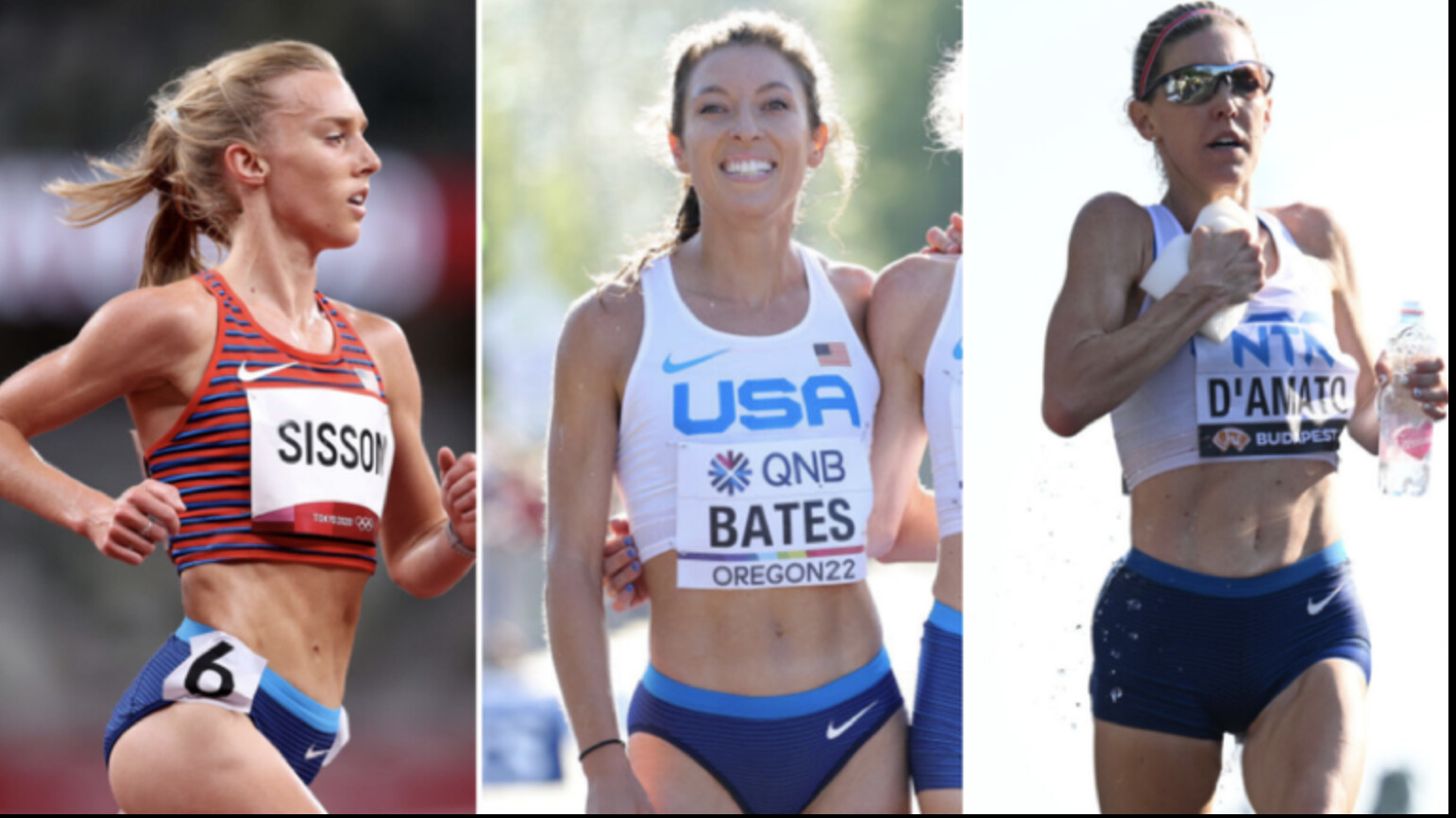
More specifically, the men’s and women’s 2024 U.S. Olympic Trials Marathon races—scheduled for February 3 in Orlando, Florida—are just four months away. And that means the top U.S. runners hoping to represent their country at next summer’s Olympics are about to begin preparing for the all-or-nothing qualifying race that decides which six runners will represent Team USA next summer on the streets of Paris.
Although several top American runners are racing the Chicago Marathon on October 8, even they have their eyes on a much bigger prize next February.
“There’s nothing in my mind that compares with being an Olympian and being in the Olympic Games,” says 26-year-old Utah-based Nike pro Conner Mantz, who returns to Chicago after finishing seventh last year in 2:08:16 in his debut at the distance. “So putting that first has been the plan for a long time. We’re just putting that first and we’re working backwards through the season with other races.”
Registration will open for the U.S. Olympic Trials Marathon in early November for runners who have surpassed the qualifying times in the marathon (2:18:00 for men, 2:37:00 for women) or half marathon (1:03:00 for men, 1:12:00 for women). The qualifying window extends through December 3—the race date of the last-chance California International Marathon, which for decades has been one of the most popular Olympic Trials qualifying races.
In 2020, a record 708 runners—465 women and 243 men—qualified for the U.S. Olympic Trials Marathon in Atlanta just before the onset of the Covid-19 pandemic. But USA Track & Field lowered the women’s qualifying standard by eight minutes from the more attainable 2:45:00 plateau, which means there will most likely be a much smaller women’s field this year.
But even so, amid the handful of runners who have a legitimate shot at making the Olympic team, there will also be dozens of dreamers, wannabes, and just-happy-to-be-there elite amateurs who have worked hard, put in the miles, and earned the chance to be on the start line of the deepest and most competitive U.S. distance-running races that only happen once every four years.
The men’s and women’s races will run simultaneously with the men beginning at 12:10 P.M. EST. and the women starting 10 minutes later. Runners have complained that a high noon start means they will be forced to race in hot, humid conditions. Over the past decade, the average temperature on February 3 in Orlando has been 69.6 degrees Fahrenheit at noon, rising to 73.3 at 4 PM. But actual temperatures have varied drastically, from 81 degrees Fahrenheit at 2 P.M. last year to 56 at the same time the year before. USATF officials have responded by saying that the start times are to accommodate live coverage on NBC and to match the expected conditions in Paris.
Here’s an update and overview of what’s next, who the top contenders are, the course, and what to expect in the next four months.
The 26.2-mile U.S. Olympic Trials course runs through downtown Orlando and consists of one 2.2-mile loop and three eight-mile loops. The marathon course will run through several neighborhoods, main streets, and business districts in Orlando, including Central Business District, City District, South Eola, Lake Eola Heights Historic District, Lake Cherokee Historic District, Lake Davis Greenwood, Lake Como, North Quarter, Lawsona/Fern Creek, SoDo District, and the Thornton Park neighborhood. It will then head east to and around The Milk District neighborhood and Main Street. (Notably, the course will come close to Disney World, which is about 15 miles to the southwest.)
Unlike the Olympic Marathon course in Paris, which will challenge runners with significant hills in the middle, the Orlando course is mostly flat. Each loop has a few minor variations in pitch, but only 38 feet separate the high and low points on the course. Ultimately, though, it’s a spectator-friendly route with chances for family, friends, and fans of runners to see the action several times.
The top women—based on personal best times and recent race results—are Emily Sisson, Emma Bates, Keira D’Amato, Betsy Saina, and Lindsay Flanagan. But the U.S. Olympic Trials races almost always produce surprises with a few great runners having off days and a few good runners having exceptional days, so there is reason to expect the unexpected.
Sisson lowered the American record to 2:18:29 last year when she finished second in the Chicago Marathon. She’s running Chicago again on October 8 along with Bates, who has said she’s hoping to break the American record. In January, Sisson, 31, chopped her own American record in the half marathon in Houston with a 1:06:52 effort, and most recently won the U.S. 20K Championships (1:06:09) on September 4 in New Haven, Connecticut. Bates, also 31, hasn’t raced at all since her sterling fifth-place effort at the Boston Marathon in April, when she slashed her personal best to 2:22:10.
While Chicago will be another good place to test themselves, both have unfinished business after Bates was seventh at the 2020 Trials and Sisson dropped out near the 21-mile mark.
The same goes for Flanagan, 32, who has been one of America’s best and most consistent marathoners for the past five years. She placed 12th at the trials in 2020. She had a breakthrough win (2:24:43) at the Gold Coast Marathon in 2022 followed by a strong, eighth-place finish (2:26:08) at the Tokyo Marathon earlier this year. In August, she ran perhaps the best race of her career, when she finished ninth (2:27:47) at the world championships in Budapest amid hot, humid conditions.
The 38-year-old D’Amato, meanwhile, just capped off another strong season with a 17th-place showing (2:31:35) at the World Athletics Championships in Budapest, a year after finishing eighth in the world championships and setting an American record 2:19:12 at the 2022 Houston Marathon. She was 15th at the Trials in 2020 in 2:34:24, just two years into her competitive return to the sport after having two kids and starting a career in real estate in her early 20s.
“It’s such a huge goal of mine to become an Olympian,” says D’Amato, who lowered Sisson’s U.S. record in the half marathon with a 1:06:39 effort at the Gold Coast Half Marathon on July 1 in Australia. “It’s really hard for me to put words into this because my whole life, wearing a Team USA jersey has been like a huge dream. And when I left the sport (temporarily), I felt like I said goodbye to that dream and I kind of mourned the loss of being able to represent my country. I feel like it’s the greatest honor in our sport to be able to wear our flag and race as hard as possible.”
Saina, a 35-year-old Kenya-born runner who ran collegiately for Iowa State University, became a U.S. citizen in late 2021. She placed fifth in the 10,000-meters at the 2016 Olympics in Rio de Janeiro while competing for Kenya. She’s spent the past several years splitting time between Kenya and Nashville, Tennessee, where she gave birth to a son, Kalya, in December 2021.
She’s returned with a strong fourth-place 1:11:40 result at the Tokyo Half Marathon last October and a fifth-place 2:21:40 showing at the Tokyo Marathon in February. In May, Saina won the U.S. 25K Championships in Michigan. Two weeks ago she broke the tape at the Blackmores Sydney Marathon in Australia in 2:26:47.
Other top contenders include but are not limited to Tokyo Olympics bronze medalist Molly Seidel (who’s personal best is 2:24:42), 2022 U.S. Olympic Trials champion Aliphine Tuliamuk (2:24:37, 11th in Boston this year), Susanna Sullivan (2:24:27 personal best, 10th in London this year), two-time Olympian and 2018 Boston Marathon winner Des Linden (2:22:38), and Sara Hall (2:20:32, fifth at last year’s world championships), plus Kellyn Taylor (2:24:29), Nell Rojas (2:24:51), Sarah Sellers (2:25:43), Lauren Paquette (2:25:56), Dakotah Lindwurm (2:25:01), Annie Frisbie (2:26:18), Sara Vaughn (2:26:23), Tristin Van Ord (2:27:07), and Jacqueline Gaughan (2:27:08).
The list of potential men’s top contenders isn’t as clear-cut, partially because there are so many sub-2:11 runners and several fast runners who are relatively new to the marathon. But all that suggests a wide-open men’s race where more than a dozen runners are legitimately in the mix for the three Olympic team spots. That said, the top runners on paper, based on both time and consistent results over the past few years, are Scott Fauble, Jared Ward, Galen Rupp, Conner Mantz, Leonard Korir, Matt McDonald, and C.J. Albertson.
The 31-year-old Fauble, who was 12th in the Olympic Trials in 2020 and owns a 2:08:52 personal best, has finished seventh in the Boston Marathon three times since 2019 and also finished seventh in the New York City Marathon in 2018. Ward is a 2016 U.S. Olympian and has three top-10 finishes at the New York City Marathon and a 2:09:25 personal best from Boston in 2019. He’s 35, but he just ran a 2:11:44 (27th place) at the Berlin Marathon in late September.
Rupp, who won the past two U.S. Olympic Trials Marathons and earned the bronze medal in the marathon at the 2016 Olympics, is nearing the end of his competitive career. He boasts a 2:06:07 personal best and has run under 2:10 more than any American in history, including when he finished 19th at the world championships (2:09:36) last year. He’s a bit of a wild card because he’s 37 and hasn’t raced since his lackluster 17th-place showing at the NYC Half Marathon (1:04:57) in March, but the world will get a glimpse of his fitness in Chicago this weekend.
Mantz followed up his solid debut in Chicago last fall with a good Boston Marathon in April (11th, 2:10:25) and solid racing on the track and roads all year, including his recent runner-up showings at the Beach to Beacon 10K in August and the U.S. 20K Championships in September.
McDonald, 30, who was 10th in the 2020 U.S. Olympic Trials, has quietly become one of the best marathoners in the U.S. while serving as a postdoctoral associate in chemical engineering at M.I.T. His last three races have clocked in at 2:10:35 (Boston 2022), 2:09:49 (Chicago 2022), and 2:10:17 (Boston 2023). The only other runner who rivals that kind of consistency is Albertson, 29, who has run 2:10:23 (Boston 2022), 2:10:52 (Grandma’s Marathon 2022) and 2:10:33 (Boston 2022) in his past three marathons and was seventh in the U.S. Olympic Trials in 2020 (2:11:49).
The men’s race will likely have a mix of veteran runners and newcomers who have run in the 2:09 to 2:10 range since 2022. Among those are 2020 U.S. Olympic Trials runner-up Jake Riley (2:10:02 personal best), who is returning from double Achilles surgery; 2016 U.S. 10,000-meter Olympian Leonard Korir (2:07:56), who ran a 2:09:31 in Paris in April; Zach Panning (2:09:28, plus 13th at the world championships in August); U.S. 25K record-holder Parker Stinson (2:10.53); Futsum Zienasellassie who won the California International Marathon last December in his debut (2:11:01) and then doubled-back with a new personal best (2:09:40) at the Rotterdam Marathon in the spring; Abbabiya Simbassa, who ran a solid debut marathon (2:10:34) in Prague this spring; and Eritrean-born Daniel Mesfun (2:10:06) and Ethiopian-born Teshome Mekonen (2:10:16), who both received U.S. citizenship within the past year; and solid veterans Nico Montanez (2:09:55), Elkanah Kibet (2:10:43) and Nathan Martin (2:10:45).
Additional sub-2:12 runners who will be in the mix are Andrew Colley (2:11:26), Clayton Young (2:11:51), Brendan Gregg (2:11:21), Josh Izewski (2:11:26), Jacob Thompson (2:11:40), and Kevin Salvano (2:11:49).
As noted previously, some top contenders will season their marathon legs one final time at the flat and fast Chicago Marathon on October 8. An even more select few will opt for the New York City Marathon on November 5. After that, nearly every American with eyes set on an Olympic berth will double-down over the holiday season for that one final, critical marathon training cycle. Expect to see a wide range in heat training, from sauna protocols, to warm weather training trips, to simply an adjusted race day strategy.
Of course, with the Olympic Marathon falling under the purview of World Athletics, qualifying for the U.S. Olympic Marathon team is not quite as simple as finishing on the podium in Orlando. Any American looking to have a breakout performance and finish within the top three at the U.S. Olympic Trials Marathon will need to have run under 2:11:30 for men and 2:29:30 for women within the qualification window, which spans from November 1, 2022 to April 30, 2024. Given the possibility of oppressively hot and humid temps on February 3 in Orlando, they’re best bet is to secure that time now.
These qualification standards are in accordance with a new rule from World Athletics, which allows national Olympic committees to circumvent the typical Olympic qualification process of running under 2:08:10 for men and 2:26:50 for women, or being ranked among the top 65 in the world on a filtered list of the top three athletes from each country. The catch, though, is that three other runners from said country must have met one of these two standards. If this sounds complicated, that’s because it is.
For the hundreds of elite amateurs on the cusp of hitting that coveted U.S. Olympic Trials qualifying time, it’s do or die mode. While a few made the cut at the Berlin Marathon on September 24, one of those opportunities was lost when the Twin Cities Marathon was canceled on October 1 because of excessive heat. Temperatures are shaping up for an auspicious day in Chicago this weekend, and many more will give it a final shot at the Columbus Marathon on October 15; Indianapolis Monumental Marathon on October 28; the Philadelphia Marathon on November 18; and the last-call California International Marathon, a point-to-point race ending in Sacramento, California on December 3.
Ultimately, only six American runners will likely continue on along the road to Paris and earn the chance to run in the men’s and women’s Olympic marathons next August 10-11. For a handful of younger runners, the 2024 U.S. Olympic Trials will be a motivation to reinvigorate the Olympic dream or keep a faint hope alive, at least until the 2028 U.S. Olympic Trials that will determine the team for the Los Angeles Olympics. But for many runners, the journey to the U.S. Olympic Trials in Orlando will lead to the end of their competitive road running careers as new jobs, young families, a switch to trail running, and other priorities will take hold.
“I think the Olympic Trials is an important part of American distance running,” says Kurt Roeser, 36, a two-time U.S. Olympic Trials Marathon qualifier who works full-time as a physical therapist in Boulder, Colorado. “I’m glad that they kept it the same event for this cycle and hopefully for future cycles because it gives people like me a reason to keep training. I’m older now and I’m not going to actually have a chance to make an Olympic team, but for somebody that’s fresh out out of college and maybe they just barely squeak in under the qualifying time, maybe that’s the catalyst they need to start training more seriously through the next cycle. And maybe four years from now, they are a serious factor for making the team.”
by Outside Online
Login to leave a comment
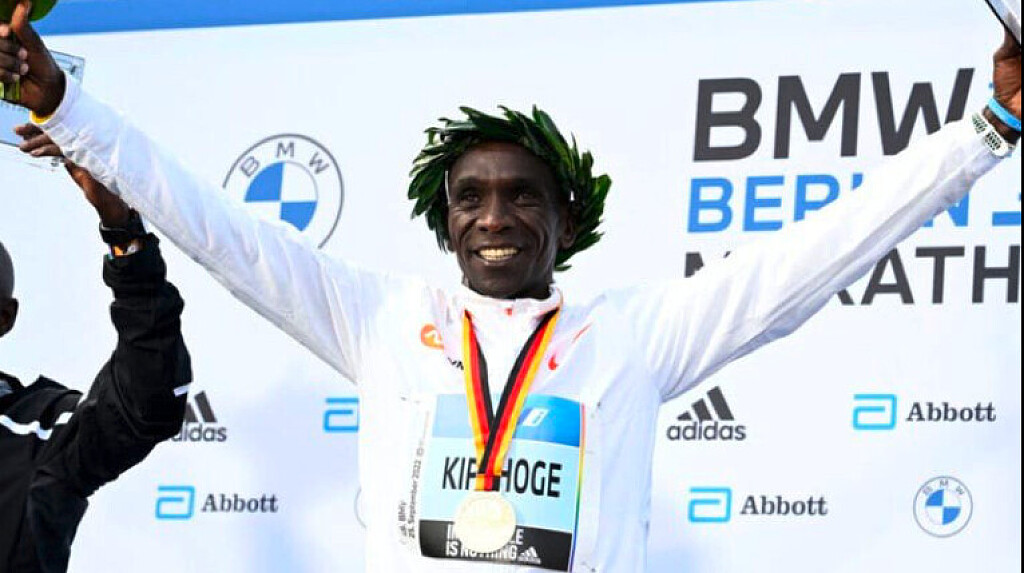
10 Things to Know About the 2023 Berlin Marathon
Here’s how you can watch the race, track runners, and register for next year
More than 45,000 runners are expected to participate in the Berlin Marathon on September 24 in Germany’s capital city. It’s the 49th edition of the race and one of the six World Marathon Majors races along with races in Chicago, New York, Boston, London and Tokyo. The weather forecast is calling for cloudy and cool conditions on race morning in Berlin, so fast times are once again expected.
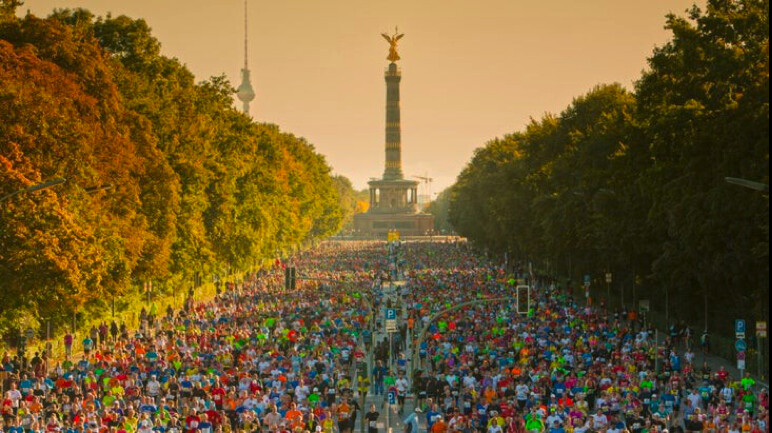
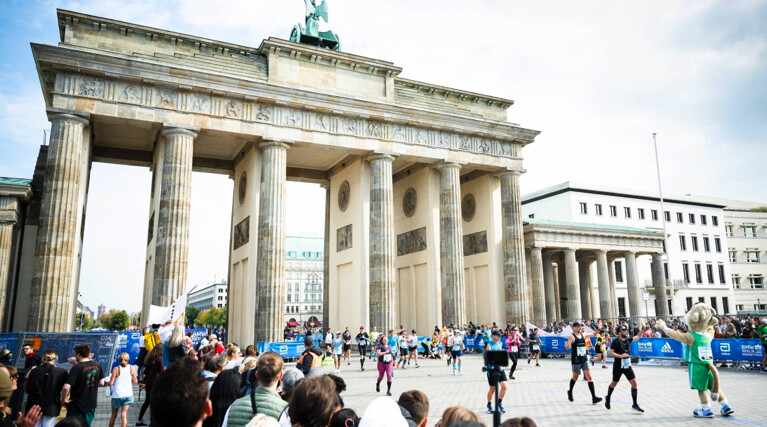
Here’s a rundown of 10 noteworthy elements about this year’s race.
The Berlin Marathon has produced 12 world records—more than any other marathon—since its inception in 1974, including the past eight men’s records since 2003. Kenya legend Eliud Kipchoge lowered the world record for the fastest official marathon ever run (2:01:09) last year in Berlin, and it’s also where he ran the previous world record (2:01:39) in 2018.
Berlin has produced six of the top 10 fastest men’s times in history, including three of the four sub-2:02 efforts (including the 2:01:41 run by Kenenisa Bekele in 2019). It hasn’t been quite as fast for women, however it has been the site of three women’s world records, most recently when Japan’s Naoko Takahashi ran the world’s first sub-2:20 marathon (2:19:46) in 2001. Last year, Ethiopia’s Tigst Assefa won the women’s race in 2:15:37, which, at the time, was the second-fastest marathon ever run and now ranks fifth.
Berlin is the flattest course of all the World Marathon Majors, with a total elevation gain of 241 feet and loss of 260 feet. (The biggest “hills” come between miles 16 and 20, but they max out at less than 30 feet of gain.) Berlin annually produces some of the fastest pro results in the world, in part because it’s a flat course, but also because the race organization provides pacemakers (auxilliary runners who set an optimal pace but only run about a portion of the course before dropping out) so the opportunity for fast times are assured. (There are no pacemakers at the Chicago, New York City Marathon, and Boston Marathon, so those races play out only by the tactics of the runners in the field.) But the fast elite times, flat course, and typically cool weather conditions have attracted age-group runners targeting new PRs, too.
Running legend Eliud Kipchoge, universally accepted as the G.O.A.T. of marathoning, has won 15 of the 18 marathons he has entered, including the past two Olympics. Berlin is where he’s had most of this success, dating back to his first victory in 2015 and he has since also won there in 2017, 2018, and 2022. Can he add one more victory to his total?
He lowered his own world record to 2:01:09 last year by averaging 14:21.4 per 5K, or 4:37 per mile. However, the 38-year-old Kenyan is coming off an uncharacteristically disappointing race at the 2023 Boston Marathon, where he finished sixth in 2:09:23. Will he approach another world record? “My aim is to always run a good race,” he said recently. “Berlin is like home for me. In view of the Olympic Games next year in Paris, I thought about which race could be the best preparation for the Games for me, and Berlin is the best option.”
Including Kipchoge, the men’s field in Berlin includes 10 runners who have run faster than 2:06 and seven more who have broken 2:07, including last year’s runner-up Mark Korir (2:05:58). Kipchoge should be challenged by fellow Kenyan Amos Kipruto, who owns a 2:03:13 from his runner-up showing at last year’s Tokyo Marathon. The winner of the 2022 London Marathon last fall (2:04:39), Kipruto, 31, placed a distant second in the 2018 Berlin Marathon behind Kipchoge (2:06:23) and owns a bronze medal in the marathon from the 2019 World Athletics Championships in Doha.
Other top runners in the field include Kenya’s Geoffrey Kamworor, who ran 2:04:23 to place second at the London Marathon in April, Ethiopia’s Birhanu Legese, who was second (2:02:48) in Berlin in 2019 and Kenya’s Wilson Kipsang, 41, a former winner in Berlin, New York, and Tokyo. However, Kipsang, who lowered the world record to 2:03:23 on the Berlin course in 2013, is coming off a four-year ban for missing drug tests in 2018 and 2019.
Last year, Ethiopia’s Tigist Assefa, a 2016 Olympian in the 800-meter run, entered the race as an untested marathon (with a PR of 2:34:01) and surprised everyone with her 2:15:37 victory in the third-fastest time ever.The 26-year-old is back this year but hasn’t run any races because she’s been sidelined with a few nagging injuries.
Her biggest competitor will likely be Sheila Chepkirui, who holds a personal best of 2:17:29 from last December’s Valencia Marathon. She’s a former African Cross Country Championships winner and was the bronze medalist in the 10,000-meter run at the 2022 Commonwealth Games. Other top women runners include Ethiopians Tigist Abayechew (2:18:03), Workenesh Edesa (2:18.51), and Hiwot Gebrekidan (2:19:10).
Scott Fauble, a three-time seventh-place finisher at the Boston Marathon (including this year in 2:09:44), is racing Berlin with the hopes of securing the Olympic-qualifying standard of 2:08:10. The 31-year-old runner from Portland, Oregon, will still need a top-three finish at the U.S. Olympic Trials Marathon on February 4 in Orlando, but securing the time will give him a leg up on qualifying for the Paris Olympics next summer.
Also racing in Berlin are 2016 U.S. Olympian Jared Ward (Provo, Utah) and 2020 U.S. Olympian Jake Riley (Boulder, Colorado). Ward, 35, owns a 2:09:25 personal best, but he hasn’t run faster than 2:12 since his sixth-place finish (2:10:45) in the New York City Marathon in 2019. The 34-year-old Riley, who owns a 2:10:02 PR, is coming back after having double Achilles surgery in July 2022 to correct Haglund’s syndrome (the second time in his career), and hopes to run in the 2:12-2:14 range. Ethiopian-born Teshome Mekonen, who recently received U.S. citizenship, will also be racing in Berlin. The 28-year-old, who lives in New York City, has a 1:00:02 half-marathon personal best and lowered his marathon personal best to 2:11:05 last January in Houston.
Annie Frisbie is the top American runner in the women’s field in Berlin. The 26-year-old from Hopkins, Minnesota, made her marathon debut at the 2021 New York City Marathon with an impressive seventh-place finish (2:26:18). She’s continued to run well since then, placing 20th (2:28:45) in the 2023 Boston Marathon (2:28:45) and most recently finishing fifth (1:07:27) at the U.S. 20K Championships on September 4 in New Haven, Connecticut. Frisbie was a Wisconsin state champion runner in high school and an All-American runner for Iowa State University.
The Berlin Marathon was started in 1974 by Horst Milde, a German baker and running enthusiast. When it began at the height of the Cold War and East Berlin being sealed off by a wall, the marathon was run only in West Berlin. Since 1990, it has started and ended near the Brandenburg Gate, sending runners on a jagged loop through the city—including the neighborhoods of Charlottenburg, Tiergarten, Moabit, Mitte, Friedrichshain, Kreuzberg, Neukölln, Schöneberg, Friedenau, and Zehlendorf. Runners will pass tourist sites like the Reichstag building, the Siegessäule (Victory Column), Berlin Cathedral, and Potsdamer Platz. Live music is played at more than 60 locations along the course, including at all the famous landmarks.
The inaugural Berlin Marathon had 244 finishers; 234 men and 10 women, and was won by Günter Hallas (2:44:53) and Jutta von Haase (3:22:01), respectively. Last year, the race had 34,788 finishers, including 23,280 men (67 percent) and 11,508 women (33 percent). The last German runners to claim victory were Irina Mikitenko (2:19:19) in 2008 and Ingo Sensburg (2:16:48) in 1980. No American man or woman has ever won the Berlin Marathon.
The Berlin Marathon has an inline skating division for 500 participants that begins at 3:30 P.M. after all runners are cleared from the course. The skater course record of 56:46 was set last year by Belgian Bart Swings, and he’s back this year aiming for his ninth victory. In the women’s race, all eyes are on last year’s winner, Marie Dupuy of France, in 1:11:19. All finishers of the inline skating division are eligible to enter the 2024 Berlin Marathon as runners.
The race, which starts at 9:15 A.M. local time (or 3:15 A.M. ET in the U.S.), will be broadcast worldwide by several TV partners, but not in North America. However, several websites offer live streaming so people can watch the Berlin Marathon from anywhere in the world, especially if you’re a VPN subscriber. Watch Athletics will be broadcasting the race online in real time for free, while FloTrack’s livestream requires a subscription ($29.99 for one month) in order to view their livestream. Runners can be tracked via the Berlin Marathon website’s Results page, or via the BMW Berlin Marathon App app available on Apple or Google Play.
Race day begins with the elite handbike division at 8:50 A.M., followed by the wheelchair and handcycle divisions at 8:57 A.M. Runners are sent off in four waves beginning at 9:15 A.M., starting with the men’s and women’s elite waves. The race has a strict time limit of 6 hours, 15 minutes as well as course closure times at the 33K/20.5-mile mark (3:50 P.M.) and 38K/23.6-mile mark (4:35 P.M.). Runners who have not reached those points by those times can continue on the sidewalks alongside the course or get a ride on the course-sweeping bus.
Entry to the 2024 Berlin Marathon, which is slated for September 29, 2024, will be done via a lottery that will open in October. You can enter the lottery as a solo runner or as a team consisting of two or three people. (If the team is drawn, all persons from the team are included.) Lottery dates for 2024 have not yet been announced, but the draw for the 2023 edition took place in December 2022.
If you’re selected, the registration fee will be about $160 euros. You can also secure a guaranteed spot in the race based on previous marathon times. In 2023, female runners up to 44 years old qualified if they ran faster than 3:00; female runners up to 59 years old qualified if they ran under 3:20; and female runners over 60 years qualified if they ran under 4:10. For men, the qualifying times were 2:45 (up to 44 years old), 2:55 (46-59 years old), 3:25 (60 and older.)
If you don’t get in through the lottery, you may still be able to get into the race via a charity bib or through tour operators.
by Outside online
Login to leave a comment
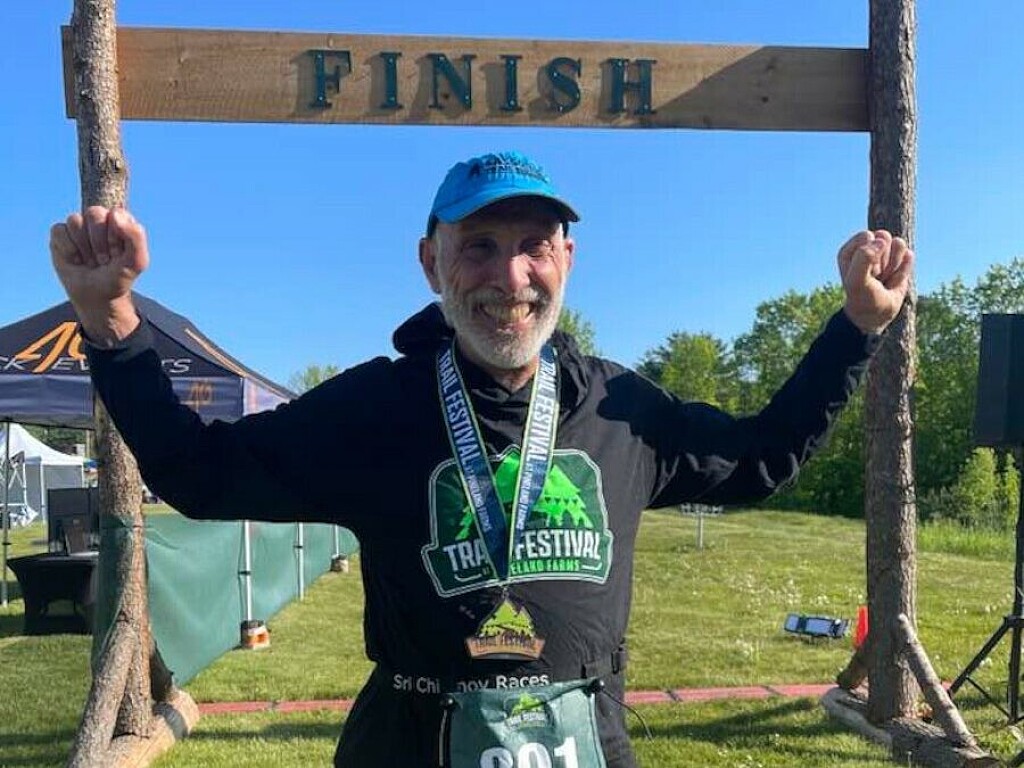
Canadian ultrarunner still snagging podiums at 66
Trishul Cherns has firmly staked his place in the history of Canadian ultrarunning. But at age 66, the endurance athlete has shown with his recent ascents to the podium that he has no desire to dwell on past successes—nor should other runners who have entered their senior years. The Hamilton native, who lives in Kingston, N.Y., with his wife and crew leader, Käären Schilke-Cherns, has recently racked up no fewer than three podium finishes at ultras around the U.S., including second overall at the 144-hour 3 Days at the Fair road race in Augusta, N.J., in early May, covering 677. 53 km; third overall at the 33-hour Centurion Ultra Trail Event–Blue Buckle in Connecticut in June, completing 183.304 km; and earlier this month, Cherns won the 48-hour event at the Notchview Ultra in Windsor, Mass., covering 229.332 km on trails.
Cherns is best known as a multi-day racer, and throughout his career, has represented Canada in many international competitions. He has broken more than 110 Canadian ultrarunning records and has racked up tens of thousands of kilometres in events as short as 50K and as long as 1,600 km on roads, trails and the track. Altogether he has accumulated more than 300 ultra finishes during his career.
Cherns says beyond being personal accomplishments, these latest results speak assertively to the strength and potential of runners over the age of 65.
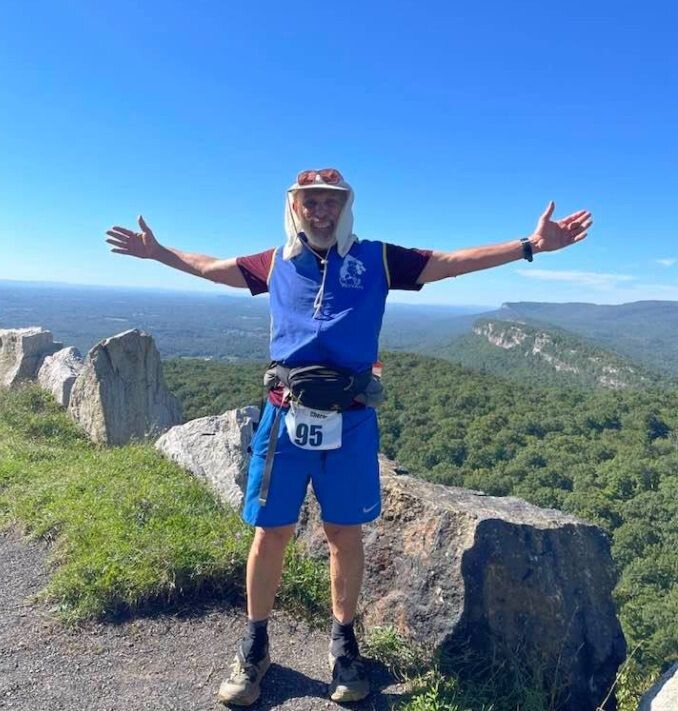
“Age is not a limit,” Cherns tells Canadian Running. “I still feel 30 inside, and I’m beating guys that are 20, 30, 40 years younger than me. So I think the message is, no matter what your age is, keep going and keep doing what you’re doing.”
Although age does offer runners the benefit of experience, running success in older life doesn’t just happen. Cherns says choosing healthy foods and cultivating a positive mental attitude have been crucial to his continuing to be a strong competitor.
“My success definitely comes from my diet,” he says. “I’m a vegan, and that’s an anti-inflamatory diet. I’m trying to prevent inflammation in my body because these are stressful (running) events, so I’m trying to make it as easy as possible.”
He says meditation and approaching running as a spiritual practice have been key to maintaining a positive mindset during challenging races.
“Meditation and spirituality give me fortitude. Inner peace and stillness give me strength. I can do things that others can’t because of my inner fortitude, which supports my being very, very mentally strong and very, very emotionally strong,” says Cherns, who was a student of the late endurance athlete and spiritual teacher Sri Chinmoy.
Another key ingredient to continued success and joy in running is to continue to look ahead, says Cherns, and always to set one’s sights high. “My ideas are always self-transcending. I want to be prolific. I want to keep pushing my goals so that running is all a new adventure for me. I’ve run more than 300 ultras—in the next five years I’d like to bring that to 500. Ultimately, can I do 1,000 ultra marathons in my lifetime? You know, that’d be cool,” he says.
“I’m trying to go for the stars. There’s no reason why you can’t go for the stars, no matter what age you are.”
by Paul Baswick
Login to leave a comment
Five Lessons from the Marathon Goat and his team
THE MOST REMARKABLE aspect of the fastest marathoner in history is how unremarkable—and how accessible—his training is. Eliud Kipchoge has the best resources in the world at his disposal, but rather than relying on treadmills that cost more than a Lexus or recovery devices worthy of NASA missions, he follows simple training tenets that maximize how he recovers, what he eats, his mindset, and the conditioning he does after his runs.
1. SLEEP LIKE YOUR RUN DEPENDS ON IT
ELIUD KIPCHOGE SLEEPS up to 9 hours at night, often also taking an hour-long midday nap. Most of us don’t have the time or the 120-mile weekly workload to clock that much shut-eye, but we can still benefit from Kipchoge’s sleep hygiene cues.
At least 30 minutes before bed, he turns off or puts down all electronics. The habit reduces his exposure to blue light, known to delay the release of melatonin, leading to a decrease in sleepiness, says Kannan Ramar, MD, past president of the American Academy of Sleep Medicine. Then, instead of scrolling through social media (he prefers Facebook), Kipchoge winds down by reading at least two chapters of a book.
“If I have enough sleep, my body and my mind are free of stress and ready to go with the programs,” says Kipchoge.
While you’re asleep, your body is doing more than resting. Crucially, your pituitary gland releases growth hormone, which helps your muscles repair and grow, says Ramar.
Most runners don’t need a nap if they consistently get the recommended 7 to 9 hours, Ramar says. But when you don’t hit that target, naps can help counter short-term sleep loss and provide an energy boost for a late-day run, Ramar adds. He suggests a 20-minute doze between noon and 3 p.m. to relieve fatigue. Napping longer than 20 minutes can leave you feeling groggy due to entering a deep-sleep state, Ramar says.
2. REVIVE SORE MUSCLES WITH AN ICE BATH
TWICE A WEEK, Kipchoge takes a 10-minute plunge in his camp’s ice baths to aid his postrun recovery. It may not be pleasant, but studies find that cold water immersion (CWI) therapy like Kipchoge’s ice bath is effective. “Most research shows that over 48 hours, athletes have reported an improvement in DOMS [delayed onset muscle soreness] and sometimes corresponding improvements in strength and/or flexibility,” says Rebecca Stearns, PhD, a professor of kinesiology at the University of Connecticut.
Cold water reduces the body’s temperature, which narrows the blood vessels. This flushes metabolic waste from inflammation out of muscles to speed recovery, says Stearns. Water temperature between 50 and 59 degrees Fahrenheit for 10 to 15 minutes is cold enough to produce results, she adds.
You can set up an ice bath at home by filling a tub halfway with cold water. Then, depending on your tap temperature, add one to three 5-pound bags of ice. Stearns suggests trying CWI once or twice a week and checking with your physician to make sure you don’t have any contraindications for doing ice baths.
“It’s very intense. It’s not for everybody,” Kipchoge says. “You need to learn to relax and learn to absorb pain.”
3. UPGRADE YOUR DIET WITH PROTEIN
KIPCHOGE HAS ALWAYS maintained a highcarb diet, but after running 2:00:25 in Nike’s 2017 Breaking2 project, he began working with exercise biochemist Armand Bettonviel to improve his nutrition and further push his performance. Bettonviel, who develops nutrition plans for elite athletes, sought to up Kipchoge’s protein intake to aid his recovery as well as help to build and maintain his lean muscle.
“I’ve noticed a difference since I started to be serious about nutrition,” Kipchoge says. “Recovery is very fast, I have a lot of energy.”
While Kipchoge’s exact protein intake is confidential, Bettonviel suggests runners aim for 1.5 to 2 grams of protein per kilogram of bodyweight. For a 150-pound runner, that’s 102 to 136 grams.
Kipchoge’s meals feature Kenyan staples like ugali (a cornmeal porridge), potatoes, rice, chapati (a wheat flatbread), managu (an iron-rich leafy green), beans, whole-fat milk, eggs, chicken, and beef. Meat is only served about half the week, so to hit his protein goal Kipchoge drinks mala, a local sour milk, says Bettonviel. Every 6 ounces has about 7 grams of protein, making it comparable to kefir found in most stateside dairy aisles.
Bettonviel also introduced a high-protein porridge to the camp menu (Kipchoge eats it with fruit after training) made with whey protein and teff, an ancient grain that offers 10 grams of protein per cooked cup. You can DIY by mixing a half scoop of protein powder with whole-grain teff—stocked at many grocery stores and sold on Amazon—and cook it similarly to oatmeal. Alternatively, Kodiak Cakes makes oatmeal with whey protein and 12 grams of protein per serving.
4. MEDITATE TO BUILD MENTAL STRENGTH
KIPCHOGE IS AN especially mindful runner, says his coach Patrick Sang. While training and racing, he focuses on his breath and his movements, and aims to minimize outside distractions. It’s a skill that helps him embrace the pain and challenges of a marathon.
Mindfulness—a practice of focusing your awareness on the moment, with a kind and curious attention in a nonjudgmental attitude—can benefit any runner, says Corrie Falcon, director of mindfulness-based training for athletes at the University of San Diego Center for Mindfulness. Resting your attention on elements of a present moment, like your breath, heartbeat, or even a drip of sweat, can prevent you from getting caught in an inner dialogue mid-training or competition that may unravel your focus.
“In moments of high stress before or during a race, mindfulness has been shown to reduce the production of stress hormones, reduce blood pressure and heart rate, improve emotional regulation, and promote relaxation in the body,” says Tara Zinnamon, PhD, a neuroscientist and meditation teacher.
Kipchoge credits his focused, spartan lifestyle for developing mindfulness, but it can also be cultivated through a consistent mindfulness routine. Even just 12 minutes of guided meditation five days a week for one month can be effective, says Amishi Jha, PhD, a professor of psychology at the University of Miami.
If guided meditation seems outside your comfort zone, Falcon recommends a strategy you can try while running. She describes it as a “sense practice.” Run in silence. For two minutes, focus on what you see, then focus on sound, followed by what sensations you feel, and then smell. “And when you have a thought, label it ‘thought’ or ‘thinking’ and return to the present moment experience through the senses,” says Falcon.
5. BUILD BONUS ENDURANCE ON A BIKE
TO BOOST HIS training volume without increasing his risk of a running injury, Kipchoge rides a stationary bike for an hour twice a week after his runs.
Cycling is a concentric (shortening) muscle-contraction activity, which is easier for muscles to recover from, says Colorado-based coach Bobby McGee, who has worked with runners and triathletes (including Olympic gold medalist Gwen Jorgensen) for more than three decades. In running, the primary loading is eccentric (lengthening), which is more demanding and damaging.
“A one-hour endurance run is limited by leg fatigue, not heart and lung fatigue. A two-hour ride doubles the cardio conditioning but has minimal leg-muscle damage,” says McGee.
Kipchoge spins at an easy pace, which he says also helps reduce muscle soreness. “Cycling is a far more effective recovery modality than an easy run, especially for bigger runners with a slower cadence,” says McGee. He recommends cycling no more than twice weekly and for less than 20 percent of your overall training time.
Login to leave a comment
Matthew Kimeli (28:38) And Fentyea Belayneh (32:06) Win Beach To Beacon 10k
Beach to Beacon returns after 2-year absence: ‘It’s great to be back!’
A carnival of calves, quads and cowbells came back to this seaside town Saturday, after an absence of 1,099 days.

More than 5,000 runners paraded over the roads of Cape Elizabeth on a warm and cloudless morning in the 24th edition of the venerable TD Beach to Beacon 10K Road Race. Because of the pandemic, the race was canceled in 2020 and held virtually in 2021.
“It’s great to be back!” said Joan Benoit Samuelson, the race founder who grew up in Cape Elizabeth and went on to win the inaugural women’s Olympic marathon in the Los Angeles Games of 1984.
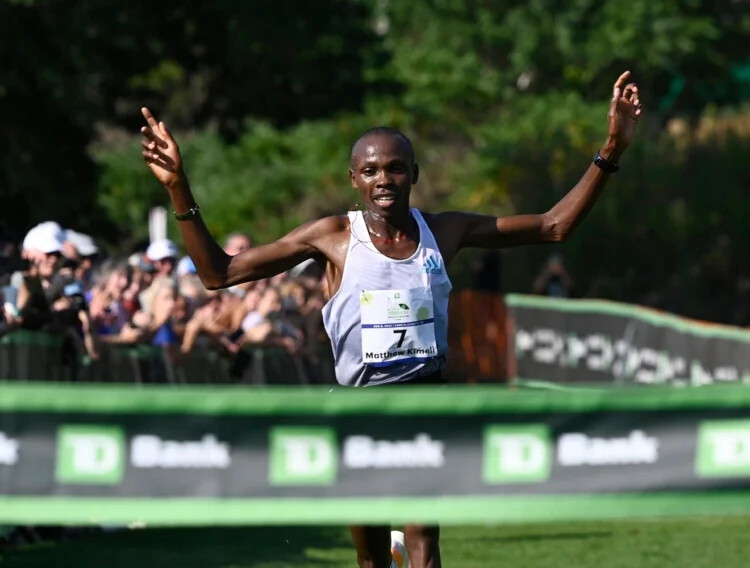
Along the route, which winds onto Old Ocean House Road before returning to Route 77 and continuing onto Shore Road until entering Fort Williams for the finish along a well-watered strip of green grass in sight of the lighthouse, spectators were abundant if not as thick as in past years.
The folks near the Mile 5 marker who grill bacon were back, enticing runners with mouth-watering scents of breakfast. (Beach to Bacon, reads their sign.) Bands and music added merriment and encouragement.
“It was so fun,” said Amy Davis, a Wisconsin native who placed fourth among all women. “The crowds get into it and the community, and it propels you forward. You feel like you’re never alone. That was really cool.”
Davis, 25, is the daughter of Nan Doak-Davis, a former national marathon champion who competed alongside Samuelson back in the day.
Befitting the 50th anniversary of Title IX legislation that opened doors long closed to female athletes, the women’s field on Saturday featured a dramatic race led for long stretches by Standish native Emily Durgin, a graduate of Cheverus High in Portland and the University of Connecticut.
The 28-year-old Durgin, now living and training in Flagstaff, Arizona, was runner-up by nine seconds to Fentaye Belayneh of Ethiopia. In her American road-racing debut, the 21-year-old Belayneh covered the 6.2 miles from Crescent Beach to the Portland Head Light in 32 minutes, 7 seconds.
No American woman has won Beach to Beacon. The only American man to do so is North Yarmouth native Ben True, six years ago. On Thursday night, True decided for health reasons to remain home in New Hampshire.
True’s absence paved the way for Mathew Kimeli, 24, of Kenya to run away from the men’s field. Hampered only by a brief entanglement with yellow caution tape after he turned onto Shore Road in Mile 4, Kimeli crossed the line with arms upraised in a winning time of 28:39.
Belayneh and Kimeli each received $10,000 for their victories. Durgin took home $5,000 for second place and another $5,000 as the top American finisher.
Because her connecting flight was canceled Thursday night, Durgin rented a car with her boyfriend and drove to Maine from Philadelphia on Friday, stopping at her favorite Connecticut diner (in Vernon) along the way.
“It was less stress because I knew I was coming to a familiar place,” said Durgin, whose parents picked up their luggage from the Portland jetport. “If I was going anyplace else, I probably would have gotten back on the plane and gone back to Phoenix.”
Once on the course, Durgin said she was surprised by the relatively pedestrian early pace – the first mile passed in 5:12 – until she realized her competitors were playing it safe amid hot and humid conditions.
“Then I found myself leading the whole race,” she said. “This is the first time that I’ve seen myself in the lead. It was not a super-familiar feeling.”
Kimeli’s time was the slowest for a men’s champion in race history. Belayneh’s was the slowest winning women’s time since 2011.
“The race was humid, and a lot of slopes,” said Kimeli, who was forced to stop to remove the tape from his leg when he couldn’t shake free from it. “Thank goodness we were not in a group. Maybe I would fall down if we were in a group.”
Twenty seconds passed before the surprise runner-up, Athanas Kioko, passed beneath the final banner. A recent graduate of Campbell University in Georgia, the 27-year-old Kioko registered for the race on Monday, picked up his four-digit bib number Saturday morning after a travel nightmare rivaled only by that of Durgin, and picked off two runners in the final mile to beat every invited elite athlete save Kimeli.
Two flight cancellations Friday morning in Atlanta forced Kioko to accept a diversion to Chicago, endure a four-hour layover, and eventually wind up in Manchester, New Hampshire. After a brief night in a motel, some Kenyan friends from Boston picked him up at 4:30 a.m. on their way to Maine. He got his bib at Cape Elizabeth High School less than an hour before the race, hopped on a bus to the start and enjoyed a 10-minute warm-up before the gun fired.
“Due to traveling, my lower back was a bit painful,” Kioko said. “But right now, I’m not tired.”
The Maine resident category saw a pair of first-time winners. Biddeford native Sam Mills, 21, whooped with joy before crossing the finish line in 31:09. Aly Ursiny of Yarmouth, 34, a mother of two who moved here from Boston last winter, was the fastest Maine woman in 36:17.
by Glenn Jordan
Login to leave a comment
TD Beach to Beacon 10K
Joan Benoit Samuelson, a native of Cape Elizabeth, Maine, won the first-ever women's Marathon at the 1984 Olympics in Los Angeles and is founder and chair of the TD Bank Beach to Beacon 10K. "A long time dream of mine has been realized" says Samuelson. "I've always wanted to create a race that brings runners to some of my most...
more...
How to Prevent and Treat Heat Stroke
Exertional heatstroke can cause devastating damage, but it can also be treated quickly
The key thing for people’s outcome is the number of minutes their temperature is over 105 degrees,” says Douglas Casa, CEO of the University of Connecticut’s Korey Stringer Institute, named after the Minnesota Vikings offensive lineman who died of heatstroke during an August 2001 training camp. Survival is highly likely if the core temperature is brought below 104 degrees within 30 minutes. Here are Casa’s tips on prevention and treatment.

Avoid exercising in high temperatures, or choose cooler parts of the day and stay in the shade. If you do exercise in the heat, wear pale-colored, loose-fitting, lightweight clothing, and acclimate to the conditions by gradually increasing your output over 7 to 14 days.
How much water to drink is the subject of some debate. For recreational athletes, Casa suggests hydrating based on thirst. High-level endurance athletes should account for other factors, such as sweat rate. Avoid drinking alcohol before and during strenuous outings.
Heatstroke symptoms vary. Many victims are still conscious, and some have seizures or vomit while others do not. Suspect heatstroke if the person can no longer support their body weight, speaks irrationally, or is hyper-irritable or confused. (Casa knows of heatstroke victims who punched a police officer at the finish line of a race.) To get a true reading of core temperature, use a rectal thermometer.
“Cool first, transport second” is the operable concept when it comes to heatstroke. With mere minutes to act, a victim should be cooled down before being taken to an emergency room. Immersing the body in a cold bath lowers temperature the fastest, dropping it one degree every three minutes if the water is circulating.
Exertional heatstroke in the backcountry presents additional challenges. Anything that cools the victim is helpful, but the best options are to immerse them in a lake, river, or stream, or wrap them in fabric drenched with ice water from a cooler. It’s important to cool as much of the body’s surface area as possible. In the absence of cold water, seek shade, wet the person’s clothing with your water bottle, and fan them. (For heatstroke prevention tips aimed specifically at desert hikers, go to Ariel's Checklist.)
by Outside
Login to leave a comment
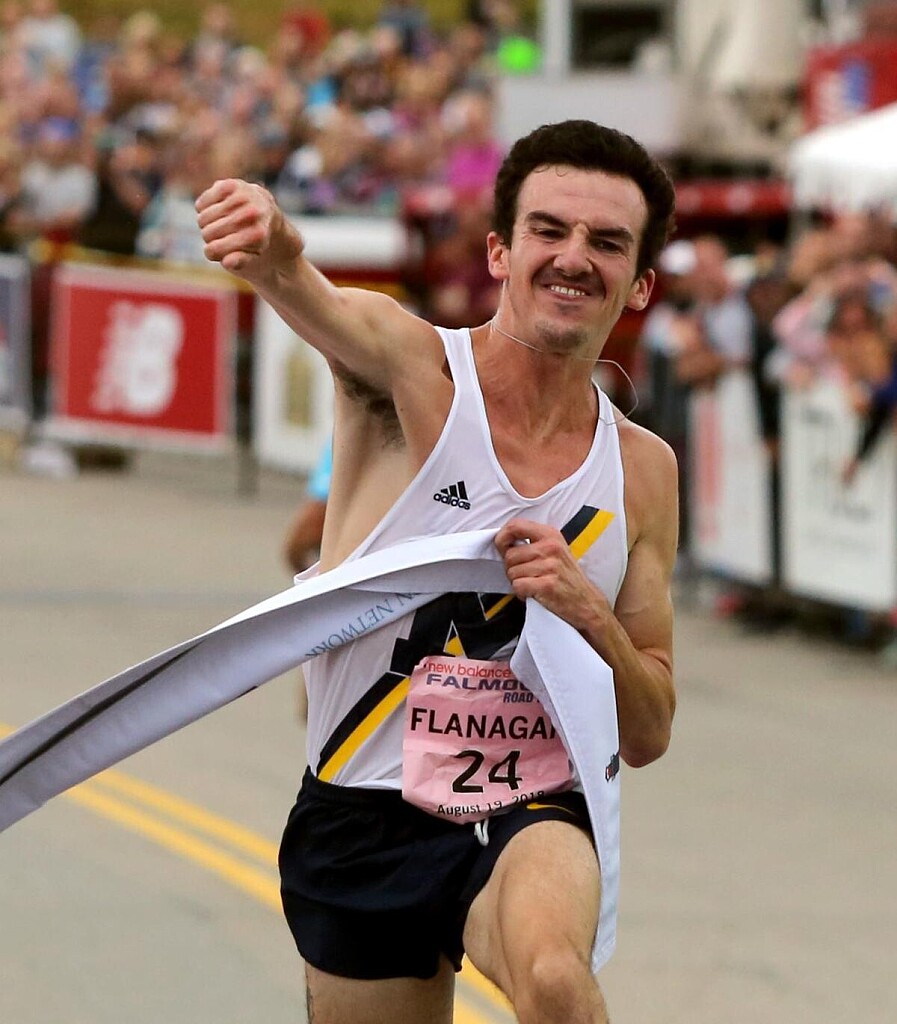
Canadian Ben Flanagan signs with On, this is the second professional contract of his career
Just one day before toeing the line at the Chevron Houston Half-Marathon, Ben Flanagan announced he had signed with On Running in the second pro contract of his career. The Canadian 10K champion has been with Reebok since 2018 after finishing his collegiate career at the University of Michigan.
In his time with Reebok, the 27-year-old from Kitchener, Ont. has seen a fair amount of success. In 2021 he dominated the roads, winning his second Falmouth Road Race, covering the 11.2-kilometer course in 32:16 in August.
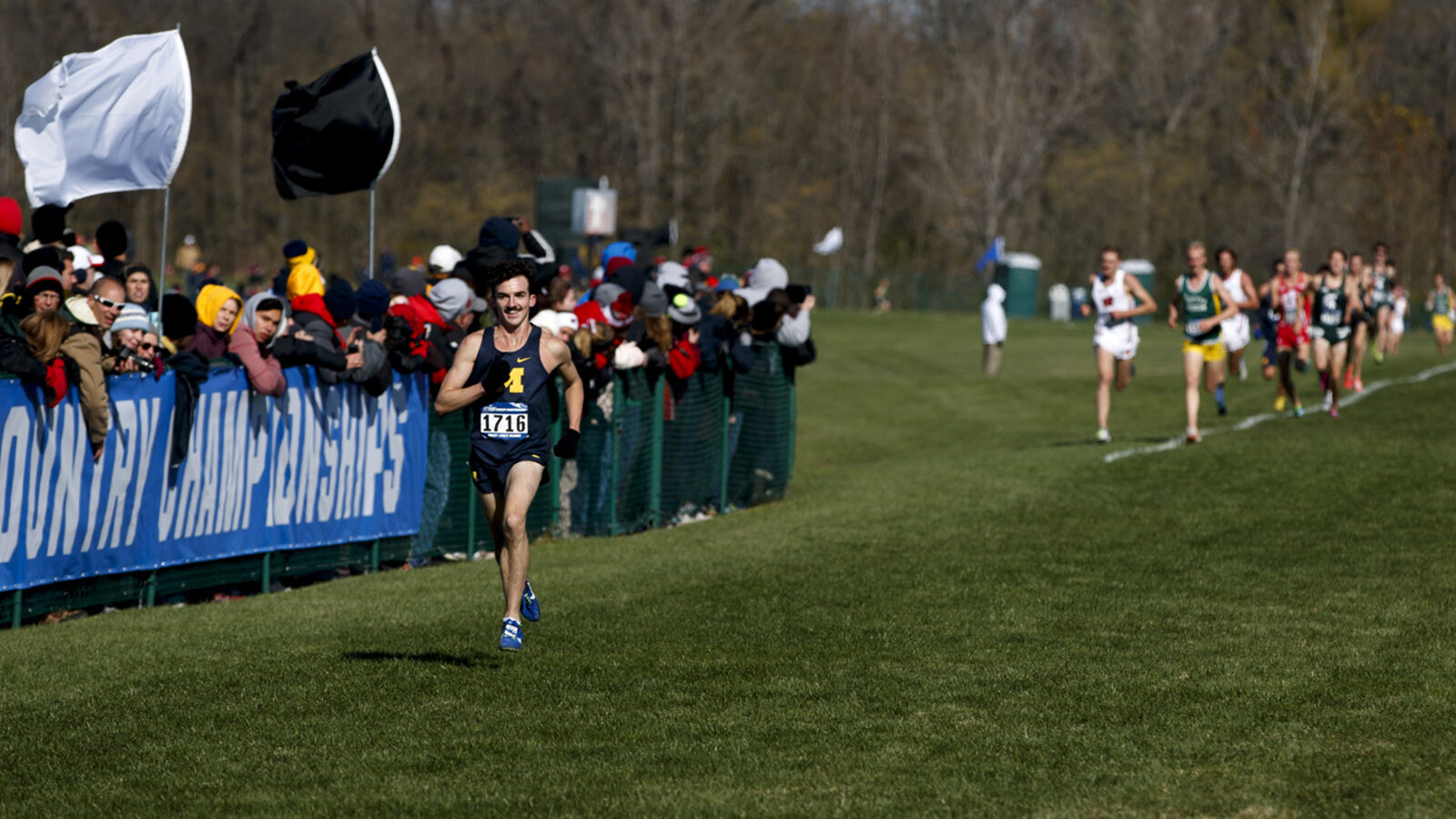
He followed that performance up with a win at the Canadian 10K championships in Toronto in October, running 28:42 for his first-ever appearance at a road 10K. One month later, he won Connecticut’s Manchester Road Race, completing the unique 7.6-kilometer distance in 21:22.
He kicked off 2022 with his first race as an On athlete at the Chevron Houston Half-Marathon, where he was just 10 seconds off Jeff Schiebler’s former 23-year-old Canadian half-marathon record of 61:28. His compatriot, Rory Linkletter, beat the record, running 61:08 for eighth place.
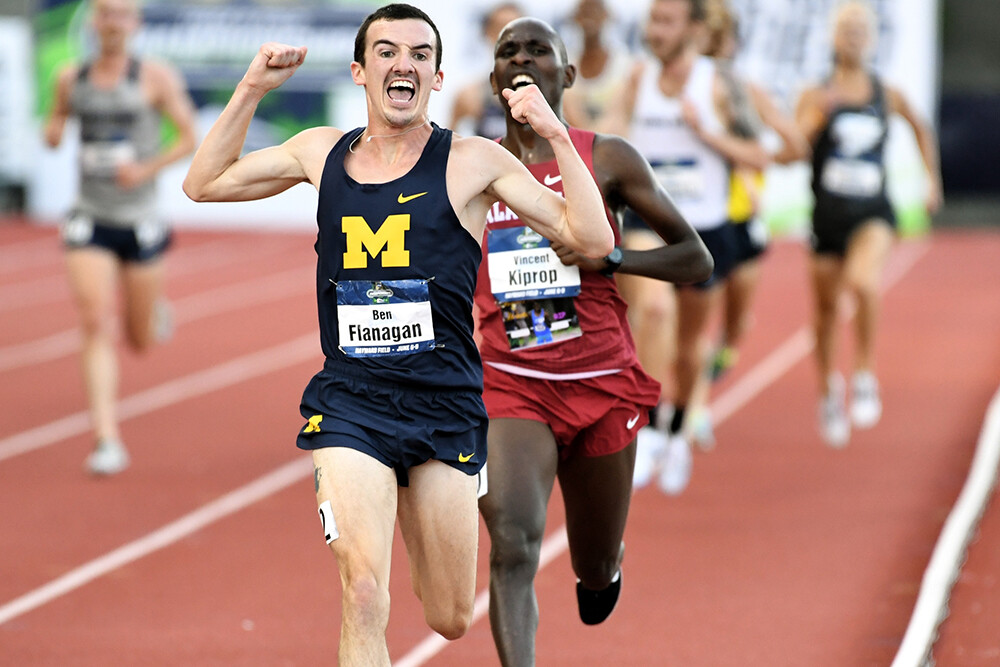
In an interview with Canadian Running ahead of Sunday’s half-marathon, Flanagan said he was planning on running a few 5,000m and 10,000m races this spring to secure a spot on Team Canada at the 2022 World Championships in Eugene, Ore., but may be turning his attention to the marathon next year. “Stepping up to the marathon this year might be a stretch, but I want to give myself a chance to qualify for Paris,” he said.
Flanagan has given Canadian fans a lot to watch in the last year, and with his new contract signed, we hope to see him continue to dominate the roads into 2022.
by Brittany Hambleton
Login to leave a comment
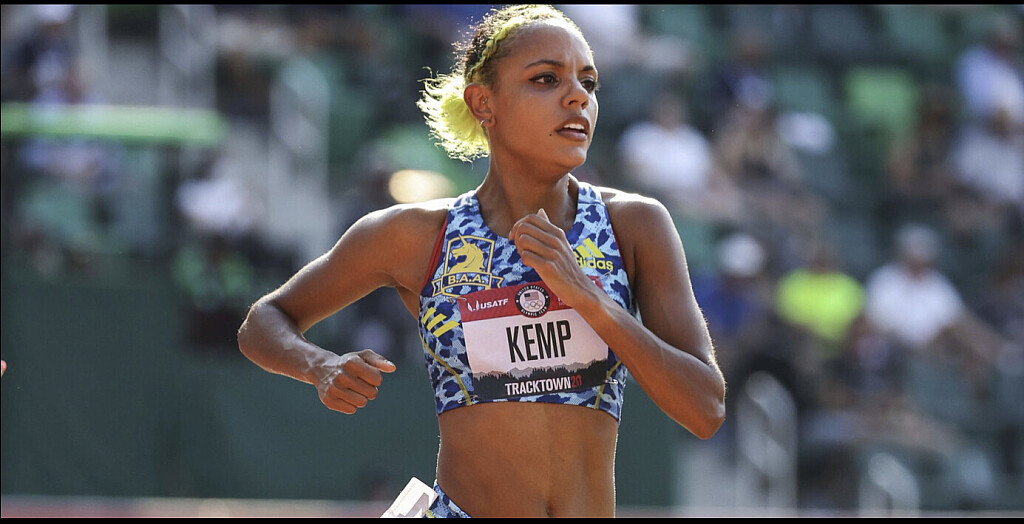
Crush a New Distance By Busting Through Your Mental Barriers
Your first 5K? Making the leap from marathons to ultras? These tricks can help you anticipate and overcome any hurdles
After two disappointing races—in the 5,000 and 10,000 meters—at last year’s U.S. Olympic Track and Field Trials, pro runner Erika Kemp had to take a step back in order to move forward with the rest of her season.
She took a week and a half off from running, and her coach, Mark Carroll, issued a challenge that he hoped would reignite Kemp’s spark for competing—a jump up in distance to 20K for her next race.
With a refreshed mindset, Kemp not only took the top honors in the USATF 20K Championships in New Haven, Connecticut, but also placed second at the 25K championships the following month, which was the longest distance she’d ever run or raced. “It was nice because whenever you do a new event, there’s just nothing else to compare it to without a previous benchmark,” Kemp says. Another bonus: It’s an automatic personal best.
Whether you’re eyeing your first 5K, upping your training volume, or making the jump from marathons to ultras, getting over the mental hurdles of attempting something that’s longer and more physically demanding is just as important as improving your fitness.
Here’s how you can anticipate and overcome those barriers, with the help of top runners and coaches who’ve taken the leap to new distances.
Practice proper pacing, visualize the unknown
While she may have found her sweet spot in racing longer distances, Kemp says she has to mentally break those longer efforts into chunks based on how she typically feels over 2 miles, 5K, or 10K.
Dakotah Lindwurm, a professional runner with Minnesota Distance Elite who also coaches recreational runners, shares that sentiment. Longer-than-normal runs shouldn’t hurt if you’re pacing yourself properly, she says.
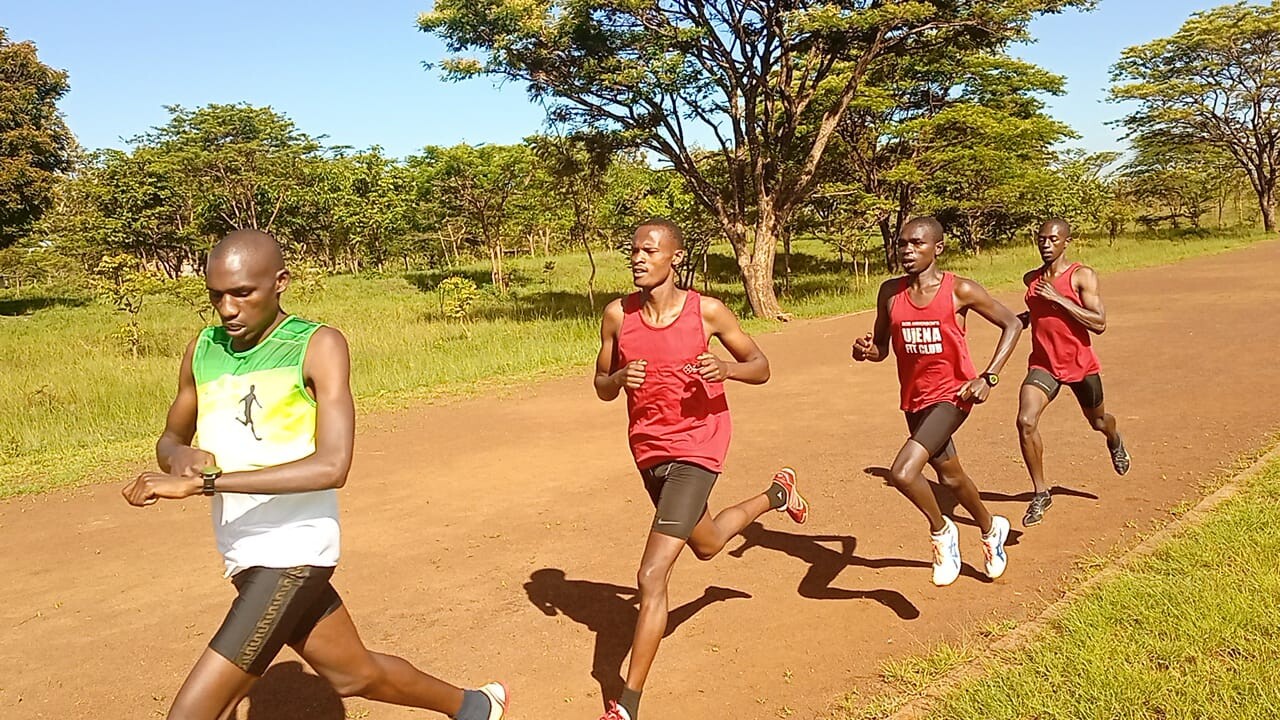
You’ll probably still enter an unfamiliar pain level when you creep up in distance, though, which is why visualizing how you’re going to feel in those later tough parts is important even in your ordinary runs.
“Everybody’s been extremely tired when they’re running, whether they’re a brand new runner or not,” Lindwurm says. “I use visualization every day while training for my marathons by thinking about how exhausted I’m going to feel and how I’m mentally going to overcome that.”
This can also be key for figuring out where you usually start to hurt physically or mentally, a process that should begin prior to your longer event, says Lennie Waite, 35, a 2016 Olympian in the 3,000-meter steeplechase and a Houston-based sports psychology consultant. Waite says it’s rare to feel amazing for the entire duration of a race, but it’s possible to identify where things usually go south so you can work on your mental toughness when you need it.
That way you’ll be less shocked if it happens and less likely to question whether you can finish, Waite says. Then you can shift back more quickly to a positive mindset and focus on the final miles ahead.
Test yourself when the pressure is off
With a lack of racing in 2020, CJ Albertson, threw together an event to attempt to break the world record for a 50K on the track. It was his first attempt at the distance, and while he wouldn’t have had it on his race calendar during a normal year, Albertson managed to break the previous record with a time of 2:42:30. The run also served as a confidence-boosting workout for the Marathon Project race six weeks later, where he set his current 26.2 PR of 2:11:18.
Veering from your scheduled plan can be beneficial if you’re in a good spot with training. For example, running 13 miles several weeks before your first official half marathon can break up your routine and prove you can do the distance.
Albertson says that once he does a trial run in practice—even if he’s unfamiliar with it at first—it allows him to look forward to a race of that length when it fits into his schedule.
Find a distraction
If you watched this year’s Boston Marathon, you probably saw that Lindwurm led for much of the first 10 miles. You may have also noticed the smile on her face while she was doing it.
“Even if I may not be smiling on the inside,” she says, “I’m smiling on the outside because I’m tricking my brain into thinking that this is great, even when it hurts.”
According to a new study published in the Journal of Motor Learning and Development, tactics that draw your attention away from negative internal thoughts—how much longer you have to run, for instance, or your legs feeling heavy—may help you improve your endurance, performance, and even running economy.
Any type of external distraction could help you get out of a funk in a race. Try looking at the cheering crowd or funny race signs, or chat with the person next to you to take your mind away from tough moments.
Embrace your goals
Waite says it’s easy for recreational runners to minimize goal setting if they run strictly for pleasure. And she’s found that when this kind of person starts striving to run better at a distance or reach a new milestone, this mindset can sometimes become a mental roadblock and make it difficult to find success.
If this sounds like you, working with a coach or sports psychologist can help you identify what might be holding you back—mentally or physically—and give your training added purpose. Because even if you aren’t running for a spot on the podium, the work you put in is still important.
And you can empower yourself by repeating positive affirmations, such as “This is important to me, I trained for this, and I belong out here,” the next time you lace up for a longer run or race that seems daunting.
Bust Out of Your Rut
You can shift your mindset before or during a long, hard workout or race with a mantra or fun mental distraction. Here, some top runners reveal their favorite fixes.
→ Dakotah Lindwurm writes “strong, fast, and last” on her hand before a marathon to remind her of her motto: “I am strong, I am fast, my speed will last.”
→ CJ Albertson tells himself to run as if he’s looking good, even if it’s not true. He says this helped him after the pack caught up to him at the 2021 Boston Marathon, where he led through 20 miles.
→ Before those challenging long runs, Erika Kemp reminds herself that training is hard, but racing is the reward, and sports are supposed to be fun.
→ Lennie Waite encourages runners to do a quick body scan—from head to toe— to make sure they don’t waste energy by holding any unnecessary tension in their brow, jaw, shoulders, or hands.
by Runner’s World
Login to leave a comment
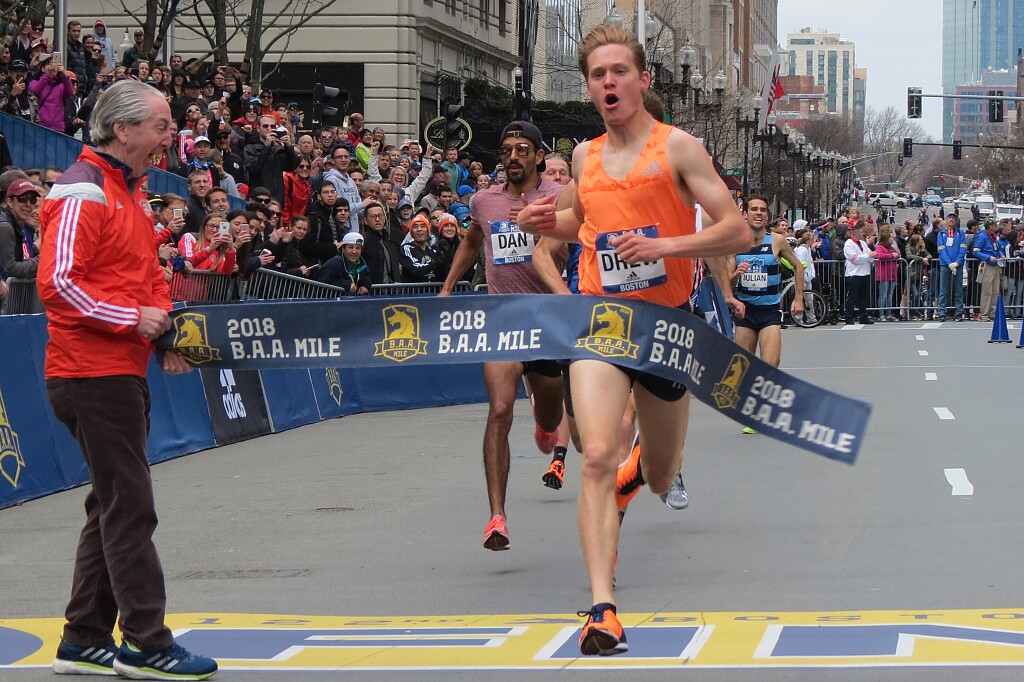
Drew Hunter and Weini Kelati Will lead fields for Thursday’s Manchester Road Race
The elite fields for Thursday’s Manchester Road Race in Manchester, Conn., have been finalized, race organizers reported this morning. The classic Thanksgiving Day race, founded in 1927, will return to its usual 4.748-mile, hilly loop with the start and finish on Main Street after being held virtually last year. Among the hundreds of “Turkey Trots” to be held in the United States on Thursday, Manchester is the only event with a truly top-class elite field. Organizers expect 8,700 runners to answer the starter’s gun at 10:00 a.m. EST.
“Our elite runner coordinator, Jim Harvey, has done a brilliant job of assembling excellent fields of elite runners for our return to Main Street and the celebration of our 85th Manchester Road Race this year,” said Dr. Tris Carta, president of the Manchester Road Race Committee, through a statement. “It is going to be a very exciting road race.”
The women’s contest will feature an interesting match-up between USA 5-K champion Weini Kelati and 2:22 marathoner Keira D’Amato. Both American women will be running Manchester for the first time.
Also likely to contend for the win are Kenyans Edna Kiplagat, the two-time world marathon champion, and Monicah Ngige, most recently fourth at the Boston Marathon. Also entered are Britain’s Amy-Eloise Markovc, the 2021 European indoor 3000m champion, and Americans Taylor Werner, the 2019 NCAA Championships 5000m runner-up, and Katie Izzo, fourth at the 2019 NCAA Championships in the 10,000m. In all, ten women have track or road 5-K personal bests under 16 minutes. Kiplagat was the Manchester winner in 2019.
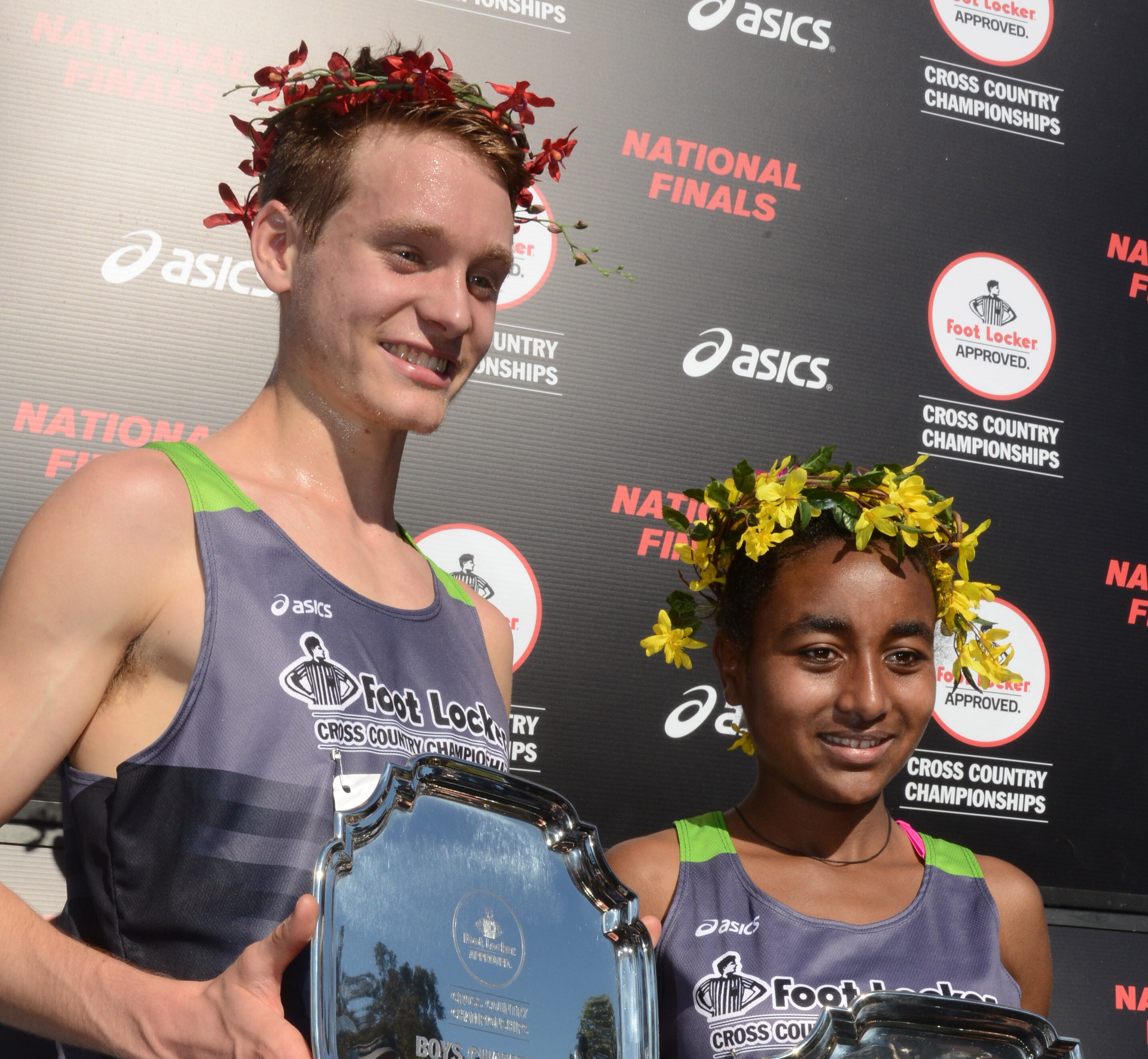
Drew Hunter, the newly-crowned USA 5-K road running champion, leads the men’s field and will be making his Manchester debut. Hunter’s biggest challengers will likely be 2:07 marathon Leonard Korir, veteran Sam Chelanga, and two-time Falmouth Road Race champion Ben Flanagan, a Canadian. A total of 14 men have sub-14:00 5000m personal bests.
Thursday’s race has a generous $47,800 prize money purse, and the top-3 men and women will receive $7,000, $4,000 and $3,000, respectively.
Behind the elites, 75 year-old Amby Burfoot will run Manchester for the 59th consecutive year (he ran virtually in 2020 using the race’s traditional course). Burfoot, the 1968 Boston Marathon champion, won the Manchester Road Race nine times from 1968 through 1977. Should he finish the race on Thursday he will earn sole ownership of the record for most total Manchester finishes at 59.
Thursday’s races will be broadcast on the Connecticut Fox affiliate, Fox 61. Their coverage will be streamed live and free globally at fox61.com at 10:00 a.m. EST.
The complete elite fields are below with 5000m personal bests.
WOMEN
–Weini KELATI (USA), 14:58.24
Amy-Eloise MARKOVC (GBR), 15:03.22
Aisling CUFFE (USA), 15:11.13
Taylor WERNER (USA), 15:11.19i
Katie IZZO (USA), 15:13.09i
Monicah NGIGE (KEN), 15:16 (road)
Edna KIPLAGAT (40+/KEN), 15:20 (road)
Sarah INGLIS (GBR), 15:24.17
Fiona O’KEEFFE (USA), 15:31.45
Tristin VAN ORD (USA), 15:53.44
Emeline DELANIS (FRA), 16:02.54
Keira D’AMATO (USA), 16:09.86
Annmarie TUXBURY (USA), 16:17.45
Emily SETLACK (40+/CAN), 16:26.31
Whitney MACON (USA), 35:36 (road 10-K)
MEN
–Sam CHELANGA (USA), 13:04.35i
Leonard KORIR (USA), 13:15.45
Drew HUNTER (USA), 13:17.55
Ben FLANAGAN (CAN), 13:20.67
Donn CABRAL (USA), 13:22.19
Jordan MANN (USA), 13:27.68i
Blaise FERRO (USA), 13:31.54
John DRESSEL (USA), 13:36.29
Alex OSTBERG (USA), 13:42.44
Mo HREZI (LBA), 13:42.80
Matt McCLINTOCK (USA), 13:47.68
Alfredo SANTANA (PUR), 13:48.10
Joey BERRIATUA (USA), 13:49.16
Julius DIEHR (USA), 13:56.79
Tai DINGER (USA), 14:09.41
Brendan PRINDIVILLE (USA), 14:10.96.
by David Monti
Login to leave a comment
Manchester Road Race
The Manchester Road race is one of New England’s oldest and most popular road races. The 86th Manchester Road Race will be held on Thanksgiving Day. It starts and finishes on Main Street, in front of St. James Church. The Connecticut Sports Writers’ Alliance recently honored the Manchester Road Race. The CSWA, which is comprised of sports journalists and broadcasters...
more...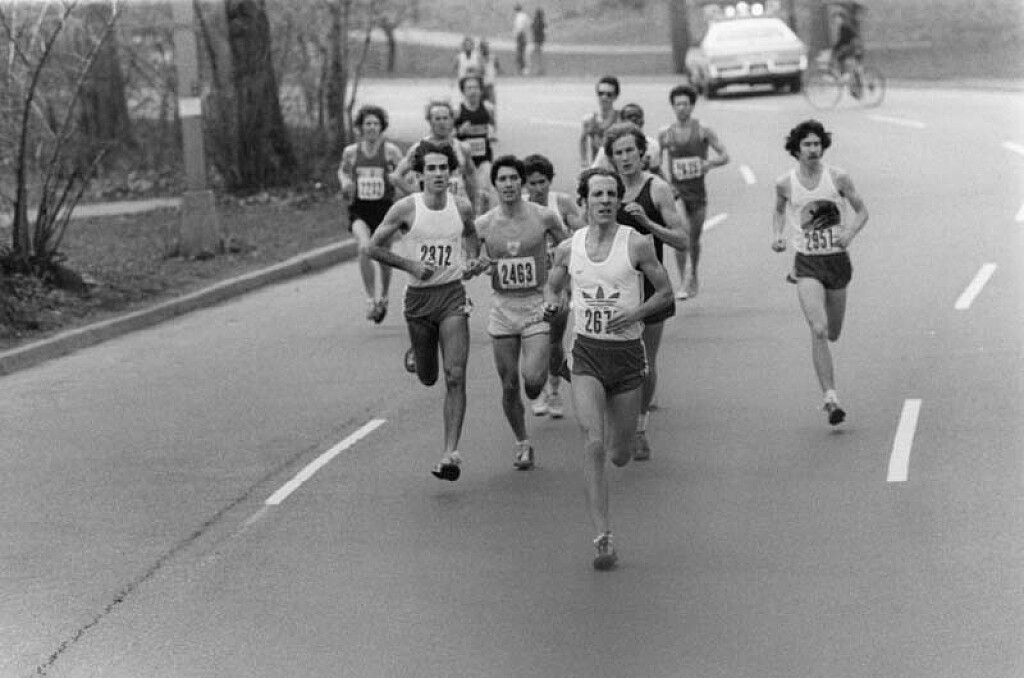
First Finishers from Inaugural 1970 Race will be honored at 50th Running of the TCS New York City Marathon this weekend
To mark the 50th running of the TCS New York City Marathon, several of the First Finishers from the inaugural 1970 race will be honored at the TCS New York City Marathon Opening Ceremony Presented by United Airlines on Friday, November 5, and at the Marathon finish line on Sunday, November 7.
The first New York City Marathon, organized by New York Road Runners, took place on September 13, 1970, in Central Park, with an entry fee of $1 and a budget of $1,000. Of the 127 registered runners, there were 55 finishers. The race ultimately expanded to all five boroughs in 1976. To date, the event has seen more than 1.2 million finishers.
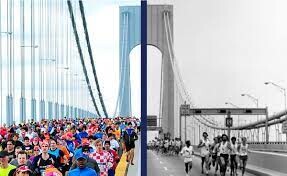
“The TCS New York City Marathon has influenced and inspired so many people around the world for more than five decades, and to think it all started with 127 runners in Central Park is incredible,” said Ted Metellus, Vice President of Events for NYRR and Race Director of the TCS New York City Marathon. “We are honored to bring back some of the First Finishers from the 1970 race to have them with us on marathon day this year, and to honor them for being the first to take part in what has grown to become the world’s premier marathon.”
Former FDNY firefighter Gary Muhrcke was the first New York City Marathon champion, coming off the night shift at work to win the race. He still runs weekly in Central Park to this day, and his wife makes the laurels that the champions wear after their victories.
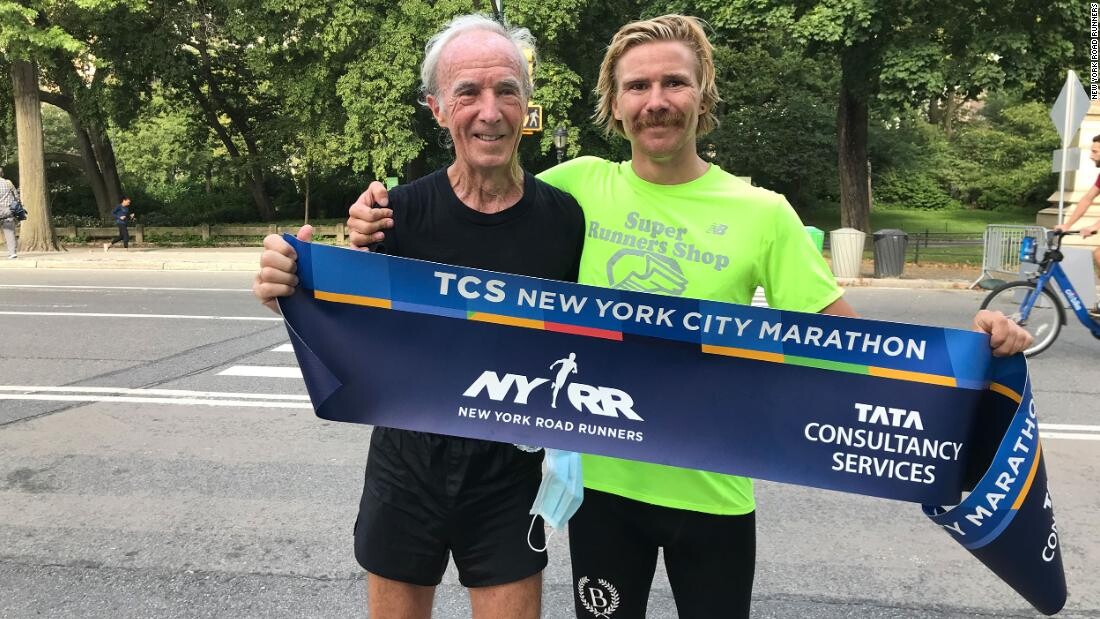
Larry Trachtenberg will be the sole runner from 1970 who will run in the 50th marathon. He was born and raised in Queens, and ran at Long Island City High School and regularly in Van Cortlandt Park, where he trained for the first marathon.
Joining Muhrcke and Trachtenberg in New York will be a number of other First Finishers from 1970, including:
· Arturo Montero – He came to the U.S. from Chile in 1960. He has run more than 100 marathons, 31 of them New York City Marathons (2016 being the last one). The 1970 race was his first marathon.
· Bill Newkirk – Born in the Bronx, he regularly ran around Central Park and met Fred Lebow during his runs. He has now participated in more than 20 marathons, including more than 10 New York City Marathons. He also helped NYRR by measuring courses with his friend, Ted Corbitt.
· Ed Ayres – After growing up in New Jersey, he ran the 1970 race with his brother, Glen; both of them finished in the top 10. He went on to start Running Times magazine.
· Gerald Miller – The oldest living First Finisher at 92 years old is originally from Queens and moved to the Upper West Side of Manhattan after he got married. He heard about the first marathon at the YMCA. He has run more than 20 New York City Marathons and got his whole family into running.
· Jim Isenberg – He grew up in Boston and has run in more than 100 marathons, including the New York City Marathon four times. He ran for Princeton University and is friends with Larry Trachtenberg, who told him about the first marathon. He was a professor of physics and mathematics at the University of Oregon.
· Joe Martino – He took his first trip to New York as a teenager with Rick Sherlund, sleeping on a mattress the evening before the marathon at the local YMCA. He also ran the marathon in 1978 and became friends with two-time winner Tom Fleming.
· Moses Mayfield – He was the fastest African American marathoner in history at the time with a time of 2:24:29; he led the 1970 marathon for 24 miles of the race before being passed by Muhrcke.
· Ralph Garfield – Originally, from England, he came to the U.S. in 1961 and would regularly run in Central Park on the Reservoir. He has run 14 marathons (eight New York City Marathons) and still jogs/walks to this day.
· Rick Sherlund – At 16 years old, one of the youngest runners of the first marathon, he traveled to NYC with his friend, Joe Martino, to participate in the marathon. He ran the first 20 miles and then had a cream soda before cramping and having to walk the last six miles.
· Steve Grotsky – Originally from the Bronx, he was a fixture in the New York running scene; he went on to run for Princeton University and completed 50 marathons.
· Tom Hollander – He ran the marathon after graduating from high school in Connecticut, and ran again in 1977. In 1972, he won the Cherry Tree Marathon.
· Vince Chiappetta – Along with Fred Lebow, he co-directed the first New York City Marathon and is a co-founder of NYRR. He has run in more than 100 marathons.
· Nina Kuscsik – She changed the sport of running by breaking through the “Boys’ Club” barrier and changing the rules so they included women. She opened doors for future generations. While she did not finish the race, she is the only woman among the 127 entrants who ran in the 1970 New York City Marathon.
About New York Road Runners (NYRR)
NYRR’s mission is to help and inspire people through running. Since 1958, New York Road Runners has grown from a local running club to the world’s premier community running organization. NYRR’s commitment to New York City’s five boroughs features races, virtual races, community events, free youth running initiatives and school programs, the NYRR RUNCENTER featuring the New Balance Run Hub, and training resources that provide hundreds of thousands of people each year with the motivation, know-how, and opportunity to Run for Life. NYRR’s premier event is the TCS New York City Marathon. Held annually on the first Sunday in November, the race features a wide population of runners, from the world’s top professional athletes to a vast range of competitive, recreational, and charity runners. To learn more, visit www.nyrr.org.
by Running USA
Login to leave a comment
TCS New York City Marathon
The first New York City Marathon, organized in 1970 by Fred Lebow and Vince Chiappetta, was held entirely in Central Park. Of 127 entrants, only 55 men finished; the sole female entrant dropped out due to illness. Winners were given inexpensive wristwatches and recycled baseball and bowling trophies. The entry fee was $1 and the total event budget...
more...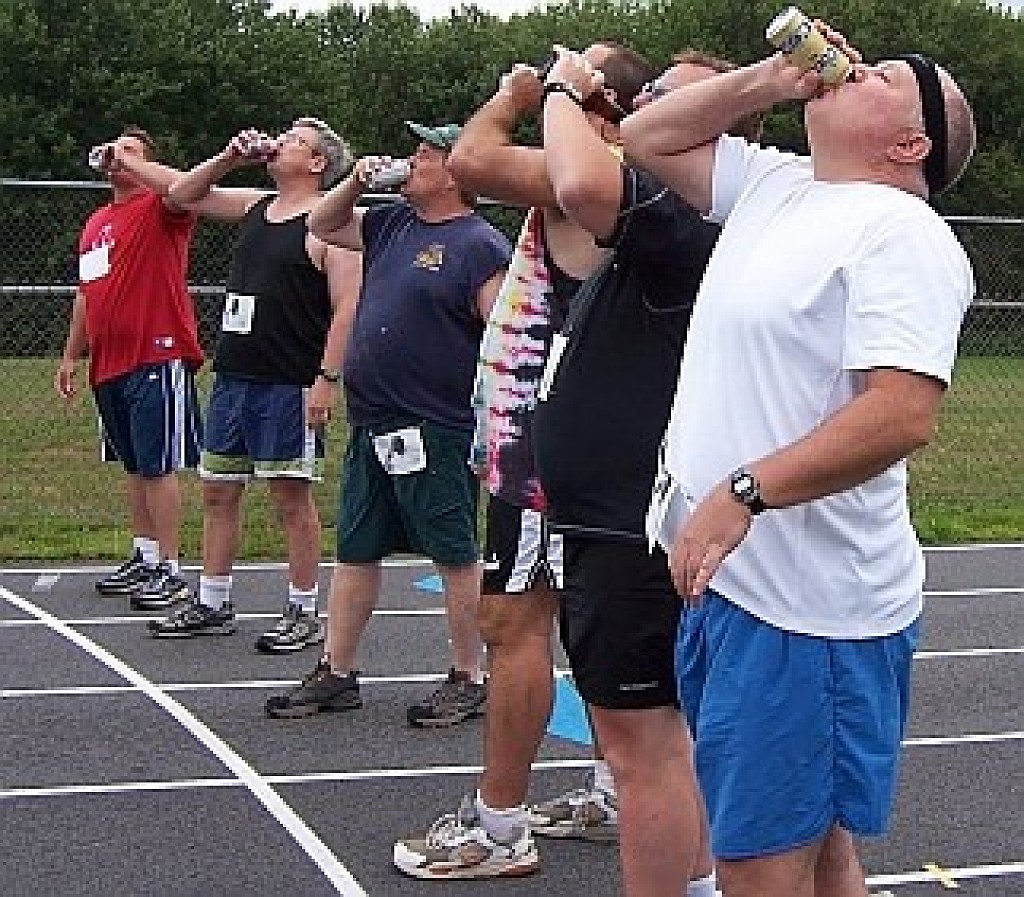
The Truth About Alcohol And Endurance Sports
Just like Sunday brunch with friends and happy hour with coworkers, the post-run drink has become a uniting ritual for runners. An Instagram search for hashtags #willrunforbeer and #runforwine reveals thousands of photos of smiling, sweaty runners-many of them women-downing frosty pints of beer or clutching super-sized glasses of wine. Promotion for everything from casual neighborhood brewery runs and Rose 5Ks to large-scale destination races like the Napa-to-Sonoma Wine Country Half Marathon only amplify the message: alcohol is a justifiable reward for hard-run miles, and alcohol and exercise go hand-in-hand for many.
Many of the races, like the Zooma series and Disney Princess Half Marathon Weekend, explicitly bill themselves as girls' weekend getaways, complete with luxury accommodations, elaborate swag bags, and post-event parties with free flowing wine, beer, and other libations. In addition, much of the running merchandise targeted to women is branded with catchy, alcohol-related slogans like "Run All the Miles, Drink all the Wine" and "Will Run for Beer." Not to mention all the other ways alcohol and exercise are becoming entwined: think beer yoga and wine hikes; FitVine's collab with Barry's Bootcamp; Sunday sip and spins with mimosa bars post-spin class.

But just as women are closing the gender gap in road race participation, comprising just over 60% of all race finishers in 2019, recent studies also show that women are closing the gender gap when it comes to alcohol consumption-and not in a good way. According to a 2019 study, women in their late teens and early 20s now report drinking and getting drunk at higher rates than their male peers, and pandemic-related anxiety, depression and stress have only exacerbated unhealthy drinking patterns for many.
And while for most people, a celebratory drink with friends after a group run or at the finish line is no more harmful than a sugar doughnut or indulgent brunch, how did alcohol-a mood-altering drug-become such an integral part of a sport that promotes health and wellness?
Racing as an experience
Just as running's second wave in the late 1990s and early 2000s dramatically increased women's participation in the sport, it also increased demand for destination and experiential races. From the launch of the pioneering Rock 'n' Roll series in the late 1990s to the women-centric Zooma and Disney Princess events that followed in the early 2000s, races became bigger and bolder, with on-course live music, branded merchandise, elaborate medals, and themed post-race parties serving everything from hot chocolate and cheese to bacon, pancakes, and of course, alcohol.
These unique race experiences appeal to seasoned runners like Cara Turano of Portland.
"I used to be really happy with a cool medal or t-shirt, but you can only have so many medals and shirts," she explains. "Perks like finishing in a beer garden or bringing home wine glasses is a much more memorable experience."
Turano ran the Bordeaux Marathon a few years ago to celebrate her 35th birthday and honor her mom's passing.
"The race included 24 wine stops over 26.2 miles, and it was the most amazing, festive, and supportive experience with 10,000 runners from around the world, all in costume, running pretty slowly through rolling vineyards in the gorgeous South of France," she recalls, adding that destination races are "a great way to combine a passion for running with one for travel."
Similarly, Nina Santus, a board member of Athens Road Runners in Georgia, frequently travels to races, choosing an experience based on personal interests or connections to a specific cause.
"I ran the Marine Corps Marathon because my brother was in the Marine Corps," she explains. "I'm also a big wine person, so if I can find a race where I can run and see the vineyards and enjoy food and drink afterward, I will do it." Santus plans to run the Marathon du Medoc next fall and has run alcohol-centric races like the Dirty Spokes Chateau Elan Muscadine Run and the Ales for Trails Terrapin Beer 5K, closer to home.
"I don't participate in beer miles where you have to chug things or get sick or be drunk, but I do support the idea of food and beverage to help bring more folks out for camaraderie and the sport of running," she continues.
For race director Tes Sobomehin Marshall, founder of Run Social Atlanta, that camaraderie is baked into her company's mission. With runs and races that launch or end near local businesses ranging from breweries and restaurants to physical therapy studios, athletic-wear stores, and entertainment-focused venues like Top Golf, the company markets itself to "both the competitive runner and the 'I just want a shirt and a beer' person," explains Marshall.
When she first started organizing races in 2012, Marshall realized "people were coming and spending 30 minutes running the race, and then another two to three hours socializing after." She finds her laid-back, social, and neighborhood-centric approach to racing "more accessible to people who wouldn't otherwise run and more fun for people who've been running for a while."
Atlantan Audrey Ward, who started running earlier this year, appreciates low-key, social races.
"As a newer runner, just getting my shoes on and out the door can be intimidating," she says. "Having a good time with people who just like to run (and maybe to cheers with afterward) takes the pressure off what can be a super-competitive sport."
According to Santus, the 300-400 member Athens Road Runners keeps its events approachable to make runners like Ward feel included.
In addition to Saturday morning training runs and Wednesday morning track workouts, the group regularly runs to local breweries or restaurants with events branded as "Taco Tuesday" and also gathers informally for popsicles, beer, or fizzy waters.
The social activities are designed to make "everyone feel welcome, no matter their pace," and to "break down the illusion that all runners are snobby and fast," she explains.
Terri Huggins, a New Jersey-based writer and fitness instructor, understands that alcohol can be a powerful incentive to attract newcomers who may be intimidated by an unfamiliar sport or activity.
Whether a gym class or a road race, "including alcohol really helps with engagement, and one could argue that someone drinking after an event is far better than someone not working out at all," she says.
But as road races ramp up again at the same time women report drinking more alcohol to cope with pandemic-related stressors like balancing work with child-rearing, caring for sick relatives, and a massive exodus from the workforce, should organizers moderate drink-related messaging?
Tracy Green, a sub three-hour marathoner from Louisville who took an extended break from drinking alcohol last year, says yes.
"We know thinking of exercise as punishment or as a response to negative body image can be mentally unhealthy, and we know that alcohol can make issues like depression and anxiety worse-so coupling those two things together at a race is probably not the best thing we could be doing for mental health," she explains.
And while Huggins imbibes on occasion, she says that "in a time when so many people are unaware of what it means to drink in moderation, people in the fitness industry have an obligation to educate their participants on how alcohol can affect recovery, sleep, and metabolism."
The experts agree.
According to Dr. George F. Koob, director of the National Institute on Alcohol Abuse and Alcoholism, for "people who are exhausted from running, mildly dehydrated, and have empty stomachs, one serving of alcohol could be much riskier than it seems"-especially if driving home after an event.
Even if booze is an integral part of your racing group or event, Koob suggests being mindful that many people "turn to exercise as part of recovery from an alcohol use disorder," and that "these folks might be uncomfortable or left out if other runners celebrate the finish of a race with alcohol."
Keeping alcohol in a separate area of an expo or finish line celebration is one way to offer libations without explicitly excluding those who don't drink, says Back on My Feet CEO Katy Sherratt. And since alcohol is hyper-present at road races, it can provide a "real-world scenario" for those with addictions to maintain sobriety, as long as they have a strong support network.
And even those who do drink alcohol on occasion may opt to skip the post-race beer in favor of healthier beverages, like recovery shakes and smoothies, kombucha, and sparkling water.
"Give me a fancy, fizzy mineral water after a hot race instead of a beer any day," says Green.
Professional runner and Olympian Molly Seidel enjoys non-alcoholic beers from Connecticut-based Athletic Brewing Company after a hard training session.
"I love that it's hoppy and actually tastes like an IPA, plus I get some good carbs out of it without alcohol impacting my training," she says.
The rapid growth in the non-alcoholic beer and spirits market, combined with growing interest in booze-free social movements like Dry January and Sober Curious, could be a unique opportunity for the racing industry to temper its alcohol-centric messaging.
And yes, a beer at the finish line is great, but as Dr. Koob puts it, "shouldn't completing the race be reward enough?"
by Trail Runner Magazine
Login to leave a comment

The Truth About Alcohol And Endurance Sports
Just like Sunday brunch with friends and happy hour with coworkers, the post-run drink has become a uniting ritual for runners. An Instagram search for hashtags #willrunforbeer and #runforwine reveals thousands of photos of smiling, sweaty runners-many of them women-downing frosty pints of beer or clutching super-sized glasses of wine. Promotion for everything from casual neighborhood brewery runs and Rose 5Ks to large-scale destination races like the Napa-to-Sonoma Wine Country Half Marathon only amplify the message: alcohol is a justifiable reward for hard-run miles, and alcohol and exercise go hand-in-hand for many.
Many of the races, like the Zooma series and Disney Princess Half Marathon Weekend, explicitly bill themselves as girls' weekend getaways, complete with luxury accommodations, elaborate swag bags, and post-event parties with free flowing wine, beer, and other libations. In addition, much of the running merchandise targeted to women is branded with catchy, alcohol-related slogans like "Run All the Miles, Drink all the Wine" and "Will Run for Beer." Not to mention all the other ways alcohol and exercise are becoming entwined: think beer yoga and wine hikes; FitVine's collab with Barry's Bootcamp; Sunday sip and spins with mimosa bars post-spin class.
But just as women are closing the gender gap in road race participation, comprising just over 60% of all race finishers in 2019, recent studies also show that women are closing the gender gap when it comes to alcohol consumption-and not in a good way. According to a 2019 study, women in their late teens and early 20s now report drinking and getting drunk at higher rates than their male peers, and pandemic-related anxiety, depression and stress have only exacerbated unhealthy drinking patterns for many.
And while for most people, a celebratory drink with friends after a group run or at the finish line is no more harmful than a sugar doughnut or indulgent brunch, how did alcohol-a mood-altering drug-become such an integral part of a sport that promotes health and wellness?
Racing as an experience
Just as running's second wave in the late 1990s and early 2000s dramatically increased women's participation in the sport, it also increased demand for destination and experiential races. From the launch of the pioneering Rock 'n' Roll series in the late 1990s to the women-centric Zooma and Disney Princess events that followed in the early 2000s, races became bigger and bolder, with on-course live music, branded merchandise, elaborate medals, and themed post-race parties serving everything from hot chocolate and cheese to bacon, pancakes, and of course, alcohol.
These unique race experiences appeal to seasoned runners like Cara Turano of Portland.
"I used to be really happy with a cool medal or t-shirt, but you can only have so many medals and shirts," she explains. "Perks like finishing in a beer garden or bringing home wine glasses is a much more memorable experience."
Turano ran the Bordeaux Marathon a few years ago to celebrate her 35th birthday and honor her mom's passing.
"The race included 24 wine stops over 26.2 miles, and it was the most amazing, festive, and supportive experience with 10,000 runners from around the world, all in costume, running pretty slowly through rolling vineyards in the gorgeous South of France," she recalls, adding that destination races are "a great way to combine a passion for running with one for travel."
Similarly, Nina Santus, a board member of Athens Road Runners in Georgia, frequently travels to races, choosing an experience based on personal interests or connections to a specific cause.
"I ran the Marine Corps Marathon because my brother was in the Marine Corps," she explains. "I'm also a big wine person, so if I can find a race where I can run and see the vineyards and enjoy food and drink afterward, I will do it." Santus plans to run the Marathon du Medoc next fall and has run alcohol-centric races like the Dirty Spokes Chateau Elan Muscadine Run and the Ales for Trails Terrapin Beer 5K, closer to home.
"I don't participate in beer miles where you have to chug things or get sick or be drunk, but I do support the idea of food and beverage to help bring more folks out for camaraderie and the sport of running," she continues.
For race director Tes Sobomehin Marshall, founder of Run Social Atlanta, that camaraderie is baked into her company's mission. With runs and races that launch or end near local businesses ranging from breweries and restaurants to physical therapy studios, athletic-wear stores, and entertainment-focused venues like Top Golf, the company markets itself to "both the competitive runner and the 'I just want a shirt and a beer' person," explains Marshall.
When she first started organizing races in 2012, Marshall realized "people were coming and spending 30 minutes running the race, and then another two to three hours socializing after." She finds her laid-back, social, and neighborhood-centric approach to racing "more accessible to people who wouldn't otherwise run and more fun for people who've been running for a while."
Atlantan Audrey Ward, who started running earlier this year, appreciates low-key, social races.
"As a newer runner, just getting my shoes on and out the door can be intimidating," she says. "Having a good time with people who just like to run (and maybe to cheers with afterward) takes the pressure off what can be a super-competitive sport."
According to Santus, the 300-400 member Athens Road Runners keeps its events approachable to make runners like Ward feel included.
In addition to Saturday morning training runs and Wednesday morning track workouts, the group regularly runs to local breweries or restaurants with events branded as "Taco Tuesday" and also gathers informally for popsicles, beer, or fizzy waters.
The social activities are designed to make "everyone feel welcome, no matter their pace," and to "break down the illusion that all runners are snobby and fast," she explains.
Terri Huggins, a New Jersey-based writer and fitness instructor, understands that alcohol can be a powerful incentive to attract newcomers who may be intimidated by an unfamiliar sport or activity.
Whether a gym class or a road race, "including alcohol really helps with engagement, and one could argue that someone drinking after an event is far better than someone not working out at all," she says
But as road races ramp up again at the same time women report drinking more alcohol to cope with pandemic-related stressors like balancing work with child-rearing, caring for sick relatives, and a massive exodus from the workforce, should organizers moderate drink-related messaging?
Tracy Green, a sub three-hour marathoner from Louisville who took an extended break from drinking alcohol last year, says yes.
"We know thinking of exercise as punishment or as a response to negative body image can be mentally unhealthy, and we know that alcohol can make issues like depression and anxiety worse-so coupling those two things together at a race is probably not the best thing we could be doing for mental health," she explains.
And while Huggins imbibes on occasion, she says that "in a time when so many people are unaware of what it means to drink in moderation, people in the fitness industry have an obligation to educate their participants on how alcohol can affect recovery, sleep, and metabolism."
The experts agree.
According to Dr. George F. Koob, director of the National Institute on Alcohol Abuse and Alcoholism, for "people who are exhausted from running, mildly dehydrated, and have empty stomachs, one serving of alcohol could be much riskier than it seems"-especially if driving home after an event.
Even if booze is an integral part of your racing group or event, Koob suggests being mindful that many people "turn to exercise as part of recovery from an alcohol use disorder," and that "these folks might be uncomfortable or left out if other runners celebrate the finish of a race with alcohol."
Keeping alcohol in a separate area of an expo or finish line celebration is one way to offer libations without explicitly excluding those who don't drink, says Back on My Feet CEO Katy Sherratt. And since alcohol is hyper-present at road races, it can provide a "real-world scenario" for those with addictions to maintain sobriety, as long as they have a strong support network.
And even those who do drink alcohol on occasion may opt to skip the post-race beer in favor of healthier beverages, like recovery shakes and smoothies, kombucha, and sparkling water.
"Give me a fancy, fizzy mineral water after a hot race instead of a beer any day," says Green.
Professional runner and Olympian Molly Seidel enjoys non-alcoholic beers from Connecticut-based Athletic Brewing Company after a hard training session.
"I love that it's hoppy and actually tastes like an IPA, plus I get some good carbs out of it without alcohol impacting my training," she says.
The rapid growth in the non-alcoholic beer and spirits market, combined with growing interest in booze-free social movements like Dry January and Sober Curious, could be a unique opportunity for the racing industry to temper its alcohol-centric messaging.
And yes, a beer at the finish line is great, but as Dr. Koob puts it, "shouldn't completing the race be reward enough?"
by Trail Runner Magazine
Login to leave a comment
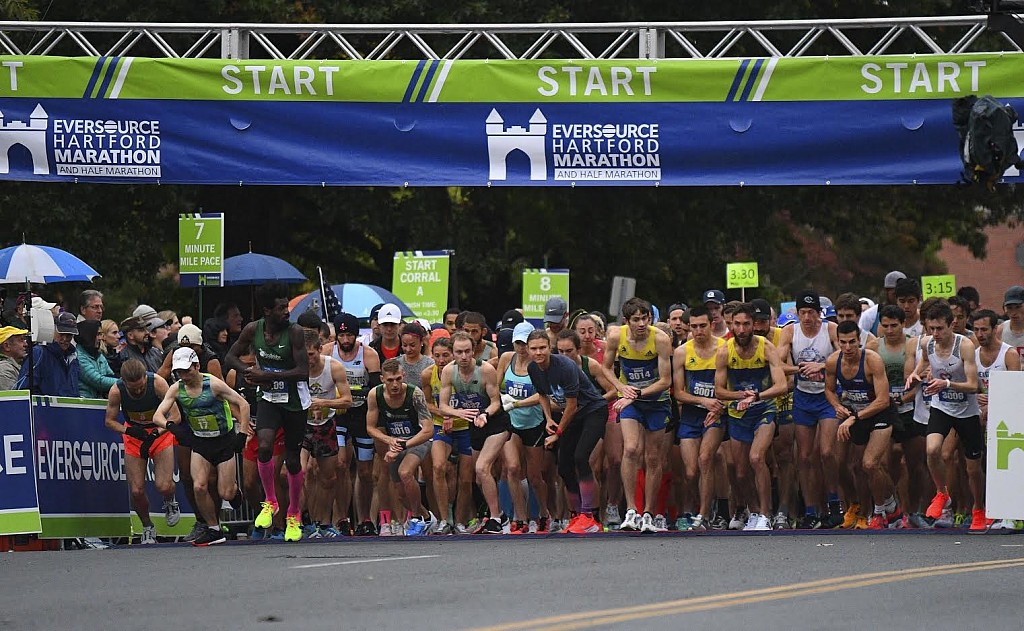
Eversource Hartford Marathon Official Charities Pledge to Raise Funds for Community in October
The much anticipated return of the premier Hartford Marathon Foundation annual fall event - the Eversource Hartford Marathon, Half Marathon, Team 13.1 Relay and Charity 5K - will continue to benefit worthy causes in the community. The Official Charity program for the October 9 race features 19 organizations committed to rallying participants, supporters and volunteers to raise funds and awareness.
Official Charities support community and philanthropic initiatives across the region, offering an opportunity for individuals as well as companies to make their event participation have deeper meaning and greater positive impact. The unique new HMF Community Partner Program provides companies with event visibility and employee engagement benefits while also directing a donation to an Official Charity of their choice.
2021 Eversource Hartford Marathon and Half Marathon Official Charities:
Achilles International-Connecticut ChapterAmerican Red CrossChrysalis CenterCircle of CareCrohn’s & Colitis FoundationConnecticut Children’s Medical CenterDonate Life ConnecticutFor All AgesGifts of LoveGirl Scouts of ConnecticutGirls on the Run Greater HartfordHealing Meals Community ProjectHospital for Special CareJordan Porco FoundationOperation Paws on the GroundRon Foley FoundationSusan G. Komen New EnglandThe Denise D’Ascenzo FoundationUnited Way of Central and Northeastern Connecticut
More than $8.2 million has been raised for charity through the Eversource Hartford Marathon and Half Marathon since its inception in 1994. Forced to be produced as a virtual race due to the pandemic, the 2020 event generated approximately $517,000 for charity as a "Movement With Purpose" supported by sponsor partners led by Eversource.
“We are so excited to get back together again this October and provide an opportunity for our local charity partners to engage with the community directly while crucial funds are raised to support their missions," said Beth Shluger, President and CEO of the Hartford Marathon Foundation. "Safety remains our top priority and meticulous planning has been underway for months to accommodate thousands of participants to reach personal goals and cross the grand finish line under the Arch again this October. We encourage participants to make their race even more meaningful by supporting one of these great charity partners."
The 2021 race calendar is available and registration is open at www.hartfordmarathon.com. For more details on the HMF Community Partner Program, contact beth@hartfordmarathon.com.
by Running USA
Login to leave a comment

Eversource Hartford Marathon
Be part of the biggest race day in Connecticut. Where runners, families, charities and volunteers come together in an inspiring display of community spirit. Enjoy a top-notch experience, from expo to post-race party: A plethora of resources and expertise. High-energy crowds. Pomp and circumstance filling the streets. Thorough course amenities, including fuel, pacers, security and medical services. Festive celebration with...
more...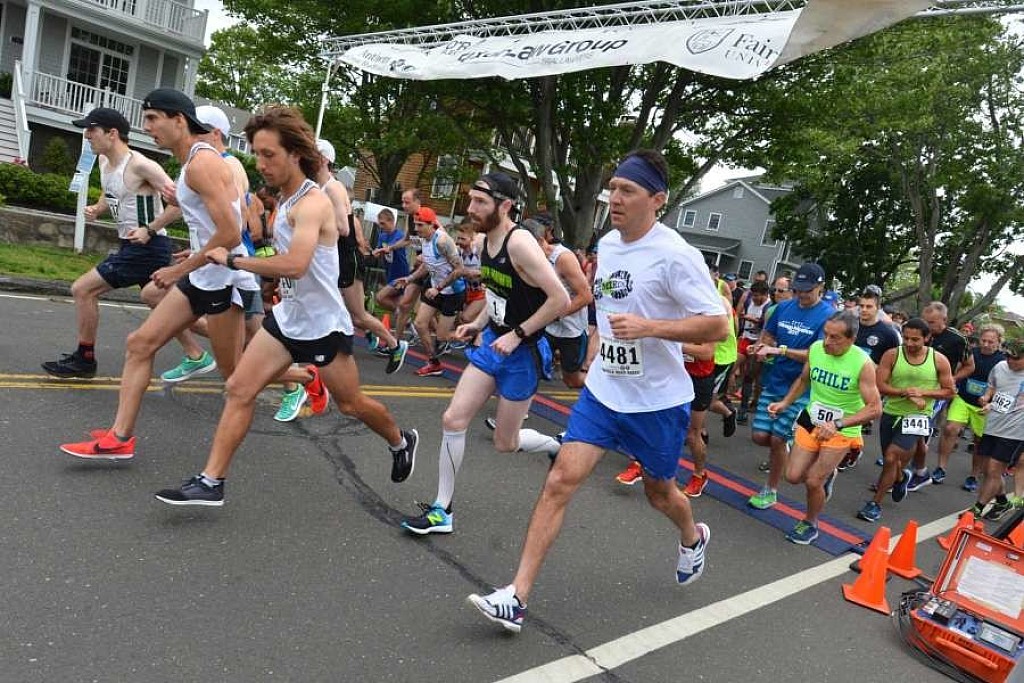
Close to 2,500 runners expected as Faxon Law Fairfield Races return to live racing
There are more than 2,000 runners registered for the Faxon Law Fairfield Road Races, and organizers are expecting around 2,500 participants making it the largest Connecticut road race in nearly two years.
The two-day event begins Saturday at Jennings Beach in Fairfield with the 5K and the Lil’ Stags Fun race while the half marathon event will take place on Sunday.
“What we found out in the Branford Road Race and other races was it looks like most races are back to around 80-85% of what they were pre-COVID,” Event coordinator John Bysiewicz said. “Before COVID we had around 3,300 and I think we are going to be a number between 2,500 and 3,000 participants.”
The Fairfield University sponsored “Lucas Challenge” challenges runners to participate in both the 5K and half marathon, completing 16.2 total miles over two days.
Among the participants will be Everett Hackett, a 2008 Hall high school graduate who in 2017 became the first Connecticut male to win the Faxon Law half marathon in over a decade.
“He is one of the favorites and he is a Connecticut runner and he has won it before,” Bysiewicz said. “He was the first Connecticut runner (to win) we had in about 20 years, so we could see another Connecticut winner.”
Last year the race, like many others, was held virtually. Runners submitted times for the 5K event and/or the half marathon, and times were compiled and scored digitally.
“Last year we had a virtual race and we had about 800 people who did a half marathon or a 5K,” Bysiewicz said. “We scored the race based on their virtual times, we did a lot of virtual events last year and it was a lot of work. It was not the same fun you get with putting on a live event.”
In regards to fun this year is the post-race beach party returns, featuring live music, food vendors and a live awards ceremony.
Login to leave a comment

Faxon Fairfield Half Marathon
The Fairfield Half Marathon was founded in 1981 and is annually chosen by running magazines as one of the best races in America. Since its inception the event has raised funds for numerous charities. The Fairfield Fire Department and the Town of Fairfield have supported the event from the beginning providing many in kind services; from traffic and emergency services...
more...
High school runner crawls across finish line to sub-9 two-mile
Gavin Sherry collapsed right before the finish line and crawled to an 8:57.67
Last weekend, the track world was impressed yet again by another incredible performance by high school phenom Hobbs Kessler, who closed a two-mile race with a 55-second final lap, crossing the finish line in first place in 8:39.04. Given that Kessler was 10 seconds ahead of the second-place finisher, it would have been easy to miss the action that happened behind him, but those who stuck around got to watch as Connecticut runner Gavin Sherry collapsed in the final few metres of the race and crawled to the finish line in 8:57.67.
It looked as though Sherry would cross the line in third place, but his legs gave out just before the finish. While he struggled to get back on his feet, two other athletes passed him and he managed to stumble across the finish line in fifth, before collapsing immediately upon completing the race. While this is likely not the finish the high school senior was looking for, it was a demonstration of the athlete’s grit and determination. Despite his struggle, he was still able to go sub-nine minutes in the race, an impressive time for a high school athlete in and of itself.
You may not have heard of Sherry, but he has been one of the top high school runners in Connecticut for the last couple of years. He boasts an indoor two-mile PB of 8:53, which he set during his first-ever indoor track season as a sophomore last February, and last year he was named the Gatorade Connecticut Boys Cross Country Runner of the Year.
In an interview last year with a local newspaper, Sherry explained that he didn’t feel (at the time) as though he’d pushed himself to his limit, but that trying to find out where that limit is is what he enjoys so much about track.
“To me, that’s why I love the sport,” Sherry said. “It’s really just trying to explore how far you can push yourself before you break. So far I haven’t really had an experience where I’ve broken.”
It appears as though last weekend, he did finally have that experience, but he proved in that moment that he has the ability to push through it. The race may not have been a personal best for Sherry, but with the amount of determination he displayed, he will certainly be one to watch over the coming years.
by Running Magazine
Login to leave a comment
Professor hosts new virtual COVID Marathon to help community beat pandemic stress
When Lori Koban, a math professor at the University of Maine at Farmington, had to start working from home last March, she was happy to still be helping her students, but like many people, she was concerned about the negative impacts it would have on her physical, mental and emotional health. She decided to do something big and hosted two virtual marathons in 2020, and is repeating her success next month, April 12-18, 2021.
“I teach Actuarial Science at UMF where students can learn to become actuaries who help businesses manage risk,” said Koban. “Two years ago, I knew I had to make some personal changes of my own when my life insurance company determined my health status wasn’t up to par. One thing I did was start running, and I didn’t want Covid to derail my progress.”
In April 2020, she started a COVID-19 Marathon Week event for anyone who wanted to join. The goal was to purposefully move forward 26.2 miles in 7 days. She knew how much running was helping her and she wanted to share the idea with others to help them find purpose and healthy activity during that stressful time.
Each morning she put a short running-oriented video on her Facebook event page, and under it every participant logged their mileage for that day. She hoped 10 people would participate. To her surprise, 95 people joined from Farmington and around the state, and Florida, Massachusetts, Connecticut, North Carolina and more.
“I was thrilled,” said Koban. “I am not the typical runner that most people think of. I run intervals, currently running five minutes, walking one minute, and a 13-minute mile means I’m having a really good day. I just wanted to encourage people to move, whether it be running or walking or interval running or speed walking, and experience the benefits.”
The event was so successful, Koban created a three-week COVID Marathon 1-2-3 event to help propel participants through the COVID phases in the state of Maine, one phase during each of May, June and July. Everyone who completed the event had their names entered into a drawing for fun prizes.
“Lori’s Covid marathon provided just the motivation I needed to do something outside my comfort zone,” said Morgan Leso, school counselor and UMF alumna. “Having a personal goal, such as completing a marathon helped me concentrate on doing something challenging instead of focusing on things I can’t control. Participating with so many people supporting each other was such a community effort. Her marathon challenge underscored the fact that we are all in this together.”
Now, after receiving even more inquiries, she is running a final COVID related event titled Goodbye COVID Marathon Week.
It will be held April 12 – April 18, 2021, precisely one year after the first marathon week, and she welcomes anyone to participate.
Login to leave a comment
When This Runner Lost His Job, He Took the Opportunity to Achieve a Lifelong Dream
Shan Riggs ran more than 3,100 miles and raised more than $45,000
The beginning of Shan Riggs’s story is an all-too familiar tale from 2020. When the pandemic hit, he lost his job as a sponsorship consultant for races and events, leaving him without work for the year as races were postponed or canceled by COVID-19.
For months, Riggs was left with almost too much free time as he waited to see what would happen with the pandemic. He hoped he could return to his main client, the Hartford Marathon Foundation, near where he was living in Connecticut. However, by August, he realized he’d be without work for the remainder of the year.
While it was tough to accept in the moment, Riggs then realized that this might be the ideal time to achieve his dream of running across the country. Plus, he could use the 3,200-mile journey to raise money for Foodshare, a member of Feeding America that serves Connecticut’s Hartford and Tolland counties.
“I had done runs from Chicago to Indianapolis before, but never any multi-day runs that went on for months,” Riggs told Runner’s World. “Now that I suddenly didn’t have work, I realized that I could do something more, and I’d worked with Foodshare through the Hartford Marathon. When I’d see a football field with rows and rows of cars of tons of people who never needed help before, I knew I wanted to get as much visibility to them as possible.”
Riggs pulled together his plans in about three weeks. He parted ways with most of his belongings, trying to limit the overhead cost of rent and attempting to live solely out of the camper van he owned with his partner, Callie Vinson, who had been living in Chicago.
Once that was done, Riggs made his way across the country, picking up Vinson in Chicago on their way to San Francisco. On September 1, he started his long journey across the country.
Riggs wasn’t attempting a record-breaking run, so he was able to settle into a comfortable pace each day to complete his daily mileage in his Altras.
“I talked to a few people beforehand like Pete Kostelnick and Jason Romrero [who had previously run across the country] and they warned me about going out too fast,” Riggs said. “You can’t win day one, but you can lose on day one, so we started a little over 30 miles on day one and kept that up throughout, doing between 30 to 40 a day.”
With the pandemic going on, Vinson and Riggs took precautions as they made their way through America’s various terrains and climates, small towns and cities, and downhills and painfully long uphills (one day he had to climb 6,000 feet!). They camped on the side of the road and at campgrounds.
Riggs’s daily eating routine consisted of a morning GU stroopwafel before starting the day’s run, a bigger breakfast 10 miles later, a simple sandwich at lunch, and third stop for a snack. Dinner included things like steak with veggies on the side or a Thai rice bowl, which they cooked themselves. 
​
“I expected more disasters to come up, but the worst that happened was I got food poisoning in Indiana, which derailed us for a day before I was back doing 30 miles a day later,” Riggs said. “We did have close calls with dogs, and I almost stepped on a rattlesnake, but really nothing major happened.”
Some stops were familiar for Riggs, like Chicago, where he once lived, and Indiana, where he grew up. He also stopped in towns he might have never visited.
Then, after months on the road and on his feet, he neared the finish line where Connecticut touched the Atlantic Ocean. After some big mileage days, he had the help of friends and strangers who came out to support him and run with him over those final miles.
Finally, the last day arrived on December 1. It would be his biggest mileage day, requiring a tough 47 miles to reach the balloon arches his coworker from the Hartford Marathon Foundation had set up for him.
Knowing he wouldn’t have to run the next day for the first time in three months, he gave it everything he had. He had to move quickly because the beach where he’d finish closed early because of the pandemic, so he averaged a 10:04 mile after more than 3,100 miles.
“Shan went through the arches, looked at me, grabbed my hand, and we went right into the water,” Vinson told Runner’s World. “It was so cold. Luckily, I had towels and blankets in the van waiting. We washed up quickly and had cake that was made for us and then we took off for the hotel before making the long drive to Chicago the next day.”
Not only did Riggs complete 3,154 miles, but he raised more than $45,000 for Foodshare, which doesn’t include all of the matching made by companies who supported the cause. (You can still donate to Riggs’s fundraiser here).
A few weeks after, Riggs is recovering well in Chicago alongside Vinson while he looks for work. Riggs is taking some time off of running; however, he did have to pay Vinson back by crewing her on December 11 for her attempt to run the 200-mile route around the boundaries of Chicago.
Riggs said it was the least he could do.
by Runner’s World
Login to leave a comment
Hartford Marathon and other Fall Races Go Virtual
This Saturday Jennifer Zayas along with two friends will lace up for the 27th annual Hartford Marathon.
Unlike past years, she won’t be starting at 8 a.m. and she won’t finish under the Arch in Bushnell Park, steps away from the State Capitol. She expects to see just one fan on the course.
Zayas will be heading out the door an hour early, running the entire 26.2 miles on the Farmington Canal Trail and relying on her husband for water, fuel and encouragement the entire way.
“Originally, I was signed up for the Chicago Marathon on the Autism Speaks team. In order to be on that team I had to raise money and I had so many people donate to me,” she said.
Because of COVID-19, Zayas’ race in Chicago was deferred until 2021, “but I felt overwhelmed by the support for the cause. I said I still have to run a marathon.”
Zayas is by no means the only athlete competing in the fall classic, even if she won’t see the more than 4,300 runners who are currently registered.
Adam Osmond, the co-founder of Run 169 Towns, will also be lacing up on Saturday.
“Every year I used to put together a relay team in the Hartford Marathon and I’m not stopping this year. Me and some of my coworkers are doing the virtual run and meeting in Hartford for it,” Osmond said. “We will keep our tradition alive.”
Planning races in the time of a pandemic
The Eversource Hartford Marathon is one of the largest races in the state, hosting more than 10,000 runners annually, second only to the Thanksgiving Day Manchester Road Race.
When it became clear that the pandemic was not going to allow for the usual spectacle, the nonprofit started brainstorming on how to keep the running community connected and motivated during this unusual season.
“Obviously being an event management company we have had to reassess everything. We started with our first virtual challenge – We Run CT event in April … but every event can’t just be a virtual event,” said Elizabeth Cowles, the Hartford Marathon Foundation Marketing Director. “Running for a cause that is important and relevant right now has been something that is imperative to race planning. It helps people feel good about what they’re doing and motivates them to sign up.”
All the proceeds from this year’s Hartford Marathon, Half Marathon, 10k and 5k will be donated to charity, including Connecticut Children’s Medical Center, Connecticut Food Bank, Red Cross, Girls on the Run, Hospital for Special Care and others.
“With our Hartford Marathon being such a community event we couldn’t just let this year pass,” Cowles said. “We decided the best solution was movement with purpose, making every penny of registration fees a donation.”
Virtual racing, however, is just not the same.
“A lot of people miss their friends. They miss the fans,” Osmond said. “I used to run in a race every week, it’s like missing my family. Running is not just the actual race, it’s what happens before and after.”
Zayas, on the other hand, said she is excited for the intimate feel of a virtual race with just her two running buddies.
“It feels more intimate that I have my two running partners and I’ll be right there with them as they finish their first marathon,” she said.
Finances of Road Racing
Charity fundraising requires the continued support of sponsors – especially Eversource – during this year where the companies will not get nearly the same amount of publicity.
“It’s only because of our sponsors we are able to mail out medals, shirts and still donate all the money to charity,” Cowles said.
Other races, however, have not been as lucky.
According to Dani Kennedy, a member of the Manchester Road Race executive committee, the historic race will need to have at least 4,000 registrants for this year’s virtual event in order to break even.
“If you love the Manchester Road Race sign up and pay your $20, we need it,” she said. “Anyone who says they love a race needs to support their race.”
Although the Manchester Road Race is more than likely to make it through this challenging year, Kennedy said she is very concerned about other races not coming back.
“I’m concerned about a lot of other races. A lot of sponsors may not have the money they may have had previously to support events,” she said. “Even if COVID is over, it doesn’t mean financially everyone is back to normal.”
Keeping the momentum going
The Manchester Road Race attracts between 12,000 and 15,000 runners every Thanksgiving Day, so to connect them together the race’s executive committee developed a novel way for competitors in a virtual race to experience the course.
Instead of receiving a shirt and bib in the mail and encouraging participants to send in their self-recorded times like many other races – including the Hartford – are doing, Manchester Road Race has developed an app that will allow racers to track their mileage on the typical course.
“When you press start Jim Balcome will say ‘This is Thanksgiving in Manchester,’ just like usual. As you run, the app will show you moving along the traditional course with sounds bites at key locations of what you would usually be hearing,” Kennedy said. “It will give you splits and tell you when you are done. Then it will upload your time automatically.”
Racers will have from the Friday to the Wednesday before Thanksgiving to complete the race to avoid any large crowds gathering on Thanksgiving morning.
“We are trying to help the town to not have hordes of people showing up,” Kennedy said. “If we allowed racing on Thanksgiving day we could easily have 5,000 people show up.”
Although some runners will certainly be gathering in Hartford this weekend to toe the line on Capitol Avenue, Cowles said the race is trying to strike the right balance of maintaining the community feel without the crowds.
“We have a mobile medal that has moved around the region so individuals can take photos,” Cowles said. It will start off in Bushnell Park on Saturday morning, but will be moved to Simsbury for the afternoon after spending Thursday at Fleet Feet Running Store and Friday in Glastonbury Center.
“We will definitely see people running the course, especially the half marathon course, but we aren’t encouraging it,” she said. “We want people to understand there is a reason we can’t.”
Opening of smaller races
Although many runners have continued running and competing during the pandemic, Osmond said the move to almost all virtual races has been especially challenging for his organization.
Virtual races do not count toward gaining entry according to Run 169 Towns rules.
“Each race to count has to be an officially timed, in-person race,” he said. “It was a little tough for people who have been close to finishing.”
This summer several smaller races have been held in person, including a Riverfront Scramble by the Hartford Marathon Foundation.
“We had one person finish the 169 towns since the start of the pandemic,” Osmond said.
Cowles said the Hartford Marathon Foundation is planning to hold at least a couple of in-person, holiday races later this fall which will include a staggered start in order to maintain social distancing at the events.
For those who are struggling to stay motivated to train or compete in a virtual race this fall, Zayas had one simple piece of advice.
“Remember why you signed up in the first place,” she said. “The work and effort you put into it, whether or not it’s in a large crowd or solo, it still takes the same amount of energy.”
Login to leave a comment
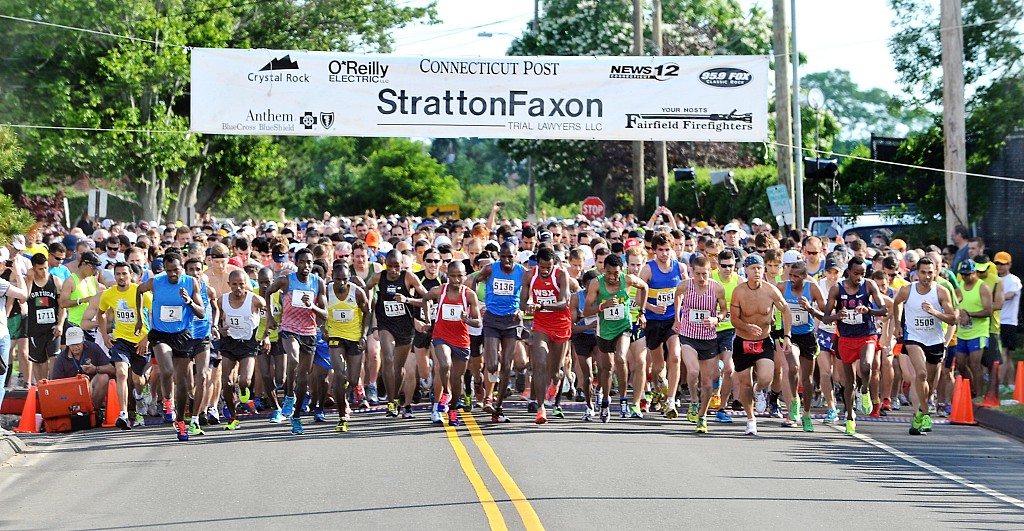
Faxon Law Fairfield Half Marathon will go virtually due to COVID-19 concerns
Organizers have announced that the Faxon Law Fairfield Road Races, consisting of a half marathon, 5k and kids fun run, will be held virtually this year due to concerns about the pandemic.
The event, traditionally held at Jennings Beach in Fairfield, had already been moved from June 7 to Sept. 20. Now, runners will have the opportunity to compete on their own accord between Sept. 17-20.
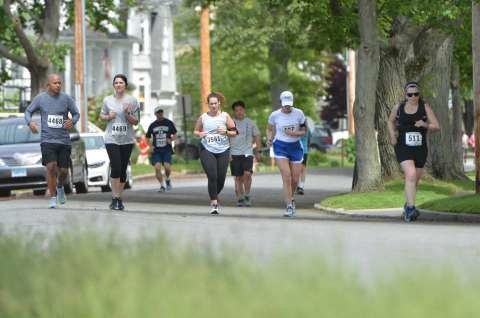
“As much as we would like to be running with you at Jennings Beach this year, the health and safety of our athletes, volunteers, staff, spectators, and sponsors is our number one priority, and with the current health crisis, we cannot completely guarantee a safe event,” John Calandriello, president of the Fairfield Half Marathon, said on the event website. “The decision to transform to a virtual event was not an easy one, but a necessary (step) to ensure the safety of all involved.”
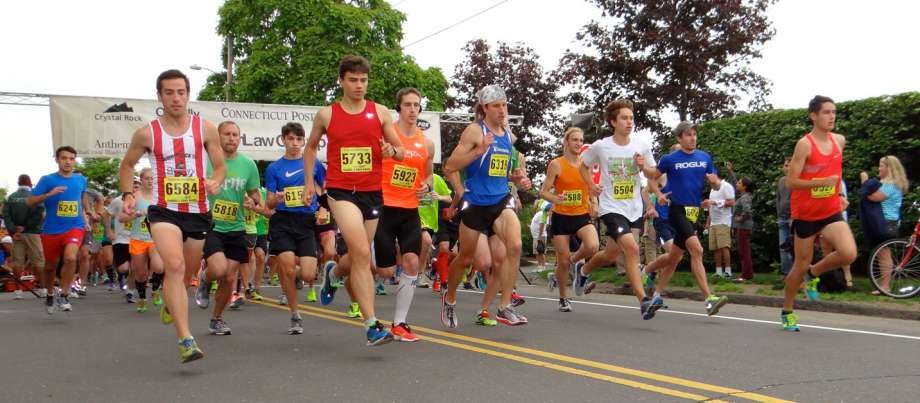
Virtual racing has become a primary means of competition during the pandemic . Runners race on their own time and at their own location. Once the required distance is reached, they self-report their results into a database.
With social distancing a priority, many other races around Connecticut have adopted this same format, including the Faxon Law New Haven Road Race, scheduled from Sept. 4-7, and the Hartford Marathon, Oct. 8-11.
Registration can be completed online at fairfieldhalf.org.
by Doug Bonjour
Login to leave a comment
Faxon Fairfield Half Marathon
The Fairfield Half Marathon was founded in 1981 and is annually chosen by running magazines as one of the best races in America. Since its inception the event has raised funds for numerous charities. The Fairfield Fire Department and the Town of Fairfield have supported the event from the beginning providing many in kind services; from traffic and emergency services...
more...
Running on empty: Coronavirus has changed the course for races big and small
The coronavirus pandemic has crippled the sports landscape. Leagues from the NBA all the way down to Little League Baseball have paused or canceled seasons.
In response to various stay-at-home orders that vary from state to state, people have been encouraged to exercise -- safely and while socially distancing. To run, walk and bike. Maybe, now with the idea, to one day compete in a 5K or a 10K race, maybe even a marathon.
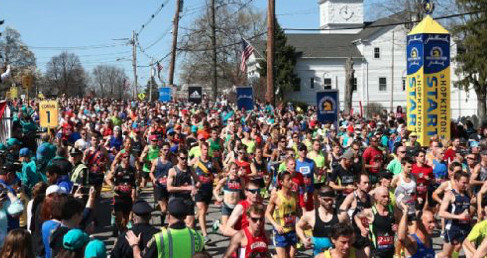
When life resumes, whenever that is, those opportunities will be different and, in the case of some road races, not even there.
The racing organizations, big and small, that stage those events are having to grapple with postponements and cancellations to a point where they may not be able to ever come back at full strength.
Many of the world's largest marathons have already been impacted by the pandemic -- the Boston Marathon was postponed until September, the London Marathon until October and the Berlin Marathon, which had been scheduled for Oct. 24, has already been canceled.
Events that lead to mass gatherings, such as sports and concerts, are expected to be among the last to return even as the U.S. and the world look to reopen various businesses.
In the world of running, it is the smaller races -- from 5Ks and 10Ks to half marathons and marathons, many operated by local event organizers -- that are under financial stress.
In 2019, Running USA, an industry trade group, tracked more than 21,000 road races, which collected roughly $267 million in fees from more than 17.6 million registered runners.
Christine Bowen, vice president of programming partnerships and operations at Running USA, told ESPN.com that new estimates as of mid-March showed roughly 7,500 road races have been canceled so far into 2020, and thousands have been canceled since. That's more than 1.2 million participants who are left in limbo, she said -- and with more cancellations likely to come. In addition, race registrations nationwide are showing a 95 percent decline.
There's also the loss of raising money for charity, Bowen noted. Roughly 79 percent of road races are associated with at least one charity partner.
Fewer people signing up for races is one thing. The industry is also dealing with runners who are asking for their money back. While the average cost to enter a race is $70 to $79 per entry, many smaller events don't offer refunds, as those registration revenues are spent in advance for race security, staff, shirts, bibs, medals, water, snacks and other logistics -- sunk costs even if the races are not held.
"At the moment, I am not looking to register for any further road races as we have no idea what will happen," Samantha Music, a tax assistant who lives in Connecticut, said. "It is rather discouraging to continue to train even though the races are not happening."
Music had signed up to run seven races so far this year, with collective registration costs of more than $1,200. So far, six of the seven have been officially canceled, and a majority of the races, she said, are non-refundable.
However, two of the races did offer deferment for a non-complimentary guaranteed race entry for 2021 or a full refund and no-entry option for 2021. This means, if the race is lottery-based, she would need to reapply sometime next year.
"I am absolutely feeling stressed, as well as depressed about all the cancellations and losing money on the races that are being deferred to next year," Music said. "I understand that the race organizers have to pay for everything they ordered, but it doesn't suck any less to have to pay for a race again."
"I am absolutely feeling stressed, as well as depressed about all the cancelations and losing money on the races that are being deferred to next year."
Samanta Music, runner from Connecticut
The tune is a little different for Matt Becker, who is an applied mathematician at the Johns Hopkins University Applied Physics Laboratory in Maryland. Becker, who is new to the road race scene, and his wife had signed up for six races between the two of them so far in 2020. Five of them have been canceled or postponed, and of those five, four offered deferred payments for next year, or whenever the rescheduled race will take place.
"I think, on the whole, the race organizers are doing their best to accommodate difficult circumstances," Becker said. "Once it is safe to do so, I don't think I'll have any different approach to signing up for races in the future."
As part of its guidance to race directors, Running USA issued this statement:
"Negative comments about refunds, chargebacks and greed are swirling. The running industry especially is not a faceless group. ... it may be helpful to share with participants that many expenses are incurred months ahead of the event and the option of refunds really is not straightforward or always possible. Remind runners of your commitment to the community."
But will there be races for the community in the future?
Bowen said that though the average running organization employs eight full-time employees, there are contractors working with event management companies who also rely on the events as their main source of income.
According to the Endurance Sports Coalition, hundreds of thousands jobs are in jeopardy in that space. The coalition is made up of more than 475 endurance sports groups seeking relief from congress. The endurance sports industry -- which also includes events such as Tough Mudder and Ironman triathlons -- is a $3 billion industry that provides more than 500,000 jobs.
The coalition includes bigger races, like the Boston Marathon and Rock 'n' Roll marathon series, that will always have people clamoring to run them. It's the medium to smaller-sized races, and the companies that put them on, that are facing the direst of straits.
J.T. Service is the co-founder and CEO of Soul Focus Sports, an event management company in the San Francisco Bay Area that helps to put on a handful of road races.
Run Local Bay Area is a client of Soul Focus Sports, which puts on races including the San Jose Shamrock Run, the Silicon Valley Half Marathon and the Across the Bay 12K. The Silicon Valley Half Marathon -- which did not occur as planned on April 5 -- would have usually attracted between 3,000 and 5,000 runners.
"I almost want people to kind of think about us as local businesses," J.T. Service said. "There's this huge push of support your local business or support your corner pizza shop where you normally would get pizza. I think there needs to be this element of seeing the race, your local fundraising charity event, as that local business that needs just as much support now -- maybe more now than ever -- for the long term good of the community, so they can come back and open their doors and open their starting lines to runners when this thing is cleared up."
Through June, six races have been canceled under the Soul Focus Sports umbrella in the Bay Area. Service said they have lost "a few hundred thousand [dollars] in revenue" and that affects roughly a dozen event staffers.
To make up for lost races, runners have been encouraged to participate in virtual runs instead -- a way to both encourage running and return some value.
For many of these virtual events, runners can run the scheduled "race" distance when they want, where they want -- from a local trail to a treadmill -- and can then log their time results on the event's website to compare against others, and have their medals, race shirts and other "swag" shipped to them.
In addition to its Walt Disney World Marathon and other events, runDisney has been holding virtual races for five years. The Rock 'n' Roll marathon series and IRONMAN triathlon series -- both part of the Wanda Sports Group -- have begun offering competitive virtual events, and other race directors have taken creative approaches to keep runners active.
The Hartford Marathon Foundation, which organizes more than 30 annual races throughout New England, launched the "WeRunCT" virtual challenge to encourage people to collectively run the equivalent of every square mile of Connecticut (5,018 miles). Within three weeks, more than 1,250 participants ran the state of Connecticut 14 times over -- covering the square mileage of all of New England, approximately 71,500 miles.
"We understand how important it is for us to provide our running community with encouragement to keep active and maintain a healthy outlet to help manage stress during this unprecedented time," HMF CEO Beth Shluger said in a statement. "While we can't hold events and gather together, we're committed to providing ways for people to experience some of the enjoyment of racing through virtual events and challenges."
Bowen said there is a glass-half-full approach.
"I think that mental health area is really going to look more at [running]," she said. "I wouldn't be surprised if you start seeing companies sort of corporate wellness programs to say to their employees, 'Maybe sign up for a virtual race in the office because we're all working from home right now.' That's something to keep people engaged."
Virtual races can be positive, she said: "Right now, I will stay for sure, it's given companies an opportunity to be very creative in how they work with their runners and their sponsors."
Those virtual events could continue to be a source of revenue for race directors, and alternative social distancing options for runners. And Service, from Soul Focus Sports, sees another silver lining: Many people are taking up running while seeking exercise during the pandemic, and all those outside running every day could fall in love with the sport -- and could stick around for a while, too.
"So I see an opportunity for this industry, and that's from local specialty shoe shops to races -- but we have to be almost leaders, to the point of saying: Running is going to help bring this country back," Service said. "Why wouldn't be this our fuel or a thing that brings people back together?
"They're resilient people."
by ESPN
Login to leave a comment
People are still running in Central Park but the thought of it now makes me nervous
(Editor’s note: I asked my friend Larry Allen to give me his overview of the situation back east due to COVID-19. Larry is a lifetime runner and is a cancer survivor. Him and his wife live in New York City and has a weekend house in Connecticut.)
“Hi Bob, Sorry to be so slow to respond. We are in Connecticut at our weekend place. We were without internet for 10 days, our cell service is nil and our phone only functions with working internet. It was a real catch22 to find a way to get a service appointment, certainly because we were untethered digitally but more so because the ISP was overwhelmed and.short staffed. We finally got through on Twitter and now with a new router & modem I think we’re back in the modern world, to the extent we can bear to be.
"My oncologist and my internist essentially booted me out of the city in early March due to my still compromised immune system. I was due to have a CT scan and some other post-chemo exams a month ago, just to be certain all was still ok and that I had no reoccurrence of the cancer. Unfortunately the Doctors won’t let me near a hospital, they explained that the risk to go without followup exams for the near term was less than the risk of showing up at the hospital and possibly being infected with my immune system as it is.
"We are safe here for now. Concerned about the food supply and basic services but there’s not much more to be done than hunkering down and hoping that the trends begin to turn.
"I’ve been able to continue running six days, 25-35 miles a week. I try to go to the rail trail near our home which is usually my peaceful place. The odd hybrid bureaucratic nature of the shared federal/state/local responsibility for the trail has spared it from being closed as is the case for all other state and local parks with less complicated governance. The bad news is this: there are huge numbers of people suffering from “cabin fever” in lovely spring weather after a long winter and too few places for people to get out for some exercise. Naturally the rail trail has gotten too crowded for safety so other than going at dawn or dusk or during a rainstorm it’s not really an option. I guess it’s somewhat of a blessing that there are far fewer cars on the road so hitting the pavement is less treacherous than it might be. One has to assuming e the air quality is better too.
"As you know we live very close to Central Park and it is one of my favorite places to run. I really enjoyed running with you there last year.
"People are still running in Central Park. I don’t know how but the very thought of it makes me very nervous now."
(Photos: me a couple of weeks back, enjoying a run with Bob in the park last Feb 2019 and Bob and I at a Speak Easy the night before. Bob's wife Catherine took the shot. When life was normal.)
by Larry Allen
Login to leave a comment
The Runner Statue-COVID-19 Mask Movement
Over the weekend, famous runner statues from Boston to Boulder donned a new look to support solidarity in slowing the coronavirus.
Runners are among the healthiest people. We prize and appreciate our good fortune, and want to encourage the same in others. We’d like everyone to be health—to follow federal guidelines, both for exercise and for disease prevention.
That was the thinking behind the Runner Statue-COVID-19 Mask movement. It began Saturday morning in Mystic, CT. By Sunday afternoon, it had spread to Cape Elizabeth, Maine, Hopkinton, Massachusetts, Central Park in New York City, Davenport, Iowa, and Boulder, Colorado.
In each location, a well-known runner statue is now wearing a low-tech protective face mask. The message: Do your part to prevent the spread of COVID-19.
The Boston Marathon course has three such mask-wearing statues. In Hopkinton, “The Starter” George V. Brown wears a mask immediately adjacent to the Boston Marathon start line. Nearby, the statue of Rick and Dick Hoyt shows off their colorful masks.
Near the Marathon’s 19-mile mark in Newton, the double statue of “Old John” Kelley and his younger self shows them both wearing bandanna masks. These were fashioned by Ray Charbonneau from recycled road race t-shirts.
Born on a Morning Run
The story starts, like many, with a morning run. On Saturday morning, my wife, Cristina, and I met my brother, Gary, for an easy 3-mile jog on the banks of the meandering Mystic River in Connecticut. We had barely begun when Gary said, “You know what might be cool—to put a COVID mask on the Kelley statue.”
Mystics’s statue of John J. Kelley, 1957 Boston Marathon winner, has been a favorite local landmark for about five years now. It has a sparkling location in a tiny parklet that overlooks Mystic Pizza, made famous by the 1988 Julia Roberts movie. Before our biggest annual road races, Kelley is often attired in that’s year’s t-shirt.
Gary’s idea seemed so perfect that Cristina and I rushed home post-run to complete the mask project. To be honest, I merely “supervised,” since I have no sewing or crafting skills. Fortunately, Cristina is one of those creative types. She was even smart enough to realize that a statue mask would have to be larger than the bright masks she had already turned out for family members. Most statues are literally larger than life.
We rushed back to downtown Mystic to give Kel’ his new facemask. It was made of green shamrock material to honor his Irish roots. No one asked what we were doing, though several families strolled by and gave us an enthusiastic “thumbs up.”
Back home a few minutes later, I was ready for a nap. Then it hit me. I knew of a half-dozen other runner statues, and I knew runners who lived in those communities. What if I could get all those statues to wear covid masks?
Idea Runs Across the Country
Honestly, it took little effort on my part. A handful of friends, both new and old, “ran” with the suggestion. In Central Park and Cape Elizabeth, police quickly descended on my mask-placing co-conspirators. Moments later, having heard an explanation for the masks, the very same officers volunteered to help.
My buddy in Cape Elizabeth needed it. Marty Clark was struggling on crutches to give Joan Benoit Samuelson a facelift. Now we’ll let you in on one of Joanie’s secrets: She has no ears. (Makes you more aerodynamic.) Or maybe she just has hair over her ears. In both Cape Elizabeth and Davenport, IA, where the Bix-7 has erected statues of Samuelson and Bill Rodgers, my friends had trouble keeping the mask in place.
But Bix race director Michelle Juehring persisted until she achieved success. “I love the solidarity of this project—the way it says we’re all in this together,” she observed.
Rodgers was a big fan from the get-go. “I’m so glad to be wearing a mask next to Joan Samuelson in Davenport,” he said. “If others see us, and then they wear a mask also, we’re going to beat this disease in America.
At Central Park’s reservoir, thronged with walkers and runners, a socially-distanced crowd gathered around the Fred Lebow statue. When the onlookers realized what was going on, they broke into applause. “I was stunned,” said Scott Lange, who once worked for Lebow at New York Road Runners.
In Boulder, Rich Castro got a mask onto Frank Shorter only a couple of hours after we began with Kelley in Connecticut. Castro had already worn a mask around town on his morning errands. “I hope more people help us spread the message,” he said. “There are too many nonbelievers around.”
Shorter concurred. “Any and all expressions of solidarity are a good thing,” he said.
In Hopkinton, where the Boston Marathon begins, Tim Kilduff found a talented high schooler, Emily Karp, to make masks and corralled a Hopkinton Board of Selectmen member (John Coutinho) and photographer (Bruce MacDonald) for the effort. Today, Monday April 6, this team plans to mask 1946 Boston winner Stylianos Kyriakides at the marathon’s 1-mile mark. (Look hereto see why this requires a special effort.)
“This has been fun,” Kilduff said. “It’s a good thing. I think it might really catch on.”
by Amby Burfoot (Podium Runner)
Login to leave a comment
The families of three female high school runners have filed a federal lawsuit seeking to block transgender athletes in Connecticut from participating in girls sports
The families of three female high school runners filed a federal lawsuit Wednesday seeking to block transgender athletes in Connecticut from participating in girls sports.
Selina Soule, a senior at Glastonbury High School, Chelsea Mitchell, a senior at Canton High School and Alanna Smith, a sophomore at Danbury High School are represented by the conservative nonprofit organization Alliance Defending Freedom. They argue that allowing athletes with male anatomy to compete has deprived them of track titles and scholarship opportunities.
“Mentally and physically, we know the outcome before the race even starts," said Smith, who is the daughter of former Major League pitcher Lee Smith. “That biological unfairness doesn't go away because of what someone believes about gender identity. All girls deserve the chance to compete on a level playing field.”
The lawsuit was filed against the Connecticut Association of Schools-Connecticut Interscholastic Athletic Conference and the boards of education in Bloomfield, Cromwell, Glastonbury, Canton and Danbury.
“Forcing girls to be spectators in their own sports is completely at odds with Title IX, a federal law designed to create equal opportunities for women in education and athletics,” attorney Christiana Holcomb said. "Connecticut’s policy violates that law and reverses nearly 50 years of advances for women.”
The Connecticut Association of Schools-Connecticut Interscholastic Athletic Conference says its policy follows a state anti-discrimination law that says students must be treated in school by the gender with which they identify and the group believes the policy is “appropriate under both state and federal law.”
The lawsuit follows a Title IX complaint filed last June by the girls' families and the Alliance Defending Freedom with the U.S. Education Department's Office for Civil Rights, which is investigating the policy.
The lawsuit centers on two transgender sprinters, Terry Miller and Andraya Yearwood, who have frequently outperformed their cisgender competitors.
The two seniors have combined to win 15 girls state indoor or outdoor championship races since 2017, according to the lawsuit.
The three plaintiffs have competed directly against them, almost always losing to Miller and usually behind Yearwood. Mitchell finished third in the 2019 state championship in the girls 55-meter indoor track competition behind Miller and Yearwood.
“Our dream is not to come in second or third place, but to win fair and square,” Mitchell said. “All we're asking for is a fair chance.”
Yearwood, a senior at Cromwell High School, and Miller, a senior at Bloomfield High School, issued statements vehemently defending their right to run in girls events.
“I have faced discrimination in every aspect of my life and I no longer want to remain silent," Miller said. “I am a girl and I am a runner. I participate in athletics just like my peers to excel, find community, and meaning in my life. It is both unfair and painful that my victories have to be attacked and my hard work ignored.”
Yearwood said she also is a girl and has been hurt by the efforts to “tear down my successes.”
“I will never stop being me!" she said in her statement. "I will never stop running! I hope that the next generation of trans youth doesn't have to fight the fights that I have. I hope they can be celebrated when they succeed not demonized. For the next generation, I run for you!”
The American Civil Liberties Union said it will represent the transgender teens and defend the Connecticut policy in court. Attorney Chase Strangio, deputy director for Trans Justice with the ACLU LGBT & HIV Project, said transgender girls also are protected by Title IX.
“The idea that the law only protects the individuals with XX chromosomes as compared to individuals with XY chromosomes is found nowhere in the legislative history of Title IX, in any implementing regulation or in any other aspect of the interpretation of Title IX over the last 50 years by the courts,” he said.
The attorneys for Alliance Defending Freedom is asking the court to prevent the transgender girls from competing while the lawsuit moves forward. No hearing date on that request had been scheduled Wednesday, the day before the state's indoor track championships begin.
Connecticut is one of 17 states that allowed transgender high school athletes to compete without restrictions in 2019, according to Transathlete.com, which tracks state policies in high school sports across the country. Eight states had restrictions that make it difficult for transgender athletes to compete while in school, such requiring athletes to compete under the gender on their birth certificate, or allowing them to participate only after going through sex reassignment procedures or hormone therapies, according to Transathlete.
Yearwood and Miller have said they are still in the process of transitioning but have declined to provide details.
Login to leave a comment
It is tough but I just keep going as I battle colon cancer head on
A little past 7 on Christmas Eve morning, about 15 minutes before sunrise, I headed out for my Tuesday morning four mile run through Central Park. I’ve done the same thing, at the same time on 19 Tuesdays since late spring. It wasn’t easy this time.
Lately it has gotten a lot harder. The hills in the park seem to have gotten a fair bit bigger. In spite of having run six days a week since Memorial Day my fitness hasn’t improved in a typical way.
I start my run at home and finish near a diner at Columbus Circle. Kristen leaves the apartment a little after I do and takes a duffel of dry clothes on the subway to meet me. We’ve gotten the timing down so we arrive at about the same time.
I towel off and change clothes in the restroom of the diner. A quick coffee and a bagel and off to Mt Sinai for my weekly chemo treatment.I haven’t really kept it a secret that I was diagnosed with colon cancer in March. A fair number of friends know.
I have made a point of not talking about it much; choosing not to allow myself to become a victim of the diagnosis or to have “C” as a new middle initial or for any of it to become an unintended and unwanted new identity so....a lot of folks might not know.
I seek no pity, no attention nor to raise money to cure anything. You should know I share all of this only in an attempt to get it out of my head and move on.
At the same time, if this encourages anyone to stay active in spite of a health condition or more importantly to listen to your body and when something feels off, see a Dr, get a colonoscopy as I did, good.
Tuesday wasn’t meant to be my last run to a chemo appointment but it will be. The side effects have gotten increasingly more difficult and unmanageable. My Dr. said that I had already realized the benefits of the treatment and continuing would be more harmful than helpful.
He gave me the best Christmas gift ever by agreeing it’s time to stop. I’ve managed to cover about 800 miles since I recovered enough from surgery to begin running in late May.
My Dr. supported my attempt to try and run through my treatments. He seemed to intuitively know that after 50 years as a runner that it would be good for me both mentally and physically.
I’m not sure he initially thought I could keep it up. In time I think he began to think I might. I never doubted It. The nurses in the infusion suites were endlessly supportive and maybe even amused (or maybe bemused) by what I was trying to do.
All of my runs each week fell into a nice predictable pattern. Tuesday’s morning run to the hospital was always filled with intent; to be of good cheer about where I was headed and why. I always intended to minimize dread by running to the treatment, to take it head on.
Wednesday was a day off from running because I had no choice. I’d wait until late day to get out on Thursday to give myself as many hours as I could post-chemo. It usually worked.
I’d be a little gauzed over from the lingering effects but a gentle run in the woods seemed to wash it away. Friday, Saturday, Sunday & Monday were life as usual, as much as possible, with a daily run of 4-7 miles, mostly in the Connecticut woods.
It was all combined with slowly building anxiety as the days crept toward the next Tuesday. And so it went through the summer heat & humidity, the crisp lovely days of fall and the darkening cold days of early winter.
My Dr. said that the effects of the chemo would be cumulative and therefore more difficult as time went on. It was steadily getting harder over the months but with a certain amount of guile it was manageable, at least until early December.
Over the last few weeks there were new side effects weekly; amplified and lingering. I kept my routine, running every day but one each week.
My Tuesday run through the park had the intent I always meant it to have but coming as my 6th run in a row and over the hills of the park, it began feeling as difficult as the last 4 miles of a marathon.
Christmas week the side effects reached a point where quality of life was being impacted; sleep, eating, GI distress, weight loss and profound fatigue. It was hard to imagine continuing the treatment until early February.
My Christmas Eve morn run to the diner was a real beast. I struggled but made it. Big body chills, afterward a real doubt that I could get through the day without being hospitalized if I had my scheduled treatment.
I couldn’t eat after changing into my dry clothes. I wasn’t able to get warm no matter what I did. I felt crummy to say the least.
As Kristen and I talked about what to do, we both recalled a meeting with my Dr. back in June in which he said in my case chemo was optional but that research said a good outcome was slightly more likely if I did it. It made sense to take advantage of every opportunity presented to us and we quickly agreed to the 6 months of chemo.
I knew, we knew, that I’d reached a point where I needed to ask my Dr. what I could or should do. When I saw him mid morning he told us there was no statistical difference in the effectiveness of my particular treatment lasting 3 months vs. 6 months.
I’d made it 4.5 and he agreed that I had reached a place where stopping made sense. He shared with us that he had seen my decline and nearly recommended stopping a week prior but decided to wait and see if I bounced back.
I clearly hadn’t....and just like that I was done. What’s next? Beyond Christmas morning with my still sleeping family, it’ll be the beginning of a few weeks of getting the residual drugs metabolized out of my body and my blood counts rebuilt to normal levels.
I will have a lot of follow up blood tests and CT scans in the months and years ahead. I’m a really lucky one in that I caught this early, it hadn’t spread into my lymph nodes or anywhere else. The expectation is that I will be ok.
I’ll continue running six days a week. I might even run through the park to the diner on Tuesday mornings. I’m not sure my dear night owl of a partner would be quite so enthusiastic about continuing to leave at 7am with a bag of dry clothes. Maybe I can get her to keep doing it if I try to go at a more civilized hour...
Updated Feb 12 - I have continued running 6 days a week since Christmas. I’m still rebuilding my strength from the damage done to my blood from 4.5 months of chemo.
It’s slow but I’m gaining some strength. I managed my first 30 mile week recently and have gotten pace back down into the 8s per mile and my long run to 8 miles a couple of times.
In March I’ll go in for my first round of post chemo tests and my first colonoscopy (which will be necessary annually from here on). As a runner my body has done a very good job of keeping me informed of where I am and where I’ve been through all of this.
It was intolerance to normal running that led me to be a persistent pest with my Drs and led to the early (and luckily timely) diagnosis, running through the chemo kept me in touch with what was happening to my blood count.
I had blood tests every week prior to treatments and I was often able to tell my Dr what I felt like the blood test would show just from how different or difficult the running had been in the week prior.
Accordingly I’m pretty optimistic about what the tests in March will show, just as a result of how I’ve felt putting in a few more miles and even doing so a little more quickly...
Photos were taken Feb 2019 during a run in Central Park with MBR editor Bob Anderson.
by Larry Allen
Login to leave a comment
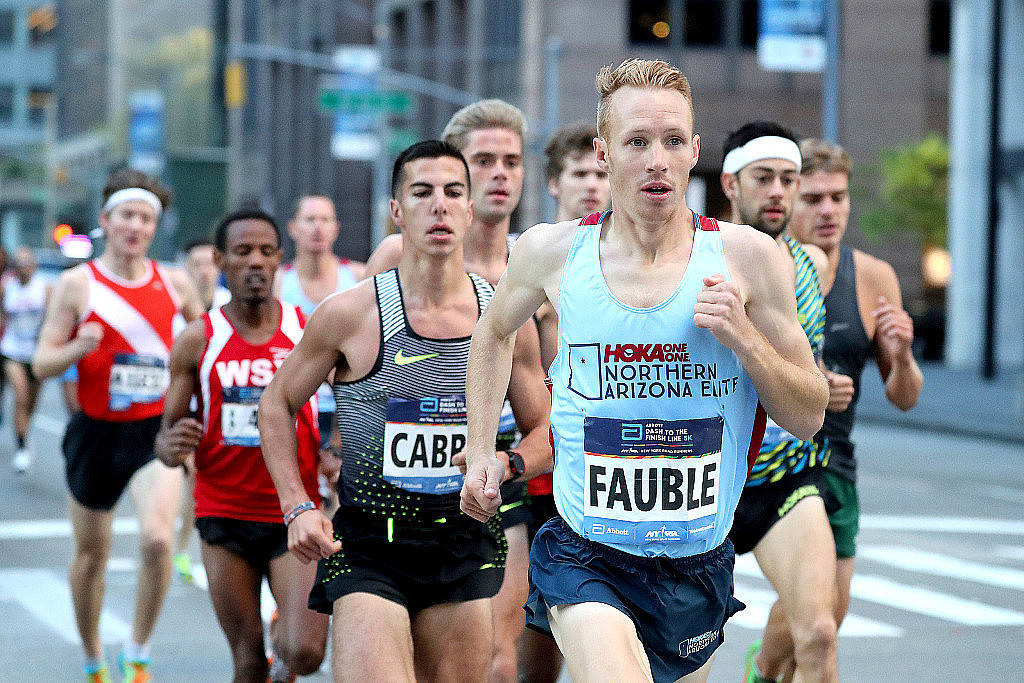
Scott Fauble is dealing with the flu and won’t be running Falmouth
After dealing with the flu, Scott Fauble was pulled from Sunday's Falmouth Road Race, a 7-mile event that takes place in Falmouth, Massachusetts, annually. He took second place last year, crossing the finish line as the first American male, with Canada's Ben Flanagan taking the 2018 title.
"Bad news, you guys," Fauble tweeted on Thursday. "I won’t be running Falmouth this weekend. I got sick earlier this week and it just wasn’t going to be the right call to race this weekend. I’m disappointed to miss this iconic event. I expect to be healthy and to crush at the USATF 20K champs in a few weeks."
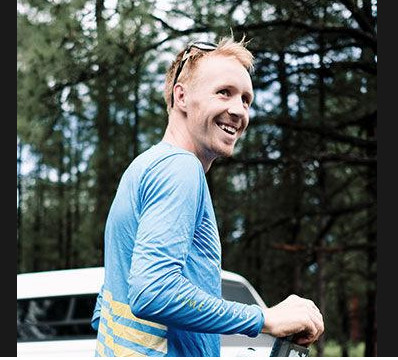
This year's USATF 20K Championships take place Monday, Sept. 2, in New Haven, Connecticut.
Fauble has laced up for just one race since taking seventh place at the 2019 Boston Marathon in April, where he was the first American to finish. Boston was the third marathon of his career, and he set his PR of 2:09:09 there.
Login to leave a comment
Falmouth Road Race
The Falmouth Road Race was established in 1973 and has become one of the premier running events of the summer season. Each year the race draws an international field of Olympians, elite runners and recreational runners out to enjoy the scenic 7-mile seaside course. The non-profit Falmouth Road Race organization is dedicated to promoting health and fitness for all in...
more...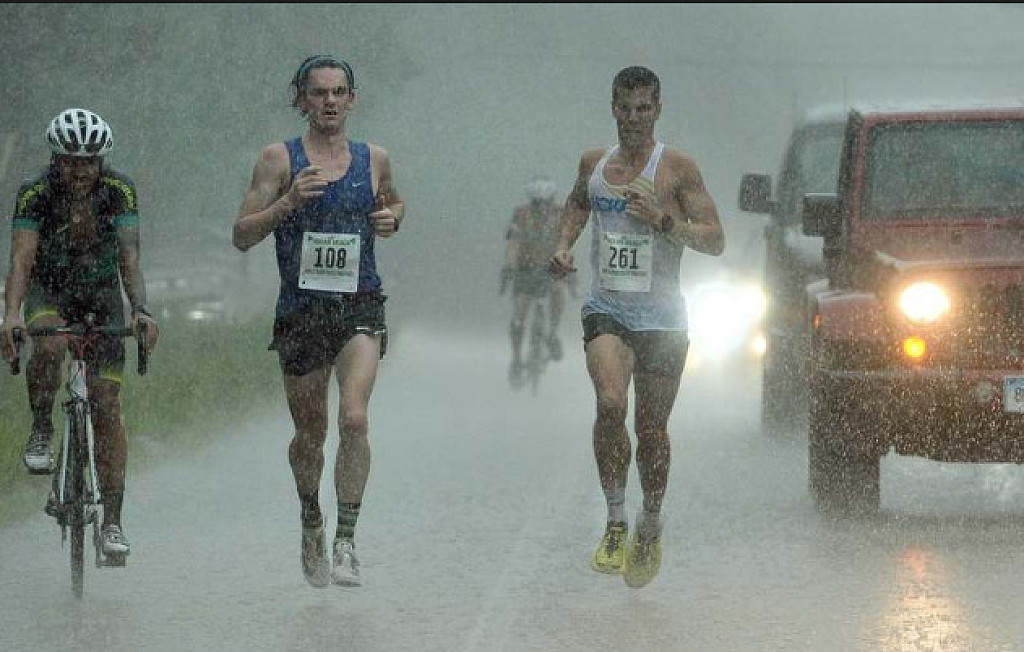
Past all the soggy landmarks of New London and Waterford there was a duo, two runners, two friends keeping pace with one another at Kelley Race debut
Donn Cabral, in the white racing singlet, was on the left and Ari Klau, in the blue, on the right. Sometimes they flipped. Their steady, strong cadence brought them down Great Neck Road in Waterford, by Waterford High School, past Ocean State Job Lot, ALDI, CVS and a sign advertising Powerball tickets outside a convenience store.
They ran through sheets of rain. And suddenly, with a little over a mile to go in the 56th Ocean Beach John & Jessie Kelley Half-Marathon, it was Cabral, the two-time Olympian from Glastonbury, who took off alone.
Running his first Kelley Race, Cabral, 28, finished first in 1 hour, 9 minutes, 39 seconds, to edge Klau of West Hartford, 21, who crossed the finish line in 1:09:54.
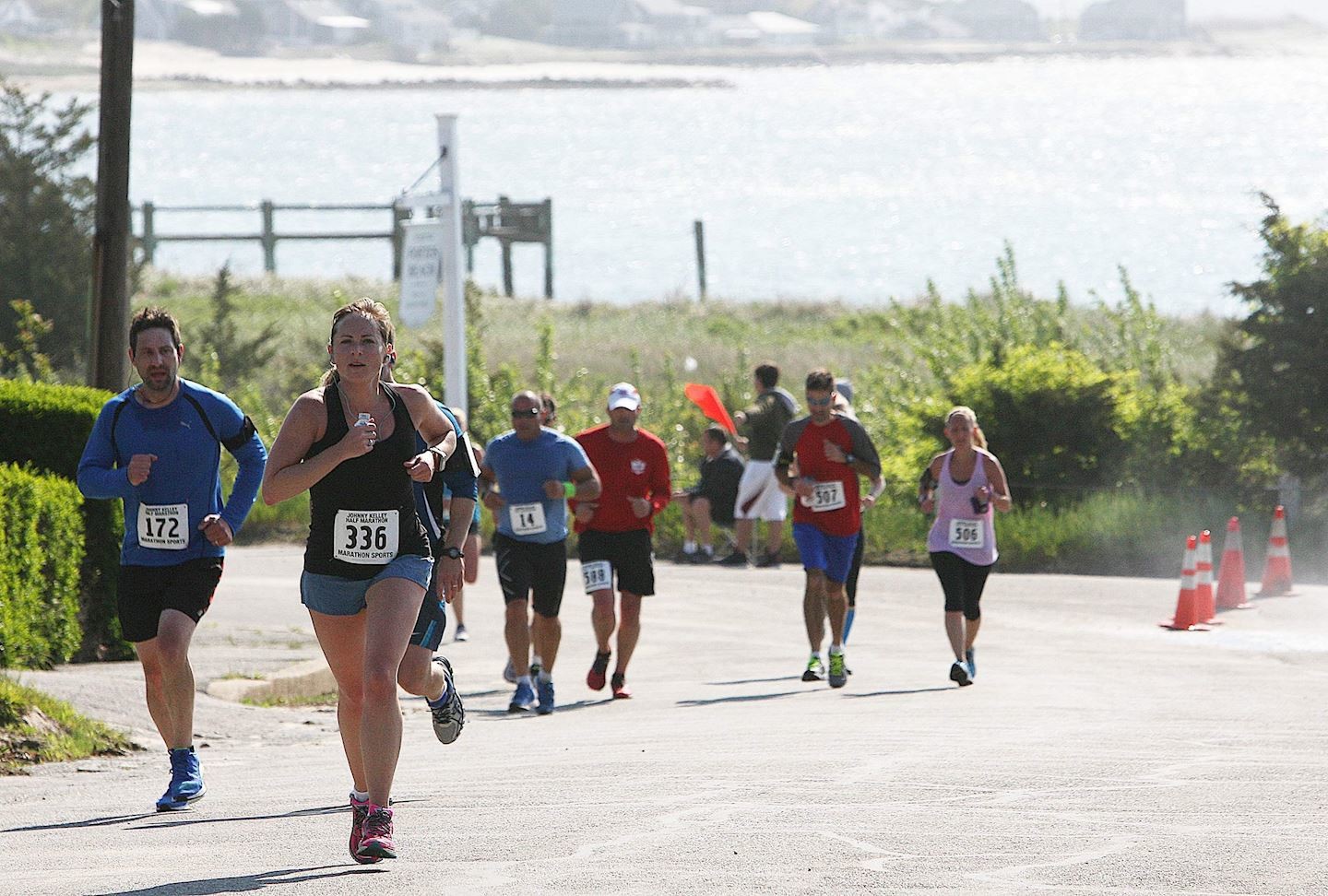
Klau, entering his senior year at the University of Virginia, formerly attended Cabral's running camp when he was a 16-year-old student at Hall High School.
Cabral, a Princeton graduate, was a member of the last two U.S. Olympic teams, in London and Rio de Janeiro, as a competitor in the steeplechase, finishing eighth both times.
“I don't like going into races and not engaging in competitive mode at all,” said Cabral, who described the race as more of a training run for the two. “We had 12 miles side-by-side with camaraderie. To lose to a former camper of mine would have been a shot to the ego; it gave me the impetus to kick his butt.”
“He's always been one of my idols, the local hero,” Klau said, speaking of Cabral.
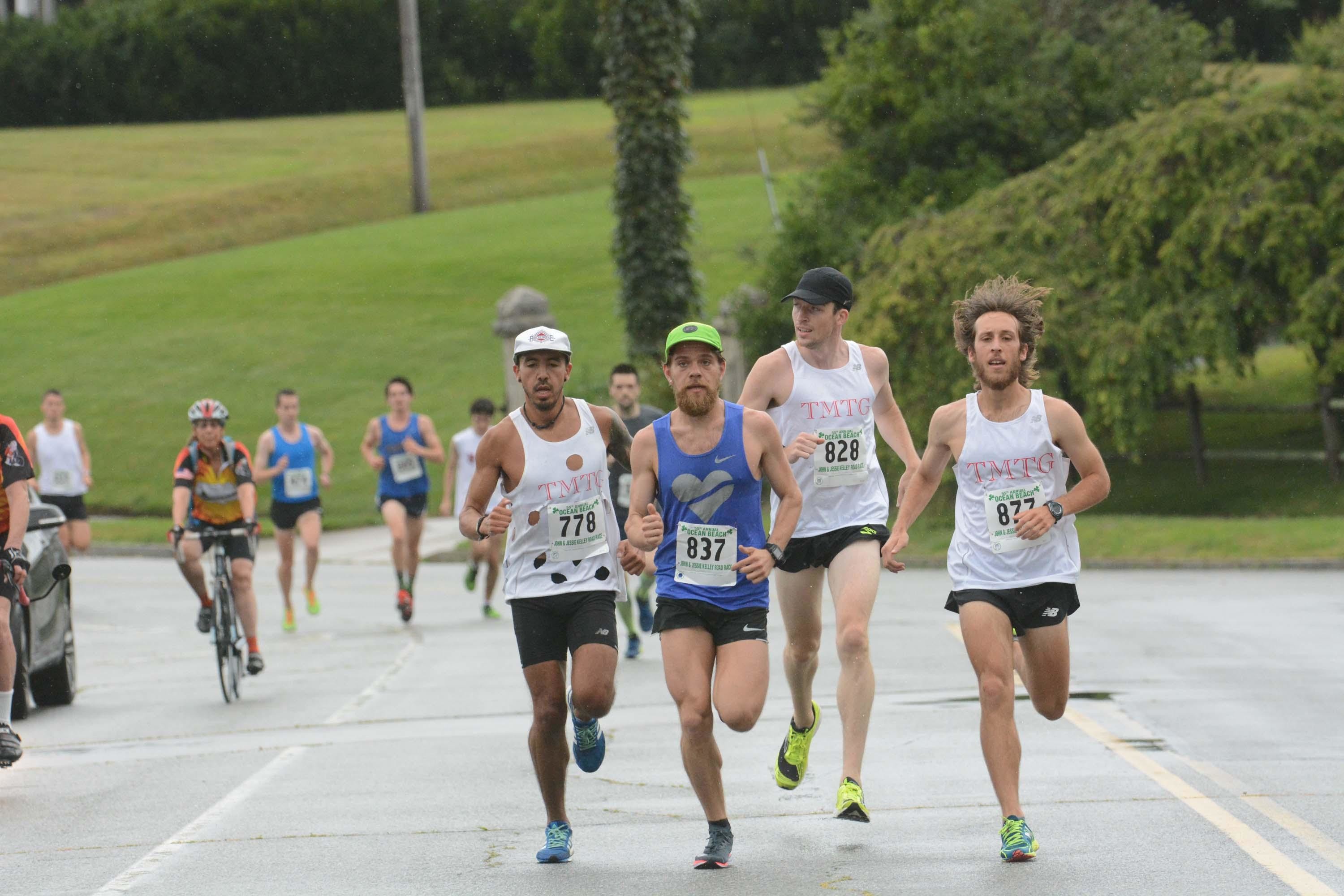
Cabral, who has the Olympic rings tattooed on his right shoulder, is now enrolled in law school and business school at UConn. He said he still has his eye on an Olympic bid for the 2020 Games in Tokyo, but it's going to take a great deal of effort over the next couple years.
“If this was an Olympic year, I wouldn't have made the team,” he said. “… My goal is still to run fast in the steeplechase.”
Nicholas Lemon of Brighton, Mass., was third in 1:15:27, followed by Russell Stevens of Colchester in 1:16:12 and Kyle Englander of Suffield in 1:16:28.
The women's division was an all-Eastern Connecticut Conference showing, led by former Fitch High School and Central Connecticut State University runner Brandy LeClair in 1:25:42, good for 14th place overall and a personal best in the half-marathon.
She was followed by a pair of current Central runners in former Ledyard star Megan Brawner (33rd overall, 1:31:14) and Killingly's Angie Rafter (34th, 1:31:15).
LeClair, 23, is a 2017 graduate of Central. She is working at the Inn at Stonington and training for this year's New York Marathon, which will be her first.
“I'm a little nervous about it (the marathon),” LeClair said. “I feel like I just started my training and I have so much more to go. … I'm just as fast now as I was in high school. I fell out of love with running in college. A year ago, I regained my passion back for it. Sometimes, it's just what you're going through. Being a college athlete is really, really tough, the mental part of it.”
LeClair said the finish line, with the parking lot at Ocean Beach beginning to resemble a lake due to the torrents of rain, reminded her of the time in high school she ran in the steeplechase, having to navigate the water pits.
“That was not fun,” she said with a laugh.
It was Brawner's first half-marathon. She is a redshirt sophomore on the Central cross country team and last year was named Northeast Conference Rookie of the Year. Brawner said Rafter turned into “Dr. Phil” around mile 10, convincing her friend and teammate to finish. She also appreciated the locals who took the time to cheer on the runners despite the teeming rain.
“Seriously such a great experience,” Brawner said. “They just stood in the rain and yelled for you to go faster. They force you to smile.”
The race, named to honor the late John Kelley of Mystic — the 1957 Boston Marathon champion — and his beloved wife Jessie, was formerly contested over 11.6 miles, but was changed last year to the half-marathon distance of 13.1 miles.
Login to leave a comment

Ocean Beach John & Kelley Half Marathon
The Kelley Course is a 13.1 mile measured loop, all on paved roads. Race starts and finishes in Ocean Beach Park. Plenty of parking, arrive early to avoid heavy beach traffic. Mostly flat with a few rolling hills, long hill at eight miles. Enjoy panoramic vistas of Long Island Sound on the way out and on the return to the...
more...
Aidan Puffer continues to break world records. It started at age 11 and this week the 14-year-old clocked a 14:47 5000m, another world record for his age
Aidan Puffer is a 14-year-old high school freshman at Manchester. When he crossed the finish line at the Bob Michalski 5000m Championship at the Connecticut Distance Festival on Thursday he had a relaxed demeanor. Placing third behind Xavier junior Robbie Cozean and Hall senior Trey Cormier, Puffer remained calm and stoic after his finish.
For those watching the bushy-haired 14-year-old, it appeared to be just another finisher.
Except it wasn’t. Puffer had just broken a world record.
With his time of 14:47.66, Puffer broke Hans Segerfelt’s mark of 15:10.2, set in 1975, to claim the world’s fastest time in the 5K by a 14-year-old.
“The 14-year-old world record is like, 15:10,” Puffer said. “The freshman national record was like 14:59. The New Balance nationals standard for the 5K championship race is like 14:50. So I was just focused on hitting all of those, mostly just to get 14:50.”
Mission accomplished for Puffer, who trailed Cozean and Cormier for the entirety of the 5,000-meter race. Cozean (14:40.40) and Cormier (14:42.90) exchanged leads for much of the race, while Puffer trailed patiently, checking his watch and adjusting his pace when needed to assure he’d meet his goal.
“At the beginning I kind of got a little nervous,” Puffer said. “At the beginning I heard 68s and stuff [for 400m] and I was like ‘Oh man, we need to slow down a little bit.’ I mean, it wasn’t as painful as I thought it would be. I felt really good throughout the whole race.”
Puffer, trains about 40 miles per week and works with his own running coach, has previously set world records in the 5K for the 12- and 13-year-old age groups.
“I’ve never worked with an athlete with as much natural ability as Aidan Puffer,” Manchester coach Mike Bendzinski said.
It all started a few years ago when Aidan’s father, Kyle Puffer decided to do a "Couch to 5K" training program to run a 5K road race.
His son Aidan was 10. He wanted to do it, too.
"I remember calling the pediatrician and asking, 'Is this safe for him to do?'" Aidan's mother, Martha, said.
"We knew some other parents who were runners and he beat them and they were like, 'Wow,'" Kyle said. "We said, 'Do you want to do another one?' We found other 5Ks and he ran them and he just kept getting faster. He didn't run other than just racing."
That sounds like a typical kid interested in running. But Aidan wasn't a typical kid. At age 11, he set his first world record, the 11-year-old 5,000-meter record on the track. Then he broke the 12-year-old boys 5K record on the road. When he was 13, he broke another one, the 5K road world record for 13-year-olds.
Then at the BAA 5K, two days before the Boston Marathon, he found himself being called up to the podium where Hagos Gebrhiwet, the Olympic 5,000-meter bronze medalist from Ethiopia, had just accepted the silver loving cup trophy for winning the race.
Puffer had once again broken a world record by finishing the 3.1-mile race in 15:47. A world record for 13-year-olds and now 14:47 5000m on the track, a world record for age 14.
Login to leave a comment
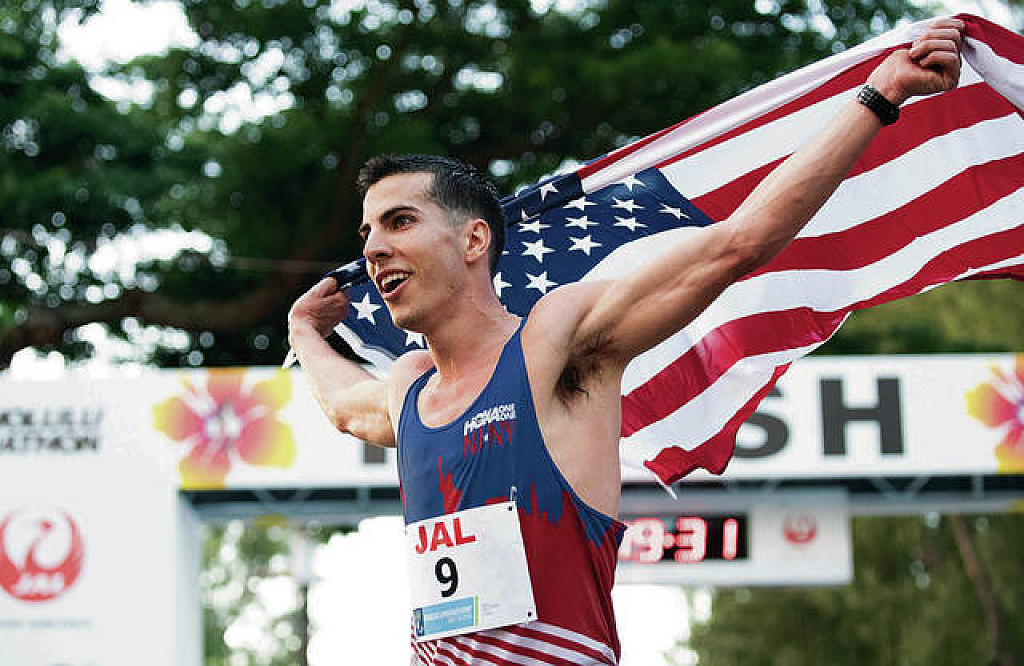
Steeplechase Olympian Donn Cabral, made his marathon debut clocking 2:19:16 at Honolulu, finished in fourth place
Kenya's Titus Ekiru still managed to threaten the course record at 46th Honolulu Marathon, clocking 2:09:01.
Second place went to Reuben Kerio, another Kenyan, who was in third place at halfway but was able to catch up. He clocked 2:12:59.
Yator, who had been with Ekiru at 25-K, ended up third in 2:15:31 and fourth position went to two-time USA steeplechase Olympian Donn Cabral of Hartford, Connecticut, who made his marathon debut in 2:19:16.
He flies back east tonight because he has an exam tomorrow morning. "It was just fun, this was fun," said Cabral, who is in law school at the University of Connecticut.
"The wind was rough for many miles. When the wind was not rough, I felt the humidity pretty strong. The course was a lot tougher than I expected."
Login to leave a comment

My coach said when passing someone, pick up the pace, go by with certainty and show no sign of exertion - Larry Allen on Running File 3
Full circle. I am becoming Fred Dingley. He was my first cross country coach at Lee Academy way back in 1969.
One late summer day a couple of years ago I headed for my usual early evening run at a favorite trail in Connecticut.
A welcome hint of fall was in the air. Dry, refreshing Canadian high pressure, breezes and gentle fall-like light had crept in for the first time in months, replacing the laser-bright sun and stifling humidity of a hot summer.
The trail I often run extends along the Pequonnock River Valley and the beautiful weather had it abuzz with happy runners, cyclists and walkers, a full house in the parking lot.
At the top of the short hill leading from the lot to the trailhead; 15 young men from a local high-school cross country team gathered, bare-chested, stretching against a rail fence.
The 14 year-old newbie kids tried not to be conspicuous in their very presence but also were clearly checking out their bigger, stronger and more confident 17-18 year-teammates. The older ones innocently full of themselves, utterly oblivious to the younger kids.
They all started running just before I shuffled up onto the trail. Within the first half mile I could already see the smaller, slower runners beginning to fall off the pace.
I caught the first kid soon after. For a minute I was back in the early fall of 1969. My first coach, yes Fred Dingley, was the headmaster of the school.
In his 60s, he ran with the team some days. I was 14, 4’9” and weighed maybe 90lbs. I lacked fitness, confidence or any knowledge whatsoever.
Mr. Dingley caught me a few times in my first few runs that September and always had a word of encouragement as he passed.
He made me feel like if he could run 2-3 miles at his age I damn well could, even when I seriously doubted it two steps prior to him passing and three steps after he went by.
Fred Dingley's teams were a perennial power in Maine. State Champions my first 2 years. My next coach, Howie Richard, led a team to my third championship in 4 years. I was fortunate.
Early that first September I ran my first timed mile in 6:55. I proudly made my way to the top of the Junior Varsity by the end of the year and ran a 5:06 mile.
I won a race the next year and I will never forget being congratulated by the headmaster-coach in the school’s morning announcements.
Mr. Dingley retired a year later and I've always hoped he kept running for years after.
40 odd years later, I ran past the slower runners in the first couple of miles on the trail and made a point of doing what my coach had done; offering a quiet word of encouragement to each kid.
I wondered whether seeing a man in his 60s running by might do for one of them what it did for me years before.
Meanwhile, I also remembered how Howie Richard coached me as as a more accomplished runner 3 years later; he said when passing someone, pick up the pace, go by with certainty and show no sign of exertion, he explained, only slightly in jest, that "it demoralizes them a little and gives you an edge".
Maybe I should regret those ingrained competitive instincts but at more than 4 times the age of most I passed I think I should get a pass (no pun intended) for any insensitivity, real or imagined. I did try offer encouragement but that's a different thing, right? Can you intimidate someone (a little), feel better about your own remaining ability and give encouragement all at the same time? I hope so.
I have no idea whether the team I saw in Connecticut that pre-season evening ended up a top team that year. I was impressed that most of the older kids ran the same 8 miles I did.
Based on those I passed, I remember wondering whether I might still be able to make the JV team of a HS team. In reality the dead sprint at the beginning of a 3mi high-school cross country race would be a big problem.
If I had any hope I’d have to use experience and wisdom (if any) to try and overcome my physical ability with a late charge from behind at the end. The real problem; the youngest and slowest kids I saw were all going to get much faster and stronger in coming months. I would not.
At just past age 60 I was still holding up ok. I could still manage 5-12 miles almost daily. A few longer runs crept below 8 minutes per mile, I even managed a 6:25 mile at the end of one good run. It all took a sudden turn with an unexpected health problem a short time after this particular evening.
Having successfully dealt with my issues I’m again able to run or run/walk for shorter distances on the trail weekly, slower but just as happily. I still see competitive runners and teams, maybe the same ones; a few looking like collegiate runners home for a visit, some likely former undeveloped youngsters but not so much anymore and of course always a new crop of nervous 14 year old prospects.
As for me, maybe I should just be happy being Fred Dingley.
(Editor’s note: Larry Allen on Running is a regular MBR feature sharing the wisdom of Larry Allen, a 50 year accomplished runner and artist. He is currently participating in the third Run The World Challenge.)
by Larry Allen
Login to leave a comment

Runing is very important to me, it fits right in with eating, brushing my teeth and sleeping - Larry Allen On Running Intro
I am Larry Allen. I am 64-year-old, a 50 year runner and doing the Run The World Challenge for the third time.
In 1965 I was living in Maine, Great Cranberry Island. A small, isolated, offshore island adjacent to a national park with only 80 residents. I started running there and achieved some success and in 2016 I was inducted into the Maine Running Hall of Fame.
Running is very important to me. Without intending to overstate it, running fits right in with eating, brushing my teeth and sleeping. Obsessed is another word although I think over the years the obsession has been moderated to a healthier place.
My mental health depends on it to an extent. My creativity, well being, problem solving, peacefulness and certainly my ability to stay centered and in balance with life itself have always been better when I’m running.
"He is a New York City artist, who retired as the director of publishing for the Museum of Modern Art in Manhattan, “painted” in many different styles and left a truly remarkable body of work," a friend wrote.
I keep busy as an artist and as a part-time manager of the business affairs of my still very active wife Kristen Blodgette. She’s a professional musician, Musical Director, Conductor and Musical Supervisor, principally having been associated with Andrew Lloyd Webber for his Broadway and worldwide productions for over 30 years.
We live in New York City and in Fairfield County Connecticut. "Larry has run some impressive times over a wide range: 440 (51.7), 4:34 mile, 15:58 5k, 33:26 10k and a 2:46:20 marathon. He has directed many races, coached and written a lot about the sport.
When Larry turned 60 he wanted to run one more marathon," wrote Bob Anderson. I had a good year, a steady 60 miles per week. I was going to run Philly in November but about three weeks prior I tore a calf muscle severely and that was that. When I started running again about six weeks later I felt a profound fatigue and weakness that I didn’t recognize.
I assumed it was age but it was unsettling and very difficult. An old running friend and ER nurse saw the significant dip in my ability on a social media running tracking app and called me. She essentially did triage over the phone from 500 miles away and asked (told) me to immediately go the nearest walk-in clinic and to tell them she had sent me. After an EKG the doctor came into the exam room and said 'I don’t want to alarm you but you are in complete heart block and and we’ve called an ambulance.' I didn’t quite understand what heart block was but learned later that it was electrical in nature and not blocked arteries.
After emergency surgery suddenly I had a pacemaker. My cardiologist is Dr Paul Thompson, who in addition of being an esteemed physician is also an accomplished runner (15th at the 1976 Boston Marathon).
Dr. Thompson isn’t sure whether my heart block was as a result of damage done by a lot running for many years or a genetic predisposition or both but ironically he feels the strength of my heart and general health of the rest of my entire cardiovascular system as a result of years of running probably allowed me to survive the condition.
My goal today is to find the right clothes for a cold windy day and to run four miles in the woods. My goal for this week is to do it again on Friday and hopefully Sunday too. In between my goal is to briskly walk five or six miles on rest days and at a tempo that lets me recover enough to run the next day.
My goal this winter is to stay off the treadmill as much as I can and to get outside six days per week, to cover about 30 miles weekly and to enjoy every single mile. My goal for next spring is to be running the majority if not all of my miles. My goal for next summer and fall is to have it all be easier than it was this year. My goal for the year after that is to do another lap....and the same for every year.
(Editor's note: Larry's wisdom and knowledge of running is impressive and we are happy to announce that Larry will be contributing to My Best Runs on a regular basis - Larry Allen on Running. He also posts most days in the RTW Feed about his road to recovery.)
by Bob Anderson
Login to leave a comment
Bryce Matteson, goal is to run 50 marathons in 50 weeks in all 50 states for clear water projects
Login to leave a comment
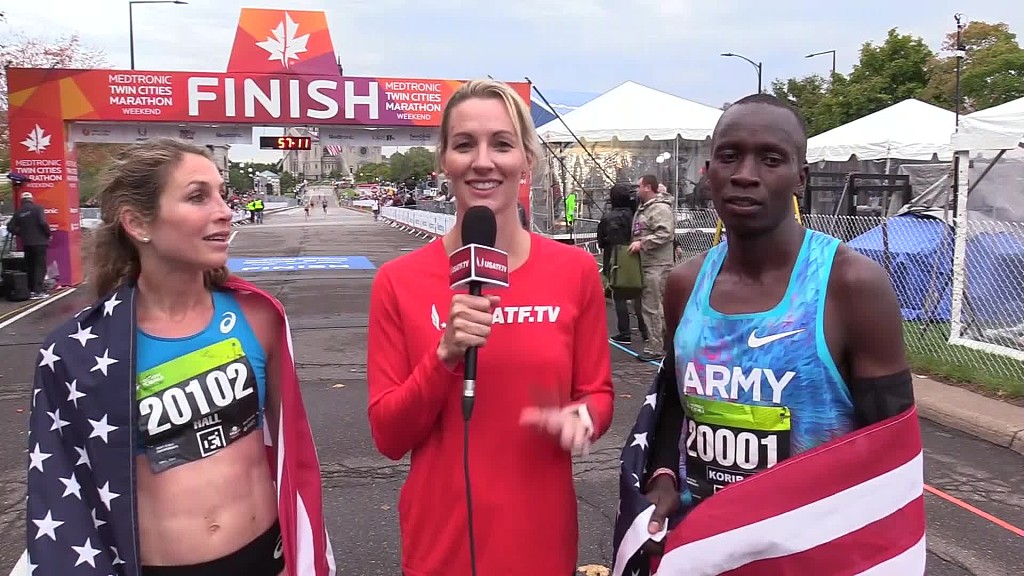
Strong filed at Labor Day Road Race with notable athletes competing like Sara Hall and Leonard Korir
The 2018 Faxon Law New Haven Road Race, host of the USATF 20K National Championship, boasts a number of the country’s top runners. The event takes place on Labor Day, Sept. 3, on the New Haven Green.
Some of America’s top distance runners will compete for a prize purse of over $40,000. New Haven has hosted the USATF 20K National Championship since 1992. Past Faxon Law New Haven 20K champions Janet Cherobon-Bawcom, Meghan Peyton and Aliphine Tuliamuk head the women’s race field.
Georgia’s Cherobon-Bawcom won the 2011 race and finished 12th in the 10,000 meters at the 2012 Olympics. New Mexico’s Tuliamuk, the 2016 20K champion, will also be competing for the top spot. She now holds nine national road race titles. Peyton (Tualatin, OR.) was the 20K winner in 2013.
She has competed at the 2012 and 2016 USA Olympic Team trials and has been a member of four USA National Teams. Another notable athlete competing on Labor Day is California’s Sara Hall. Hall is a 2017 USATF Marathon champ and placed third at last year’s New Haven 20K.
New York’s Allie Kieffer is also expected to finish near the top. She was sixth in last year’s Faxon Law New Haven 20K and was fifth in last year’s New York City Marathon.
Currently, Colorado’s Leonard Korir is the men’s favorite. He won the 2016 race and lost in a lean to Galen Rupp in last year’s race. Korir competed in Rio Olympics in the 10,000. Korir will be challenged by Colorado’s Sammy Kosgei, Connecticut’s Donn Cabral, North Carolina’s Christo Landry and Massachusett’s Tim Ritchie.
Login to leave a comment
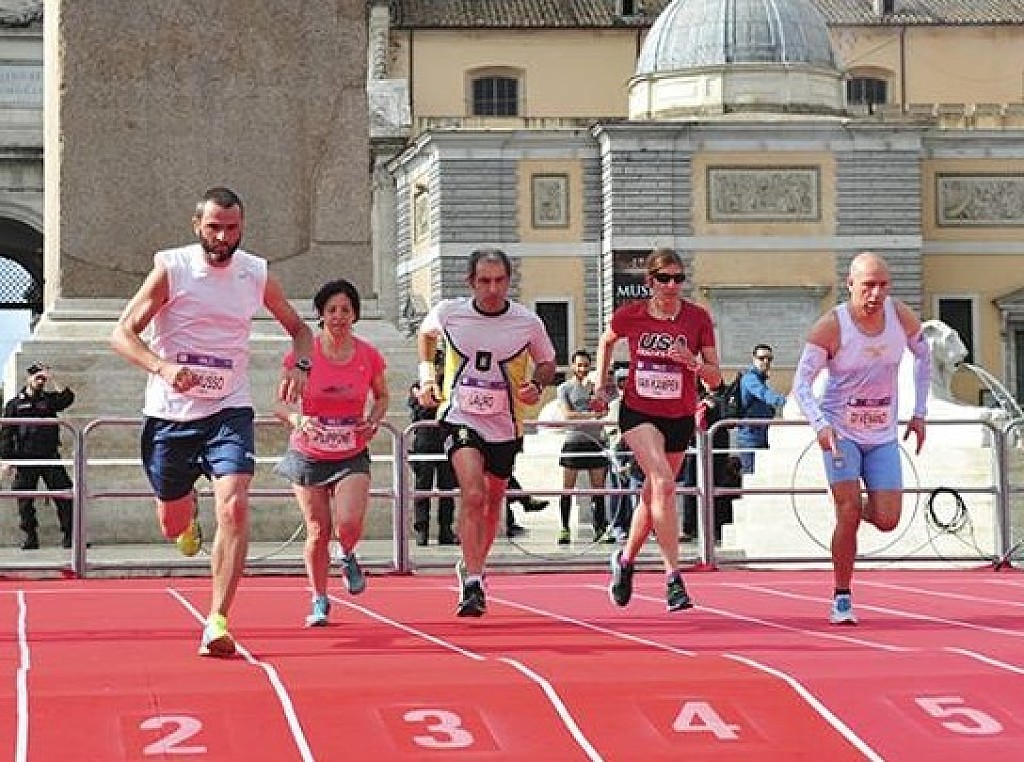
Global Run Challenge Profile: Carla moved to Rome in 1992 after seeing the movie Roman Holiday
by Bob Anderson
Login to leave a comment
