

Running News Daily
Running News Daily is edited by Bob Anderson and team. Send your news items to bob@mybestruns.com Advertising opportunities available.
Index to Daily Posts · Sign Up For Updates · Run The World Feed
Articles tagged #Buffalo
Today's Running News
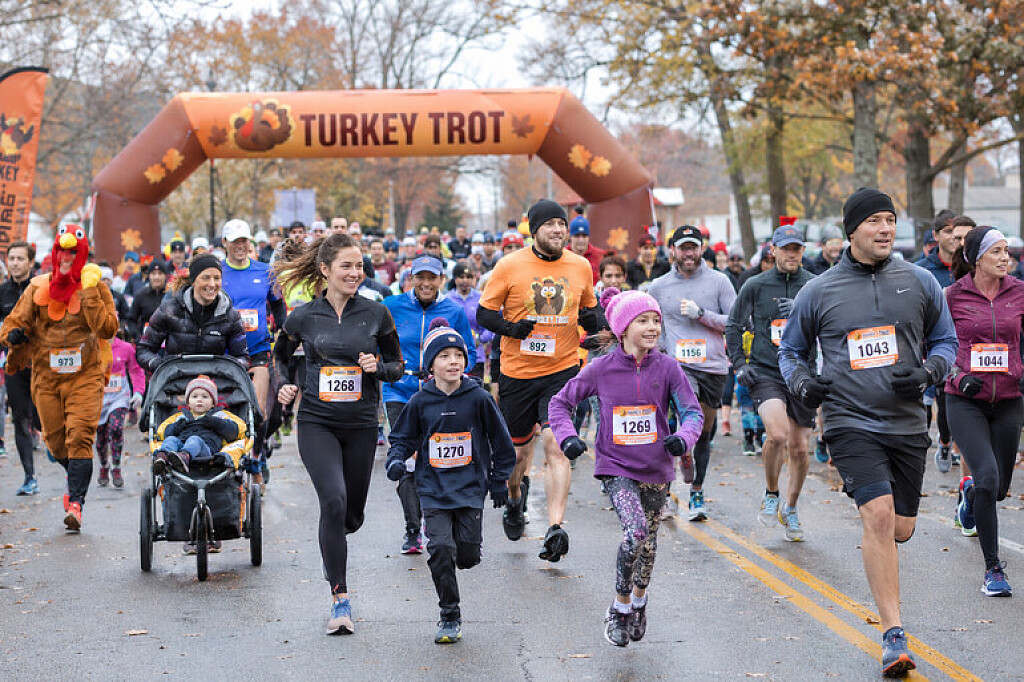


Thanksgiving Turkey Trot Becomes America’s Biggest Day For Road Racing, Attracting More Than 1.3 Million Participants
Thanksgiving has become much more than a traditional holiday for millions of Americans. Every year, the fourth Thursday of November transforms communities across the United States into massive running destinations, with more people taking part in organised races on this single day than on any other day of the year.
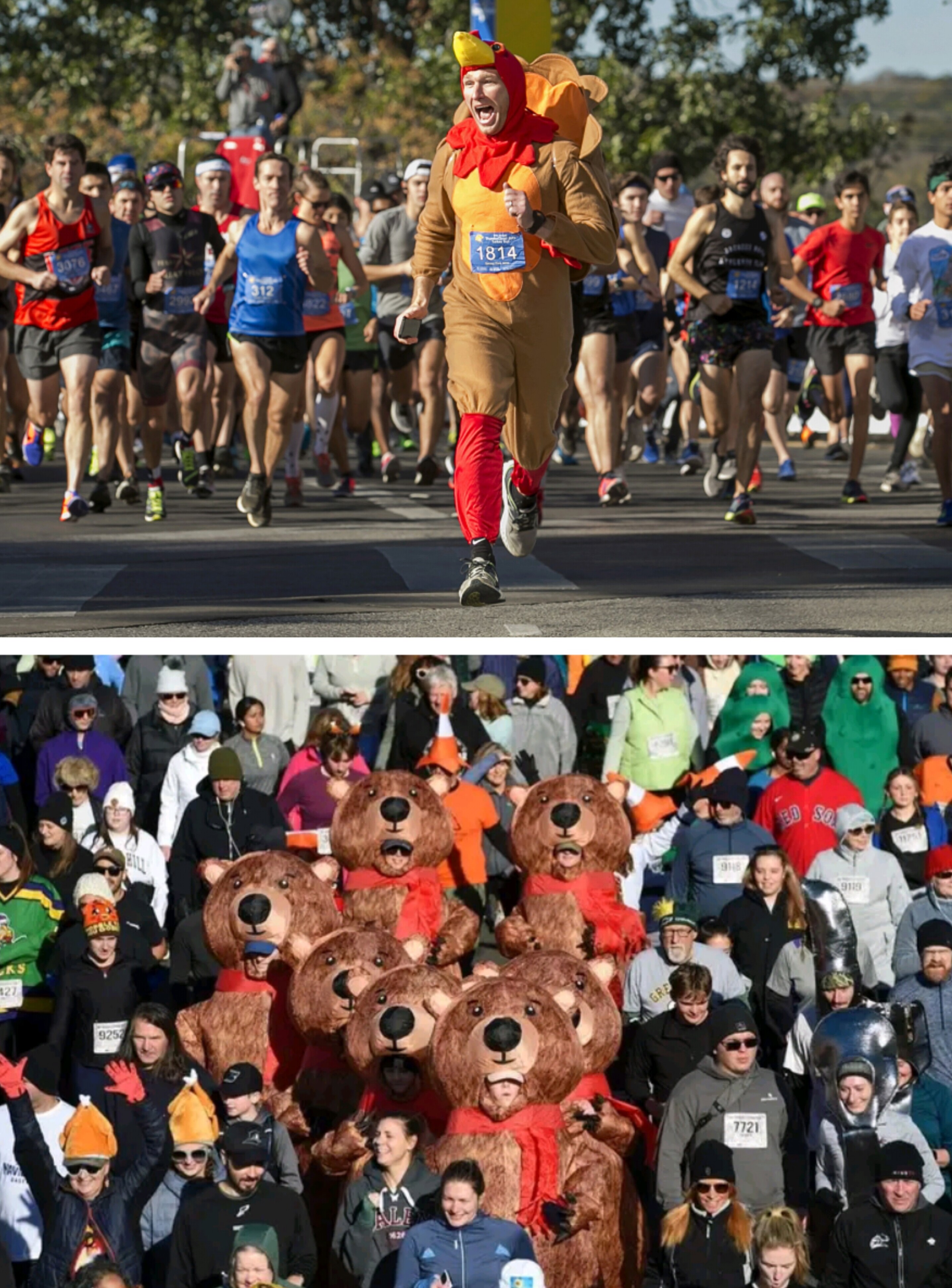
Known as the Thanksgiving Turkey Trot, the annual tradition brings together runners of all abilities, from competitive distance athletes chasing fast times to families, recreational joggers and first-time participants simply looking to enjoy an active start to their holiday.
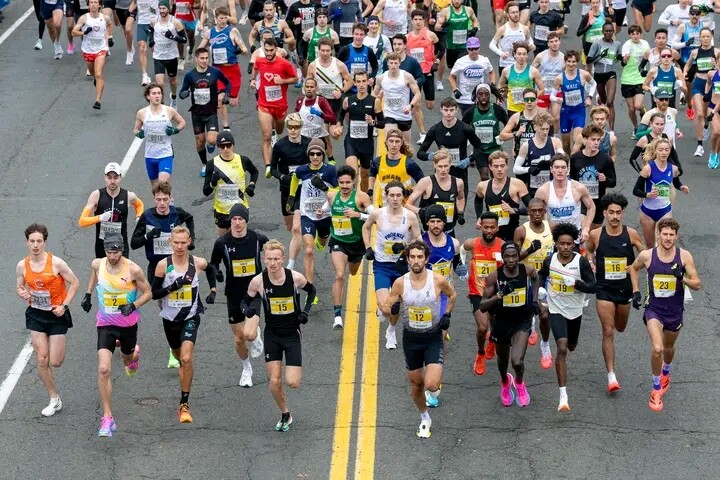
Unlike the major marathon events that attract international attention, Thanksgiving racing is spread across the country. Thousands of events take place simultaneously, ranging from large city road races and competitive 10K events to neighbourhood 5Ks, community fun runs and trail races.
The tradition has a history stretching back more than a century. Its roots are traced to Buffalo, New York, where six runners reportedly participated in a YMCA-organised Thanksgiving race in 1896. What began as a modest local competition gradually developed into a nationwide running tradition, becoming an important part of America's sporting and holiday culture.
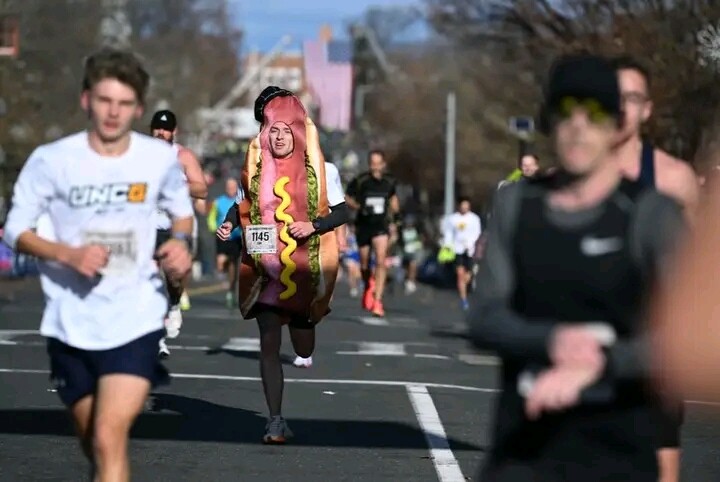
Today, the scale is remarkable. More than 1.3 million race registrations are recorded across the country for Thanksgiving events, demonstrating the enormous popularity of the Turkey Trot tradition. From major metropolitan areas to smaller communities, thousands of runners head to the starting line on the same morning, making it an extraordinary day for participation in the sport.
Although the Thanksgiving Turkey Trot is widely associated with recreational running, the competitive side of these events has also grown considerably. Leading races attract accomplished road runners, with some athletes using the occasion to test their fitness, pursue personal bests and compete for victories against strong fields.
The growth in participation reflects both the popularity of running and the unique appeal of Thanksgiving morning. For some, it is an opportunity to maintain their training routines, while others see it as a chance to spend time with friends and family through sport. The events also provide communities with an opportunity to support charitable causes and bring people together.
Not all of the reported growth necessarily represents entirely new runners, as some participants enter more than one event or return year after year. Nevertheless, the numbers underline the remarkable place Turkey Trots have secured in American running culture.
From the historic streets of Buffalo to major city boulevards and small-town neighbourhoods, Thanksgiving has established itself as a special occasion for the running community. It is a day when elite competitors and everyday participants share the same starting lines, united by a common love of running.
For one morning every year, America's roads and streets become a nationwide celebration of the sport. And when the races are over, runners return home to enjoy the Thanksgiving celebrations, having made running an integral part of the holiday.
by Erick Cheruiyot for My Best Runs.
Login to leave a comment
YMCA Buffalo Niagara Turkey Trot 8K
The enthusiasm, energy and incredible holiday spirit that radiated down Delaware Avenue tells us that our local Thanksgiving Day run is so much more than just an 8k road race. It is an incredible tribute to all that makes Western New York great – Family, Friendship, and Benevolence. Together with the Y, you are helping to connect those less fortunate...
more...
A Lifetime Journey of Fueling Mistakes
It's helpful to know what your stomach can tolerate before a run—even that backfires sometimes.
During the 2023 New York City Marathon, Runner’s World set up shop in an empty storefront on West 57th Street with Adidas and hosted three days of inspiring talks, shakeout runs, and shoe demos.

Because of a last-minute cancellation by one guest speaker, I was called in to talk about nutrition. This was bound to be interesting. See, around the office, I’m known for doing things in unconventional or even questionable ways. I’ll go on long runs without any water or gels. At lunch, I’m more likely to grab McDonald’s or a gas station hoagie than a salad. Sometimes it works—sometimes it doesn’t. But I know the sage advice this magazine dispenses, even if I don’t heed it in my daily running life.
For the duration of the nutrition panel, I did as instructed. But purely for your entertainment, I offer a sampling of questionable fueling strategies and gastronomical gaffes that I have jotted down in my training log over the past couple of decades.
In case it’s not clear by now: You’re better off not following my example!
A new marathon PR! By nearly 5 minutes. Wasn’t sure what was going to happen today, really. I hadn’t slept well the last few nights. Plus, I ate a brisket sandwich for dinner and Pepto-Bismol for dessert last night.
10/15/2014 Seven Miles:
Note to self: Buffalo chicken pizza is a no-go if running after work. Great run with G.H., but I had some stomach issues 2 miles from the end and had to jump into the bushes. Not fun. The run, however, was.
9/20/2009 Adirondack Marathon:
One to forget. I was moving along well and was in second place overall for the first 22 miles. But had trouble keeping fluids down today and couldn’t keep it together when I got warm on the front half of the course. Maybe I shouldn’t eat a sausage sandwich at midnight before the race next year.
5/5/2017 Taco Mile:
I spent $129 at Taco Bell today. Filled 2 Ikea bags. Eat a taco, run a lap, repeat. That was fun. I was slow. But it was still a lot of fun.
10/11/2021 Boston Marathon:
Had lots of support out there. Frank gave me his mimosa at mile 18.
5/20/2020 Seven Miles:
Burping up the egg and pork roll sandwich I ate for lunch. Whoops.
6/16/2017 Beer Mile:
Fourth lap, beer going down good, but I started laughing when Kit yakked. I nearly did myself, but spewed a mouthful of beer, earning myself a penalty lap. Damn.
12/2/2019 Four Miles:
Got a late start to the day, but sneaked out for a lunch run. A good snowfall. Stopped at Burger King on my way back home. 2 for $6 Whoppers. Yay.
2/4/2024 19 Miles Long Run:
Felt hungry when I ran past a 7-11, so I stopped in for a donut (and Gatorade).
11/10/2017 Five Miles:
Ate a chicken Caesar wrap too late in the day. Vomited a little on the Brooklyn Bridge and nearly pooped my tights. Oof.
12/21/2015 Seven Miles:
We went to Joe’s Shanghai for a work holiday lunch. 1:30 reservation means I burped up dumplings for 7 miles after work. Not fun.
Login to leave a comment
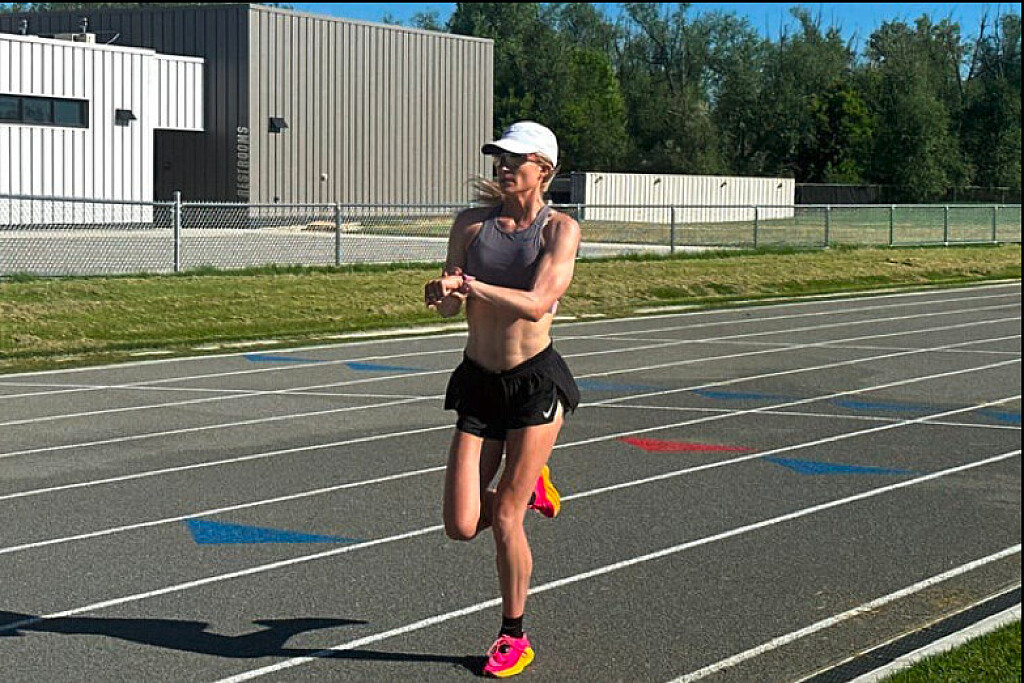
After Double Knee Surgery, This Runner is Poised to Make Team USA for the Paris Olympics
Val Constien has surmounted obstacles along every step of her career—including a devastating knee injury just 13 months ago. Now the 28-year-old is a favorite to make her second Olympic team in the 3,000-meter steeplechase heading into the U.S. Track and Field Olympic Trials.
Val Constien started 2023 in the best shape of her life. She had been an Olympian in the 3,000-meter steeplechase at the Tokyo Olympics. And yet, she had no professional sponsorships.
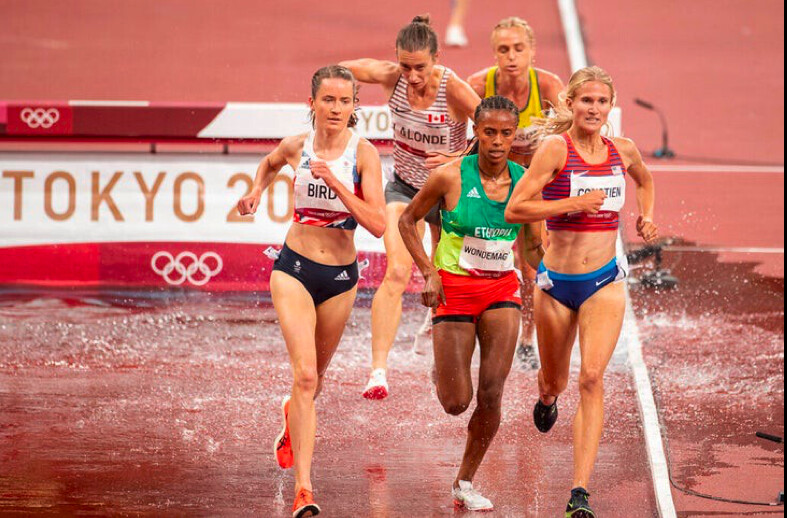
Constien, then 26, had spent the several years after graduating from the University of Colorado in 2019 continuing to train for the steeplechase under her college coaches while working a full-time job mostly because she loved it, and partly because she was betting on herself that she could continue to progress to a higher level.
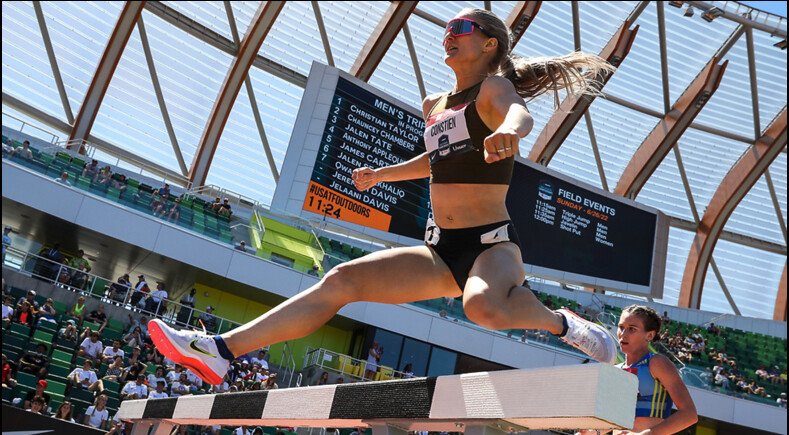
While studying environmental engineering at CU, Constien twice earned All-American honors in the steeplechase and helped the Buffaloes win a NCAA Division I national championship in cross country. She then finished 12th in the steeplechase at the Tokyo Olympics in 2021. And yet the Boulder, Colorado-based runner hadn’t been able to attract a sponsorship deal from a shoe and apparel brand. She squeezed her workouts in before work, paid for her travel to races, and remained determined and hopeful.
But then, after winning a U.S. indoor title in the flat 3,000 meters in early 2023, she caught the attention of Nike, which signed her to a deal that would lead into the 2024 Olympic year. Finally, it was the break she’d be hoping for.
However, less than three weeks after signing the contract, while running the steeplechase in a high-level Diamond League meet in Doha, Qatar, Constien landed awkwardly on her right leg early in the race and immediately knew something was wrong. She could be seen visibly mouthing “Oh no!” on the livestream, as she hobbled to the side of the track out of the race.
It was a worst case scenario: a torn ACL in her right knee. That meant surgery and a long road back to running fast again.
“That was awful,” said Kyle Lewis, her boyfriend who was watching the race online from Boulder. “The doctors over there initially told her they thought it was a sprain, but she came home and two days later she got an MRI and found out that it was a completely torn ACL, and she was obviously very upset. That was only a couple of weeks after she signed the Nike deal. But that’s just kind of been like with Val’s whole career. Nothing has ever come easy to that girl.”
How Constien, now 28, returned to top form a year later to become one of the top contenders to make Team USA in the steeplechase heading into the June 21-30 U.S. Olympic Trials in Eugene, Oregon—her preliminary race on June 24 will be only 398 days after her knee was surgically repaired—is a testament to the grit and confidence Constien possesses.
“It’s all just an extension of how tough I am and how willing I am to make hard decisions, and how badly I want it,” Constien said. “I love running. If I didn’t love running this much, I would’ve quit a long time ago.”
Constien had surgery last May 2023 at the Steadman Clinic in Vail, Colorado, not far from where she grew up. But that also presented a challenging twist.
One of the most popular types of ACL reconstructions for athletes is called a patella tendon graft, in which the doctor cuts off pieces of bone from the patient’s tibia and patella and several strands of the patella tendon and uses those materials to replace the ACL. Usually those grafts are harvested from the same injured leg, but doctors determined Constien’s right patella had a bone bruise on it and wasn’t healthy enough to use. So instead, they grafted the replacement materials from her left leg. That meant undergoing surgery on both legs, rendering her recovery even more difficult.
For the first two weeks after surgery, she couldn’t stand up or sit down on her own. She had trouble moving around and even had to sit down to take a shower. It took a full month until she started to get comfortable enough to go on short, easy walks and start to regain her mobility.
“The first month post-op was really devastating,” she said. “I was in a lot of pain, and it was hot and I was uncomfortable. I’m glad he did it the way he did it, but it was a really, really challenging recovery.”
All the while, though, Constien never stopped thinking about getting back to racing and the prospect of what 2024 might hold. That’s what helped her make a huge mental shift two weeks after the surgery and refocus all of her energy into returning to peak form and chasing another Olympic berth.
That was obviously easier said than done, but Constien has grown used to working hard and battling adversity. Her college career had been disrupted by injuries and slow progress. She was overlooked by brands when she got out of school in 2019 and again in 2021 after she slashed 7 seconds off her personal best time to finish third at the U.S. Olympic Trials and earn a spot in the Tokyo Olympics. And after she ran two strong races in Tokyo—the first international races of her career—to make it to the final and place 12th overall.
Even when she’s been overlooked or discounted, Constien has always believed in her potential. And that’s why, after a year of hyper-focused dedication, she’s on the brink of making it back onto Team USA to compete in this summer’s Paris Olympics.
“I’ve told her many times, no matter what happens after this point, what a comeback it’s already been,” Lewis said. “But what’s amazing about her is that, after that initial rough part, when she wasn’t able to walk, she just did an incredible job of compartmentalizing and being focused. I never saw her get sad or upset. She was always just super clinical about everything and really happy. It’s been incredible to watch.”
All last summer and fall, she continued building strength and began rejuvenating her aerobic strength—running more miles, getting stronger and getting faster. And that was amid working full-time doing quality assurance work for Stryd, a Boulder-based company that makes a wearable device to monitor running power and gait metrics. Heather Burroughs and Mark Wetmore, who have coached Constien since 2014, knew she had made considerable progress. But it wasn’t until early February that they began to realize the magnitude of her comeback.
“There was a point this winter, when she wasn’t running races, yet but she had some workouts that impressed me,” Burroughs said. “I wasn’t really worried about her ability to get fit enough the last four months, but it was whether her knee could handle the steeple work, especially the water jump.”
They never discussed that—because there was no point—and Constien went boldly into the outdoor season with her goal of breaking the 9:41.00 Olympic Trials qualifying standard. She started training outdoors in March and started her season by running a strong 1500-meter race on April 12 near Los Angeles (she won her heat in 4:12.27). But it wasn’t until May 11—roughly a year after she blew out her knee in Doha—that she ran her first steeple race.
At the Sound Running Track Fest, she ran patiently (with a smile on her face most of the way) just off the lead for the seven-and-a-half-lap race. She then unleashed an explosive closing kick to outrun Kaylee Mitchell down the homestretch and win in 9:27.22—securing her place in the Olympic Trials. That got her an invitation to the Prefontaine Classic, an international Diamond League meet on May 25 in Eugene, where she ran the best race of her life and finished fifth—and first American—in a new personal best of 9:14.29.
That put Constien at No. 7 on the all-time U.S. list. But more importantly, Constien closed hard after Uganda’s Peruth Chemutai had split the field apart en route to a world-leading 8:55.09, the sixth-fastest time in history.
“I’m more impressed by her comeback than she is, and it’s because I think she expected it,” Burroughs said. “It’s not that I didn’t expect it, but it was still improbable. But even now that she’s come back, she’s not impressed with herself at all. After the Prefontaine meet, I texted her about the race, and I got a five-word response—‘Let’s get back to work’—just very businesslike. She’s just dialed in and, to me, that says, ‘My big goal is yet to come.’”
For the last decade-plus, Emma Coburn and Courtney Freirichs have dominated the U.S. women’s steeplechase. They both suffered season-ending injuries this spring (broken ankle and torn ACL, respectively). Their absence leaves the event wide open for the likes of Constein, who is ranked second, and Krissy Gear, who enters the meet at the top seed (9:12.81) and as the defending national champion. But rising stars Courtney Wayment (9:14.48), Olivia Markezich (9:17:36), Gabrielle Jennings (9:18:03), and Kaylee Mitchell (9:21.00) are among several fast, young runners eager to battle for a spot on the Olympic team.
Constien knows she has two just goals to execute: run smart and fast enough to qualify for the finals on June 27, and then do whatever it takes to finish among the top three in that race.
Burroughs believes she’s as fit and as strong as she’s ever been, much improved since 2022, when she finished a disappointing eighth at the U.S. championships (9:42.96) while recovering from Covid. In fact, she’s even much better than her breakout year in 2021.
Over the past several weeks in Boulder, Constien has sharpened her fitness, including a final tuneup on June 12: a robust tempo run on the track with two hurdles per lap, which was preceded and followed by several fast 200-meter repeats. She’s also sharpened her perspective.
“There were definitely some dark times where I doubted myself and I doubted the process,” Constien said. “But I kind of just had to lock those thoughts away and just try to focus on the positive. And it’s really paid off.
“I never gave up when I didn’t have a sponsor and had to figure it all out on my own,” she added. “So tearing my ACL, yeah, that really sucks. That was really, really hard. But a part of me was like, ‘I’ve already done the hardest thing ever’ just by staying in the sport on my own. I look at it like, ‘I am the toughest person out here regardless of that ACL.’”
Login to leave a comment
TWENTY-ONE YEARS AGO, HE WAS INCARCERATED FOR LIFE. LAST YEAR, HE RAN THE NYC MARATHON A RADICALLY CHANGED MAN.
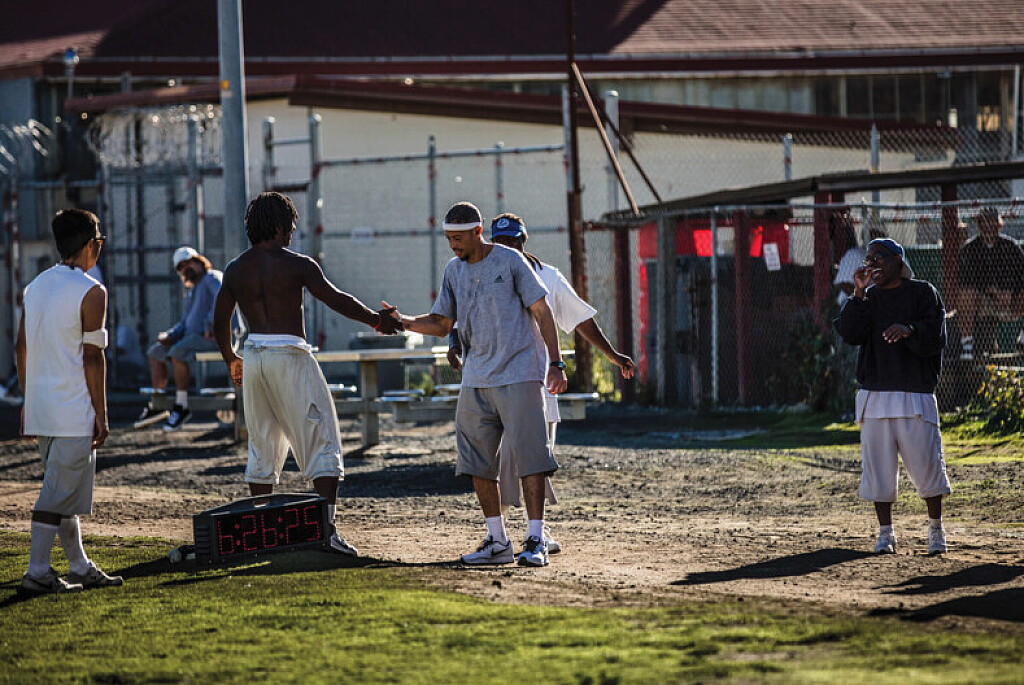
RAHSAAN ROUNDED THOMAS A CORNER. Gravel underfoot gave way to pavement, then dirt. Another left turn, and then another. In the distance, beyond the 30-foot wall and barbed wire separating him from the world outside, he could see the 2,500-foot peak of Mount Tamalpais. He completed the 400-meter loop another 11 times for an easy three miles.
Rahsaan wasn’t the only runner circling the Yard that evening in the fall of 2017. Some 30 people had joined San Quentin State Prison’s 1,000 Mile Club by the time Rahsaan arrived at the prison four years prior, and the group had only grown since. Starting in January each year, the club held weekly workouts and monthly races in the Yard, culminating with the San Quentin Marathon—105 laps—in November. The 2017 running would be Rahsaan’s first go at the 26.2 distance.
For Rahsaan and the other San Quentin runners, Mount Tam, as it’s known, had become a beacon of hope. It’s the site of the legendary Dipsea, a 7.4-mile technical trail from Mill Valley to Stinson Beach. After the 1,000 Mile Club was founded in 2005, it became tradition for club members who got released to run that trail; their stories soon became lore among the runners still inside. “I’ve been hearing about the Dipsea for the longest,” Rahsaan says.
Given his sentence, he never expected to run it. Rahsaan was serving 55 years to life for second-degree murder. Life outside, let alone running over Mount Tam all the way to the Pacific, felt like a million miles away. But Rahsaan loved to run—it gave him a sense of freedom within the prison walls, and more than that, it connected him to the community of the 1,000 Mile Club. So if the volunteer coaches and other runners wanted to talk about the Dipsea, he was happy to listen.
We’ll get to the details of Rahsaan’s crime later, but it’s useful to lead with some enduring truths: People can grow in even the harshest environments, and running, whether around a lake or a prison yard, has the power to change lives. In fact, Rahsaan made a lot of changes after he went to prison: He became a mentor to at-risk youth, began facing the reality of his violence, and discovered the power of education and his own pen. Along the way, Rahsaan also prayed for clemency. The odds were never in his favor.
To be clear, this is not a story about a wrongful conviction. Rahsaan took the life of another human being, and he’s spent more than two decades reckoning with that fact. He doesn’t expect forgiveness. Rather, it’s a story about a man who you could argue was set up to fail, and for more than 30 years that’s exactly what he did. But it’s also a story of navigating the delta between memory and fact and finding peace in the idea that sometimes the most formative things in our lives may not be exactly as they seem. And mostly, it’s a story of transformation—of learning to do good in a world that too often encourages the opposite.
RAHSAAN “NEW YORK” THOMAS GREW UP IN BROWNSVILLE, A ONE-SQUARE-MILE SECTION OF EASTERN Brooklyn wedged between Crown Heights and East New York. As a kid he’d spend hours on his Commodore 64 computer trying to code his own games. He loved riding his skateboard down the slope of his building’s courtyard. On weekends, he and his friends liked to play roller hockey there, using tree branches for sticks and a crushed soda can for a puck.
Once a working-class Jewish enclave, Brownsville started to change in the 1960s, when many white families relocated to the suburbs, Black families moved in, and city agencies began denying residents basic services like trash pickup and streetlight repairs. John Lindsay, New York’s mayor at the time, once referred to the area as “Bombsville” on account of all the burned-out buildings and rubble-filled empty lots. By 1971, the year after Rahsaan was born, four out of five families in Brownsville were on government assistance. More than 50 years later, Brownsville still has a poverty rate close to 30 percent. The neighborhood’s credo, “Never ran, never will,” is typically interpreted as a vow of resilience in the face of adversity. For some, like Rahsaan, it has always meant something else: Don’t back down.
The first time Rahsaan didn’t run, he was 5 or 6 years old. He had just moved into Atlantic Towers, a pair of 24-story buildings beset with rotting walls and exposed sewer pipes that housed more than 700 families. Three older kids welcomed him with their fists. Even if Rahsaan had tried to run, he wouldn’t have gotten far. At that age, Rahsaan was skinny, slow, and uncoordinated. He got picked on a lot. Worse, he was light-skinned and frequently taunted as “white boy.” The insult didn’t even make sense to Rahsaan, whose mother is Black and whose father was Puerto Rican. “I feel Black,” he says. “I don’t feel [like] anything else. I feel like myself.”
Rahsaan hated being called white. It was the mid-1970s; Roots had just aired on ABC, and Rahsaan associated being white with putting people in chains. Five-Percent Nation, a Black nationalist movement founded in Harlem, had risen to prominence and ascribed godlike status to Black men. Plus, all the best athletes were Black: Muhammad Ali. Reggie Jackson. Kareem Abdul-Jabbar. In Rahsaan’s world, somebody white was considered physically inferior.
Raised by his mother, Jacqueline, Rahsaan never really knew his father, Carlos, who spent much of Rahsaan’s childhood in prison. In 1974, Jacqueline had another son, Aikeem, with a different man, and raised her two boys as a single mom. Carlos also had another son, Carl, whom Rahsaan met only once, when Carl was a baby. Still, Rahsaan believed “the myth,” as he puts it now, that one day Carlos would return and relieve him, his mom, and Aikeem of the life they were living. Jacqueline had a bachelor’s degree in sociology and worked three jobs to keep her sons clothed and fed. She nurtured Rahsaan’s interest in computers and sent him to a parochial school that had a gifted program. Rahsaan describes his family as “upper-class poor.” They had more than a lot of families, but never enough to get out of Brownsville, away from the drugs and the violence.
Some traumas are small but are compounded by frequency and volume; others are isolated occurrences but so significant that they define a person for a lifetime. Rahsaan remembers his grandmother telling him that his father had been found dead in an alley, throat slashed, wallet missing. Rahsaan was 12 at the time, and he understood it to mean his father had been murdered for whatever cash he had on him—maybe $200, not even. Now he would never come home.
Rahsaan felt like something he didn’t even have had been taken from him. “It just made me different, like, angry,” he says. By the time he got to high school, Rahsaan resolved to never let anyone take anything from him or his family again. “I started feeling like, next time somebody tryin’ to rob me, I’m gonna stab him,” he says. He started carrying a knife, a razor, rug cutters—“all kinds of sharp stuff.” Rahsaan never instigated a fight, but he refused to back down when threatened or attacked. It was a matter of survival.
The first time Rahsaan picked up a gun, it was to avenge his brother. Aikeem, who was 14 at the time, had been shot in the leg by a guy in the neighborhood who was trying to rob him and Rahsaan. A few months later, Rahsaan saw the shooter on the street, ran to the apartment of a drug dealer he knew, and demanded a gun. Rahsaan, then 18, went back outside and fired three shots at the guy. Rahsaan was arrested and sent to Rikers Island, then released after three days: The guy he’d shot was wanted for several crimes and refused to testify against Rahsaan.
By day, Rahsaan tried to lead a straight life. He graduated from high school in 1988 and got a job taking reservations for Pan Am Airways. He lost the job after Flight 103 exploded in a terrorist bombing over Scotland that December, and the company downsized. Rahsaan got a new job in the mailroom at Debevoise & Plimpton, a white-shoe law firm in midtown Manhattan. He could type 70 words a minute and hoped to become a paralegal one day.
Rahsaan carried a gun to work because he’d been conditioned to expect the worst when he returned to Brownsville at night. “If you constantly being traumatized, you constantly feeling unsafe, it’s really hard to be in a good mind space and be a good person,” he says. “I mean, you have to be extraordinary.”
After high school, some of Rahsaan’s friends went to Old Westbury, a state university on Long Island with a rolling green campus. He would sometimes visit them, and at a Halloween party one night, he got into a scrape with some other guys and fired his gun. Rahsaan spent the next year awaiting trial in county jail, the following year at Cayuga State Prison in upstate New York, and another 22 months after that on work release, living in a halfway house in Queens. He got a job working the merch table for the Blue Man Group at Astor Place Theater, but the pay wasn’t enough to support the two kids he’d had not long after getting out of Cayuga.
He started selling a little crack around 1994, when he was 24. By 27 he was dealing full-time. He didn’t want to be a drug dealer, though. “I just felt desperate,” he says. Rahsaan had learned to cut hair in Cayuga, and he hoped to save enough money to open a barbershop.
He never got that opportunity. By the summer of 1999, things in New York had gotten too hot for Rahsaan and he fled to California. For the first time in his 28 years, Rahsaan Thomas was on the run.
EVERY RUNNER HAS AN ORIGIN STORY. SOME START IN SCHOOL, OTHERS TAKE UP RUNNING TO IMPROVE their health or beat addiction. Many stories share common themes, if not exact details. And some, like Rahsaan’s, are absolutely singular.
Rahsaan drove west with ambitions to break into the music business. He wanted to be a manager, maybe start his own label. His new girlfriend would join him a week later in La Jolla, where they’d found an apartment, so Rahsaan went first to Big Bear, a small town deep in the San Bernardino Mountains 100 miles east of Los Angeles. It’s where Ryan Hall grew up, and where he discovered running at age 13 by circling Big Bear Lake—15 miles—one afternoon on a whim. Hall has recounted that story so many times that it’s likely even better known than the American records he would go on to set in the half and full marathons.
Rahsaan didn’t know anything about Ryan Hall, who at the time was just about to start his junior year at Big Bear High School and begin a two-year reign as the California state cross-country champion. He didn’t even know there was a lake in Big Bear. Rahsaan went to Big Bear to box with a friend, Shannon Briggs, a two-time World Boxing Organization heavyweight champion.
Briggs and Rahsaan had grown up together in Atlantic Towers. As kids they liked to ride bikes in the courtyard, and later they went to the same high school in Fort Greene. But Briggs’s mom had become addicted to drugs by his sophomore year, and they were evicted from the Towers. Briggs and Rahsaan lost touch. Briggs began spending time at a boxing gym in East New York; often he’d sleep there. He had talent in the ring. People thought he might even be the next Mike Tyson, another native of Brownsville who was himself a world heavyweight champ from 1986 to 1989.
Briggs went pro in 1991, and by the end of that decade he was earning seven figures fighting guys like George Foreman and Lennox Lewis. Rahsaan was at those fights. The two had reconnected in 1996, when Rahsaan was trying to rebuild his life after prison and Briggs’s boxing career was on the rise. In August 1999, Briggs was gearing up to fight Francois Botha, a South African known as the White Buffalo, and had decamped to Big Bear to train. “He was like, ‘Yo, come live with me, bro,’” Rahsaan recalls.
Briggs was running three miles a day to increase his stamina. His route was a simple out-and-back on a wooded trail, and on one of Rahsaan’s first days there, he decided to join him. Rahsaan hadn’t done so much as a push-up since getting out of prison, but he wanted to hang with his friend. Briggs and his training partners set off at their usual clip; within a few minutes they’d disappeared from Rahsaan’s view. By the time they were doubling back, he’d barely made it a half mile.
Rahsaan never liked feeling physically inferior. So back in La Jolla, he started running a few times a week, going to the gym, whatever it took. Before long he was up to five miles. And the next time he ran with Briggs, he could keep up. After that, he says, “Running just became my thing.”
FOR YEARS, RAHSAAN HAD BUCKED AT TAKING RESPONSIBILITY for the murder that sent him to prison. The other guys had guns, too, he insisted. If he hadn’t shot them, they’d have shot him. It was self-defense.
In the moment, he had no reason to think otherwise. It was April 2000. A friend had arranged to sell $50,000 worth of weed, and Rahsaan went along to help. They met in the parking lot of a strip mall in L.A., broad daylight. The buyers brought guns instead of cash, things went sideways, and, in a flash of adrenaline, Rahsaan used the 9mm he’d packed for protection, killing one man and putting the other in critical condition. He was 29 and had been in California eight months.
After awaiting trial for three years in the L.A. County jails, Rahsaan was sentenced to 55 years to life. But for the crushing finality of it, the grim interminability, the prospect of never seeing the outside world again, he was on familiar ground. Even Brownsville had been a kind of prison—one defined, as Rahsaan puts it now, by division and neglect, a world unto itself that societal forces made nearly impossible to escape. He was used to life inside.
Rahsaan spent the next 10 years shuttling between maximum security facilities, the bulk of those years at Calipatria State Prison, 30 miles from the Mexican border. By the time he got to San Quentin, he was 42.
As part of the prison’s restorative justice program, Rahsaan met a mother of two young men who’d been shot, one killed and the other critically injured. Her pain, her dignity, her ability to forgive her sons’ shooters prompted Rahsann to reflect on his own crime. “It made me feel like, damn, I did this to his mother,” he says. “I did this to my mother. You don’t do that to Black mothers. They go through so much.”
ABOUT 2 MILLION PEOPLE ARE INCARCERATED IN THE UNITED States today, roughly eight times as many as in the early 1970s. Nearly half of them are Black, despite Black Americans representing only 13 percent of the U.S. population.
This disparity reflects what the legal scholar and author Michelle Alexander calls “the new Jim Crow,” an invisible system of oppression that has impeded Black men in particular since the days of slavery. In her book of the same title, Alexander unpacks 400 years of policies and social attitudes that have created a society in which one in three Black males will be incarcerated at some point in their lives, and where even those who have been paroled often face a lifetime of discrimination and disenfranchisement, like losing the right to vote. If you hit a wall every time you try to do something, are you really free? More than half of the people released from U.S. jails and prisons return within three years.
After Rahsaan got out of Cayuga back in 1992, with a felony on his permanent record, he’d had trouble doing just about anything legit: renting an apartment, finding a decent job, securing a loan. Though he’d paid for the Mercedes SUV he drove to California, the lease was in his girlfriend’s name. Selling crack had provided financial solvency, and his success in New York made him feel invincible. One weed deal in California seemed easy enough. But he wasn’t naive. Rahsaan packed a gun, and if he felt he had to use it, he would.
Today Rahsaan feels deep remorse for what transpired from there. But back then he saw no other way. “When we have a grievance, we hold court in the street,” he says of growing up in the Brownsville projects. “There’s no court of law, there’s no lawsuits.” Even while incarcerated, Rahsaan continued to meet threats with violence. But he also found that in prison, as in Brownsville, respect was temporary. “If you stab somebody, people leave you alone,” he says. “But you gotta keep doing it.”
Not long after Rahsaan got to Calipatria, around 2003 or 2004, an older man named Samir pulled him aside. “Youngster, there’s nobody that you can beat up that’s gonna get you out of prison,” Rahsaan remembers Samir saying. “In fact, that’s gonna make it worse.” Rahsaan thought about Muhammad Ali, how he would get his opponents angry on purpose so they’d swing until they wore themselves out. He realized that when you’re angry, you’re not thinking clearly or moving effectively. You’re not responding; you’re reacting.
The next time Rahsaan saw Samir was in the yard at Calipatria. They were both doing laps, and the two men started to run together. Rahsaan told Samir about the impact his words had on him, how they helped him see he’d always let “somebody else’s hangup become my hangup, somebody else’s trauma become my trauma.” Each time that happened, he realized, he slid backward.
Rahsaan began exploring various religions. He liked how the men in the Muslim prayer group at Calipatria encouraged him to think about his past, and the way they talked about God’s plan. He thought back to that day in April 2000 and came to believe that God would have gotten him out of that situation without a gun. “If I was meant to die, I was meant to die,” he says. “If I’m not, I’m not.” He started to see confrontations as tests. “I stopped feeding into the negativity and started passing the test, and I’ve been passing it consistently since,” he says.
CLAIRE GELBART PLACED HER BELONGINGS IN A PLASTIC TRAY AND WALKED THROUGH THE METAL detectors at the visitors’ entrance at San Quentin. She crossed the Yard to the prison’s newsroom. It was late fall of 2017, and Gelbart had started volunteering with the San Quentin Journalism Guild, an initiative to teach incarcerated people the fundamentals of newswriting and interviewing techniques.
Historically infamous for housing people like Charles Manson and Sirhan Sirhan, the man convicted of killing Robert Kennedy, and for having the only death row for men in California, San Quentin has in recent years instituted reforms. By the time Rahsaan arrived, the facility was offering dozens of programs, had an onsite college, and granted some of the individuals housed there considerable freedom of movement. Hundreds of volunteers pass through its gates every year.
Rahsaan was in the newsroom working on a story for the San Quentin News, where he was a staff writer. Gelbart and Rahsaan started to chat, and within minutes they were bonding over running. They talked about the San Quentin Marathon—in which Rahsaan was proud to have placed 13th out of 13 finishers in 6 hours, 12 minutes, and 23 seconds—and Gelbart’s plans to run her first half marathon that spring. “It was like I lost all sense of place and time,” Gelbart says, “like I could have been in a coffee shop in San Francisco talking to someone.”
In weekly visits over the next year, Gelbart and Rahsaan talked about their families, their hopes for the future. Gelbart had just graduated from Tufts University with dreams of being a writer. Rahsaan was working toward a college degree, writing for numerous outlets like the Marshall Project and Vice, and learning about podcasting and documentary filmmaking. In 2019, when Gelbart was offered a job in New York, she told Rahsaan she felt torn about leaving—they’d become close friends. They made a pact that if Rahsaan ever got out of prison, they would run the New York City Marathon together. “We couldn’t think of a better thing to celebrate him coming home,” Gelbart says.
When Rahsaan was sentenced, he still had hope for a successful appeal. But when his appeal was denied in 2011, he realized he was never going home. His parole date was set for 2085.
At the time, though, the political appetite for mass incarceration was starting to shift. Gray Davis, who was governor of California from 1999 to 2003, had never granted a single pardon; and his successor, Arnold Schwarzenegger, granted only 15. Then, between 2011 and 2019, Governor Jerry Brown pardoned or commuted the sentences of more than 1,300 people. Studies show that the recidivism rate among those who had been serving life sentences is less than 5 percent in a number of states, including California. And according to the U.S. Bureau of Justice, 98 percent of people convicted of homicide who are released from prison do not commit another murder.
In the fall of 2018, Governor Brown approved Rahsaan for commutation, but it was now up to his successor, Gavin Newsom, to follow through. And until a release date was set, there were no guarantees.
Back at San Quentin, Rahsaan was busier than ever. He was working on his fourth film, Friendly Signs, a documentary funded by the Marshall Project and the Sundance Institute; it was about fellow 1,000 Mile Club member Tommy Lee Wickerd’s efforts to start an ASL program to aid a group of deaf and hard-of-hearing newcomers to the prison. He had recently been named chair of the San Quentin satellite chapter of the Society of Professional Journalists and became a cohost and coproducer of Ear Hustle, a popular podcast about life in San Quentin that in 2020 was a finalist for a Pulitzer Prize. He was also sketching out plans for a nonprofit, Empowerment Ave, to build connections to the outside world for other incarcerated writers and artists and to advocate for fair compensation. And after five years, he was just one history class away from getting his associate’s degree from Mount Tamalpais College.
In January 2020, Rahsaan began his final semester, eager to don his cap and gown that June. MTC always organized a festive graduation ceremony in the prison’s visiting room, inviting families, friends, students, and staff. Then COVID-19 hit. Lockdown. All classes canceled until further notice. The 1,000 Mile Club suspended workouts and races as well, its 70-plus members scattering throughout the prison, not sure when or if they’d ever get together again. Covid would officially kill 28 people at San Quentin and make many more very ill. College graduation, let alone races in the Yard and parole hearings, would have to wait.
For the first time since arriving at San Quentin, Rahsaan felt claustrophobic in his 4-by-10-foot cell. He couldn’t work on his films or go to the newsroom. All he could do was read and write, alone. After George Floyd was murdered that May, Rahsaan fell into a depression. He remembered something Chadwick Boseman had said in a 2018 commencement speech at Howard University: “Remember, the struggles along the way shape you for your purpose.”
Rahsaan decided his purpose was to write. Outside journalists couldn’t enter the prison during the pandemic, but their publications were thirsty for prison Covid stories. Rahsaan saw an opportunity. Between June 2020 and February 2023, he published 42 articles, and thanks to Empowerment Ave, he knew what those articles were worth. As a writer for the San Quentin News, Rahsaan earned $36 a month; those 42 articles for external publications netted him $30,000.
DOZENS OF PEOPLE GATHERED OUTSIDE SAN QUENTIN’S GATES. IT WAS A FRIGID MORNING IN EARLY February 2023; the sun hadn’t yet risen. Among those assembled were two cofounders of Ear Hustle, Earlonne Woods and Nigel Poor, along with executive producer Bruce Wallace, recording equipment in hand. A procession of white vans, each carrying one or two men, arrived one by one. After three or four hours, the air had warmed to a balmy 60 degrees. Another van pulled up, Rahsaan got out, and the crowd erupted. Nearly 23 years after he’d been sentenced to 55 years to life, Rahsaan Thomas had been released.
Rahsaan got into a Hyundai sedan and was soon headed away from San Quentin. Wallace sat in the back, recording Rahsaan seeing water, mountains, and a highway from the front seat of a car for the first time in decades. “I feel like I’m escaping,” he joked. “Is anybody chasing us? This is amazing. This is crazy.”
Rahsaan called his mom, who wasn’t able to make it to California for his release.
“Hey, Ma, it’s really real,” he said, breathless with joy. “I’m free. No more handcuffs.”
Jacqueline’s exuberance can be heard in her laughter, her curiosity about what his first meal would be (steak and French toast), and her motherly rebuke of his plan to buy a Tesla.
“You ain’t been drivin’ in a while and I know you ain’t the best driver in the world,” she teased.
Rahsaan moved into a transitional house in Oakland and wasted no time adjusting to life in the 21st century. He got an iPhone, and a friend gave him a crash course in protecting himself from cyberattacks. He’s almost fallen for a few. “There’s some rough hoods on the internet,” he jokes. Earlonne Woods, who was paroled in 2018, and others taught Rahsaan how to use social media. He opened Instagram and Facebook accounts and worked on his own website, rahsaannewyorkthomas.com, which a friend had built for him while he was in San Quentin to promote his creative projects, Empowerment Ave, and even a line of merch.
Despite all the excitement and chaos, Rahsaan never forgot about the pact he’d made with Claire Gelbart. He found her on Facebook and sent a simple, two-line message: “Start training. We have a marathon to run.”
IN LATE MARCH, SIX WEEKS AFTER HIS RELEASE, RAHSAAN FLEW TO NEW YORK CITY. IT WAS THE FIRST time he’d been home in nearly a quarter century, and he hadn’t flown since before 9/11. The security protocols at SFO reminded him more of prison than of the last time he’d been in an airport. Actually, “it was worse than prison,” he jokes. They confiscated his jar of honey.
The changes to his home borough were no less surprising. He’d come to New York to take work meetings, see family, and catch a Nets game at Barclays Center in downtown Brooklyn. Rahsaan barely recognized Barclays; it had been a U-Haul lot the last time he was there, and skyscrapers now towered over Fulton Mall, where he used to buy Starter jackets at Dr. Jay’s and Big Daddy Kane tapes at the Wiz.
He met up with Gelbart on Flatbush Avenue, where come November they’d be just hitting mile 8 of the New York City Marathon. They hadn’t been allowed to touch at San Quentin and weren’t sure how to greet each other on the outside. “It was weird at first, because I was like, do we hug?” Gelbart recalls. But the awkwardness faded fast, and as they walked, Gelbart saw a different side of Rahsaan. “He seemed so much more relaxed,” she says. “Much happier, much lighter.”
Back in 1985, just a few blocks from where Rahsaan and Gelbart walked now, Rahsaan, his brother Aikeem, and his friend Troy had been on their way home from the Fulton Mall when out of nowhere, about a dozen guys rolled up on them. They started beating on Troy and, for a minute, left Rahsaan and Aikeem alone. Images of his father, throat slashed, flashed through Rahsaan’s mind. He pulled a rug cutter out of his pocket, ran to the smallest guy in the group, and jabbed it into the back of his head. “They looked at me like they were gonna kill me,” Rahsaan says. He threw the blade to the ground, slid his hand inside his coat, and held it there. “Y’all wanna play? We gonna play,” he said. The bluff worked; the guys ran. It was the first time Rahsaan had ever stabbed someone.
Change sometimes occurs gradually, and then all at once. That was a different Brooklyn, a different Rahsaan. He began to confront his own violence when he had met Samir some 20 years before, and continued to do so through his studies, his faith, his work in restorative justice, and his own writing. But the origin of his tendency toward violence, the death of his father, remained firmly rooted in his psyche. Then, in 2017, Rahsaan spoke for the first time with his estranged half-brother, Carl.
Carl had read Rahsaan’s work, and asked why he always said their father had been murdered.
“That’s what grandma told me,” Rahsaan said.
“But he wasn’t murdered,” Carl told him. “He killed himself.”
And it wasn’t in 1982, as Rahsaan remembered, but in 1985—the same year Rahsaan started carrying blades.
Rahsaan didn’t believe it until Carl sent him a copy of the suicide note. Even then he remained in shock. “To think I justified violence, treating robbery like a life-or-death situation, over a lie,” he says. Jacqueline was as surprised as Rahsaan to learn the truth of Carlos’s death. He never seemed troubled or depressed to her when they were together, but, “You can’t really read people,” she says. “You don’t know.”
Rahsaan still can’t account for why his grandmother told him what she did, nor for the discrepancy between his memory and the facts. Regardless, after more than 30 years, Rahsaan was finally able to let go of the one trauma that had calcified into an instinct to kill or be killed. And he has no intention of dredging it back up.
THE FASTEST RUNNER IN THE 1,000 MILE CLUB’S HISTORY IS MARKELLE “THE GAZELLE” TAYLOR, WHO was paroled in 2019 and went on to run 2:52 in the 2022 Boston Marathon. Rahsaan is the slowest. At San Quentin, he was often the last one to finish a race, but that wasn’t the point—he liked being out in the Yard with the guys. It gave him a sense of belonging, and not just to the 1,000 Mile Club, but to the running community beyond.
Like every other 1,000 Miler who gets released from San Quentin, Rahsaan had a rite of passage to conquer. On Sunday morning, May 7, 2023, he met a handful of other runners from the club and a few volunteer coaches in Mill Valley. After a decade of gazing up at Mount Tam from the Yard as he completed one 400-meter loop after another, Rahsaan was finally about to run over the mountain all the way to the Pacific.
The runners did a few final stretches, wished one another luck, and started to run. Almost immediately they had to climb some 700 stairs, many made of stone, and the course only got more treacherous from there. Uneven footing, singletrack paths, and 2,000-plus feet of elevation all conspire to make the Dipsea notoriously difficult. The giant redwoods and Douglas firs along the course were lost on Rahsaan; he never took his eyes off the ground.
One of the coaches, Jim Maloney, stayed with Rahsaan as his guide, and to help him if he slipped or fell. Markelle Taylor came too, but said he’d meet them in Stinson Beach. He knew how dangerous the trail was, Rahsaan says, and had vowed to never run it again. After his own initiation, Rahsaan decided that he, too, would never do it again. “I’ve been shot at,” he says. “I’ve been in physical danger. I don’t want to revisit danger.”
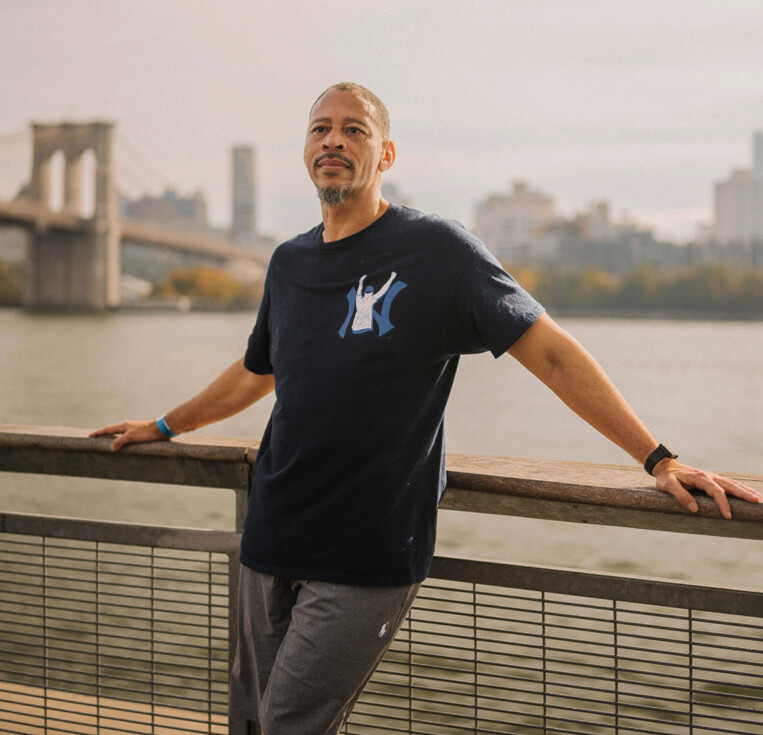
Rahsaan now logs most of his miles on a treadmill because of knee issues, but on occasion he ventures out to do the 3.4-mile loop around Lake Merritt, a lagoon in the heart of Oakland. He decided to use the New York City Marathon to raise money for Empowerment Ave, and to accept donations until he crossed the finish line in Central Park. Gelbart wrote a training plan for him and got him a new pair of shoes. In prison, Rahsaan had run in the same pair of Adidas for three years, and he was excited to learn about the maximalist shoe movement. Gelbart tried to interest him in Hokas, but Rahsaan thought they were ugly. He wanted Nikes.
In June, Gelbart went to the Bay Area to visit family and met Rahsaan for a six-mile run around Lake Merritt. As they looped the lake at a conversational 11:30 pace, they talked about work, relationships, and, of course, the New York City Marathon. Rahsaan was disappointed to learn that he would probably not be the last person to finish. (He still holds the record for the slowest San Quentin Marathon in its 15-year history, and he hopes no one ever beats it.) Besides, the more time he spent on the course in New York, he figured, the longer people would have to donate to Empowerment Ave.
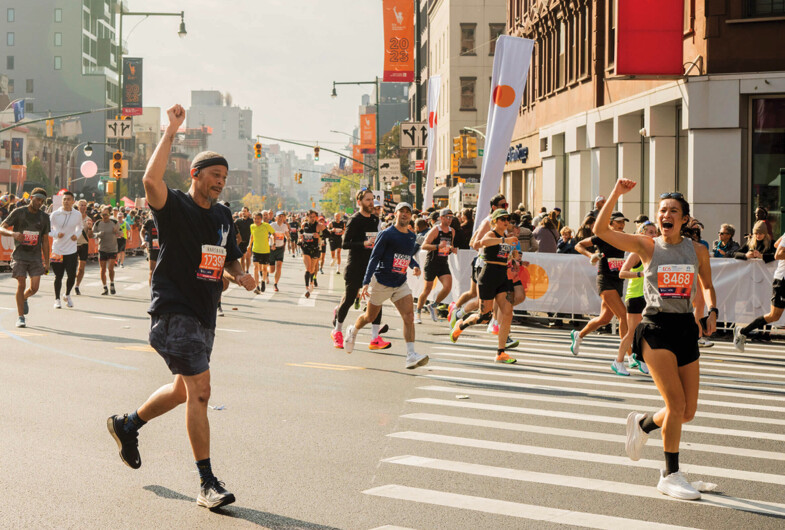
On Sunday, November 5, Gelbart and Rahsaan made their way to Staten Island. Waiting at the base of the Verrazzano Bridge, Gelbart recorded Rahsaan singing along to Frank Sinatra’s “New York, New York” for Instagram, and captioned the video “back where he belongs.” They documented much of their race as they floated through Brooklyn, Queens, Manhattan, and the Bronx: greeting friends along the course, enjoying a lollipop on the Queensboro Bridge, beaming even as their pace slowed from 11:45 per mile for the first 5K to 16:30 for the last. Rahsaan finished in six hours, 26 minutes, and 21 seconds, placing 48,221 out of 51,290 runners. The next day, he sent me a text: “The marathon was pure love.” What’s more, he received more than $15,000 in donations for Empowerment Ave, enough to start a writing program at a women’s prison in Texas.
Every runner has an origin story. Every runner finds a reason to keep going. At Calipatria, Rahsaan liked to joke that he ran because if an earthquake ever came along and brought down the prison’s walls, he needed to be in shape so he could escape and run to Mexico. In San Quentin, he ran for the community. Today he has a new reason. “I heard that running extends your life by 10 years,” he says, “and I gave away 22.” Now that he’s out, his motivation has never been higher. He has so much to do.
Login to leave a comment

THE TRUTH ABOUT RUNNING AND WEIGHT LOSS
When approached realistically, running can be an excellent tool for weight loss and weight management, but don’t be fooled by the numerous myths surrounding them
People often start running to drop a few pounds. Hopefully, they fall in love with it, move beyond the number on the scale and continue running for its many other benefits; but for many people, it’s impossible to decouple running from the weight-loss goal. When done correctly, running can help people struggling with excess weight to shed pounds—and continuing to run can be effective way to keep them off. But the subject of running and weight loss is fraught with mythology. We delve into some of the problems with the weight-loss approach to running, including what actually works, what definitely doesn’t and how to keep running as part of your life, regardless of whether you lose weight.
Myth

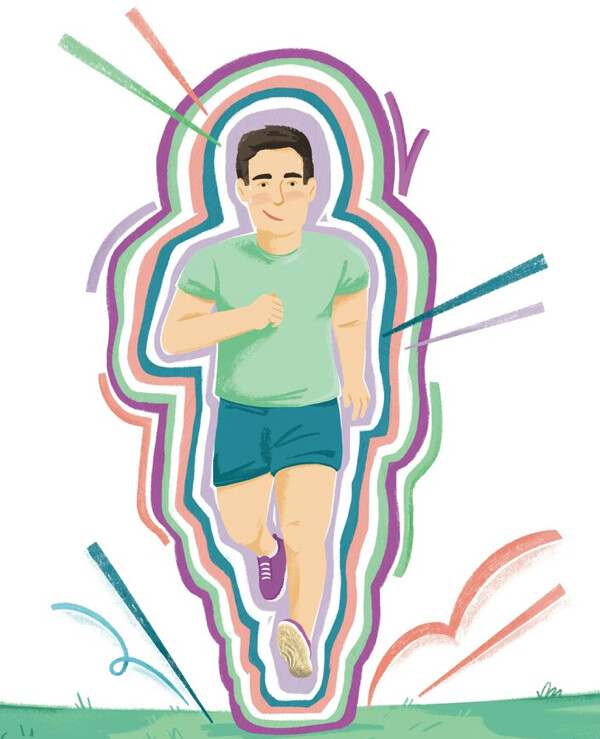
You can run a marathon PB while dropping 10 pounds
You can do anything, but you can’t do everything. As a rule, you won’t boost performance at the same time that you’re purposely losing weight. Often, the opposite is true, says Kylee Van Horn, RD, owner of Flynutrition in Boulder, Colo. When you’re restricting your food intake, you’re unlikely to make performance gains, but unfortunately, we often equate being faster with being thinner.
“The first thing I tell a client with a weight-loss goal is that losing weight will not necessarily make you a faster runner,” adds Carla Rodriguez Dimitrescu, PhD, an Edmonton-based expert in nutrition and metabolism who works primarily as a running coach. It’s fine if weight loss is your goal—but don’t confuse it with performance, because the way that you’ll get faster isn’t necessarily the way that you’ll drop a pound a week (which should be the maximum weight you’re losing per week, unless advised otherwise by your doctor).
Myth
There is one “runner’s body”
Let’s be clear: there is no single body type that signifies “runner.” Often, people with weight-loss goals who run have a vision in their minds of the long, lanky phenotype often associated with marathoners. But runners come in all shapes and sizes—and if you run, you have a runner’s body, period.
Even in the professional sphere, there are different body types that excel at different types of running. “You would never tell a professional runner that he doesn’t look like an astrophysicist,” says Dimitrescu. “But for some reason, that astrophysicist is upset that he doesn’t look like a runner.” She adds that people have different somatotypes, which means that genetics and environment will both play a role in how running (or dieting, or strength training) changes your body. And if you really want to see how every body is a runner’s body, sign up for a local 5K race and look around you at the start.
Still, the “runner’s body” myth runs deep, and it can be hard to break free of the desire to be ultra-thin. That’s why Stevie Lyn Smith, RD, a board-certified sports dietitian based in Buffalo, N.Y., tries to focus her clients on health outcomes as well as esthetic goals. “We try to look at other goals, like running your personal best in a race,” she says. “Maybe you won’t achieve whatever physique is jammed in your mind as the ‘ideal,’ but you’re able to appreciate these non-body-focused victories.”
Myth
Lighter is healthier/faster
Here’s an oversimplified example: say you’ve had the stomach flu for a week. You’ve lost seven pounds during that time, thanks to days spent in agony. You head out for your first run since you got sick. How does it go? That’s right—dropping weight doesn’t always lead to speedy running, and while that’s an extreme example, it’s not much different from how you’d perform after a week of crash dieting.
“Slimmer is not necessarily better,” says Dimitrescu. “And too much weight loss or restriction can lead to issues like stress fractures, increased rates of illness and injury and chronic fatigue. That’s not going to make you healthier or faster.”
And unfortunately, Don Henley was right when he sang, ‘You can’t go back, you can never go back.’ If, at 46, you’re mourning your running prowess or body composition from when you were 17, you may need to come to terms with the fact that your body isn’t the same, and no amount of training or restricting will get you there. You need to find your new healthy, speedy body, says Van Horn.
Myth
Runners can lose weight faster by eliminating carbs
Skip any diet that eliminates entire macronutrient groups, says Dimitrescu. These fad diets come and go, and for someone who wants to be a healthy, optimized runner, they’re just not worth it. “I don’t like any restrictive diet that advocates for super low calories or eliminates a macronutrient,” she says.
“My priority is always that clients get plenty of protein—at least one gram per kilogram of body weight—and adequate carbohydrates. People have a fear of carbohydrates, but if you don’t eat enough carbs, you’re going to use the protein as your source of energy instead of using it to help build and repair muscle. You’re not doing any favours to your body if you don’t provide it with the energy it needs to do the work that you’re asking it to do.”
Myth
Running earns you calories
A common saying about running is that you run to eat. But really, you should be eating to run. “Don’t create a reward/punishment mentality around running and food,” says registered dietitian and runner Lindsey Elizabeth Cortes of San Antonio, Texas. “Try to focus on how you fuel and how you train as lifestyle choices and not things that need to be rewarded or punished.”
For example: it’s not, “I had a great run, so now I get to reward myself with nachos,” nor is it “I had a bad run, so now I can only eat a salad.” Instead, reframe to: “I ran, and now I’m craving nachos! Maybe I’ll have nachos with a salad.” Or, “I didn’t run, and I’m craving nachos. Maybe I’ll have nachos with a salad.”
Myth
Fasted running and intermittent fasting will speed up weight loss
Yes, fasted runs and intermittent fasting may potentially have some longevity and fitness-based benefits, but when it comes to weight loss, they’re not going to move the needle. In fact, they might be sabotaging your efforts. “For most people, things like fasted runs and intermittent fasting just equate to saving up their calories until the end of the day and then overdoing it in the evening, or using these so-called ‘healthy’ concepts to put a healthy spin on unhealthy, restrictive eating patterns,” says Van Horn. “But if you look into the research, there’s no benefit for doing fasted training for weight loss. In fact, we know that fasted running can raise cortisol levels, which can make weight loss harder.”
Intermittent fasting that takes place around your running window means that your runs aren’t being fuelled—which can both decrease your running performance and make it harder to lose weight, since you’re more likely to over-indulge later in the day. “At minimum, fuel around your workouts and during your training, so that you have enough calories on board to develop some adaptations and buffer the stress of the workout,” says Van Horn. She adds that if weight loss is the goal, you can reduce calories at meals that aren’t near your workout window. Calories should come out of meals that aren’t right before or after your runs. Lowering your portion of rice with dinner or cutting out dessert if you trained in the morning will give you greater results than skipping your post-run snack. (But keep your caloric deficit at a maximum of 500 calories per day.)
Things like fasting and fat adaptation (training your body to optimize fat over glycogen for fuel) may sound like they’re about weight loss, but the reality is that neither is likely to help you lose weight. Some research has found that when done under the right conditions, they might increase certain health markers or improve longevity, but they’re not the weight-shedding tools you may think they are.
Myth
The more you run, the more weight you lose
The natural inclination of someone who wants to lose weight by running is to run longer. Usually, the idea of training for a marathon or half-marathon gets floated around. But running shorter routes, with some harder efforts thrown in, will lead to better weight loss outcomes, because you’re able to get the benefits of the run cardio without as much stress on the body. And because the more you run, the more you need to fuel, chasing higher mileage is actually a bit of a fool’s errand, where weight loss is concerned.
“Endurance sport is not a weight management tool,” says Smith. “Volume-wise, if you’re running more than 10 hours a week while also working a normal job, spending time with family, dealing with all of those normal responsibilities, the long-term stress of that is not going to be conducive to weight loss. With a more appropriate training load for your current lifestyle, it’s easier for you to manage stress, and you’ll see better results.”
Myth
The number on the scale is the only number that matters
Rather than focusing on your weight in pounds, look at different metrics. “I like a combination of measurements with a soft tape measure, how a certain item of clothing fits, and scale weight done once a month,” says Van Horn. While body composition-measuring tools like a DEXA scan are often considered the gold standard, they are expensive and often difficult to access, so rather than spending time and money on that, focus instead on simple measurements that are replicable.
Daily weigh-ins are also a mistake, says Van Horn. Our bodies fluctuate from day to day, so scale weight on a daily basis can be disheartening. Instead, shift to weekly or monthly and look for a general trend rather than placing any importance on half a pound.
Finally, it’s not all about your body weight or size. Dimitrescu recommends looking at fitness and health markers, such as your resting heart rate, blood glucose levels, and HDL and LDL cholesterol. Often, these markers will improve quickly once you adopt a running habit and focus on healthy eating, and can help you see that even if the number on the scale isn’t changing, your body is.
In fact, research has shown that a focus on getting into the habit of running regularly actually is more effective for long term weight loss than focusing on the number on the scale—so it may be worth shifting your focus to the number of times per week you’re physically active, or minutes spent moving.
Login to leave a comment
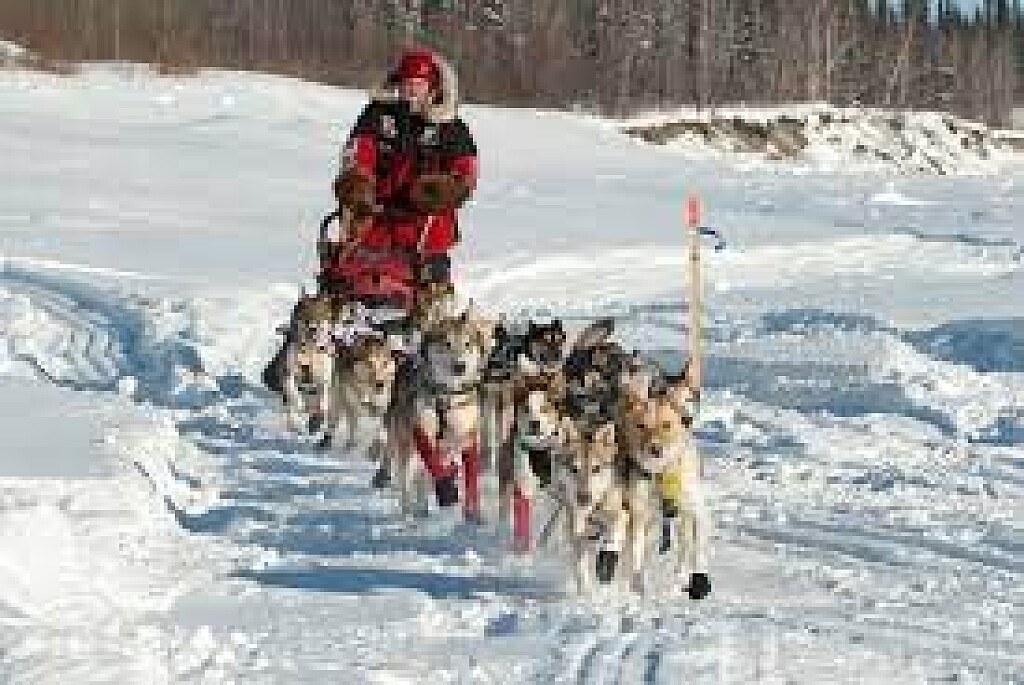
The Iditarod Is Embroiled in a Controversy Over Moose Guts
Officials with dogsledding’s biggest race say a star musher broke the rules. His infraction: improper removal of moose innards.
What’s the weirdest rule in endurance sports? A few come to mind:
Regulations governing the New York City Marathon explicitly forbid runners from pooping on the pavement at the starting line. Article 7.01-G of the Ironman Triathlon rulebook prohibits nakedness in transition areas. And don’t get me started on the wackadoo bylaws enforced by pro cycling’s governing body, the Union Cycliste International, which govern the minutiae of oh so many aspects of bike racing, from the height of an athlete’s socks to the size and shape of his or her ugly helmet.
But in all my time covering professional outdoor competitions, I’ve never come across anything like Rule 34 in the regulations governing Alaska’s Iditarod, the Tour de France of dogsledding. The law, titled “Killing of Game Animals,” is below:
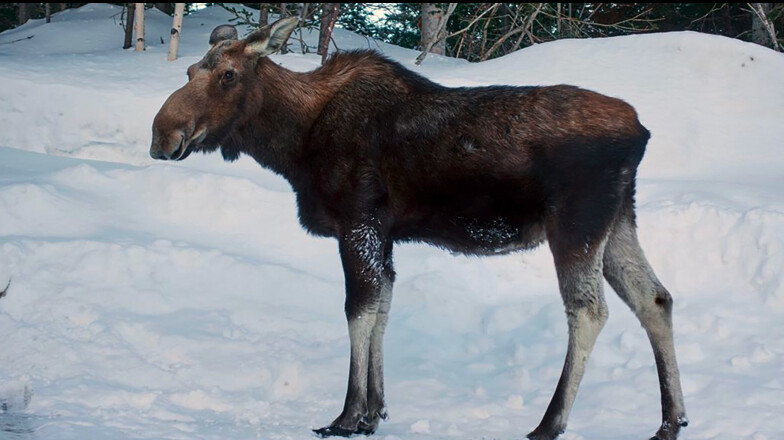
In the event that an edible big game animal, i.e., moose, caribou, buffalo, is killed in defense of life or property, the musher must gut the animal and report the incident to a race official at the next checkpoint. Following teams must help gut the animal when possible. No teams may pass until the animal has been gutted and the musher killing the animal has proceeded. Any other animal killed in defense of life or property must be reported to a race official, but need not be gutted.
Yes, the Iditarod requires you to disembowel the big mammals that you kill along the way. Not only that—officials will scrutinize the efficacy of your job gutting the animal in question.
At the moment, there’s a brewing controversy about the Iditarod’s Rule 34—specifically, whether or not a star athlete gutted a moose the right way.
The race kicked off this past Sunday, March 3, and mushers embarked on the 1,000-mile trip from the town of Willow, near Anchorage, to Nome, near the arctic circle. On Monday, news circulated that five-time winner Dallas Seavey had a terrifying encounter with a moose shortly after leaving a checkpoint in the town of Skwentna. Attacks by moose and other large mammals are rare, but do occasionally happen in sled dog racing. In 2022, a musher named Bridgrett Watkins was trampled by a bull just days before her rookie start in the Iditarod. In 1985, Susan Butcher was attacked while leading the Iditarod—the animal killed two of her dogs as she attempted to fight it off with an axe.
According to a report by the Associated Press, Seavey said the moose attacked his team at about 1:30 A.M. on Monday morning. It became entangled in his harness and sled and injured a female dog named Faloo so badly that she eventually had to be transported back to Anchorage. Seavey pulled out a handgun and shot the moose dead. “It fell on my sled, it was sprawled on the trail,” Seavey told an Iditarod Insider television crew. “I gutted it the best I could, but it was ugly.”
That’s where things get interesting. On Wednesday, March 6, the Iditarod announced that its panel of judges had issued Seavey a two-hour time penalty—a massive time gap in a race that’s sometimes decided by an hour or two. The reason for the sanction? Seavey did a substandard job of removing the animal’s innards. The race clarified exactly what gutting entails. “By definition, gutting: taking out the intestines and other internal organs of (a fish or other animal) before cooking it,” the race said in a public statement.
According to the investigation, Seavey spent about ten minutes at the kill site before mushing his dogs 11 miles to the next checkpoint, where he informed officials about the moose kill and also dropped off his injured dog (according to a Facebook post, Faloo is OK!). A race communique said officials eventually retrieved the moose carcass, properly processed it, and will distribute the meat as food.
Seavey’s kennel published a diplomatic statement on Facebook after the ruling: “As members of Team Dallas we are thankful for the guidelines and officials who make this race possible. Each race is riddled with its own set of challenges and part of being a great musher is being able to navigate them.”
Back to this unorthodox rule. I think most normal people can understand the need to ban runners from pooping on the asphalt, and even to prohibit triathletes from displaying their uncovered nether regions during a race. But what’s the deal with cutting open a dead animal in sled dog racing? An Iditarod employee who answered the race’s general phone line reminded me that the Rule 34 simply reflects Alaska state law. I hunted around the state’s rules and regulations and came across Statue 16.30.010, titled Wanton Waste of Big Game Animals and Wild Fowl.
It is a class A misdemeanor for a person who kills a big game animal or a species of wild fowl to fail intentionally, knowingly, recklessly, or with criminal negligence to salvage for human consumption the edible meat of the animal or fowl.
Turns out the weirdest rule in endurance sports is an extension of a pragmatic law. A full-grown moose can weigh up to 1,600 pounds, which can feed a lot of human beings. Improperly handling the intestines from one can spoil the meat. And the Iditarod employee I spoke to emphatically said that removing the entrails from an animal of that size takes much longer than ten minutes.
Whether or not the two-hour penalty keeps Seavey from attaining win number six is yet to be seen. The two-hour penalty will be added to Seavey’s mandatory 24-hour rest later in the race. On Wednesday, he passed the Idtarod’s official halfway point in Cripple, Alaska in first place, nursing a 47-minute lead on Nicolas Petit of Big Lake, Alaska. Seavey needs to gain an hour and 14 minutes between Cripple and Nome to win.
by Outside Online
Login to leave a comment
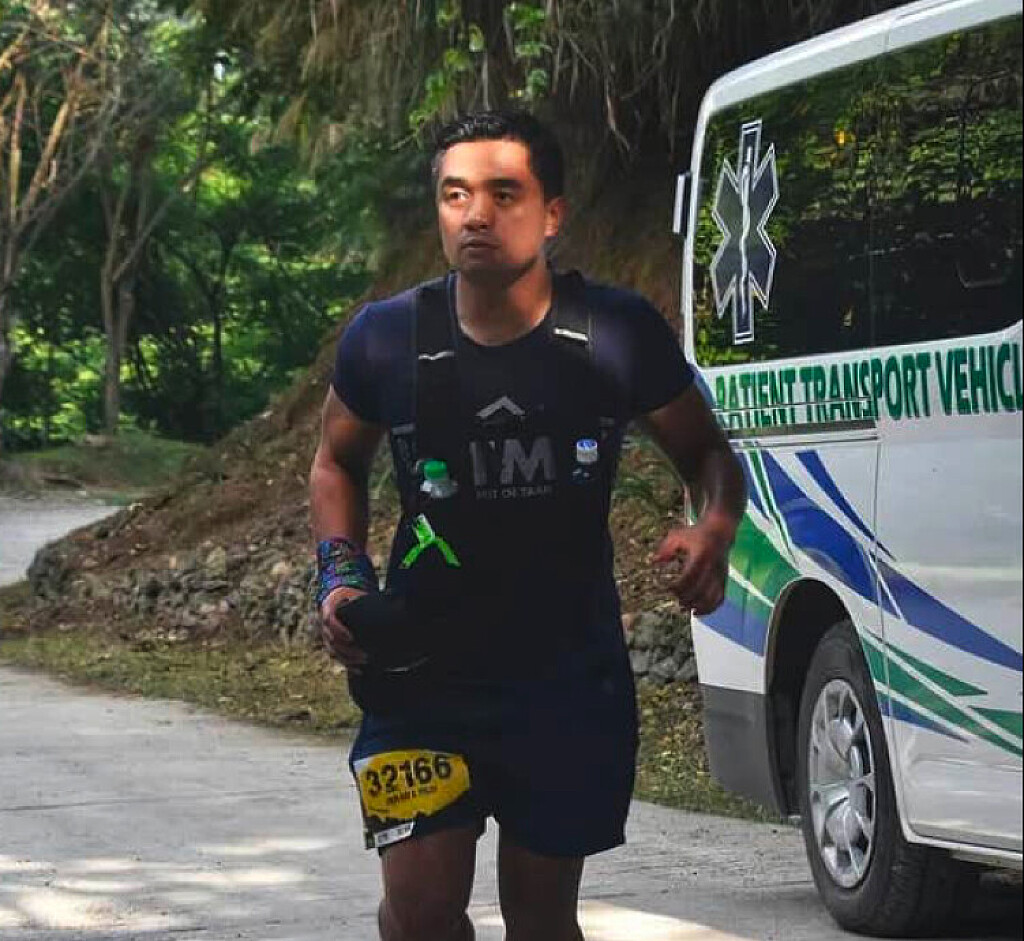
Running For 12 Hours Straight Taught Me Real Confidence
You’re stronger than you think.
When I hear people say, “You can do it!” I’m usually skeptical.
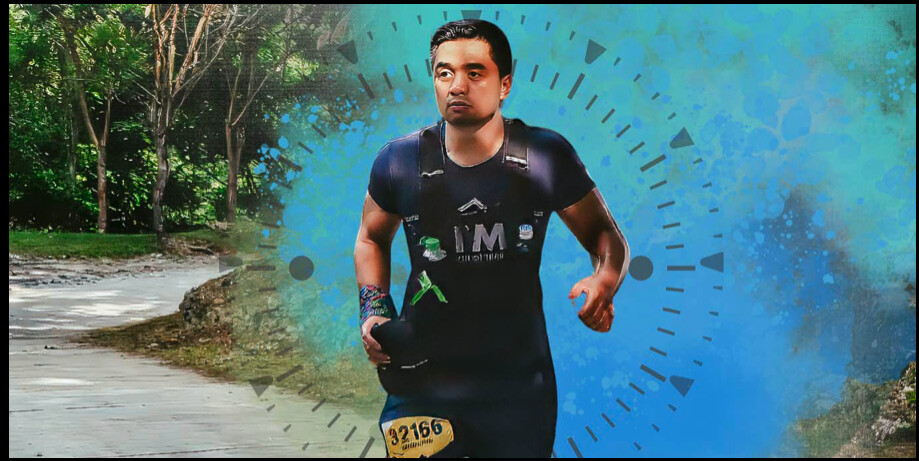
People tend to say that when they have nothing else more encouraging to say. So that kind of positive affirmation — while appreciated — does not exactly provide the substantial and “real” encouragement I’m looking for.
Nowadays, when I find myself lacking in self-confidence, or when I’m feeling like a big failure as a writer because my short stories and essays keep getting rejected by publications, I find myself thinking about that fateful morning in early 2018 — when I first started to get into trail running.
It took me 12 hours to finish my first 25-kilometer mountain race.
For those unfamiliar with trail running, 12 hours is a long, long time to finish 25K. The race’s cut-off time is 8 hours — which is already generous. Yet, I didn’t make it.
Nevertheless, that 12-hour 25K run taught me what real confidence is.
It was the Mount Ugo Marathon, which had qualifying points for UTMB. The UTMB, set in the French Alps, is one of the biggest and most prestigious mountain races in the world. To qualify, a runner has to gather enough points from difficult, qualifying races — like the Mount Ugo Marathon.
The Marathon offered 50K and 25K distances. And since it was my first time, I joined the 25K.
We started at the base of a mountain in Kayapa, Nueva Vizcaya. The first few kilometers were paved roads. Then it turned into dirt roads and eventually trails. Over mountain ranges, it was 10 kilometers of almost vertical uphill.
I’d lift each leg over the other and feel my ankles threaten to rip from the constant battle against gravity. I no longer bothered to look up because the damn mountain just kept going on and on. And I cursed myself for not having more uphill training.
Eventually, we reached a more forgiving part of the trail — flat enough that I could jog it. And I started gaining speed and momentum.
When I hear people say, “You can do it!” I’m usually skeptical. People tend to say that when they have nothing else more encouraging to say.
At the turning point for 25K runners (the 50K runners had a different route), a race official told me I was running 11th. I was excited. I thought if I maintained my pace and outran another runner, I’d be part of the top 10! Not a bad way to finish my first half-marathon.
I reached an intersection that had no marks or ribbons. I was confused. And I kind of assumed trail races would be like roads; you just keep going, and you’ll eventually find the right way because the signs will be so obvious. This is a big mistake because, I would later learn, mountain trails don’t work that way at all!
But I wanted to get that Top 10 so bad that I simply picked a path, hoped it was the right one, and gunned through.
I thought I’d turn back if I didn’t see any markings/ribbons after five minutes of running. But then I saw one! So I kept going.
A few mountains later, the ribbons suddenly stopped appearing. I started getting nervous.
Am I on the right path?
But the ribbon indicated this trail path. There were no intersections so far.
Should I keep going? Maybe there’s another ribbon ahead.
I’d later learn I followed some old markings from the previous year’s race. I guess the race organizers didn’t thoroughly remove all markings in that area since it was supposedly far from the designated route. If only I studied the course map, I’d have known something was wrong. But I didn’t, so I kept running through the previous race’s 50K route.
Back then, I didn’t have a smartphone. I had an old Nokia from my dad; the kind that can only call and text. And the signal was bad. So I had no way of knowing where I was via GPS, and I also couldn’t call someone for help.
I decided to reach the peak of the closest mountain I could find.
Maybe if I can get an overview of the place, I’ll have a better idea of where I am.
I reached the mountain’s summit and stared at a panorama of rice fields and cows. No houses or humans in sight. I knew then that I was very much lost.
At that point, I’d been running for over five hours in the mountains. The sun was high above, painful on the skin. I’d traveled so far from the race route that I’d run out of food and water. I only had one last bottle of Gatorade left. And not a single morsel of food.
The fatigue was growing underneath my muscles. My legs felt like chunks of cement blocks; they felt so heavy I could barely lift them.
I thought of Bear Grylls and whether I had to drink my pee while waiting for rescue.
I took a sip of my dwindling Gatorade and tried to push the panic away; those thoughts attack you when you’re in a vulnerable state. Thoughts that I might end up dying on that mountain of hunger or thirst or wild buffaloes. Or that they’d find me delirious, babbling about cows and rice fields, after days of searching.
I started walking back, slowly. I climbed one hill after another. Midway up the last hill, I sat on the trail. My legs couldn’t walk anymore. Like, literally. People often say, “I can’t walk anymore” — even if, with enough willpower, they still can. But for the first time, regardless of willpower, I felt that my legs couldn’t take another step. So I sat in the middle of that trail.
My calves cramped for the third time and I screamed in pain.
The pain came along with the panic. Am I going to go Bear Grylls from here?
Freaking Bear Grylls. Why did I have to think of the man in the middle of a crisis?
I focused on my breathing to calm myself. I have to survive. So I rested for a bit. And slowly, while conserving my energy, I made my way back up, one super slow step after another.
When I finally returned to the intersection where I first got lost, some race officials were there. They were sweepers — race marshals who were going through the route to support laggards and slowpokes like me. At that point, more than eight hours had passed. The sweepers pointed me in the right direction. And I limped until I reached the final Aid Station, which was 10 kilometers away from the finish line.
My body had never felt so broken, so tired, so truly and utterly exhausted.
At the aid station, I thought I saw a bunch of angels — helpful, smiling volunteers who fed me fruits and nuts and marshmallows and chocolates. They gave me water and electrolyte drinks. They sprayed my legs with something that helped ease the cramps. It was one of the happiest moments in my life.
After I recovered enough to speak, I said to one of the volunteers:
“I don’t think I can walk the next 10 kilometers. When does the sweeper transport arrive?”
The transport was used to ferry people who could no longer finish the race on their own feet.
“The last transport just left,” the volunteer replied. “Another truck would arrive in four hours to sweep the 50K runners who’ll drop out.”
I took a deep breath. Four more hours. What do I do? Wait?
I’ve already lost the race. Even if I reached the finish line now, I’d still be a non-official finisher. But how do I go home and not feel super bad about the failure of my first 25K? Then a small thought came:
Why don’t I try limping my way down? Maybe the transport will arrive earlier and they’ll be able to pick me up along the way. Or if not, another sweeper will pass me by and help me.
Since the volunteers at the aid station couldn’t leave their posts to assist me, I decided to see how far I could go.
I filled my running vest with food and my bottles with electrolyte drinks. I bid farewell to those angels at the aid station, and then, finally, I dragged my feet and started limping.
I limped my way to the finish line after 12 hours.
I avoided the finish line itself. I was embarrassed to have people see my race bib and know that I was actually from the 25K, not the 50K, and that it took me 12 hours to reach the finish line. But apparently, the race director knew about this lost 25K runner after the sweepers reported it. And he kindly welcomed me and congratulated me for finishing — even if it wasn’t an “official” finish.
I made it back on my own two feet.
And that’s when I realized it: I did it even though I thought and fully believed I couldn’t.
I did it, even when I felt like giving up. I did it, even when I didn’t believe in myself.
So whenever I face something that destroys my self-confidence, I often return to that memory.
When I feel like giving up, or I’m spent and exhausted, and my brain and body are telling me I can’t do it anymore — I push myself to take one more tiny step. Just a little step forward, to see how far I can go.
Because I have done it before and succeeded. And I’m confident I can do it again.
Login to leave a comment
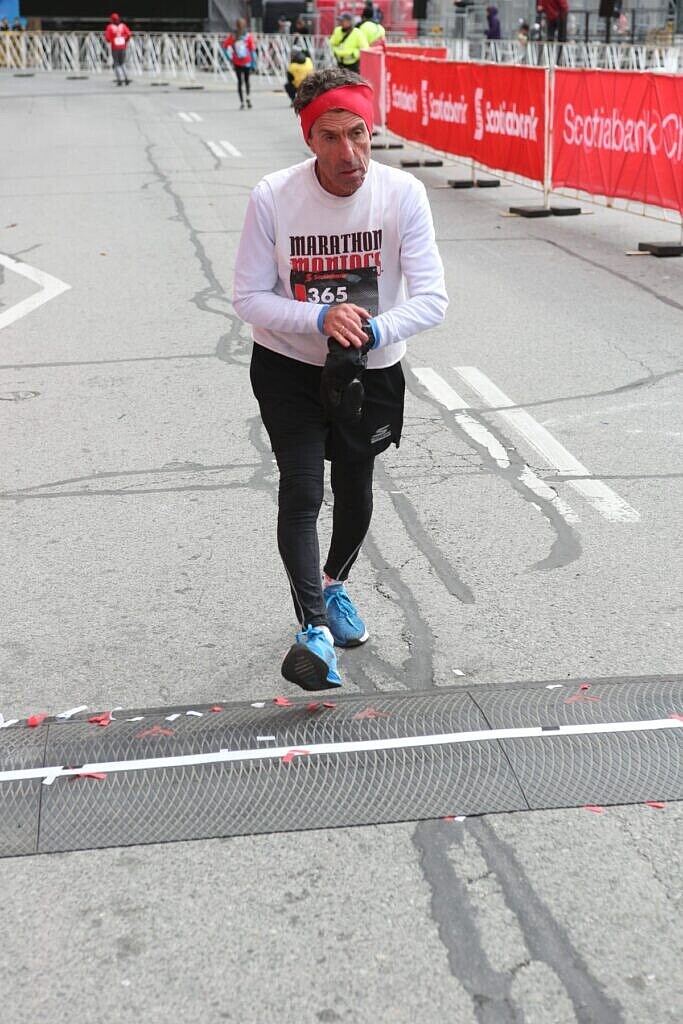
Rick Rayman, 77, completes his 400th marathon at TCS Toronto Waterfront Marathon
On Sunday at the TCS Toronto Waterfront Marathon, Rick Rayman, a professor of dentistry at the University of Toronto, marked his 400th marathon finish. Rayman is 77, and not only has he now completed 400 marathons, but he has participated in every single Toronto Waterfront Marathon in the race’s 34-year history.
As if that weren’t enough, Rayman has also run every single day for the past 44 years and 10 months–a daily run streak that’s topped by only one individual in Canada, according to runeveryday.com. (That’s Simon Laporte of Notre-Dame des Prairies, Que., whose streak is three years longer. Rayman is #20 on the international run streak list.) “I don’t know if the 19 runners ahead of me have run as many marathons as I have, but who cares?” he says, adding, “The older and slower I get, the more notoriety I get.”
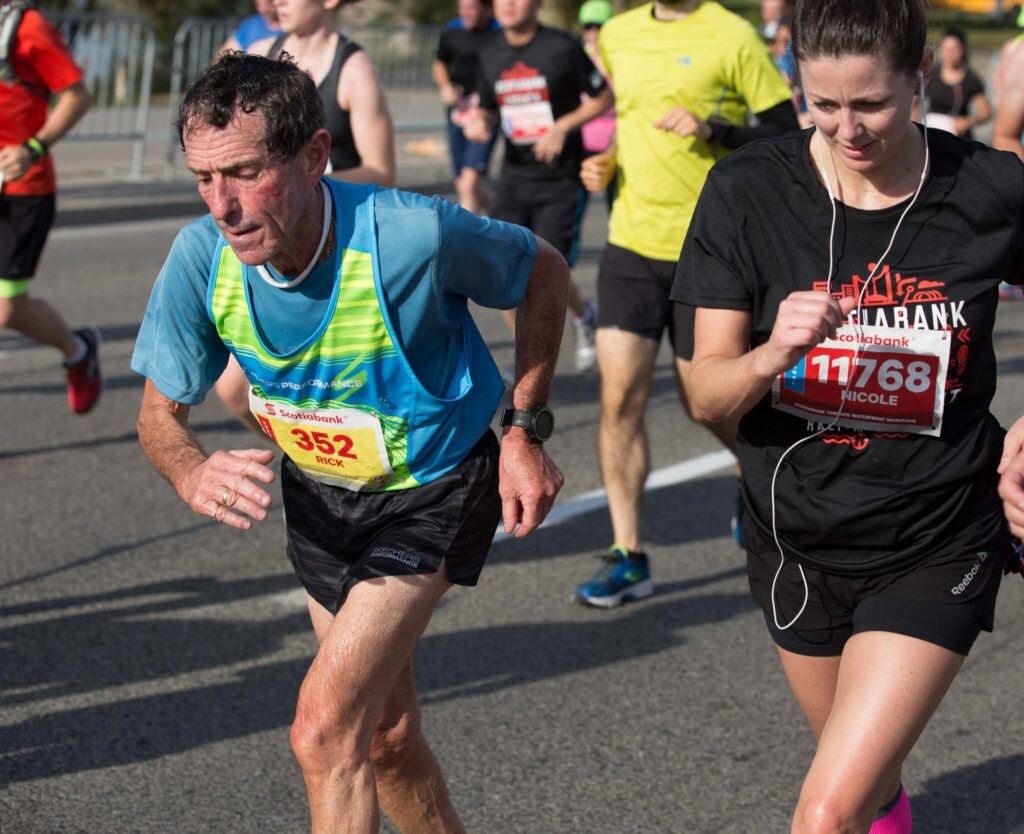
On Dec. 10, he’ll celebrate 45 years of running without missing a single day. He runs for at least half an hour, though some days he runs for an hour or two. And he takes care to add that he never runs on a treadmill–though he has participated in 10 indoor marathons in the past, including six at York University, three at the University of Toronto’s Hart House and one the SkyDome (now the Rogers Center).
“It’s such a great marathon!” Rayman says of the Toronto race, even though he struggled with back pain in the second half, most of which he walked. “I can run 12 miles (or 20 km) without any pain,” he says. When asked if he’s ever considered switching to the half-marathon, he replies, “Never.”
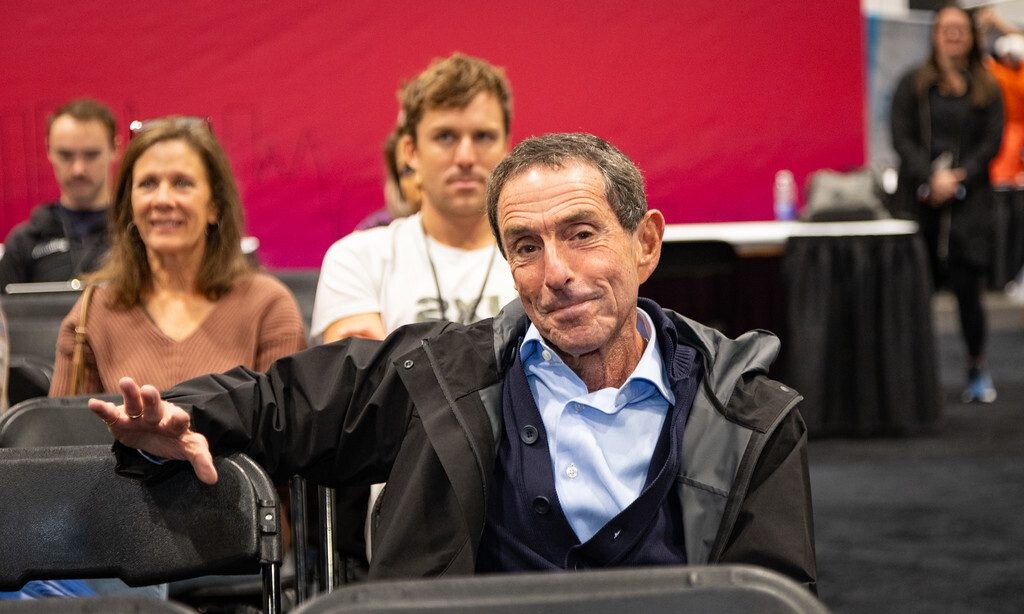
“It’s a good question,” he concedes, “because my half marathon time is considerably better than my full. But I enjoy the challenge of the marathon.” Rayman was the only individual in the M75-79 age category.
Over the years, Rayman has seen a few changes at the Toronto Waterfront Marathon. The technology for tracking runners on the course, in particular, has evolved considerably since the early days, and he enjoys the recent changes to the course, which allow midpackers and back-of-the-packers like himself to see the elites running past in the other direction on Wellington Street and Eastern Ave. He credits race director Alan Brookes and his staff at Canada Running Series with putting on a world-class event.
Rayman admits he’s slowing down. “I’m not going to do another marathon this year,” he says, adding that next year, he has plans to run the Fort Lauderdale Marathon in February, Ontario’s Georgina Marathon in the spring, the Buffalo Marathon in May and the marathon at the Niagara Ultra in June. “I did 11 [marathons] this year; I might cut that in half next year. Maybe six or seven.”
Regardless, you can catch him running every day, rain or shine, from his home in North York. “I’ll keep doing it until I can’t,” he says.
by Anne Francis
Login to leave a comment
TCS Toronto Waterfront Marathon
The Scotiabank Toronto Waterfront Marathon, Half-Marathon & 5k Run / Walk is organized by Canada Running Series Inc., organizers of the Canada Running Series, "A selection of Canada's best runs!" Canada Running Series annually organizes eight events in Montreal, Toronto and Vancouver that vary in distance from the 5k to the marathon. The Scotiabank Toronto Waterfront Marathon and Half-Marathon are...
more...
Scot breaks M65 800m world record held by Canadian for nearly 30 years
A world record held by a legendary Canadian runner for almost 30 years was toppled on a track in Italy on Friday, as Britain’s Paul Forbes ran 2:13.74 in the 800m at the European Masters Athletics Championships for a new outdoor world’s best in the M65 division.
Forbes shaved just more than half a second off the longstanding record time of 2:14:33 set by Toronto’s Earl Fee in Buffalo in 1995. With his performance in Italy, the 67-year-old Forbes also sliced 0.93 seconds off his own British M65 800m record, which he set last year at the World Masters Athletics Outdoor Championships in Tampere, Finland.
As he did in Tampere, Forbes topped the podium in both the M65 800m and 1,500m events in Pescara, Italy, running the latter in 4:44:40 on Sept. 23. That effort was only five seconds off the 4:39.15 British M65 outdoor 1500m record he set at a meet in Glasgow in July.
The European Masters Athletic Championships, which ran from Sept. 21 to Oct. 1, featured thousands of athletes from across the continent.
Although Fee’s 800m decades-long record has fallen, the celebrated Canadian runner’s name still features prominently in the list of world masters records. Fee, who is originally from Saskatchewan, still holds the 800m world masters records in the M70 (2:20.52) and the M90 (3:42.52) age groups. According to the latest list of records published from World Masters Athletics, the Canadian still holds nearly a dozen indoor and outdoor masters world records in events ranging from the 200m hurdles to the mile.
In 2019, Fee broke his 60th world record by running 1:29.15 in the M90 400m, a feat he accomplished in oppressive 33 C heat at the North, Central American and Caribbean Masters Athletics (NCCMA) meet at Toronto’s Varsity Stadium. That same year, Fee and fellow Canadian runner Karla Del Grande were named the overall Athletes of the Year by the NCCMA.
Fee was inducted into the Canadian Masters Association Hall of Fame in 2009. The association’s award for the Canadian Masters Athlete of the Year in track is named in his honor.
by Paul Baswick
Login to leave a comment
Jacquie Mannhard, JP Giblin take the honors at Leadville 100
Americans Jacquie Mannhard and JP Giblin took the spoils at the Leadville 100 with two exhilarating performances at the race in Colorado, USA. The pair dominated the women’s and men’s races respectively – each winning by a comfortable distance.
Mannhard completed the 100-mile out and back course in a time of 21:24:55, finishing almost two hours ahead of her nearest rival. Giblin, runner-up in 2022, crossed the line first overall in a time of 17:07:25, over 40 minutes ahead of Luke Paulson in second.
Both victors were some way off the course record times set by Matt Carpenter (2005, 15:42:59) and Ann Trason (1994, 18:06:24).
Magnificent Mannhard
The Boulder-based ultra runner, who is at home in the Colorado mountains having won the Kessel Run Ultra (60KM) in November, 2022, produced a strong performance to set a time of 21:24:55 – the slowest women’s time since 2010. Despite that fact, she was the class of the field taking the win by one hour, 51 minutes and 56 seconds.
Second over the line was fellow American Lucie Haines. Haines had enjoyed a pair of victories in Colorado Spings in May and June winning the Valkyrie Trail Race (50K) and Ring the Springs (100K). But at Leadville she was unable to keep apace with Mannhard as she finished in a time of 23:16:51.
Canada’s Madeline Wighardt denied the Americans a clean sweep on the women’s and men’s podium by finishing third in a time of 23:32:57. The 22-year-old finished second in the Quebec Mega Trail (QC) 110K race in 2022 as she starts he fledgling career.
Colleen Noonan was next over the line – another who has enjoyed 2023 success in the state. The American won the North Fork 50 Mile/50K at Buffalo Creak and Chase the Moon 12-hour Solo. Noonan had to settle for bronze at Leadville, however, as she finished over two hours behind Mannhard in a time of 23:33:57. Carrie Stafford (23:48:50) was fifth over the line just under the 24-hour mark.
Glorious Giblin
Another Colorado-native took the victory in the men’s race as Giblin topped the podium. The 29-year-old, who finished 18th at Western States in June as well as second at Bandera 100K in January, finished in a time of 17:07:25.
He was followed over the line by Luke Paulson (17:47:55). The 31-year-old, who won the Yamacraw 50K in Kentucky in May, was 40 minutes and 30 seconds off the pace.
Scott Tarer was third over the line in a time of 17:54:12, just six minutes, 17 second further back. The 42-year-old won the Crown King Scramble 50K in May and finished 15th at Western States in June. He is a previous winner of the Javelina Jundred, the Hennepin Hundred and the Vermont 100.
Great Britain’s Ry Webb finished fourth in a time of 18:38:13 – an hour and a half behind the race winner. Webb has +800 rating on the UTMB Index won the 2021 Lakes in a Day 50 miler, Patrick Cabe (19:34:54) rounded off the top five.
by Stuart Dick
Login to leave a comment

Leadville Trail 100 Run
The legendary “Race Across The Sky” 100-mile run is where it all started back in 1983. This is it. The race where legends are created and limits are tested. One hundred miles of extreme Colorado Rockies terrain — from elevations of 9,200 to 12,600 feet. You will give the mountain respect, and earn respect from all. ...
more...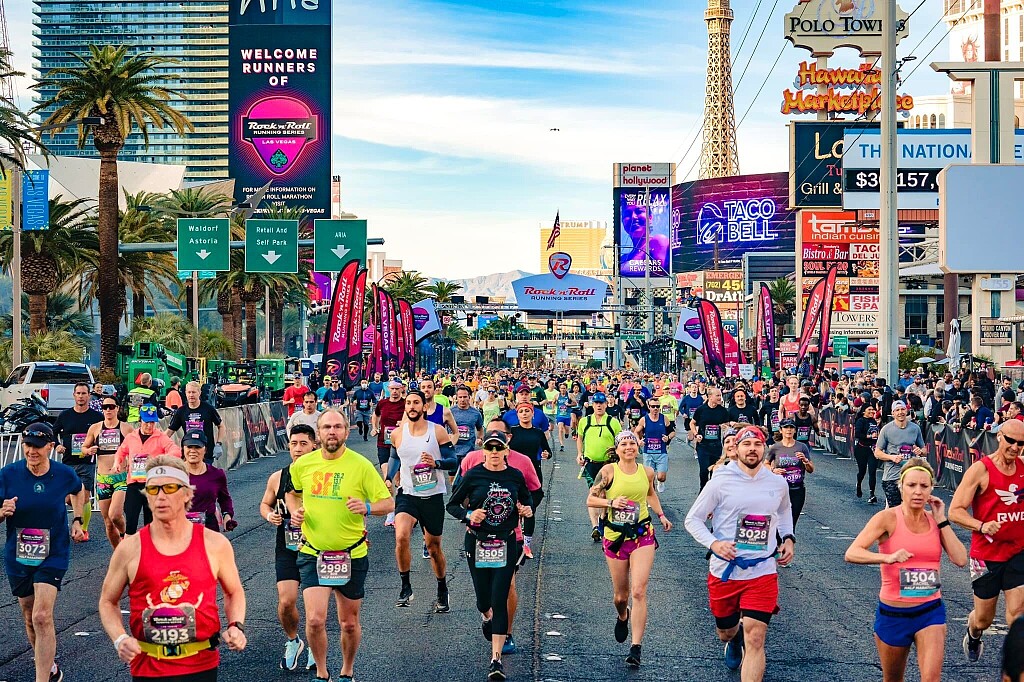
TOP Marathons Sponsored by Casinos
The running industry is booming and it's not just because of the health benefits. It also has a lot to do with how much fun it is to sign up for a marathon and get geared up for the big day.
The excitement and energy of an event like this, combined with the thrill of crossing that finish line, are enough to put anyone in a good mood—even if they're exhausted from all that training! But there's another reason why marathons have become so popular: casino sponsorships!
Benefits and Significance of Marathon Sponsorships for Casinos
Marathons are a great way for casinos to connect with the running community. While running is often seen as an individual sport, marathons can bring together thousands of people from all walks of life and make them feel like part of something bigger than themselves.
Casinos can also use marathons as an opportunity to build their brand awareness by sponsoring races or offering discounts on race registration fees for casino members. They don’t just rely on no deposit casino bonuses and other promotions as a marketing strategy. Sure, one of the top deals they can make are no deposit bonuses with Gamblizard's no deposit offers being a perfect example. Casinos who sponsor races often do so because they want their name associated with healthy lifestyles (since many people run as a form of exercise) but also because it gives them access to new customers who may be interested in visiting the casino after seeing how much they care about helping others achieve their goals through such programs.
Advantages of Casino Sponsorships in Marathons
Casinos can use marathons to promote their brand, promote a healthy lifestyle and connect with communities. Casinos are popular destinations for runners and other athletes looking for great gaming experience and low wagering bonuses. They often have race sponsorships in place to help them gain exposure among this demographic and attract more players, just like they do with low wagering casino bonuses at sites where gamblers don’t need to deposit much. But casino sponsorship goes beyond simply advertising on running gear or at the finish line.
A casino's involvement in a marathon or triathlon can go much deeper than just slapping its logo on some promotional materials and handing out free drinks at the finish line. Gambling brands may take part in planning events that support athletes' training, offer prizes for winners and host post-race parties where competitors gather after completing their race together as one big group.

Building Brand Visibility and Reputation
Casinos are building a reputation for sponsoring marathons. They're also building a reputation for being good corporate citizens, good neighbors and good employers.
The casino industry has had its share of negative press over the years. Casinos were originally seen as dens of iniquity where people went to gamble away their money and possibly engage in illegal activity. However, today's casinos have taken steps to improve their public image by sponsoring charitable events like marathons or races.
The casino industry is also seen as a good employer. In many states, casinos are required to provide jobs for people who live in economically depressed areas where unemployment rates are high. The casinos provide employment opportunities both on-site and off-site, and many of these jobs require little or no experience.
Casinos are also seen as good neighbors. They often donate money to local charities and sponsor community events.
Connecting With Communities and Promoting a Healthy Lifestyle
Casinos can make a real difference in their communities by sponsoring a marathon. They can be a part of the community and help to promote healthy living, which is something that is important for everyone.
Casinos want people to come out and have fun with them, but they also want people to feel good about themselves when they leave the casino. This means encouraging them to get out there and exercise (or join a marathon) or eat healthier food options at their restaurants or cafes.
The TCS New York City Marathon is one of the largest marathons in the world. It's also one of the oldest races in North America, having been run every year since 1970 (except 2012 and 2020 due to justified reasons). The 2019 edition featured 53,627 finishers and 98,247 applicants for entry into this international sporting event--making it the world's largest marathon by both measures. In addition to being a major athletic competition, it has also become an important cultural celebration that highlights New York City's diversity while also raising money for charity organizations such as Team For Kids Foundation and Autism Speaks!
The course starts at Fort Wadsworth in Staten Island before crossing over into Brooklyn via Verrazano-Narrows Bridge before going through Queens and then Manhattan before finishing up near Tavern of the Green with tens of thousands cheering them on their way! The marathon has many sponsors, and occasionally it is sponsored by a local casino. Moreover, they have ESPN as one of the official sponsors, who may not be a casino, but they do offer Fantasy Football Sweepstakes.
Las Vegas Rock 'n' Roll Marathon
The Las Vegas Rock 'n' Roll Marathon is one of the largest marathons in the world, attracting thousands of runners from around the globe each year. The 13th edition of the half marathon attracted more than 27,000 participants in February 2023.
Even if the races started in 1967, the annual marathon event takes place in February every year since 1993, except when it was cancelled because of the 2020 Coronavirus outbreak.
The Strip at Resorts World Las Vegas sponsored the Rock ‘n' Roll Running Series Las Vegas expo took, with an attendance exceeding 50k people over three days! Resorts World Las Vegas, the expo's presenting sponsor, organized the three-day Health & Fitness Expo on the Strip. A Health & Fitness Expo kicked off race weekend, where runners had a chance to pick up their bibs, explore interactive exhibits, shop for event merchandise, and enjoy non-stop music and live entertainment. With its opening on June 24, 2021, Resorts World Las Vegas is the Strip's newest property in over a decade. Moreover, one of the marathon editions also had MGM Resort was also one of the sponsors, and they are listed on the official marathon website.
Niagara Falls International Marathon
Niagara Falls International Marathon is one of the most popular Canadian marathons. The fun fact about it is that it starts in one country(Buffalo, NY) and ends in another (Niagara Falls, Ontario, Canada). The marathon was established as part of the casino's grand opening celebration and has been held every year since then.
The events include 5k races and 10k races as well as half marathons and full marathons. It is one of the largest and most popular marathons in Canada, with over 6,000 runners participating each year since 1974. From 1998 until 2008 when it was known as the Casino Niagara International Marathon, they had a sponsorship with Casino Niagara (as their title sponsor).
Impact of Marathon Sponsorships on the Running Industry
Marathons are an excellent way for casinos to increase their brand awareness, as well as help promote a healthy lifestyle in their community. By sponsoring these events, casinos can make running more accessible to more people. This is good news for everyone--casinos get to see their name on the race bibs and banners, while runners get some extra motivation from knowing they're part of something bigger than themselves.
Influence of Casino Sponsorships on the Running Community
The influence of casino sponsorships on the running community can be seen in many ways. Casinos can help by offering financial support for races that would otherwise not be possible, as well as providing enhanced race experiences and promoting healthy lifestyles. These benefits are important because they provide runners with an avenue for their passion and allow them to enjoy their hobby even more. They also build brand visibility, reputation and loyalty for casinos who choose to invest in these types of projects.
Financial Support and Enhanced Race Experiences
Casinos can provide financial support to races. This can come in the form of direct sponsorship or through event partnerships that include promotional opportunities. Casinos are also able to enhance the race experience for runners and spectators alike by providing amenities such as:
The idea of a casino sponsorship is not always seen as a positive thing. Some people believe that casinos are not healthy places to be, and running marathons may seem like an activity that should be promoted by health-conscious organizations. However, there are many reasons why this sponsorship works well for both parties involved:
Casino sponsorships are a great way for casinos to reach new customers and increase their brand visibility. Casinos can leverage their sponsorship to promote a healthy lifestyle, connect with communities, or simply promote their company's name.
Casinos have found that sponsoring marathons is an effective method of gaining exposure in local communities where there may not be many other businesses competing for attention.
Login to leave a comment
Western States 100 Time Predictions Based On Historical Data
The Western States 100 is the Super Bowl of US trail running, just with fewer cryptocurrency commercials. Every year, the race gathers some of the best athletes in the world to test themselves on the world-famous course. The competition, along with comprehensive data gathering by the race organizers, provides a massive statistical opportunity.
Marshall Burke, associate professor of Earth System Science at Stanford University, seized that opportunity with some wonderfully cool data analyses heading into the 2022 race. The research question he sought to answer: how are race times progressing as the sport grows, and how are those times affected by temperature changes?
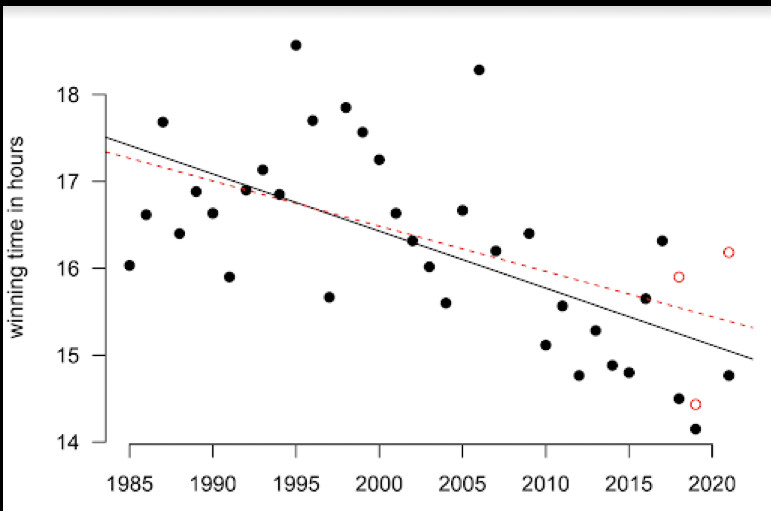
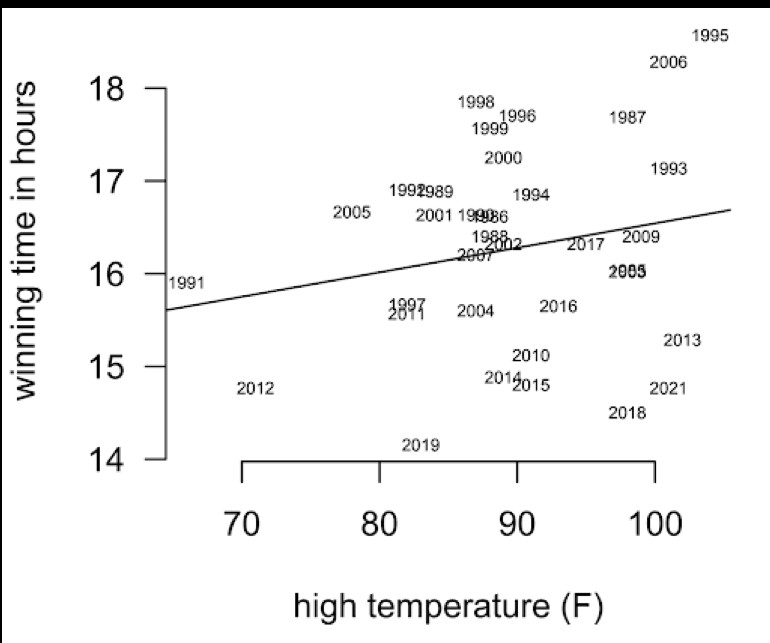
Marshall is a wonderful athlete himself, with an April 2022 Fastest Known Time on the Buffalo River Trail in Arkansas, so he's used to moving fast. In his spare time, between research and Zoom calls, he compiled the data on finishing times and temperatures, controlling for years when there was snow on the course or when the course was altered.
"I may never run Western States," Marshall says. "But I can run statistics on it!"
He's doing world-changing work on climate change at Stanford University, and that made his quest have both a personal and academic interest. "This combines my research focus on the impacts of climate with my hobby of running slowly through the mountains," he says. Since this was a quick analysis for fun (and to help me with coaching; helps to have really, really smart friends), Marshall wants to be clear that the numbers could change. And I want to be clear that any errors are the fault of the field of Statistics for being the worst.
Let's all run fast through some of the fascinating data he gathered!Finding #1: Times of top finishers have progressed rapidly.
Since 2000, a linear model of top times for men and women shows bonkers improvement. Bonkers is a scientific term; you'd know it if you, like me, took an Intro To Stats class in 2004. The male winner is about 2 hours faster on average, with the same general improvement for the average of places 2 through 5. The female winners are around 1 hour faster, with places 2 through 5 improving more than 2 hours.When not accounting for temperature, times would be expected to drop considerably each year-around 4 minutes per year for men since the 1980s, and about 4:45 per year for women. Interestingly, the women's top 5 times are coming down faster than the winning time, showing a tighter race at the front.
I asked Marshall to run the men's times with Jim Walmsley being removed. Want to see a cool chart of just how much of an outlier he is? Taking out Jim's winning times moved the linear regression substantially, with the new red line predicting substantially slower times overall. And if he didn't get lost in 2016, the effect would be even more pronounced! You know you're a good runner when you mess up the statistics.
Finding #2: For all finishers, men are improving gradually, while women are improving rapidly.
Since 2000, the average women's finish time has improved by 5 minutes and 15 seconds per year! Meanwhile, the average finisher independent of gender has only improved around 2 minutes per year. So women are driving the sport forward in an emphatic way! Bosses!
Finding #3: Heat has a massive performance impact.
Let's start with a simple scatterplot of heat versus winning time.There is clearly a ton of variation in the scatter. Heat is not destiny. But there is some clear relationship, so maybe it's destiny's child. If you go too hard on a hot day, the body has to pay the bills bills bills later.
Marshall ran multiple regression analyses to combine the effects of overall time improvements with heat increases to give us a more sophisticated analysis, again also controlling for whether there was snow on the course. He is so damn sophisticated! Using times since 2000, the general rule is that for every 1 degree F increase in temperature in Auburn, California on race day, there is a 2:48 increase in winning time for men and a 2:52 increase for women. Removing Jim's times (Mr. Mess-Up-Your-Stats), there is a 3:26 increase for men for every degree increase.
For the average finisher using the same regression analysis, 1 degree F increases correspond with 2:34 increases in finishing times. DNFs go up about 0.5% for every 1 degree F increase as well. The ratio of times for men and women is not significantly impacted by temperature, so even though the hot year in 2021 saw women absolutely rock the list of top finishers, that may not be explained by heat in the way that everyone assumed.Finding #4: Predictions for 2022
The forecast from Weather Underground is currently 97 degrees F on race day in Auburn, relative to an average of 89. Combining the heat data with the overall improvement in times as the sport progresses, here are the predictions from Marshall's model, again based on data from the last 20 years.
For the male winner, it depends heavily on whether we remove Jim from the data. Assuming Jim is a true outlier, we can expect a winning time around 15 hours. For women, it's 17.5 hours. For the average racer, times should be around a half hour slower than normal, but that is affected by a higher DNF rate, so I'd suggest athletes build in much more buffer.
The trend in the 10th place times is most instructive to me, as a coach that is trying to help support athletes getting an invitation to next year's race. Those 10th place times have come down by massive margins over time, 9:22 for men and 12:50 for women. But the times are also more affected by the heat relative to the top 5 finishers. Put it all together, and the model predicts that 20 hours will place in the top-10 for women, and around 17 hours for men.
My personal prediction will be for fast winning times, but a greater spread after that, with the 10th place man and woman being around 30 minutes slower than predicted. The faster times as the sport progresses will not follow a linear model eventually, and my guess is that we are starting to approach an asymptote. To paraphrase Mark Twain, there are lies, damn lies, Statistics, and a running coach pulling wild guesses out of his butt.
Three Big Conclusions
Respect the heat, but don't respect it too much.
It's good to have brilliant friends like Marshall when you're looking for a possible coaching advantage.
Finally, Jim Walmsley breaks statistics.
by trail Runner Magazine
Login to leave a comment
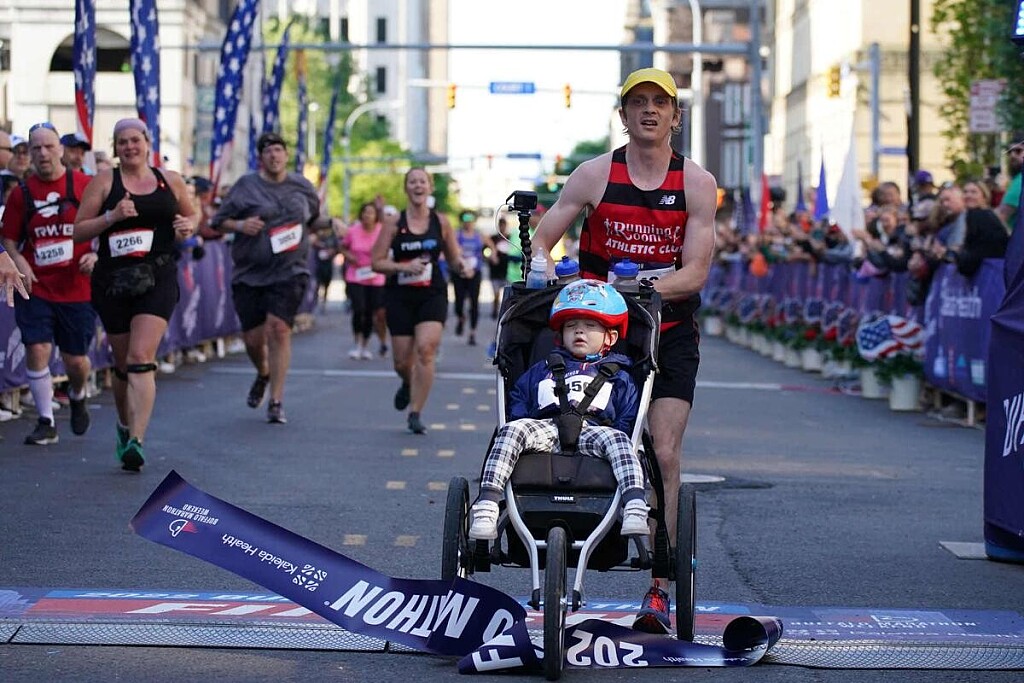
Canadian dad, Lucas McAneney wins Buffalo Marathon while pushing his child in stroller
Canadian marathoner and dad from Waterdown, Ont., Lucas McAneney not only won Sunday’s Buffalo Marathon in Buffalo, N.Y. but did it with his two-year-old son Sutton along for the ride. McAneney pushed a stroller for the entire race in an attempt to break Calum Neff’s Guinness world record for the fastest marathon while pushing a stroller.
McAneney, 35, finished the race shy of the record in 2:33:29, missing Neff’s world record of 2:31:21 set at the 2016 Toronto Waterfront Marathon while pushing his 4-year-old daughter Alessandra.
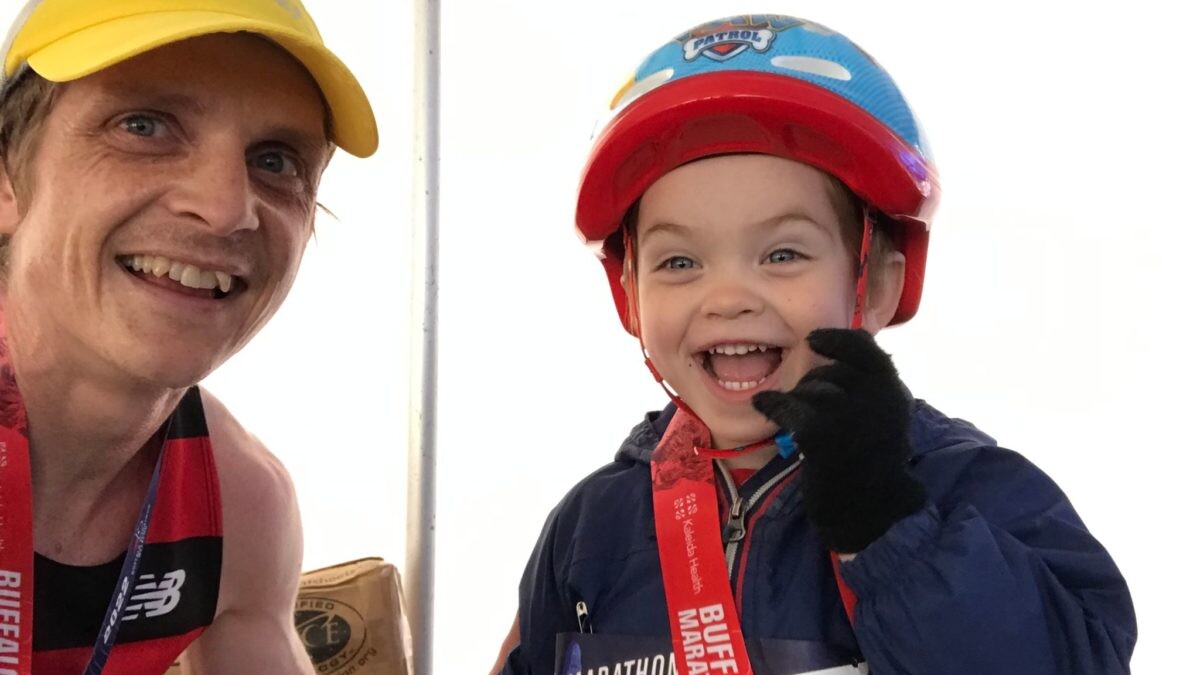
When McAneney’s son was born, the 2:18 marathoner briefly stepped away from the sport he’d been doing since he was young. A few months later, he was given a running stroller from his wife, which helped McAneney get more mileage while taking Sutton for a stroll.
McAneney split 1:13:21 through the halfway point, ahead of record pace. “I was on pace for the record until five kilometres to go, then my legs turned off,” he said. He covered the final few kilometres at a four-minute per kilometre pace, only missing out on the record by two minutes.
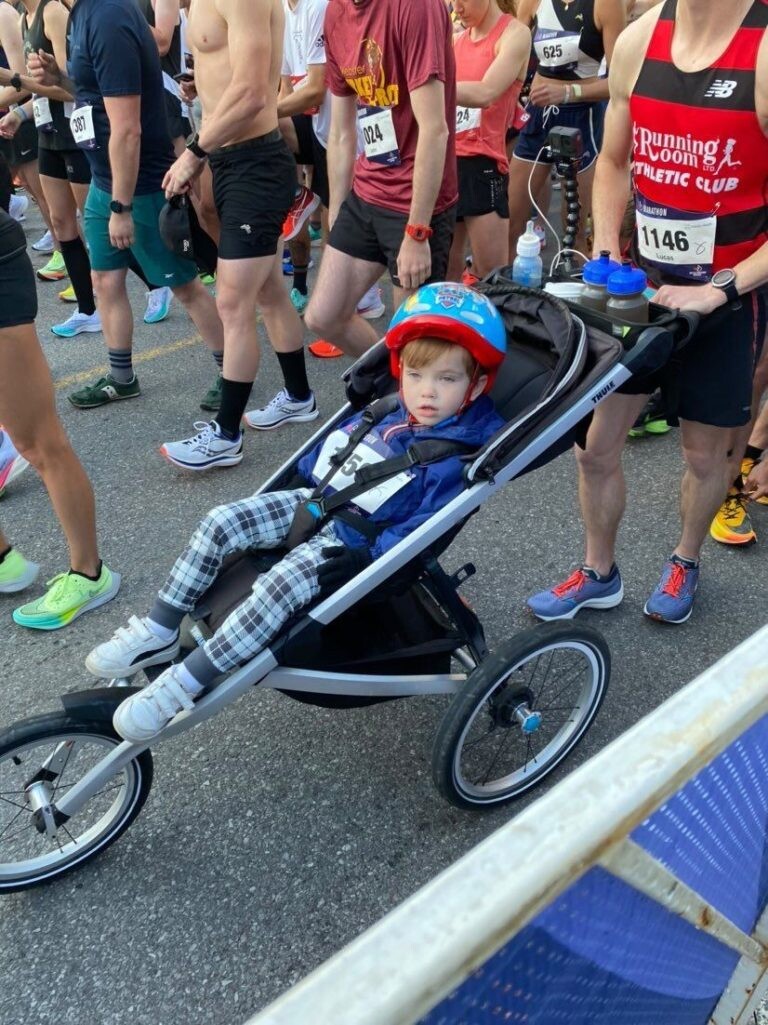
Dave Cook of Syracuse, N.Y., finished second, without a stroller, in 2:33.48
The Buffalo Marathon returned for the first time since 2019 after the pandemic cancelled the 2020 and 2021 races. The Buffalo Marathon is a popular destination race for many Canadian runners as a certified flat and fast Boston qualifier course. This year’s race hosted over 5,800 runners from 43 states and 13 countries.
by Marley Dickinson
Login to leave a comment
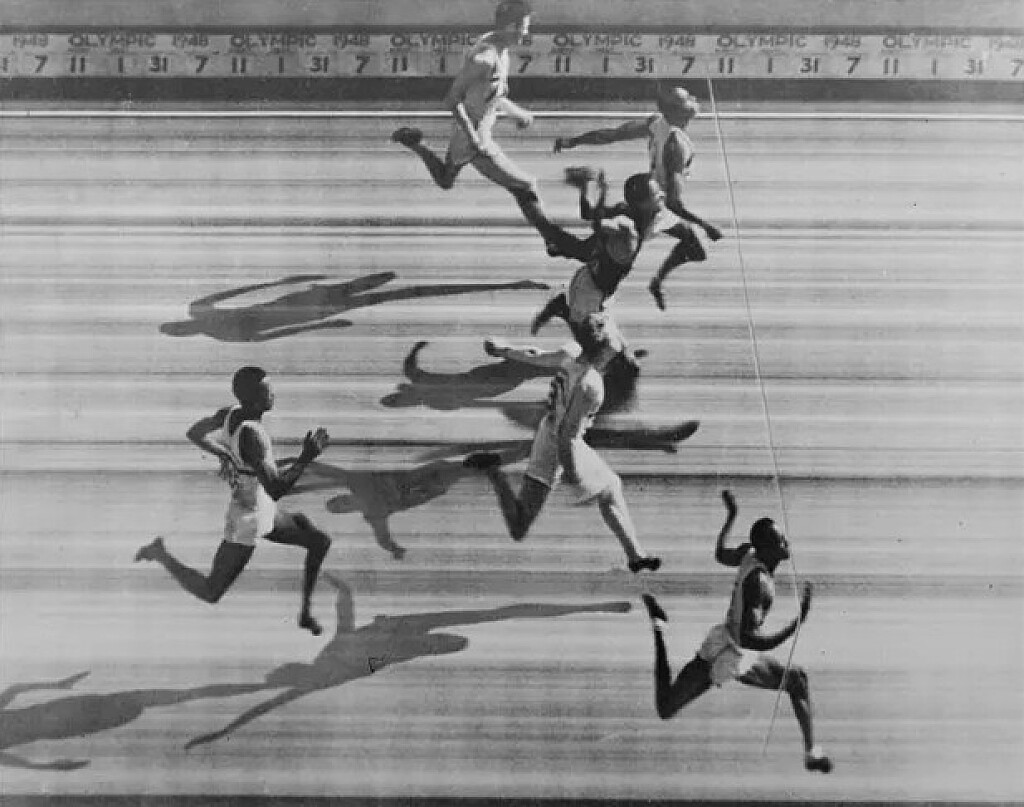
Going once, going twice … gold! Men’s 100m Olympic medal up for auction
Harrison Dillard took gold at the London Games in 1948 and this weekend, nearly 75 years on, that medal is up for sale
Harrison Dillard should never have won the 1948 Olympic 100 metres gold medal on a blazing July day at Wembley Stadium. He shouldn’t have been in the final. This weekend, that gold medal is up for sale.
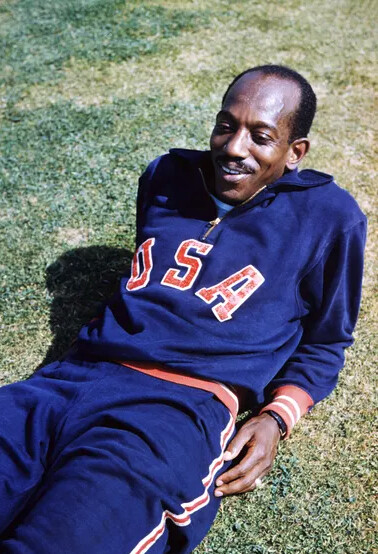
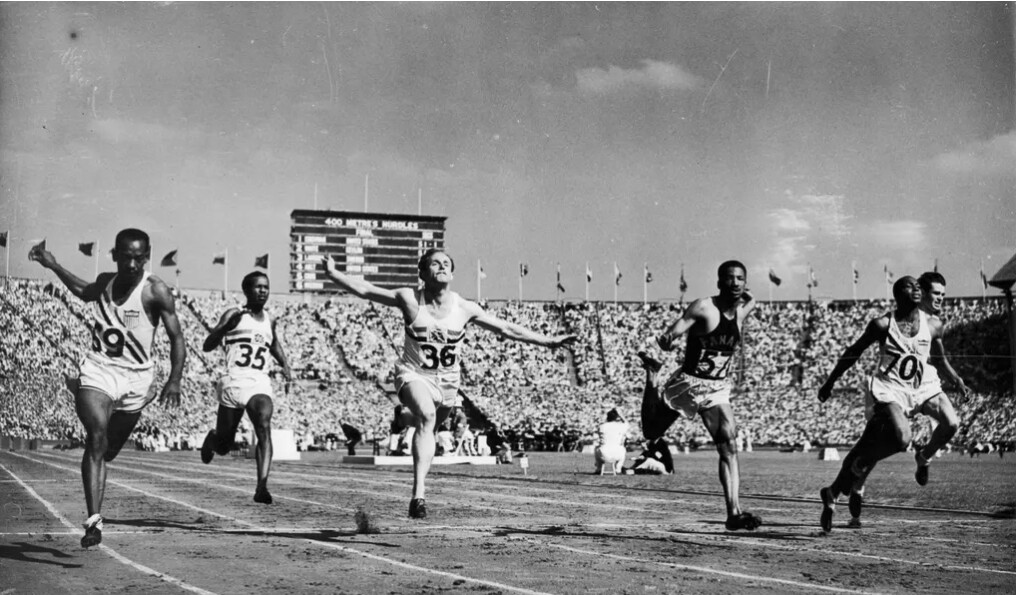
He entered the event at the American trials to sharpen his speed work for the high hurdles, his specialist event. Back then, the 25-year-old Clevelander was the greatest sprint hurdler the world had seen and had racked up 82 consecutive wins before the trials and held the world record of 13.6sec in the 120-yard hurdles. He was deemed unbeatable. Then catastrophe struck.
“All I had to do was finish third and I was in the team,” he said. “But on that particular day, as history shows, I finished dead last. I hit the first hurdle, got over the second and then hit every other hurdle in succession, stopping completely at the eighth. I had totally lost the rhythm of the race and my timing was so completely destroyed I just stopped and didn’t even finish.
“Here I was, the world record-holder and American champion and it all went for naught because under the American system you qualify on that day or you don’t make it at all.”But he had managed to squeak third spot in the 100m, so he was able to join the US team on the boat to London for what became known as the austerity Games, a unifying moment of hope and spectacle for the British public in a city scarred by six years of war and blighted by strict rationing.
The skinny Dillard, 143lb soaking wet and known to his teammates as “Bones”, then ran the race of his life to win one of the closest 100m finals in Olympic history.
The Omega photo finish camera, used for the first time at the Games, captured the inches that separated Dillard, running on the outside lane, and the US No 1, Barney Ewell, in Lane 2, who was so convinced he had won the race he bounded almost halfway around the track before realising the result had not gone his way.
On a cinder track, in front of 83,000 spectators, Dillard had posted a time of 10.3sec, with Ewell second in 10.4sec and Panama’s Lloyd LaBeach third. Scot Alistair McCorquodale was fourth, with the 100 yards world record-holder, Mel Patton, plagued once again by big competition nerves, fifth, and Britain’s highly fancied McDonald Bailey last.
“To see the flag, the Stars & Stripes, as it goes up the flagpole while the national anthem is playing, with the medal around your neck, that’s when I think it really hits you,” he said. “I remember the hair standing up on the back of my neck as I stood to attention in that proud and particular moment. I don’t think I teared up, but I felt terrific emotion.”Nearly 75 years on, his medal, along with other Olympic medals, is in the Ingrid O’Neil Olympic auction, in California. The estimate is somewhere north of $120,000 (£92,000). Olympic gold medals at auction are as rare as hen’s teeth and this is reckoned to be the first men’s 100m gold to come up for public sale. The big hope is one of the grander museums, either the Olympic Museum in Lausanne or the History Center in Cleveland, will acquire it and display it to the public. But the pandemic has played merry hell with museum budgets, so no one is sure where it will go or what price it will fetch.
What would Dillard have made of it all? He would certainly have taken it all with a customary big smile and in that very large stride of his. He was a charming, humble and articulate man who won the hearts of everyone he met.
He served in the second world war as one of the Buffalo Soldiers, a segregated black division who fought their way through Italy in some of the toughest battles of the conflict. He hardly mentioned it. Or the fact that none other than General George S Patton said, after watching Dillard win four events in a postwar GI track meet, that he was “the best goddam athlete I’ve ever seen in my life”.But he did love that he had emulated his childhood idol and fellow Cleveland high-schooler Jesse Owens. Dillard marvelled at the modern sprinters, especially Usain Bolt, but well into his 90th year he said: “Jesse and I could have taken him, if we trained real hard.”
His daughter Terri decided to sell the 100m medal – the first of four golds Dillard won at the 1948 and 1952 Olympics – but the other three will stay in the family. “It was a tough call to make but I’m hoping it will go to someone who will appreciate and honour it. Hopefully a museum where it can be on display.
“My dad never kept the medals on display at home, but he’d always get them out if anyone asked. My mother actually put one of them on a gold chain for him and he’d wear it sometimes.”After the 100m triumph in London, he collected another gold in a controversial sprint relay (the US team won, was disqualified, protested and was reinstated), then went back into training for the Helsinki Games of 1952. He chose not to defend his 100m title, but to set the record straight in the 110m hurdles, running an Olympic record of 13.7sec to take gold and collected another in the relay.
He retired from the track after failing to make the US team for the 1956 Melbourne Olympics, working first in the back office of the Cleveland Indians baseball club, before forging a long and successful career with the Cleveland Board of Education.
He was always a popular visitor to big track meets around the world and returned to London in 2012 to watch Bolt claim his second Olympic sprint title. Cleveland mourned when he died, in November 2019, at the age of 96.
Login to leave a comment
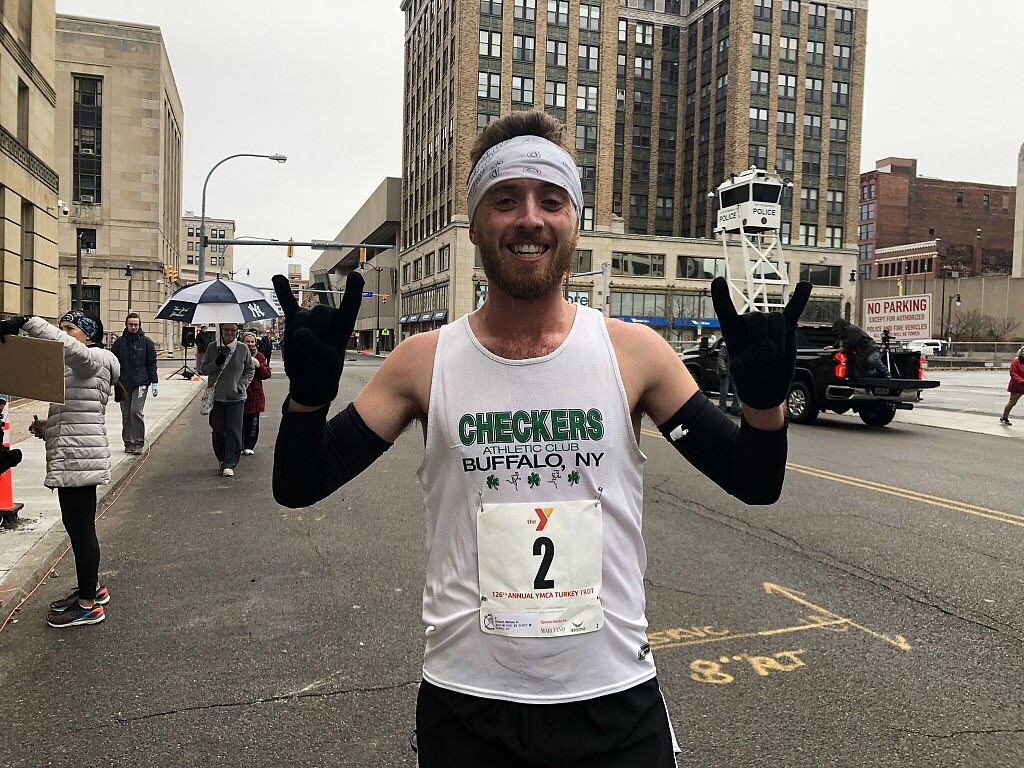
Kenmore’s Liam Hilbert who first ran Turkey Trot at age 9 wins annual race
When Kenmore’s Liam Hilbert says it’s a lifelong dream to win a YMCA Turkey Trot, he isn’t kidding.
Hilbert has run the trot for 15 consecutive years in what has become a family tradition, but he’s only 23. His first one was at 9 years old.
He now has that victory after winning Thursday’s 8K race in 24 minutes, 43 seconds.
After a year in which the in-person field was restricted by Covid-19 protocols, more than 12,000 runners and walkers took to Delaware Avenue for the 126th edition of what is billed as the longest consecutively run footrace in North America.
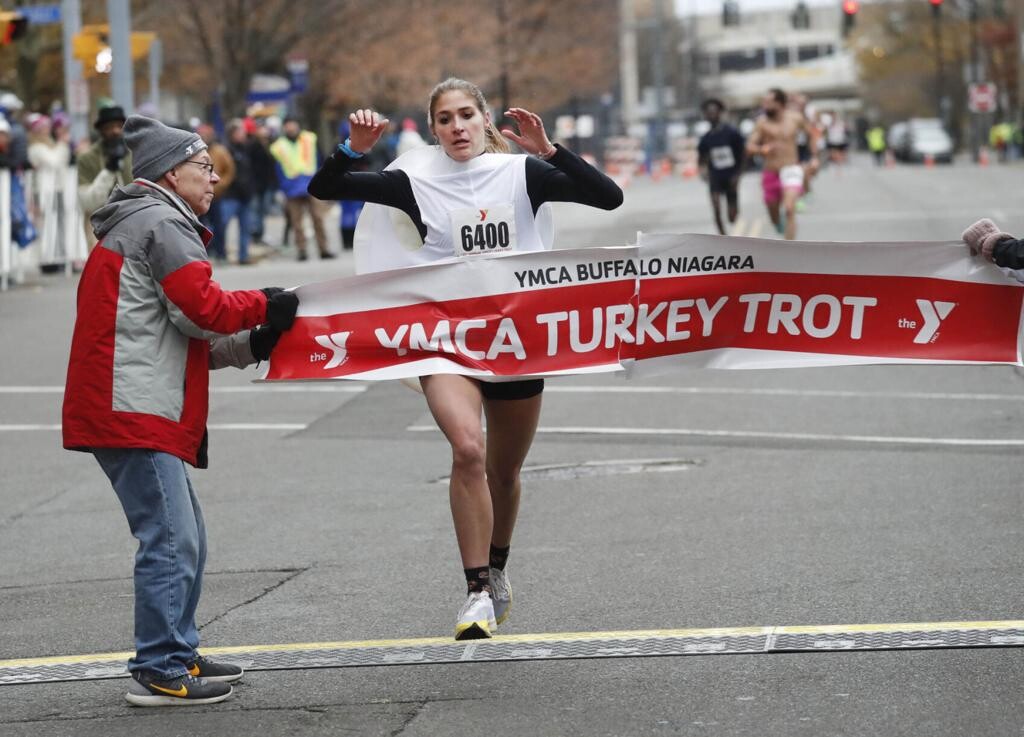
University of Wisconsin runner and Nardin graduate Danielle Orie topped the women’s field in 27:57. Orie was home for Thanksgiving break after running in the NCAA Division I Championships last weekend.
Hilbert is a former Monsignor Martin champion in the 1,600 meters and 3,000 meters at St. Joe’s and went to run at the University at Buffalo. He was the Mid-American Conference outdoor champion in the 10,000 meters last spring.
Hilbert ran the race with his uncle, James Waldron, with whom he had run the his first few Turkey Trots.
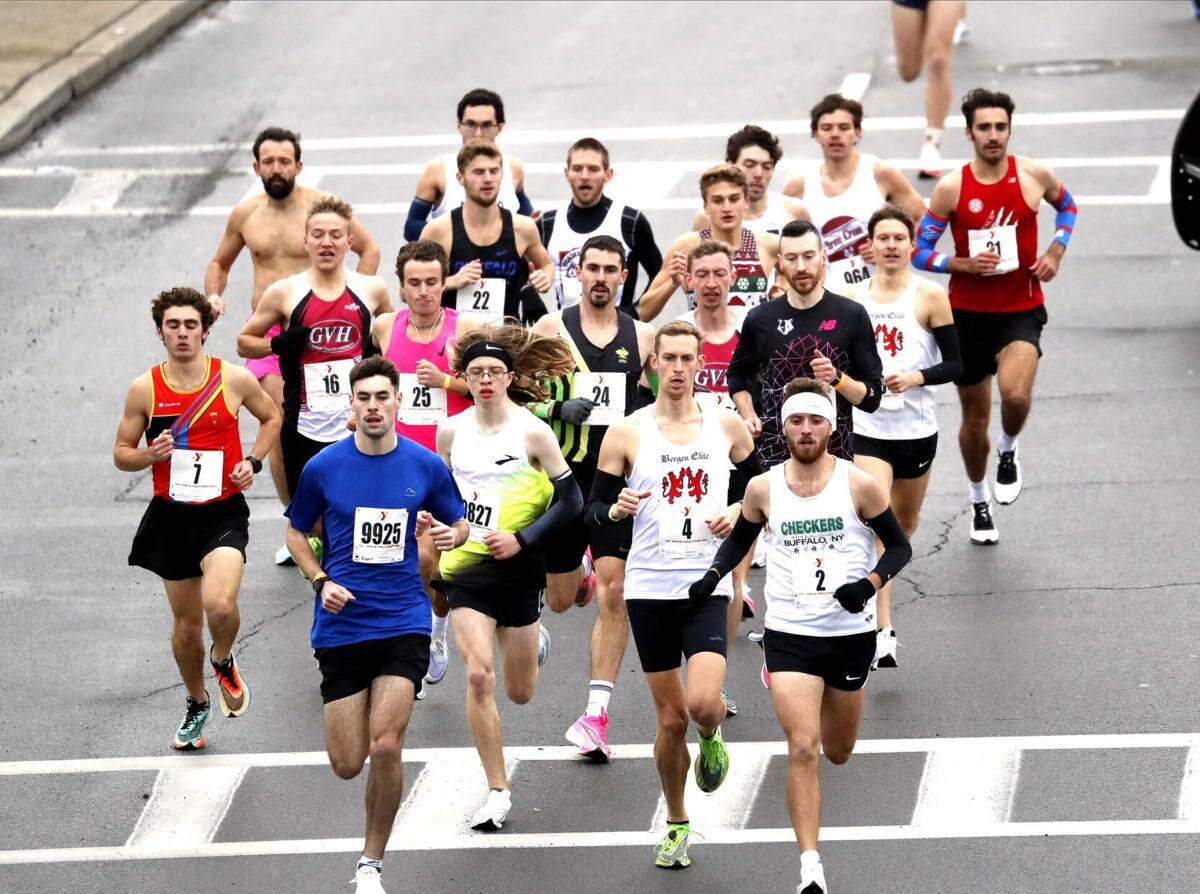
“My family was there to cheer me on,” Hilbert said.
Buffalo’s Thomas Appenheimer was second in 24:27, followed by Steven Haagsma of Gowanda (25:00), Rush’s Brennan Root (25:09) and Rochester’s Paul Suflita (25:28). Appenheimer runs at Canisius College and finished 11th in the Metro Atlantic Athletic Conference championships last month. Haagsma is a former Division III runner at Calvin College in Michigan.
For Orie, it’s been a busy fall in her first year at Wisconsin.
Orie ran for Penn as an undergraduate and transferred in the spring as she pursues her law degree. She finished 25th in the Big Ten Championships and then 22nd in the Great Lakes Region championship to qualify for the NCAAs. She finished 112th, covering the 6K in 20:34.2. Wisconsin finished 12th in the nation.
Sarah Danner of Gowanda was second in 28:21, followed by Pittsburgh’s Margo Malone in 28:38, Alexandra Cadicamo in 28:58 and Glenwood’s Aileen Hoak-Lange in 29:16.
Hoak-Lange, in her 29th consecutive trot, was the top woman in last year’s event as she was selected among 125 in-person runners.
by Robert Kirkham / Buffalo News
Login to leave a comment
YMCA Buffalo Niagara Turkey Trot 8K
The enthusiasm, energy and incredible holiday spirit that radiated down Delaware Avenue tells us that our local Thanksgiving Day run is so much more than just an 8k road race. It is an incredible tribute to all that makes Western New York great – Family, Friendship, and Benevolence. Together with the Y, you are helping to connect those less fortunate...
more...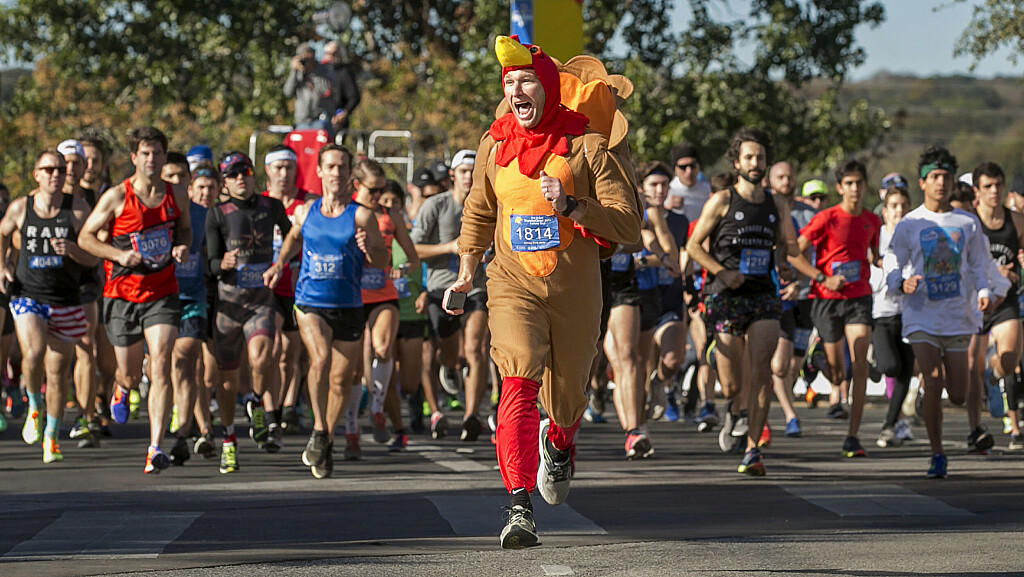
Be ready for the 126th Annual YMCA Turkey Trot
There are still spots left to participate in the 126th Annual YMCA Turkey Trot on Thanksgiving Day in Buffalo.
Race organizers say there a few spots remaining, but they believe they will reach the 12,000 capacity before Thanksgiving.
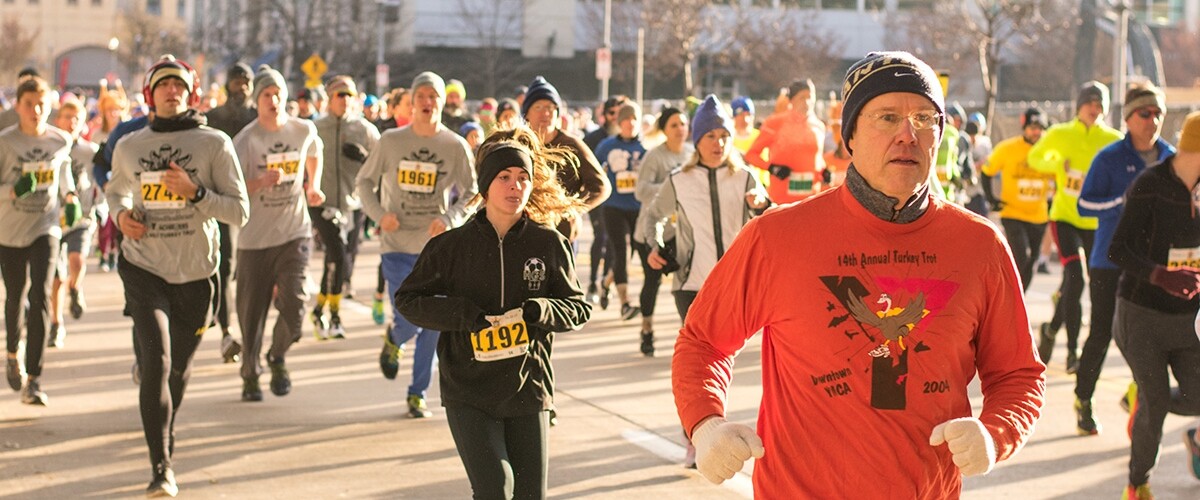
The 8k course begins on Delaware Avenue in North Buffalo and finishes downtown near the Buffalo Niagara Convention Center.
Pre-race packet pickup will take place Monday, Nov. 22 through Wednesday Nov. 24 at the Independent Health Family Branch Y located at 150 Tech Drive in Amherst near the ECC North Campus.
Runners can pick up their packets daily between 10:00 am and 7:00 pm on those days. It is recommended to pick up your packet prior to race day.
However, if you can't pick up your packet, before the race, you can pick it up on Thanksgiving Day between 7:00 am and 8:30 am at the Delaware Family YMCA.
If you cannot run in person, you can participate in the virtual Turkey Trot between Thursday, Nov. 25 and Sunday, Nov. 28.
As always, in-race participants are invited to take part in the Annual Costume Contest before the event. Contestants need to be ready to take the stage in front of the Delaware Family YMCA at 8:25 a.m. Prizes will be awarded for best group and individual costumes.
Proceeds from the YMCA Turkey Trot help fund Y programs that empower youth and improve community health.
If you are participating, you are asked to remember to bring your ID, wristband and mask during the race.
Login to leave a comment
YMCA Buffalo Niagara Turkey Trot 8K
The enthusiasm, energy and incredible holiday spirit that radiated down Delaware Avenue tells us that our local Thanksgiving Day run is so much more than just an 8k road race. It is an incredible tribute to all that makes Western New York great – Family, Friendship, and Benevolence. Together with the Y, you are helping to connect those less fortunate...
more...
11 Snacks to Eat After a Run That’ll Help You Refuel and Recover Faster
Whether you’re short on time or your stomach can’t handle much food after your miles, these options will do the trick.
Although it’s often overlooked, the post-run recovery meal or snack is one of the most crucial elements of your fueling plan. You may think that what you eat before a run is all that matters, but good postrun recovery nutrition also plays an important role in your overall performance.


During a run, your body utilizes glycogen (your body’s source of stored carbs) for energy, and your muscles experience tiny little tears. To replace the glycogen stores and aid in muscle recovery, you want to eat foods that have a combination of carbs and protein. Ideally, a 3:1 carb-to-protein ratio has been shown to be most beneficial for post-workout recovery. In other words, a food should have 1 gram of protein for every 3 grams of carbs.
Whether you’re short on time or your stomach can’t handle much food after a run, eating a full recovery meal isn’t always doable. But there are a wide range of snacks that fit the post-run criteria. We’ve compiled a list of some of our favorite healthy packaged snacks, so you can quickly recover after logging your miles.
1 Chocolate Milk
These 8-ounce containers of chocolate milk contain the classic 3:1 carb-to-protein ratio, with 23 grams of carbs and 8 grams of protein. If you have a sensitive stomach and can’t get down food after a run, you may find it easier to drink a carton of chocolate milk. Plus, milk has nine essential vitamins and minerals, including vitamin D and calcium for bone health.
2 Maple Oats
RX is taking oatmeal up a notch with the addition of egg whites, nuts, and dates. Made with simple ingredients, RX oatmeal is ready in minutes with hot water and a microwave, and it has 35 grams of carbs and 12 grams protein. If you prefer something cold after a run, fill it with water and stick it in the fridge before you head out the door for post-run overnight oats.
3 Classic Hummus and Pretzels
If you’re craving a savory snack after a run, reach for a conveniently packaged serving of hummus and pretzels. With 10 grams of protein and 40 grams of carbs, this snack comes close to the 3:1 ratio. And it also includes sodium—an important electrolyte lost in sweat—as well as fiber, which helps keep you fuller for longer.
4 Bada Bean Bada Boom Crunchy Broad Beans
Otherwise known as fava or field beans, roasted broad beans are the newest crunchy snack to rival chips. Packed with protein and fiber, not to mention they are naturally vegan and gluten-free, roasted broad beans are a healthier option than many other crispy snacks. A 1-ounce serving has 15 grams of carbs and 7 grams of protein, so pair it with a piece of fruit for an extra carb boost.
5 Peanut Butter Chocolate Chip Organic Vegan Protein Bar
There are a ton of protein bars on the market, but only few offer a short list of recognizable ingredients with a 3:1 carb to protein ratio. GoMacro does a good job of using real ingredients—such as nuts, puffed brown rice, and pea protein—and each protein bars have 11 grams of protein with 36 grams of carbs.
6 Strawberry Chia Organic Cottage Cheese
Whether you love or hate it, cottage cheese is packed with protein and bone-building calcium. Add in fruit, and you’re on your way to a post-run recovery snack. Since a container of Good Culture’s strawberry cottage cheese has more protein than carbs (17 grams of protein and 10 grams of carbs), slather it onto a piece of whole grain bread to make sure you replace glycogen stores.
7 Organic Crunchy Chickpeas
Chickpeas are naturally rich in both protein and carbohydrates, and roasted chickpeas are a delectable and crunchy post-run snack. Whether you throw them on salad or eat them straight out of the bag, you’ll get 6 grams of protein and 18 grams of carbs for every 1/4-cup serving. Not to mention, Saffron Road has tasty flavors, such as Buffalo, Bombay Spice, Chipotle, Falafel, and Korean BBQ.
8 Sea Salt Dry Roasted Edamame
This sushi night staple is a protein powerhouse and easy to store in the freezer. But on days when you don’t feel like microwaving, Seapoint Farms makes a dry roasted edamame with just soy beans and salt. Dried edamame is higher in protein than carbs, so grab a handful with a piece of fruit, bread, or whole grain crackers.
9 SunSeed Butter Chocolate Protein Bites
If you’ve got a sweet tooth, Enjoy Life protein bites are a tasty combo of chocolate and other delicious flavors, such as mint, banana, raspberry, and sunseed butter. Three bites have 6 grams of protein and 18 grams of carbs, and they are so easy to pop into your mouth directly after a run.
10 S’Mores Flip Greek Yogurt
Greek yogurt is packed with natural protein, and Chobani has added a sprinkle of other ingredients, such as nuts, pretzels, graham crackers, and toffee to give you a hint of sweetness while also replacing glycogen stores. Each Flip has around 9 grams of protein and 25 grams of carbs. Chobani Flip’s other flavors and mix-ins include banana cream pie, cookie dough, brownie bliss, and cookies and cream.
11 White Cheddar Cheese, Sea Salted Roasted Almonds, and Dried Cranberries
Cheese, nuts, and dried fruit come together in these Sargento Balanced Breaks to offer post-run protein, healthy fats, and carbs. With different types of nuts, cheese, and dried fruit, you can choose the variety that speaks to you. The perfectly portioned snack has 7 grams of protein and 12 grams of carbs, so pair it with a handful of granola.
by Runners World
Login to leave a comment
In Enemy Territory, Bills Fan Runs Marathon Around Monday Night Football Game
In a Josh Allen jersey, he ran 26.2 miles and saw the quarterback come out of the tunnel along the way.
The Bills Mafia is no stranger to sacrifice and tailgating greatness. The passionate fanbase of the Buffalo Bills football team turns out every home game in often near- or below-freezing temperatures while performing WWE-style slams and finishers through tables like a sacrificial offering to the football gods—or to quarterback Josh Allen.
So it’s no surprise that Bills fans are ecstatic about clinching their first AFC East title since 1995 and making the playoffs for the second time this century.
Colin Dee was one of these lifelong fans. His fandom stretched from his days growing up in Rochester, New York, and stayed with him even after he left in third grade to move to North Carolina.
Now, Dee resides in the Foxborough, Massachusetts, which is home to the rival New England Patriots. Once the Bills had the playoffs and the division in the bag, he and his fellow fans celebrated virtually, leading to Dee’s friend throwing him a dare.
“In mid-April when the schedule came out, we didn’t think COVID would last to December, so we planned to go to the Monday Night game,” Dee told Runner’s World. “We gotta go, but when we realized we couldn’t, they told me I had to do something. Originally it was just a run. Then it was a 5K. In the end, I was dared to do a marathon.”
Dee wasn’t a stranger to the distance. He had completed five marathons, inspired by his lifelong running dad. It was that family tradition that was passed down instead of his dad’s New York Giants fandom that Dee’s grandfather, a Bills fan, on his mom’s side was adamantly against.
Dee’s true Bills Mafia passion amped up in college. While moving in freshman year at the University of Dayton, Dee discovered a friend who moved away in the second grade to Chicago—also a Bills fan—lived next door.
The two reconnected and even splurged on season tickets their sophomore year and made the roughly six-hour drive for home games in the fall. They’ve been season-ticket holders ever since. Plus, they even converted Dee’s dad to be a Bills fan.
“My dad got me into running, and I got him into the Bills,” Dee said. “My dad has done a couple ultras and was trying to do a 100 miler. Here I am doing a marathon outside a stadium. People think I’m a nut.”
It was also Dee’s childhood friend who dared him to do the marathon. While Dee was determined to do it, as the week went on, he realized he could also do the run and try to raise money for charity.
Thinking about which to pick, Dee turned to inspiration from Bills quarterback Josh Allen. Bills Mafia has gotten behind their leader since Allen’s grandmother died earlier in the season and fans followed by donating over $1 million to Oishei Children's Hospital.
Dee hoped people would donate at least 17 cents per mile—an homage to Allen’s number—or a nominal $4.45 for the entire run.
“There’s people going through a lot worse things right now in the world, and if we can do something like this for a kid or a family going through cancer, you gotta do it,” Dee said. “If it coincides with things like the Bills and the work they’re doing with Josh Allen, even better.”
A little over a week later, Dee kept his word and lined up, untrained, around 4:30 p.m. on December 28 in his Josh Allen jersey for a marathon run through the empty parking lots and uncrowded sidewalks around Gillette Stadium. The start time was before the game because Dee had to beat the Massachusetts COVID curfew of 10 p.m. ET.
Dee had a route around the facility mapped out, but on the first lap, he had to get creative because he accidentally ended up in a restricted area and was chased out by security. That lap ended up being the longest at 2.2 miles. After that, he settled into a 1.3 out and back that ran by an opening that looked onto the field.
“People think I’m some drunk guy running around,” Dee thought out loud as he ran.
While his family crewed him, he charged through the first miles at an pace as fans of both teams who happened to be in the area (very few because of COVID) cheered and jeered at the person running around the stadium in a jersey.
He’d hear people screaming, “Josh Allen,” all night for his jersey. However, around mile 6 when he heard that, it wasn’t directed at him. In fact, as he ran by the opening to the field, Josh Allen was actually running through the tunnel to the field to warm up.
After that, Dee kept up his pace as he saw the fireworks mark the start of Monday Night Football and listened to the game from the outside.
The marathon would take him 5:08:44, but he did it and was able to recover with some food, his family, and the second half of the game.
Not only that, he’s also ended up raising more than $3,200 for Oishei Children's Hospital.
“This didn’t start as anything more than a dare made over a couple of beers,” Dee said. “Then I thought we need this to go back to Buffalo. I don’t want to give this to Boston. With all the good that has come from Oishei and the Bills connection, he knew we had to do it. I’m so happy with what we’ve done so far.”
To make the night even sweeter, the Bills ran away with a 38-9 victory on the road.
by Runner’s World
Login to leave a comment
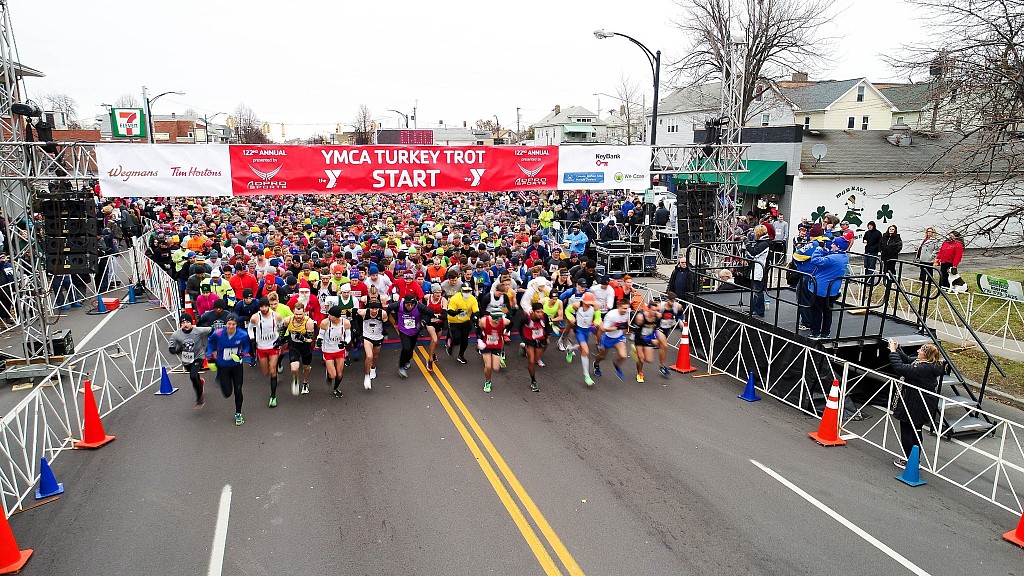
The Oldest Continuous Road Race In The World, YMCA Buffalo Turkey Trot 8-K, Will Be Held For A Record 125th Straight Year This Year
Each year on Thanksgiving Day more Americans participate in running races than on any other day. According to the running industry trade group Running USA, about 1.2 million Americans ran in a “turkey trot” in 2018, up 71% from 2011 when the organization first began tracking participation. It’s the perfect activity before families sit down to their Thanksgiving feasts and hours of watching football.
“As the popularity of turkey trots grows, we increasingly see them as healthy activities for the whole family on one of the biggest holidays of the year,” observed outgoing Running USA CEO Rich Harshbarger through a statement in 2019. “The vast majority of participants are running with partners, children, other family members, friends, and even multi-generational branches of their family tree.”
But the pandemic will put a huge dent in race participation on Thanksgiving this year which falls on Thursday, November 26. Out of a representative sample of 39 well-established turkey trots tracked by Race Results Weekly, only six plan to stage in-person races this year. The rest will be held virtually, or have simply been cancelled.
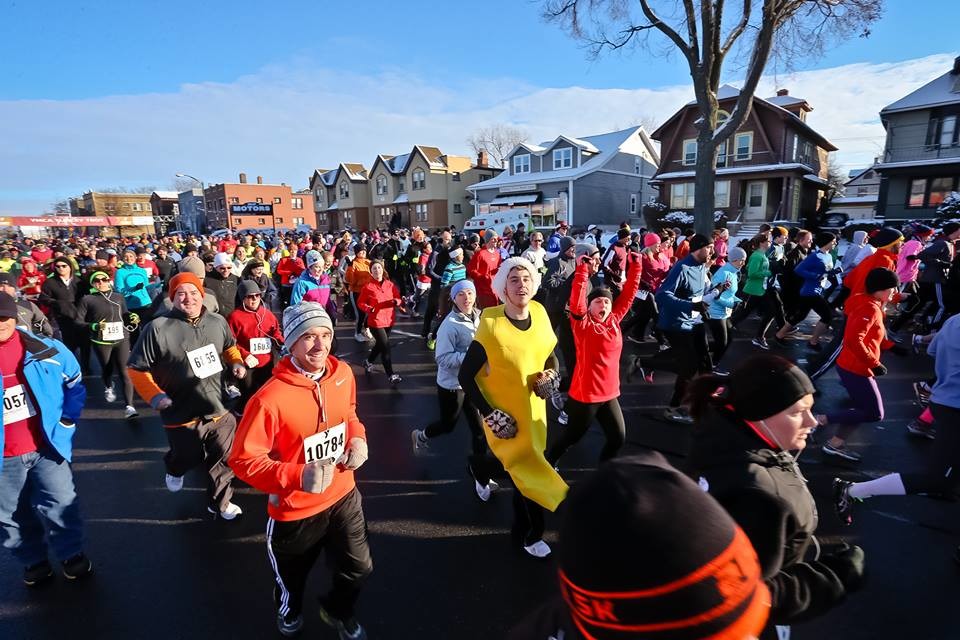
Among those six, are two of the nation’s oldest road races, the YMCA Turkey Trot 8-K in Buffalo, N.Y., founded in 1896, and the Run for the Diamonds (9 miler) in Berwick, Pa., founded in 1908. Remarkably, the Buffalo race has been held for 124 consecutive years without being cancelled, making it the longest running public road race in the world. It was actually founded one year before the Boston Marathon.
So when the pandemic struck last March, race director Rick Streeter quickly began thinking about how to put on the 125th edition as a safe, in-person race. Streeter, a vice-president at Leone Timing, the event management and timing company which oversees the operation of the race, felt strongly that the streak should continue. He and Leone Timing’s president Pat Leone started to look for a way forward.
“We knew that we needed to do something live,” Streeter told Race Results Weekly in a telephone interview earlier this week. “Obviously, with some of our success with virtual racing in the spring, we were going to have that component, regardless. But to preserve the record, the streak, we needed to do something live.”
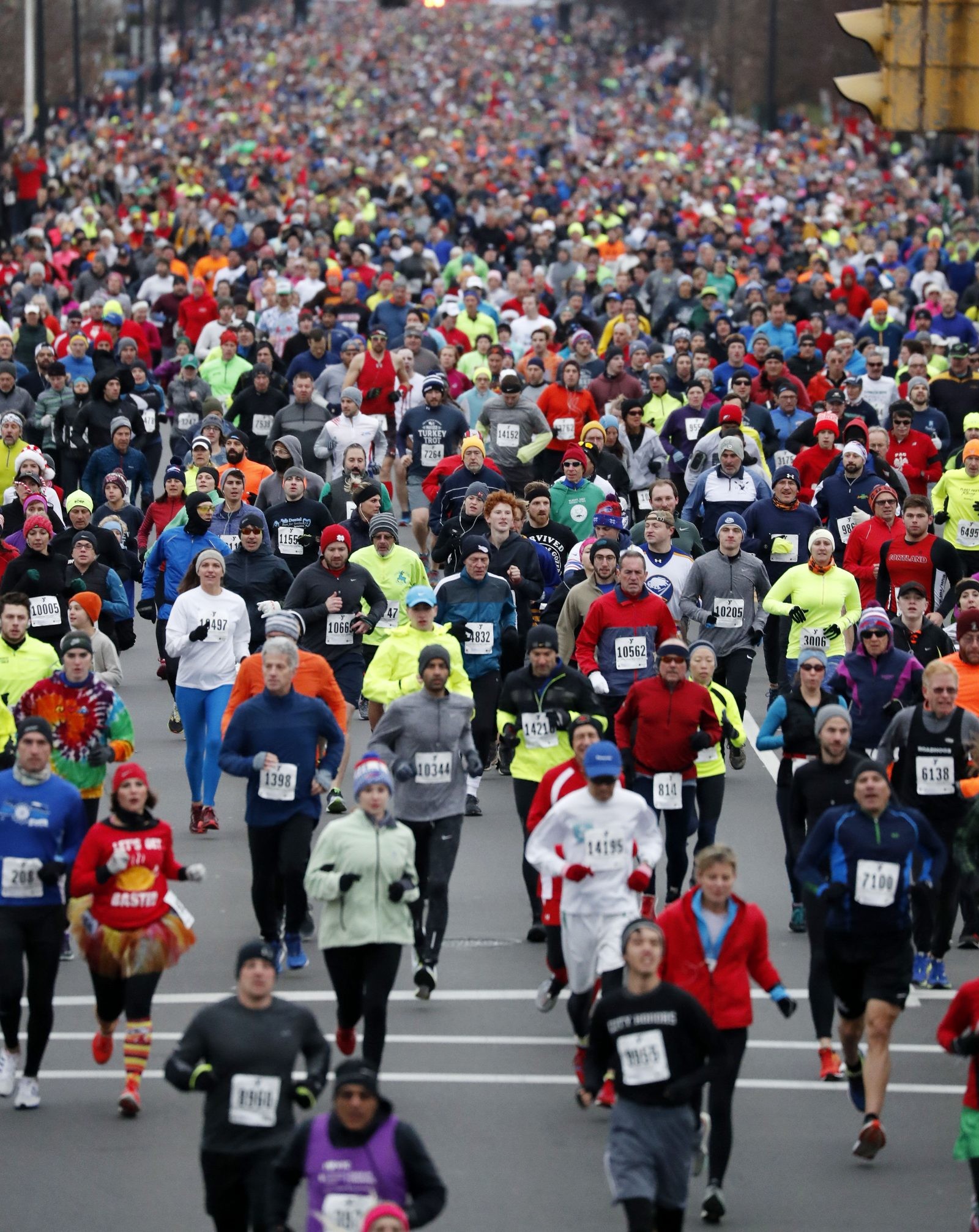
Working with leaders at the YMCA Buffalo Niagara Association, the not-for-profit organization which owns the event, Streeter and Leone proposed a hybrid race with most athletes running virtually, but 125 –one for each year of the race‘s tenure– could run in-person. YMCA officials, with support from Erie County and the City of Buffalo, liked the idea but how would the 125 be selected? The race is extremely popular, and had almost 12,000 finishers last year. After a lot of discussion, they decided to select the runners randomly out of the pool of virtual entrants.
The traditional point-to-point course allowed the event to accommodate a large group of runners, but it also meant that runners had to be transported to the start. Streeter wanted to eliminate that requirement.
“We had to create a new course because we didn’t want it to be point-to-point,” Streeter explained. “We wanted to eliminate the transportation factor, so everybody is in charge of their own transportation. It’s not a common start/finish (line), but the start and finish are very close.”
Of course, many runners may show up on the traditional course to do their virtual races on Thanksgiving, something that Streeter and Leone have anticipated. They made sure that the special 2020 course isn’t in the same location as the traditional course.
“I think the idea is getting the in-person race onto a different course and getting them out of the way of what may happen unofficially on the regular course,” said Leone.
“Actually, it was the one thing we talked about right from March when everything locked down,” Leone said. “I said, if I’ve got to gather five or ten people we’ve got to have the 125th… if we have to run them one at a time down the sidewalk into downtown to the convention center.” He continued: “We felt like we are stewards of it, something that survived world wars, all the world wars, and whatever else.”
Leone and Streeter noted that the race came close to cancellation a few times, including in both 2000 and 2014 when early snowstorms hit the city hard just before Thanksgiving. The city, and race officials and volunteers, were up to the challenge. In 2000 the race recorded 3452 finishers, and in 2000 there were 12,280.
by David Monti
Login to leave a comment
YMCA Buffalo Niagara Turkey Trot 8K
The enthusiasm, energy and incredible holiday spirit that radiated down Delaware Avenue tells us that our local Thanksgiving Day run is so much more than just an 8k road race. It is an incredible tribute to all that makes Western New York great – Family, Friendship, and Benevolence. Together with the Y, you are helping to connect those less fortunate...
more...
World Marathon record holder Eliud Kipchoge wants Usain Bolt to visit Kenya
World Marathon record holder Eliud Kipchoge has invited the fastest man on earth, Jamaican Usain Bolt to visit Kenya and witness the wildebeest migration, one of the wonders of the world.
“It’s good to invite my good friend Bolt to come and visit to see what is currently happening in Kenya now," Kipchoge said on Sunday during his tour of the Masai Mara Game Reserve.
“He is an all round guy, charming, a great sports ambassador to the world.”
Kipchoge said Bolt, who visited Kenya 11 years ago, is welcomed to come and find out how the baby cheetah he adopted in 2009 is doing.
“We have the big five- Lions, Leopards, Rhinos, elephants and buffaloes, which are some of the fastest animals in the world then we have the cheetah that is the fastest animal,” said Kipchoge.
“Bolt is the fastest and I will be glad to host him in Nairobi to witness over 2.5 million wildebeest migrating.”
While Bolt holds the 100m and 200m world records of 9.58 and 19.19 seconds, Kipchoge holds the world marathon record of 2:01.39.
Kipchoge, who has been named Kenya tourism ambassador, on Sunday ran with Kenya's game rangers and Masai Morans at the Masai Mara Game Reserve, Narok County.
Kipchoge, who raced over 10km in the wild said he used the race to pay tribute to the game rangers for their efforts in safeguarding the wildlife besides their conservation efforts.
The world Marathon record holder also commended the Morans and their Masai community for being on the forefront not only to preserve their culture that has been a major world attraction, but also the wildlife and environment.
Kipchoge, who has a passion for environment conservation and wildlife said, “I should have been in Japan to defend my Olympic title and I was ready for it, but Covid-19 happened.”
“It was a good run that I also wanted to use to bring hope to 47 million Kenyans. I want to tell them that we can’t go down completely and that we can still rise and go up together as a country through running,” said Kipchoge, who will be defending his London Marathon.
by Ayumba Ayodi
Login to leave a comment

Colorado To Hold State 10-K Road Running Championships On Sunday
Bucking the trend of cancelled road races, USATF Colorado will hold their state 10-kilometer road running championships on Sunday hosted by the Colorado Springs Classic 10-K. The race, which was first cancelled then rescheduled, will be held on an out-and-back course starting at Monument Valley Park. Entries close today.
So far, 121 athletes have signed up for the race, including elite runners Fernando Cabada (2:11:36 marathoner), Lauren Masterson (the 2019 women’s champion), and Maor Tiyouri (2016 Olympic marathoner for Israel). The male and female winners will each receive $400 out of a $2000 prize money purse.
The event is organized by Mad Moose Events, a family-owned event management company founded by Justin Ricks. Organizers plan to have athletes start in small waves of 10 separated by one-minute intervals, and have posted hygiene guidelines to fight COVID-19 spread on the event website. Those guidelines include:
. Temperature Check: All runners must do a contact-less temperature check as they enter the start line area. If runner has a temperature of 100.4°F (38°C) or above, they will be sent home.
. Social Distancing: All runners maintain a minimum of six-foot (two meter) distance from others.
. No Post-Finish Hanging Out: Runners cannot congregate at the finish line after finishing.
. Results Posted Only On-Line: Printed results will not be posted at the finish line to discourage runners from congregating.
. Face Coverings: Masks or other face coverings must be worn when social distancing cannot be maintained.
Organizers also caution “high risk individuals and individuals from highly infected areas” not to attend the event.
For context, this is the only road race on the proprietary global Race Results Weekly event calendar for this weekend (there are some track competitions). Road races typically held this weekend include the Ann Arbor Mile – Dart for Art (Ann Arbor, Mich.), Buffalo Subaru 4-Mile Chase (Buffalo, N.Y.), Bill Luti 5-Miler (Concord, N.H.), Silks & Satins 5-K (Saratoga Springs, N.Y.), Summerfast 10-K (Vancouver, B.C.), Rock ‘N’ Roll Chicago Half-Marathon, Lululemon Edmonton 10-K, Marvejols Mende 22.4K (Lozere, France), Real Insurance Sydney Harbour 10-K, and the Rockville Rotary Twilight Runfest 5-K (Rockville, Md.).
by Let’s Run
Login to leave a comment
Two-time US Olympian Dick Buerkle has died at age 72
Rochester native Dick Buerkle, who at one time held the world indoor track and field record for the mile and twice qualified for the U. S. Olympic team, died Monday morning having suffered from a rare form of Parkinson’s called Multiple System Atrophy. He was 72.
“Dick never stopped pushing,” his daughter Lily Buerkle said. “There was no such thing as a relaxed family run around the block. Every run ended in a sprint. Dick’s elbow would always find a way to edge out the person next to him, even if it was his young daughter.”
Buerkle graduated from Aquinas Institute in 1966, having competed for the Little Irish track team in only his senior year. He went on to Villanova University and performed as a non-scholarship athlete for two track seasons before finally earning a scholarship in his junior year.
During his time in college, he was a three-time NCAA All-American who finished third in three NCAA finals events: The 1969 and 1970 indoor two-mile race and the 1970 outdoor three-miler.
Known for his bald head long before the look became chic – he lost all his hair by the age of 12 due to alopecia – he graduated in 1970 and became a star runner on the national track circuit, though he remained an amateur.
As he lost his hair, the chip on his shoulder grew,” said Lily, who also added that later in her father’s life, he was, “forever thankful to Michael Jordan for shaving his head and ultimately making bald cool."
While he achieved fame for his 1978 world record time in the mile, between 1970 and 1981 Buerkle was ranked among the top 10 Americans at the 5,000-meter distance seven times and was No. 1 in the U.S. in 1974, No. 4 in the world.
That was the distance at which he competed in the Olympics. He did not make the 1972 team that went to Munich, but he won the 1976 U.S. Olympic trials to earn his spot in the Summer Games at Montreal.
By that time he had moved to Buffalo and was working for Bausch and Lomb as a contact lens salesman. At Montreal, he ran ninth in the trial and did not get to race for gold in the final.
Buerkle also qualified for the U.S. team in 1980, but never got to compete because President Jimmy Carter boycotted those Games in Moscow in protest of the Soviet Union’s invasion of Afghanistan; politics ruined four years of training for Buerkle and so many other athletes.
It was in between those two Olympiads, on Jan. 13, 1978, at the CYO Invitational held at Cole Field House on the campus of the University of Maryland, when Buerkle broke the indoor mile world record with a time of 3:54.93, defeating heavy favorite Filbert Bayi.
Login to leave a comment
Having been cancelled due to the pandemic, this year’s Lewa Safari Marathon will be staged virtually, with Eliud Kipchoge leading the way
On Saturday, Kipchoge ran in a practice session at the Conservancy alongside Lewa Rangers to help drum up support for the virtual race.
The fastest marathoner in the world teamed up with World Half Marathon giant Geoffrey Kamworor alongside two other athletes, Philemon Rono and Jonathan Rotich.
Kipchoge’s presence at the Conservancy located in Kenya’s North was a boost for the wildlife rangers and Tusk’s Director of Programmes in Africa, Sarah Watson who joined them on the run.
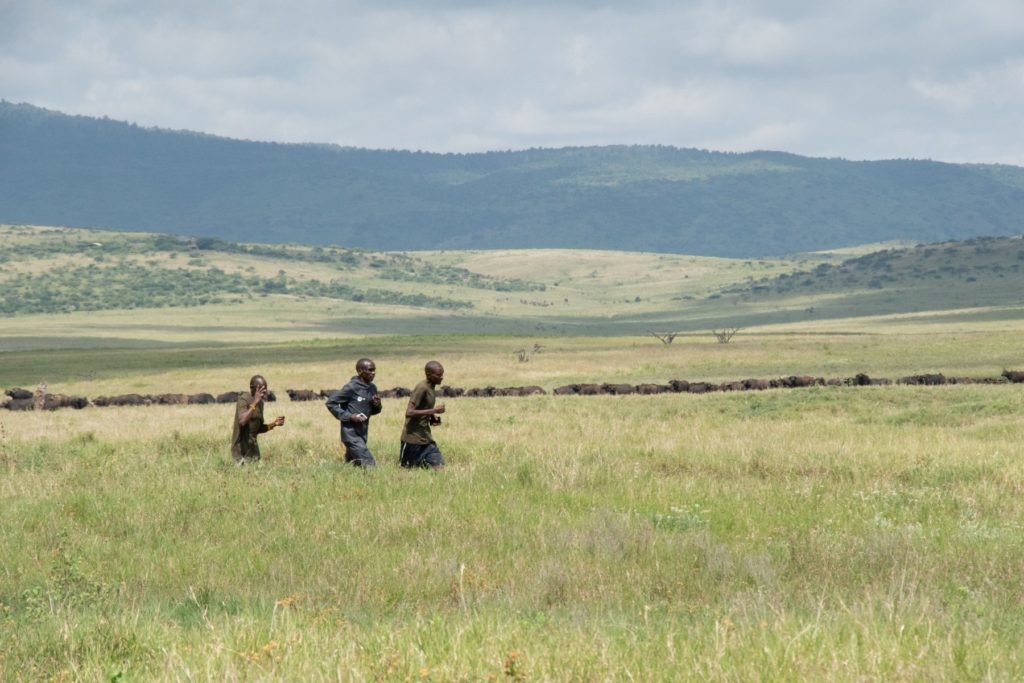
“I urge everybody to participate and just run where they are. We are all part of the human family and we must keep strong, stay fit, observe directives from our government, and know this situation is not permanent.”
“I have never taken part in the Lewa (Safari) Marathon before, but it was very inspiring to run with the rangers today in this beautiful conservancy and motivate them. I would ask the rangers to continue doing a good job, because they are conserving our wildlife and environment.”
Kipchoge struck through the picturesque Lewa terrain, with a mouth-watering background of grazing elephants and buffalos as the Rangers struck in tow, looking to keep up with the pace of a world beater.
It was a win-win day for Kipchoge who also got to experience a different set-up from his Eldoret base where he has been training in isolation since all athletics camps were closed as the world battles to control the spread of the coronavirus.
“My team and I are honored and very excited to have run with Eliud and his team today. Eliud is our brother, friend and supporter who recognizes the challenges that we face as wildlife rangers. This run has boosted our morale and encouraged us to keep going in this difficult time,” said Edward Ndiritu, Lewa’s Head of Anti-Poaching.
Athletes who will have registered will run from wherever they are as they continue supporting the marathon which had hoped to raise close to Sh500mn this year to aid in Lewa’s conservancy projects.
This year’s race was set to be supported by Safaricom and Huawei, with Safaricom having stepped down their annual financial support and instead joined up with the Chinese electronics company to raise the annual budget.
by Timothy Olobulu
Login to leave a comment

Safaricom Lewa Marathon
The first and most distinctive is that it is run on a wildlife conservancy, which is also a UNESCO world heritage site. The Lewa Wildlife Conservancy is home to a number of endangered and threatened species- and also a catalyst for community development for its neighboring communities. For the past 17 years, funds raised from the marathon have gone...
more...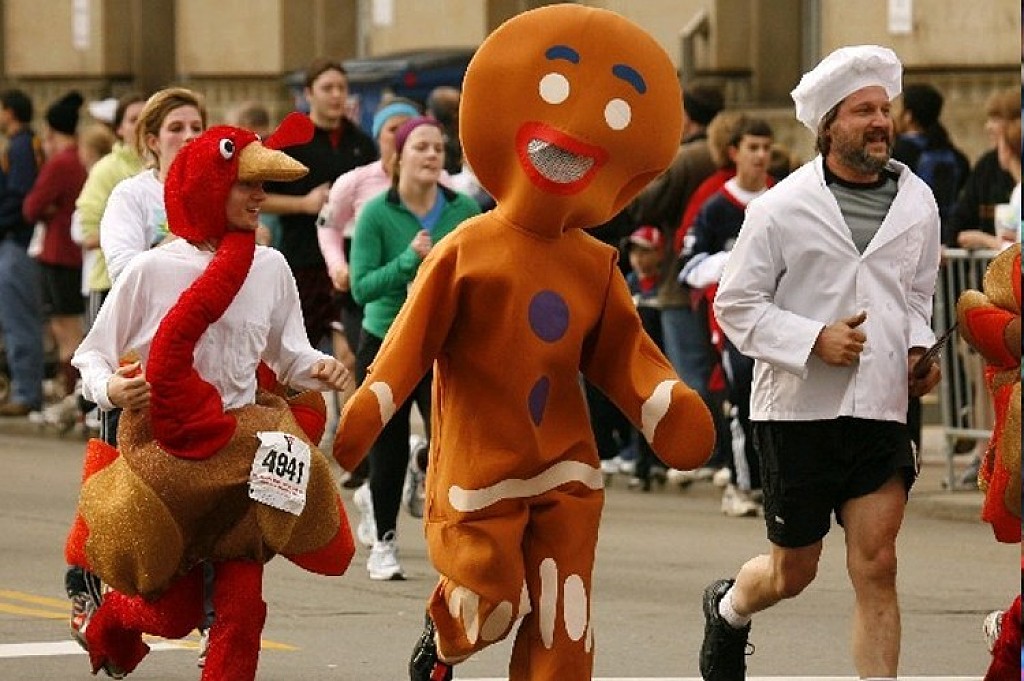
10 Reasons to Run a Turkey Trot
Thanksgiving is the most popular running day of the year, according to Running USA. Last year more than 1.17 million people registered for a Turkey Trot around the Thanksgiving holiday. The tradition is believed to have started in 1896 in Buffalo, New York, with Y.M.C.A. Buffalo Niagara’s Turkey Trot — today the 8K attracts more than 14,000 runners and calls itself the “oldest consecutively run footrace in North America.”
While running a few miles won’t do much to offset the 2,000+ calories you’re likely to consume on Thanksgiving, there are plenty of other reasons to lace up your sneakers and get moving with family and friends.
1.- It’s one of those rare unicorn events that everyone can actually do together, whether you run, walk or trot. Win points with your Ironman father-in-law. Or just use it an excuse to be better at something (anything!) than your cousin.
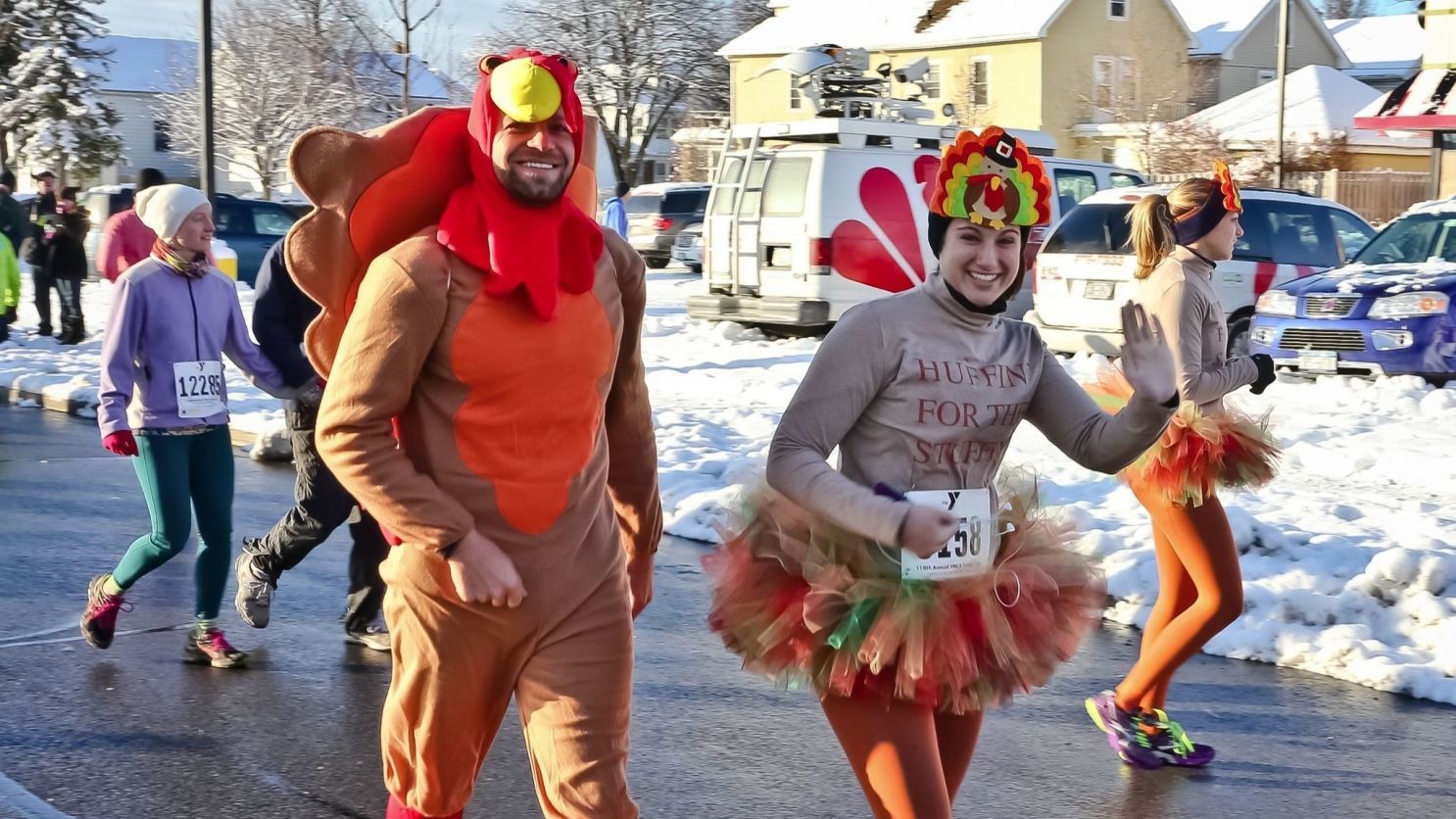
2.- On the other hand, if you get stressed by family dynamics, a Turkey Trot can also be a great excuse to escape. (Self-care, hello?!?!?)
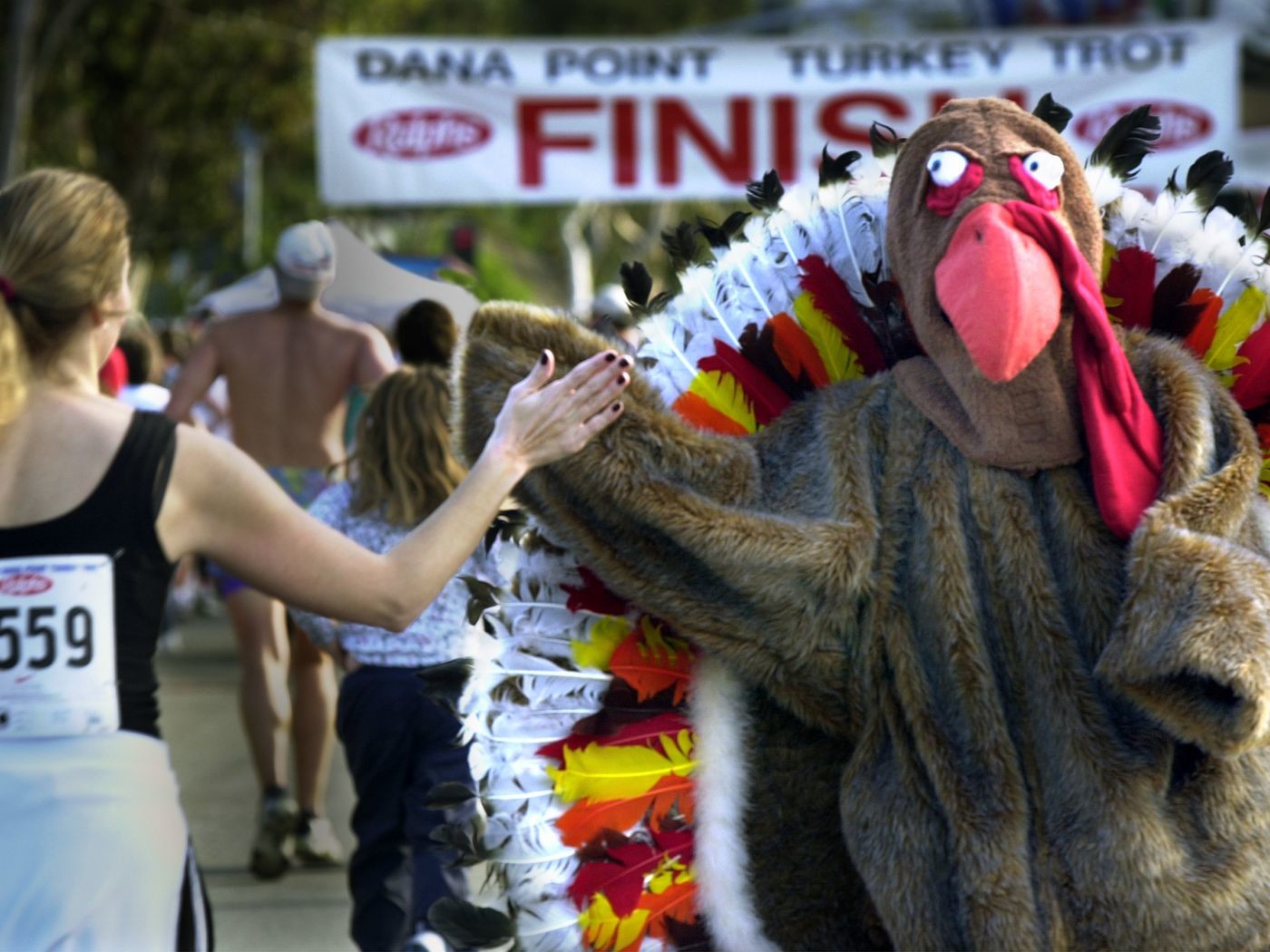
3.- Most races have shorter distances for kids, everything from a 1-miler to a 500-meter dash — often with mini-medals, chocolate lollipops or hot apple cider at the finish.
4.- You can probably get out of some holiday-related jobs/duties/tasks — peeling potatoes, putting the leaf in the dining room table, getting folding chairs from your uncle’s garage — because you will be at the race (and going to/coming from/showering after!).
5.- If you’re traveling to that same relative’s house for the fifth year in a row, consider finding a race in a nearby town (Active.com has a comprehensive list); a new environment can keep things interesting.
6.- Make fun of the (probably ugly) shirt that will go straight into your pajama drawer because it features the face of a massive cartoon turkey or the name of a local pub. (Why are Turkey Trot race shirts so universally bad?)
7.- Feel morally superior to everyone else when you post your Turkey Trot pic on social media or feel less lazy (and avoid FOMO) when everyone else posts theirs.
8.- Enjoy an extra helping of stuffing.
9.- If you do post a pic, use #WillTrotForBeer and tag @MichelobULTRA — until December 1 the brand will donate $1 per pic (up to $10,000) to AmpleHarvest.org, a non-profit aiming to end food waste and hunger.
10.- Appease guilt on Friday when you don’t work out because you’re still full/busy shopping/watching Christmas movies/eating another slice of pie.
by Stephanie Emma Pfeffer
Login to leave a comment
YMCA Buffalo Niagara Turkey Trot 8K
The enthusiasm, energy and incredible holiday spirit that radiated down Delaware Avenue tells us that our local Thanksgiving Day run is so much more than just an 8k road race. It is an incredible tribute to all that makes Western New York great – Family, Friendship, and Benevolence. Together with the Y, you are helping to connect those less fortunate...
more...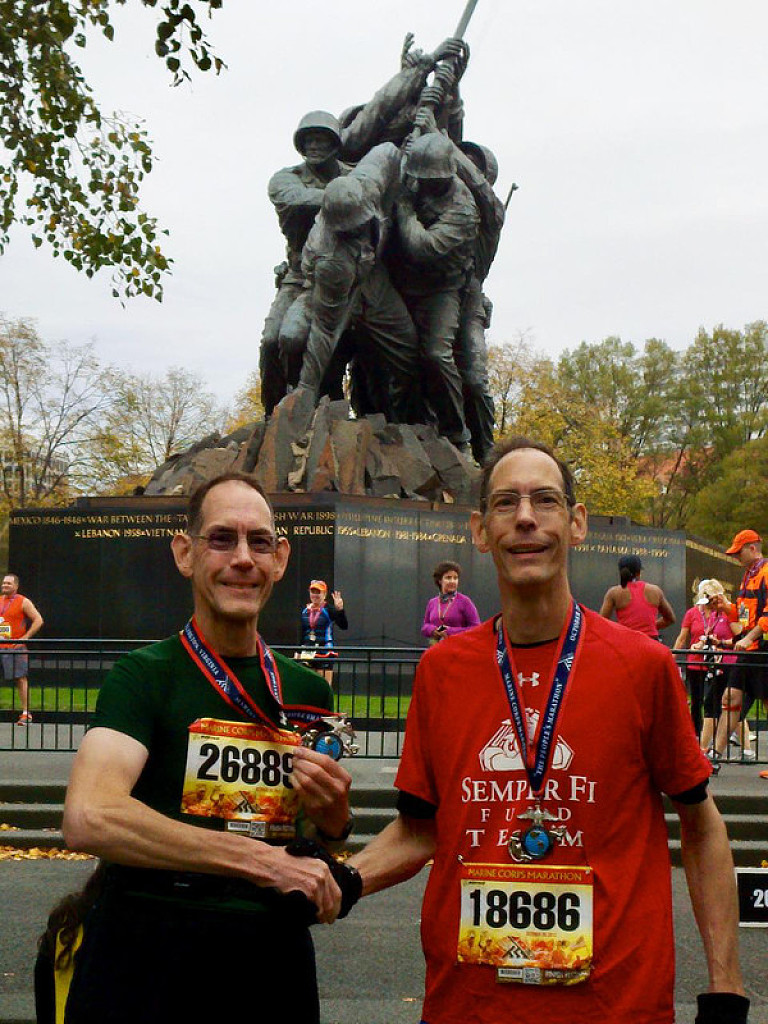
Despite Injury, Navy Veteran Michael Frank Still Plans To Cross the Finish Line at the Marine Corps Marathon
Michael Frank is raising funds to help support a veteran’s charity says he won’t let a recent stumble stop him from crossing the finish line.
Michael Frank is preparing for his 8th straight run in the Marine Corps Marathon, set for October 27th in Washington D.C. However, the Navy veteran says while on a lunchtime training run, he tripped, fell, and rolled, fracturing his left shoulder socket in the process.
He called it a “minor break” that only requires his arm to stay in a sling for six weeks. And while he can’t do any additional training until a follow-up x-ray on October 21st, he says the orthopedist said he should be able to jog/walk the Marine Corps Marathon.In light of that, he’s revised his goal for the event from a 4 hour 30 minute finish to just finishing the marathon.
As he has for the past seven years, Frank is running for the Semper Fi Fund, which benefits combat wounded, critically ill, and catastrophically injured members of all the armed services.
While many of the immediate needs of the veteran might be being met, the Semper Fi Fund specializes in helping with the ancillary needs. Frank says the fund is one of only two A+ rated veterans charities.
Despite the medical setback, he’s still doing what he can, including a fundraiser October 10th at the Buffalo Wild Wings in Howell.
by Manfred Mann
Login to leave a comment
Marine Corps Marathon
Recognized for impeccable organization on a scenic course managed by the US Marines in Arlington, VA and the nation's capital, the Marine Corps Marathon is one of the largest marathons in the US and the world. Known as 'the best marathon for beginners,' the MCM is largest marathon in the world that doesn't offer prize money, earning its nickname, “The...
more...
The worlds 10 most scenic marathons that are worthy of your bucket list
These are the 10 most scenic marathoners you need to put on your bucket list
1) Midnight Sun Marathon, Norway. Head to Tromso, Norway to try an Arctic Marathon where the sun doesn’t set…literally! Norwegians experience the “Midnight Sun” from May 20 to June 22, which allows runners to run a marathon during the night. A big portion of the race happens along the coast, so runners enjoy picturesque views of the Norwegian sea as well as the snow-capped peaks.
2) BMW Berlin Marathon, Germany. This marathon that starts and ends at the Brandenburg Gate takes runners in a large loop around the city. This is the perfect marathon to experience a slice of history as marathoners will pass the iconic Reichstag, Berlin Cathedral, Tiergarten and Potsdamer Platz, to name a few.

3) ​Marathon du Medoc (France). This is a wine and food festival disguised as a marathon! The course will take you through the vineyards of the Médoc in Gironde. Held in the Southwest of France near Bordeaux; food stands and wine tasting stalls dot the entire course of this event. Nibbles offered include pastas, oysters, cheese, steaks, fruits, and the region's famous wines to wash down everything. This fun marathon usually turns into a carnival of spirited, costumed runners as participants are encouraged to dress, according to the year’s theme.
4) The Hong Kong Marathon (Hong Kong). This is easily the biggest participation sporting event in Hong Kong with over 70,000 runners from 90 countries participating in it. Marathoners enjoy some of the best urban landscape. This iconic race unfolds against the backdrop of Hong Kong’s breath-taking skyline and harbour. The full marathon and half marathon, both start at Nathan Road in Tsim Sha Tsui racing up into New Territories, and heading back down to a spectacular finish in Victoria Park on Hong Kong Island. The Hong Kong Marathon has been awarded Gold Label status since the 2016 and with total prize money of US$300,000, it is one of Asia's most prominent marathons.
5) Big Five Marathon (Limpopo, South Africa). This is undoubtedly the wildest marathon in the world! Conducted within the private Entabeni Game Reserve in South Africa, this marathon runs through the African savannahs. True to the marathon’s name, you have a chance of bumping into lions, leopards, rhinos, elephants, and cape buffaloes in addition to the other animals like giraffes, antelopes, etc., along the way. The safety of the runners is not compromised as park rangers watch over the Big Five Marathon to ensure that participants can gaze safely at zebras, leopards, and antelopes as they run.
6) Great Wall Marathon (China). This marathon isn’t for the faint hearted, but it’s the race of a lifetime. Strictly speaking, the marathon route overlaps the Great Wall of China for a small section of the race, but this relatively short section on the Wall is a challenging 5,164 steps. Participants get to run through old villages and see sweeping hillside views, with hundreds of enthusiastic locals cheering for them.

7) Skarkasse 3-Laender Marathon (Germany, Austria and Switzerland). This unique marathon offers runners an opportunity to run through three countries - Germany, Austria and Switzerland in one single race! This 26.2-mile journey starts on the island of Lindau, Germany, before taking runners through several Austrian towns, and then crossing the Swiss border and finishing in Bregenz. The flat terrain, half of which courses along the shores of Lake Constance, features a mix of cobblestone, gravel and asphalt.
8) Big Sur Marathon (California, USA). For the past two years, the Big Sur Marathon sells out in record time! Traversing through one of the world’s most scenic courses, meandering through the coastline along the azure blue waters of the Pacific ocean and redwoods, the Big Sur International Marathon held in California ranks high on the list of challenging marathons due to its alpine terrain and strong headwinds. Known for its incomparable natural beauty and dramatic coastal scenery, this race has a strict 6-hour time limit to complete it.
9) Patagonian International Marathon (Patagonia, Chile). This marathon will take you through the jaw-dropping landscapes of Torres del Paine National Park, a route which makes way through turquoise waters, towering peaks and pristine glaciers. This is also the most eco-friendly race in the world. Instead of medals, participants have a tree planted in their name. The organisers also encourage you to carry your own water bottles to avoid cup waste. So, go ahead and fulfil your dream of running in one of the most pristine places on the planet!
10) Australian Outback Marathon (Australian). Big open skies, cool rock formations, soft red earth under your feet, this marathon was made for adventure seekers and nature lovers. This marathon will give runners a glimpse of the famous Uluru and Kata Tjuta rock formations and sacred sites of the aboriginals of the area.
Login to leave a comment

Midnight Sun Marathon
The Midnight Sun Marathon first started in 1989 and has runners from most of the world, attracted by its special feature of running in the midnight sun. The race starts and finishes at the city center. The runners are facing the Tromso Bridge after 2 km; an uphill from 6 to 43 meters over sea level. After running about 20...
more...
Dathan Ritzenhein won the 2019 Humana Rock 'n' Roll Chicago Half Marathon
Nearly 13,000 registered runners from age 12 to 81 took to the streets of the Windy City this weekend to participate in the 11th running of the Humana Rock ‘n’ Roll Chicago Half Marathon.
With a renewed focus on the core pillars of great music in a community environment, runners of all athletic levels enjoyed the sights and sounds of Chicago.
The best-in-class running event kicked off on Sunday morning. The half marathon and 10K hosted runners from all 50 states and 38 countries taking off on a tour of Chicago. Both courses started in Grant Park taking runners on a scenic tour of downtown Chicago with epic views of the Chicago skyline, Lake Michigan, Chicago River and more.
In the half marathon, Dathan Ritzenhein (Grand Rapids, Michigan) won the race with his first-place effort clocking a time of 1:04:27.
Colin Mickow (Naperville, Illinois) was second with a time of 1:05:22. Noah Corbett (Columbus, Ohio) followed in third place finishing in 1:11:03.
Kaylee Flanagan (Louisville, Illinois) was the women’s champion with a final time of 1:18:14 with Elizabeth Northern (Fort Worth, Texas) with a time of 1:21:44 and Kelley Gallagher (Buffalo Grove, Illinois) rounded out the podium in 1:24:02. In the 10K, Ryan Duffy (Chicago, Illinois) won the race with his first-place effort time of 37:11, Lucas Creek (Mapleton, Illinois) finished second at 37:19 and Scott Kandelman (Chicago, Illinois) finished third at 38:05.
Margarita Masias Guineo (Temuco, Chile) finished first for the females at 39:20, Marissa Lovell (Milwaukee, Wisconsin) at 42:25 and Allison Lampert (Indianapolis, Indiana) finished with a time of 42:33. Due to the continued excessive heat warnings which had been issued in the Chicago area over the past week and athlete safety being paramount, race officials made the decision to cancel Saturday’s 5K race which was a part of the Humana Rock ‘n’ Roll Chicago Half Marathon event weekend.
Login to leave a comment
Rock 'n' Roll Chicago Half Marathon
Humana Rock ‘n’ Roll Chicago Half Marathon returns for its 12th year in 2020. Prepare for a weekend of running fun starting with a health and fitness expo on Friday and Saturday, with experts, tips and gear. On Saturday, run a 5K – the perfect shake out before Sunday’s half marathon and 10K. Plan to run both days and earn...
more...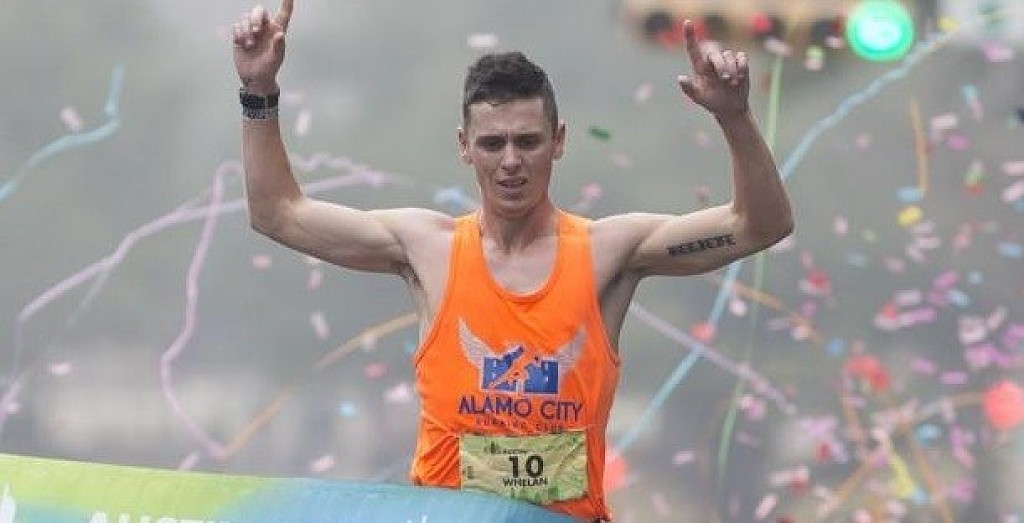
Ex-All-American Joseph Whelan goal is to qualify for the Olympic marathon trials
Joseph Whelan, 38, a high school All-American in 2008, is training for the Grandma’s Marathon on June 22 in Duluth, Minn., and aims to run his goal marathon pace of 5:05 per mile up to 18 miles in Buffalo first.
“I’m going to try to do a workout inside of the Buffalo marathon,” said Whelan, who lives in Spring Branch, Texas, where he is a construction site supervisor. “I’m going to try to win, but it makes sense for me to come home, get out of the heat and get a nice, long effort in, before I have another big marathon.”
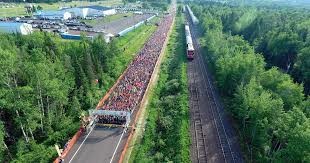
Joseph began running marathons a little more than two years ago. Whelan ran cross country and track at Syracuse, but after he graduated in 2014, he focused on relocating and starting his career. When he told people he was a runner, other hardcore runners asked two questions of him: What’s your mile time? What’s your marathon time?
“I took a couple years off after college, not competing, but I’d run all through middle school, high school and college, and it felt like I was obligated to run,” Whelan said. “In 2017, that was the first year that I really thought, ‘I need to put something on the table and do something other than work.’ I needed to run a marathon to say that I’m a runner, and that became my New Year’s resolution in 2017.”
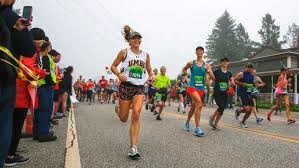
Whelan, who was third in the Buffalo YMCA Turkey Trot in November, is now preparing to qualify for the 2020 Olympic Trials next year in Atlanta. The qualifying time for the 2020 marathon trials is 2:19; Whelan aims to complete the 26.2-mile course in less than 2:13.48.
“I enjoyed the training and the buildup for a marathon, and I thought, hey, if I can focus on this, I can do really well in a marathon. Eventually, I want to do the marathons in Chicago, Boston and New York. They’re the big ones.”
Login to leave a comment

Grandmas Marathon
Grandma's Marathon began in 1977 when a group of local runners planned a scenic road race from Two Harbors to Duluth, Minnesota. There were just 150 participants that year, but organizers knew they had discovered something special. The marathon received its name from the Duluth-based group of famous Grandma's restaurants, its first major sponsor. The level of sponsorship with the...
more...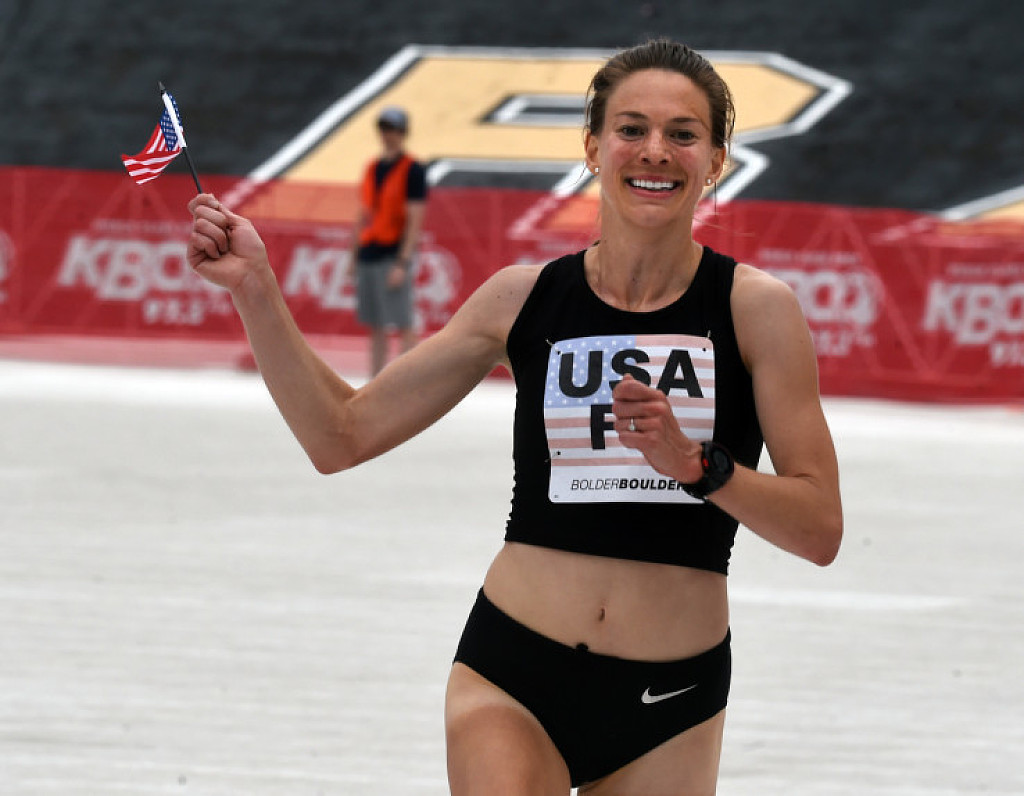
Aliphine Tuliamuk will be on the USA roster for the up coming Bolder Boulder
The women’s team will feature former Colorado Buffaloes star Aliphine Tiliamuk along with Shalaya Kipp, Tiliamuk finished second at last year’s women’s International Team Challenge.
Tuliamuk finished 11 seconds behind Ethiopia’s Mamita Daska, who won the elite 10-kilometer race for a record sixth time in 2018.
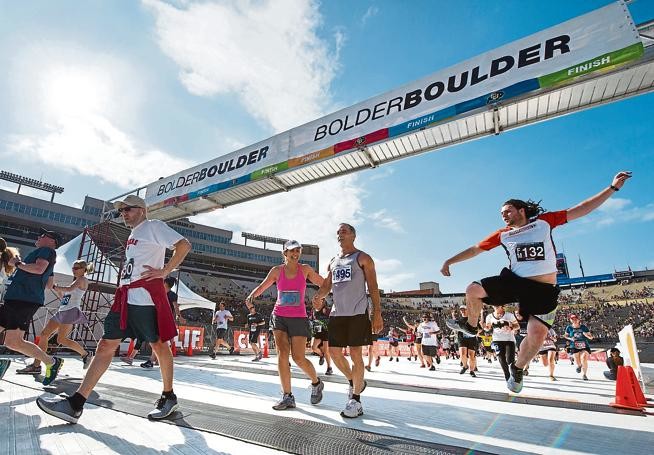
Rounding out the women’s squad will be Lindsey Scherf, who finished sixth last year on a USA women’s red team finished second behind Daska’s Ethiopian team; Taylor Ward, who finished third at the FORTitude pro 10K in Fort Collins last year; 2017 women’s citizen’s race winner Lauren Martin Masterson; a Deanna Ardrey, Stephanie Bruce, Melissa Dock, and Kaitlin Goodmen.
The remainder of the men’s team will be comprised of Parker Stinson, Haron Lagat, Reid Buchanan, Reed Fischer, Tim Rackers, Jake Riley, and Diego Estrada, who finished eighth last year and is the top returning American in the professional field.

The remainder of the international field will be announced at a later date.
“We’re ready for a super competitive international event thanks to the athlete’s continuing commitment to the race, “ Bolder Boulder race director Cliff Bosley said in a statement.
“Some of the top-ranked teams are trained in both altitude and marathon running and bring a competitive edge that keeps the event exhilarating to watch each and every year.”
Login to leave a comment

BOLDER BOULDER
In 1979 we dreamt of attracting a few hundred of our friends to race though the streets of Boulder, Colorado to celebrate Memorial Day with our families. Fast forward almost 40 years and the Bolder BOULDER has grown to become one of the largest and most highly acclaimed 10K’s in the world. Almost 1.2 million runners, joggers, walkers and spectators...
more...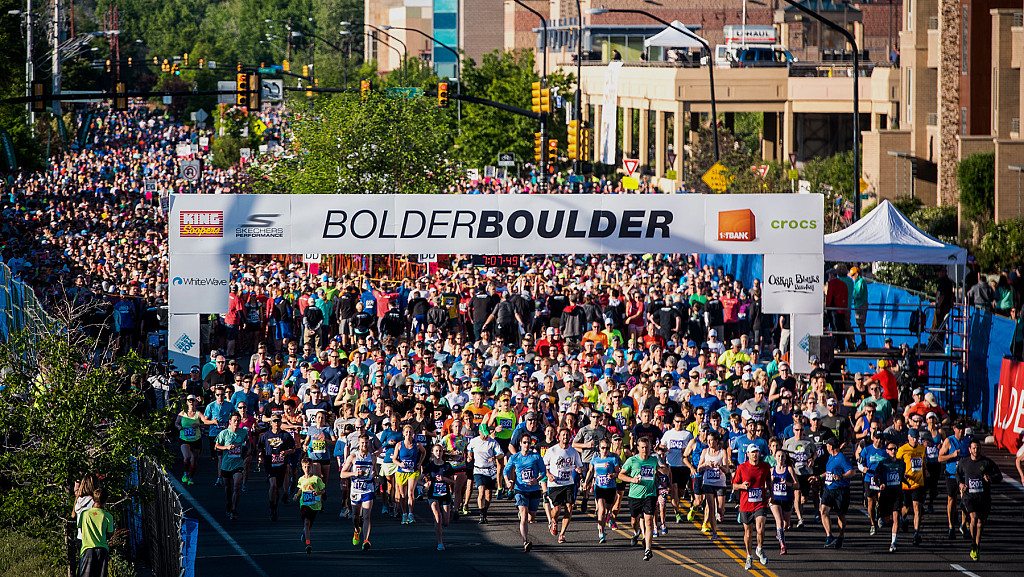
Strong field is set for Bolder Boulder including Jared Ward and Tyler McCandless
Returning to race this year is Jared Ward who was the first American in the New York Marathon and finished 8th overall at the Boston Marathon and Tyler McCandless who won the 2018 Bolder Boulder citizen’s race.
“We feel that with the strong pool of runners this year that Team USA could possibly take first place,” said pro athlete coordinator, Don Janicki. “With three returning champions in the men’s field it will be a really great competitive race.”
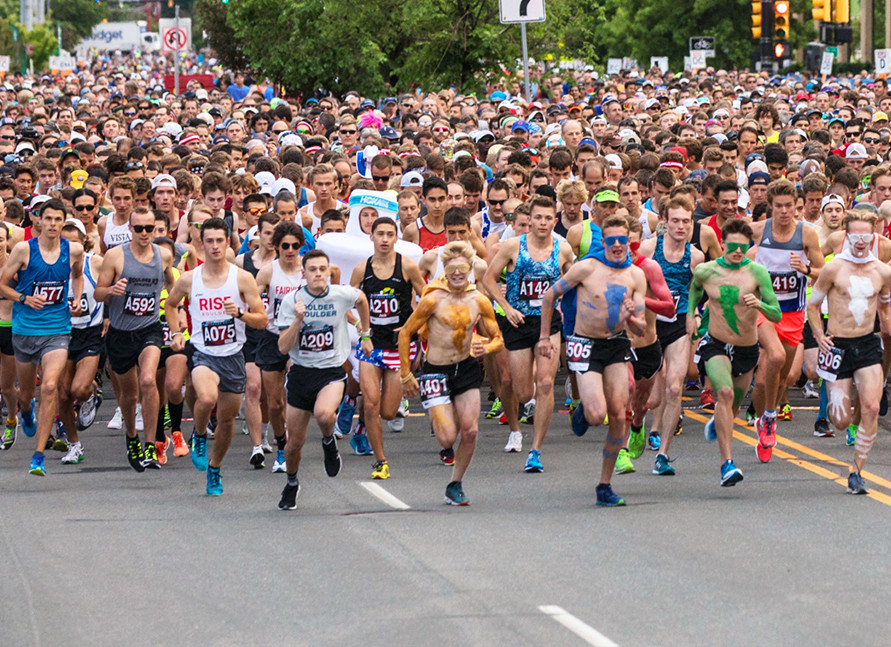
Members of the Men’s Team USA also include national title winner Parker Stinson who shattered 25K American record at the USATF 25K in May 2019 by 30 seconds, Haron Lagat who placed second at the 2017 Fortitude 10K Pro Race Chase; Diego Estrada who has a 10K personal best of 27:57; Reid Buchanan who has a 27:58 10K PR; Eagle Scout Reed Fischer who has a 10K PR of 28:38; Boulder Track Club member Tim Rackers; and Boulder based professional runner Jake Riley who has a 10K PR of 27:59.
The Women’s Team USA include Taylor Ward; a rising star in American women’s distance running who placed third at the 2018 Fortitude 10K Pro Race Chase.
Lindsey Scherf who broke the indoor marathon world record at the Armory NYC Indoor Marathon World Record Challenge in 2018 by nearly two minutes; Lauren Martin Masterson who was the first female finisher of the 2017 Bolder Boulder citizen’s race; Kaitlin Goodmen who has a 10K PR of 33:18; and Stephanie Bruce who set a PR at the 5,000 meters indoors (15:44) at the New Balance Boston Indoor Games; Former Colorado Buffaloes star Shalaya Kipp.

In addition to the Americans competing at this year’s race, the Bolder Boulder will be welcoming teams from all over the world including Ethiopia, Japan, Kenya, Mexico, Tanzania, Bahrain, Eritrea, Ethiopia, Rwanda and Pan South America.
“We’re ready for a super competitive international event thanks to the athlete’s continuing commitment to the race, “said Race Director, Cliff Bosley. “Some of the top ranked teams are trained in both altitude and marathon running and bring a competitive edge that keeps the event exhilarating to watch each and every year.”
Login to leave a comment
BOLDER BOULDER
In 1979 we dreamt of attracting a few hundred of our friends to race though the streets of Boulder, Colorado to celebrate Memorial Day with our families. Fast forward almost 40 years and the Bolder BOULDER has grown to become one of the largest and most highly acclaimed 10K’s in the world. Almost 1.2 million runners, joggers, walkers and spectators...
more...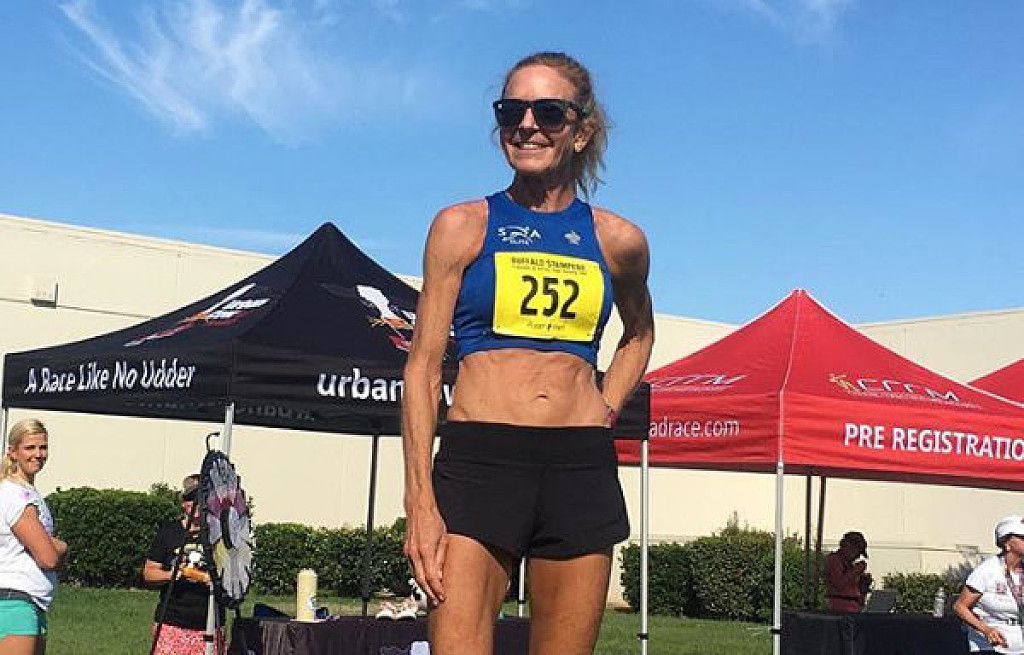
Jenny Hitchings is on a roll breaking four national age-group records in four months
Fifty-five-year-old Jenny Hitchings of Sacramento, Calif. has been on a roll, breaking no fewer than four national US age group records since turning 55 on July 1.
Most recently, she took down Joan Benoit Samuelson‘s 55-60 10K record at the Sacramento Food Bank’s Run to Feed the Hungry 10k, clocking 37:29–almost a minute faster than Samuelson’s record of 38:20, set in 2014. But this was only Hitchings’ most recent accomplishment. Starting in August, she has broken no fewer than three other US age-group records.
On August 11 she took down Shirley Matson’s 5K record, set in 1997 at the Carlsbad 5000, with an 18:05 finish at the Susan B. Anthony Women’s 5K. In early September she broke the 10-mile record held since 1998 by S. Rae Baymiller, with a 1:01:20 finish at the Buffalo Stampede in Sacramento. And in early October at the Urban Cow Half Marathon, she set her third national age-group record of the year clocking 1:21:18 beating Shirley Matson previous record.
When Jenny was 47 she ran a 2:46:10 marathon and she won her age-group at the 2015 Boston Marathon at age 52 clocking 2:52:51. In 2015, she broke a 30 year old Age Group course record at Cal International Marathon (CIM) clocking 2:49:49.
Login to leave a comment
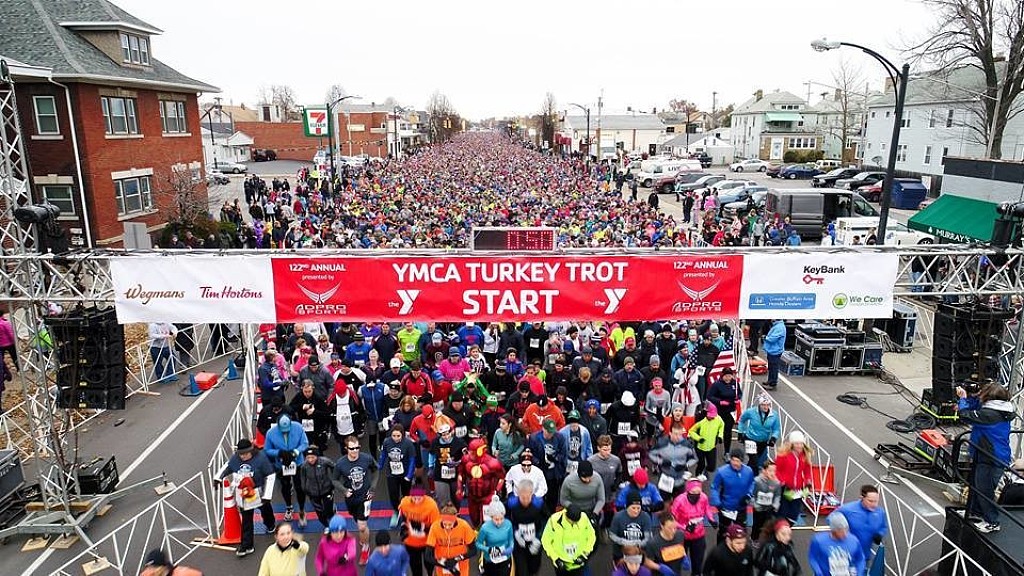
Turkey Trots On Thanksgiving, Is one of the most popular days of the year to race
Login to leave a comment
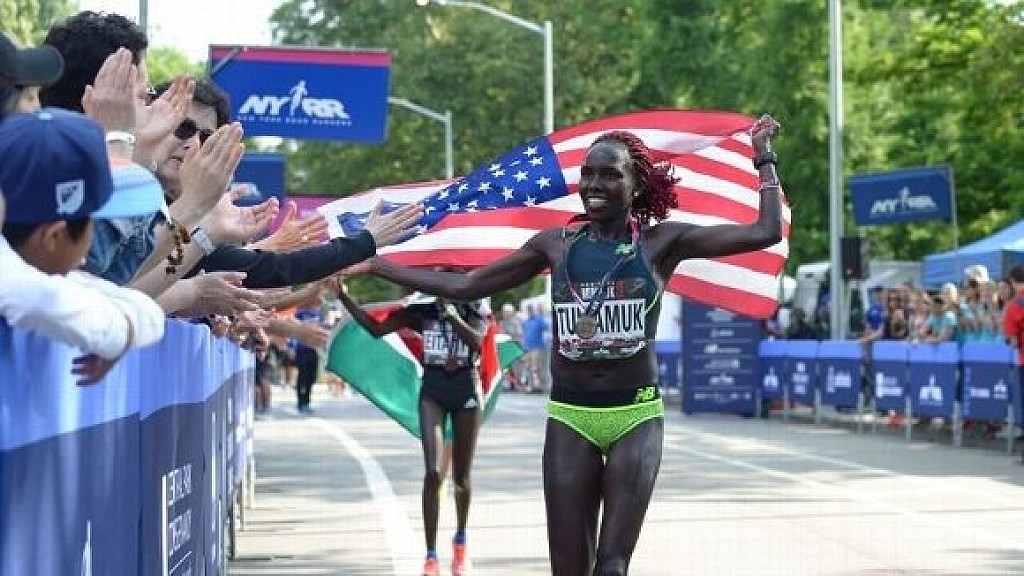
Aliphine Tuliamuk will return to defend her title at Peachtree Road Race July 4
Login to leave a comment
The Big Five Marathon in South Africa is held among the wildlife of the African savannah.
Login to leave a comment
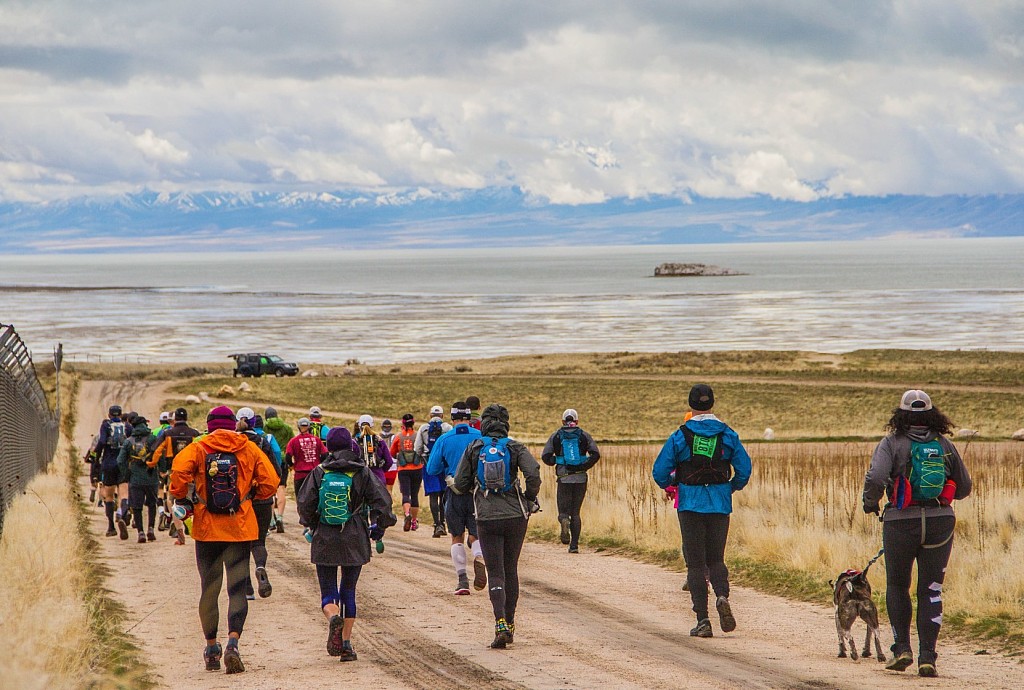
There is Just something about an Ultra Marathon says Arianne Brown
Login to leave a comment
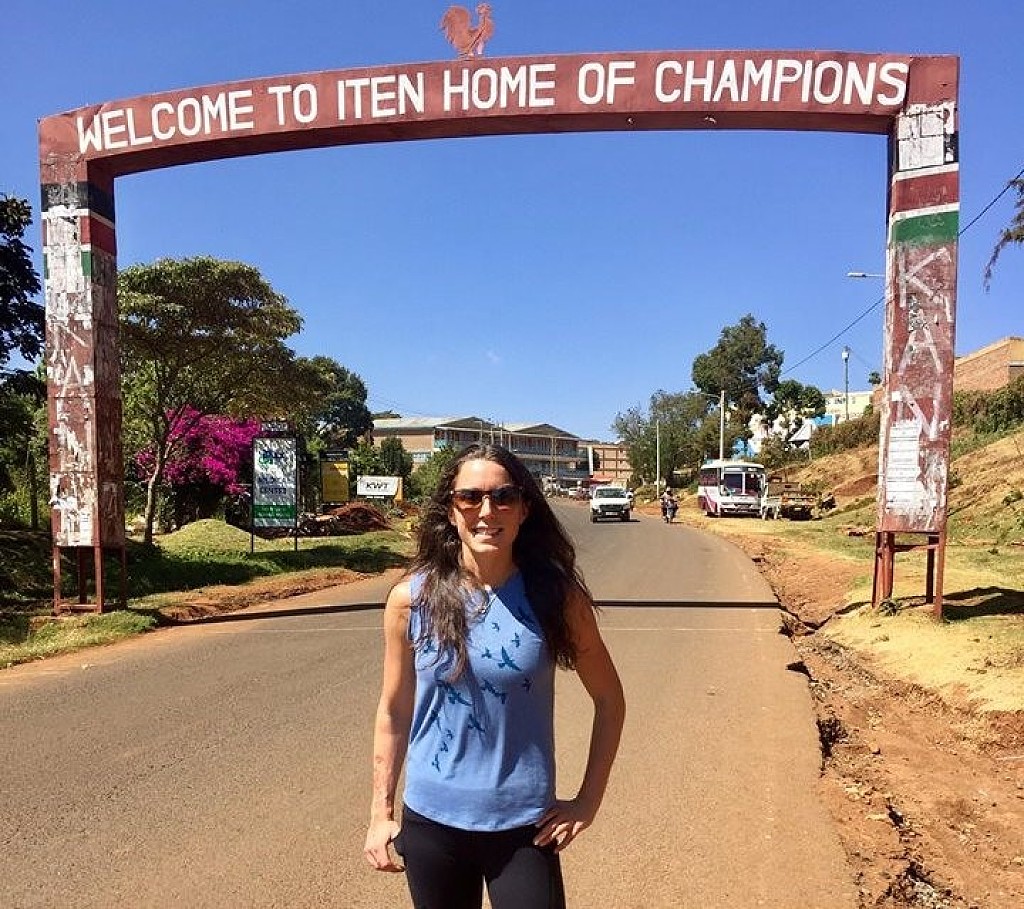
Allie Kieffer is in Kenya to train with 2020 Olympic goal in sight
Login to leave a comment
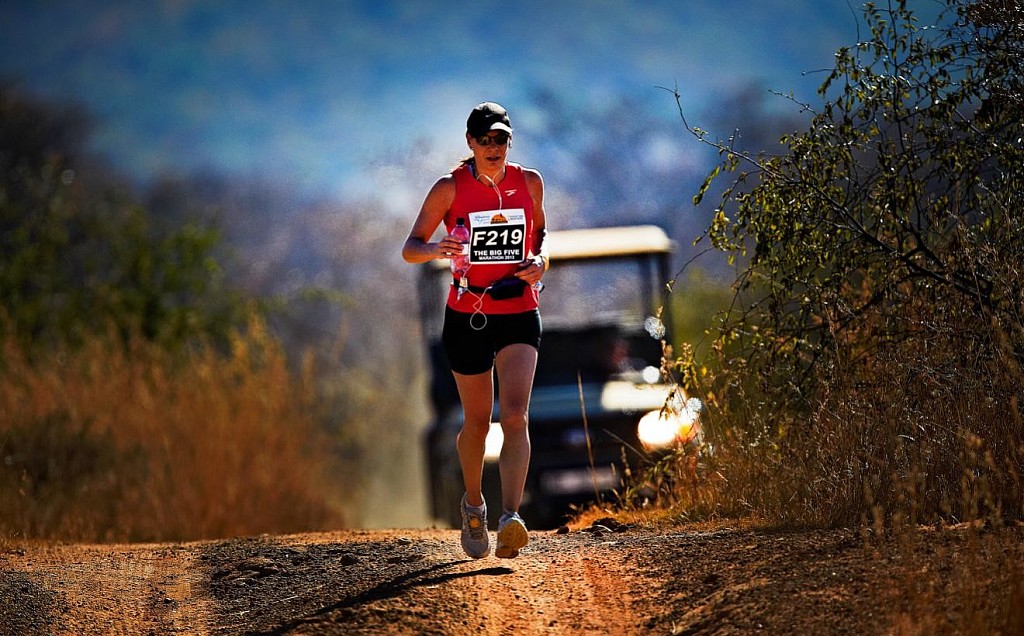
Run among the wildlife of South Africa
Login to leave a comment
