

Running News Daily
Top Ten Stories of the Week
10/13/2018
These are the top ten stories based on views over the last week.
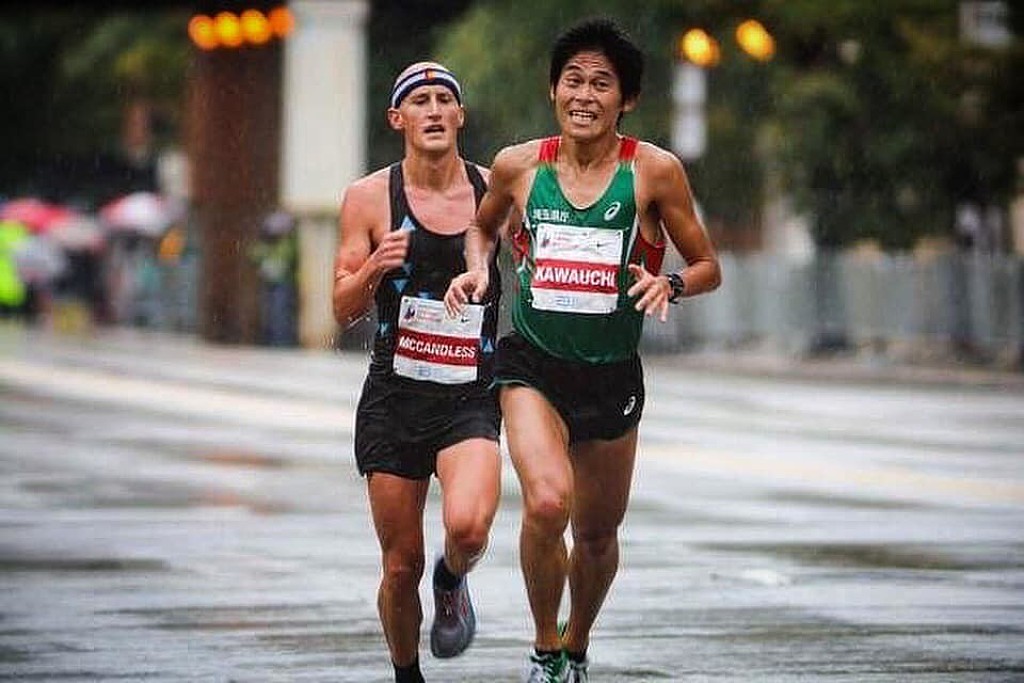


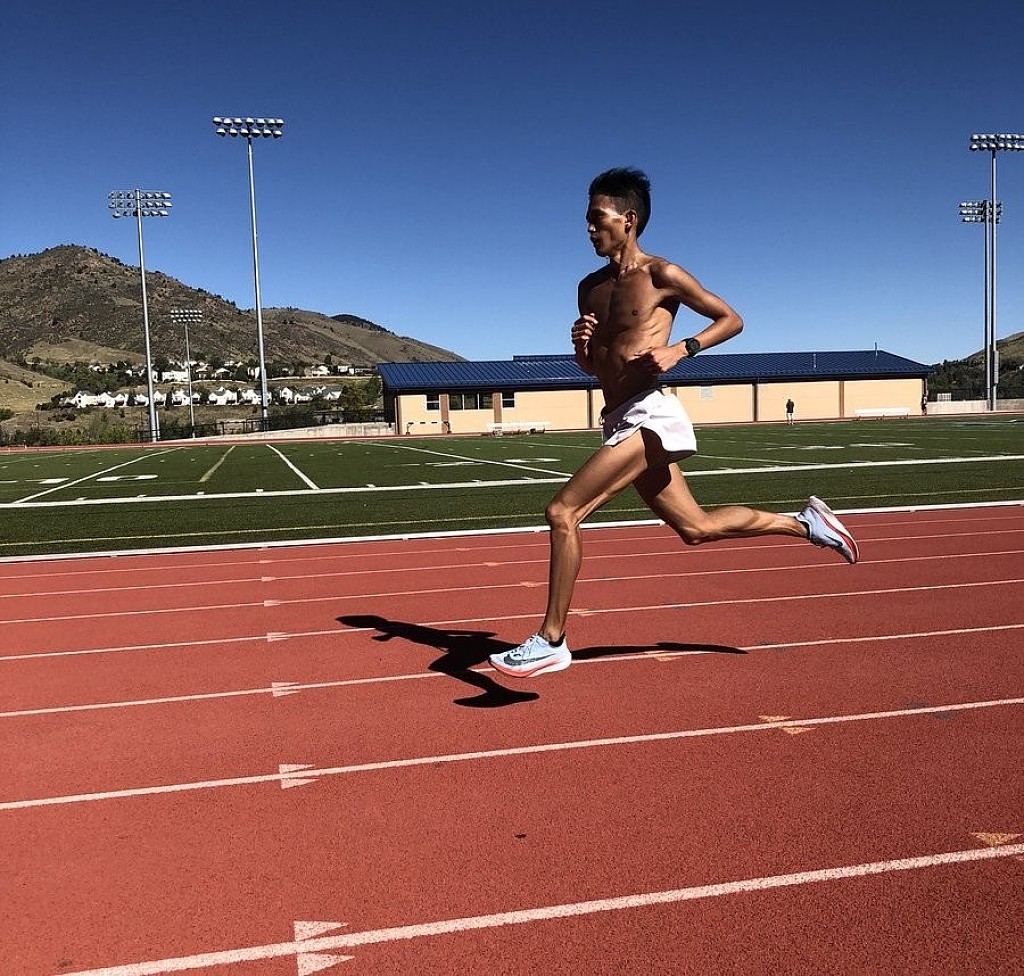
America's Tyler McCandless and Japan's Yuki Kawauchi encounter at the Chicago Marathon
After running miles 3-15 alone at the Bank of America Chicago Marathon, I caught up to reigning Boston Marathon champ Yuki Kawauchi. When I caught him I said, “come on Yuki, stay with me” and he tapped my side.
I looked back a minute later and he was right on my tail and I said “good” to him. He stayed there until about mile 21 when he tried to push past me.
We went back and forth over the last few miles multiple times. Once, he slipped on a turn, nearly fell and looked concerned, I said to Yuki “you’re okay, you’re good.”
The rain and wind picked up and neither of us were running near where our goals were. But, we pushed each other to the best we could on ”off” days. We were both struggling, yet with 300m to go he found another gear and blew me away.
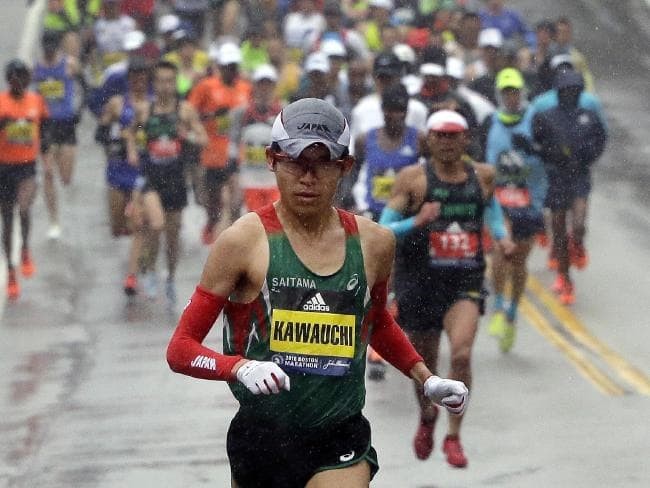
There no doubt he found that gear from mental toughness and I’ve learned something from it. Moral of the story: even if you’re day isn’t what you envisioned and trained for, NEVER give up because you’ll gain indispensable experience and inspiration from it!
I ran 2:16:37, 20th overall and 7th American. I’d be lying if I said I didn’t have faster goals, but Sunday was a real test of character and I’m proud of how I competed. It was wet, rainy and windy, and I got stuck with nobody around for the majority of the race until dueling it with Yuki Kawauchi over the last several miles.
I went through halfway in 1:06:36 and simply had to be gritty and fight for every second over the second half of the race. Having a less ...than ideal weather day, and simply not having my best day out there, but toughing it out to finish with my third best marathon time is something I’m proud of.
Second photo is Yuki leading the pack at the 2018 Boston Marathon, a race he won.
(Editors note: Yuki Kawauchi finished 19th in 2:19:26 his 82 marathon under 2:20. Tyler is sponsored by Altra Running and rabbit. media@TrackTy)
(10/09/18) Views: 3,595Tyler McCandless
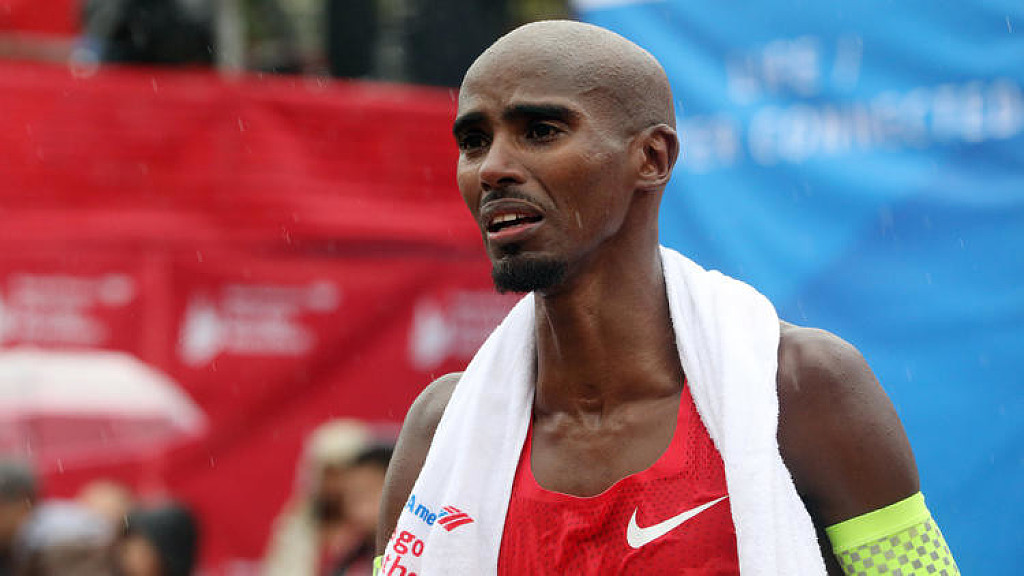
Mo Farah sets European Record to Win The Chicago Marathon
This was Great Britian's Sir Mo Farah's first marathon win in three attempts today October 7. He looked smooth the whole way and took control of the Bank of America Chicago Marathon over the last few miles when he stepped up the pace to 4:35 per K.
The lead group had passed the half way mark in 1:03:03. At the finish Mo Farah clocked 2:05:11 winning his first US marathon and setting a new European record. (Breaking Sondre Nordstad Moen record of 2:05:48 set in Japan Dec 3, 2017.)
24-year-old Brigid Kosgei from Kenya running her ninth marathon and second place finisher last year ran the last miles by herself to clock an outstanding 2:18:35, making her the 10th fastest women's marathon time ever.
"I like the rain," Brigid said after winning. "I enjoy the rain and I swallowed the pain, no struggling," she said. Roza Dereje (Eth) was second cocking 2:21:18. First American was Sarah Crouch finished sixth with 2:32:37.
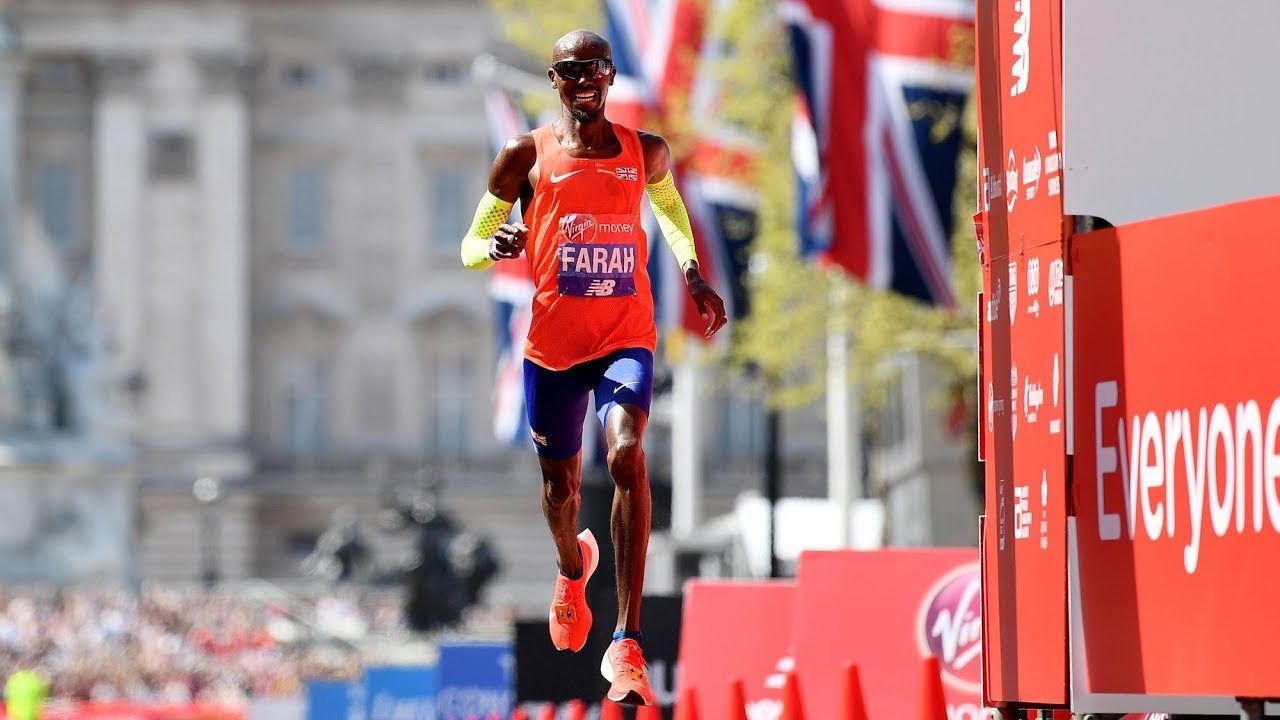
"Amazing to come across the finish first," Mo said after he finished. Ethiopia's Mosinet Geremew Bayih finished second clocking 2:05:24. Suguru Osako from Japan finished third in 2:05:50 setting a national Japan record winning 100 million yen (almost one million US dollars) in doing so.
In fourth was Kenneth Kipkemoi from Kenya clocking 2:05:57. Galen Rupp who fell off the pack at around 22 miles came back strong and finished fifth with 2:06:21 just 14 seconds off his PR. Boston Marathon winner Yuki Kawauchi (Japan) finished 19th clocking 2:16:26, his 82nd sub 2:20 marathon. Mo, a two-time Olympic champion in both the 5,000 and 10,000 meters, native of Great Britain finished third in the London Marathon earlier this year.
The men’s field include three former champions and 11 racers who have registered times faster than 2:08. In the end 11 men ran faster than 2:10, nine under 2:08. The temperature was 58 degrees at the start with light to heavy rain most of the way. Of more impact were the north-northeast winds coming off Lake Michigan as runners headed north from the start.
Mo is the most successful British track athlete in modern Olympic Games history, he was the 2012 and 2016 Olympic gold medalist in both the 5000m and 10,000m. Farah is the second athlete in modern Olympic Games history, after Lasse Virén, to win both the 5000m and 10,000m titles at successive Olympic Games.
Mo moved from the track to the roads after the 2017 World Athletics Championships. 61-year-old Joan Samuelson clocked 3:12:13 not reaching her sub three hour goal.
(10/07/18) Views: 2,801
Japan's Suguru Osako wins nearly one Million Dollars in placing third at the Chicago Marathon
Japan's Suguru Osako placed third at the 2018 Chicago Marathon clocking 2:05:50, a new national Japan record.
This beats the record of 2:06:11. The Japanese Corporate Track and Field Federation (Project Exceed program) will pay him a 100-million-yen bonus ($879,465 U.S. dollars) for setting a new national record.

Before the race Suguru Osako said, ““I want to try to break the national record, but the most important thing to me is to be competitive with the other runners. IÂ’ am really excited and proud to run with Mo and Galen. I’m going to enjoy the challenge.””
Osako trains in Oregon and is part of the Nike Oregon Project. Osako was born May 23, 1991. He won the 10,000 meters gold medal at the 2011 Summer Universiade in Shenzhen and holds the Asian junior record for the half marathon. Born in Machida, Tokyo, he attended Saku Chosei High School and began to establish himself nationally in 2010.
Suguru Osako made his marathon debut at the 2017 Boston Marathon, landing on the podium in third in 2:10:28. At the time, he was the first Japanese man to finish among the top three since Seko won Boston in 1987.
He closed out 2017 with an impressive personal best and third place finish at the Fukuoka Marathon, 2:07:19. He becomes the first Japanese man and just the second non-African-born runner to break 2:06.
(10/07/18) Views: 1,007

Brian Reynolds is a double amputee and Runs 3:03:23 at the Chicago Marathon
I am so proud of Brian Reynolds, he ran a new personal best, 3:03:22 at the Chicago Marathon this morning. He is a double amputee and I think this is an American record. We didn’t make his ultimate goal of going sub 3 however. We battled Mother Nature all day, a fall(that was on me, I thought I was close enough, I was not) and some cramps but he never wavered and fought till the end. It was inspiring. During the 22nd mile, though, Reynolds fell, suffering a concussion and knocking his time down significantly. Always one to finish what he started, 30-year-old Reynolds went on to finish. Brian said, "Despite not reaching my goal today I have still run a personal record in every single one of my marathons," said Reynolds moments after the race. "Even on my worst day I have the motivation, determination and grit to dig deep and get to that finish line.” If you ever have a chance to guide I highly recommend it. Not sure I will be hired again but if given the chance I am there. Editor’s note: Michael Wardian is an international know marathoner and ultra marathoner. (10/07/18) Views: 428Michael Wardian

Thousands of Kenyan runners have the same dream Part 1: The Real Running Scene in the country of Kenya
Kenya is famous for producing many of the best runners in the world. Just recently Kenyan’s Eliud Kipchoge smashed the world record for the marathon clocking 2:01:38 in Berlin. What makes Kenyan runners so fast? There are many theories. One of them suggests that since many runners originate from the mountainous districts of the Rift Valley, they get an edge due to living at high altitude. However, the same advantage would be for athletes living at high altitudes in central Asia and Mexico. So maybe this is not the reason? Kenya is a nation blessed with thousands of athletes of approximately 85,000. A majority of them are distance runners. More than 12,000 can run below 75 minutes for 21km (half marathon) and about 25,000 can run a sub 35 minutes 10km. Thousands can run a marathon in under 3 hours 20 minutes. Very impressive for elite performances. Most runners in Kenya are between the ages of 12-45. There are very few master runners (40 plus) compared to other countries. This is because most runners in Kenya make running as their primary source of livelihood to feed the family and even help their relatives or friends and the community. There are very few runners 45-60 years or older because of health conditions like diabetes or heart conditions. It is rare to find a runner 70 plus in Kenya unlike countries like the USA. They are like endangered species and there are less than 20 athletes in the whole country that are 70 plus. The current life expectancy for all people in the US is 78.74 years while in Kenya it is 62.13 years. The total population in Kenya is 45 million compared to 325 million in the US. Kenya is the size of Texas. The median age in Kenya is 18, half that of the United States and 41 percent of the population is 14 or younger. For many Kenyan's their whole life is centered around running. Many train three times per day logging in over 100 miles per week. They live modestly making ends meet on $100US per month or less. They dream of being a super star and they train very hard. This started when Kipchoge Keino came on the scene in 1962 at the Commonwealth Games in Perth. Kip Keino in 1968 won the gold medal in the 1500m in Mexico City and after that many have followed in his footsteps. But it wasn't until later when millions of dollars of prize money came available did things really change. Now the best runners in Kenya can earn millions of dollars (US) in prize money and sponsorship money. There is the possibility that through hard work, dedication and connections that any talented Kenyan can make their dream become a reality. Thousands of Kenyans have the same dream. This is no different than the dream kids have in America of being a famous baseball, basketball or football player.... There is one thing, however that seem to be missing in Kenya. The times run on Kenya soil are not that good compared to the times run by Kenyans outside the country. Why is this? In Part two we will address this situation. (10/09/18) Views: 417Willie Korir reporting from Kenya

Boston Marathon Race Director Dave McGillivray is going in for triple bypass surgery on Friday Oct 12
This is a follow up on a story we published September 6. On Friday October 12 Boston Marathon race director Dave McGillivray is going back into Mass General Hospital for open heart triple bypass surgery.
Dave posted this an hour ago on Facebook. "Five years ago yesterday (October 9, 2013) I was diagnosed with “severe coronary artery disease”. The two words that hit me were “disease” and “severe”. How did I get this “disease” and how severe is “severe”? On a dime, I changed everything – what I ate, how I ate, when I ate, sleep habits, stress in my life, started taking dietary supplements and the list goes on and on. In less than a year, I had “reversed” this disease by over 40%.
"I thought I beat it. Some of it was due to heredity, some was self-inflicted. I fixed what I could fix. I did the Ironman Triathlon again, many marathons, my birthday runs and even the World Marathon Challenge (7 marathons in 7 days on 7 continents).
"Once again, I thought I was over the hump. But, recently I learned that genetics trumps everything. I am having triple bypass surgery this Friday Oct 12. As you can imagine, a lot of thoughts (good and not so good) are swirling around my head. However, I’ve come to terms with all this now and realize how fortunate I am that this was caught, that I get a second chance and that I have the best medical care in the country.
I know there was some confusion that I already had this surgery but I only had the angiogram which showed that I needed the surgery. I expect to be in the hospital for 5-7 days and hope to be “shuffling” around the block within 3-4 weeks. I haven’t missed 3-4 days in a row of running in over 50 years.
"I can’t drive for 4-5 weeks – guess I’ll have to ride my bike everywhere...ha. This will be a new experience. I asked my heart surgeon this one question – do you think I will be able to recover enough to jog through my 47th Boston Marathon next April, that is, without pushing it between now and then (I will be a good patient – I hope)? He responded, “I would be extremely disappointed if you couldn’t do it.”
"That is all I needed...let’s get ‘er done. I have a lot more work to get done, miles to run and goals to accomplished. See you all on the other side." (Photo taken when Dave finished his 46th straight Boston Marathon)
(10/10/18) Views: 390Dave McGillivray

Why are the best times run on Kenya soil so slow? Part 2: The Real Running Scene in the country of Kenya
The best times run on Kenyan soil are not nearly as good as times run by Kenyan runners outside the country. The best marathon time run on Kenya soil is 2:10:12 clocked by Moses Kigen in 2009. The best time for women is 2:28:04 clocked by Alice Chelangat.
Even world record holders like Eliud Kipchoge who recently clocked 2:01:39 at the Berlin Marathon don't attempt to race on Kenya soil due to stiff competition from juniors or seniors who haven’t gotten the opportunity to run abroad.
Most of the major races recognized by IAAF are run at very high altitude (2600m-8500 feet) above sea level. In cities like Eldoret, Iten, Nairobi, Nyahururu, Nakuru, and Ngong there is less oxygen making it hard to run world record times.
In cities at low altitude like Garrisa in Northern part and Mombasa where the marathon and world cross-country have been held, the humidity is very high and temperatures are so hot that a lot of runners faint due to dehydration.
For example at the 2007 world cross-country championship in Mombasa, Kennenisa Bekele dropped out of the 10km cross country race due to high humidity and hot temperatures.
Kenya has thousands of athletes, but no race has ever been controlled at world record pace. This is because most of athletes have no managers or even links to run abroad take out the pace of 2:40/K (13:20 5K pace) or even below in long distsance races like the marathon making it hard to break a world record due to fatigue.
Other national records run on Kenyan soil include: 1:01:21 half marathon clocked by Philemon Baaru and 1:08:12 for women clocked by Paskalia Chepkorir.
In the 10km for example Kamworor ran 29:11 in the 2018 cross-country while world leader in 3000m Beatrice Chepkoech ran 34:04 which is totally different when abroad. Many races are long and not measured correctly.
Like many 10k's are actually 10.2 or 10.3. Sometimes the clock does not start until the 200m to 300m out due to large number of athletes in a race. This has to be done to avoid athletes injuring themselves due to each athlete running very fast at the start.
Most athletes do not have good training facilities or managers. Pacing is a big problem in many races held in Kenya. This is very noticeable in many major races (like the Nairobi Standard Charter Marathon) because Kenyans are used to being front runners and they run too fast at the beginning.
Another factor is race terrain. Most of Kenyan courses are very hilly and hard to run good times. Many half marathons winning times in Kenya are like 65 minutes making race organizers avoid putting on marthons.
All of these factors are why there is a big difference in best times run in Kenya and abroad. This is why all Kenyans dream is to race outside Kenya.
(10/10/18) Views: 251Willie Korir (Reporting from Kenya)

Emily Sisson wins Reebok Boston 10K in record time but course was 380 meters short
Update: When we first reported this story it was thought that an American Record was set today in Boston as reported by the Boston Globe. However, the course was 380 meters short, somehow the cones got moved just past the 5k mark. Most likely she still would have run sub 32. Emily Sisson separated herself from the competition early, at the Reebok Boston 10K for Women Monday afternoon. The 26-year-old from Rhode Island pulled away from Buze Diriba of Ethiopia at the 3-mile mark and held on to her lead down the stretch to claim victory in 30:39 — a comfortable 33 seconds ahead of the second-place Diriba. The time at first was thought to be an American record breaking the record set by Shalane Flanagan (30:52) in 2016 in the same event. But the course was short and the race director is trying to find out why cones were moved...The win is Sisson’s second in three years, as she also won in 2016 in 31:46. She becomes the first repeat winner since Huddle, who won the event four times, including three straight from 2008-10. Diriba’s time of 31:12 also broke the benchmark set by Huddle but was not good enough to beat Sisson. Formerly known as the Tufts Health Plan 10K for Women, the race is the largest all-woman running event in New England and has been a Columbus Day staple in Boston since 1977. Running through the Back Bay and into Cambridge, competitors make their way along the Charles River before finishing on Charles Street between the Public Garden and Boston Common. Other finishers: Diriba, Erin Clark of Arizona (32:19), Dylan Hassett of Rhode Island (32:28), and Holly Rees of the United Kingdom (32:46) rounded out the top five finishers in the open division. (10/08/18) Views: 204

Leesa Drake is living proof that no matter how fast or how far someone runs, nobody can outrun a cancer diagnosis is running Chicago
Leesa Drake has completed 102 marathons over the last 25 years. Running this year's Chicago Marathon will be a special day for her after she received a life-threatening cancer diagnosis last year. "I did as many as 17 marathons in one year," said Drake. After turning 50 last year, Drake prepped for yet another marathon. Then she was diagnosed with breast cancer in the Spring of 2017. Ethan Hixson, a physician assistant, delivered the news to Drake. He was amazed at her positive attitude. "She just took it in stride and was determined to beat it," said Hixson. Drake had her sights set on completing the Chicago Marathon last October, but first she had to go through surgery. She elected to have both breasts removed. Then came chemotherapy and radiation. She experienced nausea, fatigue and hair loss."I was like well, I'll keep doing what I can as long as I can and see how I tolerate the treatment," Drake said. The medical team was aware of Drake's dedication to running, so they advised her to stay hydrated and take in enough calories to keep her energy levels up. "We encouraged her to continue to train but be aware that she may be more tired than usual. She may not run as fast as she used to run," said Dr. Nora Hansen, surgeon. Last year, in the middle of treatment, Drake completed the marathon. "It was a very social marathon for me. I had friends who hopped in and ran stretches," said Drake. She was declared cancer-free last December. The 2018 Chicago Marathon will be her first as a survivor. (10/06/18) Views: 152

After 22 years, Cathi Remington, now a 56-year-old grandmother is running the Marine Corps Marathon
Cathi Remington, a 56-year-old grandmother who ran the marathon four times in the 1990s and finished under the 3 1/2-hour mark each time, is returning to the race. "There’s just something about the Marine Corps Marathon," Remington said. If you made a list of the things that 56-year-old Cathi Remington really, really loved, high up on it would be her country, the Marines and grueling races. And so it only makes sense that this grandmother from New Hampshire would look to satisfy that itch for competition by returning to the Marine Corps Marathon for the fifth time. Remington served in the Marines in the early and mid-1980s, and ran the race four times before — every year between 1993 and 1996. Her best finish came in 1995 when she ran the race in 3:14:40, a nearly 14-minute improvement from the year before. In fact, all four times she finished under the 3 1/2-hour mark. “I decided that at age 56 I wanted to get back into racing,” said Remington, who runs a bead shop in Hampton, New Hampshire. “So (22) years later, I’m coming back.” And coming back to this race as opposed to the famed Boston Marathon is a much bigger deal where she’s from. She notes with her heavy New England accent, “everyone loves Boston, and I do too, but for some reason there’s just something about the Marine Corps Marathon.” (10/09/18) Views: 71
