

Running News Daily
Running News Daily is edited by Bob Anderson and team. Send your news items to bob@mybestruns.com Advertising opportunities available.
Index to Daily Posts · Sign Up For Updates · Run The World Feed
Articles tagged #Lausanne
Today's Running News
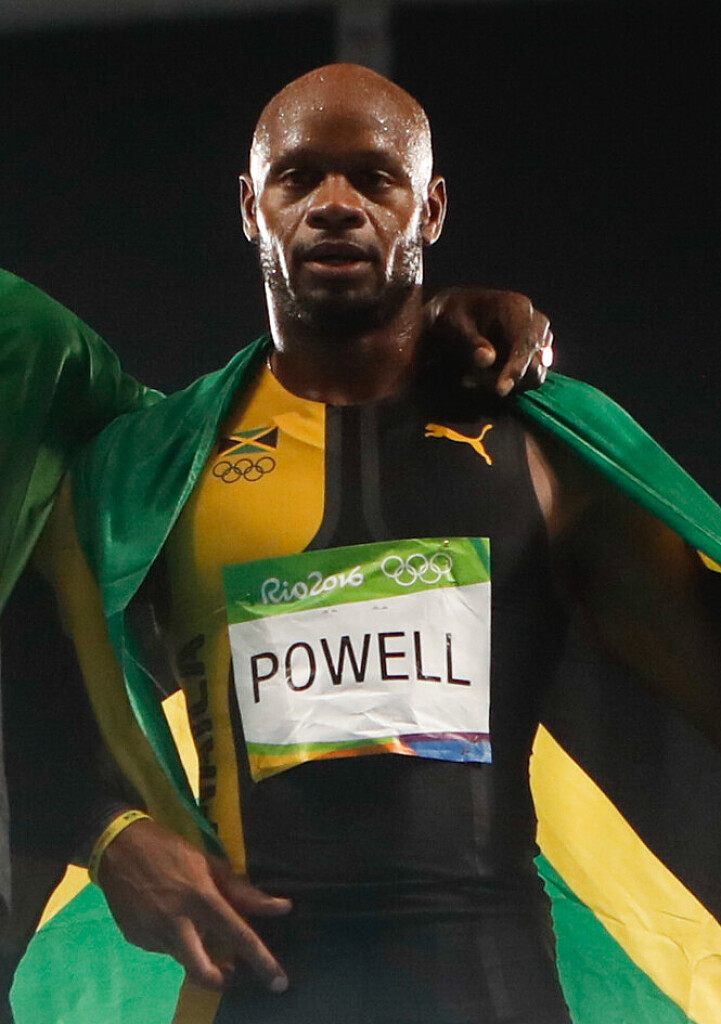


Asafa Powell Begins a New Chapter, Bringing World-Class Sprinting Experience to the Next Generation
Former 100-metre world record holder Asafa Powell is preparing to channel his experience from the highest level of international athletics into coaching and high-performance consultancy, with the aim of helping the next generation of sprinters reach their full potential.
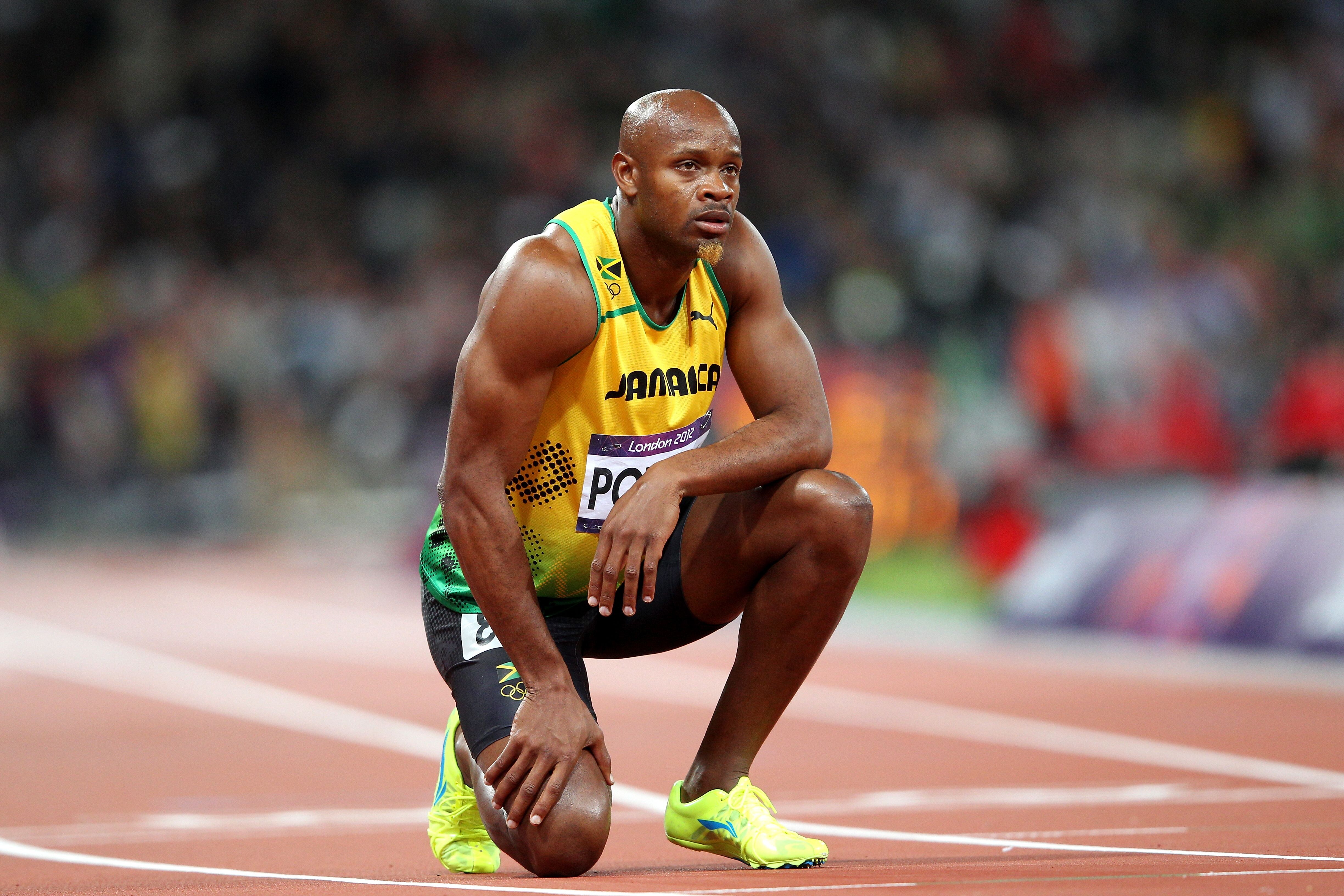
The Jamaican sprint legend, who spent more than two decades competing against the world's fastest athletes, is now looking to share the knowledge, discipline and technical understanding he developed throughout his distinguished career. His move into mentorship offers an opportunity to pass on lessons learned through years of competing on the biggest stages in track and field.
Powell's reputation was built on extraordinary speed and consistency. He set the men's 100m world record of 9.77 seconds in Athens in June 2005 before lowering it to 9.74 seconds in Rieti, Italy, in September 2007. He subsequently recorded a personal best of 9.72 seconds at the Lausanne Athletissima meeting in 2008, establishing himself among the fastest men in athletics history.
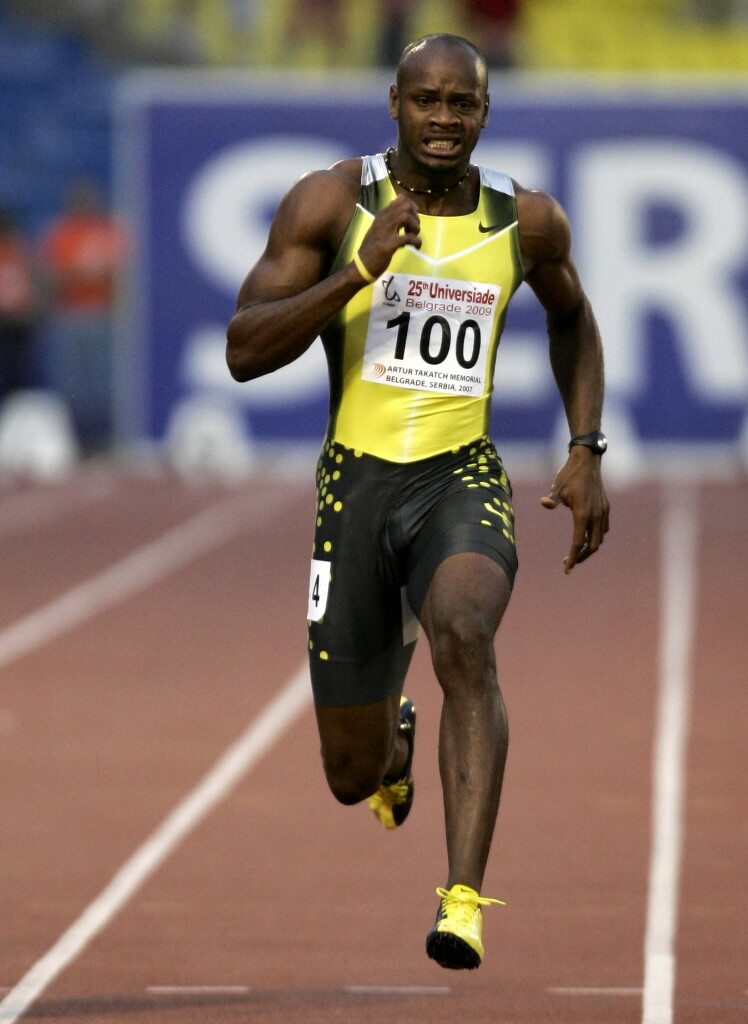
Beyond his personal best, Powell became renowned for his remarkable ability to run under 10 seconds. He recorded more than 90 sub-10-second performances during his career, a testament to his consistency and longevity in an event where the smallest technical details can determine the outcome.
Although Powell never won an Olympic individual 100m medal, he achieved significant success on the international stage, including winning gold with Jamaica's 4x100m relay team at the 2008 Beijing Olympics and the 2016 Rio Olympics. His experience also spans multiple World Championships and years of competing against sprinting greats, giving him valuable insight into the demands of elite performance.
Transitioning into coaching and high-performance consultancy provides Powell with a new platform to influence the sport beyond his own competitive achievements. His experience could help emerging sprinters understand the importance of starting technique, acceleration, maximum-velocity mechanics, race preparation, recovery and the mental demands of performing under pressure.
For young athletes hoping to establish themselves internationally, learning from someone who has experienced the challenges of elite sprinting firsthand could prove invaluable. Powell's journey demonstrates that success at the highest level requires more than natural speed; it also demands consistency, patience and the ability to perform when the stakes are highest.
As Jamaican sprinting continues to inspire athletes across the globe, Powell's next chapter could see his influence extend from the track to the training ground, where he can help shape future competitors.
The man who once held the world record is now looking toward a different kind of legacy: helping others discover how fast they can run.
by Erick Cheruiyot for My Best Runs.
Login to leave a comment
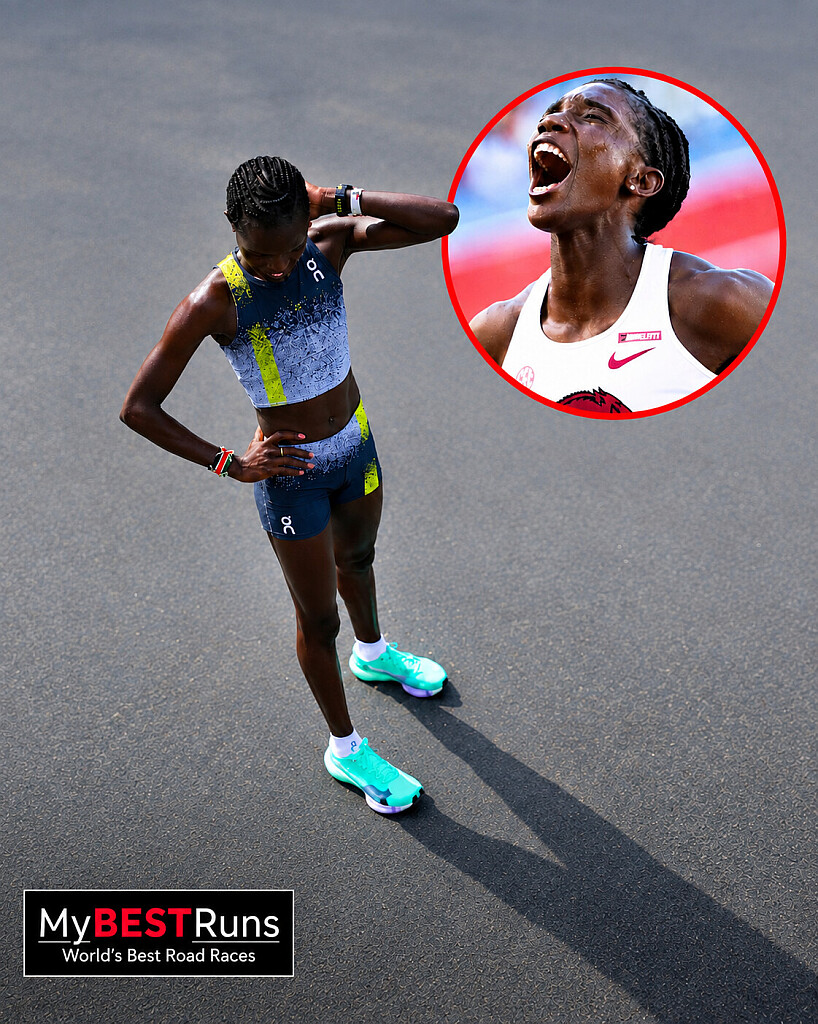
Doris Lemngole Turns Professional With On After Remarkable NCAA Career
Kenyan steeplechase star Doris Lemngole has officially turned professional after signing a contract with Swiss sportswear brand On, marking the beginning of a new chapter for one of the most accomplished young distance runners in the sport.
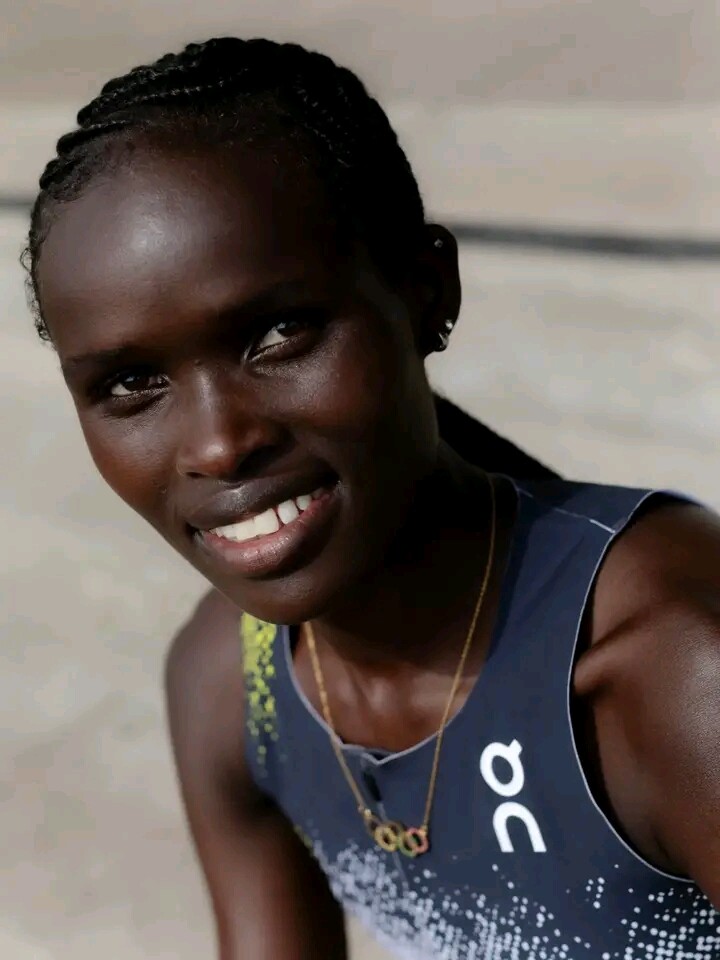
On announced the move on Thursday, September 10, confirming that the 24-year-old has been elevated from the NIL partnership she signed with the brand in August 2025 to its professional athlete roster.
The decision comes after Lemngole completed a spectacular collegiate career at the University of Alabama, where she established herself as one of the most dominant distance runners in NCAA history. She leaves Tuscaloosa as a five-time NCAA champion, a collegiate record-holder and the winner of The Bowerman, the highest individual honor in American collegiate track and field.
Her breakthrough came in the 3,000m steeplechase, an event in which she repeatedly pushed the boundaries of collegiate running. In 2025, she clocked 8:58.15 to become the first woman in NCAA history to break the nine-minute barrier in the event. She also captured consecutive NCAA outdoor steeplechase titles in 2024 and 2025.
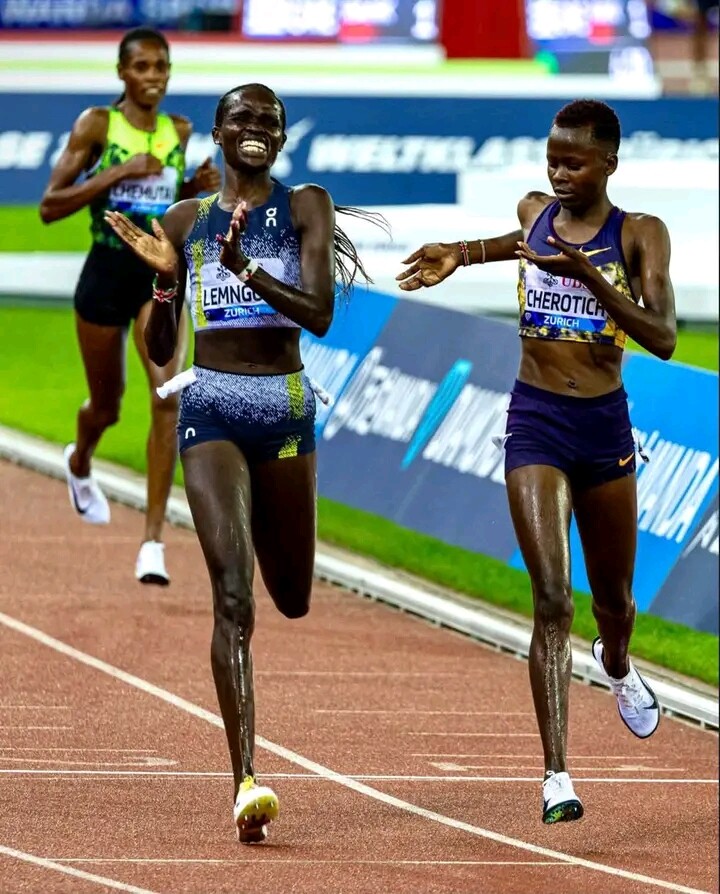
Lemngole was equally impressive over cross country. At the 2025 NCAA Championships in Missouri, she defended her national title in 18:25.4, producing the fastest winning performance in NCAA championship history by a considerable margin. Her consistency and dominance across disciplines ultimately helped her secure The Bowerman in December 2025, making her the first Alabama athlete and first Kenyan to receive the prestigious award.
Her transition from collegiate standout to international contender has been remarkably rapid. Still competing as an Alabama athlete, Lemngole won her Diamond League debut in the 3,000m steeplechase at Athletissima in Lausanne in August 2025 before going on to represent Kenya at the World Championships in Tokyo, where she finished fifth.
Now, just days before her professional announcement, Lemngole produced perhaps the strongest performance of her career. At the Diamond League Final in Brussels on September 4, she stormed to a massive personal best of 8:52.86 for second place in the 3,000m steeplechase. Only five women in history had previously run faster, underlining just how extraordinary the performance was. Faith Cherotich won in a meeting-record 8:51.61, while Olympic champion Winfred Yavi finished third in 8:53.54.
That performance provided a fitting bridge between Lemngole's collegiate dominance and her professional future. She is no longer simply one of the NCAA's brightest talents; she has now established herself firmly among the world's leading steeplechasers.
For On, the decision represents a natural continuation of a relationship that began when Lemngole joined its NIL roster in 2025. The Swiss brand said her ability to dominate at the collegiate level while immediately challenging the world's best made the move to its professional roster a natural progression.
For Lemngole, the signing is about much more than a new contract. It represents the next stage of a journey that has taken her from NCAA champion and record-breaker to Bowerman winner and international title contender.
With her collegiate chapter now complete and a sub-8:53 performance already on the record, the Kenyan has made her intentions clear: **the next challenge is to see just how far she can take her extraordinary talent on the global stage.**
by Erick Cheruiyot for My Best Runs.
Login to leave a comment
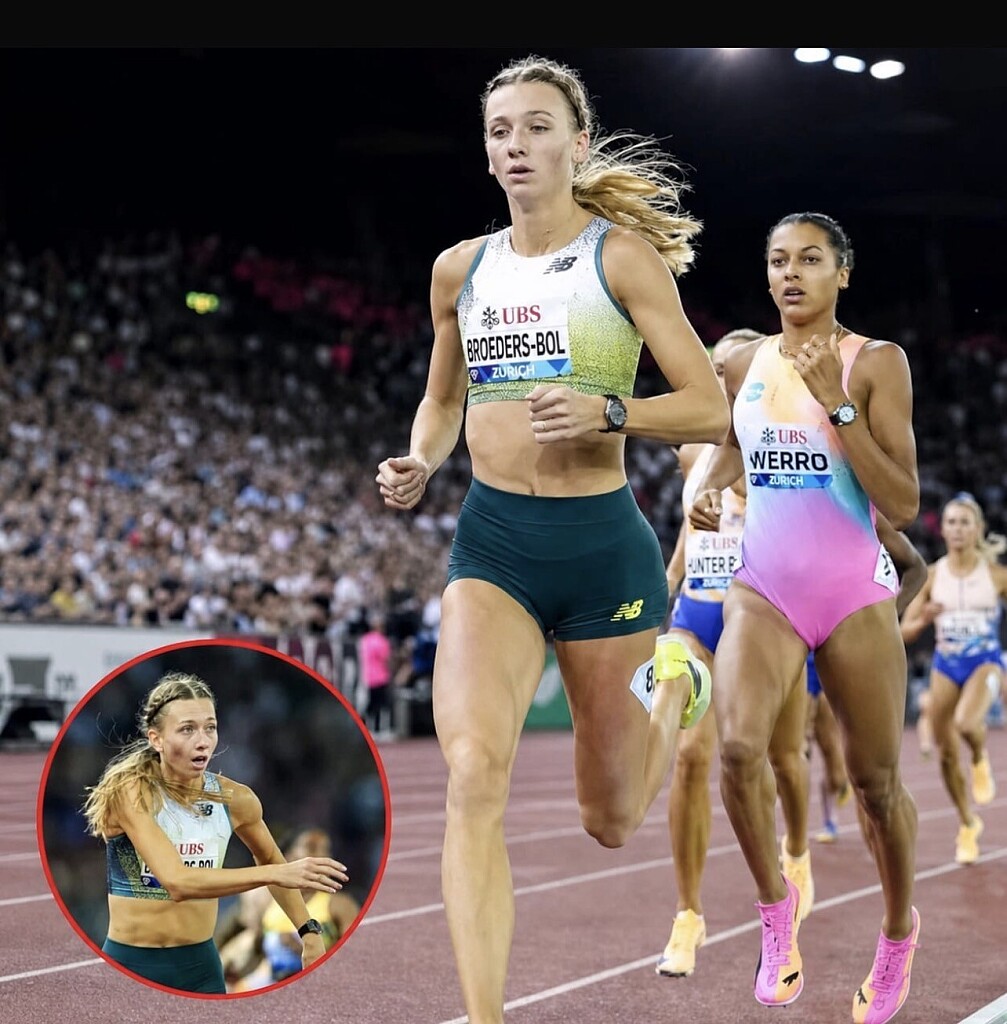
Femke Broeders-Bol’s Stunning 800m Transformation: From Hurdles Star to Dutch Record Breaker
Femke Broeders-Bol has spent much of her career dominating the 400m hurdles, but in 2026 the Dutch star has opened an entirely new chapter — and her transformation into a world-class 800m runner is becoming one of the most fascinating stories in athletics.
What initially looked like an intriguing experiment has rapidly developed into something far more serious.
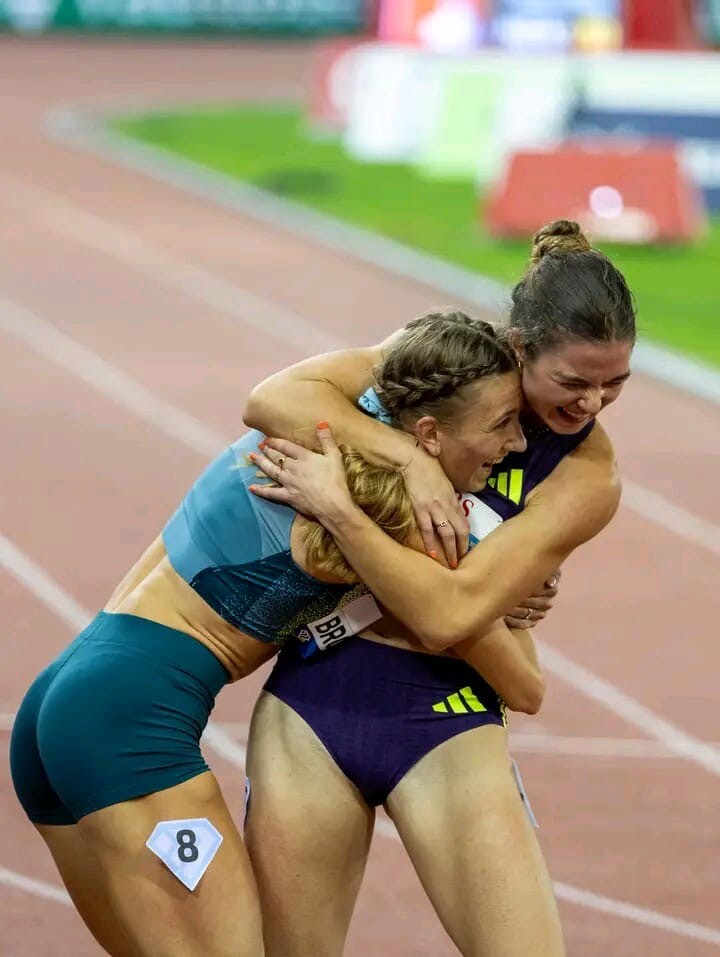
Broeders-Bol is now running times that place her firmly among the elite of the women’s 800m.
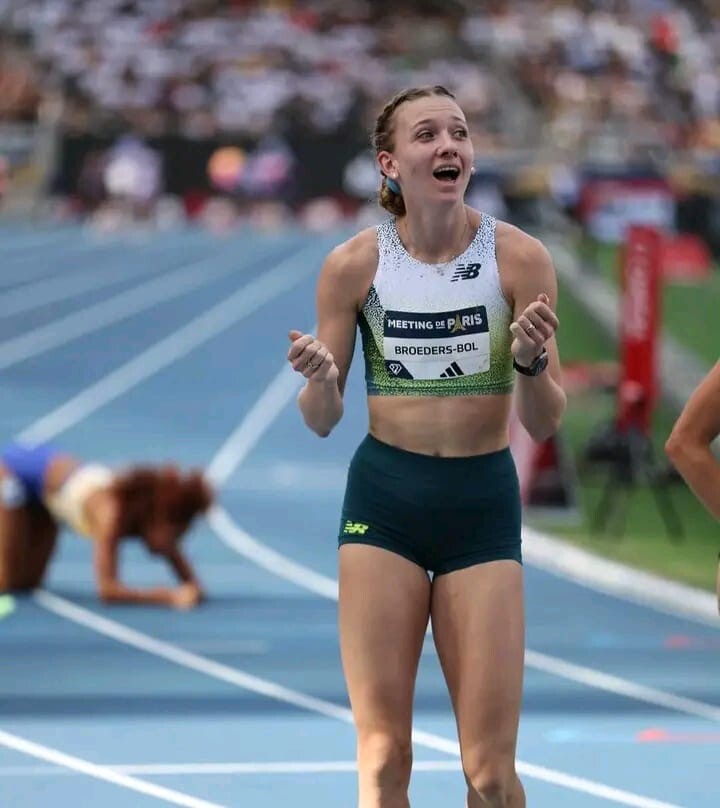
Her breakthrough has been remarkable in both its speed and scale. After making the transition to the two-lap event, she quickly demonstrated that the qualities that made her one of the world’s best 400m hurdlers could be transferred to the longer distance.
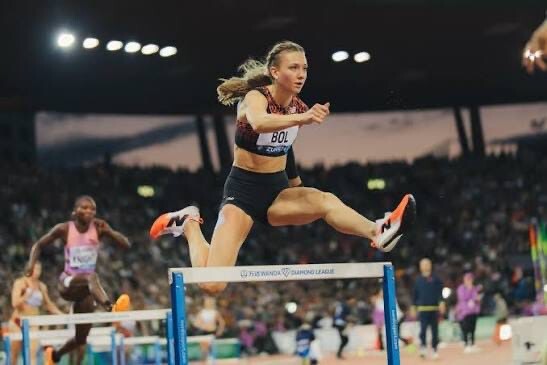
Her 2026 progression tells the story.
She clocked 1:55.60 in Paris on June 28, followed by 1:57.13 in Ostrava, before producing 1:55.54 at the European Championships in Birmingham. That performance equalled Ellen van Langen’s long-standing Dutch record of 1:55.54, a mark that had stood since the 1992 Olympic Games.
Just days later, Broeders-Bol went even faster.
At the Lausanne Diamond League on August 21, she ran 1:55.41, lowering the Dutch record outright and finishing second behind Switzerland’s Audrey Werro.
Then came Zürich.
On August 27, Broeders-Bol produced another extraordinary performance, stopping the clock at 1:54.71 to break her own national record by 0.70 seconds in less than a week. She finished second to Werro, who ran a spectacular 1:53.70 — the third-fastest time ever recorded in the women’s 800m.
For Broeders-Bol, however, the biggest headline was her own transformation.
Her 400m hurdles background has provided an exceptional foundation for the 800m. Years of racing over barriers have developed her speed, strength, rhythm, speed endurance and ability to maintain efficient mechanics when fatigue sets in. Those qualities are particularly valuable over two laps, where the ability to combine raw pace with endurance can separate the very best from the rest.
The challenge has been converting that 400m speed into sustained 800m pace.
And she is doing exactly that.
A 1:54.71 performance is no longer the result of an athlete simply testing herself in another event. It is the mark of a genuine 800m contender.
What makes the development even more intriguing is that Broeders-Bol herself has appeared surprised by just how quickly she has adapted to the distance.
In Zürich, she showed once again that her ceiling over 800m may be considerably higher than anyone initially expected.
At just 26, the Dutch star now finds herself at the beginning of a potentially extraordinary second chapter in her career. Her established reputation as a 400m hurdles powerhouse has already been transformed by a new national record over 800m — and she is continuing to improve at a breathtaking rate. World Athletics lists her 1:54.71 as her current personal best and ranks her among the leading women over the distance.
The question now is no longer whether Broeders-Bol can run the 800m.
It is how fast she can ultimately go.
If this remarkable progression continues, the road towards the Los Angeles 2028 Olympics could become one of the most intriguing storylines in women’s middle-distance running.
Femke Broeders-Bol has already proven that she can conquer the hurdles.
Now, she is showing that two laps of the track may belong to her too.
by Erick Cheruiyot for My Best Runs
Login to leave a comment
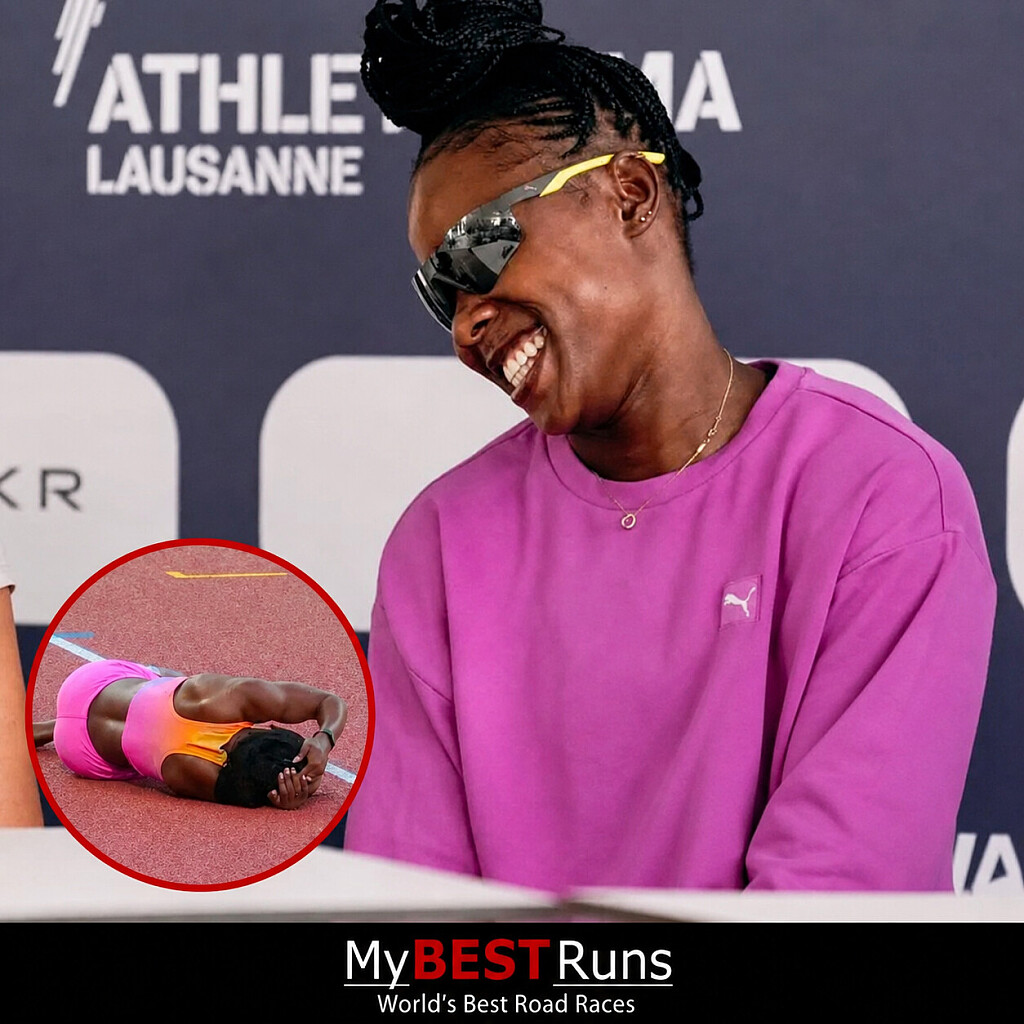
Shericka Jackson: A Smile Through the Storm
For Shericka Jackson, the past few weeks have brought a painful reminder that even the strongest champions can be tested far beyond the finish line.

The Jamaican sprint star is navigating a difficult period marked by grief, injury and uncertainty, yet she continues to show a remarkable strength that goes beyond medals and championships.
At the Lausanne Diamond League meeting on Friday, August 21, Jackson lined up for the women’s 200m hoping to put together another strong performance. She appeared composed through the early stages of the race, but as she came off the bend, her night took a heartbreaking turn.
Jackson suddenly pulled up and went down on the track, appearing to suffer a hamstring injury. She was unable to continue, bringing an abrupt end to her race and adding another painful chapter to a period that has already tested her physically and emotionally.
The setback came against an especially difficult personal backdrop.
Only days earlier, Jackson was mourning the death of Stephen Francis, the renowned Jamaican coach and founder of MVP Track Club, who played an important role in her development as an elite athlete.
Before the Lausanne meeting, Jackson spoke candidly about the emotional weight she was carrying.
“I'm trying to be okay because, in all honesty, I'm not okay.”
Those words revealed the reality behind the athlete the world usually sees competing with confidence and determination. Jackson has been trying to process personal loss while also working through the physical challenges that have disrupted her career.
Her injury struggles have previously forced her to make difficult decisions, including her withdrawal from the individual sprint events at the 2024 Paris Olympics. Now, just as she continues to navigate another challenging period, another injury has left her facing yet more uncertainty.
But Jackson has refused to allow the storm to define her.
In a message shared with her followers, she offered a powerful reminder of resilience:
“Your smile is proof that light can live through storms.”
Accompanied by the hashtags #ARoughPatchOfLife and #MentalHealthMatters, the message carried a significance far deeper than a social-media caption. It reflected the reality that athletes, despite their extraordinary physical abilities, experience grief, frustration, fear and emotional exhaustion just like everyone else.
Jackson’s story is a reminder that strength is not always measured by how fast someone runs or how many medals they have won.
Sometimes, strength is showing up when your heart is hurting.
Sometimes, it is allowing yourself to admit that you are not okay — and still finding a reason to smile.
And sometimes, courage is simply getting back up after life knocks you down.
Shericka Jackson may be going through a rough patch, but there is still light in that smile.
The track may have taken away another race, but it cannot take away her resilience, her spirit or the champion within her.
For now, Jamaica and athletics fans around the world can only hope for her recovery, healing and peace as she faces the road ahead. The storm will not last forever.
by Erick Cheruiyot for My Best Runs.
Login to leave a comment
Shericka Jackson’s Lausanne Return Ends in Heartbreak as Injury Clouds Silesia Showdown
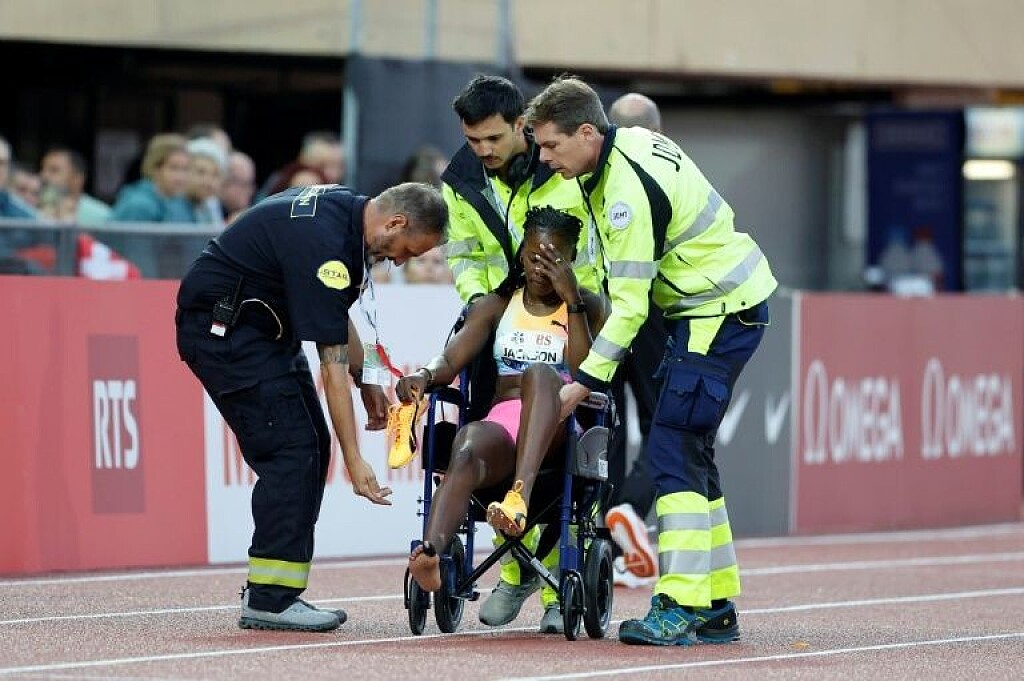
Shericka Jackson’s long-awaited return to the 200 metres ended in heartbreaking fashion on Friday night at the Wanda Diamond League meeting in Lausanne, where the Jamaican sprint star was forced to pull up and did not finish after appearing to suffer an injury.

Jackson had made a promising start and was among the leading contenders as the race unfolded at the Stade Olympique de la Pontaise. But shortly after coming off the bend, the two-time world 200m champion suddenly pulled up, lost her balance and crashed to the track, bringing her comeback race to an abrupt and painful end.
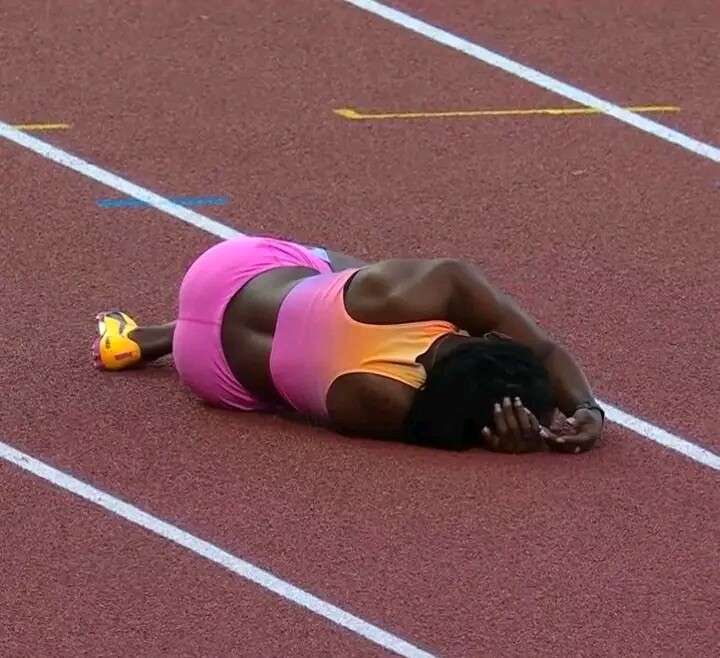
The incident immediately raised concerns for one of the most accomplished sprinters of her generation, particularly after Jackson had already acknowledged uncertainty over her fitness in the lead-up to the Lausanne meeting.
Her withdrawal now casts serious doubt over her scheduled appearance in the women’s 100m at the Silesia Diamond League on Saturday, August 23. Jackson had been set to line up in one of the most eagerly anticipated sprint races of the meeting, alongside fellow Jamaican Elaine Thompson-Herah, Sha’Carri Richardson, Julien Alfred and Melissa Jefferson-Wooden.
Whether Jackson will be fit enough to take her place remains unclear, but Friday’s setback was another difficult moment in what has been an emotionally challenging period for the Jamaican star.
Recently, Jackson revealed that she had not been “ok” as she continues to cope with the loss of her longtime coach and MVP Track Club technical director, Stephen “Franno” Francis. His death has clearly left a profound impact on an athlete who enjoyed some of the greatest successes of her career under his guidance.
Friday’s injury scare added another layer of heartbreak to that difficult journey. For now, the athletics world will be hoping that the setback is not as serious as it first appeared and that Jackson can recover fully.
One of the sport’s biggest stars has already overcome enormous challenges throughout her career. The hope now is that this latest setback will be only a temporary interruption—and that Shericka Jackson will soon be back where she belongs, competing at the very highest level.
by Erick Cheruiyot for My Best Runs.
Login to leave a comment
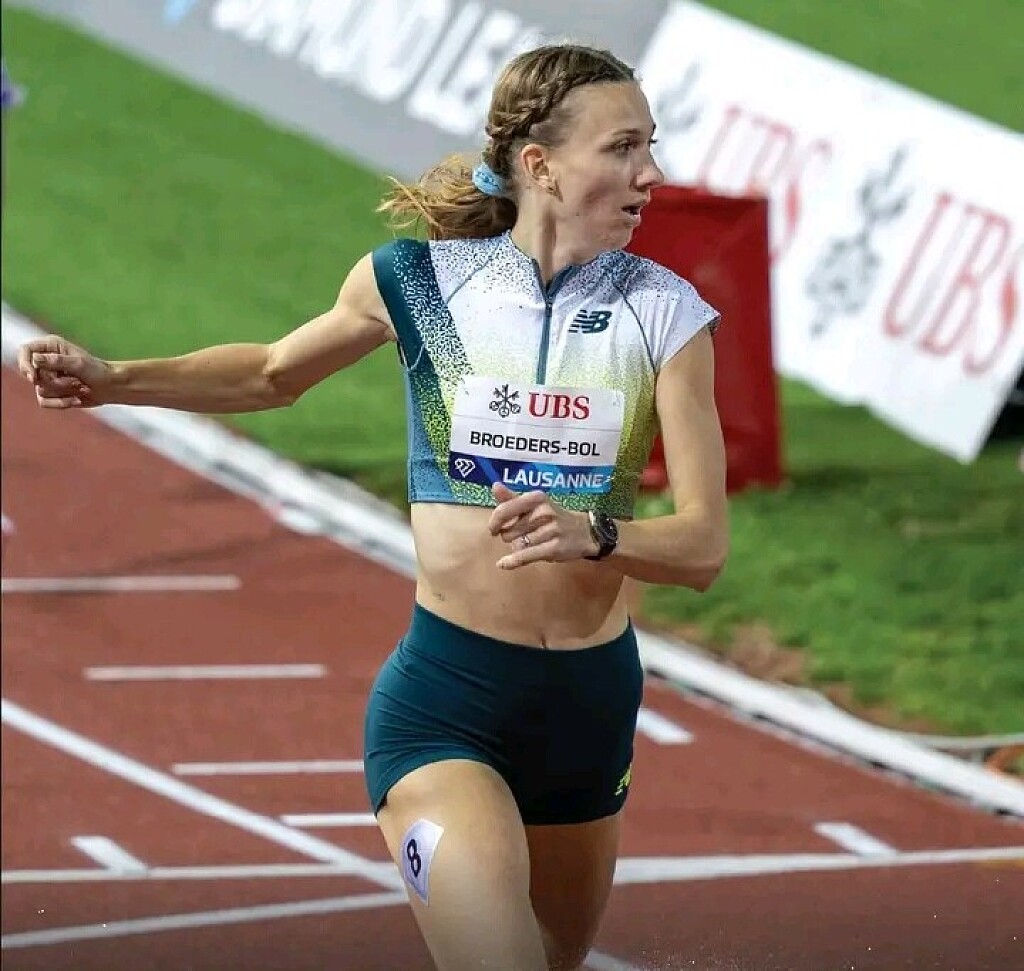
Femke Broeders-Bol’s Stunning Rise Continues with Dutch 800m Record in Lausanne
Femke Broeders-Bol’s remarkable transformation into a genuine 800m force continued in spectacular fashion at the Lausanne Diamond League, where the Dutch star smashed the national record with a breathtaking 1:55.41 and came within a fraction of victory.
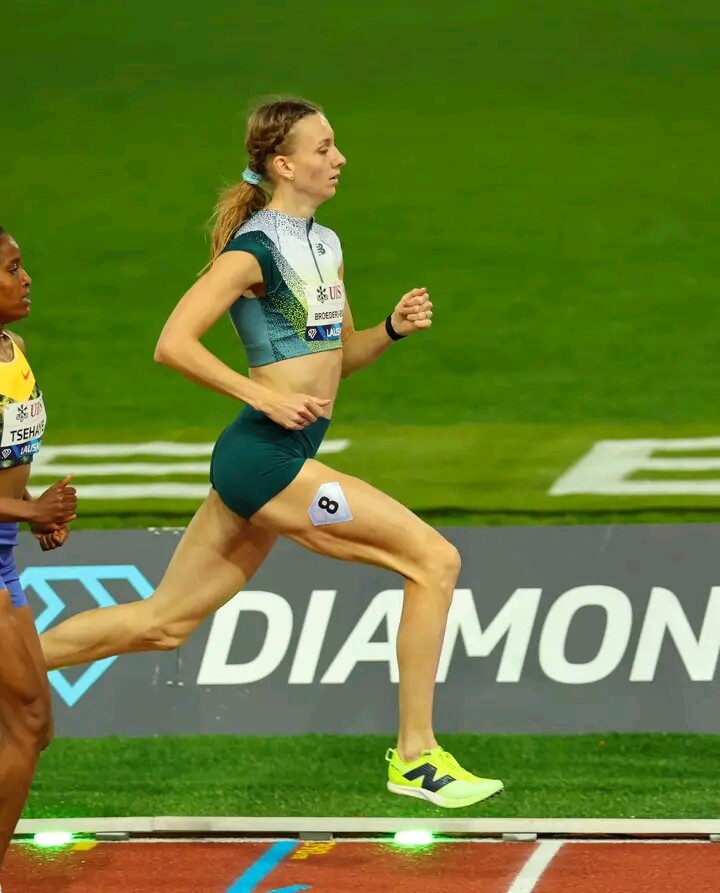
In one of the most thrilling races of the evening, Bol pushed Switzerland’s European champion Audrey Werro all the way to the finish line, with just 0.08 seconds separating the two athletes. Werro claimed victory in a meeting record of 1:55.33, while Bol crossed the line second in 1:55.41, rewriting the Dutch record books with the fastest 800m performance of her career.
Audrey Werro of Switzerland — 1:55.33, Meeting Record
Femke Broeders-Bol of the Netherlands — 1:55.41, National Record
For Bol, the performance marked another extraordinary step in what has become a sensational 2026 campaign. Her progression over two laps has been nothing short of remarkable. After running 1:59.07 in February, she improved to 1:57.13 in June, then 1:57.41 just days later, before breaking through with 1:55.60 in June. She continued her rapid rise with 1:55.54 in August before lowering the Dutch national record even further to 1:55.41 in Lausanne.
The latest breakthrough is especially significant because it came against one of the world's fastest 800m runners. Werro entered the race as the European champion and delivered a sensational performance of her own, but Bol refused to let her escape and stayed within striking distance all the way to the line.
Long recognised as one of the world's outstanding talents in the 400m hurdles, Bol is now showing just how formidable she can be over the flat 800m. Her ability to move from hurdles dominance into elite middle-distance competition has added another fascinating dimension to her career, and her rapid improvement suggests there could still be more to come.
From 1:59.07 to 1:55.41 in a single season, Bol has made one of the most dramatic improvements in women's middle-distance running this year. More importantly, she is no longer simply experimenting with the event—she is proving that she can challenge the very best.
The Dutch star may have narrowly missed victory in Lausanne, but her national-record performance sent a powerful message.
Femke Broeders-Bol is getting faster, the margins are getting smaller, and the women's 800m is becoming even more fascinating.
by Erick Cheruiyot for My Best Runs.
Login to leave a comment
Werro Survives Stunning Broeders-Bol Charge in Record-Breaking Lausanne 800m
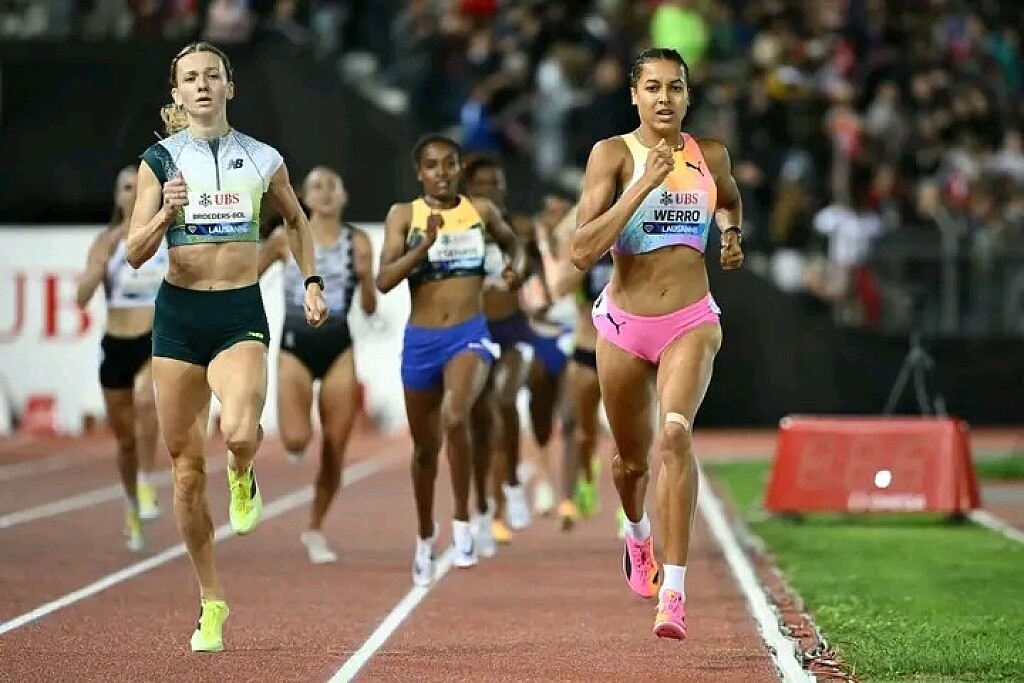
Audrey Werro produced another extraordinary performance on home soil, holding off a fierce late charge from Femke Broeders-Bol to win a breathtaking women's 800m at the Lausanne Diamond League in a new meeting record of 1:55.33.
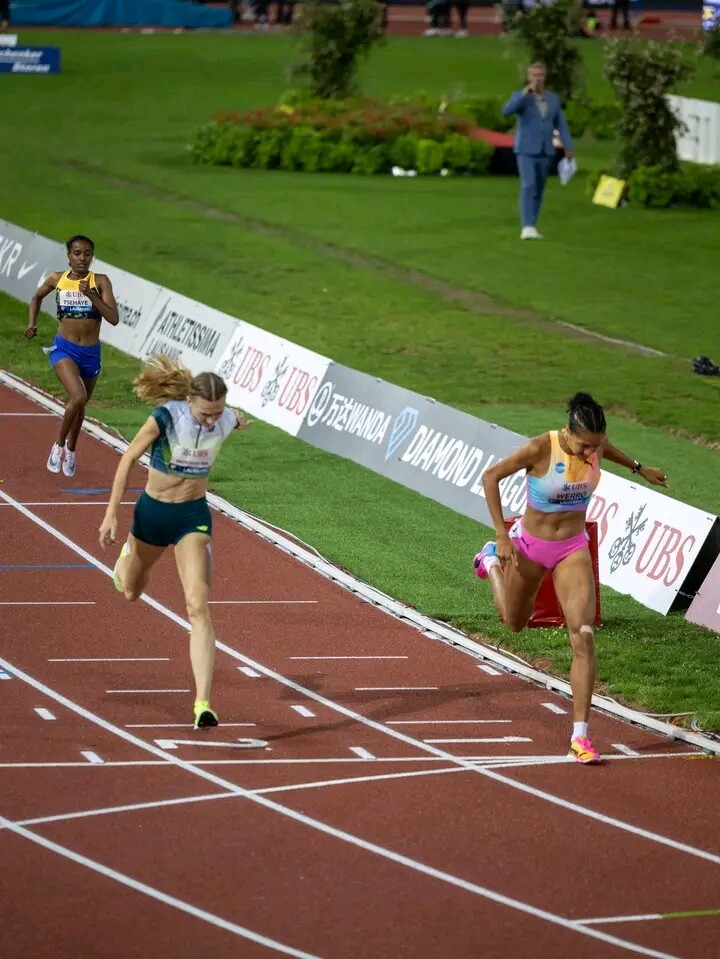
Fresh from becoming European 800m champion, Werro looked to be on course for a comfortable victory as she entered the final straight with a clear advantage. But the race exploded into a dramatic battle over the closing metres when Broeders-Bol unleashed a sensational finishing kick, clocking a remarkable 14.8 seconds for the final 100 metres compared with Werro's 15.4.
The Dutch star closed rapidly and came within touching distance of Werro, but the Swiss favourite had done enough to hold on, crossing the line just eight hundredths of a second ahead. Werro's winning time of 1:55.33 established a new meeting record and further strengthened her remarkable run of form.

Broeders-Bol finished second in a superb 1:55.41, and although she narrowly missed victory, she left Lausanne with a historic achievement of her own. Her performance shattered the Dutch women's 800m national record previously held by Ellen van Langen, marking one of the finest races of her career.
Eighteen-year-old Ethiopian talent Saida Tsehaye completed an outstanding podium, running a huge personal best of 1:56.92 to finish third. Her breakthrough performance underlined the extraordinary depth of the race and announced another exciting young force in women's middle-distance running.
Behind the leading trio, Switzerland's Veronica Vancardo finished fourth in 1:58.68, with compatriot Valentina Rosamilia fifth in 1:58.93. American Addison Wiley placed sixth in 1:59.22, while Kenya's Lilian Odira was seventh in 1:59.25.
For Werro, it was another unforgettable night in front of her home crowd. The European champion combined strength, confidence and composure to withstand one of the most explosive finishing charges of the season, while Broeders-Bol produced a national-record performance that came agonisingly close to victory.
In the end, Lausanne witnessed a race in which history was made at both ends of the finish line: Werro claimed the meeting record and another major victory, Broeders-Bol rewrote the Dutch record books, and teenage sensation Tsehaye announced herself on the world stage with a huge personal best.
The women's 800m is delivering exceptional racing in 2026—and this electrifying showdown in Lausanne was further proof that the event is hotter than ever.
by Erick Cheruiyot for My Best Runs.
Login to leave a comment
Six Men Smash the 13-Minute Barrier in a Stunning Lausanne 5000m Showdown
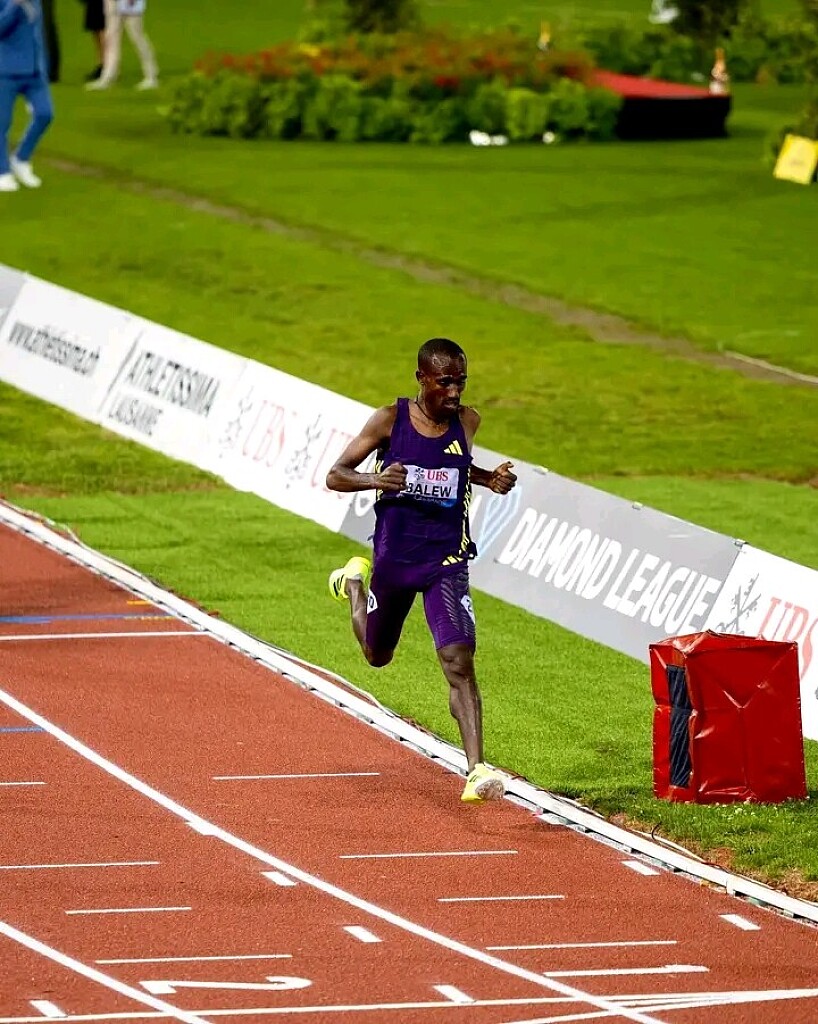
The men’s 5000m at the Lausanne Diamond League produced one of the most electrifying distance races of the season, as six athletes broke the coveted 13-minute barrier in a breathtaking display of speed and depth.
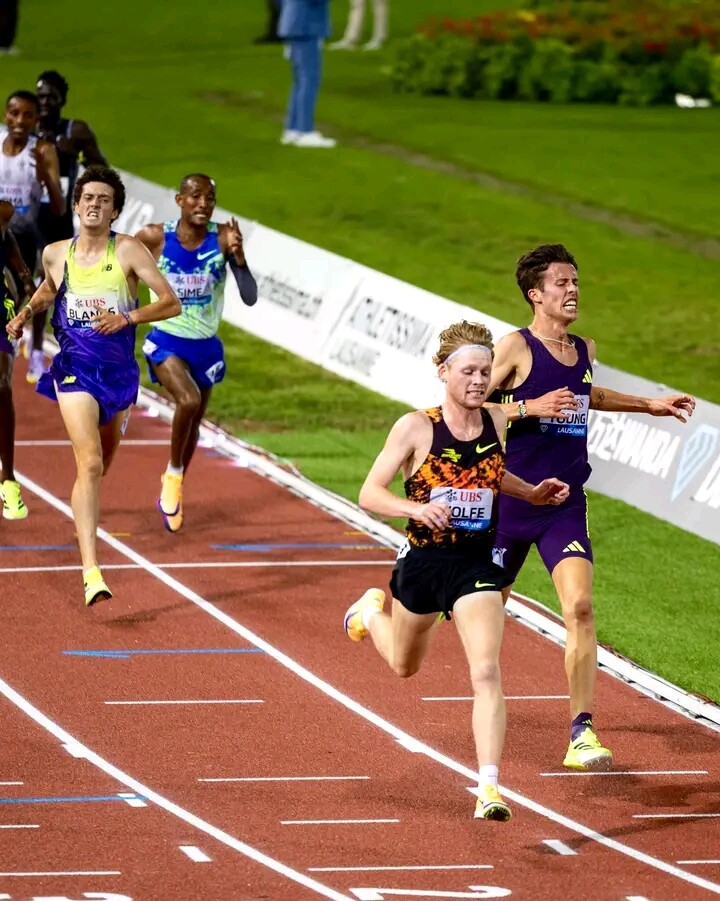
Bahrain’s Birhanu Balew emerged victorious in a fiercely contested race, clocking 12:57.55 to secure a brilliant win against a world-class field. Balew held off relentless pressure behind him to claim the victory as the race exploded into a spectacular battle over the closing stages.
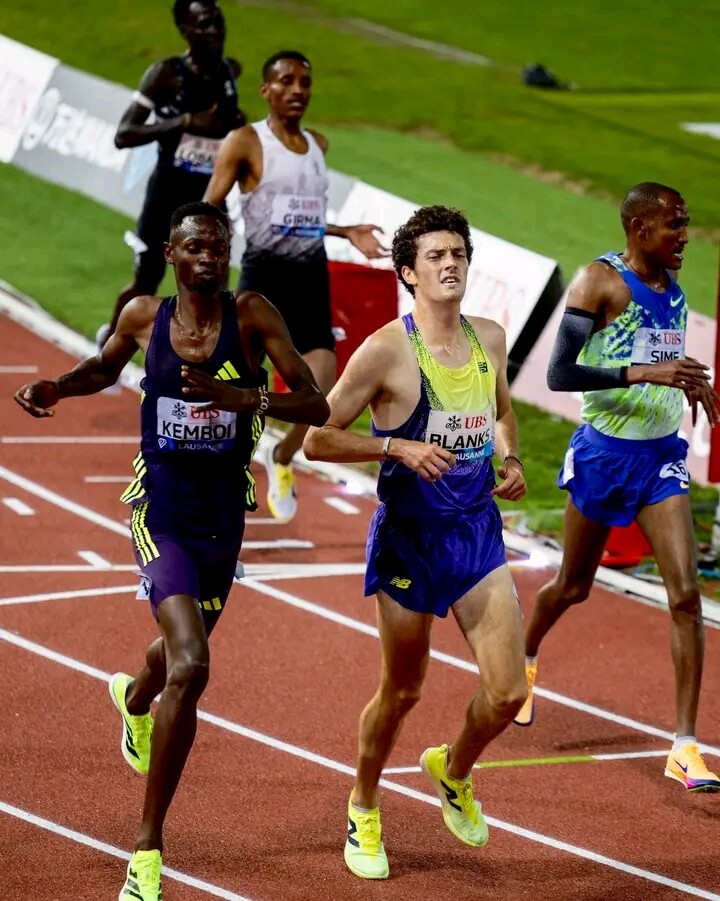
The United States produced an especially impressive performance, with Parker Wolfe leading a powerful American charge in second place. Wolfe crossed the line in a personal best of 12:58.20, while Nico Young followed closely in third with a season's best of 12:58.33. Graham Blanks made it three Americans in the top four, dipping under 13 minutes with 12:59.16.
Kenya’s Cornelius Kemboi added another sub-13-minute performance in fifth, clocking 12:59.33, while Ethiopia’s Mezgébu Sime completed the extraordinary group of six athletes under the historic barrier with 12:59.48 in sixth place.
The quality of the race was underlined by the fact that Ethiopia’s Kuma Girma, despite recording a season's best of 13:00.22, could finish only seventh. Switzerland’s Dominic Lobalu took eighth in 13:00.73, followed by Ethiopia’s Kahiri Bejiga, who ran a personal best of 13:03.27.
Grant Fisher, one of the biggest names in the field, finished 11th in 13:07.74 on a night when the remarkable depth and pace of the competition left no room for error.
Lausanne has once again delivered a memorable night of distance running, with the men’s 5000m becoming a showcase of the extraordinary standard currently being produced on the track. Six men under 13 minutes in a single race was a powerful statement, while Balew's victory and the exceptional performances from the American trio ensured this was one of the standout races of the 2026 Diamond League season.
Top 10 finishers:
1. Birhanu Balew (Bahrain) — 12:57.55
2. Parker Wolfe (United States) — 12:58.20 PB
3. Nico Young (United States) — 12:58.33 SB
4. Graham Blanks (United States) — 12:59.16
5. Cornelius Kemboi (Kenya) — 12:59.33
6. Mezgébu Sime (Ethiopia) — 12:59.48
7. Kuma Girma (Ethiopia) — 13:00.22 SB
8. Dominic Lobalu (Switzerland) — 13:00.73
9. Kahiri Bejiga (Ethiopia) — 13:03.27 PB
10. Egide Ntakarutimana (Burundi) — 13:07.21
In a race packed with exceptional talent, Balew ultimately had the decisive finishing strength—but Lausanne's biggest story was the sheer depth of the performance, with six men racing beneath 13 minutes and turning the 5000m into an unforgettable Diamond League showdown.
by Erick Cheruiyot for My Best Runs.
Login to leave a comment
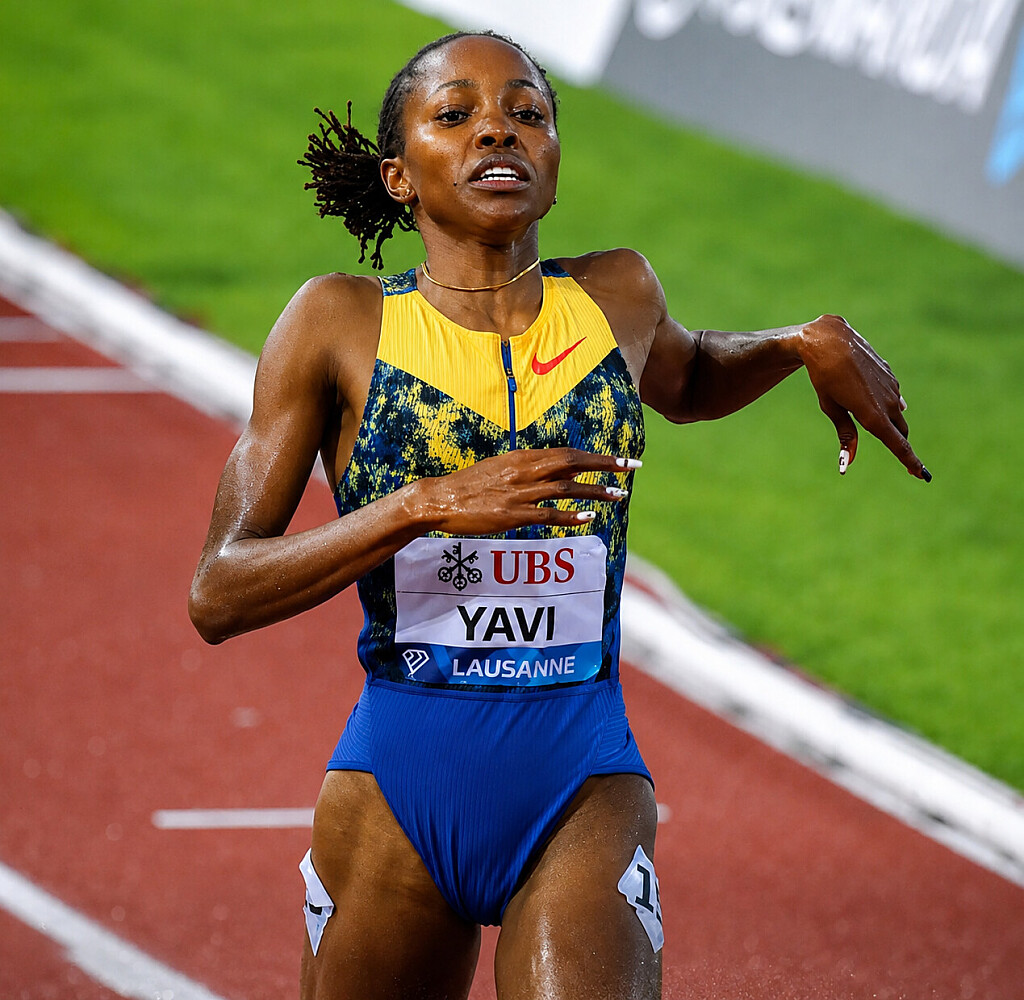
Olympic Champion Winfred Yavi Beats World Champion Faith Cherotich in Lausanne Steeplechase Thriller
Winfred Yavi delivered a statement performance at the Lausanne Diamond League, defeating reigning world champion Faith Cherotich in a thrilling women's 3000m steeplechase showdown and taking the lead in their increasingly compelling 2026 rivalry.
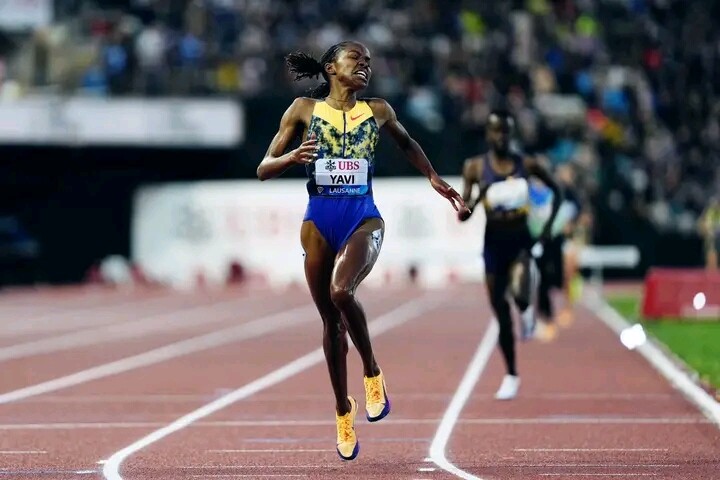
The Bahraini star, the 2024 Olympic steeplechase champion, led from the opening stages and never surrendered control, crossing the line in a meet record of 9:00.04. Cherotich, the reigning world champion, fought hard throughout but had to settle for second in 9:01.90.

The victory gave Yavi the upper hand in their head-to-head battles this season, with the Olympic champion now holding a 2-1 advantage over Cherotich in their three meetings in 2026.
For much of the race, Cherotich remained within striking distance of Yavi, staying close as the two stars negotiated the barriers at a relentless pace. However, Yavi refused to give her Kenyan rival an opportunity to take control, maintaining the lead and producing another powerful display when the pressure intensified in the closing stages.
It was a fascinating battle between two of the dominant figures in women's steeplechasing. The reigning Olympic champion against the reigning world champion lived up to expectations, and on this occasion, Yavi had the answers.
Tunisia's Marwa Bouzayani completed the podium in 9:05.55, while Kenya's Doris Lemngole finished fourth in 9:07.09. American Lexy Halladay rounded out the top five with a personal best of 9:08.35.
Yavi's winning time was not only enough to secure another important victory over her biggest rival but also established a new Lausanne meet record, underlining the exceptional standard of the race.
With Yavi now leading their season series 2-1, the rivalry between the Olympic champion and the world champion is becoming one of the most exciting battles in women's distance running. Lausanne belonged to Yavi, but Cherotich remains close enough to ensure that their next meeting could produce another spectacular contest.
by Erick Cheruiyot for My Best Runs.
Login to leave a comment
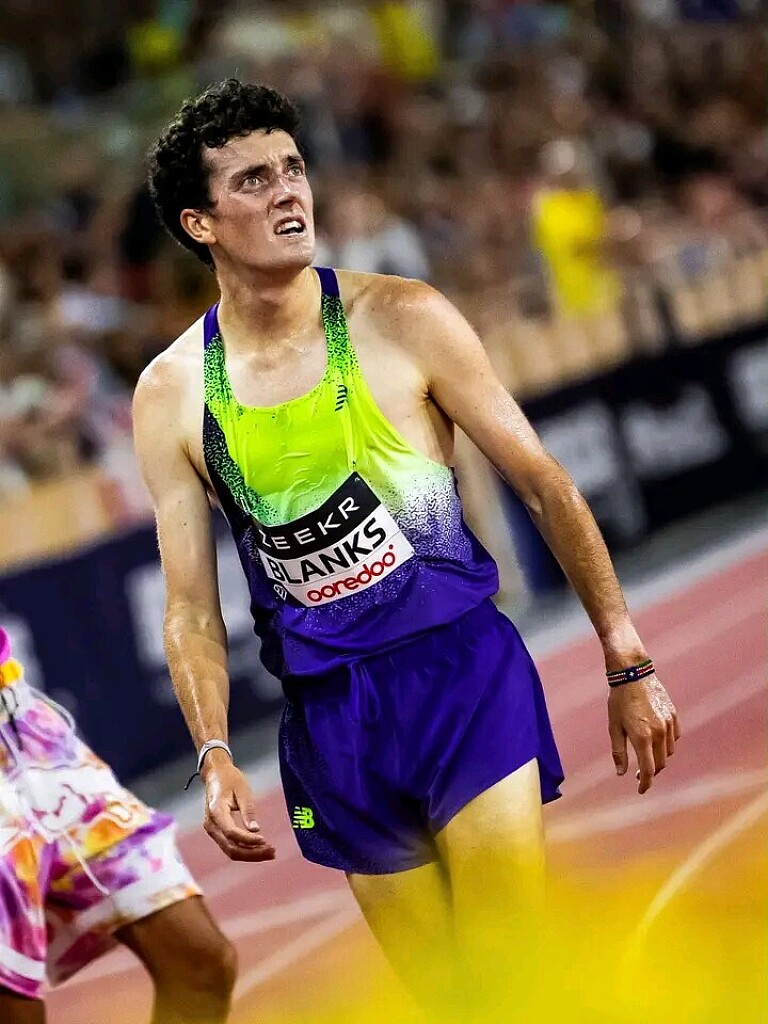
Americans Bring The Heat As Lausanne Diamond League Sets Up A Fierce 5000m Showdown
The Wanda Diamond League returns to action on Friday, August 21, and the men’s 5000m in Lausanne promises to be one of the evening’s most compelling distance races, with a strong American quartet ready to take on a deep international field.
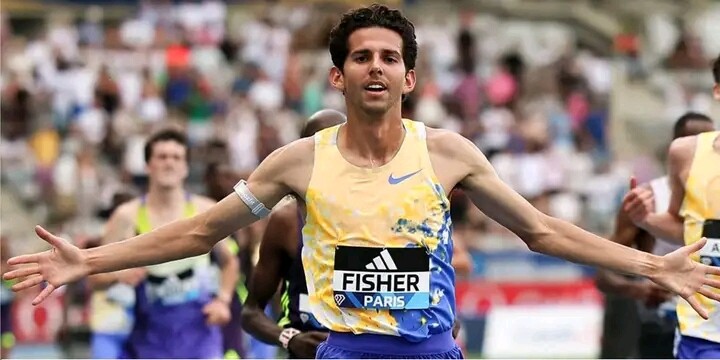
Graham Blanks, Grant Fisher, Parker Wolfe and Nico Young will carry the American challenge at Athletissima, where they will line up against a formidable group featuring athletes from Kenya, Ethiopia, Bahrain, Eritrea, Burundi, Switzerland, Uruguay, Slovenia and Mexico.

The Lausanne meeting marks an important point in the 2026 Diamond League campaign, with the Road to the Final entering its decisive stages ahead of the series finale in Brussels on September 4-5. Lausanne is followed just two days later by the Silesia meeting, before the series heads to Zurich for the final regular-season stop.

Fisher arrives as one of the most established names in the field. The American Olympic bronze medallist has already produced a 12:49.61 season best over 5000m in Oslo and also won the 3000m in Paris earlier this season. His experience at the highest level makes him a major contender when the pace accelerates over the closing laps.
Blanks is another American to watch closely. Ranked among the leading 5000m athletes in the world, he has continued to establish himself as one of the United States’ most exciting young distance runners. World Athletics’ rankings placed him eighth globally in the event as of July 26, with Fisher sixth.
Wolfe and Young add further depth to an American lineup that could make the race particularly tactical. With four athletes capable of competing at a high level, the United States will have several cards to play as the race develops.
But the Americans will have no easy path to victory.
Bahrain’s Birhanu Balew headlines the international opposition and entered the season among the world’s highest-ranked 5000m runners. Kenya will be represented by Jacob Krop, Edwin Kurgat, Cornelius Kemboi, Charles Kiboina, Mathew Kipchumba Kipsang and Laban Kiptoo Kosgei, giving the race a powerful Kenyan presence.
Ethiopia also brings considerable strength, with Khairi Bejiga, Kuma Girma, Shimelis Niguse, Mezgebu Sime and Getnet Wale all listed in the field. Eritrea’s Abderezak Suleman, Burundi’s Egide Ntakirutimana, Switzerland’s Dominic Lokinyomo Lobalu, Uruguay’s Santiago Catrofe, Slovenia’s Žan Rudolf and Mexico’s Eduardo Herrera complete a truly international lineup.
The Lausanne 5000m is therefore shaping up as much more than an American showcase. It is a meeting of contrasting strengths: American depth, Kenyan distance tradition, Ethiopian endurance and a collection of international contenders eager to make their mark on one of the sport’s biggest stages.
With the Diamond League season moving rapidly toward its final stretch, every position and every point carries added importance. The question now is whether the American quartet can convert its collective strength into a victory—or whether the international field will once again prove too deep to control.
One thing is certain: when the Lausanne 5000m gets underway, the pace is expected to be hot, the competition fierce and the final laps unforgettable.
by Erick Cheruiyot for My Best Runs.
Login to leave a comment
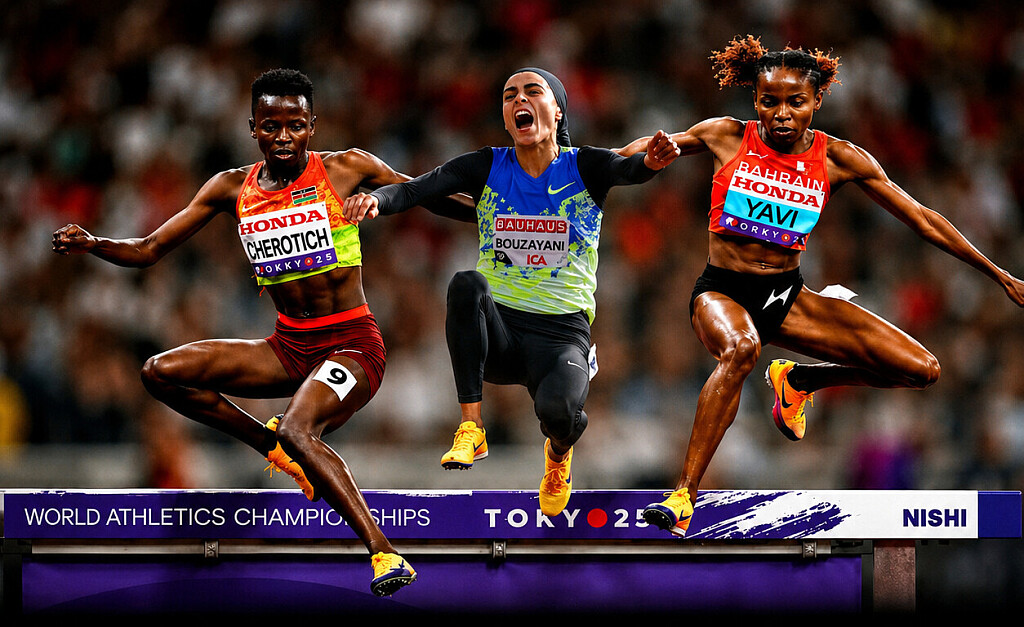
Cherotich, Yavi and Bouzayani Set for Lausanne Diamond League Steeplechase Showdown
The women’s 3000m steeplechase is shaping up as one of the most enticing distance events at the 2026 Athletissima Lausanne Diamond League, with Kenya’s Faith Cherotich, Bahrain’s Winfred Yavi and Tunisia’s Marwa Bouzayani confirmed for a mouth-watering clash on 21 August. The meeting will bring together three athletes who have each made a strong impression on the international steeplechase scene this season.
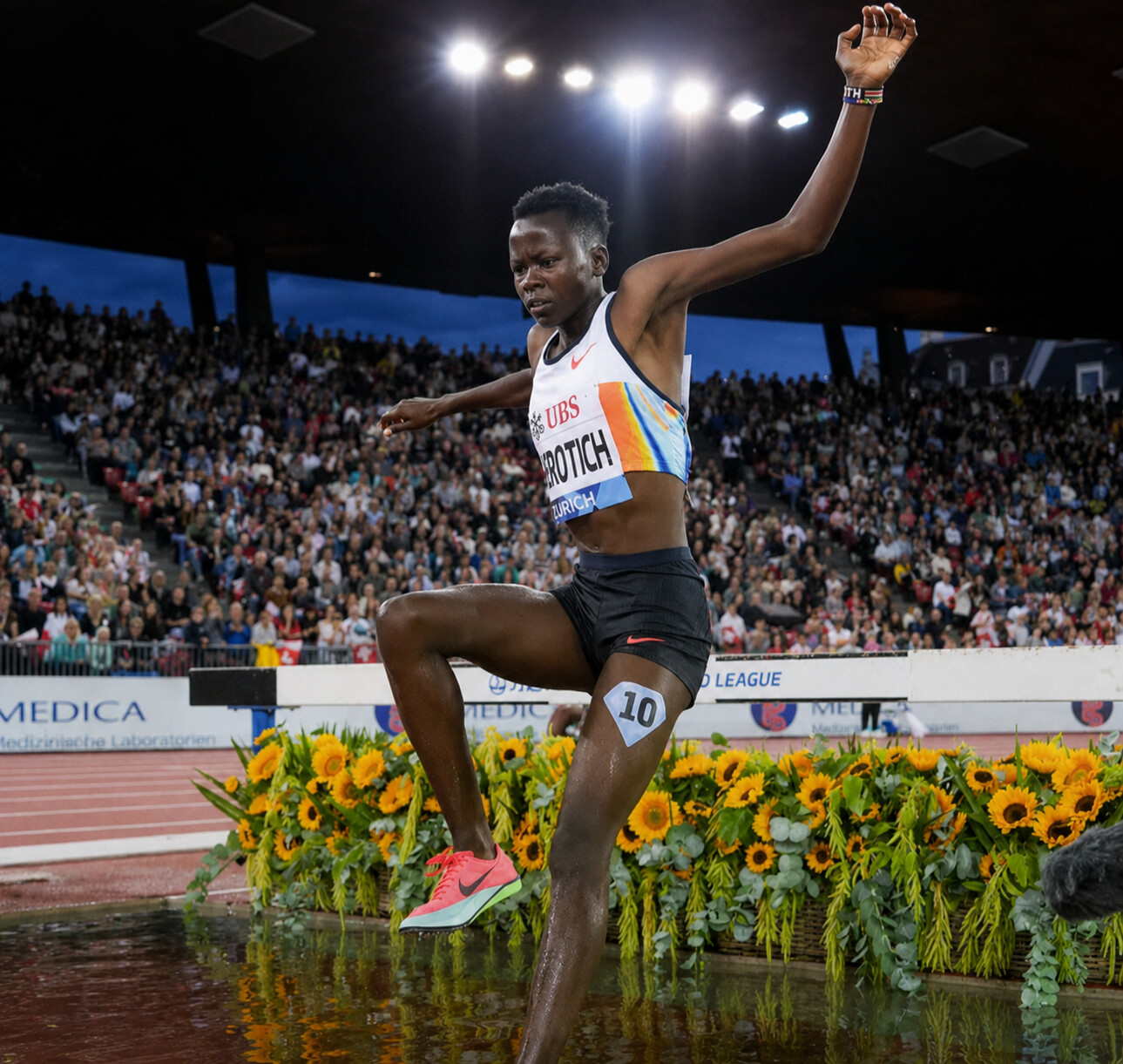
Cherotich heads to Lausanne with formidable credentials. The Kenyan is the reigning world champion and two-time Diamond League champion, and she has continued to show her class in 2026. She opened her Diamond League campaign with 8:51.48 for second place in Shanghai/Keqiao before producing a winning 8:51.74 at the Prefontaine Classic in Eugene.
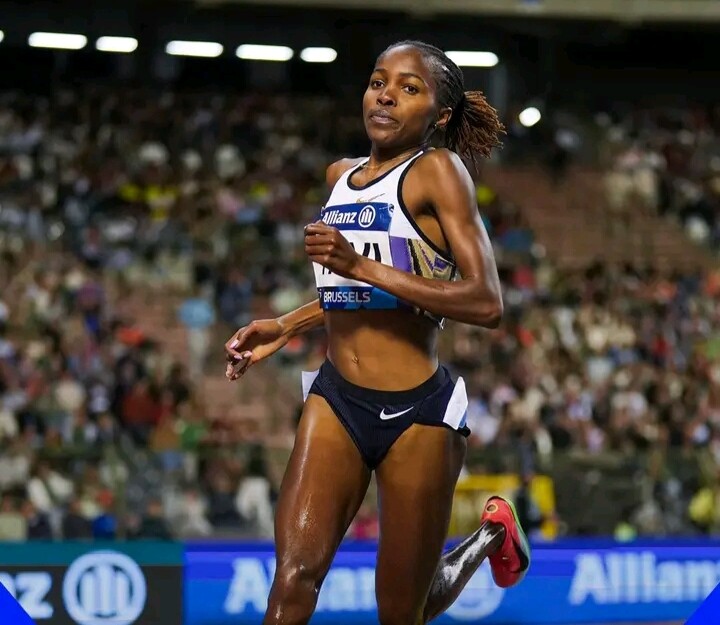
Standing in her way will be Yavi, the Paris 2024 Olympic champion and one of the most accomplished steeplechasers of her generation. The Bahrain star has developed a compelling rivalry with Cherotich, with the two repeatedly pushing each other towards extraordinary performances. Their encounters have become a highlight of the Diamond League season, making their latest meeting in Lausanne particularly intriguing.
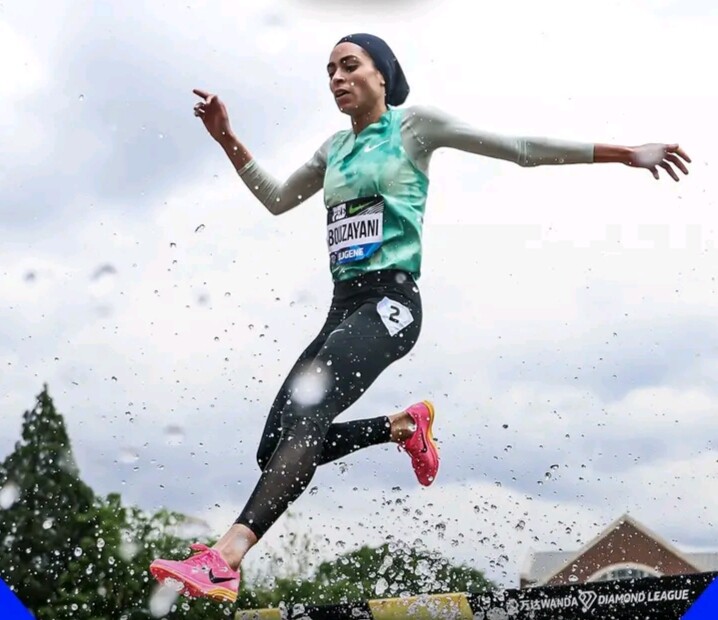
Bouzayani, meanwhile, arrives with perhaps the biggest surge in confidence. The Tunisian produced a spectacular breakthrough in Stockholm in June, winning her first Diamond League steeplechase in a meeting-record 8:59.28. That came after she had already shattered the Tunisian record with 8:58.09 in Shanghai/Keqiao, becoming the first Tunisian woman to break nine minutes for the event.
Her progress has transformed Bouzayani from an emerging challenger into a genuine contender capable of mixing it with the world’s best. Her performance in Eugene further underlined that development, as she ran a national record 8:54.32 for third behind Cherotich and Yavi. The three athletes were separated by less than three seconds, setting the stage for another fascinating contest in Switzerland.
Lausanne could therefore provide another beautiful chapter in an increasingly captivating steeplechase story. Cherotich brings the authority of a world champion, Yavi the experience and confidence of an Olympic champion, while Bouzayani carries the momentum of a breakthrough season. Over 3,000 metres of barriers, water jumps and relentless racing, the smallest details could decide who emerges strongest when the final straight arrives.
With the three stars now set to share the same starting line, anticipation is already building for what could be a swift, elegant and fiercely contested battle under the Swiss lights. For fans of distance running, Lausanne promises a race where every barrier clearance, every surge and every final stride could carry the weight of victory.
by Erick Cheruiyot for My Best Runs.
Login to leave a comment
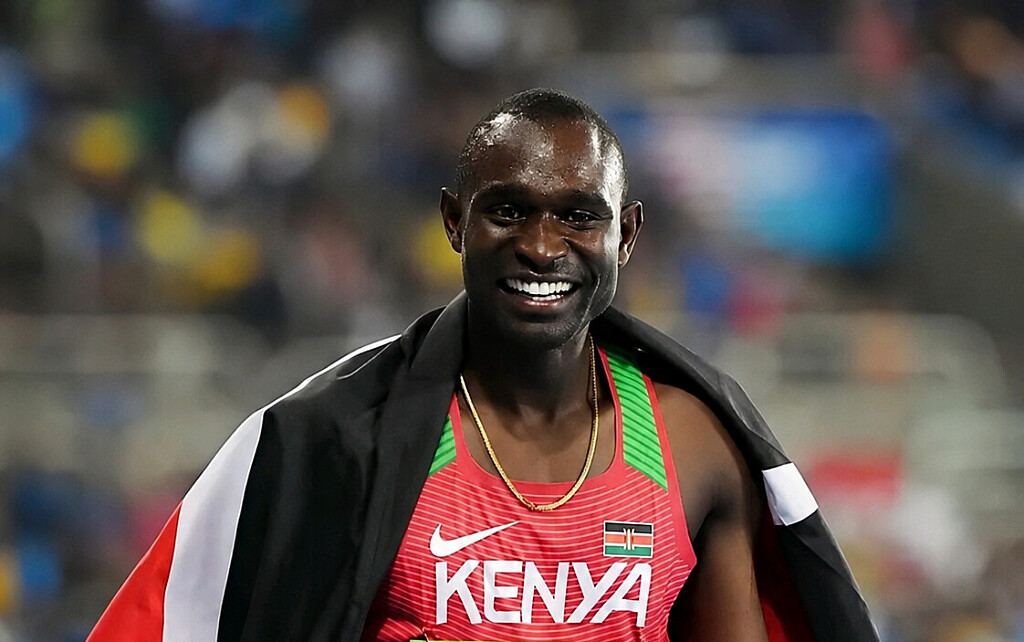
David Rudisha’s 1:40.91: Fourteen Years Later, The 800m Still Has A Mountain To Climb
Fourteen years ago this weekend, David Rudisha delivered one of the most extraordinary performances ever witnessed on an athletics track — and remarkably, his world record still stands.
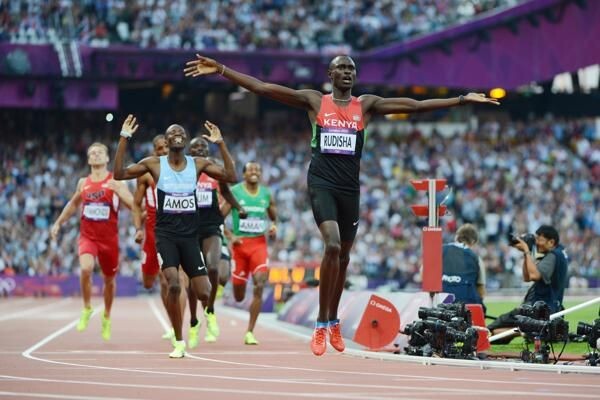
On August 9, 2012, the Kenyan lined up for the Olympic 800m final at London’s Olympic Stadium alongside seven of the world’s finest half-milers. What followed was a race that would forever redefine the limits of the event.
Rudisha did not wait for the final straight. From the gun, he went straight to the front and imposed a relentless pace on the field. He reached the 400m mark in a blistering 49.28 seconds, but instead of paying the price for such an aggressive opening lap, he continued to drive forward.
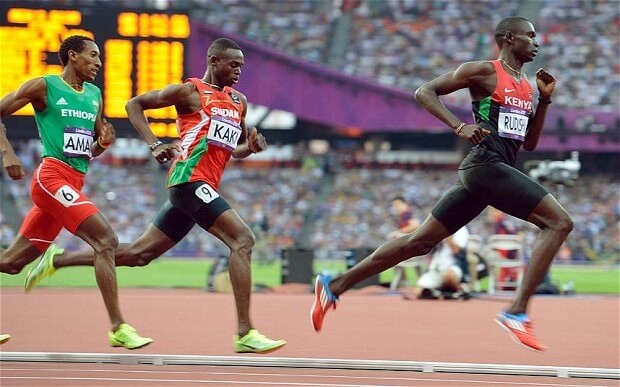
He passed 600m in 1:14.30 before producing a remarkable final 200 metres to cross the finish line in 1:40.91.
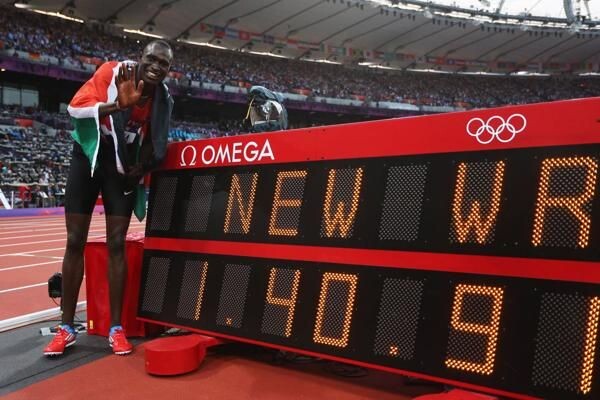
The stadium erupted.
Rudisha had broken his own world record and, for the first time in history, an athlete had broken the 1:41 barrier in the 800 metres. Even more remarkably, he had done it in an Olympic final, without a pacemaker and under the immense pressure of competing for the sport’s ultimate prize.
The runners behind him were dragged into history by his pace.
Botswana’s Nijel Amos finished second in 1:41.73, a world junior record at the time. Kenya’s 17-year-old Timothy Kitum produced a stunning 1:42.53 to take bronze, while American Duane Solomon ran 1:42.82 and Nick Symmonds clocked 1:42.95, both personal bests.
Ethiopia’s Mohammed Aman ran 1:43.20 for a national record, Abubaker Kaki finished in 1:43.32, and Great Britain’s Andrew Osagie completed the field in 1:43.77, also a personal best.
It was an extraordinary final in which all eight athletes finished inside 1:44, a testament to the astonishing pace set by the Kenyan.
Yet Rudisha was operating on another level.
His London performance was not a sudden flash of brilliance. It was the culmination of an era in which he had transformed the 800m through his fearless front-running style. Two years earlier, he had lowered the world record to 1:41.01 in Rieti, Italy. In London, he found another tenth of a second when the pressure was at its greatest.
That is what has made the record so difficult to approach.
For fourteen years, some of the greatest 800m runners of their generations have come and gone, but none has managed to take the final steps toward Rudisha’s mark. Nijel Amos remains the closest, his 1:41.73 from that same Olympic final leaving him 0.82 seconds short.
Then came Emmanuel Wanyonyi.
The young Kenyan has emerged as one of the most exciting 800m runners of his generation. In Lausanne in 2024, Wanyonyi produced a stunning 1:41.11, moving level with Wilson Kipketer as the second-fastest man in history and coming within just 0.20 seconds of Rudisha’s world record.
Twenty hundredths of a second may look insignificant on paper, but at the very top of the 800m, they represent a formidable barrier.
Wanyonyi has shown that Rudisha’s record is not beyond imagination. But reaching it requires something extraordinary — the perfect combination of speed, endurance, courage and execution over two unforgiving laps.
And perhaps that is what makes Rudisha’s achievement so enduring.
There was no pacemaker guiding him through the race. There was no carefully constructed invitational designed solely around producing a fast time. There was simply an Olympic final, eight athletes, two laps and a Kenyan determined to run faster than anyone had ever run before.
Rudisha went from the gun, controlled the race from the front and somehow maintained the speed required to produce a time that has remained beyond the reach of every challenger for fourteen years.
The next generation is getting closer, and Wanyonyi has shown that the record can at least be approached.
But 1:40.91 remains David Rudisha’s masterpiece — a world record forged under the brightest lights and on the biggest stage, and one that continues to define greatness in the 800 metres.
Fourteen years later, the challengers are getting closer, but Rudisha’s 1:40.91 remains the mountain every 800m runner dreams of climbing.
by Erick Cheruiyot for My Best Runs.
Login to leave a comment
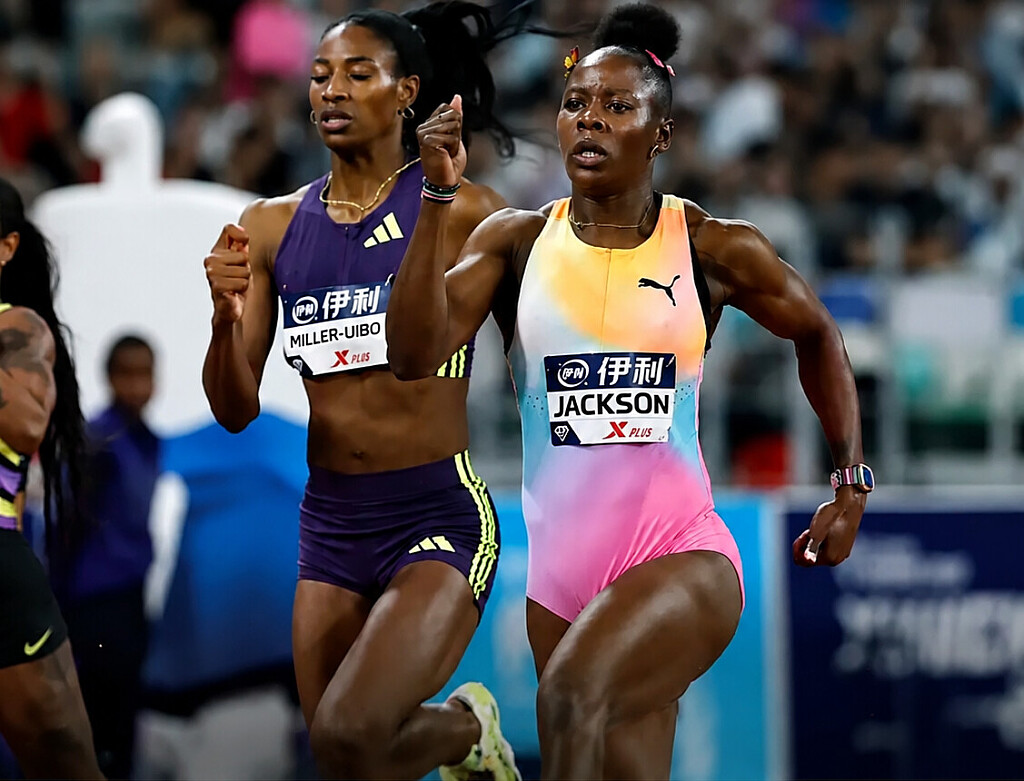
Lausanne Diamond League Set For Sprint Fireworks As Shericka Jackson And Shaunae Miller-Uibo Headline Star-Studded Showdown
The countdown is on for one of the most anticipated meetings of the 2026 Wanda Diamond League season, with the Athletissima Lausanne Diamond League set to deliver another spectacular night of world-class athletics on August 21.
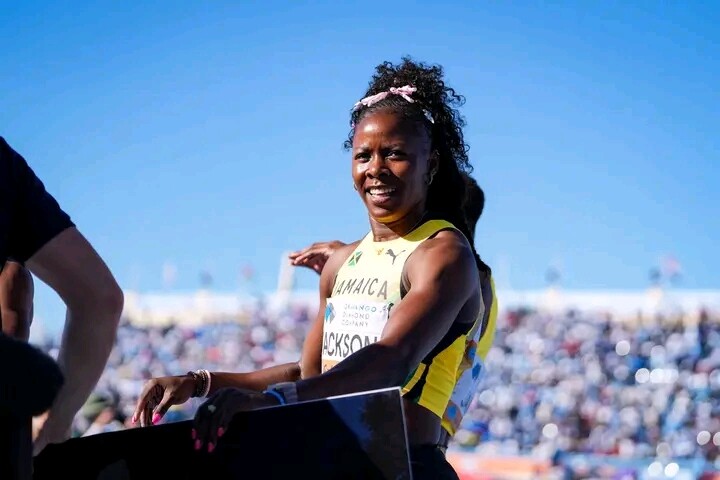
A loaded women's sprint programme will take centre stage, highlighted by an electrifying 200m showdown featuring some of the biggest names in global athletics. The event promises speed, drama and championship-quality competition as the world's elite battle for Diamond League glory.
Leading the field is Shericka Jackson, the Jamaican sprint sensation and the second-fastest woman in history over 200 metres. Jackson arrives in Lausanne chasing another Diamond League victory and, given her exceptional pedigree, the meeting record could be under serious threat if conditions are favourable. Widely regarded as one of the greatest 200m runners of all time, she will be aiming to continue her impressive form as the season reaches its decisive stages.
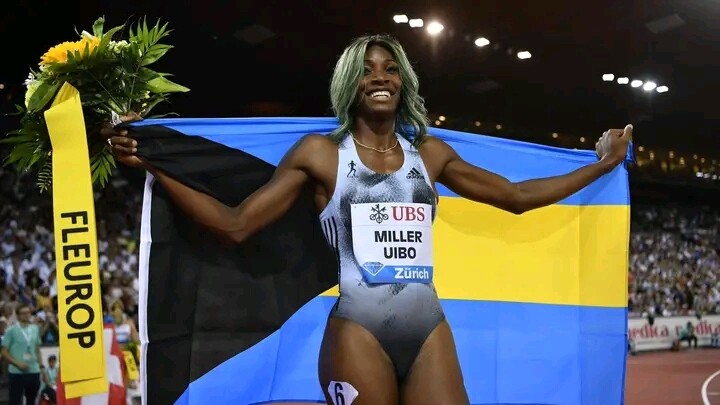
Joining the star-studded line-up is Shaunae Miller-Uibo, the Bahamian superstar whose résumé includes two Olympic 400m gold medals and a world title. Renowned for her powerful finishing speed and championship experience, Miller-Uibo adds another layer of excitement to what is already shaping up to be one of the highlights of the meeting.
The field also features Amy Hunt, the reigning world 400m silver medallist, who continues to establish herself among the world's elite. Her presence ensures the competition will be fierce as she tests herself against some of the most accomplished athletes of this generation.
With such an exceptional line-up confirmed, Lausanne is expected to produce one of the fastest women's sprint races of the season. The Swiss meeting has earned a reputation for delivering unforgettable performances, and fans will be hoping another chapter of athletics history is written on August 21.
As the race for Diamond League points intensifies ahead of the season finale, every result carries extra significance. For Jackson, Miller-Uibo and their rivals, Lausanne represents another opportunity to make a statement, sharpen their form and build momentum before the year's major championships.
With Olympic champions, world champions and record-breaking sprinters all set to take the track, the Athletissima Lausanne Diamond League promises an evening of elite competition that athletics fans around the world will not want to miss.
by Erick Cheruiyot for My Best Runs.
Login to leave a comment
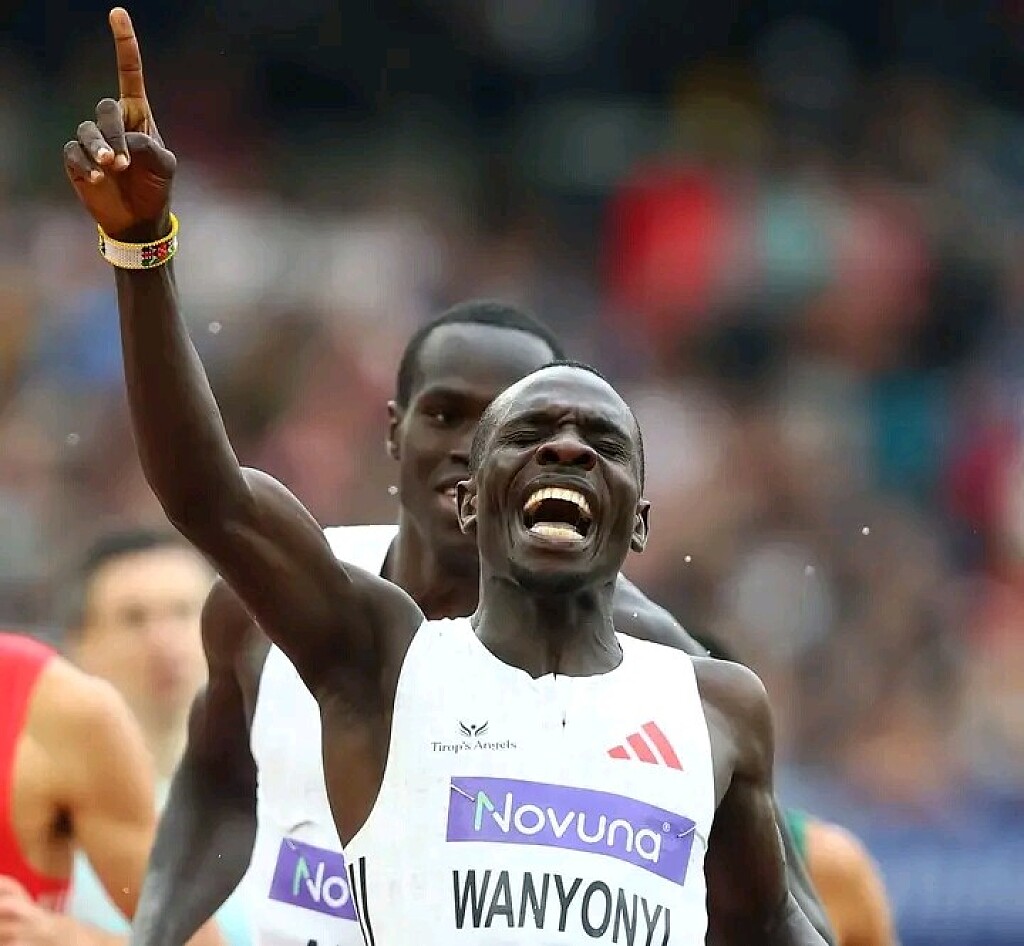
Lausanne Set for Another 800m Classic as Emmanuel Wanyonyi and Marco Arop Prepare to Renew Their Fierce Rivalry
The countdown has begun for what promises to be one of the most captivating races of the 2026 Wanda Diamond League season, with Kenya's Emmanuel Wanyonyi and Canada's Marco Arop confirmed to face each other once again at Athletissima in Lausanne on Friday, August 21.
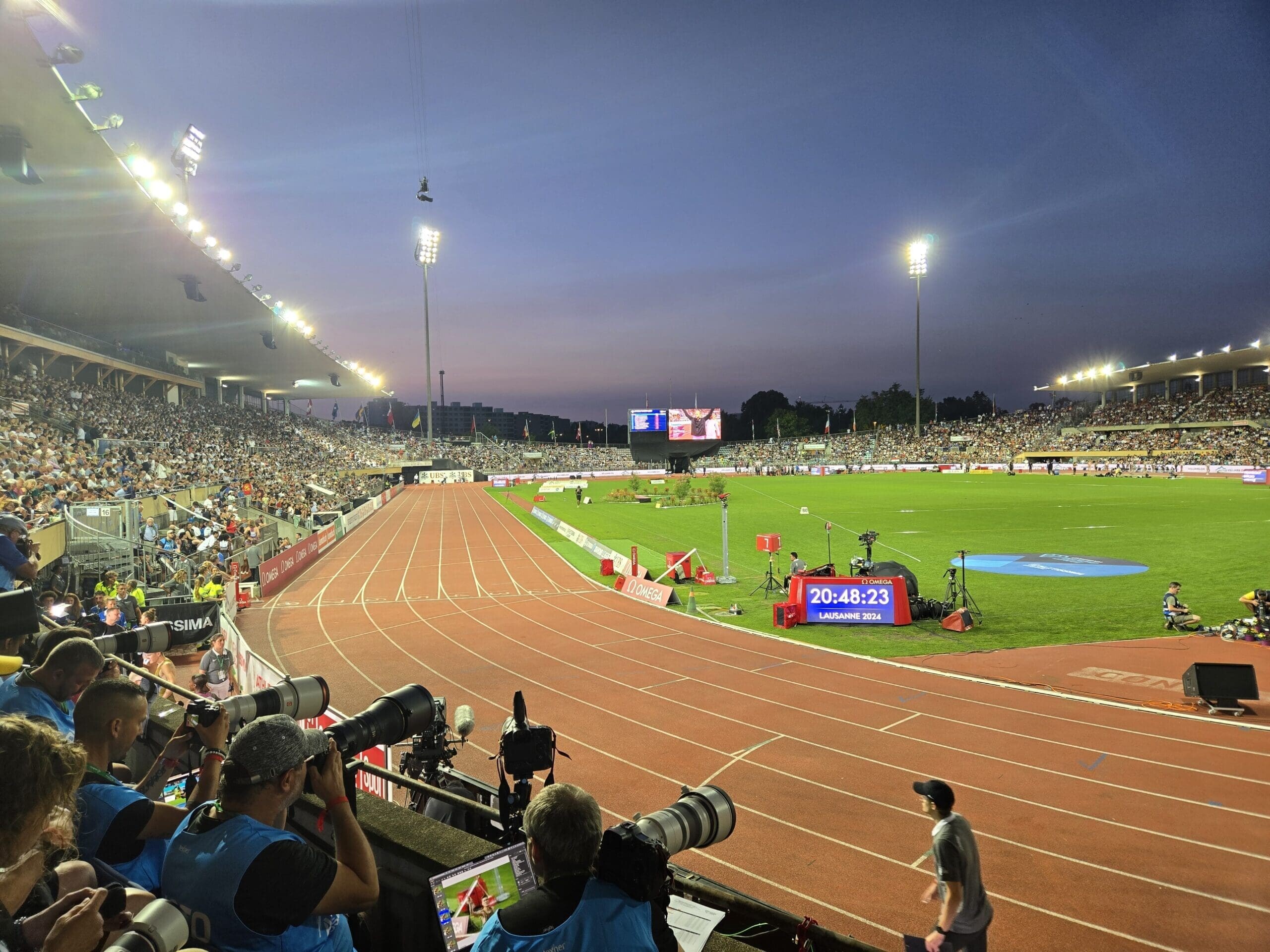
Whenever the world's two premier 800m runners line up together, expectations soar. Their recent meetings have produced some of the fastest and most dramatic two-lap battles in modern middle-distance running, with neither athlete willing to surrender an inch from the opening gun to the finish line.
Wanyonyi has continued to establish himself as one of the sport's brightest stars, combining tactical intelligence with devastating finishing speed. The Kenyan has consistently delivered on the biggest stages, making him the man many of his rivals are eager to defeat.
Standing in his way is Marco Arop, the powerful Canadian whose fearless front-running style has turned every meeting between the pair into must-watch athletics. Arop's relentless pace and determination have repeatedly pushed Wanyonyi to his limits, creating a rivalry that has become one of the defining stories of the men's 800m.
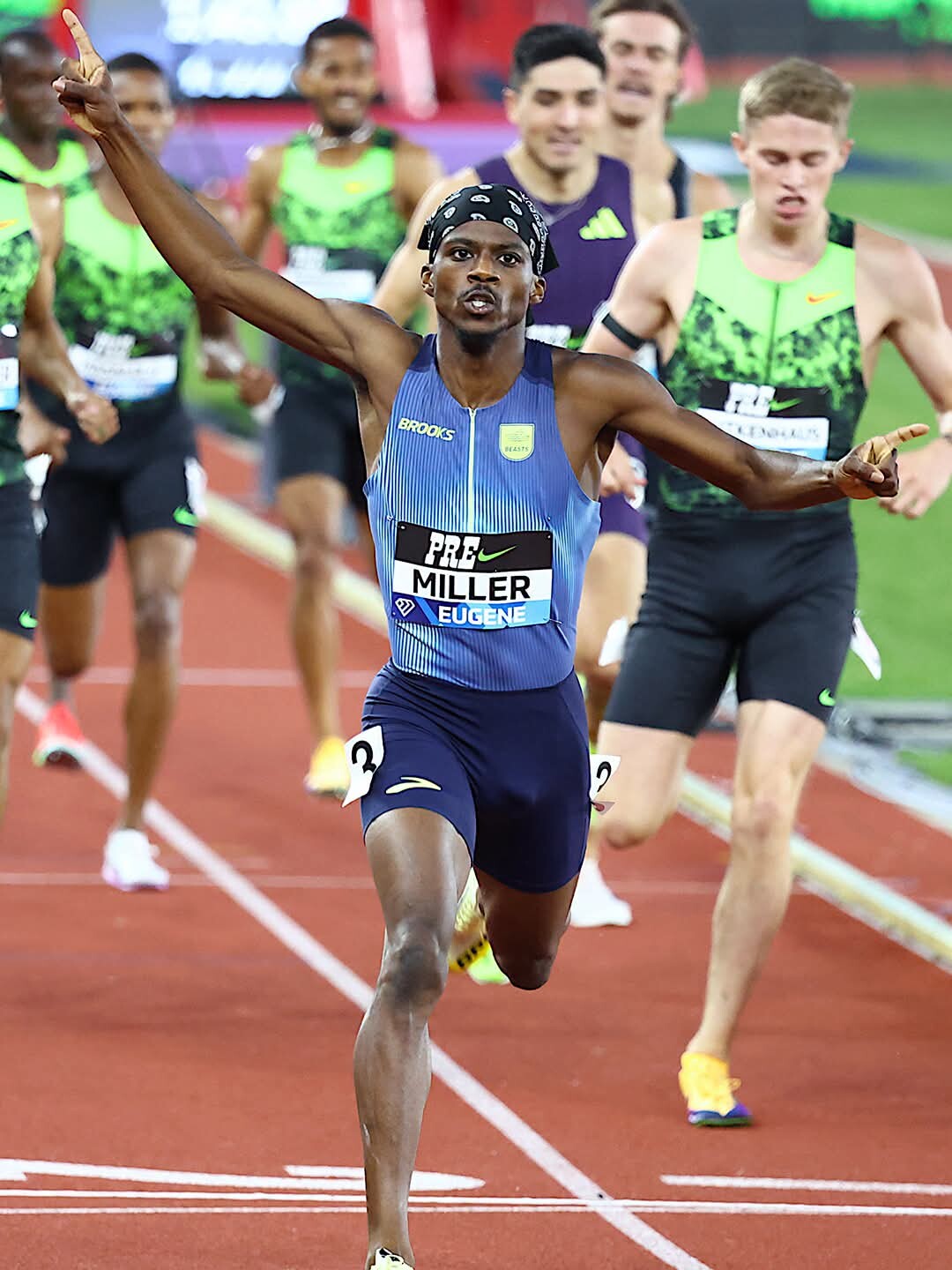
Adding another fascinating dimension to the race is American Brandon Miller. After collecting several impressive victories during this year's Diamond League campaign, Miller arrives in Lausanne with growing confidence and the belief that he can challenge the established stars. Rather than simply filling the lanes, he has the form and momentum to influence the outcome of what is expected to be a high-quality contest.
With three of the event's most dangerous competitors sharing the same start line, the Lausanne crowd can expect an unforgettable spectacle. Every tactical decision, every surge, and every stride could determine the winner in an event where the smallest margins often separate victory from defeat.
Athletissima has earned a reputation for producing world-class middle-distance racing, and this year's men's 800m appears destined to uphold that tradition. As Wanyonyi and Arop prepare to write another chapter in their remarkable rivalry, fans around the world will be watching to see who emerges on top—and whether another athlete can disrupt what has become one of athletics' greatest head-to-head battles.
by Erick Cheruiyot for My Best Runs.
Login to leave a comment
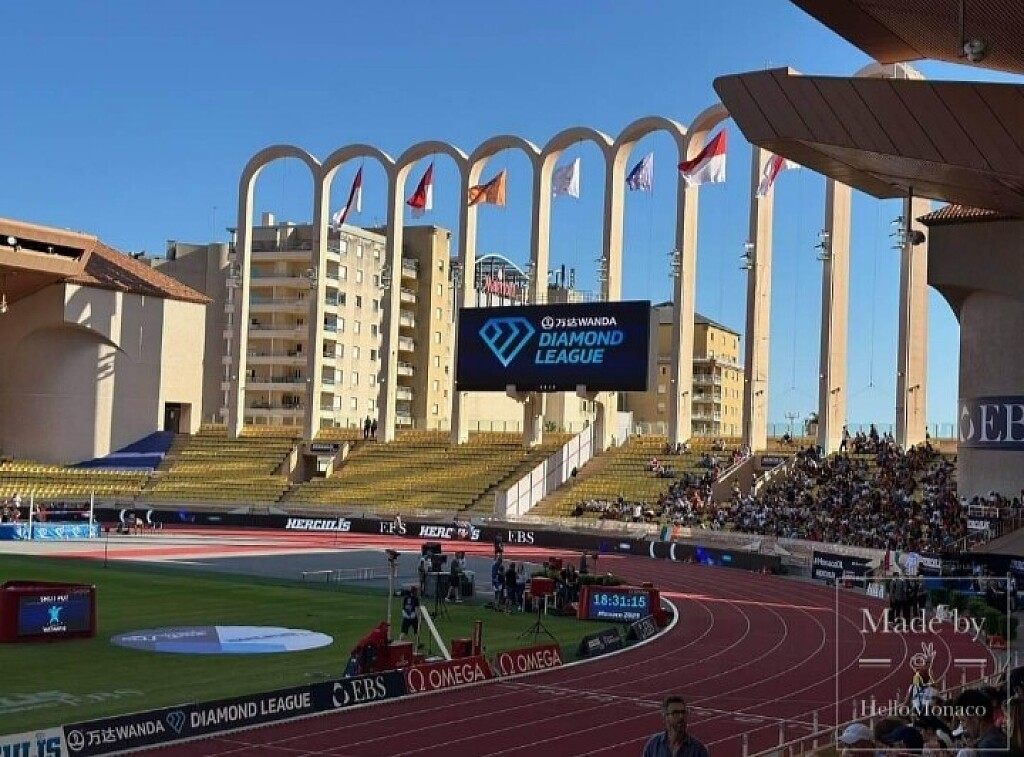
Global Showdown: The 2026 Diamond League Unfolds Across Continents
The 2026 Diamond League calendar promises a breathtaking journey across the globe, stitching together cultures, climates, and elite athletic performances into one electrifying season. From the desert lights of Doha to the historic streets of Brussels, the world’s finest track and field stars will once again chase glory, records, and supremacy in a series that defines the pinnacle of one-day athletics competition.
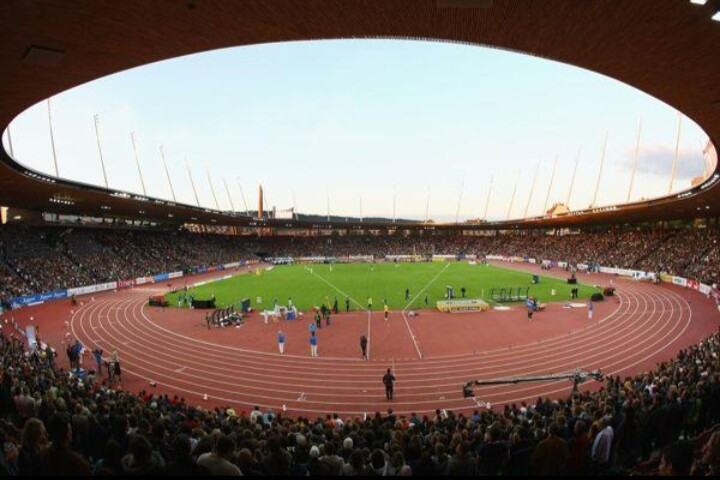
The campaign ignites on May 8 in Doha, where speed meets spectacle under the floodlights. Just a week later, the circuit shifts east to Shanghai/Keqiao on May 16, before returning to familiar territory in Xiamen on May 23. These early stops in Asia and the Middle East often set the tone—fast times, bold statements, and emerging rivalries begin to take shape as athletes test their early-season form.
By the end of May, the tour arrives in Rabat (May 31), marking Africa’s sole stop on the circuit—a meeting that consistently delivers both passionate crowds and world-class performances. From there, Europe takes center stage, beginning with the timeless backdrop of Rome on June 4. The momentum builds quickly with a Scandinavian double in Stockholm (June 7) and Oslo (June 10), two meets renowned for their rich history and electric atmosphere.
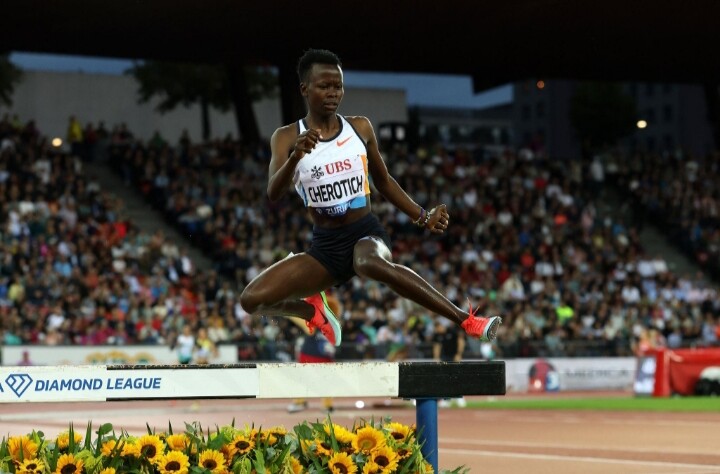
Late June brings the glamour of Paris (June 28), where speed and style converge in one of the season’s most anticipated showdowns. Then, the spotlight crosses the Atlantic to Eugene on July 4, a venue often regarded as the heartbeat of track and field in the United States. The European leg resumes swiftly with the iconic Monaco meet on July 10—a race often synonymous with record-breaking performances—before heading to London on July 18, where roaring crowds elevate every stride and jump.

After a brief pause, the Diamond League returns in August with a decisive run toward the final. Lausanne (August 21) sets the stage, followed closely by Silesia (August 23) and Zurich (August 27), meetings that frequently determine qualification battles and title contenders. Each performance becomes increasingly critical, with athletes fighting not just for victory, but for a place in the grand finale.
The season culminates on September 4–5 in Brussels, where champions will be crowned and the year’s defining moments etched into history. It is here that consistency meets brilliance—only the best across the series earn the right to compete for the coveted Diamond Trophy.
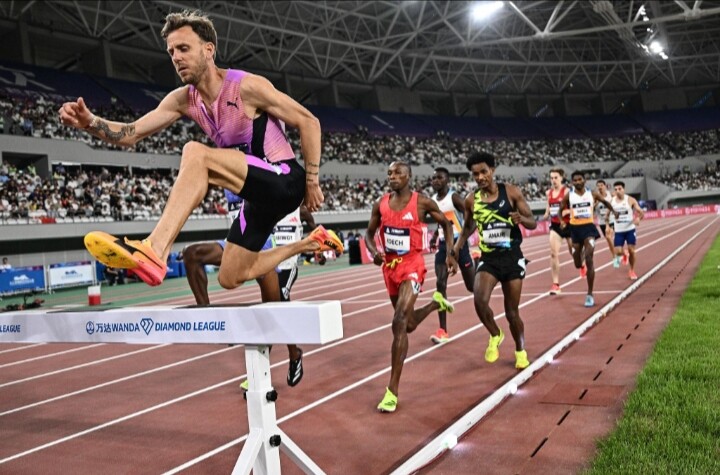
Beyond the dates and destinations, the 2026 calendar tells a deeper story: one of global unity through sport, of athletes pushing human limits, and of fans witnessing greatness unfold in real time. Every stop carries its own rhythm, yet together they form a symphony of speed, endurance, and excellence.
As the world watches, one question remains—who will rise, who will endure, and who will etch their name into the legacy of the Diamond League?
by Erick Cheruiyot for My Best Runs.
Login to leave a comment
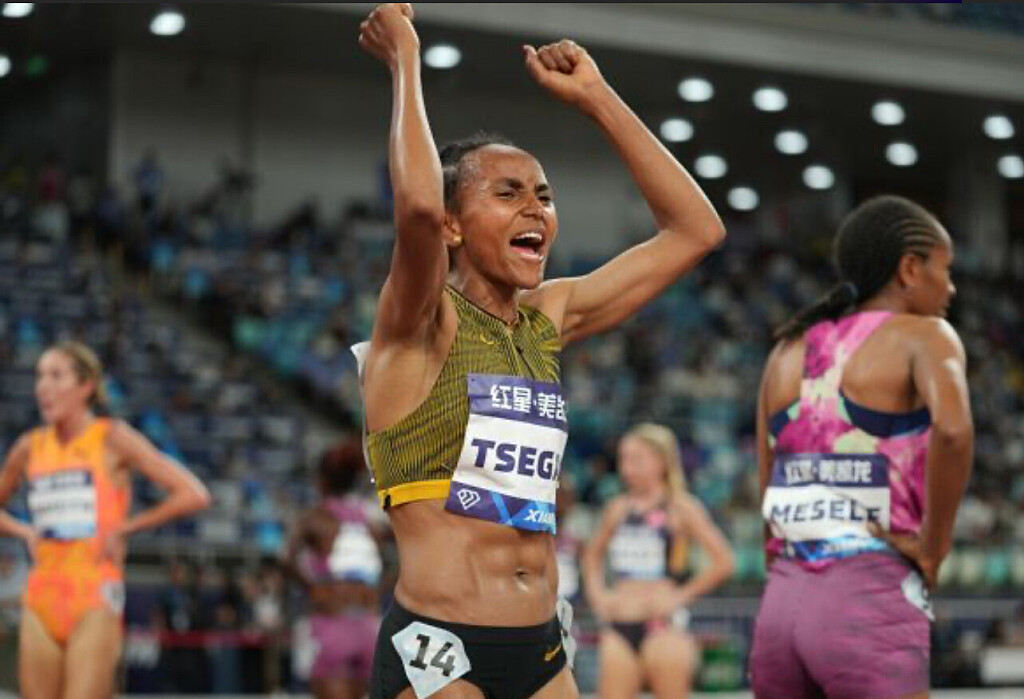
Diamond League 2025 Begins Saturday in Xiamen: Distance Stars Ready to Shine on Global Stage
The 2025 Wanda Diamond League kicks off this Saturday, April 26, in Xiamen, China, launching the most prestigious one-day series in global track and field. With 15 elite meets on the calendar, this year’s circuit serves as both a proving ground and a preview for the World Athletics Championships in Tokyo this September.
While Olympic champion Grant Holloway will headline the sprint hurdles, it’s the middle- and long-distance events in Xiamen that promise some of the most compelling matchups of the weekend.

Chebet vs. Tsegay in the Women’s 5000m
Saturday’s most anticipated race may be the women’s 5000m, featuring a classic Kenya vs. Ethiopia showdown.
Beatrice Chebet, the reigning Olympic champion and world record holder in the 10,000m, opens her Diamond League campaign against Gudaf Tsegay, the reigning 5000m world champion and world record holder. With personal bests of 14:05.92 (Chebet) and 14:00.21 (Tsegay), the two are expected to push each other deep into record territory.
They’ll be challenged by rising Ethiopian talents Freweyni Hailu and Birke Haylom, both capable of delivering world-class performances.
Kipyegon Returns in the 1000m
Also making her season debut is Kenyan superstar Faith Kipyegon, who will race the rarely-run 1000m. The two-time Olympic and world champion is the current world record holder in both the 1500m and the mile.
In Xiamen, she’ll face Jamaica’s Natoya Goule-Toppin and Uganda’s Halimah Nakaayi, both of whom are known for their championship pedigree over 800m. The 1000m offers an ideal distance for Kipyegon to sharpen her speed and stamina heading into the summer.
Men’s 3000m Steeplechase: A Deep Field Emerges
The men’s 3000m steeplechase will feature a stacked lineup, with top athletes from Kenya, Ethiopia, and Morocco vying for early-season dominance. With the event’s tradition of upsets and tactical drama, this race will be one to watch for fans of distance racing.
2025 Wanda Diamond League Schedule
Following Xiamen, the Diamond League tour travels to 14 more cities before the two-day final in Zurich. Here’s the full schedule:
• April 26 – Xiamen, China
• May 3 – Shanghai/Suzhou, China
• May 16 – Doha, Qatar
• May 25 – Rabat, Morocco
• June 6 – Rome, Italy
• June 12 – Oslo, Norway
• June 15 – Stockholm, Sweden
• June 20 – Paris, France
• July 5 – Eugene, USA
• July 11 – Monaco
• July 19 – London, UK
• August 16 – Silesia, Poland
• August 20 – Lausanne, Switzerland
• August 22 – Brussels, Belgium
• August 27–28 – Zurich, Switzerland (Diamond League Final)
The series leads directly into the 2025 World Athletics Championships, set for September 13–21 at Japan National Stadium in Tokyo.
by Boris Baron
Login to leave a comment
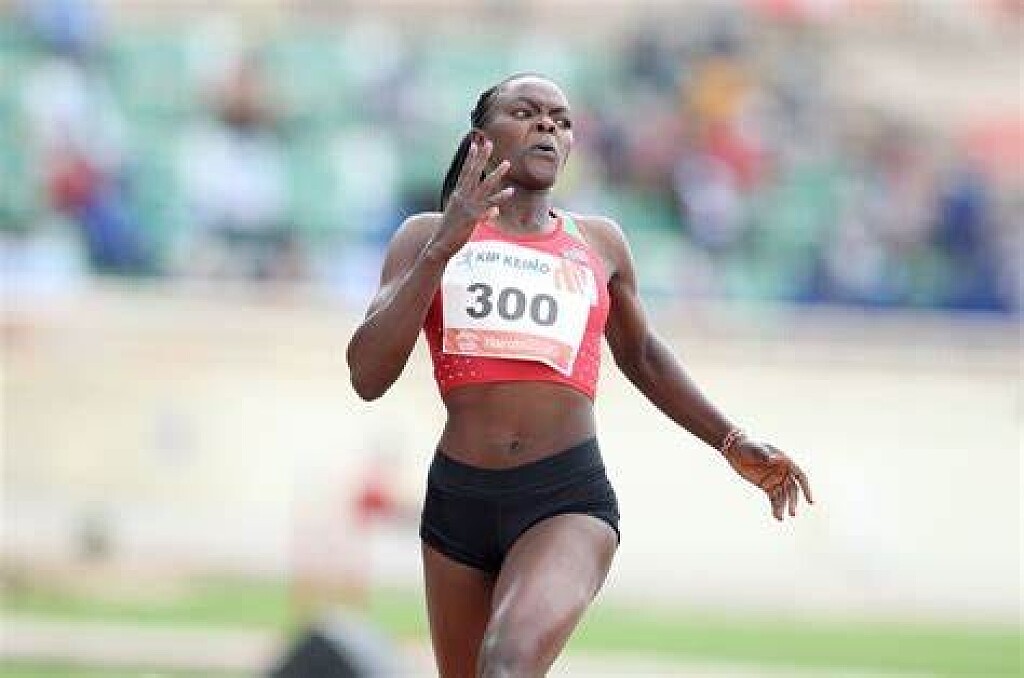
Mary Moraa 'back to the grind' ahead of tough 2025 season
Mary Moraa has resumed training as she plans to defend her world title amid the rise of strong 800m runners including Keely Hodgkinson and Athing Mu.
Mary Moraa has resumed training ahead of a tough 2025 season where she has a huge task of defending her world title at the World Championships in Tokyo, Japan.
The reigning world champion will battle for the title alongside very formidable 800m runners who have emerged this season. The Commonwealth Games champion lines up against Keely Hodgkinson, Tsige Duguma and Athing Mu alongside other 800m athletes.
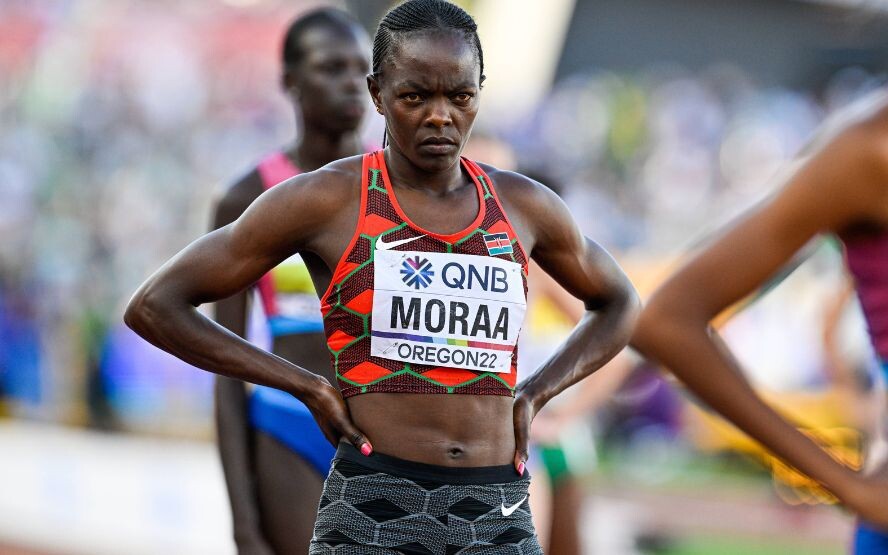
Mary Moraa had a mixed season this year and she will be looking to work on the finer things so as to be ready next season. She was off to a great start to her season, winning the 400m at the African Games then anchored the 4x400m mixed relay team to a bronze medal.
The Kenyan 800m star then proceeded to claim the win at the Kip Keino Classic before reigning supreme at the Diamond League Meeting in Doha and finished second at the USATF Los Angeles Grand Prix and Prefontaine Classic.
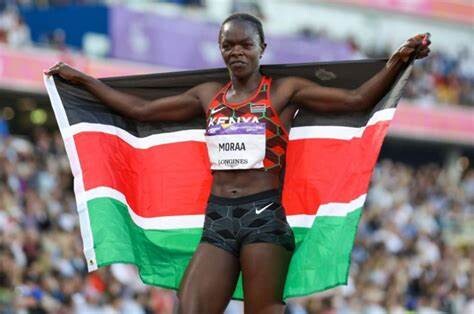
Moraa then finished second at the Kenyan Olympic trials and then won the bronze medal at the Paris Olympics. She bounced back to take the win at the Diamond League Meeting in Lausanne and finished third in Silesia. She won the 600m in a world best time at the ISTAF 2024 and then claimed wins in Zurich and the Diamond League Meeting final in Brussels.
Mary Moraa rounded up her season with a second-place finish at the Athlos NYC. Going back into training, she hopes to polish a lot of things and bounce back stronger to maintain a winning streak in 2025.
“It's about time...back to the grind ?,” Mary Moraa shared in a post on her Facebook page, adding, “Nice morning cruise with Brandon and the gang after a deserved break.”
Her competitors are also not resting on their laurels with Keely Hodgkinson, the reigning Olympic champion, making it clear that she will be going for the world title since it’s one of the titles she has yet to win.
Her coaches, Jenny Meadows and Trevor Painter have also revealed that she will be attacking both the indoor and outdoor world records in the near future.
“There’s no silvers and bronzes, now we have to do gold all the way forward, we don’t want to take any backward step and I just hopefully think that Keely can dominate and we’ve got the indoor world record to go at and in the next couple of years we’ll go after the tough world record. I think she can do it,” Jenny Meadows said.
“If she’s got the leg speed to get closer to her rivals, then they can’t out strength her so it was magic. The indoor one is easier to get than the outdoor but we’ll have a crack of both and see what happens,” Trevor Painter added.
On her part, after a heartbreaking 2024 season marred with injuries and missing out on the Paris Olympic Games, Athing Mu has already started preparation for the 2025 season.
The former world champion noted that the World Championships are her major target for the season and she is working towards making it through the trials and then heading to Tokyo.
“Well, trackwise we have the World Championships in September next year and it’s in Tokyo…first of all I pray we make it through trials and then we make it to that race,” Athing Mu said.
“I feel like it’s going to be a circle moment for me because that’s basically where I started and then I had some highs and lows.”
by Abigael Wafula
Login to leave a comment

Out of this world!
Jakob Ingebrigtsen obliterates the 3000m world record at the Memoriał Kamili Skolimowskiej with 7:17.55.
He goes more than 3 seconds faster than the previous world record!
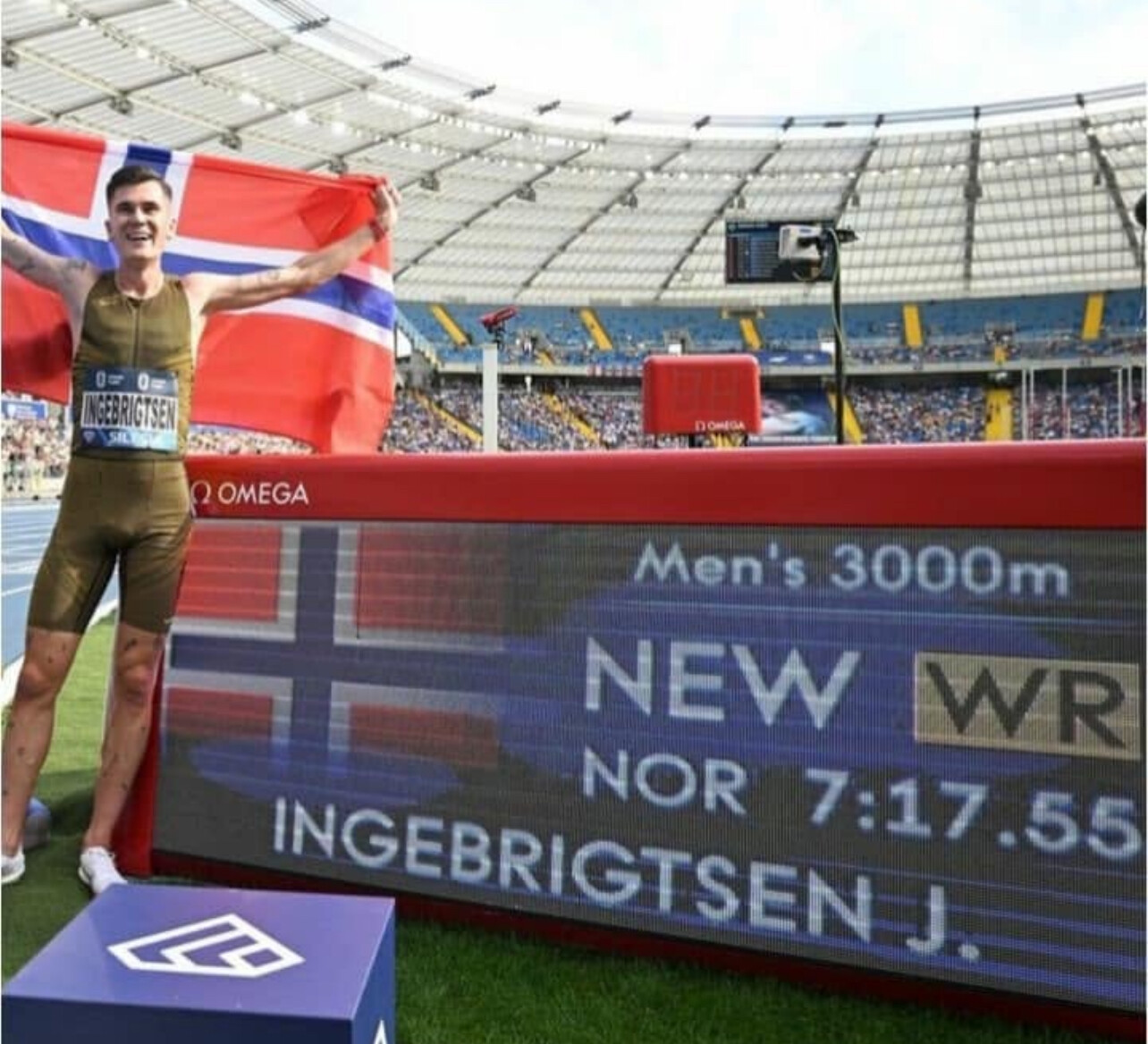
Norway’s Jakob Ingebrigtsen shattered the world 3000m record in the Silesia Diamond League on Sunday (25) afternoon with 7:17.55 to become the first athlete in history to break the 7:20-barrier for the seven-and-a-half lap distance.
The Olympic 5000m champion slashed more than three seconds off the previous mark of 7:20.67 which had stood to Kenya’s Daniel Komen since 1996, the longest standing world record in an individual men’s track event.
But the 23-year-old Norwegian took the record into uncharted territory, churning out the last two laps in 57.46 and 55.47 respectively - 1:52.93 for the last 800 metres - to break away from Ethiopia’s Berihu Aregawi and take a significant chunk of 3.12 seconds off Komen’s enduring record.
“It feels special, amazing. I was hoping to challenge the world record here but based on my training, I can never predict exactly what kind of time I am capable of. I would not have imagined I could run 7:17, though,” said Ingebrigtsen.
. “I would not have imagined I could run 7:17, though. At the beginning the pace felt really fast, but then I started to feel my way into the race and found a good rhythm.
“[The] 3,000 is a tough distance,” continued Ingebrigtsen. “After four-five laps you feel the lactic acid, but you need to get going. The conditions were difficult with the heat today, but it is the same for everyone. Now I want to challenge world records at all distances, but it is one step at a time.”
He finished ahead of a trio of Ethiopians, with the Paris Olympics 10,000m silver medallist, Berihu Aregawi. second in a personal best and the third-fastest time in history (7:21.28). Yomif Kejelcha was third.
Three days ago, the Norwegian had exacted a small measure of revenge over the American Cole Hocker by winning the men’s 1500m in Lausanne in 3:27.83, two weeks after Hocker shocked the Olympic field to win gold in Paris.
He won $50,000 for setting the record.
Login to leave a comment
Why David Rudisha believes Emmanuel Wanyonyi is destined to break his 800m world record
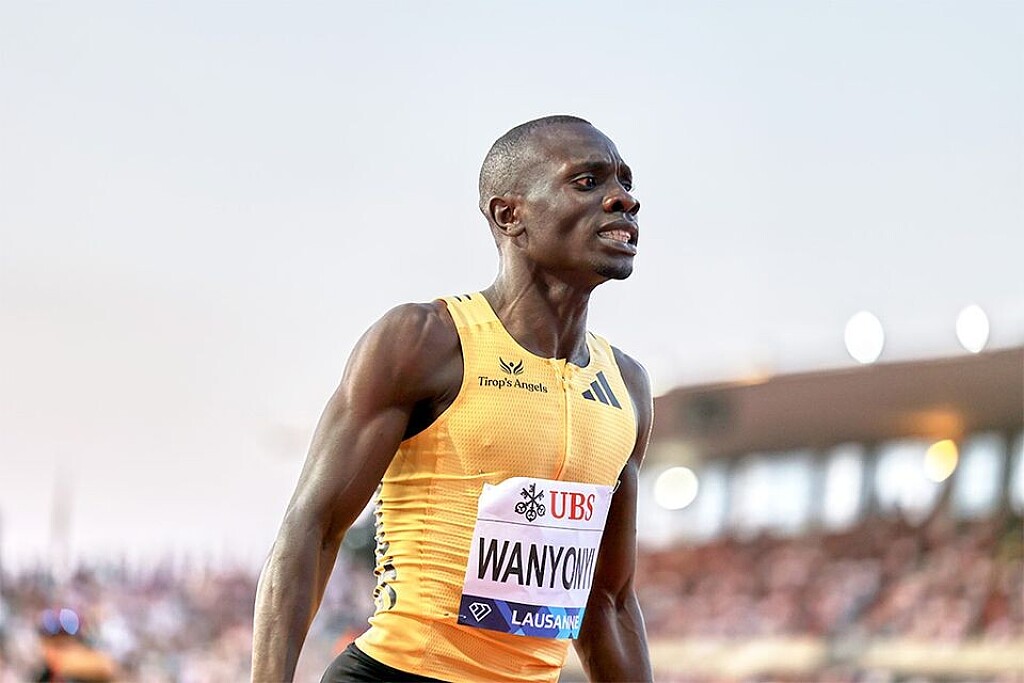
Wanyonyi got to within an eighth-hundredth of a second away from equalling David Rudisha's 12-year 800m world record at the Lausanne Diamond League classic on Thursday.
When David Rudisha tipped Emmanuel Wanyonyi as the athlete most likely to break his 12-year-old 800m world record during the Kenyan trials for the Olympic Games at Nyayo National Stadium last June, it wasn’t just a casual remark.
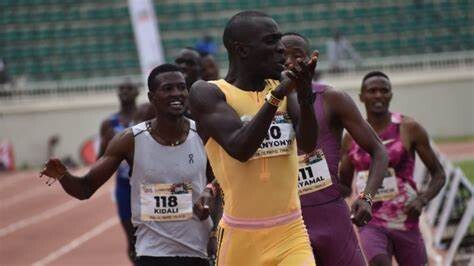
Rudisha’s prediction is now gathering weight, especially after Wanyonyi clocked a blistering 1:41.11 at the Lausanne Diamond League meet in Switzerland on Thursday.
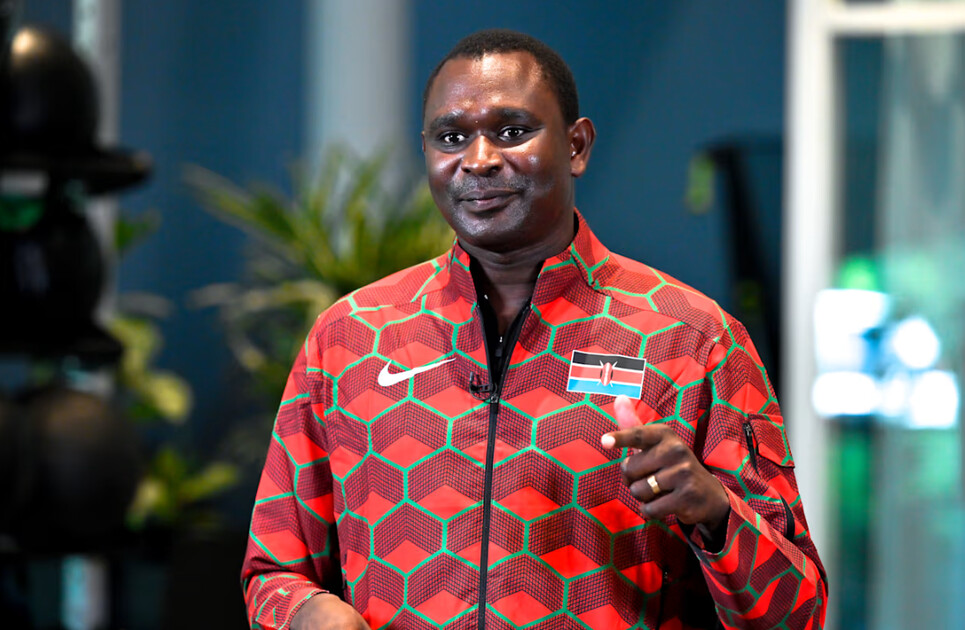
This time not only equaled Wilson Kipketer’s record but also placed Wanyonyi second on the all-time list, just eight hundredths of a second away from Rudisha’s world record of 1:40.91 set at the 2012 London Olympics.
“Wanyonyi is a young talented athlete. He has so much potential, and all he needs to do is fine-tune his craft, and this will see him push his time even lower,” Rudisha had told the media last June.
Rudisha, who knows a thing or two about world records, added, “He always shows his bravery and confidence whenever he steps on the track, and that has been the secret behind his success.
“World records are special. We are looking forward to seeing how the young generation is going to take up the challenge. Of course, there is a lot of innovation, and it improves performances. We believe that world records are there to be broken.”
Wanyonyi’s stunning performance in Lausanne has made him a force to be reckoned with in the world of athletics.
His time of 1:41.11 ties him with Kipketer and positions him as the most serious threat to Rudisha’s reign in the 800m. At just 20 years old, Wanyonyi’s rise to the top has been meteoric, and his determination to succeed mirrors that of Rudisha.
Rudisha himself had an illustrious career, beginning as a decathlete before switching to sprints and later focusing on the 800m in 2005. Just a year later, he won the 800m title at the World U20 Championships in Beijing, clocking 1:47.40.
In 2008, he claimed the African senior title in Addis Ababa with a time of 1:44.20. Then, on August 22, 2010, Rudisha set his first world record in Berlin, running 1:41.09 and breaking Kipketer’s 1997 mark.
Seven days later, he improved his record to 1:41.01 in Rieti. Rudisha continued his dominance by winning the world 800m title in Daegu in 2011, reclaiming it in Beijing in 2015, and becoming the first man since Peter Snell to retain the Olympic 800m title in Rio in 2016.
Now, Wanyonyi is carving out his own legacy. At 20, he became the youngest-ever Olympic 800m champion, leading a race of unprecedented depth in Paris.
He held off Canada’s Marco Arop, the reigning world champion, who briefly took the lead off the final turn before Wanyonyi surged back in the final steps. Arop finished with a North American record of 1:41.20 for silver, while Algeria’s Djamel Sedjati claimed bronze in 1:41.50.
Reflecting on his victory, Wanyonyi said, “It was going to be hard to defend as the only Kenyan in the final. I had a lot of pressure. I spoke to Rudisha yesterday, who told me I would win if I employed my tactics. I decided to run the way he did in London. If I had run a slow race, they would have beaten me.”
Although Wanyonyi didn’t quite match Rudisha’s record, he is keen on having another go at it when the Diamond League moves to Silesia, Poland, this Sunday.
While he has remained modest about his world-record ambitions, saying, “Maybe, but not now,” the Diamond League offers the perfect stage for him to make history. The Wavelight technology, which has been instrumental in helping athletes maintain pace, will also be in use, providing Wanyonyi with every opportunity to push the boundaries.
Wanyonyi is no stranger to breaking records. At 19, he shattered the previous one-mile (1,600m) record of 3:56.13 set by American Hobbs Kessler at the World Road Running Championships in Riga, Latvia, last year.
With Rudisha as his role model and mentor, Wanyonyi is poised to continue his upward trajectory and possibly eclipse the mark set by the man he so deeply admires.
As the athletics world watches, the question on everyone’s mind is not if, but when, Emmanuel Wanyonyi will break the 800m world record. And when that day comes, it will be the culmination of a journey inspired by greatness and driven by the relentless pursuit of excellence.
by Mark Kinyanjui
Login to leave a comment
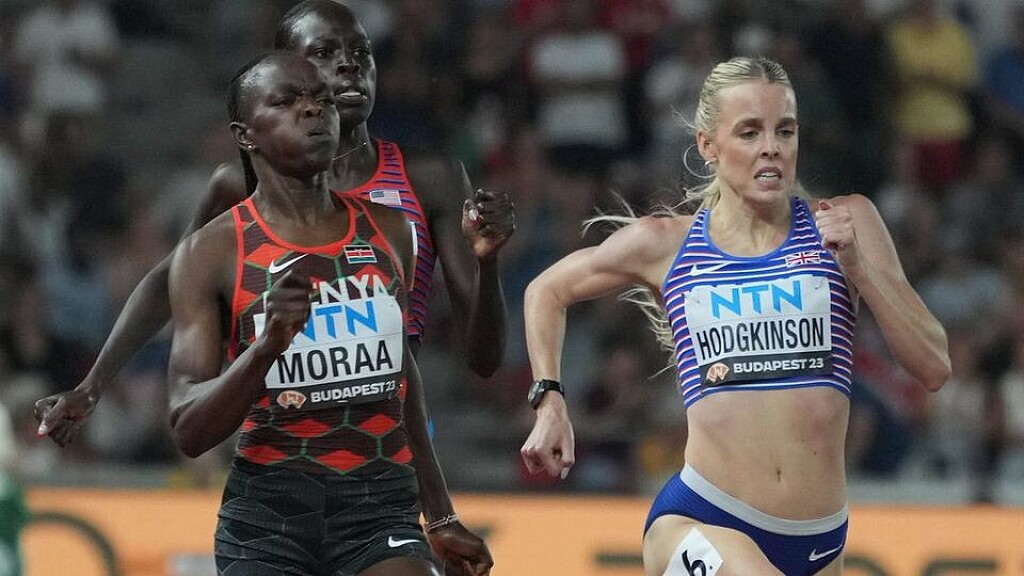
Keely Hodgkinson reveals a serious impact Mary Moraa has made on her road to Paris 2024 Olympics
Keely Hodgkinson discusses lessons from her loss to Mary Moraa as he aims for gold at the Paris Olympics.
Olympic and world 800m silver medallist Keely Hodgkinson is gearing up for the Paris Olympics with a resolute focus on clinching the gold.
At just 22, she has already made significant strides in her athletic career, breaking records and overcoming challenges.
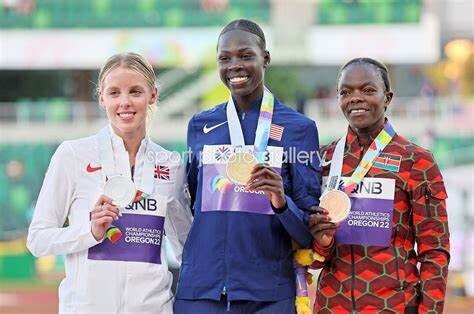
But as she prepares for the upcoming games, Hodgkinson reflects on a particularly tough race that has fueled her drive for victory.
“If you want to watch a bad race, watch Lausanne,” Hodgkinson says in an interview with the Telegraph, recalling the June competition where she found herself boxed in and then out-thought and out-paced by Kenyan Mary Moraa in the 800m.
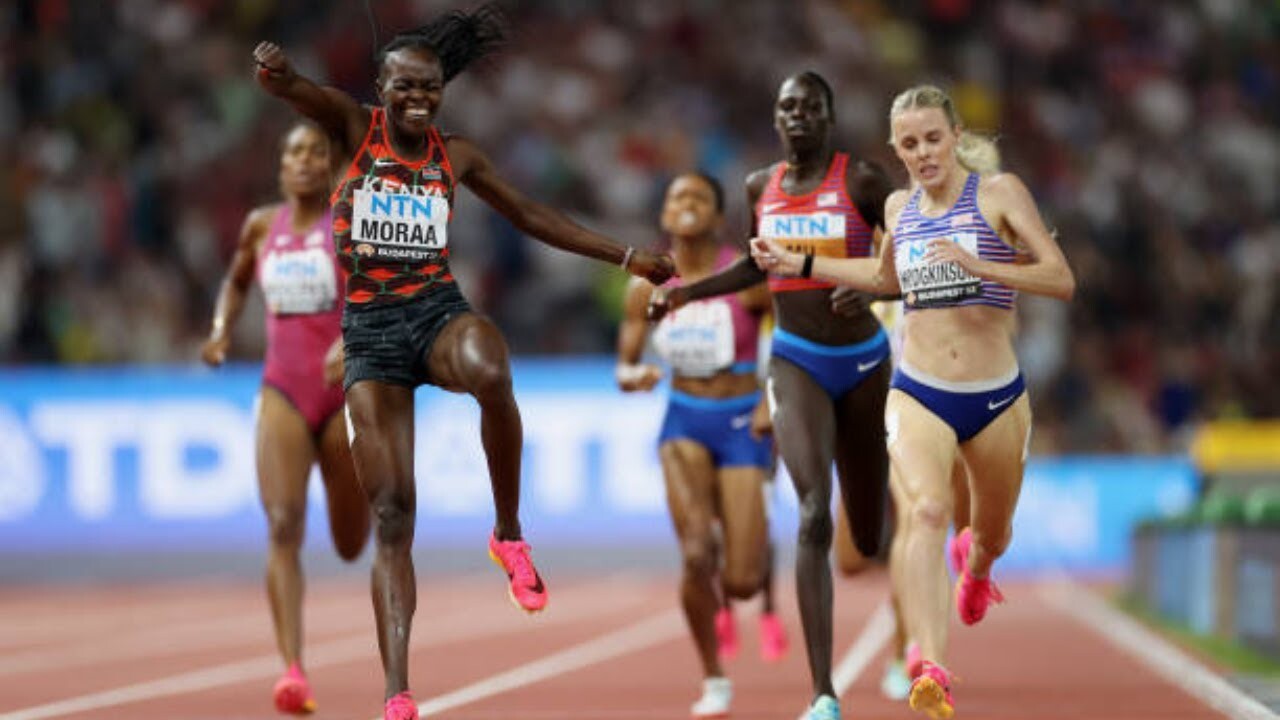
“That was bad.”
Hodgkinson’s journey has been marked by impressive accomplishments, including a silver medal at the Tokyo Olympics at the age of 19 with a personal best of 1:55.88.
More recently, she broke her own 800m record in front of 60,000 fans at the London Stadium leg of the Diamond League, becoming the sixth-fastest woman in history.
Despite these successes, Hodgkinson admits that post-Tokyo, she faced emotional challenges.
Struggling to focus on training after leaving her criminology degree course at Leeds Beckett University, she found it difficult to balance her mental state and athletic ambitions.
“I had nothing to be sad about, yet I felt guilty for feeling down.”
The determination to win gold in Paris is what keeps Hodgkinson motivated.
“Gold is all I have in my head right now. To get the gold in Paris. For me, that was the one I was always aiming for anyway,” she says.
Her rigorous training regime reflects this ambition.
Running approximately 35 miles each week, Hodgkinson focuses on building power and muscle strength, training more like a sprinter. Gym sessions, swimming, and cross-training have been crucial in enhancing her endurance and performance.
“I spend a lot of time on a cross-trainer,” she notes. “If I was to factor that in, my running mileage would go up.”
Preparation for a race, for Hodgkinson, resembles getting ready for a night out.
“The process starts two hours beforehand – I just enjoy it,” she explains.
Her routine includes a shower, fake tan, music, and doing her hair and make-up. “There’s nothing really to do on race day, especially if I’m racing at 10pm.”
Visualizing different race scenarios with her coach Painter is another key aspect of her preparation.
“Let others dictate your race and that’s when silly mistakes happen; panic after getting boxed in and you can bolt too early,” she cautions.
Reflecting on the 2023 World Championships in Budapest, Hodgkinson recalls hitting a lactic wall with 300m to go.
“The pack was so fast through the first lap. It really made us all hurt. We’d never done it that fast before.” On that occasion, it was her main rival, Athing Mu, who set the pace with Hodgkinson finishing as runner-up.
"She wanted to make it hard,” Hodgkinson acknowledges.
Despite the camaraderie with her fellow athletes during training camps, Hodgkinson remains competitive.
“On race day it’s game faces on,” she asserts.
For now, she relishes the challenge of pushing her limits.
“I’d be lying if I said I don’t enjoy being good at it,” she admits.
“When I was younger I used to love seeing how much pain I could put myself in, which sounds a bit crazy, but you do have to be crazy to do this event.”
by Festus Chuma
Login to leave a comment

Paris 2024 Olympic Games
For this historic event, the City of Light is thinking big! Visitors will be able to watch events at top sporting venues in Paris and the Paris region, as well as at emblematic monuments in the capital visited by several millions of tourists each year. The promise of exceptional moments to experience in an exceptional setting! A great way to...
more...
The Issam Asinga Case: Evil Coverup or Did The Fastest High School Sprinter Ever Test Positive For Drugs After Eating Gatorade Gummies?
Six weeks ago, 19-year-old Issam Asinga, the fastest teen sprinter in world history, was handed a four-year ban from the sport of track & field after testing positive for the banned substance GW1516. Asinga’s positive sample came in July 2023, just days before he ran 9.89 seconds to become, at the time, the youngest person in history to break 10 seconds for 100 meters. Asinga, who had been provisionally suspended since August 2023 by the Athletics Integrity Unit (AIU), appealed the decision to the AIU’s disciplinary tribunal, who ruled against him and upheld the four-year suspension on May 27.
Until then, the details of Asinga’s case had been kept secret. Now they are public, and potentially explosive.
Asinga, who maintains his innocence, blamed the positive test on contaminated Gatorade gummies he received at the company’s National Athlete of the Year ceremony in Los Angeles last summer, where he was honored as high school track & field athlete of the year. Asinga has already appealed his case to the Court of Arbitration for Sport, where it is expected to be heard later this year. He is also mulling whether to launch a civil suit against Gatorade because the gummies in question falsely carried an NSF Certified for Sport label, which signified that the product did not contain any prohibited substances. NSF has made a public statement saying the gummies from Asinga’s lot number were not NSF Certified and the NSF Certified mark was being used without authorization.
“They distributed a supplement that wasn’t NSF Certified for Sport that had a banned substance in it,” said Asinga’s lawyer Paul Greene. “That’s violation of product liability law, negligence, implied warranty, New York state consumer protection law. I mean, it’s bad. He had the possibility of getting endorsement and NIL deals that were going to be in the millions of dollars and he lost all that as a result of this. He also lost out on the chance to compete in the World Championships and the Olympics.”
The AIU, however, was not satisfied that the gummies were the source of Asinga’s positive test, and its disciplinary tribunal agreed.
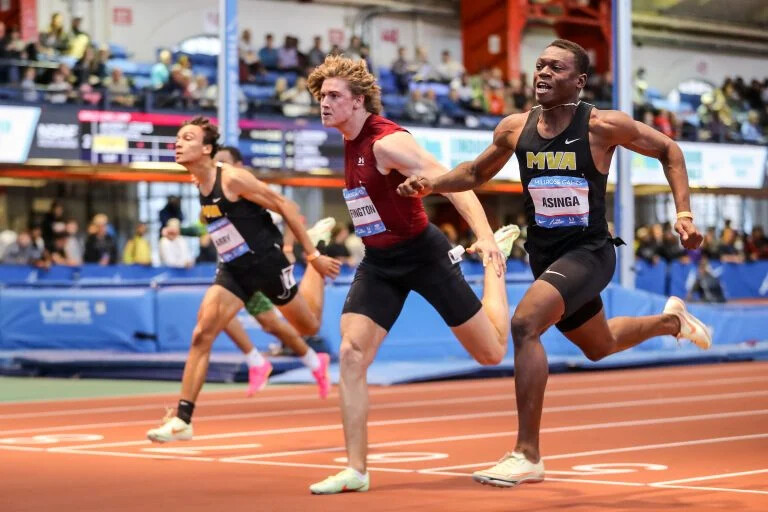
Incredible 2023 high school season
Asinga’s is one of the highest-profile doping cases in recent years. After running personal bests of 10.44 seconds in the 100m and 20.76 in the 200m as a junior in 2022 at Principia High School in Missouri, Asinga transferred to Montverde Academy in Florida for his senior year, where he improved enormously and produced one of the greatest seasons ever by a high school sprinter.
During the 2023 indoor season, Asinga won national high school titles in the 60m (6.59) and 200m (20.48) at New Balance Nationals, tying the national record in the former event (he ran 6.57 in the semis) and breaking the national record in the latter. Outdoors, Asinga ran a wind-aided 9.83 in the 100m to defeat Noah Lyles, who would go on to win the world title in that event four months later. Asinga, who was born in the US but represents Suriname internationally, then ran 19.97 in the 200m in April (#2 all-time among US high schoolers) and 9.89 in July to win the South American 100m title in Sao Paulo, Brazil. The latter time ranked Asinga in a tie for ninth in the world in 2023. It was also a world U20 record and was the first time a US high school athlete had broken the fabled 10-second barrier.
Now that world U20 record has been stripped as Asinga finds him at the center of controversy. The 43-page decision in his case released by the AIU presents only two possible versions of events.
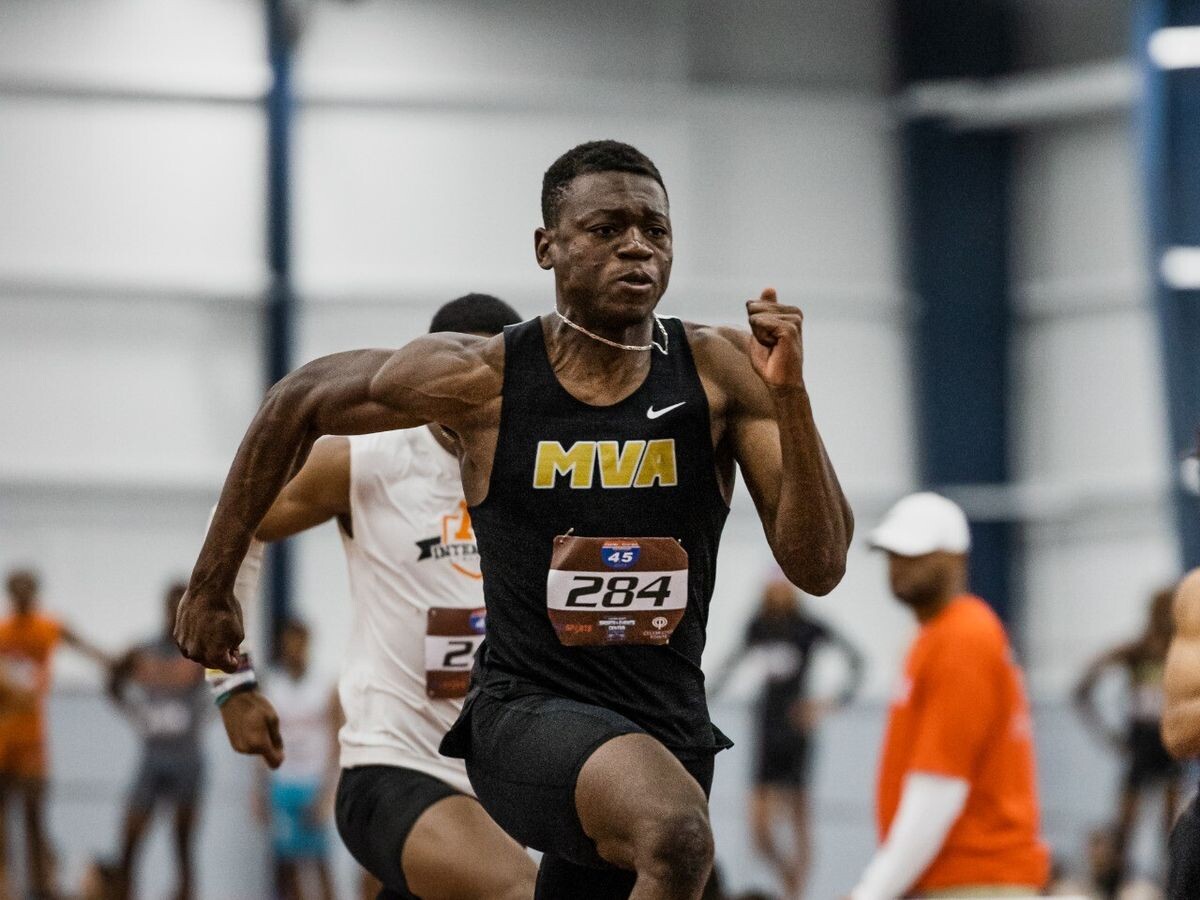
Option A: An 18-year-old was caught doping barely a month after being added to the international testing pool. Then he or someone in his camp tried to cover up his doping by manipulating evidence and defaming Gatorade, one of the world’s largest sports nutrition companies.
Option B: One of the greatest sprint talents in history was unjustly banned after consuming a tainted supplement given to him by one of the most famous brands in sports.
Neither picture is particularly rosy for the sport of track & field, but one of them must be true. After reviewing the evidence, the AIU and its disciplinary tribunal is clear which version it believes: Option A. As a result, Asinga is banned from competition until 2027 barring a successful appeal to CAS.
Background: Asinga enters the testing pool
Most high school track athletes, even elite ones, are rarely drug-tested. But by the spring of 2023, Asinga was running so fast it was becoming clear he could be a factor at that summer’s World Championships in Budapest. He was added to the World Athletics Testing Pool on June 1.
Asinga was tested on June 11 and returned a negative result. He was tested again out-of-competition on July 18 (in his training base of Clermont, Fla.) and again at the South American championships on July 28. The July 18 sample tested positive for GW1516, a banned substance that modifies how the body metabolizes fat and has been found to cause cancer. Specifically, Asinga’s sample tested positive for low levels of two metabolites of GW1516 — a metabolite is a substance produced when the body breaks down a specific drug. In this case, Asinga’s urine contained the GW1516 sulfone metabolite (at a concentration of 0.2 nanograms per milliliter in both his A sample and B sample) and the GW1516 sulfoxide metabolite (at a concentration of 0.5 ng/mL in his A sample and 0.4 ng/mL in his B sample).
On August 9, Asinga was informed of his positive test and provisionally suspended from competition. Shortly after, in an effort to prove his innocence, he began sending his supplements to be tested for contamination at the Sports Medicine Research and Testing Laboratory (SMRTL), a WADA-accredited lab in Salt Lake City. The first supplement Asinga sent, melatonin gummies, tested negative. Asinga then sent a larger set of supplements, including Airborne and Skratch Lab Hydration packets as well as Gatorade Immune Support Gummies and Gatorade Recovery Gummies, two new products he had received at the Gatorade National Athlete of the Year ceremony on July 10.
All of the supplements tested negative for GW1516 except the Gatorade Recovery Gummies. In December, SMRTL informed the AIU that of the five gummies tested, four were positive for GW1516. That much, the parties agree on. From there, the narratives diverge.
Contaminated during manufacturing or as part of a coverup?
Asinga said he began taking the Recovery Gummies shortly after the ceremony on July 10 — initially two per day, then less consistently before traveling to Brazil for the South American championships on July 25. He said he did not take any gummies to Brazil. Asinga declared the gummies as a supplement on the doping control form for his July 18 test and said he had no concerns about the gummies because the container carried the NSF Certified for Sport label.
Greene said the AIU was initially reluctant to share the results of the SMRTL analysis with Asinga because it viewed the test results of products from an opened container as unreliable. (LetsRun.com reached out to the AIU for comment on June 2 but had not received an answer as of publication).
“Normally, SMRTL’s process and the AIU’s process is if there is a preliminary finding in a supplement, they don’t initially just tell the athlete straight away,” Greene said. “They try to go and find their own sealed version and test that too and then go to confirmation testing.”
But neither SMRTL nor the AIU could find a sealed version from the same lot number as Asinga’s gummies. So, after several weeks, the AIU relented and shared the news that the Gatorade Recovery Gummies had tested positive for GW1516. Asinga said he felt he was on his way to clearing his name.
“I was like okay, boom,” Asinga told LetsRun.com. “When I got that message, I was like, okay, finally we’re going to move forward.”
But the AIU did not agree with Asinga’s assessment and hinted at something far more sinister. In the disciplinary tribunal hearing, which took place over Zoom on April 30, Martial Saugy, former director of the WADA-accredited lab in Lausanne, Switzerland, served as an expert witness for the AIU and noted that the exterior of the gummies contained much higher concentrations of GW1516 than the interior of the gummies.
“I cannot see how these results would be consistent with a contamination during the manufacture of the gummies,” Saugy said. “These results point to an adulteration of the gummies at a later stage.”
Another key point: Asinga had opened both containers of gummies before sending them to SMRTL. And in SMRTL’s analysis, it noted a “large discrepancy” between the concentration levels of GW1516 between the containers. The two gummies tested from the first container each featured a concentration of at least 610 ng of GW1516 per gummy. Meanwhile of the three gummies tested from the second container, the highest concentration of GW1516 was 1.5 ng per gummy, and one of the gummies did not test positive for GW1516 at all.
This fact left open the possibility for manipulation; to be satisfied of his innocence, the AIU demanded to see a positive test from a separate, sealed container of gummies from the same lot number as Asinga’s.
Separate lot numbers bring questions
This is where things get complicated. The lot number printed on Asinga’s gummy containers was 22092117150234. NSF has issued a statement saying this lot number was not NSF Certified and the NSF Certified mark was being used without authorization. As part of the case, the Lausanne lab did test a sealed container of Gatorade Recovery Gummies, which tested negative. But that container was from a different lot number — lot 22092117150213, which was one of the lots that did receive NSF certification.
The gummies were not manufactured directly by Gatorade, but rather by a company contracted by Gatorade called Better Nutritionals, who manufactured the gummies for Gatorade at its plant in Gardena, Calif. As part of its case, the AIU called a former Better Nutritionals employee as a witness who testified that, for all intents and purposes, lots 22092117150234 and 22092117150213 were identical. This witness, referred to only as Witness B in the decision, made the following argument:
Witness B said lots 22092117150213 and 22092117150234 were part of the same batch of 20,000 jars’ worth of gummies cooked on the same day. That batch of 20,000 jars was separated into two lots: 7,500 jars (lot 22092117150213) would enter the marketplace immediately without the NSF Certified for Sport logo, of which a few would be sent to NSF for testing. The remaining 12,500 jars (aka lot 22092117150234, which included the gummies Asinga received) would be held back and given the NSF Certified logo predicated on NSF testing on lot 22092117150213.
Before NSF testing had been completed, lot 22092117150213 entered the marketplace without the NSF Certified logo.
By October 4, the 12,500 jars from lot 22092117150234 had been labeled NSF Certified. On October 18, Better Nutritionals received confirmation that lot 22092117150213 had been granted NSF certification, which was confirmed on the NSF website.
As proof that the two lots were part of the same batch, Witness B noted that the first six digits of the lot number, which refer to the cook date, were identical: 220921, or September 21, 2022. Furthermore, Witness B said the seventh digit refers to the specific production line used at the factory. Again, both were the same — 1, referring to the first production line.
Witness B said it would not be feasible to produce two separate batches on the same day, noting that a batch with 20,000 jars’ worth of gummies would take roughly 19 hours to complete with a minimum of eight hours to clean the production line between batches.
Witness B and another witness from Better Nutritionals (Witness A) noted there was no logical source for contamination as GW1516 is not an ingredient of any of the other products manufactured in the Gardena plant.
To simplify: one lot of 7,500 jars (lot 22092117150213) was NSF Certified but did not bear the NSF label. Another lot of 12,500 jars (lot 22092117150234) was not NSF Certified but did bear the NSF label, and that is the lot Asinga’s gummies came from. Better Nutritionals claims the two lots were cooked as one large batch of 20,000 jars, and as a result, the fact that one lot was NSF Certified means that both lots should be considered NSF Certified.
To represent him in his appeal, Asinga hired Greene, the sports lawyer who previously represented Jarrion Lawson, Shelby Houlihan, Peter Bol, and many others in their high-profile doping cases. Greene said he does not buy Witness B’s argument.
“There’s no such thing as two lots of the same,” Greene told LetsRun.com. “They’re not the same. Every lot is separate according to NSF and according to FDA rules.”
After it was informed of Asinga’s positive test by the AIU, the NSF conducted its own investigation and issued the following public notice on June 4:
Gatorade® Immune Support Gummies (citrus; lot number 22091937150233) and Gatorade® Recovery Gummies (cherry; lot number 22092117150234), manufactured by Better Nutritionals LLC, have been found in the public domain bearing the NSF Certified for Sport® Mark without authorization. These specific lot numbers, for these products, have not been tested, evaluated or certified by NSF and are not authorized to use the NSF certification mark or make any claims of NSF certification.
Furthermore, Greene noted that Witness B was terminated for cause by Better Nutritionals in December 2022 — the same month Better Nutritionals filed for bankruptcy.
Asinga asked a representative at Gatorade for a sealed container from lot 22092117150234 — the lot from which Assinga’s gummies came — but was informed that Gatorade Recovery Gummies had been discontinued for “manufacturing reasons” (Witness A said the gummies were discontinued because Better Nutritionals went bankrupt). The AIU and SMRTL also requested sealed containers from the same lot, yet Gatorade/Better Nutritionals only made containers from lot 22092117150213 available. Greene says that makes no sense. If the two lots are identical, Greene argues, why not send one from the same lot number as Asinga’s?
“Somehow they had several sealed versions from the 7,500 lot but nothing from the 12,500 lot,” Greene said. “I find it hard to believe they don’t have anything out there and it was an intentional choice to withhold it. It had to be. Why else wouldn’t they give us one from both? What’s the difference?”
If Gatorade has no sealed version, Greene says, they are in violation of FDA regulations, which state that supplement manufacturers must hold reserve samples from each lot they produce.
by Jonathan Gault
Login to leave a comment
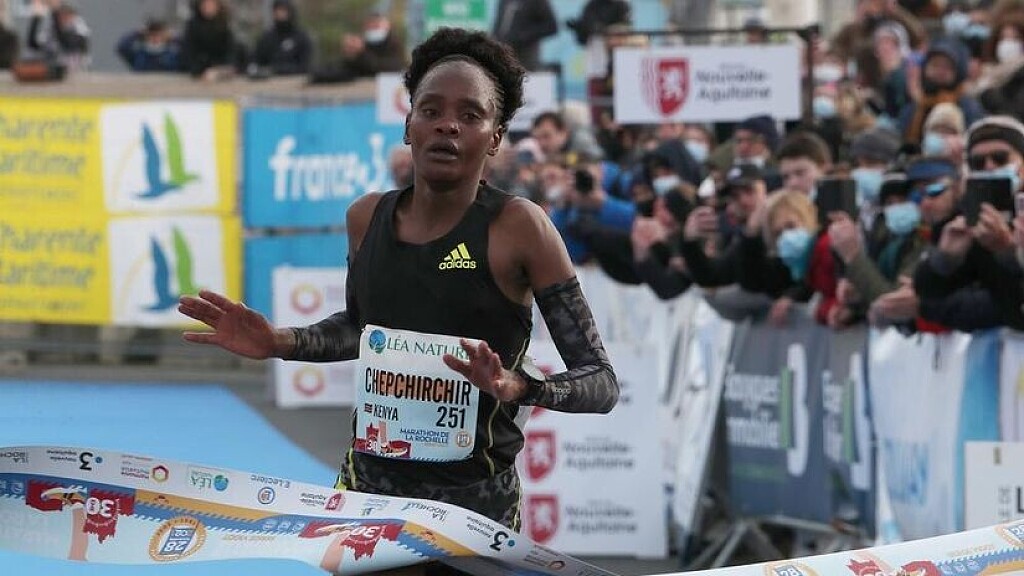
Kenya's Celestine Chepchirchir issued with three-year ban for doping offence
Kenyan runner Celestine Chepchirchir has been banned for three years after testing positive for a prohibited substance, forfeiting all recent titles and awards
Kenyan road runner Celestine Chepchirchir has been banned for three years from competing after being found to have violated World Athletics anti-doping rules.
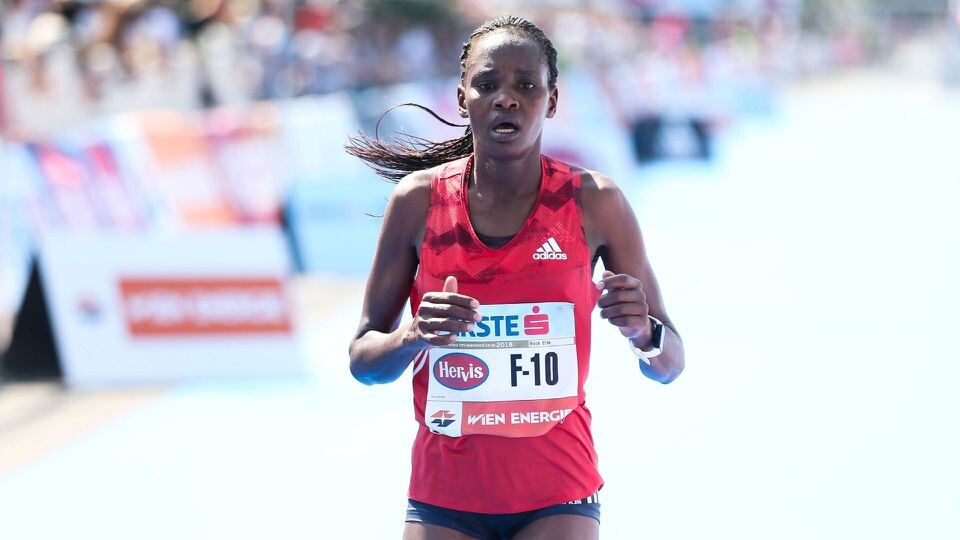
The 28-year-old athlete provided a urine sample out-of-competition in Kapsabet on February 9, 2024 which tested positive for exogenous testosterone and its metabolites.
According to the official AIU statement, the laboratory in Lausanne, Switzerland, identified the presence of testosterone and its metabolites—Androsterone, Etiocholanolone, 5α-androstane-3α,17 diol, and 5β-androstane-3α,17 diol—as being of exogenous origin.
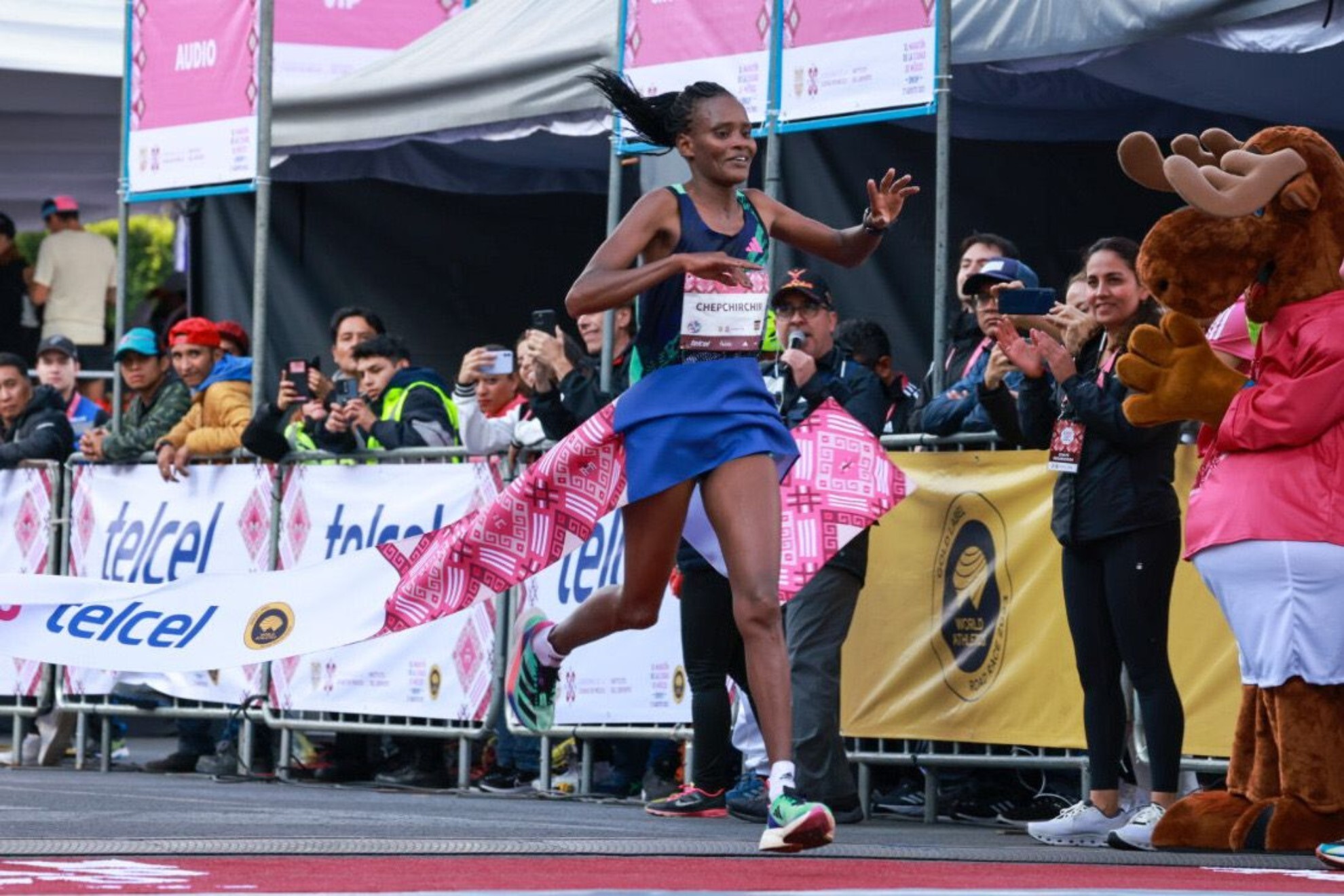
"Ms. Celestine Chepchirchir did not have a Therapeutic Use Exemption that would justify the presence of these substances," the AIU confirmed.
The ruling added that there was no departure from the International Standard for Testing and Investigations or the International Standard for Laboratories that could explain the adverse finding.
The athlete faced a mandatory four-year period of ineligibility for such a violation under the World Anti-Doping Agency (WADA) guidelines.
However, Chepchirchir's prompt admission of the violations and her acceptance of the consequences enabled her to benefit from a reduced three-year ban.
"The athlete did not reply within the initial deadline but subsequently signed an Admission of Anti-Doping Rule Violations and Acceptance of Consequences Form," the AIU reported.
Celestine Chepchirchir's ban will commence from March 26, 2024, the date on which her provisional suspension was first imposed.
Moreover, all her results post-February 9, 2024, will be disqualified, with all consequent titles, awards, medals, points, prizes, and appearance money forfeited.
Rights of appeal against the decision are available to WADA and the Anti-Doping Agency of Kenya (ADAK), which could potentially take the matter to the Court of Arbitration for Sport in Lausanne, Switzerland.
The AIU has confirmed that this decision will be publicly reported on their website as part of their commitment to transparency and fairness in the handling of doping cases in athletics.
This case marks another in a series of doping incidents involving Kenyan athletes a troubling pattern that has drawn global attention to the nation's sports programs.
by Festus Chuma
Login to leave a comment
Kenya's Winnie Jemutai issued with three-year ban for doping offence
Winnie Jemutai is the latest Kenyan athlete to join the list of shame after being provisionally suspended by the AIU for the Presence/Use of Prohibited Substance (Testosterone).
The Athletics Integrity Unit (AIU) has banned Kenyan middle-distance runner Winnie Jemutai Boinett for three years due to the presence and use of a prohibited substance, testosterone.
This decision follows the disqualification of Boinett's results since November 12, 2023 when she was provisionally suspended.
Boinett's suspension comes after a urine sample she provided in-competition at the XLI Cross Internacional de Italica in Seville, Spain, on November 12, 2023, tested positive for testosterone, a substance banned under the World Anti-Doping Agency's (WADA) prohibited list.
Following the initial findings, Boinett admitted to the anti-doping rule violations and accepted the consequences, including the forfeiture of any medals, titles, points, prize money, and other prizes won since the date of the provisional suspension.
In a letter to the AIU dated March 5, 2024, Boinett stated, "I had injury. I went to different hospitals for treatment, I don't have exact documents showing exact medications that I went through I honestly accept that I break the anti-doping rules and am ready to face the consequences thank you."
This early admission and acceptance of sanction led to a one-year reduction in the originally asserted period of ineligibility, pursuant to Rule 10.8.1, based on Boinett's cooperation and acknowledgment of the violations.
Furthermore, the World Anti-Doping Agency (WADA) and the Anti-Doping Agency of Kenya (ADAK) have been granted the right to appeal against this decision to the Court of Arbitration for Sport in Lausanne, Switzerland, should they find grounds to do so.
This provision ensures that all parties involved have a fair opportunity to present their case and seek justice through the appropriate legal channels.
by Festus Chuma
Login to leave a comment
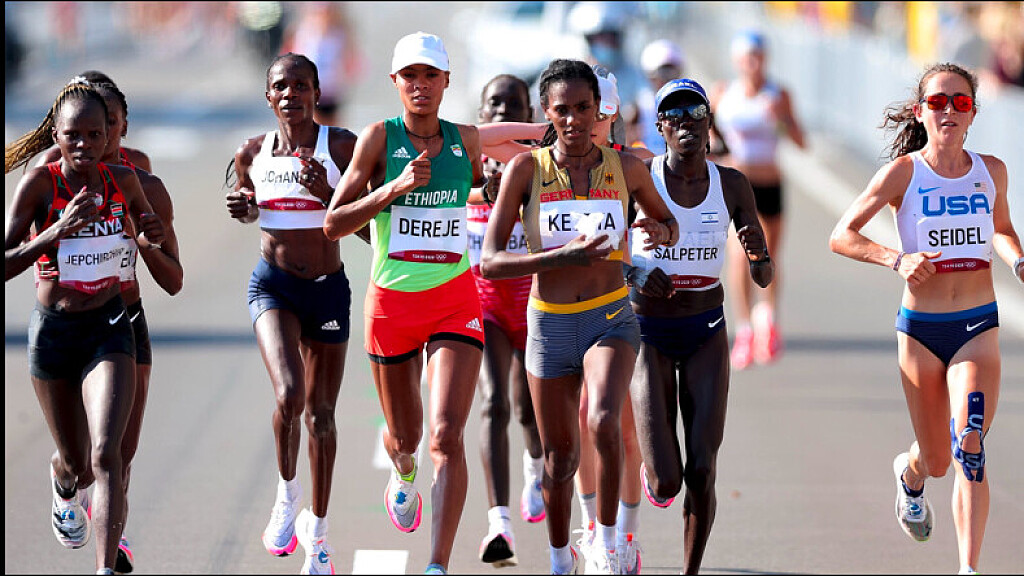
VO2 Max Just Turned 100. Here’s What It Means.
Over the past century, “maximal oxygen uptake” has turned out to be a valuable marker of both endurance and health.No tidbit of physiological jargon has achieved more popular renown than VO2 max, also known as maximal oxygen uptake. And, for the past century, none has been so consistently misunderstood. A new commentary in the International Journal of Sports Physiology and Performance, led by Grégoire Millet of the University of Lausanne, marks the 100th anniversary of the landmark paper by A. V. Hill and Hartley Lupton that first described VO2 max. It’s a big milestone, and it offers a good excuse to take a closer look at what VO2 max really means and why it (sometimes) matters.
A.V. Hill was a 4:45 miler and already had a Nobel Prize for work in muscle physiology when he and Lupton began studying VO2 max. The experiments involved subjects running around Hill’s back garden in Manchester with air bags strapped to their back to measure how much oxygen they used. The faster they ran, the more oxygen they needed—but only up to a certain point. Eventually, oxygen consumption plateaued, even as they continued to accelerate.
Beyond this plateau—what’s now known as VO2 max, indicating the maximum volume per unit time of oxygen (O2)—they had to rely on anaerobic energy pathways, going into what Hill called “oxygen debt.” This debt couldn’t be sustained for long thanks to rising lactic acid, which meant that VO2 max effectively marked the limits of sustainable effort. In other words, VO2 max was an objective measure of endurance.
The current understanding of exercise metabolism has evolved in a few respects since Hill’s time. Physiologists no longer talk about oxygen debt, and lactate (not lactic acid) is considered a marker of fatigue but not its direct cause. But the basic idea remains the same: there’s a limit to the rate at which your body can take in and use oxygen, and having a higher limit augurs well for both performance and health.
The initial understanding of VO2 max was that it was a measure of cardiovascular function, limited primarily by how rapidly your heart could pump oxygen-rich blood to your muscles. For elite endurance athletes, that’s still a pretty good approximation: aerobic monsters are distinguished primarily by a large and compliant heart that can pump huge volumes of blood with each stroke.
But over time, researchers realized that the limits of oxygen uptake are best thought of as a cascade with numerous steps. You have to inhale oxygen into your lungs, diffuse it into your bloodstream, pump it to your muscles, diffuse it into your muscles, and then your mitochondria have to use it to generate ATP. Each of those steps can become a limiting bottleneck in certain conditions, so there isn’t one single path to altering VO2 max.
There are two ways of quantifying your VO2 max. The absolute value is expressed in liters of oxygen per minute: a well-trained endurance athlete, for example, might be able to consume 5 L/min of oxygen. The relative value, which is the more commonly discussed number, is simply the absolute value divided by your weight in kilograms. If that same endurance athlete weighed 70 kilograms, their relative VO2 max would be 71 ml/min/kg.
The standard method of measuring VO2 max, originally developed as an offshoot of the infamous Minnesota Starvation Study during World War II, is a treadmill test (or the equivalent with some other form of exercise like a stationary bike), lasting six to 12 minutes and getting progressively harder in stages until you max out. But what does it mean to max out? There are various criteria: oxygen consumption reaching a plateau, heart rate reaching a plateau, lactate levels exceeding 8.0 mmol/L, perceived exertion greater than 17 on a scale of 6 to 20, respiratory exchange ratio (a comparison of much carbon dioxide you exhale compared to how much oxygen you’re consuming) of greater than 1.1.
The reason for all these criteria is that the idealized picture of a steady increase in oxygen consumption followed by a plateau often doesn’t show up in real life. And even when it does, it’s not an invariant number: your VO2 max when kayaking will be smaller than when you’re running, for example, because you’re using smaller muscles that can’t gobble up as much oxygen. (That’s why rowers tend to have some of the highest absolute VO2 max values, because they’re huge and they’re using both arm and leg muscles. Cross-country skiers have some of the highest relative values, because they’re also using arms and legs but are generally much lighter than rowers.)
There are even a few studies that have found different VO2 max values depending on the details of the treadmill protocol. How can it be the ultimate objective measure of endurance if its value depends on how you test it? Is the apparent plateau just your brain deciding that you’ve had enough and should step off the treadmill? These and other controversies persist. My take: the VO2 max plateau is real and dictated by physiology, but it’s not as clear-cut a threshold as once thought.
If you tested all the runners on the start line of an Olympic distance race, their VO2 max values wouldn’t tell you much about how they’d place. They all have high values, and the race won’t necessarily be won by the runner with the highest value. Eliud Kipchoge, for example, reportedly has a relatively unexceptional value for an elite marathoner. In that sense, VO2 max isn’t a great predictor of running performance. And the cyclist with the highest ever reported VO2 max, Oskar Svendsen, didn’t end up setting the world alight, as I recounted a few years ago.
On the other hand, if I had to predict the race finishing order of 100 people randomly picked from the street, and I was allowed one physiological test, I’d opt for VO2 max. In that diverse population, VO2 max values would be all over the map, and those with the highest values would likely finish at or near the front. So in that sense, VO2 max is a great predictor. To put it another way, a high VO2 max is a necessary but not sufficient condition for endurance success. It’s your ticket into the game.
You could argue that VO2 max has greater value as a predictor of health and longevity than of athletic success. While the relationship between exercise habits and longevity remains a little hazy, with some people arguing that too much is bad for you, the link between VO2 max and longevity is unambiguous: higher is better. In fact, the American Heart Association has argued the VO2 max should be considered a “vital sign” and be regularly measured or estimated by doctors.
Back in the 1990s, the Heritage Family Study trained about 500 people from 100 different families for 20 weeks. On average, they were able to boost their VO2 max by about 20 percent. But they saw a wide range in responses: some people saw more than twice as big an increase, while others basically didn’t increase at all. And that variation seemed to cluster within families. The researchers estimated that about half the VO2 max training response was dictated by genetics.
The idea that some people don’t improve their VO2 max at all even with regular training remains controversial. A few different studies have taken aim at this idea, and shown that if you take non-responders from a study and have them either train more or train harder, everyone will eventually respond. Still, it’s clear that some people can increase their VO2 max more easily than others.
Trained athletes eventually hit a point of diminishing returns, although long-term structural adaptations like the size of your heart and the density of capillaries distributing blood can continue to improve. A meta-analysis a decade ago found that interval training can produce substantial improvements, with the biggest bang from intervals lasting three to five minutes per rep. The highest recorded values tend to be around 90 ml/kg/min in men and 80 ml/kg/min in women, with the sex differences attributable to higher body fat and lower hemoglobin levels in women.
As important as increasing your VO2 max is, the bigger challenge for many of us is slowing its decline. After age 25, it typically drops about ten percent a decade. According to a recent analysis, athletes who keep training can slow that decline to about 5 percent a decade, but those who fall off the wagon might see even steeper declines.
Overall, Millet and his colleagues conclude that VO2 max is “a healthy and active centenarian” that remains important in both endurance sports and as a measure of cardiovascular health. It’s not the ultimate barometer of fitness, but neither is it a meaningless detail. If you get a chance to have yours tested, for example by volunteering for a study at a local university, I highly recommend it. It can be fun to learn about your own physiology—and, during the final stage of the test where you keep pushing until you’re on the verge of being thrown off the back of the treadmill, your psychology.
by Outside Online
Login to leave a comment
Most People Get Slower with Age. But Is That Inevitable? Age may be just a number—but so is your weekly mileage
Recently, while sifting through some of the excruciatingly detailed performance data he’d collected over decades as a Colorado-based triathlon coach, Alan Couzens noticed a pleasing symmetry. All else being equal, the amount of aerobic fitness his athletes lost by getting a year older was almost identical to the amount they gained by adding an hour per month of training time. Want to freeze the biological clock from one birthday to the next? Find a spare 15 minutes per week and fill it with running.
The long-haul practicality of this approach is debatable: after a decade, that additional training time would total 2.5 hours a week. But the underlying premise of what we might call the Couzens Immortality Quotient taps into a fertile area of debate. How much of the aging process is an inevitable slide into decrepitude, and how much is a result of not getting enough exercise?
That’s the question Johannes Burtscher of the University of Lausanne, along with colleagues in Switzerland and Austria, posed recently in the International Journal of Environmental Research and Public Health. By pooling the results of more than a dozen studies, the group reached an encouraging, quantifiable conclusion: only about half of the fitness losses suffered by endurance athletes as they get older are attributable to the passage of time. The other half can be chalked up to reduced training.
The standard gauge of aerobic fitness is VO2 max, which measures how quickly you’re able to breathe oxygen into your lungs, pump it through your arteries, and use it to help fuel muscle contraction. It’s expressed in milliliters of oxygen per kilogram of body weight per minute, and in young adults it typically hovers somewhere in the forties.
After age 25, it declines by about 10 percent each decade, dropping more quickly in your sixties and seventies. Among endurance athletes, the numbers aren’t so predictable. Some studies find losses of 5 percent per decade; others as much as 46 percent. What accounts for the difference? The extent to which you continue training as you get older. After all, the fitter you are, the more you stand to lose.
The effects of ceasing training entirely seem to be similar in athletes of all ages. Your VO2 max begins to plummet within a few days of stopping exercise, and you might lose as much as 20 percent after 12 weeks. These losses are explained mostly by changes in how much blood your heart can pump with each beat; the good news is that the trend can be reversed fairly quickly when training is resumed. Other age-related changes, such as stiffening arteries, occur more slowly and are harder to undo.
When Burtscher and his colleagues ran the numbers, they found that 54 percent of the variation in fitness loss by male endurance athletes was explained by differences in how much they trained. That number in women was 39 percent, but the scarcity of data for female subjects makes it impossible to tell whether there’s a real physiological difference between the sexes. Overall, the data fits with the observation that athletes who keep training at a fairly constant level over the years lose about 5 percent per decade—half as much as the typical nonathlete.
There are a couple of key questions raised by these findings. The first one: If you miss a year, or a decade, can you get back to where you were? Or is some of that fitness lost forever? There’s no research to suggest a solid answer, according to Grégoire Millet, one of Burtscher’s colleagues at the University of Lausanne. It probably depends to some degree on how much you trained prior to stopping, and for how long. The risk upon resuming would be that your bones and connective tissue are no longer prepared to handle a heavy load, making you more susceptible to injury.
Still, there are some encouraging hints in the literature. In 2020, researchers published lab dataon Tommy Hughes (first photo) an Irish man who’d recently run an eye-popping 2:27 marathon at age 59. Hughes’s VO2 max was 65.4, more than twice what you’d expect from a largely sedentary man his age.

Not surprisingly, Hughes was a former elite marathoner; he competed at the Barcelona Olympics in 1992. But he’d taken a 16-year break from running, starting again at the age of 48. We can’t know for sure if that pause hurt him—if it did, it couldn’t have been by much, given that he currently holds the world marathon record for the 60-to-64 age group, at 2:30:02.
The other question is how to maintain your training level as the years pass. We all have good intentions, but real life rarely resembles the smooth aging curve that results from graphing the average data from large groups of people. Instead, there are plateaus and gentle declines punctuated by steep drops—you break a leg, your first kid is born, you become addicted to social media, and so on. Avoiding periods of rapid decline goes a long way toward slowing the overall slide.
Another superstar case study, this one published in 2022 by a team led by Bas Van Hooren of Maastricht University in the Netherlands, illustrates the benefits of consistency. A 75-year-old middle-distance runner named Hans Smeets (second photo), who holds multiple European and world age-group records, had clocked a VO2 max of 50.5, equal to the highest known measurement for his age. Smeets only began running at 50, further evidence that it’s never too late to start (or start again). And once he’d begun, he kept going. Over the next 25 years, he never missed more than a week of training. Initially, he ran more than 85 miles per week, and at 75 he was still logging as many as 50. He attributed his ability to handle all that mileage without injury to doing most of his runs at, in his words, “an easy pace.”
That, as it turns out, aligns perfectly with Couzens’s view about what’s required for long-term athletic success: lots of low-intensity exercise. To be sure, the idea of adding an hour of training per month every year to ward off the effects of aging sounds suspiciously like an endurance version of the legend of Milo of Croton, the ancient Olympian wrestler said to have lifted a calf over his head every day until it was a full-grown bull. In both cases, each step in the process seems simple, but the result is nonetheless… improbable, let’s call it.
Yet, as an aspiration, or simply as a formulation of what’s possible, the Couzens Immortality Quotient tells us the same thing as the examples of Tommy Hughes and Hans Smeets, and as Johannes Burtscher’s meta-analysis. You don’t train less because you’re getting old; you get old, to a surprising extent, because skipping that long Sunday run with your pals becomes a habit instead of a rare exception. Don’t do it.
by Alex Hutchinson (Outside Online)
Login to leave a comment
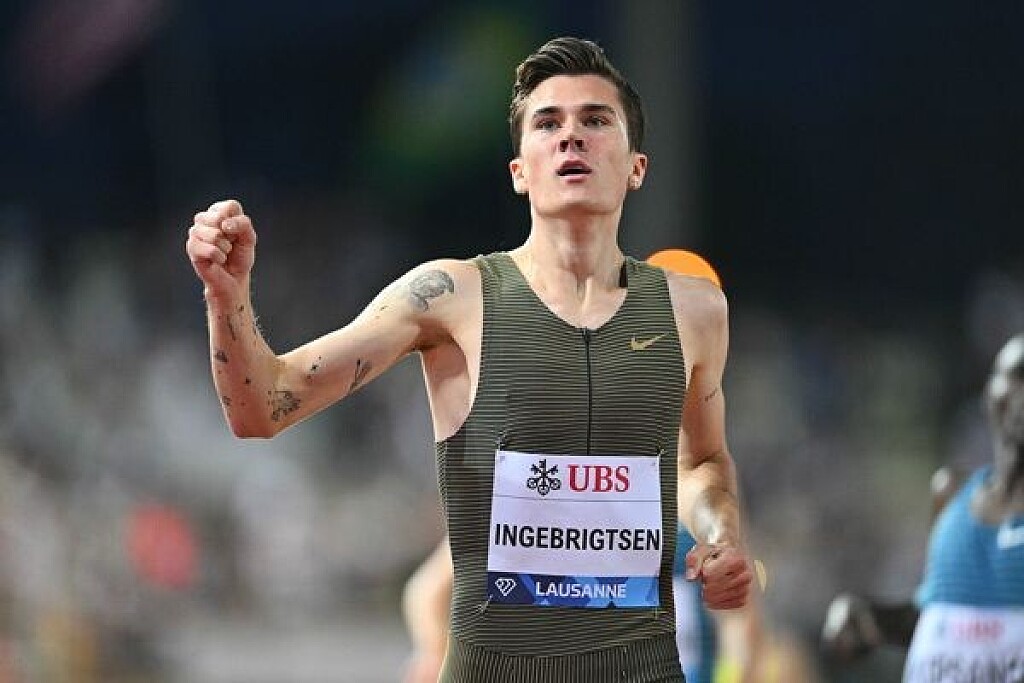
Ingebrigtsen and Girma go head-to-head in hunt for fast 1500m in Lausanne
Jakob Ingebrigtsen and Lamecha Girma both made history earlier this month in Paris, where they set a world two-mile best and a world 3000m steeplechase record, respectively. Now they have the chance to push each other to fast 1500m performances when they return to Wanda Diamond League action in Lausanne on Friday (30).
Norway’s Ingebrigtsen, who broke the world indoor 1500m record by running 3:30.60 in Lievin in February, clocked 7:54.10 in Paris to improve Daniel Komen’s world best for two miles. Despite still having that race in his legs, the 22-year-old improved his own European 1500m record to 3:27.95 in Oslo six days later – a time that places him sixth on the world all-time list.
Although the world record had not been his aim in Oslo, Lausanne’s Athletissima gives Ingebrigtsen another opportunity to take further strides toward Hicham El Guerrouj’s almost 25-year-old world record of 3:26.00.
“I 100% have more left in me,” Ingebrigtsen said after his performance in Oslo. “I just have to keep focused on each race ahead in the build-up to Budapest (World Championships), where it really matters.”
Girma will hope to be up there with him. The Ethiopian 22-year-old stormed to a time of 7:52.11 for his specialism in Paris, taking 1.52 seconds off the world 3000m steeplechase record set by Said Saeed Shaheen in 2004, and then turned his attention to attacking the Ethiopian 1500m record of 3:29.91 at the Continental Tour Gold meeting in Ostrava on Tuesday (27). He still looked like he had plenty left in the closing stages but having to run wide down the home straight, he focused on the win, running a PB of 3:33.15 that he will aim to improve again in Lausanne.
It will be the first time that Ingebrigtsen and Girma have clashed in any discipline.
In Oslo, Ingebrigtsen led the first eight men under 3:30 for the first time in history, and this time the line-up includes two other men who have dipped under that barrier so far in their careers: Britain’s Olympic bronze medallist Josh Kerr and Australia’s Stewart McSweyn. They are joined on the entry list by Ethiopia’s Teddese Lemi, New Zealand’s Sam Tanner and Britain’s Neil Gourley.
In the 5000m – the discipline in which Ingebrigtsen won world gold last year after his 1500m silver – Olympic champion Joshua Cheptegei will take on Olympic 10,000m gold medallist Selemon Barega, world 5km record-holder Berihu Aregawi, Telahun Haile Bekele, Birhanu Balew and their fellow sub-13:00 runner Muktar Edris.
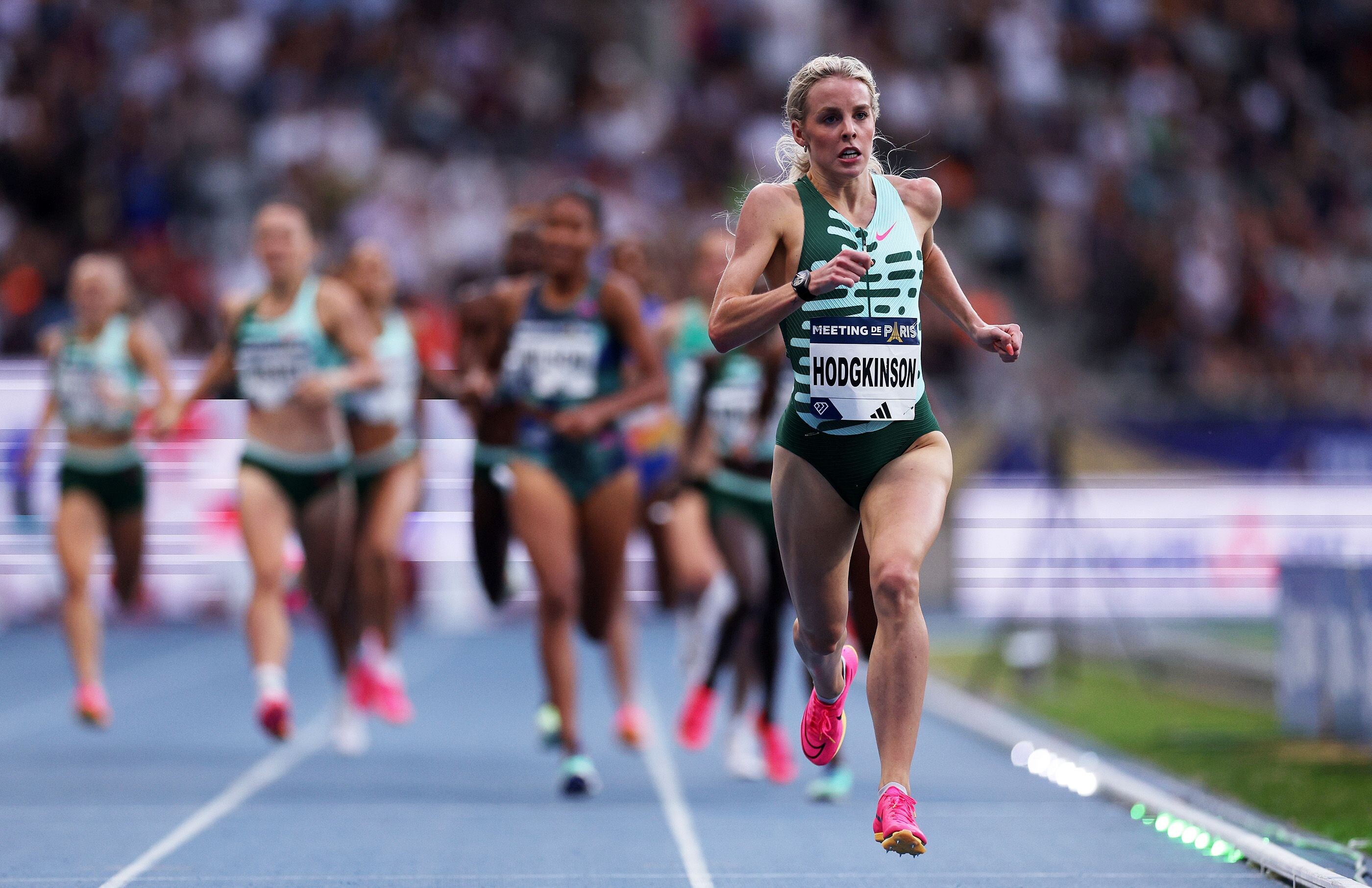
In the women’s 3000m steeplechase, world U20 silver medallist Sembo Almayew is back on the track after her world-leading PB performance of 9:00.71 to win in Florence. The 2021 world U20 gold medallist, Jackline Chepkoech, was second on that occasion and is also racing, along with world record-holder Beatrice Chepkoech and world bronze medallist Mekides Abebe.
The world leader also heads the entries in the women’s 800m, where world and Olympic silver medallist Keely Hodgkinson – who improved her British record to 1:55.77 to win in Paris – will look to make another statement as she renews her rivalry with Kenya’s Mary Moraa.
World bronze medallist Moraa, who won Commonwealth Games and Diamond League titles ahead of Hodgkinson last year, has run a best of 1:58.72 so far this season and the strong field also features Habitam Alemu, Noelie Yarigo, Jemma Reekie, Catriona Bisset, Natoya Goule and Switzerland's Audrey Werro, who recently ran a world U20 1000m record of 2:34.89 in Nice.
by World Athletics
Login to leave a comment
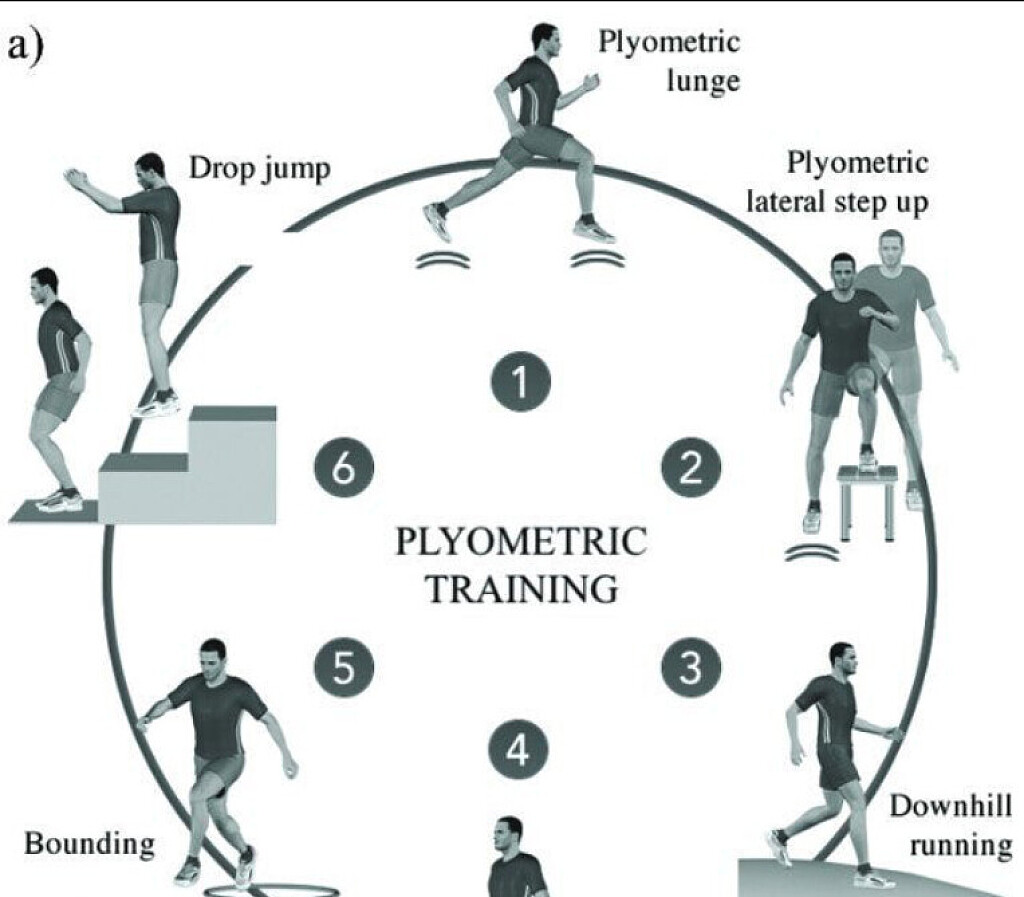
The Quest for a Simpler Way to Boost Running Efficiency
Plyometrics can make you a more efficient runner, and it turns out they don’t need to be complicated or risky
It’s pretty clear, at this point, that plyometric training can make you a more efficient runner. There’s still plenty of debate about how it works. Does it streamline the signals traveling from brain to muscle? Does it make your tendons stiffer, enabling them to store and release more energy as they’re stretched with each stride? Does it alter your running style so that you take quicker and lighter steps? No one is sure, but there’s little debate that it does something.

As a result, studies like this one in Sports Biomechanics, published last month by a group led by Aurélien Patoz of the University of Lausanne, don’t garner much attention. They found a 3.9 percent improvement in running economy after eight weeks of either plyometric or dynamic strength training, roughly comparable to what Nike’s original Vaporfly 4% shoe produced. (They also found no evidence that either form of training altered running stride in any significant way, for what it’s worth.)
Why no excitement about a free four-percent boost? As someone who has experimented on and off with various forms of plyometric training over several decades, let me venture a hypothesis: it’s perceived as too complicated, and possibly risky, for most of us. Plyometrics involve explosive movements in which you try to maximize the force produced in the shortest possible time. You often see people leaping off steps, bounding over hurdles, and performing various other feats of impressive coordination.
The subjects in Patoz’s study were amateurs with no prior experience with any form of structured strength training. As a result, the exercises they did weren’t especially daunting by plyometric standards. But they weren’t simple, either. Here’s an overview of the program:
Even if you think your hamstrings can handle drop jumps, plyometric lunges, bounding and so on without snapping, you still need various bits of equipment and a bunch of time. Does it need to be that complicated?
That’s the question tackled by another recent study, this one led by Tobias Engeroff of Goethe University Frankfurt and published in Scientific Reports. They stripped plyometric training down to its bare bones, tested it on a group of amateur runners—and still found a significant improvement in running economy after just six weeks. The exact size of the improvement depends on how you measure it and at what speed, but was between 2 and 4 percent.
Engeroff’s plyometric program involved nothing but hopping on the spot. Specifically, “participants were instructed to start with both feet no wider than hip width apart and to hop as high as possible with both legs, keeping the knees extended and aiming to minimize ground contact time.” They started by hopping for 10 seconds, resting for 50 seconds, and repeating five times for a total of five minutes. They did this five-minute program daily, decreasing the rest and increasing the number of sets each week: the second week was 6 sets of 10 seconds of hopping with 40 seconds of rest; the sixth and final week was 15 sets of 10 seconds hopping with 10 seconds of rest, still totaling five minutes.
This program was based on the idea that it’s tendon stiffness that boosts running economy. In particular, the stretch and recoil of the Achilles tendon provides between half and three-quarters of the positive work required for running, by some estimates. Engeroff’s short daily program draws on recent research by Keith Baar and others suggesting that connective tissue such as tendons responds best to brief, frequent stimulus rather than longer and harder workouts. Notably, this approach didn’t injure any of the runners.
The point here isn’t necessarily that daily hops are the new magic exercise that everyone should do. Indeed, it’s worth emphasizing that Patoz’s study found essentially the same improvements with both plyometrics and dynamic strength training. That’s a familiar result in studies that have tried to determine the best economy-boosting regimen: all sorts of different approaches seem to produce similar results. Patoz’s dynamic strength program involves a bunch of bodyweight exercises that focus on concentric contractions: lunges, step-ups, squats, stair jumps. Those are all components of my current strength routine, and I like the idea that, in addition to stiffening my tendons, I might also be strengthening my muscles.
It’s worth acknowledging that the subjects in both these studies were recreational runners with little prior experience of either plyometric or strength training. The minimalist program that works for them might not do much for a serious competitive runner with years of resistance training experience. Those are the people who might need to do the elaborate one-legged triple-axel hurdle hops that you see in online training montages. For the rest of us, though, the message seems to be: do something. It’s as effective as supershoes, and way cheaper.
by Outside Online
Login to leave a comment

Most People Get Slower with Age. But Is That Inevitable?
Recently, while sifting through some of the excruciatingly detailed performance data he'd collected over decades as a Colorado-based triathlon coach, Alan Couzens noticed a pleasing symmetry. All else being equal, the amount of aerobic fitness his athletes lost by getting a year older was almost identical to the amount they gained by adding an hour per month of training time. Want to freeze the biological clock from one birthday to the next? Find a spare 15 minutes per week and fill it with running.
The long-haul practicality of this approach is debatable: after a decade, that additional training time would total 2.5 hours a week. But the underlying premise of what we might call the Couzens Immortality Quotient taps into a fertile area of debate. How much of the aging process is an inevitable slide into decrepitude, and how much is a result of not getting enough exercise?

That's the question Johannes Burtscher of the University of Lausanne, along with colleagues in Switzerland and Austria, posed recently in the International Journal of Environmental Research and Public Health. By pooling the results of more than a dozen studies, the group reached an encouraging, quantifiable conclusion: only about half of the fitness losses suffered by endurance athletes as they get older are attributable to the passage of time. The other half can be chalked up to reduced training.
The standard gauge of aerobic fitness is VO2 max, which measures how quickly you're able to breathe oxygen into your lungs, pump it through your arteries, and use it to help fuel muscle contraction. It's expressed in milliliters of oxygen per kilogram of body weight per minute, and in young adults it typically hovers somewhere in the forties. After age 25, it declines by about 10 percent each decade, dropping more quickly in your sixties and seventies. Among endurance athletes, the numbers aren't so predictable. Some studies find losses of 5 percent per decade; others as much as 46 percent. What accounts for the difference? The extent to which you continue training as you get older. After all, the fitter you are, the more you stand to lose.
The effects of ceasing training entirely seem to be similar in athletes of all ages. Your VO2 max begins to plummet within a few days of stopping exercise, and you might lose as much as 20 percent after 12 weeks. These losses are explained mostly by changes in how much blood your heart can pump with each beat; the good news is that the trend can be reversed fairly quickly when training is resumed. Other age-related changes, such as stiffening arteries, occur more slowly and are harder to undo.
How much of aging is an inevitable slide into decrepitude, and how much is a result of not getting enough exercise?
When Burtscher and his colleagues ran the numbers, they found that 54 percent of the variation in fitness loss by male endurance athletes was explained by differences in how much they trained. That number in women was 39 percent, but the scarcity of data for female subjects makes it impossible to tell whether there's a real physiological difference between the sexes. Overall, the data fits with the observation that athletes who keep training at a fairly constant level over the years lose about 5 percent per decade-half as much as the typical nonathlete.
There are a couple of key questions raised by these findings. The first one: If you miss a year, or a decade, can you get back to where you were? Or is some of that fitness lost forever? There's no research to suggest a solid answer, according to Gregoire Millet, one of Burtscher's colleagues at the University of Lausanne. It probably depends to some degree on how much you trained prior to stopping, and for how long. The risk upon resuming would be that your bones and connective tissue are no longer prepared to handle a heavy load, making you more susceptible to injury.
Still, there are some encouraging hints in the literature. In 2020, researchers published lab data on Tommy Hughes, an Irish man who'd recently run an eye-popping 2:27 marathon at age 59. Hughes's VO2 max was 65.4, more than twice what you'd expect from a largely sedentary man his age. Not surprisingly, Hughes was a former elite marathoner; he competed at the Barcelona Olympics in 1992. But he'd taken a 16-year break from running, starting again at the age of 48. We can't know for sure if that pause hurt him-if it did, it couldn't have been by much, given that he currently holds the world marathon record for the 60-to-64 age group, at 2:30:02.
The other question is how to maintain your training level as the years pass. We all have good intentions, but real life rarely resembles the smooth aging curve that results from graphing the average data from large groups of people. Instead, there are plateaus and gentle declines punctuated by steep drops-you break a leg, your first kid is born, you become addicted to social media, and so on. Avoiding periods of rapid decline goes a long way toward slowing the overall slide.
Another superstar case study, this one published in 2022 by a team led by Bas Van Hooren of Maastricht University in the Netherlands, illustrates the benefits of consistency. A 75-year-old middle-distance runner named Hans Smeets, who holds multiple European and world age-group records, had clocked a VO2 max of 50.5, equal to the highest known measurement for his age. Smeets only began running at 50, further evidence that it's never too late to start (or start again). And once he'd begun, he kept going. Over the next 25 years, he never missed more than a week of training. Initially, he ran more than 85 miles per week, and at 75 he was still logging as many as 50. He attributed his ability to handle all that mileage without injury to doing most of his runs at, in his words, "an easy pace."
That, as it turns out, aligns perfectly with Couzens's view about what's required for long-term athletic success: lots of low-intensity exercise. To be sure, the idea of adding an hour of training per month every year to ward off the effects of aging sounds suspiciously like an endurance version of the legend of Milo of Croton, the ancient Olympian wrestler said to have lifted a calf over his head every day until it was a full-grown bull. In both cases, each step in the process seems simple, but the result is nonetheless improbable, let's call it.
Yet, as an aspiration, or simply as a formulation of what's possible, the Couzens Immortality Quotient tells us the same thing as the examples of Tommy Hughes and Hans Smeets, and as Johannes Burtscher's meta-analysis. You don't train less because you're getting old; you get old, to a surprising extent, because skipping that long Sunday run with your pals becomes a habit instead of a rare exception. Don't do it.
Login to leave a comment
Ultradistance Project: Study Examines the Psychological Profile of Ultrarunners
It is a frequent assumption that there are certain personality traits common to a lot of ultrarunners, but up until now there has not been a significant body of research conducted to explore this area, and to explain what it is that drives us to incredible lengths in pursuit of our goals.
Recently, three sports psychologists identified this gap and launched a survey — the Ultradistance Project— which you are invited to be a part of, into the psychological profile of ultrarunners. This deep dive into our motivation as runners and what makes us tick, as well as character traits and behaviors not obviously linked with our running, was first conducted on athletes participating in the 2022 IAU 100k World Championships in Berlin, Germany.
In the interest of gathering more data to produce a more useful study, the researchers have now opened the survey up to the general ultrarunning population and it can be competed in a choice of three languages at the links below:
English
Spanish
Portuguese
The researchers behind the study are Juan González Fernández (Phd), a sports psychologist at the Department of Personality, Evaluation, and Psychological Treatment at the University of Granada; Abel Nogueira López (Phd), a researcher at the University of León and postdoctoral fellow at the University of Santiago de Compostela and the University of Lausanne; and Pavao Vlahek (MD, Phd), professor at the University of the North in Croatia and a specialist in physical medicine and rehabilitation.
They hope the findings of the study can be used not only to help future runners prepare for endurance events, but that they will also find applications in everyday life when it comes to dealing with stressful situations. Vlahek said, “We believe that it is very important to know the psychological strategies that allow us to deal with these types of extreme situations that occur during competition and training for these events, as this can help us to help prepare anyone who wants to participate in an event with these characteristics, as well as to try to transfer this knowledge to the general population, and thus help them to deal with any serious situation that they may have to face.”
Take a few minutes to have your say, and keep your eyes peeled for the results to come from this fascinating study!
by I Run Far
Login to leave a comment
Kenyan marathon runner Philemon Kacheran Lokedi has been banned for three years
Kenyan marathon runner Philemon Kacheran Lokedi has been banned for three years by the Athletics Integrity Unit (AIU) after testing positive for testosterone and its metabolites "with exogenous origin".
Kacheran was provisionally suspended on July 8 in relation to an out-of-competition sample provided in Kapenguria in Kenya on April 27, meaning he missed the Birmingham 2022 Commonwealth Games.
He had faced a four-year ban for his offence under World Athletics' anti-doping rules, but this was reduced to three years by the AIU due to an "early admission and acceptance of sanction".
The sanctions apply from July 8, the date of Kacheran's provisional suspension.
The World Anti-Doping Agency and Anti-Doping Agency of Kenya have a right to appeal against the decision to the Court of Arbitration for Sport in Lausanne.
Kacheran ran a personal best 2 hours 5min 19sec to finish third in the Valencia Marathon last December.
He had finished fourth in the Enschede Marathon and sixth in the Berlin Marathon earlier that year.
In April of this year, he clocked 2:10:12 to finish eighth in the Rotterdam Marathon.
In 2019, he served as a pacemaker for the successful sub-two-hour marathon attempt by compatriot Eliud Kipchoge.
Kacheran is the ninth athlete from Kenya to be banned by the AIU since the start of July, with the others including the winner of the 2019 Boston and Chicago Marathons Lawrence Cherono.
The AIU has also today provisionally suspended Kenyan athlete Mark Kangogo for the use of prohibited substances norandrosterone and triamcinolone acetonide, although he has not competed in a World Athletics-sanctioned event since 2019.
Kenya is one of seven Category A nations deemed by the AIU to have the highest doping risk and threaten the overall integrity of the sport.
by Patrick Burke
Login to leave a comment
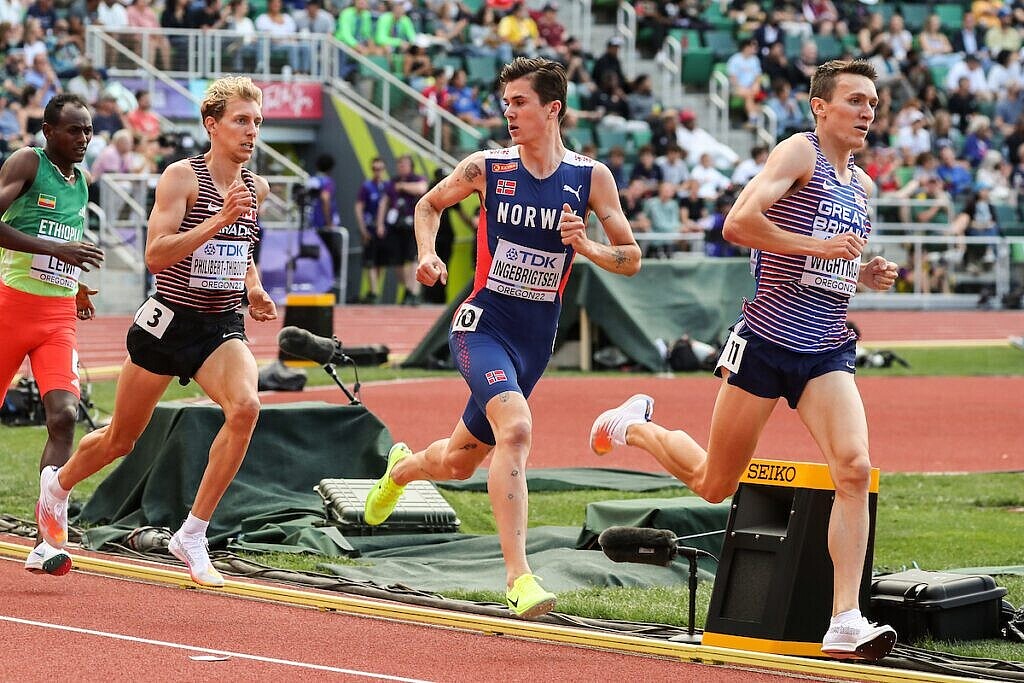
Jakob Ingebrigtsen wants to triple at the 2024 Olympics
Last Thursday, before Norwegian star Jakob Ingebrigtsen ran the world-leading time of 3:29.05 at the Lausanne Diamond League meet, he revealed to the media that he hopes to run the distance triple of 1,500m, 5,000m and 10,000m at the 2023 World Championships and the 2024 Paris Olympics (like Sifan Hassan did at Tokyo 2020).
Ingebrigtsen planned to do the triple at the 2022 European championships in Munich, but COVID-19 prevented him from attaining the qualifying standard before the meet. “I got COVID when I was supposed to race the 10K, so I couldn’t put that into the plan for the summer.”
Instead, he hopes to attempt the triple at the world championships and the 2024 Olympics. He said he hadn’t seen the schedules yet, but added, “I hope World Athletics officials have made it possible.”
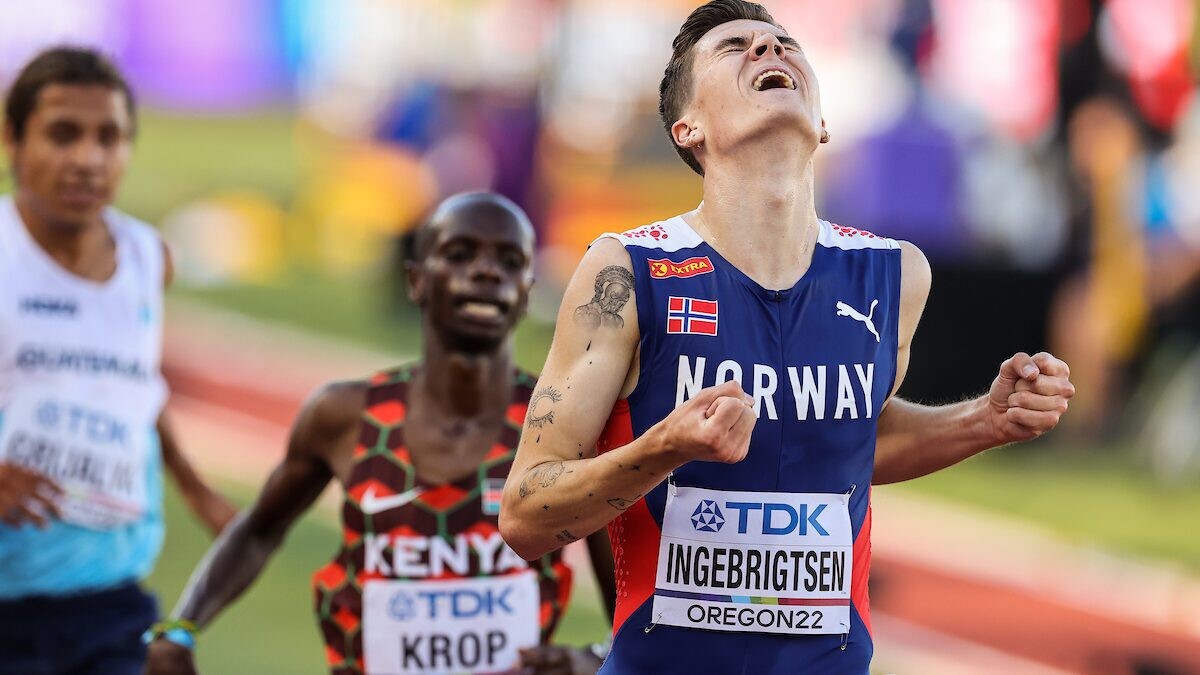
On Friday, World Athletics announced the schedule for the 2023 World Championships in Budapest, and here’s what it would require:
Day 1, 7:05 p.m.: 1,500m first round
Day 2, 5:35 p.m.: 1,500m semis
Day 2, 6:25 p.m.: 10,000m final
Day 5, 9:15 p.m.: 1,500m final
Day 6, 7:00 p.m.: 5,000m semis
Day 9, 8:10 p.m.: 5,000m final
The triple would be difficult as currently scheduled. On Day 2, Ingebrigtsen would have to run the 1,500m semi-final and then the 10,000m final within 45 minutes of each other. Is it possible? Yes, but he would need to run conservatively in the semi-final and then has to hope the 10,000m final goes out slowly.
The great Emil Zatopek is the only runner to pull off the triple–at the 1952 Helsinki Olympics. Zapotek won the men’s 5,000m, 10,000m and the marathon, breaking Olympic records in each event.
Hassan attempted the distance triple at the 2020 Olympics in Tokyo but came up short with a bronze in the women’s 1,500m.
There are a few changes to the 2023 schedule over Eugene 2022. The length of the competition has been changed to nine days (Aug. 19-27), as opposed to the previous 10-day schedule used for the 2022 World Championships. Another change in the time of the finals: all track and field finals will now be scheduled for the evening sessions.
by Running Magazine
Login to leave a comment
Paris 2024 Olympic Games
For this historic event, the City of Light is thinking big! Visitors will be able to watch events at top sporting venues in Paris and the Paris region, as well as at emblematic monuments in the capital visited by several millions of tourists each year. The promise of exceptional moments to experience in an exceptional setting! A great way to...
more...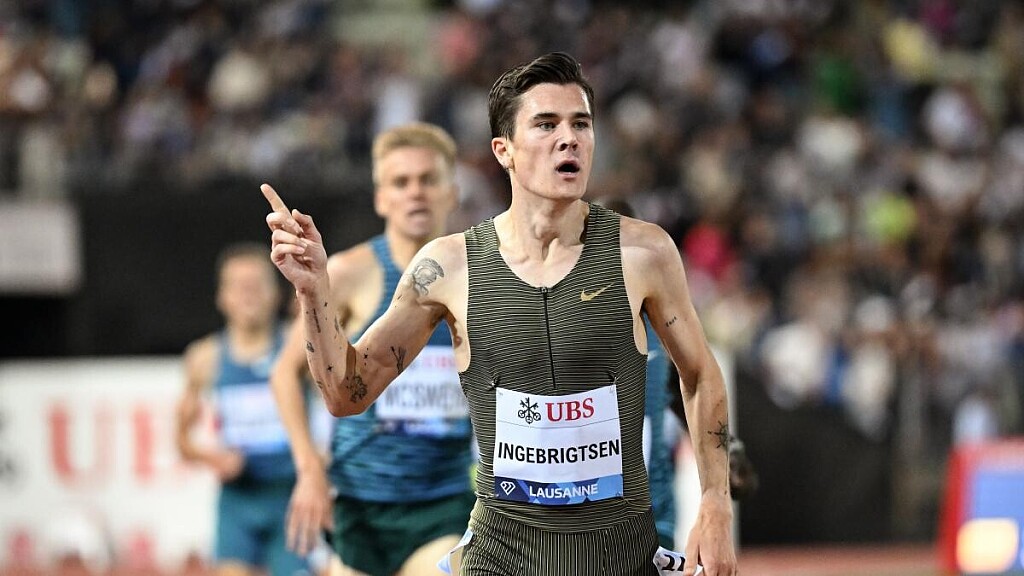
World lead for Jakob Ingebrigtsen in Lausanne
Olympic 1500m champion enjoys emphatic win at Diamond League on Friday as Noah Lyles, Jasmine Camacho-Quinn and Joe Kovacs also take victories in the Swiss city.
There were plenty of surprises at the Athletissima meeting in Lausanne on Friday (Aug 26) with world champions Ryan Crouser, Grant Holloway, Tobi Amusan and Mutaz Essa Barshim among those suffering end-of-season defeats. But there was no doubt about the winner in the men’s 1500m as Jakob Ingebrigtsen stormed to victory in a world-leading mark of 3:29.05.
Using his predictable yet effective tactics of taking the lead shortly after the pacemaker went through 800m in 1:51, the Norwegian built a small lead at the bell and held his advantage over the final lap as Abel Kipsang of Kenya battled his way into second in 3:29.93 and Stewart McSweyn of Australia showed a welcome return to form with 3:30.18 in third.

Josh Kerr bounced back from his dismal Commonwealth Games experience by finishing fourth in 3:32.28 with fellow Brits Jake Heyward (3:34.99) and Matt Stonier (3:35.57) ninth and tenth. Commonwealth champion Olli Hoare, meanwhile, faded badly on the last lap to finish 12th.
“It was a good race,” said Ingebrigtsen. “I would have liked to have gone a little faster but considering I’ve had a lot of races, it was good. I’m now looking forward to the races at the end of the season and running even faster next year.
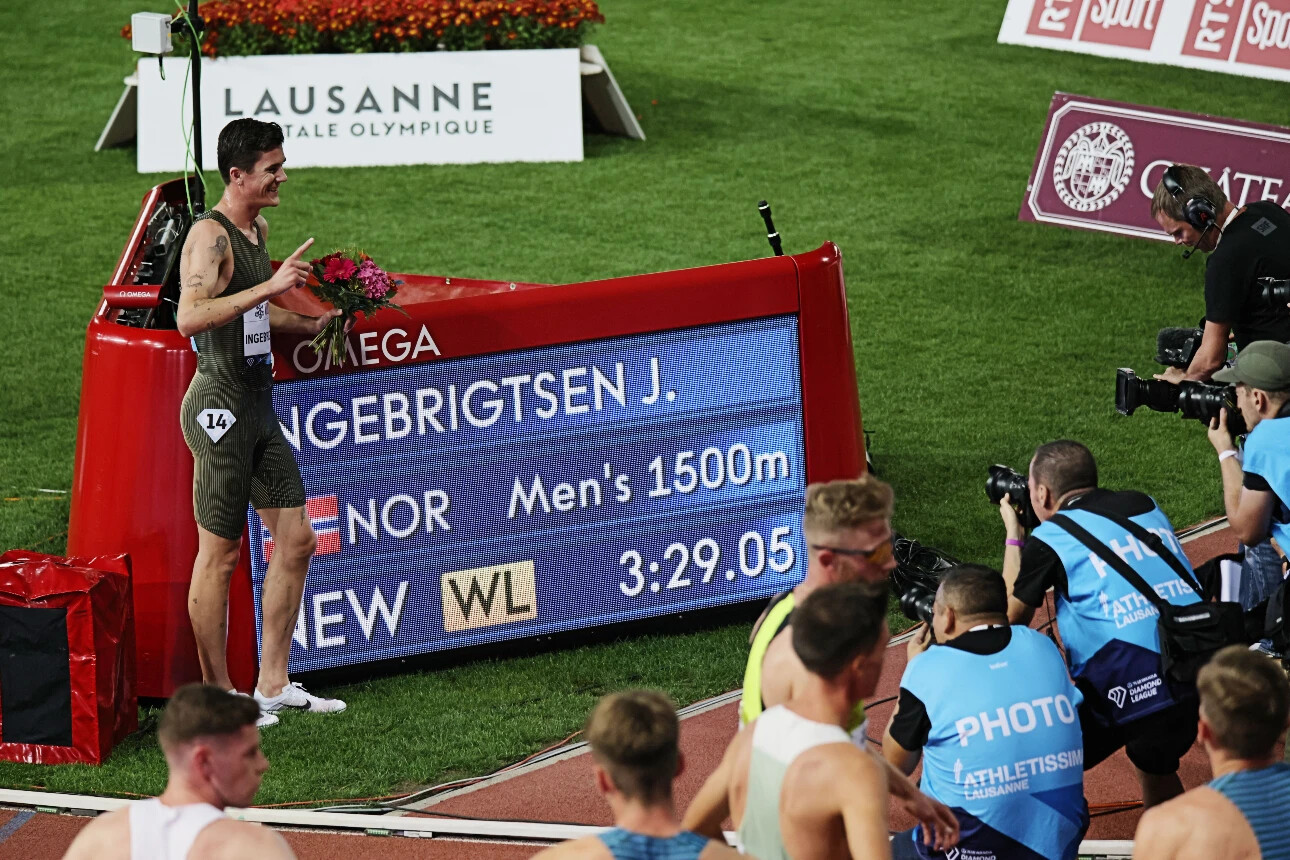
“All in all it’s been a good season but I’m ready to put in a lot of work this winter to win more races next summer. I don’t think we’re going to get any record times in Zurich (Diamond League final next month) but I think we will have a good competition there.”
Chilly conditions in Lausanne were not conducive to fast sprint times but Noah Lyles ran a quick 19.56 (1.3) despite a poor start. Mike Norman, who had led into the home straight, was runner-up in 19.76 as Britain’s Charlie Dobson, on his Diamond League debut, ran 20.34 in eighth from the inside lane.
The much-anticipated women’s 100m showdown turned into an anticlimax when firstly world champion Shelly-Ann Fraser-Pryce withdrew with a minor injury and then Elaine Thompson-Herah, the Olympic champion, false started. In their absence Aleia Hobbs won in 10.87 (0.0) from Shericka Jackson’s 10.88 and Marie-Josee Ta Lou’s 10.89.
by Jason Henderson
Login to leave a comment
Rising inflation has prompted a warning that the budget for the Paris 2024 Olympics and Paralympics is "very tight"
With tomorrow marking two years until the Olympics are due to begin in the French capital, concerns are mounting on preparations from a security and financial point of view.
AFP has reported that the Organising Committee's estimated budget for the Games has risen to €4 billion (£3.4 billion/$4.1 billion), with a source commenting: "Everything is very tight concerning the budget."

According to the unnamed source, the extent of the difficulties are expected to become clearer later this year.
Solideo, the public body charged with overseeing infrastructural projects for Paris 2024, also has a reported budget of €4 billion (£3.4 billion/$4.1 billion).

Inflation in France reached its highest level since 1991 last month, although remains lower than many other European countries.
Consumer prices rose by 5.8 per cent in the 12 months until June.
Tickets for the Games go on sale in December, and one premium partnership slot remains vacant, although it has been reported that there are hopes it could be filled by luxury goods company LVMH.
At the International Olympic Committee Session in Lausanne in May, Paris 2024 President Tony Estanguet conceded that the COVID-19 pandemic and war in Ukraine "caused major breakdowns in production and supply chains", and "generated an inflationary environment which was impossible to anticipate just a few months or weeks ago".
Budgetary issues are expected to be one of the topics examined when French President Emmanuel Macron meets other key Ministers at the Élysée Palace to discuss Paris 2024 today.
A French Presidential official told AFP that the meeting offers an opportunity "to take note of where there are weaknesses".
Concerns over security have escalated since Paris 2024 venue, the Stade de France, held the UEFA Champions League Final in May.
The match was marred by chaotic scenes which led to a delayed kick-off, led to widespread criticism of the French authorities and police, and prompted a warning in a French Senate report earlier this month that the Government and relevant bodies would be required to "draw the necessary lessons".
There are plans for around 600,000 people to watch the Opening Ceremony along the River Seine, but a police source cited in a AFP report warned that it would not be possible to secure the "nearly 7,000 officers" required, with a shortfall in the 24,000 required private security guards another stumbling block.
The Olympics in the French capital are due to run from July 26 until August 11 2024, followed by the Paralympics from August 28 until September 8.
by Patrick Burke
Login to leave a comment
Paris 2024 Olympic Games
For this historic event, the City of Light is thinking big! Visitors will be able to watch events at top sporting venues in Paris and the Paris region, as well as at emblematic monuments in the capital visited by several millions of tourists each year. The promise of exceptional moments to experience in an exceptional setting! A great way to...
more...
Record-breaker Fraser-Pryce wins her fifth world 100m title in Oregon
It might be a familiar sight – witnessing Shelly-Ann Fraser-Pryce flowing towards the finish line on her way to yet another global gold – but the awe it inspires doesn’t diminish.
In front of a packed passionate Hayward Field crowd on day three of the World Athletics Championships Oregon22, the Jamaican sprint star secured a record-extending fifth world 100m title, leading a Jamaican sweep of the medals in a championship record of 10.67 (0.8m/s).
It's almost 14 years since her first global title – 100m gold at the 2008 Beijing Olympics – but Fraser-Pryce continues to make history. With her run in Oregon on Sunday (17), the 35-year-old becomes the first athlete to win five world titles in a single individual running event, leading the first ever sweep of the medals in this discipline at the World Championships.
Behind her, Shericka Jackson continued to demonstrate her impressive versatility, running a PB of 10.73 to add world 100m silver to the two 400m bronze medals she won in 2015 and 2019, while five-time Olympic champion Elaine Thompson-Herah claimed her first world 100m medal with a 10.81 run.
In the deepest ever women’s World Championships 100m final, seven of the eight finalists dipped under 11 seconds, with best ever marks for fourth, sixth and seventh. In fourth was Britain’s reigning world 200m champion Dina Asher-Smith, who equalled her British record of 10.83. Switzerland’s world indoor 60m champion Mujinga Kambundji finished fifth in 10.91, while USA’s Aleia Hobbs was sixth in 10.92, Ivory Coast’s Marie-Josee Ta Lou seventh in 10.93 and USA’s Melissa Jefferson eighth in 11.03.
Fraser-Pryce sits third on the world 100m all-time list with the 10.60 she ran in Lausanne last August, putting her behind only USA’s Florence Griffith-Joyner with her 10.49 world record from 1988 and Thompson-Herah with her 10.54 at Hayward Field almost a year ago. On Sunday evening it was all about the win, though the fierce competition meant it took a championship record to achieve it.
Showing superb consistency, it is Fraser-Pryce’s third 10.67 of the season, each mark having been achieved in a different continent.
She is now a 20-time global medallist – with 13 of those being gold – and she has the chance to add even more to that tally in Oregon as she is also entered for the 200m and 4x100m.
The first of Fraser-Pryce’s world 100m title wins came in Berlin in 2009, when she ran 10.73 as the Olympic champion to lead a Jamaican top two ahead of Kerron Stewart. She then claimed a sprint double in Moscow in 2013, regaining her 100m title and winning her first global 200m gold. She retained her world 100m title in Beijing two years later and returned to World Championships action in Doha in 2019 as a mother – her son Zyon arrived in 2017, with Fraser-Pryce having gone into labour while watching the world 100m final that year. In Doha she won 100m gold for the fourth time and again formed part of the victorious Jamaican 4x100m team to claim her fourth world relay win.
Added to this, Fraser-Pryce secured world 4x100m silver medals in 2007 and 2011 and then of course there are her three Olympic titles, four Olympic silver medals and one Olympic bronze.
The first to achieve five world titles in a single individual running event, only three other athletes in World Championships history – Sergey Bubka (pole vault), Pawel Fajdek (hammer) and Lars Riedel (discus) – have also won the same single disciple five or more times.
"I feel blessed to have this talent and to continue to do it at 35, (after) having a baby, still going, and hopefully inspiring women that they can make their own journey," added Fraser-Pryce.
Now she will prepare for the 200m, for which the heats take place on Monday. Jackson, Thompson-Herah, Asher-Smith, Kambundji and Ta Lou will be among those joining her.
“I'm just grateful. Last year when I switched to the 100m I was scared, but I took my time and here I am today," said Jackson, who improved her 200m PB to 21.55 – the third-fastest ever time behind Griffith-Joyner’s 21.34 world record and Thompson-Herah’s 21.53 from Tokyo last year – when winning the Jamaican title. "Feeling good to be part of history and coming for more."
After her four individual Olympic gold medal wins, Thompson-Herah remains on the hunt for her first individual world title.
"I'm happy to get my first 100m medal and be on the podium for the first time," she said. "I've been working really hard, even though I had some struggles during the season."
The Jamaican trio had led the way in the semifinals, Thompson-Herah winning her race in 10.82 and Jackson taking hers in 10.84, while Fraser-Pryce eased to a 10.93 win in the third semifinal.
Asher-Smith went quickest in the heats the day before, running 10.84 for the second-fastest 100m heat time in World Championships history, just 0.01 off her own British record achieved when claiming silver in Doha. Fraser-Pryce won her heat in 10.87. The Oceania record also fell, New Zealand’s Zoe Hobbs advancing to the semifinals with 11.08.
"I can't even imagine the amount of times I've had setbacks and I've bounced back and I'm here again," said Fraser-Pryce. "I continue to remind myself that sometimes it's not because you don't have the ability, but it's the right time. Today was the right time."
by World Athletics
Login to leave a comment

World Athletics Championships Budapest23
Budapest is a true capital of sports, which is one of the reasons why the World Athletics Championships Budapest 2023 is in the right place here. Here are some of the most important world athletics events and venues where we have witnessed moments of sporting history. Throughout the 125-year history of Hungarian athletics, the country and Budapest have hosted numerous...
more...
Going once, going twice … gold! Men’s 100m Olympic medal up for auction
Harrison Dillard took gold at the London Games in 1948 and this weekend, nearly 75 years on, that medal is up for sale
Harrison Dillard should never have won the 1948 Olympic 100 metres gold medal on a blazing July day at Wembley Stadium. He shouldn’t have been in the final. This weekend, that gold medal is up for sale.
He entered the event at the American trials to sharpen his speed work for the high hurdles, his specialist event. Back then, the 25-year-old Clevelander was the greatest sprint hurdler the world had seen and had racked up 82 consecutive wins before the trials and held the world record of 13.6sec in the 120-yard hurdles. He was deemed unbeatable. Then catastrophe struck.
“All I had to do was finish third and I was in the team,” he said. “But on that particular day, as history shows, I finished dead last. I hit the first hurdle, got over the second and then hit every other hurdle in succession, stopping completely at the eighth. I had totally lost the rhythm of the race and my timing was so completely destroyed I just stopped and didn’t even finish.
“Here I was, the world record-holder and American champion and it all went for naught because under the American system you qualify on that day or you don’t make it at all.”But he had managed to squeak third spot in the 100m, so he was able to join the US team on the boat to London for what became known as the austerity Games, a unifying moment of hope and spectacle for the British public in a city scarred by six years of war and blighted by strict rationing.
The skinny Dillard, 143lb soaking wet and known to his teammates as “Bones”, then ran the race of his life to win one of the closest 100m finals in Olympic history.
The Omega photo finish camera, used for the first time at the Games, captured the inches that separated Dillard, running on the outside lane, and the US No 1, Barney Ewell, in Lane 2, who was so convinced he had won the race he bounded almost halfway around the track before realising the result had not gone his way.
On a cinder track, in front of 83,000 spectators, Dillard had posted a time of 10.3sec, with Ewell second in 10.4sec and Panama’s Lloyd LaBeach third. Scot Alistair McCorquodale was fourth, with the 100 yards world record-holder, Mel Patton, plagued once again by big competition nerves, fifth, and Britain’s highly fancied McDonald Bailey last.
“To see the flag, the Stars & Stripes, as it goes up the flagpole while the national anthem is playing, with the medal around your neck, that’s when I think it really hits you,” he said. “I remember the hair standing up on the back of my neck as I stood to attention in that proud and particular moment. I don’t think I teared up, but I felt terrific emotion.”Nearly 75 years on, his medal, along with other Olympic medals, is in the Ingrid O’Neil Olympic auction, in California. The estimate is somewhere north of $120,000 (£92,000). Olympic gold medals at auction are as rare as hen’s teeth and this is reckoned to be the first men’s 100m gold to come up for public sale. The big hope is one of the grander museums, either the Olympic Museum in Lausanne or the History Center in Cleveland, will acquire it and display it to the public. But the pandemic has played merry hell with museum budgets, so no one is sure where it will go or what price it will fetch.
What would Dillard have made of it all? He would certainly have taken it all with a customary big smile and in that very large stride of his. He was a charming, humble and articulate man who won the hearts of everyone he met.
He served in the second world war as one of the Buffalo Soldiers, a segregated black division who fought their way through Italy in some of the toughest battles of the conflict. He hardly mentioned it. Or the fact that none other than General George S Patton said, after watching Dillard win four events in a postwar GI track meet, that he was “the best goddam athlete I’ve ever seen in my life”.But he did love that he had emulated his childhood idol and fellow Cleveland high-schooler Jesse Owens. Dillard marvelled at the modern sprinters, especially Usain Bolt, but well into his 90th year he said: “Jesse and I could have taken him, if we trained real hard.”
His daughter Terri decided to sell the 100m medal – the first of four golds Dillard won at the 1948 and 1952 Olympics – but the other three will stay in the family. “It was a tough call to make but I’m hoping it will go to someone who will appreciate and honour it. Hopefully a museum where it can be on display.
“My dad never kept the medals on display at home, but he’d always get them out if anyone asked. My mother actually put one of them on a gold chain for him and he’d wear it sometimes.”After the 100m triumph in London, he collected another gold in a controversial sprint relay (the US team won, was disqualified, protested and was reinstated), then went back into training for the Helsinki Games of 1952. He chose not to defend his 100m title, but to set the record straight in the 110m hurdles, running an Olympic record of 13.7sec to take gold and collected another in the relay.
He retired from the track after failing to make the US team for the 1956 Melbourne Olympics, working first in the back office of the Cleveland Indians baseball club, before forging a long and successful career with the Cleveland Board of Education.
He was always a popular visitor to big track meets around the world and returned to London in 2012 to watch Bolt claim his second Olympic sprint title. Cleveland mourned when he died, in November 2019, at the age of 96.
Login to leave a comment
The Court of Arbitration for Sport upholds Kenyan marathoner's doping ban
The Court of Arbitration for Sport (CAS) has upheld World Athletics’ Disciplinary Tribunal's decision to ban Kenyan marathon runner Daniel Wanjiru for four years for an Athlete Biological Passport (ABP) violation.
CAS President of the Panel Jan Paulsson, who presided over the case, said in the ruling made on February 1, 2022 that the case had no costs, except for the Court Office fee of Swiss Francs 1,000 (Sh124,000) paid by Wanjiru, which is retained by CAS.
However, Wanjiru was ordered to pay World Athletics a contribution of CHF 2,000 (Sh248,000) towards its legal fees and other expenses incurred in connection with these proceedings.

Wanjiru was represented by Michiel Van Dijk from Utrecht, Netherlands during the seat of arbitration on Lausanne, Switzerland.
Wanjiru, the 2016 Amsterdam and 2017 London Marathon, was flagged down in December 2019, but was provisionally suspended in April 2020 before being banned for four years in October the same year.
World Athletics (WA) charged Wanjiru on October 8, 2020 with an anti-doping rule violation (‘ADRV’) as a result of abnormalities found in his ABP.
The WA Disciplinary Tribunal found him guilty of violating Rule 2.2 of the WA Anti-Doping Rules 2019 (‘WA ADR’).
Wanjiru was swift in lodging an appeal.
However, Wanjiru, expressed his innocence, arguing that the abnormal ABP finding must have been the result of an error in the relevant laboratory’s custodial procedures. He also charged that the doping hypothesis or scenario presented by WA didn’t justify the finding of an ADR.
Wanjiru shot to the limelight when he edged out Ethiopian long-distance running legend Kenenisa Bekele to win the London Marathon in 2017, before finishing eighth in the 2017 London World Championships.
A total of 16 blood samples were taken from Wanjiru between April 20, 2017 and April 29, 2019 of which blood sample 14 was taken on March 9, 2019, a day he got down from altitude in Kenya and flew to London.
He competed in the London Half Marathon (Vitality Big Half) on March 10, 2019 and returned to altitude on March 11, 2019. Sample 15 was taken on March 13, 2019.
Wanjiru had undergone numerous doping controls since early 2014 and all were negative with his level of performance having been stable over the years.
However, at the centre of this dispute was Wanjiru’s hematological passport, specifically a blood sample collected from the athlete on the morning of March 9, 2019, the day before he competed in the London Half Marathon (the ‘Vitality Big Half Marathon’).
The athlete’s ABP was submitted to a panel of three qualified and experienced experts for anonymous review, Doctor Laura Garvican Lewis, Professor Giuseppe d’Onofrio and Doctor Paulo Paixao.
The sample, when compared to the rest of the samples in his ABP, was flagged by the Adaptive Model as being an Abnormal Passport Finding.
WA maintained that the Athlete’s highly abnormal ABP indicated blood doping because it couldn’t be explained by any other pathological or physiological cause, as determined and confirmed by a Joint Expert Panel.
Three substances or methods are well known to be used for blood doping.
First, the administering of recombinant human erythropoietin (by injection to trigger erythropoiesis, the stimulation of red blood cells).
by Ayumba Ayodi
Login to leave a comment
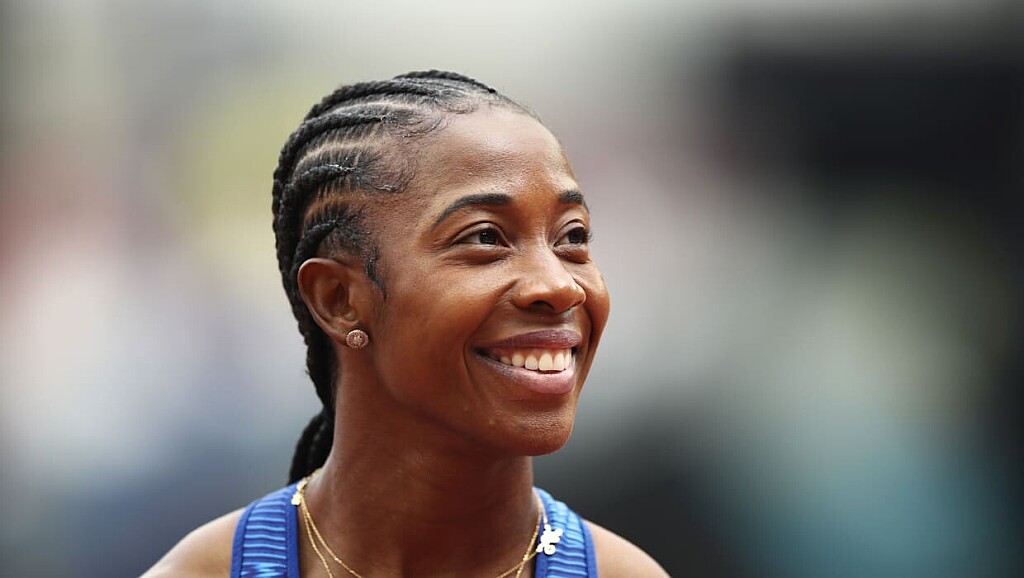
Jamaican athletics superstar Shelly Ann Fraser-Pryce has revealed she is eyeing Paris 2024
Jamaican athletics superstar Shelly Ann Fraser-Pryce has revealed that she is not done yet.
A string of sprinting successes in 2021 including a silver in the women’s 100m and a gold in the 4x100m at Tokyo 2020 have shown the 34-year-old that when it comes to competing, she’s still got more to give.
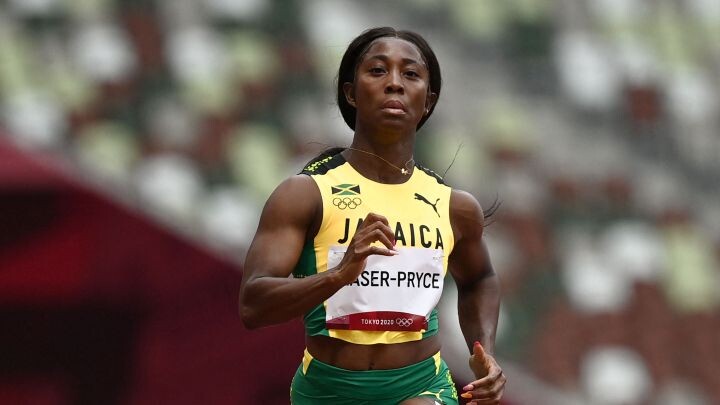
After following up her stint in Japan with a new personal best time of 10.60 posted at the Diamond League meeting in Lausanne Fraser-Pryce says she is not ruling out a run at Paris 2024:
"Before I counted it (Paris 2024) out, but then after the season and just the progress, you kind of know there's more," she told Sky Sports. “I’m looking forward to defending my (world) title at 2022 in Oregon."
"After that season, you look again and you’re still feeling good then why not give it a shot? Paris 2024, I could definitely see it as a thing."
“I definitely think 10.50 is possible,” the eight-time Olympic medallist added. “I’m at the peak of my career.”
Though Florence Griffith-Joyner’s 100m world record of 10.49 seconds from 1988 still stands, there is a growing sense that it might soon be broken.
Reigning Olympic champion Elaine Thompson-Herah, like Fraser-Pryce, came close to the time at the Eugene Diamond League in late August. The double-double winning Jamaican clocked 10.54.
by Chloe Merrell
Login to leave a comment
Paris 2024 Olympic Games
For this historic event, the City of Light is thinking big! Visitors will be able to watch events at top sporting venues in Paris and the Paris region, as well as at emblematic monuments in the capital visited by several millions of tourists each year. The promise of exceptional moments to experience in an exceptional setting! A great way to...
more...
200m World bronze medalist Alex Quiñonez murdered in Ecuador
News broke on Saturday that world 200m bronze medalist, Alex Quiñonez, was murdered in his native Ecuador in the city of Guayaquil.
The 32-year-old was reportedly shot multiple times by unknown assailants along with his friend, Jogyro Alcala.
Quiñonez finished third in the 200m in Doha two years ago, becoming the first Ecuadorian athlete to win a world medal at a track event. He ran his personal best of 19.87 in the 200m in 2019 in Lausanne, Switzerland, setting a new national record for Ecuador, and was also the national record-holder in the 100m and the 400m.

Unfortunately, Quiñonez was unable to participate in the Tokyo Olympic Games after he was suspended for violating the rules of whereabouts information.
“Today we lost a great athlete, someone who made us dream, made us excited. With deep pain, we confirm the murder of our athlete Alex Quiñonez in the city of Guayaquil,” the Ecuadorian Ministry of Sports said in a statement on Twitter.

Quiñonez is not the first athlete this month who has been murdered. Two-time world 10,000m bronze medalist, Agnes Tirop of Kenya was killed earlier this month by her husband, Ibrahim Rotich, who has now been arrested and taken into custody.
The exact circumstances surrounding Quiñonez’ death are still unknown, and an investigation into his murder is still ongoing. The news has sparked an outpouring of grief across the country, with many calling on the Ecuadorian police to take action against the recent surge in violence throughout the nation.
by Brittany Hambleton
Login to leave a comment
Sprint stars Shelly-Ann Fraser-Pryce and Andre De Grasse will headline the Kamila Skolimowska Memorial in Poland
On Sunday 5, a World Athletics Continental Tour Gold meeting, while there will also be a wealth of champions in action in the field events, including a fond farewell to a legend of Polish athletics in Piotr Malachowski.
Fraser-Pryce will race her specialist event, the 100m, where she will face stiff opposition from compatriot Shericka Jackson. However, the two-time Olympic 100m champion should prove tough to beat, having clocked a PB of 10.60 in Lausanne last week.
De Grasse will line up in the 200m, the event in which he’s the Olympic champion, having clocked a Canadian record of 19.62 to take gold in Tokyo, which he backed up in fine style with a wind-assisted 9.74 (2.9m/s) to win over 100m at the Eugene Diamond League. Also in the field are Italy’s Filippo Tortu, Turkey’s Ramil Guliyev and Britons Nethaneel Mitchell-Blake and Reece Prescod.
Another Olympic champion will be in action in the men’s 110m hurdles, with Jamaica’s Hansle Parchment looking to back up that Tokyo win against a formidable US duo in Devon Allen and Daniel Roberts.
Brazil’s Alison Dos Santos, who took bronze in Tokyo in a South American record of 46.72, should prove tough to beat in the 400m hurdles. Fellow Olympic finalists Yasmani Copello of Turkey and Rasmus Magi of Estonia should be his closest pursuers.
US pair Michael Cherry and Vernon Norwood will be big contenders in the men’s 400m along with Botswana’s Isaac Makwala, while Poland’s Karol Zalewski, Kajetan Duszynski and Jakub Krzewina should mount a strong challenge on home turf.
The favourite for the women’s 400m is Marileidy Paulino of the Dominican Republic, who backed up her Olympic silver medal with recent wins in Lausanne (50.40) and Paris (50.12). Britain’s Jodie Williams will also be in the reckoning following her PB of 49.97 to finish sixth in the Olympic final, while the home charge is led by Justyna Swiety-Ersetic and Anna Kielbasinska, the latter in sparkling form following a PB of 50.38 in La Chaux-de-Fonds last month.
Nigeria’s Tobi Amusan, who clocked 12.60 to finish fourth in the Olympic final, should be tough to beat in the 100m hurdles, though US pair Sharika Nelvis and Christina Clemons will put it up to her along with Britain’s Cindy Sember.
The women’s 400m hurdles features a clash between the fourth-, fifth- and sixth-place finishers in the Olympic final: Janieve Russell of Jamaica along with Anna Ryzhykova and Viktoriya Tkachuk of Ukraine.
There will be a string of local heroes in action across the field events, with Olympic champion Wojciech Nowicki headlining the men’s hammer field, which also includes four-time world champion Pawel Fajdek and the man who split the Poles on the podium in Tokyo: Eivind Henriksen of Norway.
All eyes will be on Piotr Malachowski in the men’s discus as the 38-year-old performs in front of his home crowd for the last time before bringing the curtain down on a career that has included one world title, two world silver medals, two European golds and two Olympic silvers.
“Over 20 years of training, effort and sacrifice are now behind me,” said Malachowski. “It was a great time, full of joy. It is now times to say goodbye. I am retiring, bidding farewell to the fans, thanking them for the invaluable support they have given me over the years.”
Also in the field are Jamaica’s Fedrick Dacres, Slovenia’s Kristjan Ceh and Lithuania’s Andrius Gudzius.
Poland has a typically strong hand in the men’s pole vault where Piotr Lisek and Pawel Wojciechowski take on Olympic silver medallist Chris Nilsen and world champion Sam Kendricks.
The men’s shot put will be a must-see event, reuniting the top four finishers from the Tokyo Olympics: USA’s Ryan Crouser and Joe Kovacs along with New Zealand’s Tom Walsh and Brazil’s Darlan Romani.
Johannes Vetter is the star attraction in the men’s javelin, the German looking to put his Tokyo disappointment firmly behind him as he takes on Olympic silver medallist Jakub Vadlejch of the Czech Republic.
Italy’s Gianmarco Tamberi will take star billing in the men’s high jump where the Olympic champion takes on Olympic bronze medallist Maksim Nedasekau, while the women’s high jump features Ukraine’s Yaroslava Mahuchikh, Yuliya Levchenko and Iryna Herashchenko along with Poland’s Kamila Licwinko.
Poland’s Maria Andrejczyk will be a popular presence among fans, not only due to her Olympic silver in Tokyo but due to her decision to auction off that medal to raise money for a Polish toddler’s heart surgery. Polish convenience store Zabka won the auction and returned the medal to Andrejczyk, who said that she believes “the good we do comes back to us.” In Silesia she will take on world champion Kelsey-Lee Barber of Australia.
Poland’s Malwina Kopron will take on France’s Alexandra Tavernier in the women’s hammer, the woman she beat to the bronze medal at the Tokyo Olympics, while fellow finalist Joanna Fiodorow is also in the field. Portugal’s Auriol Dongmo is the leading entrant in the women’s shot put.
Olympic 10,000m champion Selemon Barega of Ethiopia and 3000m steeplechase champion Soufiane El Bakkali of Morocco are the star attractions in the distance races, the two squaring off over 3000m in a field that includes rising star Tadese Worku of Ethiopia, the world U20 champion, and Abel Kipsang, who finished fourth in the Olympic 1500m final.
by World Athletics
Login to leave a comment
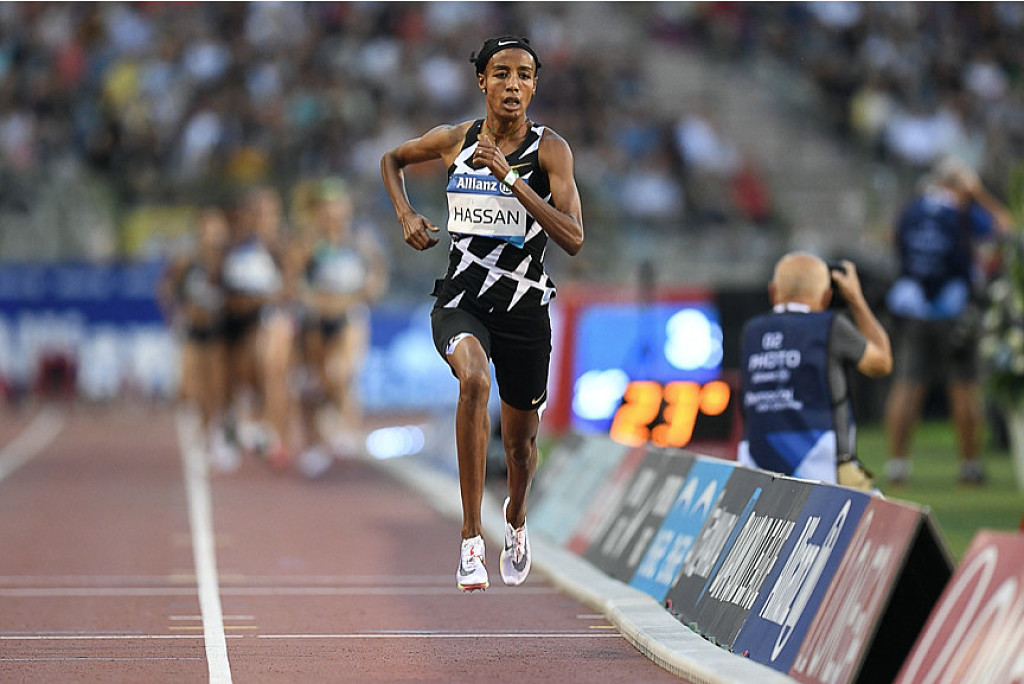
Duplantis, Hassan and Cherry break meeting records in Brussels
Meeting records are hard to come by in the Wanda Diamond League, given it’s the premier one-day meeting circuit in the world, but three such marks fell at the Memorial Van Damme in Brussels on Friday (3), thanks to Mondo Duplantis, Sifan Hassan and Michael Cherry.
When the men’s pole vault got underway, some 40 minutes before the first track event, the King Baudouin Stadium was still filling up. By the time the contest reached its climax three hours later, with all other disciplines having long finished, Duplantis commanded the attention of every single person inside the venue.
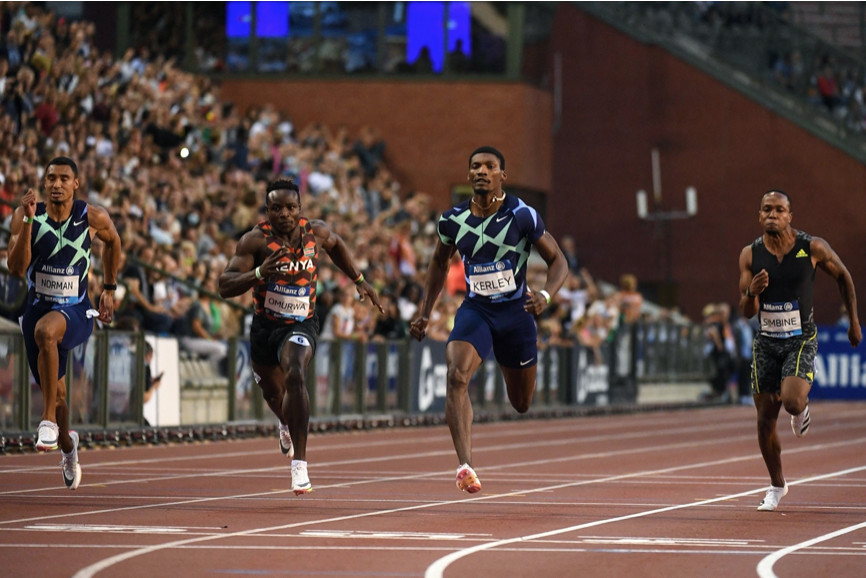
Though the world record once again evaded Duplantis tonight, the 28,000 spectators – the largest gathering for an athletics meeting since the start of the Covid-19 pandemic – were treated to a vaulting masterclass from a legend of the sport.
The Olympic champion opened at 5.50m, skipped 5.65m and then got over 5.75m and 5.85m on his first tries. Four other men were left in the competition at this point, but only two of them got over 5.85m; Olympic silver medallist Christopher Nilsen did it on his first try, while US compatriot KC Lightfoot scraped over on his third attempt.
The US duo couldn’t quite manage 5.91m tonight, though, but Duplantis once again went clear at the first time of asking to confirm his victory. The 21-year-old Swede then raised the bar to 6.05m in a bid to add some height to his own 6.00m meeting record from last year. He brought the bar down with his first two tries, but got over it on his third attempt.
The bar was then raised to the would-be world record height of 6.19m. Following a short wait while the technical officials ensured all was set for a record attempt, Duplantis took to the runway but wasn’t particularly close to clearing the bar on his first attempt. His second try was significantly closer, and his third attempt was also decent, but a world record wasn’t to be tonight.
Nevertheless, Duplantis wasn’t disappointed with his winning height of 6.05m. Only he, Sergey Bubka and two-time world champion Sam Kendricks have ever vaulted higher outdoors.
"I was really close to the world record," said Duplantis. "Everything was perfect, it was just up to me. I haven't had such an amazing atmosphere during a competition in a really long time."
Almost a month has passed since Sifan Hassan’s final race at the Olympic Games, where she won two gold medals and one bronze. Having raced just once during that time, the Dutch distance star arrived in Brussels well rested and ready to take on the mile.
She was the only athlete capable of sticking with the pacemakers as they led through the first 400m in 1:02.03. By the time the second pacemaker reached the 800m point in 2:04.97, with Hassan still in close attendance, the rest of the field was about 30 metres adrift.
With a lap to go, it was clear from the wavelight technology that an improvement on Hassan’s 4:12.33 world record was not on the cards in Brussels, though it never really seemed as though that was her ambition for the race anyway. By this stage, her lead had grown to 50 metres and she kicked for the final lap, going on to win by more than six seconds.
Her winning time of 4:14.74, the fifth-fastest performance in history, smashed Faith Kipyegon’s meeting record by two seconds. Ethiopia’s Axumawit Embaye was second in 4:21.08, closely followed by Australia’s Linden Hall, who broke her own Oceanian record with 4:21.38.
“Since the start of the pandemic, we haven’t had such a big crowd and I’m so happy to see them,” said Hassan. “We haven’t experienced it for nearly two years; it makes you feel special. It’s amazing, I really love it.”
In Tokyo last month, Michael Cherry was beaten to the 400m bronze medal by just 0.02 as Kirani James pipped the US sprinter at the line. Today’s race in Brussels was the first clash between the pair since the Olympic final, and Cherry ran like a man with a point to prove.
He went out hard, as did James, and by half way the duo had started to open up a clear gap on the likes of Isaac Makwala and Liemarvin Bonevacia.
James almost drew level with Cherry on the final bend, but Cherry had another gear left and forged ahead down the home straight, crossing the line in a lifetime best of 44.03 to take 0.03 off Michael Johnson’s meeting record from 1998.
James finished second in 44.51 with Makwala taking third place in 44.83.
The meeting record may have remained intact in the women’s high jump, but it proved to be one of the most enthralling contests of the night.
Olympic champion Mariya Lasitskene breezed through the first few heights and hadn’t recorded any failures up to and including 1.98m. World silver medallist Yaroslava Mahuchikh, who needed three attempts to clear 1.95m, also got over 1.98m on her first try, while Olympic silver medallist Nicola McDermott needed two jumps to clear it.
But McDermott was then the first to go clear at 2.00m, getting over on her first try, then Lasitskene did likewise. Mahuchikh succeeded on her second attempt at 2.00m, but then nailed 2.02m on her first attempt, taking the lead at a critical point of the competition.
Lasitskene missed once and then passed to 2.04m, while McDermott had two misses at 2.02m before registering a third failure at 2.04m. Neither of the trio managed to get over 2.04m, leaving Mahuchikh as the winner. It was just the second time in Diamond League history that three women have cleared 2.00m in the same competition.
With Lasitskene having won in Lausanne and McDermott winning in Paris, Mahuchikh’s triumph in Brussels means all three Olympic medallists have achieved Diamond League wins since the Tokyo Games.
Kerley makes Diamond League history
Olympic 100m silver medallist Fred Kerley won the short sprint, becoming the first man to win over 100m, 200m and 400m in the Wanda Diamond League.
World leader Trayvon Bromell blasted into an early lead and held his form well, but Kerley rallied and held off the additional challenge from Michael Norman in lane seven, dipping well on the line to take the victory in 9.94.
Bromell held on to take second place in 9.97, just 0.01 ahead of Michael Norman (9.98), completing a US sweep of the top three places.
Christine Mboma, also an Olympic silver medallist, won the women’s 200m. The Namibian teenager came through strongly in the closing stages to edge in front of Jamaica’s Shericka Jackson and world champion Dina Asher-Smith.
Mboma stopped the clock at 21.84 while Jackson took second place in 21.95. Asher-Smith recorded a season’s best of 22.04 in third, and US 100m champion Sha’Carri Richardson was a few strides adrift in fourth place (22.45).
Burundi’s Francine Niyonsaba produced a similarly well-timed finish to win the 5000m.
Once the last of the pacemakers dropped out at 2000m, Niyonsaba took up the running at the front of the pack with two-time world champion Hellen Obiri close behind. The Kenyan led for a brief stint too, passing through 3000m in a swift 8:42.57.
Niyonsaba, who finished fifth over 10,000m at the Tokyo Olympics, led again for most of the final kilometre, but Obiri kicked into the lead when the bell sounded for the final lap. She appeared to be on her way to victory, but Ethiopia’s Ejgayehu Taye came back strongly and briefly led with about 90 metres to go, then a rejuvenated Niyonsaba came back to take the lead in the closing stages, crossing the line in a national record of 14:25.34.
Taye took second place in 14:25.63 with Obiri claiming third in 14:26.23. World silver medallist Margaret Chelimo Kipkemboi set a PB of 14:27.12 in fourth as the top seven women finished inside 14:32 – unprecedented depth for a 5000m race.
Goule, Rotich and McSweyn take middle distances
Exactly one month since her eighth-place finish at the Tokyo Olympics, Jamaica’s Natoya Goule rebounded with a satisfying win over 800m, beating several women who finished ahead of her at the Games.
With the pacemaker passing through the first lap in 56.99, the field was still relatively tightly bunched with 300 metres to go. Goule held the lead, but Olympic silver medallist Keely Hodgkinson moved on to the Jamaican’s shoulder on the final bend and looked poised to strike.
Goule had saved something for the finish, though, and she held off the challenge from the British teenager, winning in 1:58.09. Hodgkinson was second in 1:58.16 from compatriot Jemma Reekie (1:58.77).
Stewart McSweyn led an Australian 1-2 in the men’s 1500m. The Oceanian record-holder overtook a fading Mohamed Katir on the home straight to win in 3:33.20 with compatriot Oliver Hoare taking second place (3:33.79). Poland’s Michal Rozmys was third in 3:33.96.
Olympic silver medallist Ferguson Cheruiyot Rotich was a comfortable winner of the non-scoring men’s 800m, crossing the line in 1:43.81 to win by more than a second from Belgium’s Eliott Crestan (1:45.24).
Hurdles victories for Dos Santos and Visser
Racing for the first time since taking Olympic bronze and moving to third on the world all-time list, Brazil’s Alison dos Santos won the men’s 400m hurdles with his trademark strong finish.
Kyron McMaster of the British Virgin Islands led for most of the race, making up the stagger on Dos Santos, drawn one lane outside him, by the half-way point. Dos Santos stuck with McMaster around the final bend and drew level with Jamaica’s Jaheel Hyde. McMaster hit the penultimate hurdle, throwing off his rhythm slightly as he went into the final barrier. Dos Santos, meanwhile, came off the 10th hurdle much better and went on to win in 48.23.
McMaster finished second in 48.31 and Yasmani Copello took third place in 48.45.
The closest finish of the day came in the women’s 100m hurdles, in which Nadine Visser won by just eight thousandths of a second from Tobi Amusan, both timed at 12.69 (0.7m/s). Olympic bronze medallist Megan Tapper was third in 12.77.
Elsewhere, Steffin McCarter saved his best for last to win the men’s long jump. His sixth-round leap of 7.99m was not only the best in the ‘final three’ contest; it was also the top mark of the entire competition. Ruswahl Samaai was second thanks to his last-round leap of 7.89m, having jumped 7.95m earlier in the competition.
Login to leave a comment
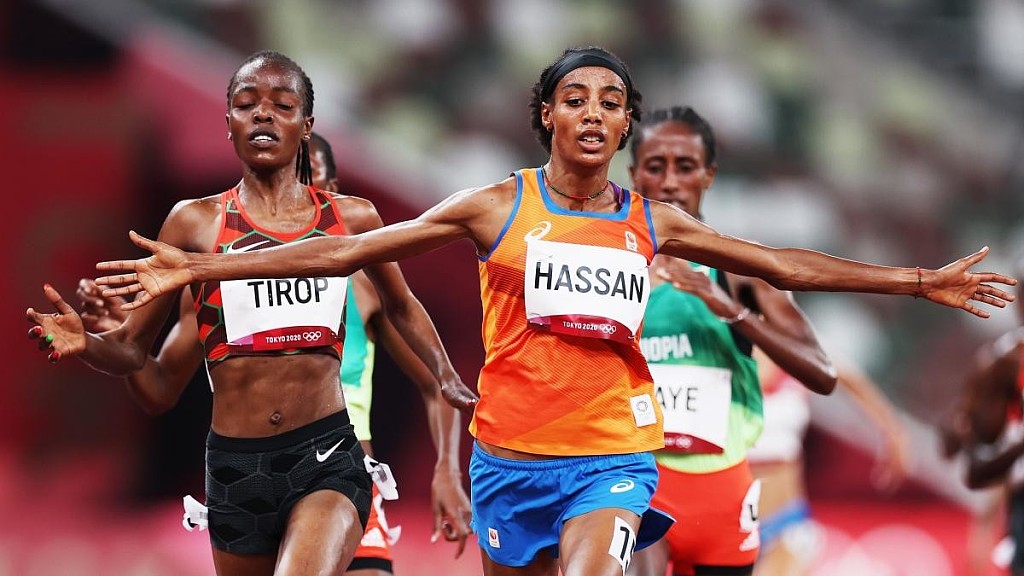
Sifan Hassan will headline classy Brussels Diamond League field
Dutch all-rounder Sifan Hassan, who won two golds and a bronze in an unprecedented effort at a distance treble at the Tokyo Olympics, heads up a talent-loaded field at the penultimate meeting of the 2021 Diamond League series in Brussels on Friday.
In the last event before the two-day Diamond League finals in Zurich on September 8-9, the men's 100m featuring Tokyo silver medallist Fred Kerley of the US will also be a highlight.
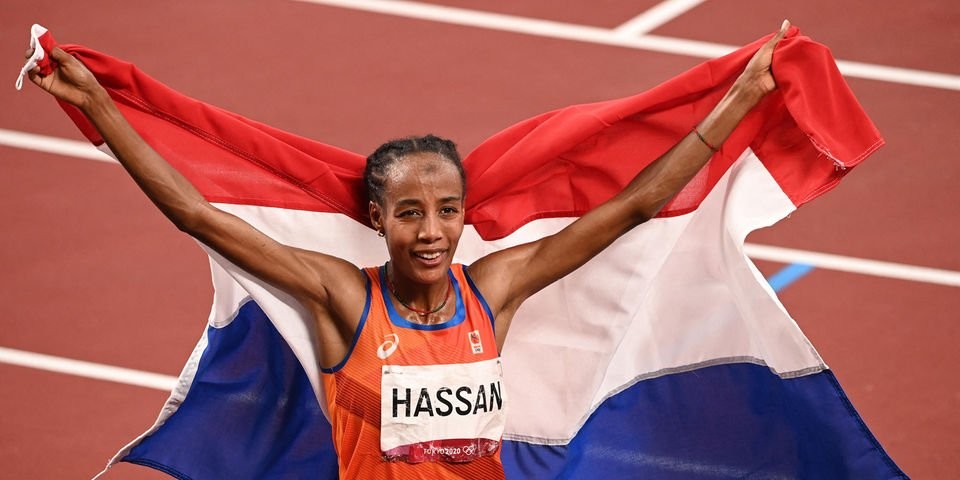
Kerley will be up against compatriots Trayvon Bromell, Michael Norman and Ronnie Baker, along with Canada's Olympic 200m champion Andre De Grasse.
Kerley, fresh from a personal best of 19.79sec in the 200m in Paris last week, said: "I've got a lot of confidence in my current form and want to show what I've got in the upcoming weeks.
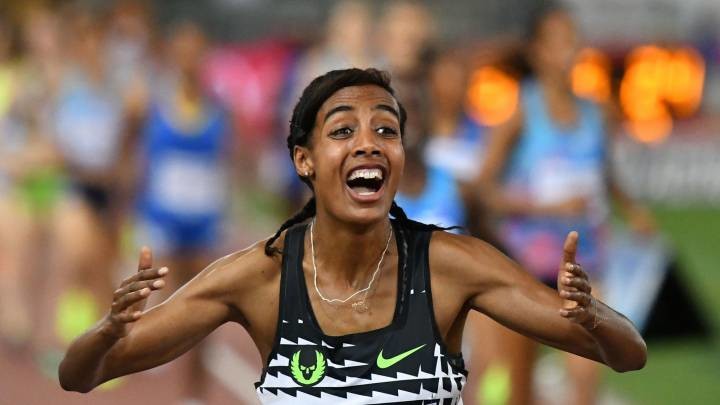
"My goal is very clear: I want to be the fastest man in the 100m, 200m and the 400m."
Kerley joined an exclusive club this year of sprinters who have broken 10 seconds in the 100m, 20 seconds in the 200m and 44 seconds in the 400m. Only Norman and South African Wayde van Niekerk have also achieved the feat.
"I want to be the best at all three distances. What makes someone the best, maybe a world record? I know I have got the potential to break the 400m record.
"I want to be a legend, like Usain Bolt. I see him as a big brother. To me he will always have a spot on the podium of the greatest of all time, he is a big example."
Hassan will race the mile at the King Baudouin Stadium, a venue she knows well, having broken the one-hour world record there last year.
The Ethiopian-born Dutch runner is also the world record holder in the mile and, given her sparkling form, it would take a brave person to bet against her winning once again.
The women's 200m is packed full of quality, with Tokyo bronze medallist Shericka Jackson, Olympic finalist Marie-Josee Ta Lou and a handful of sprinters who have a point to prove after Olympic disappointment this summer.
Outspoken American Sha'Carri Richardson missed out on a trip to Tokyo after being handed a one-month ban after testing positive for cannabis while Britain's Dina Asher-Smith was forced to pull out through injury.
Christine Mboma, the 18-year-old Namibian who is barred from running events between 400m and the mile because of her high testosterone levels, won a surprise silver in the 200m in Tokyo and will likely be a strong contender in Brussels.
Having rebounded from a disappointing outing at Lausanne with an emphatic win in Paris, Olympic pole vault champion Armand "Mondo" Duplantis is likely to again attempt to better his own world record of 6.18m.
Login to leave a comment
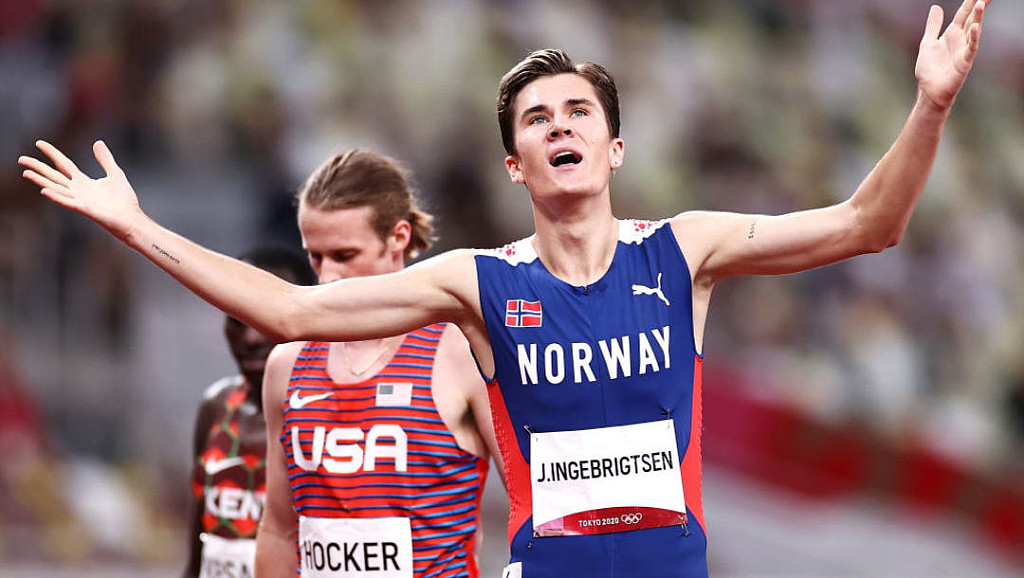
Jacob Ingebrigtsen and Karsten Warholm will attack European records in Lausanne
The Athletissima meeting in Lausanne on Thursday (Aug 26) is part of the Diamond League series. Perhaps the most intriguing event of the night, though, is an event that is not part of the Diamond League programme – the men’s 400m.
Karsten Warholm will enjoy a rare race on the flat with no barriers in his way. His target? Thomas Schönlebe’s long-standing European record of 44.33 which was set when the East German won the 1987 world title in Rome ahead of Innocent Egbunike of Nigeria and Butch Reynolds of the United States.
The mark has stood for 34 years. Warholm’s best time is 44.87 which dates back to 2017. However the 25-year-old Norwegian took down Kevin Young’s long-standing world 400m hurdles record earlier in Oslo this summer and then annihilated his own mark with a further improvement to 45.94 in the Olympic final in Tokyo this month.
What’s more, Warholm equalled Schönlebe’s European indoor 400m record of 45.05 in Glasgow in 2019. The omens are good and in Lausanne he faces a field that is led by Isaac Makwala – a 43.72 man who was seventh in the Olympic final.
Jakob Ingebrigtsen also has a European record in his sights – Mohammed Mourhit’s 3000m mark of 7:26.62 which was set 21 years ago in Monaco and one-year before he was suspended for using EPO. Ingebrigtsen ran 7:27.05 in Rome last year when he finished close behind Ugandan Jacob Kiplimo.
Kiplimo is again in the field on Thursday along with Olympic 10,000m champion Selemon Barega of Ethiopia, Canadian Mohammed Ahmed, American Paul Chelimo, Australian Stewart McSweyn and Ethiopia’s Olympic steeplechase silver Lamecha Girma.
Andy Butchart, meanwhile, will be having a crack at Mo Farah’s UK record of 7:32.62 in what promises to be a fast race.
Fresh from her stunning 10.54 100m run in the Diamond League in Eugene on Saturday, Elaine Thompson-Herah travels back to Europe to race over the distance again. Her rivals include fellow Jamaican Shelly-Ann Fraser-Pryce, in-form Swiss sprinters Ajla Del Ponte and Mujinga Kambundji, Marie-Josee Ta Lou of the Ivory Coast and Britain’s Daryll Neita.
The meeting actually kicks off with a city center high jump contest between Olympic medalist Mutaz Essa Barshim, Gianmarco Tamberi and Maksim Nedasekau on Wednesday (Aug 25) in Lausanne. It acts as a prelude to the main event on Thursday and will see a rematch of the men who famously shared gold in Tokyo.
Back in the stadium on Thursday, the field events see triple jump world record-holder Yulimar Rojas in action, as well as German javelin star Johannes Vetter and shot put giants Ryan Crouser, Joe Kovacs, Tom Walsh and Darlan Romani.
by Jason Henderson
Login to leave a comment
Jamaican Olympic superstar Elaine Thompson-Herah confirmed for Lausanne and Paris
Fresh from her triple Olympic triumph in Tokyo, Jamaican superstar Elaine Thompson-Herah will take on Olympic silver medalist Shelly-Ann Fraser-Pryce at the Wanda Diamond League meeting in Lausanne on August 26.
In a mouth-watering clash of the titans, the top six finishers from the Olympic 100m final will be in action at Lausanne’s Athletissima meeting as Thompson-Herah and Fraser-Pryce line up against fellow Jamaican Shericka Jackson, the bronze medalist in Tokyo, as well as Ivorian star Marie-Josée Ta Lou and Swiss duo Ajla Del Ponte and Mujinga Kambundji.
Thompson-Herah and Jackson will also clash over 100m at the Meeting de Paris on August 28 when they’ll also take on world 200m champion Dina Asher-Smith.
They are three of several Olympic medalists who’ll be in action at the Charlety Stadium later this month.
All three podium finishers in the women’s high jump will reunite in the French capital as Maria Lasitskene takes on Australia’s Nicola McDermott and Ukraine’s Yaroslava Mahuchikh.
Olympic pole vault champion Mondo Duplantis takes on USA’s Chris Nilsen, the silver medalist in Tokyo, as well as two-time world champion Sam Kendricks – who was unable to compete in Tokyo – and former world record-holder Renaud Lavillenie.
Olympic steeplechase champion Soufiane El Bakkali and world champion Conseslus Kipruto – another duo that was unable to clash in Tokyo – will be in action in Paris, as will Olympic bronze medalist Benjamin Kigen.
Puerto Rican sprint hurdler Jasmine Camacho-Quinn, Indian javelin thrower Neeraj Chopra, Jamaican sprint hurdler Hansle Parchment and US discus thrower Valerie Allman are four more Olympic champions who’ll be heading to the French capital later this month. Allman will face two-time Olympic champion Sandra Perkovic and French veteran Melina Robert-Michon, while Parchment will be up against Olympic finalists Pascal Martinot-Lagarde and Aurel Manga.
Laura Muir and Kalkidan Gezahegne, who earned Olympic silver over 1500m and 10,000m respectively, will meet in the middle over 3000m in Paris. Meanwhile, Olympic 100m bronze medalist Fred Kerley and Olympic 200m bronze medalist Kenny Bednarek will square off over the half-lap distance.
by World Athletics
Login to leave a comment
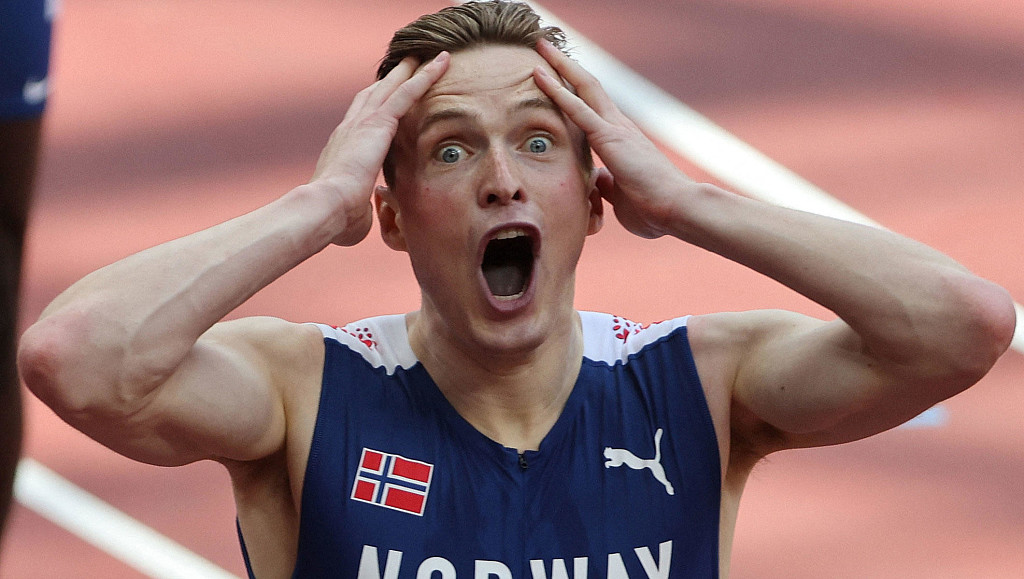
The Four Races That Still Need to Happen in 2021
The Tokyo Olympics may be over, but the track & field season most definitely is not. We’ve still got five Diamond Leagues to go, including the final in Zurich on September 8-9. And while Tokyo produced a number of amazing races, there were a few that we didn’t get to see. Here are the four races that still need to happen in 2021. Diamond League meet directors, pay attention (and have your checkbook handy…these races won’t be cheap to organize).
Women’s 100 meters: Elaine Thompson-Herah vs. Shelly-Ann Fraser-Pryce vs. Sha’Carri Richardson
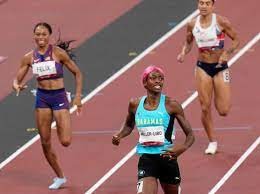
Of the six fastest women in history, three of them have run their personal bests this year: Thompson-Herah (10.61 in Tokyo), Fraser-Pryce (10.63 in Kingston), and Richardson (10.72 in Miramar). But we didn’t get to see the three of them in the same race at the Olympics because of Richardson’s positive test for marijuana at the US Olympic Trials.
There may be a bit of a rivalry brewing as well. Remember, after Fraser-Pryce ran 10.63 back in June, Richardson essentially took credit for pushing Fraser-Pryce to a pb (even though Richardson was not even in the race).
And when the Jamaicans were asked about Richardson following the Olympic final, they did not want to talk about her (though to be fair…they had just won Olympic gold and silver). But any mention of even the word marijuana quickly resulted in realizing they didn’t want to talk about Sha’Carri at all.
Chances that it happens: It’s already happening! The Pre Classic has announced its women’s 100m field and all three are entered.
Men’s 400: Karsten Warholm vs. Rai Benjamin vs. Steven Gardiner
Karsten Warholm’s mesmerizing 45.94 world record in the 400 hurdles generated a number of questions. One of the natural ones: how fast could he run without the hurdles? Warholm’s personal best in the flat 400 is 44.87, but that dates back to 2017, when his hurdles pb was 48.22. He’s over two seconds faster now in the hurdles, so it’s not unreasonable to think he’s in 43-second shape right now. Benjamin’s pb is 44.31 from 2019.
So let’s throw Warholm and Benjamin in against the Bahamas’ Steven Gardiner, who just ran 43.85 to win the flat 400 in Tokyo, and see how they really stack up.
Chances that it happens: 25%. Warholm has already committed to run the flat 400 in Lausanne on August 26. That’s a great start, but getting Benjamin and Gardiner as well could prove tricky.
Women’s 400: The “Dream Team” vs. Shaunae Miller-Uibo
It was a running joke for most of the 2021 season: America’s best 400-meter runners don’t even run the 400. I mean, just look at the “Dream Team” the US trotted out for its dominant victory in the 4×400 relay: Sydney McLaughlin, Allyson Felix, Dalilah Muhammad, Athing Mu. Only one of those women ran the open 400 in Tokyo.
As incredible as Felix was at the Olympics, taking bronze in the 400 in 49.46, she only had the third-fastest split on that relay (49.38), with Muhammad going 48.94 and Mu a ridiculous 48.32. What could be better than seeing all four Dream Teamers race each other head to head?
Well, how about throwing the two-time Olympic 400 champ into the mix in Shaunae Miller-Uibo? Assuming that field doesn’t collapse from the weight of its collective gold medals (all five of the women have won individual Olympic gold; their combined total is 15 career Olympic golds including relays), the race would be more stacked than the Olympic final we just witnessed.
Chances that it happens: 10%. This one seems like a pipe dream. With the Americans as the major draw, the Pre Classic would be the natural venue for this, but there are two problems. First, there is no women’s 400 at Pre this year (though it’s not too late to add one!). And second, the five athletes above are represented by four different shoe brands. It’s not as if Nike could just magically compel them all to run Pre.
Men’s 5,000: Jakob Ingebrigtsen vs. Joshua Cheptegei vs. Selemon Barega
We already saw Ingebrigtsen vs. Cheptegei in Florence in June, and it was no contest, with Ingebrigtsen pulling away to a world-leading 12:48 as Cheptegei faded late. But Cheptegei revealed in Tokyo that he has been battling a heel injury this year, and while he’s not completely over it, it’s definitely more manageable now (as evidenced by his gold and silver in Tokyo) than it was two months ago in Florence.
Then there’s Barega, who used a sick close (2:24 last 1k, 53 last lap) to win 10k gold but did not run the 5k in Tokyo. Let’s settle the title of best distance runner in the world and pit the Olympic 1500, 5k, and 10k champs together in a 5k on the circuit.
Chances that it happens: 30%. I could see Cheptegei and Barega racing each other in a 5,000 at the Diamond League final (or even the 2-mile at Pre). Getting Ingebrigtsen to join them could be more difficult, however. He’s running the Bowerman Mile at Pre and may opt for the 1500 at the DL final.
by Let’s Run
Login to leave a comment
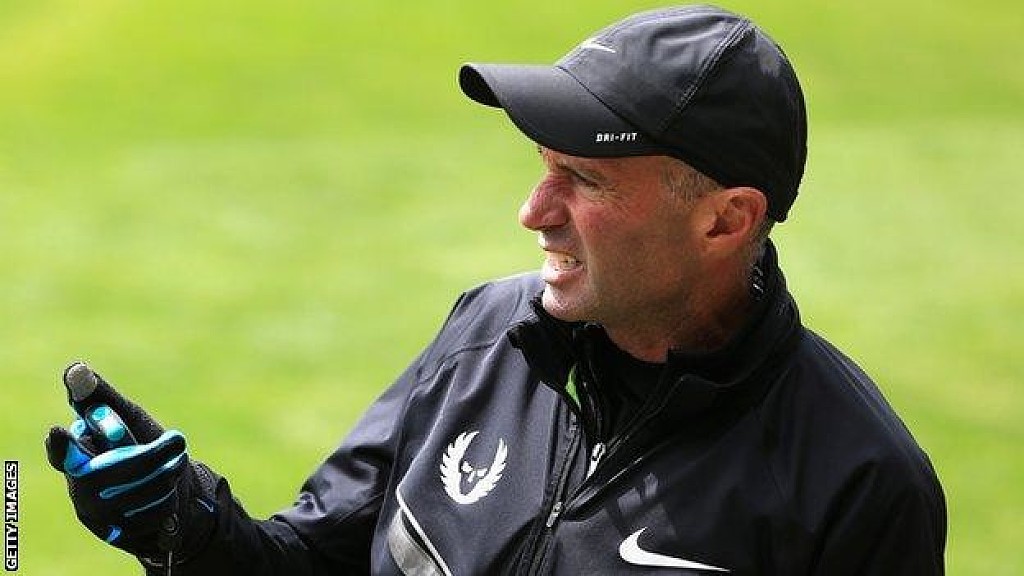
Alberto Salazar appeal takes place in Lausanne
Banned athletics coach Alberto Salazar's appeal against his four-year suspension will be heard by the Court of Arbitration for Sport (CAS) on Wednesday.
Salazar was found guilty of doping violations along with Dr Jeffrey Brown, who treated Salazar's athletes, after an investigation.
The 62-year-old's hearing will take place in Lausanne, Switzerland.

It was set for November but was pushed back because of the Covid-19 pandemic.
Salazar ran the Nike Oregon Project (NOP), based in Beaverton, Oregon. It was established in 2001 and was the home of British four-time Olympic champion Mo Farah, who was coached by Salazar between 2011 and 2017.
A BBC Panorama programme in 2015 focusing on Salazar and the NOP prompted a four-year investigation by the US Anti-Doping Agency (Usada) and a two-year court battle behind closed doors. It eventually resulted in bans for both Salazar and Brown, announced in October 2019.
by BBC Athletics
Login to leave a comment
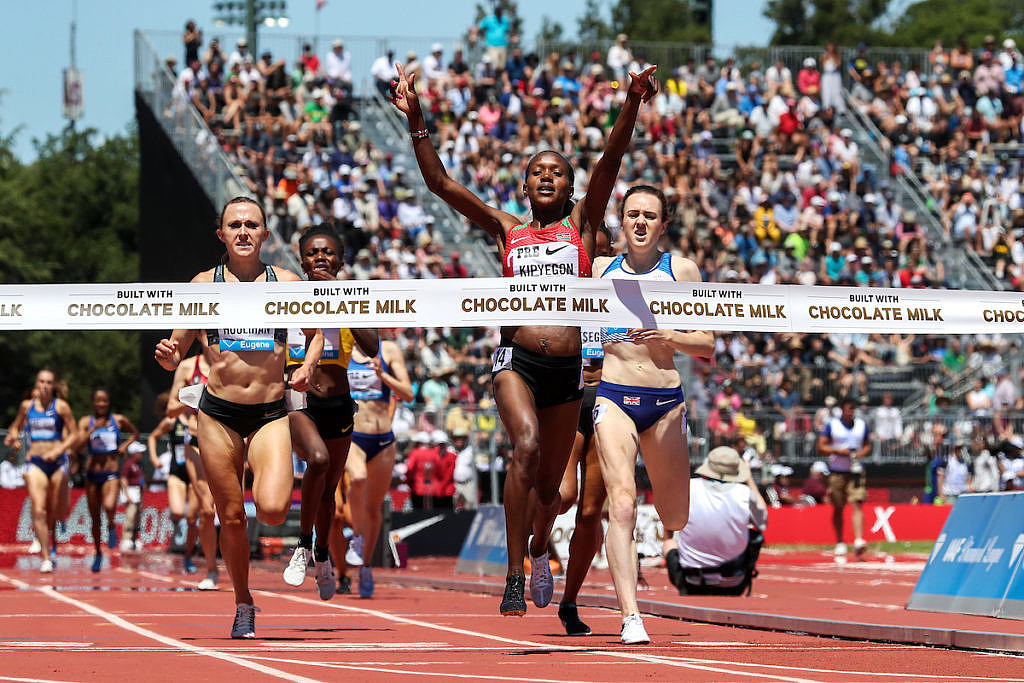
Diamond League meets were postponed due to the pandemic and all 14 meets are set to return in 2021
The 2021 Diamond League program is officially set, and all 14 meets are scheduled to return after many were forced toward cancellation this year due to COVID-19. The season will kick off on May 23 in Rabat, Morocco, and it will continue in full force until September 8 and 9 at the Diamond League Final in Zurich.
While it will be exciting to see any and all events next year after so few meets in 2020, one that many track fans will be looking forward to will be the Prefontaine Classic in Eugene, Ore., which will be the first major international meet held at the University of Oregon’s newly renovated Hayward Field.
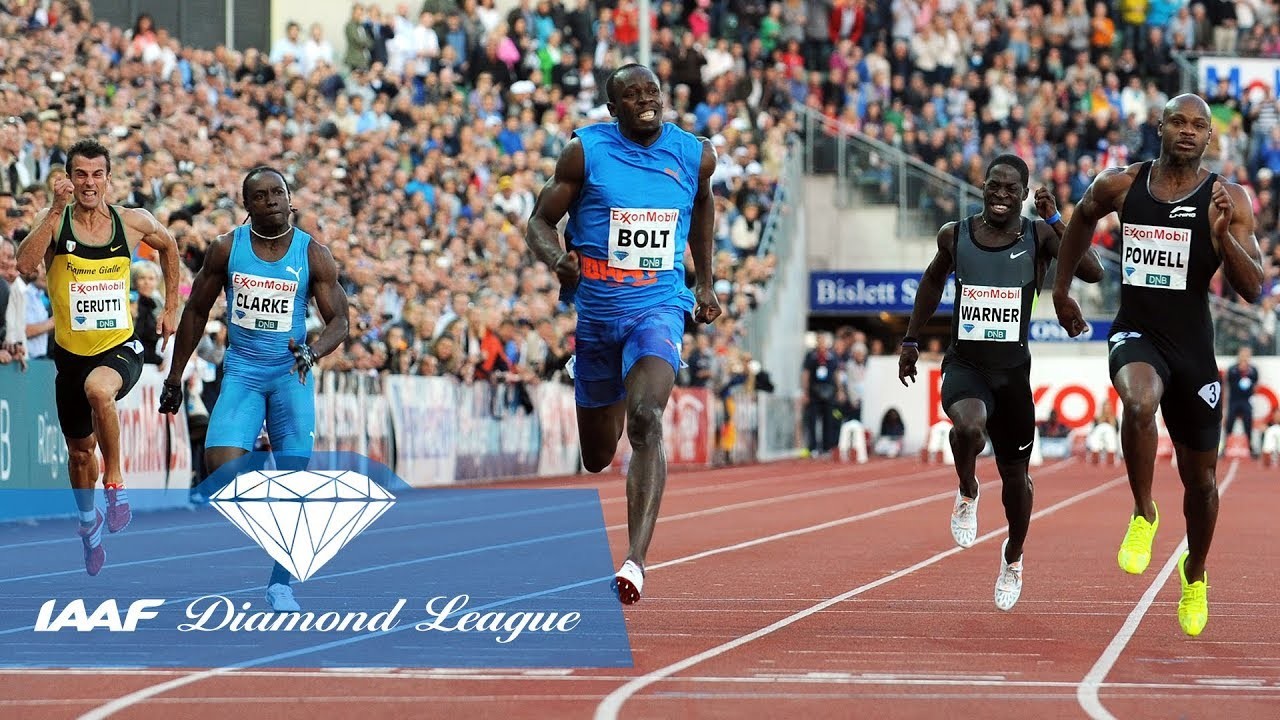
2021 event programs
After cutting the 200m and any event longer than 3,000m from many 2020 Diamond League events (including the final), World Athletics recently announced they will be reversing this decision in 2021. There are now 32 disciplines (16 for men and 16 for women) that will be held at the various Diamond League events.

As it stands now, there will be either 3,000m or 5,000m races (which are counted on the Diamond League schedule as one discipline) at all but two Diamond League events next year. Only the Stockholm and Monaco will not feature these longer runs.
As for the 3,000m steeplechase, the Oslo, London and Lausanne meets are the only three that will not include this event. The 200m will be held at every meet other than the two separate events in China. The two-day Diamond League Final in Zurich will see all 32 disciplines contested.
Hayward field was prepared for competition this year, but events were, of course, unable to run as planned due to the pandemic. Everything is ready to go for 2021, though, and there are two meets scheduled to be held at Hayward before the Prefontaine Classic: the NCAA Outdoor Track and Field Championships and the U.S. Olympic Team Trials.
Both of these meets are set for June, and while they’re certainly major events, they don’t compare to the Pre Classic, which will attract top athletes from all over the world. The Pre is a one-day affair slated for August 21, and it will feature a number of exciting events. For running fans, the main competitions to look forward to at Hayward will be the men’s and women’s 100m and 200m races and the men’s and women’s 1,500m.
by Ben Snider-McGrath
Login to leave a comment
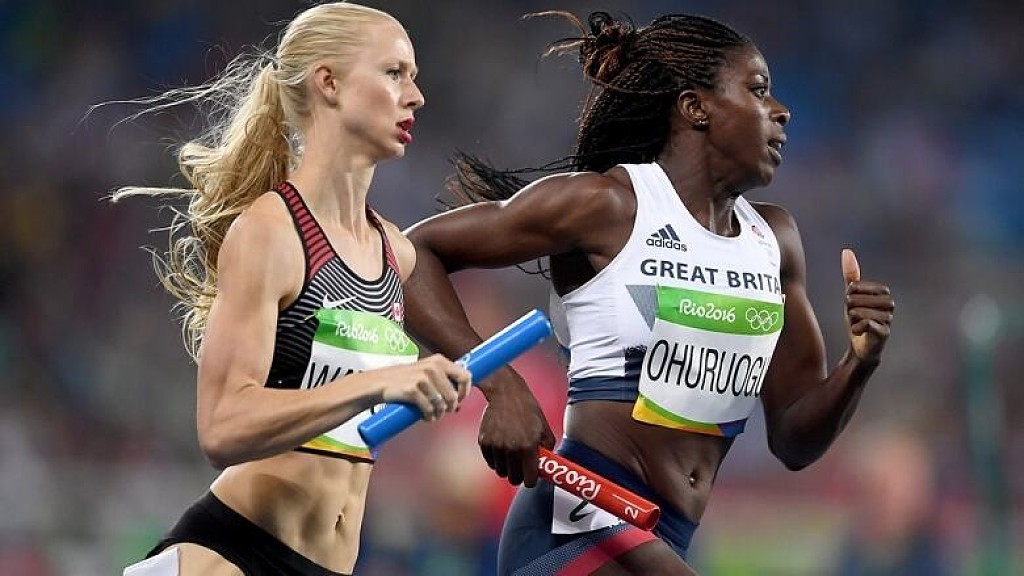
Diamond League unveils 14-meet schedule for 2021 track and field season
The Diamond League on Tuesday released its provisional calendar for the 2021 season, which will consist of 14 athletics meetings beginning in Rabat in May and ending in Zurich in September.
Doha will stage a meeting on May 28 after which Rome will host the first European event of the season on June 4, with Oslo hosting a week later. Meetings in Stockholm, Monaco and London are scheduled for the first two weeks of July.
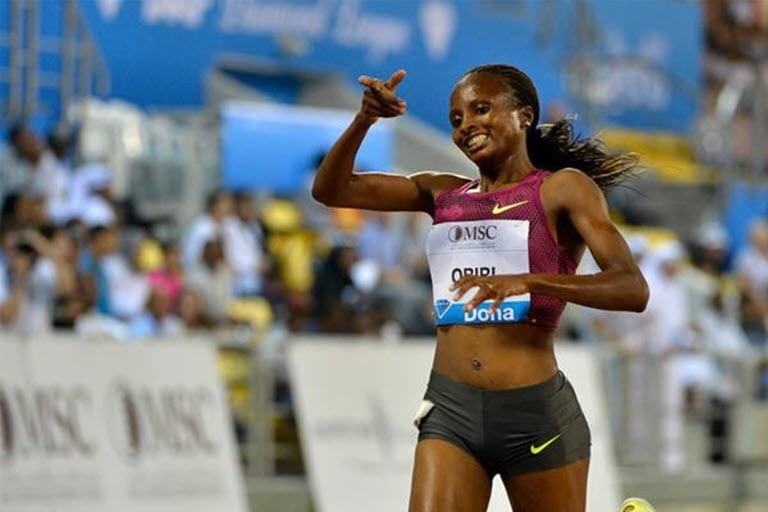
"The calendar is strictly provisional at this stage and remains subject to changes depending on the global health situation in 2021," organizers said in a statement.
After a one-month break for the rearranged Tokyo Olympics, action will resume in Shanghai on Aug. 14.
Eugene will host its first Diamond League meeting on Aug. 21, with China to hold its second event of the season the following day.
The final leg will take place in Europe with meetings in Lausanne, Paris and Brussels before the season finale in Zurich from Sept. 8-9.
The calendar remains provisional and is subject to changes depending on the global health situation, the Diamond League said.
The 2020 calendar was hit hard by the COVID-19 pandemic, with several events cancelled and others rescheduled.
2021 Diamond League calendar
Rabat — May 23
Doha — May 28
Rome — June 4
Oslo — June 10
Stockholm — July 4
Monaco — July 9
London — July 13
Shanghai — Aug. 14
Eugene — Aug. 21
China — Aug. 22
Lausanne — Aug. 26
Paris — Aug. 28
Brussels — Sept. 3
Zurich — Sept. 8-9
by World Athletics
Login to leave a comment
Competition updates for some of the best races around the world
Here is a round-up of updates relating to international competitions, from cancellations to postponements and confirmations.
This page covers announcements made since the start of July. Up until the end of June, most other significant announcements were incorporated into our 'new normal' reporting pages.
If you're a competition organiser and have news to share regarding the staging of your event, please share it with us.
Boston Marathon (was 19 Apr 2021, now autumn 2021) - postponed
The Boston Athletic Association announced that the 125th Boston Marathon, traditionally held on the third Monday in April — Patriots’ Day in the Commonwealth of Massachusetts — will be postponed until at least the fall of 2021 due to the ongoing Covid-19 pandemic.Announcement (28 October)
Tokyo Marathon (was 7 Mar 2021, now 17 Oct 2021) - rescheduled
The 2021 Tokyo Marathon will be held on Sunday 17 October 2021 with the intention of having an elite and mass race. Further details will be released in due course.Announcement (9 October)
Cross Internacional de Soria (22 Nov 2020) - cancelled
“The current situation in our territory, although much more favorable than in recent times, makes it impossible for us to stage the Cross Internacional de Soria. This Soriana Athletics Delegation, fully supported in its activities by the Soria City Council and the Soria Provincial Council, has therefore decided to cancel the 2020 Cross Internacional de Soria."(8 October)
Athens Authentic Marathon (8 Nov 2020) - cancelled
"Even by following a strict manual of rules and regulations - staging only the marathon race and not the shorter races, reducing the number of participants and having all participants to go through a Covid-19 test before the race - it was not enough. It seems that such measures would not secure the absolute safety of runners’ health, which is and will be the top priority in our minds."Announcement (1 October)
Cross de Atapuerca (15 Nov 2020) - cancelled
“Given the evolution of the Covid-19 pandemic and the impossibility of guaranteeing the safety of participants and the general public, it has been decided to cancel the Cross de Atapuerca for this year. We look forward to enjoying this outstanding sporting event again next year."(23 September)
European Cross Country Championships (13 Dec 2020) - cancelled
European Athletics has confirmed the cancellation of the European Cross Country Championships that was due to take place in Dublin, Ireland, on 13 December. As a part of an Executive Board meeting held in Lausanne, European Athletics spoke with the Fingal-Dublin 2020 local organising committee concerning the current Covid-19 situation in Ireland and the impact that this may have on the 2020 European Cross Country Championships. It soon became clear that, due to the overall uncertainty on hosting mass sporting events, the existing sanitary restrictions in Ireland, and the travel restrictions imposed across Europe due to the coronavirus pandemic, it would not be possible to host the event as scheduled.
Valencia Marathon (6 Dec 2020) - UPDATE
Update: The mass race has been cancelled, but the elite races will take place.
World Mountain Running Championships (13-14 Nov 2020) - cancelled
"Together with our friends in the organisation team (Arista events), the local Haria government on Lanzarote and the Spanish Athletics Federation (RFEA), we have decided that this is the best action to take. It is regrettable that our mountain running community and family can not meet and share the experiences together that we have grown to love over the past 36 years of WMRA competitions."Announcement (4 September)
Meeting Città di Padova (12 Sep 2020) - cancelled
"With the impossibility of guaranteeing a competition programme with the presence of a sufficient number of international athletes, due to the global continuation of the Covid-19 pandemic, we are forced to cancel the event."Announcement (31 August)
Amsterdam Marathon (18 Oct 2020) - cancelled
"The 45th edition of the TCS Amsterdam Marathon scheduled for Sunday 18 October 2020 has been cancelled. Despite the significantly modified programme, the Municipality of Amsterdam has decided not to grant a permit to the organiser, Le Champion, in light of the rising numbers of coronavirus infections in the capital. The international nature of the marathon and increasingly complex travel options have also been deciding factors behind the decision."Announcement (21 August)
IAU 50km World Championships (27 Nov 2020) - cancelled
"Following the development of the coronavirus situation in Jordan and across the region, it is with regret that we have to inform you of the cancellation of the 2020 IAU 50 km World Championships that was planned for 27th November in Aqaba, Jordan."Announcement (15 August)
Marathon des Alpes Maritimes Nice-Cannes (29 Nov 2020) - cancelled
"Unfortunately, after having tried everything to keep the race going, we find ourselves obliged to cancel the 2020 edition of the Marathon des Alpes Maritimes Nice-Cannes. To stem the spread of the coronavirus epidemic which is currently affecting France, the Mayor of Nice, Christian ESTROSI has just decided to cancel the sporting events which bring together more than 300 competitors scheduled in Nice on the calendar for this end of year 2020."Announcement (15 August)
Paris Marathon (15 Nov 2020) - cancelled
"Faced with the difficulty that many runners, especially those coming from abroad, had in making themselves available for the 14th / 15th November, it was decided that it would be better and simpler for those concerned if we organised the Schneider Electric Marathon de Paris in 2021."Announcement (12 August)
Frankfurt Marathon (25 Oct 2020) - cancelled
The race organisers have decided to cancel the Mainova Frankfurt Marathon 2020. The 39th edition of Germany’s oldest city marathon was to have taken place on 25 October. "We have not taken this step of cancellation lightly and have done our utmost to find solutions and alternatives," says race director Jo Schindler. "Now we have to face the cold reality that cancellation is inevitable."Announcement (11 August)
Nairobi Continental Tour Gold Meeting (was 26 Sep 2020, now 3 Oct 2020) - rescheduled
The Kip Keino Classic, a World Athletics Continental Tour Gold meeting which was moved to 26 September, was rescheduled once again and will take place on 3 October.
Doha Diamond League (25 Sep 2020) - rescheduled
The 2020 Wanda Diamond League today announced a further change to its 2020 calendar, with the date for the Doha Diamond League brought forward by around a fortnight. The fifth meeting of the season was scheduled for 9 October after it could not be held as the traditional season opener in April, but will now take place instead on 25 September. The plan is to stage 12 disciplines. A list of athletes who will compete in the Qatari capital will be announced in due course.Annoucement (3 August)
Valencia Half Marathon 2020 - cancelled
The 2020 Medio Marathon Valencia Trinidad Alfonso EDP, scheduled for Sunday 25 October has been cancelled due to the ongoing COVID-19 situation. In a statement, the organisers said: "SD Correcaminos (running club), the organiser of the Valencia Half-Marathon Trinidad Alfonso EDP, after fully appraising the health situation and consulting all the authorities involved, hereby announces the cancellation of the 30th edition of the race. The results of the appraisal and consultation showed that it was impossible to go ahead with the race, which was scheduled for the 25th of October 2020."Announcement (30 July)
Great Ethiopian Run (15 Nov 2020) - postponed
"The 20th edition of TOTAL Great Ethiopian Run International 10km was scheduled to be held on 15 November 2020. However, due to the current situation of Covid-19, we are forced to postpone the race. We will announce the new date on a later date. Please bear with us while we work through the details to deliver the 20th edition of our flagship race."Announcement (27 July)
Nanjing Continental Tour Gold Meeting 2020 - cancelled
Following the decision taken by China's National Administration of Sports to suspend all international sporting events until next year, organisers of the World Athletics Continental Tour Gold meeting in Nanjing have announced that the competition will not go ahead this year.Announcement (25 July)
Shanghai Diamond League (19 Sep 2020) - cancelled
Following the decision taken by the National Administration of Sports to suspend all international sporting events until next year, we are sorry to announce that the 2020 Shanghai Diamond League will not go ahead as planned on 19th September. The meeting will return next year, taking its traditional place as one of the early-season events in the Diamond League calendar.Announcement (24 July)
Müller Grand Prix, Gateshead (12 Sep 2020) - cancelled
The Wanda Diamond League today announced a further change to its 2020 calendar. The Müller Grand Prix in Gateshead, UK, scheduled for 12 September to have been the fifth competitive meeting of the season, has been cancelled.Announcement (23 July)
ISTAF (13 Sep 2020) - confirmed
“With 3500 spectators instead of 45,000, the ISTAF will certainly be different this time, but it may be a first small step back to normal," said meeting director Martin Seeber. "We want to set an example for sport and be a beacon for athletics."Announcement (21 July)
Hamburg Marathon (13 Sep 2020) - cancelled
Major sporting events in Hamburg, which have been postponed until late summer and autumn 2020 due to the Covid-19 pandemic that has been raging since spring 2020, will no longer take place this year, but will be postponed until 2021.Announcement (21 July)
Madrid Half Marathon (4 Oct 2020) - cancelled
"The organisation of the Movistar Madrid Half Marathon and the ProFuturo Race announce the cancellation of the 2020 edition, originally scheduled for 29 March and which, due to the coronavirus health emergency, was postponed to 4 October. The circumstances are still not ideal for the celebration of these two sporting events with a joint participation of close to 20,000 people, and the prospect for the coming months does not offer security guarantees for participants, spectators, volunteers and the organisation team either."Announcement (21 July)
Rotterdam Marathon (was 24-25 Oct 2020, now 10-11 April 2021) - postponed
"With pain in our hearts we have decided to reschedule the event due to the ongoing COVID-19 situation. The NN Marathon Rotterdam is now scheduled to take place on the 10th and 11th of April 2021. Every individual runner with a place in the 2020 edition will be able to use their place in the rescheduled event."Announcement (20 July)
Kagawa Marugame Half Marathon (7 Feb 2021) - cancelled
"The 75th anniversary running of the Kagawa Marugame International Half Marathon scheduled for 7 February 2021 will not take place. After careful consideration we determined that, with no visible end to the coronavirus crisis in sight, for the health and safety of participants, volunteers, staff, medical and rescue personnel, fans along the course and everyone else involved with our event, our 75th running must be postponed for one year."Announcement (20 July)
Meeting Liege (9 Sep 2020) - cancelled
"There will be no 19th edition of the Meeting International d'Athlétisme de la Province de Liège this year. The applicable corona measures meant it is not possible to organise the event properly later this summer. The 19th edition can take place in July 2021 and we are also looking forward to the 20th anniversary of this international event in 2022."Announcement (16 July)
Youth Olympic Games Dakar 2022 - postponed
Senegal and the International Olympic Committee have mutually agreed to postpone the Youth Olympic Games Dakar 2022 to 2026. This postponement meets the requirement of responsibility and the concern for efficiency imposed by current circumstances.Announcement (15 July)
Great Birmingham Run (11 Oct 2020) - cancelled
"There’s no option to stage the event as planned, or at a later date in the year."Announcement (15 July)
Chicago Marathon (11 Oct 2020) - cancelled
Event organisers and the City of Chicago announced the decision to cancel the 2020 Bank of America Chicago Marathon and all race weekend activities in response to the ongoing public health concerns brought on by the coronavirus pandemic.Announcement (13 July)
Toronto Marathon (18 Oct 2020) - cancelled
Working closely with the City of Toronto and Mayor John Tory, event organisers Canada Running Series have made the decision to cancel the event due to Covid-19 related health and safety concerns. "We are pleased to announce that we will be transitioning to a virtual event this year, to continue to offer the best possible running and fundraising goals in these challenging times."Announcement (13 July)
Seiko Golden Grand Prix Tokyo (was 10 May 2020, now 23 Aug 2020) - postponed
Originally set to take place on 10 May, the Seiko Golden Grand Prix – a World Athletics Continental Tour Gold meeting – will now be held on Sunday 23 August. “Only domestic athletes will participate,” read a statement on the meeting’s website. “We are also considering allowing high school athletes to play a role. Details will be announced once they are confirmed.”Announcement (13 July)
by World Athletics is
Login to leave a comment

Lausanne succumbs to coronavirus resurgence
There will be no Lausanne Marathon in 2020.

Faced with the resurgence of coronavirus cases, the Lausanne Marathon committee, in consultation and in agreement with the Department of Economy, Innovation and Sport of the Canton of Vaud, is forced to cancel the race of this Sunday.
A “covid-compatible” race had been planned limited to fewer than 1,000 runners, with a strict health policy to ensure the health of runners and volunteers, but the evolution of the public health situation does not allow the event to continue.
The Lausanne Marathon committee said “Our thoughts are with the marathoners who have prepared for months for this deadline that we were keen to offer them. They go also to our faithful volunteers who were in a hurry to bring this edition to life, and to our sponsors and partners.”
Login to leave a comment

Lausanne Marathon
The Lausanne Marathon or Marathon of Lausanne is an annual marathon race held in the Swiss city of Lausanne since 1993. This road running takes place in autumn (October). Parallel to the marathon, a half-marathon, a 10 km, a 10 km walking and Nordic walking, and a mini-marathon race of 4 km are organized. The Lausanne Marathon is one of...
more...
The International Olympic Committee reported a surprisingly large surplus of $73.9 million for 2019, before coronavirus struck
The International Olympic Committee (IOC) has reported a surprisingly large surplus of $73.9 million (£57.6 million/€63.6 million) for 2019, as surging financial income comfortably overturned the Lausanne body's operational deficit.
The result is of limited significance in a non-Games year.
It should nonetheless stand the masters of the Olympic universe in good stead as they battle a coronavirus pandemic which has already forced the postponement of the Movement's main cash cow – the Summer Olympics – and will make a deep mark on this year's accounts.

By way of comparison, in 2015 – the equivalent year in the prior Olympic cycle – the IOC posted a deficit of $325.8 million (£254.1 million/€280.2 million).
In 2017, another non-Games year, there was a surplus of just $8.7 million (£6.8 million/€7.5 million).
Financial income in the latest period amounted to $159.6 million (£124.5 million/€137.3 million), almost six times the 2018 contribution of $27 million (£21 million/€23.2 million).
An explanatory note attributes the bulk of the improvement to a "fair value increase" of $81.9 million (£63.9 million/€70.4 million) in the IOC's huge store of financial assets.
These stood at a towering $4.7 billion (£3.7 billion/€4 billion) on December 31, 2019.
The IOC's The Olympic Partner (TOP) worldwide sponsorship programme continued to power away, delivering another $548.2 million (£427.6 million/€471.5 million) of revenue.
TOP has already yielded $1.65 billion (£1.29 billion/€1.42 billion) in the cycle to date – far in excess of the $1 billion (£780 million/€860 million) it produced over the entire 2013-2016 Olympic quadrennium.
With TOP income surging, the IOC's contributions from this revenue stream to the United States Olympic and Paralympic Committee (USOPC) have also been in particularly steep ascent.
In 2019, the accounts indicate, $88.2 million (£68.9 million/€75.9 million) of TOP programme revenue was distributed to the USOPC.
This is an increase of 176.5 per cent from the $31.9 million (£24.9 million/€27.4 million) distributed in 2015, i.e at the same stage in the last Olympic cycle.
Over the same period, distributions from TOP to other National Olympic Committees (NOCs) rose from $40.1 million (£31.3 million/€34.5 million) to $82.9 million (£64.7 million/€71.3 million) – an increase of 106.7 per cent.
Total assets at end-December 2019 were put at $5.3 billion (£4.1 billion/€4.6 billion), up from $4.1 billion (£3.2 billion/€3.5 billion) a year earlier.
The IOC's fund balance at the end of last year was said to total $2.5 billion (£1.95 billion/€2.15 billion), up from $2.4 billion (£1.87 billion/€2.05 billion) at end-2018.
by David Owen
Login to leave a comment

Tokyo 2020 Olympic Games
Fifty-six years after having organized the Olympic Games, the Japanese capital will be hosting a Summer edition for the second time, originally scheduled from July 24 to August 9, 2020, the games were postponed due to coronavirus outbreak, the postponed Tokyo Olympics will be held from July 23 to August 8 in 2021, according to the International Olympic Committee decision. ...
more...