

Running News Daily
Running News Daily is edited by Bob Anderson and team. Send your news items to bob@mybestruns.com Advertising opportunities available.
Index to Daily Posts · Sign Up For Updates · Run The World Feed
Articles tagged #Joan Benoit
Today's Running News
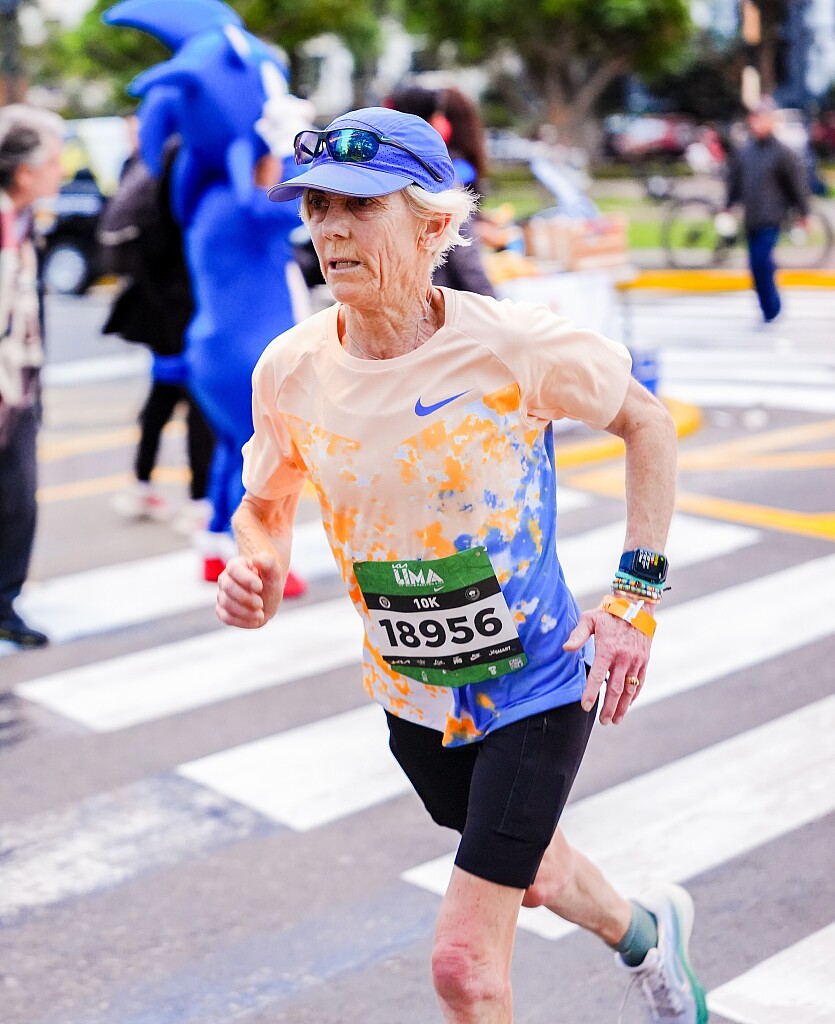


69 And Still Running: Joan Benoit Samuelson Inspires Lima With Another Remarkable 10K
At an age when many athletes have long since stepped away from competition, Joan Benoit Samuelson continues to remind the running world that the finish line is never defined by a number.
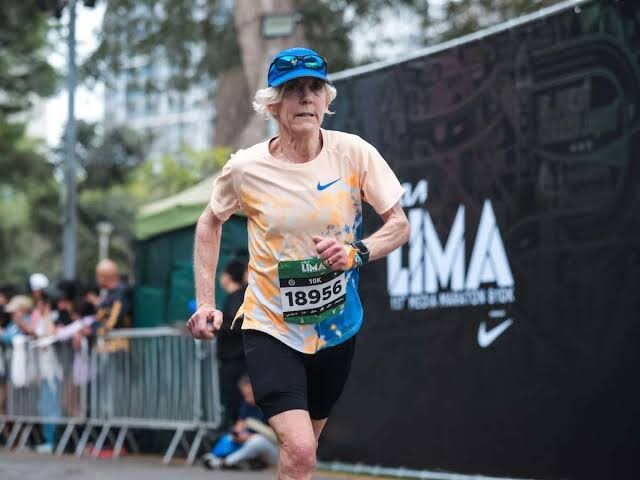
On Sunday in Lima, Peru, the pioneering American distance runner lined up for the 10K at the 117th KIA Media Maratón de Lima & 10K, and at 69 years old, she crossed the finish line in an impressive 47:49 — averaging approximately 7:43 per mile.
It was another chapter in a remarkable running life that has stretched across more than four decades, taking Samuelson from the roads of New England to Olympic history and, now, to the streets of Lima.
The first Olympic women's marathon champion, Samuelson was in Peru as part of a Nike-backed trip, experiencing a race course that links Lima's historic heart with its modern districts. The event attracted around 21,000 runners, creating a spectacular celebration of running in one of South America's most historic cities.
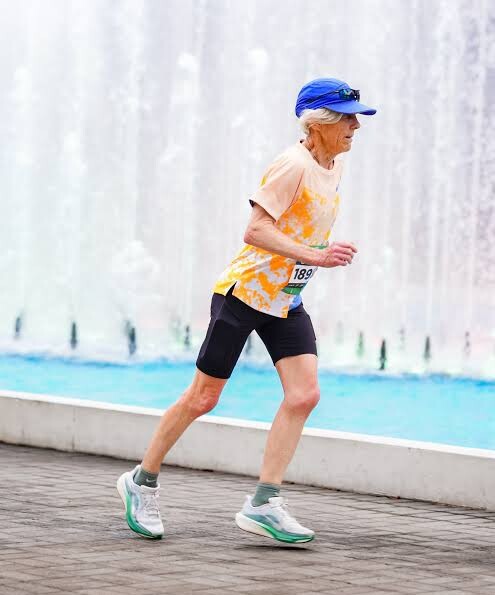
The half marathon accompanying the 10K carries an extraordinary legacy of its own. First staged in 1909, the race is billed as the world's oldest half marathon, adding another layer of history to Samuelson's appearance.
But Samuelson herself needs little introduction when it comes to the history of women's distance running.
Her career helped redefine what was possible for women on the marathon course. She won the Boston Marathon in 1979 and again in 1983, then produced a stunning American record of 2:22:43 in her marathon debut that same year.
A year later, she reached the summit of the sport.
At the 1984 Los Angeles Olympics, Samuelson captured gold in the inaugural women's Olympic marathon, running 2:24:52 and finishing 1 minute 26 seconds ahead of legendary Norwegian Grete Waitz. It was a victory that became one of the defining moments in the history of women's athletics.
And she was far from finished.
In 1985, Samuelson won the Chicago Marathon in 2:21:21, setting another American record that remained untouched for 18 years. Her achievements became part of the foundation upon which the modern era of women's distance running was built.
Yet perhaps the most remarkable part of her story is not what she accomplished four decades ago, but the fact that she is still curious, still competing and still eager to learn from the sport.
Before Sunday's race, Samuelson praised the growing strength of Peruvian distance running, telling local media: “Runners from Peru are starting to show up on the world stage, and they are doing it very well.”
Those words capture something that has defined her journey for generations: a belief that running is not simply about records, medals or victories. It is about discovery, connection and the endless possibility of seeing how far the human spirit can go.
Four decades after making history in Los Angeles, Samuelson is still answering the starting gun.
At 69, the Olympic champion is no longer chasing the clock she once conquered. She is chasing something far more enduring — the joy of running itself.
And in Lima, thousands of runners had the privilege of watching a living legend continue to do what she has always done best: inspire people to keep moving forward.
by Erick Cheruiyot for My Best Runs.
Login to leave a comment
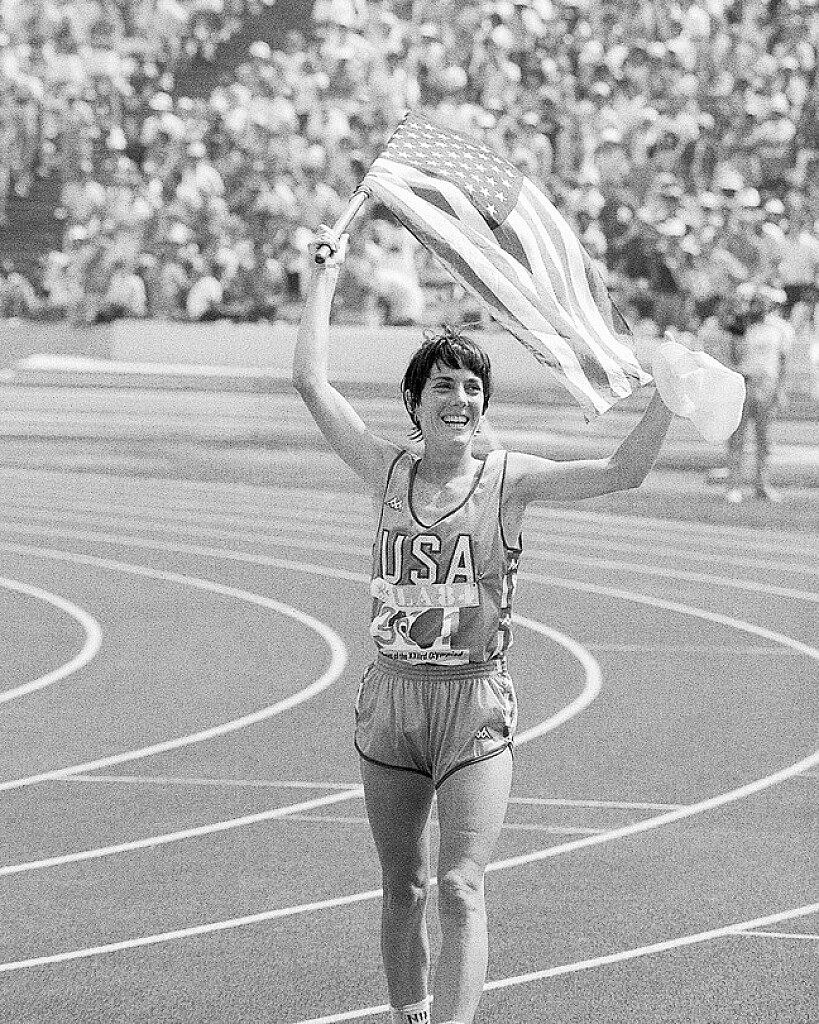
Seventeen Days After Surgery, Joan Benoit Changed Women’s Marathon History Forever
Forty-two years ago today, the landscape of distance running shifted forever in Olympia, Washington, when the United States staged its first-ever Women’s Olympic Marathon Trials — a race that would become one of the most courageous performances in athletics history.
At the center of it all stood Joan Benoit, carrying not only the pressure of expectation, but also the uncertainty of a knee that had undergone arthroscopic surgery just 17 days earlier.
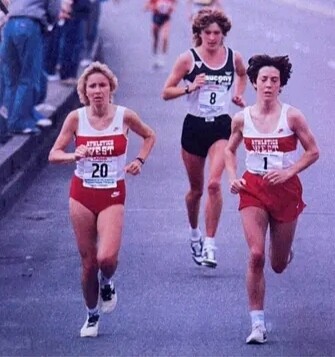
To most athletes, simply reaching the starting line would have been impossible. Winning was unimaginable.
Yet Benoit turned pain into one of the defining triumphs of marathon running.
From the opening miles, the race unfolded with tension and restraint as a field of America’s finest women battled for a place in history. But once Benoit found her rhythm, the race changed completely. She surged away with fearless authority, separating herself from the field and silencing every doubt surrounding her fitness and recovery.
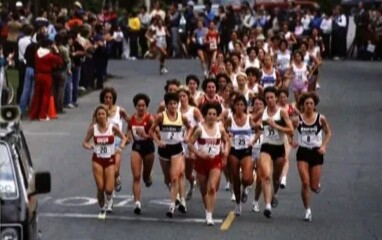
When she crossed the finish line in 2:31:04, she had done far more than win a race. She had announced the arrival of women’s marathon running on the Olympic stage with a performance built on courage, resilience, and extraordinary belief.
Behind her came a remarkable group of athletes who would shape American distance running for years to come. Julie Brown finished second in 2:31:41, while Julie Isphording secured third in 2:32:26 to complete the historic Olympic team.
The depth of the race was equally remarkable. Lisa Rainsberger placed fourth in 2:33:10 and would later finish fourth again at both the 1988 and 1992 Olympic Marathon Trials — one of the most consistent records in American marathoning. Margaret Groos crossed fifth in 2:33:38 before eventually winning the 1988 Olympic Marathon Trials herself.
Further down the results came more future stars. Nancy Ditz finished seventh in 2:33:58 and later earned a place on the 1988 Olympic team. Then there was the astonishing run from Cathy Schiro, only 16 years old at the time, who clocked 2:34:24 to finish ninth and set a high school record that stunned the running world. She would later return to place third at the 1988 Olympic Trials.
But the day ultimately belonged to Benoit.
Her victory became more than a qualification race; it became a symbol of defiance and possibility at a pivotal moment for women’s athletics. Just one year later, she would go on to win the inaugural women’s Olympic marathon at the 1984 Los Angeles Games, cementing her place among the sport’s immortals.
More than four decades later, the Olympia trials remain one of the most inspirational chapters in marathon history — a reminder that greatness is often born not under perfect conditions, but in moments when the odds appear overwhelmingly impossible.
by Erick Cheruiyot for My Best Runs.
Login to leave a comment
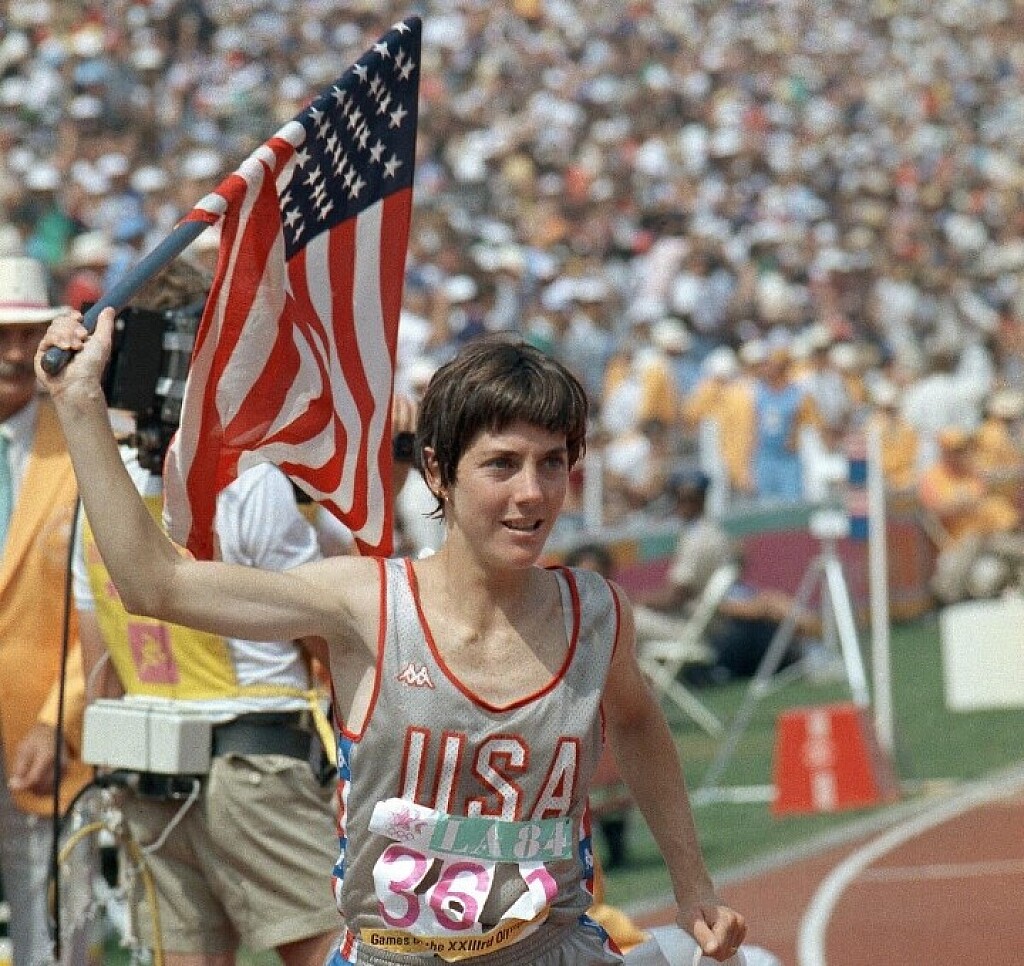
When History Finally Opened the Road: Joan Benoit’s Defining Run in Los Angeles, California — August 5, 1984
Los Angeles, California — August 5, 1984.
The California sun pressed heavily against the city streets, the temperature rising past 80 degrees as thousands of spectators lined the course. In the distance, a lone figure in a white painter’s cap ran with fearless intent, far ahead of the world’s best.
That woman was Joan Benoit — and she was not even supposed to be there.
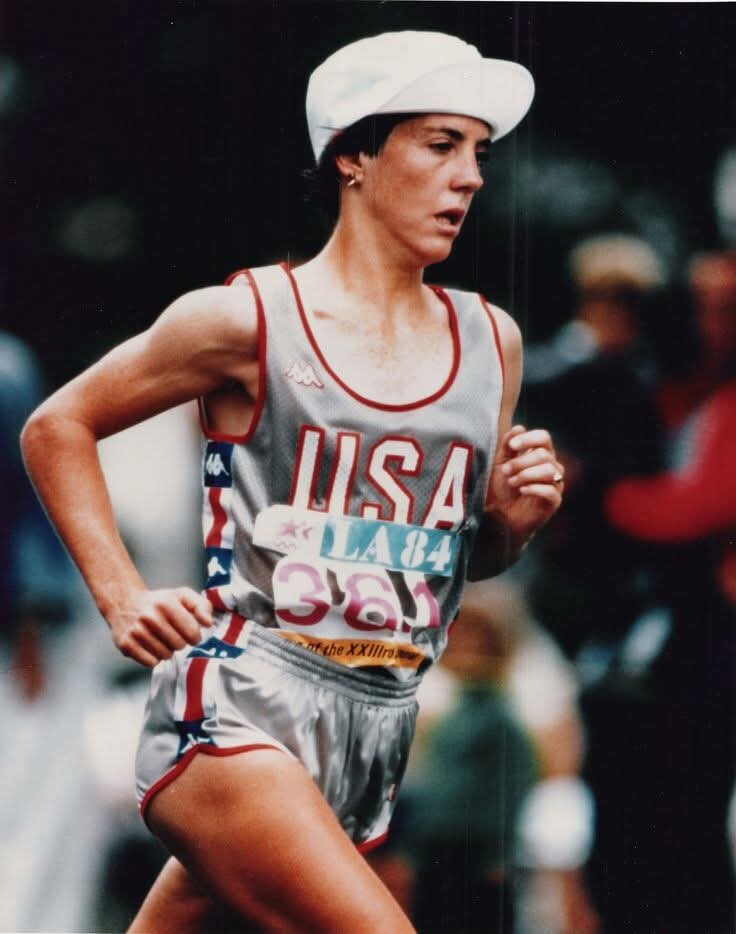
Just three months earlier, her knee had collapsed in training. Doctors delivered a harsh verdict: immediate surgery, followed by months of recovery. Yet the U.S. Olympic Trials were only 17 days away. For most athletes, that diagnosis would have ended the dream.
But 1984 was no ordinary Olympic year. It marked the first time women were officially allowed to compete in the marathon at the 1984 Summer Olympics. For decades, women had been barred from long-distance racing under claims that their bodies were too fragile, that endurance would harm their health, even that it would threaten their ability to bear children. The resistance had been so entrenched that the Boston Marathon only officially opened its doors to women in 1972.
This was not just a race; it was a long-overdue correction.
Benoit understood the gravity of the moment. There would only ever be one first women’s Olympic marathon. If she missed it, that page of history would turn without her name written on it.
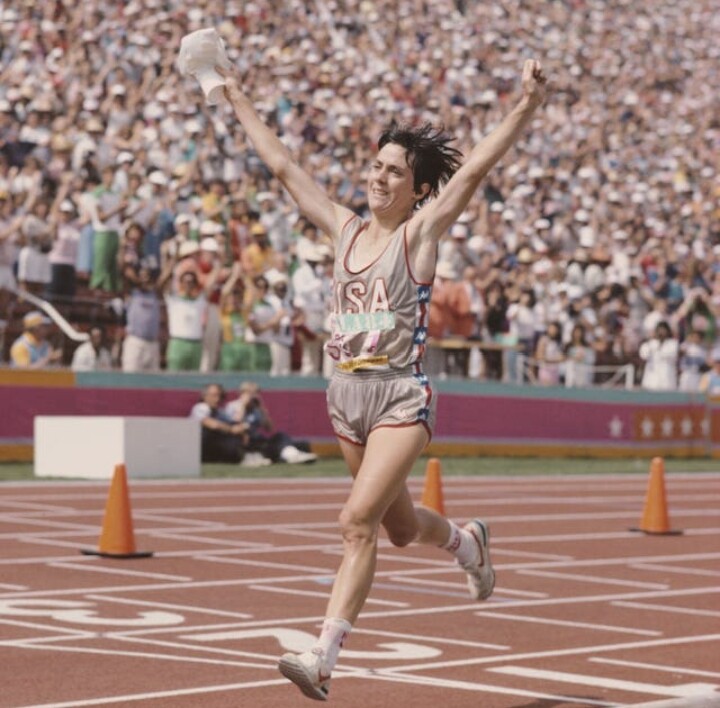
She chose surgery. Seventeen days later, still healing, she stood at the Trials start line — and won.
On August 5, 1984, the Olympic marathon began on the streets of Los Angeles, California, winding through the city beneath relentless summer heat. And before the race even reached mile three, Benoit did something astonishing.
She surged.
Breaking away from the pack with bold conviction, she committed herself to more than 23 miles alone. Commentators questioned the move. Behind her were giants of the sport — Grete Waitz and Rosa Mota — champions with unmatched credentials. Surely, they would reel her back in.
But mile after mile, the gap held.
She ran with a composure that defied both heat and doubt. The chase pack never closed the distance. Instead, Benoit extended her lead, stride by determined stride, as if carrying the weight of generations who had been denied this very opportunity.
At mile 23, she approached the iconic Los Angeles Memorial Coliseum. Still alone. Still leading. As she entered the stadium, more than 70,000 spectators rose to their feet, their roar echoing through the historic arena.
She crossed the finish line in 2:24:52, winning by over 400 meters.
The woman who had undergone knee surgery just weeks before the Trials had conquered the world’s finest on the sport’s biggest stage — in the very first women’s Olympic marathon ever held.
But her victory meant more than gold. It ended a debate that never deserved to exist. It proved that endurance does not belong to one gender, and that courage, when paired with conviction, can dismantle decades of disbelief.
Today, the women’s marathon stands as one of the most prestigious events in global athletics. Records have fallen, legends have risen, and young girls everywhere line up believing they belong.
It all traces back to Los Angeles, California — to August 5, 1984 — to a woman in a white cap who ran alone from mile three and refused to let history move forward without her
by Erick Cheruiyot for My Best Runs.
Login to leave a comment
Boston Legends Reunite Ahead of 2025 Boston Marathon
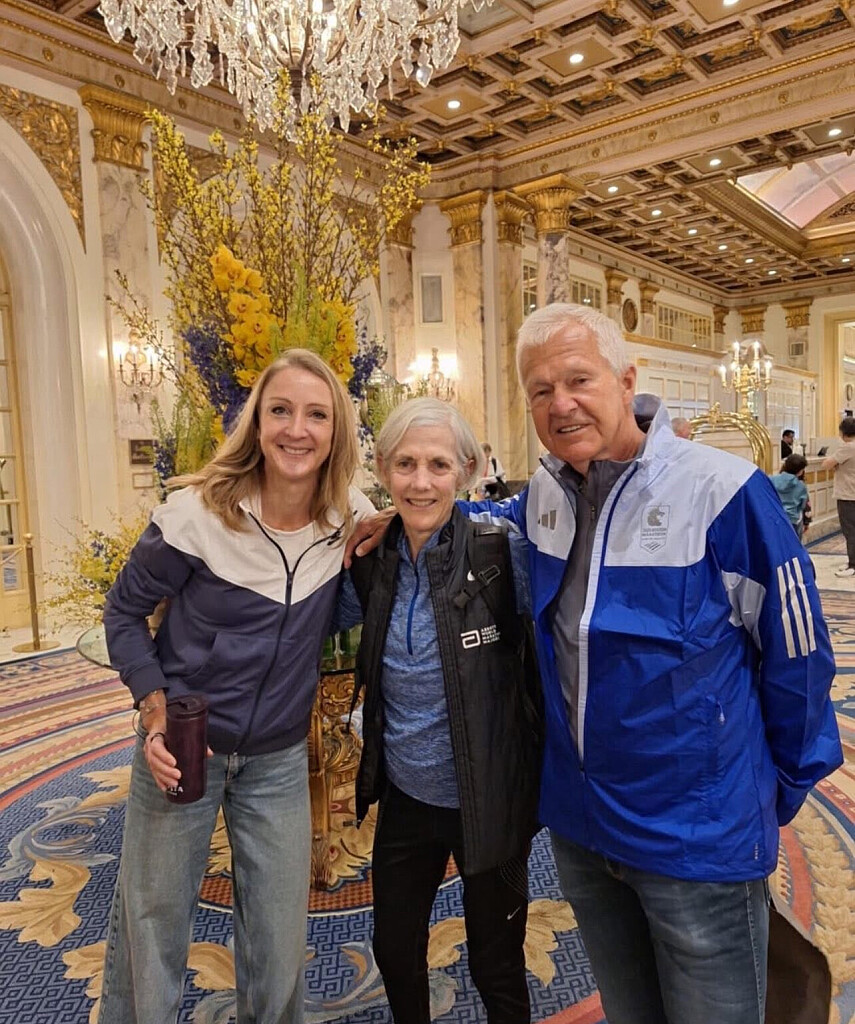
Three legendary figures in the running world gathered in Boston this weekend ahead of the 129th Boston Marathon set for Monday: Paula Radcliffe, Joan Benoit Samuelson, and Jack Waitz, husband of the late Grete Waitz.
The photo, taken inside the grand Fairmont Copley Plaza Hotel, captures more than just a moment—it reflects the legacy of marathon greatness. Radcliffe, the former world record holder in the marathon; Samuelson, the 1984 Olympic gold medalist; and Jack Waitz, who has carried forward Grete’s remarkable story as a Boston champion and nine-time NYC Marathon winner.
“I am proud to say I know all three of these amazing people,” says My Best Runs editor Bob Anderson, who fulfilled a lifelong dream by running the Boston Marathon in 2013 at age 65. “As publisher of Runner’s World, I organized our first Boston open house at the Copley Plaza in the late 1970s. Thousands gathered—it was a few years before expos started being held before races. This photo brings back so many memories.”
As Boston prepares for Marathon Monday, this reunion of icons reminds us that the marathon is more than a race—it’s a celebration of tradition, community, and the pioneers who helped shape the sport.
by Boris Baron
Login to leave a comment
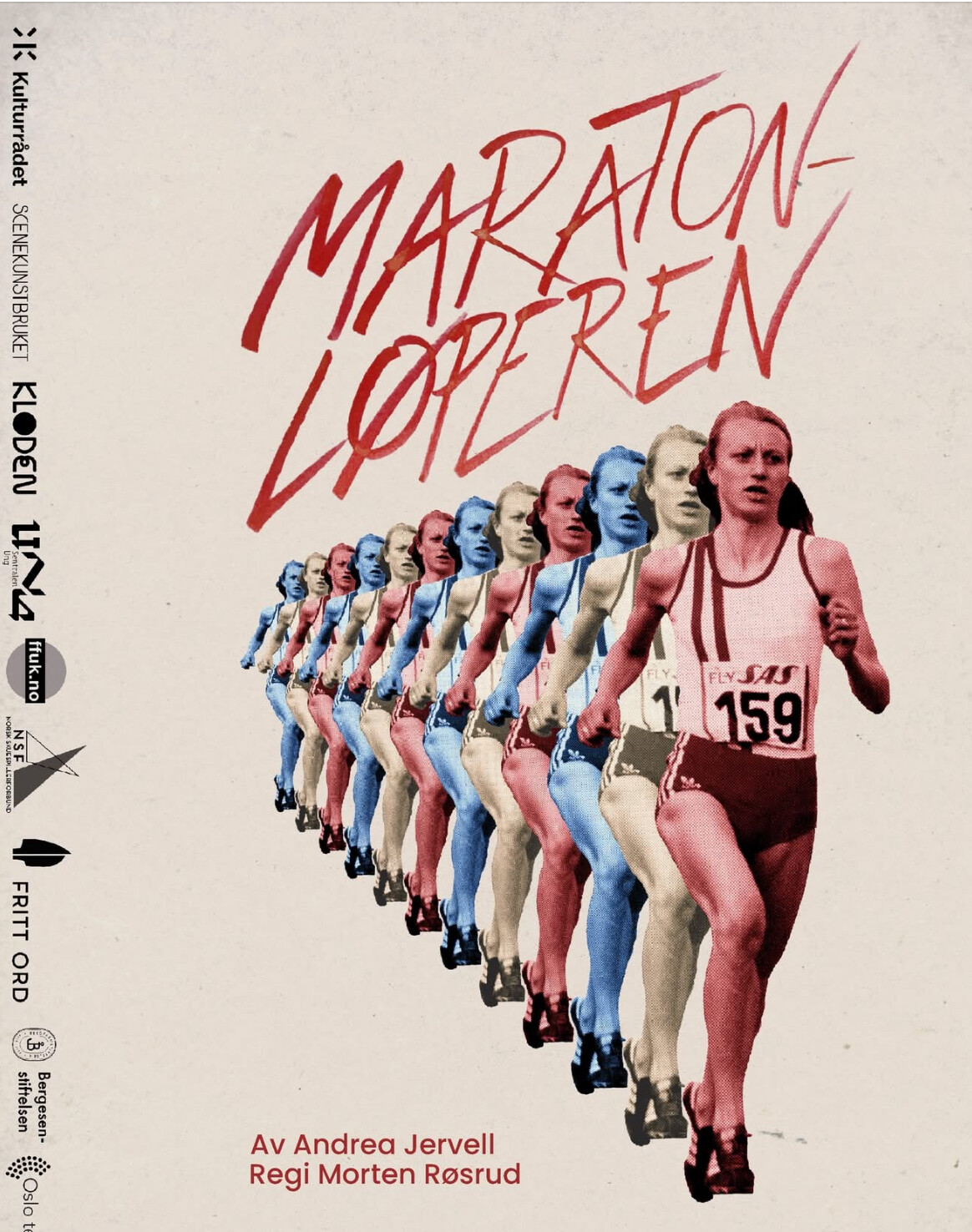
Grete Waitz The Runner Who Changed Marathoning Forever
On a crisp October morning in 1978, an unassuming schoolteacher from Norway stepped up to the starting line of the New York City Marathon. Grete Waitz, a world-class middle-distance runner, had never raced beyond 3,000 meters. That day, she would not only cover 26.2 miles for the first time but also redefine women’s marathoning in a way no one could have predicted.
An Accidental Marathoner
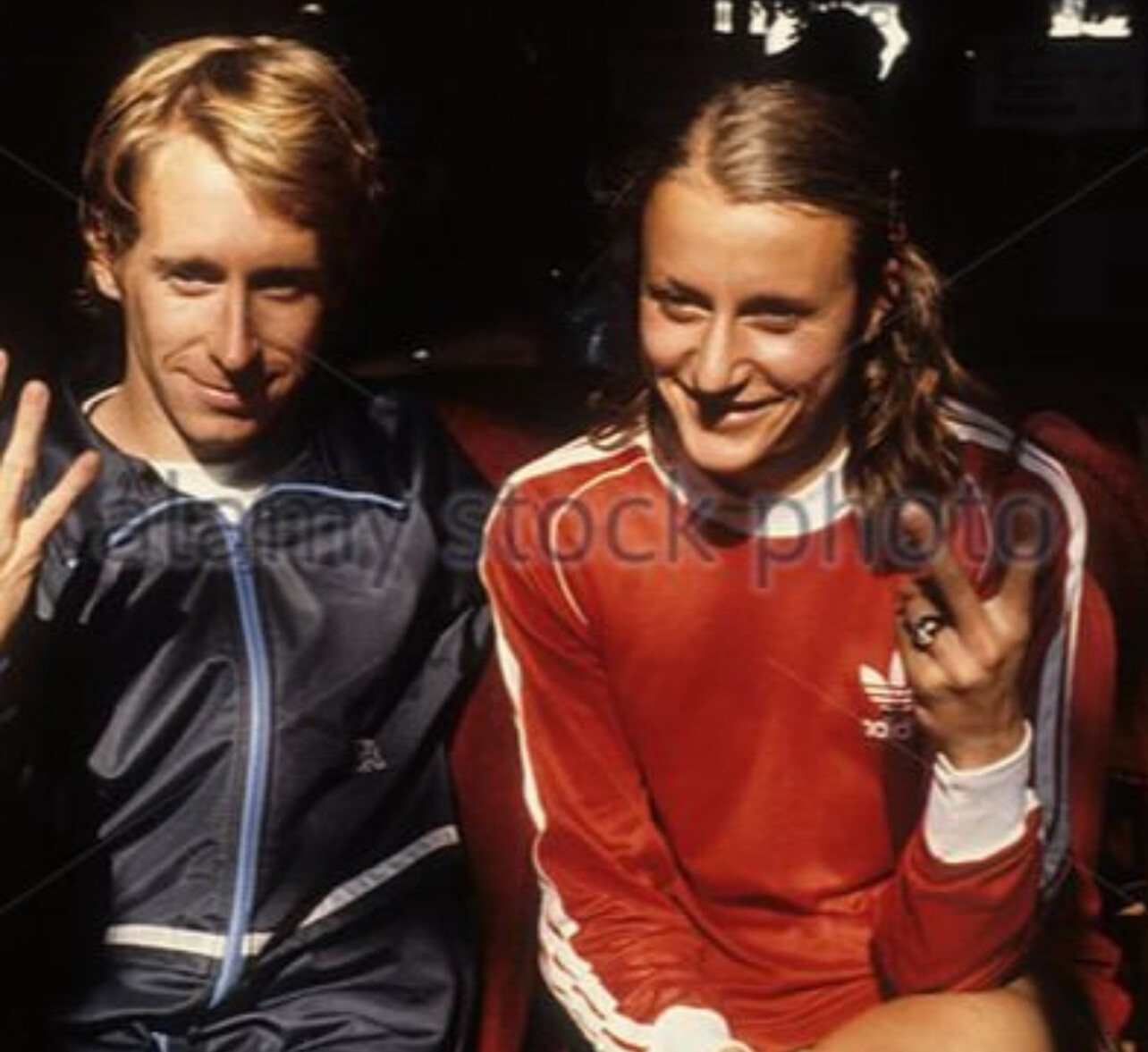
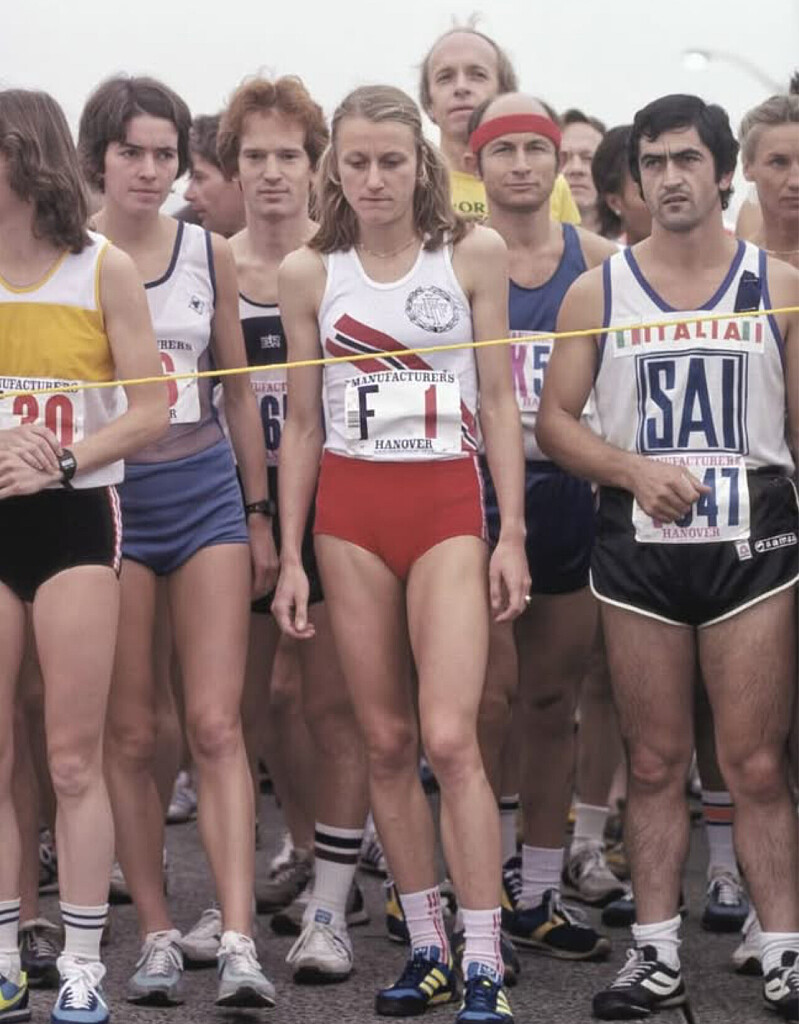
At the time, Waitz was a highly accomplished track athlete, having competed in the 1972 and 1976 Olympics in the 1,500 meters. Her husband and coach, Jack Waitz, believed she had the endurance for the marathon and convinced her to give it a try. The New York City Marathon, then in its third year of running through all five boroughs, was growing in popularity, with nearly 10,000 entrants that year—including 1,240 women, a significant number in an era when women’s distance running was still fighting for recognition.
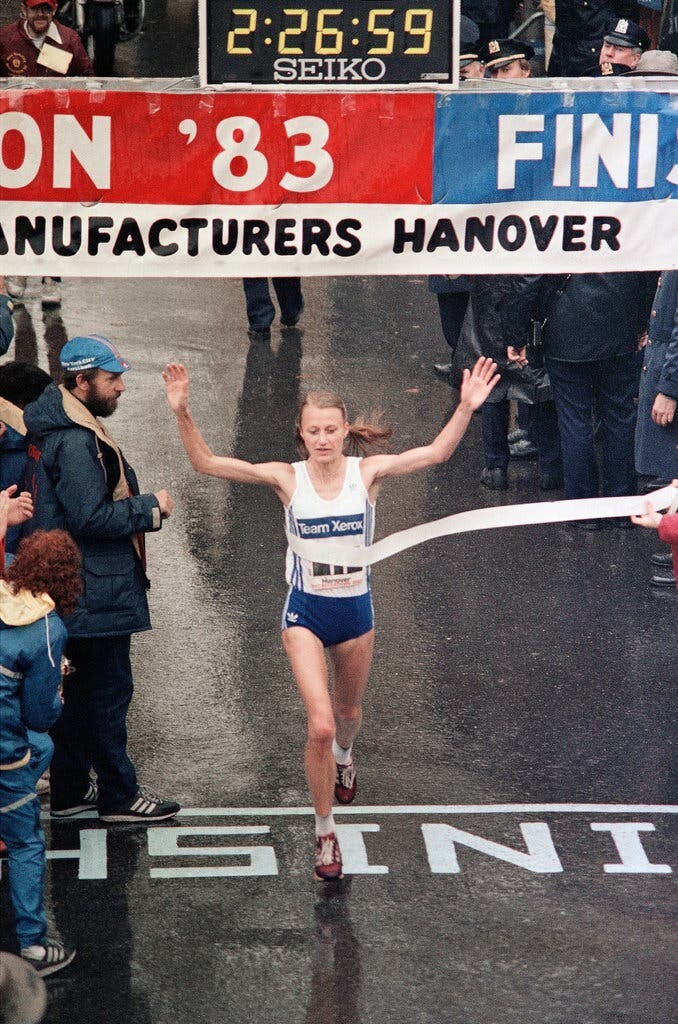
Waitz arrived in New York with no expectations, mostly treating the experience as an experiment. She was given bib “F1,” but that number did not signify any previous success in the marathon—it was merely assigned based on her status as a female elite athlete.
A Race for the Ages
Unlike today’s marathons, where elite runners typically start separately, in 1978, all competitors—professional, amateur, and first-timers alike—began together. The masses surged forward, and Waitz, running with a mix of excitement and nerves, settled into a steady pace.
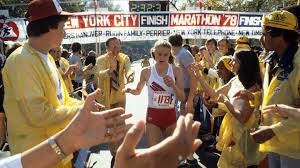
She was strong early on, but by mile 18, she was frustrated. She had no idea what she was doing, she later recalled, and even threw a cup of water at her husband in irritation when he shouted encouragement. Yet, despite her doubts, she was running at a record-setting pace.
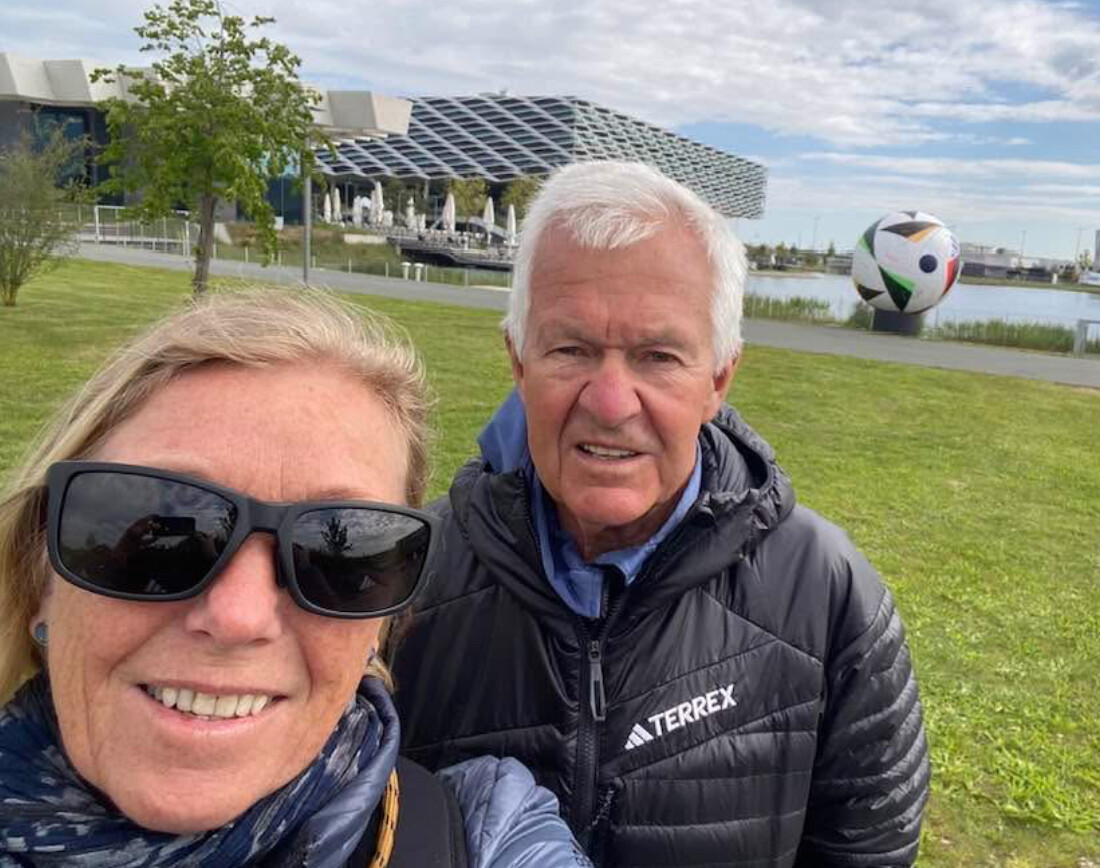
As she entered Central Park, fatigue set in, but she powered through, breaking the tape in 2 hours, 32 minutes, and 30 seconds—a world record at the time. When race director Fred Lebow greeted her at the finish line, she collapsed into his arms, exhausted and overwhelmed.
“I’ll never do another one of these,” she famously said. That promise, of course, didn’t last.
A Legacy of Dominance
That win in 1978 was just the beginning. Waitz would return to New York eight more times, winning a record nine titles between 1978 and 1988. She became the face of women’s marathoning, inspiring countless runners and proving that women not only belonged in the sport but could dominate it.
Her influence stretched beyond New York. In 1983, she won the first-ever Women’s World Championship Marathon, and a year later, she took silver in the first Women’s Olympic Marathon at the 1984 Los Angeles Games, finishing behind Joan Benoit Samuelson.
More Than a Champion
While her records and wins made her a legend, Waitz’s true impact came from the doors she opened for female distance runners. Before her era, women’s marathoning was an afterthought. The Boston Marathon had only officially allowed women to compete in 1972, and many still believed that running long distances was dangerous for women. Waitz shattered those myths.
She continued to race into her 40s and later devoted much of her time to coaching and philanthropy. In 2005, she was diagnosed with cancer, but she faced it with the same resilience she showed on the race course.
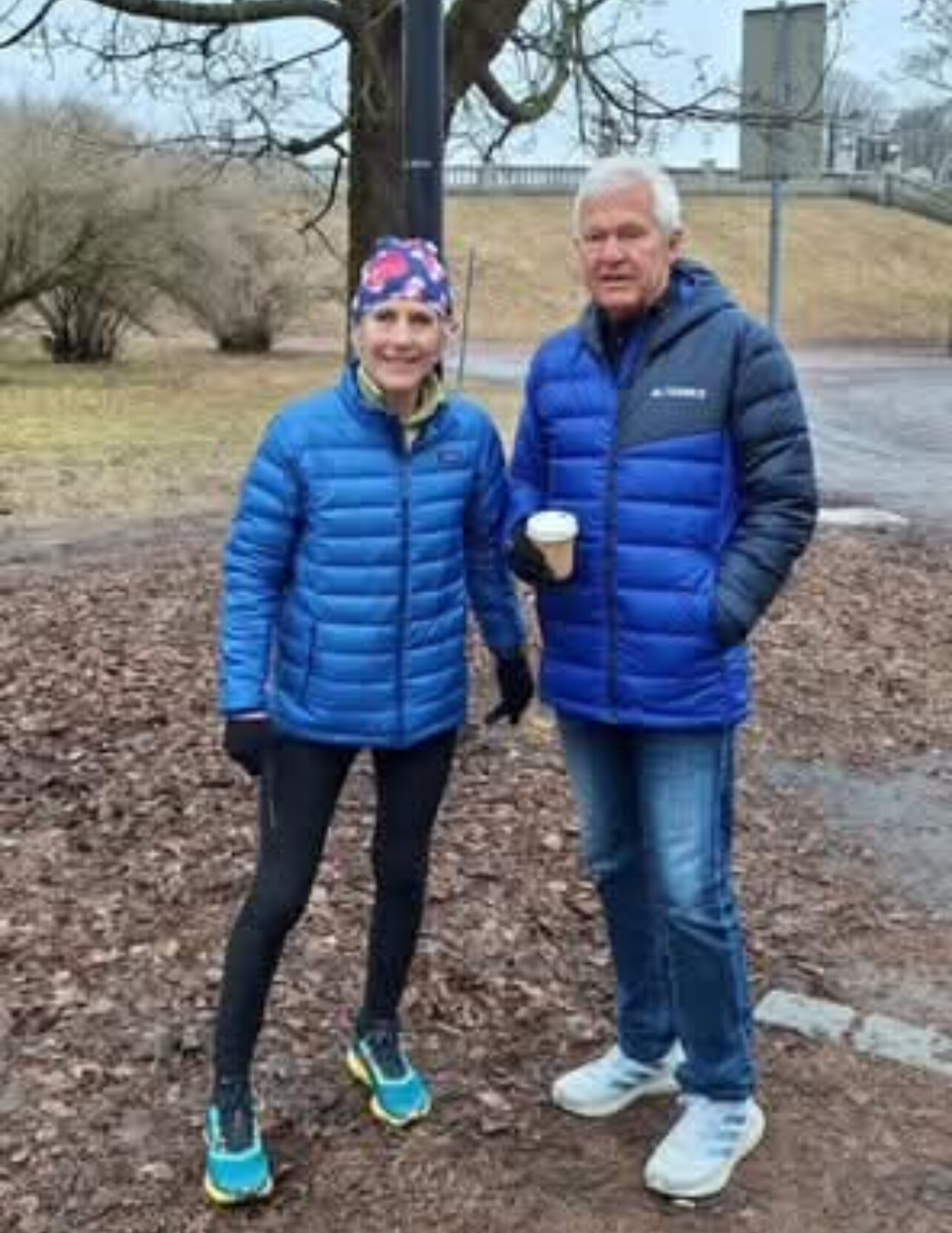
Jack Waitz: Continuing the Legacy
Grete’s husband and coach, Jack Waitz, played an instrumental role in her career, guiding her training and race strategies. Following Grete’s passing in 2011, Jack has remained deeply involved in the running community. He continues to share his expertise, offering training advice and motivational tips to runners of all levels.
Jack’s ongoing commitment ensures that Grete’s legacy endures, inspiring new generations of runners to pursue their passion for the sport.
A Lasting Inspiration
Grete Waitz passed away in 2011 at the age of 57, but her influence is still deeply felt. She was not just a marathoner; she was a trailblazer who proved that women could race—and win—on the biggest stages.
Today, the New York City Marathon regularly features over 50,000 runners, nearly half of them women, a testament to how far the sport has come since 1978. The shoes are faster, the crowds are bigger, and the elites now start separately, but the legacy of Grete Waitz remains woven into the fabric of the event she helped define.
Her first marathon may have been accidental, but her impact on the sport was anything but.
by Boris Baron
Login to leave a comment
The Evolution of the Half Marathon From Breaking One Hour to a New Era
“It was not that many years ago that breaking an hour for the half marathon was an amazing feat,” says My Best Runs editor Bob Anderson. “And today, we saw that record dip under 57 minutes. That’s running 4:19 mile pace for 13.1 miles. Wow!”
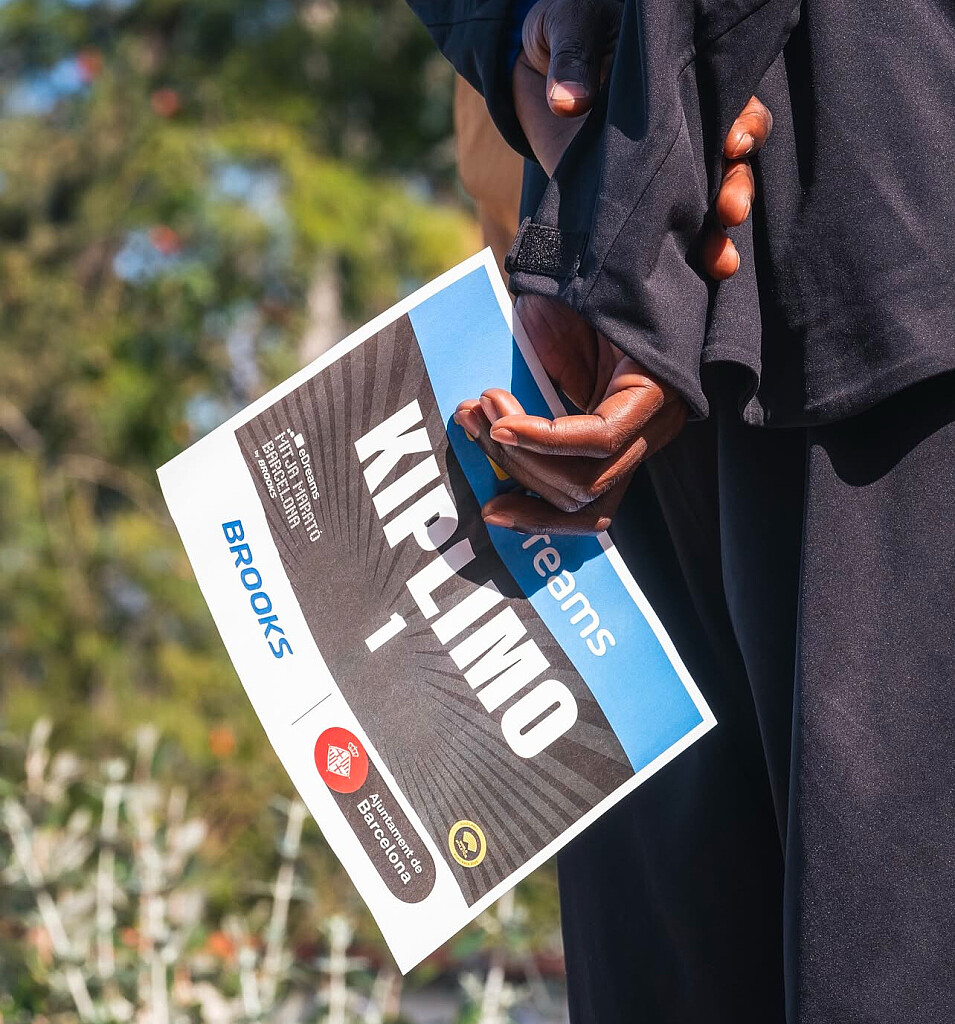
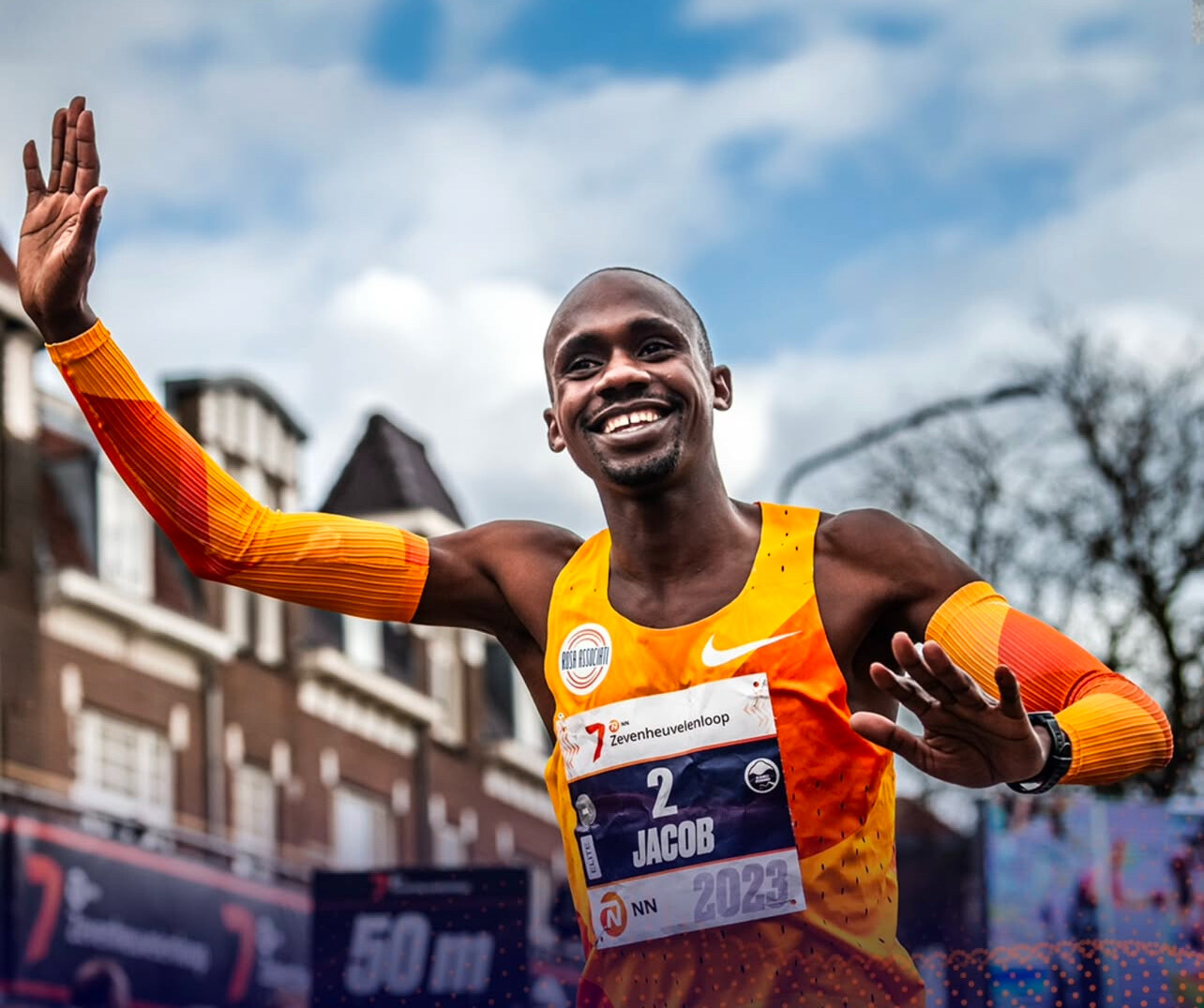
The half marathon, a 21.0975-kilometer (13.1-mile) race, has long been a benchmark of endurance and speed. For decades, breaking one hour in the event was considered an extraordinary achievement. But as training, technology, and competition have advanced, so have the records. On February 16, 2025, Uganda’s Jacob Kiplimo took the event into a new era, becoming the first person to break 57 minutes with a stunning world record of 56:42 at the eDreams Mitja Marató de Barcelona.
The history of the half marathon
The half marathon has been a competitive event since at least the early 20th century, though it did not gain widespread popularity until later. It emerged as a race distance that was more accessible than the full marathon but still required a balance of endurance and speed. Unlike the marathon, which has been an Olympic event since 1896, the half marathon has never been included in the Games, but it has had its own World Championships since 1992.
With the rise of professional distance running and major city half marathons, the event has grown into one of the most participated-in races worldwide. Many view it as a stepping stone to the full marathon, while others appreciate it as a challenging yet more manageable race.
Breaking one hour The milestones
The quest to run a half marathon in under one hour became a defining goal for elite male distance runners. While marathon times had been steadily improving throughout the 20th century, the half marathon saw a more gradual progression.
1960: Australian runner Dave Power ran an unofficial best of 1:01:44.
1974: Ron Hill of Great Britain set a recognized world best of 1:02:22.
1978: Italy’s Marcello Fiasconaro improved the mark to 1:01:49.
1985: Steve Jones of Great Britain ran 1:01:14, bringing the record closer to the one-hour barrier.
1993: Moses Tanui of Kenya became the first man to break one hour, running 59:47.
Once Tanui shattered the one-hour barrier, improvements became more frequent, with Kenyan and Ethiopian athletes dominating the event.
1997: Paul Tergat (Kenya) ran 59:17.
2005: Samuel Wanjiru (Kenya) ran 59:16, then 58:33 in 2007.
2010: Zersenay Tadese (Eritrea) set a long-standing record of 58:23.
2020: Kibiwott Kandie (Kenya) became the first to break 58 minutes, running 57:32.
2021: Jacob Kiplimo (Uganda) set a new record at 57:31.
2024: Yomif Kejelcha (Ethiopia) improved it to 57:30.
2025: Jacob Kiplimo rewrote history with 56:42.
The women's half marathon world record
On the women’s side, the world record has seen significant improvements as well. Ethiopia’s Letesenbet Gidey currently holds the record, running 1:02:52 on October 24, 2021, at the Valencia Half Marathon. This was a massive leap forward, making her the first woman to break 64 minutes.
Previous records include:
1982: Joan Benoit Samuelson (USA) ran 1:08:34.
2001: Elana Meyer (South Africa) became the first woman to break 67 minutes, running 1:06:44.
2007: Lornah Kiplagat (Netherlands) set a world record of 1:06:25.
2017: Joyciline Jepkosgei (Kenya) became the first woman under 65 minutes, running 1:04:52.
2021: Letesenbet Gidey shattered expectations with 1:02:52.
A new era for the half marathon
With Kiplimo’s record-breaking 56:41, the half marathon has entered uncharted territory. His ability to maintain a 4:19 per mile pace for 13.1 miles is a testament to the evolution of the sport. Advances in training methods, course selection, pacing strategies, and shoe technology have all contributed to these record-breaking performances.
The question now is what comes next. Will someone push the limits even further and run under 56 minutes? Will Kiplimo’s record stand for years, or will it spark another round of breakthroughs?
For now, all eyes turn to Kiplimo’s next challenge: his marathon debut at the London Marathon on April 27, 2025. If his half marathon success is any indication, the world may soon see him make history over 26.2 miles as well.
One thing is certain—the evolution of the half marathon is far from over, and the best may still be yet to come.
by Boris Baron
Login to leave a comment
MARATHON GROUNDBREAKERS
Since Australia’s Derek Clayton ran history’s first sub—2:10 marathon in Fukuoka, Japan, on 3 December 1967, there have been a total of 4538 sub—2:10 marathons (as of 30 October 2024), 4537 by men, one by a woman.
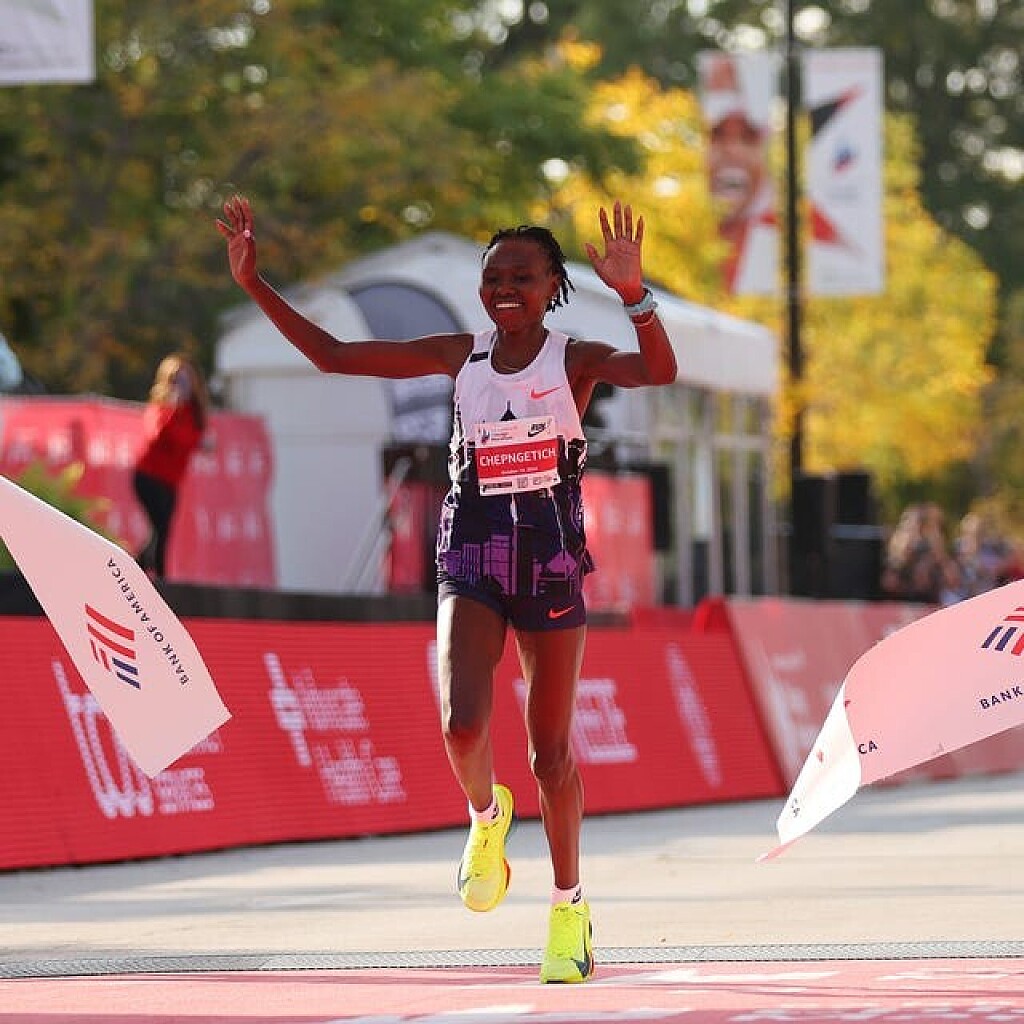
As with any new ground-breaking performance, Ruth Chepngetich’s 2:09:56 in Chicago on 13 October has forced us to reassess all our past assumptions, or, like many, to doubt the validity of the performance itself. But no matter how we got here, to whatever you want to ascribe it, this is where we are now, 2:09:56 by a woman.
In this new reality, until proven otherwise, Ruth Chepngetich is the new Paula Radcliffe, just as Paula was the new Grete Waitz, one ground-breaker to the next, 1978 to 2003 to 2024.
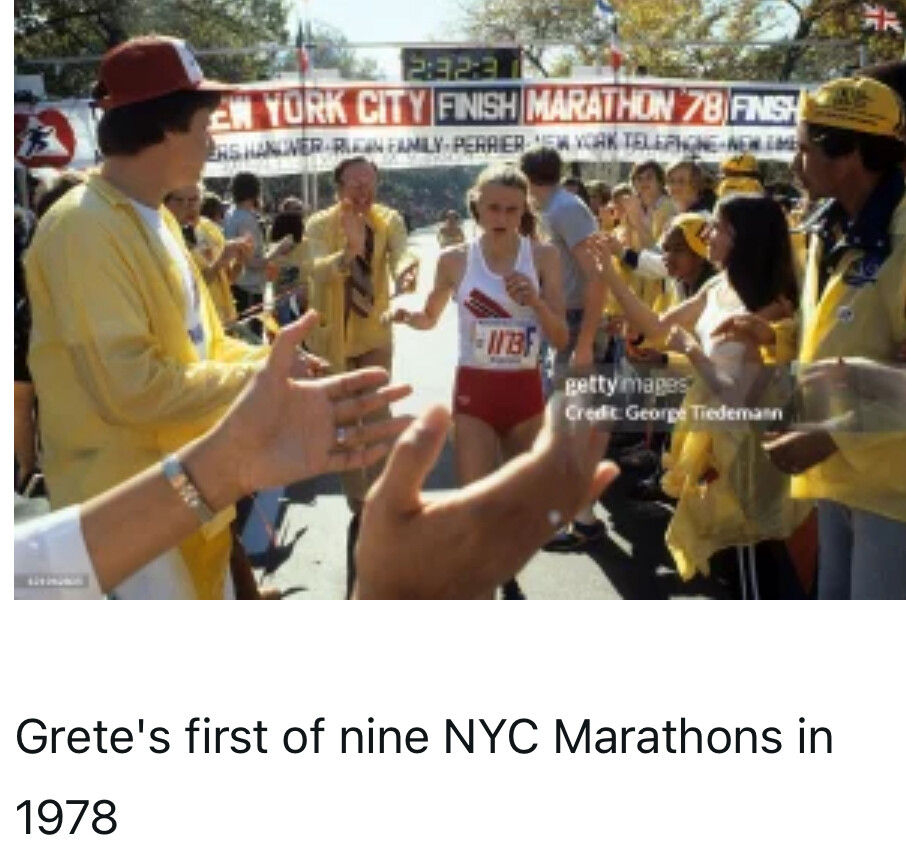
There have been many talented women champions through the years besides those three, including all the pioneers who had to overcome centuries of gender bias that restricted women from even showing their stuff.
But in terms of pure ground-breaking, the 1978 New York City Marathon drew a bright line between what once was and what would be.
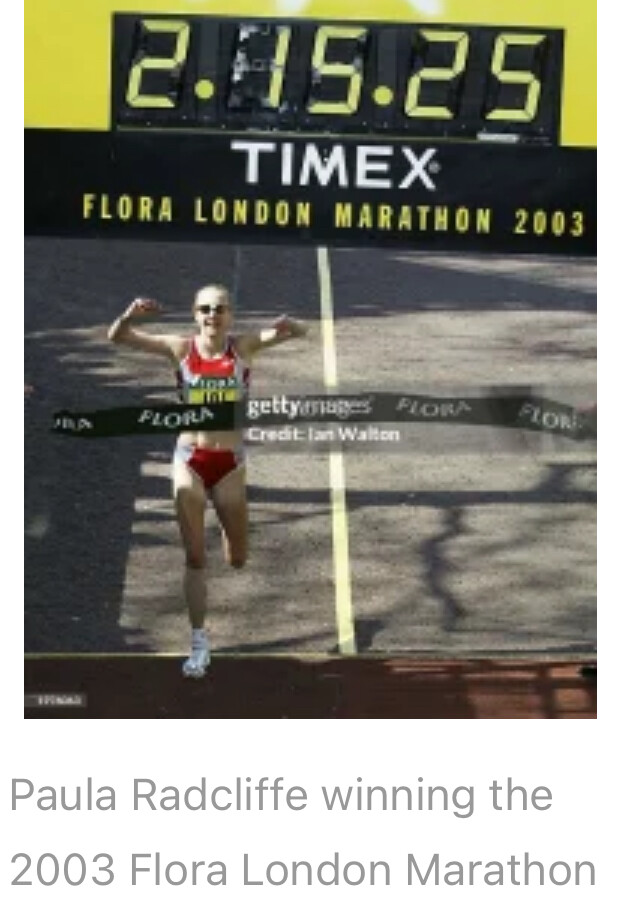
On 22 October 1978, Norway’s track and cross-country star Grete Waitz participated in the marathon for the first time, almost on a whim, as the trip was more of a honeymoon for her and husband Jack after the long track season.
The 2:32:30 world record Grete ran that day was totally unexpected by both the public and Grete herself. She wore bib #1173, wasn’t included on the list of elite women, and came with no specific marathon preparation (not a single run over 13 miles). In fact, she was so upset with husband, Jack, for suggesting she come run the marathon that she threw her shoes at him in the hotel room following her victory.
Still, like almost all debuting marathoners, after a short period of recovery and reflection, Grete concluded she could probably improve next time.
Thus, in New York 1979, following a more careful preparation, Grete ripped nearly five full minutes off her 1978 mark to record history’s first sub—2:30 by a woman at 2:27:33. Her margin of victory over England’s Gillian Adams was 11 minutes (2:38:33). The combination of the mild-mannered former geography teacher from Oslo and the raucous New York City crowds proved transformative, elevating women’s running to heights previously unimagined.
Though Japan’s Naoko Takahashi broke the 2:20 barrier for women in Berlin 2001, after Norway’s Ingrid Kristiansen (2:21:15, London ‘85), America’s Joan Benoit Samuelson (2:21:21, Chicago’85), and Kenyan Tegla Loroupe (2:20:43, Berlin ‘99) all challenged the barrier in the 1980s and ‘90s, it was England’s Paula Radcliffe who established new headlands in the marathon in London 2003 with her 2:15:25.
Nearly two minutes faster than her own 2:17:18 record from Chicago the year before, her 2:15 arced away from Catherine Ndereba’s 2:18:47 from Chicago 2001, completed just one week after Takahashi’s first sub-2:20 in Berlin.
The quality of Paula’s 2:15 can be seen in the 16 years and an entire shoe technology revolution that developed before Kenya’s Brigid Kosgei did Paula one better in Chicago 2019 at 2:14:04. That performance plowed new ground again. And now we have Ruth Chepngetich in Chicago 2024 with history’s first sub-2:10, just a year after Ethiopia’s Tigst Assefa’s first sub—2:12 in Berlin `23 (2:11:53).
Twice before, Chepngetich had come to Chicago with world record intentions. In 2022, she won the race in 2:14:18, just 14 seconds off Kosgei’s record. In 2023 she finished second in 2:15:37. On both occasions she flew through halfway under 66 minutes, only to falter in the second half. Perhaps she was a close reader of Malcolm X.
“There is no better teacher than adversity. Every defeat, every heartbreak, every loss, contains its own seed, its own lesson on how to improve your performance the next time.” – Malcolm x
In simple terms, making innovative strides in athletics requires time, experimentation, and reviewing, similar to how new scientific theories are examined before full acceptance. But women just haven’t been at the marathon game long enough to produce a large enough sample size to define their outer limits with any accuracy. They are barely two generations in since 1978.
Men have been competing for a much longer time with a much larger sample size.
Though Eliud Kipchoge surpassed the two-hour barrier in Vienna in 2019, that was accomplished as an exhibition, not a sanctioned race. In that sense, we are still awaiting the next barrier breaker on the men’s side in the Marathon.
Looking back, England’s Jim Peters stands as the first modern barrier breaker with his 2:18:40 win at the 1953 Polytechnic Marathon between Windsor and Chiswick in West London, England, history’s first sub—2:20.
Next was Ethiopia’s Abebe Bikila, the legendary double Olympic victor in Rome 1960 and Tokyo 1964. His 2:15:17 in Rome still stands as the barefoot marathon world record.
Next came Australia’s Derek Clayton, the first man under both 2:10 and 2:09. His 2:08:34 from Antwerp 1969 lasted for 12 years, holding off challenges throughout the entire Running Boom era headed by Americans Frank Shorter and Bill Rodgers.
Though never world record holders, the two Americans dominated the 1970s boom era, Shorter through the first half, Rodgers the second.
The Eighties were the last decade of international marathon champions: American (Al Salazar, Greg Meyer); European (Steve Jones, Carlos Lopes); Japanese (Toshihiko Seko and the Soh brothers); and Australian (Rob de Castella). Kenya’s Joe Nzau won Chicago in 1983 in a thrilling duel with England’s Hugh Jones when Chi-town was still developing its reputation as a world class event.
Ibrahim Hussein set new records in Honolulu and kick-started the Kenyan marathon revolution
The full East African deluge didn’t begin until 1987 and ‘88 when Kenya’s Ibrahim Hussein (already a two-time and soon to be three-time Honolulu Marathon champion) became Africa’s first New York City and Boston Marathon winner and Ethiopia’s Belayneh Dinsamo set the world record, 2:06:50, in Rotterdam 1988 that lasted over a decade.
The list of marathon stars from other nations scaled back markedly in the 1990s. Mexico had its turn at the top via greats like Dionicio Cerón (1994-`96 London champion), and back-to-back New York Ciy winner German Silva (1994 & 1995).
Moroccan-born American Khalid Khannouchi twice ran a world marathon record, first in Chicago 1999 (2:05:42), then three years later in London 2002 (2:05:38). And who could forget the personable Brazilian, Marílson Gomes dos Santos, who won New York City twice in 2006 & 2008, or Meb in NYC `09 and Boston 2014??
But the United Nations pickings get rather meager after that as East African athletes have had a stranglehold on the sport of marathoning, most dominatingly by Kenya’s Eliud Kipchoge. His run of sustained excellence over 42.2 kilometers was, and is, unprecedented in its longevity, including double gold in Rio 2016 and London 2020. And his last world record of 2:01:09 in Berlin 2022.
Sadly, the current record holder, Kelvin Kiptum, died in a car accident in February 2024 after establishing the 2:00:35 world record in Chicago 2023.
With the 2024 TCS New York City Marathon scheduled this weekend, we don’t expect to see any record performances. Yet, all the above is why we follow the game, isn’t it, to witness the arc of improvement over time, while hoping to discover a new name to remember? It’s as valid a focus as any other in this life.
And despite its many flaws and corruptions, the sport of marathoning retains an innate dignity that many endeavors do not. People may have bruised, battered, and tarnished it in the name of glory and money. But it survives, nonetheless, as a simple reflection of the human drive to achieve more in the quest to discover our best.
Doesn’t always turn out that way, but I don’t think we are done with it quite yet. Onward!
by Toni Reavis
Login to leave a comment
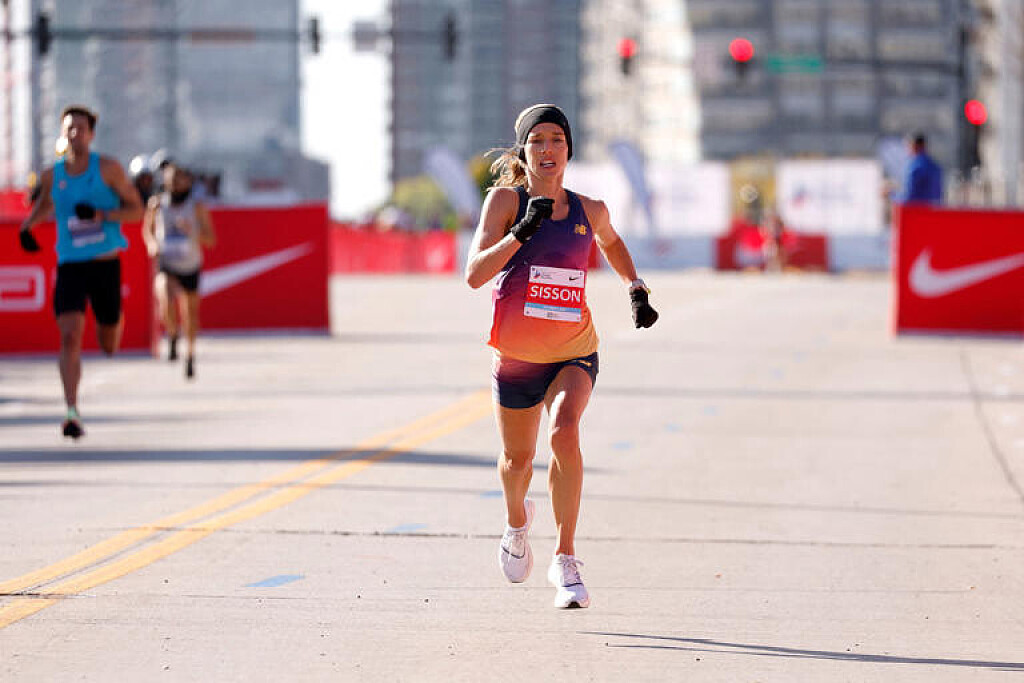
Could the women's American marathon record fall at this year's Chicago Marathon?
The 2024 Bank of America Chicago Marathon on Oct. 13 poses an exciting opportunity for elite runners to capture record-breaking times -- and this year is no different. Could a women's record fall during the race?
The lineup, which was released earlier this summer, is highlighted by two of the "10 fastest women of all time" and the the second and third fastest American women of all time.
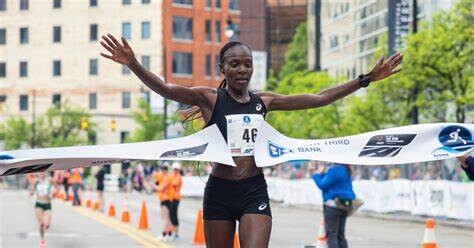
“We are accustomed to making history at the Bank of America Chicago Marathon,” Executive Race Director Carey Pinkowski said in a statement. “With some of the fastest athletes in the world joining us this fall, we are hopeful to build on the tradition of great performances this year.”
For the Americans, Keira D'Amato and Betsy Saina headline the country's best.
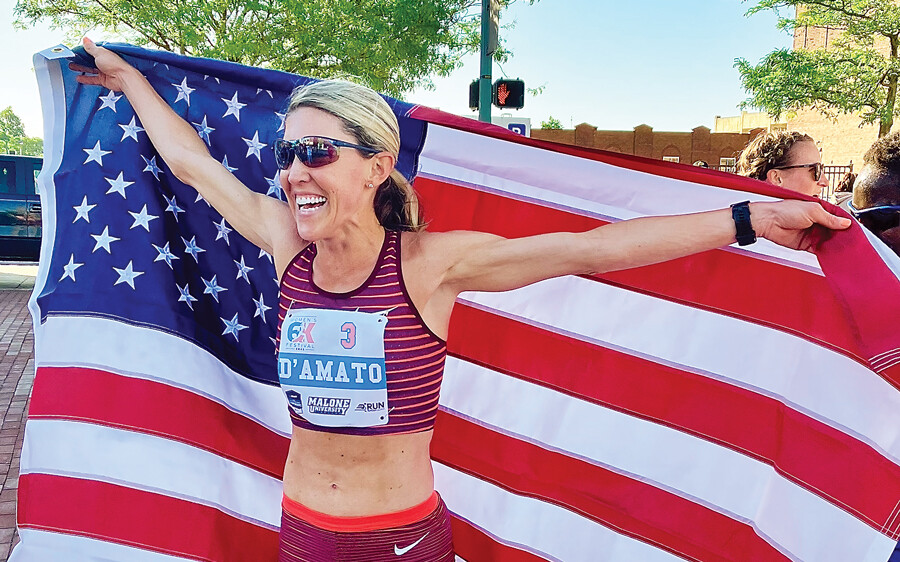
D'Amato, the former American marathon record holder, will return to the starting line after being part of the broadcast team for the past two years.
“I have a special history with the Chicago Marathon,” said D’Amato who finished fourth in 2021. “The past two years I’ve run my mouth in the lead vehicle for NBC. I’m excited to get back to running my legs.”
D'Amato first broke the American marathon record in 2022 in Houston, topping a time that had stood for 16 years.
Emily Sisson broke that same record shortly after during the 2022 Chicago Marathon. D'Amato was among the long line of legendary female runners celebrating Sisson at the Chicago finish line that year.
Saina, who placed fifth in this year’s Tokyo Marathon, will look to record her first Chicago finish after dropping out of the race in 2019 due to illness. She's run the third-fastest marathon time of any American woman, one spot behind D'Amato.
Sara Hall and Emma Bates are also in the field for the Americans. Hall's best time of 2:20:32 comes from Chandler in 2020. Bates ran her best time in 2022 at the Boston Marathon with a 2:22:10 finish.
Among the most notable names at the starting line will be Sutume Kebede, of Ethiopia, who holds the fastest marathon in the women's field and whose finish at the 2024 Tokyo Marathon made her the eighth fastest of all time.
“I am extremely happy to come back to Chicago and run on a course that has proven to be very fast,” Kebede, who had a disappointing finish in the 2023 Bank of America Chicago Marathon, said in a statement. “After seeing what my teammate Kelvin Kiptum did last year, I want to come to Chicago to do something great.”
Kenya's Ruth Chepngetich will also return to the start line in October. She won the race in both 2021 and 2022 while finishing runner-up during last year's 2023 race. Her 2:14:18 from the 2022 Chicago Marathon stands as the fourth-fastest time by a woman in history.
Here is the lineup for the women's elite division.
Bank of America Chicago Marathon Professional Field – Women’s Open Division
The Chicago Marathon is not immune to seeing record-breaking times.
Kenya's Kelvin Kiptum obliterated the men's marathon world record at the 2023 Chicago Marathon, running it in 2 hours and 35 seconds. He overcame Eliud Kipchoge's previous record by 30 seconds with his time. Tragically, Kiptum later died shortly after in a car accident in February. He was 24.
At the 2022 Chicago Marathon, Emily Sisson defeated the women's American marathon record in 2 hours, 18 minutes and 29 seconds. She finished second place in the race to Kenya's Ruth Chepngetich, who ran 2:14:18; the second-fastest marathon time by a woman in history.
Let's not also forget Joan Benoit Samuelson broke the women's American marathon record in 1985 with a time of 2:21:21. The time still stands as the seventh-fastest time by an American woman today.
Three of the four fastest marathon times in women's history were run at the Chicago Marathon. Will spectators see another on Oct. 13?
by NBC Sports Chicago Staff
Login to leave a comment
Bank of America Chicago
Running the Bank of America Chicago Marathon is the pinnacle of achievement for elite athletes and everyday runners alike. On race day, runners from all 50 states and more than 100 countries will set out to accomplish a personal dream by reaching the finish line in Grant Park. The Bank of America Chicago Marathon is known for its flat and...
more...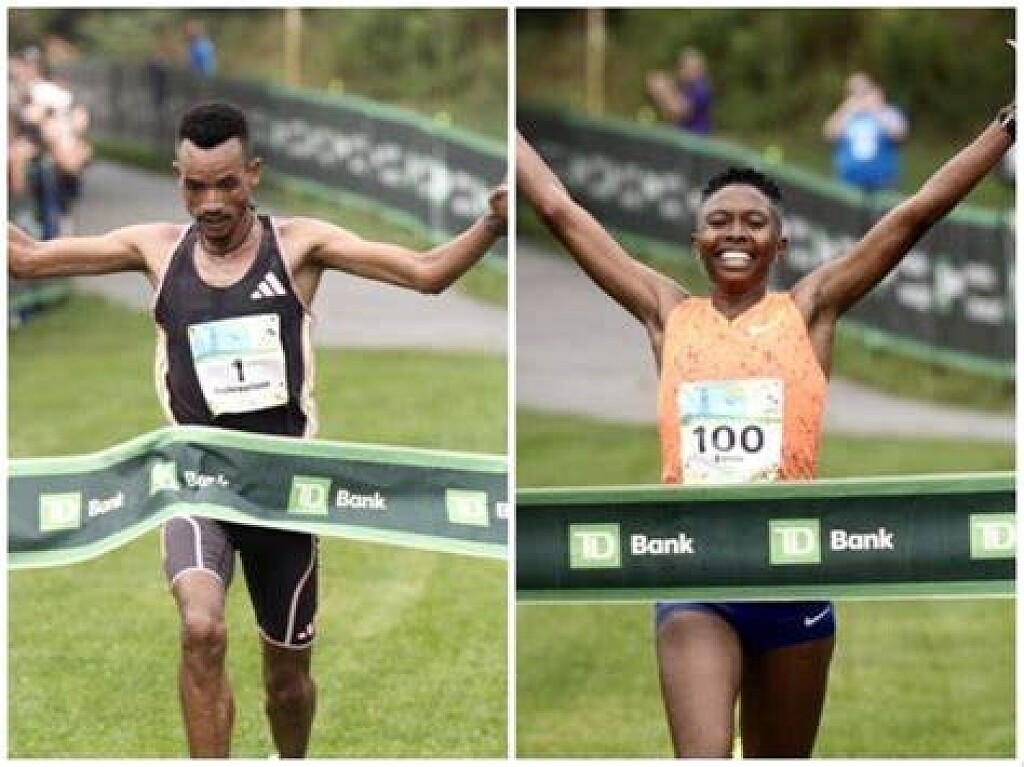
Tadese Worku, Faith Chepkoech top finishers at rainy Beach to Beacon
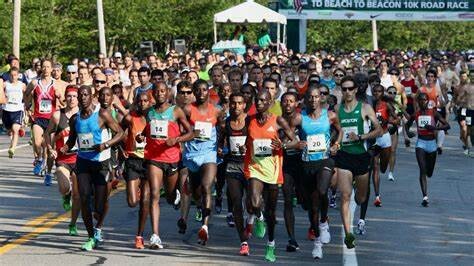
For the first time in the 26-year history of the race, started by 1984 Olympic marathon gold medalist and Cape Elizabeth native Joan Benoit Samuelson, runners left the starting line as rain fell. On Friday night, with thunderstorms expected Saturday morning, organizers pushed the start back an hour. Still, it poured as wheelchair racers took off at 8:50 a.m., and the rain was still steady when the elite women’s field started 10 minutes later.
“If anything, it was just going to be a true race, and we weren’t going to worry about times,” said Susanna Sullivan of Reston, Virginia, who finished fourth in the women’s race. “It takes a little bit of the pressure off, too, when you know it’s just going to be a race and not a time trial.”
Making her Beach to Beacon debut, Kenya’s Faith Chepkoech, 21, won the women’s race in 32 minutes, 5 seconds – 12 seconds ahead of 44-year-old Edna Kiplagat (32:17), another Kenyan who placed fifth in last year’s race. Cintia Chepngeno, also of Kenya, was third (32:20), two seconds ahead of Sullivan, the top American finisher.
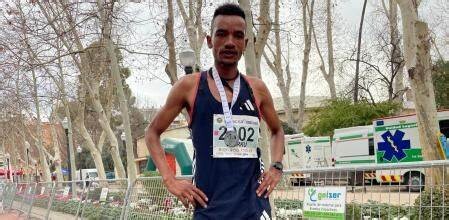
The men’s winner, Tadese Worku of Ethiopia, also made his Beach to Beacon debut. Worku, 22, won in 28:12, pulling away from runner-up Peter Mwaniki Aila (28:25) down the stretch. Mathew Kimeli, who won the Beach to Beacon in 2022, placed third (28:31). Biya Simbassa of Flagstaff, Arizona, was the top American male finisher, taking fourth in 28:34 for his third consecutive top-five finish.
The weather didn’t keep fans from cheering for runners along the course. Runners were serenaded by Dolly Parton’s “9 to 5” at around the 2 1/2-mile mark. A mile later, runners were greeted by a bagpiper. Mile after mile, there were loud cheers for the 6,072 participant.
by Tadese Worku, Faith Chepkoech
Login to leave a comment
TD Beach to Beacon 10K
Joan Benoit Samuelson, a native of Cape Elizabeth, Maine, won the first-ever women's Marathon at the 1984 Olympics in Los Angeles and is founder and chair of the TD Bank Beach to Beacon 10K. "A long time dream of mine has been realized" says Samuelson. "I've always wanted to create a race that brings runners to some of my most...
more...
There Are Going to Be People Walking:’ A Look at the Grueling Olympic Marathon Course
Getting to run by all those historic spots requires some epic climbs and descents.The final weekend of the 2024 Paris Olympics will host back-to-back days of thrilling marathons. These prestigious races, set against the backdrop of two of France’s most iconic landscapes—Paris and Versailles—will weave through a tapestry of history, culture, and breathtaking scenery. They begin on August 10 with the men’s race, and then, in a nod to the 40th anniversary of the first women’s Olympic Marathon in Los Angeles, the Paris Olympics will conclude on August 11 with the women’s race for the first time in history.
Here are some of the key details you’ll want to know:
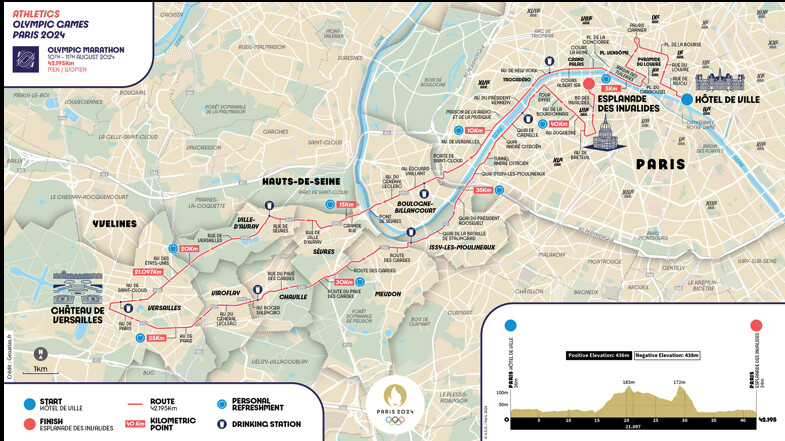
What sites will the runners pass?
It’s not a bad way to tour the area, and it’s quite different than the Paris Marathon that is held each April. Athletes will find themselves tracing a route that dances through nine arrondissements (neighborhoods) of Paris along the banks of the Seine. The runners will begin at the Hôtel de Ville, or city hall, and then pass landmarks such as the Palais Garnier opera house, Place Vendôme, the Louvre museum, and past the Trocadéro.
Next, they will leave the city to run through historic French towns, including Sevres, on their way to Versailles. The return to the city is a different route and will take them through the Forêt Domaniale de Meudon, a forest. When back in the city, they will be on the Left Bank and run past the Eiffel Tower as well as Parisian neighborhoods. The race ends at the Esplanade des Invalides, in which Napoleon is buried.
This route is based on significant French history. In October 1789, between 6,000 and 7,000 Parisian women, joined by men, marched from the Hôtel de Ville through the city to Versailles. It was because of that march that Louis XVI agreed to ratify the Universal Declaration of the Rights of Man and Citizens. The marathoners are symbolically running in their footsteps.
How tough is the course?
Unlike some more recent Olympics and U.S. Marathon Trials races, this course isn’t a circuit of repeated loops. Instead, it’s a full loop starting in Paris and loops down to Versailles outside of the city.
While the elevation profile for the first nine miles looks fairly tame, once the runners are past the halfway mark the landscape changes. The most notable course feature is the three uphill stretches—they’re incredibly steep and very long.
The first big hill comes just before the 10-mile mark, and it climbs at a 4 percent grade, which is roughly the same as Boston’s famed Newton hills. The difference with the Paris version is that it ascends for about 1.25 miles before it levels off for a bit. (Boston’s longest hill is less than half a mile, according to Sean Hartnett, emeritus professor of geography at the University of Wisconsin-Eau Claire, who specializes in marathon routes and other running competitions.)
The next hill at the 12-mile mark is at 5 percent, steeper than anything on the Boston course and 900 meters long. But those two are just appetizers for the real challenge. That hits just after the 18-mile mark.
Runners will have to climb for 600 meters, at an average grade of 10.5 percent. Yes, picture putting your treadmill at 10 percent and trying to run up it at marathon pace. Hartnett calls it a “doozy” and struggles to find courses to compare it to. The Bix 7 in Davenport, Iowa, perhaps? Then he gives up. “It’s unlike anything in any competitive road marathon,” he said. (You can view a detailed description of the 15K-33K section as mapped by Hartnett here.)
In total, the route will include 1,430 feet of elevation gain. Possibly more challenging is the 1,437 feet of descent. The make-or-break point for the route might be just after that final brutal uphill, when they are bombing downhill—at some points at a gradient of 13.5 percent. Runners will have to be efficient going down, without pounding so much they trash their quads before the final flat stretch before the finish. To put the course into some more perspective, the World Marathon Majors that are considered the hilliest—Boston and New York City—each have an elevation gain of a little over 800 total feet. And for one final nugget, the average grade of the Mount Washington Auto Road Race is 12 percent. The course record for that 7.4-miler is at around 8:00 pace.
This course will make the fastest marathoners in the world look almost human at times.
How do the marathoners feel about the course?
Pat Tiernan, an Olympian for Australia who is running the marathon, made two trips to Paris from his training base with Puma in North Carolina to examine the course. His first trip, in early April, was just to get a feel for the course. The second, in late May, was to train on it.
“The first thing you notice,” Tiernan said in a phone call with Runner’s World, “is that it’s going to be a brutal course. There are going to be people walking.”
If you look closely at the official Strava route, you can spot some U.S. Olympic marathoners on the leaderboards of the course’s toughest segments.
On April 10, U.S. team member Clayton Young did a 12.80-mile run on the hilliest section of the course, where he “pushed the uphills, chilled the downhills.” During the steepest climb—right before the mile 18 split—Young tackled a .44-mile segment in 3:09, giving him a modest average pace (for a world-class marathoner) of 7:01 per mile. But if you look at Strava’s “grade adjusted pace,” which factors in elevation, that 7:01 converts to 5:03 mile pace. His average heart rate was 179 beats per minute.
Dakotah Lindwurm, a U.S. team member for the women, also previewed the course in April in a run she called, “Tour de La Olympic hills ?].” She racked up an impressive 16 “course records” during her 10.87-mile workout, and on the same steep segment that Young ran, she averaged 7:43 pace with a grade-adjusted pace of 5:21 per mile.
Emily Sisson, the U.S. record holder in the marathon, has been training for both the hills and the flats. “We’ve been doing a lot of stuff on hills, because [we] want to come out of the hills into the last 10K feeling good,” she says. “That’s also why you don’t want to slack on 10K work, because it could be quite fast at the end. So kind of trying to do it all.”
Tiernan agreed with Sisson on the unique challenge. If marathoners go too hard through the hills, they could struggle at the end, he said. If they go too easy through the hills and subsequent descents, they might be out of touch by the final 10K. He said the Paris course is as “if you were to do a 10K road race, then go and run a hard 10K hill cross country course, then a 10K road race.”
If nothing else, it could make for some surprises on the podium.
When exactly are the races?
The men’s event happens on Saturday, August 10. If you want to watch live, get your favorite espresso ready. The event begins at 2 a.m. ET/11 p.m. PT in the U.S. The following day for the women’s race, the 2024 Paris Olympics fully conclude in honor of the 40th anniversary of the first women’s Olympic marathon event, won by Joan Benoit-Samuelson. The start time is also at 2 a.m. ET/11 p.m. PT.
Who are the major names in each race?
Both races are packed with star power in the form of returning Olympic champions, world record holders, and World Marathon Majors winners. The biggest storyline in the men’s race is whether Eliud Kipchoge, the two-time Olympic marathon gold medalist who many consider to be the greatest of all time, will be able to retain his crown in what may be his final Olympics at age 39.
The women’s event is even more stacked and should make for quite the event to cap off the 2024 Olympics. Newly ratified world record holder Tigist Assefa of Ethiopia will have to match speed and strategy against the likes of Hellen Obiri and Peres Jepchirchir of Kenya and the Netherlands’s Sifan Hassan, who is running the marathon after racing in the 5,000 and 10,000 meters on the track.
Men’s Marathon Contenders
Eliud Kipchoge, Kenya (2:01:09)
Kenenisa Bekele, Ethiopia (2:01:41)
Benson Kipruto, Kenya (2:02:16)
Tamirat Tola, Ethiopia (2:03:39)
Conner Mantz, USA (2:07:47)
Clayton Young, USA (2:08:00)
Women’s Marathon Contenders
Tigist Assefa, Ethiopia (2:11:53)
Sifan Hassan, Netherlands (2:13:44)
Peres Jepchirchir, Kenya (2:16:16)
Emily Sisson, USA (2:18:29)
Hellen Obiri, Kenya (2:21:38)
Rose Chelimo, Bahrain (2:22:51)
Fiona O’Keeffe, USA (2:22:10)
Sharon Lokedi, Kenya (2:22:45)
Did you know there is a mass participation race?
If not, now you do. It’s called the Marathon Pour Tous, and we’re pretty jealous we can’t run this one. There will be a full marathon and a 10K on the same route as the Olympic marathon on the evening of August 10. Yes, a night race in the City of Lights. More than 20,000 participants are expected for each event.
by Runner’s World
Login to leave a comment
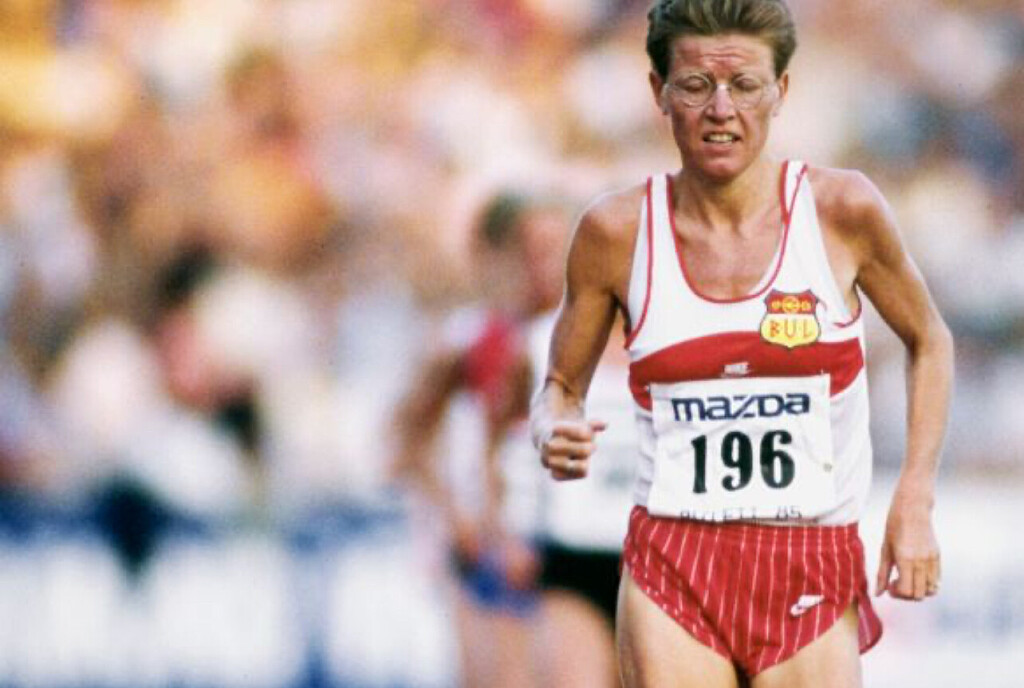
Remembering Kristiansen’s barrier-breaking sub-15-minute 5000m
When Ingrid Kristiansen lined up for the 5000m at the 1984 Bislett Games, she was known as the former international cross country skier who had just become Europe’s fastest ever woman in the marathon.
It was only six weeks previously that the 28-year-old mother from the Viking stronghold of Trondheim had made her major breakthrough in athletics, storming through halfway in the London Marathon in a blistering 1:10:52 en route to a winning time of 2:24:26.
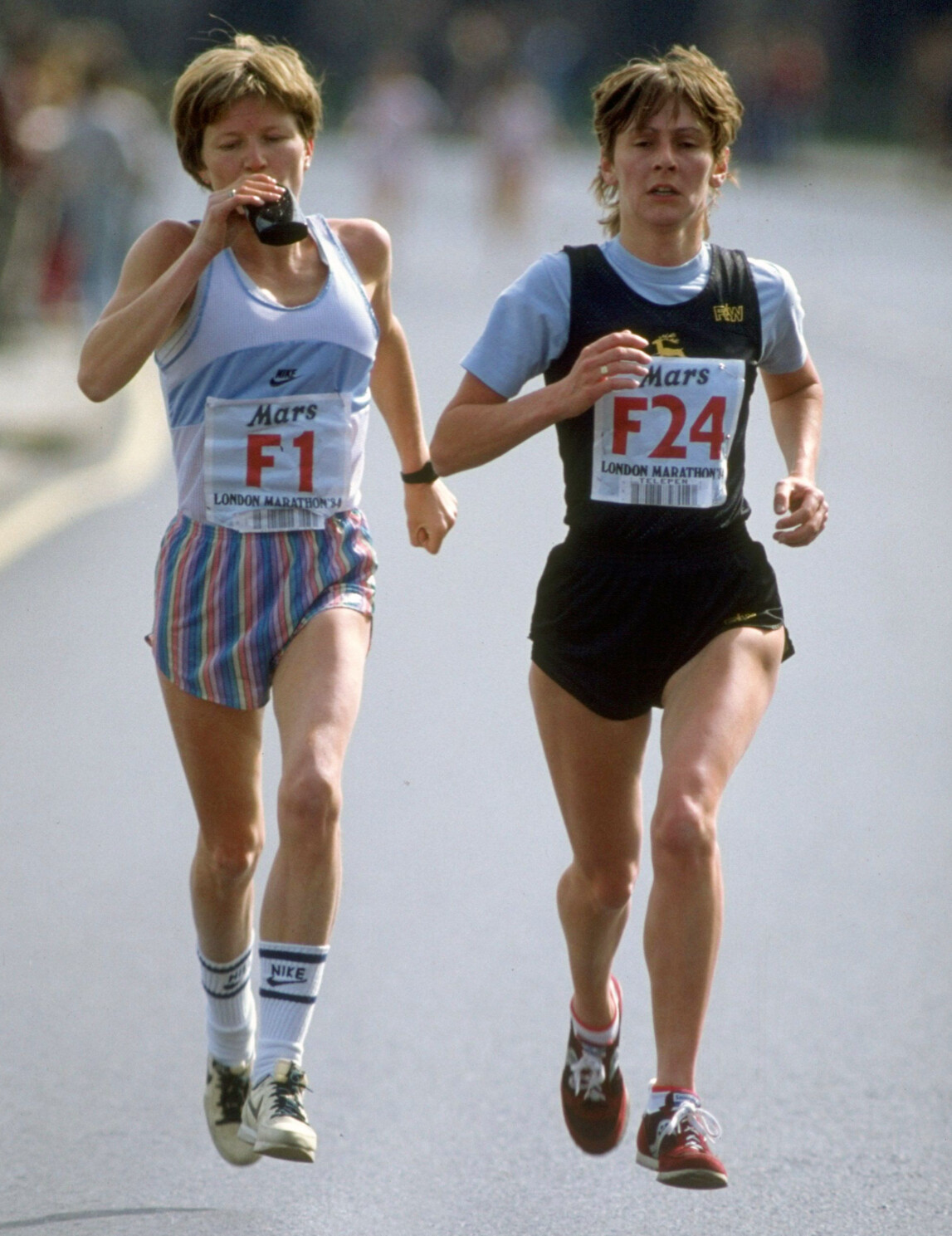
In the process, Kristiansen first peeped out of the considerable shadow of the great Grete Waitz as another formidable Norse to be reckoned with on the global running stage.
The London run elevated her to second spot on the world all-time list, behind the 2:22:43 recorded by Joan Benoit of the US in Boston the previous year, but ahead of Waitz’s Norwegian and European record of 2:25:28.7.
It was only fitting that the burgeoning Kristiansen should claim her first world mark on home ground, in the heart of Norway’s capital city on the hallowed Bislett Stadium track.
That was 40 years ago, on the evening of 28 June 1984.
‘Dead tired… pushed on by the cheers of the crowd’
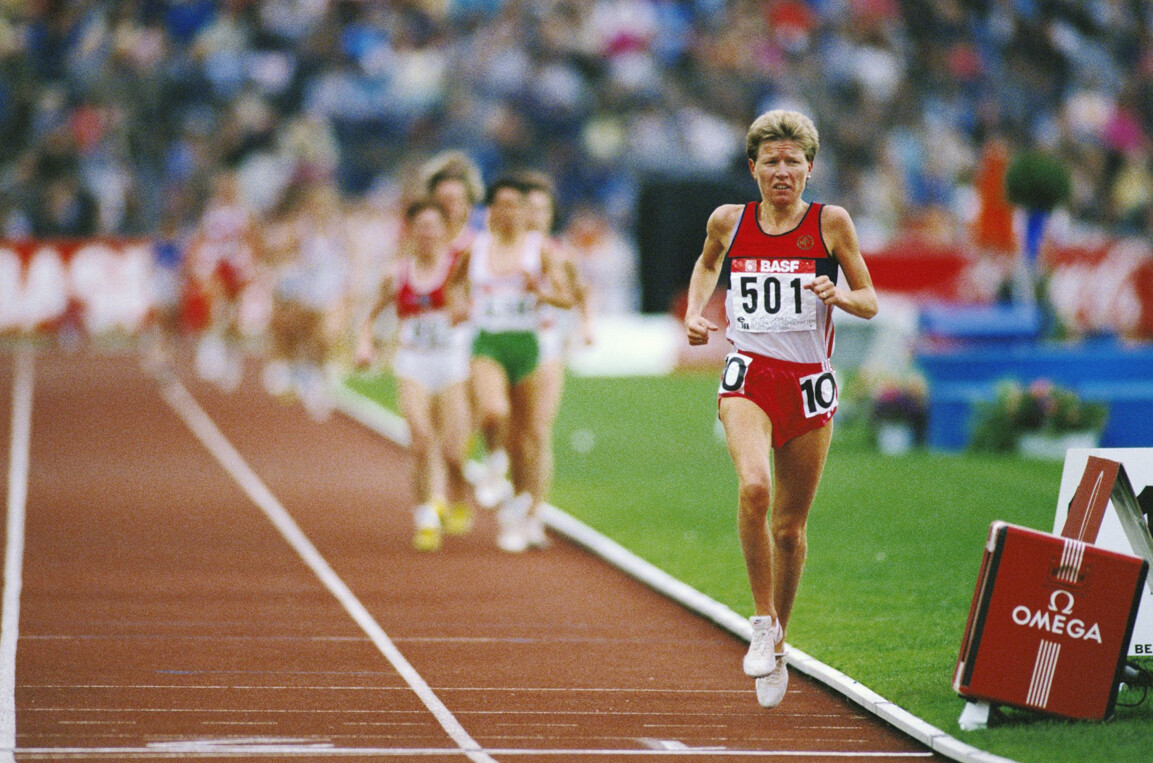
The official world record for the women’s 5000m stood at 15:08.26 – to Mary Decker, or Mary Tabb as she had been when she set the figures on home ground at the 1982 edition of the Pre Classic.
In Apartheid South Africa on 5 January 1984 – and therefore ineligible for recognition – the barefoot Springbok wunderkind Zola Budd had run 15:01.83 in Stellenbosch. By June of the same year, Budd had already become a British citizen and was on her way to being rubber-stamped in the British team for the Los Angeles Olympics.
That night in Oslo, though, Kristiansen’s only rival was the Bislett Stadium clock.
After following Maggie Keyes of the USA through 1000m in 3:02.0, Kristiansen surged clear of the field, reeling off laps of 70-72 seconds.
Passing 3000m in 8:59.8, Kristiansen finished with the flourish of a 68.4 final lap before crossing the line in 14:58.89.
Off marathon training of 170-180km a week, she had become the first woman in history to beat 15 minutes for 5000m.
“I was dead tired during the last two laps but I was pushed on by the cheers of the crowd,” she confessed.
Aurora Cunha, the future three-time world road race champion from Portugal, finished a distant runner up in 15:09.07, followed by Briton Angela Tooby (15:22.50).
Back in sixth was Portugal’s European marathon champion Rosa Mota (15:30.63) – followed by Tooby’s twin sister, Susan (15:44.58), future mother of 2022 world 1500m champion Jake Wightman.
Holding a distance world record triple
Kristiansen was to go quicker over 12.5 laps. At London’s Crystal Palace in 1985, she clocked 14:57.43 but lost the world record to Budd, a clear winner in 14:48.07.
In Stockholm in 1986, however, Kristiansen reclaimed the record with a stunning 14:37.33.
That year she was at her zenith on the track, improving her own 10,000m world record by almost 46 seconds with a 30:13:74 run at Bislett.
Kristiansen was the first runner in history to simultaneously hold world records for 5000m, 10,000m and the marathon.
Returning to the London Marathon in 1985, she brought the women’s 2:20 barrier into sight with a 2:21:06 triumph that stood as a world record for 13 years.
Kristiansen also became the first athlete to claim world titles on the track, on the road and over cross country. Twice a winner of the 15km world road race championship, she won the world 10,000m title on the track in Rome in 1987 and the world cross country crown in Auckland in 1988.
Big heart and big lungs
Many attributed Kristiansen’s phenomenal success to the physiological benefits she had gained from giving birth to her first son, Gaute, in 1983. She felt it was more the edge she had gained from years of competitive cross-country skiing.
“I think it came from my cross-country skiing career,” she asserted. “It gave me a big heart and big lungs, and when I got my legs trained for running I was maybe a little bit ahead of the other runners at the time.”
As a cross-country skiing prodigy, Kristiansen won the European junior title in 1974, was selected as a reserve for the Winter Olympics in Innsbruck in 1976, and finished 15th in the World Championships 20km race in 1978.
She decided to concentrate on competitive skiing for several years after making the Norwegian team for the 1971 European Athletics Championships as a 15-year-old 1500m runner, Ingrid Christensen. But she got bumped off the track in her heat in Helsinki and failed to finish the race.
Her roommate in the Finnish capital was a 17-year-old called Grete Andersen, who finished eighth in the other 1500m heat, missing the cut for the final.
She also made a name for herself in future years: as Grete Waitz, the first of Norway’s barrier-breaking distance-running duo.
by World Athletics
Login to leave a comment
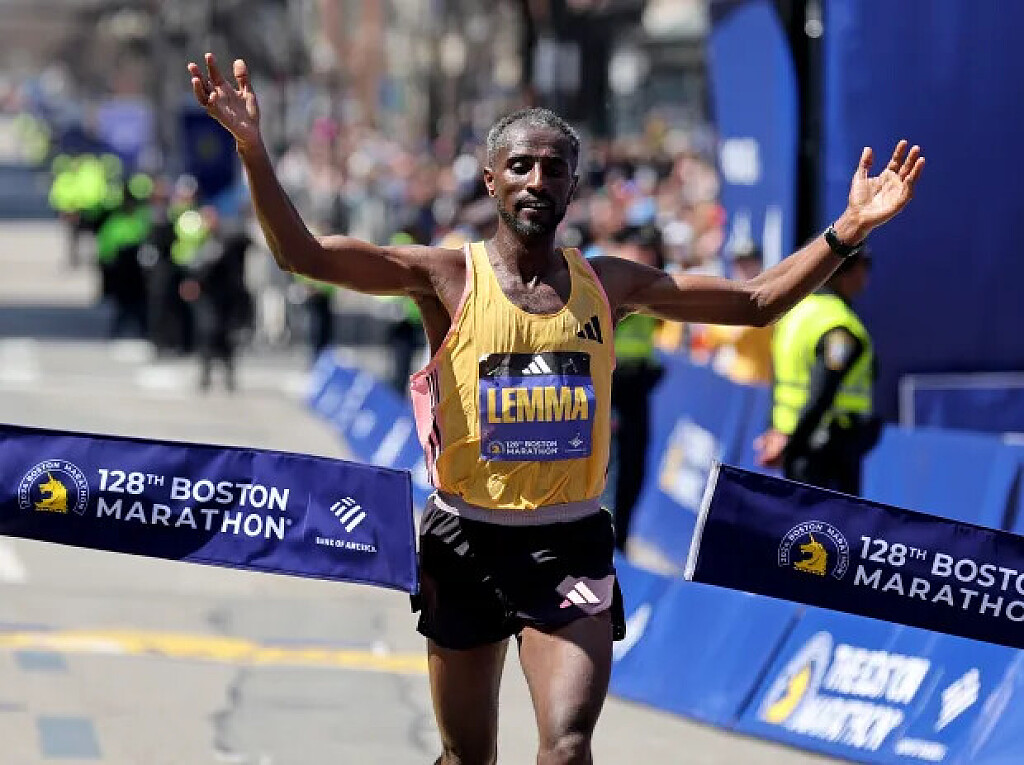
Who is Sisay Lemma, the winner of the 2024 Boston Marathon?
Sisay Lemma was born in 1990 in the Oromia Region of Ethiopia. He is the winner of the 2024 Boston Marathon, with a time of 2:06:17.
Sisay Lemma is an Ethiopian long-distance runner who specializes in the marathon. He is the winner of the 2024 Boston Marathon, with a time of 2:06:17.
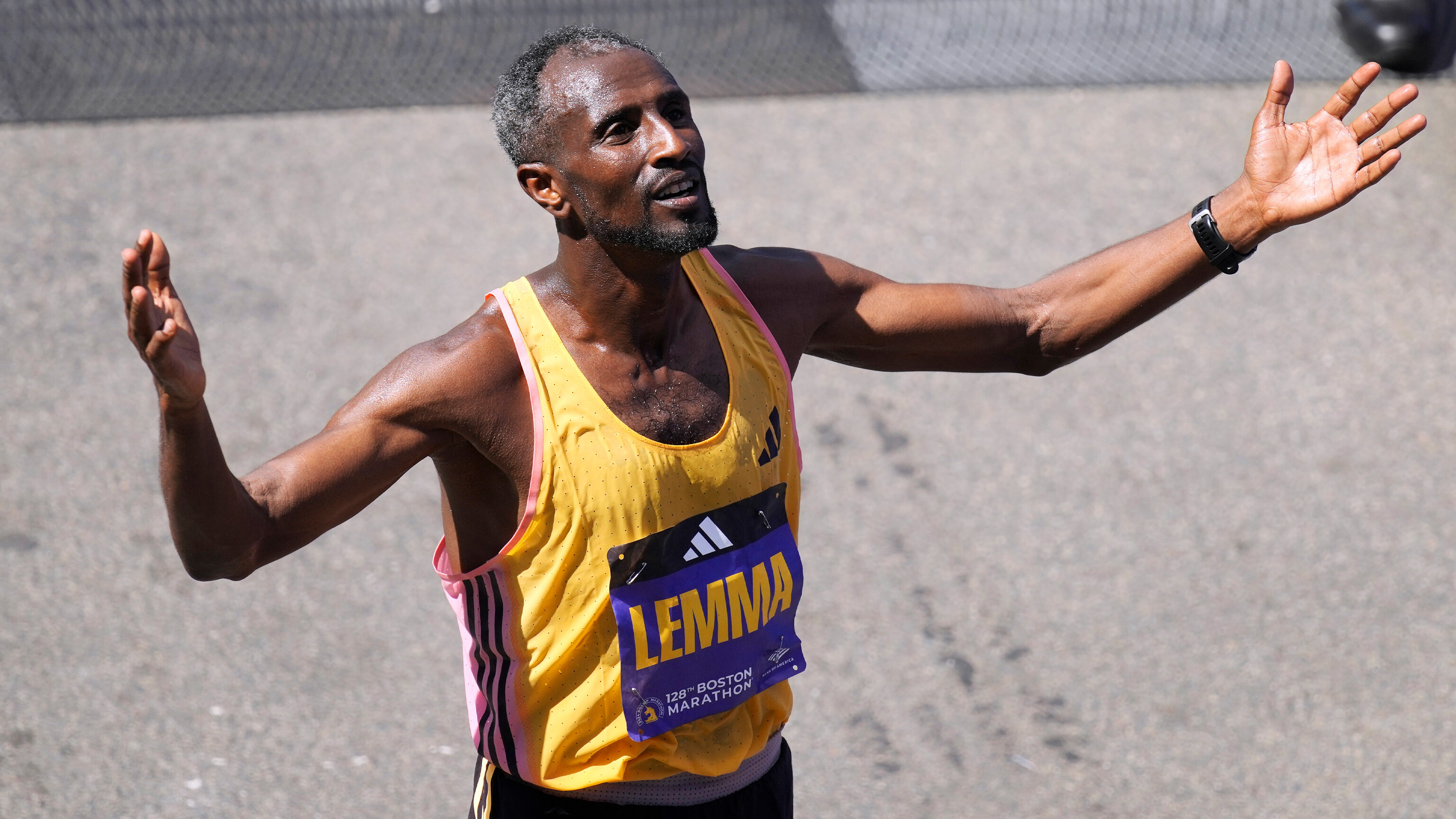
This was his first victory at the Boston Marathon, but he has previously won other major marathons, including the 2021 London Marathon and the 2023 Valencia Marathon. Lemma is also a three-time bronze medalist at the World Athletics Championships.
Lemma was born in 1990 in the Oromia Region of Ethiopia. He began running at a young age, and quickly showed promise. He made his international debut in 2013, and won his first major marathon in 2018, when he won the Rotterdam Marathon.
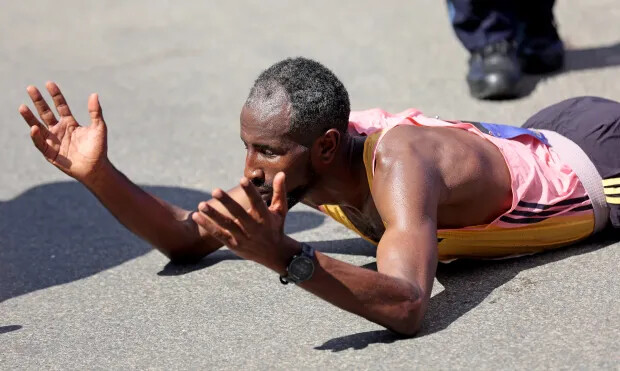
Lemma is known for his strong finishing kick. He has often won races by coming from behind in the final stages. He is also a very consistent runner, and has never finished a marathon outside of the top 10.
Lemma is a rising star in the world of marathon running. He is still relatively young, and has many years of good running ahead of him. He is a strong contender for medals at the major marathons, and the Olympic Games.
Here are some of Sisay Lemma’s career highlights:
Winner of the 2024 Boston Marathon
Winner of the 2021 London Marathon
Winner of the 2023 Valencia Marathon
Three-time bronze medalist at the World Athletics Championships
Winner of the 2018 Rotterdam Marathon
Personal best of 2:01:48 for the marathon
The Boston Marathon: The King of Marathons
The Boston Marathon is an annual foot race held in Boston, Massachusetts, United States. It is considered to be the most prestigious marathon in the world, and is one of the world’s oldest continuously run sporting events. The race is traditionally held on the third Monday in April, and it follows a 26.2-mile (42.2 km) route through the streets of Boston and the surrounding towns.
The Boston Marathon was first held in 1897, and it was inspired by the success of the marathon race at the 1896 Summer Olympics in Athens, Greece. The race was originally intended to be a qualifier for the 1897 Summer Olympics, but it quickly became a popular event in its own right. The Boston Marathon has been held every year since 1918, with the only exceptions being in 1918 due to World War I, and in 2020 due to the COVID-19 pandemic.
The Boston Marathon is known for its challenging course, which features several hills, including the infamous Heartbreak Hill at mile 20. The race is also known for its large and enthusiastic crowds, which line the streets throughout the course to cheer on the runners.
The Boston Marathon has been won by some of the greatest marathon runners in history, including Dick Hoyt, Bill Rodgers, Joan Benoit Samuelson, and Kathrine Switzer. The race has also been the site of several world records, including the first sub-2:00 marathon in 1978 by Geoffrey Hirt.
The Boston Marathon is more than just a race; it is a tradition and an institution. The race is a symbol of Boston’s resilience and spirit, and it is a source of pride for the city’s residents. The Boston Marathon is also a major fundraiser for charity, and it has raised millions of dollars for local charities over the years.
by Laura Islas
Login to leave a comment

Boston Marathon
Among the nation’s oldest athletic clubs, the B.A.A. was established in 1887, and, in 1896, more than half of the U.S. Olympic Team at the first modern games was composed of B.A.A. club members. The Olympic Games provided the inspiration for the first Boston Marathon, which culminated the B.A.A. Games on April 19, 1897. John J. McDermott emerged from a...
more...
Rob Gronkowski named grand marshal for 2024 Boston Marathon
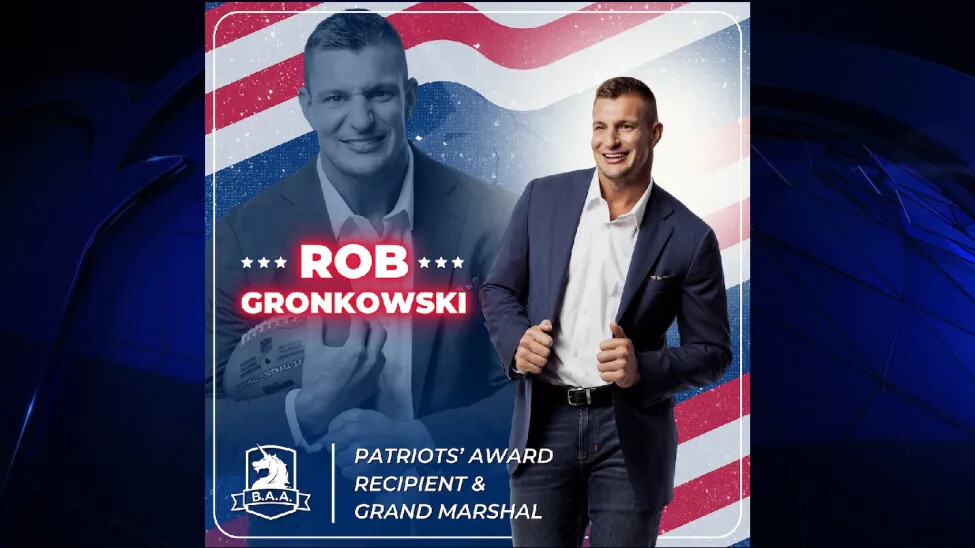
New England Patriots great Rob Gronkowski has been named grand marshal for the 2024 Boston Marathon, the Boston Athletic Association announced Tuesday.
Gronkowski will also receive the 2024 Patriots' Award, presented to a person or organization who is "patriotic, philanthropic, and inspirational, and fosters goodwill and sponsorship." In addition to his athletic achievements, Gronkowski founded the Gronk Nation Youth Foundation, which donated the funds to build Gronk Playground on the Charles River Esplanade.
"Giving back has always been a priority in my life," Gronkowski said in a statement. "When I first got to New England, Mr. Kraft and the Patriots Foundation ingrained in the team the importance of giving back to the community that gives back to us. And this community has supported me throughout my entire career. Now it's time for me to give back to help set others up for their own journey, especially the youth. This is why the Gronk Playground project is close to my heart. My family and I are honored to be able to give kids an awesome new space to play in the city.”
“We are honored to have Rob Gronkowski as part of our Boston Athletic Association's long-standing traditions and celebrations this year. The work that he has done and continues to do for the Boston Community exemplifies what we look to recognize with our Patriots’ Award," B.A.A. Director of Development Nicole Juri said in a statement. “Having him also serve as Grand Marshal on race day will bring a lot of added joy and excitement for the thousands of spectators who will be lining the streets from Hopkinton to Boston.”
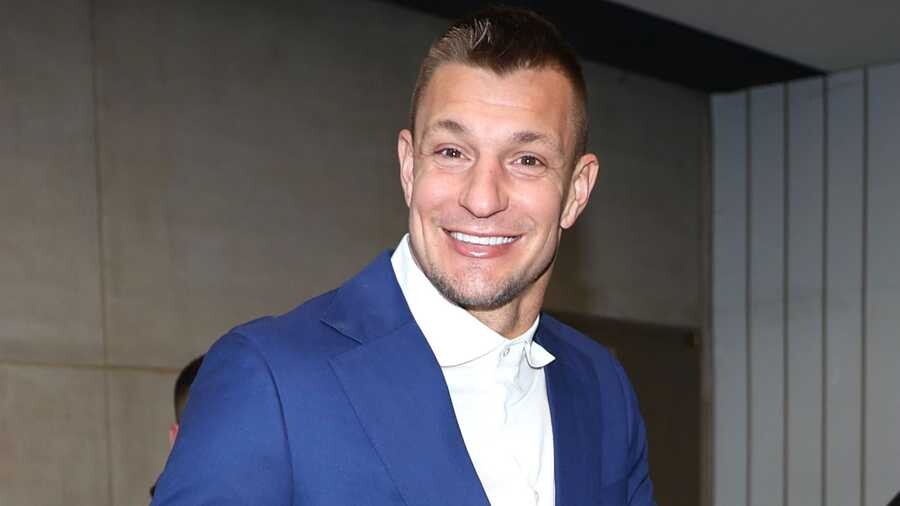
Gronkowski will be honored at the B.A.A. Gives Back Celebration on April 13. In his role as grand marshal, he will be driven along the marathon course from Hopkinton to Boston, delivering the tropy to the finish line ahead of the athletes on race day on April 15.
Past recipients of the Patriots' Award include Robert and Myra Kraft and the New England Patriots, Red Auerbach and hte Red Auerbach Youth Foundation, the Boston Red Sox Foundation, Rick and Dick Hoyt, Joan Benoit Samuelson, David Ortiz, Tim Wakefield, Tedi Bruschi, Adrianne Haslet, Marty Walsh.
Login to leave a comment
Boston Marathon
Among the nation’s oldest athletic clubs, the B.A.A. was established in 1887, and, in 1896, more than half of the U.S. Olympic Team at the first modern games was composed of B.A.A. club members. The Olympic Games provided the inspiration for the first Boston Marathon, which culminated the B.A.A. Games on April 19, 1897. John J. McDermott emerged from a...
more...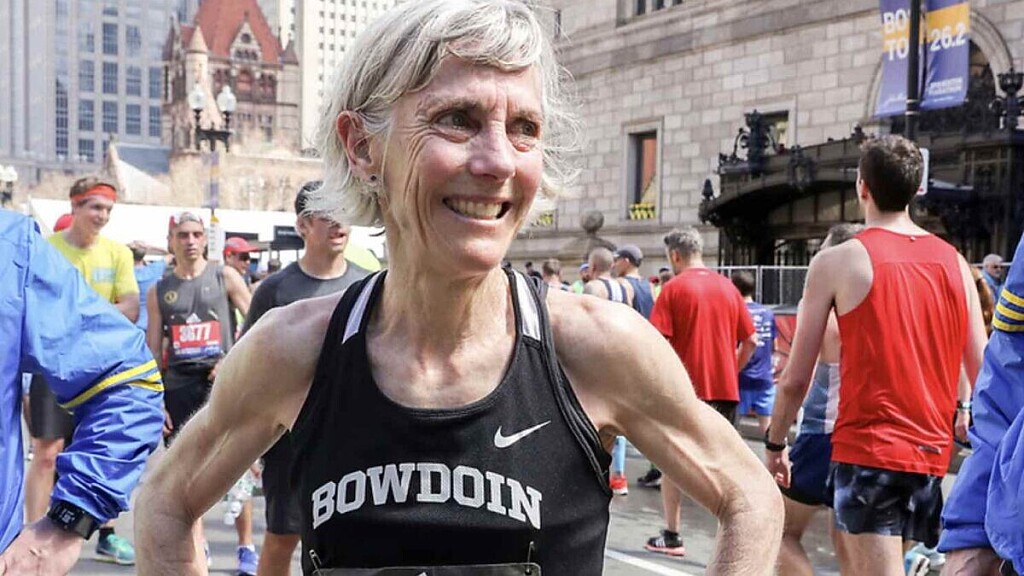
Joan Benoit Samuelson captures World Majors six-star medal at Tokyo Marathon
On Sunday morning, running icon Joan Benoit Samuelson claimed her sixth and final Abbott World Marathon Major star, clocking 3:42:18 at the Tokyo Marathon. The American distance running legend added another remarkable chapter to a storied career that includes wins at the 1979 and 1983 Boston Marathon and the 1985 Chicago Marathon.
The Abbott World Marathon Majors include the Tokyo Marathon, Boston Marathon, London Marathon, Berlin Marathon, Chicago Marathon and the New York City Marathon. In 2022, Benoit Samuelson checked her fifth major off her list, winning her age group at the London Marathon in 3:20:20; her daughter Abby ran as well, finishing just under three hours.
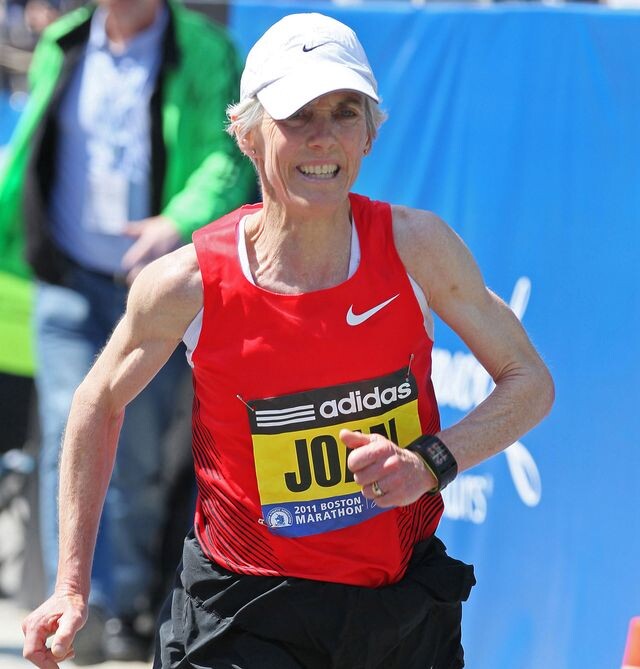
From Cape Elizabeth, Maine, Benoit Samuelson first gained international acclaim when she became the inaugural women’s Olympic marathon champion at the 1984 Summer Games in Los Angeles. Her groundbreaking victory set the stage for a career defined by trailblazing achievements. Benoit Samuelson held the fastest time for an American woman at the Chicago Marathon for 32 years after her 1985 victory, and her time at the Boston Marathon was the fastest time by an American woman at that race for 28 years Her personal best of 2:21:21 is still eighth on the U.S. all-time list.
Benoit Samuelson is the only woman in the world to have run sub-three-hour marathons in five consecutive decades, her first in 1979 and her most recent in 2010. At the 2019 Berlin Marathon, she ran 3:02, nearly becoming the first woman to clock a sub-three in six consecutive decades. In 2019, she ran the Boston Marathon to celebrate her then 40-year-old victory from 1979, wearing the same outfit she had worn four decades before—a backward ball cap and a Bowdoin College singlet (she won her age category, finishing in 3:04:00, only 28:45 minutes slower than her time in 1979).
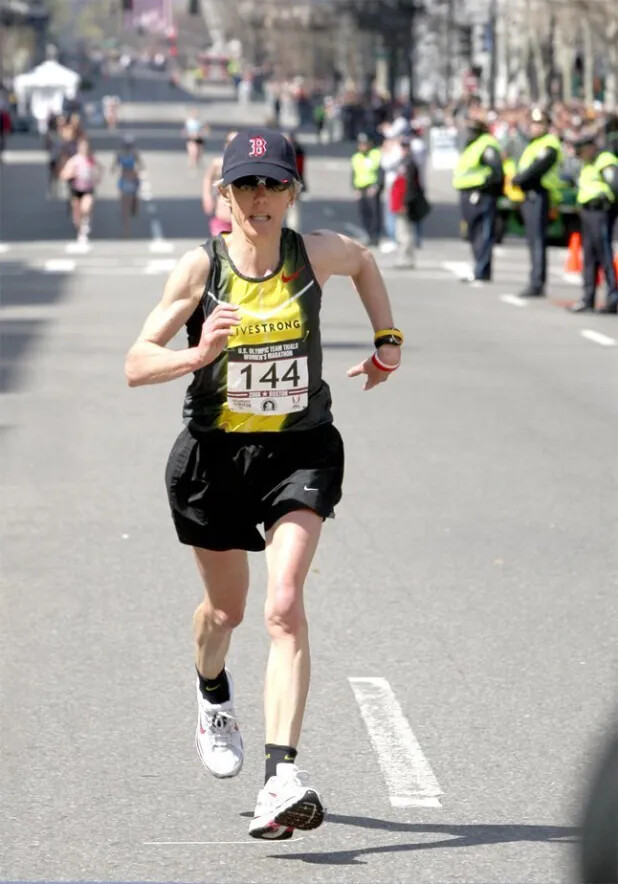
Beyond her accomplishments on the road, Samuelson has been an advocate for women’s participation in sports and has played a pivotal role in advancing opportunities for women athletes. After the 2022 London Marathon, Benoit Samuelson told the media: “I’m blessed to have longevity in this sport. It doesn’t owe me anything, but I feel I owe my sport.”
by Keeley Milne
Login to leave a comment

Tokyo Marathon
The Tokyo Marathon is a world-renowned annual marathon held in Tokyo, Japan. As one of the prestigious Abbott World Marathon Majors, it attracts elite and amateur runners from around the globe. The race holds World Athletics Platinum Label status, recognizing its high competitive standards, top-tier organization, and international appeal. Sponsored by Tokyo Metro, the Tokyo Marathon has grown into one...
more...
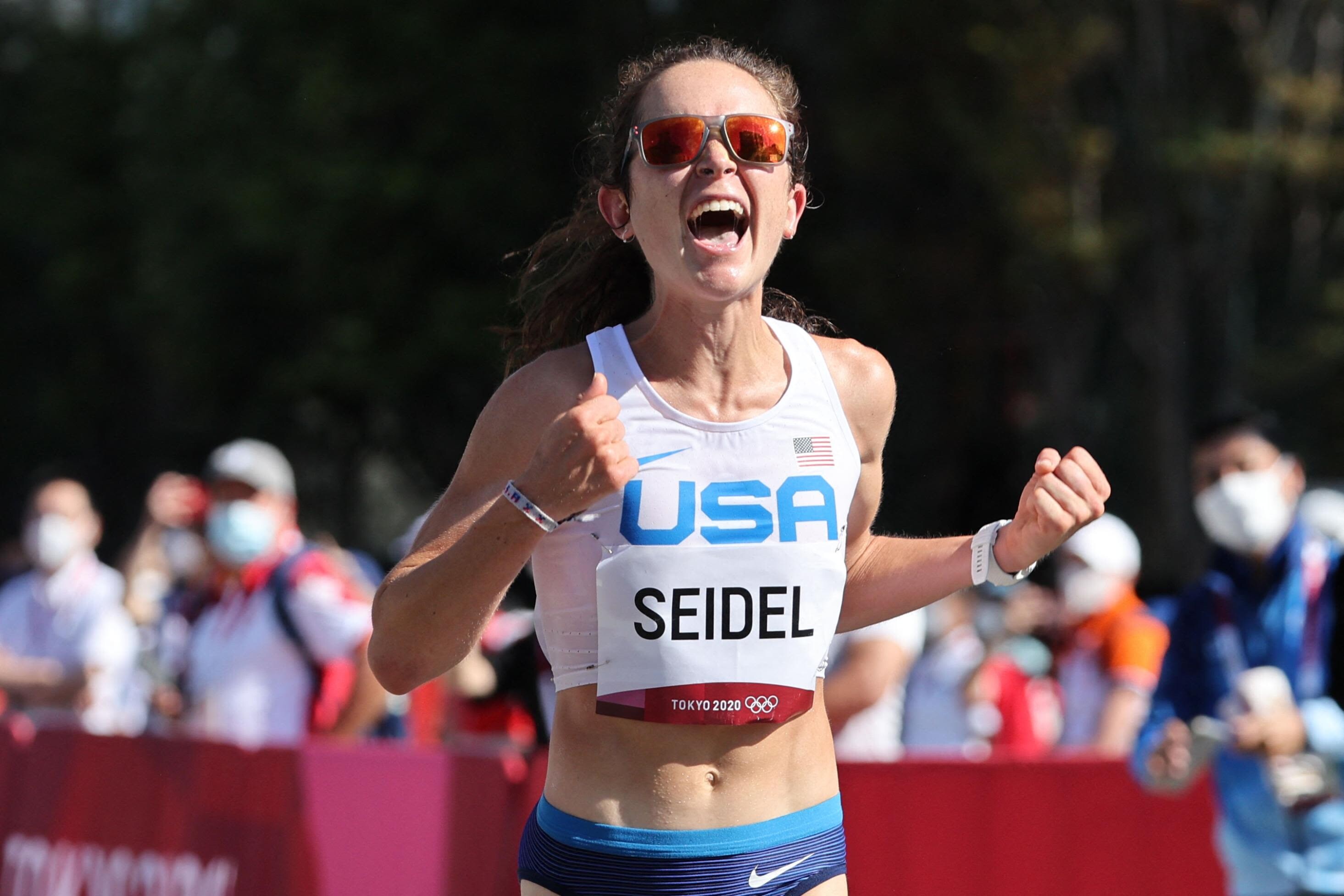
Molly Seidel withdraws from Olympic Marathon Trials due to injury
Tokyo Olympic bronze medalist Molly Seidel announced she is withdrawing from Saturday’s U.S. marathon trials for the Paris Games due to a knee injury.
Seidel, 29, said in a video posted Thursday that she suffered a knee injury a month ago, couldn’t run on it and got an MRI that revealed a broken patella and a partially torn patella tendon.
“I have done everything in my power over this last month to try and get myself to the (starting) line,” she said. “I’ve had just the most incredible physios and doctors doing everything in their power to help me. I’ve been cross-training my (butt) off, but ultimately I got to this week, and my knee had not healed up enough, and I knew that I could not race a marathon hard on it in its current state without really, really injuring myself.”
The trials are Saturday at 10 a.m. ET from Orlando, airing live on Peacock with coverage on NBC, NBCSports.com and the NBC Sports app at noon.
Four years ago, Seidel placed second in the trials in her marathon debut to make the three-woman Olympic team.
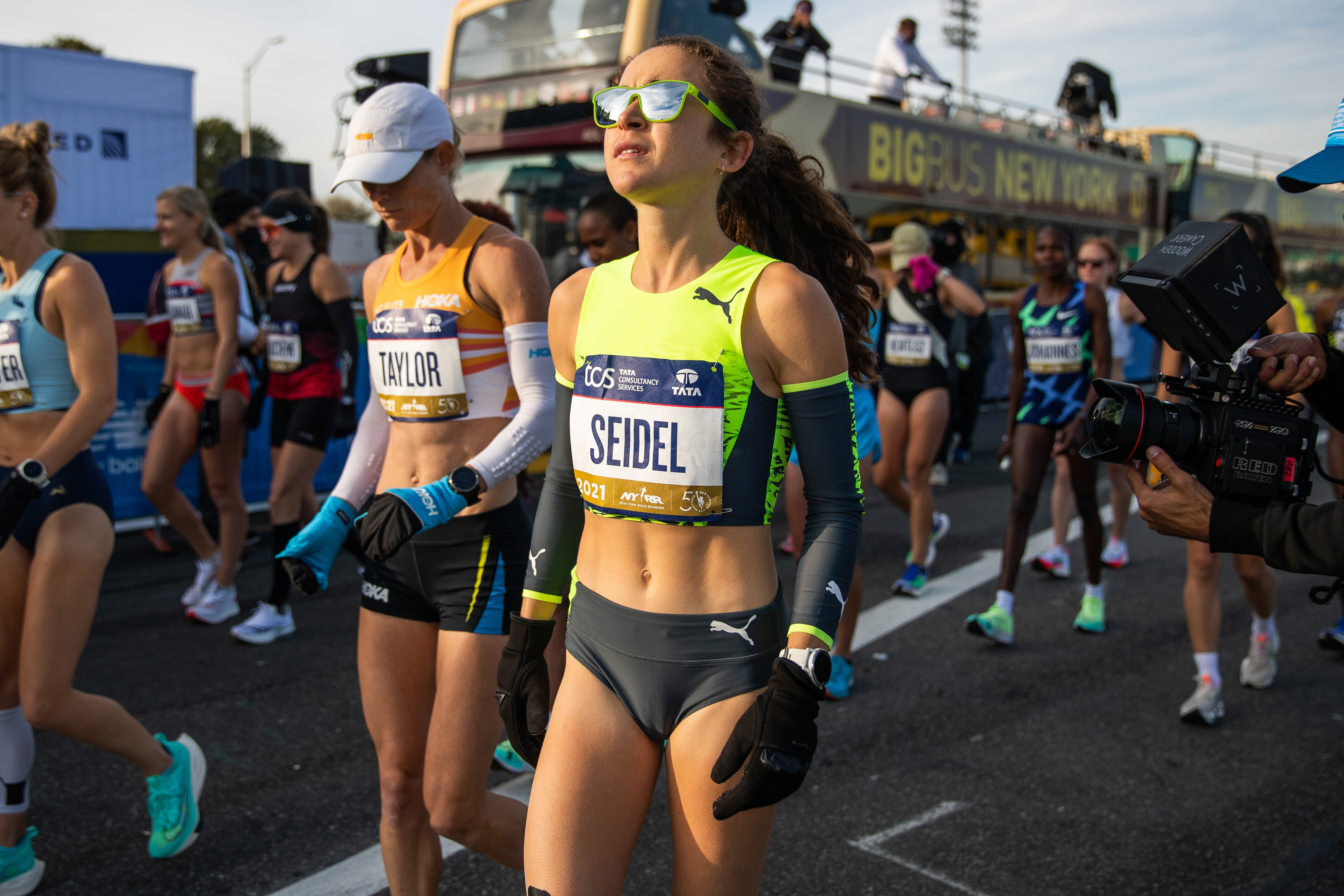
After the COVID-19 pandemic postponed the Tokyo Games by one year, Seidel finished third in the Olympic marathon held in Sapporo.
She became the third U.S. woman to win a marathon medal after Joan Benoit Samuelson, who won the first Olympic women’s marathon in 1984, and Deena Kastor, the 2004 bronze medalist.
After Tokyo, Seidel dealt with a hip injury and anemia, plus took time to focus on mental health after an eating disorder relapse.
Then last Oct. 8, Seidel finished a 26.2-mile race for the first time in two years. She was the second-fastest American woman at the Chicago Marathon, running a personal best and re-establishing herself as a prime candidate to make the Paris team of three at trials.
Seidel is the second contender to withdraw in the lead-up to trials.
Emma Bates, the third-fastest U.S. female marathoner of 2023, bowed out Jan. 7, saying then, “There’s just not enough time to be where I need to be.”
The field still includes three of the four fastest American women in history — American record holder Emily Sisson, former American record holder Keira D’Amato and Sara Hall, No. 4 on the all-time list.
Plus, former Iowa State teammates Betsy Saina (the fastest American in 2023) and Aliphine Tuliamuk (Tokyo Olympic Trials winner).
by Olympic Talk
Login to leave a comment

2028 US Olympic Trials Marathon
Most countries around the world use a selection committee to choose their Olympic Team Members, but not the USA. Prior to 1968, a series of races were used to select the USA Olympic Marathon team, but beginning in 1968 the format was changed to a single race on a single day with the top three finishers selected to be part...
more...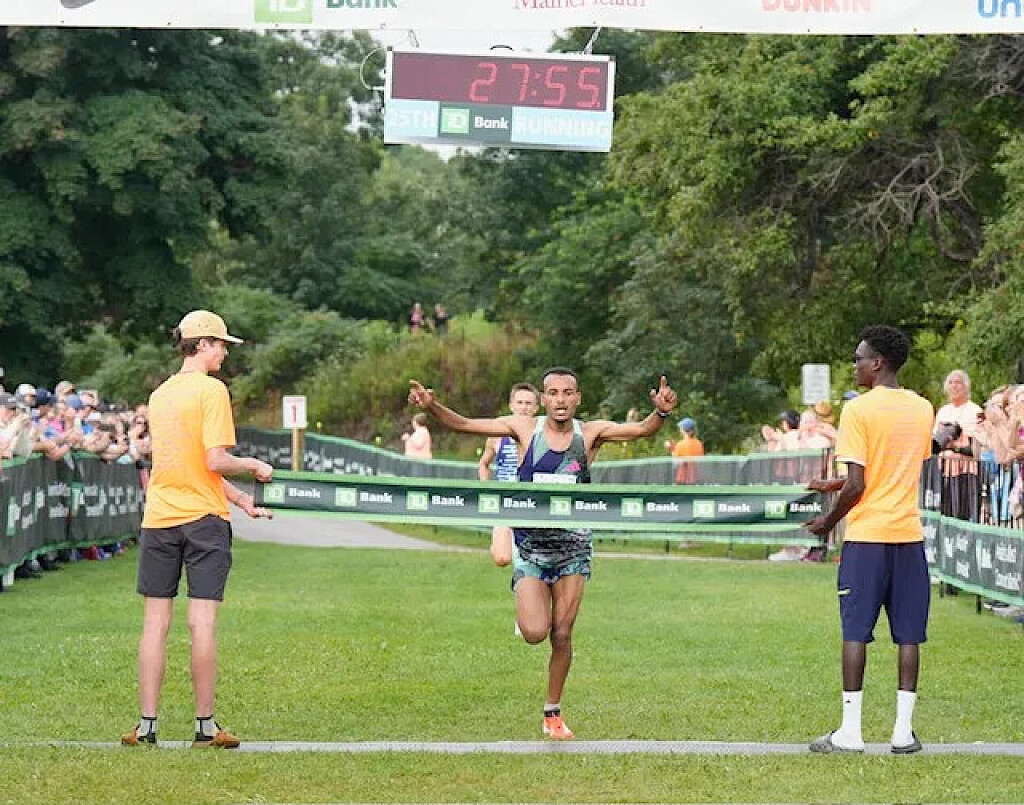
Ethiopia’s Addisu Yihune, Kenya’s Hellen Obiri win Beach to Beacon 10k
Ethiopia’s Addisu Yihune and Kenya’s Hellen Obiri won the men’s and women’s titles at the 2023 TD Beach to Beacon 10K on Saturday morning.
Yihune crossed the finish line in an unofficial time of 27 minutes, 56 seconds. Conner Mantz of Utah was second (27:58) and Muktar Edris of Ethiopia was third (28:06).
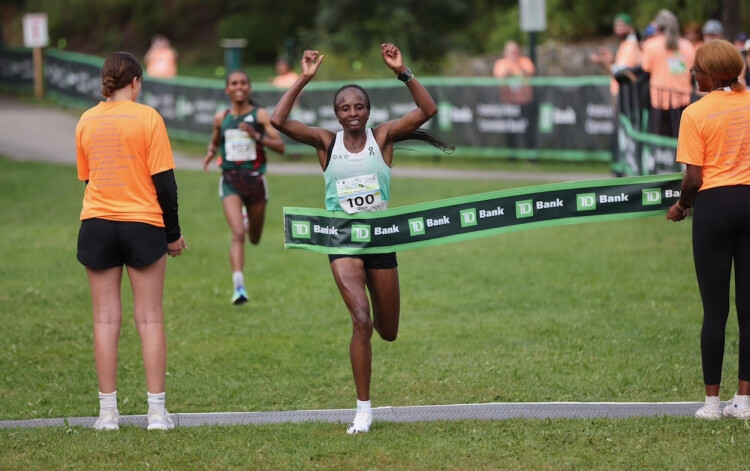
Obiri won the women’s race in an unofficial time of 31:36, followed by Ethiopia’s Fotyen Tesfay (31:38) and Keira D’Amato of Virginia (31:58).
Matt Rand of Portland was the top finisher among the Maine men in an unofficial time of 30 minutes, 44 seconds, followed by Grady Satterfield of Bowdoinham (30:52) and Ryan Jara of Gorham (30:55).
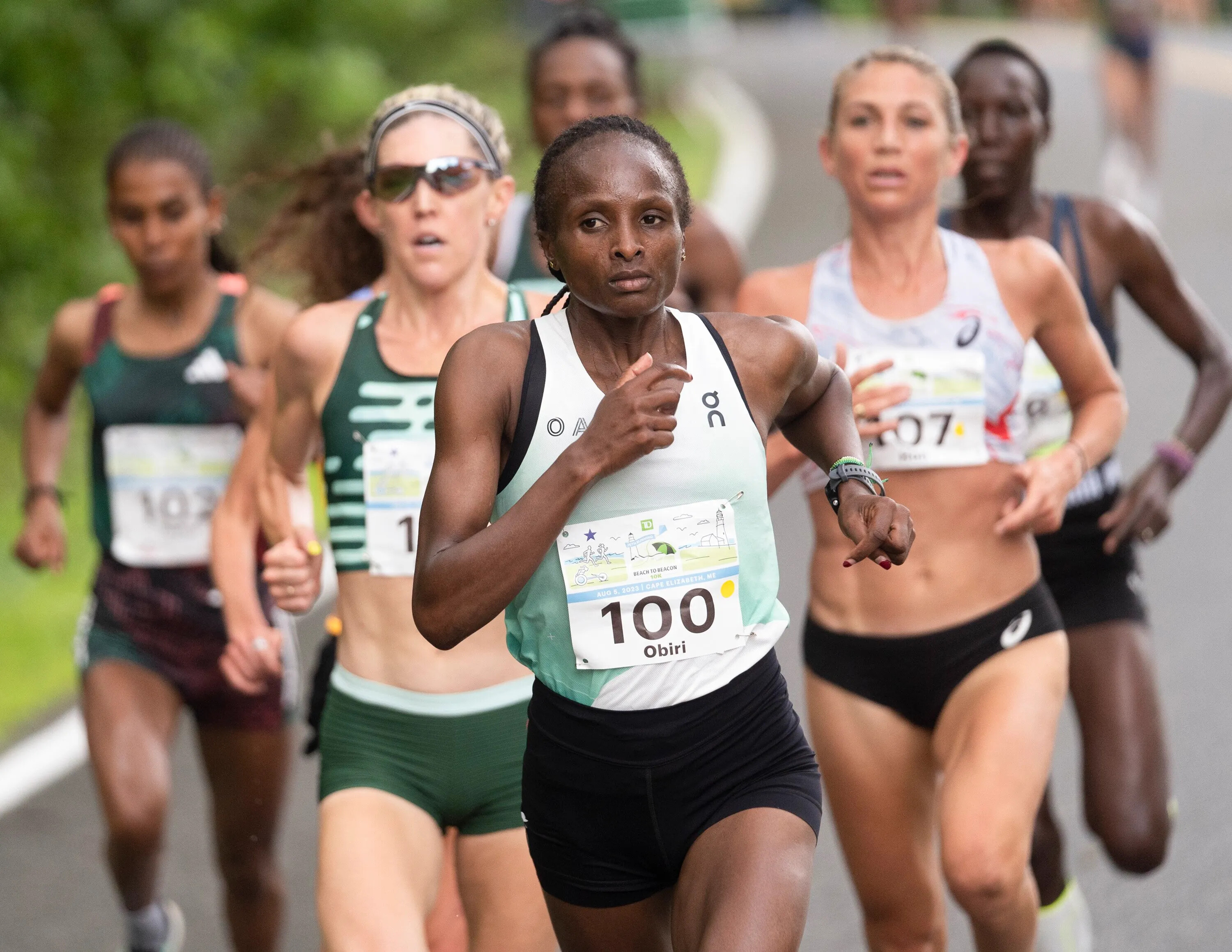
Ruth White, who will be a senior this fall at Orono High, was the top finisher among Maine women in an unofficial time of 34:56. Alexis Wilbert of Cumberland placed second (35:46) and Veronica Graziano of Falmouth was third (36:15).
Hermin Garic of Utica, New York, won the men’s wheelchair division in an unofficial time of 23 minutes, 20 seconds. Yen Hoang of Vancouver, Washington, won the women’s wheelchair division in 28:24.
In the men’s race, Mantz, 26, was visibly upset when he finished the race. He said Yihune, 20, twice pushed him in the final quater-mile, both times causing him to break stride and bang into the fencing that separated the runners from the crowd. Yihune, through the translation of countryman Edris, said he did not push Mantz. Yihune, competing in his first road race, said he was merely closing the lane to block Mantz’s path. Mantz, who had a fresh abrasion on his upper left arm, said that possibly the first incident with about 400 meters could have been accidental or unintended.
The second time, with about 200 meters to go, “The second time I tried to pass him there was plenty of room. Enough for two people to pass on his left. The second time I hit the fence pretty hard. I hate this because there’s a part of me that feels like I got gypped but I also don’t want to go out and protest and like make it into somebody else’s bad experience.”
Yihune won $10,000 for the victory. Mantz also earned $10,000 – $5,000 for finishing second and another $5,000 as the top American.
“I feel like I had first in me today and when you lose by just that much and you lose your momentum, it’s easy to get upset,” Mantz said.
Beach to Beacon, founded by 1984 Olympic women’s marathon champion Joan Benoit Samuelson, is celebrating its 25th anniversary. More than 8,000 people registered for the event, Maine’s largest road race and one of the premier road races in America, with over 6,400 finishing.
Login to leave a comment
TD Beach to Beacon 10K
Joan Benoit Samuelson, a native of Cape Elizabeth, Maine, won the first-ever women's Marathon at the 1984 Olympics in Los Angeles and is founder and chair of the TD Bank Beach to Beacon 10K. "A long time dream of mine has been realized" says Samuelson. "I've always wanted to create a race that brings runners to some of my most...
more...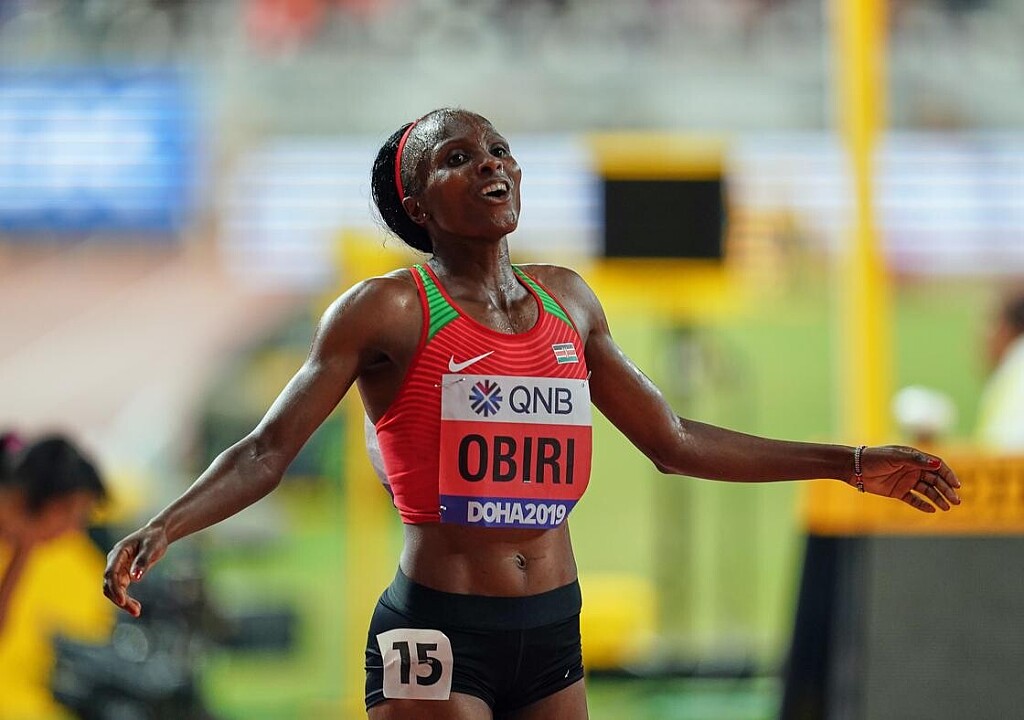
Kenya’s Hellen Obiri highlights field for Beach to Beacon 10K
Kenya’s Hellen Obiri highlights field for Beach to Beacon 10K on Saturday
Obiri, the 2023 Boston Marathon winner and the only woman to win world championships outdoors, indoors and in cross country, will compete at Beach to Beacon for the first time.
Hellen Obiri of Kenya won the women’s division of the Boston Marathon in April. On Saturday, she’ll compete for the first time in the TD Beach to Beacon 10K in Cape Elizabeth. Charles Krupa/Associated Press
Kenya’s Hellen Obiri, the 2023 Boston Marathon champion, highlights a group of elite runners who will compete Saturday in the TD Beach to Beacon 10K road race in Cape Elizabeth, race officials announced Monday.
Obiri – a two-time Olympic silver medalist and the only woman to win world championships outdoors, indoors and in cross country – will compete at Beach to Beacon for the first time. She’ll be joined by fellow Kenyan and two-time Boston Marathon champion Edna Kiplagat.
The women’s division also will feature Keira D’Amato of Virginia, who set an American marathon record (2 hours, 19 minutes and 12 seconds) last year, and Sanford native Rachel Schneider Smith, who competed for the United States in the 5,000 meters at the Tokyo Olympics in 2021 and placed fifth at last year’s Beach to Beacon.
A trio of Ethiopians – Addisu Yihune, Amedework Walelegn and Muktar Edris, a two-time world champion – are expected to contend for the men’s title. Top Americans in the field include Utah’s Conner Mantz, a two-time NCAA cross country champion, and Biya Simbassa, who placed third at the 2022 Beach to Beacon.
This year marks the 25th anniversary of Beach to Beacon, founded by Cape Elizabeth native and 1984 Olympic women’s marathon champion Joan Benoit Samuelson.
Login to leave a comment
TD Beach to Beacon 10K
Joan Benoit Samuelson, a native of Cape Elizabeth, Maine, won the first-ever women's Marathon at the 1984 Olympics in Los Angeles and is founder and chair of the TD Bank Beach to Beacon 10K. "A long time dream of mine has been realized" says Samuelson. "I've always wanted to create a race that brings runners to some of my most...
more...
TD Beach to Beacon 10K founder and Olympic gold medalist Joan Benoit Samuelson offers tips ahead of race
The TD Beach to Beacon 10K is happening on Saturday, August 5,and it's celebrating a major milestone: 25 years. It was founded in 1998 by Olympic gold medalist and Mainer Joan Benoit Samuelson.
The race draws top athletes from around the world to Cape Elizabeth.
TD Bank sponsors the race and, this year, the beneficiary is Valo, a nonprofit organization that offers free programs to help Maine teens with their emotional wellbeing.
Benoit Samuelson said a diverse mix of people run the race, which makes it even more exciting for all.
"The kids run came along shortly after the 10K, and now the high school mile, which is very competitive, so there is something really for everybody," she explained. "
And my favorite part of the race is the fact that we've pulled many runners off the sidelines; those people who have come to cheer the runners on and then asked themselves, 'Do you think I might be able to cover the distance?' and they come out and they cover the distance. And I love being at the finish line for the invited runners, the professional runners, and I like being at the finish line when the stragglers come in, those people who never thought they could do the distance."Race day includes the wheelchair division, elite women, and the general public. The competitive high school mile and the children's 1K race will take place on Friday, August 5, at Fort Williams.
Benoit Samuelson said she founded the race as a way to give back to her community and promote the importance of a healthy lifestyle. This year, more than 6,500 runners and 800 volunteers are expected to participate.Larry Wold is the president for TD Bank in Maine. He is a legacy runner, meaning he has run the race for the past 24 years.
"To be able to run in the same race at the same time with world class athletes, with world record holders, with Olympic gold medalists, and know that you are in the same event they are, [it] has a fun attraction to it," he explained. "We know there are families that have now established sort of family routines around this event."
Wold offered some tips for everyone participating.
"Don't go out too fast. Make sure you are well hydrated, let the crowd bring you along, run a nice steady comfortable pace, and you are going to be great," he said.
Of course, Benoit Samuelson also gave some advice for runners.
"Just make sure your buildup is gradual. Don't try to build room over night. It's important to stay fit at some level throughout the year, and then a lot of people go out and run the course, some people have never gone 10K in training and they hope that they can go the distance after maybe running 3 to 5 mile runs on a regular basis," she said. "Don't try anything new race week, meaning don't change your diet in any significant way and don't try the newest and latest item on the market that might improve your performance. Make sure you have double knots in your shoe laces."
Race day is usually hot and humid, so Benoit Samuelson said to wear at hat and clothes that are light in color.
by Hannah Yechivi
Login to leave a comment
TD Beach to Beacon 10K
Joan Benoit Samuelson, a native of Cape Elizabeth, Maine, won the first-ever women's Marathon at the 1984 Olympics in Los Angeles and is founder and chair of the TD Bank Beach to Beacon 10K. "A long time dream of mine has been realized" says Samuelson. "I've always wanted to create a race that brings runners to some of my most...
more...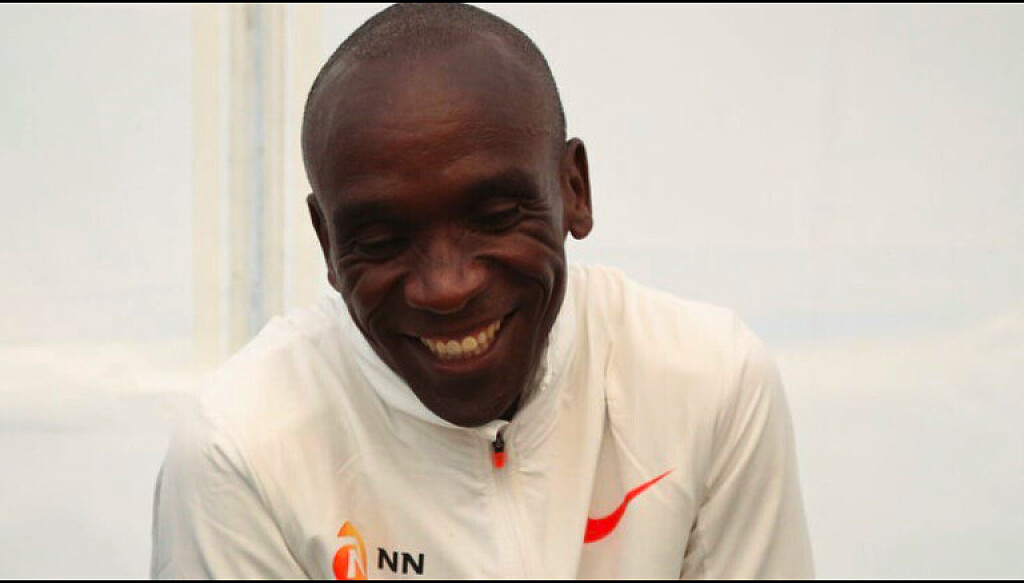
When Will Eliud Kipchoge Slow Down?
What we can learn from the world’s greatest distance runner of all-time while he’s still in his prime
Eliud Kipchoge has expanded the universe of what’s humanly possible in the marathon, and he will forever remain a legend in the sport of long-distance running.
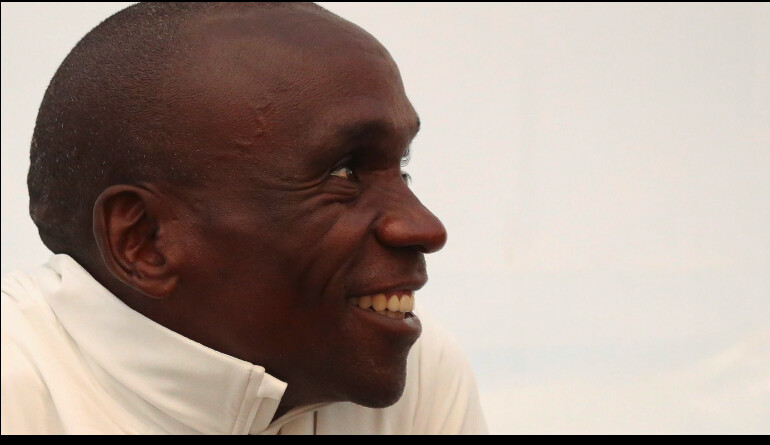
Not only for himself, but especially for those who have come after him. That includes everyone, both elite and recreational runners, who are preparing a marathon this fall or some distant point in the future. His current 2:01:09 world record and his barrier-breaking 1:59:40 time-trial effort in 2019 are legendary feats, both for the current generation of runners and for all time.
The 38-year-old Kenyan marathoner is a once-in-a-lifetime athlete, but time waits for no one, and especially not a long-distance runner. Like all elite athletes, his time at the top is limited, but fortunately, there is still time to immerse in the inspirational examples he’s providing.
Kipchoge recently announced he’ll return to the Berlin Marathon on September 24, where, last year, he won the race for the fourth time and lowered the world record for the second time. It is most likely what will be the beginning of a grand denouement as he goes for another gold medal at the 2024 Olympics next summer in Paris.
Given that he won his first global medal in the City of Light—when, at the age of 18, he outran Moroccan legend Hicham El Guerrouj and Ethiopian legend-in-the-making Kenenisa Bekele to win the 5,000-meter run at the 2003 world championships—it would certainly be one of the greatest stories ever told if he could win the Olympic marathon there next year when he’s nearly 40.
Certainly he’ll run a few more races after the Olympics—and maybe through the 2028 Olympics in Los Angeles—but, realistically, it is the start of a farewell tour for a runner who will never be forgotten.
Don’t get me wrong: I’m not at all writing Kipchoge off. In fact, I am excited to see him run in Berlin and can’t wait to watch next year’s Olympic marathon unfold. But just as we’ve watched Michael Jordan, Tiger Woods, Serena Williams, Shalane Flanagan, Usain Bolt, Allyson Felix, and other elite athletes succumb to the sunsetting of their peak performance level, so too will Kipchoge eventually suffer the same fate.
What I’m saying here is that we still have time to watch and appreciate Kipchoge eloquently working his magic and continue to be inspired in our own running and other pursuits in life. Remember how we marveled at Michael Jordan’s greatest in “The Last Dance” more than 20 years after his heyday? This is the start of the last dance for Kipchoge, who, like Jordan, is much, much more than a generational talent; he’s an all-time great whose legacy will transcend time.
Running has seen many extraordinary stars in the past 50 years who have become iconic figures— Frank Shorter, Joan Benoit Samuelson, Ted Corbitt, Carl Lewis, Steve Jones, Paul Tergat, Catherine Ndereba, Paula Radcliffe, Haile Gebrselassie, Kenenisa Bekele, Mary Keitany, Brigid Kosgei, and Kilian Jornet, to name a few—but none have come close to the body of work and global influence of Kipchoge.
Not only is Kipchoge one of the first African athletes to become a household name and truly command a global audience, but he’s done more than other running champions because of he’s been able to take advantage of this advanced age of digital media to deliberately push positive messages and inspiring content to anyone who is willing to receive it.
Kipchoge has won two Olympic gold medals, set two world records, and won 17 of the 19 marathons he entered, but he’s so much less about the stats and bling and more sharing—to runners and non-runners alike—that “no human is limited” and also that, despite our differences, we’re all human beings faced with a lot of the same challenges in life and, ultimately, hard work and kindness are what put us on the path to success.
How can an average runner who works a nine-to-five job and juggles dozens of other things in daily life be inspired by an elite aerobic machine like Kipchoge?
He is supremely talented, no doubt, but many elite runners have a similar aerobic capacity to allow them to compete on the world stage. What Kipchoge uniquely possesses—and why he’s become the greatest of all-time—is the awareness and ability to be relentless in his pursuit of excellence, and the presence and good will of how beneficial it is to share it.
If you haven’t been following Kipchoge or heard him speak at press conferences or sponsor events, he’s full of genuine wisdom and encouragement that can inspire you in your own running or challenging situation in life. His words come across much more powerfully than most other elite athletes or run-of-the-mill social media influencers, not only because he’s achieved at a higher level than anyone ever has, but because of his genuine interest in sharing the notion that it’s the simplest values—discipline, hard work, consistency, and selflessness—that make the difference in any endeavor.
This is not a suggestion to idolize Kipchoge, but instead to apply his wisdom and determination into the things that challenge you.
“If you want to break through, your mind should be able to control your body. Your mind should be a part of your fitness.”
“Only the disciplined ones in life are free. If you are undisciplined, you are a slave to your moods and your passions.”
“If you believe in something and put it in your mind and heart, it can be realized.”
“The best time to plant a tree was 25 years ago. The second-best time to plant a tree is today.”
Those are among the many simple messages that Kipchoge has lived by, but he also openly professess to giving himself grace to take time for mental and physical rest and recovery. It’s a simple recipe to follow, if you’re chasing your first or fastest marathon, or any tall task in life.
Kipchoge seems to defy age, but his sixth-place finish in the Boston Marathon in April proved he’s human. As much as it was painful to watch him falter, it was oddly refreshing and relatable to see him be something less than exceptional, and especially now that he’s tuning up for Berlin. He has nothing left to prove—to himself, to runners, to the world—but he’s bound to keep doing so just by following the same simple, undaunted regimen he always has.
There will be other young runners who will rise and run faster than Kipchoge and probably very soon. Fellow Kenyan Kelvin Kiptum—who has run 2:01:53 (Valencia) and 2:01:25 (London) in his first two marathons since December—seems to be next in line for Kipchoge’s throne of the world’s greatest runner. But even after that happens, Kipchoge’s name will go down in history alongside the likes of Paavo Nurmi, Abebe Bikila, Emil Zátopek, Grete Waitz, Shorter and Samuelson because of how he changed running and how he gave us a lens to view running without limits.
Berlin is definitely not the end of Kipchoge’s amazing career as the world’s greatest long-distance runner. I fully expect him to win again in an unfathomable time. But the sunset is imminent and, no matter if you are or have ever been an aspiring elite athlete at any level, a committed recreational runner, or just an occasional jogger trying to reap the fruits of consistent exercise, his example is still very tangible and something to behold.
by Outside Online
Login to leave a comment
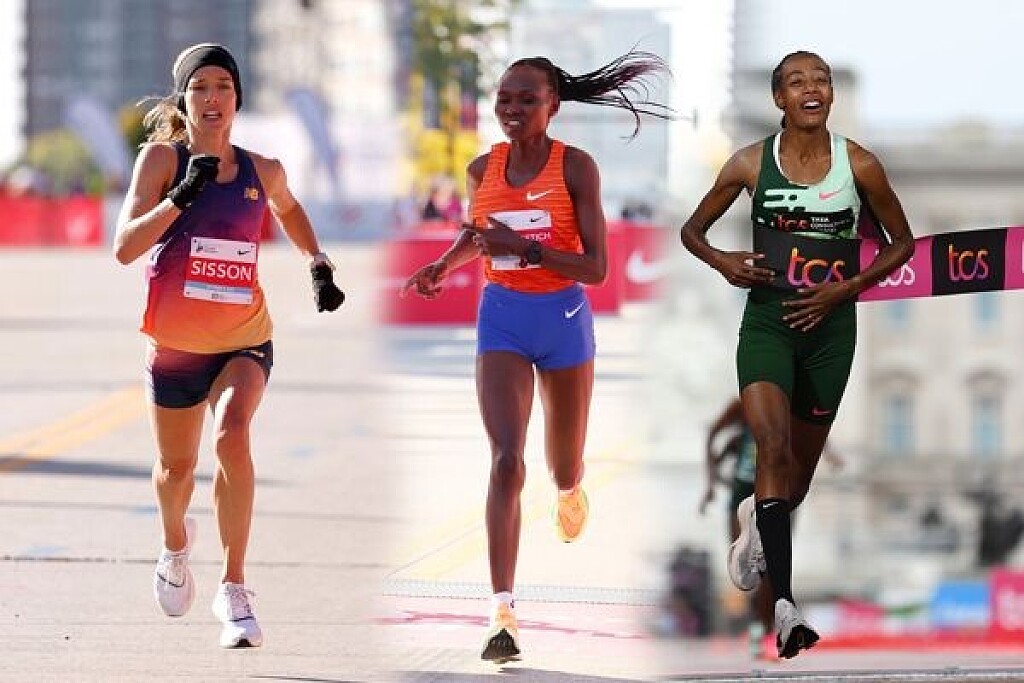
Chepngetich, Hassan and Sisson to clash at Chicago Marathon
Ruth Chepngetich returns to defend her title at the Bank of America Chicago Marathon, a World Athletics Platinum Label road race, and will face a field that features London Marathon winner Sifan Hassan and US record-holder Emily Sisson.
Chepngetich won last year’s race in 2:14:18 – just 14 seconds shy of the world record and the second-fastest women’s marathon performance of all time.
Kenya’s 2019 world champion will be back in Chicago on the hunt for her third consecutive victory on October 8, following her inaugural win in the US city in 2021, when she ran 2:22:31.
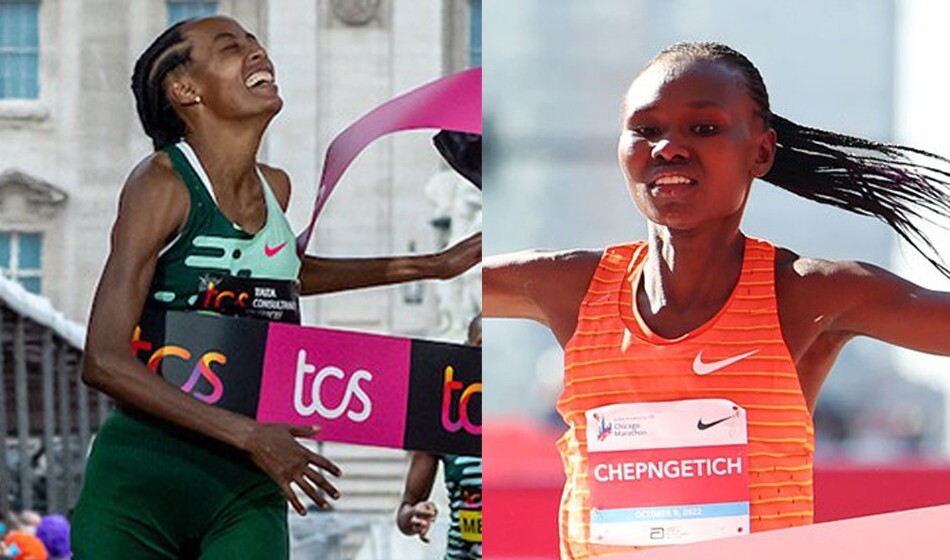
“I am planning to defend my title and improve my time,” said Chepngetich. “There's no better race in the world than the Bank of America Chicago Marathon.”
To do so, she will have to defeat double Olympic gold medallist Hassan of the Netherlands. Hassan made her marathon debut in London in April when, despite stopping to stretch twice, she closed a 25-second gap on the leaders to win and set a national record of 2:18:33.
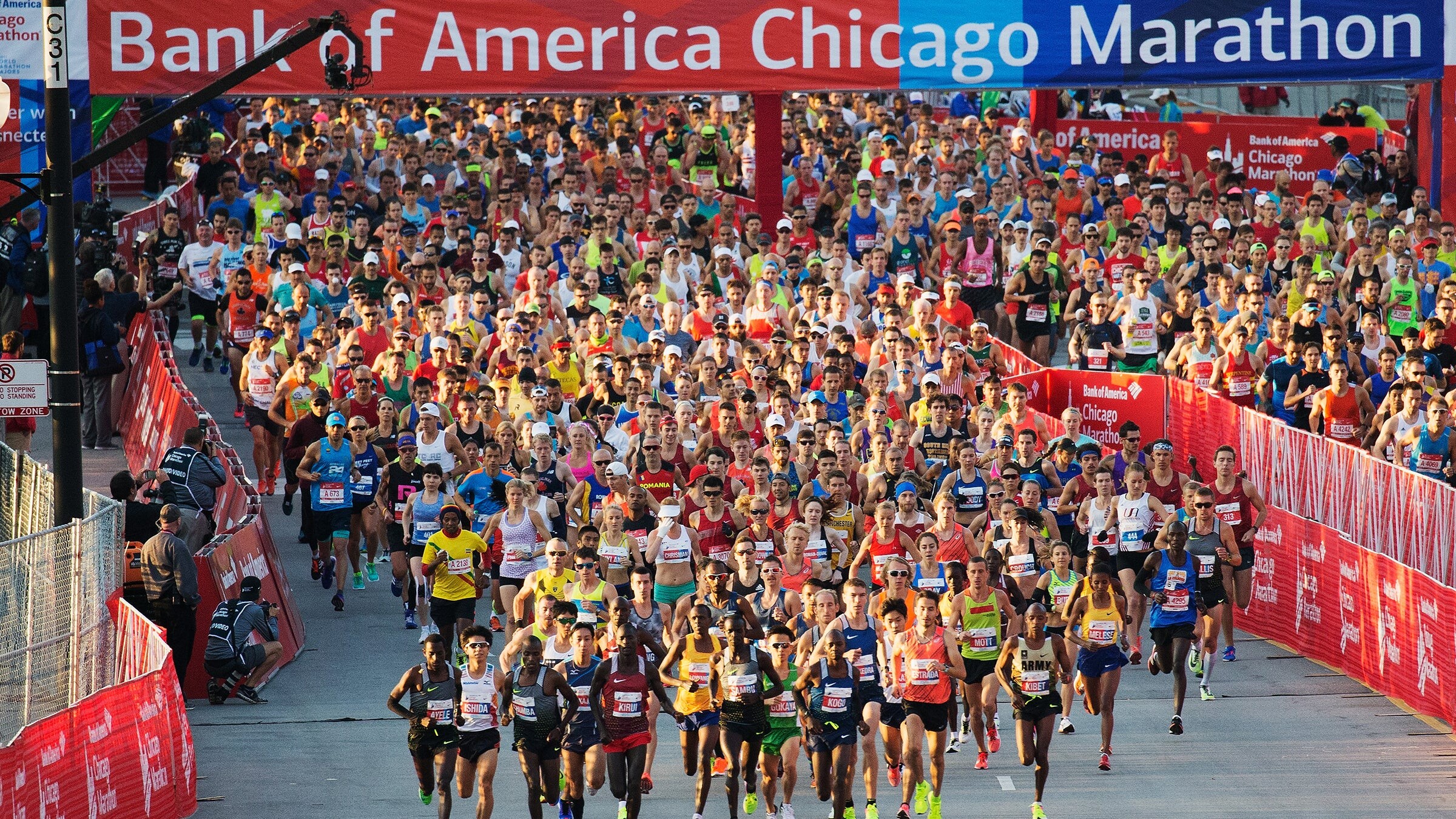
Hassan plans to compete on the track at the World Athletics Championships Budapest 23, less than six weeks before returning to the roads to race in Chicago.
“At the moment, my focus is on the World Championships in Budapest, so my marathon preparation will be very short, but as most people know, I like to be challenged,” said Hassan.
“I will see how my body responds and how my mind handles it. The good thing is that I have the experience from London so I'm looking forward to Chicago, to see what the marathon can teach me this time.”
Unlike Hassan, Sisson will skip the track season to focus on getting ready for Chicago. Last year’s runner-up, Sisson finished in 2:18:29, demolishing the US record by 43 seconds. Sisson, who also holds the US record in the half marathon, said the deep field improves her chances of running even faster this year.
“Chicago is where I set the American marathon record last year,” said Sisson. “I am really looking forward to coming back for another great race in October.”
Legendary matchups have long made for thrilling finishes in Chicago.
In 1985, a gruelling duel between Olympic champion Joan Benoit Samuelson and then world record-holder Ingrid Kristiansen saw Benoit Samuelson outlast her Norwegian competitor and set a US record.
In 2002, British world champion Paula Radcliffe defeated Kenya’s Catherine “The Great” Ndereba and shattered Ndereba' world record in the process. And in 2017, three-time Olympic gold medallist Tirunesh Dibaba took down rising star and future world record-holder Brigid Kosgei.
Chepngetich and Hassan have clashed once before, in the 2018 Copenhagen Half Marathon where Hassan broke the European record with 1:05:15 in what was her first serious attempt at the distance and Chepngetich finished fifth in 1:07:02.
The sole clash between Chepngetich and Sisson so far came at last year’s Chicago Marathon, while Hassan and Sisson have raced each other on four occasions, in the 5000m and 10,000m, with the record so far 4-0 in Hassan’s favor.
by William Njuguna
Login to leave a comment
Bank of America Chicago
Running the Bank of America Chicago Marathon is the pinnacle of achievement for elite athletes and everyday runners alike. On race day, runners from all 50 states and more than 100 countries will set out to accomplish a personal dream by reaching the finish line in Grant Park. The Bank of America Chicago Marathon is known for its flat and...
more...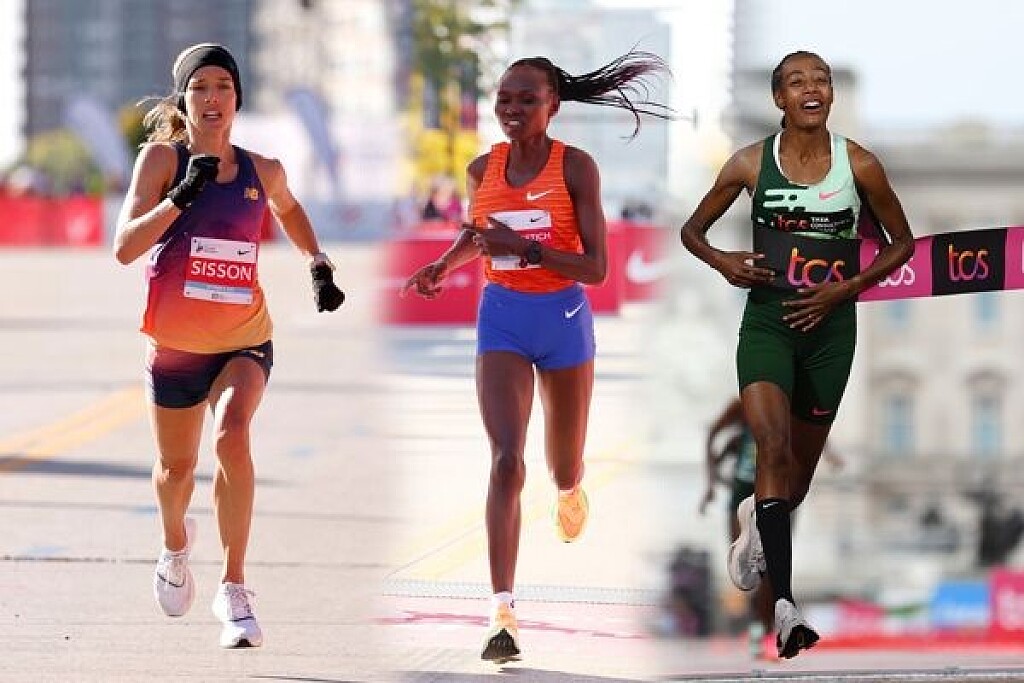
Chepngetich, Hassan and Sisson in Chicago Marathon clash
Ruth Chepngetich returns to defend her title at the Bank of America Chicago Marathon, a World Athletics Platinum Label road race, and will face a field that features London Marathon winner Sifan Hassan and US record-holder Emily Sisson.
Chepngetich won last year’s race in 2:14:18 – just 14 seconds shy of the world record and the second-fastest women’s marathon performance of all time.
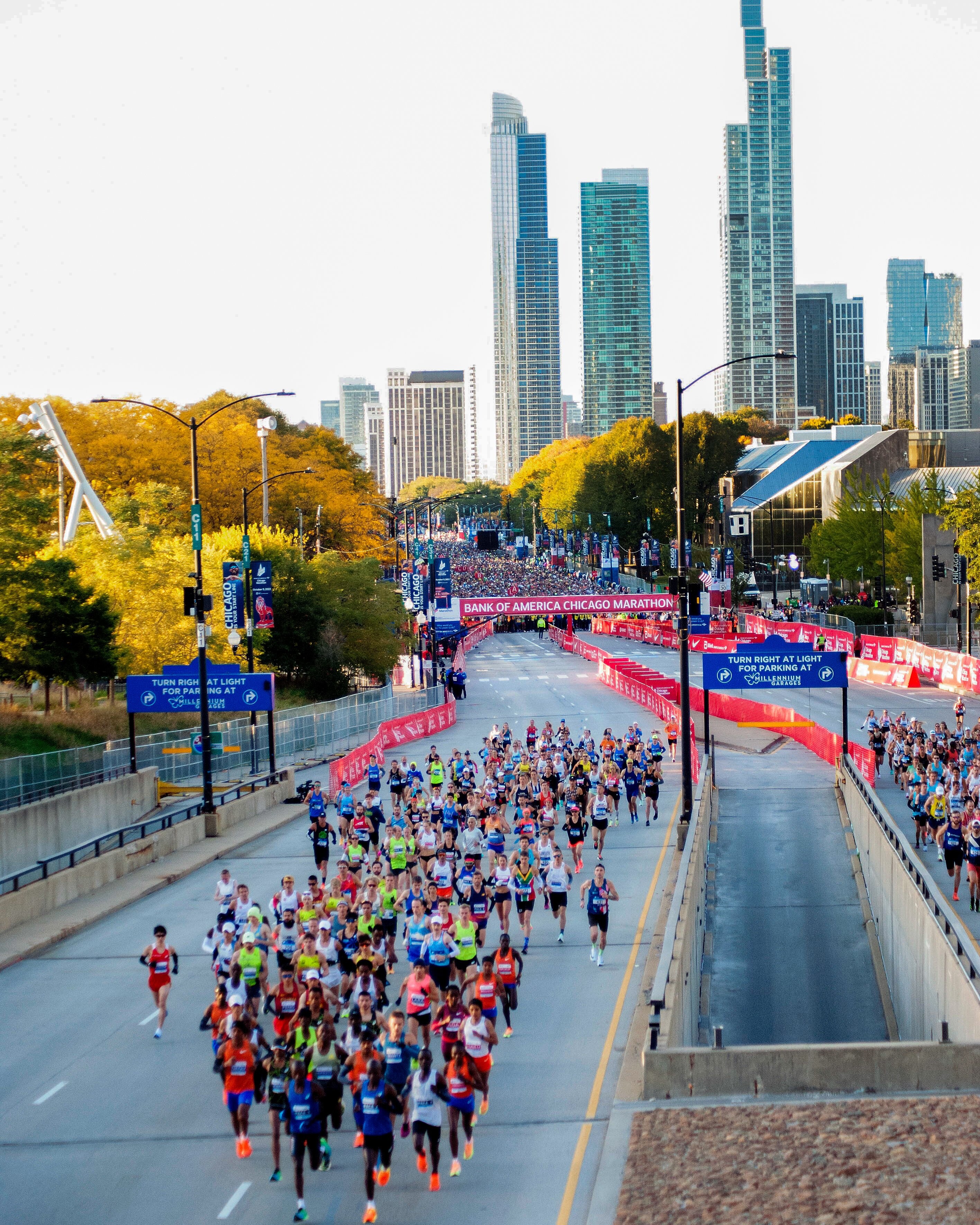
Kenya’s 2019 world champion will be back in Chicago on the hunt for her third consecutive victory on 8 October, following her inaugural win in the US city in 2021, when she ran 2:22:31. In 2023, she hopes to run her fastest time yet.
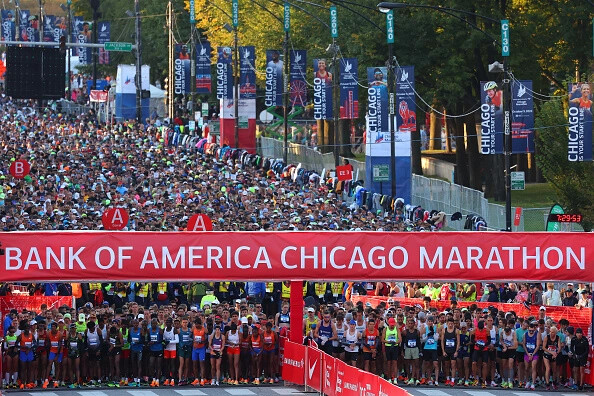
“I am planning to defend my title and improve my time,” said Chepngetich. “There's no better race in the world than the Bank of America Chicago Marathon.”
To do so, she will have to defeat double Olympic gold medallist Hassan of the Netherlands. Hassan made her marathon debut in London in April when, despite stopping to stretch twice, she closed a 25-second gap on the leaders to win and set a national record of 2:18:33. Hassan plans to compete on the track at the World Athletics Championships Budapest 23, less than six weeks before returning to the roads to race in Chicago.
“At the moment, my focus is on the World Championships in Budapest, so my marathon preparation will be very short, but as most people know, I like to be challenged,” said Hassan. “I will see how my body responds and how my mind handles it. The good thing is that I have the experience from London so I'm looking forward to Chicago, to see what the marathon can teach me this time.”
Unlike Hassan, Sisson will skip the track season to focus on getting ready for Chicago. Last year’s runner-up, Sisson finished in 2:18:29, demolishing the US record by 43 seconds. Sisson, who also holds the US record in the half marathon, said the deep field improves her chances of running even faster this year.
“Chicago is where I set the American marathon record last year,” said Sisson. “I am really looking forward to coming back for another great race in October.”
Legendary matchups have long made for thrilling finishes in Chicago. In 1985, a gruelling duel between Olympic champion Joan Benoit Samuelson and then world record-holder Ingrid Kristiansen saw Benoit Samuelson outlast her Norwegian competitor and set a US record. In 2002, British world champion Paula Radcliffe defeated Kenya’s Catherine “The Great” Ndbera and shattered Ndbera’s world record in the process. And in 2017, three-time Olympic gold medallist Tirunesh Dibaba took down rising star and future world record-holder Brigid Kosgei.
Chepngetich and Hassan have clashed once before, in the 2018 Copenhagen Half Marathon where Hassan broke the European record with 1:05:15 in what was her first serious attempt at the distance and Chepngetich finished fifth in 1:07:02. The sole clash between Chepngetich and Sisson so far came at last year’s Chicago Marathon, while Hassan and Sisson have raced each other on four occasions, in the 5000m and 10,000m, with the record so far 4-0 in Hassan’s favour.
Login to leave a comment
Bank of America Chicago
Running the Bank of America Chicago Marathon is the pinnacle of achievement for elite athletes and everyday runners alike. On race day, runners from all 50 states and more than 100 countries will set out to accomplish a personal dream by reaching the finish line in Grant Park. The Bank of America Chicago Marathon is known for its flat and...
more...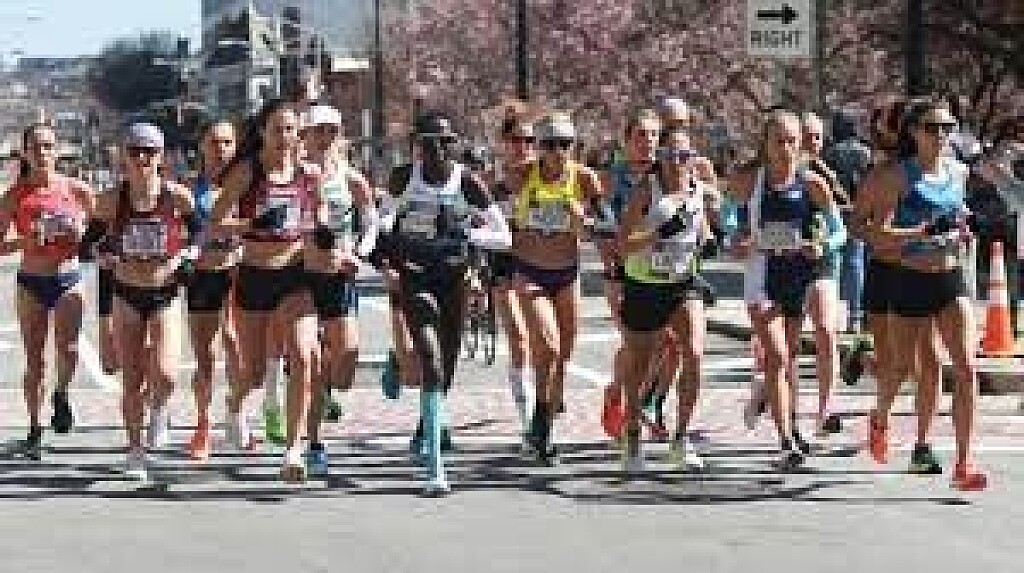
Orlando will host US Olympic Marathon Trials for Paris 2024
Orlando will host the United States Olympic Marathon Trials for Paris 2024, USA Track & Field (USATF) and the United States Olympic and Paralympic Committee (USOPC) have announced.
The top three men and women at the event, due to be held on February 3 in 2024, will be chosen to represent the US in the French capital, providing they have achieved the necessary qualifying criteria.
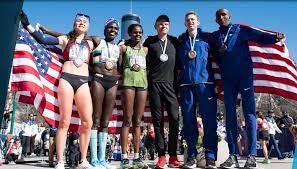
Chattanooga in Tennessee was the only other city known to be interested in bidding for the event.
"We look forward to a fantastic marathon on the streets of Orlando in selecting USATF’s first six 2024 Olympians," said USATF chief executive Max Siegel.

"The competition is the culmination of months of preparation on their journeys to gold and we’re excited to see great competition and fast times."
Orlando, home to more than a dozen theme parks, including Walt Disney World, is the first Florida city to be awarded the event.
This will mark the 15th time the men's marathon trials have been held, with the first at Alamosa in Colorado for Mexico 1968.
It will be the 11th time the women's marathon team has been selected in a Trials event.
The inaugural women's marathon trials were held at Olympia in Washington to select the team for Los Angeles 1984.
The winner of those trials, Joan Benoit, went on to be crowned the first women's Olympic marathon champion.
The trials for the last Olympics in Tokyo were held in February 2020, less than a month before the Games were postponed by a year because of the coronavirus pandemic.
The men’s race was won by Galen Rapp of the US and the women’s by compatriot Aliphine Tuliamuk.
The race is set to be organised by Track Shack, a race management company led by Jon and Betsy Hughes that stages a number of events in the Orlando area.
The Olympic marathons at Paris 2024 are scheduled to be held on August 10 and 11.
"On behalf of the U.S. Olympic & Paralympic Committee, I offer congratulations to the city of Orlando for being selected to host the 2024 U.S. Olympic Trials - Marathon and look forward to celebrating this great event on the road to Paris 2024 with the athletes, fans, and our partners at USATF," said USOPC chief executive Sarah Hirshland.
"As the pathway for making Team USA, the US Olympic Team Trials stand out as remarkable sporting events, and we have no doubt Orlando will welcome our elite runners and put on a world-class event."
by Duncan Mackay
Login to leave a comment

Paris 2024 Olympic Games
For this historic event, the City of Light is thinking big! Visitors will be able to watch events at top sporting venues in Paris and the Paris region, as well as at emblematic monuments in the capital visited by several millions of tourists each year. The promise of exceptional moments to experience in an exceptional setting! A great way to...
more...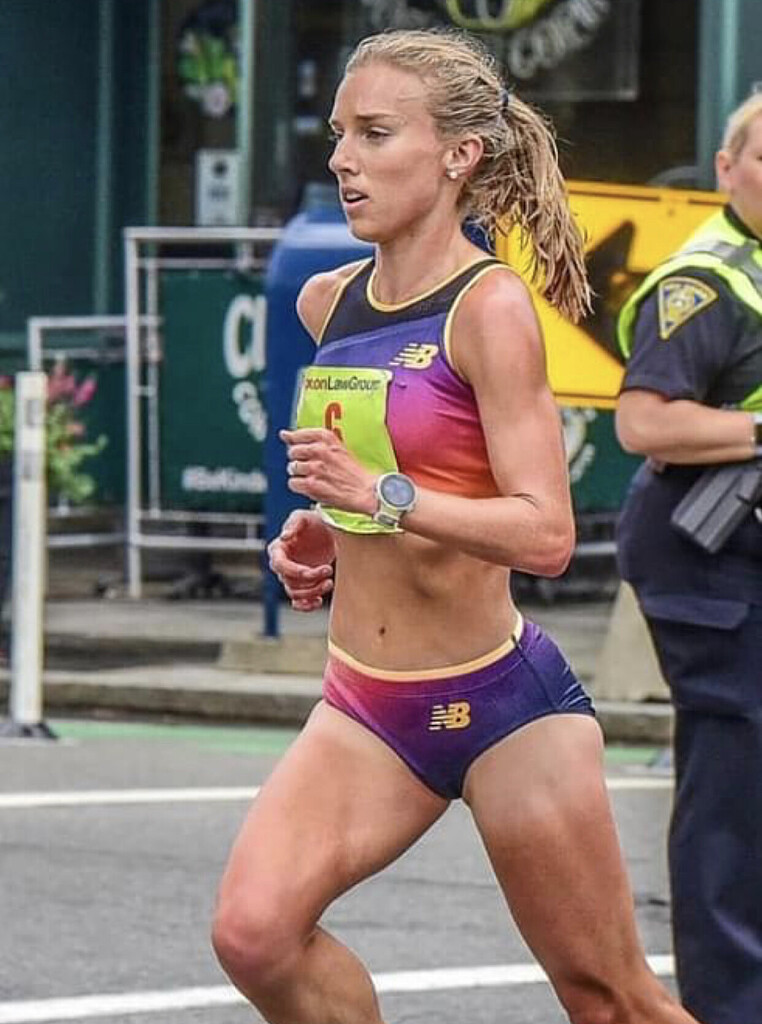
Emily Sisson sets a new American record in the marathon today in Chicago. clocking 2:18:29!
Three days shy of her 31st birthday and with only one previous marathon on her resume, Emily Sisson took to the streets of Chicago and lowered the American women’s marathon record by 43 seconds, becoming the first American woman to run a marathon in less than 2 hours 19 minutes.
Conditions on the Chicago Marathon’s relatively flat course were ideal, with Sisson — who won the 10,000 at the U.S. Olympic Track and Field Trials last summer — finishing second to Ruth Chepng’etich. The Kenyan repeated as the Chicago champion with a time of 2:14:18, fractions of a second off the world record of 2:14:04 set by Kenya’s Brigid Kosgei in the 2019 Chicago Marathon.
Sisson finished in 2:18:29, taking 43 seconds off the American record set by Keira D’Amatoin January in Houston. Before D’Amato, the record had stood for 16 years; now it has been lowered twice in 10 months, something D’Amato expected.
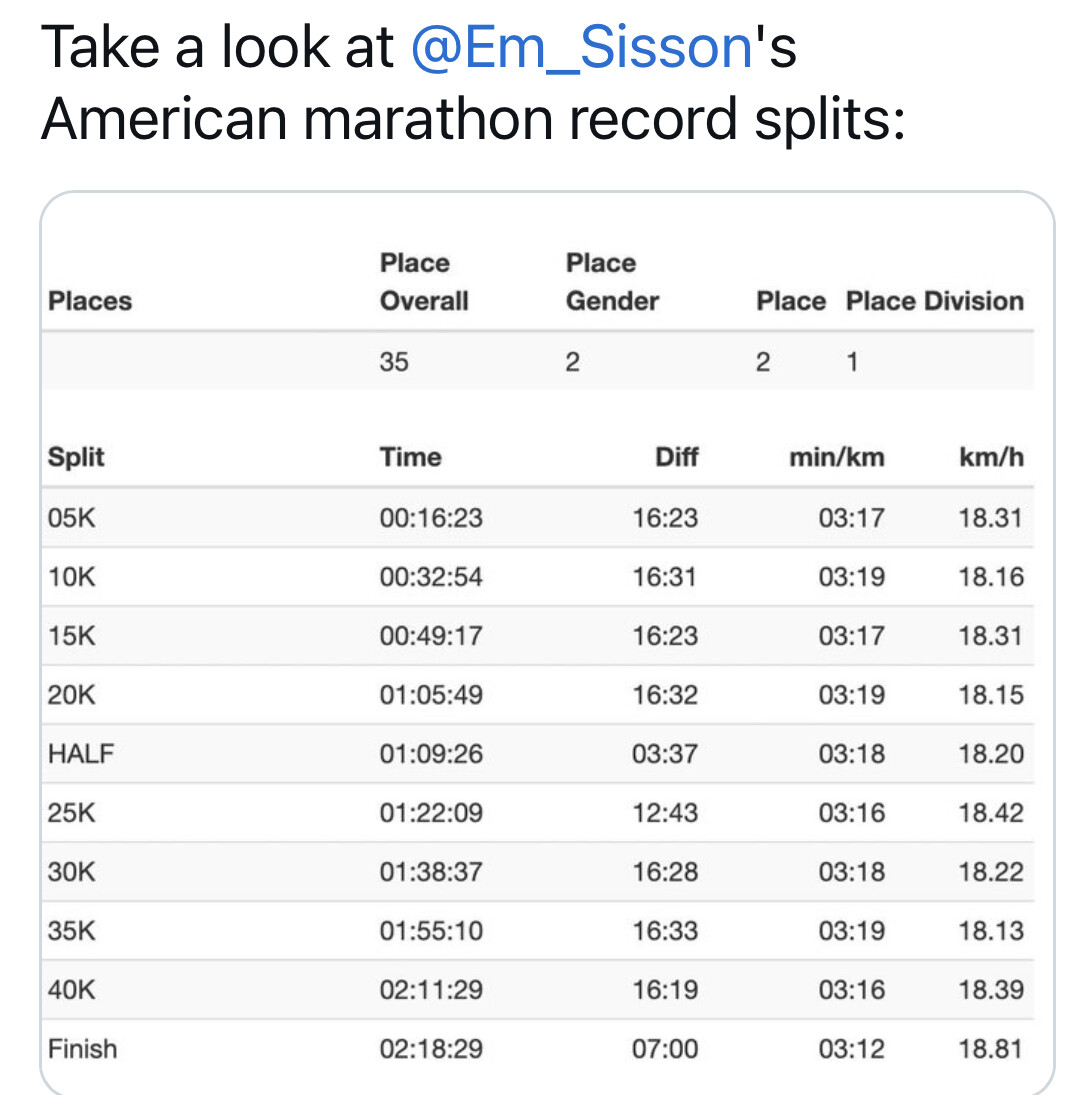
“There’s a number of American women that are also gunning for that record, so I think if I don’t lower it myself, it’s not going to be mine for very much longer,” she said before the Berlin Marathon two weeks ago. D’Amato, who did not run in Chicago, joined Sisson at the finish line, along with Deena Kastor and Joan Benoit Samuelson — women who held the American record before her.
“It’s amazing,” Sisson said, according to NBC Chicago. “I mean, the women standing here today, they’ve all accomplished so much, so just to be amongst them is an incredible honor.”
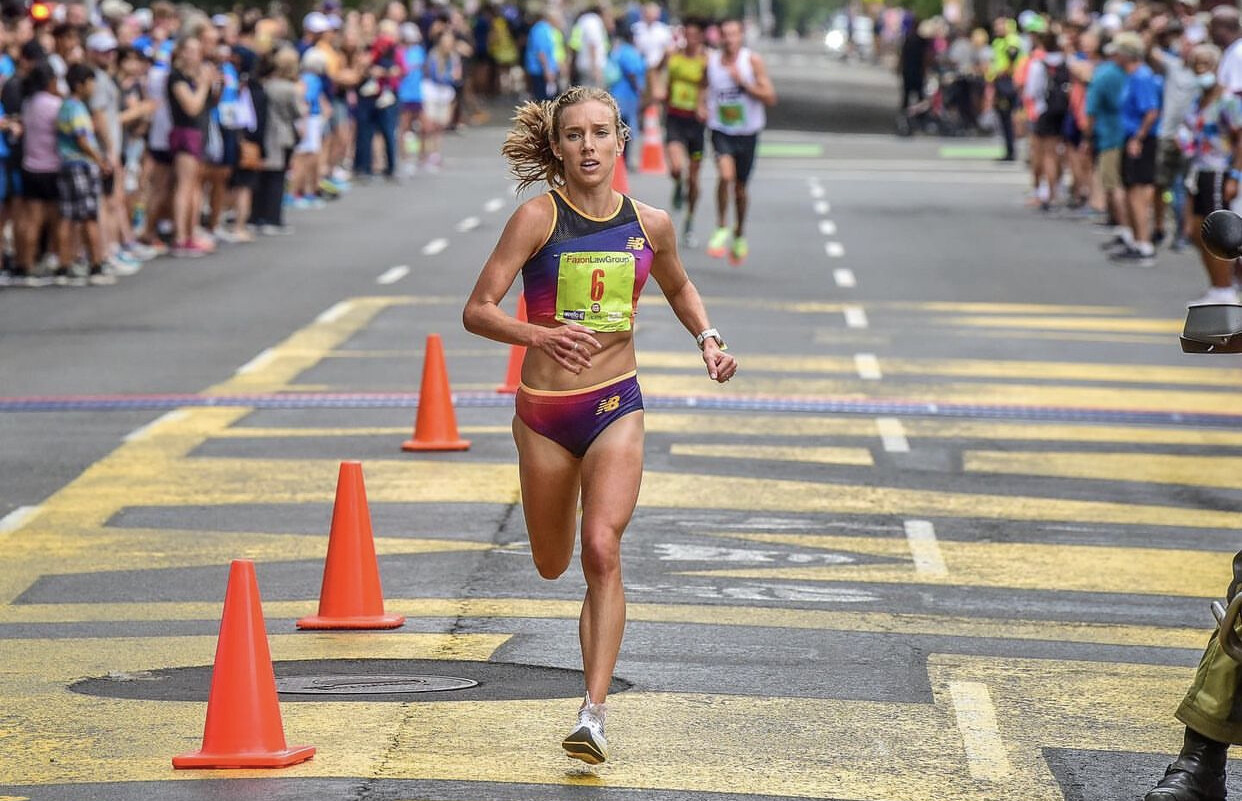
Sisson said she wasn’t aware that the record was in reach until very close to the finish line.
Emily Sisson (born October 12, 1991) is a professional runner for New Balance in Phoenix, Arizona. Emily Sisson was 9th at the 2017 London IAAF World Outdoor Track and Field Championships for 10,000 meters, and won the USATF road 10k Championships in 2016 and 5k in 2018. In the 2019 London Marathon, her first try at the distance, she placed 6th in a time of 2:23:08.
In December 2020, she ran the Valencia Half-Marathon in 1:07:26, narrowly missing the American record set by Molly Huddle in Houston on January 14, 2018. Sisson subsequently qualified to compete at the 2020 Olympics in the 10,000 m run, by coming in 1st place at the US Olympic Trials; she finished 10th at the event. On May 7, 2022, clocking in at 1:07:11 she broke the USA woman's half marathon record at the 500Festival Mini-Marathon in Indianapolis, Indiana.
On October 9, 2022, she broke the American women's marathon record at the 2022 Chicago Marathon, running 2:18:29 to finish 2nd
Login to leave a comment
Bank of America Chicago
Running the Bank of America Chicago Marathon is the pinnacle of achievement for elite athletes and everyday runners alike. On race day, runners from all 50 states and more than 100 countries will set out to accomplish a personal dream by reaching the finish line in Grant Park. The Bank of America Chicago Marathon is known for its flat and...
more...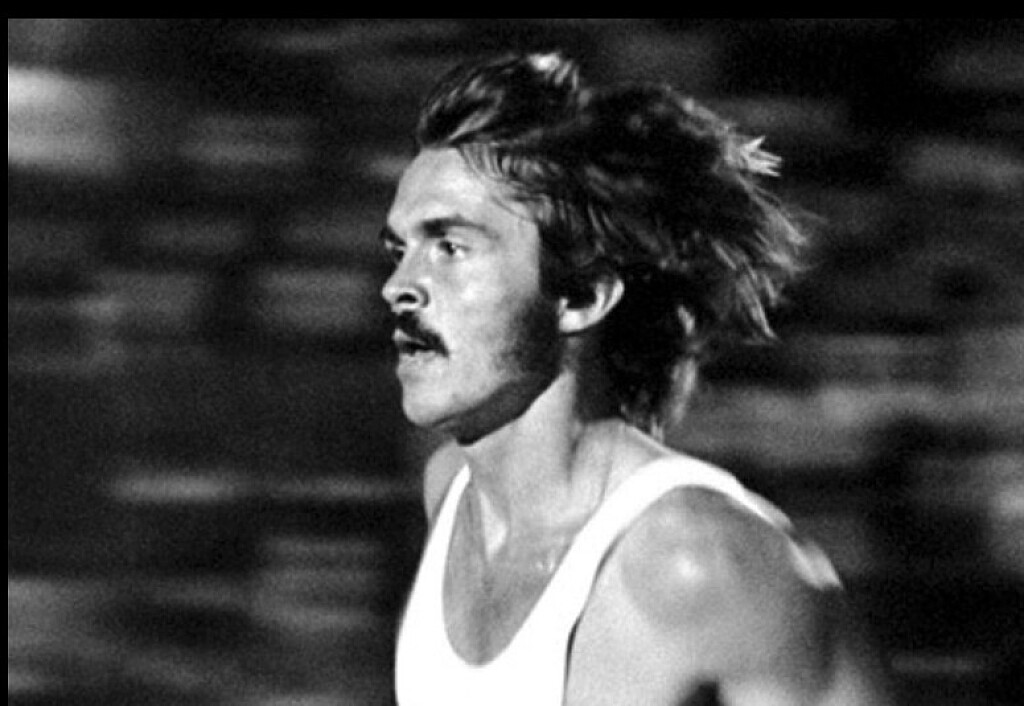
Some running quotes to inspire you
It can be hard to maintain your zest for running when the temperatures soar.
We dug up some running wisdom from some great athletes and minds to get you out the door. When your workout motivation wanes in the face of weather or whatever comes your way, read a few lines and consider it your calling to rise up and run.
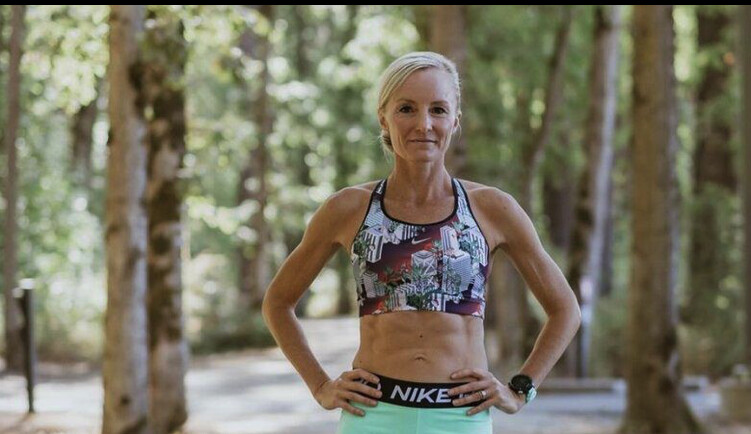
You are a runner, no matter your distance, pace or natural ability
“All runners are tough. Everyone has to have a little fire in them, that even in tough times, can’t be turned off.”
— Shalane Flanagan
“If one could run without getting tired I don’t think one would often want to do anything else.”
– C. S. Lewis
“To give anything less than your best is to sacrifice the gift.”
–Steve Prefontaine
“I just wanted to come out today and, I don’t know, get up in it, stick my nose where it didn’t belong, and just see what I could come away with. I guess that’s a medal.”
–Molly Seidel
“The advice I have for beginners is the same philosophy that I have for runners of all levels of experience and ability: consistency, a sane approach, moderation, and making your running an enjoyable, rather than dreaded, part of your life.”
— Bill Rodgers
Remember why you do it
“Why do we do this? To feel something. To move ourselves, to ensure that we don’t get stuck. And most of all, we do this to be a part of something. To insert our individual effort into a sea of human energy and force out the other side, hopeful that somehow we’ll be different. Changed in some way.”
–Peter Bromka
“Because during every run, for a few seconds or a few minutes, you have a moment where it feels really good. You forget about the discomfort and you find rhythm, maybe some grace, and a feeling of strength and confidence as you move as well as you’ll ever move doing anything. And that’s one of the best reasons to run.”
― Brendan Leonard
“Keep moving. You’re still here. We all are. As long as you’re moving you’re still here.”
–Tommy Rivers Puzey
“…For me there has always been a place to go and a terrible urgency to get there.”
—Joan Benoit Samuelson
“The reason we race isn’t so much to beat each other… but to be with each other.”
–Christopher McDougall
Login to leave a comment
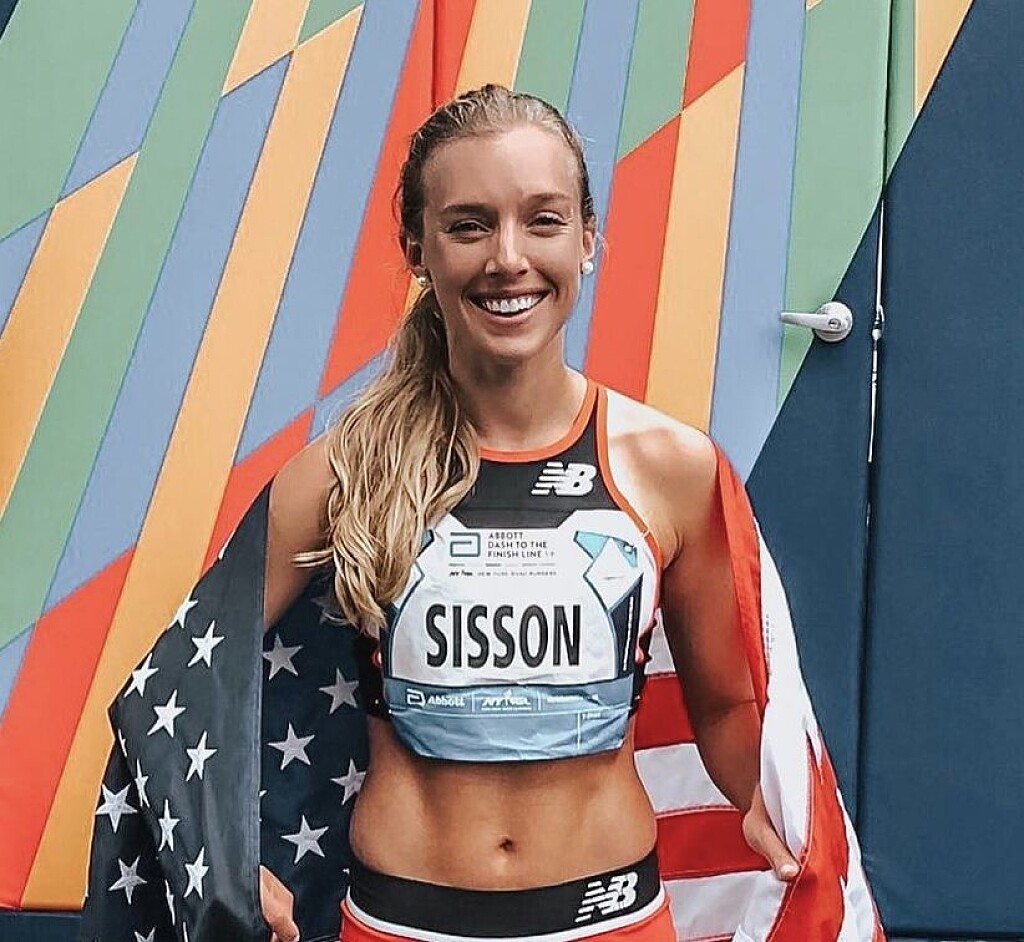
Defending Champions Set to Return to the 2022 Bank of America Chicago Marathon
The Bank of America Chicago Marathon announced today the return of its defending champions as the event continues to build on its comeback to global racing. Ruth Chepngetich (KEN), Seifu Tura (ETH), Tatyana McFadden (USA) and Daniel Romanchuk (USA) will be at the helm of this year’s elite field with a strong contingency of the world’s best athletes vying to dethrone them. The stage will be set for a fierce competition up front, highlighting Chicago’s long tradition of record chases, fast times, and gripping finishes.
“We’re thrilled to welcome our defending champions back to Grant Park this fall,” said Carey Pinkowski, Executive Race Director of the Bank of America Chicago Marathon. “Chicago has a storied history of head-to-head competitions, world records and some of the best elite racing in marathon running. This year’s competition, which also includes American half marathon record holder Emily Sisson and American half marathon champion Conner Mantz making his debut, is going to bring much energy and enthusiasm to fans and spectators. We are ready for October 9.”
Defending Champions Return
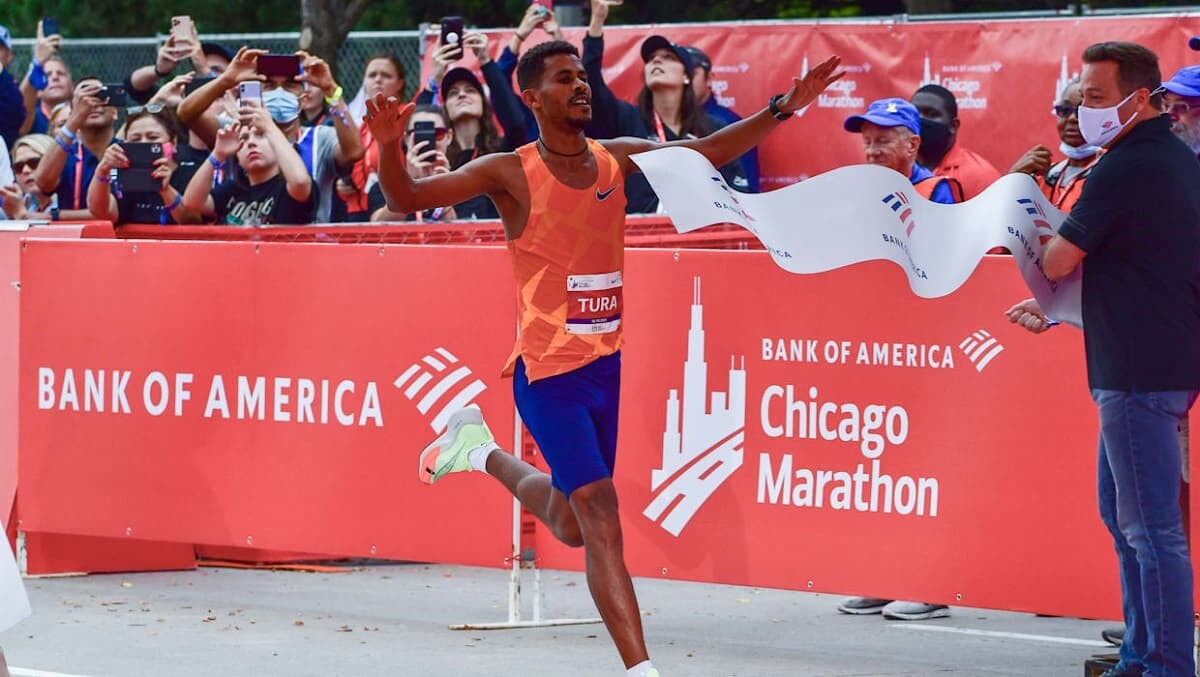
Chepngetich, the 2019 World Marathon champion and the fourth fastest woman in the history of marathon running, started on a world record pace at the 2021 Bank of America Chicago Marathon, dropping her pacer eight miles in while racing against the clock. She decelerated over the second half of the course but had enough to take the crown in 2:22:31. Chepngetich, who is self-coached, kicked off her 2022 season with a win and a course record at the Nagoya Marathon (2:17:18). She recently dropped out the of the World Championships Women’s Marathon due to health issues but is ready to take to the streets of Chicago and defend her title.
Unlike the fast pace set by Chepngetich, Tura ran a controlled strategic race last fall in the elite men’s race, waiting until 38K to pull ahead and win the biggest race of his career so far. Tura, who holds a 2:04:29 personal best, clocked 2:06:12 to win last year. His 2022 season includes a personal best in the half marathon, 58:36, and a second place finish in the Paris Marathon. Following last year’s victory, Tura noted that he was not prepared for warm weather, but that he was “determined to fight to the very end.” Tura’s determination may make him just the fifth man in Chicago’s history to win twice in a row.
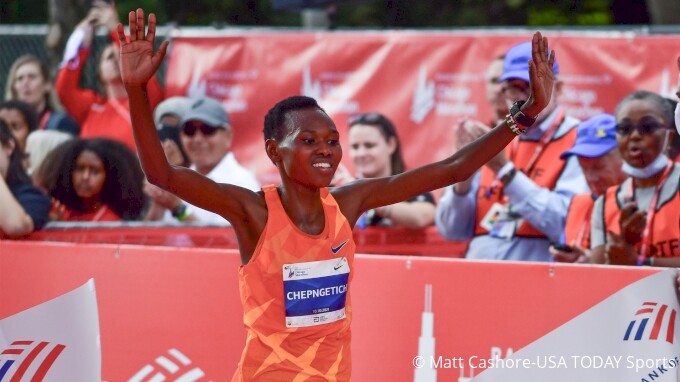
In the wheelchair competition, McFadden, whose nine titles make her the most decorated athlete in Bank of America Chicago Marathon history, returns to contend for her 10th win. McFadden boasts 20 Paralympic medals, including eight gold medals, 24 World Marathon Major wins, including four consecutive Grand Slams (first place in Boston, Chicago, New York City and London in the same year) and has broken six world records in track and field.
Romanchuk, a two-time Paralympian, completed the Bank of America Chicago Marathon hat trick with a victory last fall and returns to pursue a fourth title. Romanchuk rose to the top of road racing in 2018 and his campaign continues today. At the 2020 Paralympic Games, he took home a gold on the track and a bronze in the marathon.
Sisson and Mantz Headline Strong American Field
The Bank of America Chicago Marathon has a long history of welcoming America’s best runners across its finish line, stretching back to Joan Benoit Samuelson setting the American record en route to her victory in 1985. Khalid Khannouchi dominated at the turn of the century with four victories, including both world and American records, Deena Kastor clutched the win in 2005, and Galen Rupp stole the show in 2017. Last October saw five American men and seven American women finish in the top 10, a feat that highlights the strength of U.S. distance running. This year’s field includes several top American runners, including Emily Sisson and Conner Mantz.
Sisson, a six-time national champion and the American half marathon record holder (1:07:11), could put the American Marathon record (2:19:12) in jeopardy as she races to break the tape in Chicago. Sisson stands out as one of the most dominant American women on the track and the roads, making her Olympic debut in the 10,000m at the Tokyo Olympics and her marathon debut in 2019 in London. Sisson ran the fastest ever marathon debut by an American on a record eligible course (2:23:08), and she set an Olympic trials record in the 10,000m on the track (31:09) in 2021, breaking a record that stood for 17 years. This October marks Sisson’s first appearance in the Bank of America Chicago Marathon.
Mantz, known for his front-running style and capacity to handle pain (referred to as the “Mantz pain chamber”), made a splash on the collegiate level, winning the NCAA Division I Cross Country championships in 2020 and 2021, and earning his first U.S. title in the half marathon in 2021. Mantz’s time in the half marathon, 1:00:55, ranks him ninth on the all-time American list of half marathon performances. Mantz, an exciting newcomer to welcome to the marathon distance, could conquer the American marathon debut record, 2:07:56, set in 2019. Mantz is coached by 1994 Chicago Marathon runner-up, Ed Eyestone.
The Elite Fields
In addition to Sisson, Celestine Chepchirchir (KEN), Vivian Kiplagat (KEN) and Haven Hailu (ETH) are among some of this year’s elite women hoping to prevent a repeat victory from Chepngetich. Chepchirchir, winner of the 2019 Sanlam Cape Town Marathon, enters this year’s race fresh off a personal best, 2:20:10, set at the Seoul International Marathon. The Bank of America Chicago Marathon marks her Abbott World Marathon Major (AbbottWMM) debut. Kiplagat, winner of the 2022 Milan Marathon in a personal best, 2:20:18, ran valiantly in Chicago last year, attempting to stay on Chepngetich’s heels before fading to fifth place. Like Chepchirchir, Hailu will be making her first appearance in an AbbottWMM. Hailu made her marathon debut in 2020, set a personal best, 2:20:19, in 2021 to take third in Amsterdam, and claimed her first marathon victory in Rotterdam this past April.
Laura Thweatt (USA), Sarah Sellers (USA) and Sara Vaughn (USA) lead a strong delegation of American women. Thweatt holds a marathon personal best of 2:25:38, and finished eighth in both Chicago (2019) and New York (2021). Sellers initially turned heads in 2018 when she finished second in the Boston Marathon while running from the open field. Sellers smashed her PR to finish second at this spring’s Grandma’s Marathon in 2:25:43. Vaughn, a versatile runner who started her career on the track as a 1500m runner, made her marathon debut in 2021, winning the California International Marathon in 2:26:53. Vaughn’s time stands out as the fifth fastest debut ever by an American woman.
The women’s field also includes Diane Nukuri (USA), Ursula Sanchez (MEX), Carrie Verdon (USA) and local favorite Kristen Heckert (USA).
In the men’s competition, Tura will be chased to the line by compatriots Herpasa Negasa (ETH), Dawit Wolde (ETH), Asrar Abderehman (ETH), Ugandan Olympian Stephen Kissa and Kenyan Benson Kipruto.
Negasa had a career breakthrough in 2019 when he subtracted nearly six minutes from his marathon PR in Dubai to run 2:03:40. He comes to Chicago after a strong second place performance in Seoul, clocking 2:04:49. Wolde initially made a name for himself as a junior competitor on the track. His transition to the roads started in 2014, and he boasts a marathon personal best of 2:04:27, set in 2021 to finish third in Rotterdam. Abderehman made headlines in February when he broke the course record at the Zurich Seville Marathon, taking three minutes off his PR to run 2:04:43. Chicago marks his first appearance in an AbbottWMM.
Kissa, a 2020 Olympian in the 10,000m, stands out as an exciting athlete to watch. He brings years of track speed to the road, recently debuting in the marathon in 2:04:48. In addition to the Olympic Games, he also represented Uganda at the World Championships Half Marathon. The Chicago Marathon marks his first time racing in the United States and his first time racing in an AbbottWMM. Kipruto’s 2:05:13 personal best may not be the fastest in the field, but he has performed well at the marathon distance, winning the Boston and Prague Marathons in 2021 and finishing third in Boston this April. He also finished seventh in London in 2020 and won the Toronto Marathon in 2018.
The men’s field also includes sixth place finisher in 2021 and local elite Colin Mickow, Hiroto Fujimagari (JPN), John Korir (KEN), Frank Lara (USA) and making his debut, Patrick Tiernan (AUS).
by Running USA
Login to leave a comment
Bank of America Chicago
Running the Bank of America Chicago Marathon is the pinnacle of achievement for elite athletes and everyday runners alike. On race day, runners from all 50 states and more than 100 countries will set out to accomplish a personal dream by reaching the finish line in Grant Park. The Bank of America Chicago Marathon is known for its flat and...
more...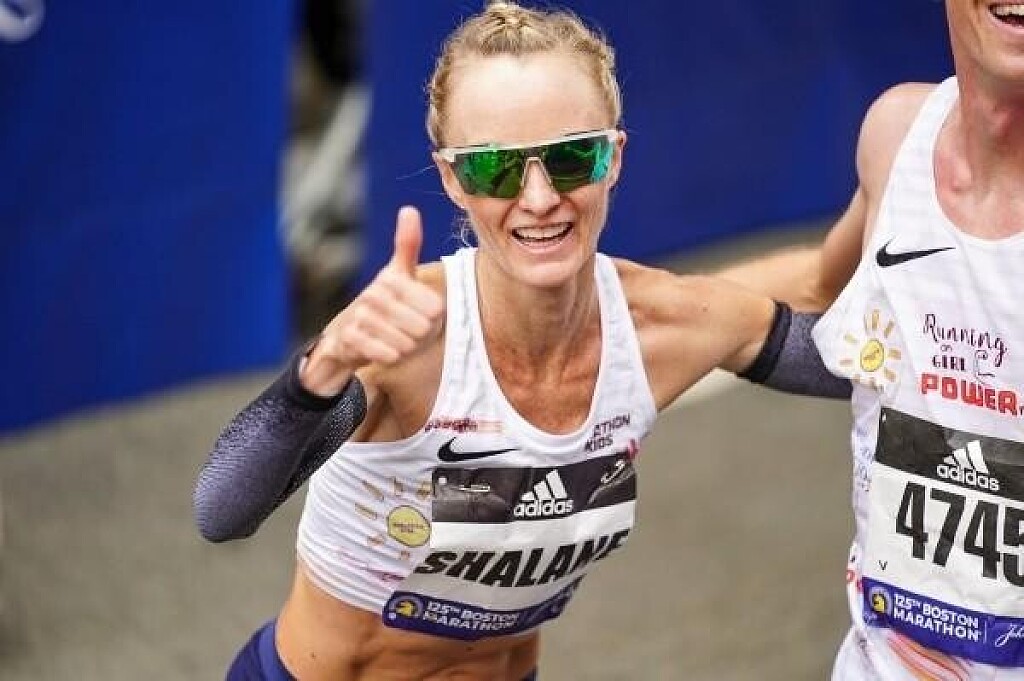
Running motivation: running quotes to inspire you
It can be hard to maintain your zest for running when the temperatures soar.
We dug up some running wisdom from some great athletes and minds to get you out the door. When your workout motivation wanes in the face of weather or whatever comes your way, read a few lines and consider it your calling to rise up and run.
You are a runner, no matter your distance, pace or natural ability
"Love hard. Live hard. Keep moving forward" –Tommy Rivers Puzey
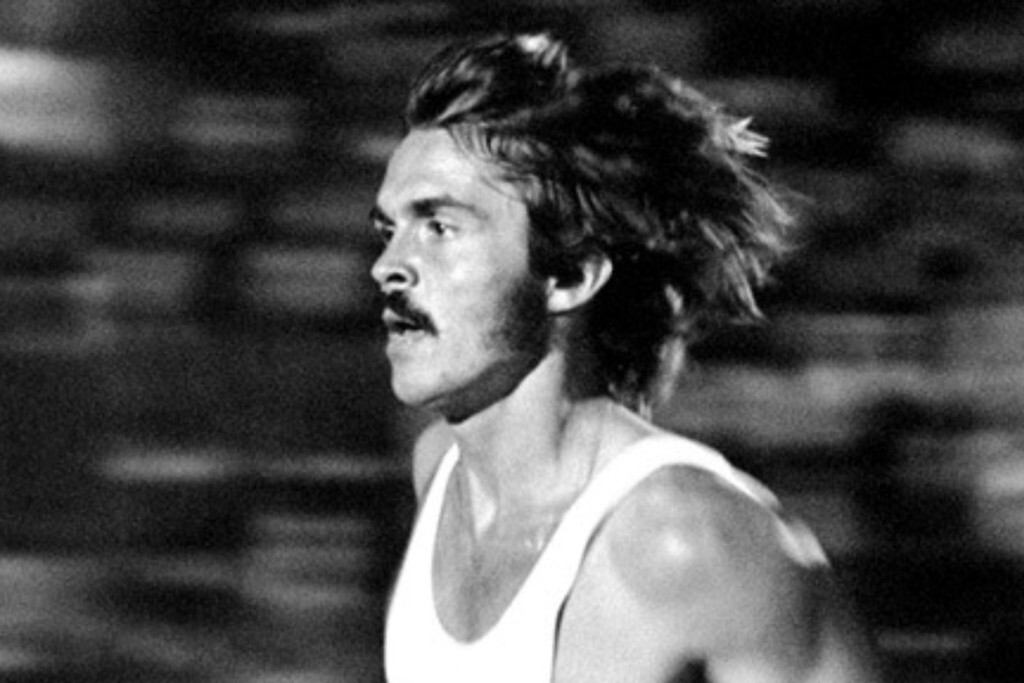
“All runners are tough. Everyone has to have a little fire in them, that even in tough times, can’t be turned off.” — Shalane Flanagan
“If one could run without getting tired I don’t think one would often want to do anything else.” – C. S. Lewis
“To give anything less than your best is to sacrifice the gift.” –Steve Prefontaine
“I just wanted to come out today and, I don’t know, get up in it, stick my nose where it didn’t belong, and just see what I could come away with. I guess that’s a medal.” –Molly Seidel
“The advice I have for beginners is the same philosophy that I have for runners of all levels of experience and ability: consistency, a sane approach, moderation, and making your running an enjoyable, rather than dreaded, part of your life.” — Bill Rodgers
Remember why you do it
“Why do we do this? To feel something. To move ourselves, to ensure that we don’t get stuck. And most of all, we do this to be a part of something. To insert our individual effort into a sea of human energy and force out the other side, hopeful that somehow we’ll be different. Changed in some way.” –Peter Bromka
“Because during every run, for a few seconds or a few minutes, you have a moment where it feels really good. You forget about the discomfort and you find rhythm, maybe some grace, and a feeling of strength and confidence as you move as well as you’ll ever move doing anything. And that’s one of the best reasons to run.” ― Brendan Leonard
“Keep moving. You’re still here. We all are. As long as you’re moving you’re still here.” –Tommy Rivers Puzey
“…For me there has always been a place to go and a terrible urgency to get there.” —Joan Benoit Samuelson
“The reason we race isn’t so much to beat each other… but to be with each other.” –Christopher McDougall
by Keeley Milne
Login to leave a comment
Matthew Kimeli (28:38) And Fentyea Belayneh (32:06) Win Beach To Beacon 10k
Beach to Beacon returns after 2-year absence: ‘It’s great to be back!’
A carnival of calves, quads and cowbells came back to this seaside town Saturday, after an absence of 1,099 days.
More than 5,000 runners paraded over the roads of Cape Elizabeth on a warm and cloudless morning in the 24th edition of the venerable TD Beach to Beacon 10K Road Race. Because of the pandemic, the race was canceled in 2020 and held virtually in 2021.
“It’s great to be back!” said Joan Benoit Samuelson, the race founder who grew up in Cape Elizabeth and went on to win the inaugural women’s Olympic marathon in the Los Angeles Games of 1984.
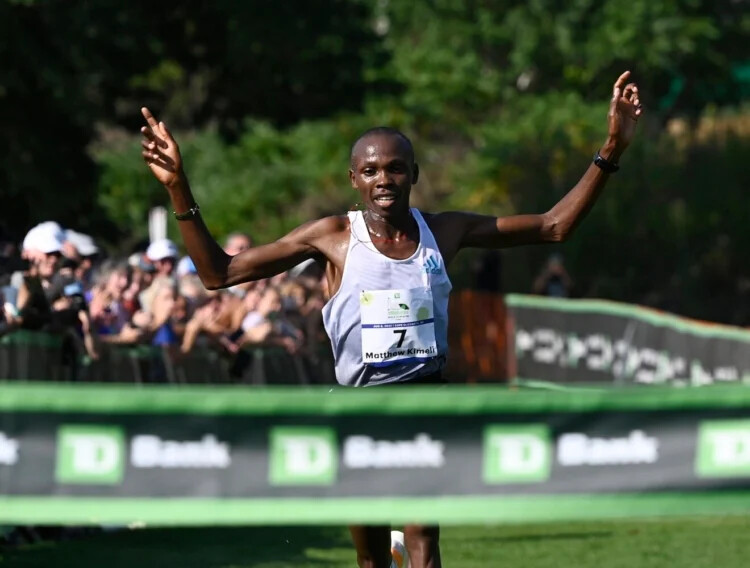
Along the route, which winds onto Old Ocean House Road before returning to Route 77 and continuing onto Shore Road until entering Fort Williams for the finish along a well-watered strip of green grass in sight of the lighthouse, spectators were abundant if not as thick as in past years.
The folks near the Mile 5 marker who grill bacon were back, enticing runners with mouth-watering scents of breakfast. (Beach to Bacon, reads their sign.) Bands and music added merriment and encouragement.
“It was so fun,” said Amy Davis, a Wisconsin native who placed fourth among all women. “The crowds get into it and the community, and it propels you forward. You feel like you’re never alone. That was really cool.”
Davis, 25, is the daughter of Nan Doak-Davis, a former national marathon champion who competed alongside Samuelson back in the day.
Befitting the 50th anniversary of Title IX legislation that opened doors long closed to female athletes, the women’s field on Saturday featured a dramatic race led for long stretches by Standish native Emily Durgin, a graduate of Cheverus High in Portland and the University of Connecticut.
The 28-year-old Durgin, now living and training in Flagstaff, Arizona, was runner-up by nine seconds to Fentaye Belayneh of Ethiopia. In her American road-racing debut, the 21-year-old Belayneh covered the 6.2 miles from Crescent Beach to the Portland Head Light in 32 minutes, 7 seconds.
No American woman has won Beach to Beacon. The only American man to do so is North Yarmouth native Ben True, six years ago. On Thursday night, True decided for health reasons to remain home in New Hampshire.
True’s absence paved the way for Mathew Kimeli, 24, of Kenya to run away from the men’s field. Hampered only by a brief entanglement with yellow caution tape after he turned onto Shore Road in Mile 4, Kimeli crossed the line with arms upraised in a winning time of 28:39.
Belayneh and Kimeli each received $10,000 for their victories. Durgin took home $5,000 for second place and another $5,000 as the top American finisher.
Because her connecting flight was canceled Thursday night, Durgin rented a car with her boyfriend and drove to Maine from Philadelphia on Friday, stopping at her favorite Connecticut diner (in Vernon) along the way.
“It was less stress because I knew I was coming to a familiar place,” said Durgin, whose parents picked up their luggage from the Portland jetport. “If I was going anyplace else, I probably would have gotten back on the plane and gone back to Phoenix.”
Once on the course, Durgin said she was surprised by the relatively pedestrian early pace – the first mile passed in 5:12 – until she realized her competitors were playing it safe amid hot and humid conditions.
“Then I found myself leading the whole race,” she said. “This is the first time that I’ve seen myself in the lead. It was not a super-familiar feeling.”
Kimeli’s time was the slowest for a men’s champion in race history. Belayneh’s was the slowest winning women’s time since 2011.
“The race was humid, and a lot of slopes,” said Kimeli, who was forced to stop to remove the tape from his leg when he couldn’t shake free from it. “Thank goodness we were not in a group. Maybe I would fall down if we were in a group.”
Twenty seconds passed before the surprise runner-up, Athanas Kioko, passed beneath the final banner. A recent graduate of Campbell University in Georgia, the 27-year-old Kioko registered for the race on Monday, picked up his four-digit bib number Saturday morning after a travel nightmare rivaled only by that of Durgin, and picked off two runners in the final mile to beat every invited elite athlete save Kimeli.
Two flight cancellations Friday morning in Atlanta forced Kioko to accept a diversion to Chicago, endure a four-hour layover, and eventually wind up in Manchester, New Hampshire. After a brief night in a motel, some Kenyan friends from Boston picked him up at 4:30 a.m. on their way to Maine. He got his bib at Cape Elizabeth High School less than an hour before the race, hopped on a bus to the start and enjoyed a 10-minute warm-up before the gun fired.
“Due to traveling, my lower back was a bit painful,” Kioko said. “But right now, I’m not tired.”
The Maine resident category saw a pair of first-time winners. Biddeford native Sam Mills, 21, whooped with joy before crossing the finish line in 31:09. Aly Ursiny of Yarmouth, 34, a mother of two who moved here from Boston last winter, was the fastest Maine woman in 36:17.
by Glenn Jordan
Login to leave a comment
TD Beach to Beacon 10K
Joan Benoit Samuelson, a native of Cape Elizabeth, Maine, won the first-ever women's Marathon at the 1984 Olympics in Los Angeles and is founder and chair of the TD Bank Beach to Beacon 10K. "A long time dream of mine has been realized" says Samuelson. "I've always wanted to create a race that brings runners to some of my most...
more...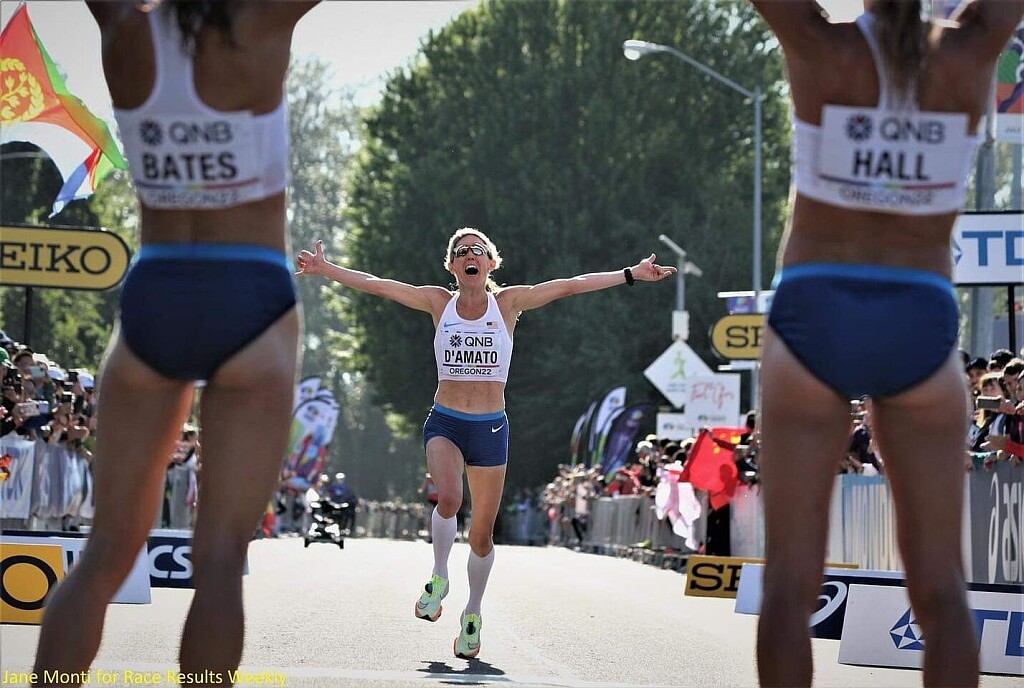
Americans Hall, Bates, D’Amato Shine in World Championships Marathon A team effort pushed the Americans to three top-eight finishes
Ethiopia’s Gotytom Gebreslase ran the fastest, but Sara Hall, Emma Bates, and Keira D’Amato got the biggest cheers from the crowd at Monday morning’s world championship marathon in Eugene, Oregon.
Running in front of the home crowd, Hall, Bates, and D’Amato smartly hung back in the chase back for the first half of the race and then began to work their way up as some of the runners in the original lead pack began to blow up.
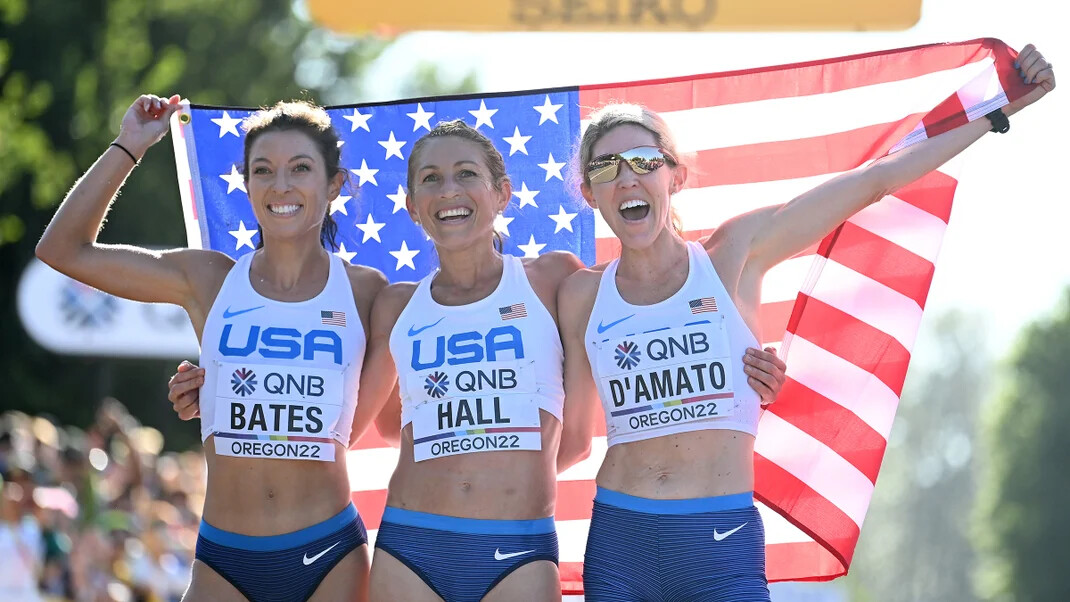
Hall (39, Crested Butte, Colorado) was the best of the bunch, surging throughout the final 8 miles of the race to place fifth in a season-best 2:22:10. She passed Kenya’s Angela Tanui (6th, 2:22:15) in the final mile but ran out of room in her pursuit of fourth-place finisher Nazaret Weldu of Eritrea (2:20:29). Hall’s finish was the best showing by an American woman in the world championships marathon since Amy Cragg earned the bronze in 2017 in London.
Bates (29, Boulder, Colorado) followed a similar strategy and wasn’t far behind in seventh in a new personal best of 2:23:18. D’Amato (37, Richmond, Virginia), who originally had gone out a bit harder only to get stuck in between the first two packs, eventually settled in with the chase pack alongside Hall, Bates, and British runner Jess Piasecki and Uganda’s Immaculate Chemutai.
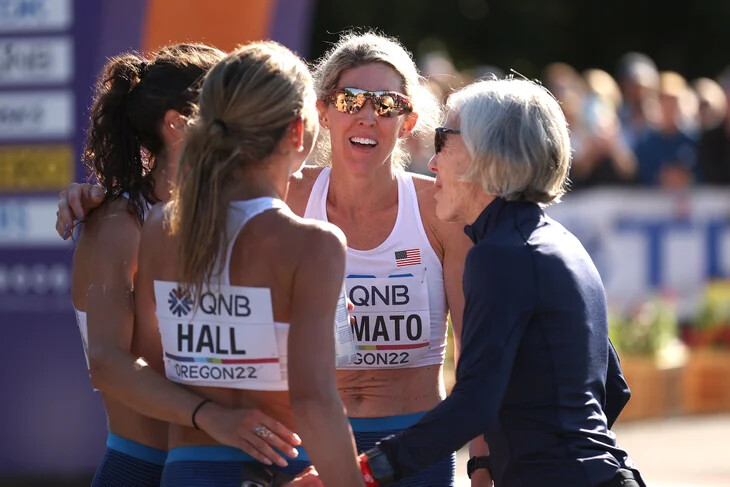
Hall, Bates, and D’Amato received roaring cheers from the crowd along the course that sent runners between Eugene and nearby Springfield, especially along the finish chute on Dr. Martin Luther King Drive. None had represented Team USA at a global outdoor championship before.
They were greeted at the finish line by American running legend Joan Benoit Samuelson, who won the 1984 Olympic marathon and served as the official starter of the women’s world championships race.
by BRIAN METZLER (Women's Running)
Login to leave a comment

World Athletics Championships Budapest23
Budapest is a true capital of sports, which is one of the reasons why the World Athletics Championships Budapest 2023 is in the right place here. Here are some of the most important world athletics events and venues where we have witnessed moments of sporting history. Throughout the 125-year history of Hungarian athletics, the country and Budapest have hosted numerous...
more...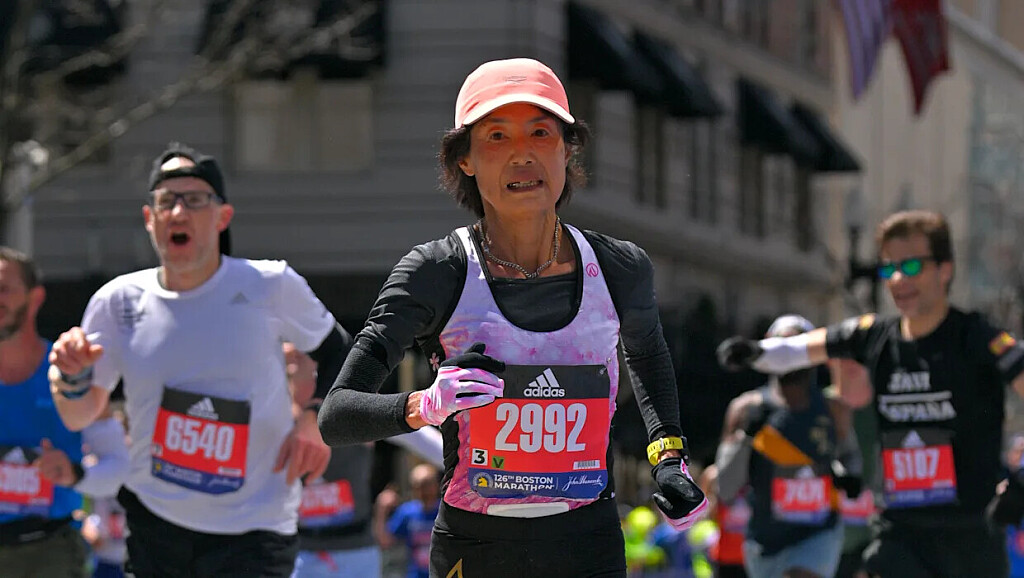
At 64, marathon age group world record-holder Yugeta Mariko still has a dream
The only woman over 60 to complete a marathon in less than three hours, the Japanese runner is defying age in her lifelong pursuit of becoming even faster.
Most people in their mid-60s are thinking of words like retirement, pension, grandkids.
Not Yugeta Mariko. She thinks about breaking world records.
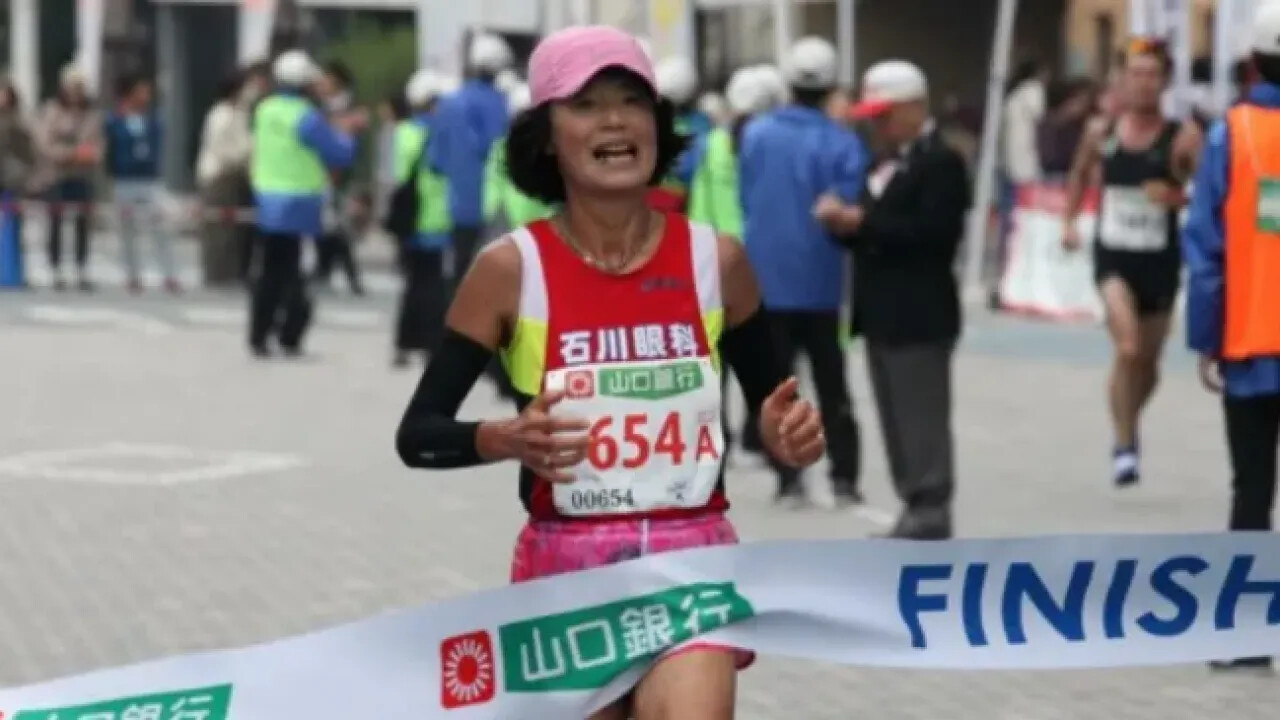
In the marathon.
Yugeta celebrated her 64th birthday on 13 May. It was only three years ago that the Japanese runner became the first - and only - woman in the world over 60 to run a marathon in under three hours. She competed the 42.2km (26.2 miles) distance in 2 hours, 59 minutes and 15 seconds in the Shimonoseki Kaikyo Marathon.
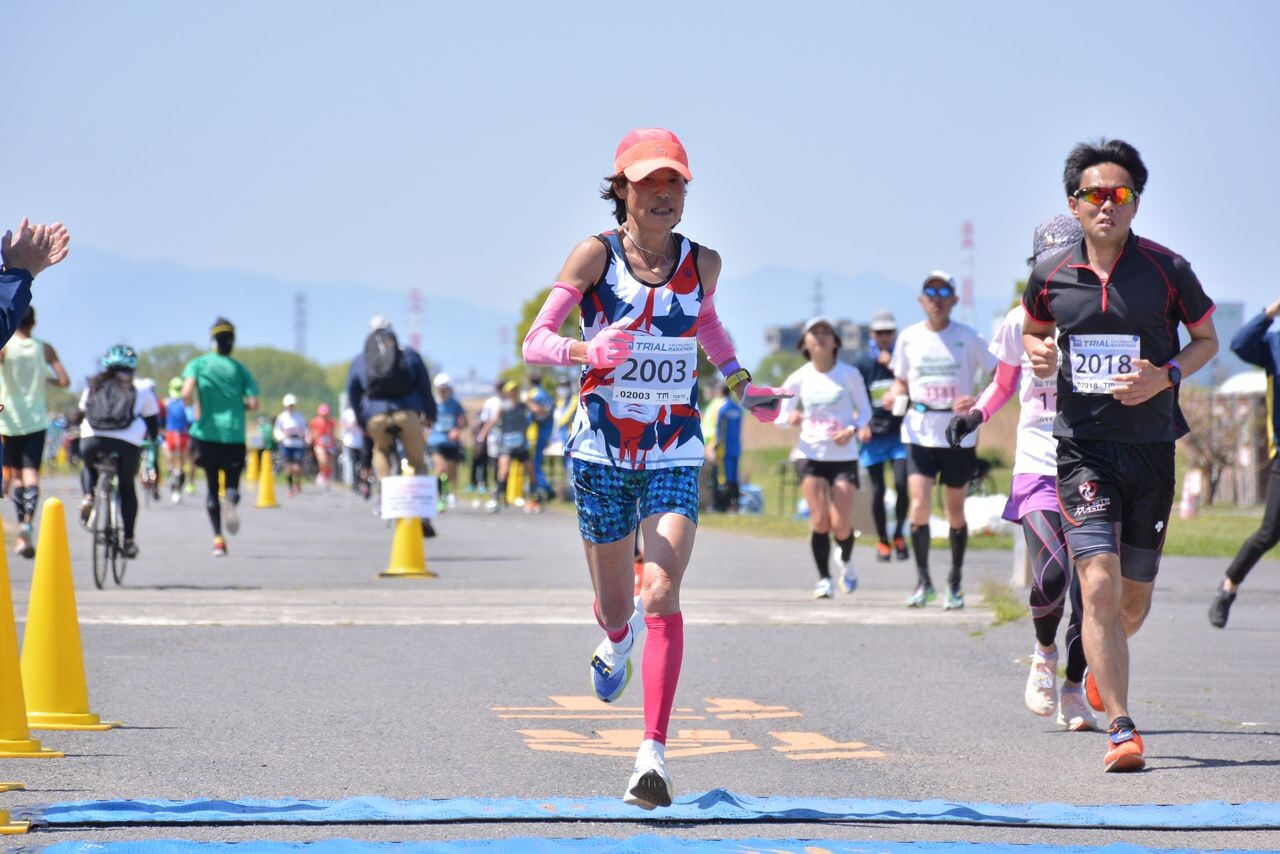
And just last year, Yugeta blew away that time in the Osaka Women’s Marathon, running a 2:52:13.
She was 24 when she ran her first marathon in 3:09:21, good for 34th place in the Tokyo International Women’s Marathon. At the time, a sub-three race seemed beyond reach. But 40 years later, she's getting faster.
There’s never giving up, then there’s Yugeta.
“After my first marathon, my goal was to run a sub-three some day,” Yugeta said in an interview with the Mainichi Shimbun.
“And it took me 34 years to achieve it. Being a teacher, the job took up a lot of my time and I couldn’t train the way I wanted to. My times stalled.
“Then I got married at 25. Had my eldest daughter at 26 and I was blessed to have two girls and two boys in all. But trying to raise them, I had to take a step away from marathons at one point.”
The awakening for Yugeta Mariko
The dream for Yugeta began back in 1979.
“I was on the track and field team from junior high to university. In my third year of university, I went to watch the very first Tokyo International Women’s Marathon.
“I watched the runners cross the finish line in the soaking rain and they were drenched. But they were glowing as well - absolutely shining. It was a sight I simply could not forget.”
The mother of four had to take a long timeout from running but started hitting the pavement again as she approached 40.
Yugeta, a PE teacher from Saitama Prefecture, found inspiration from British long-distance runner Joyce Smith, the winner of the inaugural Tokyo International Women’s Marathon (as well as the second) that Yugeta watched as a college girl.
Smith had sustained success beyond 40, winning the London Marathon twice. Her second win (1982) came at 44 years, 195 days - an age record that stands to this day.
She was ninth in the marathon of the inaugural 1983 World Athletics Championships. And at the time of the Los Angeles 1984 Games, Smith was the oldest female Olympian ever at 46, finishing 11th.
But even though Yugeta ramped up the work, she was far from breaking three hours.
The turning point arrived when Yugeta turned 50. That’s five-oh.
“When I became 50, my youngest son started high school which freed up a lot of my time,” she recalled.
“I joined a running club in Tokyo to train more seriously. I was a little worried at first because of my age but my teammates were telling me I still had plenty left in my 50s and urged me to keep going. So I did.
“The training paid off and when I was 58, I ran my first sub-three. Then at 60, I set a world record of 2:59:15 in the Shimonoseki Kaikyo Marathon.
“I’ve run 114 marathons. I’m past 60 but I’m still improving my time.”
Marathon No. 115 for Yugeta was this year's Boston Marathon on 18 April. Yugeta clocked a 3:06:27, relatively pedestrian by her standards, but enjoyed a tearful moment meeting the race’s two-time winner Joan Benoit Samuelson - who also happens to be the first female Olympic champion in the marathon.
These days, Yugeta’s goal is to break the 2:50 mark, more than two minutes off her personal best.
It would smash her own world record for her age category.
But don’t bother telling Yugeta she can’t because she believes, she does, and she wills.
Asked what has driven her for four decades, Yugeta said, “I think the most important thing is to find something you can be passionate about.
“You can’t give up. Don’t use age as an excuse. The secret is to believe in yourself, that you can do it.
“I first dreamed of a sub-three when I was 24. It took me 34 years, but I made it happen and after that, I set a world record.
“I want to keep dreaming - no matter how old I am.”
by Shintaro Kano
Login to leave a comment
Multiple U.S. record holder Molly Huddle and partner Kurt Benninger welcome their first baby
On April 26, Olympian and American-record holder Molly Huddle and her husband, Kurt Benninger (who is Canadian), welcomed the birth of their first child, Josephine Valerie Benninger. The couple met during their undergrad years at Notre Dame University in Indiana.
Huddle’s pregnancy was extremely well documented. Returning to elite competition after pregnancy remains poorly understood, and Huddle wanted to do her part by giving other women a peek behind the curtain. Huddle posted weekly updates to her Instagram, letting her followers know what she’d done for training and how it made her feel.
“Week 31: A lot of track and treadmill. It’s easier to stay flat and I can keep a water bottle nearby. Modifications are the name of the game at this stage. Made some adjustments to the core routine to avoid “the doming” happening on exercises that were fine only a few weeks ago,” she writes.
Beyond keeping followers up to date with her training, Huddle also provided tips and outlines things that, in retrospect, she wishes she’d done differently.
This year, Huddle, along with NCAA champion Sara Slattery, co-wrote their first book, How She Did It. The two women wanted to outline their paths from high school to becoming NCAA champions, to Olympic start lines.
Beyond detailing their own stories, they compiled advice from more than 50 female runners, to help demystify the process for the next generation. The book features runners as diverse as Joan Benoit Samuelson and Raevyn Rogers, and shares their insights on the sometimes winding route to success.
Huddle and Benninger relocated from Phoenix, Ariz. to Providence, R.I. in 2021.
by Madeleine Kelly
Login to leave a comment
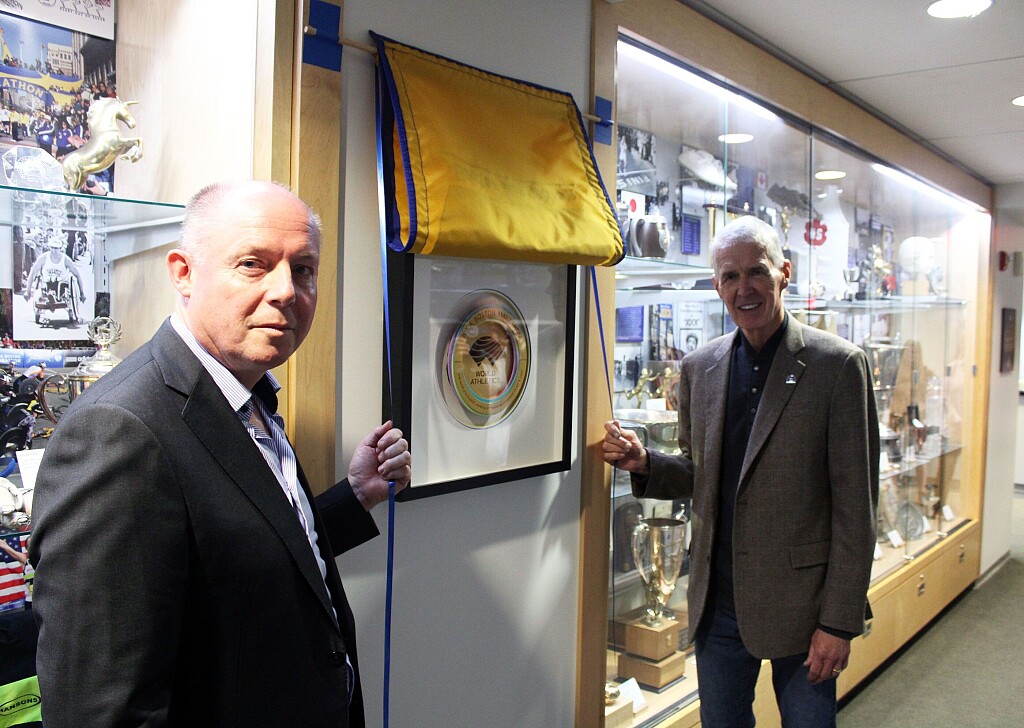
Boston Marathon's unique running history honored with World Athletics Heritage Plaque
The Boston Athletic Association (B.A.A.), which organizes the B.A.A. Boston Marathon (1897), the world’s oldest annual marathon, officially unveiled the World Athletics Heritage Plaque awarded to the race in 2019.
The World Athletics Heritage Plaque is a location-based recognition, awarded for 'an outstanding contribution to the worldwide history and development of the sport of track and field athletics and of out-of-stadia athletics disciplines such as cross country, mountain, road, trail and ultra-running, and race walking'.
The official presentation of the plaque by World Athletics Heritage, which had been on hold due to the pandemic, took place in the race museum at B.A.A.’s HQ on Dartmouth Street, Boston, Massachusetts, where the plaque will be permanently displayed, and is adjacent to the finish line of the race.
The plaque was unveiled by Thomas S. Grilk, B.A.A. President & Chief Executive Officer, and World Athletics Heritage Director Chris Turner, in the company of Jack Fleming, B.A.A. Chief Operating Officer, and fellow colleagues from the B.A.A. organization.
The tough one
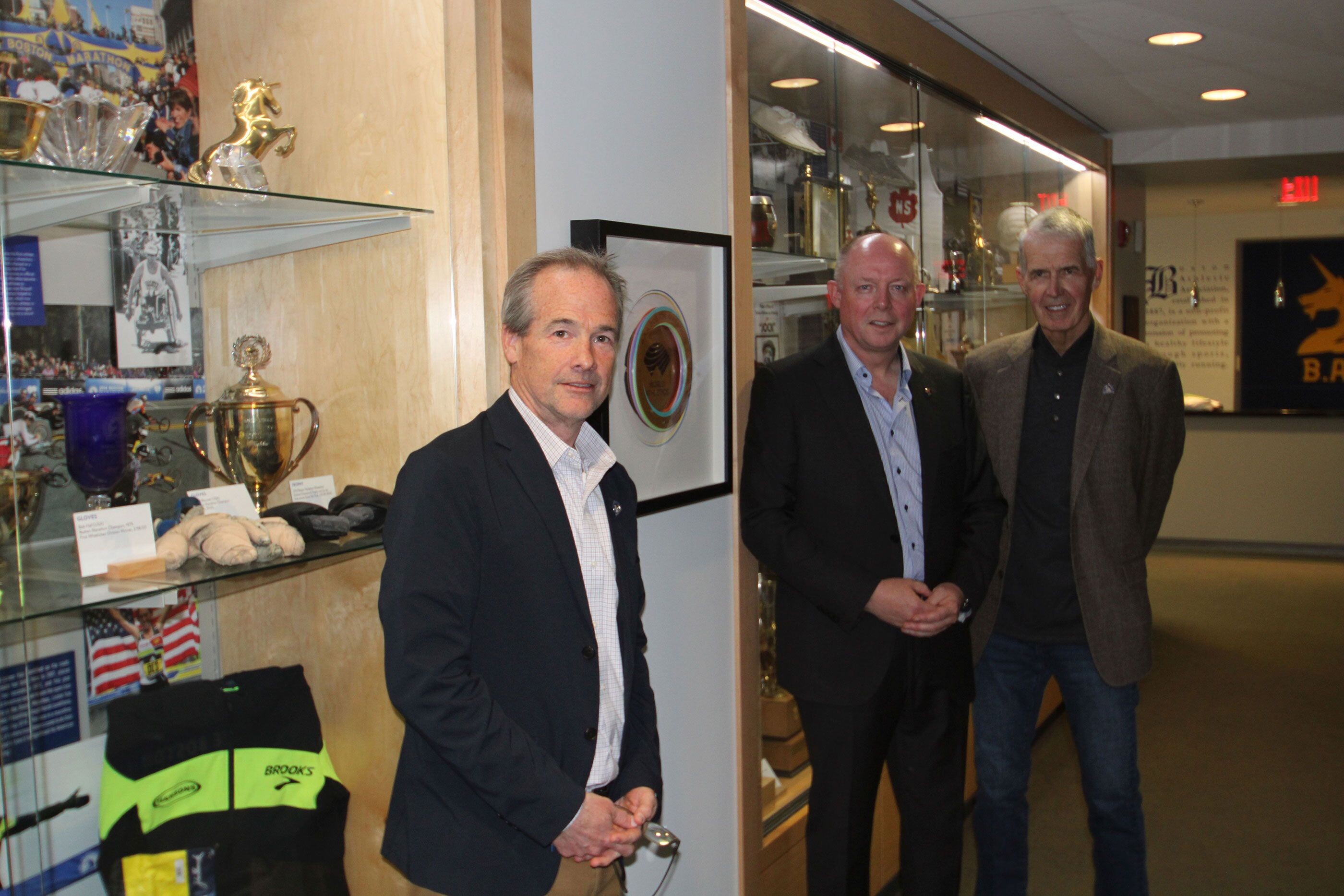
Boston’s notoriously demanding course, with its final incline ‘Heartbreak Hill’ 20 miles into the race that has gone down in marathon folklore, has floored many a world beater.
Amby Burfoot, the 1968 Boston Marathon champion, confirmed on Boston.com that the challenge is also “the downhill from the top of Heartbreak Hill to Cleveland Circle. This is called ‘Cemetery Mile’ for two good reasons: Evergreen Cemetery to the runners’ right, and the way the steep downhill deadens the legs, specifically the quadriceps muscles.”
Notably, despite the stature of the race, only five Olympic champions have ever managed to win in Boston.
Four women, firstly two-time Boston victor Joan Benoit (1979, 1983), who won the 1984 Olympic title in Los Angeles, and two three-time winners in Ethiopia's Fatuma Roba (1997, 1998, 1999), the Atlanta 1996 champion; Portugal's Rosa Mota (1987, 1988, 1990), who took the Olympic title in Seoul in 1988; and Kenya's 2022 Boston winner Peres Jepchirchir, who was the Olympic victor in Tokyo.
The sole male runner so far to accomplish the rare double is Italian Gelindo Bordin (1990), the Seoul 1988 Olympic champion, who took first place in Boston two years later.
The ‘American Marathon’
The racing singlets, running shoes, medals and trophies and hundreds of pieces of historic memorabilia in the B.A.A.'s museum pay tribute to the city’s famous marathon, which was inspired by and founded a year after the running of the inaugural Olympic marathon at the 1896 Games in Athens.
The B.A.A. itself had been established 10 years before. It was one of the association’s members, John Graham, who, as USA team manager at those 1896 Games witnessed the marathon race, proposed creating a similar long distance race in Boston.
The race, originally called the American Marathon, has an annual Monday date which makes it unique among elite international marathons. The Boston Marathon has always been held on the holiday commemorating “Patriots’ Day”, which since 1969 has become officially recognized as the third Monday in April.
The B.A.A., which has a mission to promote a healthy lifestyle, especially through running, has its HQ and museum virtually located at the finish line of the marathon.
Running treasure trove
The plaque, which is mounted on a wall in its own showcase in the museum, has joined a verifiable treasure trove of distance running artefacts associated with the race’s storied history.
The B.A.A.’s collection of memorabilia and its archive is always growing. In fact, they recently received a gift of a rare finisher medallion from the 1903 Boston Marathon. The competition bib number of last week’s Boston winner Jepchirchir is the very latest acquisition.
The perpetual Champions’ Trophy, which the winners receive immediately following the Boston Marathon, and the second place award (mounted plaque) from the first B.A.A. Boston Marathon in 1897 are standout exhibits.
Poignantly, the 2013 champion's medallion won by men’s victor Lelisa Desisa of Ethiopia was gifted back to the City of Boston in the summer of 2013, shortly after the notorious bombings which occurred on marathon day that year.
The collection, which contains hundreds of artefacts and thousands of images, has recently been renamed as the Gloria G. Ratti Collection in posthumous recognition of their long-time archivist and historian. Ratti was a B.A.A. Vice President on the Board of Governors.
by World Athletics
Login to leave a comment
Boston Marathon
Among the nation’s oldest athletic clubs, the B.A.A. was established in 1887, and, in 1896, more than half of the U.S. Olympic Team at the first modern games was composed of B.A.A. club members. The Olympic Games provided the inspiration for the first Boston Marathon, which culminated the B.A.A. Games on April 19, 1897. John J. McDermott emerged from a...
more...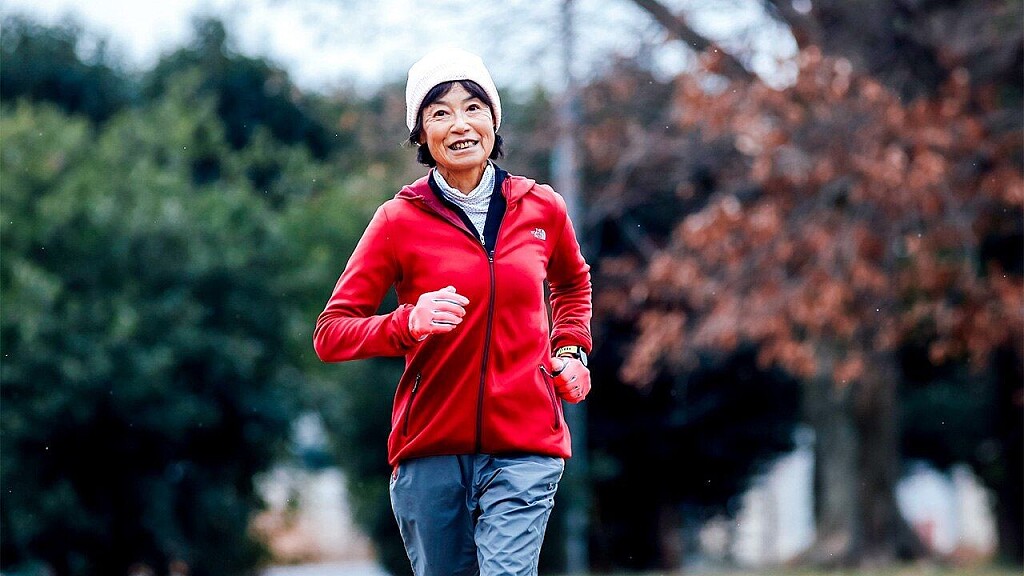
Japan’s Mariko Yugeta, 63, runs two sub-3:05 marathons in seven days, after running 3:04 in Tokyo, she followed it up with a 2:58 in Nagoya
The first 60+ woman to ever break three hours for a marathon, Japan’s Mariko Yugeta, added a new feat to her previous world record. A week ago, Yugeta won in the 60+ category at the Tokyo Marathon with a 3:04:16, and a week after that, she bettered her time by almost six minutes, running a 2:58:40 at the Nagoya Women’s Marathon.
Yugeta, 63, ran Tokyo and Nagoya as a fitness test for April’s Boston Marathon, where she hopes to lower her world record time of 2:52:13. Through 2021, she ran into some injury problems, which kept her out of the Osaka International Women’s Marathon in January.
The force that has driven her motivation for over 40 years is regret. When Yugeta was 21, she was mesmerized by the finishers at the 1979 Tokyo International Women’s Marathon. She spent the next three years training, making her marathon debut in 1982 in Tokyo, where she finished nine minutes over her goal of sub-3:00.

Since then, Yugeta has had unfinished business. A sub-3 marathon became her lifelong goal, and she finally achieved it at the Tokyo Marathon in 2017 (2:58:17), when she was 59.
When you put her personal best time into an age grade calculator, it comes out to 2:14:03, one second faster than the current women’s marathon world record held by Kenya’s Brigid Kosgei.
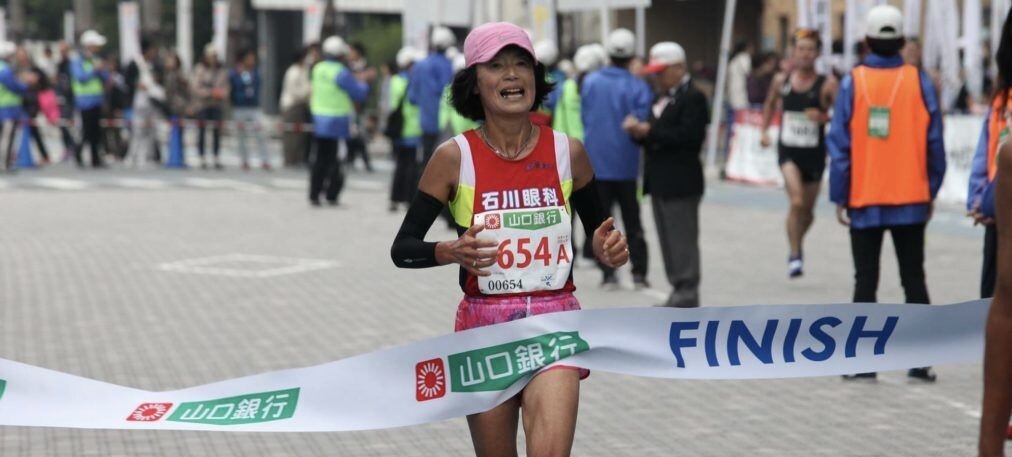
Yugeta’s achievements bring to mind the 1984 U.S. Olympic gold-medal-winning marathoner Joan Benoit-Samuelson, who is the only woman ever to run a sub-three marathon in five consecutive decades. (Benoit has not yet run one in the 2020s.)
In a 2021 interview with Maurten, Yugeta said she doesn’t really think about her age when she runs. She aspires to run sub-4:00/km this April in Boston, to become the first woman 60+ to run a marathon under 2:50. She currently teaches high school phys-ed and trains alongside her 16- and 17-year-old high school students.
by Marley Dickinson
Login to leave a comment
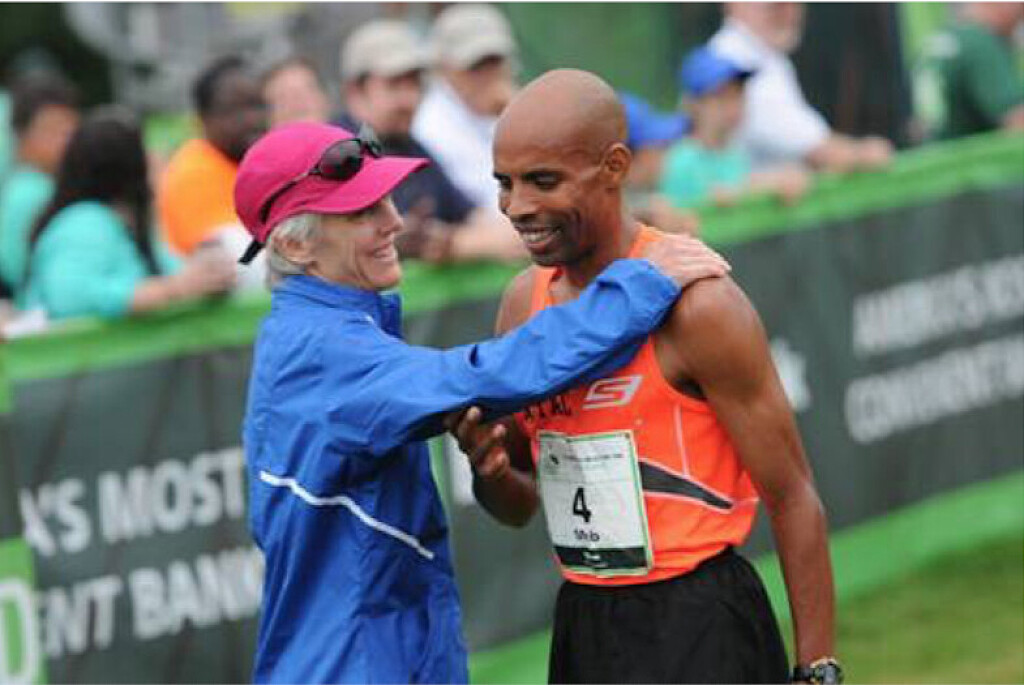
Joan Benoit Samuelson teaches a MasterClass on running
Your mind is just as important as your body when you’re running, but developing a healthy, strong mindset is not always easy. Just like it takes time, dedication and practice to train your body for a race, it requires equal amounts of effort to train your mind, and who better to coach you through that process than America’s running sweetheart, Joan Benoit-Samuelson?
Her class, Joan Benoit Samuelson Teaches the Runner’s Mindset, is available now as part of the popular MasterClass series, and will no doubt help you crush your goals in 2022.
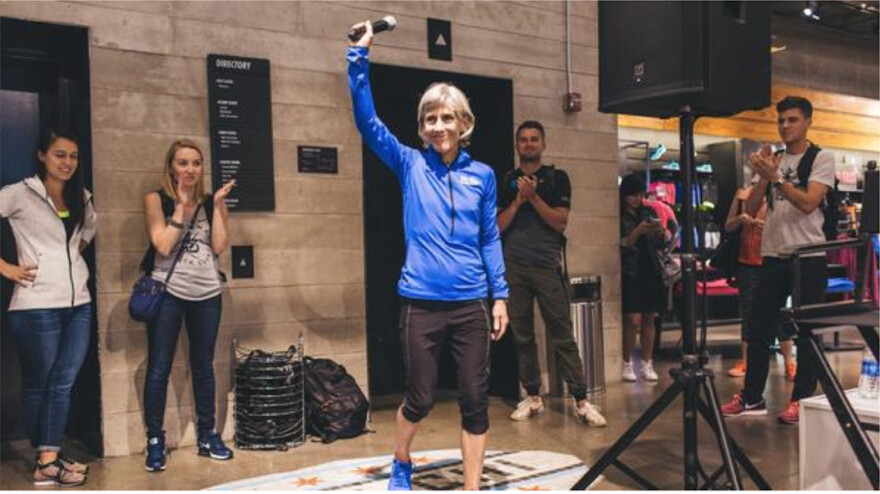
“After 50+ years of running, I’m delighted to partner with @masterclass to share my lifelong passion for running,” Samuelson said on her Instagram. “I invite you to join me in this class and make your miles count, on the road and in life. Run on in good health and with fire in your belly.”
For the uninitiated, Benoit Samuelson is one of the most accomplished runners in history. She won the Boston Marathon twice, in 1979 and 1983, and was the winner of the first-ever Olympic women’s marathon in 1984.
Now in her mid-60s, she is also the only woman in the world to have run sub-3 hour marathons in five consecutive decades, her first in 1979 and her most recent in 2010. At the 2019 Berlin Marathon, she ran 3:02, nearly becoming the first woman to clock a sub-3 in six consecutive decades.
Her new MasterClass will cover a range of topics, including goal setting, balancing the runner’s mind, stretches and strength training, running your first marathon and navigating injury. She also shares interesting anecdotes about her early days of running. “When I first started to run, I ran inside the confines of an old abandoned Army post,” she says in the opening remarks. “And there wasn’t any vehicular traffic allowed in that area at the time, so I would walk from our house to the fort and I would run to my heart’s desire. And then I’d walk home, because I was embarrassed to be seen running on the roads.”
She talks about being the underdog at that first Olympic marathon, the pressure of being an Olympic champion, how running has shaped her life and her desire to give back to the sport. This MasterClass is a unique opportunity for runners to level up their training. For more information, visit the Masterclass website.
by Running Magazine
Login to leave a comment

America's greatest distance runners Joan Benoit Samuelson teaches a MasterClass on running
Your mind is just as important as your body when you’re running, but developing a healthy, strong mindset is not always easy. Just like it takes time, dedication and practice to train your body for a race, it requires equal amounts of effort to train your mind, and who better to coach you through that process than America’s running sweetheart, Joan Benoit-Samuelson? Her class, Joan Benoit Samuelson Teaches the Runner’s Mindset, is available now as part of the popular MasterClass series, and will no doubt help you crush your goals in 2022.
“After 50+ years of running, I’m delighted to partner with @masterclass to share my lifelong passion for running,” Samuelson said on her Instagram. “I invite you to join me in this class and make your miles count, on the road and in life. Run on in good health and with fire in your belly.”

For the uninitiated, Benoit Samuelson is one of the most accomplished runners in history. She won the Boston Marathon twice, in 1979 and 1983, and was the winner of the first-ever Olympic women’s marathon in 1984.
Now in her mid-60s, she is also the only woman in the world to have run sub-3 hour marathons in five consecutive decades, her first in 1979 and her most recent in 2010. At the 2019 Berlin Marathon, she ran 3:02, nearly becoming the first woman to clock a sub-3 in six consecutive decades.
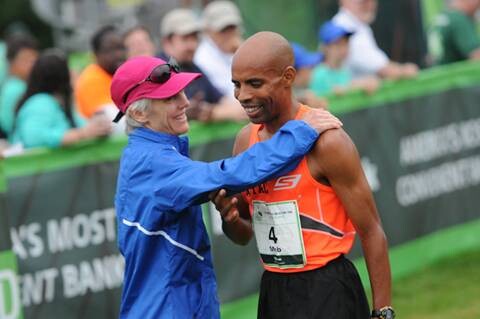
Her new MasterClass will cover a range of topics, including goal setting, balancing the runner’s mind, stretches and strength training, running your first marathon and navigating injury. She also shares interesting anecdotes about her early days of running.
“When I first started to run, I ran inside the confines of an old abandoned Army post,” she says in the opening remarks. “And there wasn’t any vehicular traffic allowed in that area at the time, so I would walk from our house to the fort and I would run to my heart’s desire. And then I’d walk home, because I was embarrassed to be seen running on the roads.”
She talks about being the underdog at that first Olympic marathon, the pressure of being an Olympic champion, how running has shaped her life and her desire to give back to the sport.
by Brittany Hambleton
Login to leave a comment
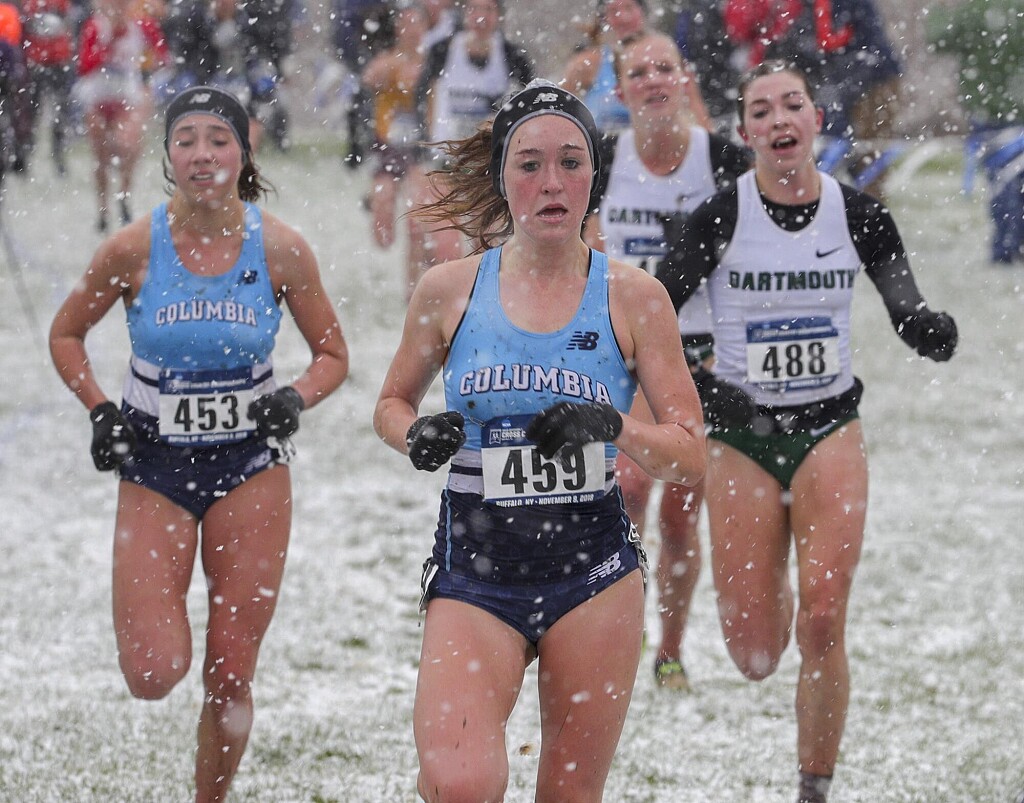
NCAA Cross-Country Distances Still Aren’t the Same for Men and Women. Run Equal Wants to Change That
(A proposal has been submitted to the NCAA to equalize the men’s and women’s cross-country race distances by 2023.)
“I came by the 6K mark and thought, ‘F—, it’s going to be a long day,’” Cooper Teare says of this year’s 10,000-meter NCAA men’s cross-country championships. At the 6K mark, he was still with the leaders, but in the late stages of the race he collapsed from exhaustion, got back up, fell down again, and crawled across the finish line. The fastest collegiate miler of all time finished fourth to last. “The 10K is a different beast,” he says.
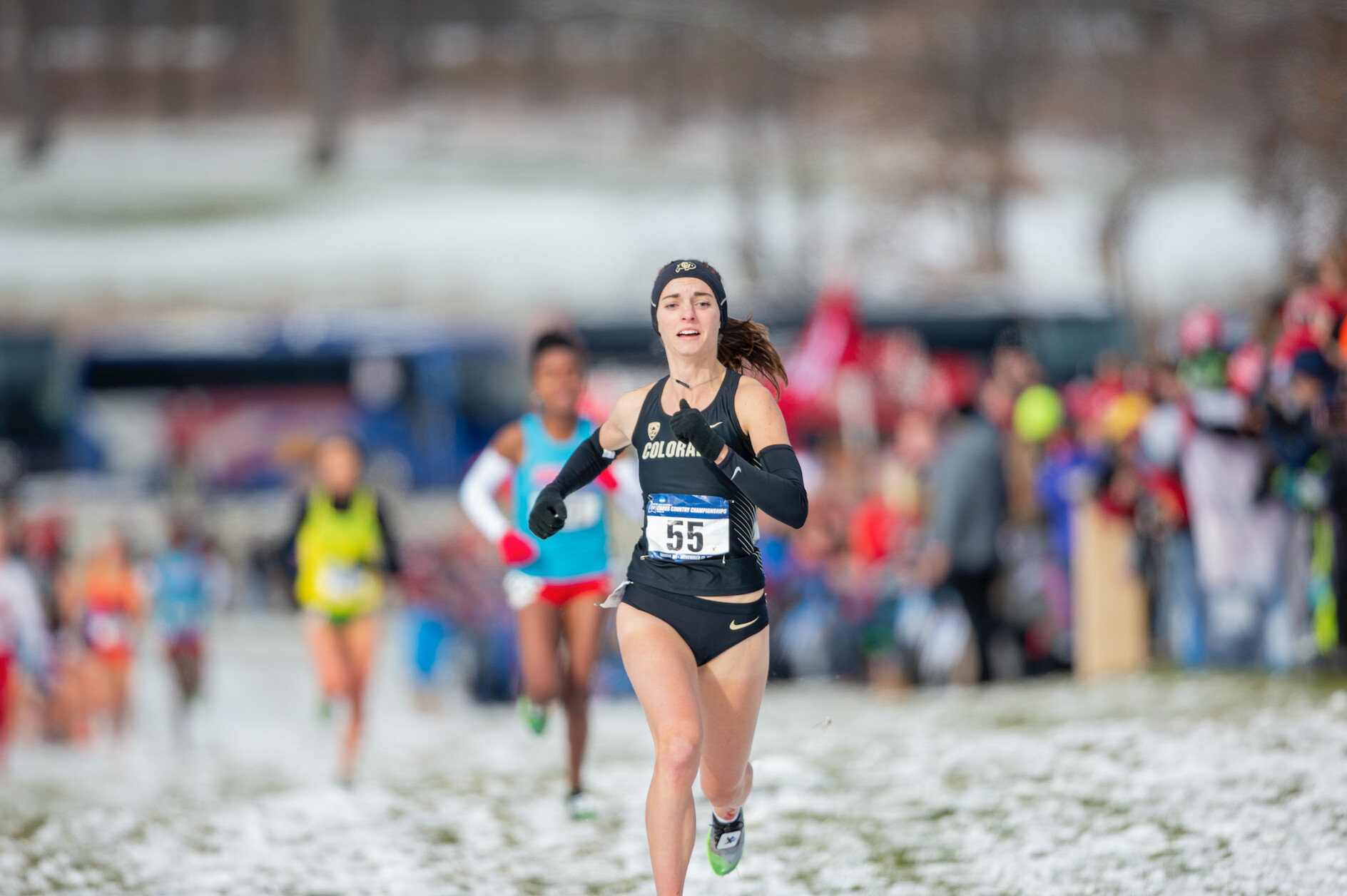
For the women, though, the race ends at 6K, where Teare wished it would’ve ended while his competitors surged forward. The fastest miler in the women’s race, Whittni Orton, was ultimately crowned the champion. Two different race distances, frankly, make men’s and women’s cross-country two different sports.
On January 5, Run Equal submitted their first proposal to the NCAA, in which their main demand was that men and women race the same distance in cross-country, across all three divisions, by 2023. In accordance with their petition, which had been circulating online for months, they proposed that everybody race 8,000 meters all season. Equalize the distances, they say. Run equal.
“Requiring women to race shorter distances is gender bias and sends an unmistakable message, intended or not, that women are not as capable as men,” the proposal says.
Molly Peters, the head cross-country coach for men and women at St. Michael’s College, started Run Equal by herself but always knew she wouldn’t be able to accomplish anything substantial alone. “The NCAA isn’t going to take ‘little me’ at my little college seriously,” Peters says.
To gain credibility, Peters assembled a team of pioneers in women’s running who share her view that the distances should be equal. Joan Benoit won the first ever women’s Olympic marathon. Lynn Jennings was a three-time cross-country world champion. Kathrine Switzer was the first woman to ever run the Boston Marathon.
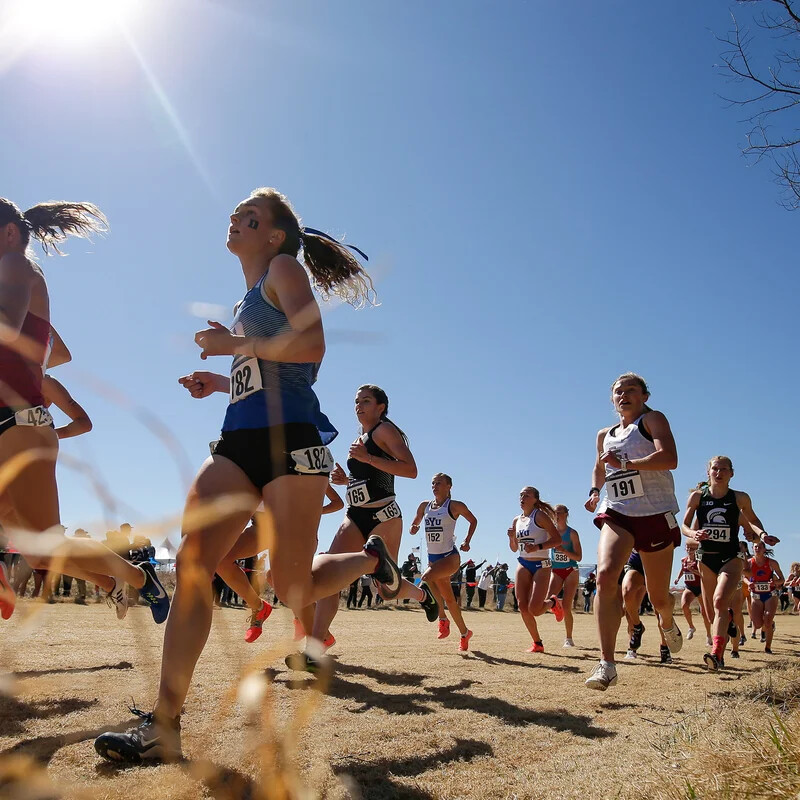
The hope is that when prominent athletes sign and share the petition, it’s like a snowball. “When you get these big names on board, the NCAA will eventually have to answer to them,” Peters says.
Another one of the big names is Molly Huddle, a 10-time NCAA All-American and former American record holder in the 5,000 meters. “I always thought it was kind of weird we didn’t run the same distance, and here we are 20 years later still doing the same thing,” Huddle says. “I think it’s been stuck this way for so long just because we haven’t all really talked about it out in the open all at once.”
From 1928 to 1960, women were prohibited from competing in any event longer than 200 meters at the Olympics because it was thought that the strenuous aerobic activity would harm her ability to bear children. Now it’s commonly understood that the old rationale was wrong; to relegate women to a shorter distance event seems like a blind faith preservation of a tradition based on a misconception, a simple deferment to the status quo that favors an antiquated model.
Kara Goucher, the three-time NCAA champion and double Olympian, concurs. “You don’t see women running 3,000 meters on the track while the men run 5,000,” she says. “Women run the marathon too. They run hundred-milers. They can handle a few extra kilometers in cross-country.”
Goucher says her college coach at the University of Colorado, Mark Wetmore, used to joke, “The men get to enjoy their time for 30 minutes, and you girls only get to enjoy 16 or 17 minutes. They get to be in the spotlight for much longer. That’s not fair.” There’s a truth at the joke’s center: The men’s race is presented as a more serious affair, the main event of the day.
When Goucher won her NCAA cross-country title in 2000, it was the first year the women had ever raced 6K. It had previously been standard for women to race 5K. When the increase in distance first took effect, Goucher says, everybody thought participation among women would drop dramatically, that they wouldn’t be able to field full teams. That didn’t happen. The number of women participating in Division I cross-country steadily increased for the next five years.
While there may be popular support for increasing the women’s race distance, there’s no consensus around what the race distance should be. The proposal submitted to the NCAA calls for 8K for all because Peters and many of her allies see that distance as “a great compromise.” But others disagree.
“I like the 10K at the national championships. It makes it harder,” Goucher says. “But what’s most important is that they’re equal.” Goucher believes there should be a meaningful differentiation between track and cross-country. She says, “They’re different sports, and they should require different types of athletes.”
Huddle offers a different perspective. “Back when I was running I wanted to run 8K, what the guys do all season,” she says.“I’m not so sure about 10K. That’s a daunting distance to jump up to as a freshman—for the men too.”
Peters understands the challenges of organizing an initiative like this and isn’t necessarily worried about the contention. She also spearheaded the movement to equalize the NCAA’s race distances in nordic skiing, which has some similarities with cross-country: both sports are endurance races, and they both traditionally have required women to race a shorter distance than men. Her initiative, which was fittingly called Ski Equal, was mostly successful.
After pressure from Peters and some of the sport’s top athletes, the NCAA Ski Committee opted for an incremental transition to hosting equal distance races between genders. This year, seven of the eight races on the formal circuit were equal in distance. Last year only two were. A few years before that none of them were.
As a sport, cross-country hasn’t yet seen the changes that nordic skiing has, even though the conversation about equalizing race distances isn’t new. There still isn’t a single opportunity for women to race longer than 6K during the NCAA season. But maybe now the time is finally right.
While the USATF cross-country championships have been 10K for both men and women since 2015, other governing bodies are now beginning to make changes to reckon with the implicit messaging behind the history of unequal race distances. European Athletics recently announced that for the first time in 2023 they will lengthen the women’s race distance to match the men’s. Soon the unequal race distances will be unique to the NCAA.
“There’s pressure right now for the NCAA to push for gender equality,” says Peters, referencing the recent Kaplan Reports, which aim to provide a thorough review of gender equality issues in various NCAA championships. The reports followed a TikTok videothat went viral in March showing the dramatic differences between the men’s and women’s practice facilities at last year’s NCAA March Madness basketball tournaments. People are seriously talking about gender equality in sports right now; the window is wide open.
Regardless of the changes that happen in other sports, during the upcoming cross-country season Peters plans to host some women’s 8Ks at her college, where she’s the meet director. Rather than wait for governing bodies to comply with her vision, she’ll model the system she wants to see. “It pains me to host races that aren’t equal,” she says. “I guess it’ll soon be time to put my money where my mouth is.”
by Matt Wisner (Women’s Running)
Login to leave a comment
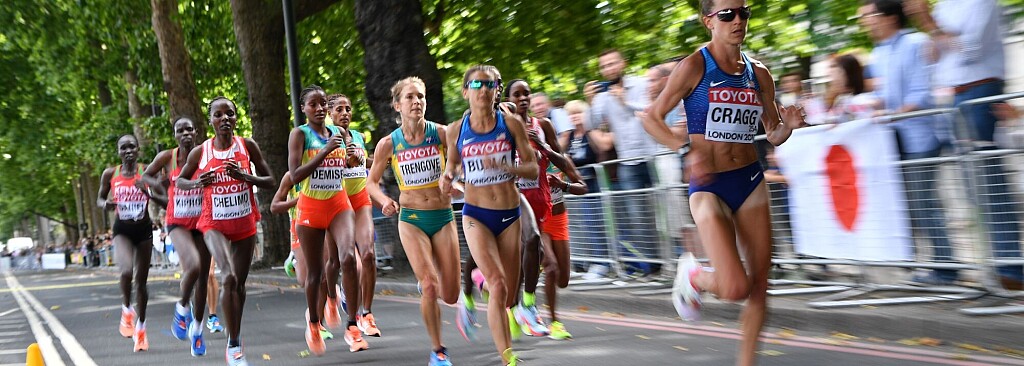
World Championships Oregon22 marathon course revealed
The marathon course for the World Athletics Championships Oregon22 has been revealed by the local organising committee (LOC) for the event. Spectators will be able to line the course and experience the world-class competition for free.
The men’s and women’s marathons, taking place on 17 and 18 July 2022, will be contested on a mostly flat 14km looped course that will run through Eugene and Springfield. Athletes will start and finish in front of the University of Oregon’s Autzen Stadium.
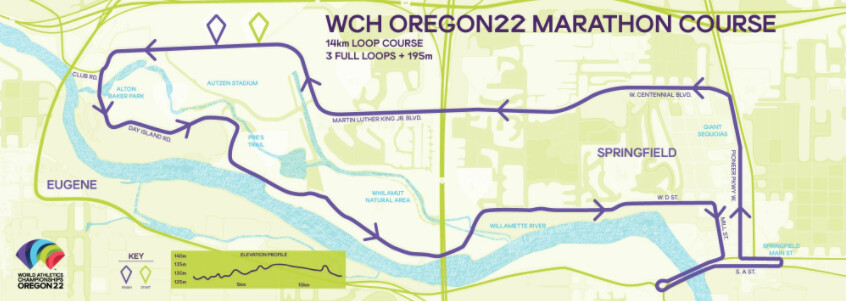
“The opportunity to run a marathon at a World Athletics Championships right here on US soil would be an experience of a lifetime,” said Emma Bates, second place finisher and top US woman at the 2021 Chicago Marathon. “The looped course gives runners the ability to learn and adapt as the race develops, and I think that will result in some fantastic, strategic competition.”
The course follows long sections of the marathon route used for the 1972 and 1976 US Olympic Trials, while also showcasing the beauty and history of Oregon through the landmarks and landscapes of Eugene and Springfield.
“Our objective was to design a course that prioritises the athlete experience while honouring Oregon’s natural landscape, indigenous people, and long-held passion for running,” said WCH Oregon22 Road Events Course Manager Ian Dobson.
“As members of this community, we're proud to give the world’s best runners the opportunity to compete on a course that holds so much history and potential. These marathons will write a new chapter in Oregon’s running story, creating new legends in the footsteps of Frank Shorter, Jacqueline Hansen, Kenny Moore, Joan Benoit and countless others who raced these roads as they helped inspire and redefine what road racing could be – not only in the US, but globally.”
The loop begins on Martin Luther King, Jr. Boulevard, named after the American civil rights leader. From there, it moves into Alton Baker Park, a 413-acre natural area in Eugene.
While on Day Island Road within Alton Baker Park, the route will follow alongside Pre’s Trail. Designated as a City of Eugene historic landmark in 2019, Pre’s Trail is a bark running trail that celebrates University of Oregon track and field legend Steve Prefontaine.
Another feature of this part of the course are the Kalapuya Talking Stones. Showcased in the Whilamut Natural Area of Alton Baker Park, these 15 basalt stones are carved with Kalapuya words and their English translations.
The course will cross over the stunning Willamette River, considered the lifeblood of the Willamette Valley, and then move into the City of Springfield. Competitors will traverse Main Street before running beneath the canopy of a stretch of incredible giant sequoia trees.
The World Athletics Championships Oregon22 will be taking place 15–24 July 2022.
by World Athletics
Login to leave a comment
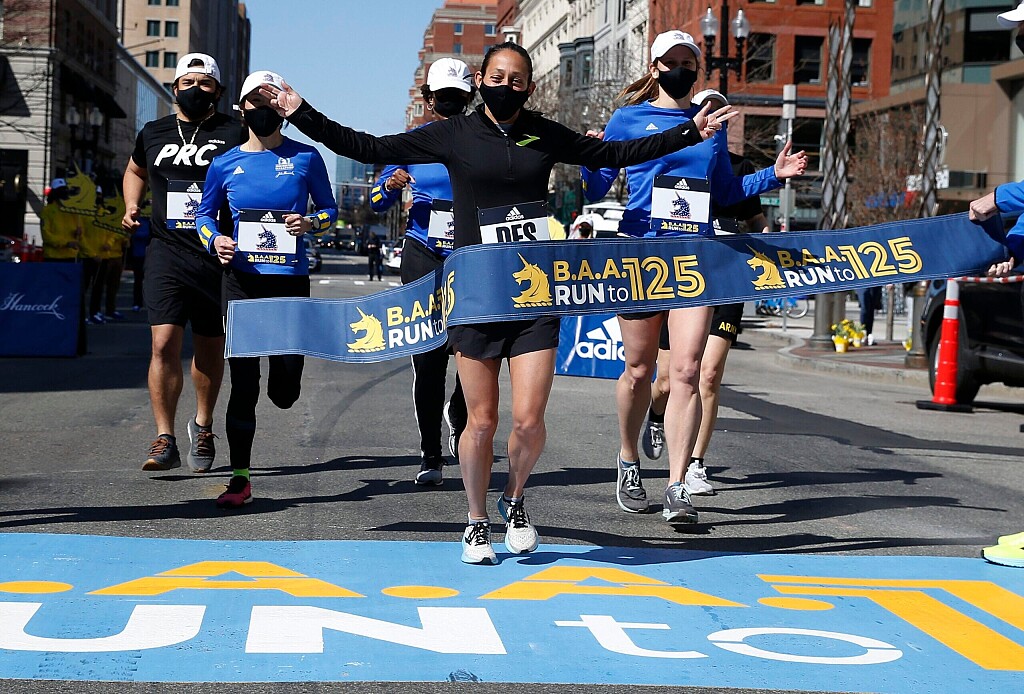
Next up is the Boston Marathon and here is everything you need to know
Wow, so many big time marathons being held over just a few weeks. Next up is the Boston Marathon.
This year’s race on October 11 will be the first fall edition of the Boston Marathon, and first time the race is held outside of its traditional Patriots’ Day date in April. Due to the coronavirus pandemic, the race was postponed from its usual third-Monday-in-April date to October 11. This will be the first in-person Boston Marathon in 910 days, as the 2020 edition was held as a virtual experience in September, 2020. This year’s race falls on October 11, which is International Day of the Girl and also increasingly recognized as Indigenous Peoples’ Day in cities and towns along the marathon route.
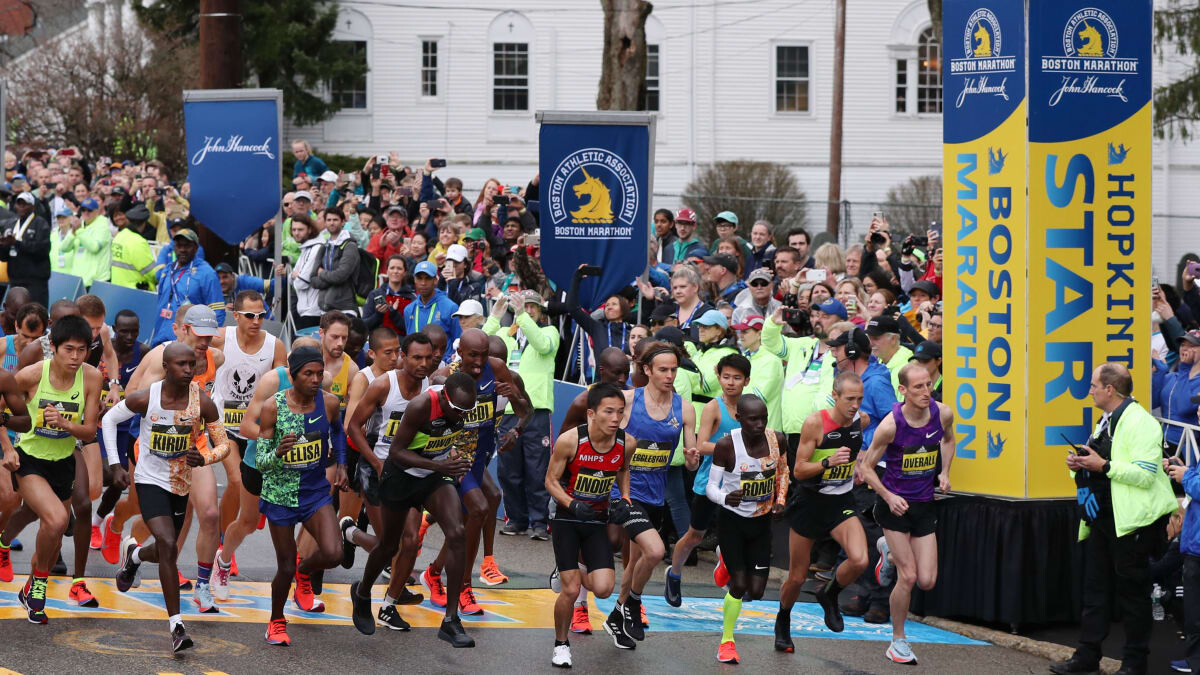
Here is everything you need to know:
COMPOSITION OF THE FIELD
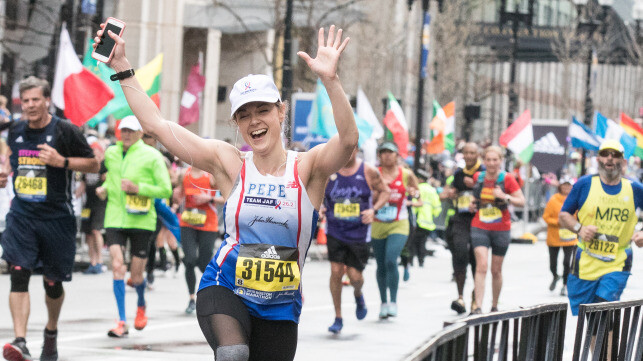
18,252 total entrants of the in-person 125th Boston Marathon
3,492 entrants from Massachusetts
16,441 entrants residing in the United States of America
104 countries represented by participants in the Boston Marathon
All 50 U.S. states represented by participants in the Boston Marathon
Youngest entrants: 18 years old, Enchee Xu, Conor Beswick, Rachel Calderone, and Angel Robles, all of Massachusetts
Oldest entrant: 84 years old, Volkert Bobeldijk of Canada
28,612 total entrants of the Virtual 125th Boston Marathon (October 8-10)
HEALTH & SAFETY
This year’s field size has been reduced by 36% compared to recent years (from 31,500 entrants to 20,000)
In an effort to enhance social distancing and minimize wait times, Athletes’ Village has been eliminated in Hopkinton this year and a rolling start has been introduced for the first time in race history.
95% of all Boston Marathon volunteers are vaccinated.
100% of Boston Marathon medical volunteers are vaccinated.
All participants are required to provide proof of a WHO-recognized vaccination OR a produce a negative COVID-19 test within 72 hours of bus loading.
A health and safety bracelet will be provided after proof of vaccination or negative COVID-19 test results are verified. The bracelet must be worn throughout race weekend and through the finish line.
Masks are required indoors, on event transportation, and within the start area until participants cross the starting line.
BY THE NUMBERS
$876,500 in prize money will be awarded to top finishers by principal sponsor John Hancock. Included among the prize awards is $27,500 for Para Athletes.
8,500 B.A.A. volunteers will contribute to this year’s Boston Marathon and race related events
26.2 miles (26 miles and 385 yards; 42.195 kilometers) will be run through eight cities and towns (Hopkinton, Ashland, Framingham, Natick, Wellesley, Newton, Brookline, and Boston)
An estimated $20 million (USD) will be raised through the 125th Boston Marathon for charities as part of the B.A.A.’s Boston Marathon Official Charity Program and the John Hancock Non-Profit Program
FACES IN THE FIELD
13 Boston Marathon champions will be competing as part of the John Hancock Professional Athlete Team: Des Linden (USA/MI), Geoffrey Kirui (KEN), Edna Kiplagat (KEN), Lemi Berhanu (ETH), Lelisa Desisa (ETH), Atsede Baysa (ETH), Caroline Rotich (KEN), Daniel Romanchuk (USA/IL/Won the Chicago Marathon on Sunday), Manuela Schär (SUI), Marcel Hug (SUI), Tatyana McFadden (USA/MD/Won the Chicago Marathon on Sunday), Ernst van Dyk (RSA), and Joshua Cassidy (CAN). Additionally, 1968 winner Amby Burfoot will be running and serving as an official starter in Hopkinton.
Five 2020 Tokyo Paralympic gold medalists will be competing in Boston: reigning men’s wheelchair champion Daniel Romanchuk (gold in the 400m); two-time Boston winner and wheelchair course record holder Marcel Hug (800m, 1500m, 5000m, marathon); reigning women’s wheelchair champion and course record holder Manuela Schär (400m, 800m); five-time winner Tatyana McFadden (4x100m Universal Relay); and Japan’s Misato Michishita (T12 marathon).
Danica Patrick, NASCAR and Indy Car driver, will run for the Matt Light Foundation
James Develin, former New England Patriots fullback and Super Bowl champion, will run as part of the Joe Andruzzi Foundation
Chris Nikic, the ESPY-award winning Ironman triathlete who in 2020 became the first person with Down syndrome to finish an Ironman triathlon, will race his first Boston Marathon.
Brian d’Arcy James, Broadway star in Shrek the Musical and Hamilton and actor in Spotlight, will race his first Boston Marathon.
Ceremonial 125th Boston Marathon Grand Marshals include Boston Marathon champions Sara Mae Berman, Bill Rodgers, Joan Benoit Samuelson, Jack Fultz, and Meb Keflezighi, as well as healthcare workers from members of the Boston Marathon Official Charity Program and John Hancock Non-Profit Program. Frontline workers being honored include Meg Femino of Beth Israel Lahey Health; Martha Kaniaru of Spaulding Rehabilitation; Loren Aiello of Boston Children’s Hospital; Eric Goralnick of Brigham and Women’s Hospital; Christopher S. Lathan of Dana-Farber Cancer Institute; Mark Mullins of Tufts Medical Center; Anely Lopes of Boston Medical Center; and Susan Wilcox of Massachusetts General Hospital. The Grand Marshals will be driven the entire 26.2 miles in two Boston DUCK Boats, Back Bay Bertha and Catie Copley.
by BAA
Login to leave a comment
Boston Marathon
Among the nation’s oldest athletic clubs, the B.A.A. was established in 1887, and, in 1896, more than half of the U.S. Olympic Team at the first modern games was composed of B.A.A. club members. The Olympic Games provided the inspiration for the first Boston Marathon, which culminated the B.A.A. Games on April 19, 1897. John J. McDermott emerged from a...
more...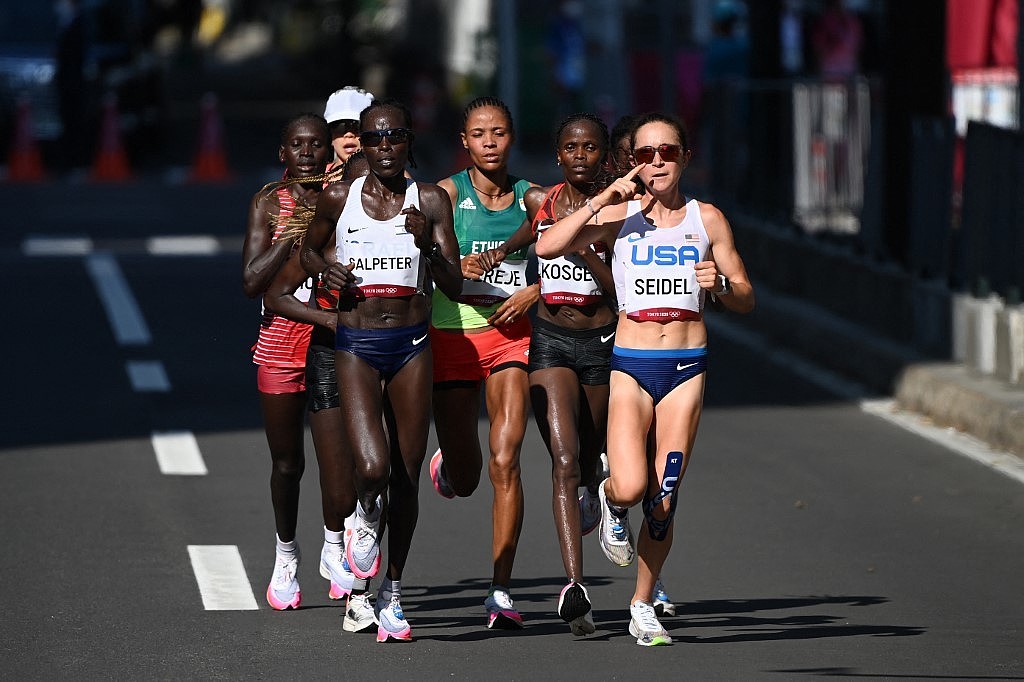
Molly Seidel Shocks the World With Bronze Medal, as Kenya’s Peres Jepchirchir and Brigid Kogei Go 1-2 in 2020 Olympic Marathon
In one of the most remarkable and unlikely runs ever by an American distance runner, Wisconsin native Molly Seidel earned a bronze medal in the 2020 Tokyo Olympic marathon, running 2:27:46 in the heat of Sapporo on Saturday morning. Seidel established herself near the front of the race early, and remained there throughout. Late in the race, Seidel was in a battle for bronze with Israel’s Lonah Chemtai Salpeter, but with three miles to go, Salpeter stopped running, leaving Seidel in bronze-medal position, which she protected to the finish line.
Kenya’s Peres Jepchirchir, the world record holder in the women’s-only half marathon, pulled away from teammate Brigid Kosgei, the marathon world record holder, in the final two kilometers to take the gold in 2:27:20. Kosgei settled for the silver in 2:27:36, her first loss in her her last five marathons.
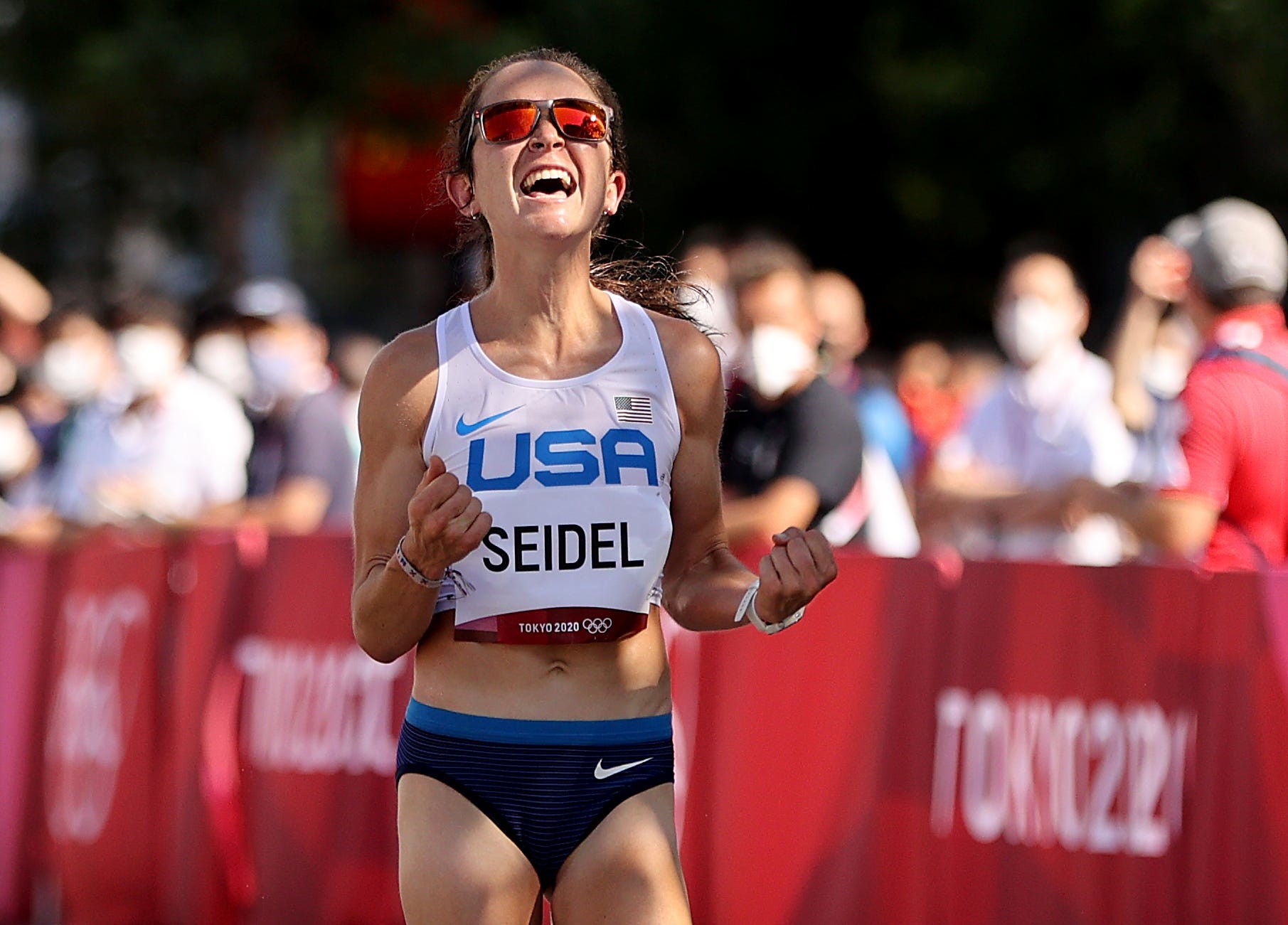
The story for American distance running fans was Seidel, running in only her third marathon of her life (her first was the Olympic Trials marathon in 2020 to get here). Seidel beat five sub-2:20 women. She entered the race with a 2:25:13 personal best and yet was in the conversation for the gold until the final 2k. She joined American running legends Joan Benoit Samuelson (gold in 1984) and Deena Kastor (silver in 2004), as the only American women to medal in the Olympic marathon.
The race
At race time, it was sunny and 76 degrees with 87% humidity, despite the race being moved up an hour because of the heat to start at 6 a.m. local.
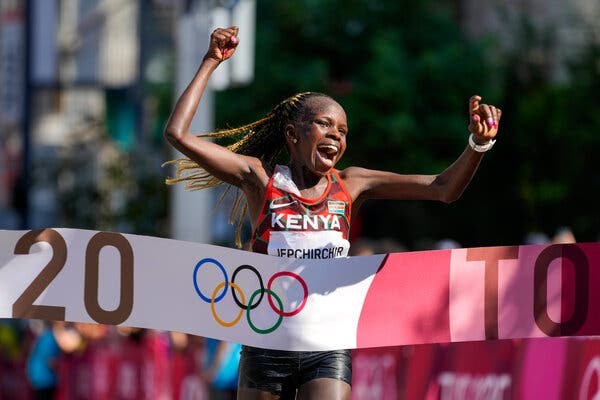
As a result, the race went out slow, with 5K and 10K splits of 18:02 and 36:16 for the leaders (2:32:50 marathon pace at 10K). The lead pack remained about 40 or 50 women strong at the 10-kilometer split, but the effect of the heat was unmistakable, with women applying ice bags on themselves and running wide to get into the shade. By this point, US champion Aliphine Tuliamuk had fallen off the pace (she would eventually drop out).
From there, as the race advanced north on a slight downhill, it picked up. Honami Maeda of Japan took a few turns at the front, as did Americans Seidel and Sally Kipyego, but it was mostly shared. The next two 5K splits (17:31 and 17:41) were quicker and reduced the lead pack to less than 20 women by 20K. Zeineba Yimer, a 2:19 woman from Ethiopia, dropped out at the 17K mark.
The lead group went through halfway in 1:15:14, and the lead group was whittled down to 11 with Ethiopian contender Birhane Dibaba falling off the back.
Americans Seidel and Kipyego remained in the lead pack of 12 at 25K (Volha Mazuronak of Belarus rejoined the lead pack between halfway and 25k), which the women went through in 1:28:51 (2:29:47 pace). Ethiopian Roza Dereje Bekele (2:18:30 pb) and Salpeter (2:17:45 pb), along with the three Kenyans, were pushing the tempo slightly.
After that split, as the women continued to weave through the north Sapporo suburbs and Hokkaido University, racers started dropping off the lead pack like flies: first Kipyego, then Mazuronak and then a big casualty — Ruth Chepngetich of Kenya, the reigning world champ, falling back around the 29K mark.
Meanwhile at the front, Seidel led the entire 18th mile in around 5:26. The lead group of nine went through 30K in 1:46:03 (17:12 previous 5K, quickest of the race). The Japanese spectators pulled for their countrywoman Mao Ichiyama, who was still there.
The 30-35K split was the quickest of the race (16:54) and those five kilometers caused the biggest carnage: four women, including Ichiyama and Dereje, the final Ethiopian, dropped off the lead pack.
Now with the group down to five and less than five miles remaining, and Seidel continuing to run with confidence and share the lead with the two remaining Kenyans, the curiosity surrounding Seidel turned into a real possibility…could she snag a medal?
Bahrain’s Eunice Chumba dropped off just after the 35K mark, making it a four-woman race for three medals: Kosgei, Jepchirchir, Salpeter, and Seidel. Women with personal bests of 2:14, 2:17, 2:17, and 2:25. But in the summer Japan heat, the strongest women would win, not the fastest.
In the 24th mile, the Kenyans finally struck, Jepchirchir throwing in a surge and Kosgei covering it. They opened up a small gap on Salpeter and Seidel immediately, and Salpeter had a few meters on Seidel.Before one even had time to process whether Seidel’s fairytale quest for a medal was coming to an end, her fortunes changed drastically. At the 38-kilometer mark, Seidel caught Salpeter, who was still less than five seconds behind the leaders, but slowing slightly. Salpeter, however, was broken. Within a span of seconds she slowed to a walk and Seidel was into the bronze position, with the leaders still in her sights, Jepchirchir in front and Kosgei sitting on her.
At 40k, Jepchirchir and Kosgei were still together with Seidel only six seconds back, 31 seconds ahead of fourth place, comfortably in bronze position, barring a blowup. Seidel appeared to be closing on the leaders. Could she even get the silver or the gold?
Not quite. Jepchirchir had one final gold-medal move, dropping Kosgei just after the 40K split and quickly opening a 10-second gap. She would extend her winning margin to 16 seconds by running the final 2.195 kilometers at 5:23 pace.
Kosgei was fading slightly but so was Seidel. Both held their positions through the line, as Seidel could not quite summon the finish to get back to Kosgei and finished 10 seconds behind her in the bronze medal position.
Seidel yelled in delight as she crossed the finish line, while Kosgei looked slightly disappointed with the silver. The third American, Sally Kipyego, finished 17th in 2:32:53.
The temperature at the finish was 84 degrees with 67% humidity.
Login to leave a comment

Tokyo 2020 Olympic Games
Fifty-six years after having organized the Olympic Games, the Japanese capital will be hosting a Summer edition for the second time, originally scheduled from July 24 to August 9, 2020, the games were postponed due to coronavirus outbreak, the postponed Tokyo Olympics will be held from July 23 to August 8 in 2021, according to the International Olympic Committee decision. ...
more...
New research shows that you may prevent age-related decline in your race times with consistency and motivation
No matter how long you’ve been running and how many miles you log each week, it’s not uncommon to see your race times start to slow as you age. However, runners who can finish a marathon in under three hours showed reduced age-related decline in performance, according to a new study in Frontiers in Physiology.
The question on all of our minds: Do these findings apply to those of us who aren’t lining up in at the front of the field?
Researchers analyzed the marathon performances of 40 runners who have hit that sub-3 mark in five consecutive decades. The group consisted of 39 men and one woman, 1984 Olympic gold medal winner Joan Benoit Samuelson.
The researchers concluded that, with consistent training and racing regimens, it is possible to limit significant performance drops, at least until age 60. And although Samuelson was the only woman in the study—she’s the only woman to have achieved this mark, after all—Lepers said there’s no reason the results should not be true for female runners in general.
“The takeaway message could be that it is possible to limit the age-related decline in performance to less than 6 percent per decade, at least between 35 to 60 years old, if you keep training hard and stay motivated for that,” study co-author Romuald Lepers, Ph.D., a professor at the Université de Bourgogne-Franche Comté in France, told Runner’s World.
While the researchers still need to learn more about the running economy, specific training regimens, and recovery time of these top runners that make their performance so unique, Lepers believes their motivation is at the heart of their achievements.
“In the end, it all comes down to motivation. No one can perform at a top level without the motivation to train and race hard. They might be chasing personal records, or maybe world records. But they need very high motivation,” he told Podium Runner.
In terms of whether the results might also hold for runners with slower race times—say, a sub-4 marathon—Lepers said too many people are in that category to perform a full study. However, he would expect that whatever level you might be at as a runner, keeping your training volume and intensity strong could limit age-related decline in performance to less than 10 percent per decade.
by Runner´s World
Login to leave a comment
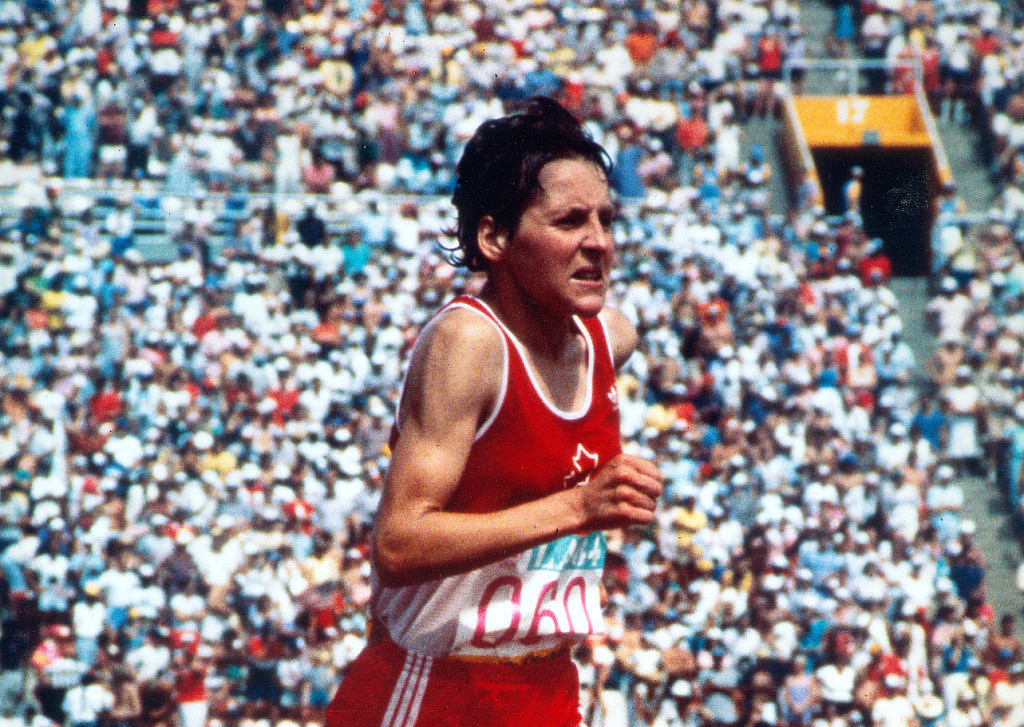
At the Los Angeles Games 36 years ago, Canadian Silvia Ruegger finished in eighth in the first-ever women's Olympic marathon
On August 5, 1984, the inaugural women’s Olympic marathon was held in Los Angeles. Fifty runners lined up for the 42.2K run and American Joan Benoit-Samuelson took the win in 2:24:52, grabbing the first Olympic gold in women’s marathon history. Three Canadians raced that day 36 years ago in L.A., including marathon legend and former national record-holder Silvia Ruegger. Ruegger finished in eighth place on the day, running to a 2:29:09 top-10 finish. That was the sole Olympic race of Ruegger’s career, and since then, no Canadian — male or female — has finished in a higher position in the Olympic marathon.
Women’s marathoning through the years
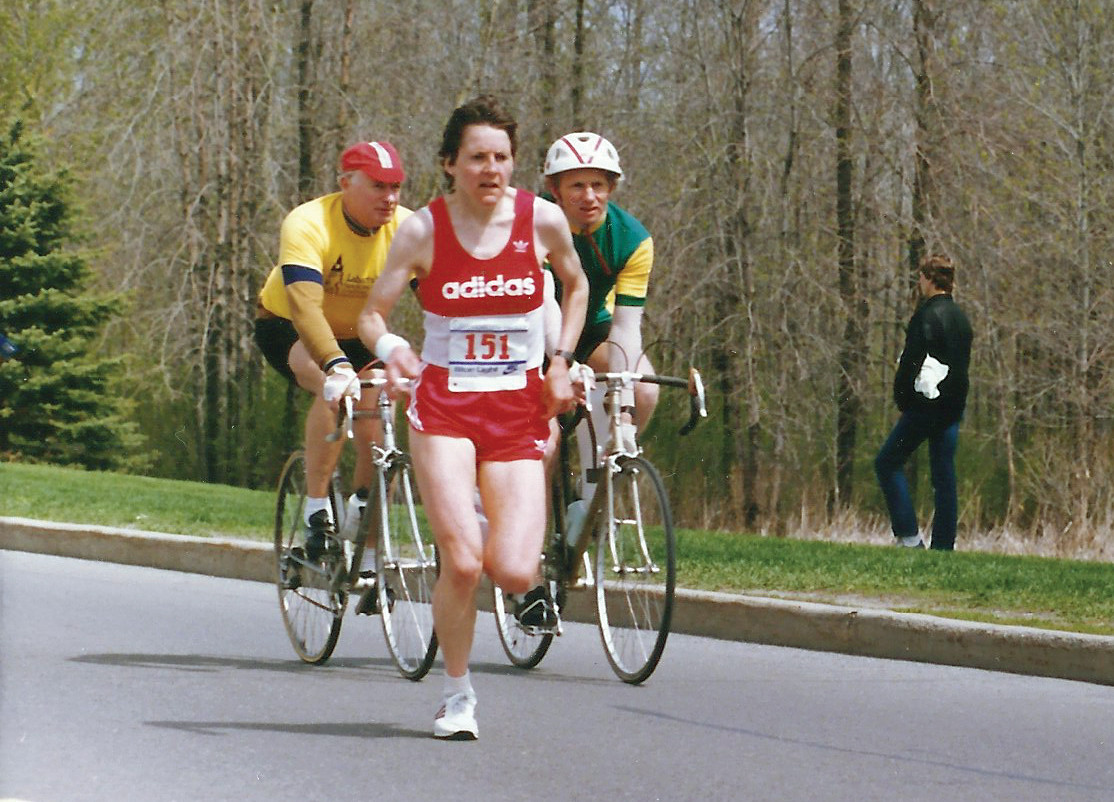
Benoit-Samuelson won the race in L.A. in impressive fashion, beating silver medallist Grete Waitz of Norway by more than a minute to take the gold on home soil. Going into the race, Benoit-Samuelson was a two-time Boston Marathon champion, and a year later, she won the Chicago Marathon and set an American record in the process. Her time of 2:21:21 stood as the national marathon record until 2006, when Deena Kastor beat it at the London Marathon. Benoit-Samuelson is still the fourth-fastest woman marathoner in U.S. history.
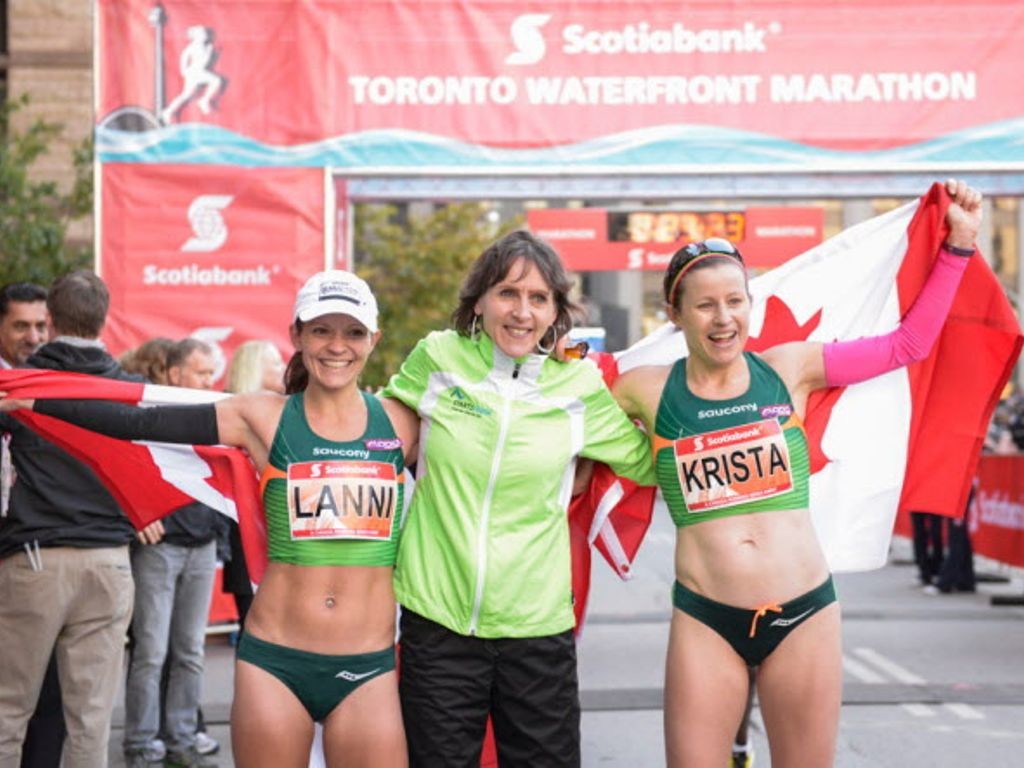
The women’s marathon has come a long way since its introduction to the Olympics in 1984. At the time, the world record was 2:24:26, set by Ingrid Kristiansen of Norway (who finished in fourth in L.A.). Today, 36 years later, that record has been lowered by 10 minutes, and it currently sits at 2:14:04 following Brigid Kosgei‘s dominant performance at the 2019 Chicago Marathon.
Canadians at the 1984 Games
Ruegger qualified for the Olympics at the 1984 Ottawa Marathon, which she won in a Canadian record of 2:30:37. She broke that record just a few months later in L.A., becoming the first Canadian woman to dip below 2:30 in the marathon. Ruegger raced alongside fellow Canadians Jacqueline Gareau (1980 Boston Marathon champion and the previous national record-holder before Ruegger won the Ottawa Marathon) and Anne Marie Malone. Gareau didn’t finish the race in L.A., but Malone recorded an impressive result to follow Ruegger’s, finishing in 17th place with a final time of 2:36:33.
The following year at the 1985 Houston Marathon, Ruegger beat her record yet again, posting a 2:28:36. This remained the Canadian record for almost 30 years before it was broken in 2013 at the Scotiabank Toronto Waterfront Marathon by both Lanni Marchant and Krista DuChene. A car accident following her record in 1985 left Ruegger to deal with injuries for the rest of her career, and she never returned to her previous record-setting form. Ruegger passed away in August 2019 at the age of 58 after a battle with cancer, but she remains one of the greatest athletes in Canadian history.
by Ben Snider-McGrath
Login to leave a comment
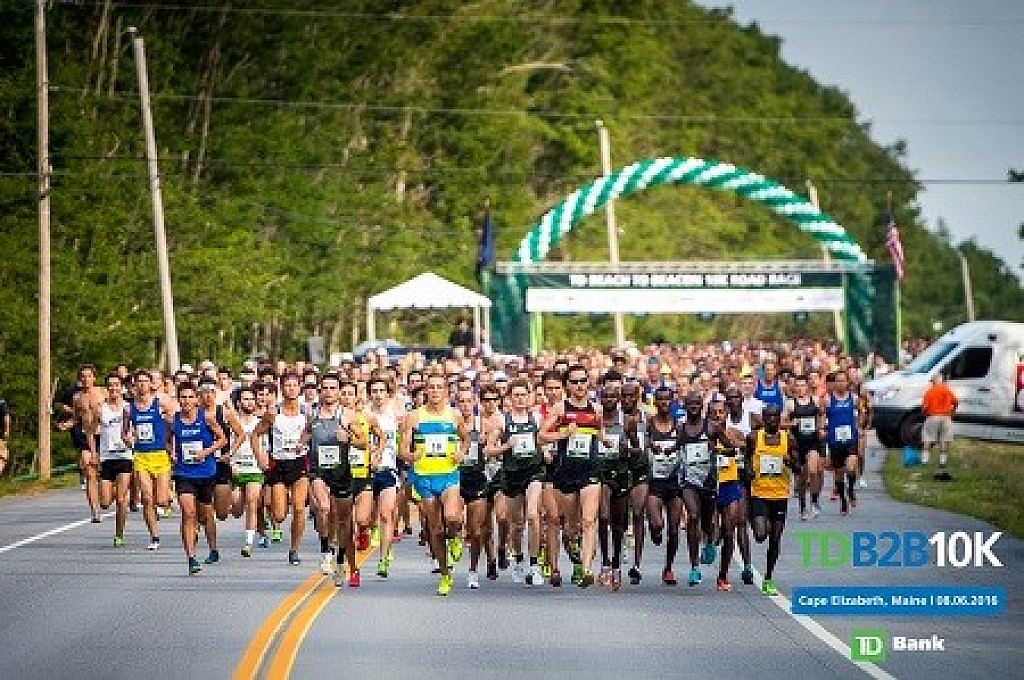
Beach to Beacon 10K Road Race has been Cancelled for 2020 with Refunds for all Participants
Due to ongoing concerns regarding the impact of COVID-19, and recent guidelines announced by the Maine Governor’s office, the board of directors of the TD Beach to Beacon 10K road race voted on Tuesday to cancel the 2020 race scheduled for August 1.
“COVID-19 and its impact on our state, the nation, and the world is unprecedented and after significant review and in partnership with our medical partners we have made this very difficult decision. We know this will be disappointing for those of us who look forward to the race each year but the health and safety of our runners, volunteers, spectators, staff, and community remains paramount,” said David Backer, President of the TD Beach to Beacon 10K.
The $55 race entry fees will be automatically refunded to all registered runners over the coming weeks. Additionally, given demand for registration, race organizers have announced that all 2020 registrants will have an opportunity for early entry into the 2021 race. Race organizers will release details about the early entry process when finalized.
The 2020 race beneficiary, JMG, will remain the beneficiary for the 23rd running which will be held, as is tradition, on the first Saturday in August of 2021.
“This has been a heartbreaking decision for all of us but is the right and only decision to be made at this time of uncertainty and unknowns”, said Joan Benoit Samuelson, Race Founder and Olympic gold medalist. “The TD Beach to Beacon 10K will return next year, consistent with the enduring nature of our sport, team and community.”
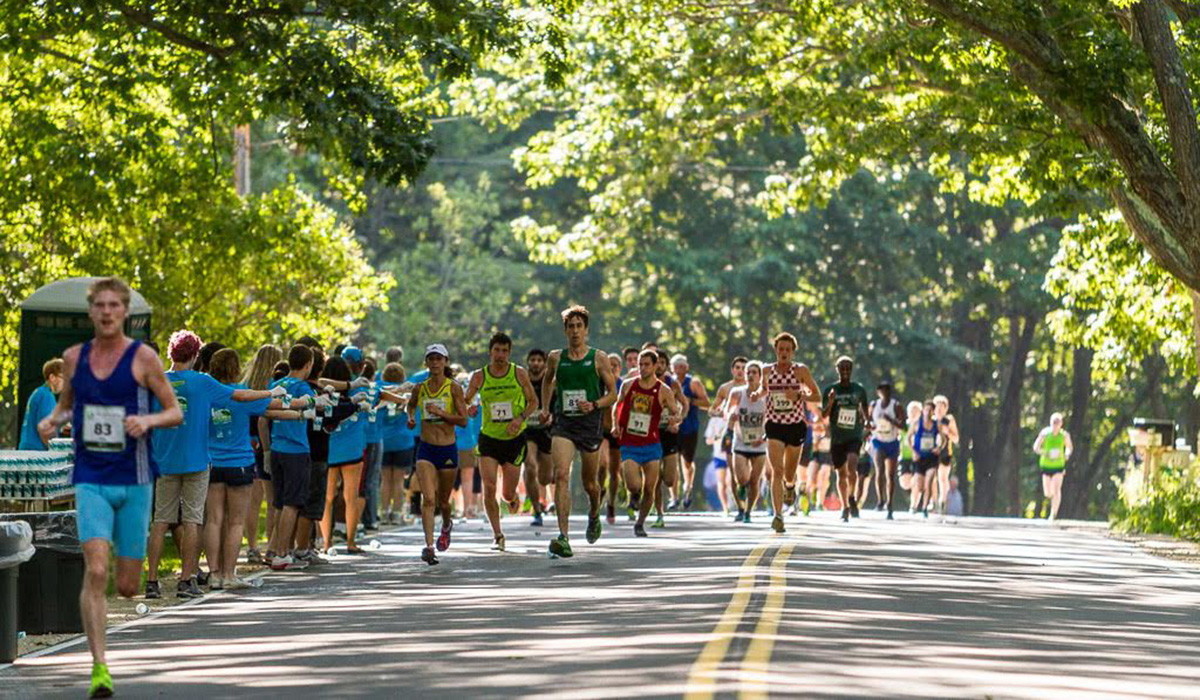
Samuelson continued, “As we run apart, we gain new strengths and appreciation for those who keep pace with us in our daily lives, especially those who have been on the frontlines of this pandemic with selfless endurance and courage.”
Race organizers will share updates in the coming weeks on plans for how the TD Beach to Beacon 10K community can stay connected during this time.
Login to leave a comment
TD Beach to Beacon 10K
Joan Benoit Samuelson, a native of Cape Elizabeth, Maine, won the first-ever women's Marathon at the 1984 Olympics in Los Angeles and is founder and chair of the TD Bank Beach to Beacon 10K. "A long time dream of mine has been realized" says Samuelson. "I've always wanted to create a race that brings runners to some of my most...
more...
The Runner Statue-COVID-19 Mask Movement
Over the weekend, famous runner statues from Boston to Boulder donned a new look to support solidarity in slowing the coronavirus.
Runners are among the healthiest people. We prize and appreciate our good fortune, and want to encourage the same in others. We’d like everyone to be health—to follow federal guidelines, both for exercise and for disease prevention.
That was the thinking behind the Runner Statue-COVID-19 Mask movement. It began Saturday morning in Mystic, CT. By Sunday afternoon, it had spread to Cape Elizabeth, Maine, Hopkinton, Massachusetts, Central Park in New York City, Davenport, Iowa, and Boulder, Colorado.
In each location, a well-known runner statue is now wearing a low-tech protective face mask. The message: Do your part to prevent the spread of COVID-19.
The Boston Marathon course has three such mask-wearing statues. In Hopkinton, “The Starter” George V. Brown wears a mask immediately adjacent to the Boston Marathon start line. Nearby, the statue of Rick and Dick Hoyt shows off their colorful masks.
Near the Marathon’s 19-mile mark in Newton, the double statue of “Old John” Kelley and his younger self shows them both wearing bandanna masks. These were fashioned by Ray Charbonneau from recycled road race t-shirts.
Born on a Morning Run
The story starts, like many, with a morning run. On Saturday morning, my wife, Cristina, and I met my brother, Gary, for an easy 3-mile jog on the banks of the meandering Mystic River in Connecticut. We had barely begun when Gary said, “You know what might be cool—to put a COVID mask on the Kelley statue.”
Mystics’s statue of John J. Kelley, 1957 Boston Marathon winner, has been a favorite local landmark for about five years now. It has a sparkling location in a tiny parklet that overlooks Mystic Pizza, made famous by the 1988 Julia Roberts movie. Before our biggest annual road races, Kelley is often attired in that’s year’s t-shirt.
Gary’s idea seemed so perfect that Cristina and I rushed home post-run to complete the mask project. To be honest, I merely “supervised,” since I have no sewing or crafting skills. Fortunately, Cristina is one of those creative types. She was even smart enough to realize that a statue mask would have to be larger than the bright masks she had already turned out for family members. Most statues are literally larger than life.
We rushed back to downtown Mystic to give Kel’ his new facemask. It was made of green shamrock material to honor his Irish roots. No one asked what we were doing, though several families strolled by and gave us an enthusiastic “thumbs up.”
Back home a few minutes later, I was ready for a nap. Then it hit me. I knew of a half-dozen other runner statues, and I knew runners who lived in those communities. What if I could get all those statues to wear covid masks?
Idea Runs Across the Country
Honestly, it took little effort on my part. A handful of friends, both new and old, “ran” with the suggestion. In Central Park and Cape Elizabeth, police quickly descended on my mask-placing co-conspirators. Moments later, having heard an explanation for the masks, the very same officers volunteered to help.
My buddy in Cape Elizabeth needed it. Marty Clark was struggling on crutches to give Joan Benoit Samuelson a facelift. Now we’ll let you in on one of Joanie’s secrets: She has no ears. (Makes you more aerodynamic.) Or maybe she just has hair over her ears. In both Cape Elizabeth and Davenport, IA, where the Bix-7 has erected statues of Samuelson and Bill Rodgers, my friends had trouble keeping the mask in place.
But Bix race director Michelle Juehring persisted until she achieved success. “I love the solidarity of this project—the way it says we’re all in this together,” she observed.
Rodgers was a big fan from the get-go. “I’m so glad to be wearing a mask next to Joan Samuelson in Davenport,” he said. “If others see us, and then they wear a mask also, we’re going to beat this disease in America.
At Central Park’s reservoir, thronged with walkers and runners, a socially-distanced crowd gathered around the Fred Lebow statue. When the onlookers realized what was going on, they broke into applause. “I was stunned,” said Scott Lange, who once worked for Lebow at New York Road Runners.
In Boulder, Rich Castro got a mask onto Frank Shorter only a couple of hours after we began with Kelley in Connecticut. Castro had already worn a mask around town on his morning errands. “I hope more people help us spread the message,” he said. “There are too many nonbelievers around.”
Shorter concurred. “Any and all expressions of solidarity are a good thing,” he said.
In Hopkinton, where the Boston Marathon begins, Tim Kilduff found a talented high schooler, Emily Karp, to make masks and corralled a Hopkinton Board of Selectmen member (John Coutinho) and photographer (Bruce MacDonald) for the effort. Today, Monday April 6, this team plans to mask 1946 Boston winner Stylianos Kyriakides at the marathon’s 1-mile mark. (Look hereto see why this requires a special effort.)
“This has been fun,” Kilduff said. “It’s a good thing. I think it might really catch on.”
by Amby Burfoot (Podium Runner)
Login to leave a comment
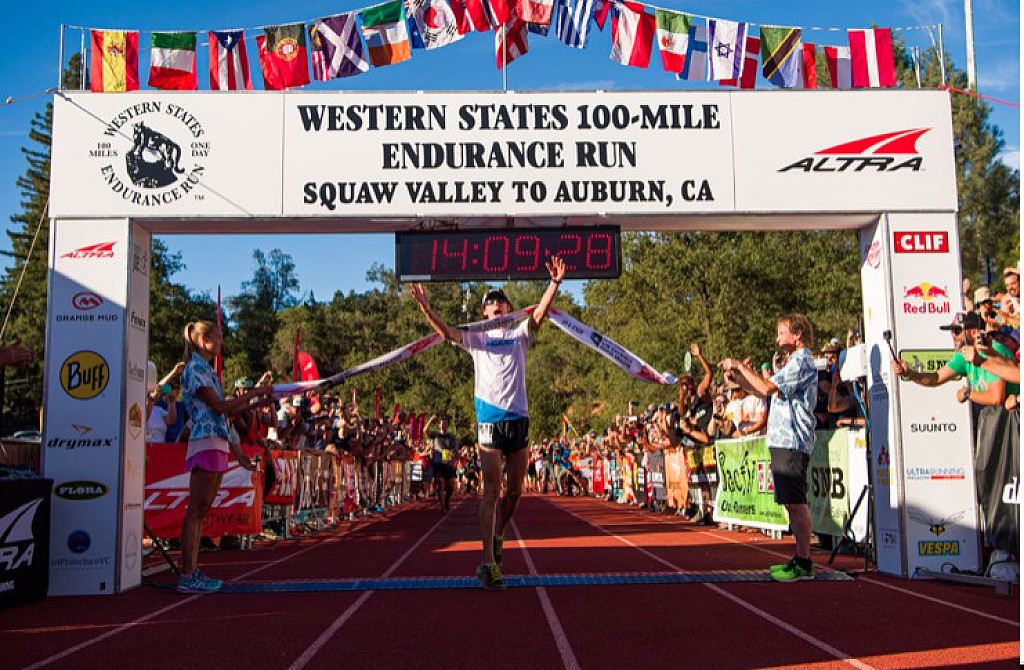
15 Mind-Blowing Race Moments From 2019-From Kipchoge to Kosgei and all of the upsets, records, and victories in between, 2019 was a major year for running.
1-Kosgei Shocks Everyone in Chicago-On October 13, Brigid Kosgei made history when she won the Chicago Marathon in 2:14:04. The Kenyan ran almost perfectly even splits to achieve her goal in the Windy City, passing the halfway mark in 1:06:59 before clocking 1:07:05 for the second half.
2-Eliud Kipchoge Dips Under 2-Hour Marathon Barrier-In his second attempt at breaking the two-hour barrier in the marathon, Eliud Kipchogeof Kenya accomplished the feat with a stunning run of 1:59:40 on the streets of Vienna in October.
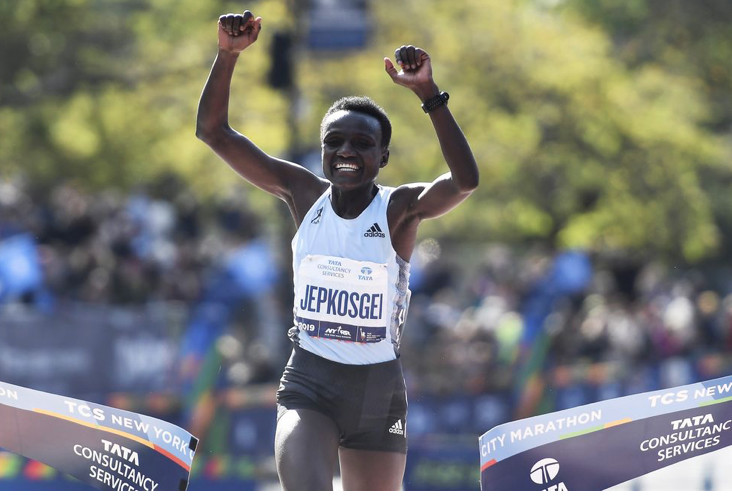
3-Joan Samuelson Crushes Her Goal 40 Years After Boston Victory-In 1979, Joan Benoit Samuelson set a national and course record when she won the Boston Marathon as a 21-year-old college student. Forty years after her historic victory, Samuelson, 61, set out to run within 40 minutes of her winning time at the 2019 Boston Marathon. On April 15, the 1984 Olympic champion wore a similar Bowdoin College singlet to honor her 1979 win and shattered her goal, crossing the finish line in 3:04. “To be here, 40 years later and being able to run, let alone being able to run a marathon, I feel blessed,” she said.
4-Jim Walmsley Obliterates His Own Western States Record-Ultrarunning star Jim Walmsley maintained his Western States winning streak when he obliterated his own course record in June. Navigating 100 miles from Squaw Valley to Auburn, California, Walmsley broke the tape in 14 hours and 9 minutes, which broke his own course record by more than 20 minutes
5-Donavan Brazier Breaks 34-Year-Old American Record-Donavan Brazier had the race of his life when he broke one of the oldest American records on his way to winning gold in the 800 meters at the IAAF World Championshipsin Doha, Qatar. With 250-meters to go, Brazier ran away from the field to secure the first 800-meter world championship gold medal for the United States in a time of 1:42.34.
6-Dalilah Muhammad Sets World Record Twice-Dalilah Muhammad made history twice this season when she broke the 400-meter hurdles world record and lowered it once again on her way to winning the world championships.
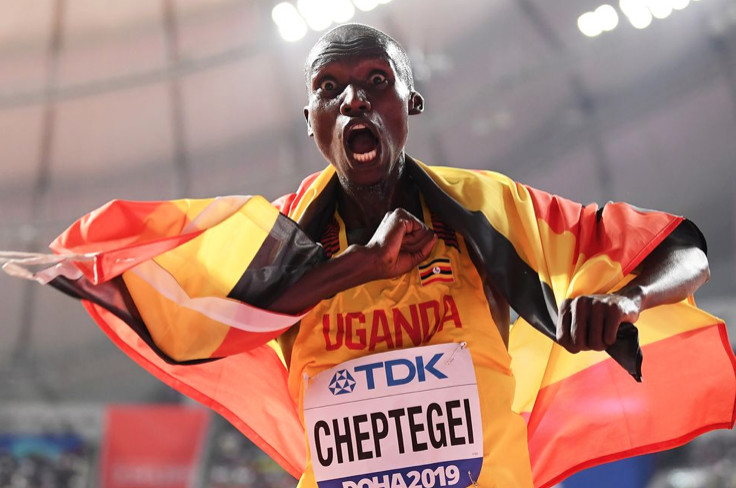
7-Sifan Hassan Wins Unprecedented Double at Worlds-At the IAAF World Championships in Doha, Sifan Hassan won two gold medals that no man or woman has achieved in the history of the world championships or Olympic Games. The Dutch runner, 26, kicked off the competition by winning the 10,000-meter final in a national record time of 30:17:33.
8-Maggie Guterl Becomes First Woman to Win Backyard Ultra-For 60 hours straight, Maggie Guterl ran the same 4.2-mile trail loop to become the last runner standing in the Big’s Backyard Ultra race. The Durango, Colorado, native ran 250 miles on her way to becoming the first woman to win the brutal race that rewards the person who can run for the longest amount of time.
9-Geoffrey Kamworor Breaks Half Marathon World Record-Holding a 4:25-mile pace, Geoffrey Kamworor of Kenya shattered the world record at the Copenhagen Half Marathon in September, running 58:01. The performance, which was 17 seconds faster than the previous record, took place in the same city where the 26-year-old won his first of three half marathon world championship titles in 2014.
10-Joyciline Jepkosgei Debuts in NYC Marathon, Beats Mary Keitany-In her first marathon, Joyciline Jepkosgei of Kenya secured a title in a major upset. The half marathon world record-holder raced like a veteran in the New York City Marathonto beat four-time champion Mary Keitany in a winning time of 2:22:38, only seven seconds shy of the course record.
11-Kenenisa Bekele Wins Berlin Marathon 2 Seconds Shy of World Record-One year after Eliud Kipchoge set a world record that many believed would be untouchable for at least a few years, Kenenisa Bekele nearly surpassed it at the Berlin Marathon. The 37-year-old Ethiopian won the race in 2:01:41, just two seconds shy of Kipchoge’s record.
12-Freshman Sha’Carri Richardson Shatters 100-meter Collegiate Record-In her first ever NCAA Outdoor Championship, Sha’Carri Richardson made history. In the 100-meter final, the LSU freshman sprinted to victory in a collegiate record of 10.75.
13-Drew Hunter, Athing Mu, and Colleen Quigley Win First Pro Titles-The USATF Indoor Championships brought out exciting breakthroughs for three young athletes. In the men’s 2-mile, 21-year-old Drew Hunter won the crown out of the “slower” heat by running a world-best time of 8:25.29. The women’s 600 meters was won by 16-year-old Athing Mu who defeated world silver medalist Raevyn Rogers in an American record time of 1:23.57.
14-BYU Snaps NAU’s Winning Streak at the NCAA Cross Country Championships-The Brigham Young team had a banner day at the NCAA Cross Country Championshipsin November. Battling muddy conditions, the BYU Cougars secured the team victory over three-time defending champions Northern Arizona in the men’s race. With a team total of 109 points, BYU beat NAU by 54 points to win the program’s first NCAA cross-country championship in history.
15-Joshua Cheptegei Sets 10K World Record After Winning Two World Titles-Joshua Cheptegei of Uganda capped off a banner year when he set a world record in the 10K on December 1, running 26:38 to win the 10K Valencia Trinidad Alfonso in Valencia, Spain. Earlier this year, he won the world cross-country championships and the world championship 10,000 meters in Doha, Qatar.
by Runner’s World
Login to leave a comment
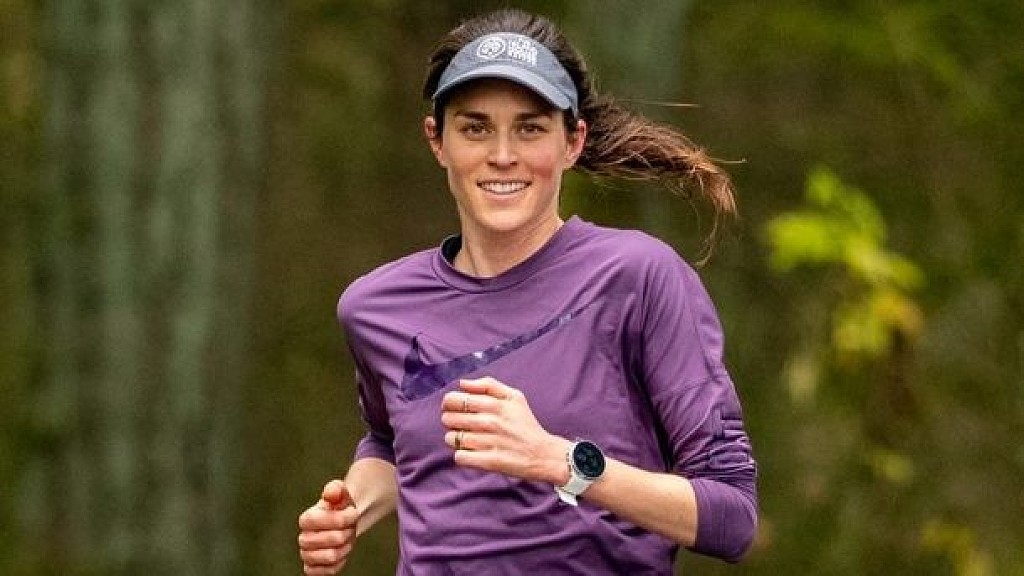
Gwen Jorgensen announces move to track for 2020
The 2020 US. Olympic Marathon Trials on Feb. 29 were marked on Gwen Jorgensen’s calendar since her Nov. 2017 announcement that she was leaving the triathlon to pursue running full time in hopes of winning the 2020 Olympic gold medal in the marathon.
But now, less than three months out from the event, Jorgensen announced that she will not run the U.S. Olympic Marathon Trials and instead focus on making the U.S. team for the Summer Games on the track in the 10,000 meters.
“It’s a multitude of emotions,” Jorgensen, 33, says. “I’m disappointed. At the same time, I’m also excited. I’m at a point where I’m running 70 miles per week and training is going well. I just know that if I went to the trials, running 70 miles per week, I’d be hoping that I made a team. That’s not what I want to do at an Olympic Trials.
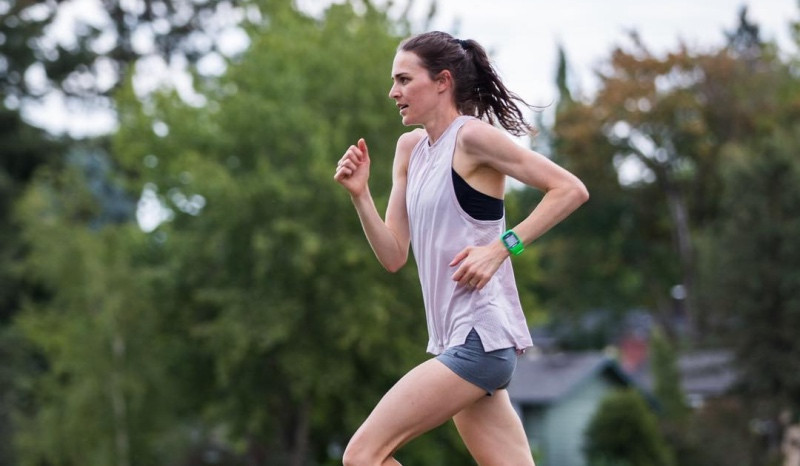
I want to go in confident and knowing that I have the ability to make a team. My goals in the marathon aren’t changing. My timeline is.”
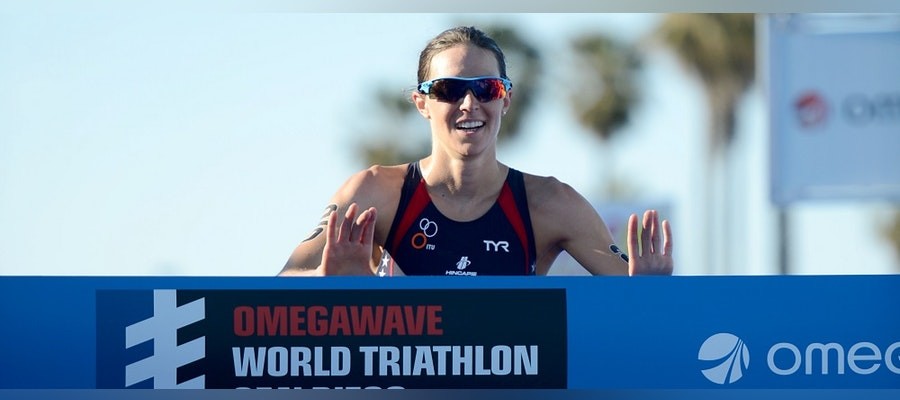
Heel surgery forced Jorgensen, who converted to distance running after winning the Rio Olympic triathlon, to pass up the Feb. 29 U.S. Olympic Marathon Trials and focus on the track and field trials in June in the 10,000m and, probably, the 5000m.
She made the decision after recent talks with her coach, Jerry Schumacher, following a difficult recovery from late May surgery to correct Haglund’s deformity.
“I could get bent out of shape and sad about it, but at the end of the day, I’m excited because I know this path that I’m on will not only be a successful route, but I also think it will lead to success long term in the marathon," she says. "I’m confident in my abilities on the track."
Jorgensen’s goal was a lofty one from the onset. No American woman has won gold in the marathon at the Olympics since Joan Benoit Samuelson’s victory in the 1984 inaugural running. The 2020 trials, where the top three finishers qualify for Tokyo, are shaping up to be one of the most competitive races of the year, as American women’s distance running is at its highest level with recent World Marathon Major victories by Shalane Flanagan at the 2017 New York City Marathon and Desiree Linden at the 2018 Boston Marathon.
Even after giving birth to her son Stanley in Aug. 2017, Jorgensen could have returned to the triathlon and arguably been a contender to become the first woman to win back-to-back Olympic gold medals. But she and her family decided to move to Portland, Ore., and once settled there, Jorgensen signed a professional running contract with Nike and joined the Bowerman Track Club.
Jorgensen worked her way to the marathon by racing on the track in the spring of 2018 and ran a few U.S.A. Track and Field road race championships. She says her training went well, nailing all but one workout in 12 weeks. But in the three days before she was set to compete in the Chicago Marathon, Jorgesen battled a fever and underestimated the effects of running while sick. She finished in a disappointing 2:36:23 in her professional marathon debut.
Now fully healed, healthy and recovered, Jorgensen is working her way back to train with her Bowerman teammates. Her day sometimes includes a hill sprints, a track workout, pelvic floor therapist treatment, physical therapy exercises for her achilles and then an evening workout before returning to her family.
“I think it’s important not to be afraid when you need to admit that your goal needs to change,” Jorgensen says. “I’m not going to say that I’m failing because I still want to have my marathon goals, but the timeline has changed. It’s still important to have big goals and to share those goals. It holds everyone accountable.”
by Chris Cahvez
Login to leave a comment
2028 US Olympic Trials Marathon
Most countries around the world use a selection committee to choose their Olympic Team Members, but not the USA. Prior to 1968, a series of races were used to select the USA Olympic Marathon team, but beginning in 1968 the format was changed to a single race on a single day with the top three finishers selected to be part...
more...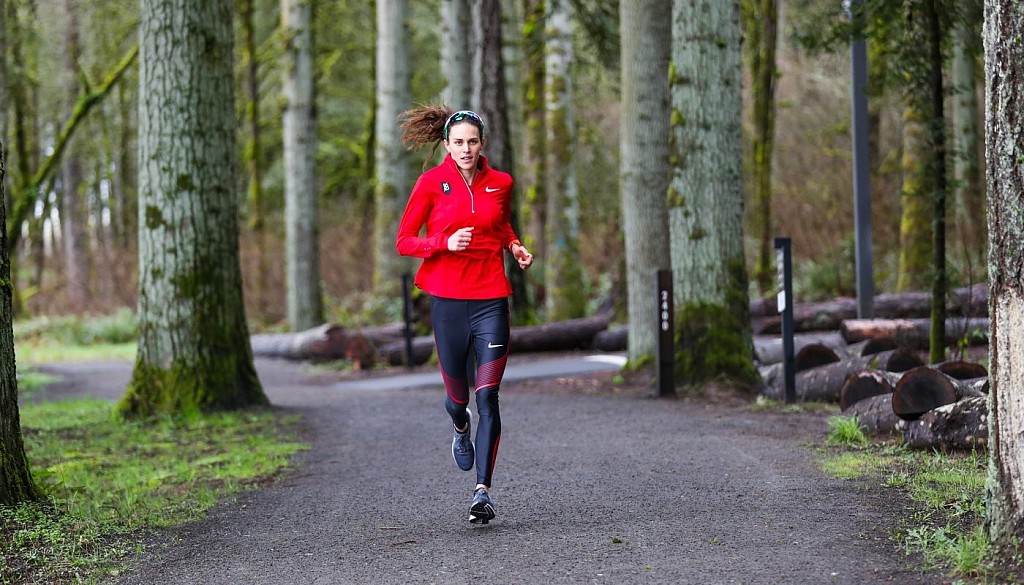
Gwen Jorgensen has set her sights on winning the gold medal in the marathon at the 2020 Olympic Games in Tokyo
Gwen Jorgensen knows how to attack a challenge.
The 33-year-old Waukesha native has set her sights on winning the gold medal in the marathon at the 2020 Olympic Games in Tokyo. She wanted a new goal after winning the triathlon at the 2016 Rio Games.
No American woman has claimed Olympic gold in the marathon since Joan Benoit Samuelson in 1984. Jorgensen is trying to do it two years after giving birth to her son and while dealing with a recent injury setback.
"It’s been an uphill battle, I’d say," Jorgensen said. "But one that I like. One of the reasons I switched sports, I wanted that challenge. I wanted something that keeps me motivated."
She had been bothered by pain in her right foot, especially after finishing 11th in the 2018 Chicago Marathon. Jorgensen was diagnosed with Haglund’s deformity.
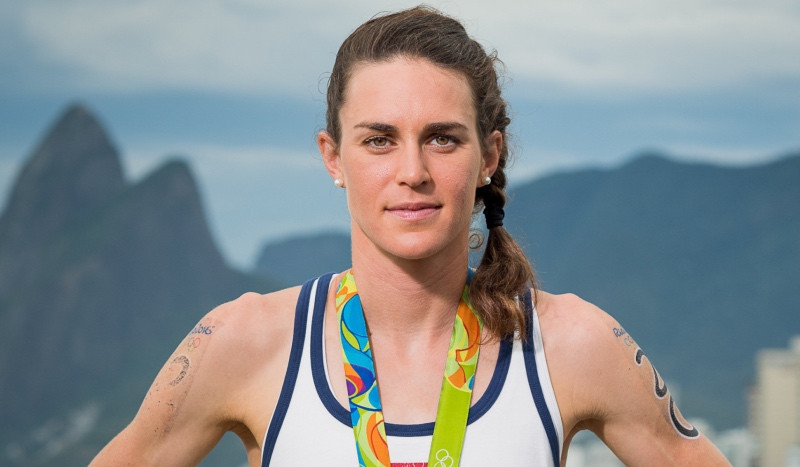
"It's basically a bone overgrowth in the heel," she said. "And then every time you take a step, the Achilles and the bursas and everything rub against the bone overgrowth. And it causes pain. It causes damages to those things."
Just putting on socks was excruciating. Jorgensen did everything to avoid surgery, including platelet-rich-plasma therapy, cortisone shots and changing her running form. But she finally went under the knife in May.
“For me that pain is gone, which is so good," Jorgensen said.
It's been a slow and steady comeback since then.
"I’ve been able to run a little bit now," Jorgensen said. "I would love to increase a ton but I’ve put a lot of time and energy into getting healthy and that’s my main goal right now."
She has gotten up to running 40 minutes every other day.
“That probably sounds like a lot for a lot of people," Jorgensen said. "But I’m used to an hour-and-a-half in the morning and an hour at night."
by Ben Steele
Login to leave a comment
Tokyo 2020 Olympic Games
Fifty-six years after having organized the Olympic Games, the Japanese capital will be hosting a Summer edition for the second time, originally scheduled from July 24 to August 9, 2020, the games were postponed due to coronavirus outbreak, the postponed Tokyo Olympics will be held from July 23 to August 8 in 2021, according to the International Olympic Committee decision. ...
more...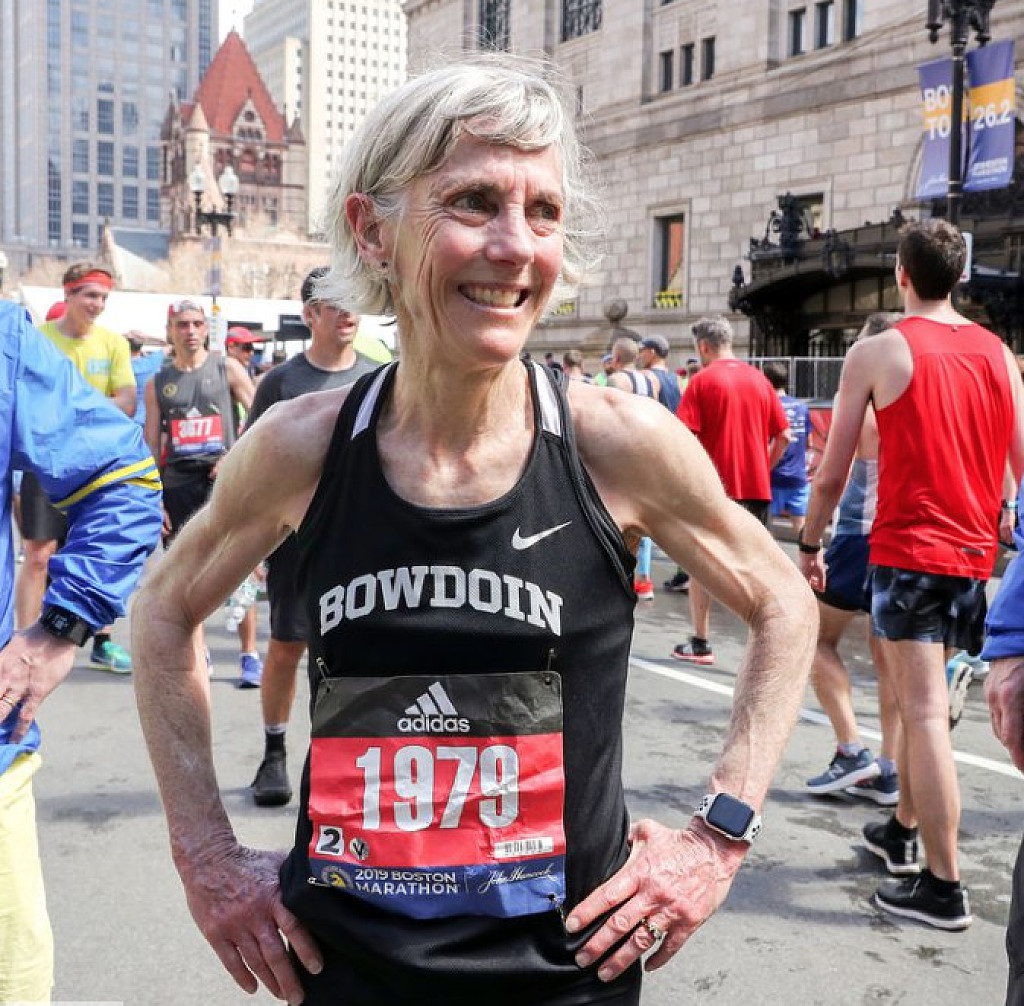
Joan Benoit Samuelson Is Aiming to Go Sub-3:00 in 2020
In a stack of running resumes, Joan Benoit Samuelson’s sticks out like a neon sign. The running legend, now 62, has won Boston twice (in 1979 and 1983), became the first woman to win gold at the first women’s Olympic marathon in 1984, and set the U.S. marathon record at the time (2:21:21 at the 1985 Chicago Marathon), which still ranks as the fifth-fastest time ever run by an American woman.
What she’s done beyond her prime, however, is really what sets her apart. Last year, at age 61, Samuelson completed the Chicago Marathon with her daughter, Abby, in 3:12:13, averaging 7:20 pace per mile.
Shortly after that race, she announced an ambitious goal for 2019: finishing Boston within 40 minutes of her winning time 40 years ago, when she broke the tape in 2:35:15 in 1979. Samuelson conquered that goal with plenty of room to spare in April, finishing Boston in an even 3:04—just a few minutes shy of the 60 to 64 age group marathon world record (3:01:30 set by Bernardine Portenski in 2010).
Samuelson, who holds the marathon world record for the 55 to 59 age group (2:50:33, which she set in Boston in 2013), has been eyeing her current age group record since last year. After narrowly missing it in Boston, she recently told the Quad City Times that she’ll attempt to break 3:00 at a spring marathon next year—most likely Tokyo on March 1, 2020, or London on April 26, 2020. If she accomplishes her goal, she will be a member of an elite class of runners who have gone sub-3:00 for six decades.
[Smash your goals with a Runner’s World Training Plan, designed for any speed and any distance.]
This won’t be the first age group wall Samuelson has attempted to bust down. At age 50, she placed 90th in the 2008 Olympic Trials, running 2:49:08. Then three years later, when she was 53, she set a record for her age by clocking 2:47:50 at the 2010 Chicago Marathon.
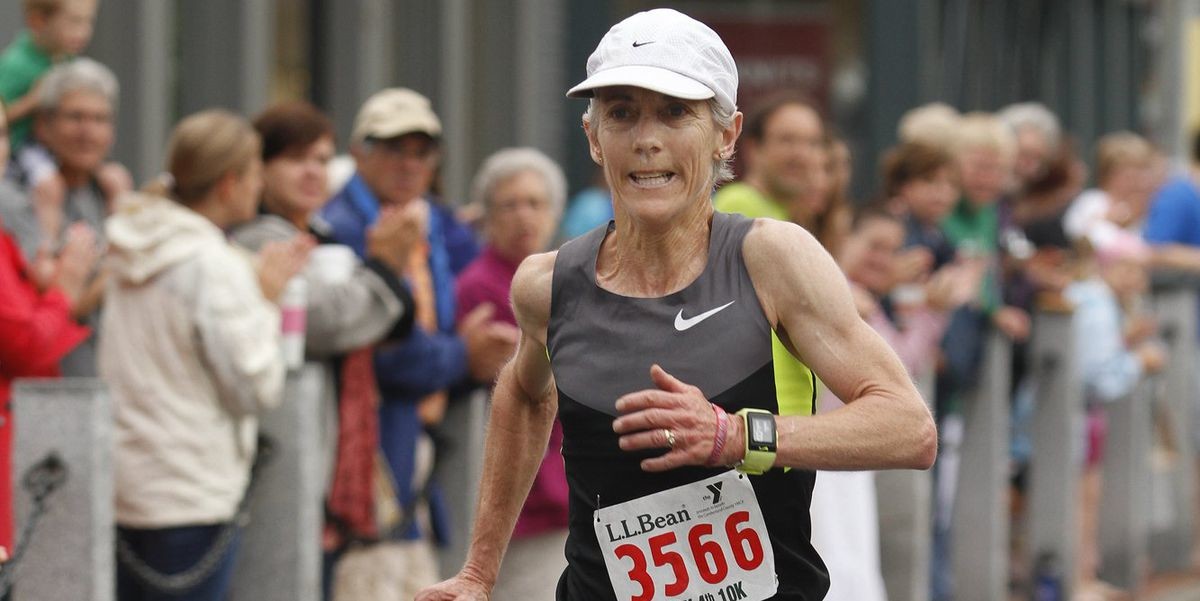
Though Samuelson has never been one to back down from a challenge, she’s not immune to the fact that staying healthy and springing back from injuries gets tougher with age. Despite entering Chicago with lofty aspirations in 2015 and 2017, she was forced to withdraw a few days before the race both years, due to a stomach bug and a knee injury, respectfully. In Boston this year, she competed on a strained calf muscle, she told Runner’s World after the race.
In order to duck under 3:00 in the marathon next year, she’ll need to be diligent—as all runners do—about injury prevention.
“I’m up against the aging process,” Samuelson told the Quad City Times. “I just need to stay injury-free. That’s a hard thing to do these days.”
by Hailey Middlebrook
Login to leave a comment
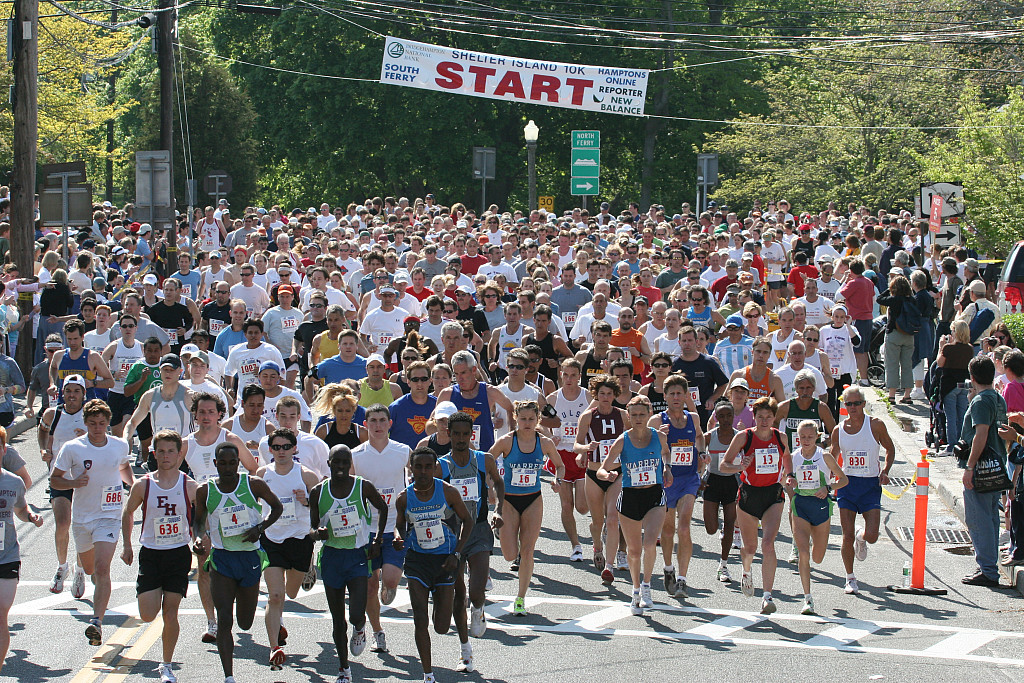
Shelter Island 10K is celebrating it's 40th year this weekend honoring some of the country's Best Runners
Over the course of 40 years, the Shelter Island 10K has stood out from the ever increasing number of summertime charity road races on the East End, and this year, as it marks a milestone, it will be even more special. Some of the biggest names in long-distance racing will be on hand, along with recreational runners of all ages and abilities, to commemorate the 40th year of the race, which raises money for several local charities.
The 10K and 5K run/walk are set for this Saturday, June 15, at 5:30 p.m. It promises to be as popular as ever, with 1,000 runners signed up to participate. The Shelter Island 10K is an event that has always paid homage to the history of road running and will certainly have the star power to prove it this weekend. The race always attracts top talent, with some of the best young Kenyan and Ethiopian runners making the trek to participate, but race organizers also made a special effort this year to honor older runners, many of whom were in the prime of their careers during the race’s inaugural season 39 years ago.
Some of them have become Shelter Island 10K regulars over the years, including former Olympian Bill Rodgers, a four-time winner of both the New York City and Boston marathons, and Joan Benoit Samuelson, an Olympic gold medalist and first-ever women’s Olympic marathon champion.
Veteran marathon runner George A. Hirsch, who is the chairman of the board of the New York Road Runners and previous publisher of Runner’s World, will also be on hand, along with Amby Burfoot, an author, motivational speaker and winner of the 1968 Boston Marathon.
Jon Sinclair and his wife, Kim Jones, are scheduled to attend, along with Keith Brantley. Sinclair is one of the winningest long-distance runners in the country’s history, and Jones is a former elite marathon runner.
New to the race this year will be Benji Durden and Kyle Heffner, and their presence is a nice homage to what was going on in the running world at the time the Shelter Island race was created. Heffner and Durden both qualified for the U.S. Olympic team in 1980 but were unable to compete at that year’s games in Moscow because of the U.S. boycott.
Race director Mary Ellen Adipietro said the tradition of honoring world-class runners has been part of the Shelter Island race since it was founded by Cliff Clark, John Strode and Jack Faith, who were all collegiate runners. Adipietro and her husband, Frank, continued and built on that tradition when she became the race director in 2000, taking over for longtime director Jimmy Richardson.
In keeping with the theme of honoring older runners, this year’s race will include a Masters category, with prize money for men and women in the 40-and-over age group. Anyone who finished the race in less than 40 minutes will receive a complimentary “I broke 40 at the 40th” T-shirt sponsored by Harry Hackett, of Merrill Lynch.
by Cailin Riley
Login to leave a comment

Shelter Island Run
This course has been ranked among the top ten most beautiful courses in the country by Runner’s World Magazine, with areas of the course that allow runners to peer over Dering Harbor, look out at the Orient Point Lighthouse and run through one of the most exclusive private communities in the country. The non-profit Shelter Island Run, Inc. founded in...
more...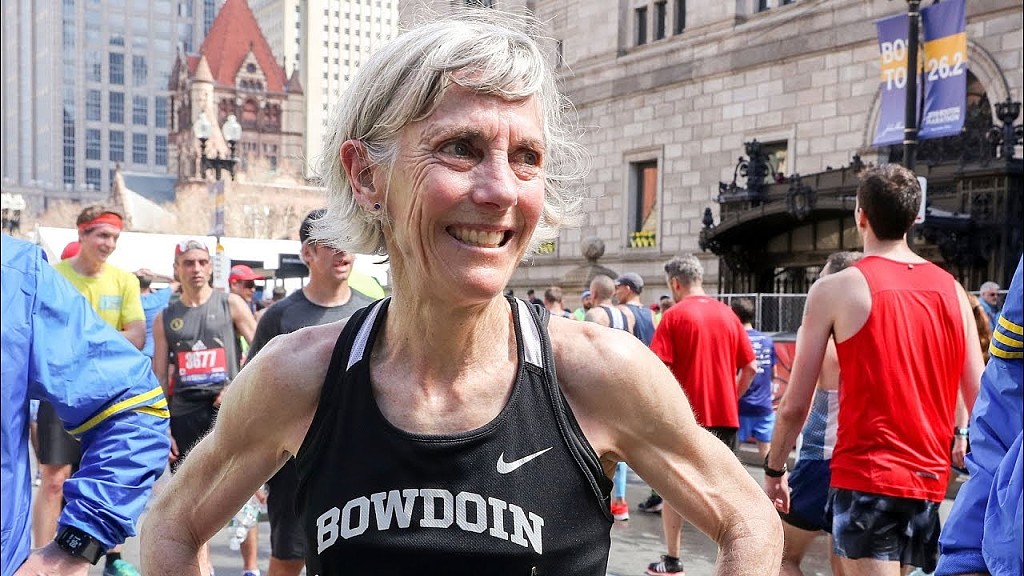
Joan Benoit Samuelson and Gene Dykes clocked outstanding times at this year's Boston Marathon
There were many outstanding performances at the 2019 Boston Marathon. Two that really stand out are: Forty years after her first win at the Boston Marathon, Joan Benoit Samuelson scored a victory of a more personal nature during Monday’s 123rd edition of the race.
The Cape Elizabeth native and Freeport resident met her stated goal of finishing the 2019 race within 40 minutes of her winning time in 1979, completing the 26.2-mile trek from Hopkinton to downtown Boston in an even 3 hours, 4 minutes while running much of the marathon with her daughter Abby (photo).
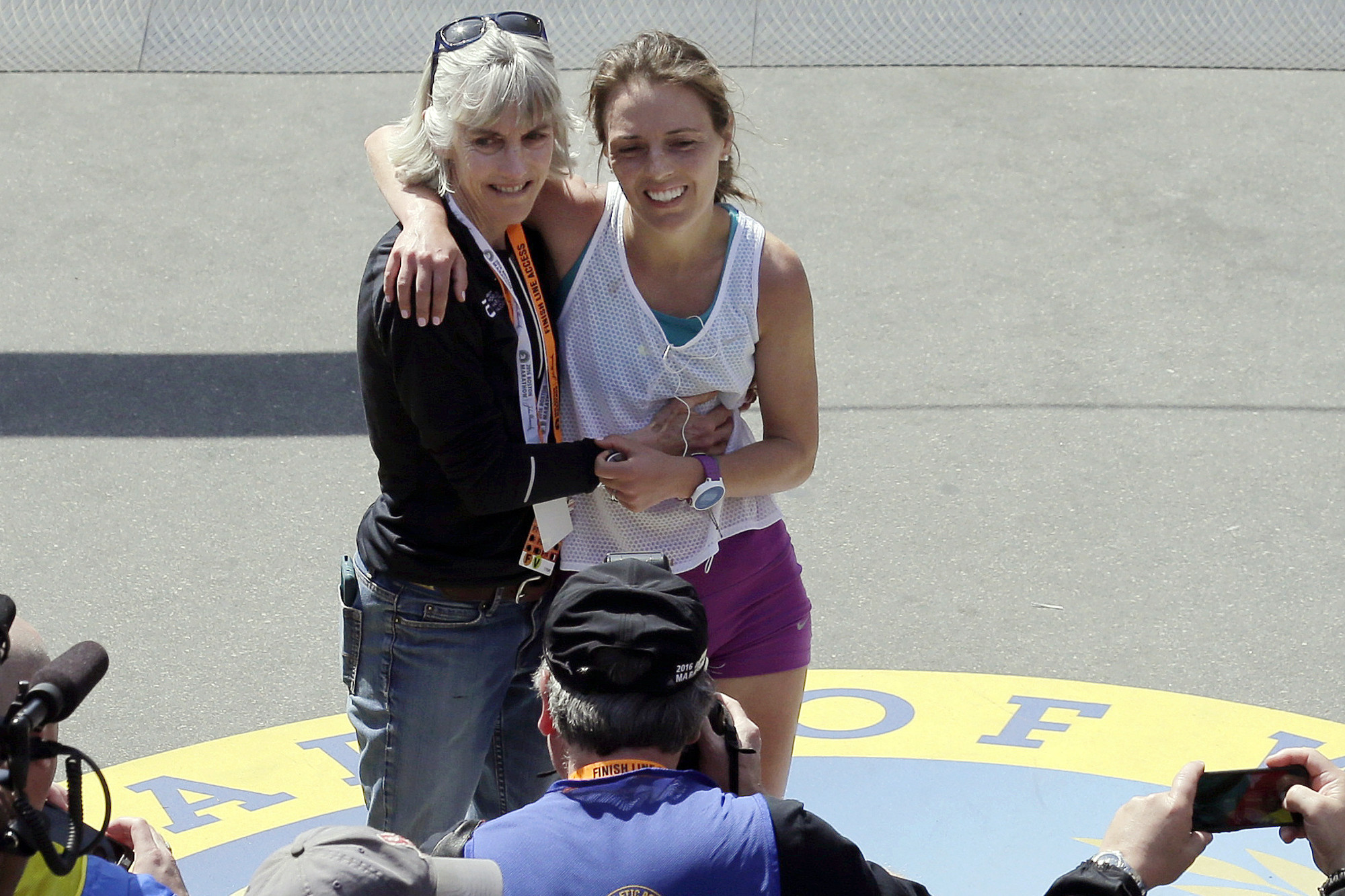
The effort not only enabled the 61-year-old Samuelson to place first in her age group (women 60-64) and 249th among all the women in the 30,000-runner field, but she also finished just 28 minutes and 45 seconds behind the 2:35:15 she ran to win Boston in her first-ever attempt at the distance as a college student four decades earlier.
“I did and I’m really happy about it,” Samuelson said during a postrace interview near the finish line with WBZ-TV.
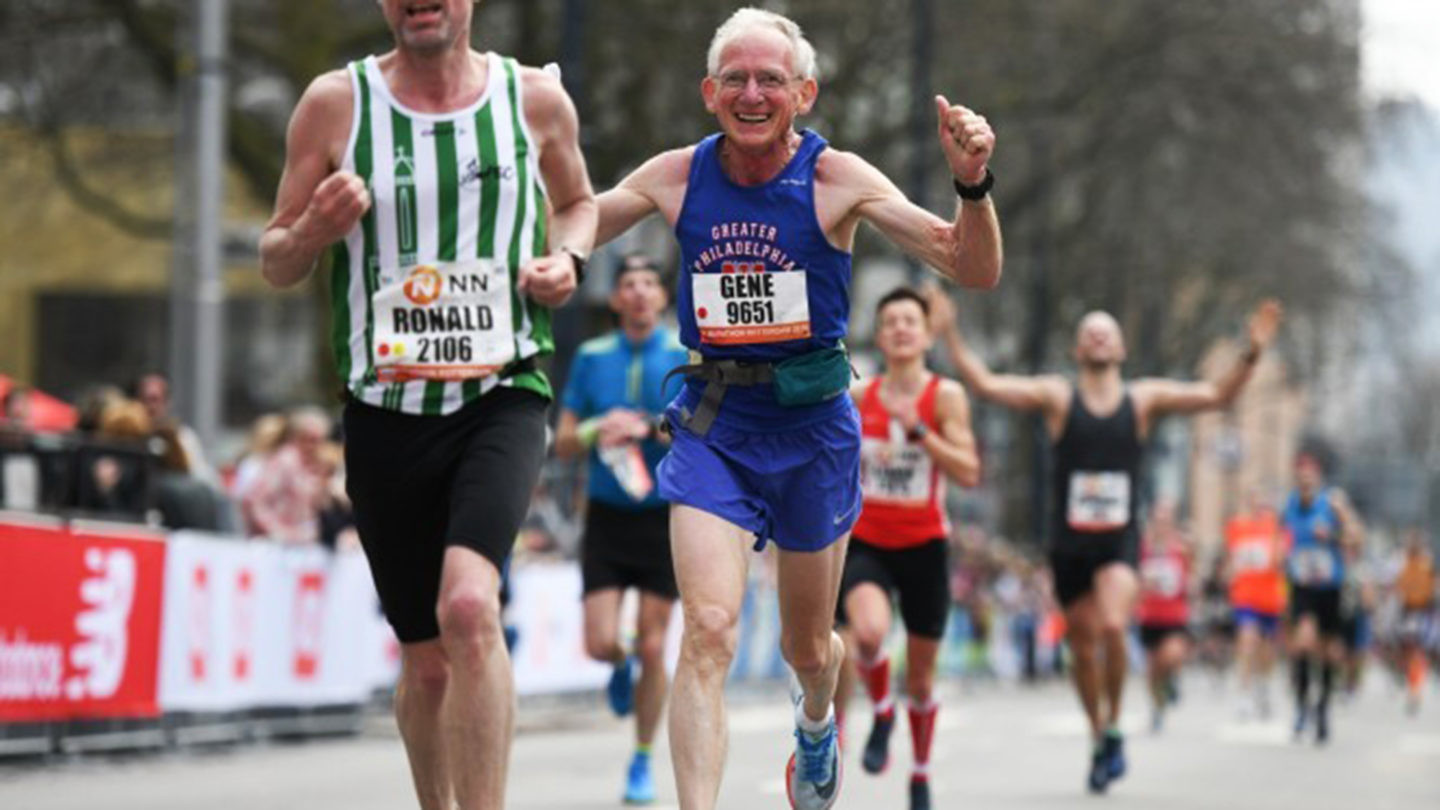
“To have our daughter in this race with me meant a great deal to me. She’s as passionate about the sport as I am, and to be out there with everybody cheering us on and the weather backing off to maybe coming on a little too warm, I can’t complain,” she said.
On the men's side: 71-year-old Gene Dykes of Bala Cynwyd broke his own age-group record on Monday, posting the fastest course time for a 70-to-74-year-old at 2 hours, 58 minutes, 50 seconds.
Dykes set the previous course record for that age group in 2018 at age 70, posting a time of 3:16 in driving rain.
Login to leave a comment
Boston Marathon
Among the nation’s oldest athletic clubs, the B.A.A. was established in 1887, and, in 1896, more than half of the U.S. Olympic Team at the first modern games was composed of B.A.A. club members. The Olympic Games provided the inspiration for the first Boston Marathon, which culminated the B.A.A. Games on April 19, 1897. John J. McDermott emerged from a...
more...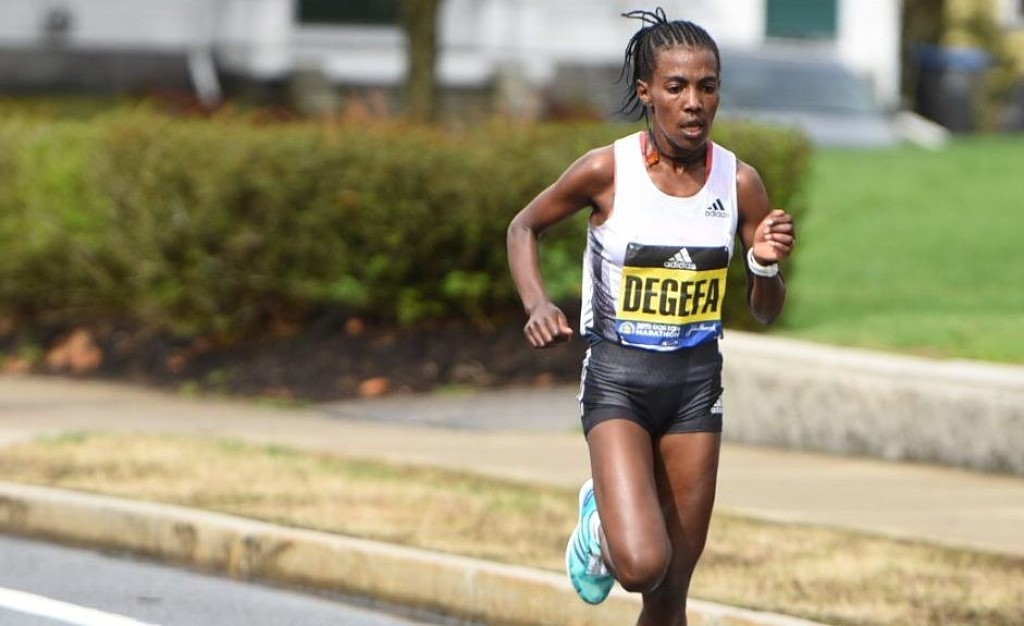
Ethiopian Worknesh Degefa took command of the women's Boston Marathon race by the 7 mile mark and built it to over two minutes by half way and held on to win as America's Jordan Hasay finished third
Worknesh Degefa, 29, built up a commanding lead and even through Kenya's Edna Kiplagat closed the gap in the last few miles Degefa went on the win clocking 2:23:31 at the 2019 Boston Marathon. Edna Kiplegat of Kenya started to break away from the rest of the chase pack at about 30K, trying to run the Ethiopian leader down, but the gap was too wide. Edna Kiplagat finished 44 seconds back clocking 2:24:14. Jordan Hasasy from the US finished third clocking 2:25:20.
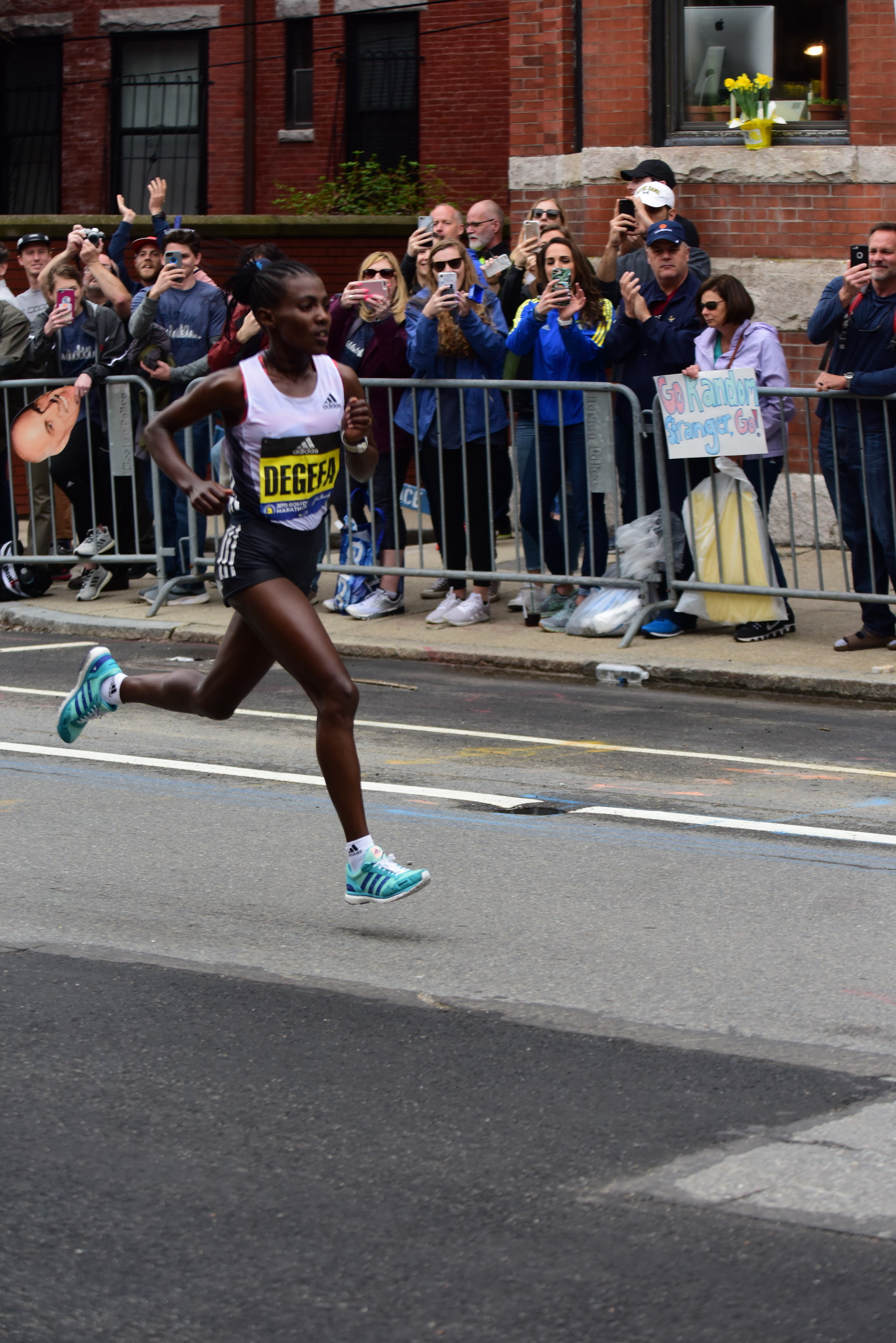
Going into the race Degefa was ready to run well. This January in Dubai, Worknesh Degefa set an Ethiopian national marathon record with her 2:17:41 second place finish. With that result she became the fourth fastest women’s marathoner in history.
Historically a half marathon specialist, Degefa’s top ten half marathon times (2013-2016) were run with an average time of 67:30. Her personal best was recorded at the 2016 Prague Half Marathon where she finished second in 66:14. She earned the silver medal at the 2015 All African Games Half Marathon. Degefa made her debut in the marathon in 2017 with a win at the Dubai Marathon, which she says is her proudest accomplishment.
Degefa trains in the Oromia region of Ethiopia in Arsi and Assela because of its altitude and good weather for training. Her coach is Gemedu Dedefo. Her favorite foods are rice and pasta and she enjoys traveling in Europe.
Jordan Hasay finished third again this year. Choosing Boston to make her debut in 2017, Jordan Hasay ran 2:23:00 to finish third. She set an American women’s debut record by three minutes and recorded the fourth fastest time ever run in the race by an American woman behind Shalane Flanagan, Desiree Linden and Joan Benoit Samuelson.
After Boston, Hasay ran the Bank of America Chicago Marathon and once again finished third, but improved her time to 2:20:57, becoming the second fastest American woman marathoner of all time. Besides making the podium in both the Boston and Chicago Marathons, Hasay set a half marathon personal best time of 67:55 with her sixth-place finish at the 2017 Prague Half Marathon.
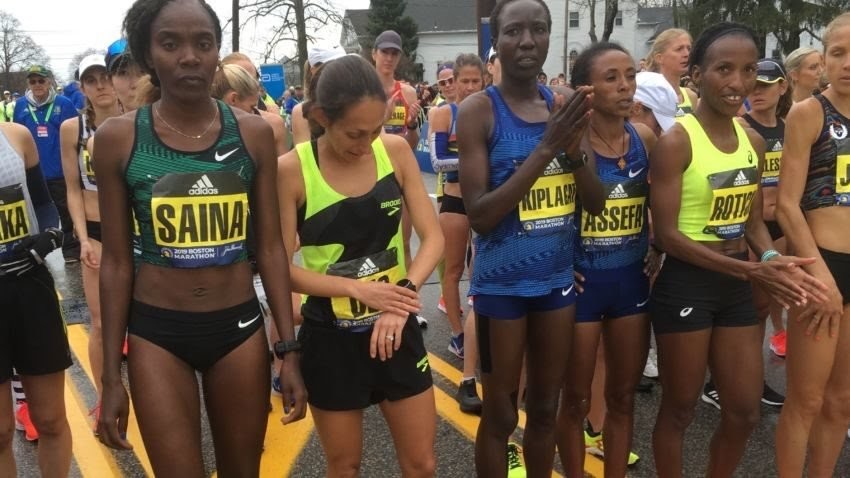
During the race she set a 15K personal best of 48:21 and a 20K personal best of 64:32. She also won the 2017 U.S. national titles in the 20K, 10 Mile and 15K. Hasay was injured during 2018, but after surgery on her foot has made a complete recovery.
Hasay has been running since she was 12 years old and grew up in Arroyo Grande, California.
Last year's winner Desiree Linden finished fifth clocking 2:27:00. The weather was not a factor this year unlike last year.
Login to leave a comment
Boston Marathon
Among the nation’s oldest athletic clubs, the B.A.A. was established in 1887, and, in 1896, more than half of the U.S. Olympic Team at the first modern games was composed of B.A.A. club members. The Olympic Games provided the inspiration for the first Boston Marathon, which culminated the B.A.A. Games on April 19, 1897. John J. McDermott emerged from a...
more...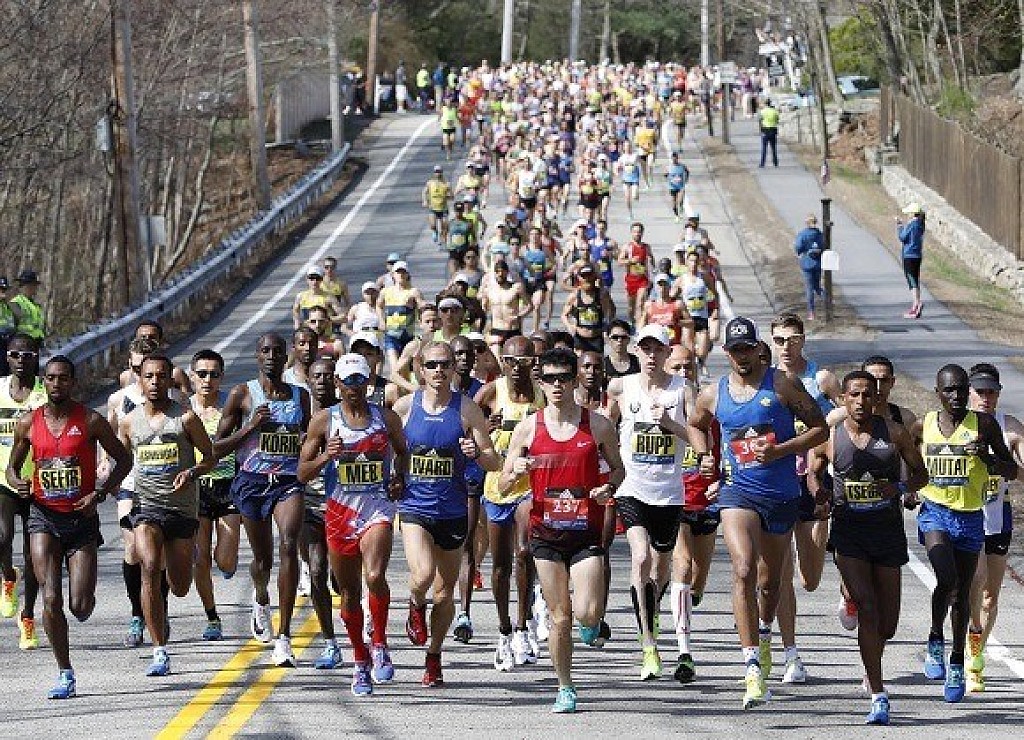
John Hancock today announced its Elite Athlete Ambassador Team for the 2019 Boston Marathon
Boston Marathon champions Meb Keflezighi, Tatyana McFadden, Bill Rodgers, Joan Benoit Samuelson, Greg Meyer and Uta Pippig will join Shalane Flanagan, Ryan Hall, Deena Kastor, Becca Pizzi and Team Hoyt as ambassadors for this year’s race.
“As Patriots’ Day nears, we welcome our 2019 Elite Ambassador Team for the Boston Marathon,” said John Hancock Chief Marketing Officer Barbara Goose.
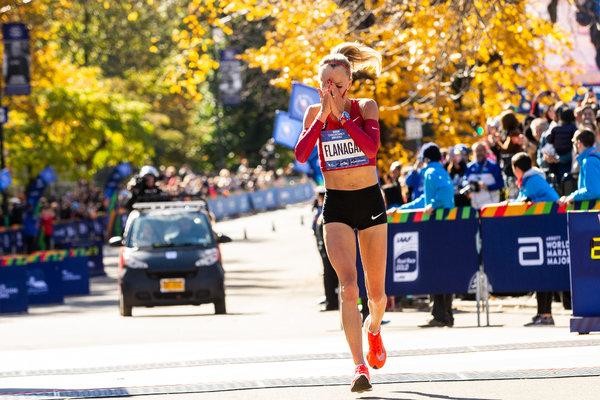
“Through their mentorship and inclusiveness, these accomplished athletes inspire runners of all ages and abilities during race week and throughout the year at John Hancock sponsored events.
The team has become an integral part of our community.”
Ambassadors will cheer on the 30,000 participants racing from Hopkinton to Boston on Patriots’ Day and attend media, community and race week events, including making appearances at the Runner’s Seminar at the Expo, surprise “meet and greets” near the finish line, and at the John Hancock Elite Athlete press conference on April 12 at 10 a.m. at the Fairmont Copley.
Login to leave a comment
Boston Marathon
Among the nation’s oldest athletic clubs, the B.A.A. was established in 1887, and, in 1896, more than half of the U.S. Olympic Team at the first modern games was composed of B.A.A. club members. The Olympic Games provided the inspiration for the first Boston Marathon, which culminated the B.A.A. Games on April 19, 1897. John J. McDermott emerged from a...
more...