

Running News Daily
Running News Daily is edited by Bob Anderson and team. Send your news items to bob@mybestruns.com Advertising opportunities available.
Index to Daily Posts · Sign Up For Updates · Run The World Feed
Articles tagged #Gary Rush
Today's Running News
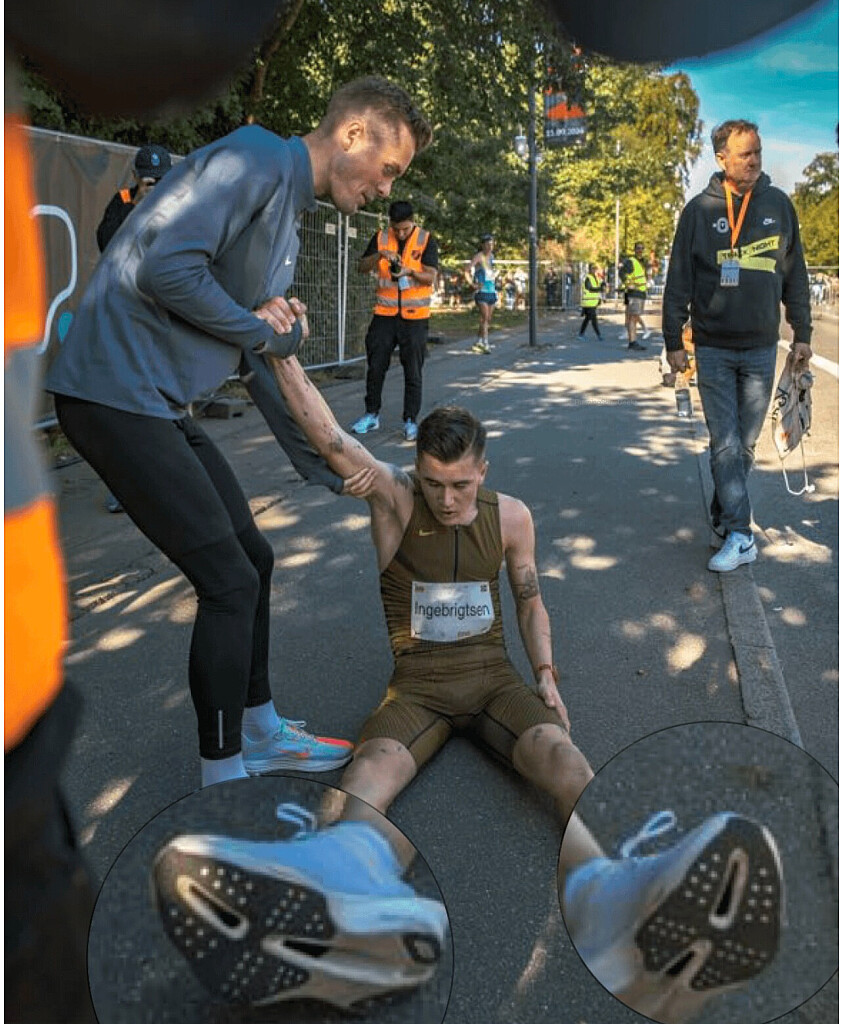


Is It the Shoes? 9 Days, 5 Men, 7 World Records
Over nine days, five men shattered seven world records, leaving me, like many others in the running world, asking one question: Is it the shoes? Or are we witnessing a new era of human performance, fueled by relentless training, cutting-edge technology, and perfect conditions?
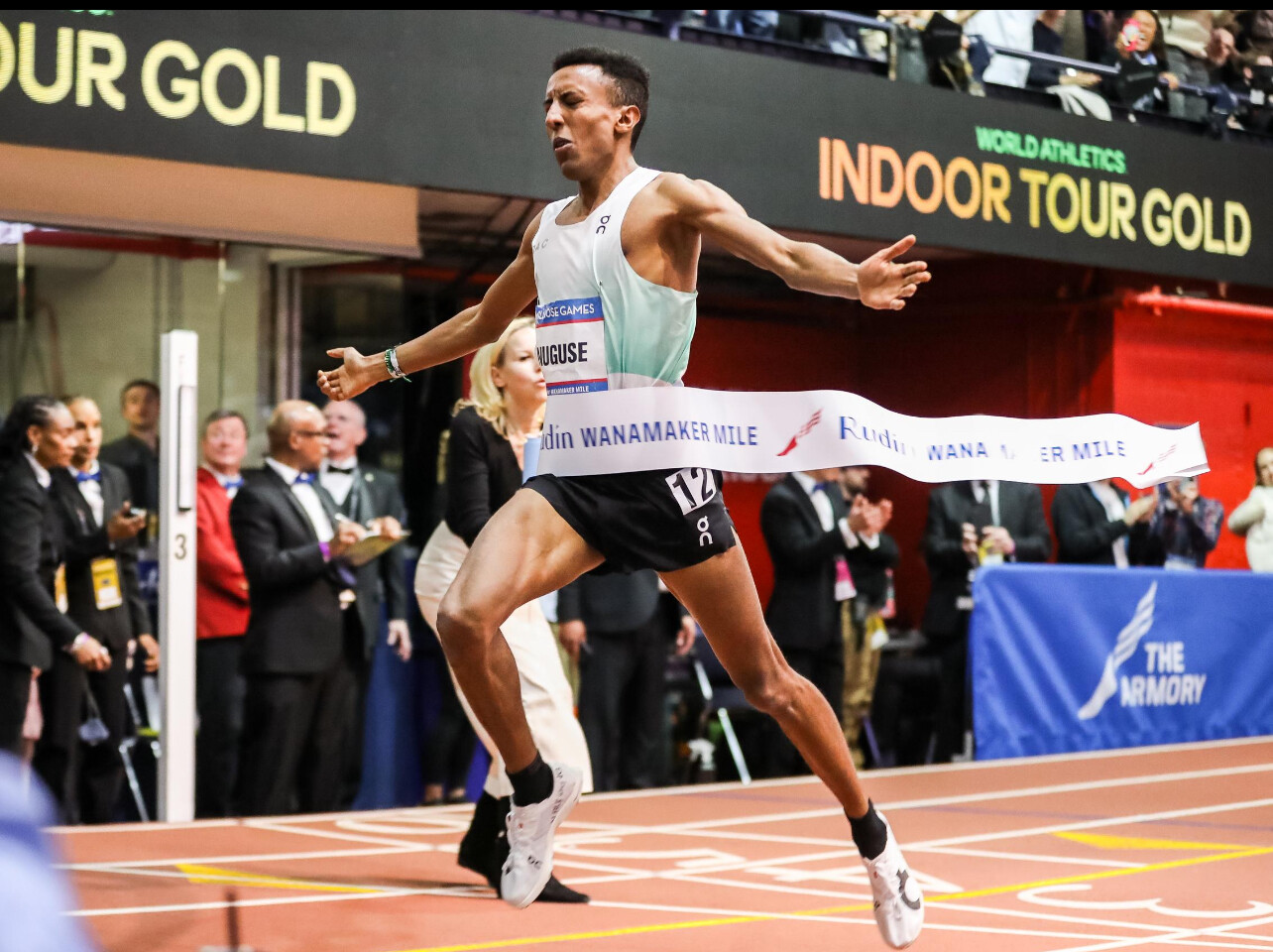
It all started on February 8 at the Millrose Games. Grant Fisher kicked things off with an incredible 7:22.91 in the men's indoor 3000m, smashing the previous world record. His smooth stride and smart pacing made it look almost easy. I couldn't help but wonder if this was just the beginning. Sure enough, Yared Nuguse followed with a stunning 3:46.63 in the men's indoor mile.
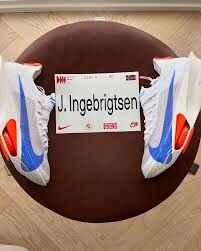
Five days later, Jakob Ingebrigtsen took things to another level in Liévin, France. He ran the mile in 3:45.14, breaking Nuguse’s fresh record. What really blew my mind was his 1500m split—3:29.63, another world record on the way to the mile finish. I’ve watched Jakob race for years, but this performance had me thinking: Are we witnessing the best miler of all time in his prime?
Then came Valentine's Day, and Grant Fisher was back at it. This time, he broke the men's indoor 5000m record in Boston, clocking an astonishing 12:44.09. Sub-60-second laps, one after another.
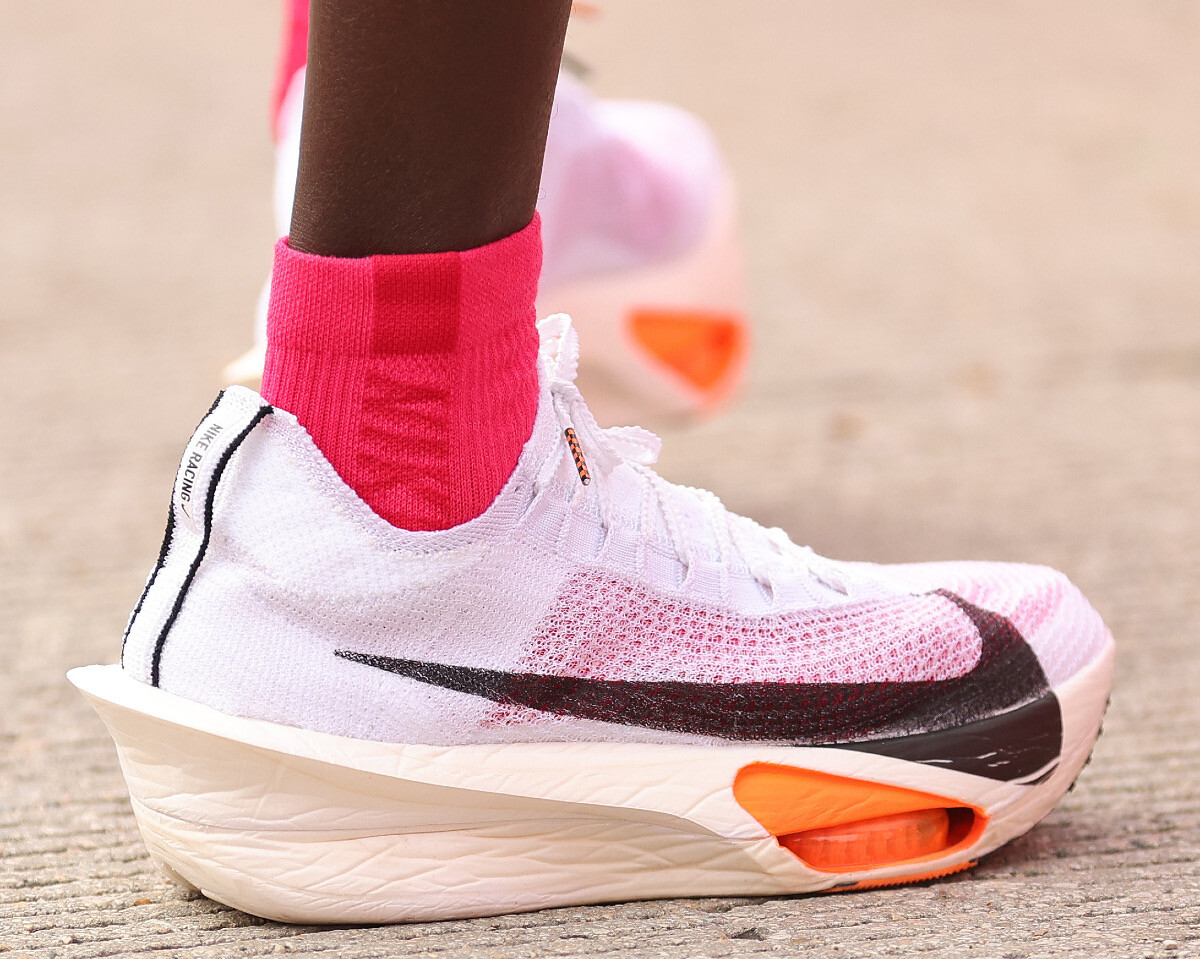
Just when I thought the wave of records might slow down, February 16 brought two more amazing performances. In Kobe, Japan, Toshikazu Yamanishi stormed to a 1:16:10 finish in the men's 20km race walk. Meanwhile, in Barcelona, Jacob Kiplimo made history in the half marathon, blazing to a 56:42 finish. I've followed Kiplimo's career closely, but this performance truly cemented his status as one of the greatest distance runners ever.
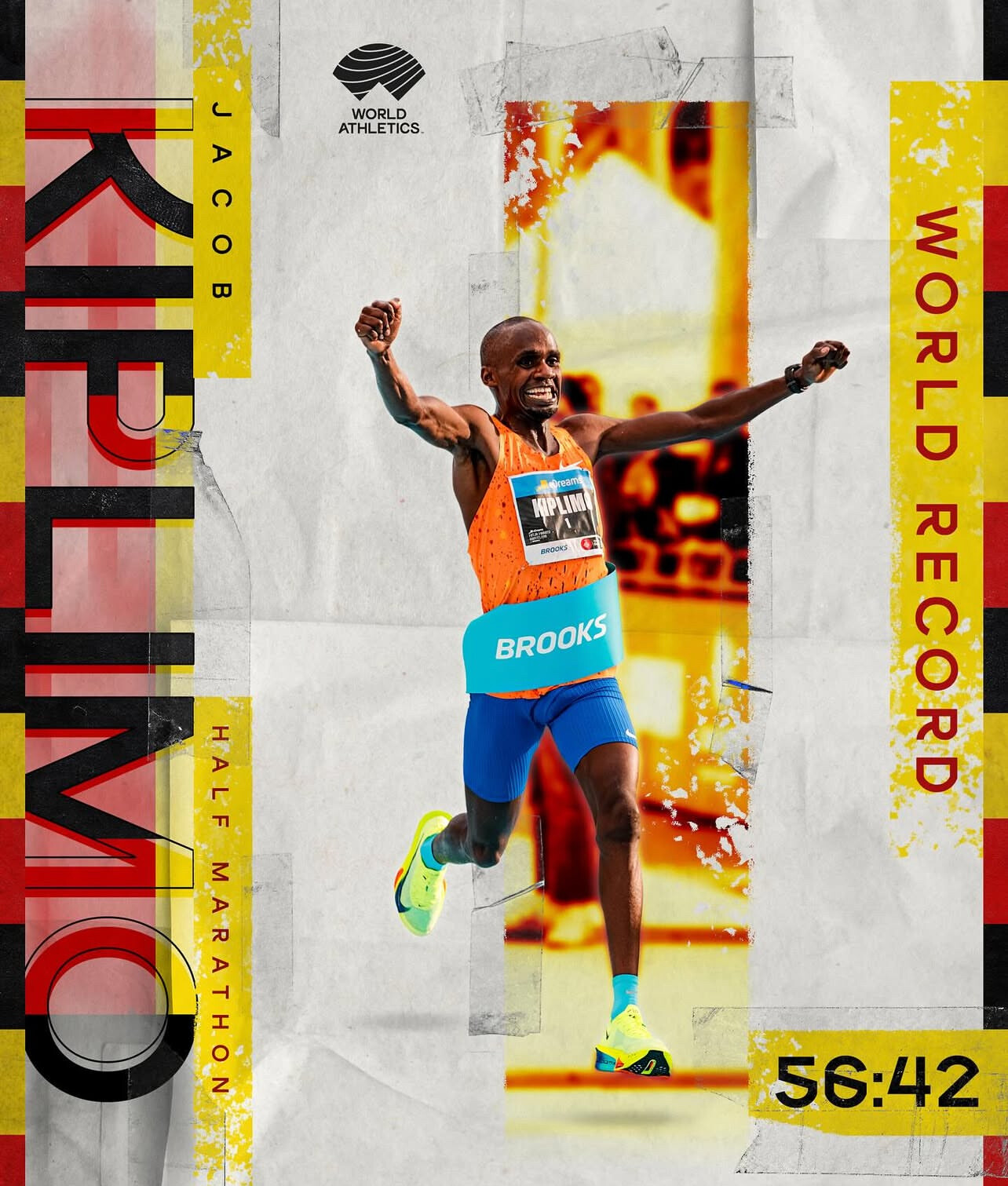
Naturally, everyone started talking about the shoes. Were they the secret behind these incredible performances? I looked into what each athlete was wearing. Grant Fisher and Yared Nuguse were both racing in the Nike Dragonfly spikes, known for their Pebax plate and ZoomX foam, delivering maximum energy return for middle and long distances. Jakob Ingebrigtsen was laced up in the Nike Air Zoom Victory, a lightweight spike built for efficiency. Yamanishi likely wore ASICS race walking shoes, designed for stability and flexibility. And Kiplimo? He was flying in the Nike Vaporfly Next% 3, the go-to choice for elite road runners chasing fast times.

So, is it the shoes? All have been approved by World Athletics. It’s tempting to think so, but I believe the reality is more complex. Yes, today's super shoes, with their carbon plates, advanced foams, and featherlight builds, undoubtedly contribute. But I've been around this sport long enough to know that technology alone doesn’t break records. The foundation is still the same—grueling training, meticulous race preparation, and sheer determination.
Nine days. Five men. Seven world records. Whether it’s the shoes, the training, or a perfect storm of conditions, one thing is clear: the boundaries of human performance continue to be pushed. As someone who’s watched this sport evolve for decades, I can’t help but feel fortunate to witness history in the making.
A friend, Gary Rush summed it up so well, "I grew up in the early eighties of running, and my guess is with all of the GPS watches, gels, nutrition drinks, scientific training, analysis, Max VO2 tests, and likely more frequent training and recovery because of the Super Shoes, will give us insane results day by day...But, that 2:09 for a women's marathon must be even better historically than the first 4 minute mile,"
by Bob Anderson
Login to leave a comment
My Best Runs founder Bob Anderson is the featured runner on Amby Burfoot's Lifetime Running website today
Bob Anderson is the featured profile today on Lifetime Running.
As the founding publisher-owner of Runner's World magazine ("Making Tracks Since 1966"), Bob Anderson played a pivotal role in the American running boom. Less well known: He has been, and at age 71 remains, a passionate runner and racer. In recent years, Anderson has thrown his creative energy behind a Double Racing concept ("Running with a halftime break") and a free Running News Daily column which Bob edits.
Here are some excerpts from my interview:
When did you start running and WHY?
I started running on Feb 16, 1962. My older brother went out for cross country because my dad ran some in the Navy and I wanted to give it a try. Could not run without stopping after a mile that first day.
Your best races and running achievements?
One of the features on our Ujena Fit Club website is that it age grade all races. Five of my top races that I am most proud of would include when I ran a 1:25:24 half marathon at age 64. A 59:17 10 miler at age 53. A 17:09 5k at Carlsbad at age 49. A 3:32:17 marathon at Boston age 65. And a 2:08.5 880 at age 15.
But my greatest running achievement has to be when I ran 50 races in 2012 at age 64. My 50-race challenge was not just about finishing a race each weekend but it was also about achieving an average performance which would be at least 80% age graded. I raced 350.8 miles and averaged 6:59 per mile.
3 key tips for successful lifetime running?
1--Run or walk each day outside covering at least one mile.2--Don’t worry about speed unless you want too. Make this your choice.3--Run at least a few races each year.
Favorite quote?
Steve Prefontaine: “To give anything less than your best is to sacrifice the gift.”
What are the biggest lessons (life lessons and running lessons) you have learned from running?
Running is magical and makes everything possible. My day is not complete without a run. Running is just part of my DNA. If I had not found running, I can not imagine what kind of life I would have had.
Age is only a number and even through the number is getting larger, I just don’t let a number tell me what I can or cannot do. We only live once, so why not enjoy it to the fullest?
Running helps add meaning to every day.
After posting this on FB Gary Rush wrote:
If not for Bob Anderson and his magazine, and the stories and photos and dreams it inspired in my life- I likely would have not been a runner since age 14 or a marathoner since age 15...
Editor's Notes:
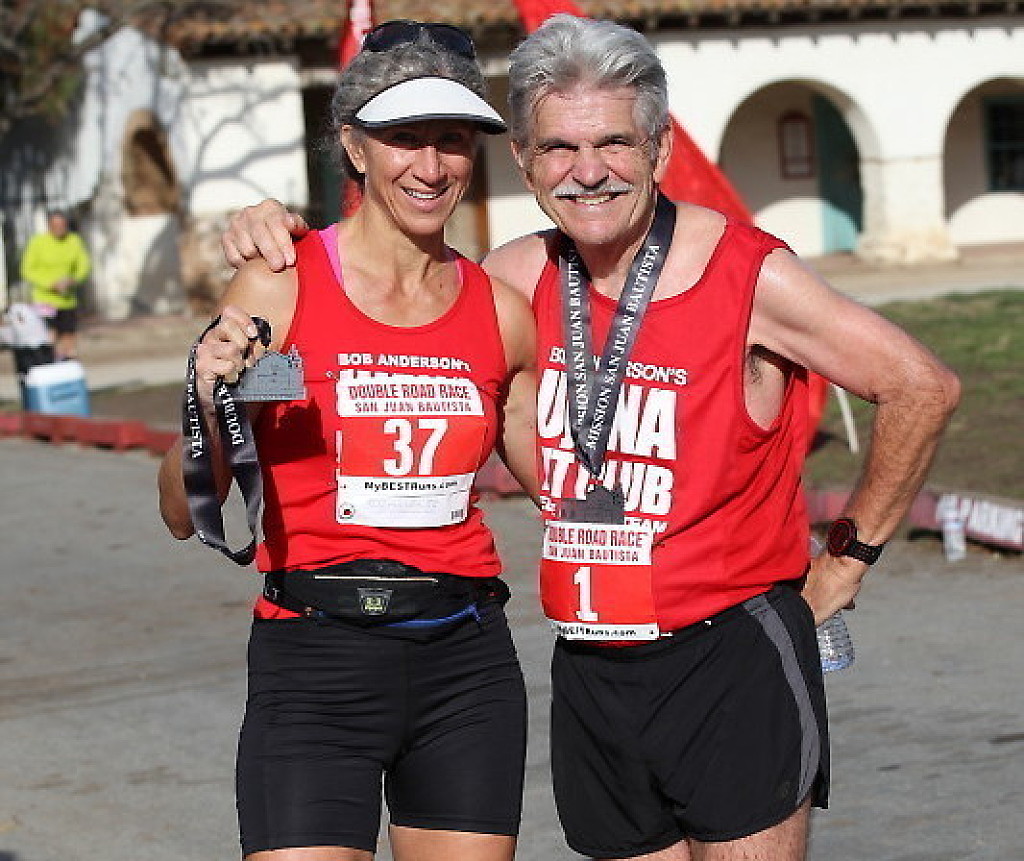
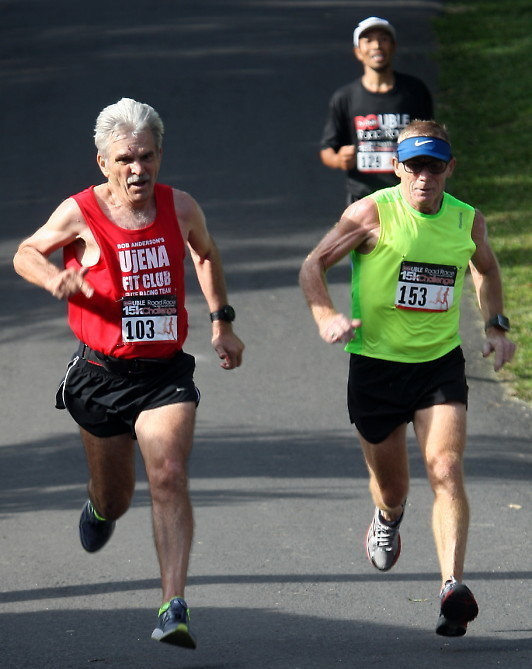
First Photo: with Linda Sereno at the San Juan Christmas 2018 Double Road Race (Dec 16, 2018). Linda was awarded the Best Double Racer for 2018 the night before along with Dwayne Spencer. Second Photo: finishing the 10k leg of a Double Road Race in Bali Indonesia with Ken Whyte from Ausutralia.
The next Double Racing event will be the Palo Alto Double 8K (5K+break=3k) on March 10, 2019.
by Amby Burfoot
Login to leave a comment

Palo Alto Double 8K & 10K/5K
The Palo Alto 10K, 5K and Double 8K (5k+break+3k) will be held in the Palo Alto Bayland Open Space on the west shore of San Francisco Bay. The Double 8K Run/Walk is a two-stage run (5K+Halftime+3K). The races will be run on a flat, fast course. The 5K and 10k courses are mostly on paved and hard-pack trials. The 3K...
more...
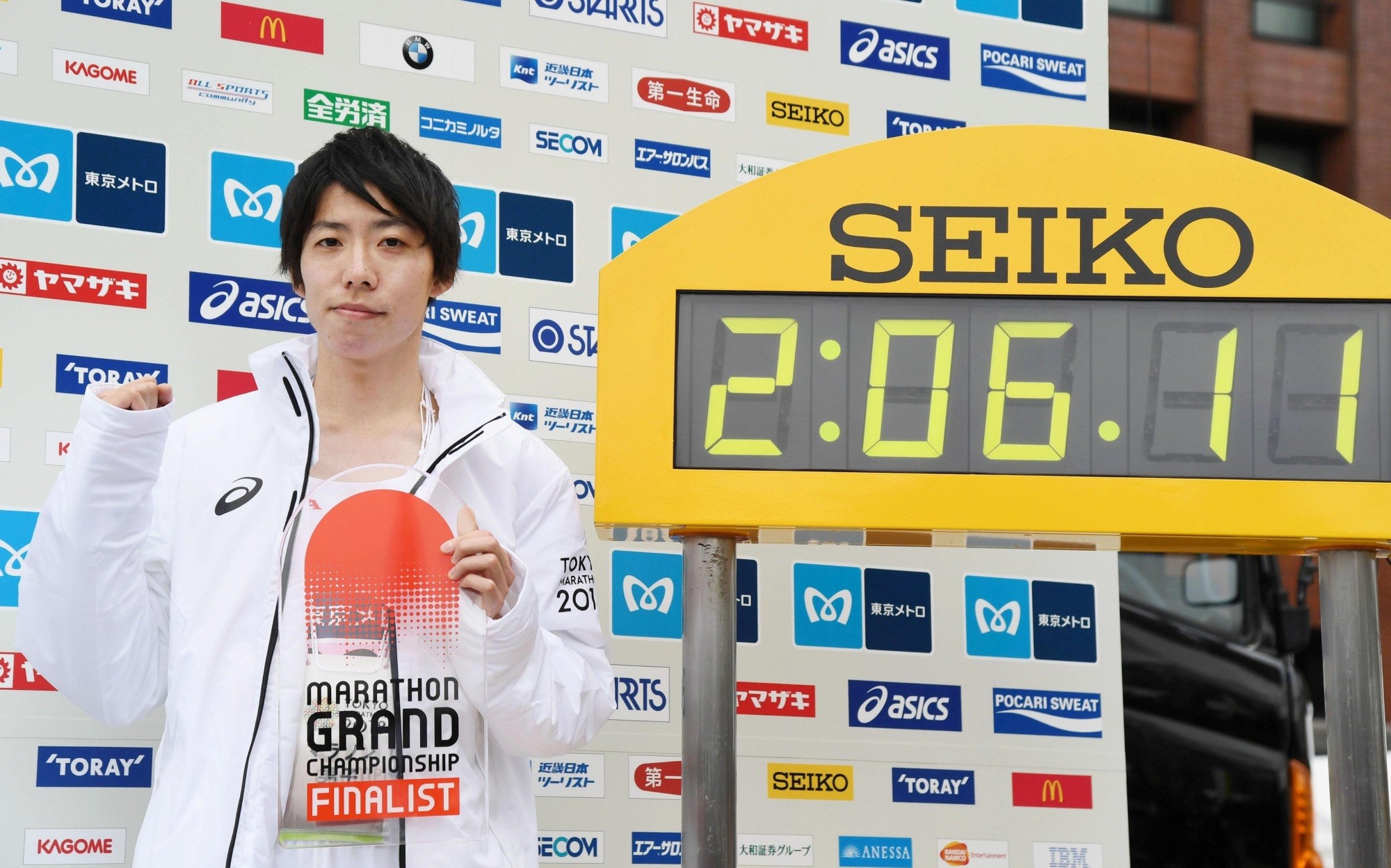
What did Yuta Shitara strap to his arm at the last aid station at the Tokyo Marathon?
Yuta Shitara ran the fastest marathon of any Japanese runner ever at the 2018 Tokyo Marathon on Sunday. He clocked 2:06:11.
At the last aid station he pulled something from his bottle set-up and put it around his right arm bicep. One person on Let's Run suggested it was a "a giant nicotine patch." Another said it was a "Hello Kitty Coin Purse."
Michael Capper on FB said "Never seen this before." Gary Rush stated, "Maybe a gel fluid holder? I think its against IAAF rules for elites to wear or use communication devices or receive electronic updates during a race."
Bob Anderson says, "After looking at more than ten photos of Yuta finishing races, I did not see a similar 'thing' strapped to his arm."
In any case he blasted the last few kilometers wearing this 'thing'. Did it give him an unfair advantage? "First of all we need to know what it was," says Bob.
Login to leave a comment
