

Running News Daily
Running News Daily is edited by Bob Anderson and team. Send your news items to bob@mybestruns.com Advertising opportunities available.
Index to Daily Posts · Sign Up For Updates · Run The World Feed
Articles tagged #Eugene
Today's Running News



Three Historic World Records Ratified As Kiplimo, Tharp And Wanyonyi Enter The Record Books
Three extraordinary performances that captivated the athletics world have now been officially ratified by World Athletics, with Jacob Kiplimo, Ja’Kobe Tharp and Emmanuel Wanyonyi securing their places in the history books with remarkable world-record performances.
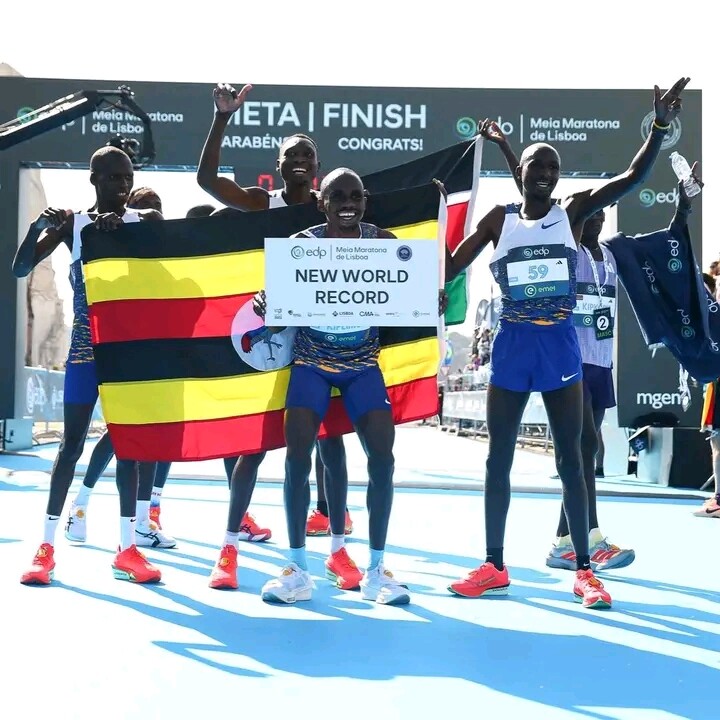
Uganda’s Jacob Kiplimo delivered a breathtaking 57:20 at the EDP Lisbon Half Marathon on 8 March 2026, producing what was then a spectacular world record. His performance underlined his exceptional ability over the half-marathon distance and further strengthened his status as one of the finest road runners of his generation.
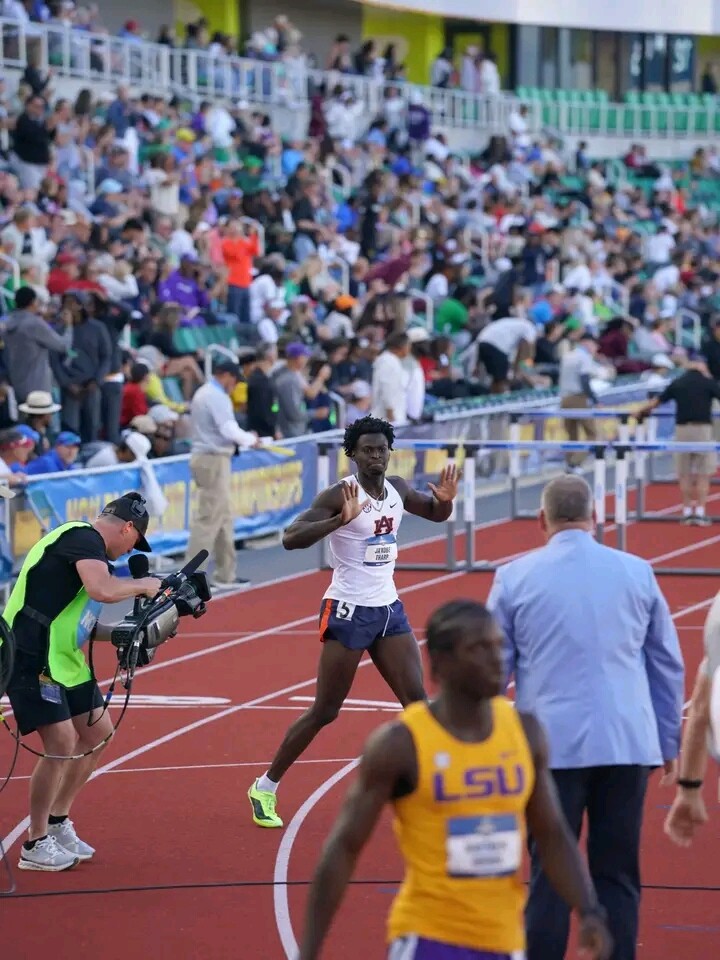
American hurdler Ja’Kobe Tharp created his own piece of history in Eugene on 10 June 2026, storming to 12.75 seconds in the 110m hurdles. The sensational performance came with a legal +1.0m/s following wind and established Tharp as the new world record-holder, marking a remarkable breakthrough on the global stage.
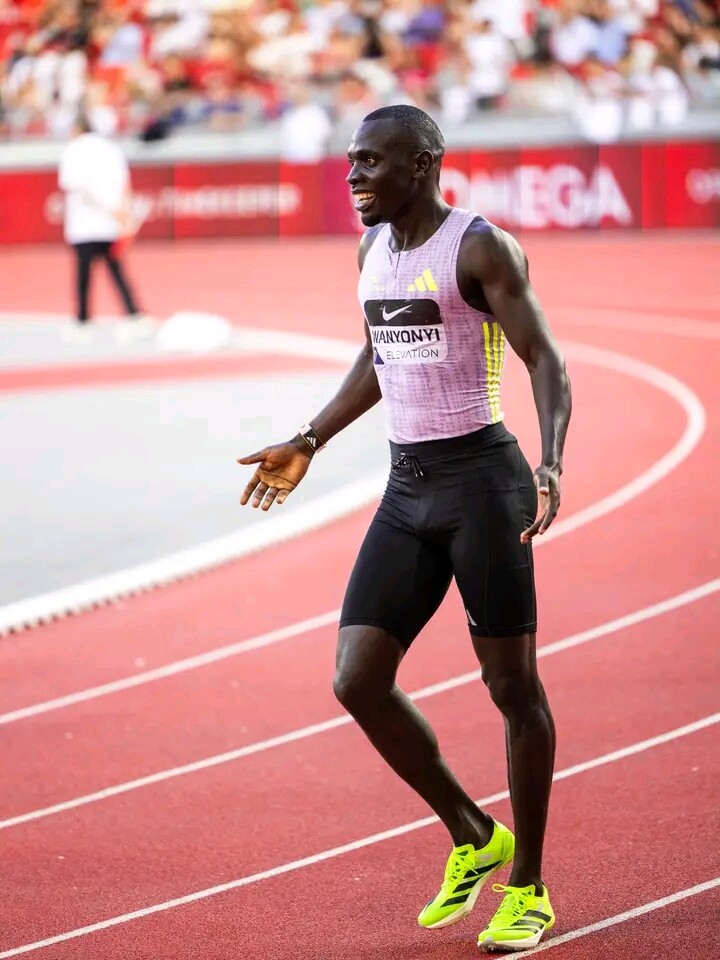
Kenya’s Emmanuel Wanyonyi completed the trio with a sensational 2:11.83 world record in the 1000m. The Olympic champion produced the performance in Monaco, lowering Noah Ngeny’s long-standing 2:11.96 world record from 1999. It was another extraordinary demonstration of Wanyonyi’s speed, strength and versatility beyond his specialist 800m distance.
What makes the three records particularly special is the variety of disciplines involved. Kiplimo conquered the demanding half marathon, Tharp mastered the technical challenge of sprint hurdling, while Wanyonyi extended his middle-distance brilliance over 1000m. Each performance showcased a different form of athletic excellence, yet all three athletes reached the same extraordinary destination: the world-record books.
Accuracy Note: Kiplimo’s 57:20 has since been surpassed by Ethiopia’s Yomif Kejelcha, who ran 56:51 at the Media Maratón Ciudad de Buenos Aires on 23 August 2026, taking 29 seconds off Kiplimo’s mark. The newer performance was still listed as pending ratification, meaning Kiplimo’s mark had been overtaken on the clock even as his record was among those formally ratified.
The ratification of the Kiplimo, Tharp and Wanyonyi performances nevertheless gives official recognition to three spectacular moments that will remain significant chapters in the 2026 athletics season.
Three athletes. Three extraordinary performances. Three officially ratified world records. From Lisbon to Eugene and Monaco, Kiplimo, Tharp and Wanyonyi have added another unforgettable chapter to the story of athletics
by Erick Cheruiyot for My Best Runs.
Login to leave a comment
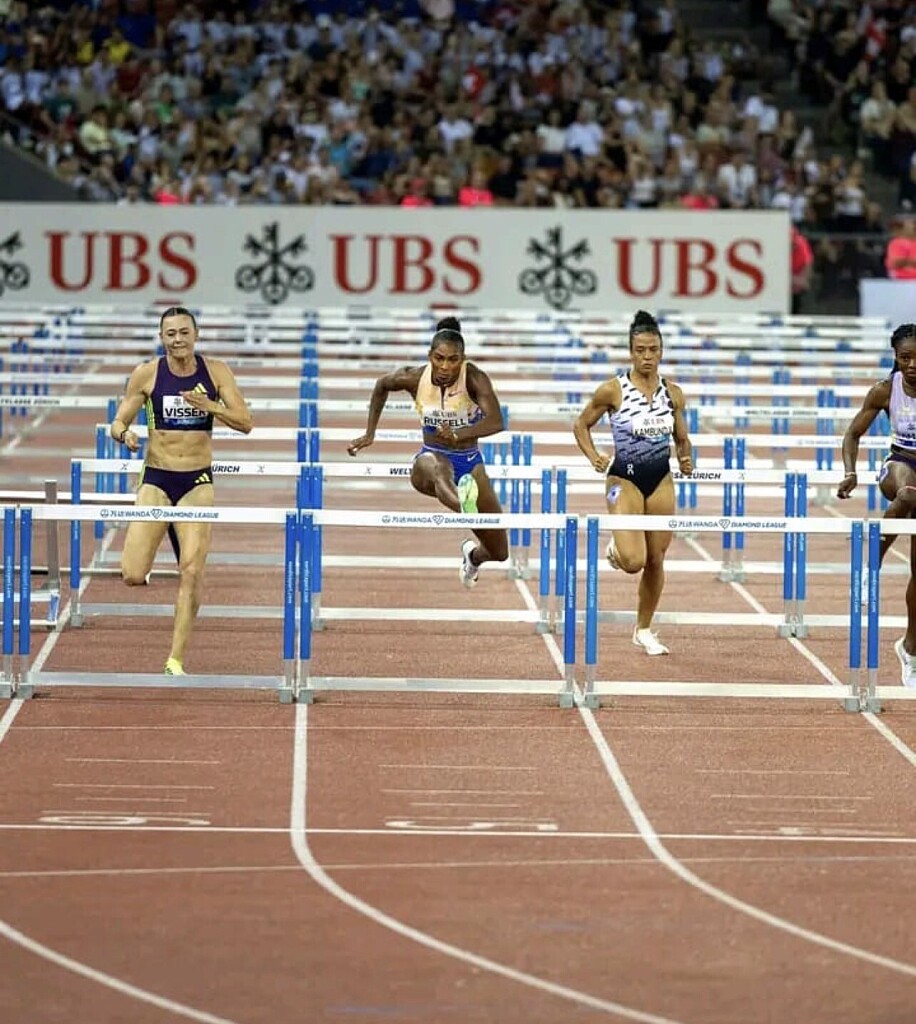
Masai Russell Makes History with Stunning 12.09 World Record in Zurich
Masai Russell delivered a performance for the ages at the Zurich Diamond League, storming to a stunning 12.09 seconds in the women’s 100m hurdles to break Tobi Amusan’s world record.
Running in completely still conditions with a legal 0.0 m/s wind, the American Olympic champion became the first woman in history to break the 12.10-second barrier.

Russell improved upon Amusan’s previous world record of 12.12, set at the 2022 World Championships in Eugene. The mark is subject to the usual ratification process.
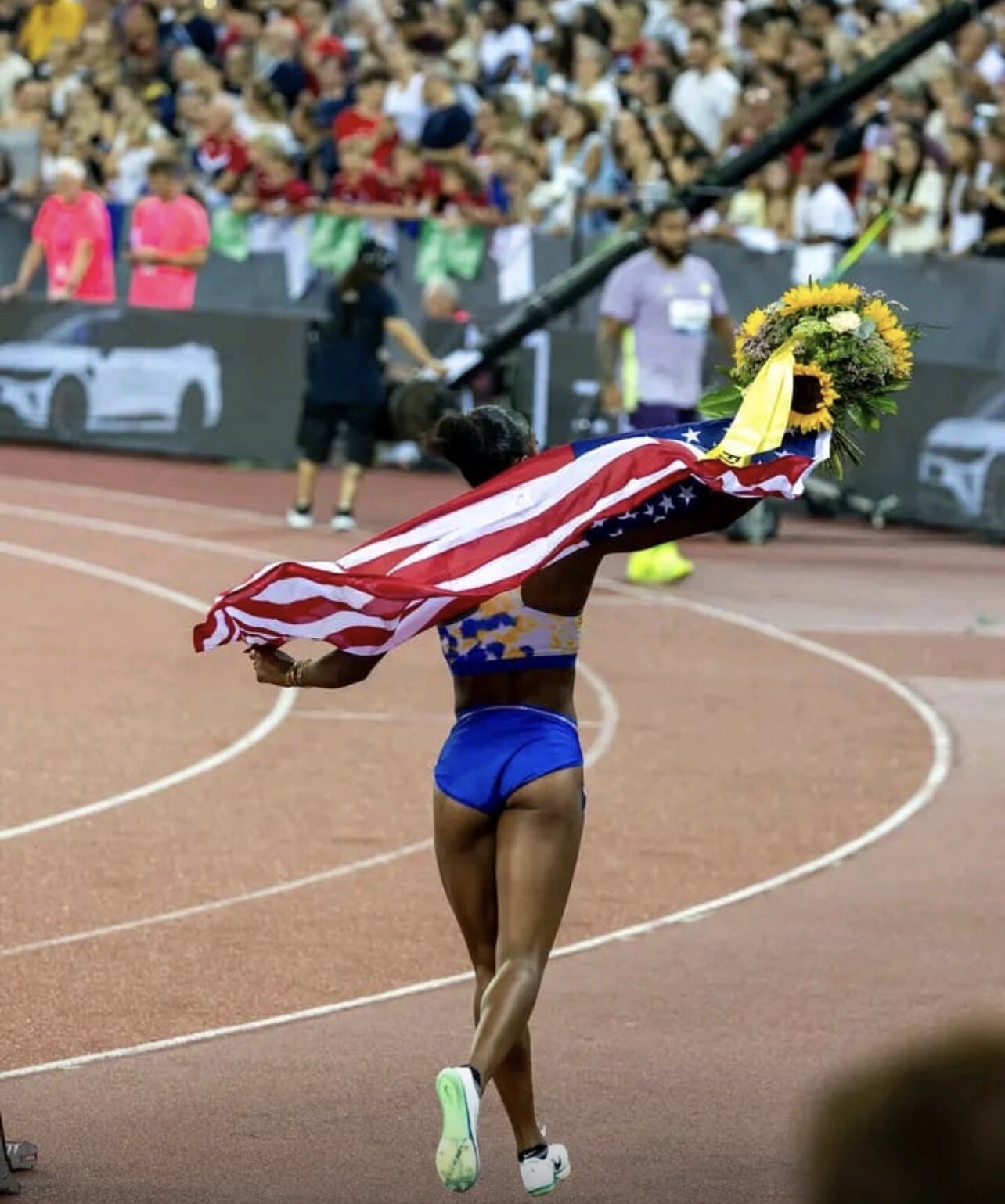
After repeatedly demonstrating her dominance throughout the season, Russell arrived in Zurich as the woman to beat. She attacked the race with extraordinary speed and precision, maintaining her rhythm over the hurdles before pulling away in the closing stages.
When the clock flashed 12.09, the significance of the performance was immediately clear. A barrier that had never been broken was gone.
Even more remarkably, the woman whose record she broke was racing beside her. Amusan, the Nigerian star who had held the world record for four years, finished second in 12.23.
The Netherlands’ Nadine Visser completed the podium in 12.34.
The performance adds another extraordinary chapter to Russell’s career. After establishing herself among the world’s elite and producing a season of remarkable consistency, she has reached the summit of the event as its fastest athlete in history.
Russell’s 12.09 was more than a victory. It rewrote the record books and provided the ultimate confirmation of her dominance.
Zurich had already witnessed a world record from Alison dos Santos in the men’s 400m hurdles. Less than 40 minutes later, Russell ensured the evening would become one of the most memorable in Diamond League history.
Masai Russell is now the world-record holder—and the first woman to run under 12.10 seconds for the 100m hurdles.
by Erick Cheruiyot for My Best Runs
Login to leave a comment

Faith Kipyegon Delivers Emotional Injury Update: “I’ll Be Back”
Kenyan athletics fans have been handed a worrying update from one of the country’s biggest sporting stars, with Faith Kipyegon revealing that her recovery from a hamstring injury will take longer than she had initially hoped.
The three-time Olympic champion and multiple world champion has been managing the injury for several weeks, and she has now made it clear that she will not rush her return to competition.
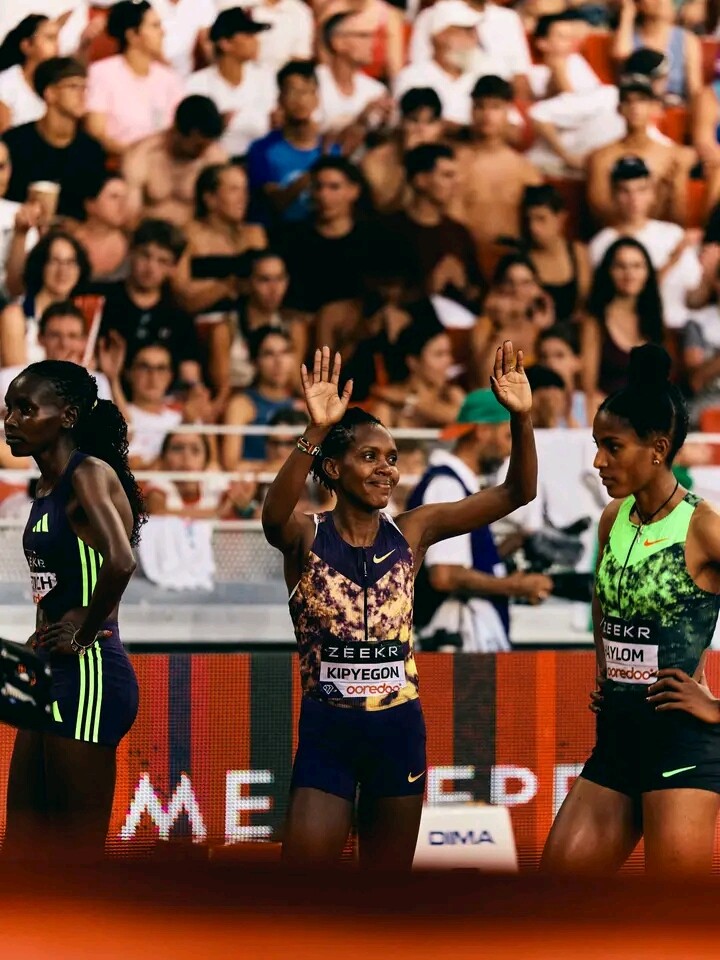
Kipyegon opened up about the setback in an emotional message to her followers, acknowledging the difficult balance elite athletes must maintain between pushing their bodies to the limit and protecting themselves from injury.
“As athletes, we ask a lot from our bodies. There is always a thin line between being fit and the risk of injury.”
The Kenyan superstar said she has been dealing with the hamstring problem since the end of May and admitted that the recovery process has proved slower than she anticipated.
“Since the end of May, I have been dealing with a hamstring injury and unfortunately it needs a bit longer to recover than I had hoped.”
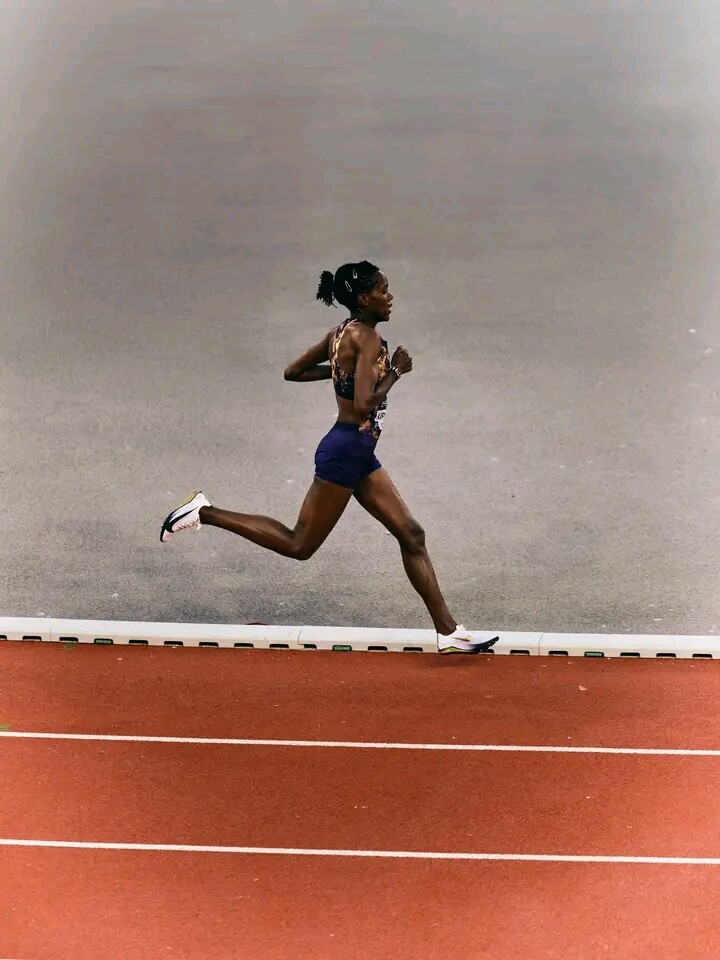
Rather than forcing an early comeback, Kipyegon has chosen to give her body the time it needs to heal properly. For an athlete accustomed to competing at the highest level and delivering spectacular performances on the biggest stages, the enforced break will undoubtedly be frustrating.
But the 32-year-old understands that patience now could be crucial to her long-term return.
“I know that taking care of it now is the most important thing I can do to come back at my best.”
Kipyegon’s decision is particularly significant given the extraordinary standards she has maintained throughout her career. She has dominated the women’s 1,500m for more than a decade, collecting Olympic and world titles while repeatedly rewriting the record books.
She currently owns the women’s world records for both the 1,500m and the mile. Her latest 1,500m world record of 3:48.68, set in Eugene in July 2025, made her the first woman to break 3:49 for the distance. Her mile world record stands at 4:07.64.
Her absence will nevertheless be felt across the athletics world. Kipyegon remains one of the defining figures of modern middle-distance running and one of Kenya’s most decorated athletes. Although she once held the women’s 5,000m world record, that mark now belongs to compatriot Beatrice Chebet, who ran 13:58.06 in Eugene in July 2025 to become the first woman to break 14 minutes over the distance.
For now, however, Kipyegon’s focus is firmly on recovery.
“So for now, I will take the time to heal, recover and get stronger. I’ll be back.”
Those final three words will resonate strongly with her supporters.
“I’ll be back.”
It is a simple message, but one that carries enormous weight. Kipyegon has built her career on resilience, discipline and an extraordinary ability to respond when expectations are at their highest.
This time, the challenge is different. There is no finish line to chase and no championship medal at stake—only the patience required to get her body right.
Kenyan fans may have to wait a little longer to see their champion back on the track, but Kipyegon’s message is unmistakable: the comeback has not been abandoned—it is simply being given the time it deserves.
by Erick Cheruiyot for My Best Runs.
Login to leave a comment

Hayward Field Gets Another Olympic Trials: Eugene To Host 2028 Team USA Selection
The road to Los Angeles 2028 will once again run through Eugene, Oregon.
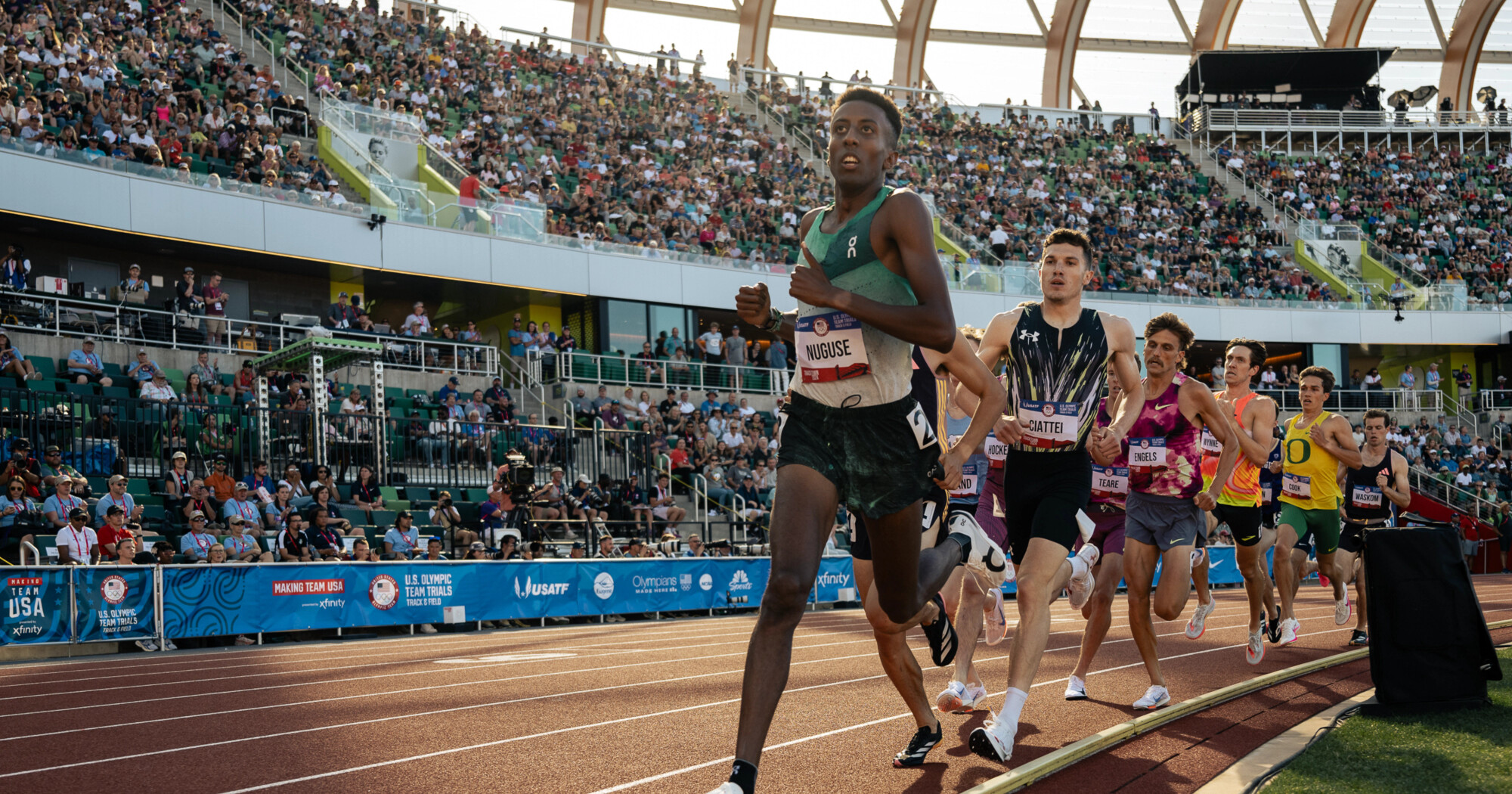
USA Track & Field and the U.S. Olympic and Paralympic Committee have announced that the 2028 U.S. Olympic Team Trials – Track & Field will return to Hayward Field from June 17–22, 2028, giving Eugene the distinction of hosting the prestigious selection meet for a sixth consecutive Olympic cycle.
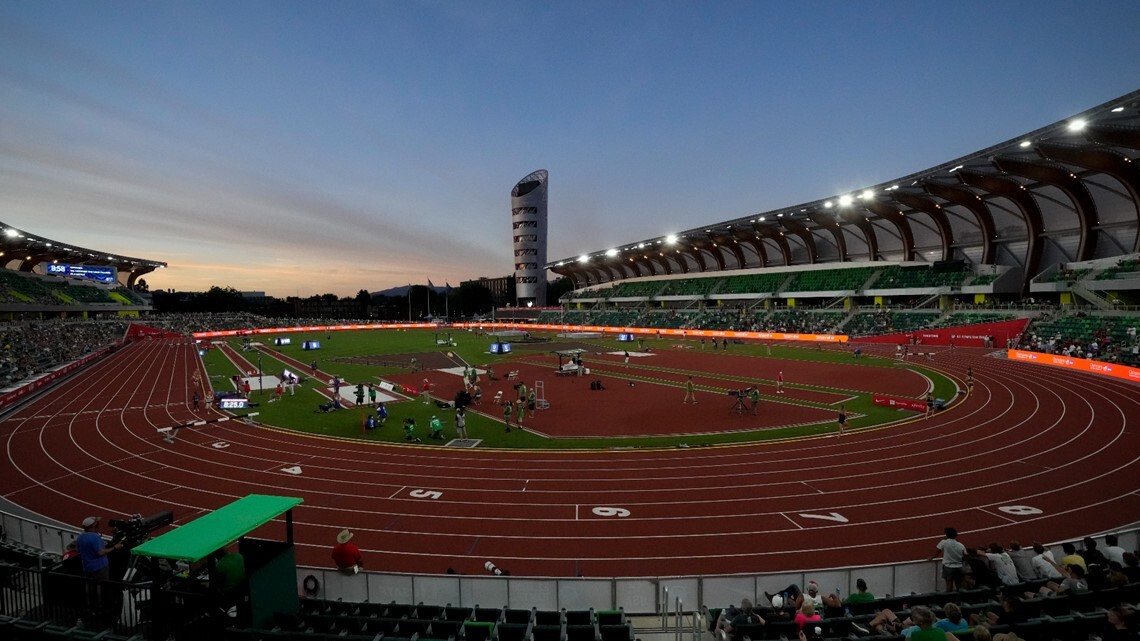
For a venue that has become synonymous with American track and field, the announcement represents another chapter in Hayward Field’s remarkable Olympic Trials legacy. Eugene previously hosted the Trials in 2008, 2012, 2016, 2021 and 2024, and will now stage the event once again as America’s finest athletes battle for places on the U.S. team headed to the 2028 Los Angeles Olympic Games.
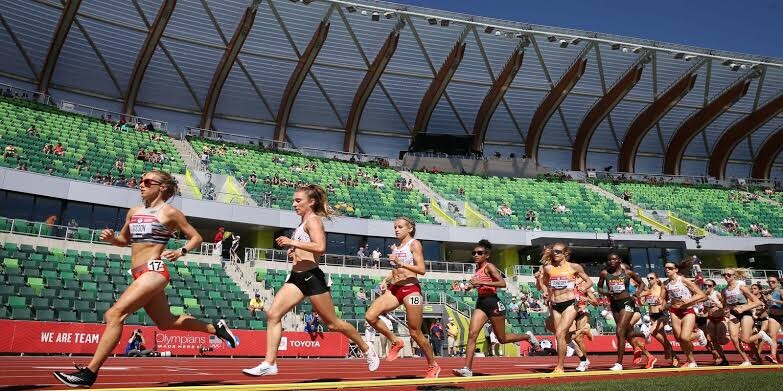
The 2028 edition will also introduce a significant change to the traditional format. Instead of the eight-day competition used at recent Trials, the main track and field meet will be compressed into six consecutive days, reflecting athlete feedback and the need for a more efficient selection process with the Olympic Games beginning less than a month later.
The men’s and women’s 10,000 meters, along with the decathlon and heptathlon, will not be contested as part of the main six-day Trials. Their Olympic team selection will take place earlier in the spring, with the dates and locations to be announced separately.
That scheduling adjustment is particularly important because athletes selected in Eugene will have only a short window to recover, prepare and travel before track and field competition begins at the Los Angeles Olympics. The LA28 track and field programme is scheduled for July 15–24 at the Los Angeles Memorial Coliseum.
Eugene’s return also reinforces its extraordinary status within American athletics. Few venues in the world carry the same history, atmosphere and emotional connection to track and field as Hayward Field, where Olympic dreams have been decided repeatedly over the past two decades.
And while the spotlight will ultimately be on the athletes who make Team USA, the road to Los Angeles will begin with another unforgettable week in TrackTown USA — where careers can be transformed, dreams can be fulfilled and the smallest margins can decide who wears the American colors on the Olympic stage.
The countdown to Los Angeles 2028 has officially gained another major milestone. Hayward Field is ready to welcome America’s best once again.
by Erick Cheruiyot for My Best Runs.
Login to leave a comment
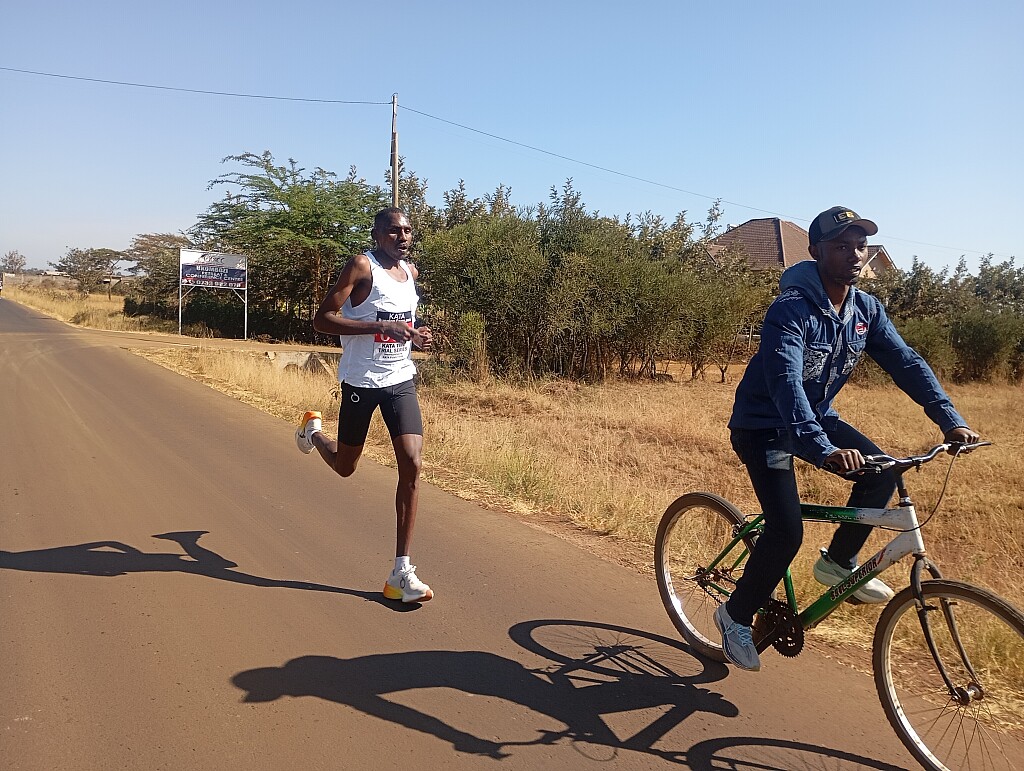
KATA Time Trial Series Reaches 59th Edition as Runners Chase Breakthroughs in Testing Conditions
There was plenty of energy, ambition and competitive fire at the 59th edition of the KATA Time Trial Series today, as athletes returned to the familiar challenge of testing their fitness, sharpening their race rhythm and measuring just how far their training has taken them.
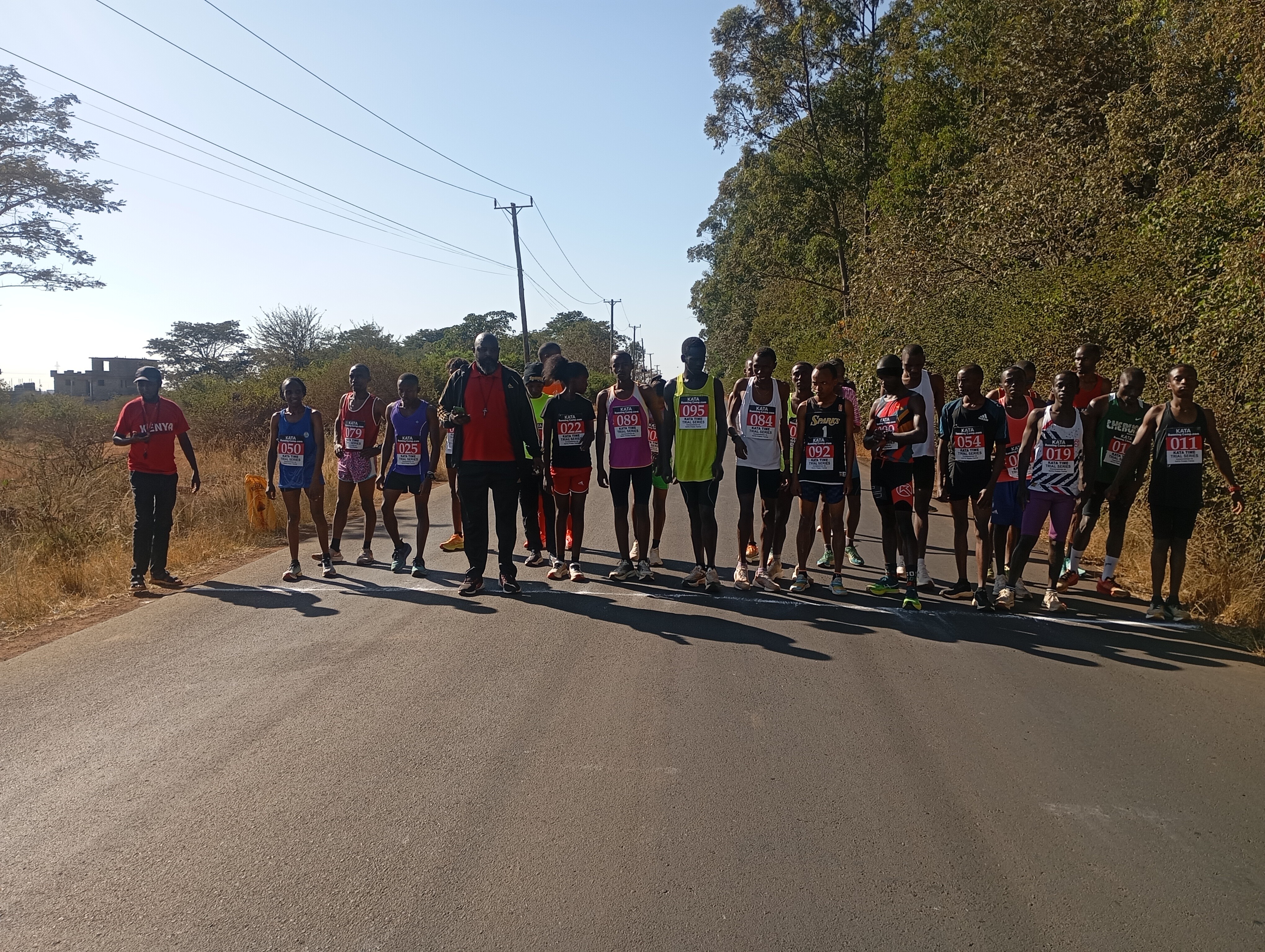
The latest edition brought together runners across the 5km and 10km distances, creating another rewarding morning of competition. The weather was generally favourable for racing, although temperatures were quite high, adding an extra layer of difficulty to an already demanding test of endurance.
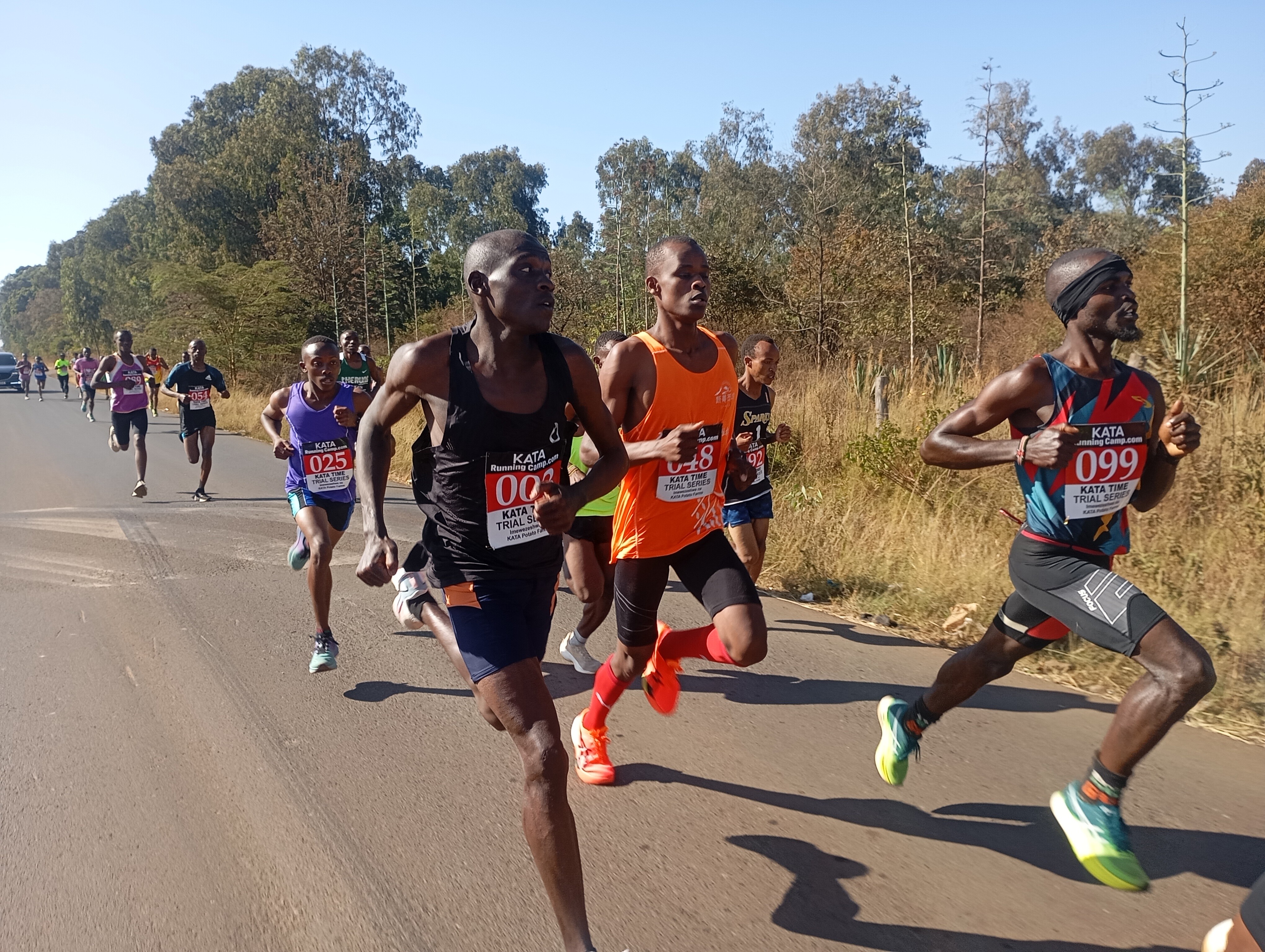
From the opening kilometres of the 10km races, the runners moved as tightly packed groups, carefully gauging one another while pushing a strong and controlled pace. The leaders remained close together through the early stages, each athlete seemingly unwilling to surrender precious ground. As the kilometres rolled by and the heat gradually began to make its presence felt, maintaining that rhythm required patience, discipline and a willingness to suffer.
Eventually, the sustained pace began to stretch the field. The compact groups slowly fractured, with the strongest runners beginning to establish their advantage and the battles for the leading positions becoming increasingly intense. Every surge mattered, every gap carried significance, and each athlete had to find the delicate balance between ambition and conserving enough strength for the decisive kilometres.
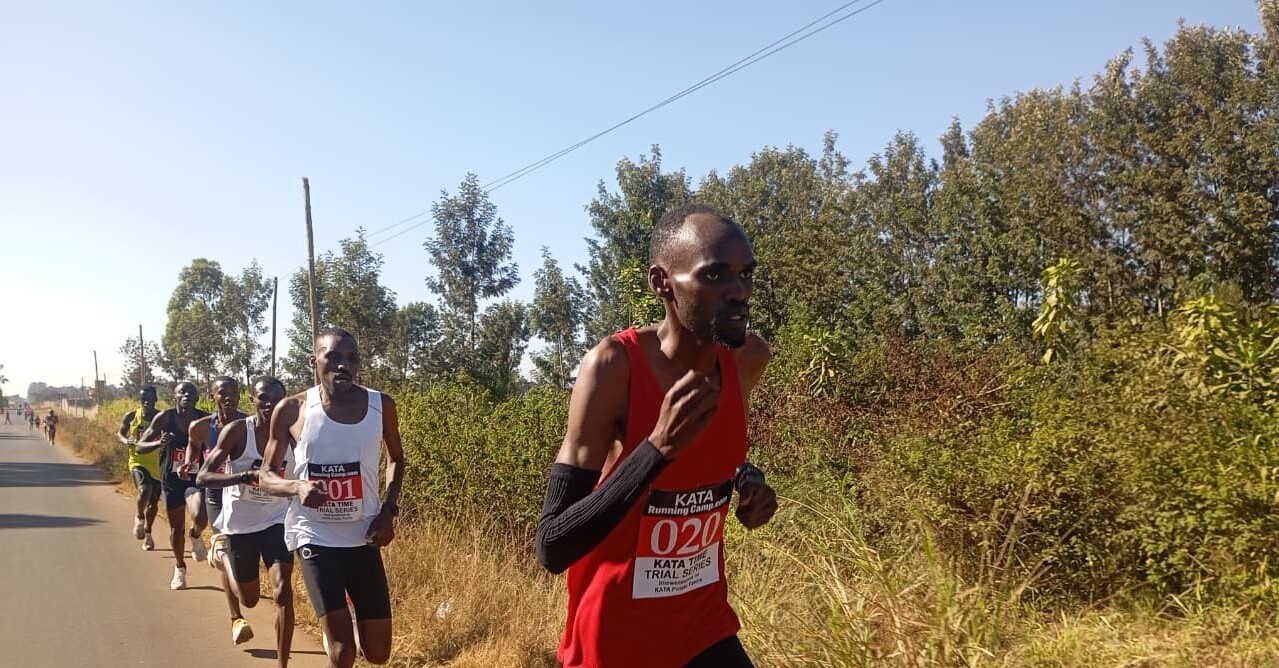
In the men’s 10km, Peter Wanyoike produced the standout performance of the day, powering to victory in 30:36. He was closely followed by Robin Musa, who crossed the line in 30:51, while Charles Wanjora completed the podium in 31:01.
Erick Cheruiyot was only two seconds further back, finishing fourth in 31:03, with Vincent Kiprotich rounding out the top five in 31:28. Justus Nyamai followed in 31:38, ahead of Fredrick Wambua in 32:23 and Ismael Mburu in 32:44.
The field remained competitive deeper into the results, with Martin Mambo recording 33:39 and Francis Maina finishing in 33:48. Anthony Kariuki crossed the line in 34:21, followed by Andrew Kimanzi in 35:21, Lewis Kamau in 35:29, Eric Mwaura in 36:24, Eugene Wambua in 37:48 and Simon Ngereza in 38:08.
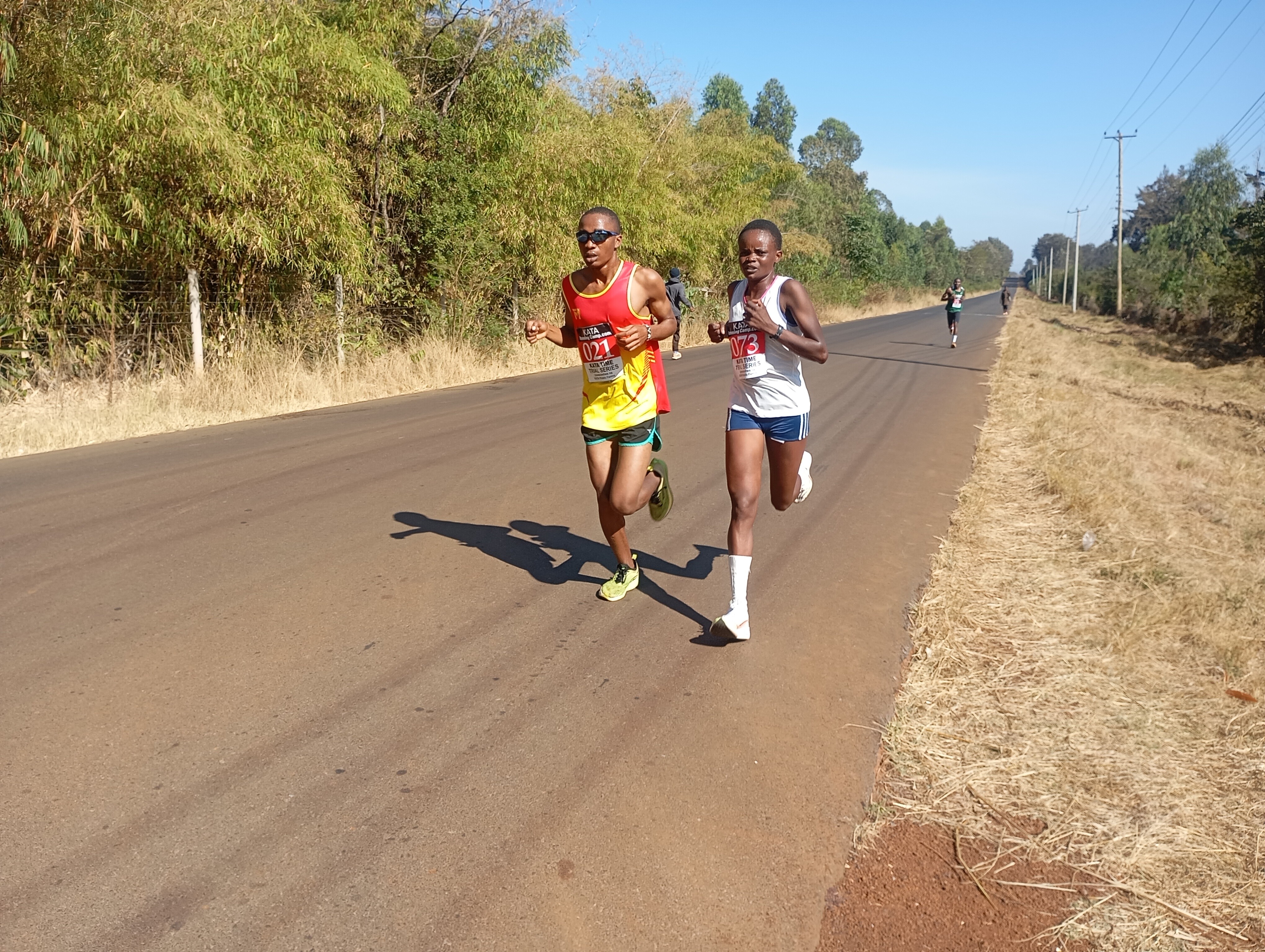
The women’s 10km also delivered an impressive display of determination, with Felister Maina leading the way in 37:37. Naomi Wambui Muriuki was a close second in 37:52, while Felister Mbatha completed the top three in 47:40.
The shorter races provided their own moments of excitement. In the men’s 5km, Edwin Muasa set the pace from the front to win in 16:17, with John Mutuku taking second in 16:54. Jason Wambua finished third in 17:52, while John Nzioka was fourth in 19:22.
The women’s 5km was won by Rachel Njeri, who stopped the clock at 22:21. Winfred Mueni followed in 24:05, with Janet Thuguri completing the podium in 25:43.
For some athletes, the morning brought the sweetest reward of all—a new personal best. After weeks of disciplined training and countless kilometres, seeing a new mark appear on the stopwatch offered a special reminder that patience and persistence eventually bear fruit. Others stepped onto the KATA Time Trial stage for the first time, embracing the excitement of making their debut and adding a fresh spark to the competition.
But not every runner walked away with the performance they had hoped for. Some found the pace, the heat or simply the demands of the day more challenging than expected, finishing without quite reaching their personal targets. Yet those performances should not be viewed as setbacks without value. Every race has its lessons, and an unexpected result can often become the starting point for renewed determination, smarter training and a stronger performance the next time around.
That mixture of breakthroughs, debuts, lessons and unfinished ambitions is what makes the KATA Time Trial Series so meaningful. Whether an athlete leaves with a personal best, a podium finish, a first taste of competition or a result that leaves them hungry for more, everyone gains another piece of experience to take back into training.
The relatively high temperatures demanded composure and careful effort, but the athletes continued to fight for every second until the finish. For many, the 59th edition was not simply about where they finished—it was another important chapter in their individual journeys.
The KATA Time Trial Series continues to provide a valuable platform for athletes to challenge themselves, measure progress and turn hard training into tangible performance. With the 59th edition now in the books, the stopwatch has delivered another set of stories—of breakthroughs, perseverance, first steps and lessons learned.
And as the runners return to training, one thing remains certain: the next opportunity to run faster is already waiting.
*5k men*
1. Edwin Muasa 20 25 16:17
2. John Mutuku 16 54 16:54
3. Jason Wambua 18 89 17:52
4. John Nzioka 17 33 19:22
*5k women*
1. Rachel Njeri 14 04 22:21
2. Winfred Mueni 15 22 24:05
3. Janet Thuguri 15 13 25:43
*10km women*
1. Felister Maina 37 73 37:37
2. Naomi Wambui Muriuki 42 50 37:52
3. Felister Mbatha 19 12 47:40
*10km men*
1. Peter Wanyoike 01 28 30:36
2. Robin Musa 18 84 30:51
3. Charles Wanjora 24 03 31:01
4. Erick Cheruiyot 30 20 31:03
5. Vincent Kiprotich 24 95 31:28
6. Justus Nyamai 18 94 31:38
7. Fredrick Wambua 21 96 32:23
8. Ismael Mburu 26 99 32:44
9. Martin Mambo 34 30 33:39
10. Francis Maina 20 11 33:48
11. Anthony Kariuki 28 29 34:21
12. Andrew Kimanzi 21 92 35:21
13. Lewis Kamau 38 79 35:29
14. Eric Mwaura 19 19 36:24
15. Eugene Wambua 21 21 37:48
16. Simon Ngereza 25 16 38:08
by Erick Cheruiyot for My Best Runs.
Login to leave a comment

KATA Time Trial Series
Welcome to the KATA Monthly Time Trial Held at the Kenyan Athletics Training Academy in Thika, Kenya, the KATA Monthly Time Trial is a unique and inclusive event designed to support runners of all levels in achieving their goals and showcasing their fitness. This event offers both 10K and 5K distances on an accurate, certified course, providing participants with...
more...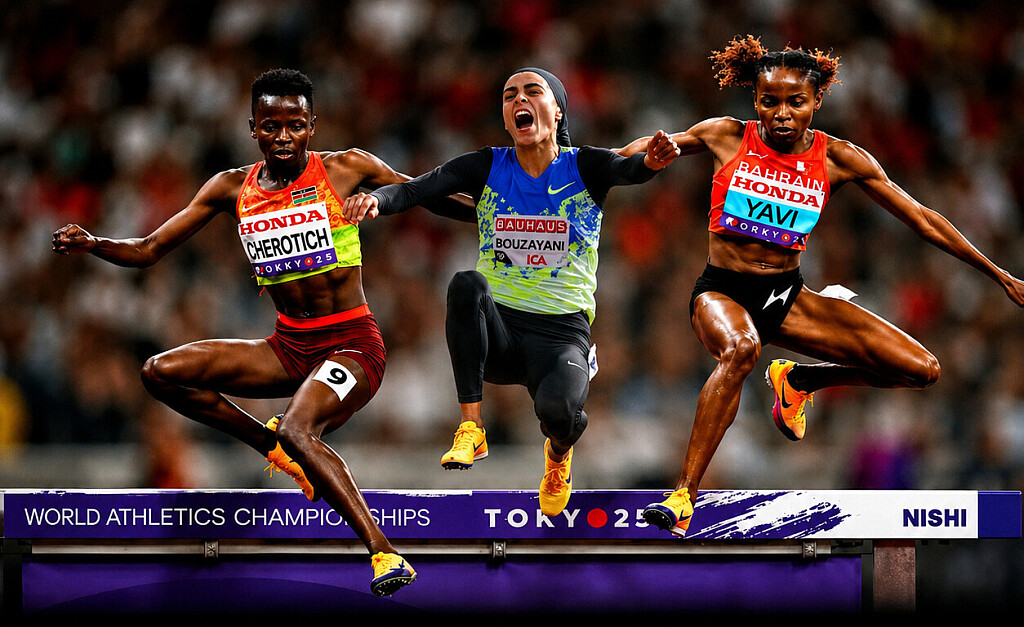
Cherotich, Yavi and Bouzayani Set for Lausanne Diamond League Steeplechase Showdown
The women’s 3000m steeplechase is shaping up as one of the most enticing distance events at the 2026 Athletissima Lausanne Diamond League, with Kenya’s Faith Cherotich, Bahrain’s Winfred Yavi and Tunisia’s Marwa Bouzayani confirmed for a mouth-watering clash on 21 August. The meeting will bring together three athletes who have each made a strong impression on the international steeplechase scene this season.
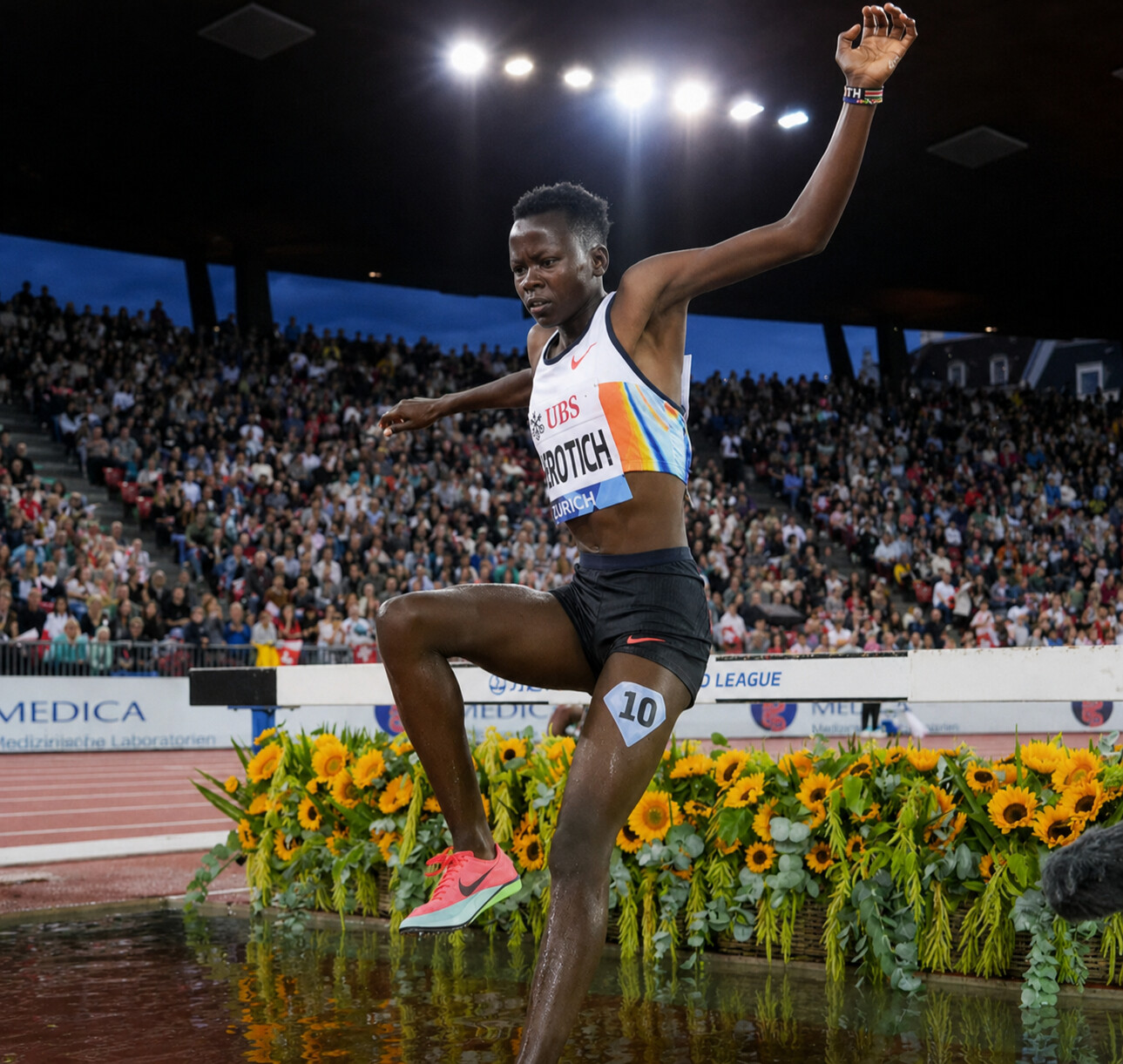
Cherotich heads to Lausanne with formidable credentials. The Kenyan is the reigning world champion and two-time Diamond League champion, and she has continued to show her class in 2026. She opened her Diamond League campaign with 8:51.48 for second place in Shanghai/Keqiao before producing a winning 8:51.74 at the Prefontaine Classic in Eugene.
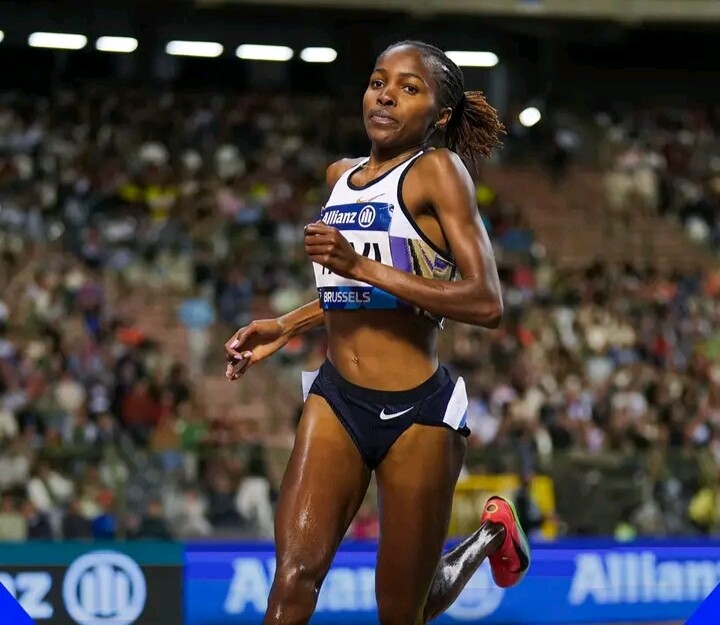
Standing in her way will be Yavi, the Paris 2024 Olympic champion and one of the most accomplished steeplechasers of her generation. The Bahrain star has developed a compelling rivalry with Cherotich, with the two repeatedly pushing each other towards extraordinary performances. Their encounters have become a highlight of the Diamond League season, making their latest meeting in Lausanne particularly intriguing.
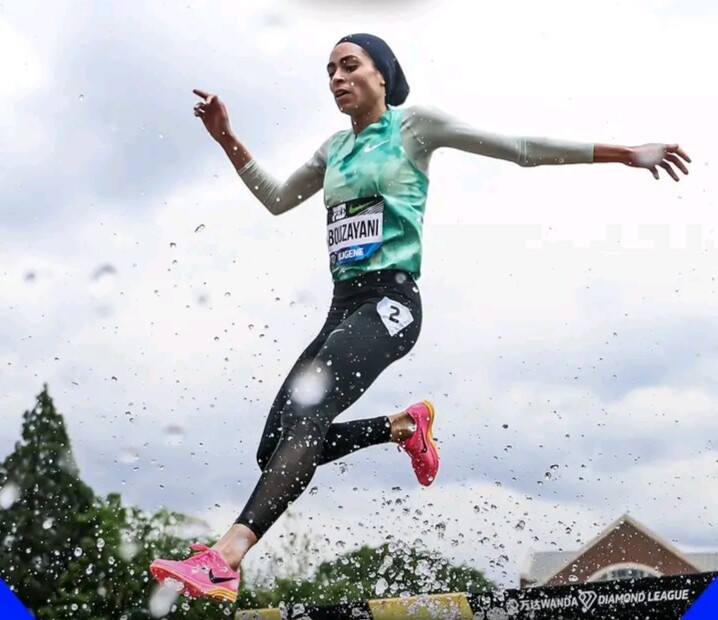
Bouzayani, meanwhile, arrives with perhaps the biggest surge in confidence. The Tunisian produced a spectacular breakthrough in Stockholm in June, winning her first Diamond League steeplechase in a meeting-record 8:59.28. That came after she had already shattered the Tunisian record with 8:58.09 in Shanghai/Keqiao, becoming the first Tunisian woman to break nine minutes for the event.
Her progress has transformed Bouzayani from an emerging challenger into a genuine contender capable of mixing it with the world’s best. Her performance in Eugene further underlined that development, as she ran a national record 8:54.32 for third behind Cherotich and Yavi. The three athletes were separated by less than three seconds, setting the stage for another fascinating contest in Switzerland.
Lausanne could therefore provide another beautiful chapter in an increasingly captivating steeplechase story. Cherotich brings the authority of a world champion, Yavi the experience and confidence of an Olympic champion, while Bouzayani carries the momentum of a breakthrough season. Over 3,000 metres of barriers, water jumps and relentless racing, the smallest details could decide who emerges strongest when the final straight arrives.
With the three stars now set to share the same starting line, anticipation is already building for what could be a swift, elegant and fiercely contested battle under the Swiss lights. For fans of distance running, Lausanne promises a race where every barrier clearance, every surge and every final stride could carry the weight of victory.
by Erick Cheruiyot for My Best Runs.
Login to leave a comment
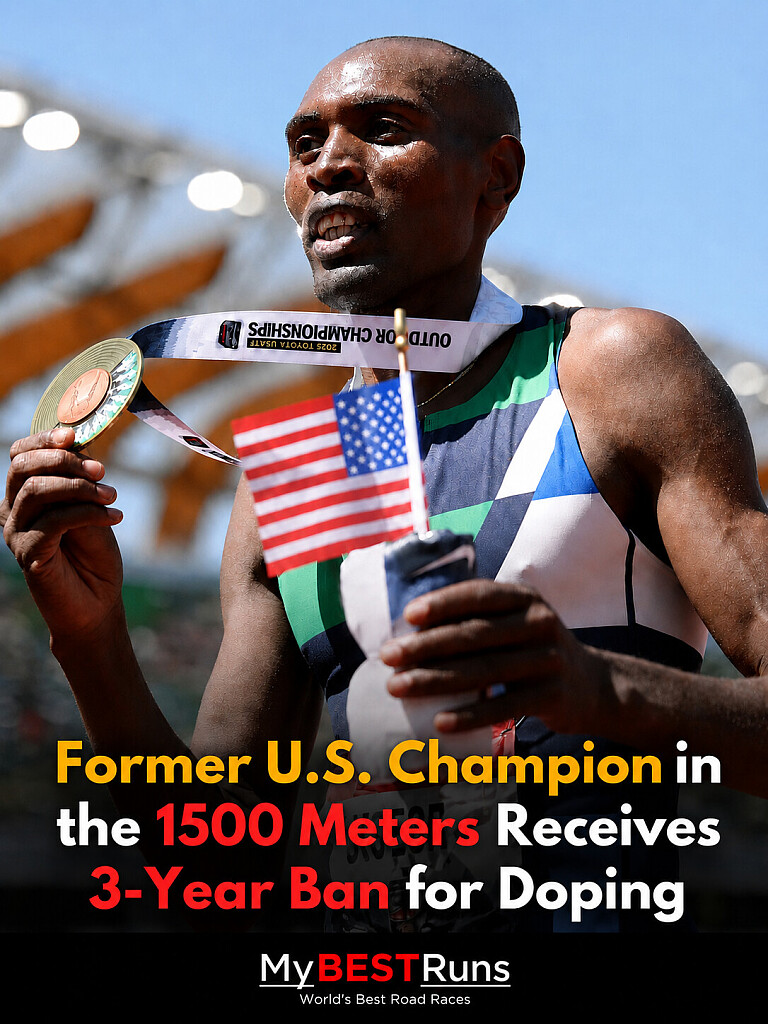
Jonah Koech Banned for Three Years After Blood-Doping Violation
Kenyan-born 1500m runner Jonah Koech has been handed a three-year ban following an anti-doping violation that has stripped him of his 2025 U.S. 1500m championship title and cast a shadow over what had been a breakthrough season.
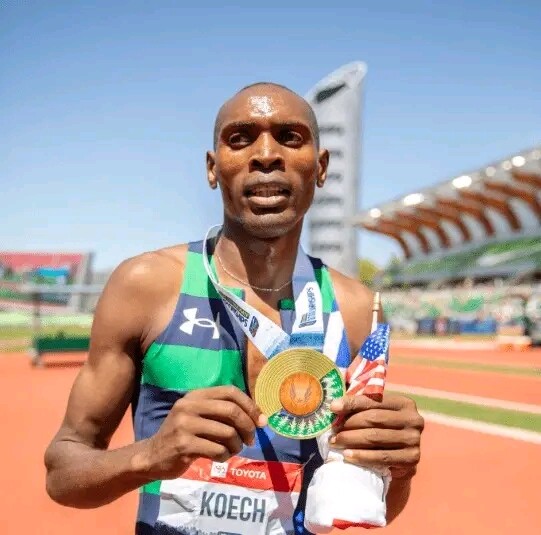
The United States Anti-Doping Agency (USADA) announced that Koech accepted the sanction after an investigation into highly atypical blood values recorded in his Athlete Biological Passport. An expert review of his biological profile determined that the abnormalities were consistent with the use of a prohibited blood-doping method.
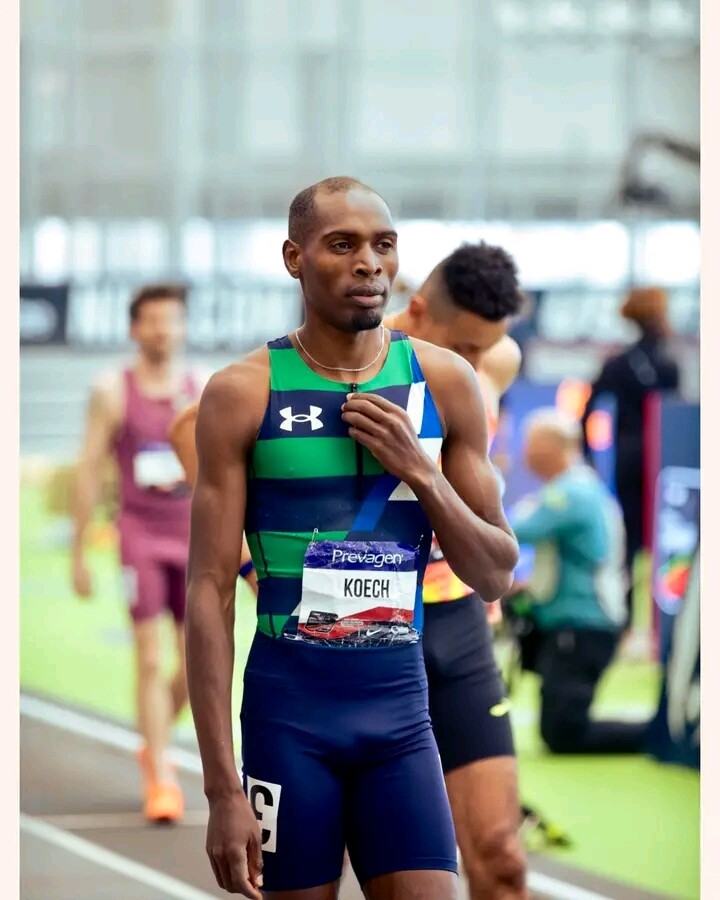
Koech’s sanction comes with a significant consequence: his victory in the men’s 1500m at the 2025 USATF Outdoor Championships in Eugene, Oregon, has been disqualified. The title, which represented one of the biggest achievements of his career, has therefore been removed from his official record.
The ruling marks a dramatic reversal for Koech, who produced a stunning breakthrough in 2025. After establishing himself as a serious force in the 1500m, he captured the U.S. national title and earned international recognition as one of the country’s leading middle-distance runners.
His three-year suspension is shorter than the standard four-year sanction that can apply to serious anti-doping violations. Koech’s acceptance of the violation and sanction resulted in a reduction of the period of ineligibility, allowing him to avoid the full four-year penalty.
Koech will remain ineligible to compete until July 2029, meaning he faces a lengthy absence from competitive athletics. His return will come after one of the most significant seasons of his career has now been rewritten by the anti-doping ruling.
The Athlete Biological Passport played a central role in the case. Rather than simply looking for a banned substance in an individual sample, the system monitors selected biological markers over time. Significant abnormalities in an athlete’s profile can trigger further examination and, where supported by expert evidence, an anti-doping case.
For Koech, the development represents a painful fall from a season that had appeared to signal the arrival of a major new name in American 1500m running. Born in Kenya before building his career in the United States, he had become a notable figure on the U.S. middle-distance scene.
The case also underlines the increasingly sophisticated approach to anti-doping in modern athletics, where an athlete's biological profile can be scrutinized long after a race has finished. For Koech, the consequences will extend far beyond the loss of one championship title, with three years away from competition now standing between him and a possible return to the track.
by Erick Cheruiyot for My Best Runs.
Login to leave a comment
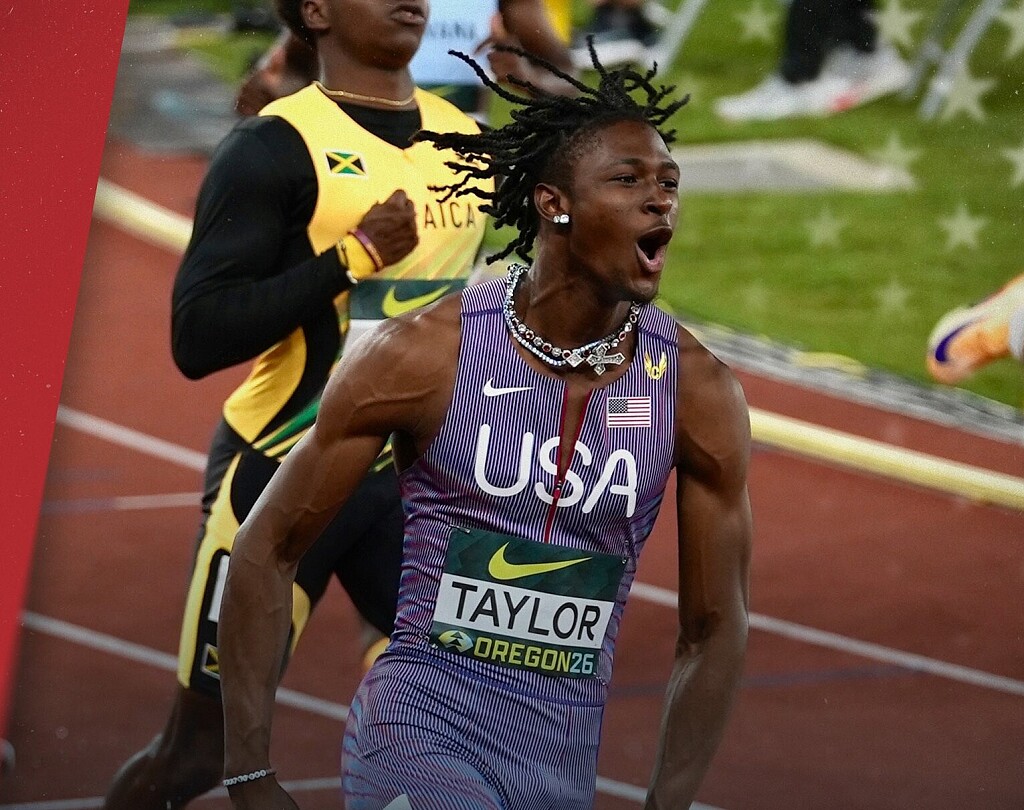
Tate Taylor Makes History With Three Gold Medals At World U20 Championships
At just 18 years old, Tate Taylor has transformed the World Athletics U20 Championships in Eugene into the stage for one of the most extraordinary sprint performances in the history of the competition.
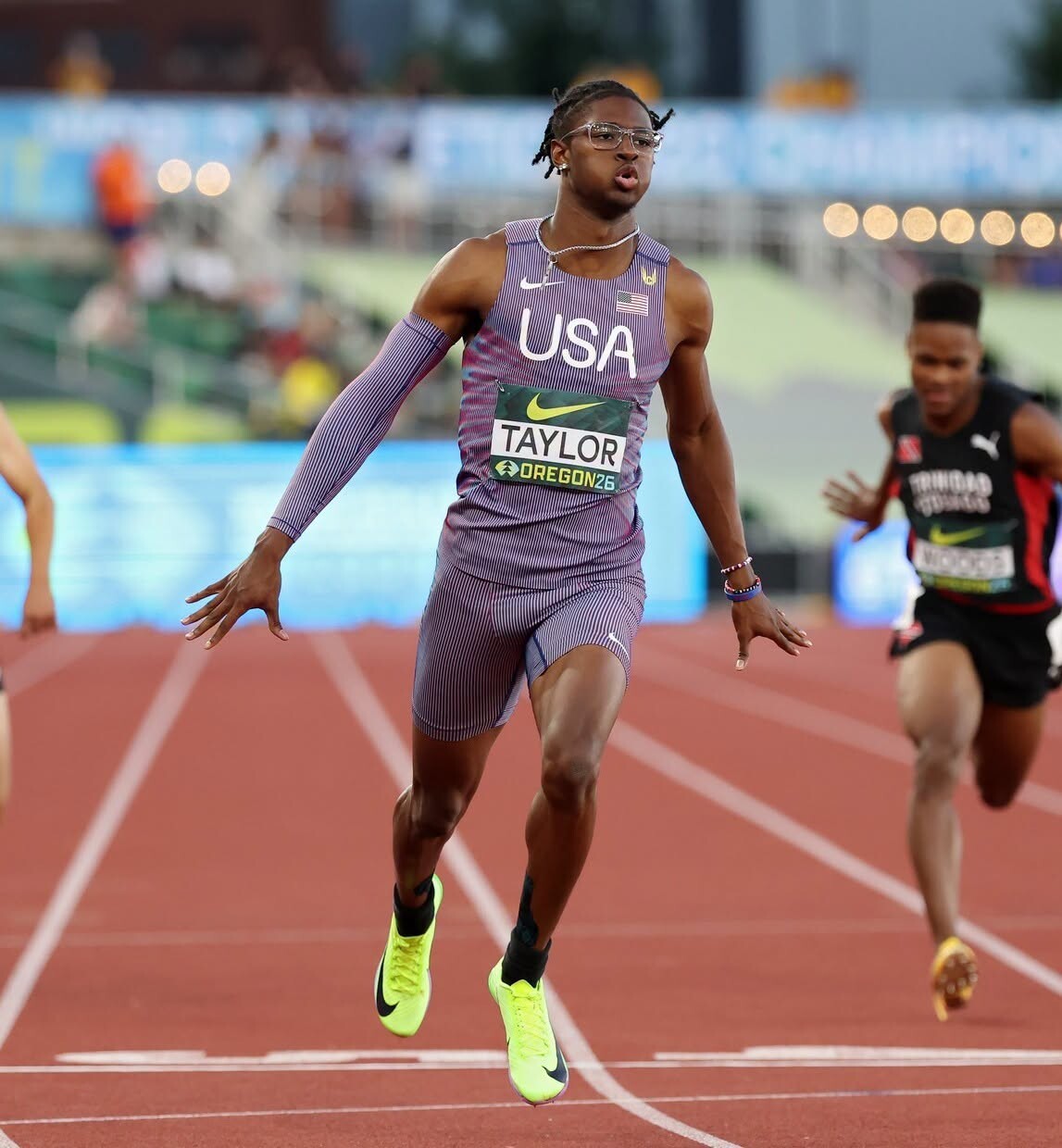
The American speedster completed a remarkable championship treble, winning gold in the men’s 100m, 200m and 4x100m relay as Team USA closed the championships in spectacular fashion.
Taylor began his assault on the sprint titles with victory in the 100m, producing a superb 9.94 seconds to establish himself as the fastest man in the field and add a World U20 title to his rapidly growing list of achievements.
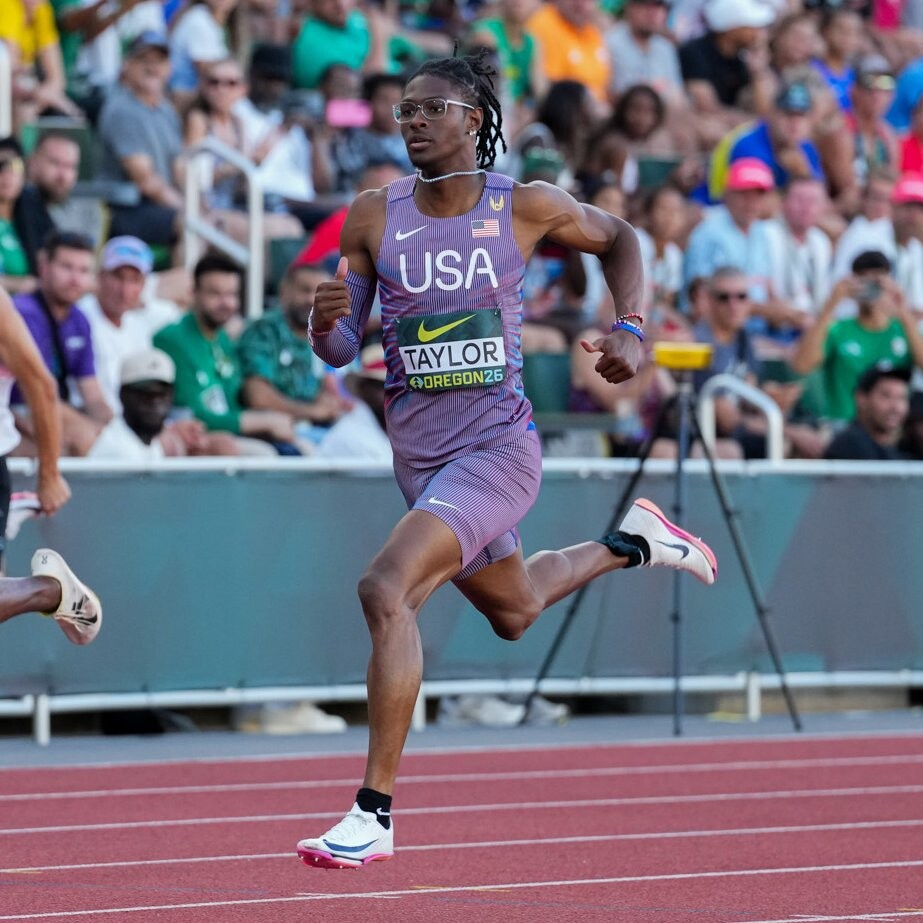
He then returned to Hayward Field for the 200m, where he delivered an even more emphatic statement. Taylor stormed to gold in 19.83 seconds, setting a new World Athletics U20 Championships record.
The performance placed him just 0.16 seconds behind the world U20 record of 19.67 set by Australia’s Gout Gout earlier this year. It also completed Taylor’s historic 100m-200m double, making him the first American man to achieve the feat at the World U20 Championships.
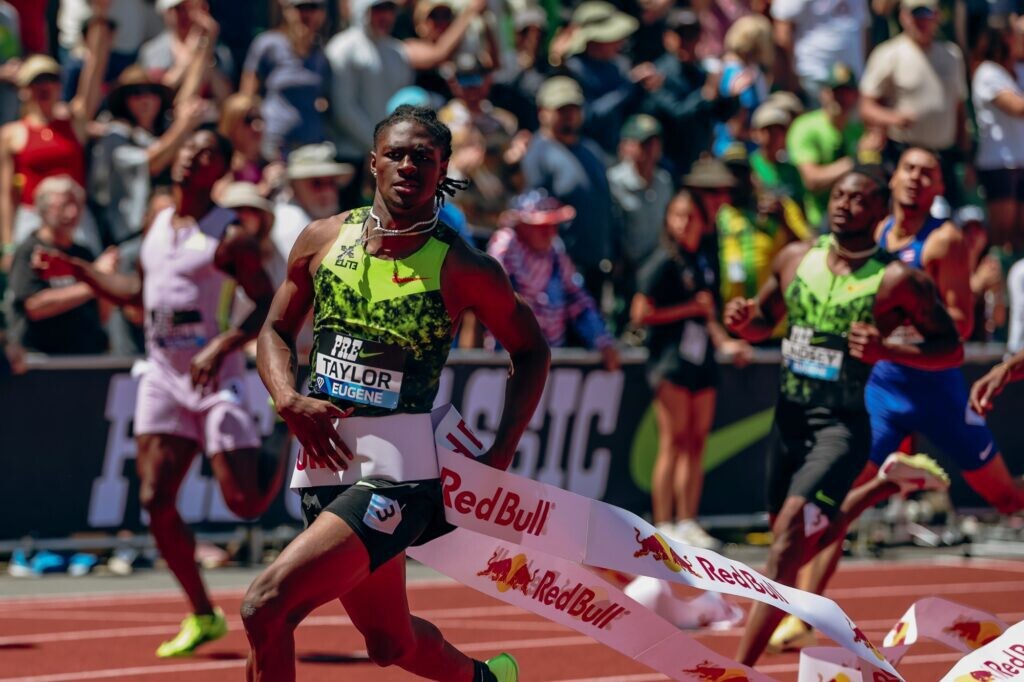
But Taylor was not finished.
In the men’s 4x100m relay, he was handed the baton for the anchor leg with another piece of history within reach. The American quartet delivered a sensational performance, crossing the finish line in 38.16 seconds to set a new world U20 record.
Taylor produced a powerful closing leg to bring the United States home, adding a third gold medal to his collection and helping cap a championship that had already established him as one of the brightest young sprinting talents in the world.
His three victories have now placed him in a rare category in World U20 Championships history. At only 18, Taylor leaves Eugene not simply as a triple champion, but as the central figure in one of the defining performances of the 2026 championships.
The significance of his achievement is even greater when viewed alongside the progression he has made throughout the season. Before arriving at the U20 championships, Taylor had already announced himself on the senior international stage by winning the 200m at the Prefontaine Classic in Eugene in a personal best of 19.75 seconds.
Now, after three races, three gold medals and two championship/world U20 records, Taylor has written his name into the history of the competition.
Eugene was supposed to be a championship for the next generation.
Tate Taylor made it his own.
by Erick Cheruiyot for My Best Runs.
Login to leave a comment
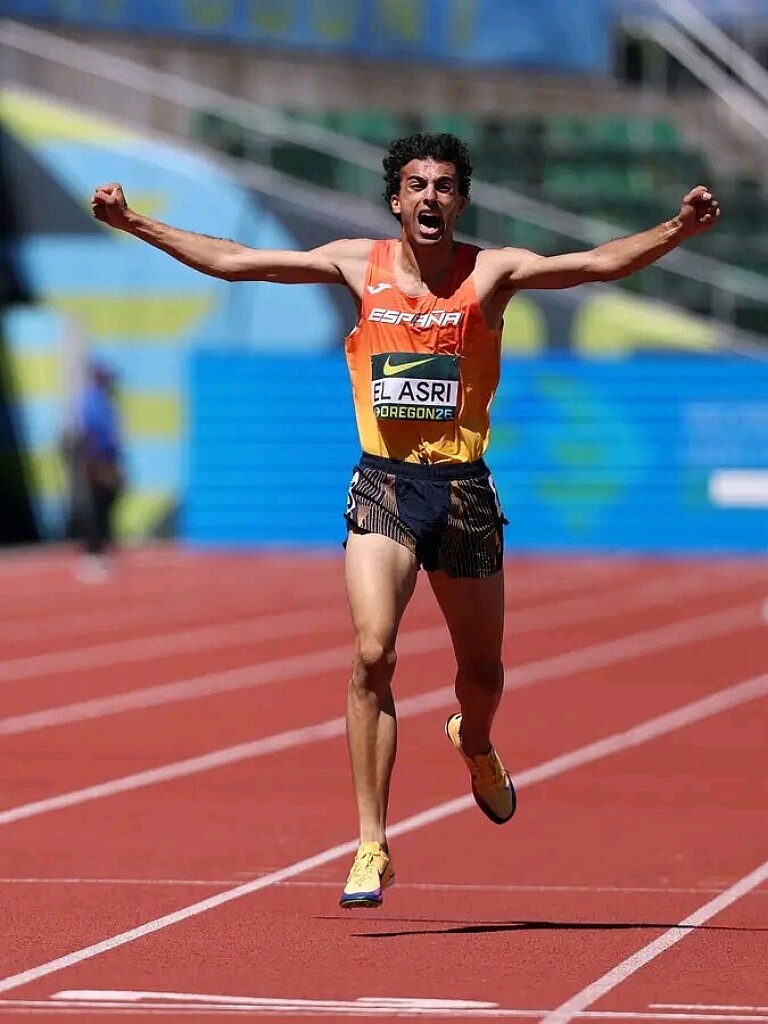
El Asri Sets European U20 Record As Lemiso Takes Silver And Losiwareng Fights Back For Dramatic Bronze
Kenya secured a double podium finish in a fiercely contested men’s 3000m steeplechase final at the World Athletics U20 Championships in Eugene, with Emmanuel Lemiso Someki taking silver and Nicholas Kitum Losiwareng battling his way to bronze.
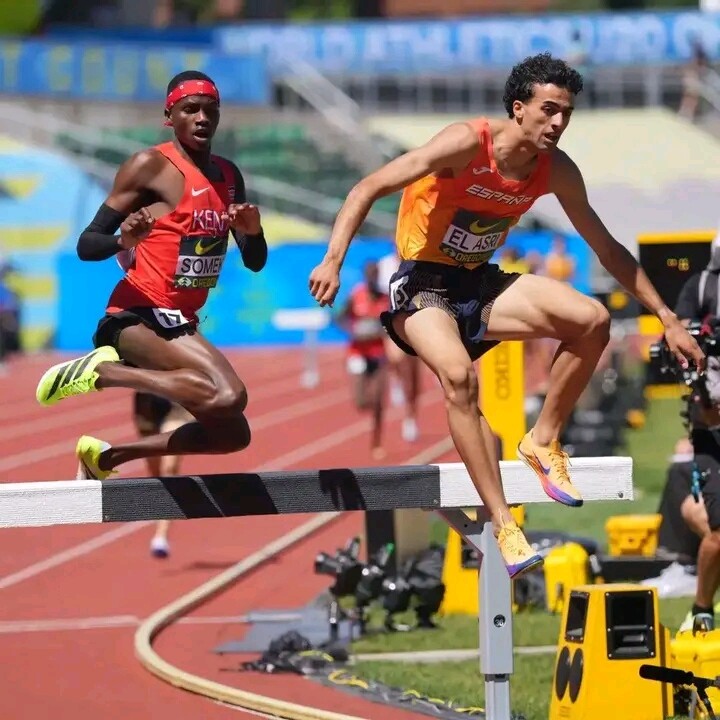
Spain’s Bakr El Asri Mohsine produced the decisive move when it mattered most, surging away in the closing stages to claim the gold medal in 8:28.35 and set a new European U20 area record.
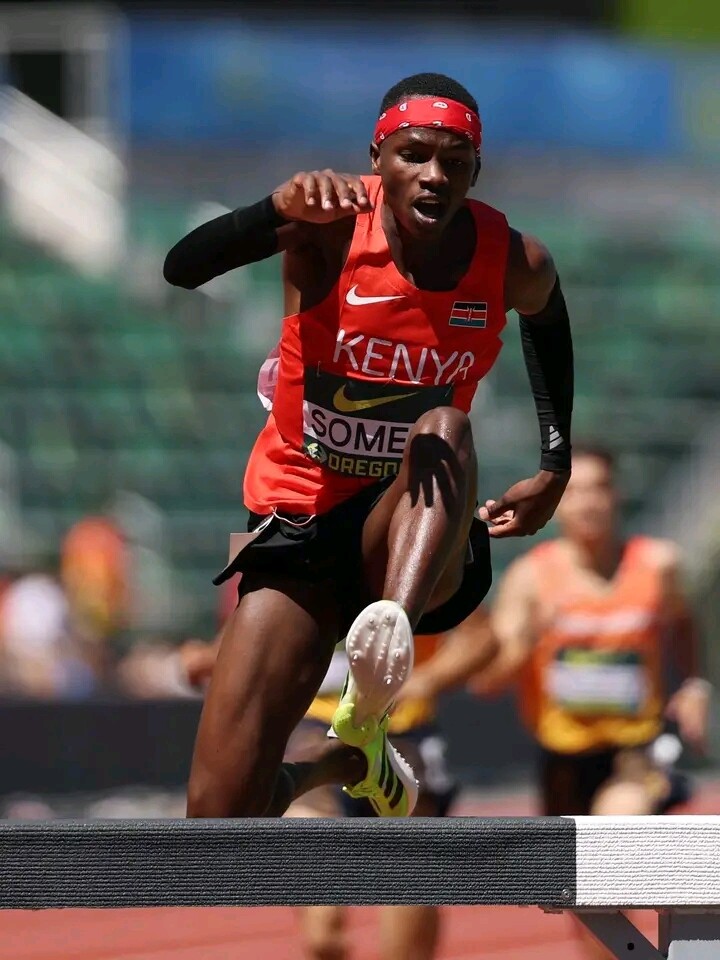
Lemiso, the African U20 champion, had positioned himself at the front of the race and moved into the lead around the 2,300-metre mark as Kenya looked capable of producing another major championship sweep in the event.
But El Asri remained within striking distance. With two laps remaining, the Spaniard began to close the gap before unleashing a powerful finishing surge that ultimately carried him clear of Lemiso and towards the biggest victory of his young career.
Lemiso refused to surrender his position, holding on strongly for silver in a personal-best 8:32.81. It was a significant performance from the Kenyan, who converted his front-running effort into a world U20 championship medal.
Behind him, the battle for bronze delivered perhaps the most dramatic moment of the race.
Losiwareng appeared to lose valuable ground after a stumble at one of the barriers late in the race. Rather than allowing the mistake to end his medal hopes, however, the Kenyan regrouped and launched an aggressive sprint over the final 100 metres.
That charge brought him back into contention with Spain’s Martí Torregrossa. The two athletes fought all the way to the line, with Losiwareng eventually securing third in 8:38.05, just 0.08 seconds ahead of his Spanish rival.
The result gave Kenya two medals from a race that had threatened to slip away in the final stages. Lemiso’s silver and Losiwareng’s bronze also underlined the depth of Kenya’s young steeplechase talent on the international stage.
For El Asri, the victory marked a breakthrough performance, while Kenya could take considerable encouragement from placing two athletes on the podium despite missing out on the title.
The final standings were:
1. Bakr El Asri Mohsine (Spain) — 8:28.35, European U20 Area Record
2. Emmanuel Lemiso Someki (Kenya) — 8:32.81, Personal Best
3. Nicholas Kitum Losiwareng (Kenya) — 8:38.05
In a race decided by the final two laps, El Asri had the speed to take gold, Lemiso had the strength to secure silver, and Losiwareng had the resilience to fight back from adversity and complete Kenya’s double podium finish.
by Erick Cheruiyot for My Best Runs.
Login to leave a comment
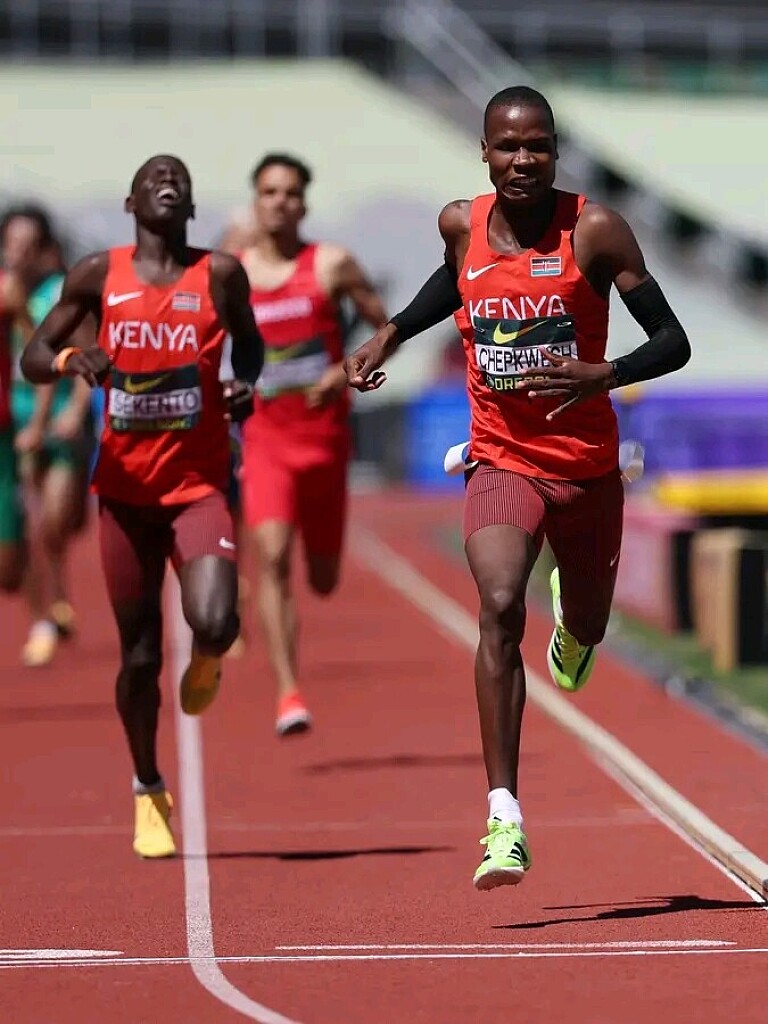
Chepkwech Produces Blistering Finish To Claim U20 1500m World Title
The men’s 1500m final at the World Athletics U20 Championships in Eugene delivered a compelling display of young middle-distance talent, with Kenya’s Wilson Chepkwech producing a remarkable late surge to take the world junior title on August 9, 2026, at Hayward Field.
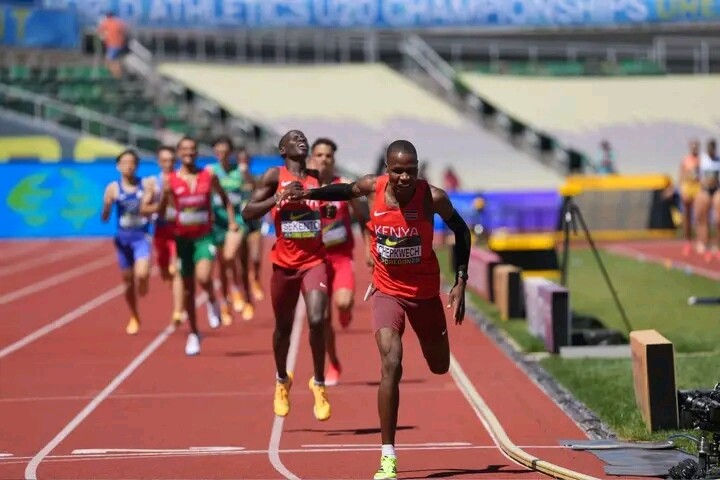
Just 16 years old, Chepkwech timed his decisive move perfectly in the closing stages. After staying within contention through the earlier laps, he unleashed a spectacular final 400 metres in 52.87 seconds, powering away from his rivals to cross the finish line in a personal-best 3:37.46.
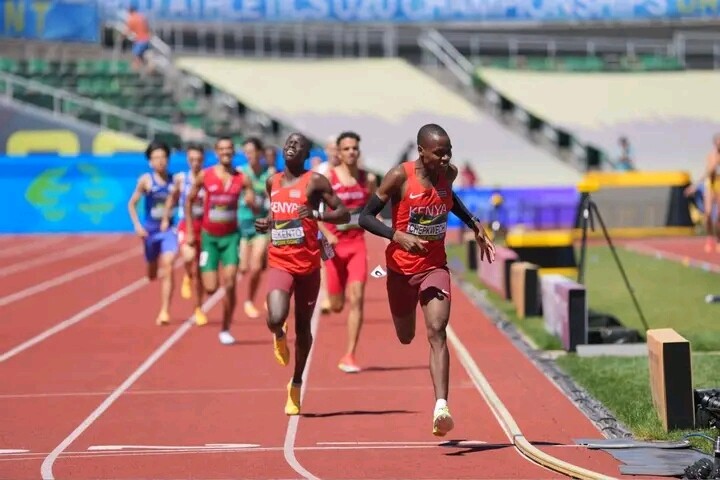
His compatriot David Kapaiko Sekento also enjoyed an outstanding race, securing the silver medal in a personal-best 3:38.32. Sekento remained firmly in the medal battle throughout the closing stages and held on strongly to complete a Kenyan 1-2.
Morocco’s Osama Er Redouani completed the podium in 3:39.68, also setting a personal best. His bronze added an international dimension to a final in which all three medallists produced the fastest performances of their careers.
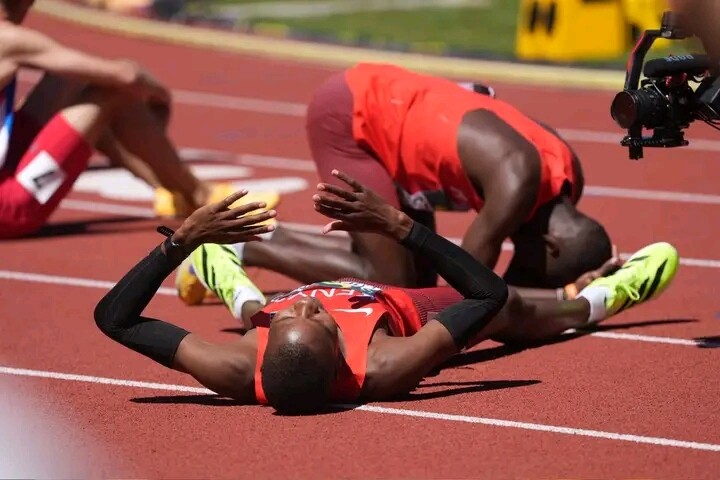
The quality of the race was reflected in the closeness of the leading trio, with less than three seconds separating the gold medallist from bronze. Chepkwech’s finishing speed ultimately proved decisive, while Sekento and Er Redouani demonstrated the competitiveness required to challenge for medals on one of the biggest stages in junior athletics.
The podium was therefore led by Wilson Chepkwech – 3:37.46 (PB), followed by David Kapaiko Sekento – 3:38.32 (PB) and Osama Er Redouani – 3:39.68 (PB).
For Chepkwech, the victory represents a significant early milestone and an indication of the potential he possesses as he continues his development. His age makes the performance particularly notable, but the strength of the final also underlined the depth of talent emerging across the international middle-distance scene.
The result brought the individual track events at the World Athletics U20 Championships Oregon 2026 to a memorable conclusion at Hayward Field. With three athletes setting personal bests and a fiercely contested battle for the medals, the 1500m final provided an exciting showcase of the young talent that will shape the future of the event.
by Erick Cheruiyot for My Best Runs.
Login to leave a comment
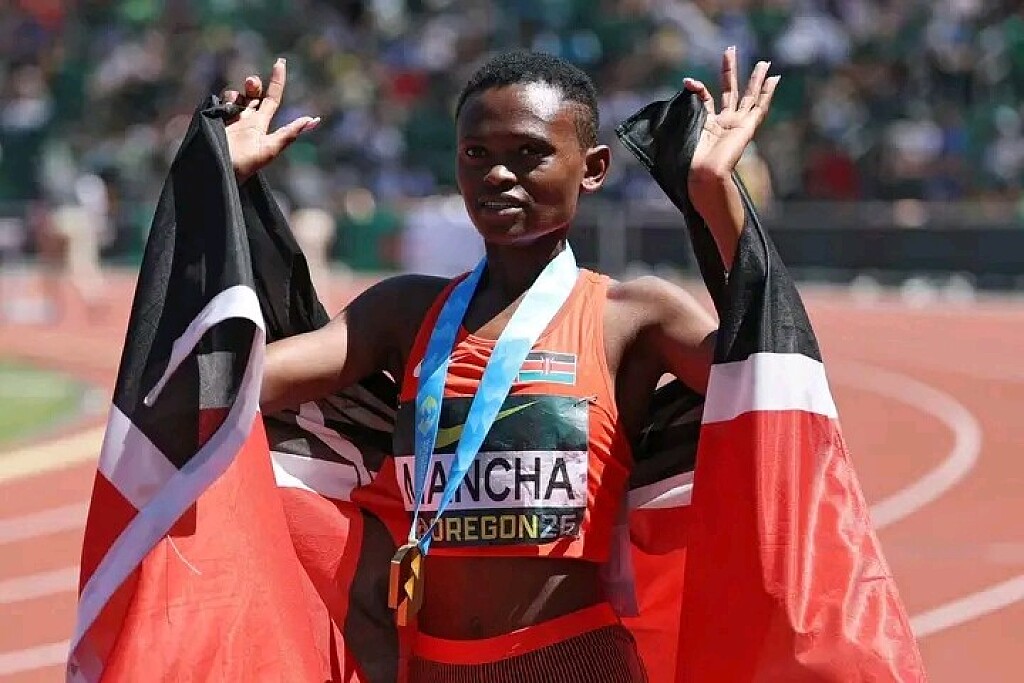
Josephine Mancha Ends Kenya’s 14-Year Wait With Dramatic World U20 1500m Gold
Kenya has a new women’s 1500m world champion at U20 level.
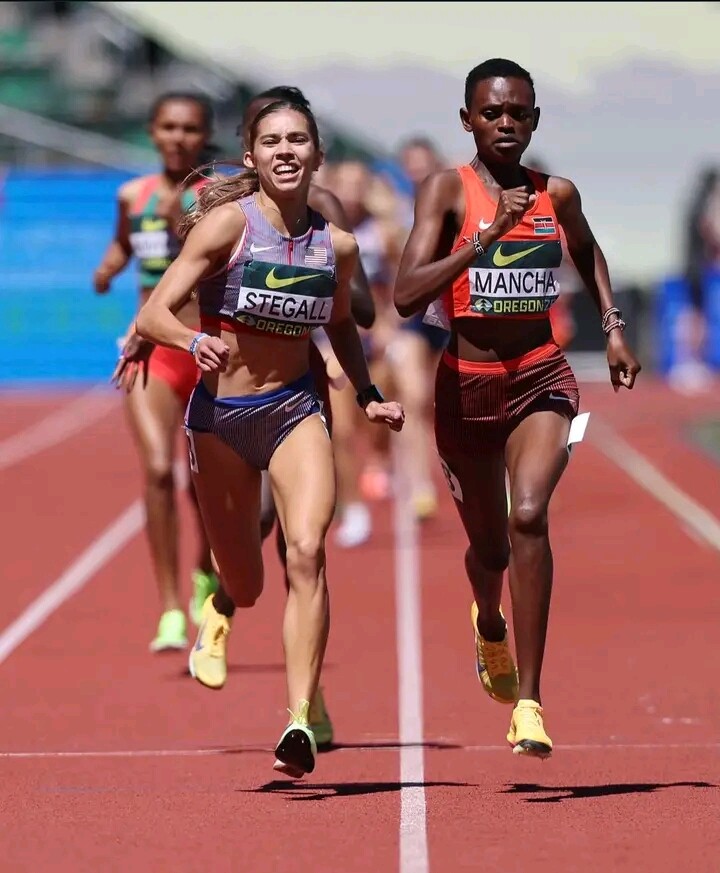
Josephine Sembeyo Mancha produced a composed and determined performance in Eugene to win gold at the World Athletics U20 Championships Oregon 26, ending Kenya’s long wait for another world title in the event.
Mancha crossed the finish line in 4:16.73, edging American Claire Stegall by just 0.04 seconds in one of the most dramatic finishes of the championships. Kenya’s Caren Chepchirchir completed the podium to make it a memorable double medal for the country.
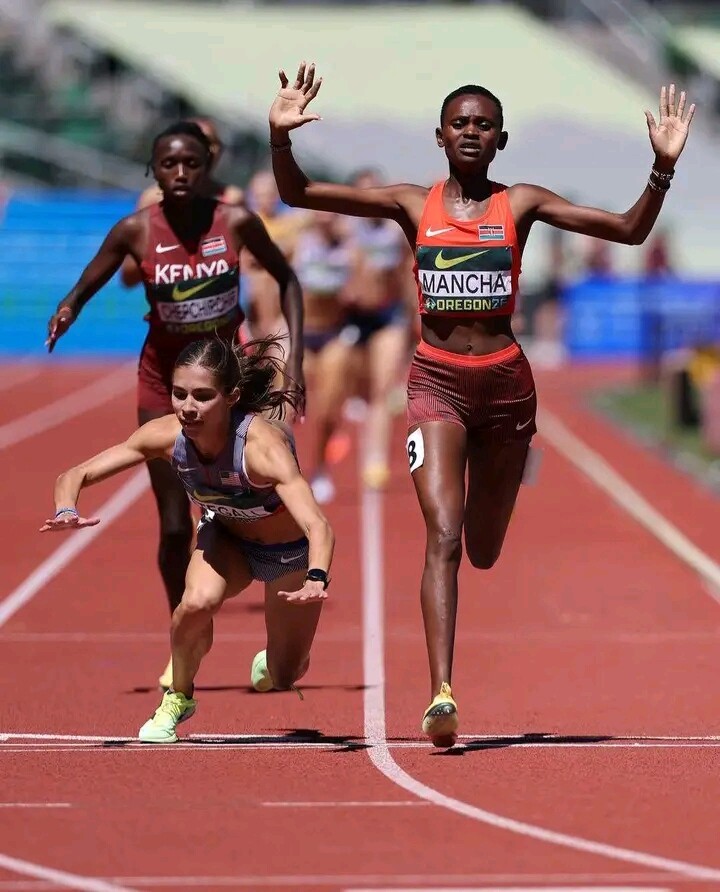
The final was anything but straightforward. A cautious opening lap of roughly 78 seconds saw the athletes remain tightly bunched, creating a dangerous situation as several runners went down in a series of falls.
The chaos continued throughout the race, with a discarded spike even left on the inside of lane one for more than a lap, adding another unusual obstacle to an already unpredictable contest.
Through it all, Mancha remained patient.
Rather than becoming caught up in the disorder around her, the Kenyan kept her composure and positioned herself for the decisive moment. As the bell sounded and the race entered its final lap, the contest suddenly came alive.
Mancha unleashed her finishing speed and surged toward the line, but Stegall refused to surrender. The American launched herself forward in a desperate diving attempt at the finish, making the outcome almost impossible to separate with the naked eye.
In the end, it was Mancha who had done enough.
Josephine Sembeyo Mancha — gold, 4:16.73.
Claire Stegall — silver.
Caren Chepchirchir — bronze.
For Kenya, however, the significance of the victory goes far beyond a single race.
Mancha’s triumph ends a 14-year wait for a Kenyan women’s U20 1500m world title. The last Kenyan to achieve the feat was Faith Kipyegon, who captured the crown in 2012 before going on to build one of the greatest middle-distance careers in athletics history.
Fourteen years later, Mancha has restored Kenya to the top of the global U20 podium.
In a final defined by falls, uncertainty and a breathtaking finish, the young Kenyan showed exactly what championship racing demands: patience, resilience and the ability to produce when it matters most.
Eugene has a new 1500m champion, and Kenya has another name to remember.
by Erick Cheruiyot for My Best Runs.
Login to leave a comment
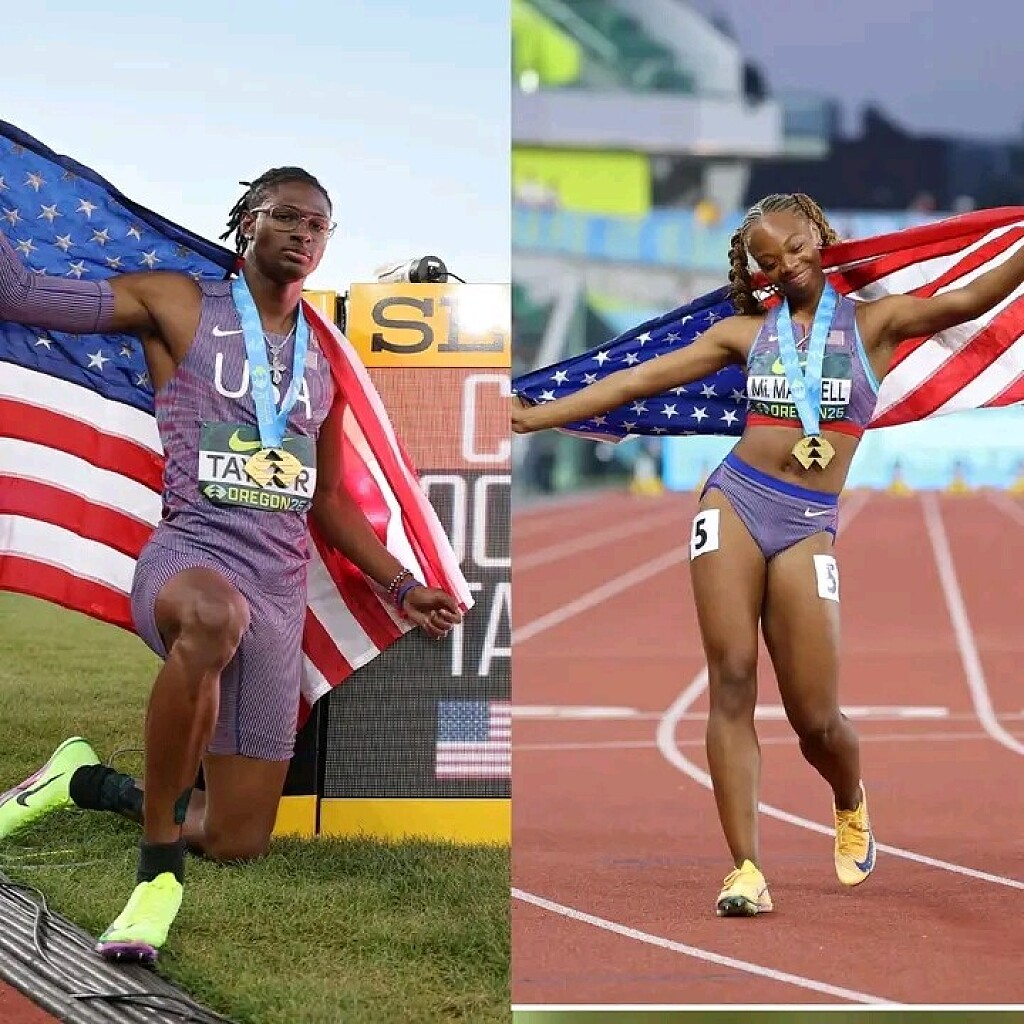
Tate Taylor And Mia Maxwell Make History With U20 Sprint Double Sweep
American sprinting has produced a remarkable moment at the World Athletics U20 Championships in Eugene, Oregon, with Tate Taylor and Mia Maxwell etching their names into the history books through an extraordinary clean sweep of the 100m and 200m titles.
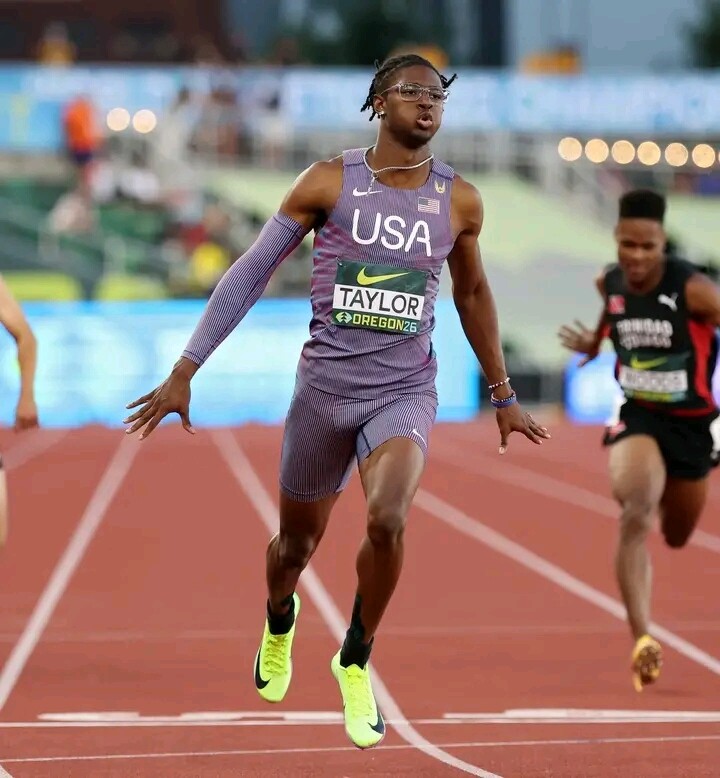
Taylor delivered a stunning display of speed in the men’s sprints, first claiming the 100m crown in 9.94 seconds before returning to the track to dominate the 200m, stopping the clock at an impressive 19.83 seconds.
The double underlines Taylor’s exceptional versatility over both sprint distances and establishes him as one of the most exciting young talents emerging from the United States.
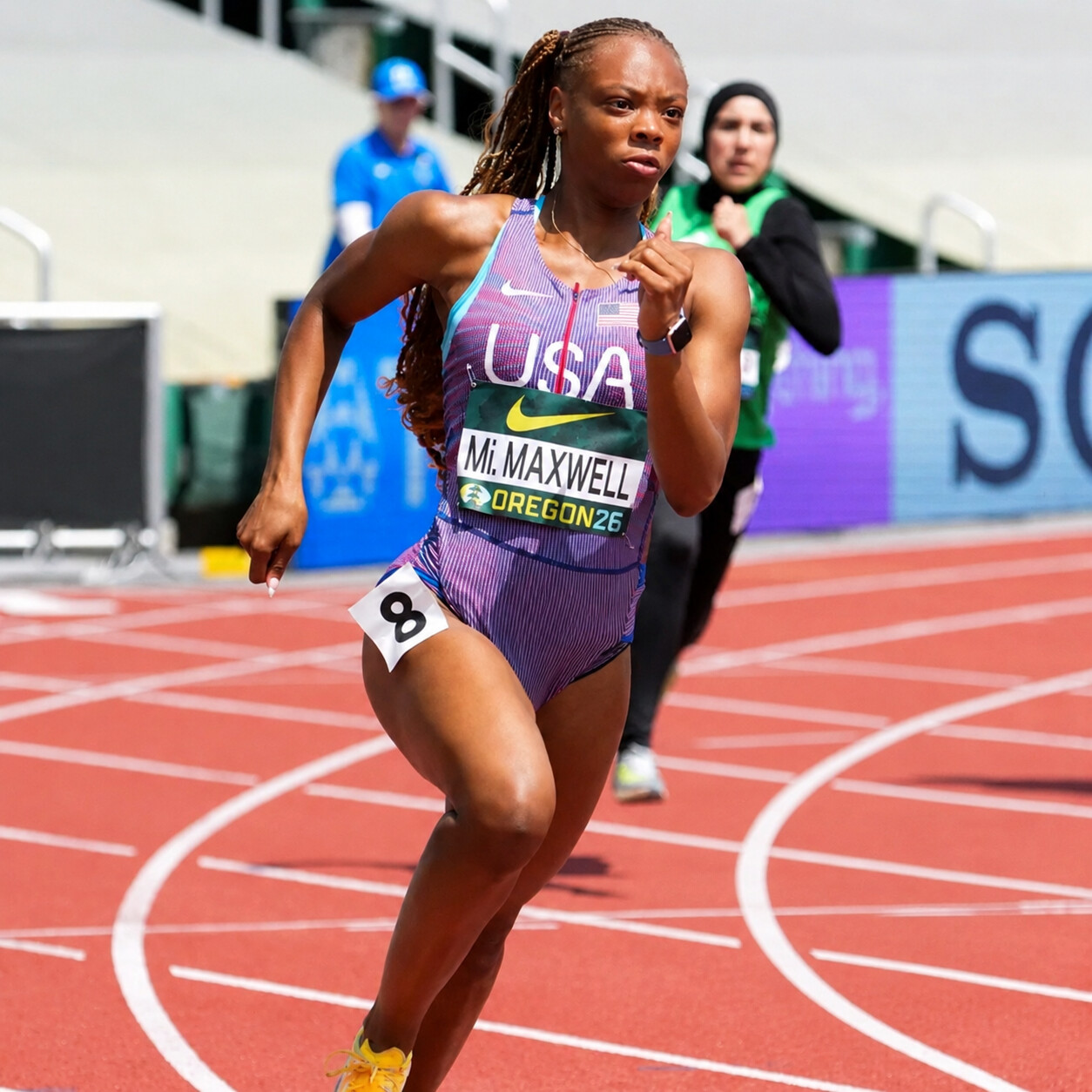
On the women’s side, Maxwell matched Taylor’s achievement with an equally impressive sprint double. She won the 100m title in 11.14 seconds before producing another commanding performance in the 200m, crossing the finish line in 22.37 seconds to secure her second gold medal of the championships.
Together, Taylor and Maxwell have created a rare piece of U20 history.
Their achievement marks the first time a United States male and female sprinter have simultaneously completed the 100m and 200m double at the under-20 global level, making their performances in Eugene particularly significant.
Winning either sprint title at a global championship requires exceptional speed, composure and consistency. Winning both demands something even greater: the ability to recover quickly, maintain peak performance across multiple rounds and deliver when the pressure is highest.
Taylor and Maxwell managed to do exactly that.
Their four victories have provided one of the standout stories of the championships and offered another powerful indication of the depth of sprinting talent developing in the United States.
For Taylor, the combination of 9.94 seconds in the 100m and 19.83 in the 200m represents a remarkable championship campaign. For Maxwell, her 11.14 and 22.37 secured an equally memorable double.
Eugene has therefore witnessed more than four individual sprint victories. It has witnessed the emergence of a historic American sprinting duo whose names will now be permanently linked to one of the most impressive achievements in the history of the World Athletics U20 Championships.
Taylor and Maxwell came to Eugene chasing gold.
They leave as history-makers.
by Erick Cheruiyot for My Best Runs.
Login to leave a comment
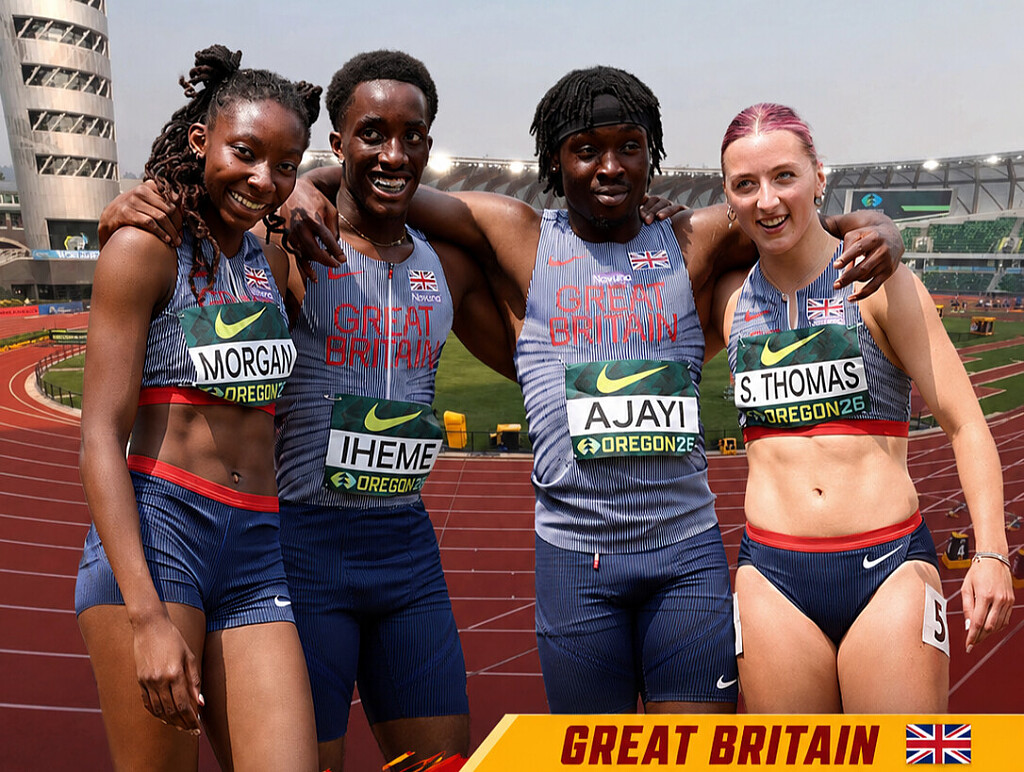
World U20 Relay History Rewritten As Great Britain Breaks Fresh Record After Australia's Brief Reign
Records were rewritten twice within the space of a few unforgettable minutes as the inaugural World Athletics U20 Mixed 4x100m relay produced one of the most dramatic sessions of the World Athletics U20 Championships in Eugene, Oregon.
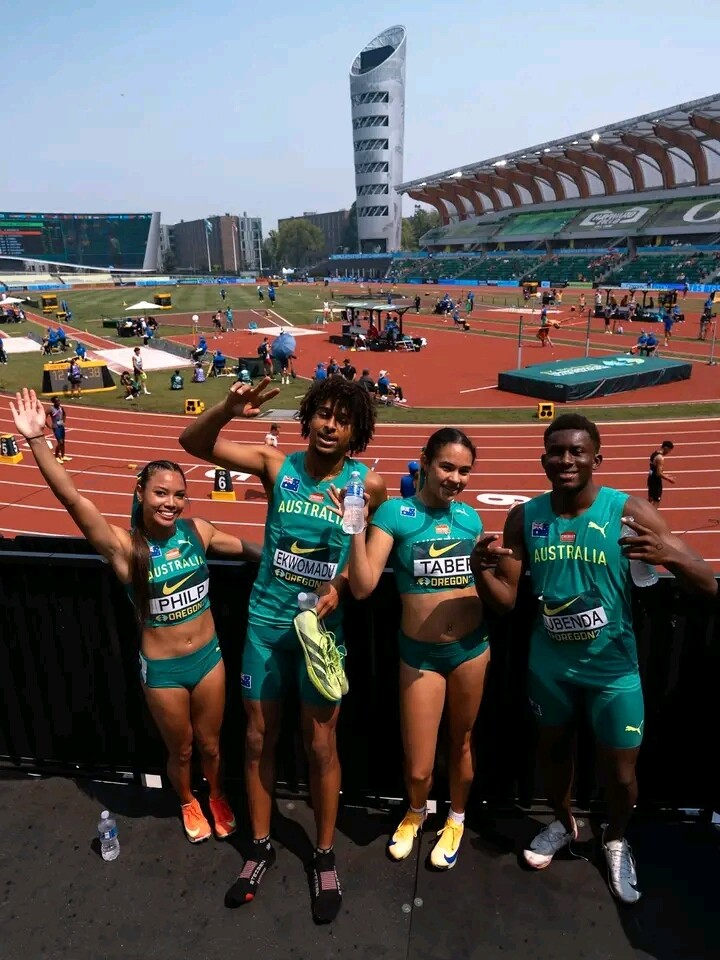
Australia ignited the excitement in the opening heat by storming to a world U20 record of 41.64 seconds, becoming the first team ever to reach that mark and briefly claiming a place in history. For five memorable minutes, the Australian quartet of Uwezo Lebenda, Maya Taber, Kelechi Ekwomadu and Thewbelle Philp stood as world record holders after a sensational performance that also secured their place in Saturday's final.
Their celebration, however, proved to be short-lived.
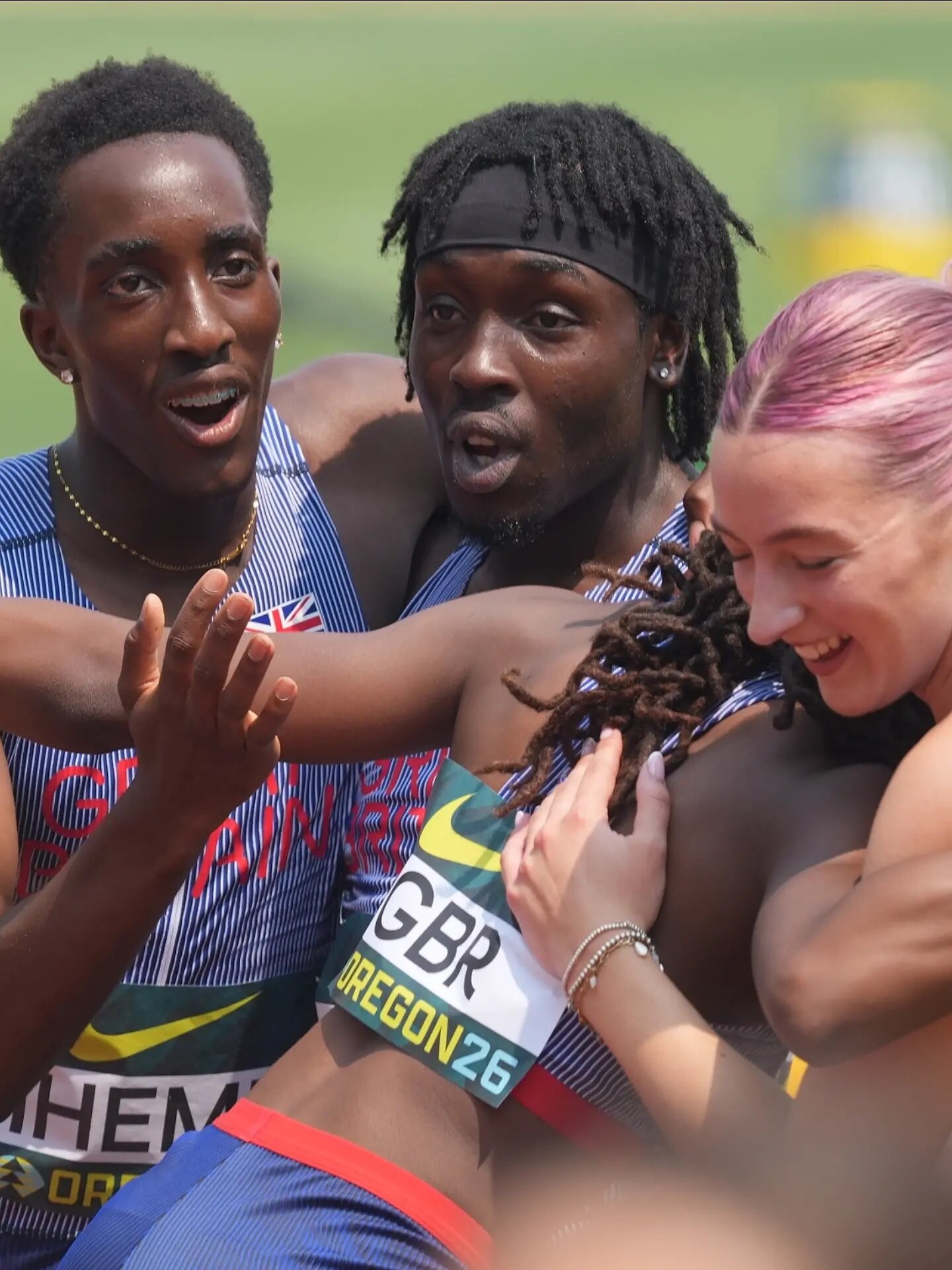
Moments later, Great Britain delivered an even more electrifying display in the second heat, clocking 41.60 to erase Australia's newly established mark and set a fresh World U20 record. It was a masterclass in speed, precision and flawless baton exchanges that propelled the British team into the history books.
The record-breaking quartet of Divine Iheme, Savannah McKenzie Morgan, Mathew Ajayi and Sophie Thomas combined brilliantly from start to finish to produce the fastest mixed U20 4x100m relay ever recorded. Sophie Thomas, who is set to compete for the University of Connecticut (UConn) this year, produced a composed anchor leg to seal the landmark performance.
The extraordinary back-to-back world records underlined the remarkable depth of sprint talent on display, with several other nations also producing outstanding performances to qualify for the final.
Italy impressed with a personal best of 41.74, while the United States advanced comfortably in 41.82. Nigeria also produced a personal best of 41.91 to secure qualification.
Jamaica (42.08 PB), Germany (42.12 PB), France (42.16 PB) and Poland (42.18 PB) completed the eight-team final after delivering strong performances in one of the fastest mixed relay qualifying rounds ever witnessed at the U20 Championships.
With two world records already falling in rapid succession, anticipation is now soaring ahead of Saturday's final. If the qualifying heats are any indication, the newly established global mark of 41.60 may once again come under serious threat as the world's best young sprinters chase another piece of athletics history.
by Erick Cheruiyot for My Best Runs.
Login to leave a comment

Taylor and Maxwell Deliver Golden U.S. Sprint Sweep at World U20 Championships
The United States produced a memorable night of sprinting at the World Athletics U20 Championships in Eugene, Oregon, as Tate Taylor and Mia Maxwell captured the men's and women's 100 metres titles to complete a remarkable American clean sweep in one of track and field's most prestigious junior competitions.
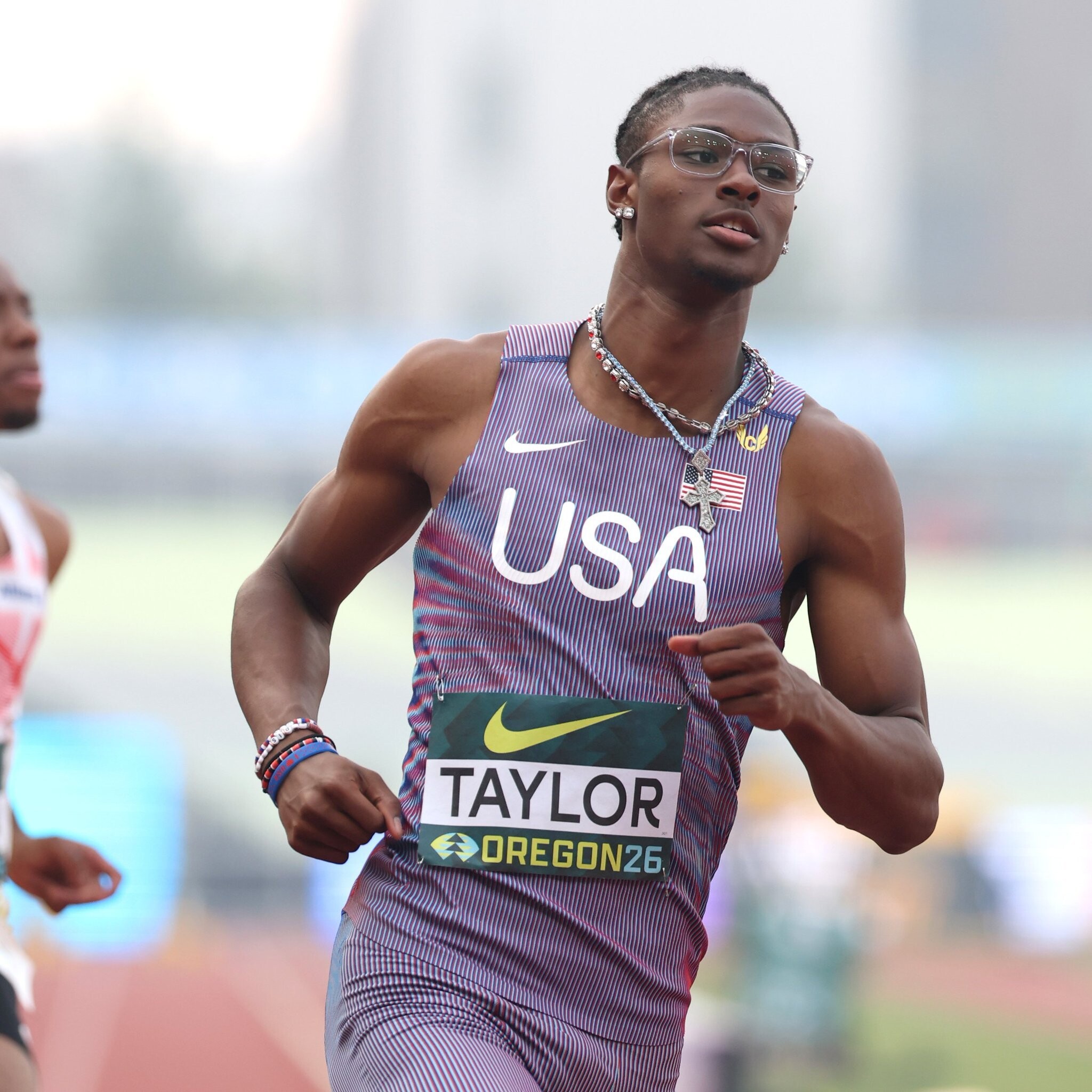
Taylor announced himself among the world's brightest young sprinters with a breathtaking performance in the men's final, powering away over the closing metres to clock a wind-legal personal best of 9.94 seconds. The outstanding run made him the only athlete in the field to break the 10-second barrier and confirmed his status as one of the fastest teenagers in history.
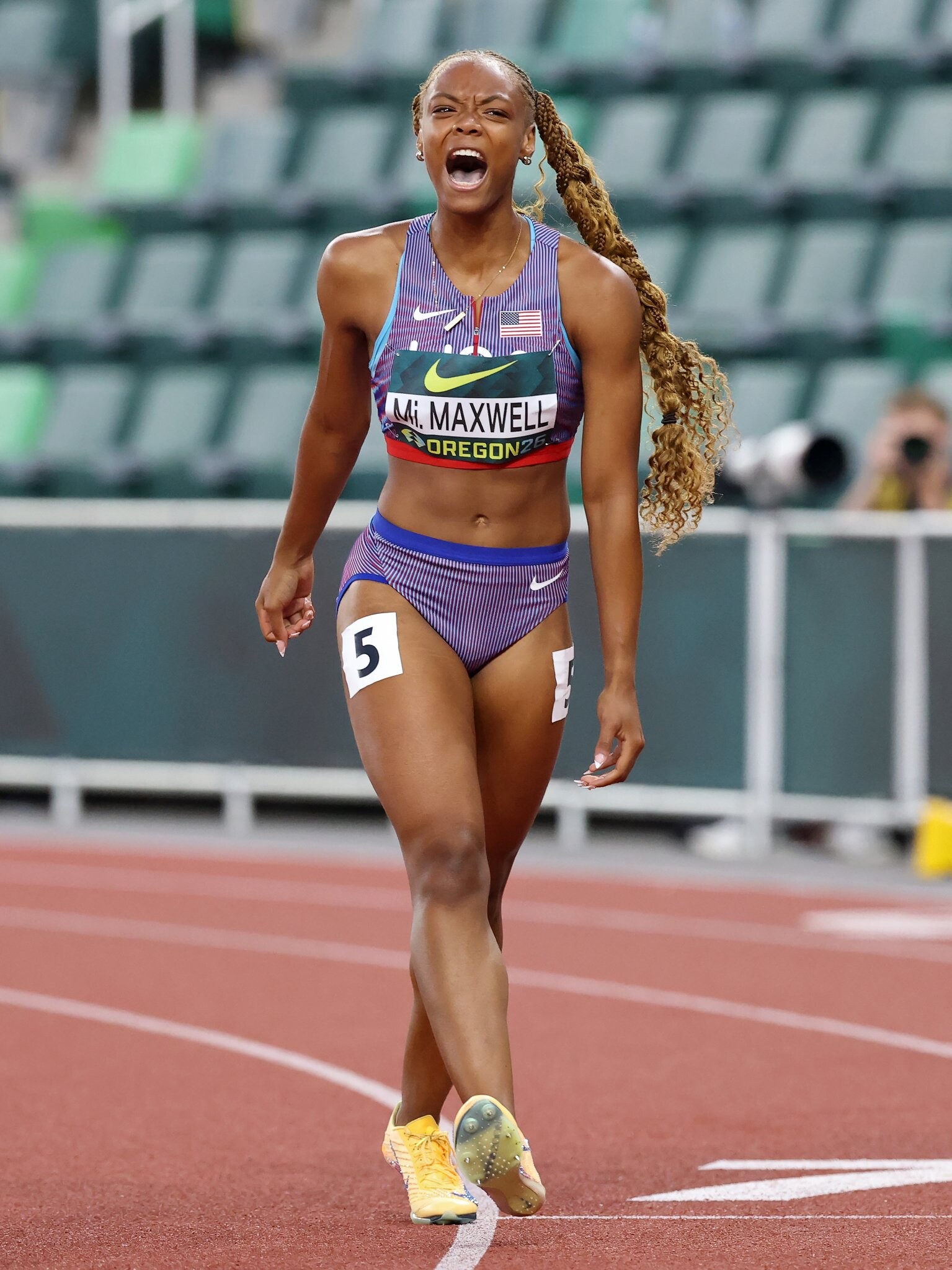
Jamaica's Gary Card claimed the silver medal in 10.05 seconds after a strong race, while South Africa's Marko Ferreira secured bronze in 10.16, completing a highly competitive podium. Despite a closely contested opening half of the race, Taylor's explosive finishing speed proved decisive as he surged clear to take the world junior crown in emphatic fashion.
The women's final delivered another thrilling contest, with Mia Maxwell holding her composure under immense pressure to secure the title in 11.14 seconds. Jamaica's Shanoya Douglas mounted a determined late challenge but settled for silver in 11.17, while Italy's Kelly Ann Doualla Edimo earned bronze after crossing the line in 11.27.
The victory capped an unforgettable championship for the Maxwell family. After progressing impressively through the rounds, Mia delivered when it mattered most, while her twin sister, Mariah Maxwell, also reached the final and finished fifth, underlining the family's exceptional sprinting talent on the global stage.
The double triumph marked a dominant evening for Team USA, which swept both 100m gold medals before a home crowd in Eugene. With Taylor producing a historic sub-10-second breakthrough and Maxwell demonstrating remarkable composure in a world-class women's final, the pair provided another glimpse of the exciting future of American sprinting.
by Erick Cheruiyot for My Best Runs.
Login to leave a comment
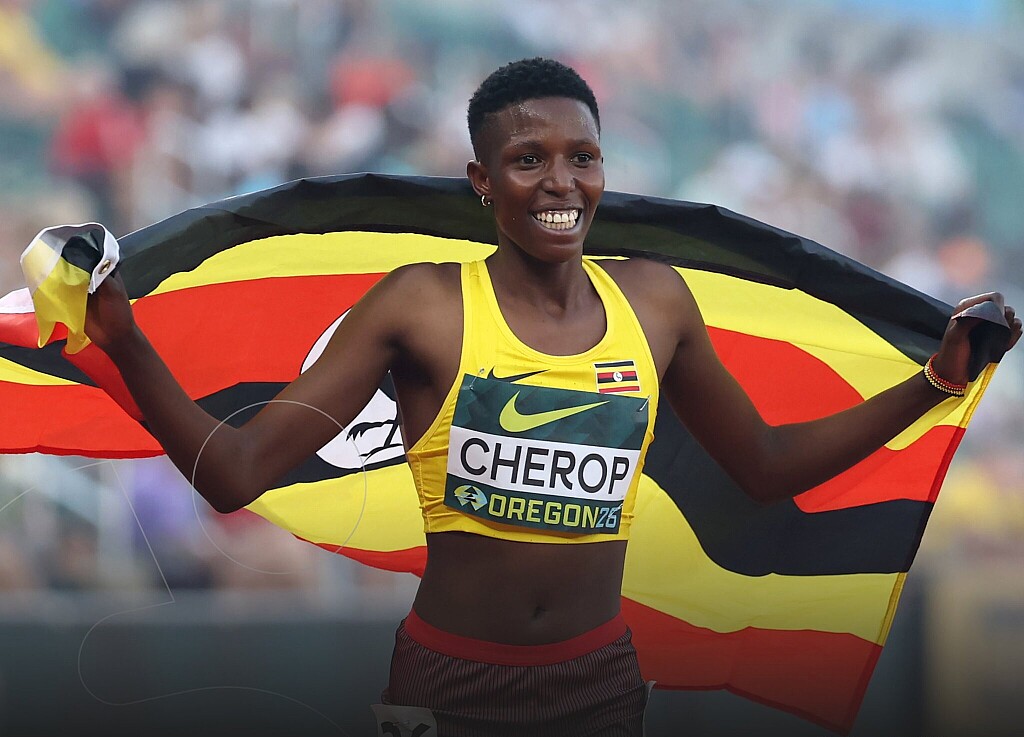
From Silver to Gold: Charity Cherop Storms to World U20 5000m Crown with Tactical Masterclass
Uganda's 19-year-old long-distance sensation Charity Cherop delivered the performance of her young career, producing a championship masterclass to capture the women's 5000m title at the 2026 World Athletics U20 Championships at Hayward Field in Eugene, Oregon.
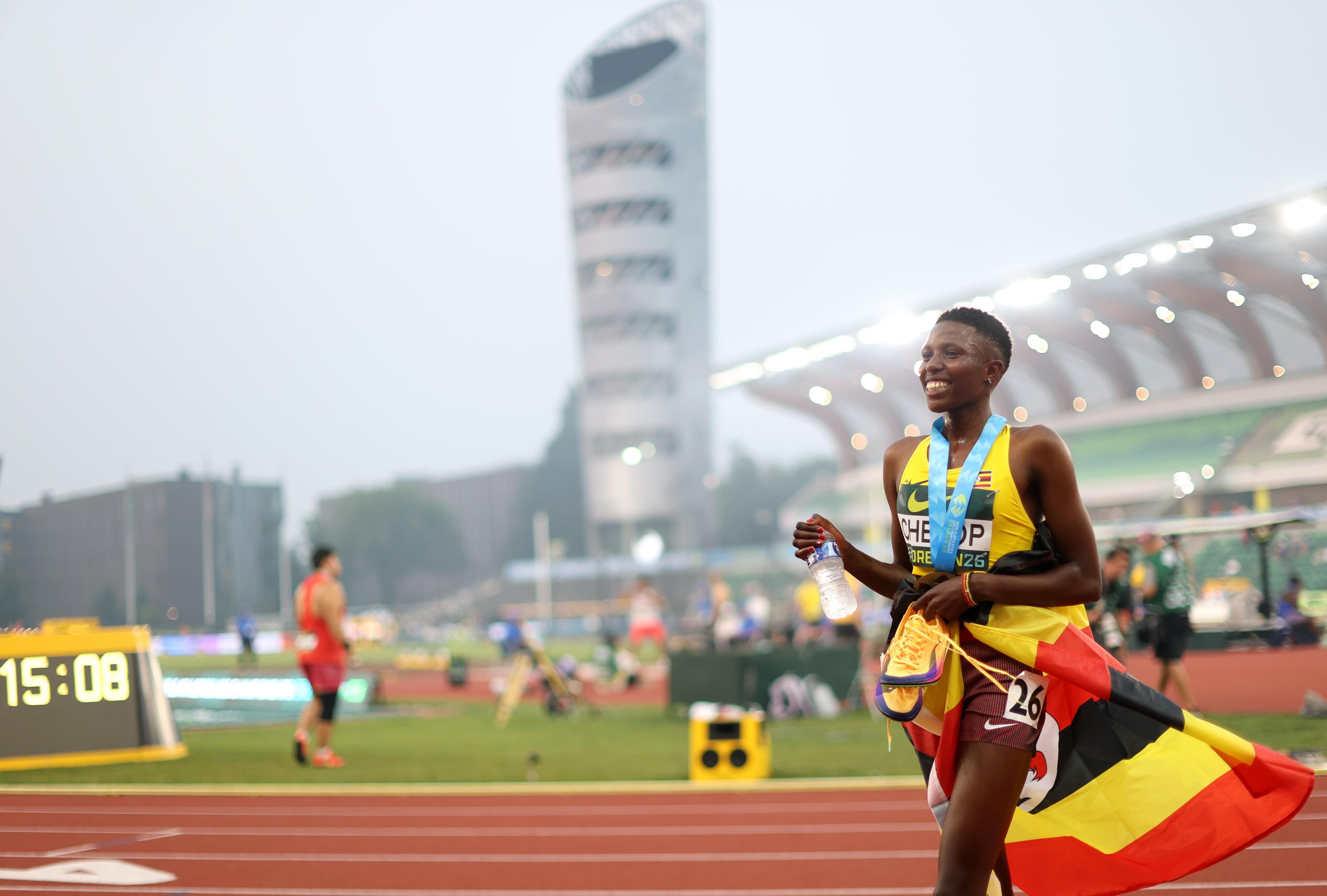
Born on July 4, 2007, Cherop executed a tactically brilliant race, remaining patient throughout the early stages before unleashing a devastating surge over the final kilometre. Her perfectly timed move proved decisive as she crossed the finish line in 15:03.88, becoming the new World U20 champion.
The victory was more than just a world title—it completed a remarkable journey from silver to gold. After finishing runner-up at the previous World Athletics U20 Championships in Lima, Cherop returned to the global stage stronger and more determined, upgrading her silver medal to gold and confirming herself as one of the brightest young stars in international distance running.
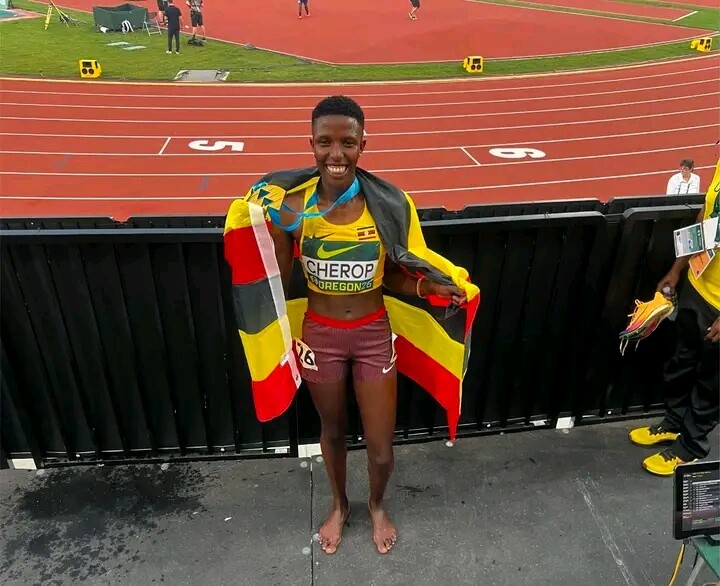
Behind the Ugandan star, Ethiopia's Shito Gumi fought bravely to secure the silver medal in 15:07.91, while Kenya's Joyline Chepkemoi delivered an outstanding performance to claim bronze in 15:09.08, setting a new personal best in the process. The battle for the podium remained fiercely contested until the closing stages, with every medal decided through courage, tactical awareness, and a powerful finishing kick.
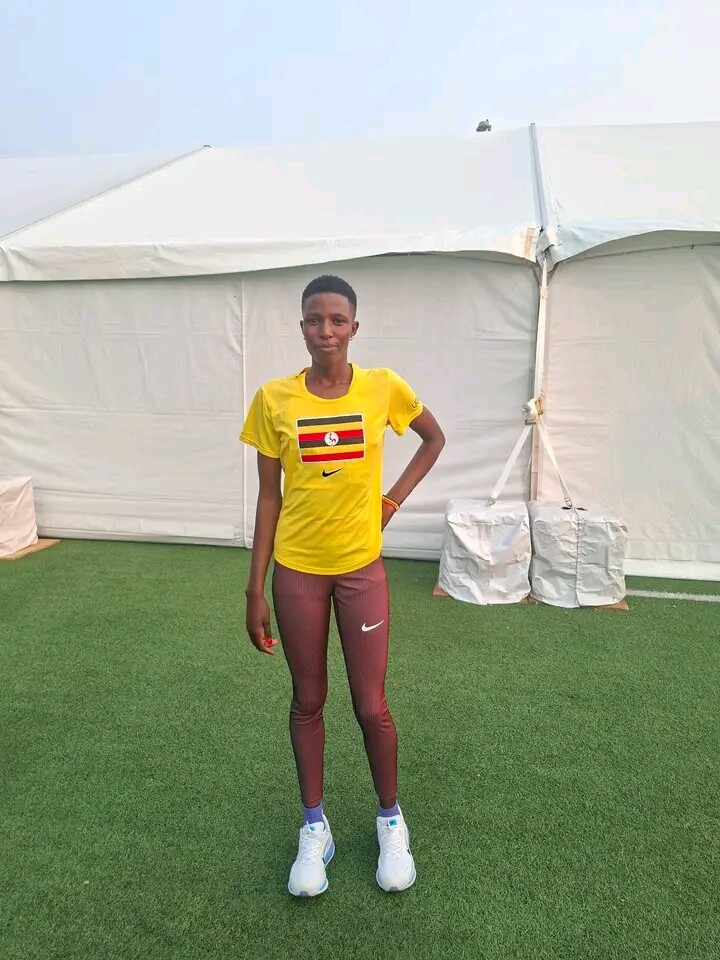
Kenya narrowly missed placing two athletes on the podium as Cynthia Chepkirui finished a strong fourth in 15:14.86, while Sweden's Carmen Cernjul rounded out the top five in 15:22.18.
Ethiopia's Emebet Tilahun placed sixth in 15:32.51, followed by Japan's Yui Onotora in seventh with 15:37.33. Uganda celebrated another top-10 finish through Bentalin Yeko, who finished eighth in 15:48.35, underlining the nation's impressive depth in women's distance running.
Germany's Julia Ehrle claimed ninth in 16:09.53, with France's Lamia Mourabit completing the top ten in 16:10.80.
Further down the field, Portugal's Carolina Correia impressed with an 11th-place finish in a personal best 16:11.47, while Norway's Venus Teffera also celebrated a lifetime best of 16:12.07 in 12th. Germany's Gloria Herold added another personal best, clocking 16:13.75 for 15th place.
France's Laly Porentru, Japan's Ayami Yoshida, the Netherlands' Rosalie Ten Bruggencate, Italy's Sofia Ferrari and Mimosa Miari Fulcis, Spain's Fatima Hernandez, Switzerland's Anina Hirzel, Great Britain's Eliza Nicholson, Canada's Airlie Downie-Back and Athena Andrecyk, Mexico's Kenya Cuahutle, and Australia's Libby Mantay and Imogen Baker all battled courageously to the finish, highlighting the exceptional depth and global talent assembled for the championship final.
The only athlete unable to start the race was the United States' Emily Wisniewski, who was listed as DNS.
The women's 5000m final showcased the very best of championship distance running—patience, tactical intelligence, and a thrilling finish. On the biggest stage of her junior career, Charity Cherop produced a race worthy of a world champion, transforming silver in Lima into gold in Eugene and writing another unforgettable chapter in Uganda's rich distance-running legacy.
by Erick Cheruiyot for My Best Runs.
Login to leave a comment

Eugene Welcomes the Future of Athletics as the 2026 World U20 Championships Get Underway
The global spotlight turns to Eugene, Oregon, today as the 2026 World Athletics U20 Championships officially get underway at the iconic Hayward Field, launching five days of elite competition that will showcase the sport's brightest young talents.
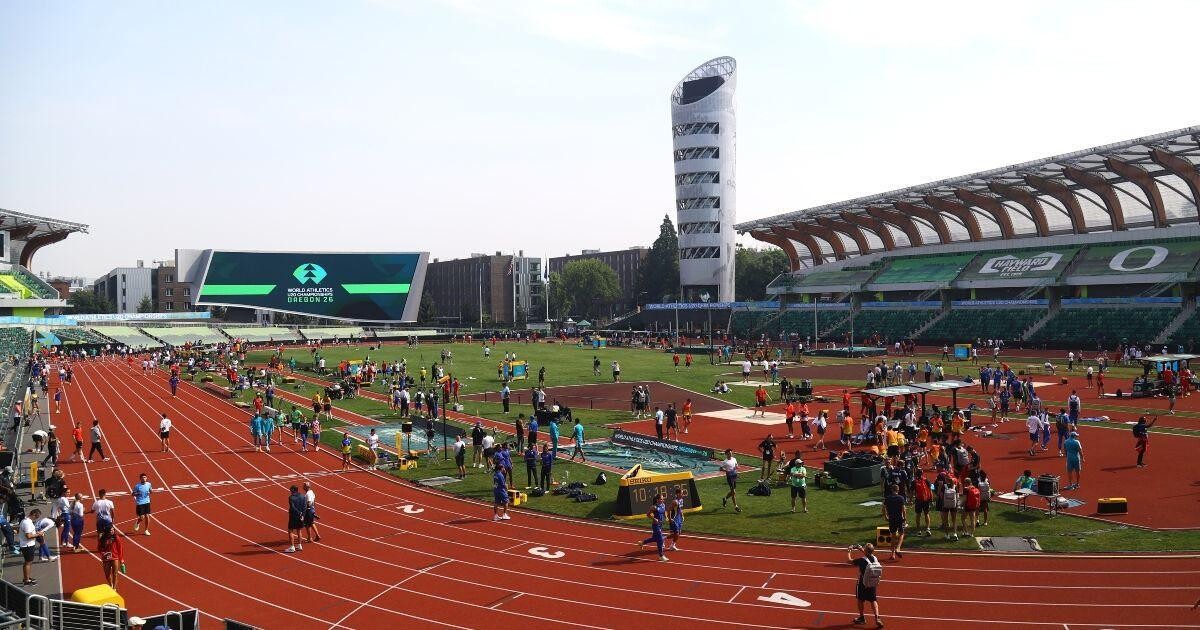
Running from August 5 to August 9, the 40th edition of the championships is the biggest in the event's history, bringing together more than 1,800 athletes representing 147 nations. For many of these rising stars, the championships mark the first major step toward future Olympic, World Championship, and Diamond League success.
The opening day immediately promises world-class action with three gold medals on the line. The women's 5,000m and men's 5,000m finals will test the endurance of the world's finest young distance runners, while the mixed 4×400m relay is expected to provide a thrilling conclusion to the day's competition as teams battle for the first relay title of the championships.
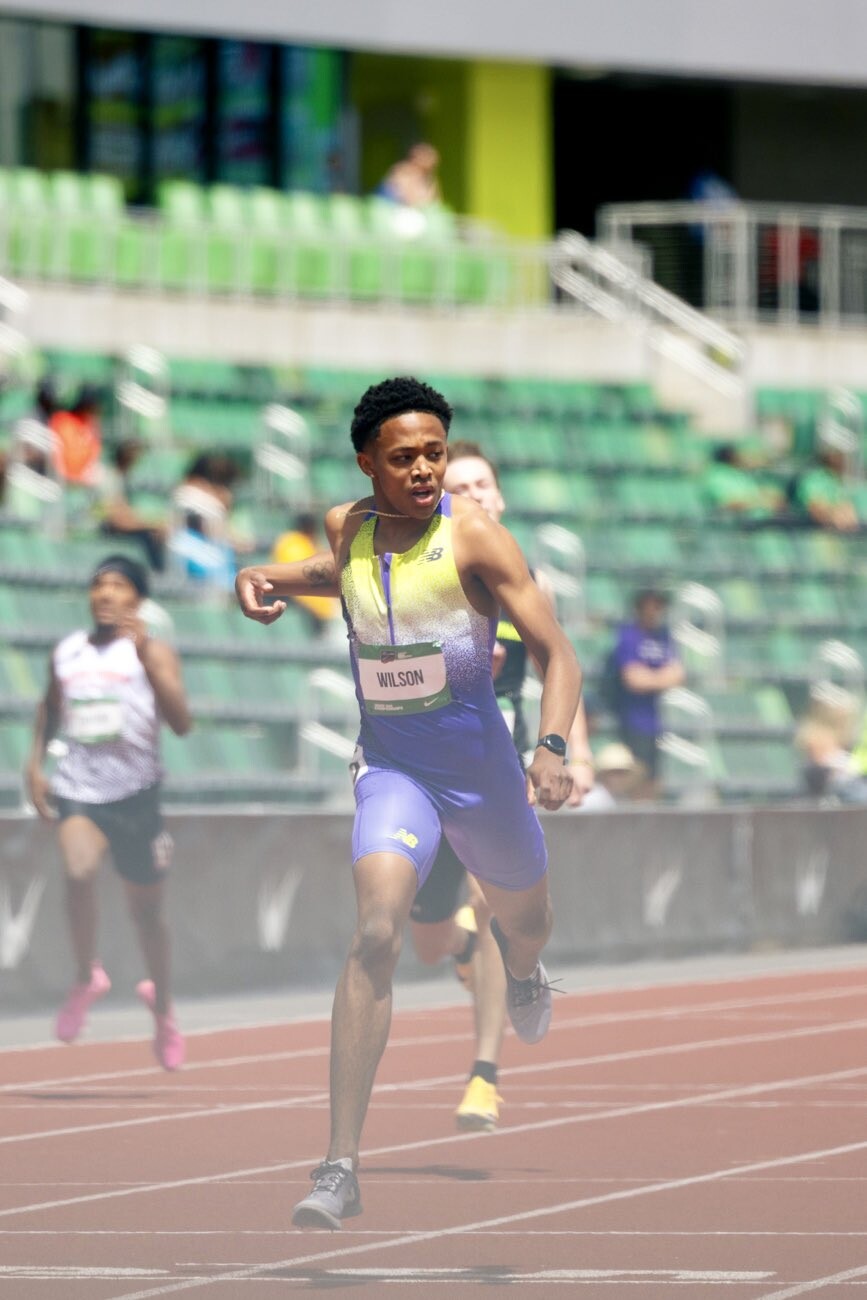
Several exciting athletes arrive in Eugene carrying high expectations. American sprint sensation Quincy Wilson will be one of the biggest attractions on home soil after establishing himself as one of the fastest young quarter-milers in the world. Fellow American Tate Taylor, the high school national record holder, will also be aiming to translate his remarkable speed into championship gold.
Jamaica's emerging sprint talent Shanoya Douglas enters the competition determined to challenge for the women's 200m title, while Kenya's Frankline Kibet will spearhead his country's pursuit of more distance-running success, continuing a tradition that has produced some of the greatest champions in athletics history.
Beyond the medals, the World U20 Championships have long served as the launching pad for future legends of the sport. Numerous Olympic and world champions first announced themselves on this very stage, making Eugene the perfect setting for another generation of athletes eager to leave their mark on the global scene.
Fans around the world will be able to follow every moment of the action through a range of broadcast partners, including Peacock in the United States, SuperSport across Sub-Saharan Africa, Eurovision Sport throughout Europe, CBC Gem in Canada, Seven Network in Australia, and World Athletics+ in eligible territories.
With national pride, championship titles, and the chance to announce themselves to the world at stake, the stage is set for five unforgettable days of athletics. As competition begins at the historic Hayward Field, the next generation of global stars is ready to write the opening chapter of what could become remarkable careers.
by Erick Cheruiyot for My Best Runs.
Login to leave a comment
Where Greatness Begins: The Day a 15-Year-Old Usain Bolt Changed Sprinting Forever
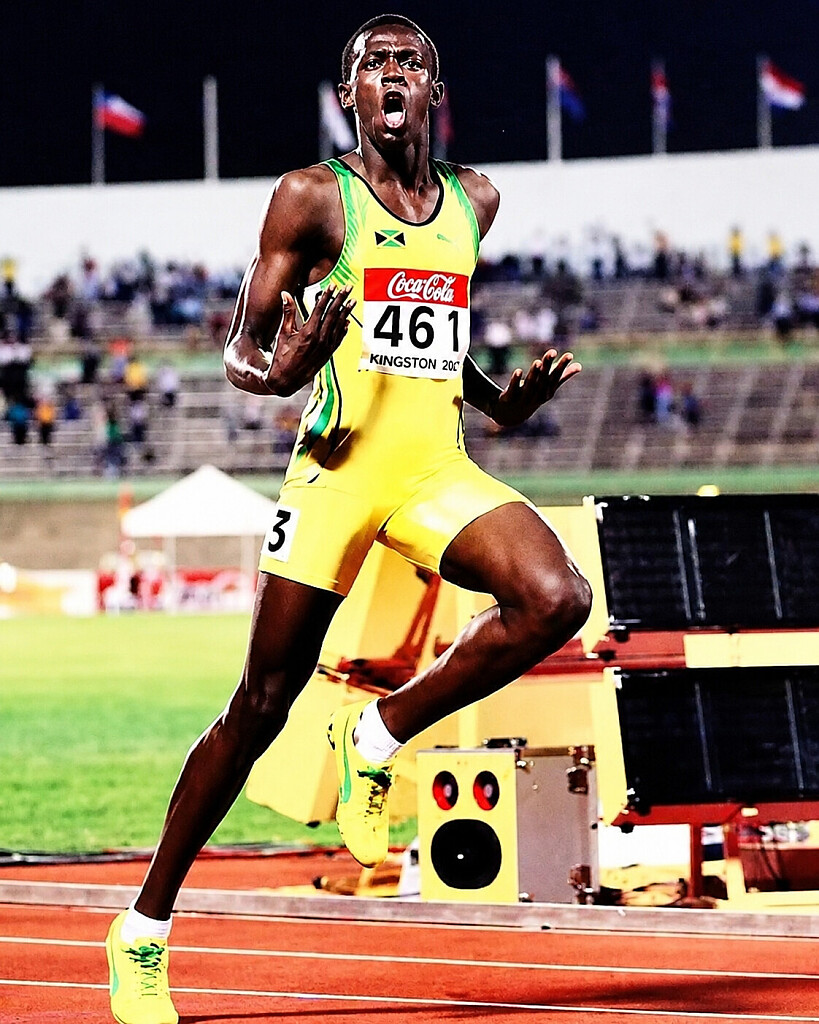
Long before he became the fastest man in history, before the Olympic gold medals, world records, and global superstardom, Usain Bolt was simply a gifted teenager with extraordinary speed and limitless potential. In 2002, on the track at Kingston's National Stadium in Jamaica, the world witnessed the first chapter of a story that would forever change athletics.
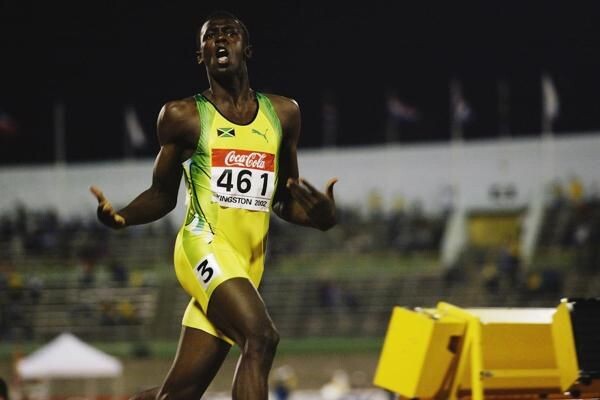
At just 15 years old, Bolt lined up for the men's 200 metres at the World Junior Championships with the weight of expectation resting on young shoulders. Competing before a passionate home crowd, the Jamaican prodigy produced a performance that instantly captivated the athletics world. Crossing the finish line in 20.61 seconds, he became the youngest athlete ever to win the men's 200m title at the championships.
It was far more than a gold medal. It was the moment the world realised that a once-in-a-generation talent had arrived.
Bolt's victory in Kingston marked the beginning of one of the greatest careers in sporting history. Over the years that followed, he rewrote the record books, dominated the Olympic Games and World Championships, and transformed sprinting into a global spectacle through his breathtaking speed, infectious personality, and unrivalled confidence. His legacy continues to inspire young athletes across the globe, many of whom dream of following the same path he once began as a teenager.

This week, that dream comes alive once again as the World Athletics U20 Championships take centre stage at the iconic Hayward Field in Eugene, Oregon. The venue has already witnessed the birth of future superstars. In 2014, it was where Britain's Dina Asher-Smith and Uganda's Joshua Cheptegei captured their first global titles, launching careers that would later produce world championships, Olympic medals, and lasting legacies in athletics.
Twelve years later, another generation arrives in Eugene hoping to create its own defining moment.
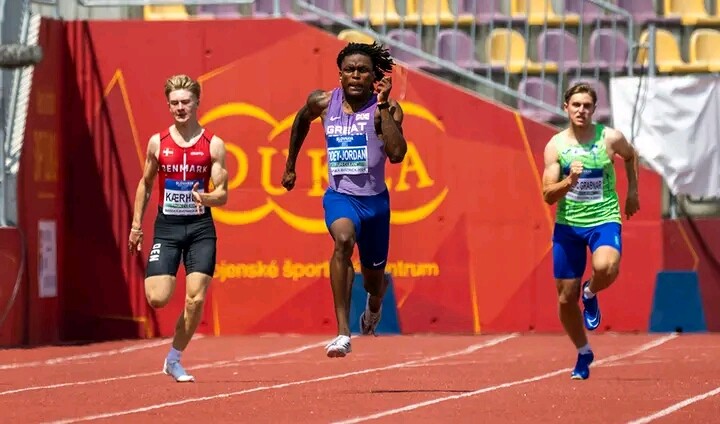
Among the brightest young talents is Great Britain's Jake Odey-Jordan, the 200m bronze medallist from Lima who now owns the European U20 100m record after an astonishing 10.01-second performance. He enters the championships eager to build on his growing reputation as one of Europe's most exciting young sprinters.
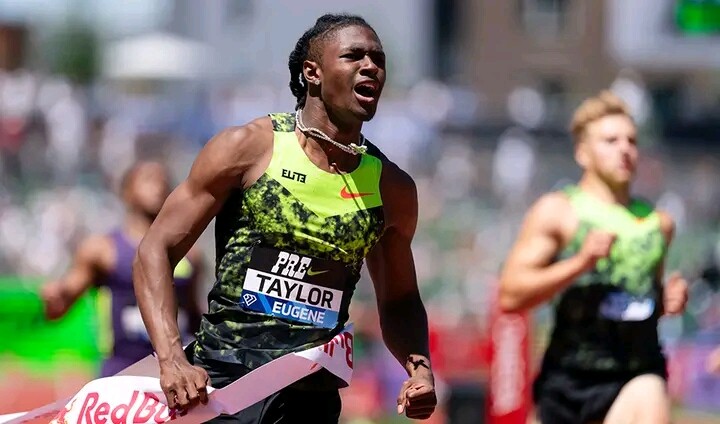
The United States will look to Tate Taylor, who has already made history as the first American high school athlete to break the 20-second barrier for the 200 metres. Fresh from a Diamond League victory in a sensational 19.75 seconds, he arrives in Eugene carrying the momentum of one of the most remarkable junior seasons ever recorded.
Jamaica, the nation that introduced the world to Usain Bolt, will once again have high hopes through Shanoya Douglas. The talented sprinter has established herself as one of the championship's leading contenders after producing lifetime bests of 10.98 seconds for the 100m and 22.11 for the 200m this season.
History has repeatedly shown that the World U20 Championships are far more than a junior competition. They are often the first chapter in the careers of future Olympic champions, world record holders, and global icons. Every generation arrives with ambitious dreams, but only a select few leave having announced themselves to the world.
No one can say with certainty whether the next Usain Bolt will emerge this week. Greatness cannot be predicted, and legends are never manufactured. Yet every legendary career begins with a single breakthrough performance.
For Bolt, that defining moment came in Kingston in 2002.
Now, under the famous lights of Hayward Field, another group of gifted teenagers stands ready to chase history. Somewhere among them could be the next athlete whose name will inspire the world for years to come.
by Erick Cheruiyot for My Best Runs.
Login to leave a comment
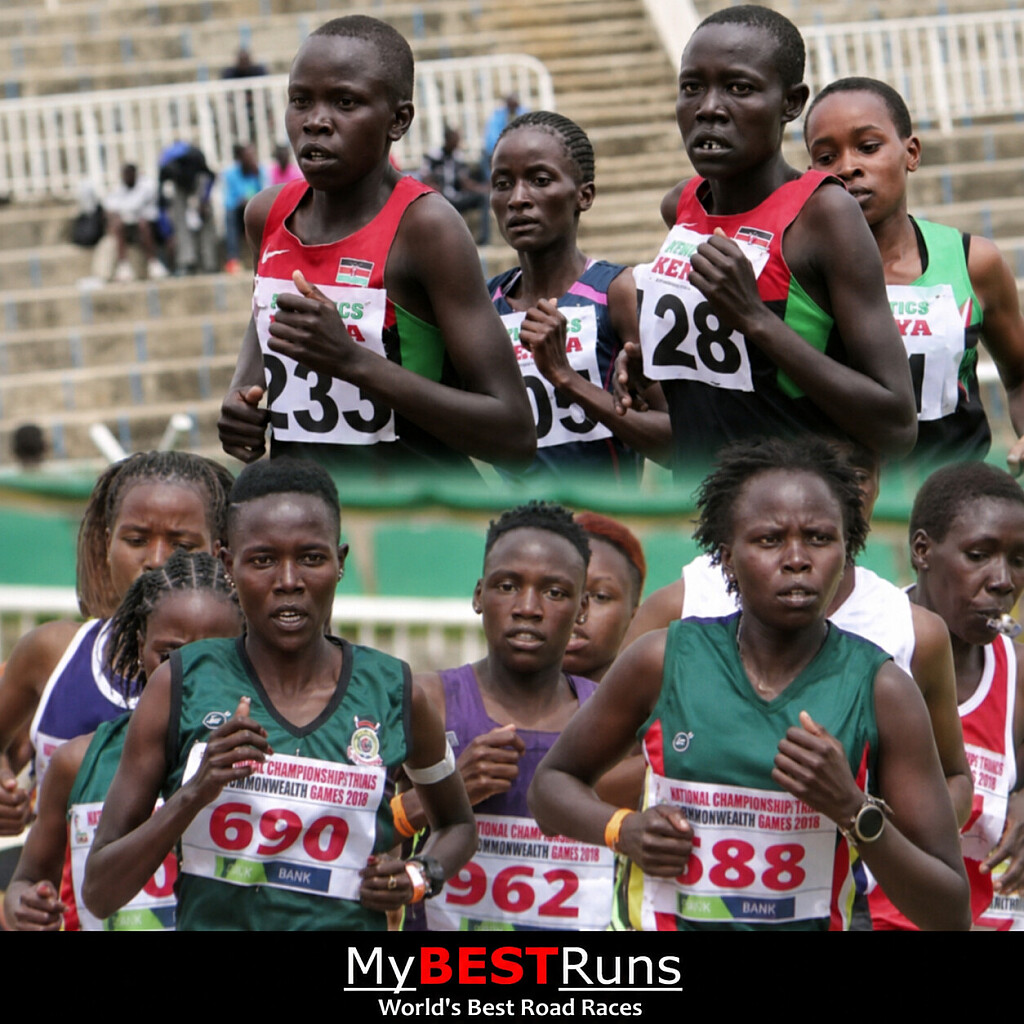
From Eugene To Global Greatness: How Lilian Kasait Rengeruk And Loice Chemnung Turned Teenage Promise Into World-Class Success
Twelve years can transform careers, but for Lilian Kasait Rengeruk and Loice Chemnung, they have transformed youthful potential into enduring excellence. Their remarkable rise from promising teenagers on the global junior stage to two of Kenya's finest distance runners stands as a testament to resilience, patience, and unwavering commitment.
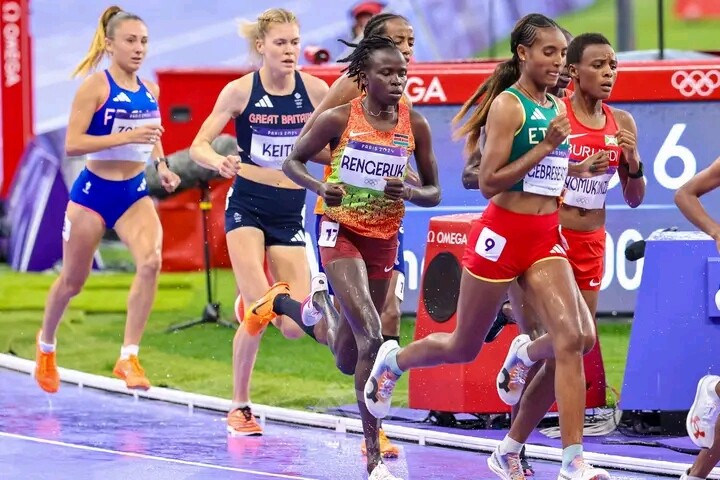
The story began in July 2014 at the World Under-20 Championships in Eugene, Oregon, where two 17-year-old Kenyan athletes stepped onto the famous Hayward Field with dreams far bigger than their years. Although their paths on the track differed, both displayed the talent and determination that would eventually propel them to the highest level of international distance running.
Rengeruk delivered one of the championship's most memorable performances in the women's 3,000 metres. Running with fearless confidence, she dictated much of the race before a thrilling final-lap battle saw American star Mary Cain surge past in the closing metres. Despite narrowly missing gold, Rengeruk secured a well-deserved silver medal in 9:00.53, announcing herself as one of the brightest young talents in global athletics.
Chemnung, meanwhile, contested the fiercely competitive women's 5,000 metres, where Ethiopia dominated the medals. She battled courageously throughout the race and finished fifth, gaining invaluable experience against some of the world's finest junior distance runners.
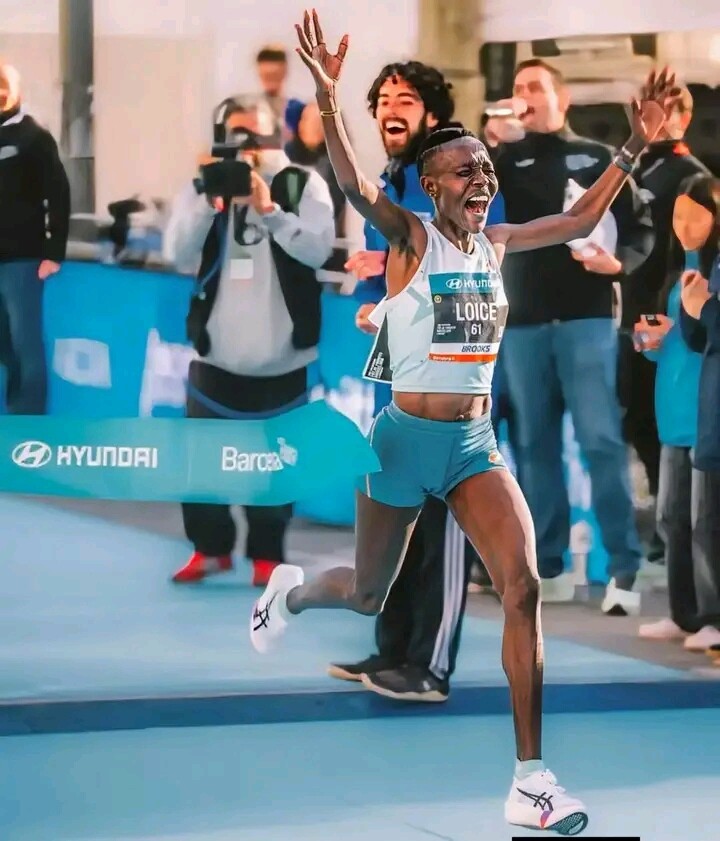
That championship proved to be only the beginning.
Over the past decade, both athletes have steadily evolved from accomplished track runners into elite performers over longer distances, earning recognition on some of the world's biggest roads while continuing to showcase Kenya's rich tradition of distance running.
Rengeruk has enjoyed an extraordinary transition. She stunned the athletics world by winning the Daegu Marathon on her debut in 2:19:33, overcoming a dramatic fall in the closing stages to still reach the finish line first. Her impressive résumé also includes a superb half marathon personal best of 1:03:32—among the fastest performances ever recorded—and a world-class 10,000-metre best of 29:26.89.
Chemnung's progression has been equally impressive. She has established herself as one of Kenya's premier long-distance runners by winning consecutive national 10,000-metre titles before making a spectacular impact on the roads. Her course-record victory at the Barcelona Half Marathon in 1:04:01 elevated her among the fastest women in history over the distance, while her outstanding marathon debut of 2:18:24 in Chicago confirmed her credentials as one of Kenya's brightest marathon prospects. Her commitment to the marathon was further demonstrated when she chose to focus on the event instead of pursuing a place at the Commonwealth Games.
Their achievements underline a truth often overlooked in modern sport: greatness is rarely built overnight. It is forged through years of disciplined training, perseverance during setbacks, and the courage to embrace new challenges.
Twelve years after sharing the world junior stage in Eugene, Lilian Kasait Rengeruk and Loice Chemnung continue to inspire a new generation of athletes. Their journey from talented teenagers to internationally acclaimed distance stars is more than a story of medals and records—it is proof that sustained hard work, belief, and consistency can transform youthful promise into a legacy of excellence.
by Erick Cheruiyot for My Best Runs.
Login to leave a comment
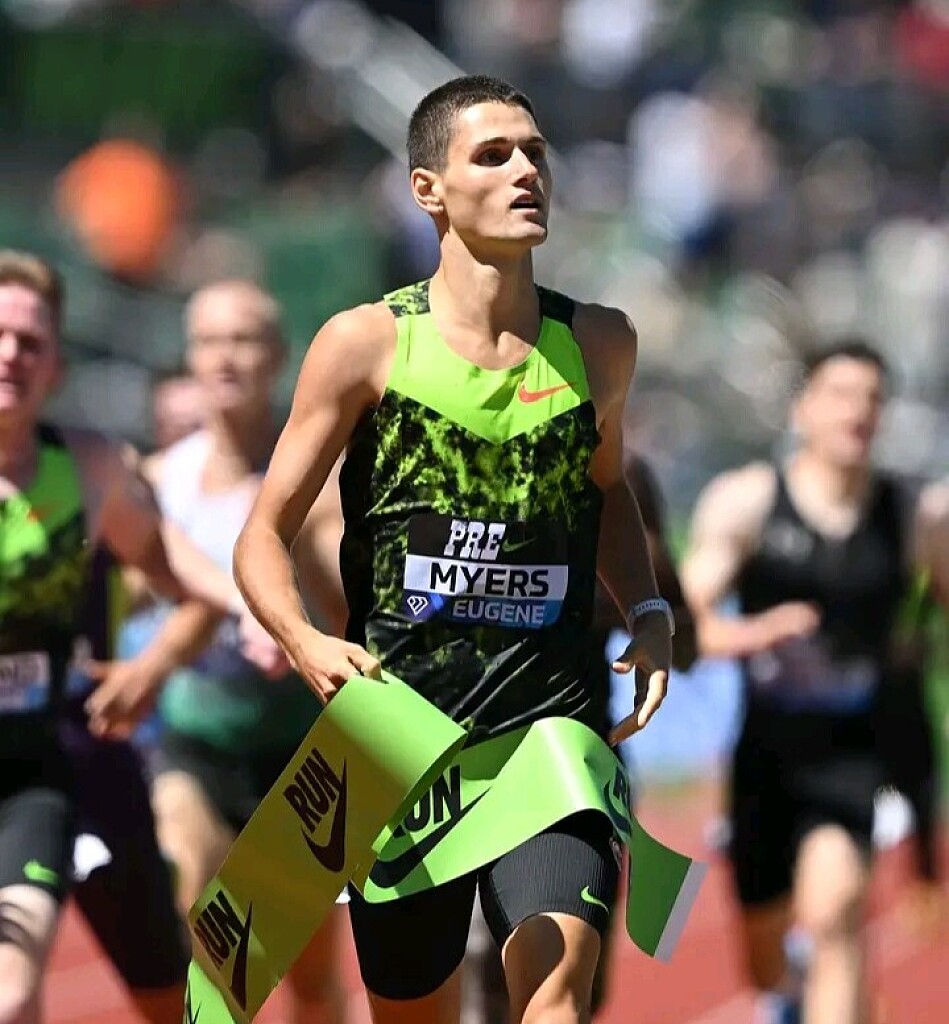
Cameron Myers Rewrote Australian History with Record-Breaking Bowerman Mile Victory
At just 20 years old, Cameron Myers is rapidly becoming one of the brightest stars in global middle-distance running.
The young Australian delivered the performance of his career at the prestigious Bowerman Mile in Eugene, Oregon, producing a fearless front-running display to clock a sensational 3:46.06—the fastest mile in the world this year. The remarkable run not only earned him victory but also shattered the Australian national record, set a new Oceania record, and firmly established him among the sport's elite.
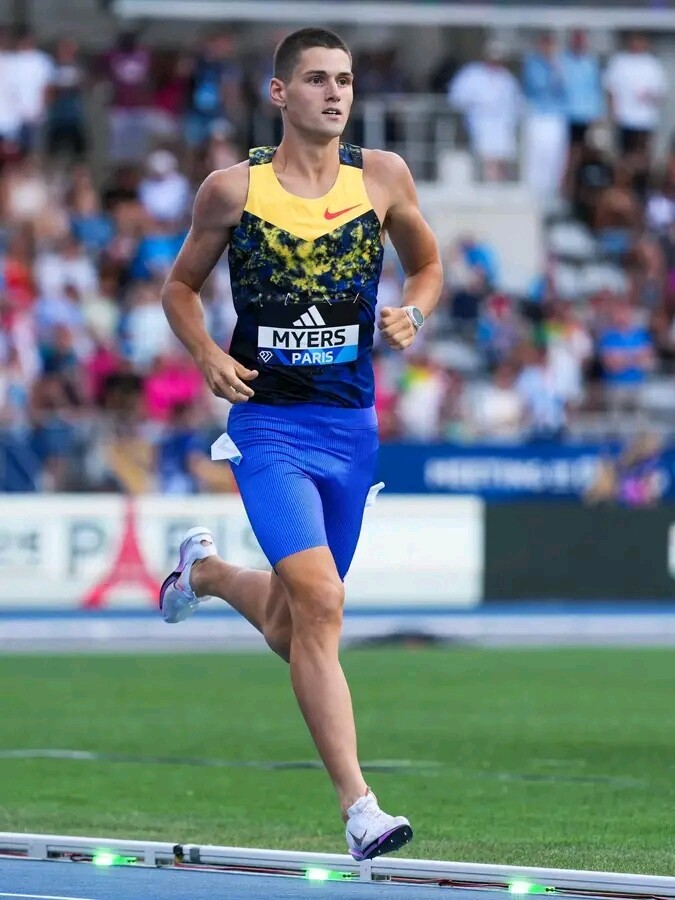
In a race packed with world-class talent, Myers showed maturity well beyond his years. As the pacemaker stepped aside during the third quarter of the race, the Australian immediately seized control. Rather than waiting for others to dictate the pace, he confidently moved to the front, maintained his rhythm through the bell lap, and unleashed a composed finishing kick that none of his rivals could answer.
American star Yared Nuguse crossed the line second in a season's best 3:46.61, while Ethan Strand claimed third in 3:46.97. Despite racing on home soil, the North American record holder and the rest of the field were unable to reel in the determined Australian, who never relinquished the lead once he took command.
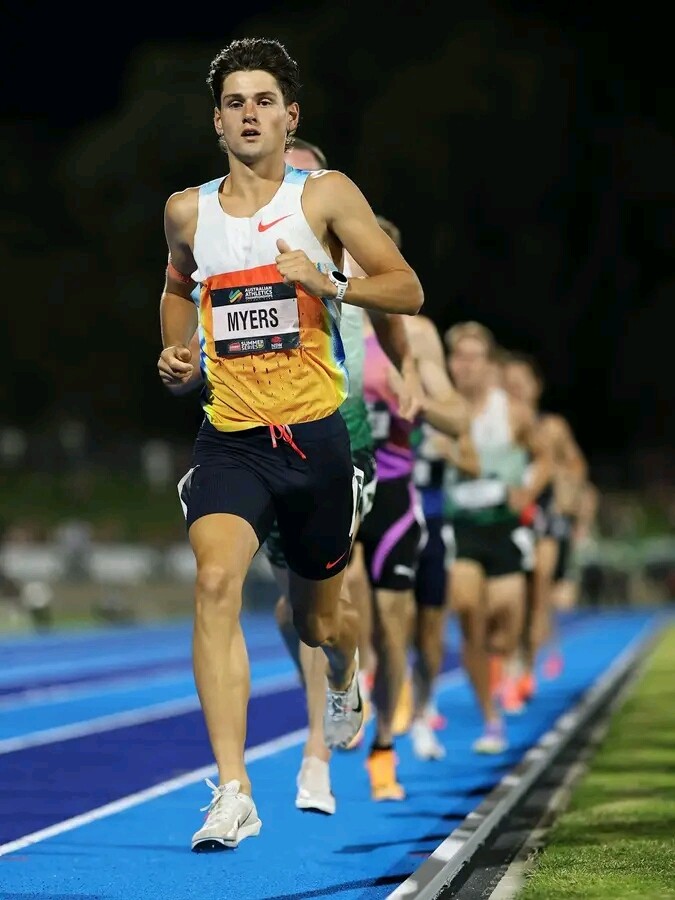
The victory crowns an extraordinary fortnight for Myers.
Only 13 days earlier, he had stormed to 3:28.00 at the Paris Diamond League, breaking the Australian 1500-metre record. Now, with the national mile record also under his name, Myers has become the holder of Australia's two most prestigious middle-distance records before celebrating his 21st birthday.
His latest performance also secured another piece of history. Myers is now the youngest man ever to run under 3:47 for the mile, a milestone that highlights both his exceptional talent and remarkable composure under pressure.
The Bowerman Mile has long been regarded as one of the sport's most iconic races, producing countless unforgettable performances over the past five decades. Many of the greatest milers in history have left their mark on Hayward Field, and Cameron Myers has now added his name to that distinguished legacy.
What makes his rise even more remarkable is not simply the records themselves, but the speed at which they are arriving. Achievements that often take athletes years—sometimes an entire career—to accumulate are coming to Myers within weeks.
At only 20 years old, Cameron Myers is no longer just one of Australia's most promising prospects. He has become a genuine global contender, and if his current trajectory is any indication, the best chapters of his remarkable journey are still to come.
by Erick Cheruiyot for My Best Runs.
Login to leave a comment
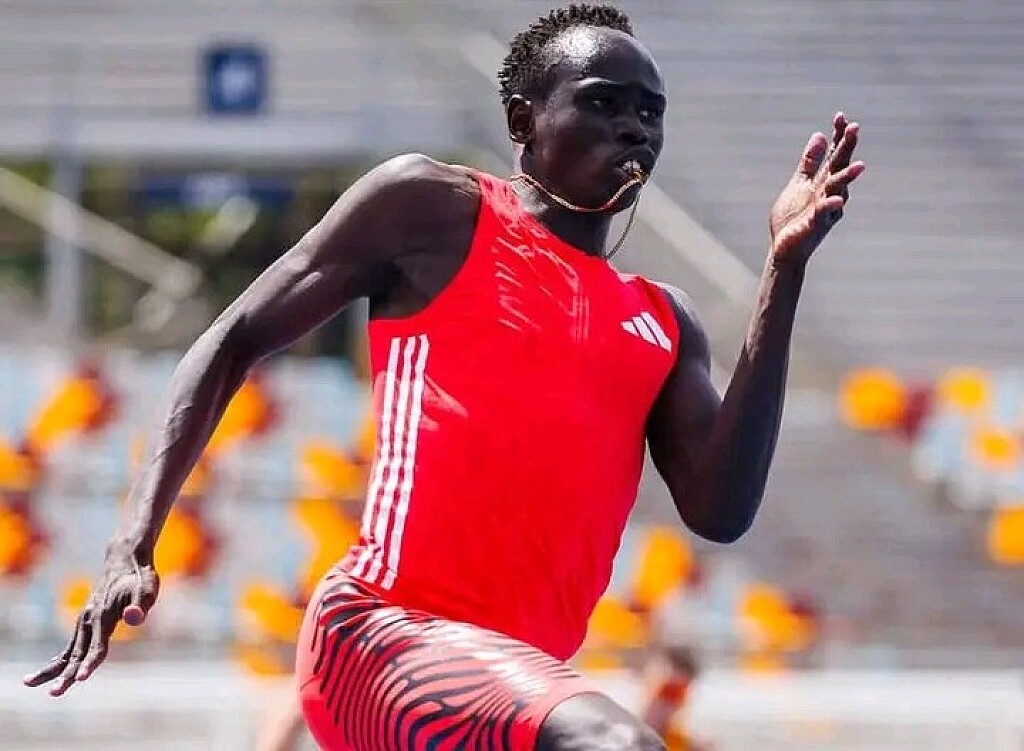
Heartbreak for Gout Gout: Australian Sprint Sensation Ruled Out of World U20 Championships With Serious Hamstring Injury
Australian teenage sprint sensation Gout Gout has suffered a devastating setback after being ruled out of next month's World Athletics U20 Championships in Eugene following a serious hamstring injury sustained during training in Brisbane.
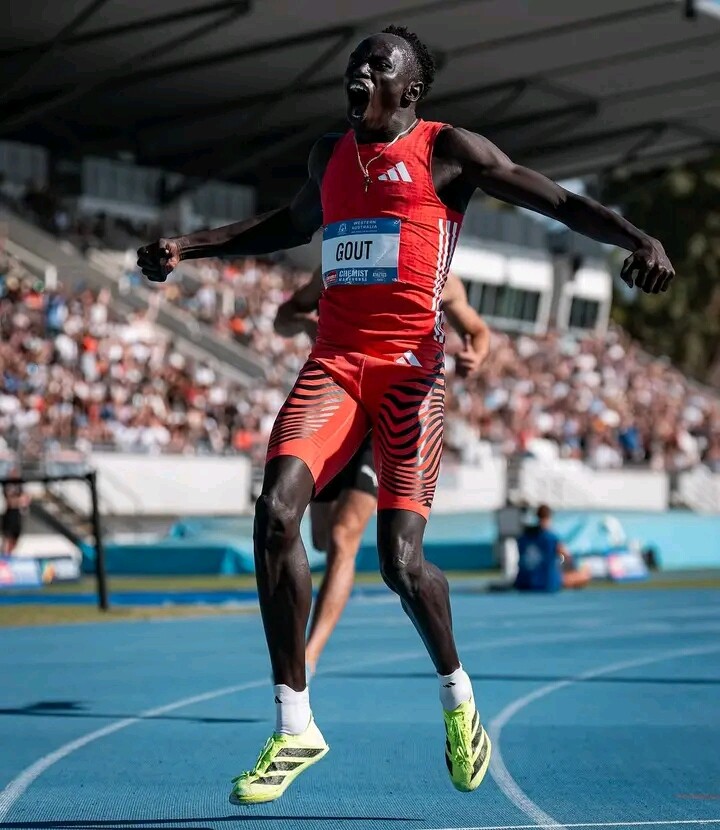
The highly rated sprinter injured his left hamstring during a training session on Wednesday night. An MRI scan conducted the following morning confirmed a Grade 3C partial tear of the proximal biceps femoris tendon. While the tear affects less than 10 percent of the tendon's cross-sectional area, it extends over an eight-centimetre length, making it a significant injury that requires a lengthy rehabilitation period.
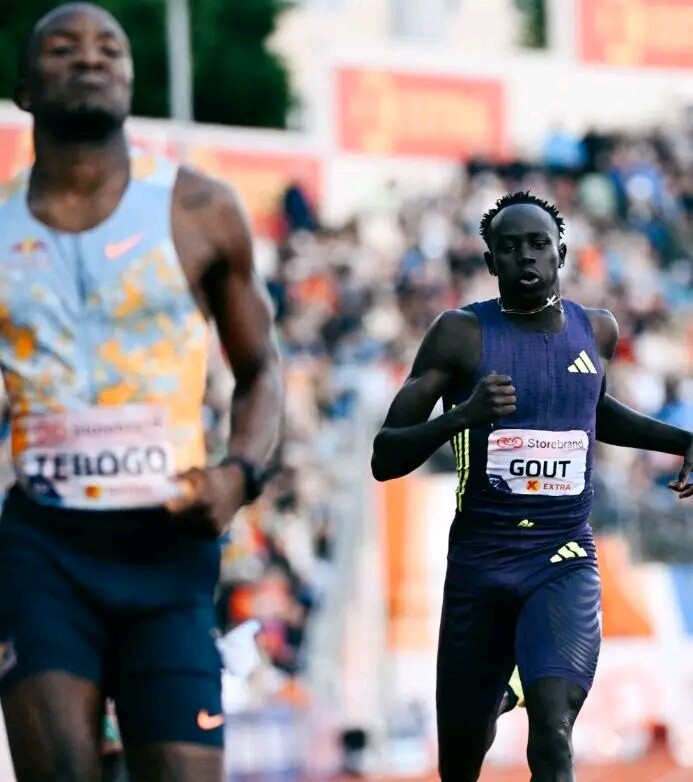
The diagnosis immediately ended Gout's hopes of competing in Eugene, where he had been expected to challenge for gold. The disappointment is even greater considering he had deliberately prioritized the World U20 Championships over the upcoming Commonwealth Games in Glasgow, choosing to focus his entire season on the global junior championships.
In a heartfelt statement following the diagnosis, Gout shared his disappointment while remaining determined to return stronger.
"I'm very disappointed but I have no other possibility but to accept the situation. I understand this is part of athletics. My focus now will be on my rehab in the coming weeks and months and ensuring I come back in 2027 better and stronger and faster."
The withdrawal is a major blow not only for Australian athletics but also for fans around the world who had eagerly anticipated watching one of the sport's brightest young stars compete on the international stage. Gout has emerged as one of the most exciting sprint prospects of his generation, earning global attention with his remarkable speed and maturity at such a young age.
Although missing the World U20 Championships is a painful setback, the teenager and his support team are now focused entirely on recovery. Rather than rushing back to competition, the priority will be a complete rehabilitation to ensure he returns in peak condition.
With youth firmly on his side and enormous potential still ahead of him, there is every reason to believe this injury will become just another chapter in what promises to be an outstanding career. Athletics fans everywhere will now be hoping to see Gout Gout back on the track in 2027—fully recovered, stronger than ever, and ready to continue his rise among the world's elite sprinters.
by Erick Cheruiyot for My Best Runs.
Login to leave a comment
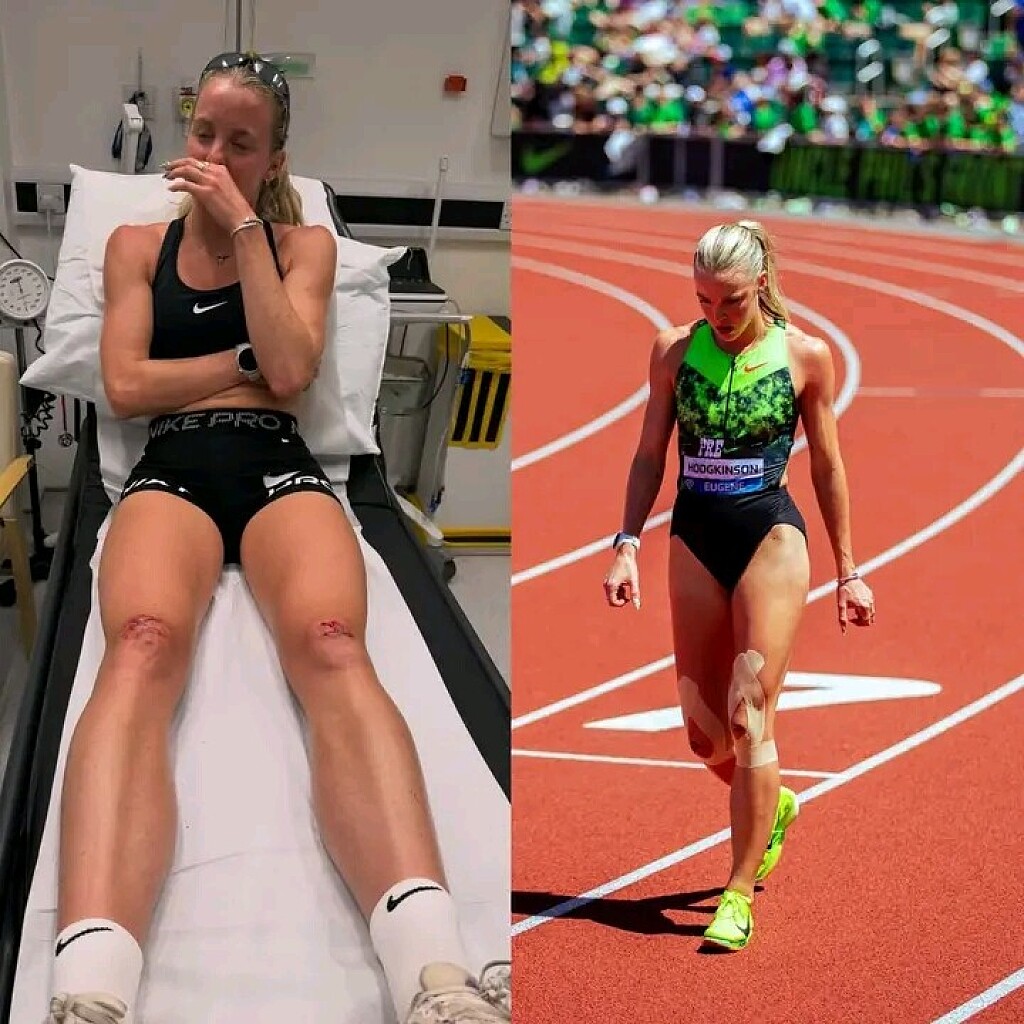
Bruised but Unbroken: Keely Hodgkinson Battles to Brilliant Second in Eugene
Keely Hodgkinson once again demonstrated why she is regarded as one of the toughest competitors in global middle-distance running, producing a courageous performance to finish second in the women's 800m at the Prefontaine Classic in Eugene despite battling the effects of a painful training accident.
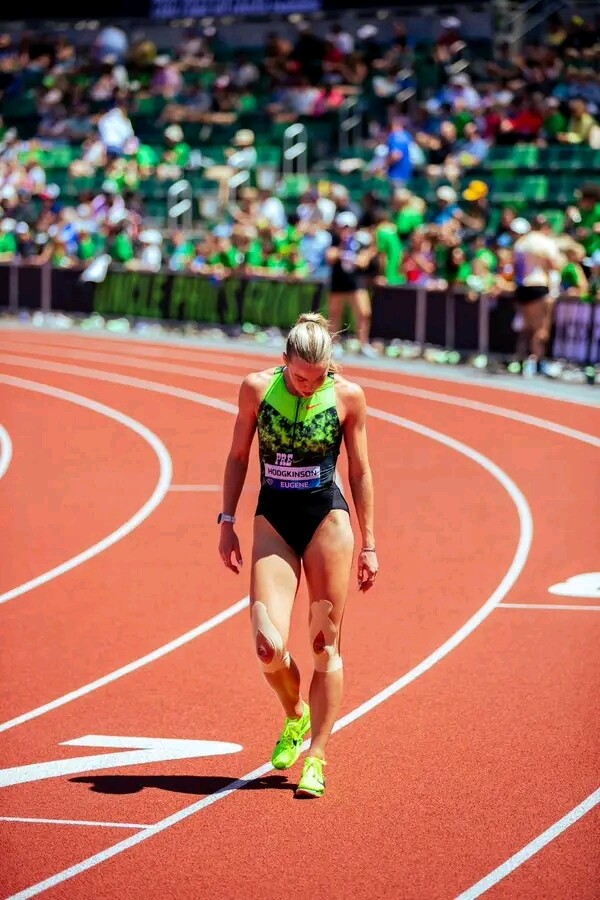
The Olympic champion crossed the finish line in an impressive 1:56.73, a remarkable performance considering the adversity she had endured only days before the race. Hodgkinson suffered a heavy fall during training, leaving her with badly bruised, taped-up knees and uncertainty over whether she would even be fit enough to compete.
Rather than withdrawing, the British star chose to take her place on the start line, determined to test herself against the world's best. That decision ultimately showcased the resilience and competitive spirit that have become hallmarks of her career.
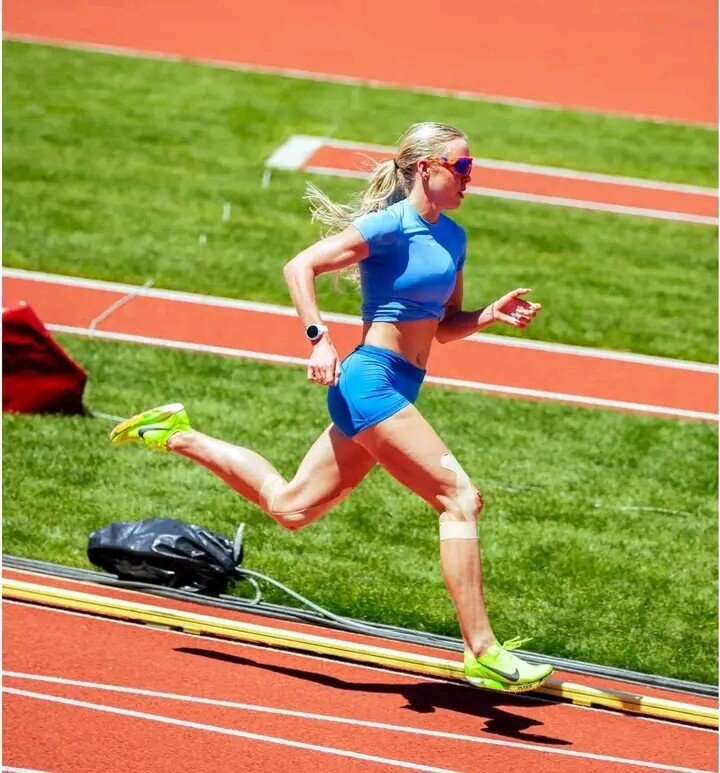
The race unfolded at a relentless pace from the opening lap after American pacemaker Paris Peoples surged through 400 metres in a blistering 53.58 seconds—well ahead of the intended 55.5-second split. The unexpectedly fast tempo transformed the contest into an all-out battle and created the perfect opportunity for Kenya's reigning world champion, Lilian Odira, to launch her decisive move.
Odira responded brilliantly, maintaining her composure to storm home in 1:56.19 while holding off Hodgkinson's determined late challenge. Although the Olympic champion closed strongly over the final metres, the gap proved just enough for the Kenyan to secure a memorable victory in one of the fastest women's 800m races of the season.
While the result placed Hodgkinson second on the podium, her performance carried a significance far beyond the finishing order. Simply overcoming the physical pain of her recent fall to produce a world-class 1:56.73 was a testament to her extraordinary determination, mental strength and refusal to let adversity define her performance.
Although victory slipped away, Hodgkinson's performance stood out as one of the defining stories of the evening. Racing through pain after a heavy training fall and still producing a world-class time against elite opposition was a powerful reminder of the resilience and fighting spirit that have made her one of the sport's premier 800m athletes. With a full recovery, the Olympic champion remains firmly on course to challenge for more major titles as the season progresses.
by Erick Cheruiyot for My Best Runs.
Login to leave a comment
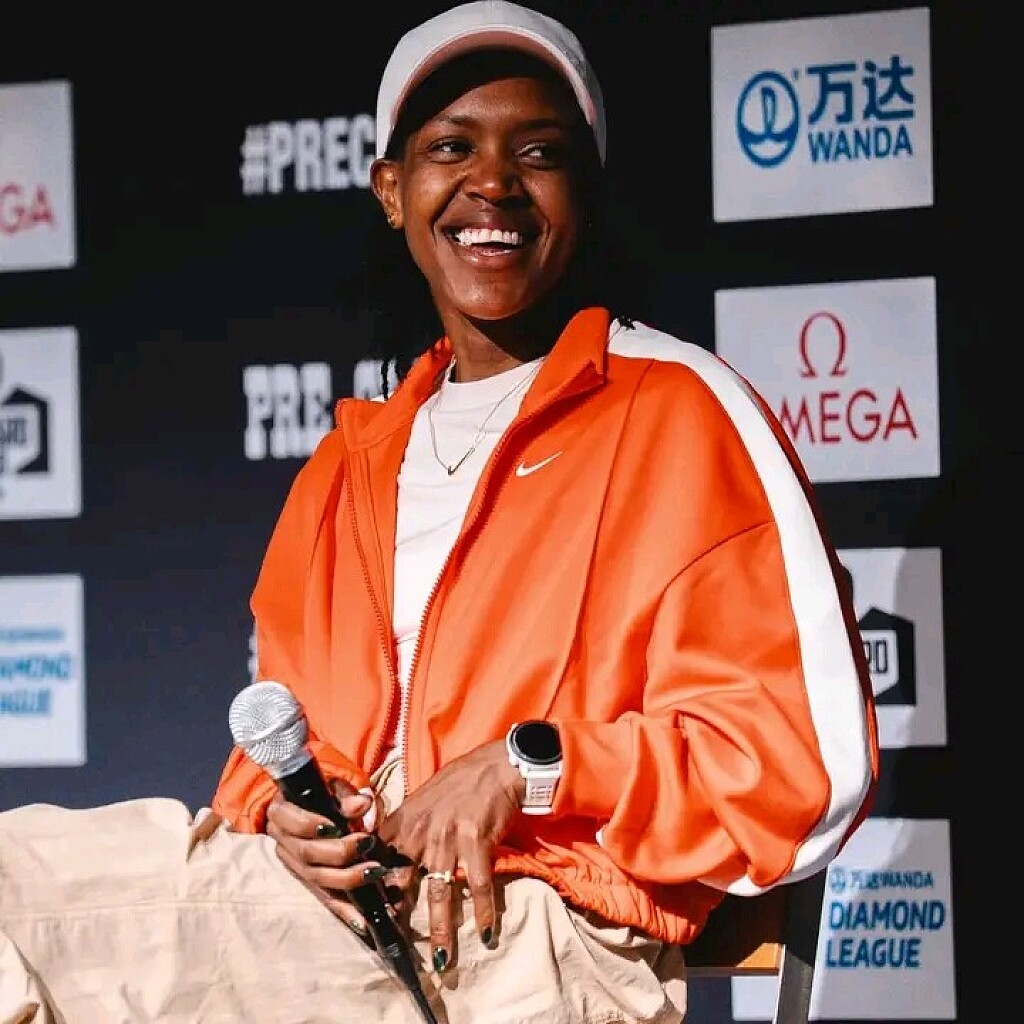
Faith Kipyegon Embraces the Unknown as She Begins a New Middle-Distance Chapter at the Prefontaine Classic
Three-time Olympic champion and multiple world record holder Faith Kipyegon is entering unfamiliar territory, and for one of the greatest middle-distance runners in history, that uncertainty is part of the excitement.
Speaking ahead of today's 2026 Prefontaine Classic at Hayward Field, the Kenyan superstar admitted that gauging her current form has been unusually difficult after an unconventional start to her season.
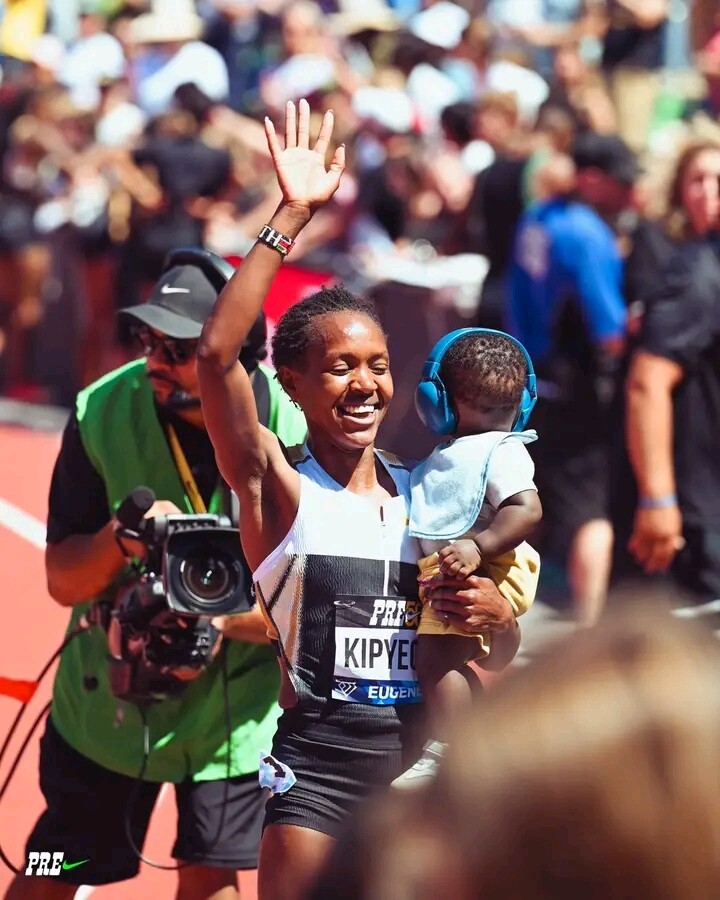
Unlike previous campaigns, Kipyegon has yet to contest a full 1500m race this year. Instead, she opened her Diamond League season over 5000m in May, using the longer event to build endurance before shifting her focus back to the distances that made her a global icon.
As a result, today's race represents more than just another Diamond League appearance. It marks her first true test over the 1500m and mile circuit this season, making it difficult even for the reigning queen of middle-distance running to predict what lies ahead.
"This year is a little bit tough to know where I am, especially now that I am racing for the first time in the mile. This is like my first 1500m race because in May I did the first Diamond League 5000m, which is like endurance. So, it is a challenge," Kipyegon explained.
Rather than arriving with complete certainty, Kipyegon is embracing the challenge and welcoming the fierce competition awaiting her in Eugene. She believes the quality of the field will be the perfect measure of her fitness as she continues building toward the major championships later this season.
"That's why I said I am also looking forward to these ladies to push me and see what will happen after the finishing line," she added.
Her remarks reveal a champion who remains grounded despite years of unprecedented success. Even after rewriting the record books, Kipyegon continues to approach each new challenge with humility, patience, and a desire to learn where she stands against the world's best.
With a stacked field expected to push the pace from the gun, fans could witness another memorable chapter in Kipyegon's remarkable career. Whether she delivers another dominant performance or simply uses the race as a benchmark, her appearance is among the most anticipated storylines of the 2026 Prefontaine Classic.
As the gun goes off in the afternoon the athletics world will be watching closely. Faith Kipyegon may not yet know exactly where her fitness stands—but by the finish line, she expects to have her answer.
by Erick Cheruiyot for My Best Runs.
Login to leave a comment
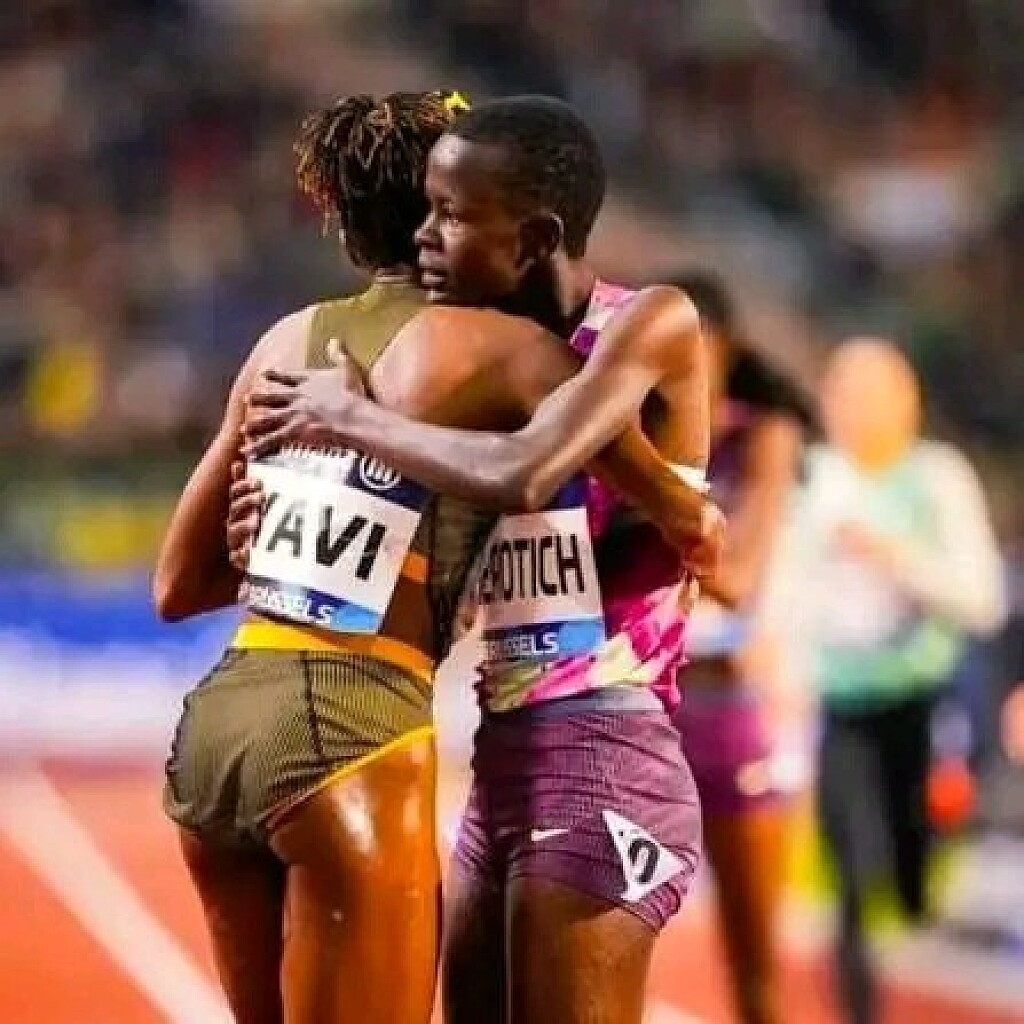
Eugene Awaits: Cherotich, Chemutai and Yavi Set for Blockbuster 3000m Steeplechase Battle
The women's 3000m steeplechase at the upcoming Prefontaine Classic is shaping up to be one of the most anticipated distance races of the season, with a world-class field led by Kenya's rising sensation Faith Cherotich, Uganda's Olympic champion Peruth Chemutai, and Bahrain's formidable record-holder Winfred Yavi.
Scheduled for July 3–4 in Eugene, Oregon, the race promises a fascinating clash of generations, styles, and ambitions as some of the sport's biggest names battle for supremacy on one of athletics' most iconic stages.
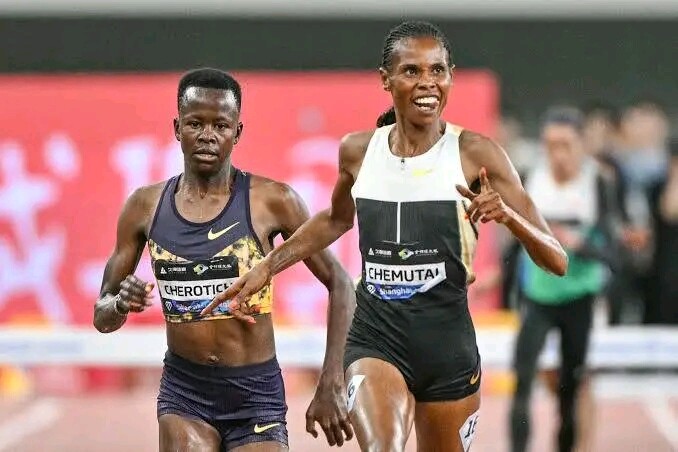
All eyes will undoubtedly be on Cherotich, whose meteoric rise has established her as one of the brightest stars in global steeplechasing. The Kenyan youngster has consistently demonstrated remarkable composure against elite opposition, combining fearless front-running with a devastating finishing kick. Facing another stacked international field, she will be eager to reaffirm her status among the discipline's elite.
Standing in her path is Chemutai, the Ugandan trailblazer whose championship pedigree and tactical brilliance have made her one of the most respected athletes in the event. Known for her ability to deliver under pressure, Chemutai arrives in Eugene with the experience and confidence required to challenge for victory against the world's best.
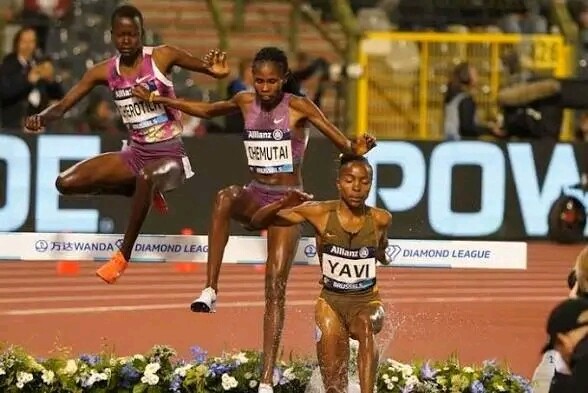
Adding further intrigue is Yavi, whose relentless pace and exceptional barrier technique have transformed her into one of the most dominant steeplechasers of recent years. Whenever Yavi steps onto the track, records and winning times immediately come into the conversation, making her a serious contender for top honours once again.
The depth of the field extends far beyond the headline trio. Kenya's emerging talent Doris Lemngole and experienced campaigner Norah Jeruto add further firepower, while a strong American contingent featuring Lexy Halladay, Gracie Hyde, Olivia Markezich, Gabrielle Jennings, Courtney Wayment and Angelina Napoleon will be eager to impress before a home crowd.
The international challenge is further strengthened by Morocco's Marwa Bouzayani and Germany's accomplished duo of Gesa Felicitas Krause and Lea Meyer, ensuring that every lap will be fiercely contested.
With Olympic and world medalists sharing the track alongside emerging stars hungry for a breakthrough, the stage is set for a thrilling contest that could produce one of the fastest women's steeplechase races of the year. As the athletics world turns its attention to Eugene, fans can expect a captivating battle over barriers and water jumps, where every stride could make the difference between victory and defeat.
The countdown has begun, and if the entry list is anything to go by, the Prefontaine Classic is poised to deliver another unforgettable chapter in the rich history of women's steeplechase racing.
by Erick Cheruiyot for My Best Runs.
Login to leave a comment

Prefontaine Classic
The Pre Classic, part of the Diamond League series of international meets featuring Olympic-level athletes, is scheduled to be held at the new Hayward Field in Eugene. The Prefontaine Classicis the longest-running outdoor invitational track & field meet in America and is part of the elite Wanda Diamond League of meets held worldwide annually. The Pre Classic’s results score has...
more...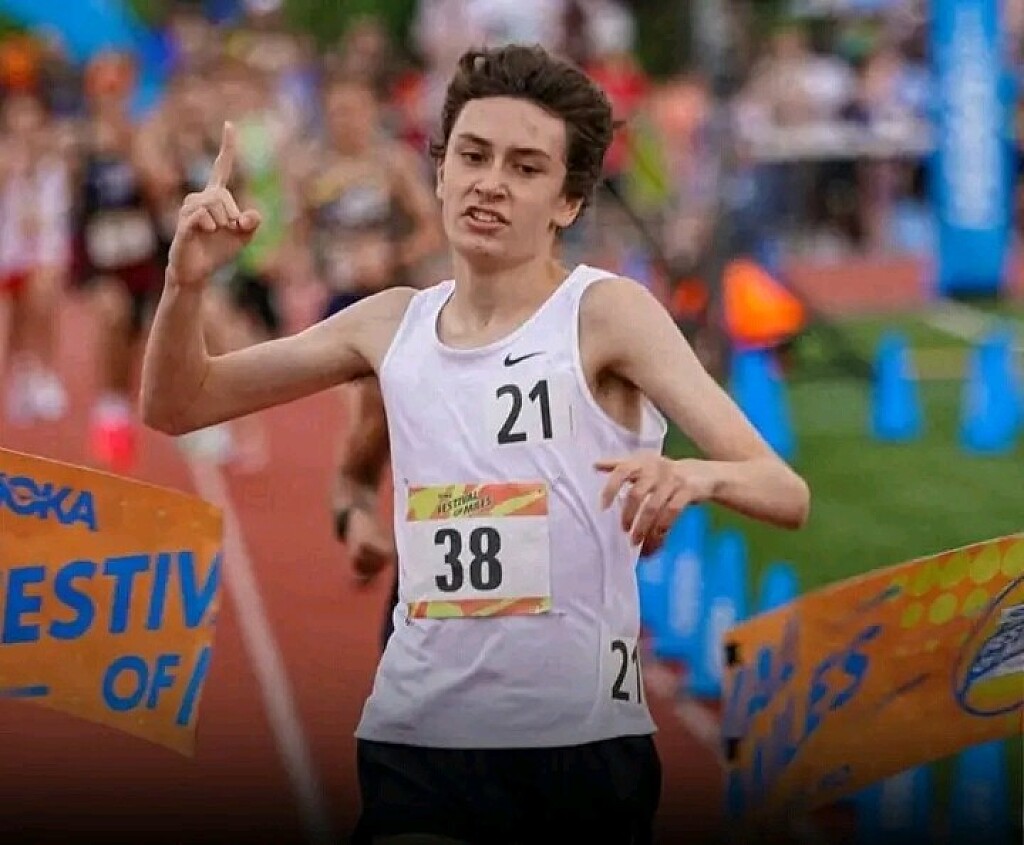
14-Year-Old Luke Surface Shocks the Running World With Historic Middle School Record
The future of American distance running may have just announced itself.
Luke Surface, an 8th-grade student-athlete from North Raleigh Christian Academy in Raleigh, North Carolina, delivered a performance that stunned the track and field community after taking on some of the nation’s best high school runners at Nike Outdoor Nationals.

Competing at the legendary Hayward Field in Eugene, Oregon — one of the most iconic venues in American distance running — Surface lined up in the boys championship 5,000 meters against a field dominated by high school seniors, including several athletes preparing to compete at the NCAA Division I level.
Despite being one of the youngest runners in the race, the 14-year-old held his own against the elite competition, finishing eighth in an incredible 14:25.88. The performance set a new national middle school record, averaging approximately 4:39 per mile for more than three miles.
That kind of time is fast enough to win many high school state championships across the United States and meets qualifying standards for several major NCAA Division I conference competitions — a remarkable achievement for a runner who has not yet entered high school.
But Surface’s historic 5,000m performance was only the latest chapter in a season filled with record-breaking moments.
Earlier in May, he clocked 8:52.03 for 3,200 meters at the NCISAA Division I State Championships in North Carolina, breaking another national middle school record. His converted two-mile time of 8:55.12 surpassed the previous world-best mark for a 14-year-old age group, previously held by Vincent Recupero.
During the previous cross-country season, Surface also made headlines when he ran 15:12 at the adidas XC Challenge, finishing second while competing against runners who were several years older.
Across cross country, two miles, and the 5,000 meters, Surface has continued to prove that his talent is far beyond his age group. While he still has four years of high school competition ahead before reaching the college level, his performances have already placed him among the most exciting young distance runners to watch.
The American high school 5,000-meter record currently stands at 13:32, set by Lex Young in 2023 — a mark Surface is not yet close to challenging. However, his remarkable progression at such a young age has caught the attention of the running world, with many eager to follow how far his extraordinary journey can go.
For now, Luke Surface remains an eighth grader rewriting the record books — and his story is only beginning.
by Erick Cheruiyot for My Best Runs.
Login to leave a comment
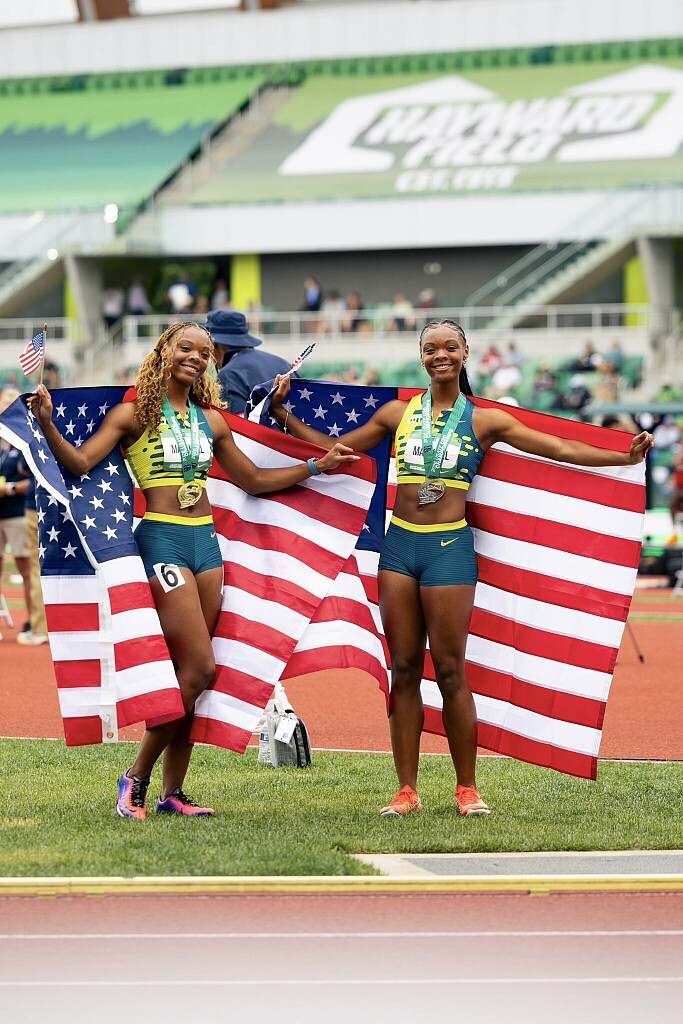
Maxwell Twins Deliver Historic 1-2 Finish in U20 Women's 100m Championship Showdown
The spotlight belonged to one family at the US U20 Championships in Eugene as twin sisters Mia and Mariah Maxwell produced a remarkable sprinting masterclass to secure a memorable one-two finish in the women's 100 metres.
Leading the charge was Mia Maxwell, who powered to victory in an impressive 11.08 seconds with a legal tailwind of 0.8 m/s, confirming her status as one of the brightest young sprint talents in the United States. Displaying exceptional composure and acceleration, Mia separated herself from the field in the closing stages to claim the national U20 title in convincing fashion.
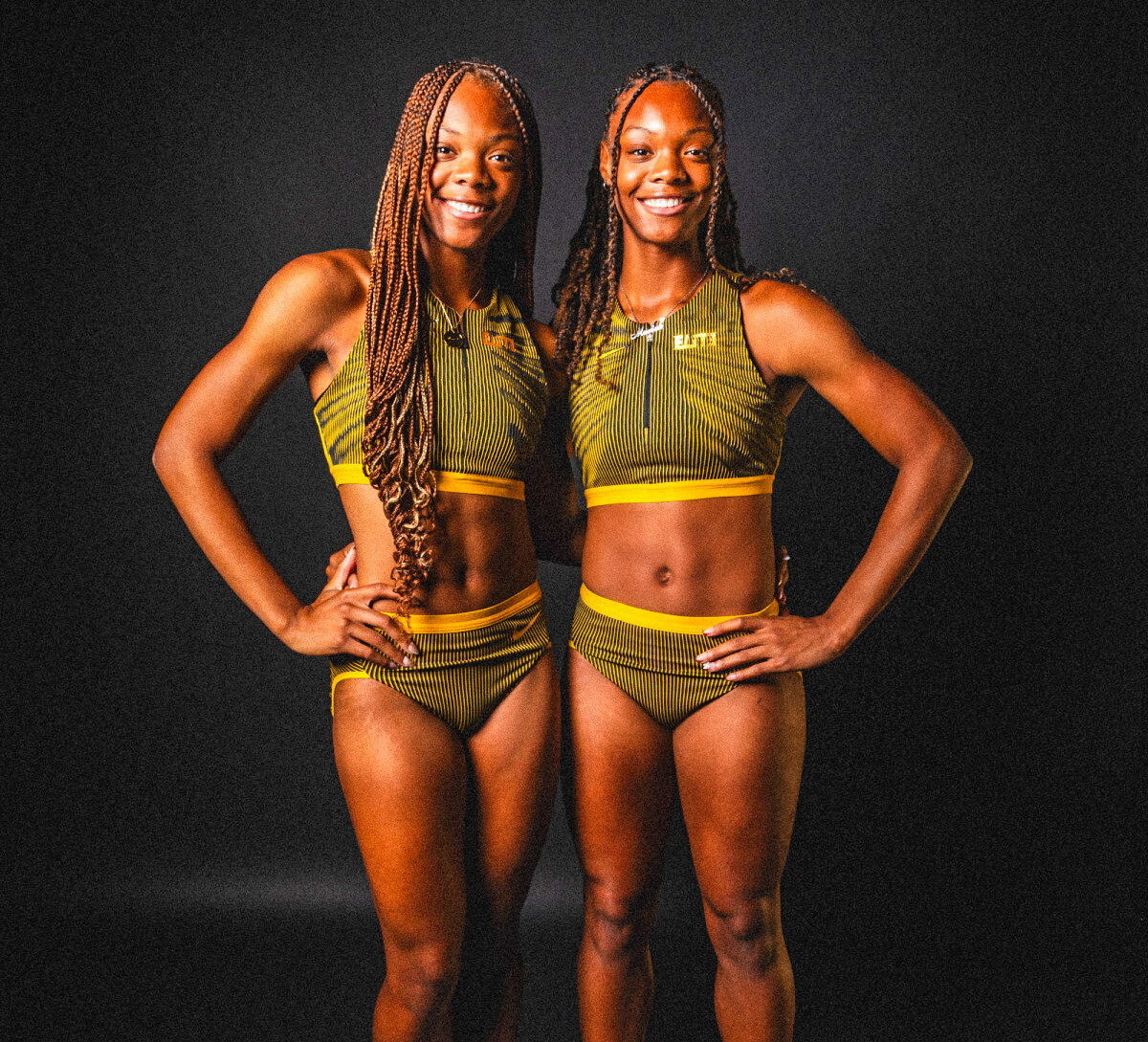
What made the moment even more special was the athlete who crossed the line behind her. Twin sister Mariah Maxwell completed a family sweep by racing to the silver medal in 11.33 seconds, turning the championship final into a celebration of sibling excellence. Their achievement marked one of the most memorable stories of the meet, as the sisters stood side by side atop the results sheet after dominating one of track and field's most prestigious junior competitions.
Rounding out the podium was Ava Kitchings, who delivered a strong performance to secure the bronze medal in 11.39 seconds, ensuring a highly competitive final in front of the Eugene crowd.
The Maxwell twins' extraordinary performance highlighted not only their individual talent but also the growing depth of American sprinting at the junior level. To witness sisters finish first and second in a national championship final is a rare occurrence, and their achievement added a unique chapter to the history of the US U20 Championships.
For Mia, the victory represents another significant milestone in a rapidly developing career, while Mariah's silver medal underscored the family's remarkable presence on the national stage. Together, they transformed the women's 100m final into one of the defining moments of the championships, proving that speed—and success—can truly run in the family.
by Erick Cheruiyot for My Best Runs.
Login to leave a comment
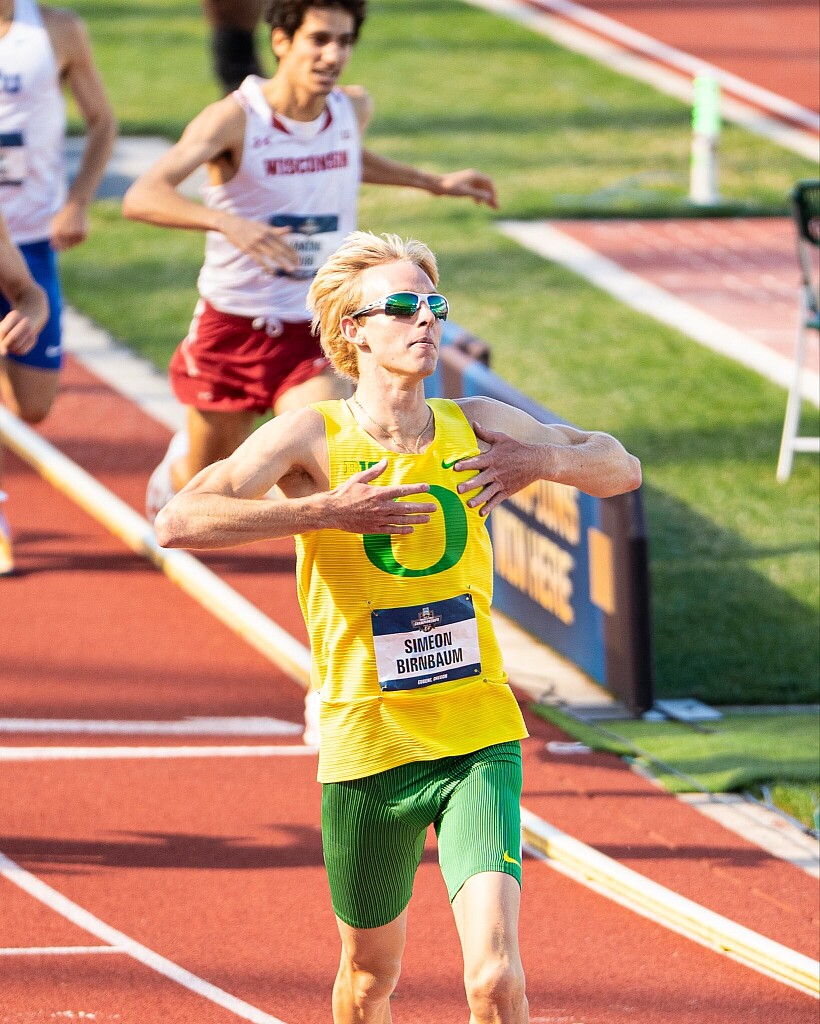
Simeon Birnbaum Announces Himself as Oregon’s Next Distance Superstar With Historic NCAA 1500m Triumph
The next chapter of Oregon’s legendary distance-running story may have just been written.
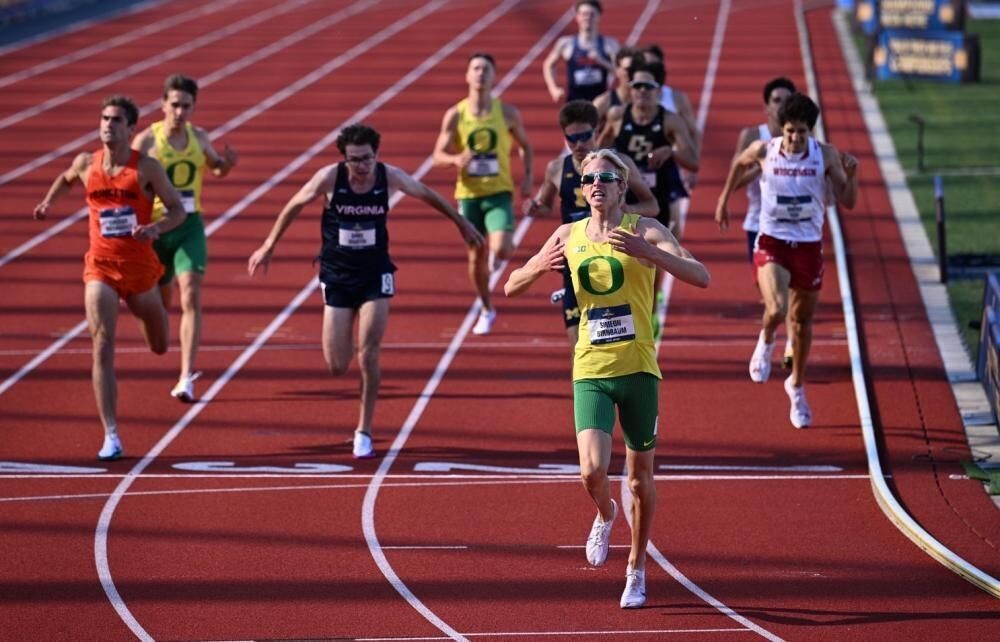
Simeon Birnbaum delivered a statement performance at Hayward Field in Eugene, capturing his first NCAA 1500m title in spectacular fashion with a winning time of 3:36.05 in front of a passionate home crowd.
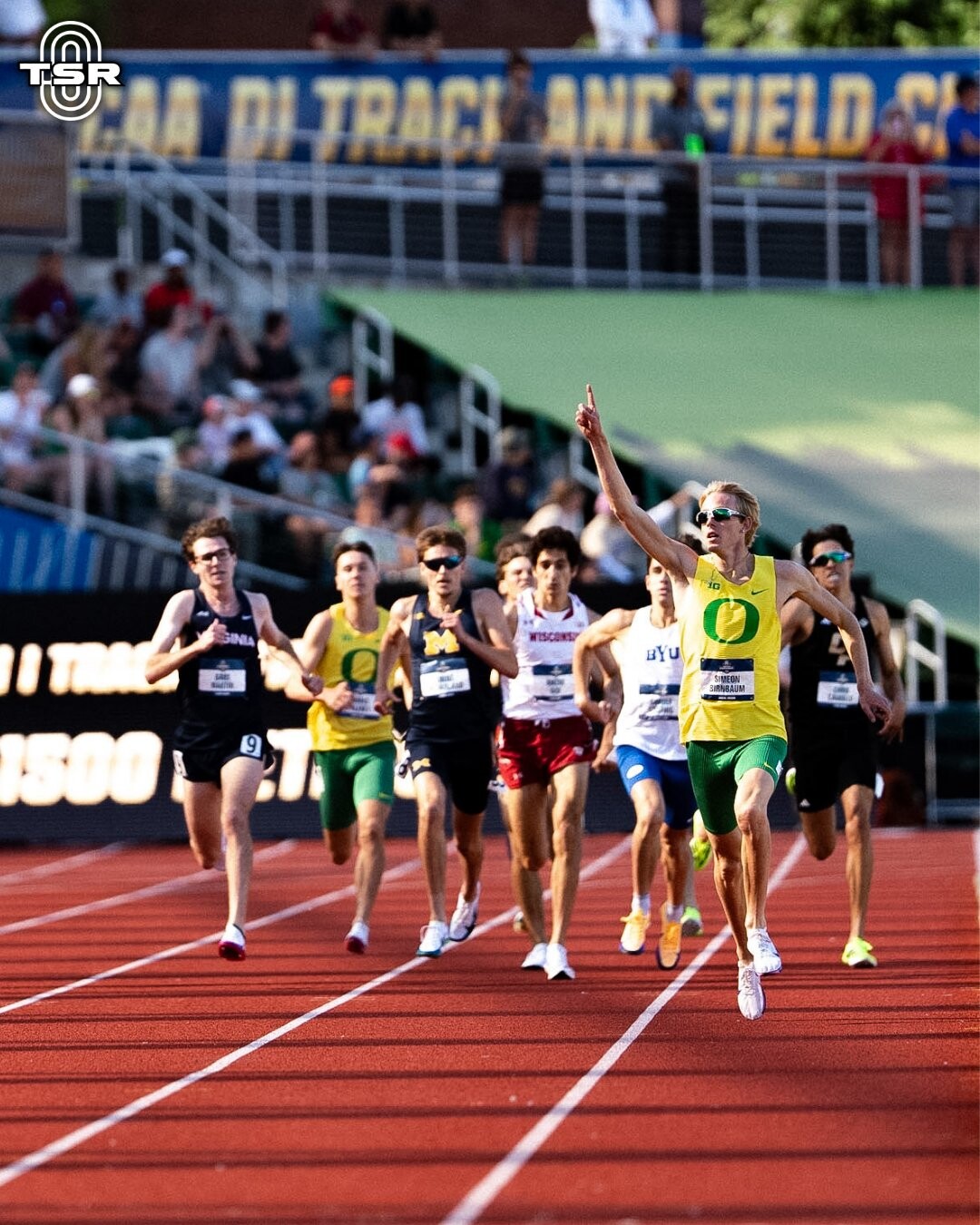
The 20-year-old sophomore produced a commanding display of strength and confidence, separating himself from the field in the closing stages to defeat Michigan’s Trent McFarland by more than a second. His victory marked the most dominant NCAA 1500m championship winning margin in a decade, underlining just how special his performance was on the biggest collegiate stage.
Birnbaum’s rise has been nothing short of remarkable. Just two months earlier, the Oregon standout shattered the collegiate record with a stunning 3:31.69, announcing himself as one of the most exciting young middle-distance talents in the world.
Now, with an NCAA championship medal around his neck, Birnbaum has firmly placed his name among Oregon’s greats. Following in the footsteps of legends such as Cole Hocker and Matthew Centrowitz, he looks ready to carry the Ducks’ proud distance-running tradition into a new era.
With his record-breaking speed, championship mentality, and fearless racing style, Simeon Birnbaum’s journey is only beginning — and the running world will be watching closely as Oregon’s newest distance star continues to rise.
by Erick Cheruiyot for My Best Runs.
Login to leave a comment
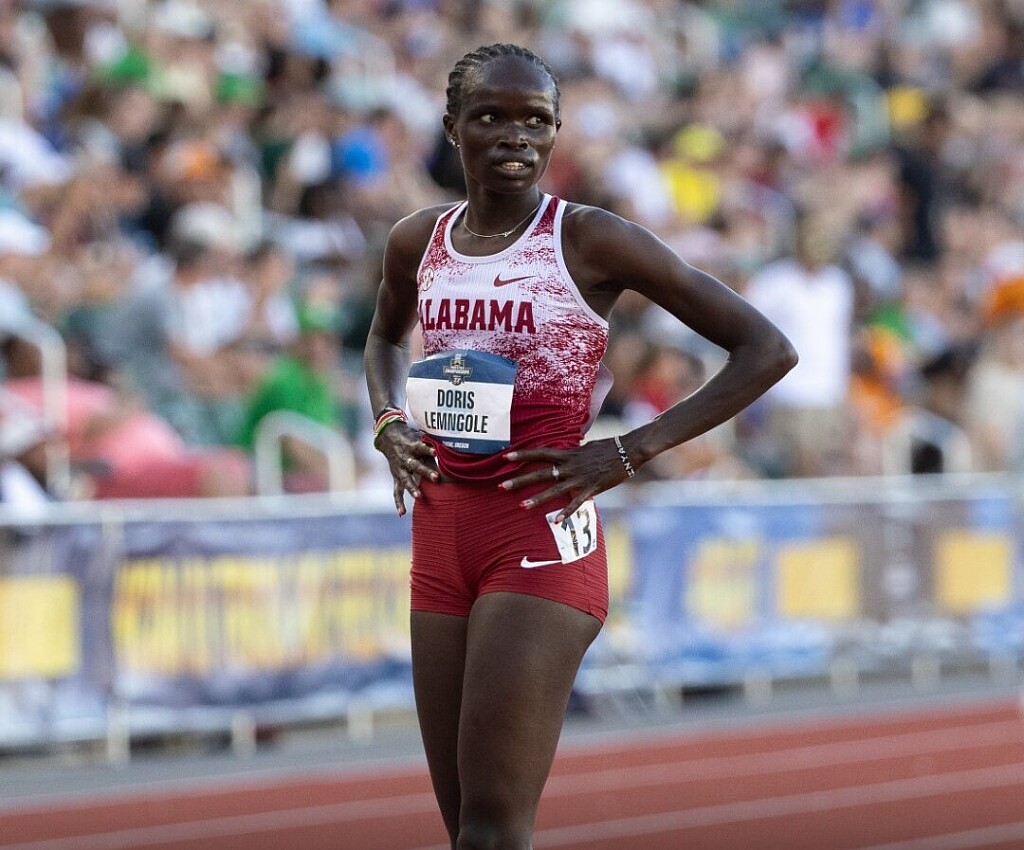
DRAMA IN EUGENE: Doris Lemngole’s NCAA 5000m Triumph Overturned as Jepngetich Claims Crown
The NCAA Outdoor Championships delivered one of the most dramatic twists of the season as the women’s 5000m final ended in unexpected heartbreak and a new champion being crowned after the finish line.
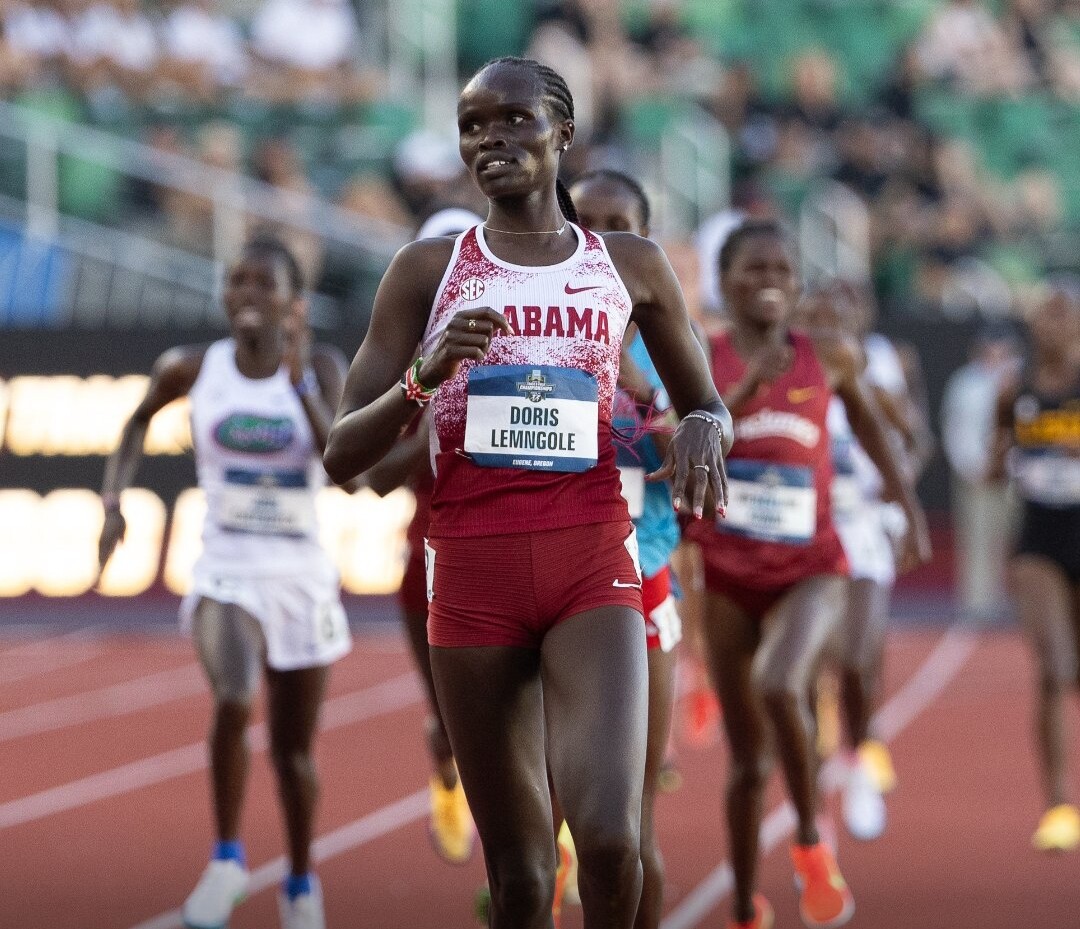
Alabama’s Kenyan star Doris Lemngole looked set to celebrate a historic moment after storming to victory in a brilliant 15:11.71, crossing the line first and appearing to secure another national title for the Crimson Tide. The performance looked like the perfect ending to a dominant race — until officials made a decision that changed everything.
Race officials later issued a disqualification against Lemngole under rule 15.5-3g, citing multiple steps on or over the inside track curb. Alabama immediately challenged the ruling through an appeal, but after review, the protest was rejected, confirming the disqualification and removing the race winner from the official results.
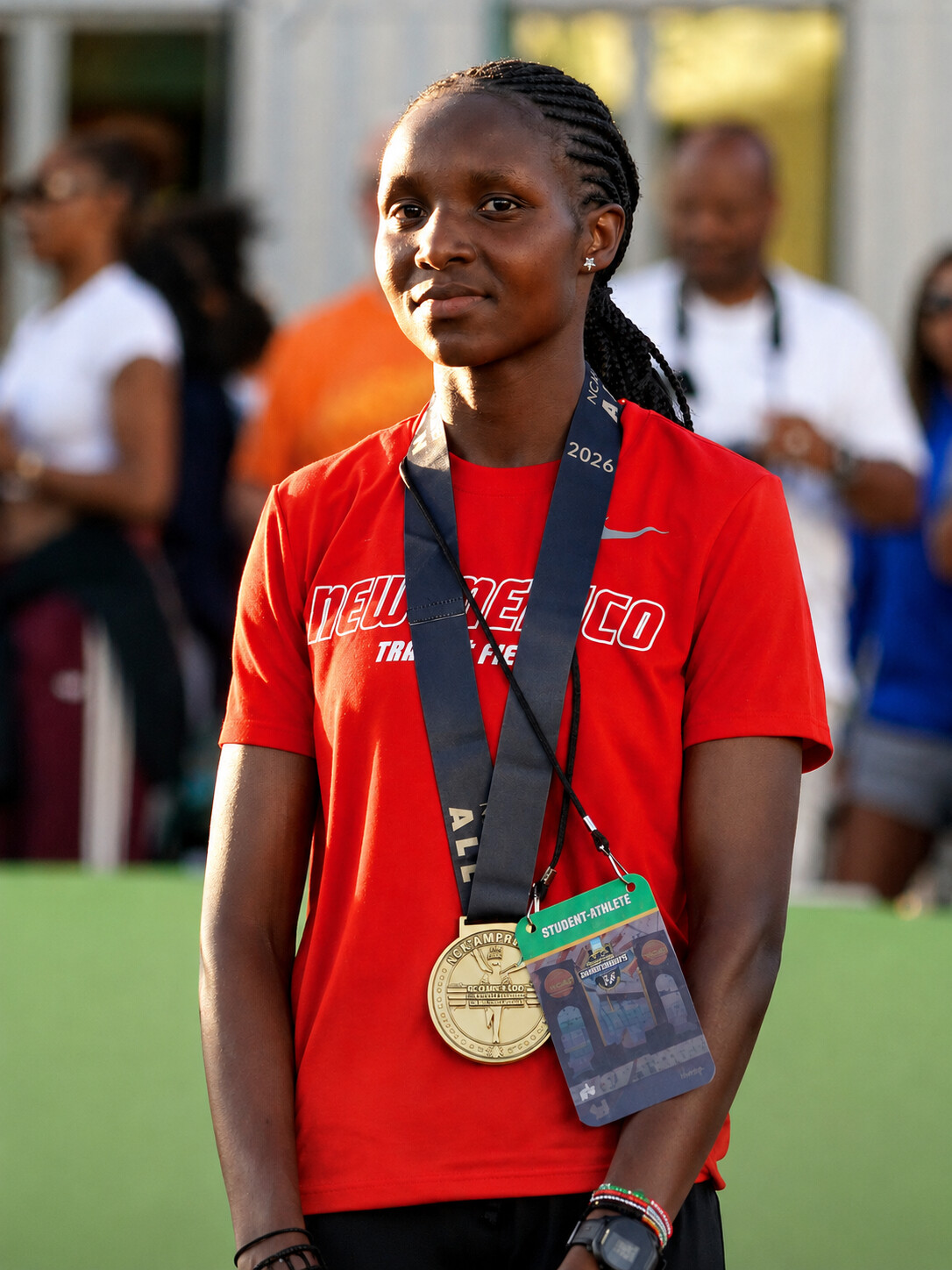
With Lemngole’s result erased, New Mexico’s Marion Jepngetich moved into the championship position, producing a spectacular performance of her own to claim the NCAA 5000m title in a personal best of 15:13.01.
The final standings showed just how competitive the race was, with several athletes delivering outstanding performances and multiple personal bests. Mercyline Kirwa of Iowa State finished second in 15:13.72, while Florida’s Judy Chepkoech completed the podium in 15:14.05 — both recording lifetime bests.
The top ten was dominated by incredible depth, with Betty Kipkore (Iowa State) taking fourth in 15:14.43, Pamela Kosgei (New Mexico) fifth in 15:15.88, and Hilda Olemomoi (Florida) sixth with a season best of 15:16.23. Edna Chelulei of Eastern Kentucky, Katie Bohlke of Virginia Tech, Jane Hedengren of BYU, and Juliet Cherubet of Oregon completed the top ten.
For Lemngole, it was a painful reminder of how unforgiving elite sport can be. After producing the fastest time of the night and crossing the finish line as the apparent winner, a technical ruling outside the excitement of the finish changed the entire outcome.
Jepngetich, meanwhile, now celebrates a championship victory earned on one of the most dramatic evenings in NCAA distance running history — a race where the final result was decided not only by speed, but also by the smallest margins of competition.
The NCAA 5000m final will be remembered not just for the incredible performances on the track, but for the unforgettable twist that came after the race was already over.
by Erick Cheruiyot for My Best Runs.
Login to leave a comment
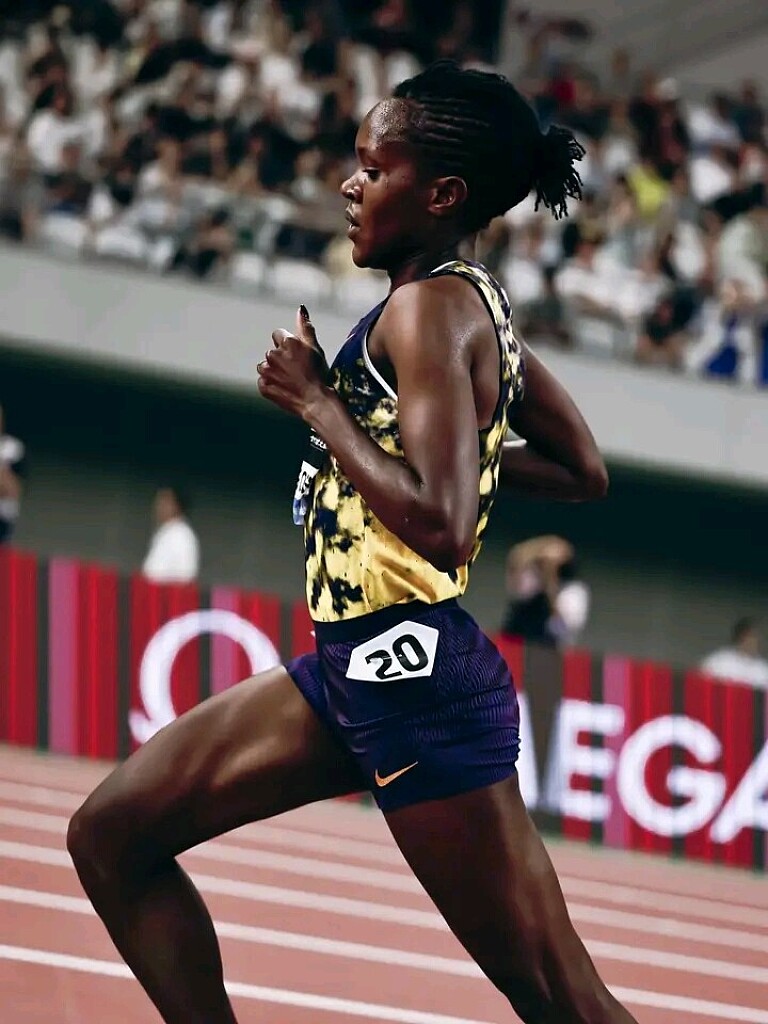
Faith Kipyegon Returns to Eugene With History in Her Sights
When Faith Kipyegon steps onto the track at Hayward Field on July 4, she will not simply be racing another mile. She will be chasing history once again.
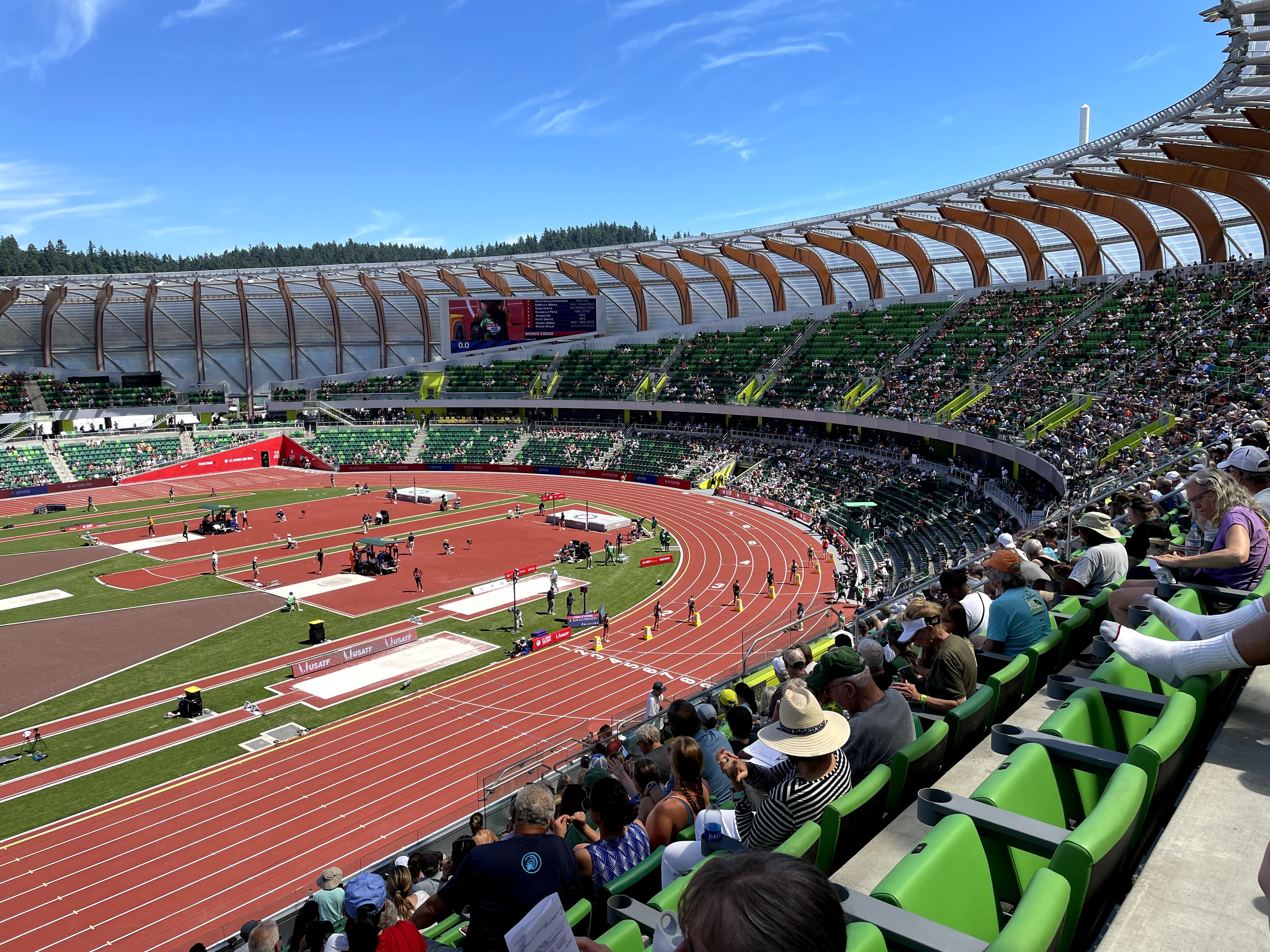
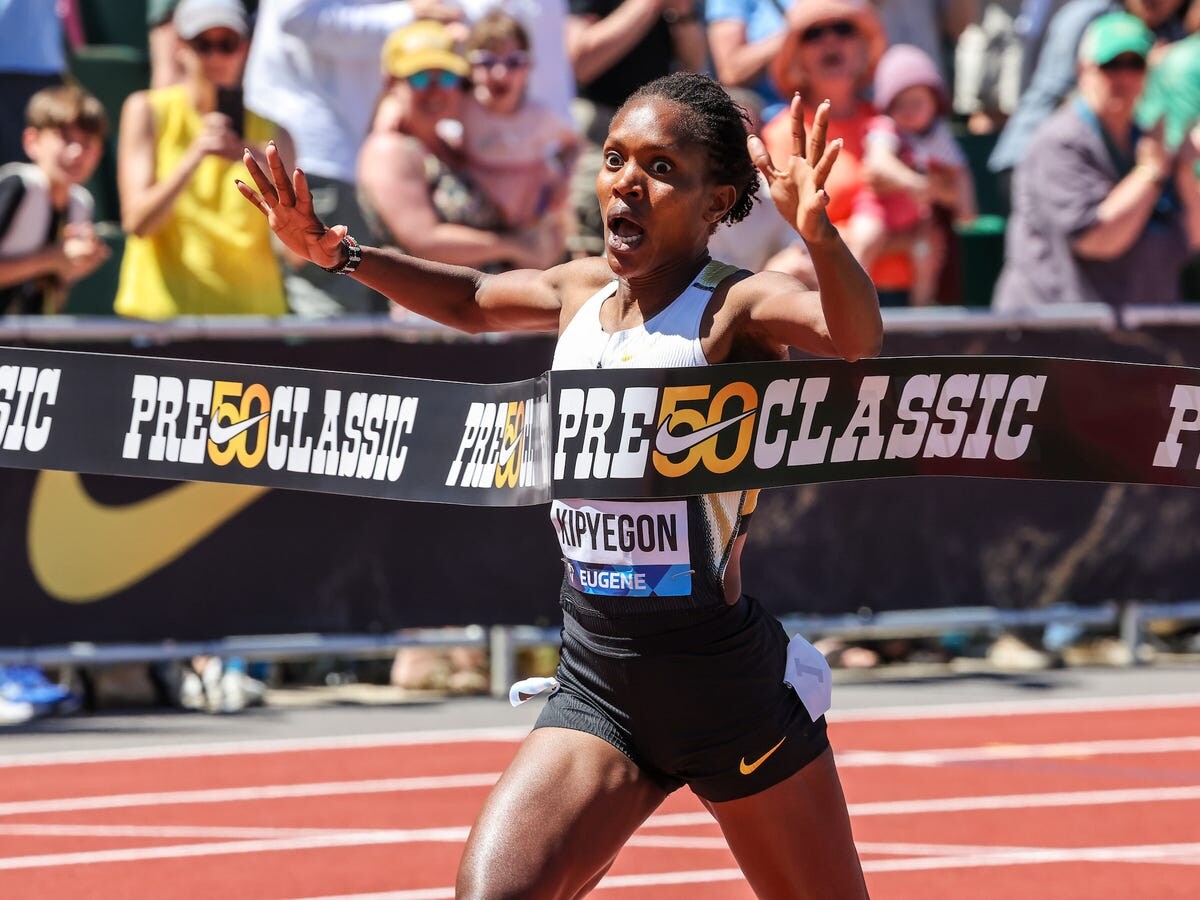
For the first time since 1993, the women's mile returns to the Prefontaine Classic, and there could hardly be a more fitting headliner than the greatest female miler the sport has ever seen. The Kenyan superstar arrives in Eugene as the undisputed queen of middle-distance running, carrying both the world record and the expectation that another landmark performance could be just around the corner.
One record in particular appears vulnerable.
The Hayward Field stadium record of 4:21.25, set by American legend Mary Decker in 1988, has stood untouched for nearly four decades. Generations of world-class athletes have come and gone without threatening it. Yet with Kipyegon now operating on a different level from any woman before her, few expect that mark to survive much longer.
The intrigue surrounding the race is not whether the record will fall, but by how much.

Kipyegon's official world record of 4:07.64 transformed the event and redefined what was thought possible in women's middle-distance running. Last summer, she pushed the boundaries even further when she clocked 4:06.42 during Nike's highly publicized Breaking4 project. Although the performance was not eligible for record recognition because of its controlled conditions, it provided compelling evidence that the four-minute barrier is no longer a fantasy.
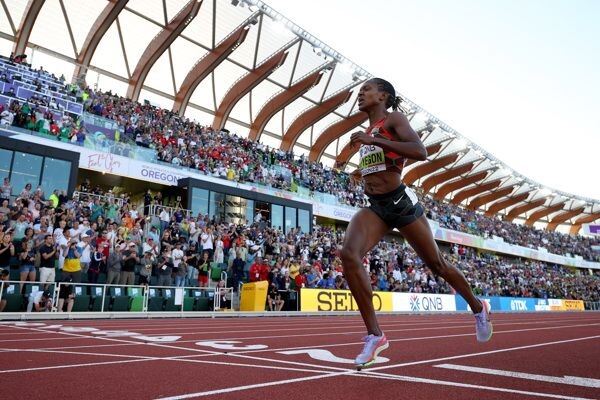
It is a target.
The 32-year-old has spent the past several seasons systematically dismantling some of the sport's most prestigious records. Her combination of tactical brilliance, finishing speed, and remarkable consistency has made her virtually unbeatable over the distances she dominates.
Eugene has also become one of her favorite stages.
It was at Hayward Field where Kipyegon delivered another masterpiece by breaking the world record in the 1500 meters, further cementing her legacy as one of the greatest runners in history. The venue seems to bring out her best, and with the energy of a packed Prefontaine Classic crowd behind her, another unforgettable performance could be on the horizon.
Adding to the anticipation is a remarkable streak that continues to grow. Kipyegon has not lost a 1500-meter race in more than a decade, a level of dominance rarely seen in any discipline. Every appearance now carries the feeling that spectators are witnessing a living legend at the peak of her powers.
The women's mile may be returning to the Prefontaine Classic after a long absence, but it is arriving at exactly the right moment. The event has never featured an athlete better equipped to redefine its limits.
The stadium record appears destined to fall. The world record could come under pressure. And somewhere beyond those milestones lies the sport's most tantalizing possibility—the first sub-four-minute mile by a woman under record-legal conditions.
Whether that breakthrough arrives this summer or further down the road remains uncertain.
What is certain is that when Faith Kipyegon returns to Hayward Field, the athletics world will be watching. Eugene has already witnessed some of her greatest achievements. On July 4, it may witness the next chapter in one of the most extraordinary careers the sport has ever known.
by Erick Cheruiyot for My Best Runs.
Login to leave a comment
Prefontaine Classic
The Pre Classic, part of the Diamond League series of international meets featuring Olympic-level athletes, is scheduled to be held at the new Hayward Field in Eugene. The Prefontaine Classicis the longest-running outdoor invitational track & field meet in America and is part of the elite Wanda Diamond League of meets held worldwide annually. The Pre Classic’s results score has...
more...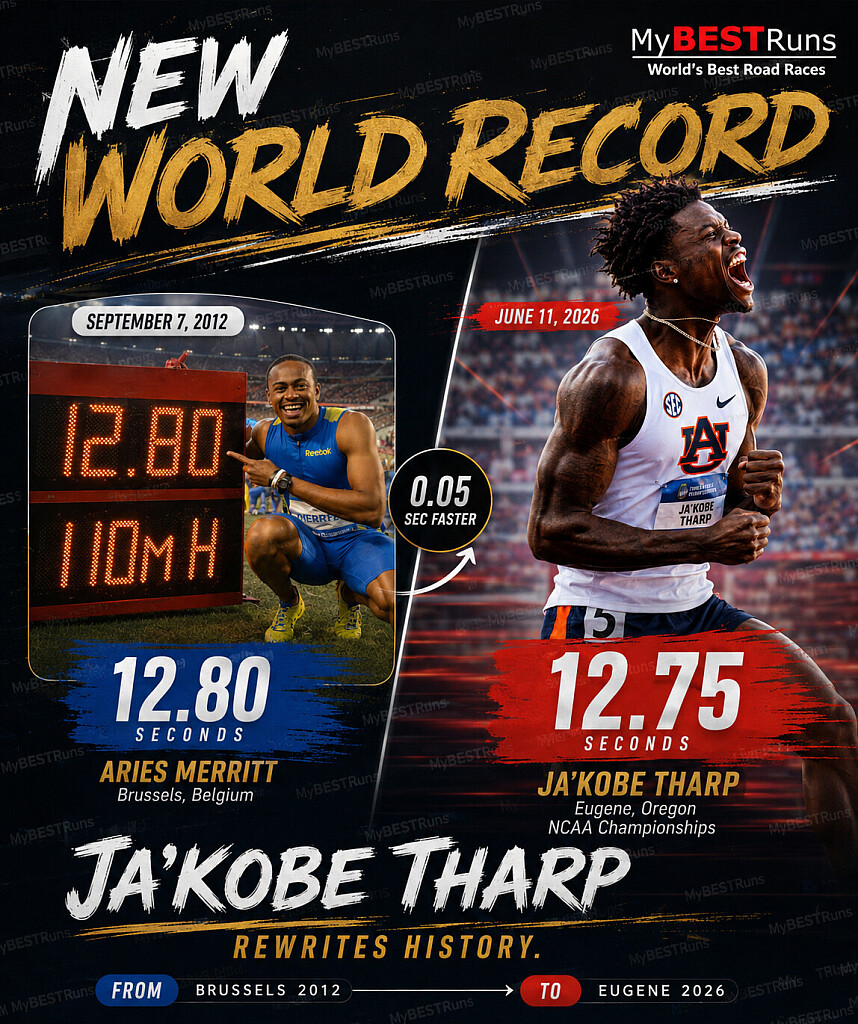
Ja’Kobe Tharp Shatters World Record with Historic NCAA Hurdles Performance
The NCAA Track and Field Championships delivered a moment few could have predicted as Ja’Kobe Tharp produced one of the most astonishing performances in the history of sprint hurdling, rewriting the record books in spectacular fashion.
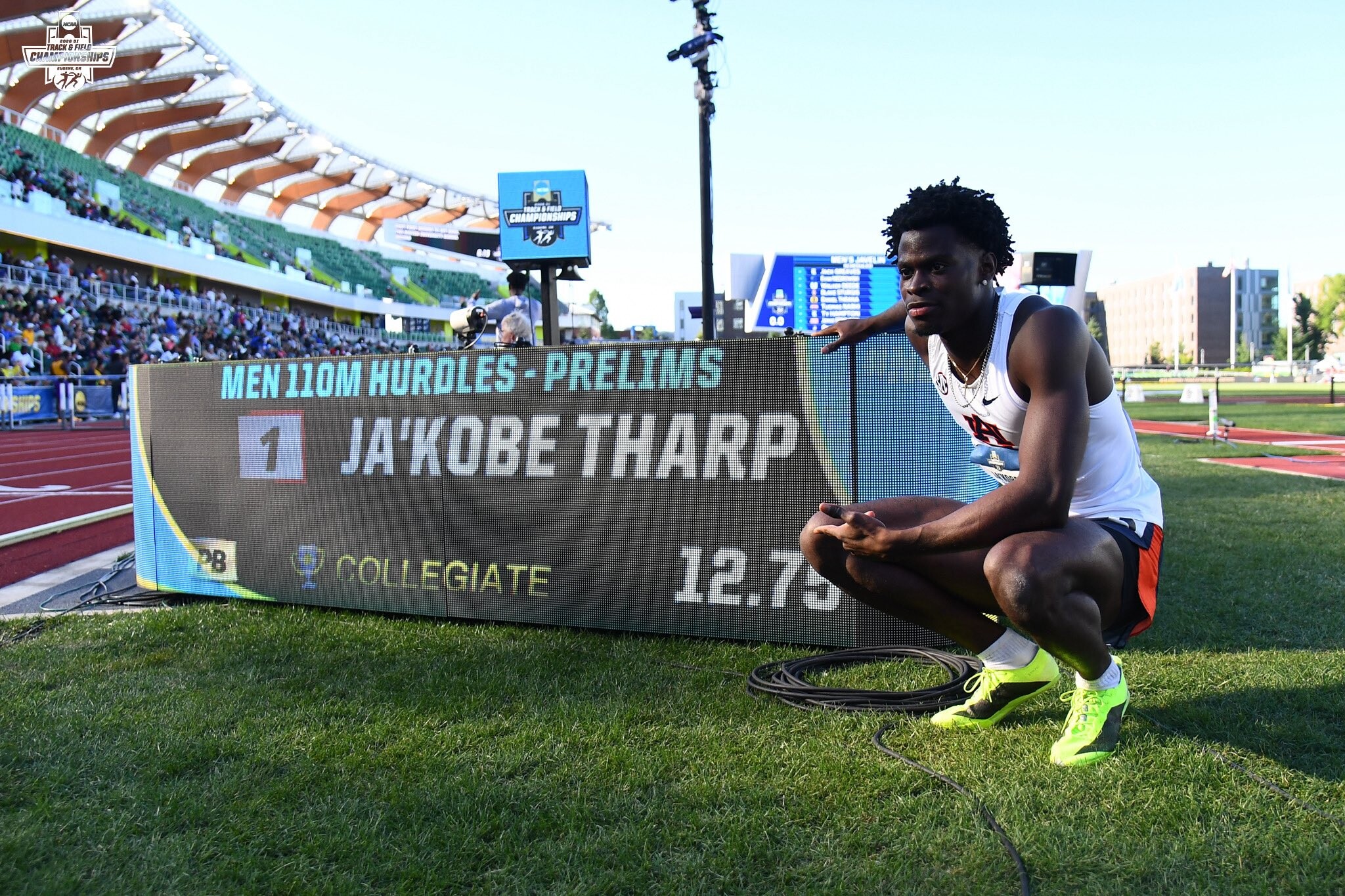
Competing in the opening round of the men’s 110-meter hurdles, the Auburn star stunned the athletics world by clocking an incredible 12.75 seconds, becoming the first athlete ever to break the 12.80-second barrier. In doing so, he eclipsed the long-standing world record of 12.80 set by Aries Merritt in 2012, a mark that had stood as one of the sport’s most revered achievements for more than a decade.
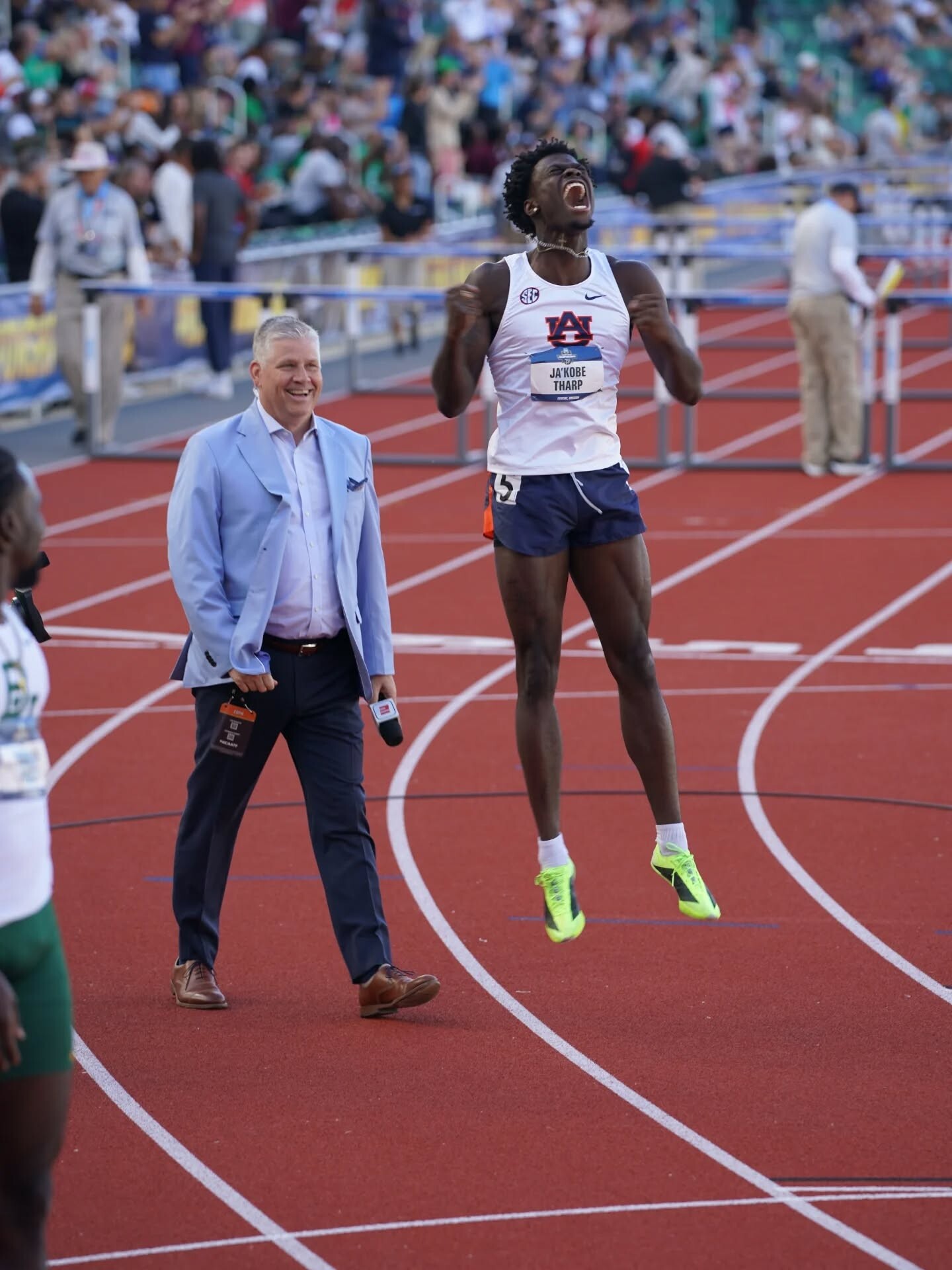
What makes Tharp’s breakthrough even more remarkable is the scale of his improvement. Entering the championships, the defending NCAA and U.S. champion had recorded a season-best of 13.05 seconds. Yet under the brightest spotlight, he unleashed a performance that exceeded every expectation, slicing an extraordinary 0.26 seconds from his personal best in a race that instantly became one of the greatest ever run.
The achievement sent shockwaves throughout the track and field community. While Tharp arrived in Eugene as one of the leading contenders for the NCAA title, few envisioned a performance capable of redefining the limits of the event. Instead, the American hurdler delivered a race for the ages, combining flawless technique, explosive speed, and impeccable rhythm from the first hurdle to the finish line.
The historic run not only secured his place in athletics history but also transformed the outlook of the championship. With the world record now in his possession, Tharp advances to the final as the overwhelming favorite, carrying momentum that could make an already unforgettable weekend even more extraordinary.
For years, the 12.80 barrier appeared untouchable. On a stunning day at the NCAA Championships, Ja’Kobe Tharp proved otherwise, producing the kind of performance that reminds fans why sport remains so unpredictable. In a matter of seconds, he turned a routine qualifying round into a landmark moment that will be remembered for generations.
The world record no one saw coming is now a reality—and Ja’Kobe Tharp is the man who changed history.
by Erick Cheruiyot for My Best Runs.
Login to leave a comment
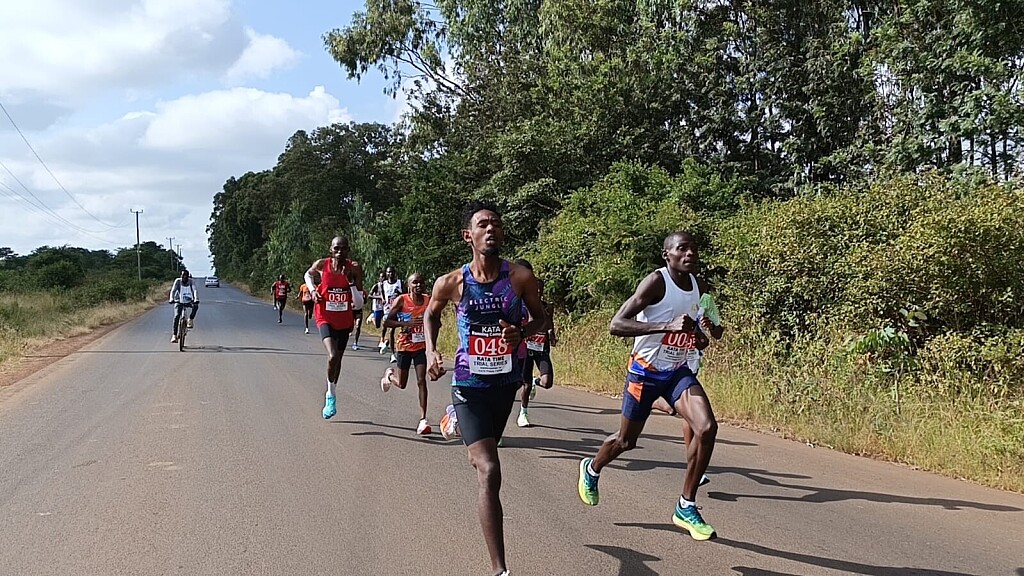
Personal Bests and Promising Performances Highlight the 57th KATA Time Trial Series in Thika
The stopwatch once again took centre stage in Thika as athletes gathered for the 57th edition of the KATA Time Trial Series, an event that continues to serve as one of Kenya's most respected platforms for measuring progress and pursuing excellence.
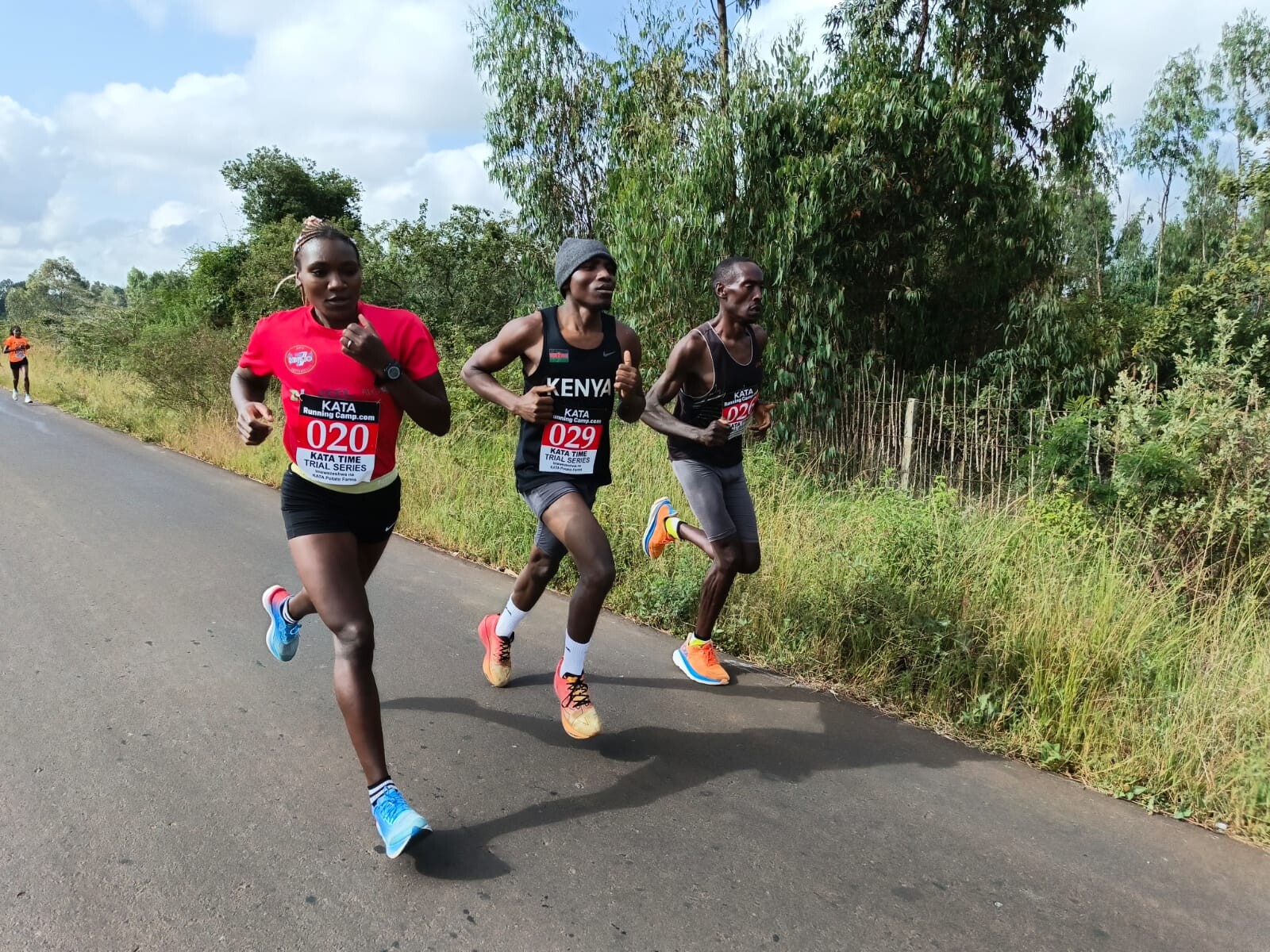
Held on the familiar roads surrounding the Kenyan Athletics Training Academy (KATA), the latest edition brought together runners at different stages of their athletic journeys, all united by a common objective: to test their fitness, challenge their limits, and chase new personal bests.
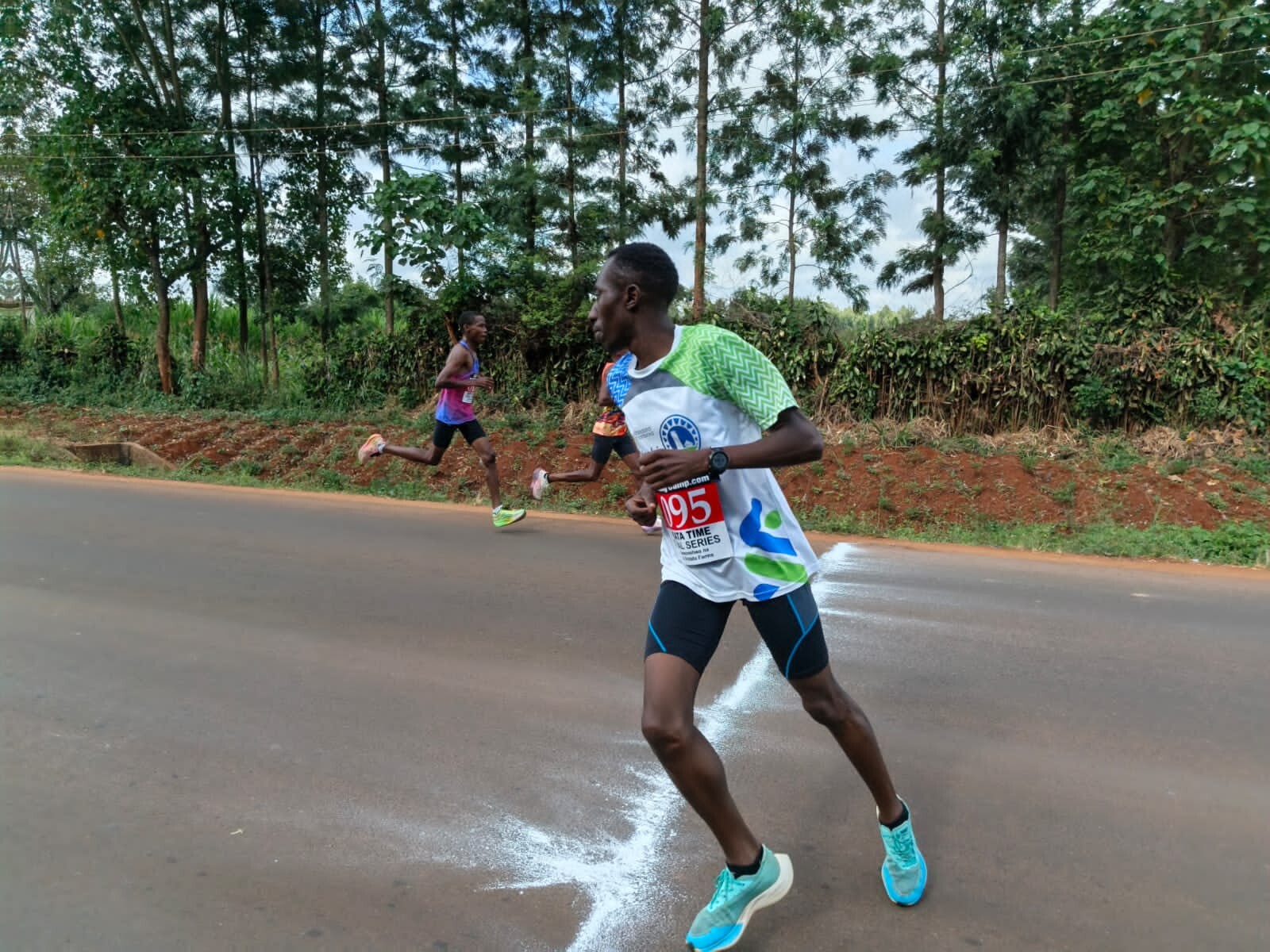
As expected, the competition was less about medals and fanfare and more about honest performances against the clock. Every athlete arrived carrying the weight of weeks and months of disciplined training, hoping to see that effort reflected in the final results.
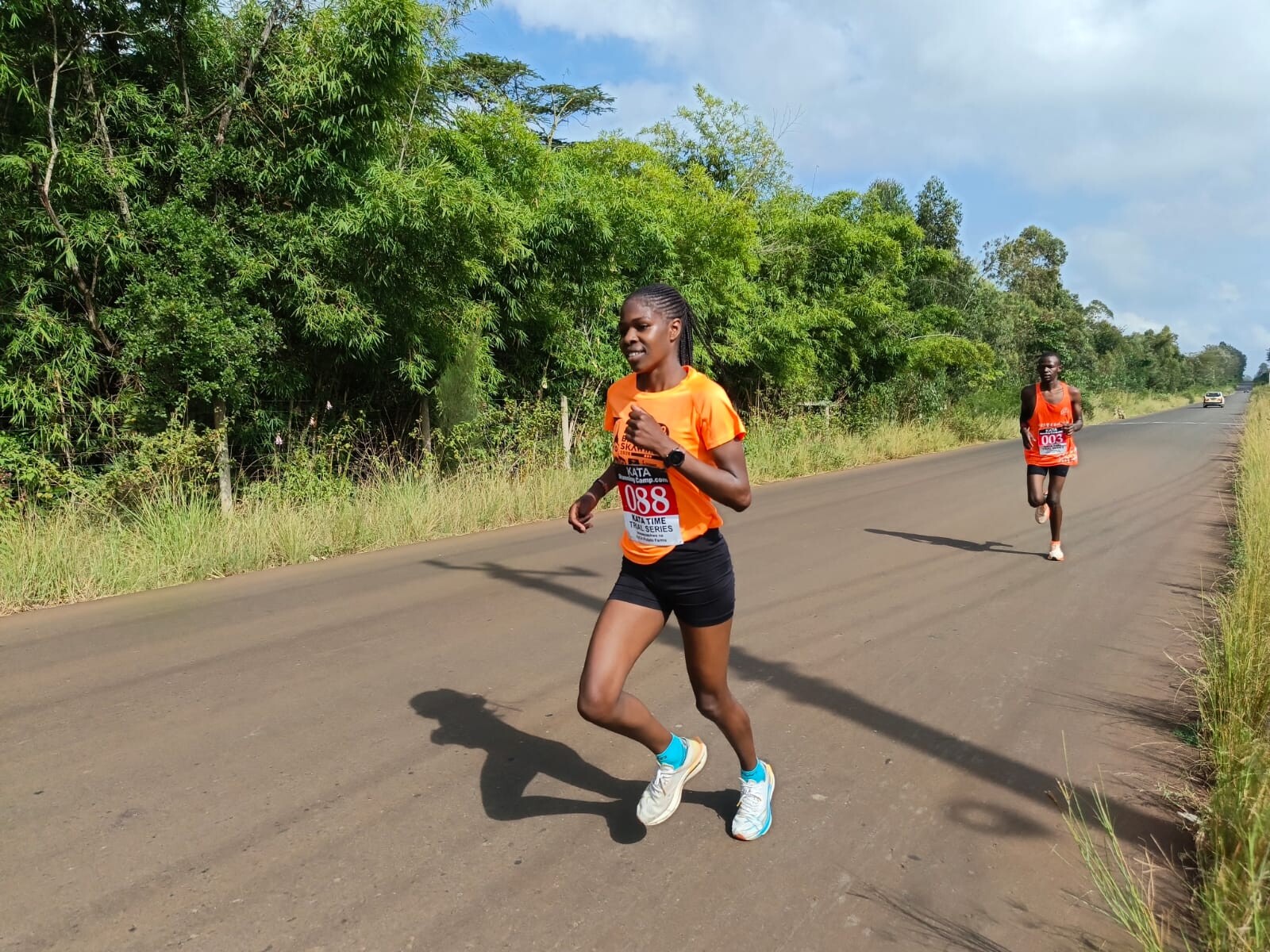
In the men's 5km race, John Ndung'u produced the fastest performance of the day, crossing the line in 15:36. Anthony Kariuki followed in 16:15, while Eugene Nambua secured third place in 17:44. Simon Ngereza completed the leading group with a time of 18:31.
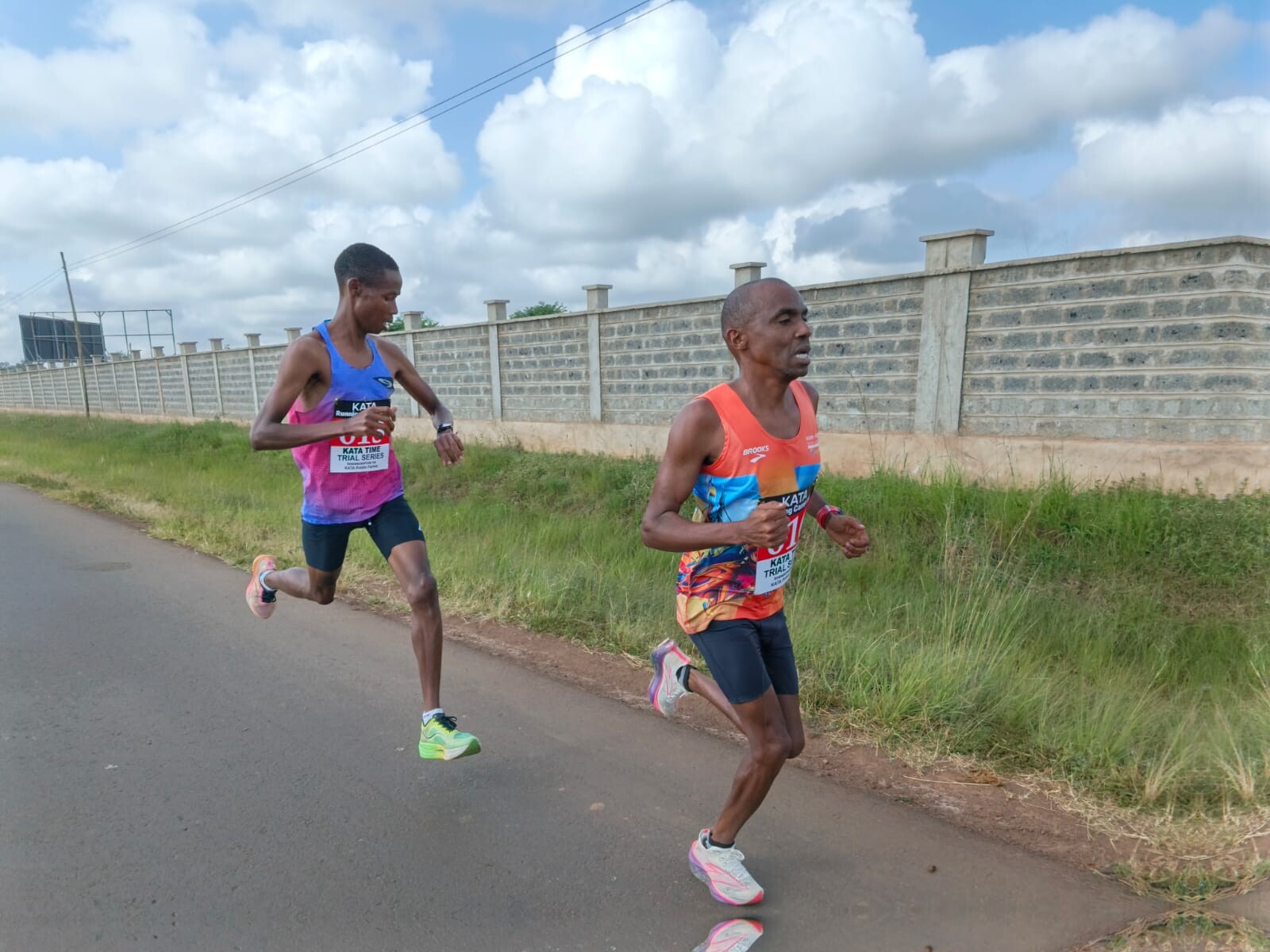
The women's 10km race delivered a closely contested battle at the front. Jane Wanja emerged victorious in 36:16 after a strong and controlled run, holding off Caren Chepkwony, who finished just nine seconds behind in 36:25. The narrow margin highlighted the competitive nature of the race and the determination shown by both athletes throughout the morning.
The deepest field of the day came in the men's 10km event, where several runners produced encouraging performances. John Chege led the standings with an impressive 30:12, demonstrating both strength and consistency over the distance. Charles Wanjora followed in second place with 30:54, while Erick Cheruiyot claimed third in 31:42 after a well-executed effort.
Joel Maina continued the strong pace of the leading pack to finish fourth in 32:26, while Justus Nyamai completed the top five in 33:24. David Mwangi recorded 35:24 for sixth place, followed by Paul Nganga in 35:38. Ewand Niyukiru crossed the line in 36:27, with Charles Ndirangu clocking 37:21 and Brandon Mutugi completing the top ten in 38:31.
KATA Time Trial Series – 57th Edition Results
Thika, Kenya | June 10, 2026
Men's 5km
1. John Ndung'u – 15:36
2. Anthony Kariuki – 16:15
3. Eugene Nambua – 17:44
4. Simon Ngereza – 18:31
Women's 10km
1. Jane Wanja – 36:16
2. Caren Chepkwony – 36:25
Men's 10km
1. John Chege – 30:12
2. Charles Wanjora – 30:54
3. Erick Cheruiyot – 31:42
4. Joel Maina – 32:26
5. Justus Nyamai – 33:24
6. David Mwangi – 35:24
7. Paul Nganga – 35:38
8. Ewand Niyukiru – 36:27
9. Charles Ndirangu – 37:21
10. Brandon Mutugi – 38:31
Beyond the finishing positions, the true success of the KATA Time Trial lies in what the numbers represent. Every result tells a story of early mornings, demanding workouts, sacrifices, and the relentless commitment required to improve in one of the world's most competitive athletics environments.
For some athletes, Wednesday's performances marked confirmation that their training is moving in the right direction. For others, the results provided valuable lessons and clear targets for the weeks ahead. Such is the nature of time trials: they offer an honest assessment of where an athlete stands and where improvement is still needed.
The KATA Time Trial Series has earned its reputation not through spectacle but through consistency. Edition after edition, it provides athletes with a stage to evaluate their progress, sharpen their racing instincts, and build confidence ahead of larger competitions.
As the 57th edition comes to a close, the performances recorded on the roads of Thika serve as another reminder that success in athletics is rarely achieved overnight. It is built through patience, resilience, and the willingness to keep chasing improvement. On this occasion, the clock once again revealed stories of ambition, determination, and the enduring pursuit of personal excellence.
by Erick Cheruiyot for My Best Runs.
Login to leave a comment
KATA Time Trial Series
Welcome to the KATA Monthly Time Trial Held at the Kenyan Athletics Training Academy in Thika, Kenya, the KATA Monthly Time Trial is a unique and inclusive event designed to support runners of all levels in achieving their goals and showcasing their fitness. This event offers both 10K and 5K distances on an accurate, certified course, providing participants with...
more...
From Helsinki to Beijing: The Incredible Transformation of Marathon Qualification Standards
The road to the World Athletics Championships marathon has never been more unforgiving. What was once an attainable global benchmark for many international runners has now evolved into an exclusive club reserved for only the fastest athletes on the planet. Over the last two decades, the qualification standards for the championships marathon have dropped dramatically, reflecting the explosive evolution of elite distance running across the world.
Back in Helsinki 2005, male athletes could secure qualification with a time of 2:18:00, while women needed 2:45:00 to earn a place on the starting line. The standards remained unchanged at the Osaka 2007 Championships, maintaining an era where consistency and endurance were enough to compete on the world stage.
However, the landscape of marathon running slowly began to transform between 2009 and 2017. Qualification times fluctuated between 2:16 and 2:19 for men, while women’s standards ranged from 2:38 to 2:45. Even then, the shift toward faster racing had already begun, driven by deeper international competition and advancements in sports science.
The major turning point arrived in 2019 during the Doha World Championships. World Athletics introduced a new qualification structure, replacing the old “A” and “B” standards with a unified direct-entry system supported by world rankings. At the same time, the standards became significantly tougher, dropping to 2:16:00 for men and 2:37:00 for women.
What followed was an unprecedented acceleration in elite marathon performances.
By the time the championships moved to Eugene in 2022 and Budapest in 2023, the entry standards had tightened even further to 2:14:30 for men and 2:33:30 for women. These were no longer simply elite times — they were becoming world-class requirements.
Then came the astonishing leap for Tokyo 2025 and Beijing 2027.
World Athletics pushed the standards to a staggering 2:06:30 for men and 2:23:30 for women — marks that place athletes among the very best marathoners globally. In today’s era, running a national-class performance is no longer enough; athletes must now deliver near-podium level times simply to qualify.
The dramatic drop in standards reflects far more than just faster athletes. Modern marathon running has been reshaped by revolutionary shoe technology, improved pacing systems, advanced nutrition strategies, scientific training methods, altitude preparation, and the growing depth of competition worldwide. The sport has entered a high-speed era where records fall rapidly and expectations continue to rise.
For many athletes, the new standards represent both inspiration and pressure. Qualification now demands extraordinary precision, consistency, and near-perfect execution over 42.195 kilometres. Every second matters more than ever before.
Yet despite the increasing difficulty, the evolution also highlights the remarkable progress of human performance. Marathon running is no longer merely about endurance — it has become a showcase of innovation, tactical intelligence, and extreme athletic excellence.
The World Championships marathon has evolved from a global competition into one of the most selective endurance events in athletics history, and the future suggests the standards may only continue to get faster.
by Erick Cheruiyot for My Best Runs.
Login to leave a comment
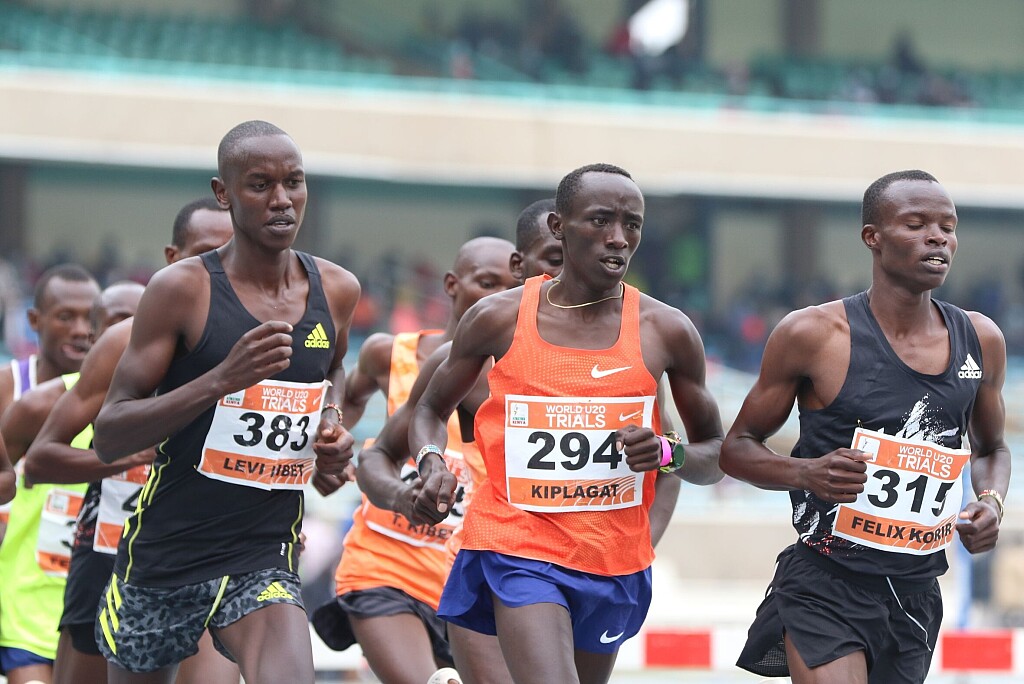
Kenya Fast-Tracks U20 Trials as Countdown to Global Showpiece Intensifies
In a decisive move aimed at sharpening its competitive edge, Athletics Kenya has officially revised the dates for the national trials ahead of the World Athletics U20 Championships, signaling an early push toward assembling a formidable junior team.

The global championship, set to unfold in Eugene from 4th to 9th August 2026, remains one of the most prestigious stages for emerging talent. With Kenya’s rich legacy in middle- and long-distance running, expectations are already building around the next generation of stars poised to carry the nation’s dominance forward.
Originally scheduled for late June, the Kenyan trials have now been brought forward and will take place from 21st to 23rd May 2026 at the iconic Nyayo National Stadium. The adjustment reflects a strategic shift by Athletics Kenya to allow sufficient time for administrative processes, team selection procedures, and logistical planning ahead of the international competition.

The earlier timeline is also expected to give selected athletes a crucial window to fine-tune their preparations, recover adequately, and align with high-performance training programs before heading to the United States. For a nation that consistently produces world-beating junior athletes, such meticulous planning could prove decisive.
Officials have emphasized that further communication regarding the selection criteria and the list of invited athletes will be released in due course. In the meantime, aspiring competitors are urged to recalibrate their training schedules and peak in time for the revised dates.
As anticipation builds, the spotlight now turns to Nairobi, where the country’s brightest young prospects will battle not only for national glory but also for the honor of representing Kenya on the world stage.
by Erick Cheruiyot for My Best Runs.
Login to leave a comment
Patience of a Champion: Jakob Ingebrigtsen Eyes July Comeback
The wait to see Jakob Ingebrigtsen back on the track will continue a little longer. The Olympic champion is not expected to race before July as he continues recovering from Achilles tendon surgery, with his management team choosing caution over haste ahead of a demanding second half of the season.

According to his manager, Daniel Wessfeldt, the Norwegian star will miss all competitions in May and June, ruling him out of the early-season circuit, including the prestigious Bislett Games. The decision reflects a clear priority: returning only when he is fully prepared to compete at the elite level that has defined his career.
At just 25, Ingebrigtsen has already built one of the most decorated résumés in modern distance running. He captured Olympic gold in the 1500m at Tokyo 2020 before adding the 5000m crown at Paris 2024. Beyond the Olympic stage, he has collected world titles, dominated European championships, and rewritten record books with global marks in the 2000m and 3000m, alongside the European record in the 1500m.
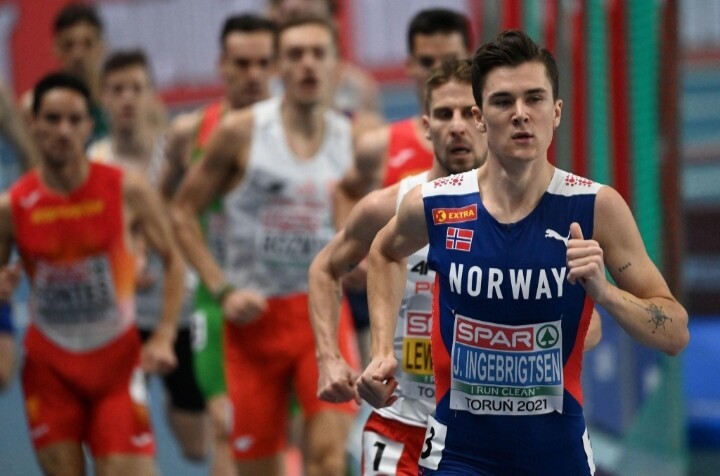
The Achilles issue had lingered in recent seasons, making surgery the necessary long-term solution. Rather than rushing back for early headlines, his camp is investing in a complete rehabilitation process designed to preserve both performance and longevity.
If recovery continues as planned, several high-profile opportunities await later in the year. Possible return stages include the Diamond League Eugene in early July, followed by major targets such as the European Championships, Diamond League stops in Silesia and Brussels, and the Ultimate Championship.
For now, the stopwatch can wait. Ingebrigtsen’s greatest race at this moment is not against rivals, but against time, patience, and recovery. If history is any guide, when he does return, he will come back ready to remind the world why he remains one of the defining athletes of his era.
by Erick Cheruiyot for My Best Runs.
Login to leave a comment
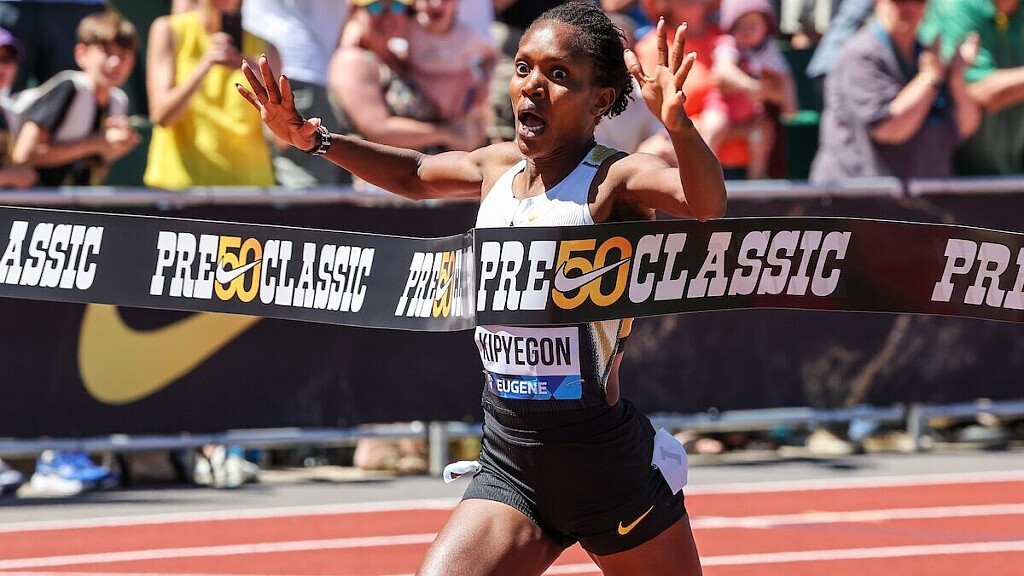
Kipyegon Set to Ignite Hayward as Women’s Mile Returns to Prefontaine Classic
The spotlight is firmly set on Faith Kipyegon as she prepares for yet another historic moment at the Prefontaine Classic. The Kenyan superstar, already the undisputed queen of middle-distance running, will headline the women’s mile at Hayward Field in what promises to be one of the most anticipated races of the 2026 athletics calendar.
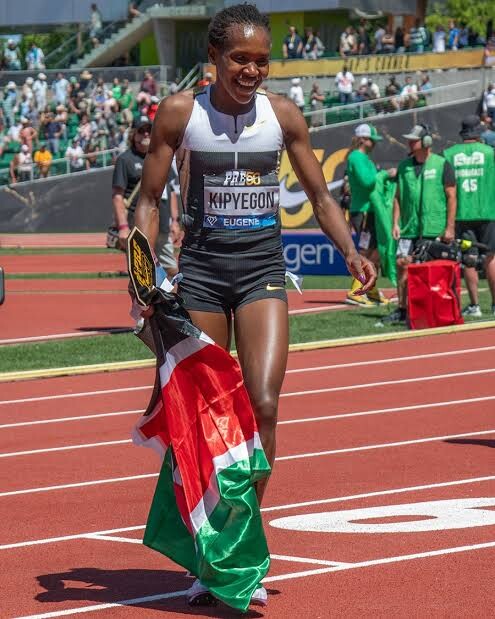
In a move that has electrified the track and field world, the women’s mile returns to the Prefontaine Classic for the first time since 1993. Its revival is more than symbolic—it sets the stage for a potential rewriting of history, with Kipyegon standing at the center of it all.
The reigning world record holder in both the 1500m and the mile arrives with her astonishing mark of 4:07.64 already redefining the limits of women’s middle-distance running. Yet beyond the clock, another milestone quietly looms: Kipyegon will be chasing her eighth Prefontaine Classic title in just her eleventh appearance—a remarkable testament to her consistency and dominance at one of the sport’s most prestigious meets.
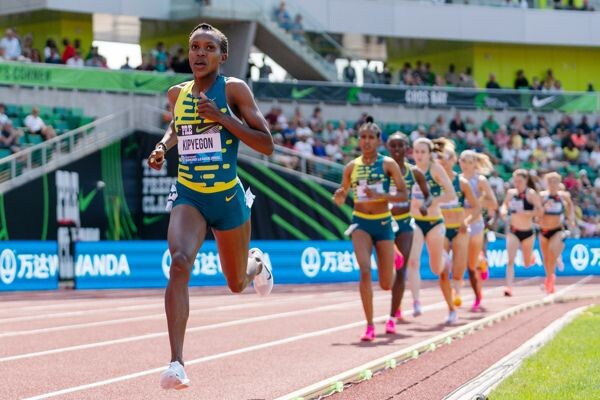
Adding historical depth to the moment is Mary Slaney, whose meet record of 4:21.25 has stood since 1988. That mark, once a benchmark of excellence, now appears increasingly vulnerable given the caliber of athletes expected on the start line and the relentless progression of the event.
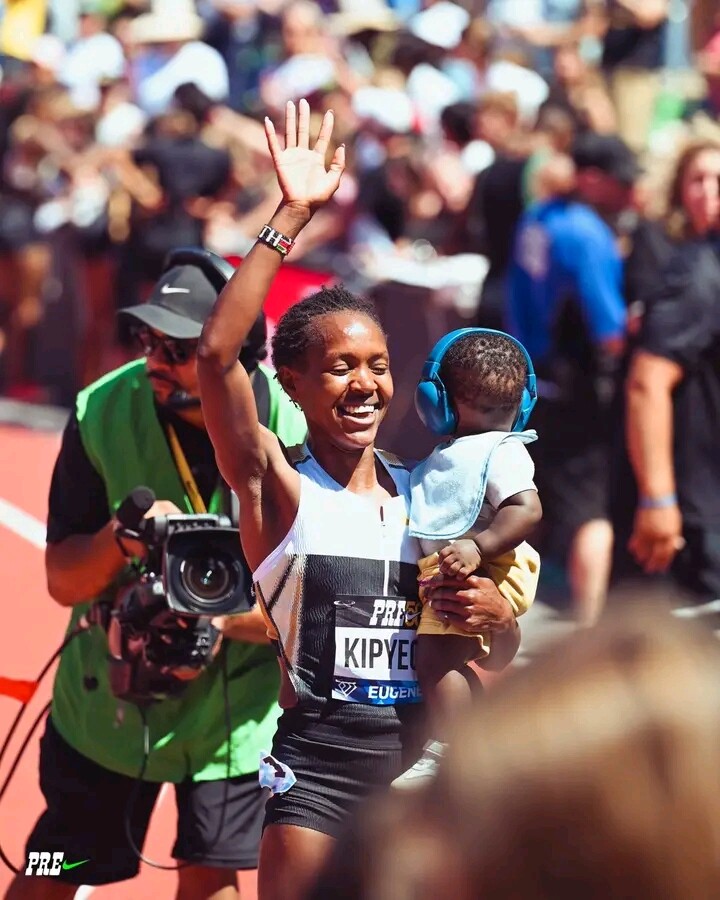
For Kipyegon, this is not just another race—it is an opportunity to further cement her legacy in a discipline she has already transformed. Her fluid stride, tactical brilliance, and devastating finishing speed have elevated her into a league of her own, and Hayward Field offers the perfect stage for her next masterpiece.
Scheduled for July 3–4, the Prefontaine Classic is shaping up to be far more than a routine Diamond League stop. With the return of the women’s mile and the presence of its greatest-ever performer, the event carries the weight of history—and the promise of something even greater.
All eyes will be on Eugene, where the past meets the future, and where Faith Kipyegon may once again prove that limits are merely temporary.
by Erick Cheruiyot for My Best Runs.
Login to leave a comment
Prefontaine Classic
The Pre Classic, part of the Diamond League series of international meets featuring Olympic-level athletes, is scheduled to be held at the new Hayward Field in Eugene. The Prefontaine Classicis the longest-running outdoor invitational track & field meet in America and is part of the elite Wanda Diamond League of meets held worldwide annually. The Pre Classic’s results score has...
more...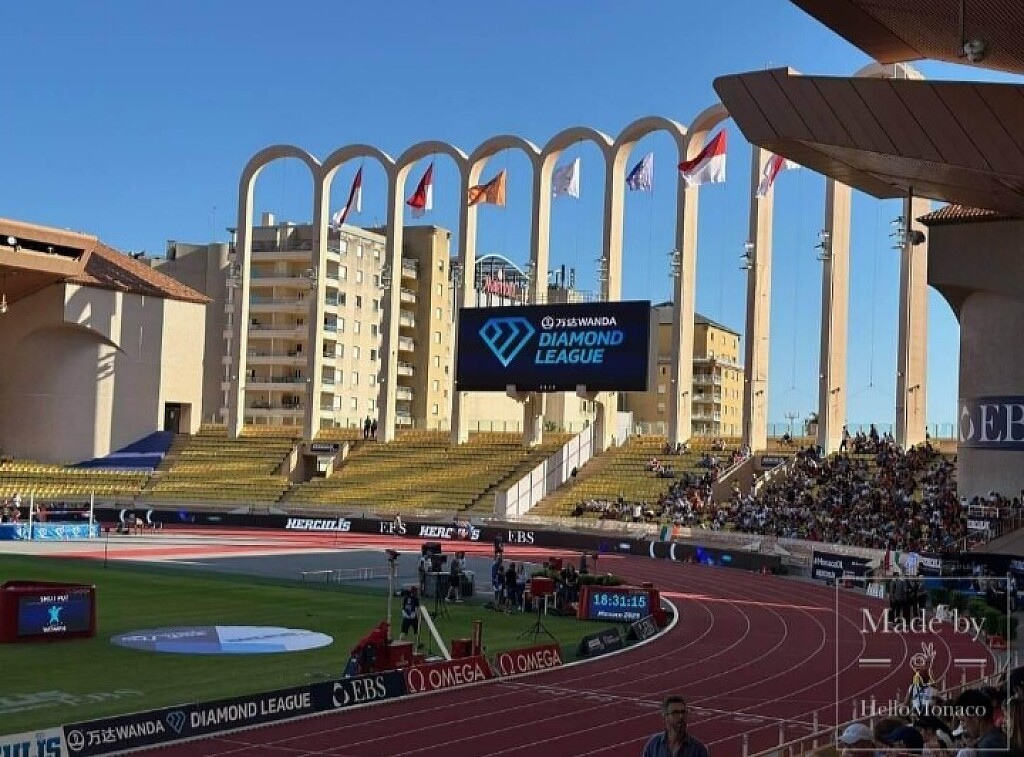
Global Showdown: The 2026 Diamond League Unfolds Across Continents
The 2026 Diamond League calendar promises a breathtaking journey across the globe, stitching together cultures, climates, and elite athletic performances into one electrifying season. From the desert lights of Doha to the historic streets of Brussels, the world’s finest track and field stars will once again chase glory, records, and supremacy in a series that defines the pinnacle of one-day athletics competition.
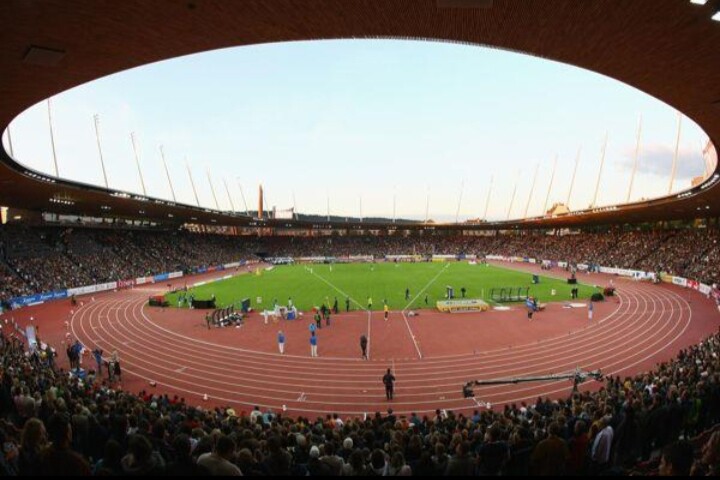
The campaign ignites on May 8 in Doha, where speed meets spectacle under the floodlights. Just a week later, the circuit shifts east to Shanghai/Keqiao on May 16, before returning to familiar territory in Xiamen on May 23. These early stops in Asia and the Middle East often set the tone—fast times, bold statements, and emerging rivalries begin to take shape as athletes test their early-season form.
By the end of May, the tour arrives in Rabat (May 31), marking Africa’s sole stop on the circuit—a meeting that consistently delivers both passionate crowds and world-class performances. From there, Europe takes center stage, beginning with the timeless backdrop of Rome on June 4. The momentum builds quickly with a Scandinavian double in Stockholm (June 7) and Oslo (June 10), two meets renowned for their rich history and electric atmosphere.
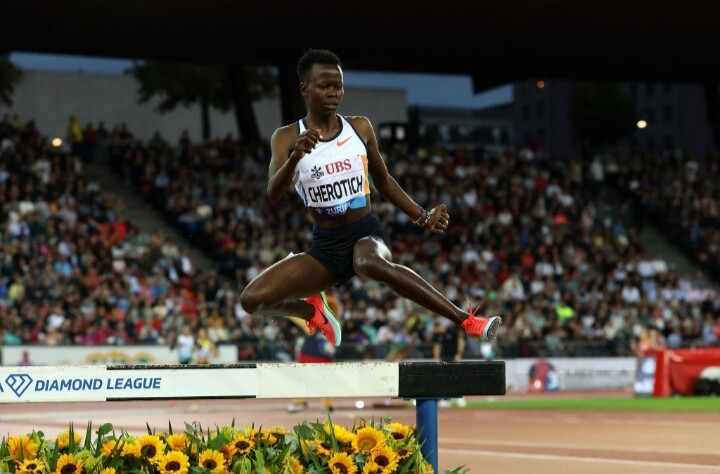
Late June brings the glamour of Paris (June 28), where speed and style converge in one of the season’s most anticipated showdowns. Then, the spotlight crosses the Atlantic to Eugene on July 4, a venue often regarded as the heartbeat of track and field in the United States. The European leg resumes swiftly with the iconic Monaco meet on July 10—a race often synonymous with record-breaking performances—before heading to London on July 18, where roaring crowds elevate every stride and jump.

After a brief pause, the Diamond League returns in August with a decisive run toward the final. Lausanne (August 21) sets the stage, followed closely by Silesia (August 23) and Zurich (August 27), meetings that frequently determine qualification battles and title contenders. Each performance becomes increasingly critical, with athletes fighting not just for victory, but for a place in the grand finale.
The season culminates on September 4–5 in Brussels, where champions will be crowned and the year’s defining moments etched into history. It is here that consistency meets brilliance—only the best across the series earn the right to compete for the coveted Diamond Trophy.
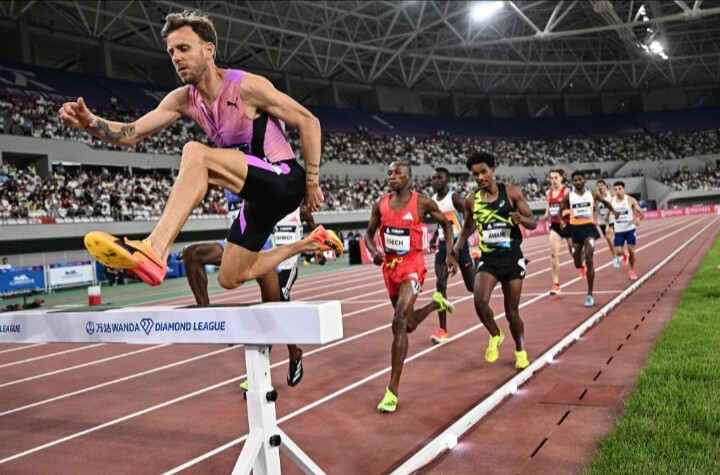
Beyond the dates and destinations, the 2026 calendar tells a deeper story: one of global unity through sport, of athletes pushing human limits, and of fans witnessing greatness unfold in real time. Every stop carries its own rhythm, yet together they form a symphony of speed, endurance, and excellence.
As the world watches, one question remains—who will rise, who will endure, and who will etch their name into the legacy of the Diamond League?
by Erick Cheruiyot for My Best Runs.
Login to leave a comment
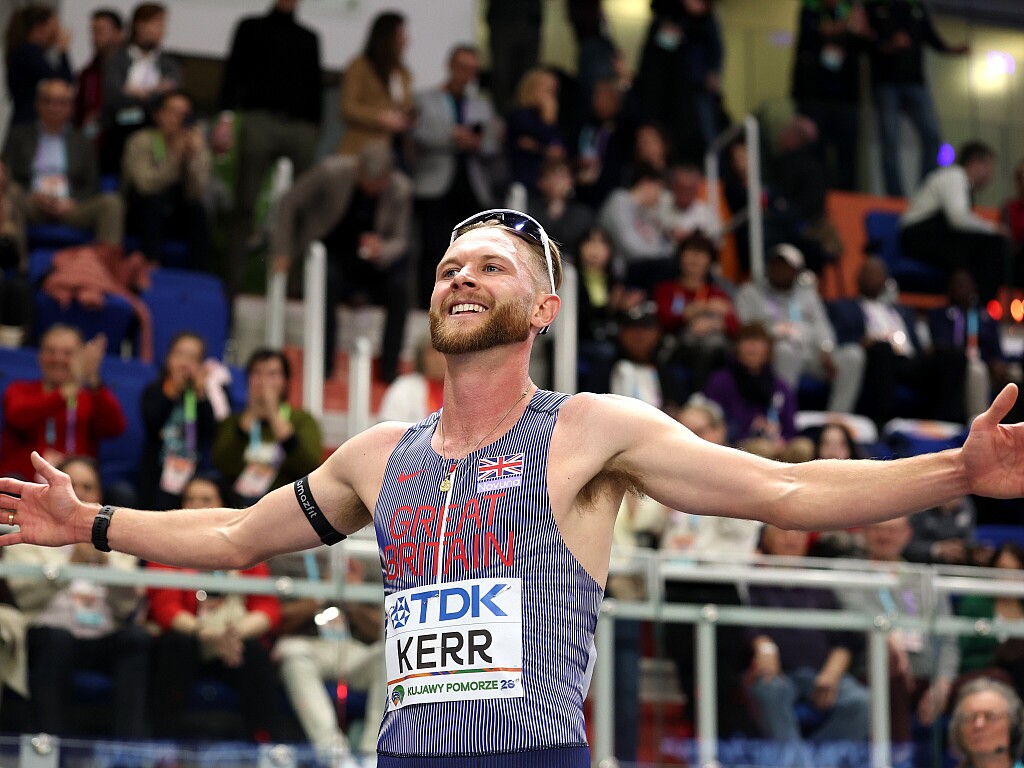
Project 222: Josh Kerr’s Relentless Chase of a 27-Year Mile Legacy
With unwavering belief and calculated precision, Josh Kerr is preparing to confront one of the most revered records in athletics—the 3:43.13 mile world record set by Hicham El Guerrouj in 1999. A performance that has stood unchallenged for 27 years now faces a serious and deliberate assault.
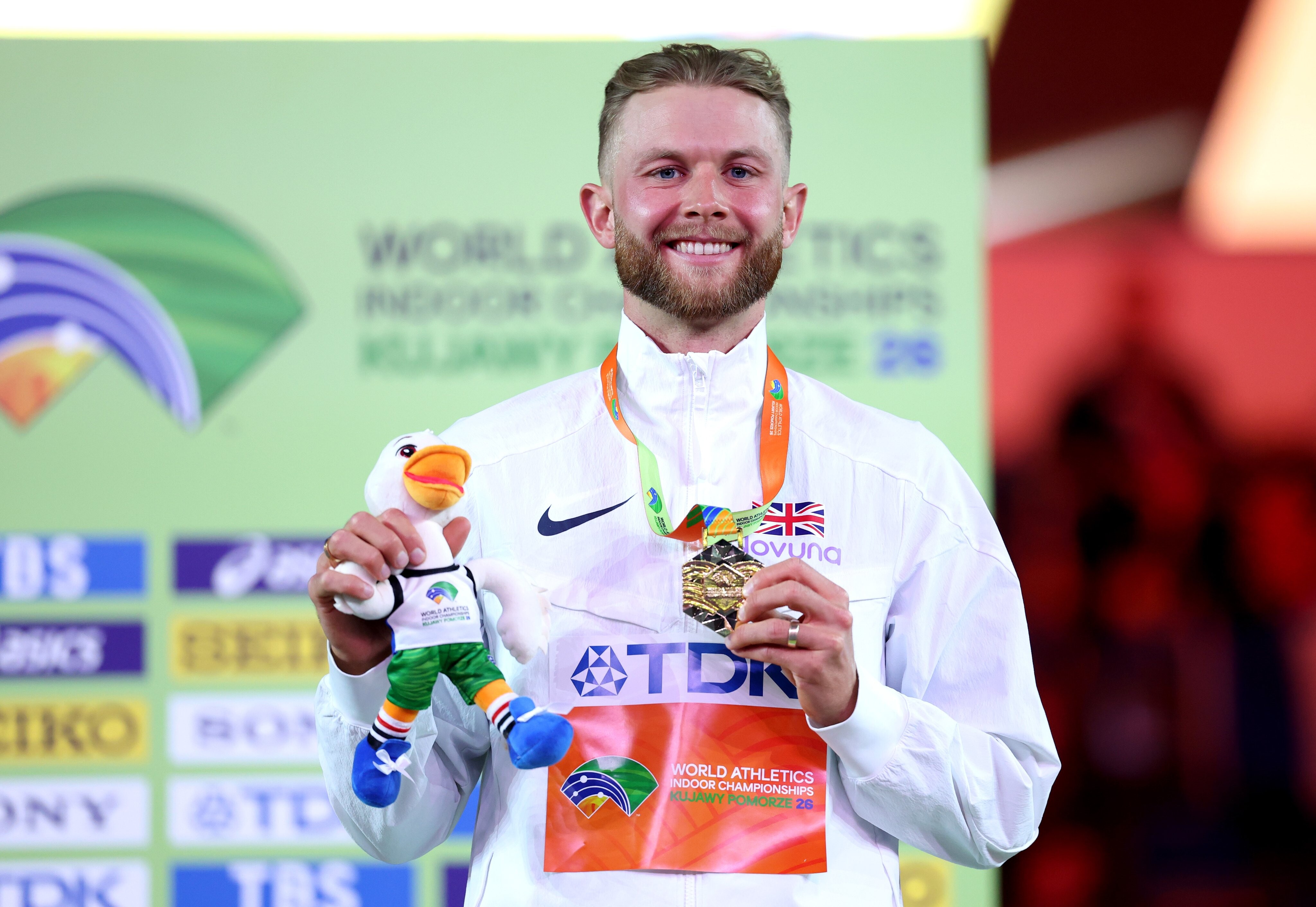
The reigning world 1500m champion and double world indoor 3000m gold medallist has made his intentions unmistakably clear. His campaign, boldly titled Project 222, is centered on a singular objective: to cover the mile in 222 seconds—3:42—surpassing a mark long considered untouchable. It is not merely a target, but a statement of intent.
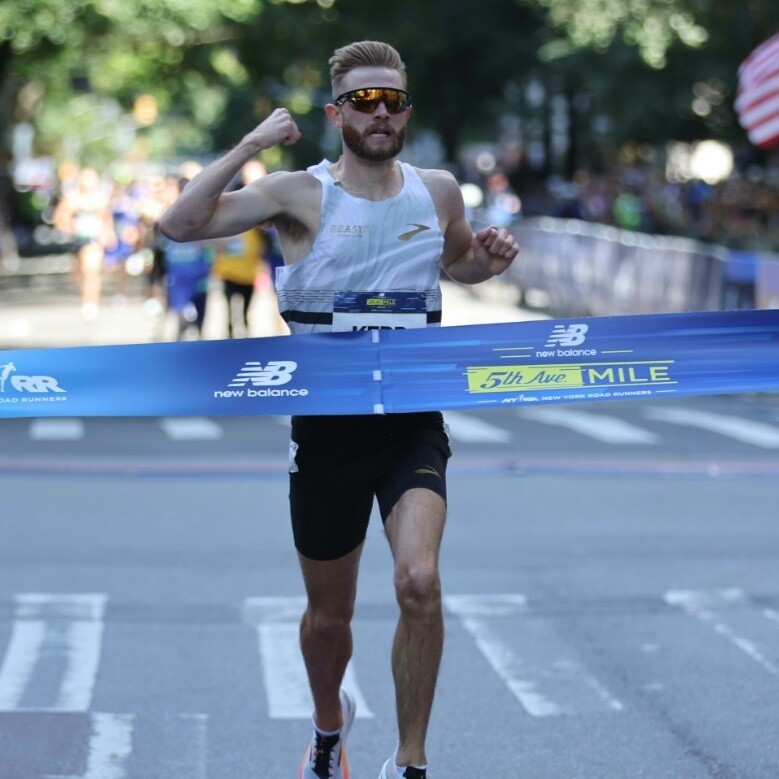
Kerr will take on this historic challenge at the London Diamond League on July 18, 2026, where every variable—from pacing to conditions—must align with near perfection. At this level, the margin between greatness and immortality is measured in fractions, and Kerr must find over two seconds beyond his personal best of 3:45.34, set in Eugene in 2024. That time not only secured him the British record but also placed him sixth on the all-time list—firmly among the sport’s elite.
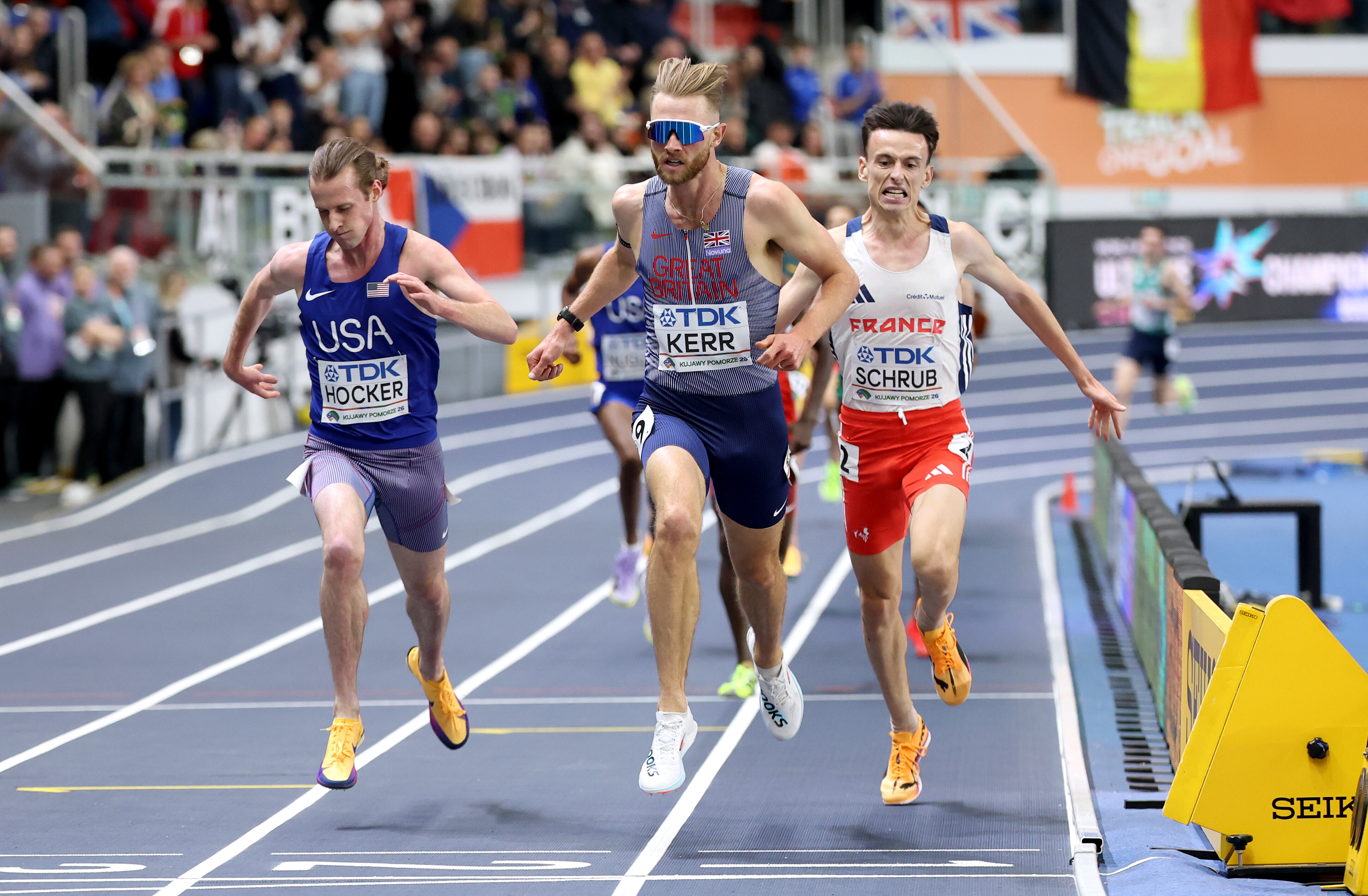
He enters this outdoor campaign in formidable form, having recently claimed his second world indoor 3000m title, holding off a fierce late challenge from Cole Hocker in Toruń, Poland. It was a performance that reaffirmed both his tactical strength and finishing authority—qualities that will be indispensable in his pursuit of history.
Behind the scenes, Kerr’s long-time partner Brooks is committing fully to the mission. The collaboration extends far beyond standard sponsorship, evolving into a comprehensive performance project. At its core is a custom-engineered racing spike, meticulously designed around Kerr’s biomechanics and expected to comply with all World Athletics regulations, incorporating advanced cushioning and a finely tuned carbon plate system for optimal propulsion.

In addition, Kerr has been testing multiple aerodynamic speed suit concepts, acting as the sole athlete refining their design for race-day efficiency. Complementing the physical preparation is a detailed physiological support program from the Brooks Run Research Lab, focusing on sleep optimization, hydration strategies, and recovery protocols—each element calibrated to extract peak performance when it matters most.
As anticipation builds, fans will be given a rare inside look into the journey. A series of behind-the-scenes features documenting Kerr’s preparation, alongside the rich history of the mile, is set to be released across his and Brooks’ platforms in the lead-up to July 18.
This is more than a race. It is a meticulously engineered pursuit of greatness—where science, preparation, and belief converge. And if everything aligns under the London lights, Josh Kerr may not just challenge history—he may finally rewrite it.
by Erick Cheruiyot for My Best Runs.
Login to leave a comment
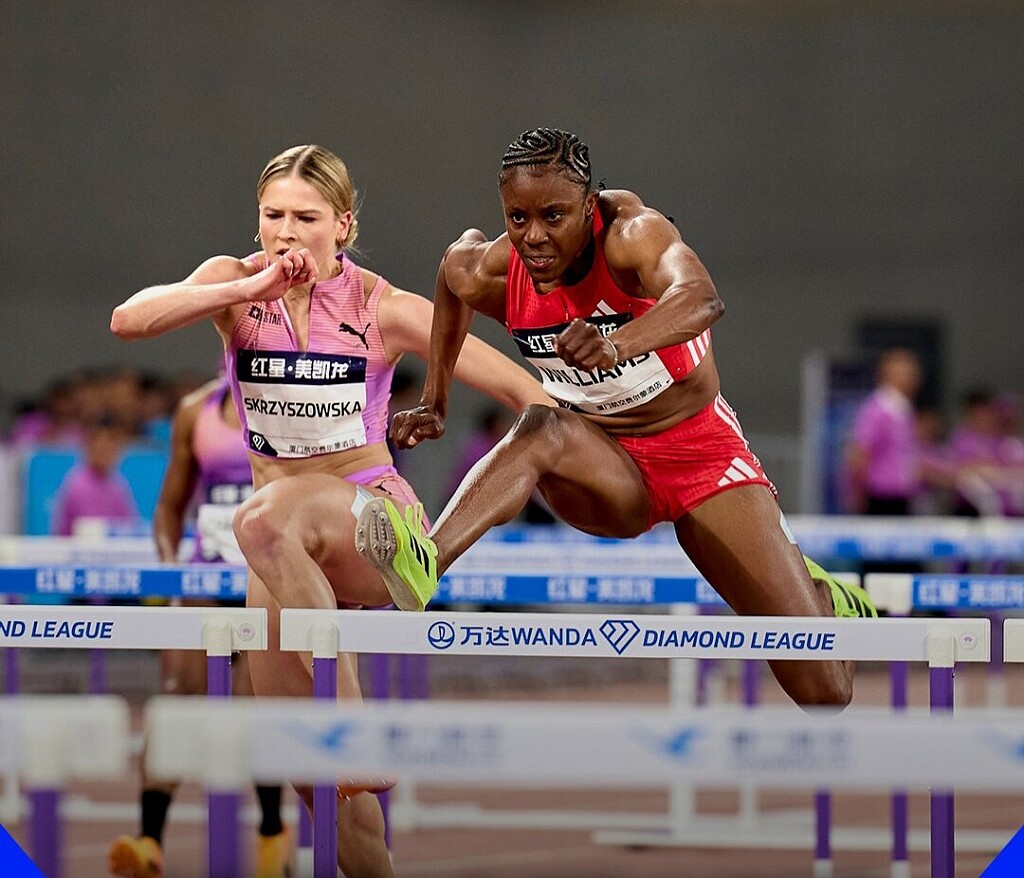
Headline: Star-Studded Women’s 100m Hurdles Showdown Set for Prefontaine Classic in Eugene
The women’s 100 metres hurdles at the upcoming Prefontaine Classic promises to deliver one of the most electrifying clashes of the season, as four of the world’s finest hurdlers prepare to battle over the barriers at the iconic Hayward Field on July 4.
The event, part of the prestigious Diamond League circuit, will feature an exceptional lineup led by Olympic champion Masai Russell and world record holder Tobi Amusan. They will be joined by two-time world champion Danielle Williams and rising star Grace Stark, creating a field packed with global pedigree and fierce competitive firepower.
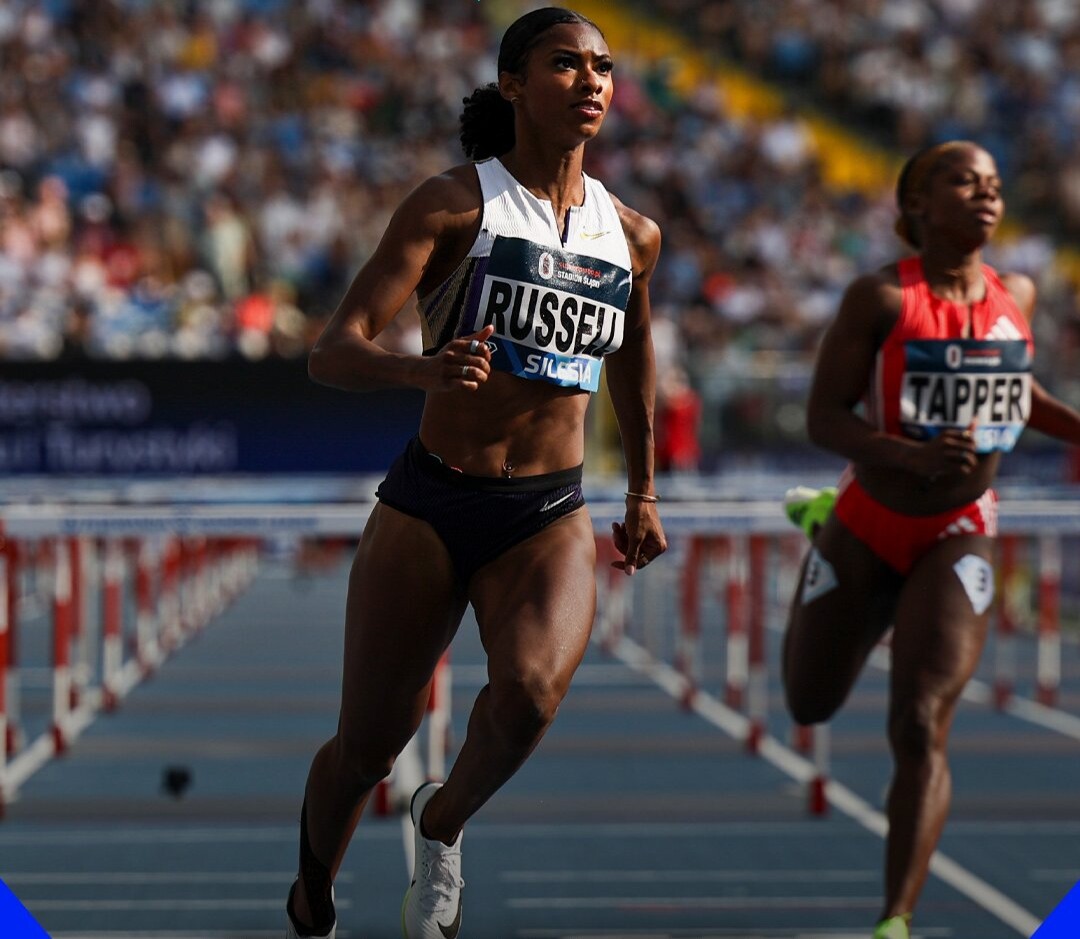
Russell arrives with the confidence of an Olympic champion, having established herself as one of the most explosive hurdlers on the planet. Her speed between the barriers and aggressive racing style make her a formidable presence whenever she steps onto the track.
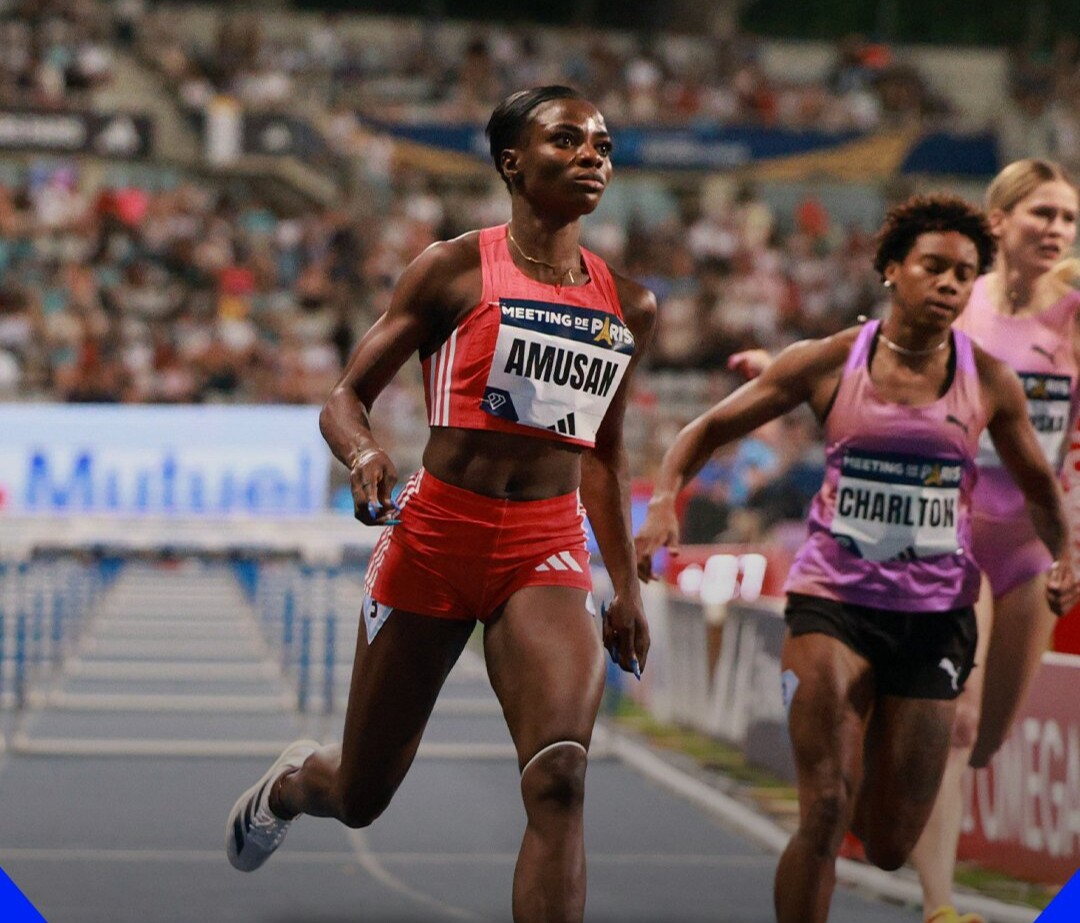
Standing opposite her will be Amusan, whose name is etched in athletics history after she shattered the world record with a breathtaking 12.12 seconds. The Nigerian star has repeatedly demonstrated her ability to dominate the event on the biggest stages, and any race she enters immediately carries the promise of something extraordinary.
Adding further intrigue is Jamaica’s Danielle Williams, a seasoned championship performer renowned for her composure and technical precision. As a two-time world champion, Williams has built a reputation for delivering when it matters most, often rising to the occasion against the sport’s biggest names.
Completing the elite quartet is Grace Stark, currently ranked world number one. The American hurdler has been in impressive form, showcasing remarkable consistency and speed throughout the season. Racing on home soil in front of the passionate Eugene crowd could provide the perfect stage for another standout performance.
With ten barriers separating the athletes from victory, the race is expected to unfold at blistering pace from the very first stride. Each hurdle will test rhythm, speed, and composure, leaving no margin for error among this elite group.
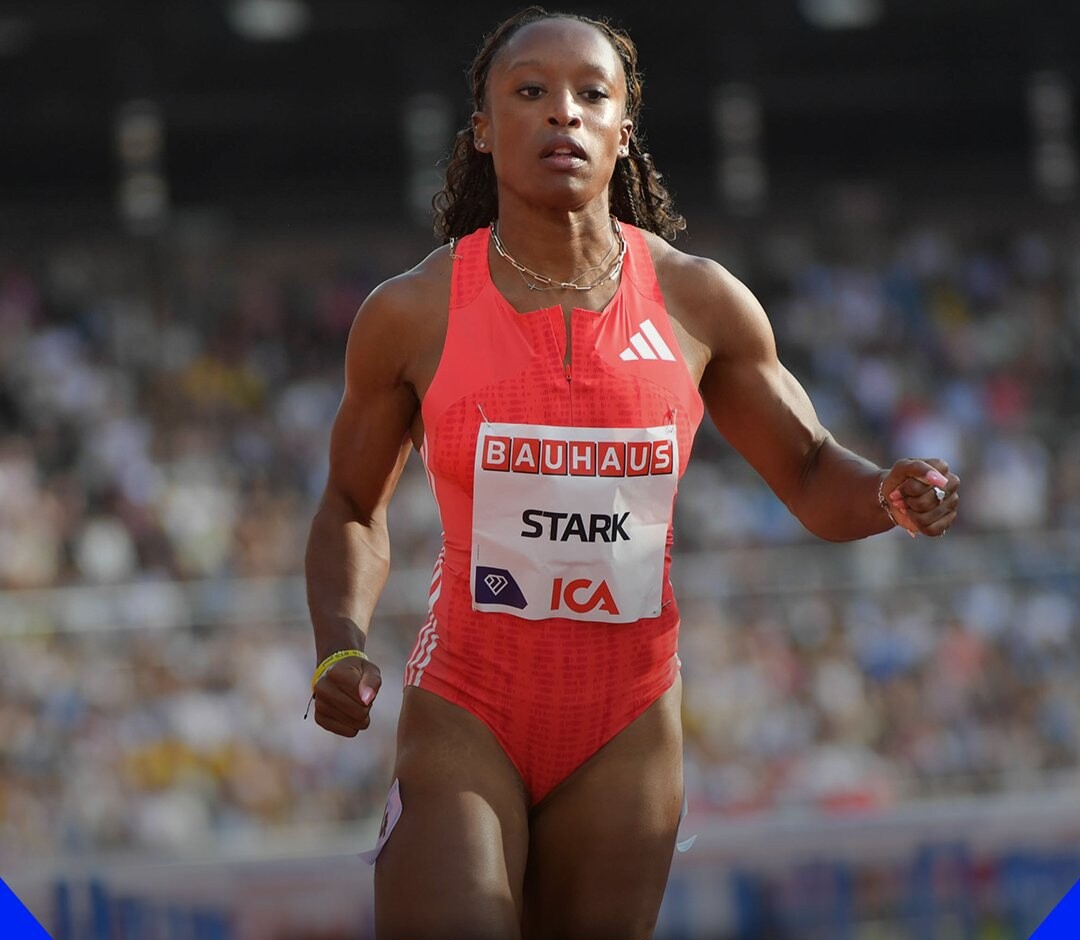
As the Diamond League returns to Eugene, fans can anticipate a high-stakes contest where Olympic glory, world titles, and current form collide. When the starting gun fires at Hayward Field, the women’s 100m hurdles could very well produce one of the most thrilling moments of the entire track and field season.
by Erick Cheruiyot for My Best Runs.
Login to leave a comment
Prefontaine Classic
The Pre Classic, part of the Diamond League series of international meets featuring Olympic-level athletes, is scheduled to be held at the new Hayward Field in Eugene. The Prefontaine Classicis the longest-running outdoor invitational track & field meet in America and is part of the elite Wanda Diamond League of meets held worldwide annually. The Pre Classic’s results score has...
more...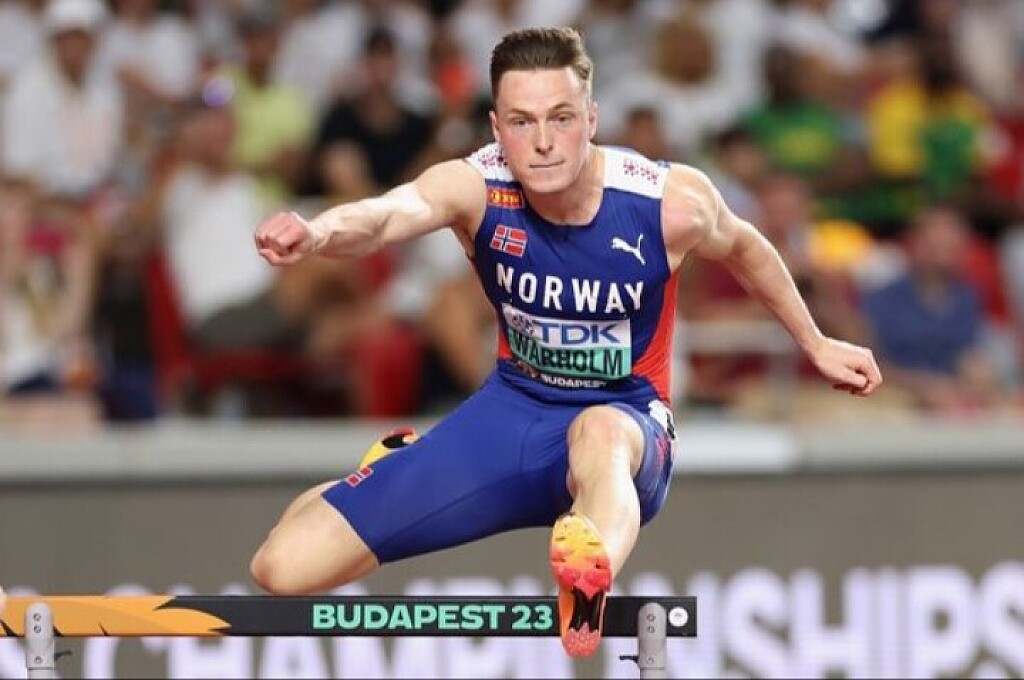
Karsten Warholm: The Man Who Smashed the 400m Hurdles Into a New Dimension
On February 28, 1996, in the quiet Norwegian town of Ulsteinvik, a champion was born. Over the years, Karsten Warholm has transformed himself into one of the most dominant and electrifying athletes of his generation — an Olympic champion, multiple-time world champion, European king, and the world record holder in the 400 meters hurdles.
Warholm’s journey did not begin with hurdles alone. As a teenager, he displayed remarkable versatility in the combined events. In 2013, he became World Junior Champion in the octathlon in Donetsk, showcasing an unusual blend of speed, strength, and technical precision. The following year, he competed in the decathlon at the World Junior Championships in Eugene, finishing tenth against the best young athletes in the world. By 2015, he had already claimed double silver at the European Junior Championships in Eskilstuna — in both the 400 meters and the decathlon — a clear sign that he possessed rare, multidimensional talent.
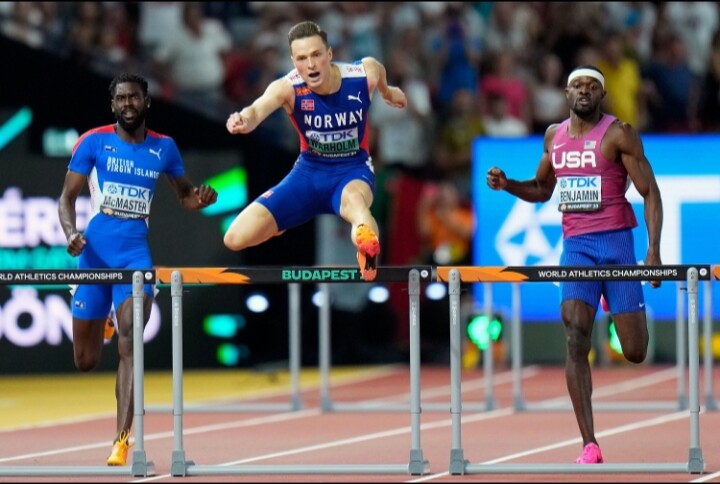
His early senior years hinted at something greater. He reached the semifinals of the 400m hurdles at the Rio 2016 Olympic Games, gaining valuable experience on the biggest stage. But it was in 2017 that the world truly took notice. At the World Championships in London, the young Norwegian stunned the field by winning gold in the 400m hurdles. Fearless from the gun and relentless between the barriers, he introduced a bold, attacking style that would become his trademark.
From that breakthrough moment, his rise accelerated. He secured European gold in Berlin in 2018 and claimed the European indoor 400m title in Glasgow in 2019, equaling the long-standing European indoor record of 45.05. Later that same year, he added another global crown at the World Championships in Doha, firmly establishing himself as the dominant force in his event.
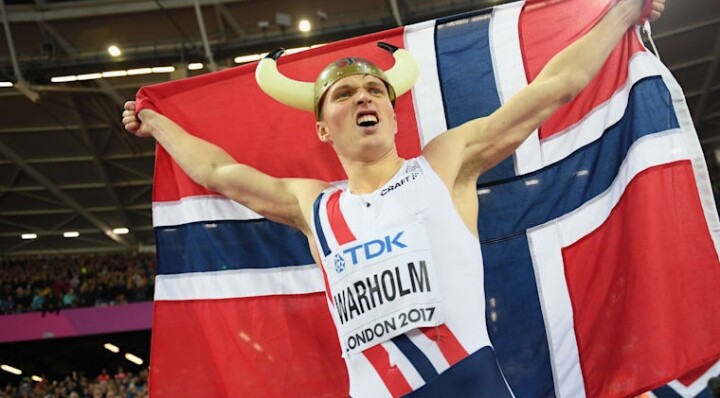
Then came August 3, 2021 — a date forever etched in athletics history. At the Olympic Games in Tokyo, Warholm produced one of the greatest performances the sport has ever witnessed. In a race of breathtaking intensity, he surged to Olympic gold and shattered the world record in the 400m hurdles with an astonishing 45.94 seconds. It was not just a victory; it was a redefinition of human possibility over barriers.
Champions are measured by how they respond to setbacks, and Warholm proved his resilience. After finishing seventh at the 2022 World Championships in Eugene, he returned stronger, reclaiming world gold in Budapest in 2023 with a commanding 46.89. In 2024, he added Olympic silver in Paris, European gold in Rome, and World Indoor silver in Glasgow, reinforcing his consistency at the highest level.
Beyond the hurdles, his athletic profile remains extraordinary. He has run 10.47 for 100 meters, 21.09 for 200 meters, and 44.87 for 400 meters. He holds the Norwegian record in the 300 meters at 32.49 and has cleared 2.05 meters in the high jump and leapt 7.66 meters in the long jump. Indoors, he has clocked 20.91 for 200 meters, equaled the European 400m record of 45.05, and set a world best of 34.26 in the 300m hurdles. Few specialists in modern athletics combine such speed, power, and technical mastery.
From a small coastal town to the pinnacle of global sport, Karsten Warholm has carried Norwegian athletics into a new era. His career is defined not only by medals and records but by courage, intensity, and an uncompromising will to push beyond limits. As he celebrates another year, one truth stands firm — the Viking of the 400m hurdles is not simply competing against rivals; he is racing against history itself, and more often than not, he wins.
by Erick Cheruiyot for My Best Runs.
Login to leave a comment
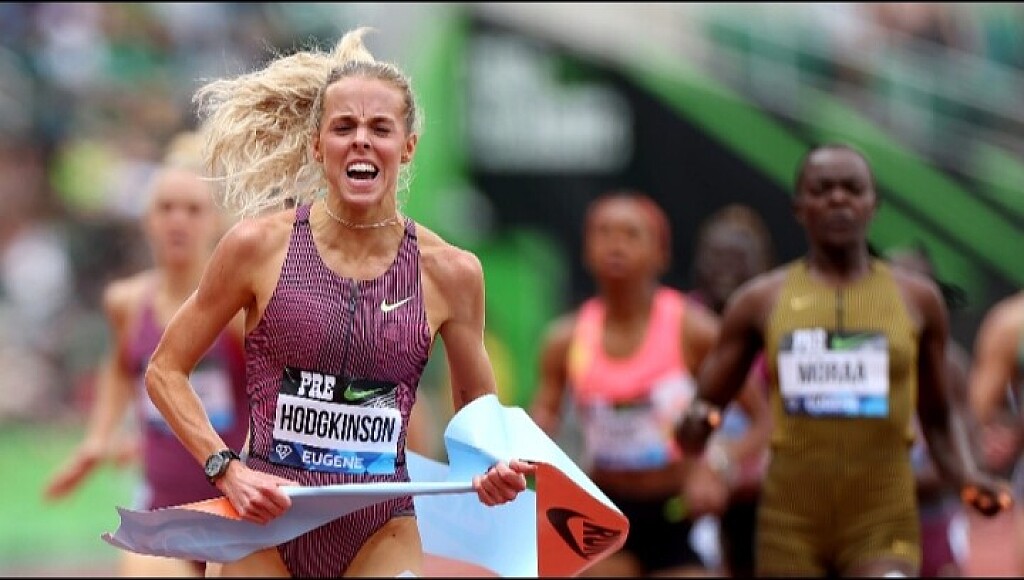
World Record Queen Returns to Her Kingdom: Hodgkinson Targets Another Eugene Masterpiece at the Prefontaine Classic
Track and field fans should circle their calendars. The 51st edition of the Prefontaine Classic will take place on Saturday, July 4, 2026, at the legendary Hayward Field in Eugene, Oregon — and it will feature one of the sport’s brightest stars. Olympic champion and indoor world record holder Keely Hodgkinson is set to headline the women’s Mutola 800m, returning to a venue that has repeatedly played a defining role in her career.
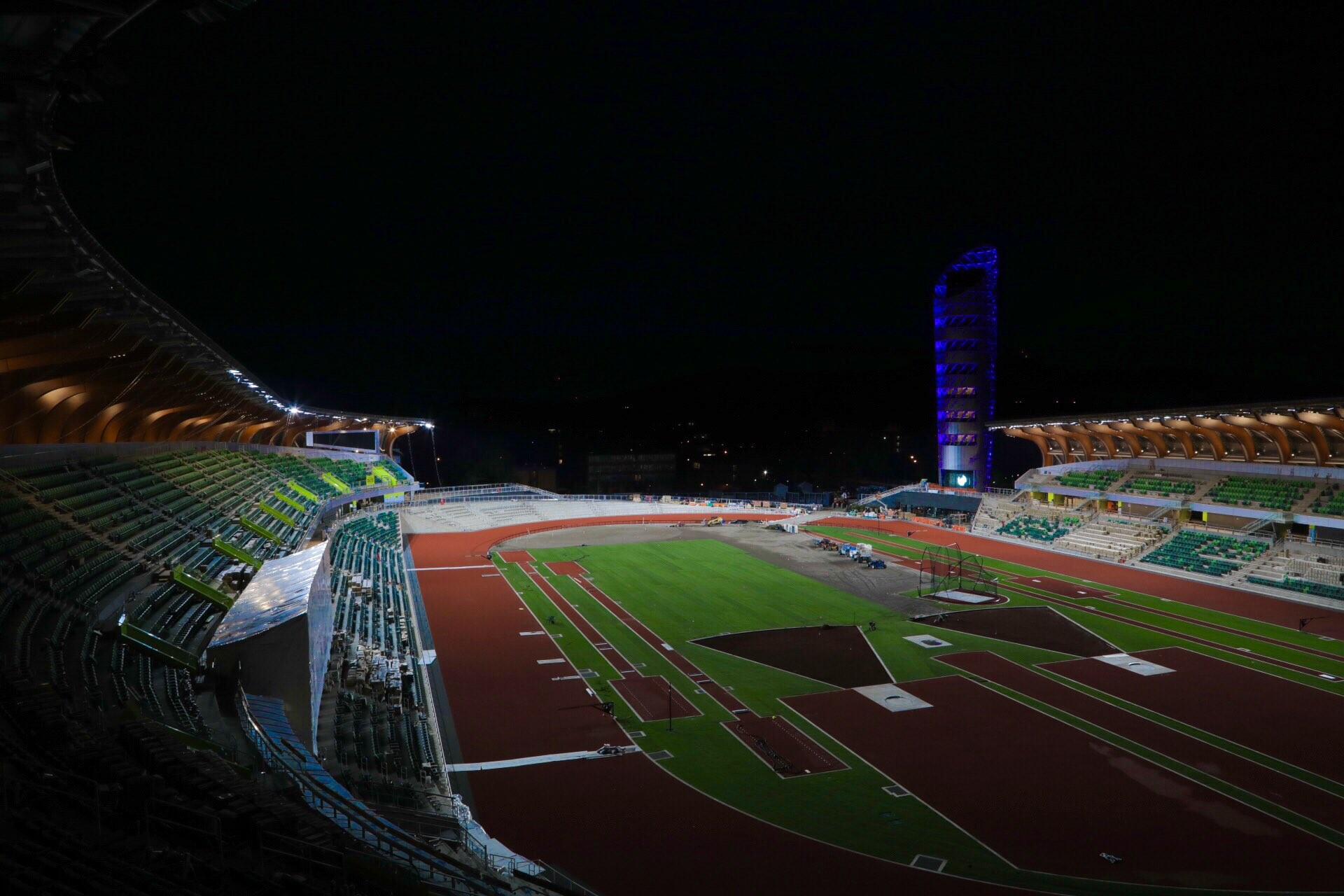
Eugene has become one of Hodgkinson’s most successful stages, a place where her rise from prodigy to global superstar has unfolded in front of packed grandstands. She first claimed victory at the Prefontaine Classic in 2022 with a composed 1:57.72 performance, announcing herself as a force capable of controlling world-class races.
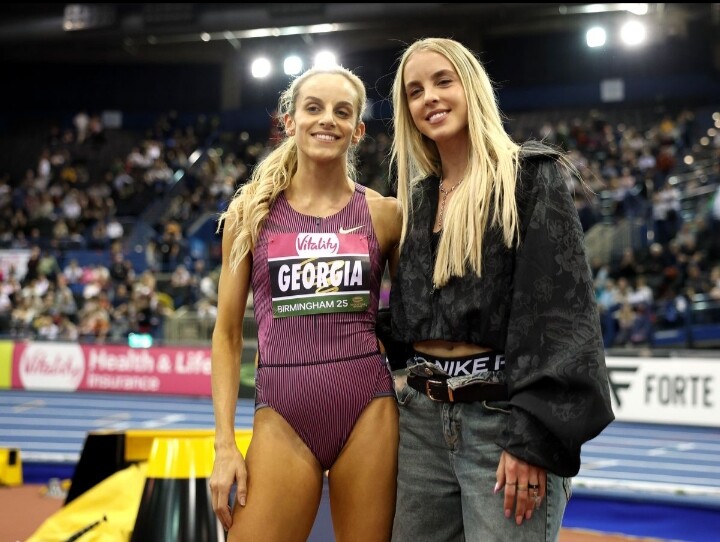
She returned in 2023 and elevated her dominance, running 1:55.19 to secure the Diamond League Trophy — proof that she was no longer chasing the world’s best but redefining the standard.
In 2024, she once again conquered Hayward Field with a 1:55.78 victory before carrying that momentum into the Olympic season, where she captured gold in Paris — the crowning achievement of a career that had long promised greatness.
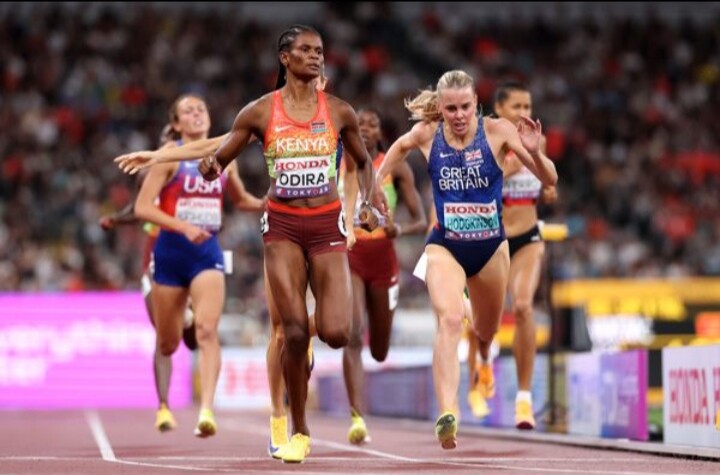
Her most recent milestone may be the most significant yet. On February 19, Hodgkinson delivered an extraordinary 1:54.87 indoors to set a new world record, reinforcing her position at the very summit of women’s middle-distance running and hinting that even faster performances could be approaching outdoors.
This year’s Mutola 800m — named in honor of Olympic legend Maria Mutola — will feature formidable opposition. Fellow Briton Georgia Hunter Bell brings tactical aggression and rising confidence, while reigning world champion Lilian Odira arrives with the authority of an athlete proven on the sport’s biggest stage.
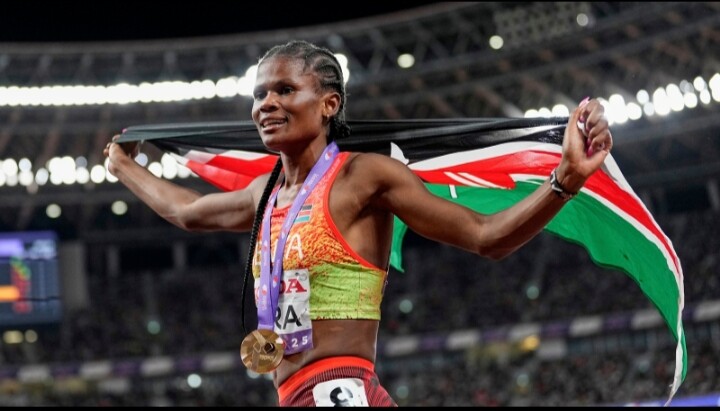
Together, the trio creates a race rich in narrative — record-breaking speed, championship pedigree, and emerging rivalry converging on one of athletics’ most historic tracks.
For Hodgkinson, Eugene represents more than competition. It is a stage where defining moments seem to occur with remarkable consistency. Every visit has produced either victory, a title, or a performance that elevated her career to a new level.
Now, with world-record momentum behind her and Olympic gold already secured, she returns once more to a stadium that has repeatedly witnessed her brilliance. If history is any guide, the Prefontaine Classic may again become the setting where greatness accelerates — and where the world’s fastest woman reminds the world exactly why she sits at the top of the 800-meter throne.
by Erick Cheruiyot for My Best Runs.
Login to leave a comment
Prefontaine Classic
The Pre Classic, part of the Diamond League series of international meets featuring Olympic-level athletes, is scheduled to be held at the new Hayward Field in Eugene. The Prefontaine Classicis the longest-running outdoor invitational track & field meet in America and is part of the elite Wanda Diamond League of meets held worldwide annually. The Pre Classic’s results score has...
more...
Bowerman Mile Showdown Set for 2026 Prefontaine Classic: Hocker, Myers, and Ruthe Bring Generational Clash to Hayward Field
One of the most anticipated mile races of the decade is taking shape as Olympic champion Cole Hocker prepares to face two of the fastest young milers in history—Australia’s Cameron Myers and New Zealand’s Sam Ruthe—at the Bowerman Mile during the 2026 Nike Prefontaine Classic at Hayward Field in Eugene, Oregon.
The Bowerman Mile, widely regarded as the most prestigious mile race in the world, has long served as the stage where legends are made. In 2026, it will bring together a reigning Olympic champion at the peak of his powers and two teenage sensations who are redefining what is possible for young athletes.
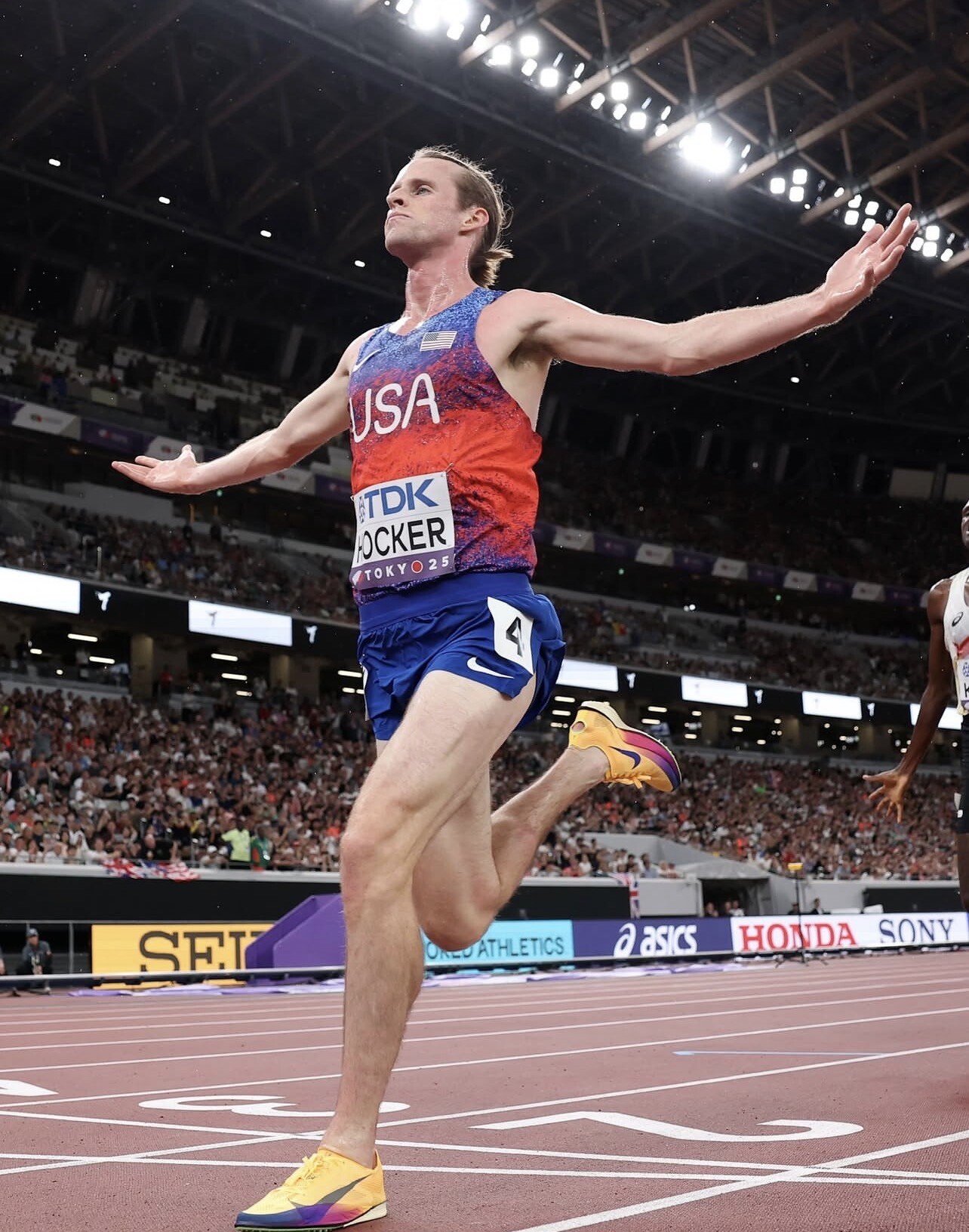
The Olympic Champion: Cole Hocker’s Next Mission
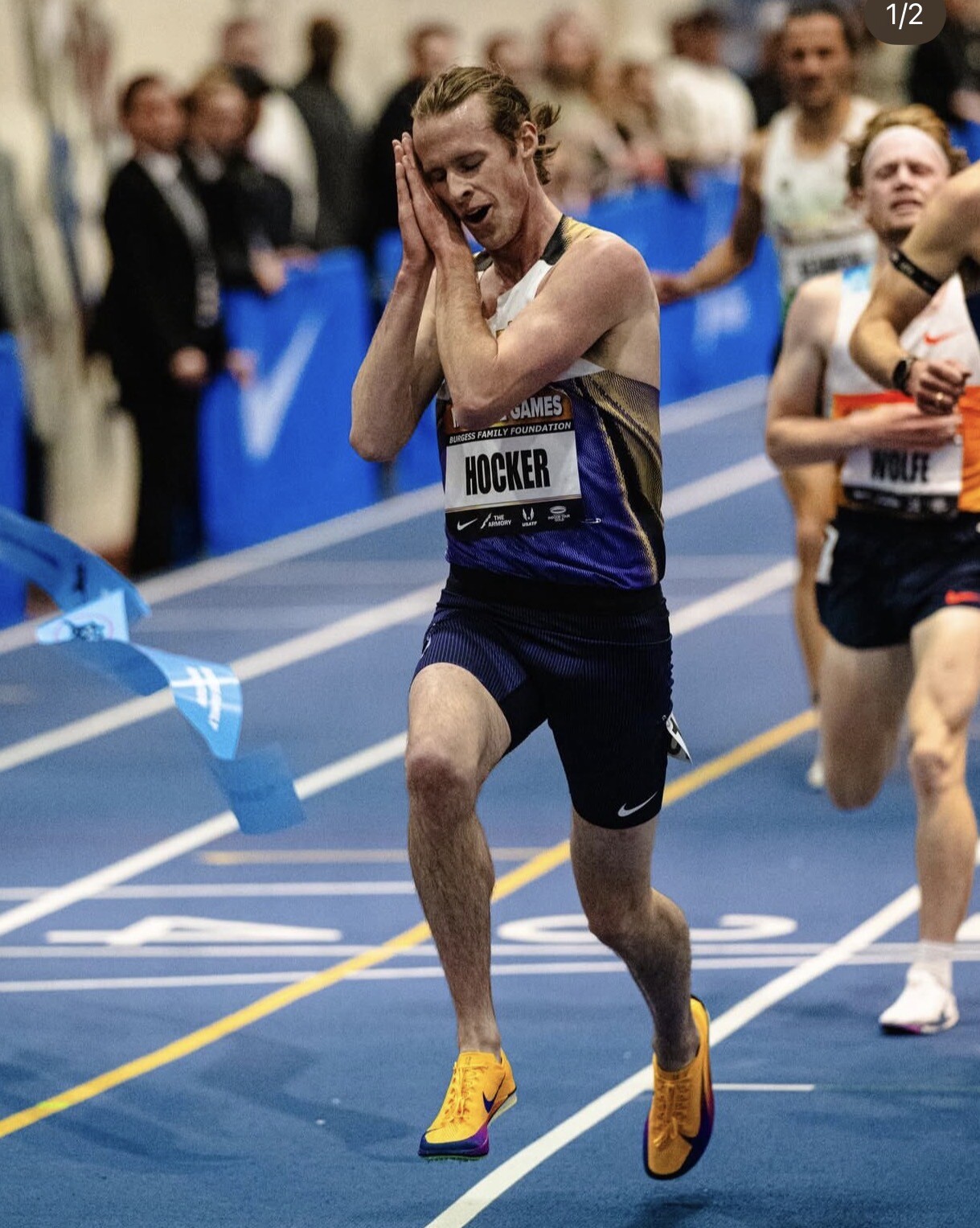
Cole Hocker enters the race as one of the most accomplished middle-distance runners in the world. The American captured the gold medal in the 1500 meters at the 2024 Olympic Games, confirming his position among the sport’s elite. He followed that performance by winning the 2025 World Championship title over 5000 meters, demonstrating both speed and endurance at the highest level.
Hocker’s personal best of 3:47.43 for the mile, set at the 2025 Prefontaine Classic, ranks him among the fastest milers in American history. Despite his success, one major prize has eluded him—the Bowerman Mile title. His best finish so far has been fifth place, but with his experience and championship pedigree, he arrives in Eugene determined to change that.
Cameron Myers: Australia’s Rising Star
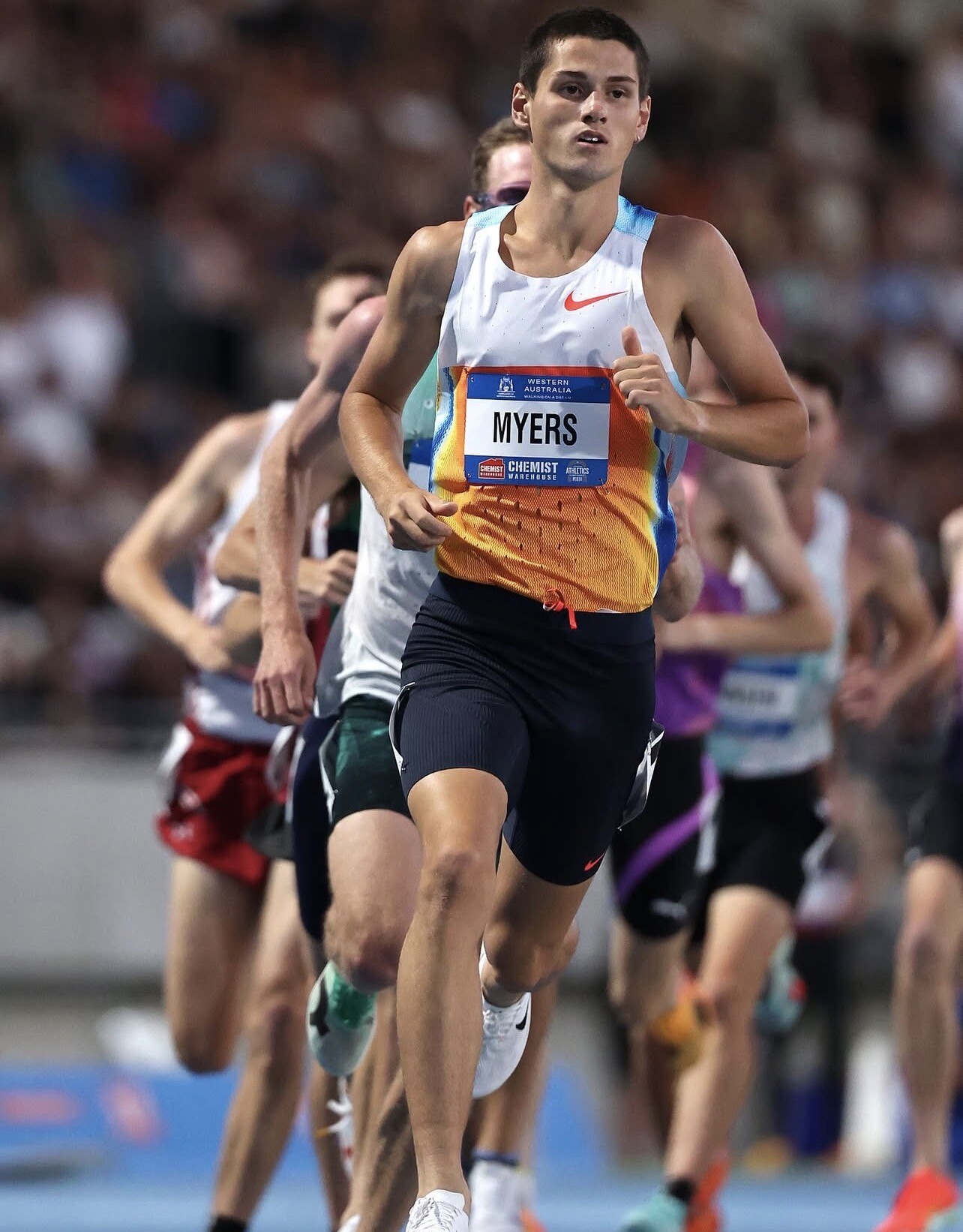
At just 19 years old, Cameron Myers has already established himself as one of the most exciting talents in global middle-distance running. He became the youngest-ever winner of the Wanamaker Mile and holds the world U20 record of 3:47.48, placing him within striking distance of the best senior athletes in history.
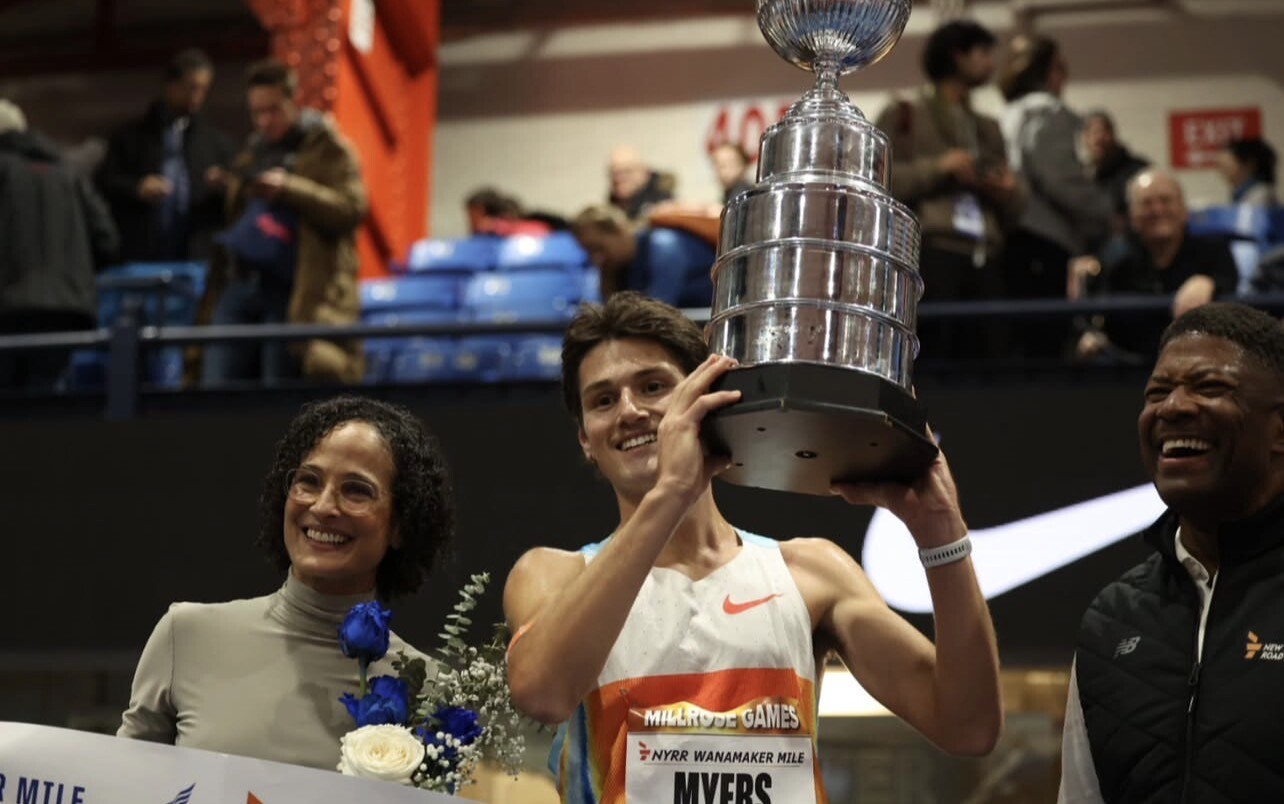
Myers has already faced Hocker three times in his career, with each meeting coming in the Bowerman Mile. Although Hocker finished ahead on those occasions, Myers continues to close the gap and arrives in 2026 with greater strength, confidence, and experience.
His aggressive racing style and fearless approach make him a serious contender—not just for a personal best, but for victory.
Sam Ruthe: Breaking Barriers at an Unprecedented Age

New Zealand’s Sam Ruthe represents the future of the mile. At just 15 years old, he broke the legendary four-minute barrier, an achievement that had once seemed impossible for an athlete so young. He now holds the world U18 best of 3:48.88, placing him among the fastest teenagers ever.
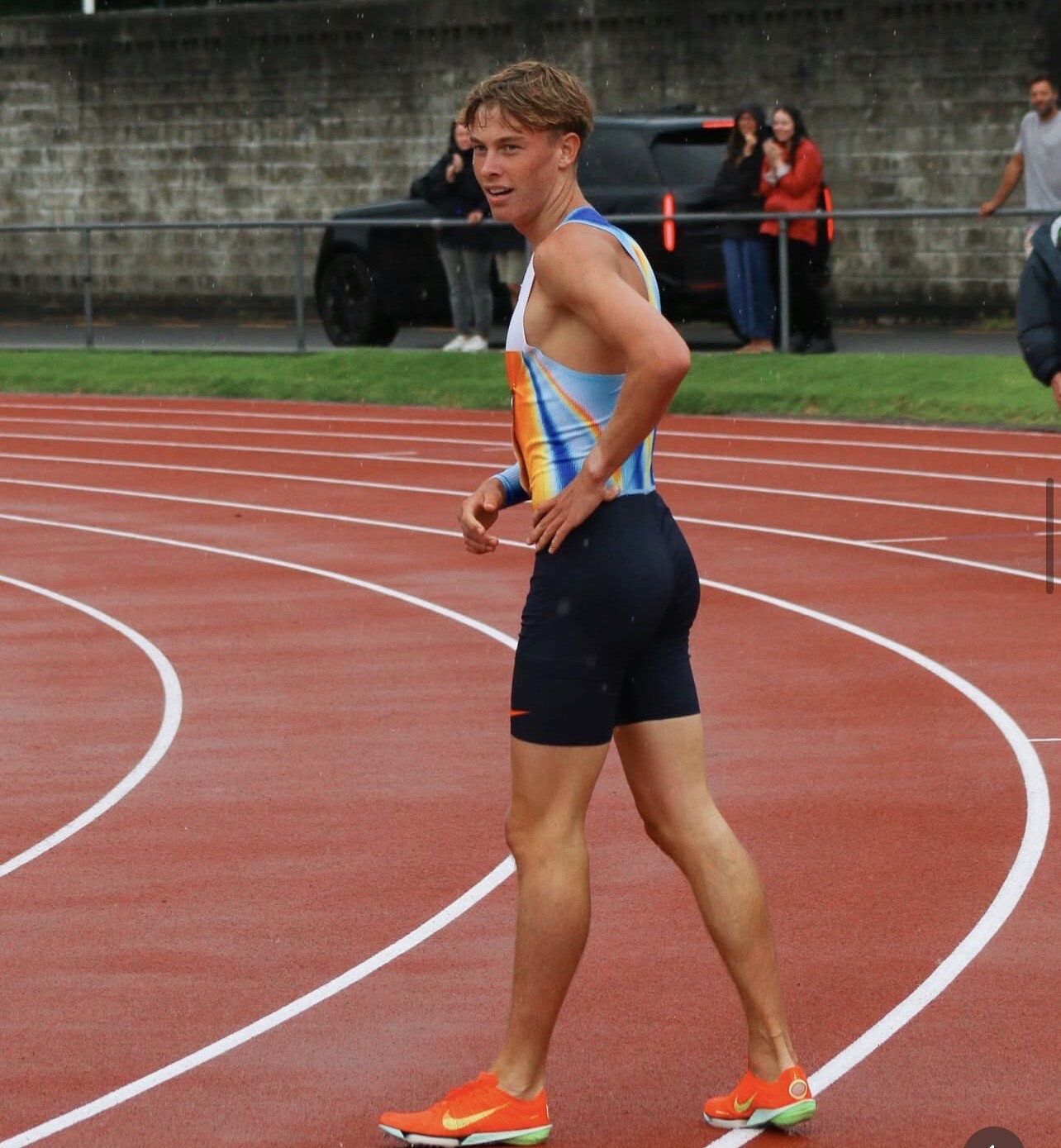
While Ruthe has not yet faced Hocker in direct competition, he has raced Myers twice, with Myers holding a 2–0 advantage. However, those encounters were not contested over the mile, leaving the Bowerman Mile as the stage for their first true test at the full distance.
Ruthe’s rapid progression suggests he is not merely participating—he is arriving as a legitimate competitor
Hayward Field: The Perfect Stage for History
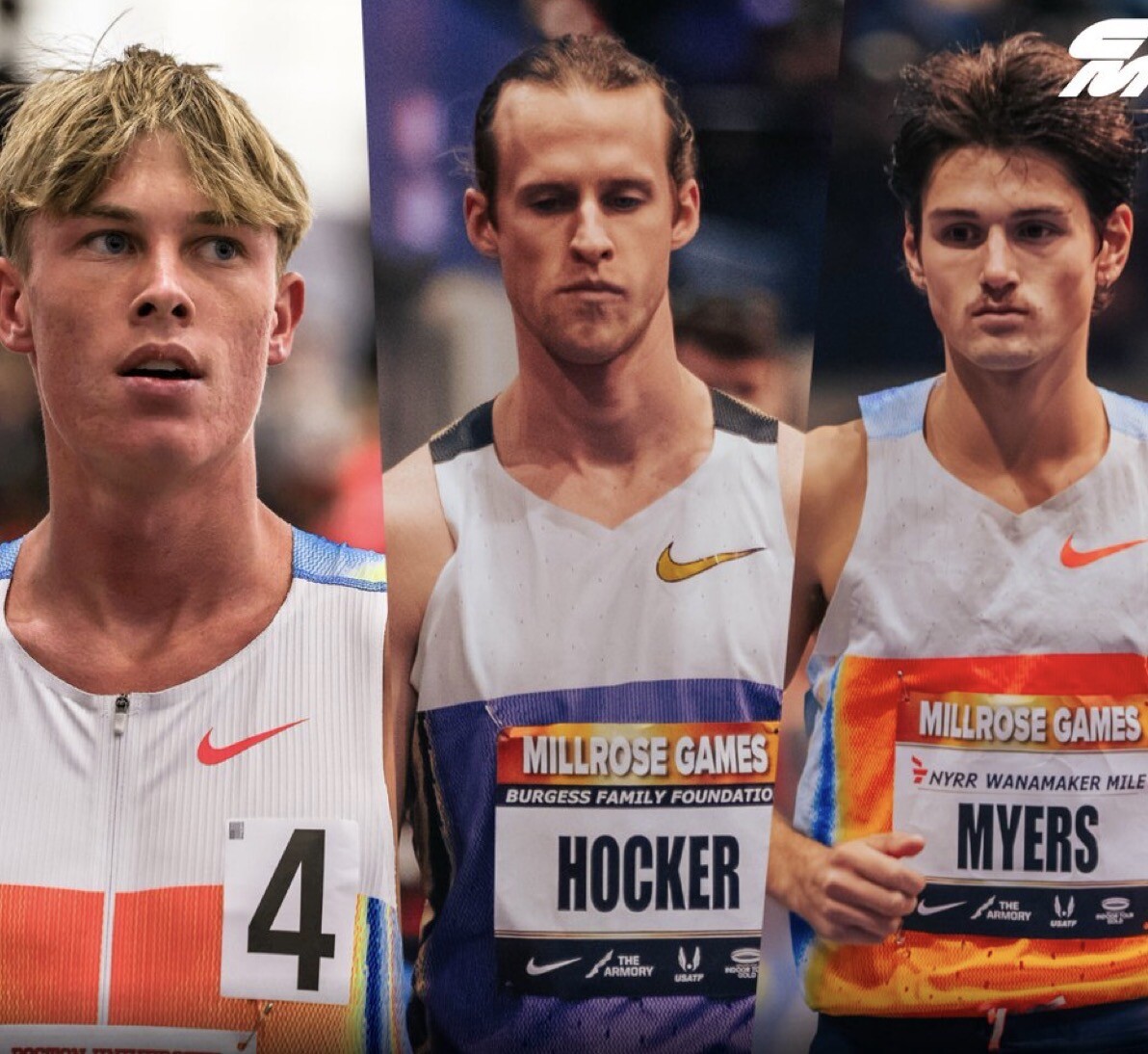
There is no better venue for this generational clash than Hayward Field. Known globally as “TrackTown USA,” Eugene’s iconic stadium has witnessed countless historic performances. The Bowerman Mile has produced some of the fastest times ever recorded, including multiple sub-3:45 performances and dramatic finishes that have defined careers.
The combination of elite pacemaking, perfect conditions, and an electrified crowd creates an environment where barriers fall and legends emerge.
A Race That Represents the Future of the Mile
The 2026 Bowerman Mile represents more than a single race—it symbolizes a passing of the torch between generations. Hocker stands as the established champion, proven on the Olympic stage. Myers represents the new wave of elite global talent already knocking on the door of greatness. Ruthe embodies the sport’s future, a teenager already performing at a level once reserved for seasoned professionals.
The convergence of these three athletes ensures that the Bowerman Mile at the 2026 Prefontaine Classic will be one of the defining races of the year—and perhaps one of the most significant mile races of the modern era.
At Hayward Field, where history has been written time and again, the mile’s next great chapter is ready to unfold.
by Boris Baron
Login to leave a comment

New York City Returns to the National Spotlight as Icahn Stadium Named Host of 2026 U.S. Outdoor Championships
For the first time in more than three decades, New York City will once again stand at the center of American track and field. USA Track & Field has officially announced that the 2026 U.S. Outdoor Championships will be held at Icahn Stadium from July 23–26, bringing the nation’s top athletes to one of the sport’s most historic and iconic settings.
This announcement marks a significant shift for the championships, which in recent years have been closely associated with Eugene, Oregon. Since 2021, Eugene—home of Hayward Field—has served as the primary stage for the national championships, reinforcing its reputation as TrackTown USA. Now, the move to New York signals both a return to the sport’s roots and a renewed commitment to expanding track and field’s visibility in major metropolitan centers
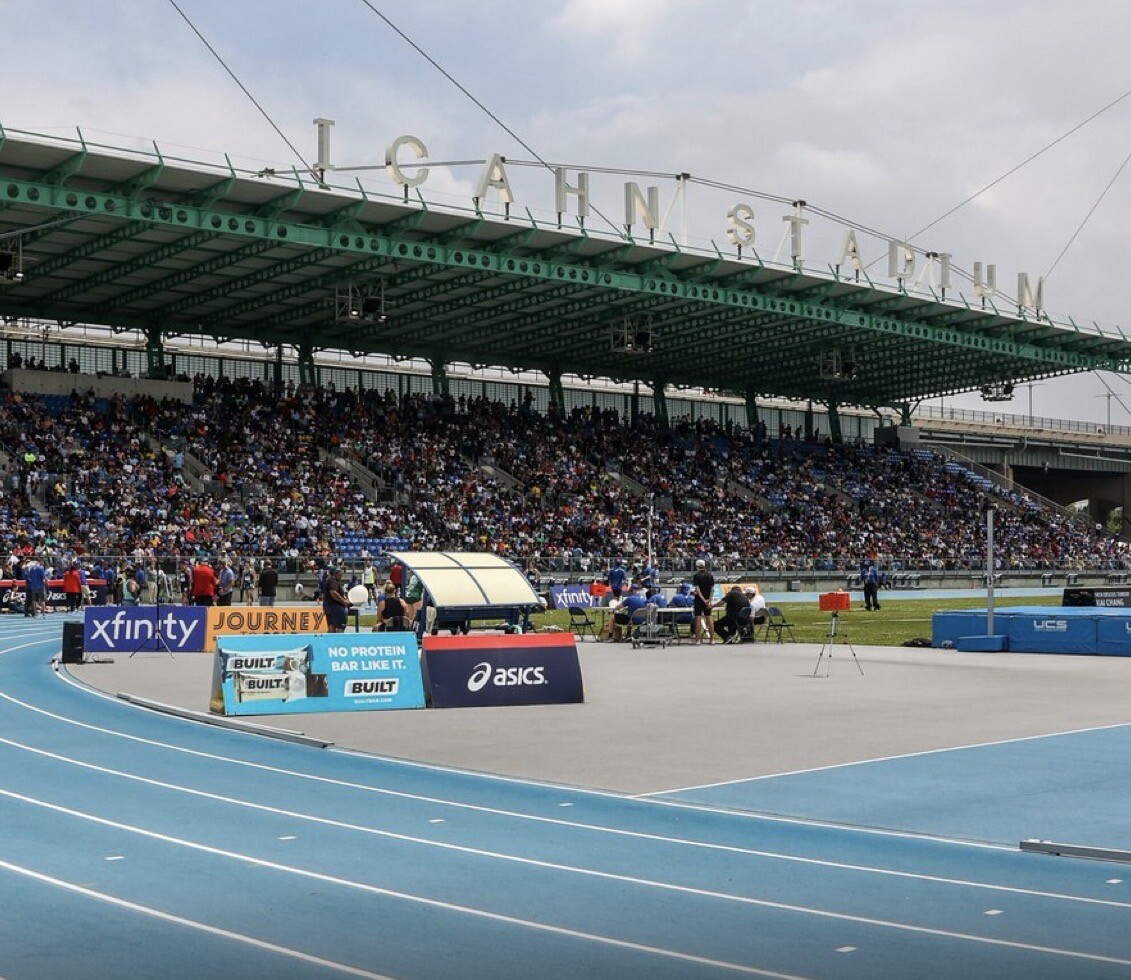
Icahn Stadium, located on Randall’s Island, is no stranger to elite competition. The venue has hosted numerous international meets, including Diamond League events, and has earned a reputation for producing fast times and memorable performances. Its IAAF Class 1 certification and world-class facilities make it a fitting location for the country’s premier outdoor championship.
The 2026 championships will also carry major significance beyond national titles. The meet will serve as a key proving ground for American athletes preparing for future global competitions, with many using the event to establish momentum heading into the 2027 World Championships cycle.
New York City has a rich but underappreciated history in U.S. track and field. The last time the city hosted a national outdoor championship was in 1991 at Downing Stadium, making the 2026 event a historic return after 35 years. Bringing the championships back to New York reconnects the sport with one of the world’s great athletic capitals and offers a powerful opportunity to inspire a new generation of athletes and fans.
Meanwhile, Eugene’s role remains firmly intact. USA Track & Field has confirmed that the 2027 U.S. Outdoor Championships will return to Eugene, where the team for the 2027 World Championships in Beijing, China, will be selected. This dual-city approach reflects the sport’s growing national footprint while honoring both tradition and innovation.
For athletes, the 2026 championships in New York will represent more than a national competition—it will be an opportunity to perform on one of the sport’s biggest domestic stages, in front of a diverse and passionate audience. For fans, it will be a rare chance to witness America’s best runners, jumpers, and throwers competing in the heart of one of the world’s most dynamic cities.
The return of the U.S. Outdoor Championships to New York City marks a historic moment—one that connects past and present, celebrates the sport’s national reach, and reminds the world that track and field belongs on the biggest stages.
by Bob Anderson for My Best Runs
Login to leave a comment
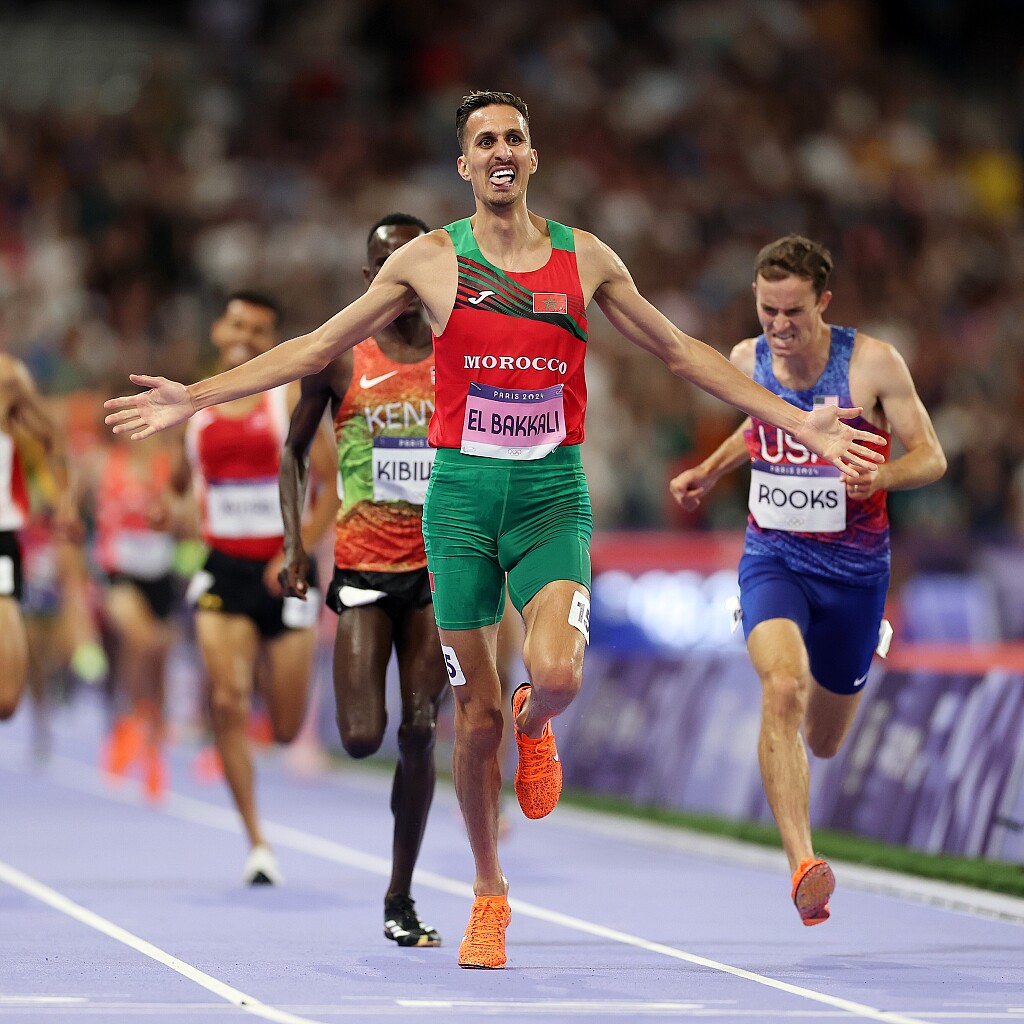
Soufiane El Bakkali Enters a New Era as He Joins On Running
Moroccan steeplechase legend Soufiane El Bakkali has officially begun a fresh chapter in his illustrious career after signing with On Running, marking a significant sponsorship change for one of athletics’ most dominant champions. The move brings together a proven winner and a fast-rising performance brand, united by a shared vision for the future.
A two-time Olympic champion and multiple world champion, El Bakkali has long been the benchmark in the men’s 3000m steeplechase. His ability to deliver on the biggest stages has defined an era, from Olympic triumphs in Tokyo 2020 and Paris 2024 to world titles in Eugene 2022 and Budapest 2023. Now, with On Running at his side, the Moroccan star is focused on sustaining that dominance and reaching even greater heights.
Explaining his decision, El Bakkali pointed to the long-term ambition behind the partnership, saying he was drawn to On by the clarity of their project and shared goals. Confident in the path ahead, he expressed his desire to keep shining and to achieve even more in the years to come.
El Bakkali’s success is built on consistency as much as brilliance. He reached world number one in 2023, set a personal best of 7:56.68 in the steeplechase in Rabat, and has shown his range with a 12:55.49 5000m performance in Paris. Alongside his Olympic and world medals, his Diamond League title in 2022 further underlined his authority in the event.
More than just a change of footwear, the partnership with On Running represents momentum—an alignment of innovation, ambition, and championship mentality. As El Bakkali continues to carry the Moroccan flag with pride, this new alliance signals that the king of the steeplechase is not done writing history.
by Erick Cheruiyot for My Bestruns.
Login to leave a comment
STEVE PREFONTAINE: THE FIRE THAT REDEFINED AMERICAN DISTANCE RUNNING
Steve Prefontaine was more than a gifted athlete—he was the heartbeat of a movement that transformed distance running in the United States. At a time when American runners struggled for global respect, Prefontaine emerged with fearless ambition, relentless confidence, and a refusal to race cautiously. He did not simply compete; he challenged the limits of effort itself.
Born in Coos Bay, Oregon, Prefontaine rose to prominence through sheer willpower and an uncompromising racing philosophy. He believed running was not about waiting for the perfect moment, but about seizing control from the gun. While others conserved energy, he attacked races head-on, forcing competitors into uncomfortable territory. This aggressive style made every race unforgettable and redefined how Americans viewed middle- and long-distance competition.
Prefontaine’s legacy was built not only on results, but on attitude. He raced with emotion, honesty, and pride, insisting that athletes owed their full effort to the sport and to themselves. To him, talent was meaningless without total commitment. That belief resonated deeply with young runners across the country, many of whom saw in him proof that courage could rival pedigree.
On the track, his performances spoke loudly. From the 1500 meters to the 10,000 meters, Prefontaine set remarkable times that placed him among the world’s elite. His personal bests—achieved in cities like Eugene, Helsinki, Milan, and Stockholm—reflected both his versatility and his willingness to test his limits repeatedly. At one point, he held every American record from 2,000 meters through 10,000 meters, a testament to his dominance and consistency.
Yet what truly set Prefontaine apart was his influence beyond statistics. He became a voice for athletes, advocating for fairness, recognition, and respect at a time when amateur runners received little support. He helped shift the culture of American athletics toward professionalism and athlete empowerment, laying groundwork that future generations would benefit from.
Prefontaine’s life was tragically brief, but his impact proved permanent. His philosophy—run with courage, race with heart, and give everything—continues to shape the mindset of runners worldwide. Trails, stadiums, and training groups still echo with his spirit, reminding athletes that greatness is measured not only by victories, but by the honesty of one’s effort.
Decades later, Steve Prefontaine remains a symbol of fearless competition and unfiltered passion. He did not chase perfection; he chased truth in performance. And in doing so, he became more than a champion—he became a legacy.
Legends do not fade. They keep running through those they inspire.
by Erick Cheruiyot for My Bestruns.
Login to leave a comment
Prefontaine Classic
The Pre Classic, part of the Diamond League series of international meets featuring Olympic-level athletes, is scheduled to be held at the new Hayward Field in Eugene. The Prefontaine Classicis the longest-running outdoor invitational track & field meet in America and is part of the elite Wanda Diamond League of meets held worldwide annually. The Pre Classic’s results score has...
more...
Bashir Abdi Targets European Record and Third Rotterdam Crown in 2026
After an injury-disrupted 2025 season, Bashir Abdi, who represents Belgium, is resetting his sights on a bold and ambitious 2026 campaign—one centered on Rotterdam, records, and redemption.
The two-time Olympic marathon medalist has confirmed his intention to return to the NN Rotterdam Marathon on April 12, where he will seek an unprecedented third victory and renew his pursuit of the European marathon record.
“It’s a special marathon,” Abdi told Sporza.be. “I’ve already run 14 marathons, four of which were here in Rotterdam. It won’t be easy to win here, as there will be a strong field. But I’m especially looking forward to running with a good feeling.”
That “good feeling” has been central to Abdi’s career—one built on patience, consistency, and an unusually long peak for a modern elite marathoner.
Born in Somalia, Abdi moved to Belgium as a child and later emerged as one of Europe’s most reliable championship performers. While many of his contemporaries built their reputations on a single breakthrough race, Abdi distinguished himself through durability across courses, conditions, and competitive formats. He has repeatedly delivered on the biggest stages, including Olympic Games, World Championships, and major city marathons.
In 2021, just two months after winning Olympic bronze in Tokyo, Abdi produced the defining performance of his career in Rotterdam, winning in 2:03:36 to set a European marathon record. The run confirmed him not only as a medal contender, but as a time-trialist capable of matching the world’s fastest marathon specialists.
Two years later, he returned to Rotterdam and nearly surpassed his own mark, winning again in 2:03:47—just 11 seconds shy of the European record. That performance reinforced his unique connection to the course and his ability to execute under pressure.
Now 36, Abdi is acutely aware that the margins are tightening.
“I feel many athletes are getting close to that record,” he said. “If I want to hold on to it for a few more years, I have to go faster. Whether it’s in this edition or another time, I don’t know. But my ambition is to break that European record.”
Ahead of Rotterdam, Abdi will test his form in familiar surroundings at the Gent Half Marathon on March 8, using the race as a barometer after a year that never fully came together physically. For a runner whose success has been built on rhythm and continuity, regaining health may be the most important victory of all.
A Course Built for History
Rotterdam’s reputation as one of the world’s fastest marathon courses is long established.
In 1985, Portugal’s Carlos Lopes set a world record of 2:07:12 there. Three years later, Ethiopia’s Belayneh Dinsamo lowered the mark to 2:06:50—a time that stood for a decade. In the women’s race, Tegla Loroupe rewrote history in 1988 with a world record of 2:20:47, ending Ingrid Kristiansen’s long reign.
It is into this lineage of record-breaking performances that Abdi has firmly placed himself—and where he hopes to return once more in 2026.
Bashir Abdi’s 10 Fastest Marathon Performances
• 2:03:36 – 1st, 2021 Rotterdam Marathon
• 2:03:47 – 1st, 2023 Rotterdam Marathon
• 2:04:32 – 3rd, 2023 Chicago Marathon
• 2:04:49 – 2nd, 2020 Tokyo Marathon
• 2:05:19 – 3rd, 2022 London Marathon
• 2:05:23 – 4th, 2022 Rotterdam Marathon
• 2:06:14 – 5th, 2019 Chicago Marathon
• 2:06:47 – 2nd, 2024 Olympic Games (Paris)
• 2:06:48 – 3rd, 2022 World Athletics Championships (Eugene, Oregon)
• 2:07:03 – 7th, 2019 London Marathon
by Boris Baron
Login to leave a comment

NN Rotterdam Marathon
The marathon has been the biggest one-day sporting event in the Netherlands for many years in a row with over 35000 athletes professionals inclusive. The world's top athletes will at the start on the bustling coolsingel, alongside thousands of other runners who will also triumph,each in their own way.The marathon weekend is a wonderful blend of top sport and festival. ...
more...
Jimmy Gressier shocks the world with stunning 10000m victory in Tokyo
France’s Jimmy Gressier stunned the athletics world in Tokyo Sept 14, sprinting past Ethiopia’s Yomif Kejelcha in the final strides to claim the men’s 10,000m world title. His winning time of 28:55.77wasn’t about records — it was about patience, tactics, and a devastating final kick. With that surge, Gressier became the first non–East African-born world champion in the event since 1983.
But for those who have followed his career, this moment wasn’t magic out of thin air. It was years in the making.

Building Blocks: Cross-Country and U23 Glory
Born May 4, 1997, in Boulogne-sur-Mer, France, Gressier’s rise began on the fields of European cross-country. Between 2017 and 2019, he won three consecutive U23 European Cross-Country Championships, showcasing his toughness in cold, muddy races far from the track’s bright lights.
At the 2019 European U23 Championships, he doubled up to win gold in both the 5,000m and 10,000m, proving his versatility and hinting at bigger things to come.
Records on Track and Road
Gressier has rewritten France’s distance running records, and in some cases Europe’s.
• European 5K road record: In 2025, he became the first European to break the 13-minute barrier on the roads, clocking 12:57.
• French national records: He has owned the national bests in both the 5,000m and 10,000m on the track.
• Range: From 3,000m indoors to road races, Gressier has consistently proven his speed and endurance.
These performances made him one of Europe’s most promising distance runners, but until Tokyo he hadn’t converted that talent into senior global hardware.
Close Calls and Lessons Learned
The near misses added to his hunger.
• At the 2021 Tokyo Olympics, he finished 13th in the 5,000m.
• At the 2022 World Championships in Eugene, he placed 11th in the 10,000m.
• At the 2022 European Championships in Munich, he narrowly missed the podium, finishing 4th in the 10,000m.
Each result showed progress, but also left him on the outside looking in when medals were awarded.
The Breakthrough in Tokyo
That changed on a humid night at the 2025 World Championships. The men’s 10,000m was run cautiously, the pack conserving energy for the inevitable burn-up over the final lap. When the bell rang, Gressier positioned himself perfectly. His closing burst in the home straight carried him past Kejelcha by just 0.06 seconds, with Sweden’s Andreas Almgren snatching bronze behind them.
It was a win not just for Gressier, but for European distance running — a reminder that the East African dominance of the 10,000m can be challenged.
Jimmy Gressier celebrates on the biggest stage
Until a few weeks ago, Jimmy Gressier was best known internationally for his celebrations, in particular at the European U23 cross country championshiops. Then he won the Diamond League final at 3000m with a big kick over Grant Fisher. Now he is world champion at 10,000m. He said, “It was a dream, and today I can say it: I am world champion.”
Gressier had shown flashes internationally (5th at the World Road Running Champs in the half marathon), but nothing on the track. He was 13th at last year’s Olympics (one spot behind Nico Young) and only 5th in a tactical European 10,000. He had never medalled at Europeans on the track and had a best finish of just ninth in four previous global finals across the 5,000 and 10,000. But he has run pbs this year in the 1500 (3:32), 3000 (7:30), and 5,000 (12:51), and after his big finish got him the Diamond League win, Gressier said he started to believe anything was possible at Worlds.
He explained: “I surprised myself in Zurich, but not today… I knew I could repeat the same plan, and that’s exactly what happened.” Gressier waited until the final 100m to attack and zig-zagged down the home straight to the title.
What Comes Next
At only 28, Gressier’s career is still entering its peak. With records behind him and now a world title to his name, the Frenchman has options: chasing more global medals on the track, doubling up in the 5,000m, or testing himself further on the roads.
For now, his Tokyo triumph stands as a moment of validation. Years of persistence, hard lessons, and belief came together in a single sprint — and Jimmy Gressier crossed into history.
by Boris Baron
Login to leave a comment
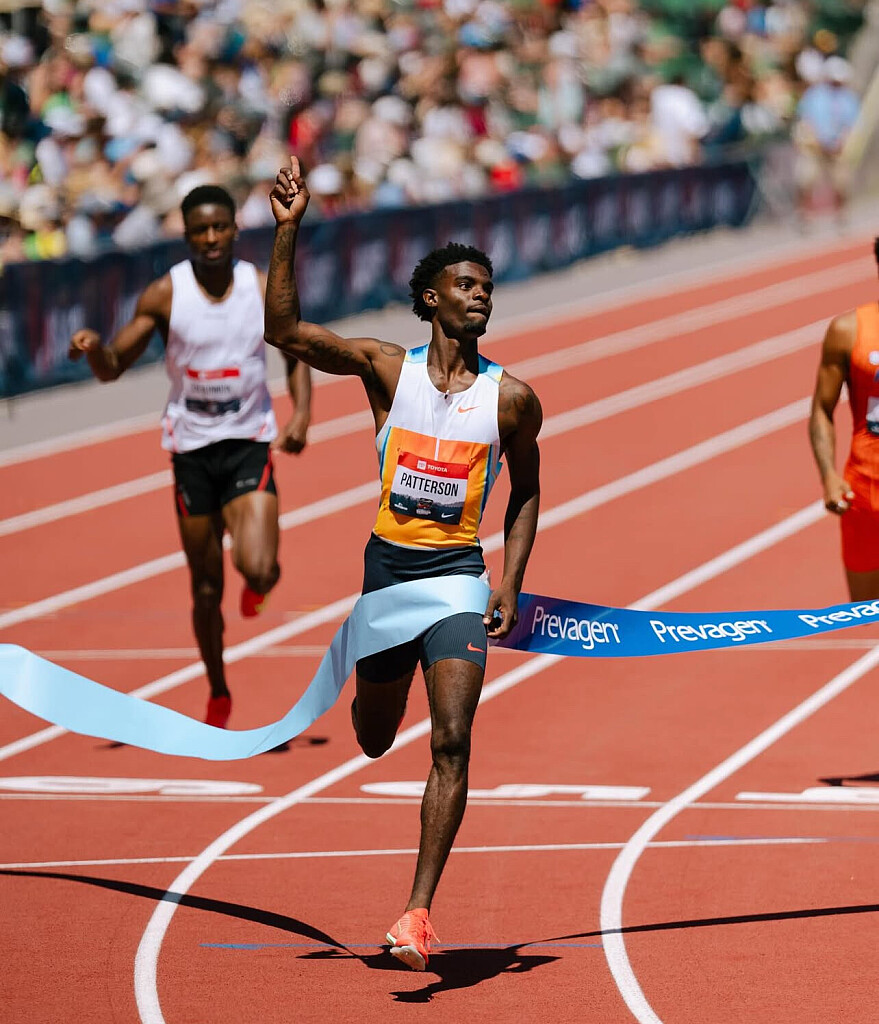
From UPS Graveyard Shift to National Champion: Jacory Patterson’s Inspiring Journey to the Top of U.S. Sprinting
Before he became the fastest man in America over 400 meters, Jacory Patterson was clocking time in a very different kind of race — the overnight grind at a UPS distribution center in South Carolina. Working the graveyard shift to fund his training, Patterson kept his Olympic dreams alive in the shadows of the shipping warehouse.
Now, he’s in the spotlight.
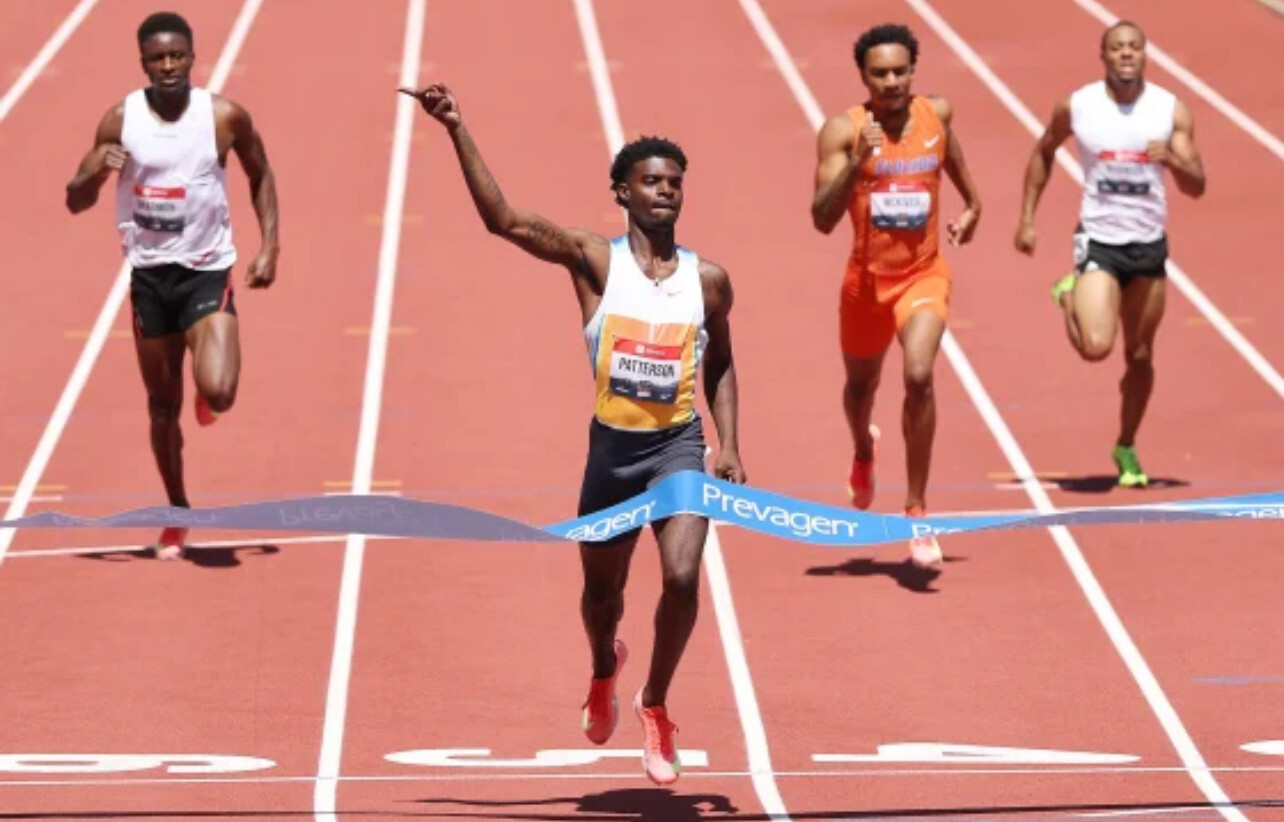
This past weekend in Eugene, Oregon, Patterson stormed to victory in the men’s 400 meters at the U.S. Track and Field Championships, claiming his first national title. When the dust settled on the track, his phone was buzzing — not with shipping requests, but with hundreds of congratulatory messages from friends, fans, and notably, his former UPS co-workers.

“They’d seen me work under pressure before,” Patterson said, reflecting on the fast-paced demands of loading and sorting packages. “Just in a different kind of lane.”
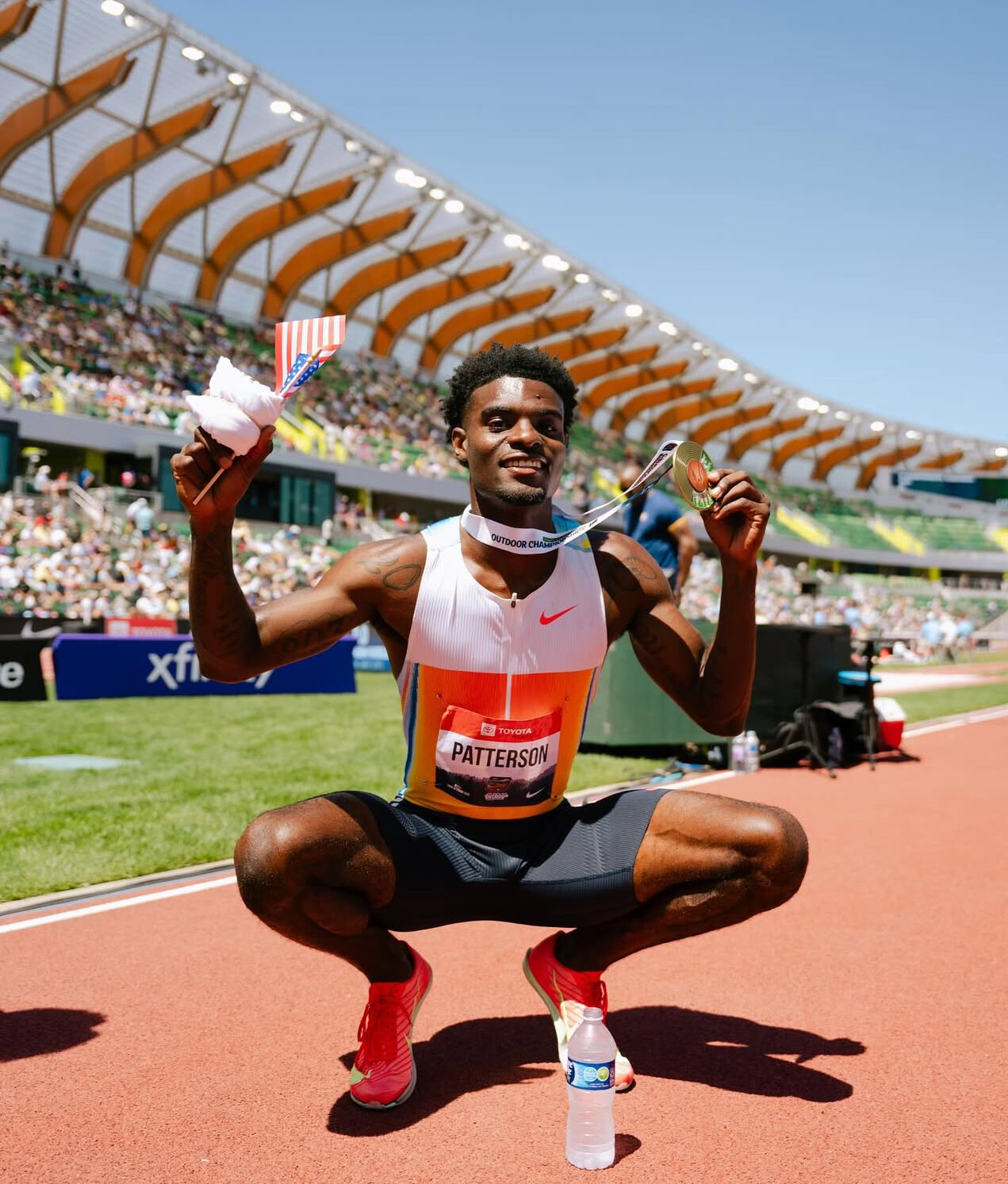
Patterson’s win is more than a personal triumph — it’s a testament to perseverance in a sport where funding and sponsorships are scarce for athletes outside the top echelon. Balancing full-time labor with elite-level training is no easy feat, but Patterson managed both with the kind of focus and grit that now defines his racing style.
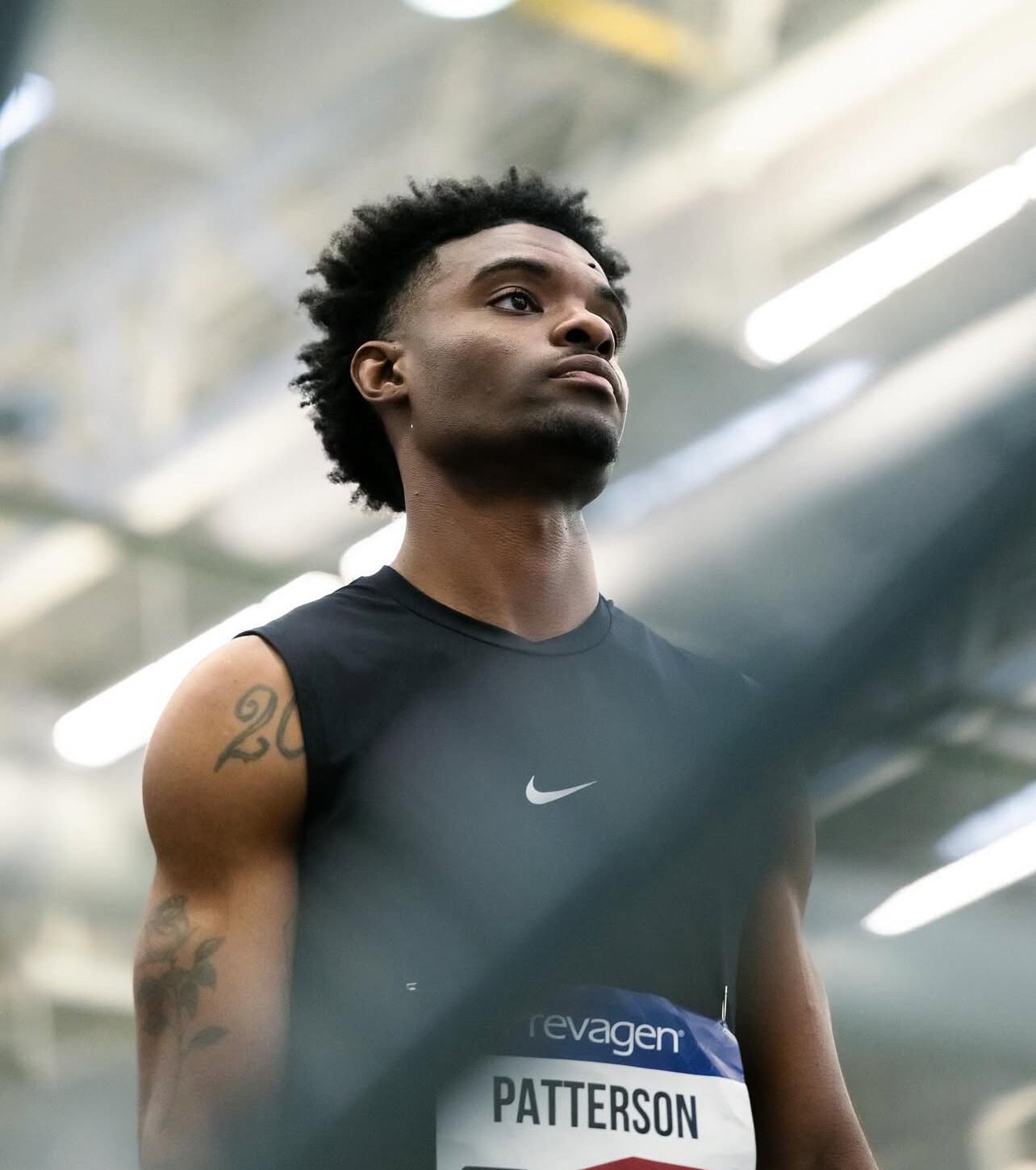
His victory in Eugene not only secures him a spot among America’s sprinting elite, but also serves as inspiration for athletes nationwide chasing greatness against the odds.
“Track and field isn’t always glamorous,” Patterson said. “But if you believe in your path, and you keep showing up — whether it’s at practice or a 3 a.m. shift — eventually, your moment will come.”
And on Saturday in Eugene, it did.
by Boris Baron
Login to leave a comment
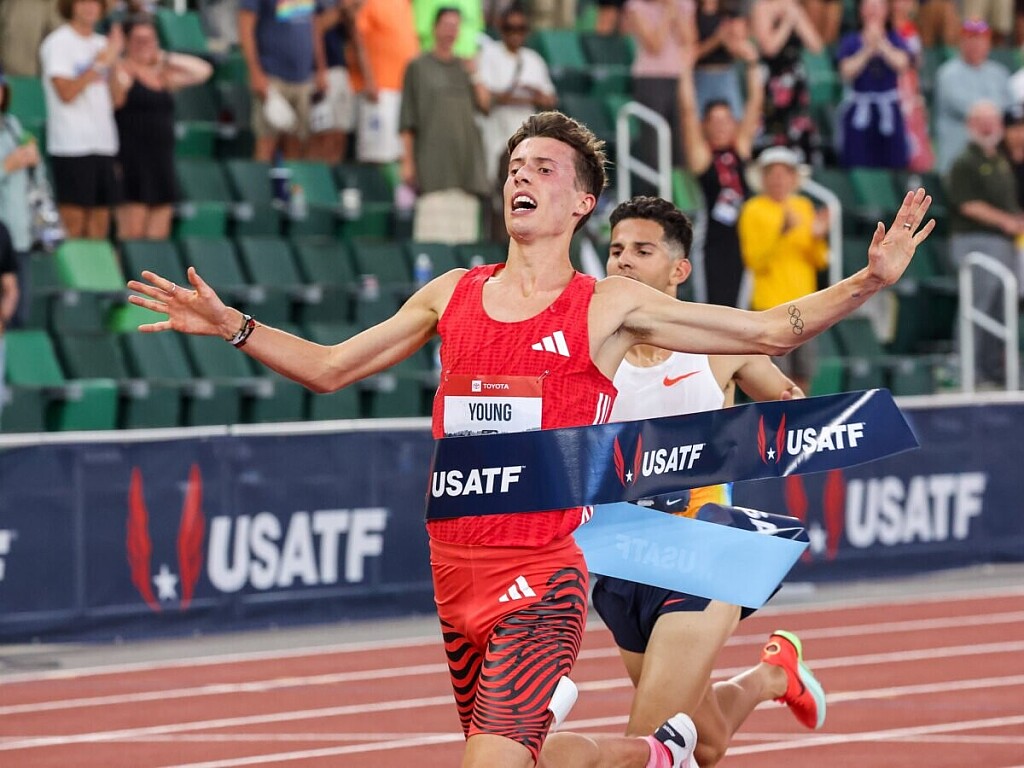
Nico Young Clinches U.S. 10,000m Title with Electrifying Finish in Eugene
Eugene, Oregon – July 31, 2025
Nico Young delivered a career-defining performance on Wednesday night at the 2025 USATF Outdoor Championships, storming to victory in the men’s 10,000 meters with a closing display that left the crowd at Hayward Field in awe.
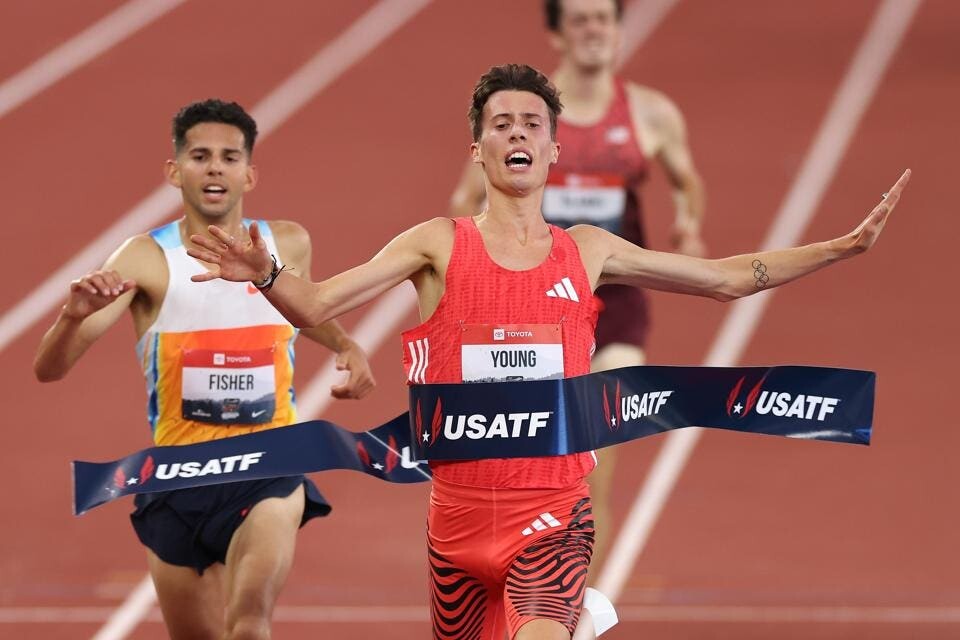
In a tightly contested final, Young surged past established veterans Grant Fisher and Graham Blanks with a stunning final lap of 56.54 seconds, covering the last 1600 meters in under four minutes—an extraordinary finish in a championship 10K. His winning time: 29:02.12.
Grant Fisher, one of the most accomplished distance runners in U.S. history, claimed the silver medal in 29:02.37, while rising star Graham Blanks, fresh off a record-breaking collegiate season, secured bronze in 29:02.43.
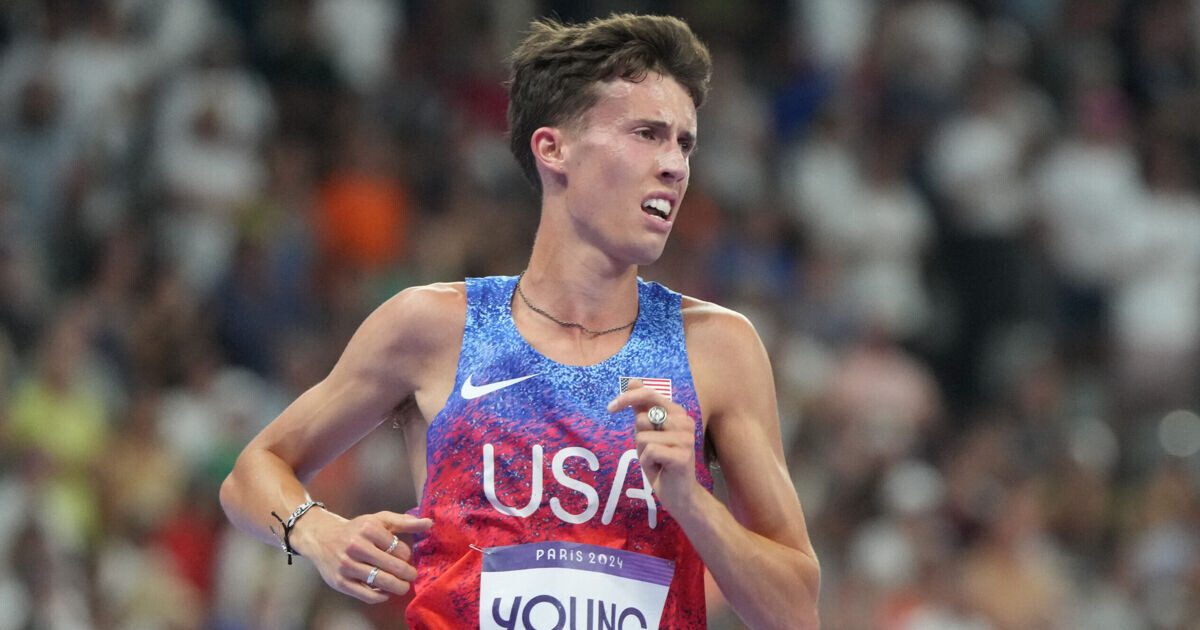
“What a way to end the night in Eugene,” echoed the sentiments of fans and announcers alike as Young crossed the line, arms raised in triumph.
At just 22 years old, Young’s victory represents a passing of the torch and a new era in American distance running. Known for his aggressive style and fearless front-running as a collegiate athlete at Northern Arizona University, Young has now proven he can execute a tactical race and close with world-class speed—a critical asset on the international stage.
The men’s 10,000m capped an electric night of competition at Hayward Field and set the tone for the rest of the championships. With this performance, Young not only claimed his first national title but also firmly established himself as a contender for global medals in the years ahead.
Men’s 10,000m – Final Results
• Nico Young – 29:02.12 (National Champion)
• Grant Fisher – 29:02.37 (National Runner-Up)
• Graham Blanks – 29:02.43 (National Bronze)
Stay tuned to My Best Runs for continued coverage of the 2025 USATF Outdoor Championships and road to the World Championships.
by Boris Baron
Login to leave a comment

Track’s Biggest Stars Return to Hayward Field for U.S. Championships
Eugene, Oregon – The stage is set for another electrifying weekend at iconic Hayward Field, as the Toyota U.S.A. Track & Field Outdoor Championships take place this Saturday and Sunday at 4 p.m. ET, airing live on NBC and Peacock.
Some of the sport’s biggest stars will be headlining the meet, including Sydney McLaughlin-Levrone and Noah Lyles, two of America’s premier track and field athletes.
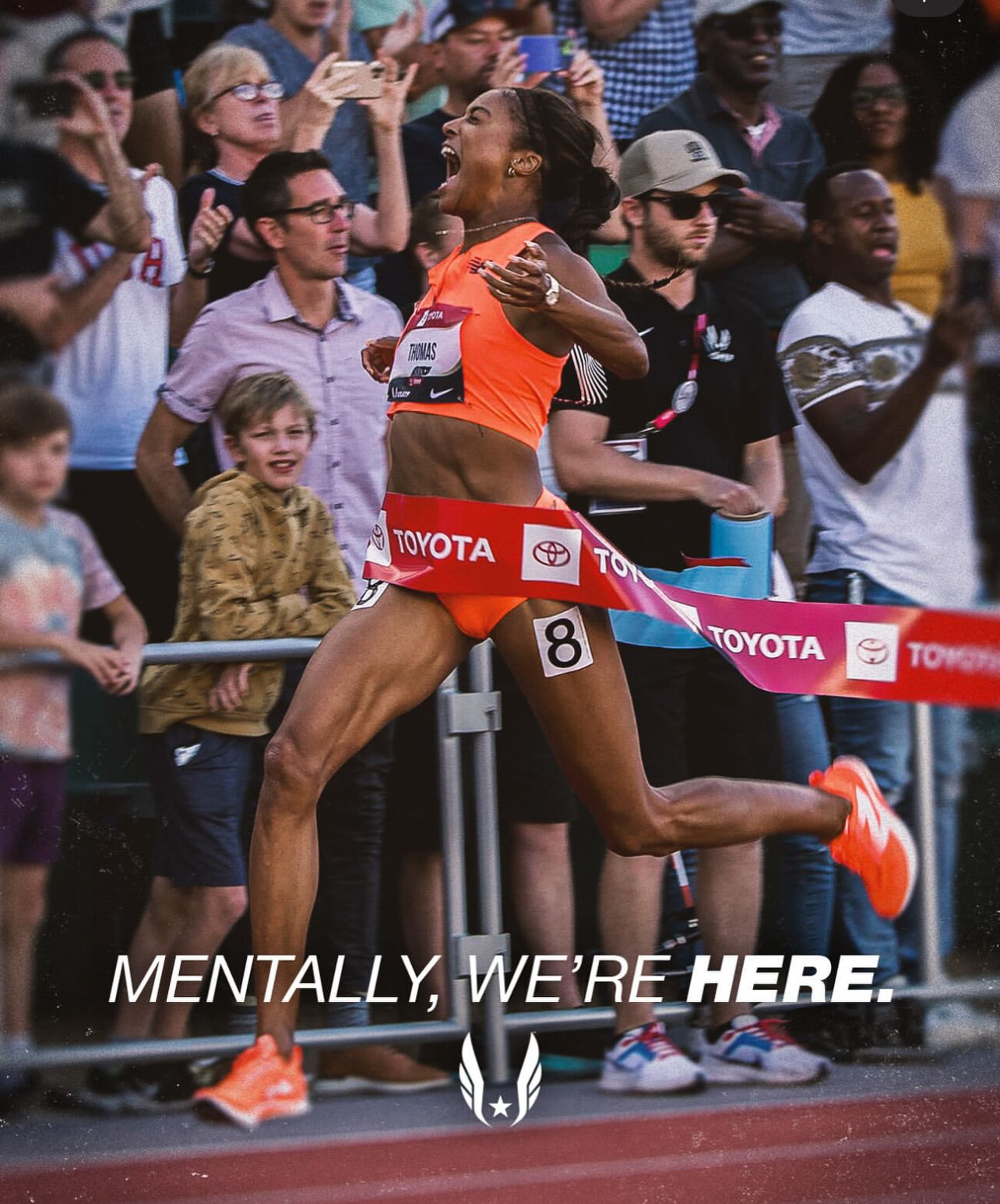
McLaughlin-Levrone, the reigning Olympic and World Champion in the 400m hurdles, is returning to the national spotlight after a strategic training and race schedule this season. Known for her graceful power and impeccable technique, Sydney has already redefined what’s possible in her event—shattering the world record multiple times. Fans are eager to see whether she’ll contest the 400m flat or return to the hurdles in Eugene.
On the men’s side, all eyes are on Noah Lyles, the reigning World Champion in the 100m and 200m. Lyles has made it clear he’s aiming for greatness this year, with both Olympic gold and world records on his radar. His recent performances on the Diamond League circuit suggest he’s peaking at the right time.
Distance Running Update: Eyes on the 1500m, 5000m, and 10,000m
The distance events promise fierce battles and major implications for Team USA selection.
In the men’s 1500m, all eyes will be on Yared Nuguse, who owns one of the fastest times in American history. He’ll be challenged by Cole Hocker, who famously stormed to an Olympic team spot in 2021, and NCAA standout Hobbs Kessler, who continues to climb the ranks.
The women’s 1500m will feature Nikki Hiltz, Emily Mackay, and Sinclaire Johnson, with Hiltz in standout form after their impressive road mile performances this season.
In the 5000m, American record holder Woody Kincaid will take on Grant Fisher, who’s back after injury and hungry to reclaim his place at the top. The women’s 5000m will include Elise Cranny, Karissa Schweizer, and Parker Valby, in what could be one of the most tactical races of the meet.
The 10,000m has already been contested earlier in the season, but the championship weekend will set the tone for the athletes’ final preparations ahead of international competition.
As always, Hayward Field brings the best out of American distance runners—expect fireworks as the fields chase not only titles, but Olympic dreams.
Catch the action live on NBC and Peacock.
Event: Toyota U.S.A. Track & Field Outdoor Championships
Location: Hayward Field, Eugene, Oregon
Broadcast: Saturday & Sunday at 4 p.m. ET on NBC & Peacock
by Boris Baron
Login to leave a comment
Jordan Guenther: The American Superfan Who Has Become a Beloved Part of Kenyan Athletics
In a sport often defined by national pride, few stories cut across borders like that of Jordan Guenther, an American who has become one of the most recognizable and beloved supporters of Kenyan athletics. Despite not being a coach, manager, or official, Guenther has carved out a unique space within the global running community—one built entirely on passion, consistency, and genuine admiration.
You might spot him at major championships in Paris, Budapest, or Eugene—not just in the stands, but shoulder to shoulder with the likes of Faith Kipyegon, Kelvin Kiptum, and Ruth Chepngetich, proudly wearing Kenyan gear and cheering louder than anyone.
From Fan to Family
Jordan’s journey into the heart of Kenyan athletics started simply—as a fan. But his actions quickly separated him from the crowd. He didn’t just cheer from afar. He learned Swahili. He wore the team colors. He showed up—again and again.
At the 2023 World Championships in Budapest, Faith Kipyegon, arguably the greatest female middle-distance runner in history, gifted him a race kit with her name printed on the bib. It was more than a gesture—it was an embrace.
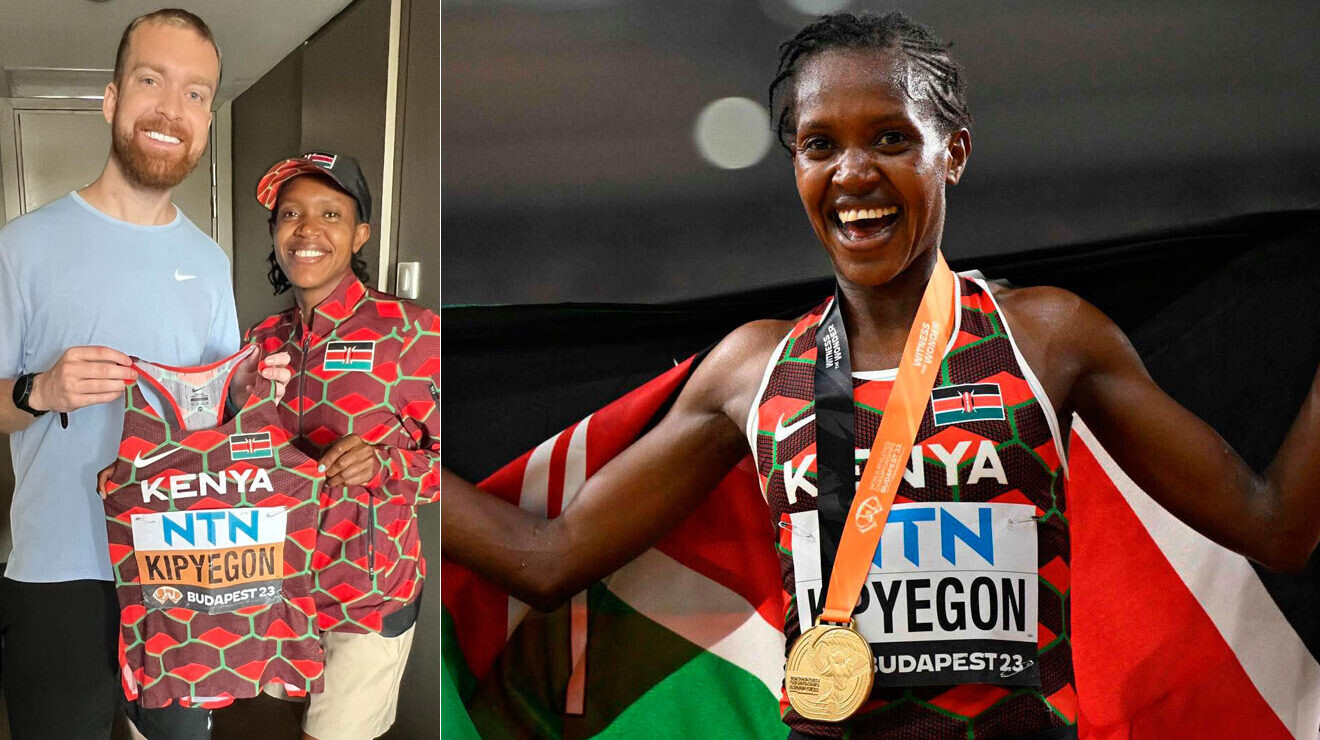
“He’s one of us,” said a Kenyan fan at the time. “More Kenyan than some Kenyans.”
The sentiment was echoed by many in the athletics community. Guenther was affectionately nicknamed “Kipchumba”, meaning “son of Kip” in Swahili, and his growing bond with Kenyan athletes became a story of its own.
A Constant Presence
Guenther has attended countless major events around the world, often at his own expense. He has been spotted:
• Hosting pre-marathon meals with top stars like Benson Kipruto and Joyciline Jepkosgei
• Posing for photos in full Kenyan tracksuits
• Traveling to Paris, Monaco, and Nairobi to support athletes not just in competition—but in spirit
His unwavering dedication has made him a symbol of what sports fandom can be: personal, respectful, and deeply felt.
Behind the Scenes
Despite the growing attention, little is publicly known about Jordan’s background or source of income. He maintains a low profile online and is not affiliated with any official athletic federation. What is clear is that his commitment is real and lasting—and that athletes trust him.
The Kenya Tourism Board even highlighted Guenther in promotional materials, recognizing his unique role in promoting the country’s sports culture on a global stage.
“He doesn’t do it for the cameras,” said one coach. “He does it because he cares.”
Why It Matters
In a world where sports often feel transactional, Guenther represents something purer. His story is a reminder that connection doesn’t require contracts—it requires consistency. And that love for a team, a country, or a culture can transcend boundaries.
At a time when global athletics is searching for new audiences and deeper engagement, the story of Jordan Guenther offers a blueprint: show up, give respect, and let your actions speak louder than your voice.
Jordan Guenther may not hold a title, but he holds the respect of some of the greatest athletes in the world. And in the global family of distance running, he’s not just a fan—he’s one of the tribe.
by Boris Baron
Login to leave a comment
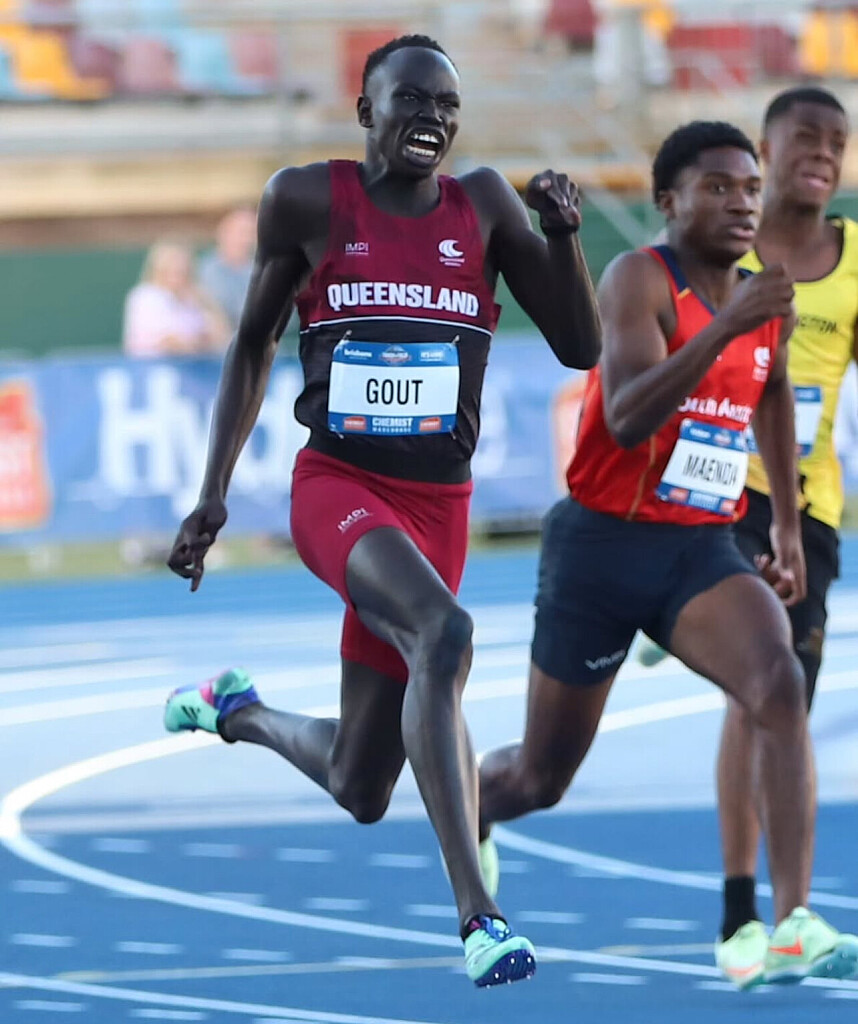
Australia’s teenage sprint sensation, Gout Gout, is gearing up for his biggest stage yet — the 2026 Commonwealth Games in Glasgow.
At just 17 years old, Gout Gout has already rewritten the record books. The Queensland-based sprinter, born in December 2007 to South Sudanese parents, is widely regarded as one of the most exciting young talents in global athletics. His rapid rise has drawn comparisons to legends like Usain Bolt — and for good reason.
Gout currently holds the Oceanian 200m record with a time of 20.02 seconds, set at the Golden Spike meet in Ostrava earlier this year. He also clocked 10.17 in the 100m to win the Australian U-18 title and later dominated the U-20 division. His combination of top-end speed, graceful stride, and fierce competitive drive has made him a must-watch on the world stage.

Now, the teen phenom is set to represent Australia at the 2026 Commonwealth Games, scheduled for July 23 to August 2 in Glasgow, Scotland. He is expected to compete in the 100m, while his entry in the 200m remains under consideration due to scheduling conflicts with the World Junior Championships, which will take place shortly after in Eugene, Oregon.
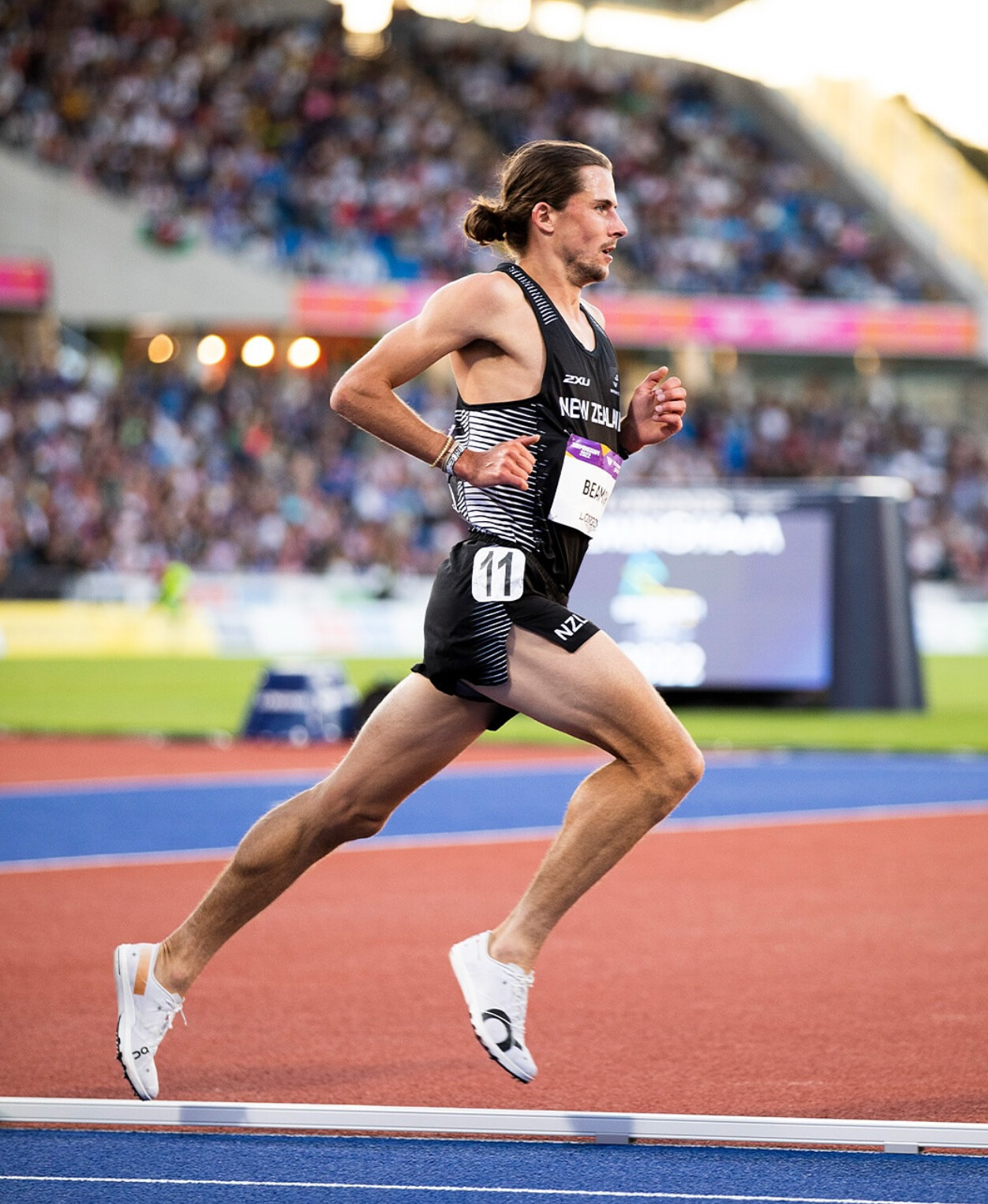
Gout’s Path to Stardom

Gout’s emergence as a global sprint force has been nothing short of remarkable. Raised in Ipswich, Queensland, he was introduced to athletics at a young age and quickly caught the attention of Australia’s elite coaches. Under the guidance of Diane Sheppard, Gout has developed into a technically polished athlete with a mature race strategy far beyond his years.
His silver medal at the 2024 World U20 Championships in the 200m confirmed what many already believed — Gout Gout isn’t just Australia’s future; he’s already one of its best.
Sheppard has praised his dedication, humility, and focus, noting:
“With Gout, it’s not just talent — it’s mindset. He’s willing to do the work and stay grounded.”
Glasgow 2026: A Games Reimagined
The 2026 Commonwealth Games will mark a return to Glasgow, which last hosted the event in 2014. Following Victoria’s withdrawal as host due to financial concerns, Glasgow stepped up with a streamlined, cost-efficient plan built on existing infrastructure.
The Games will feature:
• 10 core sports and 47 para-sport events
• Key venues including Scotstoun Stadium (track and field), Tollcross International Swimming Centre, and the Sir Chris Hoy Velodrome
• A strong focus on sustainability and legacy, with no new athletes’ village planned
Mascot “Finnie the Unicorn”, named after the Finnieston Crane and created by local students, has already captured hearts with its fun, distinctly Scottish vibe.
by Boris Baron
Login to leave a comment
