

Running News Daily
Running News Daily is edited by Bob Anderson and team. Send your news items to bob@mybestruns.com Advertising opportunities available.
Index to Daily Posts · Sign Up For Updates · Run The World Feed
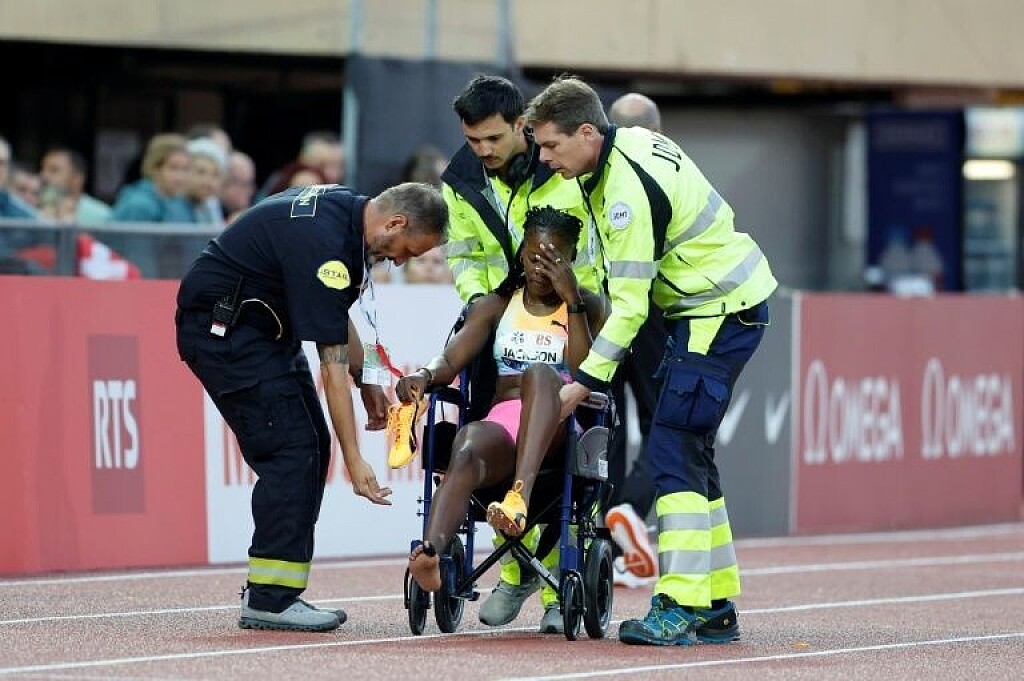


Shericka Jackson’s Lausanne Return Ends in Heartbreak as Injury Clouds Silesia Showdown

Shericka Jackson’s long-awaited return to the 200 metres ended in heartbreaking fashion on Friday night at the Wanda Diamond League meeting in Lausanne, where the Jamaican sprint star was forced to pull up and did not finish after appearing to suffer an injury.

Jackson had made a promising start and was among the leading contenders as the race unfolded at the Stade Olympique de la Pontaise. But shortly after coming off the bend, the two-time world 200m champion suddenly pulled up, lost her balance and crashed to the track, bringing her comeback race to an abrupt and painful end.

The incident immediately raised concerns for one of the most accomplished sprinters of her generation, particularly after Jackson had already acknowledged uncertainty over her fitness in the lead-up to the Lausanne meeting.
Her withdrawal now casts serious doubt over her scheduled appearance in the women’s 100m at the Silesia Diamond League on Saturday, August 23. Jackson had been set to line up in one of the most eagerly anticipated sprint races of the meeting, alongside fellow Jamaican Elaine Thompson-Herah, Sha’Carri Richardson, Julien Alfred and Melissa Jefferson-Wooden.
Whether Jackson will be fit enough to take her place remains unclear, but Friday’s setback was another difficult moment in what has been an emotionally challenging period for the Jamaican star.
Recently, Jackson revealed that she had not been “ok” as she continues to cope with the loss of her longtime coach and MVP Track Club technical director, Stephen “Franno” Francis. His death has clearly left a profound impact on an athlete who enjoyed some of the greatest successes of her career under his guidance.
Friday’s injury scare added another layer of heartbreak to that difficult journey. For now, the athletics world will be hoping that the setback is not as serious as it first appeared and that Jackson can recover fully.
One of the sport’s biggest stars has already overcome enormous challenges throughout her career. The hope now is that this latest setback will be only a temporary interruption—and that Shericka Jackson will soon be back where she belongs, competing at the very highest level.
by Erick Cheruiyot for My Best Runs.
Login to leave a comment
Latest Running News

KSh42 Million KATA Programme Dispute: Questions Over Funding Advanced to Coach Charles Ng’eno
KATA founder Bob Anderson says coach Charles Ngeno received KSh1.077 million in repayable, interest-free financing for two running camps and six acres of potatoes, repeatedly discussed repayment and later sought additional funding.
A programme in which Bob and Catherine Anderson say they committed more than KSh42 million to support Kenyan runners is now at the centre of a dispute over money advanced to coach Charles Ng’eno.
Anderson, founder of My Best Runs, the Kenyan Athletics Training Academy and Runners World, says Ng’eno received KSh1,077,500 in interest free loans to establish two KATA running camps and cultivate six acres of potatoes.

Anderson says none of the money has been repaid.
Ng’eno should be given a full opportunity to respond to the allegations and provide his own financial records, contracts, harvest records and explanation of the transactions before publication.

Anderson founded Runner’s World as a teenager and says his motivation for developing KATA came from decades spent in athletics and from seeing the conditions faced by some aspiring Kenyan runners.
“This was never simply a potato farming project,” Anderson said. “The purpose was to establish camps where talented athletes could receive accommodation, food and world-class training. Every shilling provided to establish the camps and grow the potatoes was an interest-free loan that had to be repaid.”
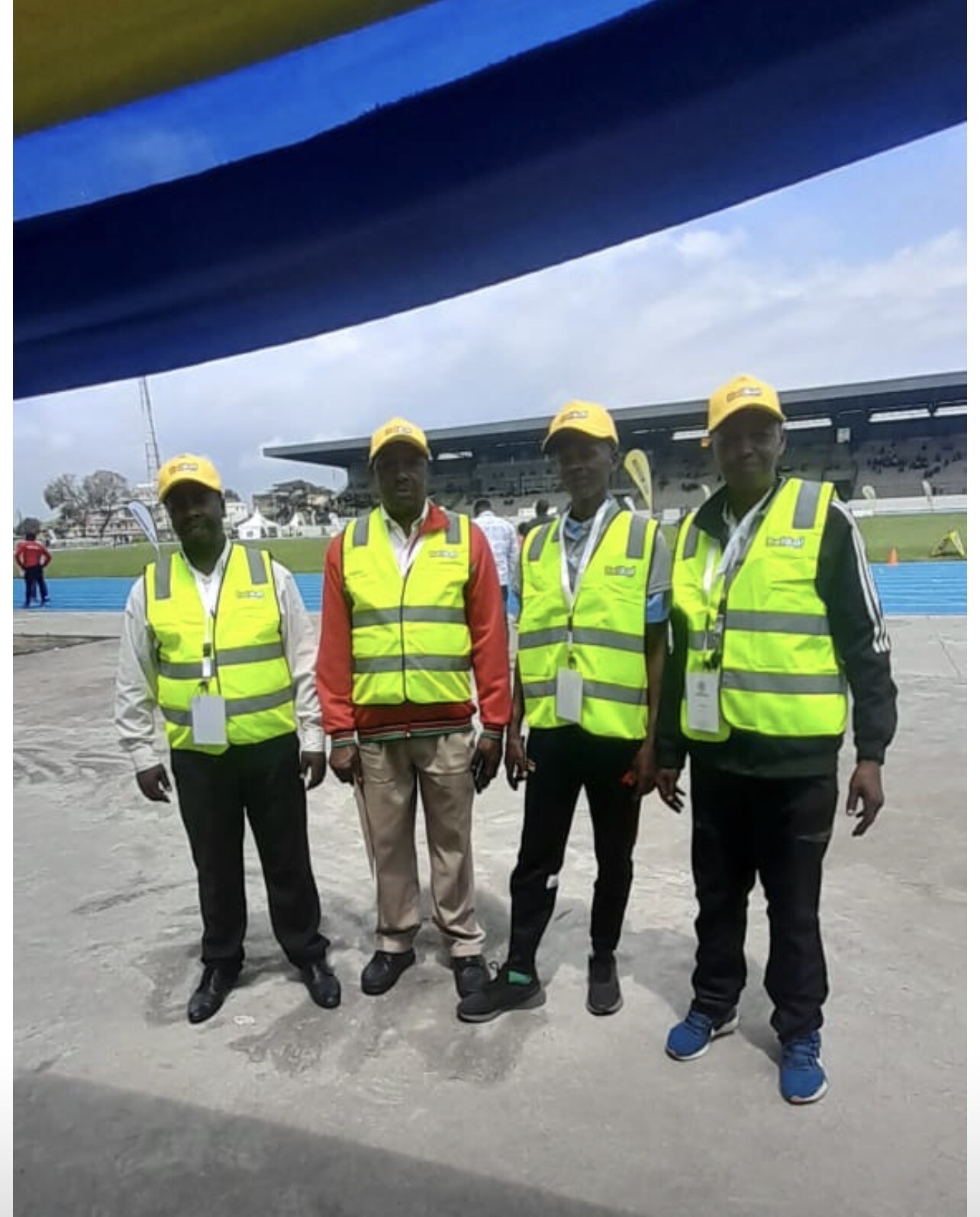
Two loans supporting one objective
According to Anderson, the KATA model combined two forms of repayable financing.

Camp operators could receive interest-free startup loans to cover expenses including rent, beds, mattresses, furniture and initial food supplies. Depending on the camp's requirements, Anderson says this financing could reach KSh500,000.
Separate interest-free loans were used to finance potato production, generally budgeted at approximately KSh100,000 per acre.
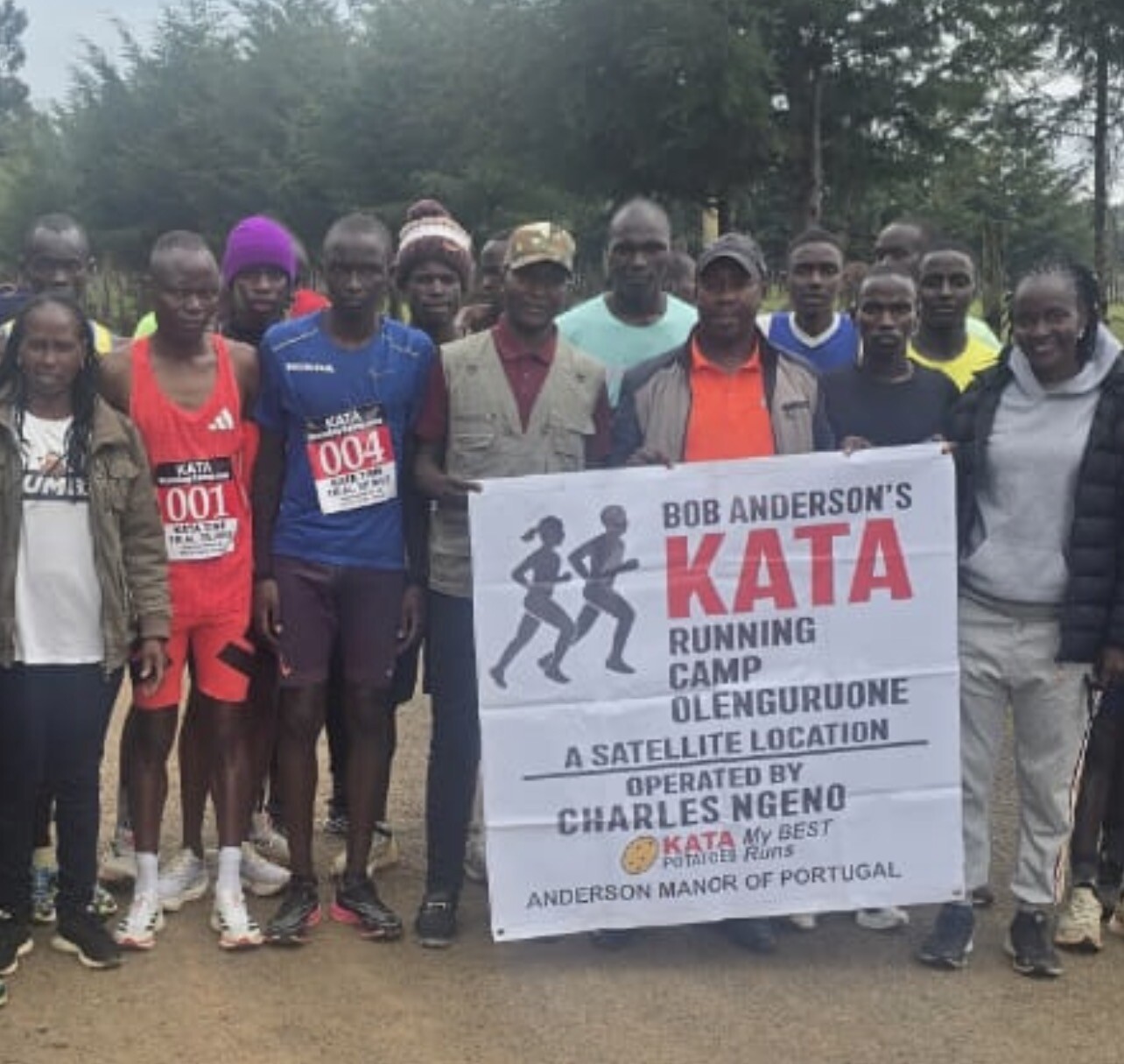
The intention was for proceeds from potato sales to repay both the farming costs and the money advanced to establish the running camp.
The funds were therefore not intended to operate as grants that beneficiaries could retain without repayment.

After the loans were cleared, the remaining income was intended to support athletes and help finance subsequent farming seasons.
Anderson says the model was designed to create a revolving system in which money recovered from one camp could eventually help another.

“The idea was to provide the seed capital once and then have the potato proceeds repay everything,” Anderson said. “After the camp and farming loans were cleared, each camp could continue operating without depending upon Catherine and me for more money.”
The financial projections used by KATA were based on anticipated agricultural returns. Anderson says the programme estimated that a well-managed acre could generate about KSh400,000 in gross sales, although actual returns would depend on yields, disease, weather and market prices.
These were projections rather than guaranteed returns.
More than KSh42 million committed
Anderson says he and Catherine committed more than KSh42 million to establishing and operating the wider programme.
Approximately KSh36 million, he says, was provided through interest-free loans to coaches, farmers and camp operators, while more than KSh6 million was spent on independent contractors and related programme expenses.
The Kenyan personnel engaged to coordinate activities and monitor participating farms were independent contractors, according to Anderson, rather than employees.
The Andersons did not establish a company in Kenya, with the programme directed through their California-based business.
The complete financial records covering the wider KATA programme have not been independently reviewed for this article.
The KSh1,077,500 advanced to Charles Ngeno represents only one part of the wider programme.
But Anderson says the failure to recover the money meant funds intended to circulate to other camps and athletes became unavailable.
Athletics Kenya references
Anderson says Ng’eno regularly communicated with him about athletics, farming and the proposed camps.
Among the material provided are photographs appearing to show Ng’eno participating in Athletics Kenya-related meetings, including one in which he is seated behind an Athletics Kenya nameplate and another in which he appears to address a gathering.
Ng’eno also told Anderson that he had discussed KATA with senior Athletics Kenya officials.
According to Anderson, Ng’eno reported that the Athletics Kenya president had praised the programme and believed it could benefit Kenyan athletes.
Those claims have not been independently confirmed.
The photographs show Ng’eno at athletics-related functions but do not establish that Athletics Kenya endorsed KATA or participated in the financing arrangement.
“It gave me confidence,” Anderson said. “Charles presented himself as a senior and respected figure in Kenyan athletics. He talked about discussions with the AK president, and I believed he had the standing to make the camps successful.”
Athletics Kenya has not been accused of receiving any of the disputed money.
KSh1.07 million and requests for more
According to Anderson, the KSh1,077,500 advanced to Ng’eno was intended to cover work toward two camps and six acres of potatoes.
In August 2025, Ng’eno sent what he described as bookkeeping for the Olenguruone and Nakuru camps. The figures referred to a proposed total allocation of KSh1.3 million, including potato projects, rent, bunk beds, mattresses, blankets and food.
The KSh1.3 million was a proposed budget and was not the amount Anderson says Ng’eno ultimately received.
Anderson says he stopped advancing money after repayment dates were missed and other concerns emerged.
“I probably would have sent more because Charles kept presenting new plans,” Anderson said. “Fortunately, one red flag after another was raised, and I cut him off after KSh1,077,500.”
Anderson says Ng’eno later sought approximately KSh600,000 to cultivate another six acres.
Had that request been approved, Anderson's total exposure to Ng’eno could have approached KSh1.7 million.
Ng’eno's own messages about the harvest
WhatsApp correspondence provided by Anderson contains messages attributed to Ng’eno discussing the farming operation and anticipated returns.
In an October 7, 2025 message, Ng’eno said he expected his first harvest to produce more than 150 bags of 50kg potatoes.
“For my first harvest, I'm expecting to have more than 150 bags of 50kg,” he wrote.
In the same exchange, Ng’eno referred to the “agreed loan” and said he was aware of the remaining obligation.
He also promised a “good return” and asked Anderson to proceed with what he described as a final disbursement.
“Please let us make an agreement that this be final dispersal until you experience the delivery of revenue,” he wrote.
In November, the correspondence moved to the practical issue of harvesting and selling the potatoes.
On November 11, Ng’eno told Anderson that some of his other acres were ready for harvesting but said market prices were poor.
“My other acres are ready for harvesting but this is not the time to do so. price is terrible,” he wrote.
He said the crop required spraying against worms and requested KSh15,000.
The following day, Ng’eno referred to potatoes from two acres that he expected to harvest within two weeks.
“Bob. Please send me 15k for Olenguruone camp. Potatoes to be harvested in 2 weeks. 2 acres,” he wrote.
Anderson subsequently asked for information about the number of bags, total weight, and photographs showing where the potatoes were being stored.
Ng’eno said he had secured free storage space and added that his farm manager was working on the ground.
The exchanges establish that the two sides were discussing the loan, potato farming, anticipated harvests and additional funding. They do not by themselves establish the final size of the harvest, sales proceeds or repayment.
Repeated repayment promises
Other correspondence reviewed for this story contains further discussions about repayment.
In November 2025, Anderson says Ng’eno indicated that nearly KSh600,000 would be paid before the end of December, with another KSh200,000 expected in January or February after seeds were sold.
Ng’eno also referred to a plot allegedly worth KSh1.5 million that could be disposed of if necessary to clear the loan.
“Don’t worry about me,” he wrote.
On January 31, 2026, after Anderson asked how much Ng’eno would begin repaying, Ng’eno responded:
“Yes, Bob, I need to start with Ksh. 400,000.”
He added that he was responsible and “must make payments.”
Anderson says the KSh400,000 payment was not made.
Ng’eno also told Anderson that repayment had been delayed because he was constructing a residential building that would become a KATA camp. He offered to show Anderson the building through a video call.
The correspondence shows that repayment was repeatedly discussed. It does not, without the underlying bank records, establish precisely how much money was ultimately generated from the farms or how the funds advanced were used.
A programme built around trust
For Anderson, the dispute goes beyond one borrower.
He says the KATA programme was created after he and Catherine saw the challenges facing some Kenyan athletes and wanted to provide better accommodation, food and training environments.
The agricultural component was intended to give camps an independent source of income.
But Anderson says the experience with Ng’eno and other beneficiaries ultimately forced the programme to stop advancing money.
“This was not simply a case of Charles misleading Catherine and me,” Anderson said. “Fellow Kenyans working with us in good faith also relied on the information and promises he provided.”
Those contractors have not been publicly identified.
Anderson has made broader claims about repayment problems involving other beneficiaries. Those claims require separate verification and should not be treated as established facts without supporting records and responses from those involved.
The questions requiring answers
The Ng’eno case leaves several questions that can be answered only through the underlying records.
How was the KSh1,077,500 used?
How much went into each camp?
Were all six acres planted?
What was harvested?
How much was sold?
Who bought the potatoes?
How much revenue was generated?
Were any proceeds used to repay the loan?
Did the two proposed camps operate, and how many athletes did they support?
Why were the promised repayments not made?
And does the reported KSh1.5 million property exist and was it available to secure or repay the debt?
Ng’eno should also be given an opportunity to respond to the claims concerning his representations about Athletics Kenya and to provide evidence of any discussions with its officials.
For Anderson, the principle behind the programme remains straightforward.
“This money was not donated to Charles,” he said. “It was loaned to establish camps and grow crops. It had to come back so it could help other athletes and camps.”
The dispute is now about whether the funds were used according to the agreements, what income the projects generated and why Anderson says none of the money has been returned.
Until complete financial records, contractual documents and Ng’eno's response are obtained, the allegations should remain clearly identified as contested claims rather than established findings.
by Robert Kibet
Login to leave a comment

World Record, McNuggets and Fries: The Extraordinary Pre-Race Ritual Behind Ja’Kobe Tharp’s Historic Run
Three hours before producing one of the greatest performances in the history of sprint hurdling, Ja’Kobe Tharp followed a pre-race routine that few athletes—or sports nutritionists—would expect.

Two cheeseburgers. A large order of fries. And 10 Chicken McNuggets.
That was the meal Tharp ate before taking to the track and breaking the long-standing world record in the men’s 110m hurdles, surpassing Aries Merritt’s 12.80-second mark that had stood since 2012.
The Auburn University star's remarkable performance ended a 13-year wait for a new world record and made him the first man in half a century to set a world record at the NCAA Championships. Yet almost as quickly as his historic run captured attention, another part of the story became a major talking point: his extraordinary pre-race meal.

For Tharp, however, there is nothing new or experimental about the routine.
He has followed the same ritual since his high school years, first adopting it before winning a Tennessee state hurdles title as a junior. Since then, the order has remained remarkably unchanged, becoming an unlikely constant throughout his rise to the top of world athletics.
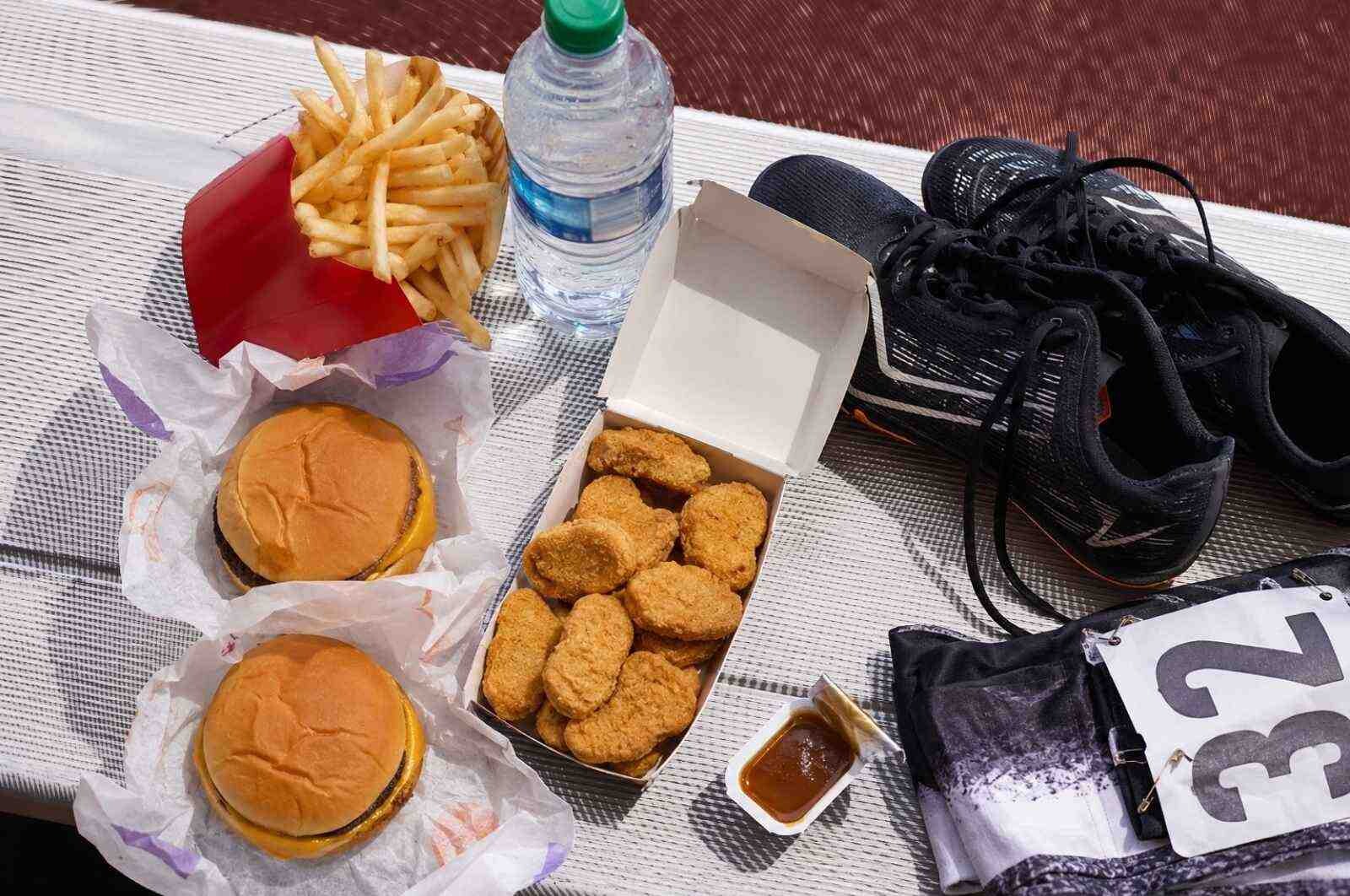
According to reporting from Auburn University, the meal contains approximately 1,246 calories, even before adding any dipping sauce. Tharp's coach, Ken Harnden, has become an important part of the tradition, reportedly collecting the same order for his athlete in different parts of the world, including Lima, Monaco, Tokyo and Budapest.
Tharp's philosophy is straightforward: if something has worked throughout his career, there is little reason to change it.
But does that mean runners should start filling their pre-race routines with cheeseburgers and fries?
Not necessarily.
The explanation behind why the meal appears to work for Tharp has much more to do with the specific demands of his event than with any magical qualities of fast food.
The men's 110m hurdles is over in less than 13 seconds. During such a short and explosive effort, the body relies primarily on immediate energy systems, particularly the ATP-phosphocreatine system, rather than depending on the gradual digestion of the meal eaten several hours earlier.
Timing is also crucial. By eating around three hours before competition, Tharp gives his body substantial time to digest the food while ensuring he does not arrive at the start line hungry.
A large meal immediately before a race would be a very different situation. But in Tharp's case, his body has also become accustomed to the routine after years of repeating it.
That consistency may be one of the most important aspects of the entire story.
Pre-race rituals can provide athletes with a sense of familiarity and control, particularly in high-pressure situations. By repeating the same preparation before important competitions, athletes can reduce uncertainty and approach the start line with greater confidence.
For Tharp, the McDonald's meal has become part of that psychological preparation.
His story is not entirely without precedent in sprinting.
Usain Bolt famously revealed that he ate enormous quantities of Chicken McNuggets during the 2008 Beijing Olympic Games after struggling to enjoy some of the food available to athletes. Bolt went on to produce one of the most dominant Olympic performances in history, winning three gold medals and setting world records.
However, these examples should not be mistaken for universal nutrition advice.
There is an enormous difference between preparing for a 110m hurdles race and preparing for a marathon.
A marathon places sustained demands on the digestive system and requires athletes to manage carbohydrate stores, hydration and energy intake over more than two hours of continuous effort. High-fat meals can slow gastric emptying and increase the likelihood of stomach discomfort—problems that can become particularly costly during a long-distance race.
That is why elite endurance runners generally follow a very different approach.
Pre-race meals for marathoners and other endurance athletes typically focus on easily digested carbohydrates while limiting foods high in fat and fibre. The objective is to maximise available energy without placing unnecessary stress on the stomach.
In other words, what may be perfectly manageable for an explosive hurdler could become a disastrous experiment for someone running 42.195 kilometres.
The real lesson from Tharp's remarkable routine, therefore, may not be the contents of his meal at all.
It is consistency.
Tharp did not randomly decide to eat more than 1,200 calories of fast food before attempting to break a world record. He had tested and repeated the routine over several years, allowing it to become a familiar part of his preparation.
That is a principle runners at every level can apply.
A pre-race meal should be practised during training rather than introduced on the morning of a major competition. Athletes should learn which foods their bodies tolerate, how long they need to digest them and what preparation leaves them feeling physically and mentally ready to perform.
There is also a wider point about individual athletes and individual routines.
Elite sport is full of unusual habits that work for specific competitors. A ritual can be successful without becoming a universal blueprint. Tharp's incredible achievement does not prove that cheeseburgers and Chicken McNuggets are the secret to faster hurdling—it proves that extraordinary athletes can sometimes thrive with routines that defy conventional expectations.
The temptation, of course, is to copy the most unusual part of a champion's preparation.
But Tharp's world record was not created by a single meal. It was the product of exceptional talent, years of training, technical precision, speed, strength and preparation. The McDonald's ritual is a fascinating detail in the story—not the reason behind the record itself.
Still, it has undoubtedly added another unforgettable chapter to one of track and field's most remarkable performances.
A world record in the 110m hurdles. A historic NCAA achievement. And, just three hours earlier, two cheeseburgers, fries and 10 Chicken McNuggets.
For Ja’Kobe Tharp, it may not look like a conventional recipe for sporting greatness.
But after a performance that rewrote the record books, it is certainly a routine that the athletics world will not forget anytime soon.
by Erick Cheruiyot for My Best Runs.
Login to leave a comment
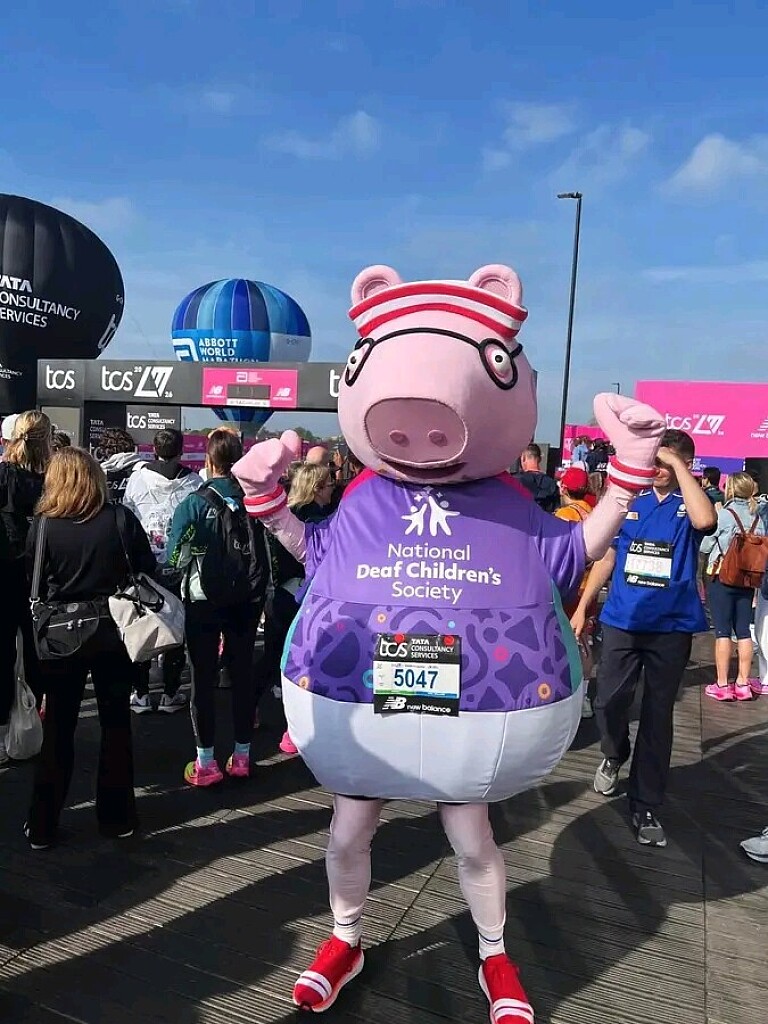
Daddy Pig Faces Berlin’s Unforgiving Marathon Rules After Narrowly Beating Joe Wicks in London
Daddy Pig may have won one of the most entertaining battles of the 2026 London Marathon, but his next appearance at the BMW Berlin Marathon could come with a very different kind of pressure.
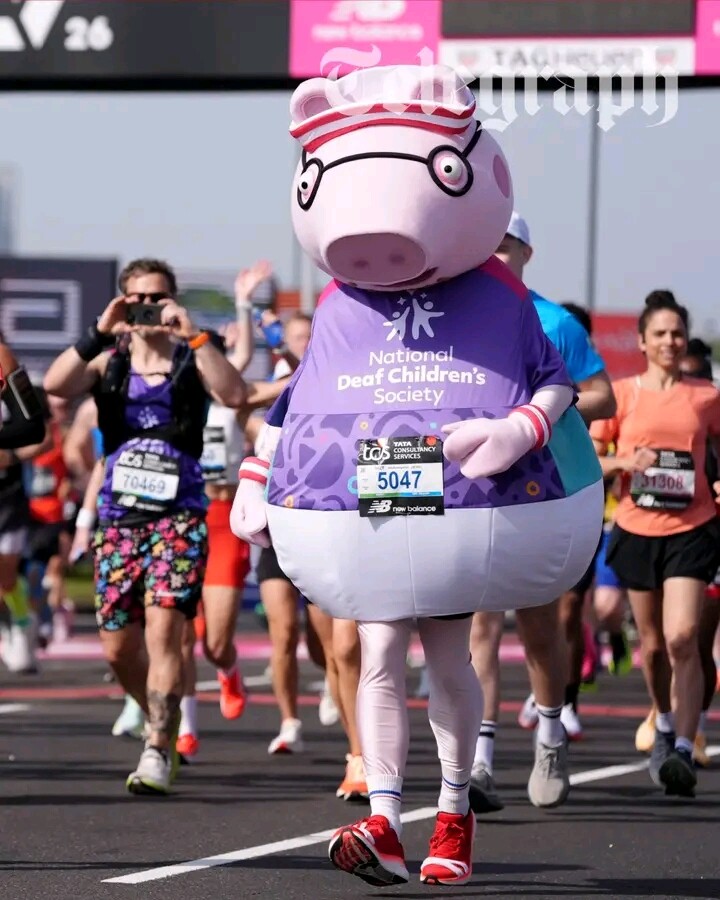
The beloved Peppa Pig character completed the London Marathon in 5:51:53, edging fitness coach Joe Wicks by the smallest possible margin after Wicks crossed the line in 5:51:54. One second separated the two after more than 42 kilometres of running, creating one of the most memorable celebrity moments of the marathon.

Now Daddy Pig is heading to Berlin on September 27, where the rules leave considerably less room for sentiment.
The BMW Berlin Marathon operates under a strict 6-hour-15-minute limit from the moment each runner crosses the start line. Falling outside that limit means leaving the official course. The race also enforces intermediate cutoffs, with runners required to reach 33km by 3:50 p.m. and 38km by 4:35 p.m. Those who miss the deadlines can be taken to the finish in the race's famous broom bus and will not receive an official finishing time, a medal or post-finish services.
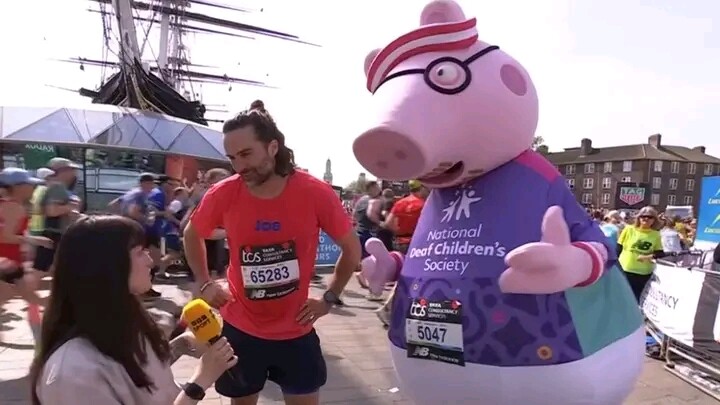
Against his London performance, that would leave Daddy Pig just 23 minutes and seven seconds to spare.
For an ordinary marathon runner, that margin would already demand respect. For someone competing inside a large and physically demanding character costume, it could make the challenge even more formidable.
London was a celebration. The crowds embraced Daddy Pig as he battled his way around the capital alongside Wicks, turning a charity campaign into one of the day's most talked-about stories. Berlin, however, is a race governed by the clock. Popularity, celebrity status and cartoon fame do not alter the timing mats or extend the official road closures.
Daddy Pig's London appearance also carried a purpose beyond entertainment. He ran in support of the National Deaf Children's Society, following the storyline involving his son, George Pig, who is deaf and wears a hearing aid. The campaign used one of children's television's most recognisable families to raise awareness and funds for deaf children and their families.
The identity of the person inside the Daddy Pig costume has remained part of the fun, with the character famously refusing to reveal more than the fact that “Daddy Pig is a Pig.”
Berlin will continue that charitable mission, although current campaign information describes Daddy Pig's September appearance as part of a celebrity relay initiative supporting children with hearing impairments. That means the prospect of a second complete World Marathon Major finish in the same calendar year should not yet be presented as confirmed.
But the larger appeal of the story remains unchanged.
Daddy Pig has already proved that a cartoon character can become a genuine part of marathon culture, complete with a real bib number, an official finishing time and a one-second victory over one of Britain's best-known fitness personalities.
Whether Berlin brings another full-distance adventure or a relay appearance, the message is the same: once the starting gun goes off at a World Marathon Major, even the most famous pig on television has to respect the clock.
by Erick Cheruiyot for My Best Runs.
Login to leave a comment

BMW Berlin Marathon
The story of the BERLIN-MARATHON is a story of the development of road running. When the first BERLIN-MARATHON was started on 13th October 1974 on a minor road next to the stadium of the organisers‘ club SC Charlottenburg Berlin 286 athletes had entered. The first winners were runners from Berlin: Günter Hallas (2:44:53), who still runs the BERLIN-MARATHON today, and...
more...
Femke Broeders-Bol’s Stunning Rise Continues with Dutch 800m Record in Lausanne
Femke Broeders-Bol’s remarkable transformation into a genuine 800m force continued in spectacular fashion at the Lausanne Diamond League, where the Dutch star smashed the national record with a breathtaking 1:55.41 and came within a fraction of victory.

In one of the most thrilling races of the evening, Bol pushed Switzerland’s European champion Audrey Werro all the way to the finish line, with just 0.08 seconds separating the two athletes. Werro claimed victory in a meeting record of 1:55.33, while Bol crossed the line second in 1:55.41, rewriting the Dutch record books with the fastest 800m performance of her career.
Audrey Werro of Switzerland — 1:55.33, Meeting Record
Femke Broeders-Bol of the Netherlands — 1:55.41, National Record
For Bol, the performance marked another extraordinary step in what has become a sensational 2026 campaign. Her progression over two laps has been nothing short of remarkable. After running 1:59.07 in February, she improved to 1:57.13 in June, then 1:57.41 just days later, before breaking through with 1:55.60 in June. She continued her rapid rise with 1:55.54 in August before lowering the Dutch national record even further to 1:55.41 in Lausanne.
The latest breakthrough is especially significant because it came against one of the world's fastest 800m runners. Werro entered the race as the European champion and delivered a sensational performance of her own, but Bol refused to let her escape and stayed within striking distance all the way to the line.
Long recognised as one of the world's outstanding talents in the 400m hurdles, Bol is now showing just how formidable she can be over the flat 800m. Her ability to move from hurdles dominance into elite middle-distance competition has added another fascinating dimension to her career, and her rapid improvement suggests there could still be more to come.
From 1:59.07 to 1:55.41 in a single season, Bol has made one of the most dramatic improvements in women's middle-distance running this year. More importantly, she is no longer simply experimenting with the event—she is proving that she can challenge the very best.
The Dutch star may have narrowly missed victory in Lausanne, but her national-record performance sent a powerful message.
Femke Broeders-Bol is getting faster, the margins are getting smaller, and the women's 800m is becoming even more fascinating.
by Erick Cheruiyot for My Best Runs.
Login to leave a comment

Werro Survives Stunning Broeders-Bol Charge in Record-Breaking Lausanne 800m
Audrey Werro produced another extraordinary performance on home soil, holding off a fierce late charge from Femke Broeders-Bol to win a breathtaking women's 800m at the Lausanne Diamond League in a new meeting record of 1:55.33.
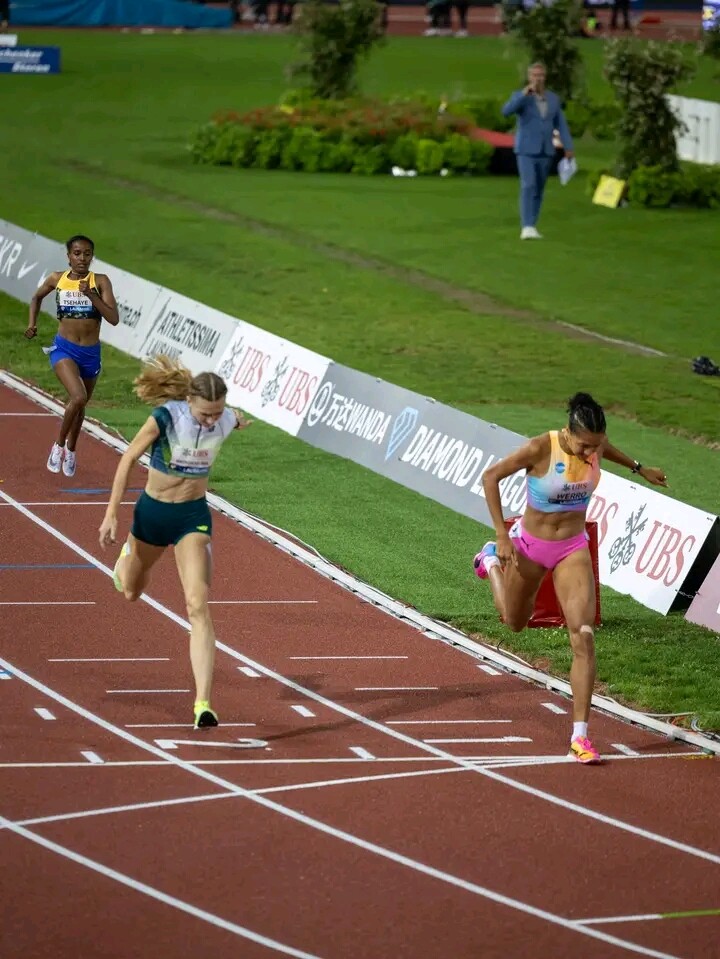
Fresh from becoming European 800m champion, Werro looked to be on course for a comfortable victory as she entered the final straight with a clear advantage. But the race exploded into a dramatic battle over the closing metres when Broeders-Bol unleashed a sensational finishing kick, clocking a remarkable 14.8 seconds for the final 100 metres compared with Werro's 15.4.
The Dutch star closed rapidly and came within touching distance of Werro, but the Swiss favourite had done enough to hold on, crossing the line just eight hundredths of a second ahead. Werro's winning time of 1:55.33 established a new meeting record and further strengthened her remarkable run of form.

Broeders-Bol finished second in a superb 1:55.41, and although she narrowly missed victory, she left Lausanne with a historic achievement of her own. Her performance shattered the Dutch women's 800m national record previously held by Ellen van Langen, marking one of the finest races of her career.
Eighteen-year-old Ethiopian talent Saida Tsehaye completed an outstanding podium, running a huge personal best of 1:56.92 to finish third. Her breakthrough performance underlined the extraordinary depth of the race and announced another exciting young force in women's middle-distance running.
Behind the leading trio, Switzerland's Veronica Vancardo finished fourth in 1:58.68, with compatriot Valentina Rosamilia fifth in 1:58.93. American Addison Wiley placed sixth in 1:59.22, while Kenya's Lilian Odira was seventh in 1:59.25.
For Werro, it was another unforgettable night in front of her home crowd. The European champion combined strength, confidence and composure to withstand one of the most explosive finishing charges of the season, while Broeders-Bol produced a national-record performance that came agonisingly close to victory.
In the end, Lausanne witnessed a race in which history was made at both ends of the finish line: Werro claimed the meeting record and another major victory, Broeders-Bol rewrote the Dutch record books, and teenage sensation Tsehaye announced herself on the world stage with a huge personal best.
The women's 800m is delivering exceptional racing in 2026—and this electrifying showdown in Lausanne was further proof that the event is hotter than ever.
by Erick Cheruiyot for My Best Runs.
Login to leave a comment
