

Running News Daily
Running News Daily is edited by Bob Anderson and team. Send your news items to bob@mybestruns.com Advertising opportunities available.
Index to Daily Posts · Sign Up For Updates · Run The World Feed
Search Results for Ultra
Today's Running News



Harvey Lewis Is the Last-Man Standing and World Record Holder at Big Dog’s Backyard Ultra
The 47-year-old completed 450 miles in 108 hours.Two years after breaking the backyard ultra world record at the Big Dog’s Backyard Ultra record—354.169 miles in 85 hours—Harvey Lewis has done it again. Last weekend he broke the world record with an astounding 450 miles in 108 hours.
The backyard ultra requires runners to run a 4.167-mile loop at the top of every hour until one runner has done at least one more loop than the second-to-last runner. In the process of nabbing the victory and the world record, Lewis, 47, a high school history teacher, raised nearly $30,00 of a $100,000 goal for the Brighton Center. The Kentucky-based non-profit helps families with services ranging from homelessness to homeownership.
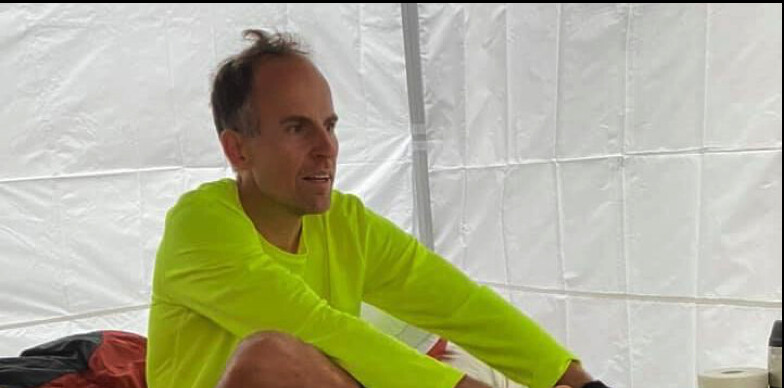
iRunFar reported that on Wednesday, six runners passed 100 hours, calling the feat "remarkable." The runners included Lewis, former joint backyard ultra world record older, Merjin Geerts, and the most recent backyard ultra world record holder, Phil Gore.
Terumichi Morishita and Gore finished the 100th lap but did not start at the next one. Geerts failed to finish in the required hour.
Three runners remained after 101 hours, per iRunFar: Lewis, Ihor Verys, and Bartosz Fudali. And there was just one hour to meet Gore’s 102 hours. Fudali did not start the 104st hour, leaving Lewis and Verys. Although Verys finished about give minutes than Lewis, according to iRunFar, but just a few loops of the course later, Lewis finished ahead. On the next, 108, loop, Verys chose not to start, making Lewis the winner.
“I have to pinch myself,” Lewis told WLTV5 in his hometown of Cincinnati, Ohio, whose show hosts were also incredulous.
One told viewers, “It's a head-scratcher.”
(10/28/2023) ⚡AMPby Runner’s World
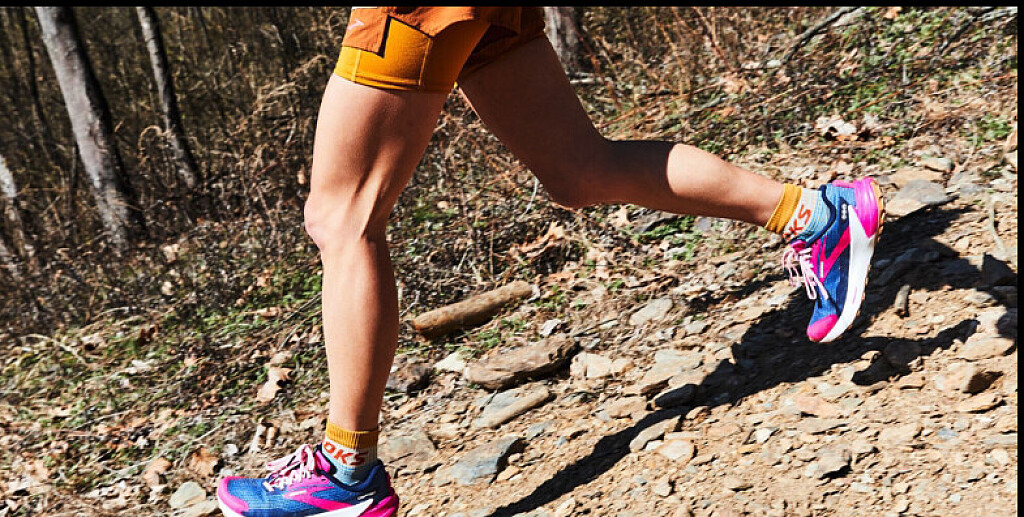
The Best Methods for Treating Your Tight Calves
Surprise: You don’t need to do a ton of stretches.
Most runners are familiar with the sensation of tight calves—that achy, stiff feeling that lingers in the back of your lower leg any time you take a step.
“The feeling of tight calves is pretty common amongst any sort of runner level—anywhere from beginner to ultra distance,” physical therapist Brad Whitley, P.T., D.P.T., cofounder of Bespoke Treatments in San Diego, tells Runner’s World.
That’s because the calves (specifically, the soleus, the lower part of your calf muscle) is the powerhouse of running, Whitley explains. Every time you take a step, the calves work hard to propel you forward. Considering most of us take more than 1,000 steps per mile, it’s no wonder these muscles can feel the effects of all that effort.
When tight calves strike, your natural response may be to bust out a series of calf stretches or reach for the nearest foam roller. But that’s not always the best remedy.
“Oftentimes, a tight calf is barking at you because it is weak and overworked,” physical therapist Anh Bui, P.T., D.P.T., C.S.C.S., certified strength and conditioning specialist and certified run coach in Oakland, California tells Runner’s World. “The solution is not to constantly stretch it, but to strengthen it so we increase the tissue capacity to withstand high loads,” she explains.
Treating tight calves is important, because running through them can cause discomfort and increase the risk of lower leg injury, Bui explains. “Runners who constantly overuse their calf muscles, instead of glutes and hamstrings, to aid in the push-off phase of running will have higher risk of shin splints, achilles tendonitis, and calf strains,” she says.
To help you better treat tight calves, we asked Whitley and Bui for a rundown of what causes this muscle group to feel stiff in the first place and the best ways to alleviate that sensation for good. Here’s what you need to know.
5 Main Causes of Tight Calves
1. Lack of Strength
Perhaps the most common cause of tight calves is a lack of strength in the calf muscles, the gastroc and soleus. “Most runners that experience tight calves haven’t built enough strength in their calves to meet the demands of running,” explains Bui. “The calf muscles play a critical role in shock absorption when we land, and also produce power during the push-off phase or running to propel you forward. When the muscle isn’t strong enough and we overload it with repetitive activity, it’s likely to feel tight.”
2. Overworked Muscles
Some runners have enough strength in their calves, but they don’t allow themselves enough downtime to recover in between workouts or races, which can leave the calves feeling stiff and achy. “Under-recovered muscles can often cause that feeling of tightness,” says Whitely, explaining that in his experience, this is typically the second most common cause of tight-feeling calves.
3. An Anterior Pelvic Tilt
Runners who maintain an anterior pelvic tilt—meaning, their pelvis is tipped forward as they stride, rather than in the ideal neutral position, causing an arch in the low spine—inhibit their glute muscles from firing, which then causes the calves to overcompensate, explains Bui. The end result? You guessed it: Tight calves.
To determine if your calf tightness might be caused by an anterior pelvic tilt, observe your natural posture throughout the day, says Bui. “Do you tend to stand with your low back arched or hyperextended? Do you sit at your desk with your low back arched?” she asks. “Your spine should ideally stay in a neutral position, not too rounded and not too arched.”
4. Limited Range of Motion in the Feet and Ankles
Athletes with limited range of motion in the feet and ankles may have tight-feeling calves as a result. That’s because “muscles attach to tendons, which then attach to bone,” explains Bui. “If a joint is stiff, restricted, and can’t move with full range of motion, the forces get translated to the tendons and muscles, which get worked harder than they should be.”
5. Dehydration, Deficiencies, and Lack of Sleep
Not intaking enough fluids, lacking electrolytes and minerals that help with cramping or tightness (like sodium and magnesium), and even skimping on sleep can all contribute to calf tightness, says Whitley. Central nervous system fatigue, triggered by lack of sleep, can “cause some tightness in the posterior chain,” explains Whitley—which yep, includes the calves.
6 Ways to Treat Tight Calves
1. Incorporate Strength Exercises
Because calf tightness is caused by weak calves, strengthening these muscles can help alleviate stiffness by addressing the underlying issue. As Whitely puts it, unless your calf tightness is caused by overtraining, “doing some strengthening exercises tends to be the lowest hanging fruit.”
Here are calf-strengthening exercises Whitley and Bui recommend. Bonus: The eccentric calf raise does double duty by strengthening and stretching the calves.
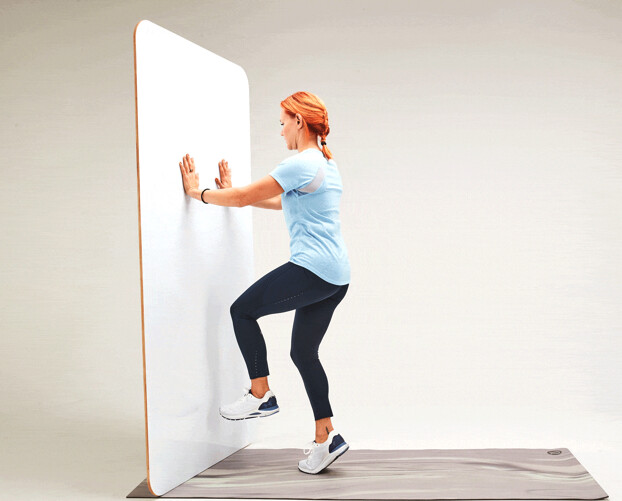
➥ Bent Knee Calf Raise With Forward Lean
Stand tall, facing a wall. Place hands on the wall at shoulder height, elbows straight, fingertips at eye level.
Lean forward from ankles, keeping head, neck, and spine in a neutral position.
From here, lift left leg up and bend that knee 90 degrees.
Holding this position, raise up onto right toes
Lower back down.
Repeat. Do 2 sets of 15 reps, 2-3 times a week.
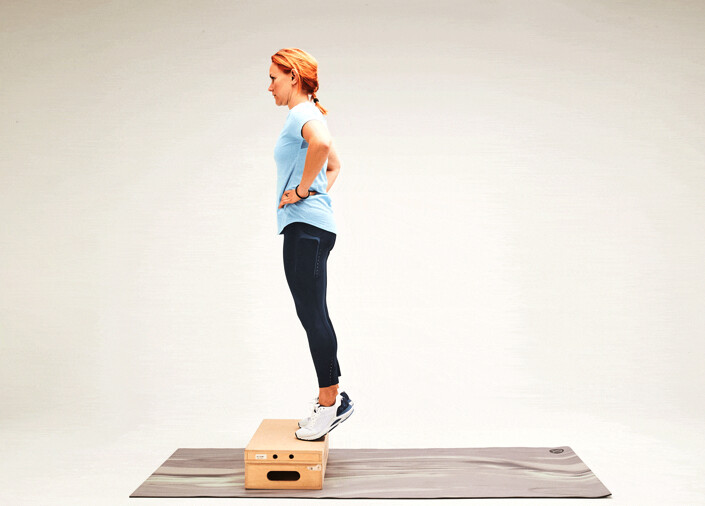
➥ Eccentric Calf Raise
Stand with heels off the edge of a step and come up onto toes of both feet.
Then, lift left foot off step and stand on just right foot. Slowly lower right heel past the edge of the step for a count of five.
Place left foot down to come up onto toes with both feet again
Repeat. Do 2-3 sets of 15 reps, 2-3 times a week.
➥ Single-Leg Calf Raise Progression
This progression involves five different exercises. Start with the first, and aim for 3 to 5 sets of about 15 to 20 reps per side (or as many is needed to really challenge your muscles). If you’re doing the exercises before a run, reduce the volume slightly, says Whitley, who suggests doing just 3 sets per side. Once you can do multiple sets of 15 to 20 reps without cramping or fatiguing, move onto the next exercise in the series.
Single-Leg Calf Raise: Stand on flat ground, lift one leg up, and do a single-leg calf raise on the other leg by pressing up onto toes.
Single-Leg Calf Raise on Decline Board: Perform the exercise described above on top of a decline board where heel drops slightly below toes.
Single-Leg Pogo Jump: Stand on one leg and hop up and down, landing and pushing off on just the toes.
Single-Leg Pogo Line Hop: Pogo hop on one leg forward and backward over a line, and then side to side over a line.
Single-Leg Pogo Hop Continuous Motion: Pogo hop on one leg forward continuously, and pogo hop laterally continuously.
2. Check Your Ankle Dorsiflexion
Because limited range of motion in the ankles can contribute to tight calves, do a quick test to determine if you suffer from stiff ankles. Specifically, test your ankle dorsiflexion with a wall test:
Stand in a staggered stance with left foot positioned a fist width’s distance from the wall. Place both hands on the wall for support.
Drive left knee forward and try to tap the wall, holding for 3 seconds, while keeping heel on the ground.
If you can’t pass this test, perform the test regularly as an exercise to improve ankle dorsiflexion range of motion. Aim for 20 reps, and do this before any run.
3. Practice Pelvic Tilts
Doing pelvic tilts regularly can help you learn what a neutral pelvic position should feel like and thus reduce calf tightness caused by an anterior tilt.
Sit tall in a chair with back slightly arched. This is the starting position.
Pull belly button in towards spine, tilting pelvis backwards and flattening spine.
Hold for a few moments, then return to starting position, arching back.
Aim for 15 reps, 2-3 times a week, or even everyday if you want to practice more often, says Bui.
4. Roll Out Your Calves
Regardless of what’s causing your tight calves, spending a few minutes rolling out these muscles with a foam roller or lacrosse ball can help alleviate the sensation of tightness, says Bui. Aim for two minutes of rolling after every run.
Just keep in mind: Though lengthening your calves with foam rolling and stretches can create create a short-term neurological effect to reduce that tightness, “it doesn't necessarily attack the root cause,” says Whitely, which is why you probably don’t want to rely on this as your only balm for tight calves.
5. Boost Blood Flow to the Calves
If your calves are stiff because they’re under-recovered, focus on increasing blood flow to the area to help loosen feelings of tightness. This could include getting bodywork done by a masseuse or physical therapist; self-massaging with a foam roller, mobility stick, or lacrosse ball; or doing an ice bath or cold plunge.
Be sure to also take an honest look at your training volume to understand why your body is under-recovered, says Whitley. For example, did you just run a marathon and then immediately go back to another 60-mile training week without giving your body a break?
Identifying these overtraining errors can help you avoid similar mistakes in the future. On the topic of adequate recovery, make sure you’re also staying on top of your hydration and getting plenty of sleep.
6. See a Physical Therapist
If your tight calves don’t go away within two weeks, despite your best efforts to solve the issue yourself, consider seeing a physical therapist, says Whitely. Chances are, they can help diagnose and fix your tight calves more efficiently than you can on your own.
(10/22/2023) ⚡AMPby Runner’s World

The Physiology of Training Plateaus
Scientists want to know why we don’t keep getting bigger and stronger forever
The law of diminishing returns, in the sports and fitness context, is not particularly controversial. When you’re a neophyte, small amounts of training produce big gains. When you’re a hardened vet, huge training loads are needed to squeeze out tiny gains. Eventually, and inevitably, you hit a ceiling. We’re so used to this pattern that we seldom stop to ask a very basic question: Why?
A major new review paper from Jeremy Loenneke’s research group at the University of Mississippi, published in Sports Medicine, takes on this question in the context of strength training. What, if anything, prevents us from continuing to get bigger and stronger indefinitely, assuming we’re willing to keep upping the training dose? Despite how obvious the question seems, the answers remain elusive. There are several theories, though, which offer some insight about how to push your own plateau a little higher.
The most obvious explanation for training plateaus is that you let the workouts get too easy. A few years ago, I wrote about a surprisingly effective ultra-minimalist once-a-week strength training routine. People who followed it made substantial gains in the first year or so of training, but only marginal gains thereafter. That seemed like a perfect illustration of failing to progress workout volume and difficulty. But the authors of that paper pushed back against this assumption. Data from powerlifters, they pointed out, showed similar plateau effects on a similar timeframe, even though the powerlifters were presumably following much more rigorous and sophisticated training programs.
Loenneke and his colleagues suggest four different mechanisms that might constrain maximal muscle growth. The first is that training eventually makes your muscle cells less responsive to the signals that usually trigger muscle growth. New muscle proteins are synthesized in response to various triggers including food, hormones, and the mechanical stress that strength training imposes on muscle fibers. There are various lines of evidence suggesting that well-trained people produce less new muscle protein in response to a given trigger than untrained people. No one’s entirely sure why, but the end result is that it gets progressively harder to ramp up the production of new muscle as you get fitter.
The other half of this equation is how quickly the muscle proteins you already have are being broken down. The general thinking is that this is less of a factor than how quickly you’re synthesizing new muscle protein, but one clear finding is that you break down protein at an elevated rate when you’re in caloric deficit. This doesn’t seem like a fundamental barrier, but it does suggest that getting enough calories in might be an increasing challenge as you get bigger and bigger.
The third possibility is that there’s a fundamental limit on how big muscle cells are allowed to get relative to their nuclei. The “myonuclear domain hypothesis” posits that each nucleus can only synthesize enough muscle protein to support a given cell volume. Unlike most cells in the body, muscle cells can have more than one nucleus, which enables them to get bigger with training. But the creation of new muscle cell nuclei is a complicated and poorly understood process, so it may eventually put a cap on how big a given muscle cell can get. There are also some other homeostatic mechanisms that may act to keep muscle cell size within a tight range: myostatin, for example, is a growth factor that hinders muscle growth, and whose resting levels get higher in strength-trained people.
The fourth and final mechanism is anabolic resistance, which is the gradual diminution of response to muscle-building triggers with age. This one sounds a lot like the first mechanism: less muscle-growth bang for your stimulus buck. But the difference is that it’s caused by the mere passage of time, rather than in response to prolonged strength training. There are various possible mechanisms: epigenetic changes, lower levels of sex hormones like testosterone and estrogen, insulin resistance, and so on. The idea here is that if you could magically stay 21 forever, you’d be able to keep getting bigger and stronger semi-indefinitely, but the passage of time means that the gradual accumulation of training gains is always competing with the inexorable creep of anabolic resistance.
So which is it? You’ve probably figured out by now that no one is really sure, and the answer is likely a mix of these and other factors. More research is needed. Still, it’s an interesting question, because understanding what general factors limit muscle growth might shed some light on why those limits differ so much among individuals. And it does suggest a practical takeaway: to raise your ultimate ceiling, hit the weights when you’re young, before anabolic resistance kicks in. Even if you slack off in middle age, there’s evidence that the extra cell nuclei you form when packing on muscle will stick around if you detrain and the muscle cells shrink. These dormant nuclei will make it easier to add muscle again later, a form of muscle memory that might help you defy the tyranny of age. And it’s not an all-or-nothing proposition: anabolic resistance is a long, slow process, so those of us no longer in the first flush of youth are still better able to put on muscle today than we will be tomorrow.
In practice, I’m pretty sure that most training plateaus, whether in muscle size, marathon time, or other fitness goals, don’t actually reflect some immutable biological law. We slip into comfortable routines, repeating the same workouts even though our bodies have already adapted to them. We settle for incremental goals instead of dreaming of quantum leaps. We get hurt or stressed out at work or distracted by other priorities. But there’s also some biology at work in the law of diminishing returns. Understanding that biology might eventually help us break through plateaus—or at least accept them gracefully.
(10/21/2023) ⚡AMPby Outside Online
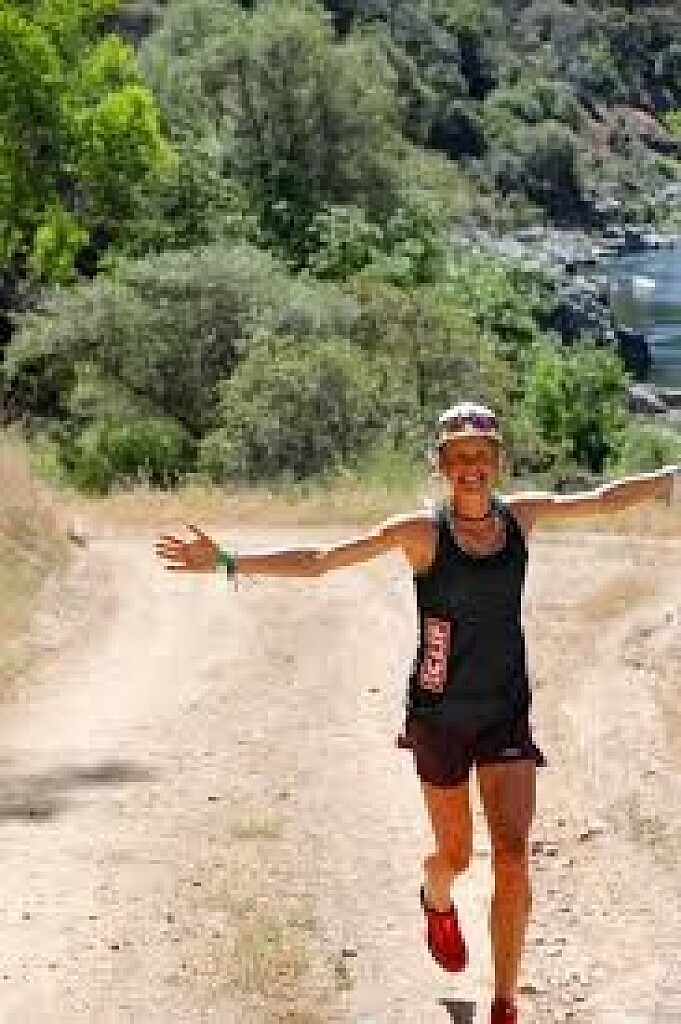
Australian ultrarunner makes history by racing UTMB and Ironman World champs
Ultrarunner Lucy Bartholomew made running and triathlon history on Sunday, becoming only the second woman ever to finish the 171-kilometre Ultra-Trail du Mont-Blanc (UTMB) as well as the Ironman World Championships in the same year.
Bartholomew ran remarkably well at both events, taking a tenth-place finish at UTMB in 27:39:22, and completing what was only her second Ironman in 10:43:41, with a 3:31 marathon time.
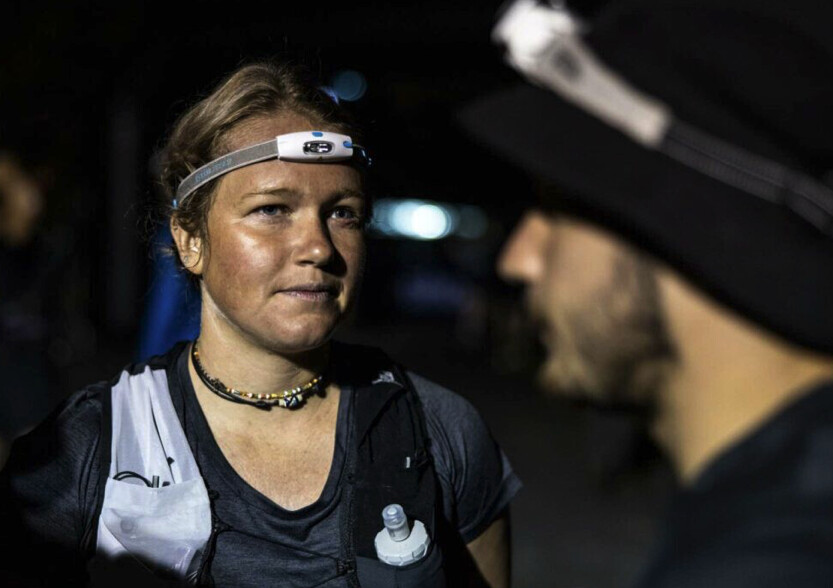
The double–nearly 400 kilometres of challenging racing–has only been conquered by one woman before Bartholomew: Ireland’s Diana Hogan-Murphy, in 2014. Bartholomew is also the fastest person of any gender to have completed both events in the same year.Bartholomew shot to fame in the ultrarunning world in 2018, when she was the third female at the Western States 100. The runner shared on social media that she lost some of the joy in racing in the years following her WSER podium, and after her 2022 race ended in a DNF, she wasn’t sure if she’d race 100 miles again.
“You show up (almost) every day to run so that you can run even more on the race day, finish and not be able to run, only to want to run, and then run to aid in the recovering of the running and to prepare for more running,” Bartholomew explained. “To take myself out of this cycle I decided to tick a bucket list idea to do an IRONMAN triathlon. It was a ‘one day, someday’ objective that I pulled forward to help pull me out of feeling stuck.”Bartholomew’s first Ironman, in Western Australia in December 2022, qualified her for the Kona World Championship event in Hawaii.
While the runner had only planned to complete one Ironman, she felt she couldn’t miss the opportunity to race in Hawaii. “Not being one who steps down from a challenge, it seemed right to go one more,” she said.
“I’ve swum, biked and run my way to fantastic recovery from UTMB and moderate triathlon fitness for Kona,” Bartholomew said pre-race. “It was a fun, fine balance to play with these two big events so close to each other.”
(10/21/2023) ⚡AMP
by Running Magazine
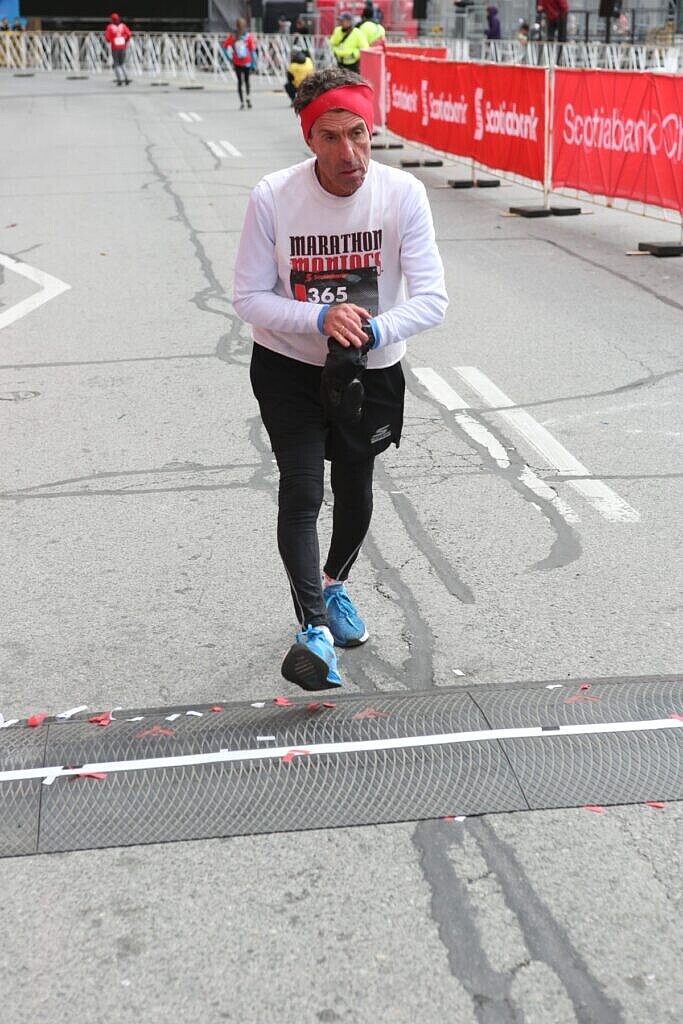
Rick Rayman, 77, completes his 400th marathon at TCS Toronto Waterfront Marathon
On Sunday at the TCS Toronto Waterfront Marathon, Rick Rayman, a professor of dentistry at the University of Toronto, marked his 400th marathon finish. Rayman is 77, and not only has he now completed 400 marathons, but he has participated in every single Toronto Waterfront Marathon in the race’s 34-year history.
As if that weren’t enough, Rayman has also run every single day for the past 44 years and 10 months–a daily run streak that’s topped by only one individual in Canada, according to runeveryday.com. (That’s Simon Laporte of Notre-Dame des Prairies, Que., whose streak is three years longer. Rayman is #20 on the international run streak list.) “I don’t know if the 19 runners ahead of me have run as many marathons as I have, but who cares?” he says, adding, “The older and slower I get, the more notoriety I get.”
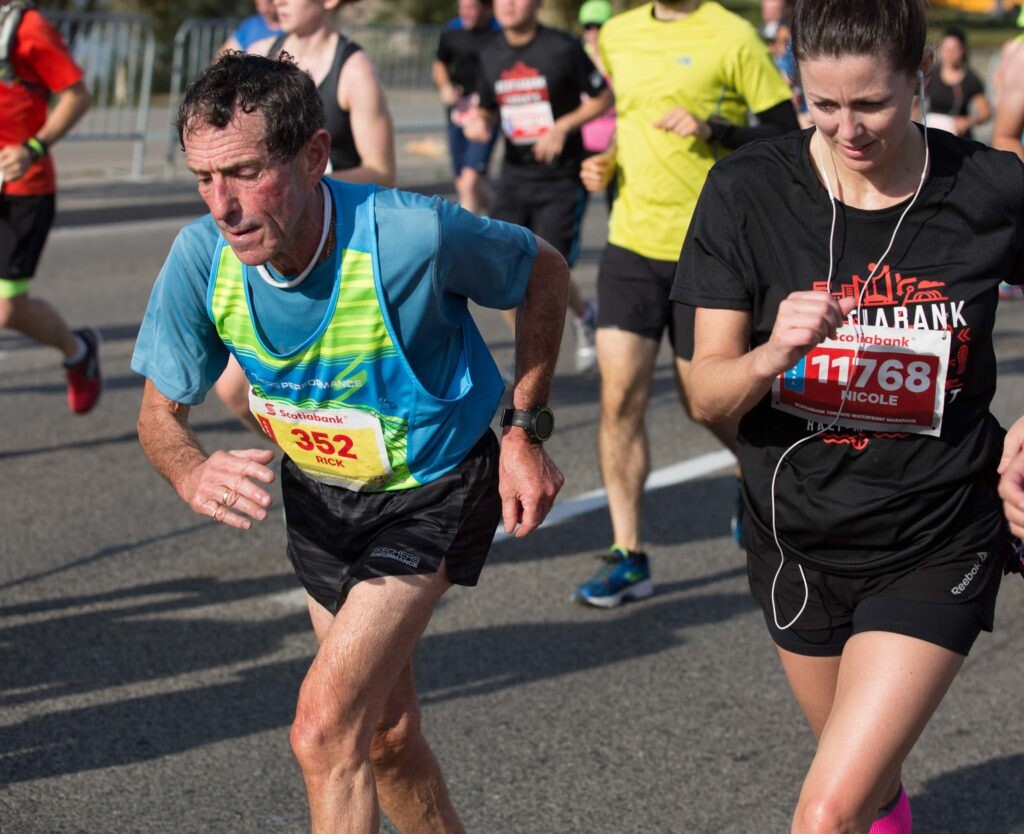
On Dec. 10, he’ll celebrate 45 years of running without missing a single day. He runs for at least half an hour, though some days he runs for an hour or two. And he takes care to add that he never runs on a treadmill–though he has participated in 10 indoor marathons in the past, including six at York University, three at the University of Toronto’s Hart House and one the SkyDome (now the Rogers Center).
“It’s such a great marathon!” Rayman says of the Toronto race, even though he struggled with back pain in the second half, most of which he walked. “I can run 12 miles (or 20 km) without any pain,” he says. When asked if he’s ever considered switching to the half-marathon, he replies, “Never.”
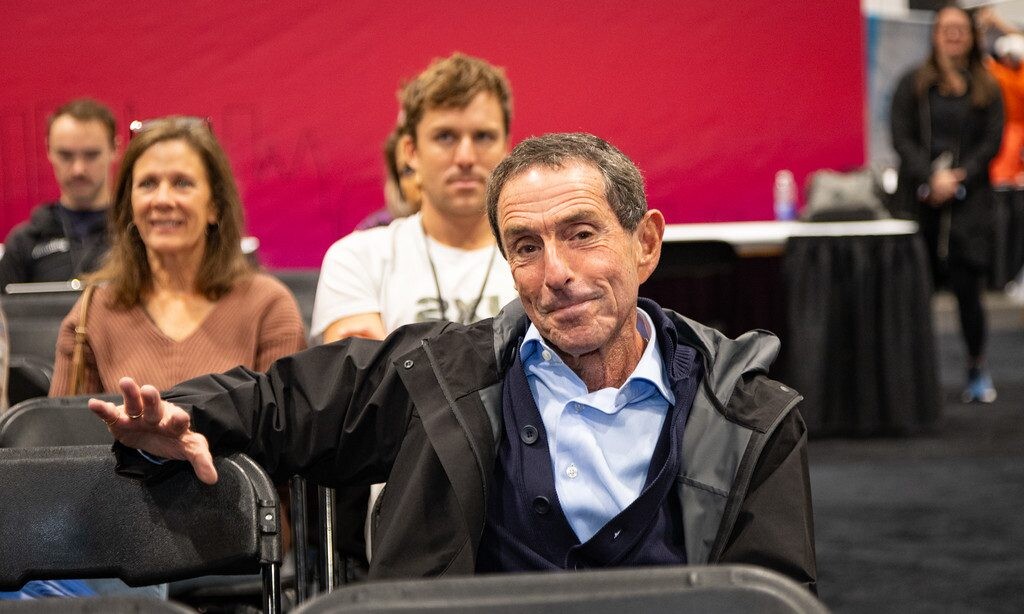
“It’s a good question,” he concedes, “because my half marathon time is considerably better than my full. But I enjoy the challenge of the marathon.” Rayman was the only individual in the M75-79 age category.
Over the years, Rayman has seen a few changes at the Toronto Waterfront Marathon. The technology for tracking runners on the course, in particular, has evolved considerably since the early days, and he enjoys the recent changes to the course, which allow midpackers and back-of-the-packers like himself to see the elites running past in the other direction on Wellington Street and Eastern Ave. He credits race director Alan Brookes and his staff at Canada Running Series with putting on a world-class event.
Rayman admits he’s slowing down. “I’m not going to do another marathon this year,” he says, adding that next year, he has plans to run the Fort Lauderdale Marathon in February, Ontario’s Georgina Marathon in the spring, the Buffalo Marathon in May and the marathon at the Niagara Ultra in June. “I did 11 [marathons] this year; I might cut that in half next year. Maybe six or seven.”
Regardless, you can catch him running every day, rain or shine, from his home in North York. “I’ll keep doing it until I can’t,” he says.
(10/17/2023) ⚡AMP
by Anne Francis

TCS Toronto Waterfront Marathon
The Scotiabank Toronto Waterfront Marathon, Half-Marathon & 5k Run / Walk is organized by Canada Running Series Inc., organizers of the Canada Running Series, "A selection of Canada's best runs!" Canada Running Series annually organizes eight events in Montreal, Toronto and Vancouver that vary in distance from the 5k to the marathon. The Scotiabank Toronto Waterfront Marathon and Half-Marathon are...
more...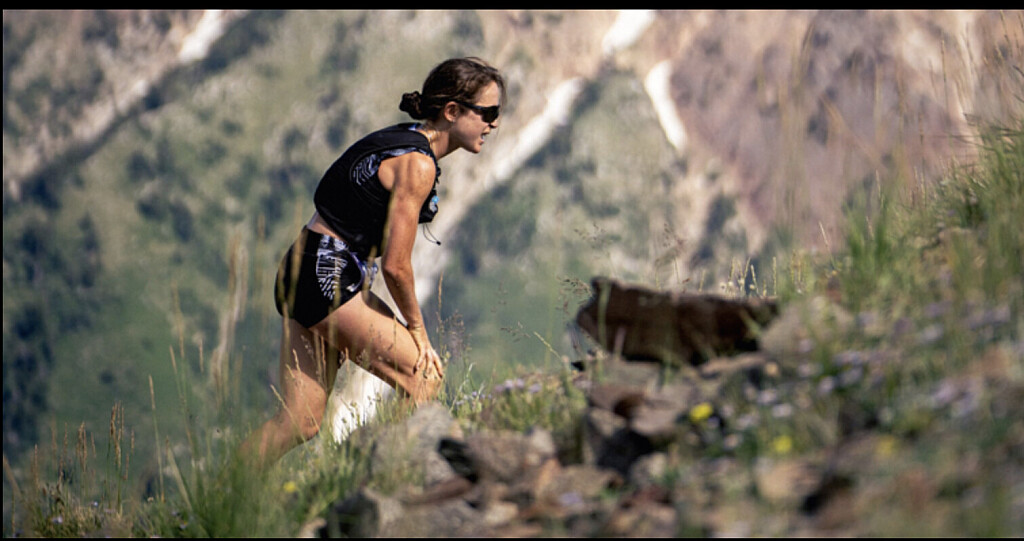
Molly Seidel Stunned the World (and Herself) with Olympic Bronze in Tokyo. Then Life Went Sideways.
She stunned the world (and herself) with Olympic bronze in Tokyo. Then life went sideways. How America’s unexpected marathon phenom is getting her body—and brain—back on track.
On a clear December night in 2019, Molly Seidel was at a rooftop holiday party in Boston, wearing a black velvet dress, doing what a lot of 25-year-olds do: passing a joint between friends, wondering what she was doing with her life.
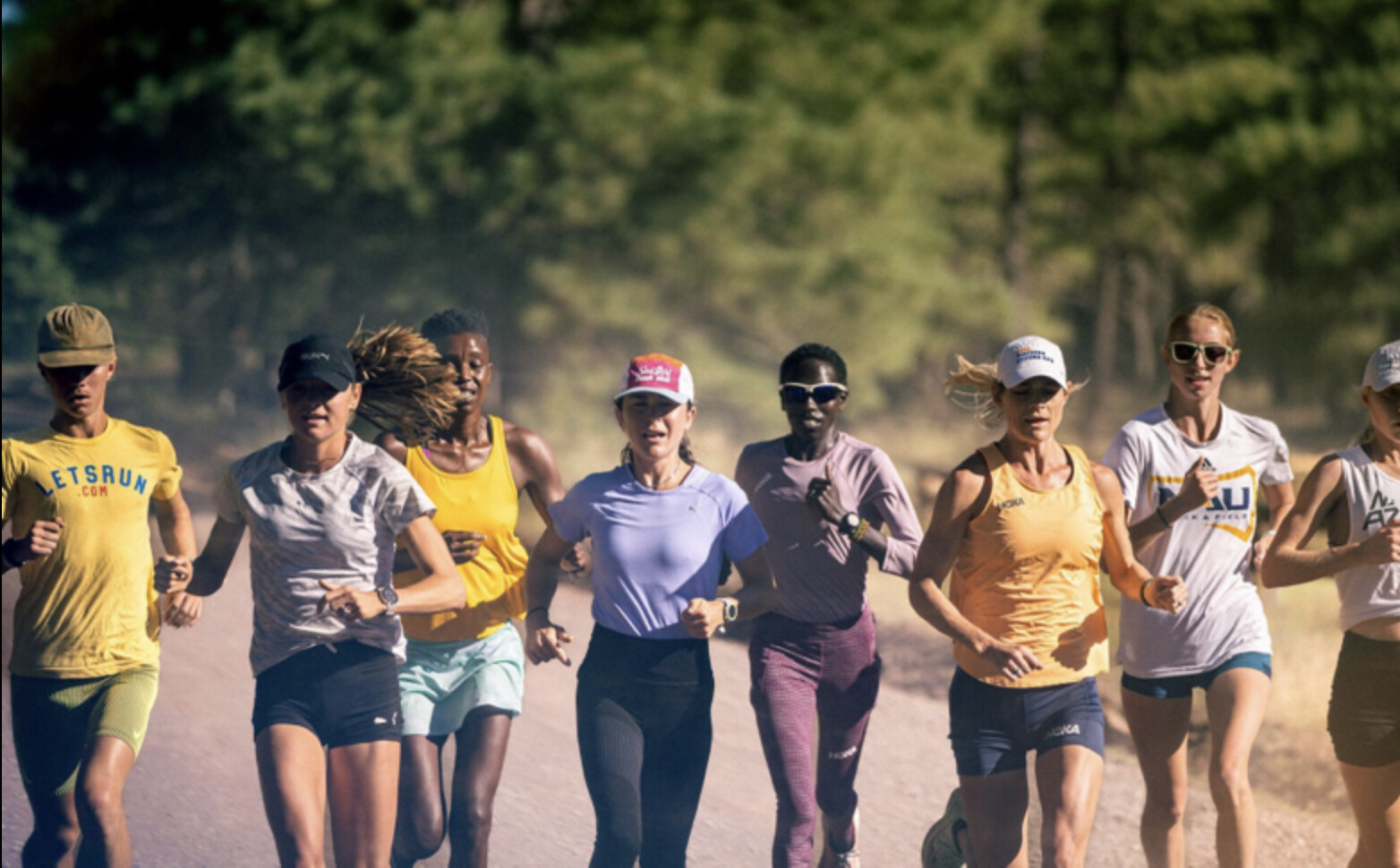
“You should run the Olympic Trials,” her sister, Izzy, said, as smoke swirled in the chilly air atop The Trackhouse, a retail shop and community hub on Newbury Street operated by the running brand Tracksmith. “That would be hilarious if you did that as your first marathon.”
Molly, an elite 10K racer who’d spent much of 2019 injured, looked out at the city lights, and laughed. Why the hell not? She’d just qualified for the trials, winning the San Antonio Half with a time of 1:10:27. (“The shock of the century,” as she’d put it.) True, 13.1 miles wasn’t 26.2—but running a marathon was something to do. If only because she never had before.
A four-time NCAA track and cross-country champion at The University of Notre Dame in Indiana, Molly had moved to Boston in 2017, where she’d worked three jobs to supplement her fourth: running for Saucony’s Freedom Track Club. The $34,000 a year that Saucony paid her (pre-tax, sans medical) didn’t go far in one of America’s most expensive cities. Chasing kids around as a babysitter, driving around as an Instacart shopper, and standing around eight hours a day as a barista—when you’re running 20 miles a day—wasn’t ideal. But whatever, she had compression socks. And she was downing free coffee and paying rent, flying to Flagstaff, Arizona, every so often for altitude camps, and having a good time. Doing what she loved. The only thing she’s ever wanted to do since she was a freckly fifth-grader in small-town Wisconsin clocking a six-minute mile in gym class.
“I was hustling, and I loved it. It was such a fun, cool time of my life,” she says, summarizing her 20s. Staring into Molly’s steely brown eyes, listening to her speak with such clarity and conviction about her struggles since, it’s easy to forget: She is still only 29.
After Molly had hip surgery on her birthday in July 2018, her doctors gave her a 50/50 chance of running professionally again. By summer 2019, she’d parted ways with FTC, which left her sobbing on the banks of the Charles River, getting eaten alive by mosquitoes and uncertainty. Her biggest achievement lately had been being named #2 Top Instacart Shopper (in Flagstaff; Boston was big-time).
The day after that rooftop party, Molly asked her friend and former FTC teammate Jon Green, who she’d newly anointed as her coach: “Think I should run the marathon trials?” Sure, he shrugged. Nothing to lose. Maybe it’d help her train for the 10K, her best shot—they both thought—at making a U.S. Olympic team.
“I’m going to get my ass kicked six ways to Sunday!” she told the host of the podcast Running On Om six weeks before the trials in Atlanta.
Instead, on February 29, 2020, she kicked some herself. Pushing past 448 of the fastest, most-experienced women marathoners in the country, coming in second with a 2:27:31, earning more in prize money ($60,000) than she had in two years of racing—and a spot on the U.S. trio for the 2020 Tokyo Olympics, along with Kenyan-born superstars Aliphine Tuliamuk and Sally Kipyego. “I don’t know what’s happening right now!” Molly kept saying into TV cameras, wrapped in an American flag, as stunned as a lottery winner.
Saucony who? Puma came calling. Along with something Molly hadn’t anticipated: the spotlight. An onslaught of social media followers. And two weeks later, a global pandemic and lockdown—and all the anxiety and isolation that came with it. She was drowning, and she hadn’t even landed in Tokyo yet.
The 2020 Olympics, as we all know, were postponed to 2021. An emotional burden but a physical boon for Molly, in that it allowed her to get in a second marathon. In London, she finished two minutes faster than her debut. When the Olympics finally rolled around, she was ready.
Before the race, Molly says, “I was thinking: ‘Once I cross the starting line, I get to call myself an Olympian and that’s a win for the day.’”
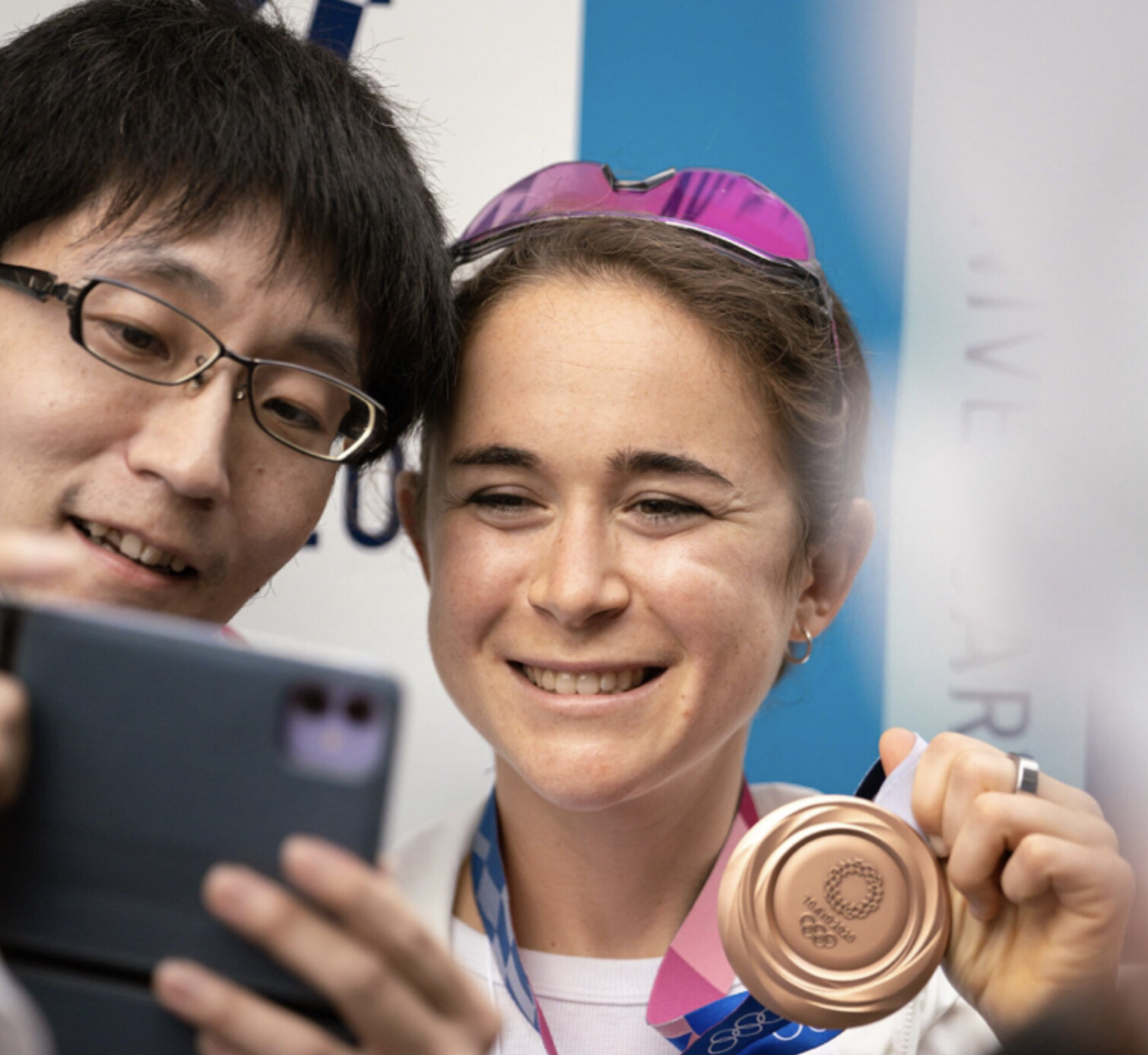
But then she crossed the finish line—with a finger-kiss to the sky and a guttural Yesss!—in third place with a 2:27:46, just 26 seconds behind first (Kenya’s Peres Jepchirchir). And realized: She gets to call herself an Olympic medalist forever. Only the third American woman to ever earn one in the marathon.
Lots of kids have fleeting hopes of making it to the Olympics. I remember thinking I could be Mary Lou Retton. Maybe FloJo, with shorter fingernails. Then I decided I’d rather be Madonna or president of the United States and promptly forgot about it. But Molly held tight to her Olympic aspirations. She still has a poster she made in 2004, with stickers and a snapshot of her smiley 10-year-old self, to prove it. “I wish I will make it into the Olympics and win a gold medal,” she wrote, and signed it: Molly Seidel, the “y” looping back to underline her name. In case there was any doubt as to who, specifically, would be winning the medal.
Molly grew up in Nashotah, Wisconsin, and is the eldest of three. Her sister and brother, younger by not quite two years, are twins. Izzy is a running influencer and corporate content creator for companies like Peloton; and Fritz favors Formula 1 racing and weightlifting and works for the family’s leather-tanning business. The family was active, sporty. Dad, Fritz Sr., was a ski racer in college; Mom, Anne, a cheerleader. You can tell. Watching clips of Molly’s mom and dad watching the Olympic race from their backyard patio, jumping up and down, tears streaming, is the kind of life-affirming moment you wish you could bottle. “I’m in shock. I’m in disbelief,” Molly says into the mic, beaming. “I just wanted to come out today and I don’t know…stick my nose where it didn’t belong and see what I could come away with. And I guess that’s a medal.” When the interviewer holds up her family on FaceTime, Molly breaks down. “We did it,” she says into the screen between sobs and smiles. “Please drink a beer for me.
Molly hasn’t always been unabashedly herself, even when everyone thought she was. A compartmentalizer to the core, she spent most of her life hiding a huge part of it: anorexia, bulimia, anxiety, obsessive-compulsive disorder, debilitating depression.
It started around age 11, when she learned to disguise OCD tendencies, like compulsively knocking on wood, silently reciting prayers “to avoid God getting mad at me,” she says. “It was a whole thing.” She says her parents were aware of the behaviors, but saw them more as odd little habits. “They had no reason to suspect anything. I was very high-functioning,” she says. “They didn’t realize that it was literally taking over my life.”
She wasn’t officially diagnosed with OCD until her freshman year of college, when she saw a therapist for the first time. At Notre Dame, disordered eating took hold, quietly yet visibly, as it does for up to 62 percent of female college athletes, according to the National Eating Disorders Association. As recently as the Tokyo Olympics, she was making herself throw up in the airport bathroom, mere days before taking the podium. Molly hesitates to share that detail; she fears a girl might read this and interpret it as behavior to model. “Having been in that place as a younger athlete, I know I would have,” she says. But she also understands: Most people just don’t get how unrelenting eating disorders can be.
In February 2022, she finally received a diagnosis of the root cause for all of it: ADHD. About being diagnosed, she says, “It made me feel really good, like [I don’t have] a million different disorders. I have a disorder that manifests itself in a lot of different symptoms.”
She waited to try Adderall until after the Boston Marathon in April, only to drop out at mile 16 due to a hip impingement. Initially, the meds made her feel fantastic. Focused. Free. Until she realized Adderall hurt more than it helped. She couldn’t sleep, couldn’t eat, lost too much weight. Within weeks, she devolved. “The eating disorder came roaring back,” she says, referring to it, as she often does, as its own entity, something that exists outside of herself. That ruthlessly takes control over her very need for control. “I almost think of it as an alter ego,” she explains. “Adderall was just bubblegum in the dam,” as she puts it. She ditched the drug, and her life—professionally, physically—unraveled.
In July 2022, heading into the World Championships, she bombed the mental health screening, answering the questions with brutal honesty. She’d been texting Keira D’Amato weeks prior. “Yo girl, things are pretty bad right now. Get ready…” Sobbing on the sidewalk in Eugene, Oregon, she texted D’Amato again. And the USATF made it official: D’Amato would take her spot on the team. Then Molly did what she’d been “putting off and putting off”— checked herself into eating disorder treatment for the second time since 2016, an outpatient program in Salt Lake City, where her new boyfriend was living at the time.
Somehow (see: expert compartmentalizer) mid-meltdown, in February 2022, she had met an amateur ultrarunner named Matt, on Hinge. A quiet, lanky photographer, he didn’t totally get what she did. “I didn’t understand the gravity of it,” he tells me. “I was like, Oh she’s a pro runner, that’s cool. I didn’t realize she was, like, the pro runner!”
Going back to treatment “was pretty terrible,” she says. At least she could stay with Matt. Hardly a honeymoon phase, but the new relationship held promise. “I laid it all out there,” says Molly. “And he was still here for it, for all the messiness. It was really meaningful.” And a mental shift. “He doesn’t see me as just Molly the Runner.”
Almost a year later, on a freezing April evening in Flagstaff, Molly is racing around Whole Foods, palming a head of cabbage, grabbing a thing of hummus, hunting for deals even though she doesn’t need to anymore.
“It’s all about speed, efficiency, and quality,” she says, explaining the secret to her earlier Instacart success. She checks the expiration date on a container of goat cheese and beelines for the butcher counter, scans it faster than an Epson DS3000, though not without calculation, and requests two tomato-and-mozzarella-stuffed chicken breasts. Then she darts over to the beverage aisle in her marshmallow-y Puma slip-ons that Matt custom-painted with orange poppies. She grabs a case of La Croix (tangerine), then zips to the checkout. We’re in and out in under 15 minutes and 50 bucks, nothing bruised or broken.
Other than her body. Let’s just say: If Molly were an avocado or a carton of eggs, she probably wouldn’t pass her own sniff test. The week we meet, she is just coming off a month of no running. Not a single mile. She’s used to running twice a day, 130 miles a week. No wonder she’s spraying her kitchen counter with Mrs. Meyer’s and scrubbing the stovetop within minutes of welcoming me into her new home.
The place, which she shares with Matt and his Australian border collie, Rye, has a post-college flophouse feel: a deep L-shaped couch draped in Pendleton blankets, a bar cluttered with bottles of discount wine, a floor lamp leaning like the Tower of Pisa next to a chew toy in the shape of a ranch dressing bottle. Scattered about, though, are reminders that an elite runner sleeps here. Or at least tries to. (“Pro runner by day, mild insomniac by night” reads the bio on her rarely used account on what used to be Twitter.) There’s a stick of Chafe Safe on the coffee table. Shalane Flanagan’s cookbooks on the counter. And framed in glass, propped on the office floor: Molly’s Olympic kit—blue racing briefs with the Nike Swoosh, a USA singlet, her once-sweat-drenched American flag, folded in a triangle. “I’m not sure where to hang it,” she says. “It seems a little ostentatious to have it in the living room.”
With long brown curls and a round, freckly face, Molly has an aw-shucks look so innocent that it’s hard, at first, to perceive her struggles. Flat-out ask her, though—How are you even functioning?—and she’ll tell you: “I’m an absolute wreck. There’s no worse feeling than being a pro runner who can’t run. You just feel fucking useless.” Tidying a stack of newspapers, she adds, “Don’t worry, I’ve had therapy today.”
She’s watched every show. (Save Ted Lasso, “too sickly sweet.”) Listened to every podcast. (Armchair Expert is a favorite.) She’s got nothing else to do but PT and go easy on the ElliptiGo in the garage, onto which she’s rigged a wooden bookstand, currently clipped with A History of God: The 4,000 Year Quest of Judaism, Christianity and Islam. “I don’t read running books,” she says. “I need something different.”
Like most runners—even the most amateur among us—running, moving, is what keeps her sane. “What about swimming? Can you at least swim?” I ask, projecting my own desperation if I were in her size 8.5 shoes. “I fucking hate swimming,” says Molly. Walking? “Oh, yeah, I can go on walks. Another. Long. Walk.”
The only thing she has on her schedule this week is pumping up a local middle school track team before their big meet. The invitation boosted her spirits. “Should I just memorize Miracle on Ice?” she says, laughing. “No, I know, I’ll do Independence Day.”
Injuries are nothing new for Molly. Par for the course for any professional athlete. But especially for women, like her, who lack bone density—and have since high school, when, according to a study in the Orthopedic Journal of Sports Medicine, nearly half of female runners experience period loss. Osteoporosis and its precursor, osteopenia, are rampant in female runners, leading to ongoing issues that threaten not just their college and professional running careers, but their lives.
Still, Molly admits, laughing: She’s especially accident-prone. I ask her to list every scratch she’s ever had, which takes her 10 minutes, and goes all the way back to babyhood, when she banged her head against the bathtub spout. There was a cracked spine from a sledding incident in 8th grade, a broken collarbone from a ski race in high school, shredded knee cartilage in college when a driver hit her while she was riding a bike. “Ribs are constantly breaking,” she says. In 2021, two snapped, and refused to heal in time for the New York City Marathon. No biggie. She ran through the pain with a 2:24:42, besting Deena Kastor’s 2008 time by more than a minute and setting the American course record.
Molly’s latest injury? Glute tear. “Literally a gigantic pain in the ass,” she posted on Instagram in March. Inside, Molly was devastated. Pulling out of the Nagoya Marathon—the night before her 6:45 a.m. flight to Japan, no less—was not in the plan. The plan, according to Coach Green, had been simple. It always is. If the two of them even have one. “Just to have fun and be consistent.” And get a marathon or two in before the Olympic Trials in February 2024.
She’d been finally—finally—fit on all fronts; ready to race, ready to return. She needed Nagoya. And then, nothing. “It feels like I’m back at the bottom of the well,” says Molly, driving home from Whole Foods in her Toyota 4Runner. “This last year-and-a-half has been so difficult. It’s just been a lot of doubt. How do I approach this, as someone who has now won a medal? Like, man, am I even relevant in this sport anymore?” She pops a piece of gum in her mouth. I wait for her to offer me some, because that’s what you do with gum, but she doesn’t. She’s so in her head. “It’s hard when you’re in the thick of it, you know, to figure out: Why the fuck do I keep doing this? When it just breaks my heart over and over and over again?”
We pull into her driveway. “I was prepared for the low period after Tokyo,” she says. “But this has been much longer and lower than I expected.”
The curse of making it to the Olympics, let alone coming back with a medal: expectations. Molly’s own were high. “I think I thought, after the Olympics, if I win a medal, then I will be fixed, it will fix everything.” Instead, in a way, it made everything worse.
That’s the problem that has plagued Molly for most of her running career: Her triumphs and troubles intermingle, like thunder and lightning. Which, by the way, she has been struck by. (A minor backyard-grill, summer-thunderstorm incident. She was fine.)
The next morning in Flagstaff, Molly’s feeling like she can run a mile, maybe two. It’s snowing, though, and she doesn’t want to risk the slippery track, so we meet at Campbell Mesa Trails. She loops a band around the back of her truck to stretch and sends me off into the trees to run alone while she does a couple of laps on the street.
Molly leaves for an acupuncture appointment, and we reunite later at Single Speed Coffee (“the best coffee in Flagstaff,” promises the ex-barista who drinks up to three cups a day). We curl up on a couch like it’s her living room, and she talks as freely—and as loudly—as if it was. Does she realize everyone can hear her? She doesn’t care. I guess that’s what happens when you’ve grown so comfortable sharing—in therapy, on podcasts, in a three-part video series on ADHD for WebMD—you just…share. Loud and proud.
Mental illness is so insidious, says Molly. “It’s not always this Sylvia Plath stick-my-head-in-a-fucking-oven thing, where you’re sad all the time,” she says. “High-functioning depressed people live normal successful lives. I can be having the happiest moment, and three days later I’m in a total downward spiral.” It’s something you never recover from, she says, but you learn to manage.
“I’m this incredibly flawed person who struggles so much. I think: How could I have won this thing when I’m so flawed? I look at all the people around me, all these accomplished people who have their shit together, and I’m like, ‘one of these things is not like the other,’” she says, taking a sip of her flat white. “I was literally in the Olympic Village thinking: Everybody is probably looking at me wondering: Why the hell is she here?”
They weren’t. They don’t. She knows that.
And yet her mind races as fast as she does. It takes up So. Much. Space. When she’s running, though, the noise disappears. She’s not Olympic Molly or Eating Disorder Molly, she’s not even, really, Runner Molly. “When I’m running,” she says, “I’m the most authentic version of myself.”
Talking helps, too. Molly first shared her mental health history a few years ago, “before she was famous,” as she puts it. After the Olympics, though, she kept talking and hasn’t stopped. The Tokyo Games were a turning point, she says. Suddenly the most revered athletes in the world were opening up about their mental health. Molly credits Simone Biles’s bravery for her own. If Biles, and Michael Phelps and Naomi Osaka, could come clean... then maybe a nerdy, niche-y, unlikely medaling marathoner could, too.
“Those guys got a lot more shit for it than I did,” says Molly. “I got off easy. I’m not a household name,” she laughs. She knows she can be candid and off the cuff—and chat freely in a not-empty café—in a way Biles never could. “I’m a nobody!” she laughs.
Still, a nobody with 232,000 Instagram followers whom she has touched in very IRL ways—becoming an unintentional poster woman for normalizing mental health challenges among athletes. “You are such an incredible inspiration,” @1percentpeterson posts, one comment of a zillion similar. “It’s ok to not be ok!” says another. Along with all the online love is, of course, online hate. Molly rattles off a few lowlights: “She’s an attention-seeking whore,” “Her bones are so brittle she’ll never race again,” “She’s running so badly and posting a lot she should really focus on her running more.” Molly finds it curious. “I’m like, ‘If you hate me, you don’t need to follow me, sir.’”
It’s Molly’s nobody-ness—what Outside writer Martin Fritz Huber called her “runner-next-door” persona, and I’ll just call “genuine personality”—that has made her somebody in running’s otherwise reserved circles.
Somebody who (gasp!) high-fives her sister in the middle of a major race, as she did at mile 18 of the 2021 New York City Marathon. “They shat on me in the broadcast for it,” she says. “They were like, ‘She’s not taking this seriously.’” (Except, uh, then she set the American course record, so…)
Somebody who, obviously, swears like a sailor and dances awkwardly on Instagram, who dresses up like a turkey, and viral-tweets about getting mansplained on an airplane. (“He starts telling me how I need to train high mileage & pulls up an analysis he’d made of a pro runner’s training on his phone. The pro runner was me. It was my training. Didn’t have the heart to tell him.”)
Somebody who makes every middle-aged mom-runner I know swoon like a Swiftie and say: “OMG! YOU HUNG OUT WITH MOLLY SEIDEL!!?” Middle-aged dad-runners, too. “I saw her once in Golden Gate Park!” my friend Dan fanboyed when he heard. “I waved!” Did she wave back? “She smiled,” he says, “while casually laying down 5:25s.”
And somebody who was as outraged as I was that I bought a $16 tube of French toothpaste from my hip Flagstaff motel. (It was 10 p.m.! It was all they had!) “For that price it better contain top-shelf cocaine,” she texted. Lest LetsRun commenters take that tidbit out of context: It’s a joke. It’s, in part, what makes Molly America’s most relatable pro runner: She’s not afraid to make jokes. (While we’re at it… Don’t knock her for smoking a little legal weed, either. That’s so 2009. Per the World Anti-Doping Agency: Cannabis is prohibited during competition, not at a Christmas party two months before it. Per Molly: “People would be shocked to know how many pro runners smoke weed.”)
I can’t believe I never asked to see it. Molly’s medal. A real, live Olympic medal. Maybe because it was tucked into a credenza along with Matt’s menorah and her maneki-neko cat figurines from Japan. But I think it was because hanging out with Molly felt so…normal, I almost forgot she’d won one.
People think elite distance runners have to be one-dimensional, she says. That they have to be sculpted, single-minded, running-only robots. “Because that’s what the sport has been,” she says.
Molly falls for it, too, she says. She scrolls the feeds, sees her fellow pros living seemingly perfect lives. She wants everyone to know: She’s not. So much so that she requested we not print the photos originally commissioned for this story, which were taken when she was at the lowest of lows. (“It’s been...refreshing...to be pretty open and real with Rachel [about] the challenges of the last year,” she wrote in an email to Runner’s World editors. “But the photos [were taken at] a time when I was really struggling and actively trying to hide how bad my eating disorder had become.”)
Molly finds the NYC Marathon high-five thing comical but indicative of a more serious issue in elite running: It takes itself too seriously. It’s too…elitist. Too stilted. “Running a marathon is a pretty freaking cool experience!” If you’re not having fun, she asks rhetorically, what’s the point? Still, she admits, she isn’t always having fun. Though you wouldn’t know it from her Instagram. “Oh, I’m very good at making it seem like I am,” she says.
She used to enjoy social media when it was just her friends. Before she gained 50,000 followers in a single day after the trials, and some 70,000 on Strava. Before the pandemic, before the Olympics. Keeping up with content became a toxic chore. “You feel like you’re just feeding this beast and it’s never going to stop,” she says. She’s taken to deleting the app off her phone, reloading it only to fulfill contractual agreements and post for her sponsors, then deleting it again.
As much as she hates having to post, she enjoys plugging products the only way that feels natural: through parody. As does Izzy, her influencer sister, who, like Molly, prefers to skewer rather than shill (à la their idea behind their joint Insta account: @sadgirltrackclub). “The classic influencer tropes make me want to throw up,” she says (perverse pun as a recovering bulimic not intended). “New Gear Drop!’ or ‘This is my Outfit of the Day!’ Cringe. “Hot Girl Instagram is not how I identify,” she says.
Nor is TikTok. “Sponsors tell me all the time: You should TikTok! I’m like, ‘I am not doing TikTok.’ I know how my brain works. They’ll say, ‘We’ll pay you less if you don’t’—and I’m, like, I don’t care.”
And to those sponsors who ghosted her after she returned to eating disorder treatment, good riddance. “Michelob dropped me like a bad habit,” she says. “Whatever. You have watery-ass beer anyway.”
To those who have stood by her, though, she’s utterly devoted. Pissed she couldn’t wear the Puma panther head to toe in Tokyo, Molly took off her Puma Deviate Elites and tied them over her shoulder, obscuring the Nike logo on her Olympic singlet for all the world to see. Or not see. “Nike isn’t paying my fucking bills.”
The love is mutual, says Erin Longin, a general manager at Puma. After decades backing legends like Usain Bolt, Puma was relaunching road running and wanted Molly as their guinea pig. “She’s a serious athlete and competitor, but she also has fun with it,” says Longin. “Running should be fun. Molly embodies that.” At their first meeting, in January 2020, Molly made them laugh and nerded out over their new shoes. “We all left there, fingers crossed she’d sign with us,” says Longin.
Come February, they all flipped out. Longin was watching the trials, not expecting much. And then: “We were all messaging, “OMG!!” Then Molly killed in London. Medaled in Tokyo. “What she did for us in that first year…” says Longin. “We couldn’t have planned it!”
Then came the second year, and the third, and throughout it all—injuries, eating disorder treatment, missed races, missed opportunities—Puma hasn’t flinched. “It’s easy for a company to do the right thing when everything is going great,” Molly posted in April, heartbroken from her couch instead of Heartbreak Hill. “But it’s when the sh*t hits the fan and they’re still right there with you….” She received 35,000 hearts—and a call from Longin: “You make me feel so proud.”
Does it matter to Puma if Molly never places—never races—again? “Nope,” Longin says.
My last afternoon in Flagstaff, it’s cloudy skies, still freezing. I find Molly on the high school track wearing neoprene gloves, black puffy coat, another pair of Pumas. Her breath is white, her cheeks red. Her legs churning in even, elegant strides. Upright, alone, at peace, backed by snow-dusted peaks. Running itself is what matters, not racing, she tells me. “I honestly don’t give a shit about winning,” she says. All she wants—really wants, she says—is to be healthy enough to run until she’s old and gray.
Molly’s favorite runner is one who didn’t get to grow old. Who made his mark decades before she was born: Steve Prefontaine. “Pre raced in such a genuine way. He made people feel something,” she says. “The sports performances you truly remember,” she adds, “are the ones where you see the struggle, the work, the realness.”
Sounds familiar. “I hate conversations like, ‘Who’s the GOAT?’” Molly continues. “Who fucking cares? Who’s got the story that’s going to get people excited? That’s going to make some kid want to go out and do it?”
I know one of those kids: My best friend’s daughter, Quinn, a rising track phenom in Oregon, who has dealt with anxiety and OCD tendencies. She has a picture of Molly Seidel, and her times, taped to her bedroom wall. This past May, Quinn joined Nike’s Bowerman Club. She was named Oregon Female Athlete of the Year Under 12 by USATF. She wants to run for Notre Dame.
“Quinn loves running more than anything,” her mom tells me, texting photos of her elated 11-year-old atop the podium. “But I don’t know…” She’s unsure about setting her daughter on this path. How could she not, though? It’s all Quinn wants to do. Maybe what Quinn, too, feels born to do.
It’ll be okay, I tell her, I hope. Quinn has something Molly never had: She has a Molly.
Molly and I catch up via phone in June. A team of doctors in Germany has overhauled her biomechanics. She’s been running 110 miles a week, feeling healthy, hopeful. Happy. A month later, severe anemia (and accompanying iron infusions) interrupts her summer racing schedule. She cancels the couple of 10Ks she had planned and entertains herself by popping into the UTMB Speedgoat Mountain Race: a 28K trail run through Utah’s Little Cottonwood Canyon—coming in second with a 3:49:58. Molly’s focus is on the Chicago Marathon, October 8th; her first major race in almost two years.
Does it matter how she does? Does it matter if she slays the Olympic Trials in February? If she makes it to Paris 2024? If she fulfills her childhood dream and brings home gold?
Nah. Not if—like Matt, like Puma, like, finally, even Molly herself—you see Molly the Runner for who she really is: Molly the Mere Mortal. She’s the imperfect one who puts it perfectly: What matters isn’t her time or place, how she performs on the pavement. Or social media posts. What matters—as a professional athlete, as a person—is how she makes people feel: human.
She’d been finally—finally—fit on all fronts; ready to race, ready to return. She needed Nagoya. And then, nothing. “It feels like I’m back at the bottom of the well,” says Molly, driving home from Whole Foods in her Toyota 4Runner. “This last year-and-a-half has been so difficult. It’s just been a lot of doubt. How do I approach this, as someone who has now won a medal? Like, man, am I even relevant in this sport anymore?” She pops a piece of gum in her mouth. I wait for her to offer me some, because that’s what you do with gum, but she doesn’t. She’s so in her head. “It’s hard when you’re in the thick of it, you know, to figure out: Why the fuck do I keep doing this? When it just breaks my heart over and over and over again?”
(10/08/2023) ⚡AMPby Runner’s World
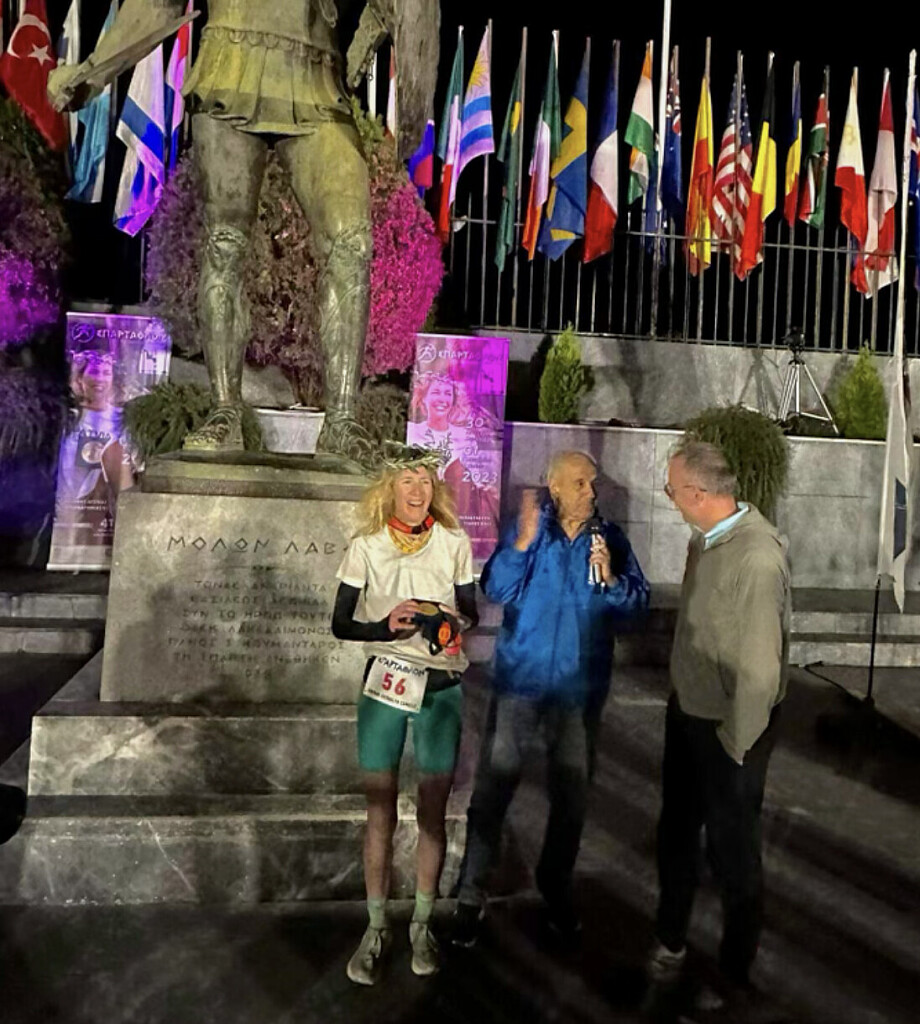
Armed with Smarts and Science, Camille Herron Sets an Astounding Record in Greece
The American ultrarunner credits patience and reduced carbohydrate intake to helping her smash the women’s course record in the Spartathlon, the iconic 153-mile race from Athens to Sparta
Camille Herron continues up to her usual record-breaking ways, smashing the women’s record at the 40th edition of the daunting Spartathlon ultra-distance running event in Greece on October 2.
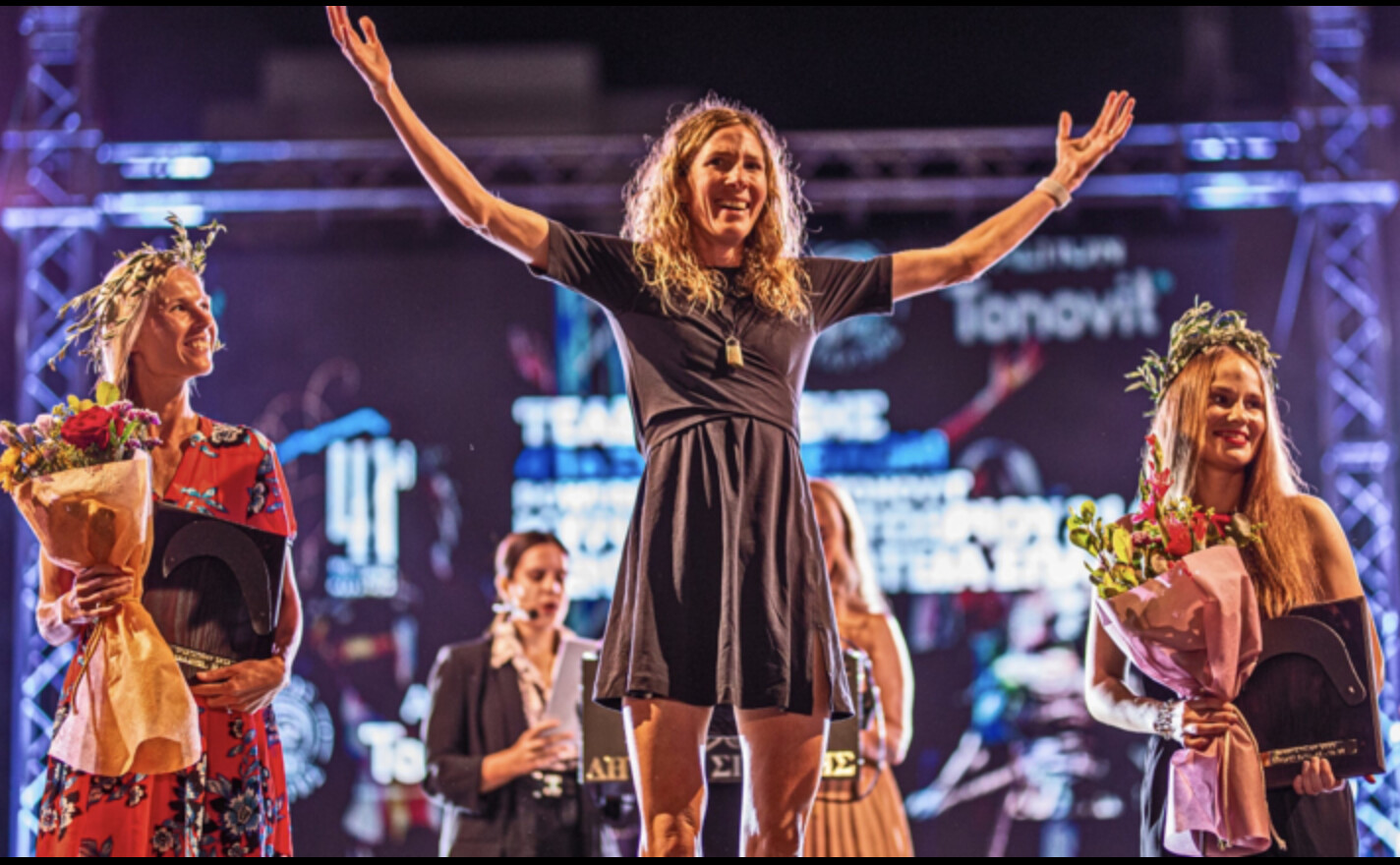
Herron, a 41-year-old Lululemon-sponsored runner from Warr Acres, Oklahoma, covered the 153-mile course in 22 hours, 35 minutes and 30 seconds. She shaved more than two hours off the previous record and became the first woman to finish the course in under 24 hours in the 40-year history of the race.
Spartathlon was created in 1983 to send runners on a journey following the ancient route of Pheidippides, a courier who ran the distance between Athens and Sparta to seek military aid during a battle against the Persians in 490 B.C.. The modern-day race route includes flat roads and mountainous trails with more than 10,000 feet of elevation gain.
Incredibly, Herron averaged 8:55 mile pace, with her fastest mile clocking in at 6:28 (for the seventh mile).
“Wow, it was so much fun because we were running in the footsteps of Phidippides,” Herron says. “The whole time I was running, I was just trying to imagine what he did running on those ancient roads and paths. It’s a little different nowadays having cars and like all these things we have to dodge along the way. But it was incredible. I just loved the whole day because I love both road running and trail running and the course had big sections of each. To have a race that combined all of that, the process in my mind was all about a journey to a destination.”
Greek runner Fotis Zisimopoulos was the overall winner in 19:55:09, a new course record that broke the longstanding mark of 20:25:00 by ultrarunning legend Yiannis Kouros in 1984. Herron finished third overall behind Zisimopoulos and Norway’s Simen Holvik (22:35:31) and shattered the women’s record of 24:48:18 set by Poland’s Patrycja Bereznowska in 2018.
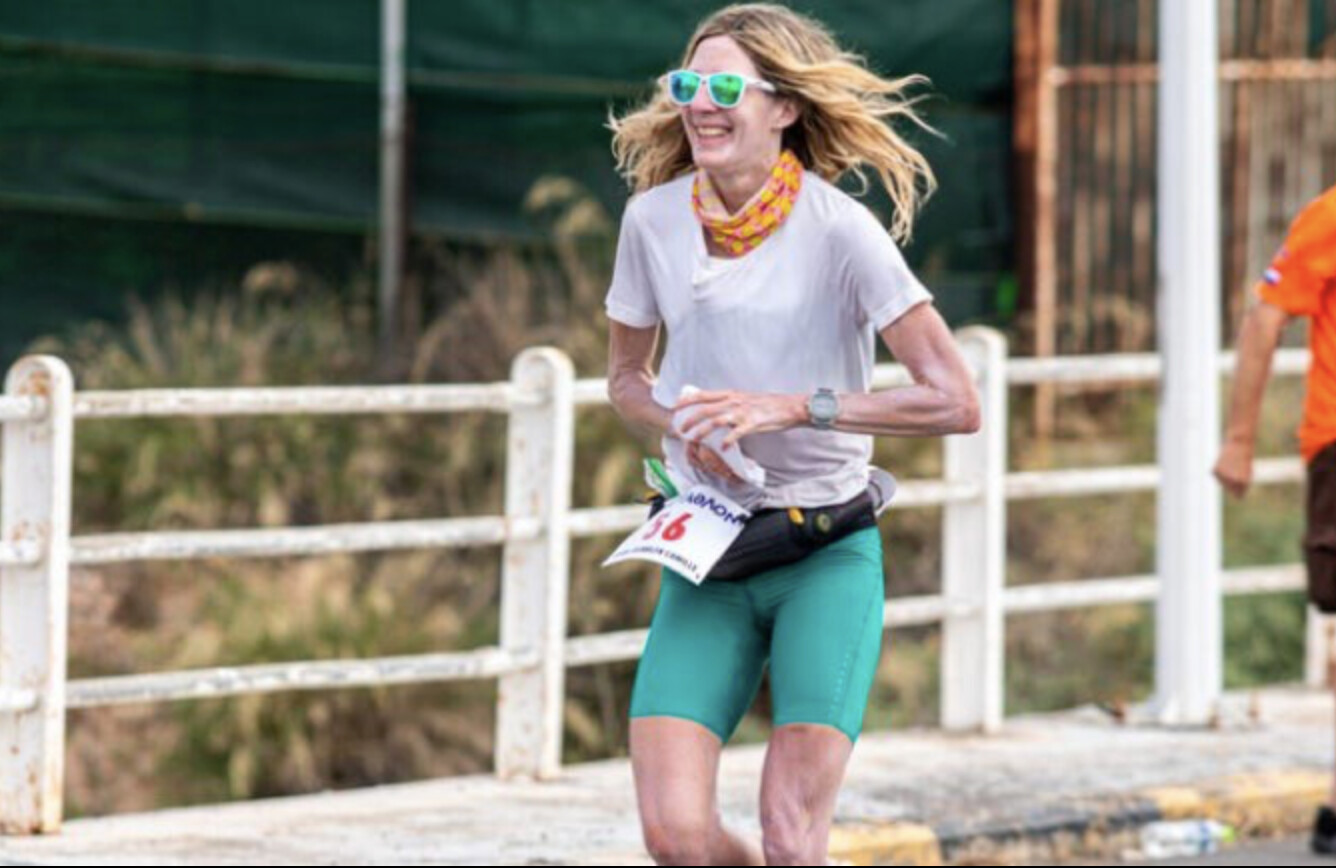
The Spartathlon course starts with a fast urban road section between Athens and Corinth—where dodging vehicles, traffic and pedestrians is necessary—before transitioning onto trails and meandering through vineyards and orchards before eventually going into the Geraneia Mountains. The final section of the course consists of downhill and flat road sections that lead to Sparta.
As she’s known to do, Herron started fast. But she was surprised to have five other women running seven-minute mile pace alongside her. She made a judgment call to slow down a bit, knowing she had a lot of running ahead of her and needed to save her legs.
“In my mind I’m thinking, ‘This is way too fast,’” Herron says. “I was worried we weren’t going to have our legs under us to hit the mountain section. So I ended up just backing off and let all of these women go. They were just hammering it. I was like, ‘Whoa, this is crazy!’ But at the same time, I was inspired by the other women in the race that they had the courage and the strength to go for it. I was like, ‘Hey, you go girl.’”
Finland’s Noora Honkala and Satu Lipiäinen were at the front, followed by Hungary’s Szvetlana Zétényi, Switzerland’s Stine Rex and Germany’s Sarah Mangler. They all wound up building 10- to 30-minute gaps on Herron. But when they entered the trail section with significant climbing, Herron tapped into her uphill abilities and started closing the deficits to the other women. Once back on the roads, she snapped back into her quintessential quick stride turnover and quickly made up the 12-minute gap to pass Lipiäinen, the second-place woman.
Out front, Honkala ran fast and pushed the pace the whole day. When she entered the mountain phase of the race, she had a 26-minute gap on Herron. But Herron’s relatively strong trail and downhill running abilities paid huge dividends, and with 20 more miles to go, she caught and passed Honkala. Herron surged the rest of the way, ultimately building a gap of more than 50 minutes on Honkala (23:23:03). Lipiäinen finished third (23:48:34), followed by Zétényi (27:57:49) and Rex (28:18:35) in what was the most competitive women’s race in the history of the event.
Herron continues to improve with age, especially in longer events. In February, she set multiple masters world records and U.S. records at the Raven 24-Hour race in South Carolina, running 150.43K (93.47 miles) in 12 hours, and then crossing the 100-mile mark in 12:52:50.
Then in March, Herron set a new women’s world record after logging 435.336K (or 270.505 miles) in 48 hours at the Sri Chinmoy 48-Hour Festival in Canberra, Australia. That mark not only broke the existing women’s 48-hour world record of 411.458K (255.668 miles) set by U.K. runner Joasia Zakrzewski, but it also surpassed the all-time American record of 421.939K (262.181 miles) previously set by Olivier LeBlond in 2017. In surpassing LeBlond’s mark, Herron became the first female runner ever to hold an overall American record at any distance.
Herron credits her recent testing with Trent Stellingwerff, the Director of Innovation and Research at the Canadian Sports Institute, for helping discover that Herron has a high VO2 max and produces a naturally high fat oxidation rate when she’s running long distances. Herron underwent that testing as part of Lululemon’s FURTHER initiative, which is backing scientific studies for women as a means to better understand women’s sports performance.
Working with her dietician, Herron used that knowledge to cut back on her carbohydrate intake during Spartathlon to less than 50 grams per hour, down from the 60 to 75 grams per hour that she had been consuming in events earlier this year and in prior years.
Her main source of fueling? Aside from taking a gel every hour, she consumed sections of honey and salt sandwiches that her husband and coach, Conor Holt, served her at aid stations.
“Those changes were life-changing,” Herron says. “I mean, you hear about athletes in marathons and shorter races that are trying to increase carbohydrate intake. But we learned my body is naturally wired for fat oxidation, so I ended up backing off my carbohydrate intake and it made me feel better. It just paid off later in the race. I wasn’t having the gut problems I’ve had in the past, so I was able to just run like a ‘Steady Freddie’ and perform better. It just shows the longer I go, the stronger I am, and I’m able to really show what my natural physiology is capable of beyond a hundred miles.”
Colt said Herron’s training also played a key role in her success. She put in significant mileage during stints in Oregon, Colorado, and Oklahoma during the summer and then arrived in Greece a week before the race so she could run the course over several days.
“We did our homework and we did the training and she was ready,” Colt says. “She’s got a few more good, good ones in her, I think.”
Herron dedicated her performance to German ultrarunner and friend Nele Alder-Baerens, who is suffering from Amyotrophic lateral sclerosis (ALS) and can no longer compete. She said she’s inspired by women like Alder-Baerens, who holds the world record for running 85.492K (53.1 miles) in six hours.
She’s grateful for the opportunities Lululemon is providing and is excited to see what continued sports science testing with the Canadian Sports Institute will reveal, especially as it relates to adapting to training and racing through perimenopause.
“It’s important for the general visibility of women and showing what happens when a brand really gets behind women,” Herron says. “Most sports science is based on men, but we’re studying women. I mean, we’re making it happen. The support from Lululemon has just been incredible. And it just goes to show what happens when women are supported in sports. It feels like there’s no ceiling.”
(10/07/2023) ⚡AMPby Outside Online
He Qualified for Team USA. Then Came the Bill.
Even as trail and ultrarunning explode, the spoils of professionalization aren’t spread equally across the sport. Athletes on this year’s U.S. 24-hour team are looking to change that
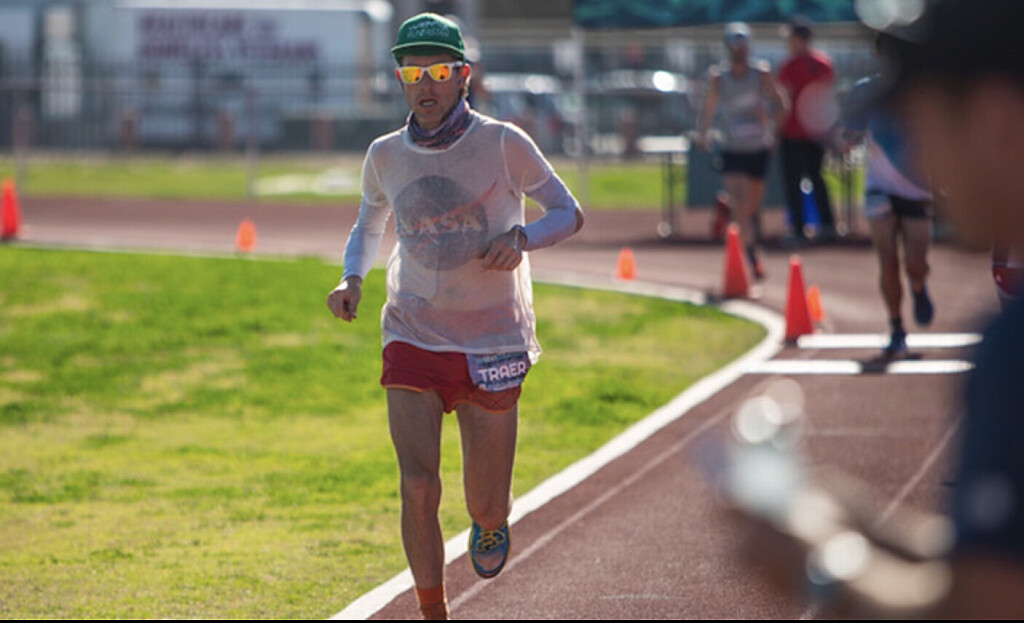
Scott Traer qualified for his first U.S. national team more than a decade ago in 2012. He was new to the sport and naive about what it took to compete at the international level—even after being selected as one of the country’s best athletes in the 24-hour discipline, a niche tributary of trail and ultrarunning where athletes complete as many laps around a track as possible within 24 hours.
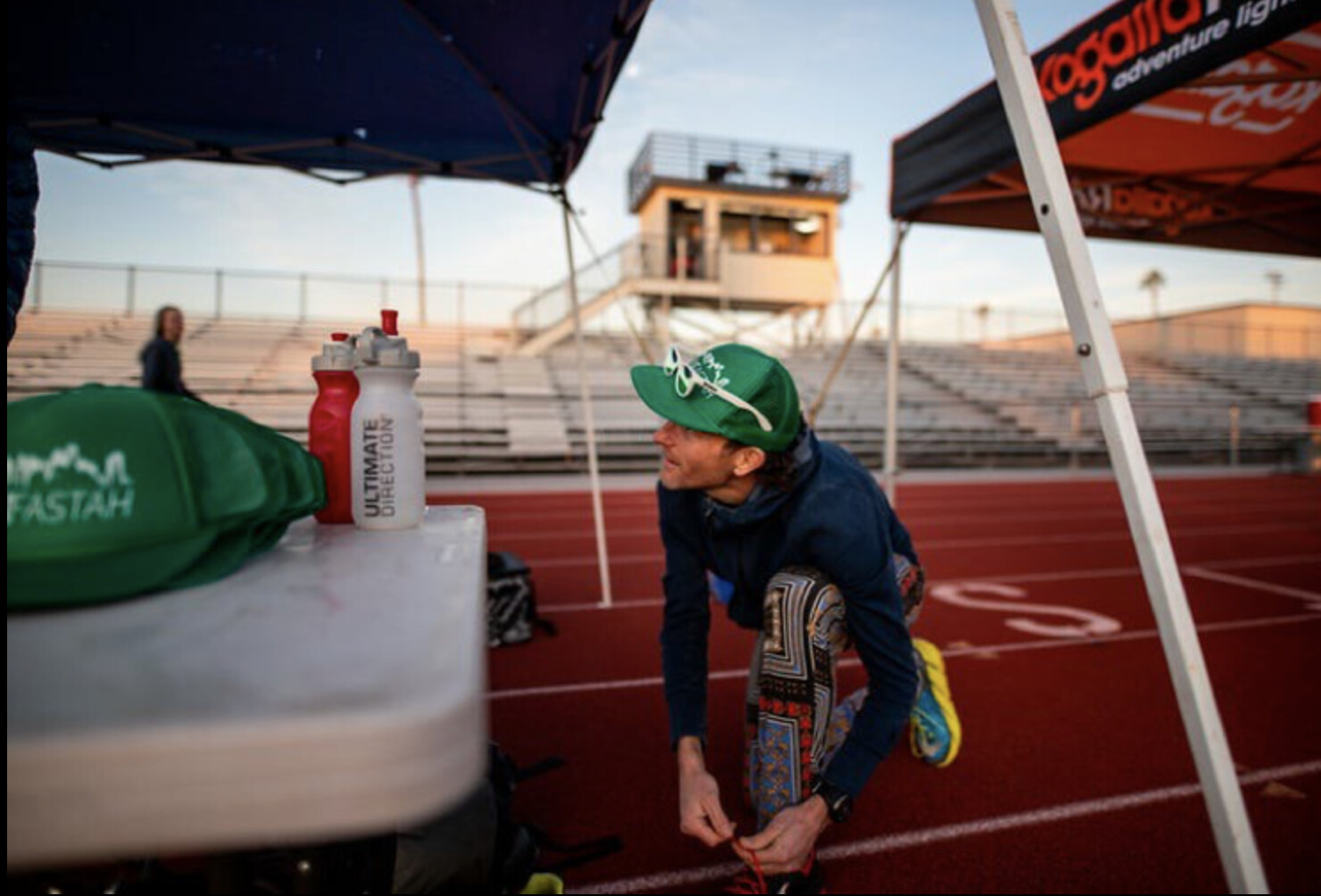
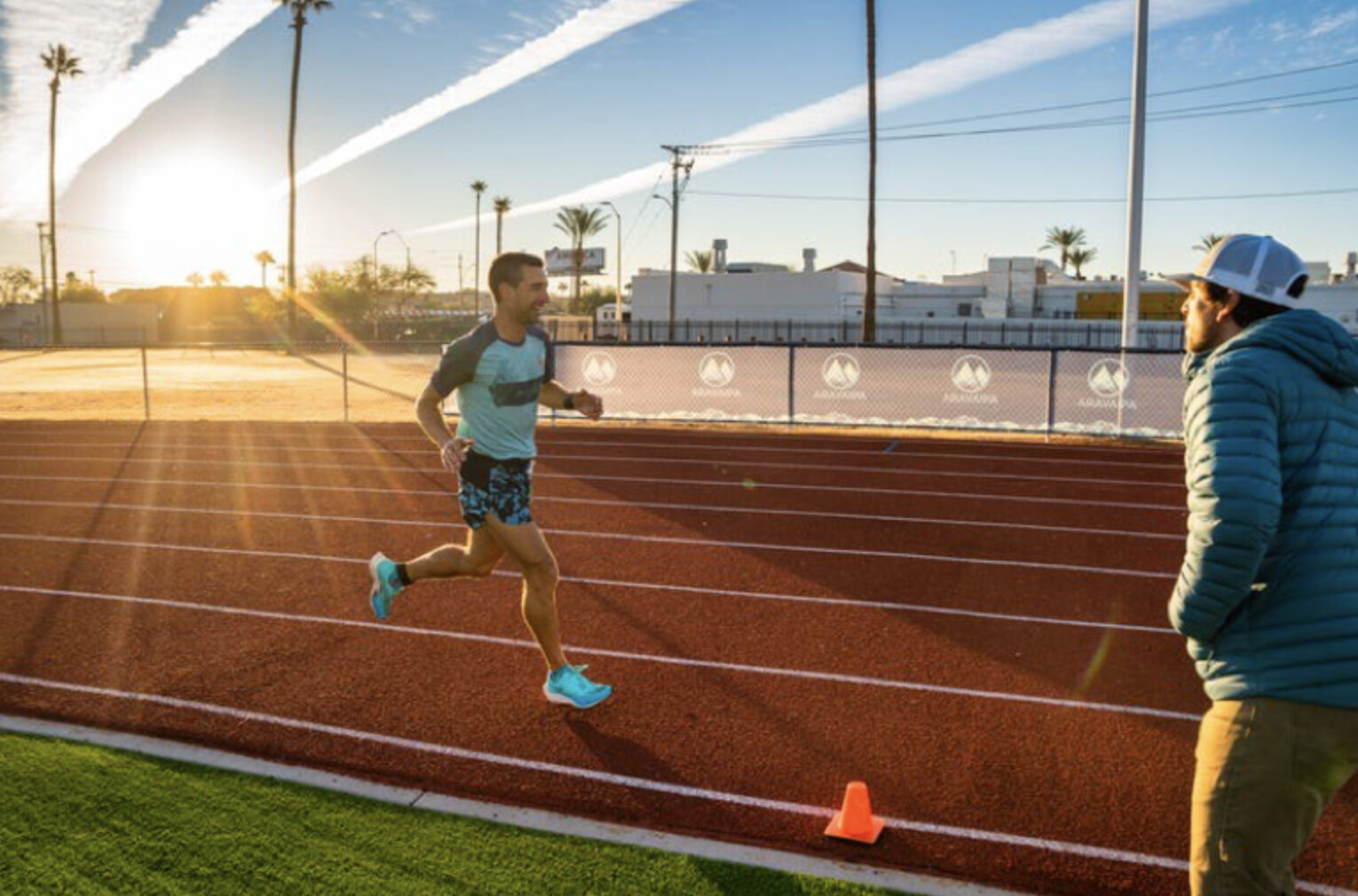
While the 24-hour race format may seem eccentric, well-known names like Courtney Dauwalter, Kilian Jornet, and Camille Heron have dabbled in the ultra-track scene. International governing bodies regulate the discipline with USA Track & Field (USATF), the national governing body for track and field, cross country, road running, race walking, and mountain-ultra-trail (MUT) disciplines, overseeing the American contingent.
Traer, then 31, was working odd construction jobs in and around Boston to make ends meet while training when he got the call from USATF that he had been selected for Team USA.
“I was really excited,” says Traer. “Then, I found out that I had to pay for everything. So I was like, ‘Forget about it.’”
That financial reality took the wind out of Traer’s sails. He didn’t have the disposable income to foot the bill for international travel and didn’t have paid time off from his jobs. While he was disappointed that he wouldn’t get to represent his country in 2012, he was still determined to pursue his dream of chasing a career in coaching and racing.
Now, Traer, 42, is a full-time coach living near Phoenix and working with the Arizona-based event organization Aravaipa Running as an assistant race director. He has earned top accolades in the sport, including a course record at the Javelina 100K and a Golden Ticket to Western States at the Black Canyons 100K, eventually leading to a top-ten finish at the Western States Endurance Run.
True to his blue-collar roots, he is known for racing in unbranded gear, typically a long-sleeve, white SPF shirt unbuttoned and flapping in time with his stride. Ten years after making his first 24-hour team, he re-qualified for the opportunity to compete for the U.S. again, this time for the 2023 IAU 24-Hour World Championships in Taiwan (which international sports federating bodies officially refer to as Chinese Taipei), on December 2.
The catch: USATF is only providing a stipend of $600 to Team USA athletes.
Oregon ultrarunner Pam Smith has competed on Team USA seven times in the 24-hour and 100K world championship events. Now, she’s serving as the Team USA manager to help steward the next generation of ultra athletes. But that passion has come at a cost.
“I estimate I’ve spent around $10,000 in personal funds to be able to compete at the world championships and to represent the USA at these events,” says Smith, 49, who finished fourth at the 2019 IAU World Championships in France. “USATF does pay for the manager’s travel expenses, but there is no other compensation; in fact, the managers have to use their own funds to cover some fees, like membership dues and background checks.”
It might surprise fans of the sport that many of their favorite athletes are paying significant money to sport the red, white, and blue uniform—and that many can’t compete because they cannot shoulder the cost. The U.S. is known for strong 24-hour runners, and the men’s and women’s teams both won gold at the previous IAU 24-Hour World Championships in 2019 in Albi, France, with two individual podium spots.
“The U.S. has many of the best 24-hour runners in the world,” says Smith. “It’s a shame that these athletes don’t even get their airfare covered.”
While Smith’s airfare is covered, her work and that of her colleagues is presumed to be done on a volunteer basis. (A quick online search shows a flight to Chinese Taipei from most U.S. cities costs in the $1,500-$2,400 price range.)
Trail running, particularly the elite side of the sport, is at an inflection point. While some races dole out prize money, and a select few athletes at the top of the sport command respectable salaries, most runners at the elite level rely on a scattershot combination of brand partnerships and personal funding to float their racing. While the sport’s very best athletes are well compensated professionals, most “sponsored” trail runners earn between $10,000 and $30,000 per year. Between travel, gear, nutrition, and other expenses, many runners at the elite level are fronting their own cash to compete.
When Chad Lasater qualified for Team USA after a strong run at the Desert Solstice 24-Hour Race, he hadn’t planned on making the team. But, when he found out he’d qualified, he started looking into the logistics and was shocked to discover he’d be responsible for paying his way to Taipei.
“The cost of airfare, lodging, food, and time away from work can be significant, especially when traveling to somewhere like Taipei,” says Lasater, 51, from Sugar Land, Texas. “I feel that everyone should have an equal opportunity to be on the U.S. team, and the cost of traveling to the world championships should not preclude anyone from accepting a spot on the team. We should really be sending our best 24-hour athletes to the world championships, not the best athletes who can afford to travel.”
Teams that rely on individual brands or athletes to foot the bill will prefer runners with sponsorships or disposable income and can afford to take time off work and pay for childcare.
At the top of the sport, like the world championships, it’s routine to see completely unsponsored runners competing with no brand affiliation, especially in the eccentric realm of 24-hour track events. Even some sponsored runners don’t always get their travel expenses covered.
While a world championship event is certainly a big deal, it doesn’t command the same fanfare and media attention as other marquee events, like the Western States Endurance Run or Ultra-Trail du Mont-Blanc, where many brands prefer to focus their resources.
Jeff Colt, a 32-year-old professional ultrarunner for On who lives in Carbondale, Colorado, publicly debated the merits of returning to Western States in California this year or competing in the 2023 World Mountain and Trail Running Championships in Austria in early June. (The trail running world championships and 24-hour world championships are different events, but the Team USA athletes who compete in each one face similar challenges when it comes to funding and market value to brands.) He ultimately decided to claim his Golden Ticket and compete at States. More eyeballs on the event mean a higher return on the investment for running brands, which in turn elevates athletes’ value to their sponsors
“My sponsor, On, was clear that they supported my decision either way, but they were more interested in me running Western States,” says Colt. “And rightfully so. There’s a lot of media attention at races like States and UTMB, which allow brands to activate and get visibility for their logo. That support feels good as an athlete, too. It’s not just better for the brand.”
Nike has an exclusive partnership with USATF; all athletes competing at any world championship event in the mountain-ultra-trail disciplines (as well as the Olympics and World Athletics Championships for track and field and the marathon) must wear Nike-issued Team USA uniforms that are provided to the athletes free of charge, with the exception of shoes. Any photos or videos of professional runners at these events are less valuable to competing running brands because their athletes will appear bedecked in another company’s logo. This disincentivizes many brands from investing in unsponsored athletes’ travel expenses and limits athletes’ ability to get financial support, most of which currently comes from shoe and apparel brands in the trail running industry. And if athletes cannot compete because of illness or injury, they must return parts of the kit. Even if they keep the kit, many sponsored runners’ contracts prohibit them from training and racing in the gear, so it gathers dust at the back of their closets.
Arizona runner Nick Coury, preparing to compete on his third U.S. 24-hour team, says this contract limits the economic opportunities of unsponsored athletes—partially because it disallows an athlete to place another sponsor’s logo on the Nike gear.
“This is especially upsetting to many because Nike provides large sums of money to USATF for this arrangement, yet neither passes through significant support to national teams despite USATF being a nonprofit aimed at ‘driving competitive excellence and popular engagement in our sport,’” says Coury, 35, from Scottsdale, Arizona. “USATF is taking money from Nike, restricting elite athletes to fund themselves through sponsorship, and doing little to nothing to encourage a competitive national team.”
One athlete, sharing anonymously, reported selling parts of their Nike kit to help offset travel expenses. “It’s the same kit [100-meter and 200-meter track and field superstar] Noah Lyles wears, so it’s super valuable.”
Traer thinks it’s unfair that athletes are forced to wear Nike gear and render free labor supporting a huge company, especially when the 24-hour team isn’t fully funded. Lyles, an Adidas athlete who won the 100-meter dash at this year’s World Athletics Championships in Budapest, had to wear Nike gear while warming up and racing, too. But his travel and expenses were paid in full by USATF, and his Adidas relationship benefits because track and field stars get considerably more exposure than ultrarunners. Furthermore, in track and field, the world championships serve as a prelude to the biggest running event on the calendar, the Olympics, which take place every four years and attract an expansive viewership that reaches far beyond hardcore running fans.
“It bothers me because Nike is making a huge amount of money,” Traer says. “I don’t want to hear that there isn’t enough money to support athletes because I see smaller brands in our sport that have less money doing a much better job supporting athletes.”
Nancy Hobbs is the chairperson of the USATF Mountain and Ultra Trail Running Council, the division of USATF that oversees the U.S. 24-Hour Team. Her executive committee has been discussing more equitable distribution of funds. Initially, funding was based on the number of years the championships had been held and how many athletes were attending.
Ultimately though, it comes down to the relatively small amount of Nike money that USATF allocates to the USATF MUT Running Council.
“With a certain amount of money in the budget, we could choose to send fewer athletes (i.e., just a scoring team with no spares in case of injury, etc.), but the council discussion has been on the importance of fielding a full team with some additional athletes for attrition and providing more athletes an opportunity to compete internationally (provided they qualify for the team based on selection criteria),” says Hobbs.
Though the compensation for mountain-ultra-trail athletes may feel low, it is significantly higher than in the past. In 1999, a mere $250 was distributed to each MUT subcommittee, totaling $750 for all 1999 expenses. In 2013, MUT teams received $25,000 in funding for travel. This year, $83,000 was distributed across all of the teams it sends to international championships for MUT disciplines.
“We’ve come a long way with MUT since 1998,” says Hobbs. “We have more work to do. This is a volunteer-driven group which is passionate about our sport and trying to provide athletes opportunities through championships, teams, and programs within the structure of USATF.”
Coury qualified for his third U.S. 24-hour team in 2021 and broke the American 24-hour record. He’s had to fund his travel out of pocket for all three international appearances. He says the lack of funding limits the team’s ability to compete on the world stage.
“I’ve found it extremely challenging to train for a 24-hour event while holding a full-time job, as have others, and I know I haven’t and won’t hit my personal potential as a result,” says Coury. “We’ve seen an explosion in the competitiveness and interest in trail races, and part of that is the ability for ultrarunners to make a living as professional athletes. We see very few runners in the 24-hour space who can go professional, which reflects in our team’s competitiveness.”
While Team USA won both gold medals in 2019, international competition is escalating. Coury says opening up additional funding would help draw elites and strong amateurs alike to try their hand at the 24-hour format, which would help Team USA’s standing on the world stage.
“Athletes like Courtney Dauwalter and Camille Herron have represented Team USA multiple times and been key to our results,” says Coury. “Yet I am certain they must weigh training, qualifying, and representing Team USA against the sponsorship opportunities in trail ultrarunning, where financial support is much greater. I imagine there would be more interest from some of our most capable athletes if we had a better financial story around the team, providing a path for it to fund an athlete’s career instead of costing out of pocket. Given the prospects of making a living at a trail race versus paying to represent Team USA, I’m positive we’re discouraging some of our best athletes from even wanting to try.”
In previous years, Team USA has resorted to raising money through bake sales and selling T-shirts to raise funds for the team’s travel expenses. Past team captain Howard Nippert made and sold ice bandanas to support the team. This year’s captain Smith is hosting fundraising dinners. Coury says that the ultrarunning community has stepped up to support the team where traditional funding has failed.
“It reminds me in some ways of the amateur athlete situation back in the 1970s, where representing your country came at a significant financial burden and really made athletes reconsider it,” says Coury. “Why isn’t USATF making it desirable to train and compete for Team USA? Why is it seemingly doing the opposite?”
The 24-hour team is at a crossroads: either it will receive adequate funding and support to send the best team possible to the world championships, or it will maintain this status quo while Team USA falls further and further behind on the international stage. Traer has launched a petition on Change.org to draw attention to the funding issue and is determined to sound the alarm about how a lack of funding holds athletes and all of Team USA back.
“No one should have to decide that they made Team USA but can’t afford to pay to wear their country’s flag,” says Traer. “If an athlete earns their spot on the team, they should get the support they need to compete. End of story.”
(10/07/2023) ⚡AMPby Outside Online
3 Athletes on Why They’re Running the Marine Corps Marathon
One of the largest marathons in the world to draw in 30,000 runners from all 50 states
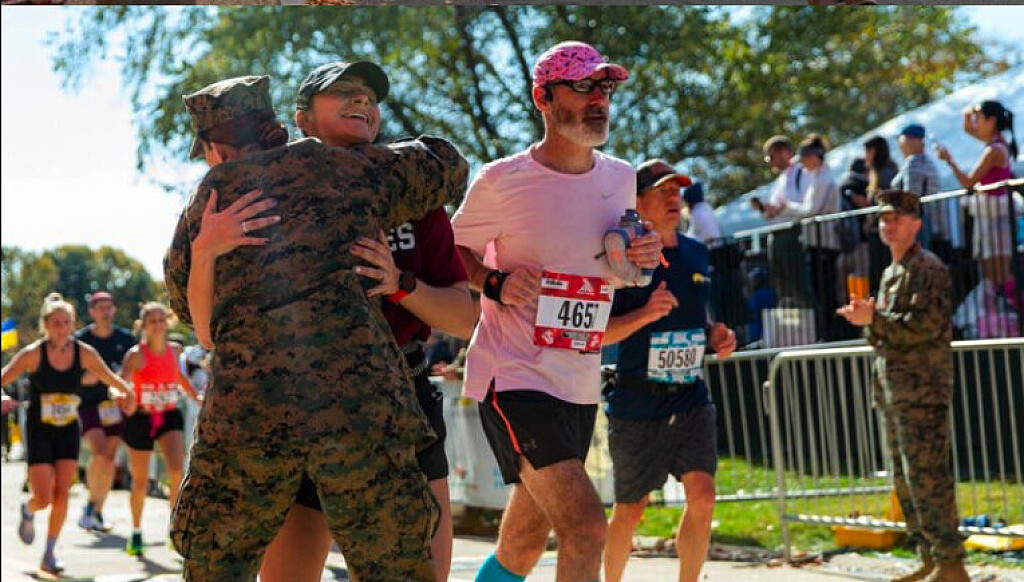
The 48th Marine Corps Marathon (MCM)—“The People’s Marathon”—is the fourth-largest marathon in the U.S. and largest urban ultramarathon (they offer a 50K and 10K, too).
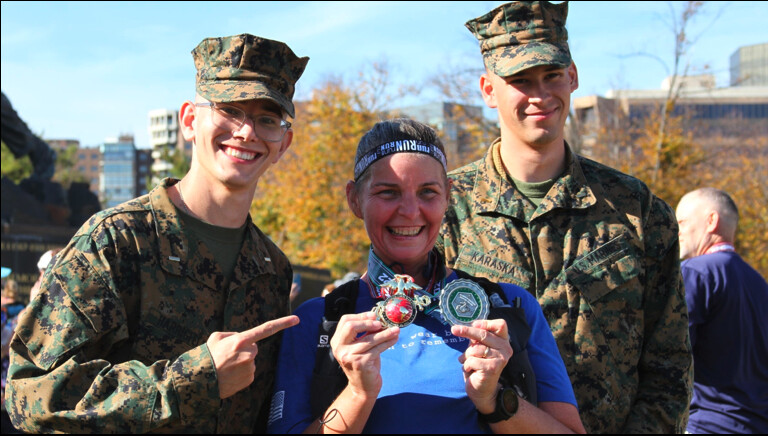
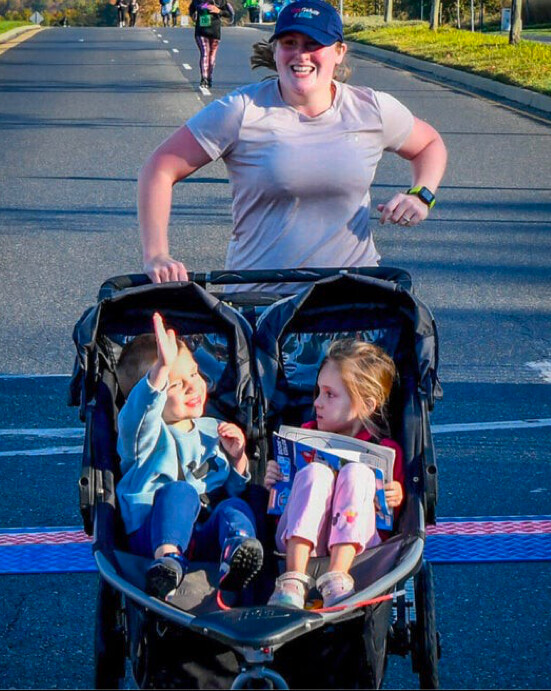
Each year, the U.S. Marine Corps holds the MCM a few weeks before the anniversary of its establishment. On October 29, 30,000 runners will toe the line in Arlington, Virginia, to follow the course as it winds through the nation’s capital. We caught up with three runners aiming for the finish line this year.
Rosie Gagnon, who lives in Berryville, Virginia, will be running the 50K MCM race in honor of her son, Marine Corps veteran, James Morris, who passed away by suicide in Ferurary 2018.
Even struggling through his mental health battles, Morris had endless confidence in his mother. Though Gagnon had been a runner for over two decades, Morris had encouraged her to run her first marathon. And when she completed that, he challenged her to dream even bigger–a 100 miler.
Morris passed away while Gagnon was training for this ultra, but she was determined to keep running in his memory.
“I actually bonked really hard,” Gagnon says, laughing. “I quit 60 miles in. I reached a point where I hit a wall–throwing up and crawling on the ground–and felt it was symbolic of what my son had gone through, because he got to the point where he couldn’t see how he could go on.”
The pain of this first race was disappointing but also a blessing. Morris says the experience taught her that, no matter how dark life gets, you keep putting one foot in front of the other.
Shortly after, Gagnon joined Wear Blue: Run to Remember, a group that honors the service of American military members through running. You may have seen one of them at races across the country wearing their bright blue shirts and the name of a fallen veteran. Gagnon challenged herself to run 100 ultramarathons in memory of Morris, and to raise awareness about military and veteran suicide. This will be her first time running the Marine Corps Marathon, and it will be her 60th ultra.
Running has become not only an outlet for spreading awareness about the importance of military mental health awareness and resources, but it’s been an outlet for grief.
“I used to wake up everyday wondering, ‘How can I live with this pain for another 40 years?’ and the one outlet where I found comfort was through running,” Gagnon says. “I focused on one race at a time, trying to get to that 100. I thought it would take longer, but it’s been moving pretty fast. I’m more than halfway through now!”
“If all I can do is put on shoes and run for somebody,” she says. “I’m going to do that.”
Between working a full-time job, managing clients in her running coach business, and raising three kids under the age of six, Kelly Vigil squeezes in training for the MCM when she can. Originally from northern Virginia, Vigil now lives in Charleston, South Carolina, and has run the MCM four times. This year, she’s running the 50K option.
“It’s my all-time favorite race,” she says. “When you get there, everything is taken care of,and everyone is super excited to be there. The spectators are amazing, which is hard to get in a marathon unless you’re running one of the major ones. At mile 21, you still have people cheering you on.”
Her husband was in the Marine Corps for six years, which makes her particularly connected to the race. Another reason is because Vigil used to work full-time in the charity running field, working with organizations to create their race programs.
“Athletes who are running for a cause aren’t necessarily going to feel more pressure, but there’s more meaning as to why they’re doing it,” Vigil says. “It helps them push forward when their body or mind isn’t in it anymore.”
As a mom of young kids, training isn’t always easy, but Vigil gets it done. Her long runs are timed so that she has an allotted amount of time to be away training on Saturday. Whatever mileage she gets done is what it is, and Vigil is happy with that.
“I’m not very strict with my training plan,” she says. “A lot of my running includes a stroller (with my two-year-old) or I might split up my runs in the morning and evening. I’m just doing what I can.”
Also a certified running coach, Vigil is currently working with other athletes who are running the MCM.
“Coaching keeps me in the community even when I’m not training for something,,” she says. “We’re all going after these different goals and doing what we can to stay consistent and do the work.”
For some, a commute to work includes traffic, to-go coffee, and a few swear words as someone cuts you off on the highway. But Jessica Hood’s commute to the office involves lots of marathon training.
Hood is extremely busy, so she puts in her miles by running to work. The total distance from her house to her office is about 14 miles, but depending on her training schedule, she’ll run seven or so and then hop on the metro bus for the rest of the way. Her office has a gym and showers, so she’s not taking a seat at her desk in sweaty running clothes.
“I do what I have to do and it probably takes a shorter amount of time,” Hood laughs. “You know, because you’d be sitting in DC traffic.”
Hood moved to the DC area about two years ago and works in finance, but her main passion is running. She began posting running content on social media in 2022 and developed a hearty following of 37k on Instagram and 81.5k on TikTok.
“It’s super cool how runners can get connected through social media,” she says. “I have a lot of running friends who don’t live in DC, but we all meet up at certain events and races across the country.”
Because of her influencer status, Hood is part of the MCM Social Media Influencer program, where she’s an advocate for the race. Though it’s sold out now, she spent months encouraging people to sign up through her posts online. This year will be her first time running the MCM marathon, though she’s spectated before and the energy was like nothing else.
“I thrive off of race day energy,” she says. “I love running and take it seriously, but it’s also about the fun of it and doing it with other people. So having a lot of people in my DC community running with me makes me so happy.”
Due to the race’s overwhelming popularity, early bird registrations for next year’s event opens January 1, 2024, with military members being able to register December 31. The Marine Corps Historic Half takes place May 19, 2024, and is part of the MCM series.
(09/30/2023) ⚡AMPby Outside Online

Three ways runners get better with age
Recent performances in distance running have demonstrated the ability of athletes to break records well into their late 30s and 40s, particularly in longer distances. Sports scientist Sian Allen, a research manager for the Lululemon innovation team, recently shared three ways athletes are able to improve their performances as they age, and her observations hold true for both professionals and regular runners hoping to continue to smash PBs.
1.- Years of training wisdom

A recent study published in the Annual Review of Psychology points out that our crystallized intelligence–the stored knowledge that we accumulate over the years–doesn’t peak until we are in our 60s. Years of learning carry over to improved running performance.
In a recent article in The Irish Times, Swiss researcher and ultrarunner Dr. Beat Knechtle explains that the boost in older endurance athletes’ performances has a lot to do with experience and mindset. “Experience, starting slow, going slow, focusing on the aim … younger athletes always tend to want to achieve a place, a podium, a time,” he said. “The older ones like me say the first aim is to finish, and finishing means preparing.”

2.- Improved physical awareness
As we age, we become more familiar with our bodies and are capable of understanding the feedback signals our brain is receiving, a process referred to as interoception. Anyone who has competed over years or decades can probably attest that they have become far better at “reading their body” over time.
A recent study also pointed out that athletes, from sprinters to endurance athletes, are better at this skill than non-athletes. The wide range of runners were more confident in their interoceptive abilities and could hone these over time.
3.- Better pacing skills
Just as years of experience can help runners learn to troubleshoot and adjust on race day, they also learn how to pace themselves effectively. Research has shown that older marathon runners are more likely to use steady-state or negative pacing strategies, rather than trying to put “time in the bank” in the first half of a marathon.
With more learned control and a greater willingness to be conservative in the early stages of a race, older runners are better able to plan and execute speedier race performances.
(09/28/2023) ⚡AMPby Keeley Milne
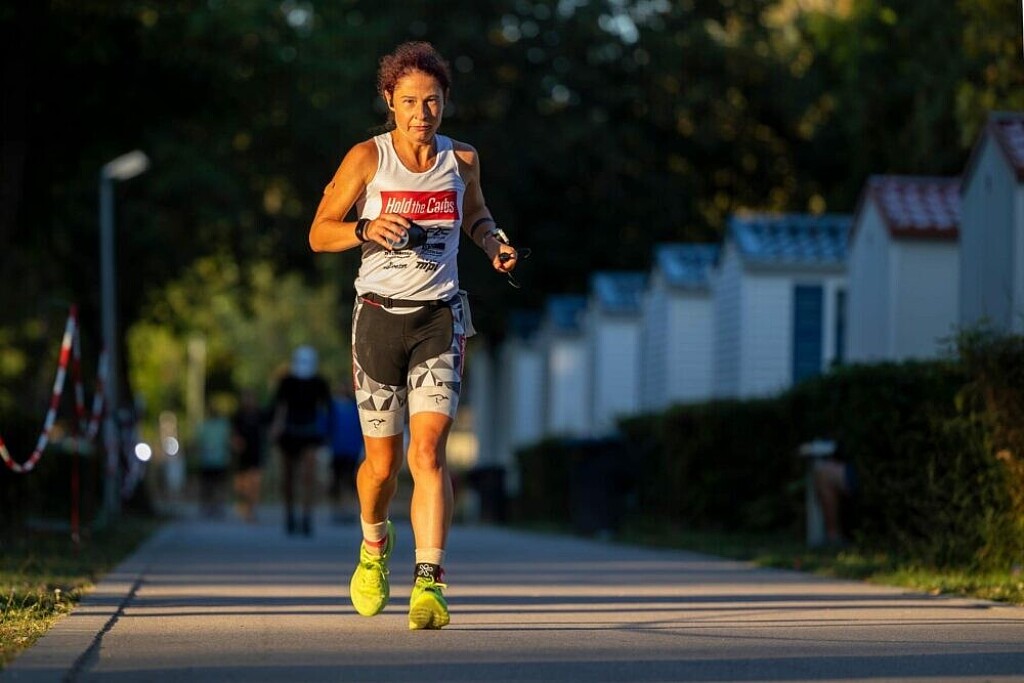
Viktoria Brown smashes her own 6-day record
Whitby, Ont.’s Viktoria Brown has conquered the multi-day racing scene, and she just keeps getting better. Brown ran a whopping 747 kilometers at the EMU 6-day Race in Hungary, besting her previous Canadian 6-day record of 736 km. Runners competed on an 898.88 meter-long certified road loop that was 100 per cent asphalt.
Brown is well-known for her many multi-day records, and for recently competing at Badwater 135, the scorching ultra in Death Valley, Calif., where she finished fourth.
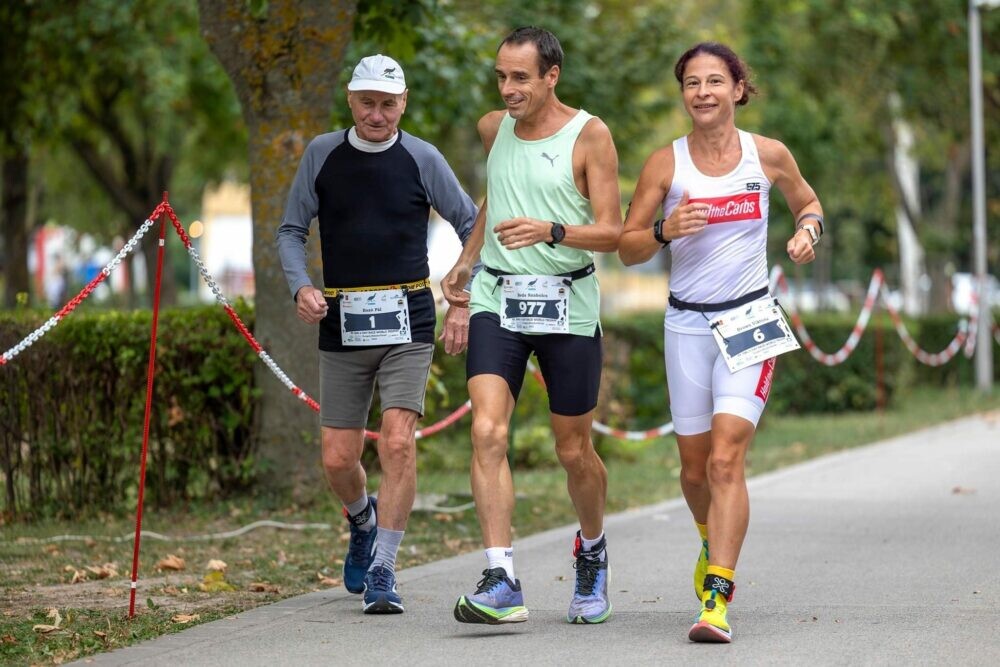
She holds the 48h Canadian record (363 km), and the 72-hour Canadian record (471 km), and was the owner of the 72h WR, recently bested by Danish athlete Stine Rex. She entered EMU having trained minimally, and became ill with salmonella poisoning partway through the event.”My goal at this race was to hit 800 kilometers,” Brown told Canadian Running.
“Only three women have ever done that, and I believe that without the salmonella poisoning, I would have hit it,” she said. “I only ran 56 km on day five, while I ran 110+ km on all other days, including 151 km on day six.”
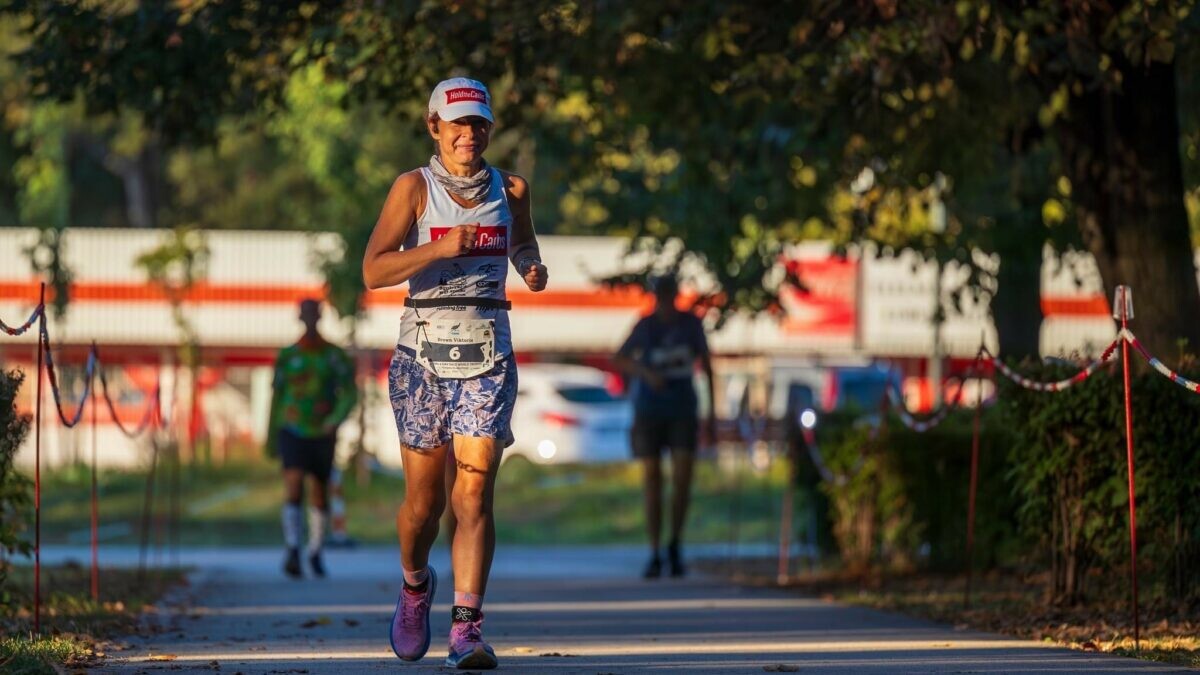
Ultras are often a test in troubleshooting, and this is only magnified by multi-day racing.”Vomiting started at noon on Monday (the start of day five) and went on all day until I went down for sleep around 10 pm,” Brown said. “I got up at 3:30 am, was back on the course at 4 a.m., and ran straight until the race ended, 32 hours later.” Brown says she was extremely lucky to have a medical doctor on her crew, whom she credits with bringing her back from illness.
To combat the salmonella, Brown slept for six and a half hours to reset her body.”I wasn’t throwing up anymore, although my body was completely empty and I still had diarrhea,” she said. “But that meant that five-10 per cent of the intake was absorbed, so we could slowly start to refuel.” Brown had to walk until late afternoon on Tuesday, both because her body was recovering and due to intense heat during the daytime.”By late afternoon I was able to start jogging, then running, and then even running relatively fast by the end.”
Brown says she felt she was unable to train for this race, but her excellent base fitness proved to be enough. “After the 48h World Championship in August (that I won) I had some slight pain under my right knee, so I could only do minimal training,” she explains.”By the time the injury healed, I caught a cold, so then I couldn’t train at all. Maybe being more rested for this race helped more than the training would have,” said Brown.
Post-race, Brown says it’s hard to catch up on sleep, but she has a surprising lack of soreness and no blisters.”My body is in great shape, but my mind will need some serious recovery,” the runner said. “These races are extremely demanding mentally.” Brown will compete next at the Kona Ironman World Championship in Hawaii in October, and later at the 24-hour world championship with Team Canada in Taiwan.
(09/22/2023) ⚡AMPby Keeley Milne
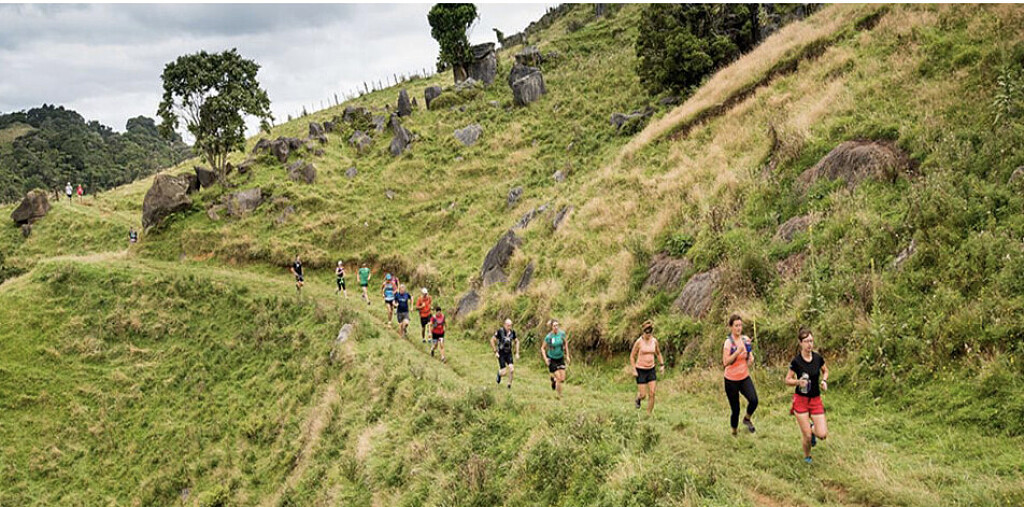
Beyond Marathons: Uncovering the World’s Most Scenic Trail Runs
For experienced trail runners searching for their next trail marathon and newcomers to the sport who are researching trail run events for the first time, we have compiled a list of the top destinations for trail running
These races are renowned and provide breathtaking scenery, making them a must-have addition to your race calendar. Our selection deliberately combines well-known races with hidden gems you may not be familiar with. These hidden gems offer a unique sense of adventure and excitement, going beyond the usual races that everyone knows about.
WaitomoTrailRun,New Zealand
The Waitomo Trail Run, a one-of-a-kind event located in New Zealand's North Island, offers a unique and unforgettable experience. Now in its third year, this trail run has quickly become the largest of its kind in the country.
Participants find themselves immersed in the stunning landscape of Hobbit country, with its picturesque rolling hills adorned with vibrant green grass. As you traverse the course, you'll also have the opportunity to explore captivating limestone caves illuminated by the enchanting glow of glowworms.
It's important to note that littering is strongly discouraged, as there is a peculiar consequence for those who discard their energy gel wrappers. Participants may find themselves tasked with clearing gorse from the hills above Te Anga road while sporting nothing but jandals, shorts, and a singlet. However, they will be rewarded with warm cordial for sustenance and have the opportunity to partake in the wet Perendales crutching experience for several days.
Lavaredo Ultra Trail, Northern Italy
Located in central-eastern Italy, the Dolomites showcase breathtaking rock formations that are truly remarkable. The Lavaredo Ultra Trail takes place within this distinctive lunar landscape, ranking as one of the most exquisite races worldwide. Only by participating in this event will you truly grasp why this place holds a magical allure, much like Venice.
Even the world’s best sportsbooks that cover marathon odds would struggle to conjure up the necessary prices due to the distraction this location's beauty presents.
As part of the UTWT competitions, the race unfolds amidst the majestic Dolomite mountains, running alongside the picturesque Misurina Lake and at the base of the renowned Tre Cime of Lavaredo, a symbol of global mountaineering. The beauty of this location stems from the striking contrast between the lush alpine forests, the rugged gray rocks, and the vivid blue skies and lakes.
While the race offers fast sections, it is also technically demanding, requiring attentiveness to the rocky terrain and tree roots along the course. This is an event that should not be missed, although securing a spot through the registration draw is essential. Be sure to mark it on your agenda, as the experience is bound to be unforgettable!

Vallee Du Trail, Chamonix, France
Chamonix, renowned as the valley for trail running and the official host of the prestigious Ultra Trail du Mont Blanc, embodies the essence of the trail running community. Chamonix is a paradise for trail runners, as it offers a remarkable collection of 18 well-marked running routes that meander through picturesque mountain trails, enchanting forests, and serene alpine meadows, all while providing breathtaking panoramas of majestic mountains and icy peaks.
What sets Chamonix apart is its inclusive and hospitable trail running community, which caters to elite athletes and anyone who possesses a deep affection for the mountains and the exhilarating outdoors.
MatterhorUltraks, Switzerland
The Matterhorn, the ultimate representation of a picturesque alpine setting and alpine skiing, takes center stage for trail running during the summer. In Switzerland's Matterhorn Ultraks event, this majestic peak is visible from all directions and can be encircled through various routes ranging from 16 to 46 km.
One particularly remarkable feature is the K30 trail, which spans 31.5 km and includes a thrilling highlight: a suspension bridge crossing the glacier gorge. Zermatt serves as the starting point for all the trails.

By the way, "Ultraks" represents a series of trail running events at the most awe-inspiring mountain peaks across Europe.
X-TerraTrailRunWorld Championship, Hawaii
The X-Terra Trail Run World Championship is held at Kualoa Ranch, located in Hawaii. This ranch is famously known as Jurassic Valley, as it served as the backdrop for the iconic dinosaur movies.
The trails used in the X-Terra Trail Run World Championship are typically inaccessible to the general public. Therefore, this race offers a unique opportunity for runners to explore and appreciate the natural beauty of this area.
The terrain itself is diverse and awe-inspiring. Participants will have the chance to run alongside cliffs and white sand beaches and navigate their way through dense rainforests.
No prior qualifications are required to participate in the 21-kilometer championship course. This event also includes a 10-kilometer race, a five-kilometer race, and an "adventure walk," making it accessible to runners of all ages and skill levels, from beginners to elite athletes.
(09/22/2023) ⚡AMP
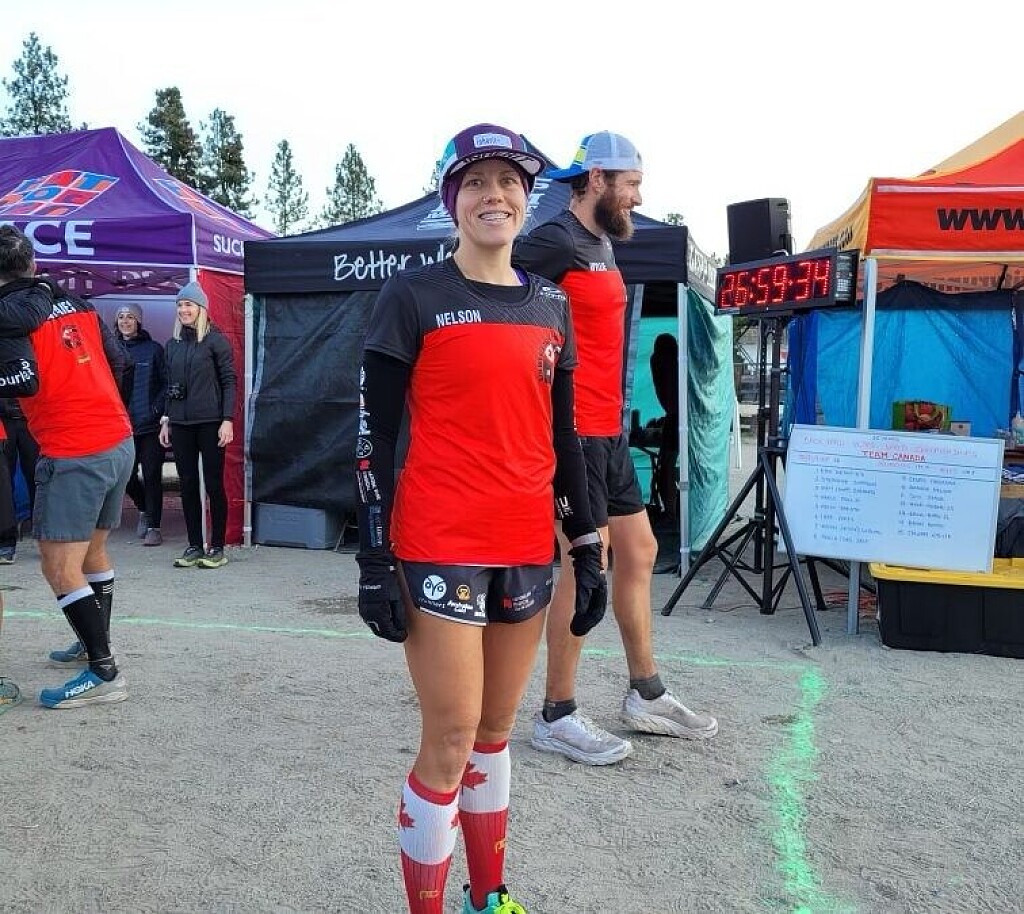
Amanda Nelson breaks Canadian 24-hour record
Ultrarunner Amanda Nelson broke the Canadian women’s 24-hour record at That Dam Hill in London, Ont., over the weekend, running an unofficial distance of 248.8 kilometers and picking up her fourth national ultramarathon record.
Although Nelson, who hails from Woodstock, Ont., told Canadian Running on Monday that the exact distance likely won’t be made official for a couple of weeks, she broke the 238.261-km record held by Bernadette Benson by at least 10 km.
“I had lots of highs and lows—more highs than lows—but there were times where I was like, ‘Why am I doing this?’” she said of her weekend effort, her third attempt at breaking the Canadian 24-hour record.
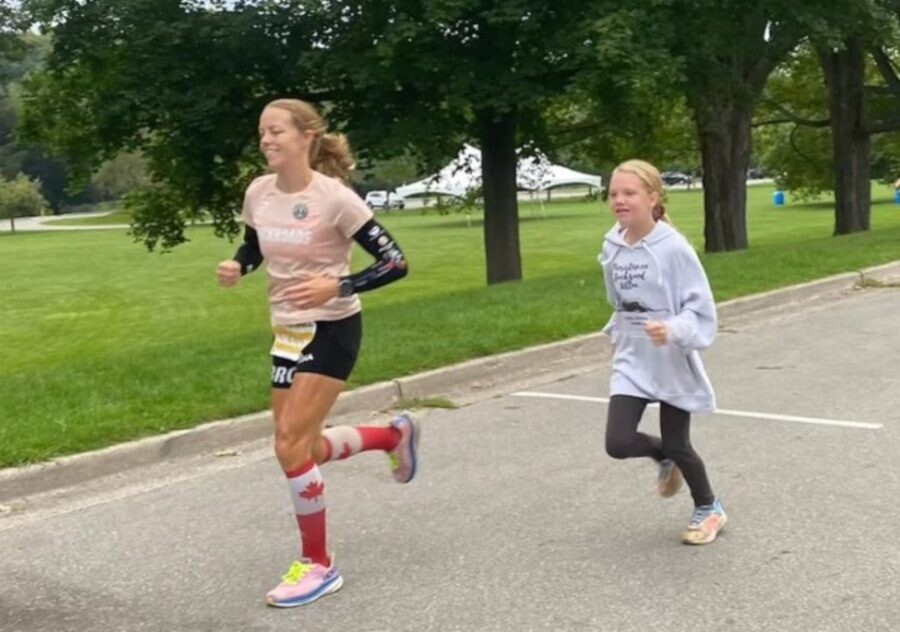
She said while her path to achieving the 24-hour record hasn’t always been smooth, an uneven surface is exactly what was needed to finally accomplish this feat.
Nelson said her two previous, unsuccessful shots at the record were both attempted on the track. Although running on a flat surface would seem to take less of a toll on the body, the monotony of running laps on a track was too mentally draining.
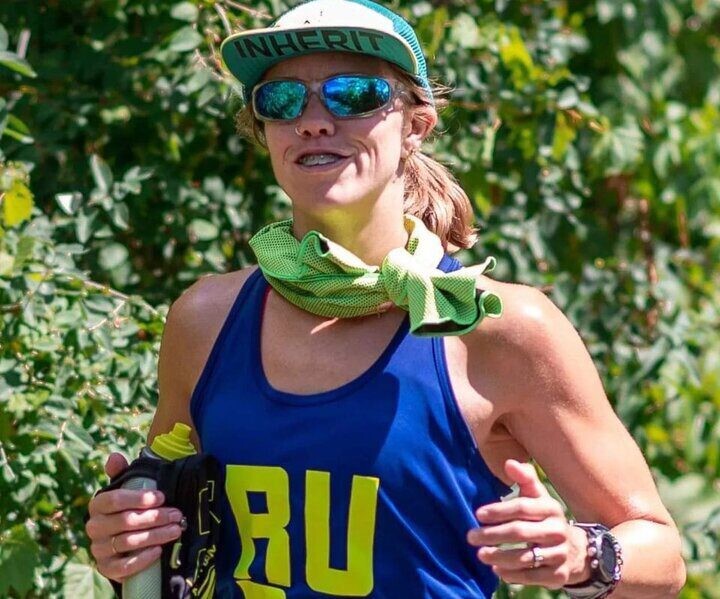
“Mentally, just doing the track, it’s not for me,” said Nelson. “That Dam Hill isn’t a track—it’s a 2.25-km loop on pavement with hills. Although it’s hard running on pavement for that long, there’s more variety to the surroundings at That Dam Hill. I need the hills and the downhills and variety. They help a lot, mentally. I knew I had to do a course that wasn’t on a track if I was going to take another try at breaking the record.”
Nelson said positive self-talk was also key to staying on track during her most recent shot at the record. “When I’m going through a low, I make sure to remind myself that I can keep going, that I am strong enough and this bad feeling is going to pass.”
She said she felt “amazing” in the final moments of her run, and that the end of her record-breaking race was made even more special when Hanna Nelson, her 10-year-old daughter, joined her for the last partial loop until the clock hit 24 hours.
“It was great, but it’s crazy how the second you finish, you’re done. Everything just kicks in and you’re like, ‘I couldn’t even run one more step.’”
In addition to her latest record, the 34-year-old holds the women’s 12-hour Canadian record (135.072 km) and the 100-mile Canadian record (14:45:51). In May, she broke her Canadian women’s backyard ultra record by running 375.51 km over 56 hours at the Race of Champions-Backyard Masters in Rettert, Germany.
That performance in Germany helped qualify Nelson for Big Dog’s Backyard Ultra Individual World Championships in Short Creek, Tenn., which begins Oct. 21. She is one of only three Canadians who have qualified for the race (Ihors Verys and Eric Deshaies have also punched their tickets), and one of only four female qualifiers among 75 runners representing 38 countries.
However, there’s a chance the race may be over for her before it begins—the cost of making the return trip to Tennessee could end up being too prohibitive for Nelson.
(09/19/2023) ⚡AMPby Paul Baswick

So You Missed Your Splits or Lost Your Race – Now What?
How failing in training and racing can make you a stronger runner
It’s Tuesday. No, it’s not only Tuesday. It’s critical velocity day. My coach has assigned me two warm-up miles and six 600 meters in 3:13-3:21 intervals, with a 90 second jog between each one. I head out to smash the workout. I’m confident. I’m excited. Then, I start. It’s blistering hot. Sweat is dragging all my face sunscreen down my forehead into my eyes. Water sloshes in my stomach. I’m so thirsty but I can’t drink anymore or I’ll puke. I start to slow. Miss my paces. What is happening? My head spins and I get this horrible gut-wrenching feeling as I pull through the last interval. My coach is going to be disappointed. My Strava record is going to be humiliating. Because I absolutely, undoubtedly failed this run.
Thinking of yourself or your run as a failure can be debilitating and keep you down for days. For a while, I thought I needed to stifle this feeling. But as it turns out, I should be making nice with failure rather than fighting it.
So what exactly does it mean to fail a run? It looks different for everyone, but to many people in the running community, it means missing the splits you or your coach has set for yourself. You can fail in training and fail in a race – both are equally debilitating for a runner. However, running coach and founder of Run Your Best, Cory Smith, says this doesn’t always mean running too slow.
“A lot of people think the faster you run, the better,” he says. “But if you’re trying to hit a certain zone or train a certain adaptation and you run too fast, then you’re training something different than your coach wanted you to train, that can be a failure, too.”
In fact, Smith doesn’t believe going slower than your faces should be defined as the typical, negative definition of failure.
“Failure is data collection,” he says. “It’s learning information. If I fail a workout, it doesn’t make me a failure as a person or an athlete, it’s just an opportunity to look at the data and figure out how to grow from it.”
Oftentimes you’ll hear runners call it the “F word” or scold others for talking about failure, but mental endurance coach, Vanessa Foerster, wants people to use the word. She echoes the same thing as Dumbledore in Harry Potter and the Sorcerer’s Stone – “Fear of a name increases fear of the thing itself.” (That’s the only Harry Potter reference, I swear.) Foerester believes shying away from the word or thought of failure gives it more power.
“We have an opportunity, with our language, to normalize failure,” she says. “If we can redefine it, we change our relationship with it.”
What both Foerster and Smith stress the most is that one bad workout doesn’t make or break you. Smith compares it to basing your retirement fund on one day when the market went down, even though we know it goes up and down all the time.
“The most powerful thought around failure is that one workout never makes or breaks a race or athlete,” Foerester says. “We’re in a constant state of learning, if we open ourselves up to be.”
Beating yourself up over a workout can often bleed into your next run, creating a sort of downward spiral effect.
“It puts you into a negative mindset, and then the next workout you’re going to put more pressure on yourself to do well to convince yourself that last workout was just a fluke,” Smith says. “This leads to anxiety, which can hurt your workout performance.”
One study reports that a negative emotional state can hinder athletic performance. Speed, specifically, was proven to be affected by emotional state. This study examined the correlation between sadness and depression and reduced running speeds, head movements, and arm swinging.
In other words, failure can be heavy, if you let it.
Like we said, failure looks different for everyone. So far, we’ve been talking about failing during training sessions – which can be referred to as process failure. An outcome failure, however, is not meeting an end-result or goal which the training was put forth for. Like a race.
For Addie Bracy, it looks like an uncharacteristic 116th place in the 100k CC. Bracy is an elite trail runner, placing first in the 2023 Behind the Rocks Ultra Race and third in the 2023 Speedgoat 50K. She has a consistent track record across the board and even has her masters in Sport and Performance Psychology.
“I had a pretty poor performance,” she says, reflecting. “Objectively, one of the worst I’ve ever had in trail running, and certainly not the race I trained for.”
Bracy says she can’t pinpoint a rhyme or reason why, but that it just wasn’t clicking that day. At a certain point, she realized the race wasn’t going the way she thought and reframed her mindset. Failure, in her definition, is only when you give up – and she chose not to.
“I think that’s the beauty of ultras – they’re so long that you’re going through the mental process then and there,” she says. “I had thoughts of stopping, but I went through the mentality of ‘That’s not what you do this,’ and gave my best effort to focus on just finishing instead of making a certain time.”
This is what Smith identifies as performance standards versus outcome goals.
“Outcome goals are the splits you or your coach sets or the final finishing time,” he says. “The performance standards aren’t outcomes, but how much effort you put into whatever that task is.”
Meaning, Bracy started out at UTMB with an outcome goal of a particular time, and mid-race, reframed her foals to a performance standard to do her absolute best.
“I think when it really boiled down to it, the goal of a race was to put yourself in a challenging situation and see how you can handle it,” she says. “I was still able to do my best that day – it wasn’t what I thought it was going to be, but it was still my best.”
But she wasn’t happy with her placement in the 100k CC.
But in early September, Bracy took on the 100k CCC and placed in what she thought was an uncharacteristic 116th with a time of 14:48:21.
Foerster goes a step further and says that failure is not only okay, but it’s actually beneficial to experience.
“Anytime we can meet emotional discomfort where we have to deal with heavy emotions like disappointment, we teach ourselves how to navigate that more effectively,” Foerster says. “So that when we meet another uncomfortable moment in a race, we know we can meet it and process through it.”
In a study conducted by Ayelet Fishbach, Behavioral Science professor at University of Chicago, and Kaitlin Woolley, associate professor at the SC Johnson Cornell College of Business, it was proven that discomfort could lead to personal growth. By applying cognitive reappraisal, study participants assigned a new meaning to discomfort before they experienced it so it served as motivation rather than a reason to stop their goals. And, in the case of this study, participants who were forced into discomfort while doing a task reported a greater sense of achieve
Much like running itself can be uncomfortable, forcing yourself to address the emotions that come with failure can be an unfamiliar, disagreeable experience. But doing so allows you to feel, process, and recognize that you can change your relationship with failure every time you meet it.
“Discomfort is the currency to our dreams,” Foerster says. “If we’re willing to meet it, all our potential is on the other side.”
So fail, and fail hard. Address the feeling head-on and don’t let it define you, but just one out of many more runs to come.
(09/17/2023) ⚡AMPby Outside Online
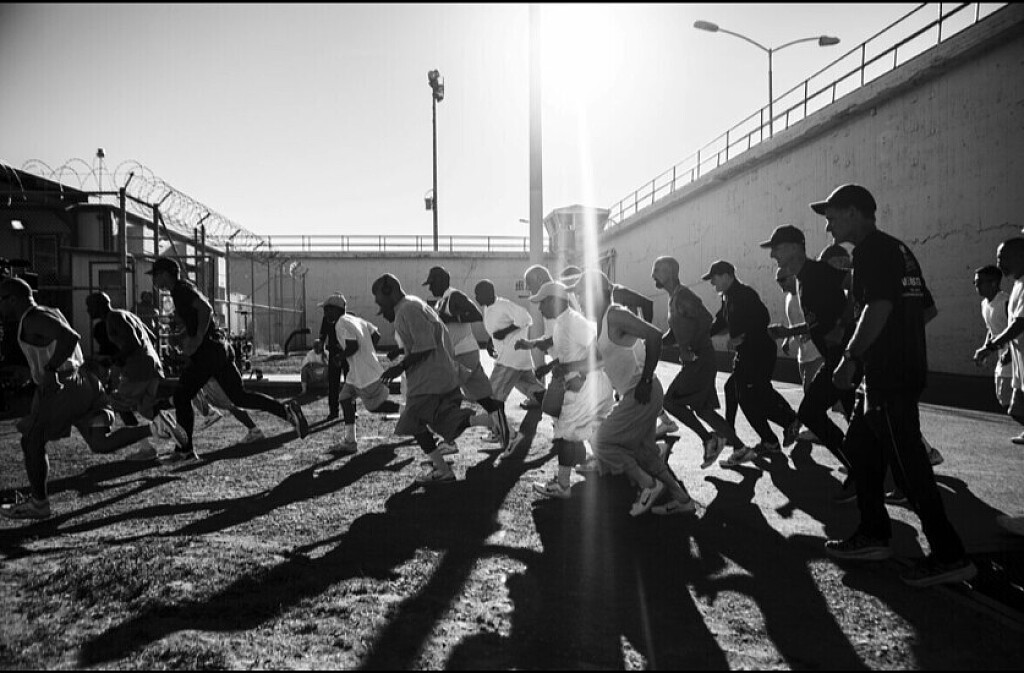
New prison marathon documentary chronicles San Quentin's 1,000 Mile Club
26.2 To Life, by San Francisco filmmaker Christine Yoo, documents the story of the San Quentin Marathon–a marathon that takes place every November inside the walls of a maximum-security prison, and which, for several men, has represented a path to rehabilitation and a new life. The film opens in U.S. theatres on Sept. 22.The club, which evolved sometime after a small group of volunteer coaches were given permission to start a running club in the prison 16 years ago, is called the 1,000 Mile Club–the idea being that interested inmates could rack up 1,000 miles during their period of incarceration.
The club’s leader is volunteer coach Frank Ruona, a veteran of 78 marathons (including many Boston Marathon finishes) and 38 ultras. Other regular volunteers include Western States Endurance Run board president Diana Fitzpatrick and popular ultrarunner Dylan Bowman.The film documents the 2018 San Quentin Marathon, which involves 105 laps of the prison yard–a combination of gravel, pavement and dirt, with six 90-degree turns in each loop. Twice, that year’s marathon was delayed–once by wildfires in the area, and once by deaths in the prison due to drug overdoses. Sometimes the race itself is interrupted by alarms. When an alarm sounds, everyone in the yard must drop to the ground. The first time an alarm sounds during the 2018 marathon, the men are sitting on the ground for seven minutes.
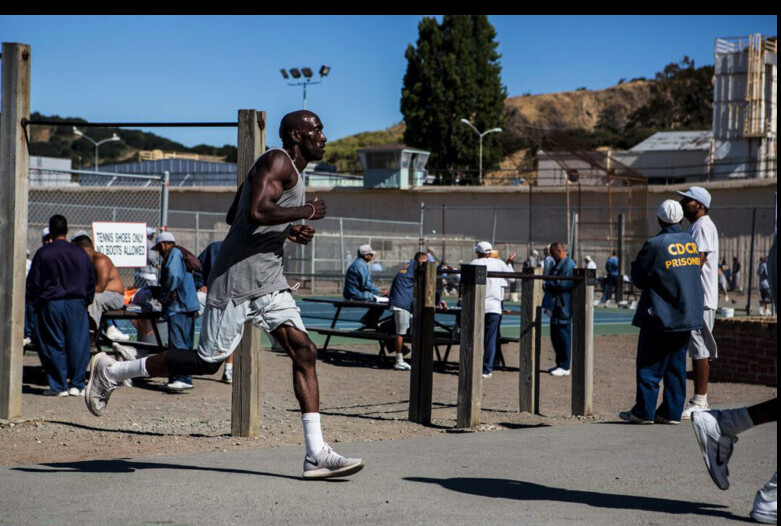
Then the race resumes.As he does every year, the club’s fastest runner, Markelle Taylor (nicknamed “The Gazelle”), won the race. As it happened, Taylor’s sentence was commuted the same year, and he went on to run the 2019 Boston Marathon as a charity runner, finishing in 3:03–a nearly seven-minute personal best.
San Quentin is a Level 4 maximum security prison, and many of the men depicted in the film are serving life sentences for murder. Each describes what led to their incarceration, but Ruona says he’s not interested in their crimes–he will lend an ear if an inmate wants to talk, but he does not ask what brought them to San Quentin. He is simply there to help–and to be a witness to the transformative power of running to change lives that are sometimes without hope. “I just feel like I am my brother’s keeper,” Ruona says, citing an Old Testament verse about Cain and Abel. “If he needs help, I’m gonna try and help him.”At the time the film was made, another runner, Tommy Wickerd, had been sober and gang-free for 18 years, and had recently completed his high school diploma. He applied for a commutation of his sentence, but never got a response.
His earliest possible release date is in 2053; he will be 86 when he gets out. But he’s philosophical. His wife, Marian, is determinedly loyal, and he has a son with whom he has a strong relationship. “If I keep running, I’ll be all right,” he says.
26.2 To Life opens in theatres in New York City, the San Francisco Bay area, Los Angeles, Milwaukee and Seattle on Sept. 22, and there will be a 72-hour virtual premiere from Sept. 29 to Oct. 1. There are currently no screenings scheduled in Canada, but we’ll provide updates if that changes. For more information, consult the film’s website, here.
(09/16/2023) ⚡AMPby Running Magazine
Brazilian runner breaks Guinness World Record with 366 consecutive marathons
A Brazilian ultrarunner has set a new Guinness World Record for the most consecutive marathon-distance runs in 366 days. On August 28, Hugo Farias of São Paulo completed his 366 consecutive 42.2-kilometer runs to finish his Projeto Propósito in front of a crowd of 2,000 people.
Farias, 44, started his journey on Aug. 28, 2022, after quitting his job at IBM. He set out on this challenge with the goal of completing 365 marathons in 365 days to show people that anything is possible. He did not decide to do a 366th until recently, as he wanted to eclipse the Guinness World Record and surpass the accomplishments of Belgium’s Stefan Engels and England’s Gary McKee, both of whom completed the full calendar year.
Farias tracked the entire project on Strava, where he wore daily bib numbers according to the marathon number he was on. After completing his 366th run, Farias joked, “I think I will start reducing volume now.”
The father of one covered an astonishing 15,443 km, which is equivalent to a flight from New York to Singapore, and 123,000 metres of elevation gain, or roughly 14 times the height of Mount Everest. According to his Strava, Farias went through 27 pairs of running shoes during the challenge and had 10 shoes on rotation (over 10 days) for the first five months.
His Projeto Propósito required extensive planning, and Farias had support from a team of health professionals which included running coaches, a physical trainer, a physiotherapist, a psychologist, a nutritionist, an orthopedist, a dermatologist (his wife), plus cardiologists and physiologists. Farias also dedicated three months to physical and mental preparation before undertaking his marathon journey.
His Projeto Propósito required extensive planning, and Farias had support from a team of health professionals which included running coaches, a physical trainer, a physiotherapist, a psychologist, a nutritionist, an orthopedist, a dermatologist (his wife), plus cardiologists and physiologists. Farias also dedicated three months to physical and mental preparation before undertaking his marathon journey.
(09/15/2023) ⚡AMPby Marley Dickinson

Florida ultrarunner tries to cross Atlantic Ocean in giant hamster wheel
A Florida ultrarunner who attempted to become the first man to run across the Atlantic Ocean in a man-made hamster wheel has been charged with obstruction of boarding and violation of a captain of the port order. It took the U.S. Coast Guard five days to bring him ashore, as outlined in a criminal complaint filed in Miami.
The U.S. Coast Guard spotted ultrarunner and activist Reza Ray Baluchi 100 kilometres off the coast of Tybee Island, Georgia, on Aug. 26, while he was setting up preparations for the incoming Hurricane Franklin. He began his journey six days earlier on Aug. 20.
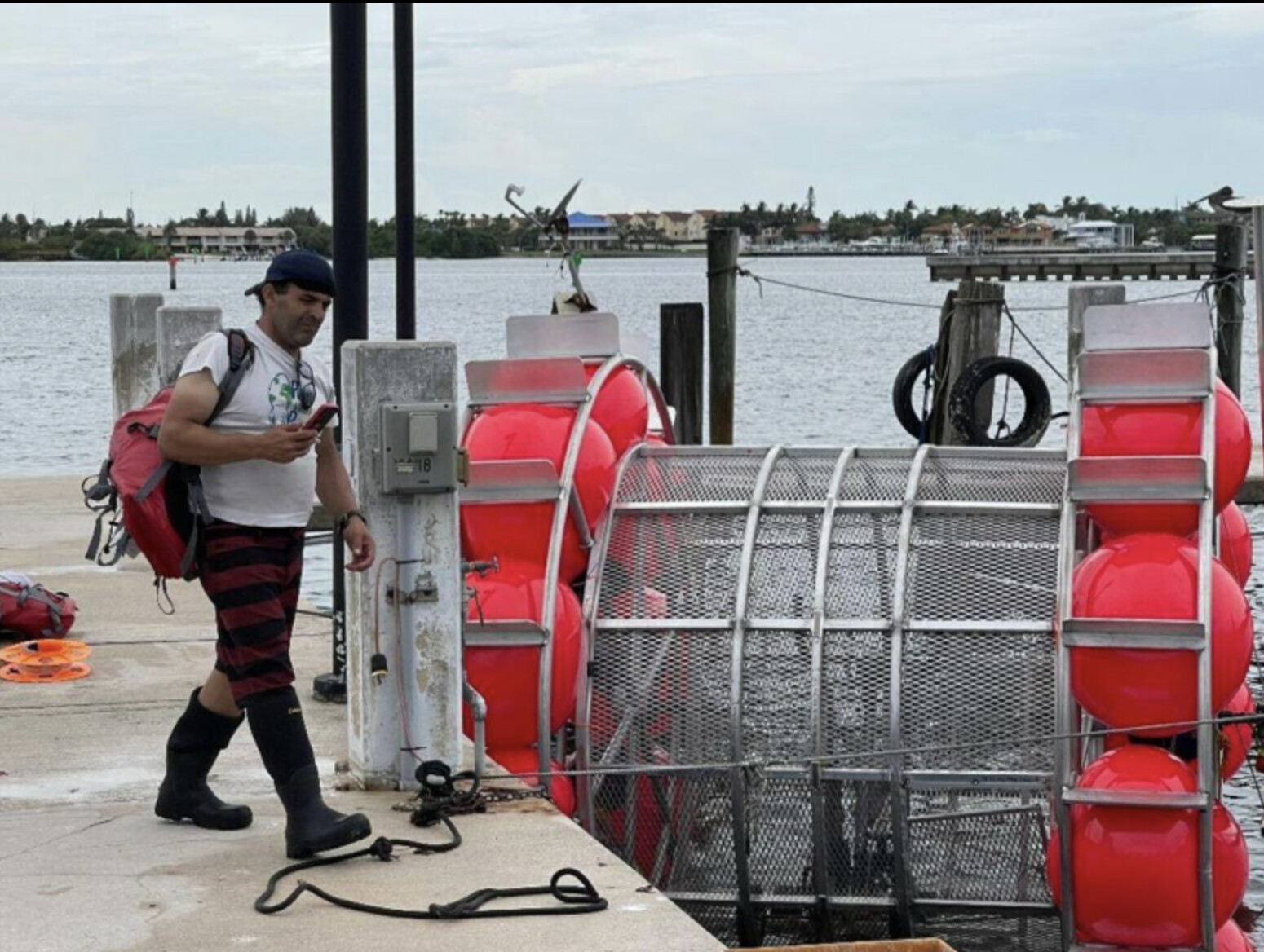
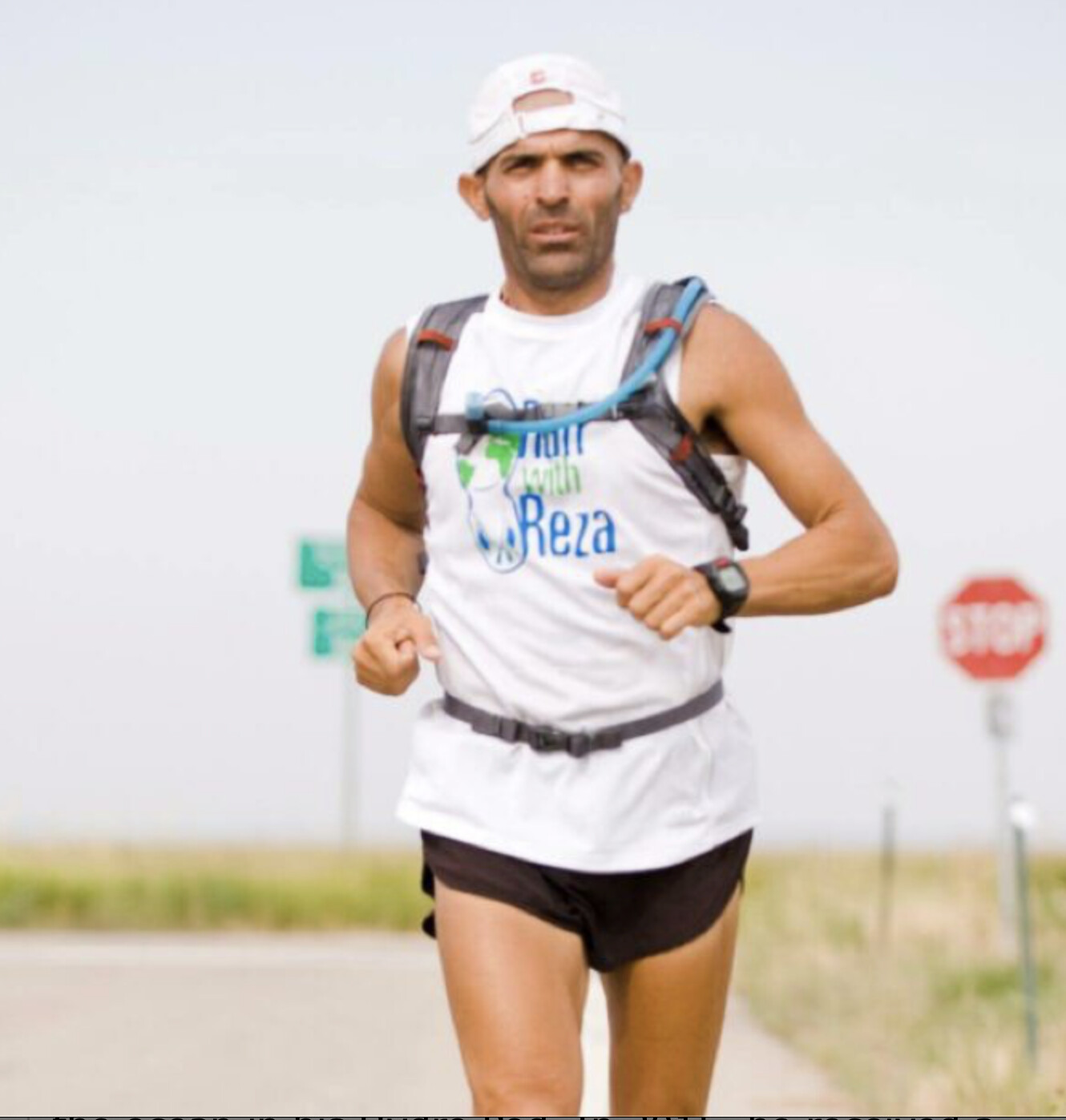
According to the Daytona Beach News-Journal, Baluchi was attempting to ride his man-made “hydro-pod” vessel to England, and he had a Florida registration onboard, which he couldn’t locate for the authorities. When they tried to get Baluchi off the boat, he told them he had a knife, and threatened to harm himself.
On his website, Baluchi stated that his ambition is to run through 195 recognized countries to “inspire us and unite us as a people” and ride his Hydro Pod across the ocean to show the world that anything is possible.
Baluchi told local news that the voyage was intended to raise money for charitable causes that include helping the homeless, the U.S. Coast Guard and the fire department.
This isn’t the first time Baluchi has attempted to cross the ocean in his Hydro Pod. In 2015, he received a captain of the port order from the Coast Guard that applied to any subsequent voyages. Baluchi failed to comply with the order and was stopped in his homemade vessel in 2016. He attempted another voyage in 2021, where the Coast Guard intervened again.
In 2007, Reza reportedly ran around the perimeter of the U.S. He ran over 18,000 kilometres in 202 days to raise money for The Children’s Hospital of Denver.
Court records show that Baluchi posted a $250,000 bond on the day he was charged.
(09/09/2023) ⚡AMPby Running Magazine
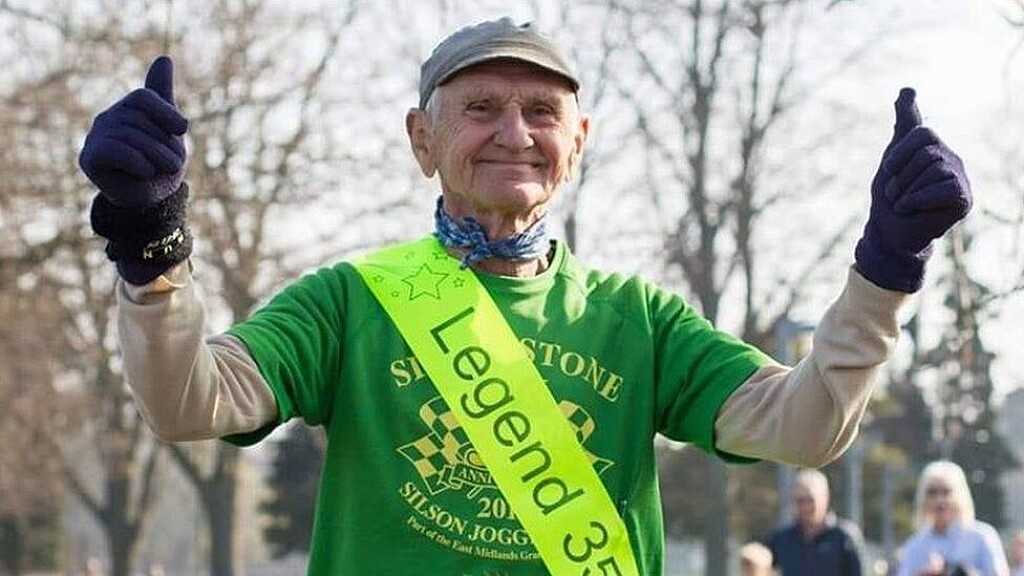
90-year-old Bob Emmerson finishes his 500th parkrun
A 90-year-old British runner celebrated a milestone 11 years in the making when he crossed the finish line of his 500th parkrun last Saturday.
Bob Emmerson of Northampton in central England was cheered on by hundreds of supporters—including his wife of nearly 70 years—in the final stretch of his run at the Northampton Racecourse, where the nonagenerian has notched most of his 500 runs since taking part in his first parkrun in 2012.
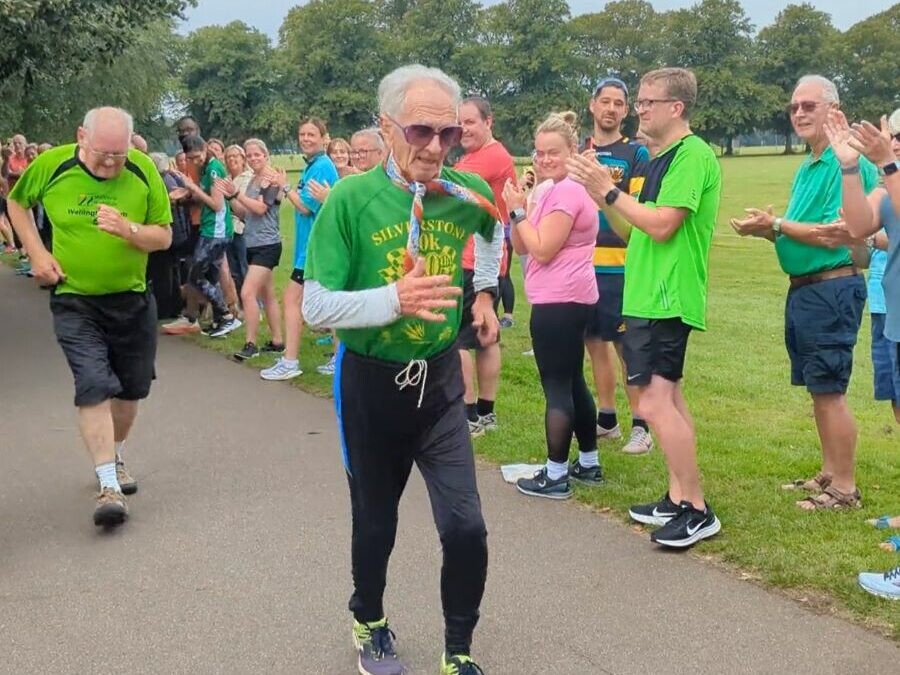
Launched in the U.K. in 2004, parkruns are free, weekly community events, now with more than 2,000 hosted in more than 20 countries including Canada. All parkruns are 5K events held Saturday mornings in parks and open spaces.
Emmerson credits the weekly events with helping him stay fit and active as he strides strongly into his 90s. In a congratulatory post on X, formerly known as Twitter, parkrun organizers quoted Emmerson as saying “my enthusiasm for life is down to parkrun and it has kept me mentally and physically stronger than living a life in (my) armchair.”
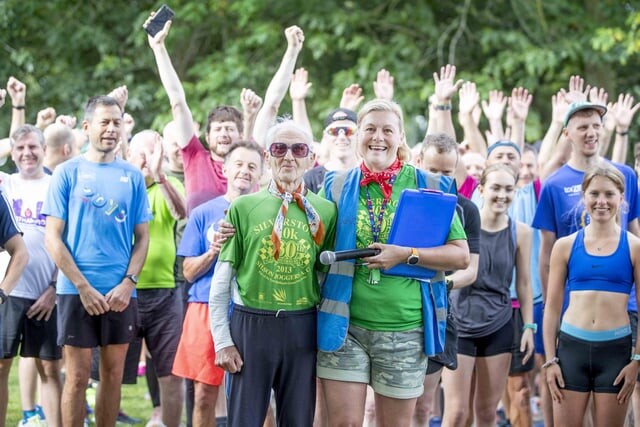
Although Emmerson first heard of parkrun a little more than a decade ago, he has been running since age 15. He told the BBC News he was a “proper, serious ultra-runner” when he was younger. He has completed ultramarathons and 24-hour races, and boasts a marathon personal best of 2:40:25.
Due to restrictions that forced parkruns to be put on hold during the COVID-19 pandemic, Emmerson’s 500-event milestone ended up taking a little longer than he had originally hoped. “I would have liked to have reached 500 by 90 years old,” he told the Northampton Chronicle and Echo. “I said that when I got to 500 I’d stop, but I changed my mind. I’ve made too many friends and couldn’t bear to lie in bed on a Saturday morning and think of everyone running.”
Emmerson, who these days finishes the Northampton parkrun course in around 50 minutes, added any future parkrun milestones are too far down the road to think about. “I’m not going to do 600, but who can tell?” he said. “You never know. Never say never. As long as I live, I shall be doing a bit of exercise.”
(09/08/2023) ⚡AMPby Paul Baswick
Train your gut and smash your goals
Run long enough and you’ll experience a fuelling issue–stomach problems that have you racing to the nearest washroom, feeling like you’ve depleted your energy stores (the dreaded bonk) or simply struggling to choke down enough fuel to keep you feeling energized. Runners often wonder if a higher carb (CHO) intake would result in better performance, and are faced with the dilemma of how to keep their gut happy at the same time.
We connected with Kelly Pritchett, a professor in nutrition and exercise science at Central Washington University and the director of sports nutrition for CWU Athletics. Pritchett shared her tips to train your gut for optimal performance.
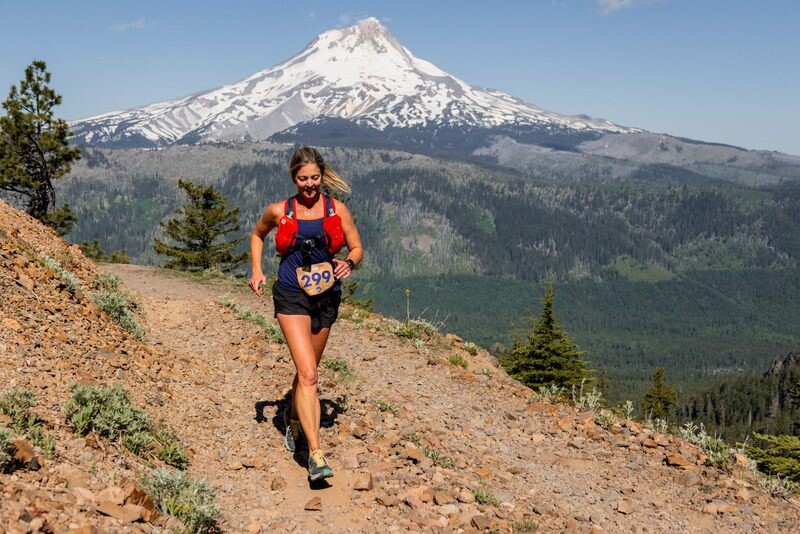
“Performance can be significantly improved following two weeks of successful gut training, with a decrease in GI symptoms,” she explained. “Reduce GI symptoms and increase carbohydrates–you feel better so you go faster.”
Give yourself at least two weeks
Spend the time necessary to complete an individualized protocol, including at least two to three days a week of gut training. Practice gut training in training sessions that are similar to your goal race–try fuelling on a long slow run if you’re prepping for an ultra, or during a race pace session if you’re gearing up for a marathon.
Find your limit
“Experiment with CHO and fluid intake per hour using the actual products (food and drink) you would plan to use during the event,” says Pritchett. Finding your limit is key–Pritchett says this would be when you start to experience upper or lower GI symptoms and discomfort. Remember, practicing this, while slightly uncomfortable, will allow you to execute flawless fuelling on race day.
Keep a record of what works
Practice training with 100-120 per cent of your chosen CHO and fluid intake. Pritchett suggests keeping notes from each session and refining and adjusting each day as needed.
“Consider some of the following factors that may influence your protocol: volume of fluid, concentration of fluid, frequency of intake, type of CHO, your regular diet (FODMAP content, amount of dietary CHO),” says Pritchett. Take into account the heat and humidity in your training environment, your hydration status before you begin and the fat and fibre content of your fueling plan.
Simulate race day
“To compensate for the stress of race day, consider using 80 per cent of your CHO and fluid intake tolerance to decrease the risk of GI symptoms,” says Pritchett. With a bit of experimentation, you should notice a difference in your ability to take in carbohydrates without discomfort, and maybe hit a PB as a result.
(09/08/2023) ⚡AMPby Keeley Milne
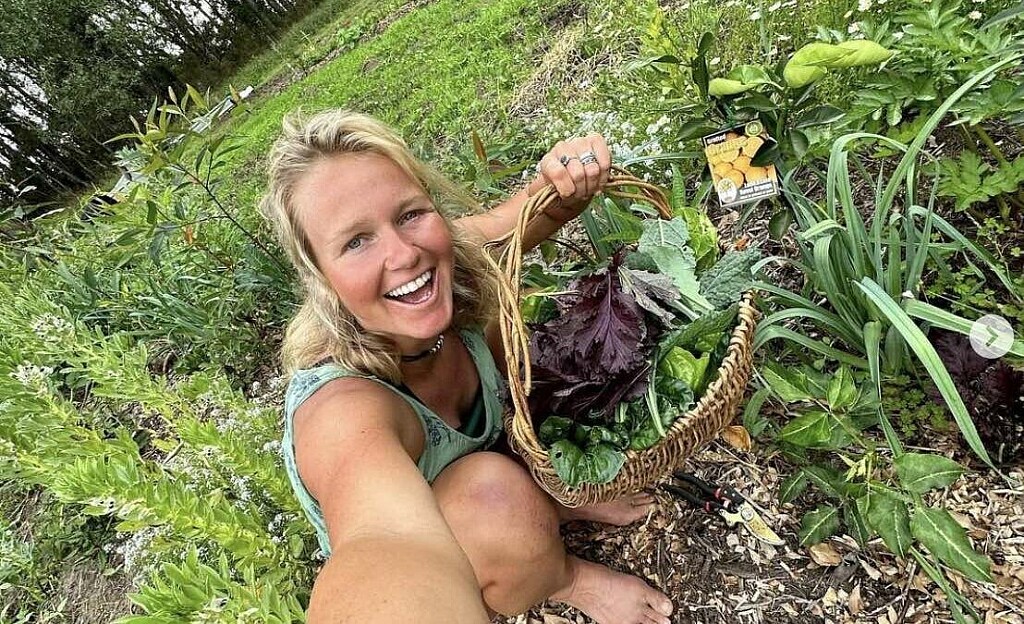
Eat dinner like a UTMB star tonight
Australian ultrarunner Lucy Bartholomew is known for her resilient and upbeat attitude, beautiful social media posts and passion for nourishing fuel. Bartholomew ran to 10th place at this year’s UTMB (170K) race and shared her race experience online: “a lot of walking, a little jogging, constant problem solving, unconditional buffet and a brief lesson in French.”
Bartholomew has a passion for creating healthy food to fuel her body to her fast finishes. She published a downloadable cookbook, Sustain, in 2022 and often shares what food carried her through her training and racing on Instagram. These rice paper rolls are simple to put together and easily adaptable to different preferences–”super fun for everyone in the family to do together and make as they want,” says Bartholomew.
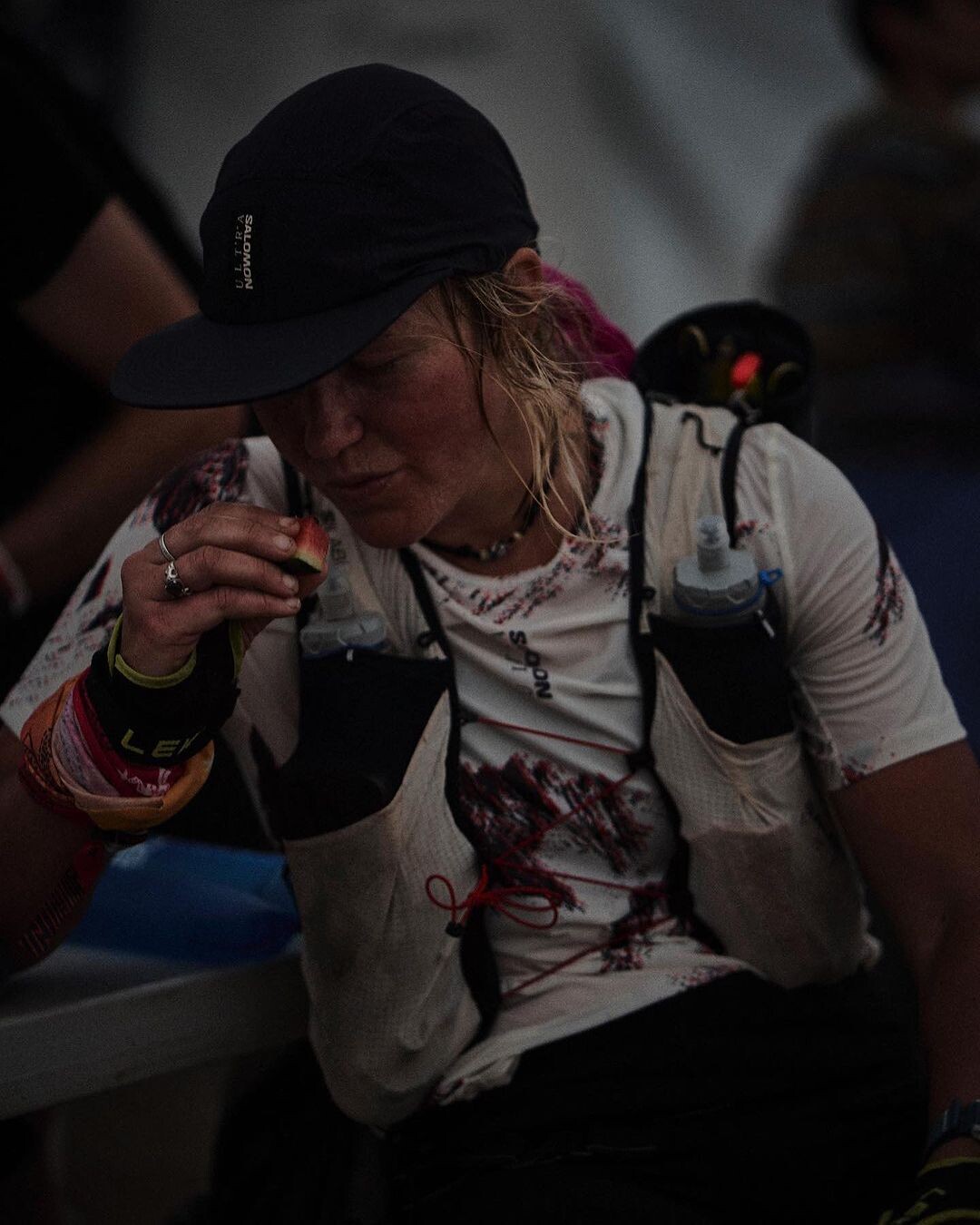
Rainbow rice paper rolls
Ingredients

Rice paper sheetsVeggies cut into strips: carrot, cucumber, roasted sweet potato, kale salad (also could use peppers, snow peas or beetroot)Protein: Bartholomew is vegan, and uses tempeh or tofu, but suggests using meat or fish if you eat itHerbs: mint, Thai basil, coriander, or anything you like
Sauce
2 Tbsp tahini 1 clove garlic, minced
1 tsp turmericBlack pepper to taste
2 tsp apple cider vinegar
1 heaping tsp red misoHot water to thin to your preferred consistency
Directions
Place the rice paper sheets one at a time in hot water for 30 seconds, lay them out, fill them up, roll them up tight and place to the side. Repeat!
Add all the sauce ingredients to a bowl, except the hot water. Add water splash by splash until the sauce is the consistency you want.
“Dip. Eat. Spread. Enjoy,” says Bartholomew.
(09/07/2023) ⚡AMPby Keeley Milne

North Face Ultra Trail du Tour du Mont-Blanc
Mountain race, with numerous passages in high altitude (>2500m), in difficult weather conditions (night, wind, cold, rain or snow), that needs a very good training, adapted equipment and a real capacity of personal autonomy. It is 6:00pm and we are more or less 2300 people sharing the same dream carefully prepared over many months. Despite the incredible difficulty, we feel...
more...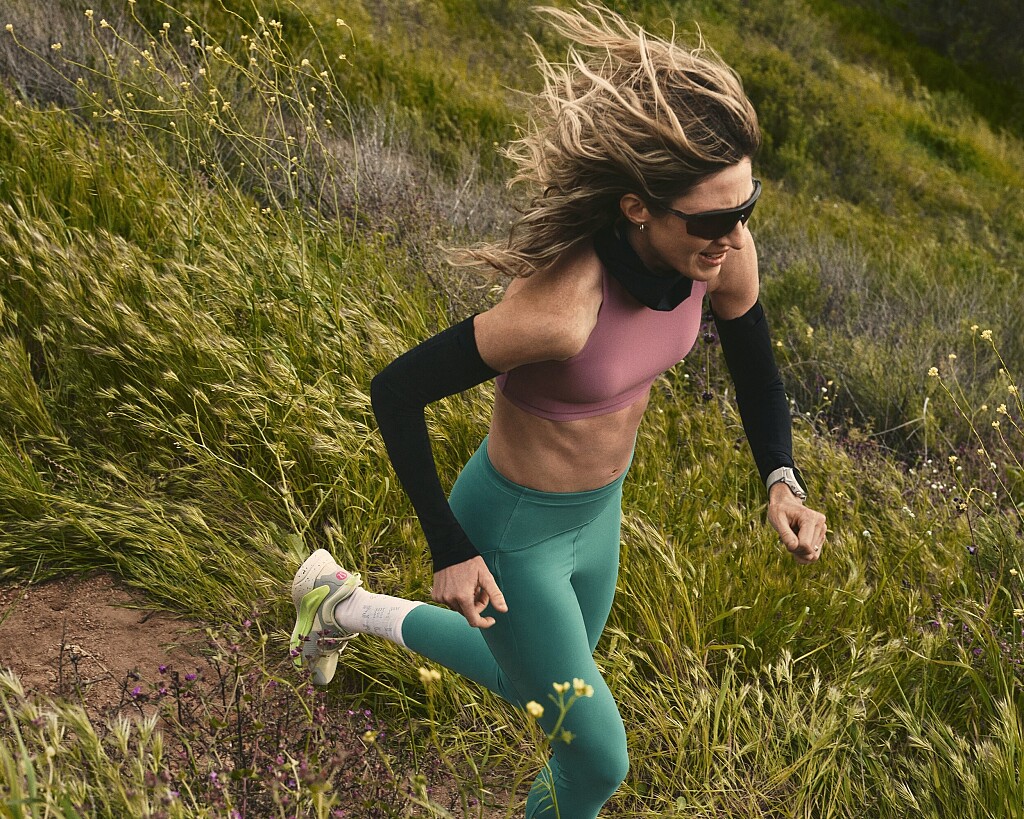
Camille Herron’s tips to run long and strong
Ultrarunning champion Camille Herron is not only known for crushing some remarkable world records but also for being the youngest person (she’s 41) to be inducted into the 100,000 Lifetime Miles Club (which she was in 2022). The prolific runner has now surpassed 107,000 miles, and stayed healthy and strong while doing so–in the past year alone, she destroyed the world record for 48 hours of running, covering 435.336 kilometers (270.5 miles) around a 400-metre track in Bruce, Australia.
Herron shared some fantastic tips with Canadian Running to keep both body and mind in peak form as you run for decades to come. Her tips are applicable to everyone, whether you are a beginner or already have years of running to build on.
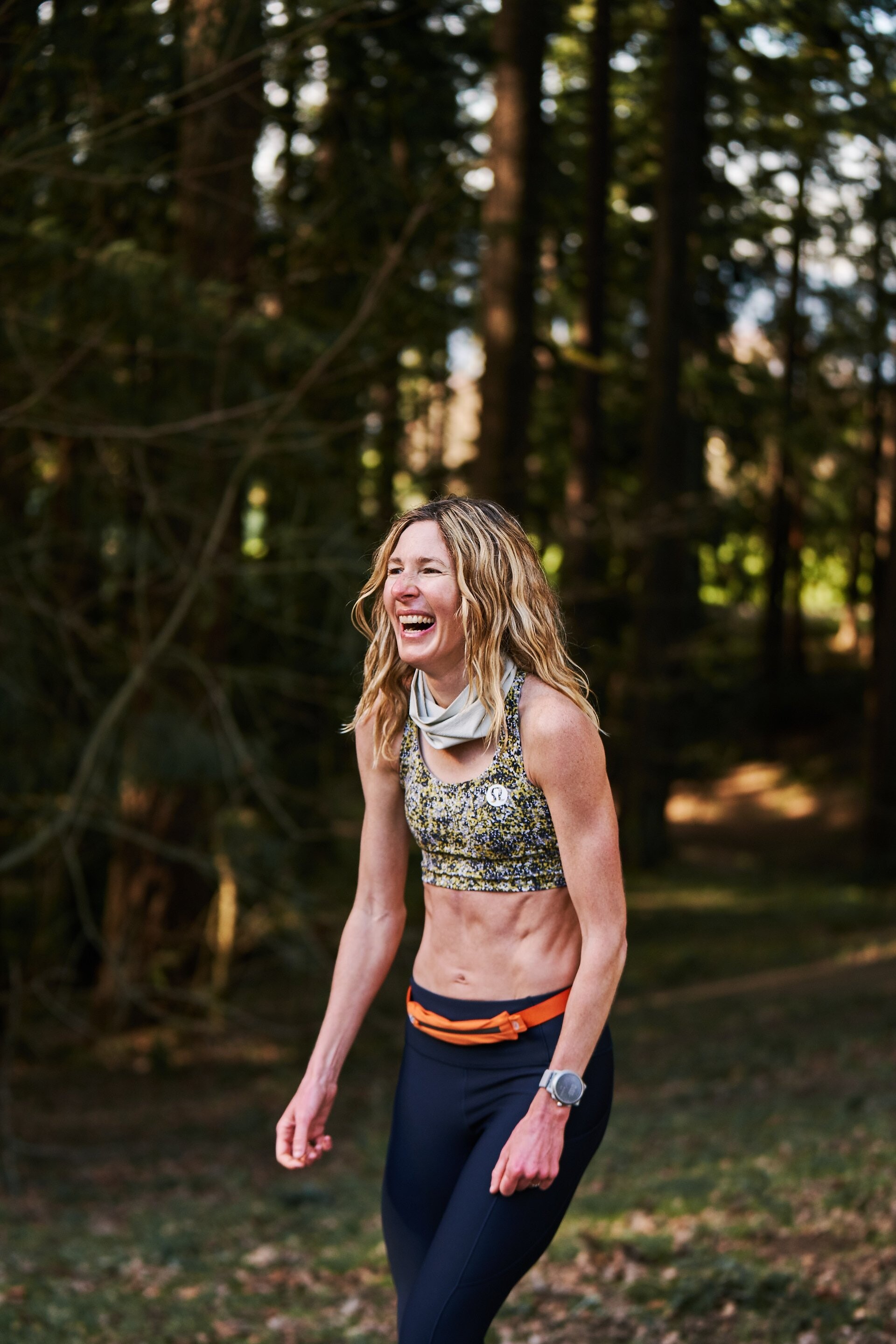
Have a support system
If you plan on running for many years, it’s essential to have some kind of community to help you through struggles, as well as celebrating the good times. Surrounding yourself with positive influences, from your local running groups to online training forums, can be a huge help.
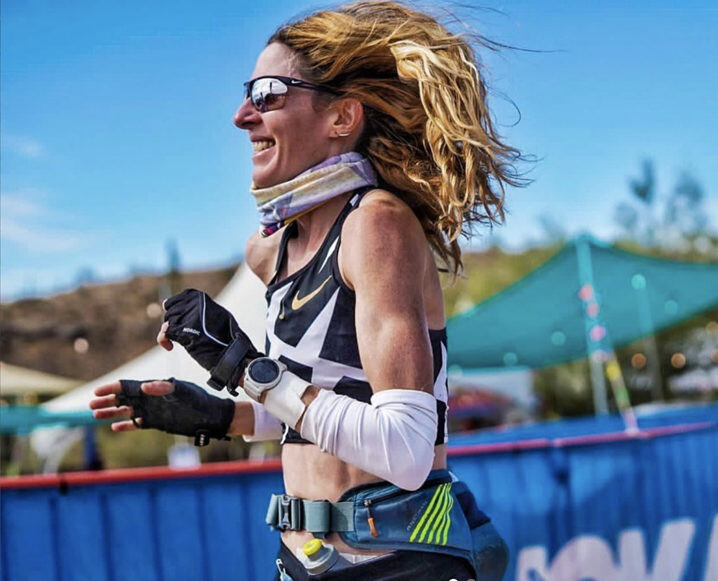
Whether you love to log your mileage alone or enjoy a club atmosphere, it can be helpful to have some people you can count on for support. Herron says “great support and guidance from my husband/coach, sponsors, and everyone around me,” has helped her accomplish her goals.
Keep easy runs easy
Herron explains that she has learned to slow down the pace on easy runs. “I run at 60-70 per cent of heart rate max on easy runs,” she says. If you’ve checked out Herron’s social media, you’ve probably noticed that she always looks like she’s having a blast. She stops to photograph animals and unusual foliage as she runs, and pauses to snack on berries on the trail, taking time to enjoy the process.
Try running twice a day instead of loading your legs all at once
Herron, who has a background in exercise science, often runs twice a day rather than doing a single big training run. She explains that running twice a day is “healthier and more anabolic for musculoskeletal health than long single bouts, and helps maximize aerobic metabolism.” If you’re hoping to add mileage without causing injury, dividing up those runs may be key.
Stay adaptable
Herron says she notices what her body is feeling on any given day or at any point in her life, and is prepared to work with her body and the day in order to stay balanced. “Our bodies change,” she says. “Like right now, I’m a master’s runner and experiencing perimenopause symptoms.” Herron says she stopped taking her longtime oral contraceptive and has focused on stress management to adapt to the changes in her body, and feels immensely better.
Switch up your training to stress your body differently
“I train my body in a variety of ways, with different surfaces, intensities and shoes,” explains Herron. She also participates in both ultrarunning on road or track and trail running. “I’ve raced 400m-48hrs, and I enjoy stepping up, down, and over all types of running,” she says. “It’s all fun and challenging in its own way.”
(09/06/2023) ⚡AMPby Keeley Milne
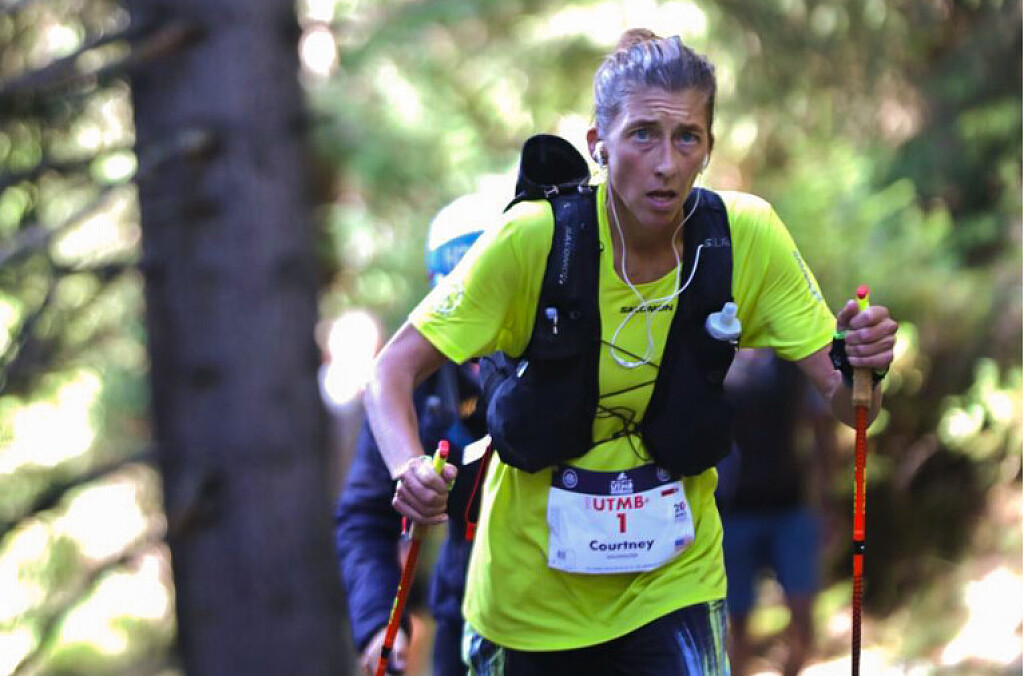
2023 UTMB Women’s Race
Was there actually any doubt that American Courtney Dauwalter (pre-race interview) would actually win UTMB? If her performances throughout the summer were any indication, it would have been foolish to bet against her. After winning and setting course records at both Western States 100 and Hardrock 100 earlier this summer, this win might just be the cherry on the cake, or the cerise sur la gateau, as the French would have it.
The legend of the sport led from the early miles, and in typical Courtney fashion, smiled and joked her way to the win with a time of 23:29:14.While Emma Pooley, of Switzerland, led for the initial kilometers of the race, it didn’t take long for Dauwalter to move to the front. Sporting her trademark smile and happily interacting with volunteers at aid stations whenever the opportunity presented itself, Dauwalter simply makes it look good.
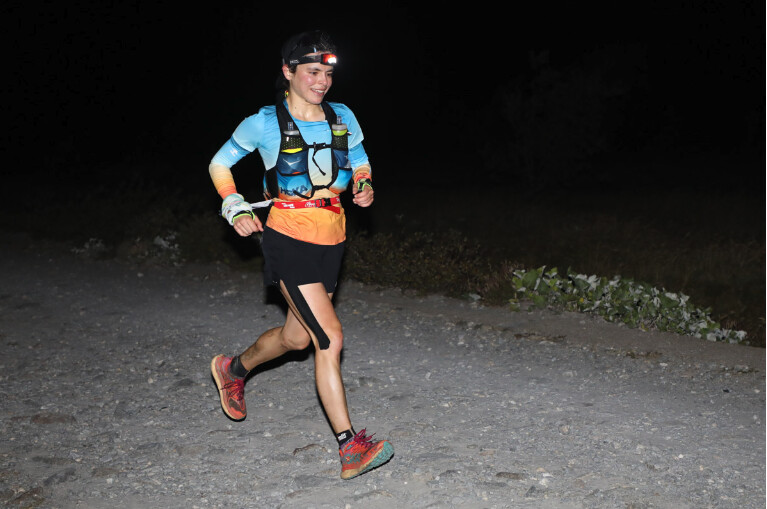
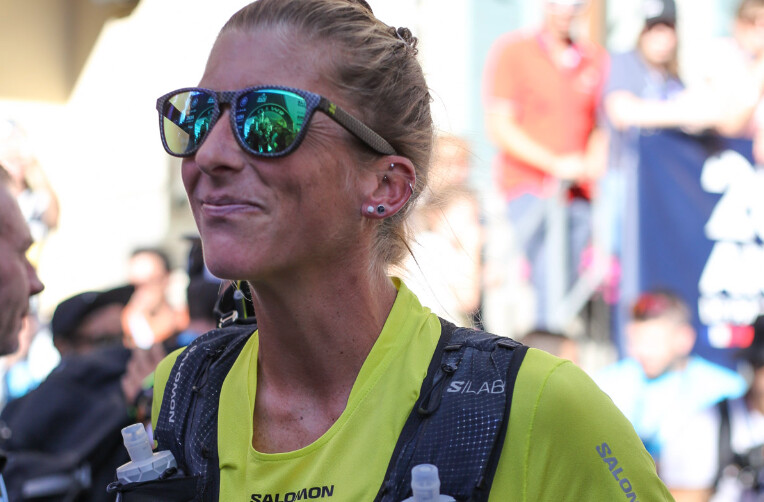
The top three women, Dauwalter, Pooley, and France’s Blandine L’Hirondel, came into Les Contamines, 32 kilometers into the race, within seconds of each other. It would be the last time we would see the front of the race together, as by Col du Bonhomme, 12 kilometers later, the gap between Dauwalter and second-place Manon Bohard Cailler, of France, was nearly 10 minutes. L’Hirondel and Chiina’s Fu-Zhao Xiang (pre-race interview) came through another two minutes later. Germany’s Katharina Hartmuth (pre-race interview) came over the dark col another five minutes in arrears. The situation remained essentially unchanged through Les Chapieux at 51 kilometers and Lac Combal at 69 kilometers, except the gaps were growing.
Nearly 10 hours into the race, Dauwalter came through Courmayeur at 81 kilometers, not even bothering to stop at the aid station. Bohard continued to keep the gap manageable at 18 minutes, but it was really starting to look like another runaway victory for the American for the top step of the podium. But the race for the rest of the top spots was just starting to get interesting. L’Hirondel and Xiang remained close in third and fourth, just a few minutes back of Bohard, and Hartmuth continued to lurk another 20 minutes back. This early in the race, there were still many within striking distance. Coming through Refuge Bertone at 86 kilometers, the top five remained unchanged and Canada’s Ailsa McDonald, Poland’s Katarzyna Solińska, the U.S.’s Sabrina Stanley and Leah Yingling, and Claudia Tremps of Spain filled out the top 10.
Somewhere before Arnouvaz at kilometer 99, Bohard took a fall that would ultimately take her out of the race. She entered the aid station walking gingerly, but was determined to keep going. This development opened up podium possibilities even further, and Xiang and L’Hirondel continued to run together at Grand Col Ferret, 50 minutes behind the ever-steady, smiling, and happy Dauwalter. Hartmuth was just 15 minutes off a podium position.
With the arrival of Saturday morning came renewed spirits for many. Dauwalter arrived to sun at La Fouly running 26 minutes under her own course-record pace. L’Hirondel and Xiang came in just under 50 minutes back, but now there was daylight, in the form of a couple of minutes, between the women. Hartmuth remained in fourth, 65 minutes down, Solińska in sixth, Yingling in seventh, and Spain’s Maite Maiora came through in eighth looking relaxed and focused. Stanley remained in the top 10. Bohard finally succumbed to injuries from her fall and would withdraw from the race.
By La Giète, 130 kilometers in, the gap between Dauwalter and second place was over an hour, but the fight between the rest of the top five remained tight. Xiang moved into second and Hartmuth third, just minutes apart, as L’Hirondel began to feel the distance and time in her legs and dropped back. Solińska and MacDonald continued in fourth and fifth, running together almost two hours behind Dauwalter and nearly 50 minutes behind second and third places. Things remained relatively unchanged at Trient at 144 kilometers. Dauwalter looked good, Xiang was 66 minutes back, and Hartmuth was a mere minute behind her. Solińska and MacDonald followed another 50 minutes back, with Maiora trailing them by 15 minutes.
With victory seemingly all but assured for the American, the battle for the other two podium spots started to get heated on the closing climbs and kilometers. Through Vallorcine at the base of the final major series of climbs, Hartmuth moved up into second after biding her time the entire race, now seven minutes ahead of third-place Xiang and fourth-place L’Hirondel, a further nine minutes back. Maiora led Solińska in fifth and sixth just under two hours behind the leader.
Near the top of the final climb at Tête de Béchar, 161 kilometers in, it was Hartmuth in second, 56 minutes down. L’Hirondel moved into third 15 minutes back and Xiang kept the pressure on for the final podium spot, trailing by just four minutes. The next gap to Maiora remained about 30 minutes.
Meanwhile, Dauwalter made short work of the final descent to the finish line in Chamonix, finishing in 23:29:14 and completing the ultimate trifecta of ultrarunning, winning the Western States 100, Hardrock 100, and UTMB all in one year. “Anytime you have a chance to take on a crazy challenge, I think we should,” she said afterward.The battle for the final two podium spots didn’t let up until the very end. Coming through La Floria, just four kilometers from the finish, Hartmuth led L’Hirondel by a mere nine minutes, and both women looked strong all the way to the finish. They would finish just over 40 minutes behind Dauwalter, Hartmuth in second at 24:10:52. L’Hirondel, the multi-time trail world champion, finished in third at 24:22:50 for her debut 100 miler.Xiang would fade away from podium contention in the final kilometers but held on for an incredible fourth-place finish, improving on her seventh place in 2022. But really, the excitement of her race finish was only added by receiving a marriage proposal on the finish line. Having met her now-fiancé — she said yes! — four years ago at UTMB, the proposal really was a perfect ending to her race.
Maiora finished fifth, an impressive result after her DNF in the race in 2021.
(09/03/2023) ⚡AMPby Eszter Horanyi I run far
North Face Ultra Trail du Tour du Mont-Blanc
Mountain race, with numerous passages in high altitude (>2500m), in difficult weather conditions (night, wind, cold, rain or snow), that needs a very good training, adapted equipment and a real capacity of personal autonomy. It is 6:00pm and we are more or less 2300 people sharing the same dream carefully prepared over many months. Despite the incredible difficulty, we feel...
more...
3 Years After a Car Accident Put Him in a Coma, This Runner Finished an Ironman
Now he runs for his young son with an incurable heart disease.Whether it’s one mile or 100 miles, running is my time to reflect, and appreciate every breath, heartbeat, and mile along the journey, and to celebrate the gift of life.
I’ve always enjoyed running and I started competing in 6th grade on the track and field team for my middle school. I loved being a part of a team atmosphere, and as I entered high school, I still wanted to run, but my coaches preferred that I throw shot put and discus because I was doing a lot of strength training and some powerlifting at the time. I enjoyed the throwing events, but had an interest in running over the years, and would ask my coach to put me in a sprint relay or two throughout the season. Outside of track, I also started swimming competitively when I was 15, and when I wasn’t at swim practice, I was usually jogging.
Growing up, I also had a dream of wanting to complete an Ironman triathlon. I saw the Hawaii Ironman on television when I was 5 years old and was inspired by the athleticism and inspirational stories of the athletes.
Unfortunately, one month after I graduated high school in July 2004, I was involved in a near-fatal car accident. The injuries were catastrophic: my heart went across my chest, I sustained shattered ribs, pelvis, left clavicle, and severe nerve damage to my left shoulder. Nearly every major organ in my body was damaged, failed, or lacerated. I also had a concussion from the impact of the crash and experienced 60 percent blood loss.
The EMS and rescue workers who got me out of the vehicle were later given awards for their work. I was then flown by a medevac to the hospital, and my trauma team explained to my parents that it would be a miracle if I survived the first 24 hours. Well, I did and I would spend the next two months in a coma, on life support. I was brought back to life eight times during the 14 major operations I had over that time.
When I came out of the coma, I had lost 100 pounds, and had to learn how to talk, eat, drink, tie my shoes, comb my hair, and brush my teeth all over again. The thought of walking was just that—only a thought—due to the damage to my crushed pelvis.
However, with help from my medical team, I was slowly able to stand, with restraint belts around my waist while being held up by physical therapists on each side. I then progressed to standing on my own with a walker, then a cane, and then shuffling my feet a few inches at a time across the floor to learn how to walk again.
After months of intense physical therapy, I was able to walk around my local high school track, which was a triumphant day. A few months after that, I was able to jog a mile around the track, and I kept progressing from there.
A year after leaving the ICU in 2005, I finally started college, and joined the swim team (even though I was just doggy paddling or doing light kicking with the kick board once or twice a week for 30-minute sessions.) Then two years later, in 2007, I was able to live my dream of crossing the finish line of the Hawaii Ironman triathlon, and also complete my healing process.
It was a team effort to save my life that terrible day and help me heal 100 percent from the EMTs, medevac team, pilots, surgeons, nurses, and physical therapists. So crossing the finish line at Ironman was my way of saying thank you to everyone who was a part of my journey and encouraging me every single step along the way.
Completing that race inspired me to continue racing, and eventually get into trail running, which I love.
Today, though, I run for my son, Liam. My wife, Pam, and I have two amazing children, Clara, who is 6 years old, and Liam, who is 4 years old. My children are my absolute world and they inspire me on a daily basis. My son, Liam, has a very critical form of congenital heart disease (CHD). CHD is a defect in the heart’s structure that’s present at birth, affecting nearly 40,000 babies each year in the U.S alone. His oxygen levels will always be lower than normal, so he gets dusky in color when he gets upset or cries.
Since birth, he’s undergone four major open heart surgeries, and other related procedures. His surgeries are palliative—not cures. He also has heterotaxy, which is when the organs are not in the correct location of the body, which can affect their ability to properly function. Liam’s lungs and liver are impacted, and he does not have a spleen so he is at higher risk for infections.
As Liam grows, he will require more cardiac operations. There is currently no cure for his type of congenital heart disease, and due to the cardiac defects that he has, there is an increased risk to liver dysfunction in the future.
We have been prepared that in Liam’s 20s or 30s, there’s a possibility he will need a heart transplant. This thought is very difficult for us as a family, but we hold onto the hope that medicine and surgical innovation will continue to advance over the next few years.
In Liam’s honor, I will be running the Grindstone 100K this year in Virginia. It is also my hope to raise awareness of congenital heart disease.
It’s been nine months since Liam’s most recent open heart surgery, and he is getting stronger each month. Seeing his improvement, and watching what he’s overcome has inspired and filled my heart with such gratitude. I’m going to get to that finish line for my son to celebrate his recovery!
I’m grateful for my family, and the second chance at life I was given after my near-fatal car accident, so having the opportunity to make it to the starting line of these events is a gift.
With Liam’s operations, running has been therapeutic for me—it’s a time for quiet reflection, and observing what my son has been able to overcome in his young life. It’s also a time to find inspiration on how I can help him, my family, and other families who are going through this journey.
Anxiety, depression, and PTSD can become overwhelming leading up to my son’s open-heart surgeries, but running allows me a physical and mental release from the stress.
When I get out there on the trails, I’m able to confront the concerns and worries that I have. Running has always been joyful, and these days it’s also my way to reduce stress, and inspire my children to see that when you work hard and set goals, you can achieve anything. Running is also my way to raise awareness on congenital heart disease and do all I can to help find a cure for the type of cardiac defects that my son, and many other heart warriors have. These tips have made my running journey a success:
1. Stay consistent
Each week I strive to hit a certain mileage that safely builds off the previous weeks, which then helps build a solid foundation for future training. The more consistent I am with mileage, nutrition, and pace, the better I feel at the starting line. I break larger goals into smaller, more achievable goals that over time help build confidence in my training. Over time, small goals can become big wins during the season!2. Rest and recover
In my first few years of running, I felt inspired to get out the door and train as much as possible each week. However, as I’ve been running more over the years, I have come to realize how important rest and recovery are after each training session. Having high mileage weeks is certainly an integral part of the training plan, but after every three to four weeks, I’ve found that taking the time to decrease the mileage during that “recovery” week helps keep me healthy and well rested.
3. Mix up your training and racing
I’m a bit of a hybrid endurance athlete, and I love to race in a variety of long-distance events, from marathons, to 100 mile ultramarathons. I have multiple goals in each discipline, and depending on the time of year and overall goals for the season, I’ll specifically focus on the upcoming race and how I can best prepare for it. This keeps it interesting! My weekly training plan includes swimming, biking, running, and strength training. The variety of the training and different goals has kept me feeling fresh and motivated.
Brian’s Must-Have Gear
→ PowerGel Green Apple: I’ve included Powerbar products in my training and racing since I started competing in sports in middle school, and they are a training staple of mine that I use every single day. During a training run or in the middle of a 100-miler, this is a delicious way to get much needed energy to keep running strong.
→ Nike Kiger 9 Men’s Running Shoe: These are my favorite trail running shoes because they are just the right amount of weight with optimum cushion. The way the shoe is designed, my feet feel secure, mile after mile, and I’m able to get an efficient and smooth foot strike with quick turnover. I also love the style and color range of this shoe, and they have the right amount of grip on technical terrain.
→Inner Armour Sports Nutrition Whey Protein Matrix: With the amount of training I do each week, recovery is essential in order to make the most of the next training session right around the corner. I’ve found great success in this protein formula because it tastes great, it helps hold onto the lean muscle mass when training, and aids the recovery process so I feel refreshed the next day when I get back out on the trails.
(09/02/2023) ⚡AMP
by Runner’s World
How to safely increase your training volume
Lithuanian ultrarunner Aleksandr Sorokin recently shared his August Strava data on social media, and for most runners, it reads like a what-not-to-do training plan. The ultrarunner, who holds seven world records on the track and road including the 100K (road), 100 miles (both road and track), and 24-hour run (road) is known for his huge regular mileage and hammering out two 40K runs in a single day.
“31 marathons distance completed in August, Sorokin shared on Instagram. “It was a tough month with great work for some good results for the future.” While Sorokin’s monthly mileage is mind-blowing, for the rest of us, increasing training volume should be done slowly and carefully. Here’s how.
Make sure to build a strong base
Before you start to really add mileage, make sure you have been running consistently for at least six months and have a solid foundation. These runs can (and should) be mostly done at a very easy pace–this will build your aerobic fitness and endurance.
Ignore the 10 per cent rule
The 10 per cent rule is commonly recommended for increasing training volume–and it may not be the best way to add mileage (mileage increases of not more than 10 per cent per week). There is no hard and fast rule that works for everyone, and you should maintain flexibility in your weekly volume to adjust depending on how you feel.
Volume should be added very gradually, allowing your body to adapt to the increased stress and reducing the risk of overuse injuries. For many runners, three or four per cent might be a better guideline, while others might be able to add 10 per cent or more without getting into trouble. Pay attention to how your body is responding.
Consider alternating hard and easy weeks
Periodized training is a popular method of training in phases or building blocks that usually include recovery weeks. While athletes often have three weeks that include some challenging workouts and one week of easier training to recover, alternating hard and easy weeks is a great option when adding mileage.
If you’re feeling extra tired or sluggish, take an extra rest day (or three). Paying attention to the messages your body is sending you is key to preventing injuries and building strength.
Focus on recovery
Whenever you’re adding volume or intensity to your running plan, recovery is the golden ticket to staying healthy. Prioritize rest and easy days. Make sure you are taking in sufficient calories and nutrients–this means on days when you aren’t running, as well. Recovery weeks or days are when the magic happens: your body works to repair microscopic tears in tissue and builds strength.
Increased mileage or focus on a big goal can also be challenging mentally. Make sure you are spending time on hobbies and interests outside of running and practising healthy self-care.
(09/01/2023) ⚡AMPby Keeley Milne
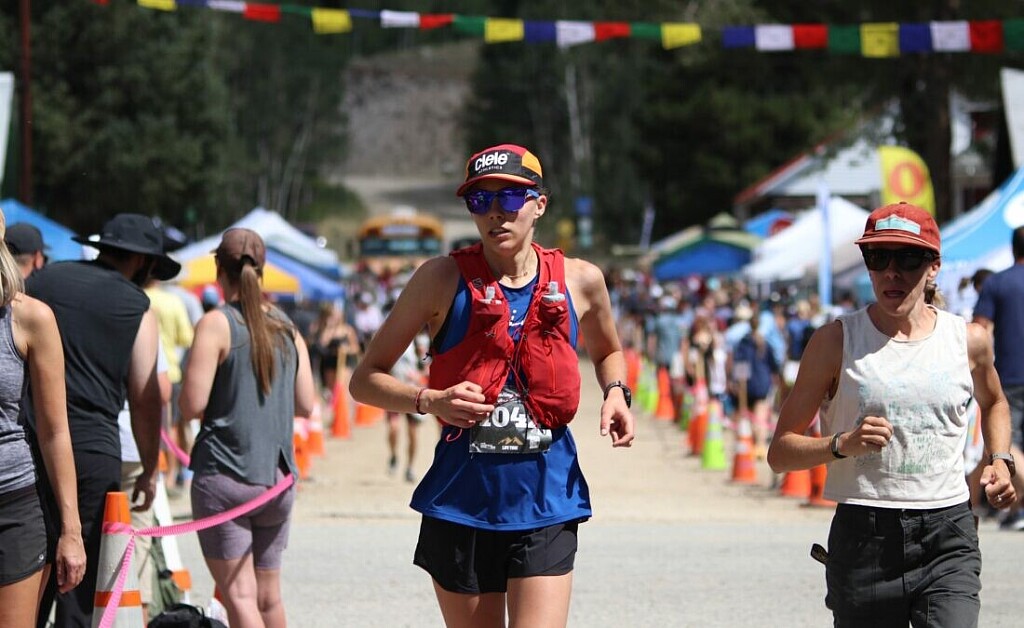
Three training tips from Canadian Leadville 100 podium finisher Madeline Wighardt
Ancaster, Ont.’s Madeline Wighardt has made the podium of three renowned ultras in the few years she has been competing, and while the 22-year-old’s running career hasn’t been long, she has plenty of valuable training insights to share. Wighardt, a chemical engineering student, chose her first race (the prestigious JFK 50 in Maryland) based on YouTube documentaries, and ended up taking second in the 2021 event. She followed that with a second-place finish at Quebec Mega-Trail’s 110K event in 2022, and ran to third place at Colorado’s Leadville 100 earlier this month.
Wighardt says she was only aiming for a sub-25 hour finish to earn the big belt buckle that Leadville 100 directors give out (runners earn a smaller belt buckle for a sub-30 hour finish), and was in “complete disbelief” that she had landed third. She shared some tips that helped her reach the podium.
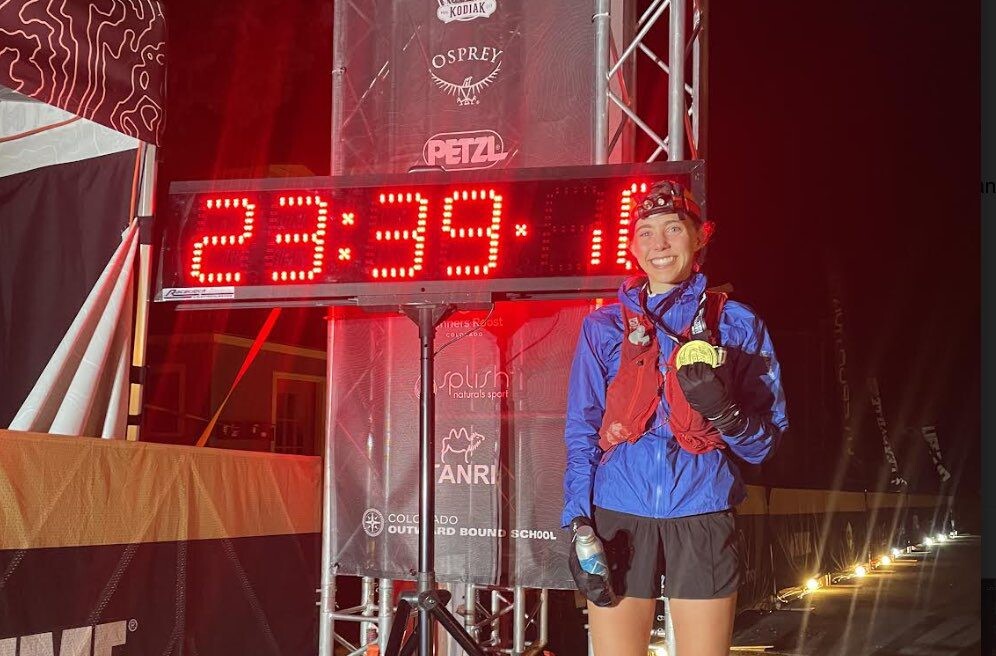
1.- Be consistent
“Every run will not be amazing,” says Wighardt. “In fact, many runs will feel horrible, and you will be tired, unmotivated and slow.” She says her biggest tip for new runners is to keep showing up and consistently putting in the work. “It will all pay off on race day.”
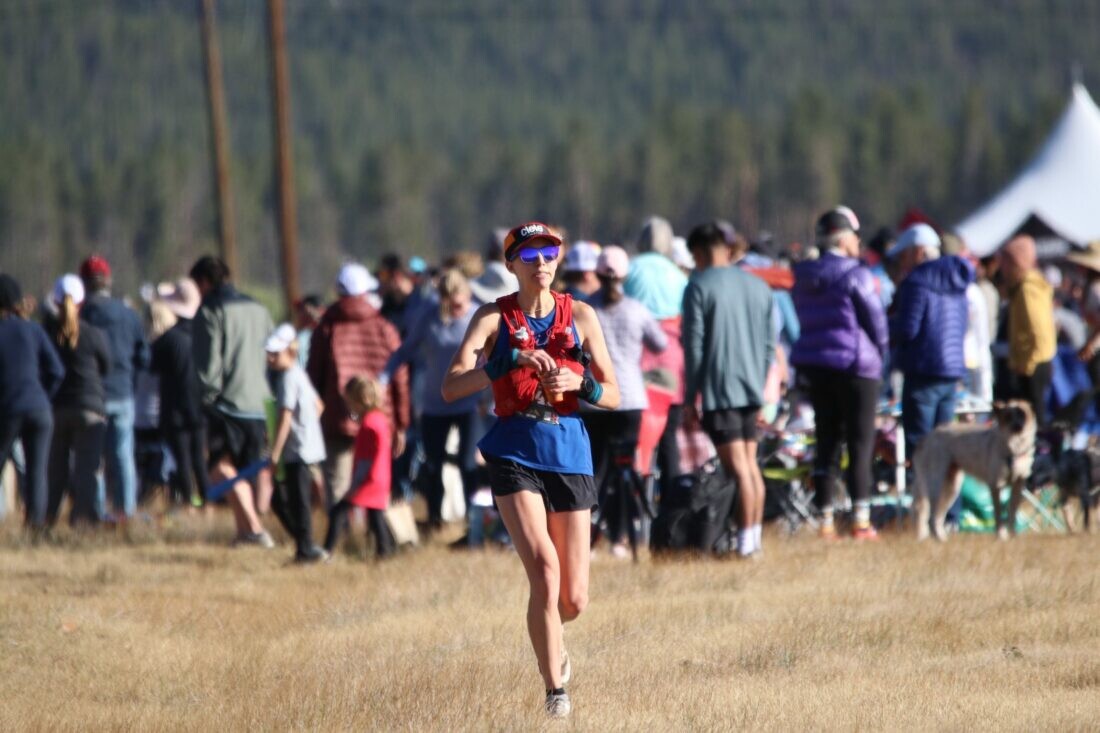
2.- Be patient–you are stronger than you think
When racing, Wighardt says it’s important to remember that you are capable of more than you imagine. “Even when it feels like your entire body and mind are giving out, you can keep going,” she said. The mindset that helped her race Leadville 100 successfully involved being extremely patient at the beginning of her race in order to feel good at the end.
“I started out very slow and easy, and was in around 200th place at mile 12, ” she says. “Because I stayed calm, collected and patient while everyone was passing me, I was able to have lots of energy to pass people at the end.”
3.- Keep it fun
Wighardt strives to avoid focusing on distances, times or race results, sharing that she’s noticed when she does get caught up in these things, she performs less well, because she is stressed and hypervigilant about how fast she is going or what place she is in. “I go as far as to never check my pace during easy runs and rarely during interval workouts and races,” she says.”I think decreasing the obsession with data and numbers and focusing on running by feel is a great way to be a better runner, both mentally and physically.”
(09/01/2023) ⚡AMPby Madeline Wighardt
Four running truths from a 240-mile finisher
Arizona-based ultrarunner and body positivity advocate Callie Vinson recently shared on social media four running truths she wishes she had known sooner, and her words hit home for many runners. Vinson, whose own remarkable running journey includes finishing the Moab 240 after shedding 200 pounds, regularly shares info about training, crewing (for partner and elite runner Scott Traer) and body positivity on Instagram, and has developed a devoted following with her passion for inclusivity and her willingness to answer runners’ questions.
Learn these four lessons now to save yourself time and grief, and have way more fun on your runs.

1.- No one cares about your pace
Ever had a really slow run and felt like you needed to justify it on Strava? We’ve been there, and the truth is that absolutely nobody cares. (And if they do, that’s weird and an issue for them, not you.) Lose the fear of running slowly, whatever “slow” means to you. Not only does no one care, but running slowly actually has a multitude of benefits for your fitness and performance. Embrace those snail-like days, and lose the stress about what others think; as Vinson puts it, “run as slow or as fast as your li’l heart desires.”
2.- You don’t have to race
“There’s no rule you have to keep upping your distance,” Vinson shares. “Running for fun is perfectly okay.” When did we start telling ourselves that we had to race? For some runners, racing is added stress and takes away from the fun of running. You don’t need to be training for an event, increasing your mileage or ever planning to race, to be a runner.
3.- Hiking up a steep-a** hill counts
Whoever invented the idea that runners don’t walk has never been to an ultramarathon. While covering dozens (or hundreds) of miles, ultrarunners certainly walk (or “power hike”) up steep hills–it conserves energy when compared to running at the same speed on steep slopes. “It’s just science,” says Vinson, and she’s right.
Pro ultrarunner and scientist Keely Henninger wrote in Freetrail about a study she worked on that found that on inclines at or above 15.8 degrees, it was more than eight per cent more efficient for athletes to walk. No need to measure the grade of your incline–if you feel the need to walk up it, go for it.
4.- No one cares what you look like running
What goes for pace also carries over to appearance–ditch the concerns about how you appear to others. Many runners are working through the same insecurities, and they sure aren’t worried about how you look. When a runner passes by on the street, others are far more likely to be impressed with their dedication and fitness rather than scrutinizing their style or body. Learn from Vinson and embrace your running body, whatever it looks like.
(08/31/2023) ⚡AMPby Keeley Milne
Four ways to shake the post-race blues
Many of us have felt a bit sad and unmoored after the pre- and post-race excitement of training for a big goal and putting out a tremendous effort on race day. Whether your race went as you hoped or you ended up with a DNF, the sudden void that can occur after all the preparation ends can be upsetting.
The best way to deal with even a small mental health challenge is to talk to a professional. If that isn’t accessible for you, or you simply want to figure out how to shake off the mental dust, here are a few things that even the pros try when they’re feeling down.

1.- Keep moving (if you want to)
You may not feel like exercising at all after the effort of a race and all the training that went into it, and that’s fine–right after a goal race is a perfect time shift into a short (or longer) off-season. However, if you can’t seem to shake that low feeling, staying physically active can help ease the abrupt drop in endorphin levels and the associated mood changes. You don’t need to run (other forms of exercise or sports can provide a similar sense of accomplishment and well-being) and this might be the perfect time to try activities you normally can’t squeeze in.

Always wanted to test out your bouldering skills? Join a beginner’s class. Maybe you’ve imagined yourself taking long, peaceful bike rides you never have the enthusiasm to head out on after running sessions. Now’s the perfect time to dust off that bike and explore your neighbourhood.
2.- Focus on recovery
We all hear how recovery is as important as training, but few runners take it as seriously as they should. The recovery period is when your body actually gets stronger, rebuilding in order to perform again, and your body needs both rest and nutritious fuel to heal and strengthen. Since you aren’t dedicating yourself to intense exercise, take some time to do some healthy meal prep or master some nutritious recipes. Take naps. Catch up on a TV show you’ve been too busy to stream.
Do what works for your body–if foam rolling helps, go for it, and if you have access to massage or physio, that may be a perfect option. Enjoy some time nurturing your body and mind, pressure-free.
3.- Connect with others
Reach out to fellow runners or friends who understand the post-race experience. As coach and ultrarunner David Roche shared in Trail Runner, talking to other athletes can be an empowering way through this feeling. “For most people, life trapped in your own brain can become immensely difficult,” Roche said. “Let others know how you feel; chances are they have felt the same way too.”
4.- Set new goals when you feel ready
Having a new goal to work towards can provide a sense of purpose and direction after the race, and doesn’t have to be running-related. If you aren’t ready to think about your next running season, plan a fun goal with a friend–meeting a local hiking group, or enjoying a new-to-you trail every weekend. Try a process-focused goal that isn’t tied to a result or time. Setting new objectives helps shift the focus from the post-race emptiness, and gives you a reason to head out the door and move your body for fun again.
(08/30/2023) ⚡AMPby Keeley Milne
Why Carbon-Plated Running Shoes Can Lead to Injury
Ten Non-plated running shoes that let your feet move freely, provide stable cushioning, and deliver a fast, agile ride
The advent of supershoes has transformed the running shoe world in every category, none more than the class of shoes that used to be called lightweight trainer-racers. Rather than low, flexible, relatively firm shoes, the majority of up-tempo shoes now have a thick stack of light, bouncy foam with a curved carbon or plastic plate embedded in the midsole. Shoes without a plate are now defined by its absence. But concerns continue to grow about injury risk in carbon-plated shoes, and a growing number of models are eschewing the high-stack-with-plate trend and reviving the simple up-tempo shoe category with modern touches.

Besides not having a plate, these shoes share other characteristics. Like supershoes, they all feature advanced midsole foams that are ultra-light and hyper-responsive. Unlike supershoes, however, they all have relatively low stack heights and tend to be built on wider platforms, both of which enhance their stability. They also all have a flexible forefoot (rather than a rigid, rockered one), svelte uppers that have just enough structure to hold the foot in place, and price tags that run around $100 less than their supershoe siblings.
If plated super racers and trainers are indeed super, allowing you to run faster with less effort, why would anyone want anything else? The answer has two seemingly contradictory parts: 1) to avoid the excess stresses and accompanying injuries that supershoes can cause, and 2) to allow the natural training stresses that supershoes reduce, in order to build stronger, more robust feet and lower legs.
The problems start with supershoes’ thick, bouncy, sole that propels you forward, but can also throw you sideways. “Running in supershoes is a much less stable environment,” says Jay Dicharry, physical therapist, biomechanical researcher, and professor at Oregon State University. “If you have really good alignment and foot and ankle control, you might be OK, but if not, a supershoe will greatly magnify your instability. You’ll wind up with a considerable increase in stress—and if you have something borderline, it might push you over the threshold.”
Amol Saxena, a leading sports podiatrist in Palo Alto, California, also points out issues with the prescriptive rigidity of the plates. “The problem with the carbon-plated shoes is that your foot is individualized, and the carbon plate is not,” Saxena says. “So if the shape or length of your metatarsals line up differently than where it has to bend, or your plantar fascia is less flexible, you can get stressed in those areas—that’s why people are breaking down. I’ve had people break or tear things just in one run in the shoes.” The more flexible plates found in many super trainers reduce some of this stress, but these shoes are still tuned to optimize specific strides and don’t let the foot move freely in its preferred patterns.
Research has also shown that running in supershoes changes your form: It decreases your cadence, increases stride length and peak vertical forces, and alters foot mechanics. All these add stress to joints. “When you put a supershoe on, you basically have a trampoline,” Dicharry says. “It’s going to compress and rebound, and creates a different rate of loading to muscles and joints.” While no studies to date directly demonstrate that supershoes cause injury, evidence links them to stress fractures, plantar fasciitis, achilles tendinopathy, and other foot and lower-leg issues.
Paradoxically, while supershoes’ unstable platform and rigid plates can add excessive stress, their performance-enhancing rebound can also remove some of the training load. Supershoes lower the load at the ankle and foot, reducing the work they have to do and making running easier in the short-term, but simultaneously removing some of the stimulus for your body to adapt and grow stronger in the long-term. “If you run in supershoes exclusively, you’re going to end up with a bunch of deficient runners prone to injury—runners with less springy tendons, weaker tendons, and lower bone density,” Dicharry says.
The solution is to wear a variety of shoes in your training. “It is good to use different stack heights and flexibility,” Saxena says. “Plated shoes should be a training tool as well as for races—but how much depends on the runner.” You want to train some in the shoes you’ll be racing in, to let your body adapt to their unique stresses and stride patterns. But training in more flexible, less-bouncy shoes has been shown to improve running economy and build the strengths you need to handle the unstable rebound of supershoes. “If you want to run in super shoes you need to put the work in to show up with stable parts,” Dicharry says.
Fortunately, I don’t find training in these shoes a chore. They may not be performance-enhancing racers, but they are light, nimble, stable, and make my feet feel connected, engaged, and alive.
After having run in dozens of shoe models released this spring, I selected those that fit in the category and ran in a different shoe every day for six weeks—on asphalt, concrete, and dirt roads. I did at least one daily run and speed workout in each, ranging from 100-meter pickups to VO2-max intervals to tempo runs. Despite their similarities, each shoe has a slightly different ride and significantly different fit, so it’s worth trying out a few before buying. All of these models will serve as an excellent trainer for easy daily runs, interval workouts, tempo runs, and occasionally going long.
(08/26/2023) ⚡AMPby Outside Online
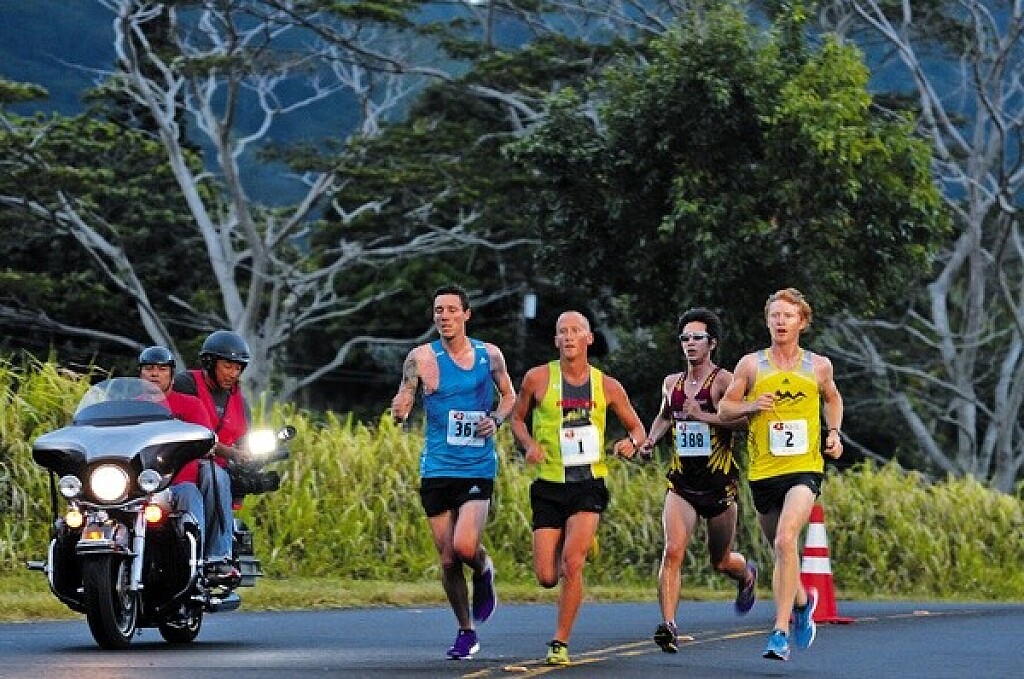
The Kaua‘i Marathon takes off on Sept. 3
The Kaua‘i Marathon and Half Marathon is back on Sept. 3, and deadline for online registration at www.thekauaimarathon.com is 11:59 p.m. on Aug. 30.
“This 14th Kaua‘i Marathon world-class event provides the perfect three-day adventure for residents and visitors to experience Kaua‘i’s aloha spirit,” said Jeff Sacchini, the Kaua‘i Marathon founder.
“Between the hundreds of volunteers who assist with race day duties to the Hawaiian blessing, Polynesian entertainment and cultural experiences along the course, The Kaua‘i Marathon and Half Marathon is a destination race to remember.”
The experience starts with the Wilcox Health Sports and Fitness Expo at the Grand Hyatt Kaua‘i Resort &Spa in Po‘ipu, where marathon participants pick up their race packets from 10 a.m. to 6 p.m. ahead of the Sunday run.
A sponsor reception rounds out Friday. The expo continues on Saturday from 9 a.m. to 4 p.m. with a Keiki Run starting at 9 a.m., and Family Fun Run chasing a very fast 6-foot chicken. The main races start Sunday morning at 6 a.m. at the front of Po‘ipu Shopping Village.
Traffic advisories, including various road closures, can be found in detail on the Kaua‘i Marathon website at www.kauaimarathon.com.
“We have some distinguished participants for this year’s marathon,” said Robin Jumper, the Kaua‘i event coordinator for The Kaua‘i Marathon. “Michael Wardian, a past champion and ultra runner from Delaware, will be doing the full marathon, and Tyler McCandless, a past champion and the spokesperson for the Kaua‘i Marathon Youth Running Program, will be doing the half marathon.”
Additionally, as COVID-19 conditions improve, at least two runners from Japan will be among this year’s Kaua‘i Marathon field.
Shinya Ohashi, who finished first in the 2018 version of the Kaua‘i Marathon with a run that stopped the clocks at 2 hours, 23 minutes, and 33 seconds, is from Ishinomaki City, Miyagi Prefecture, Japan. He was the male winner of the Iwaki Sunshine Marathon 2023, which attracted runners from Italy, Spain, United Kingdom, Thailand, Portugal and Vietnam in February.
Ohashi will be joined by Mirai Honma of Higashine City, Yamagata Prefecture, Japan, who was the female winner at the Iwaki Sunshine Marathon.
Since the inaugural Kaua‘i Marathon and Half Marathon, the island has hosted 10,232 participants from the mainland, 1,342 international runners, 3,590 participants from the neighbor islands and 8,077 from Kaua‘i.
According to the County of Kaua‘i, the direct economic impact over 14 years has equated to nearly $40 million. The Kaua‘i Marathon has donated more than $160,000 to local charities and nonprofit entities.
(08/25/2023) ⚡AMPby Dennis Fujimoto

Kauai Marathon
The Kauai Marathon and Half Marathon is one of the most beautiful destination races in the world today. This is a great way to combine a unique experience and a get-away that only Kauai can offer. You will be treated to beautiful beaches, an inspiring course, and fellowship with participants from around the world. Register today! The mission of the...
more...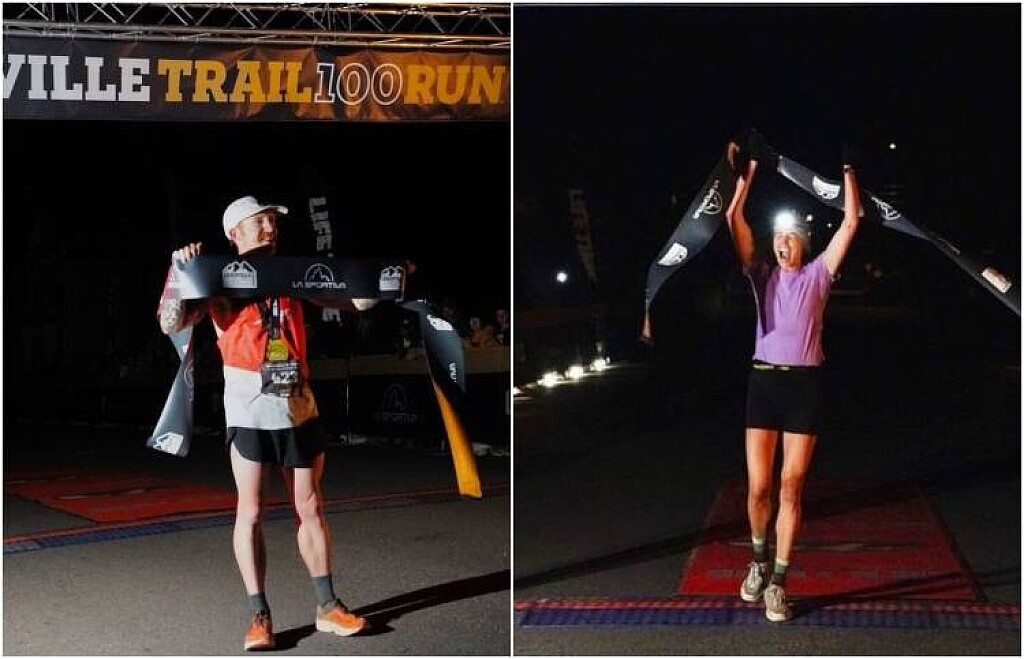
Jacquie Mannhard, JP Giblin take the honors at Leadville 100
Americans Jacquie Mannhard and JP Giblin took the spoils at the Leadville 100 with two exhilarating performances at the race in Colorado, USA. The pair dominated the women’s and men’s races respectively – each winning by a comfortable distance.
Mannhard completed the 100-mile out and back course in a time of 21:24:55, finishing almost two hours ahead of her nearest rival. Giblin, runner-up in 2022, crossed the line first overall in a time of 17:07:25, over 40 minutes ahead of Luke Paulson in second.
Both victors were some way off the course record times set by Matt Carpenter (2005, 15:42:59) and Ann Trason (1994, 18:06:24).
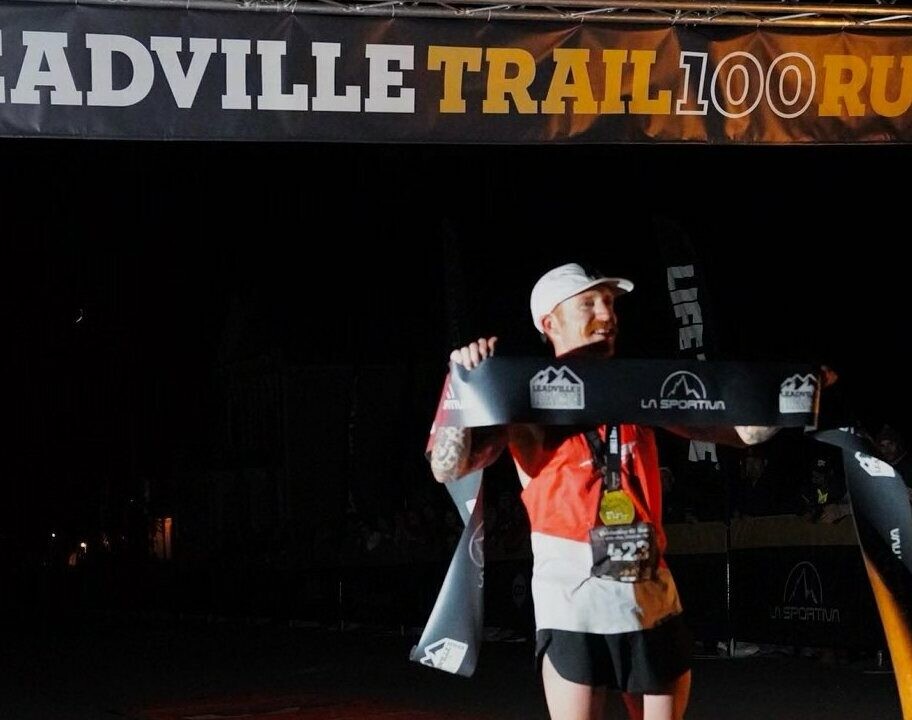
Magnificent Mannhard
The Boulder-based ultra runner, who is at home in the Colorado mountains having won the Kessel Run Ultra (60KM) in November, 2022, produced a strong performance to set a time of 21:24:55 – the slowest women’s time since 2010. Despite that fact, she was the class of the field taking the win by one hour, 51 minutes and 56 seconds.
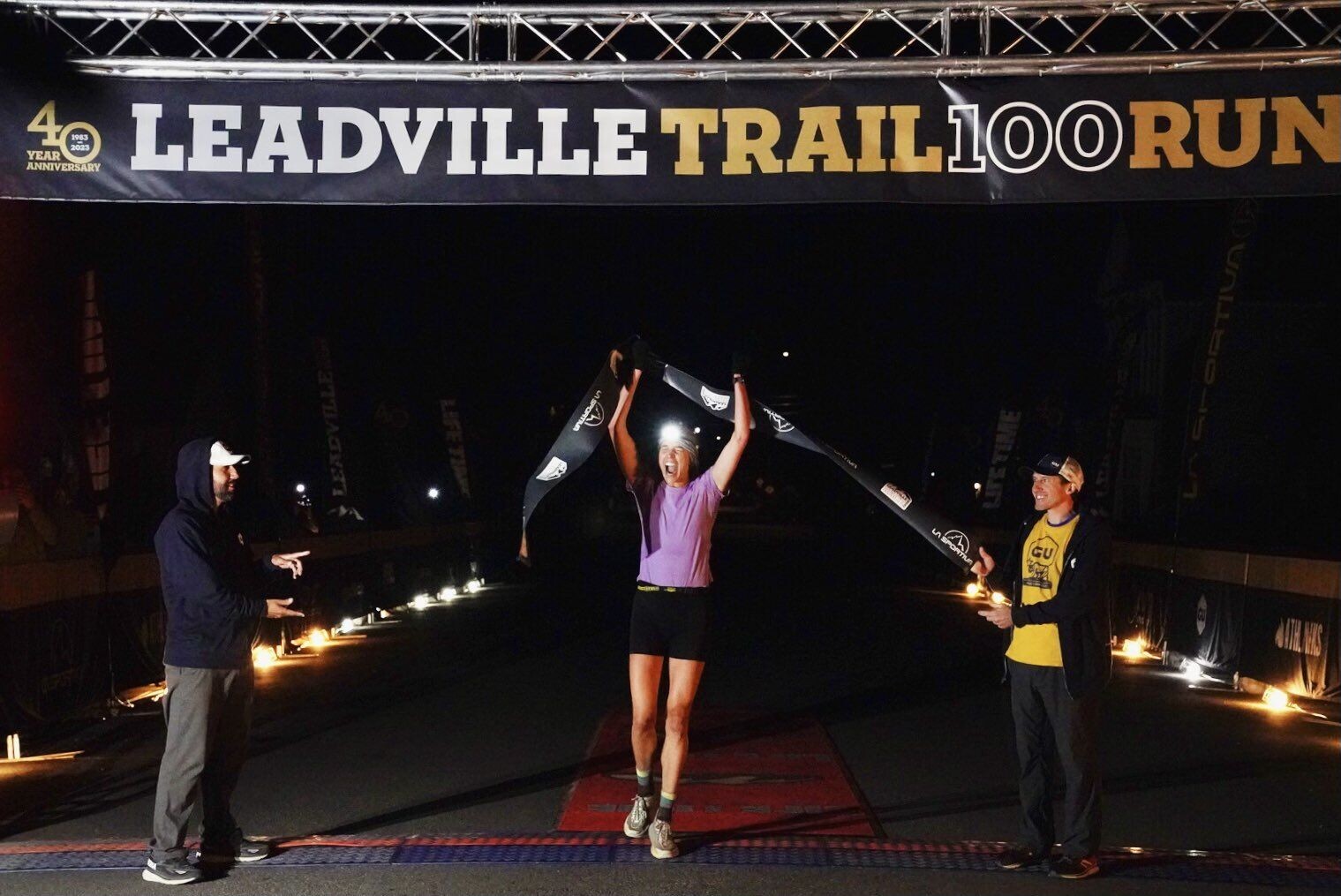
Second over the line was fellow American Lucie Haines. Haines had enjoyed a pair of victories in Colorado Spings in May and June winning the Valkyrie Trail Race (50K) and Ring the Springs (100K). But at Leadville she was unable to keep apace with Mannhard as she finished in a time of 23:16:51.
Canada’s Madeline Wighardt denied the Americans a clean sweep on the women’s and men’s podium by finishing third in a time of 23:32:57. The 22-year-old finished second in the Quebec Mega Trail (QC) 110K race in 2022 as she starts he fledgling career.
Colleen Noonan was next over the line – another who has enjoyed 2023 success in the state. The American won the North Fork 50 Mile/50K at Buffalo Creak and Chase the Moon 12-hour Solo. Noonan had to settle for bronze at Leadville, however, as she finished over two hours behind Mannhard in a time of 23:33:57. Carrie Stafford (23:48:50) was fifth over the line just under the 24-hour mark.
Glorious Giblin
Another Colorado-native took the victory in the men’s race as Giblin topped the podium. The 29-year-old, who finished 18th at Western States in June as well as second at Bandera 100K in January, finished in a time of 17:07:25.
He was followed over the line by Luke Paulson (17:47:55). The 31-year-old, who won the Yamacraw 50K in Kentucky in May, was 40 minutes and 30 seconds off the pace.
Scott Tarer was third over the line in a time of 17:54:12, just six minutes, 17 second further back. The 42-year-old won the Crown King Scramble 50K in May and finished 15th at Western States in June. He is a previous winner of the Javelina Jundred, the Hennepin Hundred and the Vermont 100.
Great Britain’s Ry Webb finished fourth in a time of 18:38:13 – an hour and a half behind the race winner. Webb has +800 rating on the UTMB Index won the 2021 Lakes in a Day 50 miler, Patrick Cabe (19:34:54) rounded off the top five.
(08/21/2023) ⚡AMP
by Stuart Dick

Leadville Trail 100 Run
The legendary “Race Across The Sky” 100-mile run is where it all started back in 1983. This is it. The race where legends are created and limits are tested. One hundred miles of extreme Colorado Rockies terrain — from elevations of 9,200 to 12,600 feet. You will give the mountain respect, and earn respect from all. ...
more...
This Mom Has Maintained a 9.5-Year Run Streak
“I believe running keeps you healthy and strong, but it also shows you how much your body can do, and how hard it can work. ”
In 1995, when I started dating my husband, I began running with him. He was on the cross-country and track teams at Virginia Tech. He taught me about shoes, distance, and pacing, and we still have running dates when we want to talk and catch up. I simply loved the progress and the results I could get with running, and how I could challenge myself in different ways. More importantly, I liked how strong and accomplished I felt after running. There is no sweat like a sweat from a good run—it feels cleansing.

In the beginning, I didn’t think of myself as a “runner,” but more as someone who ran as a form of exercise. I remember being so scared lining up for my first 5K in 1995 in Charlottesville, Virginia. After that race, I gradually added more distance and signed up for my first full marathon, The Marine Corps Marathon in 1999. I am now in the Marine Corps Runners Club, which you can enter if you run the marathon at least five times.
Some of my most memorable runs have not been races, though. On one of my first dates with my husband (while in college) we went on a run and I ended up running for one whole hour–which, at the time, was my longest run. I felt so proud of that milestone.
Today, some of my favorite runs are my Saturday morning long runs with my neighborhood mom friends, and anytime my sister and I get to run together is the best, because we live in different places.
My love for running has led me to a nine-and-a-half-year run streak, which means I run at least two miles continuously every day.
I started my run streak on Sunday May 4, 2014. I went out for a run and felt really good, so the next day I ran again. I knew I wanted to make a commitment to my health and my family, to take that time for myself, and to just do something challenging. I decided to run every day for the rest of the summer. When I did that, I told myself I would run until the end of the year. Then, of course, once that passed I kept going to make it a full year.
After one year, I decided to see how far this journey could take me. I fully invested in it, and I realized the more I gave running, the more it gave me. Now I can’t imagine life without my run streak.
Since I started running, I have completed several marathons, half marathons, and a few ultramarathons. I like competing and pushing hard in some races, but I also like running a race for the enjoyment of the sport, and to run hard enough so I am still having fun but am also able to be a mom after the race.
Having races on the calendar is a great way to keep myself accountable each day. I love the process and training—the long runs, the hot runs, running alone, running with friends, running in the rain, and the runs when you don’t have the motivation to run. The races for me are the icing on the cake and the celebration that I get to move my body and be around other people who like to do the same.
For me, running is non-negotiable—it’s like brushing my teeth. Luckily it helps to have such a supportive family who knows this and who understands that running makes me better at all my roles in life. I have more energy, patience, and more to give if I run.
Staying healthy and injury-free is important for my run streak. I do a lot of my runs at an easy pace, especially if I am focused on marathon training or running more distance. I also believe in cross training—having your body move in different planes and training different muscles is so important, since running is a forward-only motion. I love lifting weights, swimming, and taking classes at the gym. Since college, I have done the same 15- to 20-minute stretch routine everyday.
Eighty percent of my runs are at an easy to moderate pace. During a typical week, I like to include one long run, one mid-long run, and one tempo run or one speed session per week. If I can, I like to incorporate a STRIDE Fitness class (the boutique fitness center where I coach) because you can get a great running workout, with loud music, and a super supportive atmosphere. Today, I run 60 to 80 miles a week.
Running has gotten me through many highs and lows of my life, from meeting my husband to challenging myself in ways harder than I ever thought possible.
Lastly, I believe running keeps you healthy and strong, but it also shows you how much your body can do, and how hard it can work. I also appreciate the routine and consistency of running—it provides me a daily reset and almost like an internal shift to help me be a better person. I am so thankful for every run!
These three tips have helped make my running journey a success:
1. Start small and be consistent
It does not take much to start running. The hard part is the consistency and determination to keep going back. You don’t have to complete a run streak, but you do need to be consistent. Start small but challenge yourself. Aim to go out for 10 to 12 minutes a day for five days in a row. You could run all of it or do a walk/run. Gradually add time. It’s easy to say I will go run tomorrow, but do it today. A little tough love is required but it’s so worth it!
2. Find comfort in being uncomfortable
Our modernized lives are based around being comfortable at all times. Being uncomfortable is not pleasant, but I think it’s essential for running and life success. When you are tired in a long run or hurting in that interval, settle in, smile, breathe, and relax. Find your groove and your comfort there. Your body can handle it, but you need to train your mind and attitude because that part wants to quit. The more often you experience discomfort the better adapted you get to facing the hard things during a run or race or your life.
3. Ditch the technology and just run
Forget the Garmin or the GPS. Do some runs where you are going on effort only. Find the joy, take in the sights, have a long conversation, listen to a podcast. Don’t get caught up in your pace or your mile splits. Take a moment and remember why you are a runner, and why you love it so. This is especially true when running in Texas humidity!
Liz’s Must-Have Gear
→Balega Socks: Good socks are essential for running so I think it’s important to invest and spend a little more money on them! I love these because they are moisture-wicking and provide the best blend of cushion/compression
→Goodr Sunglasses: I love Goodr sunglasses! They are light and they don’t slip when you are sweating. They also offer cute styles for wearing at the pool or walking the dog. Also, they are a good price so you can get several pairs!
(08/20/2023) ⚡AMPby Runner’s World
All About the 4x4x48 Challenge That’s Like an Ultra But With a Plot Twist
It’s like an ultra, just with a plot twist.There’s something tempting and motivating about having a distinct finish line on the horizon. Runners love a good goal to work toward—and a good challenge that helps them get there.
That’s likely why a growing number of programs, training techniques, and events draw in new and seasoned runners who seek adventure. These trendy programs include Jennifer Aniston’s 15x15x15 workout (15 minutes on a stationary bike, elliptical, then treadmill), the 75 Hard challenge, Ironman competitions, and coast-to-coast ultramarathons. One of the latest to enter the workout chat is exploding on social media: the 4x4x48 challenge. So, we tapped two running experts to catch us up about the pros and cons of 4x4x48, then asked them for a safer, more sustainable way to try it if you’re not quite ready to go all in.
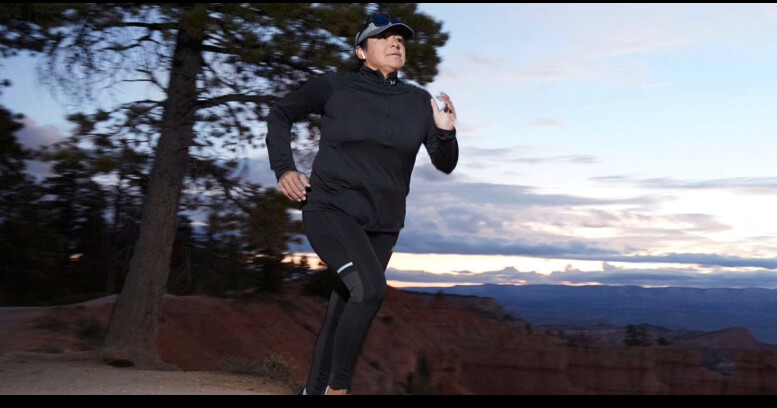
What the 4x4x48 Challenge Is All About
During the COVID-19 pandemic David Goggins, a retired Navy Seal, ultrarunner, endurance athlete, and public speaker came up with the 4x4x48 challenge. As he witnessed races being canceled around the world, Goggins wanted to offer an alternative endurance “event” that individuals could dare themselves to conquer outside of the classic race environment.
To complete a “4x4x48 Goggins Challenge,” which will earn you a T-shirt if you take part in the official program during Goggins’ announced dates (it’s currently on hold, according to his website), athletes must:
Run 4 miles
Repeat every 4 hours
Continue this pattern for 48 hours
All in, a 4x4x48 challenge calls for running 48 miles in 48 hours. For those who aren’t runners, Goggins suggests swapping in another form of cardio (such as swim, bike, or row, for example) for 45 to 60 minutes every four hours.
For some runners, four miles feels like an easy shake-out or a warmup. For others, that’s the longest they’ve ever tackled. Regardless of how much or how often you run, there are some important factors to consider before deciding to attempt a 4x4x48.
The Benefits of the 4x4x48 Challenge
Challenging yourself with high-intensity workouts can be beneficial as part of a well-rounded training program, which should include sufficient rest, recovery, and exercise variety, says Nicole Thompson, ACE-CPT, a San Diego, California-based personal trainer, health coach, group fitness instructor, and medical exercise specialist.
The 4x4x48 challenge is certainly high-intensity and high-frequency. Thompson says that the potential pros for a 4x4x48 challenge include:
Mental Toughness
Successfully completing a task this tough “requires mental strength, discipline, and determination, which can enhance your mental resilience and willpower,” she explains.
Increased Calorie Burn
Running for extended periods at regular intervals can result in significant calorie expenditure. A 150-pound runner can expect to burn around 450 calories during each four-mile stint at a 10-minute-per-mile pace. Over the course of the entire 4x4x48 challenge, this tallies up to 5,400 calories. This is nearly double the 2,900 or so the same person would burn during a four-hour marathon.
Possible Improved Cardiovascular Fitness
“This intense running schedule will challenge your cardiovascular system, which could improve endurance and aerobic capacity,” Thompson says. Although adaptations and improvement typically occur over the course of weeks and months with consistent training—rather than in a mere two days—participants may notice some improvements in cardiovascular capacity after they recover.
Practice in Time Management
Sticking to a strict schedule requires excellent time management skills (and likely, a trustworthy alarm), which can be beneficial in other areas of life, such as work or school.
The Drawbacks of the 4x4x48 Challenge
It’s vital to keep safety top of mind and avoid pushing yourself beyond your limits, Thompson advises, which would only set back your fitness journey—not progress it.
“Honestly, for most runners, the 4x4x48 challenge will have more cons than pros,” believes Erin Beck, NASM-CPT, an Orange County, California-based director of training and experience for STRIDE Fitness. “The structure doesn’t allow your body proper recovery and it requires a high mileage count that the average athlete won’t be ready for.”
According to Thompson, the following are possible drawbacks of the 4x4x48 challenge:
Overtraining and Injury Risk
“The risk of overtraining is high due to the intensity and frequency of the runs, which can lead to fatigue, muscle strains, or other injuries,” Thompson says.Sleep Disruption
The frequent runs will very likely disturb your usual sleep schedule (unless you normally get less than four hours, which we don’t recommend). In turn, this can affect recovery and overall performance.
Lack of Recovery Time
With only four hours between runs, your body may not have sufficient time to bounce back, increasing the risk of injury and burnout.
Nutritional Challenges
Remember that calorie count we mentioned? Eating and hydrating enough during the 48 hours can be difficult, and inadequate fueling may lead to performance issues or some serious health-harming ripple effects, such as dehydration or forcing your body to use muscle mass rather than energy from the food you eat to power your run. (Don’t miss our complete guide to what happens when runners don’t eat enough.)
“This is an extreme and highly demanding physical challenge,” Thompson says. If you do a 4x4x48 challenge, “it’s not recommended to do this type of run frequently or on a regular basis. Always prioritize your overall health and well-being by consulting with a qualified coach or trainer to ensure the challenge aligns with your fitness goals and capabilities.”
And be sure to run this challenge—or any endurance event—by your doctor to get their thumbs up to ensure it’s a wise choice for your fitness level and overall health, Thompson adds.
Why Sleep Is Such a Limiting Factor in 4x4x48
Sleep is essential not only for optimal performance and recovery, but also for overall health and longevity. A 4x4x48 challenge makes it really tough to get the recommended seven to nine hours of sleep, and the snooze time participants do get is interrupted and fairly likely to be low-quality.
“While doing this type of intense running challenge for two days may not have a long-term impact on overall health and recovery, it can lead to acute sleep deprivation, which can have immediate effects,” Thompson says.
Thompson explains that in just 48 hours, sleep deprivation can:
Lead to decreased focus, attention and memory; essentially impairing cognitive function
Compromise coordination and reaction times, increasing the risk of accidents or injuries during the runs
Raise cortisol levels, affecting the body's ability to handle stress and recover properly
Weaken the immune system, making you more susceptible to illnesses
Increase irritability and mood swings, while decreasing emotional resilience (basically, making you not-so-pleasant to be around)
For those who opt into the 4x4x48 challenge, it’s essential to prioritize R&R as much as possible during the breaks between runs.
“Even brief naps and dedicated periods of rest can be beneficial for recovery,” Thompson says. “Then once the challenge is complete, be sure to allow yourself enough time to catch up on sleep and give your body the chance to fully recover.”
Our bodies have a magical way of slowly getting back on track after a night or two of less-than-stellar sleep, Beck says. That said, it’s crucial to not over-tax your system—and carve out time for an extra hour or two of sleep each night—until your body has time to bounce back from the daunting physical (and mental) demands of something like 4x4x48.
A Better Way to Try the 4x4x48 Challenge
For most people, it would be best to avoid attempting this type of run more than once, if at all, Thompson says. Or stick to once or twice per year, max. And exercise caution if you do decide to do it, stopping if you feel aches or pains and prioritizing that recovery.
“It’s more practical and beneficial to focus on a well-rounded and sustainable training program that includes a mix of running, cross-training, rest days, and proper recovery,” Thompson adds.
If you’re really craving a challenge, ante up and give one of these Beck- and Thompson-designed modifications a shot:
→ Beginner: Run 4 miles per day, 4 days per week for 48 weeks. “Over the course of a year, this will help you safely increase your stamina, burn calories, tone your entire body, rack up the miles and support your heart health,” Beck says.
→ Intermediate: Run 4 miles every 12 hours for 48 hours.
→ Advanced: Run 4 miles every 8 hours for 48 hours.
Both of these latter options will allow for a nearly-full night of sleep, plus more recovery time between runs.
Regardless of which path you choose, if you decide to try some form of 4x4x48 challenge, “pay close attention to how your body responds to the challenge. If you feel excessively fatigued, experience persistent pain or notice signs of overtraining, consider cutting back or stopping the challenge,” Thompson says. And if you finished the challenge, make sure to take the next few days off from exercise.
The Bottom Line on 4x4x48
The 4x4x48 challenge is an endurance running event that requires zero qualifier, entry fee or specialized course. It might appeal to the ultramarathoner who’s looking to rack up mileage in a new manner. But running 4 miles every 4 hours for 48 hours is very demanding on the body and brain, so proceed with caution and train your way up to that mileage, rather than just jumping right into it.
It’s also wise to take time to reflect on why you’re feeling called to try the 4x4x48 challenge, if you are. Will running in this way get you closer to your health and fitness goals? Or is seeing pals and athletes on social media creating some FOMO?
“Ask yourself: ‘Is this 4x4x48 something I can do to stay fit for the rest of your life? And is it a healthy approach to fitness for you?’ Your journey has to be sustainable to be successful,” Beck says.
(08/20/2023) ⚡AMPby Runner’s World
Montreal runner Anthony Battah, following 4,500-km monarch butterfly migration path to Mexico
Montreal lawyer Anthony Battah has completed the Canadian leg of a planned 4,500-km run from Montreal to central Mexico, a cross-continental journey along the migratory path of the monarch butterfly aimed at protecting the insect’s population.
Battah, who kicked off his Ultra-Trail Monarch campaign July 29 from Montreal’s Insectarium, finished the Canadian stretch of his run (more than 900 km) Wednesday, when he crossed the Ambassador Bridge from Windsor, Ont., into Detroit.
The runner is being supported on his run by his wife and daughter, who are following the 39-year-old in an RV along his route through the United States to the Monarch Butterfly Biosphere Reserve in Mexico’s Michoacán region. Battah’s goal is to run about 50 km a day, which would see him arrive at the biosphere—where the monarchs spend the winter—by Nov. 1.
The monarch butterfly is now classified as an endangered species by the Committee on the Status of Endangered Wildlife in Canada. According to The Nature Conservancy, the insect is an important pollinator that plays a vital role in the health of many ecosystems across North America.
“I have this ability to run very long distances. I stumbled on the story of the monarch and it touched me,” Battah told the Montreal Gazette in the lead-up to his run. “I saw in that an opportunity to challenge myself, but also to inspire people to do something in their own areas of interest.”

According to the Ultra-Trail Monarch website, Battah will plant milkweed and flowers rich in nectar to create “aid stations” for future generations of monarch butterflies.
In addition to encouraging others to plant milkweed and other flowers to help the migrating insects thrive, Battah hopes to raise $4.5 million—or $1 per meter he plans on running—to “help serious organizations dedicated to protecting the monarch and biodiversity.”
“I want us to do something significant to protect biodiversity and the environment,” Battah said. “If I’m capable of running 4,500 kilometers to reach the center of Mexico, surely everyone has the capacity to join forces and do a little bit more.”
Battah’s run is the latest campaign to use ultra running to bring attention to the plight of the monarch butterfly. In 2019, the first Monarch Ultra Relay was held from Peterborough, Ont., to the Cerro Pelón butterfly sanctuary in Mexico’s Sierra Madre mountains. Throughout the 47-day journey, 44 ultrarunners volunteered to run segments of 50K to 100K, following the monarch butterfly’s migration route.
(08/18/2023) ⚡AMPby Paul Baswick
Kilian Jornet pulls out of UTMB with injury
While the roster of talented athletes ready to jostle for the win at the 171-km Ultra Trail du Mont Blanc (UTMB) on Sept. 1 is still ridiculously deep, one notable competitor will be absent: four-time winner and course record holder Kilian Jornet.
The athlete announced on social media Thursday that he would not be attending due to an injury that hasn’t healed. “No UTMB for me this year,” Jornet shared. “I still can’t run due to the sacrum injury so we decided it was better to prioritize a good recovery and try to do something fun when the pain disappears.”
Fans were eager for a rematch between Jornet and Canadian Mathieu Blanchard, who will be vying for his third consecutive podium finish in Chamonix. Blanchard ran last year’s race in 19 hours, 54 minutes and 50 seconds to finish a close second behind Jornet, who ran 19:49:30, setting a new course record.
Jornet battled through injury in the Eiger Ultra Trail by UTMB, vying for a UTMB Running Stone that would allow him to compete in the final UTMB event in Chamonix. While Jornet leads the UTMB Index with a 945 rating, he needed to finish the race to become a contender in the final. The athlete injured his sacrum in training two days before Eiger Ultra, but fought through to finish in 48th place in a race won by 16-year-old Swiss athlete Lorick Buclin (1:21:26).
“Some days before Eiger Ultra trail I started to feel pain in my right hip, Jornet shared on Instagram. “I thought it was a muscle problem or tendinitis that would go away with some easy days, but after a check we found out it’s a bone edema.” The multi-sport mountain athlete explained that he suspected the cause was returning to big running weeks too quickly after a Himalayan expedition that left him with broken ribs and a hip injury.”It feels it’s a bad timing to get this injury so close to the races but managing injuries and recovery is part of an athlete’s life,” he said.
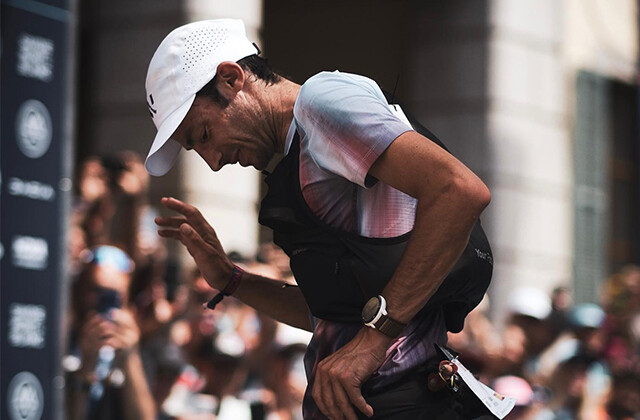
While Jornet expressed hopes in late July that he would be able to line up along the likes of Americans Jim Walmsley and Courtney Dauwalter, British ultrarunner Tom Evans and Canadian Blanchard, the athlete decided against it. Fans can hope to see him crewing his wife, Swedish ultrarunner and ski mountaineer Emelie Forsberg, who will be lining up at CCC (Courmayeur–Champex–Chamonix), the 100K race at the UTMB World Series Finals.
Jornet is somewhat of a legend at UTMB, first winning the race in 2008 as a 20-year-old and returning to win 2009, 2011 and 2022. Jornet has a long list of accomplishments and holds the fastest known time speed record for the ascent and descent of major mountains, including the Matterhorn and Mont Blanc.
(08/18/2023) ⚡AMPby Keeley Milne
North Face Ultra Trail du Tour du Mont-Blanc
Mountain race, with numerous passages in high altitude (>2500m), in difficult weather conditions (night, wind, cold, rain or snow), that needs a very good training, adapted equipment and a real capacity of personal autonomy. It is 6:00pm and we are more or less 2300 people sharing the same dream carefully prepared over many months. Despite the incredible difficulty, we feel...
more...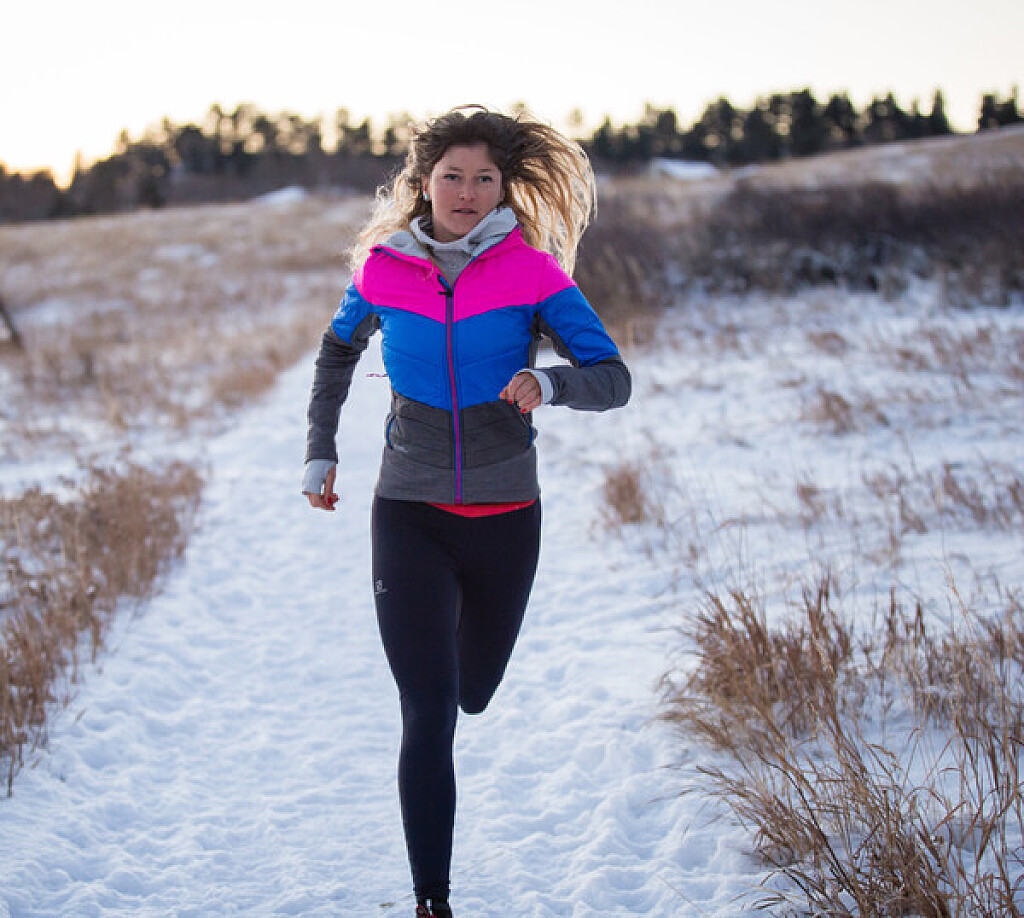
Martina Valmassoi ‘building up the excitement’ as she takes on 100 miles for the first time at UTMB
Martina Valmassoi will make her 100-mile debut on the biggest stage of all when she takes on the 2023 Ultra Trail du Mont Blanc (UTMB).
The Italian has enjoyed a stellar year, winning at Transvulcania La Palma Island by UTMB in May – which she credited to a change in mindset.
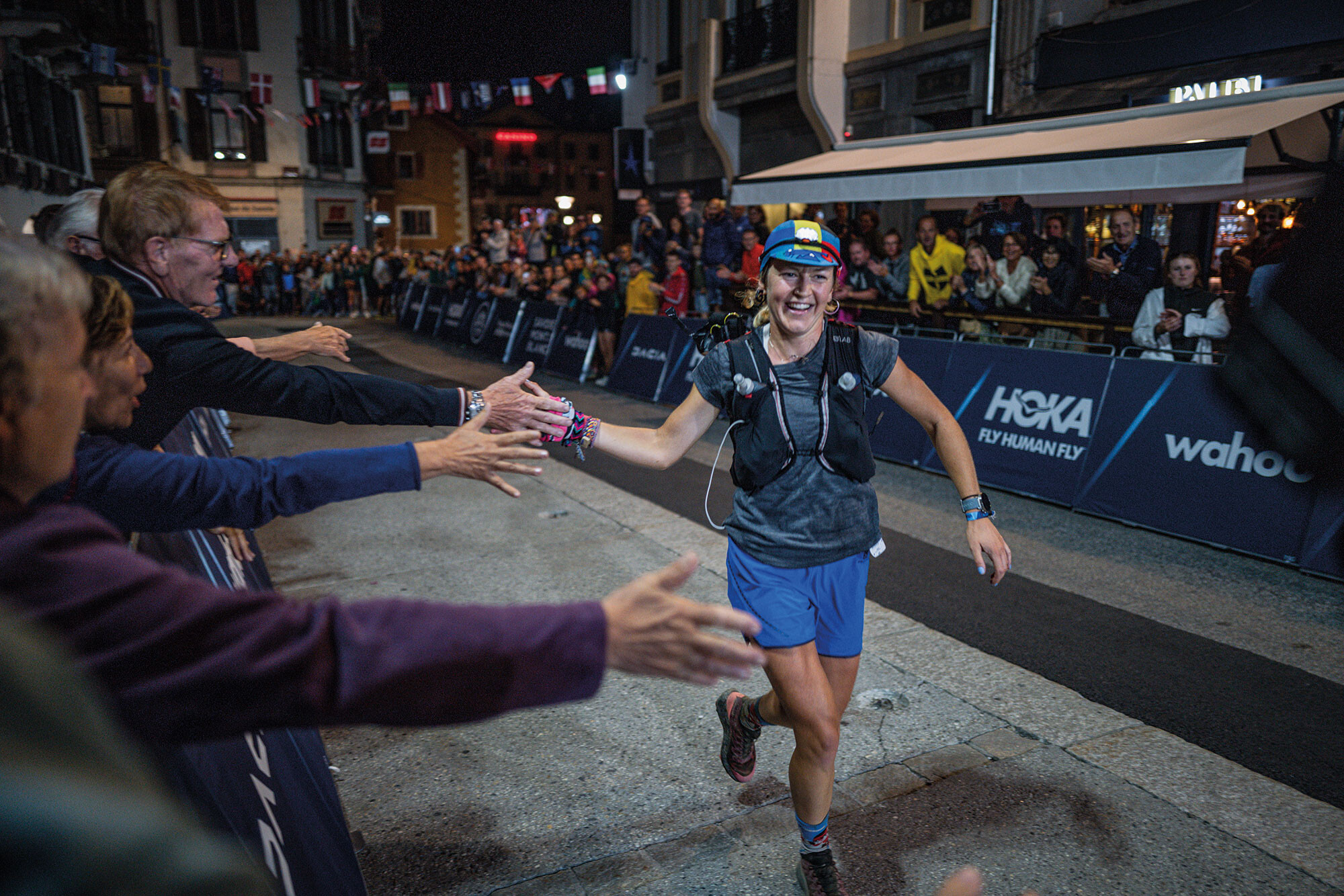
That triumph came a month on from victory at the Genova Trail Marathon and formed part of her recovery from a lengthy injury lay-off.
She has also since picked up fourth at the World Mountain and Trail Running Championships (WMTRC) Long Trail and third at the Marathon du Mont-Blanc.
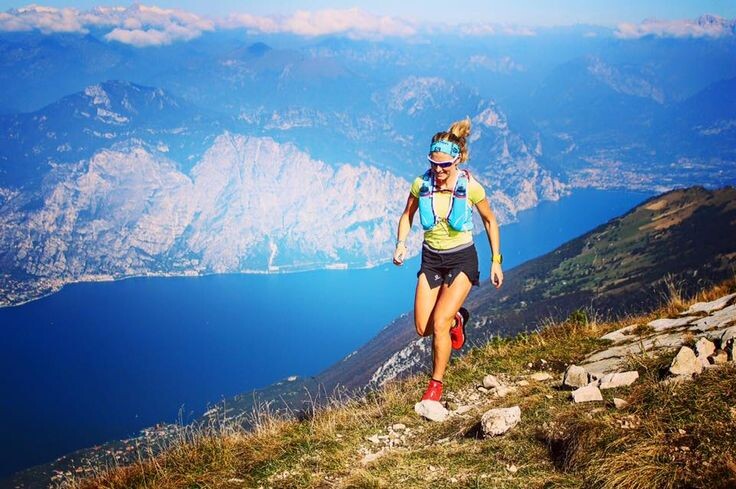
TDS triumph
Though she has never tackled the flagship race, Valmassoi has history at the UTMB event in Chamonix, having triumphed in the TDS in 2022.
She finished in 22:42:47, over 16 minutes clear of Spaniard Claudia Tremps as she bounced back from a DNF in the 2021 race.
At 91 miles, the TDS is a strong indicator of Valmassoi’s potential over the 100-mile distance, though she will be up against a stellar field in the UTMB, in addition to the added mileage.
“Less than a month until the big dance at the UTMB, my first 100-miler,” she wrote on Instagram.
“Building up the excitement as I’m building up the fitness.
“Is never easy to know if you are training properly, enough or too much but for sure listening at the signs that the body gives you is a great start.”
500km racked up
Valmassoi says her adaptation to the longer distance is going to plan as the weeks tick down to the UTMB World Series Finals and the UTMB itself, which starts on September 1.
“Training has been going pretty good lately,” she added in a recent post.
“About 500km and 30,000 meters on foot in the past three weeks and no majors problems.
“Now is time cut the runs short and focus on picking berries more!
(08/17/2023) ⚡AMP
by Olly Green
North Face Ultra Trail du Tour du Mont-Blanc
Mountain race, with numerous passages in high altitude (>2500m), in difficult weather conditions (night, wind, cold, rain or snow), that needs a very good training, adapted equipment and a real capacity of personal autonomy. It is 6:00pm and we are more or less 2300 people sharing the same dream carefully prepared over many months. Despite the incredible difficulty, we feel...
more...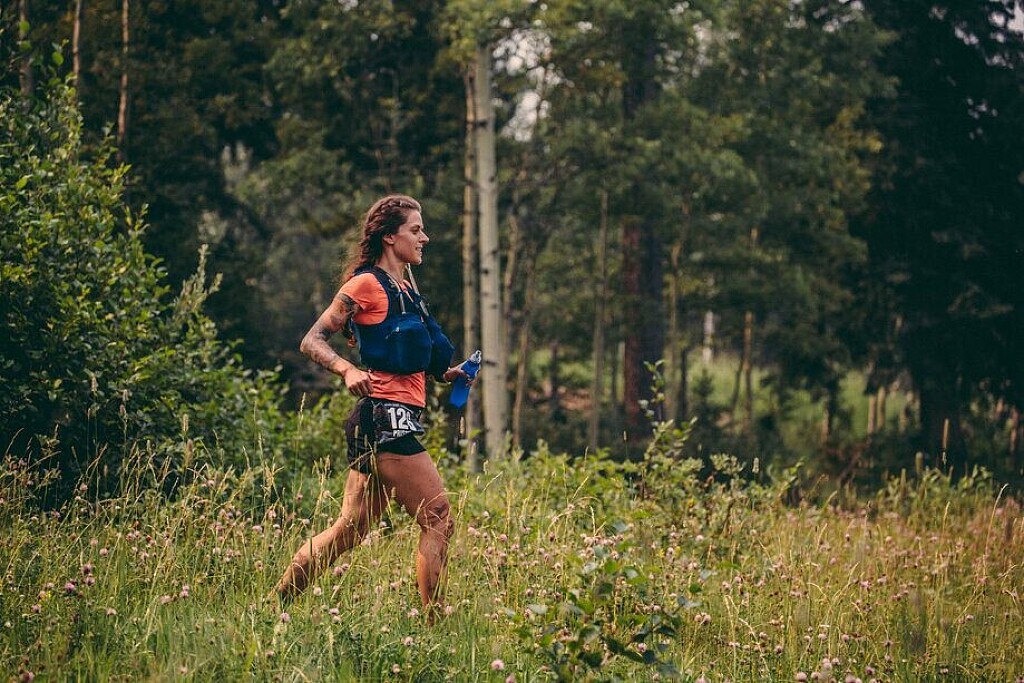
Canadian trail superstar Priscilla Forgie shares plant-based tips and treats
Edmonton’s Priscilla Forgie is one of the hottest names in Canadian ultrarunning right now, and she has a wealth of knowledge about training and fuelling. The top Canadian at the epic Western States 100–miler in July (Forgie finished in eighth place), Forgie has taken the podium in a startling number of races in the past year, including first at the Squamish 50-mile and 50/50 (50 miles and 50K) a second-place finish at Canyons Endurance Run, plus an overall win at the Near Death Marathon, where she set a course record.
Forgie eats a plant-based diet and has some great tips for those of us who are looking to move toward plant–based fuelling.

“One of the biggest things I’ve learned with plant-based baking and cooking over the years is to stay curious and don’t be afraid to try new things,” she says. “Plant-based options do not need to be complex,” Forgie adds, and says being open to modifying recipes is key. “Be gentle with yourself, have fun, and fuel your body well.”
Quick plant-based meals and snacks

“These are all on-the-go meals full of protein and nutrition and are all delicious,” says Forgie.
Tempeh or chickpea salad sandwichesEdamame with salt and pepperPopcorn with coconut oil, salt and nutritional yeastHummus with veggies or crackersAir-fryer tofu bites
Oat bake with raspberries
“This is a recipe I’ve created over the past year, and it provides so many variations that I never get sick of them,” she shared. “I have the flexibility to use what I have in my pantry any given week.” Feel free to mix it up and use what you have in these delicious healthy treats.
Base
Mix the following together in a large bowl:
2 cups of oats (large flake or quick)1 tsp baking powder1 tsp cinnamon1/2 tsp salt (regular or sea salt)2 cups of milk (soy, almond, coconut, hemp)1/4 cup maple syrup (or brown sugar, agave, mashed bananas or applesauce)2 Tbsp of flax or chia seeds3 Tbsp of melted coconut oil (can substitute applesauce or mashed banana)
Add-in options (can also use any of the following as toppings after pouring into dish)
1/3 cup raisins or chocolate chips2 cups frozen fruit, sliced bananas or thinly-chopped apples1-2 scoops of desired protein powder1/2 cup of chopped walnuts, pecans, peanuts or a combo2/3 cup coconut flakes6 Tbsp cocoa powder
Directions
Pour into an 8×8, 9×9 or 11×7–inch greased baking dish (a muffin tin also works) and bake at 350 F for 35 to 45 minutes or until the top is golden.Can drizzle maple syrup, chocolate or brown sugar on top after baking. Allow to cool, slice and serve.Great to freeze for future adventures.
(08/16/2023) ⚡AMPby Keeley Milne
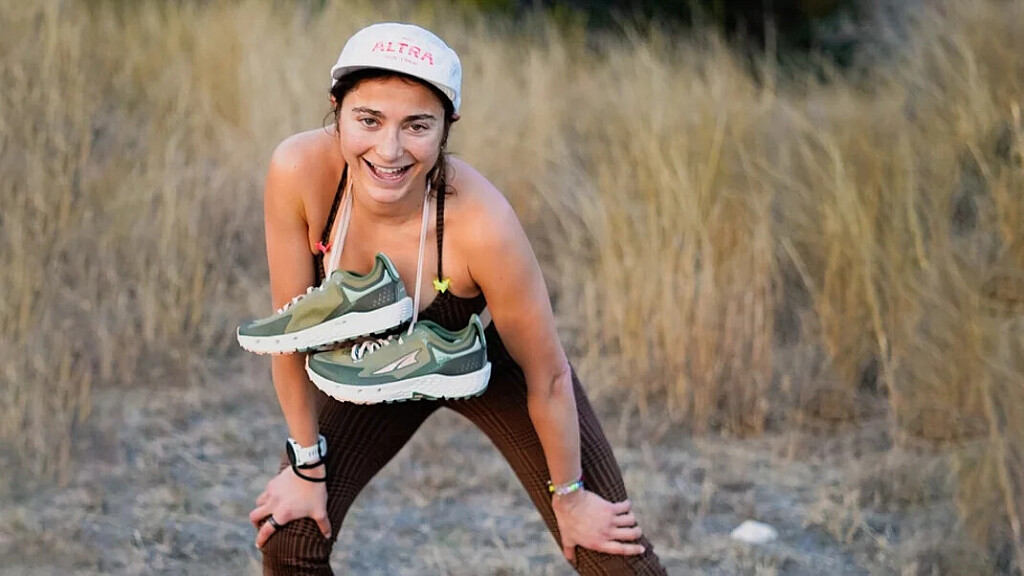
Always Up for a Challenging Adventure, Alexi Pappas is Running The Leadville 100
Alexi Pappas is a busy woman. She’s equally glamorous and raw. She’s perfectly grounded and living in a fantasy. As an Olympian, filmmaker, writer, and speaker, she’s rarely in one place for very long. And the Leadville Trail 100 race was very much not on her radar even two months ago. But then she got an email.
“My manager sent me a message in June saying, ‘Just got word that Coros has an entry for Leadville,’” she recalls. “‘Let’s discuss this week and if it makes sense to run. I think it would be fun and epic, but let’s do whatever feels best and right to you.’”
For the 32-year-old Pappas, it feels like there are two kinds of goals to shoot for—the ones you set for yourself that feel like they were born with you. And then the ones that take you completely by surprise. Leadville is the latter.
In the 2016 Rio Olympic Games, Pappas set a national record in the 10,000 meters, representing Greece. After being an All-American collegiate runner for Dartmouth and Oregon, her long-time Olympic dream came true, and it opened all kinds of doors for her. It also allowed her to have the freedom to explore those unexpected opportunities.
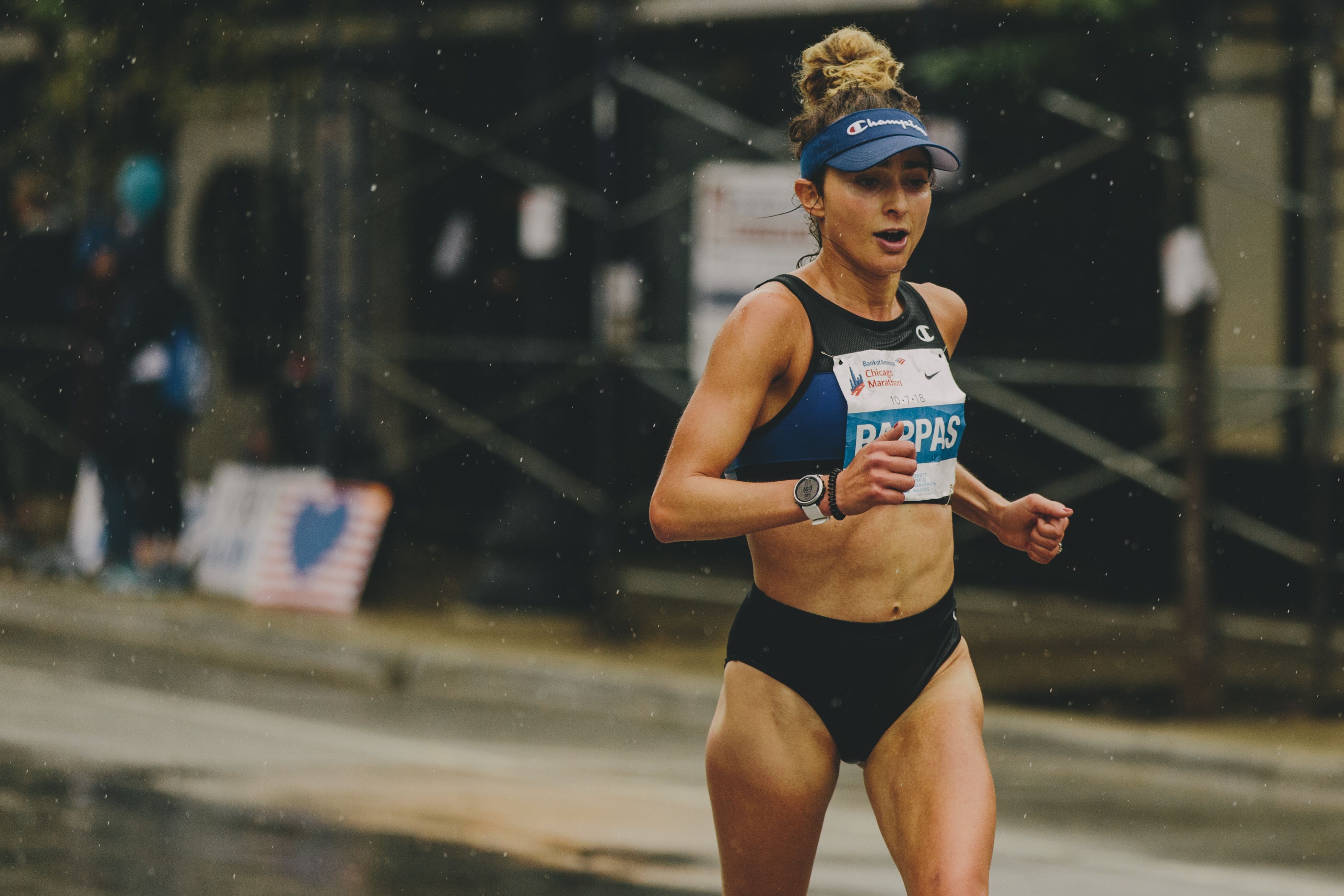
“I feel like there’s a period of time in your life as an athlete where you chase goals that you have for yourself. Maybe you have an Olympic dream. Maybe you want to run a fast mile. Then there’s a time when you can begin to embrace things that the universe brings to you, and not the ones you necessarily had in mind for yourself.”
She’s Still Immersed in Running
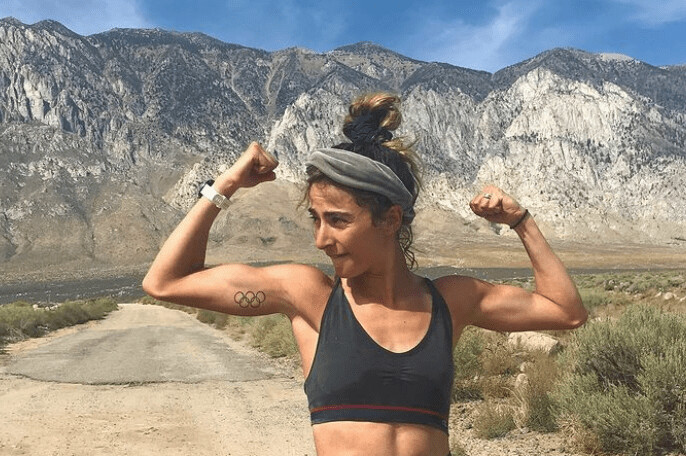
Pappas is a legit runner, having run that Olympic 10K at 5:05 mile pace and also clocking a 2:34 marathon in 2020. Although she’s backed away from competitive track and road racing, she’s still immersed in the sport in numerous ways. She ran the 2022 New York City Marathon in a custom bedazzled costume and paced Diplo, aka renowned DJ and music producer Thomas Wesley Pentz, through the 2023 Los Angeles Marathon in March.
Although she’s recently made a foray into trail running, Pappas, who lives near sea level in Alameda, California, admits that she’s less than perfectly prepared going into the Leadville 100. The out-and-back race, which begins at 4 A.M. on August 19 and has a 30-hour cutoff time, is situated between 9,200 and 12,500 feet above sea level.
“It’s a big honor [to be given entry into the race]. And it’s one I take seriously, but also I’m not in peak condition for this race. So I’ve been thinking a lot about it as a kind of mysterious unknown. What might happen? What might be possible? I do believe in myself.”
Pappas’ longest race to date is the Hoka Bandera Endurance Trail 100K, which she did in January. “For that event I entered the day before,” she admits. “So I didn’t have a crew. I didn’t even have a headlamp. I used my cell phone light.” Although she fared pretty well (finishing 12th in 12:08), Pappas learned that ultra events are more about solo adventure, with lots of other people solo-adventuring at the same time. Different from running in the pack on a track, where the whole point is to stay with the group.
And this time around Pappas will have a pacer, Michael Mitchell, and a crew to help her through aid stations and with motivation. “I feel like Michael is the right balance of personality and experience,” she says. “And my best friend since we were two-years-old will be there to crew, so I’ll have lots to look forward to. I figure we’ll make an event of it.”
Mitchell, accomplished On Running trail athlete and TikTok personality, is stoked to be part of Pappas’ race. “I am very excited to help Alexi attempt this incredible feat,” he says. “The Leadville 100 holds a special place in my heart as it was the first ultramarathon I ran.”
Mitchell’s experience in the race in 2021 solidified his love for the ultramarathon atmosphere and community. “I’m a fan of Alexi and all that she represents,” he adds. “Not only do I think she will be able to finish the race, but I know it will inspire her to continue her successes in the running world and beyond.”
Jumping at New Opportunities
Even though Pappas doesn’t feel perfectly prepared for what she’s about to embark on, that’s part of the fun. “I just don’t think this opportunity will happen for me again,” she says. “There are some opportunities that feel like you’ll be able to have them a million times. But this isn’t one of those. This is more like the Olympics. I have friends who said that about the Olympics—that they’d do it next time—and then their sport was taken out of the Olympics.”
Sometimes you have to jump at the chance, even when the thing you’re jumping at is 100 miles in the high alpine of Colorado.
Pappas lost her mother when she was just 4-years-old, and has a friend who has also lost a parent. “My friend told me that our parents would do anything to be in nature for one more day, and he suggested I think about that when [the race] feels long. To have gratitude for simply being alive in the beautiful outdoors, moving about nature, moving from one loving friend and food stop to the next, with plenty of trees in between.”
As soon as Pappas finishes Leadville, she’ll be onto the next thing, but she’s going to enjoy the journey as much as possible.
“I have a new book coming out two days after race day,” she says. “So I’ll come home and not be able to walk and just do the book release as well as I can.”
The book, Bravey, is an updated version of her 2021 New York Times best-selling memoir that’s been adapted especially toward young readers. She talks about unique experiences, like making her Olympic debut as a distance runner, but also common stresses like learning about compassion, forgiveness, and loss.
(08/16/2023) ⚡AMPby Micah Ling
Leadville Trail 100 Run
The legendary “Race Across The Sky” 100-mile run is where it all started back in 1983. This is it. The race where legends are created and limits are tested. One hundred miles of extreme Colorado Rockies terrain — from elevations of 9,200 to 12,600 feet. You will give the mountain respect, and earn respect from all. ...
more...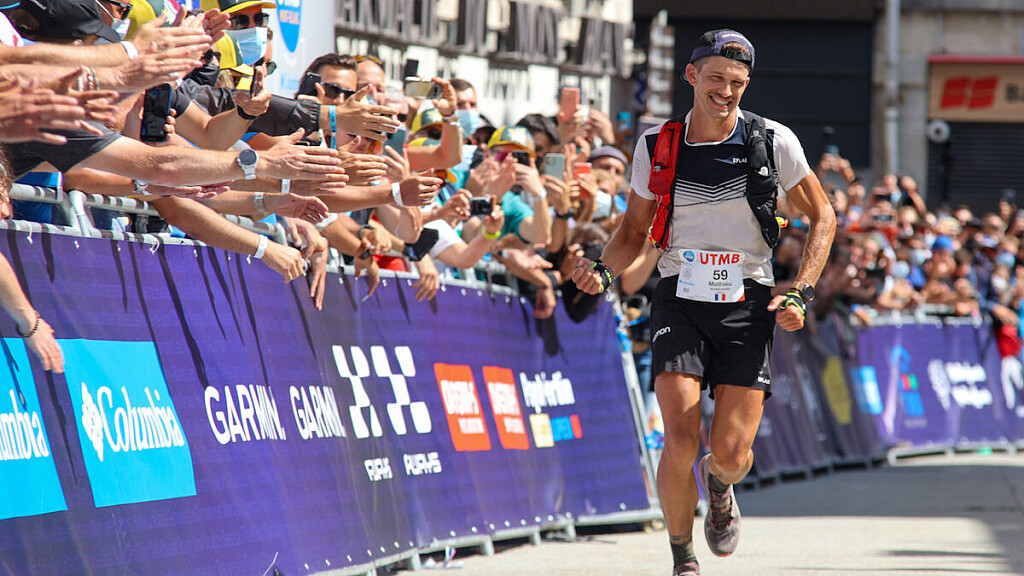
Montreal ultrarunner Mathieu Blanchard to join star-studded UTMB field
Montreal’s Mathieu Blanchard has confirmed he will toe the start line at Ultra Trail du Mont-Blanc in two weeks, joining an elite lineup that organizers of the 171-km race are billing the strongest elite field since the race began 20 years ago.
Blanchard will be vying for his third consecutive podium finish in Chamonix on Sept. 1. He ran last year’s race in 19 hours, 54 minutes and 50 seconds to finish a close second behind Spain’s Kilian Jornet, who ran 19:49:30 for a new course record. In 2021, Blanchard finished third behind French runners François D’haene (20:45:59) and Aurélien Dunand-Pallaz (20:58:31).
In June, Blanchard ran 15:37:02 to finish sixth in his Western States Endurance Run debut. He told Canadian Running after the race that Western States presented a uniquely difficult challenge: “I pushed through, I fought hard, my body was super painful like never before,” he said, adding he was proud to earn the “mythic buckle” awarded to Western States winners.
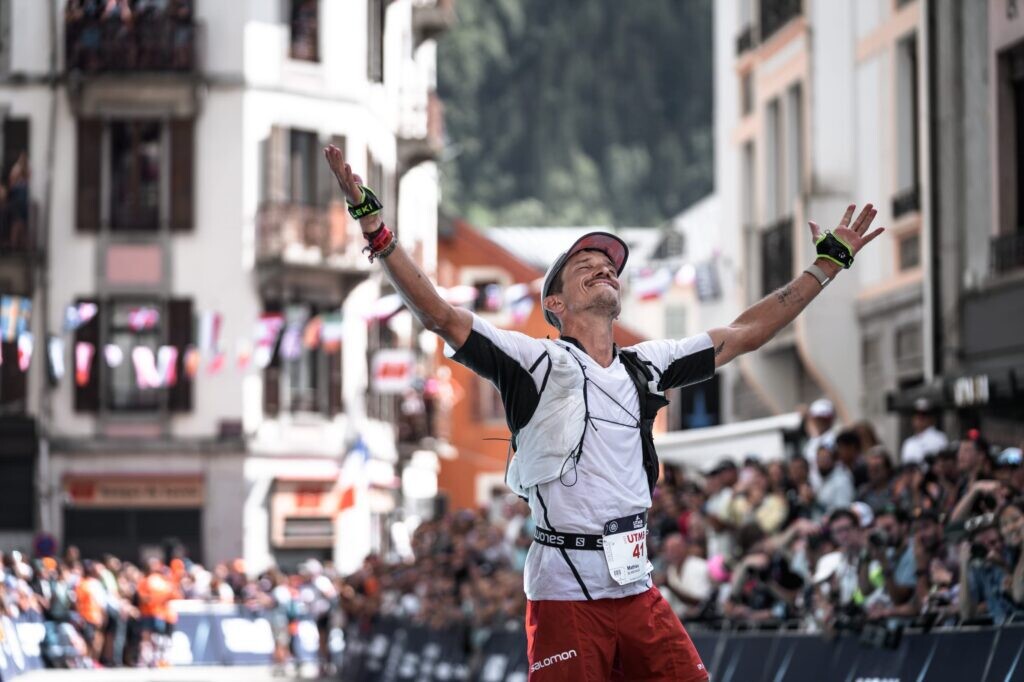
Among the giants of trail running Blanchard will be up against at UTMB is British runner Tom Evans, who ran the fourth-fastest time in Western States history (14:40:22) to win this year’s men’s race, and who finished behind Blanchard at last year’s UTMB to place third (20:34:35).
“I’m incredibly enthusiastic about the idea of taking part in the UTMB this year,” Evans recently told UTMB. “I’m coming into the event in a much better position than last year when I was fresh from a knee operation. The race is so full of history and for the 20th anniversary, I want to be part of the story by doing a Western States 100 Endurance Run and UTMB double. It’s a big challenge and with the strength of the peloton, it won’t be easy, but it’s a contest I’m looking forward to and believe I can achieve.”
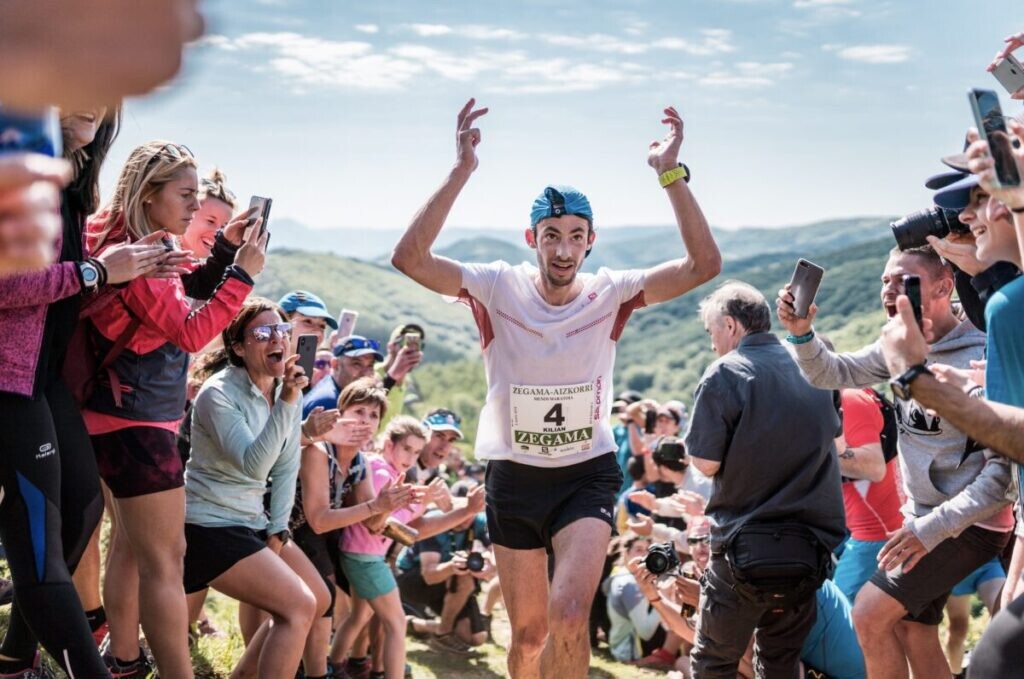
In addition to Jornet, this year’s men’s field will see the return of American Jim Walmsley, who finished fourth in last year’s race (21:12:12) and who has held the Western States course record (14:09:28) since 2019.
Other notable entries in the men’s field include Swiss runner Jonas Russi (winner of the Lavaredo Ultra Trail by UTMB 2023), fellow Swiss runner Jean-Philippe Tschumi (who shared victory at the 100K Trail 100 Andorra by UTMB with the American Ben Dhiman) and Sweden’s Petter Engdahl.
Arguably the most compelling storyline from this year’s UTMB will be American trail running phenom Courtney Dauwalter‘s quest for the triple crown following her resounding victories at Western States (where she ran 15:29:33 to smash the 16:47:19 course record set by Canadian Ellie Greenwood in 2012) and Hardrock 100 (where she set a new course record in 26:14:08). The Golden, Colo.-based runner won UTMB in 2019 (24:34:26) and again in 2021, when she set the current women’s course record (22:30:54).
She stands to face fierce competition from an elite field that includes New Zealand’s Ruth Croft (who finished second at Western States last year), Germany’s Katharina Hartmuth (winner of this year’s Eiger Ultra Trail by UTMB), Italy’s Martina Valmassoi (winner of the 2022 TDS in Chamonix) and Hungary’s Eszter Csillag, who finished fifth at last year’s UTMB.
(08/16/2023) ⚡AMPby Paul Baswick
North Face Ultra Trail du Tour du Mont-Blanc
Mountain race, with numerous passages in high altitude (>2500m), in difficult weather conditions (night, wind, cold, rain or snow), that needs a very good training, adapted equipment and a real capacity of personal autonomy. It is 6:00pm and we are more or less 2300 people sharing the same dream carefully prepared over many months. Despite the incredible difficulty, we feel...
more...
Study suggests moderately active people can have a positive influence on their friends
Encouraging the general population to increase their physical activity levels has long been a frustrating challenge for public health officials, but new research has unveiled a potential new way to reach sedentary individuals: through their physically active friends. According to a study published in the journal Plos One, when sedentary individuals interacted with moderately active friends, they became more active themselves.The study
Researchers at Keene University in New Jersey used previous research analyzing how social interactions with peers can influence individual physical activity levels to develop a mathematical model to simulate how social interactions can shape a community’s physical activity levels over time. Their model showed that their physical activity levels dropped when people stopped socializing. We saw this play out in real-time during the COVID-19 pandemic when most of us were cut off from our peer groups.Their model also showed that when sedentary people interacted regularly with their moderately-active friends, they became more active over time. In other words, those of us who exercise regularly could have a positive impact on our less-active friends, encouraging them to move a little more.

It’s important to note that this study focused specifically on moderately active people. That’s not to say that those of us who are training for marathons or ultras can’t also have a positive impact on our sedentary friends, but a sedentary person may view a marathon runner as having an unattainable level of discipline or enthusiasm for activity, which may not motivate them to get started.How to encourage your sedentary friends to get active
Whether you’re training for a marathon or fitting a few 5Ks in between your busy schedule each week, you can help your sedentary friends warm up to the idea of a more active lifestyle. Here are a few tips to encourage them to get moving:Plan active get-togethers
Meeting your friend for a coffee? Get those coffees to go and invite them on a stroll. Planning a beach day? Bring a beach ball, a frisbee, or some other game that’ll get everyone on their feet. Invite your friends on weekend hikes, suggest signing up for a recreational sports team, or plan to play some backyard games at your next barbecue. Anything that gets people out of their chairs is a win.Try something new together
Your less-active friends may be intimidated to try going for a jog with you, so invite them to try an activity that you’re both novice at instead. Sign up for yoga classes, try a dance class, or sign up for golf lessons. If you’re both new at it, you’re both starting off on a somewhat even playing field.Talk about your running, but not too much
Sharing your running achievements or training plans with your friends can be motivational, but be careful not to over-do it. Your friends don’t want to hear about the splits from your last workout, and talking about your recent chaffing mishap will likely turn them off of the sport. When you talk about running, talk about how it helps you so they can see the potential benefits. “I was had a stressful day at work yesterday, but I went for a run and felt much better,” or “I tried a new route the other day and discovered a really cute neighbourhood that I’d never seen before!” are great ways to lean into the mental or emotional benefits of running.
(08/12/2023) ⚡AMPby Running Magazine
What to do the week before a half marathon
The week before a half marathon can make or break one’s performance. Months of training can be wasted by trying to fit in one last workout. On the other hand, resting too much in the week before a half marathon (or even the week before a 5k) can leave one feeling flat and low-energy on race day.
Tapering is a training microcycle that usually takes place the week before a key event, such as a half marathon or a 5k. Longer events like marathons or ultramarathons require longer tapers. Tapering for an event is one of the most complicated and mysterious aspects of athletic performance.
Learn the seven most common tapering mistakes people make the week before a half marathon. Follow the training plan for the week before the race to arrive fresh, fit and fast at the start line!
AVOID THE 7 MOST COMMON TAPERING MISTAKES THE WEEK BEFORE A HALF MARATHON
Tapering for a half marathon the week before is easy to mess up. Don’t make these seven mistakes!
1. TRAINING TOO MUCH BEFORE THE RACE

Many amateur runners think it is good to train hard right up until the race, particularly in the last few weeks. But these efforts turn out to be counterproductive. Standing at the start feeling tired is a recipe for disaster.
Instead, decrease total training volume by 30-50% in the week before a half marathon, but not the number of intensity sessions. For example, if the total distance ran two-weeks before the event was 50 km, the total distance should be no more than 35 – 25 km in the final week before the event.
Intensity should not drastically decrease despite overall distance dropping. For example, if a training plan usually calls for two days of intensity per week, still perform those two days of intense training during the final week before the event.
Reduce the number of intervals in a session by 20% of what they were in the last hard week of training. Even though overall running distance decreases, intensity may actually increase relative to the amount of total distance.
The bottom line: a good taper focuses on quality, not quantity. Do short and fast runs; decrease overall training distance by cutting back on endurance run distance.
A good half marathon training plan will have a built-in taper. Check out this FREE half marathon training plan pdf for a good example. Premium adidas Running members also receive exclusive access to customizable training plans from 5k – marathon.
2. NOT WORKING OUT AT ALL
Tapering and reducing training volumes does not mean you should just put your feet up and stop working out. The tricky part about tapering is not to lose the fitness and pace endurance you have built up. The best way to avoid this is by reducing your mileage and focusing on short and intense workout sessions.
In the last week, it is important to get one more hard workout in four or five days before the race. This is designed to give your muscles one last training stimulus and to prepare your body for the demands of the upcoming race.
Retaining intensity while decreasing training volume in the week before a half marathon has been shown to be an effective tapering strategy for most athletes.
3. STRENGTH TRAINING AND UNFAMILIAR EXERCISES
In the week before a half marathon avoid strength training and unfamiliar exercises. Fatigued and/or sore muscles can quickly endanger performance. Of course, continue to do stretching and mobilization exercises if they have been a regular part of training.
One exercise that could be beneficial in the week before a half marathon is a meditation exercise. Often, athletes develop performance anxiety due to the upcoming event and the abundance of energy (if they are tapering correctly). Meditation can help the mind prepare for the demands ahead of it.
Try the guided meditation below by professional ultramarathoner Timothy Olson:
4. CHANGING EQUIPMENT THE WEEK BEFORE AN EVENT
Never change any equipment the week before a key race! This ranges from running shoes to sports nutrition and diet. New running shoes can cause an injury that robs one of even starting a half marathon. Sports nutrition can lead to cramps or GI issues that ruin a race.
5. POOR DIET AND ALCOHOL CONSUMPTION
Letting diet slip the week before a big event is tempting. The body is busy replenishing glycogen stores, appetite is high, but total calorie expenditure should have decreased. This can lead one to give in to sugar cravings, especially if one is nervous about the upcoming event.
Now is more important than ever to eat like an athlete. Give the body the nutrients it needs to freshen up before putting in an amazing performance. Here are the nine best foods for runners. Don’t skimp on carbs the two days before the event, and use this carb calculator.
Having an extra drink or two might feel good and promote relaxation; however, it can also lead to poor sleep and dehydration. If maximal performance is on the line, skip the nightcap in the week before a half marathon.
6. NOT SLEEPING ENOUGH
Sleep is crucial throughout all training phases, but especially in the week before a half marathon. If one has been training hard, the body needs sleep to rebuild and regenerate.
Race nerves can prevent athletes from getting quality sleep in the lead-up to an important event. Here are some practical tips to get fantastic sleep during this crucial week:
Go to bed an hour earlier than usual
Wake up an hour later than usual
Take a nap during the day
Meditate instead of lying in bed awake if having trouble sleeping
If sleep doesn’t come (especially the night before the event), just keep eyes closed and focus on breathing
Don’t stress about not sleeping enough (this will cause sleep issues itself)
7. CATCHING UP ON LIFE
Training for an event sometimes means putting other life factors aside for a time. Weeding the garden, helping kids with homework, cooking dinner or finishing a big project at work all take energy. It can be tempting to finally tackle those life factors that have been put off during training since tapering means less time spent training.
Don’t think of tapering as less time training, but more time for recovering. Because recovering is training too, all those projects can wait one more week. Don’t feel guilty about putting the feet up on the sofa or sneaking off for a nap. Ask partners for continued understanding for one more week and assure them their understanding will mean a lot.
TAPERING PLANS FOR COMMON DISTANCES
Tapering is highly individual. Keep notes about how tapering for various events goes to find the ideal tapering strategy. The following half marathon tapering training plan is an excellent place to start to find one’s perfect tapering strategy. It is built for a race that takes place on Sunday. For a Saturday event, shift all the workouts to the left by one day (e.g., recover on the Sunday before the race, then do the slow long-distance run on Monday instead of Tuesday as shown).
(08/09/2023) ⚡AMPby Morgan Cole
Expert Strategies for Eating to Boost Energy
YOU SLEPT EIGHT hours, snuck in an early run, and made time to meditate before jumping on your first Zoom call. Still, your brain feels fuzzy all morning. By the time afternoon hits, you’re ready for a long, hard nap. What gives?
Though many factors can influence energy levels, perhaps one of the biggest (and most understated) is your diet, including what you nosh on, how much, and when.

“Everything that we eat can impact how we feel and what we’re able to do throughout the day,” says Amity Lui, MS, RD, a New York City–based sports dietitian who works with runners.
High-quality fueling can mean the difference between navigating life in a fog and consistently crushing your days. Good nutrition can also better your running and overall health, allowing you to exercise with less fatigue, which boosts your performance and decreases risk of injury—all while supporting hormone health, digestion, metabolism, and immune functioning, says sports dietitian Yasi Ansari, MS, RDN, CSSD, spokesperson for the Academy of Nutrition and Dietetics.
In short, there’s a lot to gain from optimizing your eating habits. Here’s what experts recommend.
• Eat often during the day
The trend of intermittent fasting—where people abstain from eating for certain stretches of time—may have health benefits for some, such as those with type 2 diabetes. But what about for runners looking to optimize performance and feel energized? “You really need to have steady fuel throughout the day,” says Selvi Rajagopal, MD, MPH, assistant professor of medicine at Johns Hopkins University School of Medicine. That means no skipping breakfast or “forgetting” to eat lunch.
Rajagopal recommends eating every three to four hours to prevent drastic dips in blood glucose levels, which can lead to plummeting energy levels.
A better bet is to strive for three well-balanced meals spaced throughout the day plus several snacks in between. “Eating consistently is going to make a huge difference,” says Lui, who recommends runners fuel as often as every two hours, or even more frequently if hunger strikes.
• Strive for well-balanced meals and snacks
Carbs are commonly vilified, but they are an essential macronutrient, especially for runners. “Carbohydrates are the number-one source of fuel for endurance runners,” says Ansari, because they get broken down into glucose, which your body prefers to use for energy. Don’t skimp on carbs if you want to avoid fatigue.
At the same time, unless you’re fueling for a run, avoid eating simple carbs by themselves, as that leads to a rapid spike in energy followed by a drop, according to research. Instead, pair carbs with the two other macronutrients: fats and protein. This will help stabilize your blood sugar and provide sustained, steady energy.
Here’s a sample day of balanced fueling, from Rajagopal. Of course, tailor this to your preferences.
Breakfast: Oatmeal with fruit and peanut butter or Greek yogurt
Mid-morning snack: Apple with nut butter or carrots, hummus, and whole-wheat crackers
Lunch: A quinoa, farrow, or brown rice bowl with sweet potatoes, vegetables, and a lean protein, like chicken or canned tuna
Mid-afternoon snack: Cottage cheese or Greek yogurt with granola
Dinner: Half a plate full of veggies, a quarter or third filled with a starchy carb like potatoes, and the last quarter protein
• Refuel after you run–even if you’re not hungry
While the general advice of “eat when you’re hungry, stop when you’re full” can help you eat mindfully, exercise—especially intense exercise—can suppress hunger due to the release of certain hormones and the fact that blood gets diverted from the GI system toward working muscles. In fact, according to a recent poll of nearly 3,000 people on Runner’s World Instagram, 61 percent of respondents said they find it difficult to eat after a long run or hard workout. “It’s really hard to identify if you’re actually hungry immediately after a really hard run,” says Ansari. But waiting to eat can hinder your recovery and lead to a crash in energy, she says. So no matter how you feel postworkout, aim to consume at least a snack within 30 minutes and then follow that up with a full meal within one to two hours later, advises Lui.
If the thought of solid food soon after a hard run makes you queasy, turn to liquid nutrition, like smoothies and protein shakes. Prioritize carbs and protein, and aim for a ratio of 3 grams of carbs to 1 gram of protein following intense training, says Ansari. One of her go-tos is a smoothie with kefir, almond milk, or cow’s milk, 1 cup frozen mango, 1 banana, a scoop of protein powder, and granola or a side of toast and nut butter.
• Load up on micronutrients
High-intensity exercise—ahem, running—can stress your body and lead to feelings of fatigue. However, eating antioxidant-rich foods like fruits, vegetables, and leafy greens in particular can help combat those effects, says Ansari. Antioxidants help to fight free radicals and oxidative stress postrun, aiding in your recovery. To get your dose of these health- and energy-boosting nutrients, incorporate produce into your meals: Eat a cup of fruit at breakfast, have a side salad at lunch, and load up your dinner plate with veggies.
There are several other micronutrients commonly found in fruits and veggies (as well as other foods) worth adding to your plate. While a doctor can help you determine if you have a deficiency and need a supplement, it’s still important to consume foods that contain these nutrients.
Iron: A deficiency in this mineral can lead to fatigue and tiredness, both cognitively and while exercising, says Ansari. Vegan and vegetarian runners may be at increased risk of deficiency, as red meat is one of the best sources of bioavailable iron. Those who menstruate are also at increased risk, says Rajagopal. Increase iron stores by eating leafy greens (spinach, broccoli, and kale), whole grains, nuts, and tofu. Enhance iron absorption by pairing iron-rich foods with those high in vitamin C, such as fruits, bell peppers, and berries, says Lui.
Vitamin B12: Deficiencies can result in fatigue and shortness of breath, says Lui. Vegetarian and vegan runners may be more at risk of low stores, as animal products provide the highest sources. Seek it out in products like meat, fish, and eggs, as well as fortified cereals, whole grains, plant-based milks, and nutritional yeast.
Vitamin D: A deficiency that affects 42 percent of all Americans (not just runners), according to a survey, too little vitamin D can cause fatigue, increased muscle weakness, and pain, says Lui. Eat foods like canned fish, dairy products, and fortified products like plant milks and orange juice. The caveat: It can be hard to get enough vitamin D, says Rajagopal, so you may need a supplement. Again, consult your doctor.
• Avoid making dinner your biggest meal
Dinner is typically the biggest meal of the day, but that doesn’t necessarily support a solid night’s slumber, which is essential for optimal energy. “Most folks sleep better if dinner isn’t the largest meal,” says Rajagopal, explaining that “our bodies don’t digest and metabolize things as quickly in the evening” compared to earlier in the day.
Instead of getting the bulk of your nutrition at dusk, eat consistently throughout the day. Also have dinner about three hours before bed to lower your risk of sleep-harming issues, like acid reflux.
• Have a slumber-inducing evening snack
If you end up feeling hungry between dinner and bed, reach for a small snack an hour or two before snooze time, says Lui, and get strategic about which snack you choose to best support sleep (and thus improve your overall energy). Ansari recommends Greek yogurt with fruit and a side of trail mix—a combo that provides magnesium, a nutrient that in one study of older adults helped them fall asleep faster.
You may also consider foods containing tryptophan, an amino acid that plays a role in the production of serotonin and melatonin, which support the onset of sleep and relaxation, Ansari says. Options include turkey, banana, oats, and tart cherry juice.
WHAT ZAPS YOUR ENERGY
Minimize energy dips by avoiding these foods and habits.
ULTRA-PROCESSED FOODS / Foods high in sugar and low in protein, fat, and fiber can provide an energy jolt if eaten soon before and during a run. But chowing on them in your day-to-day can lead to a rapid spike in energy followed by a slump, says Selvi Rajagopal, MD. Instead, eat snacks that offer macronutrients (carbs, protein, and fat) and fiber, and those low in added sugar, says Rajagopal.
DEHYDRATION / Research shows that as little as 2 percent dehydration can negatively affect performance, says Amity Lui, RD. “Not being adequately hydrated can make the body feel like it’s working harder,” adds Yasi Ansari, RDN. Lui says a good rule of thumb is to check the color of your pee. If it’s the shade of lemonade, you’re hydrated; if it’s akin to apple juice, you need a drink.
SPORTS DRINKS OUTSIDE OF A WORKOUT / Unless you’re hydrating during or after a workout, steer clear of sugary beverages, including sports drinks and hydration aids, says Rajagopal. Instead, consider water with a squeeze of citrus fruit.
UNDERFUELING / When athletes feel fatigued, it can sometimes be because of nutrient deficiencies, but most often, it’s because they simply aren’t eating enough, says Ansari. Research identifies low energy availability as one of the most significant factors associated with illness and injury risk in endurance athletes.
(08/05/2023) ⚡AMP

9 Things Every Running Shop Employee Wishes You Knew
Yes, this shoe comes in other colors. No, that doesn’t mean you should buy it.
For two years, I worked at the best run specialty store in Minneapolis-St. Paul, Minnesota. For seven years after that, I worked for a running shoe brand. In that time, I learned there’s a sizable knowledge gulf between folks in the industry and most consumers. Even many consumers who pay pretty close attention to racing and shoe reviews weren’t always up-to-speed on the latest tech, how a certain brand fits or whether they need a neutral. stability, minimal, or trail shoe.

It’s our own fault. Brands create so many SKUs that it can be hard to keep up with each development. Stores stack so many models next to each other on the wall that it can seem impossible to know where to start.
I can ensure you we didn’t keep things convoluted on purpose. On the brand side, we wanted people to feel like they knew enough about our footwear to confidently buy shoes from our website. In the shop, we knew customers appreciated feeling like they were empowered to pick the right pair. If they felt overwhelmed at our store, we knew, they probably wouldn’t come back.
That got me thinking: What else did I wish every runner out there knew about shoes? So I jotted down this list. It’s far from comprehensive. Maybe there’ll be a part two.
Full disclosure: My wife works on the product team for the aforementioned shoe brand. But I think that gives me a valuable window into how brands ideate and produce their products, and I’ll do my best to be objective. Besides, I didn’t consult her on this. To counterbalance this, I’m going to go make some major purchases, also without consulting her!
One person I did consult, since he’s been in the shop game a lot longer than I have, is Jeff Metzdorff, co-owner of Mill City Running and Saint City Running. He will really hate that I called his cross-town rival the best shop in the Twin Cities, but them’s the breaks. In any case, here’s what came up for us.
Your coworker might love Asics. Your run club friend might hate Nike. That doesn’t mean you should buy Asics or avoid Nike. You should try both—and a bunch of others—to see what works for you. (FYI: Sizing can be different from brand to brand, so don’t be alarmed if you’re a full size bigger or smaller than you thought, or even a full size different from brand to brand.)
Every set of feet is different, and shoe choice is highly individual. Anyone who tells you with broad strokes to avoid or buy any one brand across the board might mean well, but they’re probably wrong. (And if they’re right, it’s a coincidence.)
So how do you know if a shoe is for you? It’s simple—if it’s comfortable when you put it on, there’s a really good chance it’ll serve you well. Shoes shouldn’t require a break-in period to feel good. (This is in addition to other considerations you should address before you’re trying them on, like whether the tread pattern will be sufficient for the surface on which you plan to run.)
Not to get all hippy-dippy, but your body is a pretty good judge of this sort of thing—and the (albeit very limited) science seems to agree.
They can absolutely contribute, to be sure, but it’s also tempting (and lazy) to point the finger to shoes alone when injuries happen. They’re part of an ecosystem that includes individual mechanics, stressors, your training, and other factors.
Being in the wrong pair of shoes won’t help your odds of avoiding injury, but if you’re in the wrong pair, you won’t blow out your knee in the first few steps. You’ll get some warning signs before an injury, so make sure you heed them if they appear.
Things like ramping up your mileage too quickly, or neglecting ancillary strength and mobility, probably play a bigger role in injuries than shoe choice alone. You’re not Indiana Jones trying to pick out the Holy Grail, so don’t stress too much.
All it often means is that the shoe contains more physical material like midsole cushion, or more expensive material like carbon fiber, and therefore was more expensive to produce. That doesn’t mean the $200 shoe won’t work for you, but don’t rule out the $130 shoe on this basis alone.
I’ve already covered this on the brand front—that just because your favorite athlete wears Hoka or On doesn’t mean you should—but this applies to shoe type, too. A lot of pros train and race in shoes that are lighter-weight and lower-profile than many of us should be using. They tend to be lighter, more efficient, and in more dire need of shedding ounces. (It’s their job to go fast, after all.) If you try and wear road racing flats in a 100-mile trail race because your favorite pro did it, there’s a good chance you’ll regret it after mile 50.
Of course, there are exceptions, but a lot of pros know very little about the shoes and brands they’re endorsing. So take those endorsements with a grain of salt.
“I need support.” I’ve heard it a thousand times, and I was only working the floor for two years. “Support” can mean more cushion. It can mean more medial stability, designed to mitigate overpronation. For a handful of people, it means the feeling that the arch is hugging the bottom of their foot when they step into the shoe. The list goes on.
Cushion can be good if it’s more comfortable for you – but an ultra-cushioned shoe won’t necessarily prevent injury at a higher rate than its more moderately-cushioned peers.
Medial stability is something pronators might need, although there’s been a move away from overtly-prescriptive footwear in favor of “inherently stable” shoes that work for a broader variety of folks in the last decade or so. (A shop employee should be able to help you decide whether you want a stability shoe.)
As for the arch, an insole that hugs the foot tightly might feel good at the outset, but it could be a one-way ticket to blister city. (Earlier I noted that comfort is king, but here’s one case where comfort now doesn’t necessarily translate to comfort later. Just don’t view arch-hugging fit as a dealbreaker.)
So, are you sure you need “more support,” whatever that means to you? Try some shoes on and find out!
I know, I know. They ruined your favorite shoe. Or even worse, they discontinued it. I certainly won’t try to convince you that the last model didn’t fit you just a little better, or feel a little more right. And this probably won’t ease the pain. But I can assure you that brands aren’t updating their shoes arbitrarily, or—as conspiratorially-minded YouTube reviewers occasionally insinuate—for marketing alone.
When a new shoe hits the market, the brands get a deluge of feedback from customer reviews, media reviews, store staff, and reps in the field. It’s too wide, it’s too narrow, the upper rips after 100 miles—stuff they would’ve liked to catch in testing, but didn’t until their sample size was the entire marketplace.
From the noise, some signals emerge, and they’ll chart a plan to address the most consistent pieces of feedback. It might be delayed by a model, because it’s usually a 12- to 18-month process to brief, build, and iterate a shoe before it launches. So the fifth version of a shoe often addresses the feedback they hear from the third version, for example.
That doesn’t mean you’ll like the new version as much as the old one. It would be ideal if everyone loved every update, but that’s not realistic, so the brands’ big bet is that more people will prefer the new version. That’s just business.
Does that mean they always get it right? (Stares at a pile of unused Hoka Clifton 2s in the corner.) Heck no. But they aren’t doing it just to mess with you. And let’s be real—sometimes your old favorite wasn’t quite as perfect as you remember it.
Where are you now, guy who took that size 8 Brooks Dyad off the wall, squeezed your toes into it, and declared: “This doesn’t fit!” without remorse? Did you think that ruled out the Dyad entirely? Did you tell your friends that Brooks shoes are too narrow? Did you not think we had a size 12 in the back that you could try on? Did you wonder why there was only one shoe, and where the matching half was? I think about you often.
And no, we don’t mind checking for you. If getting the color you want means you’re more likely to run, we’re more than happy to help.
To that end, we know it can be a touch intimidating to make your first run specialty visit. A display wall brimming with technical-looking choices and a floor staffed by serious (nutritionally- and sleep-deprived)-looking runners.
But, don’t be scared. Don’t worry about saying the wrong thing. Good shop staff meets you where you’re at, and wants to help get you on your way to enjoying a new pair of shoes. With any luck, you’ll turn into a lifelong runner and a lifelong customer.
You see, the stores need you more than you need them. If any staff treats you otherwise—and I know it happens—go shop at their competitor across town.
(08/05/2023) ⚡AMPby Outside online
New to Pacing? Three Expert Running Pacers Share Their Best Practices.
acing at long distance running events is common in North America, but it can also be intimidating. Here are seven essential tips from veteran ultra athletes. Emily’s stomach had definitely gone south. She couldn’t keep anything down, vomiting every few steps. Her pacer Buzz Burrell, a fixture in the ultra scene, had encouraged various forms of nutrition and drink with a side of optimism—it’s just a rough patch, aid station’s in a half-mile, the sun will be up soon. After all, that was his job, right? To lend the moral, emotional, and logistical support Emily needed to get to the finish line.
But when the hurling continued, he got out a flashlight and inspected the latest effluent. “It was blackish red, like a stomach lining,” he noticed. “And that’s when I said to my runner: ‘You know, I don’t think we ought to do this.’”

While that scene might be uncommon, it’s an example of the dire scenarios a pacer might encounter during an ultra-distance race. A pacer may need to be prepared to play all sorts of roles in service of helping a runner achieve their goals, even if it means knowing when to call it quits. They can be cheerleaders, drill sergeants, nutritionists, aide-de-camps, trail doctors, raconteurs, and comedians. It’s an art, one that requires close communication between pacer and runner.
While pacing is uncommon in European ultras (it’s not permitted in UTMB races, for example), it is a frequent feature in the U.S. Both on the track and in marathons, pacers are in from the start and step off somewhere halfway, but those who are pacing an ultra usually pick up their runner after the halfway point and accompany them for some or all of the last part of the race.
Some purists argue that the psychological advantage of having clear-thinking, uplifting company in the later stages contravenes the spirit of the endeavor, while others find it a way for friends or family to share in what might otherwise be a time-consuming and self-centered undertaking.
The practice of pacing originated as a safety precaution—race directors didn’t want runners to get lost or collapse out on the trail alone. The 345 percent increase in participation in ultras over the last twelve years guarantees that, while some runners are very experienced, there’s also an influx of neophytes who could benefit from the company of a pacer. And yet, at the same time, there’s a contingent who have never worn a pacer bib.
For those new to pacing, or some of us who have been thrown into the fire to pace a friend without any guidance, here are seven essential insights on the art of pacing from a few of the sport’s veteran pacers. Unsurprisingly, these three pacing pros are also experienced ultrarunners. In fact, it’s been suggested that pacing is an excellent way to learn the tricks of the trade before signing up as a competitor.
After interviewing these three experts, several themes emerged on what to expect when pacing a runner, and how to prepare and execute on your responsibilities:
Buzz Burrell: “You might be trudging along while your runner is throwing up, but I put a different spin on it. As a pacer, I’ve skipped the first 50 miles of the race, which means I’m feeling good, walking into aid stations, eating sandwiches. I haven’t paid a thing for this race! As a pacer, I can enjoy the beauty of the course. This runner might be a dear friend of mine, and I want to help him, but I’m also a free food kind of guy.”
Justin Grunewald: “I think the most common reason is to help someone you care about conquer their demons, and get from point A to point Z. For me, Tyler [Green] is a friend, but he’s also hugely accomplished. I learned so much from him by pacing, I think I could take 30 to 60 minutes off my time from what I learned from pacing.”
Nicole Bitter: “To be a part of a loved one’s attempt at achieving a goal, that’s almost better than if I did it myself. Some people can’t run 100 miles or don’t want to—pacing is a way to share in the experience. A lot of people find fulfillment in pacing, maybe more so than racing.”
BB: “This is critical. It’s not just two friends saying ‘Let’s go for a run together.’ First, discuss goals. Talk about possible scenarios.”
JG: “We talked about Tyler’s objectives. He’d finished second and fourth at States in past years and was completely overlooked as a top finisher this year, so he really wanted to go for it. He had dropped his pacer before, so he wanted someone who could go 32-33 miles. We talked about his intricate cooling routine and how it was going to go at aid stations.”
NB: “It’s critical to understand your runner and what makes them tick. I love to talk when I have a pacer. I want them to tell me funny stories, what happened earlier in the day. Some people don’t want to talk; they’re just in the zone.”
BB: “Be well-fed and well-hydrated, and know when your start time will be. Never become part of the problem; don’t be a liability. Know the pacer rules, like no physical assistance. Usually “muling”—carrying your runner’s food or gear—is not allowed, though it is at Leadville, so be aware of the rules. Know the course, the aid stations, and cut-off times.”
JG: “At Western States, cooling is 15 percent of the race, so everything had to go right at aid stations. Typically, about a half-mile out from an aid station, I’d ask what he wanted to drink. I’d get Coke, ice cubes, water in one bottle, Tailwind in the other.”
NB: “Make sure you and your runner are a good fit, that you’d want to spend some time with this person. Be confident you can cover the distance you’ll be pacing easily. Take care of yourself or you won’t be equipped to pace.”
BB: “It’s unlikely your runner will be feeling great. They may be sick. They may be on a bummer. It might be hot or stormy. I tell first-timers: ‘You feel bad. So does everybody else. This is what it looks like.’”
JG: “They might be too mentally fatigued to know what they need. Tyler told me his arms were numb, which told me he needed electrolytes. Hyponatremia and dehydration are really tricky to differentiate, but, in my experience, they almost always need more electrolytes.”
NB: “Expect the unexpected. You don’t know what could happen. You might not even get the chance to pace if your runner drops out. Keep a positive outlook, and be a problem-solver.”
BB: “The first-time runner needs stability, support, and mild encouragement. Remind them to start eating and drinking 45 minutes into it. Don’t wait until your stomach starts to go. The veteran probably knows this so you can get into actual pacing, behind or in front of them, moderating the ups and downs. For someone who just wants to finish, concentrate on putting one foot in front of the other.”
JG: “Normally, Tyler takes it out slower and picks people off, but this time the theme was ‘no regrets,’ so I reminded him of his objectives, of who he is, of how proud his family will be. He ran in front of me so I wouldn’t distort his view of rocks and roots.”
NB: “It’s nuanced. My husband is competitive so I usually talk about how we need to catch that runner in front of us. The hunt mentality. Or if we need to pick it up, I joke, ‘Wow, are you keeping up with me?’ Some races, like Western States, are dialed in to the tech, and can feed the pacer info on how far ahead or behind their runner is.”
BB: “‘It’ll be fine’ is our mantra, as long as it’s just a mental or emotional low. You can always come back from that. I’ve had runners say, ‘I’m out. I can’t do this.’ I have them sit down, take some deep breaths, let their heart rate come down. Heck, you can take 30 minutes at an aid station, change your socks, and march back out.”
JG: “I told him [Tyler Green] he was looking great. He hit a rough patch, so we focused on hiking 10 steps, running 10 steps. Relentless forward progress. I’d tell him things like, ‘In 800 meters there’s a downhill.’ Late in the race, no one wants to eat, so I kept thinking of what’s going to sound good, to get in some calories.”
NB: “My husband is usually in the zone, not talking, but he enjoys when I tell him stories and point out nice views.”
BB: “Personally, I’m always going to protect my runner’s health first. Finishing is second. There are thousands of stories of people getting through awful circumstances, but I’m not going to encourage them to go on if I think it’s damaging to their health.”
NB: “In the 2016 Western States, my pacer called my day. I had hyponatremia and we didn’t feel it was safe. It’s good to have a close friend make those tough calls.”
Being a good pacer is perfect training for becoming an accomplished ultrarunner. All of our expert pacers routinely switched roles in their many years in the sport. And for those new to the sport, pacing is a great way to dip your toes before actually signing up for a long-distance race. Regardless of whether you ever intend to go the full distance or not, the many roles of the pacer make for a rich, fulfilling experience.
(08/05/2023) ⚡AMPby Outside Online
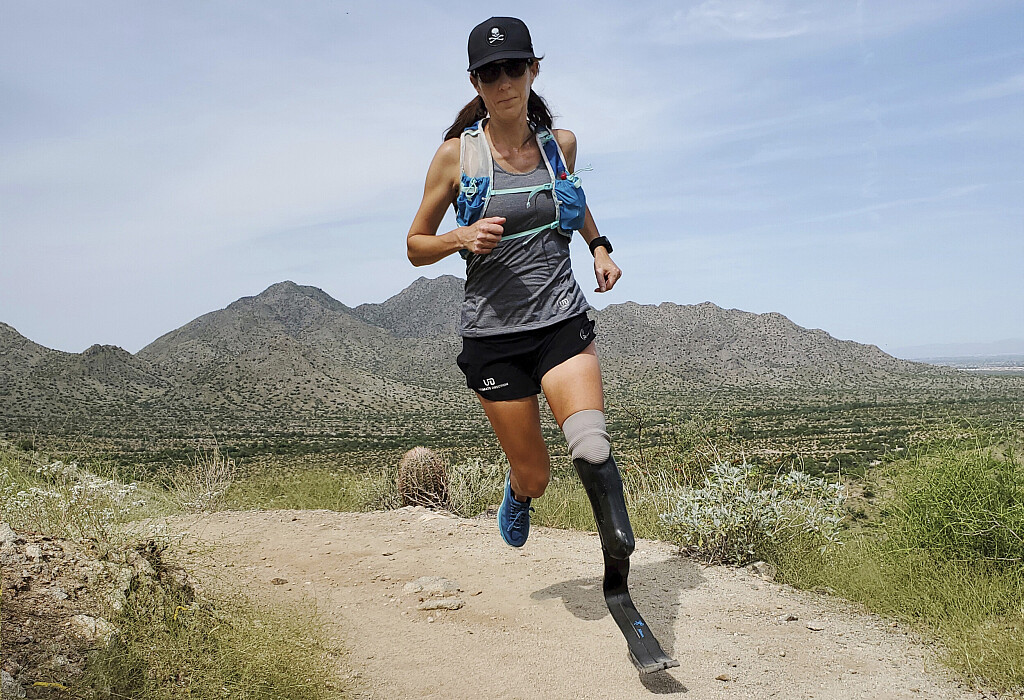
Amputee ultrarunner Jacky Hunt-Broersma takes on 5,250 kilometer challenge for cancer research
Bladerunner Jacky Hunt-Broersma celebrated being 21 years cancer-free by setting out on a new challenge: the Arizona-based athlete and coach will be running a half marathon a day (21.1K a day) from Aug. 1 until she reaches 5,250 kilometers. Aug. 1 is both the athlete’s amputee anniversary and marks 21 years of being cancer-free, she shared on social media, and this challenge is to honor cancer survivors, those fighting cancer and those who have lost their lives.
Dubbed the ‘Doing Hard Things’ project, Hunt-Broersma chose the distance to represent the number of people fighting cancer each day.”I had Ewing sarcoma,” the runner shared. “I was one of the lucky ones to survive and I’m so grateful to be alive and be able to move. I think movement is so important to not only keep us healthy but also help us cope mentally.”
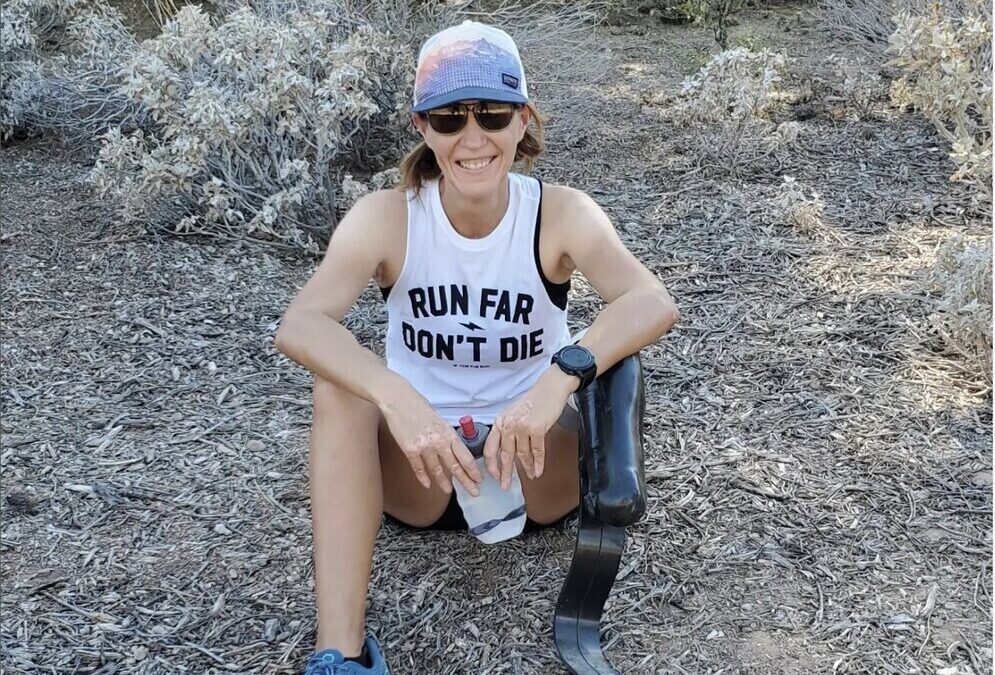
Hunt-Broersma is raising funds for cancer research and will be dedicating each day to someone fighting cancer or who has lost their life to the disease, and guesses it will take her about 250 days to complete the distance.
Hunt-Broersma lost her lower left leg to Ewing sarcoma, a rare form of cancer that affects the tissue around bones, in 2002. While she always lived a healthy lifestyle, she didn’t start running until 2016, when she signed up for a 5K race. Taking on challenging adventures is not new for Hunt-Broersma: she ran 104 marathons in 104 days in 2021, raising over $200,000 for amputee runners, and ran 50K a day for two weeks in July 2022.
The name of her latest project comes from a phrase that carried her through her 104 marathon streak. “When I was running the 104 marathons in 104 days I’d often need encouragement and I’d whisper to myself ‘you can do hard things’ to keep me going when it got really hard,” she explains. “At one point during the marathons, I started believing in myself and that whisper changed to a louder mantra: ‘I can do hard things, I can do hard things.’ ”
The athlete invites runners and walkers of all levels to come out and join her on her daily half-marathon, and will be sharing the location and times of her runs on social media. Runners can show their solidarity from afar by joining the Strava group she has created, called “I can do hard things.” Hunt–Broersma wants everyone to feel included, she shared on Instagram. “I’m hoping it will create an encouraging space where everyone will feel welcome.”
(08/03/2023) ⚡AMPby Keeley Milne
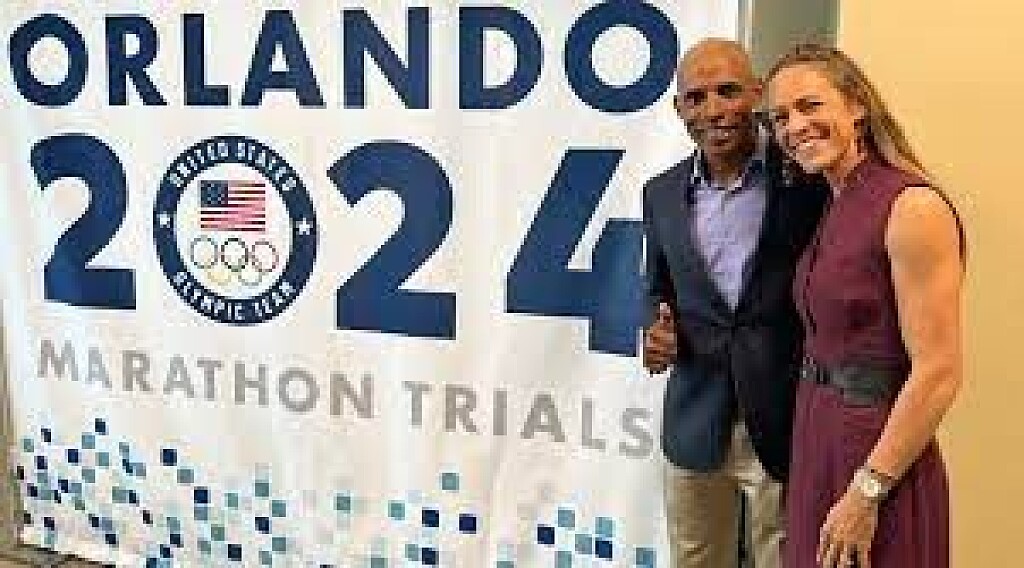
2024 U.S. Olympic Marathon Trials to start at 12 noon
USA Track and Field (USATF) caused a stir on social media on Tuesday after announcing in an email addressed to athletes that the 2024 Olympic Marathon Trials would begin at 12 noon, due to broadcasting rights. The marathon trials are scheduled to take place in Orlando, Fla., on Feb. 3, 2024.
The late start time has already caused worry for many coaches and athletes due to the potential for high temperatures. In February, the average temperatures in Orlando range from a low of 13 C to a high of 23 C, but in recent years, it has not been uncommon for temperatures to soar to 30 C–which would be detrimental to performance and potentially unsafe for elite marathoners.
According to Runners World, the email sent to athletes mentions that the Local Organizing Committee (LOC) in Orlando has extensive experience in planning and executing high-level events and has contingencies in place for any potential challenges, including weather-related ones.
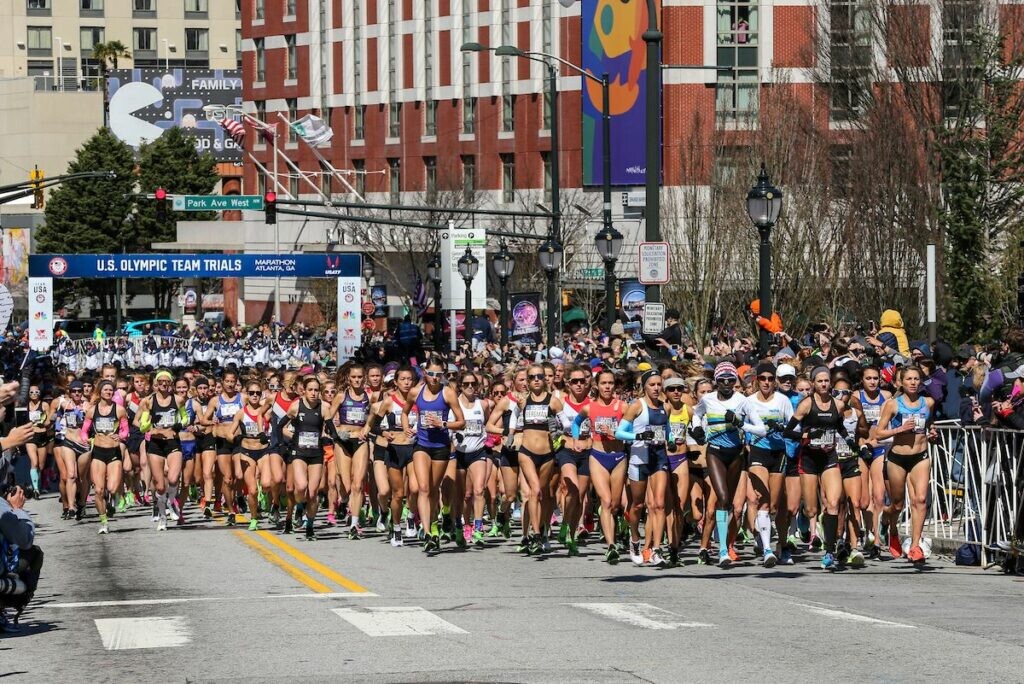
The decision to set the start time at noon is believed to be influenced by executives at NBC, the network broadcasting the event. The email highlights that the race will be televised live on NBC for three hours, providing coverage of the men’s and women’s runners and races.
The Paris Olympic marathon, which is also expected to be warm, is scheduled for Aug. 10–the middle of summer in the French capital. But both the men’s and women’s races are set to begin at 8 a.m. local time. This disparity in start times has added to the concerns raised by the late start for the U.S. Trials in Orlando.
The U.S. Olympic Marathon Trials serves as the selection race for the men’s and women’s Olympic teams that will compete at the Summer Games in Paris. The top three finishers who also meet World Athletics’ qualifying standards will go on to represent Team USA at the Olympics.
Some athletes and coaches have expressed concern, while others seem to be looking forward to it. 2018 Boston Marathon champion Des Linden tweeted: “Warmer temps should slightly minimize the pace of super shoes and reward smarter racing. Count me in!”
U.S. ultrarunner Camille Herron said “We are seven months out from the Olympic Marathon Trials. No excuses to not be prepared for a potentially hot day in Florida.”
Renowned U.S. marathon coach Kevin Hanson, who currently has 13 athletes (eight women and five men) qualified for the U.S. Trials, stressed his disappointment that athletes’ health is not taken into consideration. “There is no amount of TV coverage that is worth the health of our athletes,” Hanson tweeted.
This isn’t the first time USATF has faced criticism for its handling of extreme heat during events. At the 2021 Olympic Track and Field Trials in Eugene, Ore., where temperatures were forecasted to reach highs of 40 C, several events were rescheduled for safety. However, the heptathlon was not, and athlete Taliyah Brooks collapsed on the track due to the heat and later filed a lawsuit against USATF.
In the 2016 Olympic Marathon Trials in Los Angeles, which began at 9 a.m., some athletes struggled on an unusually warm day, with temperatures reaching the mid-70s Fahrenheit. Shalane Flanagan, who placed third in 2:29:19, collapsed at the finish line, and the organizing committee and USATF later faced criticism for not providing adequate water on the course for the athletes.
(08/01/2023) ⚡AMPby Marley Dickinson

2028 US Olympic Trials Marathon
Most countries around the world use a selection committee to choose their Olympic Team Members, but not the USA. Prior to 1968, a series of races were used to select the USA Olympic Marathon team, but beginning in 1968 the format was changed to a single race on a single day with the top three finishers selected to be part...
more...
Pro-runner Allie Ostrander’s Five tips for avoiding injuries
Former American steeplechaser turned trail-elite Allie Ostrander shared her tips for runners to avoid injuries on social media recently, telling fans to consider it her “formal petition against running-related injuries.”
Ostrander announced her shift from track to trail in Feb. 2023 (along with her partnership with ultrarunning GOAT Kilian Jornet‘s brand NNormal) and is also a mental health and eating disorder awareness advocate.
Originally from Kenai, Alaska, Ostrander had a very successful NCAA career with Boise State University in Idaho, winning three straight NCAA titles in the 3,000m steeplechase. Her tips on avoiding injuries are excellent ones for all runners, whether they run on track, trail or roads.
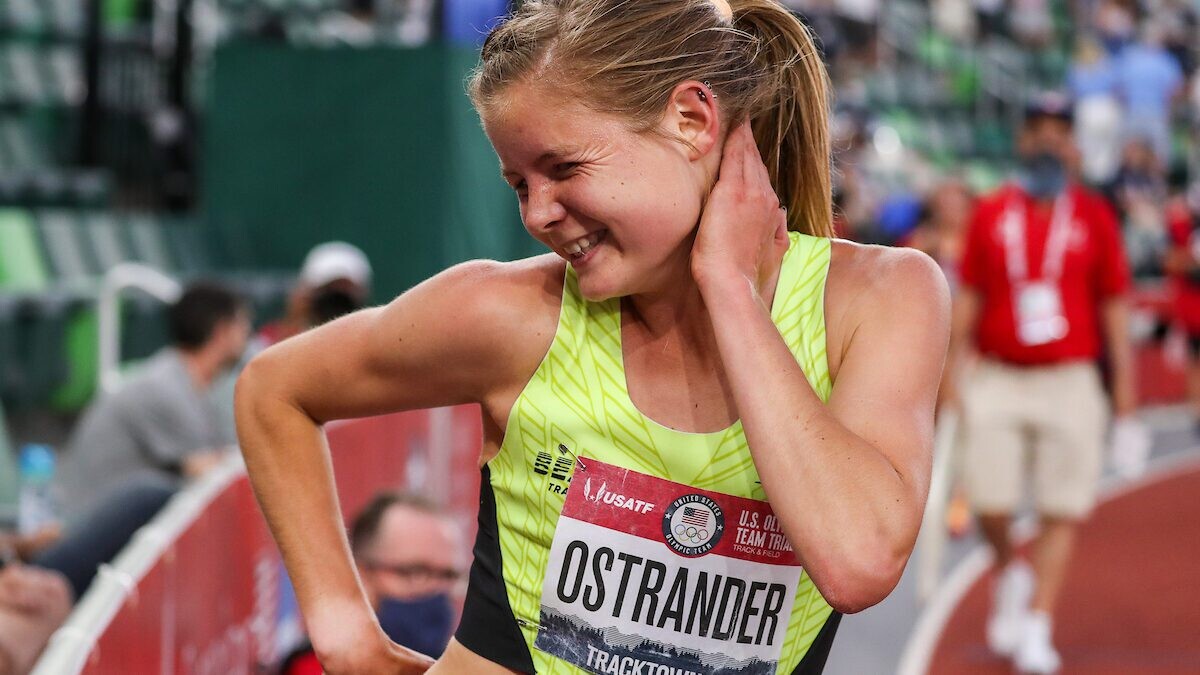
Here are Ostrander’s suggestions, along with some ideas to get you started.
Run more uphill miles
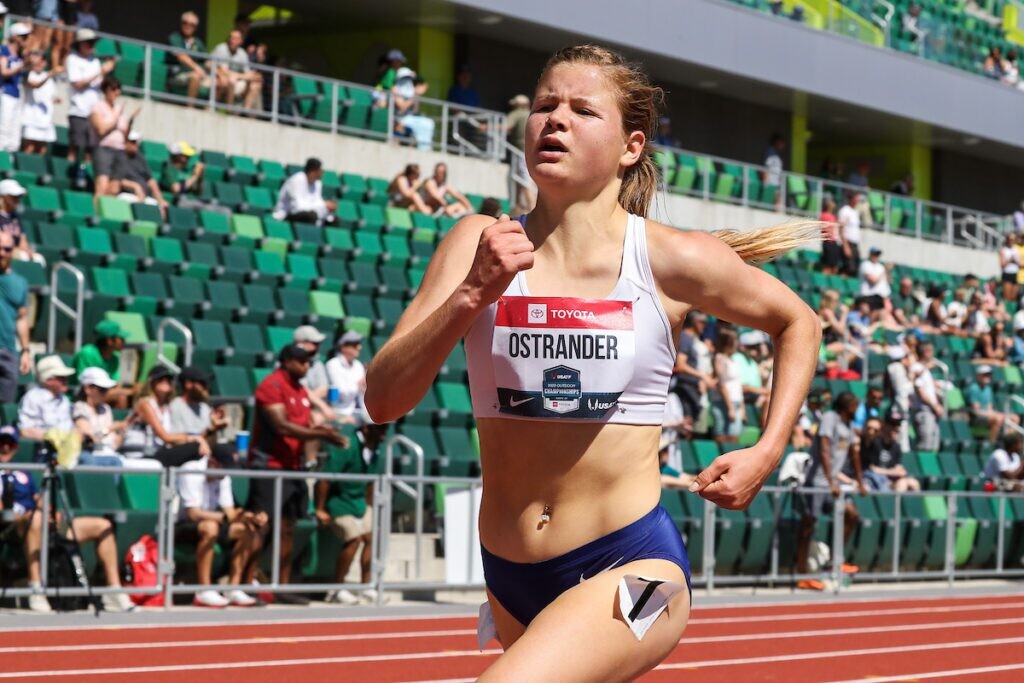
“Uphill running is lower impact and higher output, so you work harder,” shared Ostrander, “but it puts less stress on your bones.” She suggests running on the treadmill at a 3–5 percent grade, running up a long hill and getting a ride down, or doing hill repeats and walking downhill between reps.
Replace easy miles with cross training
“You don’t have to replace every easy run with a bike sesh because, let’s be honest, running is way more fun, but cross-training can be a great tool to get in some aerobic training without the impact,” Ostrander says. She suggests replacing 1–2 runs a week with a cross-training session and explains that she uses the formula of 10min of XT=1 mile running.
Try: a standing bike workout.
Don’t be afraid to strength train, lift heavy, and build muscle
Building muscle will make you a stronger runner, and you’ll be better equipped to power through hard training. “It can also correct imbalances and improve running economy,” says Ostrander.
Try: these at-home strength workouts with Canadian ultrarunner Jazmine Lowther.
Fuel
“Being in an energy deficit increases injury risk and decreases adaptation to training,” explains Ostrander. She recommends focusing on consistently giving your body the energy it needs.
Rest days are important
“Rest allows your body to absorb all the training,” Ostrander says. “Don’t wait until you feel overly tired or have some sort of pain to give yourself a day off.” It can be challenging to really allow ourselves to take the time off we need, and Ostrander suggests scheduling rest days into your training plan to keep it as much a priority as hard training.
Try: recovery day yoga to relax and unwind.
(07/31/2023) ⚡AMPby Keeley Milne

Do You Need Electrolyte Supplements at Altitude?
Here's what to keep in mind about hydration supplementation at all elevations
When Lara Crawford stopped into her local vitamin and supplement store a few months ago, she was in search of something to alleviate her acid reflux, which causes a burning sensation in her chest and acid regurgitation. But the conversation quickly took a turn when a staff member learned Crawford wasn’t taking electrolyte supplements.

Crawford lives at 9,000 feet in the Colorado Rockies, a place considered to be high altitude. Even after living in the mountains for years, she never saw a need for additional electrolytes. However, the staff member told Crawford those who live at altitude tend to get dehydrated overnight—and suggested she start taking sports salts pills and a daily electrolyte powder.
“I thought those were just for ultra athletes or like serious athletes, but he told me everybody should be taking them,” Crawford says. He spoke so convincingly about their benefits that she decided to give the electrolytes and sports salts a try.
After using the sports salts in the morning and the electrolytes at midday for a few months, she noticed a moderate improvement in her acid reflux. However, the biggest change was in her face: She no longer woke up with dry, puffy eyes.
Spotting the meaningful difference, she wondered if the staff member was right. Was the shift due to her new electrolyte supplements? Maybe these weren’t just for endurance athletes after all. Perhaps even people who only engaged in moderate exercise still needed to supplement with electrolytes at altitude.
Vic Johnson, an Utah-based sports nutritionist who works with outdoor athletes, including ultra runners, cyclists, and triathletes, says that while we do lose more fluids at altitude, there’s nothing special about nighttime.
However, the electrolyte and hydration question, and how much each of us should be consuming each day, is a bit more complicated.
At higher elevations, your body has to work harder to get oxygen, which causes your breathing rate to increase. Since you lose water through respiration, this results in greater fluid loss. The air is also drier at altitude, which makes your sweat evaporate faster and causes additional fluid loss. Each of these factors contribute to your body losing more water than at sea level, requiring you to hydrate more frequently.
However, the longer you stay up in the mountains, the better it gets. Johnson says people who live at altitude are able to adapt to the lack of oxygen. Their bodies become more efficient, producing more red blood cells to carry oxygen through the body, which reduces the amount of fluid lost.
“It’s going to be pretty stressful on your body for a couple of weeks,” Johnson says, referring to spending time at elevation. “That’s the most crucial time to increase fluid intake. Then things will kind of regulate, and you won’t have to compensate quite so much.”
However, even longtime residents of high altitude towns—Crawford has lived at 9,000 feet for 29 years—typically need about a liter to a liter and a half more water per day (about four to six cups) than people living at lower altitudes. But hydration isn’t a one-size-fits-all prescription. Whether you’re in the mountains or at sea level, your fluid intake varies based on the weather, the amount you exercise, and your overall health.
To help his athletes find the amount of hydration they need, Johnson performs a sweat rate test. He starts by weighing them before they exercise. While they work out, he keeps track of the fluids they drink and any urine they lose. After they’ve finished, he weighs them again and plugs each data point into an equation to figure out how many milliliters of sweat per hour they lose. (If you’d like to try this for yourself, use a step-by-step guide to finding out your own sweat rate.)
It’s important to note that even once you’ve figured out your sweat rate, completely replacing your lost liquids isn’t necessarily the goal. It’s not bad to be slightly dehydrated and more hydration isn’t always the solution. For many, drinking to quench your thirst is sufficient. (Those in their 70s or 80s need to monitor their intake a bit more, because our thirst sensation can decrease with age.)
Electrolytes are electrically-charged minerals such as sodium, calcium, magnesium, and potassium that regulate your muscle contractions, keep you hydrated, and balance your pH levels. Every fluid and cell in your body has electrolytes, which aid the function of your nerves, muscles, brain, and heart. Electrolytes also manage the balance of fluids in your body’s cells and are lost through sweat and urine, or if you’re sick, through vomiting and diarrhea.
While electrolytes are essential, Johnson says most of us get all we need from food. “A normal, varied diet should provide you with plenty of electrolytes, even at altitude.” Johnson says, “For the recreational athlete, it’s honestly not that big of an issue.”
If you aren’t engaging in high-output endurance activities lasting longer than three hours, and if you’re eating a nutrient-dense diet with whole grains, legumes, vegetables, fruits, nuts, and seeds, Johnson says you should be getting enough electrolytes without needing additional supplementation. However, endurance athletes who engage in high-output endurance activities lasting longer than three hours have different hydration needs, and may find electrolyte powders and capsules are a good way to stay hydrated and keep their electrolytes balanced.
That doesn’t mean these supplements are the secret to unlocking a new PR. A 2020 study conducted by researchers at Stanford University found that electrolyte supplementation does not improve performance or protect against illnesses caused by a change in sodium levels, including exercise-associated hyponatremia (EAH).
If an endurance athlete wants to take in some sodium, Johnson recommends turning to salty foods, such as pretzels or even a peanut butter sandwich.
“For the most part, when our serum sodium levels drop, the body can usually take care of that and regulate that on its own,” he says.
So, if electrolyte supplementation isn’t really necessary for most people, why did Crawford see a noticeable difference in her face after months of supplementation?
The answer most likely lies in what Crawford took with the powder and capsules.
Before going to the supplement store, Crawford says she struggled to drink enough water. However, while doling out instructions for the supplements, the staff member instructed Crawford to drink a full bottle of water with her morning sports salts capsules (which contain sea salt, magnesium, and potassium) and to mix the flavored electrolyte powder with at least 16 ounces of water later in the day. The supplements provided the structure for her to consume more water, improving her overall hydration and reducing the puffiness in her eyes.
If you live at altitude and find it difficult to drink adequate fluids, a flavored powder might help. For most people, however—including serious athletes—drinking when you’re thirsty is usually enough.
(07/30/2023) ⚡AMPby Outside Online
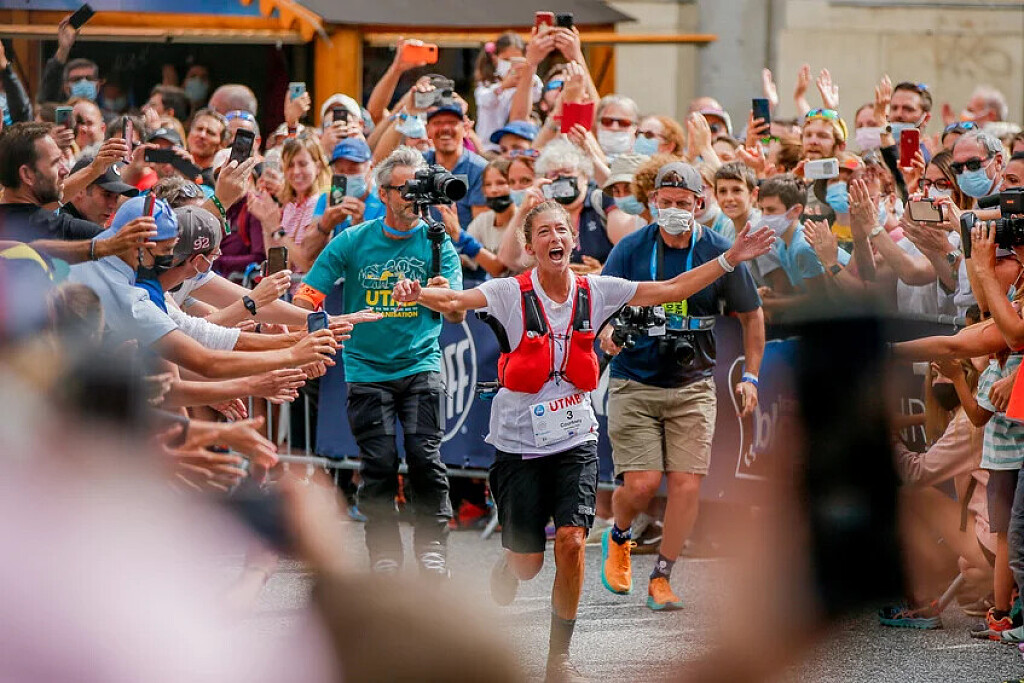
Courtney Dauwalter to race UTMB this year
The U.S. ultrarunning phenom, hot off her record-breaking finishes at Western States and Hardrock 100, will be looking to best her own course record in Chamonix in September.
Ultrarunning sensation Courtney Dauwalter has announced she’ll be toeing the start line at Ultra Trail du Mont-Blanc (UTMB) in Chamonix, France on Sept. 1, setting the stage for what is sure to be one of this year’s most highly anticipated ultras, following her recent record-breaking wins at the Western States 100-mile Endurance Run and the Hardrock 100.
The 38-year-old shared on social media Friday morning—with an apparent mix of excitement and trepidation—her decision to take on the famed 170-km course, which features 10,000m of vert around the base of Mont Blanc.
“We decided to do UTMB!” she wrote. “I have no idea how this will go, or what I’ll be able to squeeze out of my body & brain in one more 100 mile race this summer, but that makes it even more interesting to try! Mont Blanc, here we come! Race date: Sept 1”
The big question surrounding the September race will be whether Dauwalter, who holds the UTMB course record following her 22:30:54 finish in the race two years ago, will be able to best herself to claim the championships and course records at Western States, Hardrock and UTMB within a span of less than three months.
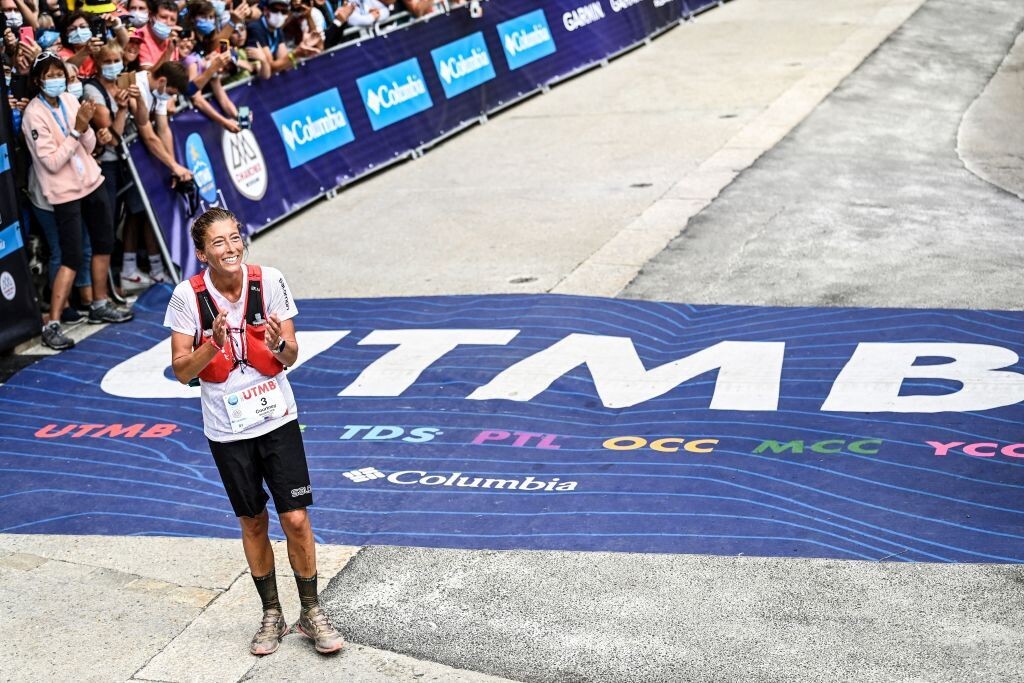
On June 24, Dauwalter not only demolished the Western States women’s course record that had stood for more than a decade (16:47:19 set by Canadian Ellie Greenwood in 2012), but beat most of the men, finishing in 15:29:33 and sixth overall.
Just three weeks later, she turned in another mind-blowing performance at the Hardrock 100 in Silverton, Colo., crossing the finish line in fourth place overall in 26:14:08. Dauwalter’s run was more than an hour faster than the counter-clockwise record set by Diana Finkel of South Fork, Colo., in 2009, and 30 minutes faster than Dauwalter’s own overall women’s course record set last year.
In addition to holding the course records at UTMB, Western States and Hardrock 100, Dauwalter, who is based in Golden, Colo., holds the record at Diagonale des Fous on Reunion Island.
(07/28/2023) ⚡AMP
by Paul Baswick
North Face Ultra Trail du Tour du Mont-Blanc
Mountain race, with numerous passages in high altitude (>2500m), in difficult weather conditions (night, wind, cold, rain or snow), that needs a very good training, adapted equipment and a real capacity of personal autonomy. It is 6:00pm and we are more or less 2300 people sharing the same dream carefully prepared over many months. Despite the incredible difficulty, we feel...
more...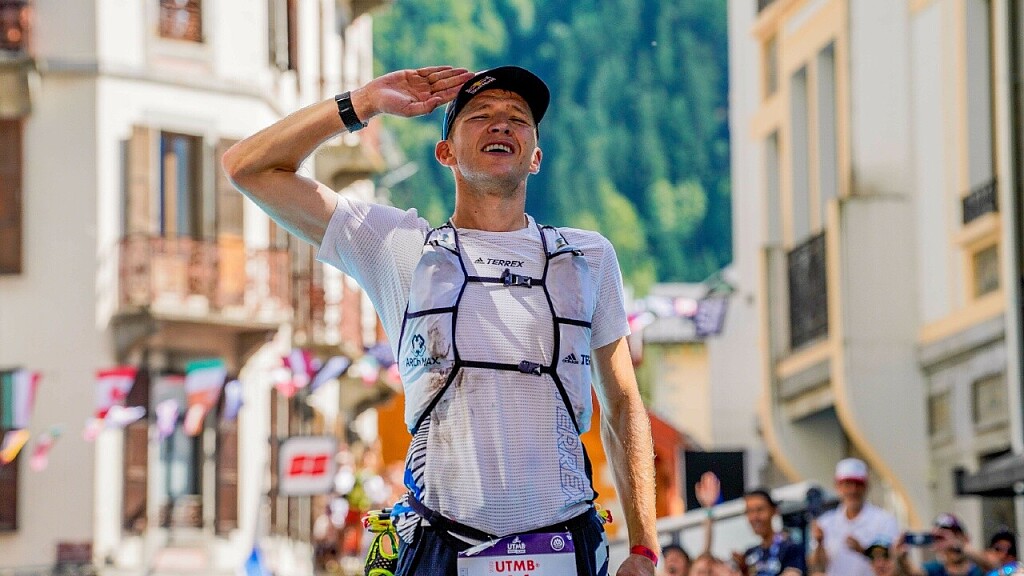
Don’t tell me what’s impossible – Tom Evans confirms UTMB is up next
Tom Evans has announced that he will run at this year’s Ultra Trail du Mont Blanc (UTMB) after a late alteration to his 2023 plans.
The British runner claimed a “dream” victory at Western States last month to add to his “super fun” Ultra-Trail Snowdonia win in May and second place at Black Canyons 100K in February.
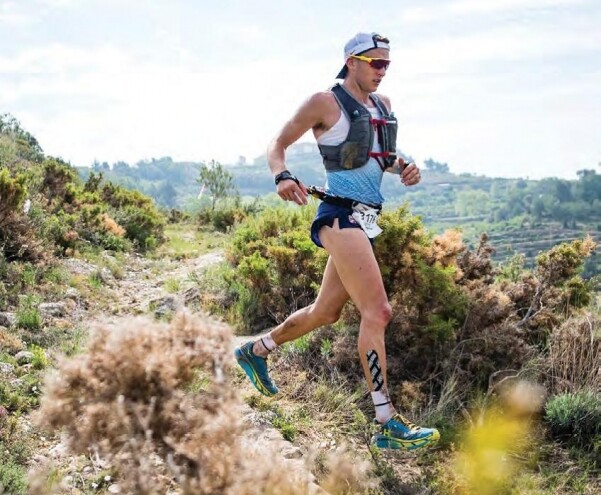
Evans crowned his return from knee surgery to finish third behind Kilian Jornet at last year’s UTMB, but had not scheduled in the iconic Chamonix race for 2023.
Western States recovery
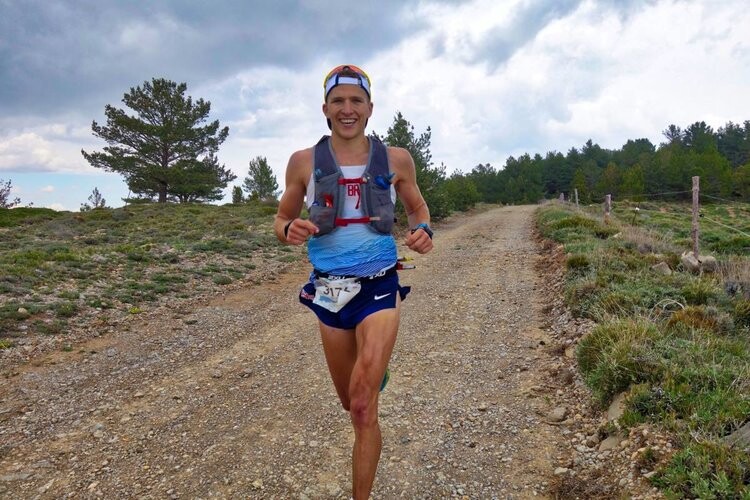
His race calendar for this year, which he shared on Instagram in January, included a Fastest Known Time (FKT) attempt of the Bob Graham Round in September, but there was no mention of UTMB following Western States.
However, after his dominant win in California’s Sierra Nevada Mountains, a defiant Evans suggested that UTMB could still be on the cards.
“If I recover well from this, I’ll race UTMB this year,” Evans said at the end of adidas TERREX’s documentary on his Western States win.
“People have said it’s impossible to do. Don’t tell me what’s impossible or not.
Irresistible challenge
Over the next three weeks, Evans’ recovery clearly went to plan and yesterday he revealed that he was unable to resist the allure of UTMB, which takes place next month.
“Couldn’t resist the chance to make more memories like this,” he wrote on Instagram. “See you in Chamonix!
“Next up… UTMB.
“The Western States 100 / UTMB double is something that has always interested me. It wasn’t on my original plan but things have to change with how you’re feeling!
“And now, I can’t wait for the challenge!”
(07/27/2023) ⚡AMPby Olly Green
North Face Ultra Trail du Tour du Mont-Blanc
Mountain race, with numerous passages in high altitude (>2500m), in difficult weather conditions (night, wind, cold, rain or snow), that needs a very good training, adapted equipment and a real capacity of personal autonomy. It is 6:00pm and we are more or less 2300 people sharing the same dream carefully prepared over many months. Despite the incredible difficulty, we feel...
more...
Tommy Rivers Puzey inspires in short film about his Boston Marathon
Beloved endurance athlete Tommy Rivers Puzey shares his “why” for running in a short film about his experience at the 2023 Boston Marathon, which the formerly-elite runner finished in 4:53:44–which is remarkable, considering that three years ago he was stricken by a rare and aggressive form of lung cancer that nearly killed him. “I don’t love to run fast, I just love to run,” Puzey says.
Puzey, or “Rivs” (as fans and friends call him), has for years been an inspiring force to the endurance world and casual runners alike. Once known for being an elite marathoner, ultrarunner and triathlete, Puzey now runs to celebrate his incredible recovery and to strengthen his body in case of a relapse. His illness and recovery are documented in a recently published book, Everything All At Once, written by his wife, Steph Catudal.
“Steph Catudal shares how her ultrarunner husband’s terrifying illness sparked transformation” — Canadian Running Magazine
View on the original site.
The short film poses the question of why we run: something Puzey can find a multitude of eloquent ways to answer.”It’s an expression of what we are as human beings,” Puzey shares in the film. “It’s what we’re meant to do.” Puzey, who lost 75 per cent of his lung capacity from his illness, has accepted and embraced his slower pace. “I don’t think anything has changed necessarily except that I’m not able to do it as fast,” he explains. Puzey returned to racing with the 2021 New York City Marathon, sharing high-fives and smiles as he walked the course with Catudal in 9:18:57.
The 2017 Boston Marathon was where Puzey ran his best, finishing in 2:18:57 for 16th place. In 2022, Puzey ran a vastly different, yet even more remarkable race. Due to his reduced lung capacity (and despite looking incredibly fit) Puzey must rest for 15-20 seconds for every 30 seconds of running, and he still manages to pull off a sub-five-hour finish.
Puzey explains that post-illness, the draw to the sport remains the same to him. Returning to the level of fitness he formerly had is not the goal; rather, he wants to “do everything [he] can to reach [his] greatest new potential.” Puzey has so many fans for a reason–he comes across as thoughtful and genuine and speaks with humility and grace. The film will have you pondering your why, and leave you inspired by a runner who never gives up.
(07/23/2023) ⚡AMPby Running Magazine
