

Running News Daily
Running News Daily is edited by Bob Anderson and team. Send your news items to bob@mybestruns.com Advertising opportunities available.
Index to Daily Posts · Sign Up For Updates · Run The World Feed
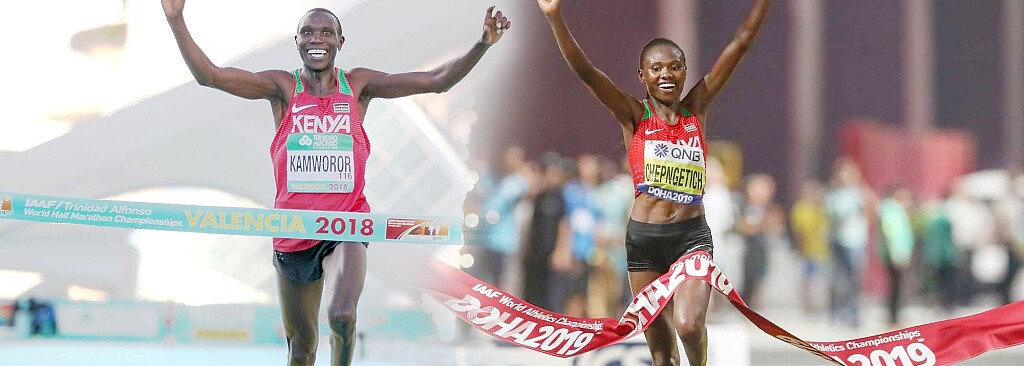


World Athletics Championships Oregon22 preview: marathon
Kenya’s Geoffrey Kamworor, whose career was traumatized in June 2020 when he was hit by a motorbike during a training run and required surgery on a broken tibia, is due to contest his first major championship marathon in Eugene on July 17.
The 29-year-old from Nyen was named on the Kenyan team for the World Athletics Championships Oregon22 along with 33-year-old Lawrence Cherono – who missed a medal by one place in the marathon at last year’s Olympics – and 35-year-old Barnabas Kiptum.
Kamworor, confident and outgoing, was flying high when he had his accident.
Although he had performed to high levels on the track, where he earned 10,000m silver at the 2015 World Championships in Beijing, it was on grass and roads that he had excelled, winning the world cross-country senior titles in 2015 and 2017, and world half marathon titles in 2014, 2016 and 2018.
In his first competitive marathon in 2012 he finished third in Berlin in 2:06:12, and he was a consistent presence on the podium at World Majors Marathons thereafter, particularly in New York, where he finished second in 2015, first in 2017, third in 2018 and first again in 2019.
Kamworor ran his first race since the accident in January 2021, winning the Kenyan Police Cross Country Championships before going on to secure a place on Kenya’s Olympic 10,000m team after winning the national trials, only to have to pull out with an ankle injury.
But at the Valencia Marathon last December he was able to perform to the peak of his ability once more as he set a personal best of 2:05:23 in finishing fourth.
At the previous year’s running in Valencia, Cherono was second in a personal best of 2:03:04, putting him eighth on the world all-time list, having made his World Marathon Majors breakthrough in 2019 when he won in Boston in 2:07:57 and then Chicago in 2:05:45.
Like Kamworor, Kiptum also set a personal best last year as he clocked 2:04:17 in placing third at the Milan Marathon and he has a solid top-three record in virtually every race he has contested.
Such is the depth of Kenyan talent that they can name 2017 world champion Geoffrey Kirui as a reserve.
Meanwhile Kenya’s perennial rivals Ethiopia will be looking to their current world champion Lelisa Desisa, who found the way to win in the steamy heat of Doha three years ago, to make the most of his wild card entry to this year’s competition.
Desisa had early track success, winning the African U20 10,000m title in 2009, and he has since become a highly consistent performer at the highest level, achieving podium finishes four times in New York, including victory in 2018, and four times in Boston, where he won in 2013 and 2015.
He also has championship pedigree, having earned world silver in 2013 six years before his Doha gold, and has a personal best from 2013 of 2:04:45.
The formidable talent Ethiopia can call upon was made clear when it was confirmed that Desisa will have as teammates Tamirat Tola, Mosinet Geremew and Seifa Tura.
Tola earned Olympic 10,000m bronze in 2016 and world marathon silver in 2017. He set his personal best of 2:03:38 last year.
Geremew took silver behind Desisa at the 2019 World Championships, having finished second at that year’s London Marathon in 2:02:55, the third-fastest time in history.
Tura set his personal best of 2:04:29 last year in Milan before going on to win the Chicago Marathon in 2:06:12.
Uganda, the rising nation in distance running, earned this title in 2013 thanks to their 2012 Olympic champion Stephen Kiprotich. But the 33-year-old hasn’t been selected for Oregon, nor have Stephen Kissa, who ran a national record of 2:04:48 in Hamburg earlier this year, and Victor Kiplangat who was third in the second-fastest time ever by a Ugandan, 2:05:09.
Instead, Filex Chemonges, Fred Musobo and Jackson Kiprop will run the World Championships marathon, according to the Uganda Athletics Federation. So Kiprop, who helped Kiprotich to win the 2013 world title, is back at the World Championships for the first time since 2015.
Kissa, meanwhile, is due to be in Oregon in the 10,000m, where he will run with fellow Ugandan Joshua Cheptegei, the world 5000m and 10,000m record-holder, while Kiplangat is reported to be running the Commonwealth Games marathon.
Abdi Nageeye of the Netherlands and Belgium’s Bashir Abdi earned surprise silver and bronze medals respectively at the Olympics last year, but went on to confirm that their performance in Sapporo was anything but a fluke. Abdi set a European record of 2:03:36 to win the Rotterdam Marathon just two months later, while Nageeye was victorious at the Rotterdam Marathon earlier this year in a Dutch record of 2:04:56, finishing ahead of Abdi.
Both men will line up for the marathon in Oregon, only this time it will be less of a surprise if they reach the podium.
The United States will be looking to the highly consistent figure of Galen Rupp. After taking Olympic 10,000m silver in 2012, Rupp moved to the roads and earned Olympic bronze in 2016.
In 2017 he became the first US man to win the Chicago Marathon since 2002 and finished second at the Boston Marathon. He qualified for Oregon by finishing eighth at last year’s Olympics.
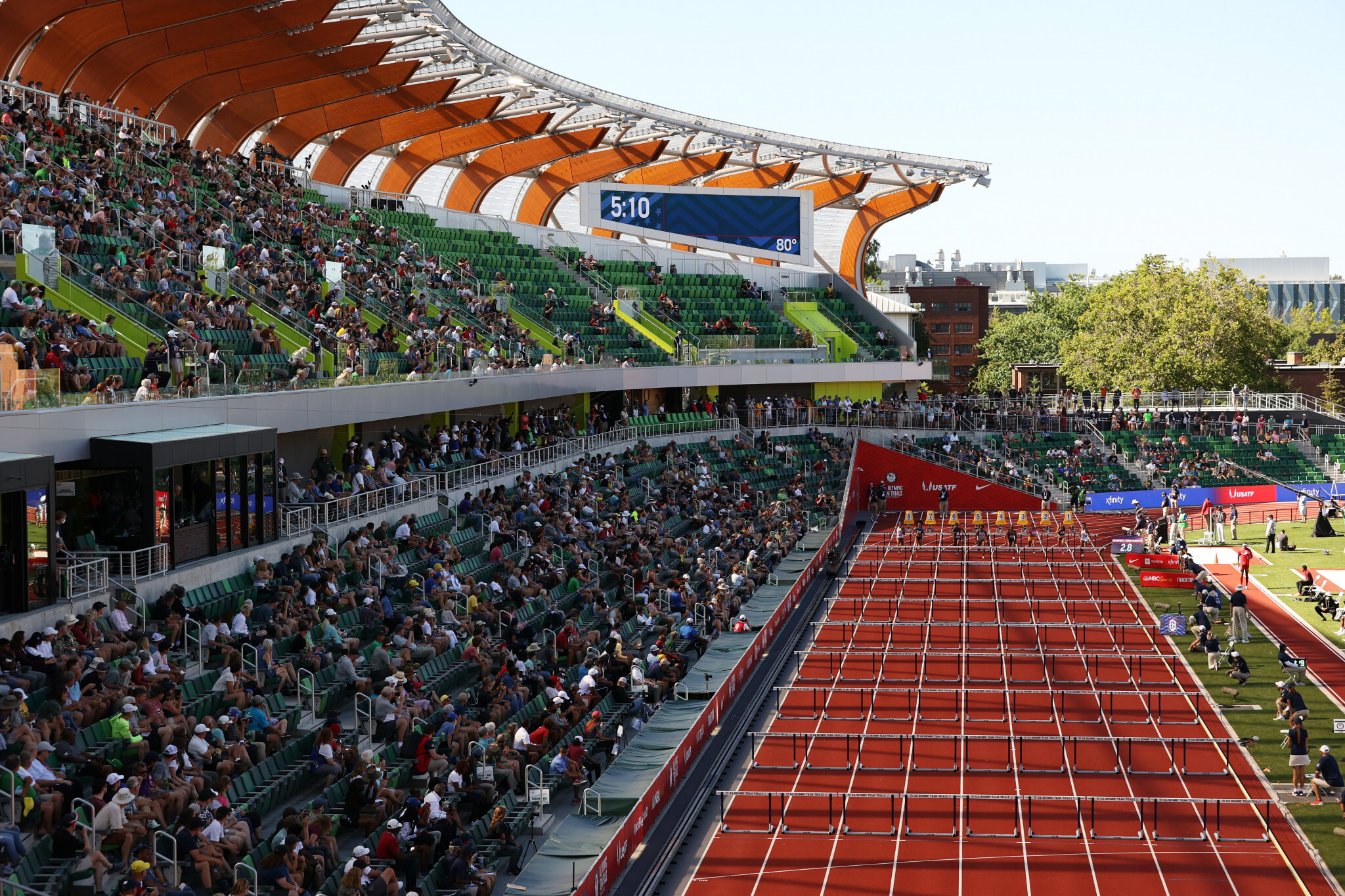
The championships will be in Rupp’s home state, in the same city where he made his first Olympic team in 2008 while he was a student at the University of Oregon.
The other US selections are Elkanah Kibet and Colin Mickow. Kibet, who is with the US military, finished 16th at the 2017 World Championships and set a personal best of 2:11:15 in finishing fourth at last year’s New York marathon.
Mickow is a 32-year-old full-time financial analyst for an organic and natural foods distributor who took up road running six years after finishing his college track career. He qualified for his first international vest after being the top US man home at last year’s Chicago Marathon, where he was sixth in 2:13:31.
Japan’s trio of male runners will be headed by Kengo Suzuki, who set a national record of 2:04:56 in February 2021 at the Lake Biwa marathon in Otsu. Daniel Do Nascimento of Brazil has run a 2:04:51 personal best this year and is another one to watch.
The three-loop World Athletics Championships marathon course only varies by about seven meters between its high and low points and the weather is likely to be considerably cooler than it was in Sapporo or Doha, where the men's marathon had to be held at midnight and the start time temperature was 29C/84F with 51% humidity.
Women's marathon
Ruth Chepngetich will defend her marathon title at the World Athletics Championships Oregon22 on July 18 by virtue of a wild card.
Chepngetich claimed the first gold medal of the 2019 World Championships, clocking 2:32:43 in the steamy heat to gain her first major gold.
She went on to finish third at the 2020 London Marathon before a roller coaster 2021, when she set a world record of 1:04:02 at the Istanbul Half Marathon, failed to finish the Tokyo 2020 Marathon in Sapporo but then won the Chicago Marathon.
At this year’s Nagoya Women's Marathon she won in 2:17:18, just 10 seconds off her personal best and the second-fastest ever women-only marathon.
She will be joined on the Kenyan team in Oregon by Judith Jeptum and Angela Tanui. Jeptum set a French all-comers’ record of 2:19:48 to win the Paris Marathon this year, while Tanui won the 2021 Amsterdam Marathon in 2:17:57.
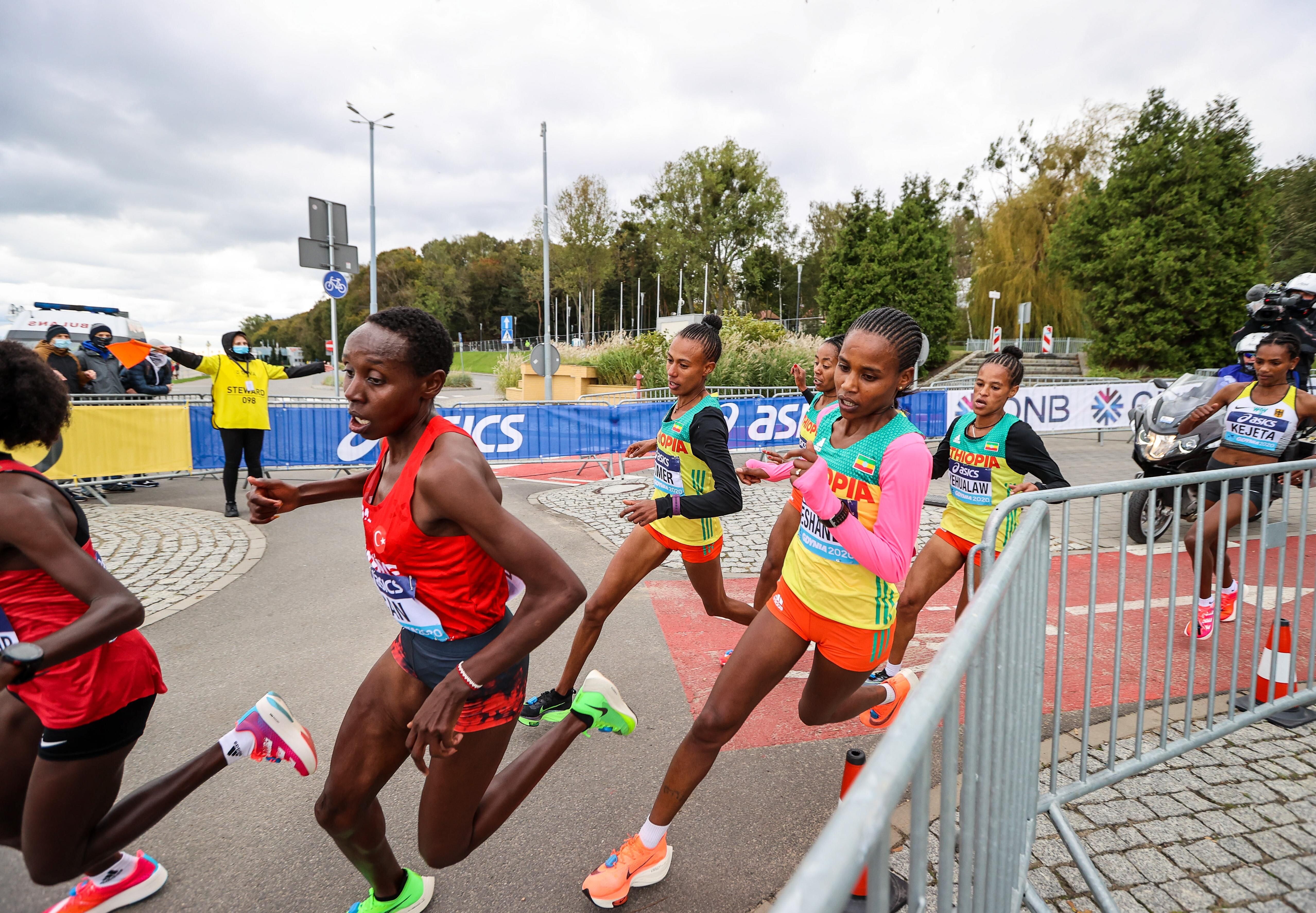
Ethiopia will be represented by Gotytom Gebreslase, who won the 2021 Berlin Marathon on her debut and finished third in this year’s Tokyo Marathon in 2:18:18, Ababel Yeshaneh, second at the 2019 Chicago Marathon in a personal best of 2:20:51, and Ashete Bekere, third in last year’s London Marathon in 2:18:18, who has run 2:17:58 this year.
USA’s Keira D’Amato, who broke the North American record when winning January’s Houston Marathon in 2:19:12 – taking 24 seconds off the mark set by Deena Kastor in 2006 – has answered a late call to join the host nation’s team following the withdrawal of Olympic bronze medalist Molly Seidel.
Seidel has been suffering from a hip injury that forced her to drop out of the Boston Marathon in April and withdrew from the team after being unable to resolve her issue, giving the 37-year-old D’Amato, who only began serious marathon running in 2017, three weeks to prepare, but she is reported to be in “great shape”.
Her teammates will be Emma Bates, runner-up at last year’s Chicago Marathon, and Sara Hall, who finished second at the 2020 London Marathon and third at last year’s Chicago Marathon.
Japan has named Mizuki Matsuda, who has a personal best of 2:20:52, Mao Ichiyama, who has run 2:21:02, and Hitomi Niiya, who has a best of 2:21:17.
Britain will be represented by Rose Harvey, Olympian Jess Piasecki and Charlotte Purdue, who ran a personal best of 2:23:26 in finishing 10th at last year’s London Marathon.
Other names to watch out for are Bahrain’s Eunice Chumba, who ran 2:20:02 in Seoul in April this year, and Israel’s European 10,000m champion Lonah Salpeter, who won the 2020 Tokyo Marathon in 2:17:45 and was going well in the lead group at last year’s Olympic marathon before dropping down to 66th place in the closing stages.
After also dropping out of the 2019 World Championships marathon, Salpeter will be seeking to make the global impact her talent warrants.
Meanwhile Eritrea’s Nazret Weldu, who has run a personal best of 2:21:56 this year, is another one to watch.
(07/11/2022) ⚡AMPby World Athletics

World Athletics Championships Budapest23
Budapest is a true capital of sports, which is one of the reasons why the World Athletics Championships Budapest 2023 is in the right place here. Here are some of the most important world athletics events and venues where we have witnessed moments of sporting history. Throughout the 125-year history of Hungarian athletics, the country and Budapest have hosted numerous...
more...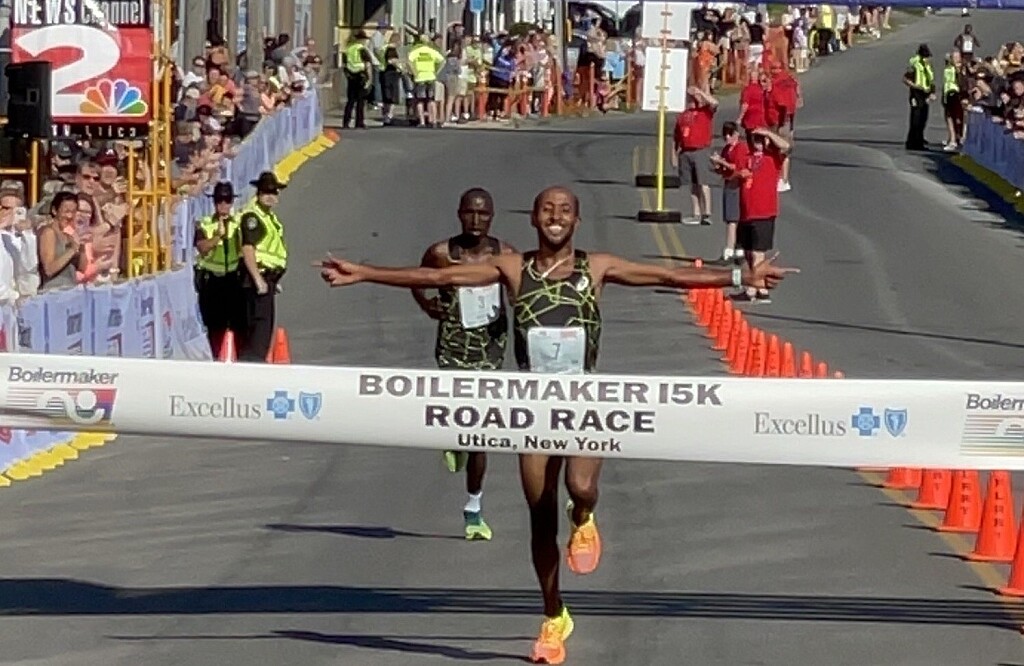
Jemal Yimer and Rosemary Wanjiru take wins at Utica Boilermaker
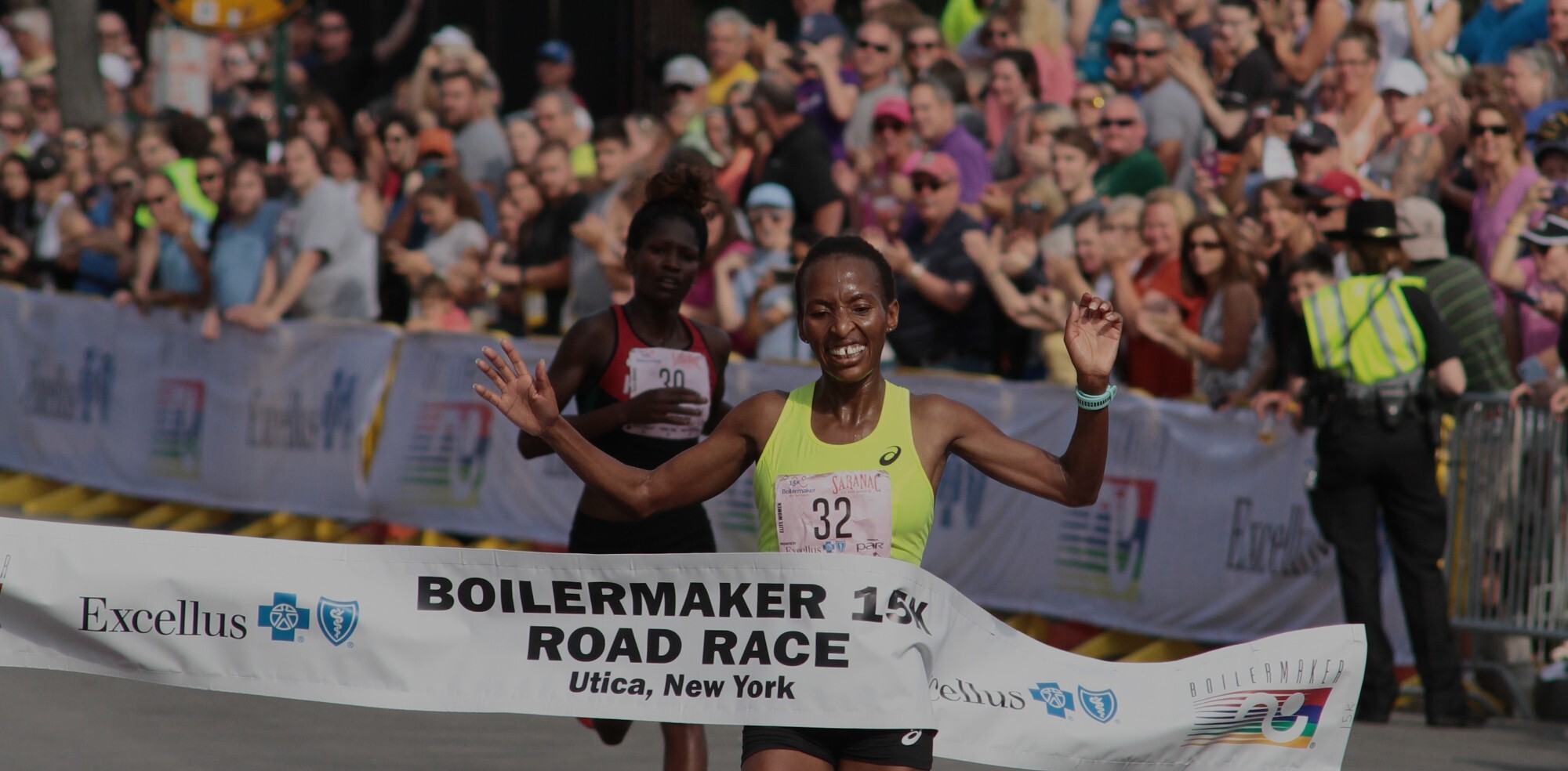
Jemal Yimer Mekonnen of Ethiopia won the 45th running of the Boilermaker 15K Road Race presented by Excellus BlueCross Blue Shield, smashing a 12-year-old course record by 8 seconds in the race's return to its traditional first Sunday in July. Rosemary Wanjiru of Kenya took home the women's crown and a $10,000 Super Bonus as part of the Professional Road Racing (PRRO) 25th Championship.
Mekonnen won the 9.3 mile race with a time of 42:38, overtaking Edwin Kimutai of Kenya in the final mile and taking the win by 2 seconds. Mekonnen took home $7000 for winning the Boilermaker and a $2500 bonus for winning the PRRO Championship. He was not eligible for the PRRO Super Bonus, which requires a win in a previous series race.
Mekonnen bested the Men's Open record of 42:46 set by Lelisa Desisa of Ethiopia in 2010.
Wanjiru, who previously won the Bloomsday Run in 2019, bested fellow-Kenyan Veronica Nyaru Wanj by nearly 20 seconds, finishing the race in 48:54. The women's course record is held by Edna Kiplagat of Kenya, who won the 2010 race with a time of 47:57.
Wanjiru leaves the race as the PRRO Series Champion, winning $7000 from the Boilermaker in addition to the super bonus prize money from PRRO.
Sam Chelanga of Columbia, SC, the top American male, finished third overall with a time of 43:09, while the top American woman was Carrie Verdon of Boulder, CO. Verdon was the fifth overall female, finishing in 49:37.
As part of the PRRO Championship, runners who were eligible for the PRRO Super Bonus who finish in positions 2-10 in the men's and women's open divisions receive a $1500 bonus. On the men's side, Kimutai earned the $1500 PRRO bonus for his second-place finish in the men's open division, in addition to $4000 from the Boilermaker. On the women's side, Birukayit Degafa earned the $1500 PRRO bonus, in addition to $1500 for her fourth-place Boilermaker finish, while Susanna Sullivan takes home the $1500 PRRO bonus to go along with the $1000 she won for finishing sixth.
Last year's men's open winner, Syracuse native Stephen Rathbun, who now lives in Springfield, NJ, finished 23rd with a time of 47:15. Interestingly, Rathbun's finishing time was 17 seconds faster than his winning time from the October 2021 race. New Hartford native Savannah Boucher of San Antonio, TX, who won the women's open race in 2021 with a time of 56:24 was 14th in the women's open division with a time of 54:40.
Daniel S. Romanchuk of Champaign, IL, the world's top ranked wheelchair athlete, won the Boilermaker Men's 15K Wheelchair Race presented by Sitrin and NBT Bank with a time of 31:33, besting his own course record, set in 2018, by one second. Local favorite Hermin Garic of Utica finished second in the men's wheelchair division with a time of 35:25.
Jenna Fesemyer of Champaign, IL, won the women's race with a time of 43:01. Emily Sweeney of Montrose, NY successfully completed the Sitrin Wheelchair Challenge, finishing in 1:14:15, earning a custom-made racing wheelchair.
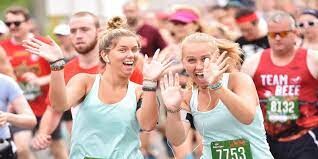
The race returned to its traditional second Sunday in July for the first time since 2019. A total of 5848 runners finished the 15K presented by Excellus BlueCross BlueShield, while 2848 finished the 5K presented by Utica National.
Michael Hennelly of Suffern, NY won the men's 5K with a time of 16:04, while Tricia Longo of Waterford, NY won the women's race in 17:49.
(07/11/2022) ⚡AMPby Glen Andrews
Boilermaker 15k
The Boilermaker 15K is the premier event of Boilermaker Weekend. This world krenowned race is often referred to as the country's best 15K. The Boilermaker 15K is recognized for its entertaining yet challenging course and racing's best post-race party, hosted by the F.X. Matt Brewing Company, featuring Saranac beer and a live concert! With 3 ice and water stops every...
more...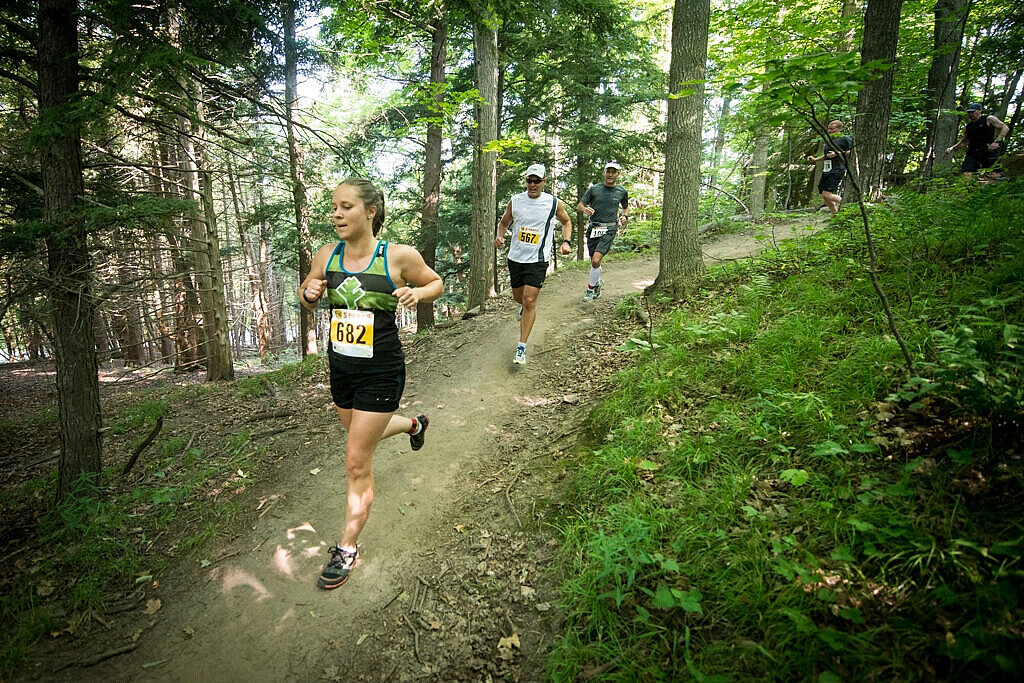
These two downhill workouts will make you stronger
The warmer months are the perfect time to try some new terrain, whether that means signing up for a trail race or trying out a hilly road route. While you might remember to add uphill workouts into your routine, maximizing speed and skill on the downhill is often neglected. Here are two workouts to incorporate into your regular training that will prep you to tackle those downhills. You can run these sessions on trails, or make them work on city paths or sidewalks.
As you run downhill, try to land with your feet underneath you, and imagine that your arms and core are a source of stability. Running downhill takes some practice, so make sure to always maintain a pace that feels safe to you. Practice landing your feet gently and smoothly.
Downhill fartlek

Fartlek is a Swedish word meaning speed play. A fartlek training session involves running continuously, while increasing and decreasing speed and intensity.
Take this workout to a path or sidewalk that has some hills, along with some flatter sections.

Warm up with 15 minutes of easy running.
Turn the rest of your run into a fartlek by increasing your speed to race pace on each downhill. After you reach flatter ground, recover with easy running as necessary. Repeat on 4-10 hills throughout the run.
Cool down with 10-15 minutes of easy running.
Leg crushers
For this workout, find a fairly steep hill, but one that you can comfortably run down at a fast pace without losing control.
Warm up with 10-20 minutes of easy running.
Run up the hill at a very easy pace, for one to two minutes (depending on the size of your hill and your experience).
Passive rest (standing) for 30 to 60 seconds.
Run down the hill at a hard you feel comfortable, stopping at the bottom of the hill.
Passive rest for 30 to 60 seconds, repeat 5-10 times. If you’re new to downhill running, start with fewer repeats, and increase by one or two repeats weekly.
Cool down with 10-20 minutes of easy running.
You may be surprised to find that downhill running often will require more recovery time than an uphill workout, and you’ll certainly feel it after trying either of these workouts. Make sure to follow a downhill day with an easy running or rest day.
(07/11/2022) ⚡AMPby Keeley Milne
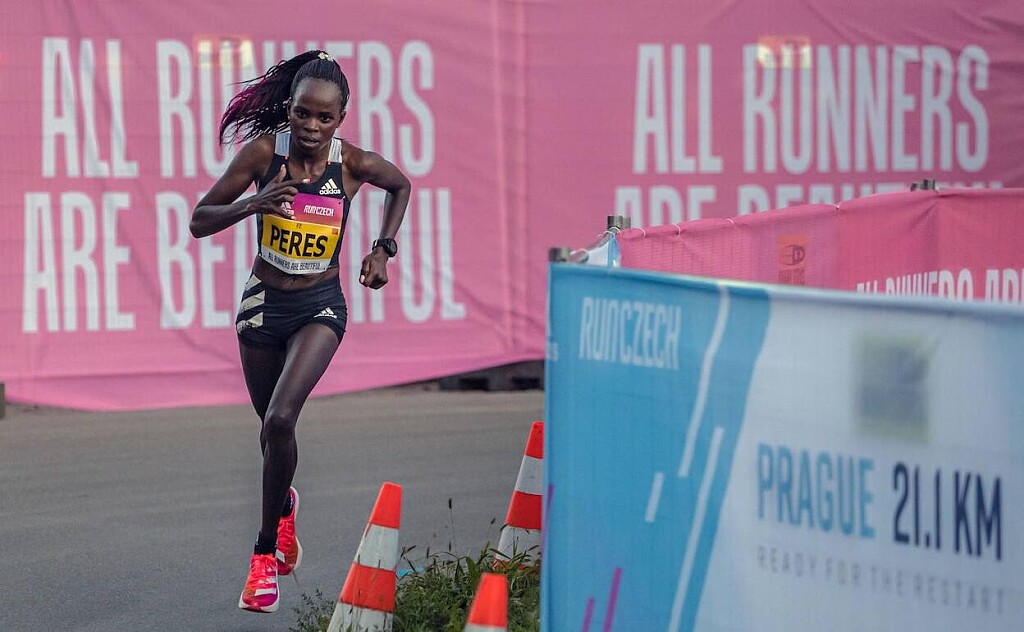
Peres Jepchirchir, world’s top marathoner, withdraws from world championships
Kenyan Peres Jepchirchir, who in the last year won the Olympics, New York City and Boston marathons, withdrew from next Monday’s world championships marathon due to a right hip injury, her agent confirmed.
Jepchirchir, a 28-year-old mom, began feeling discomfort last week, according to the Daily Nation.
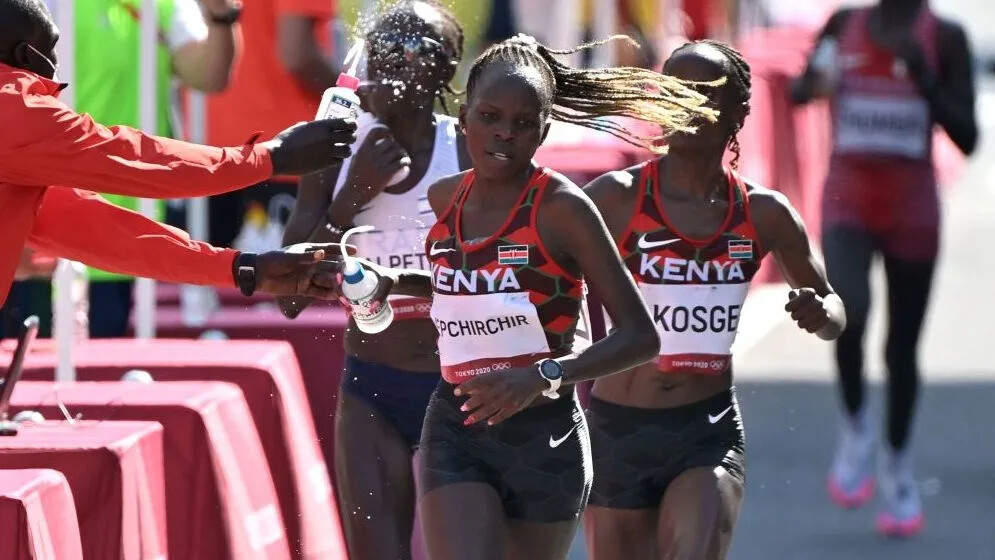
Last year, Jepchirchir became the first person to win the Olympic and New York City Marathons in a career, doing so in a span of three months. She then added a title in Boston on April 18, cementing her status as the world’s top marathoner.
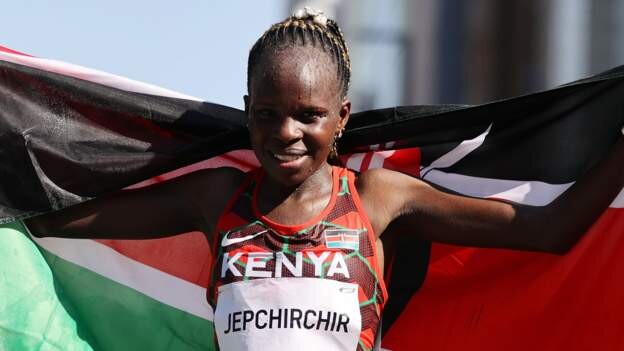
In Jepchirchir’s absence, the marathon field at worlds in Eugene, Oregon, is led by defending champion Ruth Chepngetich of Kenya and Ethiopians Ababel Yeshaneh (second to Jepchirchir in Boston) and Gotytom Gebreslase (Berlin Marathon champion), plus American record holder Keira D’Amato.
D’Amato replaces Olympic bronze medalist Molly Seidel, who withdrew two weeks ago, citing a hip injury, an ongoing process seeking a therapeutic use exemption for ADHD medication and a focus on her mental health.
(07/11/2022) ⚡AMPby Olympic Talk
World Athletics Championships Budapest23
Budapest is a true capital of sports, which is one of the reasons why the World Athletics Championships Budapest 2023 is in the right place here. Here are some of the most important world athletics events and venues where we have witnessed moments of sporting history. Throughout the 125-year history of Hungarian athletics, the country and Budapest have hosted numerous...
more...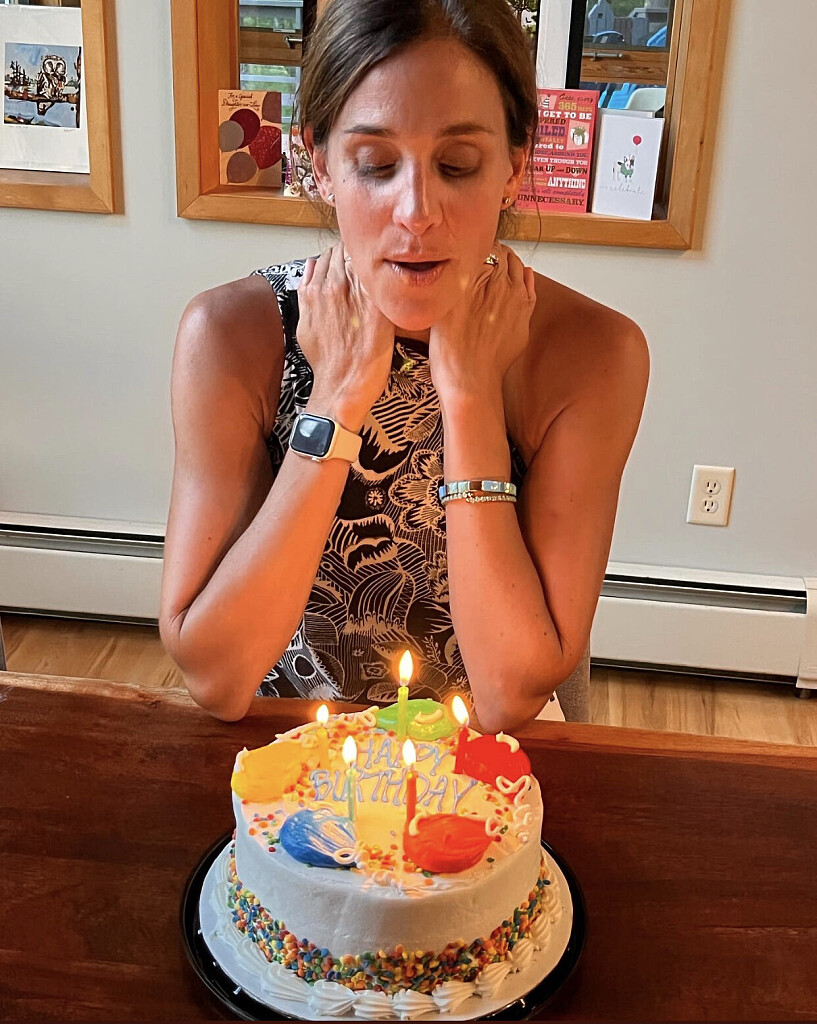
Kara Goucher turned 44 on July 9
Kara posted on Facebook:
Fun day, Fun year, Fun life.
Thankful for 44
Kara Goucher (born Kara Grgas on July 9, 1978) is an American long-distance runner. She was the 10,000 meters silver medalist at the 2007 World Championships in Athletics and represented the USA at the 2008 Beijing Olympics and 2012 London Olympics. She made her marathon debut in 2008 and finished third the following year at the Boston Marathon.
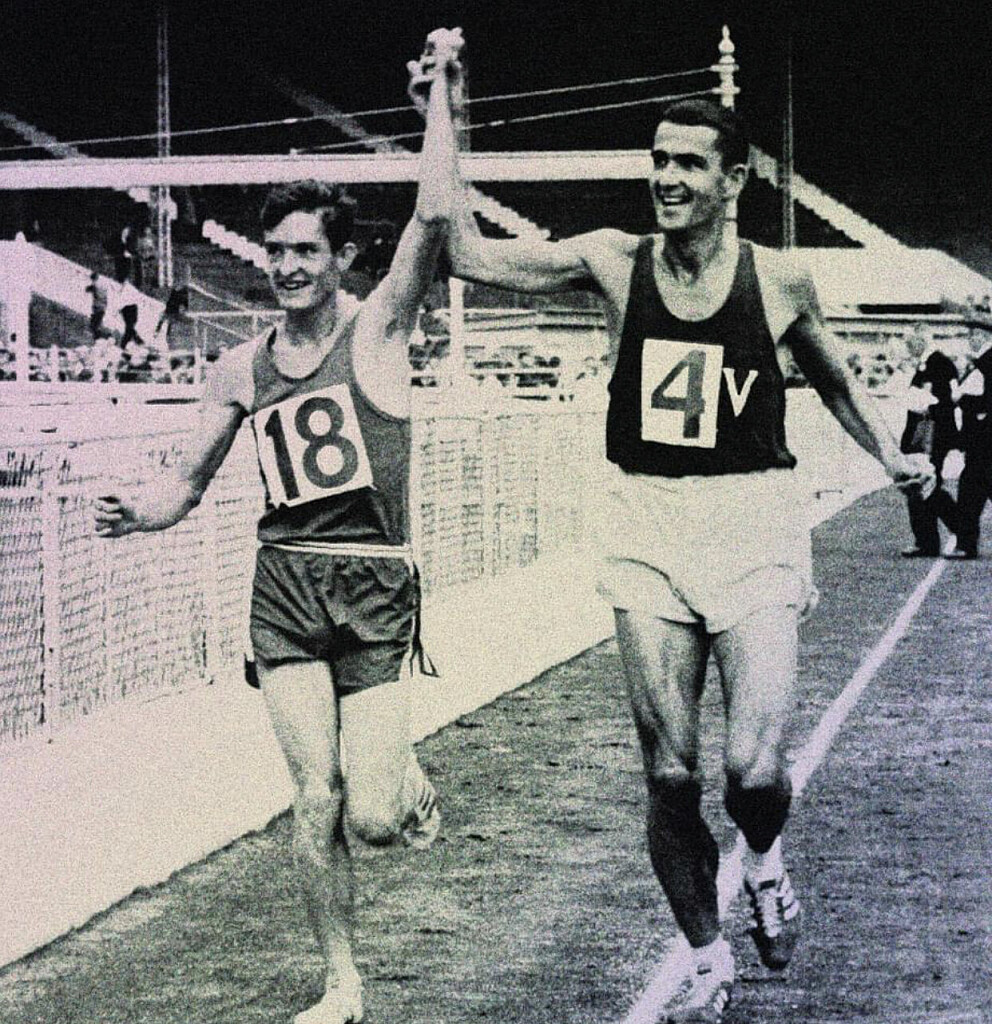
It was 57 years ago today when Ron Clarke and Gerry Lindgren ran 12 laps around a track in London
WHITE CITY STADIUM (London) was the scene of the crime...I call it a crime as these two were both caught speeding...they ran so fast it just HAD to be illegal
On this July 10th day in 1965, Ron Clarke becomes the first man ever to break the 13:00 sound barrier over three miles when he churned out a mind numbing 12:52.26 on the black British cinders, while towing a youthful Gerry Lindgren to a sterling AR mark of 13:04.2
Might I add, that these two athletes as pictured here some 57 years ago, are amongst the finest with whom I have ever had the opportunity to 'talk track' in a one on one capacity.
(Mike posted this first on FB and Gerry Lindgren wrote this comment: "I was young and naive. I had no idea HOW to race 3-miles. The gun went off....I raced. I should not have been able to run with this elite field of European champions nor Ron Clarke. But I was naive. So, if someone tried to pass, I sprinted. If someone got ahead of me, I passed them back. I just didn't know."
Gerry went on to say, "After that race I was so tired, Ron Clarke had to hold my arm up.")
(07/10/2022) ⚡AMPby Mike Fanelli
How to Overcome a Workout Plateau to Reveal Your Best Performance
Use these pointers to bust through barriers and progress your running and strength training.
You’ve been working hard for months now, trying to get your paces right where you want them. Yet, lately, you can’t seem to make progress, no matter how hard you try. It’s frustrating and confounding, and you don’t know how to break through. Unfortunately, you’ve probably hit a workout plateau.
A workout plateau can happen in running and/or your strength training. Coaches will tell you these roadblocks usually reveal themselves after about three or four weeks of stagnation. In running, this might mean you just aren’t seeing progress in training, whether that’s in your track splits or your mileage gains.
In strength training, it could mean that you’re not able to lift a heavier weight in a squat or other exercise, or you’re not seeing changes in body composition, even when you had a steady six months of progress.
The important thing to know is that workout plateaus don’t last forever—with a little drilling down, you can find the cause and then, the fix. Here’s how to overcome your workout plateau so you can bring out your best performances.
If you’ve reached a running plateau…
Feeling like you’ve hit a plateau in running can take on several forms, depending on your outlook. “It can feel like you’ve stagnated physically, like you’re unmotivated, or like you’re stuck in no-man’s land,” says Jessica Hofheimer, certified running coach at North Carolina-based Pace of Me, and coach for Another Mother Runner. “It means different things to different people. But whatever your goal, it feels like you’re not moving toward it anymore.”
Hofheimer cautions, however, that running progress doesn’t happen overnight, and sometimes, you’re not truly hitting a plateau. “You don’t do a hard workout one day and see results the next week,” she says. “It takes consistency over time.”
If, however, you’ve been training consistently for months and hit a wall, then take the time to evaluate what might be causing your workout plateau and then figure out how to address it. Here’s where to start:
Check your rest
It’s tempting to skip your rest days, but don’t. Take them regularly, says Hofheimer, so that your body can recover. Also, follow a plan with variation, which ensures you are alternating your hard days with easy days. How easy is easy? “An easy run shouldn’t be harder than a four on a scale of one to 10,” Hofheimer explains. “And be honest with yourself when it comes to that easy pace.”
This applies to your sleep schedule, too. If you’re skimping on your shut-eye, you’re skimping on your body’s ability to repair muscle damage from your hard runs. Aim for an average of seven to nine hours each night. If you’re struggling to get a solid night’s sleep, look for ways to improve your sleep routine, like a consistent bedtime, a break from screens before bed, and making your bedroom a peaceful environment.
Assess your stress
As Hofheimer reminds us, stress is stress is stress, and your body can’t distinguish one type from the other—whether that’s mental stress from a job or physical stress from your run. If you’re going through a tough time at work or with your family, maybe it’s a season to dial back on your running, saving the dedicated, programmed training for another time.
“Plateaus aren’t a necessary part of training,” says Hofheimer. “But sometimes we’ll hit them. We can’t push all the time and if you must force running, maybe you need a break to refresh and break through.”
Look in your ‘fridge
Good nutrition that optimizes recovery is essential when you’re in training. Aim to get enough carbohydrates to fuel your runs—think simple, easy-to-digest foods like bagels, a banana with nut butter, or even a sports drink.
Once you’ve returned from your run, grab something to help your muscles recover. Think protein- and healthy fat-rich foods like yogurt, avocado toast, eggs, or even a bowl of oatmeal with nut butter. Postworkout and heavy training periods are not the time to skimp on calories. You need the nutrients to repair muscle damage.
Research backs up the importance of a solid nutrition plan for optimizing performance, calling for a personalized plan that works for your running, along with your digestive health. One scientific review published in the International Journal of Environmental Research and Public Health looked particularly at nutritional intervention for women during their menstrual cycle, finding that hydration, micronutrient, and phytochemical interventions can improve athletic performance, based on measurements like aerobic capacity, anaerobic power, and strength. It also found nutrition intervention could help ease exercise-induced damage, like muscle soreness or signs of dehydration.
Talk with a doc
If you’ve tried all of the above, you might want to go the extra mile to figure out what’s going on. Hofheimer suggests “taking a look under the hood,” if you’ve been feeling more tired than usual for a period of time. “Have your bloodwork done and make sure there’s not a health issue going on, like low iron levels,” she recommends.
If you’re reached a plateau in your strength training…
Strength training is the essential backend work all runners should be doing to keep their bodies better prepared for the stress of the sport. And if you’re doing it right, you’re incorporating a routine that helps you continually progress in the amount of weight you lift, perpetually challenging your body. But it’s also easy to hit a strength workout plateau every now and again.
Meghan Weiser, D.P.T., a certified strength and conditioning specialist at the Maryland-based Recharge Modern Health & Fitness, says there are several possibilities for a strength-training plateau. But first, she says, “Before you define it as a plateau, determine if there are areas where you can improve.” These steps will get you on track:
Progress your loads accordingly
In strength training—as with running—you want to continually challenge your body. That means that as time goes on, you should gradually increase the weights, reps, or sets that you’re lifting, and/or the frequency of your strength sessions. This is called progressive overload and it’s key to avoiding or overcoming a workout plateau (in weight training and running).
This is where a trained strength coach can come in handy, as they can write a proper program for you to follow—one that continues to progress—and consult with you if trouble arises.
Take recovery days and weeks
Much like a running program, a good strength program will build in occasional weeks where you step back in training before pushing on to the next level. These “deload” weeks will involve dropping down in the amount of weight you lift, cutting back on frequency, or both. This gives your muscles a chance to repair and prepare for the next jump up. Plan to take a de-load week about every four to six weeks.
Also, similar to running, strength training requires adequate rest at night, and days off, says Weiser. Aim for that same good night’s sleep, with seven to nine hours as your goal for shut-eye. If your body is super sore from your strength session, take that as a sign you need a rest day, too.
Examine your weekly workouts
New activity is fun, and cross-training has many benefits for runners. But if you’ve recently added in new physical pursuits—a hike or two per week, for example—that might be enough to impact your strength training potential. Be intentional with your new activities, adding them in slowly and in short durations to make sure you’re not over-stressing your muscles. If you think you are, dial back until your body feels refreshed.
Eat to build muscle
Even more than running, the idea behind strength training is to inflict a bit of microscopic damage to your muscles. When the repair work begins, your muscles get bigger and stronger. Skimp on adequate calories or nutrient-dense foods—especially protein—and you’re selling yourself short, not giving your muscles what they need to make those gains.
Know there will be ups and downs
Weiser points out that progress is not always linear, and it doesn’t always come in big increments. “If you’re deadlifting 150 pounds for a few weeks and then move up to 155 pounds, that’s still progress,” she says. “With any activity, there are going to be weeks when it sucks, and you feel weak and that’s just how it goes. It doesn’t mean you’re stuck in that place forever.”
(07/10/2022) ⚡AMPby Runner’s World
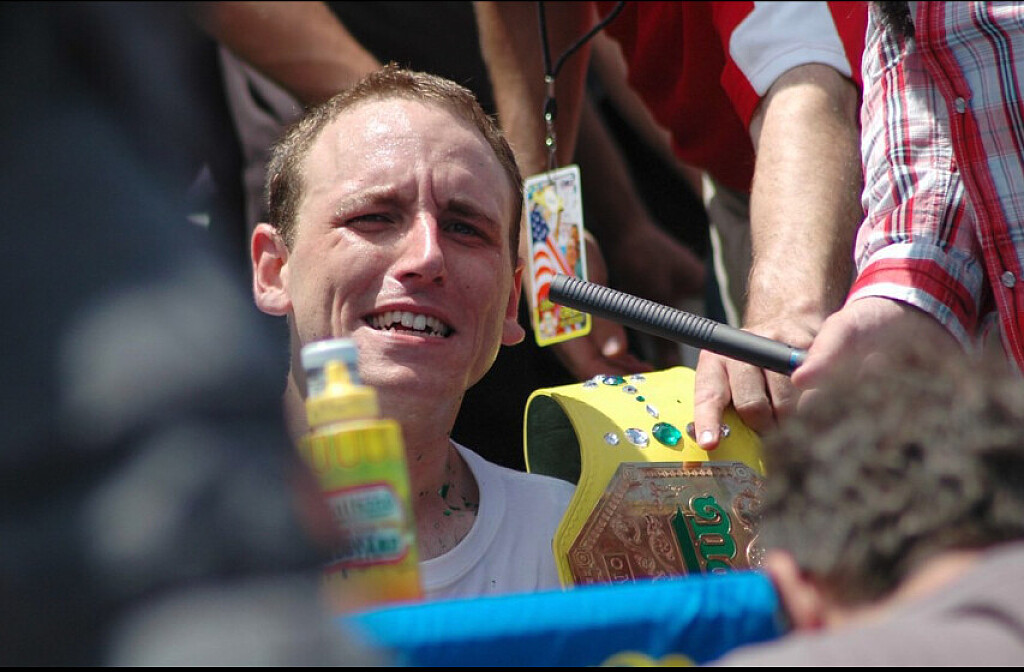
How running has helped Joey Chestnut become a hot-dog-eating champion
Joey ‘Jaws’ Chestnut, who recently ate 63 hot dogs to win his 15th Fourth of July Nathan’s Hot Dog eating competition on New York’s Coney Island, has a well-documented training program designed to overcome his body’s physical limits. In short, he trains like a marathon runner.Chestnut told GQ Magazine that his training includes two months of “simulated contests,” in which he eats as if it were July 4. “It’s really just training to stave off nausea that a typical person would endure when their stomach gets full,” says Chestnut. “It’s similar to marathon training, when you are slowly ramping up. Hitting times and distances again and again.”
To understand the pain marathon runners go through, Chestnut, 38, took part in his first marathon at California’s Surf City Marathon in 2019, where he ran 5:02:44. “Eating hot dogs is like a marathon runner running,” Chestnut explained in Brooklyn Reporter in 2021. “Your body is telling you that it’s tired, but you ignore certain feelings at the end of the race.”Besides using running as a way to work off the 17,000 calories of 63 hot dogs, it’s clear it can help the mental side of the sport too.

by Running Magazine
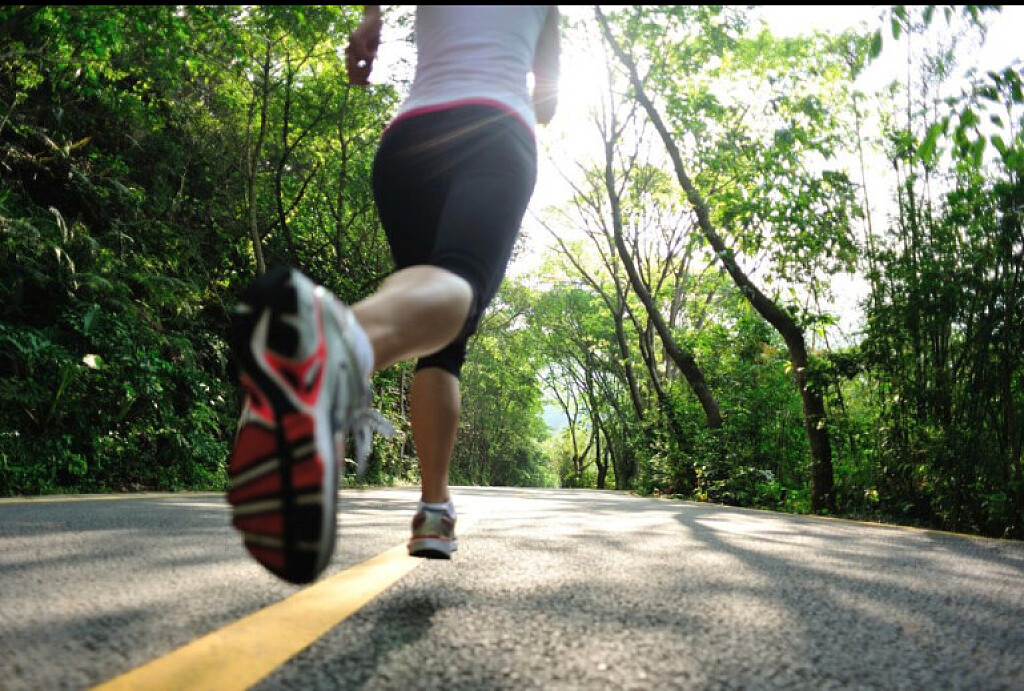
Run first, think later: three tips for using behavioral activation in running
While the activation energy we need from day to day varies, it comes down to simple chemistry: chemical reactions need a certain amount of energy to begin working. Activation energy is the minimum energy required to cause a reaction to occur. Sometimes, despite all the mental roadblocks we may be facing, fitting in a run or accomplishing something challenging is as simple as using activation energy to get started.
In an article for the New York Times, coach and author Brad Stulberg explains the strategy of harnessing our “oomph.” “Behavioral activation is based on the idea that action can create motivation, especially when you’re in a rut,” Stulberg writes. This doesn’t mean thinking positive thoughts in order to pep-talk yourself into running (although self-positivity can be incredibly helpful, trying to use it to get out the door can backfire).This strategy simply means that we need to accept that we cannot change our thoughts and feelings, but know that we can kickstart them into being more positive by taking action.


Mood follows action, rather than the other way around. We have a certain amount of activation energy available to us, and we need to apply it to important things.Reflect on why running (or exercise) matters to you
Stulberg suggests thinking about what helps you to feel grounded, or what helps you feel a sense of well-being. “Then ask yourself how to apply that activation energy strategically,” he says. “What actions will give you the oomph you need? For example, if improving your fitness would make you feel better, you might start with 30 minutes of daily movement,” says Stulberg. If you’re having trouble just getting out the door, let alone tackling a hard workout, focus on something smaller, like a few kilometres around your block, or a 20-30 minute run.
You’ll feel better once you start. Remember: you can’t control your thoughts, but you can control your actions.Tell yourself you can quit after a few laps around the street, put on the clothes you’ve conveniently laid out by the door, and take a couple of steps. You may find that the inertia that had built up by sitting around and postponing movement is gone once you start an activity and endorphins are released. Stulberg suggests that over time, it can become a habit to bypass that lack of mental motivation and simply get moving. “Dedicating yourself to the practice, no matter how you feel, is what builds motivation,” he writes.Be flexible and kind to yourself
Life, for most of us, has changed in the last few years. Schedules have changed, health has shifted, and if you have struggled with job loss, mental health, or just felt stuck, you’re certainly not alone. While it’s important to put the “mood-follows-action” concept into practice to create lasting change, be kind to yourself if you’re experiencing something particularly draining or tough. Having a sense of self-compassion can help build resilience through hard times.
If running feels like too much, go for a walk and listen to a podcast. Take your dog to the park, or walk to the local store with a friend: the important thing is to keep moving, in any way possible, and remind yourself that this time of low energy will pass.
(07/10/2022) ⚡AMPby Running Magazine
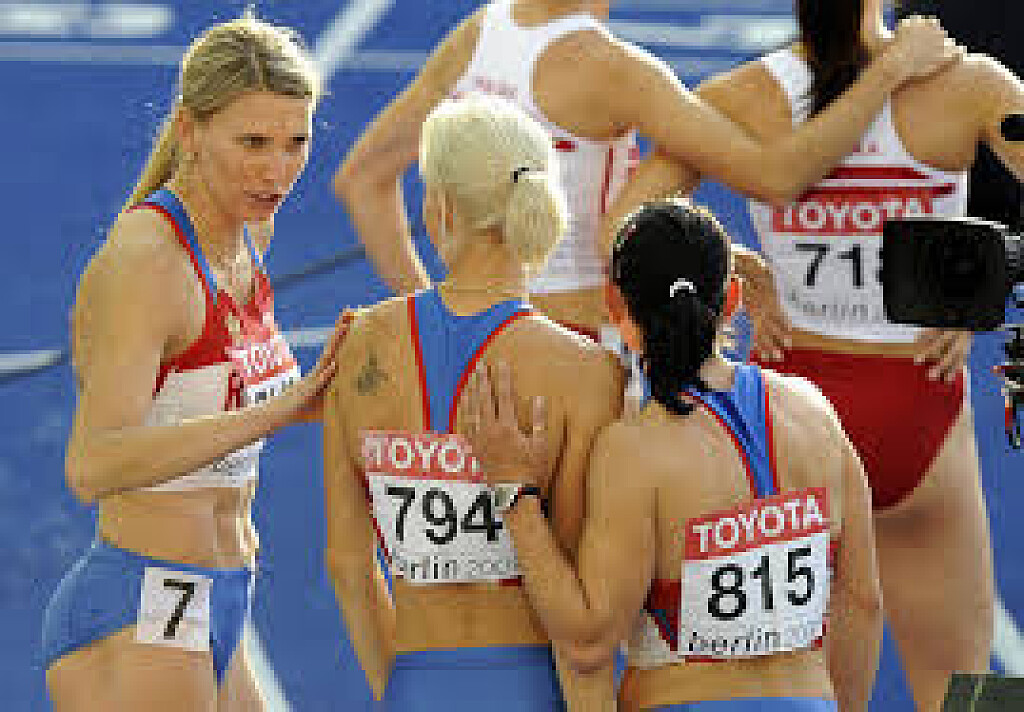
Track and field officials confirmed Friday that Russians will not be allowed to compete at this month’s World Athletics Championships Oregon22 due to the war in Ukraine
The federation banned Russians from major international events shortly after the country invaded Ukraine in February. At the time, World Athletics president Sebastian Coe said the unprecedented move appeared “to be the only peaceful way to disrupt and disable Russia’s current intentions and restore peace.”
The world championships begin next Friday and run through July 24.
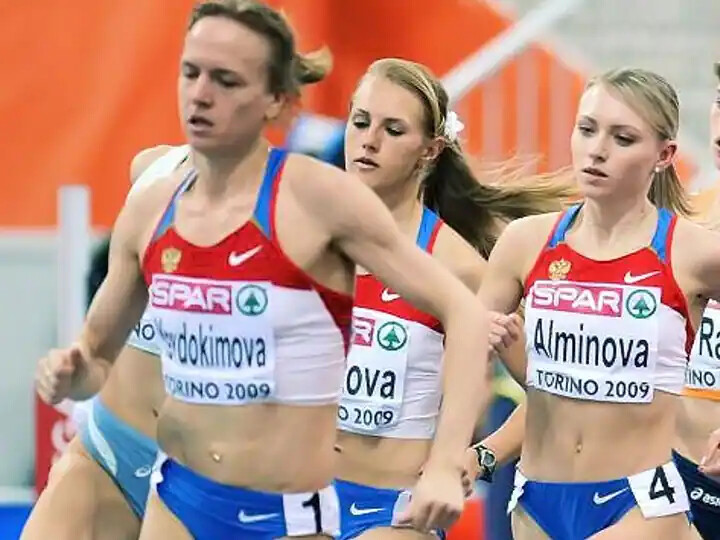
World Athletics confirmed the ban in a news release announcing it had cleared an additional 18 Russian athletes to compete as neutrals in international competition, but that the approvals would not apply to worlds.
Those athletes were cleared as part of a protocol in the wake of a doping scandal that has left Russia’s athletics federation under suspension since 2015. At last year’s Olympics, 10 Russians were allowed in the track meet; at the world championships in 2019, 29 Russians competed.
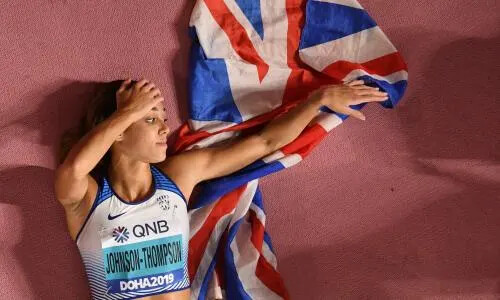
There are now 73 Russian athletes who can compete as neutrals, though their status at major international events is in limbo due to the war.
Among those athletes is reigning Olympic and world champion high jumper Maria Lasitskene, who has never lost in an international competition. Last month, she blasted the decision in an open letter to Thomas Bach, the president of the IOC, which has recommended the Russian ban.
Lasitskene’s top rivals are from Ukraine and she said “I still don’t know what to say to them or how to look into their eyes.”
“They and their friends and relatives are experiencing what no one human being should ever have to feel,” she said.
(07/09/2022) ⚡AMP

The Dibaba family of Ethiopia dominated the women’s long-distance running for decades
The Dibaba Sisters, from Ethopia, is the fastest family on earth.
Ethiopian distance runner Tirunesh Dibaba made history at the 2008 Beijing Olympics when she became the first woman to win gold in both the 5,000-metre and 10,000-metre races. She defended her gold medal title in the 10,000 metres at the 2012 London Olympics, becoming the first woman to win the event at two consecutive Olympics.
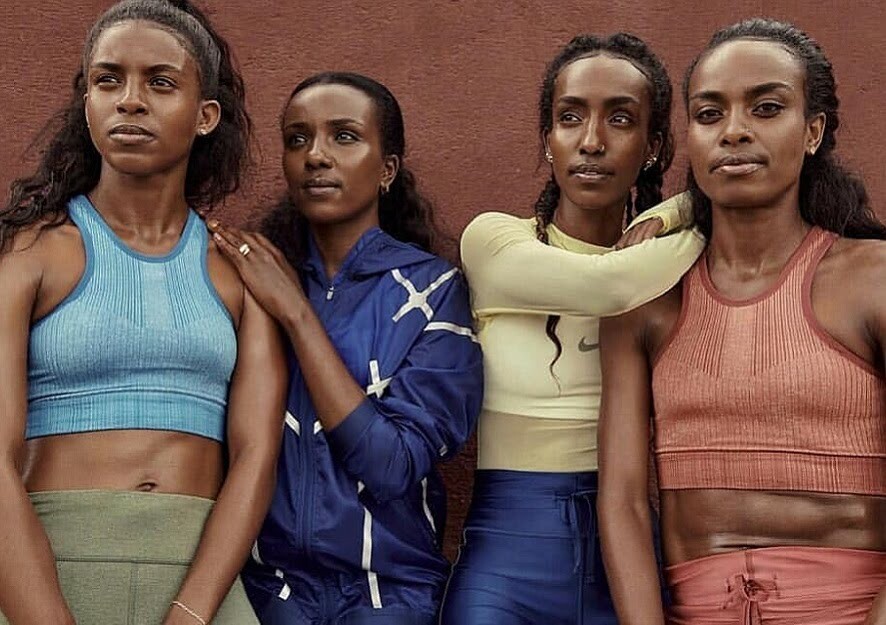
She was inspired by a family of runners. In fact, she and her sisters have been amazing in the field of distance running. The Dibaba sisters — Tirunesh, Genzebe, Anna, and Melat — are the only siblings in recorded history to hold concurrent world records, and they are a fiercely competitive family from a humble background.
Their parents, Gutu Tola and Dibaba Kaneni, were not athletes themselves but their children have always acknowledged the support that their parents have given them to thrive in athletics.
Her baby-like face combined with her track performance gave her the perfectly fitting nickname ‘The Baby Faced Destroyer’.
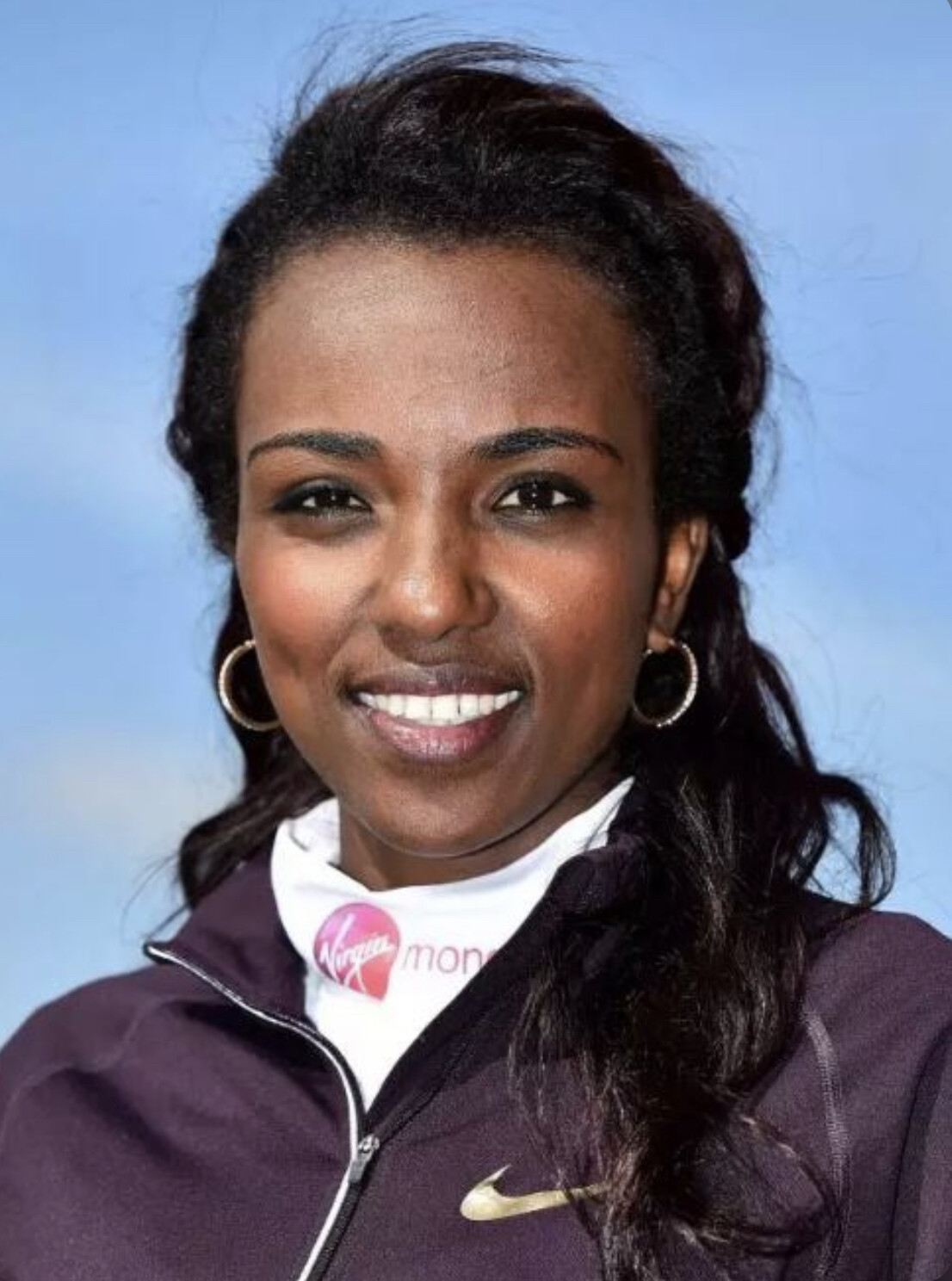
Fourth born in a family of six, Tirunesh started running with a clear focus on becoming a professional athlete at the tender age of 14.
Her sister, Ejegayehu Dibaba was already a professional athlete, and her cousin, Derartu Tulu, also helped inspire to take up athletics.
Moving to the Ethiopian capital of Addis Ababa in 2000, the year her cousin Ejegayu had won her second Olympic gold during the Sydney Olympics in the 10,000-meter race, Tirunesh moved in to live with Ejegayu launching her athletic career.
Just over two years later, in 2003, Tirunesh would win her first international medal by scooping gold in the 5000 metres during the IAAF World Track & Field Championships.
A year later, Tirunesh competed in the Olympics winning the bronze medal finishing behind teammate Meseret Defar and Kenya’s Isabela Ochichi.
From there Tirunesh went on to establish herself as one of the greatest ever long-distance woman runners of all time becoming the youngest female World Champion in the history of athletics. She has gone on to win three Olympic gold medals.
In her highly decorated career, Tirunesh boasts of three Olympic gold medals and three bronze along with five World Championship gold and one silver. Additionally, she has four World Cross Country Championships 4 gold medals, and 2 silver, and has won two African Championships gold and one silver medal.
In total, ‘The Baby Faced Destroyer’ has 14 gold medals, four silver, and three bronze medals from all major global athletics events.
The biggest reason behind her success has been the blistering speed that she used in the final laps leaving the competition in her wake.
Now 37 years old, Tirunesh has informally retired as one of the greatest track and field athletes of all time. She has won everything and set records that will take a while before they are broken.
Ejegayehu Dibaba
Ejegayehu is the eldest of the Tirunesh’s and just like her younger sister she has also carried the Dibaba’s flag high and to the top.
Winner of the 10,000m silver medal in the 2004 Athens Olympics, Ejegayehu finished ahead of her cousin Derartu Tulu who took the bronze.
Other medals from major internationals include two World Championships bronze in Helsinki 2005 in the 5000m and 10,000m.
She also went on to surprise the world by winning her debut marathon in Chicago in 2011.
Genzebe Dibaba
Genzebe is the youngest of the family and has also tasted the sweetness of winning an Olympic medal. Her moment of glory in the Olympics came in the 2016 Rio Olympics winning silver in the 1500m race.
In total Genzebe won a total of 11 gold medals, five silver medals, and two bronze medals in her athletic career.
Derartu Tulu
Cousin of the three sisters, Derartu Tulu's exploits were an inspiration to the Dibabas setting the pace for her cousins by concurring the world.
Tulu became the first Black African woman to win an Olympic gold medal winning the 10,000m race at the 1992 Barcelona Olympics.
Eight years later she would win her second Olympic gold at the 2000 Sydney Olympics.
She would have an incredible achievement winning a medal in three different Olympics winning a bronze at the 2004 Athens Olympics in the 10,000m.
Other major titles in her illustrious career include 10,000m gold and silver medal at World Athletics Championships in Gothenburg 1995 and Edmonton 2001.
Sileshi Sihine
Sileshi Sihime is a two-time Olympic silver medalist with over a dozen major athletics medals under his belt. Married to Tirunesh Dibaba, he is a three-time Olympic gold medalist.
Conclusion
In terms of ‘Sports Dynasties’, the Dibabas are the 'African Sports Dynasty’. Talent, hard work, and dedication are clearly what enabled the Dibabas to conquer the world of women's long-distance races for decades.
(07/09/2022) ⚡AMP

Trail runners prefer to race the marathon distance or longer, new study finds
If you first experienced trail running in your mid-30s, you’re in good company. A new study on the training habits of trail runners reports that almost a quarter of athletes began exploring trails between the ages of 31 and 35. The research was conducted by the International Trail Running Association (ITRA), an international non-profit.
Results came from surveys distributed worldwide and cover everything from whether athletes started with road running or jumped directly onto the trails, to how often and where they race. We parsed a few of the most interesting takeaways.
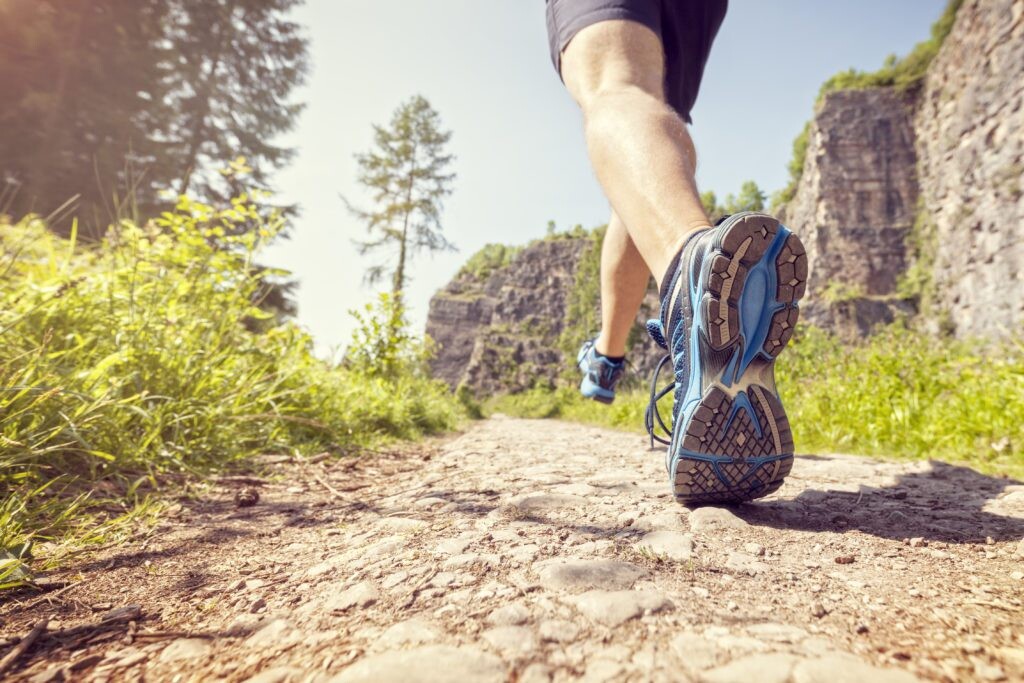
Most common injuries
Roughly 60 percent of athletes had experienced some kind of injury, the most common being ankle sprains and muscle issues. Athletes tend to take training breaks, and often incorporated cross-training into their exercise routine, possibly to help prevent future setbacks.

Gear habits and spending
Trail runners surveyed spent between $250 and $800 dollars per year on gear. Salomon was the top choice for footwear and trail gear. Garmin boasted a clear lead in watches, and was the chosen brand for 60 per cent of trail athletes.
Race distances
Racing habits varied among trail runners, with half of those surveyed preferring to stay within their local area to race, and half opting to travel internationally. Trail runners also reported a variety of distances raced and frequency of races, with more than a third participating in around five races per year. Interestingly, the most common race distances were between 42.2 km and 80 km (so “trail marathons” and longer), with only three per cent of athletes going over the 100-mile distance.
The study concluded that trail runners participate in the sport because they love being in harmony with nature, discovering new places as well as staying fit and preparing for their next race.
(07/09/2022) ⚡AMPby Running Magazine
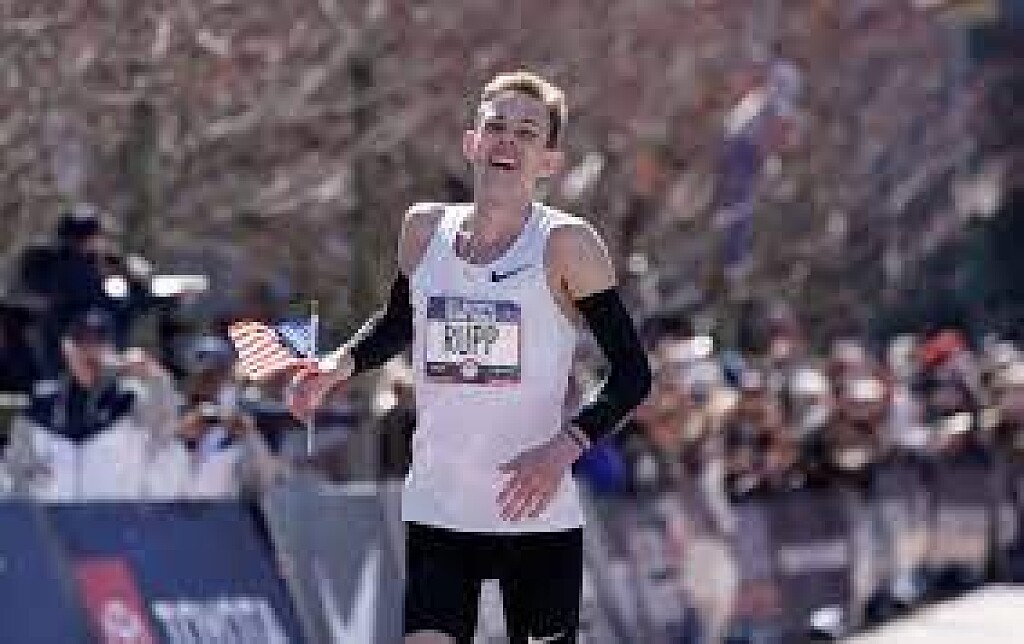
Galen Rupp fueled by family time as he prepares for marathon at World Athletic Championships
It’s been nine months since Galen Rupp ran his last full marathon.
He contemplated running another this spring after finishing the Chicago Marathon last October, but decided against it to avoid tiring himself out ahead of the summer.
Now, as he trains for the 2022 World Athletics Championships, he’s been replicating the effects a marathon has on his body. That includes going on long, painful runs no matter how tired he is.
But Rupp is always able to get through it because he knows what’s waiting for him at home once he’s finished: a sit-down dinner with his wife and kids.
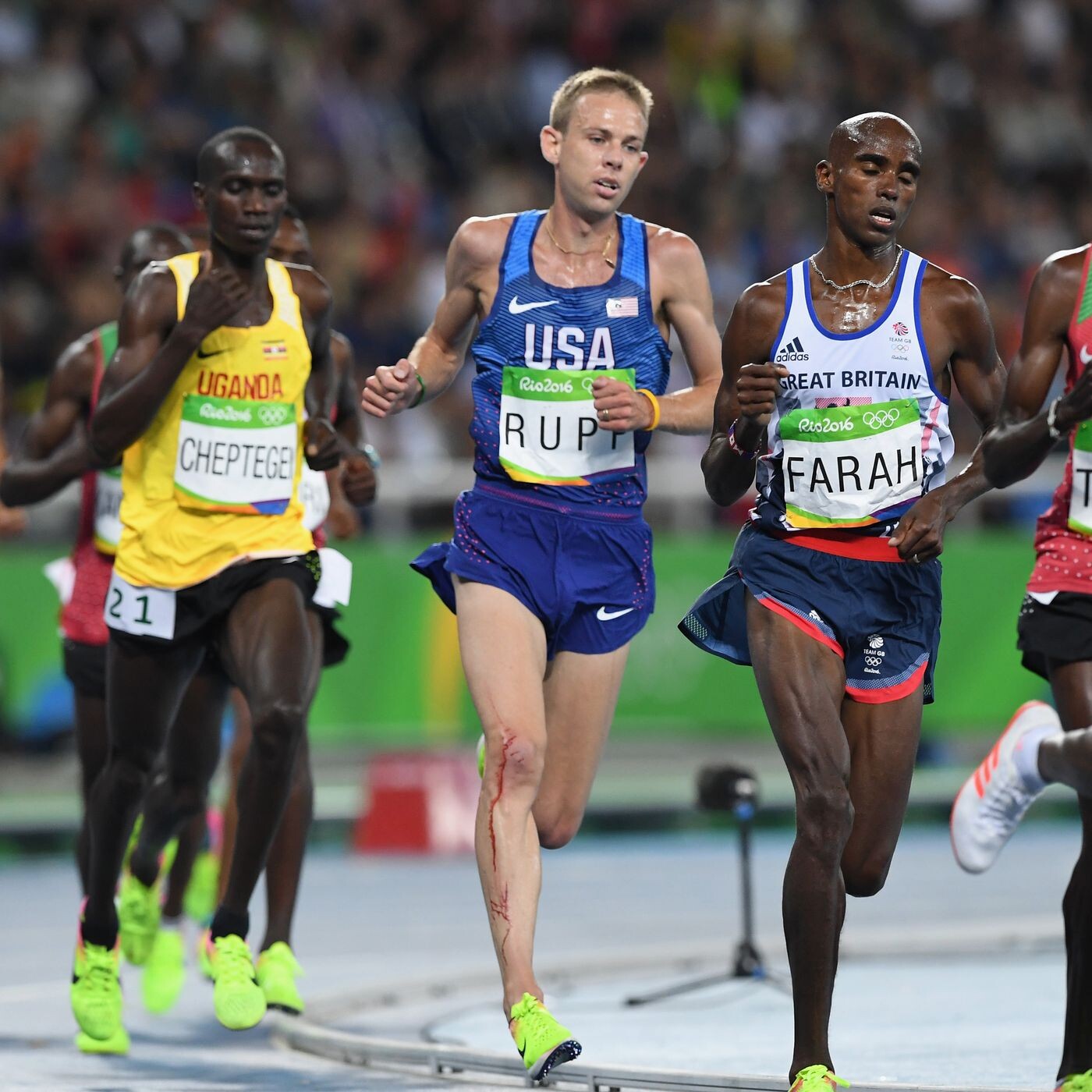
It doesn’t matter if his training went well or not, Rupp said. When he gets home and his kids come running to hug him, whatever happened that day doesn’t matter compared with what’s in front of him.
“I get a lot of strength from being around them,” Rupp said. “Mentally, I’m in the best place possible when I’m in their presence.”
That helps fuel Rupp, 36, as he’s running competitively, knowing his family is in the stands or along the route. They’ll only need to make a two-hour drive south to Eugene for this year’s world championships, which run July 15-24 and are being held in the United States for the first time.
Friends, family and fans of Rupp have always turned out to watch him race, from his time at Central Catholic High School in Portland all the way to the Olympics.
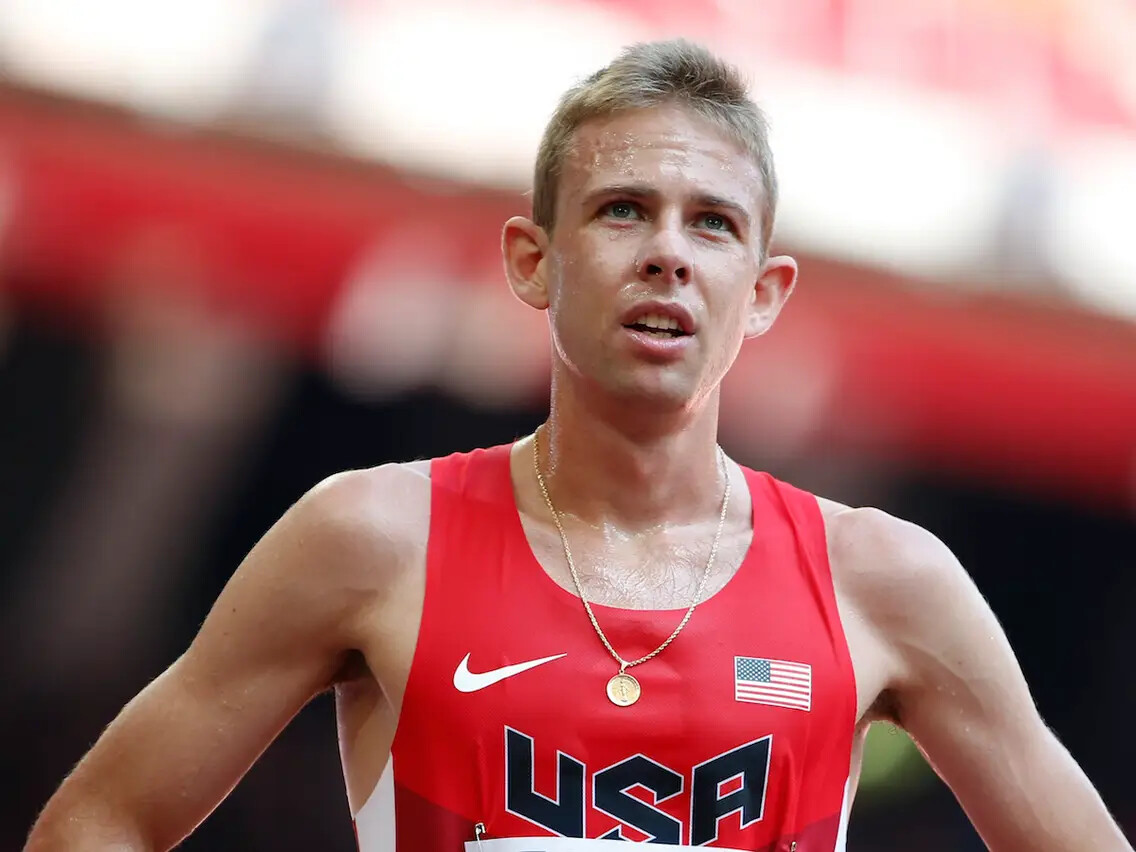
Rupp is no stranger to competing at Hayward Field. He ran with the Ducks’ cross country and track teams from 2004-09 and holds multiple school records. The team’s website refers to him as “one of the greatest distance runners in UO history.”
His days competing in Eugene didn’t end once he joined the professional ranks. He frequently has been in town for the Olympic trials or the Eugene Marathon. Memories from Eugene that stick out for Rupp include setting the American record in 10,000 meters at the 2014 Prefontaine Classic and making his first Olympic team in 2008.
"There’s always a buzz around the city and stadium when there’s a big meet in town,” Rupp said. “There’s really nothing like it.”
Rupp’s training process changed slightly since he started working with a new coach, Northern Arizona University’s Michael Smith, in 2020. With Smith based in Arizona, he relies on Rupp sending videos of his workouts, taken by his wife, to provide tips and advice.
The two keep up a steady stream of communication via text, and Rupp said he appreciates Smith’s willingness to tell him to try different things and new workouts.
“He’s not scared to challenge me,” Rupp said. “The biggest growth comes when you start trying new things and doing some different things in training.”
All that training, which Rupp said amounts to a full-time job, has kept him busy over the last few months. Outside of spending time with his kids, which usually means fishing for trout, he’s had to stay off his feet in his free time.
With the downtime he has, Rupp tries to keep up with UO athletics. He’s particularly excited for Oregon’s new football coach, Dan Lanning, and the Ducks’ season opener against Georgia in September.
“I’m pumped for Dan Lanning, excited to see what the team’s going to look like under him,” Rupp said.
Rupp said he hasn’t given much thought to what he’ll do once his running career wraps up. The 2024 Summer Olympics in Paris are on his radar, but he stressed that making Team USA at the trials is difficult, so he doesn’t want to make any hasty assumptions.
Going into coaching has crossed his mind a few times, but he doesn’t dwell on those thoughts to avoid letting them become a distraction. For now, he’s focused on the next race.
“I still feel like I’ve got a lot of years left for sure,” Rupp said. “I want to keep putting all my energy into that for the time being.”
(07/09/2022) ⚡AMPby Luke Norton
World Athletics Championships Budapest23
Budapest is a true capital of sports, which is one of the reasons why the World Athletics Championships Budapest 2023 is in the right place here. Here are some of the most important world athletics events and venues where we have witnessed moments of sporting history. Throughout the 125-year history of Hungarian athletics, the country and Budapest have hosted numerous...
more...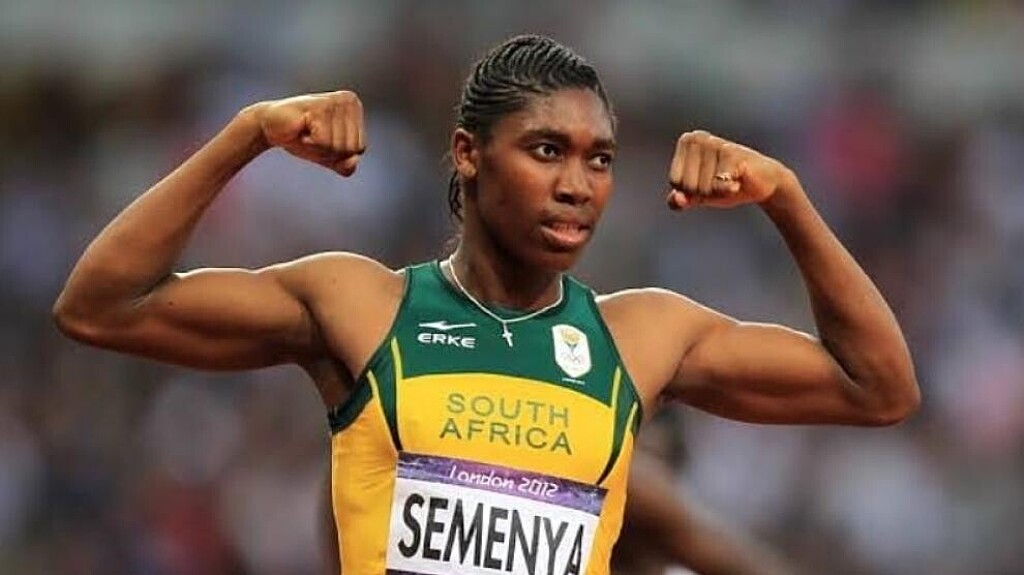
Caster Semenya to make surprise comeback at world championships
Caster Semenya is listed to compete at next week's world championships in Oregon, potentially setting up a surprise return to the big stage for the two-time Olympic champion and one of the most contentious athletes.
Semenya was listed on Friday for the women's 5000m, an event she has turned to after being banned from running in her favorite 800m race by track and field's testosterone regulations.
Semenya's inclusion on a competitor list released by World Athletics was unexpected after she didn't make the qualifying time for the 5000 and was not included in the South Africa team for the worlds named this week.
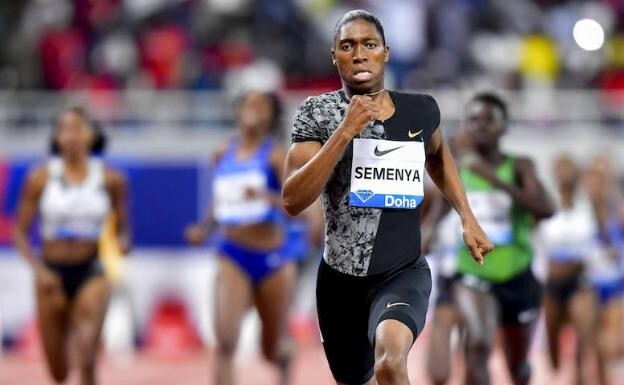
NBC reported that Semenya was moved up onto the list for the worlds after some higher-ranked runners didn't enter the championships. South Africa's track federation and Semenya's representatives didn't immediately respond to requests for clarification.
If she runs, it will be the first time Semenya has appeared at a world championships or Olympics since 2017, when she won her third world title in the 800. She also has two Olympic golds over two laps but has been barred from running in races from 400m to one mile since 2019 under rules that bar women who have an intersex condition called 46,XY difference in sex development.
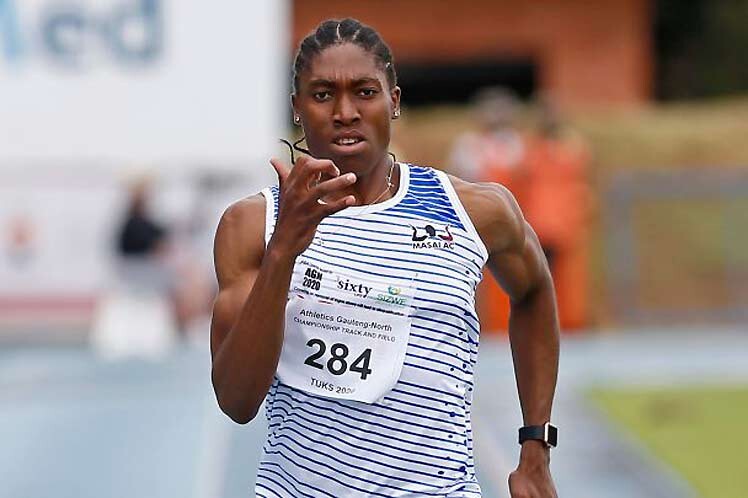
Semenya has twice gone to court to appeal against the rules but has lost both cases. She is pursuing a third appeal at the European Court of Human Rights.
Semenya's appearance at a worlds would also come just as athletics authorities are considering changes to their DSD regulations that might go so far as to completely exclude women athletes with 46,XY DSD and high natural testosterone from all female events at major meets.
Semenya was assigned female at birth, raised as a girl and identifies as a woman. She has never publicly identified herself as intersex – that is, having both male and female traits – or as having the 46,XY DSD condition.
However, she essentially acknowledged having the condition by appealing the DSD rules at the Court of Arbitration for Sport in 2018. Semenya has publicly acknowledged having high natural testosterone but has declined to submit to the DSD rules that state she must undergo treatment to suppress her natural hormone levels to below a specific threshold if she wants to compete in the 800m.
(07/09/2022) ⚡AMPby Gerald Imray
World Athletics Championships Budapest23
Budapest is a true capital of sports, which is one of the reasons why the World Athletics Championships Budapest 2023 is in the right place here. Here are some of the most important world athletics events and venues where we have witnessed moments of sporting history. Throughout the 125-year history of Hungarian athletics, the country and Budapest have hosted numerous...
more...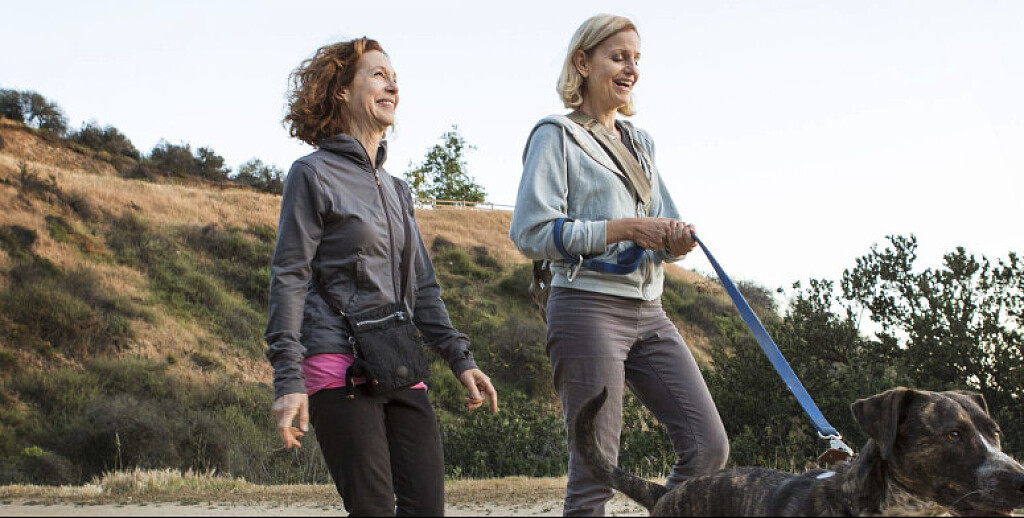
Walking Can Prevent Knee Pain Even in Individuals With Arthritis, Study Suggests
Researchers find that even if you’re older and have osteoarthritis, going for a walk can slow damage in the knee joints.
New research published in Arthritis & Rheumatology says that walking can improve joint health, particularly in those with knee osteoarthritis.
Those with arthritis should start walking before knee pain develops or becomes chronic, as movement works better to prevent aches, rather than treat them.
Walking is often lauded for its many benefits, like better cardiovascular function and improved mood. Now, improved joint health, especially in the knees, can be added to that list, according to a study published in Arthritis & Rheumatology.
Researchers looked at the results of a multiyear observational study, the Osteoarthritis Initiative, which tracked behaviors like exercise type and frequency in people over age 50. Out of more than 1,200 participants, 73 percent walked for exercise, and all had diagnosed knee osteoarthritis. They found that those in the walking group reported significantly less development of knee pain and better function in the joint compared to those who didn’t walk regularly.
This should prompt more people, and their physicians, to consider walking as part of treatment for osteoarthritis, but it also serves as a reminder that prevention is key, according to the study’s first author, Grace Hsiao-Wei Lo, M.D., chief of rheumatology at the Baylor College of Medicine.
“If you can catch people before they get symptoms and get them to walk, this might be very helpful in preventing the development of regular knee pain,” she told Runner’s World. “The opportunity might be already lost once regular knee pain has already occurred.”
For example, participants who already had knee pain at the beginning of the study had the same level of modest improvement in pain levels as those who didn’t walk. That means once you have ongoing, chronic pain, walking won’t offer the same degree of symptom resolution as walking when your issues are less problematic.
However, if you get started with walking early in the osteoarthritis process, it’s likely you won’t see improvements only in your knees, but also your hips, shoulders, and feet, Lo suggested.
Although the study didn’t look into potential mechanisms for why walking helped prevent pain, other research offers some clues. For example, research in the journal Pain proposed that an activity like walking changes the way pain signals are transmitted in the central nervous system, reducing pain sensitivity. By contrast, sedentary behavior can not only make pain signals stronger, but also block natural opioid receptors, so it’s harder to get relief when pain does occur.
Strengthening your nervous system with walking—or running—can act as a natural pain reliever, even with an issue like osteoarthritis.
If you’re ready to put some miles in as a pain prevention tool, the standard advice to check with your doctor applies here, especially if you want to ramp up your activity level considerably. But it’s worth the effort to make a plan and get your doctor’s okay, said Lo, because it’s easily one of the most available and affordable forms of exercise.
“What’s great about walking is that almost anyone can do it, and there are fewer barriers compared to activities like bicycling or swimming,” she said. “You don’t even need to be particularly fit; just get started and go from there.”
(07/09/2022) ⚡AMPby Runner’s World
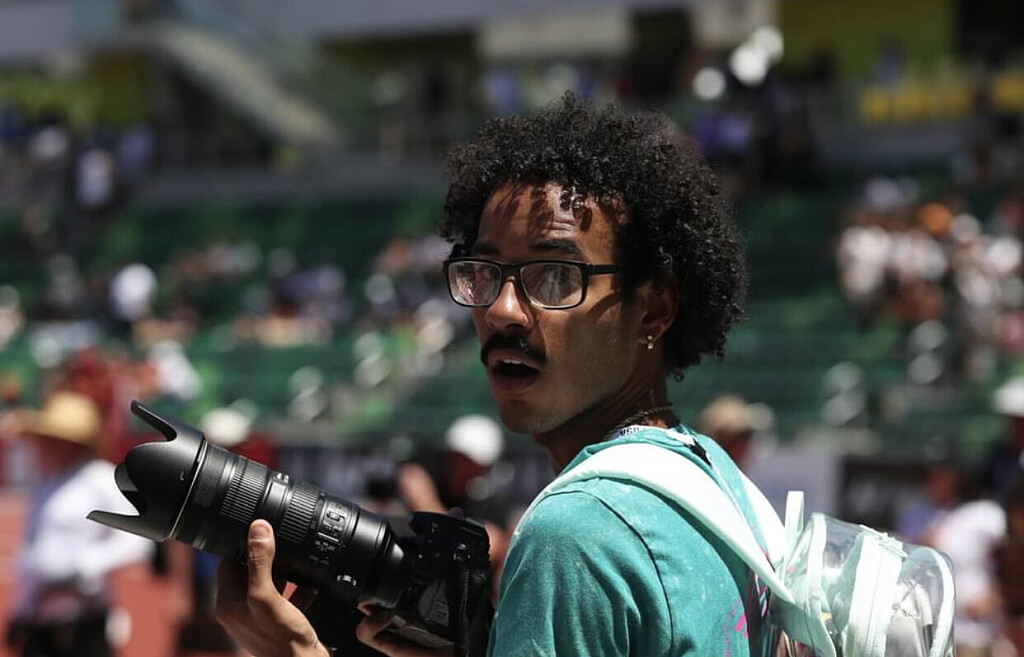
A Photographer Is Taking the Long Way to Eugene for Worlds
Jan Figueroa is making a 75-hour trek by Greyhound bus from Florida to Oregon next week.
Can you imagine hopping on a Greyhound bus and taking a 75-hour cross-country trip from Florida to Oregon for a Global track meet?

That’s exactly what Jan Figueroa is doing. The Florida-based content creator will travel 4,000 miles to Eugene, Oregon to serve as a photographer at the World Athletics Championships at Hayward Field next week.
The possibility and then the reality of Figueroa going to Eugene was brought to life by Ben Crawford of New Generation Track and Field.
“I personally didn’t have the funds to go to Worlds,” Figueroa said. “My friend Ben Crawford and New Generation Track and Field were kind enough to sponsor my trip to the (USATF Championships) and they wanted to bring me back for Worlds. Ben threw out the idea of traveling by bus as a joke to create a sick travel vlog/documentary and create cool content along the way not knowing that I’m crazy enough and loved the idea and was so down to do it.”
“So it worked out perfectly because once again he covered my travel expenses to go to Worlds, which I’m extremely grateful for and I get to do what I love along the way, which is to create cool and entertaining content for the people.”
Flights to Eugene leading up to the World Championships have not been cheap, particularly when you factor in other travel expenses, like hotels.

Figueroa tweeted out about his upcoming journey to the World Championships on Monday. Since then, it’s been picked up by World Athletics and has been mentioned by companies such as On Running and athletes as well, including Fred Kerley. The attention that the tweet has gotten caught him by surprise.
“I didn’t think it would blow up the way it did,” he said. “I thought it would do good numbers with a couple of retweets and likes and that’s about it. But to blow up to the magnitude it did when World Athletics shouted me out, brands were reaching out to me to send me merch, newspapers wanting to write about my story, and even pro runners and strangers offering to help me out if I needed anything along the way.”
“I could have never imagined that at all. It's been absolutely surreal and at the same time super gratifying to see the running community come together to support me like that - It makes me even more excited to be on a bus for 3 straight days as crazy as that sounds.”
Figueroa said that he’s grateful to Ben Crawford, New Generation Track and Field, Joe Hale and the Internet Friends IRL group chat for the opportunities for making him a better content creator and the opportunities provided, including taking photos at Worlds. He’s excited to make more connections, take his photography to another level and to see the world’s best.
“I’m beyond excited,” he said. “Worlds being on US soil for the first time and me being able to be there to witness it and create content is the opportunity of a lifetime that I just couldn’t miss out on.”
(07/09/2022) ⚡AMPby Runner’s World
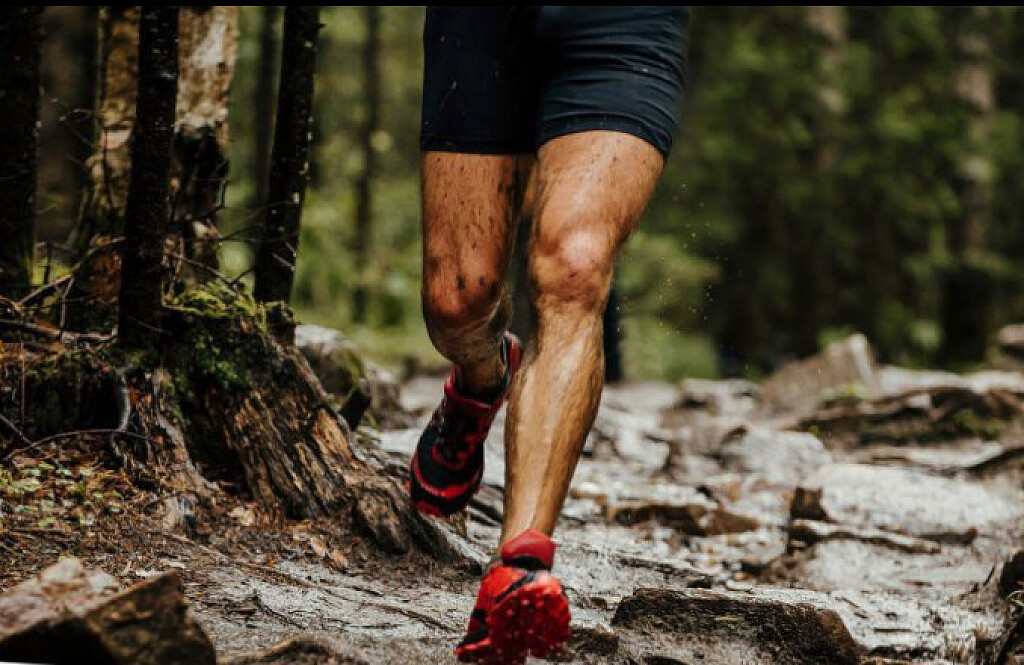
The Ultimate Guide to Foot and Lower-Leg Pain
From plantar fasciitis to blisters, these are the top causes of foot pain for runners
At least 50 percent of runners are injured annually, according to a 2010 review published in Current Sports Medicine Reports, and feet are one of the main culprits. But foot pain can be hard to manage. Is it a serious injury? Just an ache? Can you push through, or will you make it worse?
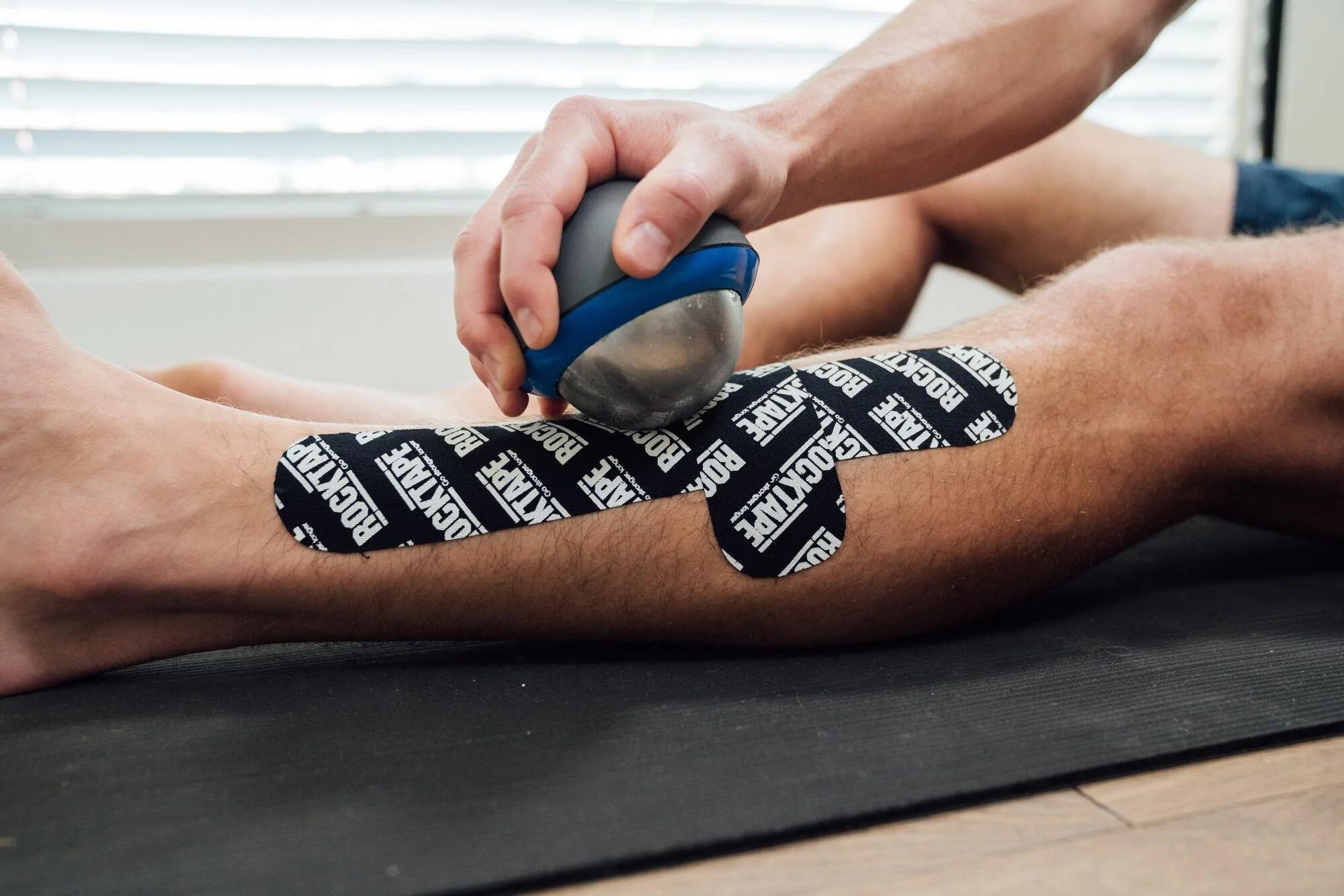
We asked two podiatrists to give us a rundown on the most common foot injuries for runners. Stephen M. Pribut, former president of the American Academy of Podiatric Sports Medicine, is a runner himself and has treated Olympic athletes. Lisa M. Schoene is a sports-medicine podiatrist and a certified athletic trainer who has been in practice for over 28 years.
Both Pribut and Schoene explained that most running-related foot injuries are a result of overuse, the wrong shoes, or an abrupt transition between different types of shoes. Natural foot shape and biomechanics also play a role. Here’s a helpful guide to figuring out why your feet hurt and how to jump-start your recovery. But of course, this doesn’t replace a visit to your doctor. If you’re dealing with serious or persistent pain, make an appointment with a physician.
Plantar Fasciitis
What it is:
The most common foot injury among runners is plantar fasciitis, an inflammation of a web of thick ligaments (the plantar fascia) that runs along the bottom of the foot and connects the heel bone to the bones of the forefoot. The plantar fascia support the arch of the foot and act as a spring for forward propulsion. The usual signs and symptoms include pain on the bottom of the heel, which could present as dull, sharp, or a burning ache, either directly below the calcaneus (heel bone) or toward the front of it. The pain typically comes on slowly and builds over multiple days or weeks. It can be strongest when you wake up in the morning or during a run.
Why you get it:
Overuse from an increase in training volume or intensity
Switching to a zero-drop shoe or a pair of shoes with less arch support
Tight Achilles tendons or calf muscles
Weight gain, which adds unaccustomed stress to the plantar fascia
How to fix it:
Reduce your training volume and intensity or, better yet, lay off running altogether for a few weeks. “If you keep running through your plantar fasciitis, it will inevitably get worse,” Schoene says, “but you can definitely cross-train.” In your day-to-day life, wear shoes with ample cushioning, arch support, and elevated heels. Seriously—whether they’re 12-millimeter drop running shoes, clogs, or kitten heels, they’ll alleviate the pressure on your plantar fascia. Avoid going barefoot.
When you return to running, ease back into it. If you had switched to different running shoes in the weeks before your pain started, it might be wise to switch back to something like what you had before. You’ll want a shoe with ample cushioning, a high drop, and good arch support. If the heel pain returns, go see a professional, because you might benefit from orthotics.
As for physical therapy, do 20 reps of towel crunches once or twice per day: place a towel on the floor, put your foot on top, and curl your toes to squeeze a fold of fabric. Stretch your calves from a step. Roll out your arches with a soft massage ball or a tennis ball (as opposed to a firmer lacrosse ball), and be extremely gentle around your heel. Roll out your lower legs with a foam roller or a massage stick to release tension in your calves and Achilles.
Achilles Tendonitis
What it is:
The Achilles tendon connects the calf muscle to the heel bone and is subject to repetitive stress. When the calf contracts, it pulls the heel up, and this movement allows us to push off our toes when we run, walk, or jump. Over time this can lead to inflammation, micro tears, and tendonitis. The tendonitis can be located at the insertion point where the Achilles connects to the heel bone, in the middle of the tendon, or higher up where the tendon attaches to the calf muscle. Achilles tendonitis typically involves pain or a dull ache behind the ankle, anywhere between the heel bone and the start of the calf muscle. This area can also swell and become red.
Why you get it:
Overuse from an increase in training volume or intensity
Hill workouts (running uphill puts more strain on the Achilles)
Change in running stride (heel strike to midfoot strike, or vice versa)
Worn-out shoes or switching to a flatter or less supportive shoe
Tight calf muscles
Hip and core weakness
How to fix it:
Shin Splints
What it is:
Shin splints is a catchall term for pain in the front of the shins, also known as medial tibial stress syndrome. The tibia, your shin bone, is the larger of the two bones in your lower leg, and this stress occurs in the midline of the bone and the surrounding tissue. This overuse injury is characterized by inflammation and possible micro tears in the posterior tibialis muscle (the key stabilizing muscle of the lower leg), as well as inflammation in the surrounding tissue and shinbone. Shin splints usually present as a throbbing, aching pain or soreness in the front or inside of the lower leg between the ankle and knee. Pain can last all day but is usually sharpest during each foot strike and right after exercise.
Why you get it:
Overuse from an increase in training volume or intensity
Poor foot mechanics, including overpronation (foot rolls inward), which puts repetitive tension and stress on the tibialis posterior muscle and tendon, which hold up the arch
Worn-out or unsupportive shoes that allow overpronation
Frequent running on hard surfaces, such as pavement or a track
How to fix it:
If your pain isn’t increasing, you can keep running, but you’ll recover much faster if you switch to low-impact cross-training until the pain and inflammation have subsided. If you continue to push through, it’s best to cut back on mileage and intensity, avoid hills, and stick to softer surfaces like trails. After runs, ice for 20 minutes on, 45 minutes off, repeating this sequence three times.
Posterior Tibial Tendonitis
What it is:
Posterior tibial tendonitis and shin splints are both inflammation injuries in the same muscle-tendon structure. While shin splints occur in the posterior tibialis muscle (the shin), posterior tibial tendonitis can occur in the tendon that wraps around the inside of the ankle and connects the muscle to the navicular bone at the midfoot. They can usually be traced to similar causes. If you’re dealing with tendonitis, you’ll feel pain, tenderness, and swelling around the inside of the ankle and sometimes down to the navicular bone.
Why you get it:
Overuse from an increase in training volume or intensity
Overpronation (foot rolls inward), which puts repetitive tension and stress on the posterior tibialis muscle and tendon
Worn-out or unsupportive shoes that allow overpronation
How to fix it:
See the above steps for shin splints. Wearing an ankle-compression sleeve can also help alleviate pain and prevent further injury when you return to running.
Peroneal Tendonitis
What it is:
Peroneal tendonitis is posterior tibial tendonitis’s evil twin—it’s an inflammatory injury of the peroneal tendons (there are two) on the outside of the ankle. The main function of these tendons is to stabilize the foot and the ankle and prevent them from rolling outward. Unlike the majority of the other injuries listed here, peroneal tendonitis can be acute (from a single injury, like rolling your ankle) or result from overuse. The usual signs and symptoms are pain, tenderness, and swelling around the outside of the ankle and possibly down to the outside of the midfoot. Pain can sometimes occur on the bottom of the foot, where it is often mistaken for plantar fasciitis.
Why you get it:
Overuse from an increase in training volume or intensity
Supination
Unsupportive or too soft shoes that allow supination
Chronic ankle instability
Inversion ankle sprain (foot inverts and ankle rolls to the outside)
Running on uneven terrain with roots, rocks, and other obstacles that stress the ankles
Lateral sports that involve quick changes of direction
Always running around a track in the same direction
How to fix it:
Reduce your training volume and intensity, and wear an ankle-compression sleeve for support when you run. Switch to shoes with firmer stability to prevent supination. Orthotics might help severe supination, and heel lifts can help relieve tension on the tendon. After runs, ice for 20 minutes on, 45 minutes off, and repeat this sequence three times. While you recover, avoid knobby trails and technical terrain where you risk rolling or straining the ankle.
Spend some time on a wobble board to improve your balance and ankle strength. Start with one to two minutes, going side to side, front to back, and in circles, to improve your balance and ankle strength. Build up to longer sessions of up to ten minutes. Stretch your calves and roll out your lower legs (avoid rolling over the ankle bone). Once the pain is gone, begin a strength-training routine to target the calves, the core, and the hips.
Metatarsal Capsulitis and Morton’s Neuroma
What they are:
Metatarsalgia is a general term to describe pain, tenderness, and inflammation in the ball of the foot. Usually, that pain comes from metatarsal capsulitis: swelling in the capsule surrounding the joint where your toe meets your foot, typically at the second toe. Morton’s neuroma, the enlargement of the nerves between your foot bones, feels similar, though the pain is closer to the outside of the foot, at the third and fourth toes.
Sharp, aching, or radiating pain in the ball of the foot is a common symptom of both metatarsalgia and Morton’s neuroma. The pain typically worsens during exercise or when you wear a firm or tight shoe. Pain or a sensation of numbness can also extend into the toes. You might also get the feeling that there’s a bunch in your sock or a pebble in your shoe under the ball of your foot.
Why you get them:
Overuse from an increase in training volume or intensity
Shoes that are too narrow or tight (including climbing or cycling shoes)
Low-cushion or minimalist shoes
Bunions (the curvature of the big toe can put more pressure on the second toe, creating a greater risk of capsulitis)
How to fix them:
If you’re dealing with capsulitis, lay off running altogether for a few weeks and visit your doctor. “You want to jump on capsulitis as quickly as you can, because the capsule around the joint can tear, and if that happens, the second toe can pop up into what we call hammer toe, which is very unstable and painful,” says Shoene. In daily life, wear a wider, high-cushion shoe with a rockered sole to remove some of the impact and stress to the metatarsal bones and joints.
For Morton’s neuroma, switching to a wider, high-cushioned shoe often brings immediate pain relief, since that decreases pressure on the nerve. If the pain is manageable and begins to fade, you can usually continue running and training with a wider shoe.
Stress Fracture
What it is:
A stress fracture is a hairline crack or group of cracks in a bone. These can happen in any bone, but for runners, they most commonly occur in the tibia (and are often associated with shin splints), metatarsals, and the calcaneus (heel bone). This is primarily an overuse injury but can also result from a single event, for example, if you’re used to running on softer trails and then complete a long road race in low-cushioned shoes. Typically, stress fractures present as an aching or burning pain, usually localized, anywhere along a bone.
Why you get it:
Overuse from an increase in training volume or intensity
Running frequently on hard surfaces or a track in a single direction
Running in low-cushioned shoes, such as track spikes or minimalist shoes
Eating disorders or energy imbalances (burning more calories than you’re consuming)
The female-athlete triad: an eating disorder, amenorrhea (the absence of a period), and osteoporosis
“It often starts as a physiological change at the cellular level, where you’ll have decreased production of new bone, increased absorption of bone, and an inflammatory component that can cause pain,” says Pribut. “As bone density decreases and the stress of running continues, it can become a physical crack.”
How to fix it:
Reduce training volume and intensity, and visit your doctor. Switch to a high-cushioned, rockered shoe, such as those made by Hoka, to reduce impact forces. Eat a well-balanced diet with adequate calcium and vitamin D. Build consolidation weeks—during which you back off your mileage—into your training plan to give your body a chance to recover and put the calcium where it needs to be.
“Runners have good pain tolerance and often ignore the issue,” says Pribut. “Listen to your body for warning signs. If your bones are achy, back off the training immediately, assess, and get to work on recovery.”
Mild stress fractures can heal in approximately three to six weeks if you’re diligent about recovery, but serious stress fractures can take six weeks to three months to heal and might require a walking cast. If you’re prone to stress fractures, consult a medical professional and ask for a bone-density scan.
Blisters and Black Toenails
What they are:
You probably don’t need help identifying blisters and blackened toenails (which form when blood vessels rupture beneath the nail). They can sneak up on you anytime, and, if you’re lucky, you’ll only notice once you take off your shoes. That said, they can certainly derail a run or two, with burning pain or dull achiness.
Why you get them:
Blisters result from prolonged friction, pressure, and moisture, all of which can be exacerbated by your shoe and sock choice.
Black toenails come from repetitive trauma to the nail bed, usually from the toe hitting the front or top of the inside of a shoe, which can be exacerbated by ill-fitting shoes and long downhills.
How to fix them:
Both blisters and black toenails generally resolve on their own. In the case that a blister ruptures or a toenail falls off, do your best to keep it clean and otherwise leave it alone.
To avoid blisters, keep your feet dry with moisture-wicking socks and breathable shoes. During long training runs or races, periodically change into fresh socks, and even shoes, if you can. If you’re getting a hot spot, dry your feet and try to put padding around the area.
Buy shoes that fit well. Shoes that are too tight cause excessive pressure, which leads to blisters and jams your toes against the top or front of the shoe. Shoes that are too loose allow for too much movement within the shoe, which causes blisters and black toenails, especially on the downhill. If you just bought new shoes, break them in around the house, office, or on shorter runs before using them for a long run or race.
(07/09/2022) ⚡AMPby Outside

How to Prevent and Treat Heat Stroke
Exertional heatstroke can cause devastating damage, but it can also be treated quickly
The key thing for people’s outcome is the number of minutes their temperature is over 105 degrees,” says Douglas Casa, CEO of the University of Connecticut’s Korey Stringer Institute, named after the Minnesota Vikings offensive lineman who died of heatstroke during an August 2001 training camp. Survival is highly likely if the core temperature is brought below 104 degrees within 30 minutes. Here are Casa’s tips on prevention and treatment.
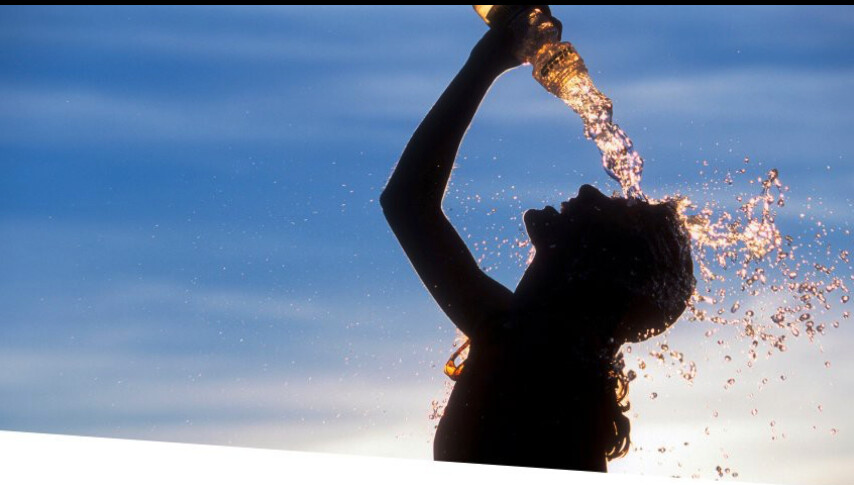
Avoid exercising in high temperatures, or choose cooler parts of the day and stay in the shade. If you do exercise in the heat, wear pale-colored, loose-fitting, lightweight clothing, and acclimate to the conditions by gradually increasing your output over 7 to 14 days.
How much water to drink is the subject of some debate. For recreational athletes, Casa suggests hydrating based on thirst. High-level endurance athletes should account for other factors, such as sweat rate. Avoid drinking alcohol before and during strenuous outings.
Heatstroke symptoms vary. Many victims are still conscious, and some have seizures or vomit while others do not. Suspect heatstroke if the person can no longer support their body weight, speaks irrationally, or is hyper-irritable or confused. (Casa knows of heatstroke victims who punched a police officer at the finish line of a race.) To get a true reading of core temperature, use a rectal thermometer.
“Cool first, transport second” is the operable concept when it comes to heatstroke. With mere minutes to act, a victim should be cooled down before being taken to an emergency room. Immersing the body in a cold bath lowers temperature the fastest, dropping it one degree every three minutes if the water is circulating.
Exertional heatstroke in the backcountry presents additional challenges. Anything that cools the victim is helpful, but the best options are to immerse them in a lake, river, or stream, or wrap them in fabric drenched with ice water from a cooler. It’s important to cool as much of the body’s surface area as possible. In the absence of cold water, seek shade, wet the person’s clothing with your water bottle, and fan them. (For heatstroke prevention tips aimed specifically at desert hikers, go to Ariel's Checklist.)
(07/09/2022) ⚡AMPby Outside

Are Carbonated Beverages Bad For Bone Density?
I drink a lot of sparkling water, but I've heard that carbonated drinks leach calcium from the bones. Is that true?
-Anonymous, Germany

Sparkling water, also called seltzer water or carbonated water, is plain water with added carbon dioxide. The result is effervescence that some deem more palatable than plain water. Research on carbonated water and bone health is very limited, as most studies on bone density have concerned carbonated soda, not carbonated water. Research suggests that certain ingredients in soda, particularly dark-colored ones like Pepsi and Coke, may reduce bone mineral density, which can increase the risk of fractures or osteoporosis.
Phosphoric acid is an additive in most sodas, used as a preservative and to enhance flavor. Too much phosphorus and too little calcium in your diet can lead to bone loss, because calcium is needed to neutralize excess acidity in the blood that occurs during the breakdown of phosphoric acid. Caffeine, also present in many sodas, may interfere with calcium absorption through urinary losses.
A 2006 study published by the American Journal of Clinical Nutrition looked at the effects of sugared, caffeinated and diet sodas on bone mineral density and found that women who drank a diet or regular cola at least three times a week over five years had significantly lower bone densities than those who drank cola once a month or less.
Carbonated water does not contain any added sugars, phosphoric acid or caffeine, and, to date, no studies point to any harmful effects of its carbonation on bone health. It hydrates just as effectively as regular tap water and may even have some unexpected health benefits-particularly for runners with fickle stomachs.
A 2002 study published in the European Journal of Gastroenterology and Hepatology found that carbonated water helped relieve indigestion and constipation. And, in 2004, a study in the Journal of Nutrition found that carbonated water containing sodium may help lower cholesterol and reduce the risk of cardiovascular problems in postmenopausal women.
(07/09/2022) ⚡AMPby Trail Runner Magazine

Here’s how to run faster just by thinking about it
Mental imagery for running performance has been used by elite athletes for decades and is simple enough for the regular runner to start trying tonight. You’ll give your brain a workout along with preparing yourself for your event. Ultrarunner and author of Mental Training for Ultrarunners, Addy Bracy, explains: “thinking about a specific exercise produces the same brain activity that occurs when the actual task is performed.” Here’s how to get started.
Repetition
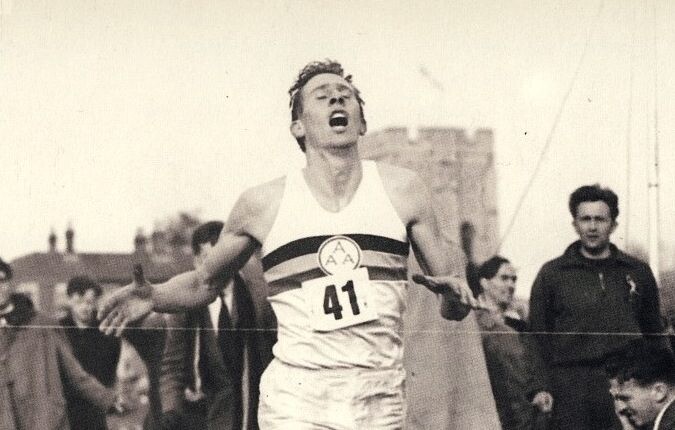
Sir Roger Bannister, the first man to run a 4-minute mile, used visualization techniques to get ready to tackle that famous distance. “Each night in the week before the race there came a moment when I saw myself at the starting line. My whole body would go nervous and tremble. I ran the race over in my mind. Then I would calm myself and sometimes go off to sleep” he wrote. If you’re familiar with the course or area that you’re going to run in, visualize yourself making your way through the course in your mind. If you’re training for a longer race, choose portions of it to run through. When you actually run the race it will feel familiar and comfortable. Try to incorporate as many of the five senses as possible: envision what you’re feeling in your body, what the air smells like, and notice the sights around you–you may feel silly doing this at first, but know that you’re training your brain to help you be a faster runner.
Visualize working through obstacles
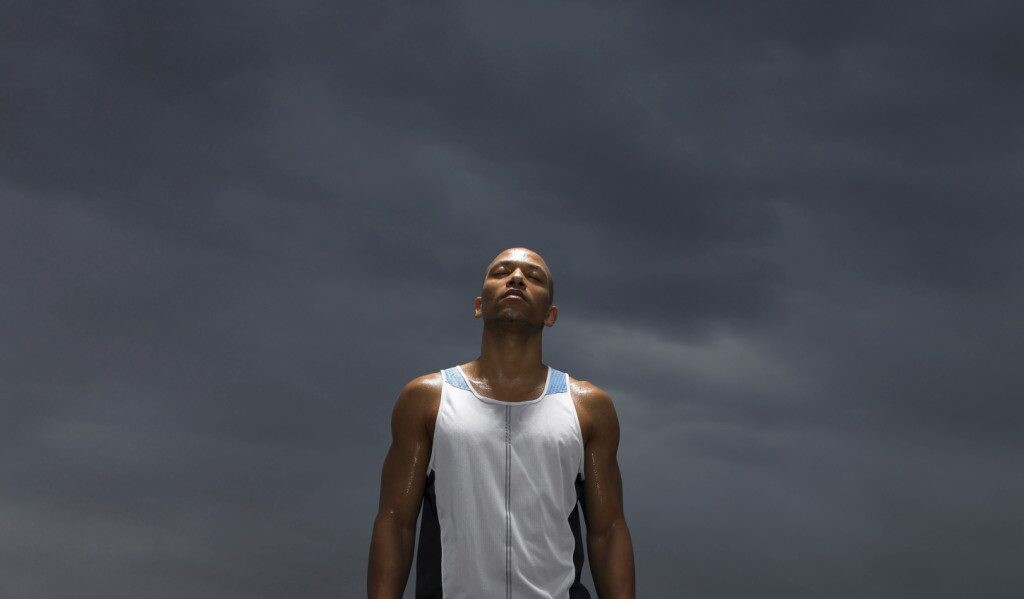
Remember a time when you encountered something challenging in a race, whether it was discouraging thoughts, heavy legs or nausea. Imagine yourself working through that issue during your race with ease and finesse. Try this with a variety of obstacles. When you run into similar issues, your brain won’t react with shock and overwhelm; ideally, it will remember your mental practice and you’ll move fluidly through any problems. “Once you have identified possible stressors, see and feel yourself using your tools to calm your anxiety,” Bracy says. The more diverse the situations you work through in your brain, the more prepared you’ll actually be on race day.
Imagine a strong race finish
Research suggests that our brain becomes fatigued and starts signaling us to stop running in the final quarter of a race. Spend more time focusing on this last section, and envision yourself tuning out any mental chatter to stride strongly towards that finish line. Bracy suggests linking together images of several past successes, “making sure to include the emotions and feelings you derived from those experiences. Use this to enhance feelings of confidence, belief and excitement leading into a race.” The brain is a powerful tool, and adding some brain training techniques to your regime will help you on race day.
(07/08/2022) ⚡AMPby Running Magazine
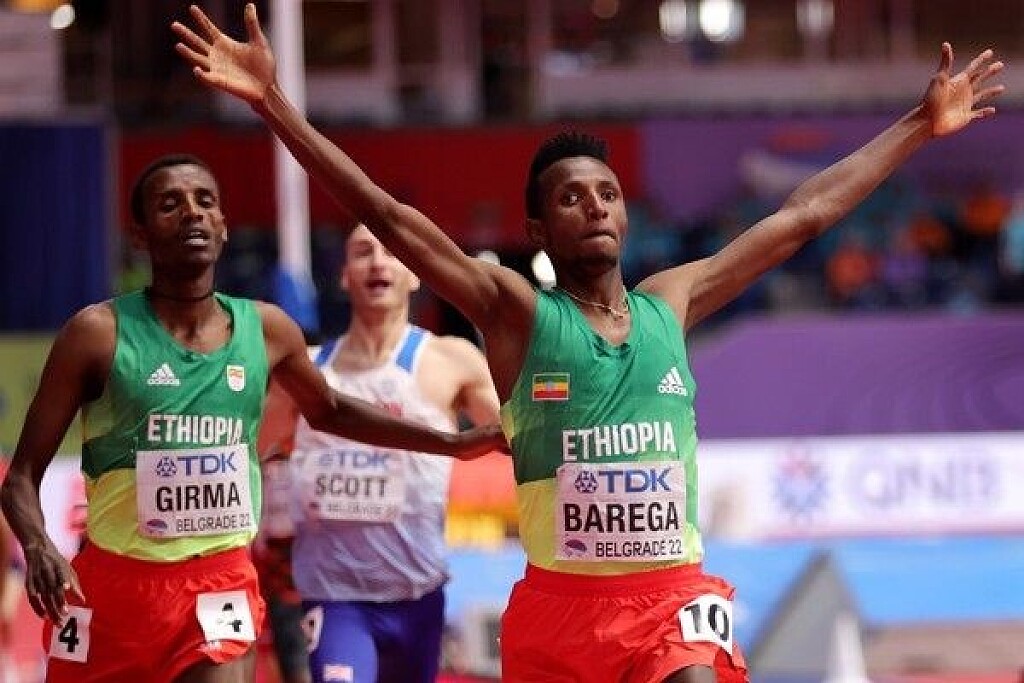
Ethiopia Has Changed Its Team Again for the 2022 Worlds
On Tuesday, the Ethiopian Athletics Federation announced its team for the 2022 World Athletics Championships in Eugene. If this sounds familiar, that’s because Ethiopia already named its team on June 13…and then updated it four days later to sub in Dawit Seyaum after she ran 14:25 to win the Oslo Diamond League.
Tuesday’s list — which the federation says is the final roster (it pretty much has to be, since entries were due to World Athletics on Monday) — features even more changes, which will have a major impact on Worlds, which begin on July 15 at Hayward Field. Remember, at World Indoor Championships earlier this year in Belgrade, Ethiopian athletes won eight of the 12 available medals across the 1500 and 3000 meters — including all four golds and a 1-2-3 sweep in the women’s 1500. The country is a distance powerhouse.
Here is the full roster, with changes, followed by some analysis on what it all means.
Men’s 800 (no changes)Ermiyas GirmaTolosa Bodena
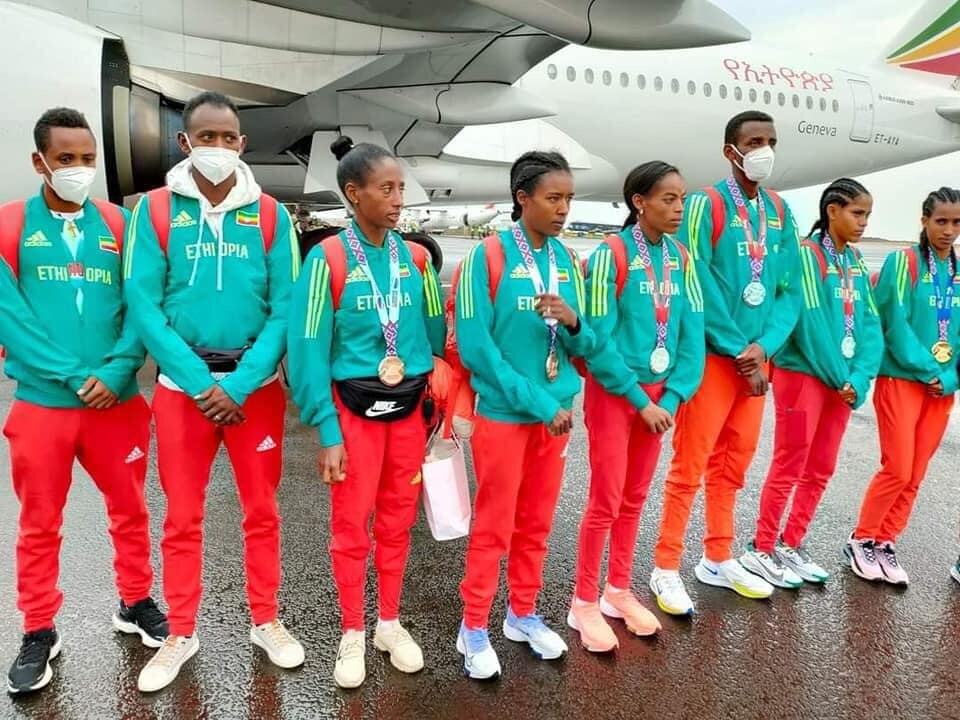
Women’s 800Habitam AlemuDiribe WeltejiHirut Meshesha (1:58.54 sb) replacing Freweyni Hailu (1:59.39 sb)
Men’s 1500Samuel TeferaTaddese Lemi (3:37.06 sb) replacing Melese Nberet (no races this year)Samuel Abate
Women’s 1500Gudaf Tsegay (3:54.21 sb) replacing Axumawit Embaye (3:58.80 sb)Freweyni Hailu (3:58.18 sb, 4th in Olympics) replacing Ayal Dagnachew (3:59.87 sb)Hirut Meshesha
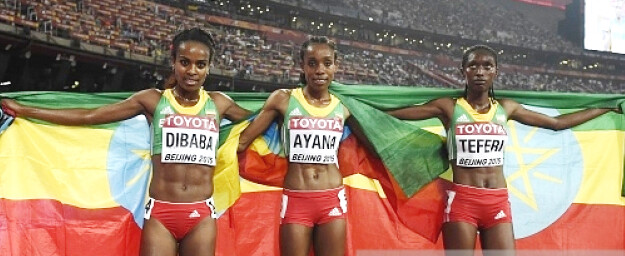
Men’s 3000 steeple (no changes)Lamecha GirmaHailemariyam AmareGetnet Wale
Women’s 3000 steepleMekides AbebeWorkua GetachewSimbo Alemayehu (9:09.17 sb at age 18) replacing Zerfe Wondemagegn (9:27.75 sb)
Men’s 5,000Muktar EdrisBerihu AregawiYomif KejelchaSelemon Barega replacing Telahun Bekele
Women’s 5,000Ejgayehu TayeLetesenbet Gidey (14:24.59 sb) replacing Gudaf Tsegay (14:26.69 sb)Dawit Seyaum (14:25.84 sb) replacing Fantu Worku (14:47.37 sb)
Men’s 10,000Selemon BaregaTadese WorkuBerihu Aregawi (26:46.13 sb) replacing Milkesa Mengesha (27:00.24 sb)
Women’s 10,000Letesenbet GideyEjgayehu Taye (30:44.68 sb) replacing Girmawit Gebrzihair (30:47.72 sb)Bosena Mulate
Men’s marathonLelisa DesisaTamirat TolaMosinet GeremewSeifu Tura
Women’s marathonGotytom GebreslaseAbabel YeshanehAshete Bekere
Quick Takes
1) Ethiopia’s team just got A LOT stronger and Ethiopia went from no one doubling to a lot of doublers
In recent years, Ethiopia has been reluctant to allow its stars to double at global championships. Last year in Tokyo, Ethiopia had two huge 5,000m medal threats in Selemon Barega (Olympic 10,000 champ) and Berihu Aregawi (the 10,000 4th placer who would go on to win the Diamond League 5,000 title) but neglected to enter either in the 5,000 meters. Of the three men Ethiopia did enter, two failed to even make the final and the third, Milkesa Mengesha, wound up 10th.
The federation took criticism after that misstep and it looked as if it would double down in 2022 as the initial team named in June featured no doublers. But the final squad features five athletes double-entered: World Indoor bronze medalist Hirut Meshesha (800/1500) and Ejgayehu Taye (14:12 pb, #5 woman all-time), Letesenbet Gidey (women’s 5k/10k world record holder), Barega and Aregawi, all of whom are running the 5,000 and 10,000.
2) The meet is more interesting with the Ethiopians doubling; the men’s 5,000 final is now totally stacked
The World Championships are meant to be about the best against the best. When a world final is over, we don’t want to be asking ourselves, “What would have happened if Athlete X was in the race?” But that’s absolutely what we were thinking after the 2021 Olympic 5000 final without Barega. And it’s been an issue for a lot longer than that. Only once in his career did Haile Gebrselassie attempt the 5,000/10,000 double at a global champs (1993), in part because there were still prelims in the 10,000 in those days and in part because he didn’t want to tire himself for the lucrative post-championship meets in Europe.
That shouldn’t be an issue in 2022 (and if it is, it won’t have been the fault of the Ethiopian federation) as the distance finals are much stronger with Taye, Gidey, Barega, and Aregawi doubling up. The men’s 5,000 could be an all-timer. Not only do you have Olympic 5,000 champion Joshua Cheptegei of Uganda, but now we have Olympic 10,000 champ Barega stepping down and Olympic 1500 champion Jakob Ingebrigtsen stepping up. It’s reminiscent of one of the most famous races in track history, the 2003 World Championship 5,000 final in Paris which featured Hicham El Guerrouj stepping up from the 1500 and Kenenisa Bekele stepping down from the 10,000 only for both of them to be defeated by an 18-year-old Eliud Kipchoge.
Having Aregawi in the 10,000 makes for a stronger race as well as he was 3rd at the Ethiopian trials in that event and set a Diamond League record for margin for victory when he ran 12:50 to win the Pre Classic 5,000 by 16 seconds.
3) Gudaf Tsegay’s medal odds went up but her gold medal odds went down
Tsegay is pretty clearly the #2 women’s 1500 runner in the world. She won World Indoors by 5+ seconds and is 3+ seconds faster than the #3 1500 woman in the world right now. But she’s also not close to double Olympic champ Faith Kipyegon, who beat her convincingly at Pre, 3:52.59 to 3:54.21.
Initially, Tsegay was entered in the 5,000 at Worlds (she ran the 5,000 only at the Olympics last year, earning the bronze medal) and while there’s no overwhelming favorite in that event like Kipyegon (well at least until we see how Sifan Hassan looks this weekend), Tsegay is not as good at the 5,000 as the 1500 (as evidenced by her defeat to countrywoman Dawit Seyaum in the 5,000 in Oslo). By running the 1500, Tsegay has a better shot at a medal but her odds at gold are worse.
4) It just got a WHOLE LOT harder for the Americans to medal
An American medal in the women’s 5,000 or 10,000 was already unlikely, so the Ethiopian roster changes didn’t make a huge impact on the chances of Karissa Schweizer or Elise Cranny. But the medal odds of Grant Fisher, who finished 5th in the Olympic 10,000 last year, are way lower today than they were a week ago (a statement also true for his US teammates Woody Kincaid and Joe Klecker).
Last Wednesday, two of the four men who finished ahead of Fisher in the 10,000 in Tokyo were major question marks. Bronze medalist Jacob Kiplimo hadn’t raced on the track all year, while Aregawi, the 4th placer, was named to Ethiopia’s team in the 5,000 only. Since then, Kiplimo ran 7:29 for 3,000 in Stockholm to show he’s very fit right now and Aregawi was added to Ethiopia’s 10,000 squad. Plus Barega was added to the 5,000.
Those developments will make it significantly harder for Fisher (or any American man in the 5,000 or 10,000) to earn a medal. That said, if an American can somehow medal, it will go down as a monumental achievement since no one can accuse these fields of being watered down.
Sinclaire Johnson‘s medal hopes in the 1500 also took a BIG hit. With Tsegay now in the 1500, two medals seem to be spoken for and new addition Freweyni Hailu, who was 4th in the Olympics last year at age 20, is better than Ayal Dagnachew (who is no slouch herself, world junior 800 champ last year and 3:59 this year).
5) Ethiopia needs to figure out a better way to do this
One of the most important jobs an athletics federation has is selecting national teams. And for countries that don’t use a “top 3 at the trials” model — which is to say, every country except for the US — things can get prickly as someone, inevitably, is going to be upset they’re missing out on the team.
There are ways to limit the outrage. The simplest solution is the one USATF has already discovered: hold a trials and just pick the top three finishers. Ethiopia actually did this ahead of the Olympics last year. The problem was, they held all the races on the same day, making it impossible for athletes to try out for both the 5,000 and 10,000 teams.
But even if you don’t want to stage a trials, a federation can avoid much of the backlash by announcing a clear criteria ahead of time and sticking to it. You want to pick the team based off season’s bests? Fine. Just let everyone know before the season starts and let them plan their races accordingly. Transparency and consistency are the keys.
Heck, even if you want to be subjective and use a selection panel, you can at least cut down on some of the drama by letting the athletes know in advance that they’ll have to run a few performances to impress the selectors.
What you don’t want to do is announce a team well before the entry deadline (and three days before two key Diamond League meets featuring most of your athletes) only to drastically change it three weeks later. Which is exactly what happened in Ethiopia, leaving athletes like Telahun Bekele (winner of the 5,000 in Oslo) to think they’re on the team only to yank it away less than a month later.
In the end, Ethiopia ended up picking the team by season’s best except in the 10,000, where it staged a trial race (and the top 3 there were the fastest 3 on the year). If it had just used that criteria throughout the year and stuck to it, there would be fewer angry people right now. The athletes deserve better.
(07/08/2022) ⚡AMPby Jonathan Gault
World Athletics Championships Budapest23
Budapest is a true capital of sports, which is one of the reasons why the World Athletics Championships Budapest 2023 is in the right place here. Here are some of the most important world athletics events and venues where we have witnessed moments of sporting history. Throughout the 125-year history of Hungarian athletics, the country and Budapest have hosted numerous...
more...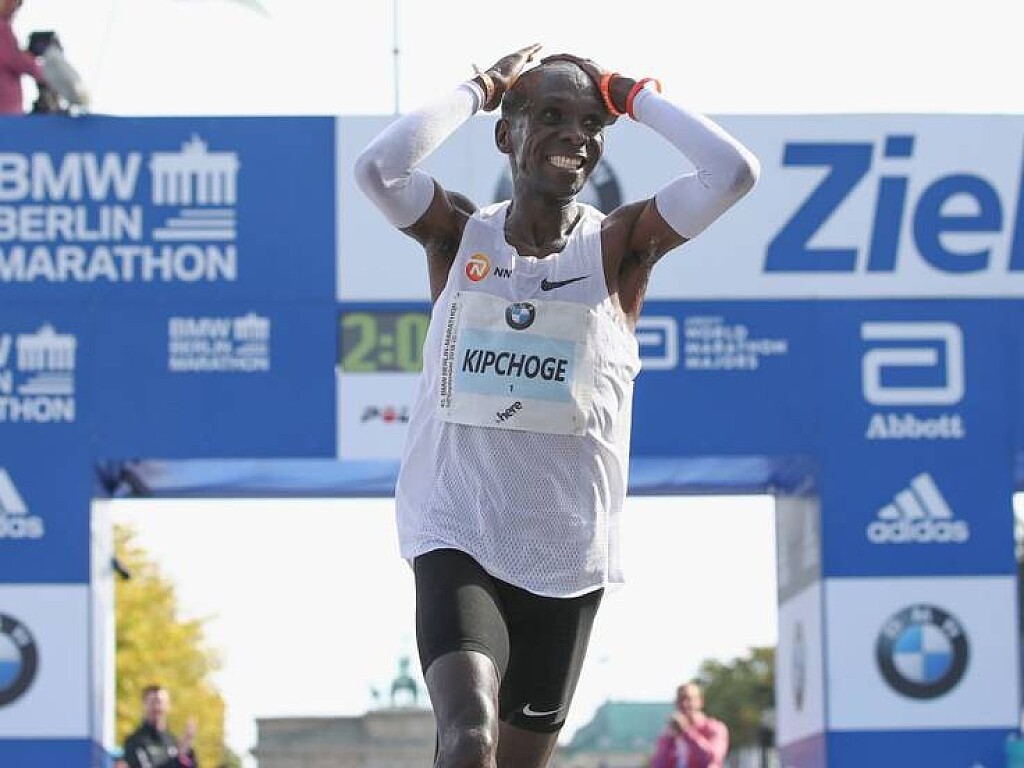
Eliud Kipchoge picks his next marathon he will be racing the Berlin Marathon for a fifth time on Sept. 25
Eliud Kipchoge will race the Berlin Marathon for a fifth time on Sept. 25, returning to the German capital event for the first time since he broke the world record there in 2018.
“Berlin is the fastest course, it’s where a human being can showcase its potential to push the limits,” he said in a press release.
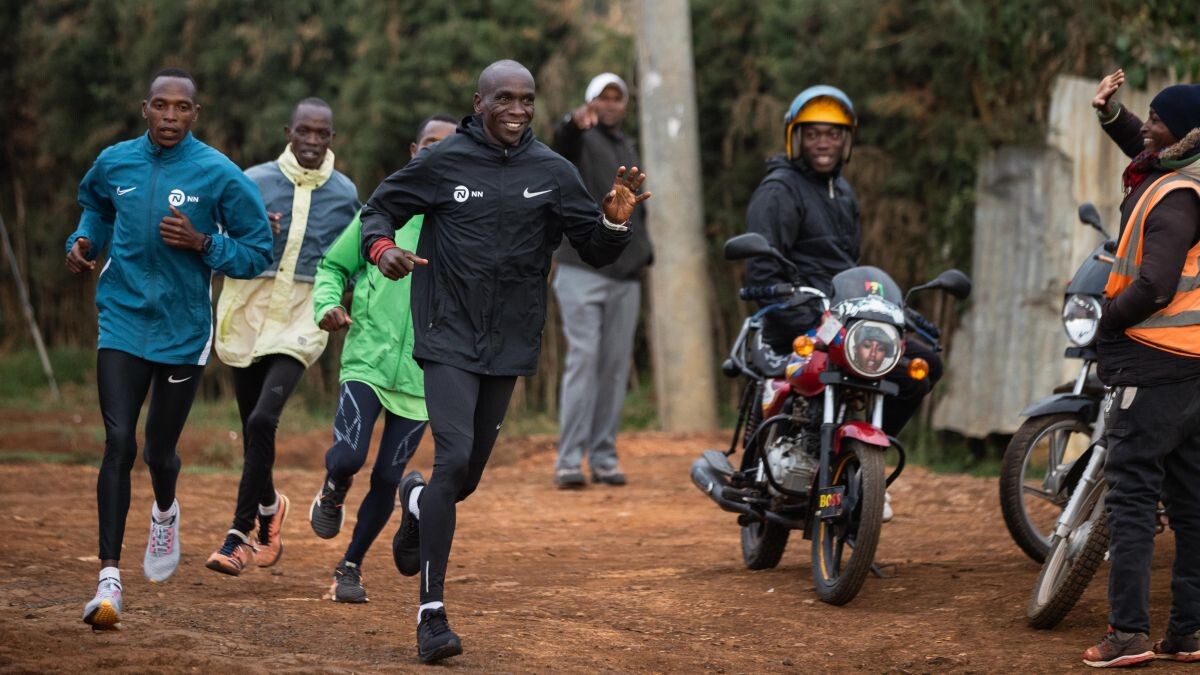
Kipchoge has the greatest marathon record of any man, winning 14 of his 16 starts and becoming the first and so far only person to run 26.2 miles in under two hours (doing so in a non-record-eligible event).
Kipchoge, 37, chose Berlin over London, his other usual marathon, and the other fall major marathons, Chicago (which he raced once in 2014) and New York City (which he has never raced).
London, usually in April, will be held in the fall for a third consecutive year due to the pandemic before returning to its spring date in 2023.
Kipchoge called it a “really hard” decision to go with Berlin over the others, speaking in a virtual press conference from training in Kaptagat in his native Kenya.
Kipchoge has said that he hopes to run all of the World Marathon Majors, which would require making his debuts in Boston, which is contested every April, and New York City, which is in November.
So far, Kipchoge has primarily run London every April and Berlin every September, never doing more than two marathons in a year.
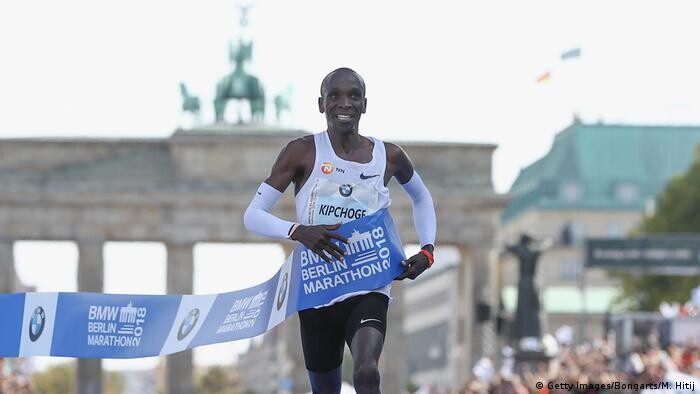
He said Friday that Boston and New York City remain targets, and when asked specifically about Boston, said it was on his bucket list.
Kipchoge is expected to race the 2024 Paris Olympics, where he could become the first marathoner to win three gold medals (or three medals of any color).
He has never raced a fall marathon in an Olympic year, so if he doesn’t race New York City in 2023, he may not do so until, at the earliest, 2025, when he will be three days she of turning 41 years old.
Kipchoge said Friday he may continue racing after the 2024 Olympics and into his 40s. He plans to focus on major city marathons rather than specialty races, such as his 2017 and 2019 attempts to break two hours for a marathon in non-record-eligible events.
He ran 2:00:25 on a Formula One track in Italy in 2017 and 1:59:40 in Vienna in 2019.
In Berlin, he has three victories and a runner-up. In 2018, he broke countryman Dennis Kimetto‘s world record, lowering it from 2:02:57 to 2:01.39. The next year, Ethiopian legend Kenenisa Bekele won Berlin in 2:01:41 with Kipchoge not in the field.
Kipchoge and Bekele, 40, have not gone head-to-head since then. Bekele, who hasn’t broken 2:06 since Berlin 2019, signed up for London on Oct. 2.
The other headliner in Berlin is defending champion Guye Adola of Ethiopia.
In 2017 in Berlin, an unknown Adola came out of nowhere to finish 14 seconds behind Kipchoge in the then-fastest-ever marathon debut on a record-eligible course, sticking with Kipchoge until the last mile. Adola didn’t know he was running until four days before the race and wasn’t meant to start with the elite group.
Adola said he hopes to break 2:03 this year.
(07/08/2022) ⚡AMPby OlympicTalk

BMW Berlin Marathon
The story of the BERLIN-MARATHON is a story of the development of road running. When the first BERLIN-MARATHON was started on 13th October 1974 on a minor road next to the stadium of the organisers‘ club SC Charlottenburg Berlin 286 athletes had entered. The first winners were runners from Berlin: Günter Hallas (2:44:53), who still runs the BERLIN-MARATHON today, and...
more...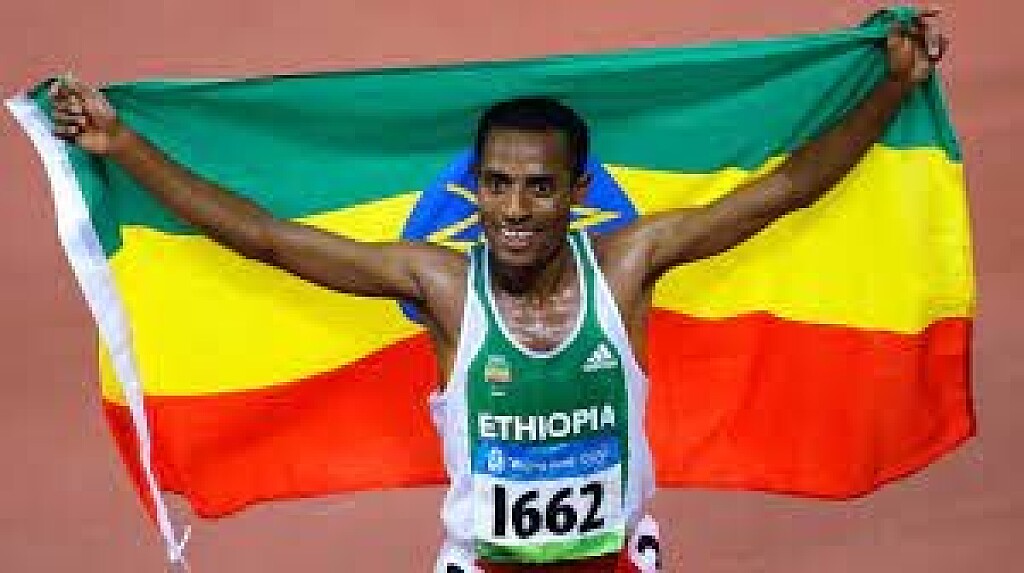
Kenenisa Bekele isn’t done yet, he will race the London Marathon
Indisputably, one of the greatest distance runners of all time, Kenenisa Bekele of Ethiopia has announced that he’ll be coming back to the London Marathon.
Now 40, the three-time Olympic champion on the track, who is in the latter stages of his career, will be hoping to finally get his hands on a London Marathon victory to add to his incredible resume.
The second-fastest marathoner of all time has taken three cracks at the London Marathon, almost winning twice. He was third in 2016 and second in 2017, but injuries have hindered him since winning the 2019 Berlin Marathon in 2:01:41.
His two most recent finishes cannot be ignored–sixth at the 2021 NYC Marathon and a third-place finish in Berlin at age 39. These performances hint he still may have a chance for victory.
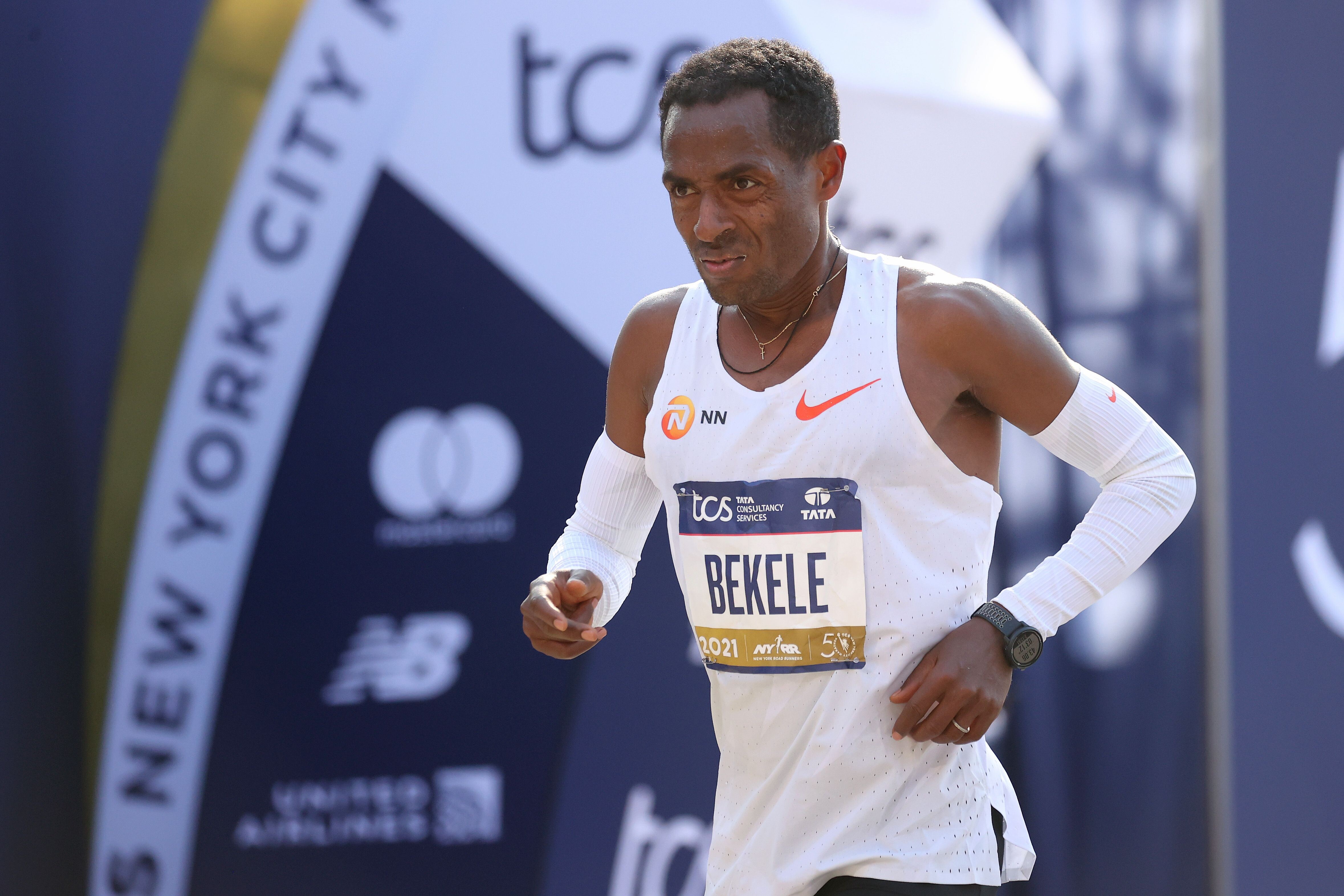
Bekele will have to hold off the likes of his countryman Birhanu Legese (the third-fastest marathoner in history behind world record holder Eliud Kipchoge and Bekele, with a personal best of 2:02:48), and Mosinet Geremew (2:02:55), the fifth-fastest of all time. Geremew was third at the 2021 London Marathon, while Legese was fifth.
One other Ethiopian who can’t be ignored is Sisay Lemma, who got his first Abbott Marathon Major victory in London last year. He had previously racked up wins in smaller marathons such as Frankfurt and Vienna, and finished third in three different marathon majors, including the London Marathon in 2020.
(07/08/2022) ⚡AMP
TCS London Marathon
Since its inaugural edition on March 29, 1981, the TCS London Marathon has grown into one of the world's most prestigious road races, blending elite competition with an extraordinary charitable legacy. Founded by former Olympic champion and journalist Chris Brasher alongside Welsh athlete John Disley, the event has been staged every year and has been held in the spring annually...
more...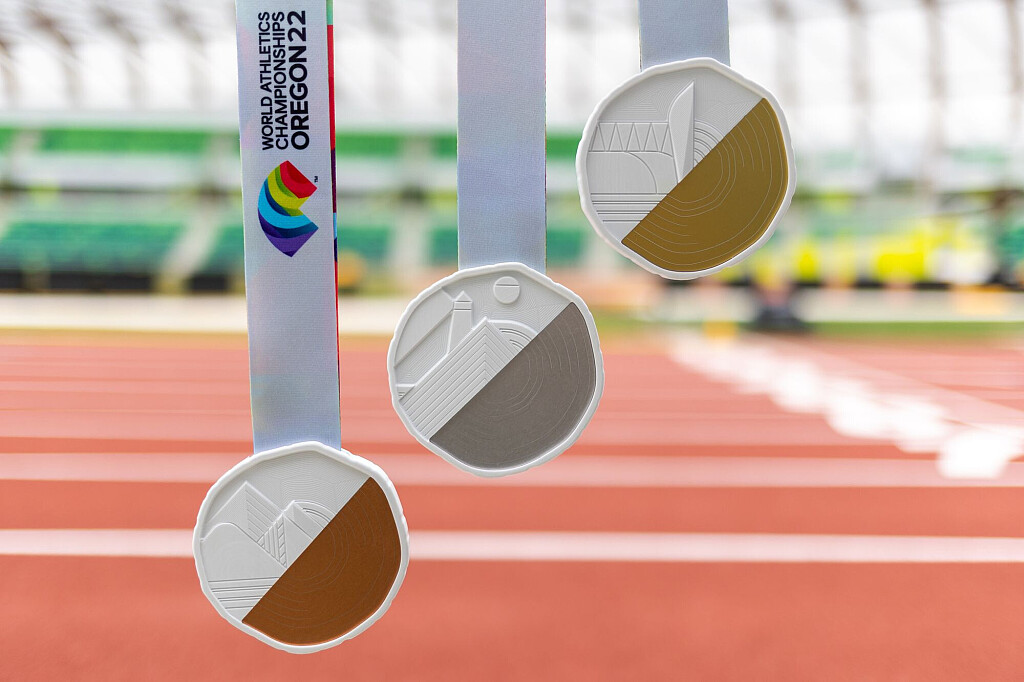
Medals for Oregon22 World Athletics Championships unveiled
The medals for the Oregon22 World Athletics Championships have been unveiled with only a few days to go before the competition begins.
This year’s medals have deviated from its traditional makeup by being made of Corian, which has been inlaid with a metal, to allow the design to have a finely detailed carving.
The shape and weight have also changed alongside the attachment of the ribbon.
One side of the medal uses the cross-section of a tree as inspiration with seven rings symbolising the seven regions of the hosts, as well as the outer rim textured to feel like tree bark.
The logo of the competition is also in the centre of the medal.
The other side has seven full rings, to represent Oregon’s regions, in addition to it paying homage to Oregon Tapestry, which is also shown on the ribbon.
"It was imperative that our medals were true to the unique, unmissable, unconventional nature of the first World Athletics Championships on US soil," Niels de Vos, executive director of Oregon22 LLC, said
"Months of cutting-edge creative thought and experimentation into the latest manufacturing techniques went into the medals, designed and fabricated right here in Oregon.
"The medals are won by athletes as a result of a lifetime of dedication and commitment.
"They are the best in the world, and our team wanted to ensure a medal which reflected that status."
Instant medals have been introduced for the first time in track and field where each medallist will receive their respected colour immediately after their finals.
This is designed to give athletes the opportunity to celebrate their accomplishments in the moment and to share it with their family and friends.
Full medal ceremonies with national anthems are planned to take place after.
Medals are set to be claimed in 49 event disciplines and on every day of the multi-sport competition.
The United States will seek to defend their mixed 4x400 metre relay on the opening day, scheduled for July 15, which could see the gold medallists break a world record.
The Championships is set to conclude on July 24.
"The primary goal that drove the design process was to create something truly innovative and glorious that would be immediately recognizable in years to come as Oregon's medals," Jessica Gabriel, communications director of Oregon22 LLC said.
"We worked with Oregon-based companies to centre the project in this place, and together we challenged ourselves to create works of art that would symbolise the significance of an athlete capturing the glory of a global medal here in the heart and home of track and field in the US."
(07/07/2022) ⚡AMP
by Eliott Brennan
World Athletics Championships Budapest23
Budapest is a true capital of sports, which is one of the reasons why the World Athletics Championships Budapest 2023 is in the right place here. Here are some of the most important world athletics events and venues where we have witnessed moments of sporting history. Throughout the 125-year history of Hungarian athletics, the country and Budapest have hosted numerous...
more...
Why you need type-two fun in your life
It can seem inexplicable to those who’ve never tried it: running for hours or days, dealing with blisters and injuries, rogue wildlife and the challenge of trying to eat enough food without vomiting. Type-two fun, or the kind of experience that is fun after you’ve completed it, is a given in most endurance events. Fun in the moment? Not so much, although there are certain parts of every wild adventure that are enjoyable; there’s also a fair amount of suffering. Afterward, though, when you have washed the dirt off, patched yourself up, and had a good night’s rest, you’ll probably find yourself looking back at your accomplishment with fondness, even delight.
Despite all evidence that would predict otherwise, you will likely already be anticipating your next type-two experience. Here’s why you should try some type-two fun this summer.

It builds resilience
Doing tough things prepares you for when life-challenges crop up. Whether it is running an extremely hard training session or spending several days hiking through a challenging trail, once you’ve completed the adventure you’re left with self-knowledge. Life is continuously throwing unique twists and turns our way: sharpening our mental toughness through races or outdoor adventures can help us feel better prepared to face those challenges. After I completed my first ultra, I tucked the experience into my mental toolbox to pull out on bad days. When I’m going through a stressful time or have a hard task in front of me, reminding myself that I am physically and mentally strong enough to run 100K is a huge confidence booster.
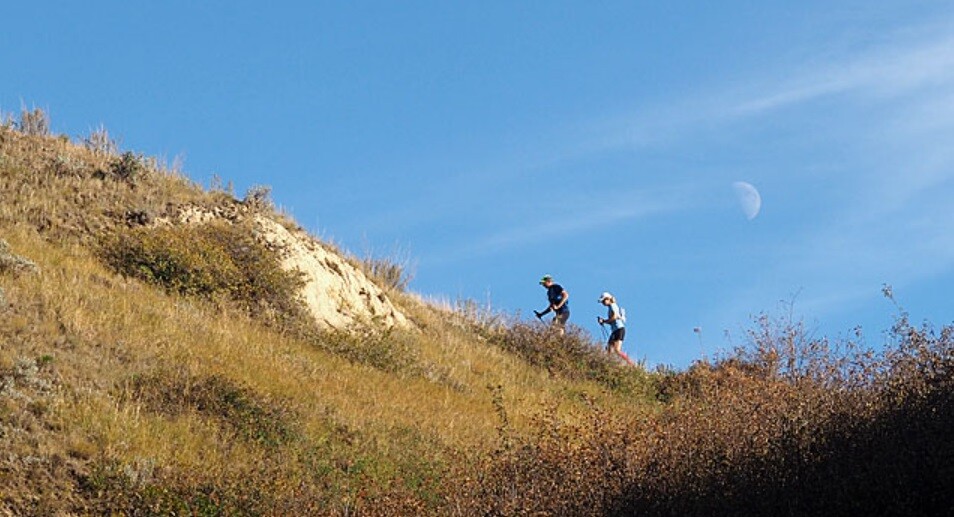
Type two fun lasts a lifetime
My daily walk with my dogs involves zero suffering and always brings me joy. Definitely type-one fun. Not to be discounted, type-one fun is important and worthwhile. When I’m walking, I notice my surroundings, enjoy the antics of my pets, and get a dose of nature. In the same way that type-one fun brings us pockets of gratitude or happiness throughout our day, type-two adventures are the ones we look back on decades later with pride. The week spent running in the mountains, alone, is reflected on with a sense of accomplishment and pride. Testing our own personal limits is a way of living life to the fullest.
Researchers have called the positive feelings that we experience from tackling a particularly grueling adventure harmonious passion: the result of choosing to engage in something you love, even if it is hard. Obsessive passion, where we are driven by external pressure or self-imposed expectations, is associated with less happiness and life-fulfillment. Tackling something ridiculously hard takes mental grit and physical endurance, and can be incredibly rewarding.
(07/07/2022) ⚡AMPby Keeley Milne
Last-minute race prep tips, calm your nerves and tackle any race-day challenge, even at the last minute
It’s the night before your race, and you’re sleepless. The more you think about needing sleep, the less you’re able to find that elusive land of nod. Don’t worry: it’s the sleep you’ve gotten over months of training that count, far more than the night before. Here are a few other pre-race pointers to ease the jitters and help you start the race off on the right foot (literally). I know from hard experience that the days before a race can make or break the actual event, even if it simply means starting with the right frame of mind.
Get organized
Whether it is work, pets, volunteering–whatever occupies your time, everyone is very busy. It can be hard to prioritize getting organized days before an event. Having a lack of structure in the week leading up to your race can be tempting: you’re tapering, right? Your job is to hydrate, fuel well and get some extra rest. Sure, but setting aside some specific time to get ready before the race can be race-altering. Laying out your race-day clothes, charging your watch and looking over the race route can give you a boost of confidence as you gear up for your run.
Last-minute tip: Life throws wrenches into even the best-thought-out plans. If you’re a day out from a race and feeling like you’re scrambling, focus on two things: your race bib and your pre-race breakfast. Once those are in place, you will feel like you can tackle a little more (or get some much-needed sleep).
Don’t eat new things the week before a race
Sounds obvious, but you’d be surprised how many athletes who suddenly veer from their regular pre-race meal, and pay the consequences. When in Edmonton for the Servus Marathon, my race crew/fan (Mom) took me out to the most fun-looking patio we could find for a pre-event supper. Instead of sticking to the usual rice, protein and easy-to-digest-vegetable bowl I usually consume before a race, I had a meal chock-full of things I’d never tried before. The next day, I felt less-than-fueled and had to make many of those dreaded porta-potty stops along the race route. As any marathoner chasing a PB or trying to qualify for Boston or New York knows, one bathroom stop can derail your pace. On that day, I had to adjust to the fact that I wasn’t going to hit my goal and shift my aim to learning from the experience. (Though my slower pace meant I got to enjoy the views and smile at the other runners as they passed by.)
Last-minute tip: What to do if you made an error, ate something new and aren’t feeling great? Try to assess if it’s just nerves upsetting your stomach. It’s safe to take an antacid, if you’re comfortable with it, to help with indigestion. Make sure you have a gel or another simple carbohydrate (easy to digest) as a backup, if you aren’t feeling up to your usual breakfast. If the worst happens and you feel sick during your race, shift your mindset to: “what can I take away from this?”
Realize anxiety and excitement feel the same
If you’re feeling incredibly nervous the night before a race, know that you could be misinterpreting excitement. As neuroscientist Andrew Huberman explains in an interview for Inc.com: “fear and excitement are two very different emotions, but to our bodies, they’re identical.” Whether you’re thrilled to have the opportunity to run in your community or you’re terrified about the miles to come, “our brain automatically prepares you for whatever action is to come, by dialing up the activation of your autonomic nervous system. That means your heart pounds, your hands shake, and you feel jittery and sweaty. Whether you interpret these sensations as excitement or terror is entirely in your mind,” Huberman adds. Simply understanding that concept can help you reframe those last-minute worries.
Last-minute tip: Even if you feel like you can’t shake the anxiety, it can help to gain a handle on it. Huberman suggests a technique called the double breath. “Inhale through the nose. And then before you exhale, sneak in a little bit more air and then do a long exhale through the mouth,” he says. Do this one to three times, double-knot your laces, and you’re ready to roll.
(07/07/2022) ⚡AMPby Running Magazine
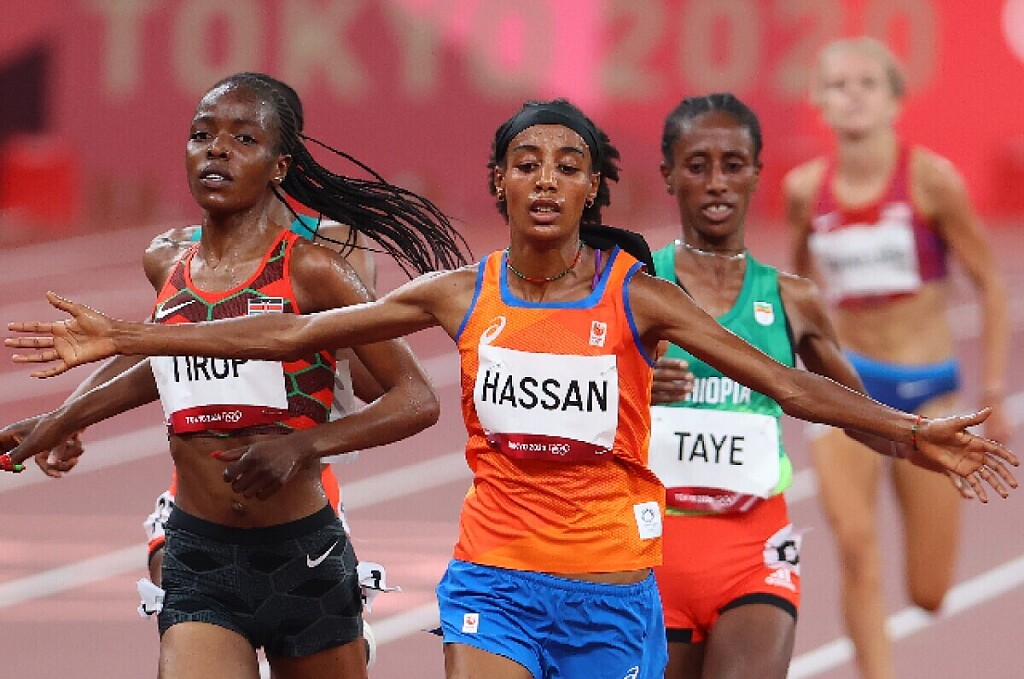
Sifan Hassan Will Make 2022 Debut on Friday & Will Compete at 2022 Worlds
Olympic 5,000/10,000-meter champion Sifan Hassan of the Netherlands will open her 2022 season on Friday in the 5,000 meters at the Stumptown Twilight meet in Portland and is planning on competing at the World Championships, according to her coach Tim Rowberry. It will be Hassan’s first race since last year’s Diamond League final on September 9.
It is not uncommon for athletes to take longer to get going in the year following an Olympics, and no athlete was busier in Tokyo last year than Hassan, who ran six races across nine days, earning three medals (bronze in the 1500, gold in the 5,000 and 10,000). Rowberry said Hassan began preparing for her 2022 season in December as she usually does but it has taken most of the year to make sure she is recovered and excited to train again.”
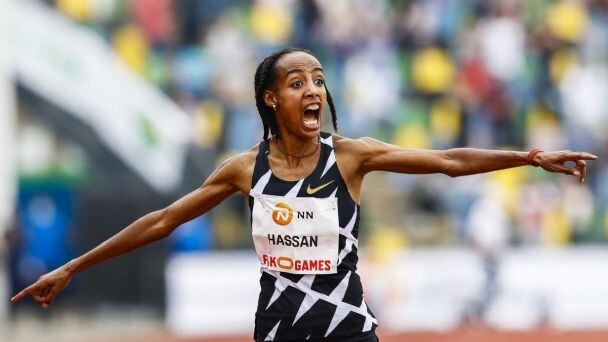
“On the personal level, Sifan also is trying to take things slowly so she doesn’t burn herself out next year while building up for Paris [2024],” Rowberry added.
Hassan began the year with training stints in Namibia and Ethiopia but Rowberry said those training trips were not as productive as usual.
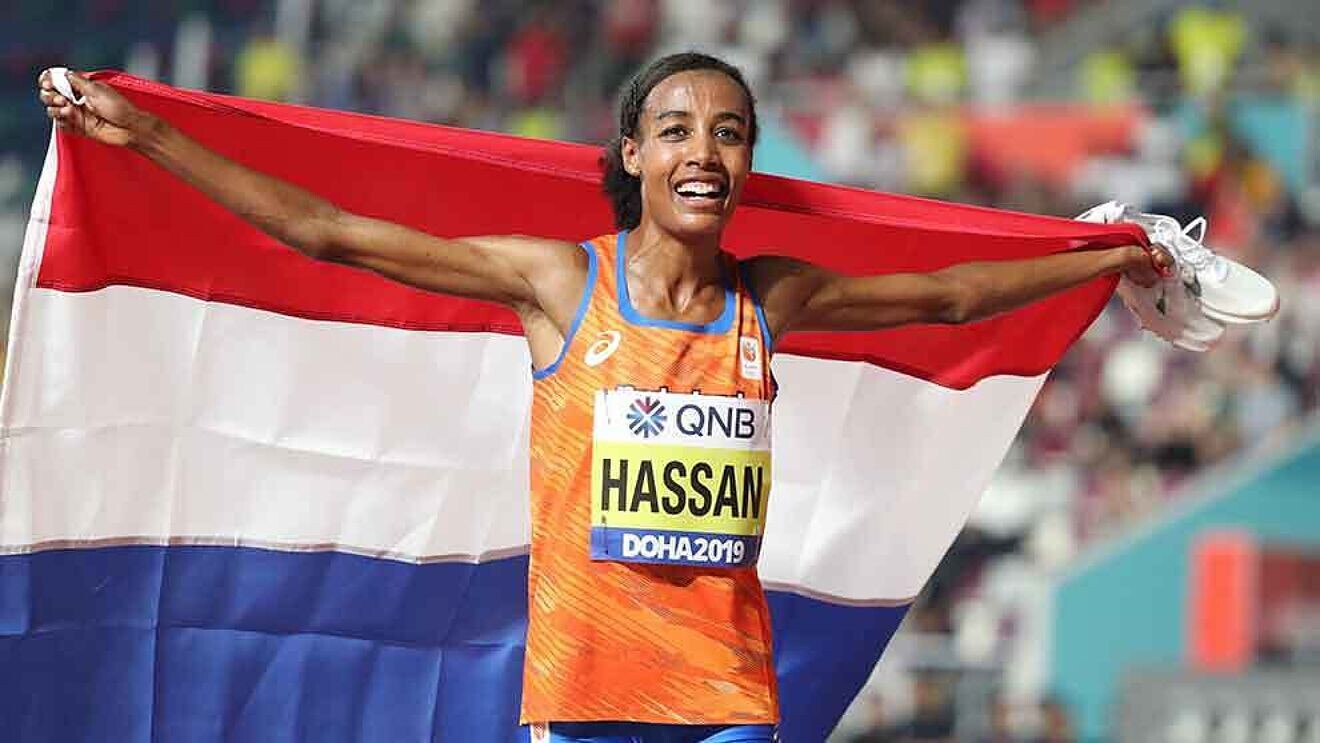
“Fasting during Ramadan this year also interrupted training more than usual,” Rowberry said about Hassan, who is Muslim, “so I felt it was necessary to postpone her races leading into Prefontaine rather than interrupt the slow training buildup.”
Rowberry said training has improved over the last two months, during which time Hassan has been based in Utah. The 5,000 on Friday will serve as a tuneup for Worlds and not much more (Hassan’s pb is 14:22; the #2 seed for the meet is 15:51). Currently, Hassan is entered in the 1500, 5,000, and 10,000 at the World Championships but is not planning on running all three events. Rowberry said they will make a decision on which event(s) to drop after this weekend.
(07/07/2022) ⚡AMPby Jonathan Gault
World Athletics Championships Budapest23
Budapest is a true capital of sports, which is one of the reasons why the World Athletics Championships Budapest 2023 is in the right place here. Here are some of the most important world athletics events and venues where we have witnessed moments of sporting history. Throughout the 125-year history of Hungarian athletics, the country and Budapest have hosted numerous...
more...
Mo Farah set to run this year’s TCS London Marathon
Britain’s Sir Mo Farah has announced that he will run the 2022 TCS London Marathon, which takes place Oct. 2. Farah has not raced a marathon since the 2019 Chicago Marathon, where he finished eighth, in 2:09:58. (The previous year, Farah won in a European record of 2:05:11; he also finished third at London in 2018, setting a new British record at 2:06:21. In 2020 he performed pacing duties in a scaled-down, elite-only pandemic version of the race.)
Farah considers the British capital his hometown; he expressed his excitement at returning to this race in a press release accompanying the announcement. “I can’t wait to get back out there again, test myself against the best marathon runners in the world and enjoy that buzz and amazing atmosphere London creates on Marathon Day,” he said.
Farah, who has gone back and forth between the marathon and the track in recent years, won Olympic gold in both the 5,000m and 10,000m in 2012 and 2016 and is a six-time world champion. In 2020, he broke the one-hour world record on the track, racing with his training partner Bashir Abdi, who went on to a bronze medal in the Olympic marathon in Tokyo and later the European record; in 2021, Farah failed to make the British team for the Tokyo Olympics in the 10,000m and suffered a stress fracture in his foot that scuppered the rest of his season.
He hinted at the time that he was considering returning to the marathon distance.
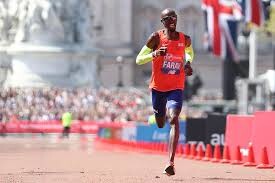
Farah expects to race The Big Half in London on Sept. 4 as a tune-up for his return to the marathon; he has won this race on two previous occasions.
No further information is yet available on who Farah will face in London. The women’s elite list was announced earlier this week and will include Scottish runner Eilish McColgan’s debut at the distance, as well as defending champion Joyciline Jepkosgei and world record holder Brigid Kosgei, among many others.
(07/07/2022) ⚡AMPby Keeley Milne
TCS London Marathon
Since its inaugural edition on March 29, 1981, the TCS London Marathon has grown into one of the world's most prestigious road races, blending elite competition with an extraordinary charitable legacy. Founded by former Olympic champion and journalist Chris Brasher alongside Welsh athlete John Disley, the event has been staged every year and has been held in the spring annually...
more...
Going to the United States was the best decision of my life says Spain new 1500m Champion Mario Garcia Romo
Mario Garcia Romo grew up in a small Spanish town of just 75 before coming to the US four years ago to go to college.
"When I was 8 years old," Mario posted on his Instagram account, "I first started running and I used to dream of racing against the best in the biggest stages, the Olympics, World championships, European Championships, Diamond Leagues… slowly I realized it wasn’t going to be an easy path. It was going to take a lot of training, work, patience and dedication.
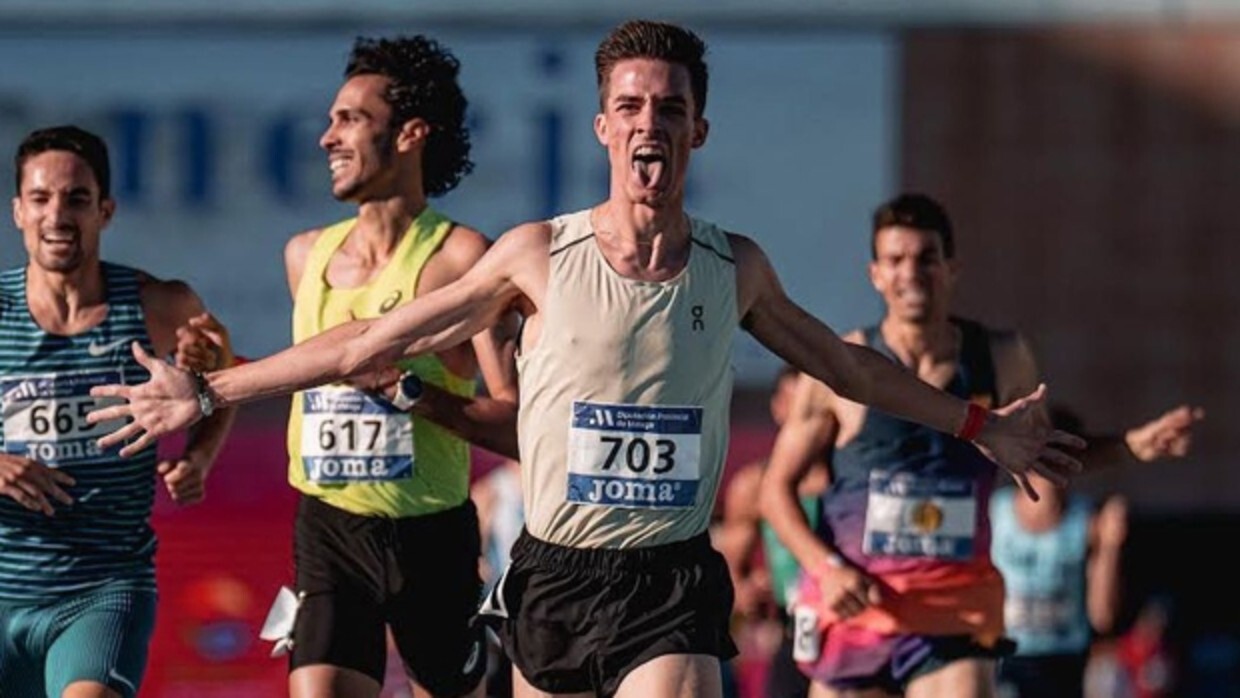
"But I had one thing clear, in order to be one of the best you have to work among the best. Now I’m proud to say I will be able to work under the support of one of the best brands and training programs in the world, hand by hand with some of the best athletes.
"I’m excited for the next chapter, and ready to show all my potential in the track while making my impact in the sport. Game On."
Mario García Romo summarizes his life, "The difference is not me but my parents."
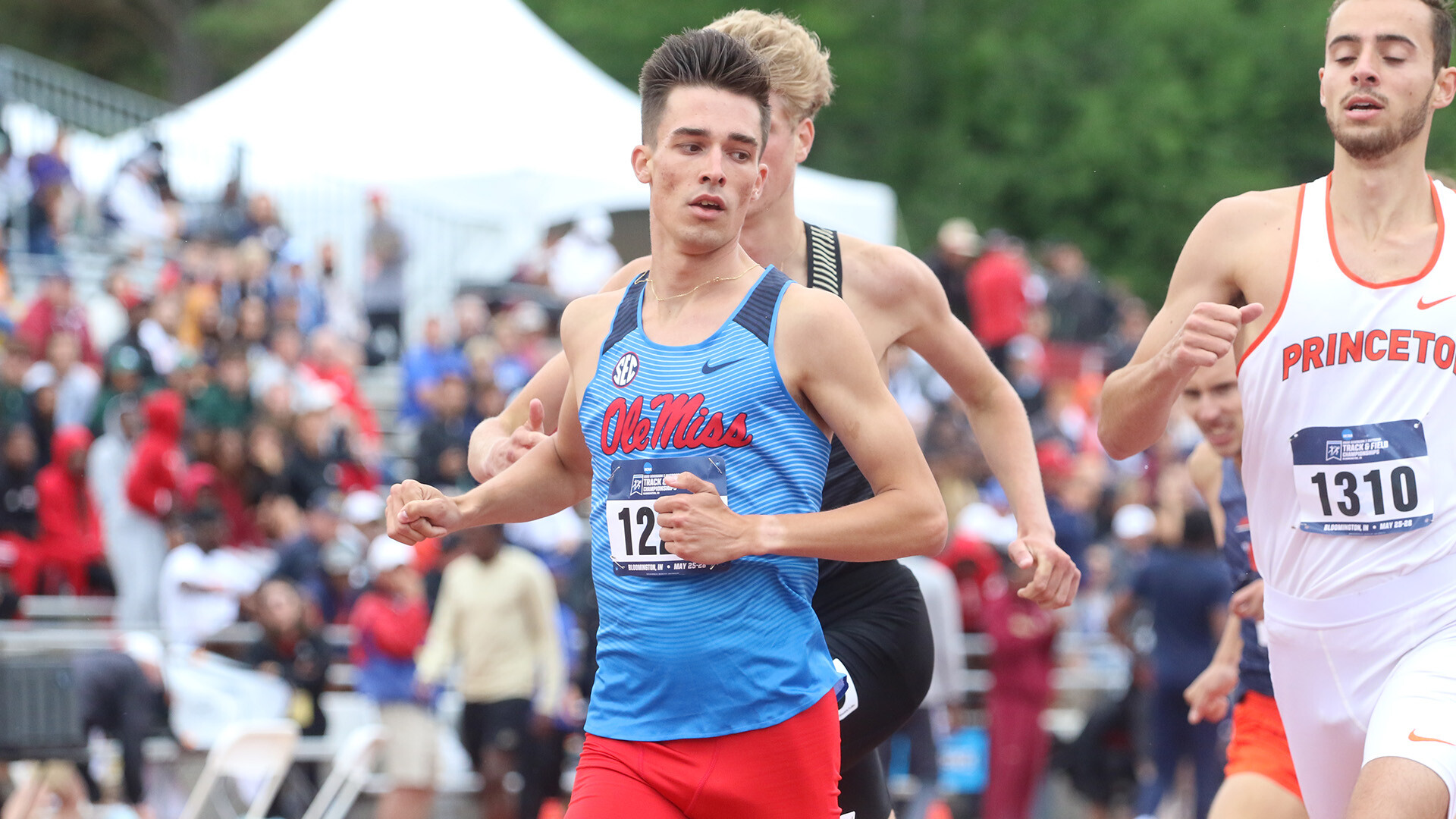
A humble young man with vanity totally under control. It is the first thing that catches the attention of 23-year-old Mario. "Without my first coach, Lucio Rodríguez, who accompanied me so many times to El Helmántico, I wouldn't be here."
Today, Mario is the 1,500 Spanish champion and will be representing Spain at the World Championships in Eugene.
The last four years he has lived in the United States next to Memphis. There he learned to see life differently. "We focused on what is achieved on the track and not on the stories behind the athletes," he explains.
Above all, he is a village boy.
Yes, and very proud ot it. "I grew up in a town in Salamanca, Villar de Gallimazo, with 75 inhabitants. Living in such a place allowed me to go out on the street at any time. In my class at school there were just four children."
Did that make you different?
"The difference is not me, but my parents. I am the son of a mason and my mother is a cleaner. I've always seen my parents work hard. That has marked me. In fact, my father has taken one company forward without studies and hardly any accounting knowledge. When I was little I sometimes accompanied him and, for me, he was a source of pride."
Then Mario made the big move from a small town to the University of Mississippi.
"I have thought about it and my friends have reminded me of it. But it was a thoughtful idea at the time and it arose trying to follow in the footsteps of my brother, who is four years older. He went to do a Master's degree there and when he told me how athletics lived in the United States, I thought, "I also want to go someday."
And it was.
"In the summer I was bored one day. I started looking for the universities, I sent emails and one of the ones that first answered me was that of Mississippi through what is now my coach. I still have the message saved. Often, I read it again. I'm excited. He told me that it was a pleasure and that he wanted to have a call with me. And from there it all began."
What did he tell you after being champion of Spain?
"I was very happy. He was proud of me. I am the first athlete of yours to qualify for a World Cup. We both agree that it is the four-year job. He gave me confidence, "run as you know how to run," and I think I did. With 500 meters to go, he was locked up. But I knew how to measure my strength and attack at the right time."
(07/06/2022) ⚡AMP
World Athletics Championships Budapest23
Budapest is a true capital of sports, which is one of the reasons why the World Athletics Championships Budapest 2023 is in the right place here. Here are some of the most important world athletics events and venues where we have witnessed moments of sporting history. Throughout the 125-year history of Hungarian athletics, the country and Budapest have hosted numerous...
more...
When you have an urge to pack it in, try these tips to get back on track
Running can be tough, and it’s challenging for all of us to stick to goals. Everyone, from elites to recreational runners, have moments when they want to give up. When you feel an urge to throw in the towel, here are a few pointers to keep yourself moving.
According to coach and author Steve Magness in his Science of Running newsletter, navigating the urge to quit involves three simple steps.
Choose appropriate goals
Big goals are appealing. Imagining that you’ll prepare for a tough race with a few week’s training, or that you’ll revamp your fitness entirely in a month, can get your enthusiasm and blood flowing—at first. “Setting high goals can backfire, sending us towards finding that hole to step in,” Magness says. Similarly, setting goals that are too easy won’t motivate you to keep going. Objectives should be reasonable, but meaningful and challenging. If you find yourself calling it quits early or lacking the motivation to get out the door at all, reassess your goals.
Put yourself “in the mix”
Make sure the group of people you’re surrounding yourself with are working towards similar things. If you’re very new to running, don’t join a run club that’s preparing for Boston. Likewise, if you’ve always been an ultra-distance runner, don’t expect to suddenly start winning your local 5K races without some practice. Find a group of people working towards similar goals to align yourself with, immerse yourself with them, and use them for support and encouragement.
Use intrinsic motivation and embrace the process
Focusing on inner motivation, rather than ego-driven end goals can be helpful in staying the course. Magness describes intrinsic motivation as “a focus on putting forth a best effort, of competing for the joy of the activity itself.” These are also sometimes called process goals. While we can’t control factors in a race (or in life) like weather, we can control how we approach the situation we face. We can reward ourselves for troubleshooting effectively and seeing something challenging through to the end, rather than being stuck on whether we win the race or nail a PB.
It’s inevitable that you’ll have days that you want to quit running, but the way you approach those days has the potential to make you a stronger athlete. You’ll also find that running carries over to life, and those frustrating situations at home and work become easier to embrace when you follow the same guidelines.
(07/06/2022) ⚡AMPby Running Magazine
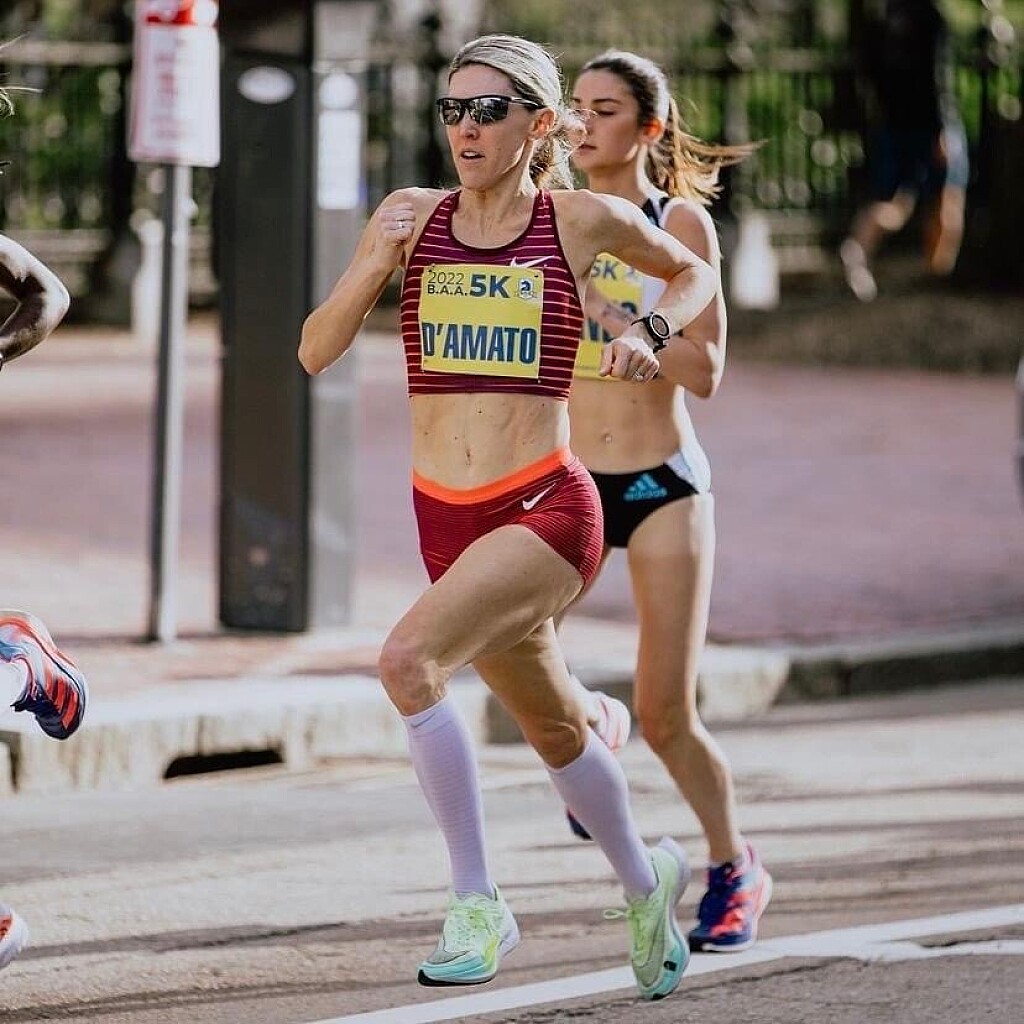
Keira D’Amato will be running the marathon in Eugene
How awesome is this!?! Keira D'Amato has been named to the team for the marathon at the World Track and Field Championships! She will be replacing Molly Seidel who unfortunately has an injury. Keira will be joining Sara Hall and Emma Bates to make up the U.S team. I wish Molly a speedy recovery. See you all in Eugene!
(07/06/2022) ⚡AMPby Dave Ross
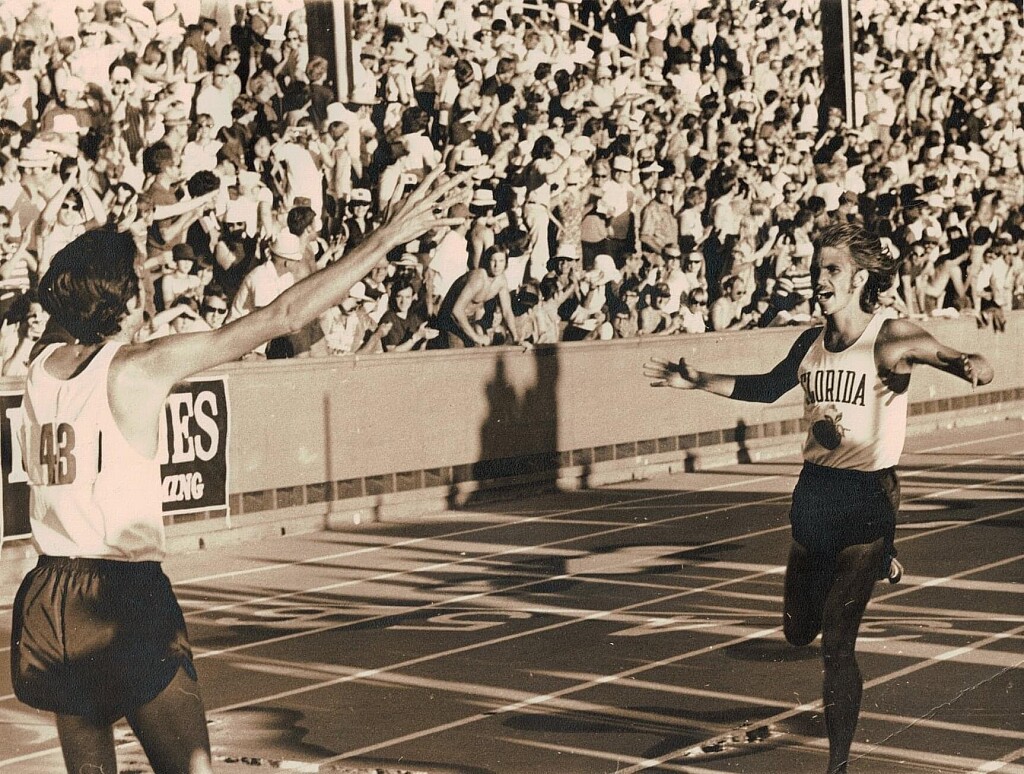
Remembering the USA Olympic Trials 10000m 50 years back
50 YEARS AGO the temps hovered near 95 degrees at the start of the 1972 Olympic Trials 10,000 meters.
That's pretty dang hot for a twenty-five lap race...but nowhere near as toasty as the pace that Frank set. His scintillating 4:25.4 first mile was nearly world record pace.
One by one, those that had tried to hang with Shorter got dropped like a bad habit beginning about 2 miles (reached in 8:58.5 by the former Yalie).
Meanwhile Florida Track Club teammates Jeff Galloway and Jack Bacheler, running their own steady-eddy tempo in arrears, began gobbling up the roadkill.
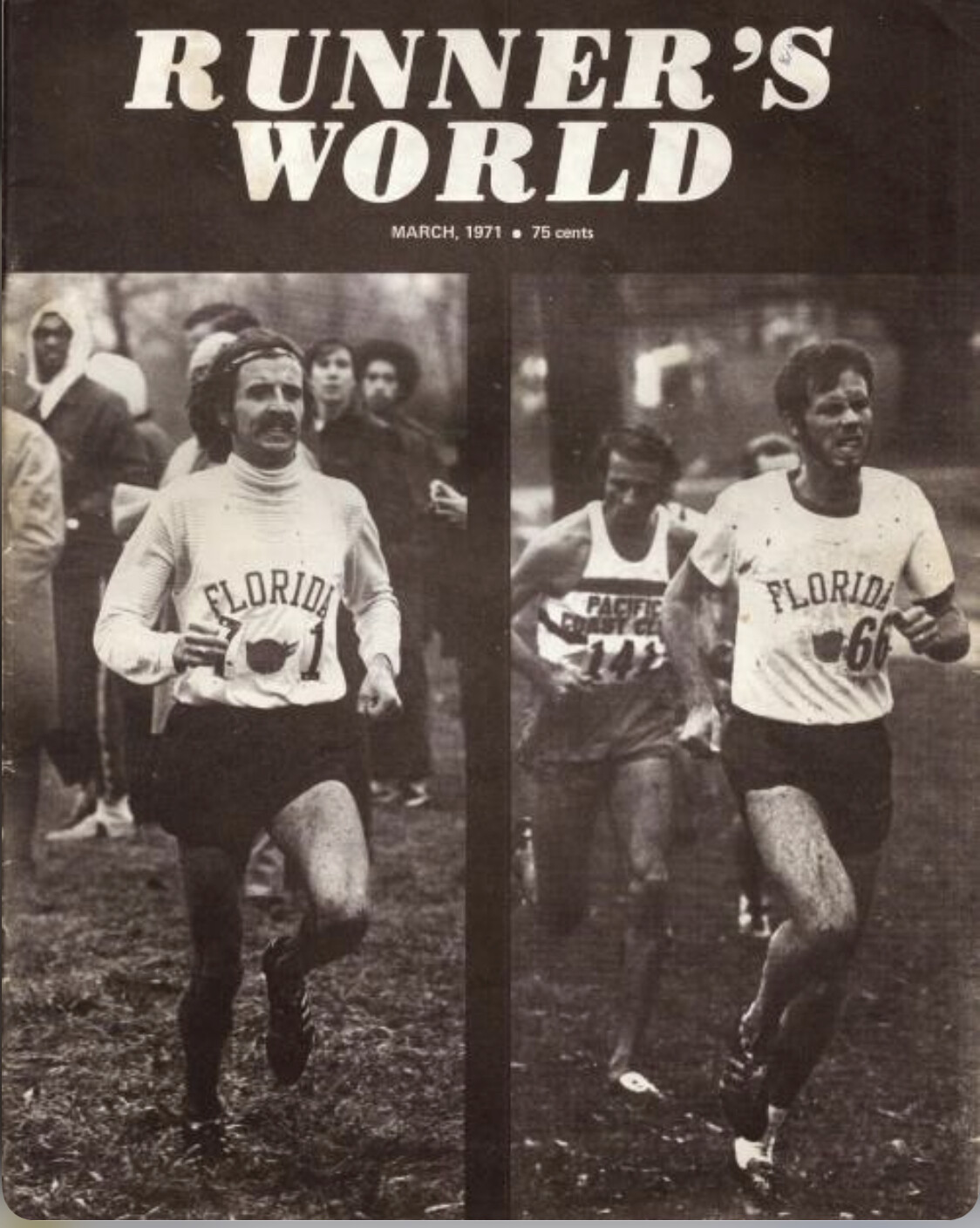
The last to fall off was homeboy Jon Anderson wearing the signature yellow and green striped Oregon TC kit (he had graduated from Eugene's Sheldon High School and at the time of these Trials, his Pop was the Mayor of TrackTown).
Anderson fell back as far as 6th place, some 60 yards out of third, while grabbing his sides as though he was battling a side stitch.
Then all of a sudden with a couple of laps to go, and much to the delight of the partisan crowd, Jon channeled his inner Lazarus, showing new signs of life.
While Frank and Jeff were just too far ahead to be 'catchable', Anderson's late charge reeled in Jack. The pair of lanky distance runners bumped shoulders coming out of the final turn. It was a collision caused by fatigue, not aggression, and drew Bacheler a disapointing DQ, while Jon sped across the finish line, up by 6/10 of a tick.
1 Frank Shorter 28.35.6
2 Jeff Galloway 28.48.8
3 Jon Anderson 29.08.2
4 Tom Laris 29.43.0
5 Bill Clark 29.57.0
6 Don Kardong 30.21.2
7 Gregory Fredericks 30.37.6
8 Dave Antognoli 30.39.6
DQ Jack Bacheler 29:08.9
SIDEBAR: Seven days later in the marathon race, Shorter and Kenny Moore would tie for first while Bacheler, chaperoned by teammate and now 10,000 meter Olympian Gentleman Jeff Galloway, would cruise home in third spot to make his second Olympic Team (Jack was also on the 1968 team at 5,000 meters). Frank finished fifth in the 10,000 meters in Munich clocking 27:51:32 an American record but not good enough for a medal. Frank a few days later won the Olympic Marathon. A feat that helped escalate the running boom in America.
Four years later Frank added a silver medal to that gold when he finished second in the marathon at the games in Montreal.
Postscript from Pete Stein:
Tom Laris made the Olympic team in 1964, competing in the 10,000 … He missed making the team in 1969 … And was one of the favorites, along with Frank Shorter, to make the team in 1972 … For a good portion of the race, he was running with Frank Shorter, well ahead of the other competitors in the race … And then, affected by the heat, ultimately, fading back … Ultimately, he finished fourth, serving as an alternate to the team … and not running in the Olympics
I felt very bad for Tom, because I knew how hard he worked to make the team … and how bad that he wanted to make the team as he knew that it would be his last opportunity
Months later, we crossed paths and I expressed my feelings for him … And he shared some thoughts that I have never forgotten … and which have served me well.
He said, “I believe that everything happens for a reason … And that sometimes things don’t work out the way that I would liked … And at the time, I would be greatly disappointed … but I learned to look for the reason that this happened as I moved on in my life … And ultimately, I would find the reason … And realize that ‘my disappointment at that time’ was a good step in the right direction that led to better things in my life.”
As I said, I never forgot what he said to me … And it served me well in my life.
(07/06/2022) ⚡AMPby Mike Fanelli

Finish your next race fast with these progression workouts
Whenever I round the corner and hit the last kilometer of my run toward home, my legs automatically pick up the pace. No matter how hot, thirsty and tired I am, the thought of nailing another workout is enough to make me run just a little bit harder.
A progression workout is one where the last portion of the workout is faster than the first. Progression runs teach your legs to move fast when you have already built up some fatigue, and they can mimic race paces without the duration and recovery of an actual race. There’s a variety of ways to adapt and incorporate them into almost any training plan. Try one of these this week, and on race day your legs will remember how to finish with a kick.
Threshold progression run
A threshold progression run consists of an extended warmup, or a longer “easy pace” section of running, and then a slightly shorter section of threshold-pace running. To approximate your threshold pace, aim for the fastest pace that you could sustain for an hour-long race. Feel free to adjust the distances of this workout to make it appropriate for whatever race you are training for.
8 km run at an easy or comfortable pace, 5 km run at threshold pace.
Marathon-pace progression run
A marathon-pace progression run is useful for most runners, not just those training for a marathon. The second or faster part of this type of progression run is generally longer and at a slightly slower pace than the others. Most of us have a tendency to do all our long runs at the same pace, but once you’ve built up enough endurance to sustain those runs, your body needs variety and challenge to improve. If you’re training for a shorter distance, like a 5 or 10K race, throw some marathon-progression-style runs early in your training–and a reasonable amount of time in advance of the race. As you get closer to the race, focus on race-specific workouts. If you’re training for a half-marathon or marathon, you can keep these workouts in your routine right up until your taper.
3 km easy, 16 km marathon-pace (for a marathon-focused training plan)
2 km easy, 6-8 km marathon-pace (for shorter distances)
Fast-finish progression run
In a fast-finish progression run, the second (faster) portion of the run is fairly short. This can be tweaked depending on what training effect you are looking for: if you want a more challenging run, make the first slow part even longer, so that you’re more tired as you pick up the pace for the fast finish.
20 km easy, 5 km at half-marathon pace (for a marathon-focused training plan)
8 km easy, 1-2 km at 10K race pace (for shorter distances)
The first section of a progression workout generally includes your warmup, so there’s no need to tack on extra easy kilometers. If you usually include a cooldown post-session, feel free to add that, but it doesn’t need to be long. As always, when tackling a harder running session or long run, make sure the day after is a rest or very easy day, and hydrate well.
(07/06/2022) ⚡AMP
by Keeley Milne
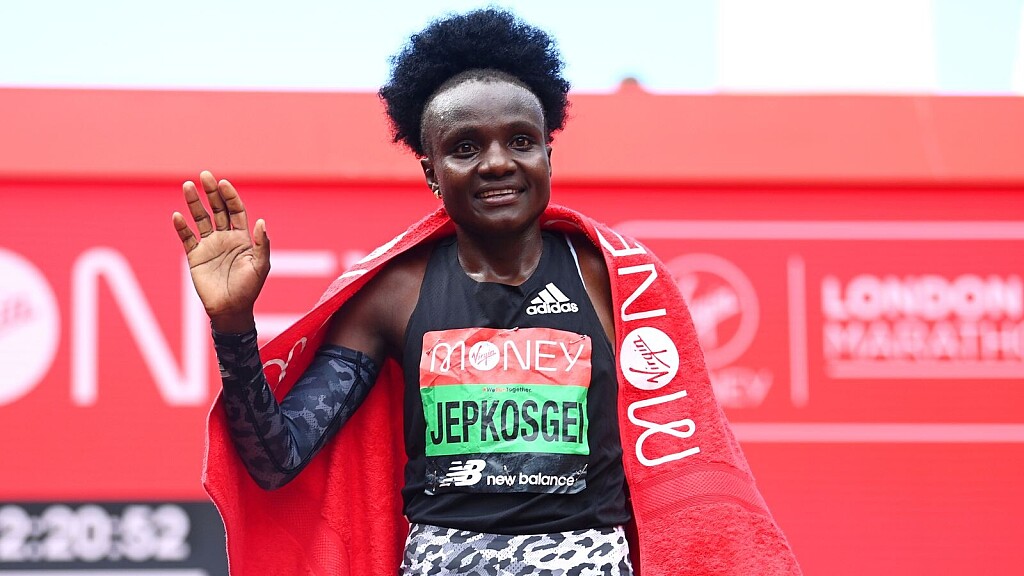
Joyciline Jepkosgei, Brigid Kosgei ready to clash in London Marathon
Defending champion Joyciline Jepkosgei will confront two times champion and world record holder Brigid Kosgei at this year's London Marathon on October 22 in the British capital.
Jepkosgei, who claimed her maiden victory in the British capital in a personal best and eighth fastest time of two hours, 17 minutes and 43 seconds last year, and Kosgei, the 2019 and 2020 winner, are part of the elite field heading for the race.
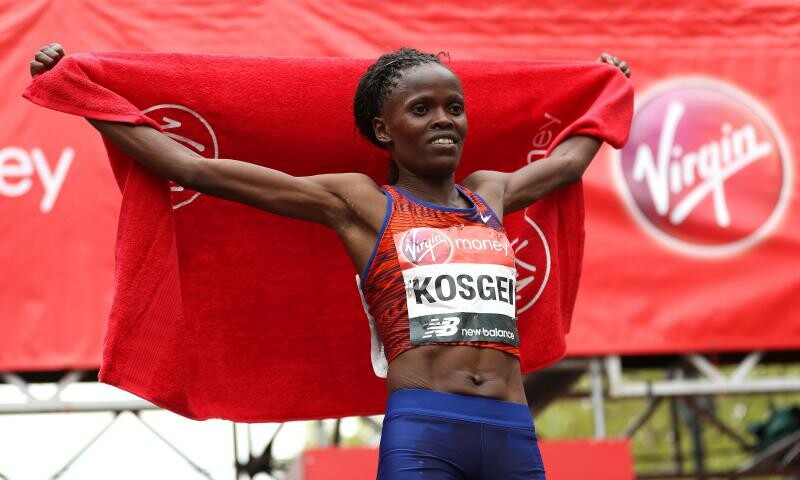
Jepkosgei became the 10th Kenyan woman to win the London Marathon on her third appearance in 2019.
In the same year, she won the New York Marathon in 2:22:38 and finished second at the Valencia Marathon (2:18:40).
Kosgei, who set the world record of 2:14:04 at the 2019 Chicago Marathon, finished a surprise fourth last year, but bounced back to win this year’s Tokyo Marathon in a world-lead time of 2:16:02.
Jepkosgei, 28, joined the long list of Kenyan athletes who have won the London Marathon; Joyce Chepchumba (2), Tegla Loroupe (1), Margaret Okayo (1), Keitany (3), Prisca Jeptoo (1), Edna Kiplagat (1), Jemima Sumgong (1), Vivian Cheruiyot (1) and Kosgei (2).
“It was a great achievement for me,” said Jepkosgei on the London marathon website.
“It was not an easy race.There were a lot of strong competitors and I stayed with them until there were only a few kilometres left."
“Then I was on my own. It was hard, but the cheerers around me kept me motivated and got me to the end. I was so happy to get to the finish line.”
Jepkosgei’s delight at winning was hard to miss and stayed with her throughout the night:
“I didn’t sleep at all, I was so happy,” she said.
“This achievement will stay with me forever. It was a great achievement and will last a lifetime.”
The other Kenyan in the race is Mary Ngugi, 33, who for the second consecutive time, came third during the Boston Marathon on April 18, but this time around in a personal best of 2:21:32.
The Kenyans will take on the fastest-ever female marathon debutant Yalemzerf Yehualaw, who leads a horde of Ethiopian runners to the London streets.
The 22-year-old Yehualaw is the current 10K world record holder (29:14) and ran 2:17:23 to win the Hamburg Marathon in April, the fastest marathon debut ever.
Ethiopian duo Degitu Azimeraw and Ashete Bekere, who finished second and third last year, also return.
Bekere finished second behind Kosgei at this year’s Tokyo Marathon in a personal best of 2:17:58.
ELITE FIELD
Brigid Kosgei (Ken) 2:14:04 (WR)
Yalemzerf Yehualaw (Eth)2:17:23
Joyciline Jepksogei (Ken)2:17:43
Degitu AZIMERAW (Eth)2:17:58
Ashete BEKERE (Eth) 2:17:58
Joan Chelimo MELLY ROU 2:18:04
Sutume Asefa KEBEDE (Eth) 2:18:12
Alemu MEGERTU (Eth) 2:18:51
Hiwot GEBREKIDAN (Eth) 2:19:10
Ababel YESHANEH (Eth) 2:20:51
Mary NGUGI (Ken) 2:21:32.
(07/06/2022) ⚡AMPby Ayumba Ayodi
TCS London Marathon
Since its inaugural edition on March 29, 1981, the TCS London Marathon has grown into one of the world's most prestigious road races, blending elite competition with an extraordinary charitable legacy. Founded by former Olympic champion and journalist Chris Brasher alongside Welsh athlete John Disley, the event has been staged every year and has been held in the spring annually...
more...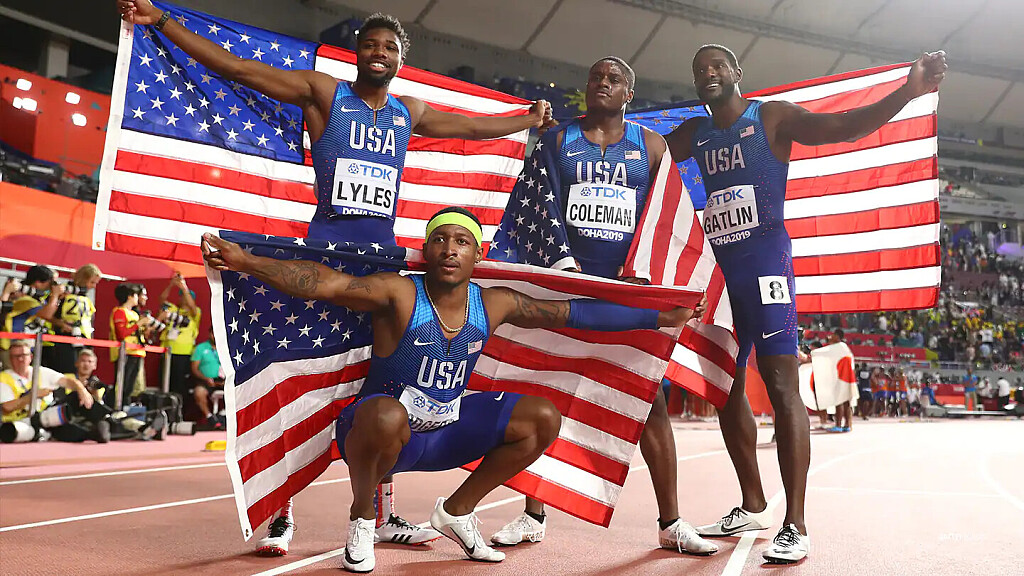
USA names 151-strong team for World Championships in Oregon
A team of 151 athletes will represent the USA on home soil at the World Athletics Championships Oregon22 on July 15-24.
Multiple global champions and world record-holders feature in the squad as Eugene’s Hayward Field gets ready to welcome the world for the first-ever outdoor World Athletics Championships to be hosted in the USA.
World record-holder and Olympic champion Sydney McLaughlin will take on the former world record-holder and reigning world champion Dalilah Muhammad as they look to further cement the US women’s global dominance in the 400m hurdles final on July 22.
In the men’s shot put on July 17, world record-holder and Olympic champion Ryan Crouser will go after the one title that has so far eluded him – that of world champion – and will take on two-time world champion Joe Kovacs.
Such is the strength of the women’s 800m squad of Athing Mu, Ajee Wilson and Raevyn Rogers, as well as the men’s 200m team of Noah Lyles, Erriyon Knighton, Fred Kerley and Kenny Bednarek, that athletes will be aiming for USA medal sweeps.
Returning to defend the titles they won in Doha in 2019 are Nia Ali (women's 100m hurdles), Donavan Brazier (men's 800m), Christian Coleman (men's 100m), Grant Holloway (men's 110m hurdles), Kovacs (men's shot put), Lyles (men's 200m), Muhammad (women's 400m hurdles), DeAnna Price (women's hammer) and Christian Taylor (men's triple jump).

Making her 10th World Championships appearance will be Allyson Felix, who has 18 world medals, including 13 golds, to her name and will be in the mixed 4x400m pool.
“I couldn’t be prouder to lead this amazing team for this once-in-a-lifetime event,” said USATF CEO Max Siegel. “We have been given the unique opportunity to impact the track and field landscape in the US, and we’ve put our best team forward.”
USA team for Oregon
Women
100m: Aleia Hobbs, Melissa Jefferson, Twanisha Terry
200m: Tamara Clark, Jenna Prandini, Abby Steiner
400m: Talitha Diggs, Kendall Ellis, Lynna Irby
800m: Athing Mu, Raevyn Rogers, Ajee Wilson
1500m: Sinclaire Johnson, Cory McGee, Elle St. Pierre
5000m: Elise Cranny, Emily Infeld, Karissa Schweizer
10,000m: Alicia Monson, Natosha Rogers, Karissa Schweizer
Marathon: Emma Bates, Keira D’Amato, Sara Hall
3000m steeplechase: Emma Coburn, Courtney Frerichs, Courtney Wayment
100m hurdles: Nia Ali, Alia Armstrong, Keni Harrison, Alaysha Johnson
400m hurdles: Shamier Little, Sydney McLaughlin, Dalilah Muhammad, Britton Wilson
Heptathlon: Michelle Atherley, Anna Hall, Kendell Williams, Ashtin Zamzow-Mahler
High jump: Vashti Cunningham, Rachel Glenn, Rachel McCoy
Pole vault: Gabriela Leon, Sandi Morris, Katie Nageotte
Long jump: Quanesha Burks, Tiffany Flynn, Jasmine Moore
Triple jump: Tori Franklin, Jasmine Moore, Keturah Orji
Shot put: Adelaide Aquilla, Chase Ealey, Maggie Ewen, Jessica Woodard
Discus: Valarie Allman, Rachel Dincoff, Veronica Fraley, Laulauga Tausaga-Collins
Hammer: Brooke Andersen, Annette Echikunwoke, Janee Kassanavoid, DeAnna Price
Javelin: Ariana Ince, Maggie Malone, Kara Winger
20km race walk: Robyn Stevens, Miranda Melville
35km race walk: Stephanie Casey, Miranda Melville, Maria Michta-Coffey
4x100m: Celera Barnes, Tamari Davis, Gabby Thomas (plus athletes named in individual sprints)
4x400m: Wadeline Jonathas, Jaide Stepter, Kaylin Whitney (plus athletes named in individual sprints)
Men
100m: Marvin Bracy, Trayvon Bromell, Christian Coleman, Fred Kerley
200m: Kenny Bednarek, Fred Kerley, Erriyon Knighton, Noah Lyles
400m: Champion Allison, Michael Cherry, Michael Norman, Randolph Ross
800m: Donavan Brazier, Bryce Hoppel, Jonah Koech, Brandon Miller
1500m: Johnny Gregorek, Cooper Teare, Josh Thompson
5000m: Grant Fisher, Woody Kincaid, Abdihamid Nur
10,000m: Grant Fisher, Joe Klecker, Sean McGorty
Marathon: Elkanah Kibet, Colin Mickow, Galen Rupp
3000m steeplechase: Hillary Bor, Evan Jager, Benard Keter
110m hurdles: Devon Allen, Trey Cunningham, Grant Holloway, Daniel Roberts
400m hurdles: Trevor Bassitt, Rai Benjamin, Khallifah Rosser
Decathlon: Steven Bastien, Kyle Garland, Zach ZiemekHigh jump: Darius Carbin, JuVaughn Harrison, Shelby McEwen
Pole vault: Andrew Irwin, Chris Nilsen, Luke WinderLong jump: Marquis Dendy, Steffin McCarter, Will Williams
Triple jump: Chris Benard, Will Claye, Donald Scott, Christian Taylor
Shot put: Josh Awotunde, Ryan Crouser, Joe Kovacs, Tripp Piperi Discus: Andrew Evans, Sam Mattis, Brian Williams
Hammer: Daniel Haugh, Rudy Winkler, Alex Young
Javelin: Ethan Dabbs, Tim Glover, Curtis Thompson
20km race walk: Nick Christie, Dan Nehnevaj
35km race walk: Nick Christie
4x100m: Kyree King, Josephus Lyles, Elijah Hall-Thompson (plus athletes named in individual sprints)
4x400m: Bryce Deadmon, Vernon Norwood, Elija Godwin (plus athletes named in individual sprints)
Mixed
4x400m: Allyson Felix, Kennedy Simon, Ismail Turner, Noah Williams (plus athletes named in individual sprints).
(07/06/2022) ⚡AMPby World Athletics
World Athletics Championships Budapest23
Budapest is a true capital of sports, which is one of the reasons why the World Athletics Championships Budapest 2023 is in the right place here. Here are some of the most important world athletics events and venues where we have witnessed moments of sporting history. Throughout the 125-year history of Hungarian athletics, the country and Budapest have hosted numerous...
more...
Alex MacLean 20 step guide to run 100k
Alex MacLean was recently inspired to run 100K on his family farm in Arichat on Cape Breton Island., N.S. He didn’t intentionally set out to run so far, and here he shares the experience and his tongue-in-cheek description of the 20-step process that took him to that ultrarunning milestone.
MacLean describes himself as a general outdoor enthusiast based out of Halifax. “Primarily a climber until recently, my interest in ultrarunning began when I set out for an 18-kilometer run, accidentally missed my turn-around point, and ran 30 kilometers instead,” he says. “As for the 104K, I was really just curious if I could do it! I’d been working on clearing the trail on the farm whenever I visited home, since about January.” MacLean adds “a trail run with a friend inspired me to explore my own backyard and the outdoor spaces I grew up in.”
Alex’s guide to running 100K
1. Surround yourself with friends who like big days. Eventually, someone will ask you to run a 50km trail with them.
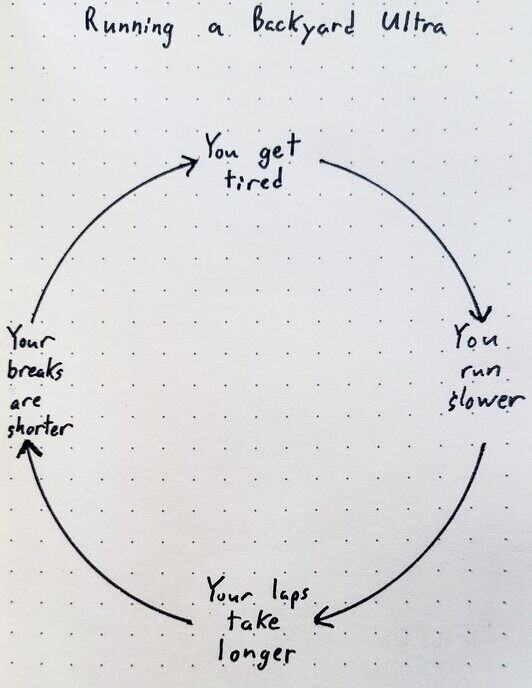
2. Tell everyone you know you’re training for a big trail run.
3. Have the race get canceled for reasons outside of your control.
4. Realize you’ve told too many people about it to not do some sort of big day outside.
5. Create a ~5.5km loop on the family farm, and organize your own run.
6. Plan to run 10 laps of said loop, in order to reach the original goal of 50 km.
7. Finish lap number nine and realize the loop is slightly more than 5.5 km, you’ve already hit 50 km.
8. You’ve done nine, may as well go for 10 laps.
9. Realize you’re so close to 60 km, just one more lap.
10. That’s 11, may as well make it 12. Half a day of running!
11. Two more laps and you’ll hit the next ultra milestone, a 50-miler (80K)!
12. Realize that if you want to run 100 miles someday, you’re gonna have to run all 80 of those kilometers that you just ran all over again.
13. Do some rough math in your head. Realize you MIGHT be able to get away with only three more laps.
14. Say out loud “Oh boy, here we go.”
15. Fall less than 2 km short of the 100 km mark. One more lap it is.
16. Finish your eighteenth 5.78 km run of the day and text Mom to see if she’ll pick you up in the truck so you don’t have to walk the 200 meters through the field to the house.
17. Wake up on the dining room floor because you fell asleep while trying to foam roll your legs.
18. Drag yourself to bed.
19. Eat everything and anything you want the following day, if you can manage to hobble over to the kitchen.
20. Congratulations, you’ve just run your first 100K! Celebrate!
(07/05/2022) ⚡AMPby Running Magazine
South African Olympic champion Wayde van Niekerk gets confidence boost ahead of 2022 World Athletics Championships
Olympic champion Wayde van Niekerk claimed a commanding victory in his first men's 400m race of the 2022 track season at the Stars and Stripes Classic meeting in Atlanta, Georgia, on Saturday (July 2).
South African Van Niekerk looked comfortable leading the race from gun to tape, clocking 44.58 seconds to give himself a much-needed confidence boost ahead of the World Athletics Championships in Eugene, Oregon, in less than two weeks.
The two-time world champion came out of the final bend well in front, with the rest of the field following in a v-formation, before crossing the line nearly a second ahead of nearest rival Rusheen McDonald (45.43s) of Jamaica. Demish Gaye, another Jamaican, raced home in a time of 45.47s.
"The plan was to try and execute my race as comfortably as possible coming off of consecutive niggles and injuries," Van Niekerk told the World-Track website.
"I tried to keep it as smooth as possible for as long as I could, but as you know, as you get to the home straight, you have to pick it up a bit and finish strong, so it gave me a reason to fight to the finish line, and I am quite satisfied with the results."
The time ranks him just outside the top 10 in the world this year, with American ace Michael Norman leading with the 43.56s he clocked at the 2022 USATF Outdoor Championships at the end of June.
Van Niekerk's comeback from a severe knee injury has been fraught with setbacks, including an early exit at the delayed Tokyo 2020 Olympics in 2021. His lousy run of misfortune spilt into 2022 when he withdrew from the ASA Senior Track and Field Championships in Cape Town in April as a precaution before pulling up in a 200m race in Italy in May.
"I'm disappointed. I was excited to compete, but unfortunately, things have not been going my way over the last few weeks," Van Niekerk said in a statement before the South African championships.
"My spirits are still high, and I will keep putting in the hard work. For now, I'm looking forward to getting back to work."
Van Niekerk was named in South Africa's team for the world championships starting on 15 July courtesy of a 44.87s he ran in Switzerland in June 2021. But the South African has raced sparingly since his comeback in 2020 from a three-year hiatus.
The lack of race time – with only a single competitive event to his name this year – may again be a factor at a major competition like the world championships, where he would have to go through the rounds for a shot at redemption.
(07/05/2022) ⚡AMP
World Athletics Championships Budapest23
Budapest is a true capital of sports, which is one of the reasons why the World Athletics Championships Budapest 2023 is in the right place here. Here are some of the most important world athletics events and venues where we have witnessed moments of sporting history. Throughout the 125-year history of Hungarian athletics, the country and Budapest have hosted numerous...
more...
British half-marathon record-holder Eilish McColgan to make marathon debut in London
Eilish McColgan will make her much anticipated marathon debut in London on October 2 as she takes on a world-class field around the streets of the British capital.
The 31-year-old Scot broke Paula Radcliffe’s British half-marathon record of 66:47 on February 19, after clocking 66:26 at Ras Al Khaimah and now feels like it’s the right time to take on the marathon.
Since McColgan started competing on the roads she has broken the British 5km record, European 10km record and set a British best over 10 miles.
Given her natural progression through the longer distances on both track and field, it was always a question of not if but when McColgan took on 26.2 miles.

“It’s really just coming from a confidence side of things,” McColgan says. “I think I’ve known for like a very long time that this is where my career would go. I think my mum and my dad have known even longer than I have. From being a young kid they always said the marathon was the event I’d end up going to.
“The way I’ve progressed over the years now through the distances, taking on both the 5km and 10km, I remember thinking, ‘I’ll never ever run a half-marathon’. And yet now, I’m excited. I couldn’t wait to get out and race it against some of those the top athletes in the world.
“It is my choice. I feel I’m going to do it when I’m ready to do it and I think that’s that time is coming now. I think there’s no better place to do that than the London Marathon.
McColgan takes to the streets of the British capital 26 years after her mum, Liz McColgan won the race. Like Eilish, Liz started out on the track and gradually progressed to the marathon, winning on her debut in New York in 1991 before her triumph in London five years later.
“It’s amazing and it’s a bit surreal,” McColgan adds. “The more iconic images I’ve got in my head as a youngster were my mum running the London Marathon with Buckingham Palace in the background. It’s just incredible that so many years later I’m following in her footsteps and I think she’s excited to see that finally come into action.
“It’s always the iconic event. It was the one where I always watched my mum run as a kid when I sat in the hospitality area and ate all the free food! There’s not a London Marathon that my mum and dad have ever missed. It’s just got a buzz and everyone speaks about it, even those who don’t know much about athletics.”
Although this is McColgan’s debut marathon she does have experience of the London circuit though, having been the pacemaker for Charlotte Purdue last year.
Purdue is also part of the line-up this year which includes world marathon record-holder Brigid Kosgei, defending champion and fellow Kenyan Joyciline Jepkosgei and the fastest-ever female marathon debutante Yalemzerf Yehualaw of Ethiopia.
“It just feels surreal to me [to hear that],” McColgan adds. “I remember watching Paula [Radcliffe] on the side of the road in Athens and being as devastated as she was. I watched her run the world record in 2003 and it was strange watching it because, given her pace, it was like watching a robot. You thought there was no way somebody could keep it up for 26.2 miles.
“Out of all the records she set this is by far the one the hardest she set. It’s difficult for me to believe that’s it’s almost possible but if you asked me two years ago would I run 30 minutes for 10km, I’d have told you no chance but now I believe I can break that record.”
McColgan also has a busy summer on the track as she races over both 5000m and 10,000m at the World Championships in Oregon before representing Scotland at the Commonwealth Games in Birmingham.
Ahead of Paris 2024, she wants to focus on the marathon and compete in more road races in the near future.
(07/05/2022) ⚡AMPby Tim Adams
TCS London Marathon
Since its inaugural edition on March 29, 1981, the TCS London Marathon has grown into one of the world's most prestigious road races, blending elite competition with an extraordinary charitable legacy. Founded by former Olympic champion and journalist Chris Brasher alongside Welsh athlete John Disley, the event has been staged every year and has been held in the spring annually...
more...
Gina Little age 77 is going to be running the London Marathon for the 38th time
A runner who has taken part in more London Marathons than any other woman plans to complete her 600th marathon later this year. Gina Little, 77, who lives in Greenwich, has run the London event 37 times since she was inspired after watching the second race pass her road in 1982.
She has chosen to mark her 600th marathon at Richmond Runfest on September 11 as a celebration with her club, Plumstead Runners, all dressed in special T-shirts. “I wanted my running club to be part of it. We have got a coach going up,” she told the PA news agency.
Gina has always been active and was inspired to try a marathon after seeing the London runners go past. “I didn’t know anything about the first one. I only saw the second one as it goes past the top of my road,” she said.
“I saw the French guy with a tray and a bottle of wine and a glass, and thought ‘how can he do that?'”
Gina said she was very nervous before her first London Marathon: “I ran with my friend all the way. We just enjoyed the crowds, took our time, went in pubs to use the loos. No Portaloos back then.
“We were only going to do one. Then I got the bug, I suppose.”
She recorded a personal best of three hours and 26 minutes in 1993 and now usually finishes in four hours and 30-40 minutes. Her achievement was recently rewarded with a Spirit of the London Marathon award and Mrs Little said she was “gobsmacked” to get the accolade, adding: “I have been quite lucky as I have got in as good for my age.”
While many hope for an elusive ballot place for the heavily over-subscribed London Marathon or run for charity, faster runners in each age category can apply for a good for age place. She added: “I have always been involved in it.
“When I didn’t run I have helped at a drinks station. One time I helped at the elite station.” She has also run the Berlin Marathon more than 30 times but it has fallen close to the London race since the latter was moved to October due to the Covid-19 pandemic.
“Last year I had to do Berlin one week and London the next week,” she said, "I have also got Chicago the following week. Chicago is always October. Chicago is my sixth major, so I obviously want to do that.”
There is a special medal for those who complete all six of the Abbott World Marathon Majors – Tokyo, Boston, London, Berlin, Chicago and New York. The married mother of two and grandmother of five also belongs to the 100 marathon worldwide club who meet at races and wear special vests.
Mrs Little said she has met interesting people through running, adding: “I never go to a race where I don’t know someone, which is really nice.” Running marathons and ultramarathons has taken her to 46 countries and 22 islands, including places like Hawaii and New Zealand.
“I’ve seen the world and seen the country,” she said, “When I got to 500 I thought that would be it. I don’t think there’ll be a 700th.”
(07/05/2022) ⚡AMP
TCS London Marathon
Since its inaugural edition on March 29, 1981, the TCS London Marathon has grown into one of the world's most prestigious road races, blending elite competition with an extraordinary charitable legacy. Founded by former Olympic champion and journalist Chris Brasher alongside Welsh athlete John Disley, the event has been staged every year and has been held in the spring annually...
more...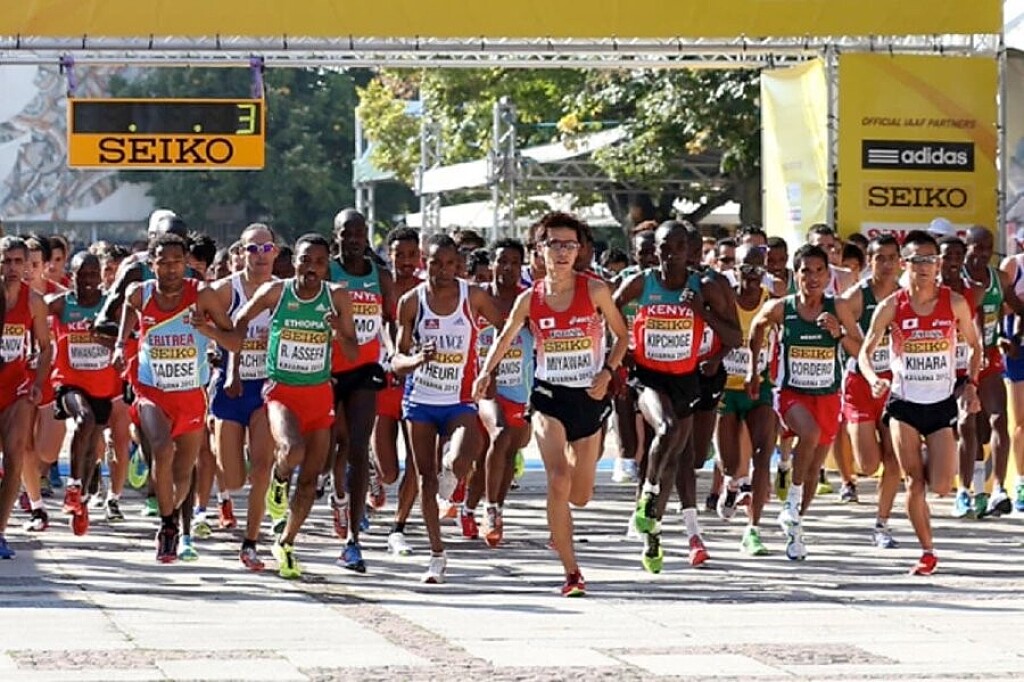
Yangzhou 2022 Half Marathon Championships canceled due to COVID-19
The COVID-19 pandemic has forced another premium event to be canceled in China.
This time, the World Athletics Half Marathon, which was scheduled to be held in Yangzhou in November, has been called off.
The event was originally due to take place on March 27 but was re-scheduled for November 13.
A decision was made after the Chinese Athletics Association (CAA) and the local Organizing Committee mutually agreed that the Championships cannot be held this year after a lengthy discussion.
At the same time, the 2027 World Athletics Road Running Championships was granted to Yangzhou, which is set to be held in March 2027.
World Athletics President Sebastian Coe conveyed his thanks to CAA and everyone who was involved in preparations for the World Half Marathon Championships.
"Unfortunately, the championships can’t be held this year, through no fault of the LOC, but our endurance athletes will have the opportunity to compete in Riga next year," Coe said.
"The Council’s decision to award another event to Yangzhou in 2027 indicates its faith in the organizing committee and willingness to return and stage a World Athletics Series road running event there at the first available opportunity."
The first Road Running Championships is scheduled to be held in the Latvian capital of Riga from September 30 to October 1 2023.
Plans to incorporate the Half Marathon Championships as part of the Road Running Championships in the future has been made with the world 5 kilometers championships set to be introduced as well.
China has strict COVID-19 policies with restrictions on international arrivals and lockdowns.
The Beijing 2022 Winter Olympic Games was held in February in a "closed-loop management" system with regular tests being carried out.
Recently, the Hangzhou 2022 Asian Games, initially scheduled to be held from September 10 to September 25, was postponed because of the pandemic.
(07/05/2022) ⚡AMPby Vimal Sankar

World Half Marathon Championships
The Chinese city of Yangzhou will host the 2022 World Athletics Half Marathon Championships. China, one of the fastest-growing markets in road running, had 24 World Athletics Label road races in 2019, more than any other country. It hosted the World Half Marathon Championships in 2010 in Nanning and will stage the World Athletics Indoor Championships in Nanjing in 2021. ...
more...
A new Pre stature wil be on display at World Championships
This Bronze statue of Pre has just been delivered to the Fifth Street Public Market in Eugene. It should be on display throughout the July 15-24 World Championships, and I hope the world will learn our USA Running and Oregon story. And selfishly, the Nike story.
(07/04/2022) ⚡AMPby Steve Bence
Stay cool on your next run with these three tricks, use these tips to keep your core temperature down
If you’re training for a summer race this year, you’ll want to prepare for that event by exercising in the heat, as unpleasant as it sometimes may be. Heat training will pay off, especially if race day is warmer than expected. There are ways to keep the heat from getting to you, especially during longer runs. Your goal is to keep your core body temperature down while staying aware of the signs of heat-related illnesses. Use these three tips to keep your body temperature down on your next hot-weather training session.
Choose your clothing wisely

Make sure you’re wearing light-colored clothing, in a sweat-wicking material, polyester, or polypropylene. Cotton attire may feel cool at first, but will get heavy and uncomfortable once you add sweat. Wearing a hat you can dip in water will keep your head (and core, as a result!) cool, and feels nice as well. Chris Kostman, race director of the Badwater 135 ultramarathon in Death Valley, Cali., has more than a little experience with hot-weather events. In an interview with GearHub Kostman suggested spritzing your clothes with water before setting out: you’ll cool as the water evaporates.
Have a cold drink before you start, and keep drinking
Staying hydrated is essential during the hot months. Not only will it help prevent potentially life-threatening ailments like heat exhaustion and heat stroke, but it will also keep you feeling better and running faster. When we get dehydrated, our blood thickens, increasing our heart rate through a process called cardiac drift. Being mindful of how much you are drinking before, during, and after your outdoor workout is important. Studies show that drinking something partially frozen before exercising can keep your body temperature down for even longer than simply imbibing a cold drink, so stick that sports drink in the freezer before your run so that it’s icy. If you find you’re taking in a lot of water, or you’re participating in a long, hot endurance event, make sure that you’re also taking in electrolytes and sodium so that you replenish what you’re sweating out and avoid conditions like hyponatrema.
Learn from the pros: ice, ice, everywhere
The recent Western States 100-mile race reportedly had 5 pounds of ice, per athlete, per aid station. Ultrarunners at these warm races have devised techniques to wear the ice all over their bodies, and no matter the distance of your next hot training run or race, you may want to try some of their efficient ways to beat the heat. Fill a bandanna or tube sock with ice and tie it around your neck. The icy water it releases as you continue will keep you cool as you move. Sticking a baggie of ice into your hat can work as well, or wearing sleeves that you stuff with ice cubes and allow to melt.
The most important thing during hot-weather runs: take the signs of heat exhaustion seriously. If you’re very hot but aren’t sweating, you have a throbbing headache that doesn’t abate or you start to feel unwell, get inside, cool your body down, and monitor your symptoms.
(07/04/2022) ⚡AMPby Keeley Milne

Western States 100
The Western States ® 100-Mile Endurance Run is the world’s oldest and most prestigious 100-mile trail race. Starting in Squaw Valley, California near the site of the 1960 Winter Olympics and ending 100.2 miles later in Auburn, California, Western States, in the decades since its inception in 1974, has come to represent one of the ultimate endurance tests in the...
more...
When should you start fall marathon training?
Now that summer is here across the country, maybe you have started planning or looking at some races this fall. If you’ve been running for some time, you’re likely coming off spring or summer races and looking for some motivation to get back out there. Don’t worry, you are one of many trying to find the perfect fall marathon to add to your race calendar.
Whether you’re a seasoned marathoner or planning to tackle your first, one thing is true: It takes time to train for a marathon, as your body needs time to adapt to the pounding it will take during training and the race. Most online coaches and training plans suggest that runners should start training four months out from their race, but how accurate is this time period?
The timeline in which you should start training for a marathon depends on your running experience.
If starting from scratch, you’ll want to give yourself five to six months before your goal race to prepare for the long haul of 42.2 kilometers. The first two months are focused on getting you in shape and acquainted with running four to five days a week, while mileage and endurance are developed over the last 16 weeks.
Experienced runners can get away with two to four months of training before their goal race since their bodies are familiar with high volume. This eight to 16-week period will be focused on quality over quantity. A long run and two-speed workouts a week will be their bread and butter sessions to achieve a new personal best.
You always want to train to your current level of fitness. Planning and executing this will help you train more consistently, stay healthy, see progress and prepare you to conquer that fall marathon.
(07/04/2022) ⚡AMPby Running Magazine
105 year-old woman shatters age group 100m record, this is further proof that age is just a number
Last week at the National Open Masters Athletics Championship in Vadodara, India, a 105-year-old woman made history, breaking the 105+ 100 metre world record in 45.40 seconds.
Born in 1917, Rambai began running competitively at age 104, and took part in the above-100 category, however, she ended up running the race alone, due to the lack of competitors in her age category. She has already acquired the nickname ‘Granny Bolt’ from local media.
She not only broke the Indian 100+ national record set by 101-year-old Maan Kau in 2017 (74 seconds), but she also smashed Julia ‘Hurricane’ Hawkins world 105+ record of 62 seconds.
Outside of the 100m, she collected three more gold medals at the National Masters Athletics Championship conducted by the Athletics Federation of India. Rambai has dreams of competing internationally one day but does not have a passport.
According to the India Times, Rambai’s granddaughter, Sharmila, said that the centurion is careful about what she eats each day. “She consumes a lot of ghee and curd daily.” She tries to get outside for three to four kilometres of exercise every day.
Who knows if we will one day see a 100m race between the two greats, Hawkins and Rambai.
(07/04/2022) ⚡AMPby Marley Dickinson
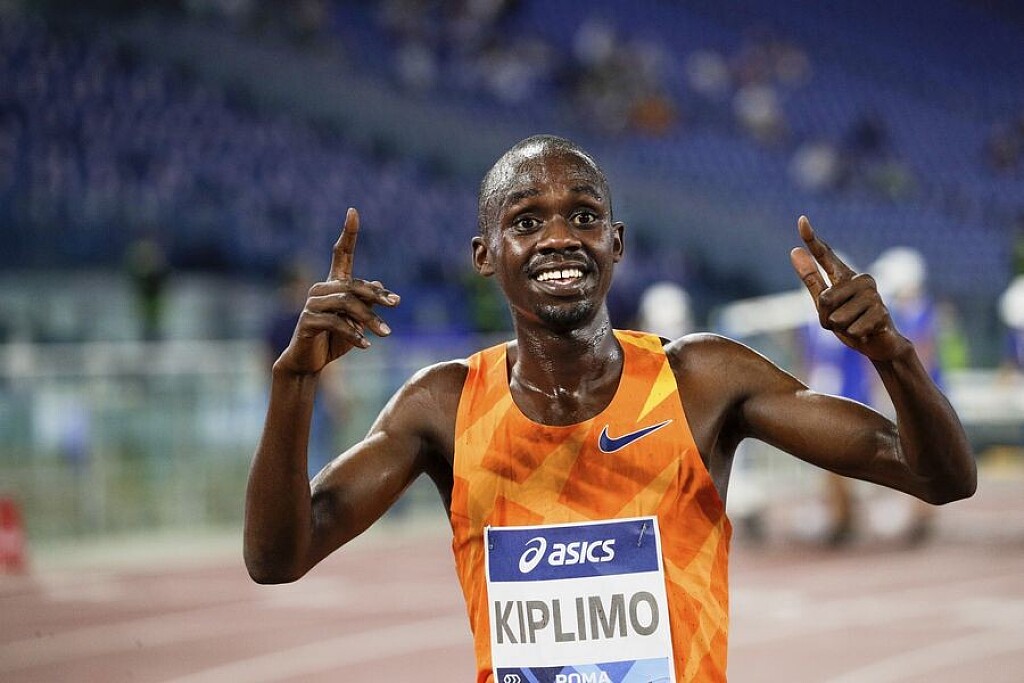
Ugandan Jacob Kiplimo puts speed shift for Oregon Worlds
Jacob Kiplimo has his priorities set. His main goal is a medal over the 10000m at the World Athletics Championships which come in Oregon, US, in under a fortnight.The 21-year-old could have done the long-distance double on the West Coast but just one will do.Kiplimo feels he is in a good place after posting seven minutes and 29.55 seconds for second place over the 3000m at the Stockholm Diamond League (DL) in Sweden on Thursday night.
“Yes, I’m happy about it,” the reigning world half-marathon champion and record holder told this publication before returning home at the weekend. “I came to Stockholm because I needed to test my body. I had to withdraw from the Pre Classic (Eugene DL) and it was important to run one race before the world championships.”
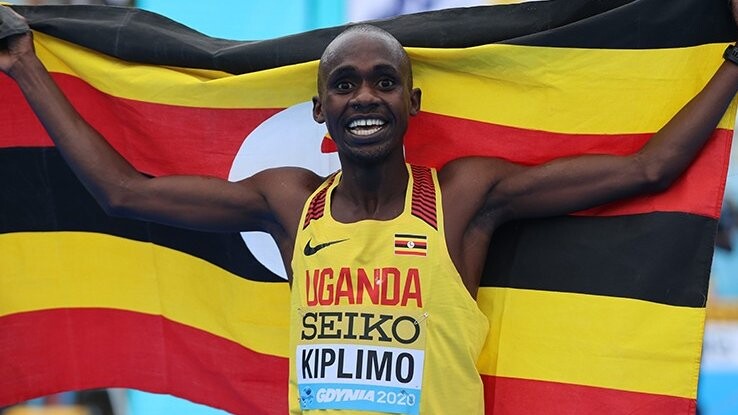
Despite doing one race on track all year, Kiplimo is confident ahead of the 25-lap final set for July 17 at the Hayward Field in Eugene.“I’m 99 percent satisfied, the one percent is because I missed the victory in the last 15 meters but it’s part of the job,” Kiplimo posted on Instagram.
Leading at the bell, Kiplimo could have won his first track race in 11 months but it was Athlete Refugee Team’s Domnic Lobalu who beat him to the tape with about 30 metres left.Lobalu, who hails from South Sudan, posted 7:29.48 not only for the world lead time over the distance but also slashed his personal best by 20 seconds.
Prior, middle-distance runner Ronald Musagala continued to improve with another season best of 3:36.90 in third place over the 1500m.“According the way I was struggling with my body in Uganda, it’s a good progress,” noted Musagala, currently based at the Global Sports Communication camp in Nijmegen, Netherlands.
Meanwhile, world 800m champion Halimah Nakaayi will need maximum concentration to perfect her craft before flying to Oregon. In the Swedish capital, she lost some seconds and energy trying to get space on the outside before finishing fourth in 1:58.85.The two-lap race was won by in-form Kenyan Mary Moraa in 1:57.68, beating Olympic silver medallist Briton Keely Hodgkinson (1:58.18) and Australian Catriona Bisset in third with 1:58.54.
(07/04/2022) ⚡AMPby Allan Darren Kyeyune
World Athletics Championships Budapest23
Budapest is a true capital of sports, which is one of the reasons why the World Athletics Championships Budapest 2023 is in the right place here. Here are some of the most important world athletics events and venues where we have witnessed moments of sporting history. Throughout the 125-year history of Hungarian athletics, the country and Budapest have hosted numerous...
more...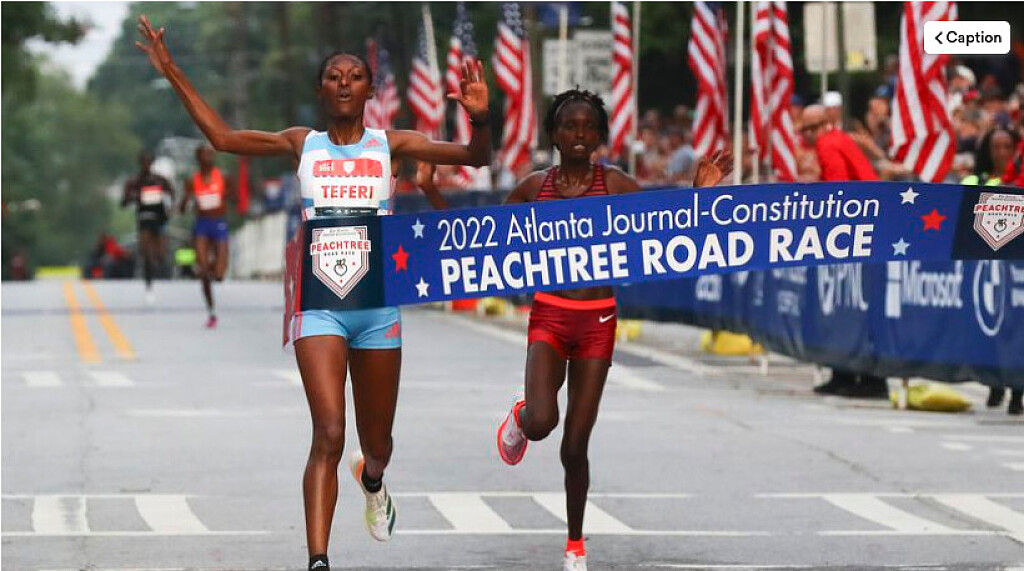
Senbere Teferi wins women’s elite division at AJC Peachtree Road Race
Two-time Olympian Senbere Teferi of Ethiopia won the Atlanta Journal-Constitution Peachtree Road Race women’s elite race with a time of 30:49. The two-time Olympian just narrowly edged Irine Cheptai.
Immediately after finishing, Teferi was sent to the medical tent, suffering a post-run sickness.
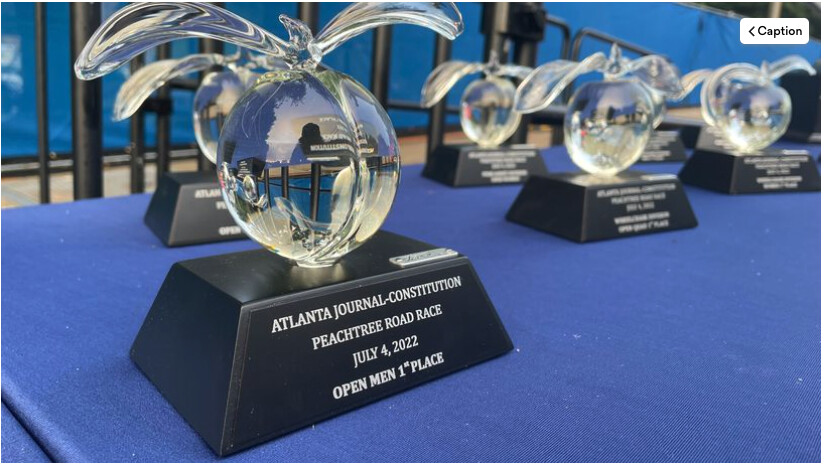

AJC Peachtree Road Race
The AJC Peachtree Road Race, organized by the Atlanta Track Club, is the largest 10K in the world. In its 48th running, the AJC Peachtree Road Race has become a Fourth of July tradition for thousands of people throughout the metro Atlanta area and beyond. Come kick off your Fourth of July festivities with us! If you did not get...
more...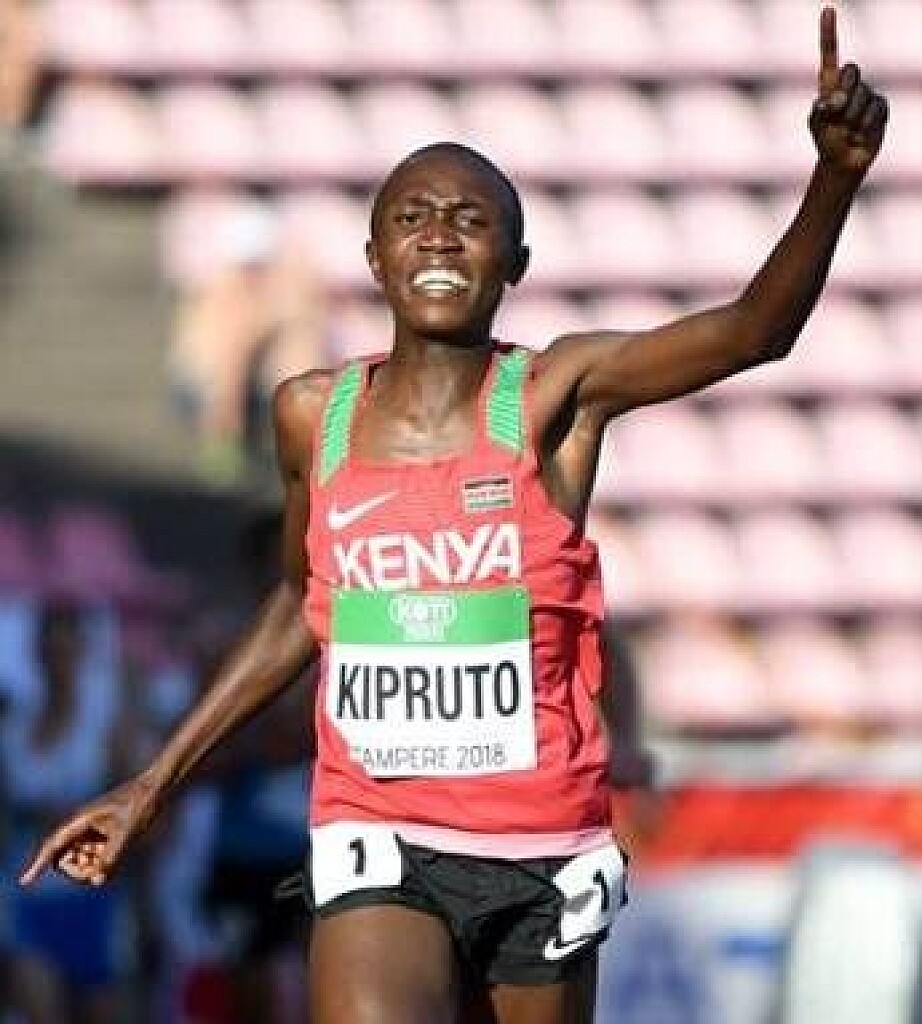
Rhonex Kipruto wins men’s elite division at AJC Peachtree Road Race
Against what was touted as the fastest field in the race’s 53-year history, Kipruto pulled away near the seven-kilometer point of the 10K race and finished in an unofficial 27 minutes, 25 seconds.
It is Kipruto’s second title at Peachtree, having won previously in 2019. Kipruto won despite having arrived Sunday evening on a flight from Doha, Qatar. Fellow Kenyan Kibiwott Kandie finished in second place.
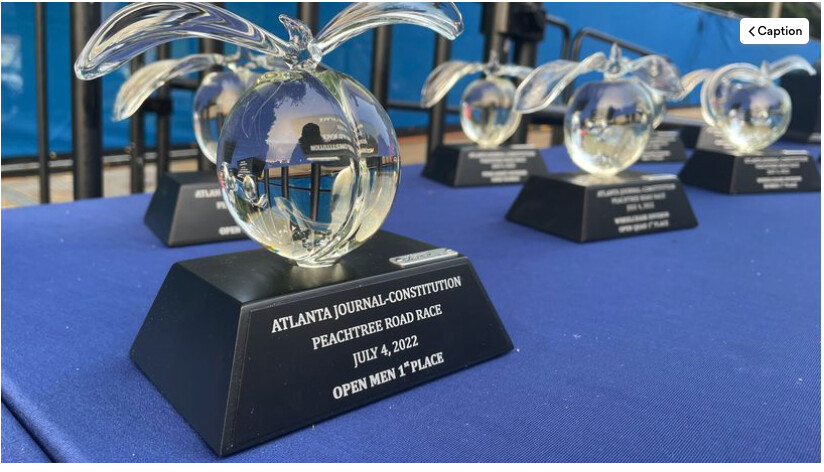
AJC Peachtree Road Race
The AJC Peachtree Road Race, organized by the Atlanta Track Club, is the largest 10K in the world. In its 48th running, the AJC Peachtree Road Race has become a Fourth of July tradition for thousands of people throughout the metro Atlanta area and beyond. Come kick off your Fourth of July festivities with us! If you did not get...
more...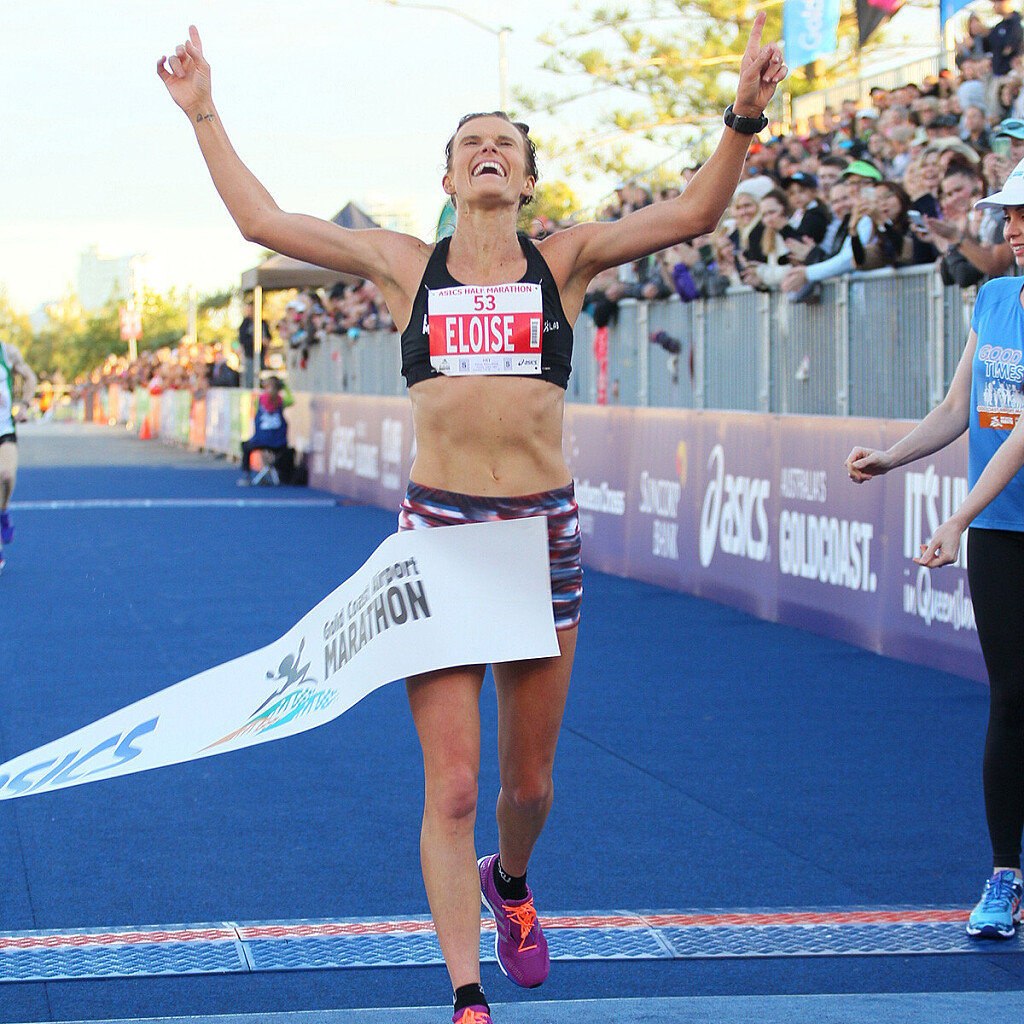
Asics Half Marathon, Eloise Wellings outran 2022 Birmingham Commonwealth Games marathon teammate Jessica Stenson
In Saturday's Asics Half Marathon, Eloise Wellings outran 2022 Birmingham Commonwealth Games marathon teammate Jessica Stenson 1:10:53 to 1:11:35 for the win in wetter conditions that what the marathoners faced 24 hours later. Both Wellings and Stenson headed straight overseas post-race for altitude training in preparation for Birmingham.
National and Oceania record holder Brett Robinson had a relatively conservative win in the men's race, outkicking Ed Goddard by 5 seconds for the win in 1:03:14. The likewise Birmingham-bound Liam Adams was 5th in 1:05:32 before taking on lead men's pacing duties the next day. Chuo University's Haruto Wakabayashi cracked the top 10 with an 8th-place finish in a PB 1:04:29. A complete replay of the half marathon:
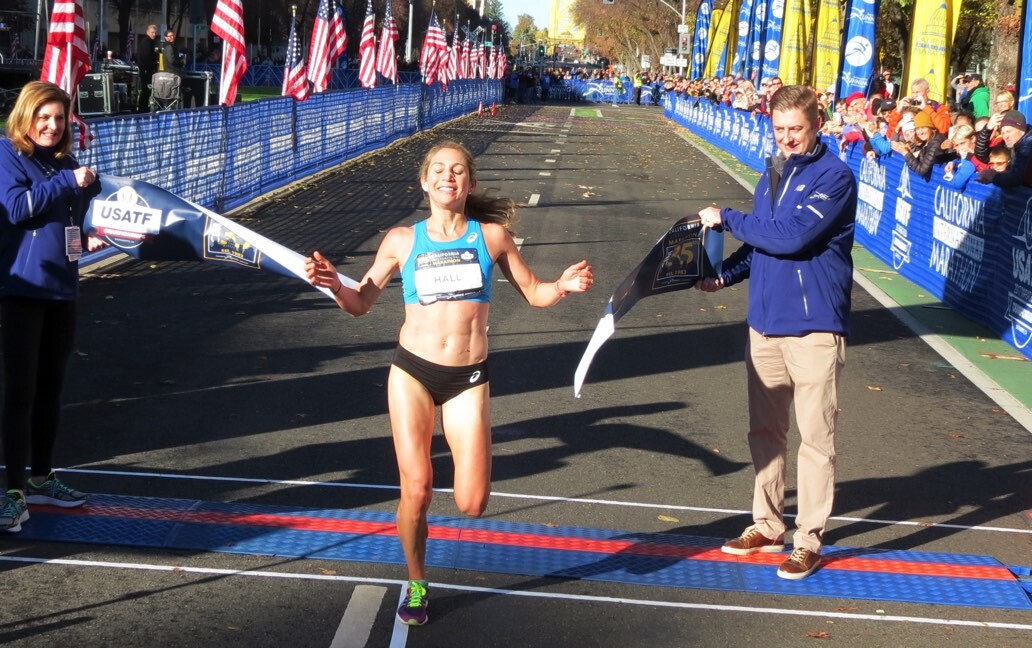
ASICS Half Marathon
Run before the sun in the ASICS Half Marathon (21.095km) at 6am on Saturday 1 July. Enjoy the good times on our world-standard course while soaking up the beautiful broadwater on your return journey from Southport to Paradise Point. Enjoy scenic sunrise views over the water as you run through Labrador to Runaway Bay before being championed to the finish...
more...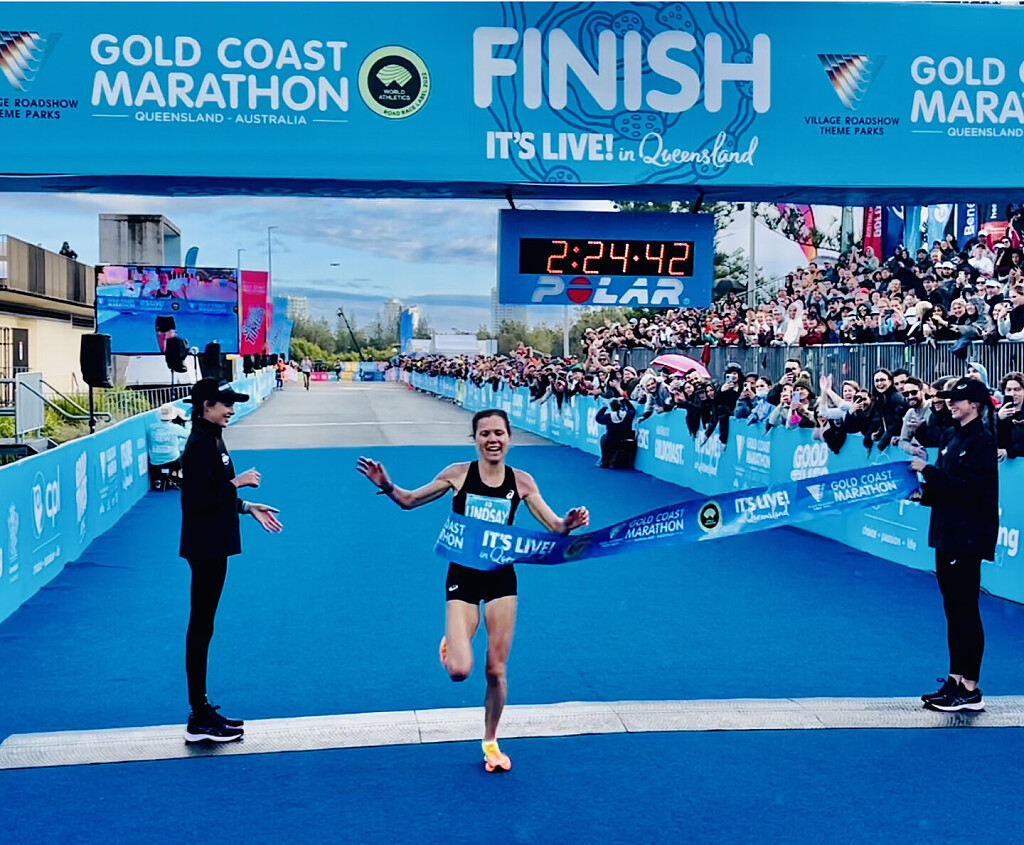
Flanagan Breaks Gold Coast Marathon CR, Fukuda Takes Men's Race
As Australia's Village Roadshow Theme Parks Gold Coast Marathon returned for the first time since 2019, Lindsay Flanagan became its first American winner female or male, taking 6 seconds off the course record and over 2 minutes off her PB to take 1st in 2:24:43. Accompanied by dedicated male pacers and a large group of men in a race that never saw a lead women's group congeal, Flanagan went through halfway in 1:11:59 and then sped up even further, clocking her two fastest 5 km splits of the race, 16:52 and 16:47, from 20 to 25 km and 25 to 30 km. The effects of that came down on her after 30 km as she slowed beyond 3:30/km, but with a rally over the last km she held on to just crack Ruth Chebitok's 2018 CR of 2:24:49.
Post-race Flanagan and her coach, Australian NR and Oceania AR holder Benita Johnson, were elated, having just met each other in person a few days before the race after a year of online coaching.
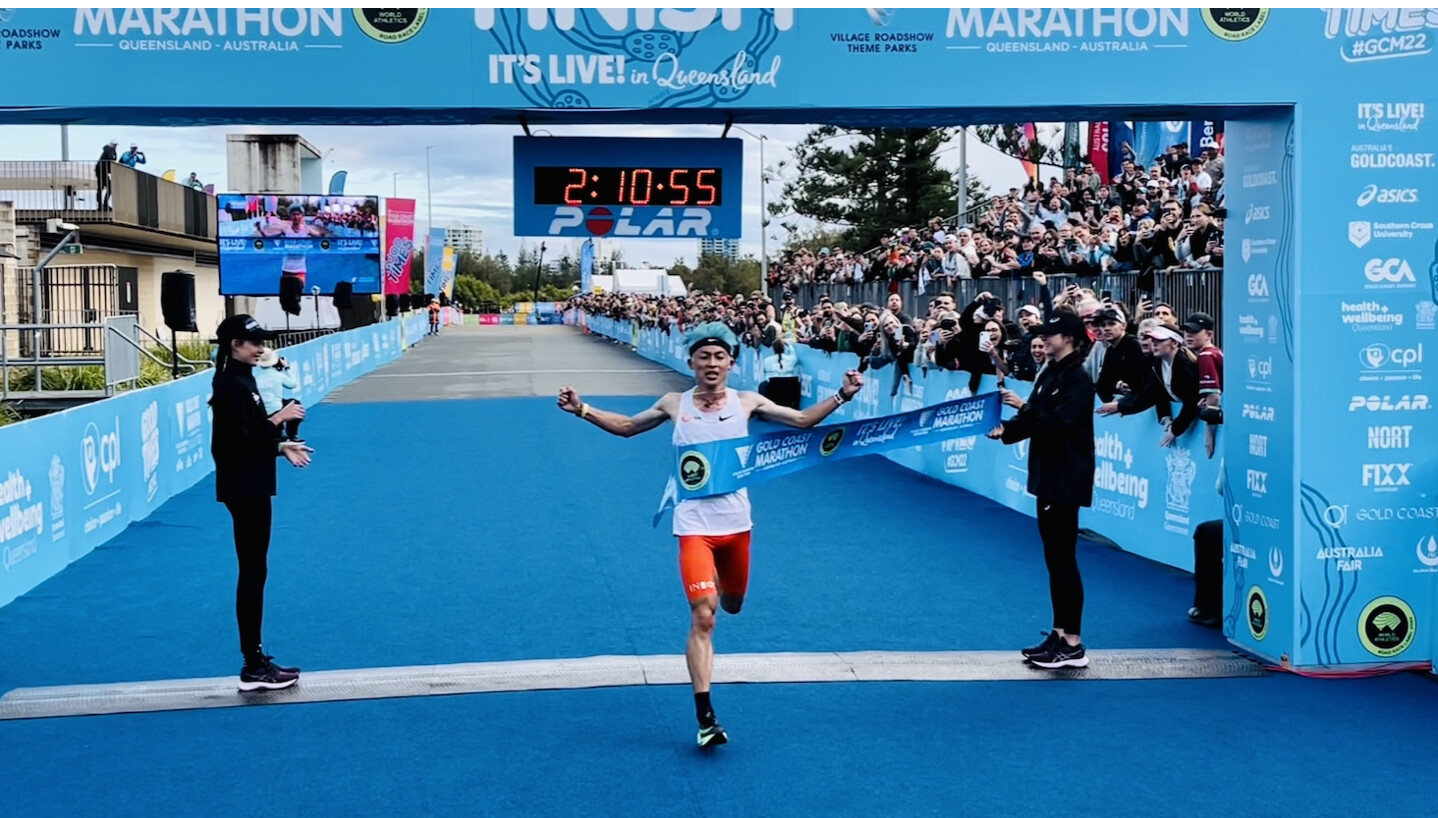
Like Flanagan, 2nd-placer and local favorite Lisa Weightman, the CR holder in Gold Coast's 10 km and half marathon divisions, ran the entire way with only male accompaniment, splitting halfway in 1:12:36 and coming home in 2:25:55, the best-ever by an Australian woman at Gold Coast and the 2nd-best time of her career. 3rd-placer Shiho Kaneshigestarted more conservatively with a 1:14:00 first half, passing American Stephanie Bruce just before 20 km and staying on track to break her 2:28:51 PB until late in the race when she faded to 2:29:12, also a career 2nd-best and her first time sub-2:30 outside Japan.
While the top women all ran separately, a lead group of 4 men shook out by 5 km, with Australian Liam Adams pacing Japan's Jo Fukuda and Akihiro Kaneko, Belgian Amaury Paquet and fellow Aussie Samuel Gebremichael on track to just break 2:10. When Adams dropped off before 20 km Fukuda took over, he and Kaneko quickly dropping the other two and pulling away. Fukuda, whose 2:09:52 best was set on the Gold Coast in 2018, disposed of Kaneko just past 25 km and ran the rest of the way alone, making good on his race logo-themed hair dye job with his first-ever marathon win in 2:10:55. In contrast to the fast women's race, it was the slowest men's winning time since 2010. Kaneko was 2nd in 2:14:25, Paquet taking 3rd in 2:15:45.
Tokyo Paralympics gold medalist Madison de Rozario fought off Paralympic teammate Christie Dawes to win the women's wheelchair division, her time of 1:46:58 good enough for 3rd overall. The only men to beat her were Jake Lappin, 1st by a wide margin in 1:37:32 and Luke Bailey, just hanging on to 2nd overall in 1:46:01.
(07/03/2022) ⚡AMP
Gold Coast Airport Marathon
The Gold Coast Airport Marathon is held annually in one of the most popular holiday destinations in the world. It is Australia’s premier road race and was the first marathon in the country to hold an International Association of Athletics Federations (IAAF) Road Race Gold Label. The event is held on the first weekend of July and attracts more than...
more...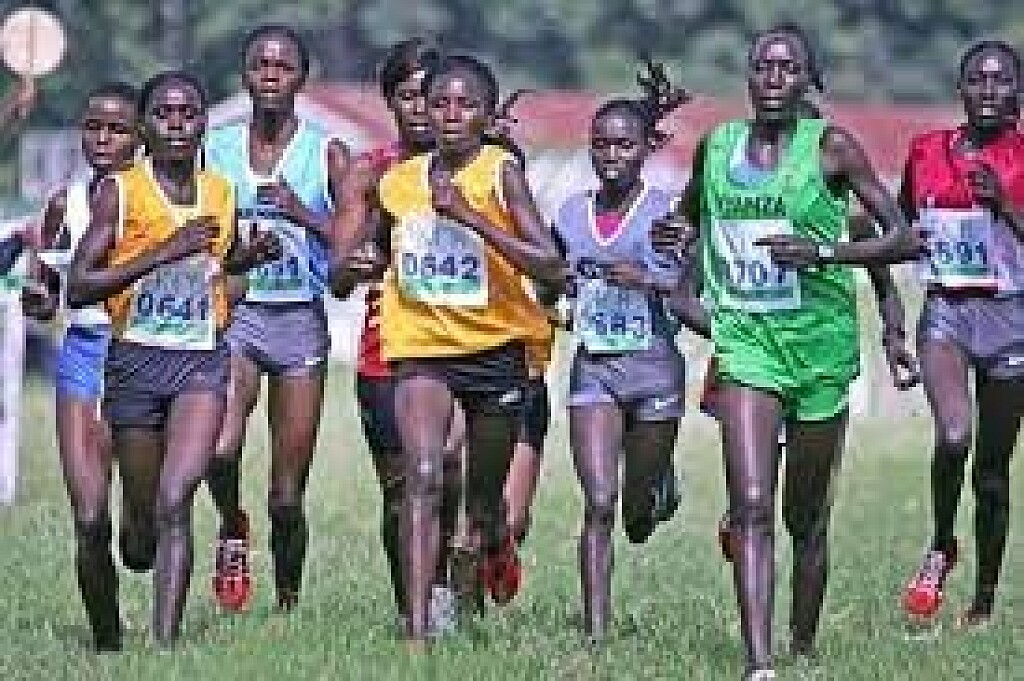
All five reigning world champions named on Kenya's team for Oregon
All five of Kenya’s champions from Doha in 2019 will defend their titles at the World Athletics Championships Oregon22 on 15-24 July.
Beatrice Chepkoech, Ruth Chepngetich, Timothy Cheruiyot, Conseslus Kipruto and Hellen Obiri have been named on the Kenyan team for the event at Hayward Field, where they will be joined by athletes including Olympic champions Peres Jepchirchir, Faith Kipyegon and Emmanuel Korir.
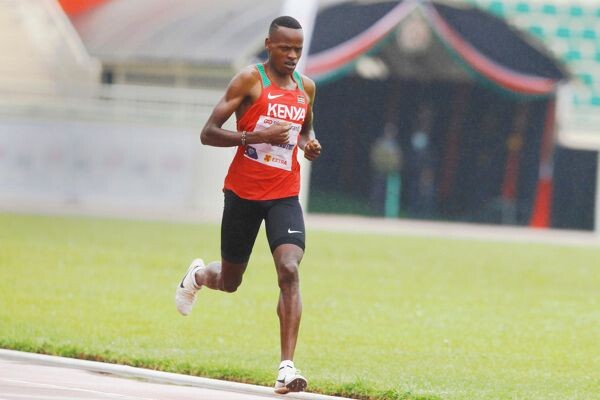
Obiri won her second consecutive world 5000m title in Doha and has been selected for that event as well as the 10,000m, joined by Margaret Chelimo in both.
Chepkoech and Kipruto defend their 3000m steeplechase titles, while Cheruiyot will look to return to the top in the 1500m after securing silver behind Norway’s Jakob Ingebrigtsen in Tokyo.
Chepngetich will be joined by Angela Tanui and Judith Jeptum in the women’s marathon, as well as Olympic champion Jepchirchir. After Tokyo, two-time world half marathon champion Jepchirchir went on to win the New York and Boston marathons and has been added to the team for Oregon.
Kenya finished second in the medal table behind USA in Doha three years ago with five gold, two silver and four bronze medals.
Kenyan team for Oregon
Women400m: Mary Moraa800m: Naomi Korir, Jarinter Mawia, Mary Moraa1500m: Winnie Chebet, Edinah Jebitok, Faith Kipyegon, Judy Kiyeng5000m: Beatrice Chebet, Margaret Chelimo, Gloria Kite, Hellen Obiri10,000m: Margaret Chelimo, Sheila Chepkurui, Hellen Obiri3000m steeplechase: Beatrice Chepkoech, Jackline Chepkoech, Celliphine Chespol, Purity Kirui20km race walk: Emily NgiiMarathon: Ruth Chepngetich, Peres Jepchirchir, Judith Jeptum, Angela Tanui
Men100m: Ferdinand Omanyala400m: Emmanuel Korir800m: Wycliffe Kinyamal, Emmanuel Korir, Cornelius Tuwei, Emmanuel Wanyonyi1500m: Timothy Cheruiyot, Abel Kipsang, Charles Simotwo, Kumari Taki5000m: Nicholas Kimeli, Jacob Krop, Daniel Simiu10,000m: Rodgers Kwemoi, Daniel Mateiko, Stanley Waithaka3000m steeplechase: Leonard Bett, Abraham Kibiwott, Benjamin Kigen, Conseslus Kipruto400m hurdles: Moitalel Mpoke20km race walk: Samuel GathimbaMarathon: Lawrence Cherono, Geoffrey Kamworor, Barnaba Kiptum
(07/03/2022) ⚡AMPby world athletics
