

Running News Daily
Running News Daily is edited by Bob Anderson and team. Send your news items to bob@mybestruns.com Advertising opportunities available.
Index to Daily Posts · Sign Up For Updates · Run The World Feed



How to integrate Anaerobic Exercise into your workout and why you should

Anaerobic capacity is essential in most sports, be it martial arts, baseball, or general athleticism, to produce efficient and powerful movements.
Anaerobic metabolism is incredibly useful in endurance sports, especially if you need that extra bit of energy to sprint towards the finish line. If you’re interested in integrating anaerobic exercise into your routine, consider our suggestions.
Anaerobic Exercise vs. Aerobic Exercise

Even though they sound similar, aerobic and anaerobic exercise are entirely different but equally important types of movement. Let’s take a look at what makes them unique.
Oxygen Use: Anaerobic means “without oxygen,” while aerobic means “with oxygen.” Anaerobic exercise doesn’t rely on oxygen as fuel and takes from energy stored in the muscles, which fatigues you quickly. Aerobic exercise does rely on oxygen in the lungs and requires macronutrients (carbs, protein, fat) as fuel, which sustains longer workouts.

Heart Beat: Both exercises will spike your heart rate, but anaerobic does it faster. Aerobic exercises give your body a steady, elevated heart rate that’s between 70-80% of your max. Anaerobic exercises get you to 80-90% of your max, which can’t be sustained as long as aerobic movement. Aerobic workouts are less intense than Anaerobic.
Exercise Length: Aerobic focuses on gaining strength, while anaerobic focuses on gaining endurance. For example, if I run at the same pace for 30 minutes, that’s aerobic. However, if I added HIIT to my 15-minute run (2 minutes running as hard as I can go, 3 minutes rest), that’s anaerobic. Aerobic workouts are much longer than anaerobic.
Benefits Achieved: Aerobic improves cardiovascular health, while anaerobic improves lean muscle mass. For example, if I go from bench pressing 130 lbs to 140 lbs, that’s aerobic. However, if I go from bench pressing 130 lbs for 10 reps to 20 reps, that’s an example of anaerobic: same exercise, different training methods, different outcomes.
It’s important to incorporate both anaerobic and aerobic exercise into your fitness routine to improve your health. You can mix it up by alternating aerobic and anaerobic routines.
How to Incorporate Anaerobic Training
It’s easy to add anaerobic activities to your regular workout. We recommend separating your days between cardio workouts and strength training for the best fitness results.
1. Sprint Intervals
Most exercise guidelines recommend getting in 30-60 minutes of movement a week, but sprinting is the perfect alternative if you can’t commit to that. Sprinting involves short bursts (2 minutes) of intense running followed by rest (2 minutes). Continue for 15-20 minutes.
2. High-Intensity Interval Training (HIIT)
High-intensity interval training is another smart way to boost the effectiveness of your workouts. A typical HIIT workout lasts between 15 to 30 minutes and involves a 2:1 ratio (recoveries are twice as long as intervals). Include 5-10 intensity sprints at 80-90% of your max heart rate.
3. Jumping Rope
Jump rope is another interval training move that keeps your heart rate elevated for extended periods. After strength training, add a 30-90 second jump rope routine to take a short rest from lifting. Jump rope improves balance, coordination, agility and is an efficient fat burner.
4. Tabata Training
Tabata training is a highly effective HIIT move that gets your heart rate up to 90-100% of its max. In Tabata training, you get 10 second rest periods between 20-second exercise bouts, but you only have to repeat these movements 8 times for 4 minutes, improving accessibility.
5. Plyometric Training
Plyometric training is any movement that involves skipping, jumping, and hopping. Plyometrics are popular in CrossFit routines and military training. Squat jumps, box jumps, and lateral hopping drills are practical exercises for interval training—complete 3 sets of 10 movements.
6. Kettlebell Training
Not all kettlebell movements qualify as anaerobic training, but if you perform typical kettlebell exercises quickly, they can improve your endurance instead of strength alone. Lateral kettlebell swings, the kettlebell throw, kettlebell squat, and kettlebell overhead swing are anaerobic.
7. Fartlek Training
Fartlek training is more unstructured than traditional interval training because it involves speed work that isn’t so demanding.
This type of training can be done on all terrains and allows you to experiment with different paces and endurance levels. A typical workout involves 3-4 intervals of fast pace running (1-minute), 1 minute easy, and 2 minutes fast for a total of 5 minutes.
by Colorado Runner
Login to leave a comment
Latest Running News

Arizona Mother Dies After Being Struck by Train During Morning Run
What began as an ordinary morning run ended in tragedy for 47-year-old Thelma Candelaria, a mother from Eloy, Arizona, who was killed by a train while out running on Thursday, October 15.

Candelaria had recently embraced running as part of a new chapter in her life. She had begun recording her runs and sharing them online, documenting what she described as a fresh start. Less than a week before her death, she had also been baptized, and she had told her followers that she was becoming increasingly committed to running.

Shortly after 6 a.m., Candelaria reached the railroad crossing near Sunshine Boulevard and Frontier Street. According to her daughter, Alaisha, she stopped to record a train passing through the area.
But while she was focused on the train in front of her, another train was approaching on a separate track from the opposite direction.
Alaisha said her mother was wearing noise-canceling headphones and apparently did not hear the approaching train. She described her mother as being completely absorbed in the moment during her run.
Eloy police said both trains sounded their horns. The second train also activated its emergency braking system, but there was not enough time or distance to prevent the collision.
Candelaria was pronounced dead at the scene.
Police said their vehicular crimes unit is investigating the circumstances surrounding the fatal incident. Her family had already become concerned and reported her missing after she failed to return home from her morning run.
For those who knew Candelaria, the tragedy has left behind far more than the shock of a sudden death. She was a mother, a caregiver and a woman who had recently begun documenting a renewed commitment to running and a new direction in her life.
Her daughter has asked that her mother's death be remembered as a heartbreaking accident rather than anything intentional. The family has also established a GoFundMe campaign to help support Candelaria's children as they navigate the difficult days ahead.
A morning run that was meant to represent a fresh beginning instead became the final chapter of a life remembered by her family, friends and followers.
Her story is also a painful reminder of the dangers runners can face around railway crossings, particularly when approaching trains may be difficult to hear or see.
Candelaria left home for what was supposed to be another ordinary run. She never made it back.
by Erick Cheruiyot for My Best Runs.
Login to leave a comment
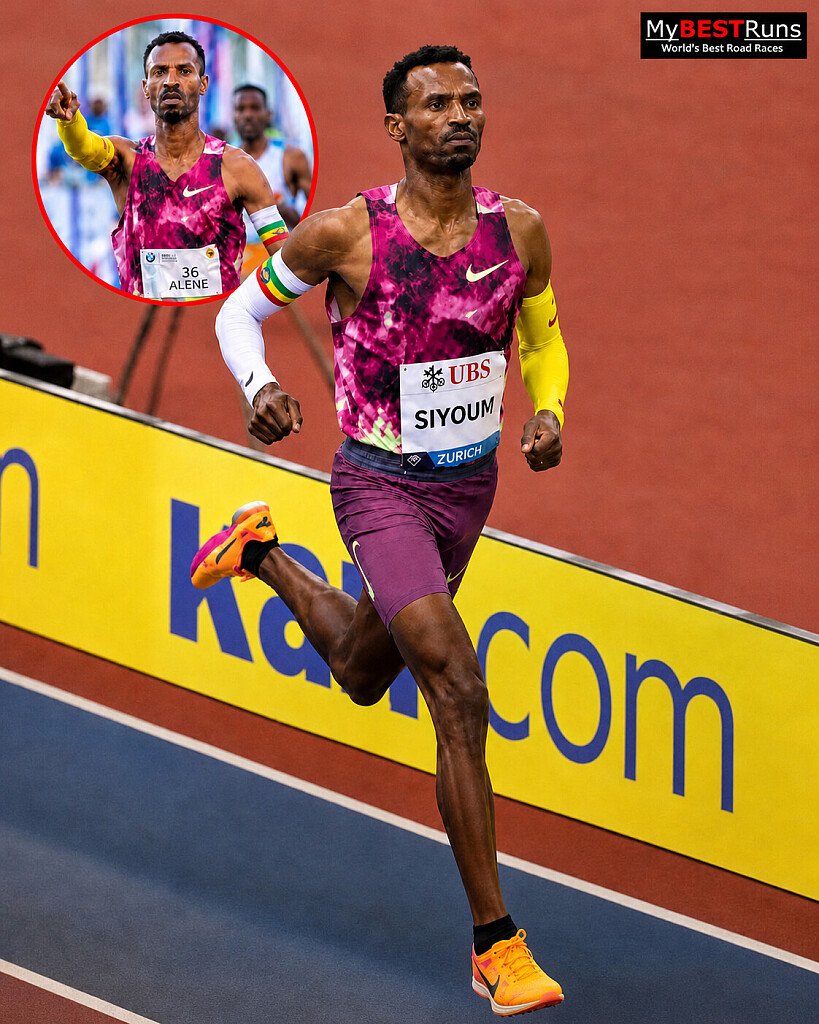
Eight-Year Ban: Mosisa Siyoum Suspended Until 2034 After EPO Positive and Tampering Violation
Ethiopian middle-distance runner Mosisa Siyoum has been handed an eight-year ban from athletics, ending his competitive career until 2034 after an investigation uncovered both an EPO violation and an attempt to mislead the anti-doping process.
The 27-year-old 1,500m runner tested positive for erythropoietin (EPO) from a sample collected in Toruń, Poland, in February 2026, during the weekend of the Copernicus Cup.
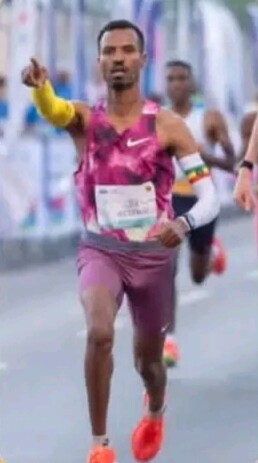
Siyoum initially provided a medical explanation for the presence of the prohibited substance. He told investigators that he had lost consciousness at home, was taken to a health facility, diagnosed with anaemia and subsequently given an EPO injection. To support his account, he submitted documents that he claimed came from the medical facility.
However, the Athletics Integrity Unit (AIU) began examining the circumstances surrounding the alleged treatment and found serious inconsistencies in the paperwork.
According to the AIU's investigation, the name of the healthcare provider listed on the documents did not correspond with the signature appearing on them. The investigation went further, with the AIU conducting two in-person interviews with Siyoum and making direct inquiries with the health centre identified in the documents.
Those inquiries ultimately established that Siyoum had not attended the facility on the date stated in the medical records.
The discovery significantly escalated the case. While the EPO violation alone carried a four-year period of ineligibility, the additional finding of tampering with the doping-control process resulted in another four-year sanction.
Under World Athletics' anti-doping rules, the two periods do not run concurrently. The four-year tampering sanction therefore follows the four-year doping ban, producing a total suspension of eight years.
Siyoum did not contest the charges. His period of ineligibility began on May 5, 2026, meaning he will remain banned from athletics until May 2034.
The sanctions also carry a major retrospective consequence. All of Siyoum's results dating back to December 13, 2025, have been disqualified, with the associated titles, rankings, prizes and other consequences subject to the applicable rules.
Despite competing at a high level domestically, Siyoum never represented Ethiopia at an international championship. His case was among four AIU decisions published on Thursday, adding another significant anti-doping case to athletics' continuing efforts to protect the integrity of competition.
What began as an EPO positive has ultimately become a much more serious case, with the investigation into the medical explanation leading to a second violation and an eight-year exclusion from the sport.
by Erick Cheruiyot for My Best Runs.
Login to leave a comment
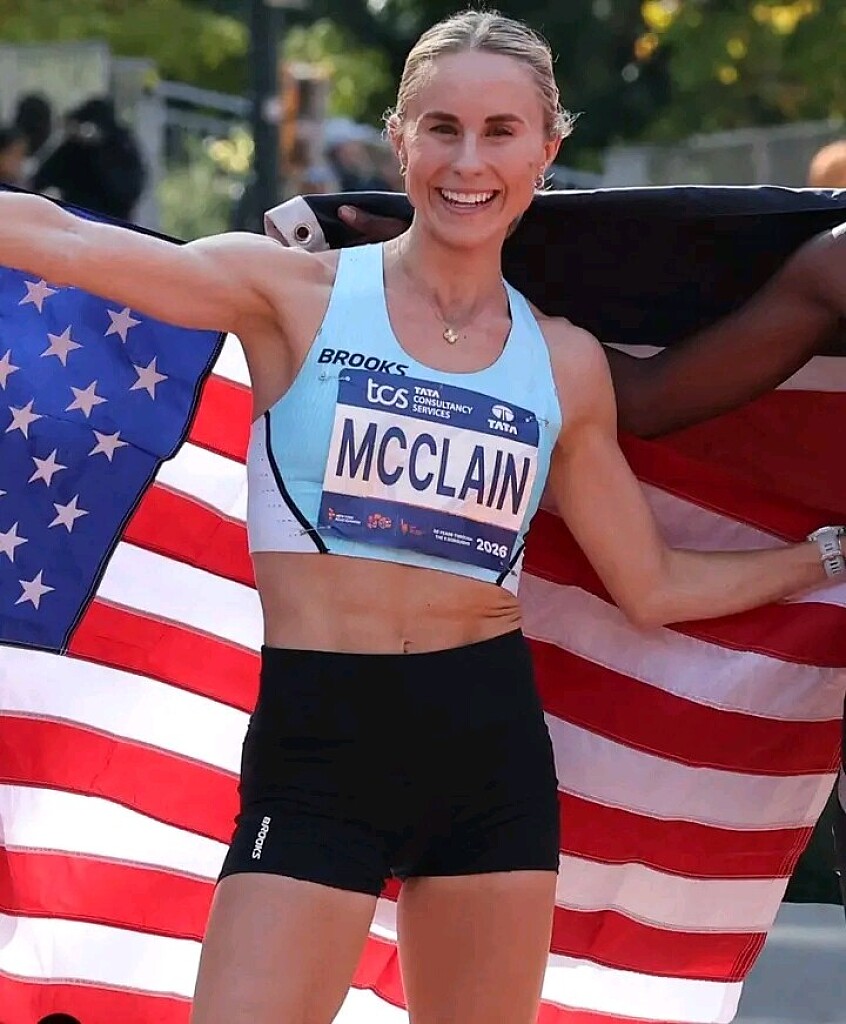
Jess McClain Ends Eight-Year American Podium Drought in New York
Jess McClain saved her best for the moment when the New York City Marathon demanded everything.
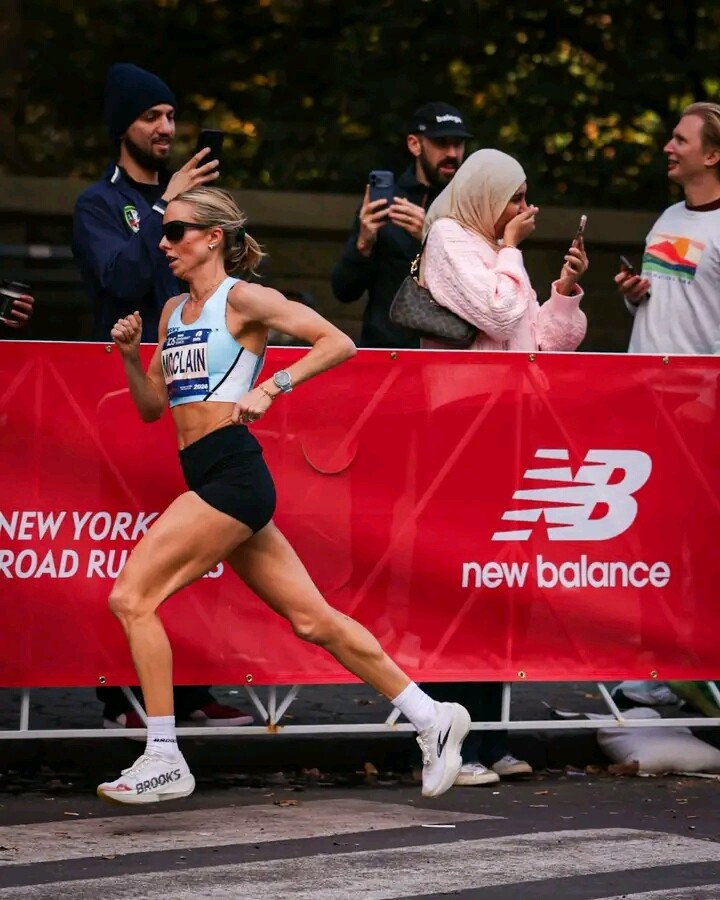
With the finish line approaching in Central Park, the 34-year-old American was still chasing the two-time Olympic medalist and defending champion Hellen Obiri. Then came the decisive move.
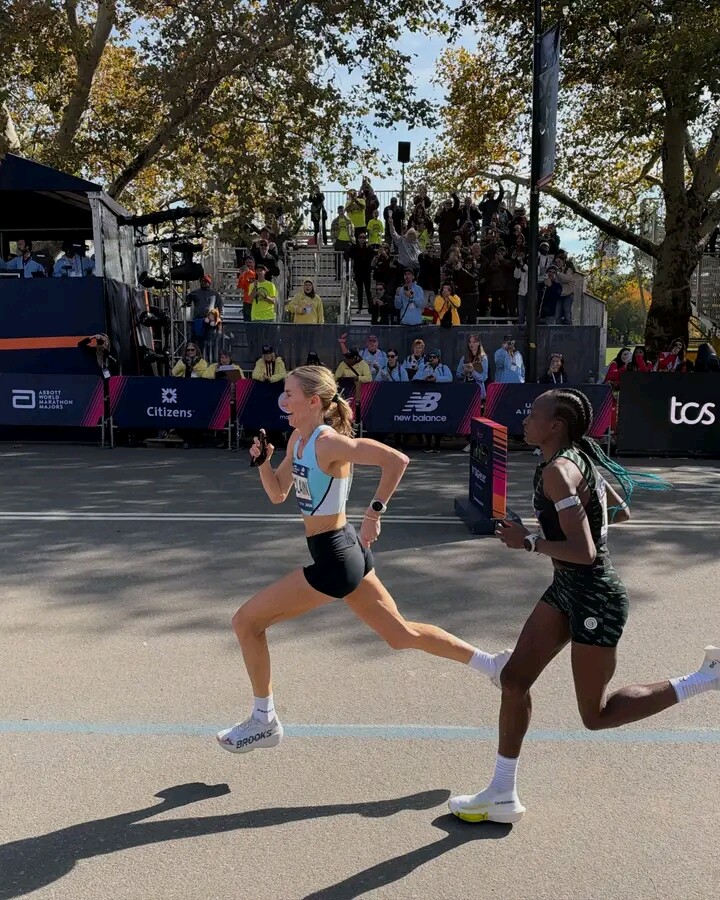
McClain surged through the closing stages, overtaking Obiri in the final meters to seize second place in 2:24:42 at the 2026 TCS New York City Marathon. Kenya’s Sheila Chepkirui held on for victory in 2:24:36, while Obiri finished just one second behind McClain in 2:24:43.
The result ended an eight-year wait for an American woman on the New York City Marathon podium. The last was Shalane Flanagan, who finished third in 2018 after winning the race the previous year. McClain became the first American woman since Flanagan to break into the top three on one of the sport’s most iconic stages.
McClain’s race was built on patience and belief. The opening half was covered in a relatively controlled 1:13:52, leaving a large group of contenders still within striking distance. Rather than forcing the pace early, McClain stayed composed and positioned herself for the decisive stages of the race.
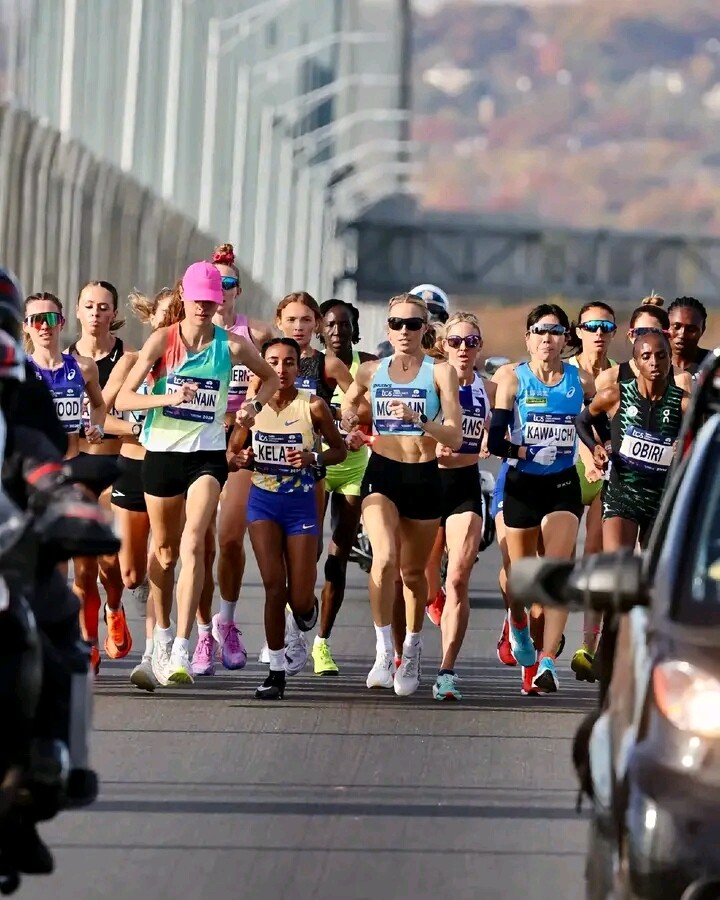
As the marathon moved toward Fifth Avenue and Central Park, the race finally began to fracture. Chepkirui and Obiri established themselves at the front, but McClain refused to let them disappear. She continued to close the gap while making the most of the Central Park curves, running the tangents efficiently and conserving precious distance.
By the final stretch, the opportunity was there.
McClain produced one last surge and caught Obiri just before the finish, turning what had looked like a battle for third into a stunning runner-up finish. World Athletics described her closing effort as superb, with McClain taking second by just one second.
The New York breakthrough comes during the strongest period of McClain’s marathon career. Earlier this year in Boston, she ran 2:20:49 to finish fifth and set the fastest marathon ever recorded by an American woman on the Boston course, breaking Shalane Flanagan’s previous mark of 2:22:02.
Her New York performance now adds another major milestone. McClain’s top-five finish qualifies her for the 2028 U.S. Olympic Marathon Trials, scheduled for March 25, 2028, in St. Louis. Three American women will ultimately earn places on the U.S. Olympic team for the Los Angeles Games.
For McClain, the journey has been anything but straightforward. A former Stanford standout and seven-time NCAA All-American, she stepped away from elite competition for a period before returning to the marathon and gradually rebuilding herself into one of America’s leading distance runners. Her fourth-place finish at the 2024 U.S. Olympic Marathon Trials showed she belonged among the country’s best; her performances in Boston and New York have now taken that belief to another level.
At 34, McClain is proving that marathon success is not always about arriving early. Sometimes it is about staying patient, learning from every setback and being ready when the biggest opportunity finally arrives.
In New York, with the crowds roaring through Central Park and the podium within reach, Jess McClain did exactly that.
She waited.
She believed.
And when the moment came, she took it.
by Erick Cheruiyot for My Best Runs.
Login to leave a comment
Zouhair Talbi Makes History in New York With Bold Sixth-Place Run
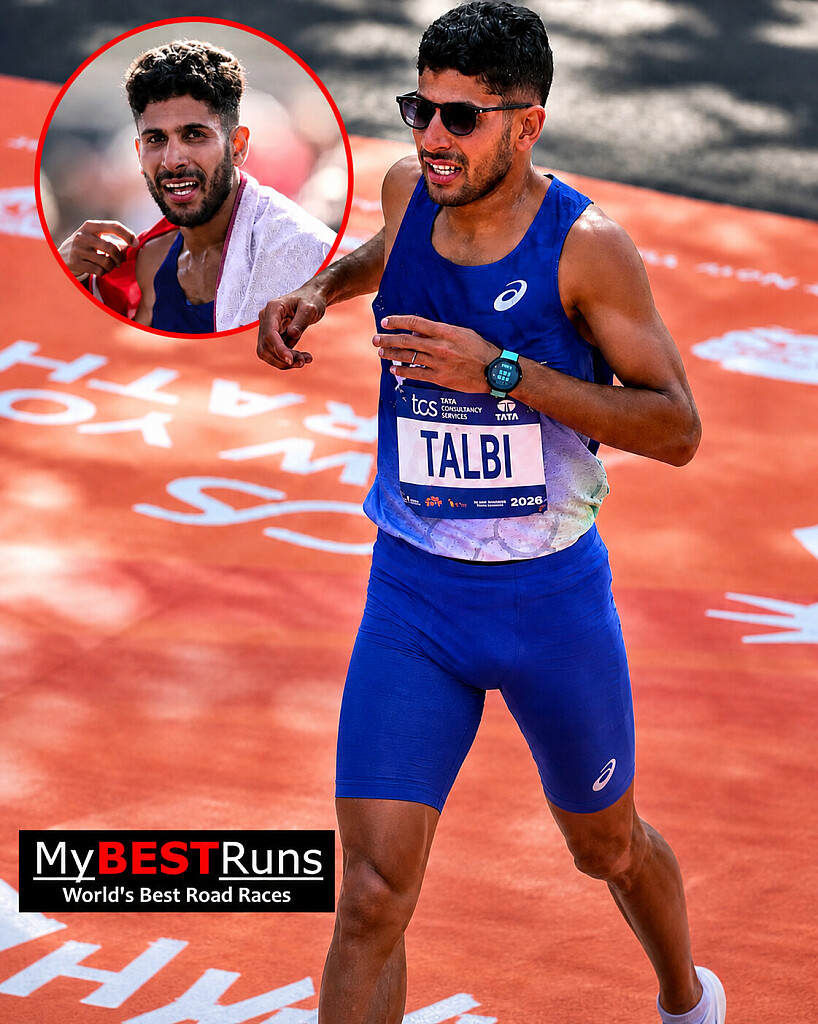
Zouhair Talbi did not approach the 2026 TCS New York City Marathon with the mindset of a runner simply hoping to survive the demanding streets of the Big Apple. The 31-year-old American attacked the race from the front, repeatedly testing a world-class field and ultimately leaving New York with a historic performance.
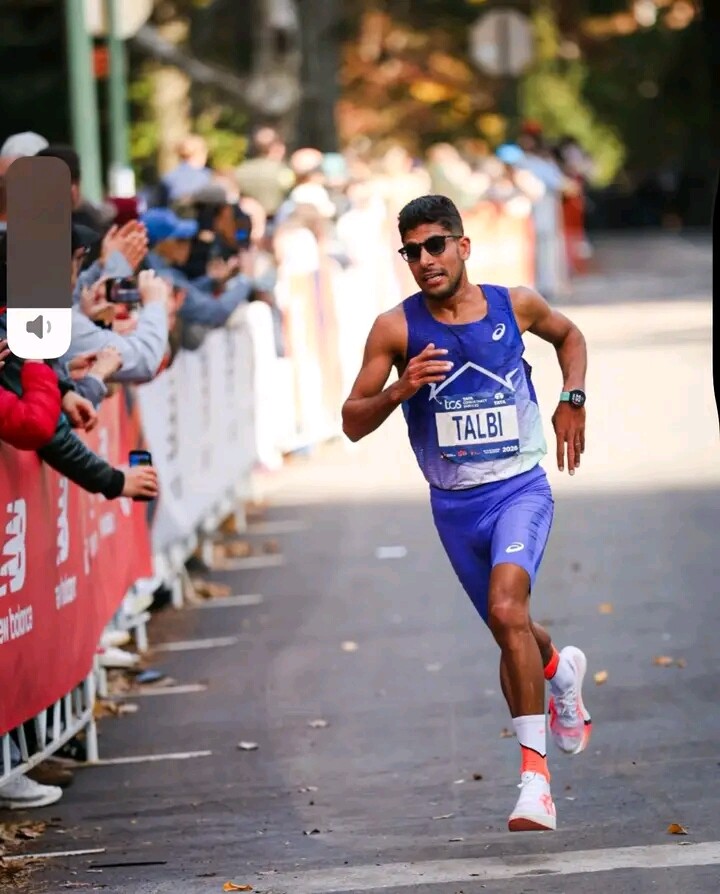
Talbi was one of the most aggressive runners during the opening half of the race, moving to the front and driving the pace through halfway in 1:04:01. Rather than retreat into the pack, he continued to show his ambition, making another move around the 25-kilometre mark and remaining firmly among the leaders deep into the race. World Athletics reported that he was still part of the leading battle approaching 40 kilometres.
The decisive moments came late. Kenya’s Benson Kipruto launched a powerful surge over the 23rd mile, helping break the race apart as Sweden’s Andreas Almgren, Italy’s Yemaneberhan Crippa and the defending champion Kipruto fought for victory. Talbi remained in contention deep into the closing stages, but eventually lost contact with the leaders.
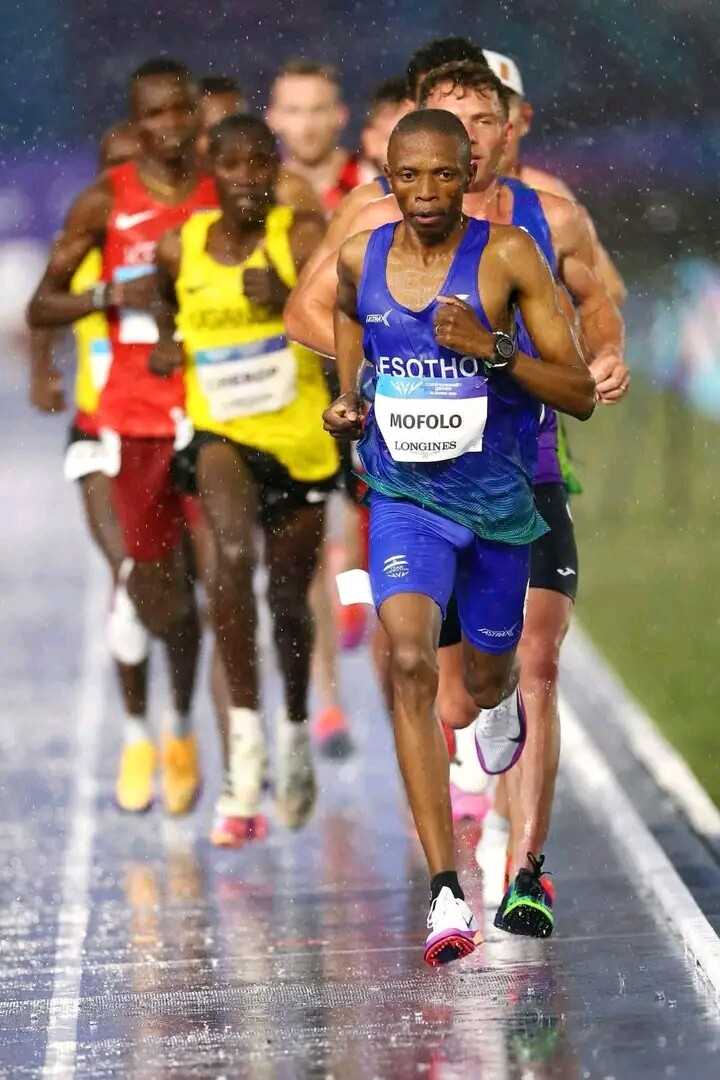
Almgren then produced a remarkable final phase to claim victory in his marathon debut, becoming the first Swedish winner of the New York City Marathon in 2:06:01. Crippa finished second in 2:06:14, while Kamohelo Mofolo of Lesotho secured third in 2:06:26. Kipruto was fourth in 2:06:27 and Australia’s Haftu Strintzos fifth in 2:06:34.
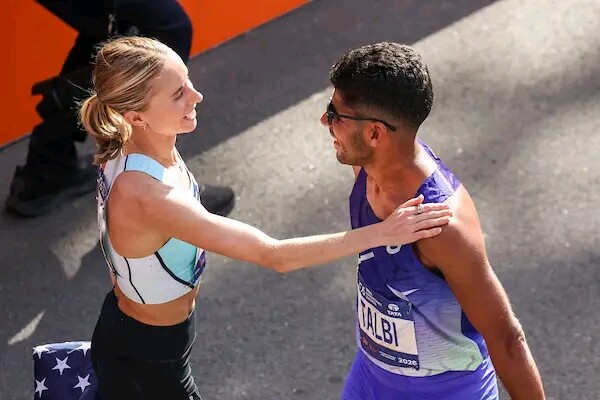
Talbi crossed the line in sixth place in 2:06:43, just nine seconds outside the top five. On paper, sixth place might appear to tell only part of the story. In reality, his performance was one of the boldest American displays of the day.
His time rewrote the New York record books.
Talbi’s 2:06:43 is now the fastest time ever run by an American man on the New York City Marathon course, surpassing Conner Mantz’s 2:09:00 from 2024. New York Road Runners confirmed that the 2026 race produced the four fastest American men's performances ever recorded on the course.
The depth of the American performance made the achievement even more striking. Ahmed Muhumed, making his marathon debut, finished eighth in 2:07:09, while Ryan Ford placed 10th in 2:07:17. Conner Mantz, returning to marathon racing after an injury layoff, was 11th in 2:07:27.
For Talbi, the New York performance represents another major chapter in a remarkable rise. Born and raised in Morocco, he became a U.S. citizen in 2025 after joining the U.S. Army Reserve. He represented Morocco at the 2024 Paris Olympic Marathon, meaning he must wait until August 2027 before becoming eligible to represent the United States in international competition under World Athletics' transfer rules.
That future now looks increasingly intriguing.
Talbi already owns a personal best of 2:03:45, set at the 2026 Boston Marathon, and has established himself among the leading marathoners in the United States. Although the Boston performance is not eligible for official record purposes because of the course's downhill profile, it demonstrates the level of ability he possesses.
There is also a sense of unfinished business in New York. Talbi's previous appearance at the race came in 2023, when he did not finish. Three years later, he returned as an American citizen and transformed the same course into the stage for one of the most aggressive performances of his career.
With international eligibility approaching in 2027 and the 2028 U.S. Olympic Marathon Trials on the horizon, Talbi is no longer simply a talented newcomer to the American marathon scene.
He is becoming one of the men the United States will have to reckon with.
And after the way he raced New York, the biggest question may no longer be whether Talbi belongs among America's best marathoners — but just how far he can take this new chapter of his career.
by Erick Cheruiyot for My Best Runs.
Login to leave a comment
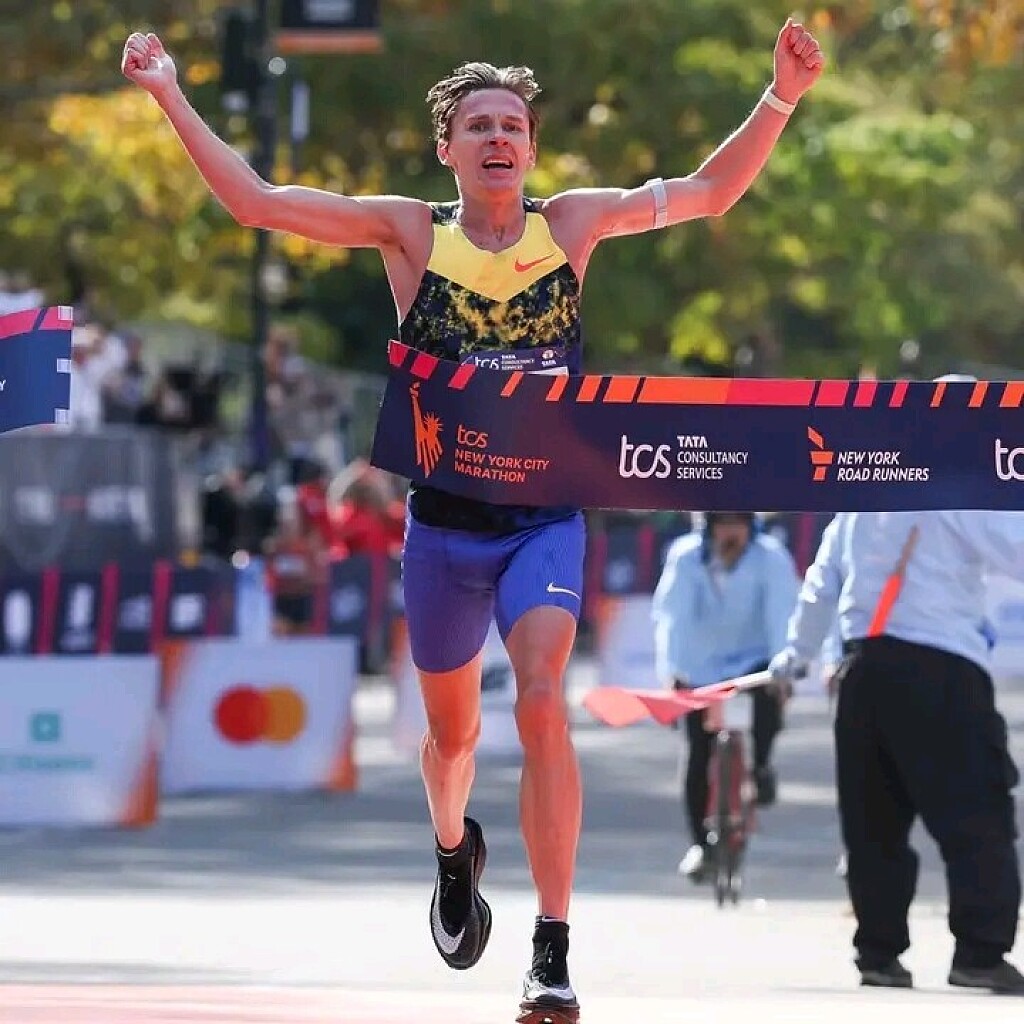
Andreas Almgren Makes History With Stunning New York City Marathon Debut
From an 800m junior to a world road-running champion — and now a New York City Marathon winner. Andreas Almgren’s remarkable transformation has reached another extraordinary level.
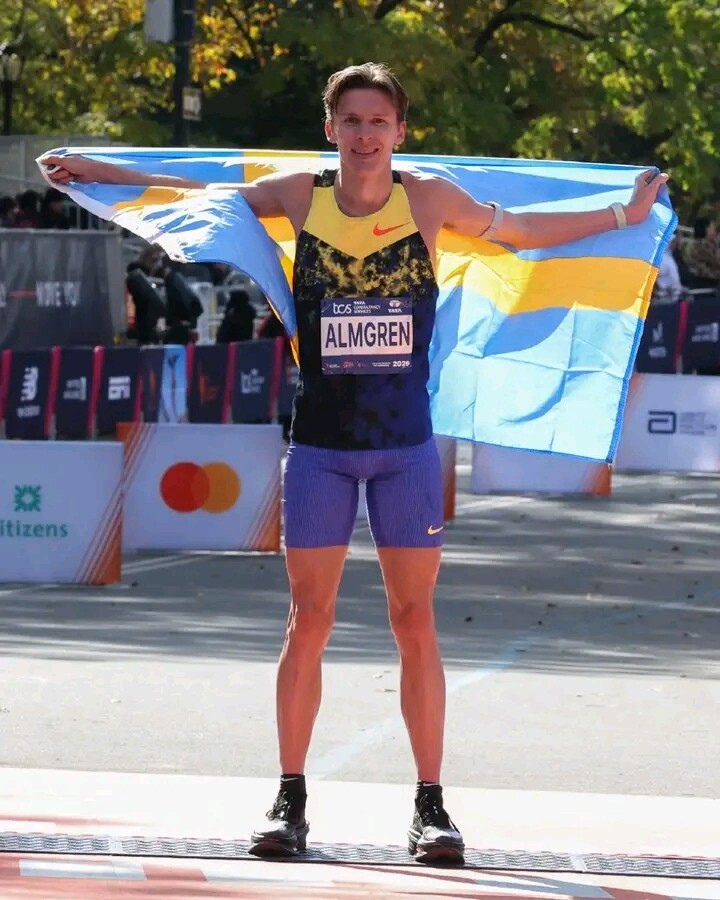
Sweden’s Andreas Almgren has produced a marathon debut for the history books, winning the 2026 TCS New York City Marathon in 2:06:01 and becoming the first man to win the iconic race on his debut over the 26.2-mile distance.
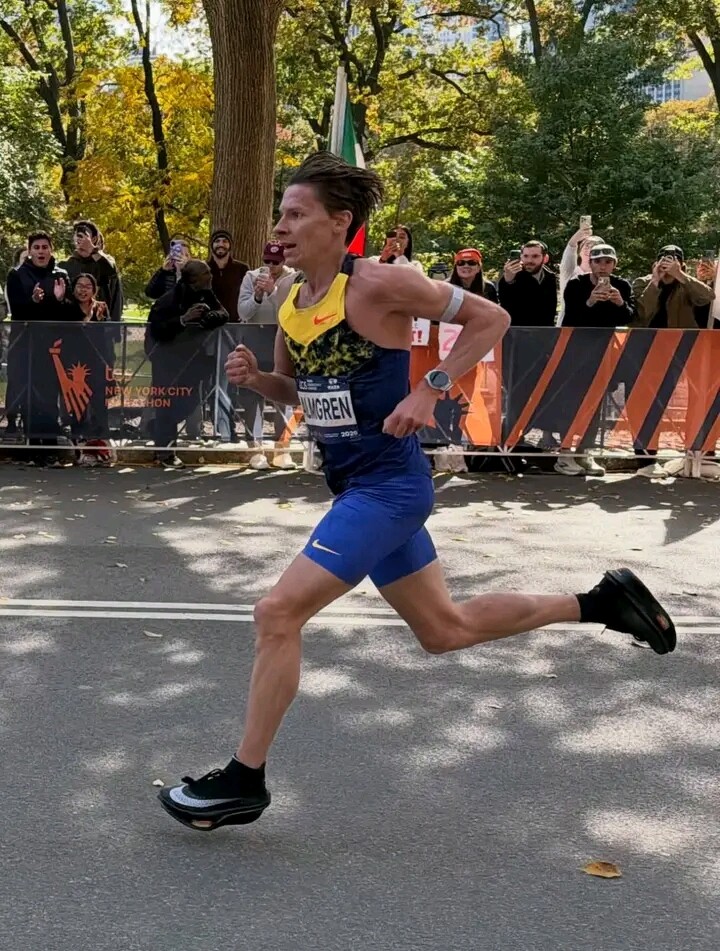
The 31-year-old Swede arrived in New York without a marathon on his résumé, yet he handled the demanding five-borough course with the confidence and composure of a seasoned marathoner. By the finish, he had established himself as the latest champion of one of the most prestigious races in world road running.
Almgren crossed the line 13 seconds clear of Italy’s Yemaneberhan Crippa, who finished second in 2:06:14. The victory completed a remarkable progression for an athlete whose career has taken him far beyond his original middle-distance roots.
Almgren’s historic victory came in an incredibly tight men’s race, with just 16 seconds separating the top 10 finishers. Yemaneberhan Crippa followed closely in second, while Kamohelo Mofolo secured an impressive third place, only 25 seconds behind the winner. Defending champion Benson Kipruto finished fourth, with Haftu Strintzos fifth and Zouhair Talbi sixth. Ryota Kondo, Ahmed Muhumed, Geoffrey Kamworor and Ryan Ford completed a remarkably competitive top 10, with several athletes separated by only seconds at the finish.
2026 TCS NEW YORK CITY MARATHON — MEN'S TOP 10
1. Andreas Almgren — Sweden — 2:06:01
2. Yemaneberhan Crippa — Italy — 2:06:14
3. Kamohelo Mofolo — Lesotho — 2:06:26
4. Benson Kipruto — Kenya — 2:06:27
5. Haftu Strintzos — Australia — 2:06:34
6. Zouhair Talbi — United States — 2:06:43
7. Ahmed Muhumed — United States — 2:07:08
8. Geoffrey Kamworor — Kenya — 2:07:09
9. Ryota Kondo — Japan — 2:07:09
10. Ryan Ford — United States — 2:07:17
The New York triumph comes only weeks after Almgren became the World Road Running Championships half marathon champion in Copenhagen. There, he stormed to victory in 58:06, setting a new European record and underlining the endurance that would eventually carry him to marathon glory.
His 2026 season had already been extraordinary before he arrived in New York. In January, Almgren ran 26:45 for 10km in Valencia, continuing his rapid rise on the roads. He later captured the European 10,000m title, adding another major championship crown to an increasingly impressive résumé.
He also remains the European record-holder over 5,000m, highlighting the extraordinary range that has become a defining feature of his career.
But perhaps the most remarkable chapter of Almgren’s journey began much earlier.
As a junior, he was primarily an 800m runner, winning bronze at the 2014 World U20 Championships. Over the years, he gradually transformed himself from a middle-distance specialist into one of Europe’s leading long-distance athletes, moving successfully through the 5,000m and 10,000m, then onto the roads and eventually the marathon.
Twelve years after standing on the podium as an 800m junior, Almgren has now conquered one of the world’s most famous marathons.
And he did it on his very first attempt.
His performance in New York was more than a victory. It was the latest and perhaps most spectacular milestone in a career defined by reinvention, range and an extraordinary ability to keep raising the limits of what seemed possible.
Andreas Almgren came to New York for his first marathon. He left as a champion — and a piece of history.
by Erick Cheruiyot for My Best Runs.
Login to leave a comment
TCS New York City Marathon
The first New York City Marathon, organized in 1970 by Fred Lebow and Vince Chiappetta, was held entirely in Central Park. Of 127 entrants, only 55 men finished; the sole female entrant dropped out due to illness. Winners were given inexpensive wristwatches and recycled baseball and bowling trophies. The entry fee was $1 and the total event budget...
more...