

Running News Daily
Running News Daily is edited by Bob Anderson and team. Send your news items to bob@mybestruns.com Advertising opportunities available.
Index to Daily Posts · Sign Up For Updates · Run The World Feed
Articles tagged #running economy
Today's Running News



Josh Kerr’s Mile Mastery Could One Day Lead Him To The London Marathon
Josh Kerr has conquered one of athletics’ most historic distances. Yet, remarkably, the Scottish star is already dreaming about a challenge that sits more than 25 miles beyond the distance that has made him a global track sensation.
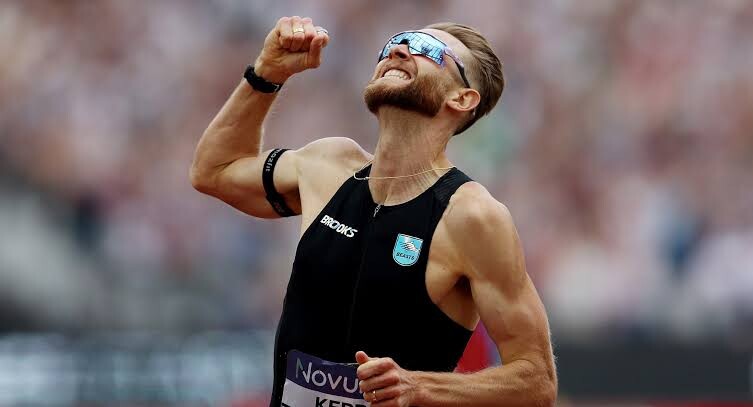
Kerr produced one of the defining performances of his career on July 18, 2026, at the London Stadium, storming to a sensational 3:42.66 in the Emsley Carr Mile to shatter Hicham El Guerrouj’s world record. The Moroccan’s 3:43.13 had stood untouched since 1999, but Kerr finally brought the 27-year-old mark down by 0.47 seconds.
The performance confirmed Kerr’s place among the greatest milers of his generation, but his ambitions extend well beyond the track.
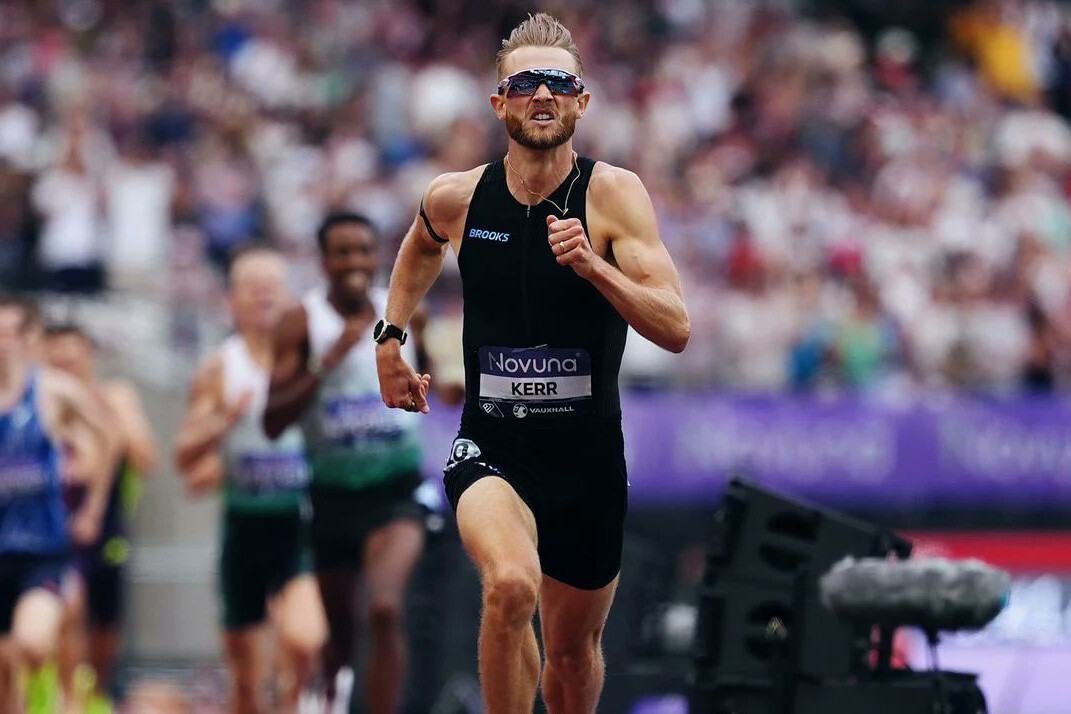
Speaking after his historic achievement, the 28-year-old revealed that the marathon is a distance he has become increasingly fascinated by, with the London Marathon occupying a particularly special place in his long-term imagination. For Kerr, the ultimate attraction would not necessarily be a world-class time, but the possibility of one day winning the race.

He remains realistic about how distant that ambition is. Kerr has made it clear that there is still important work to be completed on the track, with the Los Angeles 2028 Olympic Games among his major objectives. His marathon dream, therefore, belongs to the future rather than the immediate present.
That patience could prove crucial.
The transition from the mile to the marathon is one of the most demanding changes an elite distance runner can make. It requires far more than simply possessing exceptional aerobic fitness. The marathon places extraordinary demands on endurance, efficiency, energy management and the ability to maintain a high pace for more than two hours.
History, however, has shown that a world-class track runner can successfully make the leap when the timing is right.
Sifan Hassan provides perhaps the most spectacular modern example. After establishing herself as one of the most versatile distance runners in history, competing successfully from 1,500m through 10,000m, the Dutchwoman made her marathon debut at the 2023 London Marathon. She won in 2:18:33 after producing a remarkable finishing sprint, then went on to claim Olympic marathon gold the following year.
Her ability to change gears late in races became one of her greatest weapons. It is also an attribute Kerr knows particularly well.
Kerr has built his reputation around devastating finishing speed. Whether competing over 1,500m or the mile, his ability to accelerate when others are already approaching their physical limits has repeatedly separated him from the field. The question is whether that same weapon could eventually become a decisive advantage over the marathon distance.
Mo Farah's journey offers a more complicated lesson.
The British legend spent years dominating the 5,000m and 10,000m before turning his attention to the marathon. Despite possessing an extraordinary endurance base, Farah discovered that the marathon demanded an entirely different level of preparation. He finished eighth on his London Marathon debut in 2014 in 2:08:21 before eventually improving the British record to 2:06:22 in 2018.
Farah later explained that mastering the marathon took considerable time, underlining just how different the event is from even the longest Olympic track distances.
For Kerr, the physiological challenge would be even greater because his speciality is the mile.
The mile rewards an athlete who can combine enormous aerobic power with exceptional speed. The marathon, by contrast, demands the ability to operate efficiently for a prolonged period below maximum aerobic capacity. Running economy, lactate-threshold ability, endurance and the capacity to preserve energy deep into a race become increasingly important.
That transformation cannot be rushed.
And the marathon landscape Kerr would eventually enter is becoming more extraordinary by the year.
The 2026 London Marathon demonstrated just how far the event has evolved. Kenya’s Sabastian Sawe made history by becoming the first athlete to officially break the two-hour barrier in a competitive marathon, winning in 1:59:30. Ethiopia’s Yomif Kejelcha also finished inside two hours, while three men ultimately finished faster than the previous world record.
That is the standard waiting for Kerr if his distant ambition eventually becomes reality.
For now, however, there is no need to hurry. Kerr has already rewritten the mile record books, becoming the first man to break 3:43 and ending one of the longest-standing world records in modern athletics.
His next chapter is still firmly rooted on the track, where Olympic glory remains a major target. But somewhere beyond those ambitions lies a different challenge: 26.2 miles of London roads, a distance more than 25 miles longer than the event in which he currently reigns supreme.
It may sound improbable today, but Kerr is not dismissing the possibility.
“I promise I will try it.”
And if the day eventually comes when the world mile record-holder lines up on The Mall with the London Marathon title in his sights, it could become one of the most intriguing distance-running transitions the sport has ever witnessed.
by Erick Cheruiyot for My Best Runs.
Login to leave a comment

When Racing Shoes Tell the Story of How Distance Running Has Evolved
Sometimes, a pair of racing shoes is far more than just equipment. It becomes a time capsule—preserving the story of an era, the spirit of an athlete, and the remarkable evolution of the sport itself.
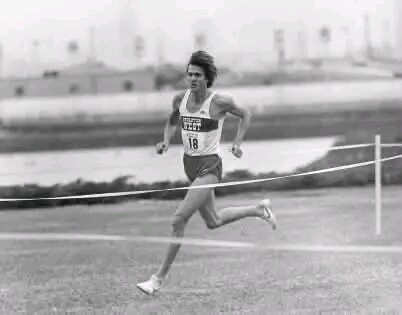
One such example is the racing spikes once worn by American distance-running legend Pat Porter. Looking at them today offers a striking reminder of how dramatically distance running has transformed over the decades. Their minimalist design reflects a time when success depended almost entirely on reducing weight. Every gram mattered because lighter shoes meant runners could conserve precious energy over thousands of strides.
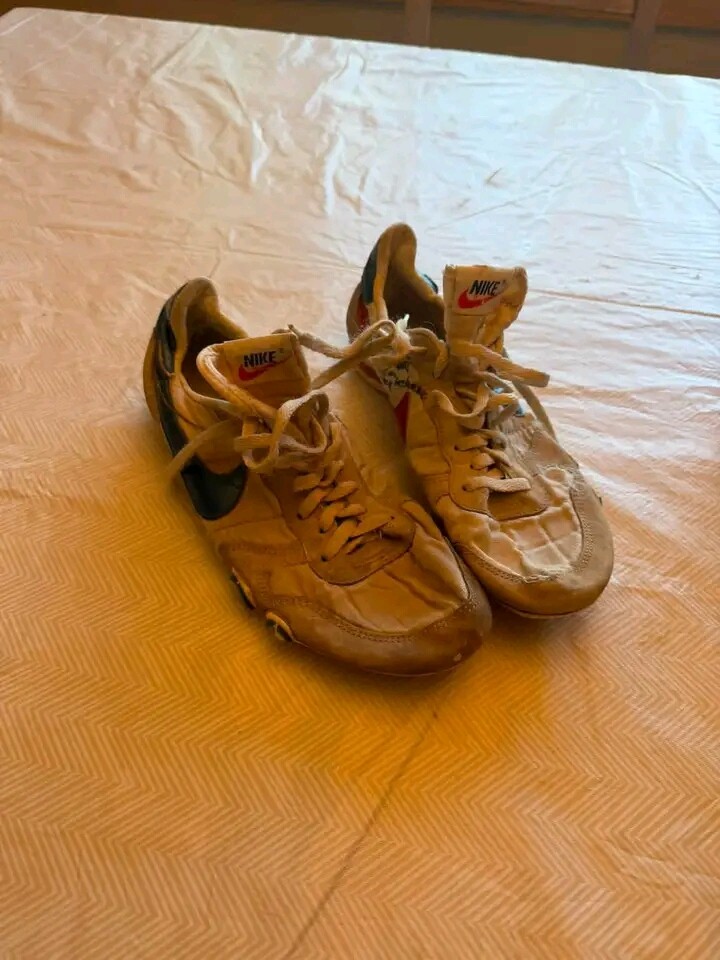
Modern racing footwear tells a completely different story. Rather than focusing solely on shedding weight, manufacturers have revolutionized performance through advanced engineering. Highly responsive foam midsoles, carbon-fibre plates, and energy-return technology have reshaped distance running by improving running economy, helping athletes cover the same distance while expending less energy. These innovations have become one of the most significant breakthroughs in the history of endurance sports, redefining what elite runners can achieve.
Yet, despite all the technological progress, those vintage spikes carry a timeless message that extends beyond innovation. They remind us that no record is permanent, no performance benchmark lasts forever, and every generation eventually witnesses new athletes pushing the boundaries even further. What once seemed impossible becomes the next target.
The shoes themselves may wear out, and technology will continue to evolve, but the relentless pursuit of greatness remains unchanged. Every era leaves behind its own footprints—whether carved into old leather spikes or today's cutting-edge carbon-plated racers. In the end, it is not the shoes that define the legacy, but the athletes courageous enough to chase history in them.
by Erick Cheruiyot for My Best Runs.
Login to leave a comment
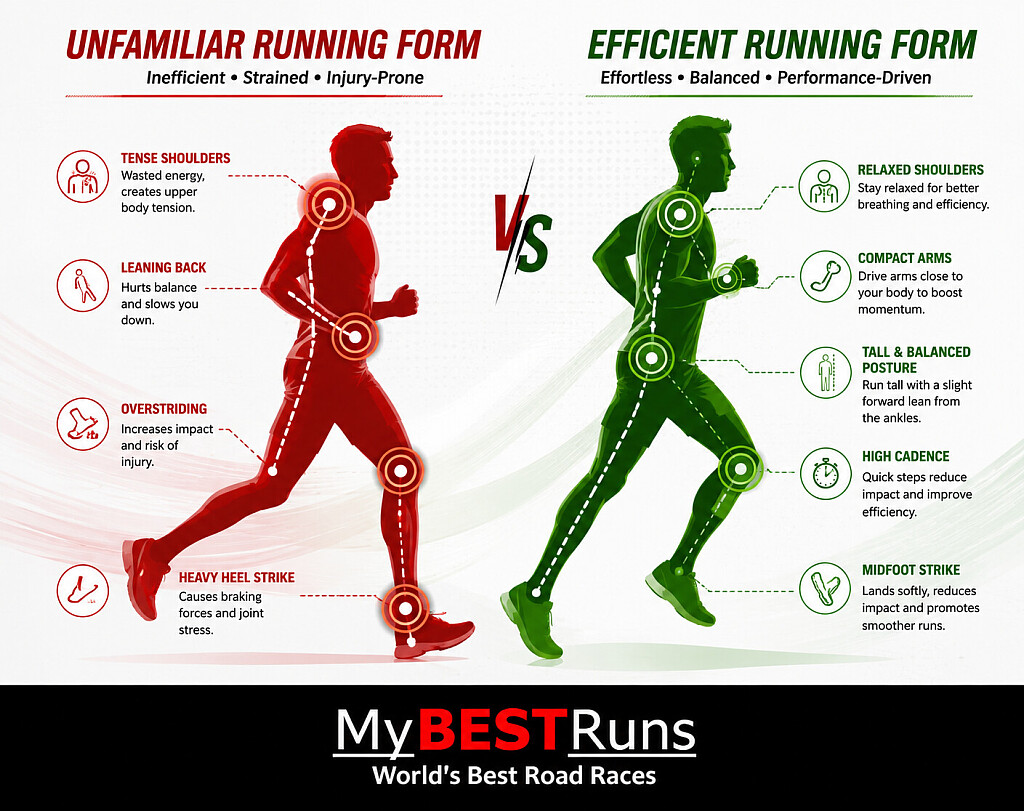
Running Economy: The Hidden Advantage Behind Every Great Runner
Many runners spend years chasing greater speed by pushing harder, running longer, or increasing the intensity of their workouts. While endurance and determination are essential, one of the most powerful performance factors is often overlooked—running economy.
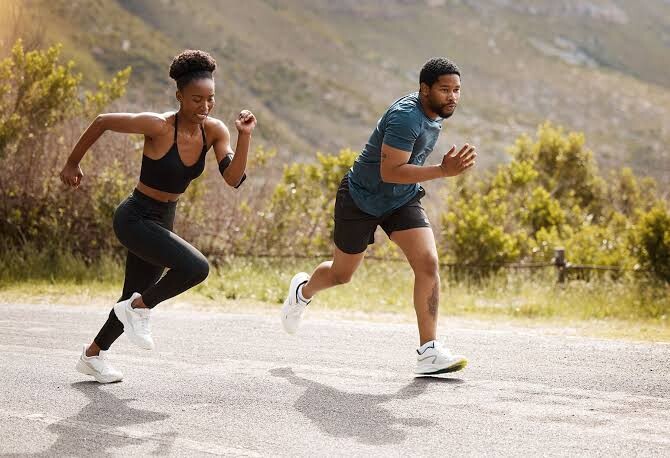
Running economy is the measure of how efficiently a runner uses oxygen and energy while maintaining a given pace. In simple terms, it determines how much effort your body requires to produce a certain speed. The more economical you are, the less energy you waste, allowing you to sustain faster paces for longer without feeling as fatigued.
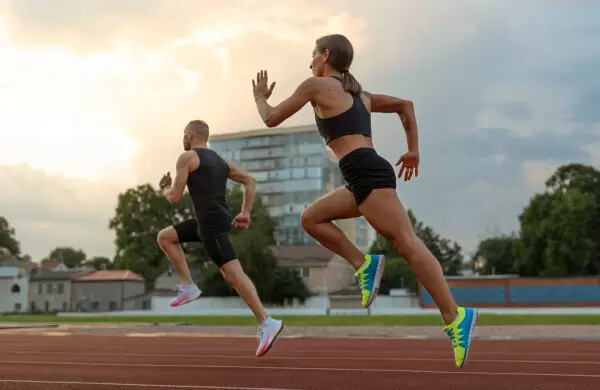
This is why two athletes with nearly identical physiological abilities can produce very different race results. Even if they share the same VO₂ max—the maximum amount of oxygen the body can utilize during intense exercise—the runner with superior efficiency will almost always have the advantage. Every stride is more controlled, every breath is used more effectively, and every kilometre demands less energy.
Elite distance runners understand this principle exceptionally well. Their success is not built solely on extraordinary fitness but on the remarkable ability to transform every stride into forward motion with minimal wasted effort. Their movements appear smooth and effortless because years of disciplined training have refined both their technique and their efficiency.

Fortunately, running economy is not determined by genetics alone. It is a quality that can be developed through consistent and intelligent training. Regular mileage builds the aerobic system, while strength training enhances muscular power and stability. Proper running mechanics reduce unnecessary movement, and carefully structured speed sessions improve the body's ability to maintain efficient form even under fatigue.
Small improvements in efficiency can produce significant gains over race distances. When your body requires less oxygen to maintain the same pace, you conserve valuable energy reserves, delay the onset of fatigue, and finish stronger. Rather than working harder, you begin to work smarter.
The greatest breakthroughs in distance running often come not from dramatic changes but from refining the details. Better posture, stronger muscles, improved coordination, and consistent training all contribute to a more economical stride. Over weeks, months, and years, these seemingly minor adjustments can transform performance.
Running economy reminds every athlete that speed is not simply about power—it is about precision. The runners who master efficiency are the ones who make difficult paces look comfortable, conserve energy when others begin to struggle, and consistently produce outstanding performances when it matters most.
In the end, becoming a faster runner is not always about asking your body to do more. Sometimes, it is about teaching it to do the same work with greater efficiency. That hidden advantage is often what separates good runners from truly great ones.
by Erick Cheruiyot for My Best Runs.
Login to leave a comment
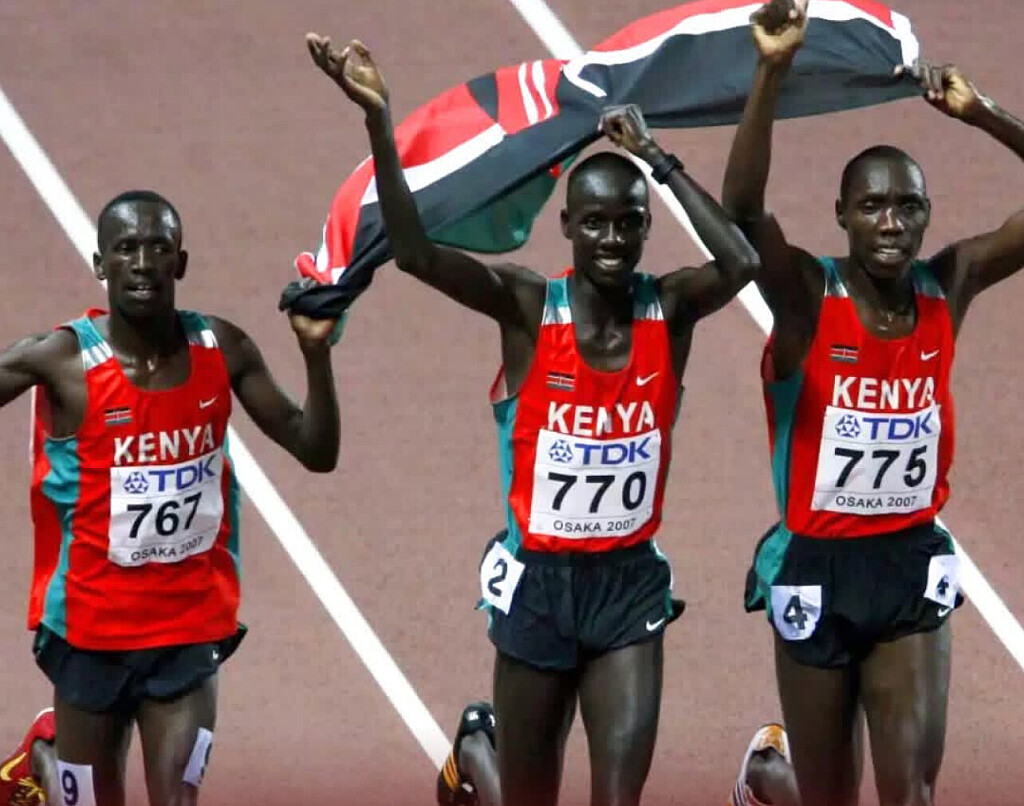
How One Tribe in Kenya Came to Dominate Global Distance Running
There may be no statistic in all of sports more astonishing than this one.
The Kalenjin, an ethnic group—often referred to as a tribe—in Kenya, make up about 13.4% of the country’s population, roughly 6.3 million people. On a global scale, they represent about one out of every 1,000 people worldwide.

Yet this small community has produced an overwhelming share of the world’s greatest distance runners.

Their dominance has been so complete, and so sustained, that it has been described as “the greatest geographical concentration of achievement in the annals of sport.” And it is hard to argue otherwise.
From the Rift Valley to the World Stage
Most elite Kalenjin runners come from Kenya’s Rift Valley region, particularly areas such as Nandi, Elgeyo-Marakwet, Uasin Gishu, and Baringo, where elevations range from 2,000 to 2,400 meters (6,500–8,000 feet) above sea level.
Here, running is not a hobby—it is part of daily life.
Children grow up walking and running long distances, often on dirt roads. Training at altitude is the norm, not a strategy. And success stories are local and visible, creating a powerful cycle of belief and opportunity.
Champions Across Eras
The Kalenjin impact on global athletics stretches back more than half a century.
Kipchoge Keino, one of the pioneers of Kenyan distance running, won Olympic gold in the 1500 meters at the 1968 Mexico City Games and the 3000-meter steeplechase in 1972, helping place Kenyan runners on the world map.
Since then, Kenyan athletes—many of them Kalenjin—have dominated:
• The 3000-meter steeplechase, winning Olympic gold in nearly every Games since 1968
• The 5,000 meters and 10,000 meters at World Championships
• The marathon, particularly at the World Marathon Majors
Masters of the Marathon
Perhaps nowhere is this dominance more visible than in the marathon.
Kalenjin runners have repeatedly won and controlled races such as:
• Berlin Marathon
• London Marathon
• Chicago Marathon
• Boston Marathon
• New York City Marathon
These victories are not isolated moments—they are part of a long, uninterrupted pattern.
At the center of it all stands Eliud Kipchoge, widely regarded as the greatest marathon runner in history. A member of the Kalenjin community, Kipchoge has:
• Won two Olympic marathon gold medals (2016, 2021)
• Set a world record of 2:01:09 at the Berlin Marathon
• Become the first human to run 26.2 miles in under two hours
He is not an exception. He is the most refined expression of a system that has been producing champions for generations.
Why This One Tribe?
No single explanation tells the whole story, but several factors come together in the Rift Valley:
• Geography: High altitude, rolling terrain, and ideal training conditions
• Physiology: Exceptional running economy and efficient biomechanics
• Culture: Running as a respected path to success and opportunity
• Environment: Group training, competition, and long-term development from a young age
Together, these elements have created something unmatched in sport.
A Phenomenon Without Parallel
Great athletes come from everywhere. But nowhere else has such a small, specific populationproduced such sustained global dominance across events, generations, and decades.
Not sprinting.
Not swimming.
Not cycling.
Not soccer.
Only distance running.
From the highland paths of the Rift Valley to Olympic podiums and marathon finish lines around the world, the story of the Kalenjin remains one of the most extraordinary achievements in human performance.
And it is still being written.
by Boris Baron
Login to leave a comment
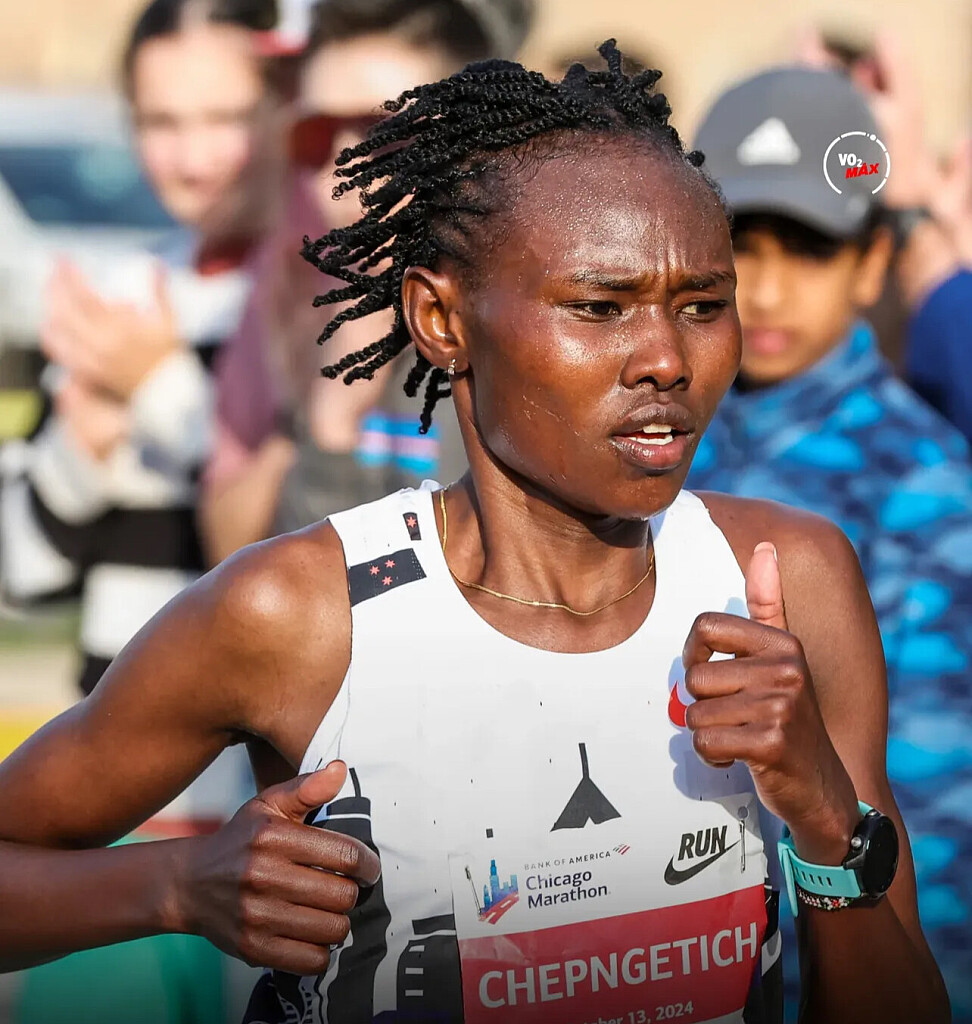
Will Her Marathon Record Still Stand? And should it?
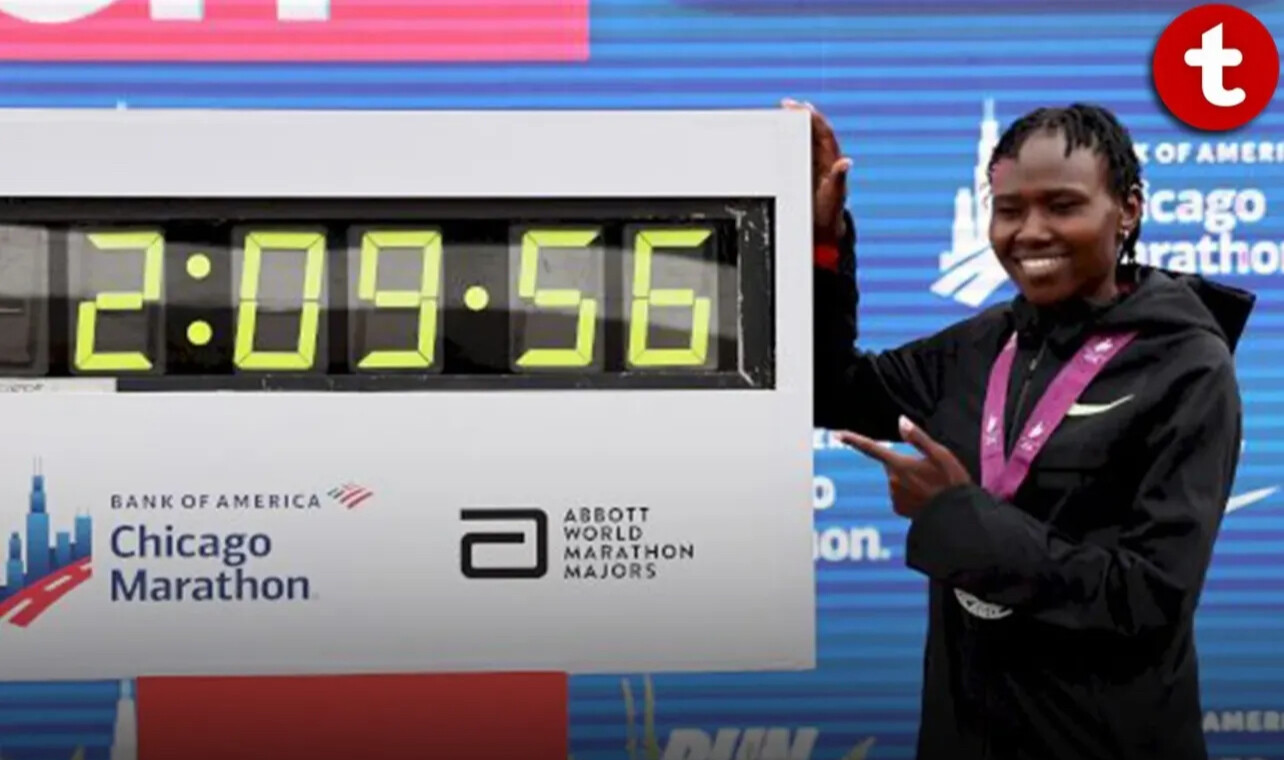
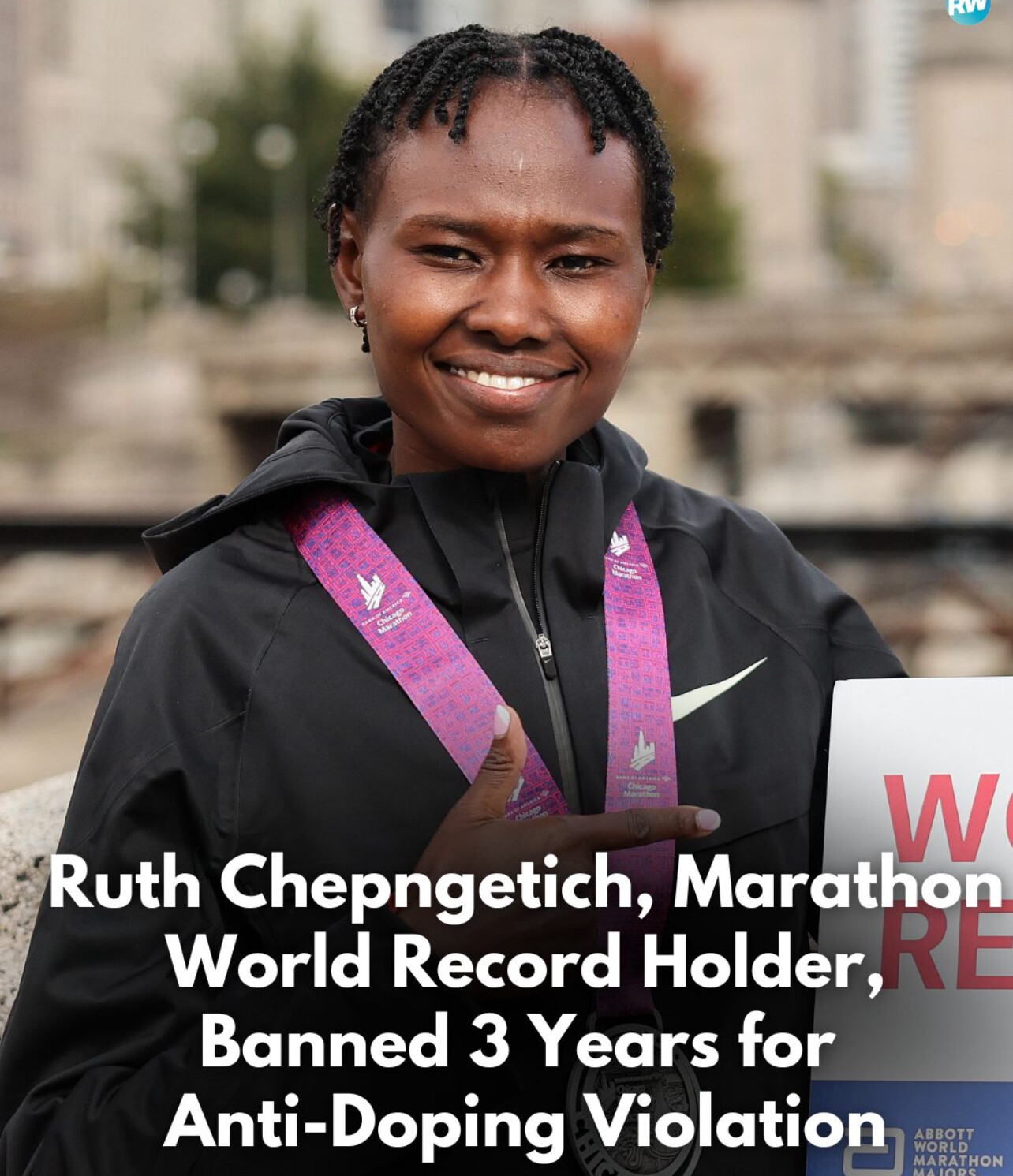
It’s been almost five years since Ruth Chepngetich survived the carnage on Doha’s Corniche to win the 2019 World Marathon title in suffocating heat. But her story has now taken a dramatic turn. In July 2025, Chepngetich was provisionally suspended by the Athletics Integrity Unit following a positive test from March 2025. That case reached its conclusion on October 23, 2025, when she was officially banned for three years. Despite the ruling, World Athletics has not yet nullified her 2:09:56 world record from Chicago, leaving the running world in a state of uneasy debate — can a mark achieved by an athlete later found guilty of doping still stand as the pinnacle of the sport?
The Record That Shocked the World

At Chicago 2024, Chepngetich didn’t just win — she obliterated the women’s marathon barrier. Clocking 2:09:56, she slashed nearly two minutes off the previous world record of 2:11:53, averaging roughly 4:57 per mile. Her first half of 1:04:16 hinted that she was chasing history, and she never faltered. The performance instantly became one of the most astonishing in distance-running history and redefined what many thought possible for women over 26.2 miles.
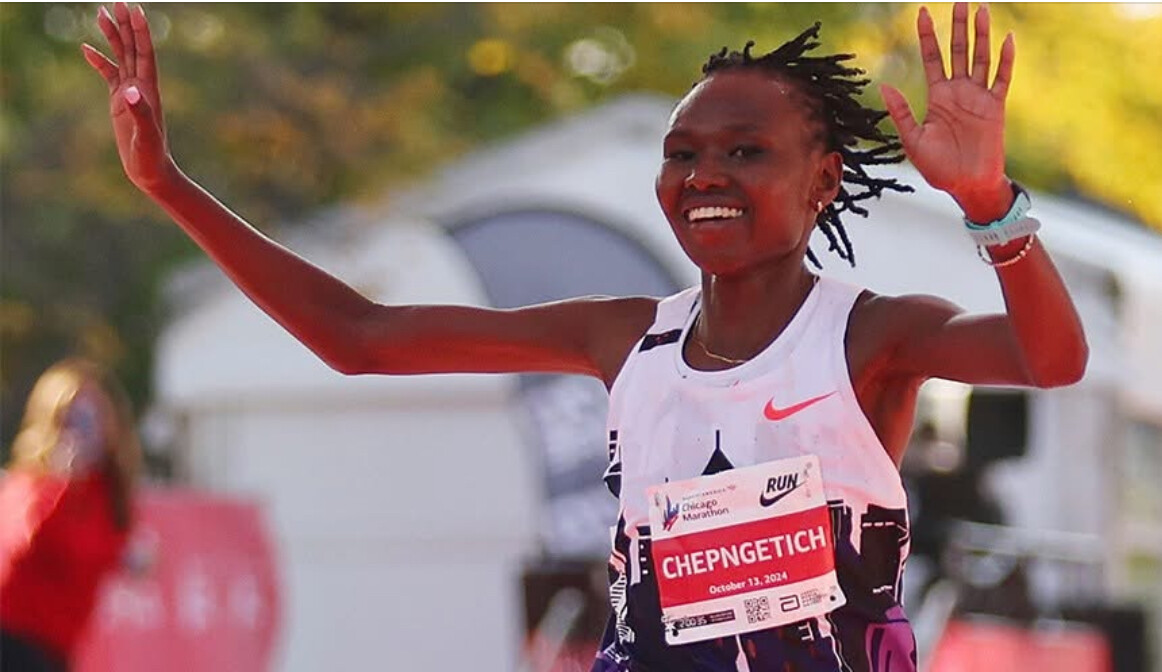
Talent, Technology, or Something Else?
In assessing whether this record will stand, several factors come into play — her undeniable talent, cutting-edge technology, and advances in fueling and pacing.
• Talent: Chepngetich’s pedigree is unquestioned — a world champion, multiple Chicago winner, and one of the most aggressive front-runners of her generation.
• Technology: Like nearly all modern elites, she raced in next-generation “super shoes” featuring carbon plates and advanced foams that improve running economy by several percent.
• Fueling and Pacing: A meticulously calibrated mix of carbohydrate drinks, male pacemakers, and near-perfect weather created ideal conditions for record-breaking.
Each of these factors may have contributed — but so, it now appears, did something illicit. Her three-year ban has cast a long shadow over what was once hailed as the cleanest, purest form of endurance achievement.
The Broader Question
Can a mark set under suspicion survive as a legitimate benchmark for future generations? The answer lies with World Athletics’ final ruling, but even if the record stands on paper, the perception of it has changed. Chepngetich’s run pushed the limits of human endurance — yet the revelation of a doping violation has blurred the line between brilliance and betrayal.
A Legacy Rewritten
If the ban is upheld, Chepngetich will likely be stripped of her record, joining a short but painful list of athletes whose names once glittered atop the record books before being erased. Regardless of the outcome, her performance will remain a pivotal moment — the day a woman first broke 2:10. It proved that such times are possible and that the next generation, running clean, will one day do it again.
Conclusion
Whether Ruth Chepngetich’s 2:09:56 survives the scrutiny of time or not, the marathon has been changed forever. Her run forced coaches, scientists, and competitors alike to reconsider what’s possible for women over the classic distance.
But now the question isn’t only how she did it — it’s why.
by Boris Baron
Login to leave a comment
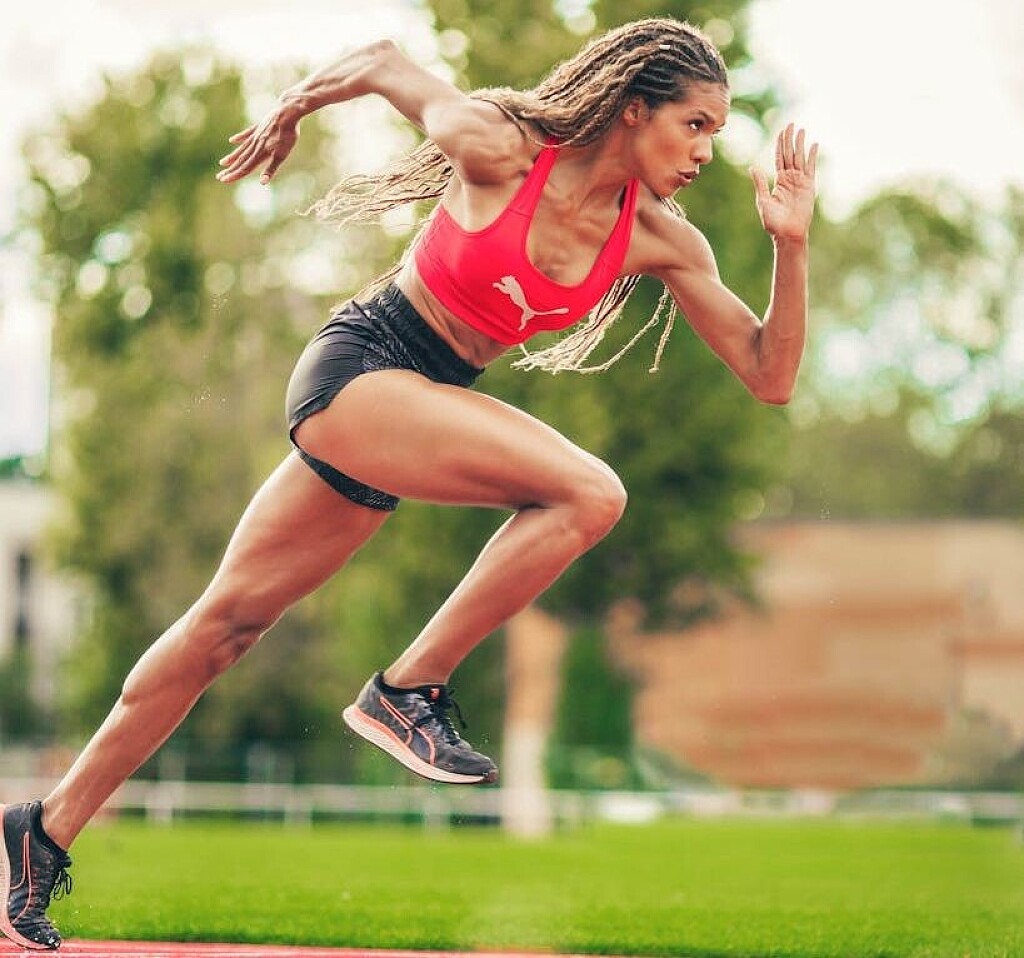
Unlocking Speed: How to Train Smarter, Not Just Harder
Every runner dreams of getting faster. Whether you’re chasing a new 5K PR, gunning for a sub-40 10K, or eyeing a breakthrough marathon time, there’s nothing quite like shaving seconds—or even minutes—off your personal best. But here’s the truth: speed isn’t just about grinding harder. It’s about training smarter.
Build the Foundation First
Speed starts with your aerobic base. You can’t build a skyscraper on shaky ground. Many runners make the mistake of jumping into intervals before their base is solid, only to plateau or burn out. If your weekly mileage is inconsistent or too low, speedwork won’t deliver the gains you’re chasing.
The solution? Commit to regular easy runs and gradually increase your weekly volume. Keep most of your mileage at a conversational pace. This aerobic engine is what powers every fast finish later on.
Add Intentional Intensity
Once your base is strong, it’s time to add focused intensity. Intervals, tempo runs, progression runs, and hill sprints teach your body how to run fast and hold pace under fatigue. But more is not always better. Overdoing hard sessions leads to injury or stagnation.
Limit yourself to 1–2 quality workouts per week. Your goal is adaptation—not exhaustion. Be consistent, not heroic.

Train Your Running Economy
Running fast isn’t just about cardiovascular fitness. It’s also about efficiency—how well you translate effort into forward motion. That’s where strides, form drills, and strength training come in. Just two sessions of resistance training per week can improve muscle balance and coordination.
Want bonus gains? Add plyometrics (like skipping or bounding) to enhance your ground contact power and neuromuscular sharpness. The smoother and more economical your stride, the faster your splits—without extra effort.
Mindset: The Final Gear
Speed begins in the mind. Confidence, mental toughness, and consistency often outlast raw talent. It’s not enough to hope you’ll run faster—you have to believe it. That belief is built in the quiet moments: when you finish the workout you almost skipped, when you log another steady week, when you visualize your goal on race day.
Fast runners aren’t born—they’re made. Piece by piece. Mile by mile.
So next time you lace up, remember: getting faster isn’t about magic workouts or chasing the pain. It’s about smart, intentional, consistent training. And it’s within your reach.
Speed is earned. Now go earn yours.
by Boris Baron
Login to leave a comment
Super Shoes or Super Runners? How Carbon-Plated Racing Shoes Are Reshaping the Distance Running World
A Bold Step Forward—or Too Much?
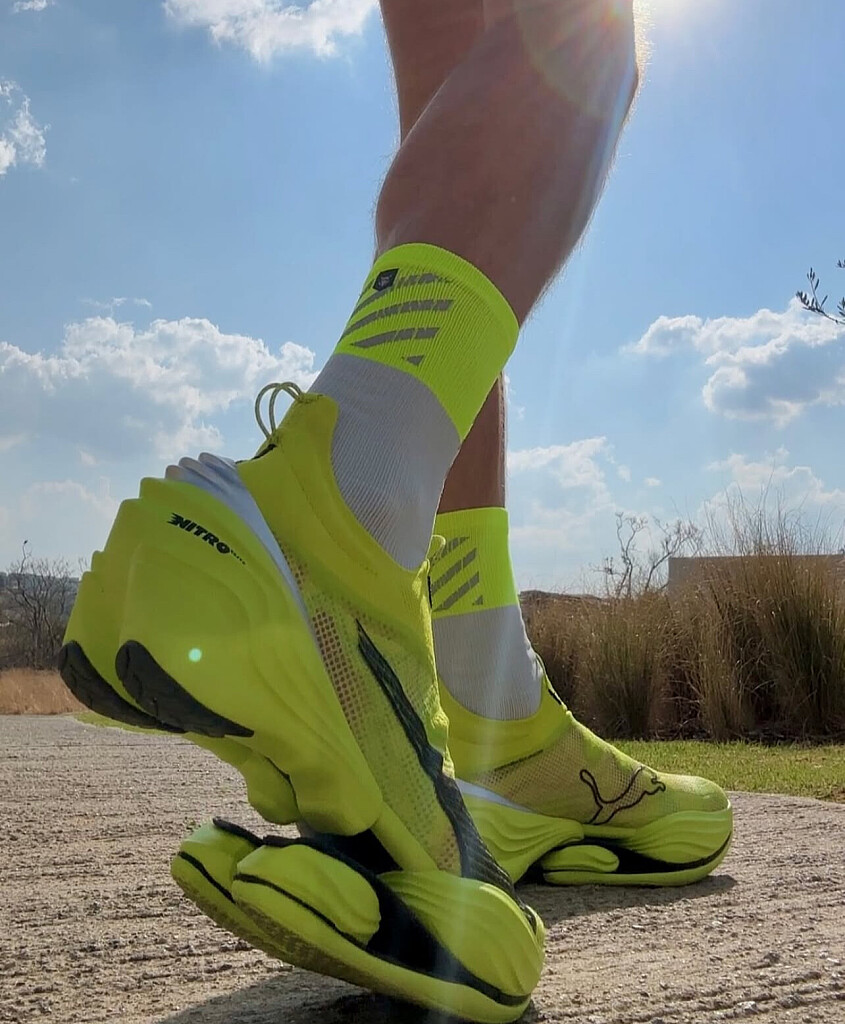
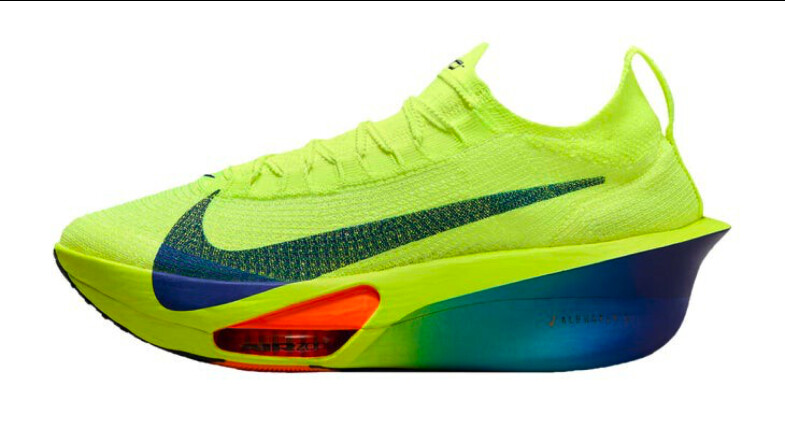
The eye-catching shoes in the images, with their bright yellow color and radical stack height, exemplify the cutting-edge engineering behind today’s carbon-plated distance racing shoes. These models, possibly from Puma’s Nitro range, showcase an exaggerated rocker design, thick midsoles, and strategically placed carbon plates, all intended to maximize energy return. However, this aggressive design pushes the limits of World Athletics regulations, which restrict stack heights to a maximum of 40mm for road races. If these shoes exceed that, they would be deemed illegal in sanctioned competitions—a fine line that highlights the tension between innovation and fairness in modern distance running.
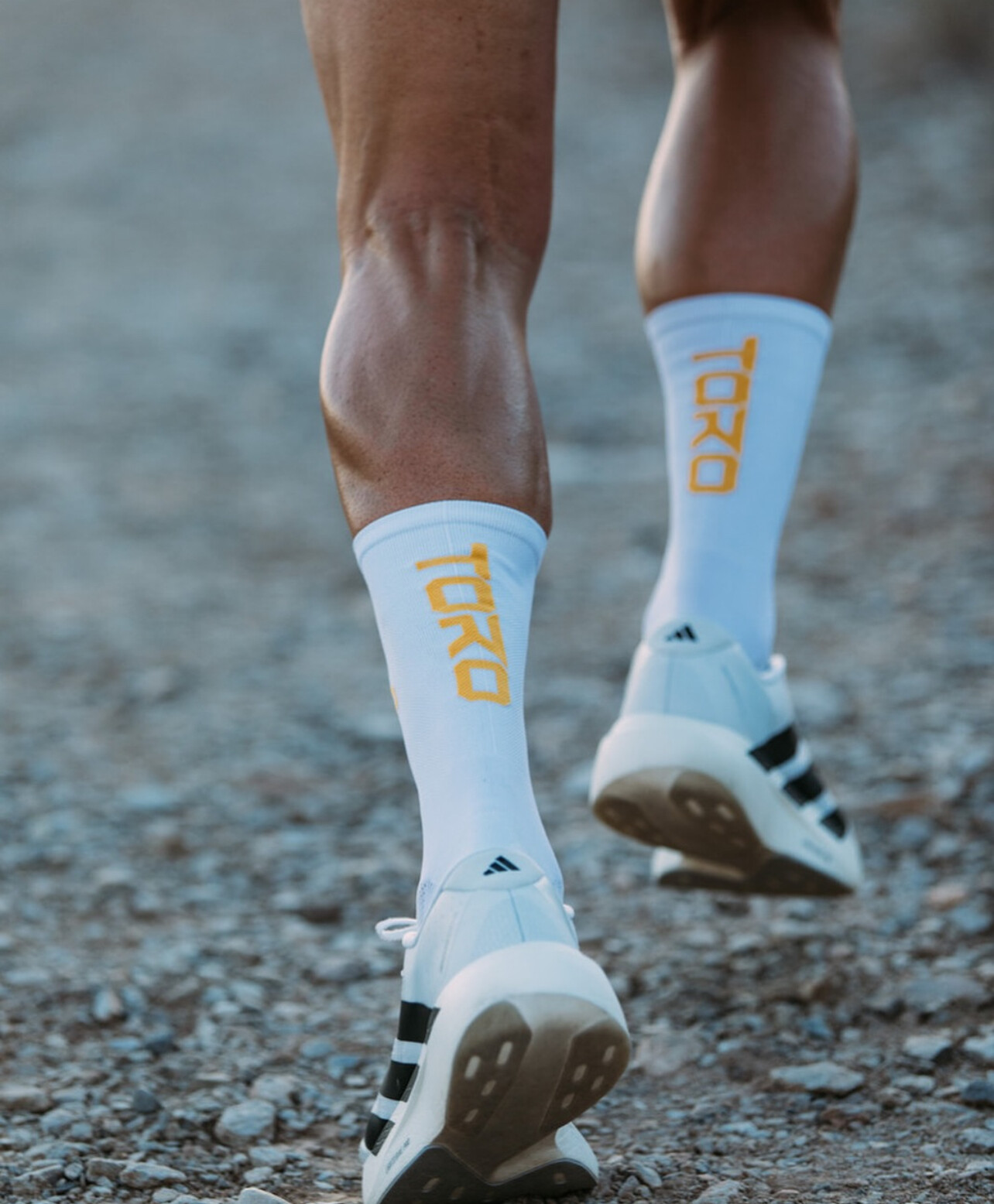
Over the past few years, the distance running community has witnessed a revolution, not just in athletic performance but in technology. At the heart of this transformation are the carbon-plated “super shoes,” with models like the Nike Alphafly 3, Adidas Adizero Pro Evo 1, and Saucony Endorphin Elite capturing headlines—and finish lines.
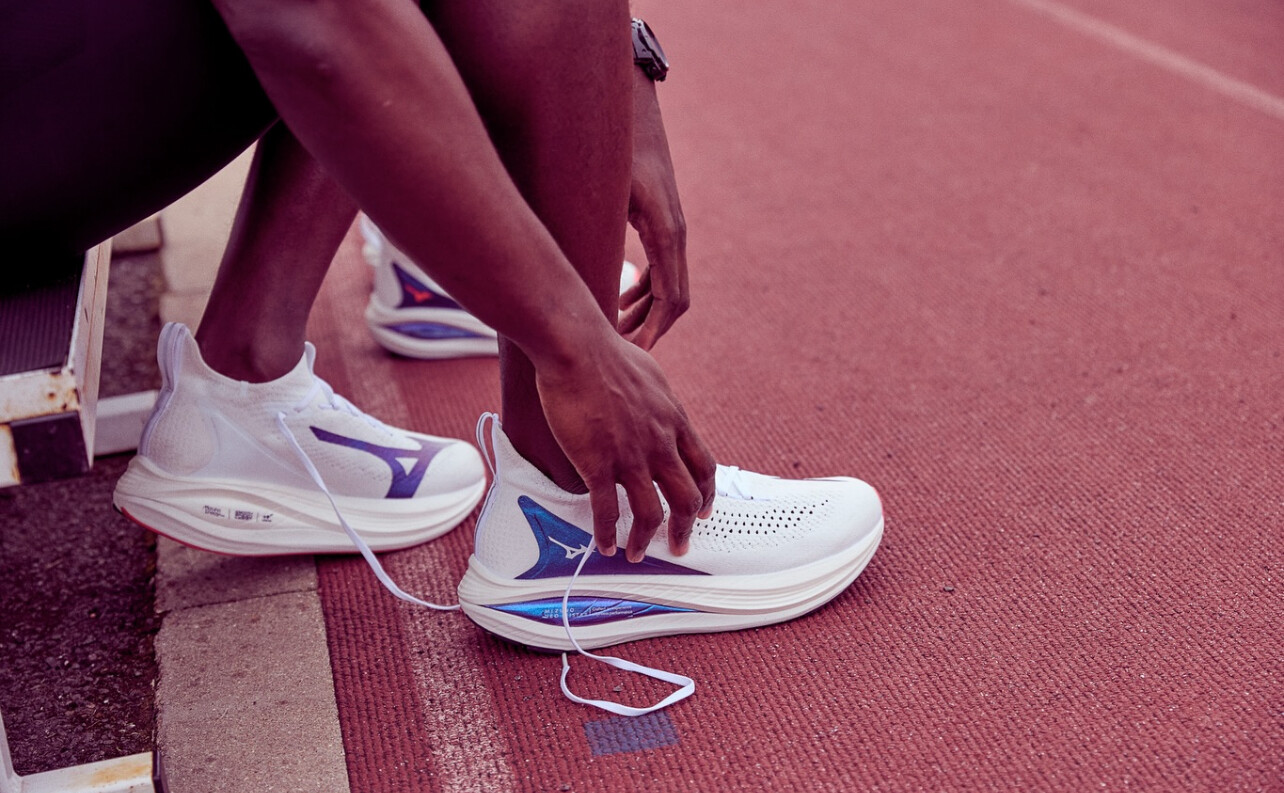
These shoes are more than just a flashy innovation. They represent a fusion of engineering, biomechanics, and material science aimed at optimizing energy return and minimizing fatigue. The secret lies in their construction: a lightweight, resilient foam midsole paired with a rigid carbon-fiber plate that creates a propulsive effect. Research has shown these super shoes can improve running economy by up to 4%, translating into crucial seconds—or even minutes—shaved off race times for elite athletes.
Marathon world records and personal bests are being rewritten at a blistering pace. From Eliud Kipchoge’s sub-two-hour marathon in a prototype Nike shoe to Tigst Assefa’s stunning women’s world record at the Berlin Marathon, the combination of human talent and advanced footwear is undeniable.
However, this technological leap hasn’t come without controversy. Critics argue that super shoes are blurring the line between natural ability and mechanical advantage, creating an uneven playing field. Access is also a concern: with many of these models retailing at $250 or more, elite athletes and well-funded programs often have a leg up on competitors who can’t afford the gear. Some purists feel this shift detracts from the simplicity and rawness of the sport, which historically prized grit and determination over gear.
Yet others argue that innovation is inevitable. After all, every era of distance running has had its technological advances, from cinder to synthetic tracks, from wool to moisture-wicking gear. Super shoes are merely the latest chapter in this ongoing evolution. They offer athletes a tool—how they use it is still up to them.
For amateur runners, these shoes are not just for the elites. Weekend warriors chasing personal records have embraced carbon-plated models, with many reporting improvements in comfort and reduced post-race soreness. But it’s essential to note that no shoe can replace proper training, nutrition, and race strategy.
Looking ahead, the super shoe debate will likely continue, especially as brands develop even more advanced models. World Athletics, the sport’s governing body, has already implemented regulations on shoe design and stack height to maintain some level of fairness.
In the end, the question remains: are we witnessing the rise of super runners, or is this the dawn of a new era where gear becomes as crucial as training? Either way, carbon-plated racing shoes have changed distance running forever—and there’s no turning back.
"As a master runner I like a shoe that does not have such a thick sole," says 77 year old lifetime runner Bob Anderson. "I have taken a few falls and these new super shoes could be a problem."
by Boris Baron
Login to leave a comment
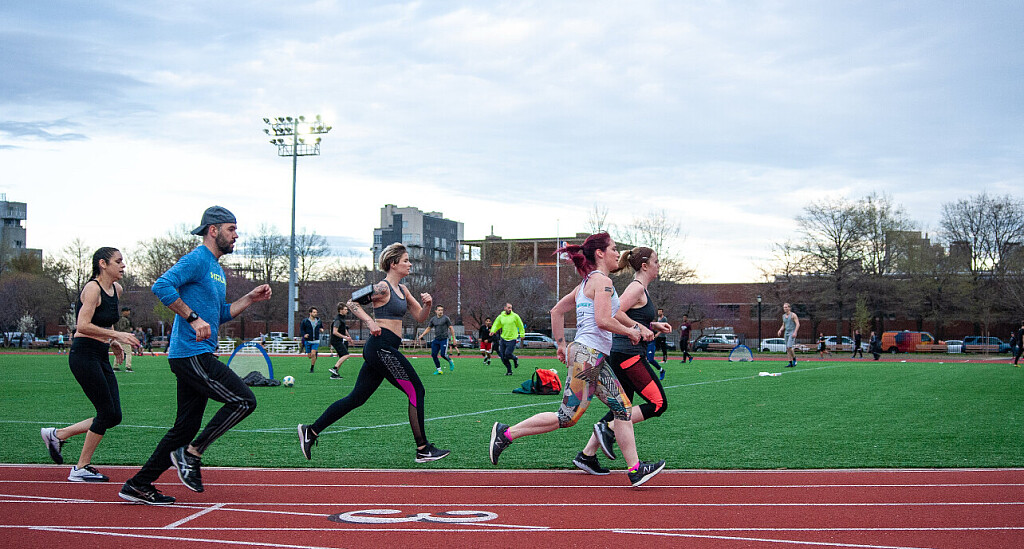
The Value of Speed Work for All Runners
Speed work isn’t just for elite athletes or sprinters chasing records. It’s a transformative training element that benefits runners across all levels and distances. Whether you’re aiming for a personal best or seeking to enhance your overall fitness, incorporating speed workouts can elevate your running experience.
Why Incorporate Speed Work?
• Enhanced Running Economy: Engaging in speed workouts trains your body to utilize oxygen more efficiently, allowing you to maintain faster paces with less effort.

• Increased Muscular Strength and Power: Short, intense efforts recruit fast-twitch muscle fibers, building strength and resilience that benefit all running distances.
• Improved Mental Toughness: Pushing through the discomfort of speed sessions builds mental fortitude, preparing you to tackle challenging segments during races.
• Injury Prevention: Speed training promotes a fuller range of motion and strengthens connective tissues, reducing the risk of common running injuries.
Dispelling Common Myths
• “Speed Work Is Only for Fast Runners”: Speed workouts are scalable. Whether you’re running 6-minute miles or 12-minute miles, the key is relative effort. Your body responds to the challenge, not the pace.
• “Speed Work Increases Injury Risk”: When integrated thoughtfully, speed training can actually fortify your body against injuries by enhancing muscular balance and joint stability.
Incorporating Speed Work into Your Routine
• Start with Strides: Introduce 4–6 strides of 20–30 seconds at a faster pace post easy runs to accustom your body to quicker turnover.
• Implement Interval Training: Alternate between periods of high-intensity running and recovery. For example, 4 x 400 meters at a challenging pace with 2-minute jogs in between.
• Explore Fartlek Runs: Blend speed and endurance by varying your pace throughout a run, such as sprinting between landmarks followed by easy running.
• Hill Repeats: Incorporate short, uphill sprints to build strength and improve running form.
Sample Beginner Speed Workout
• Warm-Up: 10-minute easy jog
• Drills: 5 minutes of dynamic stretches (e.g., leg swings, high knees)
• Main Set: 4 x 400 meters at a challenging but sustainable pace, with 2-minute recovery jogs between each
• Cool Down: 10-minute easy jog followed by static stretching
Incorporate such sessions once a week, ensuring adequate recovery and listening to your body’s signals.
Visual Enhancements
To complement the article, consider including the following images:
1. Hill Sprint in Action: An athlete powering up a hill, exemplifying strength and determination.
2. Track Interval Training: Runners engaged in interval workouts on a track, showcasing form and focus.
3. Dynamic Strides: A runner performing strides on a trail, highlighting speed and agility.
Incorporating speed work into your training regimen can unlock new levels of performance and enjoyment in your running journey. Embrace the challenge, and experience the transformative benefits firsthand.
by Boris Baron
Login to leave a comment

How to plan your best running season ever
he trails are icy, the sun feels like it’s on vacation, and runners everywhere are dreaming of warm race days. Whether you’re targeting a marathon, a speedy 5K or an epic trail run, now is the perfect time to map out your race season. Smart planning isn’t just about picking events; it’s about setting yourself up for a successful year.
Start with the big picture
What’s your “A” race? The one that gets your heart pumping just thinking about it? Centre your season around this event, then add smaller races to sharpen your skills or just for fun. Prioritizing ensures you’re peaking at the right time and not burning out halfway through the year. Not into racing? Choose one big goal (distance, FKT or PB, whatever your jam is) with less intense adventures building up to it.

Build a base first
Winter is the time for base training—a steady diet of easy miles to build endurance and strengthen your aerobic engine. Building a strong base reduces injury risk and improves long-term performance. Hold off on hammering out intervals or tough tempo sessions until your body is ready to handle the load.

Sprinkle in strength and mobility
Don’t just run—build strength and flexibility, too. Research suggests that strength training can improve running economy by up to eight per cent, while mobility work helps prevent the dreaded winter stiffness. Bonus: adding these elements now gives you a head start when the mileage climbs later.
Plan your peaks and breaks (and focus on the basics)
Races are exciting, but too many can derail your season. Aim for two or three peak races and use others as training opportunities. Don’t forget to pencil in recovery weeks post-race. Rest is where the magic happens—your body adapts, repairs and gets stronger. Make sure you plan to fuel well throughout your season, including during rest periods, and make sleep a priority.
Adapt as you go
While a solid plan is crucial, life happens. Injury, weather or unexpected commitments might shift your season. Stay flexible and ready to adjust. A successful runner isn’t just fast; they’re adaptable. When running feels challenging and motivation is low, remind yourself that you’re playing the long (consistent) game, and the payoff is coming.
by Keeley Milne
Login to leave a comment

Four fast, fierce strength sessions for runners
The holidays can feel like a whirlwind of festive chaos, with endless social events, last-minute shopping and zero time for your usual training routine. But staying strong doesn’t have to mean spending hours at the gym. These four quick bodyweight strength workouts are tailor-made for runners looking to stay fit without missing out on the holiday cheer.
Each workout is under 20 minutes and can be done at home or on the go—no equipment required. Add these after your regular run, or slide them into your schedule any time, anywhere—just make sure to warm up your muscles beforehand with at least five minutes of quick walking or easy jogging.
1.- 15 minutes to core power
A strong core improves posture and running efficiency.
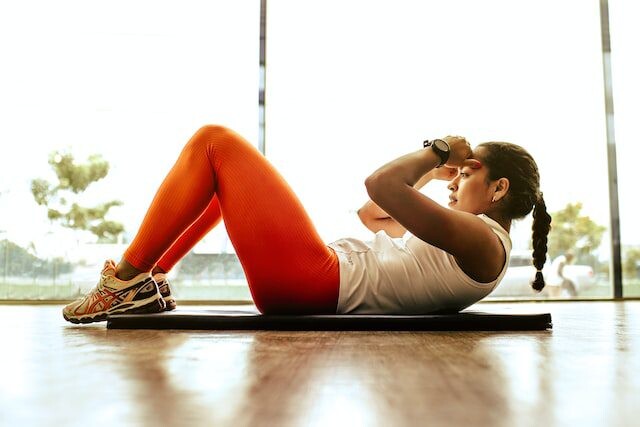
Plank with shoulder taps: 3 sets of 12 taps per side.Start in a high plank, feet shoulder-width apart. Tap your left shoulder with your right hand, then alternate.
Dead bug: 3 sets of 10 reps.Lie on your back, arms and legs lifted. Lower opposite arm and leg, then switch.
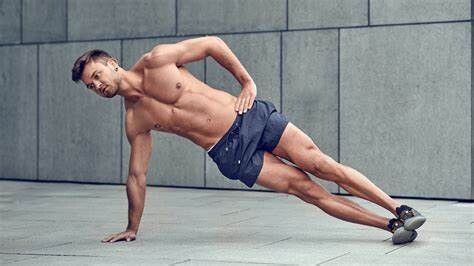
Side plank dips: 2 sets of 8 dips per side.From a side plank, lower your hip slightly, then lift back up.
2.- Balance and mobility boost
Improving your stability can boost running economy while keeping injuries away.
Single-leg deadlifts: 3 sets of 8 per leg.Stand on one leg, hinge forward, keeping your back straight, then return.
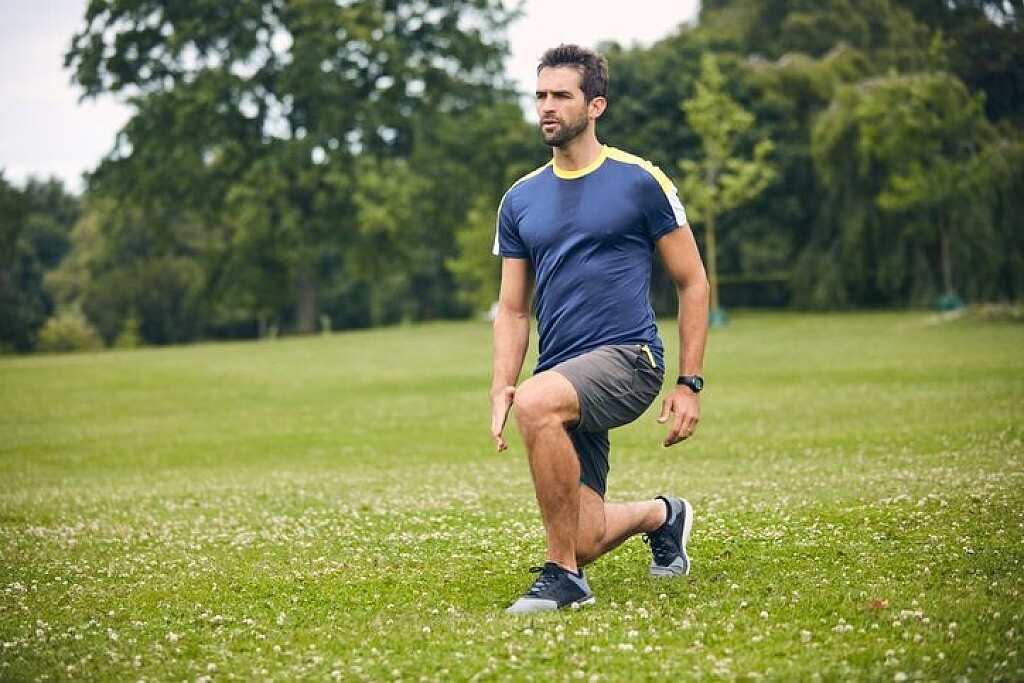
Step-through lunges: 2 sets of 10 per leg.Step forward into a lunge, then immediately step backward into a reverse lunge.
Toe-touches to sky reach: 2 sets of 12 reps.Touch your toes, then stretch up to the sky in one smooth motion.
3.- Full-body blitz
These exercises enhance overall strength and build better running mechanics.
Burpees: 2 sets of 8 reps.Start standing, drop to a push-up, then jump back to standing.
Push-ups: 3 sets of 10 reps.Keep your core tight and lower your chest until it’s just above the floor.
Mountain climbers: 3 sets of 20 seconds.From a plank, drive your knees alternately toward your chest.
4.- Quick lower body burn
Boost power for uphill runs and sprints.
Squat jumps: 3 sets of 10 reps.Perform a deep squat, then explode upward, landing softly.
Lunges with a twist: 3 sets of 8 per leg.Step forward into a lunge, twist toward your front leg, return to standing.
Glute bridges: 2 sets of 12 reps.Lie on your back, feet flat, and lift your hips until your body forms a straight line.
by Keeley Milne
Login to leave a comment

Three workouts from record-breaking trail runner and coach David Roche
David Roche is no stranger to running greatness. As a record-breaking trail runner and sought-after coach, Roche has helped countless athletes reach new heights with his balanced, science-backed approach to training. We have some of his favourite workouts to share with you.
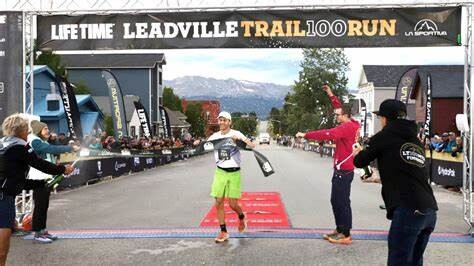
In August, Roche broke a long-standing record at Leadville 100 (in his 100-mile debut) and followed that with a winning performance at Javelina Jundred; despite it being a scorching hot day, Roche ran the second-fastest time ever on the course. His philosophy? Workouts should build fitness while keeping runners healthy and motivated. Here are three of his favourite sessions that deliver big results without overcomplicating your routine. For each workout, add a 10 (or more)-minute easy running warmup; follow the intervals with a 10 (or more)-minute cooldown.
1.- 16 x 1 minute fast, 1 minute easy

This workout is Roche’s year-round staple for developing speed and efficiency. The fast segments are run at your velocity at VO2 max (vVO2)—a controlled but challenging pace. Early in the training season, Roche suggests keeping the recovery portions of the run very easy, they can evolve into a quicker “float” as your fitness improves.
What it’s good for: Speed, efficiency and adaptability. Roche loves its versatility, noting it’s an ideal way to boost your running economy at any fitness level.
2.- 5-minute uphill intervals (treadmill)
Perfect for winter or when you want to reduce impact, this treadmill hill session is a powerhouse for building aerobic capacity. Start with 4 x 5 minutes at a moderate effort, with 1-2 minutes of easy recovery, on a 10 per cent incline (adjust between 4 per cent and 15 per cent based on comfort). More advanced runners can increase to 8-12 intervals.
What it’s good for: Aerobic development and strengthening muscles without overloading joints. Roche calls it a low-impact way to tackle big fitness gains.
3.- 5 x 3-minute hill repeats + tempo run
For aerobic power, Roche swears by hill repeats on gentle inclines. Run uphill for 3 minutes at a hard but sustainable effort, recover with an easy jog back down, and follow it up with a few miles of steady tempo running.
What it’s good for: Builds aerobic power and transitioning strength gains into endurance. Roche highlights the combo of hill work and tempo as a game-changer for all-around fitness.
Bonus: strides for all seasons
Though flashy workouts steal the spotlight, Roche insists strides—short bursts of 20-30 seconds at a quick but relaxed pace—are indispensable. Hill or flat, 4-8 strides after an easy run are his go-to for sharpening form and staying injury-free.
by Keeley Milne
Login to leave a comment
Four essential strength moves for runners
These simple exercises add only 20 minutes to your training regime, and are recommended by a coach and physiotherapist.
Let’s face it: runners love to run. But if you’re not adding strength training to your weekly plan, you’re leaving some serious performance gains on the table. We’re here to help you get started, with four exercises recommended by an expert.
Richelle Weeks, a certified running coach and physiotherapist at Sportscience Ottawa, says that every runner should consider adding a few essential exercises to their routine. “Any runner who is serious about their running should be strength training regularly,” Weeks recently said to Fit & Well. “When done properly it can improve performance by five per cent because it improves running economy. It can also help reduce common overuse running injuries, especially in the 40-plus runner.”
Finding the time for strength training isn’t always easy—runners are already fitting training hours into busy lives. But even a short, 20-minute workout once or twice a week can make a huge difference. Weeks has shared a straightforward routine on Instagram that you can do at home, targeting the key muscle groups runners rely on most: calves, quads, glutes, hamstrings and core.
So, what should you add to your lineup? Here’s a quick look at Weeks’ recommended moves. For all of these, she suggests starting with three sets of eight reps; once you gain strength, she suggests using heavier weights rather than adding more reps.
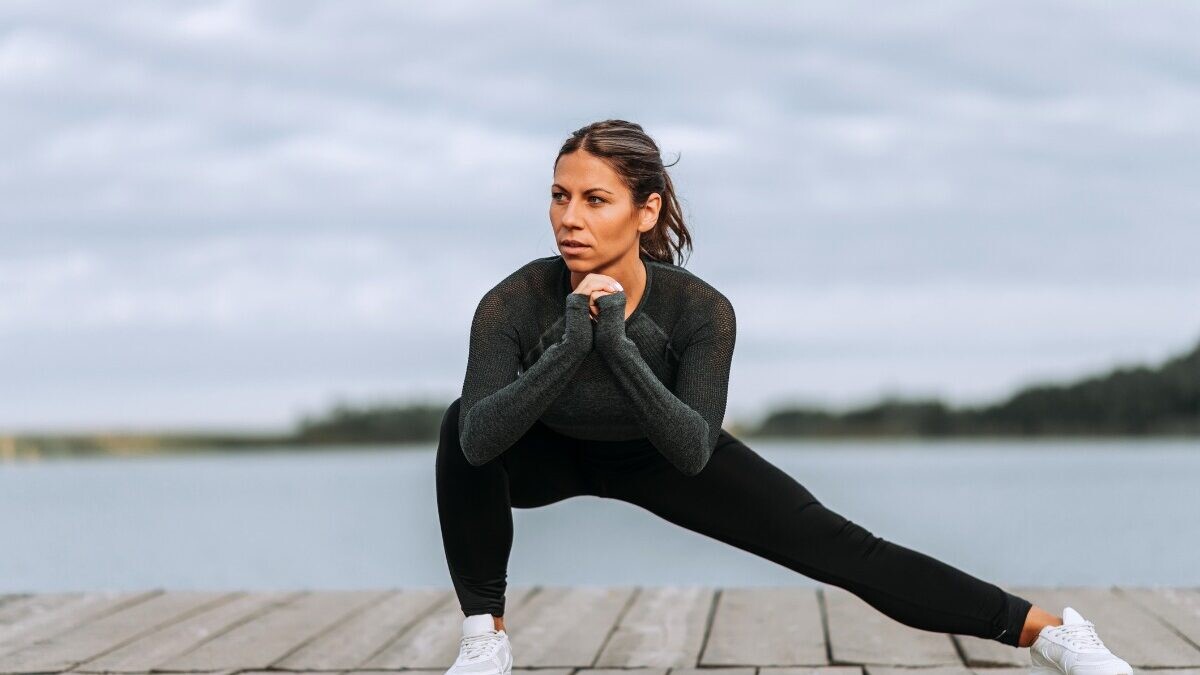
1.- Side lunge
This side-to-side movement builds hip stability and strengthens the glutes, quads and hamstrings, helping with lateral stability for better form and injury prevention.
How to do it: Step out to the side, bending your knee and keeping your other leg straight. Sink into a lunge while keeping your chest lifted, then push back up to standing. Repeat on both sides.
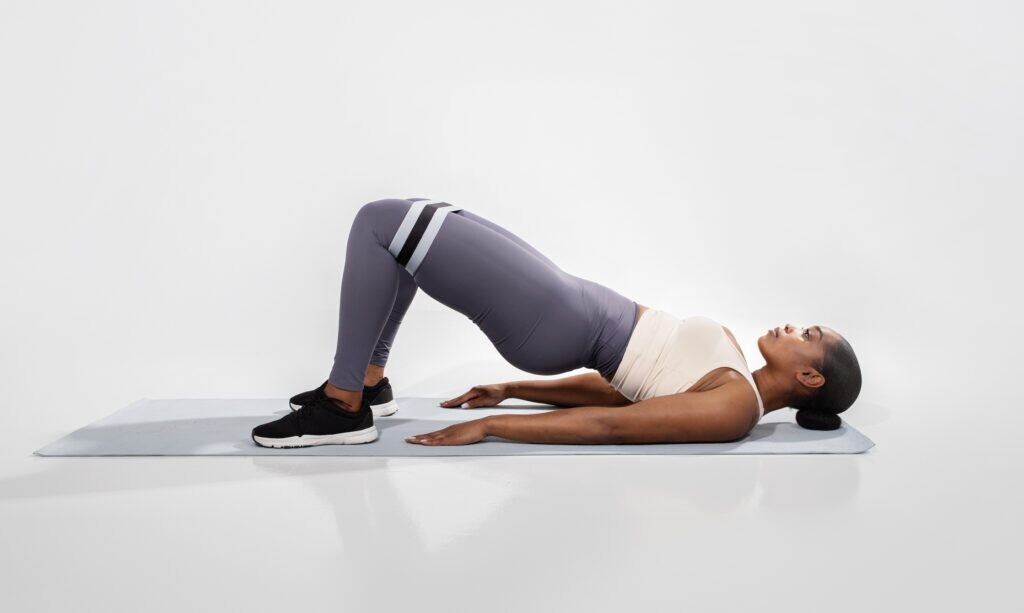
2.- Glute bridge march
This move activates the glutes and core, providing stability to your hips and helping reduce low back strain, a common problem area for runners.
How to do it: Lie on your back with knees bent, feet hip-width apart. Lift your hips to create a straight line from your shoulders to your knees. March each knee toward your chest while keeping your hips stable.
3.- Side plank rotation
The side plank rotation fires up the core and engages the obliques, improving your balance and trunk control—essential for strong, stable strides.
How to do it: Begin in a side plank, with your elbow beneath your shoulder and your feet stacked. Rotate your torso, reaching your top hand down under your torso, then return to the starting position. Repeat on both sides.
4.- Calf raise
Strong calves are crucial for a powerful push-off. Calf raises build strength and resilience in this often-overlooked muscle group, reducing the risk of Achilles and other lower-leg injuries.
How to do it: Stand with your feet hip-width apart, slowly rise onto your toes, and lower back down with control. Add weights or stand on a step to increase the challenge.
For those with extra time, Weeks suggests adding an upper-body exercise or two. “It can help maintain an upright posture when fatigued during a race, like at the end of a marathon. It can also help make arm swing efficient,” she says. Options include a push exercise like push-ups, shoulder presses or bench presses, and a pull exercise like pull-ups, rows or back flies.
Start small, but make strength training part of your weekly routine to see noticeable gains in performance and injury prevention. As Weeks emphasizes, these moves are quick, accessible, and just might be the key to your next PB.
by Marley Dickinson
Login to leave a comment
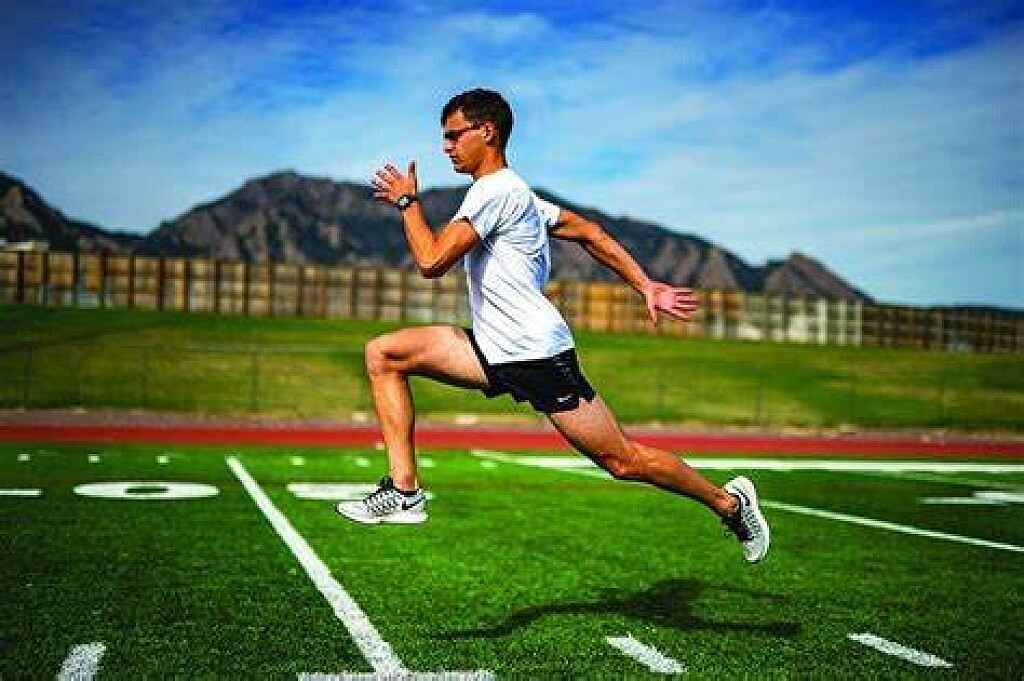
Runners, you need to try bounding
Bounding isn't just for kids on the playground; it's a simple way to boost power and efficiency.
Bounding might look like a fun playground activity, but it’s actually a powerhouse move that can seriously elevate your running game. This dynamic drill is about more than just hopping around; it’s about building explosive strength, refining your running form and giving your legs the boost they need to power through tougher workouts. Adding bounding to your routine can unlock new levels of speed and efficiency, and the best part? It’s easy for any runner to start, no matter your experience level.
A science-backed power boost
Bounding, an explosive running drill where you take exaggerated, powerful strides, mimics the mechanics of running but adds an exaggerated element of power and height. The act of bounding forces the legs to generate more force than usual, recruiting fast-twitch muscle fibres that are crucial for speed and explosive movement. Research shows that plyometric exercises like bounding can increase muscle stiffness, which, in turn, improves your body’s ability to store and release energy during a run, making you faster and more efficient.
Bounding also works the muscles in your hips, glutes and calves—important areas for maintaining a strong stride and reducing injury risk. By working on these muscle groups, runners can help prevent the fatigue that often slows them down in the later stages of a race or long run—it also improves ground contact time, meaning less stationary time and greater efficiency.

Whether you’re a beginner or an experienced marathoner, bounding is an accessible way to improve running economy. Its versatility means it can be done almost anywhere—on a track, a trail or right in your backyard. Because it doesn’t require special equipment, it’s easy to incorporate into your regular training routine. Bounding doesn’t just add power; it also increases your range of motion, helping you develop a longer and more efficient stride.
How to get started
Make sure to begin with a thorough warm up that includes a few minutes of easy running. Start with three sets of 10 bounds, focusing on form. Drive your knee up, push off powerfully with your back leg and land softly on the balls of your feet. Make sure to stay tall and controlled, allowing your arms to swing naturally with each bound.
by Keeley Milne
Login to leave a comment
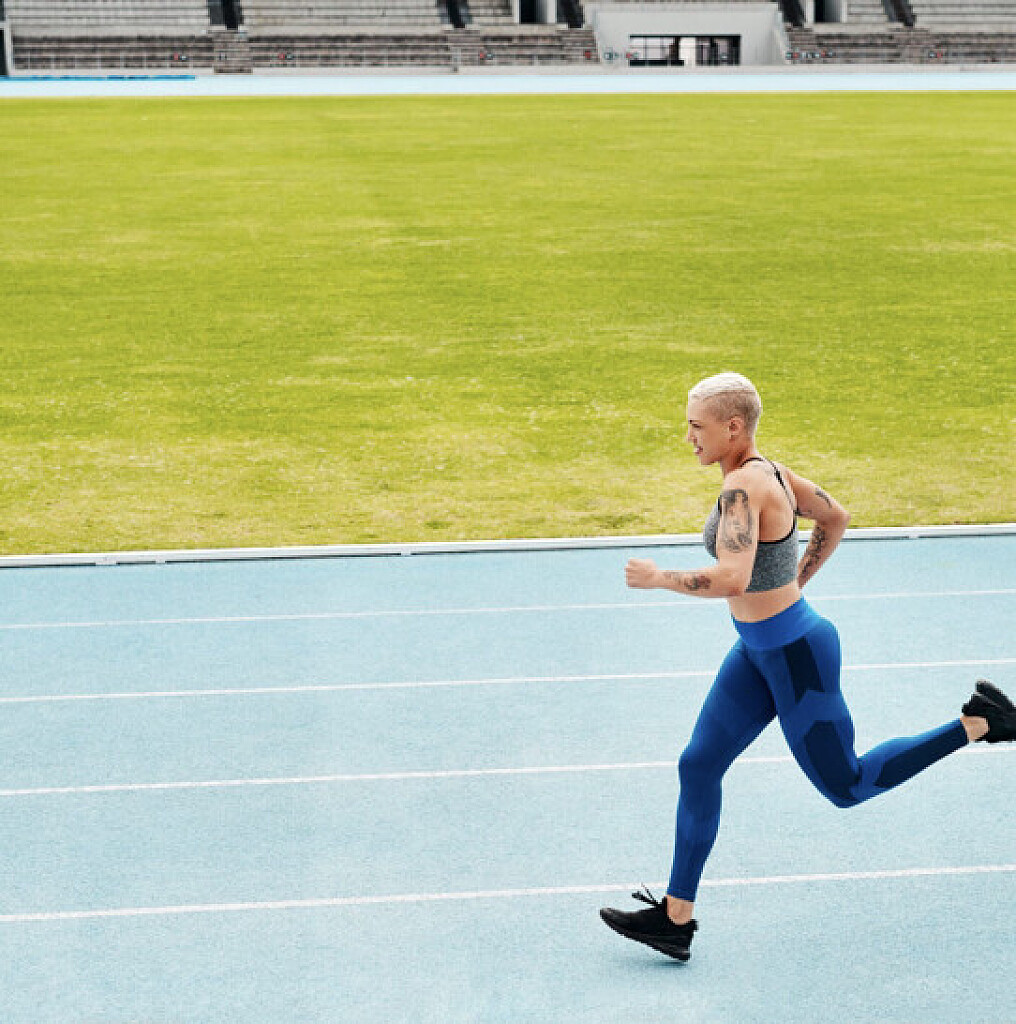
Which Running Tests Are Worth the Investment?
Experts break down which type of runner is most likely to benefit from tests including a gait analysis, VO2 max, and more.
Running itself is pretty basic—in the best of ways. All you really need is a pair of running shoes to get started. Of course, additional gear can be helpful, not to mention fun to test out and use to boost performance. Investing in certain fitness tests and assessments can also up the fun factor and give you an edge for training and race-day success.
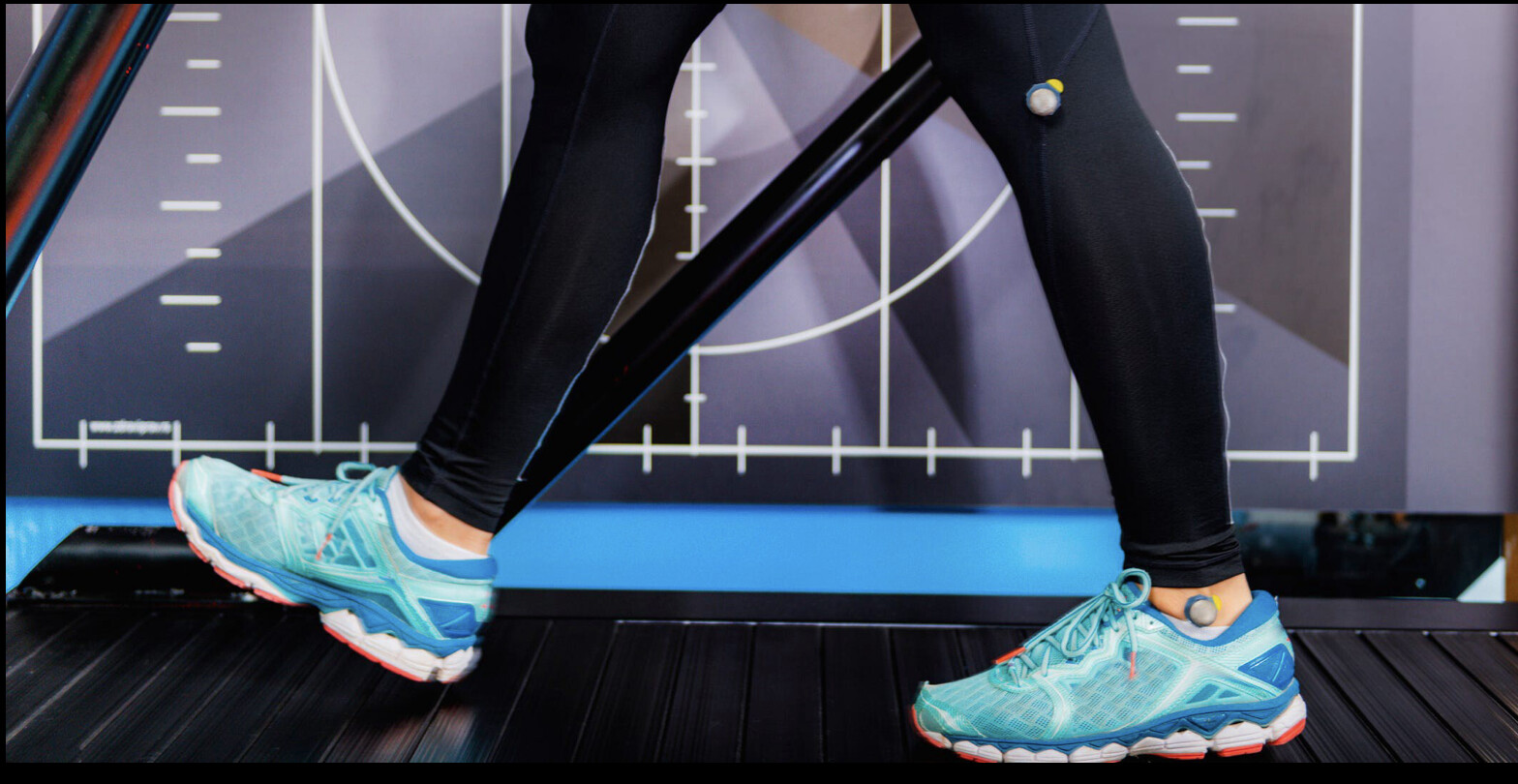
These days, you can find a ton of options in this realm, which can feel overwhelming, but experts caution against getting too caught up in the hype.
“Information and knowledge is a good thing, but sometimes there can be a little bit too much,” says James Robinson, M.D., sports medicine physician at Hospital for Special Surgery. He says that if you’re not having problems (like injuries or pain) and you’re hitting reasonable running goals, you probably don’t *need* any type of fitness test.
One exception: Keep up with your yearly physicals (during which you may have some blood work done) as a baseline. From there, your doctor may also suggest other specific tests (like a DEXA scan, which looks at bone density, for those with osteopenia or a history of broken bones).
That said, keep reading for what runners should know about some of the most popular fitness lab tests out there right now, how each can support your goals, and which type of runner is more likely to benefit from investing in each one.
If you’re chronically injured or looking to improve efficiency...
Consider a gait analysis
A gait analysis—which involves being recorded from different angles while running on a treadmill to look at form, including foot strike and body alignment—is especially useful for runners with chronic injuries like shin splints, patellofemoral pain, or IT band issues, says Robinson.
“The gait analysis can show things in your running mechanics that are making you more prone to injuries and especially certain types of injuries,” says Robinson. This analysis may also ID weaknesses or muscle imbalances and things like overstriding, overpronating, or a low cadence.
Runners looking to improve efficiency may also benefit from this test. “There can be ways to improve your biomechanics to improve your running efficiency,” like working on optimizing hip extension, which is important for minimizing vertical excursion (or too much up and down movement rather than straight ahead).
N’Namdi Nelson, C.S.C.S., an exercise physiologist at NYU’s Sports Performance Center adds that beginners can benefit from a gait analysis: “The activity you’re going to be doing is running, so why not do a running analysis to assess your biomechanics to see exactly what's going on in your gait, and identify things that you may be doing incorrectly and ways that you can improve it?” This will not only set you up for success in the sport of running in terms of performance, but help you avoid injuries before they show up in your stride.
Where to get it: Running labs like at universities and medical centers or at a local physical therapy clinic
Typical cost: Starting at about $150 (or free with your physical therapy appointment, depending on insurance)
If you’re new to running…
Consider a functional movement screening (FMS)
When doing a functional movement screen, a coach or trainer will typically put you through movements (e.g. a single-leg squat, push-up, and step-over) and watch how your body moves. If your hip drops to one side or your knees cave in on that squat, for example, that could indicate weakness in your core stability, Robinson says, which could affect your injury risk in running. The facilitator will then give you specific exercise recommendations to strengthen those weaknesses.
Nelson recommends the FMS for beginners in particular. “It’s going to give us more information as to what’s going on in the body,” he says. “So for example, if we see weakness in certain muscles or a decrease in flexibility in certain joint ranges, then we can try to get ahead of it and try to correct it, decreasing your chances of sustaining some type of running-related injury.”
Where to get it: Some places, like NYU, HSS, and the Columbia RunLab, offer running analyses which combine a gait analysis on a treadmill with a movement screen like the FMS so it’s one stop shopping. Nelson says that having information from both of these inputs—the gait analysis and FMS—can be helpful when making correlations.
You can also often get an FMS at a gym as part of an initial training evaluation, and it can be useful on its own. (If you’re choosing between a gait analysis and an FMS, Robinson argues the former is more beneficial as it’s more specific to runners.)
Typical cost: Included in the above services, with rates changing depending on insurance and/or location
If you’re more experienced and/or get sidelined by cramps…
Consider a metabolic profile test
This type of test typically includes a VO2 max test, lactate threshold evaluation, and metabolic efficiency testing. It involves a finger stick capillary blood test, as well as running on a treadmill at increasing intensity with a mask on to measure how much oxygen you’re consuming, as well as CO2 output and heart rate.
VO2 max measures your aerobic capacity. It can give you a sense of your cardiovascular fitness, which can be helpful as a benchmark to try to improve (often via short, intense intervals).
This test can also help you determine your max heart rate, and training zones based on that
“Lactate threshold is basically the point at which your body starts to go from aerobic to anaerobic and starts to really ramp up its levels of lactate,” says Robinson. “The lactate threshold basically tells a runner the pace at which they could run a short distance, like a 5K or 10K, which can be useful when you’re talking about training paces.”
Importantly, lactate threshold is something you can train and improve, Robinson adds. Knowing your threshold allows you to train in the proper zones to increase it. For example, if your lactate threshold is nine minutes per mile, then training with runs at that pace could help to improve that, Robinson says. (And then if you repeated this test months later, you can see if it improves.)
As for metabolic efficiency, Robinson says this can help you strategize fueling for long races—and it’s also trainable. This test profile measures how many calories you use per hour and the breakdown of fat versus carbohydrate at various exercise intensities.
“We have a lot of fat stores in our body, but our body has very limited carbohydrate stores,” he says. So, if the test reveals that you’re using mostly carbs for long runs, for example, you’ll run out of fuel quickly and knowing this would help you ID exactly how much nutrition you need to bring along.
Robinson says this test is most useful for runners trying to improve efficiency and pace. For example, if you want to run a sub-four-hour marathon, this test can be useful to one, see if you’re able to achieve that goal at your current fitness level, and if not, figure out which zones to train to get there.
The test can also be useful for those who deal with cramping when they run. “Usually cramps are a fueling issue more so than a true dehydration issue,” says Robinson. “So the metabolic profile can be useful for fueling to see why someone might be cramping, or for someone that hits a wall at mile 20 or 21 in the marathon, that could be a fueling issue, and the metabolic profile can definitely help clue you into strategies to help.”
Where to get it: At NYU, this test is called the “Sports Performance” evaluation and includes a gait analysis, stability and mobility screen, and VO2 max, with the option to add lactate threshold testing. At HSS, it’s Metabolic Testing and includes all of the metrics (VO2 max, lactate threshold, metabolic efficiency, and also running economy). You also may be able to find similar tests at other universities, medical centers, and running labs.
If you want to DIY…
Use your wearable data
Robinson acknowledges that many wearables now provide lots of info that you’d get as part of a formal gait analysis, like cadence, vertical oscillation, and stride length, in addition to metrics like VO2 max. “They’re pretty accurate now,” he says, adding that they can be more accessible and less expensive (assuming you’ve already paid for the wearable) than additional testing.
Still, sometimes people need help with interpretation of this data and they don’t know what to do with it on their own. “Seeing an exercise physiologist or a running coach could help them interpret some of the data,” he says.
Typical cost: Free (after the cost of a wearable, which typically starts around $200)
If you’re into lots of data and optimizing health…
Consider a blood panel
As long as you pass your yearly physical, additional blood work probably won’t tell you much more about your running performance, according to Nelson. “You can identify some nutritional deficiencies and things like that that may affect your performance, but those things may also be highlighted in your yearly physical,” he adds.
However, for those really into data and optimization of health and performance, a full blood panel might be helpful, so long as you know what to do with the information (or have someone to interpret the results). This additional screen may look into nutritional biomarkers beyond your typical blood test at a physical, like omega-3 levels, electrolytes like calcium and magnesium, and many other health-related metrics that are related to heart health, immune regulation, and more.
The one biomarker both experts agree is wise to get tested for all runners is vitamin D. “I do recommend that runners get their vitamin D checked regularly because if you are low in vitamin D, then that can put you at risk for bone injuries such as stress fractures, and vitamin D deficiency is extremely common, especially in places where you don’t get as much sunlight,” says Robinson.
Other than that, if you’re having specific issues or have concerns about your overall health, consult with your doctor to see what biomarkers, if any, should be tested.
Where to get it: Your doctor should be able to run additional lab tests if you have a medical need for them, but you can also try a direct-to-consumer service like Function or Inside Tracker.
Typical cost: Free one time a year with most insurance providers (for the basics), but around $500 for the DTC services.
by Runner’s World
Login to leave a comment
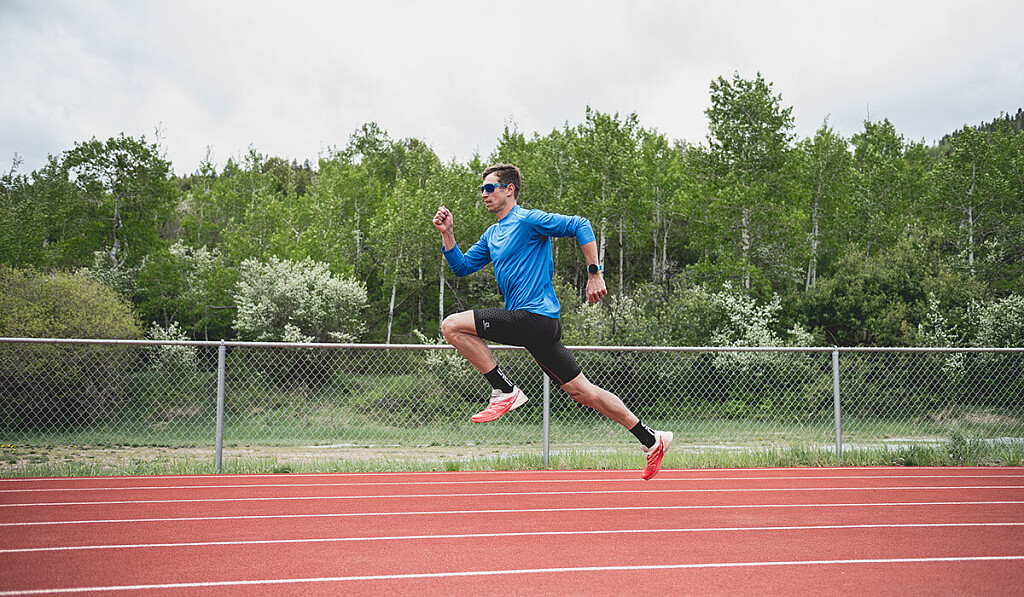
Runners, you need to try bounding
Bounding isn't just for kids on the playground; it's a simple way to boost power and efficiency.
Bounding might look like a fun playground activity, but it’s actually a powerhouse move that can seriously elevate your running game. This dynamic drill is about more than just hopping around; it’s about building explosive strength, refining your running form and giving your legs the boost they need to power through tougher workouts. Adding bounding to your routine can unlock new levels of speed and efficiency, and the best part? It’s easy for any runner to start, no matter your experience level.
A science-backed power boost
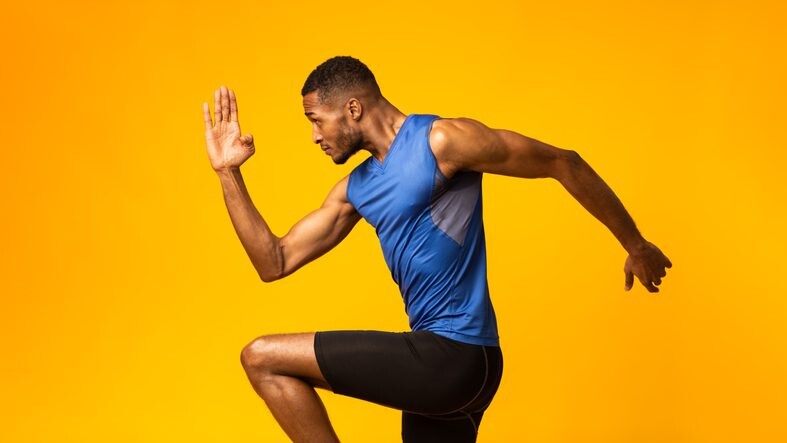
Bounding, an explosive running drill where you take exaggerated, powerful strides, mimics the mechanics of running but adds an exaggerated element of power and height. The act of bounding forces the legs to generate more force than usual, recruiting fast-twitch muscle fibres that are crucial for speed and explosive movement. Research shows that plyometric exercises like bounding can increase muscle stiffness, which, in turn, improves your body’s ability to store and release energy during a run, making you faster and more efficient.
Bounding also works the muscles in your hips, glutes and calves—important areas for maintaining a strong stride and reducing injury risk. By working on these muscle groups, runners can help prevent the fatigue that often slows them down in the later stages of a race or long run—it also improves ground contact time, meaning less stationary time and greater efficiency.
Why bounding is perfect for all runners
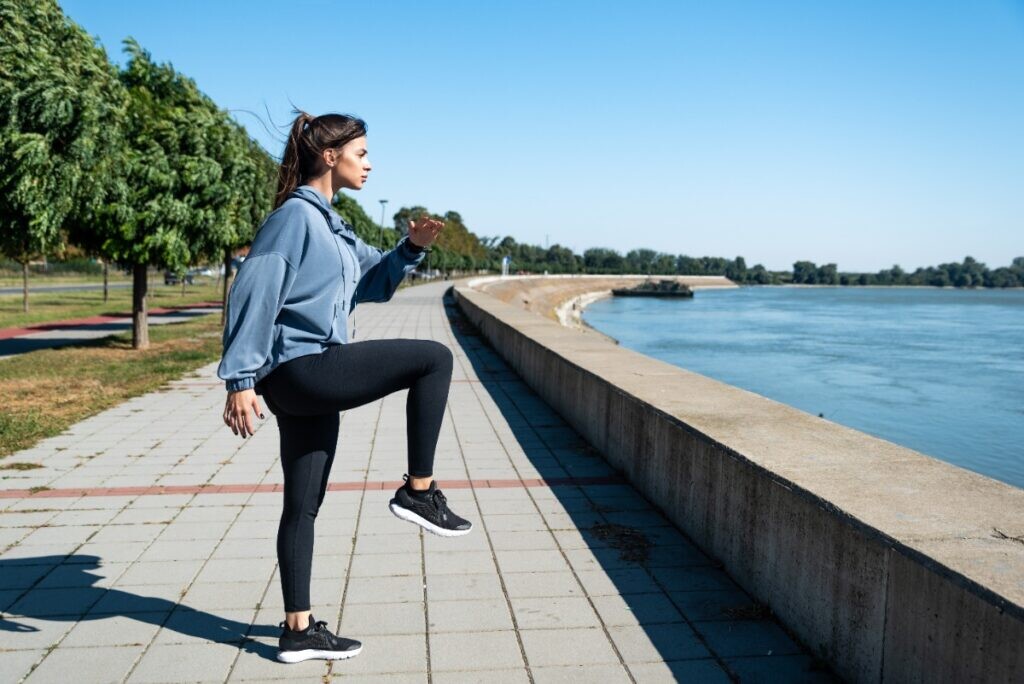
Whether you’re a beginner or an experienced marathoner, bounding is an accessible way to improve running economy. Its versatility means it can be done almost anywhere—on a track, a trail or right in your backyard. Because it doesn’t require special equipment, it’s easy to incorporate into your regular training routine. Bounding doesn’t just add power; it also increases your range of motion, helping you develop a longer and more efficient stride.
How to get started
Make sure to begin with a thorough warm up that includes a few minutes of easy running. Start with three sets of 10 bounds, focusing on form. Drive your knee up, push off powerfully with your back leg and land softly on the balls of your feet. Make sure to stay tall and controlled, allowing your arms to swing naturally with each bound.
by Keeley Milne
Login to leave a comment
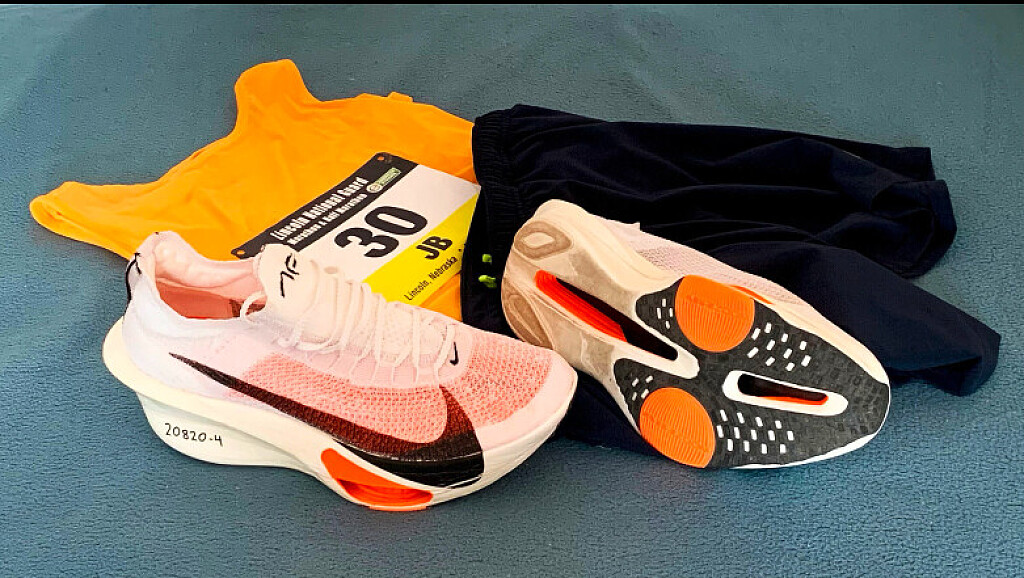
The Best Marathon Racing Shoes (2024)
After a year of testing, we've identified 12 marathon shoes that will boost your performance and make the race more enjoyable
While training undeniably has the biggest impact on your marathon performance, there’s one more thing you can do to ensure you’re ready to give your best on race day: invest in a pair of marathon racing shoes.
An effective marathon racing shoe can help reduce the repeated impact that miles after miles put on your legs while allowing you to get more energy out of each footstrike. Even more importantly, the right marathon racing shoe will provide you with a platform that is stable and cushioned enough to carry you through 26.2 miles in security and comfort. We’ve spent the last year rigorously testing every option on the market to help you easily pick the perfect pair for you.
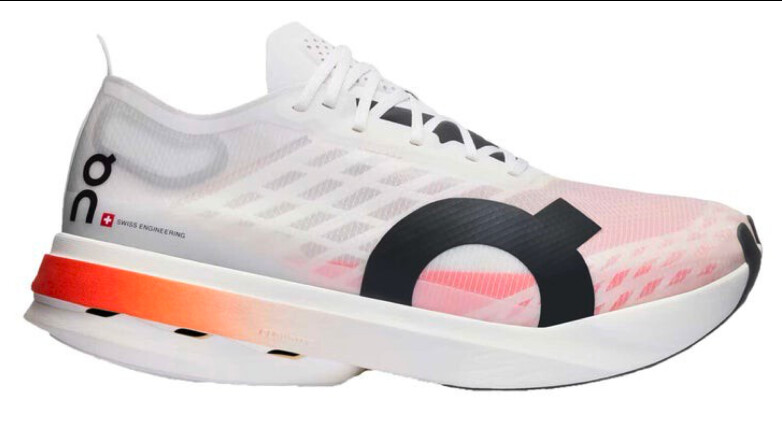
Seven years after the debut of the first super shoe, the thick-stacked, carbon-plated racers are ubiquitous at the front of every marathon and increasingly common among runners in the pack looking to optimize their performance. These shoes have been lab-proven to improve running economy by a few percentage points, making it easier to maintain a faster pace. Runners also report that, when running in a super shoe that complements their stride, they experience less muscular fatigue as well.
These are some of the super shoes that our testers found most comfortable and effective at marathon pace, but your experience may vary (as we found when we had three testers compare 16 super shoes. Every super shoe boasts some sort of ultralight, hyper-responsive foam with an embedded, curved carbon-fiber plate—but each delivers a surprisingly unique ride. You’ll have to experiment to find one that gives you wings.
See our “How to Choose Marathon Shoes” section at the bottom of this article for more guidance on whether you should consider a super shoe and how to select a pair that works for your stride.
Designed specifically for marathons, the Alphafly set a new standard as the fastest marathon shoe ever when Eliud Kipchoge wore them while breaking the 2-hour barrier in a staged marathon, clocking 1:59:40.2 in October 2019.
Now, in its third iteration, the Alphafly 3 continues to dominate as the ultimate marathon racing shoe. Designed with Nike’s Air Zoom Units in the forefoot and a PEBA-based midsole, our more competitive, efficient testers praised the Alphafly 3 for its bouncy, energy-efficient ride.
Subtle adjustments to the shoe’s geometry, including a wider footprint and carbon fiber plate, paired with repositioned Air Zoom Units and strategically sculpted midsole, give the Alphafly 3 a distinctly different feel from its predecessor. These changes effectively address some of the issues found in the Alphafly 2, which many felt was heavy and clunky compared to the original.
The new Alphafly 3 is surprisingly nimble, weighing in as the lightest Alphafly to date. Even running as fast as 5k pace, I found the Alphafly responded quickly, encouraging a fast turnover. That said, it may be too sharp of a tool for some runners, as those who require a stable stance may find it a bit wobbly, especially in the heel.
The redesigned Atomkit 3.0 upper is about as race-y as you can get—extremely light and airy. Though a bit tough to put on because of its tightly woven mesh (like previous models), the new upper is highly breathable and secure, with sawtooth laces that stay tied tight throughout the marathon. You can read our full Alphafly 3 review and how it compared to other racers in our .
A stark contrast to On’s previous carbon fiber racing shoe, the firm-feeling Cloudboom Echo, the Cloudboom Strike is soft, bouncy, and fun to run in. Runners who can maintain their balance on what is a fairly unstable platform are rewarded with a lively, highly cushioned ride that’s comfortable and responsive, making it ideal for long-distance efforts.
The secret to the Strike’s sweet ride lies with the insole. On swapped out the traditional Strobel (a thin layer connecting the upper to the sole) and sockliner for a thick, removable layer of high-energy PEBA foam, thus increasing the amount of performance-enhancing foam underfoot. The result is a legal racer with cushioning that feels like it exceeds the World Athletics’ maximum stack height.
The smooth, ultra-cushioned ride is surprisingly quick for such a thick shoe, responding nimbly even when exceeding 5k pace. The shoe accommodated both long-striding testers and those who prefer to turn over faster.
The Cloudboom Strike fit runs long enough that you might consider sizing down by half a size. However, the one-piece mesh upper, which breathes well and effectively repels moisture, easily cinches down for a secure foot hold. You can read our full Cloudboom Strike review.
The Asics Metaspeed Sky Paris gives runners the best of both worlds—a highly energetic, cushioned feel and a stable ride. Super shoes’s tall, thick midsoles often create a wobbly sensation, forcing your stabilizing muscles to work harder to maintain balance.
The key to the Metaspeed Sky Paris’s stability is its wide base under the forefoot, coupled with an updated, wider carbon fiber plate. This makes the Metaspeed Sky Paris an excellent choice for beginner, intermediate, or unstable runners who want to enjoy the benefits of super shoe technology while still having a supportive, predictable platform. One back-of-the-pack tester noted that the broad base provided a “smooth ride, and the running dynamics worked extremely well with my foot and my own personal gait.”
The shoe’s stability, however, doesn’t compromise its stride-lengthening performance for experienced, efficient marathoners. Testers found that the Metaspeed Sky had the ability to work well for a wide range of runners and paces.
The shoe also has a new, more pliable and comfortable mesh upper and midsole foam that’s approximately 8 percent lighter and, Asics says, has an 8.2 percent better energy return over the previous model. The best part: The shoe got nearly an ounce lighter, making it one of the lightest marathon-racing options. You can read more about the Asics Metaspeed Sky Paris in our .
The groundbreaking adidas Adizero Adios Pro Evo 1 shatters the mold as the lightest super shoe ever made, weighing nearly 2 ounces less than the next lightest super shoe. Yet from the outset, I was amazed that a shoe this light could have this much cushioning.
The Pro Evo 1’s rocker is long and aggressive, curving up to a high toe spring (elevation of the toe box). Initially, at well-below marathon speeds, it felt forced and unnatural. However, once I picked it up to around marathon pace and my toes engaged with the steep curve, I sensed a smooth rolling action that energetically pushed me forward. I believe marathoners averaging seven-minute miles or faster will see the most benefit from these.
Besides being the lightest super shoe on the market, the Evo 1 also claims the title of the most expensive. That, coupled with initial talk of the shoe only working for a single marathon, makes the Evo 1 a big investment. Our test pair, however, lasted nearly 200 miles before the midsole showed signs of wear. While not every runner can expect similar durability, those with an efficient stride should enjoy everything the Evo 1 has to offer much longer than a single marathon. You can read our full review and durability test.
The challenge with super-soft, highly responsive cushioning in super shoes is that they often lack stability, demanding an efficient stride to maintain control as they first squish, then bounce back strongly, magnifying forces—whether propulsive or unbalanced. For runners seeking a more stable carbon fiber shoe without losing the performance benefits, the Brooks Hyperion Elite 4 offers a firmer underfoot feel than most.
Instead of the heavily cushioned sink and trampoline-like bounce of many of today’s super shoes, the nitrogen-infused DNA Flash V2 midsole is extremely responsive, pushing back against the foot immediately and ready to pounce on the pace when needed. That lively firmness, combined with a curved carbon fiber plate embedded in the rockered midsole, gives the Brooks Hyperion Elite 4 a smooth, stable, and forward-propelling ride.
In terms of fit and feel, Brooks nailed the basics. The thin, breathable mesh upper perfectly embodies a racing shoe’s ideal—minimalistic, with a secure midfoot lockdown that makes you feel firmly in control.
These are not for you if you prefer a highly cushioned, springy running experience. However, if you feel bounced around by most super shoes and want a firmer-feeling shoe that offers a good mix of stability and fast-rolling performance, the Brooks Hyperion Elite 4 is the shoe you’re looking for. You can read more about the Brooks Hyperion Elite 4.
With a ride that feels like bouncing on a pogo stick, the Hoka Cielo X1 delivers unmatched spring with every stride. Designed with two layers of über-responsive PEBA foam separated by a winged carbon fiber plate and a severe, heel-to-toe rocker profile, testers marveled at how much fun these shoes were. One tester described running in them as “feeling effortless,” adding, “It almost feels like you’re cheating when you’re wearing these shoes.”
However, a few testers had mixed reactions to the shoe’s prescriptive geometry. The stiff platform and aggressive rocker design seemed most effective for a midfoot strike and within a narrow pace range, specifically around six to eight minutes per mile for our testers.
Another knock concerned the shoe’s stiff, ribbon-like shoe laces. Nearly every tester commented on how difficult it was to get a tight, dialed-in knot. Still, if you can get past the less-than-ideal lacing—or choose to swap them out entirely—and are comfortable in the pace range sweet spot, the ride is worth it and could deliver a fun, fast marathon.
Cielo X1 clocks in at a hefty 9.3 ounces for mens size 9 and for womens size 10, making it the heaviest super shoe on the market. Thanks to the high-energy foam, however, we still found it held its own in the super shoe pack when it came to performance. You can read more about the Hoka Cielo X1.
Unfortunately, there are not a ton of options when it comes to highly cushioned zero drop racing shoes. Fortunately, the only option is a really good one. Now in its second iteration, the Altra Vanish Carbon 2 features three more millimeters of softer, more flexible underfoot cushioning heel to toe. Embedded in the soft, nitrogen-infused, TPE-based midsole is a full-length carbon fiber plate that adds a bit of stabilizing and propulsive stiffness without feeling controlling.
The Vanish Carbon 2’s midsole doesn’t have as dramatic a trampoline sensation as some other marathon racing shoes, but it delivers a smooth, cushioned ride that’s hard to beat. Even as someone who typically struggles with zero-drop shoes, I found the Vanish Carbon 2 enjoyable and surprisingly easy to run in, thanks to the high stack and rockered profile. Testers said the low heel helped increase their cadence and kept them more on their toes.
Despite not having a ton of structure, the lightweight, breathable mesh upper does a surprisingly good job of securing your midfoot while your toes have room to splay in Altra’s signature wide toe box. You can read more about the Altra Vanish Carbon 2.
When it comes to replicating the performance benefits of road super shoes for the trail, shoemakers have struggled to achieve the same level of success. The adidas Terrex Speed Ultra is a standout exception. Designed with one of the most aggressive rockered profiles on a trail running shoe, the Terrex Speed Ultra feels awkward initially, almost like you’re walking downhill.
However, once you get accustomed to the unique profile that wants to push you forward, you’re rewarded with a propulsive ride unlike any other trail running shoe. Inside, the high-performance TPEE (Thermoplastic Polyester Elastomer) midsole incorporates a four-pronged, slightly flexible PEBA-based rod system, providing extra stiffness to the soft foam without creating instability on technical terrain. While it manages well on groomed or rocky sections, like most highly cushioned trail shoes, it’s not designed for prolonged precise technical maneuvering.
Staying true to its race-ready design, the upper is razor-thin and slightly padded to keep weight at a minimum. The quick-drying synthetic material, combined with a gusseted tongue and sawtooth lacing that bites like a threatened rattlesnake, provides excellent midfoot lockdown. The only drawback is the unstructured heel counter, which can cause some heel lift if the laces aren’t pulled extra tight. You can read our full review of the Adidas Agravic Terrex Speed Ultra.
Not everyone wants or needs a super shoe when covering 26.2 miles. Here are some top options without a rigid carbon-fiber plate, sorted with consideration for specific needs and preferences.
Supershoes’ tall, highly cushioned soles create an unstable and wobbly platform, especially for beginner runners who spend more time in contact with the ground than their faster counterparts. Plus their rigid, curved plates dictate how the foot rolls, and are tuned to be optimal for fast, efficient runners.
Puma’s Deviate Nitro 3 combats these issues by combining two foams, a softer one closer to the foot with a firmer one closer to the ground, separated by a semi-flexible carbon-fiber composite plate. This design offers most of the cushioning and propulsive benefits of a super shoe, without the instability or the prescriptive stride control.
What sets the Deviate Nitro 3 apart most, however, is its remarkable ability to deliver a smooth ride at any pace. There’s nothing restrictive about the shoe—it adapts to your running speed and performs effortlessly, making it double as a great everyday trainer as well as a racing shoe.
Keeping comfort in mind, the upper features an engineered knit mesh with moderately padded heel collar. Testers felt the fit was true to size with a small amount of stretch throughout the upper to accommodate foot swelling or irregularities, such as bunions. The stretchy laces received mixed reviews, as one found he needed to keep tightening them to feel secure during the run. You can read our full review of the Puma Deviate Nitro 3.
When the Saucony Tempus first came out, we were blown away by its ability to control the soft, unstable nature of a PEBA midsole without taking away its high-energy, performance-enhancing benefits. Keeping everything the same underfoot, but adding a better fitting, more breathable mesh upper, the Tempus 2 continued to wow us with its supportive, yet lively ride.
The combination of soft, bouncy PEBA foam and a firmer EVA frame that uniquely wraps over and under the high-performance core helps guide the foot into a more stable position, making it perfect for beginners, or any runner, who may struggle with foot alignment, particularly during a long and exhausting marathon. The moderate stack height of 33mm in the heel and 25mm in the forefoot strikes a perfect balance—not so thick and cushioned that you can’t push off effectively, yet not so thin that it compromises comfort. The dual foam midsole, without a plate, provides ample underfoot protection while still allowing for a good sense of ground feel and accommodates any stride pattern.
The main drawback is that it’s relatively heavy for a racing shoe (while light for a trainer). Weighing 9.4 ounces for men and 8.2 ounces for women, it’s the heaviest shoe on our list. However, if you prioritize stability and want to tap into the performance benefits of PEBA in a supportive but not prescriptive shoe, this is still the top choice on the market.
Known for its wide toe box designs, Topo has mastered the balance of offering plenty of space for your toes while ensuring a secure midfoot lockdown. One of only four shoes in this roundup without a plate in the midsole, the Topo Specter 2 delivers a more natural and flexible experience than your stiff-plated super shoe or super trainer. A generous layer of Pebax foam underfoot is tuned firmer than usual, but still delivers its signature bouncy ride. One tester described the midsole as “firm and springy with a lot of response,” adding, “the shoe feels airy and fast with the perfect balance of stiffness versus flex.”
Testers found the Specter 2 incredibly versatile. It delivers the same ease and comfort on easy run days as it does on uptempo runs or races, thanks to its highly cushioned, responsive, and adaptable sole, and low overall weight.
Where the shoe truly stands out, however, is in its fit. One tester said about Topo shoes, “They’ve gone from being one of my least favorite brands to offering some of the best-fitting shoes I’ve tested.” The wide toe box isn’t just for runners with wide feet. Even our runners with regular-width feet appreciated the extra space, once they got used to their toes having room for their natural positioning and splay.
As foams have evolved to be increasingly lighter, marathon racing shoes are getting thicker and more cushioned. Rather than allowing your foot to react to the ground and move naturally, these thick-soled shoes blunt the underfoot feel and dictate how your foot moves through the gait cycle to various degrees. While this works well for some runners, others prefer a more minimalist ride.
If you’re the kind of runner who finds today’s cushioned shoes cumbersome and as restrictive as a stiff suit of armor, look no further. The Topo Cyclone 2 is a free and flexible lightweight racer that lets your foot control the shoe, not the other way around. Testers described the ride as “nimble” and “flexible” with a “slipper-like” feel.
The Cyclone 2’s Pebax midsole delivers the soft feel and springy response of a super shoe, but the comparatively thin stack height (28mm/23mm) keeps the squish and bounce moderate, and lets you feel the ground under the cushioning. You won’t find a plate embedded in the flexible midsole; instead there’s a slight rocker profile to help smooth the transition from stance to toe-off.
We’ve always found Topo Athletic makes some of the best-fitting shoes on the market, and the Cyclone certainly follows suit. A tailored midsection with excellent lockdown gives way to a roomy anatomical toe box. You can read our full review of the Topo Cyclone 2
There are a few factors beginner runners should consider before choosing a carbon fiber shoe. First, most carbon fiber running shoes are designed with fast, efficient runners in mind. Studies have shown that slower runners get less improvement in their running economy from the shoes, and the shoes actually make running harder for a significant number.
If you have developed solid mechanics, you may benefit from a carbon fiber shoe. However, if your form is still a work in progress, the stiffness of the carbon plate and the hyper-responsiveness of the foam could actually magnify poor mechanics, reduce your performance, and increase the risk of injury.
Additionally, every carbon fiber shoe is built differently—the placement and shape of the carbon plate, geometry of the midsole and properties of the foam all are different, model to model. This means no two carbon plated shoes will run exactly the same. It’s important to match your individual gait to a carbon fiber shoe by testing several options for the one that feels the best. In general, beginners should be cautious and make sure they’re fully comfortable in carbon fiber shoes before racing in them.
Our exhaustive testing process involves evaluating every marathon racing shoe on the market, sometimes as long as over a year, with input from more than 20 experienced wear-testers. They each fill out a detailed testing questionnaire evaluating key points such as fit, comfort, cushioning, and speed. The completed questionnaires are compiled and combined with testing feedback from lead tester Cory Smith, who brings over a decade of experience testing running shoes for Outside. Shoes that excel in specific areas are then ranked and categorized in relation to their strengths.
Cory Smith, a former Division One runner at Villanova University, has been running since the mid-1990s. With over a decade of experience testing and reviewing running apparel and shoes for publications like Outside and Runner’s World, he continues to compete as a masters athlete, boasting a masters personal best of 4:31 in the mile at the age of 44. He consistently logs 30 to 40 miles per week on roads, trails, and the track.
.Those looking for a low-profile, flexible ride with some support might consider the Brooks Hyperion 2 GTS, which has a moderate stack height (31.5–23.5mm), responsive cushioning, and gently guides the gait with firmer, raised sidewalls alongside the rearfoot.
After dedicating countless hours to marathon training, it’s just as crucial to invest time and effort into choosing the right running shoe for race day. Unlike your everyday trainer, a marathon racing shoe must strike a balance between providing enough stability to maintain your form over 26.2 miles and offering sufficient cushioning to protect your legs from the constant impact, while not weighing you down or holding you back. Here’s what you must consider when buying the ideal marathon racing shoes.
As running shoes become thicker and softer, they can start to feel unstable and wobbly. This instability forces the stabilizing muscles in your feet and legs to work harder, which can lead to premature fatigue and even injury. To prevent this, it’s crucial to choose a marathon racing shoe that provides a stable enough platform for your stride, ensuring consistent support throughout the race, even when you grow tired and your stride becomes less efficient. Stability is built into a marathon racing shoe by using embedded plates, firmer midsoles, a widened base, and a more structured heel counter and rearfoot hold.
Cushioning refers to the perceived underfoot firmness of a running shoe. While cushioning levels are a matter of personal preference, wearing softer running shoes during the marathon can be beneficial. One 2022 study with 32 recreational runners found that wearing highly cushioned running shoes improved performance by 5.7 percent and reduced oxygen consumption by 3.2 percent during incremental treadmill tests. However, runners must balance cushioning benefits with stability and propulsion needs.
Given the length of the marathon it’s crucial to make sure your marathon racing shoes fit well. Since over the course of the 26.2 miles your feet may swell, you should make sure you have enough room in the toe box to accommodate this swelling. A good general rule of thumb is to make sure you have at least a thumb’s width of space between your longest toe and the front of the shoe. You should be able to wiggle your toes without them bumping up against the front of the shoe. While you want space for your toes to splay, the upper should hold your foot securely around the heel and instep.
While this is a highly debated topic, the current thinking is to limit the amount of time spent training in carbon fiber plated shoes. These shoes are built with a thick, highly cushioned, and unstable platform, and a rigid rocker profile. Unlike more flexible running shoes that allow your foot to move naturally, carbon fiber shoes dictate the way your feet strike the ground and roll forward, potentially altering your natural gait, which can lead to injury. In addition, the powerful bounce magnifies any instability, causing more stress on your muscles, tendons, and joints. Ideally, limit your carbon-plated shoes to race day and a few speed sessions. Super trainers—with the same high-end foams but more flexible plates—can be a great alternative for weekly speed sessions or fast-finish long runs.
The length of marathon racing shoes varies on a runner’s weight, stride efficiency, and model of shoe. Typically, lighter runners who have an efficient stride will realize longer shoe lifespans, while heavier runners who spend more time on the ground will see less. Generally speaking, you should get somewhere around 100 to 200 miles from your marathon racing shoes before the midsole begins to decompress. Visual cues, such as worn down outsole, uneven midsole compression, or holes in the upper, can be your best indicator of it being time to replace your marathon shoes. Outside of that, I’ve found if you start to question whether it’s time to replace your shoes, it’s usually time.
by Outside Online
Login to leave a comment
The best ways to run faster by mastering this secret technique
Take flight with these tips to reduce the time your feet spend on the ground.
You’ve probably heard plenty about pace, nutrition and race-day tactics, but have you ever considered the impact of your ground contact time? Matt Fitzgerald, a renowned running coach and author, believes this often-overlooked detail could be the game changer in your training. Ground contact time (GCT) is all about running efficiency, and Fitzgerald has four practical strategies to help you master it.
GCT refers to the amount of time your foot spends on the ground during each stride, and research shows that lessening it can lead to faster and more efficient running.

The secret to boosting speed
Fitzgerald highlights a critical point: the less time your foot is in contact with the ground, the faster you move. Elite runners often have the shortest GCT, because they’re able to apply force to the ground quickly and efficiently, keeping them airborne longer. A Finnish study on running mechanics and economy found that shorter GCT was strongly correlated with improved running efficiency and speed. In simpler terms, when your foot is on the ground, you’re not moving forward—so spending less time there is a key to getting faster.
Boost your power with speed training
Fitzgerald suggests incorporating fast running into your routine to help reduce your GCT. Adding a few sprints at max speed, or longer intervals at 5K pace, can train your legs to produce quicker, more powerful strides. This helps improve your ability to apply force rapidly, which in turn reduces your GCT.
Strengthen with plyometrics
Plyometric exercises like jumping drills and heavy weightlifting can increase leg stiffness–another important factor in minimizing GCT. Studies have shown that stronger, “stiffer” legs can absorb and return energy more efficiently, contributing to a quicker stride and improved running economy.
Switch to midfoot-striking
Research has also linked midfoot-striking with shorter GCT. Transitioning from heel-striking to midfoot-striking can naturally decrease the amount of time your foot is on the ground. In one study, midfoot strikers had a ground contact time of 183 milliseconds, compared to 199 milliseconds for heel strikers. Fitzgerald suggests paying attention to what part of your foot is taking the greatest impact when you run, and work on your stride to shift that area slightly forward. Mimicking running downhill by tilting very gently forward from the ankles will help your foot land underneath your hips.
by Keeley Milne
Login to leave a comment

How long do super shoes last?
Super shoes are making headlines with every race. You know the ones—the feather-light, high-tech racing shoes with carbon fibre plates and cushy, energy-returning foam. Nike’s Vaporfly series, for example, has been rocking the running world since its debut. But how long do these super shoes last before they lose their magic? Here’s what the latest study, published in The Scandinavian Journal of Medicine & Sports Science, has to say about it.
What makes super shoes so special?
The term “super” isn’t just marketing hype—these shoes have some serious tech under the hood (or rather, underfoot). But like any superhero, even super shoes have their kryptonite. The big question is, when do they start losing their powers?
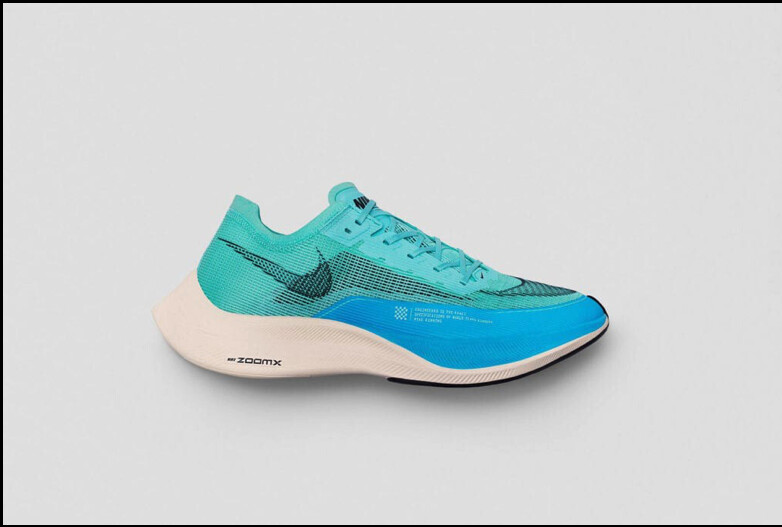
What happens in the long run?
Researchers out of the University of Castilla-LaMancha in Toledo, Spain, in partnership with the kinesiology department at the University of Michigan, put two types of midsoles to the test: peba (the super bouncy stuff) and EVA (a more traditional foam), both types of shoes containing fibre plates and weighing approximately the same. They had 22 male runners lace up with both new and worn versions of these shoes and hit the treadmill for some serious mileage. Here’s what they found:
Peba midsole: When fresh out of the box, this material was the clear winner, giving runners a nearly two per cent boost in running economy. But after 450 km, the magic started to fade. The worn peba shoes showed a 2.28 per cent decline in running economy, which means more energy is needed to run at the same speed. If you’re planning to squeeze every last drop of performance out of these shoes, you might want to think twice before using them past their prime.
EVA midsole: While EVA didn’t give the same initial boost as peba, it held up like a champ over 450 km. No significant changes in running economy were noted, meaning your EVA shoes are more like a trusty sidekick—maybe not as flashy, but dependable over the long haul.
The takeaway
If you’re eyeing those super shoes for your next big race, know that they have a shelf life. The peba-based models will give you a noticeable edge when they’re new, but after 450 km, you might not get the same pep in your step. On the other hand, EVA midsoles might not give you the same initial wow factor, but they’re more durable over the long run.
If you’re planning to invest in a pair of super shoes, think about when and where you’ll use them. Want to crush a PB? Save those peba beauties for race day. Need something for everyday training? EVA might be your best bet. Just like your favourite energy gel, these high-tech shoes have an expiration date—so use them wisely.
by Running Magazine
Login to leave a comment

Three hill sprint workouts that beat the heat
These hill sprint sessions pack a powerful punch in a short amount of time.
Hill sprints are a perfect summer workout because they pack a powerful punch in a short amount of time, meaning you don’t have to spend hours in the heat to see significant gains. We have three workouts to get you started.
These high-intensity sessions build both strength and speed, improve running economy and add a refreshing change to your regular routine.

1.-The classic
For this workout, find a hill with a moderate incline—it should be challenging, but one that you can sustain a fast pace on for at least 30 seconds.
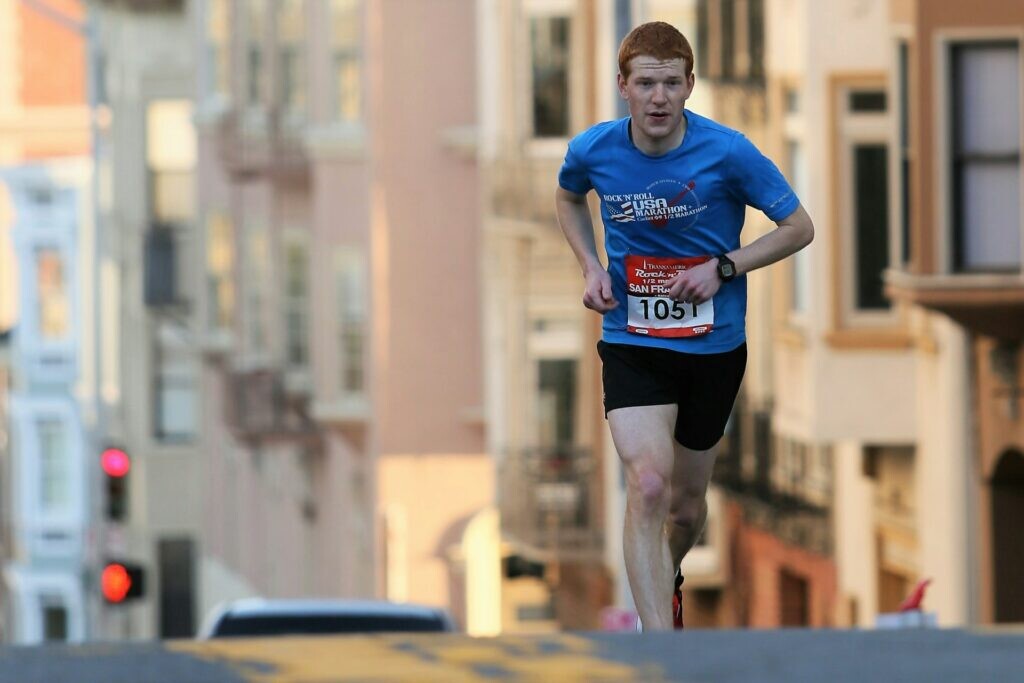
Warm up with 10 minutes of easy running.
Sprint uphill for 20-30 seconds at a medium-high intensity—slightly under your maximum effort.
Walk or jog back down for recovery (1-2 minutes).
Repeat 6-8 times.
Cool down with 10 minutes of easy running.
2.- Perfect pyramid
Warm up with 10 minutes of easy running.
Sprint uphill for 15 seconds, walk or jog down for recovery.
Sprint uphill for 30 seconds, walk or jog down for recovery.
Sprint uphill for 45 seconds, walk or jog down for recovery.
Sprint uphill for 60 seconds, walk or jog down for recovery.
Reverse the order: 60, 45, 30, 15 seconds, walking or running slowly down for recovery in between.
Cool down with 10 minutes of easy running.
3.-Short and steep
Find a hill with a steep incline for this workout—one that you can still run up, but only for a short stretch.
Warm up with 10 minutes of easy running, followed by some dynamic stretches.
Sprint uphill for 10-15 seconds at maximum effort.
Walk or jog back down for recovery (1-2 minutes).
Repeat 8-10 times.
Cool down with 10 minutes of easy running.
Forget about your flat-pace goals when tackling these hill sprints. Running uphill will naturally slow you down, and warm weather adds an extra challenge. But don’t worry—you’re still getting an incredible workout that will lead to better overall performance.
by Keeley Milne
Login to leave a comment
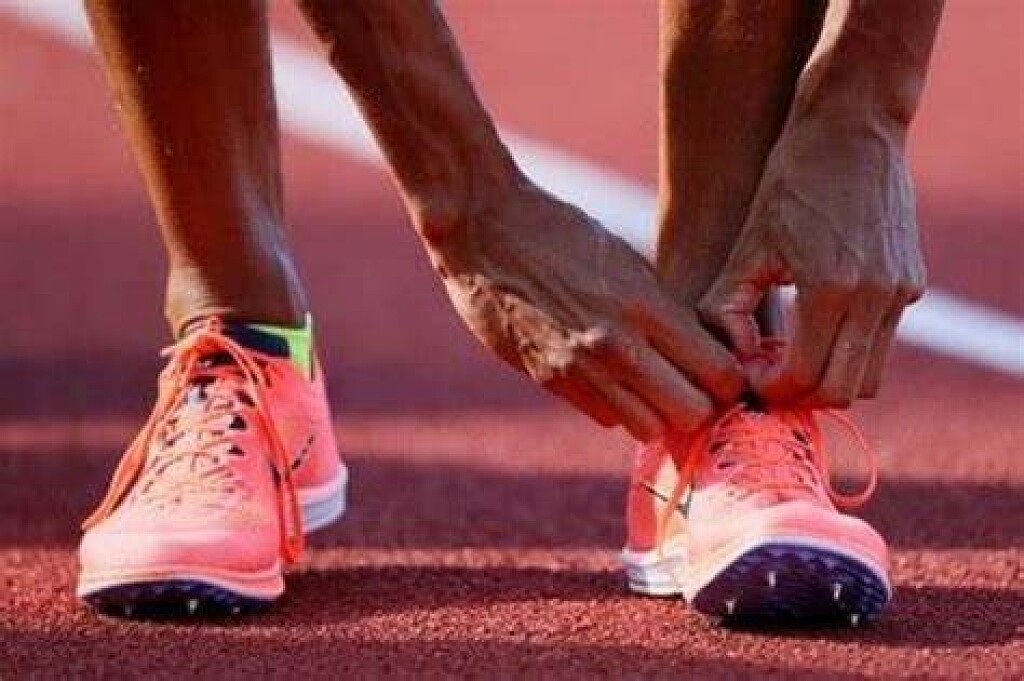
Will super spikes cause records to fall in Paris?
Recent research confirms that high-tech shoes will give runners a significant boost.
Athletics events kick off Thursday at the Paris Olympics, and many, if not all, track competitors will be sporting super spikes—new generation, high-tech running spikes with carbon plates. Will these shoes power athletes to never-before-seen times? Recent research out of the University of Michigan suggests they will, and by a surprising amount.
A game-changing advantage
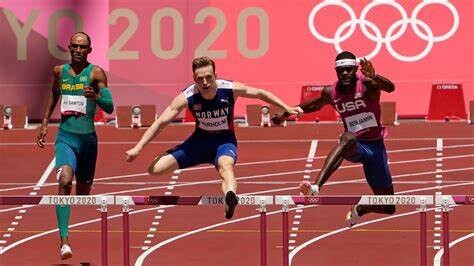
The 2021 Tokyo Olympics saw record performances on the track, leading fans and exercise physiologists alike to wonder about the impact of super spikes, which at the time were only accessible to a small group of athletes.
A recent study conducted by St. Edward’s University and the University of Michigan has shed light on the significant role these advanced footwear technologies play in boosting running economy—the efficiency with which the body uses oxygen, which is crucial for athletic performance.
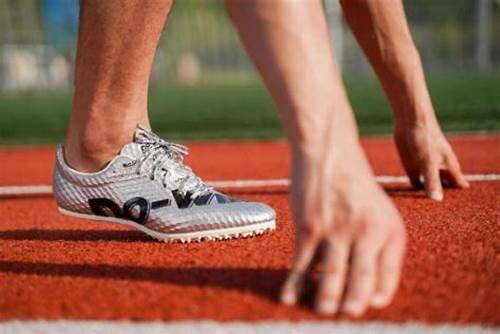
Researchers compared the running economy of athletes wearing super spikes to those in traditional track spikes. The results? A notable two per cent improvement in running economy with super spikes, potentially translating to a one-to-one-and-a-half per cent reduction in race times.
For example, for a runner who completes a 10,000m race in 30 minutes, this enhancement could mean shaving off about 25 seconds—an edge that could make an enormous difference in a close race. (The women’s world record for the outdoor 10,000m race, the longest of the track events, is 28:54.14, set by Kenya’s Beatrice Chebet, and the men’s record, set by Uganda’s Joshua Cheptegei, is 26:11.00.)
Levelling the playing field
Super spikes integrate advanced materials like special foams and carbon-fibre plates, making them lighter, softer and more responsive than traditional track spikes. While controversy surrounds their perceived advantage, with some feeling they offer an unfair edge, most (or all) competitors will be wearing them in Paris, suggesting a levelling of the playing field.
Similar technology has been used in running shoes since 2016, and the study also compared super spikes with new-generation running shoes. Despite weighing more, the high-tech shoes provided a comparable boost in running economy to the super spikes.
Are records destined to be broken in Paris?
With the athletics portion of the Paris Olympics Games kicking off Thursday with the men’s and women’s 20K race walk events, the increased availability and use of super spikes are expected to raise the bar for athletic performances. While not every Olympian had access to these technologies in 2020, their proliferation suggests a new track and field standard.
According to researchers, the greater availability of super spikes could lead to a deeper pool of faster times at the Paris Olympics, setting the stage for record-breaking performances. Tune in and be prepared to be on the the edge of your seat.
by Keeley Milne
Login to leave a comment

Paris 2024 Olympic Games
For this historic event, the City of Light is thinking big! Visitors will be able to watch events at top sporting venues in Paris and the Paris region, as well as at emblematic monuments in the capital visited by several millions of tourists each year. The promise of exceptional moments to experience in an exceptional setting! A great way to...
more...
Three easy to follow track workouts to improve your 5K speed
These three 5K workouts take the headache out of trying to remember your workout.
Whether you’re a seasoned marathoner looking to improve your track speed or training for your first road race, developing your 5K speed can be a fun and rewarding addition to your training regimen. Short interval workouts at faster paces train your body to adapt to quicker movements, building your aerobic threshold and helping you sustain speed over longer distances. Finding the right workouts can be challenging, and sometimes you want to avoid overly intense routines.
Here are three simple, yet effective, track workouts to help you boost your 5K speed.

300m intervals with 100m jog rest
1.- Workout

Warmup: 10-20 minutes of easy jogging
Set: 10 reps of 300m at your goal race pace (or slightly faster) with 100m walk or slow jog rest
Cooldown: 10-20 minutes of easy jogging
* If you don’t have access to a 300m loop or a track, a modification for the workout is doing 70 seconds on and 30 seconds rest*
Interval training is a proven method to increase both speed and endurance. By running short, fast segments followed by brief rest periods, you can improve your running economy and VO2 max–two crucial factors for a fast 5K. Maintain a consistent pace throughout each 300m repeat, avoiding the temptation to start too quickly, which can make the workout unnecessarily difficult. If you find the workout too challenging after four or five reps, break the 10 reps into two sets of five, with a three-minute rest between sets. Focus on staying relaxed and maintaining good form.
Bends and straights
2.- Workout
Warmup: 10-20 minutes of easy jogging
10 to 15 laps of jogging bends and striding straights
Cooldown: 10-20 minutes of easy jogging
(The workout should be done on a 200m or 400m athletics track to control the length of each interval.)
If you’re doing the workout on a 400m track, stride for 100m, jog the next 100m curve, stride another 100m, and jog the following 100m curve for 10 to 15 reps. If you don’t have access to a track, you can do a modification of 10 reps of 20-second sprints followed by 40-second light jogs.
This workout is ideal for runners training for a 5K race, because the constant change of pace simulates the fluctuations in a 5K or mid-distance track race. Aim to keep your sprint pace slightly faster than your goal 5K pace and your jog pace slower than your easy run pace. Ensure your sprints and jogs are controlled during the first five laps to help you complete the workout.
The pyramid
3.- Workout
Warmup: 10-20 minutes of easy jogging
200m, 600m, 1,000m, 1,000m, 600m, 200m, all off 90 seconds stand rest
Cooldown: 10=20 minutes of easy jogging
*If you don’t have access to a track, a modification for the workout is doing 30 seconds, one minute, 2x three minutes, one minute, 30 seconds off 90 seconds stand rest.*
Pyramid workouts involve running intervals of increasing and then decreasing distances, helping to improve speed, endurance and mental toughness by varying both distance and pace. Start the 200m reps at your goal 5K pace and aim to increase the pace slightly on the second 1,000m rep, finishing with a comfortable sprint effort at around 85 to 90 per cent for the final 200m. The shorter intervals are designed to practice running at a faster pace, while the longer ones build endurance.
by Marley Dickinson
Login to leave a comment

How to Access the Elusive “Fourth Dimension” of Endurance
Consider two runners who, in lab testing, have identical values for VO2 max, running economy, and lactate threshold. These are the three quantities in the “standard model” of endurance performance; you can plug them into an equation to calculate your expected marathon time. So who will win the race?
The question is not as hypothetical as it seems. At the top end of the sport, athletes tend to have relatively similar values for all three of the parameters. And if they’re weak in one, they’ll compensate in the other two. And yet lab testing isn’t capable of reliably picking winners. The cyclist with the highest ever VO2 max flopped as a pro; the top marathoners that Nike picked for its Breaking2 marathon, including Eliud Kipchoge, didn’t have unusually high lab numbers. There’s clearly something missing from the equation.
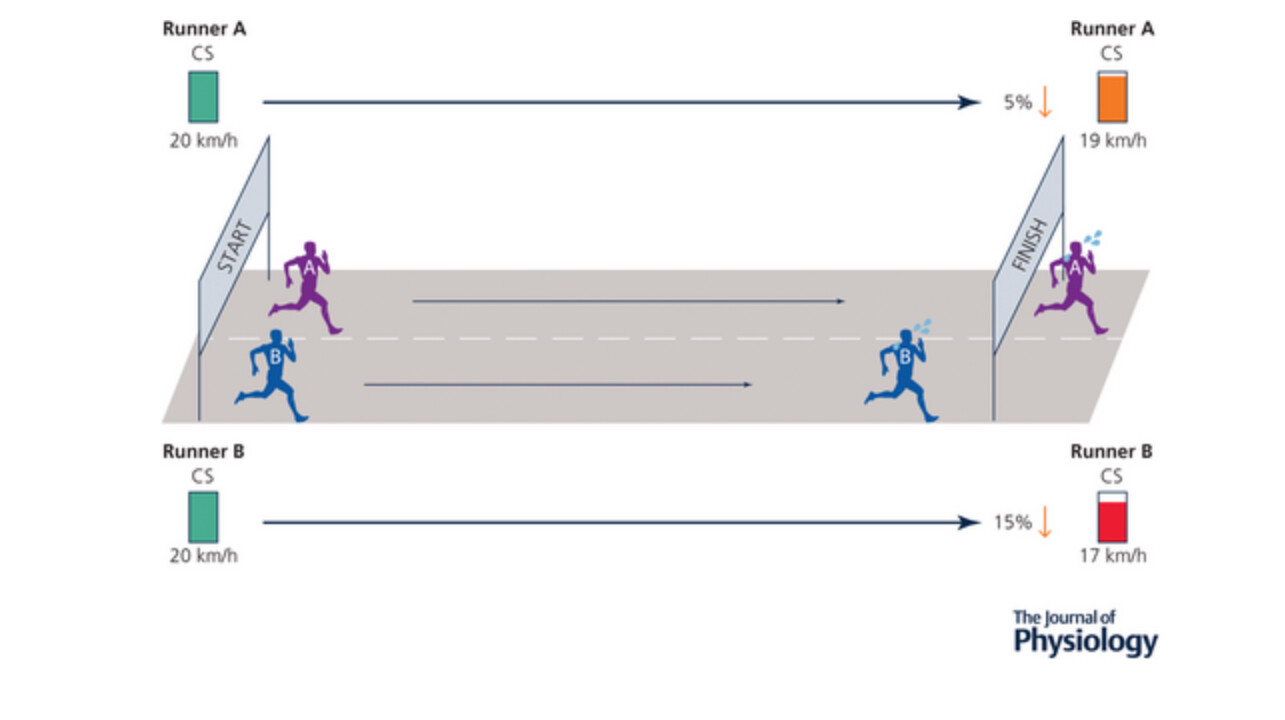
Over the past few years, researchers have zeroed in on a suspect for what one paper calls “the fourth dimension” in the endurance equation. It has various names: durability, physiological resilience, fatigue resistance (which is the term I used when I first wrote about it in 2021). It’s a measure of how much your physiological parameters change over the course of a race. Maybe your VO2 max is 70 ml/kg/min at the start of the race, but has dropped to 65 ml/kg/min by the time you’ve run 20 miles. If your doppelgänger starts with the same values but still has a VO2 max of 67 ml/kg/min after 20 miles, he’ll beat you.
No one is entirely sure what determines fatigue resistance, which is why there’s currently a flurry of research into the topic. Two new papers fill in some gaps, suggesting that what you do before the race and what you do during the race can both have an impact.
The first study, published in the Scandinavian Journal of Medicine & Science in Sports by Runar Jakobsen Unhjem of Nord University in Norway, compares trained runners with “active adults.” The runners had been training for an average of about a decade, averaging a little over 40 miles a week with 10K bests of 33 minutes for men and 38 minutes for women. The active adults played recreational sports but did no more than two days a week of endurance training. Both groups completed a pair of VO2 max and running economy tests before and after an hour of running at a moderate pace corresponding to 70 percent of their individual VO2 max.
In both groups, VO2 max and running economy got worse after an hour of running—but the decline was much steeper in the active adults. Running economy is a measure of how much energy it takes to sustain a given pace; that energy cost increased four times more in the active adults than in the runners. VO2 max dropped by 5.0 percent in the active adults, but just 1.2 percent (not a statistically significant change) in the runners.
That means the active adults had to work harder to sustain the same pace, while at the same time their capacity to do that work was declining. Both groups started at 70 percent of their rested VO2 max, nominally working equally hard. But the figure below shows that by the end the active adults (AA) were pushing at well over 75 or their max while the trained runners (TR) were barely working harder at all:
The takeaway here is that fatigue resistance isn’t just something you’re born with, which is good news. It will improve with training–although what specific type of training targets it best remains to be determined.
The second study, published in the European Journal of Sport Science by a multinational research team led by James Spragg of the University of Cape Town in South Africa, looked at what types of in-race efforts cause the biggest changes in baseline values. Spragg was one of the authors of the study I wrote about back in 2021, which looked at fatigue resistance in professional cyclists after spending amounts of energy ranging between 1,000 and 3,000 kilojoules. But there’s a big difference between doing 3,000 kilojoules of work at a steady pace and doing it with surges and hill-climbs and so on.
The new study tested fatigue resistance in 14 professional cyclists after burning 2,000 kilojoules in two different ways. In one test, they stuck to steady low-intensity riding below their critical power. In the other test, they did 5 eight-minute intervals of hard riding above critical power plus enough easy riding to accumulate roughly the same amount of total work. Sure enough, the higher-intensity intervals produced a greater drop in their baseline physiological values, with the biggest effects on sprinting ability. The results suggest that, within a given run or ride, mid-race surges are what will deaden your finishing kick.
Based on the individual results, Spragg and his colleagues classify the cyclists as fatigue-resistant, semi-fatiguable, or fatigue-sensitive, with three, four, and seven of the riders, respectively, falling into these categories. Their previous research using real-world data from pro cyclists suggests that, all else being equal, fatigue-resistant riders are the ones who win races. So what determines who ends up in which category?
Other studies have linked poor fatigue resistance to inadequate fueling, but in this study all the riders took in 90 grams of carbohydrate per hour. There may also be metabolic differences in how different people use their internal stores of carbohydrate versus fat. The new data suggests that keeping your pace steady and avoiding unneeded surges might be advantageous. And as with the comparison between trained runners and active adults, training might be part of the answer. Previous data from pro cyclists did find that higher training volume was associated with greater fatigue resistance. In other words, we still haven’t figured out how to access the fourth dimension—but we’re finally getting some clues.
Login to leave a comment

Best squats for runners to maximize lower body strength
Want to level up your endurance and structural tolerance? Simple squats can help. Recent studies have shown that adding strength exercises to a running program can improve running economy and boost anaerobic and neuromuscular properties, and being a structurally stronger runner will help you avoid injuries while boosting endurance, helping you feel good all the way to the finish line.
Squats are a fun and simple exercise, and easy to incorporate into your daily routine—you don’t need a gym or fancy equipment, and can “stop and squat” while you’re making dinner or watching TV. Amplify your squat routine with any of these variations, which are perfectly suited for runners.
Body weight squat
Get started with a basic bodyweight squat, a foundational strength move. Your quads, glutes and hamstrings will do the major work here, while your core stabilizes you throughout.

Stand with your feet hip-width apart. Brace your core, and keeping your chest out, push your hips back and down, as if you are trying to sit in a chair. Make sure your knees don’t cave in; keep them over your baby toes, or as close as possible.
Lower your body until your thighs are parallel to the floor. Angle the upper body forward and reach your arms out in front of you to aid balance. Engage your core and squeeze your glutes to return to a standing position. Pracitse inhaling as you lower and exhaling as you stand up. You should be able to complete three sets of 15 reps with ease before adding weight for resistance.
Single-leg squat
Unilateral exercises improve your balance and strength, and are also useful if you find one leg is much stronger than the other. If you’re new to these, it’s helpful to use a sturdy table or wall for balance.
Stand next to a stable surface and lift your outside foot off the ground, bending your knee at a 90-degree angle. Hike your outside hip.
Begin to squat on your inside leg. Try to reach parallel, using the stable surface for support if needed. Make sure your knee doesn’t cave in.
Once you’ve dropped as far as you can go, push back up through your entire foot and return to start. Don’t worry if you’re only able to lower yourself a small amount—as you gain strength and flexibility, you’ll notice that you can squat more deeply.
Repeat 10 times, then switch legs.
Sumo squat
Sumo squats involve a wide stance with toes pointed outward, and target the inner thighs, glutes and hamstrings. They also improve hip mobility, and engage the core.
Begin with feet wider than shoulder-width apart, toes pointing outward.
Squat down while keeping the chest up and knees tracking over the toes. (Be careful not to let your knees cave in.)
Return to the starting position, squeezing the glutes at the top of the movement.
Aim for three sets of five to 10 squats to start, and increase the number of squats as you gain strength. Once you feel comfortable, you can increase the resistance by holding a weight, kettlebell or a medicine ball at chest level.
Jump squat
These are a high-intensity variation that involves performing a standard squat and then exploding upward into a jump. They primarily target the quadriceps, hamstrings, glutes and calves, and improve explosive power, agility and cardiovascular fitness.
Stand with feet shoulder-width apart and knees slightly bent.
Bend your knees and sink into a full squat position, being careful not to let your knees collapse inward.
Engage through the quads, glutes, and hamstrings and propel the body up and off the floor, extending through the legs. With the legs fully extended, the feet will be a few inches (or more) off the floor.
Descend and control your landing by going through your foot (toes, ball, arches, heel) and sink into the squat position again, keeping your knees over your outer toes.
After landing, immediately head into the next squat. Try five to 10 jump squats to start.
Jump squats can be challenging if you’re new to them, and it may be easier to try them on a grassy field or on another surface that has some “give” to it (like a running track). Make sure you’re jumping smoothly and with control.
Squats are an intense workout and may add to lower body soreness and fatigue. Try planning a squat workout on a harder running or speedwork day—it sounds extra challenging, but it means that your body will have a chance to fully recover when you take a rest day or easy running day.
by Keeley Milne
Login to leave a comment

Should marathoners do sprint work?
There are many misconceptions about sprinting, and one of them is the belief that marathoners shouldn't include sprinting in their training.
If you’re a marathoner, incorporating fast-twitch sprint work into your training regimen might seem counterintuitive. However, contrary to popular belief, adding just five to 10 reps of 50-metre sprints to the end of your runs once or twice a week can significantly enhance your running efficiency and strength.
Integrating a small amount of sprint work can improve your neuromuscular co-ordination, leading to enhanced running mechanics and increased running economy. This economy that we speak of is especially beneficial during the later stages of a race, when fatigue starts to kick in and your form starts to deteriorate. Sprint work targets fast-twitch muscle fibres, helping bolster overall leg strength and power per stride, which will translate to your ability to maintain faster paces.

Adding this little training hack into your routine could be the easiest path to becoming a faster distance runner. However, adding sprint training to your marathon build can come with risks, as it places considerable stress on muscles, tendons and joints. So without proper preparation or execution the risk of injury increases. Therefore, implementing a thorough warm-up and gradually progressing to the speed you’re trying to hit on your first few reps is imperative to mitigate these risks.
Despite the name, sprints don’t necessarily entail going all-out. Many runners, including sprinters, rarely reach race speeds during practice sessions, due to the taxing nature of maximal effort, which can elevate the risk of injury. Instead, sprint training typically occurs at around 60-80 per cent of your maximum speed.
If you’re looking for an alternative to sprints, short hills can also do the trick. These 30-second hill inclines can serve as an excellent way to add more speed and efficiency into your marathon preparation while enhancing strength and power.
Just because we are telling you sprint training is helpful, remember to not stray too far from the norm. It’s important to find a balance between sprint work and other essential components of marathon training, such as long runs, tempo runs and recovery mileage. Sprint sessions should not replace these foundational elements, but rather serve as a training supplement component to enhance your performance.
by Marley Dickinson
Login to leave a comment
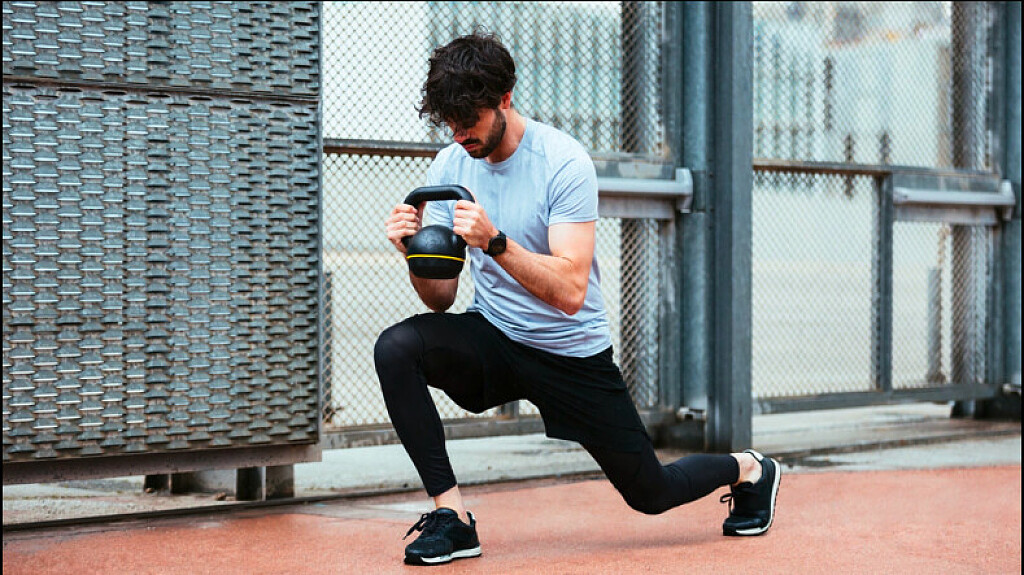
Can Strength Training Protect You from Running Injuries?
The logic is good and the anecdotes are common, but the evidence is shakier than expected, researchers find
The best way to prevent running injuries isn’t to waste your time stretching or searching for the perfect shoe; it’s to get strong. That’s where the zeitgeist has been headed over the past decade or so, as old ideas about injury prevention have produced disappointing results in studies. The rationale for strength training, by contrast, is seemingly unassailable: injuries occur when more stress is applied to a tissue than it can absorb, so strengthening the tissue should ward off injuries.
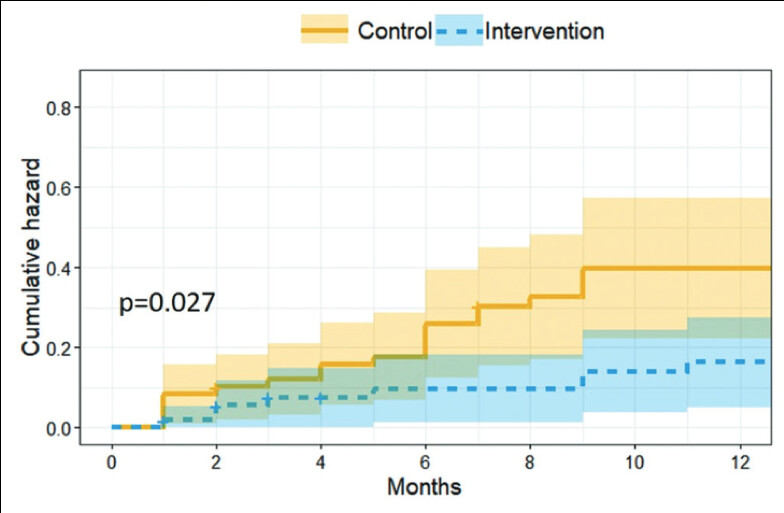
But that claim, too, should be treated with caution, according to a new systematic review of exercise-based prevention programs for running injuries. In Sports Medicine, a research team led by Richard Blagrove of Loughborough University in Britain sums up the available evidence. Blagrove, for the record, is the author of Strength and Conditioning for Endurance Running and has worked with plenty of elite runners on their strength routines, so it’s not like he’s an anti-strength-training zealot. I’ve written before about some of his previous research on strength training and running economy. But the overall picture on injury prevention is underwhelming—although, as Blagrove and his colleagues point out, there are reasons for optimism and some intriguing avenues for future research.
As with all systematic reviews, the first challenge is finding studies that meet your criteria. In this case, one of the key hurdles was ensuring that the subjects in the study were, by some reasonable definition, runners. Previous reviews of the topic have included military studies where running only made up a small fraction of overall training, and injuries sustained during other training activities were counted as “running injuries.” For the new review, they insisted that running had to be the subjects’ main training activity, comprising at least half their training time.
They were able to include nine articles with a total of 1,904 subjects—which, for a tricky topic like running injuries, isn’t a lot. The exercise interventions were all over the map: strength exercises like lunges and squats, plyometric hops and jumps, core routines, foot strengthening, and so on. Overall, perhaps not surprisingly given the wide variety of regimens, there was no significant benefit for the exercise groups compared to the control groups in injury risk (what proportion of subjects got injured during the studies) or injury rate (how many injuries they suffered for a given amount of running).
That, for now, is the state of the evidence. As always, we’re left hungry for more. What are the injury benefits of a straightforward strength-training routine? Given that this is among the most common forms of supplementary exercise among runners, you’d think we would know if it helps, but there’s almost no evidence either way. That’s important, Blagrove and co. point out, because there is robust evidence that this approach works in other sports like soccer. That doesn’t mean it will work in running, since the injury mechanisms are different, but it does suggest that it’s worth finding out.
One intriguing pattern in the data is that the three studies that produced the lowest injury risk also happened to be the three studies where the exercise routine was supervised rather than just assigned to be performed at home. Previous research has tended to find that people get bigger gains when they have a spotter or a personal trainer looking on. That could be because they dig a little deeper; or in this case, it could be that this is the only way to ensure people do the exercises at all. Sports medicine doctors and physical therapists often laugh about the patients who come for a follow-up visit claiming that they’ve been doing their assigned exercises religiously… but when they’re asked to demonstrate them, search for the piece of paper where the exercises are described. Exercises can only work if you actually do them, needless to say.
It’s also worth noting that Blagrove and his colleagues were particularly intrigued by a 2020 study from the American Journal of Sports Medicine that used foot and ankle strengthening, including exercises like the “foot doming,” based on the concept of a “foot core” providing stability to the rest of the body. In that study of 118 runners in Brazil, the control group was 2.4 times more likely to develop an injury during the one-year follow-up period. The survival graph from that study, showing the cumulative injuries for the control group (solid line) and foot-strengthening group (dashed line), is certainly compelling:
But the whole point of a meta-analysis is to pool more than one study, to increase sample size and reduce the risk of fluke results—and of investigator error or bias. One of the minor details in the meta-analysis: there were actually two other studies that met the inclusion criteria, both by the same research team. But when Blagrove’s team dug into the studies, they found identical baseline data—the same age, height, body mass, BMI, running experience, and biomechanical parameters—and identical injury occurrences… even though the studies had different sample sizes, durations, and exercises. The authors didn’t respond to questions about their data, so Blagrove’s meta-analysis excluded them.
The bottom line? We can’t say for sure, at this point, whether strength training or other forms of exercise lower your risk of getting injured while running. The logic is sound, and the circumstantial evidence from other sports is suggestive. Maybe more importantly, there’s also solid evidence that various forms of strength training improve running economy and boost your long-term health. It would be nice to get some injury prevention as a bonus, but the package is already pretty enticing.
by Outside Online
Login to leave a comment

This ultrarunning champ’s 5K workout will make you faster
No matter what distance you're training for, you'll boost speed and running economy with this fun, fast session.
Whether you are training for a 10K PB this season or hoping to run your first ultra, you’ll benefit from adding a speedwork session (like this one) to your training toolbox. Utah-based running coach, personal trainer and ultrarunning champ Rhandi Orme has a workout that she likes to prescribe to her athletes, as well as using herself (and she suggests modifications for all levels of runners).
“This is a workout that long-distance athletes can benefit from,” she told Canadian Running. “Having top-end speed on the shorter distances improves runners’ VO2 max and running economy, which helps us run faster and stronger at longer distances, too.

The workout
Warm up with 15-20 minutes of easy running, followed by dynamic drills or stretches.

Run 5 x 2 minutes at 5K goal pace, with two minutes of recovery jogging between intervals.
Run 4 x 2 minutes at 5K goal pace with a minute’s recovery jog between intervals.
Finish your speedwork with a fast mile, to see what you can do on tired legs (all effort-based for this final interval). “Don’t look at your watch. Pretend you are running the last mile of your next 5K race,” says Orme.
Cool down with 10-20 minutes of easy running.
*Bonus: any time after this hard effort (but on the same day) is ideal for your leg-strength training session.
Modifications
Shorten or extend intervals based on your current level of fitness. Orme suggests that beginners start with 4 x 30 seconds (at goal pace) and then 2 x 60 seconds. “You can also increase the recovery time between intervals,” says Orme. For newer runners, reducing the “fast-finish” mile to a “fast-finish” half-mile is a great option, and Orme suggests playing with the recovery time and the number of intervals based on your current fitness.
“Once the workout begins to get more comfortable, you can increase the intervals and reduce the recovery, working your way up to the full workout,” says Orme. “I would recommend doing this workout every other week, until you see a noticeable improvement.” For experienced runners hoping to add more volume, she suggests extending the warmup and cooldown.
Remember to follow a harder training day like this one with a rest day or easy-run day.
by Keeley Milne
Login to leave a comment

Three power-packed workouts to help you nail a marathon PB
If your goal this season is to run your fastest marathon, one of these speedy track sessions will definitely help. Renowned coach and author Greg McMillan explains on his website that runners who are aiming to improve (rather than to simply complete the iconic distance) should be focused on speed sessions tailored specifically to the marathon.
McMillan recommends including at least one workout per week that focuses on building the stamina (lactate threshold) and speed (VO2 max) you’ll need to blast to a marathon PB.
1.- Quarters
McMillan says that one key of fast marathoning is running economy—the amount of oxygen required to run at a given pace. “Improve your economy and your carbohydrate stores are used less quickly, giving you power at the end of the race,” he explains. This session will boost your running economy and build your VO2 max, while also making your marathon pace feel easier.
Cool down with 10 minutes of easy running.
Run each 400m at 5K pace or slightly faster, with a lap of recovery running in between. “Each lap shouldn’t feel super hard, but the accumulation of doing 16 to 20 repetitions will build your fatigue resistance,” McMillan says.
2.- Tempo interval session
Work on running at a strong, steady pace and focus on the volume of running in this workout, not hitting a target speed. McMillan suggests runners aim to complete at least four and up to five repetitions, and making the last two the strongest.
Warm up with 10 minutes of easy running.
4 to 5 x 2 km, with 400m recovery jog
Cool down with 10 minutes of easy running.
“Many runners find that starting this workout at half-marathon pace and progressing down to near 10K race pace is ideal,” writes McMillan.
Warm up with 10 minutes of easy running.
Run 16 to 20 x 400m, with a 400m recovery jog.
3.- Cruise intervals
Legendary Olympic coach Jack Daniels popularized the term “cruise intervals” in his book Daniels’ Running Formula, and McMillan says they’re a perfect introduction to more intense marathon training. The term “cruise interval” describes the effort—it should be fast and smooth without feeling gut-wrenching.
Warm up with 10-15 minutes of easy running.
Run 6-8 x 1 km, with a 200m recovery jog between repeats.
Cool down with 10 minutes of very easy running.
“Run these between 10K and 15K race pace,” says McMillan. “It’s a good idea to start them at 15K pace and progress to 10K pace during your last repeats if possible.” This session should tire you out from the duration of the intervals, rather than the speed.
Follow any fast, challenging sessions like these with a very easy running day or rest day.
by Keeley Milne
Login to leave a comment
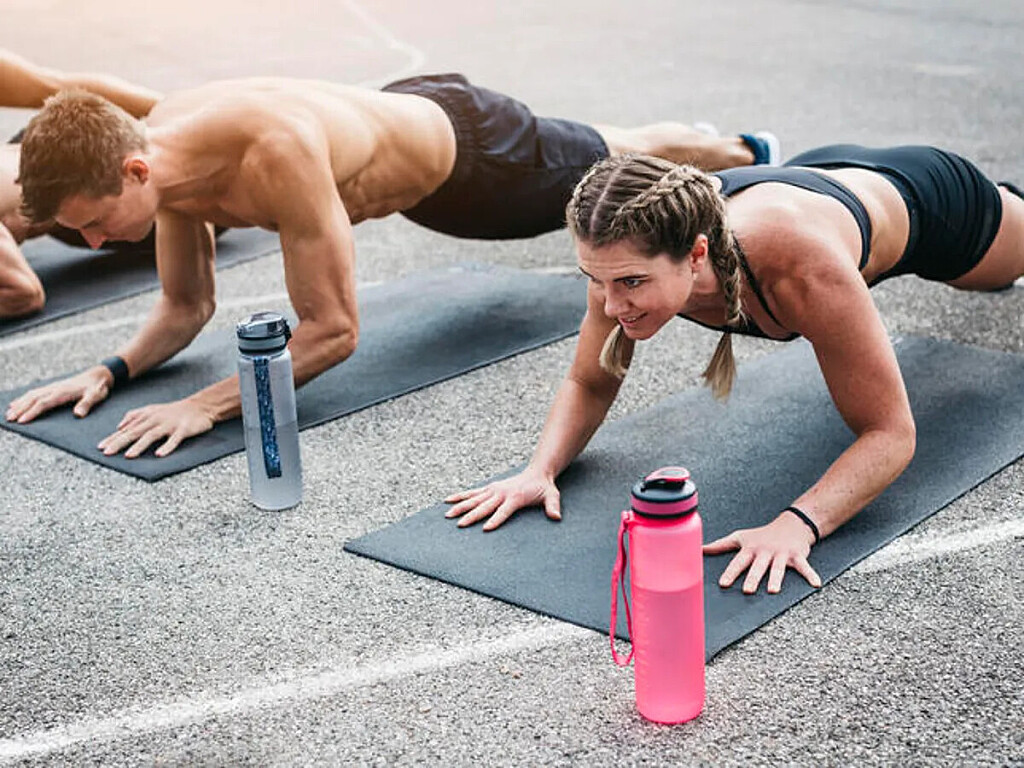
Run Before or After Workout to Maximize Gains
Strength training is an essential component of a well-rounded running training program, but for busy runners, it can be tricky to fit it into your program without jeopardizing your running workouts. Emma Vaillancourt, a registered physiotherapist and running coach in Thunder Bay, Ont., explains how to effectively incorporate strength training into your running routine to maximize gains and minimize burnout.
Should you strength train before or after running?
Vaillancourt explains that the order of strength training and running depends on your goals and where you’re at in your racing season. During the off-season, when running is less of a priority, you may choose to strength train first. In contrast, during the in-season, when your focus is on building running volume or intensity, running should usually come first.
If you plan to do strength training on days when you have intervals or speedwork, it’s generally better to do strength work after your run. This helps avoid fatigue and a possible negative impact on your workout. Vaillancourt also notes that running immediately before lifting can moderately impair lower-body strength gains. “If your goal is to improve strength, lift before the run,” she says. “If you aim to enhance endurance adaptations like aerobic capacity, the order doesn’t matter as much.”

Is it better to leave space sessions or can you do them back-to-back?
“It is recommended to allow at least three hours after high-intensity running before engaging in strength training,” says Vaillancourt. “During this recovery window, it’s important to refuel with a high-carb and protein meal to replenish your energy stores.”
Vaillancourt recommends at least 24 hours’ recovery after strength training before engaging in high-intensity running, but if you’re pairing strength training with easy runs, you can reduce the time between them.
Of course, most of us can’t plan our day around our strength training and running plans, so if scheduling becomes an issue, doing one activity right after the other is still beneficial. “Something is often better than nothing!” says Vaillancourt.
Alternatively, she suggests splitting your strength training into smaller blocks, focusing on shorter, more frequent sessions throughout your week. This approach causes less fatigue and can be more manageable for some runners. “The idea here would be to do 10 to 20 minutes of strength work (maybe two or three exercises) but more frequently in your week, compared to the traditional 30 to 60 minutes done two or three times per week,” she says.
How often should runners strength train?
The frequency of strength training depends on several factors, including your experience level, the point in the season, and the time you can commit to training in a week.
In the off-season and early season, Vaillancourt recommends strength training two to three times a week, focusing on higher volumes of training. “If you’re training for a single race, such as a half-marathon or marathon, you will likely want to drop down to one to two times per week as your mileage peaks,” she says. “As you get closer to your race and are entering your taper, you can drop to once a week for maintenance.”
Running before or after workouts has a drastic effect on training effectiveness. Running before a strength workout can compromise strength training gains or cause injury. On the other hand, doing a strength workout before running could cause running form to deteriorate, which can also lead to injury or compromise strength training gains.
Athletes only have so much time. Sometimes that means doing cardio workouts (like running) and strength workouts (like lifting weights or bodyweight workouts) on the same day. Find out if it’s better to run before or after workouts and how to maximize same-day training benefits.
The Interference Effect
Running Before or After Workouts Depends on Workout Goals
Run Before or After Workout as a Strength-Focused Athlete
Running Before or After Workout as a Runner
Running Before or After a Workout if the goal is to Lose Weight
Running Before or After a Workout if the Goal is to Improve Overall Fitness
THE INTERFERENCE EFFECT
The interference effect is a physiological phenomenon that states that cardio or endurance exercise (like running and cycling) interferes with the cellular adaptions elicited via strength training (namely, muscle size and overall strength). However, it also states that strength training does not appear to necessarily adversely affect endurance adaptations.
The keyword here is: necessarily. More on that later on.
RUNNING BEFORE OR AFTER WORKOUTS DEPENDS ON WORKOUT GOALS
Athletes engaging in concurrent strength training and running need to prioritize goals. This should happen on an individual workout basis as well as overall athletic goals. For example, someone looking to build muscle mass and overall strength must concede that cardio training will–to some extent–inhibit strength gains. On the other hand, a runner is unlikely to be a very successful bodybuilder.
Athletes considering strength training and cardio training need to decide which is more important for their athletic development: muscle mass or endurance. This is not to say that strength-based athletes should stop all cardio. Likewise, endurance athletes like runners should do some strength training.
The careful blending of strength and endurance training is what is known as concurrent training. Strength training–such as with weights or bodyweight–is an important component of endurance performance. Sports like running and cycling do not stress all the necessary muscles in the body. For example, simply running or cycling can leave one with hip, lower back pain and upper body issues due to underdeveloped muscles.
In short, most athletes should do a bit of strength training and a bit of cardio. The ideal blend of each will depend on the athlete’s goals: muscle mass or endurance.
RUN BEFORE OR AFTER WORKOUT AS A STRENGTH-FOCUSED ATHLETE
Athletes whose primary goal is to build muscle and overall strength should try to avoid doing cardio and strength training on the same day. If this cannot be avoided, strength-focused athletes should do their cardio workouts after strength training. This will help minimize the interference effect (i.e., the body will prioritize strength adaptations over endurance adaptations).
How long should cardio workouts take place after strength workouts? The longer the better. At least six to nine hours is ideal. Spacing strength and cardio workouts as far apart as possible will help maximize strength adaptations. Again, if pure strength is the primary goal, strongly consider doing cardio and strength workouts on entirely different days. Don’t do a hard strength workout and a hard (e.g., HIIT) running workout on the same day.
ALTERNATING LOWER-BODY AND UPPER-BODY SAME DAY WORKOUTS
Cardio exercises like running and cycling are lower-body dominant. Performing upper-body workouts on the same day as running will have no meaningful effect on the strength workout. However, performing lower-body strength workouts shortly after a running workout will likely lead to diminished strength gains.
It follows that doing lower-body strength workouts should then only take place on non-running days.
Alternating workouts with upper-body strength days during running days and lower-body strength workouts on non-running days will help minimize or even eliminate the interference effect. The only caveat to this is if the athlete can handle the higher training load. This means having an optimized nutrition plan (here’s the 9 best foods for runners and the 9 best foods to build muscle), resting and being sensitive to their body’s injury or overtraining signals.
RUNNING BEFORE OR AFTER WORKOUT AS A RUNNER
Strength training could be a key component to unlocking running performance. It may be the only way advanced runners can even achieve further progress. Beginner runners benefit from strength training by working muscles that help promote running economy and efficiency, which will ward off injury and promote total body fitness.
If running (or any endurance activity, such as cycling) is a primary goal, do cardio after strength training. However, if the cardio session will be shorter and low intensity (like a simple endurance run of 30-90 minutes), doing high-repetition, low-weight or bodyweight strength training AFTER running can help build muscular endurance and improve running stamina.
Muscular endurance is different than absolute strength. Whereas pure strength is about how much force one can produce quickly (e.g., during a squat), muscular endurance is about training muscles to resist fatigue over long periods of time. One can easily see how muscular endurance is beneficial to runners: running longer distances like half-marathons, marathons and even ultramarathons. Muscular endurance will allow runners to retain their running form longer, which means not only maintaining running economy for longer but also decreasing the risk of running-related injuries.
Sound worth it? Here’s how to do it:
Do an easy run. Try to avoid running hills. Don’t do intervals. Just do a basic endurance-paced run anywhere from 20 to 90 minutes. It should feel almost boring.
After the run and while the body is still warmed up, do a strength training session that focuses on high repetitions and low (if any) weight. Repetition ranges should be 20 to 30 per set. Cool down with light jogging.
Combining running and strength training back to back is a serious session. Make sure to fuel properly before, during and after (like with a hot cocoa recovery drink). Don’t finish the workout starving. The recovery demands from this type of training are huge–but so are the benefits. Don’t do these big sessions every day–twice a week is plenty and should likely be followed by a full recovery day or an easy run (for advanced athletes).
RUNNING BEFORE OR AFTER A WORKOUT IF THE GOAL IS TO LOSE WEIGHT
It is often recommended to do strength training before running to empty carbohydrate stores. The idea is to force the body to get its energy primarily from fat rather than carbs during the run. However, the problem with this strategy is that it is very difficult to finish a long-distance run on empty carbohydrate stores. While it is true that a much higher percentage of fat is burned for energy, the calorie burn, on the other hand, is relatively low because of the low intensity or low duration of the workout.
On top of that, perceived exertion of the workout will be much greater when continuing to workout with depleted glycogen stores. This can cause athletes to prematurely quit the workout; therefore, reducing maximal calorie expenditure. Additionally, athletes who choose to work out this way will finish workouts extremely hungry. This can lead athletes to massively overeat after a very tough workout, which will likely result in weight gain and developing unhealthy nutrition habits.
If weight loss is a goal, a negative energy balance is key: If one burns more calories than they consume, they will lose weight. In the end, what matters is how many calories are burned in total through the workout. Spread your workouts out over several days. That way one can train at a high intensity and burn a lot of calories, and at the same time give the body the time it needs to recover properly before the next workout.
RUNNING BEFORE OR AFTER A WORKOUT IF THE GOAL IS TO IMPROVE OVERALL FITNESS
In this case, basically do cardio and strength training in whichever order. Still define a specific training goal for each session. Just be careful about doing too much and getting injured. Start slow, add a little bit of training each week, take a day off if aches and pains start to creep up. Once the gains stop coming, consider reexamining training structure to focus on more specific goals. Try this workout after a run for a great cardio and strength session.
This workout focuses on neglected leg muscles and glute strength (i.e., a firmer butt). It’ll also help improve posture. Learn and do the following movements: Curtsy lunge, kneel & stand, side lunges, single-leg deadlift and wall sits.
In general, avoid doing two workouts back-to-back. Spacing running and strength workouts far apart will allow the body sufficient time to adapt and recover before the next session. If running before or after a workout is the only option, follow the training schedule recommendations above to elicit maximal adaptations. If all of that is too complicated and the goal is to just get fit, do whatever is most convenient.
by Morgan Cole
Login to leave a comment

How to Make Your Easy Runs Faster, While Still Keeping Them Easy
Steal these tips for getting faster on your zone 2 runs—while still keeping them easy.
Good news: We’re giving you permission to take it easy. Whether you’re gearing up for a race or running regularly to stay in shape, you should be doing the vast majority of your weekly mileage at a totally comfortable effort.
“An easy run should be at a casual pace that feels easily sustainable and not taxing—when you’re done, it should feel like you could keep going and going,” says Meg Takacs, NASM-CPT, a run coach and founder of the Movement & Miles app.
Although the whole focus of this type of run is to go easy and not stress about your pace, when you’re able to run faster (while still feeling relaxed), you’ll tick off more miles in less time—and be able to get on with the rest of your day sooner.
Keep reading for more about how to dial into the right effort for easy runs and what workouts to add to your routine to make those outings a little speedier.
The Benefits of Easy Run Pace
The name is pretty self-explanatory: An easy run is any workout that’s not a long training run or speed work, and it should be done at a relaxed effort. The purpose, explains Takacs, is to build up your aerobic system, which uses oxygen as its primary source of energy. “When your aerobic system is strong, you can optimize your performance on anaerobic runs—a.k.a., speed days—as well,” she says.
There are a lot of adaptations happening in your body during these slower efforts. “Easy runs are extremely beneficial from a physiological standpoint: They increase capillaries, which supply blood to the muscles; increase mitochondria, which converts fat and carbs into fuel; and improve aerobic capacity, the amount of oxygen your body can use while running,” says Takacs.
They also help your body bounce back from harder efforts—like long runs or sprint repeats, for example—and help combat injuries. “Easy runs, especially for people who run endurance races, are a form of active recovery,” says Gabe Gonzales, head coach and master trainer with STRIDE Fitness in Lubbock, Texas. “Moving your body at a slower pace and keeping your heart rate down flushes lactic acid buildup, avoids putting excess strain on your muscles and joints, and helps your body get stronger and ready to go again.”
How to Find the Right Easy Run Pace
To find your groove on an easy run, use the talk test, says Gonzales: “You should be able to easily hold a conversation with someone throughout the entire run,” he says. “If your heart rate starts to go up and you start having a harder time breathing or talking, you need to dial it back.”
You can also gauge if your pace is relaxed enough by aiming for a rate of perceived exertion (RPE) of no more than 5 or 6. Or if you’re into tracking your heart rate, go for zone 2, or 60 to 70 percent of your max, advises Takacs.
Whatever you do, resist the urge to kick it up a notch—even if you’re listening to music that makes you feel good and makes a moderate effort feel easier than usual. If you do so, “your recovery is harder, it’s more taxing on the body, and you’re more susceptible to overuse injuries,” says Takacs. Plus, she adds, you’ll miss out on those physiological benefits, “which are key to building a solid foundation for being able to run faster and farther.”
How to Make Your Easy Runs Faster
Okay, yes, wanting to do an easy run faster is a bit counterintuitive. You’re not supposed to care how fast you’re going, after all. But while you shouldn’t actively try to push your pace during easy outings, the volume and intensity of your weekly runs can help you gradually get faster without pushing the effort level up (which would, in turn, nix some of the easy-run benefits).
Gradually Build Mileage
In terms of total weekly mileage, there’s not a magic number that will help your easy run pace improve, says Takacs, as it depends on your fitness level and heart rate. She recommends gradually building up your mileage, always keeping around 80 percent of your runs throughout the week at an easy effort.
Mix Intervals Into Other Days
Once a week, mix in some faster intervals with a fartlek run (a type of unstructured speed work where you play around with your speed throughout), suggests Gonzales. “Adding very short bursts of intensity into a run at an overall slow, easy pace helps your body adapt to those quicker paces at the same time you’re building endurance,” he says.
Adding some workouts incorporating hill repeats can also help, he says, because they strengthen the lower body and will help increase your power output overall—making an easy effort eventually feel even easier.
Build Strength
Along with speed work, make sure you’re getting in some resistance sessions, too. “Strength training is a very important factor in building endurance and durability of your muscles, and it improves your power output,” says Gonzales.
It may also help make you faster by making you a more efficient runner; exercises such as leg presses and plyometric jumps lead to significant improvements in running economy, according to a 2022 review published in the journal Sports. Plus, says Takacs, resistance training improves joint strength, which can increase your speed by improving your mechanics.
For the biggest benefit, Gonzales recommends lower body moves that work your glutes and hamstrings—like squats and deadlifts; core moves like Russian twists or mountain climbers; and moves that strengthen your shoulders, like overhead presses, lateral raises, and dumbbell flys—to add power to your arm swing. For each of these moves, he suggests doing two to three sets of eight to 10 reps at least twice a week.
Give Yourself Time
Becoming a faster runner during easy session is a long game. Even if clocking a faster easy run pace is one of your goals, prioritizing the time on your feet and a relaxed effort—rather than pushing into a moderate effort on easy runs—will be the most beneficial in the long term, notes Takacs. “The longer you can sustain an easy effort, the easier it is to gradually increase your pace while maintaining that easy, zone 2 heart rate,” she says
by Runner’s World
Login to leave a comment

Shoe tech advances is the key reason why the winning time at the Paris Olympics marathon could be under two hours
Racing shoe tech advances is helping bring the sub-2 hour marathon ever closer, but will barrier finally be broken in France?
The winning marathon time at the 1924 Paris Olympics was more than 40 minutes slower than the 2:00:35 run by Kelvin Kiptum in Chicago in 2023
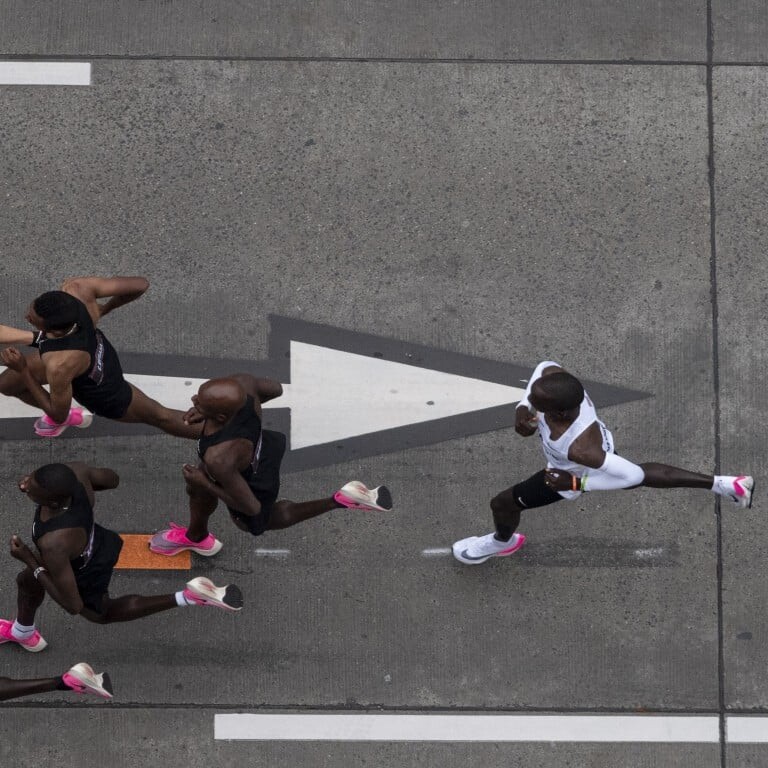
With shoe technology advancing by the day, an official marathon time of below two hours is seemingly just months away.
A century after the 1924 Paris Olympic men’s marathon was won by Finn Albin Stenroos in two hours, 41 minutes and 22 seconds, next year’s Games in the same city could feature the first official sub-two hour time for the distance after 2023 saw more barriers smashed.
Kenya’s double Olympic champion Eliud Kipchoge, who dipped under two hours with his unofficial Ineos challenge run in 2019, had dragged the record down to 2:01.09 in 2022.
But in October this year compatriot Kelvin Kiptum stunned the sport when the 23-year-old took more than half a minute off the great man’s mark to post 2:00.35 in Chicago to kick-start talk of when, rather than if, a legal sub-two would arrive.
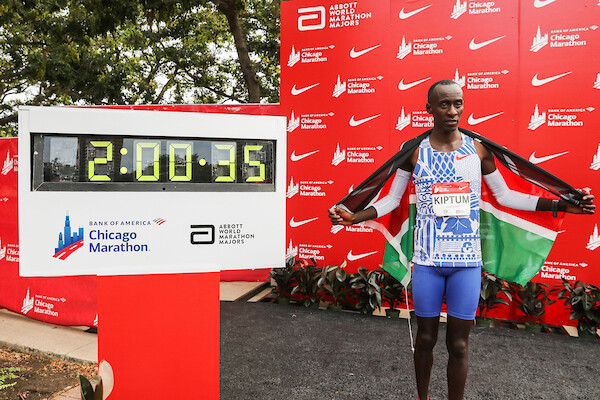
That came two weeks after Ethiopia’s Tigst Assefa took more than two minutes off the women’s record with 2:11.53 - a time that would have been the men’s world record until 1967.
Talented and hard working though both champions are, the key component of their incredible times was unquestionably the latest developments in shoe technology that has made comparisons with earlier eras, even last decade, largely meaningless.
(First photo) Adidas CEO Bjorn Gulden, holds a shoe worn by Ethiopia’s Tigist Assefa when she set a new women’s world record at the Berlin Marathon.
Kipchoge’s performances opened the world’s eyes to the condensed foam, carbon-plated super shoes Nike claimed could increase running efficiency - the amount of oxygen consumed per minute - by 4 per cent.
Soon, every major race start line was awash with the trademark dayglow Nike Vaporfly and Alphafly.
Although the sport’s governing body, World Athletics, tried belatedly to rein things in with their stack height regulations in 2020, the genie was out of the bottle and it did not take long for other companies to close the gap.
Assefa ran Chicago in a new Adizero Adios Pro Evo 1 shoe, retailing at just under US$500. It conforms to the 4cm height rule but, at 138 grammes, weighs about 40 per cent less than any previous Adidas racing shoe.
The latest theory around the shoes is that the carbon plates have only a limited effect and it is the “barely-there” weight, combined with the energy-return cushioning and “rockers”, that prevents the fatiguing impact of previous thin-soled “racing flats” and allows athletes to maintain their optimum speed for longer.
Adidas says its newest shoes are “enhanced with unique technology that challenges the boundaries of racing” and highlight a foot rocker that it claims triggers forward momentum and further enhances running economy.
Nike is not about to hand over the baton just yet, however, as Kiptum achieved his record in yet another prototype, the Alphafly 3, also worn by women’s Chicago champion Sifan Hassan, who took almost five minutes off her personal best with the second-fastest women’s time ever of 2:13.44.
It was a similar story in several athletics events at the 2021 Tokyo Olympics where a combination of a fast track and revolutionary spikes produced some jaw-dropping records.
Such is the sport’s seeming obsession with times rather than races that the pressure to keep installing faster tracks and allowing ever more beneficial shoes shows no sign of abating.
The Paris Olympic athletics programme will undoubtedly produce magical moments, but it is photographs of athletes posing by their world record time on the finish line clock that usually claim the front pages.
Login to leave a comment
Paris 2024 Olympic Games
For this historic event, the City of Light is thinking big! Visitors will be able to watch events at top sporting venues in Paris and the Paris region, as well as at emblematic monuments in the capital visited by several millions of tourists each year. The promise of exceptional moments to experience in an exceptional setting! A great way to...
more...
How You Can Incorporate Taylor Swift’s Workout Into Your Own Running
Like Taylor, I run when I sing—and you should, too.
I never knew it, but Taylor Swift is my workout doppelgänger. Like Taylor, I’m a singer (mezzo soprano in my chorus), and I run and lift weights.
So I was excited to learn that, like me, Taylor sings when she runs. In fact, music is my fuel, and all of my neighbors have heard me sing on my runs. I have no shame (and a pretty good voice).
When she was named Person of the Year, Taylor told Time magazine that to prepare for her Eras tour she ran on a treadmill while singing her three-plus hour set list. The internet—and runners and their coaches—had thoughts.
“It was a great idea for her to pair running and singing to build her endurance for the Eras tour,” Julie Sapper, a Level 2 RRCA-certified coach and cofounder with Lisa Levin of Run Farther & Faster in Hamilton, New Jersey tells Runner’s World. “I hope she took walks and hydration breaks, though, because without them, three hours on a treadmill could cause injury.”
While we don’t know the exact details of Taylor’s run and strength training workouts, which she did at The Dogpound, a very exclusive gym with NYC and L.A. locations, we do know that all of us can adapt some of Taylor’s habits to our own training. Including—that’s right—singing.
Sing more to help you run better
If you’ve ever run with a friend and tried to hold a conversation for more than a few minutes, but ended up huffing and puffing, then you have used the “talk test” to help determine the intensity of your run. Essentially, if you can talk while you run then you’re running “easy,” but if you can’t talk and need to catch your breath, you’re running “hard.” These metrics, though, don’t tell you anything about pace or time, which makes some runners doubt the validity of the test.
This also relates to running and singing. “If you are running at the right intensity, you should be able to sing without pausing for breath,” Alethia Mongerie, also known as Coach Mekela, a Level 2 RRCA-certified coach in Robbinsville, New Jersey, tells Runner’s World. “You should be able to complete a verse or sentence without halting.”
In fact, singing may even be better than talking to determine your intensity while you run because the lyrics and melody need to come out smoothly and without gulps of air. In order to do this, you need to take deep breaths, then let the air out in a continuous exhale so that when you start the phrase,“And it’s new, the shape of your body…” you can get to “It’s a cruel summer/With you” without losing your breath or rushing the words.
Mongerie suggests pairing your singing with zone 2 running. There are five running “zones,” all of which are based on your heart rate. Zone 2 is essentially 60 to 70 percent of your maximum heart rate and should feel like a light effort. “If you can run and sing in zone 2, you are doing it right,” Mongerie says.
Taylor Swift mentioned she used her set list to determine her treadmill pace, often walking during slow songs and speeding up to running during the fast tunes. Consider this another way to incorporate a Fartlek run into your treadmill workouts, which can boost the fun as you surge and slow down at different points throughout your run. Plus, put Taylor on the playlist and you know all too well the range of emotions that’ll help push you through each of those intervals.
Add strength and conditioning workouts, like Taylor’s, to your schedule
While she gave no specifics, Taylor also did what she called “strength and conditioning work” before her tour. “Strength and conditioning are very different and are both important,” explains Sapper. Strength work is lifting heavy with appropriate rest in between sets, while the purpose of conditioning is to work with no (or very little) rest at lighter loads to maintain a higher heart rate.
Here are two examples:
Strength: 3 to 4 sets of 4 to 6 squats with a heavy weight where the last rep feels super hard, and with 3 to 5 minutes of rest in between sets
Conditioning: 5 sets of jumping rope for 30 to 45 seconds, followed by 10 push-ups with no breaks between exercises or sets
Both sequences strengthen your legs, while the second also offers cardio benefits, and it’s important to add both types of training to your workout schedule.
Of course, anyone can see that it’s not just Taylor Swift’s legs that are strong. She holds an eight-pound guitar during part of the show and while, yes, she uses a strap, it’s still an added weight to her upper body. A strong upper body has been shown to improve running economy, too, according to a systemic review with meta-analysis published in a 2021 issue of Sports Medicine. So it’s smart to get your arms in on the action during strength workouts, too.
Recover right (just maybe don’t stay in bed all day)
There is one significant difference between Taylor’s training and performance and that of most runners, and it doesn’t only come down to our paychecks. Taylor hits one city and performs a few days in a row while the rest of us should leave more time for rest and recovery between our workouts, Sapper says.
In fact, in her Time interview, Taylor said she takes to her (hotel) bed for a full day of rest after a stretch of shows. “My daughter, a Swiftie, and I actually discussed this after she saw the show,” Sapper says, “How does she have the stamina to do one concert, much less a few in a row? Unlike athletes, she’s not periodizing her training. The key has to be her recovery and that’s true for any athlete.”
According to the National Academy of Sports Medicine, periodization comprises training phases and cycles to reach strength and performance goals. Taylor, though, is doing essentially the same show on most nights for months. That’s exhausting both physically and mentally. To recover, she told Time, she lies in bed for a day, resting her entire body, including her voice.
Most of us can’t—and probably shouldn’t—do that because active recovery leads to better results. Active recovery means walking, getting a massage, or doing other light activities to keep your muscles moving without straining them.
Create your own playlist for improved performance
All of us are impressed by the musicians—Taylor (now 34), Bruce (72!), and Beyonce (42)— who put on two- to three-hour shows, but we aren’t surprised. That’s because music can lessen the perceived effort of running.
In fact, according to a 2021 study published in the Journal of Functional Morphology and Kinesiology, listening to music improves performance in endurance, sprints, and resistance exercise, but it’s important to listen to music you like, not just the music piped into a gym. In fact, if you don’t like the playlist, you might even be discouraged from exercise.
So even if you aren’t a Taylor fan, turn up the volume on a playlist you like (or find one from the Runner’s World archives) and start your stride. You might not reach pop star status, but the beats will keep you running toward your goals.
by Runner’s World
Login to leave a comment
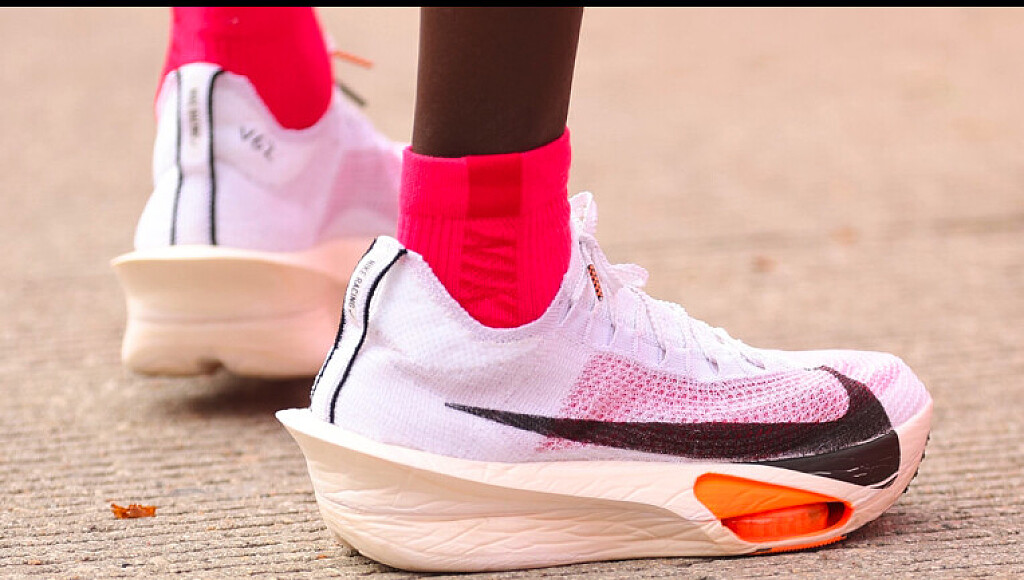
How Long Do Super Shoes Last? Here’s What the Latest Data Says.
Fancy new midsole materials like PEBA make you faster, but at the cost of durability
The eternal question of how long your running shoes should last became suddenly topical a few months ago, when Tigst Assefa set a world marathon record in what Adidas billed as essentially a single-use marathon shoe. This development sparked some important discussions about sustainability, accessibility, and fairness. But it also served as a reminder of how little we actually know about the useful life of running shoes, especially in the new era of thick-foamed super shoes.
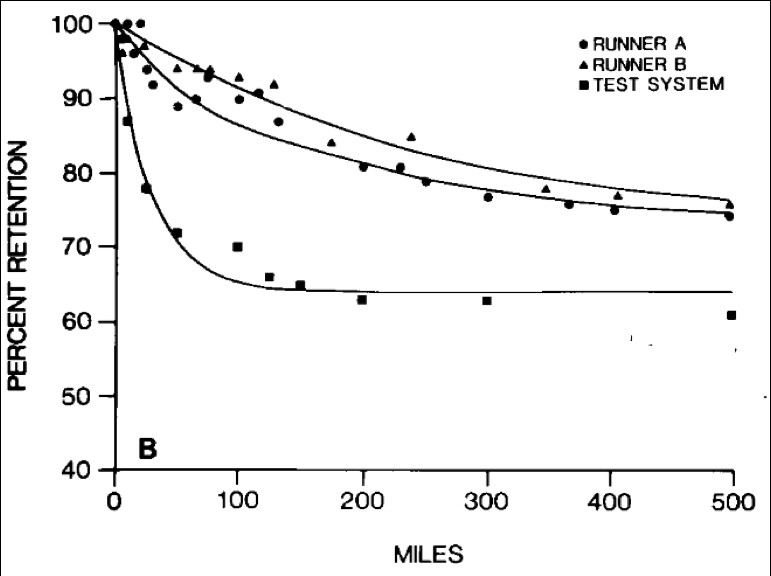
Fortunately, there’s some interesting new data in a study from researchers in Spain, led by Victor Rodrigo-Carranza of the University of Castilla-La Mancha. In the Scandinavian Journal of Medicine and Science in Sports, they compare shoes made with a modern super foam to a traditional EVA midsole before and after 280 miles, and find that the new midsole does indeed lose its magic more quickly—so much so, in fact, that the super shoe is no better than the regular shoe at that point.
Before digging into the specifics of the new study, it’s worth sketching in some context. The conventional wisdom that I’ve heard throughout my running life is that shoes typically last somewhere between 300 and 500 miles. This is based on some mix of cumulative experience and imperfect data, some of it published and some presumably locked away in shoe-company filing cabinets.
For example, there’s a 1985 study that measured shock absorption at frequent intervals between 0 and 500 miles, using a machine to simulate the impacts of running as well as two volunteers who racked up 500 real-life miles. Here’s an example of how shock absorption changed with mileage for one particular shoe:
The machine version of running obviously didn’t replicate the demands of in-person running very well, but the two human volunteers show similar patterns. Overall, the human testing found that shoes retained about 80 percent of the shock absorption after 150 miles, and 70 percent after 500 miles. You can see that the curve flattens out between about 300 and 500 miles, which is presumably where the conventional wisdom on shoe lifespan comes from. Conversely, you could argue that once you’re past 300 miles, the shock absorption isn’t going to drop much further, so if you’ve made it that far you might as well keep running in them until they (or you) fall apart. More on that below.
You might wonder whether shock absorption, as measured by a hydraulic machine, is really what matters to runners. More recent research has looked at other metrics: this 2020 study, for instance, used force-sensing insoles to measure the peak pressure on different parts of the foot, testing how it changed as a New Balance 738 shoe went from new, to 215 miles, to 430 miles. As the image below shows, the highest pressures are seen in the midfoot and forefoot:
Those pressures stayed virtually unchanged after 430 miles—but the midfoot peak pressure increased from 388 to 450 to 590 kilopascals, a 50 percent jump. It’s not clear exactly why the midfoot pressure increases. It could be that the relative lack of cushioning in the midfoot makes it less durable; it could be that the higher pressures on the rearfoot and forefoot break down the cushioning in those regions and shift load to the midfoot. Either way, it’s clear that the objective load on the foot has changed after 430 miles. And interestingly, the perceived cushioning reported by the volunteers picked up this change: those who reported feeling less cushioned in the midfoot in the worn shoes did indeed tend to have the highest peak midfoot pressures.
So the overall picture in the pre-super-shoe era was fairly muddy, but basically supported the view that shoes progressively lose their cushioning and reach bottom somewhere in that 300 to 500 mile range. Then came Nike’s Vaporfly in 2017, using a carbon fiber plate and a thick layer of cushioning to promise better running economy in exchange for a few hundred bucks—and, in the footnotes, less durability. The unsourced number that I frequently heard floating around after the Vaporfly’s release was that you should trust them for 100 miles or so.
It’s worth pausing here to say a few words about running shoe foams. Carlos Sánchez at RunRepeat has an impressive and exhaustive primer on the huge range of high-performance foams now on the market, which is worth digging into if you’re interested. A highly simplified history is that most running shoes used to use EVA (ethylene-vinyl acetate), then in 2013 Adidas’s Boost made TPU (thermoplastic polyurethane) popular, and then in 2017 Nike’s Vaporfly made PEBA (polyether block amide) the state-of-the-art. One study found that energy return was 66 percent for EVA, 76 percent for TPU, and 87 percent for PEBA.
While there’s been plenty of chatter about carbon-fiber plates, the weight of evidence is increasingly that most of the magic in super shoes comes from the foams. Unfortunately, the very property that makes them so good—their ethereal lightness—also makes them less durable. Of the more than three-dozen modern foams that Sánchez reviews, the main differences arise from the tweaks manufacturers make to trade off performance and longevity (along with price, of course). That makes it hard to issue general guidance about how long super shoes last: it depends on the shoe and the foam.
Still, one data point is better than zero, which brings us back to Rodrigo-Carranza’s study. The shoes he used were special prototypes manufactured for the study by On, almost identical except that one set had an EVA midsole while the other had a PEBA midsole. Both versions had a curved carbon-fiber plate. Twenty-two volunteers performed a running economy test to measure how much energy they burned at a given pace, once in fresh shoes and once in pre-worn shoes. (The researchers themselves ran exactly 280 miles in each pair of shoes to pre-wear them.)
One key finding: energy consumption in the new PEBA shoe was 1.8 percent lower than in the new EVA shoe. That bolsters the case that the foam itself is a big part of the magic, since both shoes had carbon fiber plates. (Not all PEBA foams are created equal, so we don’t know if On’s foam is as good as Nike’s ZoomX.) The other key finding: after 280 miles, there was no significant difference between the two shoes. The EVA shoe didn’t lose anything at all, whereas the PEBA shoe got 2.2 percent worse.
It’s not worth making any grand extrapolations from a single datapoint about when one type of shoe gets better than the other. Who knows what happens after 280 miles? For that matter, who knows what happened after 26 miles? Moreover, there are lots of other factors that might be relevant. One of the interesting claims in Sánchez’s review is that super foams maintain their properties even in frigid winter conditions, while EVA-based foams get much more rigid. In some shoes, firmness more than doubled after Sánchez’s freezer test. Maybe a worn-out super shoe is still a better bet than a newer EVA shoe for those of us who are latitudinally challenged. He also notes that shoe foams take more than 24 hours to recover from a run, and some recover faster than others, so it makes sense to alternate different pairs in order to maximize both comfort and shoe lifetime.
My own approach to shoe durability is, admittedly, not one that’s easy to generalize. I generally have two or three pairs on the go at any given time, and I run in them until they start to feel flat. It’s a noticeable sensation, especially if one of the other pairs in my rotation is relatively new and bouncy. Then, in the spirit of that graph above showing a plateau after about 300 miles, I keep running in them—but I pay more attention to how I feel during and after runs, and to whether the wear on the outer sole is changing the angle of my footstrike. Once I start to feel a few aches and pains, I retire the flat shoe. That approach works pretty well to keep me healthy, but the new data suggests that it’s probably not maximizing my performance. Anyone want to buy a pair of gently used six-year-old OG Vaporflys?
Login to leave a comment
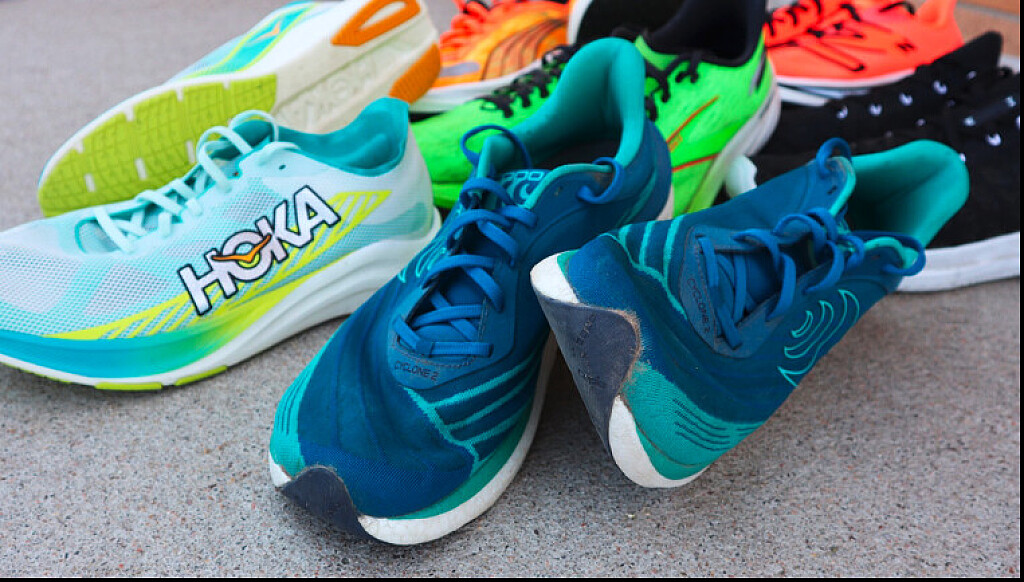
Why Carbon-Plated Running Shoes Can Lead to Injury
Ten Non-plated running shoes that let your feet move freely, provide stable cushioning, and deliver a fast, agile ride
The advent of supershoes has transformed the running shoe world in every category, none more than the class of shoes that used to be called lightweight trainer-racers. Rather than low, flexible, relatively firm shoes, the majority of up-tempo shoes now have a thick stack of light, bouncy foam with a curved carbon or plastic plate embedded in the midsole. Shoes without a plate are now defined by its absence. But concerns continue to grow about injury risk in carbon-plated shoes, and a growing number of models are eschewing the high-stack-with-plate trend and reviving the simple up-tempo shoe category with modern touches.
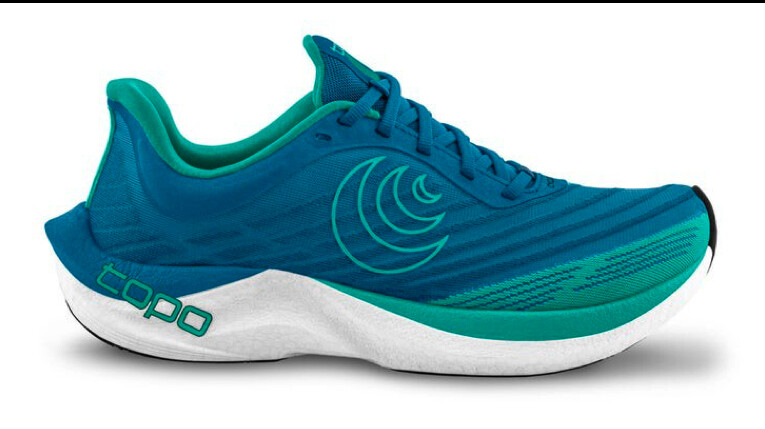
Besides not having a plate, these shoes share other characteristics. Like supershoes, they all feature advanced midsole foams that are ultra-light and hyper-responsive. Unlike supershoes, however, they all have relatively low stack heights and tend to be built on wider platforms, both of which enhance their stability. They also all have a flexible forefoot (rather than a rigid, rockered one), svelte uppers that have just enough structure to hold the foot in place, and price tags that run around $100 less than their supershoe siblings.
If plated super racers and trainers are indeed super, allowing you to run faster with less effort, why would anyone want anything else? The answer has two seemingly contradictory parts: 1) to avoid the excess stresses and accompanying injuries that supershoes can cause, and 2) to allow the natural training stresses that supershoes reduce, in order to build stronger, more robust feet and lower legs.
The problems start with supershoes’ thick, bouncy, sole that propels you forward, but can also throw you sideways. “Running in supershoes is a much less stable environment,” says Jay Dicharry, physical therapist, biomechanical researcher, and professor at Oregon State University. “If you have really good alignment and foot and ankle control, you might be OK, but if not, a supershoe will greatly magnify your instability. You’ll wind up with a considerable increase in stress—and if you have something borderline, it might push you over the threshold.”
Amol Saxena, a leading sports podiatrist in Palo Alto, California, also points out issues with the prescriptive rigidity of the plates. “The problem with the carbon-plated shoes is that your foot is individualized, and the carbon plate is not,” Saxena says. “So if the shape or length of your metatarsals line up differently than where it has to bend, or your plantar fascia is less flexible, you can get stressed in those areas—that’s why people are breaking down. I’ve had people break or tear things just in one run in the shoes.” The more flexible plates found in many super trainers reduce some of this stress, but these shoes are still tuned to optimize specific strides and don’t let the foot move freely in its preferred patterns.
Research has also shown that running in supershoes changes your form: It decreases your cadence, increases stride length and peak vertical forces, and alters foot mechanics. All these add stress to joints. “When you put a supershoe on, you basically have a trampoline,” Dicharry says. “It’s going to compress and rebound, and creates a different rate of loading to muscles and joints.” While no studies to date directly demonstrate that supershoes cause injury, evidence links them to stress fractures, plantar fasciitis, achilles tendinopathy, and other foot and lower-leg issues.
Paradoxically, while supershoes’ unstable platform and rigid plates can add excessive stress, their performance-enhancing rebound can also remove some of the training load. Supershoes lower the load at the ankle and foot, reducing the work they have to do and making running easier in the short-term, but simultaneously removing some of the stimulus for your body to adapt and grow stronger in the long-term. “If you run in supershoes exclusively, you’re going to end up with a bunch of deficient runners prone to injury—runners with less springy tendons, weaker tendons, and lower bone density,” Dicharry says.
The solution is to wear a variety of shoes in your training. “It is good to use different stack heights and flexibility,” Saxena says. “Plated shoes should be a training tool as well as for races—but how much depends on the runner.” You want to train some in the shoes you’ll be racing in, to let your body adapt to their unique stresses and stride patterns. But training in more flexible, less-bouncy shoes has been shown to improve running economy and build the strengths you need to handle the unstable rebound of supershoes. “If you want to run in super shoes you need to put the work in to show up with stable parts,” Dicharry says.
Fortunately, I don’t find training in these shoes a chore. They may not be performance-enhancing racers, but they are light, nimble, stable, and make my feet feel connected, engaged, and alive.
After having run in dozens of shoe models released this spring, I selected those that fit in the category and ran in a different shoe every day for six weeks—on asphalt, concrete, and dirt roads. I did at least one daily run and speed workout in each, ranging from 100-meter pickups to VO2-max intervals to tempo runs. Despite their similarities, each shoe has a slightly different ride and significantly different fit, so it’s worth trying out a few before buying. All of these models will serve as an excellent trainer for easy daily runs, interval workouts, tempo runs, and occasionally going long.
by Outside Online
Login to leave a comment

Five exercises to improve proprioception and get faster
Proprioception, often referred to as the “sixth sense,” is the body’s ability to sense its own position, movement, and spatial orientation (i.e., sensing where the ground as you take a step). For runners, developing and honing proprioceptive skills is a critical yet often overlooked aspect of training. It plays a pivotal role in enhancing performance, preventing injuries and improving overall running efficiency.
Proprioception is the foundation of co-ordinated movement. As runners, our bodies constantly adjust to varying terrains, inclines and obstacles. A heightened proprioceptive sense enables us to maintain balance and stability, adapting quickly to uneven surfaces and unexpected changes in stride. This not only reduces the risk of tripping and falling but also optimizes energy expenditure, as efficient movements translate to better running economy.
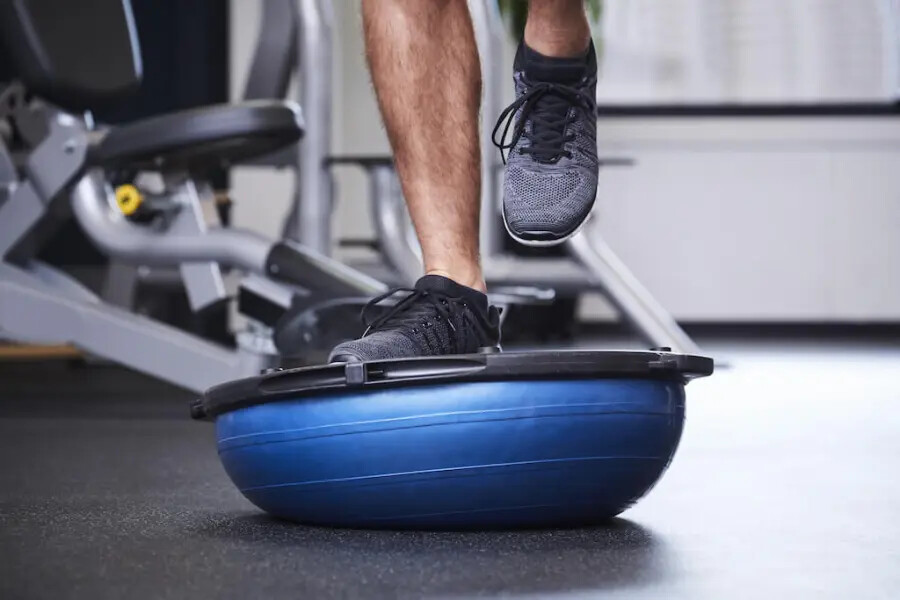
Incorporating proprioceptive exercises into a training regimen can range from simple balance drills to more advanced techniques involving unstable surfaces or dynamic movements.
Exercises to improve proprioception
The following exercises challenge the body to adapt, enhancing neuromuscular coordination and proprioceptive feedback loops.
One-leg 3-way kick
If you’re a beginner, start by doing this exercise on a hard, flat surface. As you progress, you can do it standing on a soft riser.
Stand with your feet hip-width apart and your hands on your hips.
Stand on your left foot and lift your right foot in front of you a few inches off of the ground. Hold for 2 –3 seconds, then return to the starting position.
Follow the same steps as you lift your right leg to the side of your body and then behind you.
Do this five times, than switch sides and repeat. Do this 2-3 times on each side.
Flamingo stand
Stand with your feet hip-width apart and your hands on your hips. For more balance, stretch your arms out to your sides.
Shift your weight to your left foot and lift your right leg up with a 90-degree bend at the knee.
Hold this for 10–20 seconds, or however long you can. Repeat on the opposite leg, and do this 2–3 times per leg.
Banded triplanar toe taps
If you’re a beginner, try this move without the loop band.
Place a loop band around your ankles and stand with your feet hip-width apart.
Shift your weight to your left foot and lower into a quarter squat.
Using the loop band as resistance, tap your right toe in front of you, to the side, and behind. Do this 10 times on one leg, then 10 times on the other. Repeat 2-3 times.
Cone taps
As you perform this movement, engage your core and use your glutes and hamstrings to stay balanced.
Stand on one foot with your hands on your hips and a cone two feet in front of you.
Slowly bend at the hips and extend your left leg behind you as you reach forward to tap the cone.
Lift yourself back up until you’re in the starting position.
Repeat five times on one leg, then switch and repeat five times on the other leg. Do this 2–3 times.
Airplanes
Stand with your feet hip-width apart and your hands on your hips.
Stand on your left foot and slowly extend your right leg out behind you, lifting it into the air so you create a straight horizontal line from your head to your foot.
With your leg extended behind you, rotate your torso to the left as far as you can go without falling. Pause, then return to the centre position.
With your leg still extended behind you, rotate your torso as far to the right as you can without falling, turning your right hip toward the ceiling. Pause, then return to the centre position.
Return to standing. Repeat the sequence five times on each leg, for 2-3 sets.
by Brittany Hambleton
Login to leave a comment
Pro-runner Allie Ostrander’s Five tips for avoiding injuries
Former American steeplechaser turned trail-elite Allie Ostrander shared her tips for runners to avoid injuries on social media recently, telling fans to consider it her “formal petition against running-related injuries.”
Ostrander announced her shift from track to trail in Feb. 2023 (along with her partnership with ultrarunning GOAT Kilian Jornet‘s brand NNormal) and is also a mental health and eating disorder awareness advocate.
Originally from Kenai, Alaska, Ostrander had a very successful NCAA career with Boise State University in Idaho, winning three straight NCAA titles in the 3,000m steeplechase. Her tips on avoiding injuries are excellent ones for all runners, whether they run on track, trail or roads.
Here are Ostrander’s suggestions, along with some ideas to get you started.
Run more uphill miles
“Uphill running is lower impact and higher output, so you work harder,” shared Ostrander, “but it puts less stress on your bones.” She suggests running on the treadmill at a 3–5 percent grade, running up a long hill and getting a ride down, or doing hill repeats and walking downhill between reps.
Replace easy miles with cross training
“You don’t have to replace every easy run with a bike sesh because, let’s be honest, running is way more fun, but cross-training can be a great tool to get in some aerobic training without the impact,” Ostrander says. She suggests replacing 1–2 runs a week with a cross-training session and explains that she uses the formula of 10min of XT=1 mile running.
Try: a standing bike workout.
Don’t be afraid to strength train, lift heavy, and build muscle
Building muscle will make you a stronger runner, and you’ll be better equipped to power through hard training. “It can also correct imbalances and improve running economy,” says Ostrander.
Try: these at-home strength workouts with Canadian ultrarunner Jazmine Lowther.
Fuel
“Being in an energy deficit increases injury risk and decreases adaptation to training,” explains Ostrander. She recommends focusing on consistently giving your body the energy it needs.
Rest days are important
“Rest allows your body to absorb all the training,” Ostrander says. “Don’t wait until you feel overly tired or have some sort of pain to give yourself a day off.” It can be challenging to really allow ourselves to take the time off we need, and Ostrander suggests scheduling rest days into your training plan to keep it as much a priority as hard training.
Try: recovery day yoga to relax and unwind.
by Keeley Milne
Login to leave a comment
Why Are Runners Suddenly So Fast?
Records are falling and times are dropping. Is it the shoes, or something else?
Consider the Paris Diamond League meet in early June. Jakob Ingebrigtsen smashed the two-mile world best by more than four seconds, becoming just the second man to run back-to-back sub-four-minute miles. Then Faith Kipyegon notched her second world record in a row, outsprinting the reigning record-holder over 5,000 meters just a week after becoming the first woman under 3:50 in the 1,500 meters. Then, to cap the night, Lamecha Girma took down the steeplechase record.
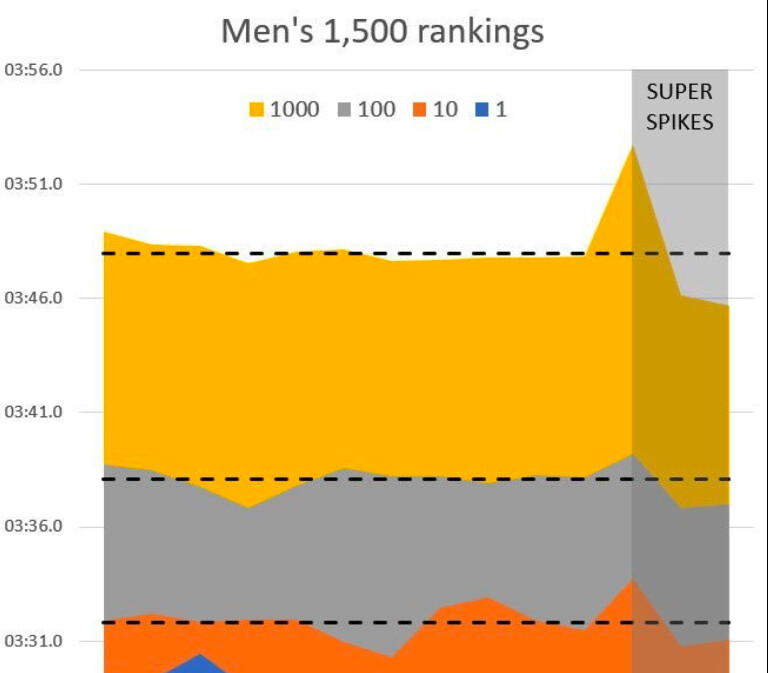
It was a great night—but it was just one of many great nights that track fans have been treated to recently. A week later, at the historic Bislett Games in Oslo, eight men broke 3:30 for 1,500 meters in one race, setting a new record—including Yared Nuguse, who set a new U.S. best. Meet records fell in almost every event. At the collegiate level, an analysis by Oregon-based coach Peter Thompson shows that the number of middle- and long-distance runners hitting elite benchmark times has doubled, tripled, or in some events even quadrupled in the last two years. Earlier in June, four high-school boys broke four minutes for the mile in a single race, matching the total number of people who’d done it in history prior to 2011.
I could go on.
There are two main questions that arise from this buffet of speed. First, is it real? Are runners getting faster across the board, or are we just being fooled by the brilliance of a few individuals and random fluctuations in the depth of different events? Second, if it’s really happening, then why? The easy answer is, “It’s gotta be the shoes” (or, in this case, the super spikes), but does the data really back that up?
I don’t have any definitive answers at this point, but here are my thoughts on some of the possible explanations.
It’s easy to make an anecdotal case that runners are faster than ever. Backing that up with data isn’t quite as straightforward. If you look only at whether the top-ranked time in the world is getting faster or slower from year to year, any trends will depend on whether you happen to have a generational athlete in the event at a given point in time. The effect of an Usain Bolt is bigger than the effect of, say, a new shoe design. Even if you go deeper, the top ten times in any year often come from just one or two races that took place in exceptionally good conditions. So you’re better off looking farther down the list.
For example, here’s some data for the men’s 1,500 meters between 2009 and 2022, drawn from the World Athletics database. I’ve shown the first, tenth, 100th, and 1,000th ranked performers (not performances) for each year. The horizontal dashed lines show the average for 2009 to 2018. The first super spike prototypes had shown up on the circuit by 2019 at latest, and were widely available by 2021. The big spike of slower times in 2020 is because there were so few races due to the pandemic.
The number-one times don’t show any particular trend. The tenth-best times show a dip since 2021, but no bigger than the dip in 2014-2015 (which corresponded to two particularly fast races in Monaco). For the 100th and 1,000th best times, the pre-pandemic data finally starts to look more consistent, which makes the dip since 2021 more telling. The 1,000th-best performer is now 0.9 percent faster than the pre-pandemic average, and the 100th-best is 0.5 percent faster. This is smaller than the 1.3-percent estimate derived from lab testing of super spikes, but in the ballpark.
Here’s comparable data for the women’s 5,000 meters:
Again, the first- and tenth-ranked times fluctuate too much to draw any conclusions. The 100th and 1,000th places do show an apparent drop in the last few years, by 1.9 and 2.0 percent respectively—more than the lab estimate. There are lots of possible explanations for this discrepancy, including that the benefits of super spikes are reduced at faster speeds.
I’ll add one more graph just for context. Supershoes came to road running way back in 2016 (for prototypes) and became widely available by 2018. I think most observers agree that these shoes really have affected road-running times. So what does the comparable data show for, say, men’s marathon times? Here it is:
The data is confounded by the effects of the pandemic, particularly in 2020. Still, the post-supershoe improvement looks fairly similar to the track data. Compared to the 2009 to 2016 average, last year’s times were 0.7 percent faster at tenth, 1.6 percent faster at 100th, and 1.3 percent faster at 1,000th.
The conclusion I take from all this data? It does like there’s something going on, both on the track and on the roads. But it’s way less obvious in the data than I expected. My subjective feeling was that the last few years have seen records broken and times redefined at a totally unprecedented rate. I thought I’d see robust improvement of at least three or four percent. But that scale of change is not there, at least in the events I sampled.
So with that in mind, what explains the changes we do see?
My starting assumption is that any performance improvements we’ve seen in the last few years are because of the shoes. I’m not going to belabor that point here, because I’ve already written plenty on both road supershoes and super spikes.
But I do want to make one key point. The reason my prime suspect is the shoes is that we have direct laboratory evidence that both types of shoes improve running economy, by around 2 percent on the track and at least 4 percent on the roads (and, to complete the circle, lab evidence that improved running economy directly translates to faster race times). It would take some weird and hitherto undiscovered science in order for the shoes not to make us faster. In contrast, the other hypotheses that I’m going to discuss below may be compelling to various degrees, but all rely on some assumptions and guesses and hand-waving.
Here’s a sentence you wouldn’t have read prior to 2018, from Letsrun’s description of Kipyegon’s thrilling 1,500 world record in Florence: “Kipyegon sprinted away from the pacing lights with 200m to go, lengthening her gap from the green lights as she rounded the turn and entered the home straightaway.” I wrote about World Athletics’s introduction of Wavelight pacing lights when Joshua Cheptegei set the 5,000-meter world record in 2020, positing that more even splits could make a notable difference to times. Good pacing has been a hallmark of this year’s records too, all assisted by Wavelight.
Wavelight doesn’t factor in on the roads, but ever since Eliud Kipchoge’s sub-two marathon exhibitions, big-time marathons have devoted more attention to providing top-notch pacers for their elite runners. That has the double benefit of saving the mental effort of setting the pace, and of reducing air resistance. I think good pacing and drafting are both beneficial. But that can’t explain why the 100th and 1,000th performers seem to be getting faster, because Wavelight and paid rabbits are generally reserved for the front of the pack.
Freed from the tyranny of over-frequent racing during lockdowns, runners spent 2020 building up a massive base of endurance that has catapulted them to new levels. It’s even possible that, having learned their lesson, they’ll continue with this more patient approach to training. This theory has the disadvantage of being both unprovable and unfalsifiable. That doesn’t necessarily mean it’s untrue, but if performance levels don’t start regressing to their pre-pandemic means over the next few years, I’ll remain skeptical.
It’s the “big, sexy thing” in endurance training these days, as miler Hobbs Kessler put it in a recent interview: lactate-guided double-threshold training, as popularized by Norwegian Olympic champions Jakob Ingebrigtsen and Kristian Blummenfelt. As I explained in this article, the approach emphasizes high volumes of threshold training with very tight control on the intensity to avoid going too hard. Whether it’s objectively better than other training approaches remains to be seen—but it hasn’t yet been adopted widely enough to make a noticeable impact on the top-1,000 list.
In the past, when I’ve looked at broad trends in performance over time, one of the first factors I’ve considered is changes in drug availability or drug testing. It’s extremely noticeable (though of course not proof of anything) that long-distance track times took off like a rocket shortly after the introduction of EPO in the early 1990s. If you look carefully, you can find what seems to be the performance signature of various drug-related events like the introduction of EPO testing and, more recently, the implementation of athlete biological passports.
Is there something new on the scene over the last few years? Or are we still seeing the effects of pandemic-related disruptions in out-of-competition drug testing? I certainly hope it’s not the case, but you’d have to be amnesiac to discount the possibility entirely. Once again, the best counterargument is that the performance improvements are noticeable even at the 1,000th-best level—though perhaps I’m being naive.
As you can probably tell, I don’t think any of the alternative explanations I’ve offered so far hold water compared to my default assumption that it’s the shoes. But this last category is a little different. If you spend enough time arguing with people about why runners are getting faster, you’ll encounter a number of broad, hand-waving theories that are hard to substantiate but nonetheless sound reasonable.
For example, I can attest to the fact that the Internet has made training knowledge far more widely accessible than it was when I was a young athlete in the 1990s. Ideas and approaches (like the Norwegian model) are endlessly debated and dissected, and any student of the sport is exposed to multiple perspectives. (In contrast, when I arrived at university and found that the workouts were different from those I’d done in high school, I thought the world was ending.) This theory has been offered frequently over the last decade or more as an explanation for steadily improving U.S. high school times. Maybe it’s true more broadly: people everywhere simply know more about the principles of training, and are doing it better (or at least fewer people are doing really stupid training) compared to the past. Even if elite coaching was always pretty good, this creates a wider pyramid of prospective talent feeding into the elite coaches.
I also have the sense that the pendulum has swung away from sit-and-kick racing towards aggressive front-running. After the 2019 world championships, where super spikes first made headlines, I wrote an article about the unusually fast early paces of the races. Jakob Ingebrigtsen, the current king of the 1,500, is notable for running from the front and pushing the pace rather than relying on a finishing sprint—which likely helps explain why he led those seven other men under 3:30 in Oslo. If runners these days are more focused on running fast times rather than trying to win sprint finishes, it stands to reason that times would get faster overall.
And there are plenty of other theories out there—broader support for professional training groups, better nutrition and recovery, the inevitable march of progress, and some that I’ve undoubtedly missed completely. As I said at the top, I don’t know the answers, and I don’t think anyone else does either. Times do seem to be improving, but not as much as I would have guessed based on all the hype about recent record-breaking. The shoes almost certainly play some role—but if there’s some other secret sauce in there, it’ll be fun trying to figure out what it is.
by Outside Online
Login to leave a comment

Tom Cruise Wants You to Know He's Still a Runner
The "Mission: Impossible" star is famous for sprinting after the bad guys—and his form has only improved over the years.
Remember when we said Global Running Day is for everyone? We meant it! Wednesday’s celebrations were recognized by everyday runners, professional athletes, and even famous actors. Tom Cruise acknowledged the holiday by posting a GIF on Twitter of him running in his upcoming “Mission: Impossible” sequel.

He wrote, “Running in #MissionImpossible movies since 1996. #GlobalRunningDay.”
The spry 60-year-old also shared the clip and caption on his Instagram story. His social media bios have long been dedicated to his athletic chops on the big screen, reading, “Running in movies since 1981,” referencing the year he appeared in his first onscreen roles for the films “Endless Love” and “Taps.”
In the seventh “Mission: Impossible” film—and the first to be released since 2018—Cruise will reprise his role as Ethan Hunt, tracking down “a terrifying new weapon that threatens all of humanity before it falls into the wrong hands,” according to promotional material for the upcoming movie. As in all of the films in the franchise, Cruise will be doing quite a bit of onscreen running.
In one running blog’s count, as of last year, he’d run in 44 out of 52 movies. Cruise is known so much for his athleticism that there are YouTube videos documenting “Every Tom Cruise Run. Ever,” and ESPN has even called in experts to evaluate his form. Writer Ryan Hockensmith wrote, “In ‘The Outsiders’ and ‘Taps,’ Cruise runs quite a bit, and it’s a sloppy, under-developed run. It’s not until toward the end of ‘Risky Business’ in 1983 when Cruise vaults up his high school’s steps and jets through the hallways that the beginnings of a steady, faster form begins to emerge.”
As so many other runners have discovered, running economy, form, endurance, and overall ability really can improve with age and experience.
by Runner’s World
Login to leave a comment

Four reasons all runners should consider racing an 800m
Alright marathoners, listen up. The 800m is widely regarded as one of the toughest distances to race. It demands a combination of speed, endurance and mental toughness. Without both physical and mental strength, it can be an incredibly challenging experience. While many runners lean towards longer distances like marathons or half marathons, the 800m offers a valuable learning experience that can benefit athletes from various backgrounds, from sprinters to distance runners.
Here are four reasons why every runner should consider racing an 800m.
1.- Speed development
The 800m is a unique distance that combines speed and endurance. It requires a perfect balance of raw speed, aerobic capacity and mental fortitude. By incorporating 800m training into your regimen, you will quickly develop both your speed and endurance. The race will also challenge your body to perform at a high intensity for a relatively short duration, tapping into your VO2 max, which can benefit your speed over longer distances.
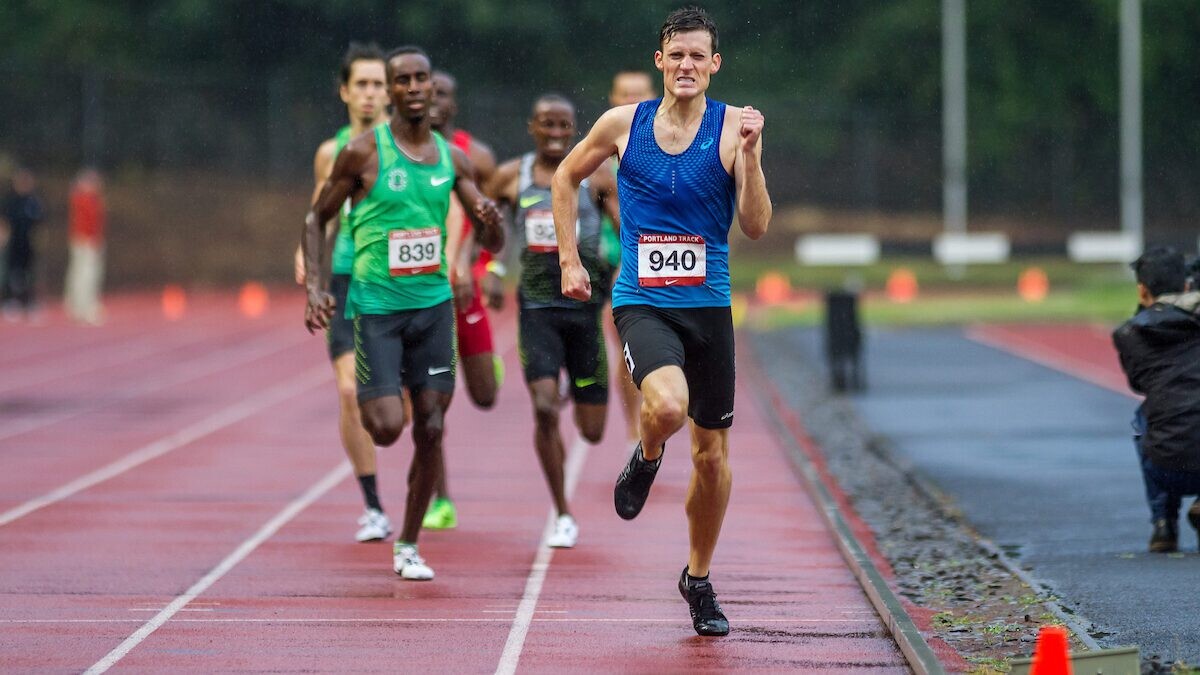
2.- Improve your mental toughness
The 800m is not only a test of your physical strength but also a great way to improve your mental resilience. The race requires strategic decision-making and split-second adjustments, from pacing strategies to positioning on the track. The distance demands mental toughness and adaptability, especially when your body is tired. By racing the 800m, runners can develop a resilient mindset, sharpen their race instincts, and ultimately learn to embrace extreme discomfort.
3.- It’s versatile
By adding the 800m to your race repertoire, you increase your versatility as an athlete. Engaging in different race distances is essential for becoming a well-rounded runner, and the demands of the 800m can complement your training for longer distances, such as the marathon or half-marathon. The anaerobic conditioning and muscle movements required in the 800m can improve your overall running economy and enhance your efficiency to sustain faster speeds for longer.
4.- Untapped potential
Racing an 800m can often uncover hidden potential and help you push your goals or boundaries further as a runner. Even if you don’t think you’re good at it, the mental side of the 800m can lead to surprising breakthroughs in performance. Who knows? You may discover you have untapped speed and determination that can positively impact your upcoming marathon training.
by Running Magazine
Login to leave a comment
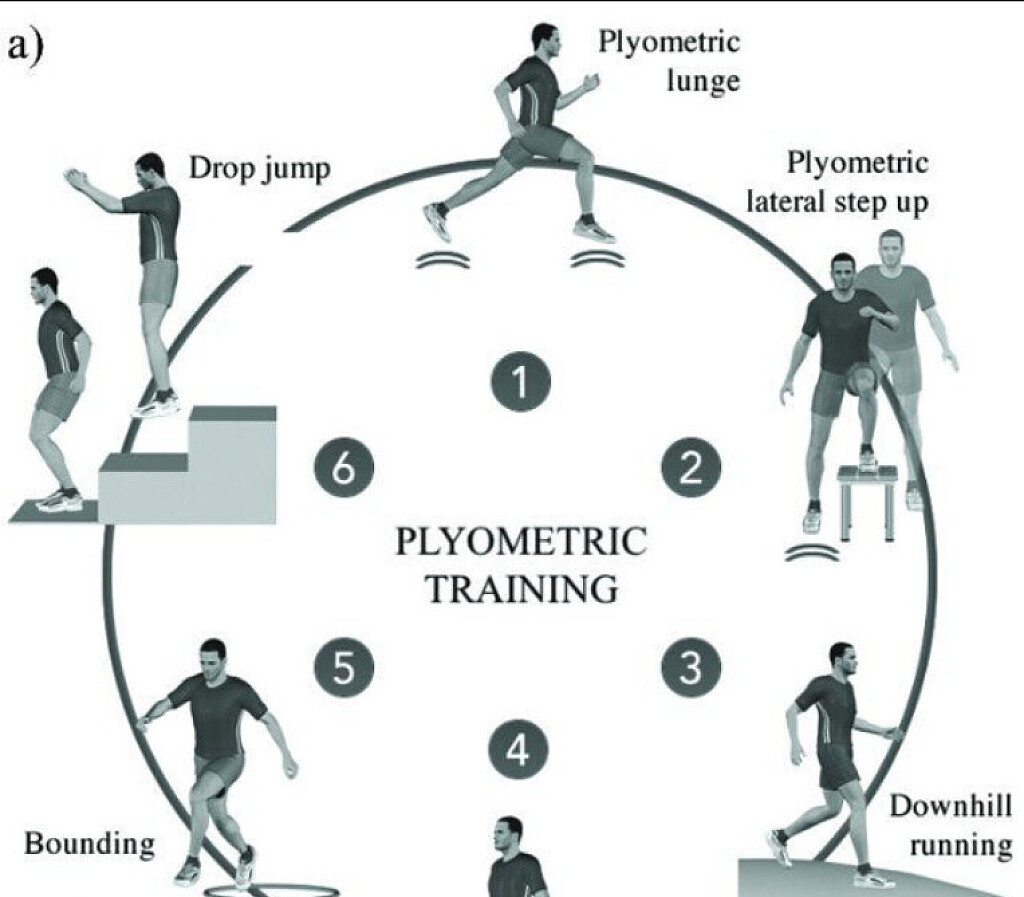
The Quest for a Simpler Way to Boost Running Efficiency
Plyometrics can make you a more efficient runner, and it turns out they don’t need to be complicated or risky
It’s pretty clear, at this point, that plyometric training can make you a more efficient runner. There’s still plenty of debate about how it works. Does it streamline the signals traveling from brain to muscle? Does it make your tendons stiffer, enabling them to store and release more energy as they’re stretched with each stride? Does it alter your running style so that you take quicker and lighter steps? No one is sure, but there’s little debate that it does something.
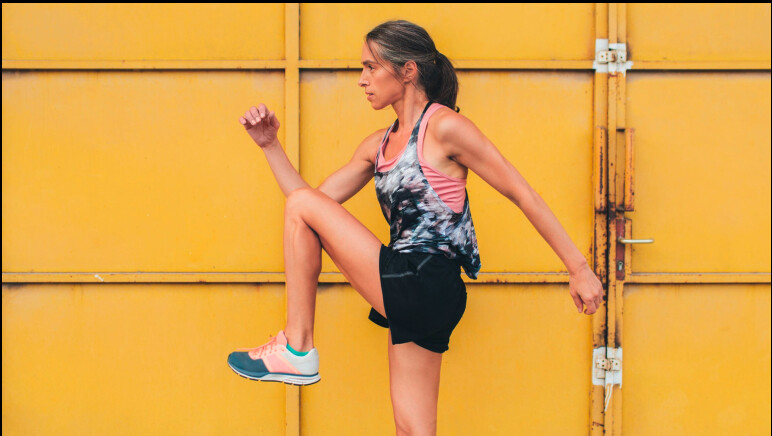
As a result, studies like this one in Sports Biomechanics, published last month by a group led by Aurélien Patoz of the University of Lausanne, don’t garner much attention. They found a 3.9 percent improvement in running economy after eight weeks of either plyometric or dynamic strength training, roughly comparable to what Nike’s original Vaporfly 4% shoe produced. (They also found no evidence that either form of training altered running stride in any significant way, for what it’s worth.)
Why no excitement about a free four-percent boost? As someone who has experimented on and off with various forms of plyometric training over several decades, let me venture a hypothesis: it’s perceived as too complicated, and possibly risky, for most of us. Plyometrics involve explosive movements in which you try to maximize the force produced in the shortest possible time. You often see people leaping off steps, bounding over hurdles, and performing various other feats of impressive coordination.
The subjects in Patoz’s study were amateurs with no prior experience with any form of structured strength training. As a result, the exercises they did weren’t especially daunting by plyometric standards. But they weren’t simple, either. Here’s an overview of the program:
Even if you think your hamstrings can handle drop jumps, plyometric lunges, bounding and so on without snapping, you still need various bits of equipment and a bunch of time. Does it need to be that complicated?
That’s the question tackled by another recent study, this one led by Tobias Engeroff of Goethe University Frankfurt and published in Scientific Reports. They stripped plyometric training down to its bare bones, tested it on a group of amateur runners—and still found a significant improvement in running economy after just six weeks. The exact size of the improvement depends on how you measure it and at what speed, but was between 2 and 4 percent.
Engeroff’s plyometric program involved nothing but hopping on the spot. Specifically, “participants were instructed to start with both feet no wider than hip width apart and to hop as high as possible with both legs, keeping the knees extended and aiming to minimize ground contact time.” They started by hopping for 10 seconds, resting for 50 seconds, and repeating five times for a total of five minutes. They did this five-minute program daily, decreasing the rest and increasing the number of sets each week: the second week was 6 sets of 10 seconds of hopping with 40 seconds of rest; the sixth and final week was 15 sets of 10 seconds hopping with 10 seconds of rest, still totaling five minutes.
This program was based on the idea that it’s tendon stiffness that boosts running economy. In particular, the stretch and recoil of the Achilles tendon provides between half and three-quarters of the positive work required for running, by some estimates. Engeroff’s short daily program draws on recent research by Keith Baar and others suggesting that connective tissue such as tendons responds best to brief, frequent stimulus rather than longer and harder workouts. Notably, this approach didn’t injure any of the runners.
The point here isn’t necessarily that daily hops are the new magic exercise that everyone should do. Indeed, it’s worth emphasizing that Patoz’s study found essentially the same improvements with both plyometrics and dynamic strength training. That’s a familiar result in studies that have tried to determine the best economy-boosting regimen: all sorts of different approaches seem to produce similar results. Patoz’s dynamic strength program involves a bunch of bodyweight exercises that focus on concentric contractions: lunges, step-ups, squats, stair jumps. Those are all components of my current strength routine, and I like the idea that, in addition to stiffening my tendons, I might also be strengthening my muscles.
It’s worth acknowledging that the subjects in both these studies were recreational runners with little prior experience of either plyometric or strength training. The minimalist program that works for them might not do much for a serious competitive runner with years of resistance training experience. Those are the people who might need to do the elaborate one-legged triple-axel hurdle hops that you see in online training montages. For the rest of us, though, the message seems to be: do something. It’s as effective as supershoes, and way cheaper.
by Outside Online
Login to leave a comment
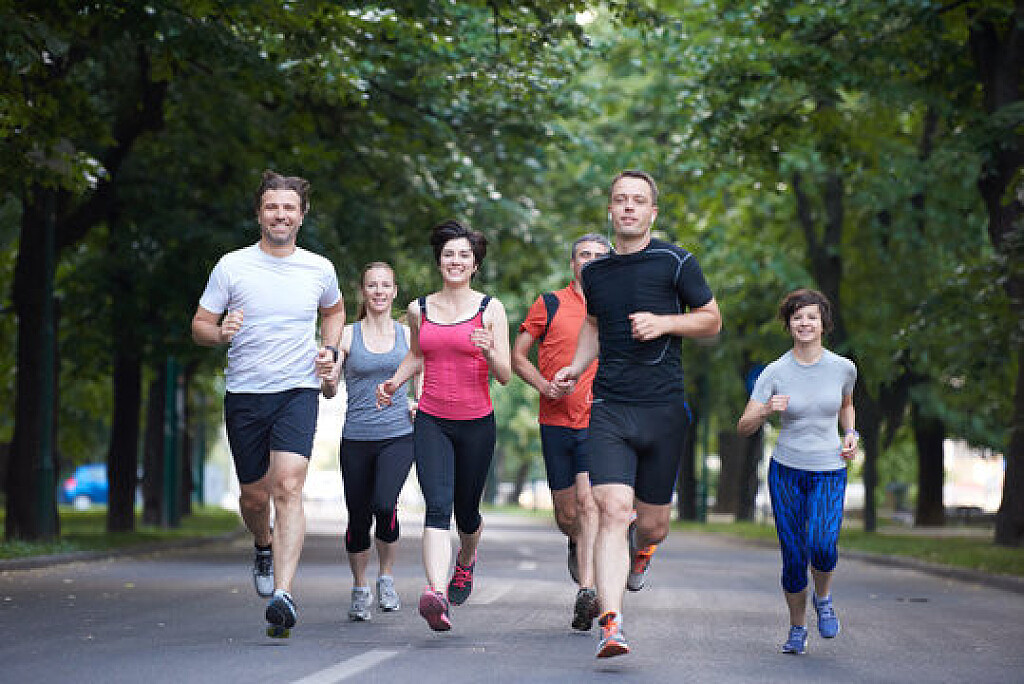
The best ways to improve distance running performance
Maximizing speed and performance in distance running can be achieved by improving lactate threshold and running economy. While VO2max—the maximum volume of oxygen your muscles can consume per minute—has received most of the attention among runners and coaches, a high VO2max alone is not enough to attain competitive performances.
A high VO2max simply gains one access into the club, since a runner cannot attain a high level of performance without a high VO2max. But, while you can improve your VO2max, it is largely genetically determined.
The other two major physiological players of distance running performance—lactate threshold (LT) and running economy (RE)—influence your performance more, and are more responsive to training.
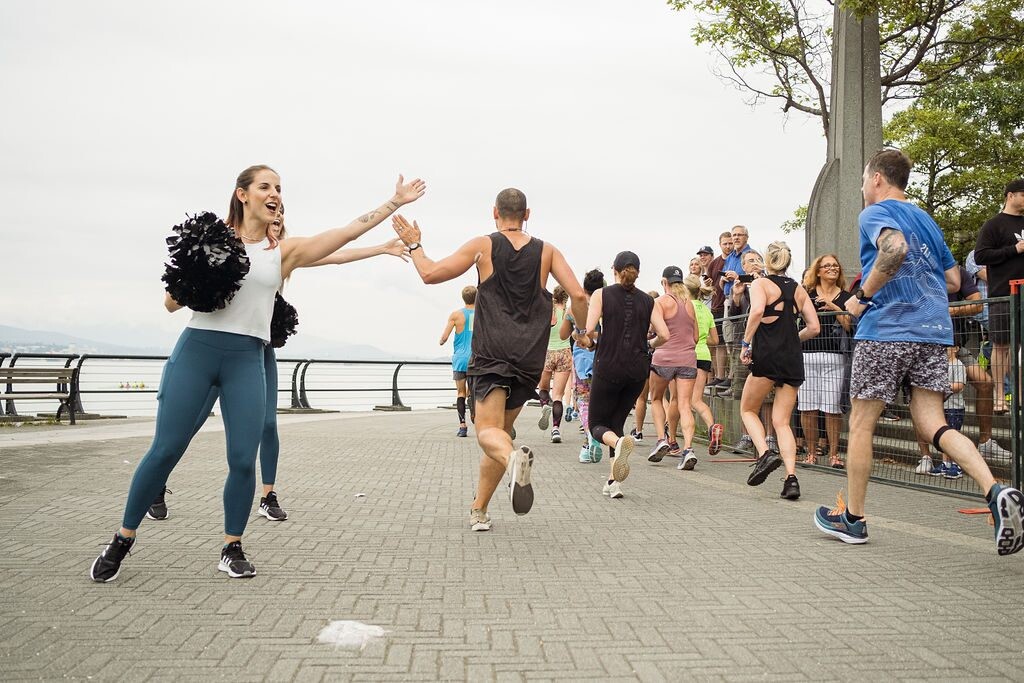
From the time of the classic study published in Medicine and Science in Sports and Exercise in 1979 by some of the most prominent names in exercise physiology—Farrell, Wilmore, Coyle, Billing and Costill—research has shown that the LT is the best physiological predictor of distance running performance.
LT is an important physiological variable that demarcates the transition between running that is almost purely aerobic and running that includes significant oxygen-independent (anaerobic) metabolism. It represents the fastest speed you can sustain aerobically. Since the LT represents your fastest sustainable pace, the longer the race, the more important your LT.
What is LT Pace?
LT pace is about 10 to 15 seconds per mile slower than 5K race pace, or about 10K race pace for runners who take 40 minutes or more to complete 10K. If using a heart-rate monitor, the pace should be about 75 to 80 percent of your maximum heart rate.
For highly trained and elite runners, LT pace is about 25 to 30 seconds per mile slower than 5K race pace, or about 15 to 20 seconds per mile slower than 10K race pace, and corresponds to about 85 to 90 percent max heart rate. The pace should feel "comfortably hard."
How to Improve LT?
Sample workouts to improve lactate threshold include:
Continuous runs at LT pace, starting at 3 miles and increasing up to 7 to 8 miles, or about 45 minutes for marathoners
Intervals at LT pace with short rest periods, such as 4 to 6 x 1 mile at LT pace with 1 minute rest
Shorter intervals at slightly faster than LT pace with very short rest periods, such as 2 sets of 4 x 1,000 meters at 5 to 10 seconds per mile faster than LT pace with 45 seconds rest and 2 minutes rest between sets
Long, slow distance runs with segments run at LT pace (for marathoners), such as 12 to 16 miles with the last 2 to 4 miles at LT pace, or 2 miles + 3 miles at LT pace + 6 miles + 3 miles at LT pace.
How Running Economy Makes Running Easier
Running Economy is the volume of oxygen consumed at submaximal speeds. In 1930, David Dill and his colleagues were among the first physiologists to suggest that there are marked differences in the amount of oxygen different athletes use when running at the same speeds, and that these differences in "economy" of oxygen use are a major factor in explaining differences in running performance in athletes with similar VO2max values.
For example, research has shown that, while Kenyan runners have similar VO2max and LT values as their American or European counterparts, the Kenyans are more economical—possibly due to their light, non-muscular legs that resemble those of thoroughbred race horses. The heavier your legs, the more oxygen it costs to move them.
RE is probably even more important than the LT in determining distance running performance because it indicates how hard you're working in relation to your maximum ability to use oxygen.
For example, if two runners, Jack and Martin, have a VO2max of 70 milliliters of oxygen per kilogram of body weight per minute and a LT pace of 7 minutes per mile, but Jack uses 50 and Martin uses 60 milliliters of oxygen while running at 7:30 pace, the pace feels easier for Jack because he is more economical. Therefore, Jack can run faster before using the same amount of oxygen and feeling the same amount of fatigue as Martin.
I have yet to see a runner who has superior RE who does not also have a high VO2max and LT.
4 Strategies to Improve Running Economy
Despite its importance, RE seems to be the most difficult of the three physiological players to train. While many runners and coaches think that RE is a reflection of running form, it is more influenced by those microscopic structures that influence oxygen delivery to and use by the muscles—capillaries and mitochondria, the densities of which are both enhanced with high mileage.
Research has shown that runners who run high mileage—more than 70 miles per week—tend to be more economical.
In addition to increasing mitochondrial and capillary density, the greater repetition of running movements may result in better biomechanics and muscle fiber recruitment patterns and a synchronization of breathing and stride rate, which may reduce the oxygen cost of breathing.
RE may also be improved by the weight loss that often accompanies high mileage; the change in body weight lowers oxygen cost.
Since VO2max plateaus with about 70 to 75 miles per week, improved RE may be the most significant attribute gained from running high mileage. However, it's not entirely clear whether high mileage runners become more economical by running more miles or they're innately more economical and can therefore handle higher mileage.
Intervals and tempo runs can also improve RE since, as VO2max and LT improve, the oxygen cost of any submaximal speed is also likely to improve.
However, it is possible to become more economical without improving VO2max or LT, as research on power training with very heavy weights and plyometrics has shown.
Power training focuses on the neural, rather than metabolic, component of muscle force development to improve RE.
by Jason Karp
Login to leave a comment

How Long Does It Take To Get Used To Running?
You have decided to start running. Well done, you have taken the most important step. But after the first few workouts, you feel tired and want to quit.
In this article, you will find out how long it takes to get used to running.
Generally speaking, it takes an average person about 4 to 8 weeks to get used to running. The final time is influenced by current fitness level, age, and obesity. With a consistent and proper training approach, you will get used to running faster.
Some get used to the stress of running after just a few weeks, while others need several months. It is difficult to give an exact answer because it depends on the person.

Most people think that if you run continuously for 30 minutes without stopping or slowing down too much, you will get used to running.
It is important to follow the guidelines in the beginning so you do not overdo it and give up training or get injured.
Tip
When you enter the world of running, trust the process because you have a long way to go. The more effort you put in, the more you will get back. Try to enjoy every mile of running and the daily victories of yourself. Over time, you will get used to the exertion of running and it will become easier.
Below are tips that will help you get used to running as quickly as possible.
How to get used to running as soon as possible?
Running is not that easy, but with these tips you will quickly get used to the exertion of running.
Here are some guidelines that will help you get the most out of it.
1. Start slow
Whether you have just started running or you want to take it a step further and run a longer distance or get faster, the important thing is to start slow.
If you are a beginner, start with a combination of walking and running. For example, run for 1 minute, then walk for 1 minute, and so on for 8 reps.
Over time, you will build up so much endurance that you will no longer need walking breaks. Run the running segments at a conversational pace. This means that you can talk normally while running without getting out of breath.
In the initial phase of training, you cannot run too slow, just too fast.
In the beginning, three training sessions per week are enough. Make sure you have at least one day of rest between training sessions. Be sure to take at least one rest day between workouts.
2. Progress gradually
It is important to gradually increase the distance and intensity of your running.
If you change your training plan too quickly and do not give your body a chance to adapt, you run the risk of injury or overtraining, which will keep you from continuing to train.
3. Choose a training plan or consult a coach
Novice runners very often start with training that is too intense. They want to progress as quickly as possible, but out of ignorance they overdo it.
If you are new to running, join a running club or choose a training plan to follow. This way you are less likely to overdo it and quickly give up or get injured.
4. Include strength training
It is important to prepare your body for the stress of running to reduce the likelihood of injury. It is necessary to do strength exercises to strengthen muscles, tendons, ligaments, and joints.
Runners should do strength training at least twice a week. Research has shown that it is optimal to strength train 2 to 3 times per week for a period of 8 to 12 weeks to improve the running abilities of middle and long-distance runners.
Strength training not only reduces the risk of injury but also improves running technique and thus running economy.
They also improve neuromuscular efficiency, which is the communication between nerves and muscles, by speeding up the nerve impulses that send signals to muscle fibers.
In this way, your muscles are better coordinated for a more intense workout or race and you can run longer.
You can do strength training anywhere, even at home, without excuses.
5. Focus on running technique
With proper running technique, you can improve your running economy and efficiency. You will tire less, be able to run longer and get used to the effort of running faster.
When running, it is important to:
Keep your body straight, lean slightly forward
Look straight ahead.
Arms are bent at the elbows at a 90-degree angle. Swing your arms in the direction of your movement.
Do not clench your fists, keep your palms open.
Pay attention to the position of your feet. Do not run on your heels. When running fast, run on the balls of your feet.
Tip
Avoid overstriding, as this wastes too much energy and decreases your performance. Foot strike should be just below the knee and slightly in front of your center of gravity. This maintains speed and helps avoid braking. It also protects the knee and allows the muscles and tendons of the legs to absorb the force of the impact.
6. Take care of adequate recovery
Recovery is just as important as training.
Do not neglect your rest days, no matter how good you feel. More training does not mean you will progress faster.
Without adequate recovery, you risk injury, and it is very likely that results will stagnate. This will further demotivate you and you will most likely give up.
7. Listen to your body
Every runner is an individual and each of us knows our body best.
Listen to your body and gradually push your limits.
If you feel tired or sore, take a break and let your body recover before continuing. However, do not let a lack of discipline and motivation keep you from sticking to your plan and reaching your goal.
8. Be patient
Patience is a trait of every runner because nothing happens overnight. It takes time for the body to get used to the exertion/effort of running.
Just as one missed training session will not set you back, one training session is not enough to make progress.
9. Keep a running log
Record the workouts you complete in a running log. Describe how you felt before, during, and after the workout. Note which workouts were easy and which were too hard.
Keeping a log makes it easier to monitor your progress and review your goals to see if you are on track.
Tip
Keeping a running log not only helps you track your progress, but also helps you stay motivated. When your workouts get too strenuous, you can refer back to your previous records and remind yourself of the progress you have made since you started.
10. Don’t compare yourself with others
There will always be runners who are faster or slower than you. Focus on yourself and your abilities and push yourself to your own limits. Others can only help you get the best out of you.
11. Believe in yourself
I often hear “I can’t do that”, but don’t limit yourself with bad preconceptions. Prove to yourself that you can do it the very next workout.
There will be better days and worse days. Sometimes you can’t wait to go running, and sometimes you just don’t feel like it. And that’s perfectly normal. When a crisis comes to you, remember why you are running and what your goal is.
If you listen to the coach’s advice or follow the training plan, and take care of your nutrition and hydration, there is no reason why you can’t run.
What running taught me is that the more effort you put in, the more you will get back.
12. Enjoy running
Finally, no matter how crazy it sounds, enjoy it. With a smart approach to training, that is possible.
by Matea Matošević
Login to leave a comment
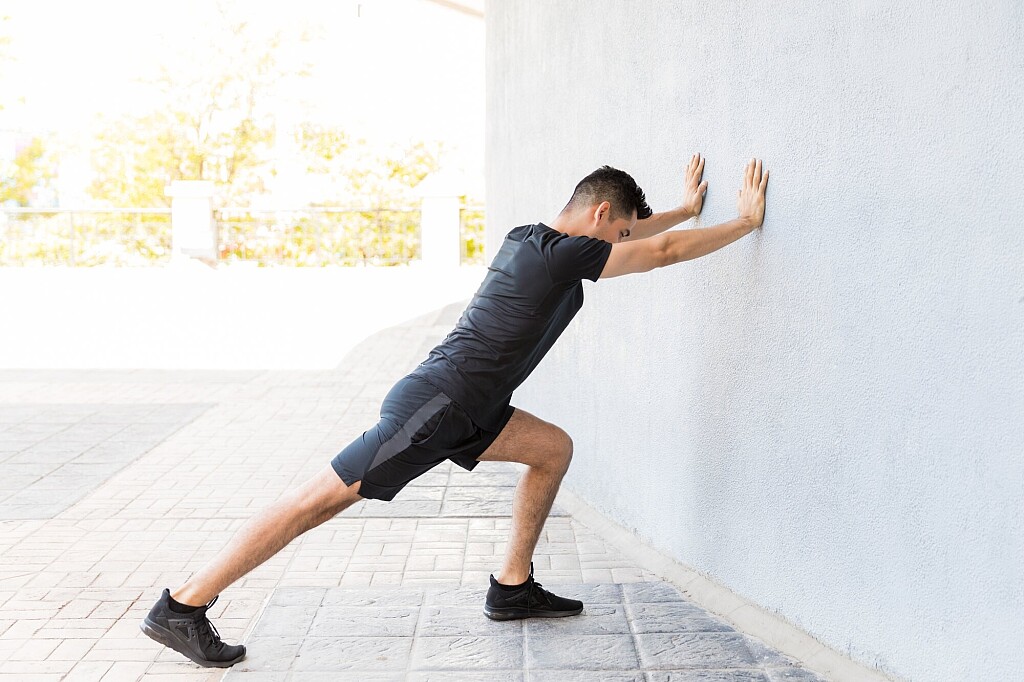
Strength Exercises to Run Faster
Once you fall in love with running and embark on your journey of training for races, it is natural to aim to run faster. When you are a beginner, the improvement in speed is a consequence of the quantum rise in endurance. This is because the gains are initially faster and taper off as you become a seasoned runner. Subsequent gains require you to add a variety of workouts to your training.
The two methods to become a faster runner are speed workouts and strength training workouts for runners. The former is an essential component of speed training and focuses on developing your cardiovascular system to deliver oxygen and clear metabolic waste. Speed workouts include intervals, tempo runs, and repetitions. However, we are not going to focus on them because they are a staple of speed training in any case.
The latter aspect pertaining to strength is often neglected. However, it is this factor that activates muscles to develop power for speed. If we analyze the biomechanics of running, two facets stand out. These include the forward drive with the knee and the push-off with the ball of the foot. Do note that these actions need to be powerful.
The forward drive requires the hip flexor to be strong. The push-off is a combination of the entire chain, which includes the calves, hamstrings, and glutes, providing propulsive power. You need to build some specific body parts to increase your running speed.
Here are a few types of bodyweight strength, gym strength, and high-speed running exercises to help you run faster over a period.
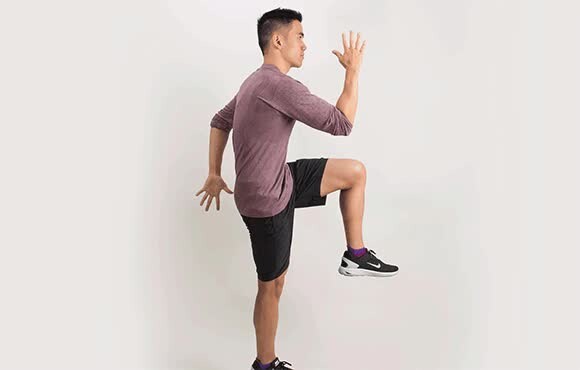
Forms of bodyweight strength exercises: Step-by-step guide
Listed below are some bodyweight strength exercises for runners that you may consider taking up:
1. Single-leg squat
The single-leg squat works the calves, thighs, glutes, and abdominals. This exercise is important for developing leg strength and helps in a larger ground reaction force at push-off. So, this leg workout for runners aids in increasing your overall stride length.
Start by standing on your right leg. Now, lift the other leg off the ground and either extend it at 45 degrees in front or bend it at the knee. Keep your arms in front of you to stabilize your body.
Engage your core and move your butt back to slowly lower yourself until you are either at a half squat position or deeper if your leg strength is in a good enough posture
Squeeze your abdominal muscles and glutes, as you push off the ground to come back to your starting position. Keep the left leg off the ground through the sequence.
Start with five repetitions (reps) and build up to 10. Do three sets for each leg.
2. Box jump
This workout targets the calves, glutes, and thighs. It helps develop explosive power in these muscles. Choose a box that is about 14-inch to 20-inch high. Use a height that works for you when performing this workout. It helps in an explosive push-off, which allows you to run faster when a speed workout demands it.
Keep the box about one short step away
Stand with feet shoulder-width apart
Sink down into a squat with your arms swinging back at the same time
Explode upward by pushing off the ground with your feet. While doing this, your Achilles tendon and calves will generate force. Use your arms to now swing forward and upward to add momentum to your movement.
Ensure you land on the box with your knees bent and have a soft landing
Step off the box
Perform about five to eight reps and two to three sets. Make sure to recover well between each jump.
3. Walking lunges
The walking lunge is one of the best core exercises for runners. It closely mimics the functional muscles used in running. It strengthens the quads, hips, and core. This exercise will help stabilize the body during the stance and push- off phase of running, allowing you to maintain posture at faster speeds.
Stand tall with your hands on your hips and step forward with your right leg; place the foot firmly on the ground
Sink your hips while keeping your torso upright and bending your right knee. The left knee will come close to the ground in a lunge.
Pause and feel the quads of the right leg contract to hold you in position isometrically
Ensure that your right foot is planted firmly in place. Now, rise and make a smooth transition by stepping forward with the left leg.
Sink your hips and bend the left knee
Repeat by alternating legs, as if you were walking forward with each lunge
Do 10 to 12 reps on each leg. Perform two to three sets.
4. Split jumps
This workout plays a pivotal role in core strength training for distance runners. It takes the standard lunge to the next level by helping you develop explosive power. It builds the hips, glutes, and core, helping you develop stability and balance. This aspect is imperative when running fast because balance and stability will help you maintain biomechanics.
Stand tall with the right foot placed about 2ft–3ft in front of the left foot. This is called a staggered stance. Keep your arms by the side.
Engage your core and keep your torso upright. Lower into a lunge with the right thigh reaching parallel to the floor and bend your knees. The left knee will come close to the floor.
Swing your arms up to gather upward momentum while jumping up explosively
Switch your legs while you are in the air so that your left leg comes forward and the right leg swings back
Land softly into a lunge with your left foot bent at right angles and your right knee coming close to the ground
Continue alternating legs in an explosive manner
Perform a total of eight to 10 reps. Do two to three sets.
Types of gym strength exercises
Here are a few forms of gym workouts that can be beneficial in strength training for marathon runners:
1. Deadlift
It is a compound exercise, which targets the major body muscles, such as hamstrings, quads, glutes, core, shoulders, lower back, and upper back. You may perform this workout with a barbell or use dumbbells as an alternative. You will develop propulsive force at the hips and glutes, which will translate into a harder push-off from the ground.
Choose an appropriate weight for the barbell and place the equipment on the ground such that the forefoot is under the bar. Keep your feet shoulder-width apart.
Bend forward with a straight back and grip the bar with an overhand grip (the palm should be facing toward your body), a little more than shoulder-width apart. To do this, squat down a little bit and bend your knees. Your head should be in line with your spine.
Think of the hip as a hinge and lift the bar off the ground by straightening up. The knees and hips will extend smoothly and the shoulders will push back as the bar reaches the thighs. Remember that if the transition from bending over to straightening up is done in proper form, the bar will graze the shins and knees on its way up.
Lower the bar slowly, ensuring you keep a straight back again
Perform six to eight repetitions. Do two to three sets.
2. Seated calf raises
The calves are constantly being worked when running. They are a major muscle group that comes into play for the push-off. This muscle group has two muscles. These include the outer calf (gastrocnemius) and the inner calf (soleus). The seated calf raise targets the soleus in a focused way while also working the gastrocnemius. With strong calves, you are likely to become a faster runner.
Sit upright on a bench with your feet flat on the ground
Ensure that the bench’s height is such that your hips are more or less in level with your knees
Grab two dumbbells and place them on your knees
Tighten your abdominal muscles and slowly lift your heels off the ground while keeping the ball of the feet planted firmly
Make sure to lift the heels to the highest possible level so that your calves feel a full contraction
Lower your heels back as slow as possible
Perform 10 to 15 reps. Do two to three sets.
Kinds of high-speed running exercises
Here are two high-speed running workouts to include in your training schedule:
1. High-intensity Interval Training (HIIT) or Tabata sprints
In this high-intensity form of running training, the heart rate reaches 95%-98% of your maximum heart rate for a short period. It works the anaerobic system and provides a boost to the neuromuscular system that trains the legs. You need to develop power and fast feet when executing this workout. So, you get trained for speed, which makes a transition into your submaximal runs, such as the half and full marathons. This training also improves running economy, which is a measure of how much oxygen you use at a certain submaximal speed.
Begin with a warm-up by jogging gradually for 10–15 minutes
Choose a track or a straight and level road with no obstructions or uneven surface
Start a sprint and build as much speed as you can within 20 seconds
Slow down and walk or jog for 10 seconds
Repeat this eight times to get a 4-minute workout
Do only one set if you are a beginner
Rest for 90 seconds and repeat this activity for two to three sets if you are a seasoned runner
2. Hill sprints
Hill sprints help you develop a combination of leg strength and speed. They are also easier on the legs because the pounding you take is much less than running on a level surface. Apart from being useful in preparing you for hills in races, this exercise develops faster running ability since you are working against your body weight on an incline.
Start with a warm-up by jogging with ease for 10–15 minutes
Choose a hill that has an inclination of 8%-12% with no obstructions or uneven surface
Burst up the incline in a sprint for 10–15 seconds
Slow down, turn around, and walk back down the hill
Ensure you have recovered well and your heart rate has dropped
Repeat this six times. Add a repetition every week to reach 12 reps.
by Daniel Vaz
Login to leave a comment

How to Achieve Your Running Goals? Become an Aerobic Monster.
OlympYou’re a busy person who wants to optimize every minute of training to achieve your goals.
I can help you. I’ve coached Olympians, national- and world-record holders, and national and NCAA champions. Each reached the pinnacle of the sport by making the most of the miles they ran while avoiding injury and burnout. To do that, you need to understand the demands racing requires of your body and train effectively to adapt your body to meet those demands.
The races that most runners train for are almost entirely aerobic events. Yes, even the mile or the 5K. To succeed at those distances, you need to be able to sustain a hard pace for several minutes, and often for more than an hour.
You need to be an aerobic monster.
I like to explain this idea by talking about a common race goal. Many of the women I coached collegiately wanted to break 5:00 in the mile. I would ask: “Can you run 75 seconds for one lap of the track? Of course you can, pretty easily. How about 2:30 for two laps? Yes, but it’s starting to get hard. How about 3:45 for three laps? Now that’s getting really hard. Could you then run a fourth lap in less than 75 seconds? Almost certainly not right now.”My point was that a short segment at your desired race pace isn’t a big deal. (If it is, you probably need a less ambitious goal.) If a reasonable goal for you is to break 20:00 for the 5K, then running 400 meters in 1:36 or 800 meters in 3:12 won’t be a major strain. You have the basic speed to run that pace comfortably. It’s sustaining the pace that’s the challenge. Being able to do that requires training that builds your high-end aerobic capacity. That’s what I mean by being an aerobic monster.
So, what does this mean in practical terms? Mileage isn’t everything, but most runners will become stronger aerobically by carefully and gradually increasing the volume of running they can handle. Increasing your mileage from year to year while still being able to hit your times in workouts and races will improve your VO2 max (ability to pump a lot of blood to working muscles), lactate threshold (ability to clear lactate and therefore not have to slow), and running economy (amount of oxygen needed to hold a certain pace).
By “handle” mileage increases, I mean being able to run at something more than a crawl without getting hurt or worn down. A little extra soreness or tightness is common at a newly higher mileage. A sharp new pain, soreness, tightness that doesn’t go away once you’re warmed up, is a warning sign. Similarly, if your goal is to run 6:00-per-mile pace for a 10K, but you’re so tired from upping your mileage that you struggle to run a 6:00 mile in training, you’re overdoing it. And if you’re no longer a coherent person during the rest of your day, with no energy for your real-world responsibilities, you’re definitely running too much (says the guy who in college studied standing up because he would fall asleep immediately if he read sitting down).
But there’s more to being an aerobic monster than simply how much you run. Take two runners who average 40 miles per week. One might run almost the same distance every day at about the same medium-effort pace. He’ll be a decent aerobic athlete. Another’s week might include a long run, a tempo run, and some shorter recovery days. She’ll be an aerobic monster.
Long runs and tempo runs are key to building your ability to hold a strong pace. I’d much rather have you run 12 miles on Sunday and four miles on Monday than eight miles each day. Tempo runs are especially effective at raising your lactate threshold, the point at which your effort goes from aerobic to anaerobic, causing you to slow in the next few minutes if you tried to keep holding a given pace. A steady diet of tempo runs will make you able to run aerobically at a faster pace and will lengthen the time you can hold that faster pace. A bonus: As you become more of an aerobic monster, your everyday runs will get faster at the same effort level, leading to that much more of a training effect.
To get an idea of what this all means in practice, consider the training of Heather MacLean, an Olympian I coach who was ranked ninth in the world in 2022 at 1500 meters.
Heather’s longest race lasts just four minutes. Yet much of her training before her peak racing season could be confused for that of a 5K or 10K specialist. For most of the year, she does a weekly long run and regular tempo workouts. Why? Because the same principle that was true for the collegiate runners who wanted to break 5:00 for the mile is true for Heather to break 4:00 for 1500 meters. (Her best is 3:58.)
The average pace to do so—64 seconds per 400 meters—isn’t a challenge for her to hold for one lap. What she needs is the ability to run the first three laps of the three-and-three-quarter-lap race aerobically, so that she can sprint against the best in the world in the final 300 meters. How did she get there? In large part, not by running all-out 400-meter repeats twice a week, but by the steady accumulation of long runs and tempo runs for months on end.In a typical year, one of Heather’s main targets is the outdoor U.S. championship in late June or early July. On that schedule, it’s only in April and May that her workouts start to look more like what you might expect for a world-class miler. But even then, she still does a good long run most weeks, and many of her track workouts include long repeats at 5K race pace. If she doesn’t have a tune-up race in a given week, she’ll usually do a tempo run. All of these elements preserve the aerobic monster status she built in the previous several months
You’ll know you’re becoming an aerobic monster when your training starts feeling more doable. You’ll find you’re finishing your long runs at a good pace, rather than hanging on and hoping they’ll end soon. On hard sessions, you’ll definitely be working hard, but you’ll feel stronger while doing so, and you’ll recover more quickly between repeats. You’ll simply feel more capable than before; any given run won’t seem to take as much out of you.ian and veteran elite coach Mark Coogan's central advice on making the most of your miles
by Outside On Line
Login to leave a comment
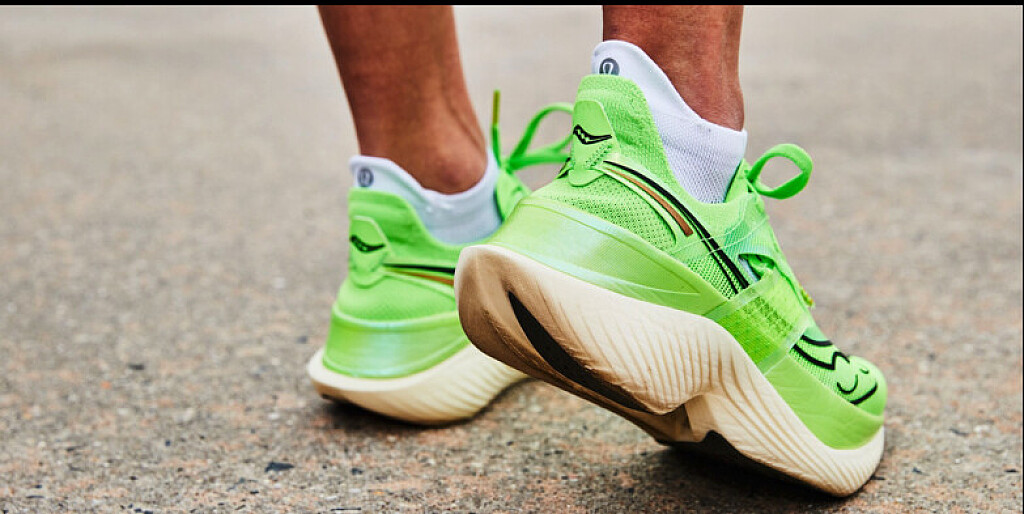
Do Super Shoes Give Regular Marathoners a Performance Boost?
Research shows economy gains at slower paces, but they’re smaller and not guaranteed.
It’s no coincidence that running records have been falling in droves in the era of super shoes. While researchers still may not be able to fully explain how the technology works, they have shown that the ultra-compressible foam, curved carbon-fiber plate, and rockered geometry that first appeared in the Nike Vaporfly 4% in 2017 provide competitive runners a 2.7–4.2 percent boost in running economy. In other words, thanks to these shoes, runners need 2.7-4.2 percent less energy to run the same pace—meaning that they can conserve that energy to run farther or expend it to run faster.

One caveat is that, until now, super shoes have been tested only at running speeds of 7:26/mile or faster. Translated into marathon times, that means the science is applicable to someone who runs a marathon in 3:15 or faster—a feat accomplished by only 21 percent of the 2021 Boston Marathon field.
However, new research has finally emerged that looks at whether the majority of runners get an edge from super shoes. The answer: probably yes, but less.
Research for Non-Elites
Dustin Joubert, Ph.D., a kinesiology professor at St. Edward’s University in Austin, Texas, likes to do research, in his words, “for the people.” This is how he came to conduct a study looking into whether super shoes, specifically the Nike ZoomX Vaporfly Next% 2, confer the same running economy advantage to athletes who run at slower paces.
“There’s a lot of people who don’t fit under the umbrella of the speeds that have been tested in all this laboratory research, and a lot of people are asking: Should I spend my money on this? Do they work for slower people?” said Joubert. “That was the next logical question to me.”
To answer the question, Joubert and his colleagues recruited 16 runners—eight men and eight women with prior-year 5K PRs averaging 19:06 and 20:18, respectively—and had them complete two sets of four 5-minute running reps on a treadmill. Each runner ran one set at a 12 kilometers/hour pace (8:00/mile, which would be marathon pace for a runner with a 5K PR of 22:15), and the other set at 10K/hour (9:40/mile, which would be on the slower end of easy pace for that same 22:15 5K runner). Within a given set, the runners tested two different shoes: they ran one 5-minute rep in an experimental carbon-plated shoe, the Nike ZoomX Vaporfly Next% 2, and the other rep in a control shoe, the Asics Hyper Speed. Then, the runners repeated the reps but reversed the order in which they wore shoes (e.g., Asics first, then Nike).
The researchers chose the Asics Hyper Speed as the control shoe because it lacks the technology of the Vaporfly (carbon plate and advanced foam) but matches its mass. This was an important variable to match because mass affects running economy; a heavier shoe will require more energy to move and could therefore confound results. One earlier study compared the Vaporfly to runners’ everyday training shoes, but most regular training shoes are more than 100 grams (3.5 ounces) heavier—the equivalent of about 40 pennies. Imagine lifting those pennies 55,000 times (the average number of steps in a marathon, for men; women take about 63,000 steps). That would require quite a bit more energy!
Economy Advantages for 3:30–4:15 Marathoners
The new study found that, on average, running economy was better in the Vaporfly than in the Hyper Speed. However, at these slower speeds, the improvements were smaller than at faster speeds: runners gained just 1.4 percent in running economy at 8:00/mile pace and 0.9 percent at 9:40/mile pace, compared to the 2.7–4.2 percent advantage runners gained at speeds of 7:26/mile or faster. (And, as we’ll see below, even those improvements came with a caveat.)
Joubert speculates that the reason for this difference comes down to how the foam in the shoes is working. Much of the running economy advantage comes from compressing the compliant/resilient foam in the shoes and then having that energy returned as the foam springs back. A faster runner who is generating larger ground reaction forces will compress the foam more than a slower runner who, because of their speed, isn’t generating as much ground reaction force.
“The shoe is not creating energy for you; it’s only giving back what you put into it,” explained Joubert.
Not Everyone Benefits
Before you decide “an advantage is an advantage,” there is one other finding from this study that should give runners pause. While the results from the 16 test subjects showed a 0.9–1.4 percent average improvement in running economy, one third of the participants actually showed worse running economy when they ran at the 9:40/mile speed in the Vaporflys, compared to the control shoe. This finding diverges from the results of testing done on the Vaporflys at faster speeds, where runners experienced varying degrees of running economy improvement, but no one saw a detriment.
One possible reason has to do with the Vaporfly’s carbon plate. Research has shown that increased longitudinal bending stiffness, or the rigidity of a shoe underfoot, helps to improve running economy at faster speeds by reducing the amount of energy your foot requires as you land and push off from the metatarsophalangeal joint (where your foot connects with your toes). Joubert hypothesizes that, at slower speeds, the stiff carbon plate might stop saving runners energy and instead create a need for more energy in order to get “up over” the plate.
“If the plate’s really stiff, maybe at these slower speeds that’s an impairment to economy,” Joubert said.
Nathan Brown, a doctor of physical therapy at Pineries Running Lab in Stevens Point, Wisconsin, and senior contributor at Doctors of Running, said that this finding in particular helps to reinforce the shoe selection guidance he already offers his patients and the runners he coaches.
“If your goal of picking a shoe for race day is to get faster, but there’s a 30 percent chance that you get worse, I care more about finding the shoe that you like to run in than the shoe that may or may not give you a benefit,” said Brown.
So, Should You Wear Super Shoes?
If you’re an 8:40-9:00/mile marathoner, what should you do? Do you gamble on being in the 66 percent of responders and plunk down your cash for a pair of super shoes? Or do you stick with what you have?
Footwear is ultimately a personal decision, so here are a few more points to consider.
Choose a shoe that’s comfortable.
If a super shoe feels uncomfortable, that might be an indicator that the shoe won’t help you make the economy gains you’re seeking. Joubert guesses that the comfort of your shoes could affect biomechanical aspects of your race-day performance, including economy. “I think if a shoe is uncomfortable, it’s probably not going to be economical,” he said.
Brown emphasizes focusing on comfort and confidence in a race-day shoe rather than “carbon [plate] or no carbon.” To determine whether it’s comfortable, Brown recommends trying your racing shoe in a few workouts and, if your goal race is a marathon, a few long runs in advance of race day.
“You want to feel comfortable [in the] shoe and confident psychologically,” he said. “To know what to expect on a long run from your race-day shoe can be a big deal for performance.”
Don’t wear a super shoe (or any one shoe) for every single run.
Heather Knight Pech, a decorated masters runner and coach for McKirdy Trained and Knight Training, tells every one of her athletes, from high schoolers to masters runners, to invest in a minimum of three pairs of running shoes: a trainer (e.g., Brooks Ghost), a lightweight trainer (e.g., New Balance Rebel), and a race-day shoe (e.g., Nike Vaporfly Next%). She then has them rotate among these shoes for several reasons. First, it decreases injury. Research has shown that runners who rotate their shoes decrease their injury risk by 39 percent compared to runners who wear the same pair for every run.
“Running is a repetitive motion, so you avoid overloading any one muscle, bone, or tendon,” said Pech. “And on the flip side, you’re simultaneously strengthening other structures by rotating your shoes.”
In his physical therapy practice, Brown has found that super shoes tend to reduce the loading on lower leg structures like the Achilles tendon and calf. As a result, he’s noticed a trend in repetitive stress injuries further up the chain, to the hamstrings and hip flexors, in runners who wear that shoe for most or even all of their runs.
The second reason Pech advises runners to rotate shoes is that it forces them to decide between shoes for a given run, which helps them gain a better sense of self-awareness. “We should be very dialed in to how we feel—that’s part of running training and racing,” said Pech. The saying she repeats is: different shoes for different runs for different days.
Look at a variety of styles and brands.
The Nike Vaporfly was the first high-stack carbon-plated shoe on the market, and as a result, it is arguably the most well known. Most brands now have a similar shoe, and while research shows they’re not yet up to par when it comes to running economy, that doesn’t mean different shoes won’t work better for certain runners based on foot anatomy, running stride, and even pure preference.
Pech points out that the Nike Vaporfly is a very high, very narrow, very bouncy shoe. The Saucony Endorphin Pro, on the other hand, she describes as “more stable underfoot, with firmer foam. It’s great for runners who want to feel the ground.” Meanwhile, the Asics Metaspeed, which is also slightly wider underfoot than the Nike Vaporfly, offers two versions between which runners can choose based on their running style: cadence (increasing their turnover) or stride (increasing their stride length).
“I think they’ve all caught up, in that, now, there are different shoes for different people,” said Pech.
Remember: economy isn’t everything.
While running economy does influence running performance, it’s only one small part; how well you eat and sleep, your level of anxiety, how consistently you trained, how well you tapered, and numerous other factors have an equal, if not greater effect on the time you ultimately run in any given race.
Therefore, if you’re a 3:30–4:15 marathoner and don’t want to shell out the money or risk finding yourself in the 33% “anti-responder” group, double down on some basics like pre- or post-run nutrition or even just sleep. Plus, when you beat your Vaporfly-wearing counterparts, you’ll never have to ask, “Was it the shoes?”
by Runner’s World
Login to leave a comment

Here’s why the rule of 10 will level-out your running consistency
Runners hear it all the time: consistency is key. The rule of 10 (committing to just 10 minutes) can be a perspective shift for those days when putting on your shoes and getting out the door seems like too much, and you’ll still build consistency.
We know that logging the simple workouts and easy runs day after day is what creates strong runners and initiates breakthroughs–but what about when the excuses are coming in fast and furious and you just aren’t feeling it?

10 minutes is an easy commitment (and I have an even smaller one)
Ultrarunner and writer Nicolas Triolo writes about the rule of 10 in trailrunnermag. “10 minutes is the time it takes for me to fold laundry. To take a powernap. To grind, brew, and enjoy a pourover,” he says. “To scroll Instagram and come out the other side wondering if I remembered to breathe. 10 minutes is a blip, a negligible unit, hardly anything at all.”

Guaranteed you’ve probably wasted ten minutes sitting on your couch, staring at your shoes and pondering the weather, your slightly tight calf and whether that taco salad you just ate was a good choice pre-run. I certainly have. I have an even smaller commitment I’ll make to myself–get my running clothes on. In the summer, that’s fairly simple, but in the winter it is a bit more effort–determining how many layers to wear, whether I need a headband or gloves, trail shoes or road.
10 minutes is an easy commitment (and I have an even smaller one)
Ultrarunner and writer Nicolas Triolo writes about the rule of 10 in trailrunnermag. “10 minutes is the time it takes for me to fold laundry. To take a powernap. To grind, brew, and enjoy a pourover,” he says. “To scroll Instagram and come out the other side wondering if I remembered to breathe. 10 minutes is a blip, a negligible unit, hardly anything at all.”
Guaranteed you’ve probably wasted ten minutes sitting on your couch, staring at your shoes and pondering the weather, your slightly tight calf and whether that taco salad you just ate was a good choice pre-run. I certainly have. I have an even smaller commitment I’ll make to myself–get my running clothes on. In the summer, that’s fairly simple, but in the winter it is a bit more effort–determining how many layers to wear, whether I need a headband or gloves, trail shoes or road.
If I get my stuff on and I still don’t want to run, fine–that means a rest day is in order. I sincerely cannot think of a time that actually occurred, though. Once the clothes are on, getting out the door seems much easier. If you can’t commit to 10 minutes, just commit to running clothes.
Even if you stop after 10 minutes you’ll reap benefits
Renowned coaches David and Megan Roche have a phrase they share with athletes: “just give us 10 minutes.” If life throws a curveball at an athlete and they can’t manage to fit in their run, 10 minutes of movement still counts. It still builds consistency and creates physiological adaptations that pay off in the long term.
Roche explains that his running career began with 10-minute runs and he owes those short runs everything, as they initiated the adaptations that enabled him to continue to run longer, harder and faster.
The key to getting better is getting out there, 10 minutes at a time
“Consistent reinforcement is key, and even short runs do the trick. Add some intensity like hill strides, and running economy can go through the roof relatively quickly,” Roche says in trailrunnermag.
Not only do runs as short as 10 minutes pay off, but they help you train your brain to continue your running routine. There should be many runs that you’re enthused to head out the door on, but lacking motivation on occasion is normal. The more you get out the door and log a run, even a short one, the easier it is to continue to do it. One foot in front of the other, 10 minutes at. time.
by Running Magazine
Login to leave a comment
You Might Be Slower Soon After Getting a COVID Booster
New research finds a temporary decrease in a key aspect of fitness.
Everyone has that friend who got their COVID-19 vaccine and bounced back the next day, with little more than a sore arm. We’ve also heard (or told) stories of being in bed for multiple days after the first, second, third, and fourth shot.

While no one enjoys feeling unwell, runners have an added concern: How will a shot affect my upcoming training and racing?
A recent study offers some quantification to anecdotal evidence runners have been sharing for the past year and a half, where the new research found a small decline in aerobic capacity post-booster. Here’s how to incorporate that finding into your training plans.
Why Runners Care About VO2 Max
VO2max is often treated as the gold standard measurement of cardiovascular fitness. It represents the maximum amount of oxygen your body can use during exercise. This matters for runners because, all else equal, the more oxygen you can use, the harder you can work.
Given the significance of VO2 max to athletes, researchers in Belgium set out to test whether the COVID-19 booster affected it. They recruited 42 recreational endurance athletes (runners, cyclists, and swimmers) who were scheduled to receive their COVID booster—i.e., the third shot in the two-series Pfizer vaccine. Just before they got their shot, the athletes took a VO2 max test. This involved riding a stationary bike while wearing a device that measured oxygen consumption. As resistance on the bike went up, their oxygen consumption also went up until it eventually plateaued—indicating VO2max.
One week after receiving their booster, the athletes repeated the test. Compared to their performance pre-booster, their VO2max showed, on average, a 2.7 percent decrease.
Given that a decline in VO2 max reflects a decline in cardiovascular fitness, this finding is worth factoring into your training and racing plans. However, it’s worth noting that a 2.7 percent decrease in VO2 max does not necessarily mean a 2.7 percent decrease in speed. Here’s an example using Jack Daniels’s VDOT values (which are a proxy for VO2 max).
Let’s say a runner with a VDOT of 38 gets her COVID booster. This lowers her VO2 max (VDOT) by 2.7 percent, giving her a reduced VDOT value of 36.97. According to Daniels’s calculations, all else being equal, her previous 5K time of 25:12 would slow to about 25:45, or by 33 seconds—which is only 2.2 percent slower. If she’s fitter and has a half marathon time of 1:44:20 and a VDOT of 43? One week after the booster, her VDOT would be just below 42, and her half marathon time would increase from 1:44:20 to around 1:46:30, or by 2.1 percent.
VO2 Max Isn’t Everything
Admittedly, these calculations assume “all else being equal,” which is virtually impossible. Many other factors contribute to running performance, including running economy (how much oxygen you need to run a given pace), stride mechanics, and even perceived effort. Hielko Miljoen, a sports cardiologist at University of Antwerp and lead author on the paper, pointed out that in that respect, this study is only the beginning of an answer to how the booster affects performance.
“The next step in this investigation should be to do an endurance test, because VO2max is just one part of exercise capacity and athlete performance,” he says.
Additionally, the researchers only tested VO2 max one week out from the booster shot. While it’s unknown what effects may exist further out from the shot—the researchers did not retest the athletes at later intervals—it seems unlikely that the decline is permanent. “This study is by no means an answer,” says Miljoen. “It is trying to reassure people that the effects are not huge, probably not lasting.”
Weigh the Risks
Every medical decision is a personal one, and the reality is that getting the COVID-19 vaccine, including the booster, doesn’t come with a non-zero amount of risk.
“The entire field of medicine comes with statistics,” says Miljoen. “The benefit and harm of a certain medical procedure or intervention are only known on a population basis, so individuals must make up their own mind based on the data out there.”
While life-threatening risks of the vaccine are low, getting it or the booster may interrupt your training for a few days. A recent study of more than 1,000 elite Polish athletes found that the athletes lost an average of two and a half training days around getting the COVID vaccine. However, the same study found that athletes lost an average of eight training days due to COVID-19 infection. Given these and other research data, the authors concluded in favor of vaccination for athletes, writing that “the benefit–loss ratio strongly favors vaccination.”
Time Your Shot Strategically
While it doesn’t feel great to miss any amount of training, one advantage of vaccination and booster shots is that they can be timed to have minimal impact on a racing season—whereas COVID infection can’t.
Ben Rosario, executive director of Hoka NAZ Elite, recalls two of his athletes contracting what he believes was COVID in January 2020.
“I think it really affected them in the 2020 Olympic Trials marathon, because it was a real detriment to their training at that time,” he says. “They missed a really important 10 or so days of training.”
With the initial vaccines, he observed that athletes would feel unwell for seven to 10 days; consequently, they tried not to schedule their vaccination in the week or two leading up to a race. The results of the Belgian study suggest that similar scheduling may be warranted for the booster. While you may only feel the effects of the booster for a day or two, its less discernable effects—like suppressed VO2 max—can still affect your race if you schedule it too close to the shot.
Go Light Around Your Booster
Amy Yoder Begley, coach of the Atlanta Track Club, says that what her team found worked best was to ease off training for the few days surrounding their booster. Typically, the athletes would do a light day of training on the day of the booster and then go home, hydrate, and focus on moving their arm throughout the rest of the day. They’d take the next day off to let their body recover and then, depending how they felt, they’d slowly ease back into training.
“I just kept telling people: literally you’re talking two to five days to let the body do its thing to give you more protection down the road, if possible,” says Begley.
Rosario has a similar message: “My advice to all runners would be to be patient. What’s the harm in missing some training if you’re going to come back super healthy?”
by Runner’s World
Login to leave a comment

The Importance of Injury Prevention in Winter
Winter is a risky time of year.
"I simply must go run," you might say in the doldrums of January.

"But, baby it's cold outside," your foot, shin or hip whispers back.
There are many reasons why your body might instinctively want to avoid running in winter. The frigid temperatures make muscles and joints tighter, and thus more injury prone. The darkness and the slippery, snowy, hard, frozen ground make it easier to misstep or fall. The cooler temperatures allow you to run faster than you would in summer, increasing impact forces.
While peer-reviewed studies on the subject are limited, a 2014 master's thesis reviewed the literature and found that "the injury rate for musculoskeletal injuries was higher in the winter months." That thesis project is by no means definitive. However, anecdotally, I have noticed a similar pattern for athletes I coach. Take these easy steps to prevent your body from rebelling.
1. Focus on a warm-up, and do it in a warm location
Starting a winter run cold reduces proprioception (ground feel), and subjects tight muscles and tendons to excess injury risk. Don't wait for the first few miles to pass before you can feel your feet-start the workout inside instead.
Before each run, do a complete warm-up indoors, like this one combining lunges, leg swings, and light jogging in place, adapted from Coach Jay Johnson. Evidence indicates that warm ups may reduce injury risk. At the very least, it will make you feel less like an icicle and more like a well-oiled machine when you get out the door. To step it up a notch, run your legs under hot water in the shower pre-run.
2. Keep your feet, knees and muscles warm while running
Running with cold joints and muscles is like typing on a typewriter-it can work, but there is less margin for error and you'll probably go slower, too. One study on rats found that muscles below core temperature were more prone to tearing. Across the U.S., stress fractures increase in winter (that statistic includes non-runners). Being cold is just plain miserable, too, unless you were born and raised in North Dakota or are an actual penguin.
During your run, err on the side of more clothes to insulate your feet, shins and knees. There is no honor in wearing shorts in freezing temperatures, and it could raise injury risk for some people. A base layer of flexible tights is a great option.
3. When in doubt, use more traction
If I had a dime for every time I fell after thinking I didn't need trail shoes or extra traction, I would really benefit from the new tax bill. All it takes is one slippery patch to ruin a season. Anecdotally, excess slipping with each stride (even if not accompanied by a fall) seems to increase risk of hip and low-back injuries in winter.
I advise athletes to find an everyday trail shoe that can work for dry and wet conditions. On extra-icy days, add a slip-on traction device. By taking out the daily decision-making, you can prevent yourself from making a poor choice that results in a faceplant or, even worse, a knee-plant or hip-plant.
4. Use a post-run routine to prevent injuries
After you finish a winter run, it's tempting to go straight to the hot cocoa or hot toddy or hot coddy (hot cocoa with bourbon). But spending a few extra minutes on a strength and mobility routine can make you more resistant to injuries and improve your running economy by improving power transfer.
Coach Jay Johnson's myrtl routine is a great place to start when developing your own plan. Add some relaxed leg strength work and 5 to 10 minutes of foam rolling, and you'll be doing everything you can to injury-proof your running life.
5. Stay hydrated and fueled
Cold weather can throw everything for a loop. Hydration can feel optional ("I'm not sweating because it's cold, right?") and nutrition rules can get stretched ("Eggnog is basically a recovery shake, right?"). But hydration and fueling are two of the most important elements of staying healthy, and two that are completely under your control.
For hydration, let your pee be your guide. You don't want to be peeing coca cola or vodka-a light yellow is perfect. Dehydration is bad for performance and injury prevention, but so is over-hydration, so just make sure you drink (water) responsibly.
Negative energy availability (not consuming enough calories for your activity level) is the biggest risk of all when it comes to staying injury free. Whenever you are training, keep the fuel coming and avoid stigmatizing any food. Work on getting plenty of fat, protein and carbohydrates. When in doubt, all food is good food for a runner in training, be it a stir-fry or a gingerbread house.
by Trail Runner Magazine
Login to leave a comment
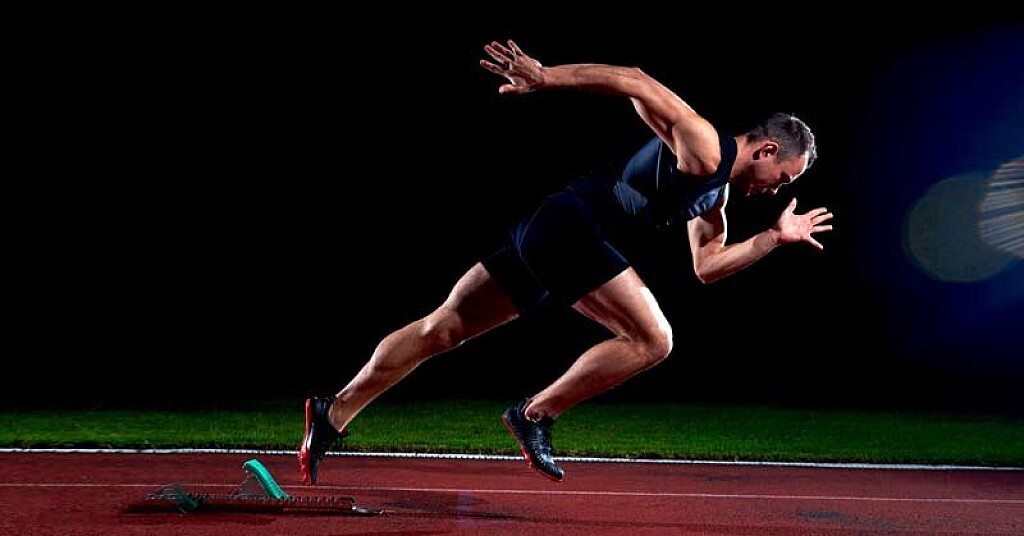
Understanding the basics of speedwork to improve your racing pace
Speedwork is one of those words runners toss about while meaning different things. It encompasses a variety of workouts and has a range of physiological and mental benefits, and there’s an entry point for every runner. Here’s what you need to know about speedwork, and why it should be a regular part of your running repertoire.
Whether you are training for a 5K or a marathon (or even an ultra), speedwork should be a component of your weekly mileage. The benefits of speedwork are well-researched and multifaceted.
What is speedwork?

Speed training (when done in interval sessions) involves running multiple bouts of certain distances at high intensities with recovery in between. Intervals (or repeats) can range from 15 seconds to 20 minutes (or even longer), depending on what distance you’re training for. Tempo runs, fartlek workouts and accelerations can all serve as different forms of speedwork.
While the majority of your running should be easy, at least one workout a week should include something more challenging. Legendary coach and author Jack Daniels writes in Daniels’ Running Formula that it’s always important to know the purpose or intention of each workout. Regardless of what it’s called, if the purpose is to improve speed, you’re doing speedwork.
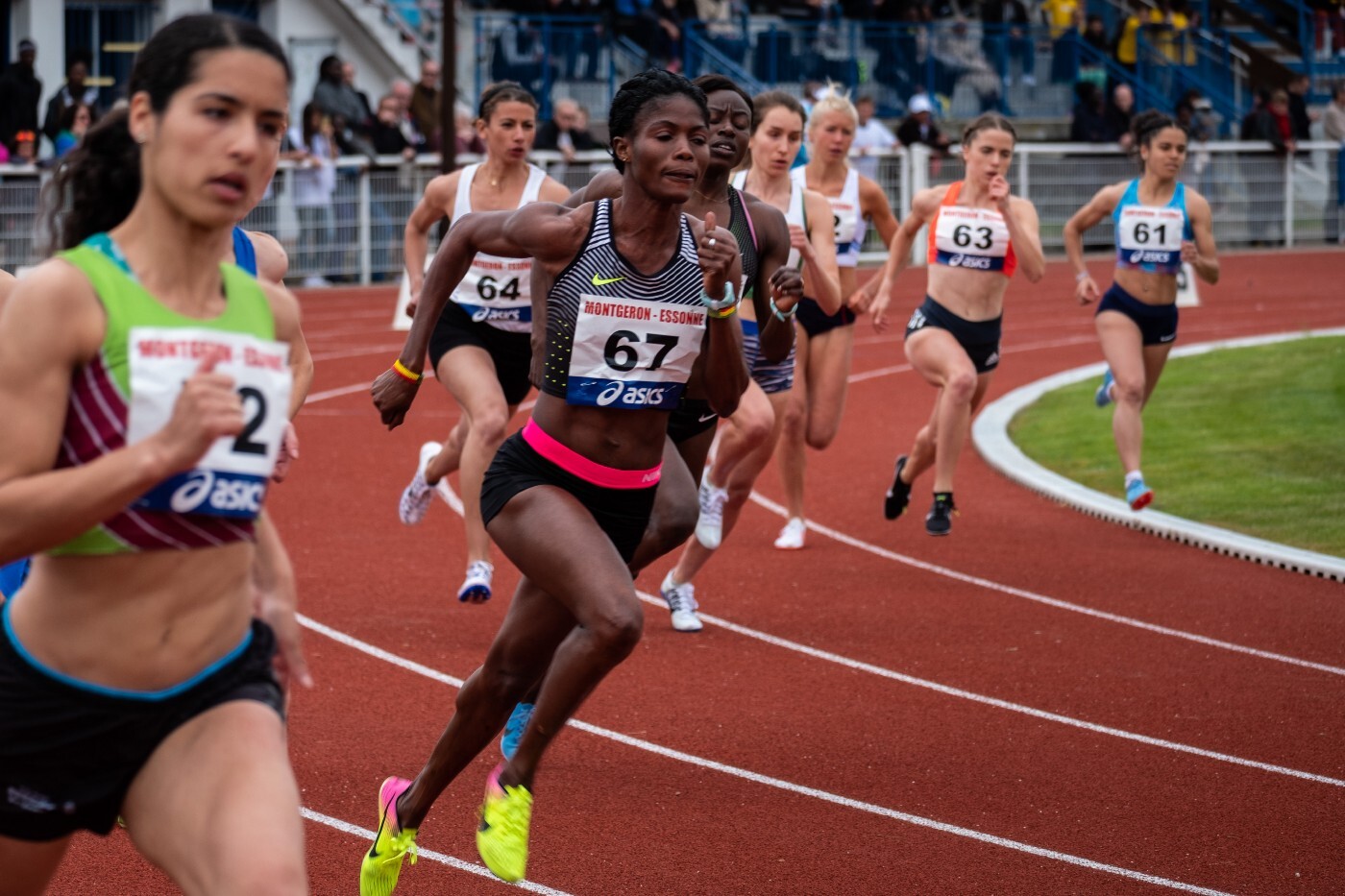
The overload principle
The overload principle is the idea that regular exposure to a specific exercise will enhance certain physiological functions, and in doing so, elicit a training response: your fitness improves. If you run at faster speeds, even for very brief periods, your body will learn and adapt, and you will become stronger and faster. This is the basis of speedwork or any training effect you may be working toward while you run.
What happens during speedwork
During speed sessions, our body is forced to recruit more muscle fibres to provide aerobic energy. The result–running economy, or how efficiently your body is able to use oxygen at a certain pace, improves.
Your body will also increase the production of myoglobin during fast workouts. Myoglobin helps transport oxygen to the muscles and then to the mitochondria. With increased myoglobin, the higher demand for oxygen is met. Speed training can also improve your anaerobic threshold: the highest exercise intensity that you can sustain for a prolonged period without lactate substantially building up in your blood.
During speed sessions, glycogen is providing upwards of 90 per cent of your energy. When you begin doing speedwork, you’ll burn through that glycogen quickly, but over time your muscles will adapt and store more glycogen for future workouts.
Mentally, speedwork teaches your brain to handle more pressure (easy runs should be low-pressure days) and harder work. As you challenge yourself in workouts, you’ll be better prepared to handle the effort on race day.
Get started today
If you’re thinking about adding some faster running into your program and you’re not sure where to start, simply pick one day per week and do four to eight short, 15-20 second repetitions, either on a flat road or a moderate hill. Better yet, alternate each week between hills and flat ground to give your body an extra challenge. Allow for 40-45 seconds of recovery between harder efforts for recovery, and enjoy the feeling of pushing your body a little harder.
by Running Magazine
Login to leave a comment

Smash your marathon goals with these speed sessions
Maybe you have a destination marathon in the books, or you’ve signed up for a post-Christmas race to keep motivation high. Even if you don’t have a race planned, these three speed sessions are ideal to add to any distance training plan. If you’re new to speedwork, tackle the 400m repeat session first and get familiar with it before moving on to the others. All three of these workouts can be done at around 5K race pace.
These workouts will enhance your running economy, boost your VO2 max, and provide mental benefits as you train your brain to handle harder work. Coach and author Luke Humphrey explains in his book Hansons Marathon Method that each of these speed workouts is like money in the bank on marathon day, as they become “resources on which you can draw during the most difficult moments of the marathon.”

400 meter repeats
Warm up with 15 minutes easy running

12 x 400m with 400m easy running for recovery between each one
Cool down with 10 to 15 minutes easy running
The 1K repeat workout
Warm up with 15 minutes easy running
6 x 1K with 400m easy running for recovery in between
Cool down with 10 to 15 minutes easy running
1,600 meter repeats
Warm up with 15 minutes easy running
3 x 1,600m with 600m easy recovery in between
Cool down with 10 to 15 minutes easy running
As always after a hard session, make sure you hydrate well and follow your speedwork day with an easy running or recovery day. If you’ve incorporated strength training into your weekly routine, try to double up (do both your strength routine and your speedwork) on hard workout days, so that your easy or recovery days truly are just that–easy.
by Keeley Milne
Login to leave a comment
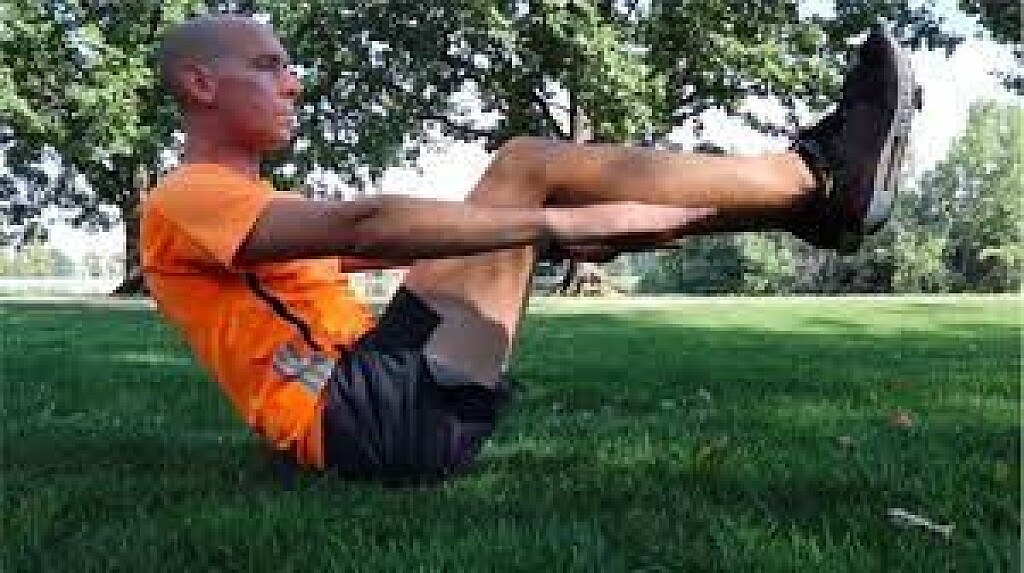
The Cannon Core Workout For Runners
There’s a good reason why core workouts for runners have become so popular over the last few years. Actually, there are quite a few reasons.
Training your core will deliver a variety of benefits:

Improved running economy, by delaying fatigue late in a race or long run
Increased strength of the core region, including the hamstrings, hips, glute muscles, lower back, and abdominals
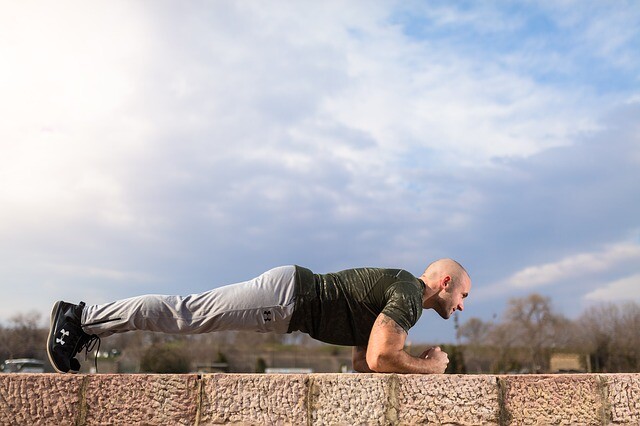
Prevention of running injuries, by increasing your ability to withstand the impact forces of running
Give you shredded six-pack abs!!!
Ok, that six-pack promise isn’t really true. Getting ripped abs is mostly genetic and depends more on BMI and diet than anything else…
But still, core workouts are a vital part of any runners’ training program.
That’s because all movement originates from the core. If you want to improve your mobility (the ability to move well), it’s critical to start any movement from a position of strength.
Your core is like a platform where all other movement starts from. The more postural stability you have, the better you’ll move.
And no matter what type of runner you are, you’ll benefit from core training:
Beginners need even more strength training to prevent injury
Older runners need to prevent muscle loss
Those who don’t run races still need to stay healthy
Frequent racers (even virtual races) need to mitigate the higher intensity
Clearly, practically every runner will benefit from a stronger core.
So I’m thrilled to announce the Cannon Core Workout for Runners, a dynamic, runner-specific, leveled core session that will help you build core strength, improve efficiency, and prevent running injuries.
And it’s perfect for beginners or even advanced runners.
Cannon is a different type of core workout than other routines you might find elsewhere for three important reasons.
1. Cannon Core is Runner-Specific
Many other core workouts aren’t actually designed for runners. You’ll see more metabolic or aerobic exercises (“heavy breathing” exercises), a more traditional focus on just the ab muscles, and no balance with the posterior chain.
But not Cannon. I’ve built this routine to be more comprehensive with focus on the chest, glutes, upper back, lower back, and transverse abdominals.
It also is balanced and includes exercises that strengthen the glutes and lower back. These are not typically considered “core” muscles but they do complement them and help us be more balanced athletes.
2. Cannon Core is Dynamic
Many core workouts only include exercises like planks, side planks, bridges, and reverse planks. These are great exercises – but they’re static. They don’t include any movement.
Cannon has a variety of exercises that have you move in a variety of planes of motion. You’ll rotate, cross your midline, and work on single-leg strength.
There’s just no substitute for building athleticism than dynamic movements.
3. Cannon Core is Leveled
Are you a beginner? Or a veteran with years of running and weightlifting experience? Either way, Cannon Core is for you!
That’s because Cannon is a leveled core workout for runners. It includes 2-3 levels for each exercise, allowing you to start where you’re comfortable and move up when you’re ready.
But that’s not all. Not only is each exercise leveled, you can also:
Complete 1-3 sets of the core workout depending on how much time you have and your ability
Perform each exercise for as little as 10-20 seconds or as long as a full minute
More flexibility allows you to get more out of the routine. Start at a beginner level and you’ll be completing Cannon Core a year from now at an advanced level!
by Jason Fitzgerald
Login to leave a comment
