

Running News Daily
Running News Daily is edited by Bob Anderson and team. Send your news items to bob@mybestruns.com Advertising opportunities available.
Index to Daily Posts · Sign Up For Updates · Run The World Feed
Articles tagged #Oslo Diamond League
Today's Running News
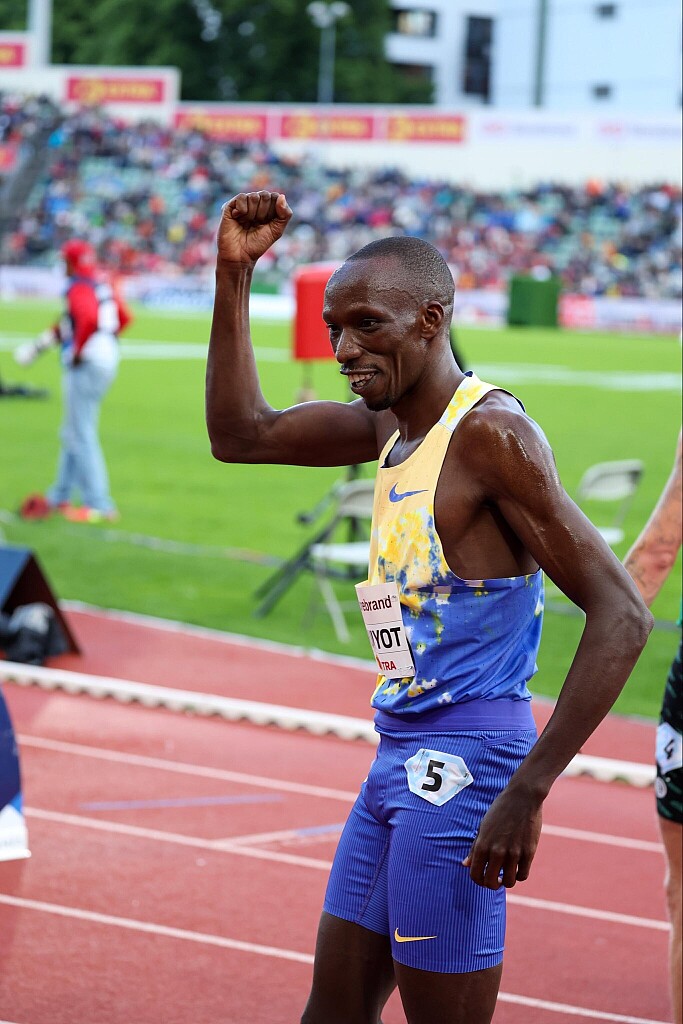


Timothy Cheruiyot Sets Sights on Diamond League Final Glory and Commonwealth Games Bid
Timothy Cheruiyot has made his ambitions unmistakably clear after another commanding appearance on the Oslo Diamond League stage in 2026, outlining a season defined by precision, patience, and championship intent.
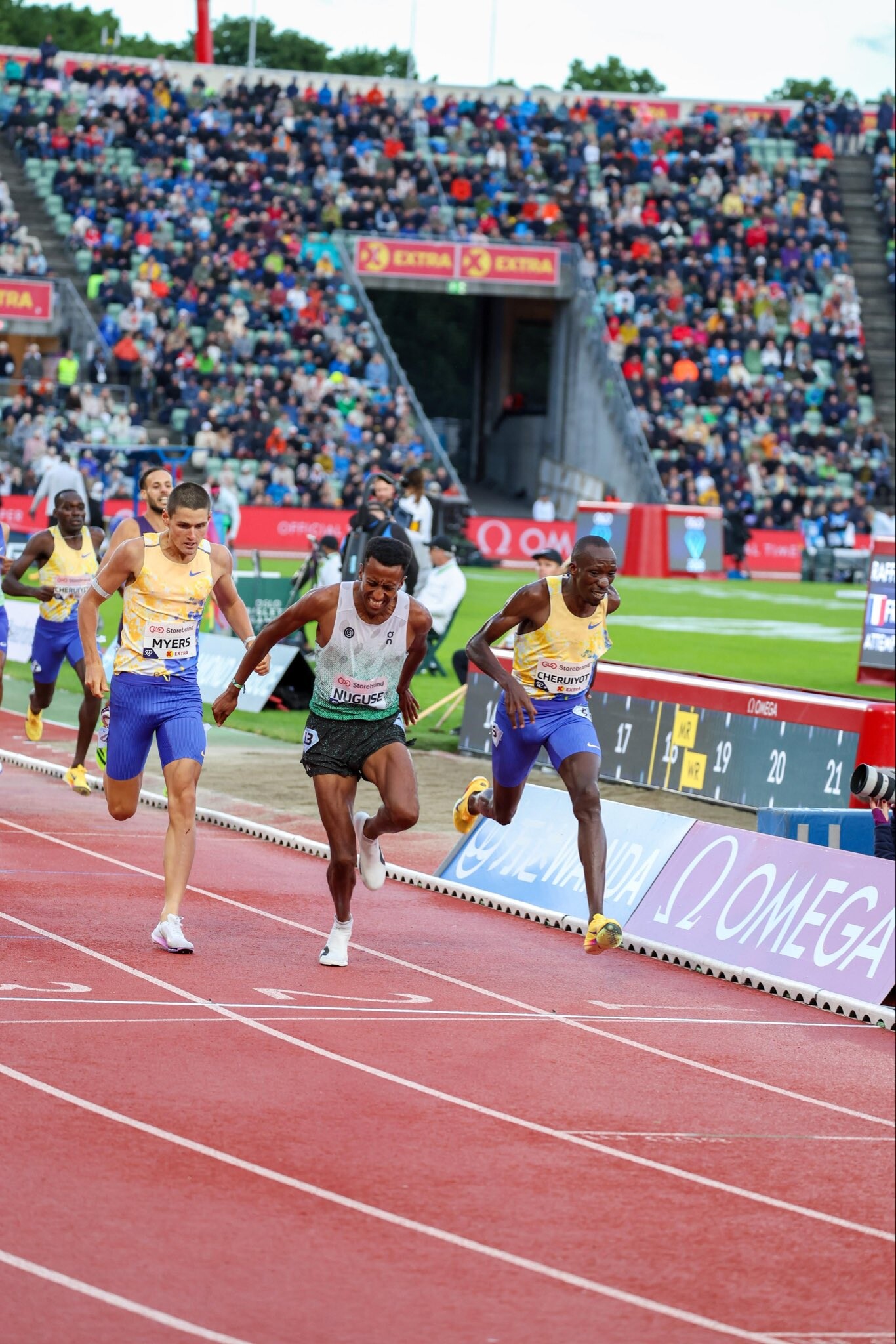
The Kenyan 1500m star, known for his tactical sharpness and late-race acceleration, revealed that his primary focus this year is firmly locked on the Diamond League circuit. His ultimate goal is not just to qualify for the final, but to dominate it.
“My main target is the Diamond League this year, to reach the final and win,” Cheruiyot stated with quiet confidence following his strong showing in Oslo. “Also, the Commonwealth Games. So I go home for the trials next week.”
The message was as direct as his racing style: no distractions, no detours—only execution.
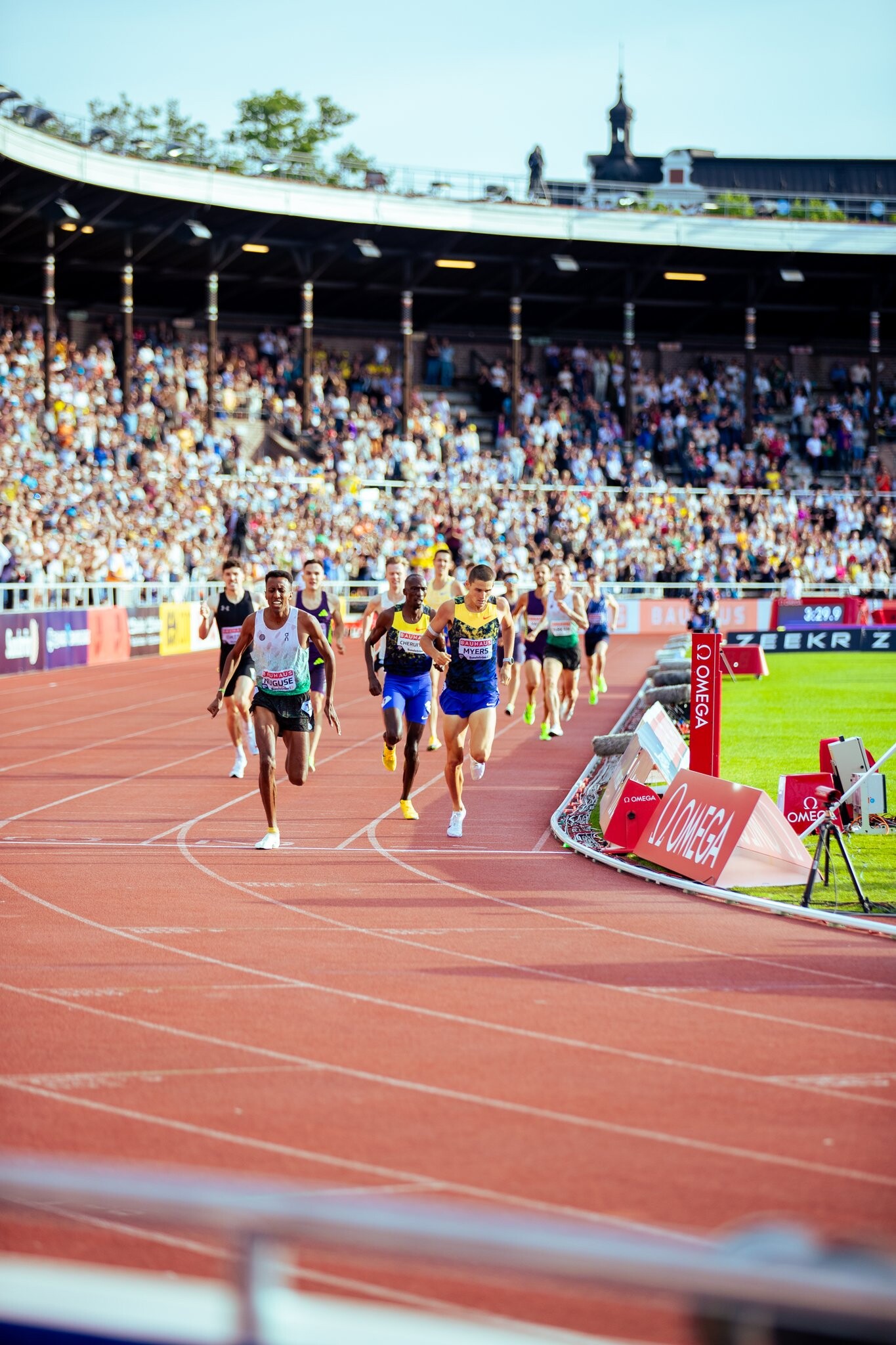
For Cheruiyot, Oslo served not only as another competitive outing but also as a statement of intent. Against a world-class field, he once again demonstrated the composure and racing intelligence that have defined his career at the highest level. While the result added to his growing season momentum, the bigger picture remains firmly ahead.
The Diamond League remains the crown jewel of the athletics circuit, and Cheruiyot’s declaration signals a renewed push to reclaim supremacy on one of the sport’s most demanding stages. His eyes are set on consistency across the series, building form at the right time before peaking when it matters most.
Beyond the Diamond League, the Commonwealth Games represent another major milestone in his campaign. Selection will be determined through Kenya’s fiercely competitive trials next week, where depth in middle-distance running ensures nothing is guaranteed.
Yet Cheruiyot’s focus appears undisturbed. His approach reflects experience—balancing global ambitions with the immediate pressure of national qualification. It is a familiar path for Kenyan elite athletes, where every race is both a proving ground and a stepping stone.
As the season unfolds, Cheruiyot’s dual targets set the tone for what promises to be a compelling campaign. The blend of Diamond League ambition and Commonwealth Games pursuit places him once again at the center of the 1500m narrative.
And if Oslo was any indication, he is not merely participating in the season—he is shaping it.
by Erick Cheruiyot for My Best Runs.
Login to leave a comment
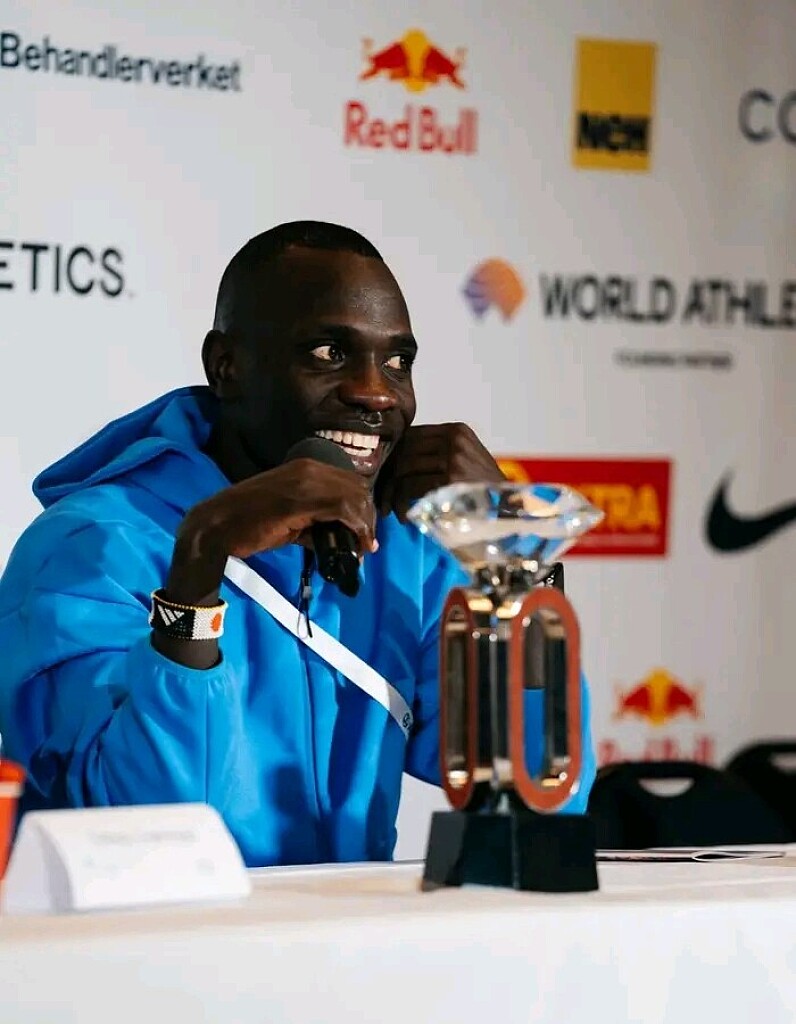
A New Chapter for Emmanuel Wanyonyi: Kenyan Star Embraces Fatherhood Ahead of Oslo Diamond League
Kenya’s middle-distance sensation Emmanuel Wanyonyi has revealed the heartwarming reason behind his absence from the Stockholm Diamond League, choosing family over competition as he welcomed his first child into the world.
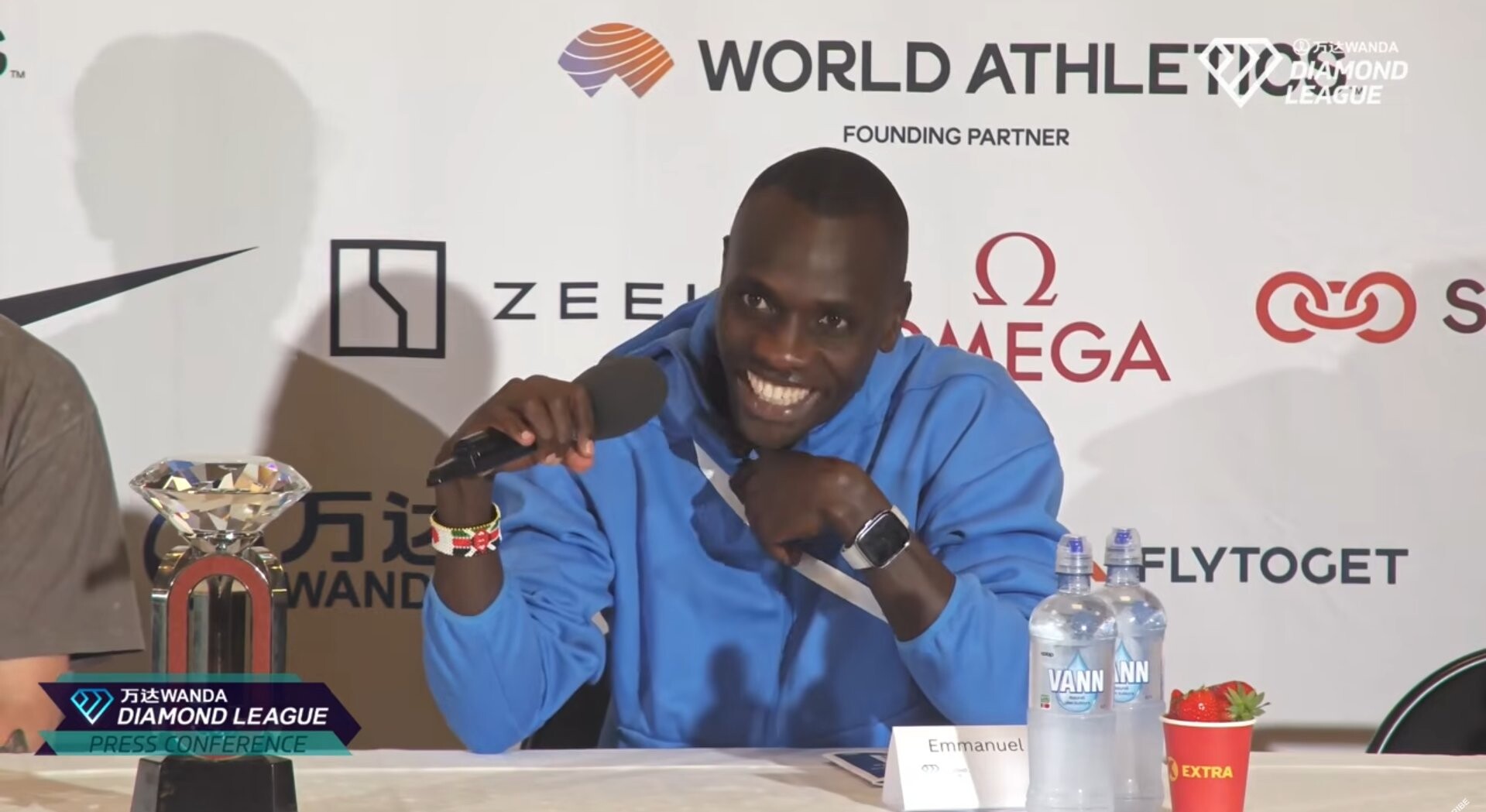
The Olympic champion and one of the brightest stars in global athletics withdrew from the Stockholm meeting after returning home from Rabat to be by his wife's side for the birth of their firstborn. While fans were disappointed not to see him on the track in Sweden, Wanyonyi had a far more important moment awaiting him away from the spotlight.
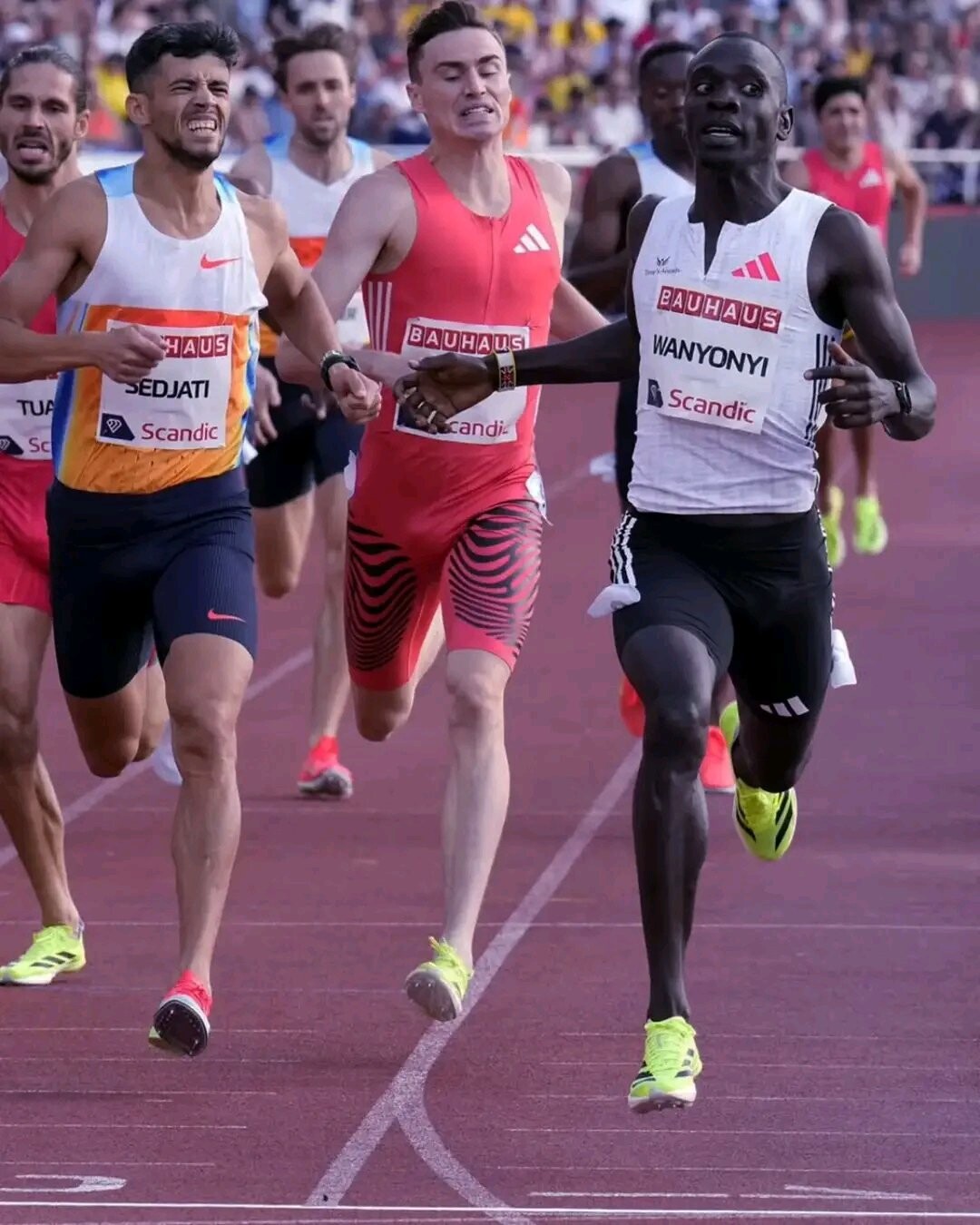
“I can say I am so happy. I was supposed to run in the Stockholm Diamond League, then I went back home from Rabat. My wife delivered our first born. I was so happy,” Wanyonyi explained.
For an athlete whose recent years have been defined by record-breaking performances and major championship success, the arrival of his child marks a milestone that transcends sport. The 800m star now enters a new phase of life, balancing the demands of elite competition with the responsibilities and joys of fatherhood.
His return to action comes at the Oslo Diamond League, where he will step onto the track for the first time as a father. The highly anticipated race adds another layer of intrigue, with fans eager to see whether the emotional boost from this life-changing moment can inspire another memorable performance from the Kenyan.
Wanyonyi has established himself as one of the most dominant figures in the men's 800m, earning a reputation for his fearless racing style, devastating finishing kick, and remarkable consistency against the world's best. Yet even amid the pressures of international competition, he showed that some moments are simply bigger than athletics.
As the Oslo Diamond League unfolds, all eyes will be on the Kenyan star. But regardless of the result, Wanyonyi has already secured a victory that means more than any medal or record — becoming a father for the very first time.
by Erick Cheruiyot for My Best Runs.
Login to leave a comment

Oslo Showdown: Can Teenage Sensation Cooper Lutkenhaus Challenge Emmanuel Wanyonyi’s Reign?
The men’s 800 metres at the Oslo Diamond League is shaping up to be one of the most anticipated middle-distance races of the season, bringing together a rising teenage sensation and the athlete widely regarded as the king of the event.
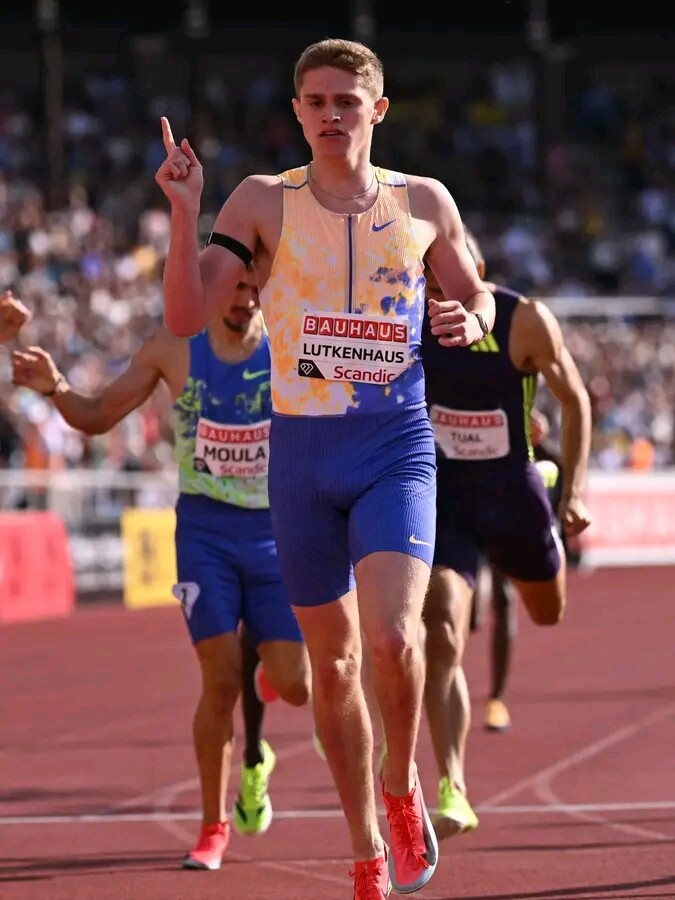
American prodigy Cooper Lutkenhaus arrives in Oslo riding an extraordinary wave of momentum. The 17-year-old has enjoyed a flawless campaign so far, remaining unbeaten over 800 metres while collecting major victories that have elevated his status from promising youngster to genuine international contender. His recent triumph in Stockholm further demonstrated that he possesses not only talent but also the composure required to deliver on the biggest stages.
Yet Oslo presents a challenge unlike any he has faced before.
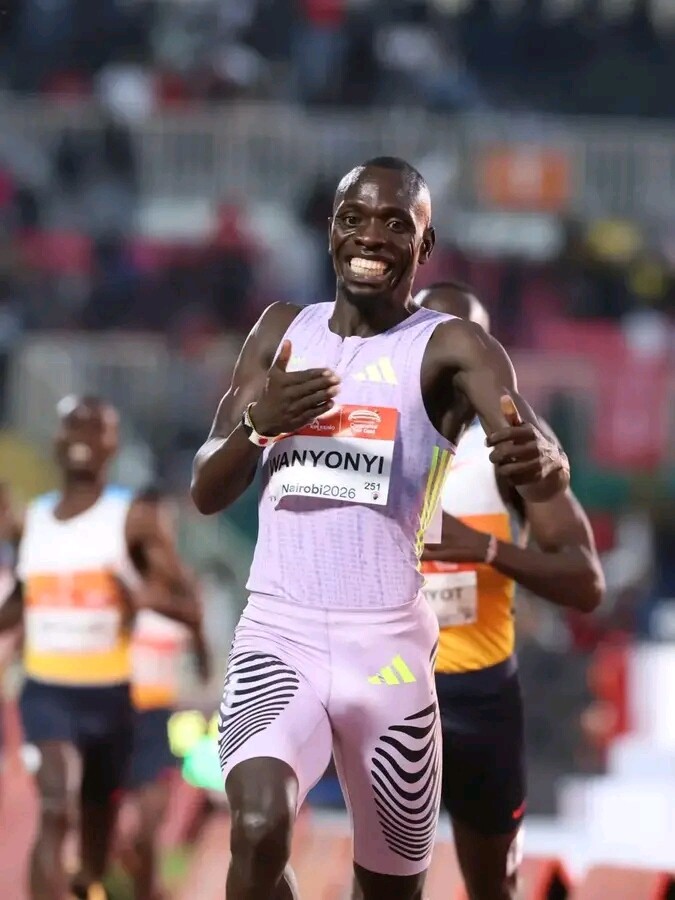
Standing in his way is Kenya’s Emmanuel Wanyonyi, the reigning Olympic and world champion whose dominance has made him the benchmark in global 800-metre running. Wanyonyi has spent the past few seasons establishing himself as the man to beat, combining tactical intelligence, blistering speed and championship experience to consistently outclass some of the world's finest athletes.
For Lutkenhaus, Wednesday’s race offers a rare opportunity to measure himself against the sport’s established elite. While his unbeaten record has captured headlines, facing a champion of Wanyonyi’s calibre is an entirely different test. The Kenyan has repeatedly proven his ability to control races under pressure and produce decisive finishes when titles and victories are on the line.
Adding even more intrigue to the contest is the presence of Marco Arop, one of the strongest 800-metre runners of his generation. Arop’s aggressive racing style and championship pedigree ensure that this will be far more than a two-man battle. With several world-class competitors lining up, the race promises to be a tactical and physical examination from the gun to the finish line.
The matchup symbolizes more than a race for victory. It represents a fascinating clash between youth and experience, ambition and accomplishment. Lutkenhaus carries the excitement of a new generation eager to challenge the established order, while Wanyonyi enters as the proven champion determined to protect his throne.
As the athletes take their marks in Oslo, one question will dominate conversations across the athletics world: can the fearless teenager continue his remarkable rise, or will the reigning king of the 800 metres remind everyone why he remains the standard by which greatness is measured?
Whatever the outcome, fans can expect a spectacular contest worthy of the Diamond League stage, with the possibility of witnessing the next chapter in one of athletics' most compelling emerging rivalries.
by Erick Cheruiyot for My Best Runs.
Login to leave a comment

Monaco Diamond League Preview: Distance Fireworks Expected from 800m to 5000m
The prestigious Monaco Diamond League meet is set to ignite the track today, with a thrilling lineup of distance races headlined by Olympic medalists, world record holders, and rising stars. With world-best times under threat, all eyes turn to Monaco’s lightning-fast track where history is often made July 11.
Men’s 800m – 2:23 p.m. ET

Arguably the most anticipated race of the day, the men’s 800m features seven of the eight Olympic finalists, and talk of David Rudisha’s legendary 1:40.91 world record is swirling. The pace will be red-hot, with athletes hungry to establish themselves ahead of the Paris Olympics.

Expect fireworks early. The pacing is likely to be aggressive, and with such a deep field, a sub-1:43 clocking may not even guarantee a podium spot. With a record on the line, this race is not to be missed.
Women’s 1000m – 2:43 p.m. ET

The rarely-run but always-exciting 1000m could see the 28-year-old world record of 2:28.98, set by Svetlana Masterkova in 1996, finally fall. Faith Kipyegon, the undisputed queen of middle distance, came close with a 2:29.21 earlier this year and owns the second-fastest time ever. She’s the clear favorite to take another crack at history.
Australia’s Jess Hull brings impressive credentials too, coming off a 3:52.67 1500m (the third-best of her career) and showing solid speed with a 1:58.58 800m PB. Also in the mix are:
• Mary Moraa, 800m world champion, with a 2:33.43 1000m PB,
• Nelly Jepchirchir (2:31.24 PB),
• Jemma Reekie (2:31.11 PB),
• Sinclaire Johnson and Addy Wiley, both looking to move up in distance.
With a blend of speed and endurance, this event has record-breaking potential.
Men’s 5000m – 3:05 p.m. ET
Seven men in today’s lineup have broken 12:50 this season, promising one of the fastest 5000m races of the year. Ethiopian sensation Biniam Mehari, just 18 years old, recently stunned with a 26:43.8210,000m win at the Pre Classic and a 12:45.93 at the Oslo Diamond League, where much of the spotlight went to Nico Young’s American record.
Sweden’s Andreas Almgren enters with momentum after clocking a 12:44.27 European record, currently the fastest time in the world this year.
The Ethiopian federation will be watching closely, as Yomif Kejelcha (12:47.84) and Hagos Gebrhiwetare also lining up—both seasoned athletes capable of upsets.
Final Word
Monaco has a storied history of delivering some of the fastest middle-distance times on the planet. With stars like Kipyegon, Mehari, and Almgren peaking at just the right time, the stage is set for records to be rewritten.
Stay tuned. If there’s ever a day to witness distance running greatness, this is it.
by Boris Baron
Login to leave a comment
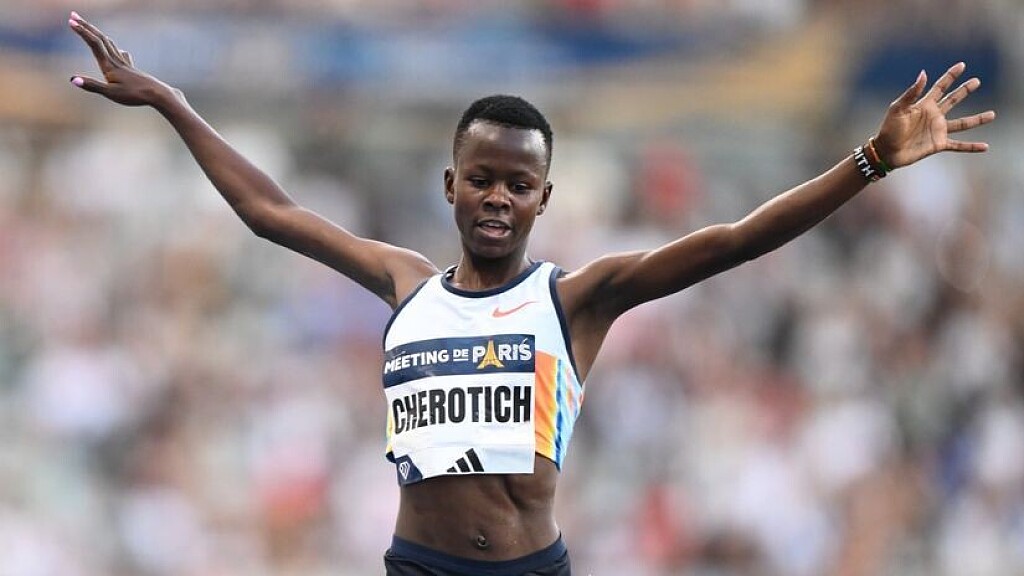
Faith Cherotich’s 8:53 Breakthrough: 6th-Fastest Steeplechase Ever—Now She’s Targeting Gold in Tokyo
Faith Cherotich is rewriting the women’s 3000m steeplechase narrative. The 20-year-old Olympic and World bronze medalist exploded onto the senior stage this year, slashing over 11 seconds off her personal best and firmly establishing herself among the all-time greats. With the World Championships set for Tokyo in 2025, she’s made it clear—she’s not done yet.

Olympic Roots, Meteoric Rise
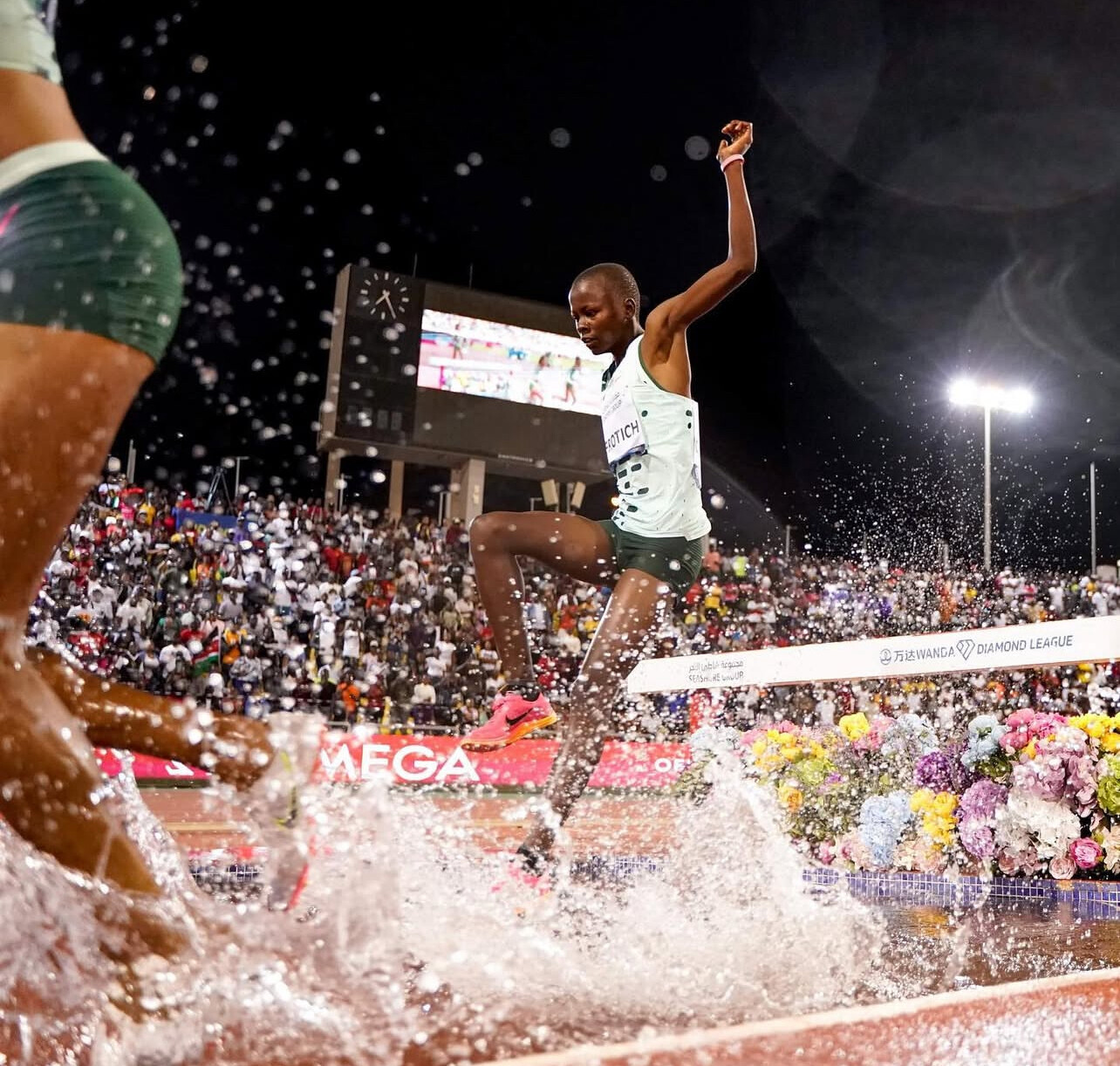
Cherotich made her Olympic debut in Paris 2024, earning bronze in 9:04.24 behind Winfred Yavi and Peruth Chemutai. Just a year later, she’s running nearly 11 seconds faster.
At the 2023 World Championships in Budapest, she finished second in 9:00.69, already hinting at her vast potential. But 2025 has been a different level altogether.
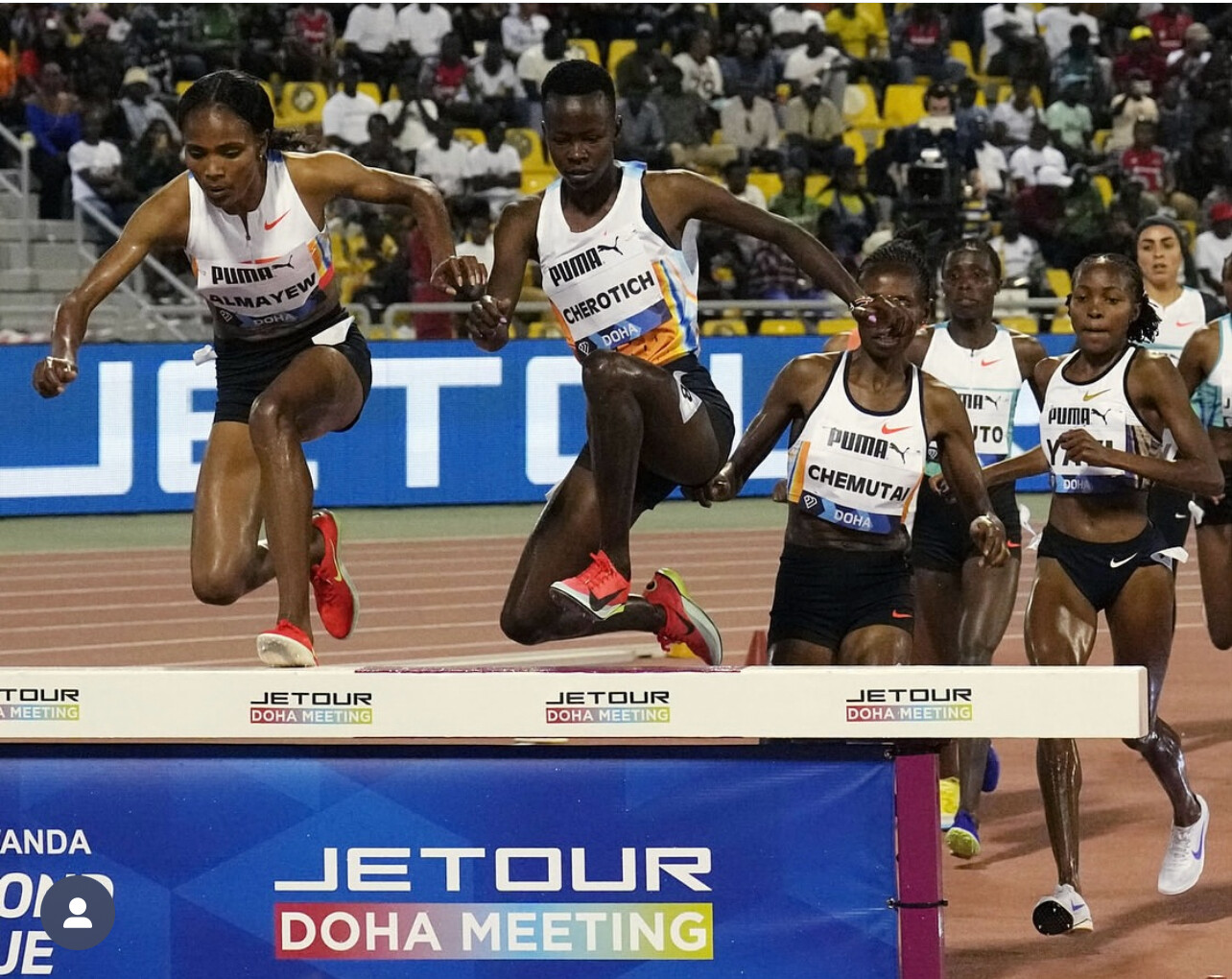
Diamond League Domination
Cherotich’s progression this season has been remarkable:
• Doha Diamond League – 9:05.08
• Oslo Diamond League – 9:02.60 (meet record)
• Paris Diamond League – a stunning 8:53.37, now the world lead for 2025 and the 6th-fastest time in history
In Paris, she confidently shadowed 2020 Olympic champion Peruth Chemutai before surging ahead for the win.
“I am happy to have run a PB,” Cherotich said after the race. “It was not an easy race… after a few laps I got confident enough to take the lead and knew I could manage the race and win.”
All-Time Rankings & World Record Watch
• Fastest time ever: 8:44.32 — Beatrice Chepkoech (2018)
• Second-fastest: 8:44.39 — Winfred Yavi (Rome, 2024)
• Cherotich: Now #6 all-time with 8:53.37
Her consistency, combined with tactical growth, has vaulted her into serious world title contention
Focused on Tokyo 2025
With the World Championships returning to Tokyo, Cherotich is more motivated than ever:
“My target this season is to win the world title… I want to run good races… I am going to fight and do all my best to achieve my goal… It will be a different result this time in Tokyo.”
She currently leads the Diamond League standings by 10 points over rival Yavi and has shown she can beat any competitor on the day.
✅ Performance Summary
|
Meet |
Time |
Result |
|
Paris DL |
8:53.37 |
1st – PB, WL |
|
Oslo DL |
9:02.60 |
1st – MR |
|
Doha DL |
9:05.08 |
1st |
|
Budapest Worlds (2023) |
9:00.69 |
2nd – Silver |
|
Paris Olympics (2024) |
9:04.24 |
3rd – Bronze |
Cherotich isn’t just winning races—she’s chasing history. With the world title in her sights and her confidence growing with every lap, all roads now lead to Tokyo.
by Boris Baron
Login to leave a comment

LA Grand Slam Track Meet Canceled, Casting Uncertainty Over Series Finale
The highly anticipated LA Grand Slam Track meet, scheduled for June 28–29 at UCLA’s Drake Stadium, has officially been canceled, marking an abrupt and disappointing end to the inaugural season of Michael Johnson’s ambitious new professional track league.
The cancellation, confirmed via athlete emails and an internal league meeting held shortly after the Oslo Diamond League, follows a string of logistical and financial setbacks that have shadowed the 2025 Grand Slam Track series.
Why Was the LA Meet Canceled?
Multiple factors contributed to the league’s decision to call off its final stop:
• Venue costs: UCLA’s Drake Stadium lease proved to be prohibitively expensive, and cost-benefit analysis showed the meet could not be held sustainably under current terms.
• Market saturation: The earlier cancellation of the LA Grand Prix by USA Track & Field, citing overlap with Grand Slam Track, signaled underlying concerns about the local track market.
• Attendance and revenue: Despite high-profile athletes and large prize purses, audience turnout and ticket sales in previous meets (notably Kingston and Miami) fell short of expectations.
• Operational strain: The Philadelphia Slam was also shortened from three days to two, reflecting broader constraints in the league’s first year.
Recapping the 2025 Grand Slam Track Series
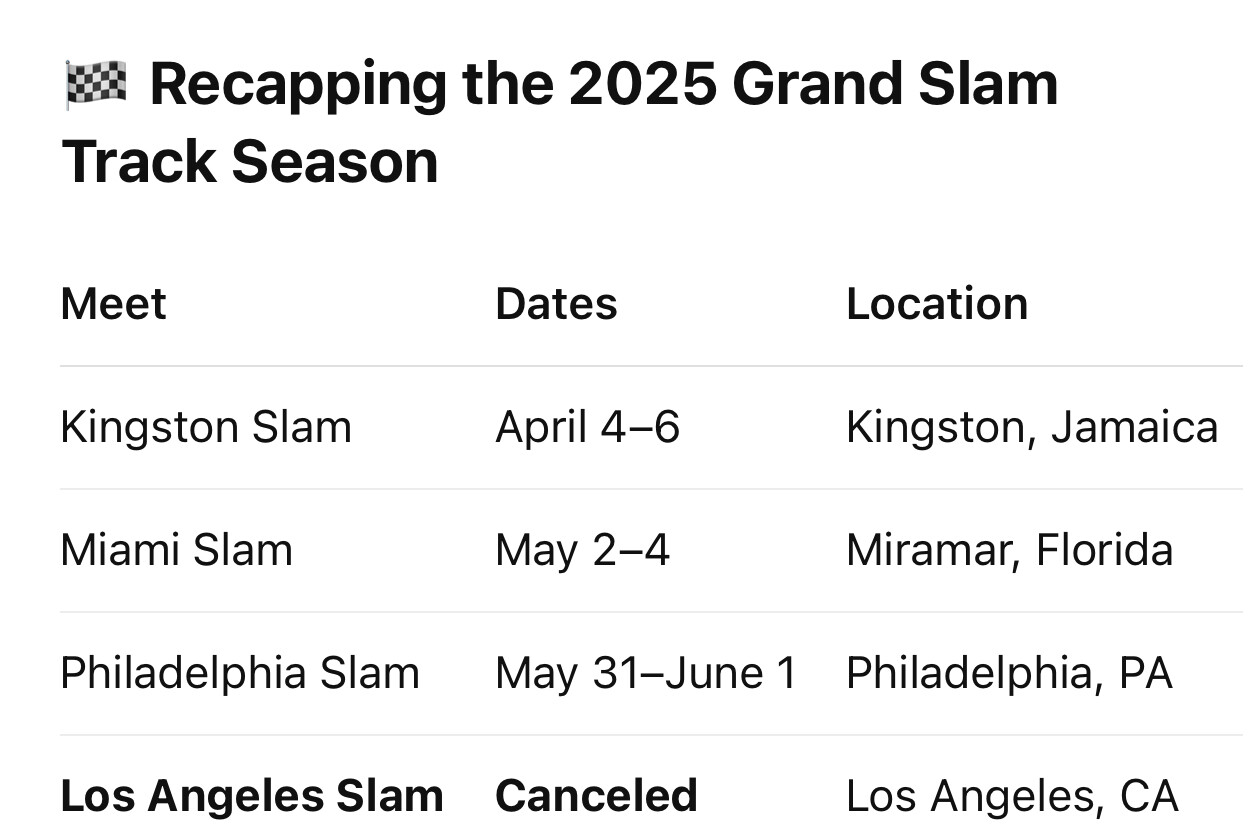
Each meet featured world-class fields and a $100,000 winner’s prize per event—part of a $12.6 million total purse. The series received coverage on Peacock and The CW, and was positioned as a bold alternative to the Diamond League.
What’s Next for Grand Slam Track?
Despite the disappointing end, founder Michael Johnson insists the pilot season met its objectives: proving that a high-stakes, athlete-first, fan-centered pro track league can attract global attention.
The league now shifts its focus to 2026, aiming to:
• Secure new strategic partners and sponsorships
• Optimize venue selection and fan engagement
• Revise its financial model for long-term sustainability
While the LA cancellation raises questions about viability, there is still optimism that Grand Slam Track will return, stronger and more refined, in season two.
The cancellation of the LA meet is a setback—but not a death blow. Grand Slam Track managed to draw eyes, deliver compelling performances, and push the conversation forward in pro track and field. Whether it can evolve into a sustainable, annual series remains to be seen—but the world will be watching.
by Boris Baron
Login to leave a comment
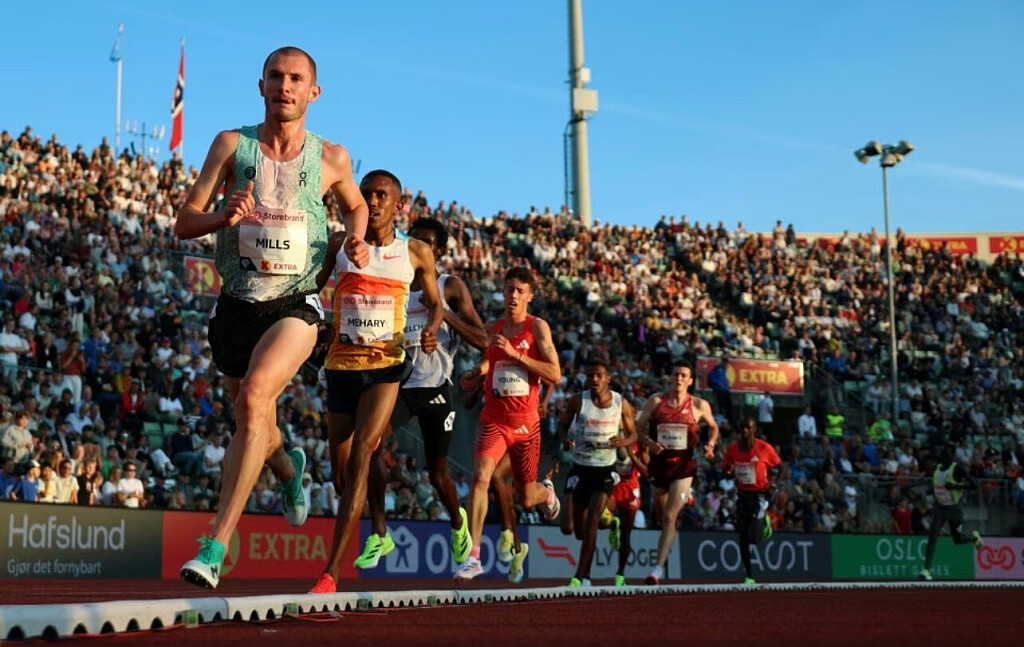
George Mills Smashes British Record with 12:46.59 in Oslo Diamond League 5000m
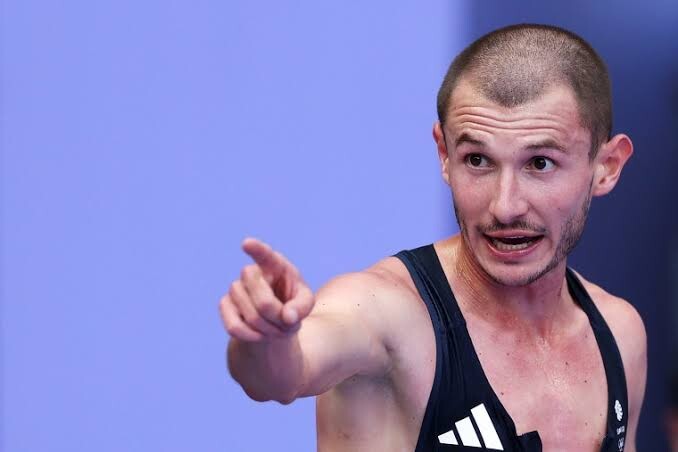
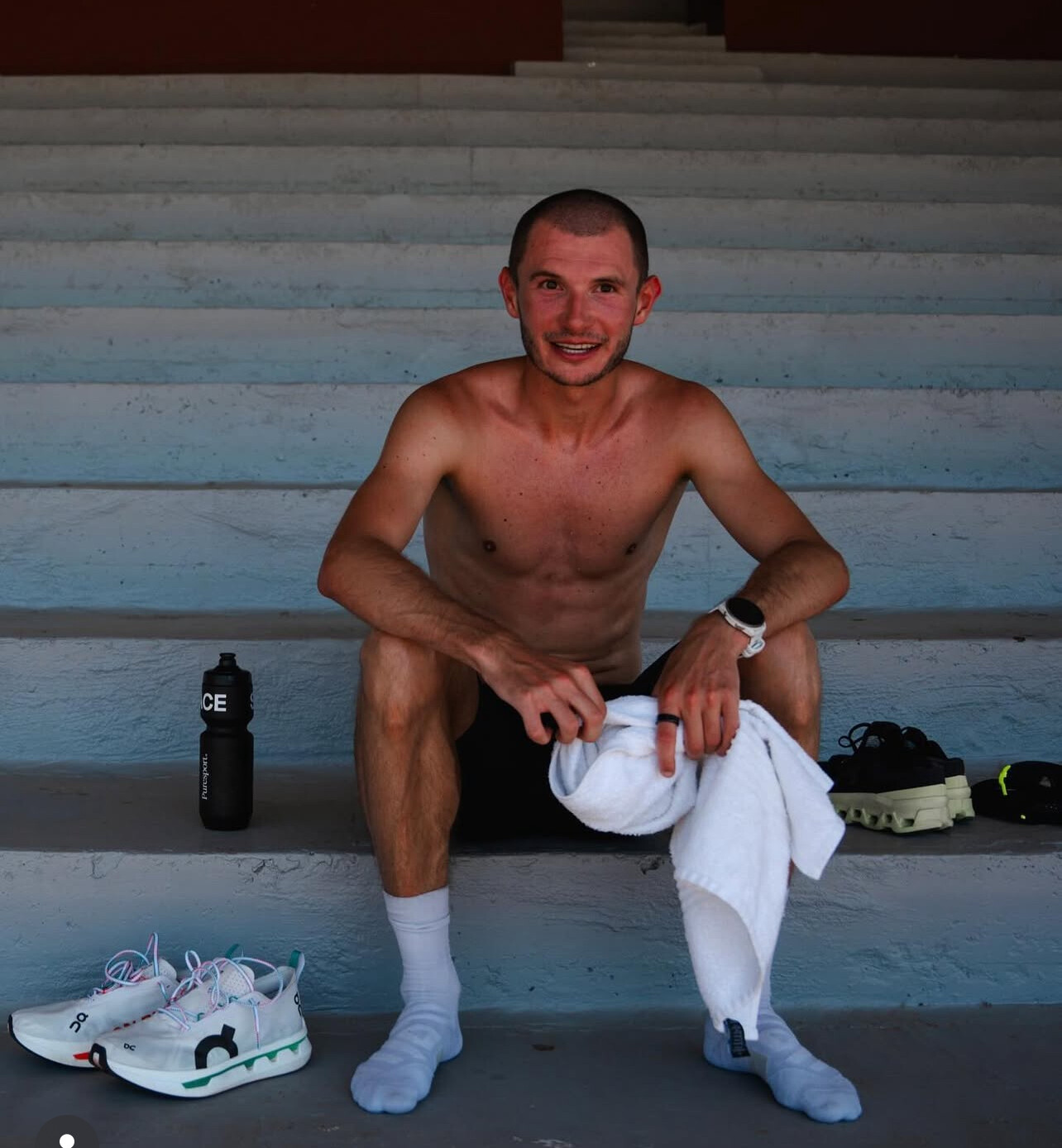
British distance running has a new star. At the 2025 Oslo Diamond League, George Mills delivered a brilliant performance in the men’s 5000 meters, clocking 12:46.59—a new British national record and one of the fastest times ever run by a European.
The 25-year-old’s performance shattered the previous UK record of 12:57.76 held by Sir Mo Farah and marked Mills’ official arrival on the global stage.
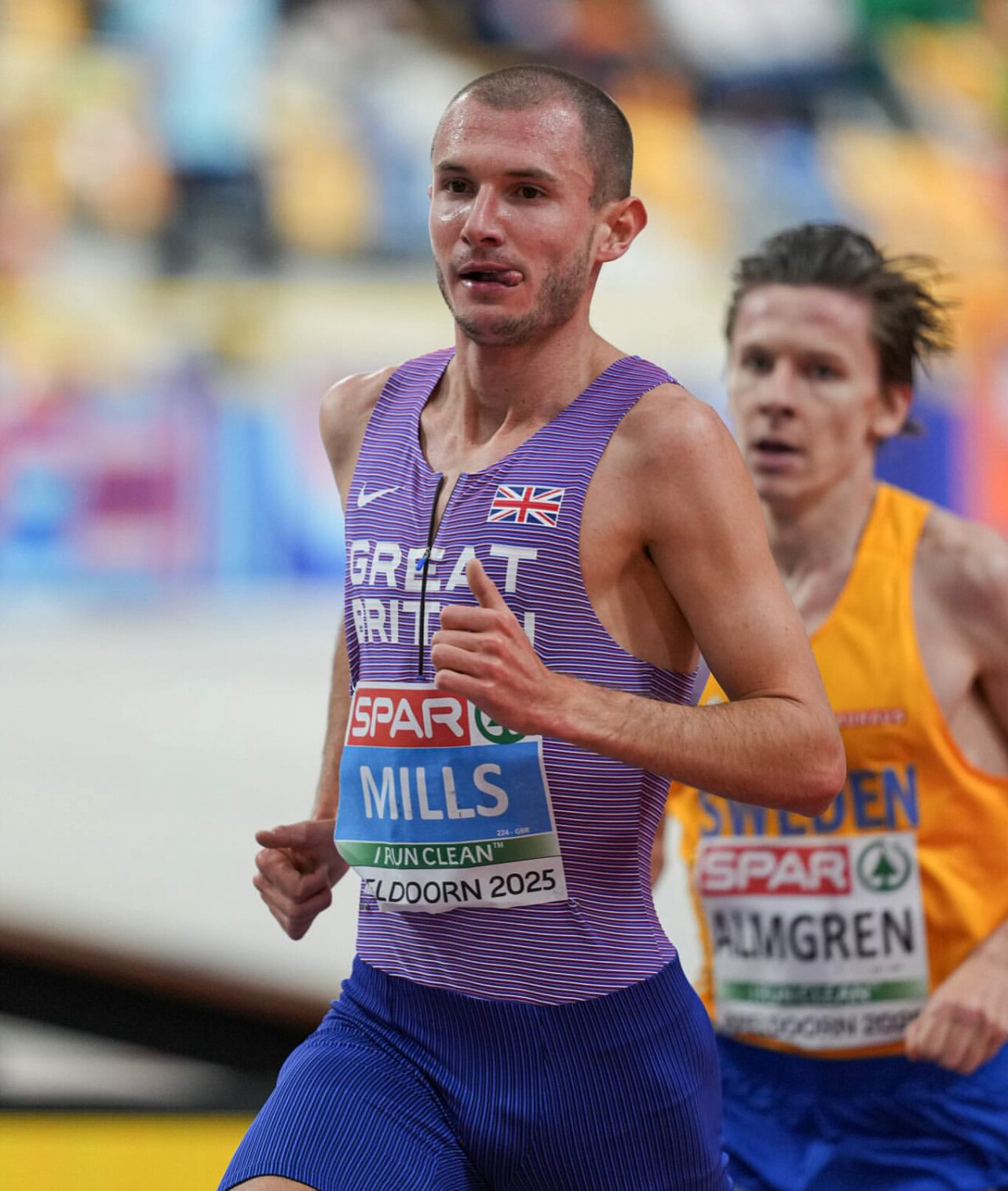
Historic Performance in a Historic Race
Mills’ 12:46.59 came in a race loaded with talent and fireworks. He crossed the line just behind American Nico Young, who won in 12:45.27 to break the American record. It was the deepest 5000m field in Diamond League history, with eight athletes running under 12:51.
Mills stayed composed throughout the early laps, staying close to the pacers and navigating through a crowded lead pack. As the bell rang, he surged into position and kicked hard down the homestretch, finishing just fractions behind Young while securing the #2 spot on the European all-time list—behind only Mohammed Mourhit of Belgium (12:49.71 in 2000).
From 1500m Talent to 5000m Powerhouse
Originally known as a 1500m specialist, Mills has successfully transitioned up in distance. The former European U23 champion and son of Olympic 1500m finalist Danny Mills has long shown promise on the track, but Oslo marks his greatest performance yet.
He now holds a faster 5000m time than British legends like Mo Farah, Dave Moorcroft, and Andy Vernon—and has proven that he belongs on the start line with the very best in the world.
Final Times from Oslo
• Nico Young (USA) – 12:45.27 – American Record
• George Mills (GBR) – 12:46.59 – British Record
• Thierry Ndikumwenayo (Burundi) – 12:47.67 – Personal Best
• Dominic Lobalu (Switzerland) – 12:50.87 – Swiss National Record
What’s Next for George Mills?
With the World Championships on the horizon, Mills is now firmly in the conversation as a potential medalist. His ability to hang with the world’s fastest over 5000 meters—and still close hard—bodes well for tactical championship-style racing.
British distance fans may have found their next global star.
by Boris Baron
Login to leave a comment

Nico Young Shatters American Record with 12:45.27 in Oslo Diamond League 5000m
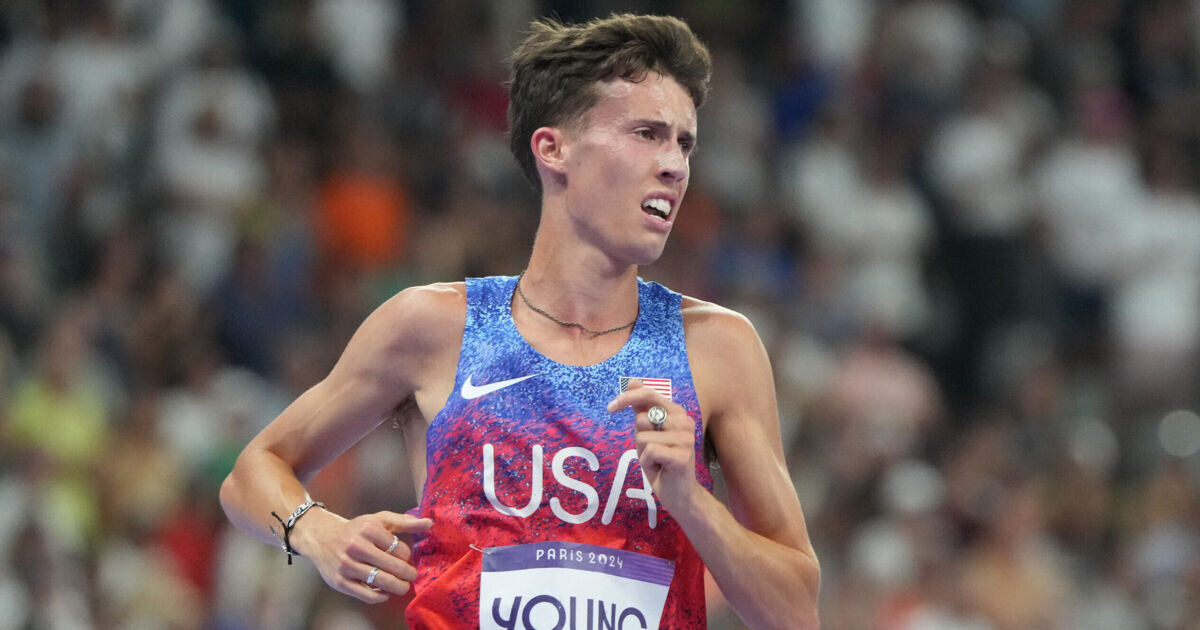
In a performance that shook the foundations of U.S. distance running, Nico Young stormed to a stunning 12:45.27 at the Oslo Diamond League on June 12. Not only did he win the race, but he also demolished the American 5000m record, vaulting himself into the top ranks of global distance running.
The 21-year-old’s breakthrough marks the fastest 5000m ever run by an American and the fourth-fastest time in world history outdoors. His average lap was 61.4 seconds—roughly 4:06 per mile or 2:33 per kilometer—executed against one of the deepest fields ever assembled.
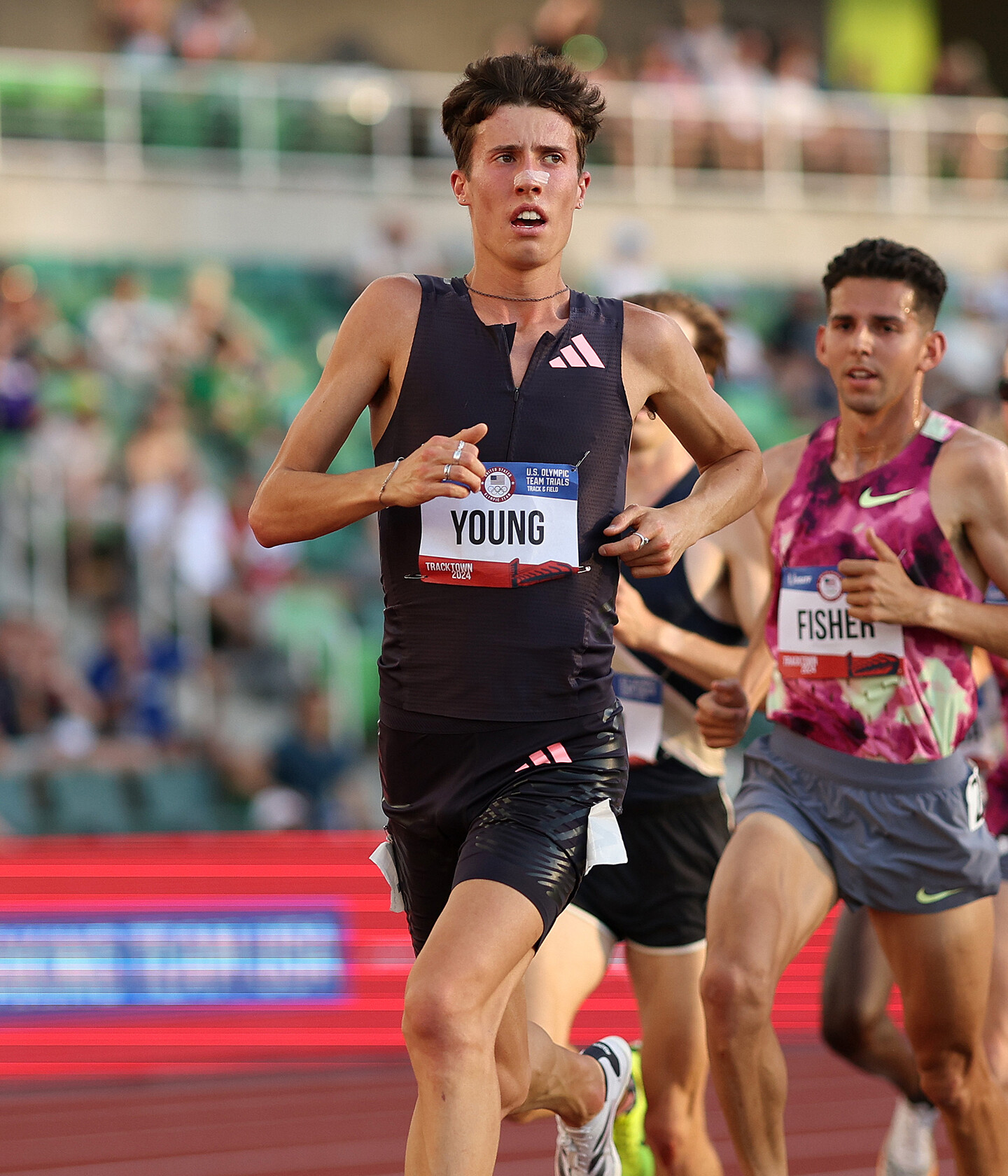
Standout Performances with Official Times
• Nico Young (USA) – 12:45.27 – ?? American Record
• George Mills (GBR) – 12:46.59 – ?? British National Record
• Thierry Ndikumwenayo (Burundi) – 12:47.67 – Personal Best
• Dominic Lokinyomo Lobalu (Switzerland) – 12:50.87 – ?? Swiss National Record
This was a race defined by speed, grit, and history-making performances. Eight athletes reportedly broke 12:51—unprecedented in Diamond League competition. National records fell on three continents.
Young’s Path to Greatness

Nico Young’s rise began at Newbury Park High School, where he set high school records and led his team to national titles. At Northern Arizona University, he continued to dominate, becoming a multi-time NCAA All-American before turning pro with Adidas.
Training under coach Mike Smith, Young has honed not just his endurance but also his race instincts—perfectly on display in Oslo as he timed his final surge to perfection against the best in the world.
A New Standard
Young’s 12:45.27 surpasses Grant Fisher’s previous American record of 12:46.96 set in 2022. His time now ranks him behind only three men in history: Joshua Cheptegei, Kenenisa Bekele, and Hagos Gebrhiwet.
With this performance, Nico Young has redefined what’s possible for American distance runners and firmly positioned himself as one of the most exciting young talents in the sport.
by Boris Baron
Login to leave a comment
World Athletics Makes 300m Hurdles an Official Event
World Athletics has officially recognized the 300m hurdles as an official event, marking a major shift in the sport’s landscape. While it has long existed as a training and exhibition distance, the 300m hurdles will now count toward world rankings and all official statistical purposes, similar to the 400m hurdles.
In a statement released by World Athletics, the governing body noted:

“It will serve all World Athletics statistical purposes, including world rankings towards which it will score as a similar event to the 400m hurdles. A list of world best performances will be kept, while conditions for setting an inaugural world record will be decided at a later stage, once the popularity of the event has reached a meaningful level.”
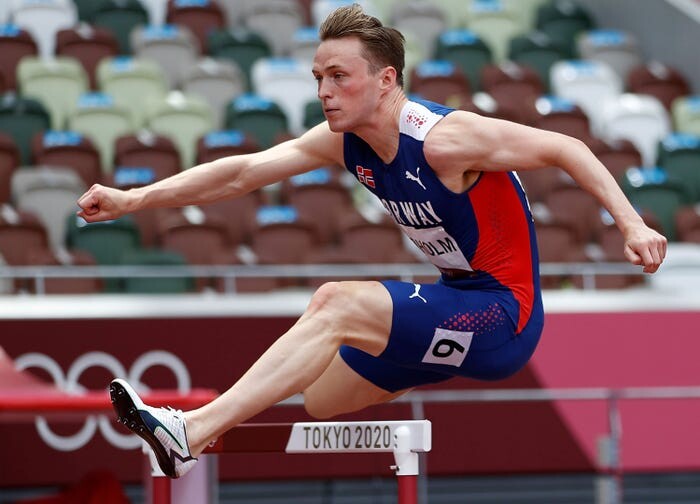
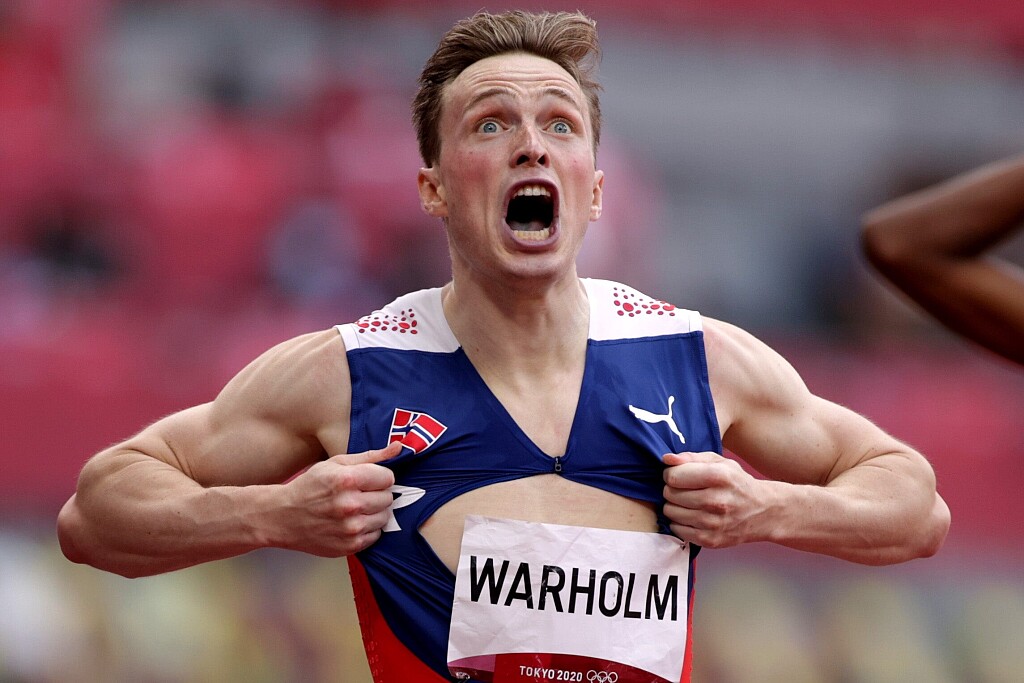
Though not yet eligible for world records, the event already boasts elite-level performances. Norway’s Karsten Warholm—the 400m hurdles world record holder—blazed 33.26 in Oslo in 2021, a mark widely recognized as the world best. He followed it up with a 33.28 performance in Bergen last year.
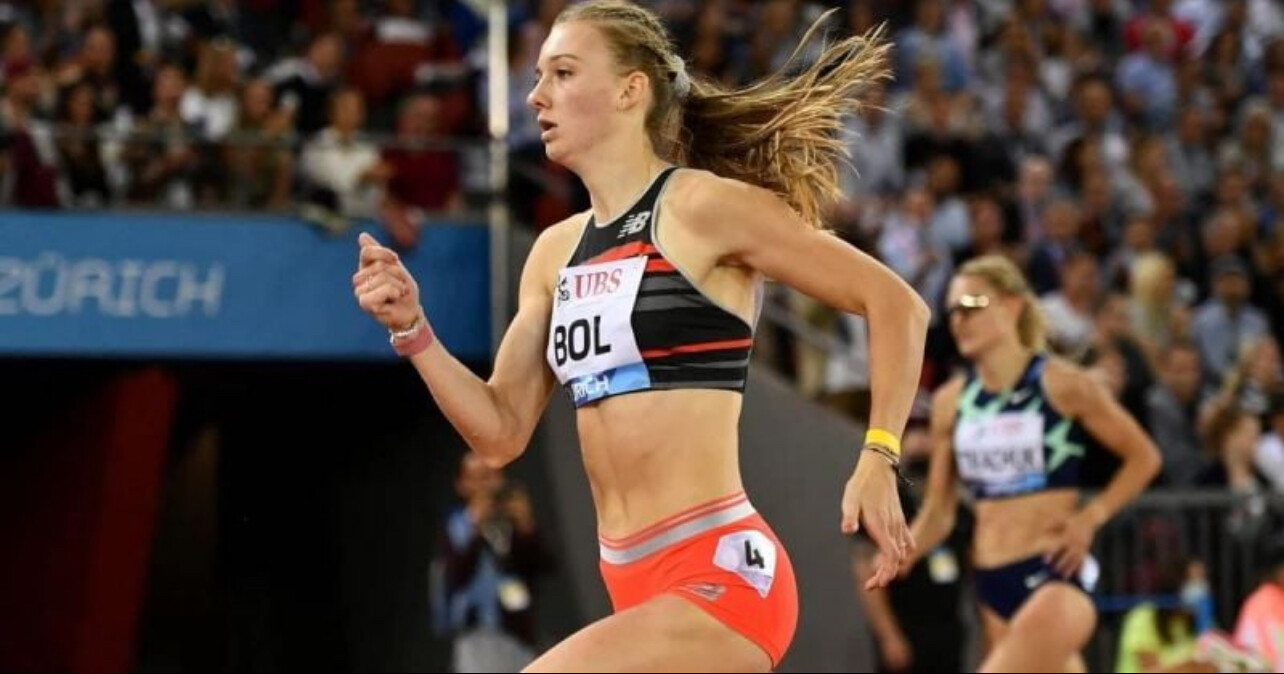
On the women’s side, Dutch superstar Femke Bol holds the top time with her 36.86 run in 2022.
The move to formalize the event brings renewed attention to what has typically been a non-championship distance. A major showcase is already on the calendar: the men’s 300m hurdles will feature at the Oslo Diamond League on June 12, 2025, setting the stage for a high-profile showdown in Warholm’s home country.
With elite athletes already embracing the event and more high-level races on the way, the 300m hurdles may soon become a fan favorite—and a mainstay in international competition.
Photos: Karsten Warholm Sets 300m Hurdles World Record
Norwegian hurdler Karsten Warholm setting the 300m hurdles world record with a time of 33.26 seconds at the Impossible Games in Oslo.
Femke Bol Breaks Women’s 300m Hurdles World Record
Dutch athlete Femke Bol breaking the women’s 300m hurdles world record with a time of 36.86 seconds at the Ostrava Golden Spike event.
by Boris Baron
Login to leave a comment
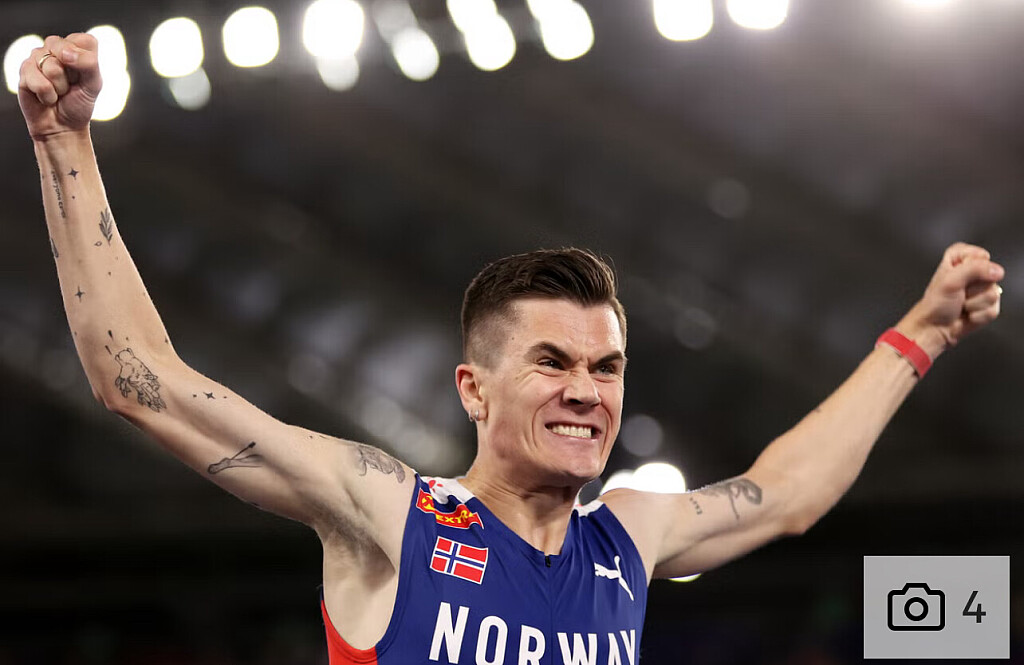
Jakob Ingebrigtsen sends Josh Kerr message in statement 1,500m victory at European Championships
The Norwegian completed the double in Rome after victory in the 5,000m and will resume his rivalry with world champion Kerr at the Paris Olympics in one of the sport’s most gripping rivalries
Norway's Olympic champion Jakob Ingebrigtsen won the 1,500 metres in Rome on Wednesday for a record sixth European Championship gold.
The 23-year-old charged down the final metres and was all by himself when he crossed the finish in 3:31.95, a championship record, to become the most decorated male athlete ever in the continental championship.
Belgian Jochem Vermeulen took the second spot on the podium in 3:33.30 while Italian Pietro Arese was third in 3:33.34.
"Today it's about winning. At the same time, I'm looking for answers in every single question I'm asked. Today I got a lot of good answers," he told a Norwegian broadcaster.
Ingebrigtsen is expected to form one of the most compelling rivalries of this year's Paris Olympics against Briton Josh Kerr, who denied him the gold in Budapest last year.
Ingebrigtsen hurled himself over the finish to win last month's Oslo Diamond League meet, after finishing second to Kerr over the mile race days earlier at the Prefontaine Classic.
Login to leave a comment
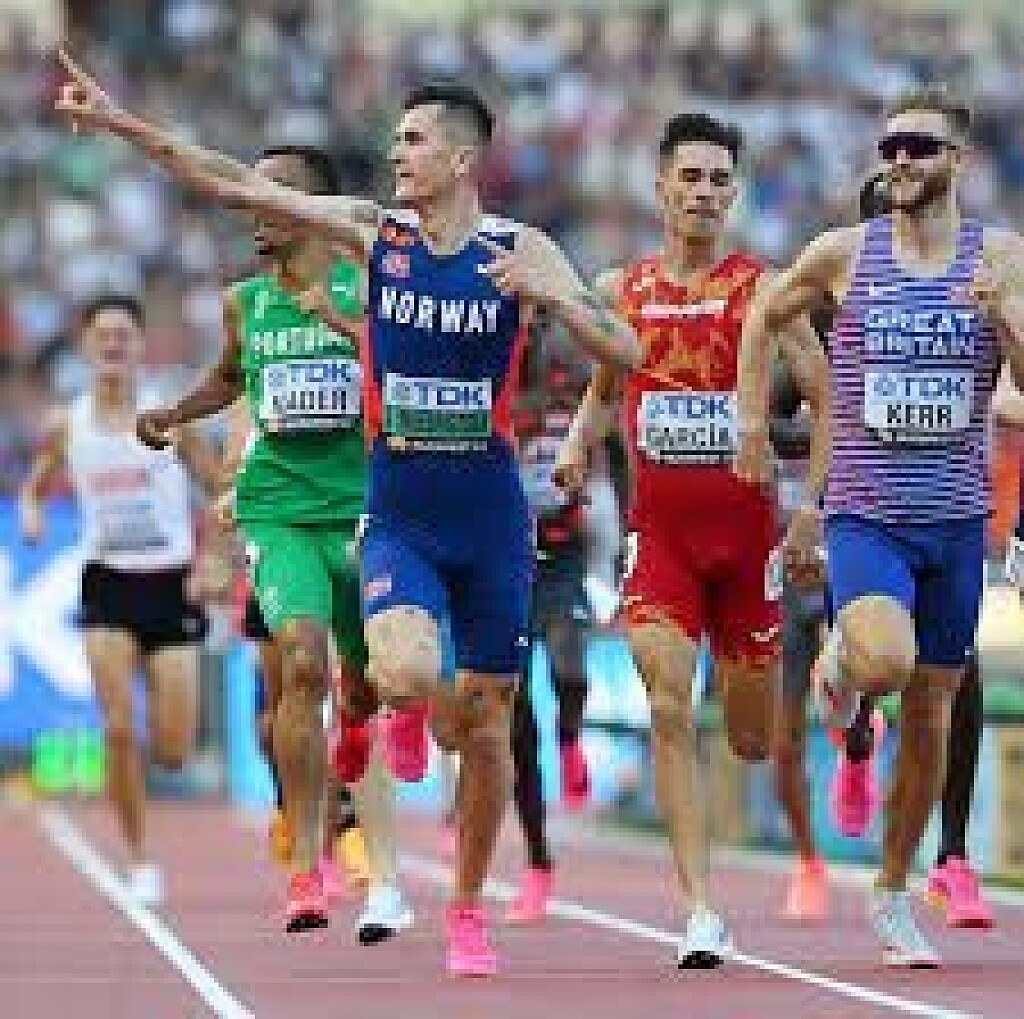
Jakob Ingebrigtsen hopes to open his season at Pre Classic
After a record-setting 2023 season, it has been a quiet year (so far) for Norwegian distance star Jakob Ingebrigtsen. The 24-year-old has been sidelined with an Achilles injury, which will keep him out of next month’s World Indoor Championships in Scotland and World XC in Serbia.
In an exclusive interview with Norwegian broadcaster NRK, Ingebrigtsen remained confident that he would be good to go for the summer track season. “Plan A is to start the season in Eugene [Diamond League, on May 25], run Bislett Games [Oslo Diamond League] on May 30, and the European Championships in Rome after that [June 7],” said Ingebrigtsen. “I think that will work well this year. And then full focus on the Olympics after that, so most likely a good season in the late summer.”
Last year was one of the most dominant seasons of Ingebrigtsen’s young career; he set world bests over two miles and 2,000m and clocked the second-fastest mile time in history (3:43.73) at the 2023 Diamond League Final in Eugene. He also went through a lot off the track, marrying his longtime partner Elisabeth Asserson and having a public falling out with his former coach and estranged father, Gjert Ingebrigtsen.
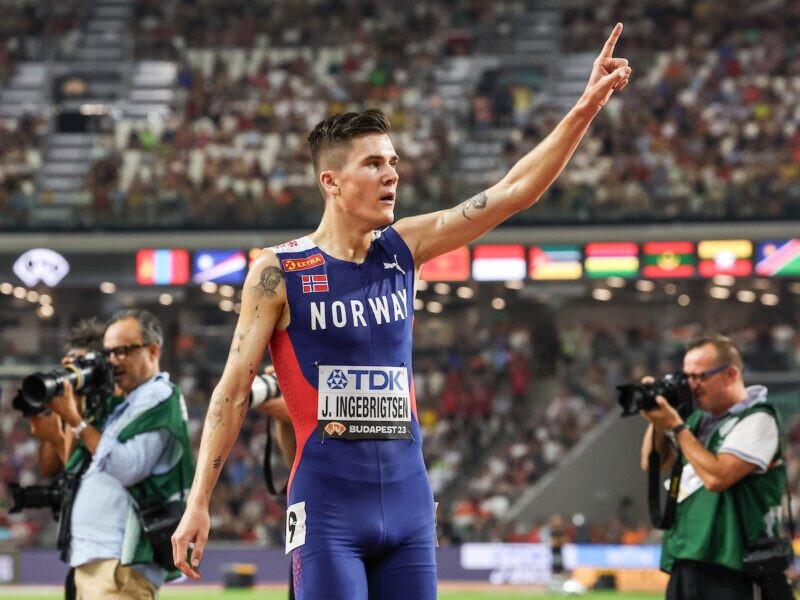
Ingebrigtsen told NRK that he took some time off from running during his wedding and honeymoon in the Maldives, and when he tried to start training again, the challenges began. “I got sick during the break,” said Ingebrigtsen. “When I started training again, it hurt like hell, then the Achilles tendon snapped.” He believes the problem occurred from inflammation around the Achilles tendon on his right foot.
He also admitted in the interview that he was struggling with pelvic pain before the 2023 World Athletics Championships in Budapest, where he defended his world title in the 5,000m and took silver to Great Britain’s Josh Kerr in the men’s 1,500m, losing to a British middle-distance runner for the second year in a row (Jake Wightman, 2022 worlds).
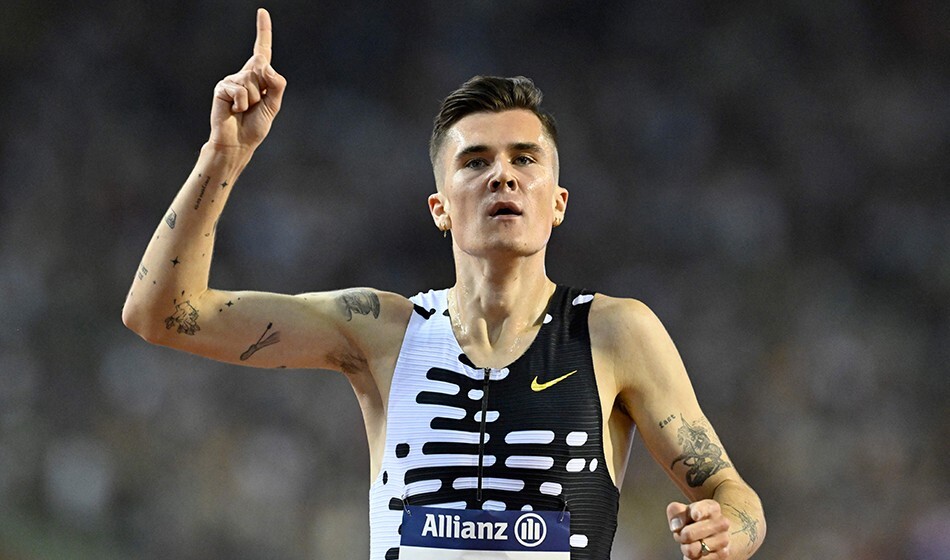
Ingebrigtsen said he is still motivated by his loss to Kerr and is trying to use it as a lesson: “It is again very important to try to analyze what you have done, or what you have been through, to see that it is not necessarily to blame, but what you can perhaps do differently. And I’m a big fan of that.”
Kerr and Ingebrigtsen have been public about their dislike of one another. After Kerr won the world title in Budapest, Ingebrigtsen called the Scottish runner “just the next guy.” In a podcast, Kerr responded by saying that Jakob has “major weaknesses” and “surrounds himself with yes men.” On the prospect of another duel in Paris, Kerr said: “I just hope he’s ready to go. I hope that when we cross that finish line in Paris, everyone can shake each other’s hand and be like, “Whoever wins is good, they’re the best.”
With Ingebrigtsen currently training on the elliptical and water running, fans will be denied a potential early clash between the world and Olympic 1,500m champion at the World Indoor Championships in Glasgow in March. Kerr hopes for glory on home soil, competing in a major championship in his home country for the first time.
by Marley Dickinson
Login to leave a comment


Sha’Carri Richardson runs 100m world lead at U.S. Track and Field Championships
On the first day of the USATF Track and Field Championships in Eugene, Ore., U.S. sprinter Sha’Carri Richardson made a triumphant comeback, leaving spectators in awe as she blazed to a 100m world lead. Richardson set a new personal best and the fastest women’s 100m time of the year, clocking an impressive 10.71 seconds (+0.1 m/s).
During the heats of the women’s 100m on Thursday evening, Richardson delivered an outstanding performance, winning the first heat and securing her spot in Friday’s semi-finals. Her time not only surpassed her competitors by a significant margin but exceeded the previous world-leading time of 10.75 seconds set by Marie-Josee Ta Lou of Ivory Coast at the Oslo Diamond League just a month ago.

Richardson’s achievement was even more remarkable as she improved her best by one-tenth of a second from her previous record of 10.72 seconds, set in 2021 at the Miramar Invitational in Florida. Her new personal best now ranks as the sixth-fastest 100m time in history and the fourth-fastest ever by an American woman.
As anticipation grows, Richardson advances to the 100m semi-finals and ultimately aims for a spot in the final, scheduled for Friday evening. The stakes are high, as the top three U.S. sprinters in these races will earn the privilege to represent Team USA at the 2023 World Athletics Championships in Budapest next month. With her exceptional performance, Richardson is undoubtedly a strong contender for one of those positions.
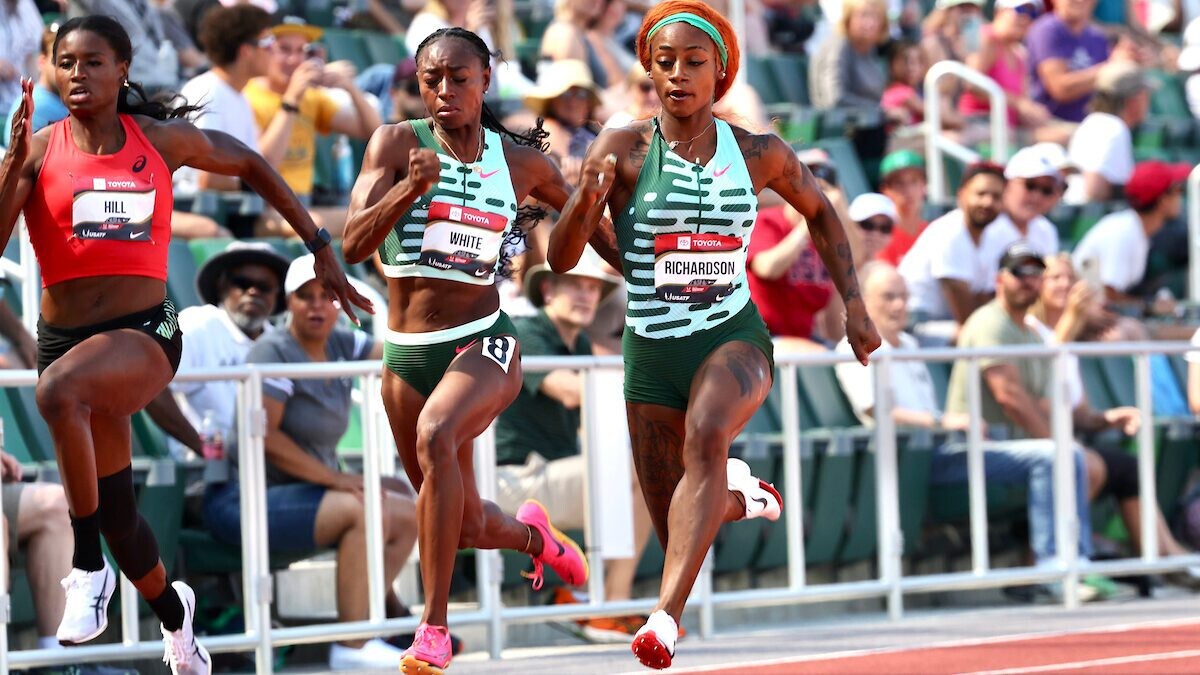
Richardson’s journey hasn’t come without obstacles. Following her victory in the 100m at the 2021 U.S. Olympic Trials, she faced a ban and disqualification due to a positive cannabis test, causing her to miss the delayed 2020 Tokyo Olympics. In 2022, she also faced challenges, failing to reach the final in the 100m and 200m at the U.S. Championships and missing out on qualification for the 2022 Worlds team.
The 2023 USATF Track and Field Championships are taking place from July 6 to 9 at Hayward Field in Eugene, Ore
by Running Magazine
Login to leave a comment
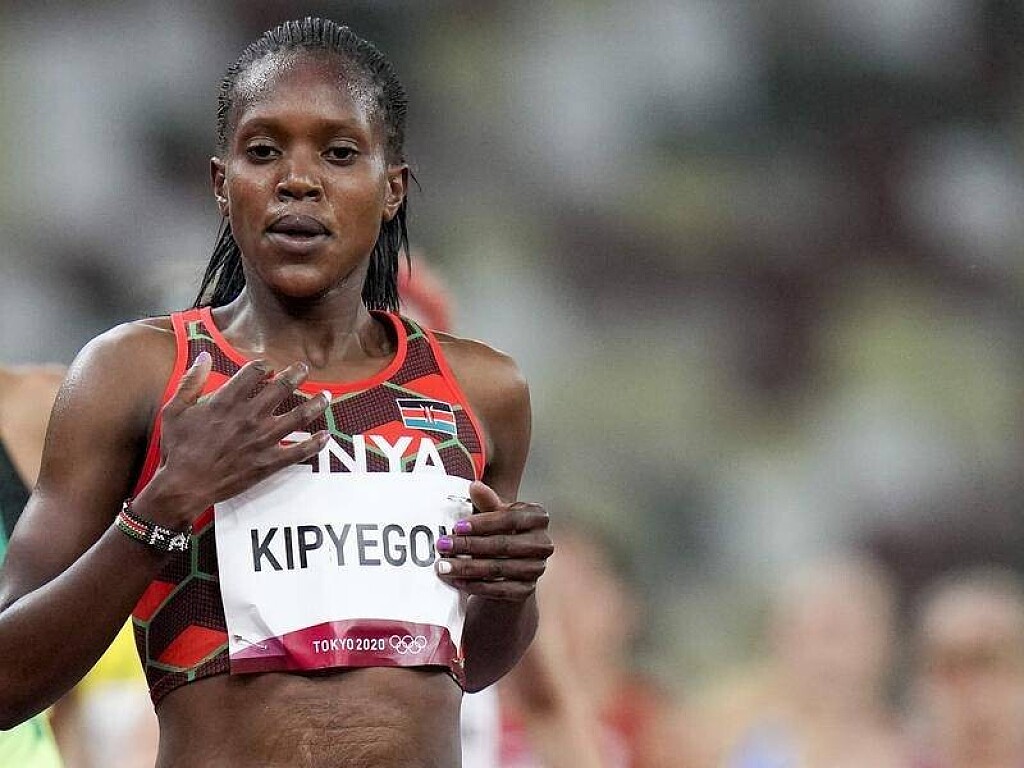
Faith Kipyegon contemplates doubling at World Championships
Double world record holder Faith Kipyegon is contemplating whether to compete in both the 1500m and 5000m at the World Championships in Budapest, Hungary, in August.
Kipyegon who holds the world records for the two distances said she is consulting widely before making a decision.
Speaking when she was named the LG/Sports Journalists Association of Kenya player of the month for June, Kipyegon said: "I will start my journey of defending my world title at the national trials this weekend."
"However, I am still consulting on whether I should double at the World Championships."
Kipyegon, a two-time Olympic champion over 1500m, said since she is qualified for Budapest after winning the world title in Oregon last year, she will compete in the 5000m race at the Athletics Kenya trials set for Friday and Saturday at the Nyayo Stadium.
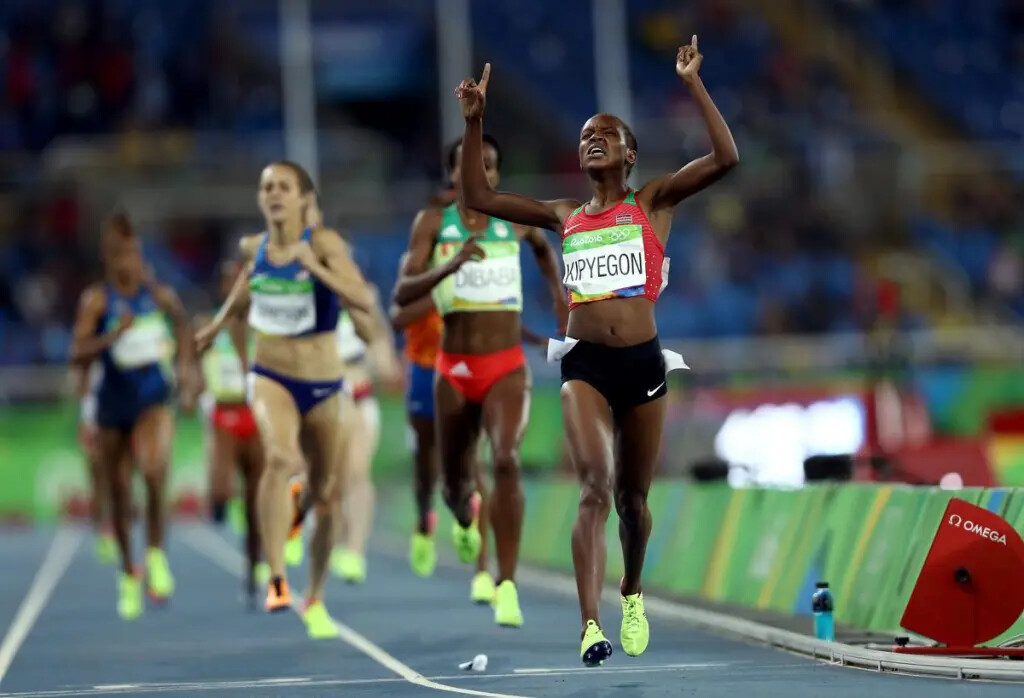
This, she said, will also form part of her preaparations for the July 21 Monaco Diamond League.
At her training base at Global Sports Communication in Kaptagat, Uasin Gishu county, Kipyegon was crowned by the scribes after running two consecutive world records over 1500m and 5000m last month.
In Florence, Italy, on June 2, Kipyegon tore Genzebe Dibaba's record over 1500m with a new world mark of 3:49.11 over 1500m.
She was at it again in Paris a week later as she timed a new world record of 14:05.20 over 5000m.
“I’m so happy to be among the few athletes to win this award more than twice,” Kipyegon said.
“It's always good to see corporate entities acknowledge the good work of athletes. I am thankful to LG for their efforts to whip up the enthusiasm of sportsmen and women in this country. The win in Florence boosted my confidence levels and I feel I have to continue pushing for better track limits.”
She becomes the second athlete, after Angela Okutoyi, to win the SJAK award thrice. Kipyegon beat five other nominees among them Commonwealth Games champion Beatrice Chebet who produced a scintillating run to clinch the 3,000m title at the Oslo Diamond League in eight minutes, 25.01 seconds, which also counted as the latter's new personal best and world leading time.
Others were Carl Tundo and McRae Kimathi for their WRC2 and WRC3 finishes on the Safari Rally, Moses Shumah for scoring Harambee Stars solitary goal at the Four Nations Tournament, Emma Wangila Nekesa for being the only African wrestler and Kenyan to have qualified for the World Beach Games in Indonesia.
Maureen Kemunto, LG East Africa Corporate Marketing and communication manager, said: “LG has been actively supporting the identification and recognition of sporting talent in Kenya through a partnership with SJAK."
"The purpose of this award is to recognise exceptional Kenyan sportsmen and women for their achievements across diverse disciplines each month and also to signify our commitment to contribute to the development of sport in the country."
SJAK President James Waindi congratulated Kipyegon and thanked LG for their continued support over the past eight years.
“With the monthly award, we are seeing a growing number of upcoming and talented sports personalities among them Angela Okutoyi who won the Wimbledon Open Junior category and won this award for a record three times, "said Waindi.
" Rewarding sportsmen and women is an important step towards whipping up the enthusiasm of sports personalities across all disciplines.”
by Emmanuel Sabuni
Login to leave a comment

World Athletics Championships Budapest 23
From August 19-27, 2023, Budapest will host the world's third largest sporting event, the World Athletics Championships. It is the largest sporting event in the history of Hungary, attended by athletes from more than 200 countries, whose news will reach more than one billion people. Athletics is the foundation of all sports. It represents strength, speed, dexterity and endurance, the...
more...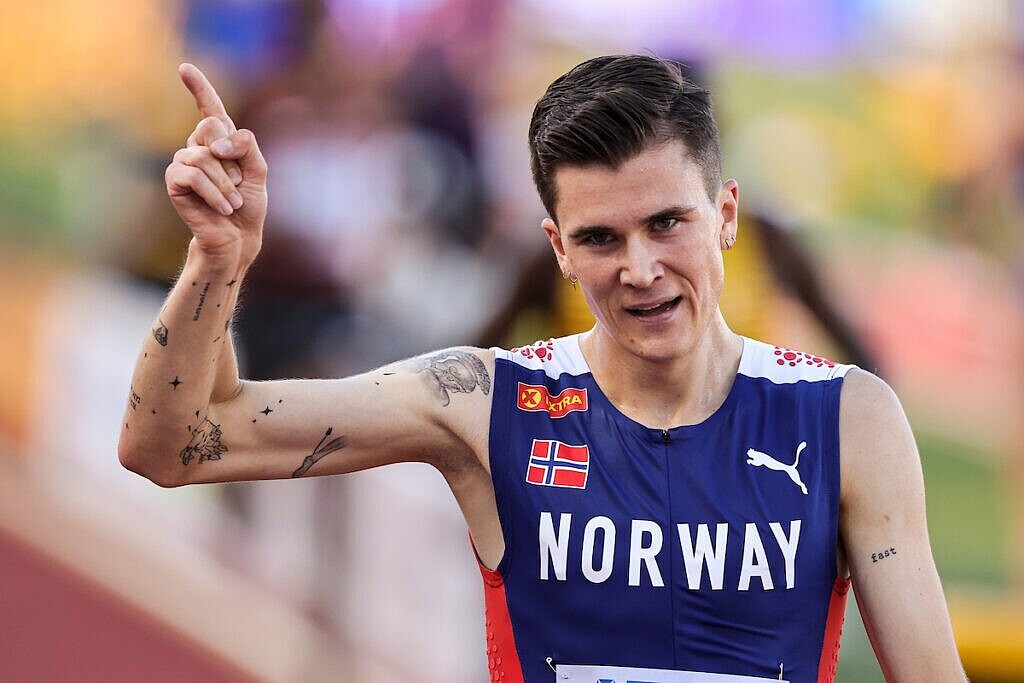
Jakob Ingebrigtsen to chase his national record at Oslo Diamond League
At the Paris Diamond League last week, the incredible Norwegian athlete and Olympic 1,500m champion Jakob Ingebrigtsen achieved a remarkable two-mile world best. On Thursday evening (afternoon for viewers in North America), the 22-year-old superstar will be competing in his home country, aiming to challenge his national record of 3:28.32 at the Oslo Diamond League.
Jakob’s WR bid

Ingebrigtsen headlines a deep men’s 1,500m field, featuring the silver and bronze medallists from Tokyo 2020, Kenya’s Timothy Cheruiyot and Josh Kerr of Great Britain. Other notable athletes are American Yared Nuguse and Mohamed Katir, who came off a Spanish national record performance over 5,000m in Florence two weeks ago, taking the win in 12:50.79.
During the pre-race press conference, Ingebrigtsen put his confidence on display and said he’s eager to chase a personal best and even take a shot at Hicham El Guerrouj’s 1,500m world record of 3:26.00 “If I break the world record Thursday, I deserve a statue,” said Ingebrigtsen. The Bislett Games meet director responded: “If you do it, I’ll personally set up a statue outside Bislett [Stadium].”
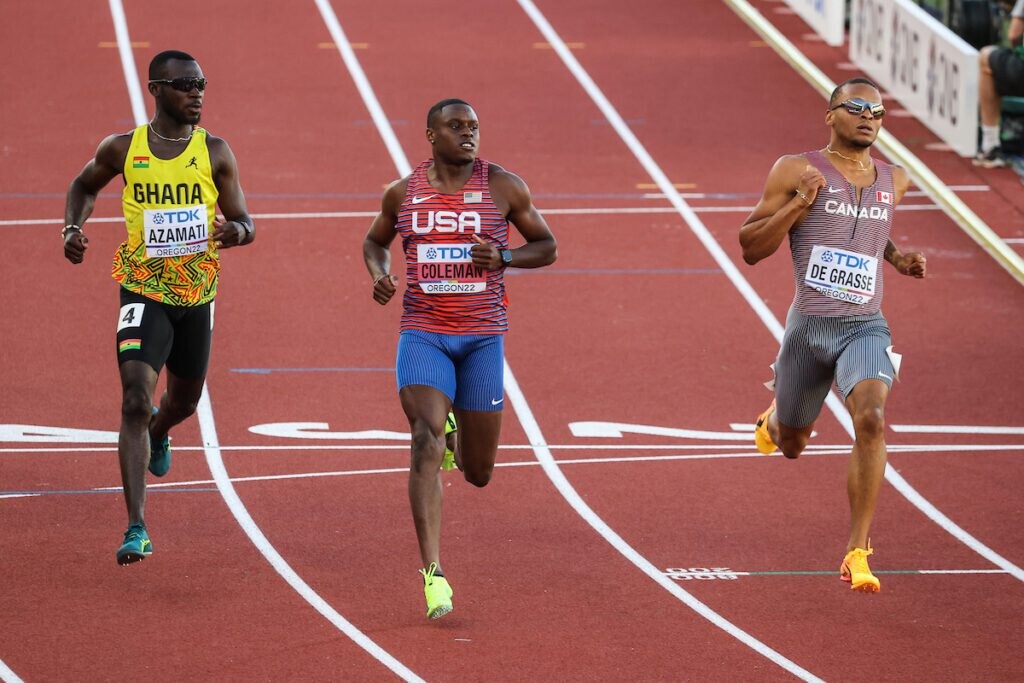
Although there has been a lot of world record talk from Ingebrigtsen and the media, the Wavelight pace in the 1,500m will be set to the meeting record of 3:29.12, going through 800m in 1:52 and the first kilometre in 2:19. Ingebrigtsen will have to close the final 500m in 66 seconds and a sub-53-second final lap if he hopes to take down the world record.
Canadians in Oslo
Two prominent Canadian athletes are competing at Oslo Diamond League Thursday. Olympic 200m champion Andre De Grasse looks to get his season back on track in the men’s 200m. The last year hasn’t been easy for De Grasse, changing coaches, battling injury and a slow start to the 2023 season. In his first three 200m race of the season, he has struggled to dip under the world championship standard mark of 20.24 seconds, a time he has frequently sailed under over the last two seasons. In his first Diamond League race in Doha on May 5, his turnover in the final 70 metres wasn’t there, and he faded to sixth in 20.35. It’s been three weeks since his last race, and he will come into Oslo as one of the favourites on paper, having the second-fastest personal best in the field after the young American, Erriyon Knighton.
Canadian mile and 1,500m record holder Gabriela DeBues-Stafford had a successful outing in her Diamond League return in Florence two weeks ago. After a full year off due to injury, the 27-year-old Olympic finalist ran to a season’s best 4:03.64 over 1,500m. She will come into the Oslo Diamond League as the top-ranked woman in the mile event. This race in Oslo should be more tactical and better suited for DeBues-Stafford’s racing style than the 1,500m in Florence, which resulted in a new world record for Faith Kipyegon.
Two other athletes who will be a tough test for DeBues-Stafford are Jessica Hull, who recently set an Australian record of 3:57.29 in Florence, and Ethiopian rising star Birke Haylom, who ran a giant personal best of 3:57.66 for third place at the Rabat Diamond League. DeBues-Stafford’s mile best is 4:17.87 from Monaco Diamond League in 2019, but any result under 4:23 for her would be a step in the right direction as she continues to prepare for the 2023 World Athletics Championships later this summer.
by Marley Dickinson
Login to leave a comment
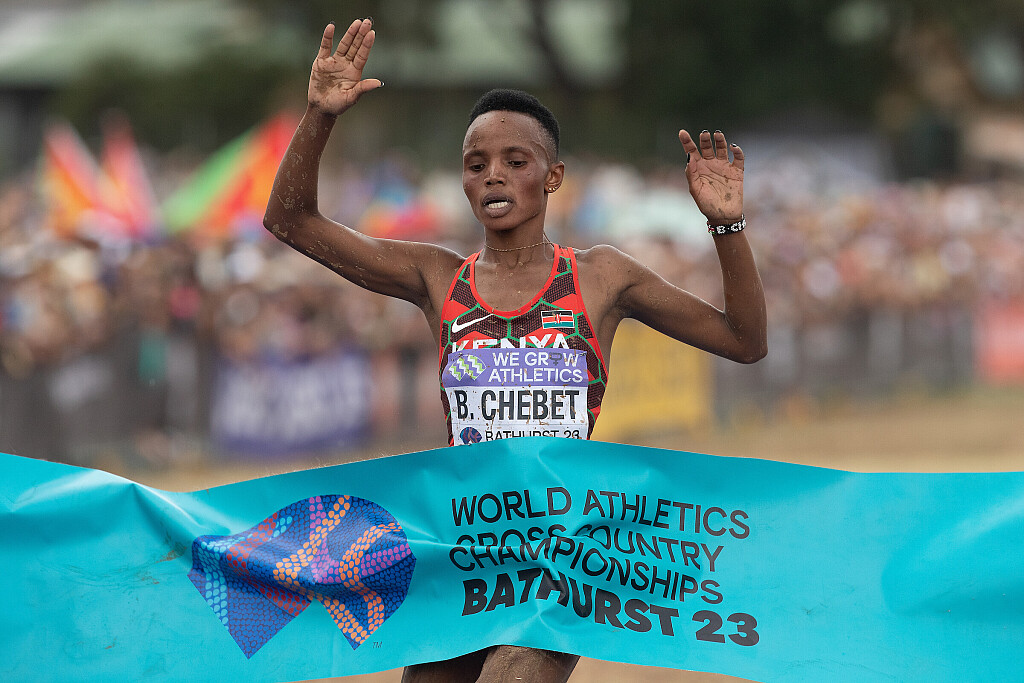
From Bathurst to Budapest, Chebet is motivated for more
While winning a global gold medal might be the pinnacle of the year – if not career – for many athletes, Beatrice Chebet remains motivated for another title to add to her ever-expanding CV.
The world 5000m silver medallist became the world cross country champion in February, winning the senior women’s race and leading the Kenyan squad to the team title at the World Athletics Cross Country Championships Bathurst 23. Now the 23-year-old has turned her attention back to the track as she plots her path to the World Athletics Championships Budapest 23 in August.
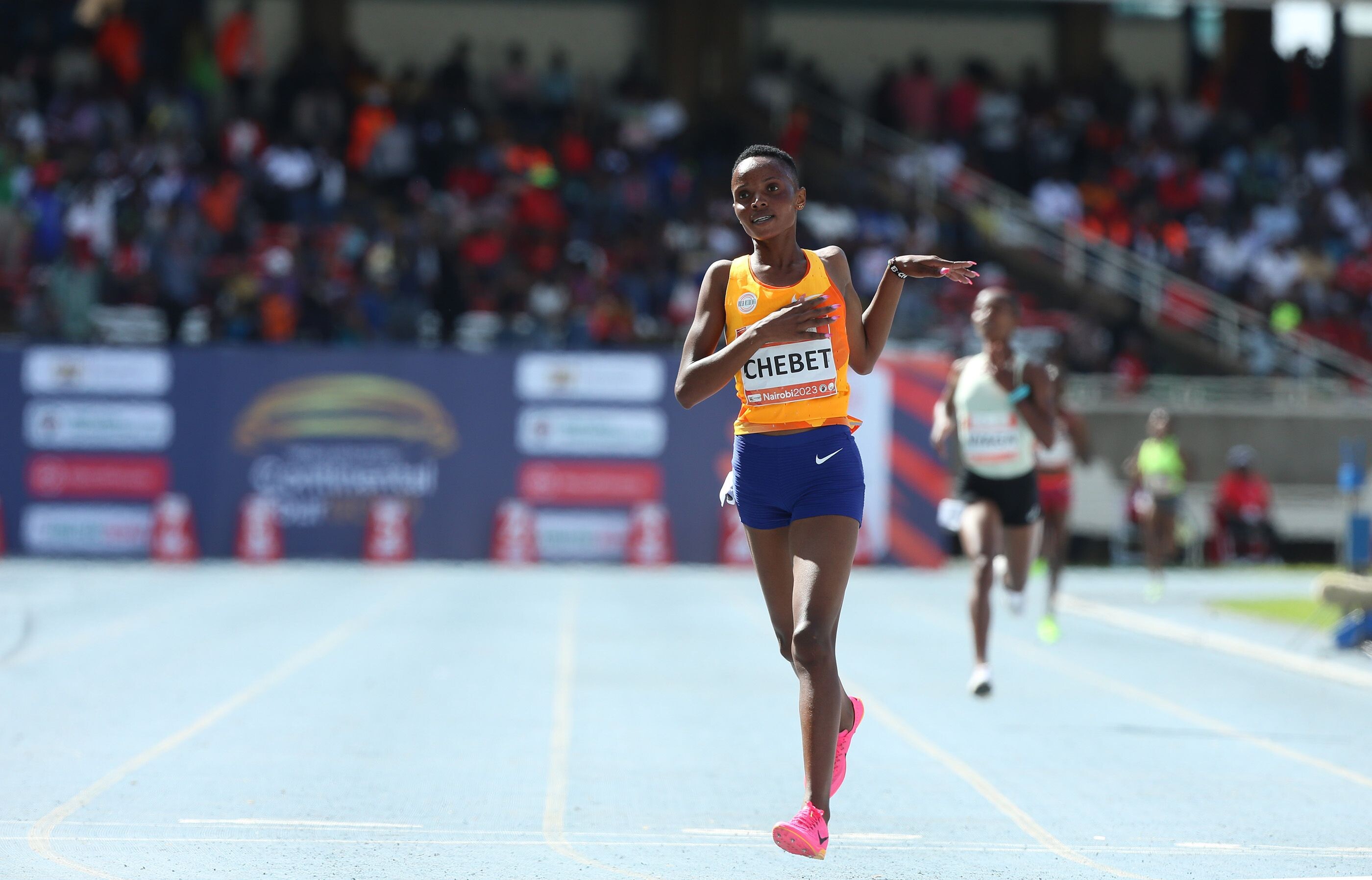
Chebet started her season on a high note, winning the 5000m at the Kip Keino Classic, a World Athletics Continental Tour Gold meeting, in Nairobi, Kenya, on 13 May.
Her victory in front of a home crowd at the Moi International Sports Centre in Kasarani was a good indication that her training is going well, and on the right course, for her next big goal: to win the world 5000m title in Budapest.
“I will be happy if I place on the podium this year in Budapest, although my main aim – which I know should be the same for all the runners who will be running at the World Championships – is the gold medal,” Chebet says. “However, I will be thankful for any medal I get there.”
On the morning of 23 August, Chebet – who already has a wild card place to run in Budapest after winning the 2022 Wanda Diamond League title, subject to selection by her national federation – will be standing at the start line for the heats of the women’s 5000m at the National Athletics Centre to begin her quest for the world title. But, with all the best runners in the world yearning for gold, she knows it won’t be easy.
From her experiences during past battles on the world stage, Chebet believes that the Ethiopian runners and some of her Kenyan compatriots are likely to be her main rivals. The defending champion, who won the 5000m title in a close race ahead of Chebet in Oregon, for example, is Ethiopia’s Gudaf Tsegay. Another Ethiopian athlete, Letesenbet Gidey, is the world record-holder who had looked on course to beat Chebet to the world cross country title in Bathurst before she fell in the closing stages.
Chebet had similar encounters when winning her world U20 5000m title and world U20 cross country gold in 2019. In the latter, she won in a photo finish ahead of Ethiopia’s Alemitu Tariku and Tsigie Gebreselama as they all clocked 20:50 for the 6km race.
“I talked with Gidey some time after the incident in Bathurst, and she was doing well, health wise, and looking forward to coming back strong,” Chebet says.
Their rivalry is a friendly one. When asked whether she thinks Gidey will be looking forward to revenge in their next competition, Chebet replies: “We didn’t talk about competing against each other. It was to check up on her.”
While the rest of her 2023 racing calendar is yet to be confirmed, Chebet – who has a 5000m PB of 14:34.55 that she ran at the Oslo Diamond League in 2021 – will be hoping to remain a strong presence in the 12-and-a-half lap discipline this year.
“My training is going on well,” she says. “I am working hard and praying to God for good health and that everything else goes well. In my races this year, I will watch and hope to see continuous progress. I know all will go well with good training.”
Chebet currently trains in Kericho, on the undulating and beautiful landscapes of Kenyan tea plantations, under coach Gabriel Kiptanui as part of the Kericho Athletics Club.
Being part of the same training group and working with the same coach that guided her during her great 2022 season seems to be a good forecast of what Chebet’s season could look like this year.
“I hope I have another good year, like last year,” she adds.
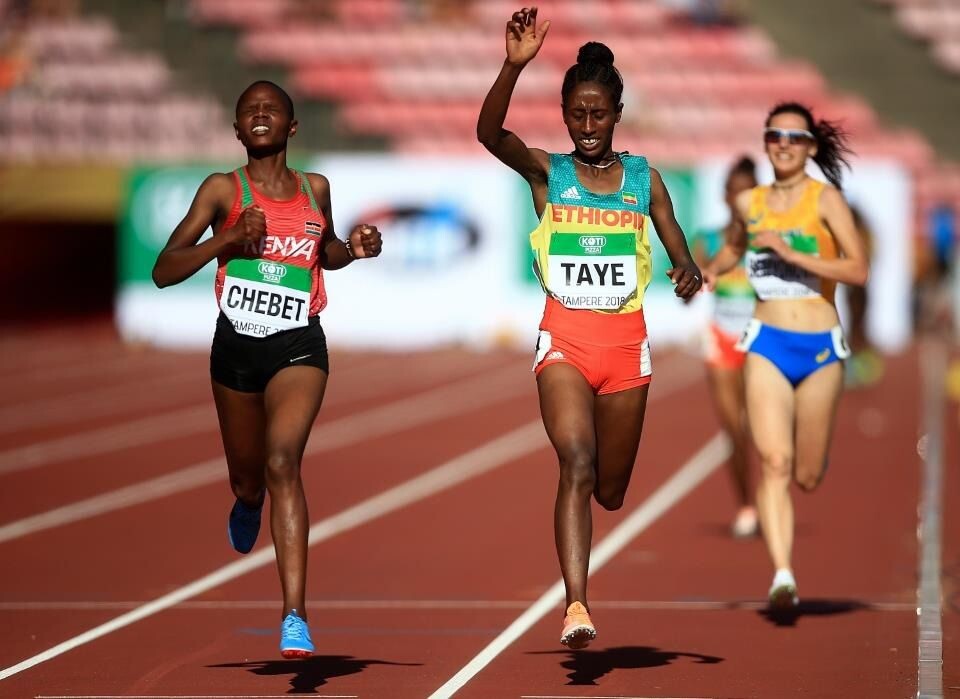
So far, her career highlight was when, at the age of 18, she won her first gold medal at the World Athletics U20 Championships in Tampere, Finland. It was a tough battle in the final 400m of the race between Chebet and Ethiopia’s Ejgayehu Taye, who Chebet edged at the finish line by a mere 0.10. Taye’s compatriot, Girmawit Gebrzihair, completed the podium.
“Of all the medals and titles that I have ever won, the one that I cherish the most is the world U20 gold medal that I won at the Ratina Stadium in Tampere in 2018,” Chebet says of the 5000m victory that ended a 10-year winning streak by Ethiopian athletes. “It was my first big victory, so I will not forget it.”
Since then, Chebet has remained a force to be reckoned with in the women’s 5000m event. She won the African U20 title in 2019 and the African senior title last year in Mauritius, before she claimed her silver medal at the World Championships in Oregon and gold at the Commonwealth Games in Birmingham.
Can she emulate her 2022 success this year? It looks good so far, and a world title in Budapest would be the icing on the cake.
by World Athletics
Login to leave a comment
World Athletics Championships Budapest 23
From August 19-27, 2023, Budapest will host the world's third largest sporting event, the World Athletics Championships. It is the largest sporting event in the history of Hungary, attended by athletes from more than 200 countries, whose news will reach more than one billion people. Athletics is the foundation of all sports. It represents strength, speed, dexterity and endurance, the...
more...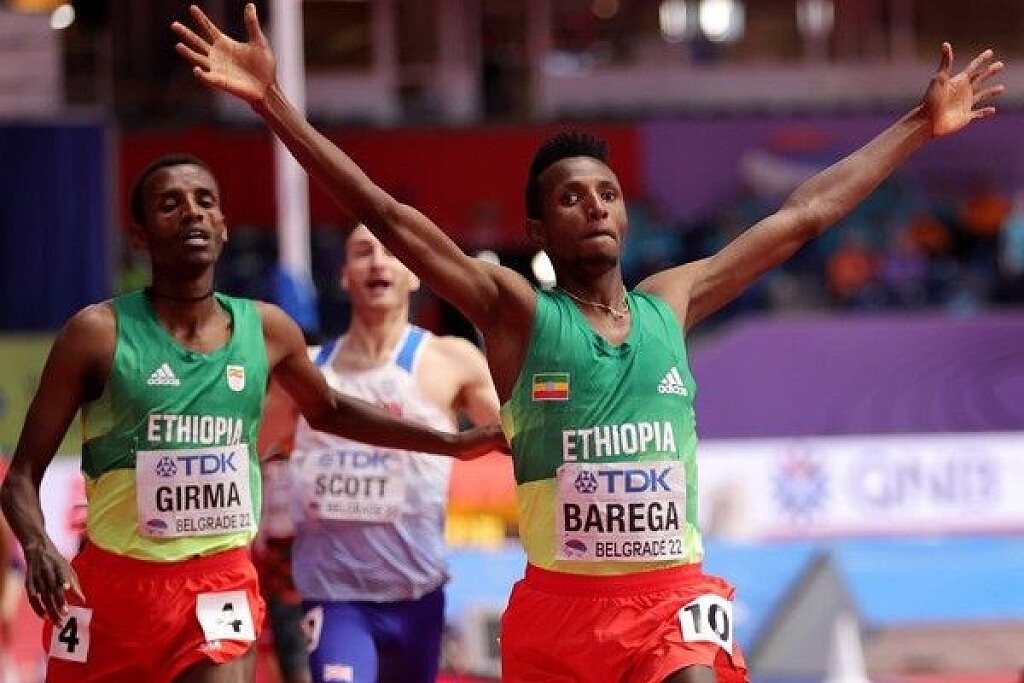
Ethiopia Has Changed Its Team Again for the 2022 Worlds
On Tuesday, the Ethiopian Athletics Federation announced its team for the 2022 World Athletics Championships in Eugene. If this sounds familiar, that’s because Ethiopia already named its team on June 13…and then updated it four days later to sub in Dawit Seyaum after she ran 14:25 to win the Oslo Diamond League.
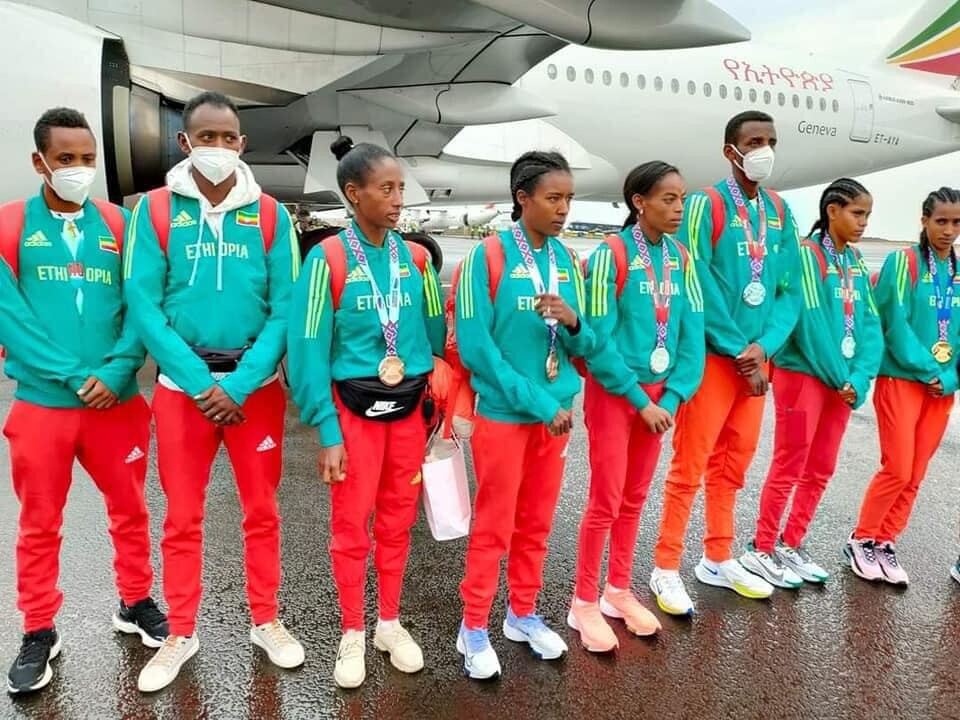
Tuesday’s list — which the federation says is the final roster (it pretty much has to be, since entries were due to World Athletics on Monday) — features even more changes, which will have a major impact on Worlds, which begin on July 15 at Hayward Field. Remember, at World Indoor Championships earlier this year in Belgrade, Ethiopian athletes won eight of the 12 available medals across the 1500 and 3000 meters — including all four golds and a 1-2-3 sweep in the women’s 1500. The country is a distance powerhouse.
Here is the full roster, with changes, followed by some analysis on what it all means.
Men’s 800 (no changes)Ermiyas GirmaTolosa Bodena
Women’s 800Habitam AlemuDiribe WeltejiHirut Meshesha (1:58.54 sb) replacing Freweyni Hailu (1:59.39 sb)
Men’s 1500Samuel TeferaTaddese Lemi (3:37.06 sb) replacing Melese Nberet (no races this year)Samuel Abate
Women’s 1500Gudaf Tsegay (3:54.21 sb) replacing Axumawit Embaye (3:58.80 sb)Freweyni Hailu (3:58.18 sb, 4th in Olympics) replacing Ayal Dagnachew (3:59.87 sb)Hirut Meshesha
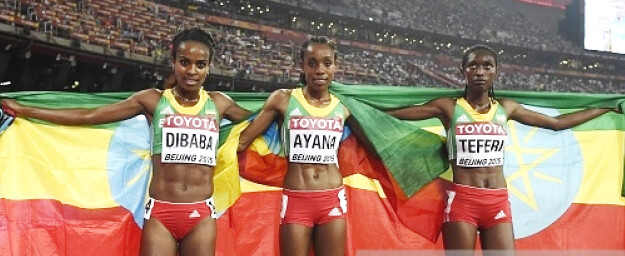
Men’s 3000 steeple (no changes)Lamecha GirmaHailemariyam AmareGetnet Wale
Women’s 3000 steepleMekides AbebeWorkua GetachewSimbo Alemayehu (9:09.17 sb at age 18) replacing Zerfe Wondemagegn (9:27.75 sb)
Men’s 5,000Muktar EdrisBerihu AregawiYomif KejelchaSelemon Barega replacing Telahun Bekele
Women’s 5,000Ejgayehu TayeLetesenbet Gidey (14:24.59 sb) replacing Gudaf Tsegay (14:26.69 sb)Dawit Seyaum (14:25.84 sb) replacing Fantu Worku (14:47.37 sb)
Men’s 10,000Selemon BaregaTadese WorkuBerihu Aregawi (26:46.13 sb) replacing Milkesa Mengesha (27:00.24 sb)
Women’s 10,000Letesenbet GideyEjgayehu Taye (30:44.68 sb) replacing Girmawit Gebrzihair (30:47.72 sb)Bosena Mulate
Men’s marathonLelisa DesisaTamirat TolaMosinet GeremewSeifu Tura
Women’s marathonGotytom GebreslaseAbabel YeshanehAshete Bekere
Quick Takes
1) Ethiopia’s team just got A LOT stronger and Ethiopia went from no one doubling to a lot of doublers
In recent years, Ethiopia has been reluctant to allow its stars to double at global championships. Last year in Tokyo, Ethiopia had two huge 5,000m medal threats in Selemon Barega (Olympic 10,000 champ) and Berihu Aregawi (the 10,000 4th placer who would go on to win the Diamond League 5,000 title) but neglected to enter either in the 5,000 meters. Of the three men Ethiopia did enter, two failed to even make the final and the third, Milkesa Mengesha, wound up 10th.
The federation took criticism after that misstep and it looked as if it would double down in 2022 as the initial team named in June featured no doublers. But the final squad features five athletes double-entered: World Indoor bronze medalist Hirut Meshesha (800/1500) and Ejgayehu Taye (14:12 pb, #5 woman all-time), Letesenbet Gidey (women’s 5k/10k world record holder), Barega and Aregawi, all of whom are running the 5,000 and 10,000.
2) The meet is more interesting with the Ethiopians doubling; the men’s 5,000 final is now totally stacked
The World Championships are meant to be about the best against the best. When a world final is over, we don’t want to be asking ourselves, “What would have happened if Athlete X was in the race?” But that’s absolutely what we were thinking after the 2021 Olympic 5000 final without Barega. And it’s been an issue for a lot longer than that. Only once in his career did Haile Gebrselassie attempt the 5,000/10,000 double at a global champs (1993), in part because there were still prelims in the 10,000 in those days and in part because he didn’t want to tire himself for the lucrative post-championship meets in Europe.
That shouldn’t be an issue in 2022 (and if it is, it won’t have been the fault of the Ethiopian federation) as the distance finals are much stronger with Taye, Gidey, Barega, and Aregawi doubling up. The men’s 5,000 could be an all-timer. Not only do you have Olympic 5,000 champion Joshua Cheptegei of Uganda, but now we have Olympic 10,000 champ Barega stepping down and Olympic 1500 champion Jakob Ingebrigtsen stepping up. It’s reminiscent of one of the most famous races in track history, the 2003 World Championship 5,000 final in Paris which featured Hicham El Guerrouj stepping up from the 1500 and Kenenisa Bekele stepping down from the 10,000 only for both of them to be defeated by an 18-year-old Eliud Kipchoge.
Having Aregawi in the 10,000 makes for a stronger race as well as he was 3rd at the Ethiopian trials in that event and set a Diamond League record for margin for victory when he ran 12:50 to win the Pre Classic 5,000 by 16 seconds.
3) Gudaf Tsegay’s medal odds went up but her gold medal odds went down
Tsegay is pretty clearly the #2 women’s 1500 runner in the world. She won World Indoors by 5+ seconds and is 3+ seconds faster than the #3 1500 woman in the world right now. But she’s also not close to double Olympic champ Faith Kipyegon, who beat her convincingly at Pre, 3:52.59 to 3:54.21.
Initially, Tsegay was entered in the 5,000 at Worlds (she ran the 5,000 only at the Olympics last year, earning the bronze medal) and while there’s no overwhelming favorite in that event like Kipyegon (well at least until we see how Sifan Hassan looks this weekend), Tsegay is not as good at the 5,000 as the 1500 (as evidenced by her defeat to countrywoman Dawit Seyaum in the 5,000 in Oslo). By running the 1500, Tsegay has a better shot at a medal but her odds at gold are worse.
4) It just got a WHOLE LOT harder for the Americans to medal
An American medal in the women’s 5,000 or 10,000 was already unlikely, so the Ethiopian roster changes didn’t make a huge impact on the chances of Karissa Schweizer or Elise Cranny. But the medal odds of Grant Fisher, who finished 5th in the Olympic 10,000 last year, are way lower today than they were a week ago (a statement also true for his US teammates Woody Kincaid and Joe Klecker).
Last Wednesday, two of the four men who finished ahead of Fisher in the 10,000 in Tokyo were major question marks. Bronze medalist Jacob Kiplimo hadn’t raced on the track all year, while Aregawi, the 4th placer, was named to Ethiopia’s team in the 5,000 only. Since then, Kiplimo ran 7:29 for 3,000 in Stockholm to show he’s very fit right now and Aregawi was added to Ethiopia’s 10,000 squad. Plus Barega was added to the 5,000.
Those developments will make it significantly harder for Fisher (or any American man in the 5,000 or 10,000) to earn a medal. That said, if an American can somehow medal, it will go down as a monumental achievement since no one can accuse these fields of being watered down.
Sinclaire Johnson‘s medal hopes in the 1500 also took a BIG hit. With Tsegay now in the 1500, two medals seem to be spoken for and new addition Freweyni Hailu, who was 4th in the Olympics last year at age 20, is better than Ayal Dagnachew (who is no slouch herself, world junior 800 champ last year and 3:59 this year).
5) Ethiopia needs to figure out a better way to do this
One of the most important jobs an athletics federation has is selecting national teams. And for countries that don’t use a “top 3 at the trials” model — which is to say, every country except for the US — things can get prickly as someone, inevitably, is going to be upset they’re missing out on the team.
There are ways to limit the outrage. The simplest solution is the one USATF has already discovered: hold a trials and just pick the top three finishers. Ethiopia actually did this ahead of the Olympics last year. The problem was, they held all the races on the same day, making it impossible for athletes to try out for both the 5,000 and 10,000 teams.
But even if you don’t want to stage a trials, a federation can avoid much of the backlash by announcing a clear criteria ahead of time and sticking to it. You want to pick the team based off season’s bests? Fine. Just let everyone know before the season starts and let them plan their races accordingly. Transparency and consistency are the keys.
Heck, even if you want to be subjective and use a selection panel, you can at least cut down on some of the drama by letting the athletes know in advance that they’ll have to run a few performances to impress the selectors.
What you don’t want to do is announce a team well before the entry deadline (and three days before two key Diamond League meets featuring most of your athletes) only to drastically change it three weeks later. Which is exactly what happened in Ethiopia, leaving athletes like Telahun Bekele (winner of the 5,000 in Oslo) to think they’re on the team only to yank it away less than a month later.
In the end, Ethiopia ended up picking the team by season’s best except in the 10,000, where it staged a trial race (and the top 3 there were the fastest 3 on the year). If it had just used that criteria throughout the year and stuck to it, there would be fewer angry people right now. The athletes deserve better.
by Jonathan Gault
Login to leave a comment

World Athletics Championships Budapest23
Budapest is a true capital of sports, which is one of the reasons why the World Athletics Championships Budapest 2023 is in the right place here. Here are some of the most important world athletics events and venues where we have witnessed moments of sporting history. Throughout the 125-year history of Hungarian athletics, the country and Budapest have hosted numerous...
more...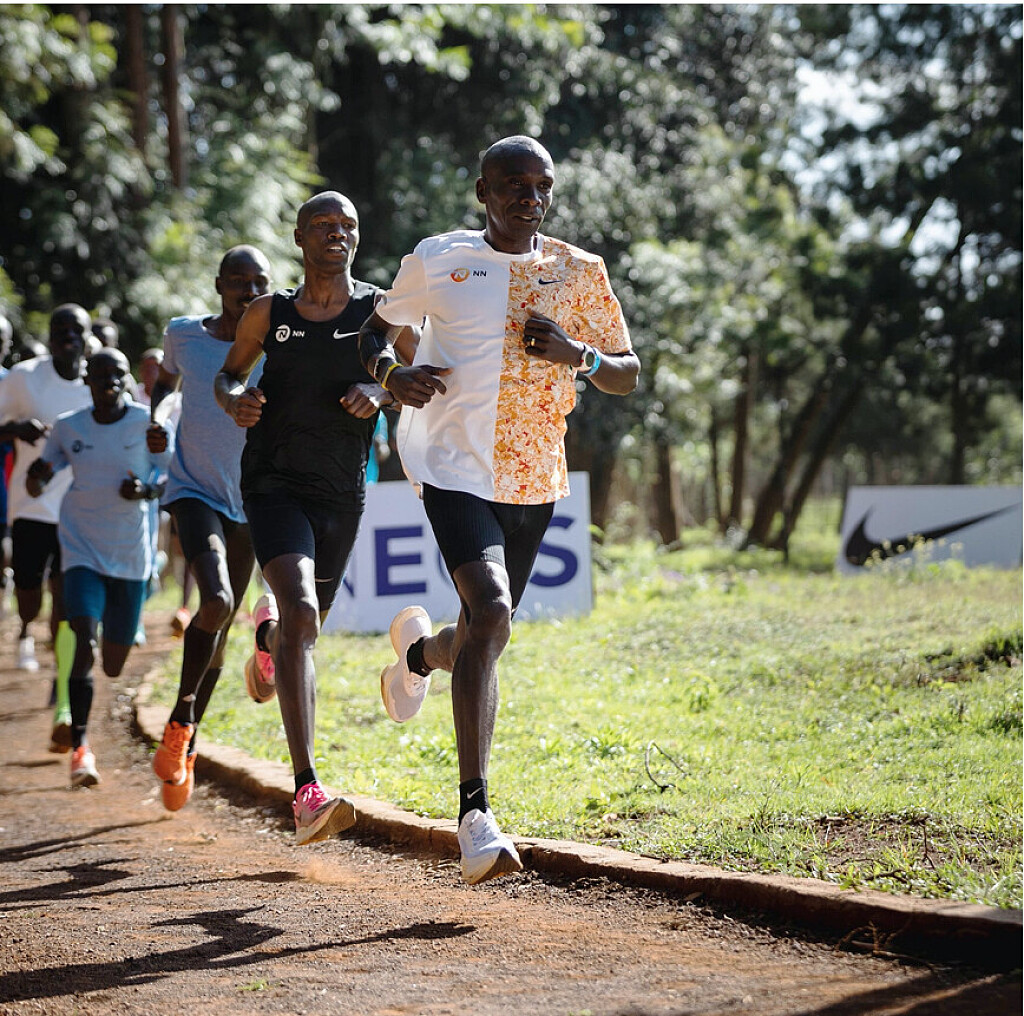
What it takes to become a Kenyan distance champion
For several generations now, Kenya has produced many of the world’s greatest distance runners.
Many athletes from elsewhere in the world, meanwhile, have tried to tap into the secrets of Kenya’s success as they try to play catch-up – quite literally – with the east African nation that continues to churn out global medallists and world record-breakers.
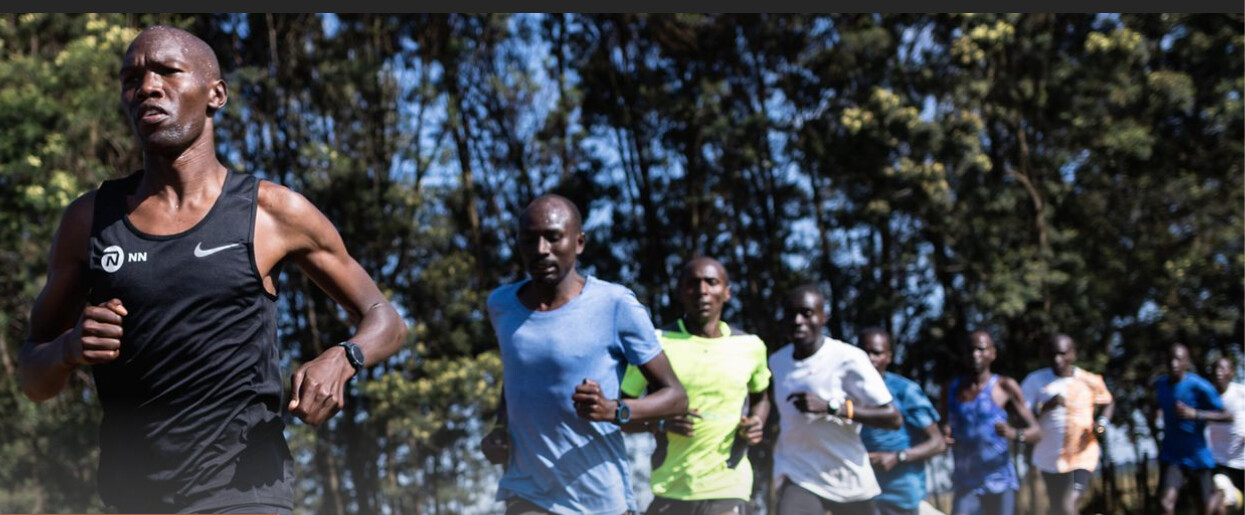
The truth is, there is no one single reason why Kenya is so dominant in distance events. It’s more down to a combination of factors, many of which were explained during a recent trip to the NN Running training camp in Kaptagat, about 24km east of Eldoret, where the likes of Eliud Kipchoge trains for 11 months of the year.
A way of life
There are few countries where people live and breathe athletics, and where the No.1 Olympic sport can claim to be more popular than football, filling entire stadiums even for age-group championships.
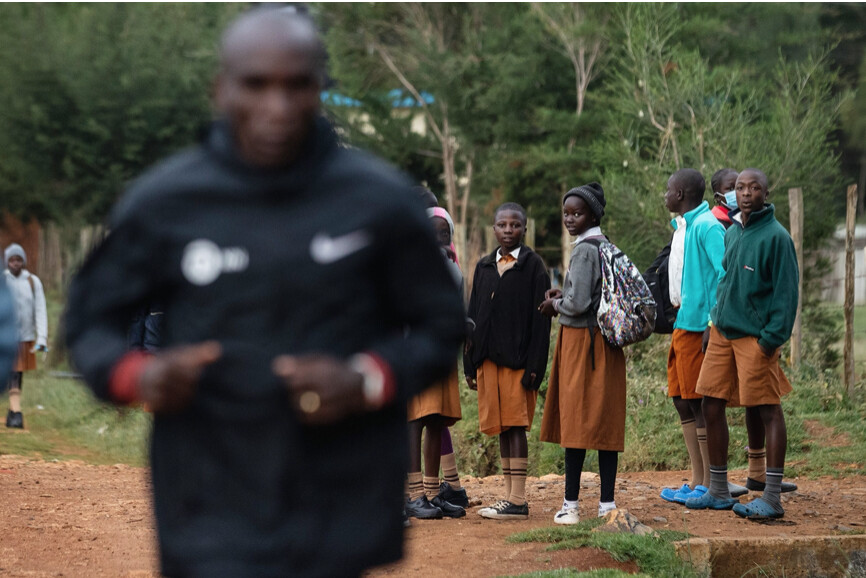
And while Kenya isn’t the only country in the world where kids run long distances to get to school, running has a whole different meaning to many people in the country.
Running is something that comes naturally to us as it’s something that has been part of our lifestyle since we were born,” says three-time world half marathon champion and two-time New York City Marathon champion Geoffrey Kamworor. “As a kid, I used to run from home to my school three kilometres away back and forth each day, so you end up running sometimes 12 kilometres a day as a teen without even realising it.”
Beyond being a means to an end, there is also a genuine love for running among the Kenyan population.
“As a kid, I would always go and watch athletics competitions when not at school and I enjoyed watching people competing,” added Kamworor. “It awoke my passion for running, especially seeing people cross the finish line and winning a trophy. In high school, it was always a fun and proud moment to represent your class and win a cup. I found it very encouraging.”
Having running embedded into day-to-day life sets Kenya apart from many other nations. But it’s just one of the many reasons why it is known as being the ‘home of the champions’.
Genetics
Simply running to school each day doesn’t automatically turn everyone into a world-class athlete. Genetics, as it does for every elite athlete, likely play a significant part.
Many people in the Rift Valley, where most of Kenya’s top distance runners originate, belong to the Kalenjin tribe. When compared to other Kenyan tribes, Kalenjin people are often described as having good natural running attributes: namely lean bodies and long legs.
Kipchoge, for example, isn’t particularly tall (1.67m / 5ft 6in), but the muscles on his legs are incredibly lean, his body fat percentage is low, and the strength in his feet make it appear as though he bounces along the grass.
But attributing all of Kenya’s success to just their genetics would be a gross over-simplification.
Conditions
Another element that helps Kenyan athletes in their training and preparation is the unique climate and surroundings in this part of the country. It also probably explains why there are so many training camps between Kaptagat and Iten, and why some people refer to it as the ‘Hollywood of elite runners’.
This region is located at 2500 metres above sea level, which, given the lack of oxygen, helps athletes produce a higher concentration of red blood cells and haemoglobin when training. This, in turn, gives runners an advantage when they return to lower altitudes to race.
The Eldoret region is also full of endless forests and dirt roads for athletes to use when running, while the area also enjoys a temperate climate with daytime temperatures ranging between 22-26C (68-78F) throughout the year, dropping to 10-12C (50-53F) at night time. That, combined with the good air quality, makes the area something of a distance-running paradise.
But as Kenya’s economy continues to develop, so do the local villages and the wider region, meaning many of the local dirt paths are now being made into proper roads – which is great for facilitating transport and access from other points of the country, but less so for athletes seeking a run-friendly surface.
Athletes are adapting well to this evolving environment, though, while remaining in close contact with nature. The Kalenjin community, Kipchogeand Kamworor included, are running many tree-planting initiatives. “We evolve in a very natural environment which is a great advantage when it comes to training,” says Kamworor.
Patrick Sang, the 1992 Olympic silver steeplechase medallist and head coach at the Kaptagat training camp, explains how the new generation of running shoes can help counter the effects of running on harder roads.
“New running shoes help a lot because athletes can now do a lot more training on a hard surface and still recover on time to do their next hard session,” says Sang. “Overall, you can get more work done to help improve performance.”
Sleep, eat, train, repeat
Most world-class athletes are fully committed to their sport, but the elite runners at the Kaptagat training camp in particular take dedication to a whole new level.
Many of these athletes – including young mothers such as two-time Olympic 1500m champion Faith Kipyegon – have children who are at home during the week so that they can entirely focus on their training at the camp.
“Of course, it’s very hard but that’s the only way to be fully dedicated to being the best athlete you can and avoid any distraction,” said Kipyegon.
When not running, athletes at the Kaptagat training camp are focused entirely on other elements of their training, namely recovery and nutrition.
“When you are at the camp, your sole focus is on running and you are not distracted by anything else,” says Kamworor, father to five children, including young triplets. “You are away from your family, your wife and your kids during the whole week, and that makes you take your training very seriously as you are making sacrifices to achieve your goals. That’s the only way to be focused 100% on running and to give your very best.”
As in any walk of life, hard work and having the right mind-set are key to success. Kipchoge might be the most successful athlete at the camp, but Sang says that’s not just down to his talent. “Eliud isn’t the most gifted athlete within his training group but certainly the most dedicated,” Sang says of Kipchoge, who is always the first one ready for training and the last one to leave.
In an average week, athletes at the Kaptagat camp do one long run of 30km (once a month it will be 40km), which usually takes place early on a Thursday morning. Typical track sessions, meanwhile, would be something like 8x1600m (each rep completed in 4:40) and 8x400m (at an average of 65 seconds) on their local 380m cinder track.
“Have you seen him?” Sang says when watching Kipchoge train. “This guy is a machine.”
Athletes are religious in their approach to punctuality and producing their best effort in training. And other local athletes from outside the NN Running team are welcome to join in the sessions, provided they arrive on time. After all, no one wants to be playing catch-up with the likes of Kipchoge and Kamworor.
Community
The Kaptagat training camp is run entirely by the 25 athletes who live there for 11 months a year from Monday to Saturday morning before going back to spend quality time with their family, often in the big city of Eldoret. In and around the 12 training runs they do in a typical week, the resident athletes to everything at the camp.
“If you look at life at the camp, the one making bread is an athlete, the cleaning is done by the athletes, the one doing shopping for the camp is an athlete,” says Sang. “You don’t want athletes to live on another island.
“The whole idea is to make sure these athletes become well-rounded people. You wouldn’t want to help someone become a great athlete who lacks social skills or is out of touch with society.”
Kipchoge, whose wife and three children live just 45 minutes away from the training camp, could easily go and spend time with his family during his time off, but instead he chooses to stay at the camp with the rest of the group, monastically isolated from the rest of the world.
Kipchoge is rarely bored, too. When he’s not training or resting, he will be reading or working at the camp or reading.
The sense of community extends to caring about the environment. Every athlete at the camp gets a tree planted at the entrance as a welcome gesture and to symbolise their connection to nature. Some special guests to the camp – including Ethiopian legend Haile Gebrselassie – have also had a tree planted for them in Kaptagat.
Occasionally, athletes at the camp will give each other lessons, or they will engage in real debates around serious issues, helping them develop holistically as people.
Simplicity
Far away from the latest technological innovations you often hear about in other parts of the world, daily life at the camp is basic.
Upon entering the gates at the Kaptagat training camp, the 380m cinder track is located on the left. It has a slight incline on the first bend and a couple of cows as spectators, but it meets all their needs.
“A synthetic track isn’t needed for what we do and the way we train,” says Marc Roig, a former international runner from Spain, who now works as a jack of all trades for NN Running, acting as a fitness coach, physio, runner, mentor and pacemaker. “If our athletes need a synthetic track, they can go to the one in Eldoret an hour away.” In fact, there are just four synthetic tracks in the whole of Kenya, but it’s clearly not a barrier to producing top athletes.
The runners at the camp rarely lift weights or spend time stretching, but twice a week they will do core strength sessions. Instead of water, they drink mursik – a nutritious fermented milk – in the morning and Kenyan tea in the afternoon. And not a single drop of water during their 30km long run. “That’s okay,” says Sang. “They don’t need it.”
Within the camp itself, there is a TV room with a small library corner with a few books there for the athletes, a living room for their meals, the dormitory (one for women and another for men), a basic gym comprising a bike, a treadmill, some elastic bands and a light weightlifting bar (with maximum 40kg available) and a big blue plastic drum outside used for ice baths.
It’s all quite rudimentary, but they don’t need more, and it seems to work.
The only visible ‘luxury’ – aside from the eco-friendly solar panels to get hot water – is that Kipchoge has his own bedroom. But even the king of the marathon does his fair share of the chores. He prepares tea for other athletes, and there’s a strict cleaning schedule that all athletes must stick to.
“I think that when you stop leading a simple life, your mind-set loses contact with the outside world and you lose your focus on your actual goals,” says Kipchoge. “At this point, you run the risk of forgetting about the really important things in life.”
Life at the camp is minimalistic, but nobody complains. Indeed, this simplicity is what defines them and enables the athletes to keep their focus and remain humble about who they are, where they come from and what they are here for.
Hollywood of running
To be the best, you need to surround yourself with the best – which is another reason why the Rift Valley continues to produce champion athletes.
The likes of Kipchoge, Kamworor and Kipyegon are true A-listers, but Kaptagat is filled with talented athletes who have achieved podium finishes at major championships and big city marathons.
Roig, who has a 2:18:05 marathon PB, moved to Kenya several years ago. “When I take my kids to school, I feel ashamed saying I am a runner as many of the dads there have 2:05 marathon PBs,” jokes Roig, who is now the race director for the Valencia Marathon. “There is even a mother at the school who has a PB similar to mine!”
But the Kaptagat camp isn’t the only leading training venue in the area. Iten, a small town at 2400 metres above sea level about an hour north of Kaptagat, is often referred to as the ‘home of champions’ or the ‘Hollywood of distance running’.
One of the drivers used for NN Running Team’s trip to Kenya, for example, was a former 1:06 half marathon runner. His wife, meanwhile, was a 2:21 marathon runner who finished second at the Rotterdam Marathon a couple of years ago. His neighbour is Emmanuel Korir, the Olympic 800m champion, and he is good friends with Joyciline Jepkosgei, the multiple world record-breaker and 2021 London Marathon champion.
Abdi Nageeye, the Olympic marathon silver medallist, also happened to be in Iten at the time of the trip. While ferrying around members of the media, the driver passed by a gas station named ‘Oslo’, which is one of many local businesses owned by Vivian Cheruiyot. The 2016 Olympic 5000m champion opened the station after winning at the Oslo Diamond League meeting.
One of the biggest training venues in Iten is the High Altitude Training Centre founded by multiple world half marathon champion Lornah Kiplagat, who herself is part of a highly successful family of runners, including Sylvia Kibet, Hilda Kibet and Susan Sirma. Many international athletes, including the likes of Mo Farah and Paula Radcliffe, have previously stayed there, while former steeplechaser Bob Tahri of France opened his own training centre in Iten a few years ago.
The Rift Valley – Iten and Kaptagat in particular – is like nowhere else on earth. Everybody knows a champion who is friends with another champion, who is the neighbour of another champion.
It’s yet another way – and one of the many – of becoming a great runner.
by World Athletics
Login to leave a comment
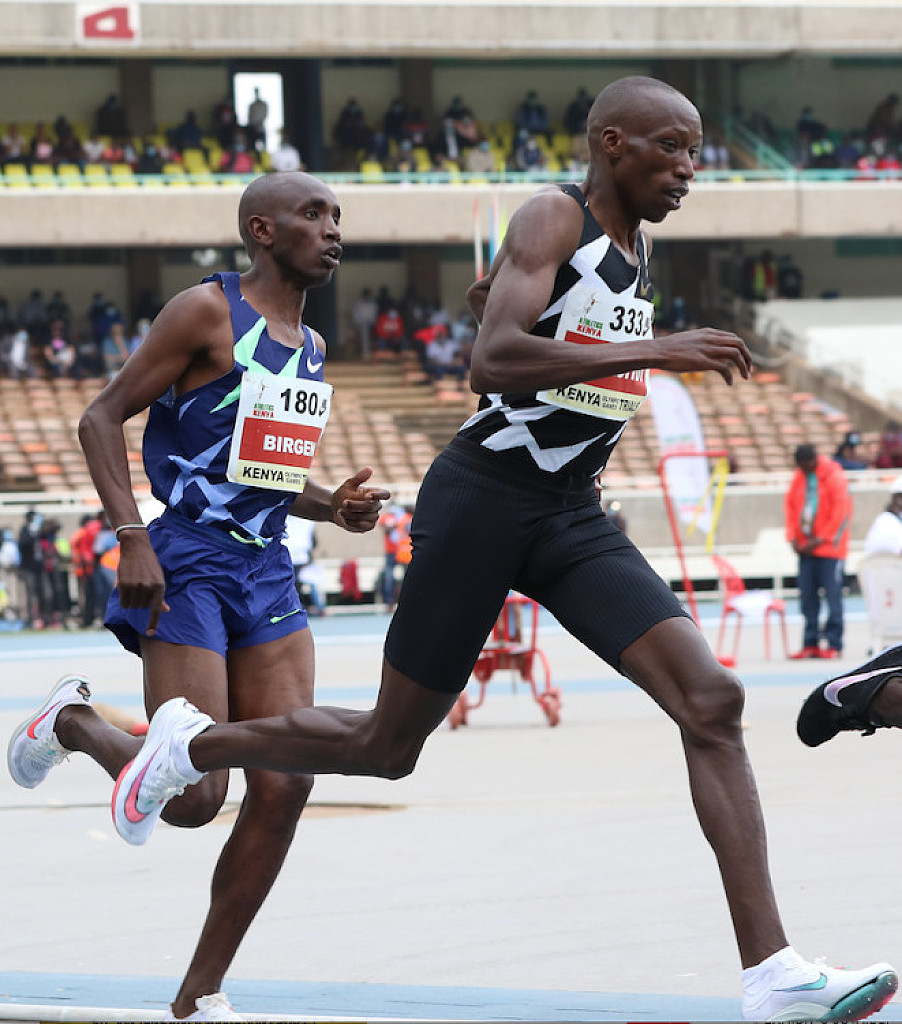
Kenyan´s Timothy Cheruiyot bounces back in Sweden after missing out on Tokyo Olympics
World 1,500m champion Timothy Cheruiyot put behind the disappointment of missing a ticket to the Tokyo Olympics when he clocked 3:32.30 his speciality at the Stockholm Diamond League on Sunday evening.
Cheruiyot crossed the finish line ahead of Spaniard Ignacio Fontes (3:33.27) and countryman Ronald Kwemoi (3:33.53) in second and third respectively.
The win in the Swedish capital continues the rich vein of form for the Bomet-born runner whose disappointing fourth-place finish at the national trials for the Tokyo Olympics remains the only blot to a sensational season so far.
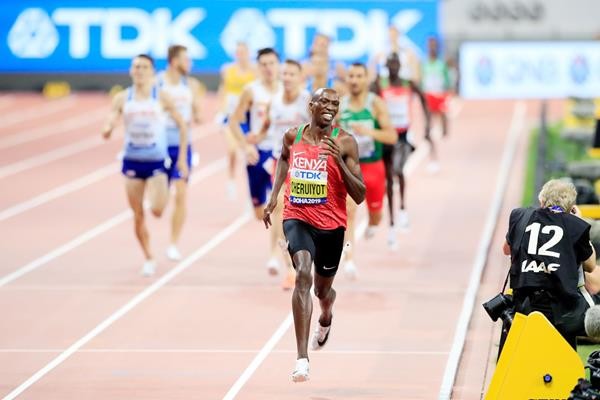
In late-May, he set a world lead of 3:30.48 at the Doha Diamond League during the men's 1500m.
Another Kenyan, Ferguson Rotich, lay down a marker for the Olympics when he set a season lead of 1:43:84 in the men's 800m to finish first ahead of Canadian Marco Arop (1:44:00) and Briton Elliot Gilles (1:44:05) in second and third.
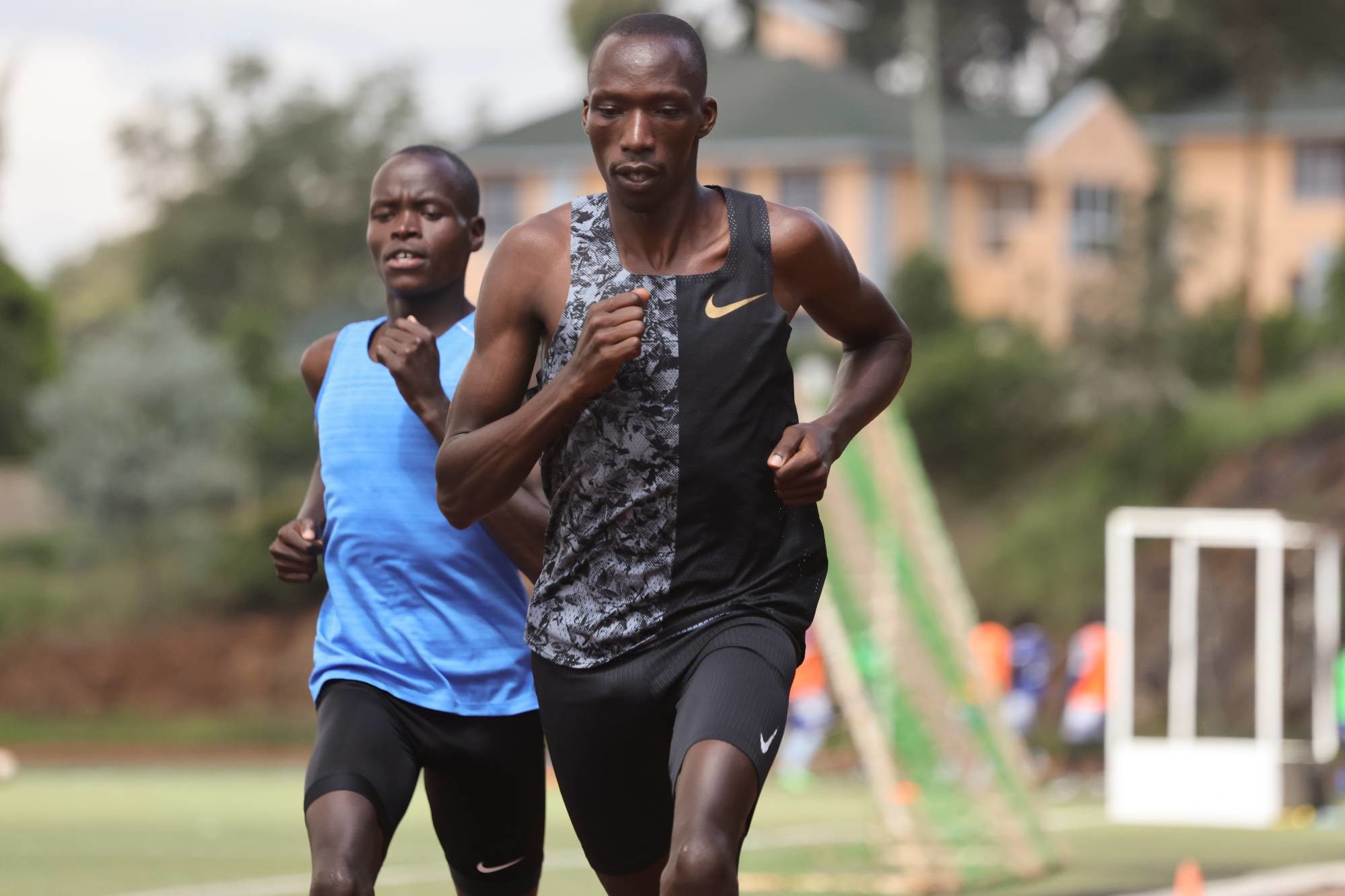
The world 800m bronze medalist recovered from a slow start to stamp his authority on the race and carry on from his impressive performance at the Doha Diamond League where he timed 1:44.45 to finish second behind compatriot, Commonwealth 800m champion Wycliffe Kinyamal.
In the women's 3000m steeplechase, former world champion Hyvin Kiyeng added momentum to her bid for an Olympic gold when she clocked 9:04.34 to finish first ahead of German Gesa Felicitas Krause (9:09.13) and countrywoman — and record holder — Beatrice Chepkoech (9:10.52) in second and third.
Other Kenyans, Purity Kirui (9:16.91) and Rosefline Chepngetich (9:22.30) finished in fourth and sixth respectively.
The exploits on Sunday followed those of Nicholas Kimeli, Jacop Krop and world 5000m champion Hellen Obiri who posted excellent results at the Oslo Diamond League on Friday.
Krop and Kimeli timed 7:30.07 and 7:31.33 respectively to finish second and third behind winner Yomif Kejelcha of Ethiopia who timed 7:26.25.
Another Kenyan — and Olympics debutant — Charles Simotwo finished fourth in the men's 1500m, clocking 3:49.40.
by Omondi Onyatta
Login to leave a comment

Tokyo 2020 Olympic Games
Fifty-six years after having organized the Olympic Games, the Japanese capital will be hosting a Summer edition for the second time, originally scheduled from July 24 to August 9, 2020, the games were postponed due to coronavirus outbreak, the postponed Tokyo Olympics will be held from July 23 to August 8 in 2021, according to the International Olympic Committee decision. ...
more...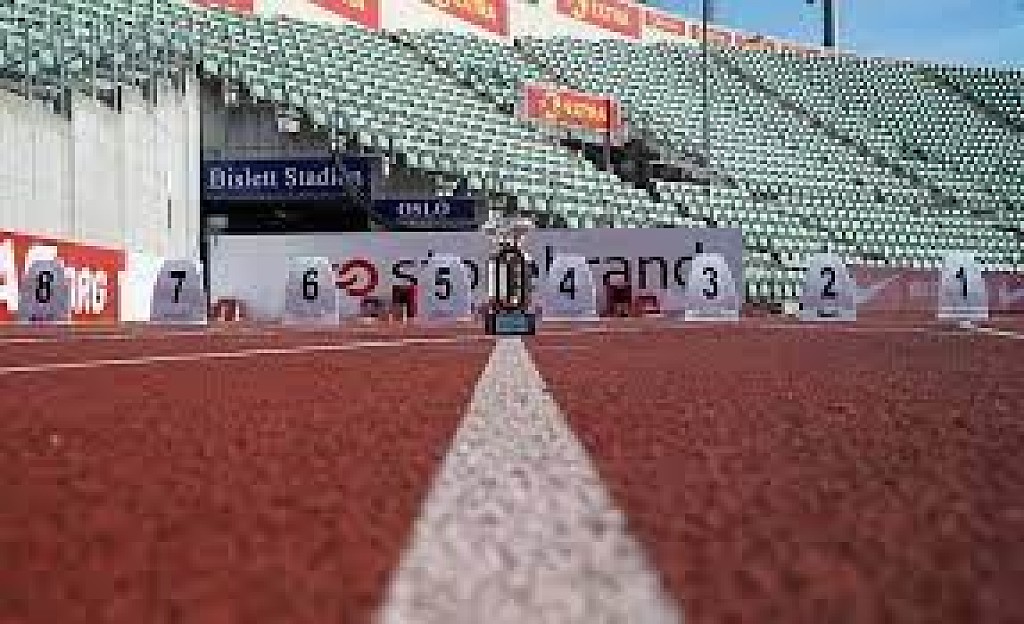
Oslo Diamond League meeting has been postponed due to pandemic
The Bislett Games in Oslo on June 10 - the fourth event in this year’s World Athletics Wanda Diamond League programme - has been postponed.
Organisers have said it is "impossible to arrange a normal meeting on the planned date" based on the coronavirus reopening plan for Norway.
Norway's Government issued its plan to restart activity amid the pandemic on Wednesday (April 7) and organisers said "an international meeting such as the Bislett Games will probably not be possible before the middle or towards the end of June at the earliest".
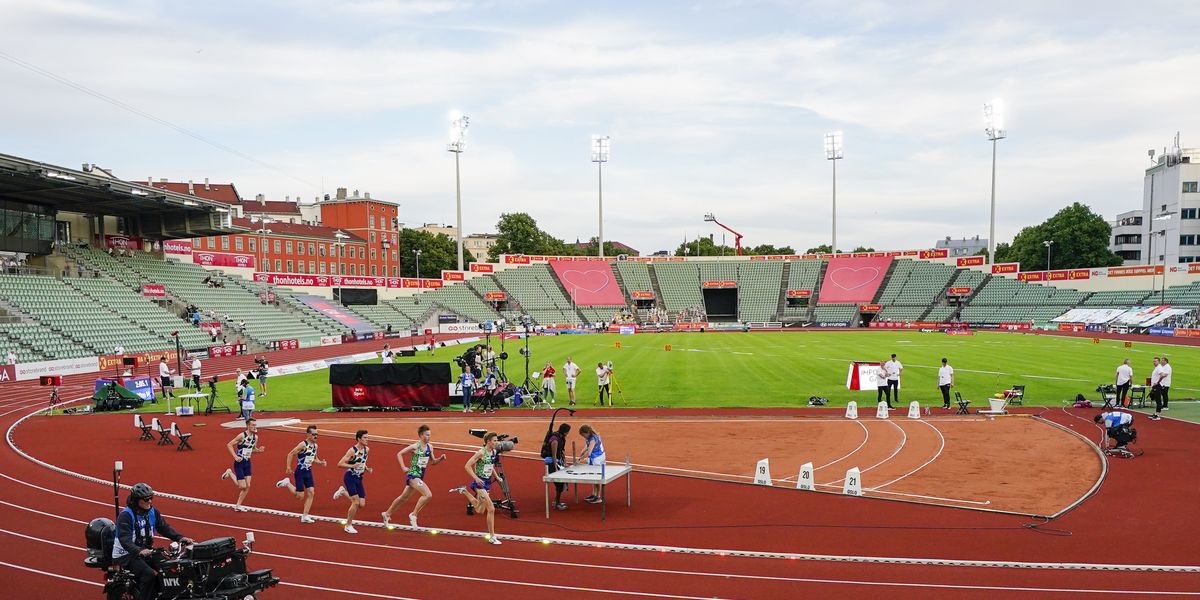
A repeat of last year's "Impossible Games" at an empty Bislett Stadium - which included socially distanced or rarely contested events, highlighted by a 300 metres hurdles world best of 33.78sec by Norway’s world 400m hurdles champion Karsten Warholm - has been ruled out.
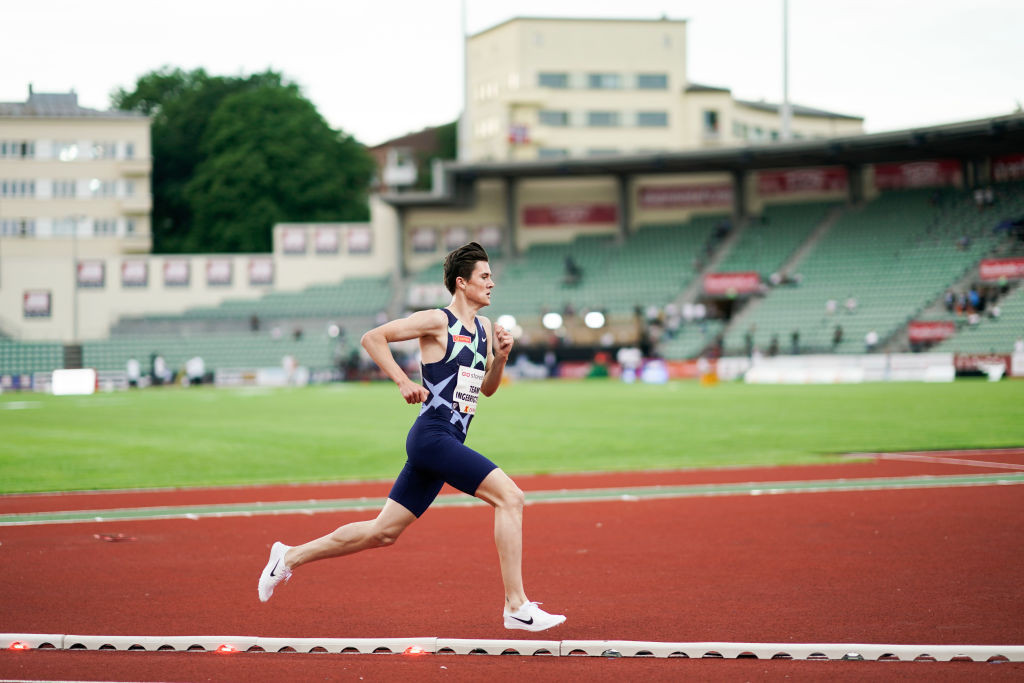
The new dates being considered are believed to be either early July prior to the rearranged Tokyo 2020 Olympic Games or in August.
The Diamond League board said it was clarifying the start to the season, which is due to open on May 23 in Rabat in Morocco, with Doha hosting the second meeting on May 28 and Rome the third on June 4.
World Athletics has produced a full, 14-meeting programme for this season’s Diamond League, which is due to conclude with a two-day final in Zurich from September 8 to 9.
by Mike Rowbottom
Login to leave a comment
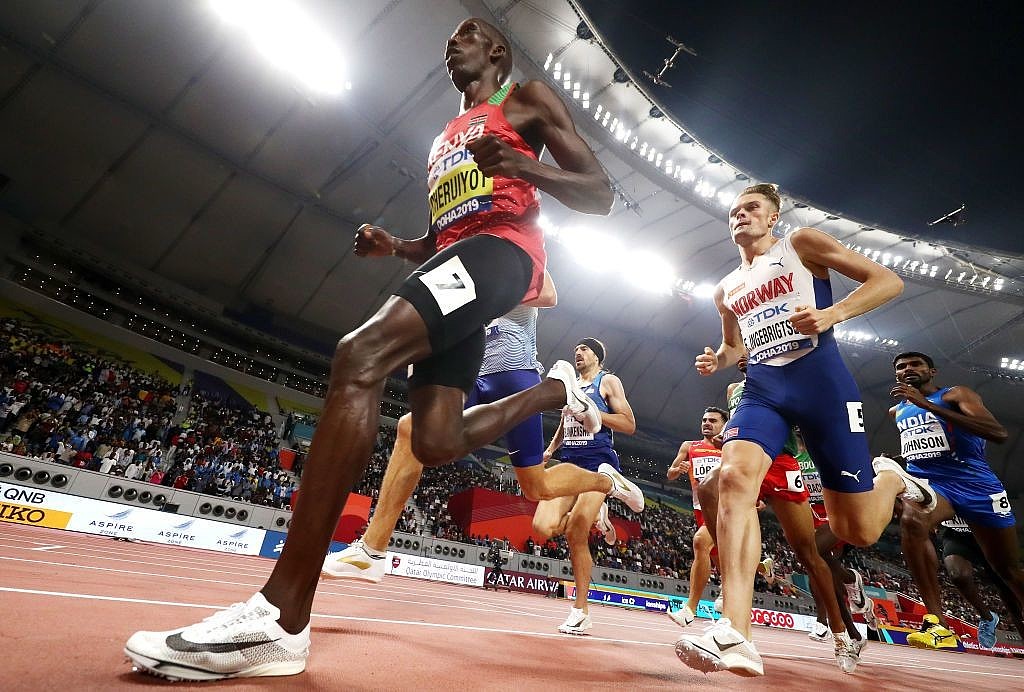
The Oslo’s Impossible Games will be the biggest meet of the track season so far
The first big track meet of the summer is Oslo’s Impossible Games on June 11—an event which replaced the Oslo Diamond League, which was cancelled due to the coronavirus pandemic.
The meet will have a limited lineup of events (just 13 in all) and very few athletes competing (not even 50), but there will be many exciting races and competitions, including solo runs, shots at European records and world record attempts. This is not an event that track fans will want to miss, but if you can’t watch it all, here are some highlights you might want to try to catch.
At 8:35 p.m. local time (2:35 p.m. ET), Norway’s Karsten Warholm will run a solo race as he shoots for the 300mH world record. Warholm is the two-time defending world champion in the 400mH, and he has a PB of 34.26 in the 300mH, which is actually faster than the current world record, although he ran it indoors. On June 11, he’ll run outdoors in Oslo’s Bislett Stadium to try and break the current record of 34.48.
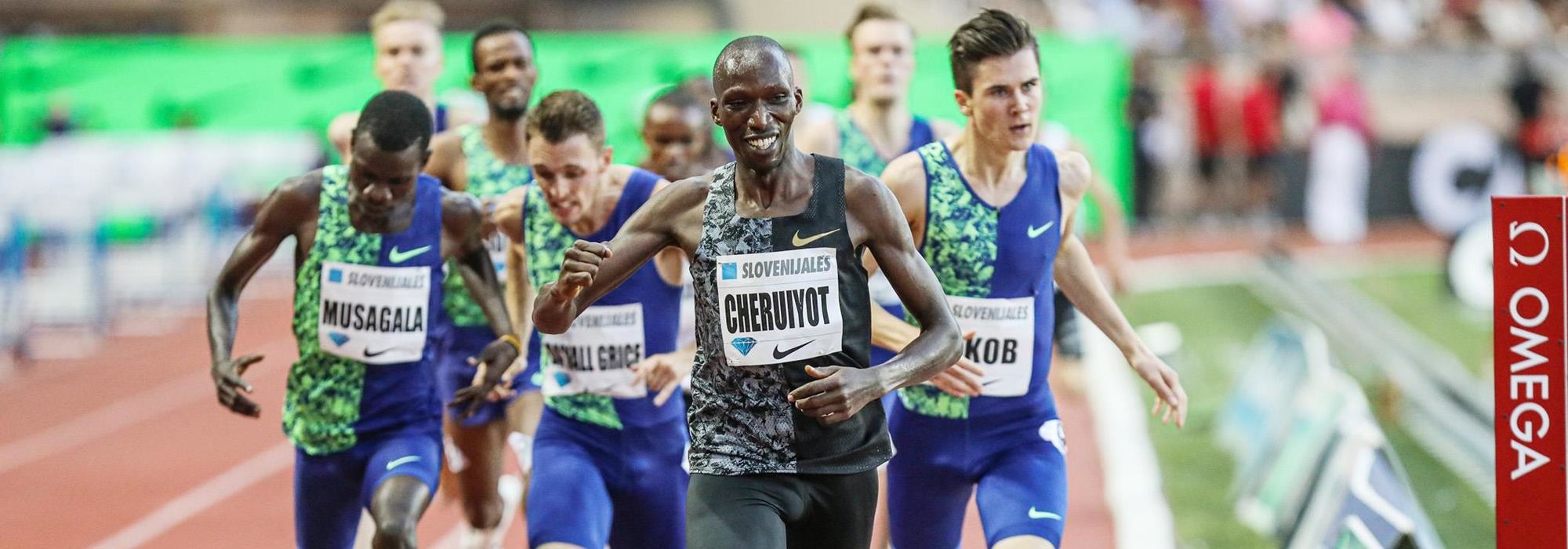
Henrik, Filip, and Jakob Ingebrigtsen will run in a 2,000m team event at 8:50 Oslo time (2:50 ET) along with fellow Norwegians Narve Gilje Nordås and Per Svela. The all-Norwegian team will run in Oslo and face-off against a team of Kenyans who will run in Nairobi. The Kenyan team (dubbed Team Cheruiyot) will include 2017 and 2019 1,500m world champions Timothy Cheruiyot and Elijah Manangoi.
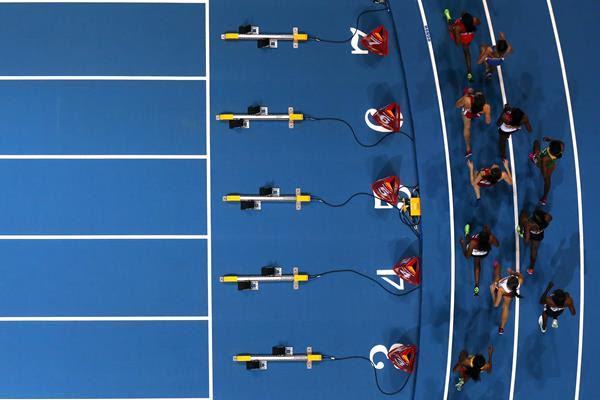
All 10 runners will go at once (the race will be broadcast live on a split screen), and three athletes must finish from each team. The team with the fastest cumulative time from their top-three runners wins.
This will be a fun event to watch as it is, but there will also be a couple of record attempts in this race as well to add to the excitement. Team Ingebrigtsen will be chasing the European 2,000m record of 4:51.39, and Team Cheruiyot will look to capture the 2,000m world record of 4:44.79.
Later on in the evening at 9:30 p.m. (3:30 ET), Norwegian cross-country skiing star Therese Johaug will run a solo 10,000m race. As a skier, Johaug has three Olympic medals and multiple world championship golds to her name, but in 2019 she surprised the world by adding a track and field win to her resume when she won the Norwegian 10,000m national championships in 32:20.86.
This was the fifth-fastest time ever run by a Norwegian woman, and to make it more impressive, she won the race in regular running shoes rather than spikes. Hopefully she’ll wear some faster footwear at the Impossible Games so we can see just how fast she’s capable of running.
by Ben Snider-McGrath
Login to leave a comment

Ingebrigtsen v Cheruiyot: Impossible Games take shape
A world record attempt in the hurdles, a star-studded pole vault battle and a long distance showdown between Norway and Kenya in the middle distance will all be on the agenda when the Impossible Games take place in Oslo next month.
Kenyan middle-distance star and reigning 1500m Diamond League Champion Timothy Cheruiyot is to go head to head with Norway’s Ingebrigtsen brothers in a one-off, team event at the Bislett Impossible Games next month.
The Ingebrigtsens will run in Bislett while Cheruiyot-led rival team will compete in Nairobi, in what Oslo meeting director Steinar Hoen described as “the first virtual race at such a level in the history of athletics”.
The Maurie Plant Memorial Race, named in honour of the former Bislett organising committee stalwart, will see the two teams battle it out in an innovative new format over 2000 metres.
Both teams will start with five runners and end with three, and the winner will be the team with the best overall time from their top three runners.
A Wanda Diamond League exhibition event, the Impossible Games were conceived by Bislett Games organisers to allow this year's Oslo Diamond League meeting to go ahead under Norway's coronavirus regulations.
Instead of the usual, elite-level hunt for Diamond League points, the Impossible Games will instead showcase the innovative spirit of athletics with a series of set-piece exhibition events.
Beyond the 2000m battle, the programme is taking shape for the Games, which will take place at Bislett Stadium on June 11.
Confirmed events now include:
A long-distance pole vault showdown involving world-record holder Mondo Duplantis and record Diamond League Champion Renaud Lavillenie.
A 300m hurdles world record attempt from World Champion and Norwegian star Karsten Warholm
A Norway vs Finland duel in the women’s 200m hurdles
An all-Scandinavian discus competition involving Swedish World Champion Daniel Ståhl.
A Norwegian record attempt over 1000m by Filip Ingebrigtsen.
The meeting will be shown on Norwegian public broadcaster NRK, with commentary from British middle-distance legend and 2000m European record holder Steve Cram.
Login to leave a comment
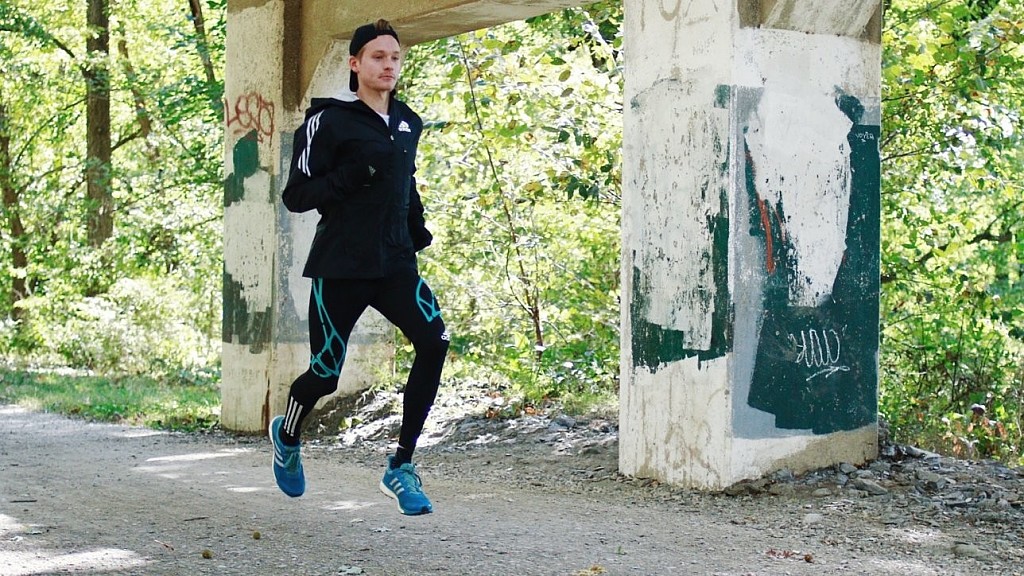
Drew Hunter is out for the IAAF World Championships due to a foot injury
Making Team USATF for the upcoming IAAF World Championships in Athletics was Drew Hunter's biggest career accomplishment. The 21 year-old adidas athlete, who trains in Boulder, Colo., with the Tinman Elite group, scrapped his way to a fifth place finish in the 5000m at the Toyota USATF Outdoor Championships in July, despite enduring searing foot pain in the weeks leading to those championships which made running almost impossible. As the third man across the finish line with the World Championships standard, Hunter was going to his first big global championships.
"I just did everything I could," Hunter told Race Results Weekly in a telephone interview last night from Boulder. "It's the hardest team to make and I made it. I earned that spot."
But over the last month, Hunter's foot woes have only gotten worse. Despite countless treatments, cross training, ice, anti-inflammatories and rest, the 2019 USA indoor two-mile champion had to accept that his track season was over. He made the decision with coach Tom Schwartz after a workout he attempted last Friday with Tinman teammate Sam Parsons who is preparing for the New Balance Fifth Avenue Mile.

"I warmed up with Sam for his last workout for Fifth Avenue," Hunter recounted. "I'm going to do a hard workout with Sam and see where my foot is at. I did one stride and my foot was on fire. I knew I was done."
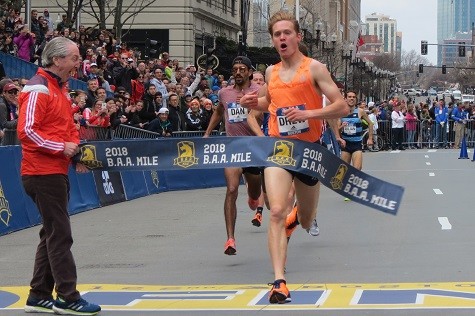
Hunter informed USATF of his decision to withdraw from the team. Although the national federation hasn't named a replacement yet, the next athlete in line is Ben True who finished seventh at the USATF Championships and had the World Championships standard at the time of the meet (American athletes were not permitted to chase the standard after the national championships).
Although severely disappointed, Hunter is trying to use this setback as a learning experience. Analyzing his workouts and training schedule with his coach, he has traced the injury --first an inflamed and torn plantar, then a fractured cuboid bone in his right foot-- to what seemed like the most successful period of running of his young career. On June 13, Hunter ran a personal best 7:39.85 for 3000m at the Bislett Games in Oslo. His foot was just a little sore, but his fitness was excellent and he wanted more.
"I felt my planter and it wasn't bad," Hunter explained. "I had the same symptoms before the Oslo Diamond League. Then I ran Olso, then hopped on a flight straight to Boston and did the Boost Games Mile (where he finished second in 3:58)." He continued: "My plantar was sore, but it was very minor. Right after Oslo and Boost Games I ran really well. I looked in my training log and I know where I screwed everything up."
Hunter, who was a miler in high school, had been successful as a 5000m man on a relatively low-mileage training plan. A big training week for him was 80 miles, but wanting to increase his fitness base he ran successive 90-mile weeks after Oslo. That, Hunter said, was the tipping point.
"I ran my two highest mileage weeks ever back to back," Hunter said. He added: "It just kind of slowly got worse and worse."
In his one tune-up race for the USA national meet, Hunter ran the 1500m at the Sunset Tour meeting in Azuza, Calif., on July 9. He clocked a solid 3:37.29, showing that he had enough fitness to run the 5000m at the national meet, but his foot felt awful.
"Then I ran Azuza, and after the race I could barely walk," Hunter said. "My plantar was, like, on fire. After Azuza my training went really inconsistent and really shaky into nationals. I couldn't do long runs, I couldn't do workouts."
Hunter knew the injury was bad, but decided not to get an MRI because part of him didn't want to know how bad it really was. He was committed to the national meet and didn't want to pull out. That's what professional athletes do, he said.
"I didn't get an MRI before and that was intentional because I knew something was wrong. I knew I had a plantar problem, but I didn't want to know how severe because I was all-in on running nationals." He continued: "So I just worked with my soft tissue therapist and just managed it."
Ironically, by taking so many steps to protect his plantar Hunter actually caused the cuboid fracture. The planter problem is mostly resolved, he said, but the the cuboid fracture needs more time to heal.
by David Monti
Login to leave a comment

IAAF World Athletics Championships Doha
The seventeenth edition of the IAAF World Championships is scheduled to be held between 27 September and 6 October 2019 in Doha, Qatar at the renovated multi-purpose Khalifa International Stadium. Doha overcame bids from Eugene, USA, and Barcelona, Spain to be granted the rights to host the 2019 IAAF World Championships in Athletics. Having hosted the IAAF Diamond League, formerly...
more...
Reece Prescod and Laura Muir, two of Britain’s leading medal hopes, will both be absent from the world Championships for Doha
Britain have suffered a worrying double injury blow ahead of next month’s World Championships, with Reece Prescod on the verge of missing the event and Laura Muir facing a race against time to regain full fitness.
With that latter event serving as the national trials for the Doha World Championships, any athlete who does not compete will have to rely on the selectors to be given the sole discretionary spot available per event.
That should be a given in the 1500m for Muir, who injured her calf when triumphing at the London Anniversary Games last month but has finished in the top three at all five Diamond League races she has contested this summer.
She is hoping to return to racing at the start of September, although a six-week absence from competition is far from ideal preparation for the four-time European champion, who has her sights firmly set on making the podium in Doha.
Prescod’s situation is more serious, with the double reigning national 100m champion and European silver medalist looking unlikely to recover from a hamstring problem in time to gain selection for the World Championships.
Prescod opened his season by running 9.97 seconds in Shanghai in May, but hobbled over the line when picking up the injury during only his second outdoor race at June’s Oslo Diamond League.
With the British selectors meeting just eight days after the national trials in Birmingham, Prescod has little chance of proving his form and fitness following two and a half months out.
Selecting someone who has completed just one race at full speed all summer would be a major risk and it is understood Prescod does not want to be considered for the team if he is not in good enough shape to make the world final in Doha.
His absence would be a significant blow to a British team short of genuine individual medal contenders. Dina Asher-Smith (100m and 200m), Katarina Johnson-Thompson (heptathlon) and Muir are all expected to make the World Championships podium, while Prescod’s fellow 100m sprinter Zharnel Hughes has strong claims after winning European gold last year.
The rest of the British contingent head to Doha with varying levels of aspiration, rather than expectation, of winning a medal.
Muir has repeatedly come within touching distance of a first global outdoor medal, having finished fifth and fourth over 1500m the last two World Championships and seventh at the Olympics.
by Ben Bloom
Login to leave a comment
IAAF World Athletics Championships Doha
The seventeenth edition of the IAAF World Championships is scheduled to be held between 27 September and 6 October 2019 in Doha, Qatar at the renovated multi-purpose Khalifa International Stadium. Doha overcame bids from Eugene, USA, and Barcelona, Spain to be granted the rights to host the 2019 IAAF World Championships in Athletics. Having hosted the IAAF Diamond League, formerly...
more...
South African Caster Semenya ran the fastest 800m ever run on American soil at the Prefontaine Classic at Stanford clocking 1:55.7
Caster Semenya was almost four seconds ahead of Americans Ajee Wilson and Raevyn Rogers, who crossed the line in season’s best times of 1:58.36 and 1:58.65. This was Caster’s 31st straight victory over this distance clocking 1:55.7 and the fastest time ever on US soil.
Semenya continues to race well despite the controversy surrounding the IAAF’s efforts to prevent her from racing without taking medication to lower her naturally-high testosterone, something she has consistently said she will not do.
The Swiss Federal Tribunal ruled that she must be allowed to race while it is considering her appeal of the IAAF’s testosterone rule, upheld in a May 1 ruling by the Court of Arbitration for Sport (CAS).
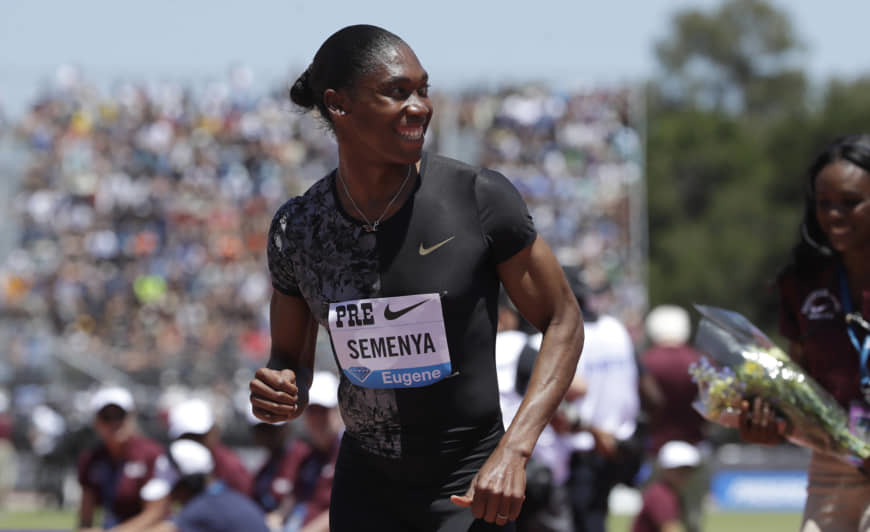
In other results, Sifan Hassan of the Netherlands won the women’s 3,000m in a new European record of 8:18.49, in a race that also featured Konstanze Klosterhalfen (who finished second with a new PB of 8:20.07), Genzebe Dibaba (fourth, with a new PB of 8:21.29) and World Cross Country champion Hellen Obiri(who finished sixth).
Also on Sunday, Canada’s Mo Ahmed set a new personal best of 8:15.76 in the 2-mile event, good enough for fourth place. Justyn Knight finished ninth, in 8:19.75. The race was won by World Cross Country champion Joshua Cheptegei of Uganda in a world-leading time of 8:07.54. Ahmed broke his own Canadian 5,000m record at the Oslo Diamond League last month.
by Anne Francis
Login to leave a comment

Prefontaine Classic
The Pre Classic, part of the Diamond League series of international meets featuring Olympic-level athletes, is scheduled to be held at the new Hayward Field in Eugene. The Prefontaine Classicis the longest-running outdoor invitational track & field meet in America and is part of the elite Wanda Diamond League of meets held worldwide annually. The Pre Classic’s results score has...
more...