

Running News Daily
Running News Daily is edited by Bob Anderson and team. Send your news items to bob@mybestruns.com Advertising opportunities available.
Index to Daily Posts · Sign Up For Updates · Run The World Feed
Articles tagged #Bolt
Today's Running News



26 Years Later, Vivian Cheruiyot Returns To Sydney As A Kenyan Distance-Racing Legend
Twenty-six years ago, a 17-year-old Vivian Cheruiyot arrived in Sydney carrying the dreams of a young Kenyan athlete and the promise of a remarkable future.
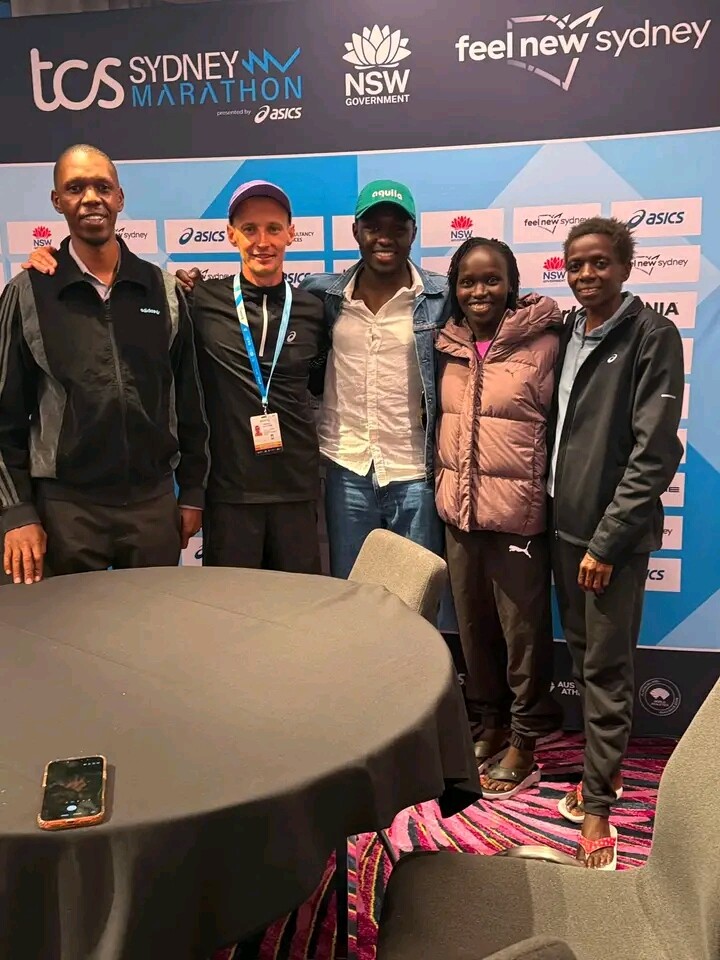
Today, she returns to the same Australian city as something far greater — an Olympic champion, four-time world champion, world cross-country champion, London Marathon winner, Laureus Sportswoman of the Year and one of Kenya’s most accomplished distance runners.
At 42, Cheruiyot will line up for the TCS Sydney Marathon on Sunday, August 30, completing an extraordinary full circle in a career that has stretched across more than two decades and transformed her from a teenage Olympian into one of the defining figures of her generation.
When Cheruiyot first competed in Sydney at the 2000 Olympic Games, few could have imagined the heights she would eventually reach. Still only 17, she advanced to the 5000m final and finished 14th — an experience that became the first chapter of an Olympic journey that would eventually span four Games.
The years that followed brought an extraordinary collection of victories.
Cheruiyot became world 5000m champion in 2009, then produced one of the greatest championship performances of her career in Daegu in 2011, winning both the 5000m and 10,000m titles while also claiming World Cross Country gold earlier that year. She added another world 10,000m title in Beijing in 2015, taking her tally to four senior world championships.
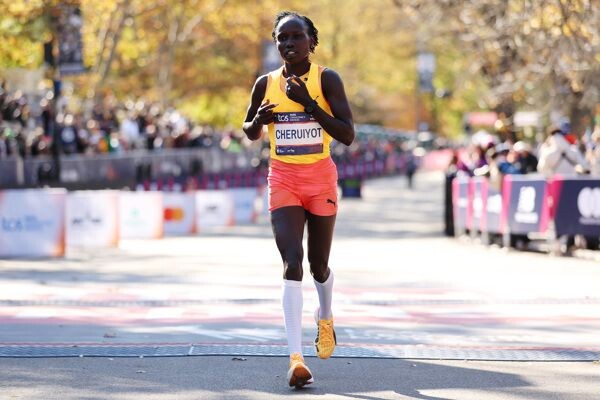
But the Olympic gold medal remained the one prize missing from her collection.
That changed dramatically in Rio in 2016.
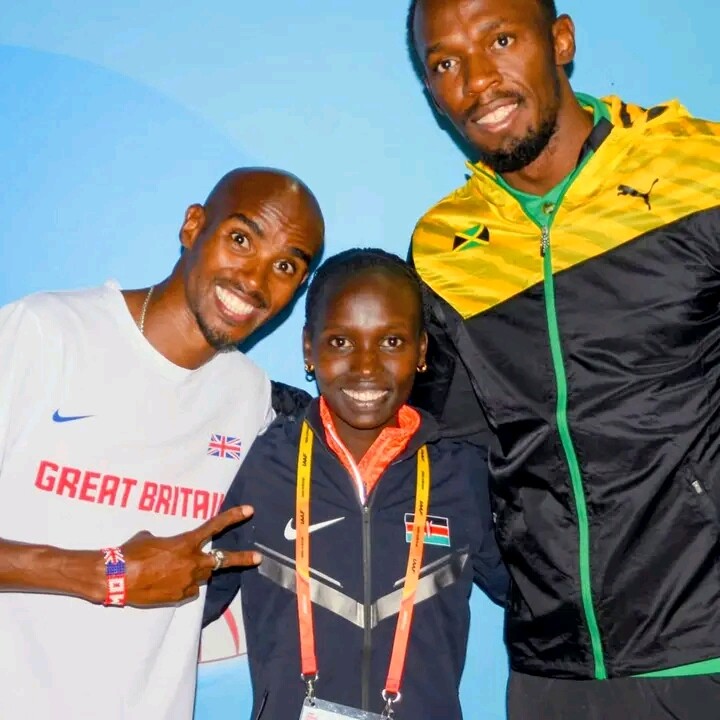
After winning silver in the 10,000m, Cheruiyot returned to the track for the 5000m final and delivered a masterclass in championship racing. She surged away from Ethiopia’s Almaz Ayana in the closing stages to win Olympic gold in 14:26.17, finally completing the collection of major titles she had chased for so many years.
“I said I want to win,” Cheruiyot recalled after that historic victory. “This was my fourth Olympics and I’ve been dreaming about this since the very start.”
Her brilliance was not confined to the track.
After moving into marathon running, Cheruiyot established herself among the world’s best over 42.195km. She finished fourth in her London Marathon debut in 2017 before returning the following year to produce a stunning victory in 2:18:31 — a performance that placed her fourth on the world all-time list at the time and remains her marathon personal best.
She also finished runner-up in the New York City Marathon in 2018 and second in London in 2019, further demonstrating that her extraordinary competitive instinct had successfully followed her from the track to the roads.
Away from competition, Cheruiyot’s story has also evolved with her life. She became a mother, welcomed her daughter Arielle in 2021 and returned to competitive racing in 2023. In 2024, she claimed third place at the New York City Marathon, followed by fifth at the 2025 London Marathon.
Now Sydney offers her another opportunity to write her name into the city’s sporting history.
“I look back on my career with pride. I was able to win almost everything and have been at the top for a long time,” Cheruiyot said ahead of her return.
She also remembers the extraordinary generation in which she competed — an era that included global icons such as Usain Bolt, Tirunesh Dibaba and Meseret Defar.
“I was running in a great era and had a close-up view of athletes like Usain Bolt setting the world alight,” she reflected.
Yet perhaps the most remarkable aspect of Cheruiyot’s return is not simply the passage of time, but her willingness to keep challenging herself.
She arrives in Sydney having put considerable work into rebuilding her fitness, knowing that the marathon demands something entirely different from the explosive championship races that defined her track career.
“I am very excited to go back to Sydney,” she said. “It has been 26 years since I was there, and a lot has changed in my life since then. I hope to have a good run — I have put in a lot of work to regain fitness and hope my body will stand up to the 42km.”
Twenty-six years ago, Sydney introduced the world to a fearless Kenyan teenager chasing an Olympic dream.
Now, the same city welcomes back a woman who went on to conquer the track, cross country and marathon — and to leave an indelible mark on Kenyan athletics.
From teenage Olympian to Olympic champion. From world champion to marathon winner. From rising talent to mother and enduring icon.
Vivian Cheruiyot has come full circle — and Sydney is once again the stage.
by Erick Cheruiyot for My Best Runs.
Login to leave a comment

Sydney Marathon
The Sydney Marathon is a marathon held annually in Sydney, Australia. The event was first held in 2001 as a legacy of the 2000 Summer Olympics, which were held in Sydney. In addition to the marathon, a half marathon, 9 kilometres (5.6 mi) "Bridge Run", and a 3.5 kilometres (2.2 mi) "Family Fun Run" are also held under the banner...
more...
From Sprinting Into History to Running Toward Forever: Usain Bolt Gets Engaged to Kasi Bennett
Usain Bolt has added another unforgettable milestone to an extraordinary life — and this time, there was no finish line, stopwatch or Olympic medal involved.

The Jamaican sprinting icon is officially engaged to his longtime partner, Kasi Bennett, after turning his 40th birthday celebration into a deeply personal and romantic moment in Kingston.

Bolt popped the question on Friday, August 21, during his birthday celebrations at One Belmont, where family and close friends gathered to mark the milestone. The eight-time Olympic champion got down on one knee in front of Bennett and asked her to become his wife, transforming an already special evening into a celebration of love and commitment.
And Bolt certainly did not arrive empty-handed.
Bennett was presented with a spectacular five-carat diamond engagement ring, with reports describing the centre stone as pear-shaped. Images from the occasion captured the emotional aftermath as the couple embraced, while Bennett later gave fans a glimpse of the unforgettable moment on social media.
The proposal marks a significant new chapter in a relationship that has lasted for more than a decade.
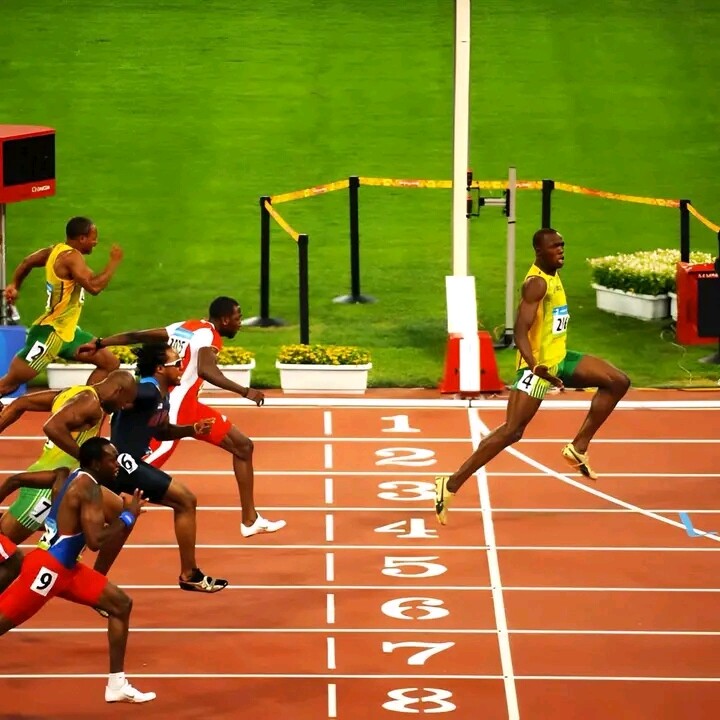
Bolt and Bennett began dating in 2013, eventually becoming one of Jamaica's most recognisable sporting couples. Their relationship became more widely known around the 2016 Rio Olympics, but much of their family life has remained away from the constant glare of the spotlight.
Together, they have built a family of their own, raising three children — daughter Olympia Lightning and twin sons Thunder and Saint Leo. Olympia was born in 2020, while the twins arrived in 2021.
Before the surprise proposal, Bennett had already marked Bolt's 40th birthday with a heartfelt tribute, celebrating not simply the global superstar known for rewriting sprinting history, but the partner and father behind the legend.
She described him as her love, her home and her forever, while expressing pride in the life they have created together.
For Bolt, whose career was defined by spectacular moments under the world's brightest lights, this may be one of his most meaningful victories yet.
He conquered the 100 metres. He dominated the 200 metres. He collected eight Olympic gold medals and established himself as one of the greatest athletes the world has ever seen.
Now, at 40, the world's most famous sprinter has made another decisive move — this time toward forever.
After 13 years together and three children, Usain Bolt and Kasi Bennett are officially taking their love story to its next chapter.
From breaking records to making memories, the fastest man in history has finally found a race he wants to take all the way to the finish.
by Erick Cheruiyot for My Best Runs.
Login to leave a comment
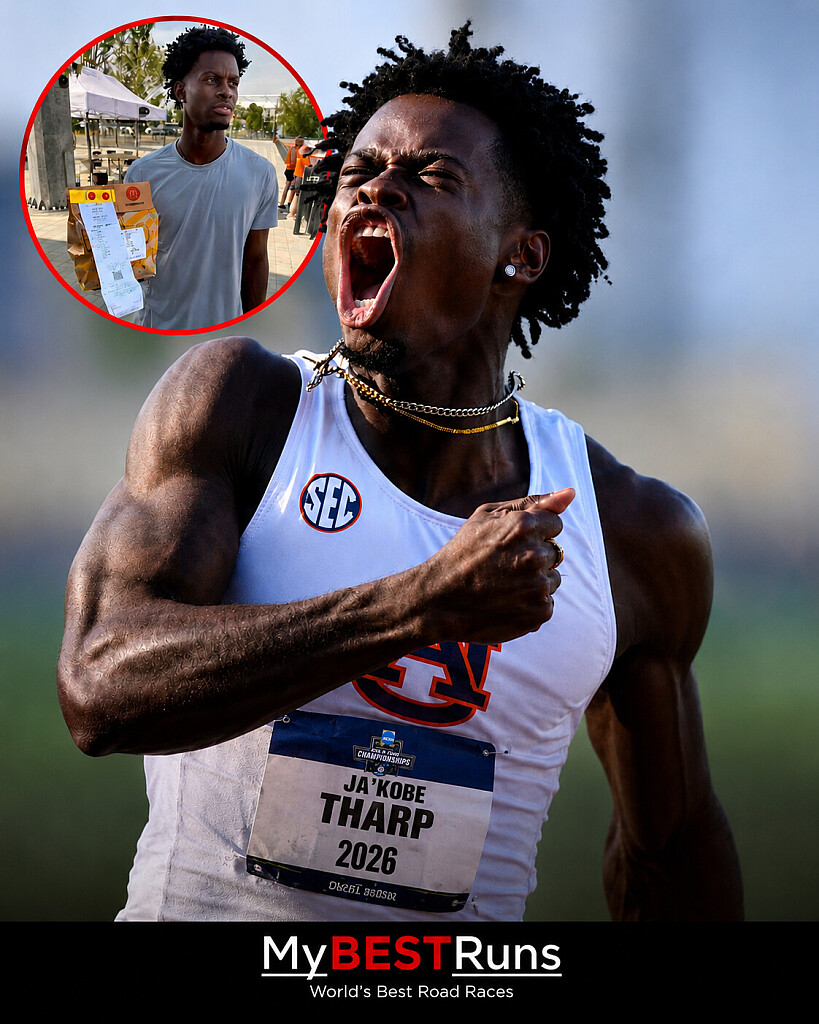
World Record, McNuggets and Fries: The Extraordinary Pre-Race Ritual Behind Ja’Kobe Tharp’s Historic Run
Three hours before producing one of the greatest performances in the history of sprint hurdling, Ja’Kobe Tharp followed a pre-race routine that few athletes—or sports nutritionists—would expect.
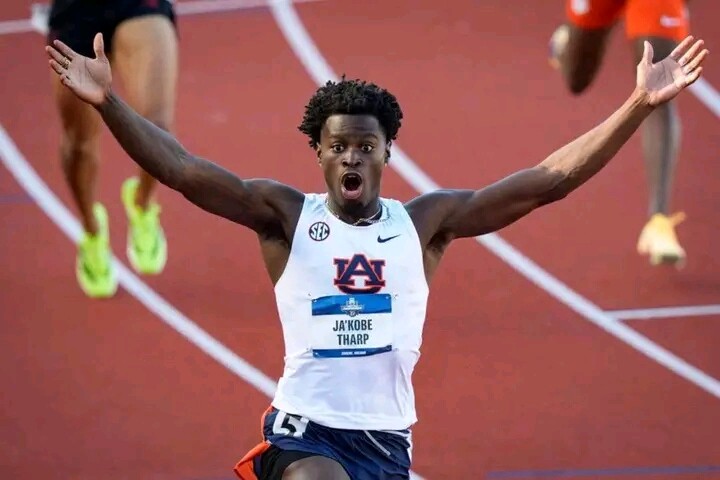
Two cheeseburgers. A large order of fries. And 10 Chicken McNuggets.
That was the meal Tharp ate before taking to the track and breaking the long-standing world record in the men’s 110m hurdles, surpassing Aries Merritt’s 12.80-second mark that had stood since 2012.
The Auburn University star's remarkable performance ended a 13-year wait for a new world record and made him the first man in half a century to set a world record at the NCAA Championships. Yet almost as quickly as his historic run captured attention, another part of the story became a major talking point: his extraordinary pre-race meal.
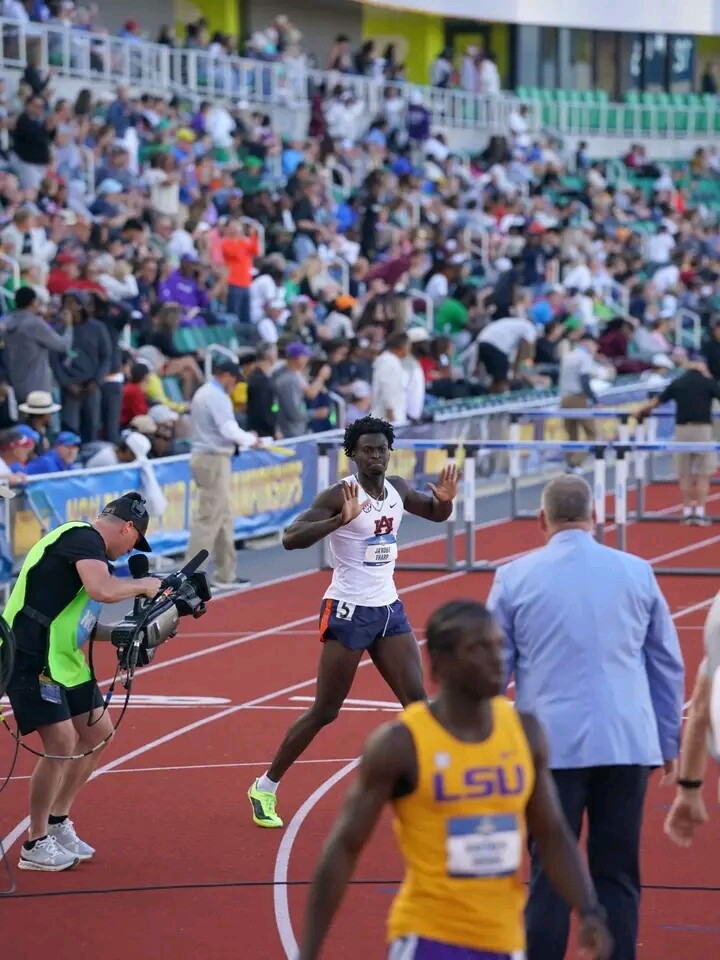
For Tharp, however, there is nothing new or experimental about the routine.
He has followed the same ritual since his high school years, first adopting it before winning a Tennessee state hurdles title as a junior. Since then, the order has remained remarkably unchanged, becoming an unlikely constant throughout his rise to the top of world athletics.

According to reporting from Auburn University, the meal contains approximately 1,246 calories, even before adding any dipping sauce. Tharp's coach, Ken Harnden, has become an important part of the tradition, reportedly collecting the same order for his athlete in different parts of the world, including Lima, Monaco, Tokyo and Budapest.
Tharp's philosophy is straightforward: if something has worked throughout his career, there is little reason to change it.
But does that mean runners should start filling their pre-race routines with cheeseburgers and fries?
Not necessarily.
The explanation behind why the meal appears to work for Tharp has much more to do with the specific demands of his event than with any magical qualities of fast food.
The men's 110m hurdles is over in less than 13 seconds. During such a short and explosive effort, the body relies primarily on immediate energy systems, particularly the ATP-phosphocreatine system, rather than depending on the gradual digestion of the meal eaten several hours earlier.
Timing is also crucial. By eating around three hours before competition, Tharp gives his body substantial time to digest the food while ensuring he does not arrive at the start line hungry.
A large meal immediately before a race would be a very different situation. But in Tharp's case, his body has also become accustomed to the routine after years of repeating it.
That consistency may be one of the most important aspects of the entire story.
Pre-race rituals can provide athletes with a sense of familiarity and control, particularly in high-pressure situations. By repeating the same preparation before important competitions, athletes can reduce uncertainty and approach the start line with greater confidence.
For Tharp, the McDonald's meal has become part of that psychological preparation.
His story is not entirely without precedent in sprinting.
Usain Bolt famously revealed that he ate enormous quantities of Chicken McNuggets during the 2008 Beijing Olympic Games after struggling to enjoy some of the food available to athletes. Bolt went on to produce one of the most dominant Olympic performances in history, winning three gold medals and setting world records.
However, these examples should not be mistaken for universal nutrition advice.
There is an enormous difference between preparing for a 110m hurdles race and preparing for a marathon.
A marathon places sustained demands on the digestive system and requires athletes to manage carbohydrate stores, hydration and energy intake over more than two hours of continuous effort. High-fat meals can slow gastric emptying and increase the likelihood of stomach discomfort—problems that can become particularly costly during a long-distance race.
That is why elite endurance runners generally follow a very different approach.
Pre-race meals for marathoners and other endurance athletes typically focus on easily digested carbohydrates while limiting foods high in fat and fibre. The objective is to maximise available energy without placing unnecessary stress on the stomach.
In other words, what may be perfectly manageable for an explosive hurdler could become a disastrous experiment for someone running 42.195 kilometres.
The real lesson from Tharp's remarkable routine, therefore, may not be the contents of his meal at all.
It is consistency.
Tharp did not randomly decide to eat more than 1,200 calories of fast food before attempting to break a world record. He had tested and repeated the routine over several years, allowing it to become a familiar part of his preparation.
That is a principle runners at every level can apply.
A pre-race meal should be practised during training rather than introduced on the morning of a major competition. Athletes should learn which foods their bodies tolerate, how long they need to digest them and what preparation leaves them feeling physically and mentally ready to perform.
There is also a wider point about individual athletes and individual routines.
Elite sport is full of unusual habits that work for specific competitors. A ritual can be successful without becoming a universal blueprint. Tharp's incredible achievement does not prove that cheeseburgers and Chicken McNuggets are the secret to faster hurdling—it proves that extraordinary athletes can sometimes thrive with routines that defy conventional expectations.
The temptation, of course, is to copy the most unusual part of a champion's preparation.
But Tharp's world record was not created by a single meal. It was the product of exceptional talent, years of training, technical precision, speed, strength and preparation. The McDonald's ritual is a fascinating detail in the story—not the reason behind the record itself.
Still, it has undoubtedly added another unforgettable chapter to one of track and field's most remarkable performances.
A world record in the 110m hurdles. A historic NCAA achievement. And, just three hours earlier, two cheeseburgers, fries and 10 Chicken McNuggets.
For Ja’Kobe Tharp, it may not look like a conventional recipe for sporting greatness.
But after a performance that rewrote the record books, it is certainly a routine that the athletics world will not forget anytime soon.
by Erick Cheruiyot for My Best Runs.
Login to leave a comment
August 20: The Day Usain Bolt Rewrote the 200m Record Book—Twice
Some dates become part of sporting history. August 20 belongs to Usain Bolt.
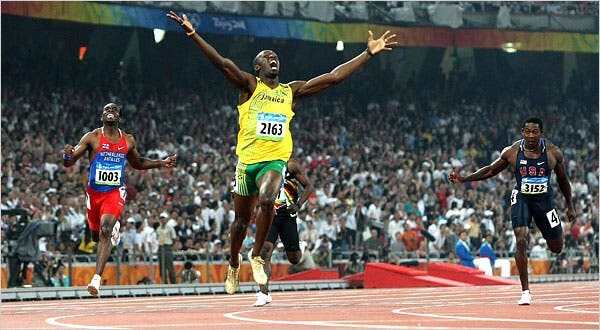
On two consecutive years, the Jamaican sprinting phenomenon transformed the men’s 200 metres, producing performances that seemed almost impossible even by his extraordinary standards.
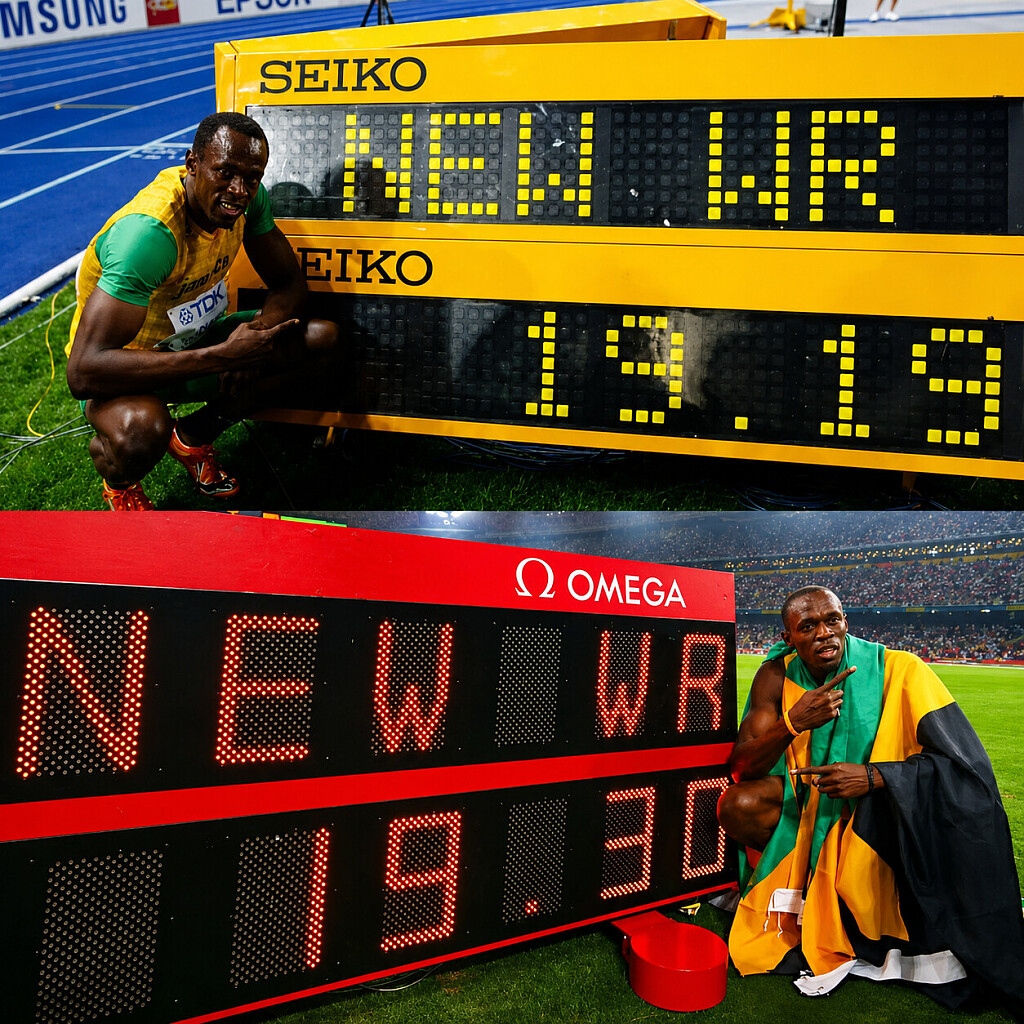
On August 20, 2008, inside Beijing’s Bird’s Nest, Bolt lined up for the Olympic 200m final carrying enormous expectations. Four days earlier, he had stunned the world by winning the 100m in a then-world-record 9.69 seconds. Yet the 200m was about to become another chapter in his growing legend.
Bolt exploded around the bend before powering down the home straight, crossing the finish line in 19.30 seconds to win Olympic gold and shatter Michael Johnson’s long-standing world record of 19.32, set in Atlanta in 1996. The improvement was only two hundredths of a second, but the significance was enormous: Johnson’s seemingly formidable record had survived for 12 years before Bolt finally brought it down.
And there was another remarkable detail. Bolt’s Beijing record came with a 0.9 m/s headwind, making the performance even more extraordinary.
But Bolt was not finished.
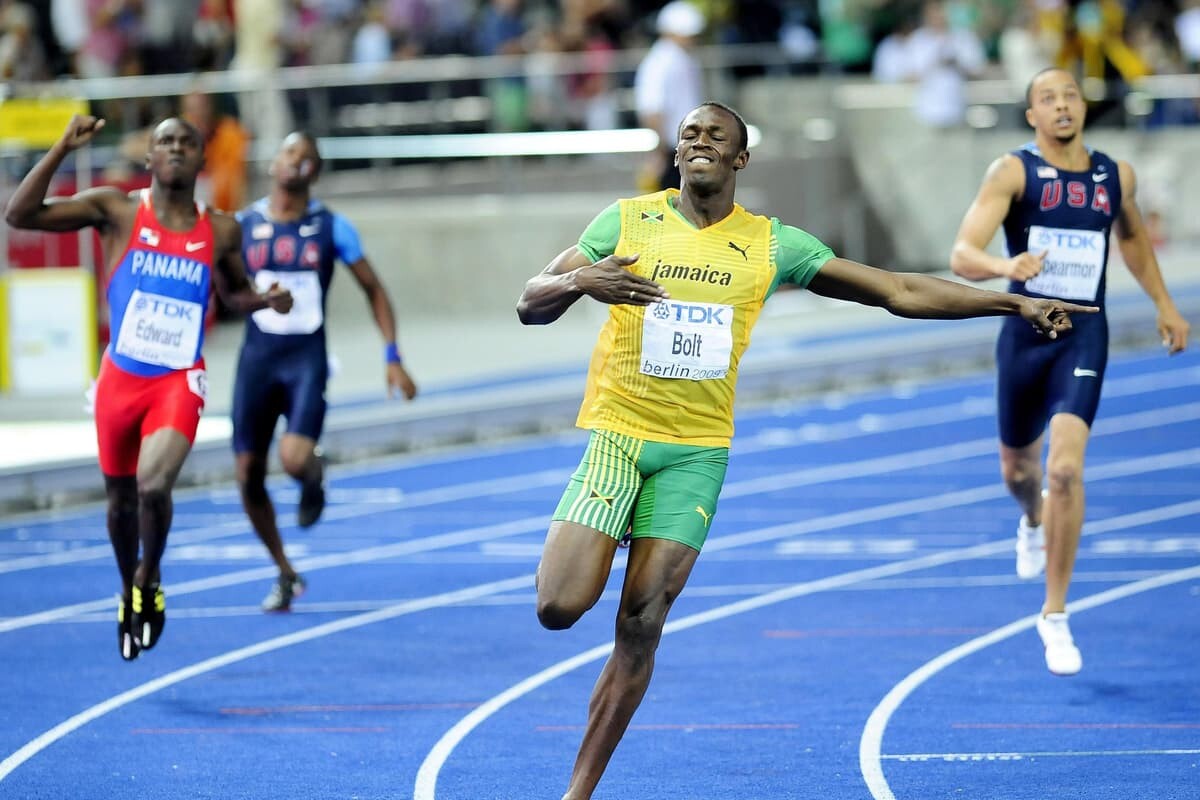
Exactly one year later, on August 20, 2009, he returned to the same event at the World Athletics Championships in Berlin with another opportunity to redefine the limits of speed.
Four days earlier, he had already demolished his own 100m world record, running 9.58 seconds. Now the 200m world record was in his sights.
What followed was extraordinary.
Bolt stormed to 19.19 seconds, taking 11 hundredths off the world record he had established in Beijing. The performance came with a 0.3 m/s headwind, yet he still produced a time that would immediately become one of the most iconic performances in athletics history.
The progression was staggering:
19.30 in Beijing.
19.19 in Berlin.
Michael Johnson’s record had become Bolt’s record—and then, just 12 months later, Bolt destroyed his own mark.
His Berlin victory was also emphatic. Bolt finished more than half a second ahead of Panama’s Alonso Edward, who ran 19.81, while Wallace Spearmon took bronze in 19.85.
What made the achievement even more remarkable was the consistency of Bolt’s record-breaking brilliance. Across the Beijing Olympics and Berlin World Championships, he produced a succession of world records in the 100m and 200m, repeatedly turning major championship finals into historic moments. World Athletics noted after Berlin that Bolt had become the first man to break both the 100m and 200m world records more than once.
And now, 17 years after that unforgettable Berlin night, the 19.19-second world record still stands.
The mark has survived generations of exceptional sprinters, including athletes who have come remarkably close to the 19-second barrier. Yet Bolt’s time remains untouched at the summit of the all-time list.
That is why August 20 is more than a date on the athletics calendar.
It is the anniversary of the day Usain Bolt first broke Michael Johnson’s seemingly untouchable standard—and then returned exactly one year later to make his own record look vulnerable.
Beijing gave the world 19.30.
Berlin gave it 19.19.
Two August 20s. Two world records. One extraordinary sprinter.
Usain Bolt was not simply winning races. He was changing the definition of human speed.
And the question that remains for the next generation is perhaps the most intriguing of all:
Will we ever see another sprinter capable of breaking the 19-second barrier and finally taking down the 19.19 mark that Bolt left behind?
by Erick Cheruiyot for My Best Runs.
Login to leave a comment
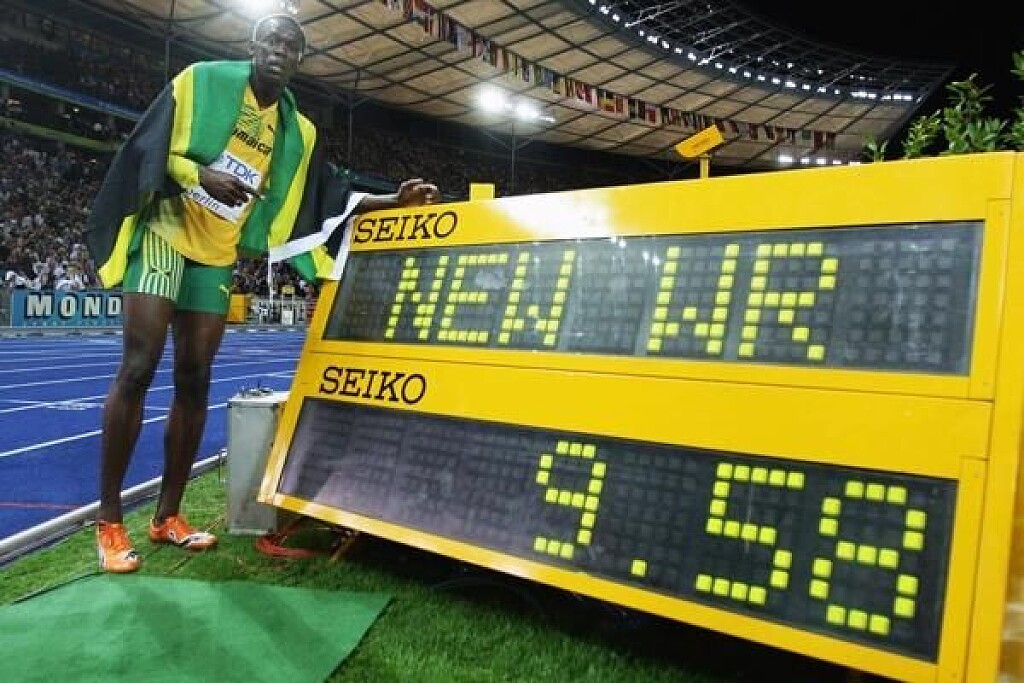
Seventeen Years On, Usain Bolt’s 9.58 Still Stands Alone
Seventeen years ago today, Jamaica’s Usain Bolt produced one of the most extraordinary performances in the history of athletics, sprinting into sporting immortality with a breathtaking 9.58 seconds in the men’s 100m final at the 2009 World Championships in Berlin.
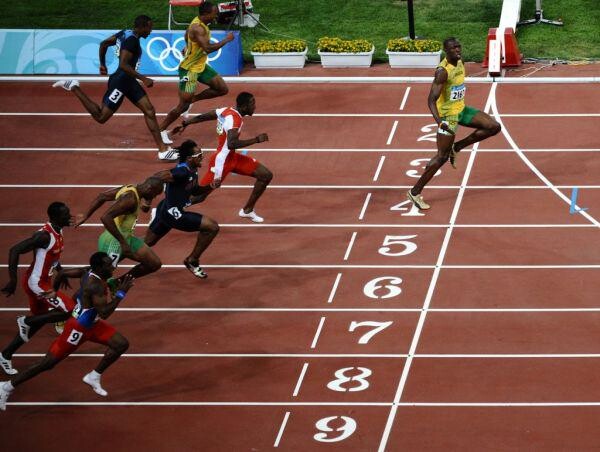
Under the lights of Berlin’s Olympic Stadium, the Jamaican superstar dismantled his own world record, slicing an astonishing 0.11 seconds from the 9.69 he had set at the Beijing Olympics exactly one year earlier. With a legal tailwind of +0.9 m/s, Bolt crossed the finish line in 9.58 — a mark that remains the fastest 100m ever recorded by a man.
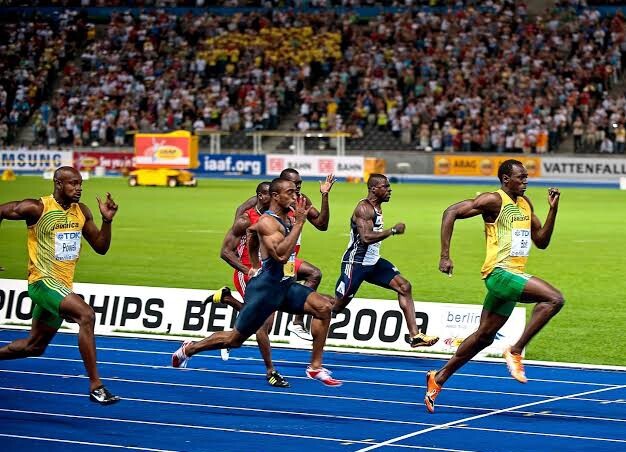
The race was billed as a heavyweight showdown between Bolt and American Tyson Gay, but once the Jamaican found his rhythm, the contest was effectively decided. Bolt surged away from the field with his trademark long, powerful strides, stopping the clock in a time that seemed almost beyond the limits of human speed.
Behind him, Gay produced a remarkable 9.71 for silver, setting a United States record, while Jamaica’s Asafa Powell claimed bronze in 9.84. Yet the night belonged entirely to Bolt, whose performance became the defining image of the Berlin championships.
What made the achievement even more remarkable was the scale of the improvement. Bolt had already rewritten the world record in Beijing with 9.69, but in Berlin he went to another level, becoming the first man to break the 9.6-second barrier. His 9.58 also represented the largest improvement to the men’s 100m world record since electronic timing was introduced.
Seventeen years later, the number still carries an almost mythical quality: 9.58 seconds. Generations of sprinters have chased faster times, but Bolt’s Berlin masterpiece remains untouched. The record has survived Olympic cycles, world championships and a new generation of elite sprinters, continuing to stand as one of the most enduring monuments to human speed.
On August 16, 2009, Usain Bolt did more than win a world title. He created a moment that transcended the race itself — a performance that continues to remind the world just how extraordinary the limits of speed can be.
Seventeen years on, 9.58 still belongs to Bolt. And the world is still waiting for someone to catch him.
by Erick Cheruiyot for My Best Runs.
Login to leave a comment
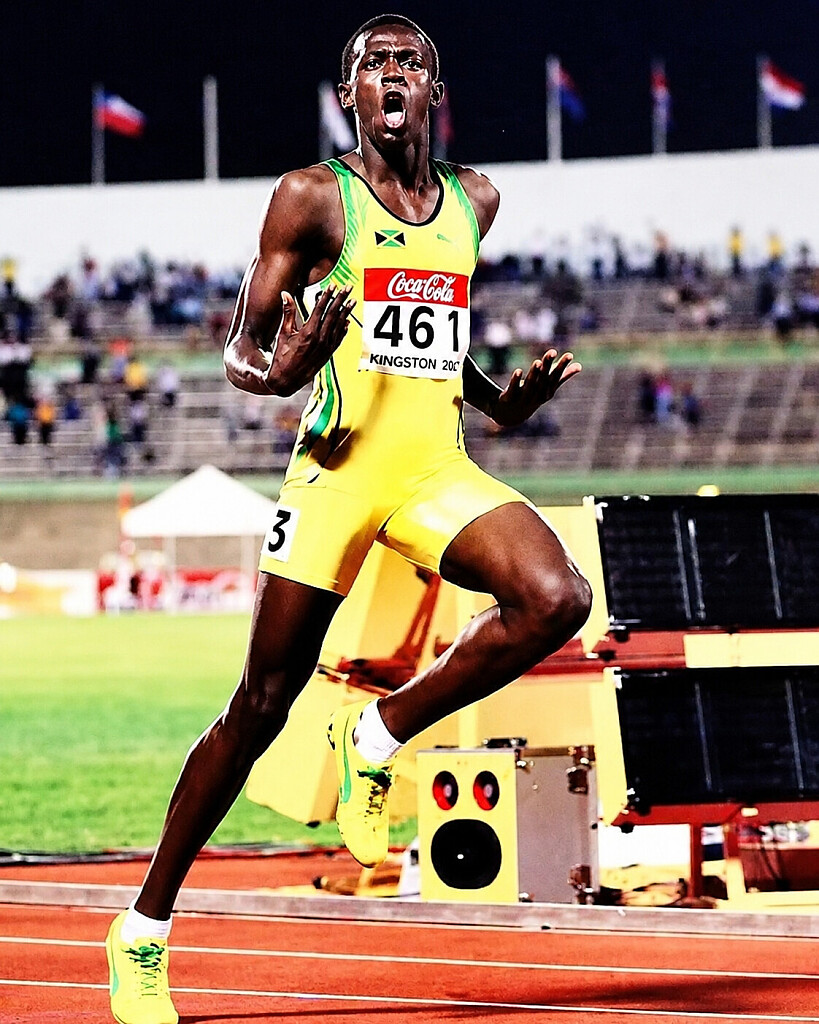
Where Greatness Begins: The Day a 15-Year-Old Usain Bolt Changed Sprinting Forever
Long before he became the fastest man in history, before the Olympic gold medals, world records, and global superstardom, Usain Bolt was simply a gifted teenager with extraordinary speed and limitless potential. In 2002, on the track at Kingston's National Stadium in Jamaica, the world witnessed the first chapter of a story that would forever change athletics.
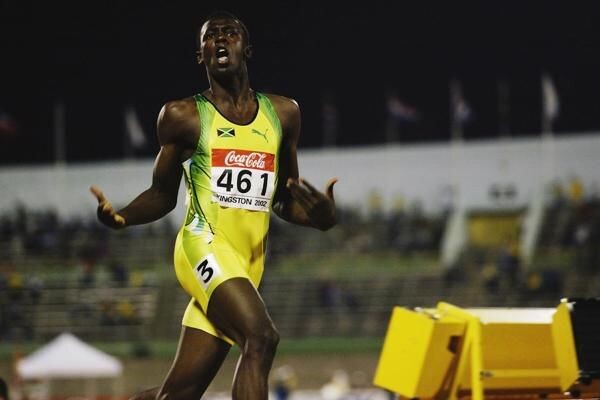
At just 15 years old, Bolt lined up for the men's 200 metres at the World Junior Championships with the weight of expectation resting on young shoulders. Competing before a passionate home crowd, the Jamaican prodigy produced a performance that instantly captivated the athletics world. Crossing the finish line in 20.61 seconds, he became the youngest athlete ever to win the men's 200m title at the championships.
It was far more than a gold medal. It was the moment the world realised that a once-in-a-generation talent had arrived.
Bolt's victory in Kingston marked the beginning of one of the greatest careers in sporting history. Over the years that followed, he rewrote the record books, dominated the Olympic Games and World Championships, and transformed sprinting into a global spectacle through his breathtaking speed, infectious personality, and unrivalled confidence. His legacy continues to inspire young athletes across the globe, many of whom dream of following the same path he once began as a teenager.

This week, that dream comes alive once again as the World Athletics U20 Championships take centre stage at the iconic Hayward Field in Eugene, Oregon. The venue has already witnessed the birth of future superstars. In 2014, it was where Britain's Dina Asher-Smith and Uganda's Joshua Cheptegei captured their first global titles, launching careers that would later produce world championships, Olympic medals, and lasting legacies in athletics.
Twelve years later, another generation arrives in Eugene hoping to create its own defining moment.
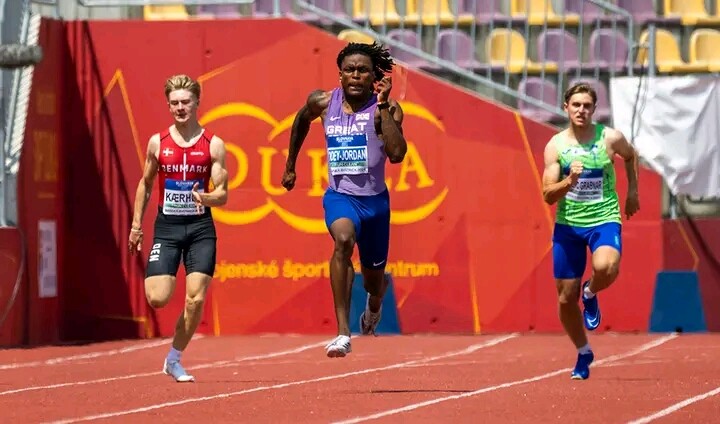
Among the brightest young talents is Great Britain's Jake Odey-Jordan, the 200m bronze medallist from Lima who now owns the European U20 100m record after an astonishing 10.01-second performance. He enters the championships eager to build on his growing reputation as one of Europe's most exciting young sprinters.
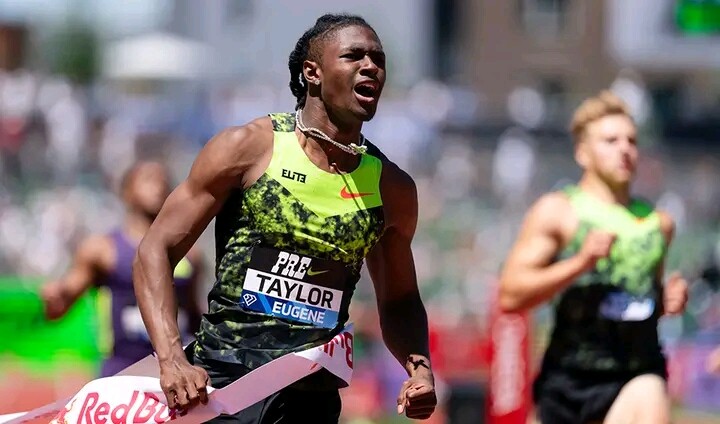
The United States will look to Tate Taylor, who has already made history as the first American high school athlete to break the 20-second barrier for the 200 metres. Fresh from a Diamond League victory in a sensational 19.75 seconds, he arrives in Eugene carrying the momentum of one of the most remarkable junior seasons ever recorded.
Jamaica, the nation that introduced the world to Usain Bolt, will once again have high hopes through Shanoya Douglas. The talented sprinter has established herself as one of the championship's leading contenders after producing lifetime bests of 10.98 seconds for the 100m and 22.11 for the 200m this season.
History has repeatedly shown that the World U20 Championships are far more than a junior competition. They are often the first chapter in the careers of future Olympic champions, world record holders, and global icons. Every generation arrives with ambitious dreams, but only a select few leave having announced themselves to the world.
No one can say with certainty whether the next Usain Bolt will emerge this week. Greatness cannot be predicted, and legends are never manufactured. Yet every legendary career begins with a single breakthrough performance.
For Bolt, that defining moment came in Kingston in 2002.
Now, under the famous lights of Hayward Field, another group of gifted teenagers stands ready to chase history. Somewhere among them could be the next athlete whose name will inspire the world for years to come.
by Erick Cheruiyot for My Best Runs.
Login to leave a comment

Sprint Royalty: Noah Lyles And Usain Bolt Share A Special Moment At FIFA World Cup Semifinal
Some moments transcend sport, reminding fans that greatness recognizes greatness.
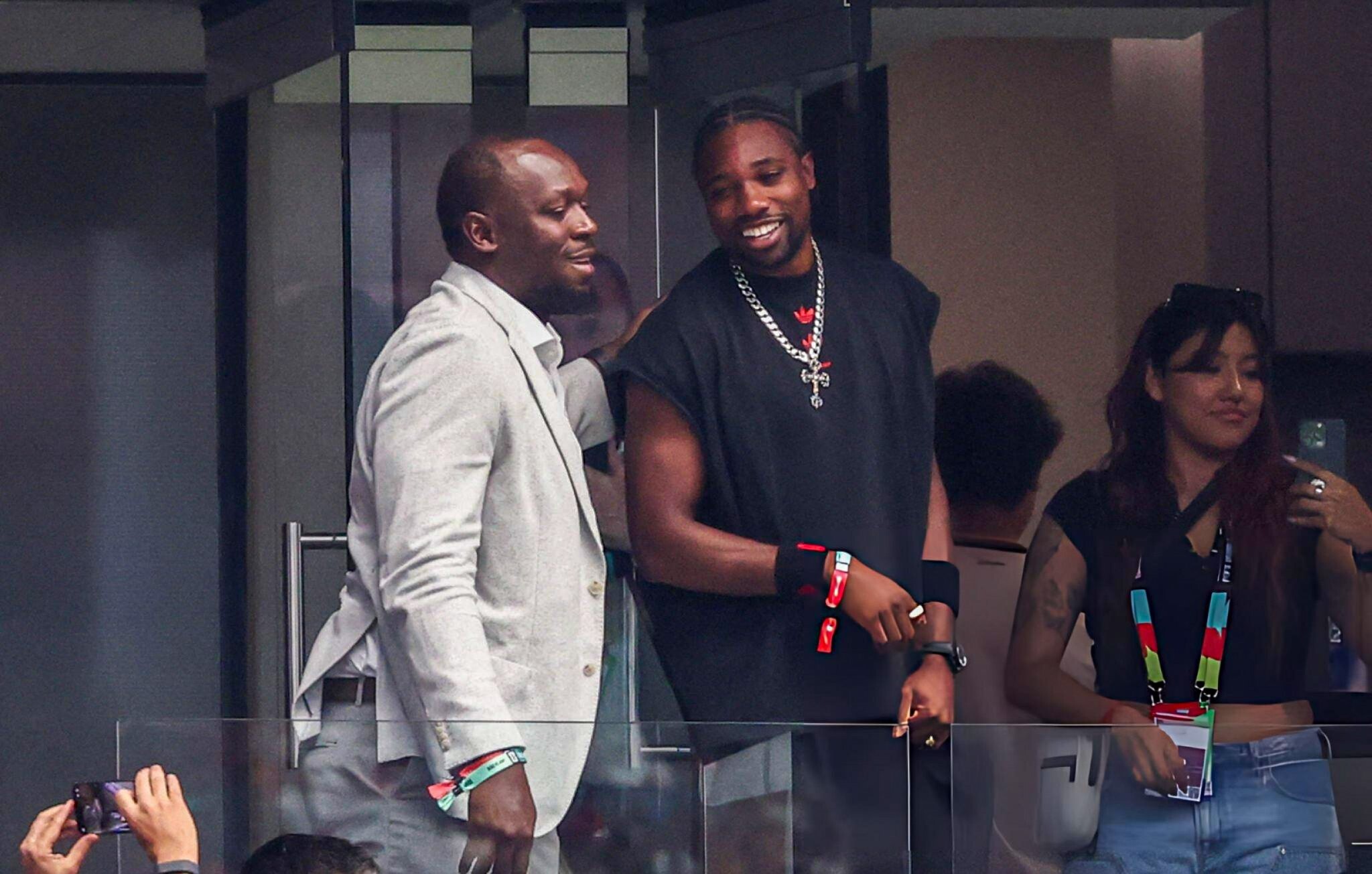
That was the scene during the FIFA World Cup semifinal between Spain and France, where American sprint star Noah Lyles and Jamaican icon Usain Bolt delighted fans with a memorable courtside encounter. Lyles seized the opportunity to snap a selfie with the fastest man in history, creating a picture that instantly resonated across the sporting world.
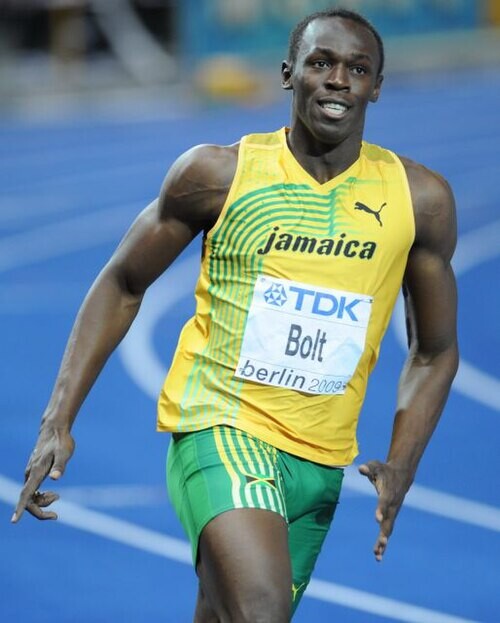
While football commanded the spotlight on the pitch, two of track and field's biggest names stole a memorable moment off it. The photograph brought together two athletes whose careers have helped shape different eras of sprinting—Bolt, the undisputed legend who redefined speed with his eight Olympic gold medals and world records in the 100m and 200m, and Lyles, the world record holder in 150m and modern-day sprint sensation carrying the sport into a new generation.
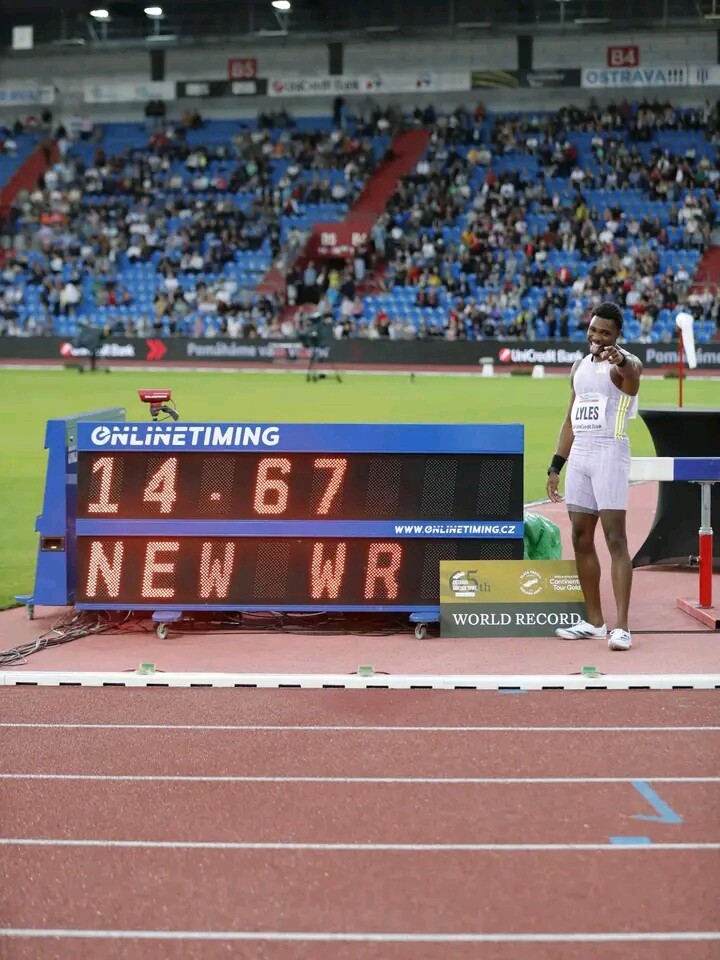
For Lyles, the selfie represented more than a simple photograph. It symbolized respect for the man who inspired countless young sprinters around the globe, including many of today's elite athletes. Bolt's dominance transformed athletics, while Lyles has emerged as one of the sport's biggest personalities, combining world-class performances with charisma and confidence.
The meeting served as a powerful reminder of the bond that exists among champions. Although they belong to different competitive eras, both have become global ambassadors for athletics, drawing new audiences to the sport through their achievements and larger-than-life presence.
As Spain and France battled for a place in the World Cup final, fans were equally captivated by the sight of sprinting royalty sharing a light-hearted moment. It was a celebration of excellence, mutual admiration, and the enduring legacy of athletics.
When legends meet, the result is more than just a selfie—it becomes a timeless image that connects generations of greatness.
by Erick Cheruiyot for My Best Runs.
Login to leave a comment
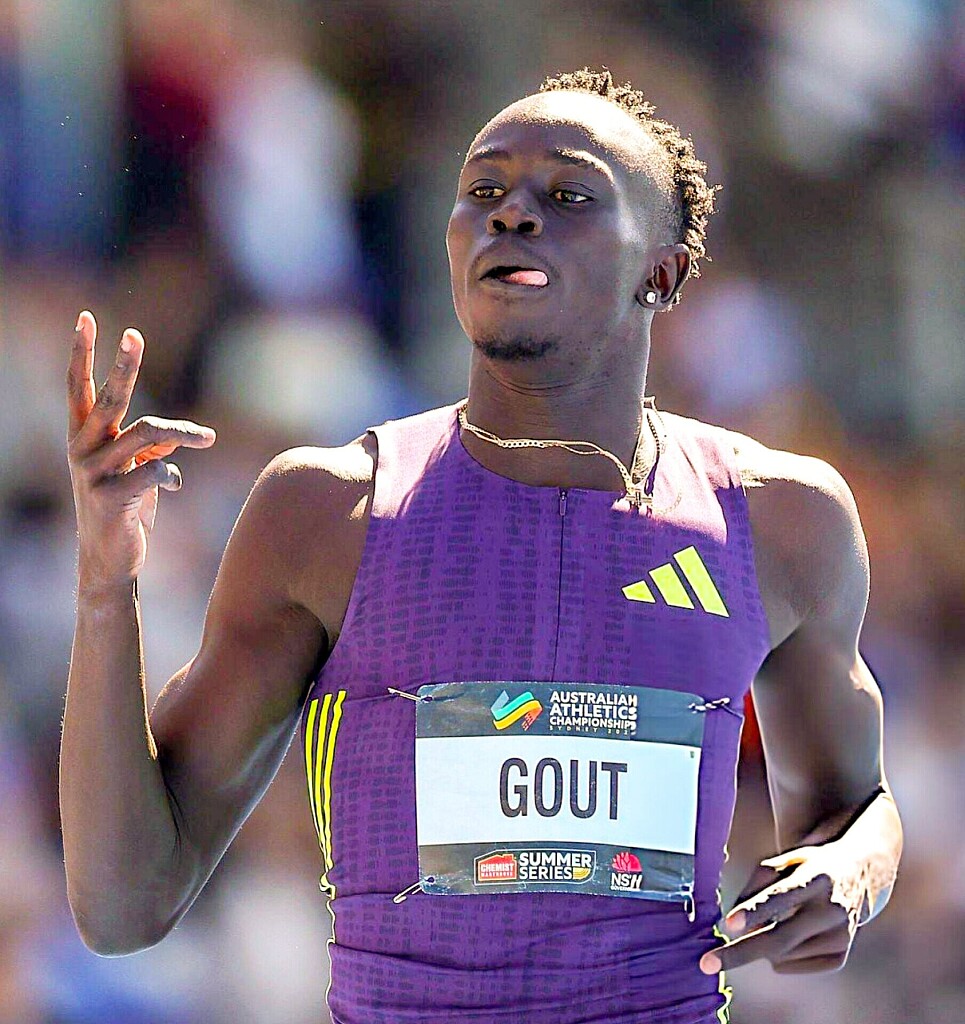
Gout Gout: The Teenage Sprint Sensation Poised to Rewrite Athletics History
Remember the name Gout Gout.
At just 18 years old, the Australian sprint prodigy is already commanding global attention and fueling conversations about the future of track and field. In a sport constantly searching for its next superstar, Gout is rapidly emerging as one of the brightest talents the world has seen in years.
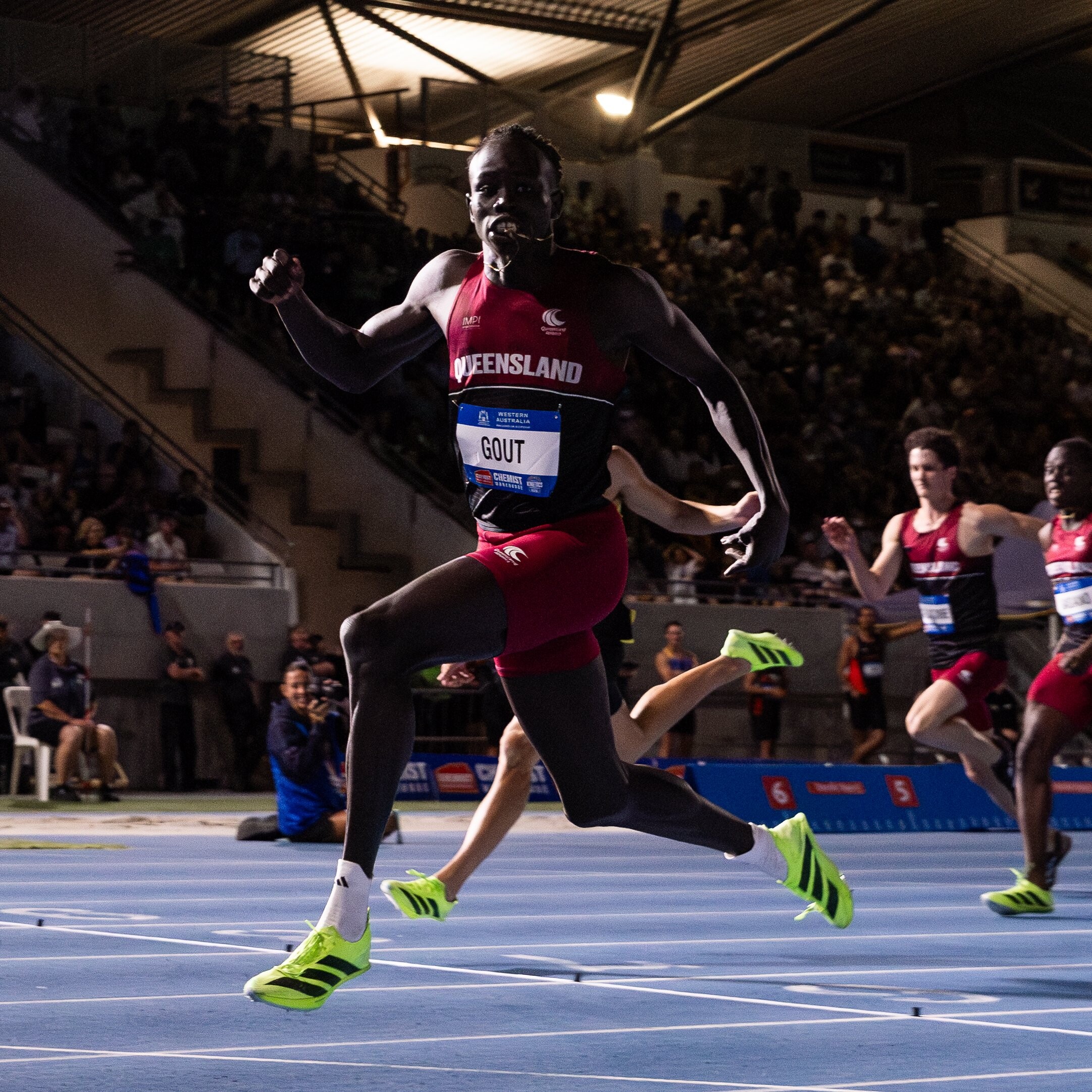
His latest statement came at the prestigious Ostrava Golden Spike meeting, where he stepped onto the track alongside some of sprinting's biggest names, including reigning world champion Noah Lyles. Far from being overwhelmed by the occasion, the teenager delivered a composed and confident performance, finishing third in the 150m in 14.96 seconds against two of the fastest athletes on the planet.
Yet impressive as that performance was, it is not the result that has the athletics community buzzing most.
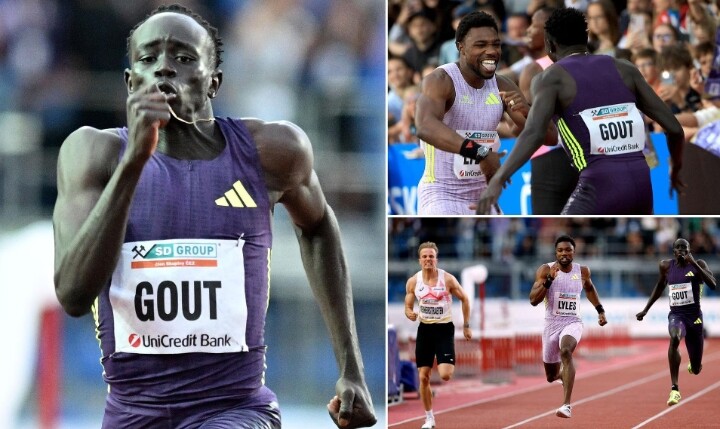
Earlier this year, Gout stunned the sprinting world by clocking an astonishing 19.67 seconds for 200m, setting a new world Under-20 record. The performance instantly elevated him from promising prospect to genuine phenomenon.
What makes the achievement even more remarkable is the historical context. At the same age, Gout was faster than sprint legend Usain Bolt. Comparisons to the Jamaican icon are inevitable, not because records demand them, but because the raw numbers are impossible to ignore.
Of course, Gout's journey is only beginning. Like any young athlete, he still has room to grow, refine his craft, and gain valuable experience at the highest level. The road from teenage sensation to global champion is rarely straightforward.
But there is no denying the extraordinary potential that lies within him.
His speed, composure, and ability to perform under pressure have already marked him out as one of athletics' most exciting young stars. More importantly, he possesses the kind of talent that inspires belief that a new era of sprinting may be on the horizon.
The sport has always thrived on rivalries that capture the imagination of fans across the globe. With established champions such as Noah Lyles currently leading the way, the emergence of Gout Gout adds an intriguing new chapter to sprinting's future.
The next great rivalry may already be taking shape.
And one of its leading figures is still only a teenager.
For now, the message is simple: remember the name Gout Gout. The future is arriving faster than anyone expected.
by Erick Cheruiyot for My Best Runs.
Login to leave a comment
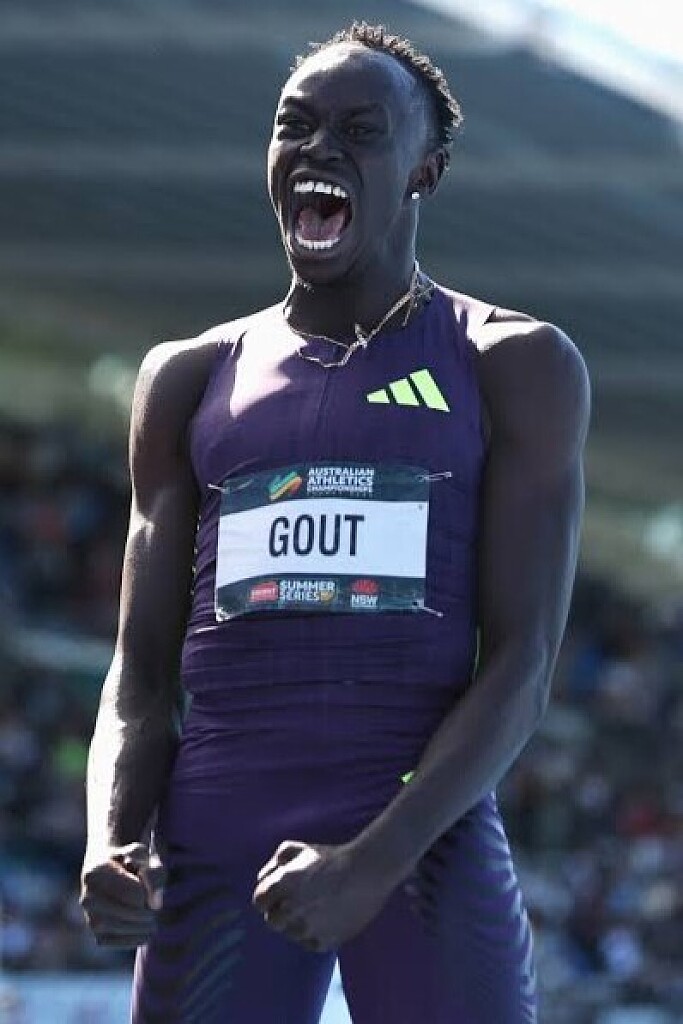
The Run That Changed Everything: Gout Gout’s Place in Sprinting History
Australian sprint prodigy Gout Gout has taken another monumental step in his rapidly rising career after World Athletics officially ratified his stunning 200-metre performance as the Under-20 World Record.
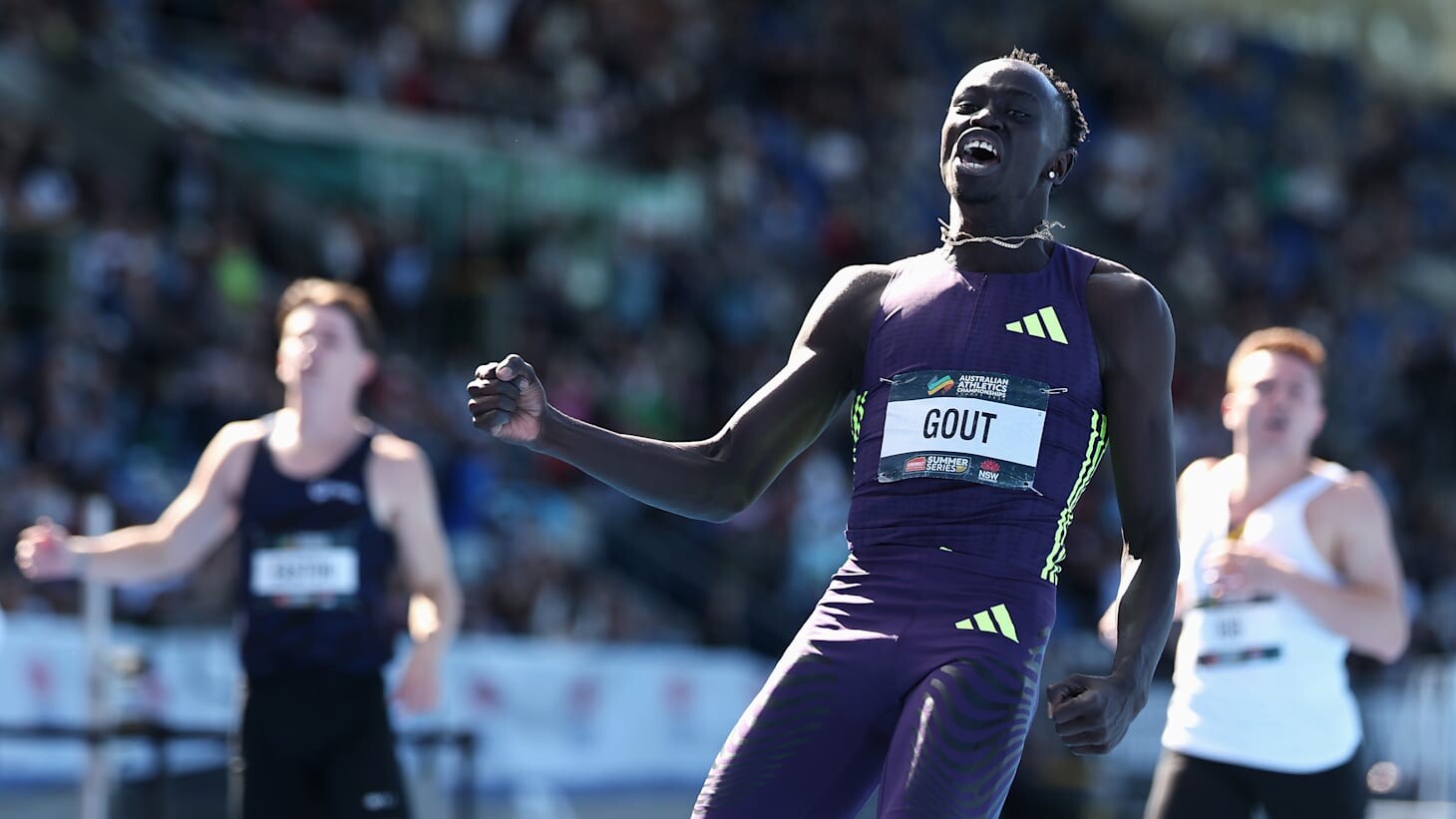
The 18-year-old sensation etched his name into athletics history at the Australian Championships in April when he stormed to an extraordinary 19.67 seconds, becoming the first Australian athlete to legally break the coveted 20-second barrier in the 200m. The performance immediately sent shockwaves through the global athletics community, drawing comparisons with some of the sport’s greatest sprinters and signaling the arrival of a remarkable new talent on the world stage.
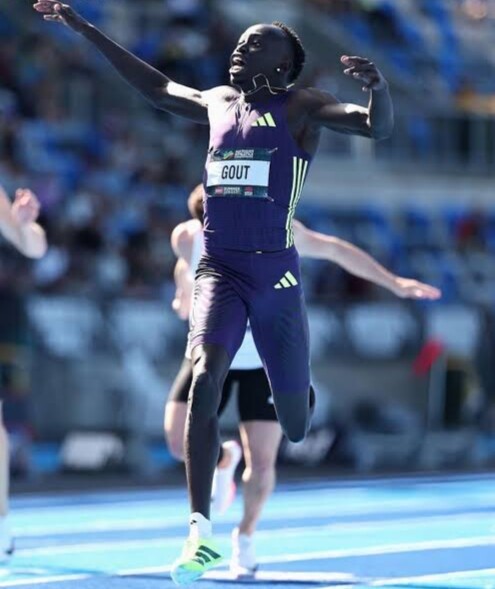
With the record now formally recognized, Gout's achievement stands as the fastest 200m ever recorded by an athlete in the Under-20 category. His breathtaking run surpassed the previous world junior mark and was even quicker than the fastest time recorded by sprint icon Usain Bolt during his own teenage years, further highlighting the magnitude of the Australian's accomplishment.
The ratification by World Athletics transforms what was already a sensational performance into an official piece of athletics history. It is a landmark moment not only for Gout himself but also for Australian sprinting, a nation that has rarely featured among the world's fastest over the 200m distance.
Still only 18, Gout continues to build a reputation as one of the most exciting young athletes in global sport. His blend of raw speed, composure, and competitive fearlessness has captured attention far beyond Australia, with many now eager to see how far his talent can carry him on the international stage.
For now, however, the numbers speak for themselves: 19.67 seconds, a world-record performance, and a place in athletics history secured. The future appears exceptionally bright for the young Australian whose remarkable rise shows no signs of slowing down.
by Erick Cheruiyot for My Best Runs.
Login to leave a comment

On Launches First-Ever Professional Sprint Group in Los Angeles
Swiss sportswear company On has officially launched its first professional sprint group, marking a significant expansion of the brand’s growing involvement in elite track and field.

The newly established OAC Sprint Group will be based in Los Angeles and coached by respected sprint coach John “JB” Bolton. The inaugural roster includes American sprinters Max Thomas, Samirah Moody, and Johnny Brackins alongside Ghanaian international Benjamin Azamati.

The move represents On’s first dedicated venture into professional sprinting after building its reputation primarily through distance running and endurance-based training groups. With the creation of the Los Angeles-based program, the company now joins a growing list of athletics brands investing directly in specialized athlete development environments.
Azamati enters the group as one of Africa’s most recognized sprinters, having represented Ghana at major international championships and Olympic competition. Thomas, Moody, and Brackins are among a new wave of American sprint athletes transitioning into the professional ranks.
Bolton will oversee the team’s training and athlete development as preparations begin for the upcoming athletics season.
The announcement adds another notable development to the evolving professional track and field landscape, where global brands continue to expand their investment in athlete-centered performance programs.
by Erick Cheruiyot for My Best Runs.
Login to leave a comment

Celebration, Emotion and a Disqualification: North Carolina Relay Ruling Sparks National Debate
A controversial disqualification at the North Carolina high school state track championships has ignited debate across the running world after Mallard Creek High School’s boys 4x400-meter relay team lost what appeared to be a state title because of a celebration gesture during the finish.
The incident, which has now drawn national attention and triggered an official appeal review, centers around one athlete raising his hand with five fingers extended as he crossed the line.

According to the athlete’s coach, the gesture was not directed at another team and was never intended as taunting. Instead, he says the runner was signaling what would have been the program’s fifth championship victory.

Supporters of the team say the ruling was far too harsh, especially given the emotional nature of the 4x400 relay — one of track and field’s most dramatic events.
Video of the finish quickly spread online, creating intense reaction from athletes, coaches, and fans. Many pointed out that celebration has long been part of the sport at every level, including by some of the greatest athletes in history.
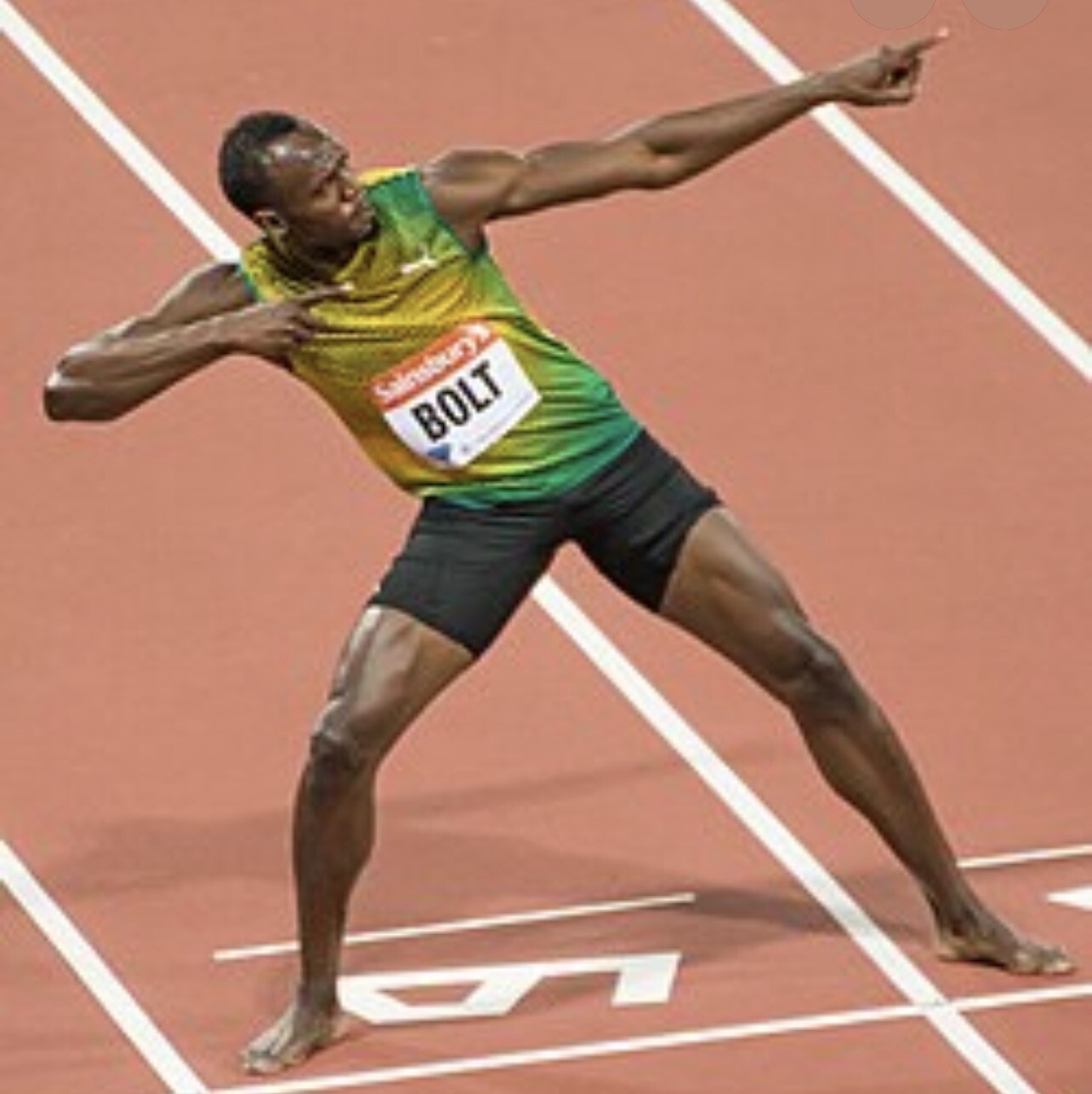
One name repeatedly mentioned in the discussion is Usain Bolt, who often celebrated before crossing finish lines during his legendary career. Bolt’s signature gestures, arm raises, and crowd interaction became part of his global appeal and helped bring personality and excitement to track and field.
Critics of the ruling argue that the Mallard Creek athlete’s raised hand was no different in spirit — a moment of excitement after an extraordinary effort, not an act of disrespect.
Others defend the officials, noting that high school athletics operate under stricter sportsmanship guidelines and that rules regarding celebrations exist to prevent taunting or unsporting behavior.
Still, the punishment itself remains the biggest source of controversy. In a relay, a disqualification impacts the entire team, meaning three other athletes also lost a championship because of one moment during the finish.
An appeals panel appointed by North Carolina’s top education official is now expected to review the case.
The situation has become a broader conversation about modern sports culture and whether emotional expression by athletes should be embraced or restricted — especially in a sport that is constantly trying to attract younger fans and greater visibility.
For Mallard Creek, what should have been remembered as a championship performance has instead become one of the most discussed high school track stories of the year.
by Bob Anderson for My best Runs
Login to leave a comment
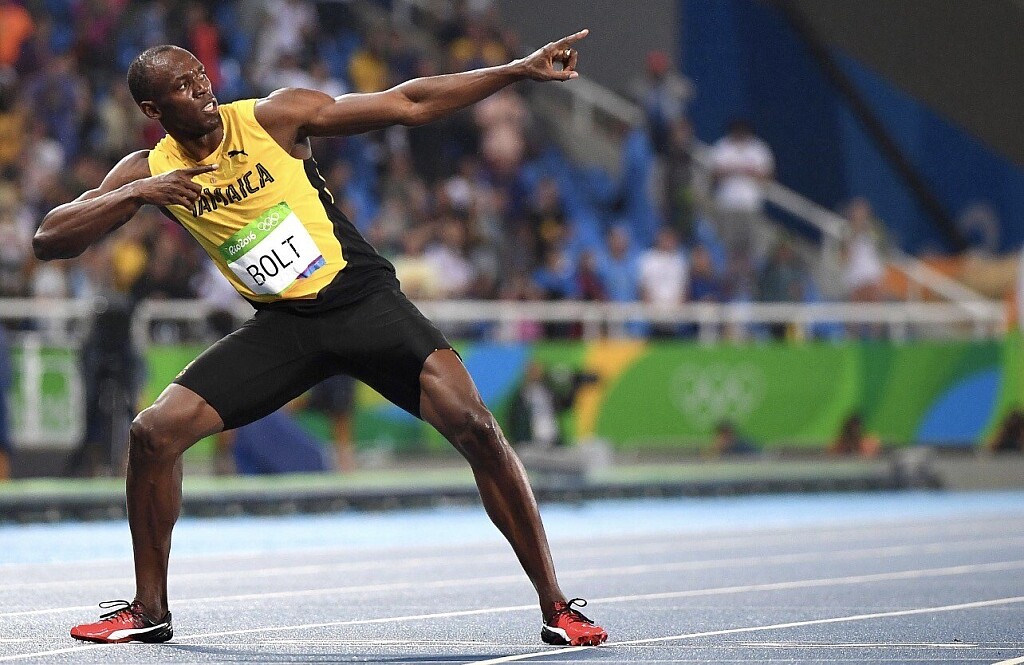
An Evening With Bolt - The Fastest Man Ever is coming to London July 22
Eight Olympic gold medals. Eleven World Championship titles. Three consecutive Olympic Games sweeping both the 100m and 200m titles.
No sprinter in history has ever done what Usain Bolt accomplished between Beijing, London, and Rio.

And now, nearly a decade after his final Olympic appearance, the fastest man in history is proving that his appeal reaches far beyond the track.
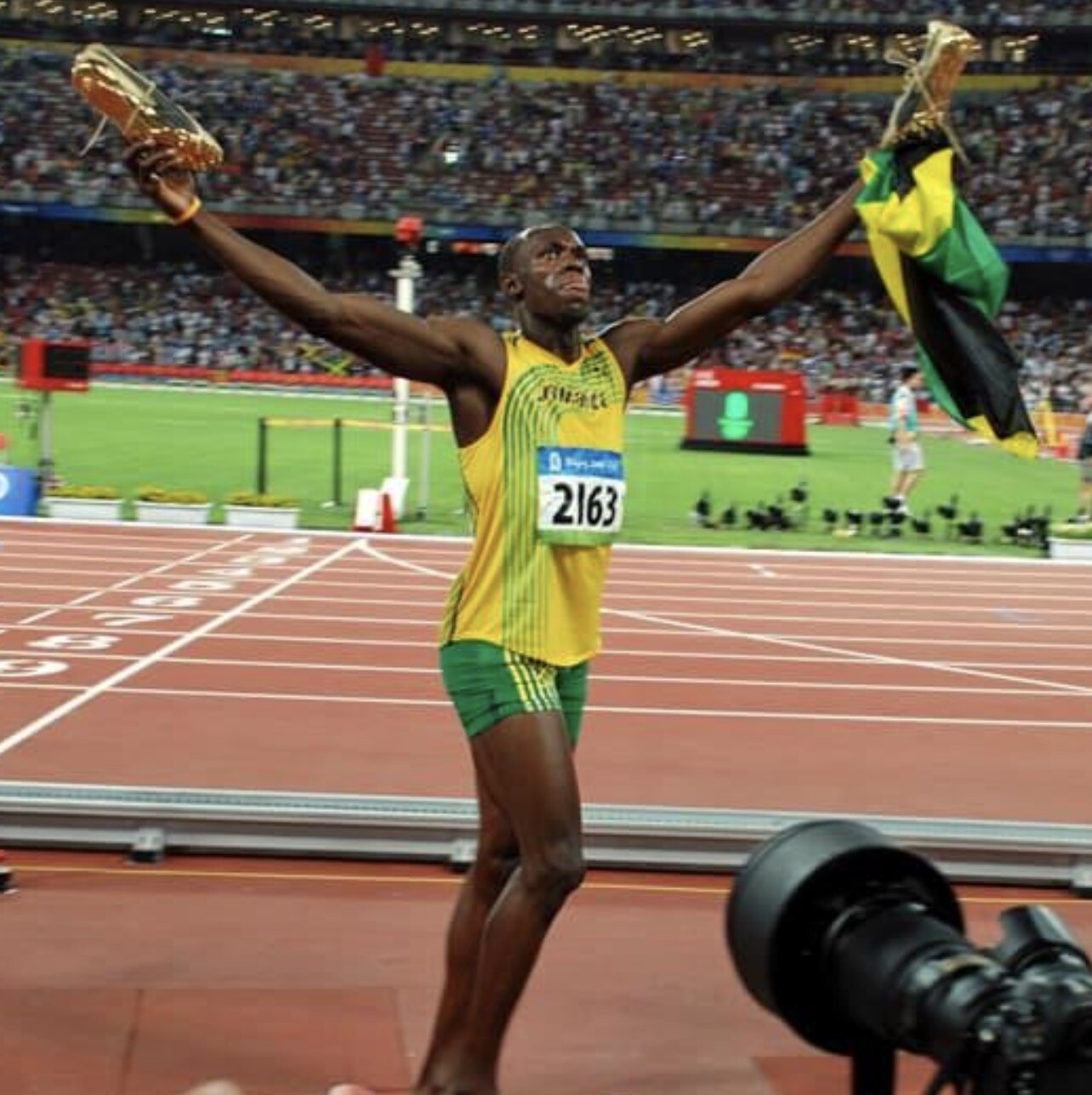
On Wednesday, July 22, 2026, Bolt will appear live at The O2 for “An Evening With Bolt,” a stage event expected to draw thousands of fans eager to hear firsthand stories from one of the most dominant athletes ever produced by any sport.
The event is not a race. There will be no starting blocks, no finish tape, no world-record clock flashing 9.58. Yet demand for tickets has been extraordinary. Premium seats are reportedly selling for more than $200 USD, with VIP and meet-and-greet packages commanding even higher prices.
That kind of post-career drawing power is rare in athletics.
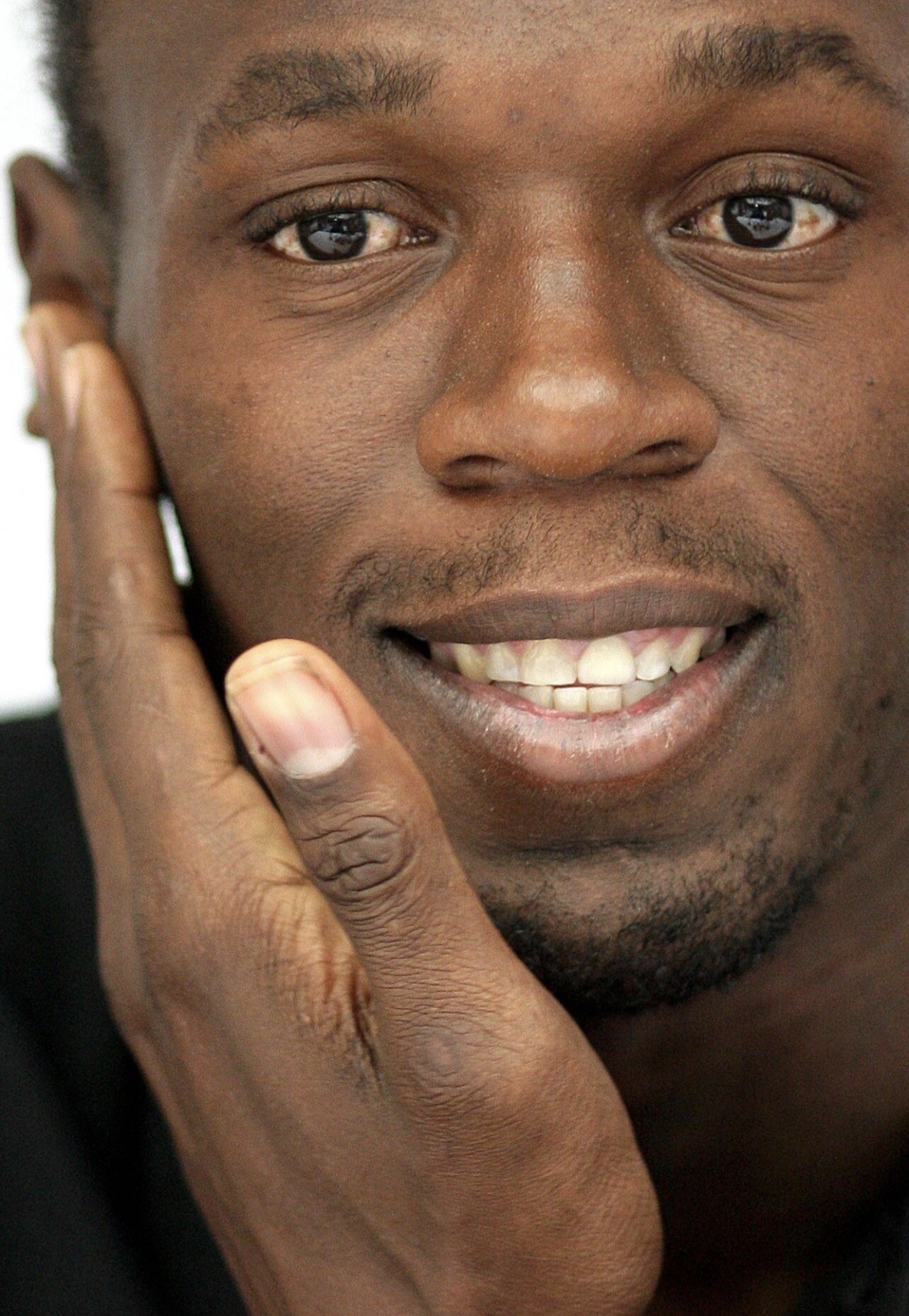
Michael Jordan could fill arenas. Muhammad Ali could command a room anywhere in the world. Pelé and Diego Maradona transcended soccer. But in track and field, very few athletes have remained such a global attraction years after retirement.
Bolt is different.
For nearly a decade, he turned the Olympic 100-meter final into one of the biggest television events on the planet. Even casual sports fans knew exactly when Bolt was racing. His signature lightning pose became one of the most recognizable celebrations in modern sports history.
What makes his story even more remarkable is that the records still stand.
His 9.58 world record in the 100 meters and 19.19 in the 200 meters have survived wave after wave of challengers, technological advances, super spikes, and an entirely new generation of sprinters. Nearly seventeen years later, no one has seriously threatened both marks at the same time.
And unlike many champions, Bolt combined dominance with personality. He danced before races, smiled under pressure, joked with reporters, and somehow still delivered when the spotlight was brightest.
That combination — greatness plus charisma — is what continues to sell out theaters and arenas around the world.
According to event organizers, Bolt will speak candidly about his upbringing in Trelawny, Jamaica, the pressure of competing for an entire nation, the discipline required to remain on top, and the mental side of being expected to win every time he stepped on the track.
For younger athletes, the evening offers something rare: a chance to hear directly from a man who changed the sport forever.
For older fans, it is a reminder of a period when sprinting became must-watch television.
Track and field has produced many great champions. But very few became global cultural icons.
Usain Bolt did both.
by Boris Baron for My Best Runs
Login to leave a comment

The Weight of Greatness: Sally Pearson’s Bold Take on Sprinting’s Next Phenomenon
A striking prediction from Sally Pearson has ignited fresh debate across the athletics world—one that blends admiration, caution, and the heavy expectations placed on emerging talent. At the center of it all is the almost mythical benchmark of 9.58 seconds, a time so extraordinary it continues to define the outer limits of human speed.
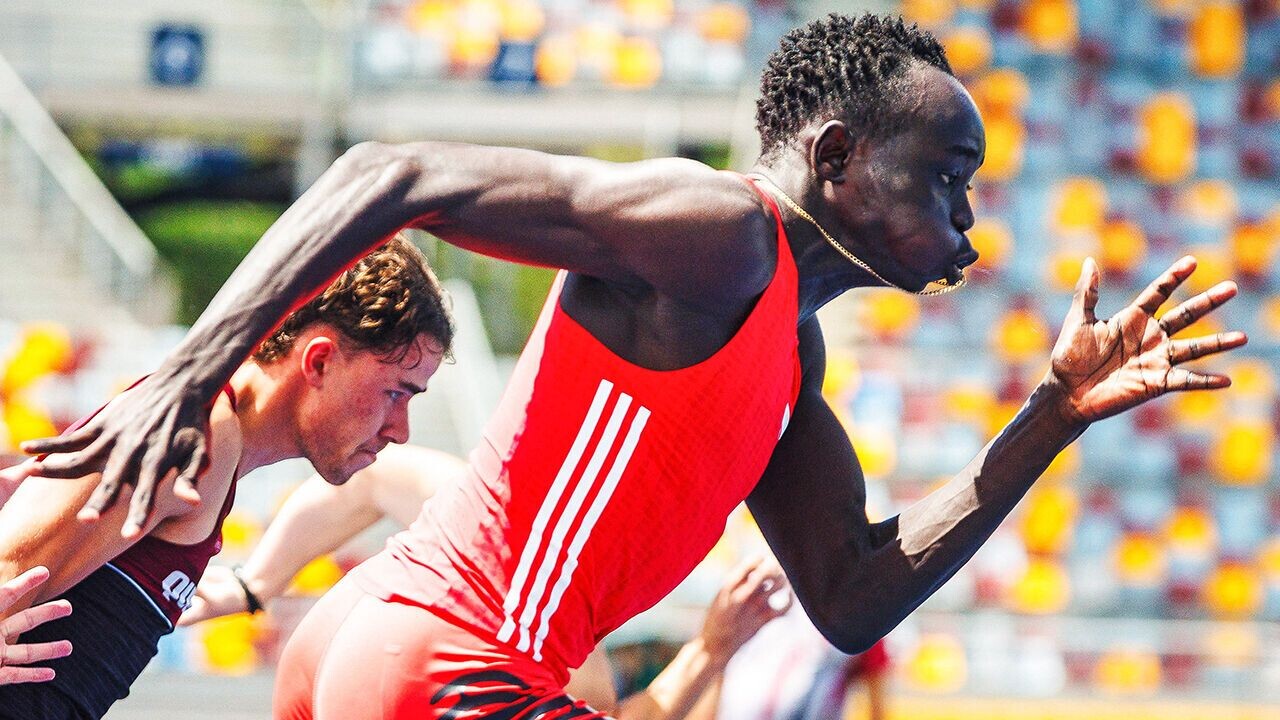
That mark, set by Usain Bolt, remains one of the most untouchable records in sport. It is not merely fast—it is historically profound, a performance that redefined what was thought physically possible. For Pearson, invoking that number is not casual; it is a reminder of just how rare true sprinting greatness is.
Yet attention is quickly shifting to a rising name: Gout Gout. The young Australian has already captured public imagination with his raw speed and composure beyond his years. Naturally, comparisons have followed, and with them, a growing narrative positioning him as “the next great sprinter.”
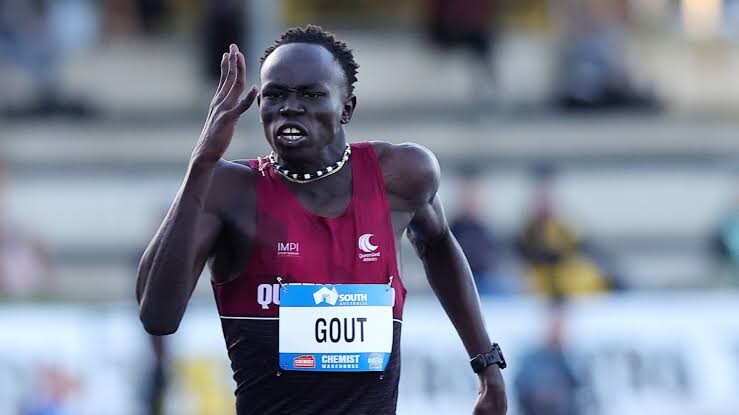
But such labels come with a cost.
Pearson’s perspective appears grounded in both experience and realism. While she openly wishes Gout Gout success, her message carries a subtle warning—greatness cannot be rushed, nor can it be predicted with certainty. Sprinting history is filled with prodigious talents whose journeys took unexpected turns, shaped by injuries, pressure, and the unpredictable nature of elite sport.
For a young athlete, the path from promise to legacy is anything but linear. The spotlight can inspire, but it can also overwhelm. In Gout Gout’s case, the excitement surrounding his potential is undeniable, yet the expectations being placed upon him may prove just as significant as his physical challenges on the track.
The comparison to Bolt, particularly in relation to the 9.58-second world record, raises an even broader conversation: are we too eager to find the “next” icon before allowing greatness to unfold naturally? Records like Bolt’s are not simply broken—they are approached over time, through years of development, resilience, and opportunity aligning at the perfect moment.
As the athletics world watches closely, one thing remains clear: Gout Gout’s story is still being written. Whether he rises to historic heights or carves out his own unique path, his journey deserves patience as much as it does belief.
In the end, Pearson’s remarks may be less about prediction and more about perspective—a reminder that while talent can spark excitement, true greatness is forged over time, far beyond the weight of early expectations.
by Erick Cheruiyot for My Best Runs.
Login to leave a comment

Guided Greatness: Usain Bolt’s Measured Advice for Rising Star Gout Gout
Sprint legend Usain Bolt has seen enough raw talent in his lifetime to know that speed alone is never the full story. Speaking on CNN, the eight-time Olympic champion turned his attention to one of the sport’s most exciting young prospects, Gout Gout, offering a blend of admiration and caution that reflects the hard-earned wisdom of a career at the very top.
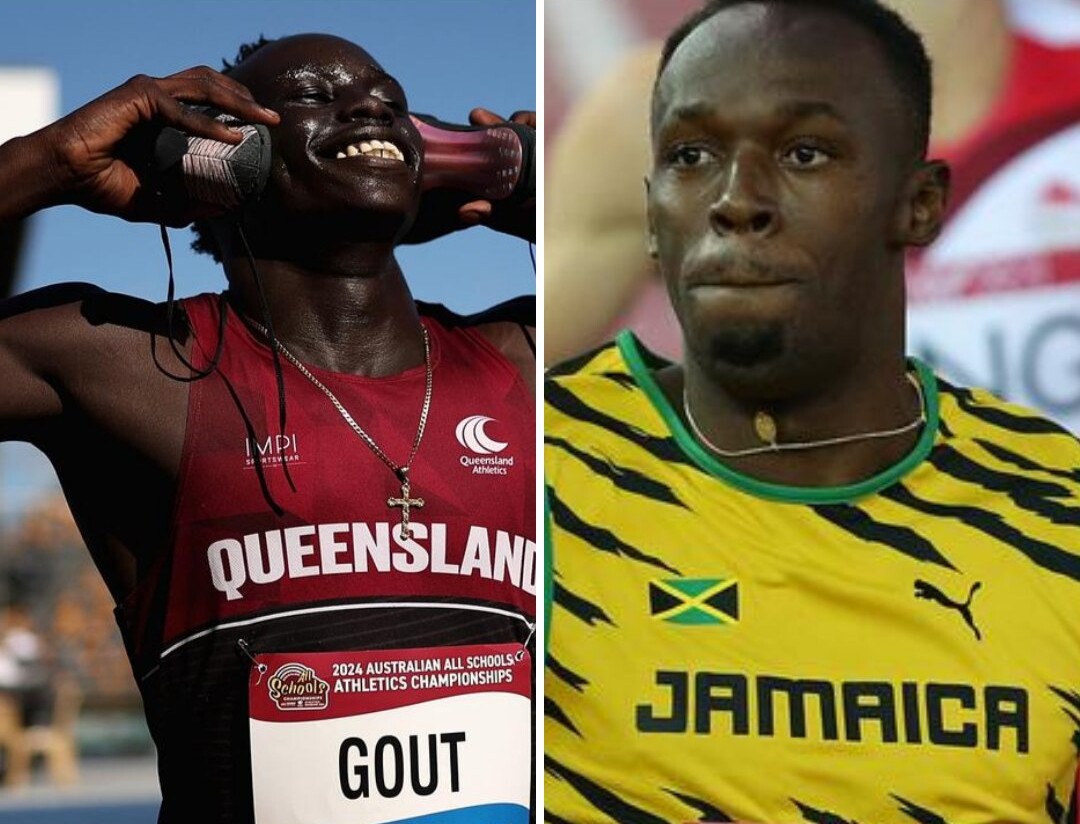
Bolt did not hesitate to acknowledge the teenager’s extraordinary potential, describing him as a “massive young talent.” Yet, beneath the praise lay a deeper message—one that speaks to the fragile path from prodigy to global star. For Bolt, the difference is rarely about physical ability. Instead, it hinges on guidance, discipline, and the environment surrounding the athlete.
“Hopefully he has the right set of people to guide him and keep him focused,” Bolt remarked, underscoring the importance of a strong support system. It is a sentiment rooted in experience. Throughout his own illustrious journey, Bolt benefited from a structured team that helped refine not just his sprinting mechanics, but his mindset and professionalism.
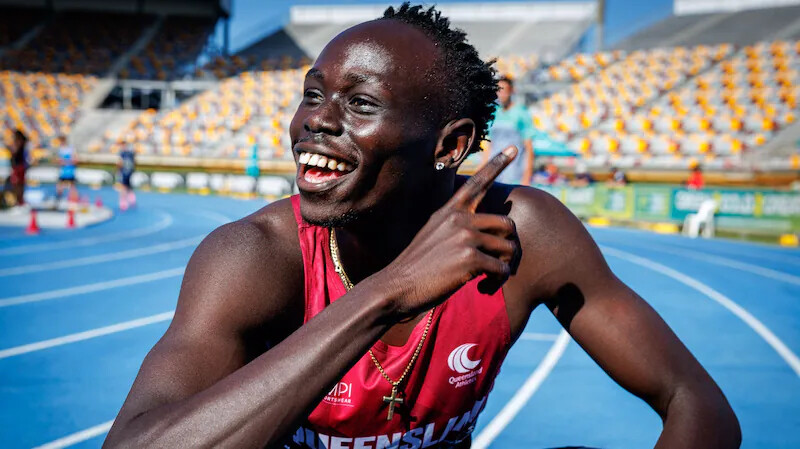
For Gout Gout, whose rapid rise has captured international attention, the spotlight is arriving early—and with it, the pressures that have derailed many promising careers before they truly began. Talent can open doors, but maintaining focus amid expectations, media attention, and external influences is a far more complex challenge.
Bolt’s advice, therefore, is not merely a passing comment; it is a blueprint. The right coaching, mentorship, and personal discipline can transform potential into sustained excellence. Without them, even the most gifted athletes risk losing direction.
As the athletics world watches Gout’s development with anticipation, Bolt’s words serve as both encouragement and a gentle warning. The journey ahead is long, and while the speed is already there, the foundation around it will ultimately determine just how far the young Australian can go.
In the end, greatness is rarely accidental. And if Gout Gout heeds the counsel of one of history’s fastest men, his path might just lead to something extraordinary.
by Erick Cheruiyot for My Best Runs.
Login to leave a comment

A Bold Prediction: Sally Pearson Backs Gout Gout to Challenge Usain Bolt’s Untouchable Legacy
In the world of sprinting, few records carry the aura of invincibility quite like those set by Usain Bolt. For over a decade, the Jamaican icon’s breathtaking performances have stood as the gold standard of human speed, seemingly beyond reach. Yet, a new voice of belief has emerged—one that is turning heads across the athletics world.

Olympic champion Sally Pearson has made a striking prediction, boldly suggesting that Australia’s rising teenage sensation, Gout Gout, could one day rewrite history.
Pearson, herself a symbol of excellence and resilience on the track, did not mince her words. She acknowledged the long-held perception that Bolt’s records were untouchable, almost mythical in their dominance. But in Gout Gout, she sees something different—something rare. A spark that could evolve into something extraordinary.
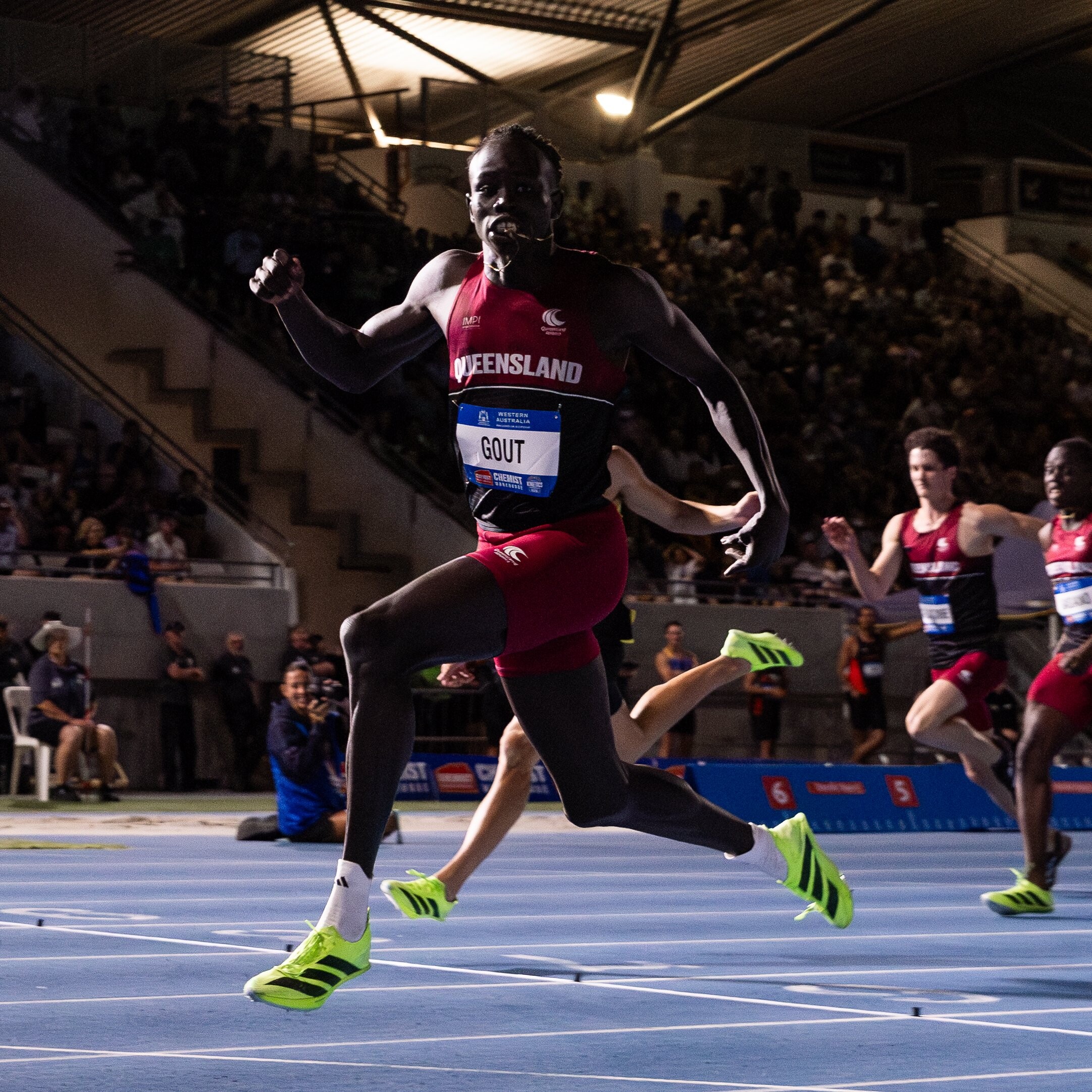
Still in the early stages of his career, Gout Gout has already captured global attention with his explosive speed, fluid stride, and composure far beyond his years. His performances have not only electrified Australian athletics but also ignited conversations about the future of sprinting itself. While comparisons to Bolt may seem premature, they are becoming increasingly difficult to ignore.
What makes Pearson’s statement particularly compelling is her understanding of what it takes to reach the pinnacle. As an Olympic gold medalist, she recognizes the fine margins, the relentless discipline, and the unique talent required to break records at the highest level. Her endorsement, therefore, is not casual hype—it is an informed belief.
However, the road to challenging Bolt’s legacy is steep and unforgiving. Records of such magnitude demand not only raw talent but also years of consistency, peak physical conditioning, and the ability to perform under immense pressure on the biggest stages. History is filled with prodigies who promised much but fell short of rewriting the record books.
Yet, sport thrives on possibility. Every era eventually gives rise to a new force, an athlete capable of redefining limits once thought fixed. For now, Gout Gout remains a prodigious talent with immense potential—but also a long journey ahead.
Pearson’s bold claim has added fuel to an already growing narrative. Whether it proves prophetic or premature, one thing is certain: the spotlight on Gout Gout has never been brighter, and the athletics world will be watching every step of his rise with anticipation.
Because in sprinting, as history has shown, the impossible is only impossible—until someone proves otherwise.
by Erick Cheruiyot for My Best Runs.
Login to leave a comment
Gout Gout Sets the Track Alight with Historic 19.67 World U20 Record
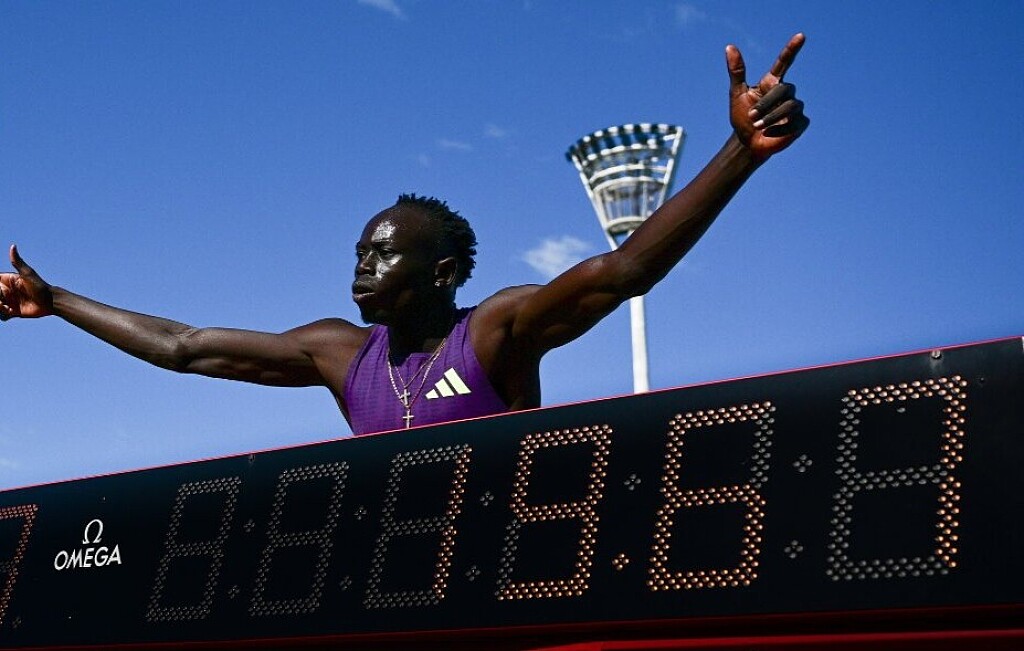
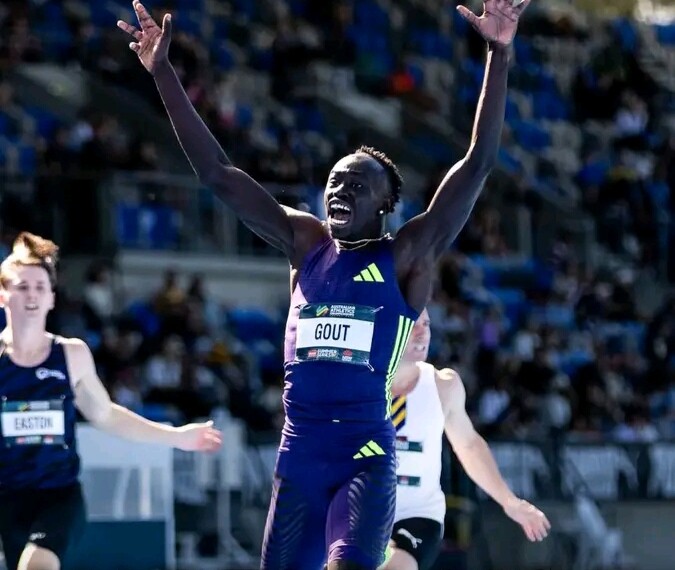
Australian sprint sensation Gout Gout delivered a performance for the ages at the Australian Championships, blazing to a sensational 19.67 in the men’s 200 metres to rewrite the World Under-20 record books and announce himself as one of the brightest talents in global athletics. At only 18 years old, he produced a run of remarkable composure, raw speed and fearless ambition that left the stadium in awe.
With that stunning mark, Gout became the first Australian man in history to break the 20-second barrier in wind-legal conditions, a milestone that places his name among the nation’s greatest sprint achievements. It was not simply a victory—it was a defining moment for Australian athletics and a signal that a new era may be beginning.

From the moment the gun fired, Gout attacked the bend with confidence before exploding down the home straight. His stride remained fluid, powerful and controlled as he surged clear of the field, crossing the line to immediate celebration and disbelief. When the time flashed on the board, history had been made.
His 19.67 now stands among the greatest junior performances ever recorded in the event. On the all-time men’s Under-20 list, only Erriyon Knighton has run faster with a 19.49, though that performance was not ratified by World Athletics due to specific anti-doping testing requirements not being met. That officially elevates Gout’s mark to the recognised World Under-20 record. Behind him on the historic rankings are sprint legends and elite talents including Usain Bolt (19.93), Blessing Akwasi Afrifah (19.96), Letsile Tebogo (19.96), Issamade Asinga (19.97) and others who announced themselves early on the world stage.
What makes the achievement even more extraordinary is his age. To produce such a performance at 18 speaks not only to natural talent, but also to exceptional discipline, preparation and competitive maturity. Few young athletes have ever carried such promise with this level of execution on the big stage.
The result now places Gout firmly in the spotlight as one of sprinting’s most exciting rising stars. If this performance is any indication of what lies ahead, the athletics world has every reason to pay attention.
On a day meant for racing, Gout Gout turned it into a show—and into history.
by Erick Cheruiyot for My Best Runs.
Login to leave a comment
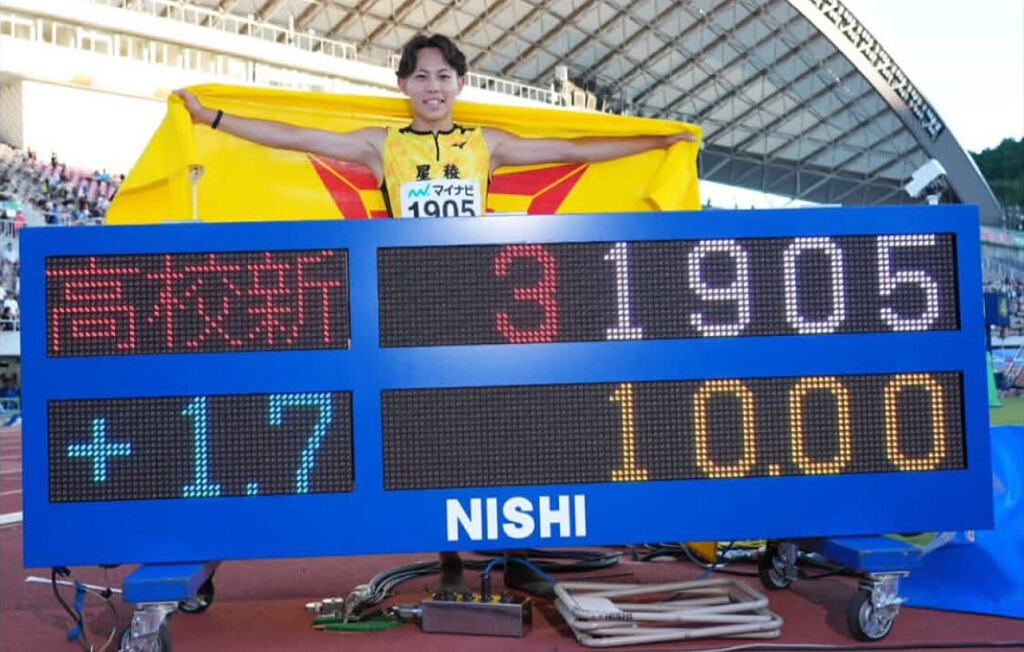
Sorato Shimizu Sprints Into History: 16-Year-Old Clocks 10.00s to Set World Age-16 Record
Japanese sprinting phenom Sorato Shimizu has etched his name into the history books with a jaw-dropping performance at the Japanese Inter-School Championships—blazing to a 10.00-secondfinish in the 100 meters. At just 16 years old, Shimizu now owns the fastest time ever recorded by a 16-year-old, breaking the previous world best of 10.09 held by Thailand’s Puripol Boonson.
The time, achieved with a legal wind assistance of +1.7 m/s, marks a stunning personal best for the young star and sets a new World Age-16 Record. The stadium erupted as Shimizu crossed the line and confirmed the time on the scoreboard, with fans and fellow athletes celebrating what could be the beginning of a generational sprinting career.

A Historic Milestone in Sprinting
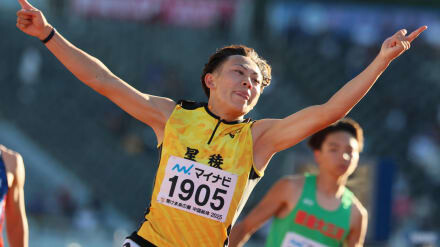
Running 10.00 seconds in the 100m is a feat few athletes achieve—even at the elite senior level. That a 16-year-old high school student has accomplished it underscores Shimizu’s immense talent and the growing strength of sprinting development in Japan.
Shimizu’s run wasn’t just about raw speed—it showcased poise, explosive acceleration, and flawless execution from start to finish. His reaction time, drive phase, and transition into top-end speed were that of a seasoned pro. It was a performance that stunned not only spectators in Japan but sprint fans across the globe.
Breaking Boonson’s Mark
Before Shimizu’s 10.00, the world age-16 best was 10.09, set by Thailand’s Puripol Boonson in 2022. Boonson has since gone on to become one of Asia’s fastest men—and Shimizu is now poised to follow a similar path, if not exceed it.
With this performance, Shimizu moves into a rarefied tier of sprinting prospects, joining a list that includes the likes of Trayvon Bromell, Erriyon Knighton, and Usain Bolt—who all produced world-class times as teenagers.
The New Face of Japanese Sprinting
Japan has long produced disciplined and technically sound sprinters, with athletes like Abdul Hakim Sani Brown, Yoshihide Kiryu, and Ryota Yamagata helping bring Japanese sprinting into the global spotlight. Sorato Shimizu now emerges as the new face of that legacy—and possibly, its next global champion.
With the Paris Olympics behind us and eyes already shifting to Los Angeles 2028, Shimizu’s name will surely be one to watch on the international scene.
What’s Next for Sorato Shimizu?
While this 10.00 clocking will take some time to fully digest, one thing is clear: Sorato Shimizu is just getting started. Still in high school, his future includes national championships, international junior meets, and, if his progression continues, a spot on Japan’s senior relay and individual sprint squads.
His breakthrough opens new possibilities for Japanese sprinting, showcasing that sub-10 is not a dream for the future—it’s a reality for the present.
Final Word
In an era where sprinting records are harder than ever to break, Sorato Shimizu just redefined what’s possible at age 16. His 10.00-second dash not only resets the record books—it ignites excitement for the future of global sprinting.
This isn’t just a time. It’s a statement.
Sorato Shimizu has arrived.
by Boris Baron
Login to leave a comment
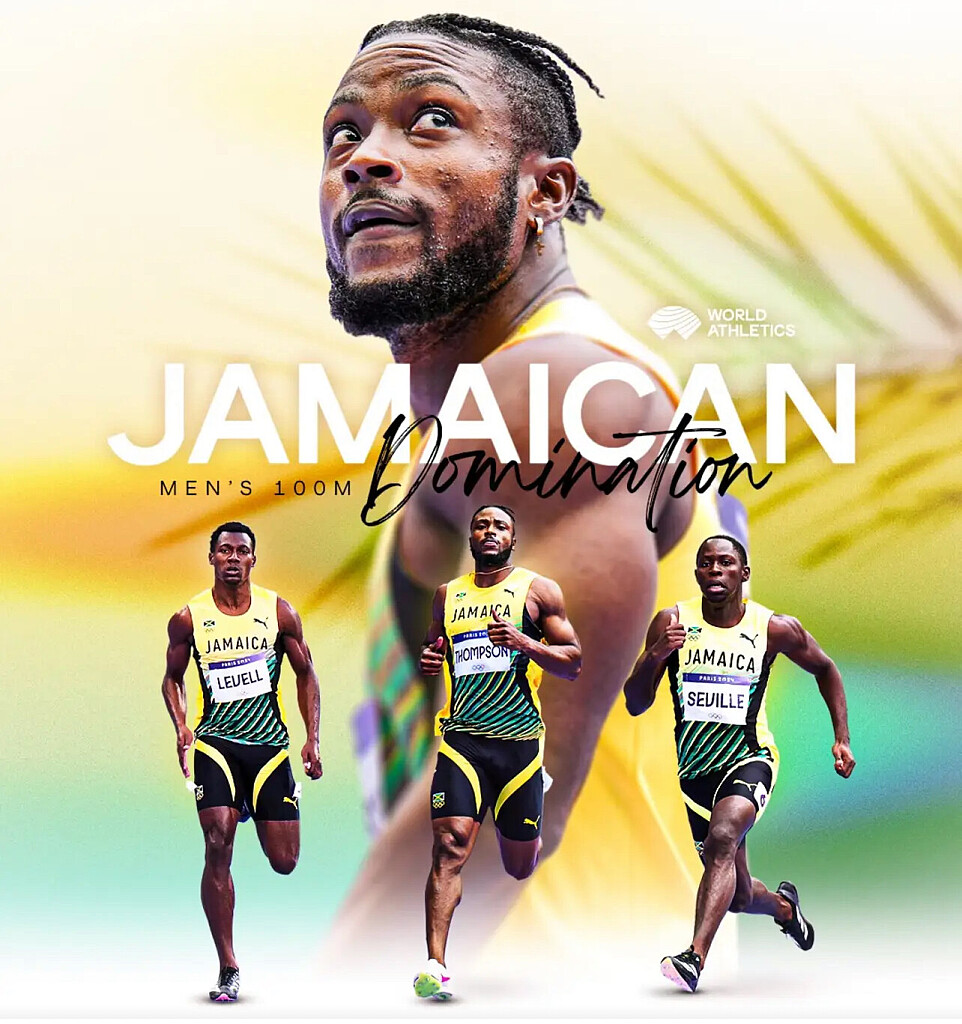
Jamaica Takes Over the 100m in 2025 — But Don’t Count Team USA Out Just Yet
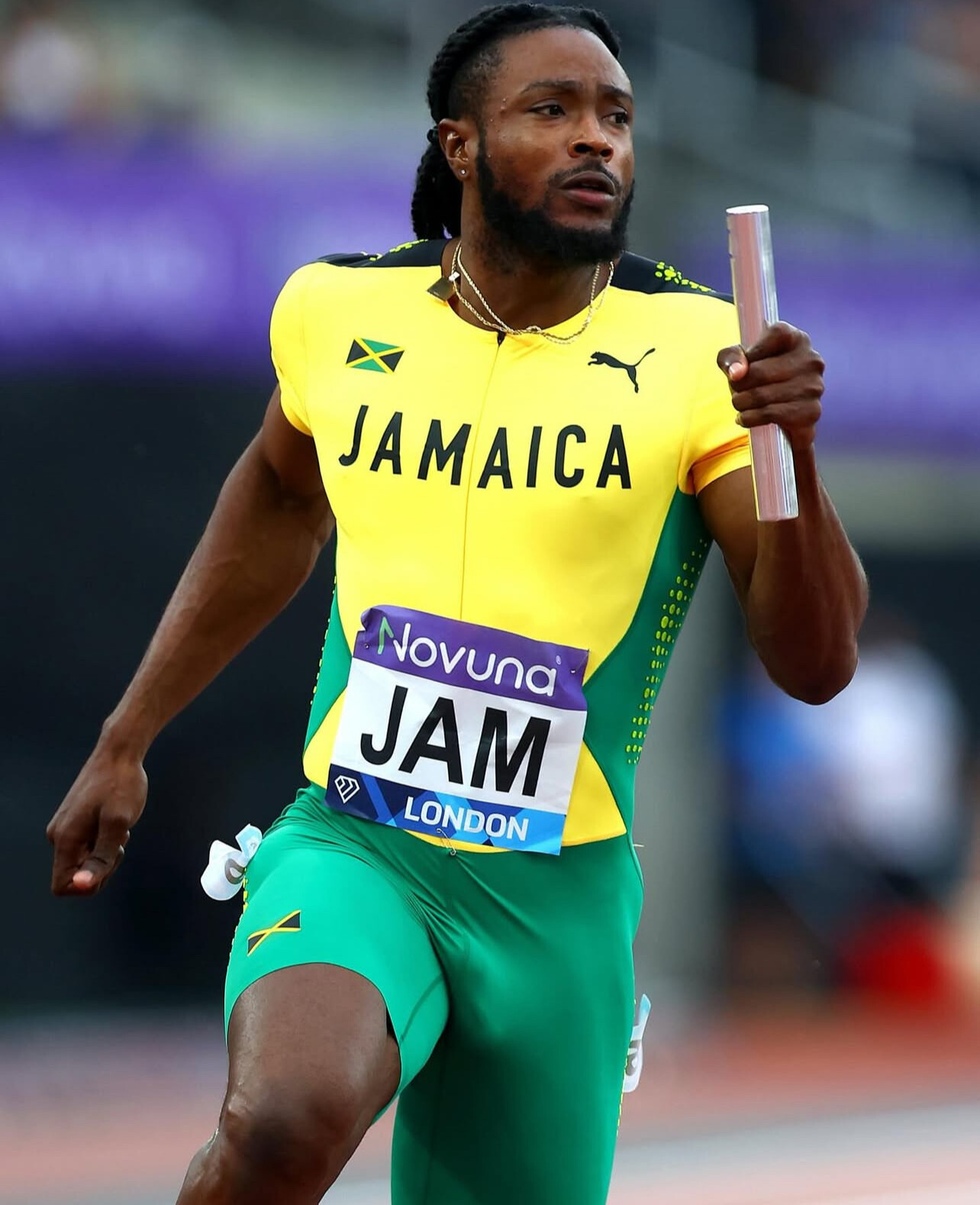
Jamaica is back—and in a big way. With just weeks until the World Athletics Championships Tokyo 2025, the top three times in the men’s 100 meters all belong to Jamaican sprinters:
Kishane Thompson – 9.75
Bryan Levell – 9.82
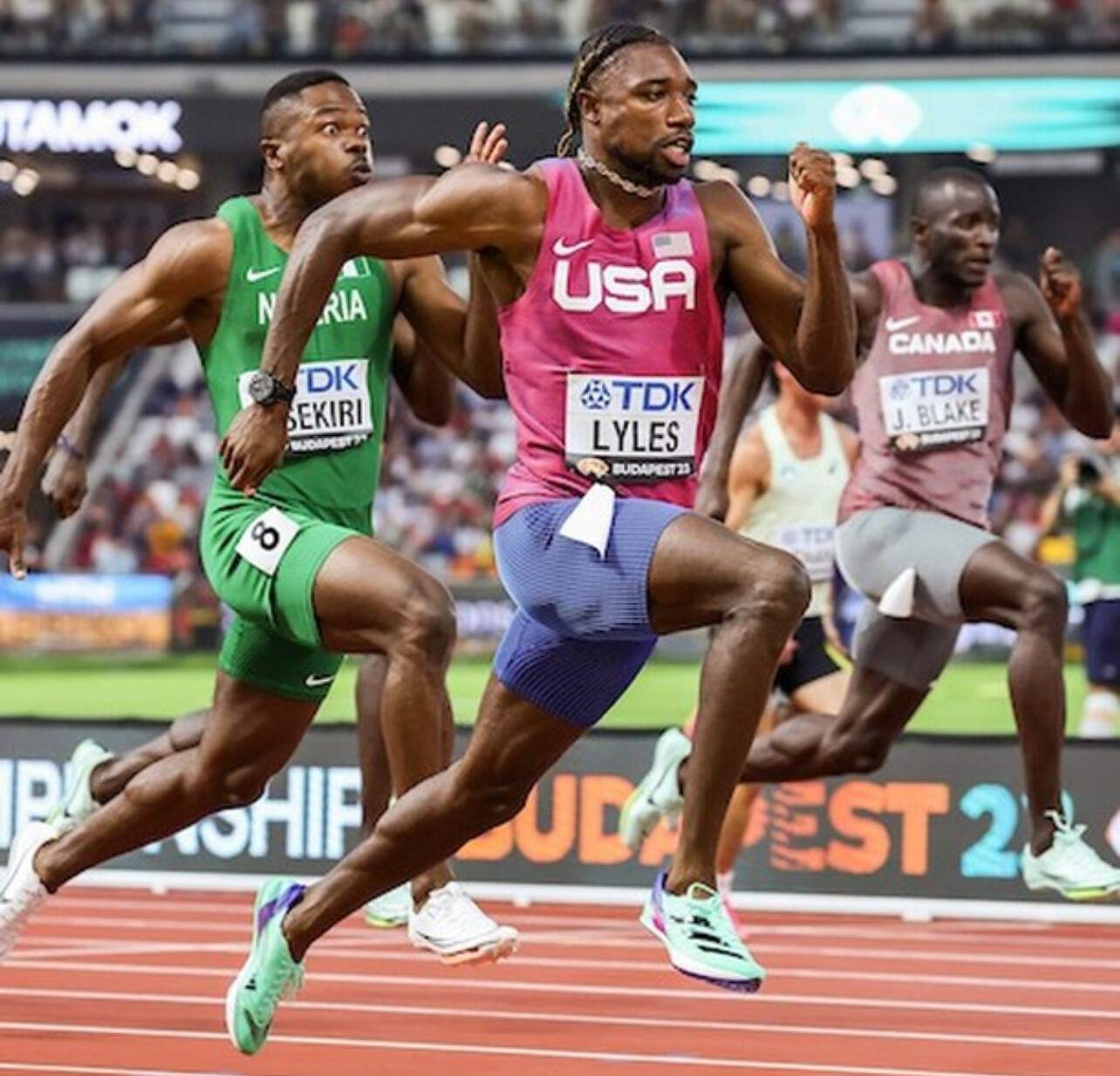
Oblique Seville – 9.83
It’s a stunning sweep that echoes the glory days of Usain Bolt, Asafa Powell, and Yohan Blake. Once again, Jamaica is asserting sprinting dominance on the global stage.
But the Americans aren’t backing down.
The U.S. Response
Christian Coleman, the 2019 World Champion and indoor world record holder, remains a serious contender. While he hasn’t cracked the 9.80 mark this season, his raw speed and big-meet experience can’t be ignored.
Then there’s Noah Lyles, the reigning 100m world champion from 2023. Lyles opened 2025 focused more on the 200m and Olympic buildup, but he’s expected to peak at the right time. He holds a personal best of 9.83, and if he gets the start right, he can be deadly in the final 30 meters.
Fred Kerley and Trayvon Bromell are also in the mix, both capable of sub-9.90 performances when healthy and locked in. Their challenge now is to stay consistent as the season progresses.
The Rivalry is Back
Tokyo 2025 could deliver one of the most thrilling 100-meter finals in recent memory:
• Three Jamaicans in peak form.
• Four Americans with world-class credentials.
• African stars like Omanyala and Tebogo chasing their first world title.
It’s a global showdown that brings back the tension and electricity of the Bolt-Gatlin era—only this time, the Jamaicans aren’t chasing; they’re being chased.
As World Athletics put it: “JAMAICA TO THE WORLD” — but America might have something to say about that.
by Boris Baron
Login to leave a comment
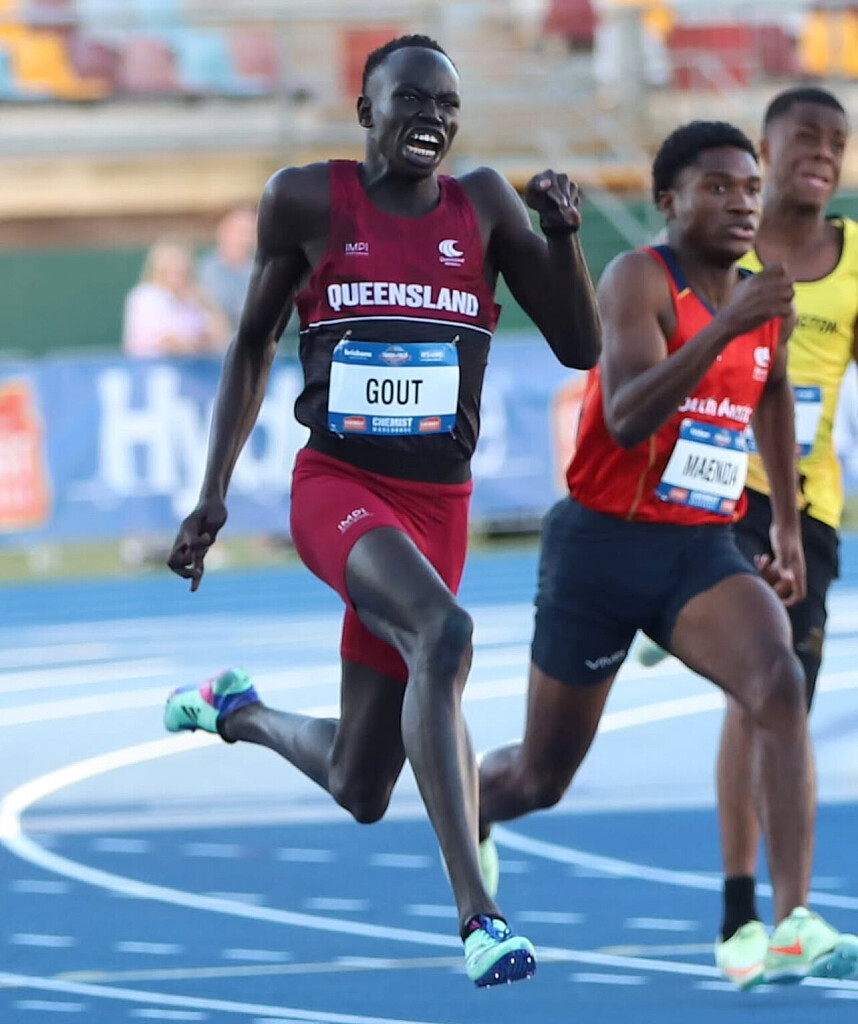
Australia’s teenage sprint sensation, Gout Gout, is gearing up for his biggest stage yet — the 2026 Commonwealth Games in Glasgow.
At just 17 years old, Gout Gout has already rewritten the record books. The Queensland-based sprinter, born in December 2007 to South Sudanese parents, is widely regarded as one of the most exciting young talents in global athletics. His rapid rise has drawn comparisons to legends like Usain Bolt — and for good reason.
Gout currently holds the Oceanian 200m record with a time of 20.02 seconds, set at the Golden Spike meet in Ostrava earlier this year. He also clocked 10.17 in the 100m to win the Australian U-18 title and later dominated the U-20 division. His combination of top-end speed, graceful stride, and fierce competitive drive has made him a must-watch on the world stage.
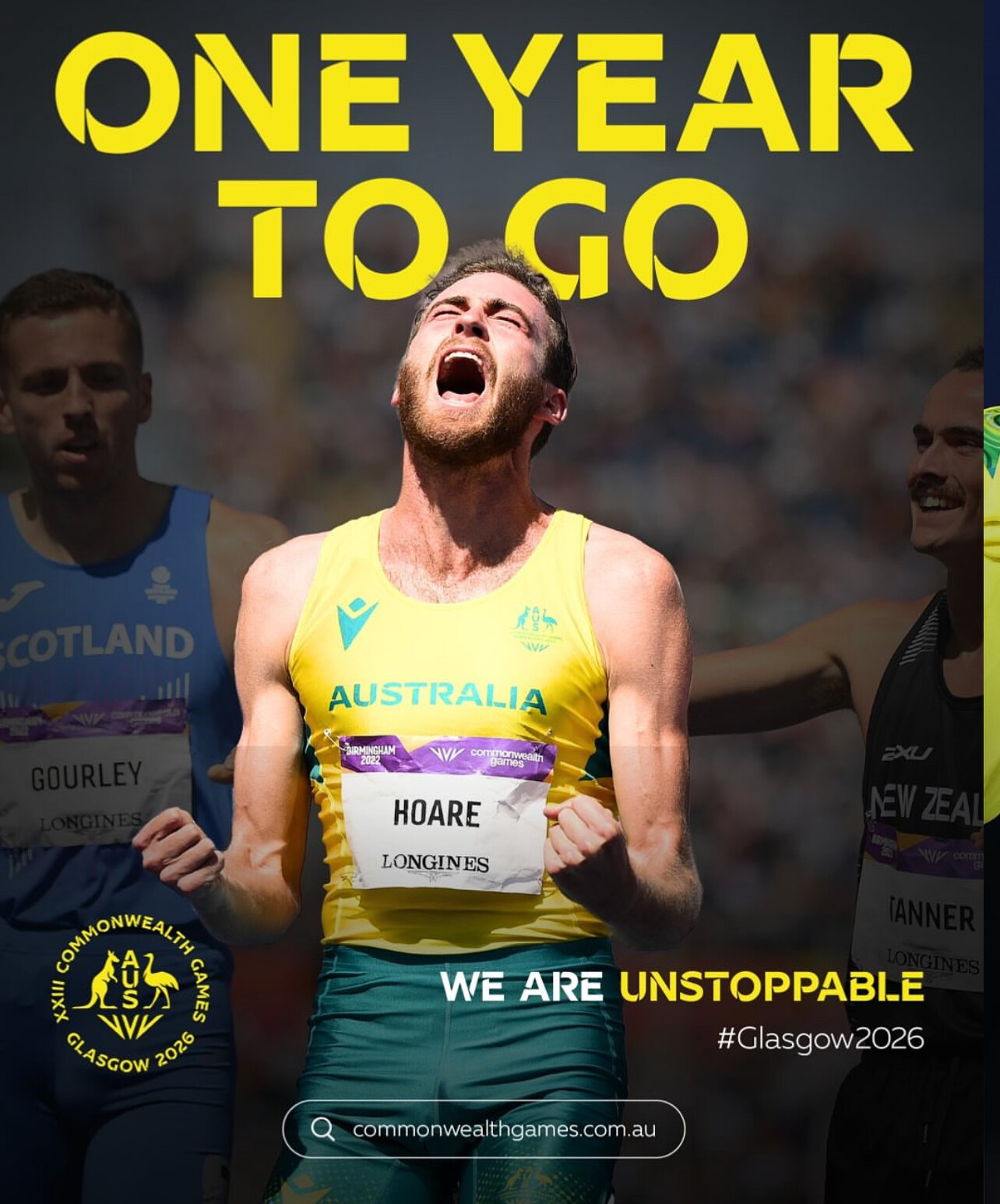
Now, the teen phenom is set to represent Australia at the 2026 Commonwealth Games, scheduled for July 23 to August 2 in Glasgow, Scotland. He is expected to compete in the 100m, while his entry in the 200m remains under consideration due to scheduling conflicts with the World Junior Championships, which will take place shortly after in Eugene, Oregon.
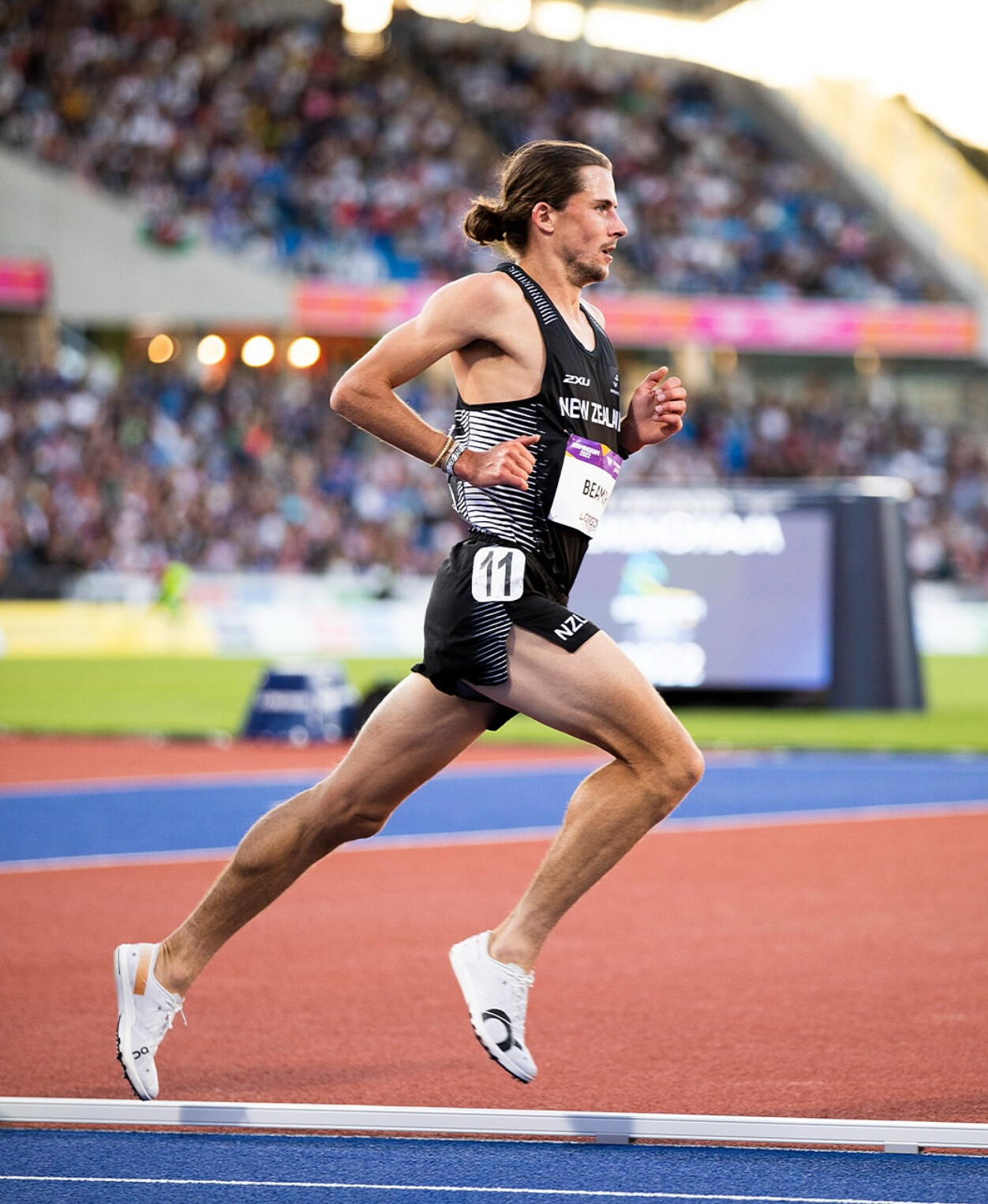
Gout’s Path to Stardom

Gout’s emergence as a global sprint force has been nothing short of remarkable. Raised in Ipswich, Queensland, he was introduced to athletics at a young age and quickly caught the attention of Australia’s elite coaches. Under the guidance of Diane Sheppard, Gout has developed into a technically polished athlete with a mature race strategy far beyond his years.
His silver medal at the 2024 World U20 Championships in the 200m confirmed what many already believed — Gout Gout isn’t just Australia’s future; he’s already one of its best.
Sheppard has praised his dedication, humility, and focus, noting:
“With Gout, it’s not just talent — it’s mindset. He’s willing to do the work and stay grounded.”
Glasgow 2026: A Games Reimagined
The 2026 Commonwealth Games will mark a return to Glasgow, which last hosted the event in 2014. Following Victoria’s withdrawal as host due to financial concerns, Glasgow stepped up with a streamlined, cost-efficient plan built on existing infrastructure.
The Games will feature:
• 10 core sports and 47 para-sport events
• Key venues including Scotstoun Stadium (track and field), Tollcross International Swimming Centre, and the Sir Chris Hoy Velodrome
• A strong focus on sustainability and legacy, with no new athletes’ village planned
Mascot “Finnie the Unicorn”, named after the Finnieston Crane and created by local students, has already captured hearts with its fun, distinctly Scottish vibe.
by Boris Baron
Login to leave a comment
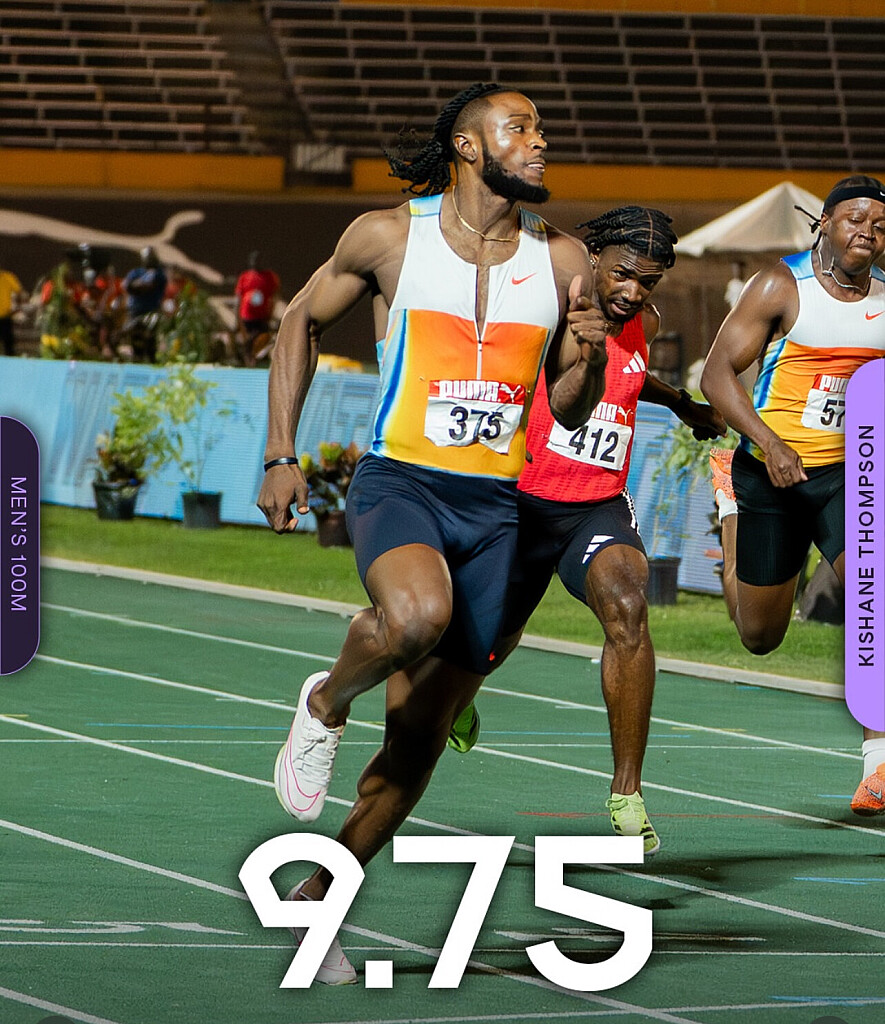
Kishane Thompson Runs 9.75 to Become Sixth Fastest Man in History
Jamaican sprinting just added another chapter to its storied legacy. On June 27, 2025, Kishane Thompson stunned the track world with a blazing 9.75-second performance in the men’s 100m final at the 2025 Jamaican National Championships, becoming the sixth-fastest man of all time.
Running in near-perfect conditions, Thompson powered down the track with a performance that firmly cements him among the global elite. Only five men—Usain Bolt, Tyson Gay, Yohan Blake, Asafa Powell, and Justin Gatlin—have ever run faster.
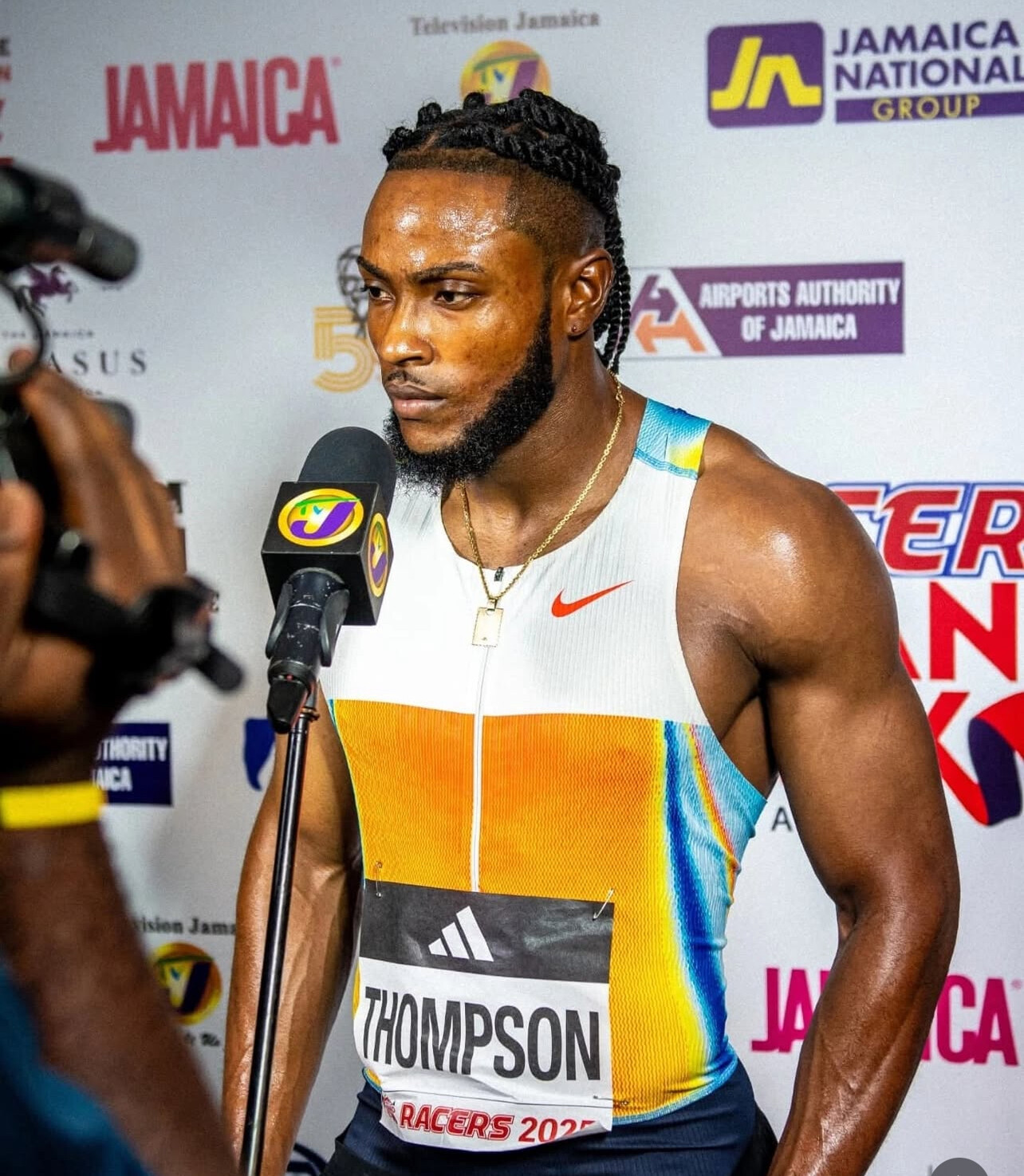
This wasn’t just a personal best. It was a breakout moment that may redefine Jamaica’s sprint hierarchy heading into the Paris Olympics later this summer. Thompson, who has quietly been building momentum over the past two seasons, now finds himself at the center of global attention.
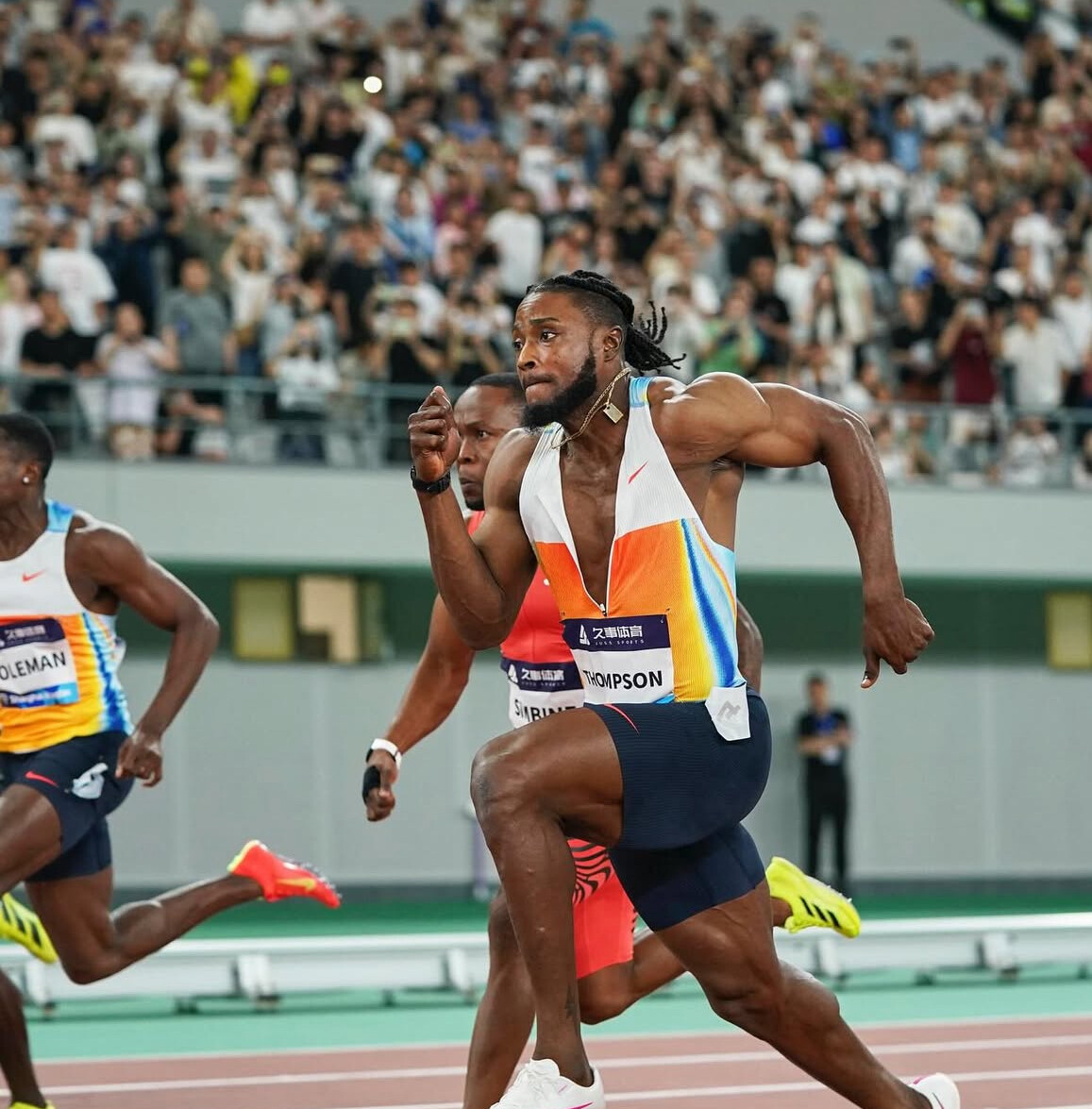
“I knew I had this in me,” Thompson told reporters after the race. “Training has been going well, and I came here ready to execute. To do it on this stage, in front of my home crowd, is special.”
The performance lights up what’s already been a thrilling sprint season, with several athletes dropping times under 9.90. But 9.75? That’s a mark that sends shockwaves around the world.
With his explosive start and powerful closing stride, Thompson showed a blend of raw speed and race maturity well beyond his years. The moment also comes at a critical time for Jamaican sprinting, as the nation looks to find its next global icon following the retirement of Usain Bolt.
If Friday’s race was any indication, Kishane Thompson may be that next name.
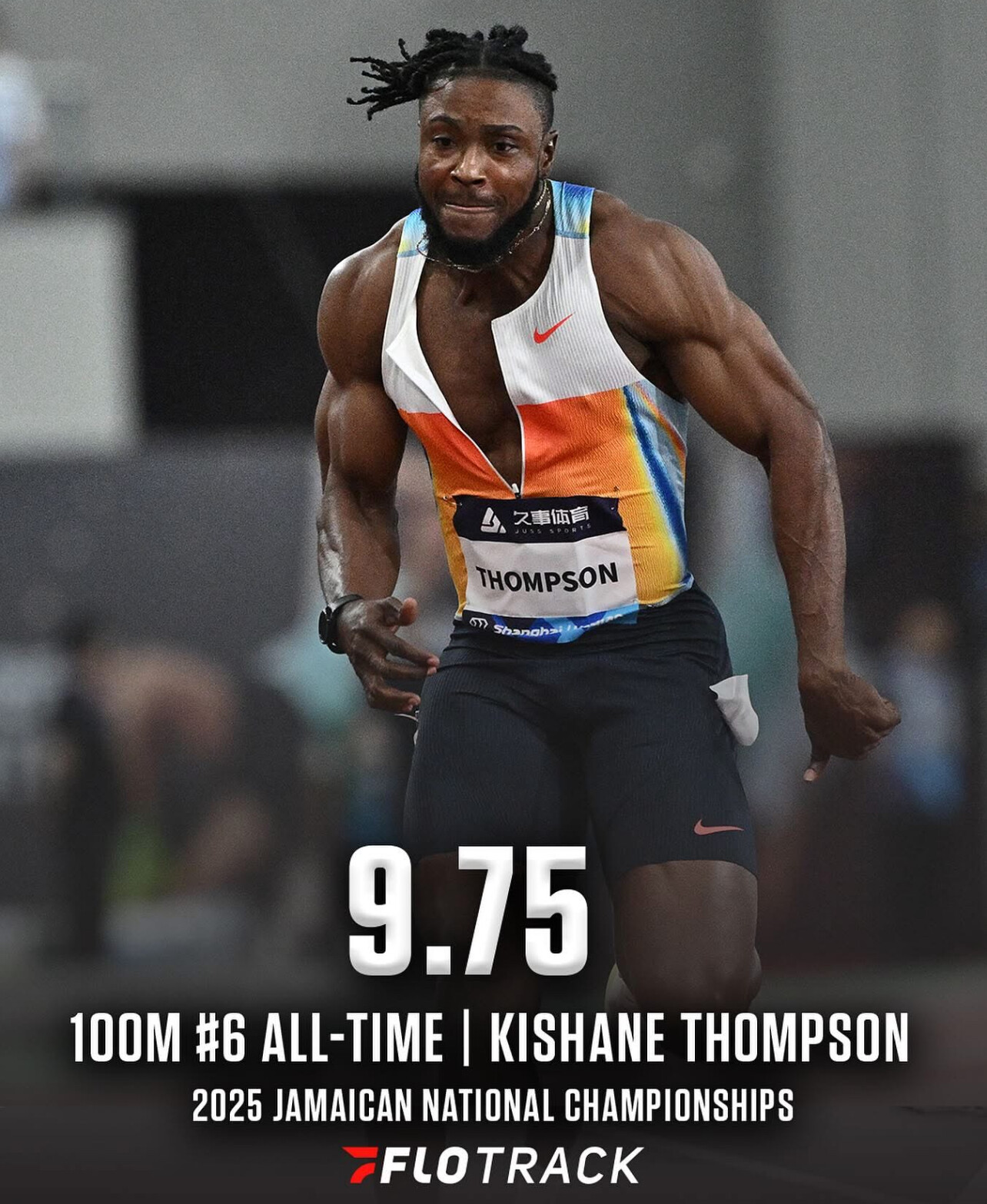
Top 100m Performances All-Time
1. Usain Bolt – 9.58
2. Tyson Gay – 9.69
3. Yohan Blake – 9.69
4. Asafa Powell – 9.72
5. Justin Gatlin – 9.74
6. Kishane Thompson – 9.75
by Boris Baron
Login to leave a comment
Fake News Creeps Into Athletics World with False Usain Bolt Claim
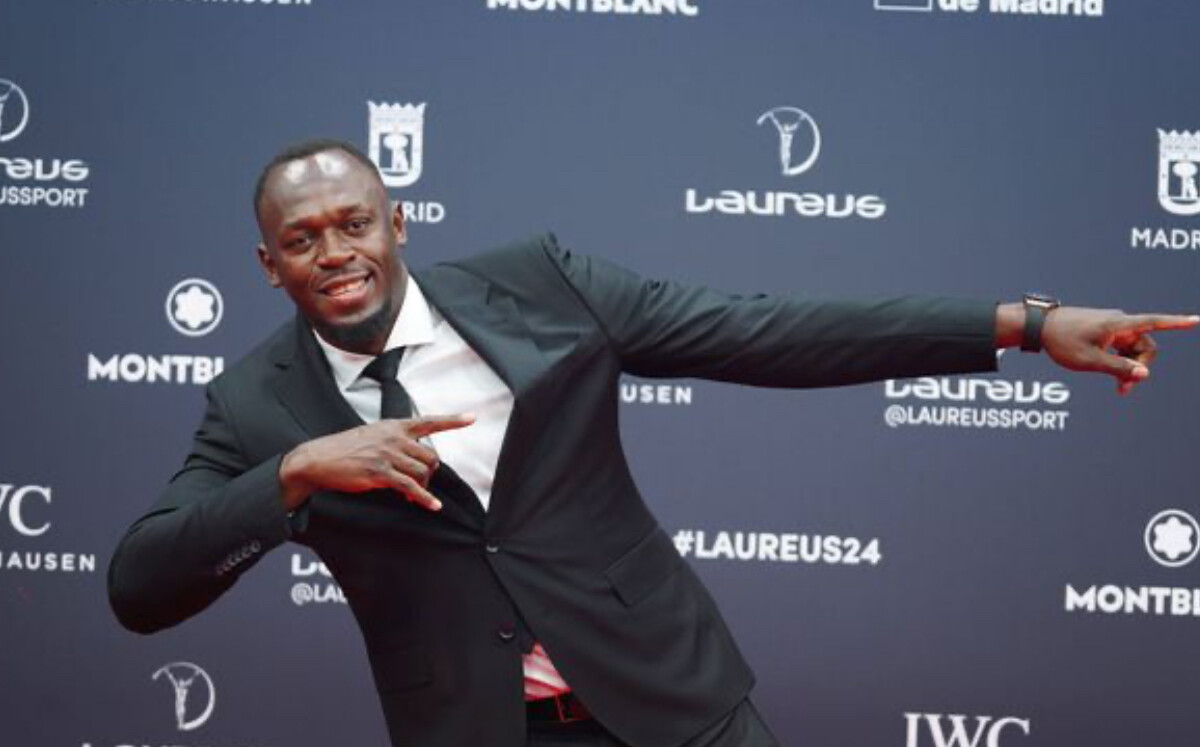
In a digital age overflowing with misinformation, fake news has found its way into nearly every corner of public life—and now it’s creeping into the world of athletics. Over the weekend, a Facebook post from a fan page titled Usain Bolt Fans falsely claimed that the legendary sprinter was stepping down as Jamaica’s ambassador.
The post, filled with dramatic language and linked to a questionable site (dailypressnewz.com), quickly gained traction—racking up hundreds of reactions, comments, and shares. But there’s one problem: it’s not true.
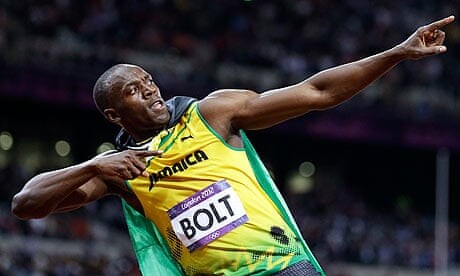
There has been no official confirmation from Usain Bolt, the Jamaican government, or any reputable media outlet. This appears to be a blatant fabrication—another example of how social media platforms, especially Facebook, are failing to properly police misinformation.
“Why would anyone want to spread such lies?” That’s the troubling question. Perhaps it’s about driving traffic to ad-heavy websites. Or it could be more sinister—part of a broader trend of undermining public trust in institutions and public figures. Either way, it’s deeply concerning.
Usain Bolt isn’t just an Olympic icon—he’s a symbol of excellence, integrity, and global unity through sport. Misusing his name to generate clicks is not only dishonest, it’s harmful.
At My Best Runs, we believe in truth, accuracy, and the integrity of the running community. If false headlines are allowed to spread unchecked, they can damage reputations and distort public perception—especially among younger athletes who look up to role models like Bolt.
This incident is a wake-up call. If fake news can so easily invade the running world, no part of our sport is safe from digital misinformation.
Let’s stay vigilant. Let’s ask questions. And let’s continue celebrating the real stories that make our sport so powerful.
by Boris Baron
Login to leave a comment
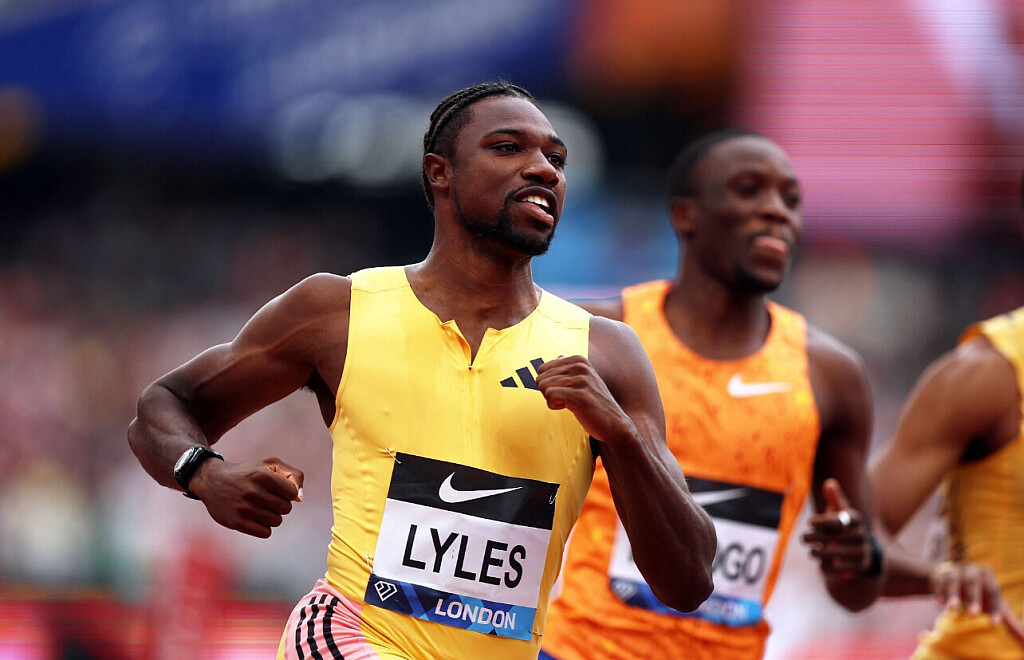
Who’s the Fastest Man in the World Right Now?
Sprint Showdown 2025: Lyles, Knighton, and Tebogo Ignite a New Era of Speed on the Diamond League Stage
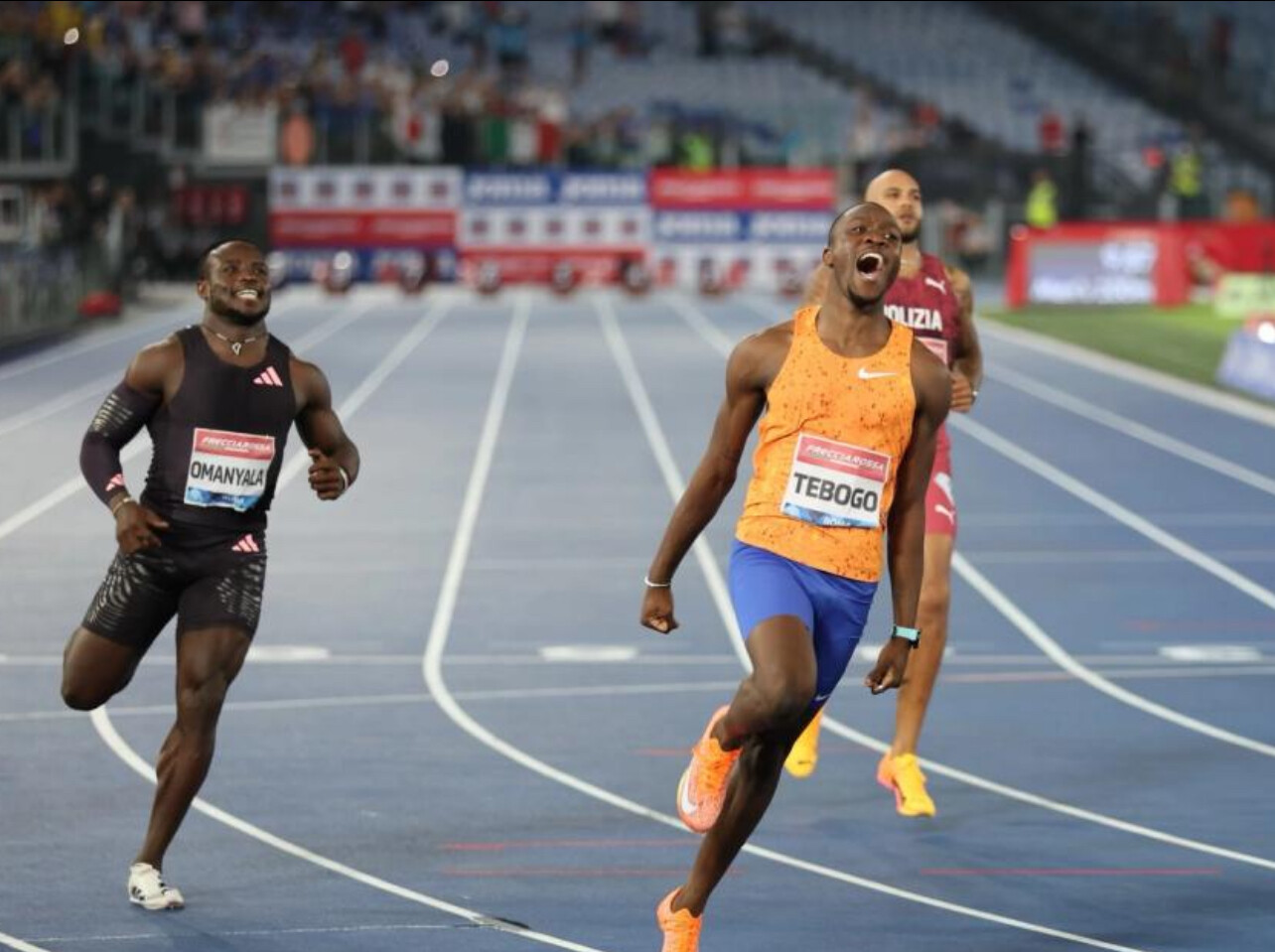
The 2025 Diamond League season is heating up fast, and the men’s sprints are once again the center of attention. Three names are defining the early action: Noah Lyles, Erriyon Knighton, and Letsile Tebogo—each with the potential to end the season as the world’s fastest man.
Noah Lyles: The Champion with a Target on His Back
Reigning Olympic and World Champion Noah Lyles is the man to beat. Though he hasn’t yet raced on the Diamond League circuit this year, his resume speaks volumes. He clocked 9.83 in the 100m and 19.47 in the 200m during the 2024 season and claimed double gold in Paris. All eyes are on when—and where—he’ll make his 2025 Diamond League debut. With a long-standing goal of breaking Usain Bolt’s 200m world record, Lyles remains the top contender.
Erriyon Knighton: Poised to Pounce
Still just 21 years old, Erriyon Knighton hasn’t raced yet in 2025, but anticipation is building. The American phenom owns a personal best of 19.49 in the 200m, set in 2022 as a teenager. After earning Olympic silver behind Lyles in Paris, Knighton is expected to return to the track soon and challenge for dominance in both the 100m and 200m this summer.
Leslie Tebogo: The Early Season Leader
Botswana’s Letsile Tebogo, the reigning Olympic 200m silver medalist and one of Africa’s brightest young stars, is already making headlines in 2025. He opened his season with a 10.20 in Xiamen and followed that with a 10.03 in Shanghai—finishing third in both Diamond League meets. Tebogo is scheduled to run his primary event, the 200m, at the Doha Diamond League on May 16, which could be a statement race as he builds toward the World Championships in Tokyo later this year.
What’s Next: A Collision Course
While all three athletes are on different timelines this season, the Diamond League is setting the stage for dramatic head-to-head clashes. Lyles and Knighton have yet to toe the line, while Tebogo is already building momentum. Their inevitable meeting—possibly at the Prefontaine Classic or in Europe this summer—could define the sprinting landscape in 2025.
The sprint wars are officially on. The only question left: Who will own the title of the world’s fastest man by season’s end?
by Boris Baron
Login to leave a comment
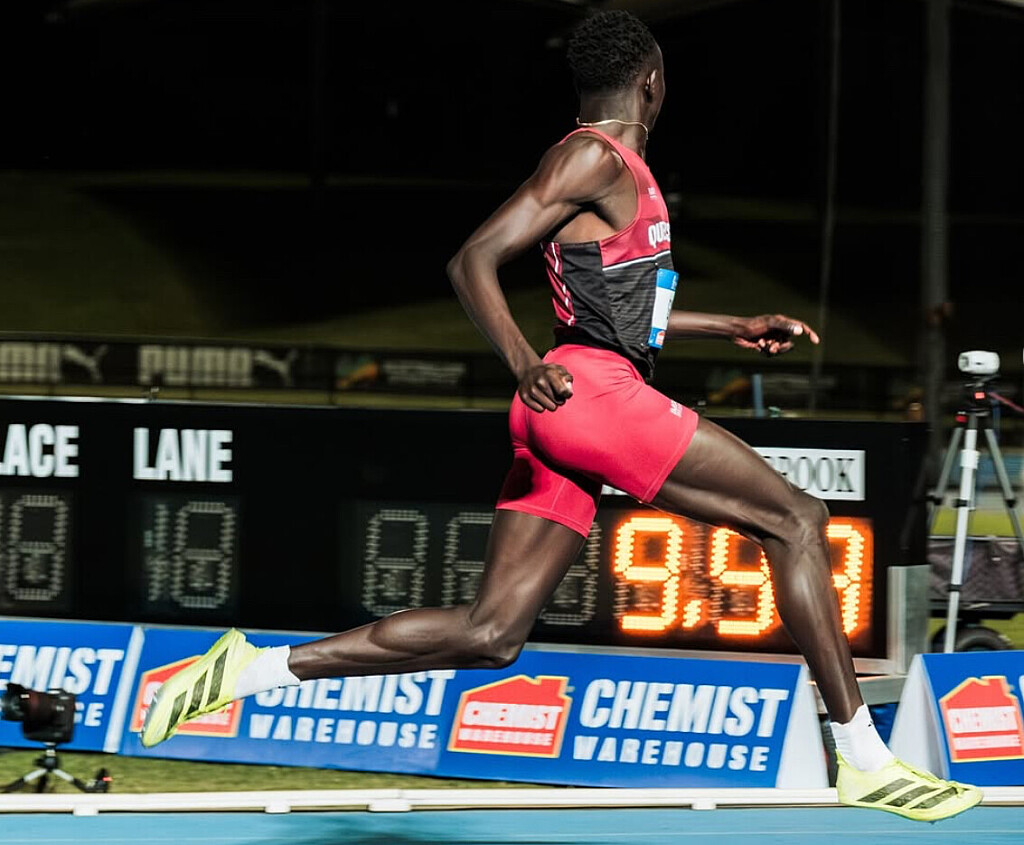
Gout Gout Clocks Back-to-Back 9.99s at Age 17
Dipping under the 10-second barrier in the 100 meters is a major milestone for any sprinter. For 17-year-old Australian sensation Gout Gout, doing it once wasn’t enough.
At the Australian Athletics Championships on Thursday, Gout stunned the crowd by running 9.99 seconds in his 100m heat—powered by a +3.4 m/s tailwind. Less than two hours later, he backed it up with an identical 9.99 in the final, this time with a +2.6 m/s wind. While the wind speeds mean neither time is eligible for record purposes, the message was clear: Gout Gout has arrived.
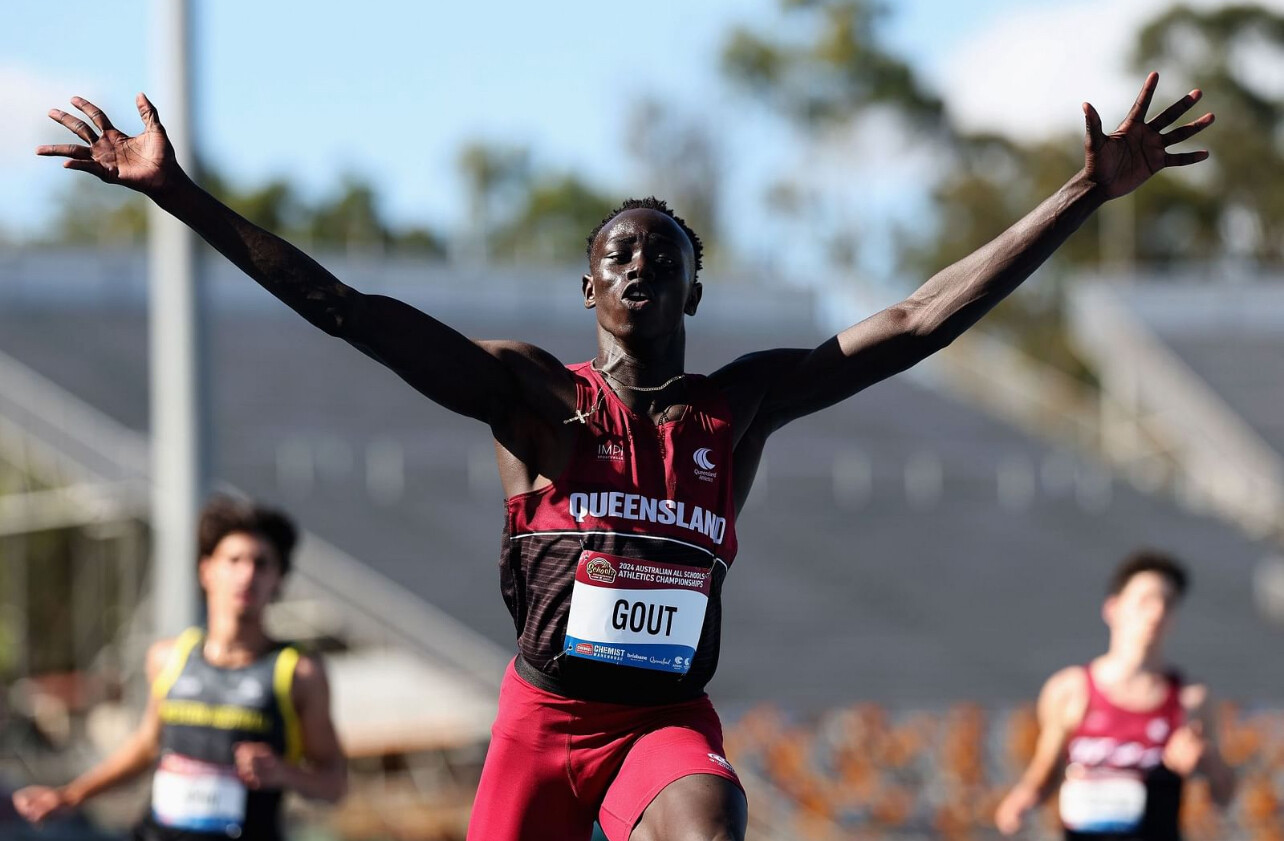
Including wind-aided marks, his performance ranks as the second-fastest 100m in the world this year, tying South Africa’s Bayanda Walaza, who ran 9.99 in March. More importantly, it obliterates the Australian and Oceanian U20 record of 10.15—but again, due to the excessive wind, the record books won’t recognize it.

Wind readings over +2.0 m/s are deemed illegal in sprinting, as they can artificially enhance performance—typically by about 0.1 seconds in the 100m. For Gout, this wasn’t the first time nature interfered with history. Back in December, as a U18 athlete, he clocked 10.04 with a +3.4 m/s wind. His current official personal best remains 10.17 seconds.
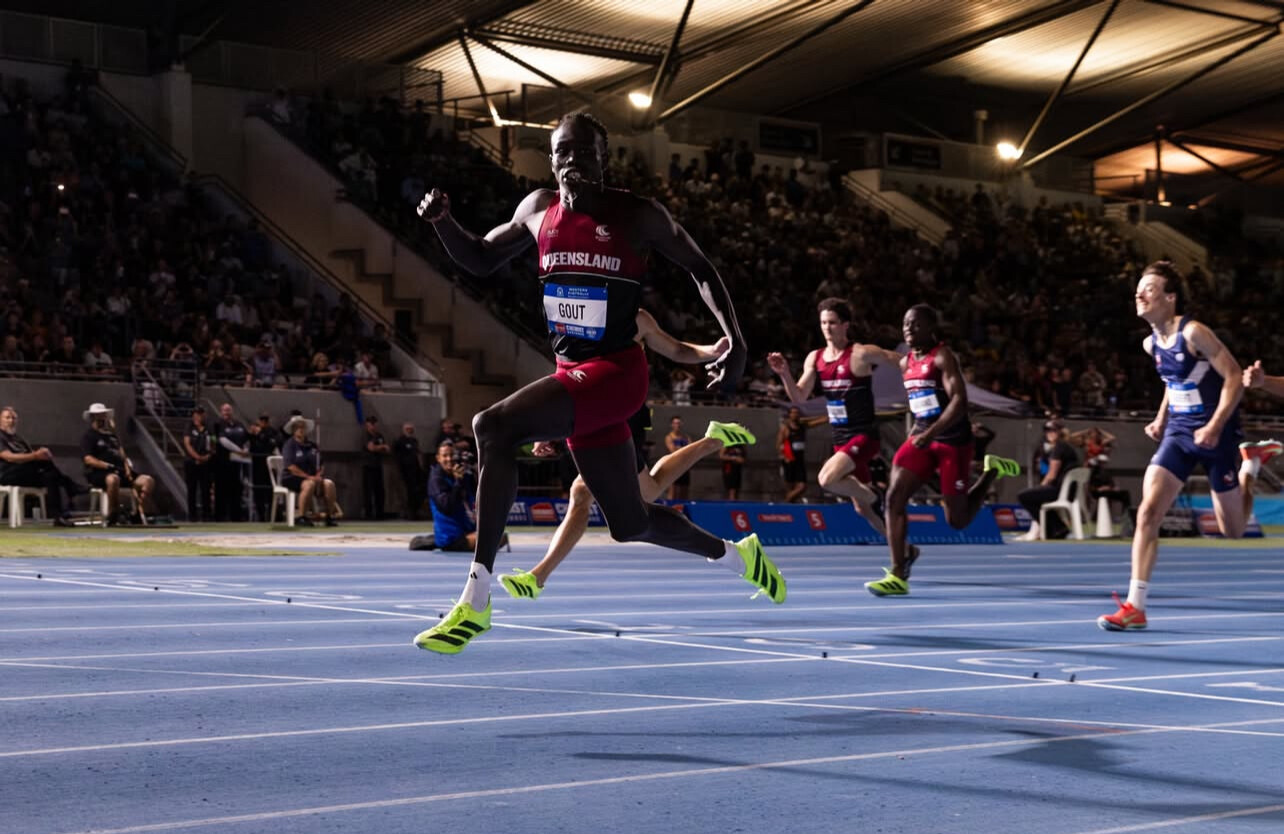
Still, the young sprinter isn’t letting wind readings define him.
“Sub-10 is something every sprinter hopes for,” Gout said. “To gain that sub-10 definitely boosts my confidence, especially for my main event—the 200m.”
And that’s not just talk. Gout broke the Australian 200m record in December at just 16 years old, clocking a blistering 20.04 seconds. With that time, he announced himself as a true global prospect.
The Australian 100m record of 9.93, set by Patrick Johnson in 2003, remains untouched—for now. But if Gout Gout keeps this trajectory, and gets the wind on his side, he may not only rewrite national records—he might just chase global ones.
Is Gout Gout the Next Usain Bolt?
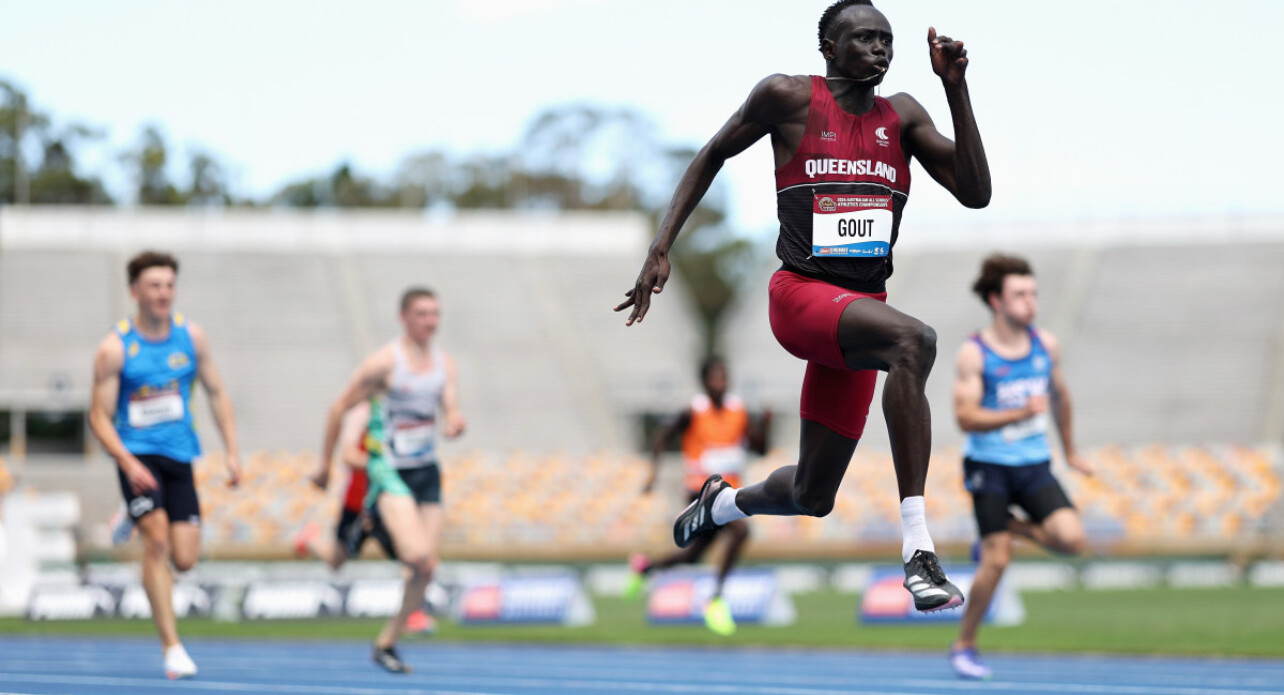
While it’s tempting to draw comparisons between Gout Gout and Usain Bolt, especially given their early successes and similar event specializations, it’s important to recognize that Gout is carving his own path. Notably, he broke Bolt’s under-18 200m record by running 20.04 seconds, surpassing Bolt’s 20.13-second mark at the same age .
Usain Bolt’s world records stand at 9.58 seconds for the 100m and 19.19 seconds for the 200m, both set in 2009. Gout’s current legal personal bests are 10.17 seconds for the 100m and 20.04 seconds for the 200m . While there’s still a gap between their times, Gout’s trajectory suggests he could become a formidable competitor on the world stage
by Boris Baron
Login to leave a comment
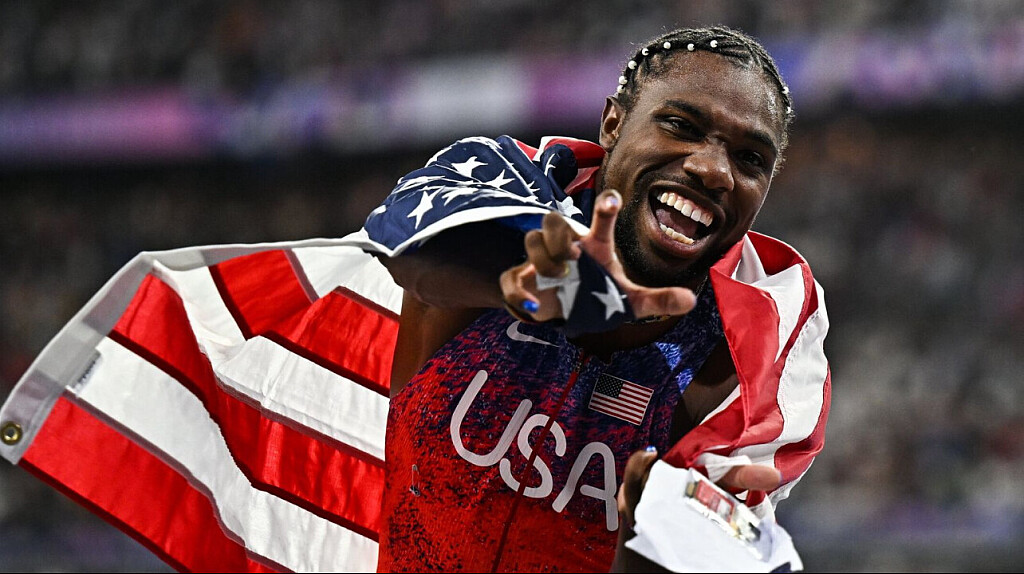
Noah Lyles’ Paris 100m Victory: Implications of New Timing Rules on Sprint Records
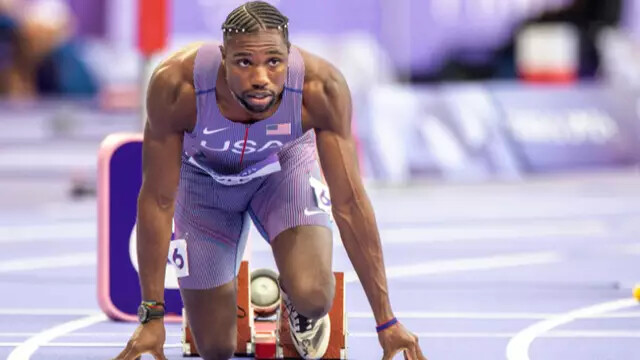
In the electrifying atmosphere of the 2024 Paris Olympics, American sprinter Noah Lyles clinched the gold medal in the men’s 100m final, clocking a personal best of 9.784 seconds. This razor-thin victory over Jamaica’s Kishane Thompson, decided by just five-thousandths of a second, marked one of the closest finishes in Olympic 100m history.
As the athletics world celebrates Lyles’ achievement, attention turns to forthcoming changes in timing regulations set by World Athletics. Starting in 2025, a significant amendment will alter how sprint times are recorded: the race clock will commence only when an athlete initiates movement, effectively eliminating the inclusion of reaction times in official results.
Under this new system, Lyles’ Paris performance would be recalculated to exclude his reaction time, potentially resulting in a faster recorded finish. This adjustment not only redefines personal bests but also brings Usain Bolt’s longstanding world record of 9.58 seconds into closer contention. The recalibration raises compelling questions about the comparability of sprint times across different eras and the evolving nature of athletic records.
As athletes and enthusiasts alike anticipate the implementation of these changes, the track and field community stands on the cusp of a new chapter—one that may see historical records challenged and the very metrics of speed redefined.
by Boris Baron
Login to leave a comment

Who Had the Best Era in Track & Field? A Generational Showdown
Track and field has long been the stage for some of the most electrifying athletic performances in history. Each generation has produced legends who have redefined what is possible in sprinting, distance running, and field events. But which era stands above the rest?
From the Silent Generation pioneers to the Gen Z record-breakers, every period has contributed to the evolution of the sport. Let’s break down each era’s greatest stars and their lasting impact on track and field.
Gen Z (Born 1997 - 2012): The Future of Track & Field
The newest generation of elite athletes is already making waves on the world stage. With the benefit of cutting-edge training, nutrition, and recovery techniques, these young stars are smashing records at a rapid pace.
Notable Sprinters & Field Athletes:
• Sydney McLaughlin-Levrone (USA) – 400m hurdles world record holder and Olympic champion
• Mondo Duplantis (Sweden) – Pole vault world record holder
• Erriyon Knighton (USA) – One of the fastest teenagers ever in the 200m
Notable Distance Runners:
• Jakob Ingebrigtsen (Norway) – Olympic 1500m champion, European mile record holder
• Joshua Cheptegei (Uganda) – 5000m and 10,000m world record holder
• Jacob Kiplimo (Uganda) – Half marathon world record holder (57:31)
• Gudaf Tsegay (Ethiopia) – World champion in the 1500m, dominant in middle distances
Gen Z athletes are not only breaking records but also shaping the future of the sport through their influence on social media and global visibility. With their combination of speed, endurance, and access to modern sports science, they may soon surpass all who came before them.
Defining Traits: Explosive, record-breaking, tech-savvy
Millennials (Born 1981 - 1996): The Superstars of the Modern Era
No discussion of dominant track and field generations is complete without mentioning Usain Bolt. The Jamaican sprinting legend captured the world’s attention with his charisma and untouchable world records.
Notable Sprinters:
• Usain Bolt (Jamaica) – Fastest man in history (100m: 9.58, 200m: 19.19)
• Allyson Felix (USA) – Most decorated female Olympian in track history
• Shelly-Ann Fraser-Pryce (Jamaica) – One of the most dominant sprinters of all time
Notable Distance Runners:
• Eliud Kipchoge (Kenya) – The greatest marathoner of all time, first to break two hours in a marathon
• Mo Farah (UK) – Dominated the 5000m and 10,000m at two Olympic Games
• Genzebe Dibaba (Ethiopia) – 1500m world record holder
• Ruth Chepngetich (Kenya) – First woman to break the 2:10 barrier in the marathon, setting a world record of 2:09:56 at the 2024 Chicago Marathon
Millennials excelled across all track and field disciplines. They ushered in an era of professional distance running dominance, with African runners setting standards in middle and long distances. Meanwhile, Kipchoge’s sub-2-hour marathon attempt was a historic milestone in human endurance.
Defining Traits: Charismatic, dominant, endurance revolutionaries
Gen X (Born 1965 - 1980): The Tough and Versatile Competitors
Gen X athletes were the bridge between the amateur days of track and the fully professional era. They pushed the sport forward with fierce rivalries and new records, while also seeing the globalization of track and field.
Notable Sprinters:
• Maurice Greene (USA) – Former world record holder in the 100m (9.79)
• Marion Jones (USA) – One of the most dominant sprinters of the late ‘90s
Notable Distance Runners:
• Haile Gebrselassie (Ethiopia) – Olympic and world champion, former marathon world record holder
• Paul Tergat (Kenya) – Pioneered marathon running dominance for Kenya
• Tegla Loroupe (Kenya) – First African woman to hold the marathon world record
This era marked a golden age for distance running, with Gebrselassie and Tergat setting the stage for the marathon revolution that would come in the next generation. With increased sponsorships, the road racing circuit became more competitive, and Kenyan and Ethiopian dominance solidified.
Defining Traits: Tough, globalized, long-distance pioneers
Baby Boomers (Born 1946 - 1964): The Golden Age of Track & Field
The Baby Boomers took track and field into the modern Olympic era, producing some of the most iconic figures in the sport’s history.
Notable Sprinters:
• Carl Lewis (USA) – Nine-time Olympic gold medalist across sprints and long jump
• Florence Griffith-Joyner (USA) – 100m (10.49) and 200m (21.34) world record holder
Notable Distance Runners:
• Sebastian Coe (UK) – 800m and 1500m Olympic champion, middle-distance legend
• Steve Prefontaine (USA) – One of the most influential distance runners in history
• Miruts Yifter (Ethiopia) – 5000m and 10,000m Olympic champion
This era brought middle and long-distance running into the mainstream, with rivalries like Coe vs. Ovett and Prefontaine vs. the world captivating fans. The Baby Boomers were the first generation of professional-level training and saw athletes truly dedicated to their craft year-round.
Defining Traits: Bold, revolutionary, multi-talented
Silent Generation (Born 1928 - 1945): The Pioneers of Kenya’s Dominance
This generation laid the foundation for modern track and field, producing legends whose influence still resonates today.
Notable Distance Runners:
• Kip Keino (Kenya) – The pioneer of Kenya’s dominance in distance running, winning Olympic gold in the 1500m (1968) and 3000m steeplechase (1972)
• Emil Zátopek (Czechoslovakia) – Triple gold in 5000m, 10,000m, and marathon at the 1952 Helsinki Olympics
• Paavo Nurmi (Finland) – Nine-time Olympic gold medalist in long-distance events
Kip Keino’s triumph over Jim Ryun in the 1500m final at the 1968 Mexico City Olympics is considered one of the greatest upsets in Olympic history. Competing at high altitude, Keino used a fast early pace to break Ryun, ushering in an era of Kenyan middle-distance dominance that continues today.
Defining Traits: Groundbreaking, resilient, visionary
Which Generation Had the Greatest Impact?
Each generation of track and field athletes has contributed to the sport’s evolution in unique ways:
• Millennials brought global superstardom (Bolt, Felix, Fraser-Pryce, Kipchoge, Chepngetich)
• Gen X athletes were fierce competitors in a rapidly changing sport (Greene, Gebrselassie, Tergat)
• The Baby Boomers set records that still stand today (Carl Lewis, Flo Jo, Coe, Prefontaine)
• The Silent Generation laid the foundation for modern track and field (Owens, Zátopek, Kip Keino)
• Gen Z is already breaking records and shaping the future of the sport (McLaughlin-Levrone, Ingebrigtsen, Cheptegei)
While it’s hard to declare one era the best, one thing is certain: the sport of track and field continues to evolve, with each generation pushing the limits of human performance.
Which generation do you think is the greatest? Let us know in the comments!
by Boris Baron
Login to leave a comment
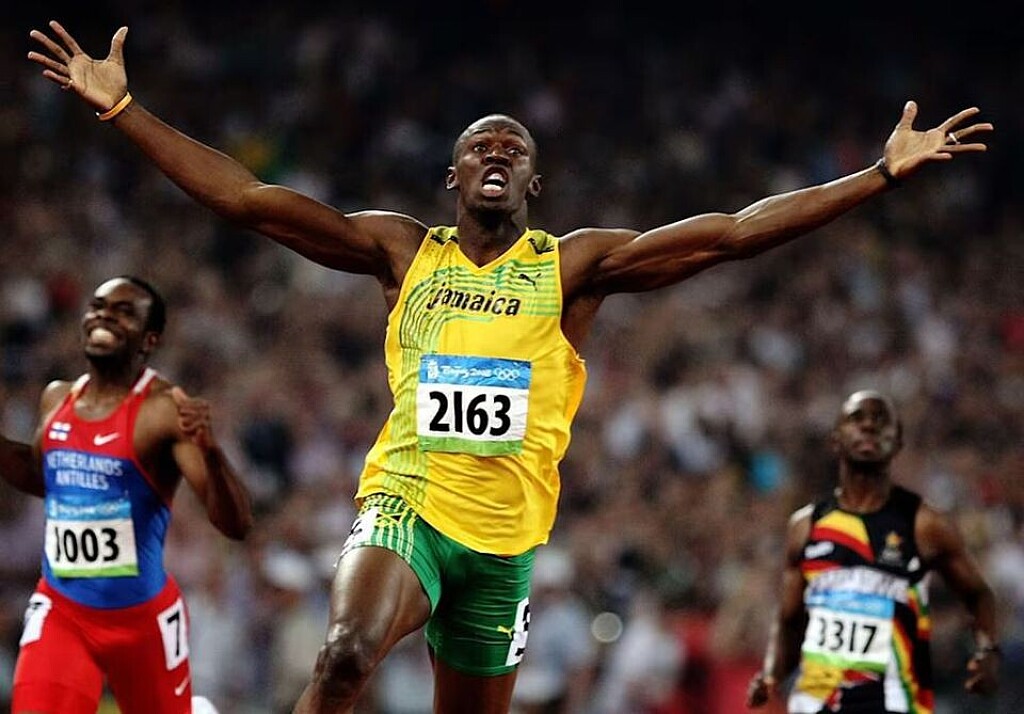
Usain Bolt reveals meal plan that helped him smash 100m world record at 2008 Beijing Olympics
Usain Bolt broke world records in all his three specialties but the 2008 Olympics diet change was the beginning of his dominance on track.
Three-time Olympic 100m champion Usain Bolt has revealed how a change in diet at the 2008 Olympics in Beijing played a crucial role in him setting a world record in his specialty.
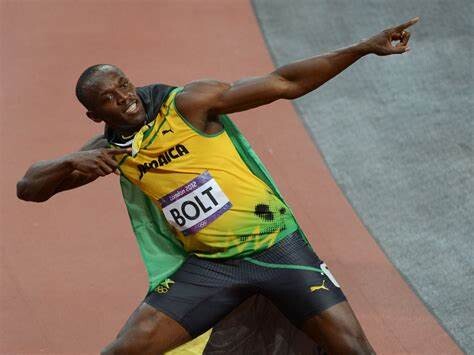
The legendry Jamaican sprinter who also managed three Olympic 200m gold titles, was fueled by chicken nuggets because he thought Chinese food tasted odd.
In his autobiography, Faster than Lightning, Bolt wrote: “At first I ate a box of 20 for lunch, then another for dinner. The next day I had two boxes for breakfast, one for lunch and then another couple in the evening. I even grabbed some fries and an apple pie to go with it,” the 11-time world champion told TalkSport.
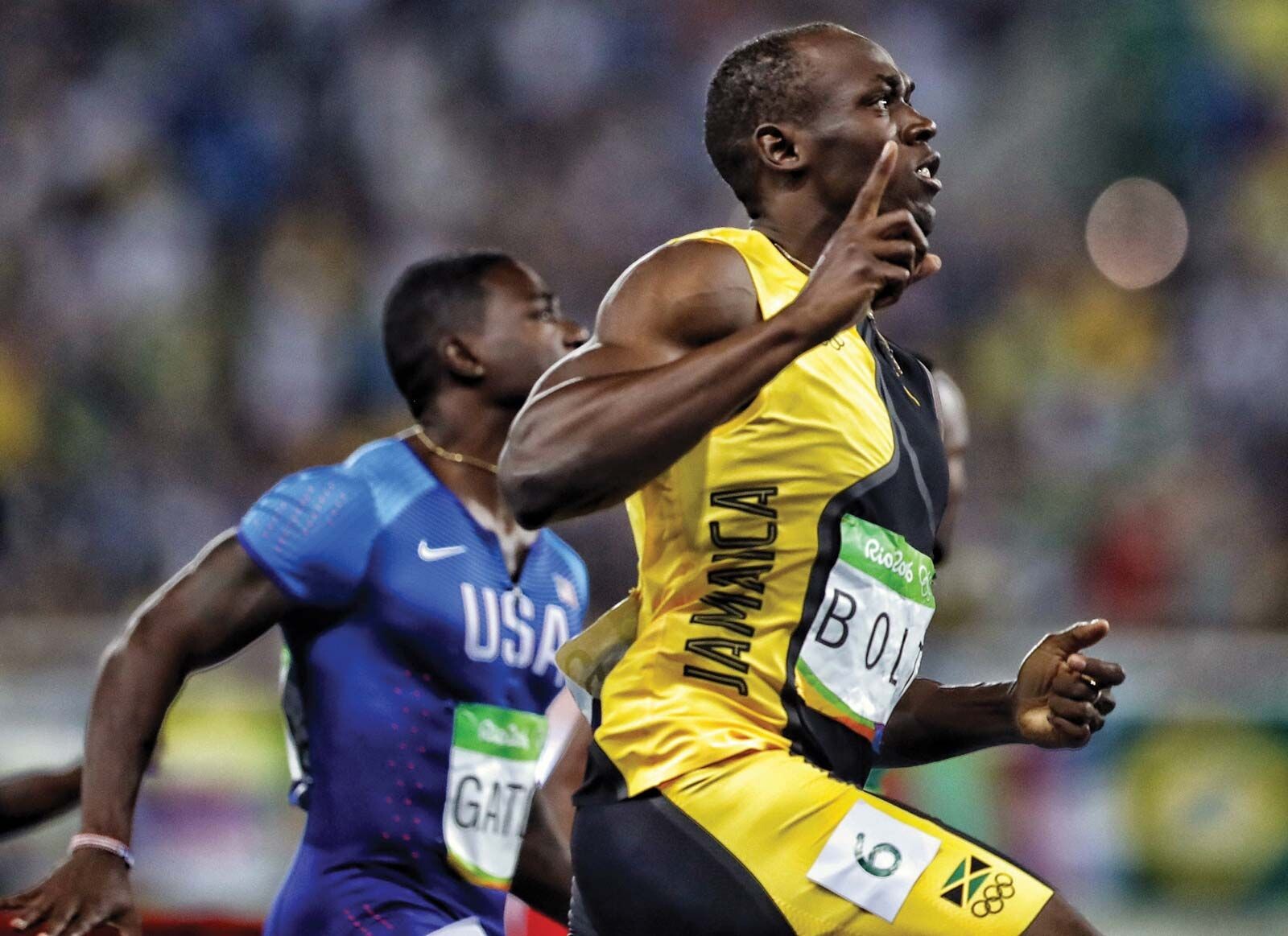
Bolt estimated he ate 1,000 of McDonald’s chicken nuggets during the Beijing Olympics. It was an even more impressive feat considering he did it with his shoelaces untied! Bolt finished so clear of his competitors that he pumped his chest while crossing the finishing line and had he not done that, a better final time would have been recorded.
The 38-year-old made history a year later when he set another record in the men’s 100m with a time of 9.58 seconds at the 2009 World Championships. He also won two 4x100m relay golds and holds the world record in all three disciplines.
Bolt retired from athletics after the 2017 World Championships, where he won bronze in his final solo 100m race but then pulled up in his last ever contest in the 4x100m relay final.
After refusing a wheelchair, he hobbled across the finish line alongside his teammates - but, despite his legendary career ending in heartbreak, Bolt will go down as one of the track's greatest ever competitors.
by Evans Ousuru
Login to leave a comment
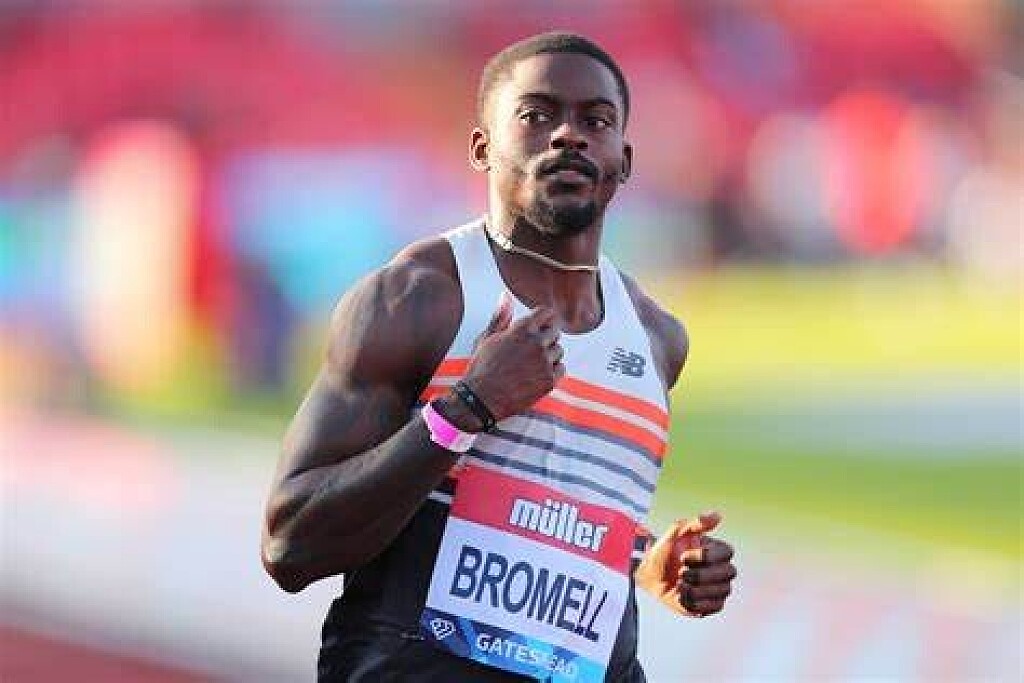
'I want to be the best to ever do it'- American sprint sensation still dreaming big despite injury woes
The two-time world bronze medalist wants to come back and continue his legacy after injuries slowed him down in the last two years.
American sprint sensation Trayvon Bromell has been a victim of injuries but he now feels ready to come back in 2025 and continue the legacy he had in 2022.
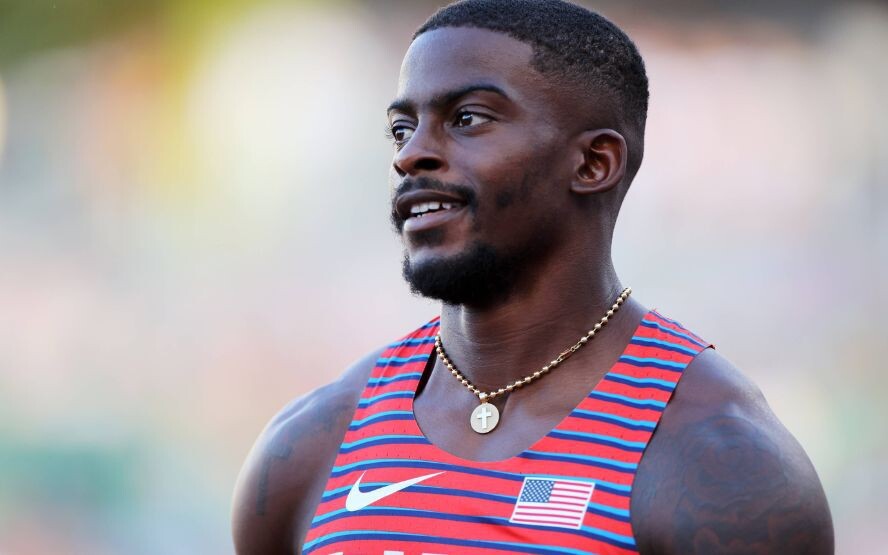
Bromell is one of America’s great sprinting talents but the world never got to see his full potential in the recent events.
In 2024, the two-time world bronze medallist had to pull out of the Olympic trials due to an injury he picked up at a meeting in Savona.
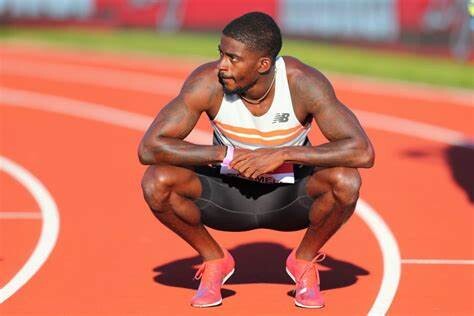
The injury was a huge setback in his career that was just beginning to pick up after his major injury in 2019 when he suffered an adductor muscle setback.
In a previous interview with NBC Sports, Bromell disclosed that his ambition is to surpass the likes of Usain Bolt and Tyson Gay and become one of the greatest sprinters in the world.
Bromell wants his achievements to be beyond the titles and the medals and he pointed out that his definition of success is very different from what other people think.
“Everybody didn’t see me and hear me back then, but now you have to. I want to be the best to ever do it,” Bromell said.
“The odds have always been stacked against me in my life, and that’s why I get emotional after running crazy times. It’s never been about the race or the medals for me.”
He opened up about growing up in a single-parent home and how he struggled to be heard by those around him. Growing up to become one of America’s greatest talents brings him to tears.
Bromell revealed that he wants to be a testimony to all those who feel like some things are impossible. The former world indoor champion further noted that the people who have grown up in such a setup would understand the struggle.
“Being the greatest of all time in this event. I’m a big advocate of making people see me, but when I say that I don’t mean it in a literal sense,” Bromell said.
“But for all of those people who know what it feels like to not be heard or to not be seen ... I want to prove that it’s possible.”
Being raised up by his mother was not easy since she was also struggling to make ends meet. Bromell had to be strong at a young age and take up responsibilities that were meant for adults.
With such a lifestyle, he struggled to maintain a positive outlook in life and was filled with a lot of resentment towards everybody.
“I feel like nobody heard my cries for help, nobody was there for me, and I grew up with so much aggression because I felt like nobody cared and the world was against me,” he added.
by Abigael Wafula
Login to leave a comment
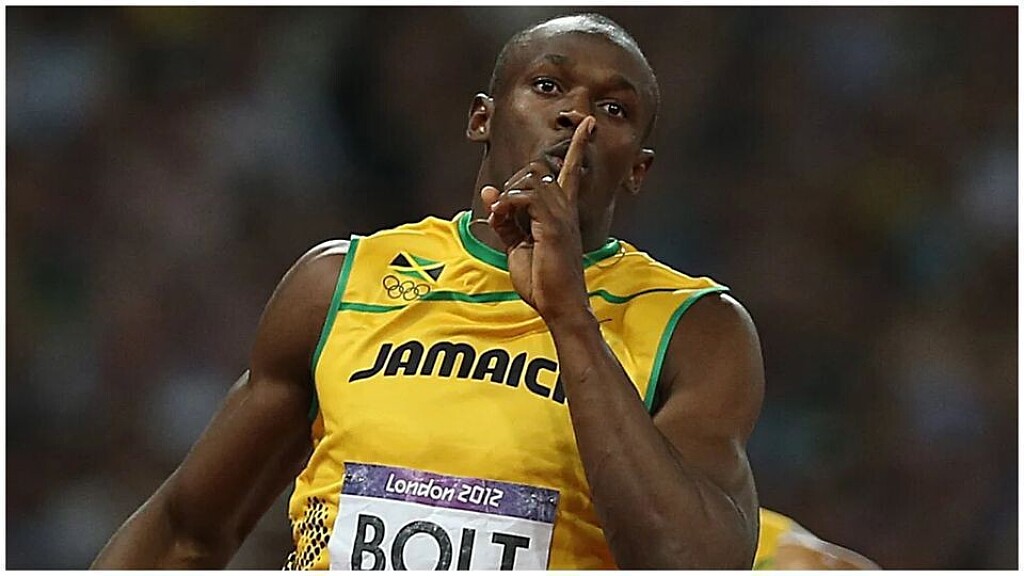
Usain Bolt reveals bizarre reason he dropped running 400m
Bolt loved all the short distance races but 400m was never his long-term priority even though he preferred it early in his trophy-laden career.
Jamaican sprint legend Usain Bolt has revealed what made him stop taking part in 400m despite loving the specialty in his formative years.
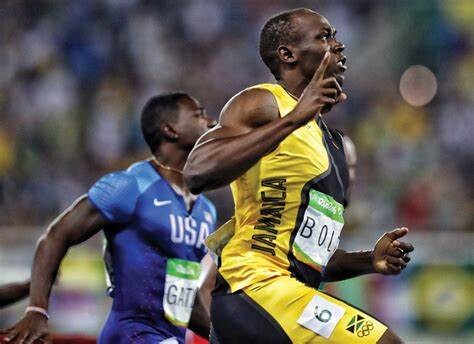
Bolt, the three-time Olympic 100m champion, said his coach Glen Mills was one of many people who felt the younger Bolt was better suited to the longer sprint distance than the marquee 100m event, meaning the 6ft 5ins sprinter almost ended up as a quarter-miler, much to his disgust.
The three-time Olympic 200m champion reiterated that even though he liked 400m, doing away with it and focusing on 100m paid dearly for him going by his record.
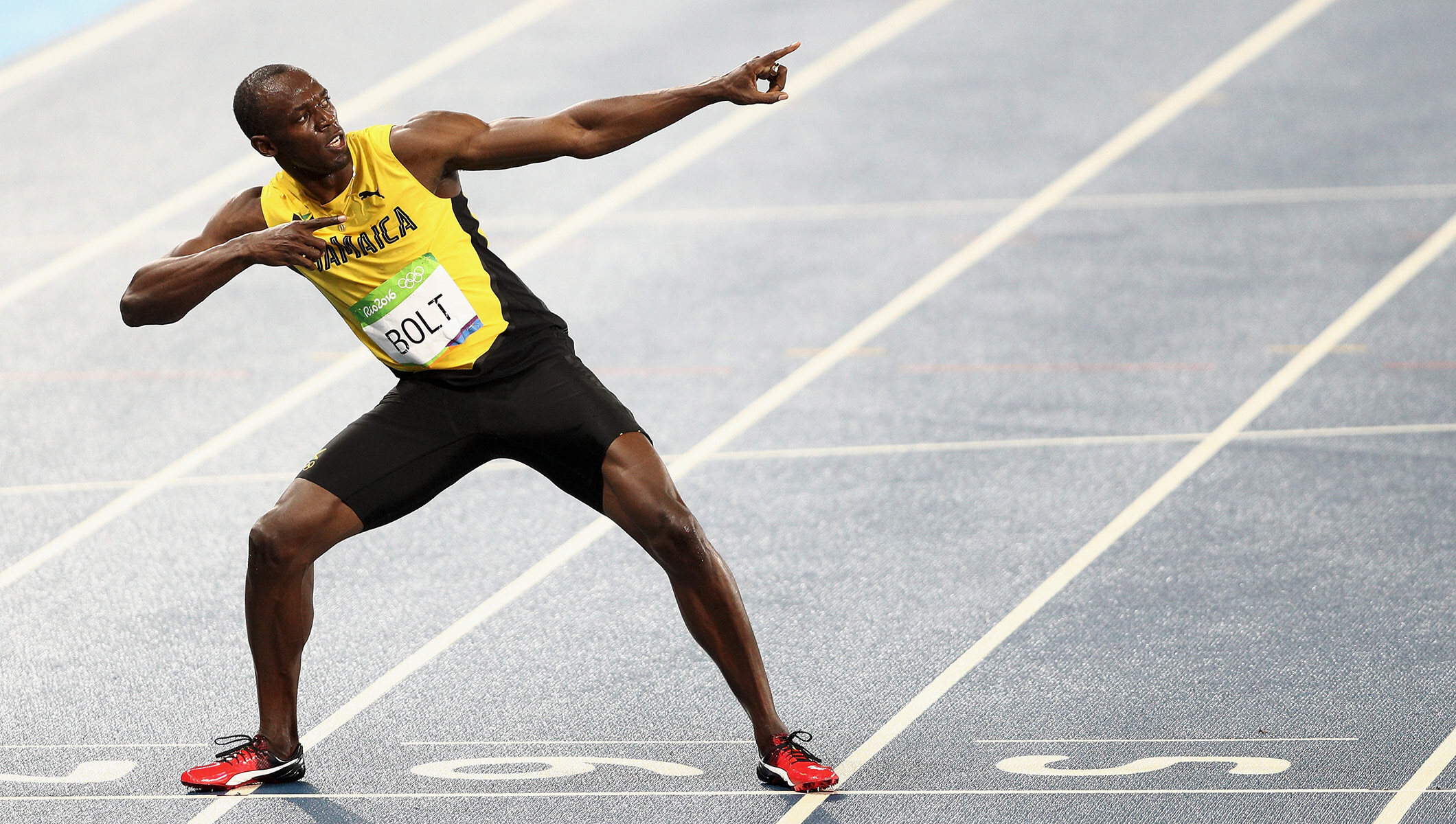
"Running the 400m wasn’t fun at all. It was always pain. But I was good at it, so I used to do it. However much as I did it, though, I never liked it. So I stopped and went back to the 100m. You could say I’m happy it worked out," Bolt told TalkSport.
"The over-distance runs are the hardest thing we do in training, because when you feel that lactic acid you can’t walk, you can’t sit down, you don’t know what to do – it takes a while to get it out of your system,” he added.
The 11-time world champion said time wasn't everything and his focus was always the technique. "All we try to focus on is technique because, the better you get at these things, the better the times will get. When the champs come, then you can try to run fast.”
The 38-year-old is the most successful male athlete of the World Championships. Bolt is the first athlete to win four World Championship titles in the 200m and is one of the most successful in the 100m with three titles, being the first person to run sub-9.7s and sub-9.6s races.
by Evans Ousuru
Login to leave a comment
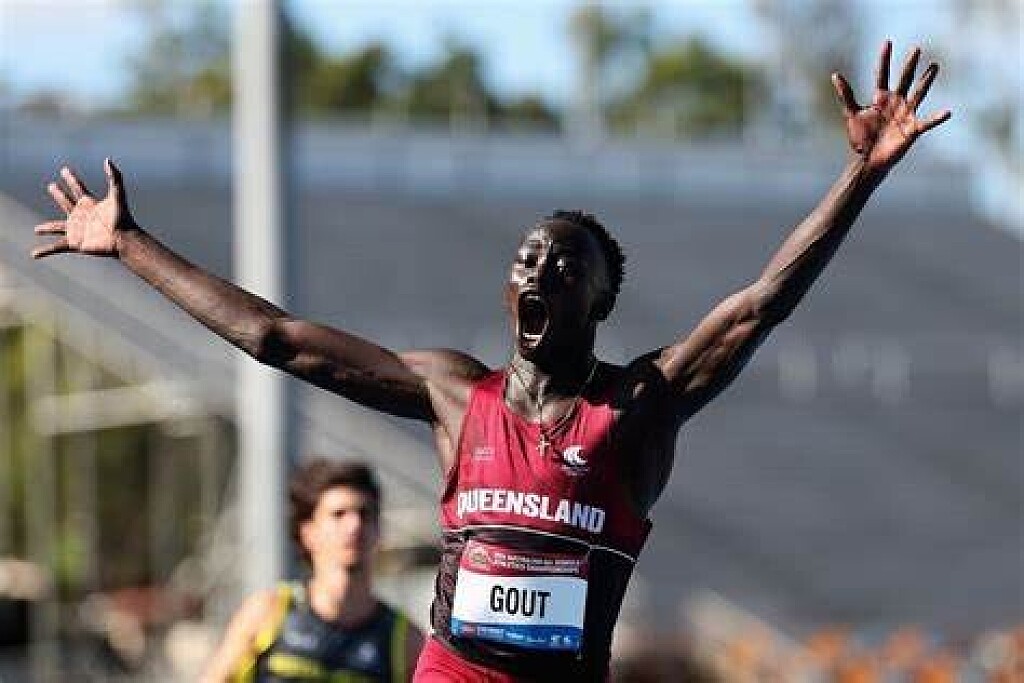
16-year-old Aussie sprinter clocks outrageous 100m time
Gout Gout, the young athlete drawing comparisons to Usain Bolt, now holds the Australian U18 100m and 200m records.
Australia’s Gout Gout has left the world speechless once again. At Friday’s Australian All Schools Athletics Championships in Nathan, Australia, the sprinter made a run at the elusive 10-second barrier–at the age of just 16. In heats, he soared to a blazing 10.04 seconds (+3.4 m/s winds), crossing the line more than five tenths of a second ahead of second place. Including all non-legal marks, Gout’s time secured him the number-four spot on the all-time U18 list.

Tailwind speeds exceeding 2.0 m/s are deemed illegal in sprinting, as stronger winds are considered to aid the racers. Wind assistance can impact times by about 0.1 seconds, a substantial difference in the world of sprinting.
In the 100m final at the Queensland Sport and Athletics Centre, Gout went on to run a stunning (and wind-legal) 10.17. The time shattered his own personal best of 10.29 and the previous U18 Australian record of 10.27 held by Sebastian Sultana, and still places him sixth on the all-time U18 list.
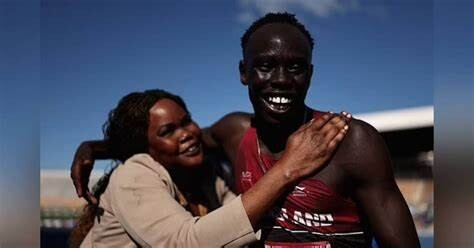
The high schooler first made headlines when he cruised to a 20.77-second win in the qualifying rounds of the 200m at the World U20 Championships in Lima, Peru, in August. The following day, he clinched the silver medal in the event’s final.
Gout signed a pro contact with Adidas in October, and just a week later, clocked an electrifying 20.29 at the All Schools Queensland track and field championships. The time broke his own U18 national record, along with the 31-year-old U20 national record and the Oceanic record. His time was the fourth-fastest in Australia’s history.
Gout’s race on Friday clip is his second to go viral in the athletics world in four months; many track and field fans began drawing comparisons of his tall stature and running style to those of Jamaican track legend Usain Bolt.
by Cameron Ormond
Login to leave a comment

Hassan and Tebogo named World Athletes of the Year
Olympic champions Sifan Hassan and Letsile Tebogo have been announced as World Athletes of the Year at the World Athletics Awards 2024 in Monaco.
Following a vote by fans, Hassan and Tebogo received top honors on an evening that saw six athletes crowned in three categories – track, field and out of stadium – before the overall two winners were revealed.
Tebogo was confirmed as men’s track athlete of the year, with Sydney McLaughlin-Levrone receiving the women’s honour. Hassan claimed the women’s out of stadium crown and Tamirat Tola the men’s, while Mondo Duplantis and Yaroslava Mahuchikh were named field athletes of the year.
This year’s Rising Stars were also celebrated, with Sembo Almayew and Mattia Furlani receiving recognition.

World Athletes of the Year for 2024
Women’s World Athlete of the Year: Sifan Hassan (NED)Men’s World Athlete of the Year: Letsile Tebogo (BOT)
Women’s track: Sydney McLaughlin-Levrone (USA)Women’s field: Yaroslava Mahuchikh (UKR)Women’s out of stadium: Sifan Hassan (NED)Men’s track: Letsile Tebogo (BOT)Men’s field: Mondo Duplantis (SWE)Men’s out of stadium: Tamirat Tola (ETH)
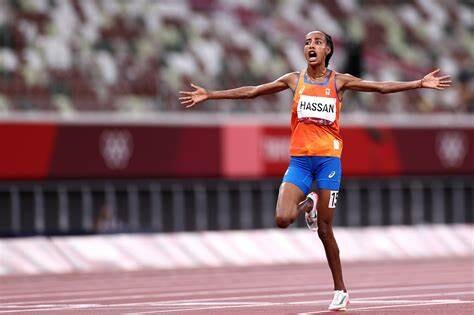
Women’s Rising Star: Sembo Almayew (ETH)Men’s Rising Star: Mattia Furlani (ITA)
“At the end of what has been a stellar year for athletics, we are delighted to reveal our list of World Athletes of the Year – both in their respective disciplines and overall,” said World Athletics President Sebastian Coe. “This group of athletes represents the very best of our sport and has this year redefined what is possible in terms of athletic performance.
“Our 2024 cohort set new standards in heights, speed and distance, including six world records and a host of Olympic and national records between them.
“I congratulate all our award winners, and all of the athletes nominated for these honors, and I thank them for inspiring us all with their performances this year.”
World Athletes of the Year Hassan and Tebogo both won gold and claimed multiple medals at the Paris 2024 Olympic Games.
Dutch star Hassan’s medal treble in Paris was capped by her winning the final athletics gold medal of the Games with her triumph in the marathon in an Olympic record of 2:22:55. That performance came just 37 hours after Hassan claimed bronze in the 10,000m, and six days after her first medal in the French capital – also bronze – in the 5000m.
As a result, she became the first woman to win medals in the 5000m, 10,000m and marathon at the same Games, and the first athlete since Emil Zatopek, who won all three men’s titles in Helsinki in 1952.
Tebogo also made history in Paris when he won the 200m, as he claimed a first ever Olympic gold medal in any sport for Botswana. He ran an African record of 19.46 – a time that moved him to fifth on the world all-time list – and that performance followed his sixth-place finish in the 100m final. He went on to form part of Botswana’s silver medal-winning men’s 4x400m team.
He dipped under 20 seconds for 200m a total of nine times in 2024, with those performances topped by his Olympic title-winning mark which remained the fastest of the year.
His fellow track athlete of the year, McLaughlin-Levrone, improved her own world 400m hurdles record twice, to 50.65 and 50.37, and claimed Olympic gold in that event as well as in the 4x400m. Tola, who joined Hassan in being named out of stadium athlete of the year, won the Olympic marathon title in Paris in an Olympic record.
World records were set by both field athletes of the year. Mahuchikh cleared 2.10m to improve the world high jump record before winning Olympic gold, while Duplantis revised his own world pole vault record three times, eventually taking it to 6.26m, and won the Olympic title.
"Thank you to the fans, to everybody who voted," said Hassan, who was in Monaco to receive her two awards. "I never thought I was going to win this one. This year was crazy. It’s not only me – all the athletes have been amazing. I’m really grateful. What more can I say?"
Standing alongside Hassan on the stage at the Theatre Princesse Grace, Tebogo said: "It feels amazing to know that the fans are always there for us athletes. It was a great year.
"This means a lot," he added. "It’s not just about the team that is around you, there are a lot of fans out there that really want us to win something great for the continent. It was a real surprise to hear my name because I didn’t expect this."
Almayew and Furlani named Rising Stars of 2024
Not only did Sembo Almayew and Mattia Furlani achieve great things as U20 athletes in 2024, they both also secured success on the senior stage.
Almayew finished fifth in the 3000m steeplechase final at the Paris Olympics, going close to her own national U20 record with her 9:00.83 performance, before she travelled to Lima where she won the world U20 title, setting a championship record in the process. With that win, the 19-year-old became the first ever Ethiopian world U20 women’s steeplechase champion.
Furlani improved the world U20 long jump record to 8.38m at the European Championships on home soil in Rome to secure silver, and he won two more senior major medals at the World Indoor Championships, where he got another silver, and the Olympic Games, where he claimed bronze.
In Glasgow – at the age of 19 years and 24 days – Furlani became the youngest athlete ever to win a world indoor medal in the horizontal jumps.
Knight wins President’s Award
The winner of the President’s Award was also announced in Monaco on Sunday (1), with Nike co-founder Phil Knight receiving the honour in recognition of his constant inspiring support for athletics and the development of the sport.
The President's Award, first awarded in 2016, recognises and honours exceptional service to athletics. Past winners of the award include the Ukrainian Athletics Association, British journalist Vikki Orvice, Swiss meeting director Andreas Brugger, Jamaican sprint superstar Usain Bolt, the Abbott World Marathon Majors, and 1968 men’s 200m medallists Tommie Smith, Peter Norman and John Carlos for their iconic moment on the podium in Mexico.
“Phil Knight’s passion for athletics is pretty much lifelong,” said Coe. “He developed an almost father-son relationship with his coach, the legendary Bill Bowerman, whose training approach was a departure from the orthodoxies of the day and who not only guided Knight’s career on the track but became a central figure when Phil took his first tentative steps in the running shoe business that became the dominant global force Nike.
“His love of athletics runs through Nike. It is a business created and driven by runners, with Phil never afraid to be the front runner.”
Knight said: “Thank you, Seb Coe, for the ultimate honour of the President’s Award, given by World Athletics. I am in great company, with Tommie Smith and John Carlos, and Usain Bolt. Obviously, I didn’t run as fast as those guys, but I am in such high company that I am thrilled by the award. Track and field has always been an important part of Nike – it has always been a central part of who Nike is.
“I do think running will continue to grow. Not only does Seb and his team do a great job promoting the sport, but it is a sport that not only is enjoyable, but it is probably the best fitness activity you can do. So, for me to win this honour, it is very meaningful.”
During the ceremony, a moment was taken to remember last year’s men’s out of stadium athlete of the year Kelvin Kiptum, the marathon world record-holder who died in a road traffic accident in February, as well as other figures from the sport who have passed away in 2024.
by World Athletics
Login to leave a comment
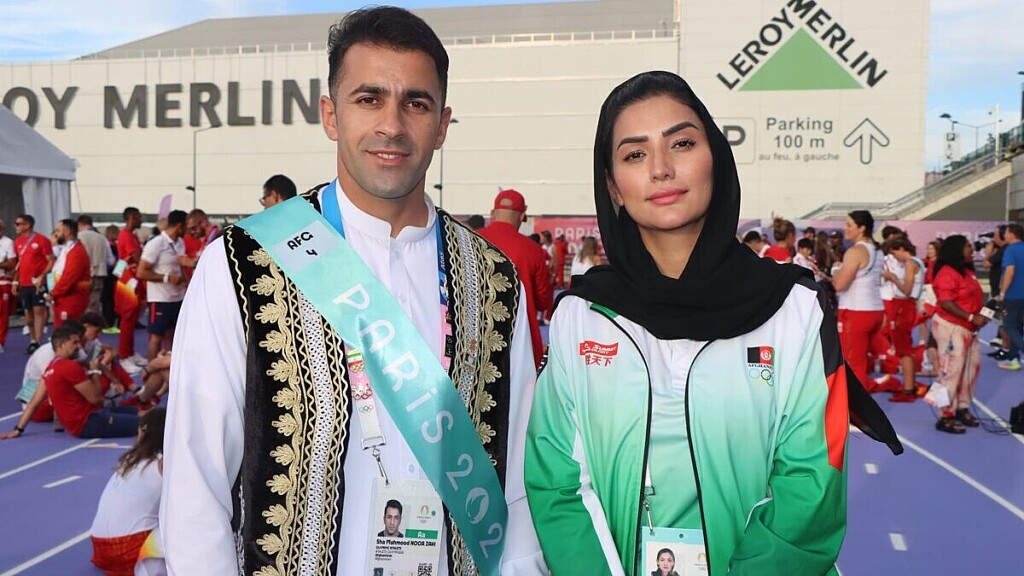
Afghan sprinter homeless in Germany after Paris Olympics
Less than four months ago, Afghanistan sprinter Sha Mahmood Noor Zahi proudly carried his country’s flag down the River Seine at the 2024 Paris Olympics. A week later, he became a household name in Afghanistan by setting a national record in the men’s 100m preliminary round, missing a qualifying spot in the heats by just one place. At that moment, Noor Zahi made the biggest decision of his life: choosing to leave his country with a one-way ticket to Germany in hopes of a better future.
In an interview with the German newspaper Süddeutsche Zeitung, Noor Zahi said he has been living in a shelter in the city of Schweinfurt for the past few months while awaiting his asylum application. Though he does not speak English or German, he can be found training four to (sometimes) five hours a day at Sachs Stadion, the home of the city’s soccer team.
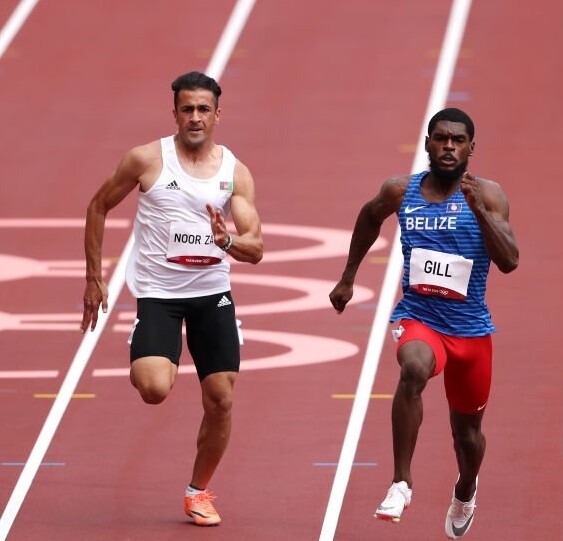
The 33-year-old achieved his dream of running at the Olympic Games through a universality place selection for Tokyo 2020. (The program aims to ensure broader global representation at major championships by allowing athletes from countries with less-developed sports programs to participate). Noor Zahi has taken full advantage of the opportunity, lowering his 100m personal best from 11.04 seconds to 10.64 seconds in the span of three years. Although he does not have a coach, he continues to follow the training plan he received in Iran before the Paris Olympics.
Noor Zahi’s main goal is to qualify for the 2028 Olympics in Los Angeles (his third Olympics), when he would be 37. He has ambitions to become the first person from his country to run under 10 seconds and qualify for an Olympic final. “I’ve run and run to overcome many obstacles,” he said about his challenges. “So why stop now?”

An athlete he has always admired is Jamaica’s Usain Bolt, whom he recalls watching in videos on his mobile phone in his younger days in Afghanistan. Noor Zahi pointed to Bolt’s speed, confidence and the way he graced the track. For Noor Zahi to achieve his goal, he needs to stay in Germany, where he can continue to train and pursue a career in athletics.
The situation in his home country remains dire. The radical Islamist Taliban group regained power in 2021 after the withdrawal of international troops. Since then, the group has been publicly executing people in stadiums, and women are only allowed on the streets when accompanied by men.
Noor Zahi is aware that he is also fighting a battle against time in sprinting, where athletes over 30 rarely set personal bests. His idol, Bolt, set his world record at 23 and was 30 when he won his final Olympic medals in Rio 2016.
by Marley Dickinson
Login to leave a comment
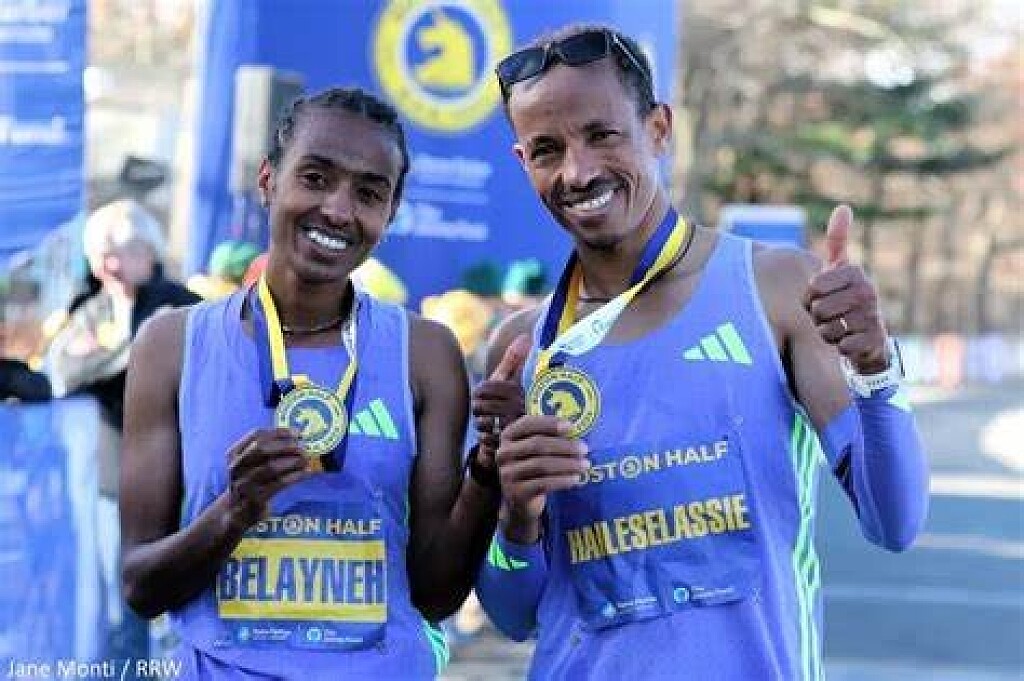
Yemane Haileselassie And Fentaye Belayneh Win Chilly Boston Half-Marathon
Fentaye Belayneh of Ethiopia and Yemane Haileselassie of Eritrea won this morning’s 22nd Boston Half-Marathon on a sunny and near-freezing morning here. Employing completely different tactics, Belayneh won in a pack-sprint to the finish in Franklin Park where the first three women finished in a span of just one second. Haileselassie won in a solo breakaway, dominating the final miles and winning by 15 seconds. Both athletes won $12,000 in prize money.
The women’s race got out slowly, and the first mile was completed in just 5:41, a comfortable training pace for athletes at this level. Britain’s Calli Hauger-Thackery was at the front. She said that she felt good taking the lead and wanted to work on some of her racing skills.
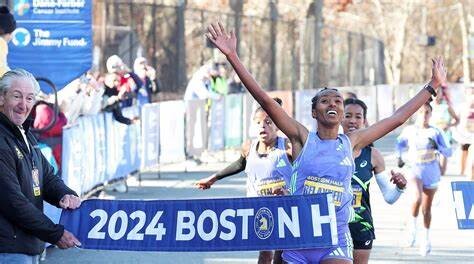
“I felt good doing that,” Hauger-Thackery told Race Results Weekly. “I was practicing not being set in a set pace. I’ve got to practice surging… not be afraid to put in a five minute mile here and there.”
The first real move happened just before 5-K where Ethiopia’s Mestawut Fikir, who was fifth at this race last year, put in a surge. The field responded immediately, and Kenyan’s Veronica Loleo and Daisy Jepkemei, and Ethiopians Melknat Wudu and Mebrat Gidey followed her single file. They passed through 5-K in 17:17 and four miles in 21:45. The downhill fourth mile was passed in a fast 5:05.

Fikir’s mini-surge only brought the lead pack down to 12. Although the second, five-kilometer segment was faster (16:27) it wasn’t enough to dwindle the field further. Fikir decided to go again just after the 10-K mark, and that move sent Hauger-Thackery and Australia’s Lauren Ryan several steps back. Kenya’s Mercy Chelangat was also having trouble holding on. Mile-8 went into the books at 5:10, and the serious racing had begun.
But after that, none of the women were keen to open up the race further, and the pace slowed enough that Chelangat managed to catch up. Remarkably, eight women were still together as they ran back to Franklin Park for the finish. Indeed, the race would not be decided until the final 200 meters when Belayneh, who had not led one step of the race, jumped the field and broke for the tape. She was ready for that kind of move.
“I prepared very well and I knew Boston was a good course,” Belayneh said with the help of a translator. “I prepared very well.”
Fikir and Senayet Getachew, another Ethiopian, were right on Belayneh’s heels as she bolted for the tape, but they just couldn’t catch their speedier rival. She broke the tape, arms raised with a huge smile, in 1:10:26. Fikir was given the same time, and Getachew was just one second back. Loleo got fourth in 1:10:29, and Wudu was fifth in 1:10:30. The first seven women finished in just a six-second span.
“At the end, I decided at the end,” Belayneh said when asked when she knew that the time was right for her final move. “It was a rough race, but I knew I could hold on and push. I had some little (energy) left over. I used that.”
Farther behind, Chelangat finished eighth in 1:10:43 and Hauger-Thackery was ninth in 1:10:49. The two women, both former NCAA stars who know each other from training in Flagstaff, embraced at the finish line.
“It was fun, it was good,” said Hauger-Thackery, who plans to run the California International Marathon in December with her husband, Nick. She added: “This was a good race to go for it, get the blood flowing.”
Unlike Belayneh, Haileselassie did not want to wait for the final sprint. In the ninth mile, he and Isaac Kipkemboi of Kenya and Haimro Alame of Israel pulled away from the field. Haileselassie was on the front, and kept pressing.
“Actually, when I lead in mile-nine I give them a little bit gap,” Haileselassie told Race Results Weekly. “I looked over my back, I had little bit gap. I know they can’t touch me.”
The Eritrean crossed to the finish line alone in 1:01:46. Kipkemboi was a clear second in 1:02:01, but Alame faded in the final miles and only finished sixth in 1:02:12. Taking the final podium position was Canadian miler Kieran Lumb, who was making his half-marathon debut. Lumb, who made the Paris Olympic 1500m semi-finals, was timed in 1:02:03. He was happy with his race, a good fitness test before the Canadian Cross Country Championships later this month, even if it hurt a little.
“It was hard,” said Lumb. “Honestly, it was pretty hard early on. I would say, like 20 minutes in, I didn’t feel amazing. I did not sleep well last night, either. I slept like four hours.”
Today’s event was the third and final race in the 2024 Boston Athletic Association’s Distance Medley which included the Boston 5-K on April 13 and the Boston 10-K on June 23. About 6500 runners finished today’s race.
by David Monti ,
Login to leave a comment

B.A.A. Half Marathon
Dana-Farber and the Jimmy Fund have partnered with the B.A.A. in the Half Marathon for 13 years as the race’s presenting sponsor. Through this relationship, team members have collectively raised more than $5 million to support groundbreaking cancer research, and enabled Dana-Farber scientists and clinicians to positively impact the lives of cancer patients around the world. Dana-Farber runners often participate...
more...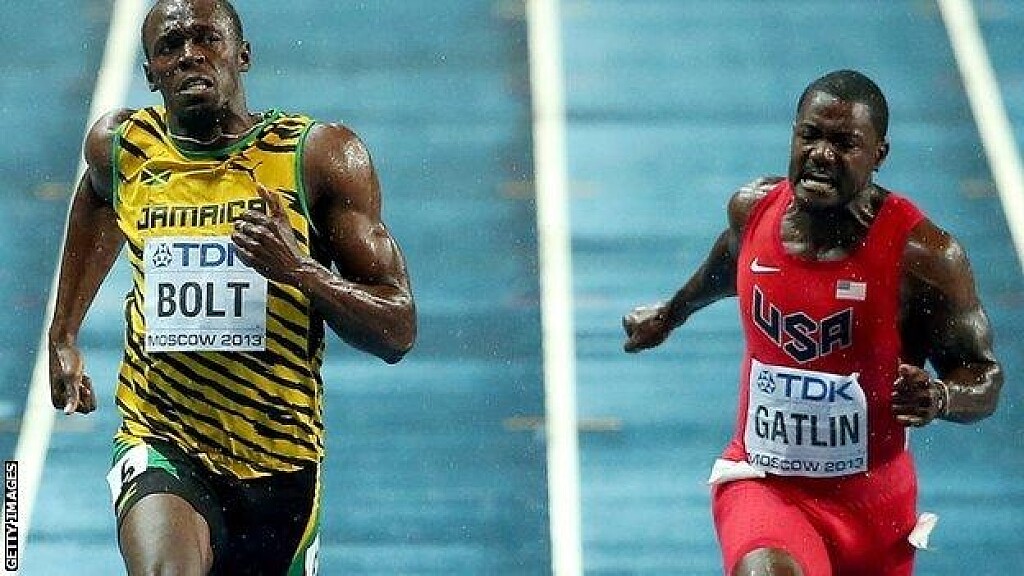
'He made me eat cleaner & work harder' - Justin Gatlin on how Usain Bolt shaped him into becoming a better sprinter
Justin Gatlin has heaped praise on his long-time arch-nemesis Usain Bolt, thanking him for making him the athlete he ended up becoming after returning to the sport.
American sprint icon Justin Gatlin has revealed the profound impact Usain Bolt had on his career, acknowledging how the Jamaican legend pushed him to reach new heights.
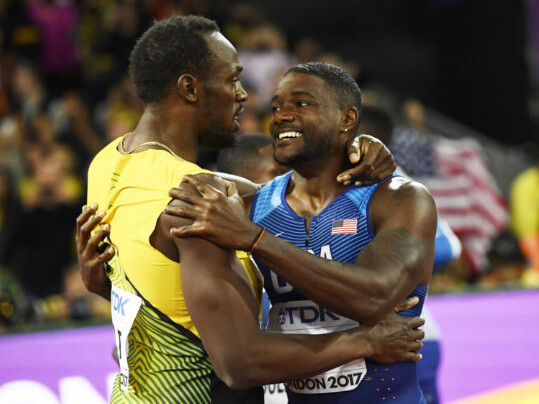
Known for a rivalry that defined an era of sprinting, Gatlin and Bolt clashed in numerous unforgettable races, showcasing contrasts in style and personality. Yet, despite the fierce competition, Gatlin now reflects on their encounters with admiration, crediting Bolt for inspiring him to be his best.
“Competing against someone like him, he brought the best out of me,” Gatlin said on The Higher Perspective Talks.
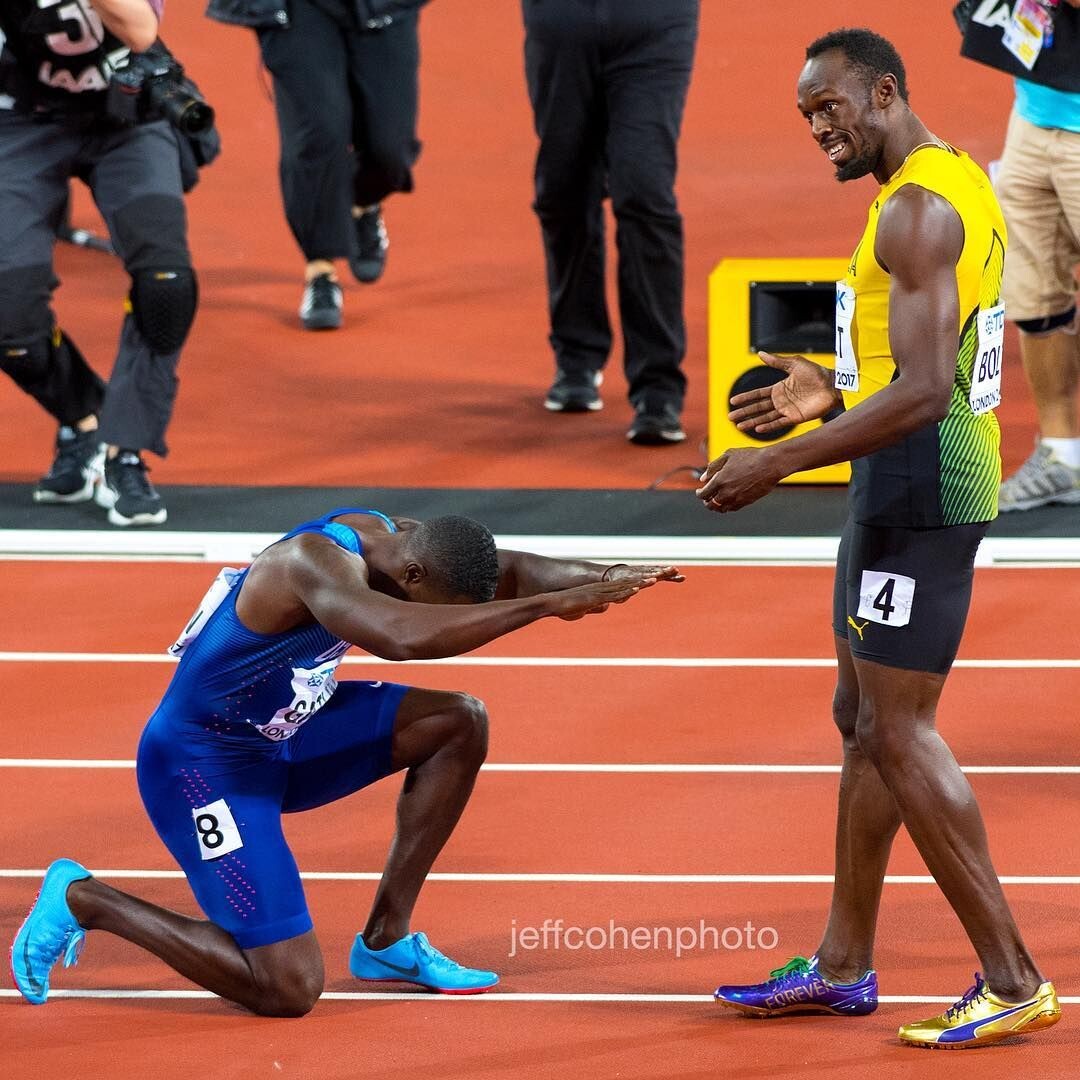
His comments came just over a week after Bolt himself recognized Gatlin as his toughest competitor. Gatlin expressed that Bolt’s presence on the track forced him to elevate his approach to training, nutrition, and overall athletic dedication.
“He made me wanna train harder. He made me wanna be a different athlete. He made me eat cleaner, work harder, compete harder because that was an athlete that represented a standard, one that I always wanted to get to,” Gatlin explained, underscoring the high benchmark Bolt set with his relentless speed and unwavering confidence.
Reflecting on their head-to-head races, Gatlin noted that he was always ready to face Bolt, eager to test himself against the reigning champion. “When I banged against him, I was ready any time. I wanted to race him every day if I could,” Gatlin shared. His words highlight not only the intensity of their rivalry but also the motivation he found in trying to match Bolt’s prowess.
Usain Bolt also had kind words for Gatlin during a recent appearance on John Obi Mikel’s Obi One podcast. “I think Justin Gatlin, I have to give my hats off to him,” Bolt said. “The last five, six years of my career, it was me and him every season. He kept me on my toes throughout, and I loved the competition.”
Bolt recalled a particularly memorable exchange when he saw a video of Gatlin confidently declaring his intent to win gold.
“I remember I’m just on Instagram scrolling, and someone sent me a video,” Bolt recounted. “He [Gatlin] was like, ‘Justin, I’m gonna win, don’t worry, and I’m going to wear the gold medal around my neck.’ And I’m like, ‘What? Alright, let’s go then.’”
Recognizing Gatlin’s fierce resolve, Bolt added, “Listen, Gatlin is going to show up. He is that guy in a Championship; no matter what is going on, he is going to show up.”
Their rivalry may have seen Bolt take the lion’s share of victories, but the respect they have for one another transcends competition.
As Gatlin reflects on his journey, it’s clear that Bolt’s influence left a lasting mark, inspiring him to push beyond his limits in pursuit of excellence. Their rivalry brought unparalleled excitement to the sport, and their mutual respect continues to exemplify the power of elite competition.
by Mark Kinyanjui
Login to leave a comment
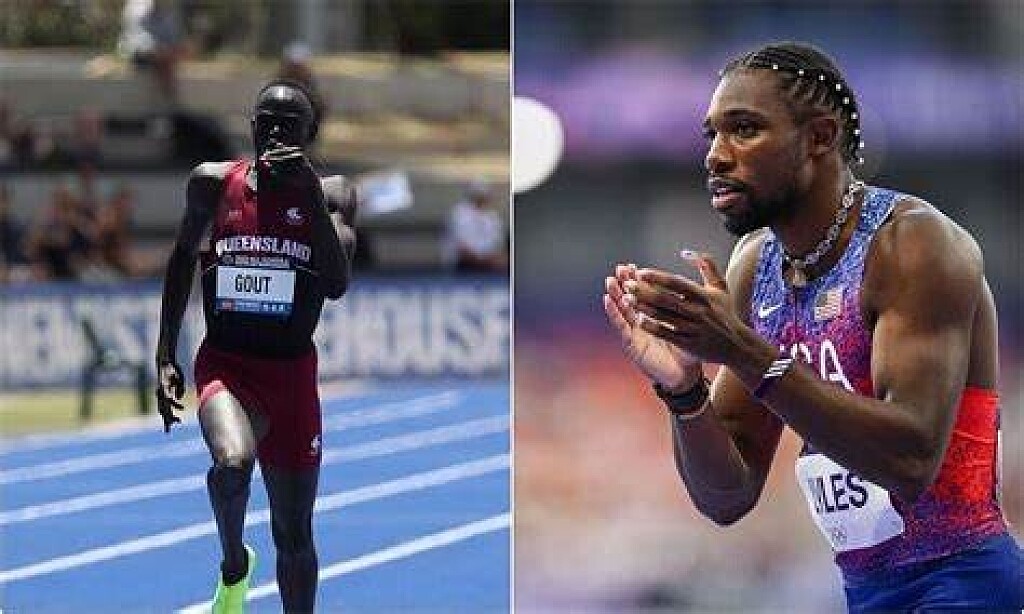
Record-breaking teen sprinter Gout Gout is set to train alongside Noah Lyles
Gout Gout recently signed with Adidas and will have the opportunity to train alongside world champion Noah Lyles, gaining valuable mentorship as he continues his path to the top.
After inking a lucrative deal with leading German athletic apparel and footwear corporation Adidas, Gout Gout will now have a chance to train with triple world champion Noah Lyles.
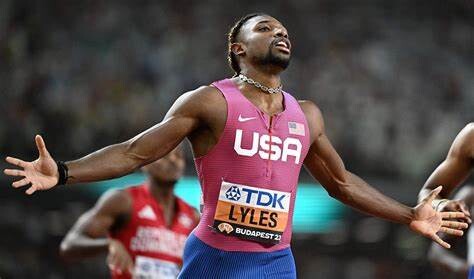
Gout Gout’s manager James Templeton noted that it is a great opportunity for the youngster to interact with Noah Lyles and get to know more about sprinting as he looks to chat his own path to the top.
James Templeton is optimistic that Noah Lyles will be open to teaching Gout Gout a lot, noting that he believes the reigning Olympic 100m champion is a great personality to be around.
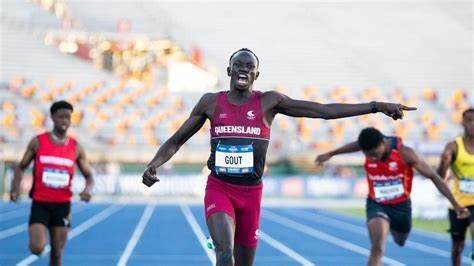
Noah Lyles is also an Adidas athlete and earlier this year, the American sprint king extended his contract until the 2028 Olympic Games in Los Angeles. Noah Lyles’ contract with Adidas is considered the richest in track and field since Usain Bolt's deal with Puma.
"We have the opportunity to go to Florida and join the training group of Noah Lyles and coach Lance Brauman (Lyles’ coach). There are about 16 or 18 top sprinters there,” James Templeton told ABC News.
"We'll be heading over for two or three weeks. That'll be a great opportunity, a wonderful educational experience. I haven't heard from Noah, but he's a great guy and I'm sure he'll be happy to take the younger guy under his wing a little bit."
Meanwhile, Gout Gout has been very impressive in his races and since 2022, he has proven to be unstoppable, running crazy times and making headlines. Gout Gout was named the holder of the Australian Under-16 100m and 200m records at the age of 14.
The following year, Gout Gout managed to break the Australian Under-18 men’s 200m record after running 20.87 seconds. He claimed top honors at the Australian Junior Athletics Championships in Brisbane.
In 2024, Gout Gout has been on top of the world with his crazy times and superb form. He started his season with a personal best time of 10.29 seconds to claim the win in the U-18 Boys 100m at the Queensland Athletics Championships.
Gout Gout then won the Australian U20 100m title in a time of 10.48 seconds in Adelaide before heading to the World Athletics U20 Championships in Lima, Peru. In Peru, the Australian youngster won a silver medal in the 200m.
He recently signed with Adidas and then proceeded to the Queensland All-Schools Championships, clocking a time of 20.29 seconds in the heats of the 200m to showcase his authority once again.
by Abigael Wafula
Login to leave a comment
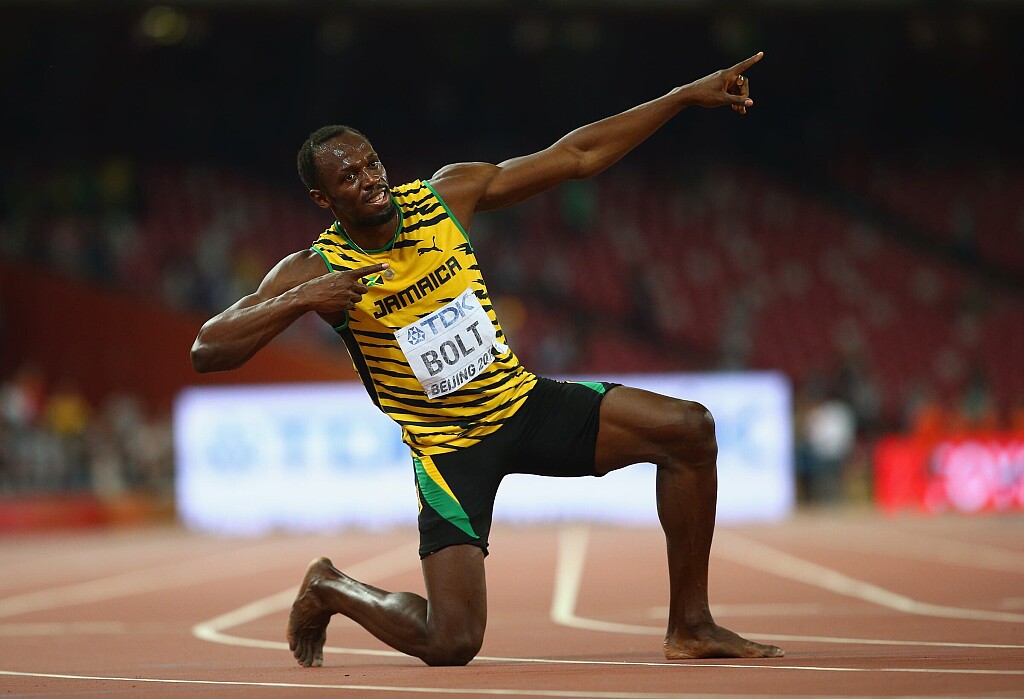
Usain Bolt shares the best advice he’s ever received
Known for his iconic celebrations and world-record-breaking times, eight-time Olympic gold medallist Usain Bolt shared a powerful piece of advice from his long-time coach on this week’s episode of the High-Performance Podcast.
Bolt credited his coach, Glen Mills—who led the Jamaican Olympic track and field team for two decades—for the advice that shaped the rest of his career. Mills began coaching Bolt after his Olympic debut in Athens 2004, where Bolt, then a rising talent, failed to advance from the men’s 200m heats.
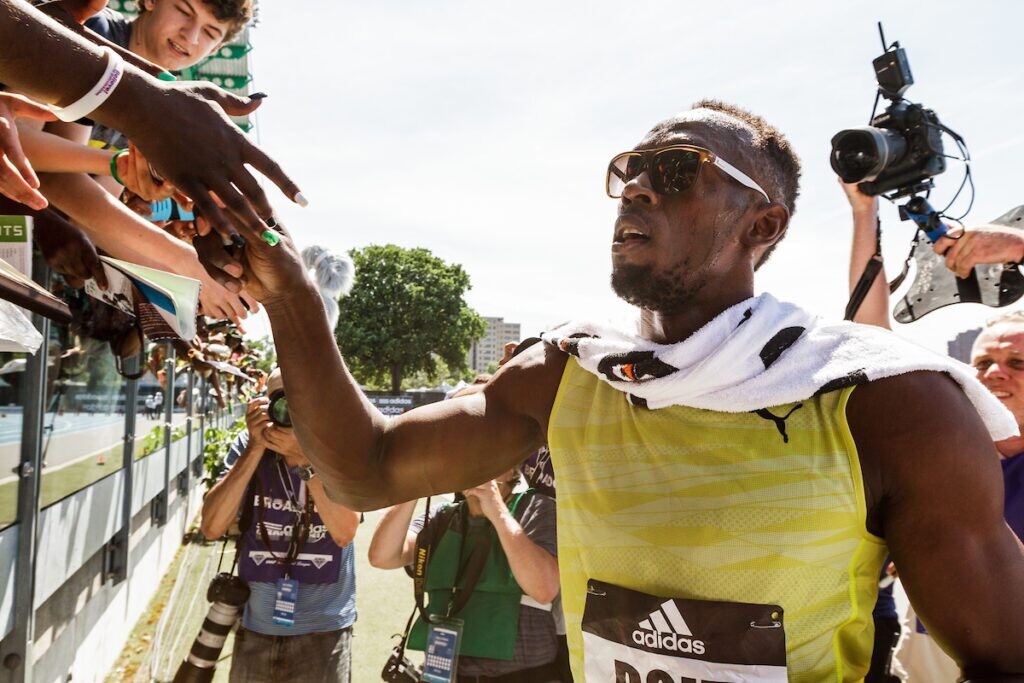
After that, Mills told Bolt, “You have to learn how to lose before you can learn how to win.” As a teenager, Bolt didn’t fully grasp what Mills meant by it, but it became clear. “You will fail at some point,” Bolt said on the podcast. “What’s important is what you take away and learn from it. If you can be truthful and honest with yourself, you’ll realize what you need to do to get better.”
Bolt came to Mills as a 200m specialist and credits his coach with developing his explosive power in the 100m—a distance in which Bolt set a world record of 9.58 seconds in 2009, a record that remains unbroken.
Bolt went on to become the seventh man in history to win Olympic gold in both the 100m and 200m at the 2008 Games in Beijing, a feat he accomplished twice more in his career, at London 2012 and Rio 2016—making him the only athlete in history to achieve a three-peat in these two sprint events.
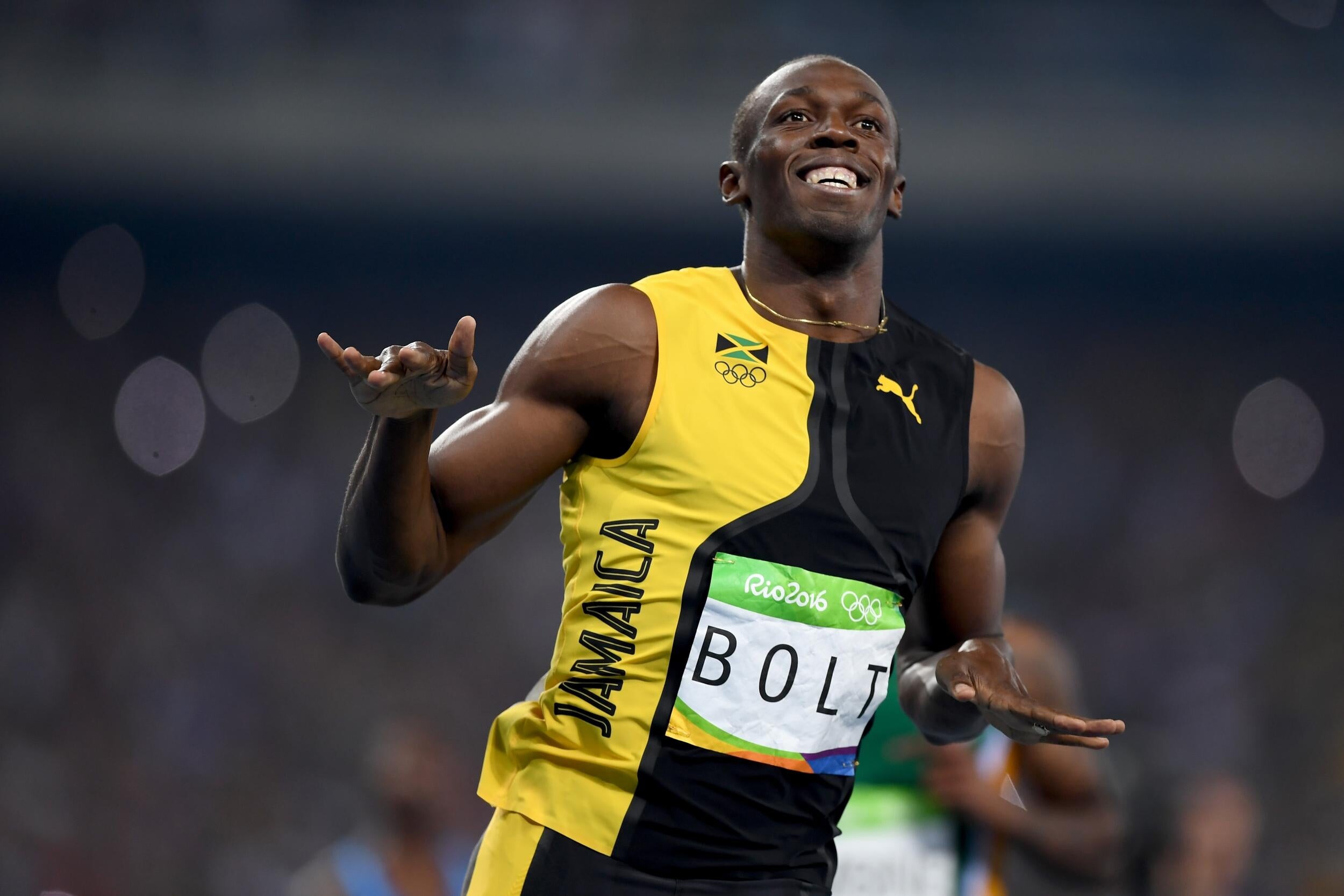
The 38-year-old officially retired after the 2017 World Championships and briefly tried his hand at professional soccer with Australia’s Central Coast Mariners in 2018.
by Marley Dickinson
Login to leave a comment
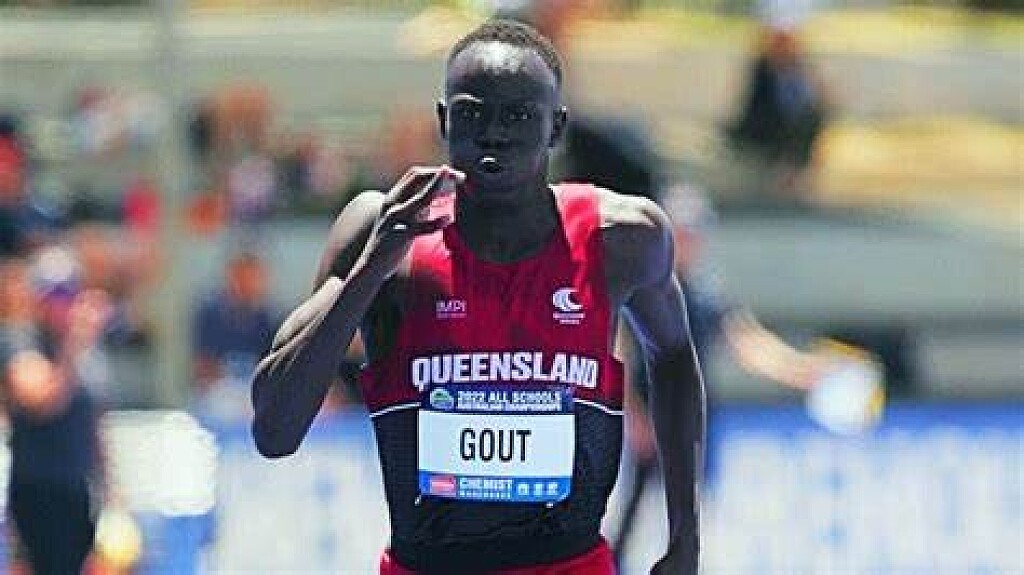
16-year-old Aussie sprinter turns pro with Adidas
The Grade 11 sprinter’s running style and tall frame have been compared to that of the legendary Usain Bolt.
Australia’s sprint sensation Gout Gout has signed a professional contract with Adidas at just 16.
The high schooler made headlines after he cruised to a 20.77-second win in the qualifying rounds of the 200m at the World U20 Championships this past August. The clip went viral in the athletics world, and track and field fans drew comparisons from his tall stature and running style to those of Jamaican track legend Usain Bolt.
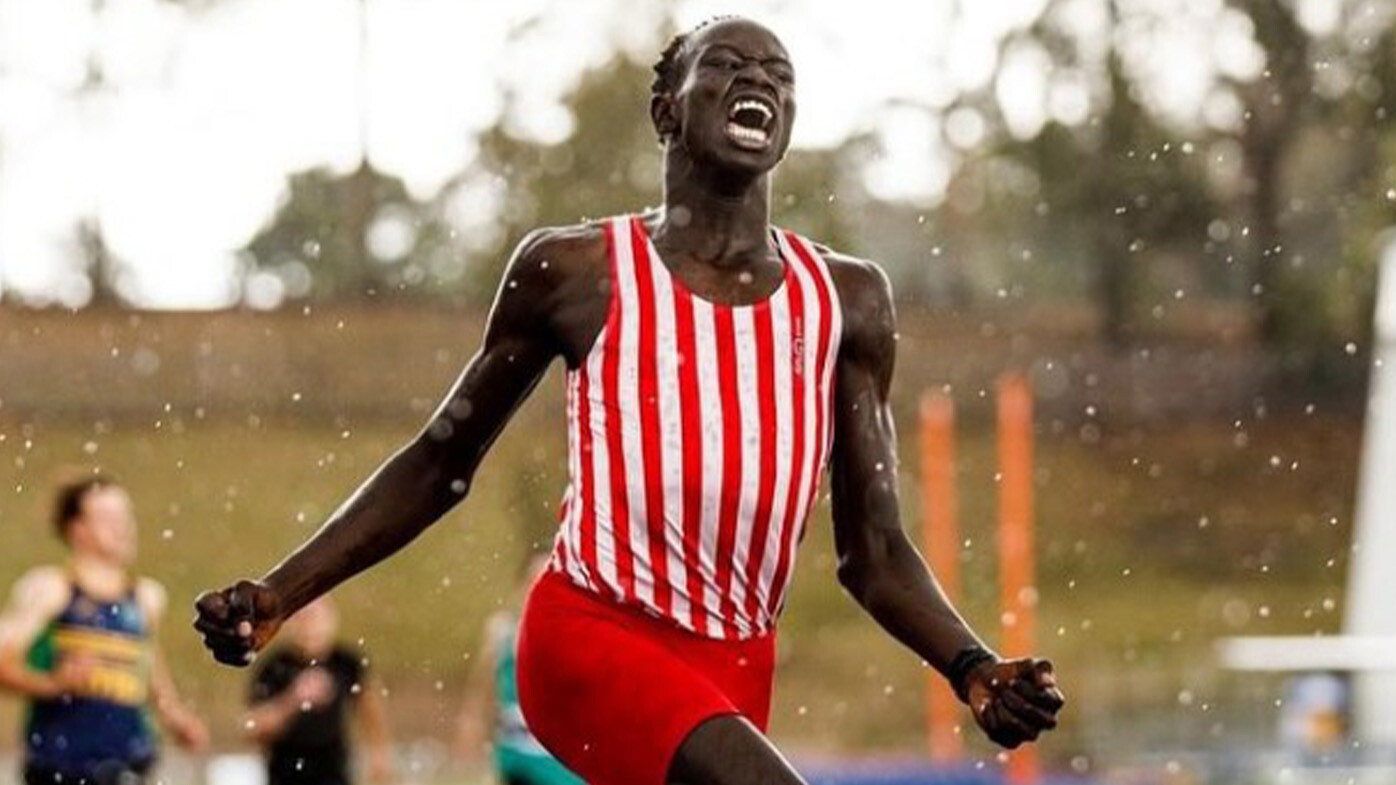
“Usain Bolt is that you?” one comment said.
“Gout Gout reminds me of Usain Bolt. He will definitely level up with him,” said another.
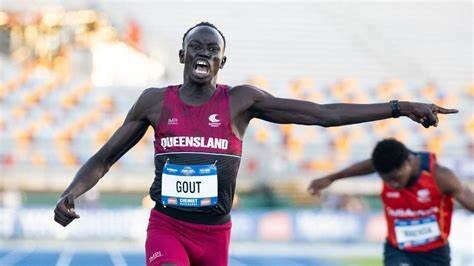
The following day, Gout ran another personal best of 20.60 seconds in the 200m final, setting an Australian U18 record and winning silver. He was outrun by South Africa’s Bayanda Walaza who took home double golds in the World U20 100m and 200m and won silver in the 4x100m relay at the Paris Olympics earlier that month. Walaza is two years older than Gout, who was competing against athletes three to four years older.
The Aussie’s performance surpassed Bolt’s own winning time from the 2002 Junior World Championships in Kingston, Jamaica, where the 16-year-old Jamaican clocked 20.61. “It’s pretty cool because Usain Bolt is arguably the greatest athlete of all time, and just being compared to him is a great feeling,” Gout said.
Like Bolt, the 200m isn’t Gout’s only event. He also holds a personal best of 10.29 in the 100m and has held the Australian U18 200m record since last year, at just 15.
In 2005, Gout’s parents moved from South Sudanese to Brisbane, Australia where Gout was born in 2007. The athlete attends Ipswich Grammar School, an all-boys boarding school, in Queensland, Australia, where he first showed off his athleticism in rugby. He’ll only be 24 when the Olympics come to his hometown of Brisbane in 2032.
by Cameron Ormond
Login to leave a comment

How to train for a marathon no matter how fit you are
If you’re planning a marathon, you’re on the road to becoming part of a select proportion of the global population – 0.01 per cent, to be exact. But that doesn’t mean running one is exclusive to the lycra-clad minority. With the right planning, training and dogged determination anyone can have a go. Here’s what you need to know if you’re gearing up to train for the race of your life.
Which marathon should I choose to run?

The London Marathon is special, with incredible atmospheric and historic appeal, but it’s notoriously tricky to get a place and is far from the only one to consider. All marathons are 26.2 miles, so if you’re a beginner, you might want to choose what seasoned runners call an “easy” marathon – one with a flat and paved course. While the Brighton Marathon is one of the most popular (and mostly flat) UK spring races, the Greater Manchester Marathon is known as the flattest and fastest UK option. The under-the-radar Abingdon Marathon is one of the oldest in the UK and also has a flat route – great for new runners and for those who are keen to beat their personal bests.
Around Europe, try the Berlin and Frankfurt marathons in Germany, or the Amsterdam Marathon in the Netherlands. More recently, the Valencia and Seville marathons in Spain have grown in appeal. For a great beginner list, visit coopah.com. It’s worth doing your research to ensure it’s a route you’ll enjoy (atmospheric, well populated, flat, historic… whatever piques your interest), as this will pay dividends when things get tough.
Training
How long does it take to train for a marathon?
“You need 16-to-18 weeks of training,” says Richard Pickering, a UK Athletics qualified endurance coach. “And if you’re starting from nothing, I think you need closer to six months.” This may sound like a long time to dedicate to one event but a structured plan will help you develop the strength, endurance and aerobic capacity to run longer distances. Not to mention work wonders for your overall health.
“Anyone can run a marathon if they are willing to put in the hard work,’ says Cory Wharton-Malcolm, Apple Fitness+ Trainer and author of All You Need Is Rhythm & Grit . “As long as you give yourself enough time and enough grace, you can accomplish anything.’
Ready to get running? Read on.
Five steps to preparing for a marathon
1. Follow a training plan and increase mileage gradually
“Even if it’s a simple plan, and that plan is to run X times per week or run X miles per week, it’s beneficial to have something guiding you,’ says Wharton-Malcolm. ‘It’s happened to me, without that guidance, you may overtrain causing yourself an injury that could have been avoided. And if you’re injured, you’re far less likely to fall in love with running.”
For authoritative plans online, see marathon event websites (try the Adidas Manchester Marathon or the TCS London Marathon websites) or from a chosen charity such as the British Heart Foundation. Most will consist of the key training sessions: speed work (spurts of fast running with stationary or active rest periods), tempo runs (running at a sustained “comfortably uncomfortable” pace), and long-distance slogs.
Most marathon plans will abide by the 10 per cent rule, in that they won’t increase the total run time or distance by more than 10 per cent each week – something that will reduce your risk of injury.
2. Practise long runs slowly
Long runs are your bread-and-butter sessions. They prepare your body to tolerate the distance by boosting endurance, and give you the strength to stay upright for hours. Intimidating as this sounds, the best pace for these runs is a joyously slow, conversational speed.
“People may think they need to do their marathon pace in long runs,” says Pickering, “but it’s good to run slowly because it educates the body to burn fat as fuel. This teaches it to use a bit of fat as well as glycogen when it goes faster on race day, and that extends your energy window so that you’re less likely to hit the ‘wall’.”
The caveat: running slowly means you’re going to be out for a while. With the average training plan peaking at 20 miles, you could be running for many hours. “When I did lots of long runs, I had a number of tools: listening to music, audio-guided runs, apps or audio books,” says Wharton-Malcom. “I used to run lots of routes, explore cities… You can also do long runs with friends or colleagues, or get a train somewhere and run back so it’s not the same boring route.”
3. Do regular speed work
Speed work may sound like the reserve of marathon aficionados, but it’s good for new long-distance runners too. “I think people misunderstand speed work,” says Wharton-Malcom. “The presumption is that the moment you add ‘speed’ to training, you have to run like Usain Bolt, but all ‘speed’ means is faster than the speed you’d normally be running. So if you go out for a 20-minute run, at the end of the first nine minutes, run a little faster for a minute, then at the end of the second nine minutes, run a little faster for a minute.”
Small injections of pace are a great way for novices to reap the benefits. “The idea is to find the sweet spot between ‘Ah, I can only hold on to this for 10 seconds’ and ‘I can hold on to this for 30-to-60 seconds’,” he adds.
Hill sprints are great for increasing speed. Try finding a loop with an incline that takes 30 seconds to ascend, then run it continuously for two to three lots of 10 minutes with a 90-second standing rest.
Interval work is also a speed-booster. Try three lots of three minutes at tempo pace with a 90-second standing rest. “The recovery [between intervals] is when you get your breath back and your body recirculates lactate [a by-product of intense exercise, which ultimately slows bodies down],” explains Pickering, “and this means you’re able to do more than you otherwise would.”
4. Run at marathon-pace sometimes
Every now and then, throw in some running at your chosen race pace. “You need to get used to a bit of marathon pace,” says Pickering, “but I wouldn’t put it into your programme religiously.”
Some runners like to practise marathon pace in a “build-up” race, typically a half-marathon. “It can give people confidence,” says Pickering. “Your half-marathon should be six-to-seven weeks prior to the main event, and have a strategy to ensure you’re not racing it because you need to treat it as a training run.”
5. Schedule in rest and recovery
Of course, no training plan is complete without some R&R. Rest days give your body a chance to adapt to the stresses you’ve put it through and can provide a mental break. “Active recovery” is a swanky term for taking lighter exercise such as an easy run, long walk, gentle swim, some yoga – crucial because you don’t want to do two hard sessions back-to-back. “A long run would count as a hard day, so if your long run is on Sunday, you could do an easy run such as 30-40 minutes at a conversational pace on a Monday, but don’t do anything fast until Tuesday,” says Pickering.
What about recovery tools?
Foam rollers, massage guns, ice baths – the list is long. Pickering says to keep it simple: “I would encourage foam rolling [relieving muscle tension by rolling over a foam tube] or sports massage, and they’re kind of the same thing.”
And Wharton-Malcom swears by the restorative power of a good rest: “From personal experience, sleep is our secret weapon and it’s so underrated. Getting your eight-hours-plus per night, taking power naps during the day… you can do so well with just sleeping a bit more.”
Race day
How to perform your best on race day – what to eat
“The marathon is going to be relying on carbohydrate loading [such as spaghetti, mashed potato, rice pudding], which should take place one-to-three days before an event,” explains performance nutritionist Matt Lovell. Other choices might include: root vegetables (carrots, beetroot), breads or low-fat yoghurts.
“On the day, the main goal is to keep your blood glucose as stable as possible by filling up any liver glycogen.” Which means eating a breakfast rich in slow-release carbohydrates, such as porridge, then taking on board isotonic drinks, like Lucozade Sport or coconut water, and energy gels roughly every 30-45 minutes.
How to stay focused
Even with the right fuel in your body, the going will get tough. But when you feel like you can’t do any more, there is surprisingly more in the tank than you realise.
“Sports scientists used to think we eat food, it turns into fuel within our body and, when we use it up, we stop and fall over with exhaustion,” says performance psychologist Dr Josephine Perry. “Then they did muscle biopsies to understand that, when we feel totally exhausted, we actually still have about 30 per cent energy left in the muscles.”
How do you tap into that magic 30 per cent? By staying motivated – and this ultimately comes down to finding a motivational mantra that reminds you of your goal and reason for running.
“Motivational mantras are incredibly personal – you can’t steal somebody else’s because it sounds good; it has to talk to you,’ explains Dr Perry, author of The Ten Pillars of Success. “Adults will often have their children as part of their motivational mantra – they want to make them proud, to be a good role model. If you’re doing it for a charity, it might be that.” Write your motivational mantra on your energy gel, drinks bottle or hand. “It doesn’t just need to come from you,” adds Dr Perry. “I love getting athletes’ friends and family to write messages to stick on their nutrition, so every time they take a gel out of their pocket, they’ve got a message from someone who loves them.” Perry is supporting the Threshold Sports’ Ultra 50:50 campaign, encouraging female participation in endurance running events.
Smile every mile, concludes Dr Perry: “Research shows that when you smile it reduces your perception of effort, so you’re basically tricking your brain into thinking that what you’re doing isn’t as difficult as it is.”
One thing is for sure, you’re going to be on a high for a while. “What happens for most people is they run the race and, for most of the race, they say ‘I’m never doing this again,’ says Wharton-Malcom. “Then the following morning, they think, ‘OK, what’s next?’”
What clothes should you wear for a marathon?
What you wear can also make a difference. Look for clothing made with moisture-wicking fabrics that will move sweat away from the skin, keeping you dry and comfortable. An anti-chafe stick such as Body Glide Anti-Chafe Balm is a worthy investment, or simply try some Vaseline, as it will stop any areas of the skin that might rub (under the arms, between the thighs) from getting irritated. Seamless running socks, like those from Smartwool, can also help to reduce rubbing and the risk of blisters.
Post-race recovery
What to eat and drink
Before you revel in your achievement, eat and drink something. Lovell says recovery fuel is vital: “Getting carbohydrates back into the body after a marathon is crucial. It’s a forgiving time for having lots of calories from carbohydrates and proteins, maybe as a recovery shake or a light meal such as a banana and a protein yoghurt.”
Have a drink of water with a hydration tablet or electrolyte powder to replenish fluid and electrolyte salts (magnesium, potassium, sodium) lost through sweat.
“You can have a glass of red later if you want, but your priority is to rehydrate with salts first, then focus on carbohydrate replenishment, then have some protein, and then other specialist items such as anti-inflammatories.” Choose anti-inflammatory compounds such as omega 3 and curcumin from turmeric, which you can get as a supplement, to help reduce excessive inflammation and allow for better muscle rebuilding.
Tart cherry juice – rich in antioxidants, anti-inflammatories and naturally occurring melatonin – could also be useful, with the latest research reporting that it can reduce muscle pain after a long-distance race and improve both sleep quantity and quality by five-to-six per cent. “And anything that improves blood flow such as beetroot juice, which is a good vasodilator, will help with endurance and recovery,” adds Lovell. Precision Hydration tablets are very good for heavy sweaters.
Any other other good products to help with recovery?
The post-run recovery market is a saturated one, but there are a few products worth trying. Magnesium – from lotions and bath flakes to oil sprays drinks and supplements – relaxes muscles and can prevent muscle cramps, as well as aiding recovery-boosting sleep.
Compression socks boost blood flow and therefore the removal of waste products from hardworking muscles, and have been shown to improve recovery when worn in the 48 hours after a marathon. Arnica has anti-inflammatory properties that can help speed up the healing process after a long run, and can be used as an arnica balm or soak.
by The Telegraph
Login to leave a comment
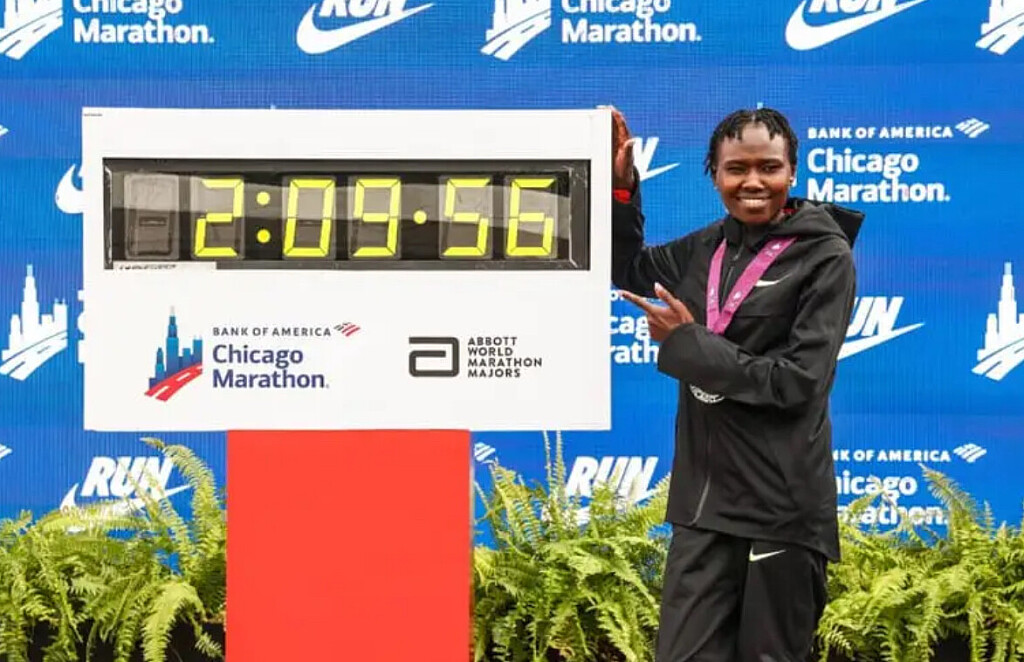
Another look at the new women’s marathon record set in Chicago today
30-year-old Kenyan Ruth Chepngetich destroyed the women’s marathon world record today (13 Oct. 2024) at the 46th Bank of America Chicago Marathon. Her time of 2:09:56 ripped 1:57 from the previous mark set in Berlin 2023 by Ethiopia’s Tigst Assefa (2:11:53).
At this point, the athletics record book feels like it ought to be written in No. 2 Ticonderoga pencil. That’s how fast records fall in this age of technological and nutritional advances. This is especially true at the longer distances where such advancements create greater margins.
Still, Ruth Chepngetich’s new world record stands out as history’s first women’s sub-2:10, and first sub-5:00 per mile pace average. But Tigst Assefa’s 2:11:53 mark set last year in Berlin had us all cradling our heads, as well. That performance cut 2:11 off Brigid Kosgei‘s 2:14:04 record from Chicago 2019, which shattered Paula Radcliffe‘s seemingly impregnable 2:15:25 set in London 2003.
In each case: Radcliffe’s, Kosgei’s, Assefa’s, and now Chepngetich’s record have caused mouths to gape in the immediacy of their efforts. But nothing should surprise us anymore.
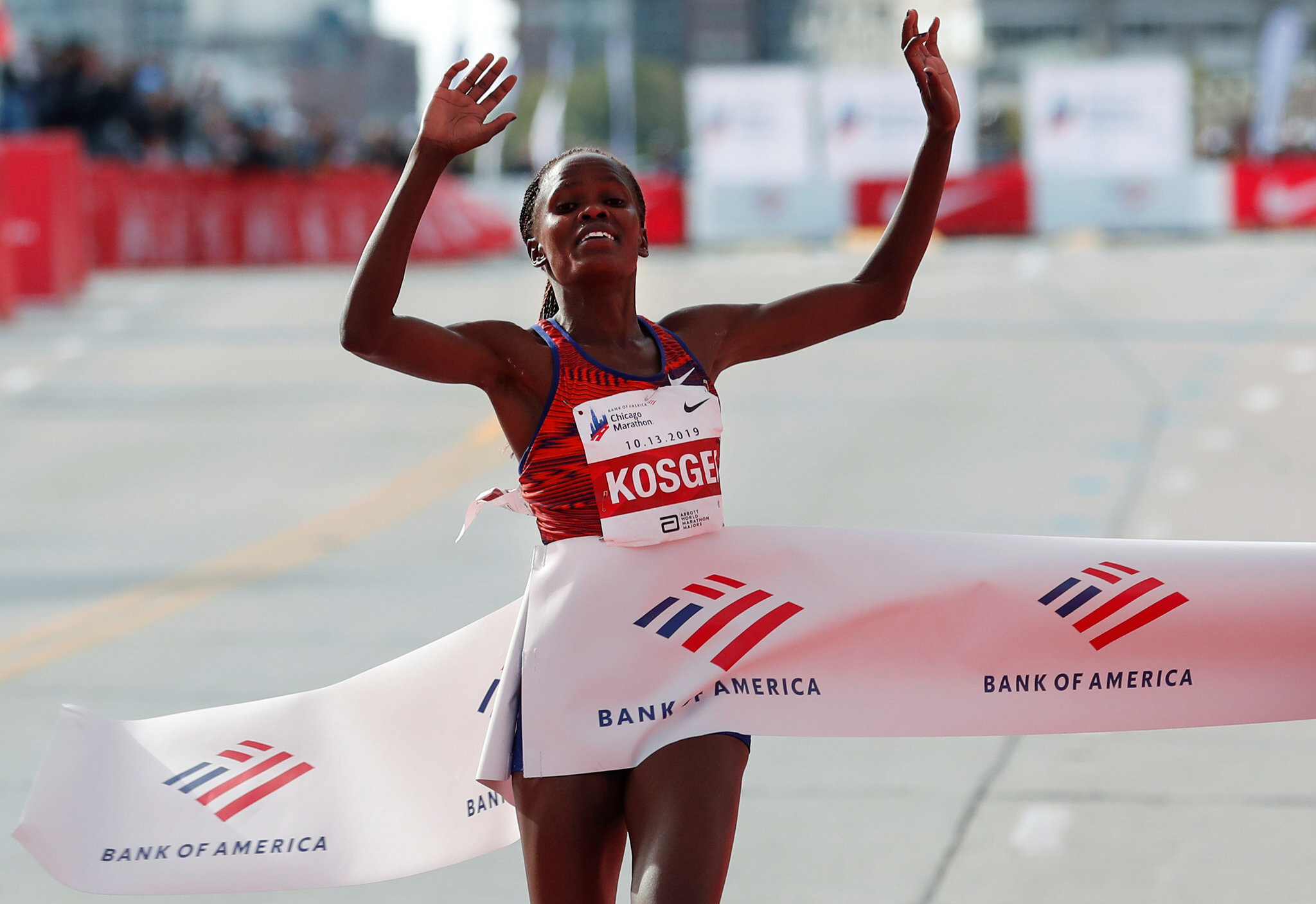
Racing is often a self-fulfilling prophecy determined by one’s build-up. Ruth Chepngetich said in her TV interview she came into Chicago off a perfect three-months of training after her disappointing ninth-place finish in London in April (2:24:36). Two previous wins in the Windy City (2021 and 2022) and a runner-up in 2023 meant Ms. Chepngetich arrived well seasoned on this course, with a keen understanding of what training was required to produce such a record run.
Of course, sadly, no record in athletics can be free of skepticism considering the industrial level of PED use that is uncovered, seemingly, every other Tuesday. Though understandable, cynicism should not be one’s default reaction.
To maintain any allegiance to the game, to follow it with any interest at all, we have to celebrate each record at face value. Just as rabid fans have to acknowledge some records to be ill-gotten, cynics accept that many special runs are exactly as they appear, above reproach.
Besides, when you break down Ruth’s 5k splits, each one from 5k to 35k was slower than the previous 5k. Not until the split from 35k to 40k (15:39) did she run faster than the split before (15:43 from 30 to 35k)
5k – 15:0010k – 30:14 (15:14)15k – 45:32 (15:18)20k – 60:51 (15:19)25k – 1:16:17 (15:26)30k – 1:31:40 (15:32)35k – 1:47:32 (15:43)40k – 2:03:11 (15:39)Fini – 2:09:56
1st half – 64:162nd half – 65:40
So congratulations to Ruth Chepngetich and her team for a marvelous run through a beautiful city. Now, let’s see how long this mark stays on the books before the No. 2 Ticonderoga pencil gets pulled out again.
BY THE NUMBERS
There have been 26 women’s world records set in the marathon since Beth Bonner‘s 2:55:22 in New York City in 1971. Over the ensuing 53 years, the average percentage change from one record to the next has been 1:26%. See WOMEN’S WORLD RECORD PROGRESSION.
Today’s record by Ruth Chepngetich, 2:09:56 (just one second slower than Bill Rodgers‘ American men’s record in Boston 1975!), lowered Tigst Assefa’s 2:11:53 mark by a healthy 1.5%. And Assefa’s time cut Brigid Kosgei’s 2:14:04 by 1.65%.
These latest records are still taking significant chunks off their predecessors and doing so in quick order. That suggests women are far from slicing everything they can from even this new record.
Yet, when comparing the women’s marathon world record to the men’s (2:00:35, set by Kelvin Kiptum in Chicago 2023), we see a differential of 7.2%. That is by far the best women’s record vis-à-vis the men’s throughout the running spectrum. Second place on that list is Florence Griffith-Joyner‘s 10.49 100m in relation to Usain Bolt‘s 9.58, a percentage difference of 8.675%.
The traditional rule of thumb has been a 10% gap between men’s and women’s records. But there are so many factors in play, it is difficult to make any definitive statement that explains one event, much less one athlete from another. I guess that’s why we keep watching.
by Toni Reavis
Login to leave a comment

Bank of America Chicago
Running the Bank of America Chicago Marathon is the pinnacle of achievement for elite athletes and everyday runners alike. On race day, runners from all 50 states and more than 100 countries will set out to accomplish a personal dream by reaching the finish line in Grant Park. The Bank of America Chicago Marathon is known for its flat and...
more...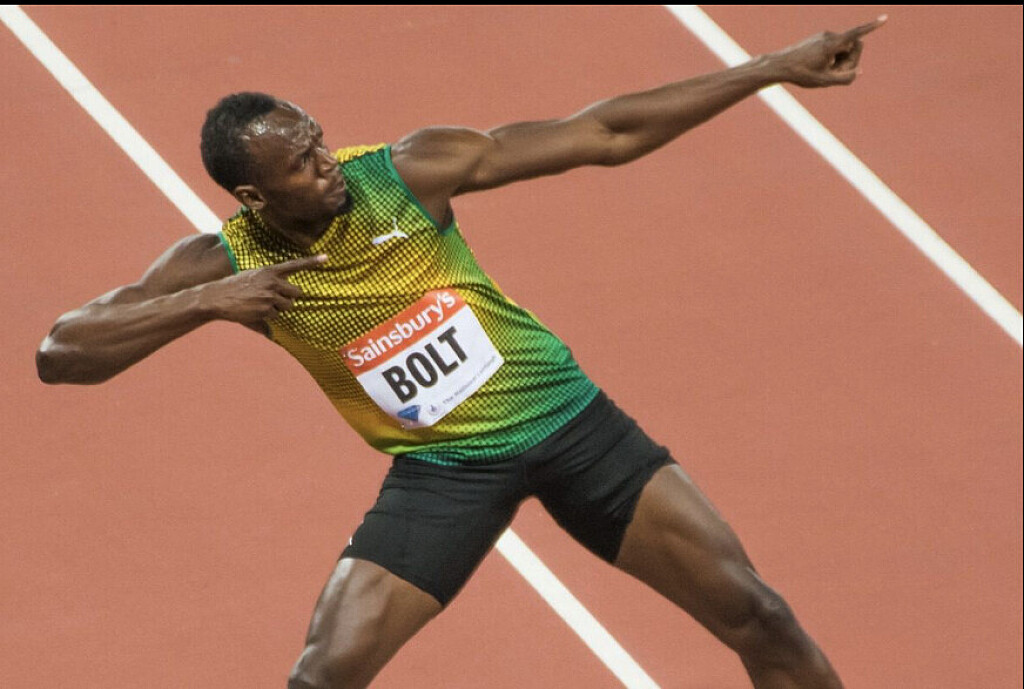
5 track stars we'd love to see on Dancing with the Stars
With Season 33 of Dancing with the Stars well underway, we’re seeing Olympic athletes like Team USA rugby star Ilona Maher and gymnast Stephen Nedoroscik (aka “pommel horse guy”) tear up the stage in a new way. Eight-time NBA All-Star Dwight Howard and two-time Super Bowl champion Danny Amendola are also surprising the audience with their stellar footwork in a very different type of competition. It makes us wonder—which track athletes would dominate the dance floor?
In Dancing with the Stars (DWTS) history, 12 elite athletes have been crowned champion and taken home the Mirrorball Trophy—but the only track and field athletes who have participated in the show are former U.S. 100m world record holder Maurice Greene and American sprint hurdler (and bobsledder) Lolo Jones. Considering how much track and field athletes enjoy their celebratory dances (sometimes walking the fine line between celebrating and showboating), we think these five personalities would thrive in the ballroom.
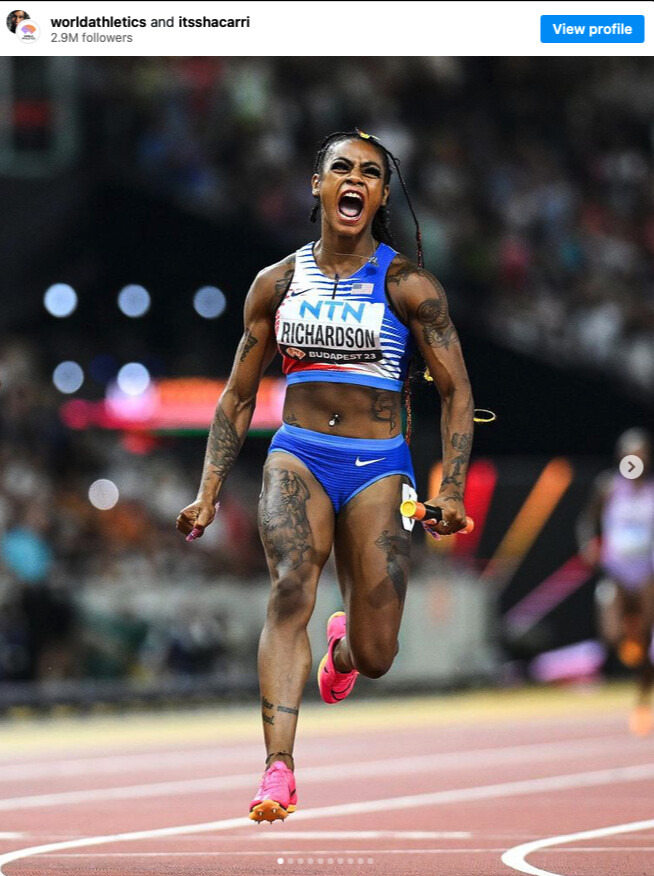
Usain Bolt
We all know our favourite world-class sprinter’s signature victory pose became iconic for a reason–Usain Bolt knows how to make a statement. He became the 100m and 200m world record holder after coming from a 400m background, proving that he can be good at everything he tries. The confidence and vibrant energy Bolt brought to every track event throughout his career makes us certain he’d bring that same spirit to the dance floor.
If knowing Bolt’s captivating and charismatic personality when performing in front of a crowd isn’t already enough, here’s a video of him samba dancing after a press conference at Rio 2016. Clearly, he’s already a pro.
Alysha Newman
Canada’s Alysha Newman went viral for her celebratory dance after winning the bronze medal in the women’s pole vault at Paris 2024. The Canadian record holder cleared the bar, faked an injury–and started twerking. That’s exactly the energy they’re looking for when screening world-class athletes for potential dance skills. The technical expertise required in pole vaulting also gives Newman an edge when it comes to executing lifts or more challenging moves.
Newman got both positive and negative attention on social media from the victory twerk, but stayed confident and was true to herself–once again demonstrating that she is a qualified candidate for the show.
Noah Lyles
We’re sure the first person that came to mind when thinking of an athlete with a television personality was Team USA’s Noah Lyles. The 27-year-old, already a star on Netflix’s docuseries Sprint, exudes confidence and drive in each and every race he appears in. To say that Lyles is a competitive athlete might be an understatement–the 100m and 200m sprinter has quickly become popular for his bold moves even before races, in an attempt to rile up the crowd.
We’ve also seen this Olympic champion and six-time world champion dancing on TikTok. A character like Lyles could win over the audience on DWTS, and with those kinds of moves, he might even be a contender for the trophy.
Sha’Carri Richardson
Another major sprint personality we simply cannot leave out is Sha’Carri Richardson of the U.S. As you may know, the cast on DWTS gets dressed up glamorously for each show, and Richardson is the definition of glam. With her hair, nails, and lashes on race day, we know the 24-year-old would fully embrace the sparkly, embellished outfits worn during DWTS performances. Look good, feel good—right? Not to mention, like Lyles, this 100m world champion exudes confidence in every performance, a quality that would take her far in the ballroom.
Aaron Brown
Canada’s four-time Olympian Aaron Brown is not only a newly-minted Olympic gold medallist, but also an influencer. The 100m and 200m sprinter posts a mix of inspirational and humorous videos on his YouTube channels–showing off his fun and driven personality. With the current DWTS cast using TikTok and Instagram as a platform to build a fan base and earn more votes, Brown earns extra points as a potential candidate for already being experienced in that domain. We’ve yet to see his dancing abilities put to the test, but if put up against a rival like Lyles, we’re sure we can expect nothing but sensational moves from the four-time Canadian Olympian.
Honourable mention: Jakob Ingebrigsten
If he can bring these moves back, you can expect a nomination from us to get Ingebrigtsen on the next season.
by Running Magazine
Login to leave a comment
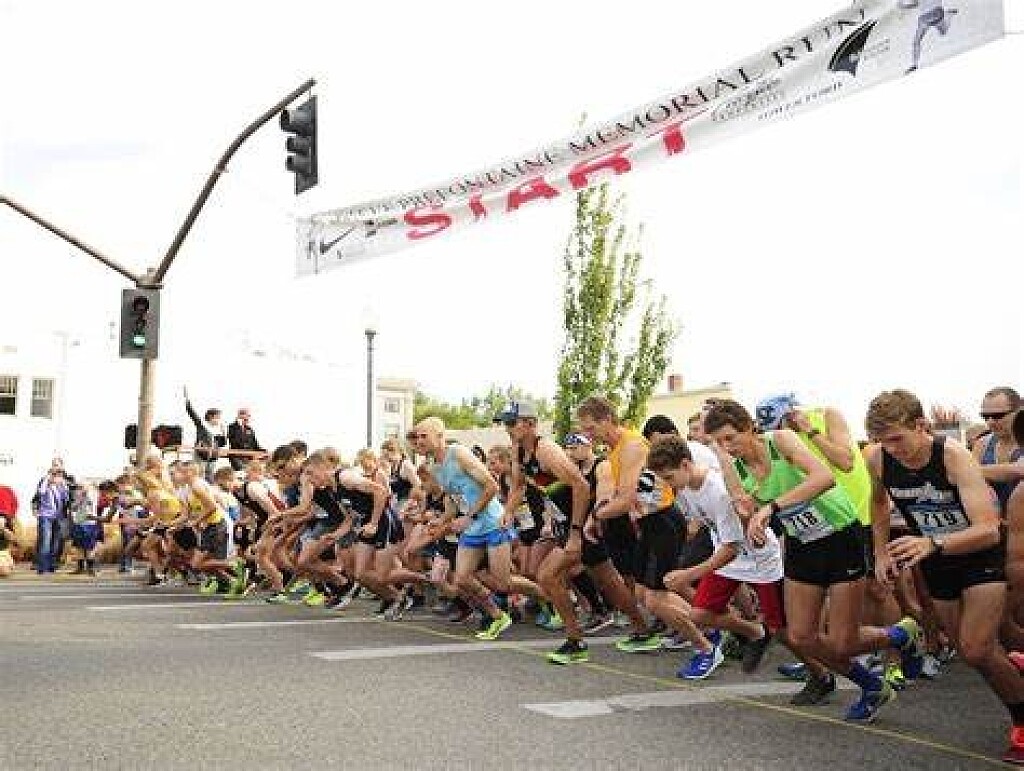
Prefontaine Memorial Run returns to coos bay to honor a running legend
The annual Prefontaine Memorial Run, a classic 10K run honoring one of Oregon’s most beloved athletes, is returning to the charming streets of Coos Bay on Saturday, September 21, 2024. The run celebrates Coos Bay’s own Steve Prefontaine, the famed Oregon runner who bolted onto the international running scene and helped ignite a running craze in the U.S. in the 1970s.
“Steve Prefontaine was a legend in the running world in the 1970s, and Coos Bay is where he was born and where he discovered his gift for and love of running,” said Janice Langlinais, Executive Director of the Coos Bay-North Bend-Charleston Visitor and Convention Bureau, more commonly known as Oregon’s Adventure Coast. “The annual Prefontaine Memorial Run not only honors Pre’s legacy here in his hometown, but it draws runners from around the region, the state and the country to come and experience the joy of running on Oregon’s Adventure Coast.”
The 2024 Prefontaine Memorial Run is a challenging 10K road race around the streets of Coos Bay that finishes on the Prefontaine Track at Marshfield High School following one of Pre’s favorite training routes. The event also includes a 2-mile walk and fun run. The 10K starts at 10 a.m., while a 5K high school team competition kicks off the events at 9:45 a.m.
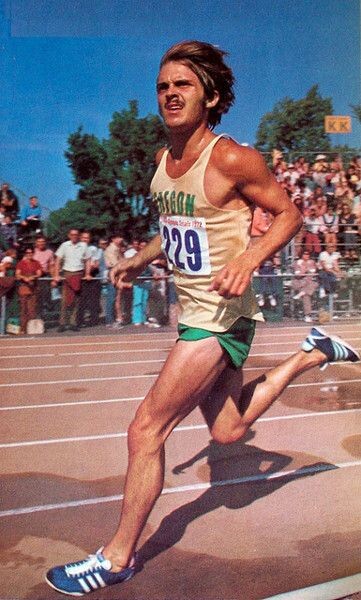
Other pre-related attractions for runners and visitors include a bronze likeness of the famed distance runner at the Coos Bay Visitor Information Center, the Prefontaine Gallery at the Coos Art Museum, which showcases his awards and memorabilia, and the stunning Pre Mural in downtown Coos Bay.
The Prefontaine run will again coincide with the annual Bay Area Fun Festival, a two-day celebration in downtown Coos Bay filled with live entertainment, a parade, food and drinks, vendors, arts, crafts and the Cruz the Coos classic auto cruise around downtown Coos Bay.
The 2024 Prefontaine Memorial Run
What: A 10K run, with a 2-mile walk or fun run option and a 5K high school competition, in honor of hometown hero and running legend, Steve Prefontaine.
When: 10 a.m. Saturday, September 21. (High school competition begins at 9:45 a.m.; wheelchair runners start at 9:50 a.m.)
Where: The corner of 4th and Anderson in downtown Coos Bay.
Cost: $40 for runners 19 and over before September 17; $50 after that date. $20 for runners 18 and under or those in the 2K walk. $13 per runner for the high school competition.
Registration: prefontainerun.net
For visitors coming from out of town for the Prefontaine Memorial Run, Oregon’s Adventure Coast has lodging options for all tastes, from unique hotels and motels to vacation rentals, RV parks and picturesque campgrounds.
by The Bandon Western World
Login to leave a comment

Prefontaine Memorial Run
During his brief 24-year lifespan, Steve Prefontaine grew from hometown hero, to record-setting college phenomenon, to internationally acclaimed track star. In a similar span of years since his death in 1975, Pre has become the stuff of enduring legend. His rare combination of talent, discipline, determination, and star-quality with a human touch made Pre the idol of those he called...
more...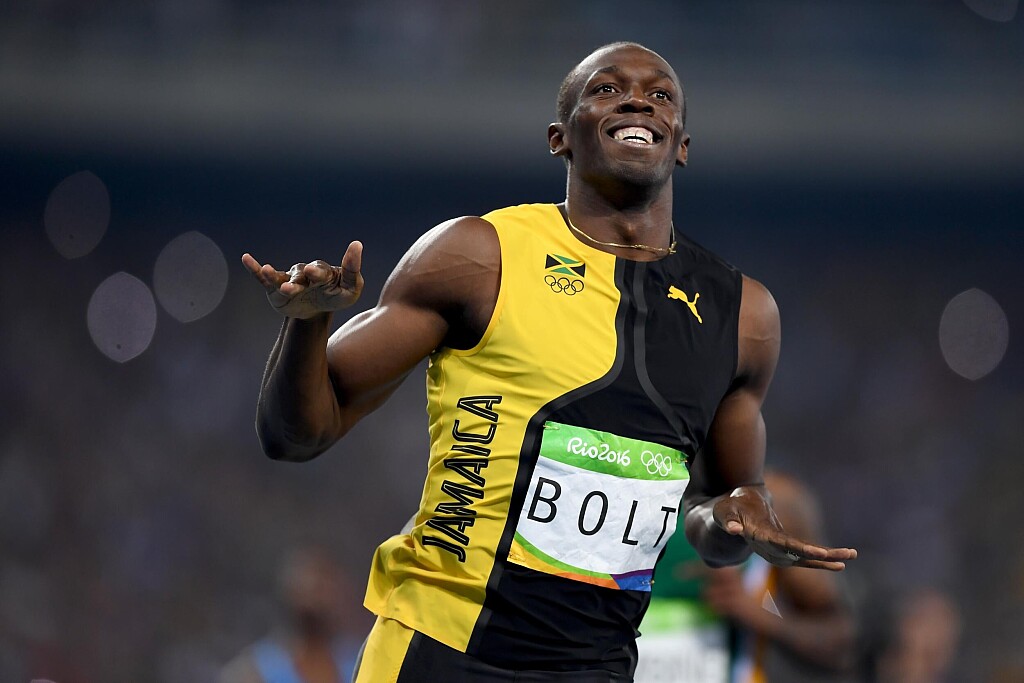
Usain Bolt has already made his feelings clear as second 16-year-old breaks his record
Olympic legend Usain Bolt has seen his sprint times beaten by youngsters Gout Gout and Nickecoy Bramwell in recent months, but he remains philosophical on his achievements being topped.
Usain Bolt has already made his feelings clear on young athletes breaking his records by declaring that he is excited by emerging "personalities" in the sport.
Following Nickecoy Bramwell's record-breaking feat earlier in the year, another record held by the Jamaican icon was smashed this week as 16-year-old Gout Gout produced a silver medal-winning time of 20.60 seconds in the 200m at the U20 World Championships in Peru. The young Australian narrowly edged out Bolt's 2002 time in the same race when he was almost 16 years old.

The Olympic legend clocked 20.61 in the final, although he had a quicker time of 20.58 in the first round. More than two decades on from Bolt's heroics, South African Bayanda Walaza clinched gold with a time of 20.54, while Britain's Jake Odey-Jordan secured bronze in 20.81.
Back in May, 16-year-old Jamaican hopeful Bramwell took Bolt’s Under-17 400m world record at the Carifta Games in Grenada with the youngster clocking 47.26 seconds to beat the record by just 0.07 seconds. Bolt's record had previously stood for an incredible 22 years.
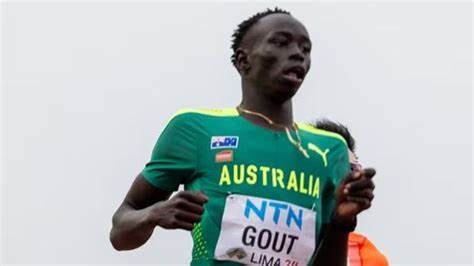
Speaking after Bramwell's achievements, Bolt hoped that his legendary times being eclipsed meant that athletics would be getting a much "needed" fresh injection of personality. He also claimed that the sport has not been the same since he departed the track.
“After me, it kind of went down because of who I was as a person, and how big my personality was," Bolt said. “But I think over time it will be better. I think young athletes are coming up and I see a few personalities that are needed in sport, hopefully in the upcoming years it will change.”
Who gets to inherit Bolt's heavy crown is another matter altogether, though. While Bramwell has caught the eye at longer distances, it's Gout who seems to be the major contender for Bolt's age-group records in the 100m and 200m.
The young athlete's performance has drawn strong comparisons to Bolt, with Athletics Australia president Jane Flemming among those claiming the young runner could be the next Olympic conquering superstar. Gout has taken such remarks with a degree of calmness rarely seen at such a young age, declaring that the compliment was "pretty cool".
Meanwhile, Bramwell, who has overcome several injury problems to now be discussed in the same breath as Bolt, has stated he now wants more of the legend's records. He said: "It's a wonderful feeling to break the record. Since last summer, I have been eyeing the record.
"So it's a great feeling I could come out here and get it. I just took my mind off it and focused on the record. I'm looking forward to better things.”
Bolt, 37, who retired in 2017, won eight Olympic gold medals and still holds world records in the 100m, 200m and the 4x100m relay. He now spends his athletics retirement with his family while also dabbling in celebrity charity events, like playing in Soccer Aid.
Login to leave a comment
How Usain Bolt contributed to Julien Alfred's victory in the women's 100m at the Paris Olympics
Julien Alfred has narrated how Usain Bolt inspired her to victory in the women's 100m final at the Paris Olympic Games.
Julien Alfred is walking in the footsteps of the fastest man in the world, Usain Bolt, as she looks to obliterate the women’s 100m world record.
The world record was set by the late Florence Griffith Joyner who clocked an astonishing 10.49 seconds to win the 1988 Seoul Olympic Games.
She explained that multiple Olympic champion Bolt contributed to her win at the Paris Olympic Games since she watched some of his videos before stepping on the track for the final. In an interview with the Times, Alfred noted that she wants to be one of the greatest ever.
She is slowly getting closer to achieving her dreams as she has been crowned Olympic champion. To achieve the feat, the St. Lucia sprinter had to beat a strong cast from the U.S. including the reigning world champion Sha’Carri Richardson and Melissa Jefferson who finished second and third.
“For me it was never the Olympics. I wanted to be the fastest woman in the world. I wanted to be unbeatable. It was almost child-like. I never saw being from a small place as a negative. I never thought it would make things impossible. I watched Usain Bolt be the fastest man and just knew what I wanted,” Alfred said.
“I wanted to help my family and I saw running as a way out. So I watched a few of his races before mine. I had to go back to my roots to see how he handled everything, from the pressure to the celebrations. He was an inspiration to me growing up and I wanted to be just like him,” she added.
After winning the Olympic 100m and claiming the 200m silver medal, Alfred noted that she felt a sense of being free.
She was unfazed by the presence of Richardson and noted that in such instances, she never feels the need to worry about the things happening around her. When she steps on the track, Alfred noted that she only focuses on herself.
“When I run fast I feel happy, like I’m on top of the world and nothing can stop me. Sometimes when you focus on racing, it can make you tense, but when you just focus on yourself you have that freedom. No worries. Unstoppable. That’s how I felt in Paris,” she revealed.
However, her journey to becoming an Olympic champion has been marred with challenges. Alfred admitted that she used to train on grass since there was no available track where she used to live.
“Every country has its own challenges. But Saint Lucia is a country full of life, very beautiful and rich in its own ways. I really hope I have put it on the map,” she added.
by Abigael Wafula
Login to leave a comment

Paris 2024 Olympic Games
For this historic event, the City of Light is thinking big! Visitors will be able to watch events at top sporting venues in Paris and the Paris region, as well as at emblematic monuments in the capital visited by several millions of tourists each year. The promise of exceptional moments to experience in an exceptional setting! A great way to...
more...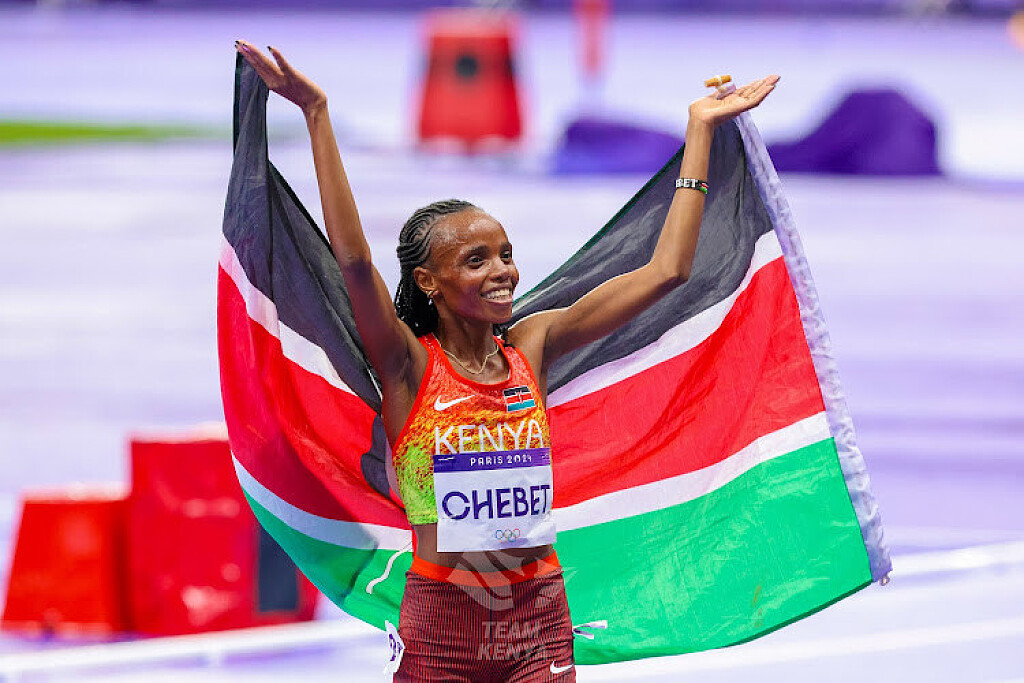
What next for Kenya after Paris 2024 Olympic Games
The curtains for the 2024 Paris Olympics fell on Sunday night with Kenya ranking 17th in the world after winning 11 medals.
Despite Kenya topping the African continent with 4 gold, 2 silver and 5 bronze medals, the results left a lot to be desired.
From 83 athletes competing in seven disciplines, a significant impact was expected from the Kenyan athletes and the world.
The show started with Judoka Zeddy Cherop falling 10-0 to Portugal’s Patricia Sampao in a record 22 seconds while Fencing African champion Alexandra Ndolo crushed out 13-12 to Ukranian Olena Kryvytska in her debut.
Maria Brunlehner and Ridhwan Mohamed finished 3rd and 4th in the women’s 50m freestyle and Men’s 400m freestyle heats respectively to crush out of contention for a swimming medal.
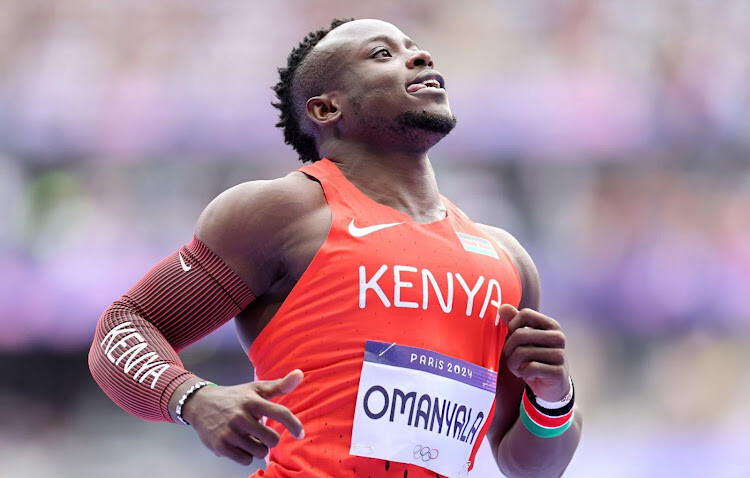
The sevens rugby team also crushed out in the group stage, after going down to Australia, Argentina and Samoa.
The women’s volleyball team booked their next flight after failing to win a single set following three identical 3-0 losses in a tough group B pool comprising Brazil, Poland and Japan.
Paris, the City of Love, had very little affection for Kenya as former world champion Julius Yego, finished a distant 5th in the javelin final with a 87.72m throw, to also bite the dust.
Africa's fastest man, Ferdinand Omanyala's 100m Olympic medal dream was shattered in the semi-finals after clocking 10.08 seconds to finish 8th.
However, Kenya redeemed herself with debutant Beatrice Chebet grabbing double gold in the 5000m and 10000m women’s races.
The best performer was followed closely by Faith Kipyegon who defended her 1500m gold and added the 5000m women’s silver.
Another debutant, Emmanuel Wanyonyi, grabbed the 800m gold, while Ronald Kwemoi struck the men’s 5000m silver.
Mary Moraa, the dancing queen, grabbed the 800m bronze, same as Faith Cherotich (3000m steeplechase) and Abraham Kibiwot (3000m steeplechase).
Hellen Obiri and Benson Kipruto rounded up the bronze tally in the men's and women's marathons.
Obiri failed in her quest for an Olympic medal having won silver in the women's 5000m in Tokyo, 2020 and Rio 2016 games.
History Making
Kenya will however keep pride in making history after Faith Kipyegon became the first woman to complete an Olympic hat trick after breaking her 1500m record in 3:51.29, before a fully packed iconic Stade de France.
Debutant Beatrice Chebet was the best performer entering the history books by winning a double gold in the women's 5000m and 10000m.
The feat makes Chebet the first Kenyan woman to win Olympic 10000m gold for Kenya since the race was introduced in the 1988 Olympics.
She is the third woman after Tirunesh Dibaba and Sifan Hassan to win the 5000m and 10000m double at the Olympic Games.
"I'm dedicating this medal to all Kenyans. I just want to hear my country is proud. This was for you, you were in my mind and heart in every lap; I might have made history but I will sleep better knowing Wananchi wataenjoy the weekend," she said.
Kenya’s legend Eliud Kipchoge failed to complete an Olympic marathon treble after dropping out of the race at the 20km mark.
Kipchoge later confirmed he won’t be running in the Los Angeles 2028 summer games.
“I felt a sharp pain in the stomach and I couldn’t continue. I'm disappointed that for the first time in my career, I failed to finish a race .” Kipchoge said.
Lady luck also smiled on Kenya after Kipyegon's 5000m silver medal was reinstated following an appeal, after a push and shove with Ethiopian nemesis, Gudaf Tsegay, had her initially disqualified.
In the 800m final, Canada appealed against Kenyan winner Emmanuel Wanyonyi's personal best of 1:41.91 in the 800m, claiming he obstructed silver medallist Marco Arop. Kenya won the appeal.
Tokyo 2020
Despite the dismal show in Paris, Kenya had bettered the 2020 Tokyo tally of 10 medals and a 19th spot finish.
The post-Covid games had challenges but Kenya grabbed four gold, four silvers and two bronze medals.
Emmanuel Korir (800m), Faith Kipyegon (1500m), Peres Jepchirhir (marathon), and Eliud Kipchoge (marathon) were the gold medalists while Hellen Obiri (5000m), Fergussin Rotich (800m), Brigid Kosgei (marathon) and Timothy Cheruiyot (1500m) won silver.
Benjamin Kigen and Hyvin Kiyeng won the men's and women's 3000m steeplechase races respectively.
Rio 2016
In the 2016 Rio De Janeiro games, Kenya managed six gold, six silver and one bronze medal for a tally of 13 medals.
Rio 2016 Olympics gold medalists were Jemima Sumgong in women's marathon, David Rudisha in 800m, Faith Kipyegon in 1500m, Conseslus Kipruto in 3000m steeplechase, Vivian Ceruiyot in 5000m and Eliud Kipchoge marathon.
Meanwhile, Vivian Cheruiyot (10000m); Paul Tanui (10000m); Hyvin Kiyeng (3000m steeplechase); Boniface Mucheru (400m hurdles); and Hellen Obiri (5000m) all grabbed silver, while Julius Yego managed a rare javelin silver. Margaret Wambui won bronze in women's 800m.
London 2012
The London 2012 Summer Games saw Kenya manage 2 gold, 4 silver and 7 bronze for a total of 13 medals.
Despite a cold and warm performance in the Queens land, Kenya won two gold medals to finish a distant 29th in the world rankings.
Legendary track masters Ezekiel Kemboi and David Rudisha grabbed gold in the men's 3000m and 800m races respectively.
Sally Kipyegon brought home the women's 10000m silver, while Priscah Jeptoo won the women's marathon silver medal as Vivian Cheruiyot grabbed the women's 5000m race.
Abel Kirui rounded up the silver medals haul after clinching the men’s marathon race.
Vivian Cheruiyot won bronze in the 10000m women's race, while Asbel Kiprop and Milcah Chemos clinched bronze in the men's and women’s 3000m steeplechase.
Timothy Kiptum and Pamela Jelimo clinched the men's and women's 800m race respectively while Thomas Longosiwa and Wilson Kipsang rounded off Kenya's bronze medals haul, winning the 5000m men's and women's marathon races.
What next?
As the nation awaits the Paris 2024 Games report on what worked and what didn't work, a lot will be looked into including preparations, sports science, lack of stadia and lack of funds among others.
However, one constant reminder is that Kenya must smell the coffee, lest our legacy is discarded by the improving rival nations every day.
The next Omanyala, Yego, Obiri and Kipchoge should be nurtured immediately if we are to remain world beaters in the summer games.
Beating the 2008 Beijing Summer Games remains the target, where Kenya sent a total of 46 athletes: 28 men and 18 women who brought home the best tally of six gold, four silver and six bronze medals.
The journey to the Los Angeles 2028 games starts with a new sheriff in town, CS Kipchumba Murkomen, at the helm of the Sports ministry.
by Eric Munene
Login to leave a comment
Paris 2024 Olympic Games
For this historic event, the City of Light is thinking big! Visitors will be able to watch events at top sporting venues in Paris and the Paris region, as well as at emblematic monuments in the capital visited by several millions of tourists each year. The promise of exceptional moments to experience in an exceptional setting! A great way to...
more...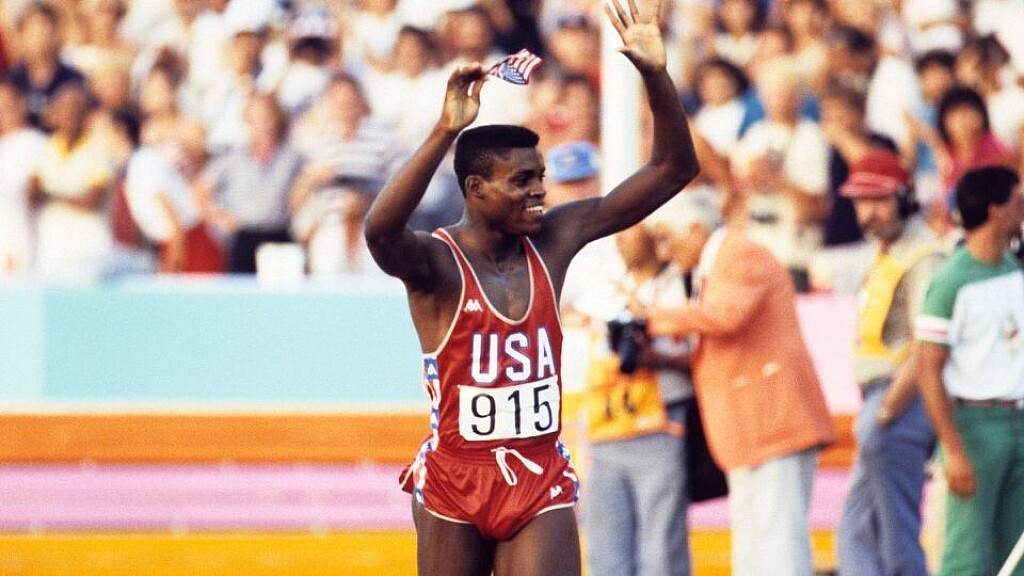
Athletes with the most track gold medals in the history of Olympics
Here are the athletes with the most gold medals at the Olympic athletic games
The track and field events continue to capture the imagination of sports fans around the world, at the Olympics in Paris.
While the current athletes compete for glory, it's worth reflecting on the legends who have set the bar exceptionally high in Olympic athletics.
Here’s a look at the athletes with the most gold medals in Olympic track and field history, showcasing their unparalleled achievements and enduring legacies.
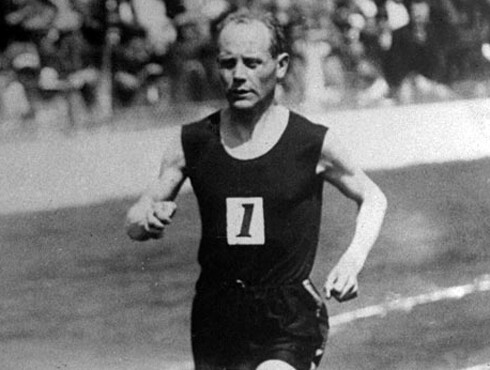
1. Paavo Nurmi (Finland)- 9 Gold medals
Paavo Nurmi, known as "The Phantom Finn," is celebrated for his extraordinary achievements in middle and long-distance running during the 1920s.
Competing in the 1920, 1924, and 1928 Olympics, Nurmi amassed an impressive 12 Olympic medals, including a record nine golds. His incredible versatility was highlighted by his ability to dominate distances ranging from the 1500m to the 20km.
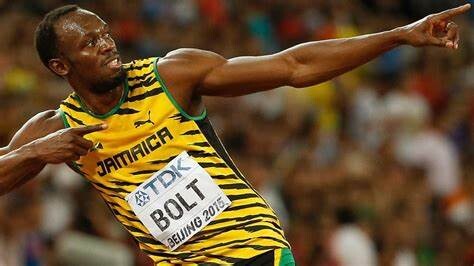
At the 1924 Paris Olympics, Nurmi won a record five gold medals, a feat that remains unmatched to this day.
His career is also marked by his remarkable achievement of setting 22 official world records across various distances.
2. Carl Lewis (U
SA)- 9 Gold medals
American sprinter Carl Lewis is another iconic figure in Olympic athletics, renowned for his dominance in both sprint events and the long jump.
Lewis’s Olympic career spanned from 1984 to 1996, during which he earned a total of 10 medals, including nine golds.
In his debut at the 1984 Los Angeles Olympics, Lewis matched the achievements of Jesse Owens by winning gold in the 100m, 200m, 4x100m relay, and long jump.
His subsequent victories across the 1988, 1992, and 1996 Games solidified his reputation as one of the greatest track and field athletes of all time.
3. Allyson Felix(USA) - 7 Gold medals
Allyson Felix stands as the most decorated female athlete in Olympic track and field history.
Her career, spanning five consecutive Olympics from 2004 to 2020, has seen her win a total of 11 medals.
Felix’s seven gold medals highlight her versatility and dominance in both the individual and relay events.
Felix’s remarkable achievements include gold medals in the 200m and 4x400m relays at the 2012 London Olympics, as well as two more golds in Rio 2016.
Her career continued to shine with additional medals in Tokyo 2020, proving her enduring excellence on the track.
4. Usain Bolt (Jamaica)- 8 Gold medals
Jamaican sprinter Usain Bolt is often hailed as the fastest man in history, and his Olympic success only cements this status.
Bolt’s career is highlighted by his three consecutive Olympic gold medals in the 100m, 200m, and 4x100m relay events at the 2008 Beijing, 2012 London, and 2016 Rio Games.
Bolt’s unprecedented triple-double achievements and world records in these events have set a benchmark in the sport.
His flair, speed, and charismatic performances have made him a global icon in athletics.
5. Shelly-Ann Fraser-Pryce (Jamaica)- 3 Gold medals
Jamaican sprinter Shelly-Ann Fraser-Pryce is another prominent name in Olympic athletics.
Known for her explosive starts and exceptional speed, Fraser-Pryce has won three gold medals in the 100m across the 2008 Beijing, 2012 London, and 2024 Paris Olympics.
Her ability to consistently perform at the highest level across four Olympics showcases her remarkable career.
These legendary athletes have not only achieved remarkable success but have also set records that continue to inspire future generations of track and field competitors.
From Paavo Nurmi’s unmatched versatility to Usain Bolt’s record-breaking sprints, their contributions to the sport have shaped the history of the Olympics and continue to captivate the world.
by Eric Munene
Login to leave a comment
Paris 2024 Olympic Games
For this historic event, the City of Light is thinking big! Visitors will be able to watch events at top sporting venues in Paris and the Paris region, as well as at emblematic monuments in the capital visited by several millions of tourists each year. The promise of exceptional moments to experience in an exceptional setting! A great way to...
more...
How Long Does It Take to Run a Mile?
Knowing the average pace can help you set new goals.
The best way to find your average running speed is by tracking your mile pace.
For example, say you go out for a three-mile race. You might start off running fast because of an adrenaline rush, then slow down once you realize you’re running too hard. But toward the end, when the finish is in sight you might catch a second wind and pick up speed again. This all results in different mile times.
Your average mile time, which will be the sum of all your mile times divided by the number of miles completed, may look different than each individual mile. The more you train, not only will your average mile pace drop, but each individual mile time will likely become closer in time to the others.
That’s why tracking your average mile time is a great way to monitor your progress. Plus, when you reach a new barrier—like the first time you run faster than a 10-minute mile, for example—it allows you to search out new goals in your running journey and also scope out your competition.
How long does it take to run a mile on average?
Based on real-life data from all public uploads to Strava from August 1 2022 to July 30 2023, the average mile time across the globe is 10 minutes and 25 seconds (10:25). That number adjusts based on gender: 10:02 for men and 11:17 for women. In the U.S., the average running speed is 9:54 and breaks down to a 9:32 mile pace for U.S. men and 10:37 for U.S. women.
These paces have changed since 2018 when the average global mile pace hit 9:48 and U.S. pace averaged 9:44.
Don’t fret if your current average time is a little off from those marks. Keep in mind that, while sizable, the dedicated Strava community doesn’t represent the entire running community.
What factors affect average running speed?
The following factors play a big role in every runner’s mile speed:
Gender
Age
Weather/wind
Nutrition and hydration
Injuries
Height
Weight
Terrain
The list could go on. Even what you think about or your mindset can affect how fast you run, and that’s under your control. Other factors, however—such as height and age—are things you obviously can’t change.
Also, according to recent number crunching at Runner’s World, based on data from platforms like MapMyRun, even the type of year you’re having has an effect on one’s average mile time and pace. From mid-April to mid-September—during the start and midpoint of the coronavirus pandemic—the average mile pace recorded was 8.5 percent slower compared with the same range in 2019, which the MapMyRun team attributes to a new or returning runner effect.
When it comes to age, one data analysis performed in 2010 and based on 10,000 U.S. runners who completed a 5K showed the average minutes per mile for runners of different ages. The average overall was 11:47 per mile. Men in the 16- to 19-year-old age range finished the run with an average pace of 9:34; women in the same age group finished in 12:09. The numbers gradually increased as the age groups got older.
In most cases, though, the gaps between the finishing times of the different age groups weren’t drastic. And you might not necessarily get slower with age. As Runner’s World has reported, many pro runners and average runners peak in their 30s, and even runners in their 70s can keep getting better with age.
Because of the many variables associated with running pace, it can be difficult to establish an across-the-board average running speed.
How fast should you run a race?
If you’re looking to find out what your average running pace should be to hit a specific time goal in a race, you’re in luck. Our Runner’s World Pace Charts (in both minutes per mile and kilometer) show what time a given pace will produce for six common race distances: 5K, 5 miles, 10K, 10 miles, half marathon, and marathon. As an example in the chart below, if you want to run under 1 hour and 45 minutes for a 10-mile race, you’d need to have an average pace of 10 minutes and 29 seconds per mile to accomplish your goal.
Use our charts as a reference point after you start training so you can know what average pace is necessary (and realistic) for your upcoming goal race.
How can you boost your average running speed?
If you want your average running pace to be faster, there are several steps you can take to improve, like figuring out how to breathe properly and mixing up your types of runs. You should also recognize the importance of nutrition and hydration.
Adopt a holistic approach to your training, doing regular conditioning workouts to improve your strength and flexibility in addition to running, as a stronger, mobile body can help you run faster and avoid injury.
What’s the fastest ever mile speed?
The fastest mile ever recorded was set by Hicham El Guerrouj, a Moroccan runner who ran a mile in 3:43.13 in 1999. Guerrouj was 24 years old at the time.
For women, the fastest mile ever was run by Faith Kipyegon, which she snagged just this month, with a time of 4:07.64.
If you’re looking for the fastest average running paces over the course of 26.2 miles, look no further than the world record holders in the marathon—Eliud Kipchoge (4:37.2 per mile) and Brigid Kosgei (5:06.8 per mile).
And just for fun, if Usain Bolt were to ever keep his jaw-dropping sprint going for a full mile at his peak ability, the Jamaican’s top speed in 2009 during his 9.58 world record 100-meter dash would have put him just over 27 miles per hour.
by Runner’s World
Login to leave a comment
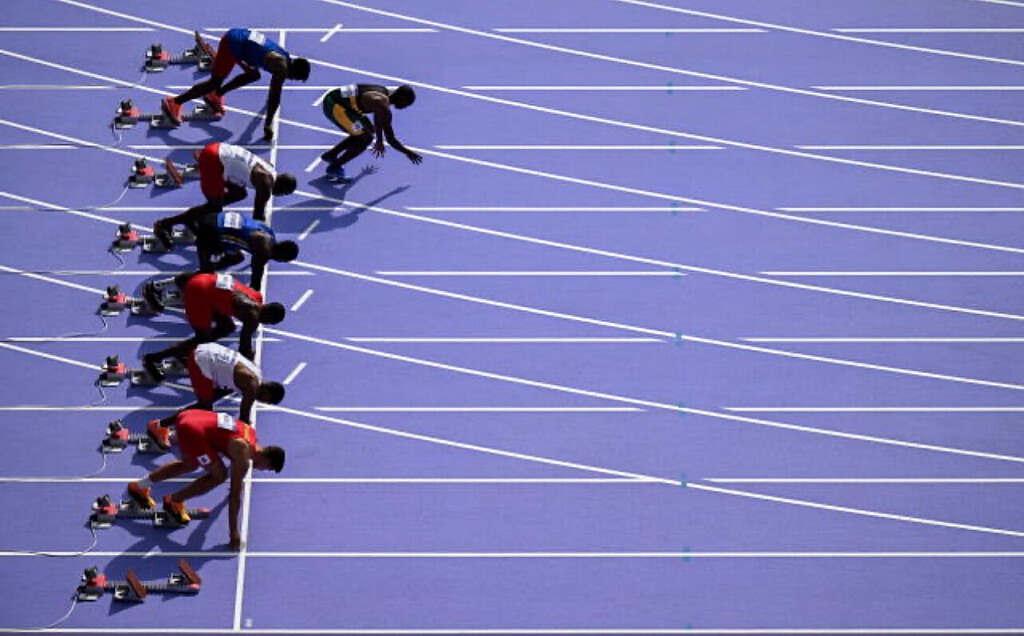
Paris 2024: Sobbing Mozambique sprinter the latest victim of the cruelest rule in sports
PARIS — Hands on his head, tears in his eyes, Mozambique sprinter Steven Sabino walked off Stade de France’s distinctive purple track and disappeared down a tunnel.
The 18-year-old could scarcely believe that he would fly back from the Olympics without even getting to compete.

Only moments earlier, Sabino was at the start line for the second heat of the men’s 100 meters prelims, but he sprang out of the blocks before the starting gun sounded. Track officials ruled that he false started and showed him a red card indicating that he had been disqualified.
“We went into a set position and I heard a bang,” Sabino said between sobs 10 minutes later. “I don’t know where it came from. Probably the pole vault. I don’t know. I heard a bang, the kind of bang that you hear when the electronic gun goes off.”
Sabino briefly pleaded his case to track official Vadim Nigmatov, pointing to his ears to indicate what he’d heard. He said that he asked to run the race under protest, but Nigmatov and the other officials refused.
“They didn’t even hear what I had to say,” Sabino said. “I sacrificed everything for this.”
Sabino’s plight is the latest reminder that track and field’s zero-tolerance false start policy might be the cruelest, most unforgiving rule in sports. It’s more sudden than a sixth foul in the NBA Finals, more damaging than a red card at the World Cup and more common than an unsigned scorecard at one of golf's majors. It has induced tantrums from otherwise mature adults and waylaid some of the legends of the sport — even the great Usain Bolt.
Only an hour after Sabino's false start, the rule took out another runner. Great Britain's Jeremiah Azu false-started in his round 1 heat and also was disqualified without getting to run.
Azu, like Sabino, said he "heard something and just reacted." He planned to appeal his disqualification in hopes of being granted a chance to run by himself and try to qualify for the Sunday's semifinal on time.
"Right now, I'm acting as if I'm running again," he said
International track and field’s governing body went to a zero-tolerance false start policy over a decade ago out of a desire to streamline the sport and eliminate gamesmanship.
Under the old rules, sprinters or hurdlers notorious for slow reaction times would attempt to gain an edge by guessing when the starting pistol would fire, knowing the penalty would be charged to the field rather than to themselves. The multiple false starts slowed down meets and made it difficult for TV networks working within a specific time slot.
by Jeff Eisenberg
Login to leave a comment

Olympic Track and Field Stars Are Wearing Luxury Watches. Why?
IN TRACK AND FIELD, tenths (and even hundredths) of a second can make or break a race. Performance depends on extremely precise measurements and time rules all. So it makes sense that luxury watch brands would look to those athletes as natural billboards, placing their timepieces on the wrists of some of the sport's top performers.

When Noah Lyles, the fastest man in the world, settled into the blocks for the 200-meter finals at the U.S. Olympic Trials in June, 4.5 million viewers tuning in via NBC and Peacock could see the glint of the sun off what appeared to be a $50,000 Omega watch.
Wearing this type of timepiece during a 19.53-second sprint is clearly a flex, since “there’s no performance reason for [these athletes] to wear luxury watches,” explains Aaron Rapf, the founder and CEO of Advantage Sports Marketing Group, a sports agency that connects brands with athletes.
Runners are no stranger to pricy performance watches (a high-end Garmin can cost upwards of $900), and luxury watch companies are increasingly aligned with elite runners to “connect their company values to the sports landscape—which is one of the last bastions of true culture,” he adds. “If you want to be in a moment where you attract millions of people’s eyeballs at one time, it’s sports.”
These race day cameos are part of a more subtle approach to marketing, says Pierre-Loïc Assayag, CEO and co-founder of Traackr, an influencer marketing software company. “In the past, luxury brands were more focused on the product and the luxury associated with that product,” he says. “Now, these companies are taking the top athletes and putting them in front of their target audience, or one close to it, to demonstrate by proximity that ‘we are the precision brand’ or ‘we are the endurance brand.”
The kind of maneuvering uses a third party—one that’s fast, flashy, and accomplishing amazing feats—to craft an image the brand wants audiences to respond to. And by choosing athletes as brand champions, companies deftly align themselves with the hallmarks of high performance: precision, prestige, innovation, exclusivity, heritage, and craftsmanship.
In the past, those buzzwords were more likely to call to mind country club-esque activities (think: tennis or horseback riding) or auto racing, where the traditional consumer has been very upper class, living a high-cost lifestyle. But as culture skews more towards sport, health, and wellness, leaning into the popularity of running opens companies up to a new class of consumers, says Jessica Quillan, a luxury fashion brand and content strategist. “Track and field seems more accessible, because even though these athletes are performing at a super elevated level, anyone can go out and run,” she explains.
By association, watches become a more accessible form of wearable luxury. You may not wear one to train or on race day like the elite, sponsored atheltes, but a sporty aesthetic can translate into your everyday life; post-run, you can still swap your COROS smartwatch for a sleek, sporty timepiece from a brand like Omega (which happens to sponsor the Diamond League, an annual series of pro track and field competitions). And though you may not be ready to buy a five-figure watch now, these companies are playing the long game; by connecting themselves with major players in sport, they’re hoping to build brand recognition and loyalty among potential future customers.
The Watch Brands Olympic Runners Are Wearing
For those looking to upgrade their Garmin—now or as a future reward for finally achieving that personal best—these are a few of the luxury watches your favorite track and field stars have been sporting.
Two-time Olympic gold medalist Sydney McLaughlin-Levrone, who will represent Team USA in Paris again after breaking her own World Record in the 400-meter hurdles in June, has been sponsored by Tag Heuer since 2021.
Tag Heuer is often considered the Cadillac of luxury watches, and McLaughlin-Levrone’s preferred watch, the Connected Calibre E4, is closest to the average runner’s GPS smartwatch: It operates on Wear OS by Google; has a 1.28-inch AMOLED display with crisp resolution; houses a heart rate sensor, barometer, and compass; and holds a 24-hour charge, including a one-hour sports session. The basic model, which includes a rubber strap, starts at $1,250.
Olympic bronze medalist Josh Kerr is a double World Champion—in the 1,500-meter and 3,000-meter—which made him a natural representative for Swiss watch brand Longines, the official partner and timekeeper of the 2022 Commonwealth Games in Birmingham. Kerr, who is not currently working with Longines, recently ran a 3:45.34 in the Bowerman Mile, a historic and prestigious race held annually at the Prefontaine Classic in Eugene, OR, to set a new world-leading time in the event and a new British record. Back in 2022, Kerr wore the-limited edition HydroConquest XXII Commonwealth Games, a sporty steel dive watch with an automatic caliber, or engine, one-directional ceramic bezel, luminescent indices and hands, and an anti-reflective coating for crystal clear readability in any situation.
In addition to their Paris 2024 partnership, Omega is the official sponsor of the Diamond League (an annual series of elite track and field competitions) and counts Noah Lyles—one of the biggest personalities in track and field—as an ambassador. Lyles, who earned a bronze medal in the 200-meter race at the 2020 Tokyo Games and has his sights on breaking Usain Bolt’s records in the 100- and 200-meter races, wears Omega’s iconic Speedmaster Moonphase.
This style was introduced in the 1980s, but the latest model—an oversized, steel-on-steel timepiece—was the first to earn a Master Chronometer certification thanks to a self-winding engine designed to withstand temperature fluctuations, water immersion, and electromagnetic frequencies. The timepiece can also hold up to the shock that comes with covering 100 meters in less than 10 seconds (when it's on Lyles's wrist, at least).
Sprinter Dina Asher-Smith is the fastest British woman on record, with two Olympic bronze medals from the 4 x 100-meter relay to her name. She’s also no stranger to luxury partnerships, having previously modeled for Louis Vuitton, Valentino, and Off-White, and has been working with Hublot since 2018. Asher-Smith has promoted a variation on Hublot’s flagship model, the Big Bang One Click, which starts at $14,200.
Its smaller face was designed for slimmer wrists, and uses the brand’s patented “One Click” fastening system so wearers can swap out the straps for other colors or materials. The sporty, semi-skeletonized hands balance out flashiness of the diamonds on the bezel, and a self-winding caliber packs plenty of power into the compact timepiece.
Ahead of what she says will be her final Olympic Games, Jamaican sprinter Shelly-Ann Fraser-Pryce—the most decorated athlete in 100-meter history—announced a partnership with Richard Mille. Fraser-Pryce wears the RM 07-04 Automatic Sport, the first women’s sports watch from the McLaren of watch brands, which retails at $185,000 (it’s the same watch Nafi Thiam, a double Olympic champion from Belgium, wore while setting a new pentathlon world record in 2023). The skeletonized aesthetic is housed in a compact case with rigid finishings for shock-resistance, and the button on the side allows the wearer to switch between winding, neutral, and time setting modes for the crown. While it would be nearly impossible to read during a race, at 36 grams it’s lighter than most standard running watches.
by Men’s Health
Login to leave a comment
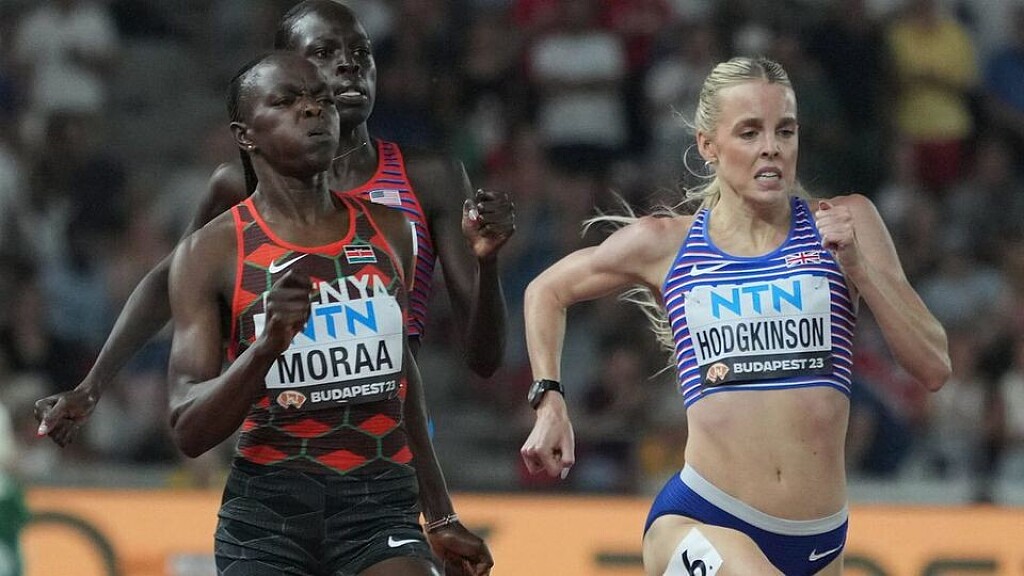
Keely Hodgkinson reveals a serious impact Mary Moraa has made on her road to Paris 2024 Olympics
Keely Hodgkinson discusses lessons from her loss to Mary Moraa as he aims for gold at the Paris Olympics.
Olympic and world 800m silver medallist Keely Hodgkinson is gearing up for the Paris Olympics with a resolute focus on clinching the gold.
At just 22, she has already made significant strides in her athletic career, breaking records and overcoming challenges.
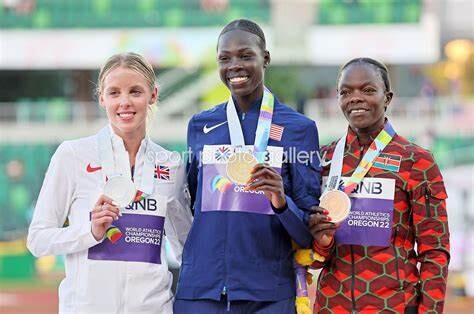
But as she prepares for the upcoming games, Hodgkinson reflects on a particularly tough race that has fueled her drive for victory.
“If you want to watch a bad race, watch Lausanne,” Hodgkinson says in an interview with the Telegraph, recalling the June competition where she found herself boxed in and then out-thought and out-paced by Kenyan Mary Moraa in the 800m.
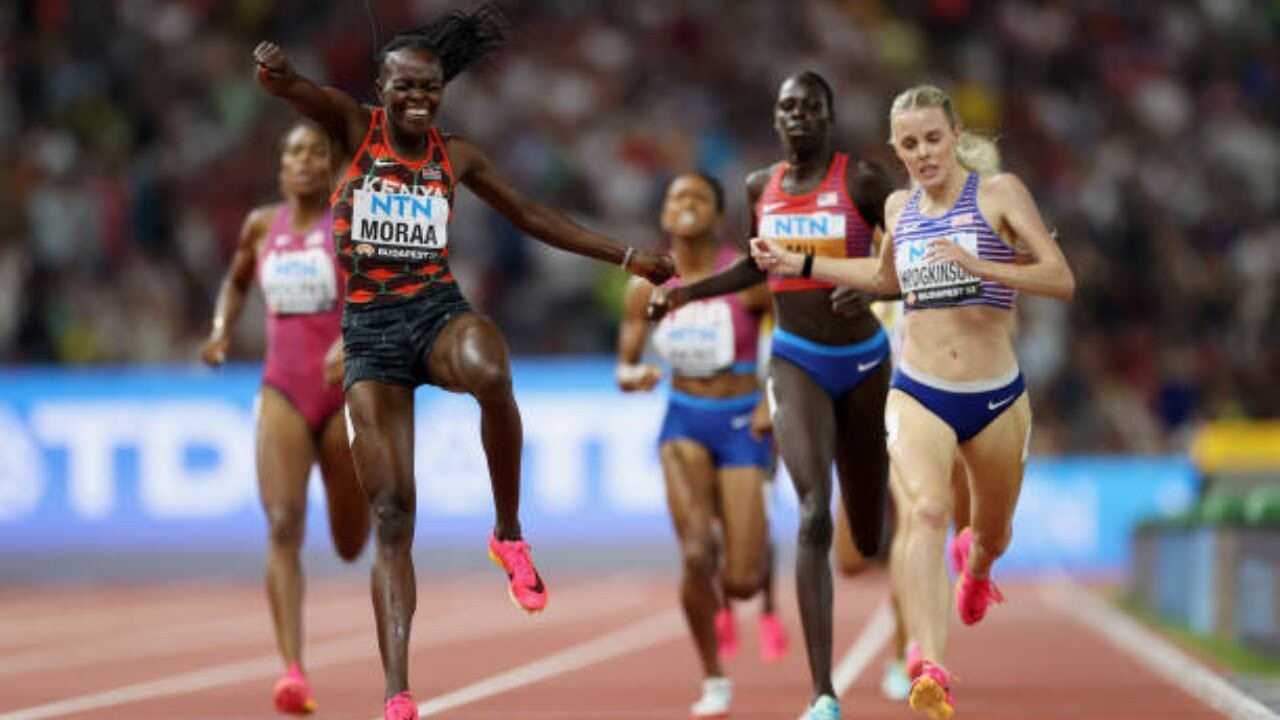
“That was bad.”
Hodgkinson’s journey has been marked by impressive accomplishments, including a silver medal at the Tokyo Olympics at the age of 19 with a personal best of 1:55.88.
More recently, she broke her own 800m record in front of 60,000 fans at the London Stadium leg of the Diamond League, becoming the sixth-fastest woman in history.
Despite these successes, Hodgkinson admits that post-Tokyo, she faced emotional challenges.
Struggling to focus on training after leaving her criminology degree course at Leeds Beckett University, she found it difficult to balance her mental state and athletic ambitions.
“I had nothing to be sad about, yet I felt guilty for feeling down.”
The determination to win gold in Paris is what keeps Hodgkinson motivated.
“Gold is all I have in my head right now. To get the gold in Paris. For me, that was the one I was always aiming for anyway,” she says.
Her rigorous training regime reflects this ambition.
Running approximately 35 miles each week, Hodgkinson focuses on building power and muscle strength, training more like a sprinter. Gym sessions, swimming, and cross-training have been crucial in enhancing her endurance and performance.
“I spend a lot of time on a cross-trainer,” she notes. “If I was to factor that in, my running mileage would go up.”
Preparation for a race, for Hodgkinson, resembles getting ready for a night out.
“The process starts two hours beforehand – I just enjoy it,” she explains.
Her routine includes a shower, fake tan, music, and doing her hair and make-up. “There’s nothing really to do on race day, especially if I’m racing at 10pm.”
Visualizing different race scenarios with her coach Painter is another key aspect of her preparation.
“Let others dictate your race and that’s when silly mistakes happen; panic after getting boxed in and you can bolt too early,” she cautions.
Reflecting on the 2023 World Championships in Budapest, Hodgkinson recalls hitting a lactic wall with 300m to go.
“The pack was so fast through the first lap. It really made us all hurt. We’d never done it that fast before.” On that occasion, it was her main rival, Athing Mu, who set the pace with Hodgkinson finishing as runner-up.
"She wanted to make it hard,” Hodgkinson acknowledges.
Despite the camaraderie with her fellow athletes during training camps, Hodgkinson remains competitive.
“On race day it’s game faces on,” she asserts.
For now, she relishes the challenge of pushing her limits.
“I’d be lying if I said I don’t enjoy being good at it,” she admits.
“When I was younger I used to love seeing how much pain I could put myself in, which sounds a bit crazy, but you do have to be crazy to do this event.”
by Festus Chuma
Login to leave a comment
Paris 2024 Olympic Games
For this historic event, the City of Light is thinking big! Visitors will be able to watch events at top sporting venues in Paris and the Paris region, as well as at emblematic monuments in the capital visited by several millions of tourists each year. The promise of exceptional moments to experience in an exceptional setting! A great way to...
more...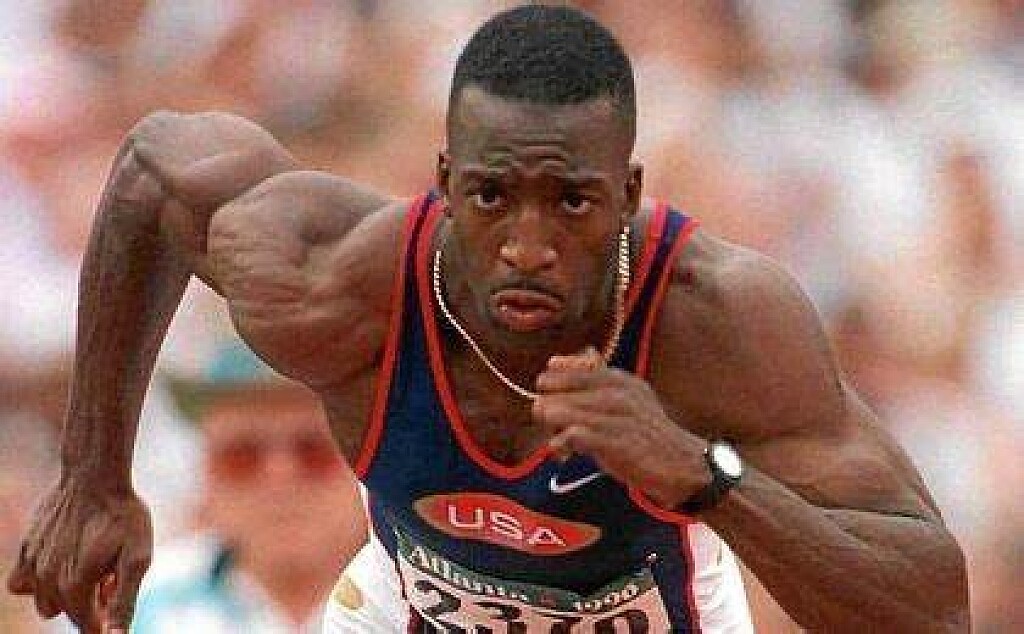
American sprint legend reveals Olympic heartbreak from 1992 Barcelona food poisoning
Michael Johnson recalls a disappointing setback due to food poisoning during the 1992 Olympics, affecting his performance in the 200-meters
Before Usain Bolt rose to prominence, the world of track and field was dominated by Michael Johnson, a sprinter who dazzled the athletics scene with his speed and charisma.
Johnson, who captured four Olympic gold medals across three different Games, recently spoke about what he considers the most disappointing moment in his illustrious career.
The incident in question traces back to the 1992 Barcelona Olympics, a time when Johnson was at the pinnacle of his form.
Fresh off a gold medal win at the 1991 World Championship in Tokyo, Johnson was the favorite to clinch the 200-meter race at the upcoming Olympics.
However, an unforeseen bout of food poisoning just days before his first race jeopardized his chances.
“I had gotten food poisoning. So I was world champion, ranked number one in the world for two years, undefeated, and you know, a huge favorite to win the 200 meters at the Olympics,” Johnson recalled on High Performance podcast.
His condition arose shortly after a near world-record performance at the Olympic trials, where he had felt in the best shape of his life.
“It was about or so before I was competing," Johnson explained.
During this period, athletes typically reduce the intensity of their training to fine-tune their performance, a phase known as tapering.
"You’re in a taper mode where you’re basically just working on starts and very technical things,” he added.
When the Olympic races began, Johnson thought he had recovered, feeling fine at the starting blocks.
However, the reality of his condition became apparent as soon as the race started.
“Usually in a first round, I can just sort of run the first 100 meters of that 200 meters and I'm just kind of out," he said.
But this time, he found himself struggling unexpectedly, feeling as if he were "running in someone else’s body."
Despite winning his initial heat, the effort took a severe toll on him.
“I’m extremely weak and it takes everything. I win that race but just barely, and it took everything in me, and I knew immediately something's wrong,” he said.
His performance deteriorated further in the subsequent rounds and he ultimately failed to make the final.
Reflecting on the ordeal, Johnson described the experience as both disappointing and embarrassing.
“I knew of athletes who were world record holders, world champions that had the butt. That’s the one thing missing at that point," he lamented.
The Olympic gold in the 200-meters, which many had anticipated would be a mere formality for Johnson, remained elusive.
Johnson's resilience, however, is as legendary as his speed as he returned to win golds in later Olympics, including a memorable double victory in the 200 and 400 meters at the 1996 Atlanta Games.
Yet, the sting of Barcelona remains a significant chapter in his career.
Looking back, Johnson appreciates the rarity of Olympic opportunities.
“One thing you know as an Olympic athlete, because the Olympics is every four years, not every year, you may never get back there. Most people make it to one Olympics. I was fortunate to go to three, but that’s rare,” he reflected.
Through his trials and triumphs Johnson's legacy as a sprinter continues to inspire athletes around the world.
His story is a poignant reminder of how even the greatest champions can face hurdles that test their spirit and resolve.
by Festus Chuma
Login to leave a comment
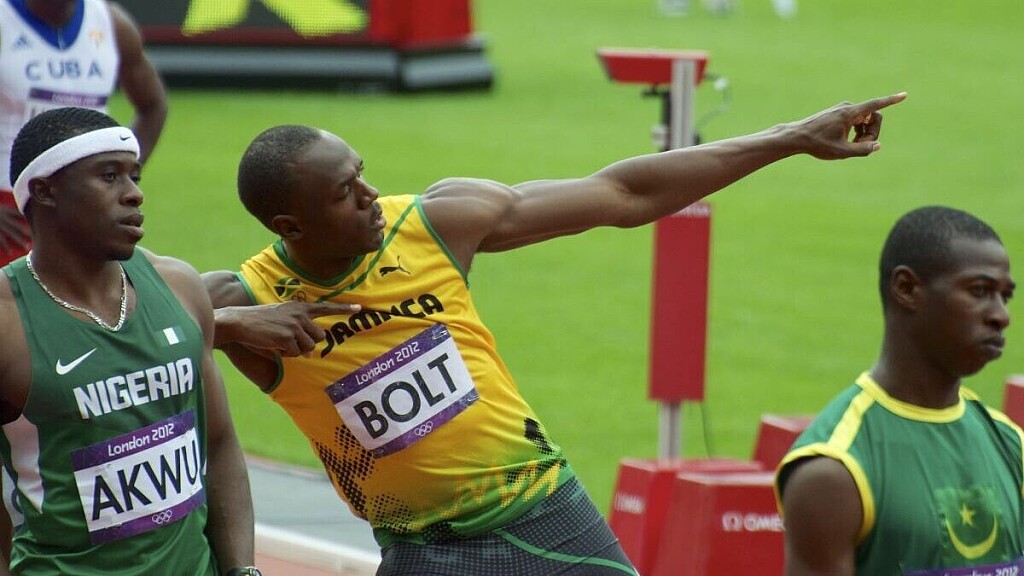
Usain Bolt named ninth-greatest athlete of the 21st century
On Thursday, ESPN dropped a list ranking the 100 best athletes in the world since the year 2000. 70,000 ESPN contributors voted based on performances since 2000, assembling the list of the greatest athletes of the 21st century–with track and field’s very own Usain Bolt taking the ninth spot.
It’s sometimes hard to believe that the worlds of the “Big Four” leagues (MLB, NBA, NFL and NHL), tennis, soccer, golf, and the Olympics all exist in the same universe. How can you even compare the accomplishments of individual athletes to those of athletes in a team sport?
The Jamaican sprinter has a very impressive resume, collecting nine Olympic gold medals over his four Games (he had to return one due to a teammate’s doping violation), and still holds three world records: the 100m, 200m and 4x100m relay. Bolt’s 100m record has stood since 2009, when he ran 9.58 seconds to break the record for his third time, deeming him the world’s fastest man.
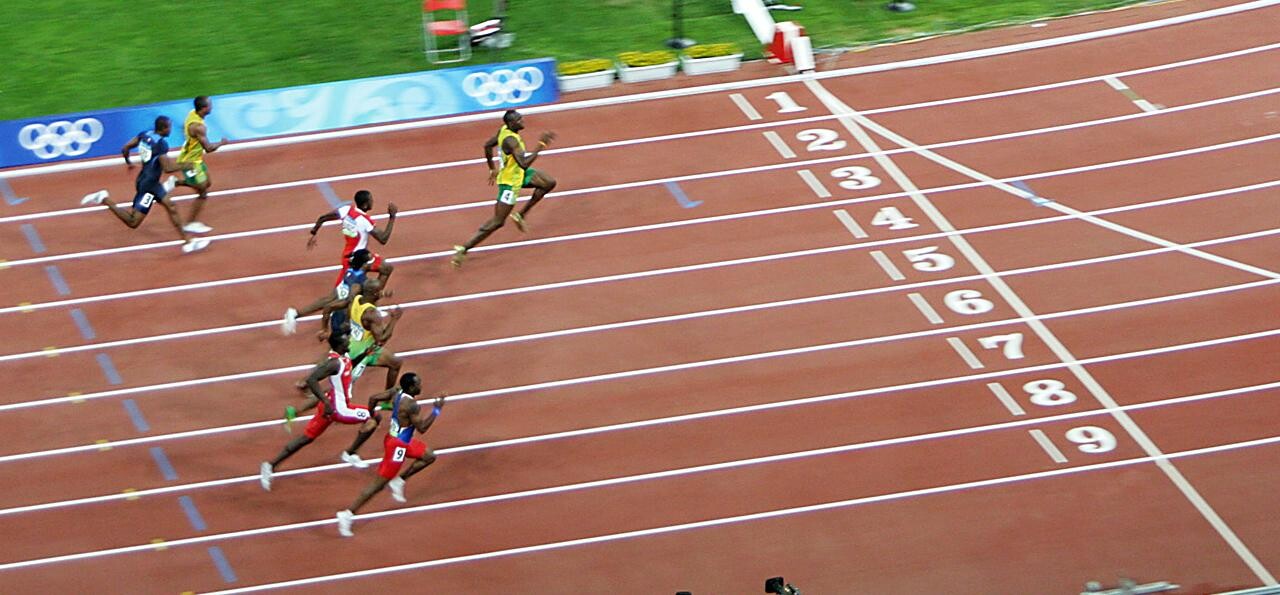
At his last Games in Rio 2016, Bolt achieved the triple-triple–winning three sprint golds at three consecutive Olympics. Although he retired in 2018, his monumental achievements will leave an extraordinary legacy in the track world.
Bolt is one of three Olympians in the ESPN top 10, bettered by only swimmer Michael Phelps, who took the top spot, and gymnast Simone Biles, in seventh.
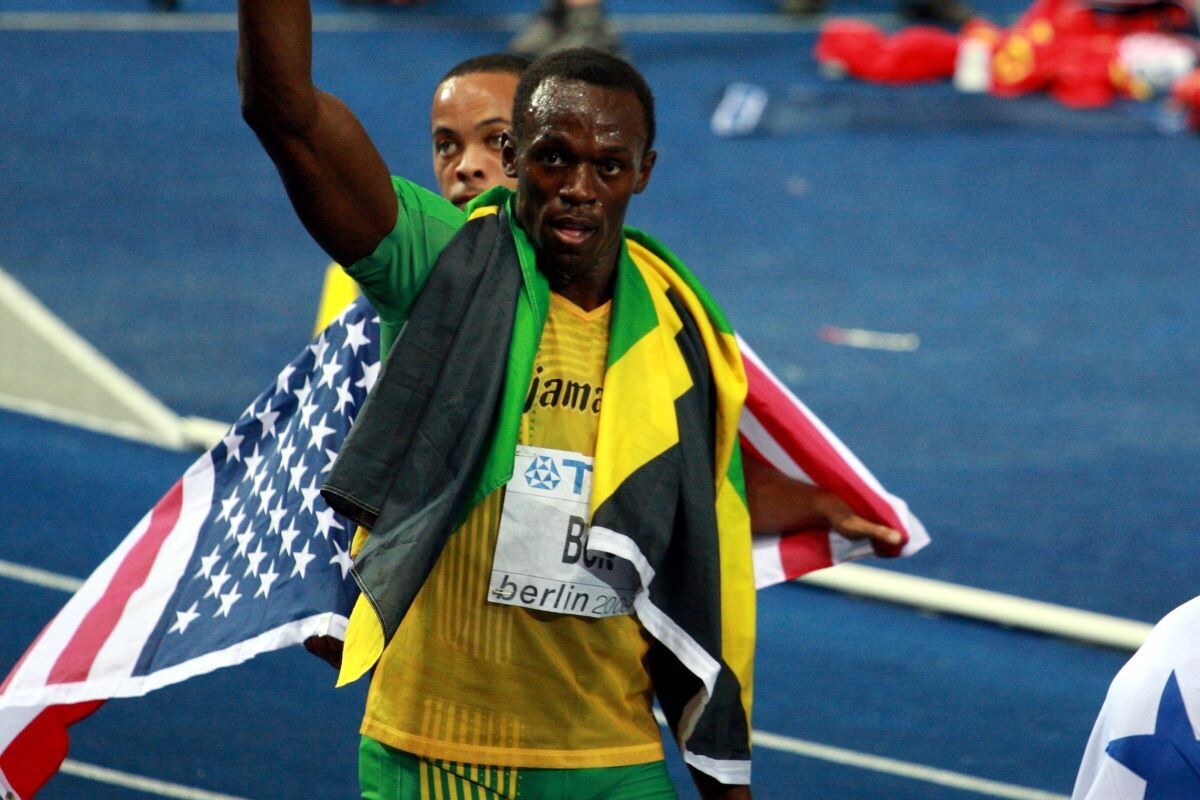
The representation of athletics in ESPN’s top 100 doesn’t end there: sprinters Allyson Felix of the U.S. and Shelly-Ann Fraser-Pryce of Jamaica claim the 63rd and 77th spots, respectively. Felix is a five-time Olympian for Team USA, with seven Olympic titles to her name, plus three silvers and one bronze. Fraser-Pryce is a three-time Olympic champion and eight-time Olympic medallist. At 37, the Jamaican hasn’t called it quits yet–she has qualified for her fifth and final Games later this summer in Paris.
by Cameron Ormond
Login to leave a comment
