

Running News Daily
Running News Daily is edited by Bob Anderson and team. Send your news items to bob@mybestruns.com Advertising opportunities available.
Index to Daily Posts · Sign Up For Updates · Run The World Feed
Articles tagged #African record
Today's Running News
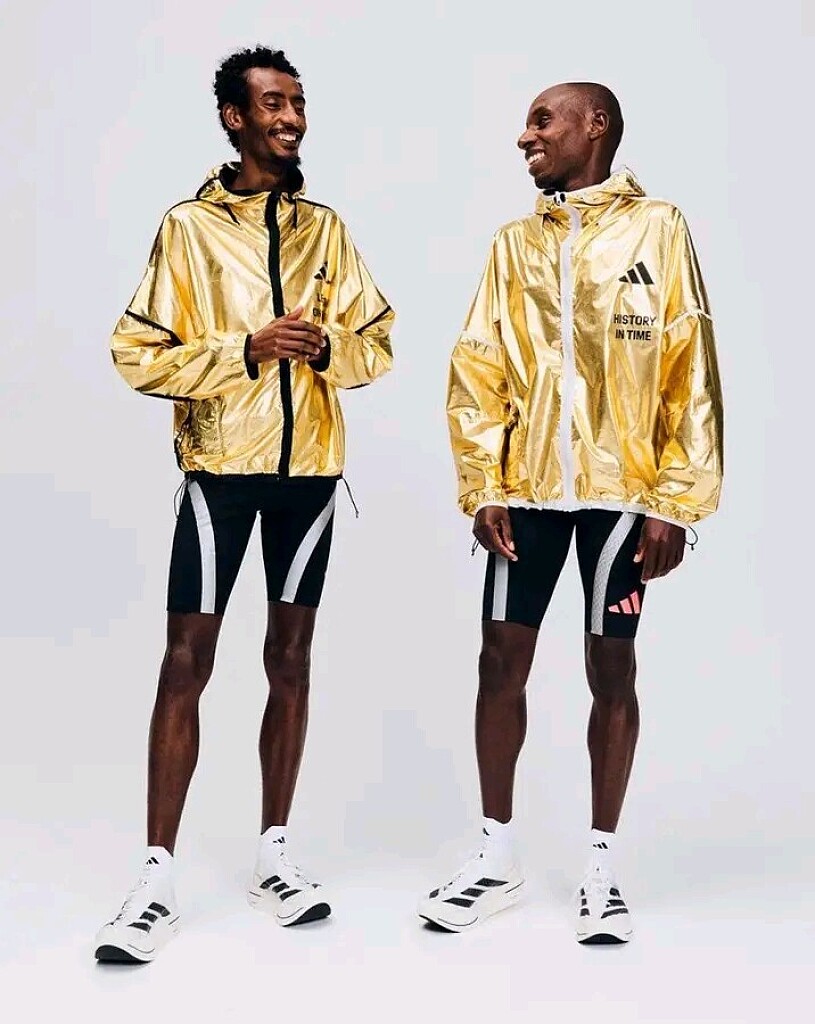


Kejelcha and Sawe: Two Men Driving Road Running Into a New Era
Men's road running is moving into extraordinary territory, and two athletes are increasingly at the heart of its breathtaking evolution: Yomif Kejelcha of Ethiopia and Sabastian Sawe of Kenya.
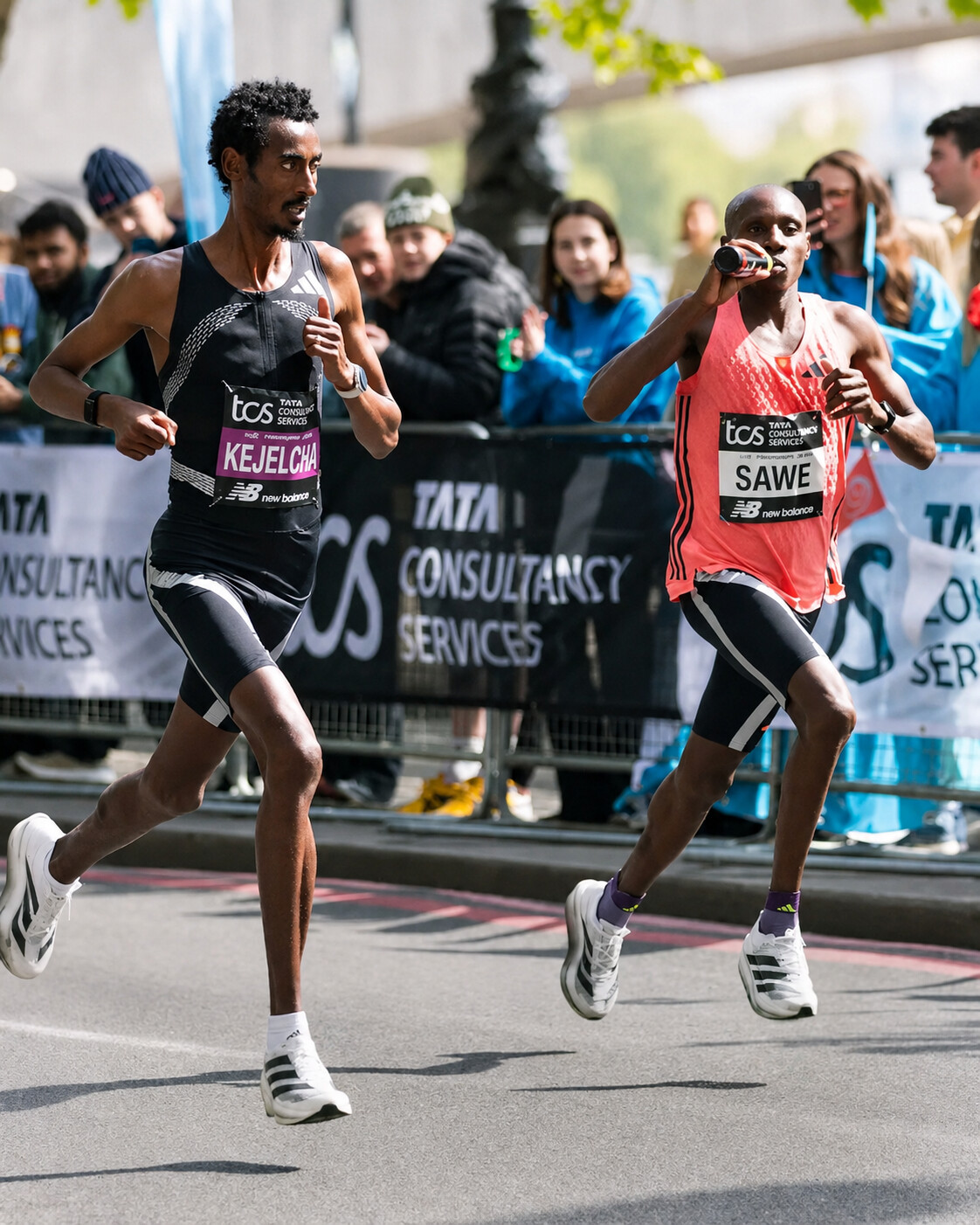
The pair represent the remarkable depth of modern East African distance running, but they are also doing something even more significant: pushing the boundaries of marathon and half-marathon performance to levels that once seemed almost unimaginable. Through their exceptional speed, endurance and ability to perform at the highest level, Kejelcha and Sawe are helping to redefine what is possible on the roads.
Sawe has established himself as one of the most formidable marathon runners in the world. His astonishing 1:59:30 marathon performance at TCS London Marathon on April 26, 2026, marked as a world record, African record and Kenyan record, demonstrated the extraordinary level the marathon has now reached. It also underlined his position at the very top of the men's marathon world rankings.
Kejelcha has been equally sensational, although his journey has highlighted a different kind of versatility. The Ethiopian, whose background includes world-class performances on the track and across shorter road distances, ran 1:59:41 for the marathon debut also at the TCS London Marathon on April 26, 2026, a performance marked as a national record. Just four months later, he delivered another stunning display by clocking 56:51 for the half marathon at the Argentina's capital, Buenos Aires on August 23, 2026, with the performance marked as a pending world record, African record and Ethiopian national record.
That combination of performances illustrates just how exceptional this new generation has become. Kejelcha's ability to threaten the absolute limits over the half marathon while also producing a sub-two-hour marathon performance speaks to his extraordinary range. Sawe, meanwhile, has continued to establish himself as a dominant force over the classic 42.195km distance, combining remarkable efficiency with the strength and speed required to compete at the very highest level.

The two stars are now preparing to take their talents to different stages of the road-running calendar. Kejelcha's next focus is the Valencia Marathon on December 6, where he will once again turn his attention to the marathon distance and look to build on his remarkable breakthrough over 42.195km. Sawe, meanwhile, is set to race the BMW Berlin Marathon on September 27, giving the Kenyan another major opportunity to showcase his extraordinary marathon strength on one of the world's fastest and most prestigious courses.
Those upcoming races add another fascinating dimension to their respective journeys. While Kejelcha heads to Valencia carrying exceptional speed and versatility into another marathon challenge, Sawe will arrive in Berlin with his sights firmly fixed on maintaining his dominance at the highest level of the sport.
What makes their rise particularly exciting is the wider message it sends to athletics. The marathon is no longer progressing only through small margins. The standards at the top are being pushed relentlessly forward, and performances that once appeared impossible are becoming increasingly realistic.
The official sub-two-hour marathon remains one of athletics' ultimate frontiers. Achieving it under standard race conditions would represent one of the greatest endurance breakthroughs in sporting history. Yet with athletes such as Sawe already breaking the two-hour barrier and Kejelcha running only seconds above it while also producing unprecedented half-marathon speed, that frontier appears closer than ever.
Their careers are different, and their strengths are not identical. Sawe has rapidly become a dominant marathon specialist, while Kejelcha brings exceptional versatility from the track to the roads and across multiple distances. But together, they symbolize the relentless progression of men's road running.
Yomif Kejelcha and Sabastian Sawe are not merely among the fastest men of their generation. They are helping to drive the sport toward a future that once seemed unthinkable. With Valencia and Berlin now on their horizons, the next chapter of this remarkable road-running revolution is already waiting to be written.
by Erick Cheruiyot for My Best Runs.
Login to leave a comment

Noah Lyles And Letsile Tebogo Set For Another Blockbuster Showdown In Budapest
NOAH LYLES VS LETSILE TEBOGO — ANOTHER CHAPTER AWAITS!
The rivalry between American sprint superstar Noah Lyles and Botswana’s Olympic champion Letsile Tebogo is set to take centre stage once again, with the two global stars heading to Budapest for the inaugural World Athletics Ultimate Championship from September 11–13, 2026.
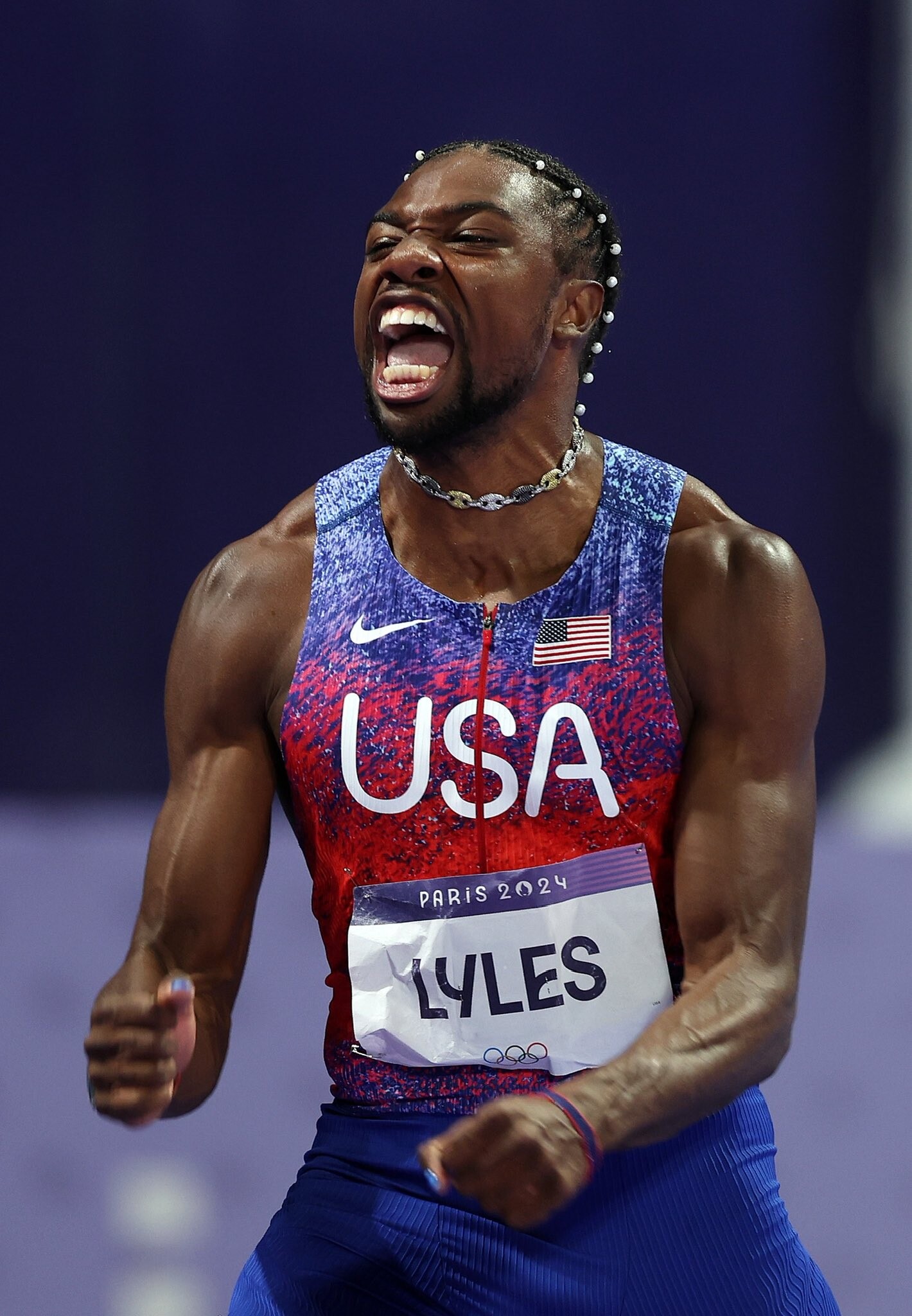
Both Lyles and Tebogo have been named among the event’s Ultimate Stars, adding even more star power to a championship designed to answer one of athletics’ biggest questions: who is the best of the best? World Athletics has assembled Olympic champions, world champions, Diamond League winners and the leading performers of the season for a three-day season finale at Budapest’s National Athletics Centre.
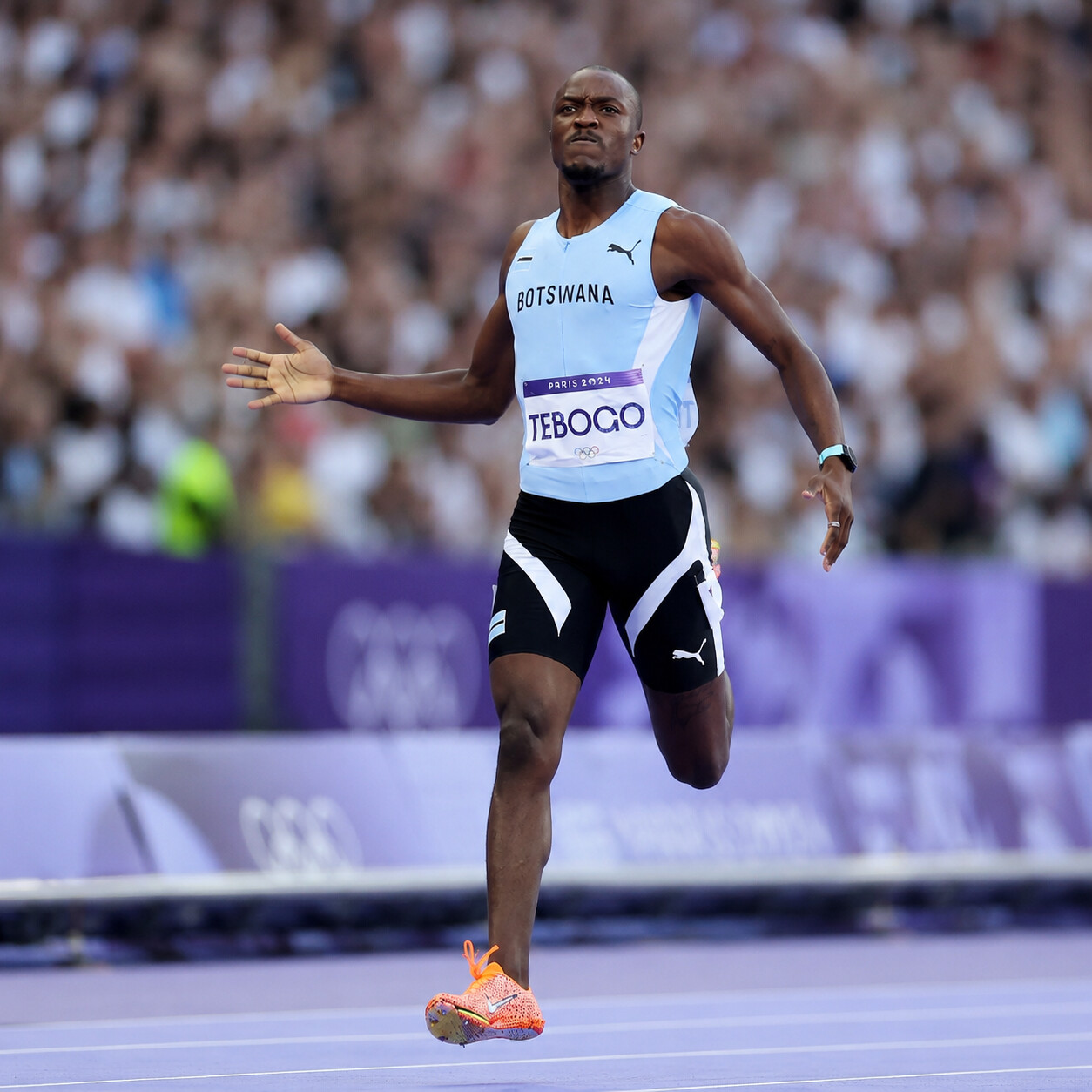
And when the men’s 200m takes centre stage on Sunday, September 13, the possibility of another Lyles-Tebogo showdown promises to be one of the most anticipated moments of the entire championship. The event’s format features semifinals before the final, with the top four athletes from each semifinal advancing.
Their rivalry already carries plenty of history.
At the Paris 2024 Olympic Games, Tebogo produced a magnificent performance to win the men’s 200m in an African record of 19.46, becoming Botswana’s first Olympic champion in any sport. Lyles, who had entered the Games as the reigning world champion and one of the favourites, finished third in 19.70, taking bronze.
The story did not end in Paris.
At the 2025 World Championships in Tokyo, Lyles and Tebogo renewed their battle over the half-lap distance, with Lyles beating the Olympic champion in Monaco before edging him again at the Diamond League Final in Zürich. World Athletics noted that the Zürich margin was just 0.02 seconds, highlighting just how closely matched the two sprinting giants had become.
Now, Budapest offers another opportunity for the pair to settle the score on one of the sport’s biggest new stages.
Lyles enters the Ultimate with a personal best of 19.31 seconds, while Tebogo owns a 19.46 best — the African record he produced in his historic Olympic triumph. The 2026 season has already shown that neither man can afford a moment of hesitation, with Tebogo continuing to establish himself as one of the world's leading 200m specialists and Lyles remaining a formidable force across the sprints.
But this will be about much more than another race between two famous names.
The Ultimate Championship carries a record US$10 million prize pot, the largest ever offered at a single track and field event. Individual champions will receive US$150,000, while every athlete who competes is guaranteed prize money.
That combination of prestige, money and rivalry makes Budapest a fitting stage for the next instalment of one of modern sprinting’s most compelling matchups.
Lyles brings the experience, personality and championship pedigree. Tebogo brings the confidence of an Olympic champion and the explosive speed that has already carried him to the top of the 200m world.
When the gun fires in Budapest, there will be nowhere to hide and no room for mistakes.
Noah Lyles or Letsile Tebogo — who will seize the Ultimate crown?
by Erick Cheruiyot for My Best Runs.
Login to leave a comment
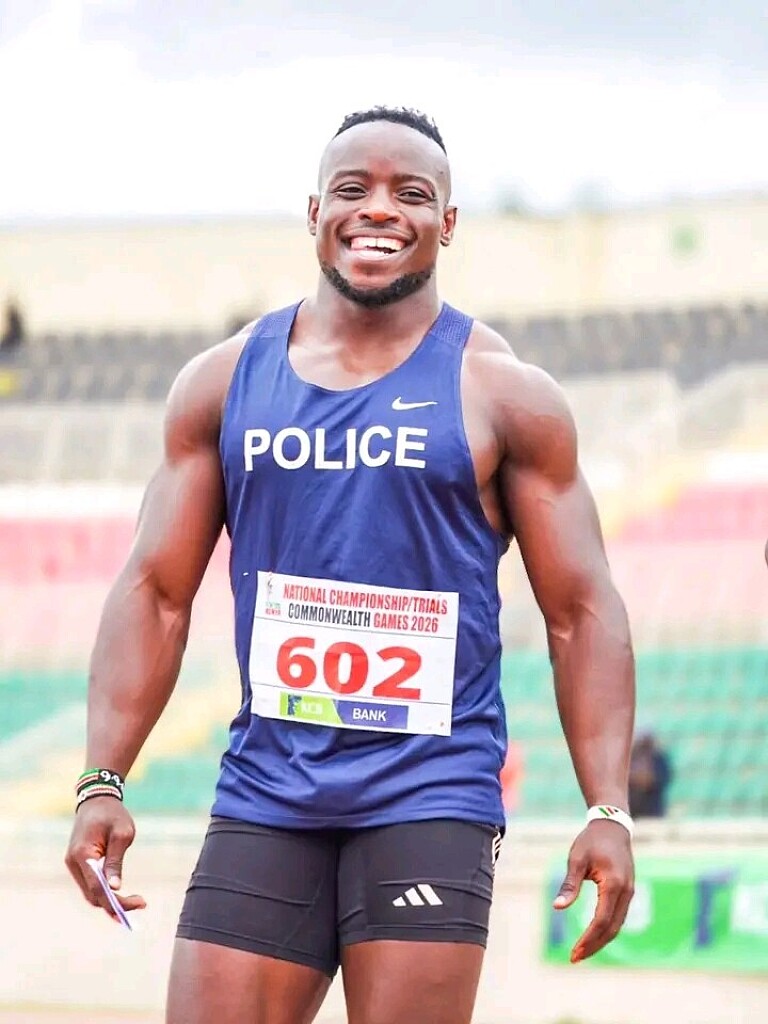
Ferdinand Omanyala Chasing History: Kenyan Sprint King Sets His Sights on a Commonwealth Games Record
Kenya’s sprint sensation Ferdinand Omanyala has never hidden his ambitions, but his latest declaration may be his boldest yet. After securing his place in the men's 100m at the 2026 Commonwealth Games, the African record holder has made it clear that he is not travelling to Glasgow simply to compete—he is going there to make history.
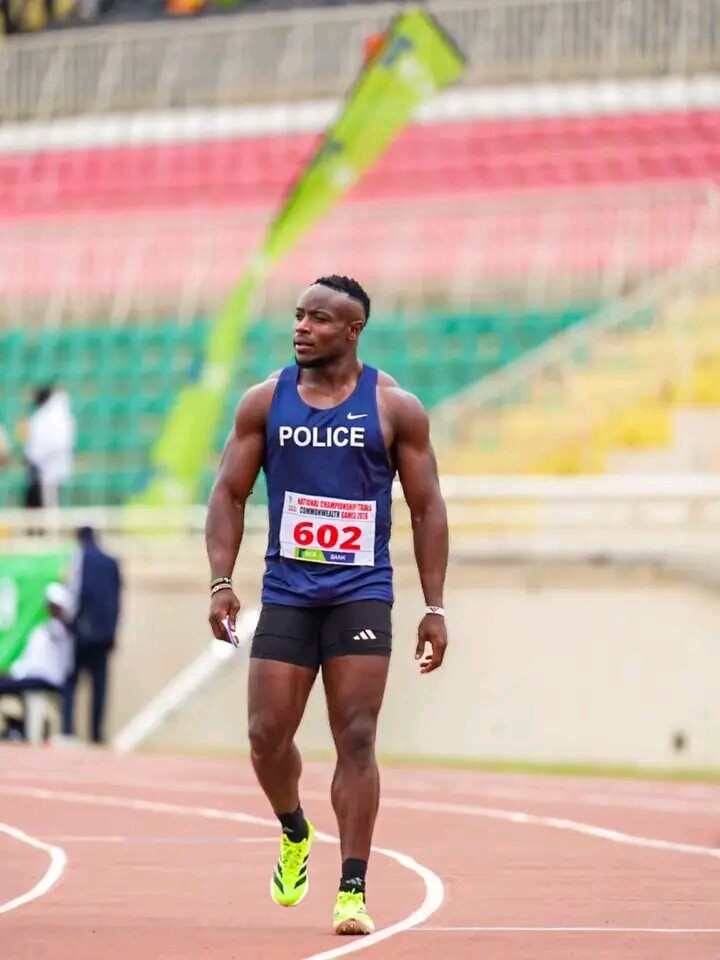
Speaking after booking his ticket to Scotland, Omanyala revealed the driving force behind his campaign.
"I am excited about the Commonwealth Games. There’s nothing that’s taking me there apart from history. I want to be the first African to win it twice. That’s the history I am chasing."
Those words reflect the mindset of an athlete who has already transformed African sprinting and now stands on the brink of another historic milestone.
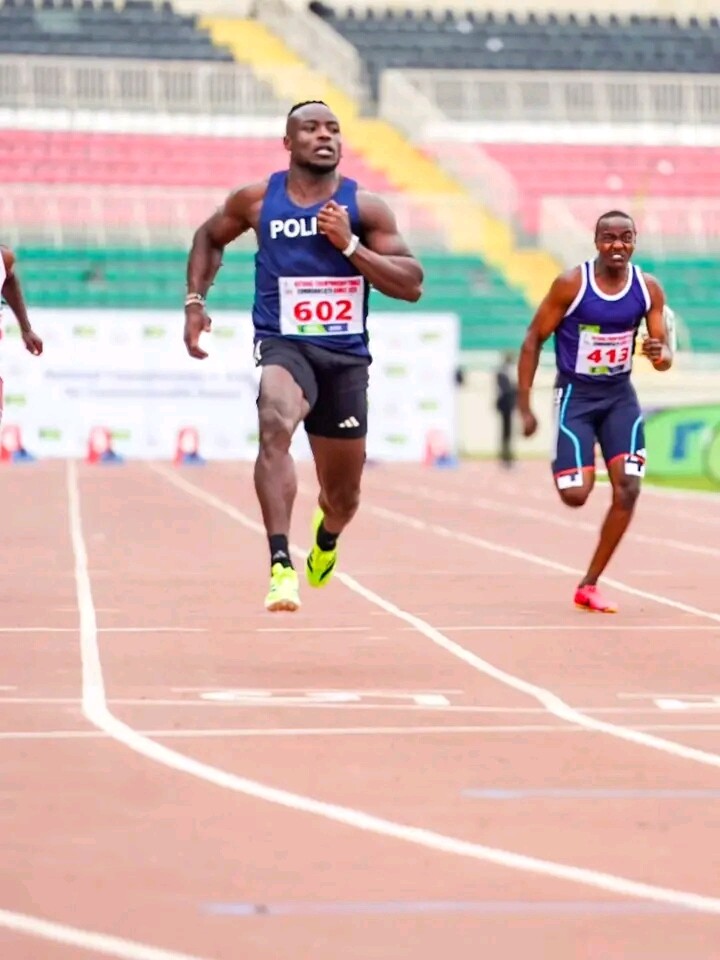
The 2026 Commonwealth Games, scheduled for July 23 to August 2 in Glasgow, Scotland, will provide Omanyala with an opportunity to achieve something no African sprinter has accomplished before—capture two Commonwealth Games 100m titles.
The Kenyan star first etched his name into the history books when he stormed to gold in Birmingham in 2022, ending decades of dominance by athletes from traditional sprinting powerhouses and proving that Africa could produce world-class champions in the shortest event on the track. That victory was more than a personal triumph; it was a defining moment for African athletics.
Four years later, the challenge is even greater.
The sprint landscape has become increasingly competitive, with emerging talents from across the globe eager to dethrone established champions. Yet Omanyala remains one of the most feared names in the event. His explosive starts, powerful acceleration, and ability to deliver under pressure have consistently placed him among the world's elite.
For the 29-year-old, Glasgow represents far more than another championship appearance. It is an opportunity to cement a legacy that extends beyond medals and records. A successful title defence would elevate him into a category occupied by only a select few sprint legends and further strengthen his status as one of Africa’s greatest-ever sprinters.
The journey to Glasgow will demand months of intense preparation, discipline, and consistency. But if Omanyala's career has demonstrated anything, it is his willingness to embrace ambitious targets and pursue them relentlessly.
As the countdown to the 2026 Commonwealth Games begins, the Kenyan speedster is focused on a singular mission. Not simply to win, but to carve out a piece of history that could stand for generations.
For Ferdinand Omanyala, Glasgow is not just another destination on the athletics calendar. It is the stage where history awaits—and where one of Africa's fastest men hopes to become its first two-time Commonwealth Games 100m champion.
by Erick Cheruiyot for My Best Runs.
Login to leave a comment
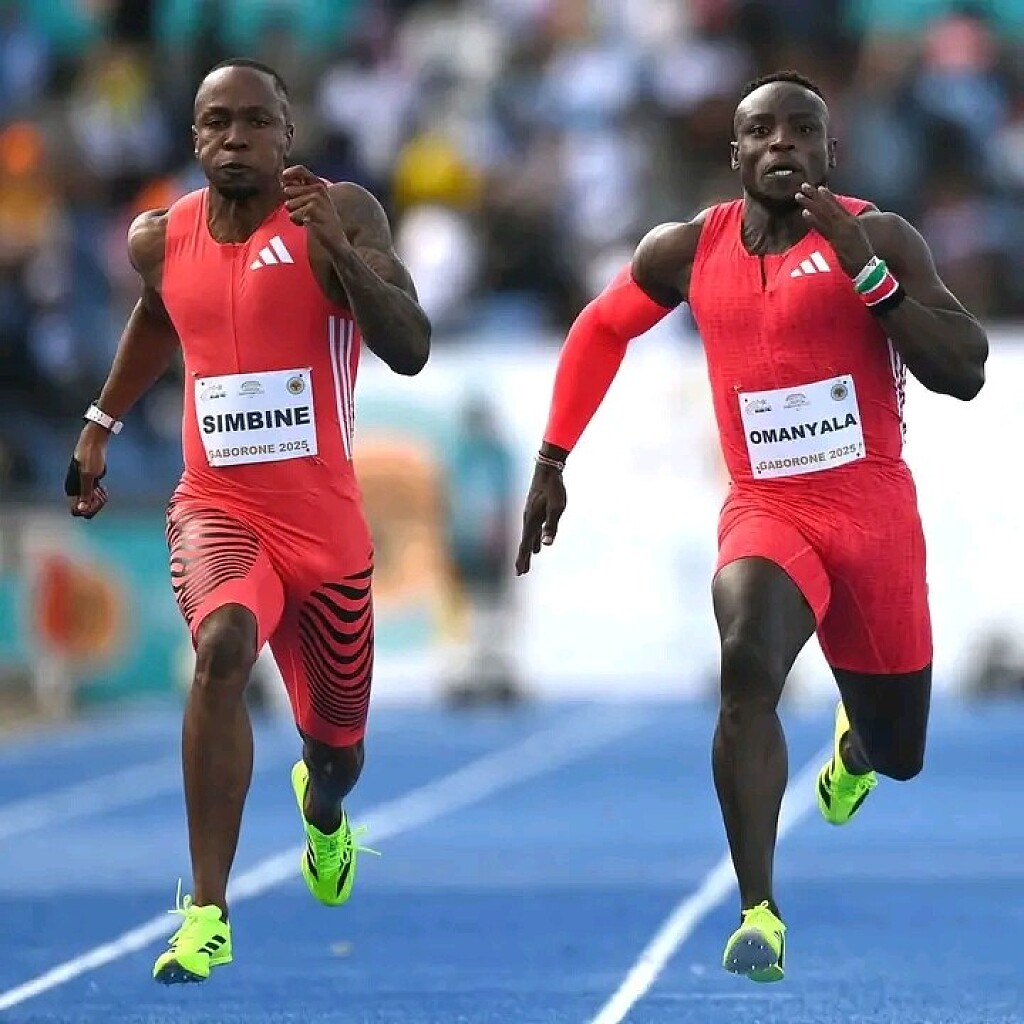
Omanyala and Simbine Set for Explosive Sprint Showdown at FBK Games in Hengelo
The stage is set for one of the most anticipated sprint battles of the season as Africa's fastest men, Ferdinand Omanyala of Kenya and Akani Simbine of South Africa, headline a stacked men's 100-meter field at the 2026 FBK Games in Hengelo Netherlands, on Sunday, June 21. The prestigious meeting is part of the World Athletics Continental Tour Gold circuit and regularly attracts some of the world's finest track and field stars.
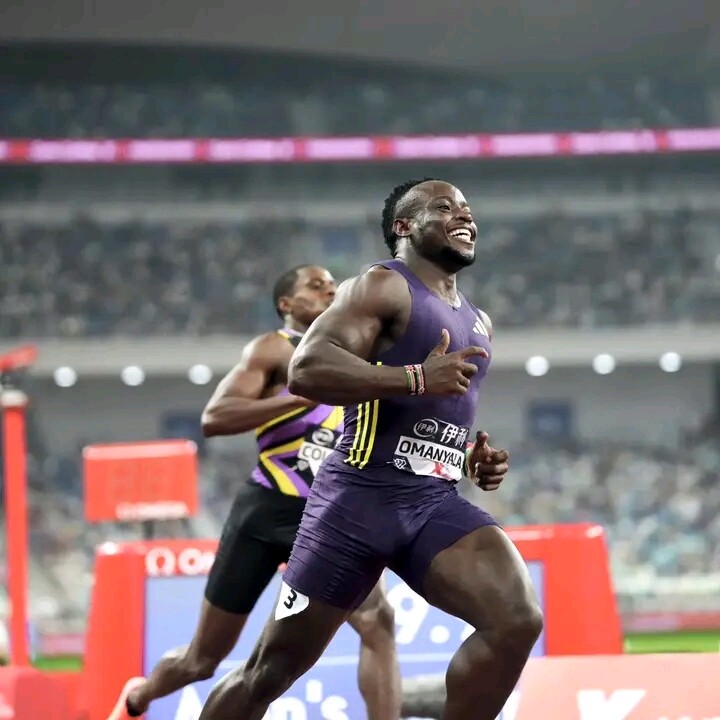
For sprint fans, the clash between Omanyala and Simbine is reason enough to tune in. Omanyala, the African record holder and Kenya's sprint trailblazer, has built a reputation for fearless front-running and explosive starts. Simbine, meanwhile, remains one of the most consistent sprinters of his generation, combining championship experience with remarkable top-end speed. Their rivalry has produced thrilling races over the years, and another chapter is about to be written on Dutch soil.
But this will be far more than a two-man contest.
South Africa's rising star Bradley Nkoana enters the race eager to challenge the established order, while Ireland's Benjamin Richardson continues to make strides on the international circuit. American veteran Ronnie Baker brings proven world-class credentials to the field, adding further depth and unpredictability to the race.
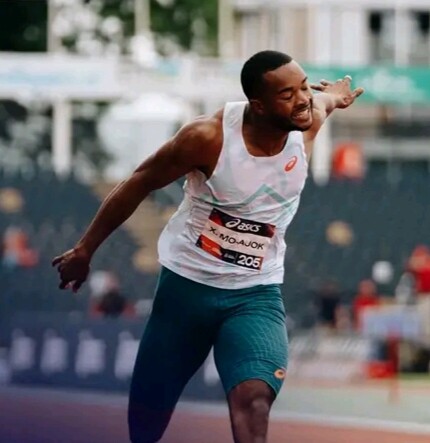
The home crowd will have plenty to cheer for as Dutch sprinters Elvis Afrifa, Taymir Burnet and Xavi Mo-Ajok line up in front of their supporters. All three have been key figures in the Netherlands' sprint resurgence and will be determined to make their mark against a world-class field.
With established stars, emerging talents and national pride all colliding in one race, the men's 100 meters promises to be one of the standout events of the meeting. Every athlete in the field has the speed to produce a surprise, ensuring that there will be no room for error once the starter's gun fires.
As Hengelo prepares to welcome another edition of the renowned FBK Games, all eyes will be fixed on the straightaway. When Omanyala and Simbine step into their blocks, fans can expect a race packed with intensity, speed and the kind of drama that only elite sprinting can deliver.
Men's 100m Entries – FBK Games 2026
1. Ferdinand Omanyala (Kenya)
2. Akani Simbine (South Africa)
3. Bradley Nkoana (South Africa)
4. Benjamin Richardson (Ireland)
5. Ronnie Baker (United States)
6. Elvis Afrifa (Netherlands)
7. Taymir Burnet (Netherlands)
8. Xavi Mo-Ajok (Netherlands)
On Sunday afternoon in Hengelo, the race may last less than ten seconds, but its impact could resonate throughout the remainder of the 2026 season.
by Erick Cheruiyot for My Best Runs.
Login to leave a comment
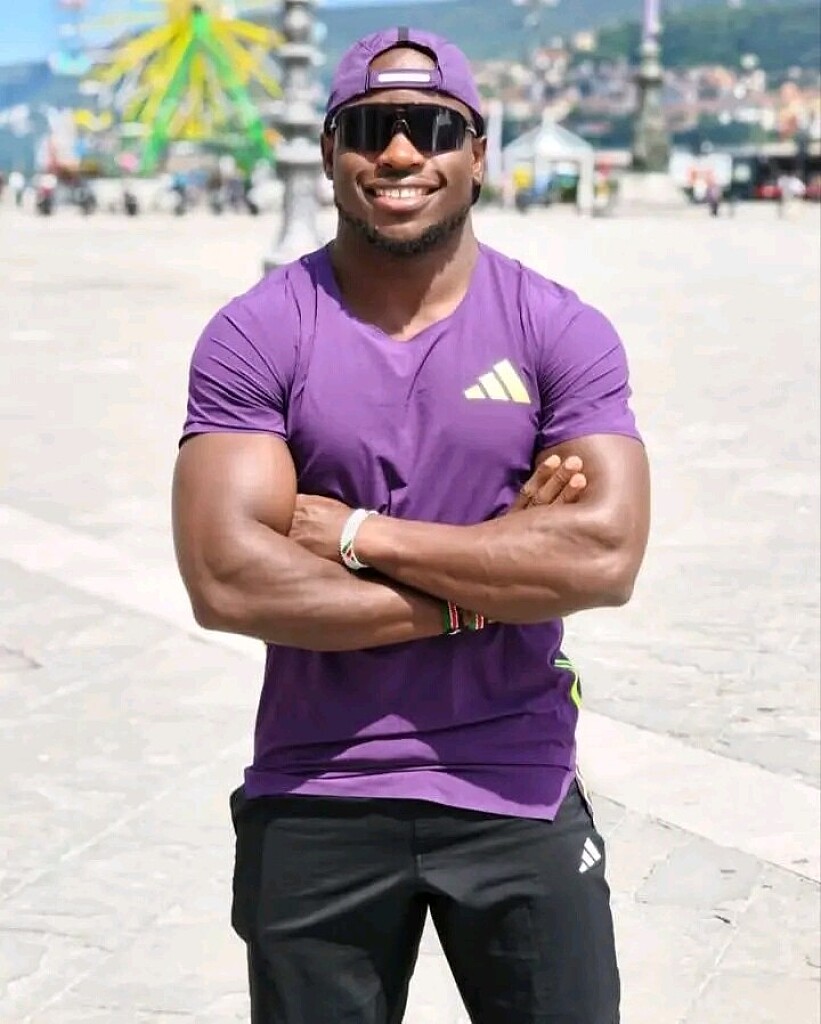
"Fireworks Incoming": Omanyala Issues Bold Warning Ahead of Rome Diamond League Showdown
Kenya's sprint king Ferdinand Omanyala has sent a powerful message to his rivals ahead of one of the most anticipated 100m races of the season, declaring that fans should expect something special when he steps onto the track at the Rome Diamond League.
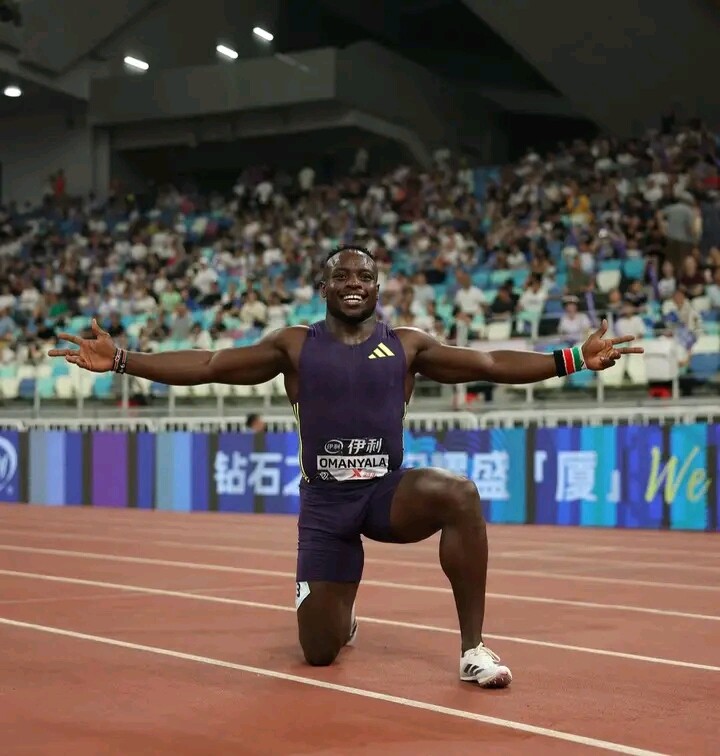
Speaking in an interview with Nation Sport ahead of the prestigious meeting in Rome, the African record holder made it clear that he is entering the race with renewed confidence and determination, insisting that the version of Omanyala the world has seen in previous seasons is no longer the same athlete.
"I am not the same Omanyala they are used to. It will be different. I promise you fireworks. The roof will blow off," he said, underlining his belief that his best performances are still ahead of him.

The Kenyan sprint sensation also reaffirmed his season-long objective of consistently breaking the coveted 10-second barrier, revealing that he is fully focused on delivering sub-10 performances throughout the Diamond League campaign.
His bold remarks have only heightened anticipation for the men's 100m showdown in Rome, where he is set to face an elite field featuring world champion Noah Lyles, Olympic champion Letsile Tebogo, and South African sprint star Akani Simbine.
The race promises to be one of the highlights of the meeting, bringing together some of the fastest men in the world in a contest that could produce exceptional times. For Omanyala, it is another opportunity to showcase his growth, challenge the very best, and strengthen his position among the global sprinting elite.
As the athletes prepare to take their marks, excitement continues to build around the Kenyan star. He has promised fireworks, and with a world-class field standing alongside him, the stage is perfectly set for a memorable night of sprinting in the Italian capital.
Whether his bold prediction comes to life remains to be seen, but one thing is certain: Omanyala is heading into Rome with confidence, ambition, and the belief that his fastest races are still ahead of him.
by Erick Cheruiyot for My Best Runs.
Login to leave a comment
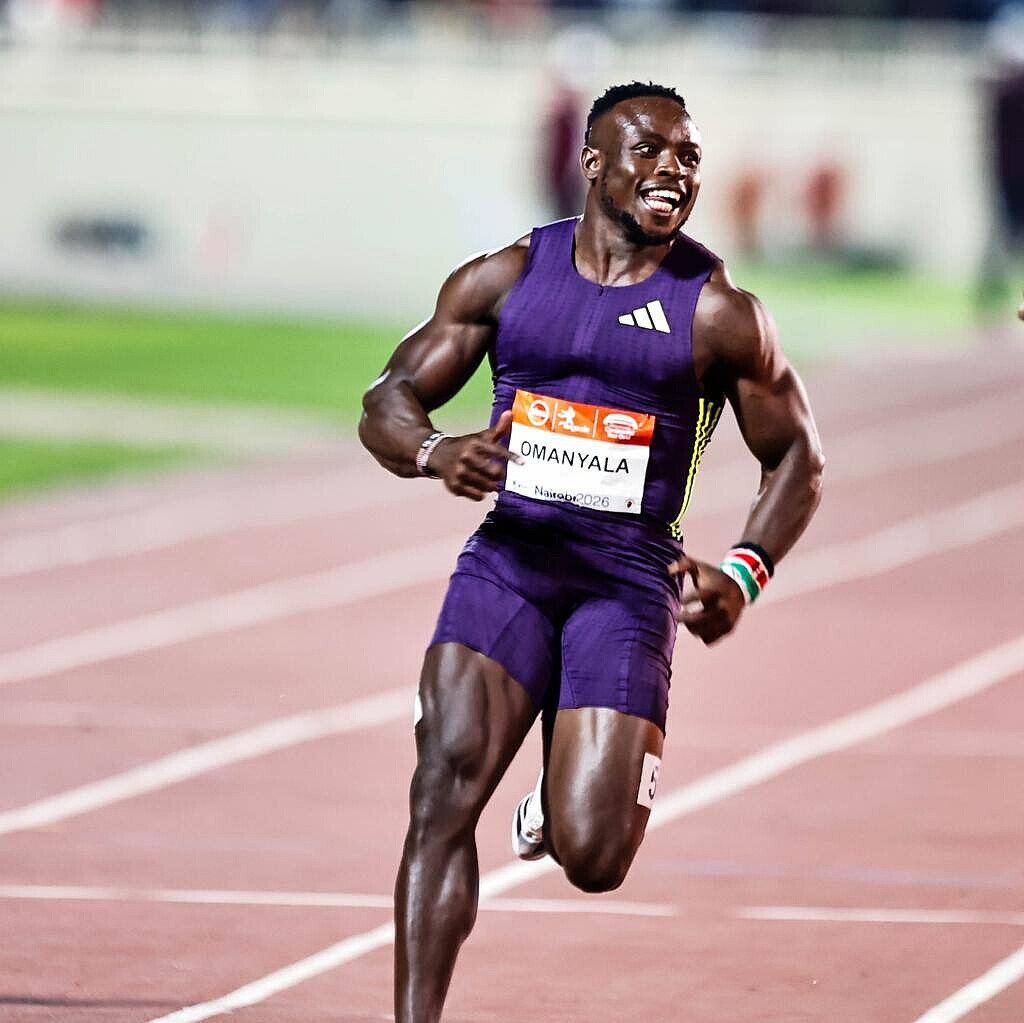
Rome Diamond League Set for a Sprint Showdown as Omanyala, Lyles, Tebogo and Jacobs Collide
The men's 100 metres at the 2026 Rome Diamond League is shaping up to be one of the most anticipated sprint races of the season, with an exceptional field featuring some of the fastest men in the world.
Scheduled for Thursday, June 4, at the iconic Stadio Olimpico in Rome, the race will bring together reigning stars, established champions and emerging talents in a contest that promises fireworks from the moment the gun goes off.
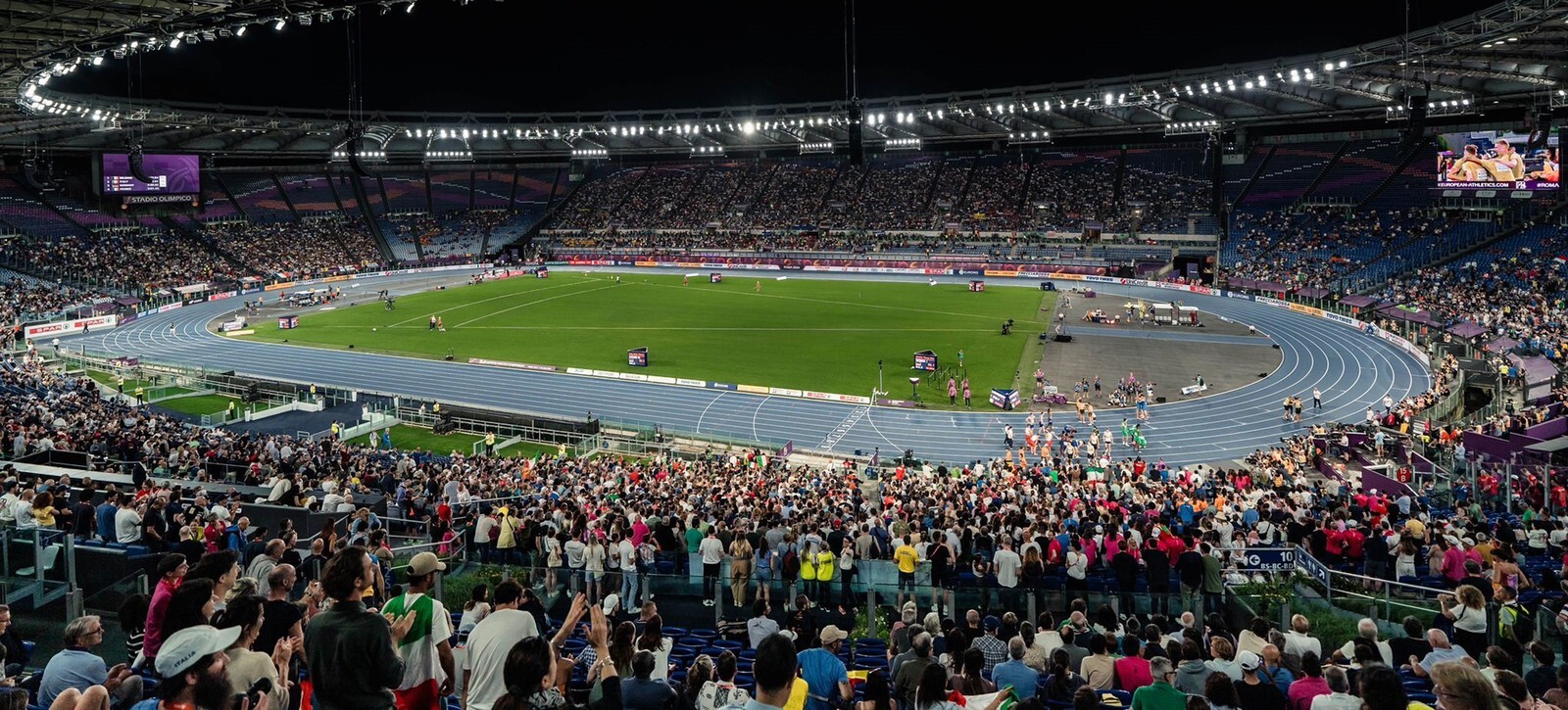
Kenya's Ferdinand Omanyala headlines a world-class lineup that includes American sprint sensation Noah Lyles, Botswana's Olympic champion Letsile Tebogo, Jamaica's explosive Ackeem Blake, South Africa's ever-consistent Akani Simbine and Italy's hometown hero Lamont Marcell Jacobs. With personal bests ranging from 9.77 to 9.97 seconds, the field is packed with athletes capable of producing something special on the Diamond League stage.
Omanyala, the African record holder with a blistering personal best of 9.77 seconds, arrives in Rome eager to continue his strong early-season form and prove he can challenge the very best on the global circuit. The Kenyan star has built a reputation as one of the fastest starters in world sprinting and will be looking to make a statement against an elite field.
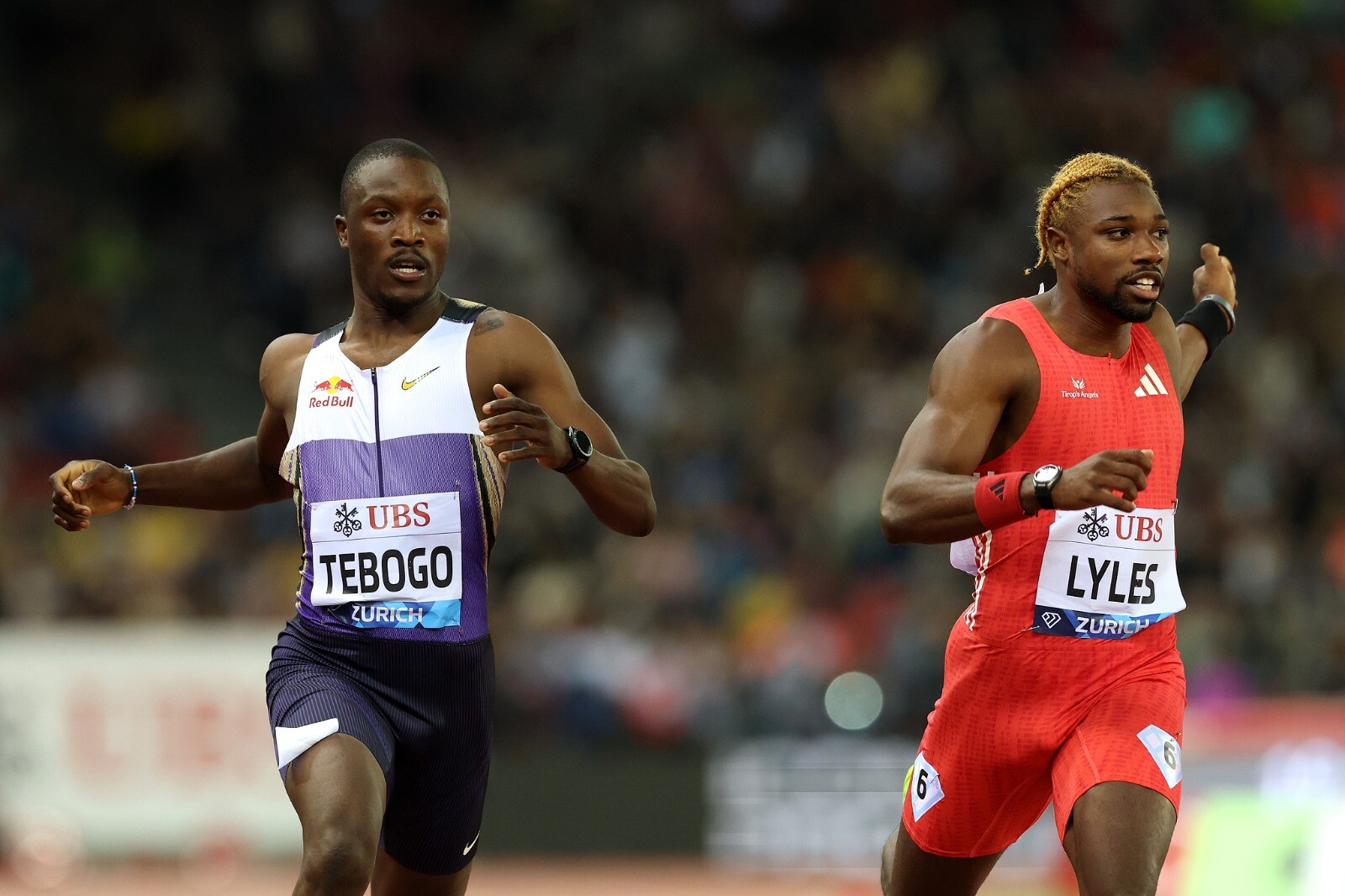
Standing in his way is world champion Noah Lyles, whose personal best of 9.79 seconds places him among the fastest athletes in history. The American remains one of the sport's biggest attractions and will be determined to add another Diamond League victory to his impressive résumé.
The race also marks a major test for Olympic champion Letsile Tebogo. The Botswanan star has rapidly become one of athletics' most exciting talents, while Ackeem Blake continues to establish himself as a serious contender on the international sprint scene.
Adding further intrigue is the presence of Italy's Lamont Marcell Jacobs. Competing on home soil, the Tokyo Olympic champion will enjoy passionate local support as he seeks to deliver a memorable performance in front of the Roman crowd.
South Africa's Akani Simbine, Cameroon's Emmanuel Eseme, Great Britain's Jeremiah Azu and rising American talent Jordan Anthony complete a field that boasts remarkable depth and quality.
Men's 100m Entry List – Rome Diamond League 2026
Ferdinand Omanyala (Kenya) – PB: 9.77
Noah Lyles (USA) – PB: 9.79
Lamont Marcell Jacobs (Italy) – PB: 9.80
Akani Simbine (South Africa) – PB: 9.82
Letsile Tebogo (Botswana) – PB: 9.86
Ackeem Blake (Jamaica) – PB: 9.88
Jordan Anthony (USA) – PB: 9.91
Emmanuel Eseme (Cameroon) – PB: 9.96
Jeremiah Azu (Great Britain) – PB: 9.97
With multiple national record holders, global champions and Olympic medal contenders sharing the same start line, the Rome Diamond League men's 100m could deliver one of the fastest races of the year. For sprint fans around the world, all eyes will be on Rome as a stellar cast battles for supremacy over athletics' blue-riband distance.
by Erick Cheruiyot for My Best Runs.
Login to leave a comment
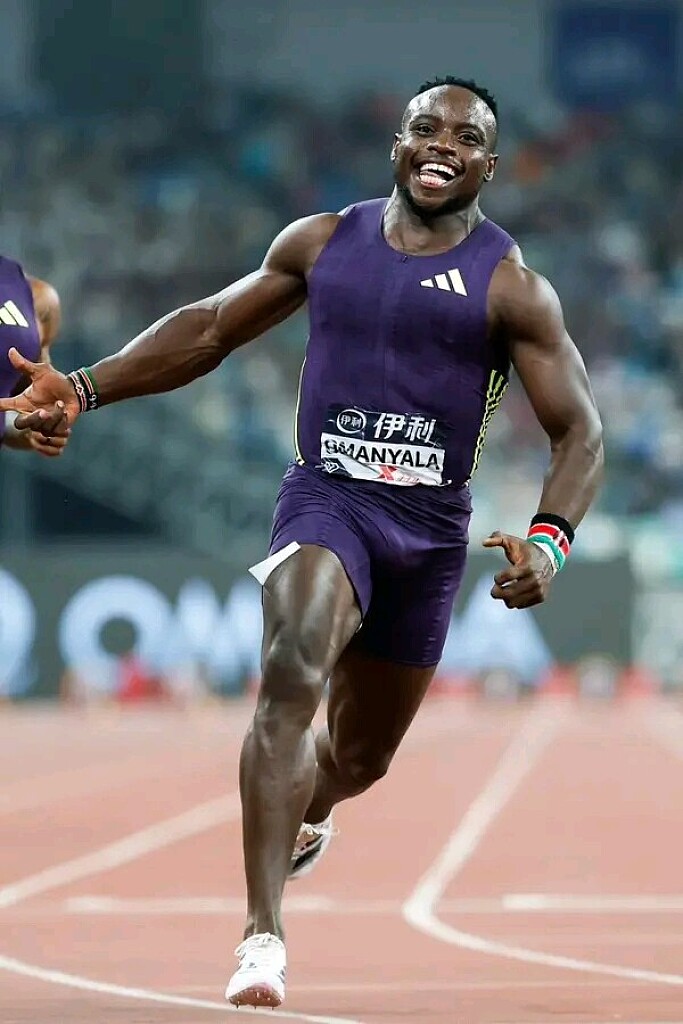
Omanyala’s Sprint Masterclass Continues as Kenyan Star Blazes to Fifth Sub-10 of the Season in Xiamen
Ferdinand Omanyala delivered yet another statement performance on the global stage, storming to a brilliant 9.94 seconds in Xiamen to secure his fifth sub-10-second clocking of the season and reaffirm his status as one of the fastest men in the world.
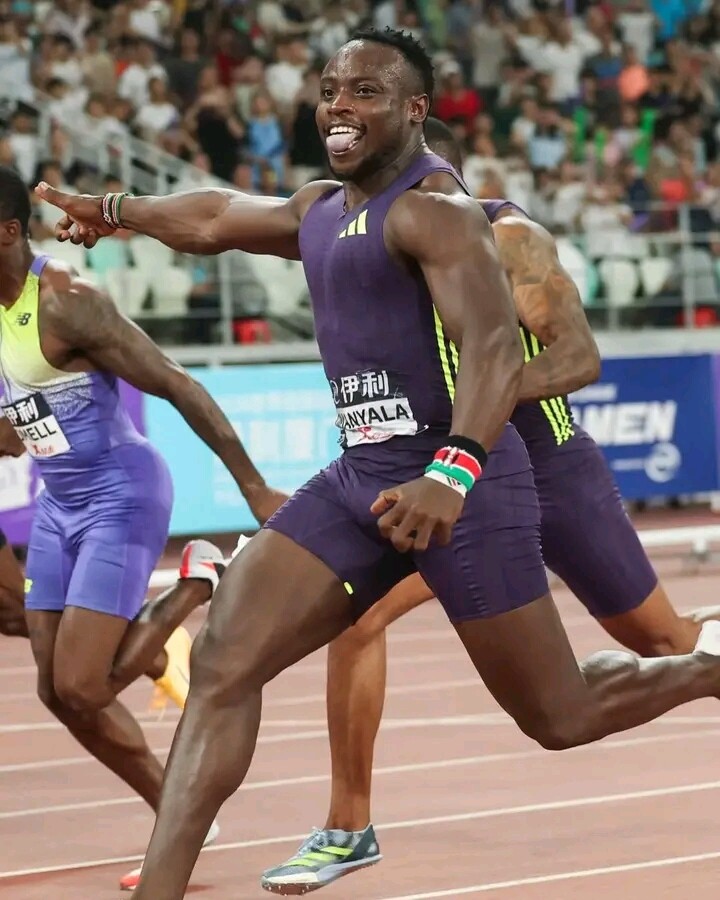
In a race packed with elite sprinting talent, the African record holder rose above a formidable field that included South Africa’s Gift Leotlela, American star Kenny Bednarek, Botswana’s Olympic sensation Letsile Tebogo and several other world-class competitors. Omanyala’s explosive acceleration and commanding finish proved decisive as he surged clear to claim victory in one of the most anticipated sprint contests of the meeting.
The Kenyan speedster’s latest triumph extends what has been an exceptional 2026 campaign. His season opened with a 9.98-second run at the Addis Ababa Grand Prix before he followed it with 9.96 seconds at the Kip Keino Classic in Nairobi. Just days later, he lowered his mark to 9.95 seconds at the Botswana Golden Grand Prix, showcasing remarkable consistency against high-calibre opposition. Another 9.98-second performance at the Shanghai Diamond League kept his momentum alive before his outstanding 9.94-second display in Xiamen elevated him to a new season’s best.
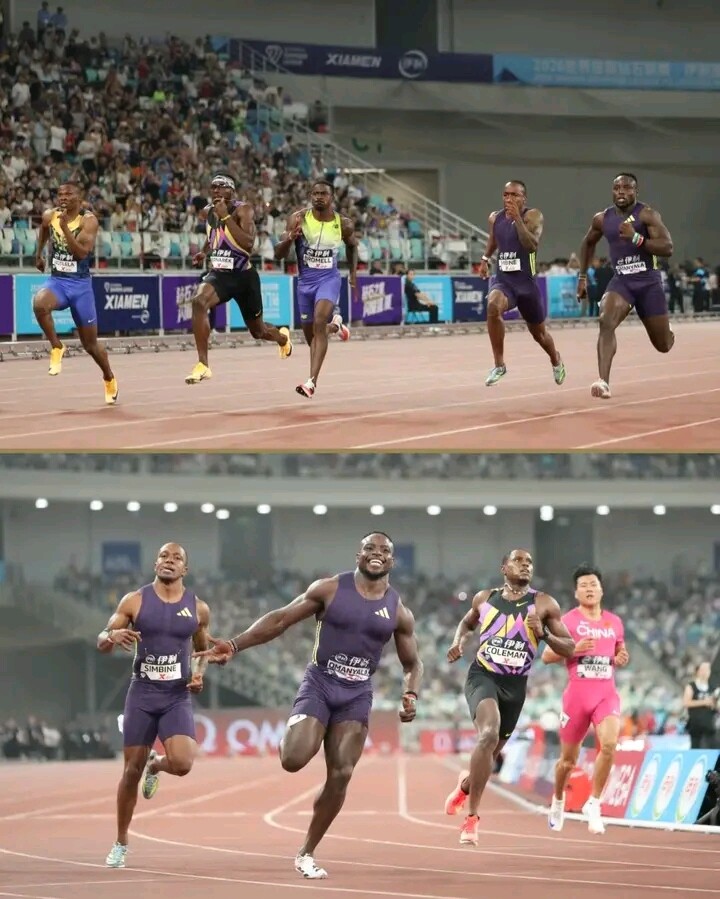
What makes Omanyala’s achievements even more impressive is the consistency with which he continues to operate below the coveted 10-second barrier. Running sub-10 once is a hallmark of elite sprinting; accomplishing the feat five times in a single season reflects extraordinary form, elite preparation, and unwavering confidence.
Beyond the stopwatch, the victory sends a strong message to the rest of the sprinting world. With every race, Omanyala appears sharper, stronger and more composed, building momentum as the season progresses. His ability to defeat a field stacked with international stars highlights not only his raw speed but also his growing reputation as a major contender at the sport’s biggest events.
As the Diamond League season gathers pace and championship ambitions begin to take shape, Omanyala is positioning himself among the leading figures in men’s sprinting. If his current trajectory continues, even faster times may be on the horizon.
For now, the numbers tell a compelling story: five races under 10 seconds, a season-best 9.94 seconds, and another emphatic victory against some of the world’s finest sprinters. Ferdinand Omanyala is not merely racing—he is redefining consistency at the highest level and strengthening his claim as Africa’s undisputed sprint king.
by Erick Cheruiyot for My Best Runs.
Login to leave a comment
A Statement Before the Final: Kenya Shatters African Record in Mixed Relay Showdown
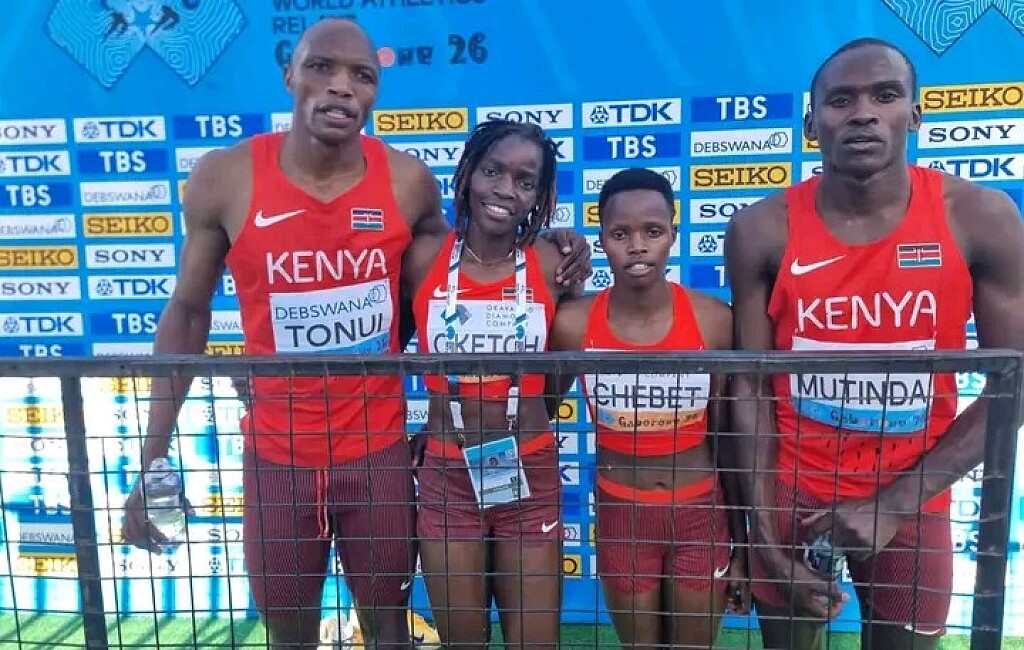
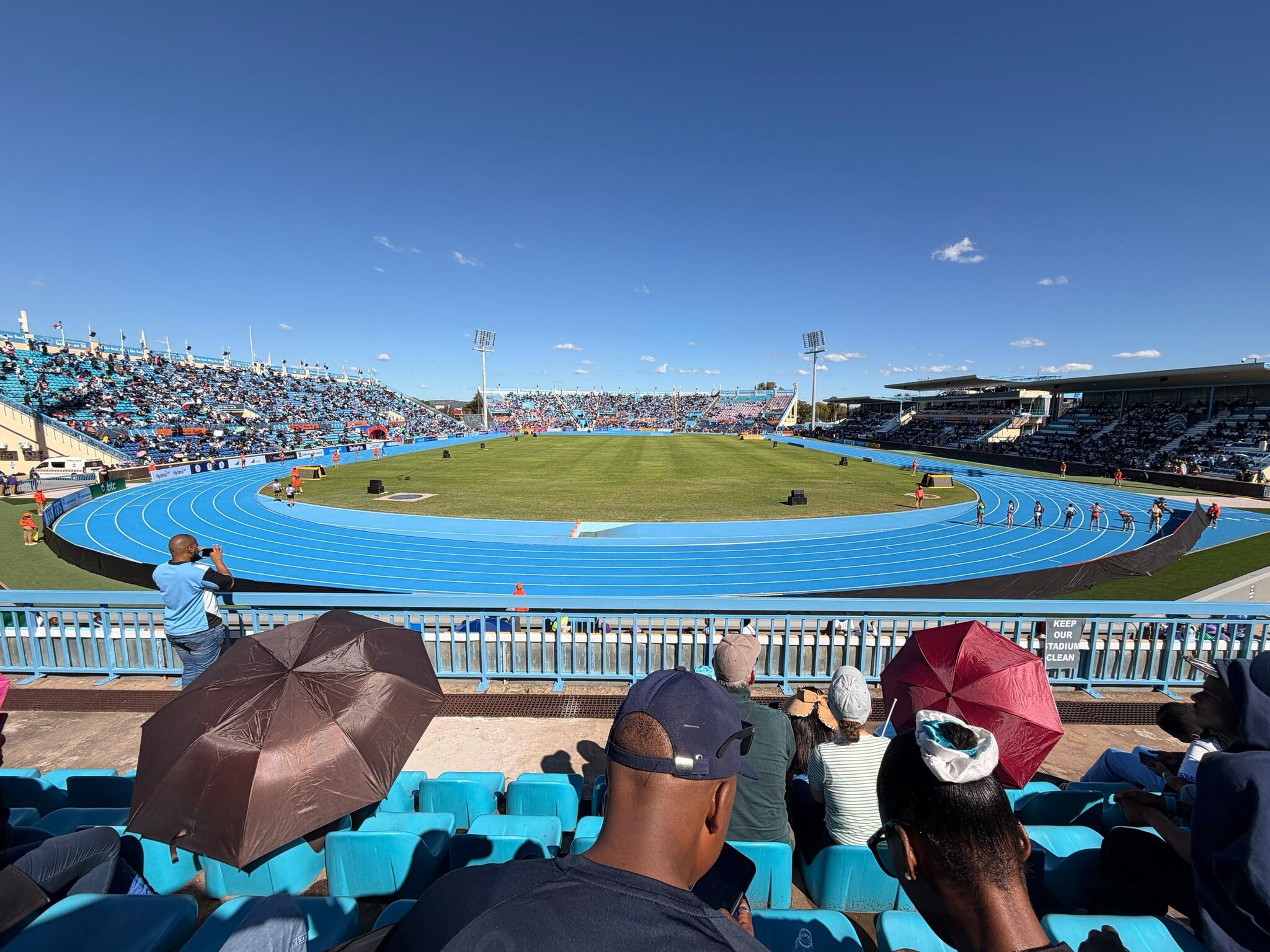
In a race defined by precision, courage, and rising ambition, Kenya delivered a performance to remember at the World Athletics Relays 2026 in Gaborone. The quartet of Mercy Oketch, George Mutinda, Kevin Tonui, and Mercy Chebet combined brilliance and composure to clock an outstanding three minutes, nine point eight seven seconds, rewriting the African record in the mixed 4x400m relay.
It was more than just a fast race—it was a statement.
Team Kenya did not simply chase the clock; they reshaped expectations of African sprinting on the global stage. Their electrifying run secured second place in their heat, confidently advancing them to the final, while also sealing automatic qualification for the 2027 World Championships.
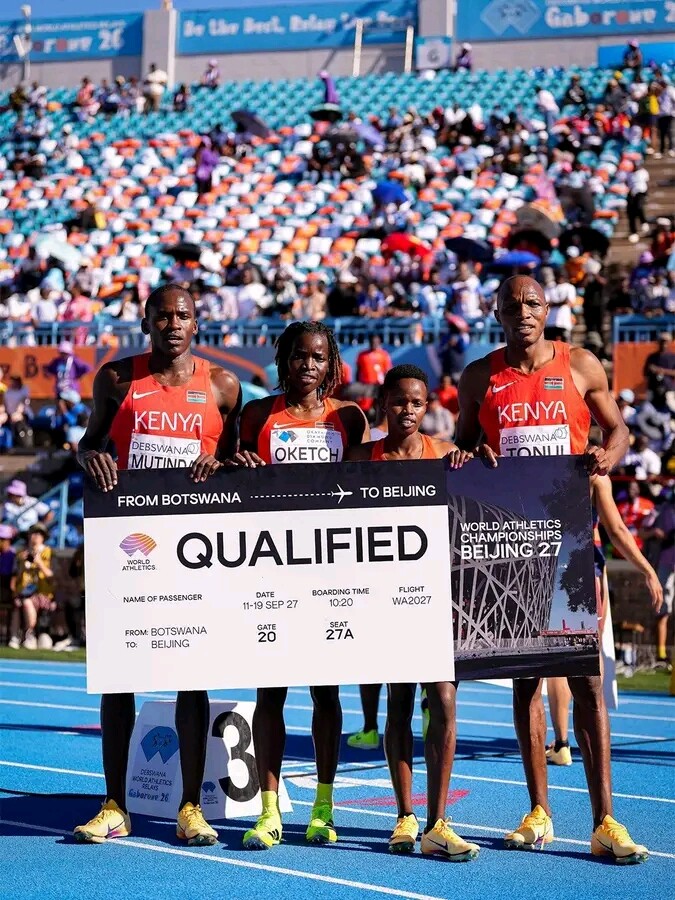
Though they crossed the line behind a dominant Great Britain & Northern Ireland squad, the significance of Kenya’s performance resonated far beyond the finishing order. This was a breakthrough moment—one that signaled a new era.
From the opening leg, Kenya showed intent. Oketch set the tone with a controlled yet aggressive start, keeping the team firmly in contention. Mutinda followed with discipline and balance, maintaining momentum under pressure. Tonui then injected raw power into the race, closing crucial ground before handing over to Chebet, who delivered a determined anchor leg to secure the historic result.
The achievement reflects a shifting identity in Kenyan athletics. Long revered for its dominance in distance running, the nation is now steadily building a formidable presence in sprint relays—an evolution underscored by this record-breaking display.
The mixed 4x400m relay continues to captivate with its blend of strategy, speed, and teamwork. In Gaborone, it offered Kenya the perfect stage to announce its arrival among the world’s elite.
Not a finish line, but a powerful warning—the final still awaits.
by Erick Cheruiyot for My Best Runs.
Login to leave a comment
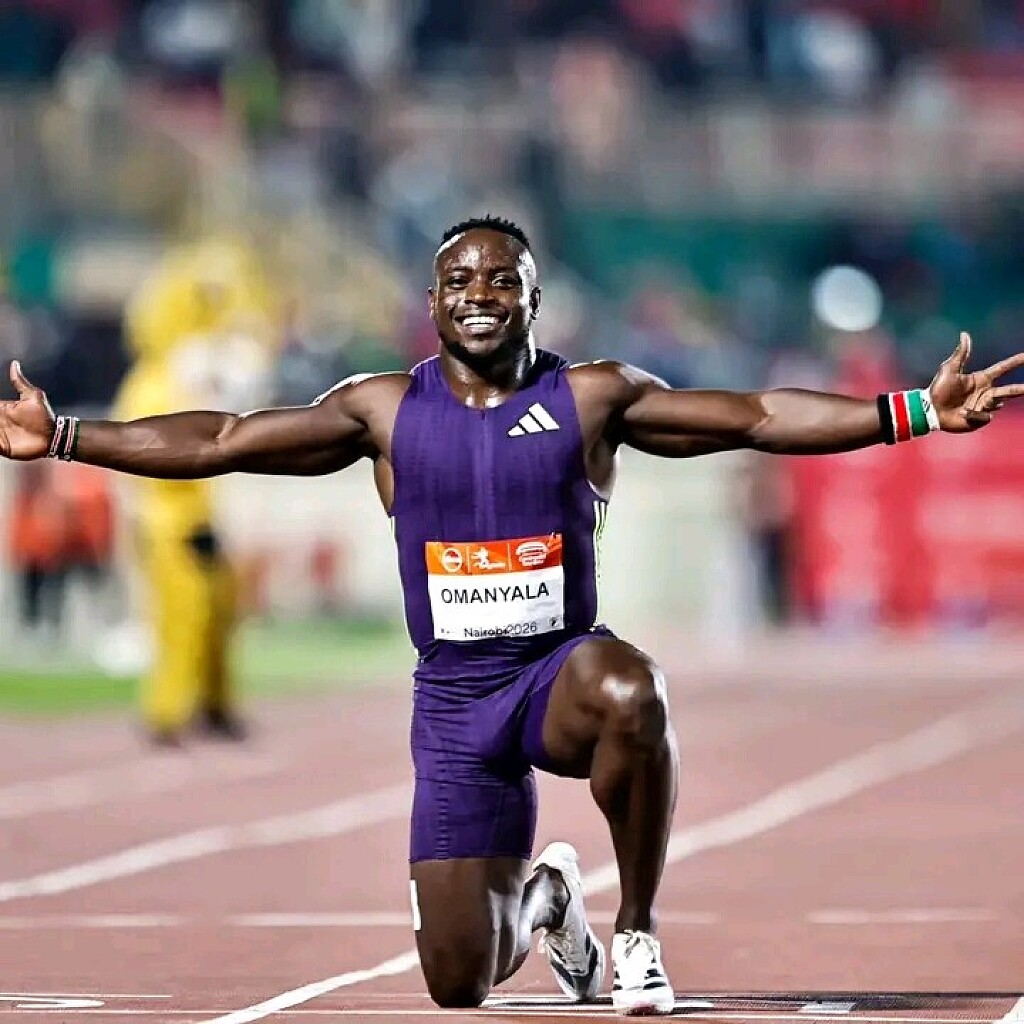
Ferdinand Omanyala: Africa’s Fastest Man Finds Another Gear with Relentless Sub-10 Consistency
Kenya’s sprint king Ferdinand Omanyala is building something truly formidable. With a stunning sequence of performances—9.98, 9.96, and now 9.95 seconds—the African record holder is not just winning races; he’s sending a clear message to the global sprinting elite. This is no longer about isolated brilliance. This is consistency at the highest level, and it’s beginning to look dangerous.
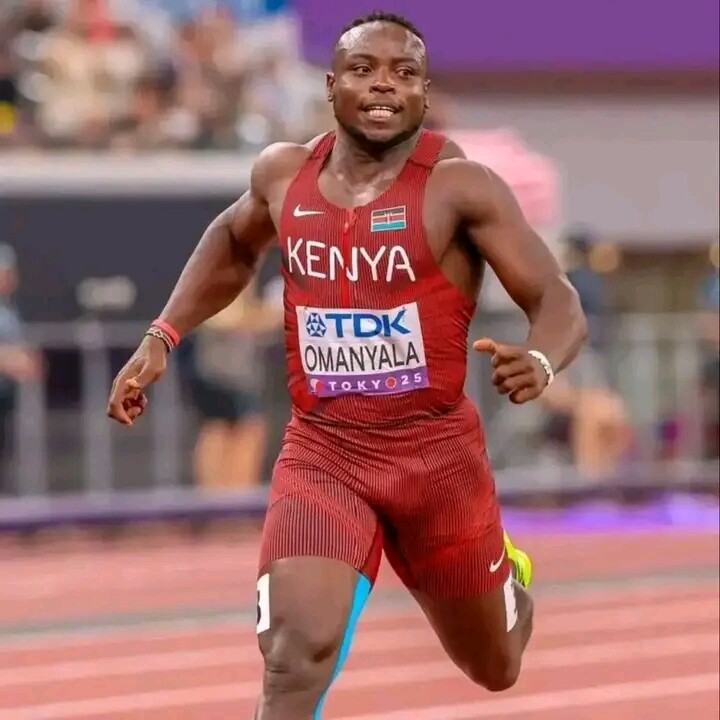
Across three major meets—the Addis Ababa Grand Prix in Addis Ababa (9.98s), the Kip Keino Classic in Nairobi (9.96s), and the Botswana Grand Prix in Gaborone (9.95s)—Omanyala has steadily sharpened his edge. Each race has been a step forward, a fraction faster, a statement louder. The progression isn’t accidental; it reflects precision training, growing confidence, and a sprinter peaking at just the right moment.
What makes this run particularly compelling is the ease with which Omanyala is dipping under the coveted 10-second barrier. In the world of sprinting, consistency at sub-10 is the ultimate currency of greatness. It separates contenders from champions. And right now, Omanyala is stacking performances like a man on a mission—calm, composed, and increasingly dominant.
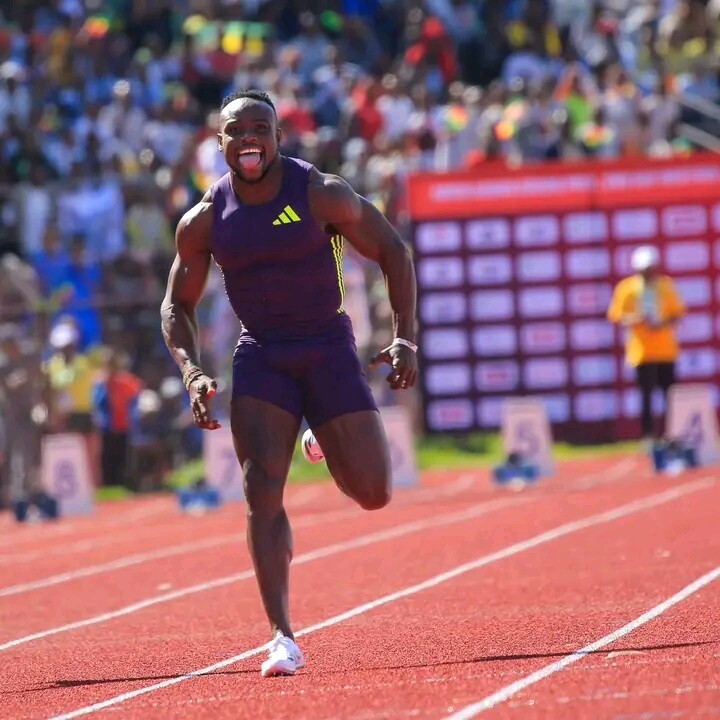
Beyond the times, there’s a presence about him. Explosive out of the blocks, powerful through the drive phase, and composed at top speed, he looks every bit the complete sprinter. His latest 9.95 is not just a season highlight—it’s a warning shot. With each race, he’s tightening his grip on the title of Africa’s fastest man while positioning himself as a genuine global threat.
For Kenya, a nation long celebrated for distance running excellence, Omanyala represents a thrilling shift in narrative. He is rewriting expectations, proving that sprinting greatness can also rise from East Africa. And as the season gathers pace, one thing is becoming increasingly clear: if this trajectory holds, the world will soon have no choice but to reckon with him at the very top.
Sub-10 consistency isn’t just impressive—it’s ominous. And right now, Ferdinand Omanyala is trending exactly where he wants to be: faster, sharper, and closing in on something special.
by Erick Cheruiyot for My Best Runs.
Login to leave a comment
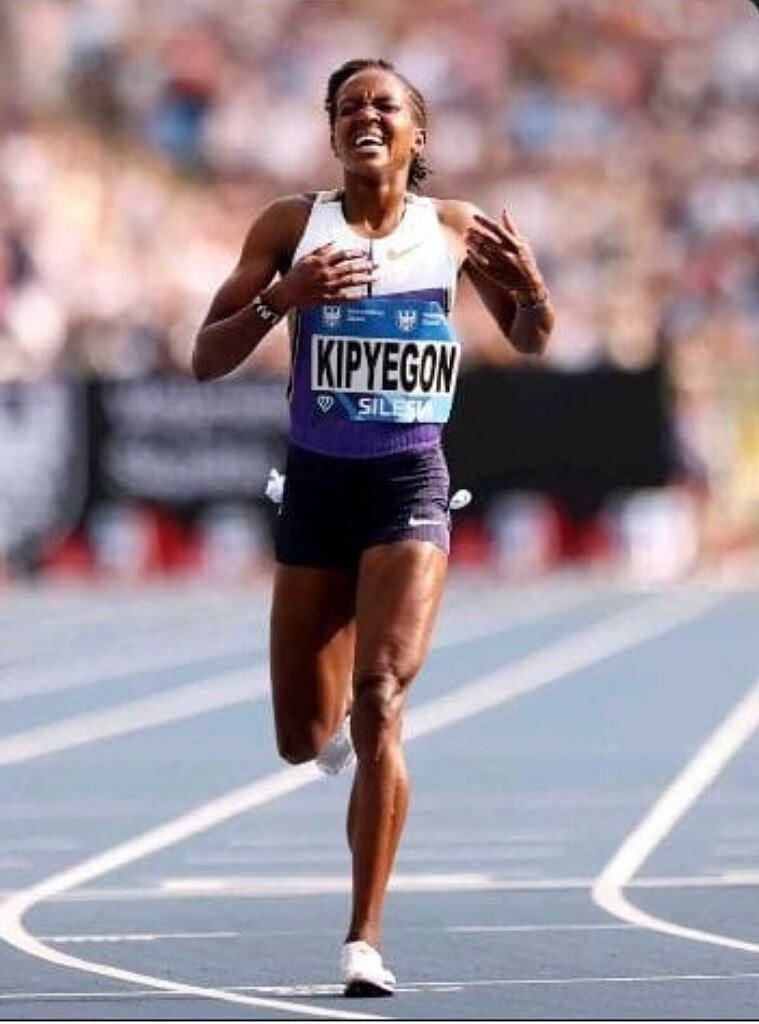
Faith Kipyegon Breaks Diamond League Record in Silesia with Second-Fastest 3000m in History
Silesia, Poland – August 16, 2025 — Kenya’s Faith Kipyegon once again delivered a masterclass in middle-distance running, storming to victory in the women’s 3000m at the Diamond League meeting in Silesia. Her time of 8:07.04 not only set a new Diamond League record but also established an African record, a meeting record, and the second-fastest performance in history.
A Perfect Setup from the Pacemaker
Kipyegon started the race tucked in behind Australia’s Jessica Hull, who paced the first 2000m with precision. Hull, the world record holder at 2000m (5:19.70 from July 2024), provided the ideal tempo before stepping aside, leaving Kipyegon to attack the final kilometer alone.
The Chase for History
With the green pacing light signaling world-record pace, Kipyegon powered through the last 1000m in a determined bid to eclipse the mark of 8:06.11. Down the final straight, it looked as though she might catch it, but she crossed just over a second shy.
Despite missing the world record by a whisker, Kipyegon’s 8:07.04 was good enough to rewrite multiple record books:
• Diamond League Record (DLR)
• African Record (AR)
• Meeting Record (MR)
• National Record (NR)
• World-Leading Time (WL)
Cementing Her Legacy
This performance reinforces Kipyegon’s dominance across distances from 1500m to 5000m. It also marks yet another historic milestone in a career already decorated with Olympic and World Championship titles.
Her run in Silesia was not only one of the fastest in history but also a reminder that she remains within touching distance of the 3000m world record — and that record may soon fall if she lines up for another attempt.
by Boris Baron
Login to leave a comment

Hassan and Tebogo named World Athletes of the Year
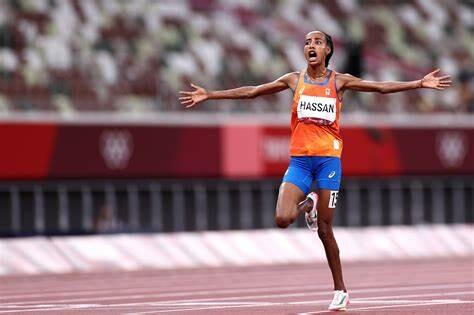
Olympic champions Sifan Hassan and Letsile Tebogo have been announced as World Athletes of the Year at the World Athletics Awards 2024 in Monaco.
Following a vote by fans, Hassan and Tebogo received top honors on an evening that saw six athletes crowned in three categories – track, field and out of stadium – before the overall two winners were revealed.
Tebogo was confirmed as men’s track athlete of the year, with Sydney McLaughlin-Levrone receiving the women’s honour. Hassan claimed the women’s out of stadium crown and Tamirat Tola the men’s, while Mondo Duplantis and Yaroslava Mahuchikh were named field athletes of the year.
This year’s Rising Stars were also celebrated, with Sembo Almayew and Mattia Furlani receiving recognition.
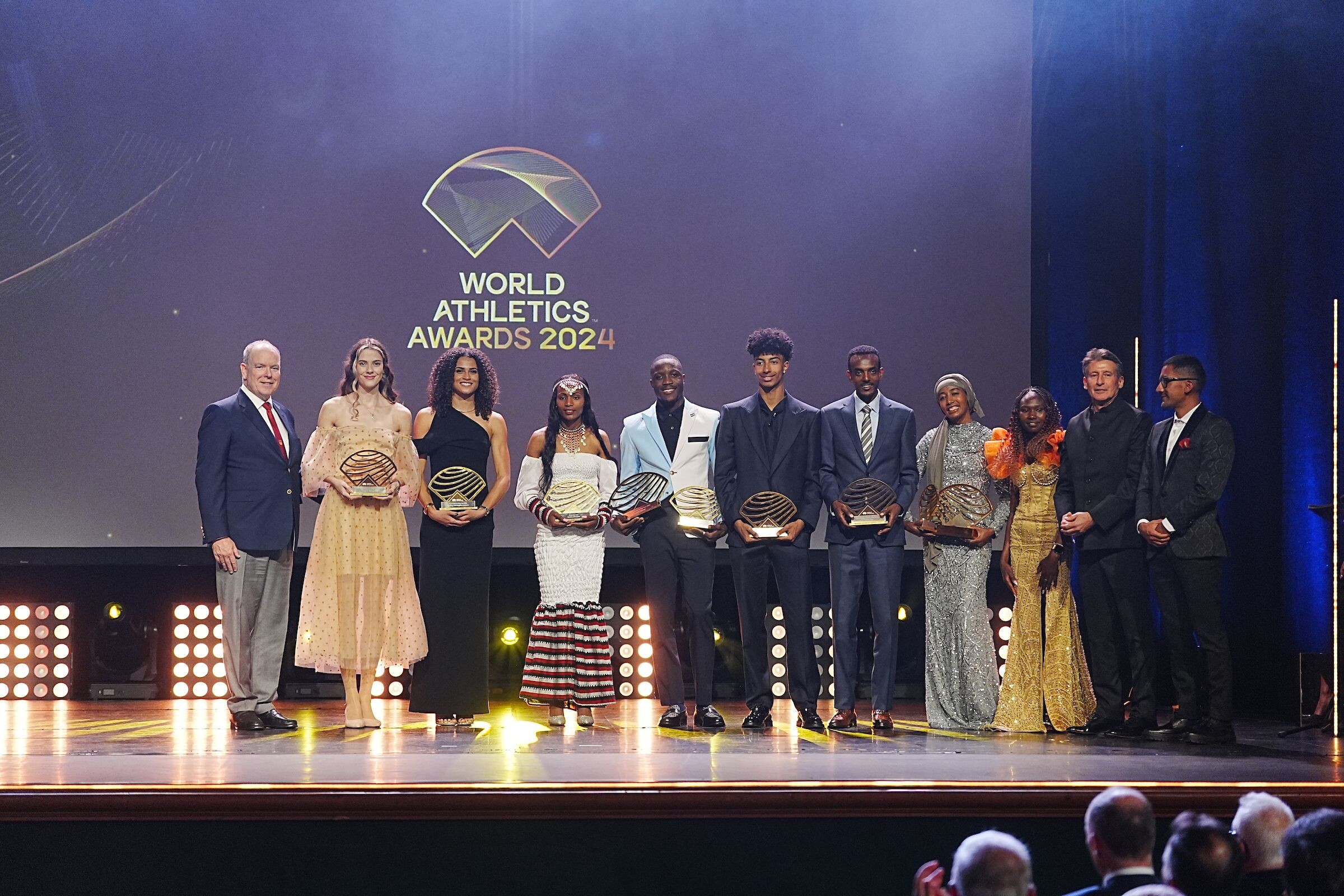
World Athletes of the Year for 2024
Women’s World Athlete of the Year: Sifan Hassan (NED)Men’s World Athlete of the Year: Letsile Tebogo (BOT)
Women’s track: Sydney McLaughlin-Levrone (USA)Women’s field: Yaroslava Mahuchikh (UKR)Women’s out of stadium: Sifan Hassan (NED)Men’s track: Letsile Tebogo (BOT)Men’s field: Mondo Duplantis (SWE)Men’s out of stadium: Tamirat Tola (ETH)
Women’s Rising Star: Sembo Almayew (ETH)Men’s Rising Star: Mattia Furlani (ITA)
“At the end of what has been a stellar year for athletics, we are delighted to reveal our list of World Athletes of the Year – both in their respective disciplines and overall,” said World Athletics President Sebastian Coe. “This group of athletes represents the very best of our sport and has this year redefined what is possible in terms of athletic performance.
“Our 2024 cohort set new standards in heights, speed and distance, including six world records and a host of Olympic and national records between them.
“I congratulate all our award winners, and all of the athletes nominated for these honors, and I thank them for inspiring us all with their performances this year.”
World Athletes of the Year Hassan and Tebogo both won gold and claimed multiple medals at the Paris 2024 Olympic Games.
Dutch star Hassan’s medal treble in Paris was capped by her winning the final athletics gold medal of the Games with her triumph in the marathon in an Olympic record of 2:22:55. That performance came just 37 hours after Hassan claimed bronze in the 10,000m, and six days after her first medal in the French capital – also bronze – in the 5000m.
As a result, she became the first woman to win medals in the 5000m, 10,000m and marathon at the same Games, and the first athlete since Emil Zatopek, who won all three men’s titles in Helsinki in 1952.
Tebogo also made history in Paris when he won the 200m, as he claimed a first ever Olympic gold medal in any sport for Botswana. He ran an African record of 19.46 – a time that moved him to fifth on the world all-time list – and that performance followed his sixth-place finish in the 100m final. He went on to form part of Botswana’s silver medal-winning men’s 4x400m team.
He dipped under 20 seconds for 200m a total of nine times in 2024, with those performances topped by his Olympic title-winning mark which remained the fastest of the year.
His fellow track athlete of the year, McLaughlin-Levrone, improved her own world 400m hurdles record twice, to 50.65 and 50.37, and claimed Olympic gold in that event as well as in the 4x400m. Tola, who joined Hassan in being named out of stadium athlete of the year, won the Olympic marathon title in Paris in an Olympic record.
World records were set by both field athletes of the year. Mahuchikh cleared 2.10m to improve the world high jump record before winning Olympic gold, while Duplantis revised his own world pole vault record three times, eventually taking it to 6.26m, and won the Olympic title.
"Thank you to the fans, to everybody who voted," said Hassan, who was in Monaco to receive her two awards. "I never thought I was going to win this one. This year was crazy. It’s not only me – all the athletes have been amazing. I’m really grateful. What more can I say?"
Standing alongside Hassan on the stage at the Theatre Princesse Grace, Tebogo said: "It feels amazing to know that the fans are always there for us athletes. It was a great year.
"This means a lot," he added. "It’s not just about the team that is around you, there are a lot of fans out there that really want us to win something great for the continent. It was a real surprise to hear my name because I didn’t expect this."
Almayew and Furlani named Rising Stars of 2024
Not only did Sembo Almayew and Mattia Furlani achieve great things as U20 athletes in 2024, they both also secured success on the senior stage.
Almayew finished fifth in the 3000m steeplechase final at the Paris Olympics, going close to her own national U20 record with her 9:00.83 performance, before she travelled to Lima where she won the world U20 title, setting a championship record in the process. With that win, the 19-year-old became the first ever Ethiopian world U20 women’s steeplechase champion.
Furlani improved the world U20 long jump record to 8.38m at the European Championships on home soil in Rome to secure silver, and he won two more senior major medals at the World Indoor Championships, where he got another silver, and the Olympic Games, where he claimed bronze.
In Glasgow – at the age of 19 years and 24 days – Furlani became the youngest athlete ever to win a world indoor medal in the horizontal jumps.
Knight wins President’s Award
The winner of the President’s Award was also announced in Monaco on Sunday (1), with Nike co-founder Phil Knight receiving the honour in recognition of his constant inspiring support for athletics and the development of the sport.
The President's Award, first awarded in 2016, recognises and honours exceptional service to athletics. Past winners of the award include the Ukrainian Athletics Association, British journalist Vikki Orvice, Swiss meeting director Andreas Brugger, Jamaican sprint superstar Usain Bolt, the Abbott World Marathon Majors, and 1968 men’s 200m medallists Tommie Smith, Peter Norman and John Carlos for their iconic moment on the podium in Mexico.
“Phil Knight’s passion for athletics is pretty much lifelong,” said Coe. “He developed an almost father-son relationship with his coach, the legendary Bill Bowerman, whose training approach was a departure from the orthodoxies of the day and who not only guided Knight’s career on the track but became a central figure when Phil took his first tentative steps in the running shoe business that became the dominant global force Nike.
“His love of athletics runs through Nike. It is a business created and driven by runners, with Phil never afraid to be the front runner.”
Knight said: “Thank you, Seb Coe, for the ultimate honour of the President’s Award, given by World Athletics. I am in great company, with Tommie Smith and John Carlos, and Usain Bolt. Obviously, I didn’t run as fast as those guys, but I am in such high company that I am thrilled by the award. Track and field has always been an important part of Nike – it has always been a central part of who Nike is.
“I do think running will continue to grow. Not only does Seb and his team do a great job promoting the sport, but it is a sport that not only is enjoyable, but it is probably the best fitness activity you can do. So, for me to win this honour, it is very meaningful.”
During the ceremony, a moment was taken to remember last year’s men’s out of stadium athlete of the year Kelvin Kiptum, the marathon world record-holder who died in a road traffic accident in February, as well as other figures from the sport who have passed away in 2024.
by World Athletics
Login to leave a comment
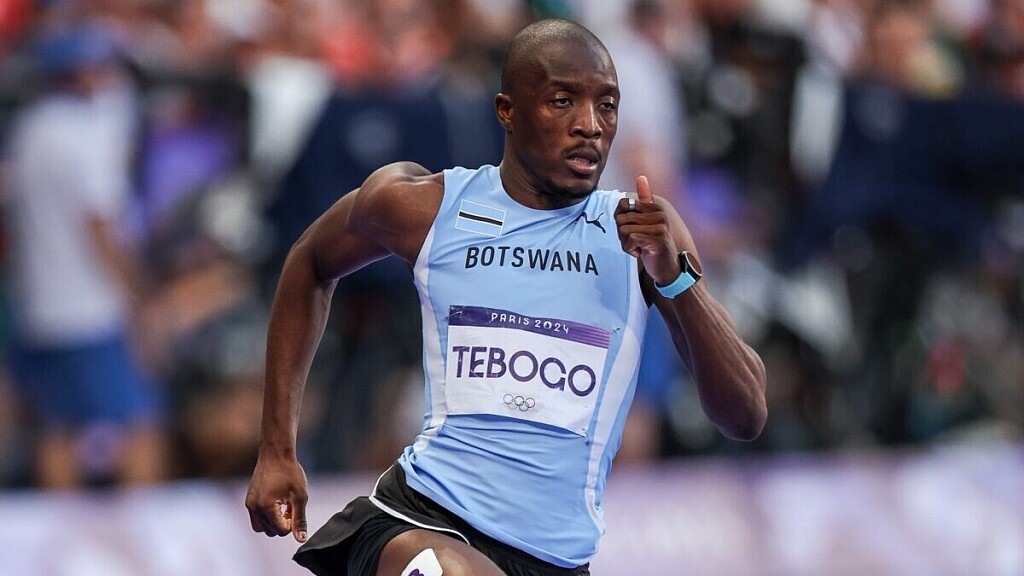
Botswana’s Letsile Tebogo criticizes Netflix series SPRINT for American bias
As Season 2 of the Netflix track and field series SPRINT premiered on Wednesday, one of the star athletes featured, Olympic 200m champion Letsile Tebogo, has already voiced his disappointment. The 21-year-old sprinter was frustrated with what he saw as an American bias in the docuseries, which follows the world’s top sprinters and their journey to the Paris 2024 Olympics.
Tebogo, who made history for Botswana by winning two medals at the Olympics—one of them being the nation’s first-ever gold—doesn’t appear until 22 minutes into the final episode. The series had promised to feature Tebogo, alongside notable Olympians such as Noah Lyles, Gabby Thomas, Fred Kerley, Kishane Thompson, Julien Alfred, Kenny Bednarek, Shericka Jackson and Oblique Seville. However, Tebogo felt the focus skewed heavily toward the four American athletes, particularly Lyles.
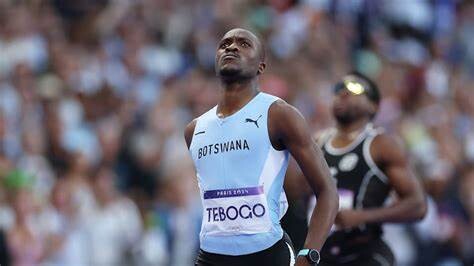
Tebogo took to X to share his disappointment, sharing he was excited to watch but felt the show was overly focused on American athletes, with him portrayed more as a supporting character to the American sprinters.
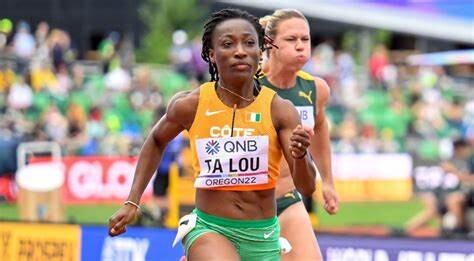
His sentiments echo those of Marie-Josée Ta Lou-Smith, Africa’s 100m record holder from Ivory Coast, who also criticized the Box To Box producers earlier this year after SPRINT Season 1 excluded her from the final cut, despite extensive filming. “I feel really disrespected, because when you say you are going to produce a series about the fastest sprinters in the world, you should show everyone, not only those who win,” Ta Lou-Smith shared with The Inside Lane. She highlighted the need for equal representation, noting, “I am the African record holder; I deserve respect.”
The documentary series is produced by Paul Martin at Box to Box Films, the same production company behind other Netflix successes such as Full Swing and Formula 1: Drive to Survive. On social media, track fans have begun calling on the producers at Box-To-Box Films to consider a more international approach in future seasons, noting that they seemed to have disregarded the American bias from Season 1.
by Marley Dickinson
Login to leave a comment
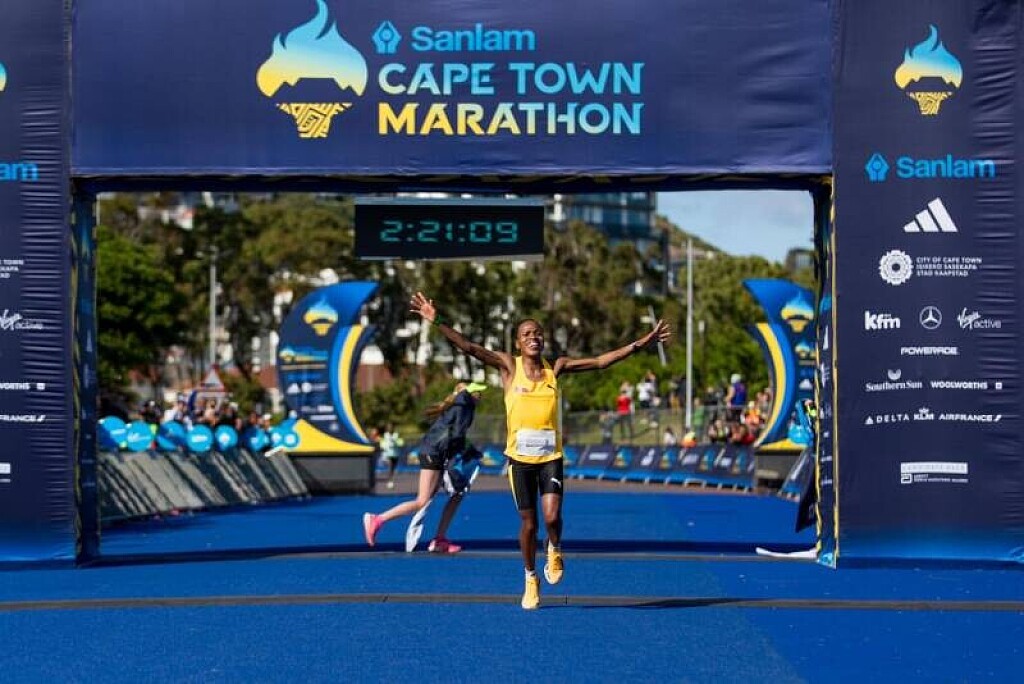
Glenrose Xaba Shatters South African and Sanlam Cape Town Marathon Records on Debut
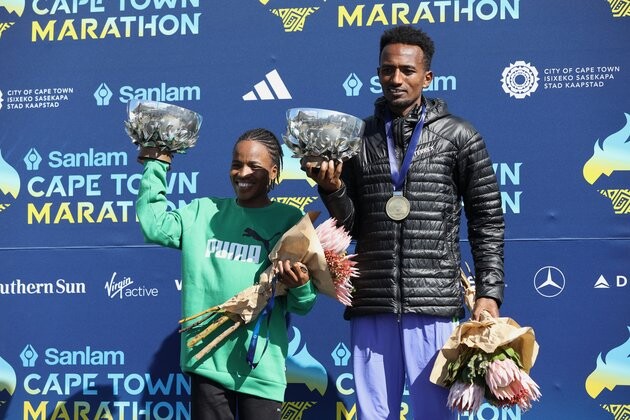
There was delight for South Africa as Glenrose Xaba shattered the National and Sanlam Cape Town Marathon records, on marathon debut; on Sunday, 20 October. The current South African 5 000 and 10 000 meter, as well as the 10 kilometer road record holder, clocked an impressive time of 2 hours, 22 minutes, and 22 seconds, to shave 1 minute and 40 seconds off the course record (2 hours, 24 minutes, and 2 seconds) as well as a further second off Gerda Steyn’s previous best marathon time for a South African (2 hours, 24 minutes, and 3 seconds).
The 2024 men’s champion, Abdisa Tola also broke the course record – though his impressive feat was somewhat overshadowed by the South African Air Force Gripen fly over which Xaba’s performance received.
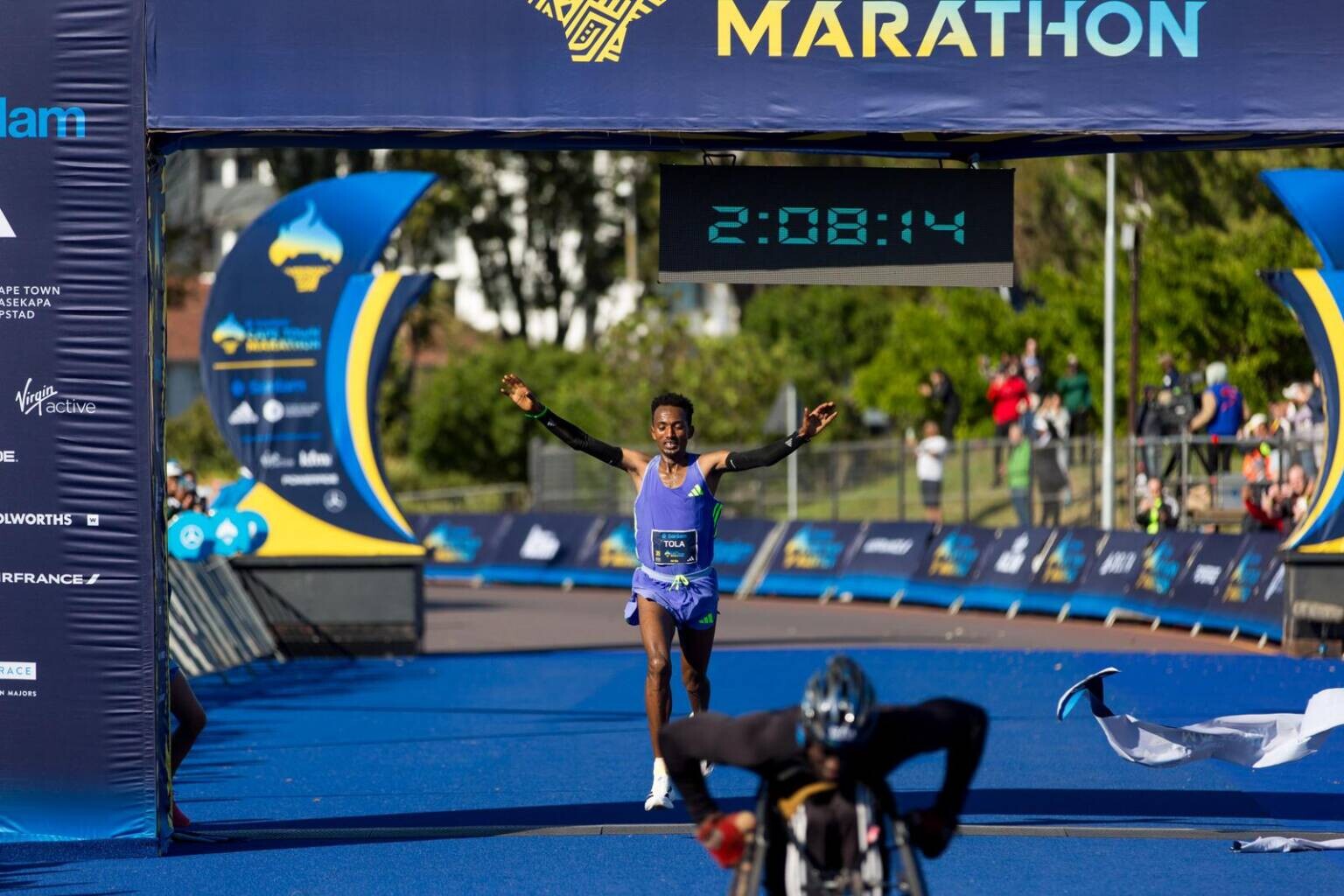
Xaba was joined on the start line by 16 800 fellow starters as well as the deepest ever field assembled for a marathon on African soil. Sadly, the Cape Doctor, as the Mother City’s prevailing summer south easterly wind is known, did not get the memo. The rest of the city pulled together though and the crowds countered the winds with raucous cheers along the route. Their applause, the support of the City of Cape Town local government, and the new record times will all aid the Sanlam Cape Town Marathon’s cause in its bid to become an Abbott World Marathon Majors event in the coming years.
The goal of Abbott World Marathon Majors status, in 2026, may still be on the horizon but Xaba’s dreams came true on the blue carpet in the shadow of the DHL Stadium. She and her fellow elite women had started fast, with the pace setters maintaining a tempo better than the record pace. Fellow South African pre-race favorite, Cian Oldknow, opted not to go with the pace makers and was out of contention for a podium place early in the piece.
One by one the women dropped from the group, but Xaba and Mare Dibaba Hurssa, in particular, ensured the pace never eased off. It was a surprise when the defending champion, Tsige Haileslase, was distanced near the 30 kilometre mark. This was the first sure sign that records would tumble.
Coming into the final 10 kilometers only Kenyna’s Pascalia Chepkogei remained in contention with the South African and the 2015 World Marathon Champion. After stretching their legs on the downwind gallop through Sea Point the top three turned for home with 4 kilometers to go. This U-turn meant they would run the closing kilometers into a headwind, which suited the powerful style of Xaba. She distanced Chepkogei and finally Dibaba Hurssa, to enter the finishing straight alone.
Soaking up the applause, Xaba crossed the line with both the South African and Sanlam Cape Town Marathon records comfortably secured. “I didn’t want to say before the race, but my goal had been the course record,” Xaba smiled. “I didn’t want to put extra pressure on myself. Even if I had finished in 2:26 I would have been happy, because this was my first marathon. But I’m honestly shocked to have broken the course and national record. I’m humbled to have taken Gerda [Steyn]’s South African record.”
Reflecting not only upon her rival’s stellar debut but also on Ruth Chepngetich’s World Record breaking run in Chicago, the week before, Dibaba Hurssa said: “The women’s marathon is getting really, really, fast. I hope that this generation will keep setting faster times and that the generation to come are inspired by them to run even quicker.”
“I was feeling really strong and my training had made me very relaxed coming into the race,” Xaba noted. “From kilometers 5 to 25 I felt good, the first 21 kilometers were basically a tempo run for me. Then for a bit until the 33 kilometer mark I had to stay strong, focused, and brave because I dropped off the front group slightly. Once I worked my way back, I felt good again and was able to push to the finish.”
“I want to thank my manager, my coaches, and my team at Caster Semenya Training Group!” the 2024 Sanlam Cape Town Marathon champion concluded.
Xaba’s margin of victory was 15 seconds over Dibaba Hurssa. Chepkogei was third, 28 seconds off Xaba’s winning time. Viola Chepngeno and Emmah Cheruto Ndiwa, both of Kenya, completed the top five places. Oldknow finished thirteenth, 20 minutes down.
In the men’s race the battle for victory went into the final kilometers too. It had seemed from early in race that the battle for victory would be fierce, but only a fast second half ensured that the course record was broken. Having set the previous best men’s time in 2018 Stephen Mokaka was the chief pace maker for the 2024 race.
He took a strong lead group through the first 25 kilometers in 1:16:47 before the attacks splintered the field. South African favorite, Melikhaya Frans was the first to surge as they passed through Observatory. His move pulled five Ethiopians clear, these included the eventual winner as well as Gaddisa Tafa Dekeba, Mitku Tafa Dekeba, Adeladlew Mamo Gebreyohannes, and Adane Kebede Gebre.
Over the next 5 kilometers the men from the mountainous nation worked Frans out of the lead group and then whittled it down to just Mitku Tafa Dekeba, the defending champion Kebede Gebre, and Tola. “Once we passed the 33 kilometer mark I knew the three of us would be battling for victory,” Mitku Tafa Dekeba reflected. “At that point I was happy it would be an Ethiopian 1, 2, and 3.”
Mitku Tafa Dekeba was the first of the three to suffer as they rounded the final bend and began the headwind slog along Beach Road in Sea Point towards the Green Point finish line. This left Kebede Gebre and Tola in a two-way tussle for the title. Striding into the wind the younger Tola brother, whose elder brother Tamirat Tola was crowned Olympic Marathon Champion in Paris, was able to dig deep and surge clear.
With the win secured Tola was able to enjoy the finish line and celebrate his new course record. Crossing the line in 2 hours, 8 minutes and 16 seconds the 24 year old did enough to shave 15 seconds off Mokaka’s six year old benchmark. Kebede Gebre had to be content with second, 16 seconds back. Mitku Tafa Dekeba completed the all-Ethiopian podium ahead of Edward Konana Koonyo, of Kenya. Frans was the first South African home in fifth.
“I earned what I trained really hard for today,” Tola acknowledged. “A lot of hard work went into this run. It was a beautiful race and I’ll certainly be back to defend my title.”
by Seamus Allardice
Login to leave a comment

Cape Town Marathon
The Sanlam Cape Town Marathon is a City Marathon held in Cape Town, South Africa, which is sponsored by Sanlam, the City of Cape Town and Vital Health Foods. The marathon is held on a fast and flat course, starting and finishing in Green Point, near the Cape Town Stadium. Prior to existing in its current format, the Cape Town...
more...
Ambitious Tauta all set for Olympic debut
The national 400m champion Kelvin Tauta will have a two-pronged attack at the Paris Olympic Games.
In addition to seeking to impress in his Olympic debut, Tauta is keen on using the Olympics as a launchpad ahead of the 2025 World Championships in Tokyo, Japan.
Tauta is part of the Kenyan 4x400m mixed relay team in Paris alongside Maureen Thomas, David Sanayek, Veronica Mutua, Boniface Mweresa and Mercy Chebet.
The 23-year-old said: “We are also going to fight for a slot in the final at the Olympics. This will be enough motivation as we look forward to 2025.”
Tauta believes his strong start to the season will fuel his ambitions.
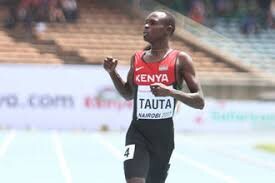
“My season kicked off on a high. I took part in the 4x400m World Indoor Championships and although we did not secure a podium finish, I am happy we secured an African record,” he said.
In Glasgow, Tauta, alongside Wiseman Were, Zablon Ekwam and Mweresa, clocked 3:06.71, shattering Nigeria’s record (3:07.95).
The Netherlands (3:04.25), the USA (3:02.60) and Belgium (3:02.54) secured the podium.
On May 22, Tauta claimed the national crown with a time of 45.09 at the Ulinzi Sports Complex.
Last month, he featured in the African Senior Championships in Douala, Cameroon, but failed to advance past the heats after placing fifth (47.49) in his preliminary round.
Tauta believes the training facilities at Kenya’s Olympic camp in Miramas, France, will be crucial for his improvement.
“The training equipment at Miramas are state-of-the-art. I am sure I will be able to improve and attain my targets,” he added.
He highlighted the rise of sprinting in Kenya and called for government support to develop the sport.
“We are improving in sprint events. Last year we had four athletes running 45 seconds, who have risen to about 10. The government needs to step in and support sprinters,” Tauta said.
by Teddy Muley
Login to leave a comment

Paris 2024 Olympic Games
For this historic event, the City of Light is thinking big! Visitors will be able to watch events at top sporting venues in Paris and the Paris region, as well as at emblematic monuments in the capital visited by several millions of tourists each year. The promise of exceptional moments to experience in an exceptional setting! A great way to...
more...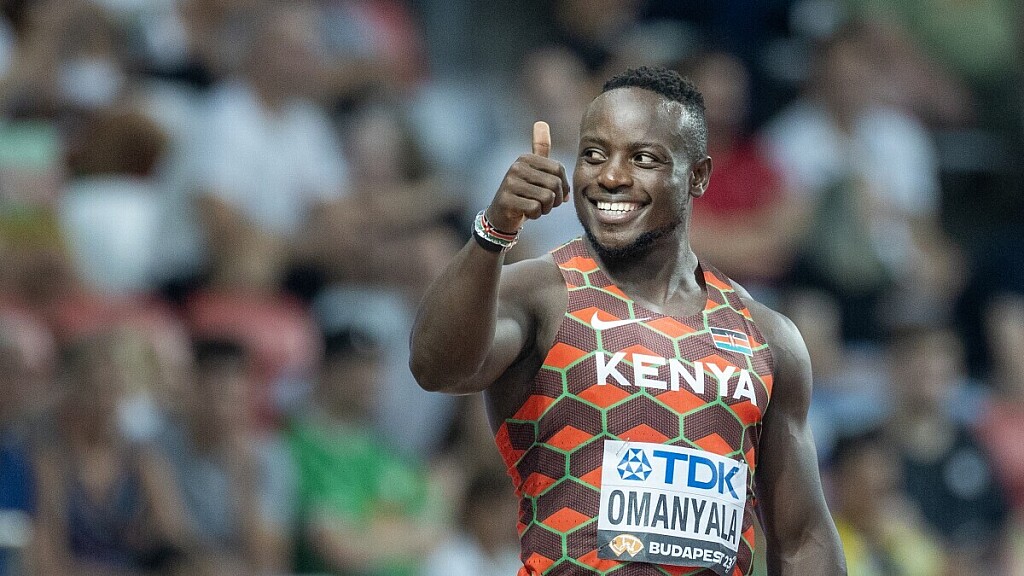
Why Paris Olympic Games will be key for Omanyala career
The last time an African athlete scaled the Olympic podium in the sprints was in Atlanta in 1996 when retired Namibian great Frankie Fredricks won silvers in the men’s 100m and 200m finals.
It was a repeat of his exploits at the 1992 Barcelona Summer Games, where he also won the silver double.
Ahead of the forthcoming Paris 2024 Summer Games, there is renewed optimism that a sprinter from the continent will medal either in the short or longer dash events considered to be the cream of track and field competition at the Olympics.
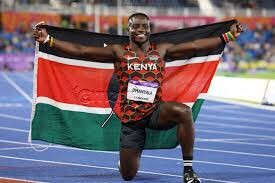
African record holder Ferdinand Omanyala of Kenya, the ninth fastest men’s 100m runner of all time, Botswana breakout starlet Letsile Thebogo and resurgent South African sprint king, Akani Simbine, have all enjoyed a solid start to the season and, more importantly, peaking at the right time.
Omanyala who holds the African record of 9.77 seconds, underlined his credentials when he won the Kenyan Olympic Trial in 9.79 which was until last week, the fastest time of the year.
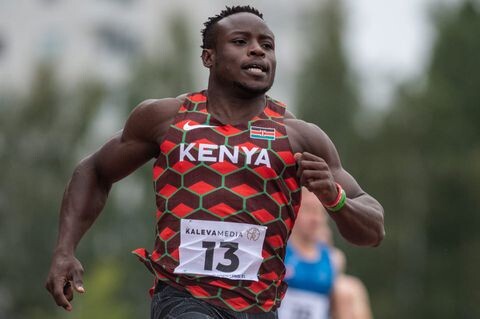
Kishane Thompson, who won the men’s 100m in 9.77 at the U.S. Olympic Trials on Sunday, has supplanted Omanyala from the top of the 2024 world list, but considering the latter did it at Nairobi’s punishing elevation, there are reasons for the Kenyan to be optimistic of a medal in France.
Having burst onto the scene with his blazing time in 2021 at the height of the global pandemic, the 28-year-old, who has since won the Commonwealth and African men’s 100m, has established a reputation as one of the brazen and at times cocky top sprinter.
But that is all set to change as he prepares for his second Olympics after failing to make the final of the delayed Tokyo Summer Games.
Speaking to the media in Nairobi on Monday, Omanyala cut the determined figure of a man who is focused on the ultimate goal— not the showmanship side that has endeared him to millions of fans at home and abroad.
“Our sport humbles you; everybody who is anybody in the sport has lost a race at some point. With that, you understand that it’s not always about you winning; it’s about how humble you are; it’s just that.”
Biggest lesson
“It’s the biggest lesson that I have learned and I understand that there is pressure coming in, especially as we go to the Olympics. There are a lot of expectations,” the two-time African champion emphasised.
And indeed, lessons have been learned. In April, Omanyala had boldly predicted he would not allow American sprint heavyweight Kenny Bednarek, the Olympic 200m silver medallist, to beat him on his home track during the Absa Kip Keino Classic, the World Athletics Continental Tour Gold event that went down in Nairobi.
As it turned out, Bednarek stepped down the distance to win in 9.91 as Omanyala (10.03) faded to fifth in front of a passionate home crowd, and later, the American posted a video on social media that threw shade at the Kenyan.
However, behind the scenes, the Commonwealth champion was adjusting to changing coaches, with Geoffrey Kimani, who was part of the Kenya 7s rugby technical bench, taking over at the start of the year.
Retreating quietly to his new training regime and running technique, Omanyala turned up for the Olympic Trials in June a man transformed and humbled.
“This year, I am not giving anybody any target; I am not going to promise anybody anything.”
by Xinhua News
Login to leave a comment
Paris 2024 Olympic Games
For this historic event, the City of Light is thinking big! Visitors will be able to watch events at top sporting venues in Paris and the Paris region, as well as at emblematic monuments in the capital visited by several millions of tourists each year. The promise of exceptional moments to experience in an exceptional setting! A great way to...
more...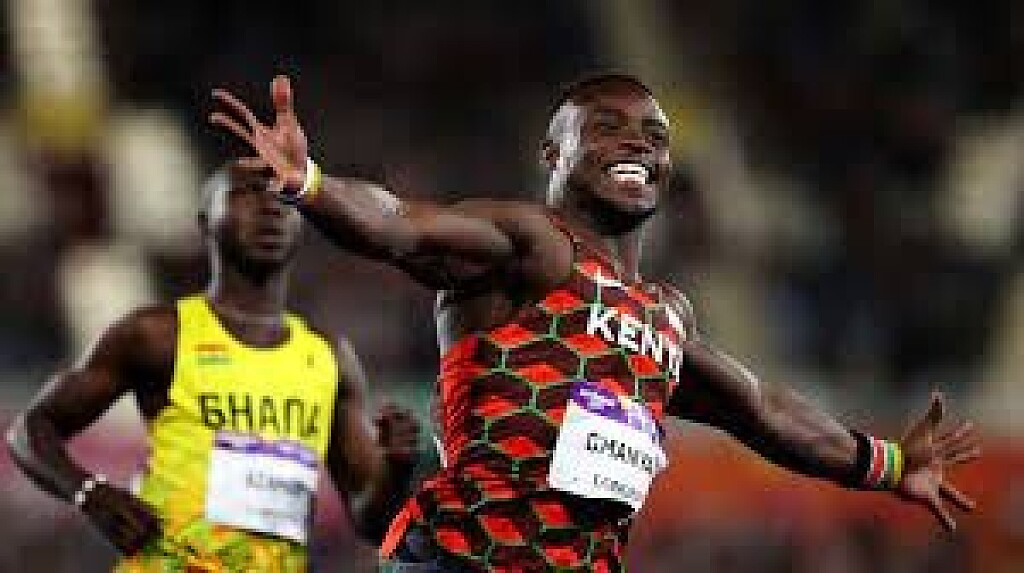
Omanyala among top sprinters to headline Prefontaine Classic
Africa’s fastest man Ferdinand Omanyala and world indoor 60m champion Christian Coleman of the USA will go head to head at the Prefontaine Classic in Eugene, Oregon, on May 25.
Omanyala shattered the African 100m record with a lightning-fast time of 9.77 at the 2021 Kip Keino Classic, just narrowly trailing behind USA’s Trayvon Bromell, who clocked 9.76.
His dominance continued with back-to-back victories at the Kip Keino Classic in 2022 and 2023, clocking 9.85 and 9.84 respectively.
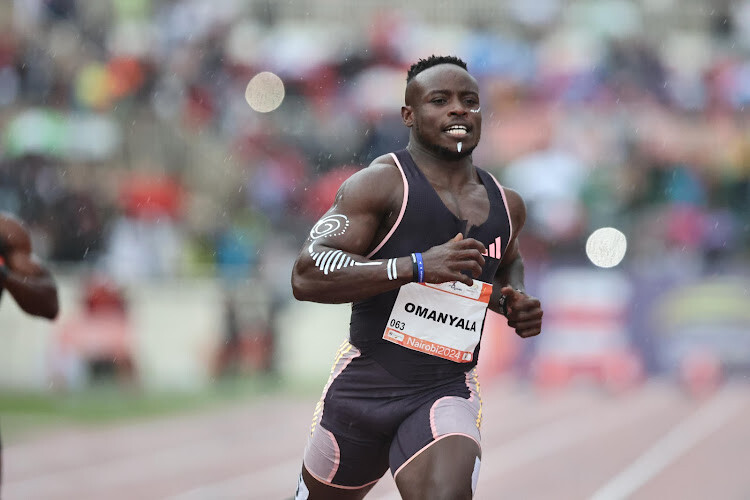
He, however, fell short during this year’s edition placing fifth in 10.03. USA’s Kenneth Bednarek took the title in 9.91.
Coleman claimed the Diamond Trophy over 100m last year in Xiamen, China, by equaling the world lead of 9.83 set by Zharnel Hughes.
Also in the lineup is the World Indoor 60m bronze medallist Ackeem Blake of Jamaica.
In the women’s 100m, USA’s Sha’Carri Richardson will be the one to keep an eye on.
Richardson sped to victory over 100m at last year’s World Championships in Budapest, setting a PB of 10.65 to equal the championship record, and followed it by anchoring the USA to gold in the 4x100m.
She will, however, face fierce competition from World Indoor 60m champion Julien Alfred of St Lucia and African record-holder Marie-Josee Ta Lou of the Ivory Coast.
The men’s 200m in Eugene will also be highly competitive as USA’s Erriyon Knighton, Letsile Tebogo of Botswana and Bednarek going head to head.
Knighton – who has a lifetime best of 19.49 – took silver in that discipline at last year’s World Championships, earning his second global medal before even turning 20.
Tebogo won back-to-back world U20 titles over 100m in 2021 and 2022, then claimed world 100m silver and 200m bronze in Budapest last year, just weeks after turning 20. His PB of 19.50 is just 0.01 shy of Knighton’s.
Bednarek claimed Olympic silver in 2021 and followed it with world silver in 2022. Along with Tebogo, Bednarek is one of a small number of men who have broken 10 seconds for 100m, 20 seconds for 200m and 45 seconds for 400m.
by Teddy Mulei
Login to leave a comment

Prefontaine Classic
The Pre Classic, part of the Diamond League series of international meets featuring Olympic-level athletes, is scheduled to be held at the new Hayward Field in Eugene. The Prefontaine Classicis the longest-running outdoor invitational track & field meet in America and is part of the elite Wanda Diamond League of meets held worldwide annually. The Pre Classic’s results score has...
more...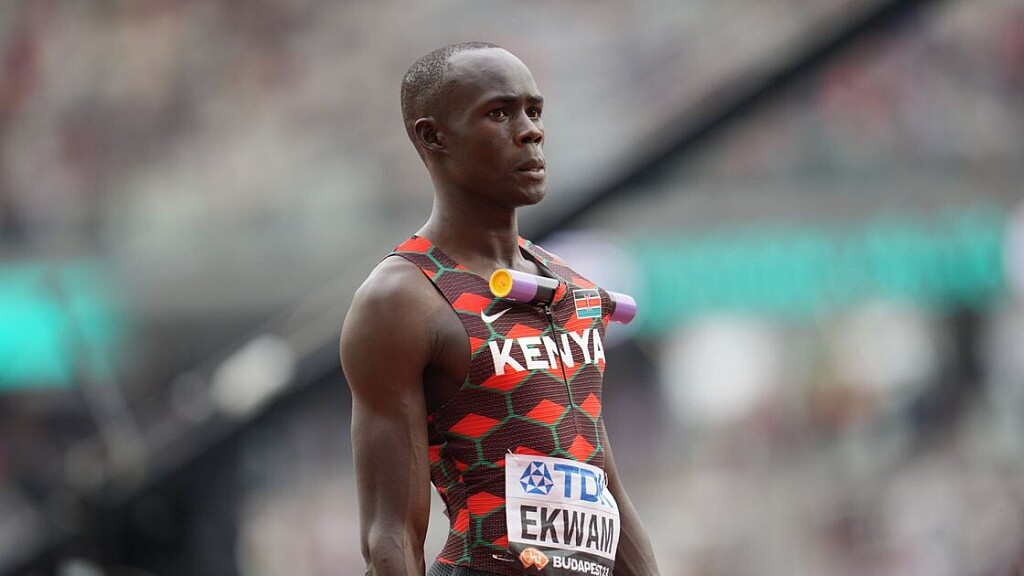
Ekwam looks to leave a mark at the Paris Olympics
Zablon Ekwam is keen to leave his mark in the 400m event at the Paris Olympics after securing his qualification time at the Kip Keino Classic last week.
Ekwam powered to fourth place in 44.69 seconds, closely trailing Botswana’s Leungo Scotch at 44.54. Bryce Deadmon of the USA took second (44.41), while Botswana’s Bayapo Ndori clinched the title (44.10).
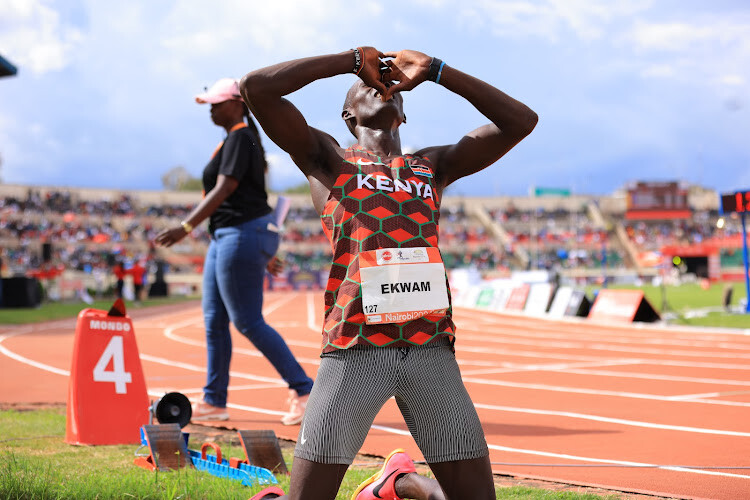
With the 2024 Olympic mark set at 45.00 for men and 50.95 for women, Ekwam’s performance puts him in prime position for the global showdown.
“The Olympics is the climax of any sporting event and every athlete's dream is to make it to the global showpiece. I look forward to making my mark in Paris,” Ekwam remarked.
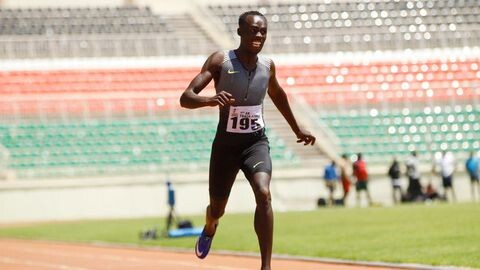
Ekwam highlighted the privilege of representing the country in an event where few Kenyan athletes qualify. “Representing the country in an event where there are not as many athletes qualifying is a nice feeling,” he stated.
Kenya has only secured two medals at the Olympics in the 400m, first at the 1972 Olympics in Munich, where Julius Sang clocked 44.92 to secure bronze and in 1992 in Barcelona, where the late Samson Kitur also won bronze in 44.24.
The last athlete to represent the country at the Olympics in the 400m was Emmanuel Korir at the 2020 Tokyo Olympics, where he was disqualified for a false start.
Despite missing out on the 2020 Tokyo Olympics, Ekwam remains determined to post impressive results this time around.
“I have been fighting for this spot for four years. I missed out on the 2020 Tokyo Olympics because I did not make the cut,” he stated.
He pointed out that consistent training was the key to making the Olympic team. “I went back to training consistently for three years to make the 2024 Olympics.”
Ekwam’s dedication paid off, as he recently contributed to shattering two African records with the 4x400m men’s relay team at the World Athletics Indoor Championships in Glasgow, Scotland in March.
He was in the company of Wiseman Were, Boniface Mweresa and Kelvin Tauta.
Looking ahead, Ekwam is also set to represent Kenya at the World Relay Championships in Nassau, Bahamas as he seeks to showcase his prowess in the 4x400m mixed relay.
He will be joined by Were, Kennedy Kimeu, Mercy Chebet, Mary Moraa and Maureen Thomas as they hunt for a top-14 finish that will secure Olympic qualification for the relay team.
by Teddy Mulei
Login to leave a comment
Paris 2024 Olympic Games
For this historic event, the City of Light is thinking big! Visitors will be able to watch events at top sporting venues in Paris and the Paris region, as well as at emblematic monuments in the capital visited by several millions of tourists each year. The promise of exceptional moments to experience in an exceptional setting! A great way to...
more...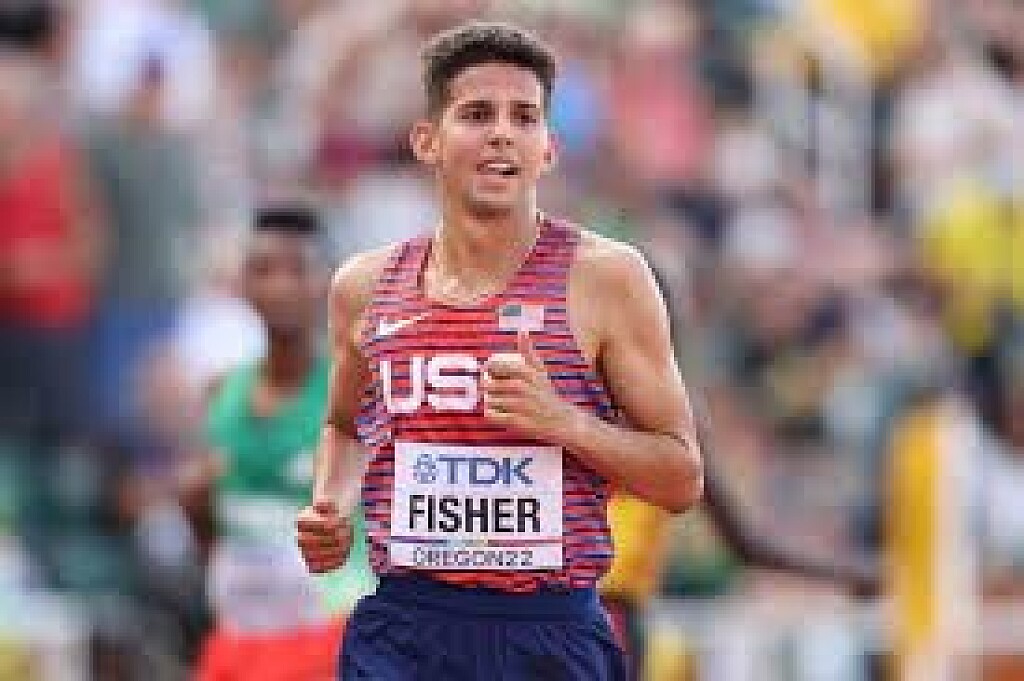
Gebreselama and Fisher win as records fall in San Juan Capistrano
Tsigie Gebreselama set a US all-comers' record to win the women’s 10,000m, while Grant Fisher topped a deep men’s race to triumph at The TEN, a World Athletics Continental Tour Silver event, in San Juan Capistrano, California, on Saturday (16).
Hitting the Olympic standards for Paris – 27:00.00 for men and 30:40.00 for women – was the aim for many athletes in San Juan Capistrano. A total of eight athletes managed it in the men’s race and four achieved it in the women’s.
Leading the way in that women’s race was Ethiopia’s world cross country silver medallist Gebreselama, who improved her PB to 29:48.34 to move to ninth on the world all-time list.
The 23-year-old won the Ras Al Khaimah Half Marathon in a PB of 1:05:14 three weeks ago and returned to the track to dip under 30 minutes for 10,000m for the first time, also becoming the first woman to break that time barrier on US soil.
Gebreselama, the fourth-place finisher in the World Road Running Championships half marathon in October, had been the only athlete to go with USA’s Alicia Monson from the start but when Monson struggled to maintain the pace, Gebreselama took over at the front and Monson later dropped out.
Chasing the Olympic standard in a group further back, USA’s Weini Kelati led the way and clocked a PB of 30:33.82 to finish second. She was followed by Lauren Ryan, who ran 30:35.66 to improve Benita Willis’s 20-year-old Australian record, and Britain’s Megan Keith, who ran 30:36.84 on her 10,000m debut.
Rachel Smith finished fifth in 31:04.02 and Karissa Schweizer sixth in 31:04.80.
In the men’s race, North American record-holder Fisher led one of the deepest 10,000m races in history as he sprinted into the lead in the closing stages to win in 26:52.04.
His 21-year-old US compatriot Nico Young followed him over the finish line in a US collegiate record of 26:52.72 and the next six were also under the Olympic entry standard.
Andreas Almgren ran a Swedish record of 26:52.87 to finish third, while Canada’s Mohammed Ahmed was fourth in 26:53.01, Eritrea’s Habtom Samuel was fifth in a PB of 26:53.84, Adriaan Wildschutt was sixth in a South African record of 26:55.54, USA’s Woody Kincaid was seventh in a PB of 26:57.57 and Kenya’s Edwin Kurgat was eighth in a PB of 26:57.66.
Login to leave a comment

The Ten
The world's fastest 10,000m races each year have taken place in a sleepy little coastal town in southern California. More national records were broken in 2022 than any other race on the planet as the best in the western hemisphere launched into rarified zones of time and space. The best return to San Juan Capistrano this year to cap off...
more...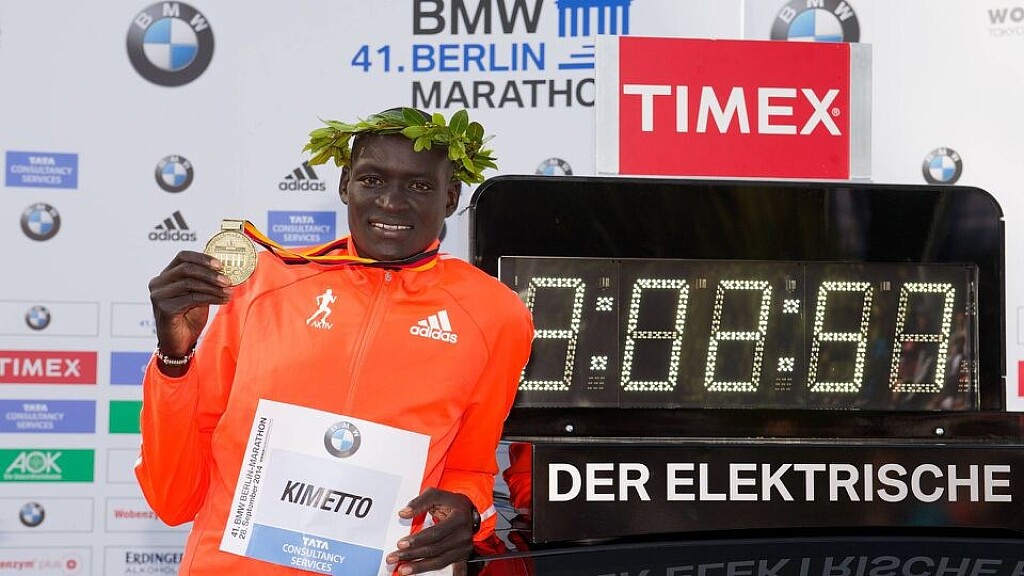
Former world record holder Dennis Kimetto will race for 1st time since 2019 this weekend at Lagos Marathon
2013 Tokyo and Chicago Marathon champion Dennis Kimetto has confirmed where he will be competing after a five-year hiatus due to injuries.
The excitement is building for the 9th Access Bank Lagos City Marathon, scheduled for Saturday 10 February with the confirmation of over 81 world-class, Gold Label elite runners ready to descend on the course.
One notable name is Dennis Kimetto, a former world record holder over the marathon distance. The 2013 Tokyo and Chicago Marathon champion returns to competitive running since 2019 and he will hope to impress one more time.
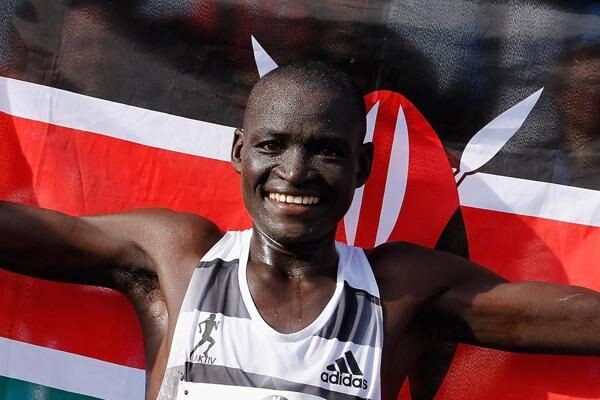
Kimetto has suffered a series of injuries which started back in 2015. At the time he was not at his best as he only completed the London Marathon, finishing third, and failing to complete the IAAF World Championships marathon in Beijing.
Kimetto also failed to finish the Fukuoka Marathon in December of the same year where he stopped at the 5-kilometer mark after dropping off the pace at 2 kilometers due to an injury.
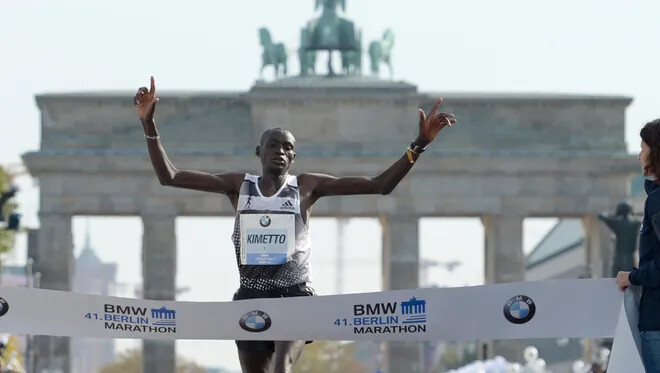
After finishing ninth at the 2016 London Marathon, Kimetto opted to run in the Chicago Marathon where he unfortunately pulled out ahead of the race, citing a stress fracture in his left leg.
His injury problems continued in 2017, with a knee injury forcing him to withdraw from the Boston Marathon field. The 2014 Berlin Marathon champion failed to finish both the Chicago Marathon in October and the Honolulu Marathon in December.
At the Vienna City Marathon in April 2018, Kimetto dropped out before the 25-kilometer mark. He then went to compete at the Shanghai Marathon where he finished 10th in 2:14:54.
In 2019, he tried making a comeback at the Daegu Marathon where he did not finish the race. He now returns with the hope of making waves like he did during his prime days.
Meanwhile, the field also includes 29 female runners and promises a highly competitive and potentially record-breaking event.
“The confirmation of over 81 Gold Label runners is a positive development for the 9th edition. As we prepare for the 10th edition, our goal is to elevate the race from Gold Label to Platinum Label status,” Yusuf Ali, the Race General Manager and former African record holder in the Long Jump said in an official statement issued.
by Abigael Wuafula
Login to leave a comment

Access Bank Lagos City Marathon
“The IAAF and AIMS have a special interest in the Access Bank Lagos City Marathon so if you see their top officials at the third edition, don’t be surprised. Lagos is one of the few marathons in the world that got an IAAF Label after just two editions. This is a rare feat. The event had over 50,000 runners at...
more...
Ferdinand Omanyala shares secret on how to achieve top-three finish in a race
The African record-holder has shared a tip on how an athlete can make it to the podium.
Reigning Commonwealth Games 100m champion Ferdinand Omanyala has explained what it takes to get on the podium of any assignment as an athlete.
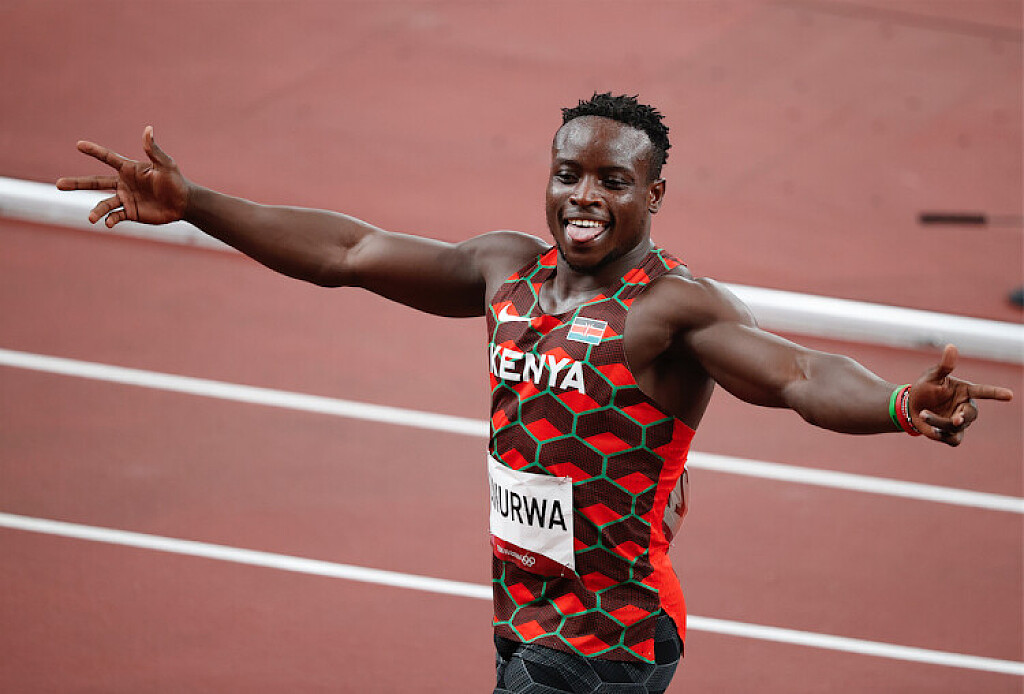
The 27-year-old has been the epitome of hard work, sharing snippets of his training as he gears up for the World Indoor Championships and the Olympic Games among other events.
Sharing a training video on his X (Twitter) handle, the African record holder captioned it saying: “Consistency to performance is what pressure is to diamond....it takes lots of work across many training variables to finally step on that podium!
"The most important thing is getting back up after a fall. If it does not kill you it will make you stronger.”
Meanwhile, the African champion has enjoyed a great 2023 season, with the only major setback being the World Championships in Budapest, Hungary.
At the global showpiece, Omanyala was off to a good start in the heats and semifinal but faltered in the final where he ended up finishing seventh.
However, he recorded big wins including becoming the first Kenyan to win the Diamond League Meeting in the 100m in Monaco. Omanyala also finished third at the Prefontaine Classic, the Diamond League Meeting final.
He also ended the season as the fourth-fastest sprinter in the world behind triple World champion Noah Lyles, Christian Coleman, and Zharnel Hughes.
Login to leave a comment
Omanyala sets new target for Paris 2024 Olympic Games
Africa’s fastest man Ferdinand Omanyala has set a new target for the forthcoming 2024 Paris Olympic Games.
The African 100m record holder said he is targeting gold at the Paris Olympic Games as he heads into the season with great motivation.
The Paris 2024 Olympics are scheduled for July 26 to August 11 and it is expected to host 10,500 athletes.
The world number nine said this during the launch of an Athletics Centre of Excellence at St. Joseph’s Boys national school on Monday.
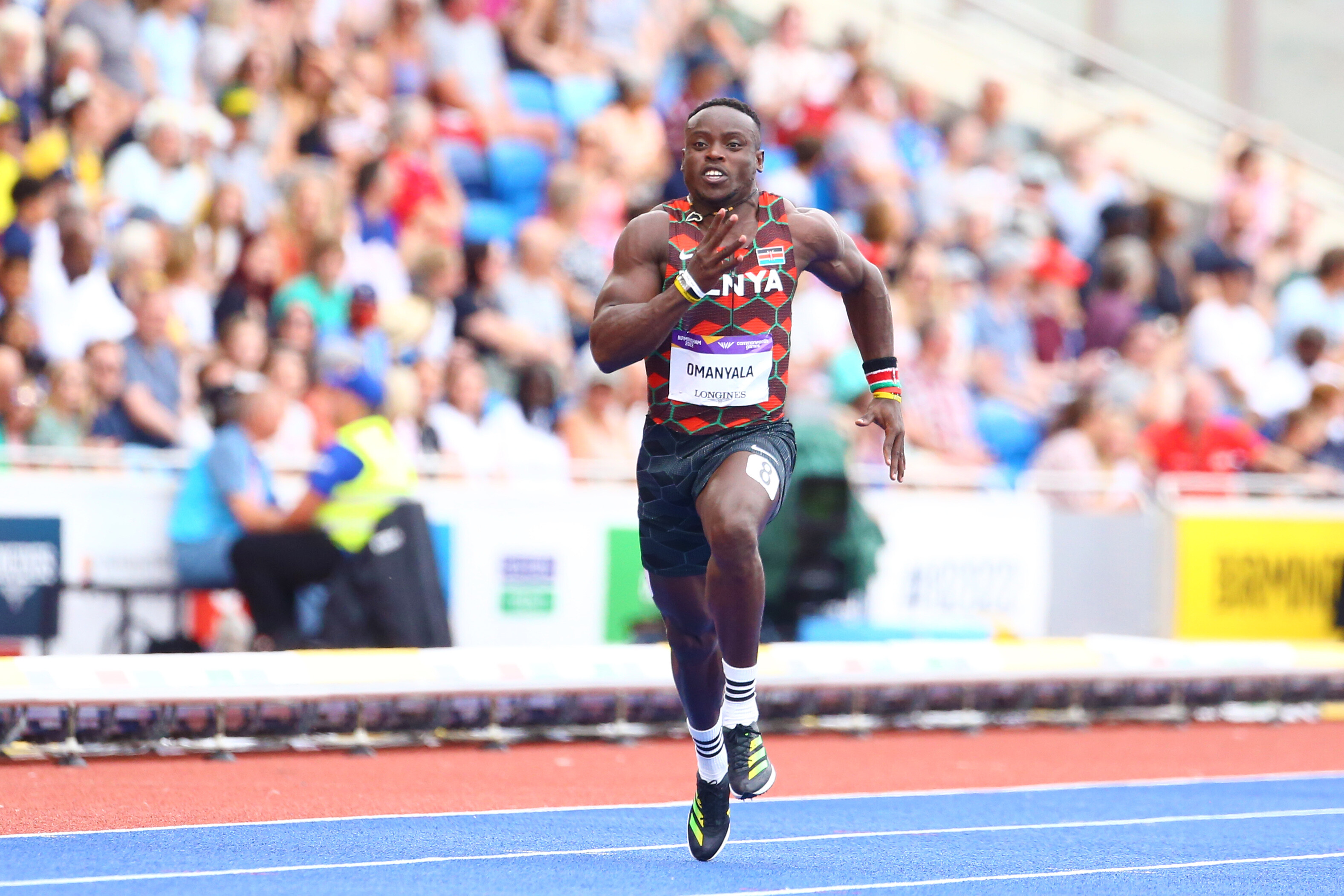
The sprinter also added that his next target was to run a time of 9.66 seconds but was quick to add that he will have to work hard to attain that threshold.
“I am going to the Olympic season with great motivation. If you see me win that gold, be happy because it’s coming home. My next aim is to run 9.66 then after that 9.55,” he said.
Omanyala also said he would be opening a sprints school to help train young upcoming athletes so they may be able to grace the international stage.
“We are starting a school for sprints next year and I am pleased to announce that St. Joseph's will be the first benefactor of this program as we aim to help the youth horn their talents in athletics,” he noted.
The sprinter also urged young upcoming athletes to be careful of the managers they sign for, as there have been several cases of managers mistreating athletes and leading them to poverty.
“There are those fine lines in a contract you must go through. Most athletes have suffered this fate so you have to be keen. Those little details are very important,” he said.
Omanyala came into the limelight in 2015 when he won 100m in a time of 10.37 secs during the national Olympics trials but failed to attain the qualifying standard, which was 10.16 secs at the time.
He would later on go to win the national title in 2019 and later on in March 30 2021, he set a national record of 10.01 seconds in the 100m after winning a meeting at Yabatech Sport Complex in Lagos, Nigeria.
In 2022, he won his first international championships, with victories in the 100m at the Commonwealth Games, and African Athletics Championships.
Omanyala is the African record holder and the ninth-fastest man of all time in the event after clocking a time of 9.77 seconds on September 18, 2021 in Nairobi. He is also the first Kenyan to reach the semi-finals of the 100m at the Olympics stage.
The sprinter took part at the World Athletics Championships in Budapest, Hungary, last August finishing seventh in the final in a time of 10.07 seconds.
Omanyala further urged young athletes to be careful of the doctors, who they put their trust in as he has unknowingly been a victim of a doping.
Following his doping offence in 2017, Omanyala received a 14-month suspension.
He had tested positive for the prohibited substance betamethasone, after undergoing treatment for his back injury which he incurred during training.
Athletics Kenya (AK) Trans Nzoia county official, Evans Rono urged the youth to take up athletics as it was a highly lucrative career.
“Athletics is highly paying. Omanyala runs for just nine seconds and walks away with millions. I want to challenge you to embrace athletics because it is a high paying sport."
by Teddy Mulei
Login to leave a comment
Paris 2024 Olympic Games
For this historic event, the City of Light is thinking big! Visitors will be able to watch events at top sporting venues in Paris and the Paris region, as well as at emblematic monuments in the capital visited by several millions of tourists each year. The promise of exceptional moments to experience in an exceptional setting! A great way to...
more...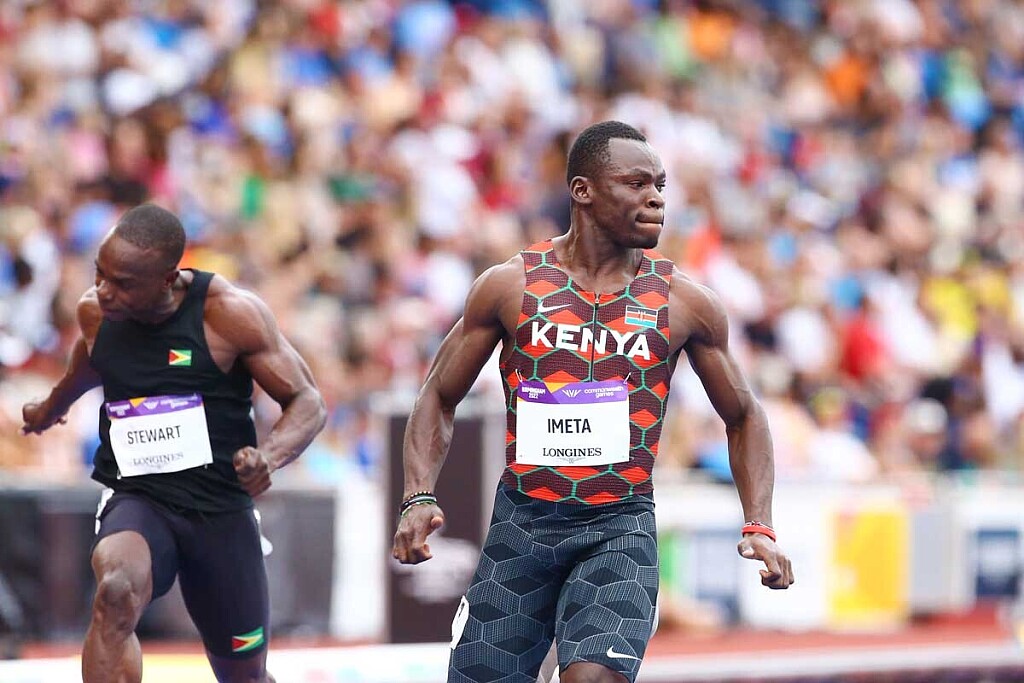
Kenyan Samuel Imeta eyes Budapest glory despite WA ruling out his time
Kenyan sprinter, Samuel Imeta reckons he has sufficiently honed his act to deliver a vintage performance at the upcoming World Athletics Championships in Budapest, Hungary.
The 24-year-old Kenya Defence Forces officer said he drew great inspiration from his classic execution at the second Athletics Kenya track and field meeting held at Nyayo Stadium on February 26.
Imeta blazed to a phenomenal second-place finish in the event’s blistering final, clocking an impressive 9.94 to wrap up 0.13 seconds behind Commonwealth Games champion Ferdinand Omanyala.
Both athletes exceeded the 10.00 threshold established by World Athletics in August 2022 for the 2023 World Athletics Championships.
However, the global governing body failed to approve the time recorded by either athlete, blaming a malfunction with the wind measurement apparatus at Nyayo Stadium.
WA asserted that the times set by Omanyala and Imeta could not fairly be expected given the recorded headwind of -4.8m/s
Imeta said he is not going to let this setback deter him from registering a masterstroke performance in Budapest.
“I’m so excited to have managed an improved personal best. I thank God, my coaches and my training mates for their contribution to the outstanding performance,” Imeta said.
The career soldier from Mabanga in Bungoma county said training alongside Commonwealth Games champion, Omanyala has catapulted him to new heights.
He has issued a warning to the sprint star, telling him to prepare for an abrasive duel in their next encounter.
“I was thrilled with the race’s result. Competing against an athlete of Omanyala’s caliber who holds the African record and is the Commonwealth champion wasn’t going to be simple. “I am now fired up and Omanyala will have to work hard to beat me when we meet again,” Imeta remarked.
Imeta competed for Kenya on the men’s 4x100-meter gold-medal winning team in Mauritius in 2022. He ran a time of 10.12 at the Birmingham 2022 Commonwealth Games to advance from heat nine of the men’s 100-meter race. He did, however, suffer a significant setback when Kenya’s 4x100-metre relay team made a mistake and was unable to complete the finals race.
Kenya’s chances of earning a podium slot were entirely dashed by the shoddy baton handover between Imeta and Kiviasi.
Omanyala, who was about to dash electrically to the finish line, was left on the track watching helplessly after the howler that denied him another opportunity to shine.
The England team won the race in 38.35. Trinidad and Tobago came in second with a season-best time of 38.70 while Nigeria finished third in 38.81.
by Tony Mballa
Login to leave a comment

World Athletics Championships Budapest23
Budapest is a true capital of sports, which is one of the reasons why the World Athletics Championships Budapest 2023 is in the right place here. Here are some of the most important world athletics events and venues where we have witnessed moments of sporting history. Throughout the 125-year history of Hungarian athletics, the country and Budapest have hosted numerous...
more...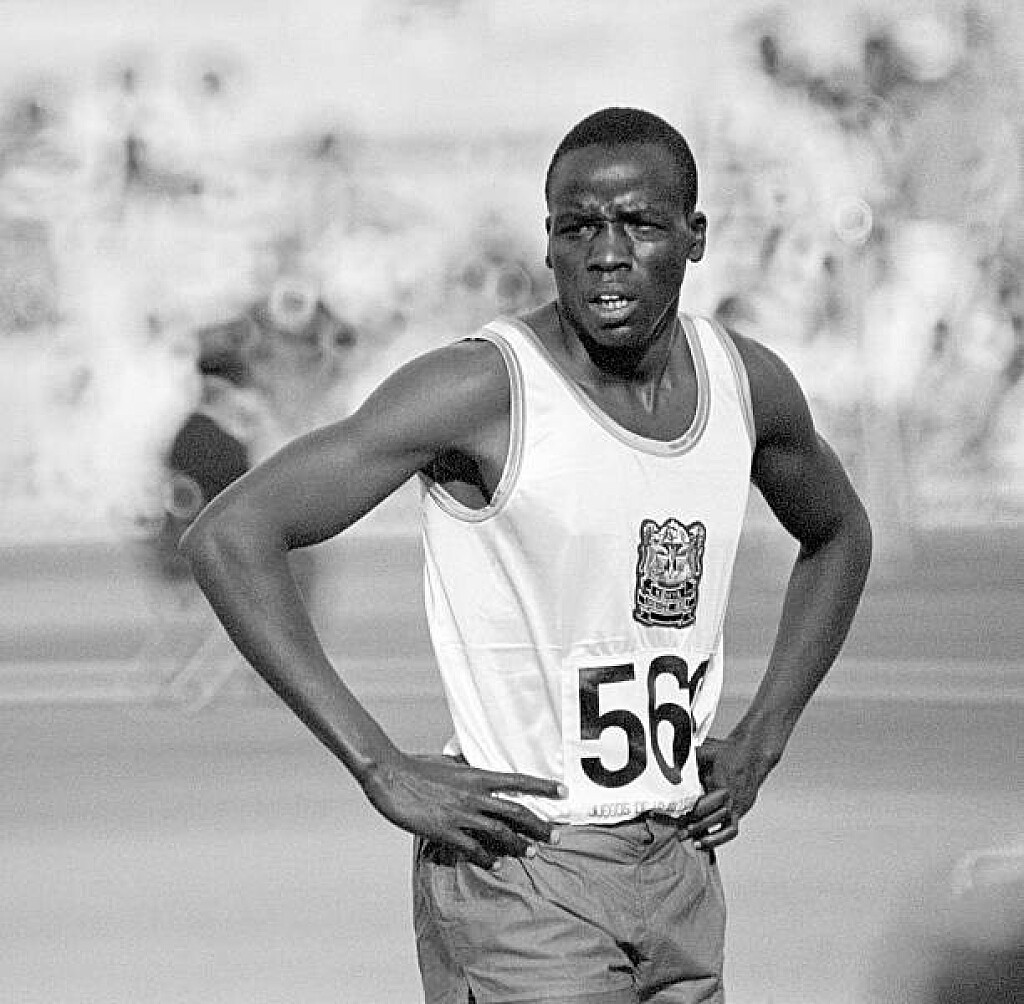
Chuma Kiprugut, Kenya’s first ever Olympic medalist, dies
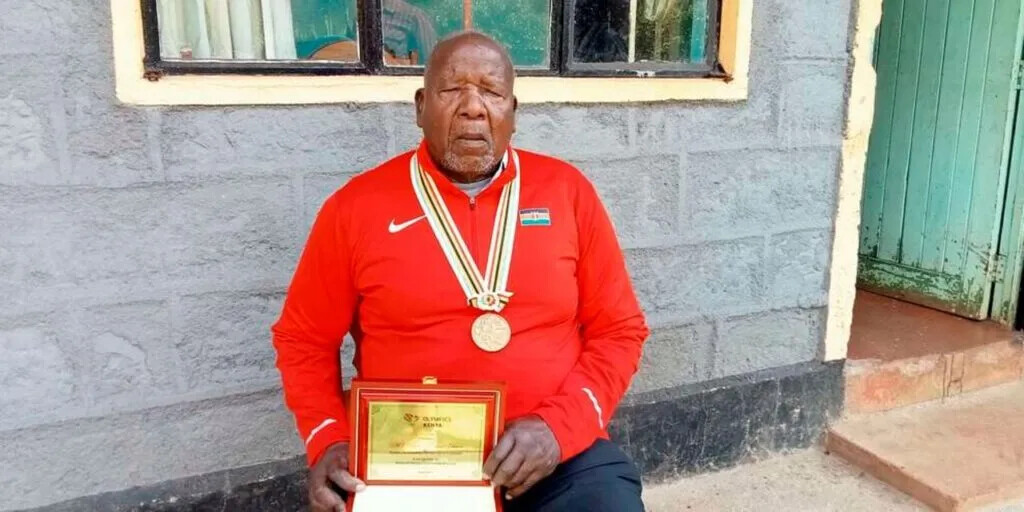
World Athletics is deeply saddened to hear that Wilson Chuma Kiprugut, the first person from Kenya ever to win an Olympic medal, died on Tuesday (1) at the age of 84.
Born and raised in Kericho, Kiprugut took up running during his time at Kaptebeswet Primary School and later Sitowet Intermediate School. Starting out as a 400m runner, Kiprugut’s first major tournament was the 1958 East African Championships, where he was scouted by the Kenyan Army. He eventually rose to the rank of sergeant, but athletics remained his main focus and his journey in the sport continued with an appearance at the 1962 Commonwealth Games in Perth, exiting the heats of the 400m but later finishing fifth in the 4x400m.
Kiprugut soon started to gravitate towards the 800m. A victory at the 1964 East and Central African Championships was confirmation that the event switch was a good move. He was selected to represent Kenya in that event at the Olympic Games in Tokyo later that year. After equalling the Olympic record of 1:46.1 in the semifinals, he went on to take the bronze medal in the final in an African record of 1:45.9.
Not only was he the first African athlete to break 1:46 for the 800m, he became the first person from Kenya to win an Olympic medal in any sport.
He won 400m and 800m gold at the 1965 All African Games and silver in the 880 yards at the 1966 Commonwealth Games. He improved his African 800m record to 1:45.2 in 1967, then successfully defended his title at the 1967 and 1968 East and Central African Championships, underlining his status as the best two-lap runner on the continent.
He went to the 1968 Olympic Games as one of the medal favorites, and safely made it through the rounds. He led for most of the final, passing through 200m in 24.8 and 400m in 51.0, but Australia’s Ralph Doubell kicked off the final bend and overtook Kiprugut, winning in 1:44.3 to equal the world record at the time.
Kiprugut took silver in 1:44.5, the third-fastest performance in history at that time and an African record that stood until 1974.
He retired from competition in 1969, but continued working as a coach and fitness instructor in the Kenyan army for another five years.
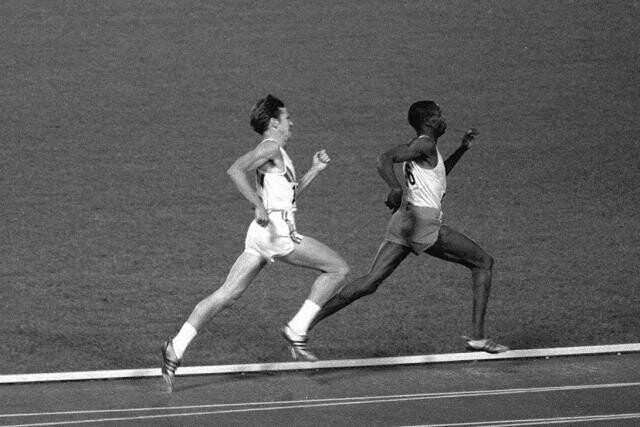
"Wilson was one of the founders of Kenyan middle-distance running dominance," said Doubell, the 1968 Olympic 800m champion. "As a competitor he was fast, strong and fearless - three characteristics which are still displayed by Kenyan athletes today."
by World Athletics
Login to leave a comment
Amusan and Richards join list of double champions at Commonwealth Games
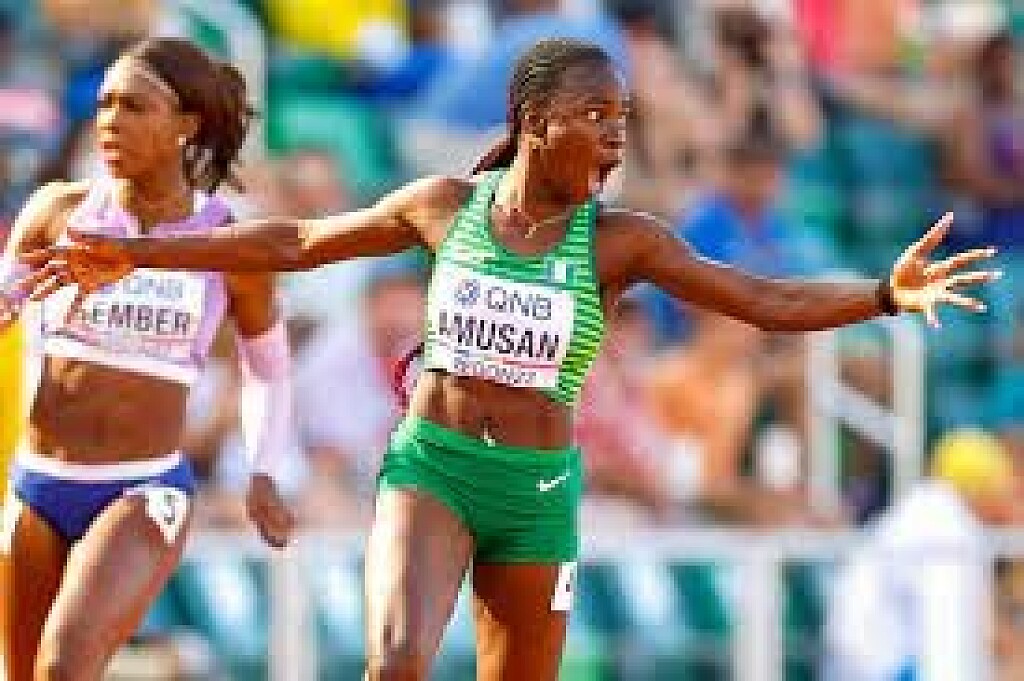
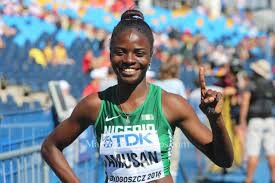
World champion Tobi Amusan and world indoor champion Jereem Richards had a successful Sunday (7) on the final day of athletics action at the Commonwealth Games, as they joined Elaine Thompson-Herah and Jacob Kiplimo as double gold medalists in Birmingham.
The Nigerian sprint hurdler started the day by winning her specialist discipline, the 100m hurdles, in a Games record of 12.30 (-0.2m/s) – the second-fastest wind-legal clocking of her career behind the world record of 12.12 she clocked at the World Athletics Championships Oregon22.
She won by a clear margin from Devynne Charlton of The Bahamas (12.58) and England’s Cindy Sember (12.59), all of whom finished inside the previous Games record.
“I think my first five hurdles were rusty but then I got it together,” said Amusan. “I’m just thankful for the win.”
Later in the morning session, Amusan ran the lead-off leg for Nigeria in the 4x100m. She gave her team a strong start and handed over to 200m silver medalist Favour Ofili, who kept Nigeria level with England’s Imani Lansiquot. Rosemary Chukwuma than ran a storming third leg to give Nigeria a clear lead, then Grace Nwokocha anchored them to victory in 42.10, taking 0.12 off the African record they had set when finishing fourth at the recent World Championships.
England finished second in 42.41 and Jamaica, anchored by double sprint champion Elaine Thompson-Herah, took bronze in 43.08.
Much to the delight of the home crowd, England took victory in the men’s 4x100m just moments before the women’s race. They won in 38.35 from Trinidad & Tobago (38.70) and Nigeria (38.81).
Later in the day, Commonwealth 200m champion Jereem Richards added another gold medal to his collection, anchoring Trinidad & Tobago to victory in the men’s 4x400m. The world indoor 400m champion teamed up with Dwight St Hillaire, Asa Guevara and Machel Cedenio to win in 3:01.29 with Botswana finishing second in 3:01.85. Kenya placed third in 3:02.41.
The women’s race was much closer with hosts England crossing the line in first place 0.01 ahead of Canada. But England was later disqualified for a lane infringement, giving Canada gold in 3:25.84 ahead of Jamaica (3:26.93). Scotland took the bronze medal.
by World Athletics
Login to leave a comment

The Commonwealth Games
The Commonwealth Games are coming to Victoria - bringing an action packed sports program to our regional cities and delivering a long-term legacy for our future. From 17 to 29 March 2026, Geelong, Bendigo, Ballarat, Gippsland and Shepparton will be on the world stage, attracting millions of viewers and creating thousands of jobs. The multi-city model will...
more...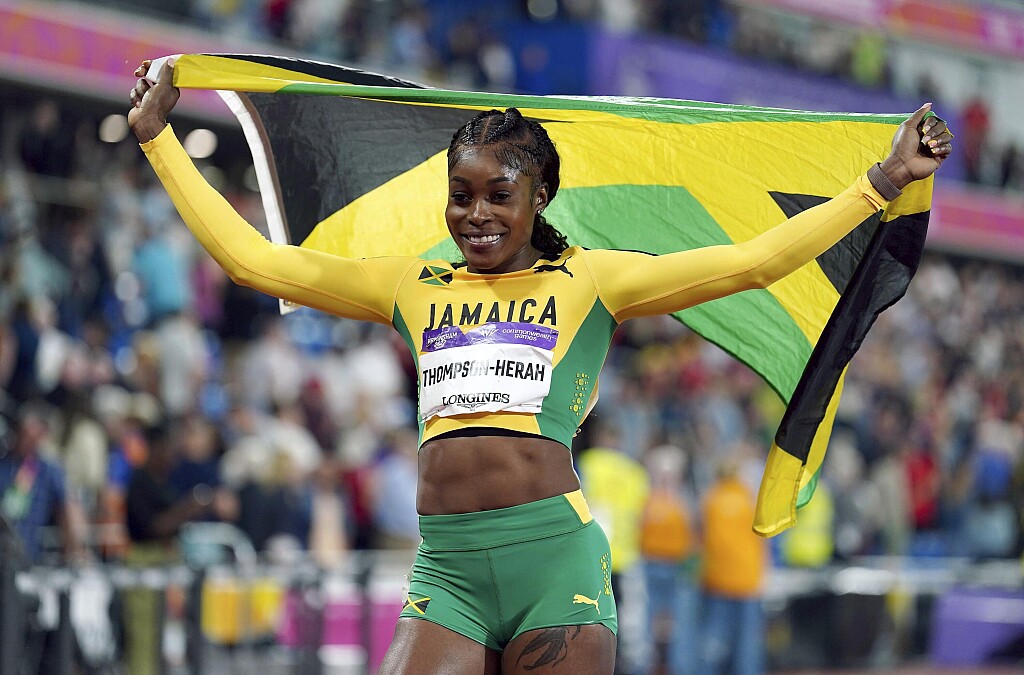
Thompson-Herah and Omanyala take 100 meter golds
Elaine Thompson-Herah, the only one of Jamaica's "Big Three" women to show up at the Commonwealth Games, was rewarded with the 100 meters gold medal on Wednesday, while Kenya's Ferdinand Omanyala powered to the men's title.
Thompson-Herah, twice the 100/200m sprint champion at the Olympics, finished third in last month's World Championship 100 final behind Shericka Jackson and Shelly-Ann Fraser-Pryce. She was originally only a reserve for the Commonwealths but when Fraser-Pryce opted out, she stepped in.
With Dina-Asher Smith, fourth in Eugene, also absent through injury, Thompson-Herah was the clear favorite for her first individual Commonwealth title.
She had looked a little tired in her semi-final but grabbed the early lead in the final and ran her usual smooth race to finish a comfortable winner in 10.95 seconds.
"Feeling good, I didn't have the best execution but nevertheless I had to dig for that one but I am still grateful to win my first Commonwealth Games," she said.
"I started in 2014 in the 4x100m. Then in 2018 in the 200m I came fourth and now I upgraded to a gold."
Saint Lucia’s Julien Alfred was on her shoulder throughout for silver in 11.01 while England’s Daryll Neita recovered well from a terrible start to grab bronze in 11.07.
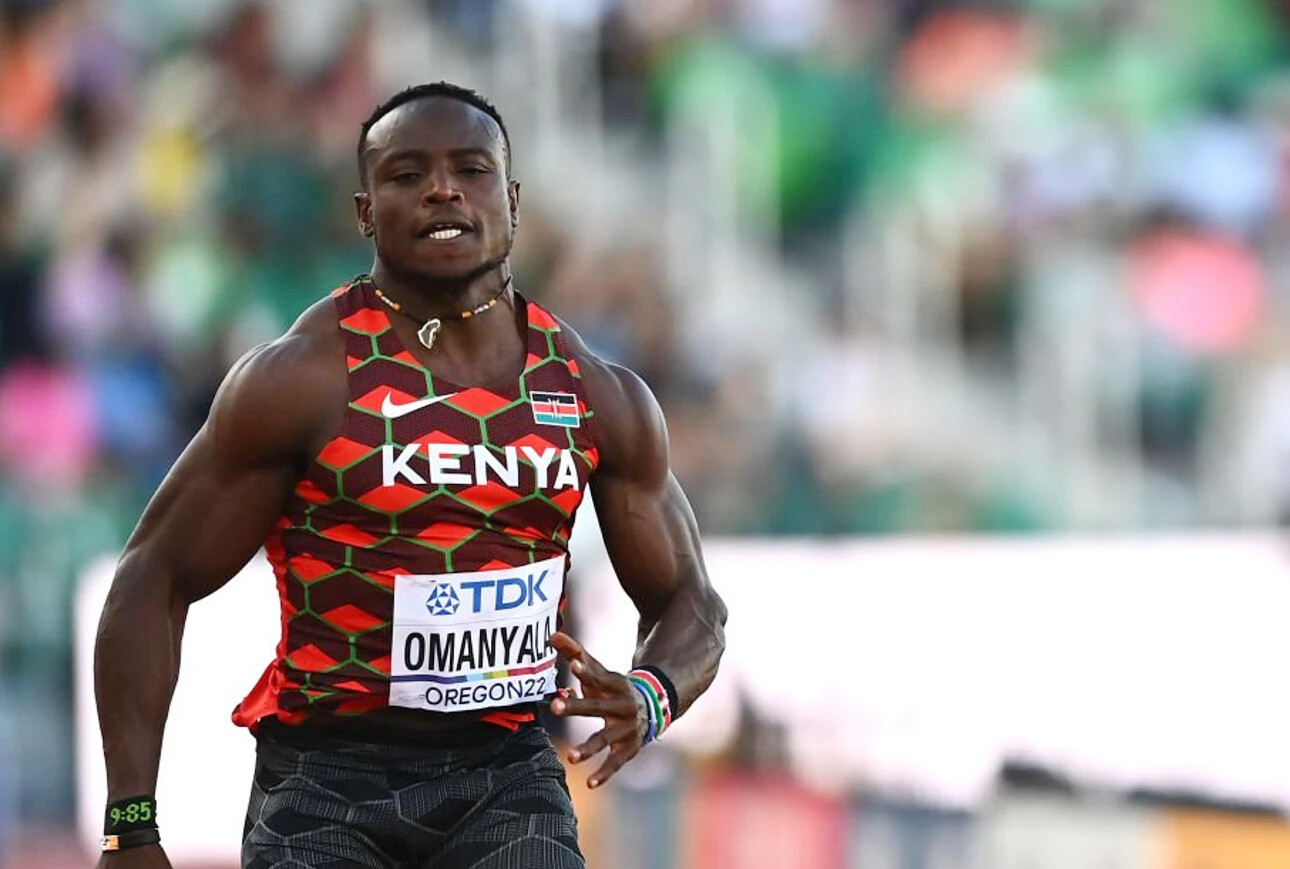
Omanyala, who set an African record of 9.77 seconds last year, served a 14 month doping ban four years ago. He failed to make the final at last month's World Championships after arriving in the United States hours before the heats due to visa problems.
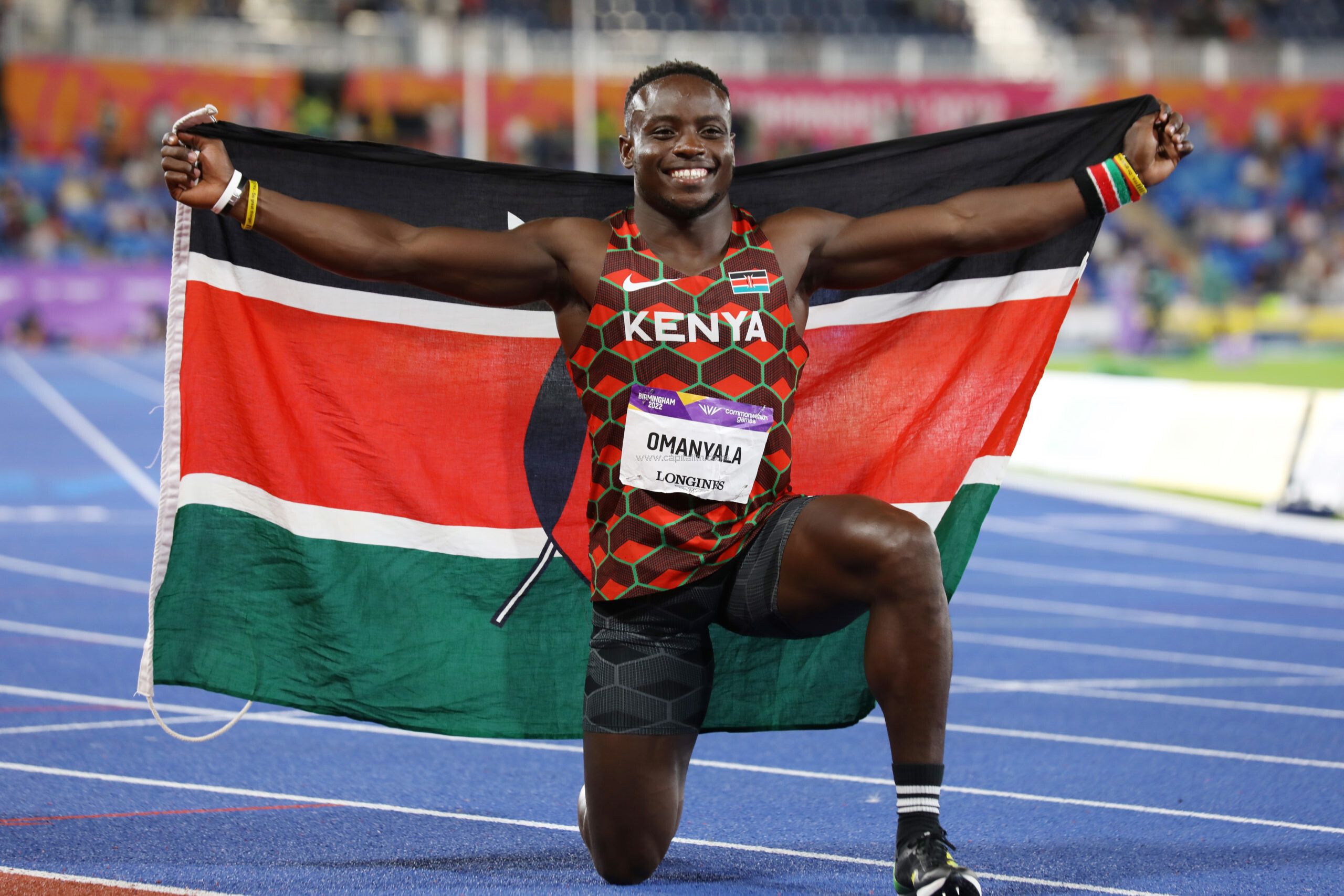
Impressive in the semi-final he looked the favourite on Wednesday and duly controlled the final from gun to tape, flying out of the blocks and surging clear and looking more like a barrelling rugby prop than a sprinter to win in 10.02 seconds.
He is the second Kenyan to take the title after Seraphino Antao in 1962, when the event was still run over 100 yards.
South Africa's defending champion Akani Simbine took silver in 10.13 with Yupun Abeykoon from Sri Lanka getting the bronze in 10.14.
Login to leave a comment
The Commonwealth Games
The Commonwealth Games are coming to Victoria - bringing an action packed sports program to our regional cities and delivering a long-term legacy for our future. From 17 to 29 March 2026, Geelong, Bendigo, Ballarat, Gippsland and Shepparton will be on the world stage, attracting millions of viewers and creating thousands of jobs. The multi-city model will...
more...
I will forget everything and focus on the finish line, says Ferdinand Omanyala after finally landing visa hiatus
African record holder Ferdinand Omanyala says the visa hiatus that has rocked his boat towards the World Athletics Championships in Oregon will not deter his determination and has vowed to give his best once he lands and sets his spikes on the starting blocks in Eugene.
Omanyala received his US visa late Thursday morning, slightly over 24 hours before the heats of the 100m gun off in Eugene. Athletics Kenya has managed to secure a 6pm flight for his departure from Nairobi, arriving in Oregon 4pm Friday, two hours and 40 minutes before race time.
“First of all it is a relief. It has been a tough last few days. The first target now is to get there on time, hoping there are no more issues along the way. I want to thank everyone who has worked hard to see this possible. At some point yes I thought it was never going to happen but I always felt that a breakthrough would come,” Omanyala told Capital Sport.
“I would like to thank the President Uhuru Kenyatta, the Government through the Ministry of Sports and CS Amina Mohamed and PS Joe Okudo for all the effort they put to ensure that I get both the US and UK visas despite everything that was going on,” Omanyala added.
He also says; “She (CS Amina) has been working from last night to have this done and I want to thank her so much. I also want to thank the US embassy for expediting. I am sure they did this out of a clean heart.”

He adds; “I hope to get there on time and once I step on the blocks, I will give everything to be on the finish line. Yes it has been tough but it has not deterred my focus. I will use this as a stepping stone to give me more strength for the race.”
The 26-year old has been booked a business class seat to ensure he gets as much comfort as he needs and gets to Eugene a bit better than if he had been on an economy seat.
Though he believes it is a tough call for him to be at the blocks fresh, he hopes for the best.
“It is a challenge of course, to ensure that I have shaken off the jet lag and all. But I thrive under pressure and I love challenges. I am sure I will get over this,” he added.
Omanyala is the third fastest man in the world this year, having clocked 9.85secs to win the Kip Keino Classic in May.
by Timothy Olobulu
Login to leave a comment
World Athletics Championships Budapest23
Budapest is a true capital of sports, which is one of the reasons why the World Athletics Championships Budapest 2023 is in the right place here. Here are some of the most important world athletics events and venues where we have witnessed moments of sporting history. Throughout the 125-year history of Hungarian athletics, the country and Budapest have hosted numerous...
more...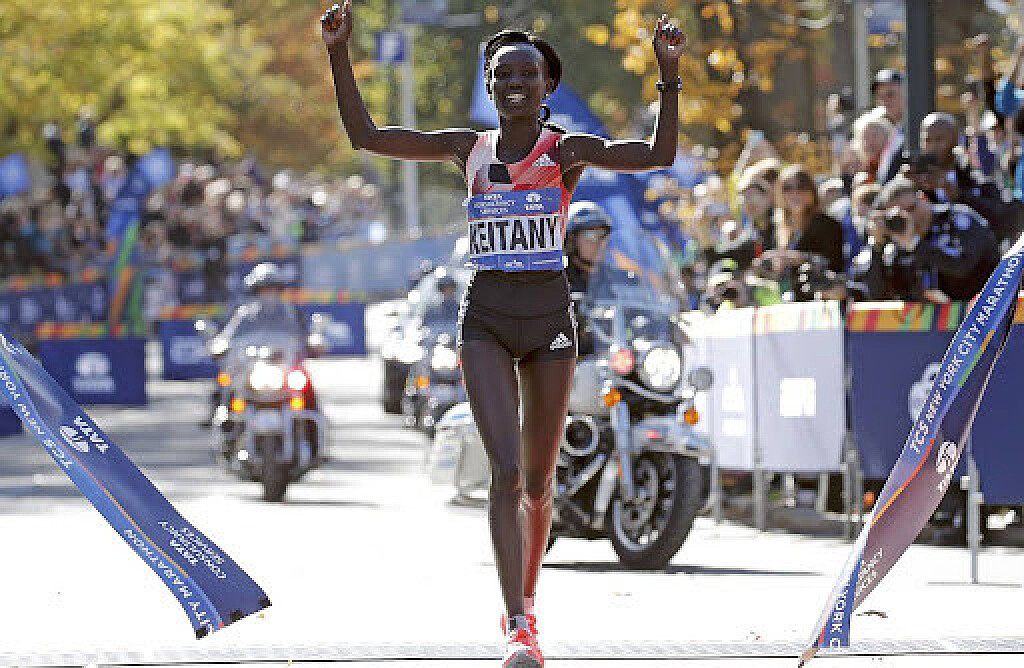
Mary Keitany: from shoeless prodigy to top of the world
Kenya’s Mary Keitany, the holder of the world marathon record in a women-only race, generously agreed to donate some of her racing kit to the World Athletics Heritage Collection following her retirement in September.
Since the beginning of December, Keitany’s singlet, shorts and shoes from her fourth and final New York City Marathon victory in 2018 have been on display in the 3D virtual Museum of World Athletics (MOWA).
We are delighted to celebrate her donation by recapping the career of one of the all-time greats of road running.
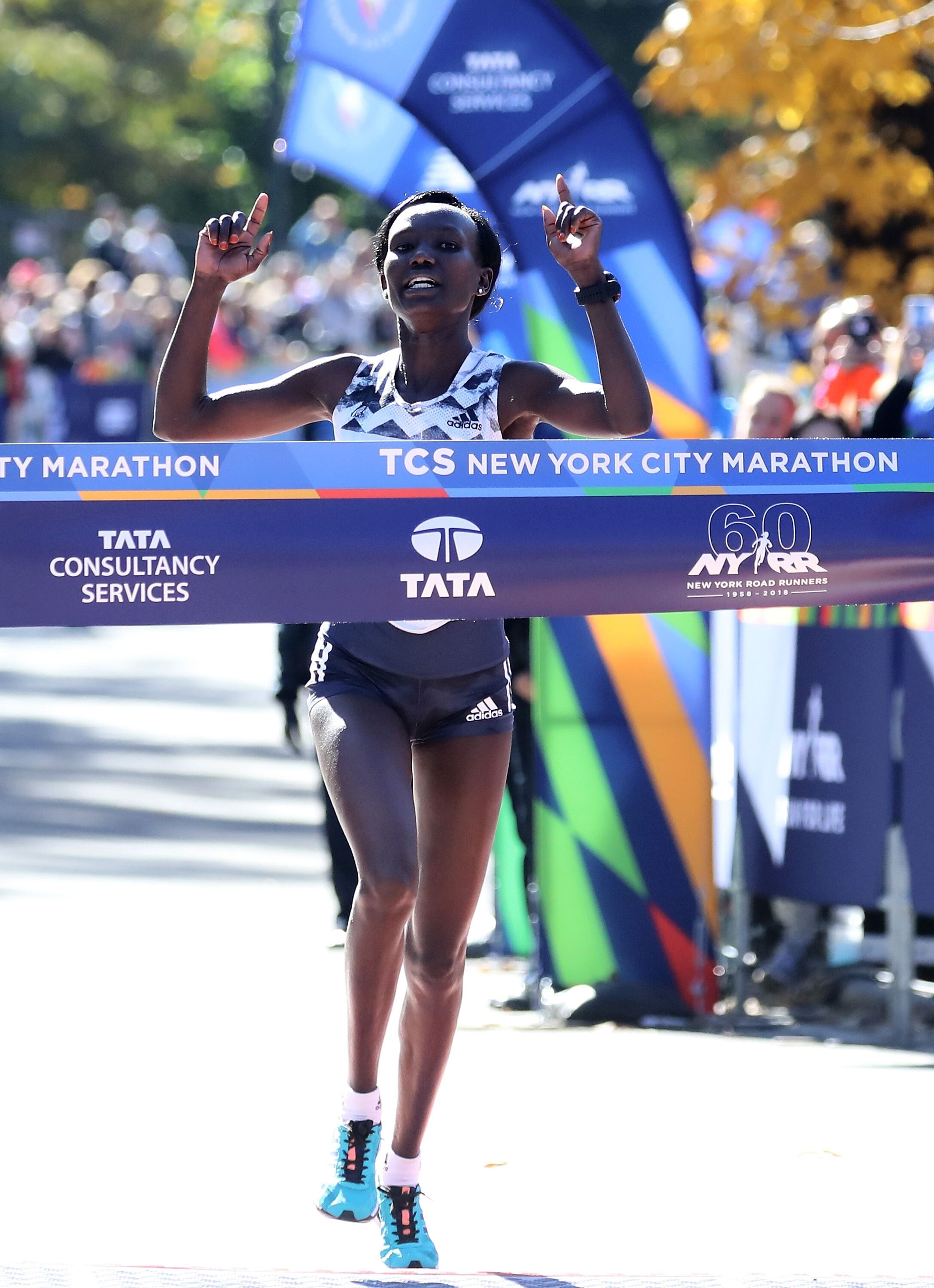
'If I don’t do this, then what?'
Hailing from Baringo County, a province immediately to the east of the focal point for Kenyan running in Eldoret, there are many well-known and successful athletes who come from the area, but Keitany’s impoverished childhood made it initially unlikely that she was going to join their number.
She elaborated on her tough childhood in a lengthy interview with The New York Times in 2019 – details of which are only precised here – and described living in a home without electricity or any other basic amenities, as well as having no shoes for much of her childhood.
Her household tasks as a very young child included walking several kilometers to a nearby river to haul pails of water home for cooking and cleaning.
Keitany’s parents, both struggling subsistence farmers, were unable to afford even the modest school fees for her to continue her education from her mid-teens so, at the age of 15, to help support her parents and five siblings, she left and went to work as a live-in maid almost 20 kilometers away, caring for three infants and sometimes not seeing her family for several months at a time.
“It was not an easy job,” reflected Keitany. “But I was getting money to give to my parents. I was thinking, ‘If I don’t do this, then what?’”
Hidden talent out in the open
She returned to school after two years when a relative was able to help financially and Keitany started to attend the National Hidden Talents Academy near Nairobi, a community-based secondary school that primarily assists orphaned and vulnerable children.
The school had a strong emphasis on physical education, which continues to this day, and it has produced several Kenyan internationals in a variety of sports. Keitany’s precocious talent as a runner, which had been evident in her early teens prior to the enforced two-year hiatus, came to the fore.
After eight months of hard training and sharing a cramped one-bedroom house with three other runners, Keitany made her first overseas trip and caused a minor sensation by winning the relatively low-key Sevilla-Los Palacios Half Marathon in southern Spain – not to be confused with the much better known EDP Sevilla Half Marathon – by over two minutes in 1:09:06, a course record that exists to this day ahead of the 2021 edition on December 19.
The words ‘unknown Kenyan’ are too often used to hide a lack of research or information but in this instance, it was a most appropriate phrase and, amid rumors at the time that the course was short because of Keitany’s super-quick time on the circuit, it bought her to the attention of both athletics aficionados and race promoters alike.
In the first nine months of 2007, Keitany proved that her debut international race had been no fluke as she rattled off another five half marathon victories in six outings at races in Portugal, Spain and France, also reducing her best to 1:08:36.
Keitany takes silver in Udine
This streak of success earned her a place on the Kenyan team at the 2007 World Athletics Half Marathon Championships in the Italian city of Udine – an accolade she subsequently admitted as being among her wildest dreams, despite her ambition to be a top-flight runner 12 months before – and she showed her considerable mettle to finish second behind the Netherlands’ Lornah Kiplagat and bank a cheque for a life-changing $15,000.
To now give a complete narrative of the next 12 years of Keitany’s superb competitive running career through to her last race, the 2019 New York City Marathon, would take a book and cannot be done justice in just a few hundred words.
However, it was apposite that her running career should finish in the Big Apple at arguably the world’s most famous race over the classic distance, as it is this event with which she is probably most closely associated.
After finishing third in New York on her marathon debut in 2010 – in the wake of her win at the 2009 World Athletics Half Marathon Championships in 1:06:36 which, at the time, was the second fastest mark ever on a record-legal course and an African record – Keitany went on to win the New York City Marathon on three consecutive occasions between 2014 and 2016 and then again in 2018.
To this day, she remains the only woman other than the incomparable Grete Waitz to have triumphed in New York more than three times.
Keitany also made her mark in the London Marathon. Her first triumph there came in 2011 and further victories in the British capital came in 2012 and 2017.
Record runs in London and RAK
She continues to hold the women-only marathon world record with a time of 2:17:01 set when she completed her hat-trick of London wins four years ago.
Another particularly notable accolade during her illustrious career was setting a world half marathon record of 1:05:50 at the 2011 RAK Half Marathon.
Perhaps the only blemish on Keitany’s competitive record is that she never climbed the podium at an Olympic Games.
At the London 2012 Olympic Games, she started arguably as the favorite having returned to the city with a world-leading 2:18:37 from the London Marathon, albeit on a different course, four months earlier. She was part of a leading quartet of runners at 40km but was the luckless member of the group to miss out in the battle for the medals over the final two kilometers and crossed the line in fourth place.
In 2016, she was named as a non-traveling reserve for the Kenyan contingent going to Rio, but Keitany had her sights set on challenging for a place on the Tokyo team before the pandemic, and a cruelly timed back injury, intervened.
In September this year – with her 40th birthday looming on 18 January 2022 – Keitany decided to call time on her outstanding career and announced the end of her professional running in a valedictory press release.
“After my successful 2019, when I had some good results including second place in New York, I was hopeful that I could still be very competitive internationally for several more years even though I am in my late 30s,” she commented.
“However, I’m sad to say, a back injury that I suffered in late 2019 made a decision about my retirement for me. I couldn’t get the treatment I wanted in Europe because of the pandemic-related travel restrictions last year and every time I thought I had got over the injury and started training hard, it became a problem again.”Sadly, Keitany will no longer be seen on the start line of a major marathon but nevertheless she leaves behind a host of memorable performances that have assured her of a place in the pantheon of road running greats.
by World Athletics
Login to leave a comment
World record-holder Mary Keitany retires due to back injury
Kenyan running great Mary Keitany announced her retirement on Wednesday (22) after a stellar career which saw her win the London Marathon on three occasions and the New York Marathon four times, as well as triumph at the 2009 World Half Marathon Championships.
Keitany, 39, also still holds the marathon world record for a women-only race, having clocked a stunning 2:17:01 when winning the third of her London Marathon titles in 2017.
“After my successful 2019, when I had some good results including second place in New York, I was hopeful that I could still be very competitive internationally for several more years, even though I am in my late 30s,” said Keitany, who is third on the world all-time list for the marathon.
“However, I’m sad to say, a back injury that I suffered in late 2019 made a decision about my retirement for me. I couldn’t get the treatment I wanted in Europe because of the pandemic-related travel restrictions last year and every time I thought I had got over the injury and started training hard, it became a problem again. So now is the time to say goodbye – if only as an elite runner – to the sport I love so much.”
Keitany first came to global attention in 2007, after local success in Kenya the previous year, with a series of good performances in European half marathons which then earned her a place in the Kenyan team at that year’s World Half Marathon Championships. A silver medal at the 2007 edition of that event, and team gold, was followed by more than a decade among the very best of the world’s road runners, even with breaks in 2008 and 2013 to give birth to her children Jared and Samantha.
Keitany won the 2009 world half marathon title in Birmingham by more than a minute in 1:06:36, at the time the second-fastest mark ever on a record-legal course and an African record. She also led Kenya to the team gold medals.
After finishing third in New York on her marathon debut in 2010, her first major marathon win came in her next race over the classic distance when she triumphed at the 2011 London Marathon and further victories in the British capital came in 2012 and 2017.
She will also be remembered fondly for her three impressive consecutive wins at the New York Marathon between 2014 and 2016 before winning in the Big Apple again in 2018.
Other accolades include setting a world half marathon record of 1:05:50 at the 2011 RAK Half Marathon, fourth place in the London 2012 Olympic Games marathon, and she continues to hold the women-only 25km world best of 1:19:43, set during her triumphant 2017 London Marathon run. She set her half marathon PB of 1:04:55 in 2018, which at the time ranked her third on the world all-time list.
“As for the future, I haven’t fully decided on my plans but I’m looking forward to spending more time with my family,” said Keitany. “My children are currently 13 and eight. In addition, I am involved with some local charitable enterprises.”
by World Athletics
Login to leave a comment
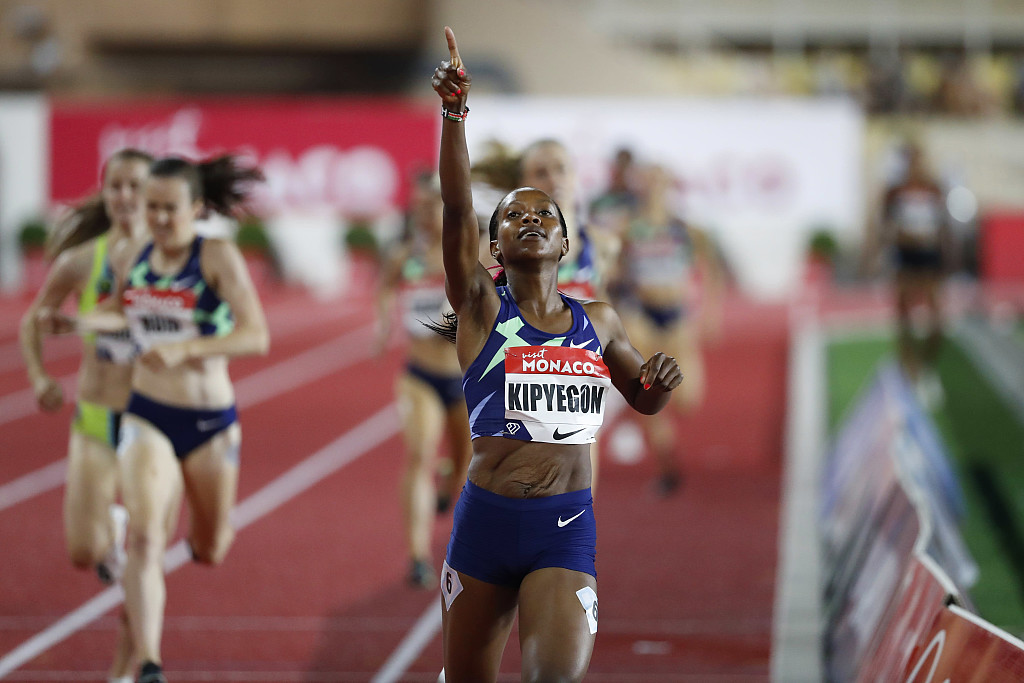
A number of Tokyo Olympic medalists, including champions Faith Kipyegon and Peruth Chemutai, will be among the athletes in action at the Kip Keino Classic
Athletes from at least 28 countries are expected to compete when the final meeting of this year’s Continental Tour Gold series is held at the Kasarani Stadium, a World Athletics Continental Tour Gold meeting, in Nairobi, Kenya, on September 18, which recently hosted the World Athletics U20 Championships.
After winning her second Olympic 1500m title and then claiming the series crown at the Wanda Diamond League final in Zurich, Kenya’s Kipyegon will make her Kip Keino Classic debut. Uganda’s Olympic 3000m steeplechase champion Chemutai, meanwhile, returns to the event after her sixth-place finish in the inaugural edition of the meeting last year.
Both Olympic steeplechase champions will be competing, with Soufiane El Bakkali of Morocco having already been announced for the men’s race. He is set to be joined on the start line by Kenya's world U20 champion Amos Serem.
Like Kipyegon, USA’s Fred Kerley claimed a Diamond Trophy in Zurich, becoming the first athlete to ever win top series honours in both the 100m and 400m. Three years after his 400m success, Kerley won the 100m in 9.87 in Zurich and the Olympic 100m silver medallist is now set to race in Nairobi.
In men's 100m action will be the USA’s world leader Trayvon Bromell, Kenyan record-holder Ferdinand Omanyala and the USA’s Justin Gatlin, while Botswana’s Isaac Makwala has been announced for the 400m.
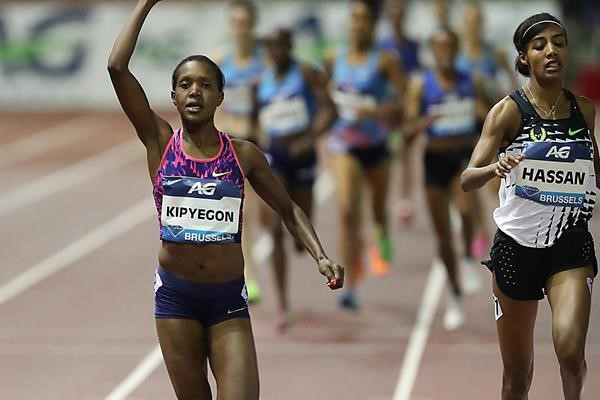
Namibia's Christine Mboma improved her world U20 record and African record to 21.78 to win the 200m Diamond Trophy in Zurich and the Olympic silver medallist returns to Nairobi, where the 18-year-old won the world U20 title last month.
The men’s hammer competition will also feature an Olympic champion, with Poland's Wojciech Nowicki among those who will be seeking more success when they compete in Kenya.
Ukraine’s world finalist Iryna Klymets will compete in the women’s event.
by World Athletics
Login to leave a comment
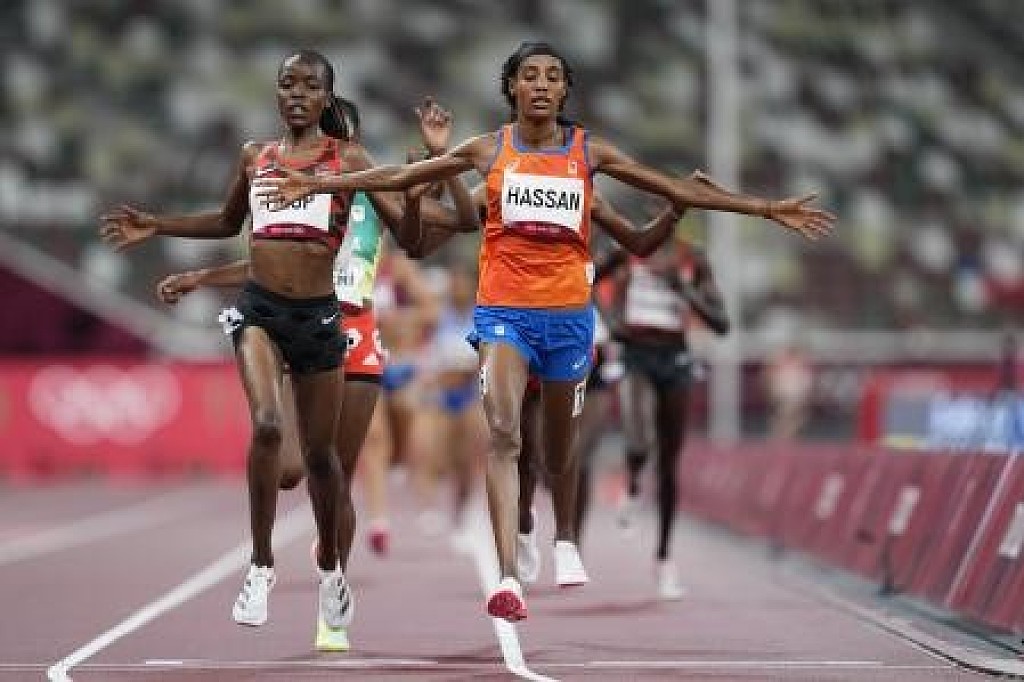
Eugene will play host rematches betwen olympic medalists at the Prefontaine Classic
Dozens of medal winners from the recent Tokyo Olympic Games will be back in action at the Wanda Diamond League meeting in Eugene when Hayward Field hosts the Prefontaine Classic on August 21.
Based on the announcements made so far by the meeting organizers, five events will feature a full set of Olympic medalists from Tokyo.
Double Olympic champion Sifan Hassan headlines the women’s 5000m field and she’ll take on two-time world champion Hellen Obiri and world indoor 1500m record-holder Gudaf Tsegay, the silver and bronze medalists in Tokyo over 5000m.
All three medalists from the men’s 5000m will also be in action as Uganda’s Joshua Cheptegei, Canada’s Moh Ahmed and USA’s Paul Chelimo clash over two miles.
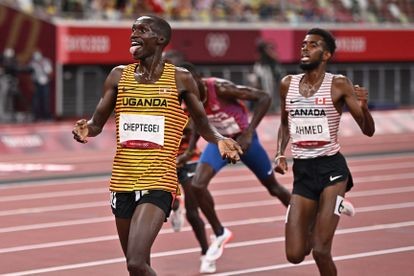
Teenage stars Athing Mu and Keely Hodgkinson, the top two finishers in the 800m in Tokyo, will be back in action over two laps, along with world and Olympic bronze medallist Raevyn Rogers, world champion Halimah Nakaayi, Britain’s Jemma Reekie, Jamaica’s Natoya Goule and USA’s Ajee Wilson and Kate Grace.
World record-holder and two-time Olympic champion Ryan Crouser will look to maintain his winning streak in the shot put when he takes on world champion Joe Kovacs and 2017 world champion Tom Walsh. Brazil’s Darlan Romani and US duo Darrell Hill and Payton Otterdahl are also in the line-up.
Jamaican sprint stars Elaine Thompson-Herah, Shelly-Ann Fraser-Pryce and Shericka Jackson – who filled the 100m podium in Tokyo – will face USA’s Sha’Carri Richardson and Marie-Josee Ta Lou of the Ivory Coast.
The men’s 100m, meanwhile, features Olympic silver and bronze medalists Andre De Grasse and Fred kerley, along with world indoor bronze medallist Ronnie Baker, 400m specialist Michael Norman and African record-holder Akani Simbine.
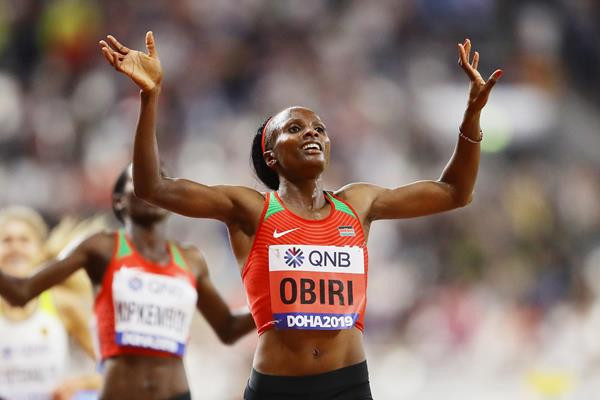
Two-time Olympic champion Faith Kipyegon will once again line up against Olympic silver medallist Laura Muir and Canadian record-holder Gabriela DeBues-Stafford, while world champion Timothy Cheruiyot will clash with Olympic champion Jakob Ingebrigtsen in the men’s Bowerman mile.
In the women’s steeplechase, world champion Beatrice Chepkoech takes on world leader Norah Jeruto Tanui, Olympic silver medalist Courtney Frerichs and 2017 world champion Emma Coburn.
Other global stars confirmed so far include world 400m hurdles champion Dalilah Muhammad, Olympic triple jump champion Pedro Pablo Pichardo and world indoor triple jump record-holder Hugues Fabrice Zango.
by World Athletics
Login to leave a comment
Prefontaine Classic
The Pre Classic, part of the Diamond League series of international meets featuring Olympic-level athletes, is scheduled to be held at the new Hayward Field in Eugene. The Prefontaine Classicis the longest-running outdoor invitational track & field meet in America and is part of the elite Wanda Diamond League of meets held worldwide annually. The Pre Classic’s results score has...
more...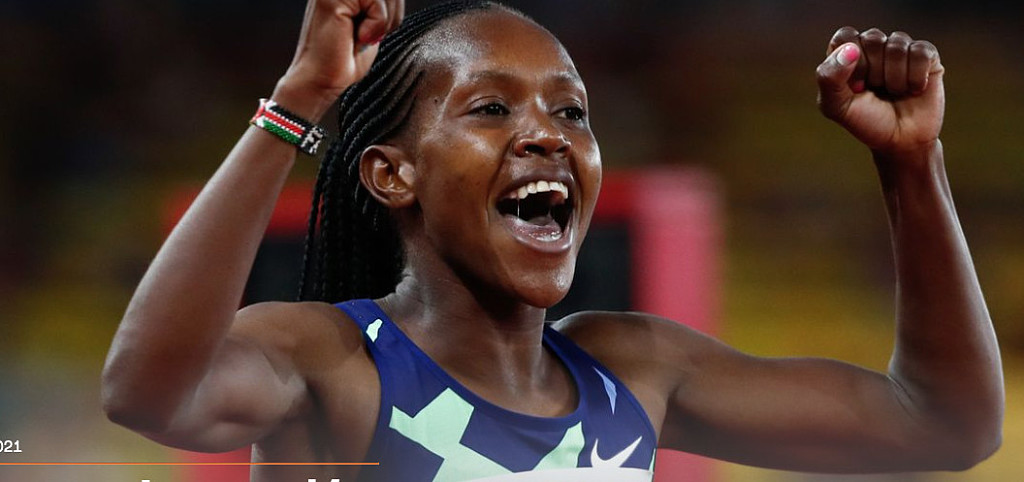
Kipyegon cruises to Kenyan 1500m record in Monaco
It’s all about keeping the faith.
Going into tonight’s 1500m at the EBS Herculis meeting in Monaco, world champion Sifan Hassan announced that she had asked for a pace of 61-second laps, which would add up to a second or so under the current world record of 3:50.07.
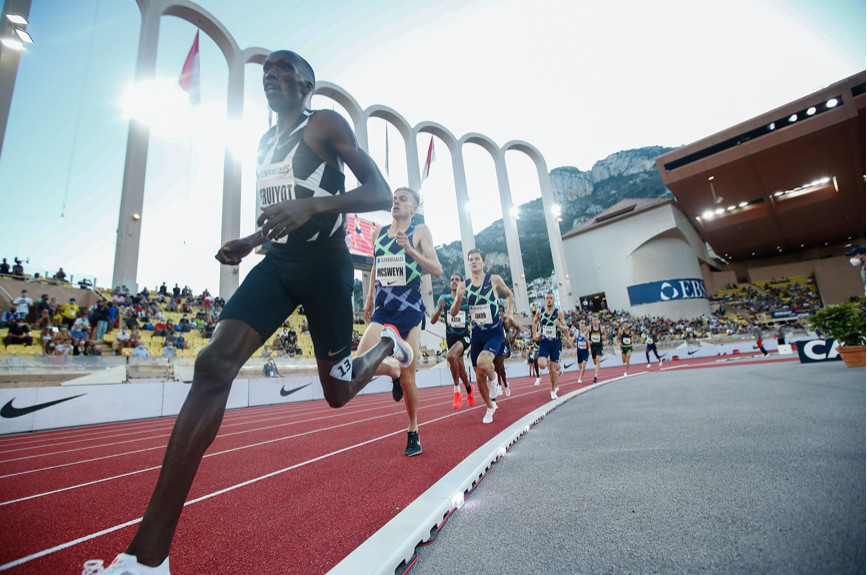
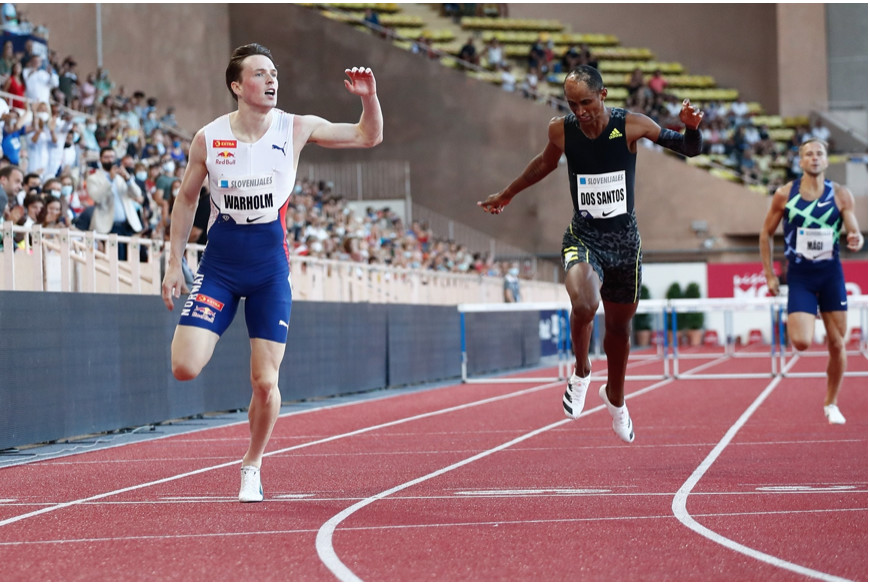
The Dutchwoman has set world records twice previously in Monaco, most recently over the mile two years ago, and she was feeling confident after rediscovering her love for the metric mile with a victory over Olympic champion Faith Kipyegon at the Wanda Diamond League meeting in Florence last month.
Hassan even floated the idea of adding the 1500m back into her Olympic schedule, having previously declared that she would attempt the 5000m-10,000m double.
She locked in behind the pacemaker from the beginning, her ambition obvious. Only Kipyegon and Ethiopia’s Freweyni Hailu dared to follow and the race was down to three when they reached the bell.
Hassan then turned the screws, but Kipyegon clung to her like a limpet down the back straight as the Dutchwoman stretched out her legs for the run home.
In the past three years races have inevitably gone Hassan’s way in this situation, her unmatched mix of speed and endurance proving irresistible. But not this time.
As they entered the final straight Kipyegon kicked hard, dashing past her rival and sprinting down the straight to win in 3:51.07, a Kenyan record and the fourth fastest time in history. In the last 90 metres she put two-and-a-half seconds into Hassan, who finished in 3:53.60, with Hailu third in a personal best of 3:56.28.
Despite her recent losses to Hassan, Kipyegon said she remained confident that her day would come.
“I knew Sifan was going for a fast race and my goal was to run a fast race here and I thank God that was,” she said. “I am really looking forward to Tokyo and I know it will be a very hard competition but I hope to go there and defend my title.”
Kipyegon gave birth to her first child in 2018, returning in 2019 to finish second to Hassan at the World Championships in Doha, but has now found an even richer vein of form than that which carried her to the Olympic title in 2016 and the world title in 2017. “I came back after giving birth and I feel like a role model for the young mothers out there and the young athletes,” she said. “I hope to show them that when you go for maternity leave, this does not mean the end of your career. You can come back strong and win races.”
Fellow Kenyan Timothy Cheruiyot was also a man on a mission tonight.
With his Olympic dreams hanging in the balance, the world 1500m champion dashed to the fastest time in the world for six years.
An out-of-sorts Cheruiyot was a shock fourth at the Kenyan Olympic trials last month, putting him in grave danger of missing selection. The situation has been complicated by the fact that second-placed Kamar Etiang has not completed the requisite number of anti-doping tests to qualify for the Olympic Games so his eligibility is in question.
That has left Cheruiyot in limbo just weeks before the Tokyo Games, but he thrust aside all that uncertainty to race with clear intent in Monaco.
In the fastest race of the year, he led at the bell and fought off all challenges, setting a personal best of 3:28.28 as four men dipped under 3:30.
Spanish surprise packet Mohamed Katir took almost five seconds from his personal best to finish second (3:28.76 national record) ahead of European champion Jakob Ingebrigtsen (3:29.25) and Australia’s Stewart McSweyn, who set an Oceanian record of 3:29.51 in fourth.
Cheruiyot revealed afterwards that a hamstring injury and the death of a relative on the day of the Kenyan trial had affected his performance there but he still hoped to be selected for the Olympics.
“Hopefully that will be the deciding performance to make the team for Tokyo,” he said.
Amos and Muir impress over two laps
On a night of high-quality middle distance running, Botswana’s Olympic medallist Nijel Amos roared back to top form, recording the fastest time of the year to down a field full of Olympic contenders.
With his arms flailing, Amos used his awkward but effective running style to propel himself past Kenya’s Emmanuel Kori (1:43.04) and Canada’s Marco Arop (1:43.26).
Britain’s Laura Muir also had the last laugh in a world-class 800m field, looming late to take the win in a big personal best of 1:56.73. Muir had never cracked 1:58 previously for the distance, but had the strength to haul in her training partner Jemma Reekie (1:56.96) and USA’s Kate Grace (1:57.20) in the final metres as all three women set personal best times.
Muir has decided to focus her energy on the 1500m in Tokyo but that will be no easy task as Kipyegon demonstrated.
Both 3000m steeplechase races were suffused with drama and unpredictability at the Stade Louis II.
The men’s race descended into confusion when an official rang the bell a lap too early, but world silver medallist Lamecha Girma still managed to run a world-leading time of 8:07.75 to take the win from Abraham Kibiwot, just 0.06 behind.
In the women’s race, 2015 world champion Hyvin Kiyeng made a break from the pack after two kilometres but misjudged the remaining laps and kicked too early. After crossing the line and hearing the bell for the actual final lap, the Kenyan tried to muster some energy to run another circuit. USA’s 2017 world champion Emma Coburn positioned herself to challenge Kiyeng as they approached the water jump, but Coburn stumbled at the hurdle and fell into the water losing all momentum, leaving Kiyeng to take the victory in 9:03.82, with world record-holder Beatrice Chepkoech second in 9:04.94 and Winfred Yavi third (9:05.45). Coburn regathered herself to cross the line in fourth place in 9:09.02.
Baker blasts to 100m victory
There was unpredictability too in the men’s 100m where the form book was upended as the ever-reliable Ronnie Baker claimed victory in 9.91, from African record-holder Akani Simbini (9.98) and Italian Marcell Jacobs (9.99).
World leader Trayvon Bromell, regarded by many as the man most likely to win the Olympic 100m crown in Tokyo next month, lacked his usual zip and could only finish fifth in 10.01.
World 100m champion Shelley-Ann Fraser-Pryce used her early speed to take the lead on the bend in the women’s 200m, but could not hold off the Olympic 400m champion Shaunae Miller-Uibo in the straight.
Miller-Uibo, who has chosen to focus on the 200m for Tokyo, won in 22.23 from Marie-Josee Ta Lou (22.25) with Fraser-Pryce third (22.48).
New world 400m hurdles record-holder Karsten Warholm returned to the competition track for the first time since his heroics in his hometown Oslo last week, eager to challenge his new “personal best” of 46.70.
He made a typically aggressive start, making up the stagger by the second hurdle, but ultimately he could not match the pace he set last week, crossing the finish line in a meeting record of 47.08, still the fourth fastest time of his career and faster than all but five other men in history.
He was pleased to maintain such a consistently high level of performance. “This was a good race so I’m satisfied,” he said.
Brazil’s Alison Dos Santos continued to build his Olympic medal credentials with a strong second place in 47.51, just outside his personal best of 47.34, also set in Oslo.
In the field, US pole vaulter Katie Nageotte carried her fine form to Europe to clear 4.90m and claim an impressive victory over world champion Anzhelika Sidorova and Olympic champion Katerina Stefanidi, who both cleared 4.80m.
A tight high jump competition was decided by a jump-off after both neutral athlete Mikhail Akimenko and Canadian Django Lovett were tied with best clearances of 2.29m. Akimenko then claimed the victory by leaping 2.32m in the decider.
World triple jump champion Yulimar Rojas had a tough night at the office, fouling four of her six jumps, including two that looked like they would have challenged the world record (15.50m). She led after five rounds with a best leap of 15.12m but could not find the board in the all-important sixth round under the Final 3 format being trialled in the Diamond League this year.
Jamaica’s Shanieka Ricketts took the win with 14.29m after she was the only one of the top three to register a legal jump in the final.
The men’s long jump also finished with an anti-climax after Miltiadis Tentoglou was the only one to hit the board in the final round (8.24m).
The women’s javelin was the only throwing event on the programme and saw a return to the winner’s circle for the veteran world record-holder Barbora Spotakova, who threw a season’s best of 63.08m in the sudden-death final round, the farthest mark ever achieved by a 40-year-old thrower.
by World Athletics
Login to leave a comment
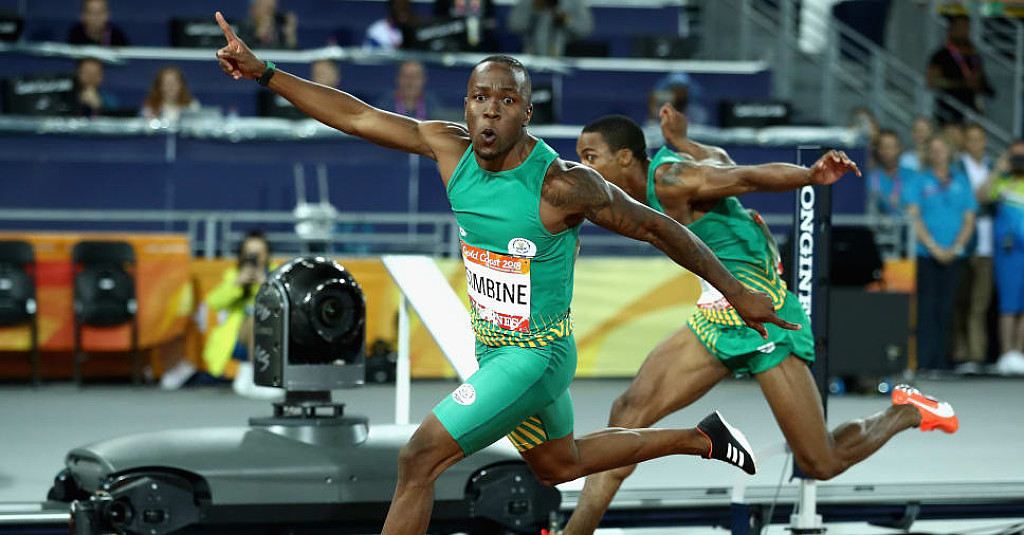
South Africa's Akani Simbine is focused on the fast road to Tokyo
Here’s the thing about Olympic year, something Akani Simbine knows will always be true.
“Everybody comes out fast,” he says. “Everybody runs fast, and we always talk about how everybody is just on form. Everyone is ready.”
The outdoor season may only be in its drive phase, but early evidence suggests that whoever is crowned men’s 100m champion in Tokyo on 1 August will need to ascend to a level he has never reached.
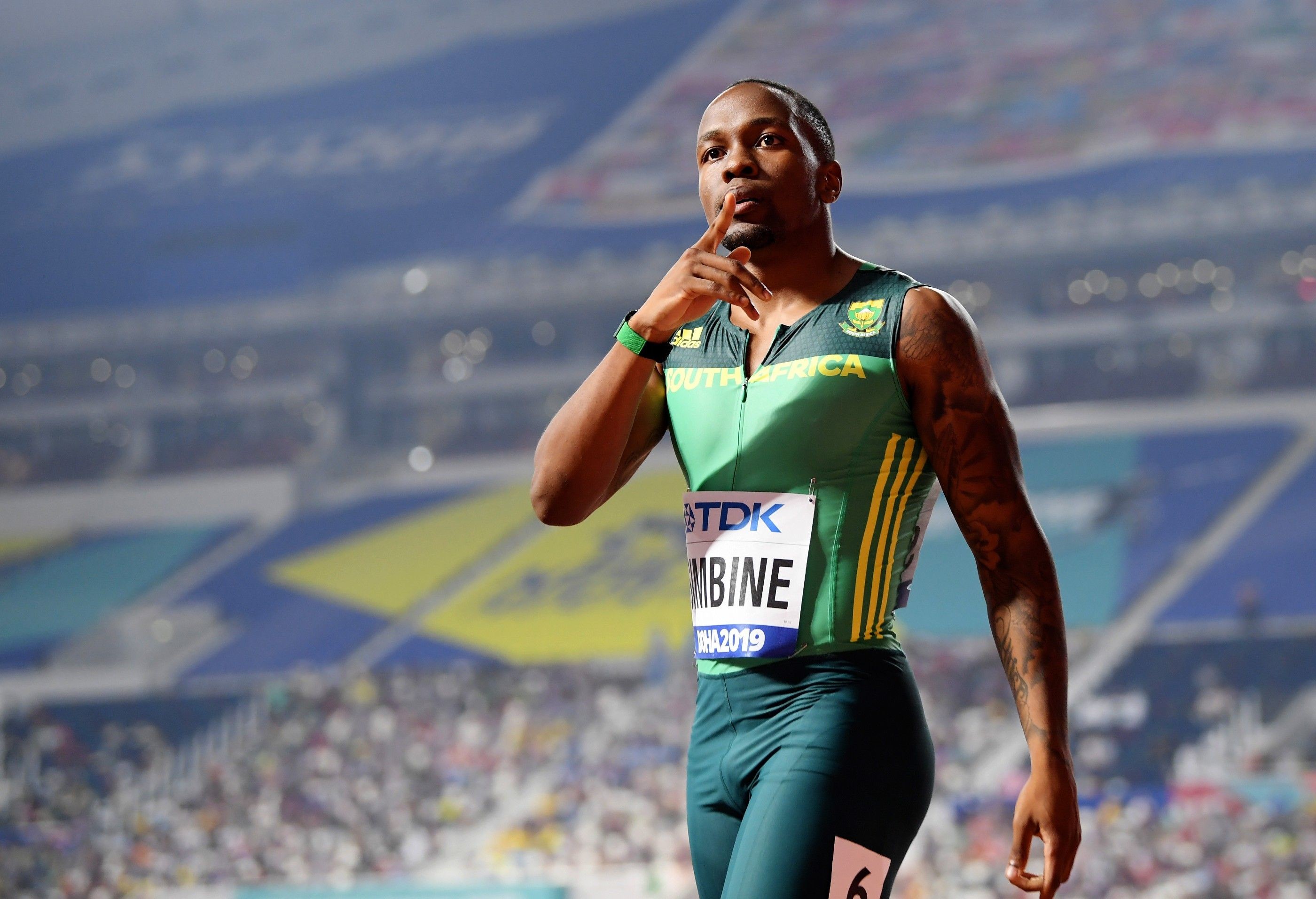
Thirteen different men have broken 10 seconds for 100m over the past seven weeks, and Simbine is one of them, running 9.99 into a stiff headwind (-3.0m/s) at altitude in Pretoria in late March before clocking a wind-aided 9.82 (+2.8m/s) at the South African Championships in April.
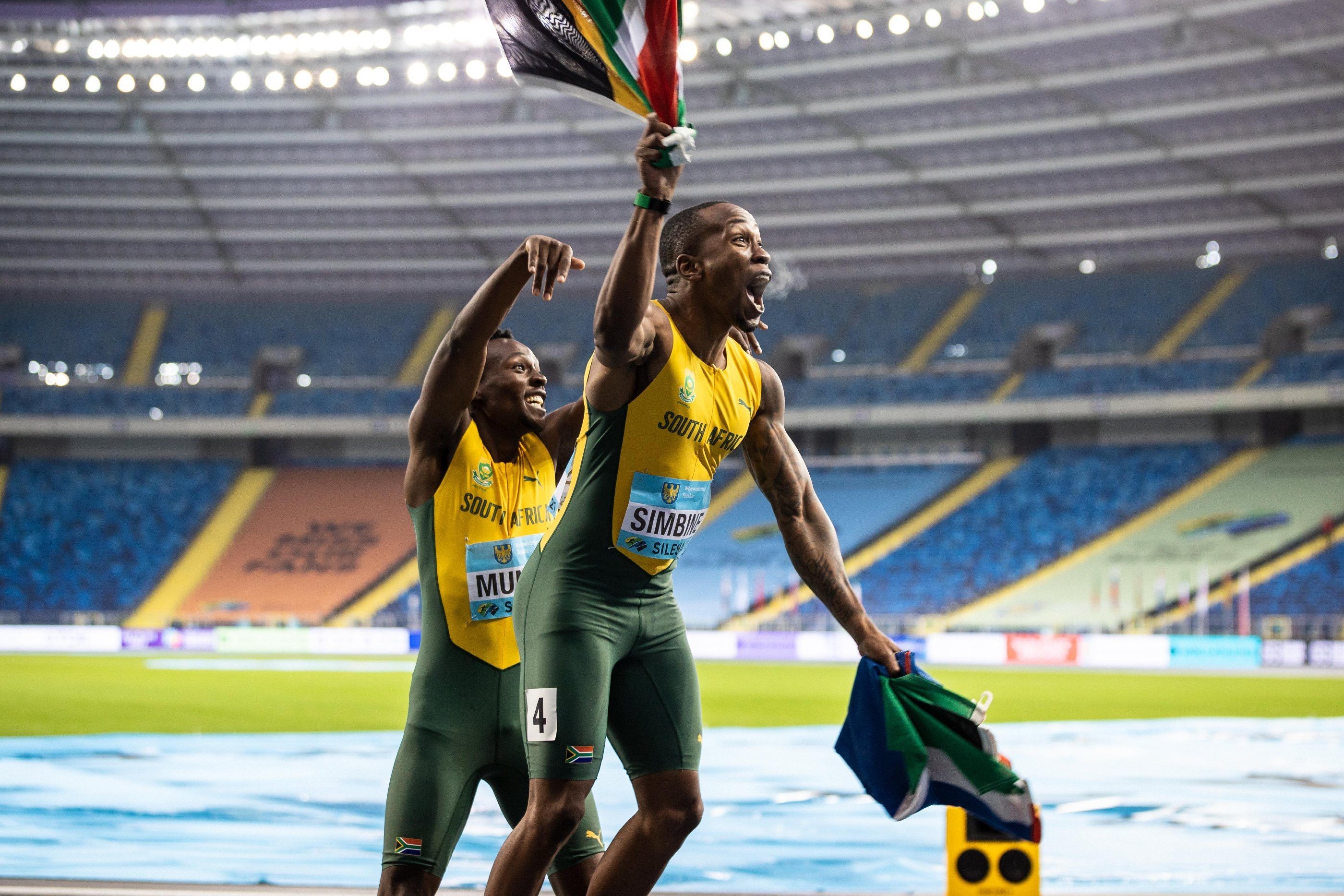
The race to the top of the world over 100m is as open as it’s ever been, and Simbine knows the fun is only just beginning. The 27-year-old South African has come oh-so-close to global 100m medals before, finishing fifth at the 2016 Olympics and 2017 World Championships and fourth at the 2019 World Championships – 0.03, 0.06 and 0.03 away from the medals.
The margins are fine, the competition cutthroat, but what does Simbine feel it will take to get on the podium in Tokyo?
“People are going to have to run their PBs, that’s for sure,” he says. “I’ll just speak for myself and say I’ll be ready, I’ll be at my best and making sure I run the best I can when it counts.”
Few events in world sport captivate the public quite like the Olympic 100m final, and in the first edition in 17 years not featuring Usain Bolt, a new name will be catapulted to global fame at the start of August. Simbine knows that back home in South Africa, millions will be tuning in, hoping it can be him.
“I don’t take it as pressure, something that weighs me down,” he says. “I take it more as motivation and belief. A lot of people believe in me and what I can do for the country, what I can do on the track.”
It’s taken time to re-wire his thoughts like that. Back in 2016 Simbine went to his first Olympics in Rio but the dizzying lights of the five-ringed circus threatened to blind his focus. What did he learn from that experience?
“To keep my head,” he says. “Keep my head on my shoulders and not to stress too much or put myself in a corner, thinking I’m not free. When I’m running, I should be running free and relaxed and that’s the one thing I didn’t do in Rio.”
The intervening years have taught him the value of composure: how a loose muscle is a fast muscle, how a calm mind functions with superior clarity.
In his first race in Europe this year, Simbine was coolness personified, anchoring the South African men’s 4x100m team to victory at the World Athletics Relays Silesia 21, clocking 38.71 on a wintry, windy night in Chorzow, Poland.
How was the race for him?
“Cold, very cold,” he laughs. “But it was a great race, and I’m really happy for the team, for the boys, for the country. We came with the goal of winning and I’m just happy we got that.”
It had taken Simbine 30 hours, door to door, to make it to his hotel in Poland, and though South Africa was already qualified for the Olympics in the 4x100m he felt it was a trek worth making.
“It was very important to come out here, put together a good relay, get the baton across and make sure that we get the confidence knowing we are running at international competitions with high-quality countries,” he says. “We’re so used to running for ourselves and not a team but here, we work together, we plan together and we make sure everything goes well and we can all win together.”
Simbine returned to Johannesburg following his Polish expedition and then relocated back to Italy where he will be based until the Olympics. He plans to try some 200m races early in the season to keep the door open for a sprint double in Tokyo. With 11 weeks until the Olympic 100m final, is there anything that still needs improving?
“There’s a lot,” he says. “The start, the middle of my running, the top end, the finish – the whole race. There’s a lot of things we need to fix and work on and that’s what’s exciting me even more, because I’m running well now and we’re not even at the point where we’re supposed to be.”
His wind-legal PB is the South African record of 9.89 he ran in Szekesfehervar a month before the 2016 Olympics, but Simbine knows that’s not his true limit, and he knows he has what it takes to become an Olympic medalist.
“I’m a 100m sprinter and if I don’t see myself being on a podium, then I shouldn’t be doing it,” he says. “I just need to make sure I’m able to get to Tokyo in the best shape I’ve ever been in and we’ll see what happens there.
“I’m really excited (with) the way I’ve started, but I’m keeping my head down and working. I have the confidence, I know what I can do and it’s just making sure I do it in Tokyo.”
by World Athletics
Login to leave a comment

Tokyo 2020 Olympic Games
Fifty-six years after having organized the Olympic Games, the Japanese capital will be hosting a Summer edition for the second time, originally scheduled from July 24 to August 9, 2020, the games were postponed due to coronavirus outbreak, the postponed Tokyo Olympics will be held from July 23 to August 8 in 2021, according to the International Olympic Committee decision. ...
more...
Marius Van Heerden, triple South African champion has died from COVID-19
The COVID-19 pandemic claimed one of the best middle distance runners ever produced in South Africa, Marius van Heerden, in Cape Town last Thursday (January 21). Van Heerden, a former South African senior record holder and junior champion in the 800 meters, as well as national senior champion over 1500m, was just 46 years-old.
Van Heerden represented South Africa at the 1996 Olympic Games in Atlanta and the 1997 World Championships in Athens. He first received national colours for a tour to India in 1993.
Van Heerden came onto the national scene in 1991 when he won the national U17 800m title in Germiston in 1:51.82. A year later in Cape Town’s Green Point Stadium he beat Hezekiel Sepeng (who is two months older) into second place to take the U19 gold medal in 1:49.17. A month earlier in Bellville he had run his best time of 1:48.63.
In September 1992 he finished sixth at the World Junior Championships in Seoul in 1:48.71.
The next year, 1993, he improved to 1:46.38 in Pretoria behind Johan Landsman, and also ran 1:46.55, 1:46.59, 1:46.87 and 1:46.89. The fastest time placed him fourth on the world junior list, with the 11th best time (Sepeng had the three quickest). He could not better this in 1994 and 1995, but in the Olympic year he reached the pinnacle of his career when he set a new South African record of 1:44.57 in Cape Town on April 12 — improving the national mark that had stood for 25 years behind the names of Dicky Broberg and March Fiasconaro. Although this performance was surpassed four times later in the year by Sepeng, who eventually won the silver medal in Atlanta, Van Heerden’s time placed him 23rd on the world list for the year. He also ran the fastest South African time for 1000m, a personal best of 2:17.64, as well as 1:45.52 and 1:45.99.
At the Olympic Games Van Heerden was eliminated in the first round when he finished third in his heat in 1:47.46. Three weeks before, he had been eighth in the Bislett Games in 1:46.31, then his fourth fastest time.
Earlier in the year he had run the best mile of his career when he finished third behind Johan Botha and Sepeng in 3:57.49 — also the third fastest SA time for 1996.
He never won the SA senior title over two laps, but the year 1997 started off well for him when he took the 1500m title in 3:42.11 — interestingly enough, at altitude in Potchefstroom. (He twice won the silver medal over 800m, in 1993 and 1998, and in 1995 the bronze; he was also third in the 1500m in 1996. As a junior, apart from his two 800m titles, he also won the silver medal over 800m in 1993 and over 1500m in 1991.)
A month later he ran his best 800 time of the year when he clocked 1:45.63 in Cape Town. At the World Championships he qualified for the quarterfinal with a third place in his heat in 1:47.56, but then finished only sixth in the next round and was eliminated.
He recorded the two fastest SA times for 1000m in 1997, with a best of 2:18.25.
In 1998 his best 800 was 1:46.83 (for 8th on the SA list) and in 2000 1:46.64 (also 8th). He finished his career with eleven performances under 1:47.00 and at the time of his death he was still seventh on the SA all-time list.
Van Heerden twice represented South Africa in international test matches and won the 800 on both occasions: against Italy in 1996 (1:49.4) and against Russia in 1998 (1:46.83).
by Riël Hauman
Login to leave a comment
Triathlete Richard Murray runs 28:04, third-fastest 10K in South African history
On Saturday, Olympic triathlete Richard Murray of South Africa ran a solo 10K time trial in a blazing-fast time of 28:04. This is not only the 13th-fastest time of 2020, but it’s also the third best in South African history.
The run is unofficial, so Murray’s name won’t be added to any record books, but if he ever chooses to drop the swim and the bike and focus solely on running, it looks like he would have a good shot at officially breaking some South African records.
Murray’s 10K
Running in the Netherlands, Murray had the perfect course for a flat and fast 10K time trial. The weather was not on his side, though, and he had to endure heavy winds throughout the run. In a YouTube video documenting his time trial, Murray said he hoped to run 2:48 per kilometer for the two-lap 10K course, and he ended up hitting that pace goal right on.
Later in the video, Murray’s wife and fellow Olympic triathlete Rachel Klamer said she wasn’t sure if her husband would be able to meet his low-28 goal, but she added that if he did, she would encourage him to “go and train for it properly” next year after they race at the Tokyo Olympics to see if he could break 28 minutes.
His 10K time puts him just outside the top-10 for 2020, and he’s impressively close to that 28-minute barrier. With the result, he only trails compatriots Shadrack Hoff (who has a 27:50 PB) and national record-holder Stephen Mokoka (PB of 27:38) on the all-time list of South Africans. Mokoka’s 10K time is much faster than Murray’s new PB, but if Murray put in dedicated run training like Klamer suggested, he could certainly challenge that South African record.
This is not Murray’s first noteworthy solo time trial result. Earlier in October, he rode his bike for a two-hour workout and immediately followed it up with a mile PB of 4:05, and in May, he ran a 5K PB of 13:48. Had the 5K run been in an official race, it would be good enough for second all-time among South Africans, and Murray would once again be behind Hoff, who owns the national record of 13:30.
At the Rio Games in 2016, Murray ran his way through the field after the swim and bike legs, posting a 30:34 10K for the fastest run split of the day and a fourth-place finish. He is routinely among the top finishers in World Triathlon Series events, and while he’ll have his eyes on a podium result in Tokyo next summer, we’re more eager to see how quickly he can run after a run-specific training block.
by Ben Snider-McGrath
Login to leave a comment
Hellen Obiri ponders plans for Olympics and beyond
Hellen Obiri came close to walking away from the sport eight years ago.
The Kenyan, aged 22 at the time, was so disappointed with her performance at the 2012 Olympic Games, she considered quitting there and then. She had won the world indoor 3000m title earlier that year and went on to improve her 1500m PB to 3:59.68 at the start of the outdoor season, making her one of the fastest women on the startline for the Olympic final.
But she finished right at the back of the field in 12th place – later upgraded to eighth following the disqualification of four athletes from that race – and was unable to explain what had gone wrong.
Thankfully, however, she soon got over the disappointment and her career has gone from strength to strength.
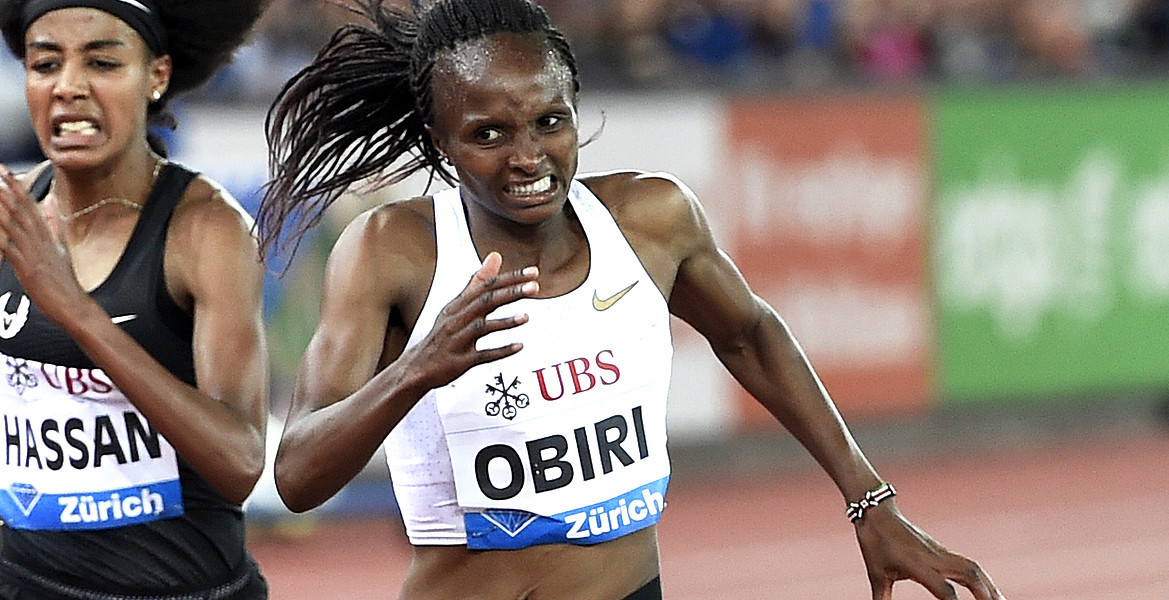
She is now the only woman in history to have won world titles indoors, outdoors and at cross country. One medal is missing from her collection, though.
“I’ve won a lot but I’m not yet there,” she says. “Olympic gold is the only medal that's missing from my collection.
“At the start of the year we were training for the Olympics in 2020 but then of course we received the sad news that there would be no Olympics this year,” she added. “It’s hard to put your dreams on hold for another year when you wanted to achieve something good, but we have to be patient and train hard for 2021. The pandemic has affected the whole world. All we can do now is look ahead to 2021.”
Had the Games gone ahead this year, the 30-year-old would have been one of the big favourites over 5000m, the event in which she won world titles in 2017 and 2019. She has raced just three times on the track so far in 2020, but produced world-leading times in two of those appearances.
The 5000m at the Wanda Diamond League meeting was her season opener and she won convincingly in 14:22.12, the fourth-fastest time of her career. Just earlier this week, in a high-quality 3000m that she described as being “like a championship final”, she triumphed again in 8:22.54, the second-fastest time of her career behind the outdoor African record of 8:20.68 on the same track in Doha.
In a year with no major championships and with world rankings and Olympic qualifying suspended, performances in 2020 may not count for much. But Obiri has sent a clear message to her competitors that, even in an off year like this one, she is hard to beat. And she will be an even more formidable opponent in an Olympic year.
“I have one more race in Nairobi (at the World Athletics Continental Tour Gold meeting on 3 October), then I’ll take a break and start to prepare for the Olympics,” she said. “I hope to do even better in 2021.”
by World Athletics
Login to leave a comment
Tokyo 2020 Olympic Games
Fifty-six years after having organized the Olympic Games, the Japanese capital will be hosting a Summer edition for the second time, originally scheduled from July 24 to August 9, 2020, the games were postponed due to coronavirus outbreak, the postponed Tokyo Olympics will be held from July 23 to August 8 in 2021, according to the International Olympic Committee decision. ...
more...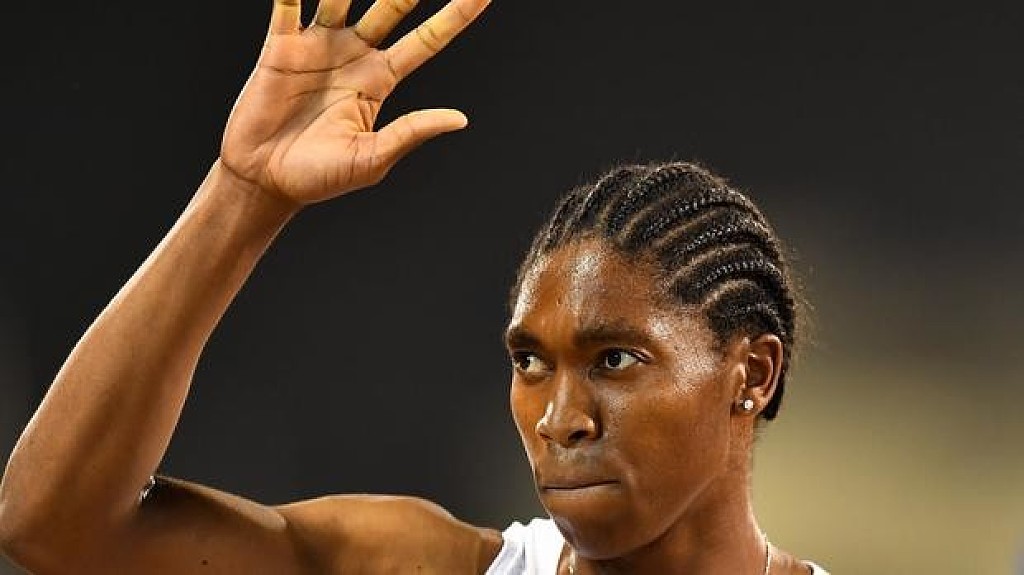
Caster Semenya breaks four minutes for 1500m at IAAF Meet, 30 seconds slower than men
Login to leave a comment
