

Running News Daily
Running News Daily is edited by Bob Anderson and team. Send your news items to bob@mybestruns.com Advertising opportunities available.
Index to Daily Posts · Sign Up For Updates · Run The World Feed
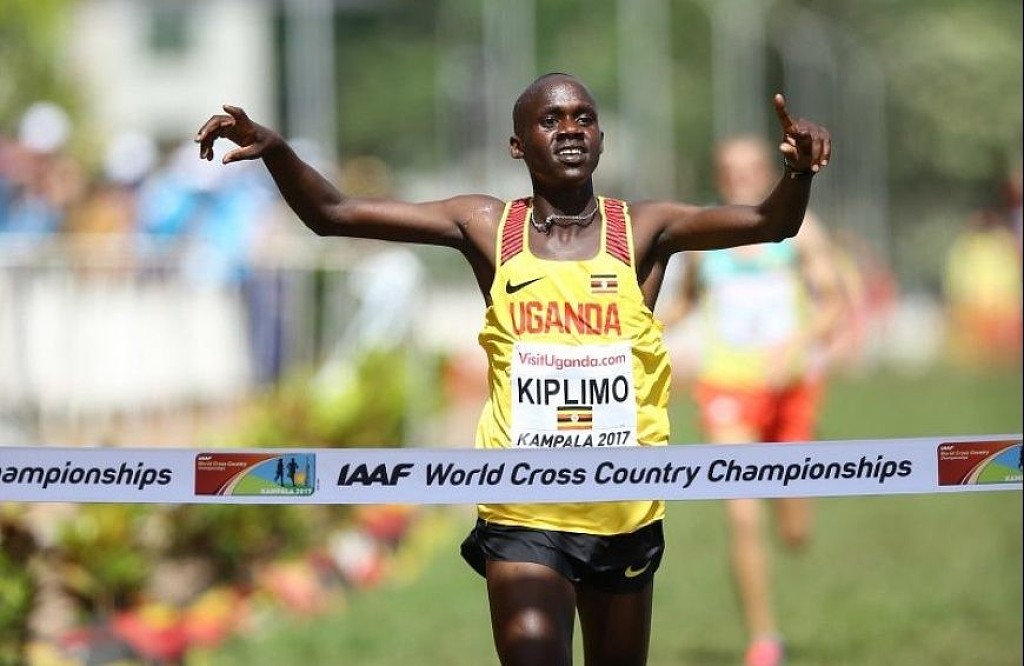


Ugandan Jacob Kiplimo is set to star at Campaccio cross country the first leg of the World Athletics Cross Country Permit series takes place on Sunday

Reigning world half-marathon champion Jacob Kiplimo from Uganda will be in the spotlight at the 64th edition of the Campaccio in San Giorgio su Legnano when the first leg of the World Athletics Cross Country Permit series takes place on Sunday.
The popular Northern Italian cross-country race was originally scheduled for its traditional 6 January date, but it was postponed until the end of March due to the global Covid-19 pandemic. For the first time in its long history, the Campaccio will be held in spring.
Kiplimo won the world half-marathon title in Gdynia in 58:49 last October and ran the second-fastest time in history over the 21.1km distance with 57:37 in Valencia last December. The 20-year-old also set PBs on the track last year, clocking 7:26.64 in the 3000m in Rome and 12:48.63 in the 5000m in Ostrava. In 2019 he won the world cross-country silver medal in Aarhus. In the build-up to the Campaccio, Kiplimo dominated the men’s race at the Italian Cross Country Club Championships in Campi Bisenzio near Florence in rainy conditions.
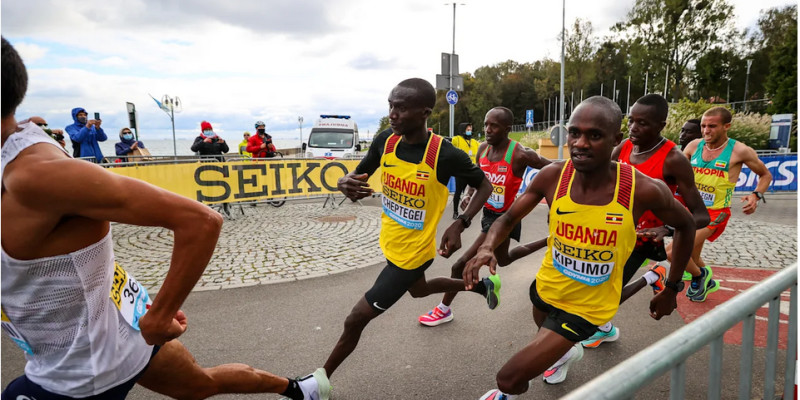
Kiplimo will race against his younger brother Oscar Chelimo, who won the BOclassic 5km World Athletics Label road race in Bolzano last December. In 2018 Chelimo finished seventh in the 5000m at the World Athletics U20 Championships in Tampere and won the 3000m at the Olympic Youth Games in Buenos Aires. One year later, the 19-year-old won the world under-20 cross-country bronze medal in Aarhus and finished fifth in the 5000m at the African Games in Rabat.
Another Ugandan runner in the line-up is 2017 and 2018 world mountain running silver medallist Joel Ayeko.
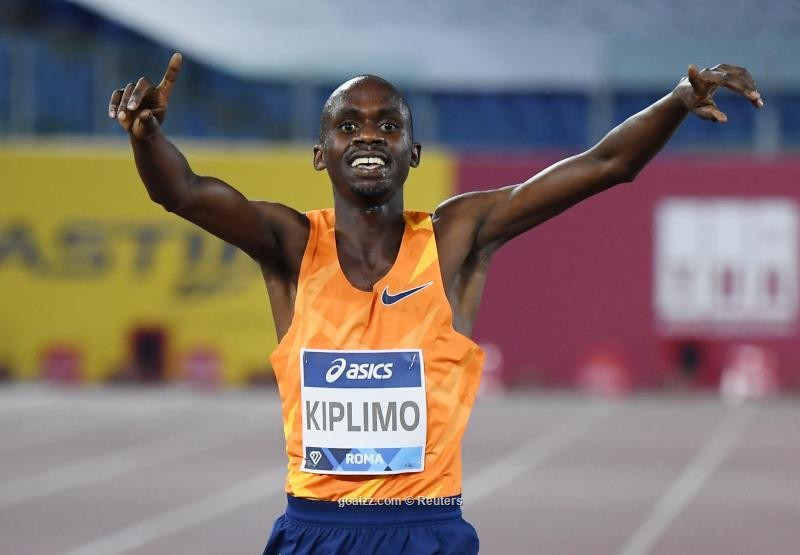
Last year’s surprise Campaccio winner Mogos Tuemay will return to San Giorgio su Legnano to defend his title. The Ethiopian runner set his 10,000m PB in Hengelo in 2019 with 27:23.49 and finished 18th at the World Athletics Cross Country Championships in Aarhus in 2019.
The top Italian runner is Eyob Faniel, who broke Stefano Baldini’s national marathon record with 2:07:19 in Seville last year. Faniel improved Rachid Berradi’s long-standing Italian half-marathon record with 1:00:07 at the Tuscany Camp Half Marathon in Siena at the end of February. Faniel also won the 2019 BOclassic road race and equalled Daniele Meucci’s 10km national record with 28:08 at the San Silvestre Vallecana in Madrid last December.
“I have always used cross-country competitions as preparation for the marathon,” said Faniel. “I finished ninth in 2017 and 10th in 2018 in my previous two appearances at the Campaccio. This year I am in different form, as I trained for shorter distances to prepare for the half-marathon. The turning point in my career was my win at the Boclassic in Bolzano in 2019.”
Faniel will battle for top place among Italian runners against Iliass Aouani, who won the national individual cross country title in Campi Bisenzio last week. Aouani, who graduated in engineering at the Syracuse University in New York, finished fourth at the 2019 World University Games in Naples in the 10,000m and equalled the national indoor mile record with 4:00.07 last year in Boston.
Other Italian runners to watch out for are Yohanes Chiappinelli, who won the European bronze medal in the 3000m steeplechase in Berlin in 2018, plus 2017 European indoor 3000m finalist Yassin Bouih, 2019 world mountain running silver medallist Cesare Maestri and 2017 world mountain running gold medallist Francesco Puppi.
by World Athletics
Login to leave a comment
Latest Running News

Masai Russell Reigns Supreme in Budapest as American Claims Ultimate Championship Crown
Masai Russell has added another major achievement to her remarkable 2026 season, powering to victory in the women’s 100m hurdles at the inaugural World Athletics Ultimate Championship in Budapest.
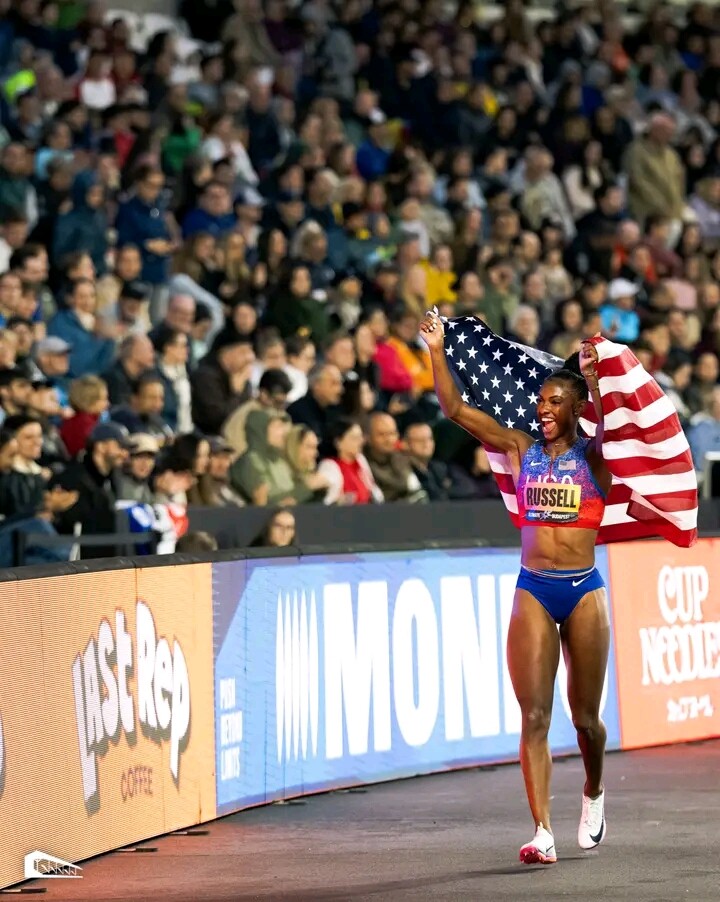
The American produced a brilliant 12.22 seconds to capture the Ultimate Championship title, once again demonstrating her ability to deliver when the pressure is at its highest.
Russell controlled the race from the opening hurdles, attacking each barrier with precision before powering down the home straight to secure a convincing victory. Her performance confirmed why she has been one of the most dominant hurdlers in the world this season.
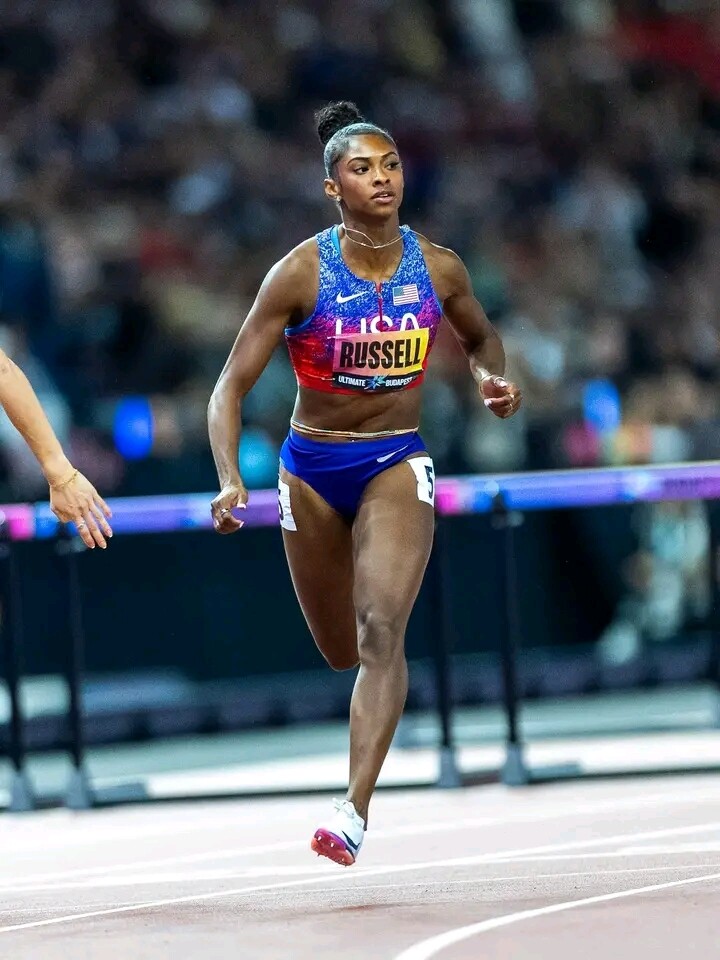
Nigeria’s Tobi Amusan, a former world-record holder and one of the most experienced athletes in the field, mounted a strong challenge but had to settle for silver in 12.34 seconds.
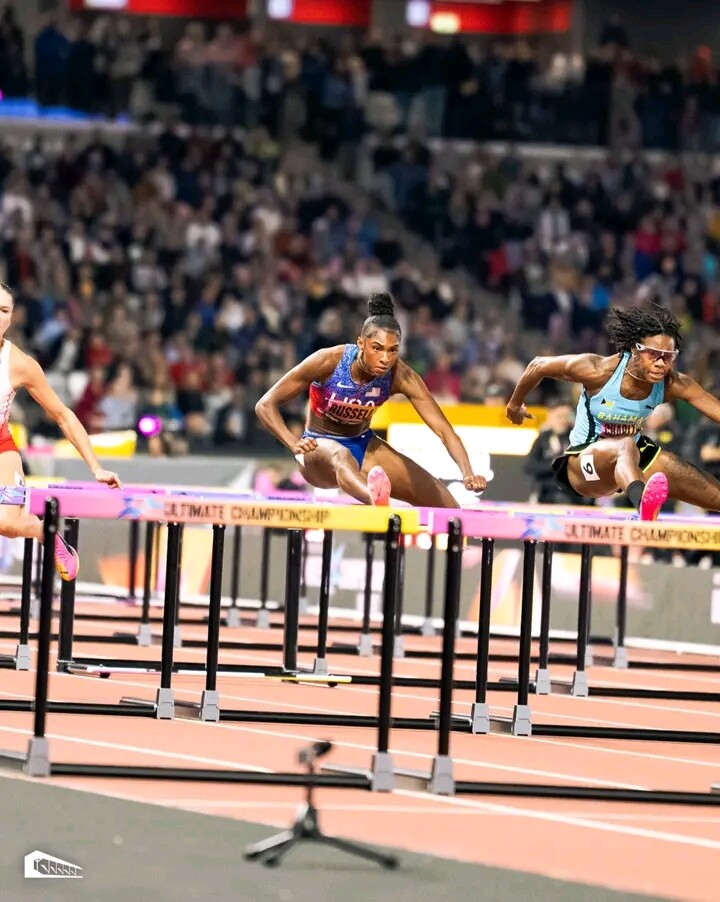
The bronze medal went to the Netherlands’ Nadine Visser, who crossed the line in 12.39 seconds after another impressive championship performance.
Women’s 100m Hurdles Final
1. Masai Russell — United States — 12.22
2. Tobi Amusan — Nigeria — 12.34
3. Nadine Visser — Netherlands — 12.39
Beyond the medals and times, the race produced one of the most memorable images of the championship.
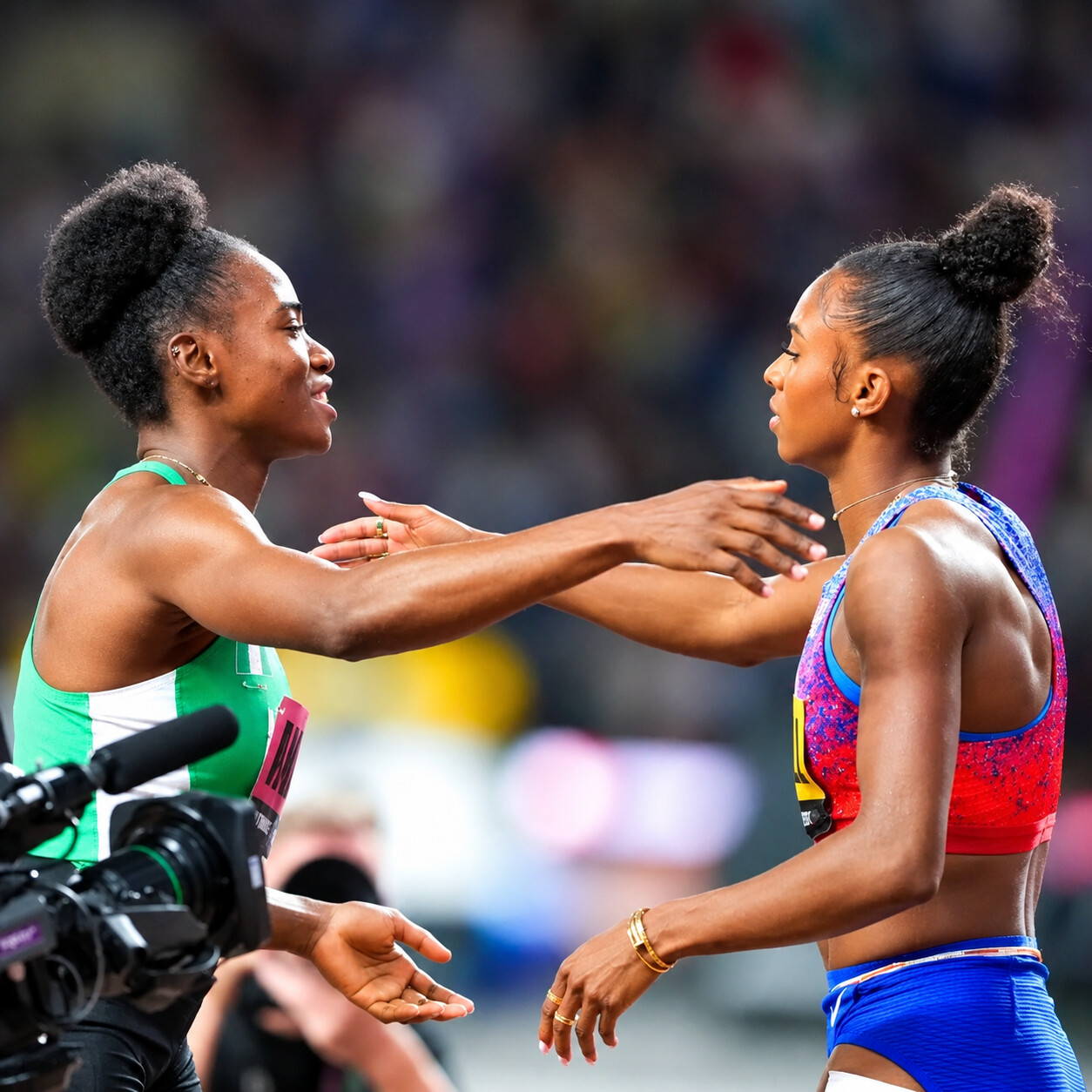
Moments after Russell secured the title, she shared a warm embrace with Amusan, creating a striking scene of mutual respect between two athletes who have played major roles in the evolution of women’s sprint hurdling.
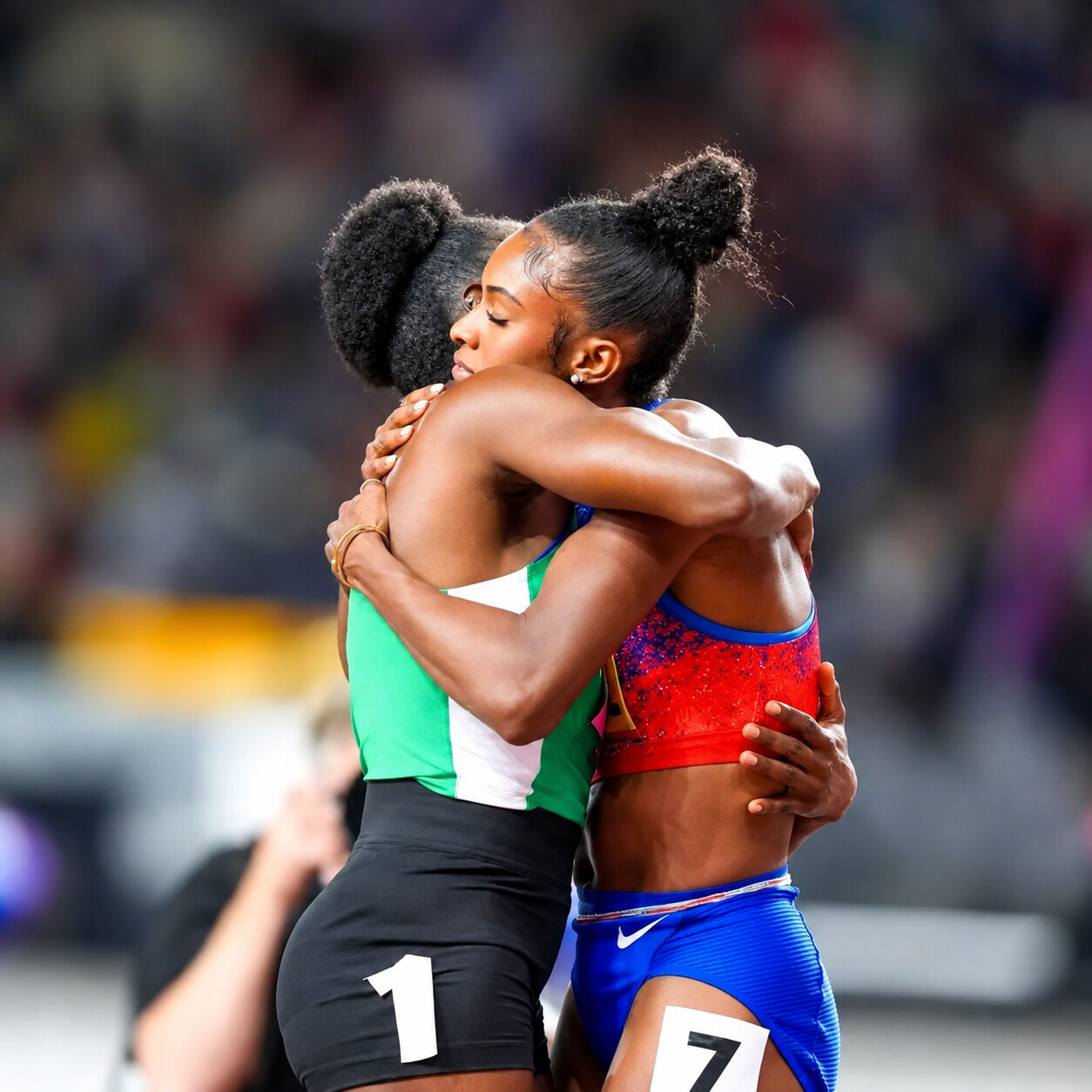
There was no love lost between the former world-record holder and the athlete who has now taken over the top spot. Amusan’s journey helped redefine the event, while Russell has emerged as the new generation’s leading force.
The embrace offered a fitting reminder that elite sport is not only about rivalry and competition. Behind the starting line are athletes who understand the sacrifice, pressure and dedication required to reach the highest level.
For Amusan, the silver medal represents another podium finish at the highest level, while Visser continues to underline her credentials among the world’s elite hurdlers.
But the night belonged to Russell.
With another major title secured and her confidence soaring, the American has made it increasingly difficult for anyone to challenge her position at the top of women’s sprint hurdling.
And perhaps the most fitting image of the night came after the race — the former world-record holder embracing her successor as Russell celebrated becoming the inaugural Ultimate Champion.
Budapest has crowned its first Ultimate Champion, and Masai Russell has once again shown that when the biggest moment arrives, she is ready to answer.
by Erick Cheruiyot for My Best Runs.
Login to leave a comment
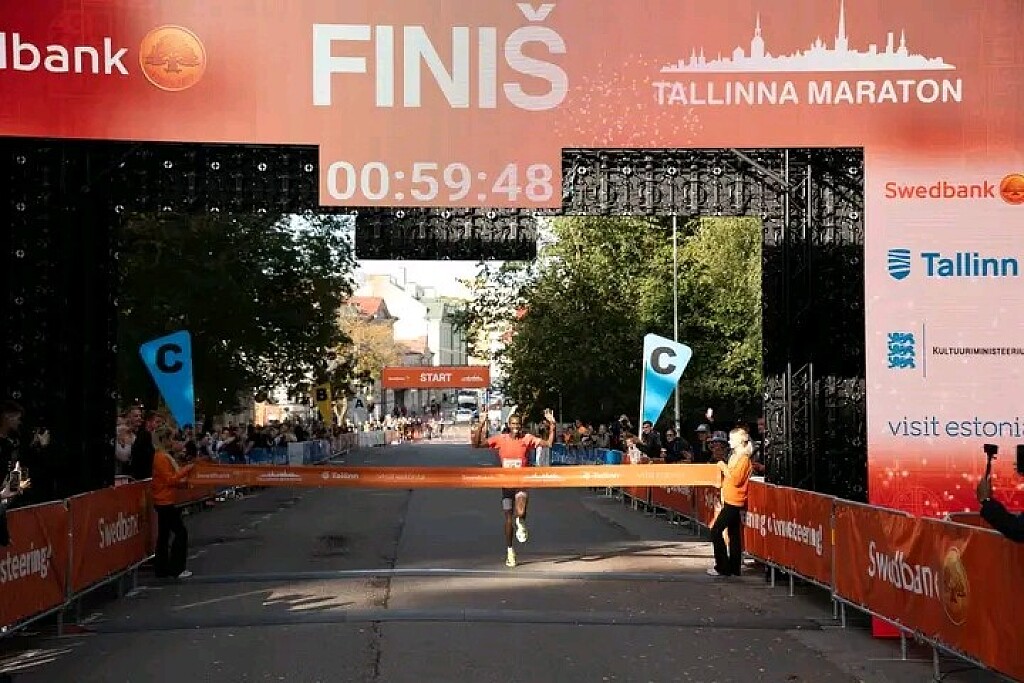
History Made in Tallinn as Vincent Kiptoo Breaks One-Hour Barrier in Estonia
Kenya produced a remarkable double victory at the 2026 Swedbank Tallinn Marathon Half Marathon in Estonia, with Vincent Kiptoo and Regina Wambui Ndungu claiming the men’s and women’s titles in record-breaking fashion.
Kiptoo delivered the headline performance of the morning, storming to victory in 59:48 to become the first athlete to run a half marathon in under one hour on Estonian soil. His performance also established a new Tallinn Half Marathon course record, marking a historic milestone for both the Kenyan and the race.
The Kenyan’s victory was backed by an impressive display of depth from his compatriots. Johana Erot finished second in 1:00:51, recording a personal best, while Enos Kipruto Saat completed the podium in 1:01:22. Kenya therefore swept all three men’s podium positions.
The fastest Estonian in the men’s race was Leonid Latsepov, who finished in 1:04:20, giving the home crowd another performance to celebrate despite the dominance of the Kenyan contingent.
The women’s race provided another Kenyan triumph, with Regina Wambui Ndungu producing a superb 1:07:35 to take the title and set a new Tallinn Half Marathon course record. Her performance completed a memorable Kenyan double on a morning when both winners rewrote the course records.
Winsam Jerono secured second place in 1:10:29, also improving her personal best, while Morocco’s Soukaina Atanane took third in 1:11:24. The fastest Estonian woman was Pille Hinn, who crossed the line in 1:23:02.
The men’s result was particularly striking, with Kenya occupying every place on the podium. Kiptoo’s historic sub-hour run was followed by Erot’s personal-best performance and Kipruto Saat’s strong third-place finish, underlining the depth of Kenyan talent over the half-marathon distance.
For Kiptoo, the 59:48 performance represents more than a race victory. Breaking the one-hour barrier in Estonia places his name in the history of the Tallinn Half Marathon and gives him a course record that will now become the benchmark for future editions of the race.
Ndungu’s victory added another layer to the Kenyan success. Her 1:07:35 not only secured the women’s title but also lowered the course record, meaning both elite races produced new standards on the same morning.
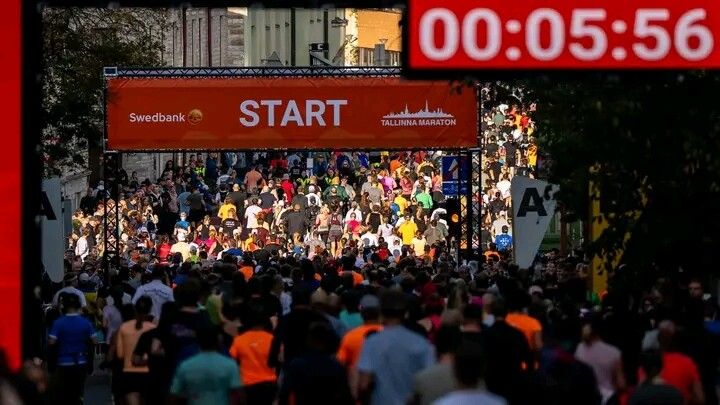
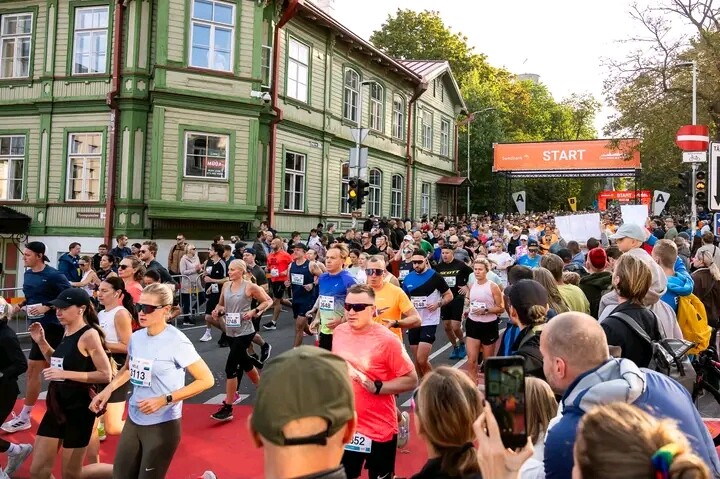
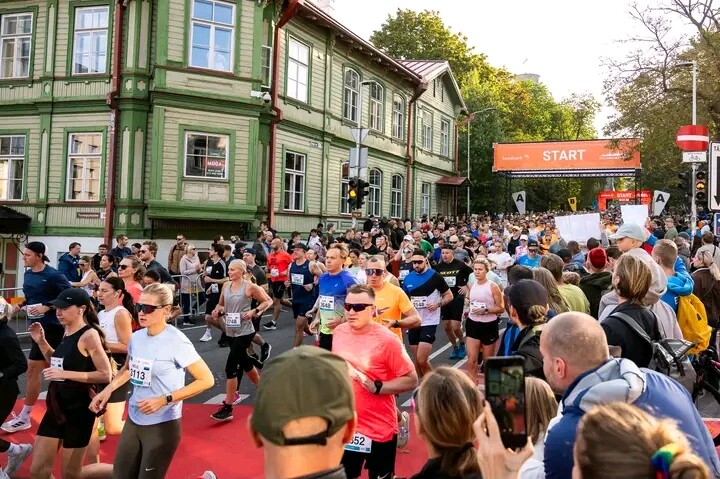
The scale of the event added to the occasion, with more than 5,000 runners taking on the 21.1-kilometre challenge. The streets of Tallinn were filled with runners of different levels, creating a vibrant backdrop for a morning that produced two Kenyan victories and two new course records.
The half marathon was only one part of a packed Tallinn running weekend. The 10K Tallinn Autumn Run was scheduled to follow at 14:00, with the Nike Youth Run later in the evening at 18:30, keeping the Estonian capital at the centre of the running action throughout Saturday.
The weekend will then reach its grand finale on Sunday morning with the Tallinn Marathon, scheduled for a 09:00 start. With thousands of runners continuing to take to the streets, the city’s celebration of distance running is set to continue.
For Kenya, however, the defining moment of the half marathon will remain Kiptoo’s historic 59:48. Alongside Ndungu’s course-record victory, it gave the country a spectacular start to the Tallinn Marathon weekend and etched another memorable chapter into Kenya’s remarkable road-running story.
by Erick Cheruiyot for My Best Runs.
Login to leave a comment

Tallin Marathon
The Tallinn Marathon has won a sure place in the competition calendar of runners and has become an attractive destination for running tourists looking for new experiences. About 20 000 running enthusiasts from 56 different countries participated in the 2017 event. As a tradition, the marathon will take place in every second Sunday of September, this year 9th of September,...
more...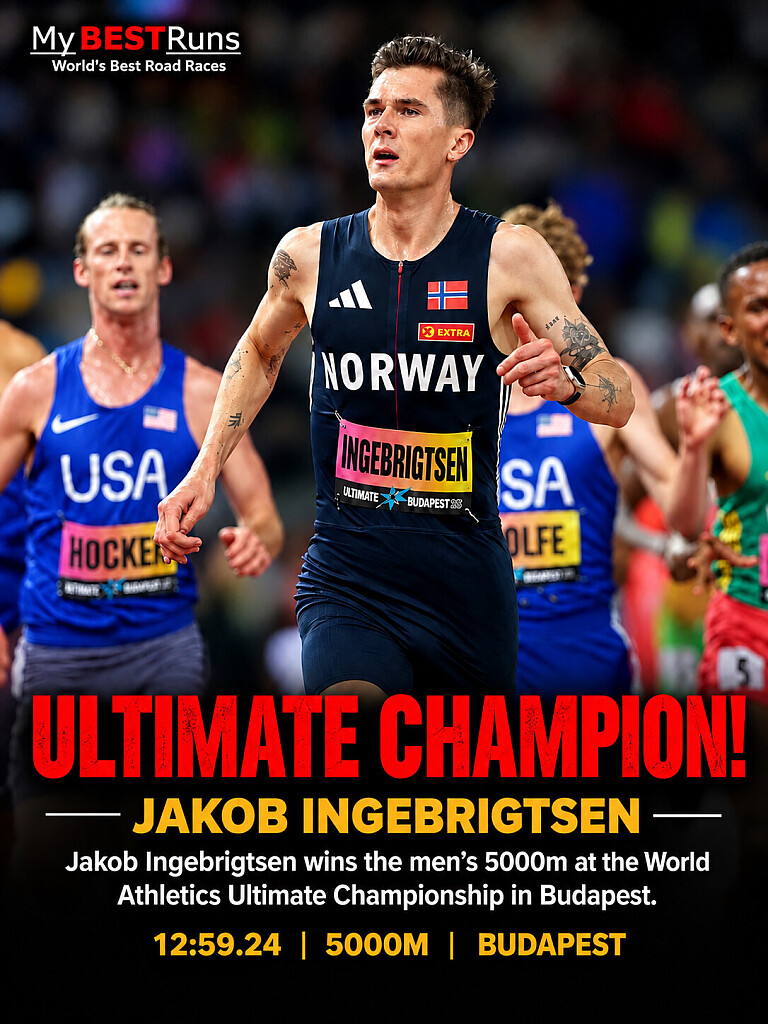
Jakob Ingebrigtsen Completes Remarkable Comeback With Ultimate 5000m Gold
Eleven months away from racing. Achilles surgery. Just six weeks of serious training.
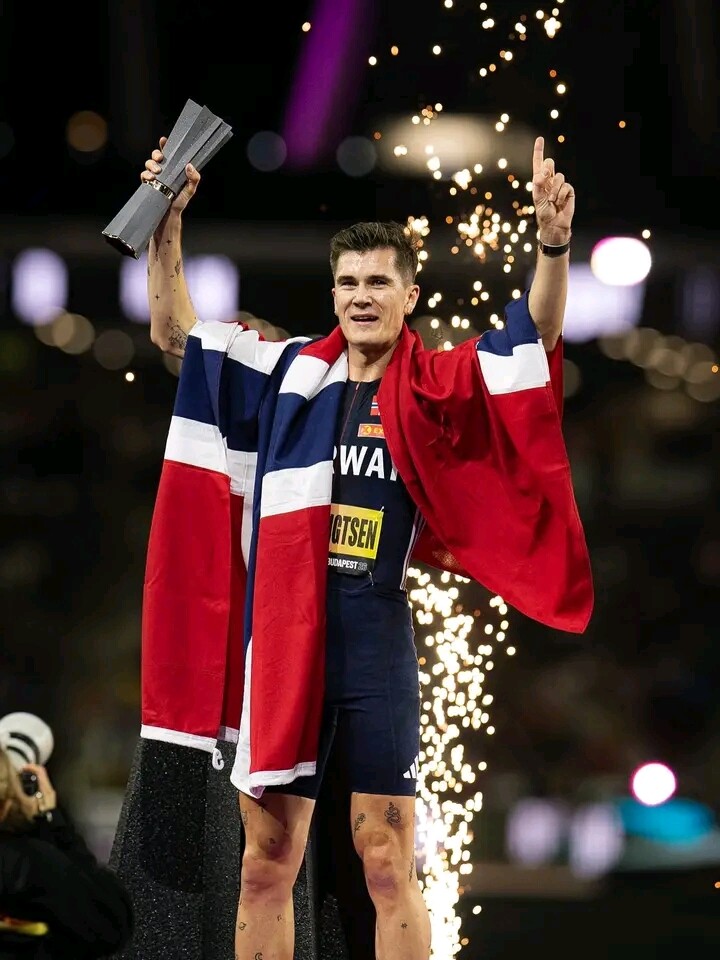
Now, Jakob Ingebrigtsen is an Ultimate Champion.
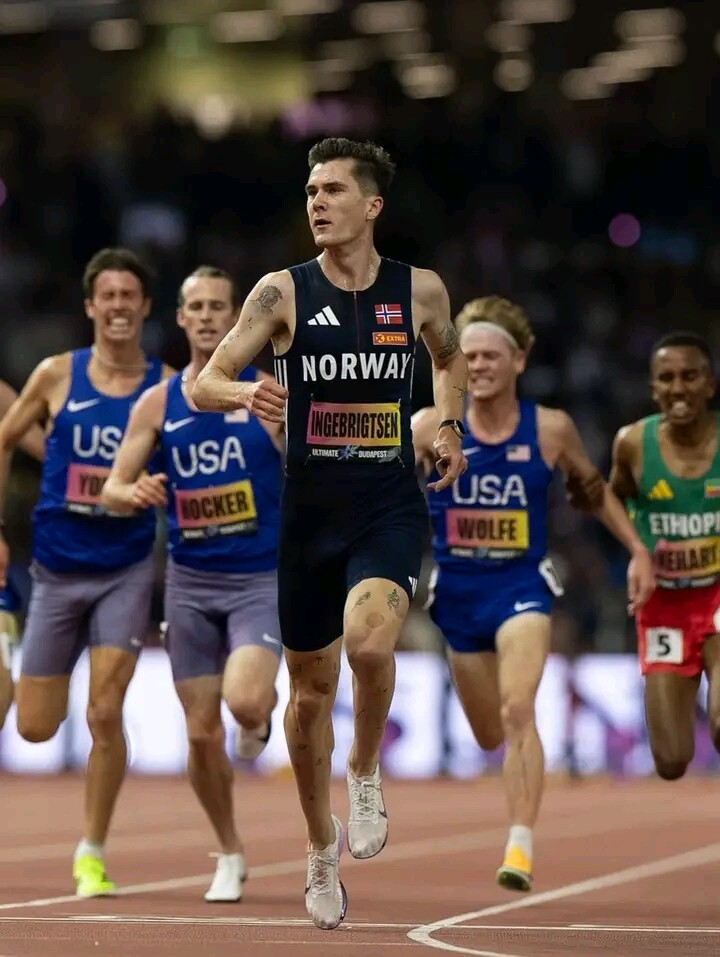
The Norwegian star delivered a stunning performance in Budapest, winning the men’s 5000m at the inaugural World Athletics Ultimate Championship in 12:59.24.
It was a race that demanded patience, tactical intelligence and a perfectly timed finish—qualities Ingebrigtsen has repeatedly demonstrated throughout his career.
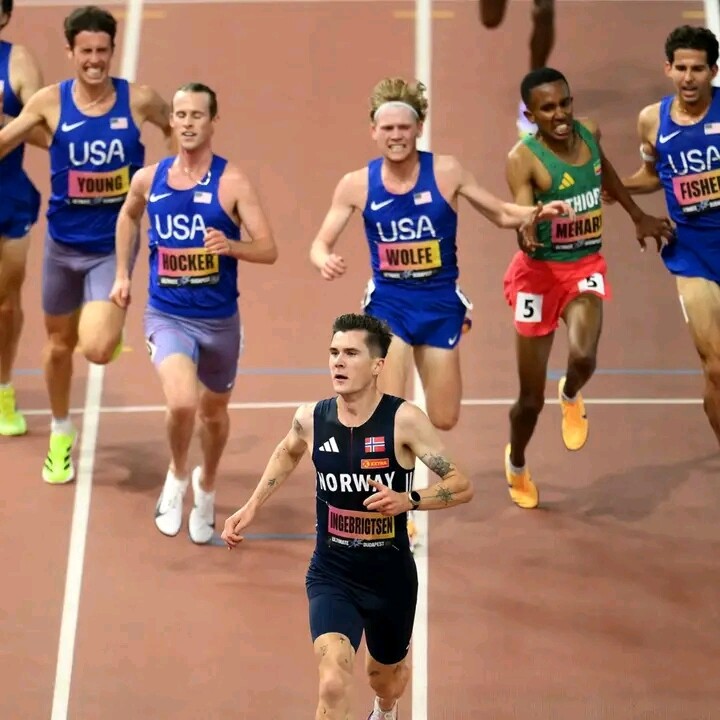
Rather than forcing the pace from the front, Ingebrigtsen stayed towards the back of the field and waited as the race unfolded. He remained composed while the leading group battled for position, conserving his energy for the moment that mattered most.
That moment came in the final straight.
Ingebrigtsen unleashed his trademark finishing speed, powering past his rivals and holding off a determined challenge from American star Cole Hocker to secure the gold medal.
Hocker finished second in 13:00.05, while fellow American Parker Wolfe took third in 13:00.13. The result gave Ingebrigtsen another major title in a season that began with serious questions about how quickly he could return to his best.
His comeback has been extraordinary.
After nearly 11 months away from competition and a spell on the sidelines following Achilles surgery, Ingebrigtsen returned to racing with limited preparation. Just six weeks of serious training stood between him and his return to the highest level.
Yet he has already transformed that uncertainty into success.
The victory in Budapest also adds another fascinating chapter to his rivalry with Hocker. The American, who has established himself among the world's leading middle-distance runners, will get another opportunity to challenge Ingebrigtsen when the pair meet again in the 1500m later this weekend.
The 5000m may belong to Norway, but the rivalry is far from over.
For Ingebrigtsen, the message from Budapest is clear: the long road back has not weakened his competitive instincts. If anything, it has made his return even more impressive.
He waited. He watched. He chose his moment.
And when it was time to strike, Jakob Ingebrigtsen did what Jakob Ingebrigtsen does best—he finished the job.
by Erick Cheruiyot for My Best Runs.
Login to leave a comment
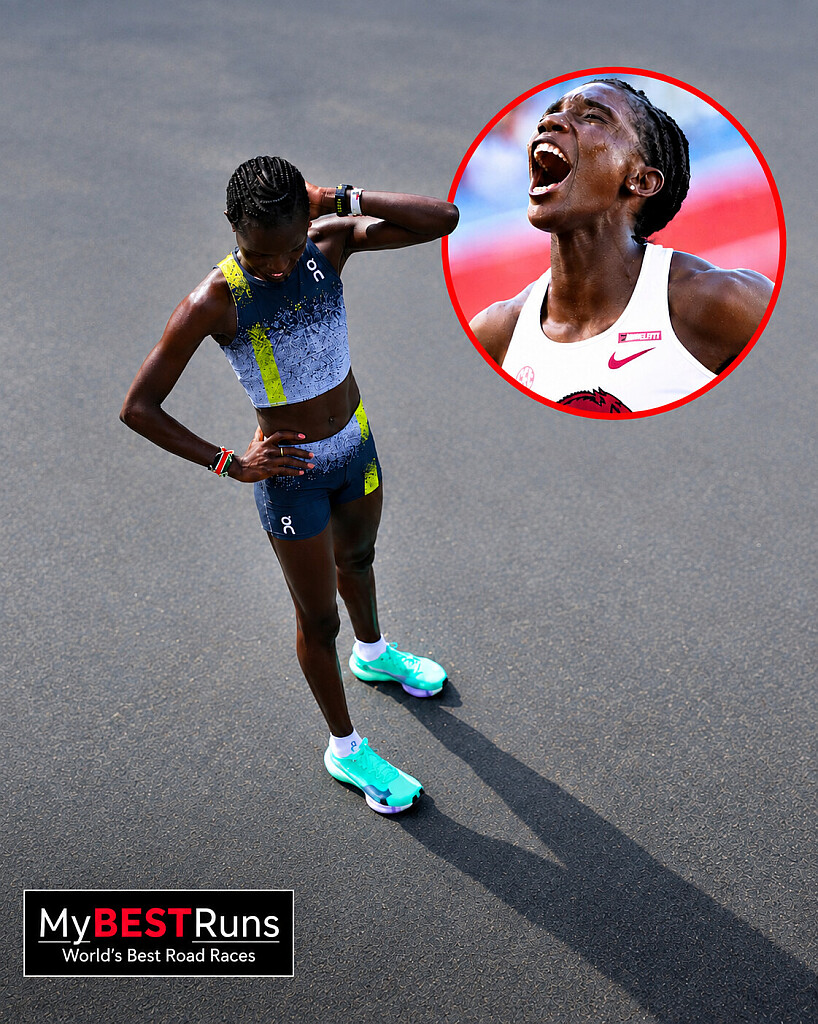
Doris Lemngole Turns Professional With On After Remarkable NCAA Career
Kenyan steeplechase star Doris Lemngole has officially turned professional after signing a contract with Swiss sportswear brand On, marking the beginning of a new chapter for one of the most accomplished young distance runners in the sport.
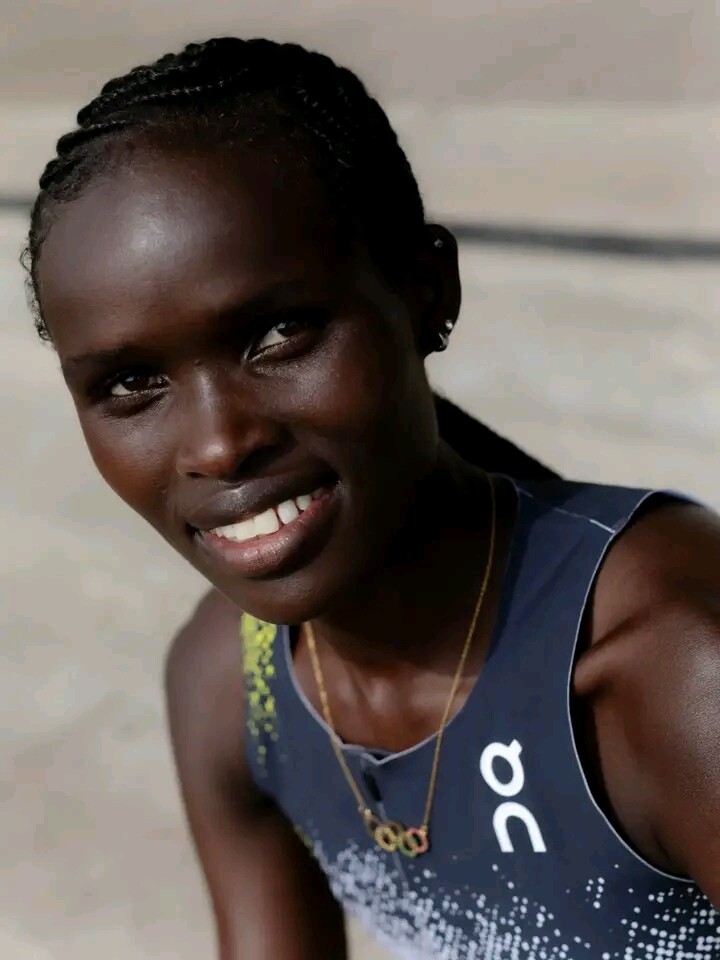
On announced the move on Thursday, September 10, confirming that the 24-year-old has been elevated from the NIL partnership she signed with the brand in August 2025 to its professional athlete roster.
The decision comes after Lemngole completed a spectacular collegiate career at the University of Alabama, where she established herself as one of the most dominant distance runners in NCAA history. She leaves Tuscaloosa as a five-time NCAA champion, a collegiate record-holder and the winner of The Bowerman, the highest individual honor in American collegiate track and field.
Her breakthrough came in the 3,000m steeplechase, an event in which she repeatedly pushed the boundaries of collegiate running. In 2025, she clocked 8:58.15 to become the first woman in NCAA history to break the nine-minute barrier in the event. She also captured consecutive NCAA outdoor steeplechase titles in 2024 and 2025.
Lemngole was equally impressive over cross country. At the 2025 NCAA Championships in Missouri, she defended her national title in 18:25.4, producing the fastest winning performance in NCAA championship history by a considerable margin. Her consistency and dominance across disciplines ultimately helped her secure The Bowerman in December 2025, making her the first Alabama athlete and first Kenyan to receive the prestigious award.
Her transition from collegiate standout to international contender has been remarkably rapid. Still competing as an Alabama athlete, Lemngole won her Diamond League debut in the 3,000m steeplechase at Athletissima in Lausanne in August 2025 before going on to represent Kenya at the World Championships in Tokyo, where she finished fifth.
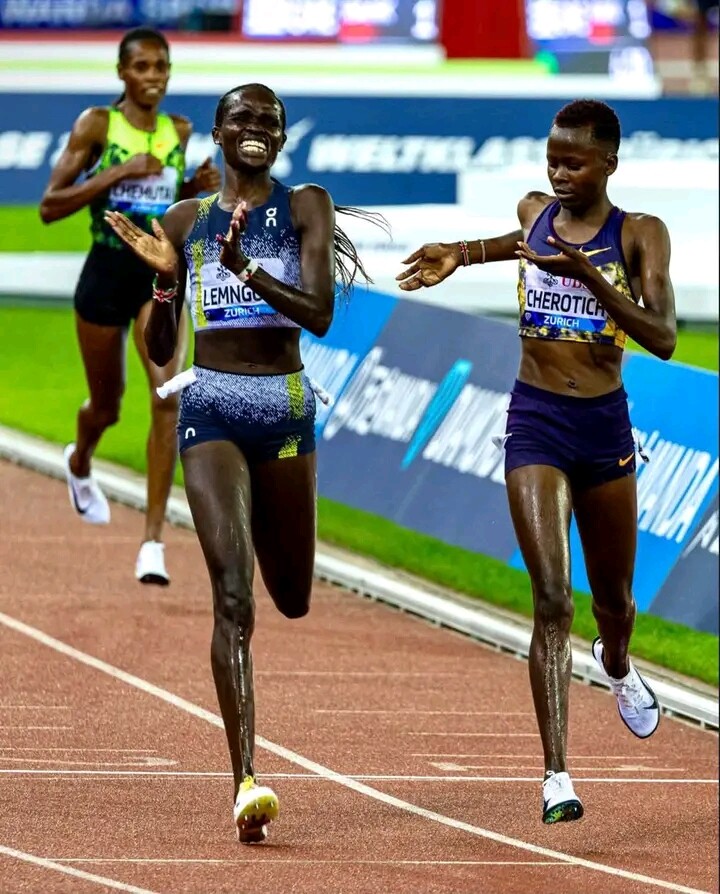
Now, just days before her professional announcement, Lemngole produced perhaps the strongest performance of her career. At the Diamond League Final in Brussels on September 4, she stormed to a massive personal best of 8:52.86 for second place in the 3,000m steeplechase. Only five women in history had previously run faster, underlining just how extraordinary the performance was. Faith Cherotich won in a meeting-record 8:51.61, while Olympic champion Winfred Yavi finished third in 8:53.54.
That performance provided a fitting bridge between Lemngole's collegiate dominance and her professional future. She is no longer simply one of the NCAA's brightest talents; she has now established herself firmly among the world's leading steeplechasers.
For On, the decision represents a natural continuation of a relationship that began when Lemngole joined its NIL roster in 2025. The Swiss brand said her ability to dominate at the collegiate level while immediately challenging the world's best made the move to its professional roster a natural progression.
For Lemngole, the signing is about much more than a new contract. It represents the next stage of a journey that has taken her from NCAA champion and record-breaker to Bowerman winner and international title contender.
With her collegiate chapter now complete and a sub-8:53 performance already on the record, the Kenyan has made her intentions clear: **the next challenge is to see just how far she can take her extraordinary talent on the global stage.**
by Erick Cheruiyot for My Best Runs.
Login to leave a comment
American Depth on Full Display as Team USA Packs Five into World Ultimate Champs Top Seven
Team USA delivered a remarkable display of depth in the men’s 5,000m at the World Ultimate Championships, placing five athletes among the top seven in a tightly contested race.
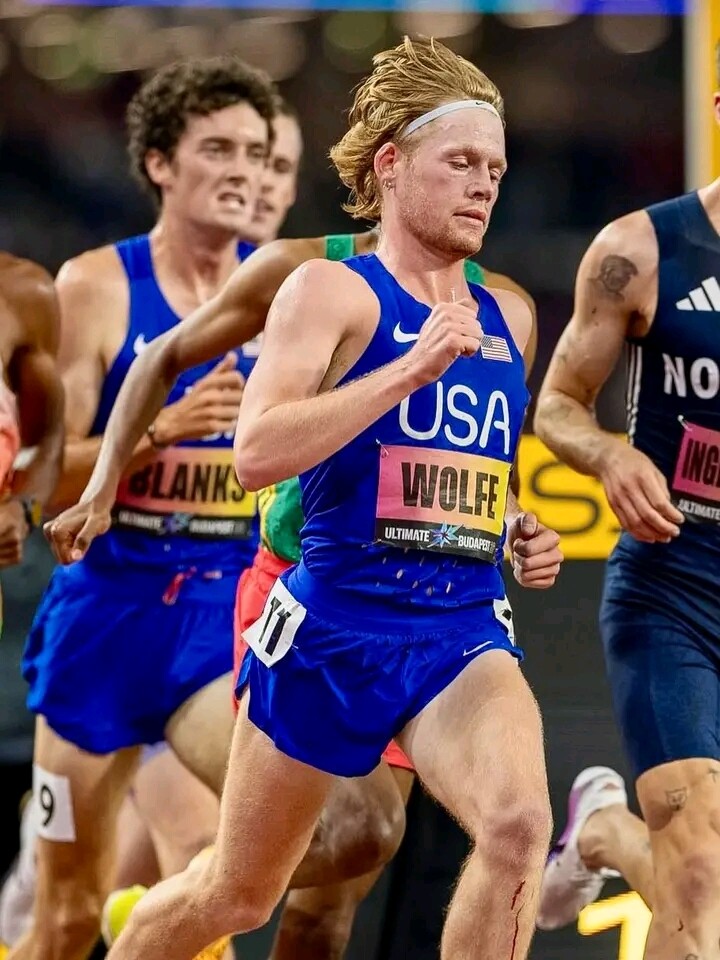
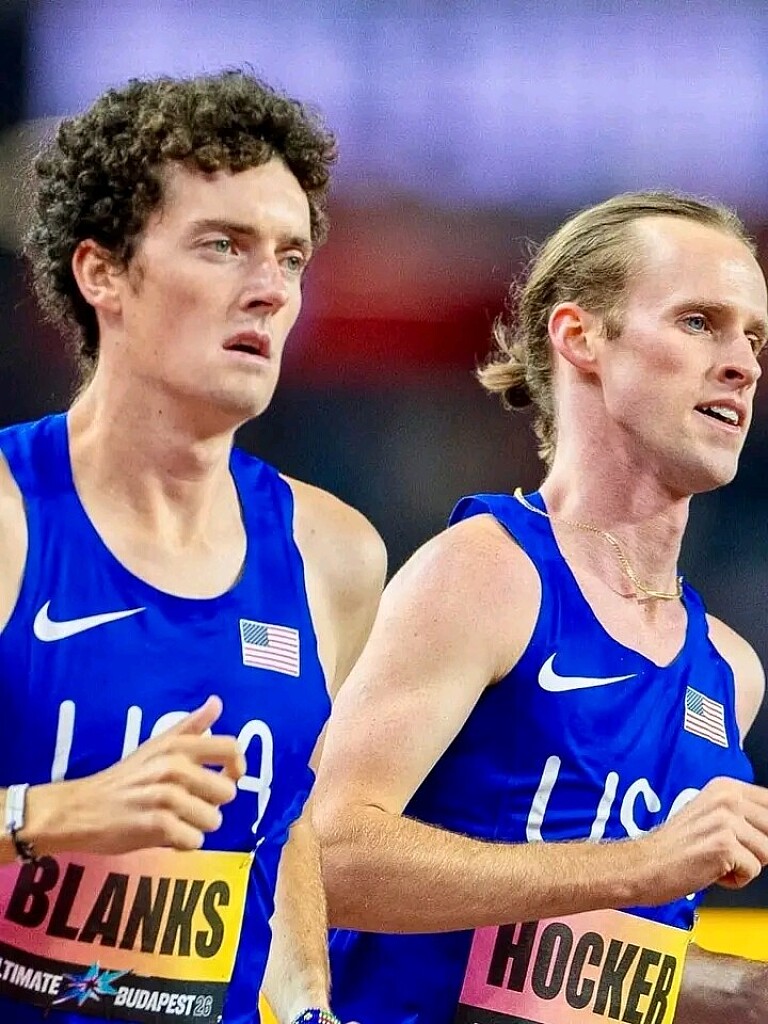
Cole Hocker led the American charge, finishing second in 13:00.05. The Olympic champion was followed closely by Parker Wolfe, who crossed the line third in 13:00.13, just eight hundredths of a second behind his compatriot.
Nico Young added another strong performance in fifth, clocking 13:00.26, while Grant Fisher finished sixth in 13:00.34. Graham Blanks completed the remarkable American showing, taking seventh in 13:00.40.
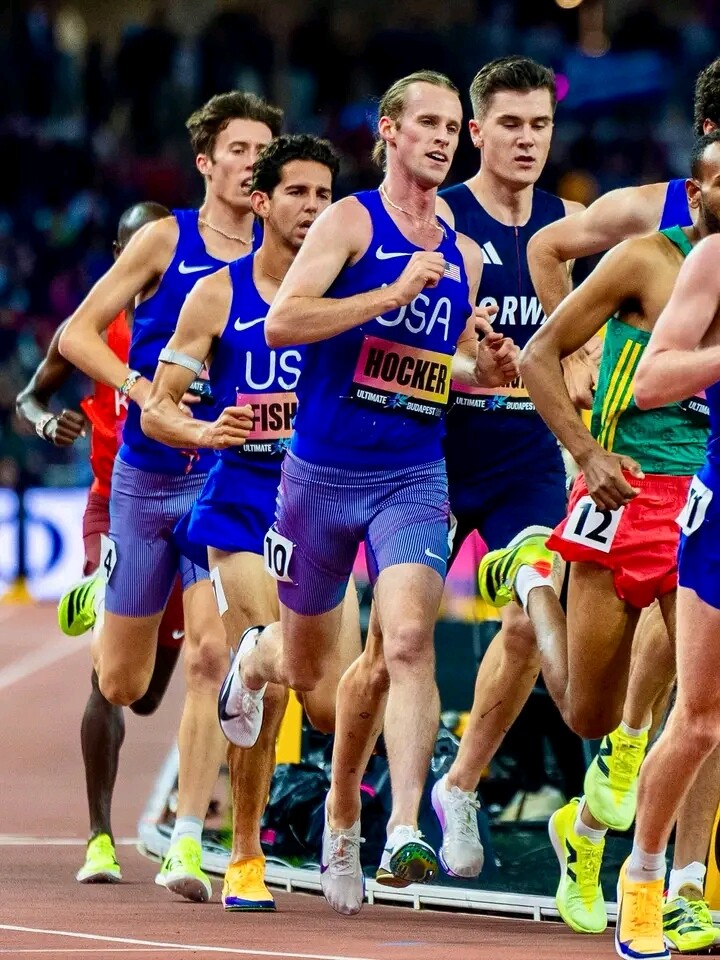
The closeness of the finish made the American performance even more impressive. The five Team USA athletes were separated by just 0.35 seconds, underlining the extraordinary level of competition within the American distance-running ranks.
It was also a striking combination of established experience and emerging talent. Hocker and Fisher have already established themselves among the leading American distance runners, while Wolfe, Young and Blanks represent the strength of the next generation pushing their way onto the global stage.
Although Team USA did not sweep the medals, having five runners inside the top seven was a powerful statement of collective strength. It demonstrated that American distance running possesses not only individual stars but also remarkable depth capable of challenging at the highest international level.
For Hocker, Wolfe, Young, Fisher and Blanks, the result adds another significant chapter to their seasons and provides a glimpse of the growing competitiveness of the United States in the 5,000m. With such a tightly packed group performing at the front of a major championship race, American distance running has plenty of reason for optimism.
by Erick Cheruiyot for My Best Runs.
Login to leave a comment
