

Running News Daily
Running News Daily is edited by Bob Anderson and team. Send your news items to bob@mybestruns.com Advertising opportunities available.
Index to Daily Posts · Sign Up For Updates · Run The World Feed


World Athletics Gives Running A New Home As Jakob Larsen Takes Charge Of A Powerful New Department

World Athletics has given running a new home — and placed one of the sport’s most experienced event leaders at the heart of it.
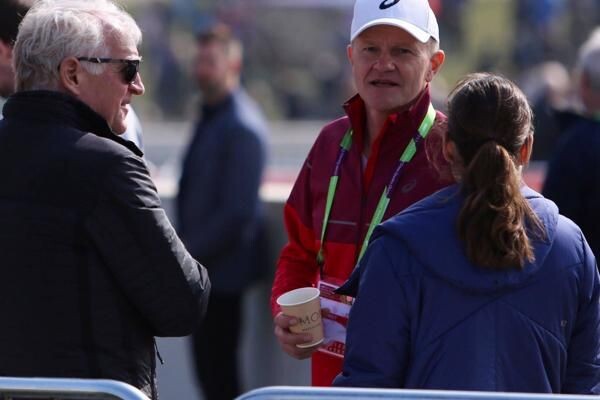
The global governing body has established a standalone Running & Mass Participation department, a major organisational move designed to give greater focus to the rapidly expanding running ecosystem. At its helm is Jakob Larsen, a veteran sports executive whose résumé already includes some of the most significant running events staged under the World Athletics banner.
Larsen arrives with 25 years of experience across international sport and has played a central role in developing and delivering major championships. His previous work includes the 2014 World Half Marathon Championships in Copenhagen, the 2019 World Cross Country Championships in Aarhus and, most recently, the inaugural World Athletics Ultimate Championship in Budapest.
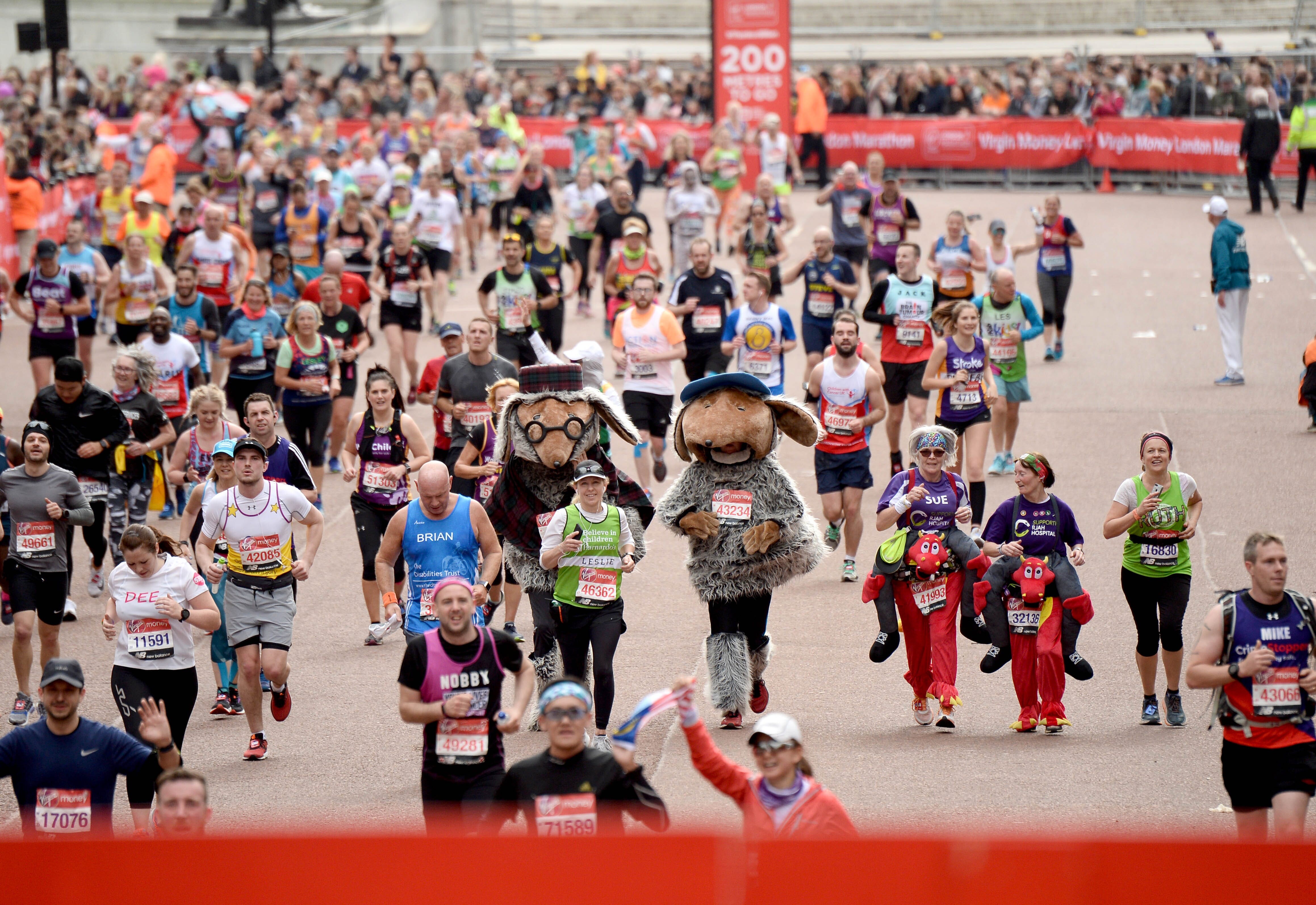
Those experiences give Larsen a particularly strong platform for his new assignment. Rather than building the running side of the sport from the ground up, he inherits a global movement that is already enormous — one that stretches from elite marathoners chasing world records to mass-participation runners filling city streets across the world.
The new department will have responsibility for a broad portfolio covering World Athletics’ road running and marathon activities, cross country, mountain and trail running, the World Athletics Label Road Races programme, regulation, technical and educational services, and the development of new partnerships across technology, data and the wider running industry.
That portfolio also includes the newly established RUN X™ World Treadmill Championship, reflecting how far the definition of competitive running is continuing to expand beyond the traditional racecourse.
The scale of the road-running network alone underlines the importance of the move. The World Athletics Label Road Races calendar features races across continents, ranging from major marathons and half marathons to shorter international road races. The programme includes some of the biggest names in the sport, from Boston and London to Chicago, Berlin, Tokyo and New York.
For World Athletics, the decision is therefore about much more than changing an organisational chart. It signals recognition that running has developed into one of the sport’s most powerful global platforms, connecting elite competition with millions of recreational and mass-participation runners.
And with Larsen now leading the new department, World Athletics is placing that responsibility in the hands of someone who has already demonstrated an ability to build major events, manage complex international projects and understand where the future of running may be heading.
The challenge now is to bring all those strands together — elite road racing, mass participation, championships, trail and mountain running, technology and new forms of competition — under one coordinated vision.
Running has never been bigger. Now, World Athletics is giving it the organisational structure to match.
by Erick Cheruiyot for My Best Runs.
Login to leave a comment
Latest Running News
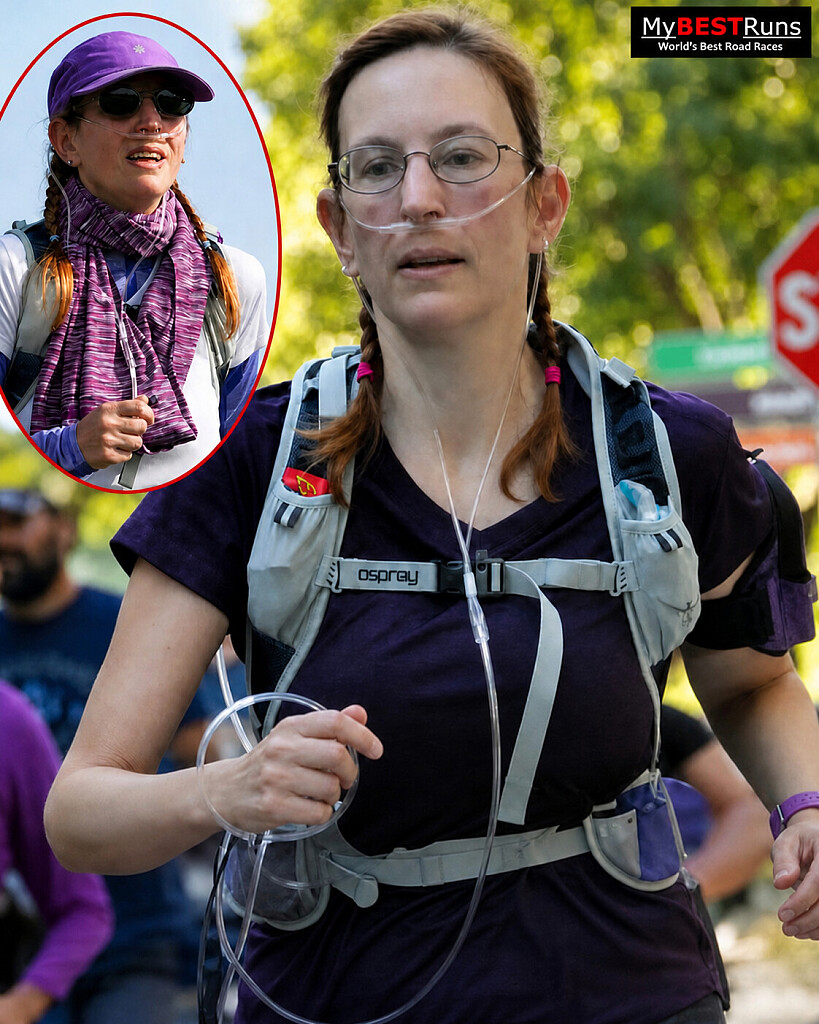
Mary Kitlowski’s 26.2-Mile Triumph: Finishing New York With Just 34% Lung Capacity
For most marathon runners, completing 26.2 miles is a test of endurance, preparation and mental strength. For Mary Kitlowski, it was something far greater — a battle against the limitations imposed by a rare and progressive lung disease.
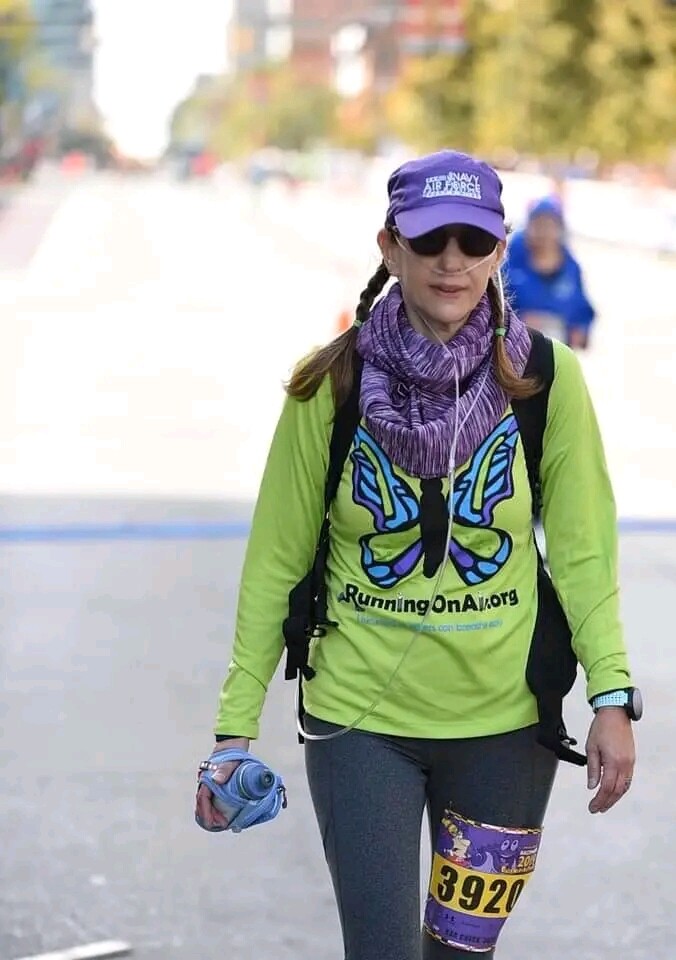
In 2019, Kitlowski finally crossed the finish line of the New York City Marathon after years of determination and preparation. What made the achievement extraordinary was not simply the distance she covered, but the circumstances under which she covered it: Mary was living with primary ciliary dyskinesia (PCD), a rare genetic disorder that had caused significant lung damage, and she required supplemental oxygen during exertion. At the time, reports stated that she had only about 34 percent lung capacity.
Her journey to New York had already included heartbreak.
Two years earlier, in 2017, Mary had attempted the marathon for the first time. But an infection had left her struggling before race day, and she was ultimately forced to stop at mile 18 — just over eight miles from the finish. Rather than allowing that experience to define her, she returned to training with an even greater determination to complete what she had started.
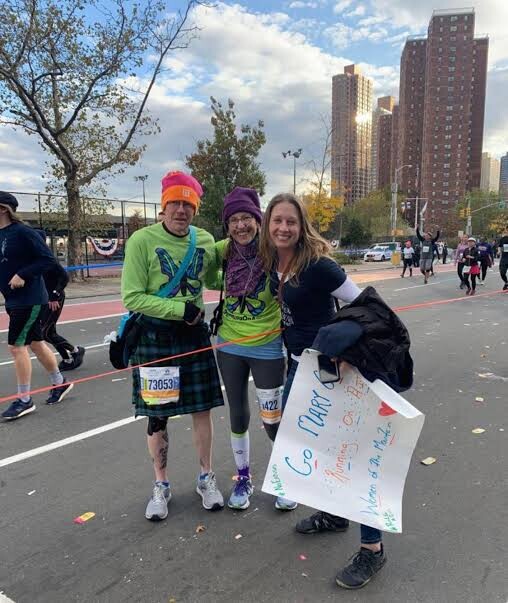
The challenge was unlike that faced by most marathoners.
Mary competed with a portable oxygen concentrator strapped to her, carrying equipment that helped her breathe during exertion. The device weighed around six pounds, while additional batteries were needed because its power would not last throughout the entire marathon. Her husband, Ed, stayed alongside her and carried the extra batteries as they made their way through New York’s five boroughs.
And this was never simply about completing a race.
Mary had become an advocate for people living with lung disease and those who depend on supplemental oxygen. Through her Running On Air initiative, she sought to challenge the perception that needing oxygen should prevent someone from being active, pursuing goals or living an ambitious life. Her marathon became another powerful platform for that message.
On November 3, 2019, after years of preparation and a previous attempt that ended at mile 18, Mary finally completed the 26.2-mile journey.
Her official finishing time was 9 hours, 50 minutes and 26 seconds. She completed the marathon as part of an effort to raise awareness for rare diseases and the National Organization for Rare Disorders, turning every step into a statement about resilience and possibility.
Mary’s achievement was never about how quickly she could reach the finish line. It was about reaching it at all.
With a portable oxygen concentrator on her back, spare batteries carried by her husband and lungs functioning at only a fraction of normal capacity, she walked and ran her way across New York — refusing to let her medical condition decide the boundaries of her life.
Her story is a reminder that sometimes the most remarkable marathon victories are not measured by medals, records or finishing positions.
Sometimes, the victory is simply refusing to stop
by Erick Cheruiyot for My Best Runs.
Login to leave a comment
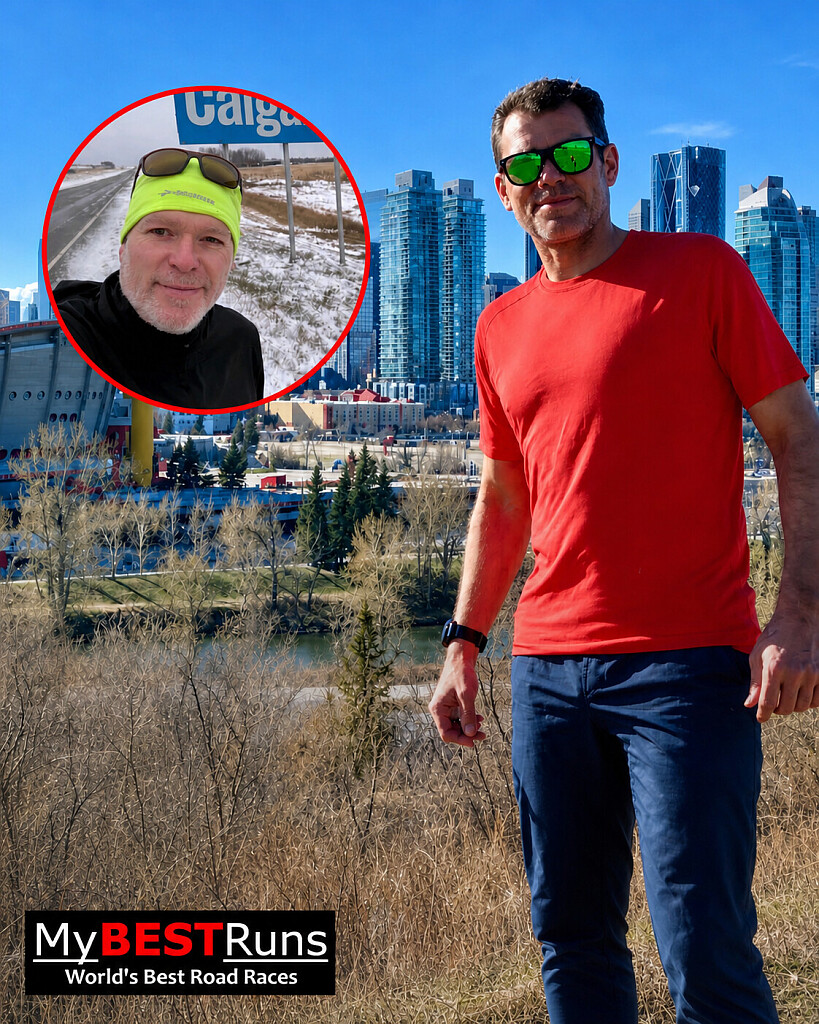
He Ran Every Street In Calgary: Six Years, 10,359 Streets And 9,252 Kilometres
Most runners measure their progress in kilometres, personal bests and finish lines. Rick Richard chose a very different way to measure his.

For six years, the Calgary resident pursued a challenge that sounds almost impossible until you see the map: run every single street within his city.
This week, he finally completed it.

Richard covered all 10,359 streets in Calgary, accumulating an astonishing 9,252 kilometres along the way. That is roughly the distance between Calgary and Tokyo—except Richard did not travel it in one long journey. He covered it gradually, street by street, neighbourhood by neighbourhood, one section of the city at a time.
What began as an ambitious running project eventually became a six-year commitment requiring patience, planning and an extraordinary willingness to run roads that most people would never think twice about.
The challenge became increasingly difficult as the map filled in. Early on, each run could cover large sections of previously unexplored streets. But as Richard progressed, the easy kilometres disappeared. What remained were isolated roads, short lanes and residential cul-de-sacs that could be several kilometres from anything else he still needed to complete.
Sometimes, finishing the project meant travelling across Calgary simply to run a handful of streets that had been missed during earlier outings.
That is part of what makes the achievement so remarkable. There was no conventional finish line waiting at the end, no race number and no crowd lining the final stretch. The goal was simply to leave no street behind.
Richard documented the journey through a public map, allowing people to watch Calgary gradually transform from a blank canvas into a network of completed routes. Month after month, the coloured lines spread across neighbourhoods as another section of the city was conquered.
The project belongs to a growing community of runners known as city streeters—people who challenge themselves to run every road within a defined area. For some, it is about exploration. For others, it is a mapping obsession. For Richard, it became a six-year test of consistency and determination.
And then came the final street.
After 10,359 streets and 9,252 kilometres, the map was finally complete.
Calgary had no more roads left for Richard to run.
Six years after starting the project, every street was covered—and an extraordinary chapter of running history in the city had come to an end.
Sometimes, the biggest running achievements are not measured by how fast you finish.
Sometimes, they are measured by how much of the world you are willing to run.
by Erick Cheruiyot for My Best Runs.
Login to leave a comment

Rachel Entrekin Takes On Bhutan’s Snowman Race: Where Running Meets Climate Action
For most ultrarunners, the finish line is the ultimate destination. For Rachel Entrekin, the journey through Bhutan’s high Himalaya carried a message that reached far beyond the clock.

The American ultrarunner took on the 2026 Snowman Race, one of the most demanding endurance challenges on the planet, joining a select field of 17 athletes for a five-day journey across Bhutan’s remote mountain wilderness. The race covered roughly 185 kilometres, with runners facing extreme terrain and mountain passes rising as high as 5,470 metres above sea level.
The Snowman Race is unlike a conventional ultramarathon. Its challenge is not simply the distance, but the combination of relentless climbs, rugged trails, unpredictable Himalayan conditions and prolonged exposure to extreme altitude. The course follows sections of the historic Snowman Trek, taking competitors deep into some of Bhutan’s most isolated landscapes.
But the race was created with a purpose that extends well beyond athletic achievement.
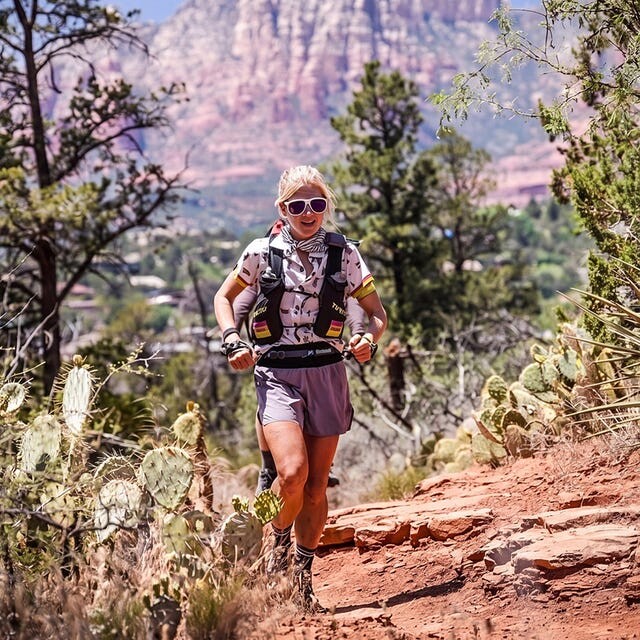
Bhutan has positioned the Snowman Race as a platform for climate action, using the event to draw global attention to the effects of a changing climate on the Himalayan environment and the communities that depend upon it. The athletes are effectively moving through a landscape where the consequences of environmental change are becoming increasingly difficult to ignore.
For Entrekin, that message has personal meaning.
In the months leading into the race, she documented her preparation and explained why the opportunity mattered to her. Her training included long runs at altitude, while her own experiences in the mountains had strengthened her concern about the changes taking place in high-altitude environments.
Her motivation was not simply to prove that she could survive one of the world's most brutal ultramarathons. She wanted the race to become a way of telling a bigger story — one about the environment, the people living in vulnerable mountain regions and the responsibility to pay attention before changes become irreversible.
That makes Entrekin particularly well suited to an event such as the Snowman Race. She has already established herself as a formidable ultrarunner, including back-to-back victories at the Cocodona 250 and further major wins at the Mammoth 200 and High Lonesome 100.
In Bhutan, however, the numbers on the results sheet were only part of the story.
Every kilometre carried runners deeper into an extraordinary Himalayan environment while exposing them to the realities of competing at elevations where oxygen is scarce and the margin for error becomes increasingly small. At its highest point, the course climbed to 5,470 metres — an altitude that would challenge even the most experienced mountain athletes.
Entrekin ultimately completed the five-day journey in 31:52:07, placing third in the women's race behind Bhutanese runners Pema Choki and Dawa Chozom. Her performance added a significant athletic achievement to an experience that was always intended to be about more than competition.
The Snowman Race therefore becomes something larger than an ultramarathon. It is a meeting point between extreme sport and environmental awareness — a race in which every climb, every difficult kilometre and every exhausted step helps bring attention to a part of the world that few people will ever experience firsthand.
For Rachel Entrekin, the mountains provided the challenge.
But the message was bigger than the finish line.
by Erick Cheruiyot for My Best Runs.
Login to leave a comment
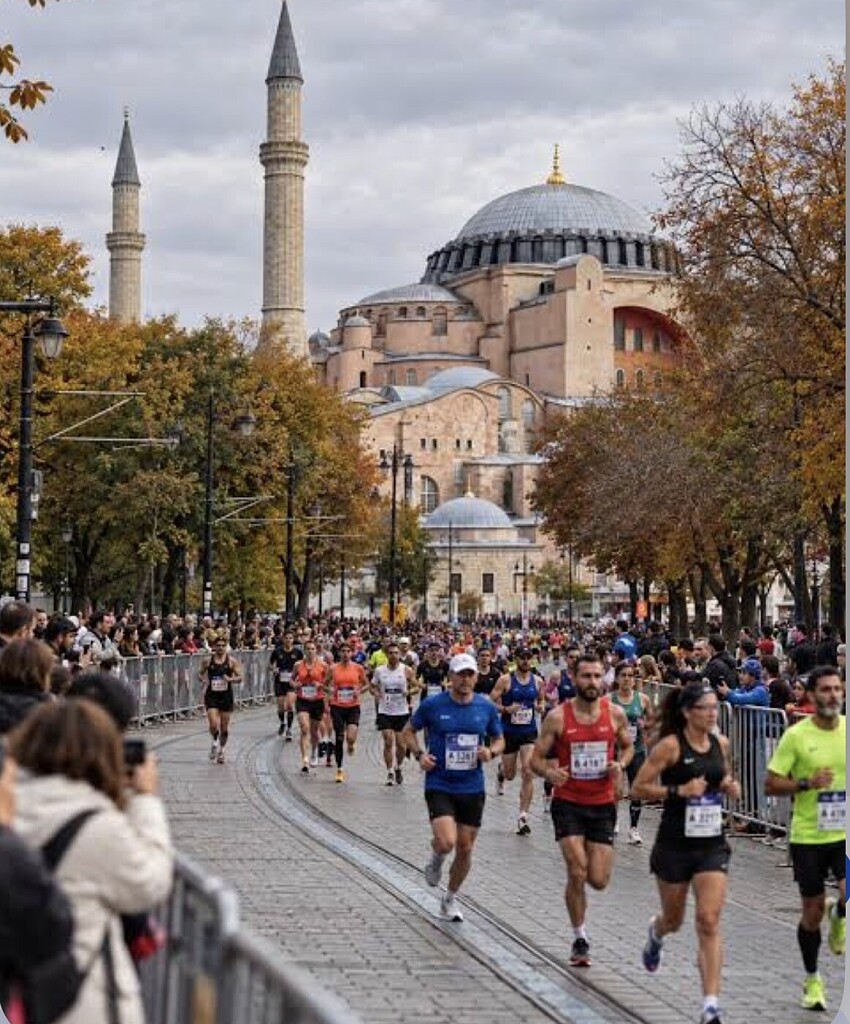
Istanbul Assembles Its Fastest Elite Field Ever as 50th Anniversary Approaches
The Türkiye Is Bankasi Istanbul Marathon is building toward its golden anniversary with a field worthy of the occasion. With two years remaining until its 50th edition, organizers have assembled the fastest elite lineup in the event’s history for Sunday’s 48th running.
Four men bring personal bests under 2:06, while three women have broken 2:20—a first for a race that has never previously featured a woman with a sub-2:20 personal best.
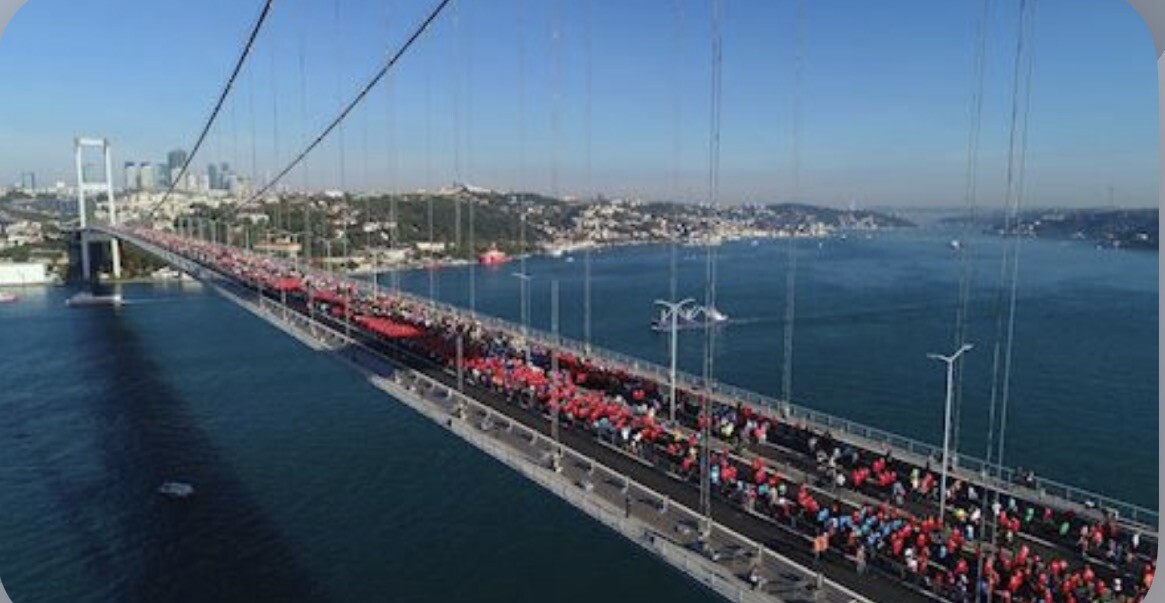
The world’s only intercontinental marathon takes runners from Asia to Europe. Türkiye’s largest marathon is also a World Athletics Gold Label Road Race, combining elite competition with one of the sport’s most distinctive settings.
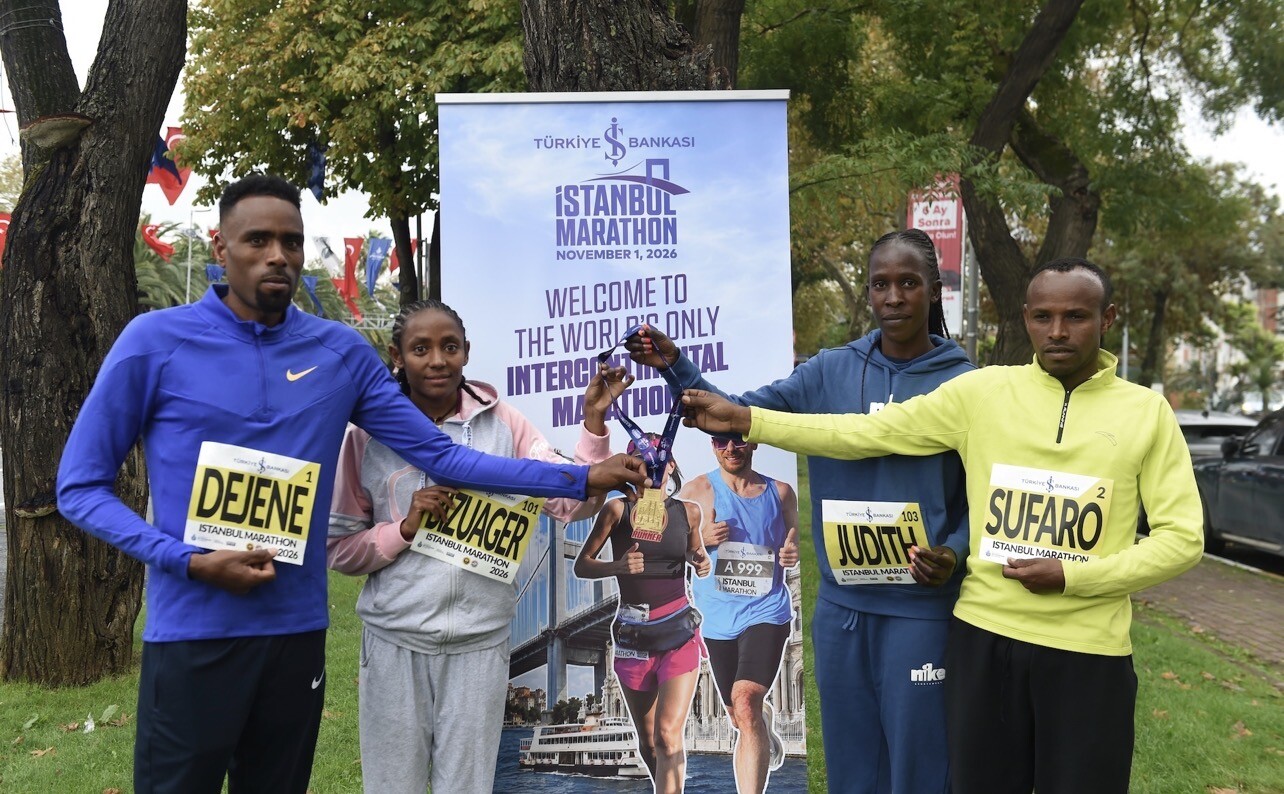
“An exciting race awaits us in both the men’s and women’s categories. Including races at shorter distances the Türkiye Is Bankasi Istanbul Marathon will bring together over 45,000 participants from 143 different countries. We are proud to host such a celebration of sports,” said Race Director Bilge Donuk.
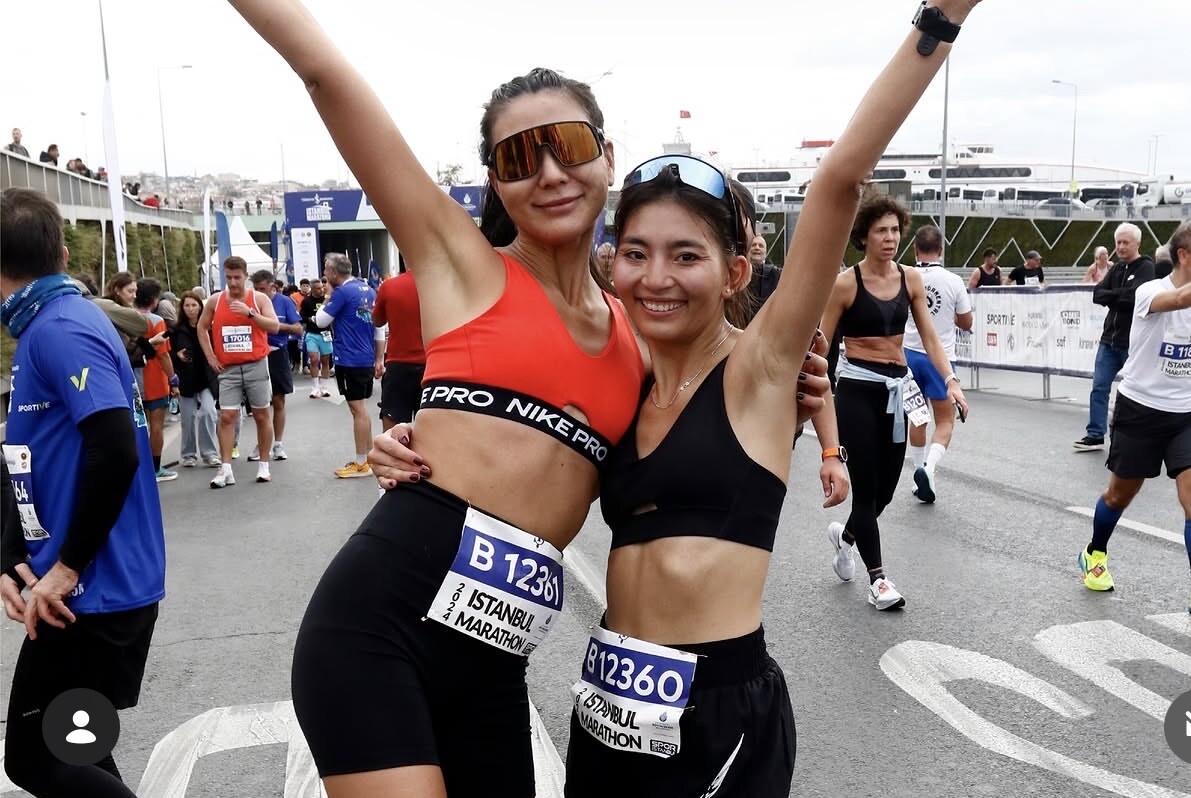
Women’s Race: Korir Leads a Record-Setting Field
Kenya’s Judith Korir, the 2022 World Championships marathon silver medalist, leads the women’s field with a personal best of 2:18:20. Ethiopia’s Azmera Abreha follows at 2:18:33, with compatriot Kasanesh Baze bringing a best of 2:19:39.
Eritrea’s Dolshi Tesfu adds further depth with her 2:20:40 best. Turkish record holder Sultan Haydar, who ran 2:21:27 in Valencia three years ago, returns to Istanbul, where she finished third in 2013.
The strength of the field leaves defending champion Bizuager Aderra only ninth on the list by personal best. The Ethiopian won last year in 2:26:19, which remains her fastest marathon.
But Aderra is focused on defending her title.
“I will try to win again. I am ready and I have trained well in Addis Ababa,” said the 30-year-old. “The final section of the course is not easy. It is probably an advantage to know it.”
For Korir, Sunday offers an opportunity to reestablish herself after an extended injury setback. She enjoyed outstanding seasons in 2022 and 2023, winning the 2022 Paris Marathon, earning world silver in Eugene and finishing fourth in London in 2:18:43. She returned to London the following year and placed sixth.
“I got a hamstring injury which hampered me for around two years,” Korir said.
She finished eighth at this spring’s Milano Marathon in 2:26:48, a result that fell short of her expectations and prompted a change.
“After the Milano race I changed my set-up and moved my training base from Iten to Kaptagat, where I have strong training partners,” said Korir, who usually returns to Iten on weekends to see her husband and 13-year-old son.
“I am in good form now and look forward to Sunday.”
Men’s Race: Four Sub-2:06 Runners Target Istanbul Glory
Ethiopia’s Sufaro Woliyi heads the men’s field with a personal best of 2:04:35, set in Seoul this spring. Compatriot Amdework Walelegn follows at 2:04:50, ahead of Kenya’s Philimon Kipchumba at 2:05:35 and Ethiopia’s Dejene Debela at 2:05:46.
Istanbul also welcomed four sub-2:06 men two years ago, but this year’s leading quartet brings faster personal bests.
Debela combines speed with valuable course experience. The Ethiopian won in Istanbul two years ago and finished runner-up last year. His personal best dates to the 2019 Chicago Marathon.
“Compared to last year I am in much better form,” said Debela, who has not raced this year while recovering from injury. “The problem was that I got a muscle injury and it took long to recover.”
He believes the course record of 2:09:44, set in 2019, could be within reach.
“I am in the shape to run sub 2:10 in Istanbul. But a major factor is the weather. If conditions are fine we should break it,” Debela said.
Woliyi also knows what it takes to contend on Istanbul’s challenging course. He finished third last year, just 14 seconds behind Kenya’s Rhonzas Kilimo.
“My training went very well, I am in the best shape of my life. I hope that this time I will be the number one,” said Woliyi, who lives and trains in Asala, Ethiopia.
His breakthrough performance in Seoul makes him the fastest entrant, but his rivals’ experience and the demands of the course promise a competitive race.
Türkiye’s Hüseyin Can will also be one to watch. He helped push the pace last year and was rewarded with fifth place and a then-personal best of 2:10:58. He returns having improved to 2:10:03.
How to Watch
The marathon starts at 9:00 a.m. local time Sunday, with a livestream available through the official race website.
Elite Runners with Personal Bests
MEN:
Sufaro Woliyi ETH 2:04:35
Amdework Walelegn ETH 2:04:50
Philimon Kipchumba KEN 2:05:35
Dejene Debela ETH 2:05:46
Silas Too KEN 2:06:32
Douglass Kiprugut KEN 2:06:40
Francis Langat KEN 2:07:29
Benard Kipkorir KEN 2:08:12
Vincent Ronoh KEN 2:08:32
Shadrack Kenduiywo KEN 2:09:56
Hüseyin Can TUR 2:10:03
Samuel Lomoi KEN 2:10:21
Paul Tiongik KEN 2:10:25
Yavuz Agrali TUR 2:10:41
Gemechu Yadesa ETH 2:10:54
WOMEN:
Judith Korir KEN 2:18:20
Azmera Abreha ETH 2:18:33
Kasanesh Baze ETH 2:19:39
Dolshi Tesfu ERI 2:20:40
Sultan Haydar TUR 2:21:27
Veronicah Maina KEN 2:24:14
Alemtsehay Asefa ETH 2:24:42
Flomena Chepkiach KEN 2:25:41
Bizuager Aderra ETH 2:26:19
Everlyn Kemboi KEN Debut
Diribe Alemu ETH Debut
Meaza Asefa ETH Debut
by Race News Service
Login to leave a comment
N Kolay Istanbul Marathon
At the beginning, the main intention was simply to organise a marathon event. Being a unique city in terms of history and geography, Istanbul deserved a unique marathon. Despite the financial and logistical problems, an initial project was set up for the Eurasia Marathon. In 1978, the officials were informed that a group of German tourists would visit Istanbul the...
more...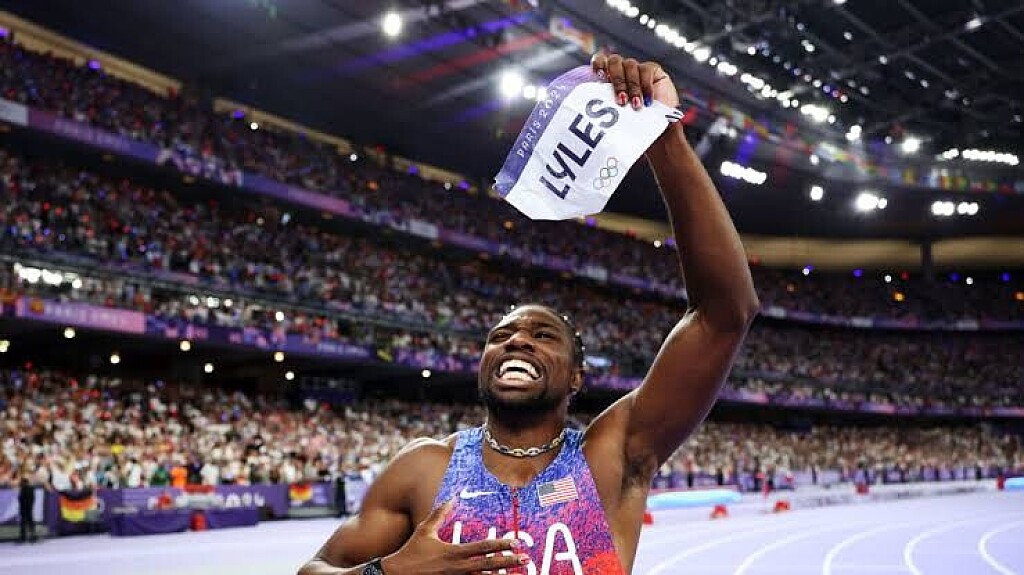
Noah Lyles: The Sprinter Who Turned Confidence Into Championship Gold
Noah Lyles has never been the kind of athlete to whisper his ambitions. He speaks with conviction, carries himself with unmistakable confidence and has never been afraid to tell the world exactly what he believes he can achieve.
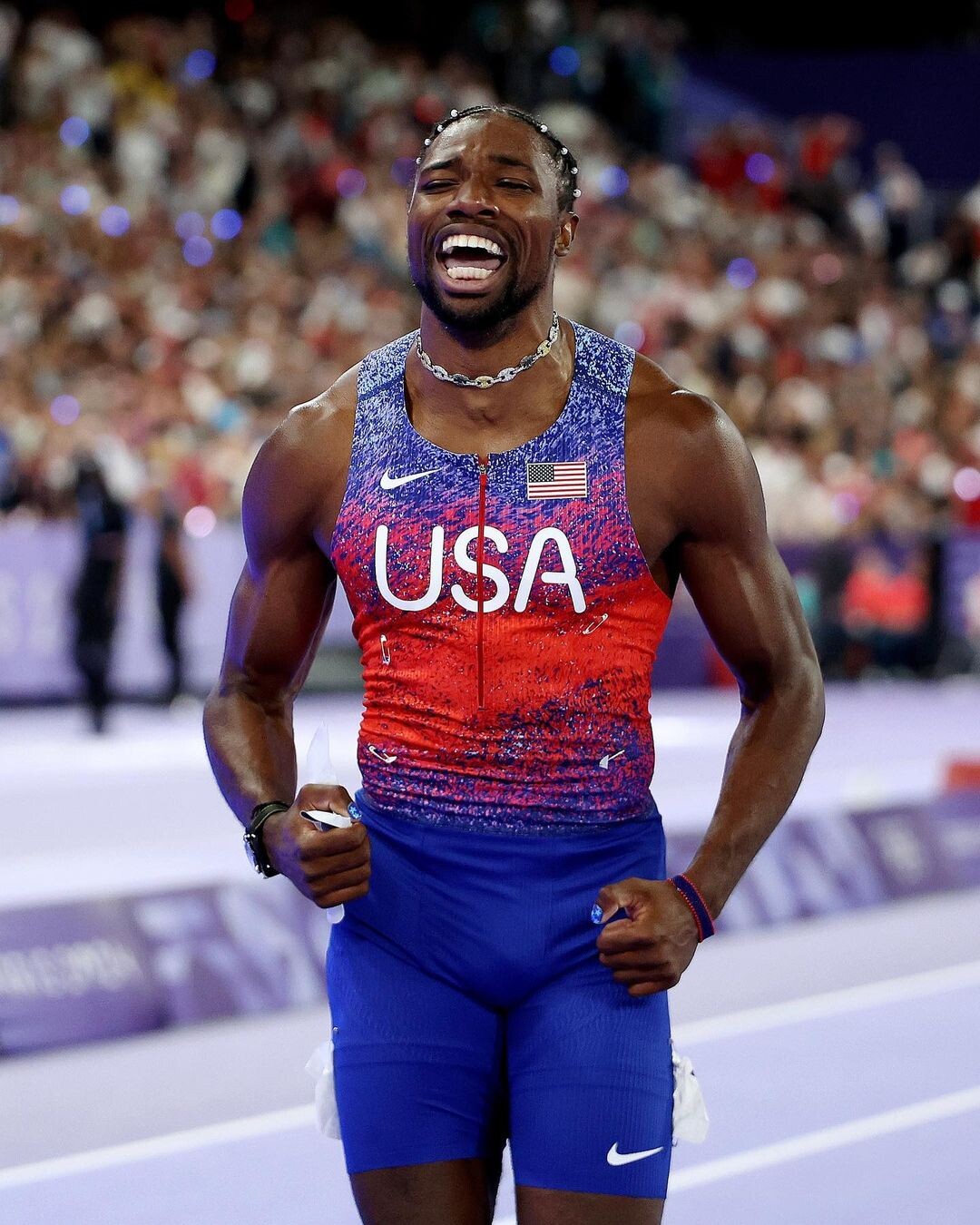
For some, that confidence can be polarising. For Lyles, it has become part of his identity—and, more importantly, part of the fuel behind an extraordinary career.
The American sprint star has repeatedly embraced the pressure that comes with being one of the biggest personalities in athletics. He understands that when you talk boldly, the spotlight becomes brighter and expectations become heavier. But Lyles has consistently chosen to step into that spotlight rather than hide from it.
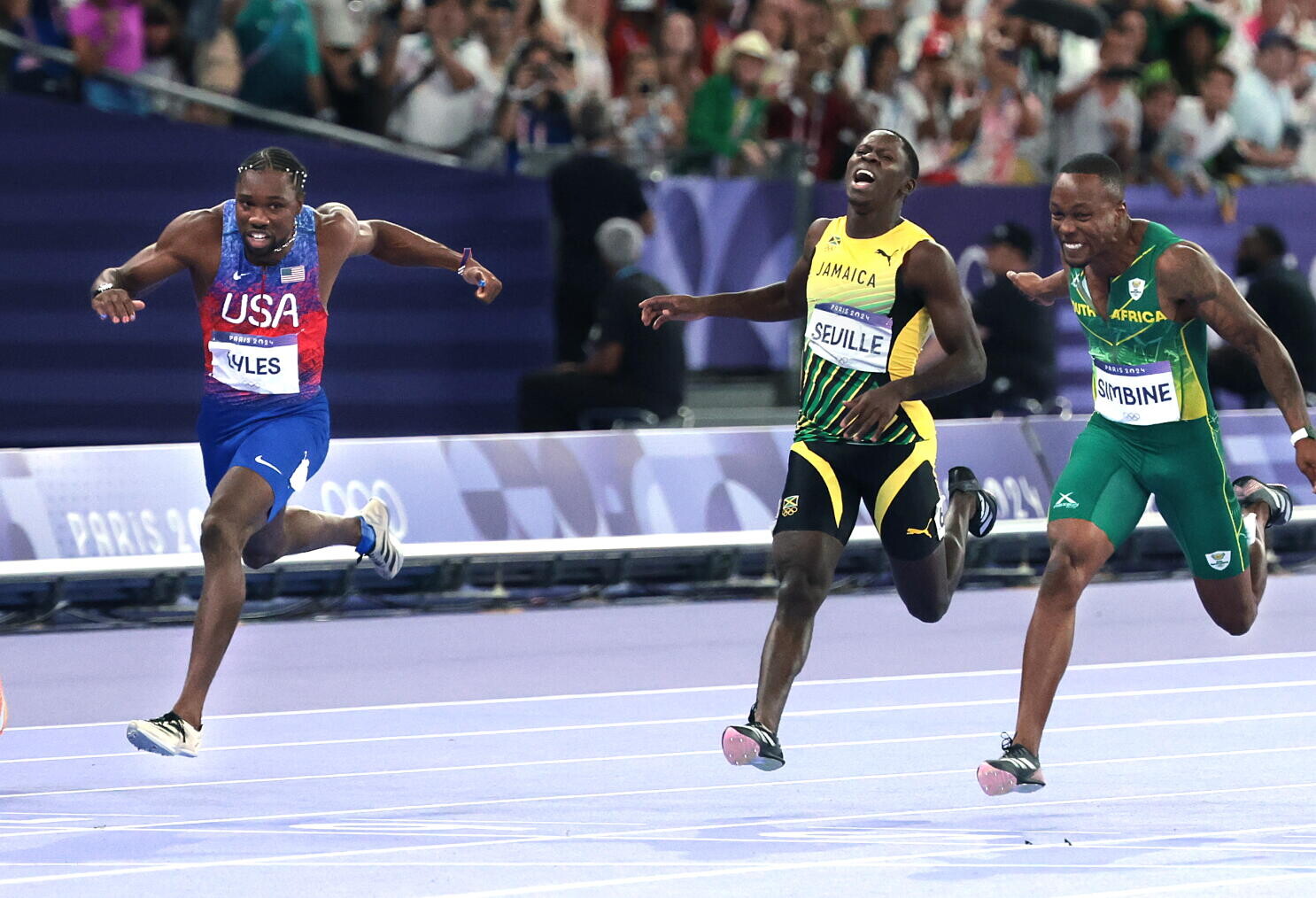
At the Paris 2024 Olympic Games, that belief reached one of its most memorable moments. Lyles captured gold in the men's 100 metres in a dramatic photo finish, clocking 9.784 seconds and edging Kishane Thompson by just five thousandths of a second. It was the first Olympic 100m title of his career and confirmation that his confidence was backed by world-class ability.
But Lyles' story extends far beyond a single Olympic medal. His career has been built on ambition, resilience and an unwavering belief that he belongs among the sport's greatest performers. From the 100m to the 200m, he has developed into one of the defining sprinters of his generation.
What makes his journey particularly compelling, however, is the person behind the medals. Elite athletes are not machines. They carry pressure, expectations, doubts and personal battles alongside their talent. Lyles has been open about the challenges that come with competing at the highest level, showing that strength is not simply about winning races—it is also about continuing to move forward when things become difficult.
His personality has made him impossible to ignore, but his performances have ensured that the words are backed by action. Every time Lyles steps onto the track, there is an expectation that something significant could happen.
That is perhaps the biggest lesson from his journey: confidence does not guarantee an easy road. It simply gives you the courage to keep walking it.
Noah Lyles dared to dream loudly. Then he stepped onto the track and started proving those dreams were possible.
by Erick Cheruiyot for My Best Runs.
Login to leave a comment
