

Running News Daily
Running News Daily is edited by Bob Anderson and team. Send your news items to bob@mybestruns.com Advertising opportunities available.
Index to Daily Posts · Sign Up For Updates · Run The World Feed
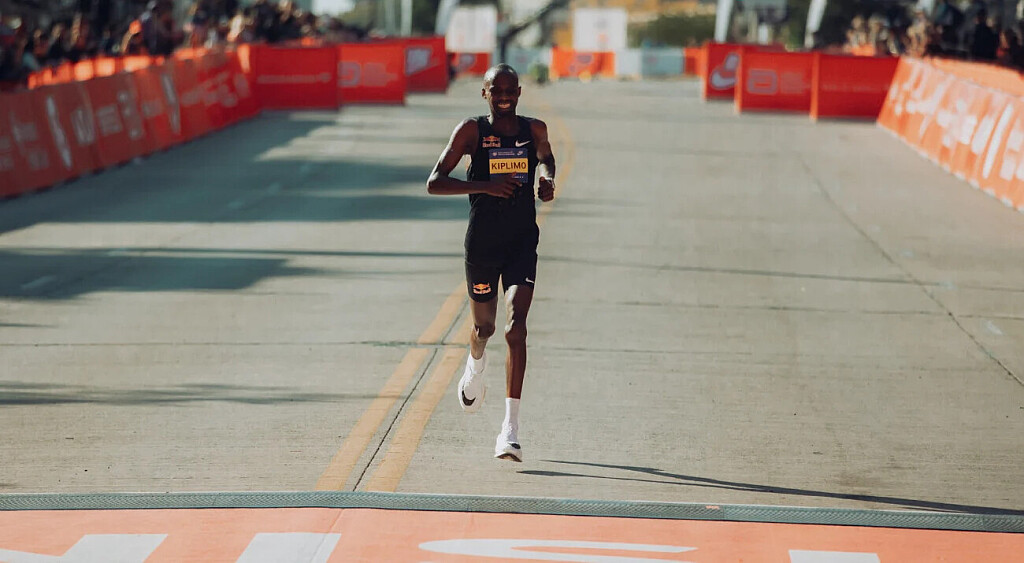


Jacob Kiplimo Endures A Rare Setback In Chicago As Amos Kipruto Claims Sensational Victory

Uganda’s Jacob Kiplimo suffered a disappointing end to his title defence at the 2026 Chicago Marathon on Sunday, October 11, finishing fourth in 2:04:18 after fading in the closing stages of a race that had initially promised another memorable performance.
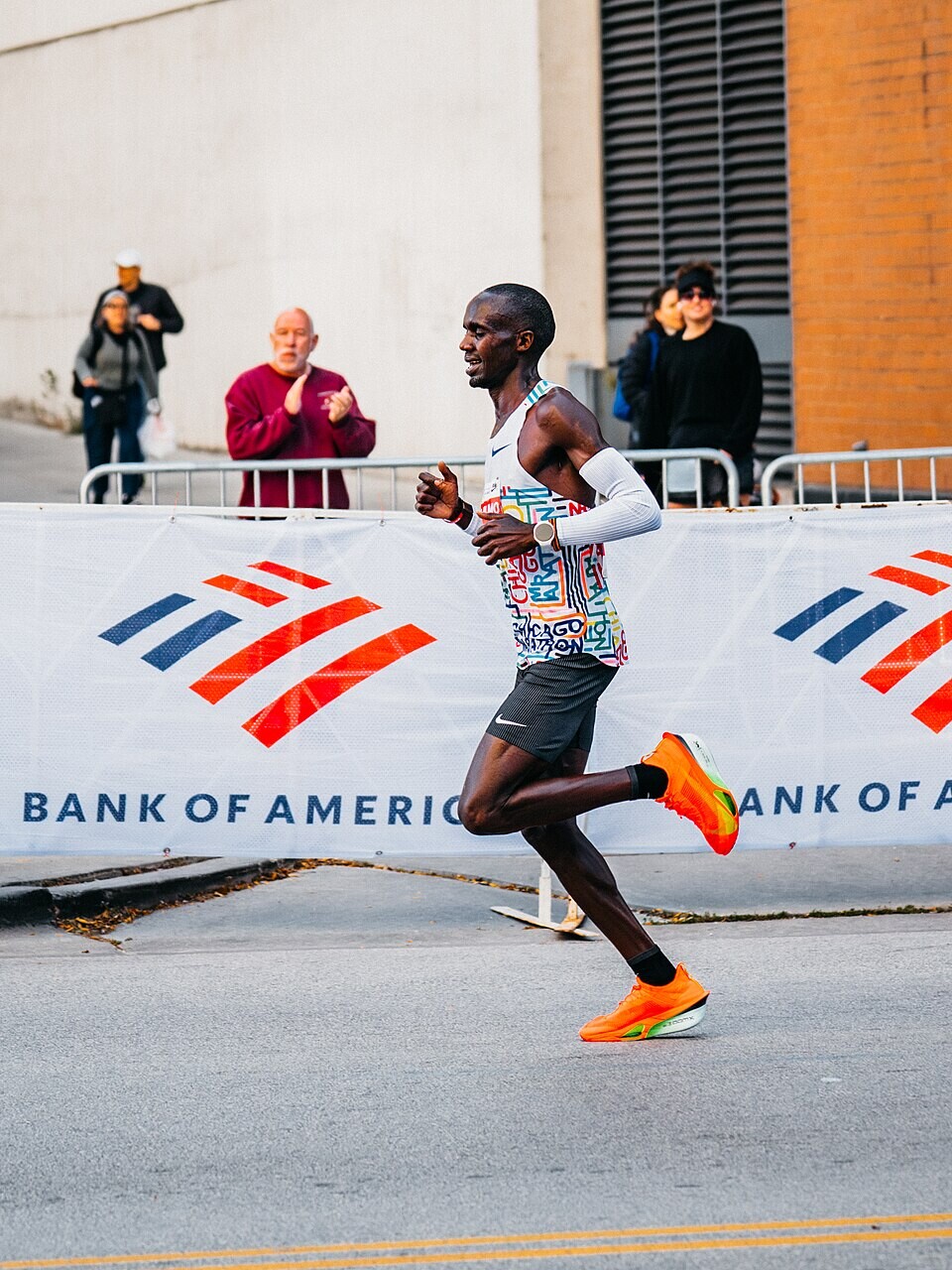
The former champion started confidently, matching the relentless pace of Kenya’s Amos Kipruto as the leading contenders battled for control. For much of the race, Kiplimo remained firmly in contention, looking capable of mounting a serious challenge for another victory on the streets of Chicago.
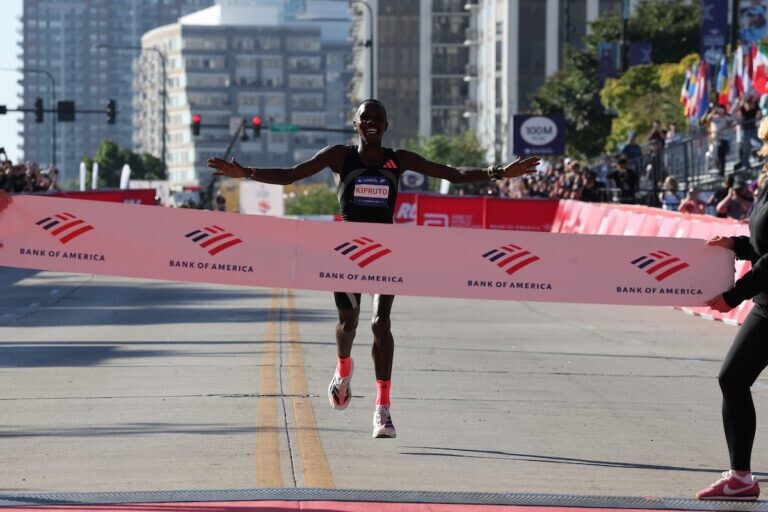
However, the contest took a dramatic turn around the 32-kilometre mark when Kipruto increased the pressure and began to pull away. Kiplimo struggled to respond as the race entered its decisive phase, with the demanding final kilometres gradually taking their toll on the Ugandan star.
His difficulties deepened as Ethiopia’s Tadese Bikila and Milkesa Mengesha moved ahead of him. Bikila secured second place in 2:02:56, while Mengesha followed in third in 2:03:46, leaving Kiplimo to settle for fourth in 2:04:18.
While the defending champion endured a difficult afternoon, Kipruto delivered the performance of his marathon career, powering to victory in a stunning personal best of 2:01:09. The Kenyan secured his first Chicago Marathon title with an outstanding display of strength and tactical composure, producing one of the fastest performances in the history of the prestigious race.
For Kiplimo, the result marked a significant departure from the consistency that has defined his remarkable career on the roads. Known for his extraordinary endurance, speed and ability to compete against the world's best, the Ugandan has built a reputation as one of the leading distance runners of his generation.
Chicago, however, proved that even the most accomplished athletes can encounter difficult days when the marathon becomes a battle of survival rather than a pursuit of victory.
Despite the disappointment, Kiplimo’s fourth-place finish does not diminish his achievements or his status among the sport’s elite. Instead, it offers a reminder of the unforgiving nature of the 42.195-kilometre distance, where early strength does not always guarantee a strong finish.
For a runner who arrived in Chicago hoping to defend his crown, the outcome will undoubtedly hurt. Yet the experience could also provide valuable lessons as he looks towards his next challenge.
In marathon running, fortunes can change in a matter of kilometres. On Sunday, Kipruto seized his moment and celebrated a career-defining triumph, while Kiplimo was left to confront the difficult reality that even champions sometimes have to accept defeat.
by Erick Cheruiyot for My Best Runs.
Login to leave a comment
Latest Running News
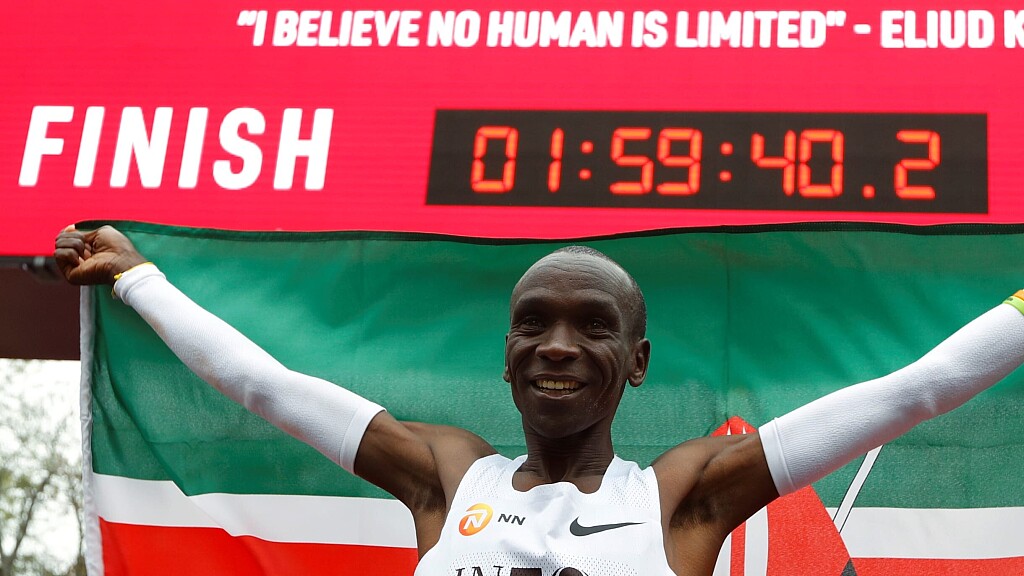
From Kipchoge’s Impossible Dream to Sawe’s Historic Reality: Kenya Redefines Marathon Running
Seven years after Eliud Kipchoge challenged the limits of human endurance in Vienna, fellow Kenyan Sabastian Sawe has transformed that extraordinary vision into a landmark achievement in competitive marathon running, becoming the first man to complete the 42.195-kilometre distance in under two hours under record-eligible race conditions.
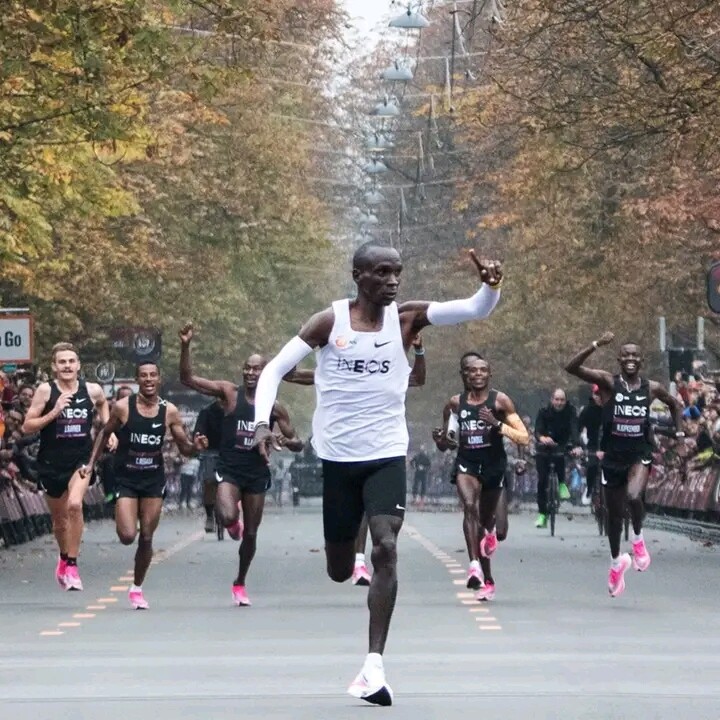
On October 12, 2019, Kipchoge etched his name into sporting history when he completed the INEOS 1:59 Challenge in Vienna, Austria, in an astonishing 1:59:40.2. Although the performance could not be recognised as an official world record because of the controlled conditions under which it was staged, it demonstrated that the seemingly impossible barrier was within human reach.
Kipchoge’s achievement carried a powerful message that resonated far beyond athletics: “No human is limited.” His words became a symbol of determination, ambition and the courage to challenge established boundaries.
However, the dream of breaking two hours in an official marathon remained unfinished.
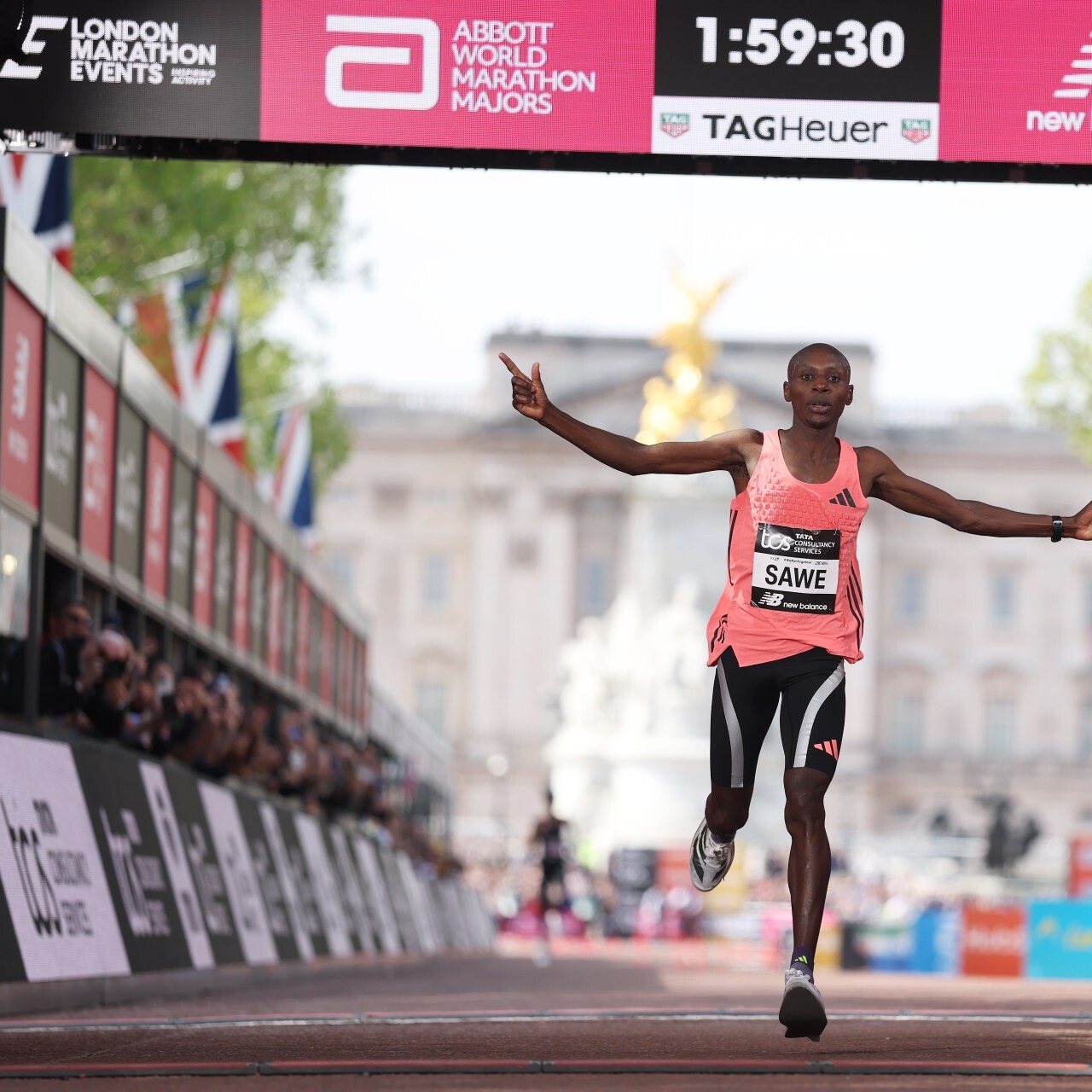
That changed on April 26, 2026, when Sawe delivered a breathtaking performance at the TCS London Marathon, stopping the clock at 1:59:30 to claim victory and establish a new men's marathon world record. The Kenyan took an astonishing 65 seconds off the previous record of 2:00:35, set by the late Kelvin Kiptum at the 2023 Chicago Marathon.
Sawe’s achievement was historic not simply because he ran faster than Kipchoge’s celebrated Vienna time, but because he accomplished the feat in an official, competitive marathon eligible for world-record recognition. The distinction elevated his performance into an entirely new chapter of distance-running history.
Remarkably, Sawe was not the only athlete to challenge the two-hour barrier that day. Ethiopia’s Yomif Kejelcha finished second in 1:59:41, becoming the second man to run under two hours in a competitive marathon. Uganda’s Jacob Kiplimo completed the podium in 2:00:28, also finishing inside Kiptum’s previous world record.
The extraordinary results underlined how dramatically the boundaries of marathon running have shifted in a sport where even a few seconds can separate an athlete from immortality.
For Kenya, Sawe’s triumph represents another defining moment in a remarkable tradition of distance-running excellence. From the groundbreaking achievements of Kipchoge to Kiptum’s world-record performance and now Sawe’s sub-two-hour marathon, Kenyan athletes have continued to shape the evolution of the sport.
Yet the connection between Kipchoge and Sawe goes beyond nationality. Kipchoge demonstrated that the marathon distance could be covered in less than two hours under specially controlled conditions. Sawe carried that vision into open competition, where the challenge had to be conquered within the demands of an official race.
Their achievements tell a compelling story of how sporting dreams can inspire future generations to pursue what once appeared unattainable.
On October 12, 2026, exactly seven years after Kipchoge’s landmark run in Vienna, the anniversary offers a powerful opportunity to reflect on how far marathon running has progressed. What began as a demonstration of human potential has become an officially recognised world-record achievement.
Kipchoge opened the door to a new era of possibility. Sawe ran through it and changed marathon history forever.
One dream. Two Kenyan legends. A new definition of human endurance.
The message remains as powerful as ever: No human is limited.
by Erick Cheruiyot for My Best Runs.
Login to leave a comment
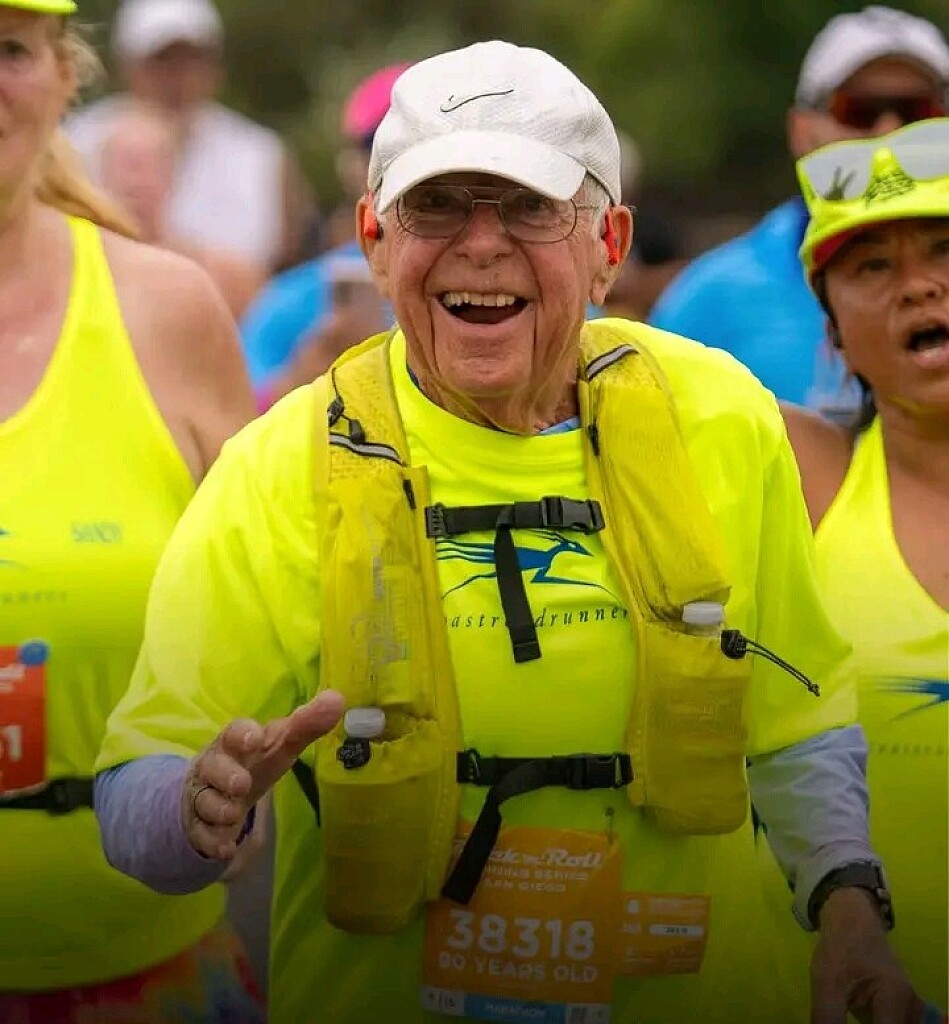
90-Year-Old Bill Schwarz Runs His First Marathon, Turning a Lifetime of Running Into an Extraordinary Achievement
Bill Schwarz has been running since high school, but it took until the age of 90 for the retired engineer from Mesa, Arizona, to take on the ultimate endurance challenge of his running journey: a full marathon.
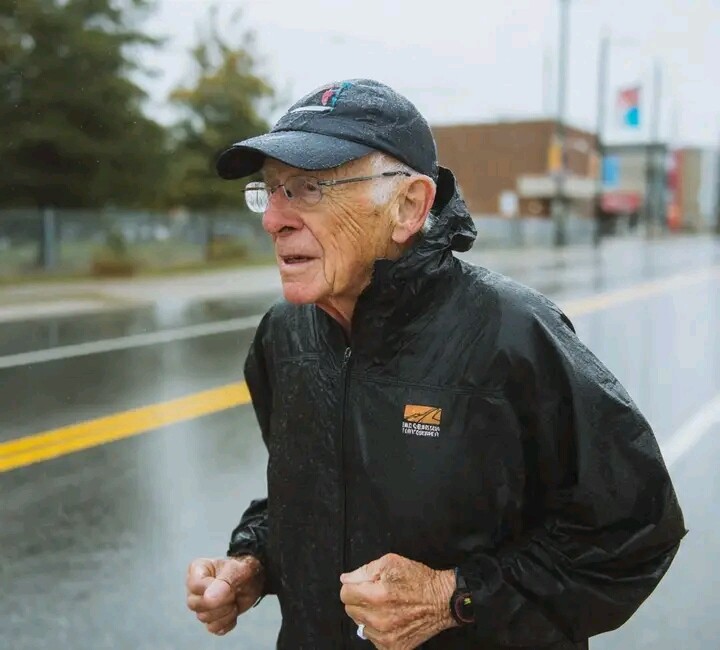
Schwarz made his marathon debut at the Rock ’n’ Roll San Diego Marathon in California, completing the demanding 26.2-mile (42.195-kilometre) distance in just over nine hours. His achievement has captured attention as a powerful example of determination, resilience and the willingness to pursue new goals, even in the later stages of life.
For Schwarz, the marathon was never about chasing a fast finishing time or competing against younger runners. His objective was much simpler: to cover the entire distance and reach the finish line.
“The objective is to finish the race. Time is not important,” he said before the start.
And that is precisely what he did. Even after the official race clock had stopped, Schwarz continued until his sports watch confirmed that he had covered the full marathon distance, remaining committed to completing what he had set out to achieve.
His decision to attempt the marathon emerged from an unexpected source of inspiration. At 89, Schwarz completed a 60-mile hike along Spain’s famous Camino de Santiago pilgrimage route. The demanding adventure left him feeling stronger than he had anticipated, prompting him to reconsider what he might still accomplish physically.
Rather than treating the experience as the culmination of his endurance adventures, he saw it as an opportunity to set himself a new challenge. The marathon, a distance he had never previously attempted, became his next major goal.
Schwarz’s professional background also makes his story particularly fascinating. A retired engineer who once worked on components for the Apollo rocket programme, he approached the challenge with the practical mindset of someone accustomed to solving complex problems. His preparation combined physical conditioning, careful planning and the use of modern technology to help him manage the demands of a long-distance race.
In the 12 months leading up to his marathon debut, Schwarz completed five half marathons while incorporating strength training, Pilates and mobility exercises into his routine. These activities helped him prepare for the physical demands of running 26.2 miles, a distance that requires not only endurance but also patience, discipline and a well-managed race strategy.
He also turned to artificial intelligence for assistance with one of the most important aspects of marathon preparation: nutrition and hydration. Using ChatGPT, Schwarz developed a fueling plan based on taking approximately 16 ounces of fluid and one energy gel per hour. Information from his fitness watch helped inform his approach, illustrating how technology can support athletes as they prepare for demanding endurance challenges.
However, his journey to the starting line was shaped by more than physical ambition. After the death of his wife, Janice, Schwarz faced a deeply personal period of grief. Running became part of his effort to navigate that loss and find renewed purpose in life.
Over time, he channelled that experience into pursuing meaningful challenges rather than withdrawing from them. His journey also included a new chapter in his personal life, as he found love again with his now-wife, Tammy. Together with his renewed commitment to running and adventure, these experiences helped shape the outlook that ultimately led him to attempt his first marathon.
The road to San Diego was therefore about far more than completing a particular distance. It represented a personal journey of rediscovery, demonstrating how a difficult chapter in life can become the starting point for new ambitions and experiences.
Completing a marathon is a significant achievement at any age. The 42.195-kilometre distance tests the limits of physical endurance and mental resilience, demanding careful preparation and the determination to keep moving when fatigue sets in. For a 90-year-old first-time marathoner, simply reaching the starting line after months of preparation was already a noteworthy milestone.
Schwarz went further, completing the distance and inspiring spectators and fellow participants along the route. His performance was a reminder that the meaning of a marathon extends well beyond finishing times, elite rankings and personal records. For many runners, the greatest victory is accomplishing something they once thought might remain beyond their reach.
His story also offers an important perspective on ageing. While physical abilities and training requirements change over time, Schwarz’s experience demonstrates the value of staying active, setting realistic goals and approaching new challenges with determination. His journey is not a guarantee that everyone can safely undertake the same feat, but it is a compelling example of what sustained preparation and personal motivation can make possible.
After crossing the finish line, Schwarz had fulfilled the promise he made before the race: to finish, regardless of the time. And, having committed himself to the challenge, he had every reason to enjoy a well-earned rest afterwards.
At 90, Bill Schwarz has completed a milestone that eluded him throughout decades of running. His first marathon was not about proving that age does not matter, but about showing that a person's ambitions need not end simply because another birthday arrives.
From running in high school to completing 26.2 miles for the first time nine decades into his life, Schwarz has written an extraordinary new chapter in his personal running story.
His achievement sends a message to runners and non-runners alike: sometimes, the most meaningful finish line is the one you never imagined you would reach. And sometimes, the perfect time to attempt your first marathon is 90 years old.
by Erick Cheruiyot for My Best Runs.
Login to leave a comment
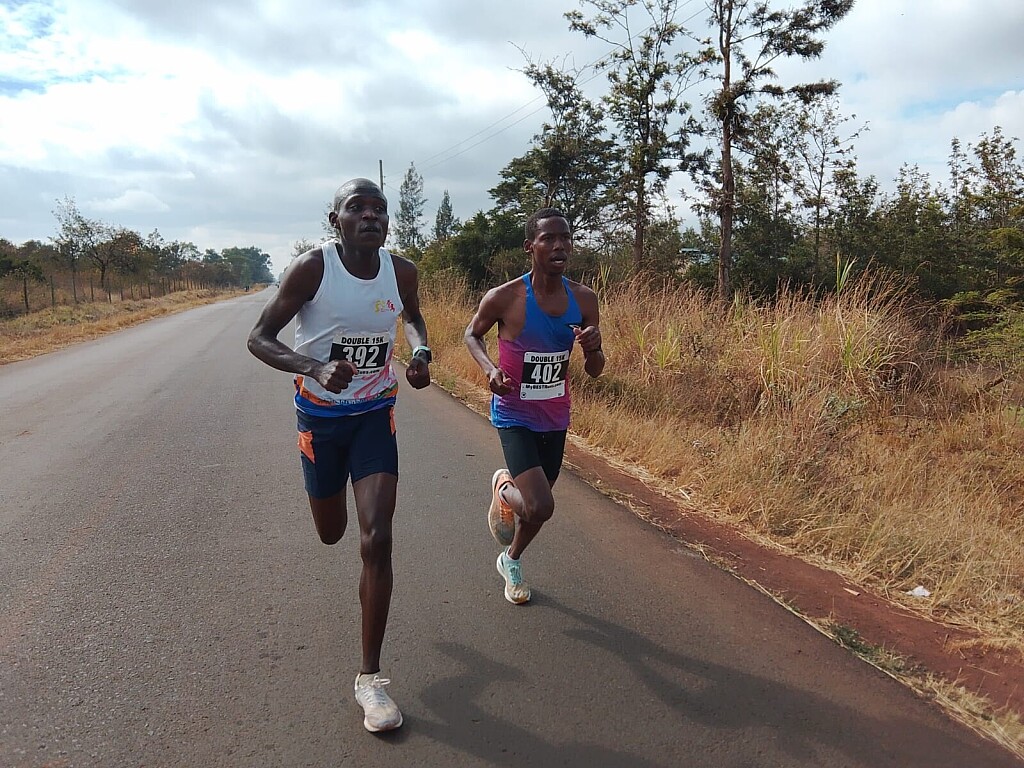
KATA Time Trial Series Set for Landmark 60th Edition as Athletes Prepare to Test Their Limits in Thika
The Kenyan Athletics Training Academy (KATA) is preparing to welcome runners back to Thika, Kenya, on Wednesday, October 14, 2026, for the landmark 60th edition of the KATA Time Trial Series. The event promises another exciting opportunity for athletes to test their abilities, measure their fitness and assess the progress they have made through their training.
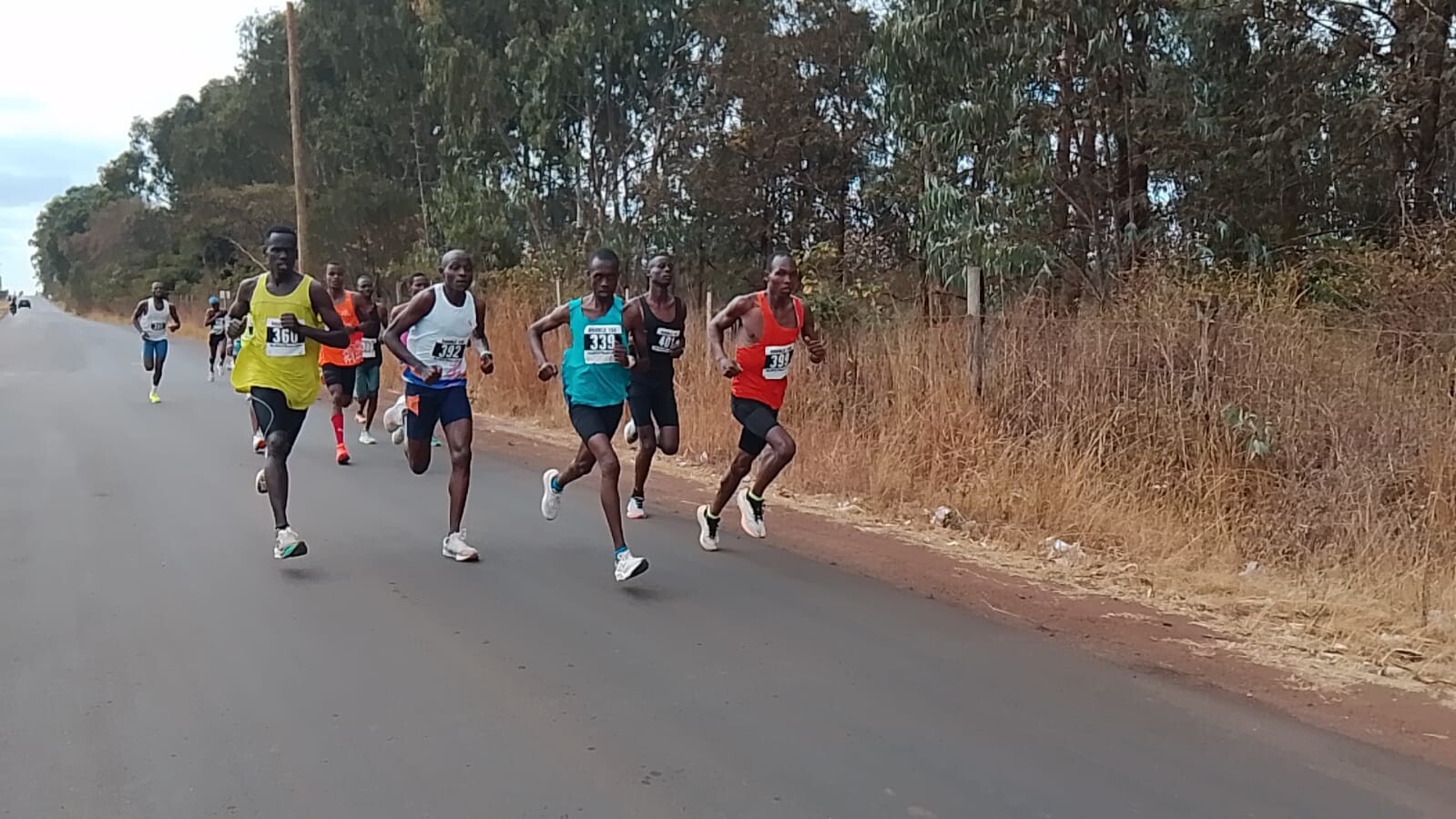
Over the years, the KATA Time Trial Series has established itself as a valuable platform for runners seeking to evaluate their performance under competitive conditions. As the series reaches its 60th edition, athletes will once again have the chance to challenge themselves against the clock, gauge their current form and determine how effectively their training is translating into performance.
The previous edition, the 59th, delivered an impressive display of determination across the 5km and 10km distances. Peter Wanyoike produced the standout performance in the men's 10km, winning in 30:36, followed by Robin Musa in 30:51 and Charles Wanjora in 31:01. In the women's 10km, Felister Maina claimed victory in 37:37, narrowly ahead of Naomi Wambui Muriuki, who finished in 37:52.
The shorter distances also produced competitive performances. Edwin Muasa won the men's 5km in 16:17, while Rachel Njeri took the women's 5km title in 22:21. These results demonstrated the determination of athletes using the series to assess their capabilities and measure their progress against the stopwatch.
With the 60th edition approaching, runners will have another opportunity to establish personal benchmarks, evaluate their race pace and determine their readiness for upcoming competitions. Whether targeting a personal best, assessing endurance or checking current speed, the time trial provides a practical measure of an athlete's fitness and competitive form.
Beyond the finishing positions, the KATA Time Trial Series places emphasis on consistency, discipline and measurable improvement. Every second counts, and each performance provides useful feedback about an athlete's current strengths, limitations and overall preparation. Comparing results from previous editions can help runners understand their development and identify areas that may require further attention.
The series also brings together athletes with different levels of experience and ambitions, creating a competitive environment in which runners can challenge one another while pursuing individual targets. For emerging athletes, it offers valuable exposure to timed competition, while experienced runners can use the results to assess their form against established personal standards.
As the countdown to Wednesday continues, athletes are encouraged to prepare for another morning of competitive running and honest self-assessment. Reaching the 60th edition marks a significant milestone for the KATA Time Trial Series and reflects its continued role in providing runners with a platform to measure their abilities through organised competition.
For runners in Thika and the surrounding areas, the event presents an opportunity to put their preparation to the test, compete against the clock and discover what their current fitness can deliver.
The date is Wednesday, October 14, 2026. The mission is simple: test your ability, measure your progress and see what the stopwatch reveals.
by Erick Cheruiyot for My Best Runs.
Login to leave a comment

KATA Time Trial Series
Welcome to the KATA Monthly Time Trial Held at the Kenyan Athletics Training Academy in Thika, Kenya, the KATA Monthly Time Trial is a unique and inclusive event designed to support runners of all levels in achieving their goals and showcasing their fitness. This event offers both 10K and 5K distances on an accurate, certified course, providing participants with...
more...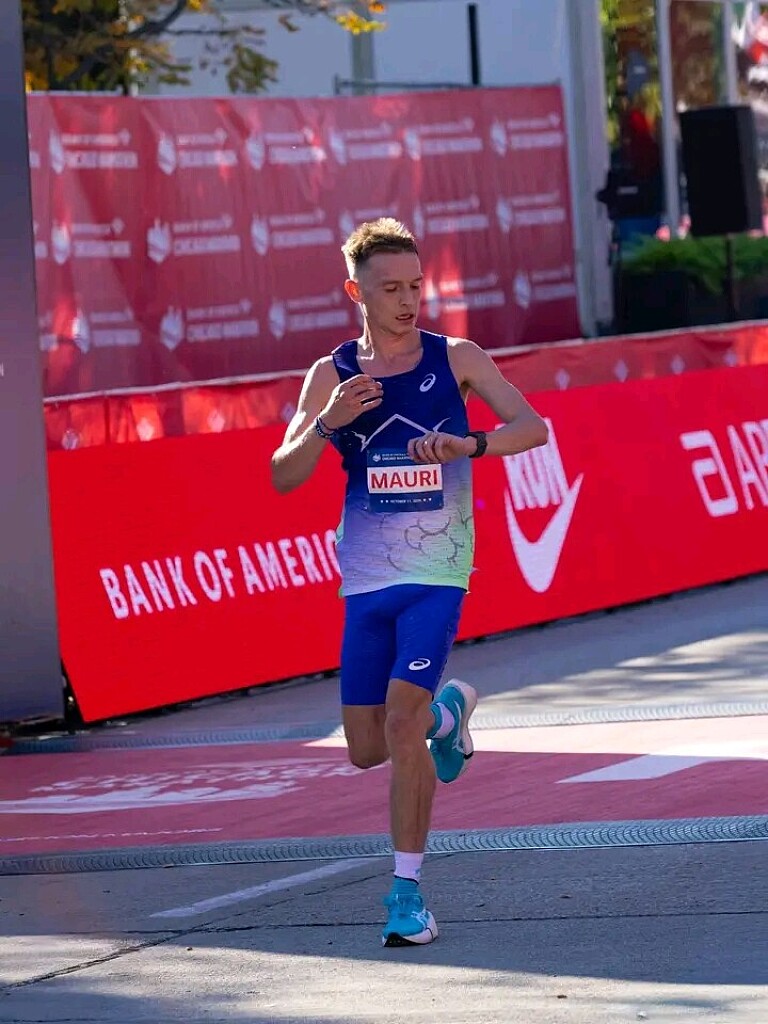
Vinny Mauri Sets American 30K Record in Chicago Marathon Despite Missing National Marathon Record
Vinny Mauri delivered a remarkable performance at the 2026 Bank of America Chicago Marathon, setting a new American record for 30 kilometers despite falling short of his ultimate goal of breaking the American marathon record.
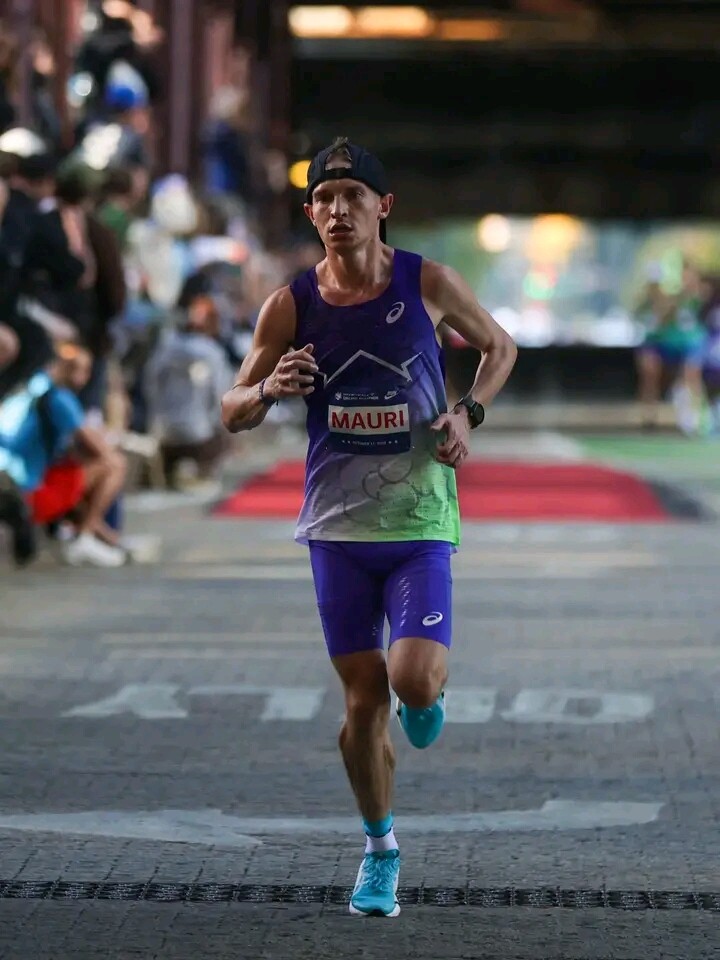
The American distance runner clocked 1:28:15 at 30 kilometers, improving the previous national record of 1:28:24 set by Conner Mantz at the 2025 Chicago Marathon. Mauri achieved the milestone while pursuing an ambitious pace that initially put him in contention for a historic performance over the full 26.2-mile distance.

Mauri finished 10th overall in 2:06:45, placing third among American men in a highly competitive international field. His performance was particularly impressive given that he made his marathon debut only in April, running 2:05:54 and immediately establishing himself as an exciting prospect in American distance running.
Heading into Chicago, Clayton Young's announced attempt to challenge the American marathon record had drawn considerable attention to the race. However, Mauri also emerged as a serious contender, bringing an impressive debut performance and considerable ambition to the starting line. His aggressive approach added another compelling dimension to the battle among American runners.
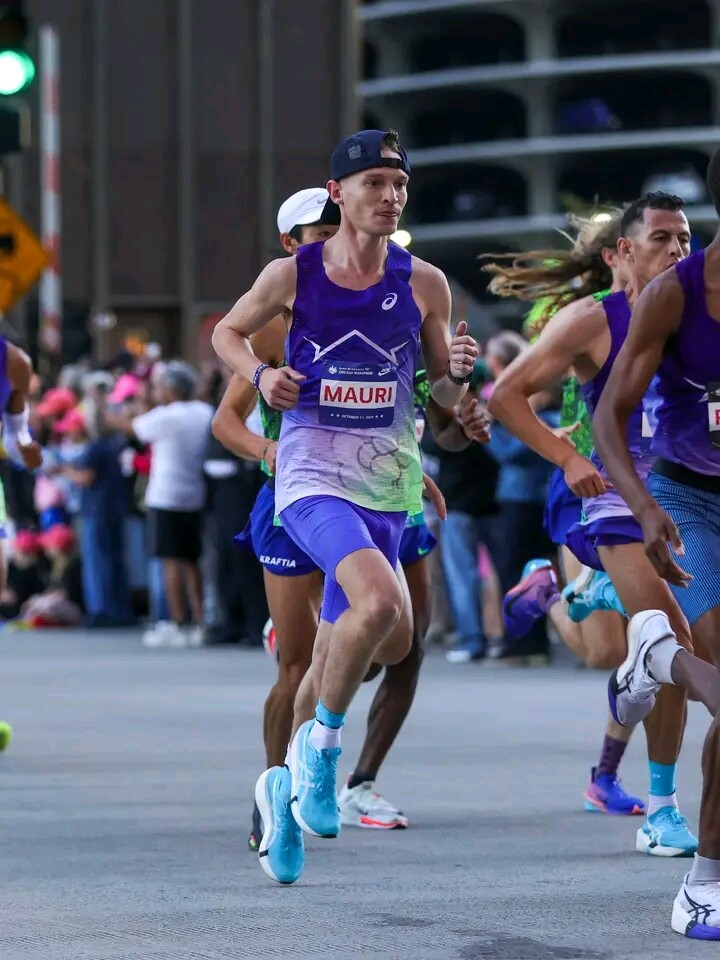
Mauri ran with confidence from the opening kilometers, leading the American contingent through the early and middle stages of the race. His intermediate splits demonstrated the strength of his early effort, reaching 5 kilometers in 14:53, 10 kilometers in 29:39 and 15 kilometers in 44:24 before passing 20 kilometers in 59:03.
He reached the half-marathon point in 1:02:15 and continued to maintain an exceptional rhythm. At 25 kilometers, he clocked 1:13:31 before reaching 30 kilometers in 1:28:15, securing the American record at the distance. His performance underlined his ability to sustain an aggressive pace against a world-class field.
One of the most striking aspects of Mauri's race was his willingness to commit to the challenge rather than hold back in pursuit of a conservative finish. He remained on American marathon record pace for more than eight miles, putting himself firmly in the conversation as the race unfolded. His determination demonstrated both his confidence and his readiness to test his limits against established international competitors.
However, maintaining such an ambitious pace over the closing stages proved increasingly difficult. Mauri reached 35 kilometers in 1:43:42 and 40 kilometers in 1:59:50, with his pace slowing as the demands of the marathon took their toll. He ultimately crossed the finish line in 2:06:45, missing the American marathon record but completing another impressive performance in only his second race over the distance.
The progression of his race illustrated the fine margins involved in elite marathon running. Strong early splits can create an opportunity for a historic result, but sustaining that effort through the final kilometers requires exceptional endurance and precise pace management. Although Mauri could not maintain his record-breaking schedule to the finish, his 30K performance delivered a significant national milestone.
His rapid development is particularly encouraging for American distance running. A 2:05:54 marathon debut followed by a strong performance in Chicago, combined with a national record at 30 kilometers, gives Mauri valuable experience and a solid foundation for future campaigns. With further opportunities to refine his race strategy and manage his effort over the closing miles, he could become an increasingly prominent figure in American marathon running.
In Chicago, Mauri may have fallen short of the ultimate prize, but he left with a national record, a top-10 overall finish and third place among American men. His gutsy performance reinforced his growing reputation and provided another reason to follow his progress as he continues to pursue bigger goals on the international marathon stage.
by Erick Cheruiyot for My Best Runs.
Login to leave a comment
Kieran Tuntivate Makes History With Three Thai Records At Chicago Marathon
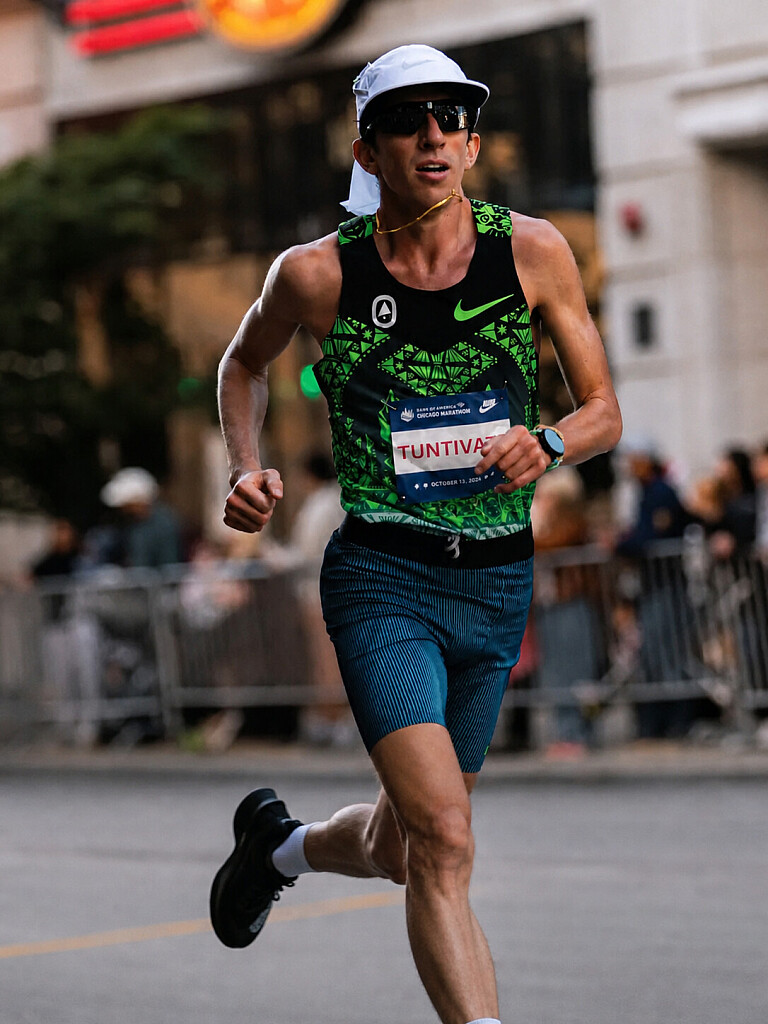
Kieran Tuntivate produced a remarkable marathon debut at the 2026 Bank of America Chicago Marathon, rewriting the Thai record books three times in one unforgettable performance.

The 29-year-old distance star crossed the finish line in 2:08:01, placing 15th in a world-class men’s field and smashing the Thai national marathon record.
But the marathon record was only part of the story.
On his way to 2:08:01, Tuntivate also set new Thai national records at 25 kilometres, clocking 1:15:20, and 30 kilometres in 1:30:23. That means his Chicago performance delivered three national records in a single race — the 25km, 30km and marathon marks.
The achievement takes Tuntivate’s collection of Thai national records to an extraordinary 18 events, highlighting the remarkable range and consistency he has developed throughout his career.
He now holds Thai records at 1,000m indoors, 1,500m indoors, 1,500m, the indoor mile, the mile, 3,000m, 3,000m indoors, 5,000m indoors, 5,000m, 10,000m, 10km on the road, 10 miles, 15km, 20km, the half marathon, 25km, 30km and the marathon.
His performance in Chicago was particularly impressive because it came over a distance he had never raced competitively at this level before. Rather than simply surviving his first marathon, Tuntivate attacked the challenge with confidence and maintained a strong rhythm deep into the race, showing that his transition from the track and shorter road distances could be a hugely successful one.
The run also gives Thailand a new benchmark on the marathon stage. A 2:08:01 performance places Tuntivate among the country’s most accomplished distance runners and provides a strong foundation for what could become an exciting marathon career.
For Tuntivate, Chicago was therefore far more than simply an introduction to the marathon distance. It was a statement that Thailand has a new national record-holder over 42.195 kilometres — and an athlete capable of extending his already extraordinary collection of records across the full spectrum of distance running.
Three records. One marathon. Eighteen Thai national records. Kieran Tuntivate has officially entered a new chapter of his career.
by Erick Cheruiyot for My Best Runs.
Login to leave a comment
