

Running News Daily
Running News Daily is edited by Bob Anderson and team. Send your news items to bob@mybestruns.com Advertising opportunities available.
Index to Daily Posts · Sign Up For Updates · Run The World Feed



Cancer Survivor Brandon Throop Returns To Toronto Marathon In Hospital Gown For Third World Record Bid

For Brandon Throop, running a marathon in a hospital gown is about far more than chasing a place in the Guinness World Records. It is a deeply personal tribute to the medical team that helped save his life, a celebration of survival, and an opportunity to give back to the institution that stood beside him during one of the darkest chapters of his life.

In 2022, Throop was 35 years old, a father of two, and facing a life-changing diagnosis of non-Hodgkin lymphoma. His journey soon led him to Princess Margaret Cancer Centre in Toronto, Canada, where he underwent chemotherapy and began a difficult battle against the disease.

The treatment that helped him fight cancer also left him physically weakened. For someone who had spent much of his life running, even the simplest movements became unexpectedly challenging. After completing treatment, climbing a single flight of stairs could leave him coughing and struggling to catch his breath.
However, rather than allowing the experience to define the limits of his future, Throop began rebuilding his strength one small step at a time. He started by running once around his neighbourhood block before gradually increasing the distance as his body recovered. What began as a modest attempt to regain his fitness eventually developed into an extraordinary mission with a purpose extending far beyond the finish line.
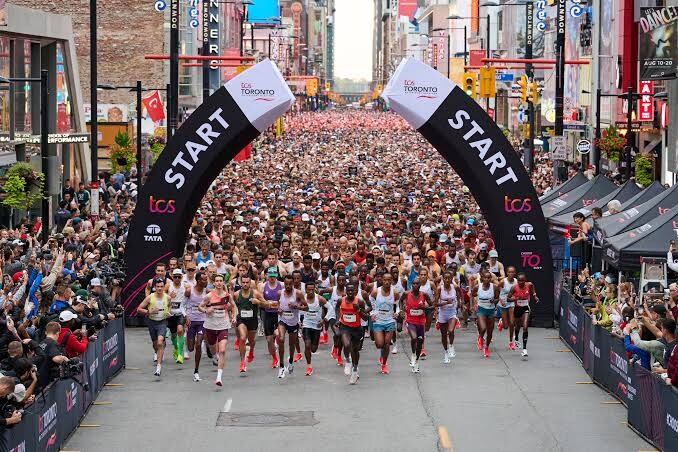
Now, more than three years after becoming cancer-free, Throop is preparing to return to the TCS Toronto Waterfront Marathon on Sunday, October 18, 2026, for another attempt at the Guinness World Record for the fastest marathon completed while wearing a hospital gown.
This will be his third attempt to claim the record, following two determined performances in previous editions of the Toronto race. In 2023, he completed the marathon in 2:55:59 before returning in 2024 to improve his time to 2:55:01. Despite his progress, the record remained just out of reach.
The current benchmark stands at 2:50:12, established by Evan Ubene at the same Toronto Waterfront Marathon in 2022. To make history this time, Throop will need to improve significantly on his previous performances and take more than five minutes off his best hospital-gown marathon.
Yet the significance of Sunday's race cannot be measured by finishing time alone.
Throop's larger objective is to raise funds for the Princess Margaret Cancer Foundation, supporting the cancer research and care that played such an important role in his own recovery. He has already raised more than $137,000 toward his $150,000 fundraising target, bringing him within reach of a goal that could help support further advances in cancer treatment.
Every kilometre he covers in the distinctive hospital gown carries a message of gratitude to the people who cared for him and hope for patients whose journeys are only beginning. His challenge transforms a gruelling 42.195-kilometre race into a public expression of appreciation for the doctors, nurses, researchers and other healthcare professionals working to improve the lives of people affected by cancer.
The timing of this year's marathon makes the occasion even more meaningful. The race falls just days from the anniversary of his first chemotherapy session in 2022, bringing him back to a period that profoundly changed his life. Returning to the streets of Toronto now, healthy enough to pursue another marathon, offers a powerful reminder of how far he has travelled since those difficult days.
For Throop, choosing Toronto has never been simply about finding the fastest course on which to break a record. Although other marathons might offer different racing conditions, the Toronto Waterfront Marathon holds a significance that no alternative venue could easily replace. The course takes him past Princess Margaret Cancer Centre, the institution where he received treatment, while family members and friends who supported him throughout his illness are there to witness his journey.
It is a route that connects his past to his present: the hospital where he fought for his health, the streets where he now tests his endurance, and the people who helped him keep moving forward when the road ahead was uncertain.
His hospital gown is therefore much more than an unusual racing outfit. It is a symbol of the vulnerability he experienced as a patient, the strength he rediscovered through running, and his determination to turn a deeply personal struggle into something that benefits others.
As he prepares for his third record attempt, the challenge remains considerable. The existing mark of 2:50:12 demands an average pace of approximately four minutes per kilometre, a formidable task even without the physical discomfort and practical challenges of racing in a hospital gown.
Nevertheless, Throop has already demonstrated that his mission can make a difference regardless of the result on the clock. His previous attempts brought attention to cancer care, while his ongoing fundraising efforts have generated substantial support for the foundation that represents an important part of his personal story.
On Sunday, he will once again take his place among thousands of runners, carrying a message that reaches well beyond the marathon course. Whether he finally breaks the world record or falls short for a third time, his presence will stand as a reminder that recovery can open doors to remarkable achievements and that gratitude can become a powerful force for helping others.
For Brandon Throop, the finish line represents more than a sporting ambition. It is an opportunity to honour the people who helped him survive, support the research that may give other families more time together, and show what can be possible after a life-altering diagnosis.
The record is still waiting. But with more than $137,000 already raised toward his fundraising goal, Throop has another reason to consider his mission a success before the starting gun even sounds.
On the streets of Toronto, the hospital gown is returning with a purpose: to celebrate survival, give back to the people who helped save a life, and turn every step into hope for someone else.
by Erick Cheruiyot for My Best Runs.
Login to leave a comment

TCS Toronto Waterfront Marathon
The Scotiabank Toronto Waterfront Marathon, Half-Marathon & 5k Run / Walk is organized by Canada Running Series Inc., organizers of the Canada Running Series, "A selection of Canada's best runs!" Canada Running Series annually organizes eight events in Montreal, Toronto and Vancouver that vary in distance from the 5k to the marathon. The Scotiabank Toronto Waterfront Marathon and Half-Marathon are...
more...Latest Running News
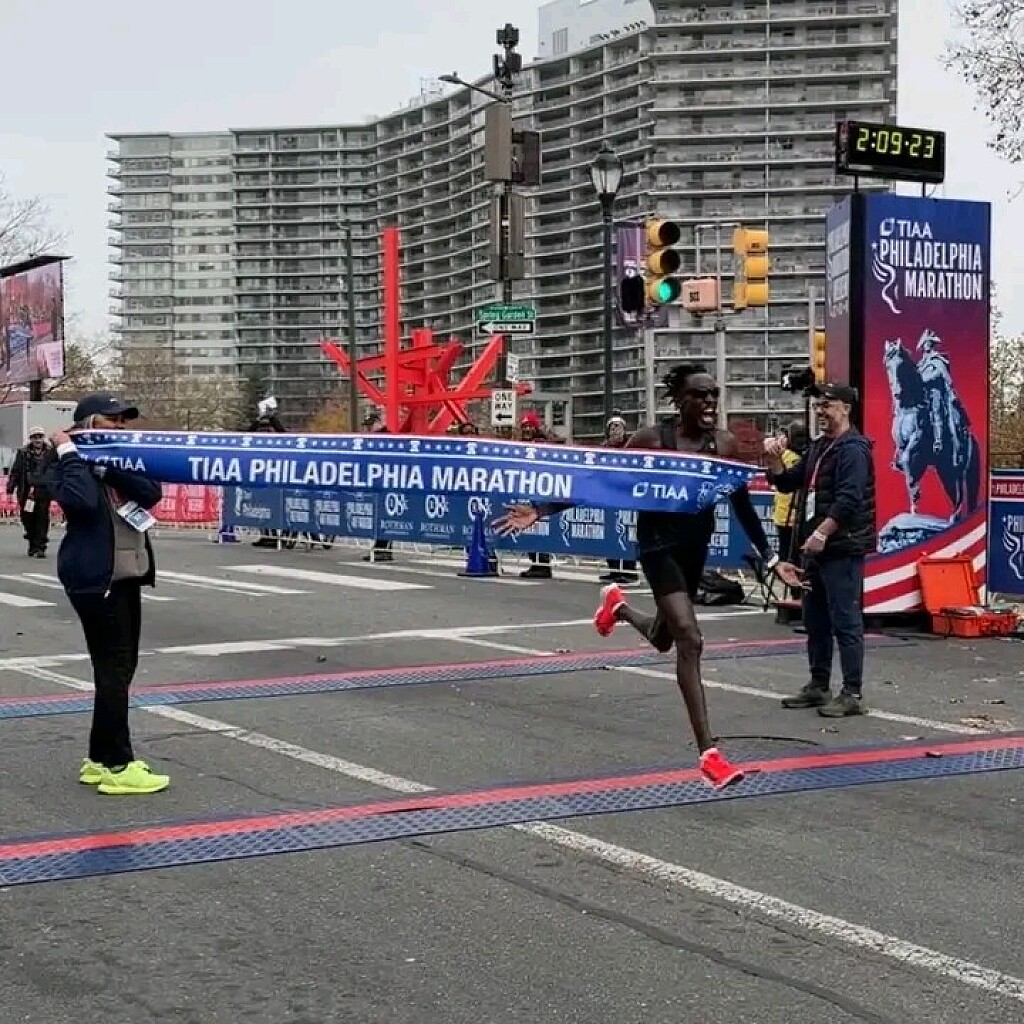
Kenya And Canada Conquer Philadelphia! Victor Shitsama And Dayna Pidhoresky Smash Course Records At The 2026 Philadelphia Marathon!
The 2026 Philadelphia Marathon delivered a spectacular morning of distance-running excellence on Sunday, November 22, as Kenya’s Victor Shitsama and Canada’s Dayna Pidhoresky produced commanding performances to capture the men’s and women’s titles, with both athletes setting new course records.
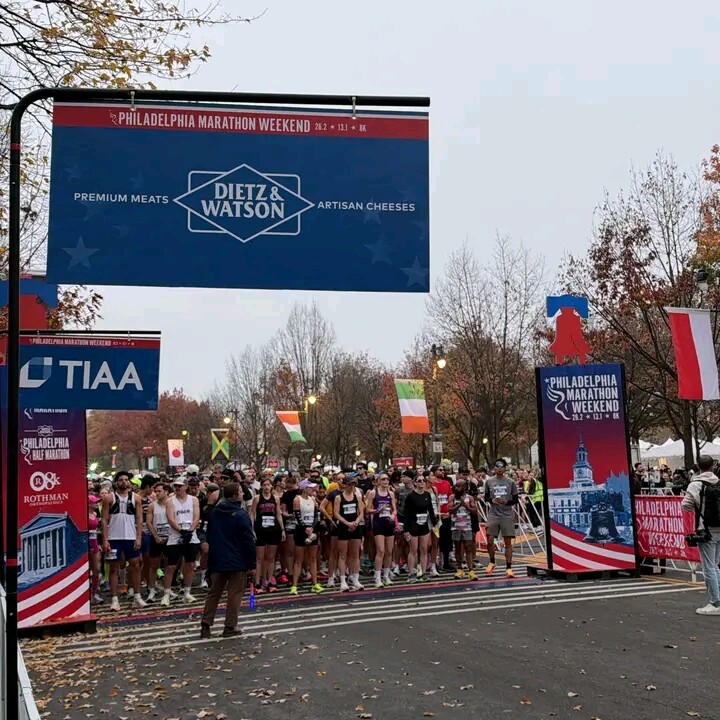
On a humid morning in Philadelphia, Shitsama was in a class of his own in the men's race, powering his way to victory in an impressive 2:09:23. The Kenyan delivered a dominant performance, crossing the finish line more than nine minutes ahead of his nearest challenger to secure a remarkable triumph and establish a new course record.

American Jared Ward finished second in 2:18:29, while compatriot Aaron Davidson completed the podium in 2:19:02. Brendan Flynn followed in fourth place in 2:20:52, ahead of Colin McCauley, who clocked 2:21:41. John Lucey finished sixth in 2:21:54, followed by Michael Conway in seventh in 2:22:22 and Christian Schaaf in eighth in 2:22:30.
Colombia’s Edisson Gilberto Bernal Triana secured ninth place in 2:23:46, while American Alex Horgan rounded out the men's top ten in 2:23:50.
The women's contest also produced an outstanding display, with Canada's Dayna Pidhoresky taking control of the race and powering to an emphatic victory in 2:26:34. Her performance secured the women's title and a new course record, underlining her impressive strength and determination over the 26.2-mile distance.
American Orla Rocha finished a distant second in 2:34:05, while compatriot Rachel Schilkoswky claimed third place in 2:35:32. Madison Offstein crossed the line fourth in 2:36:28, followed by Mia Behm in fifth in 2:39:27.
Dee Buchholz finished sixth in 2:42:00, with Amanda Chang taking seventh in 2:43:39. Lauren McAdams secured eighth place in 2:44:51, ahead of Lauren Kelly, who finished ninth in 2:46:29. Susan Pardo completed the women's top ten in 2:47:19.
With two impressive course-record performances, the 2026 Philadelphia Marathon produced memorable victories for Shitsama and Pidhoresky. While Kenya celebrated another outstanding marathon triumph through Shitsama, Canada had its moment in the spotlight as Pidhoresky delivered a commanding performance to claim the women's crown.
Philadelphia witnessed a remarkable celebration of endurance, determination and world-class marathon running, with both champions leaving their mark on one of America's established road-racing events.
by Erick Cheruiyot for My Best Runs.
Login to leave a comment

Philadelphia Marathon and Half
Have the time of your life in 2022 completing 13.11 miles! Runners will start along the Benjamin Franklin Parkway in the cultural Museum District and wind through Philadelphia’s most scenic and historic neighborhoods. From the history-steeped streets of Old City, through one of the liveliest stretches of Center City, across the Schuylkill River...
more...
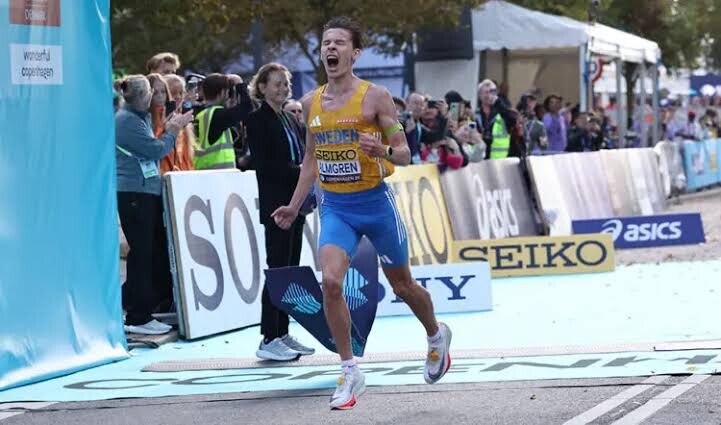
From The Football Pitch To Marathon History! Andreas Almgren's Extraordinary Journey Of Resilience, Reinvention And World-Class Success!
Long before becoming one of the most accomplished distance runners in European athletics, Sweden's Andreas Almgren dreamed of making his mark in an entirely different sport. His ambition was football, not running. Yet an unexpected twist of fate would eventually redirect his career and set him on a remarkable path to international athletics glory.

Growing up in Sollentuna, north of Stockholm, Almgren was a talented young footballer who developed his skills in the youth ranks of AIK, one of Sweden's most prominent football clubs. Playing as a right-back and wing-back, he appeared destined to pursue a future in the beautiful game.
However, persistent injuries brought that ambition to an abrupt halt. At just 18, recurring stress injuries affecting both feet forced him to reconsider his sporting future. What initially appeared to be a devastating disappointment ultimately became the turning point that introduced him to the world of competitive athletics.
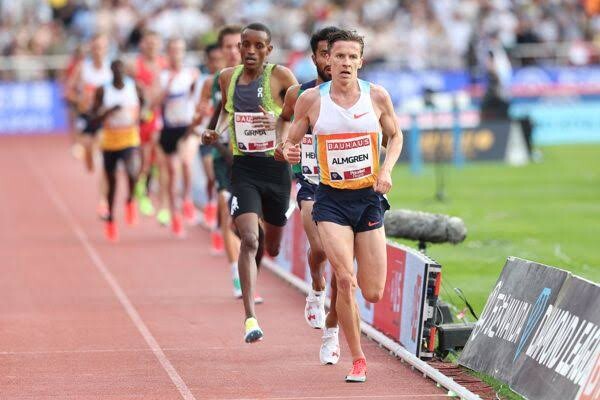
Almgren wasted little time demonstrating that his athletic ability extended far beyond the football pitch. His speed, strength and natural running talent quickly translated into impressive performances on the track.
In 2014, barely a year after committing himself to athletics, he secured bronze in the men's 800m at the World Junior Championships in Eugene, Oregon. It was an early indication of the immense potential he possessed and marked the arrival of a promising new name in Swedish athletics.
But his rise was far from straightforward. Behind the early success was a young athlete whose determination would repeatedly be tested by injuries and lengthy periods away from competition.
One of the most difficult chapters came in 2016, when a serious navicular bone fracture required surgery and prevented him from competing at the Rio Olympic Games. Additional physical setbacks, including stress fractures and a torn meniscus, further disrupted his progress. For an athlete with ambitions of reaching the highest level, such interruptions could easily have marked the end of a promising career.
Almgren, however, refused to let those disappointments define his future.
Instead of abandoning his ambitions, he gradually reassessed his approach, adjusted his training and began exploring longer distances. His transition from middle-distance running towards the 5,000m, 10,000m and eventually road racing would prove to be a defining decision in his career.
His academic background in industrial engineering and interest in sports data science also complemented his development. He increasingly embraced a scientific approach to training, incorporating carefully monitored sessions and lactate-guided workouts to understand his body's responses and improve his performance.
The transformation has been extraordinary. The athlete who once specialised in the 800m has developed into one of the most versatile and formidable distance runners of his generation, establishing himself among the finest athletes in European distance running.
His remarkable progression across different distances tells the story of an exceptional talent. Almgren boasts an 800m personal best of 1:45.59, a European 5,000m record of 12:44.27, a Swedish 10,000m record of 26:52.87 and a European 10km road record of 26:45. He has also established himself as a world-class half-marathon runner, recording 58:06, and has now added a spectacular marathon performance of 2:06:01 to his growing list of achievements.
Winning bronze in the 10,000m at the 2025 World Athletics Championships in Tokyo was another major milestone. He followed that achievement with an impressive European 10,000m title in Birmingham in 2026, producing a championship record of 27:23.44.
His ability to excel on both the track and the roads has made him an increasingly rare athlete in modern distance running. Rather than limiting himself to one discipline, he has continued to demonstrate an extraordinary capacity to adapt, compete and succeed across different distances.
In November 2026, Almgren reached another historic milestone when he made his marathon debut at the TCS New York City Marathon. Rather than being overwhelmed by the challenge of 26.2 miles, the Swedish star delivered a performance worthy of his growing reputation, crossing the finish line in 2:06:01 to claim victory.
He became the first man since Ethiopia's Gebre Gebremariam in 2010 to win the New York City Marathon on his debut, adding another remarkable achievement to an already distinguished career.
For an athlete whose sporting ambitions once revolved around football, conquering one of the world's most prestigious marathons represented another extraordinary chapter in his transformation.
Perhaps the most remarkable aspect of Almgren's story is not simply the records, medals or victories, but the journey behind them. He began as a promising footballer, was forced to change direction because of injuries, emerged as an 800m international medallist, endured years of physical setbacks and eventually reinvented himself as a European record holder, world champion and marathon winner.
His career demonstrates that setbacks do not necessarily have to determine an athlete's destination. Sometimes, the road to greatness takes an entirely unexpected direction. Almgren's journey highlights the importance of patience, adaptability, intelligent training and, above all, the courage to embrace new challenges when circumstances change.
From the football pitches of Sollentuna to the streets of New York, Andreas Almgren has travelled an extraordinary distance, both literally and figuratively. What began as an unexpected change of sporting direction has evolved into one of the most fascinating transformations in modern distance running.
And at just 30 years old, Sweden's marathon champion has every reason to believe that his remarkable journey may still have many more historic chapters to come.
by Erick Cheruiyot for My Best Runs.
Login to leave a comment

From A Battle With Depression To Running History! Cameron Balser Conquers America In 41 Days, Smashing A 10-Year-Old Record!
In one of the most extraordinary endurance achievements ever witnessed, American ultrarunner Cameron Balser has made history by becoming the fastest person on record to run across the United States, completing an incredible 3,067-mile journey from coast to coast in just 41 days, 16 hours and 45 minutes.
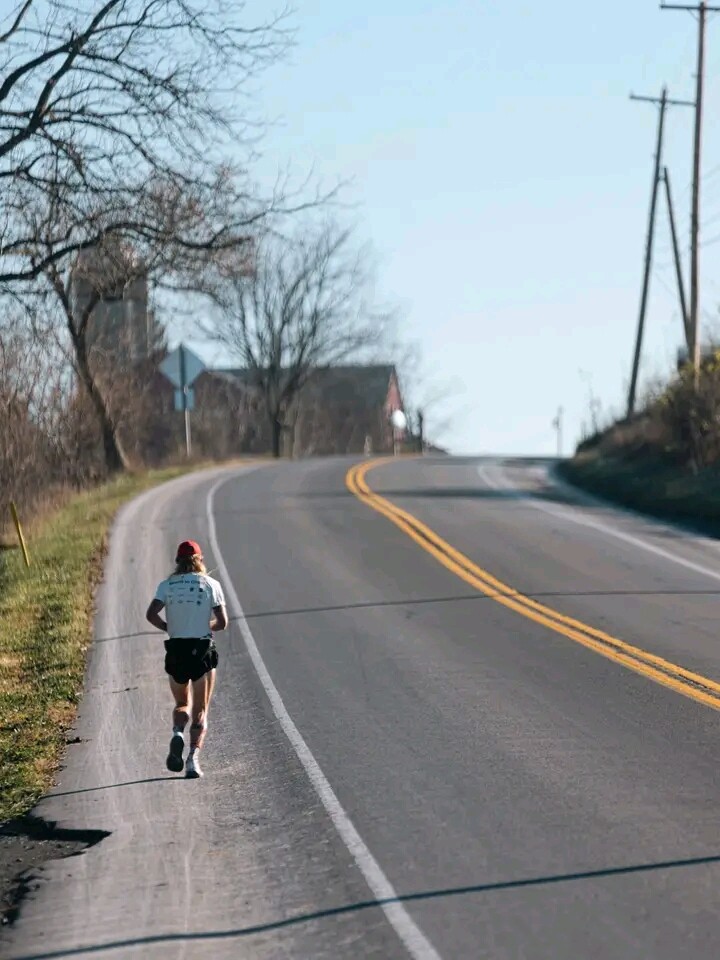
The 35-year-old Indiana native brought his remarkable challenge to an end at New York City Hall at 11:45 p.m. on Friday, November 20, after setting off from San Francisco City Hall at 5:00 a.m. on October 10.
His remarkable performance shattered the previous record of 42 days, 6 hours and 30 minutes, established by fellow American ultrarunner Pete Kostelnick in 2016. Balser finished 13 hours and 45 minutes faster, bringing an end to a record that had stood for a decade.
The numbers behind his achievement are almost difficult to comprehend. Balser averaged approximately 73.6 miles (118.5 kilometres) every day, spending between 15 and 16 hours on the road as he pushed his body across the country. His support crew followed closely, meeting him approximately every five miles to provide essential assistance throughout the demanding journey.

However, the challenge was far from straightforward. He encountered difficult weather conditions in the Rocky Mountains, where heavy rain made a dirt road too soft for his support vehicle, forcing him to cut one day's running short. He also battled through snow while crossing Cameron Pass in Colorado, demonstrating extraordinary determination in the face of unpredictable conditions.
As the miles accumulated, Balser remained committed to his mission, eventually making his way through numerous states before reaching the East Coast. His final kilometres became a celebration of community, with several dozen runners joining him around the George Washington Bridge for the run into Manhattan.
Yet, beyond the extraordinary statistics and record-breaking performance, Balser's journey carries a much deeper personal meaning.
Running has played a significant role in rebuilding his life. In 2017, he experienced a difficult period that led to a hospital stay while battling depression. His subsequent return to running became an important part of his recovery, helping him rediscover purpose, direction and a sense of belonging.
His passion for endurance running has since taken him on remarkable adventures. In 2023 and 2024, he completed an extraordinary 11,170-mile solo journey around the perimeter of the United States, carrying his essential supplies in a cart without the support of a dedicated crew.
This latest challenge, however, was driven by a purpose beyond personal achievement. Through his Breaking 42 project, Balser raised funds for the Grant County Family YMCA in Marion, Indiana, an organisation that supported him during his recovery and holds a special place in his life. He intends for the donations raised through the initiative to benefit the YMCA.
His achievement has also earned admiration from the man whose record he surpassed. Kostelnick publicly congratulated Balser, expressing genuine appreciation for someone willing to pursue a mark that had demanded so much from him to establish. His message reflected the respect that exists within the ultrarunning community, where extraordinary performances often inspire the next generation to push beyond perceived limits.
For Balser, the journey was about much more than taking a record away from another athlete. It was about resilience, gratitude, human connection and demonstrating what determination can accomplish when supported by a community.
Running more than 3,000 miles across an entire country in less than 42 days is an achievement that places extraordinary demands on the human body and mind. But Balser's story also serves as a reminder that running can be much more than a sport; it can become a source of hope, recovery and renewed purpose.
The record-setting performance is still awaiting formal ratification, but his remarkable coast-to-coast achievement has already captured the attention of the running world.
From the streets of San Francisco to the heart of New York, Cameron Balser has delivered a historic performance, proving that sometimes the greatest victories are measured not only by the distance covered or the records broken, but also by the personal battles overcome along the way.
by Erick Cheruiyot for My Best Runs.
Login to leave a comment
From Heartbreak In Curitiba To Victory In Maringá! Naum Jepchirchir Delivers Stunning Six-Day Comeback In Brazil!
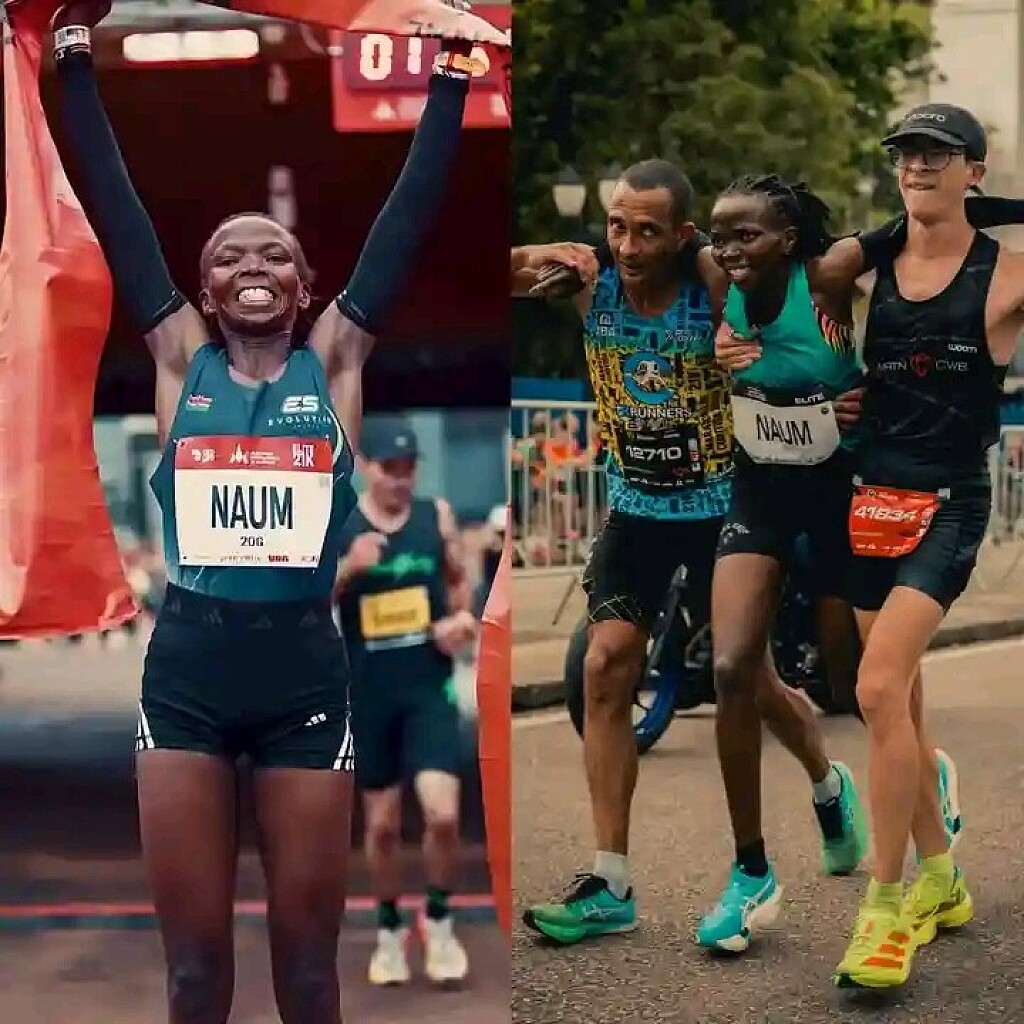
Kenyan distance runner Naum Jepchirchir has produced a remarkable response to one of the most heartbreaking moments of her racing career, returning to competition just six days after a dramatic collapse in Curitiba to claim victory in the women's elite half marathon at the inaugural Maratona Internacional de Maringá in Brazil.
Jepchirchir delivered an impressive performance on November 21, stopping the clock at 1:16:29 to secure the women's 21-kilometre title and provide a memorable answer to the disappointment she experienced less than a week earlier.
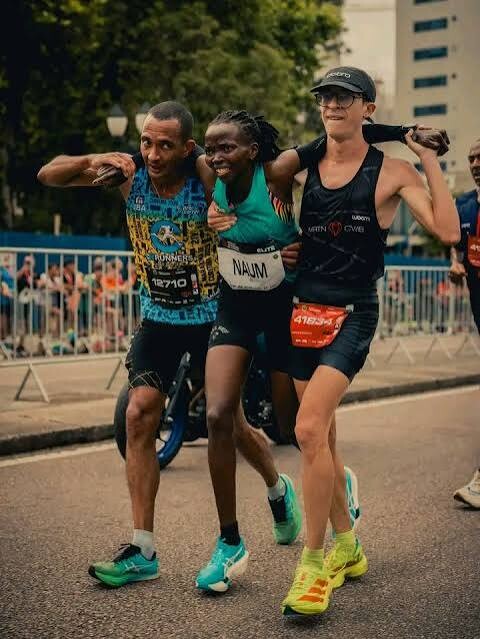
Her victory carried added significance given the circumstances surrounding her previous race in Curitiba on November 15. Competing at the Santander Curitiba Marathon, the Kenyan was battling for a leading position when she suddenly collapsed approximately 400 metres from the finish line, reportedly struggling in the challenging combination of extreme heat and humidity.
The dramatic incident brought her race to an unexpected halt and attracted considerable attention from spectators and fellow competitors. Brazilian runners Marcos Braz and Robson Santana immediately stopped to assist her, helping her regain her footing and make her way across the finish line in an extraordinary display of compassion and sportsmanship.
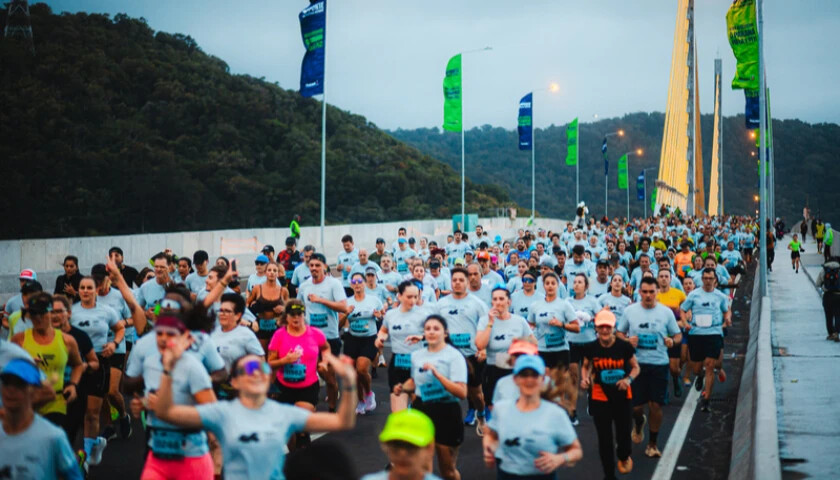
Although Jepchirchir crossed the line in second place, the assistance she received subsequently became the subject of a rules decision. Under World Athletics Technical Rule 6.3.6, athletes are prohibited from receiving physical assistance that provides an advantage or aids their forward progress during competition. Consequently, she was disqualified, losing her official second-place finish and the associated R$66,000 prize money, equivalent to approximately KSh 1.48 million.
It was a particularly difficult outcome for the Kenyan, whose determination to complete the race had initially appeared to offer a positive ending to an otherwise distressing experience.
However, Jepchirchir refused to allow the disappointment to define her season.
Just six days later, she returned to the starting line in Maringá, putting the events in Curitiba behind her and producing a winning performance over 21 kilometres. This time, she needed no assistance to reach the finish, crossing the line independently with both arms raised in celebration after securing the victory in 1:16:29.
The turnaround was remarkable. In less than a week, she had gone from a painful collapse and a disqualification to standing at the top of the podium, demonstrating the mental strength and determination required to overcome setbacks in competitive athletics.
Her victory in Maringá was more than just another race result. It was a statement of resilience from an athlete who had experienced both the physical and emotional challenges of the sport in the space of just six days.
For Jepchirchir, Brazil had offered two dramatically different experiences: heartbreak in Curitiba and redemption in Maringá.
And while the circumstances of her previous race will remain a talking point, her response on the road provided a memorable reminder that setbacks do not always have the final word in an athlete's journey.
by Erick Cheruiyot for My Best Runs.
Login to leave a comment
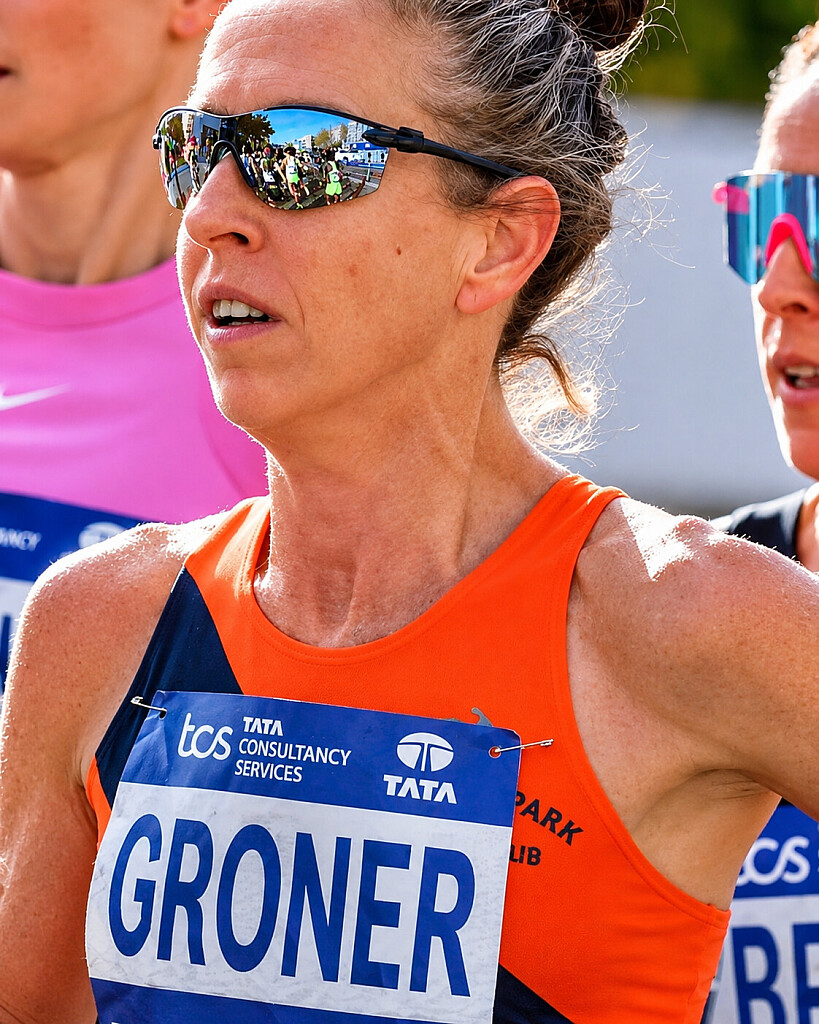
At 48, Roberta Groner Refuses To Give Up! Three Consecutive DNFs Could Not Stop The American Marathon Star From Qualifying For Her Third Olympic Trials!
At an age when many distance runners have already stepped away from elite competition, American marathoner Roberta Groner continues to challenge expectations, proving that determination, patience and an unwavering belief in oneself can keep dreams alive well beyond the conventional limits of professional sport.
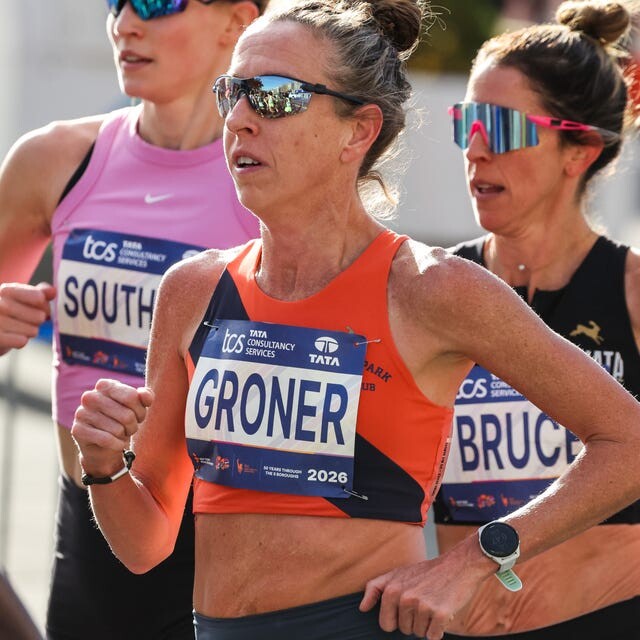
On November 1, in New York City, the 48-year-old produced a remarkable performance at the TCS New York City Marathon, crossing the finish line in 2:35:55 to secure qualification for her third US Olympic Marathon Trials. Her achievement was particularly special after a difficult period that had tested both her physical resilience and mental strength.
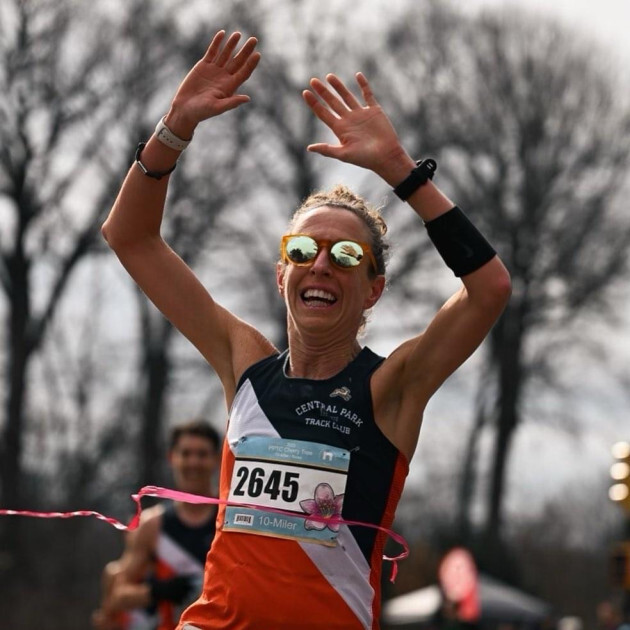
Groner will be 50 years old when she lines up for the 2028 US Olympic Marathon Trials in St. Louis, Missouri, where she will once again compete against some of the country's finest marathoners in pursuit of an Olympic dream.
Her road to qualification, however, was anything but straightforward. The previous year had brought a frustrating sequence of three consecutive marathon withdrawals, leaving her with considerable disappointment despite having the fitness and experience to remain competitive.
At the Valencia Marathon, Groner arrived in excellent shape and appeared comfortably on course to meet the qualifying standard of 2:37:00. However, challenging conditions, with temperatures reaching approximately 75 degrees Fahrenheit, combined with a costly kilometres-to-miles pacing misunderstanding, disrupted her race. She eventually stepped off the course despite having been well within the required pace. According to her coach, she still had approximately seven minutes in hand at the 18-mile mark.
Just two weeks later, she attempted another marathon at The Marathon Project but was forced to withdraw after struggling with accumulated fatigue. Her third setback came at Grandma's Marathon in June, where she again failed to reach the finish as her body adjusted to hormone therapy introduced to manage symptoms associated with perimenopause.
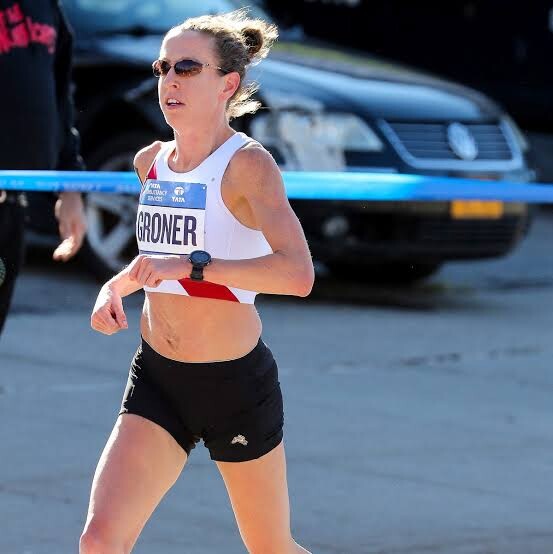
Three unsuccessful attempts could easily have brought an end to her campaign, but Groner chose to keep going.
By the time she returned to New York for her hometown marathon, she acknowledged that the difficult experiences had taken a psychological toll. She had to confront her own doubts and overcome the mental challenges that had developed after repeated disappointments.
This time, however, everything came together.
Running much of the race on her own behind the leading competitors, Groner maintained her composure and continued working towards her target. As the miles unfolded, she refused to surrender, gradually picking off several competitors during the closing stages before eventually crossing the finish line in 2:35:55.
Her 22nd-place finish was more than just another marathon result. It represented a hard-earned return to form, a successful response to adversity and another opportunity to compete at the highest level of American marathon running.
Groner's story is even more remarkable when viewed against the background of her journey in the sport. She took approximately a decade away from competitive running while raising her three sons, returning to serious competition later in life. Much of her finest work has come after the age of 40, challenging conventional assumptions about how long an athlete can remain competitive.
Among her most impressive achievements was a sixth-place finish in the marathon at the 2019 World Athletics Championships in Doha, Qatar, where she demonstrated her ability to compete with the world's best. She has also established 10 American age-group records in the women's 45–49 category, further underlining her extraordinary longevity and consistency.
Even now, her commitment to the sport remains remarkable. Groner reportedly continues to cover approximately 90 miles per week while balancing the demands of full-time coaching at Central Park Track Club.
And she will not be the oldest woman on the starting line in St. Louis in 2028. Fellow American distance runner Dot McMahan has also secured qualification for her sixth Olympic Marathon Trials and is expected to be 51 years old when the event takes place.
For Groner, the achievement in New York is another powerful reminder that age does not automatically determine an athlete's ambitions or potential. Her journey has been defined by motherhood, patience, setbacks, reinvention and an extraordinary willingness to keep pursuing her goals.
At 48, after three consecutive DNFs and a year filled with uncertainty, she has earned another opportunity to chase her Olympic dream.
And with the 2028 US Olympic Marathon Trials approaching, Roberta Groner has once again shown that sometimes the greatest victories come not from avoiding setbacks, but from finding the strength to rise after them.
by Erick Cheruiyot for My Best Runs.
Login to leave a comment
