

Running News Daily
Running News Daily is edited by Bob Anderson and team. Send your news items to bob@mybestruns.com Advertising opportunities available.
Index to Daily Posts · Sign Up For Updates · Run The World Feed
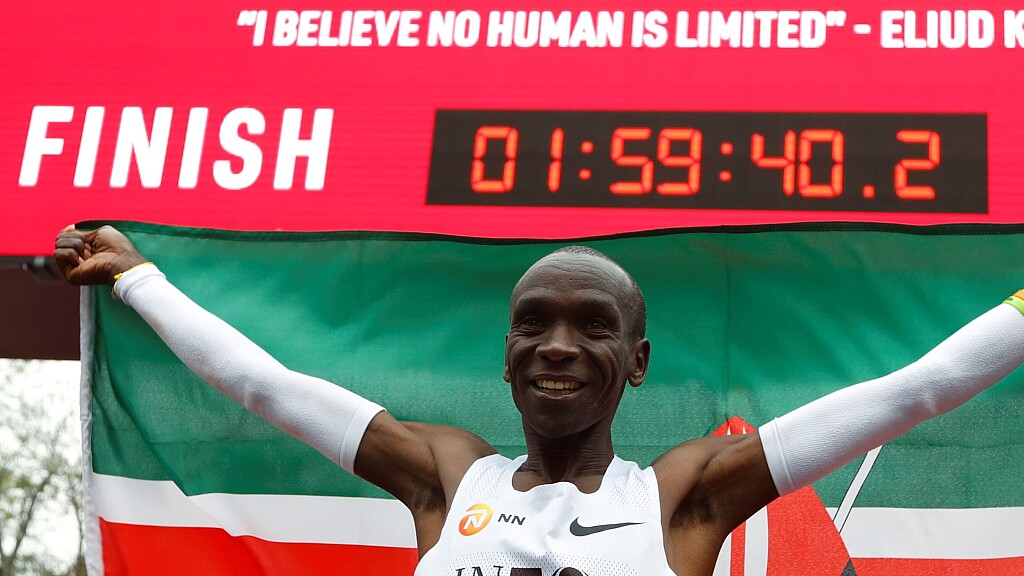


From Kipchoge’s Impossible Dream to Sawe’s Historic Reality: Kenya Redefines Marathon Running

Seven years after Eliud Kipchoge challenged the limits of human endurance in Vienna, fellow Kenyan Sabastian Sawe has transformed that extraordinary vision into a landmark achievement in competitive marathon running, becoming the first man to complete the 42.195-kilometre distance in under two hours under record-eligible race conditions.
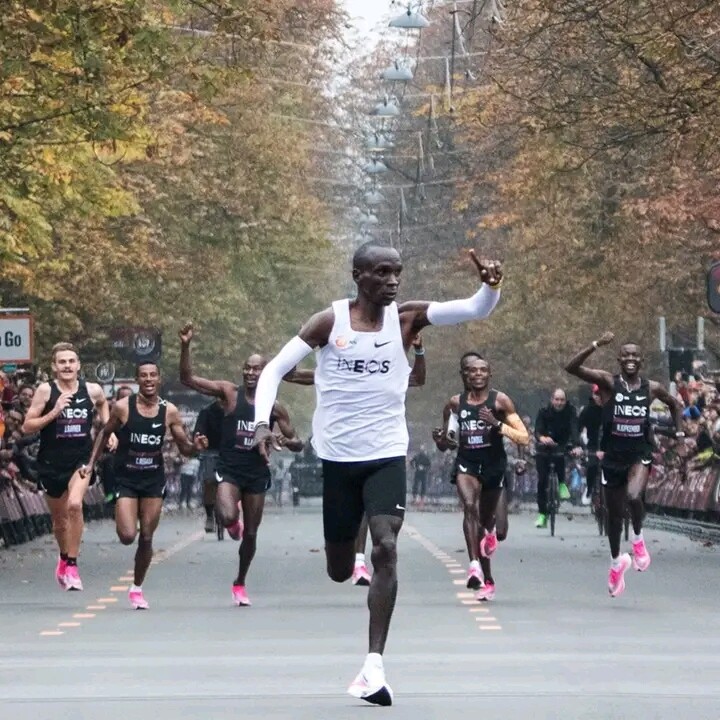
On October 12, 2019, Kipchoge etched his name into sporting history when he completed the INEOS 1:59 Challenge in Vienna, Austria, in an astonishing 1:59:40.2. Although the performance could not be recognised as an official world record because of the controlled conditions under which it was staged, it demonstrated that the seemingly impossible barrier was within human reach.
Kipchoge’s achievement carried a powerful message that resonated far beyond athletics: “No human is limited.” His words became a symbol of determination, ambition and the courage to challenge established boundaries.
However, the dream of breaking two hours in an official marathon remained unfinished.

That changed on April 26, 2026, when Sawe delivered a breathtaking performance at the TCS London Marathon, stopping the clock at 1:59:30 to claim victory and establish a new men's marathon world record. The Kenyan took an astonishing 65 seconds off the previous record of 2:00:35, set by the late Kelvin Kiptum at the 2023 Chicago Marathon.
Sawe’s achievement was historic not simply because he ran faster than Kipchoge’s celebrated Vienna time, but because he accomplished the feat in an official, competitive marathon eligible for world-record recognition. The distinction elevated his performance into an entirely new chapter of distance-running history.
Remarkably, Sawe was not the only athlete to challenge the two-hour barrier that day. Ethiopia’s Yomif Kejelcha finished second in 1:59:41, becoming the second man to run under two hours in a competitive marathon. Uganda’s Jacob Kiplimo completed the podium in 2:00:28, also finishing inside Kiptum’s previous world record.
The extraordinary results underlined how dramatically the boundaries of marathon running have shifted in a sport where even a few seconds can separate an athlete from immortality.
For Kenya, Sawe’s triumph represents another defining moment in a remarkable tradition of distance-running excellence. From the groundbreaking achievements of Kipchoge to Kiptum’s world-record performance and now Sawe’s sub-two-hour marathon, Kenyan athletes have continued to shape the evolution of the sport.
Yet the connection between Kipchoge and Sawe goes beyond nationality. Kipchoge demonstrated that the marathon distance could be covered in less than two hours under specially controlled conditions. Sawe carried that vision into open competition, where the challenge had to be conquered within the demands of an official race.
Their achievements tell a compelling story of how sporting dreams can inspire future generations to pursue what once appeared unattainable.
On October 12, 2026, exactly seven years after Kipchoge’s landmark run in Vienna, the anniversary offers a powerful opportunity to reflect on how far marathon running has progressed. What began as a demonstration of human potential has become an officially recognised world-record achievement.
Kipchoge opened the door to a new era of possibility. Sawe ran through it and changed marathon history forever.
One dream. Two Kenyan legends. A new definition of human endurance.
The message remains as powerful as ever: No human is limited.
by Erick Cheruiyot for My Best Runs.
Login to leave a comment
Latest Running News

Just Seven Years Old! Tom Black Stuns Running World With Incredible 1:39:48 Half-Marathon Performance!
At an age when most children are still discovering the basics of competitive sport, seven-year-old Tom Black is already making headlines with a remarkable achievement over the half-marathon distance.
The young runner from Brentwood, Tennessee, delivered an extraordinary performance at the Nashville Half Marathon, crossing the finish line in 1:39:48 over the challenging 13.1-mile (21.1km) distance. His average pace was approximately 7:37 per mile, a performance that reportedly stands as the fastest half-marathon time recorded by a seven-year-old.
In an equally heartwarming family moment, Tom's father, Kyle Black, finished just one second behind his son in 1:39:49, making their race an unforgettable father-and-son experience. Tom's performance was particularly impressive considering that he finished ahead of more than 2,100 competitors among the 2,299 official finishers.
Remarkably, this was not his first appearance at the event. At just six years old, Tom had already completed the same half marathon in 1:50:52, demonstrating how much his performance has improved in the space of a year.
His journey into distance running reportedly began with a training run. After covering the half-marathon distance and discovering his ability to maintain a strong pace, he became interested in testing himself in an organised race. What started as a personal challenge has now turned into a remarkable running story attracting attention well beyond his hometown.
There was also an unexpected obstacle before this year's race. Tom reportedly broke a finger after falling down the stairs just days before the event. Nevertheless, he still made it to the starting line and completed the 21.1km challenge in an impressive time.
According to Tom, the encouragement from spectators along the course helped keep him motivated throughout the race. He also noticed that some adult competitors were less than impressed about being overtaken by such a young runner!
Beyond the impressive numbers, however, Tom's achievement brings an important conversation into focus: the participation of very young children in endurance events. While his performance is extraordinary, children's health, physical development, recovery and enjoyment of sport must always remain the priority. Appropriate guidance from parents, medical professionals and qualified coaches is essential when young athletes participate in demanding activities.
At just seven years old, Tom Black has already produced a performance that many adult recreational runners would be proud of. Running 21.1 kilometres in 1:39:48 is no ordinary achievement, and doing it alongside his father makes the story even more special.
One thing is certain: Nashville witnessed an unforgettable father-and-son running moment, and the name Tom Black has certainly caught the attention of the running community.
by Erick Cheruiyot for My Best Runs.
Login to leave a comment

Laura Muir And Innes Fitzgerald Set For Generational Showdown At Cardiff Cross Challenge!
A fascinating clash between experience and youthful ambition is set to headline Sunday's Cardiff Cross Challenge, as British distance-running star Laura Muir prepares to face one of the country's brightest emerging talents, Innes FitzGerald, over the demanding cross-country course at Llandaff Fields.
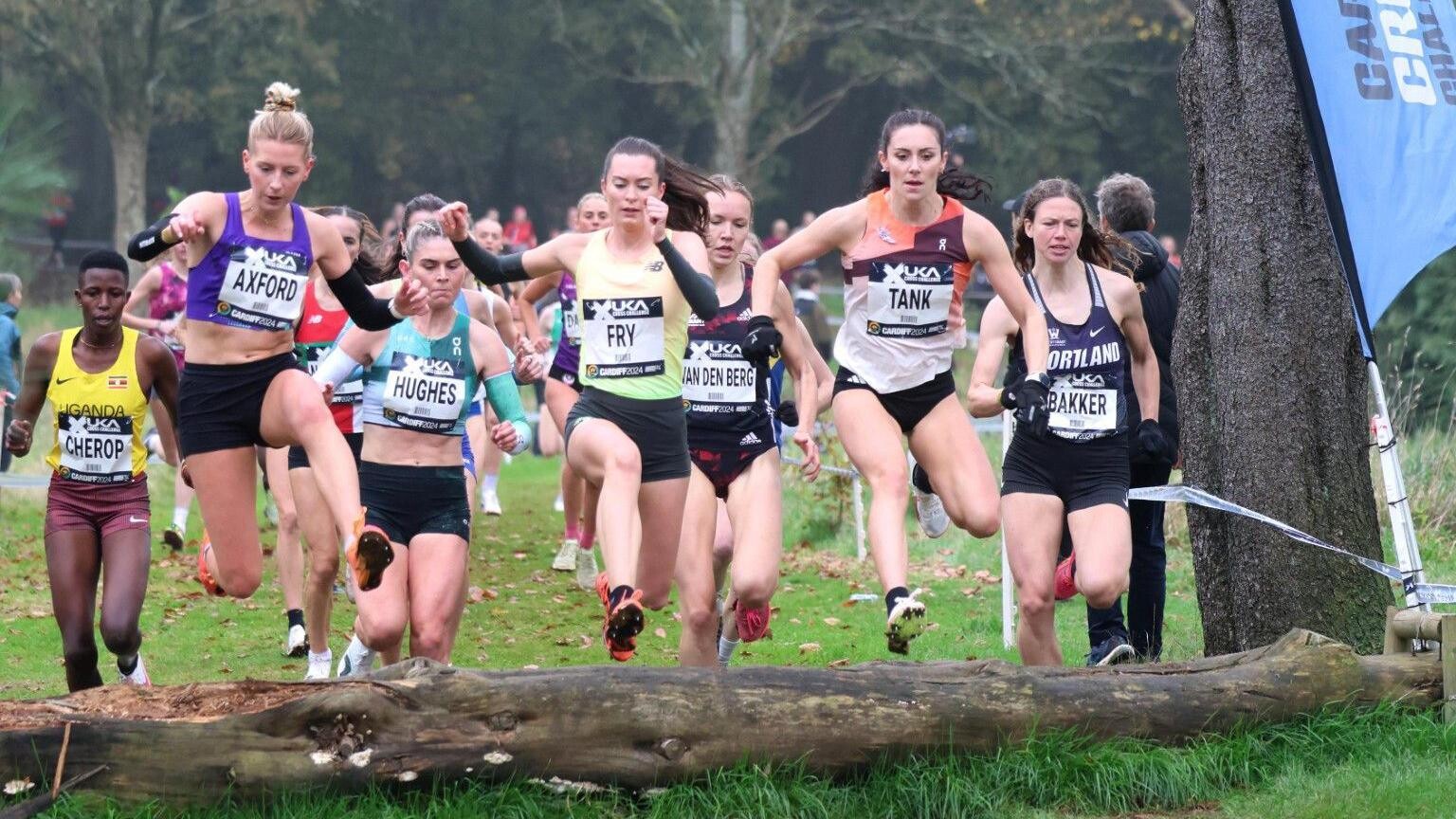
Separated by 13 years, the two athletes represent different generations of British distance running, but both arrive in Cardiff with impressive credentials and plenty of motivation to make their mark in the senior women's race.

At 33, Muir brings a wealth of international experience to the competition. The two-time European 1500m champion is returning to competitive action after her last appearance at the European Championships in Birmingham in August. Her participation also marks a rare cross-country outing outside Scotland, with her previous appearance outside the country dating back to the 2015 European Cross Country Championships in Hyères, France, where she finished fourth in the under-23 women's race.
However, Muir is certainly no stranger to cross-country competition. Earlier this year, she demonstrated that her competitive instincts remain sharp by winning the Scottish National Cross Country Championships over 10km in Falkirk in February, securing her first appearance at the event in 14 years.

Standing across the starting line will be 20-year-old Innes FitzGerald, a remarkable young talent who has already established herself as one of Britain's most exciting distance-running prospects.
FitzGerald boasts an outstanding junior record, having claimed three European under-20 cross-country titles alongside European under-20 championship gold medals over 3000m and 5000m. She also knows the Cardiff course exceptionally well, having won there on four previous occasions in age-group competitions. This time, however, she steps up to the senior category, where she will face a significantly more experienced opponent.
The encounter offers an intriguing opportunity to see two outstanding British athletes from different stages of their careers competing on the same stage. For Muir, it is another chance to demonstrate her enduring quality, while FitzGerald will be eager to test herself against one of Britain's most accomplished middle- and long-distance runners.
The women's race will cover 6.4km, with the challenging conditions and muddy terrain at Llandaff Fields expected to provide a genuine cross-country test.
The Cardiff Cross Challenge holds particular significance on the international calendar as the UK's only World Athletics Cross Country Tour meeting, carrying Silver Label status this year. Beyond the elite competition, the event will also celebrate the wider running community, with a Gwent League fixture taking place alongside it, bringing together club athletes, masters competitors and international stars.
With Muir's experience and FitzGerald's youthful determination, Sunday's contest promises an exciting encounter that could provide one of the standout moments of the Cardiff Cross Challenge.
Thirteen years separate them. One demanding course awaits. Experience meets ambition on the Cardiff mud!
by Erick Cheruiyot for My Best Runs.
Login to leave a comment
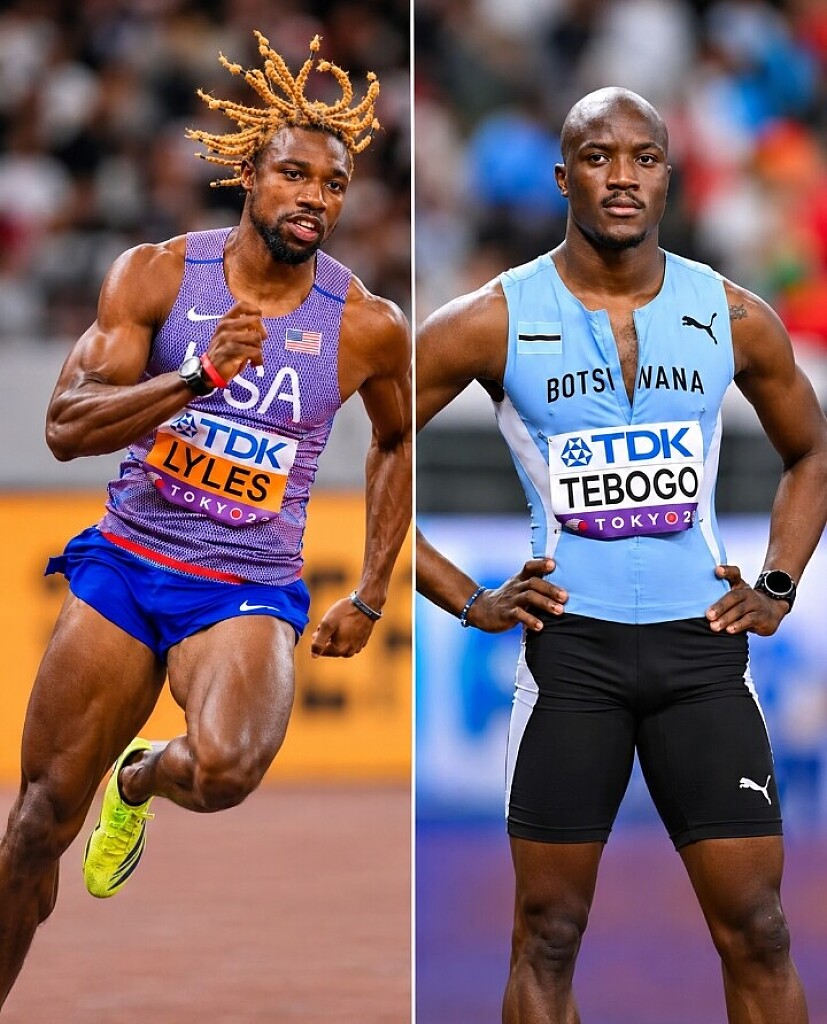
The 2027 Sprint Rivalry Is Already Heating Up! Tebogo Fires Warning At Lyles And Bednarek As American Star Hits Back!
The 2027 athletics season has not even begun, but the mind games among the world's biggest sprinting stars are already underway!
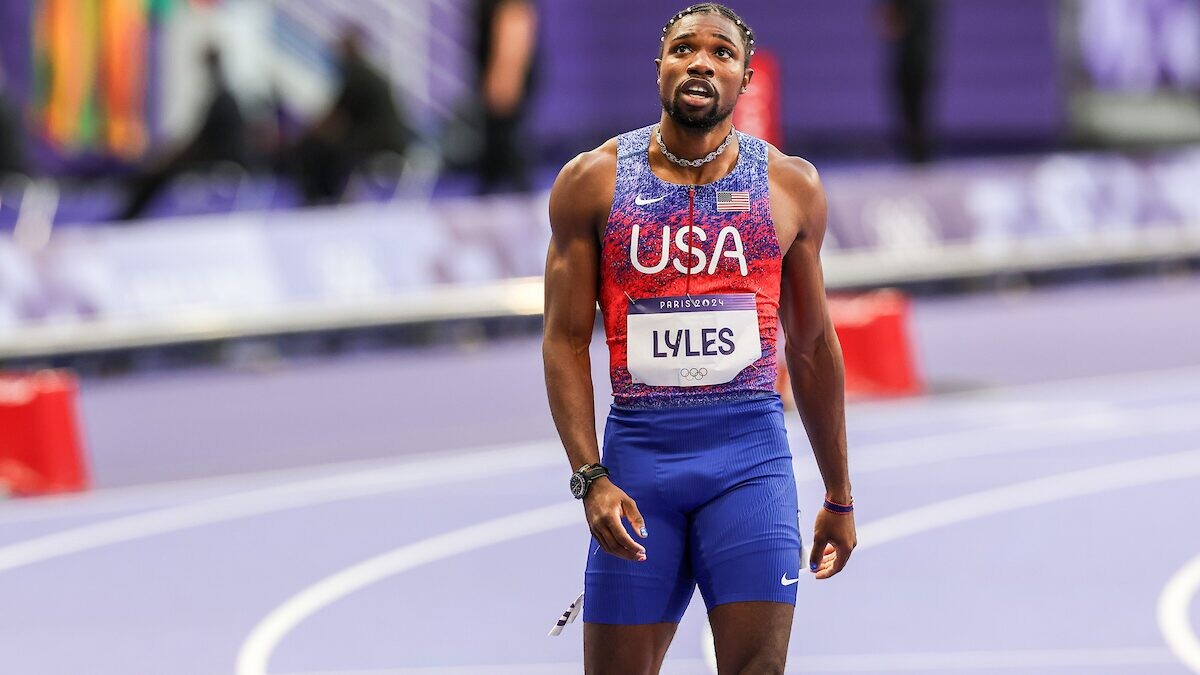
Botswana's Olympic 200m champion Letsile Tebogo has reignited his rivalry with American sprint sensations Noah Lyles and Kenny Bednarek after sending a bold warning to his two biggest competitors, only for Lyles to respond with a cheeky but pointed remark that has added another chapter to their growing rivalry.
Taking to social media platform X on Thursday, November 5, Tebogo addressed both American stars, beginning with a show of respect before making it clear that he intends to be the man they will have to catch when the 2027 season gets underway.
"The 2027 season is coming, and the battle is already on. Always respect to @kenny_bednarek, @LylesNoah, but you better be ready to chase."
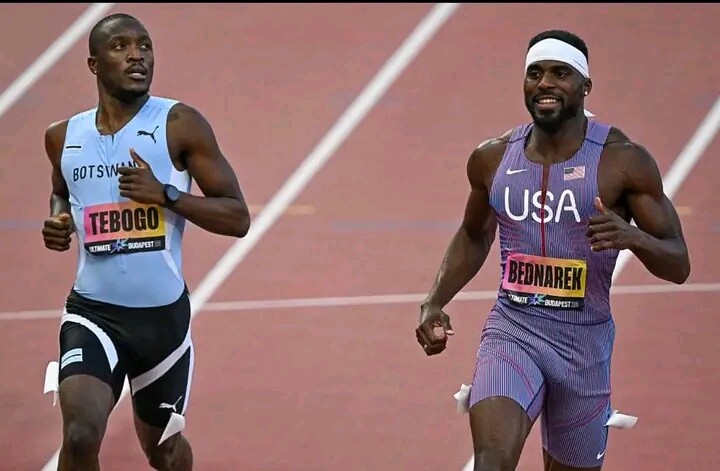
Lyles wasted little time responding, delivering a playful but direct message aimed at the Botswana star.
"Oh, did you decide you want to stop playing opossum and actually run through the line…. That would be nice."
The comment was a pointed reference to Tebogo's occasional tendency to ease off before reaching the finish line, particularly when he believes he has lost the opportunity to win or secured his position in a race.
One notable example came at the Diamond League Final in Brussels, where Bednarek produced a stunning performance to win the 200m in a then world-leading 19.62 seconds. Tebogo, who had been fighting for a podium position, appeared to ease off towards the finish and eventually dropped to fourth in 20.01 seconds.
Lyles' response has therefore brought an interesting competitive dimension to the exchange, suggesting that the American wants to see Tebogo maintain his intensity all the way to the finish whenever they meet again.
The upcoming rivalry becomes even more intriguing when the performances of the three athletes during the 2026 campaign are considered. Bednarek enjoyed an outstanding season, establishing himself as one of the leading figures in world sprinting. The American was arguably the standout performer of the year, collecting double gold at the World Athletics Ultimate Championship in Budapest and further strengthening his reputation as a formidable 200m competitor.
Lyles also demonstrated his exceptional speed, recording the fastest men's 100m performance of the year with 9.79 seconds at the USATF Championships. However, his campaign was disrupted after he pulled up during the 200m final, forcing him to miss the remainder of the season.
For Tebogo, the 2026 campaign was comparatively quieter by his exceptionally high standards. The Botswana star managed two Diamond League victories, although neither came in a direct contest against Lyles or Bednarek. Another interesting detail is that Tebogo only returned to training on October 16, meaning his preparations for the upcoming campaign are already underway as he looks to regain his strongest competitive form.
Despite their different journeys throughout 2026, all three athletes have something important to prove when the new season arrives. Tebogo wants to reinforce his status as the Olympic 200m champion and demonstrate that he remains the man to beat. Lyles will be determined to reassert his authority over the distance and remind his rivals of his championship pedigree, while Bednarek will be looking to build on his remarkable achievements and establish himself as the dominant force in the men's 200m.
With Olympic glory, world titles, personal ambitions and bragging rights all part of the equation, the rivalry between these three exceptional sprinters promises to deliver plenty of excitement.
The first major showdown between them in 2027 is still months away, but the psychological battle has already begun. Tebogo has fired the opening warning, Lyles has responded, and Bednarek has every reason to feel confident after his impressive season.
The question now is simple: Who will rule the men's 200m in 2027 — Letsile Tebogo, Noah Lyles or Kenny Bednarek?
by Erick Cheruiyot for My Best Runs.
Login to leave a comment
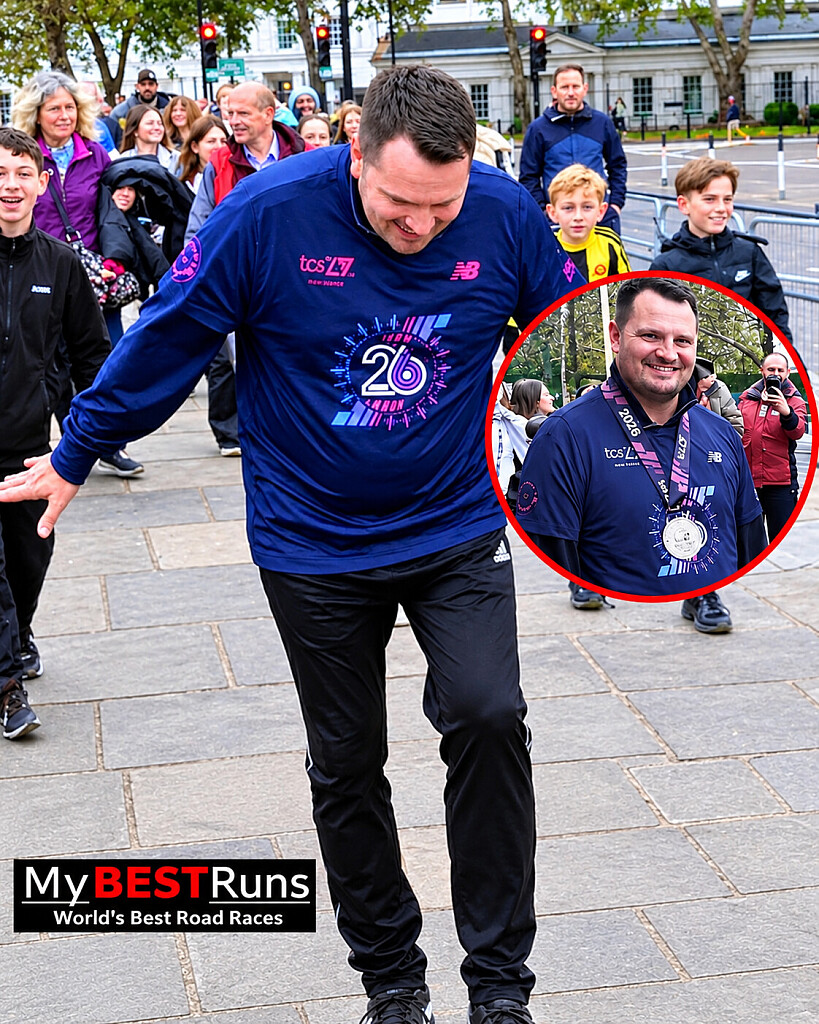
Six Months After Suffering Cardiac Arrest At Mile 25, Gareth Hopkins Finally Completes The London Marathon In An Emotional Return!
Few marathon stories capture the true meaning of courage, resilience and determination quite like that of Gareth Hopkins, a 43-year-old paramedic from Hoddesdon, England, who has finally crossed the London Marathon finish line after surviving a life-threatening medical emergency during his debut attempt six months earlier.
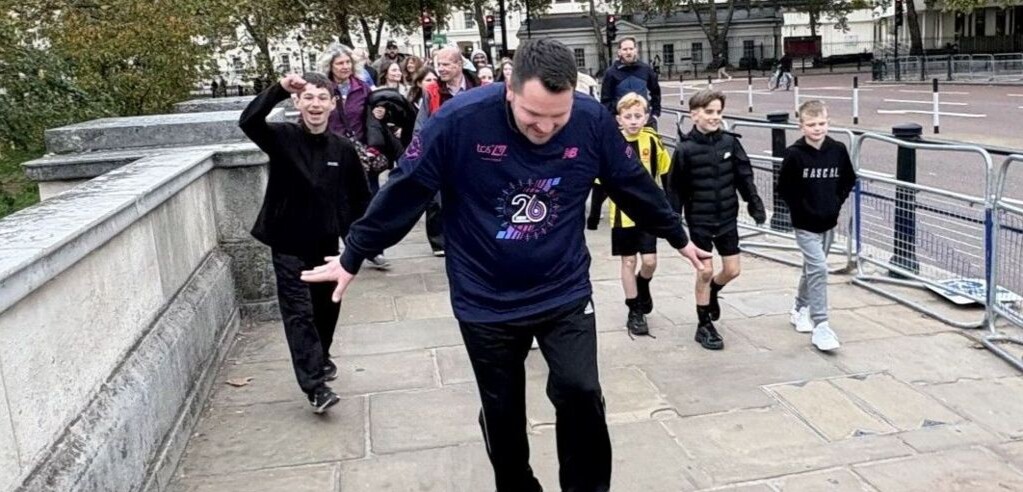
In April, Hopkins lined up for his first-ever marathon alongside his brother, Chris, with the brothers running to raise funds for Age UK in memory of their beloved grandmother. However, what was supposed to be a memorable sporting achievement turned into a terrifying fight for survival just over a mile from the finish.
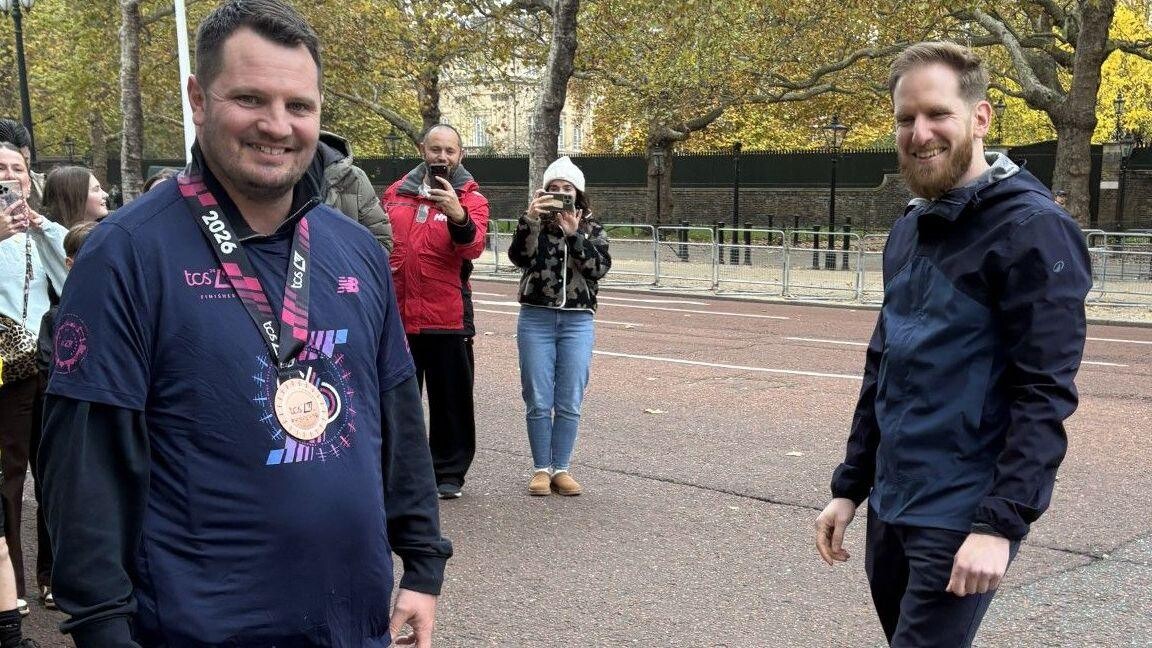
Having reached approximately mile 25, Hopkins suddenly collapsed after suffering a cardiac arrest. The medical emergency was caused by severe rhabdomyolysis, a serious condition involving the breakdown of muscle tissue, which in his case was brought on by overheating.
His brother Chris had already completed the race when the family, who had been tracking Gareth's progress, realised that his movement had stopped. They immediately went searching for him, only to discover that emergency responders from St John Ambulance were already working desperately to save his life.

Hopkins was subsequently rushed to St Thomas' Hospital, where he received intensive medical care. His recovery journey was long and extremely challenging, requiring him to relearn some of the most basic everyday activities, including walking, talking and eating.
After months of rehabilitation and determination, he was finally discharged and returned home in September, marking another significant milestone in his remarkable recovery.
Now, six months after the frightening incident, Hopkins has returned to the London Marathon route to accomplish what he was unable to finish in April.
This time, however, there was no competitive pressure, no timing chip and no race clock to chase. Instead, approximately 200 family members, friends and supporters joined him for an emotional walk through central London, passing Buckingham Palace before making their way down The Mall towards the iconic marathon finish line.
In an extraordinary gesture of kindness, an anonymous donor also ensured that Hopkins received an official London Marathon finisher's medal, making his long-awaited moment even more special.
Reflecting on the experience, he described it simply: "It was the longest marathon ever."
Despite completing this deeply personal journey, Hopkins says he has been advised not to run again and has accepted that he will not attempt another marathon.
For most marathon runners, reaching The Mall represents the final few minutes of an exhausting 26.2-mile challenge. For Gareth Hopkins, it took six months of recovery, extraordinary determination and the unwavering support of the people closest to him.
His journey is a powerful reminder that success in sport is not always measured by finishing times, personal bests or podium positions. Sometimes, the greatest victory is simply being given another opportunity to reach the finish line.
Gareth Hopkins may have taken six months to complete his London Marathon journey, but his achievement is one that will remain far beyond the finish line.
A truly remarkable story of survival, courage, gratitude and the strength of the human spirit.
by Erick Cheruiyot for My Best Runs.
Login to leave a comment
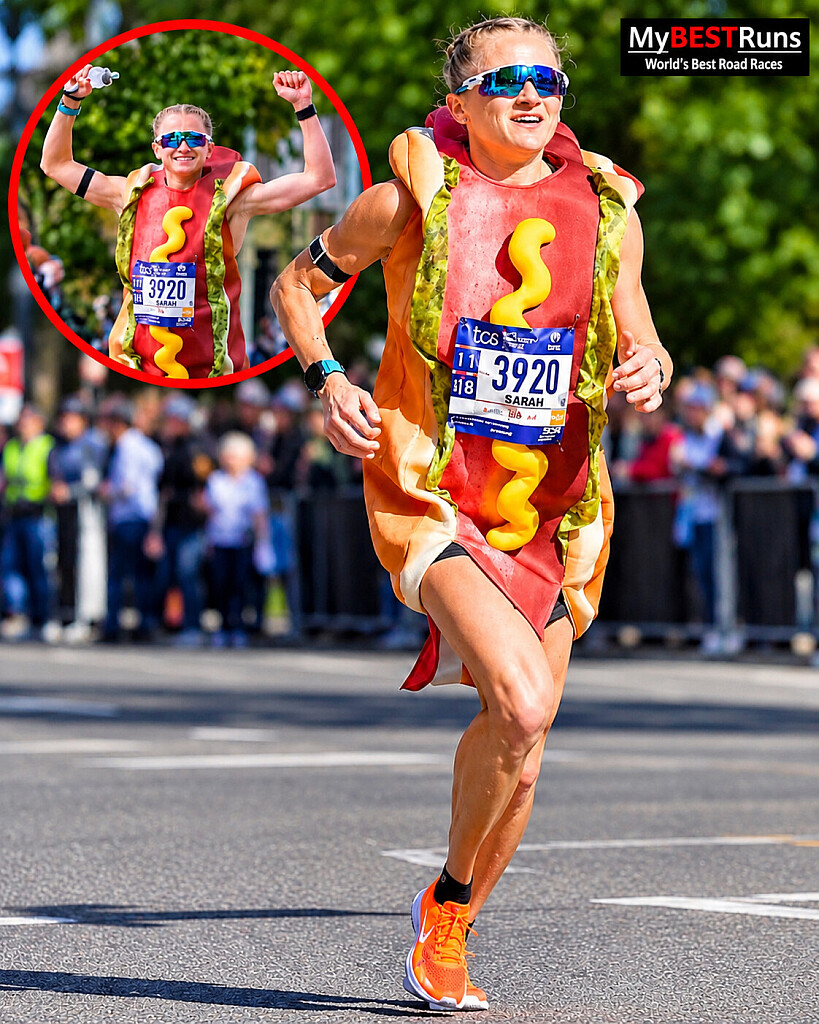
Sarah Pezzino Runs New York City Marathon In An Incredible 2:49:15 While Dressed As A Hot Dog, With Guinness World Record In Sight!
Running a marathon in under 2:50 is an impressive achievement for any athlete. Doing it while dressed as a giant hot dog takes the accomplishment to an entirely different level.
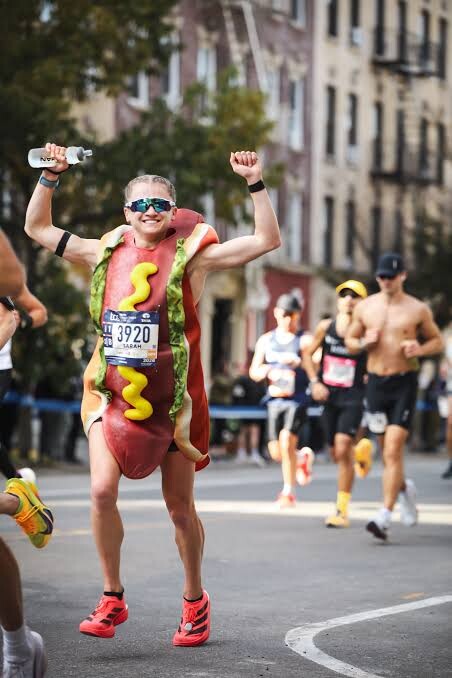
Sarah Pezzino captured attention at the 2026 TCS New York City Marathon after completing the demanding 26.2-mile course in an outstanding 2:49:15, all while wearing a full hot dog costume.
Complete with a bun, sausage and a distinctive line of ketchup, Pezzino carried her unusual outfit through all five boroughs of New York City without allowing the costume to stand in the way of an exceptional performance.
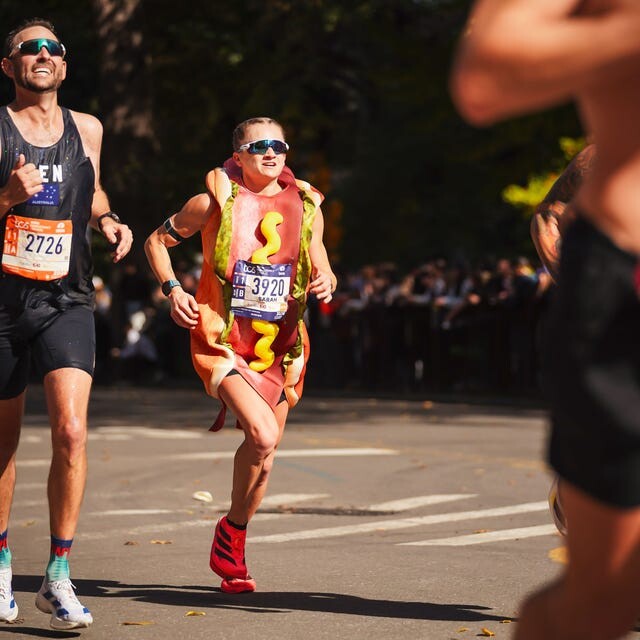
Her finishing time translates to an average pace of approximately 6 minutes and 27 seconds per mile (4:00 per kilometre), placing her 59th among more than 28,000 female finishers and fourth in her age group.
What initially began as a joke among friends eventually developed into a serious record-breaking ambition. After discovering the Guinness World Records benchmark for completing a marathon in a food-themed costume, Pezzino decided to see just how fast she could go.
The existing mark stood at 3:11:34, meaning her remarkable 2:49:15 performance was more than 22 minutes faster. However, Guinness World Records must still review and officially verify her performance before she can be recognised as the record holder.
Interestingly, the hot dog costume already has a place in marathon record history.
Back in 2015, Runner's World editor Meghan Kita approached Guinness World Records about establishing a marathon record specifically for runners dressed as hot dogs. The organisation considered the category too narrow and instead introduced a broader fast-food costume category.
Kita subsequently completed the Marine Corps Marathon in 3:57:49, stopping at every mile marker to collect photographic evidence of her costume throughout the race.
More than a decade later, Pezzino has taken the challenge to another level, producing a performance that would be impressive even without the added difficulty of running in a full-body costume.
Her achievement is a wonderful reminder of the creativity, humour and extraordinary determination that make marathon running such a special sport.
While thousands of runners take on New York chasing personal bests, qualifying standards and competitive positions, Pezzino managed to combine entertainment with genuine athletic excellence.
She did not simply bring a smile to the streets of New York. She delivered a sub-2:50 marathon performance that could also earn her a place in the Guinness World Records.
A hot dog costume, 26.2 miles and a remarkable 2:49:15. Sarah Pezzino certainly proved that you can have fun and run fast at the same time!
by Erick Cheruiyot for My Best Runs.
Login to leave a comment
